Protester

705 photos · 2019–2026

705 photographs tagged Protester, 2019–2026.
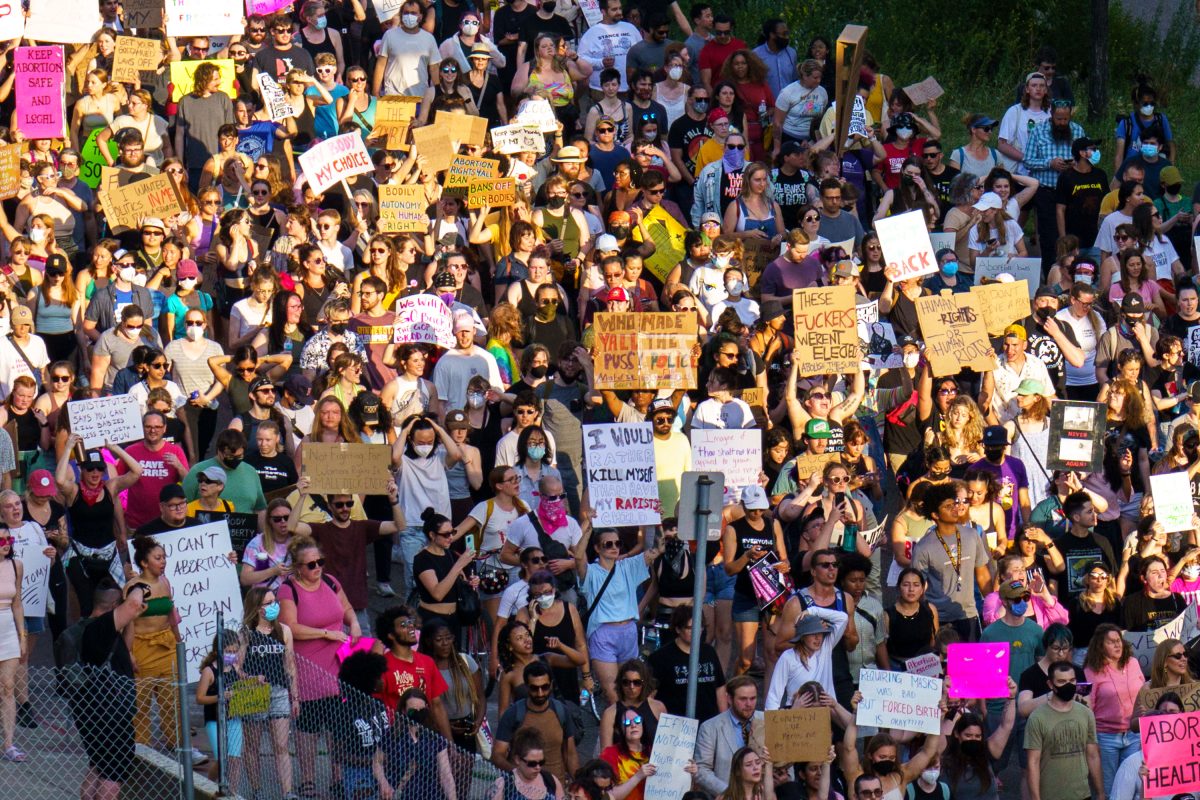
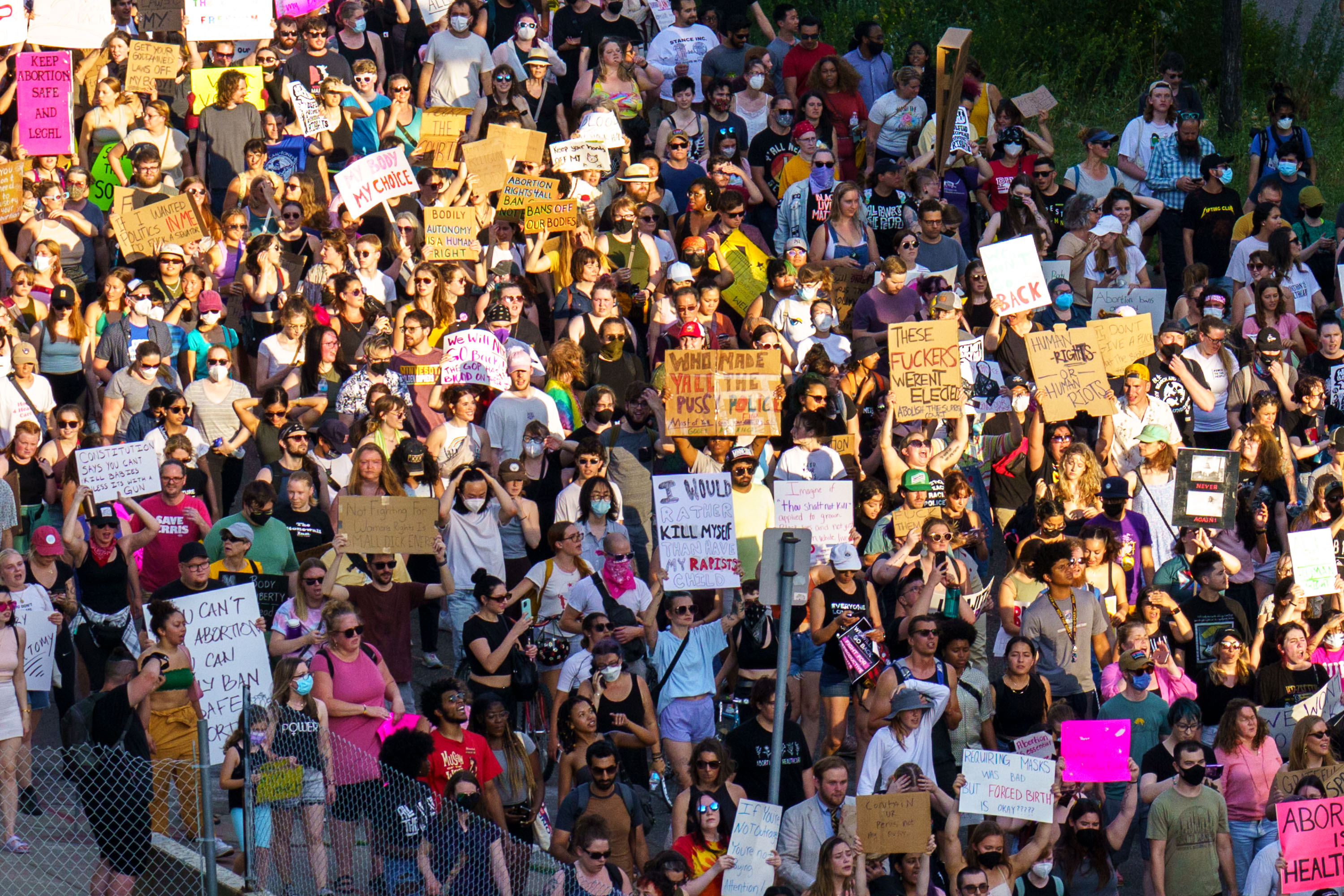
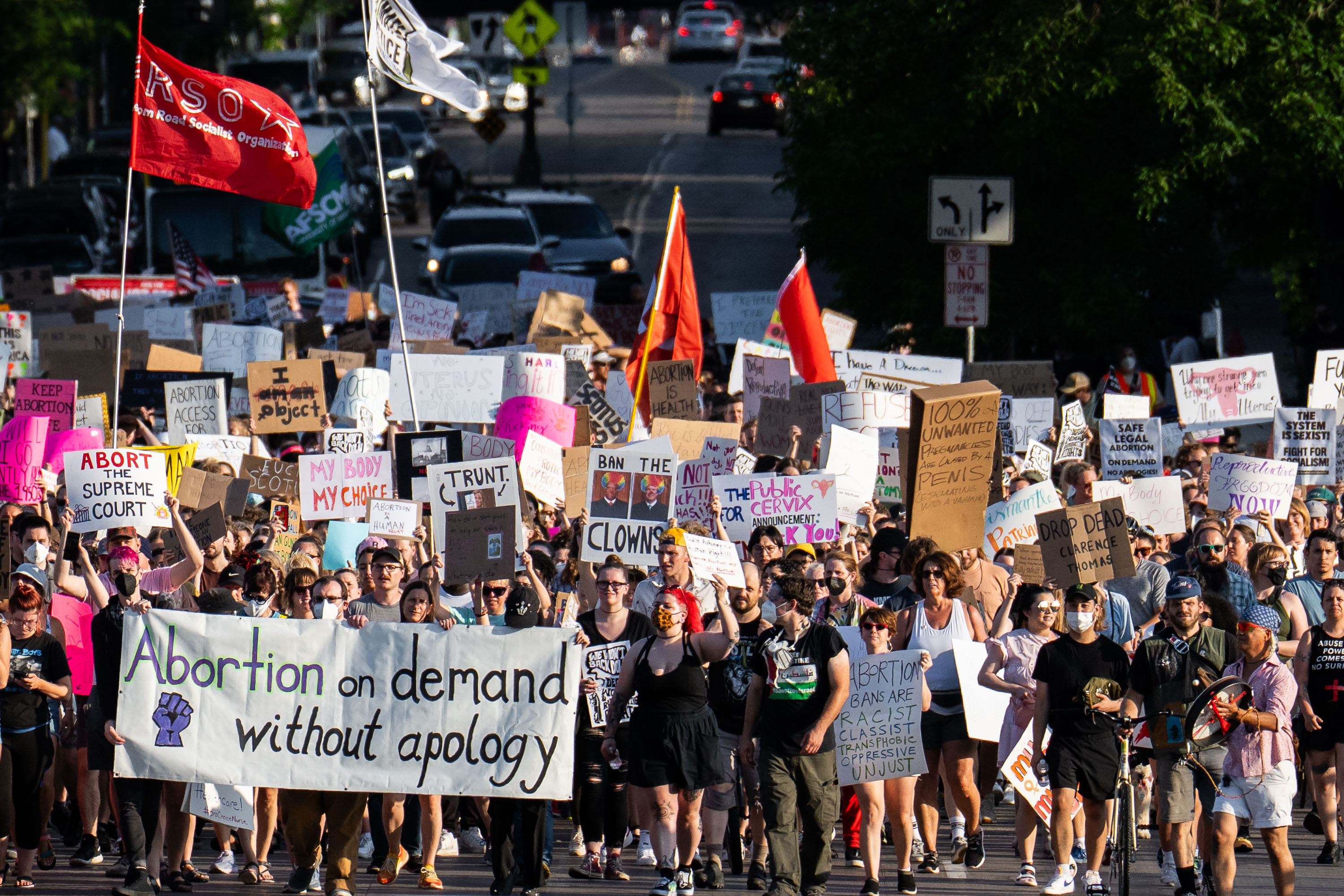
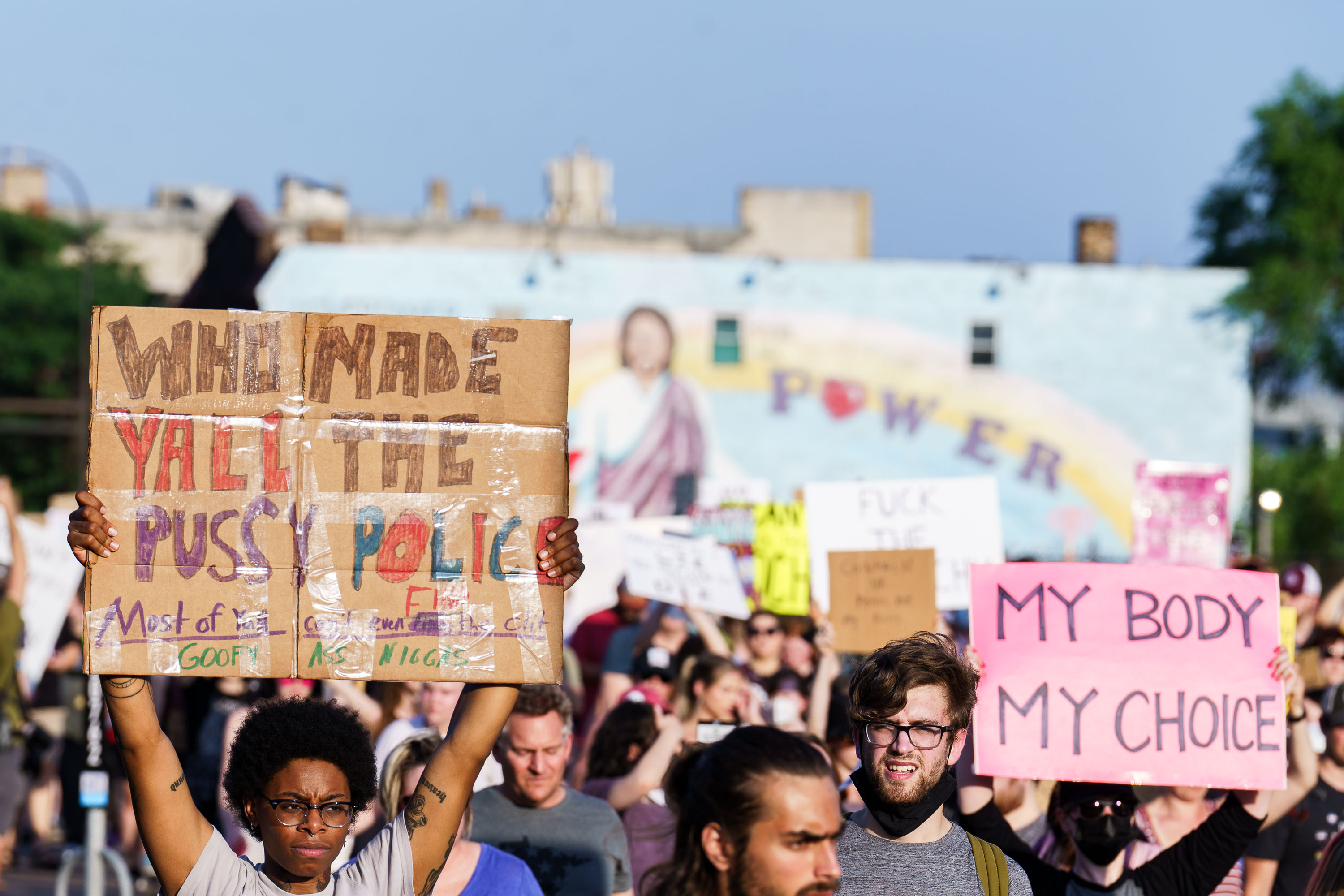
Crowd marches with handmade signs during an abortion rights protest in downtown Minneapolis, Minnesota.
Crowds filled the streets of downtown Minneapolis on June 24, 2022, hours after the U.S. Supreme Court issued its ruling in Dobbs v. Jackson Women's Health Organization, overturning the 1973 decision in Roe v. Wade that had established a constitutional right to abortion. The 6-3 ruling returned regulation of abortion to individual states, and Minnesota's constitution continued to protect abortion access under a 1995 state supreme court decision, Doe v. Gomez. Marchers carried hand-lettered signs referencing bodily autonomy and reproductive rights as they moved through the city in the hours following the announcement.

Protest Signs at Abortion Rights March, Downtown Minneapolis
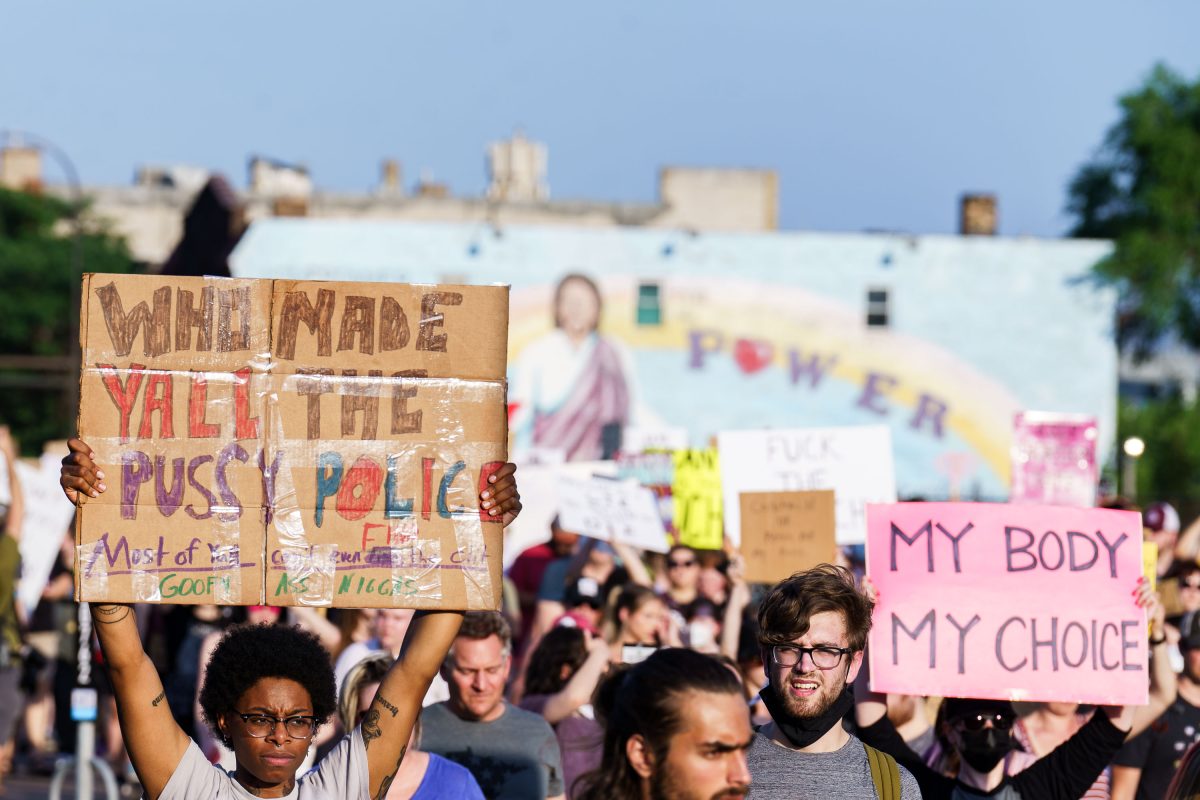
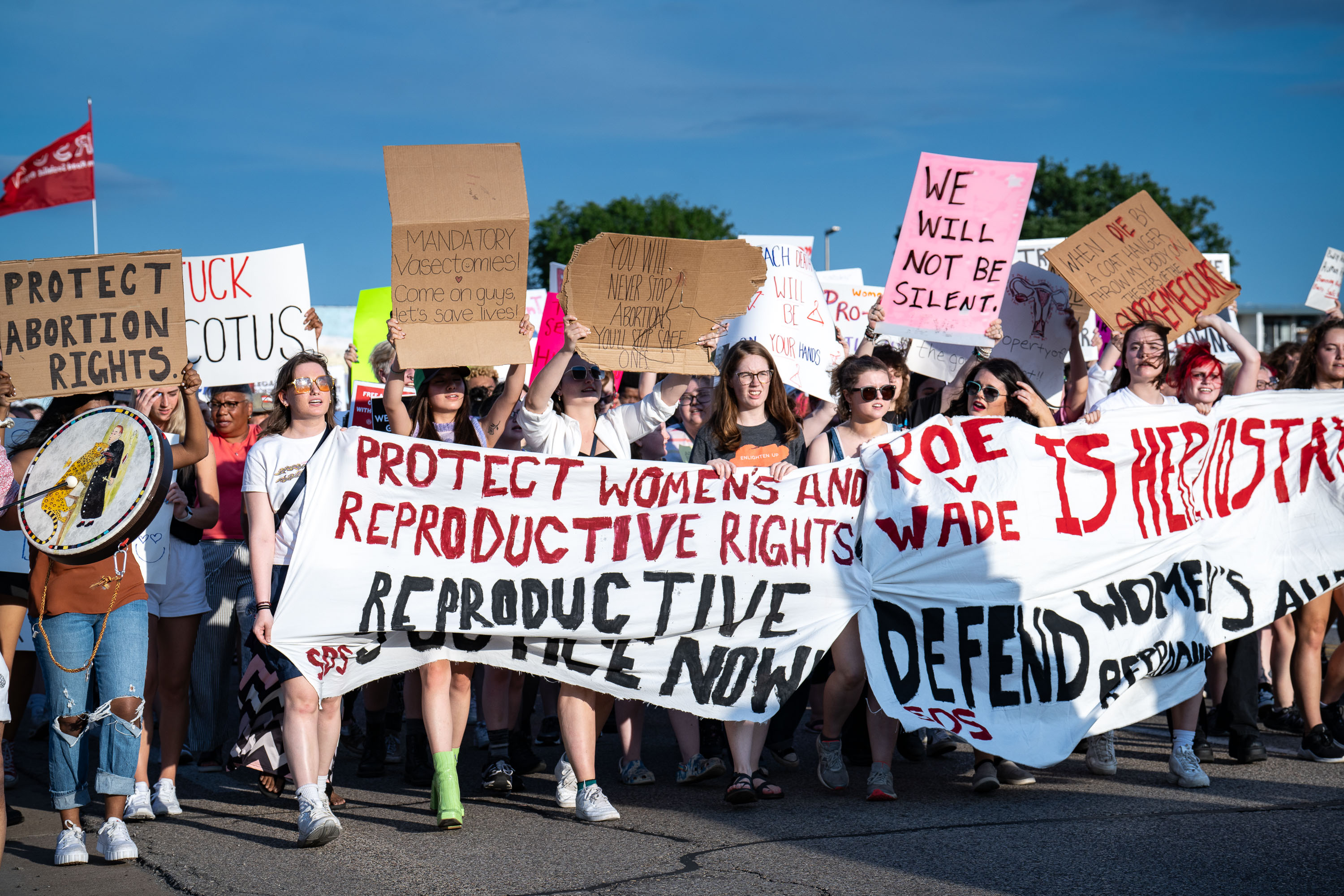
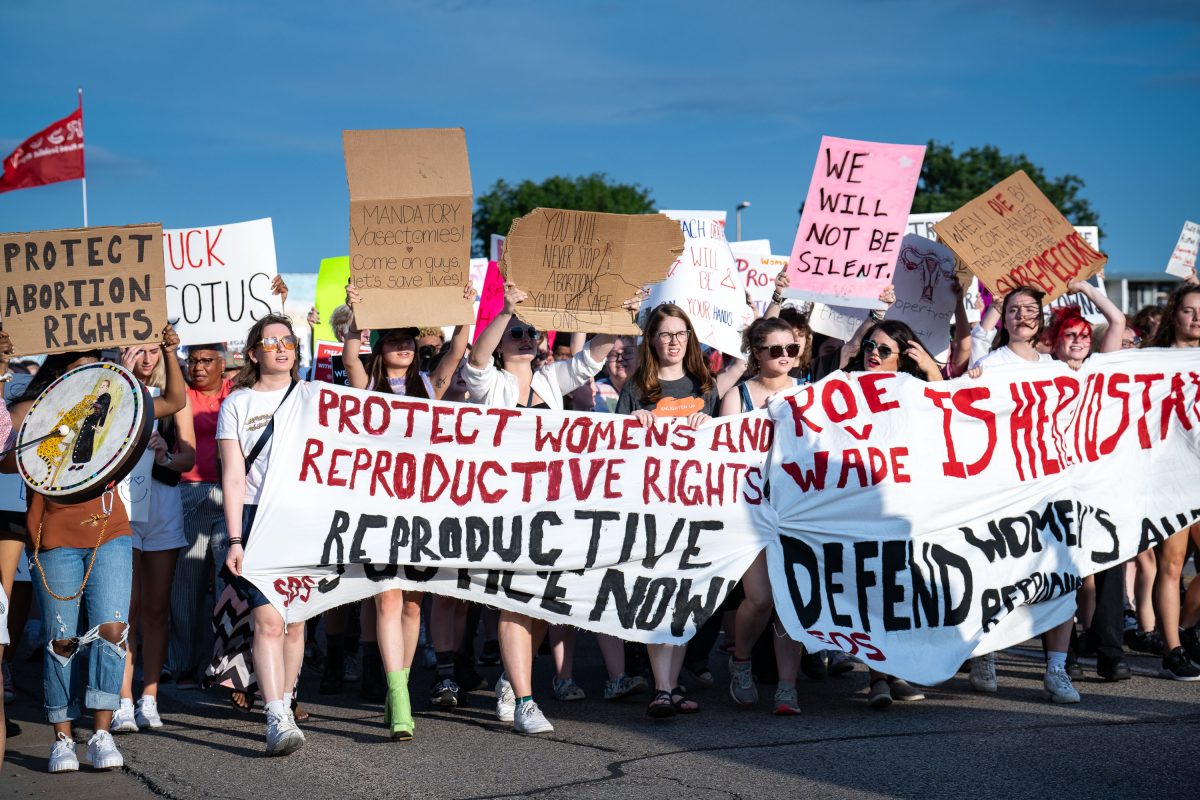
Protesters hold hand-lettered signs during an abortion rights march in downtown Minneapolis, Minnesota.
Protesters gathered in downtown Minneapolis on June 24, 2022, the day the U.S. Supreme Court issued its ruling in Dobbs v. Jackson Women's Health Organization, overturning the 1973 Roe v. Wade decision that had established a constitutional right to abortion. The march drew students, including participants from the University of Minnesota, along with residents from across the Twin Cities. Hand-lettered signs carried by demonstrators addressed abortion access and bodily autonomy. Minneapolis has hosted large-scale public marches in its downtown core in response to major national court rulings and political events.

Abortion Rights March, Downtown Minneapolis June 2022
Crowd marches through downtown Minneapolis holding signs protesting the Supreme Court's reversal of Roe v. Wade.
Demonstrators gathered in downtown Minneapolis on June 24, 2022, hours after the U.S. Supreme Court issued its ruling in Dobbs v. Jackson Women's Health Organization, which overturned the 1973 precedent set by Roe v. Wade. The decision returned regulation of abortion access to individual states, prompting immediate marches in cities across the country. Minneapolis, home to a large student population tied to the University of Minnesota, saw crowds carrying hand-lettered signs referencing reproductive rights and bodily autonomy. Minnesota state law at the time continued to protect abortion access, a distinction organizers highlighted during the march.

Protecty Abortion Rights March in Minneapolis
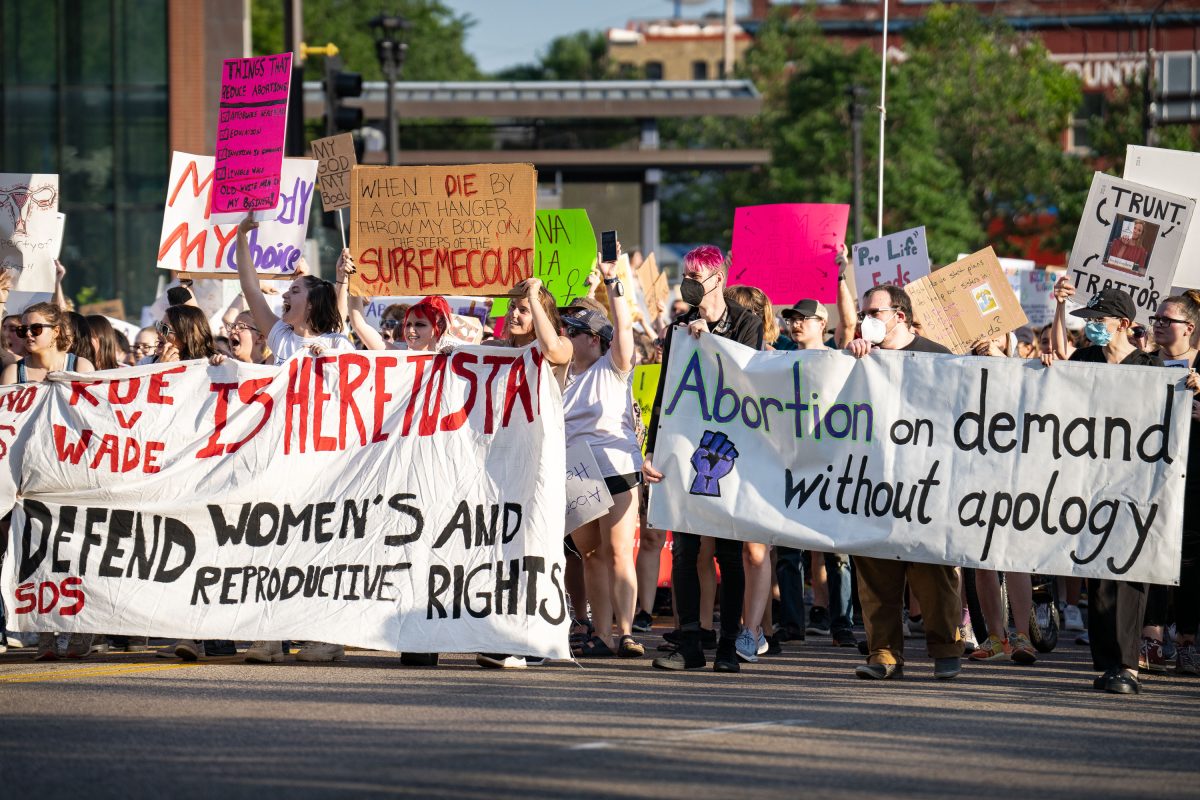
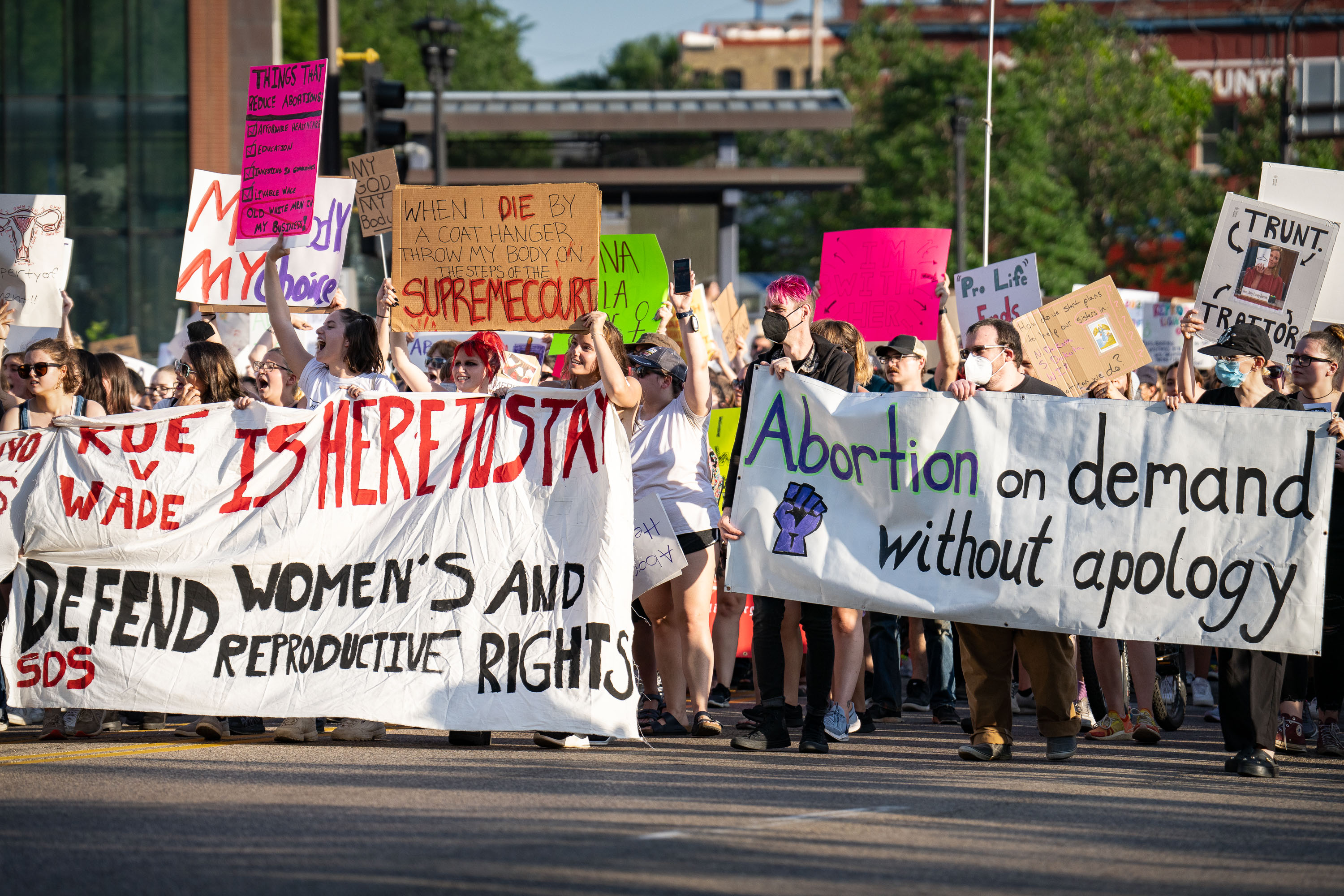
Demonstrators carry banners and signs supporting abortion rights during a march through downtown Minneapolis.
Demonstrators marched through downtown Minneapolis on June 24, 2022, the day the Supreme Court issued its decision in Dobbs v. Jackson Women's Health Organization, overturning the 1973 Roe v. Wade ruling that had established a constitutional right to abortion. The decision returned regulatory authority over abortion to individual states. Minnesota's state constitution, as interpreted in the 1995 case Doe v. Gomez, continues to protect abortion access independent of federal precedent. Groups identifying with Students for a Democratic Society were among those present, carrying hand-painted banners through the city's downtown corridor.

Abortion Rights March Down Downtown Minneapolis Street
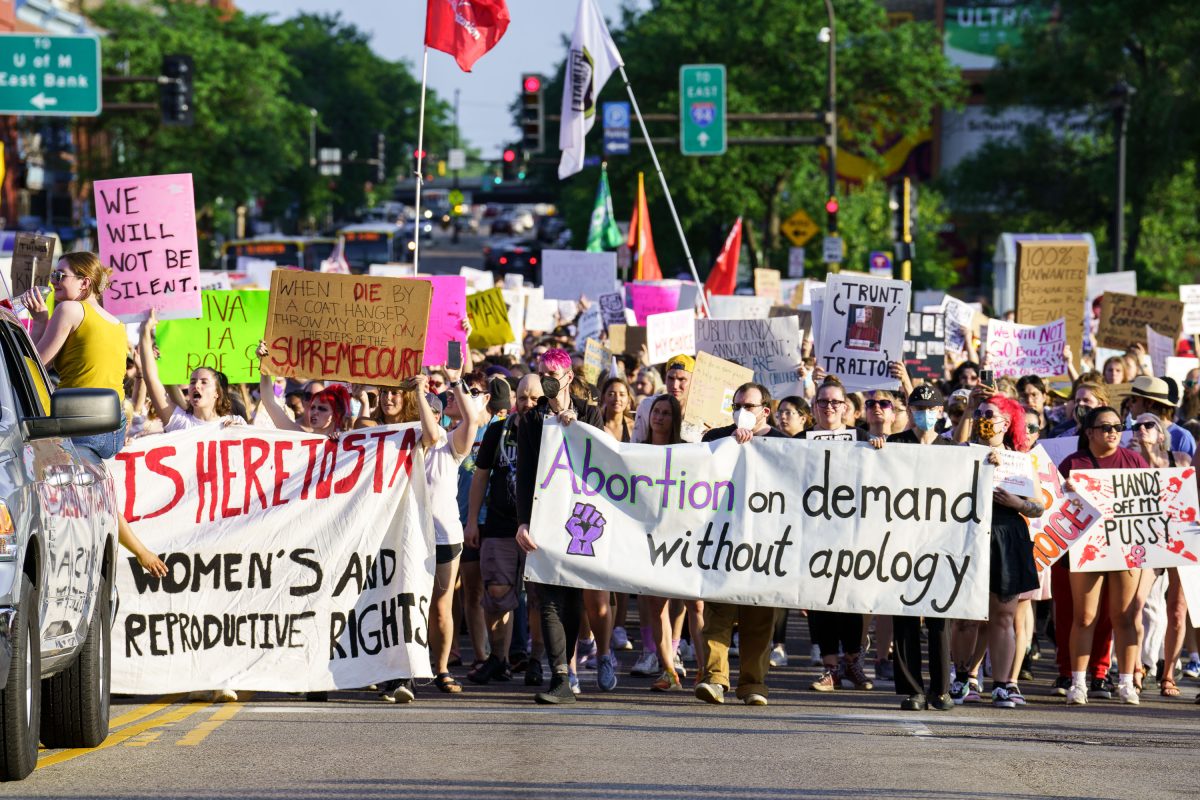
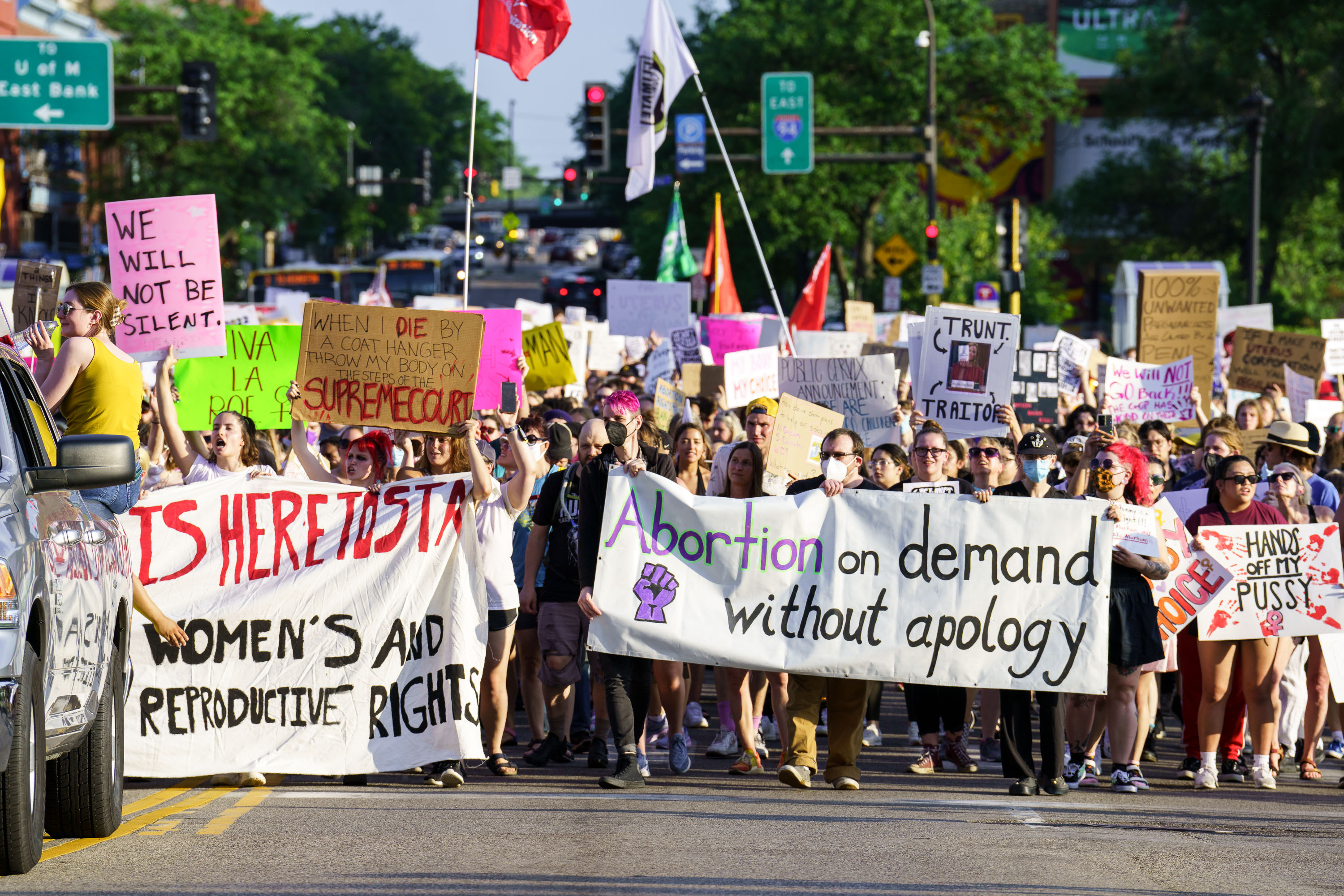
Protesters march through downtown Minneapolis carrying banners for abortion rights after the 2022 Roe v. Wade ruling.
The march took place in downtown Minneapolis on June 24, 2022, hours after the U.S. Supreme Court issued its ruling in Dobbs v. Jackson Women's Health Organization, overturning the 1973 Roe v. Wade decision that had established a constitutional right to abortion. The ruling returned regulation of abortion to individual states, prompting similar protests in cities across the country that same day.

Abortion Rights March After Dobbs Ruling, Minneapolis
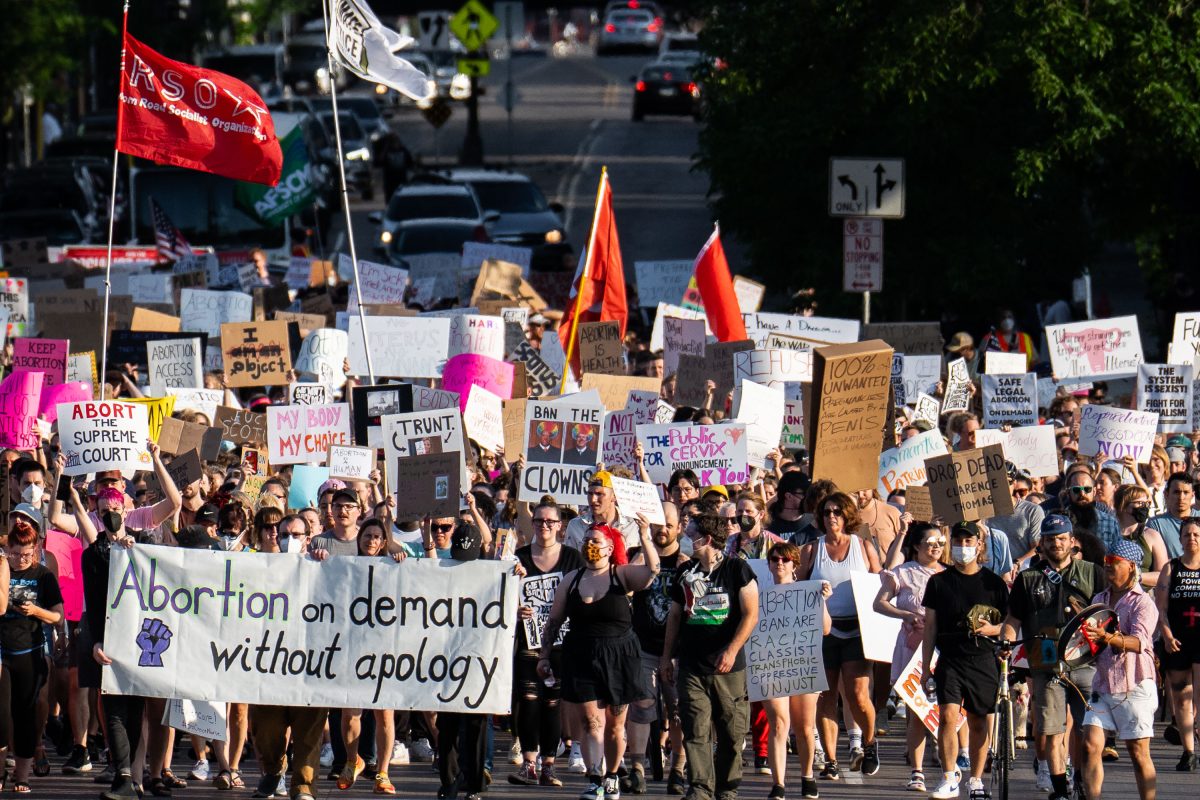
Crowd marches through downtown Minneapolis carrying signs protesting the Supreme Court's reversal of Roe v. Wade.
Demonstrators filled the streets of downtown Minneapolis on June 24, 2022, the day the U.S. Supreme Court overturned Roe v. Wade. The 1973 ruling had established a constitutional right to abortion, and its reversal in Dobbs v. Jackson Women's Health Organization returned abortion regulation to individual states. Minnesota law continued to protect abortion access after the decision, making the state a for activists from surrounding areas with new restrictions.

Abortion Rights March, Downtown Minneapolis
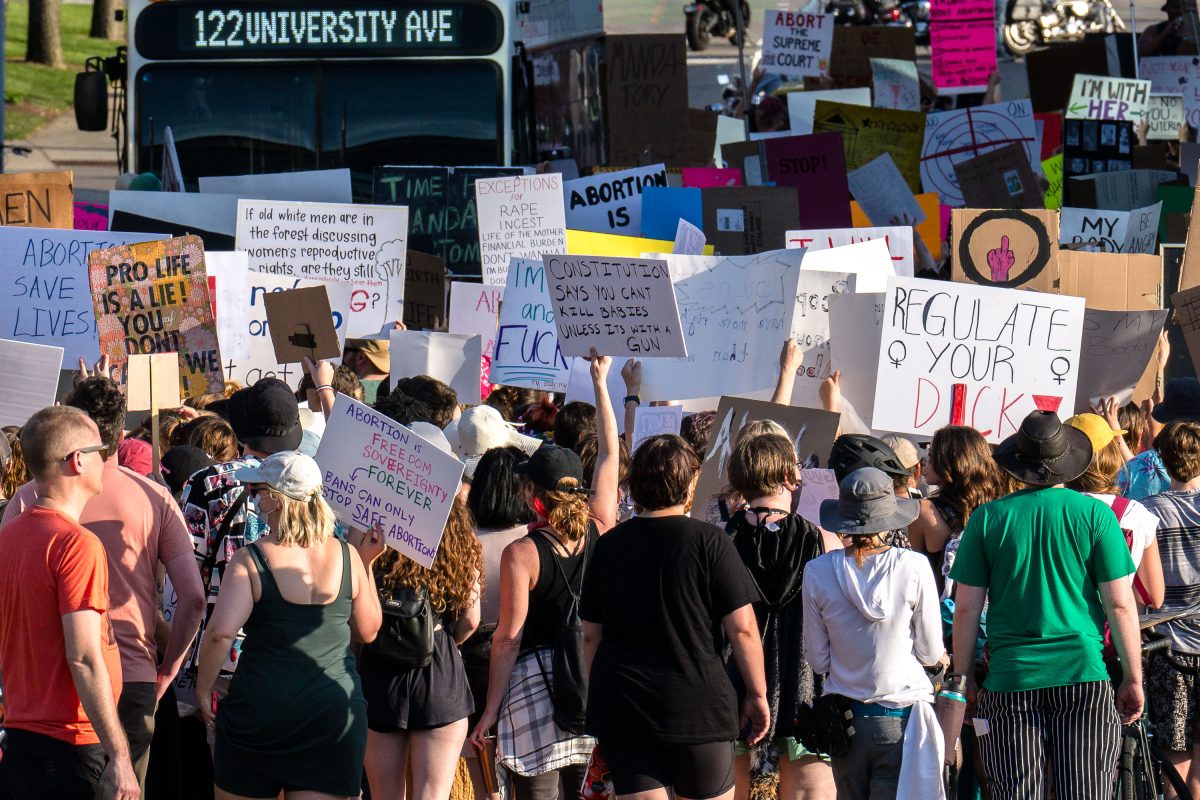
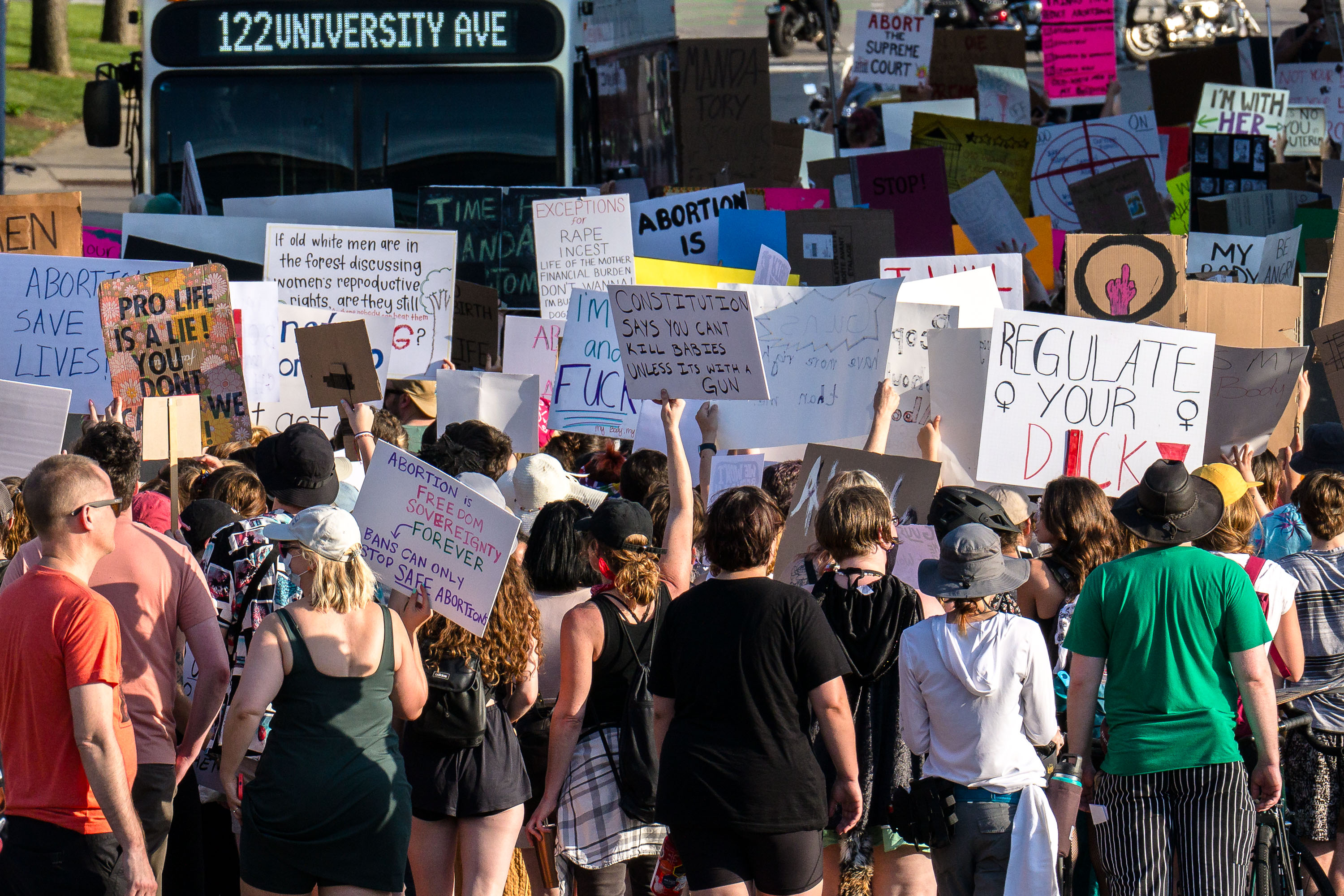
Crowd marches with handmade signs on University Avenue in Minneapolis during a 2022 abortion rights protest.
Demonstrators gathered in Minneapolis on June 24, 2022, the day the U.S. Supreme Court issued its decision in Dobbs v. Jackson Women's Health Organization, overturning the 1973 Roe v. Wade ruling that had established a constitutional right to abortion. The march moved along University Avenue, a corridor that runs through the University of Minnesota campus and connects downtown Minneapolis to Saint Paul. Marchers carried handmade signs referencing the Constitution, the Supreme Court, and reproductive rights, a common feature of rallies organized in cities nationwide that same week. Similar demonstrations took place in dozens of U.S. cities within hours of the ruling's release.

Abortion Rights March, University Avenue, Minneapolis
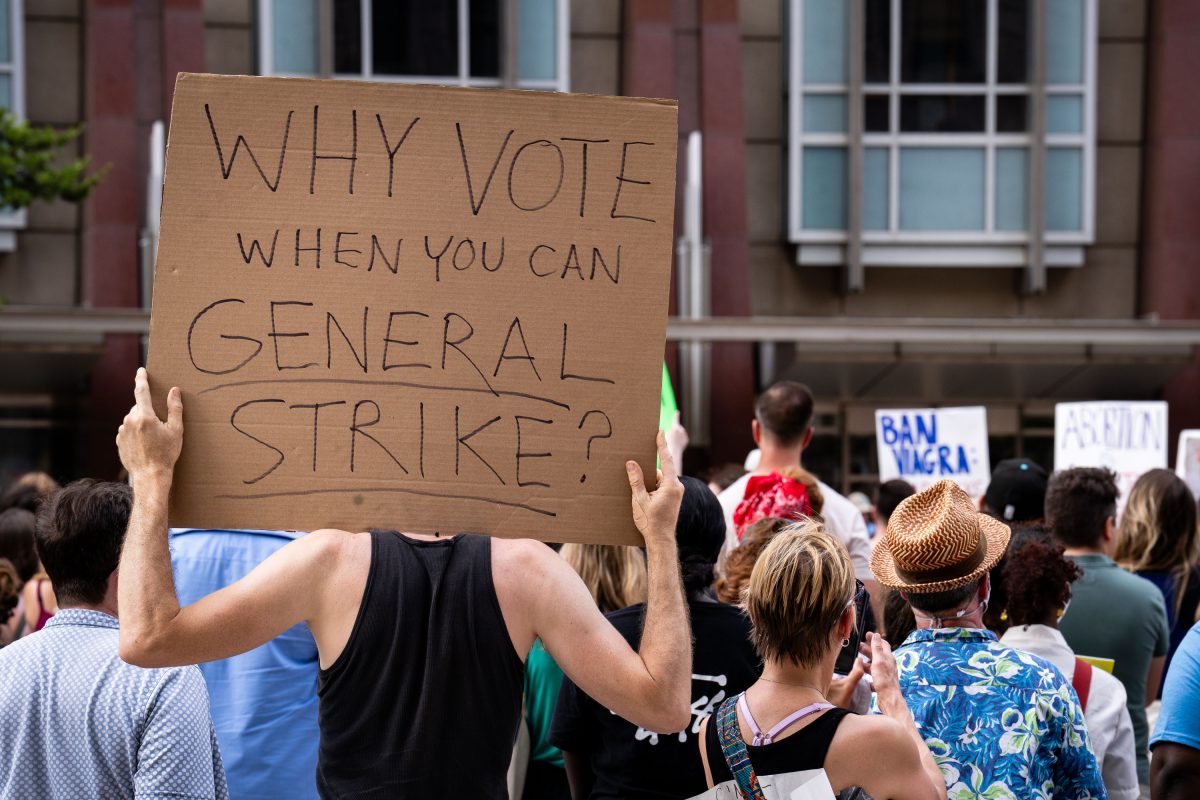
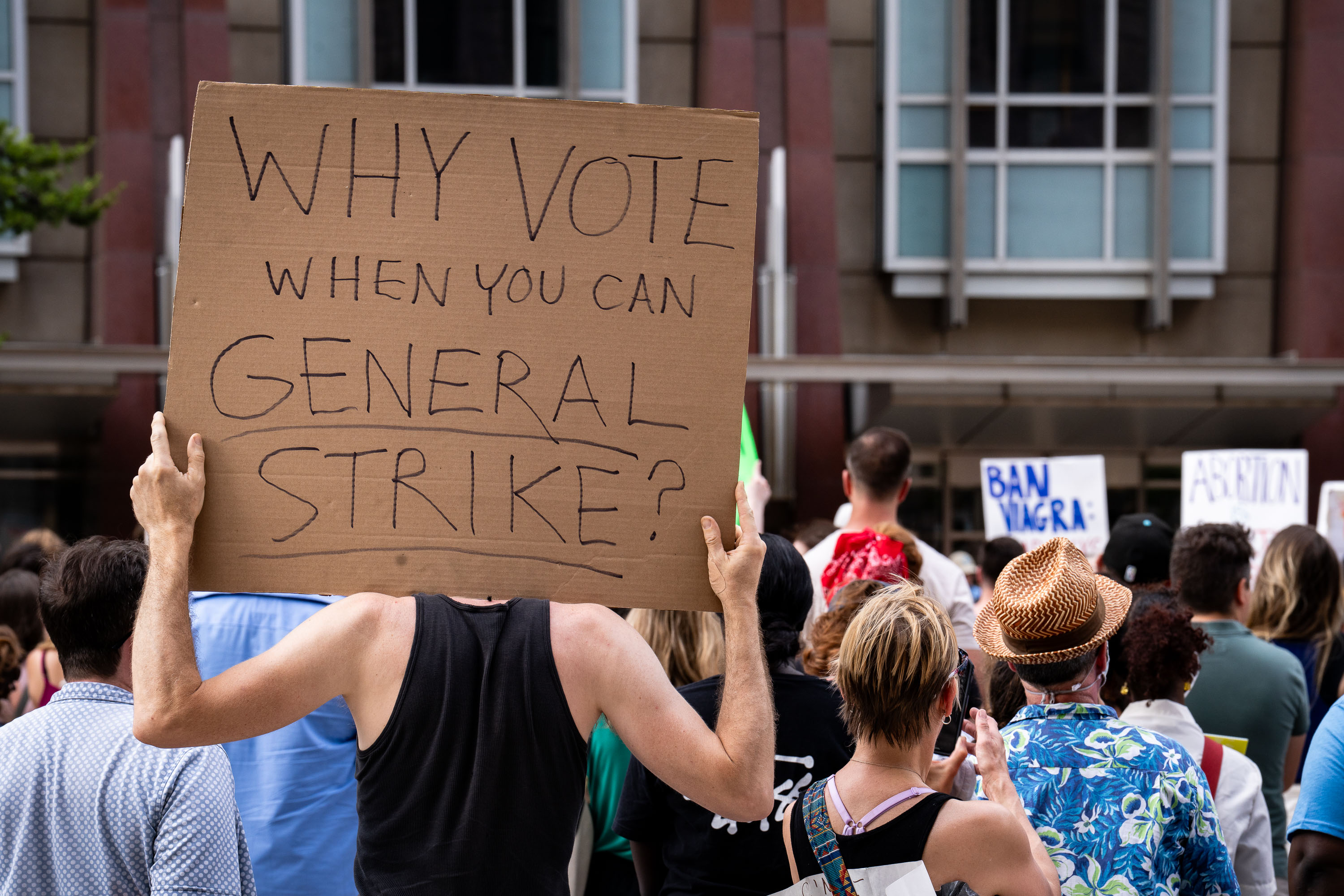
Protester holds a cardboard sign reading "Why Vote When You Can General Strike?" during an abortion rights march in downtown
The U.S. Supreme Court overturned Roe v. Wade on June 24, 2022, ending the constitutional right to abortion established in 1973. Crowds gathered in downtown Minneapolis that day as part of nationwide demonstrations responding to the ruling. Minnesota law continued to protect abortion access after the decision, a status affirmed separately by the state's courts and legislature.

General Strike Protest Sign, Downtown Minneapolis
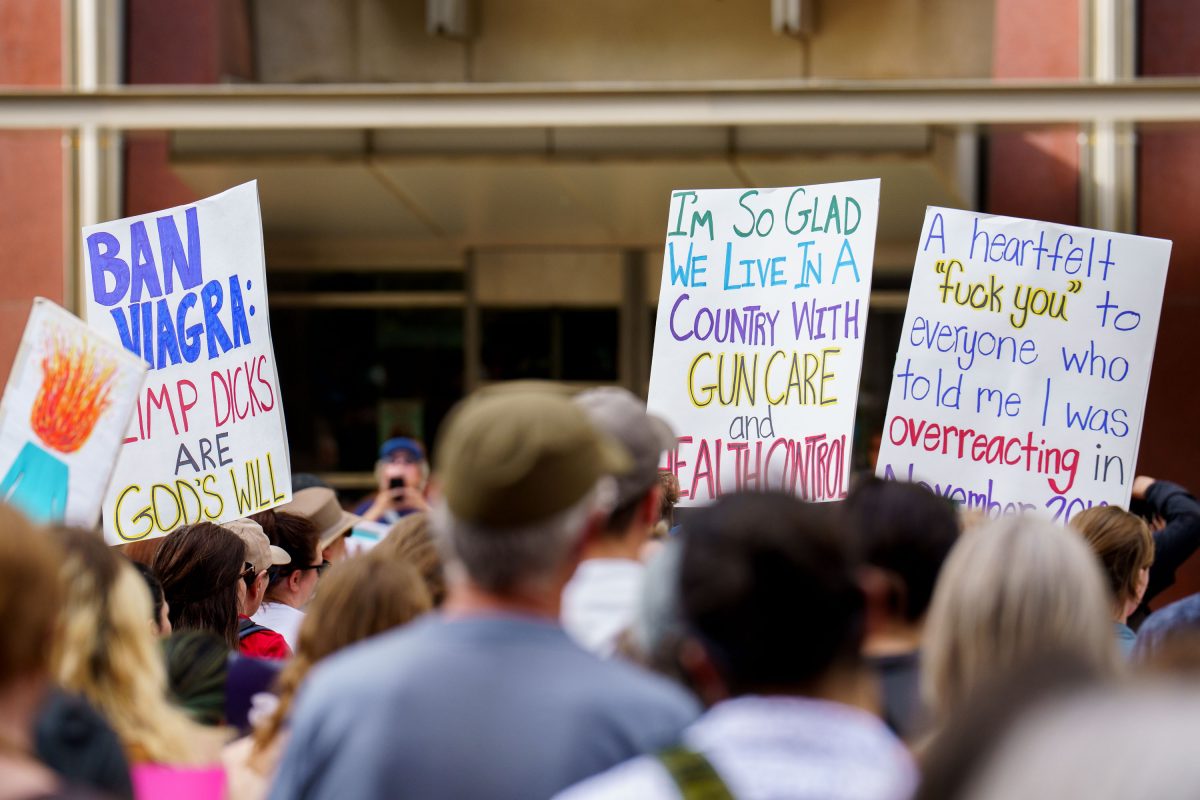
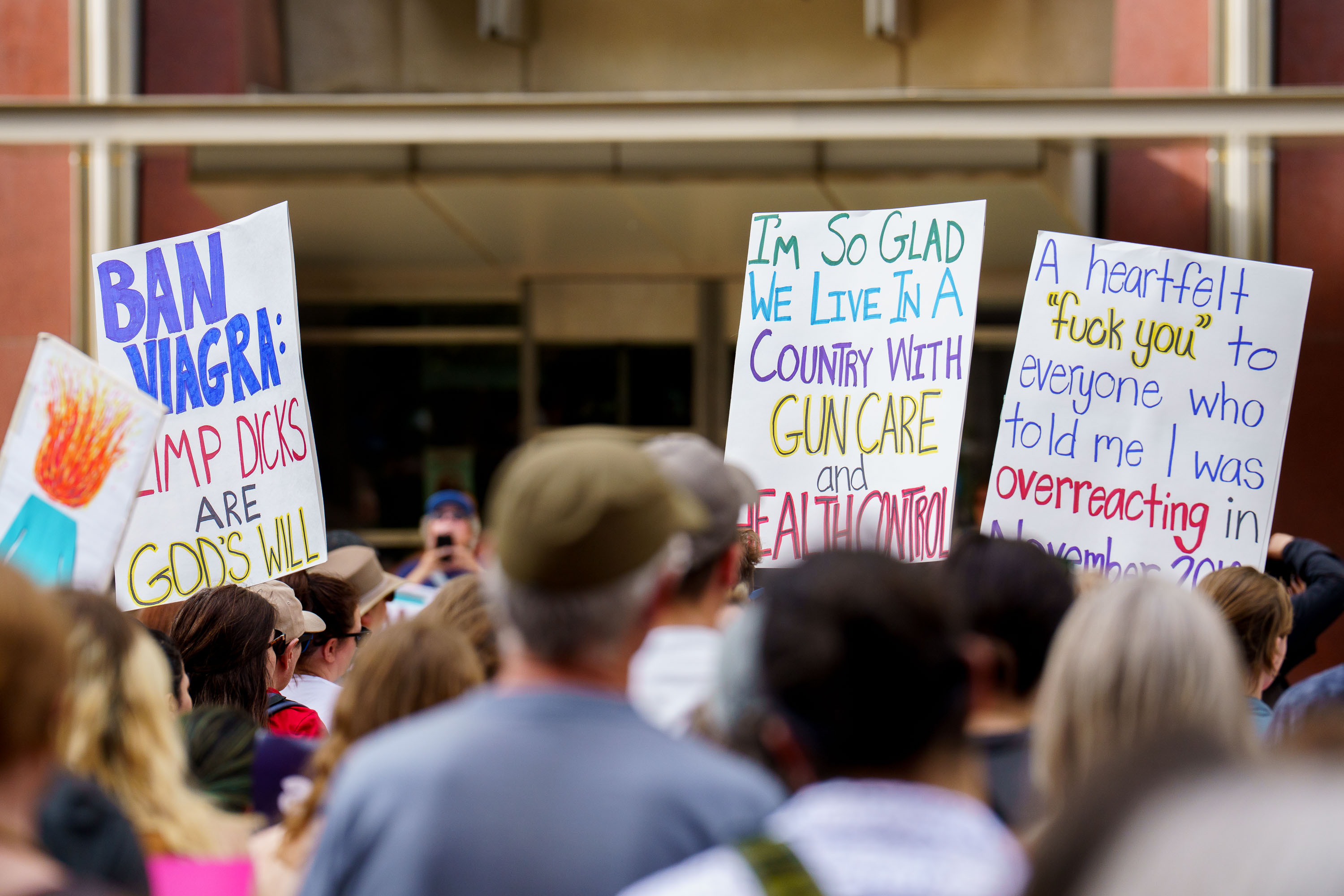
Protesters hold hand-lettered signs about abortion rights and gun control during a downtown Minneapolis demonstration.
Demonstrators gathered in downtown Minneapolis on June 24, 2022, the day the U.S. Supreme Court overturned Roe v. Wade in Dobbs v. Jackson Women's Health Organization. The 1973 Roe decision had established a constitutional right to abortion, and its reversal returned regulation of the procedure to individual states. Minnesota law continued to protect abortion access after the ruling, a status affirmed by the state's Supreme Court in a separate 1995 case, Doe v. Gomez. Crowds carrying hand-lettered signs assembled near government buildings in the city's downtown core, a common gathering point for organized marches and rallies in the Twin Cities.

Abortion Rights Protest Signs, Downtown Minneapolis

Looking down at protesters marching in Minneapolis after Roe V Wade is overturned
Protesters march through Minneapolis on June 24, 2020, following the Supreme Court's decision to overturn Roe v. Wade. This event occurred amidst widespread national protests against the ruling, which eliminated the constitutional right to abortion.

Minneapolis Abortion Rights Protest, June 24, 2020

Protesters with signs after roe v wade is overturned by supreme court
Protesters gathered in Minneapolis on June 24, 2020, to march for reproductive rights following the Supreme Court's decision to overturn Roe v. Wade. The mural in the background, featuring "LOVEPOWER CHURCH" and a depiction of Jesus, provided a backdrop to the demonstration. This event was part of a nationwide response to the ruling, which eliminated the constitutional right to abortion and returned the authority to regulate or ban the procedure to individual states.

Minneapolis Protestors March for Reproductive Rights

Protesters with signs marching in Minneapolis after Roe V Wade is overturned
Protesters gathered in Minneapolis on June 24, 2020, to express their opposition to the Supreme Court's decision to overturn Roe v. Wade. The ruling eliminated the constitutional right to abortion, which had been in place for nearly 50 years. This protest, part of a larger national response, highlighted concerns about reproductive justice and women's rights.

Minneapolis Roe v. Wade Protest, June 24, 2020

Protesters marching in Minneapolis after Roe V Wade
A large crowd of protesters gathered on the University of Minnesota campus in Minneapolis on June 24, 2020. The march occurred in response to the Supreme Court's decision to overturn Roe v. Wade, which had established the constitutional right to abortion.

Roe V Wade Protest at University of Minnesota, Minneapolis

Roe V Wade protest and march in Downtown Minneapolis
Protesters gathered in South Dakota on June 24, 2022, following the Supreme Court's decision to overturn Roe v. Wade. The ruling eliminated the constitutional right to abortion, returning the authority to regulate or ban the procedure to individual states.

Protestors gather for Roe v. Wade decision in South Dakota

Roe V Wade Protest Sign in Minneapolis
Protesters march in Minneapolis on June 24th, 2020 following the Supreme Court overturning Roe V. Wade.

Roe V Wade Protest Sign in Minneapolis
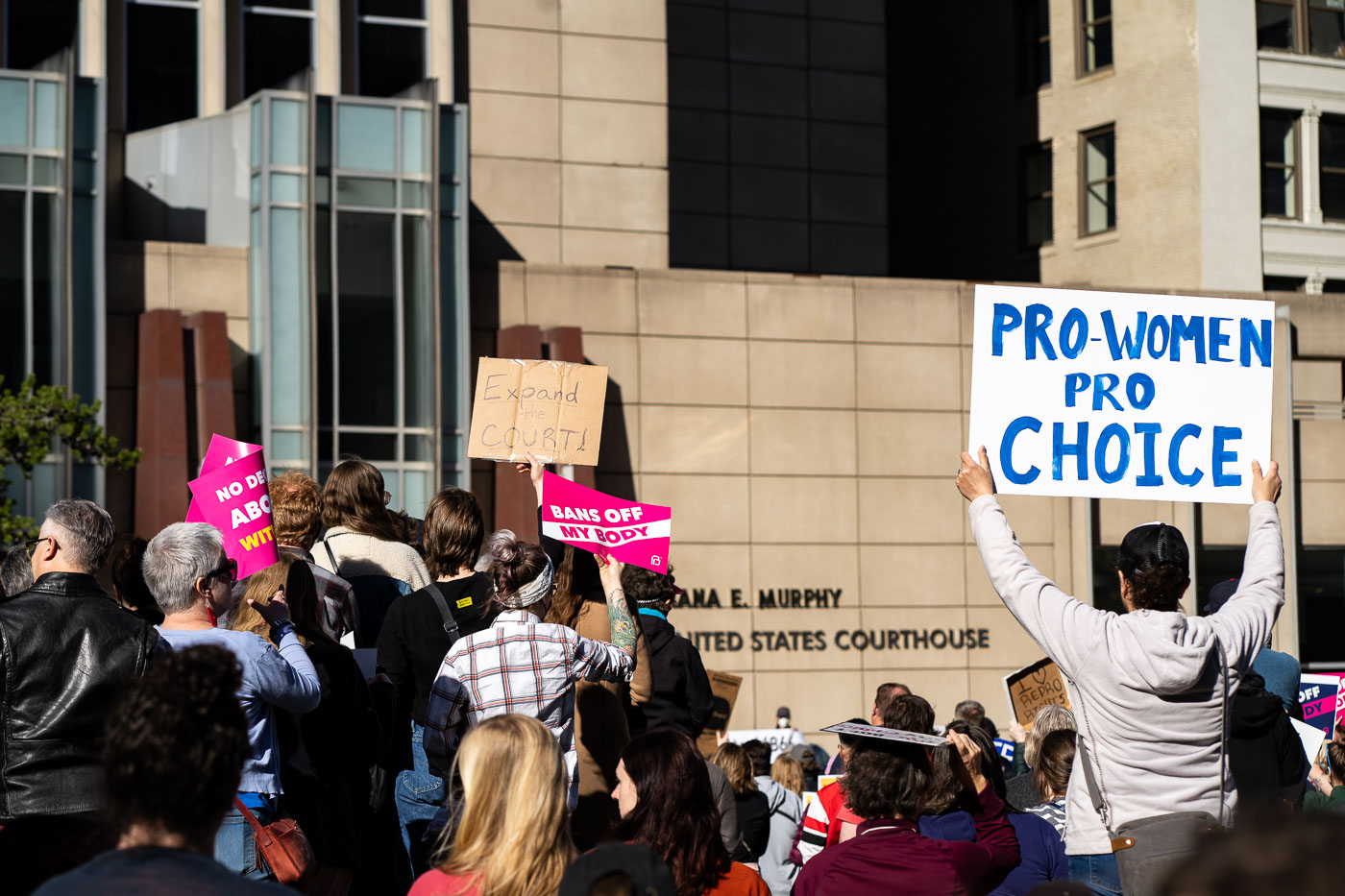
Pro Women Pro Choice protest sign in Minneapolis
Protesters gathered outside the United States Courthouse in Minneapolis to advocate for abortion rights. The courthouse, named after Judge Diana E. Murphy, serves as a federal judicial building in the city's downtown area. This protest reflects ongoing national discussions and legal challenges surrounding reproductive rights, particularly in the context of Supreme Court decisions and state-level legislation.

Minneapolis Courthouse Protest for Abortion Rights

Protesters holding "Justice for Amir Locke" signs gather inside Minneapolis City Hall demanding accountability for his police
Protesters gathered inside Minneapolis City Hall on February 2, 2022, to demand justice for Amir Locke, who was killed by police earlier that day.. Participants delivered ethics complaints to the city attorney's office, targeting the Minneapolis Police Department's actions and Mayor Jacob Frey. The event underscored public outcry and calls for accountability following the fatal shooting.

Amir Locke Protesters Fill City Hall Hallway, Minneapolis

Protesters holding "Justice for Amir Locke" signs gather at Minneapolis City Hall to file ethics complaints.
Protesters gathered at Minneapolis City Hall to file ethics complaints against Mayor Jacob Frey. The complaints are in response to the fatal shooting of Amir Locke by Minneapolis police on February 2, 2022.

Amir Locke Supporters at City Attorney’s Office, Minneapolis City Hall

Protesters hold "Justice for Amir Locke" signs at Minneapolis City Hall steps during February 2022 demonstration.
Protesters gathered at Minneapolis City Hall to deliver ethics complaints against Mayor Jacob Frey following the police shooting death of Amir Locke on February 2, 2022. The protesters, holding signs that read "Justice for Amir Locke," stated that more complaints would follow.

“Justice for Amir Locke” Rally at Minneapolis City Hall

Protester with a Justice for Amir Locke sign at Minneapolis City Hall.
Minneapolis residents gathered at City Hall on February 4, 2022, to protest the police shooting death of Amir Locke. Demonstrators delivered ethics complaints against Mayor Jacob Frey to the city attorney's office, citing the incident. The "Justice for Amir Locke" sign held by a protester reflects the ongoing calls for accountability and justice following the event.

Justice for Amir Locke at Minneapolis City Hall

Protesters with a “FREY LIED” banner at Minneapolis City Hall during an Amir Locke protest.
Protesters gathered on the steps of Minneapolis City Hall to protest the police shooting death of Amir Locke. A large banner reading "FREY LIED" was displayed, referencing Mayor Jacob Frey and his previous statements on banning the use of no knock warrants. Demonstrators held signs with "JUSTICE for Amir Locke" and presented ethics complaints against the mayor to the city attorney's office. The event occurred following the February 2, 2022, shooting of Locke by Minneapolis Police officers during a no-knock warrant execution.

Frey Lied sign at Amir Locke Protest

Jeanelle Austin speaks at an Amir Locke protest inside Minneapolis City Hall.
Jeanelle Austin speaks at a protest outside Minneapolis City Hall on February 2, 2022, following the police shooting death of Amir Locke. Attendees gathered to advocate for justice and deliver ethics complaints against Mayor Jacob Frey, citing concerns over his handling of the incident and police conduct.

Jeanelle Austin speaks at Minneapolis City Hall, Amir Locke Protest

Protester holding an “End state sanctioned violence” sign at Minneapolis City Hall protest.
Protesters gathered at Minneapolis City Hall on February 2, 2022, to protest the police shooting death of Amir Locke. The group delivered ethics complaints against Mayor Jacob Frey to the city attorney's office, citing the incident and vowing further action.

Minneapolis City Hall Protest: End State Violence

Chicago and E 38th St sign at a protest inside Minneapolis City Hall.
Protesters gathered at Minneapolis City Hall on February 2, 2022, to protest the police shooting death of Amir Locke. The sign, reading "Chicago & E 38th St," references the intersection where Goerge Floyd was killed by Minneapolis Police in May 2020. Protesters delivered ethics complaints against Mayor Jacob Frey to the city attorney's office.

Minneapolis City Hall Protest: Chicago & E 38th St Sign

Protesters gather in the rotunda of Minneapolis City Hall to file ethics complaints against Mayor Jacob Frey following Amir Locke's death.
Protesters gathered inside Minneapolis City Hall to deliver ethics complaints against Mayor Jacob Frey, following the police shooting death of Amir Locke on February 2, 2022. Complaints followed the no knock warrant that lead to his killing.

Protesters Deliver Ethics Complaints at Minneapolis City Hall Over Amir Locke
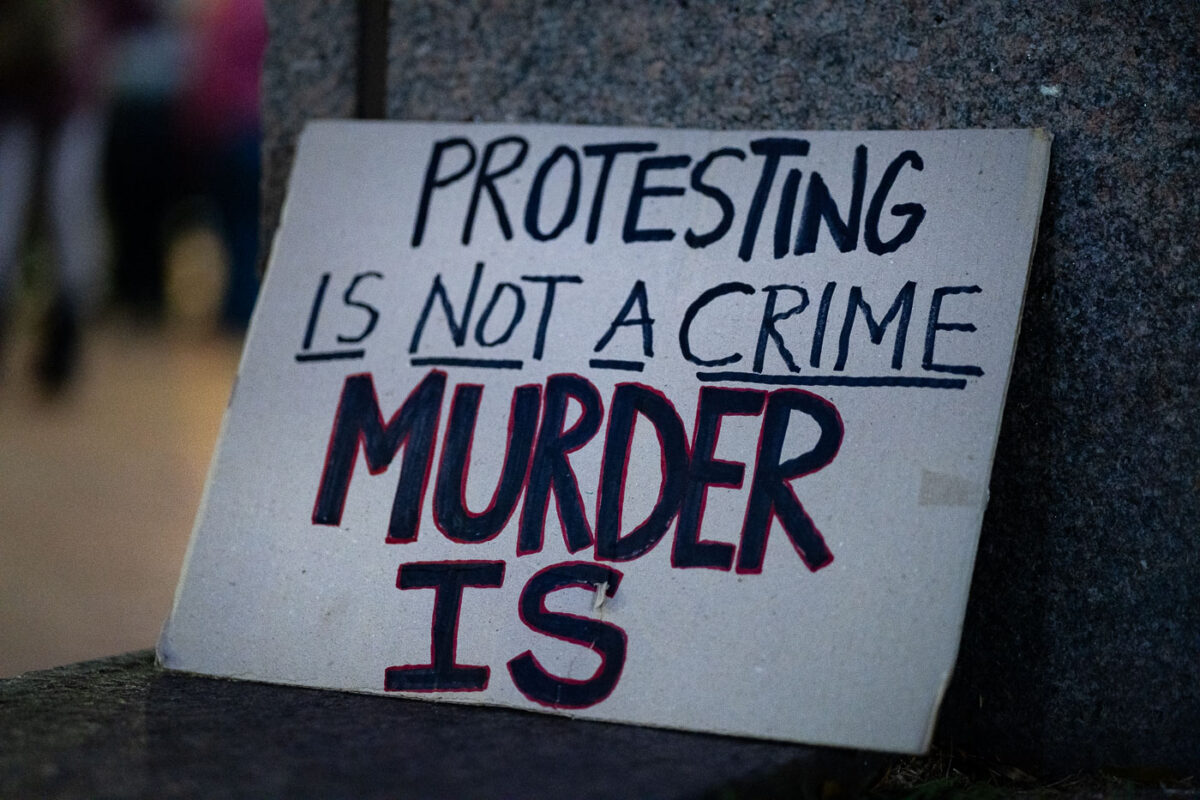
Protesting is not a crime protest sign
Protesters gathered in downtown Minneapolis on November 20, 2021, following the acquittal of Kyle Rittenhouse. The march took place the day after the verdict was delivered in Kenosha, where Rittenhouse was found not guilty of all charges related to the fatal shootings during protests in August 2020.

Minneapolis Protest Sign: Protesting is Not a Crime, Murder Is
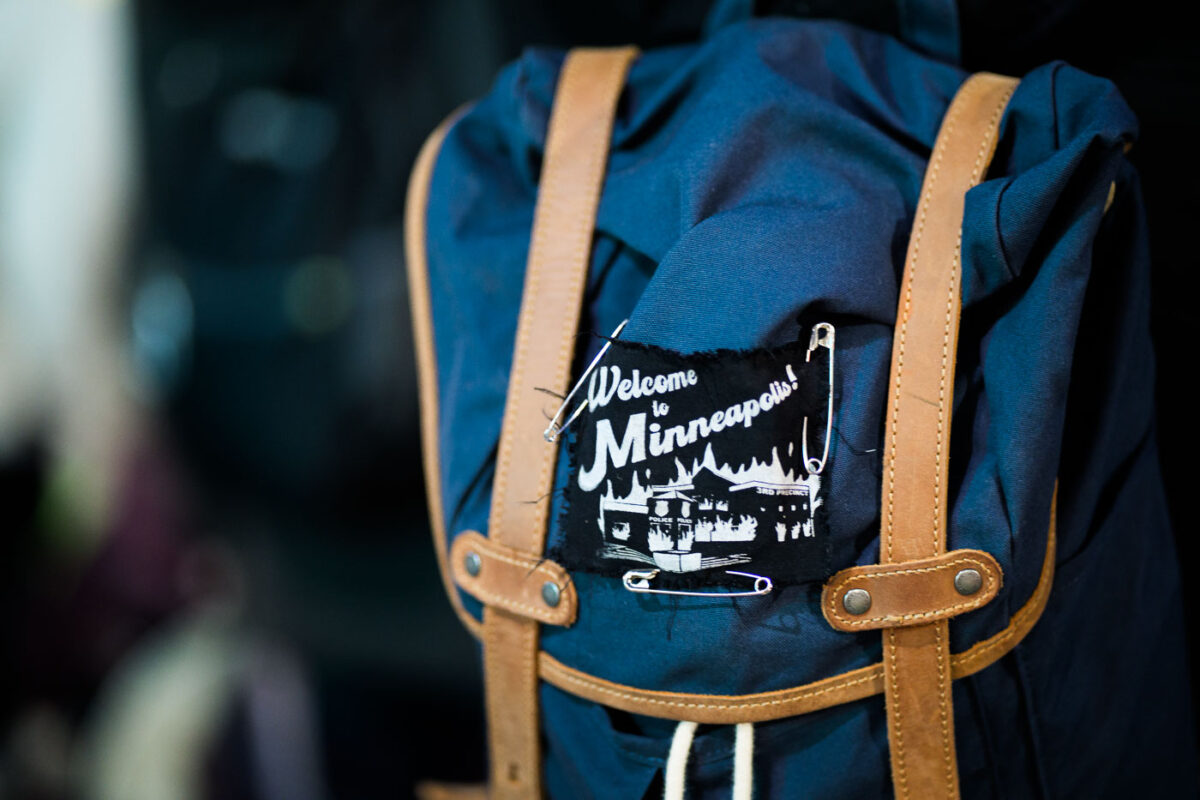
Welcome to Minneapolis patch on protesters backpack
Protesters gathered in downtown Minneapolis on November 20, 2021, following the acquittal of Kyle Rittenhouse. The march took place the day after the verdict was delivered in Kenosha, where Rittenhouse was found not guilty of all charges related to the fatal shootings during protests in August 2020.

Minneapolis 3rd Precinct Patch on Protester Backpack
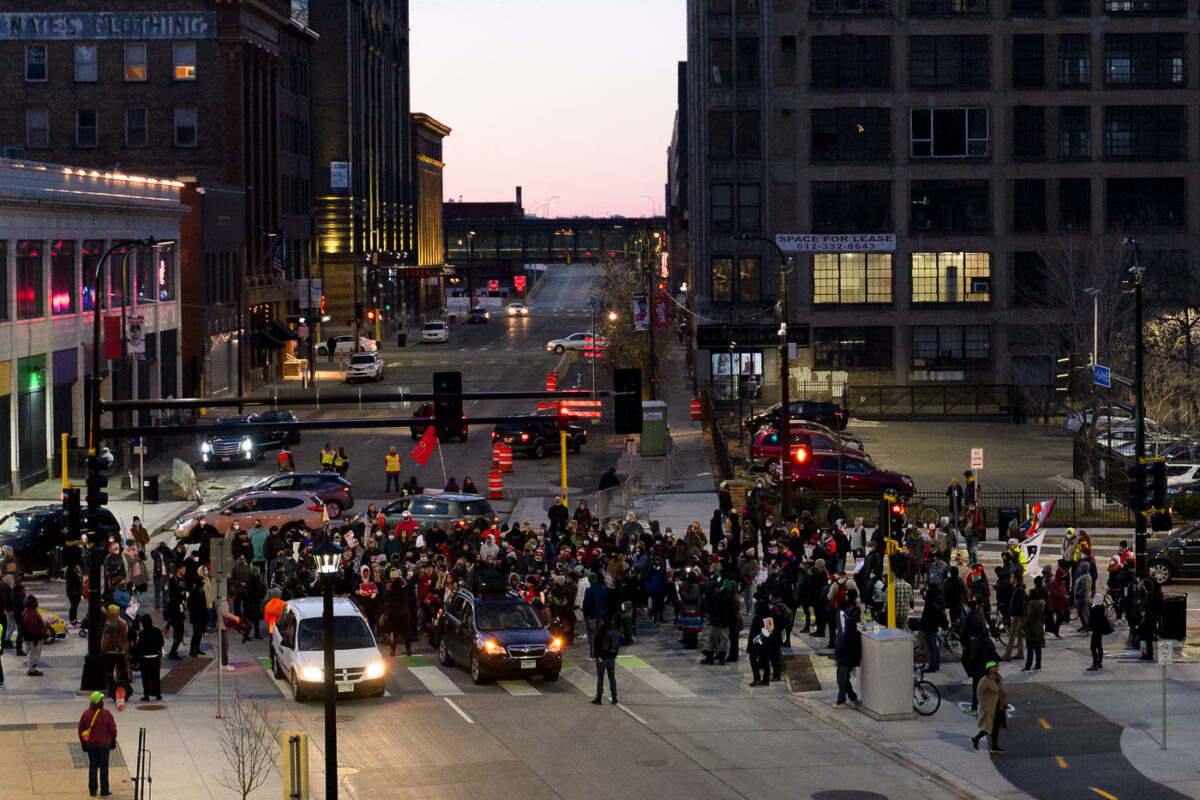
Kyle Rittenhouse protesters march in Downtown Minneapolis
Protesters gathered in downtown Minneapolis on November 20, 2021, following the acquittal of Kyle Rittenhouse. The march took place the day after the verdict was delivered in Kenosha, where Rittenhouse was found not guilty of all charges related to the fatal shootings during protests in August 2020.

Downtown Minneapolis Protest After Rittenhouse Verdict
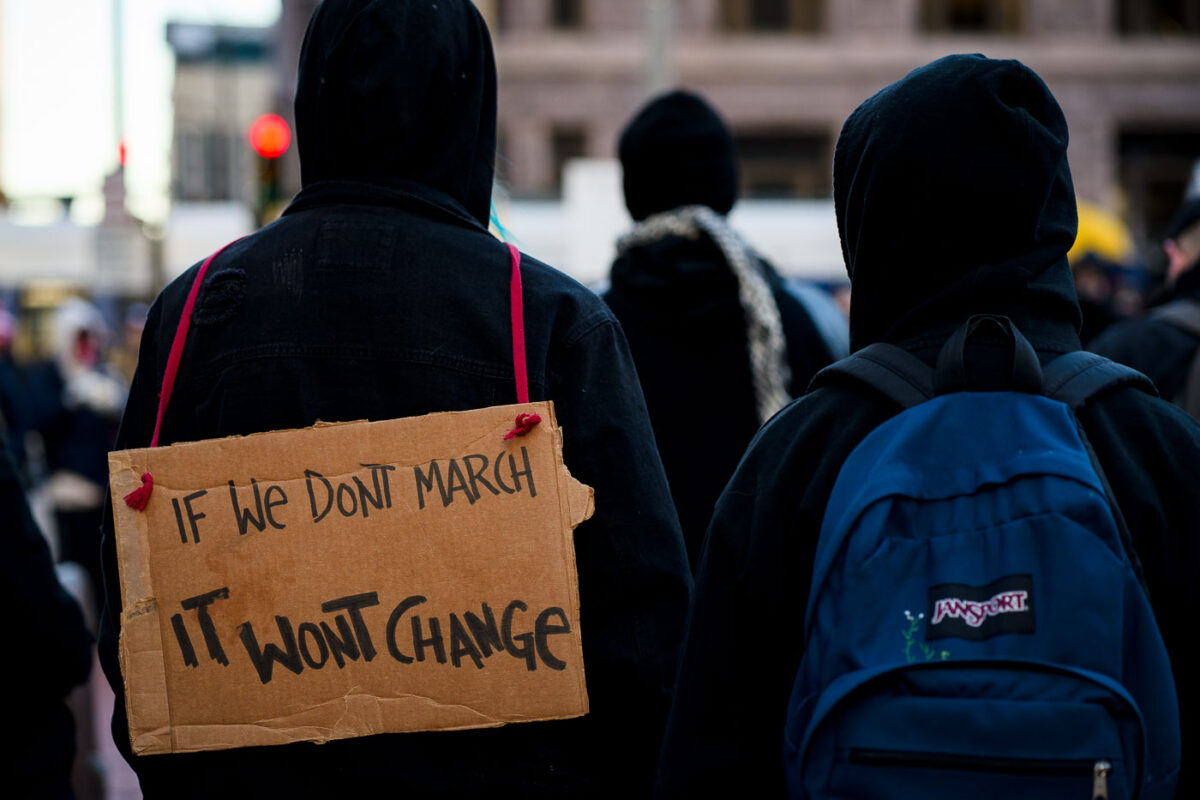
Kyle Rittenhouse protest in Downtown Minneapolis
Protesters gathered in downtown Minneapolis on November 20, 2021, following the acquittal of Kyle Rittenhouse. The march took place the day after the verdict was delivered in Kenosha, where Rittenhouse was found not guilty of all charges related to the fatal shootings during protests in August 2020.

Minneapolis Protest After Rittenhouse Verdict

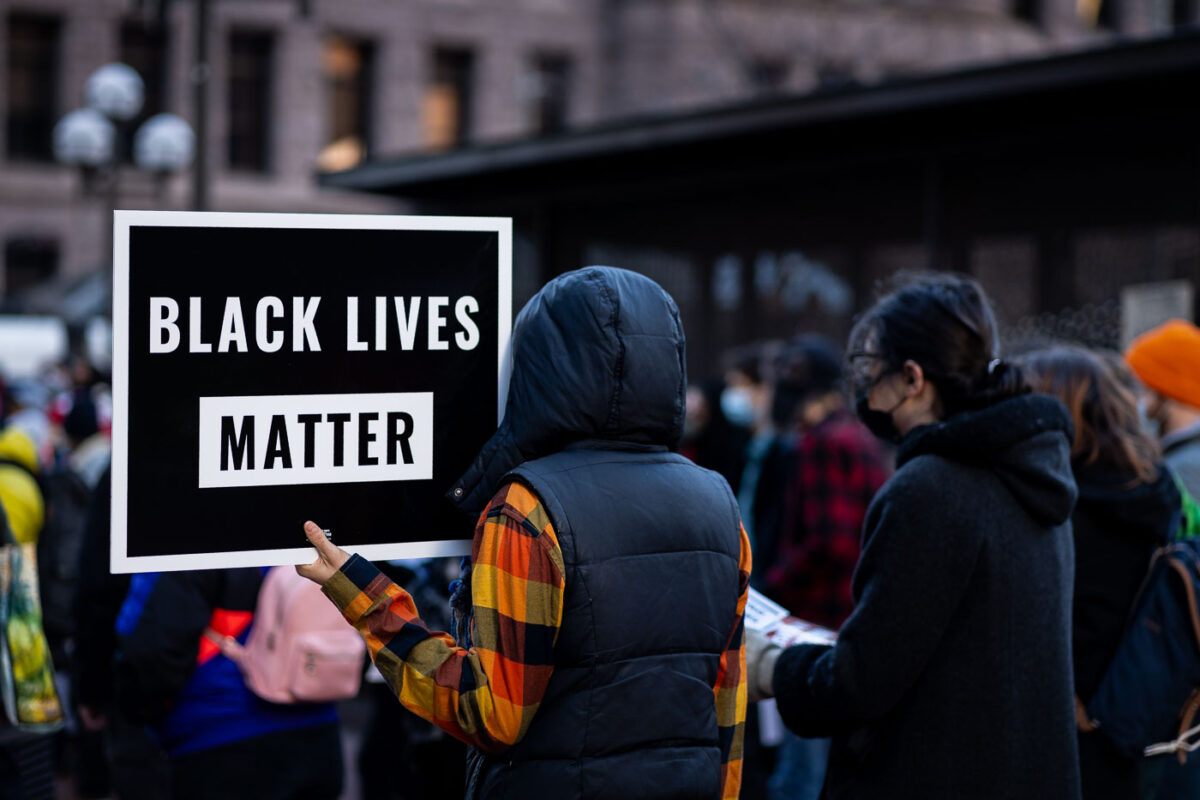
Protester holds Black Lives Matter sign in Downtown Minneapolis
Protesters gathered in downtown Minneapolis on November 20, 2021, following the acquittal of Kyle Rittenhouse. The march took place the day after the verdict was delivered in Kenosha, where Rittenhouse was found not guilty of all charges related to the fatal shootings during protests in August 2020.

Black Lives Matter Protest at Hennepin County Government Center, Minneapolis

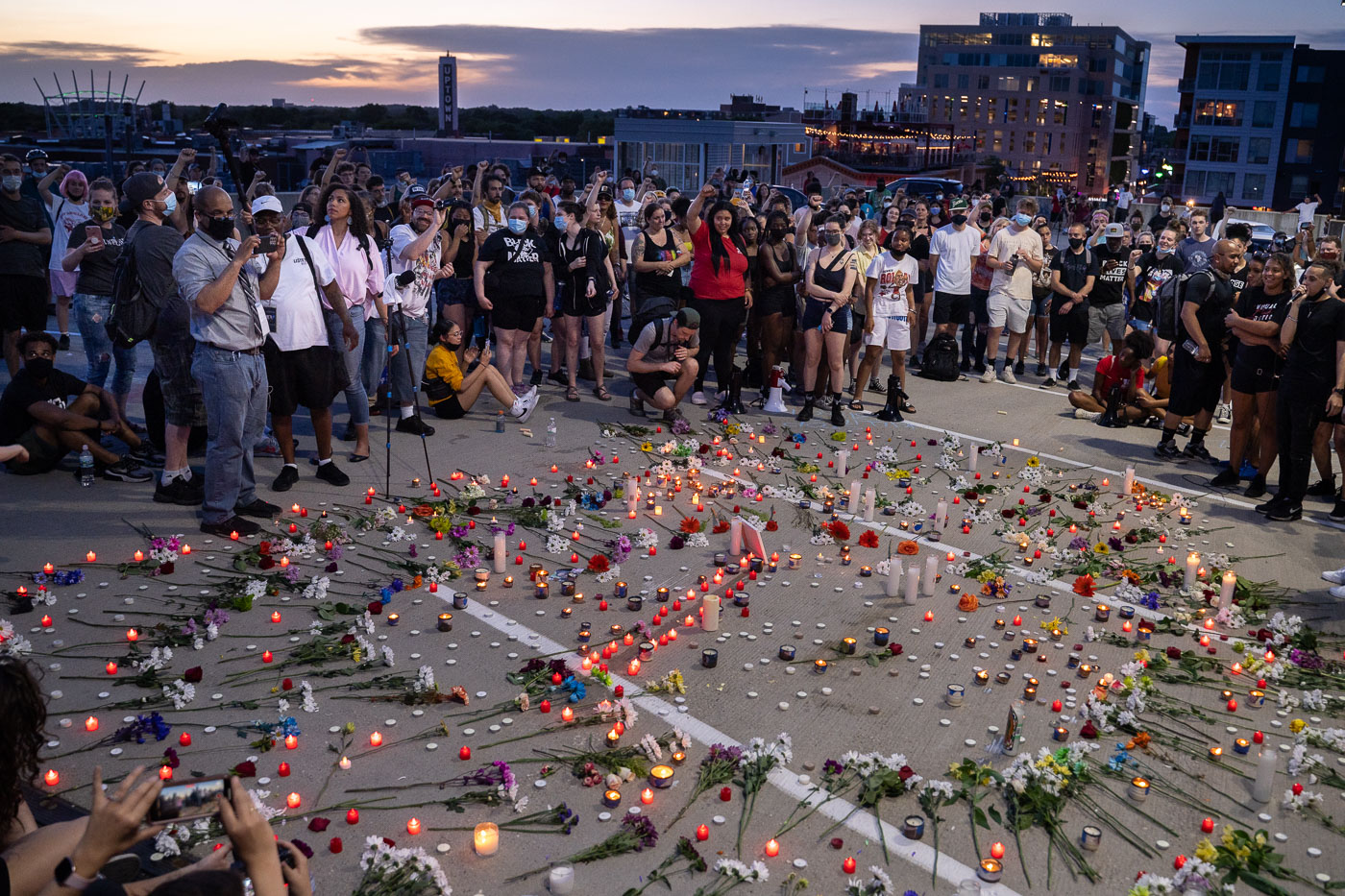
Winston Smith Vigil at Lake and Girard with candles
A vigil is held at the Seven Points Mall parking ramp in Minneapolis, four months after Winston Smith was killed there. The vigil includes candles, flowers, and signs, one of which reads "WINSTON SMITH WAS ASSASSINATED." Smith's death on June 3, 2021, sparked protests and contributed to ongoing discussions about police conduct and accountability in the city. The parking ramp is a multi-level structure located in the Uptown area of Minneapolis, a neighborhood that has been a focal point for activism and community organizing.

Winston Smith Vigil at Seven Points Mall Parking Ramp, Minneapolis

Protester with a megaphone on Lake Street Winston Smith protest
Protesters gather at the intersection of Lake Street and Girard Avenue in Uptown Minneapolis on the four-month anniversary of Winston Smith's death. Smith, a Black man, was killed by federal law enforcement officers on June 4, 2021, on top of a parking garage at this location. The protest is part of ongoing demonstrations and vigils held in Minneapolis following Smith's death and in response to police brutality.

Winston Smith Protest, Lake & Girard, Uptown Minneapolis
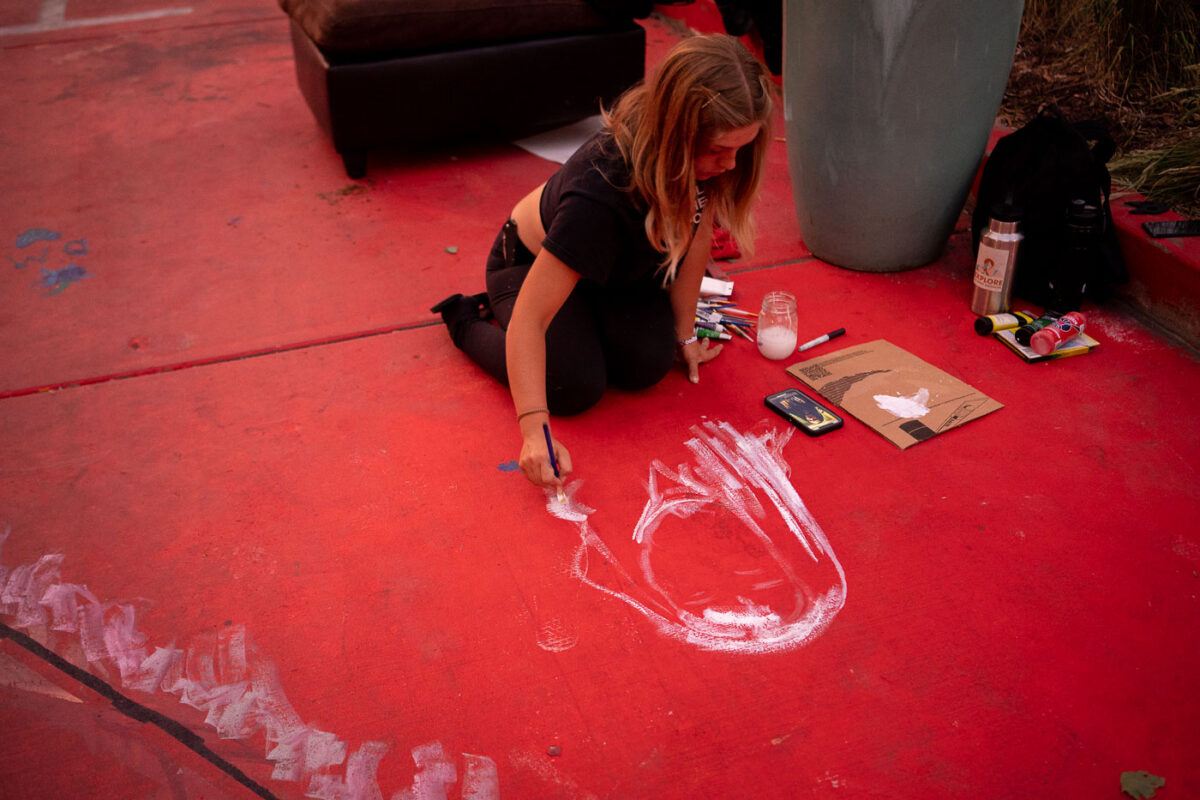
Artist draws a memorial on red pavement in Minneapolis.
An artist creates a memorial drawing on the pavement outside the parking garage where Winston Smith died on June 3rd. The drawing is a tribute to Smith, who was killed by law enforcement officers. On June 13, 2021, 31-year-old Deona Marie Knajdek was killed when a driver accelerated into a group of demonstrators gathered in Minneapolis’ Uptown neighborhood during ongoing protests over the killing of Winston “Boogie” Smith Jr. Protesters had blocked the intersection of West Lake Street and Girard Avenue with vehicles and barricades when Nicholas Kraus drove a Jeep Cherokee into the crowd at high speed, killing Knajdek and injuring several others. Kraus was later charged with second-degree murder, two counts of second-degree assault with a dangerous weapon, and criminal vehicular operation. In 2023, he pleaded guilty to murder and assault charges and was sentenced to more than 20 years in prison for the attack. On June 3, 2021, members of a U.S. Marshals Service fugitive task force fatally shot 32-year-old Winston “Boogie” Smith Jr. on the top level of a parking ramp in Minneapolis’ Uptown neighborhood while attempting to arrest him on a felony warrant. Authorities said Smith fired a handgun from inside his vehicle during the encounter, while family members and activists questioned the official account and demanded the release of additional evidence. The killing led to weeks of protests, street occupations, and confrontations with police in Uptown, becoming another major flashpoint in Minneapolis during the period following the murder of George Floyd. Earlier in the day Minneapolis city officials along with The Agape Movement coordinated to open the streets that had been closed at George Floyd Square since his murder.

Artist draws Winston Smith memorial on Minneapolis pavement
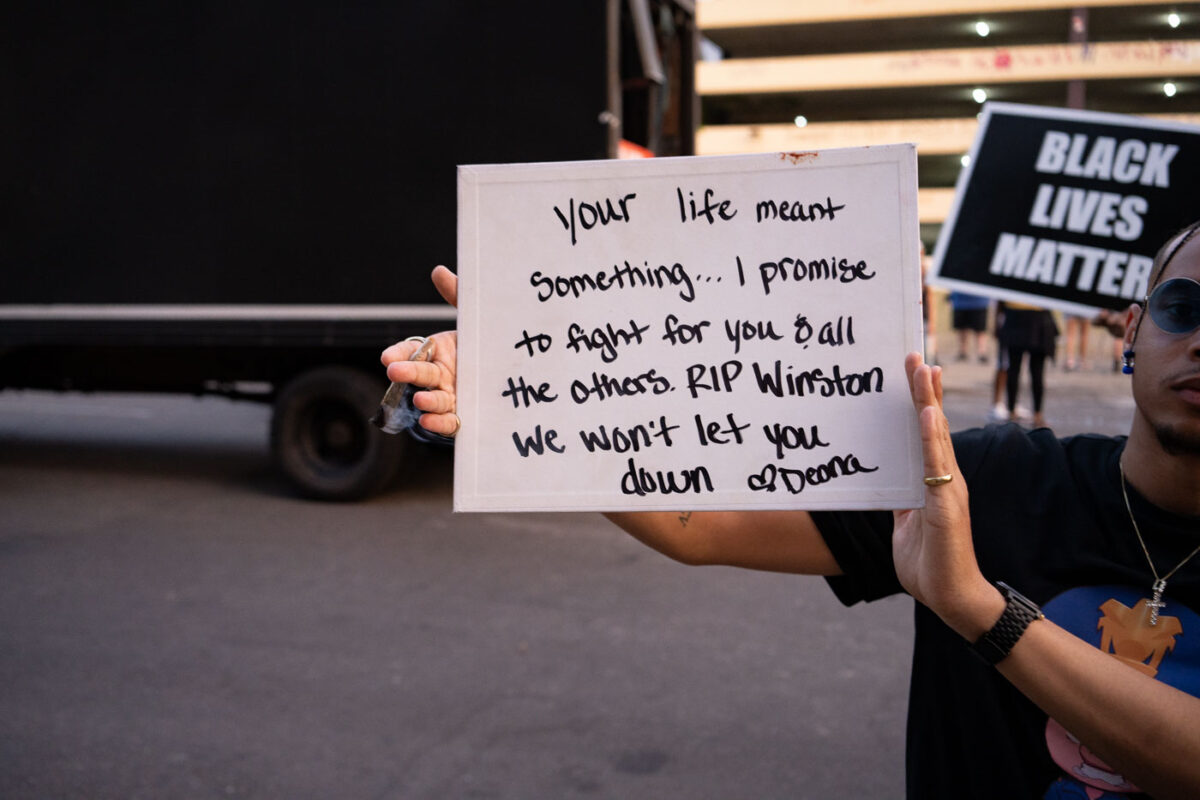
Protester holds a memorial sign for Winston Smith and Deona Marie in Minneapolis.
A protester holds a sign reading "Your life meant something... I promise to fight for you & all the others. RIP Winston we won't let you down Deona" during a protest in Minneapolis. The sign honors Deona Marie Knajdek and Winston Smith, both of whom died in separate incidents in June 2021. On June 3, 2021, members of a U.S. Marshals Service fugitive task force fatally shot 32-year-old Winston “Boogie” Smith Jr. on the top level of a parking ramp in Minneapolis’ Uptown neighborhood while attempting to arrest him on a felony warrant. Authorities said Smith fired a handgun from inside his vehicle during the encounter, while family members and activists questioned the official account and demanded the release of additional evidence. The killing led to weeks of protests, street occupations, and confrontations with police in Uptown, becoming another major flashpoint in Minneapolis during the period following the murder of George Floyd. Earlier in the day Minneapolis city officials along with The Agape Movement coordinated to open the streets that had been closed at George Floyd Square since his murder. On June 13, 2021, 31-year-old Deona Marie Knajdek was killed when a driver accelerated into a group of demonstrators gathered in Minneapolis’ Uptown neighborhood during ongoing protests over the killing of Winston “Boogie” Smith Jr. Protesters had blocked the intersection of West Lake Street and Girard Avenue with vehicles and barricades when Nicholas Kraus drove a Jeep Cherokee into the crowd at high speed, killing Knajdek and injuring several others. Kraus was later charged with second-degree murder, two counts of second-degree assault with a dangerous weapon, and criminal vehicular operation. In 2023, he pleaded guilty to murder and assault charges and was sentenced to more than 20 years in prison for the attack.

Minneapolis Protest Sign for Deona Marie and Winston Smith
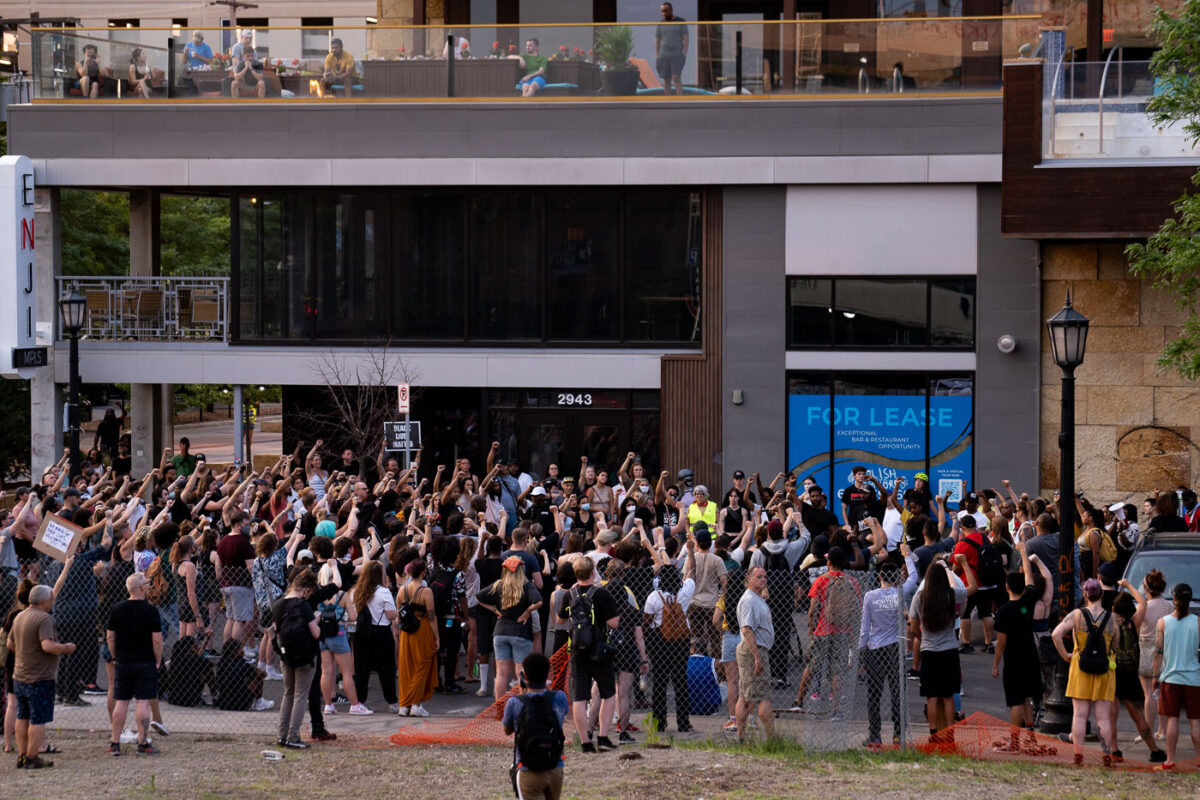
Protesters raise fists outside a building on Lake Street in Minneapolis.
Protesters raise their fists on Lake Street in Uptown Minneapolis on what would have been Deona Marie's birthday. Marie was killed on June 13th when a vehicle drove through barricades during a protest for Winston Smith, who had been killed by law enforcement days earlier. On June 3, 2021, members of a U.S. Marshals Service fugitive task force fatally shot 32-year-old Winston “Boogie” Smith Jr. on the top level of a parking ramp in Minneapolis’ Uptown neighborhood while attempting to arrest him on a felony warrant. Authorities said Smith fired a handgun from inside his vehicle during the encounter, while family members and activists questioned the official account and demanded the release of additional evidence. The killing led to weeks of protests, street occupations, and confrontations with police in Uptown, becoming another major flashpoint in Minneapolis during the period following the murder of George Floyd. Earlier in the day Minneapolis city officials along with The Agape Movement coordinated to open the streets that had been closed at George Floyd Square since his murder. On June 13, 2021, 31-year-old Deona Marie Knajdek was killed when a driver accelerated into a group of demonstrators gathered in Minneapolis’ Uptown neighborhood during ongoing protests over the killing of Winston “Boogie” Smith Jr. Protesters had blocked the intersection of West Lake Street and Girard Avenue with vehicles and barricades when Nicholas Kraus drove a Jeep Cherokee into the crowd at high speed, killing Knajdek and injuring several others. Kraus was later charged with second-degree murder, two counts of second-degree assault with a dangerous weapon, and criminal vehicular operation. In 2023, he pleaded guilty to murder and assault charges and was sentenced to more than 20 years in prison for the attack.

Protesters raise fists on Lake Street, Uptown Minneapolis
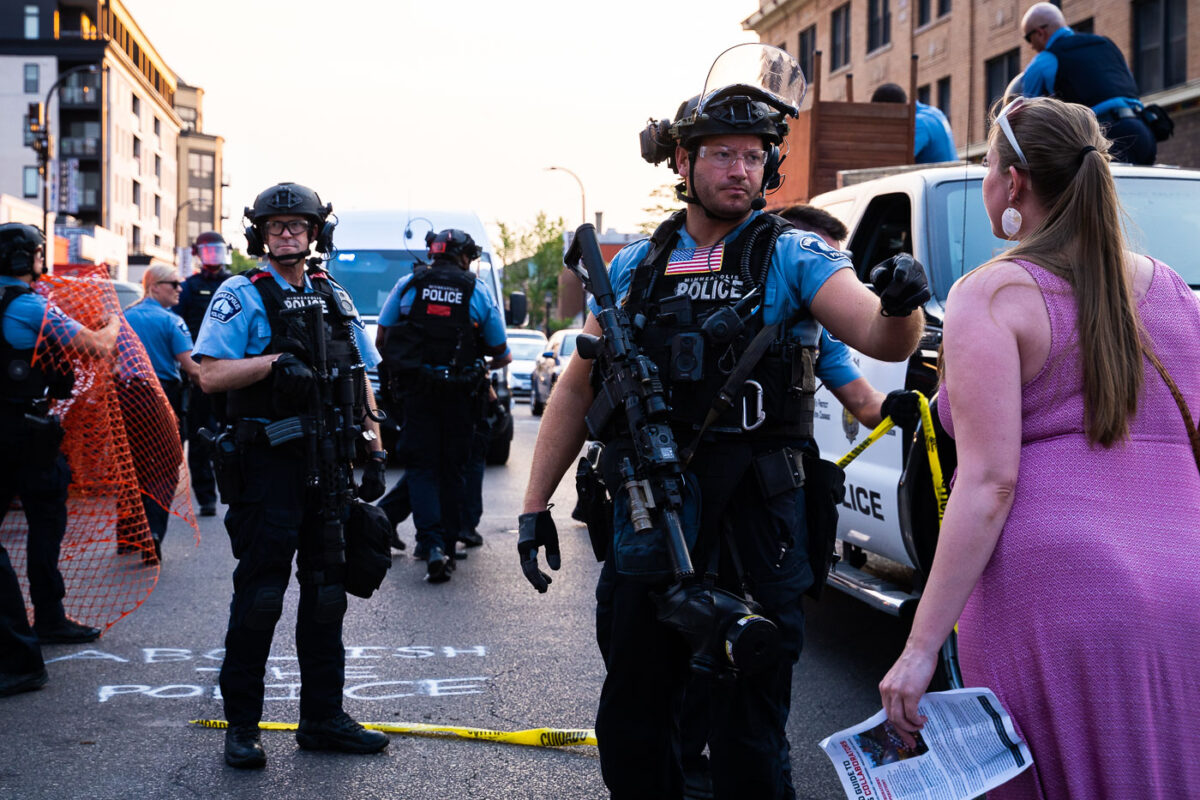
Minneapolis police officers clear protesters and barricades at Lake Street and Hennepin Avenue.
Minneapolis Police officers clear protesters and barricades from the intersection of Lake Street and Hennepin Avenue. The protests began following the deaths of Winston Smith on June 3rd and Deona Marie on June 13th. On June 3, 2021, members of a U.S. Marshals Service fugitive task force fatally shot 32-year-old Winston “Boogie” Smith Jr. on the top level of a parking ramp in Minneapolis’ Uptown neighborhood while attempting to arrest him on a felony warrant. Authorities said Smith fired a handgun from inside his vehicle during the encounter, while family members and activists questioned the official account and demanded the release of additional evidence. The killing led to weeks of protests, street occupations, and confrontations with police in Uptown, becoming another major flashpoint in Minneapolis during the period following the murder of George Floyd. Earlier in the day Minneapolis city officials along with The Agape Movement coordinated to open the streets that had been closed at George Floyd Square since his murder. On June 13, 2021, 31-year-old Deona Marie Knajdek was killed when a driver accelerated into a group of demonstrators gathered in Minneapolis’ Uptown neighborhood during ongoing protests over the killing of Winston “Boogie” Smith Jr. Protesters had blocked the intersection of West Lake Street and Girard Avenue with vehicles and barricades when Nicholas Kraus drove a Jeep Cherokee into the crowd at high speed, killing Knajdek and injuring several others. Kraus was later charged with second-degree murder, two counts of second-degree assault with a dangerous weapon, and criminal vehicular operation. In 2023, he pleaded guilty to murder and assault charges and was sentenced to more than 20 years in prison for the attack.

Minneapolis Police Clear Protest Site at Lake and Hennepin
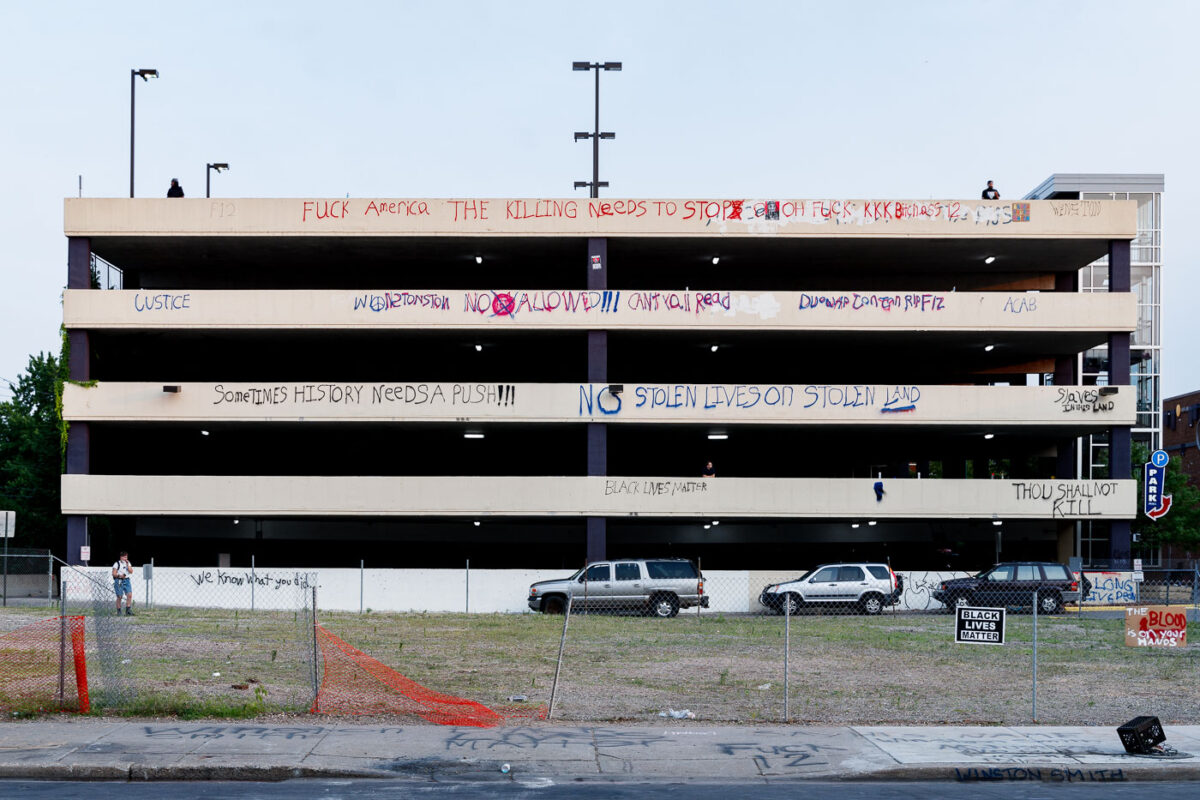
Graffiti covers a Minneapolis parking ramp after Winston Smith’s killing.
Graffiti covers the exterior of a parking ramp in Uptown Minneapolis, the site where Winston Smith was killed by law enforcement on June 3rd. The messages, including "FUCK AMERICA THE KILLING NEEDS TO STOP" and "STOLEN LIVES ON STOLEN LAND," reflect the anger and grief following Smith's death. On June 3, 2021, members of a U.S. Marshals Service fugitive task force fatally shot 32-year-old Winston “Boogie” Smith Jr. on the top level of a parking ramp in Minneapolis’ Uptown neighborhood while attempting to arrest him on a felony warrant. Authorities said Smith fired a handgun from inside his vehicle during the encounter, while family members and activists questioned the official account and demanded the release of additional evidence. The killing led to weeks of protests, street occupations, and confrontations with police in Uptown, becoming another major flashpoint in Minneapolis during the period following the murder of George Floyd. Earlier in the day Minneapolis city officials along with The Agape Movement coordinated to open the streets that had been closed at George Floyd Square since his murder.

Graffiti on Uptown Minneapolis Parking Ramp After Winston Smith Killing
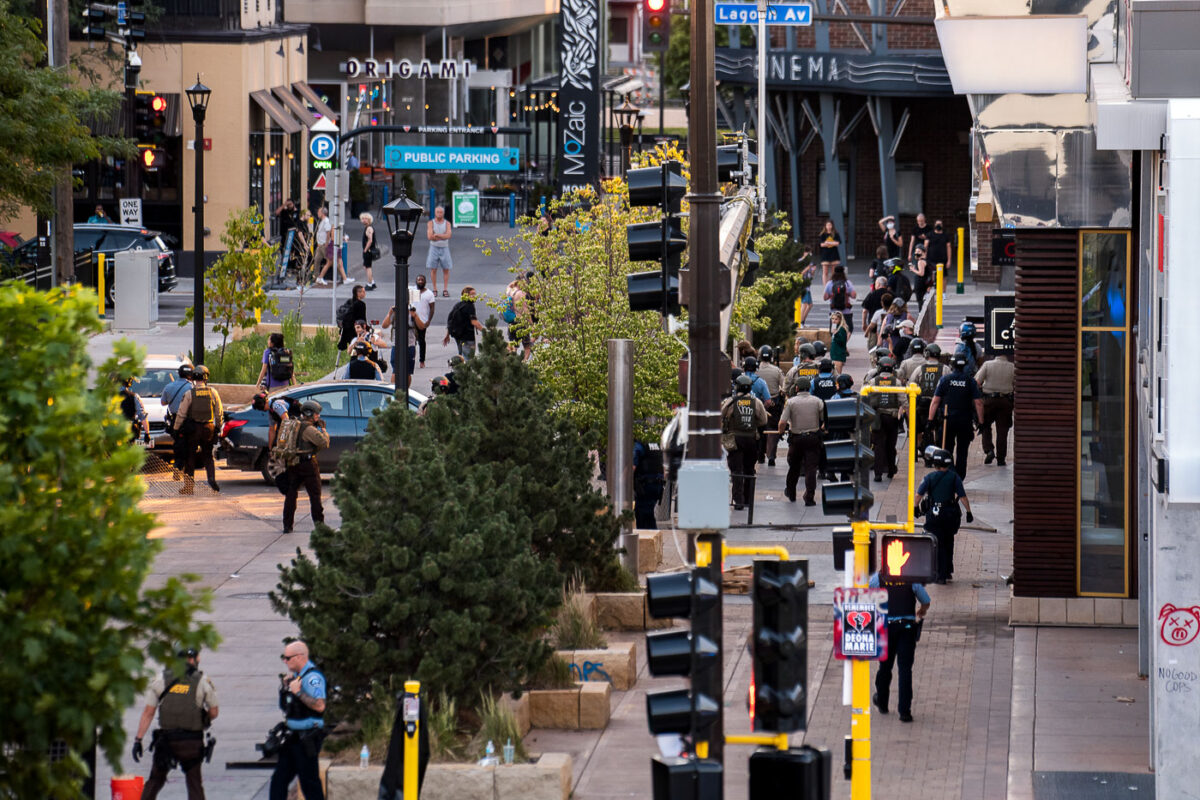
Police and protesters on Lagoon Avenue in Minneapolis during unrest after Deona Marie's death
Law enforcement officers from multiple agencies respond to protests in Uptown Minneapolis on June 13, 2021. The protests were held in response to the deaths of Winston Smith and Deona Marie. On June 3, 2021, members of a U.S. Marshals Service fugitive task force fatally shot 32-year-old Winston “Boogie” Smith Jr. on the top level of a parking ramp in Minneapolis’ Uptown neighborhood while attempting to arrest him on a felony warrant. Authorities said Smith fired a handgun from inside his vehicle during the encounter, while family members and activists questioned the official account and demanded the release of additional evidence. The killing led to weeks of protests, street occupations, and confrontations with police in Uptown, becoming another major flashpoint in Minneapolis during the period following the murder of George Floyd. Earlier in the day Minneapolis city officials along with The Agape Movement coordinated to open the streets that had been closed at George Floyd Square since his murder. On June 13, 2021, 31-year-old Deona Marie Knajdek was killed when a driver accelerated into a group of demonstrators gathered in Minneapolis’ Uptown neighborhood during ongoing protests over the killing of Winston “Boogie” Smith Jr. Protesters had blocked the intersection of West Lake Street and Girard Avenue with vehicles and barricades when Nicholas Kraus drove a Jeep Cherokee into the crowd at high speed, killing Knajdek and injuring several others. Kraus was later charged with second-degree murder, two counts of second-degree assault with a dangerous weapon, and criminal vehicular operation. In 2023, he pleaded guilty to murder and assault charges and was sentenced to more than 20 years in prison for the attack.

Law Enforcement Responds to Protests in Uptown Minneapolis
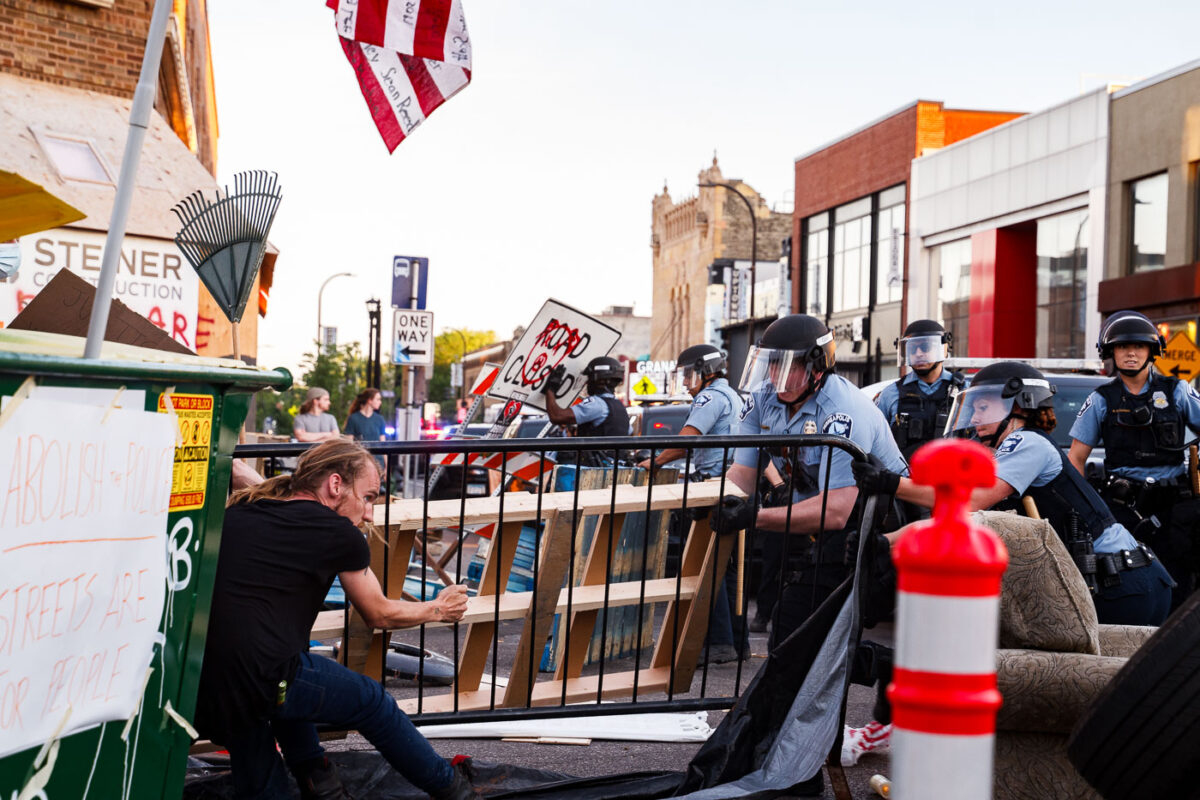
Minneapolis police clear barricades on Lake Street during protests.
Minneapolis Police officers clear street barricades at the intersection of Lake Street and Hennepin Avenue on June 15, 2021. Protesters had closed of the streets protesting the killings of Winston Smith and Deona Marie. On June 3, 2021, members of a U.S. Marshals Service fugitive task force fatally shot 32-year-old Winston “Boogie” Smith Jr. on the top level of a parking ramp in Minneapolis’ Uptown neighborhood while attempting to arrest him on a felony warrant. Authorities said Smith fired a handgun from inside his vehicle during the encounter, while family members and activists questioned the official account and demanded the release of additional evidence. The killing led to weeks of protests, street occupations, and confrontations with police in Uptown, becoming another major flashpoint in Minneapolis during the period following the murder of George Floyd. Earlier in the day Minneapolis city officials along with The Agape Movement coordinated to open the streets that had been closed at George Floyd Square since his murder. On June 13, 2021, 31-year-old Deona Marie Knajdek was killed when a driver accelerated into a group of demonstrators gathered in Minneapolis’ Uptown neighborhood during ongoing protests over the killing of Winston “Boogie” Smith Jr. Protesters had blocked the intersection of West Lake Street and Girard Avenue with vehicles and barricades when Nicholas Kraus drove a Jeep Cherokee into the crowd at high speed, killing Knajdek and injuring several others. Kraus was later charged with second-degree murder, two counts of second-degree assault with a dangerous weapon, and criminal vehicular operation. In 2023, he pleaded guilty to murder and assault charges and was sentenced to more than 20 years in prison for the attack.

Minneapolis Police Clear Barricades Amidst Winston Smith Protests
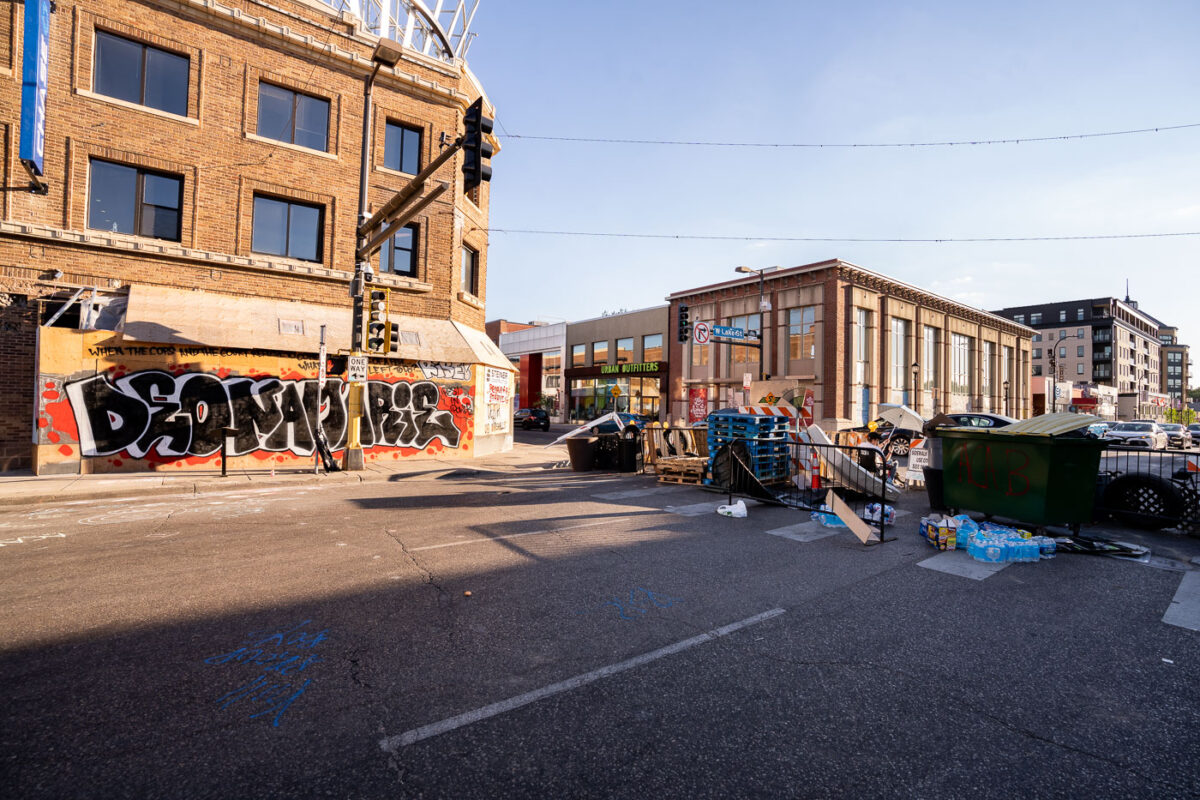
Graffiti-covered barricades at Hennepin Avenue and Lake Street in Minneapolis.
Street barricades are visible at the intersection of Hennepin Avenue and Lake Street in Minneapolis on June 15, 2021. These barricades were erected following significant unrest in the area following the killing of Winston Smith. On June 3, 2021, members of a U.S. Marshals Service fugitive task force fatally shot 32-year-old Winston “Boogie” Smith Jr. on the top level of a parking ramp in Minneapolis’ Uptown neighborhood while attempting to arrest him on a felony warrant. Authorities said Smith fired a handgun from inside his vehicle during the encounter, while family members and activists questioned the official account and demanded the release of additional evidence. The killing led to weeks of protests, street occupations, and confrontations with police in Uptown, becoming another major flashpoint in Minneapolis during the period following the murder of George Floyd. Earlier in the day Minneapolis city officials along with The Agape Movement coordinated to open the streets that had been closed at George Floyd Square since his murder. On June 13, 2021, 31-year-old Deona Marie Knajdek was killed when a driver accelerated into a group of demonstrators gathered in Minneapolis’ Uptown neighborhood during ongoing protests over the killing of Winston “Boogie” Smith Jr. Protesters had blocked the intersection of West Lake Street and Girard Avenue with vehicles and barricades when Nicholas Kraus drove a Jeep Cherokee into the crowd at high speed, killing Knajdek and injuring several others. Kraus was later charged with second-degree murder, two counts of second-degree assault with a dangerous weapon, and criminal vehicular operation. In 2023, he pleaded guilty to murder and assault charges and was sentenced to more than 20 years in prison for the attack.

Street Barricades at Hennepin Ave & Lake St, Minneapolis
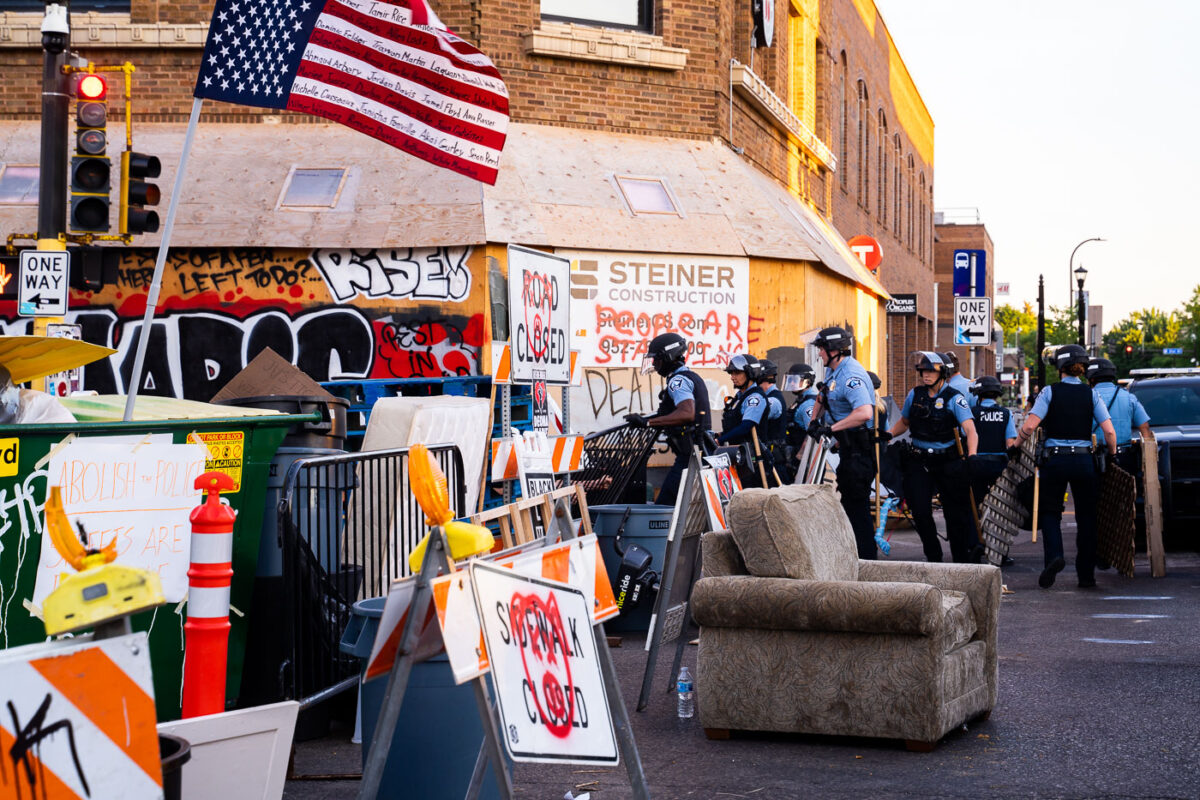
Police clear barricades on Lake Street in Minneapolis beside a boarded-up storefront and protest signs.
Minneapolis Police officers clear barricades on Lake Street on June 15, 2021. The barricades were erected in the aftermath of protests and unrest following the deaths of Winston Smith and Deona Marie. On June 3, 2021, members of a U.S. Marshals Service fugitive task force fatally shot 32-year-old Winston “Boogie” Smith Jr. on the top level of a parking ramp in Minneapolis’ Uptown neighborhood while attempting to arrest him on a felony warrant. Authorities said Smith fired a handgun from inside his vehicle during the encounter, while family members and activists questioned the official account and demanded the release of additional evidence. The killing led to weeks of protests, street occupations, and confrontations with police in Uptown, becoming another major flashpoint in Minneapolis during the period following the murder of George Floyd. Earlier in the day Minneapolis city officials along with The Agape Movement coordinated to open the streets that had been closed at George Floyd Square since his murder. On June 13, 2021, 31-year-old Deona Marie Knajdek was killed when a driver accelerated into a group of demonstrators gathered in Minneapolis’ Uptown neighborhood during ongoing protests over the killing of Winston “Boogie” Smith Jr. Protesters had blocked the intersection of West Lake Street and Girard Avenue with vehicles and barricades when Nicholas Kraus drove a Jeep Cherokee into the crowd at high speed, killing Knajdek and injuring several others. Kraus was later charged with second-degree murder, two counts of second-degree assault with a dangerous weapon, and criminal vehicular operation. In 2023, he pleaded guilty to murder and assault charges and was sentenced to more than 20 years in prison for the attack.

Police Clear Protest Barricades on Lake Street in Uptown
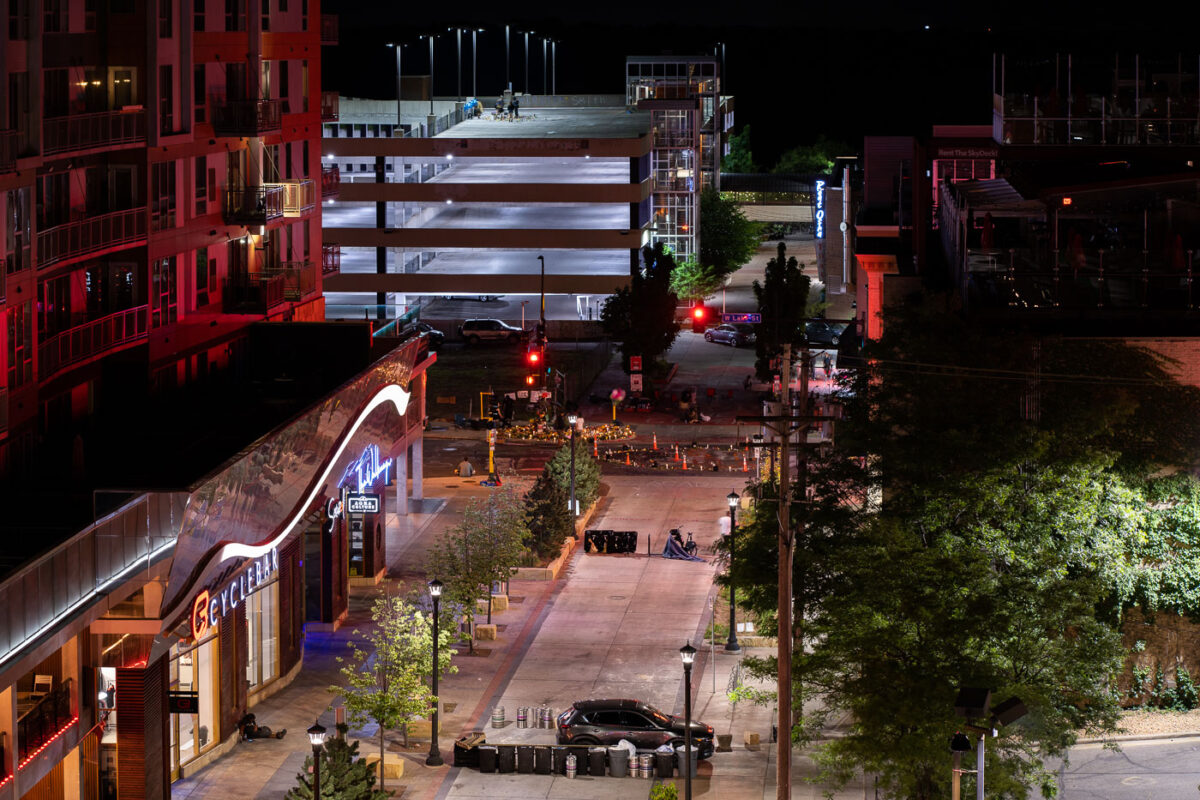
Memorial candles and barricades mark Lake Street and Girard Avenue in Minneapolis at night.
A memorial for Deona Marie is visible at the intersection of Lake Street and Girard Avenue in Minneapolis. Protesters have maintained a presence at this location since the law enforcement shooting death of Winston Smith on June 3, 2021, and the subsequent killing of Deona Marie on June 13, 2021, when Nicholas Kraus drove his vehicle into a crowd of demonstrators. On June 13, 2021, 31-year-old Deona Marie Knajdek was killed when a driver accelerated into a group of demonstrators gathered in Minneapolis’ Uptown neighborhood during ongoing protests over the killing of Winston “Boogie” Smith Jr. Protesters had blocked the intersection of West Lake Street and Girard Avenue with vehicles and barricades when Nicholas Kraus drove a Jeep Cherokee into the crowd at high speed, killing Knajdek and injuring several others. Kraus was later charged with second-degree murder, two counts of second-degree assault with a dangerous weapon, and criminal vehicular operation. In 2023, he pleaded guilty to murder and assault charges and was sentenced to more than 20 years in prison for the attack. On June 3, 2021, members of a U.S. Marshals Service fugitive task force fatally shot 32-year-old Winston “Boogie” Smith Jr. on the top level of a parking ramp in Minneapolis’ Uptown neighborhood while attempting to arrest him on a felony warrant. Authorities said Smith fired a handgun from inside his vehicle during the encounter, while family members and activists questioned the official account and demanded the release of additional evidence. The killing led to weeks of protests, street occupations, and confrontations with police in Uptown, becoming another major flashpoint in Minneapolis during the period following the murder of George Floyd. Earlier in the day Minneapolis city officials along with The Agape Movement coordinated to open the streets that had been closed at George Floyd Square since his murder.

Minneapolis Protest Site: Lake St & Girard Ave Night
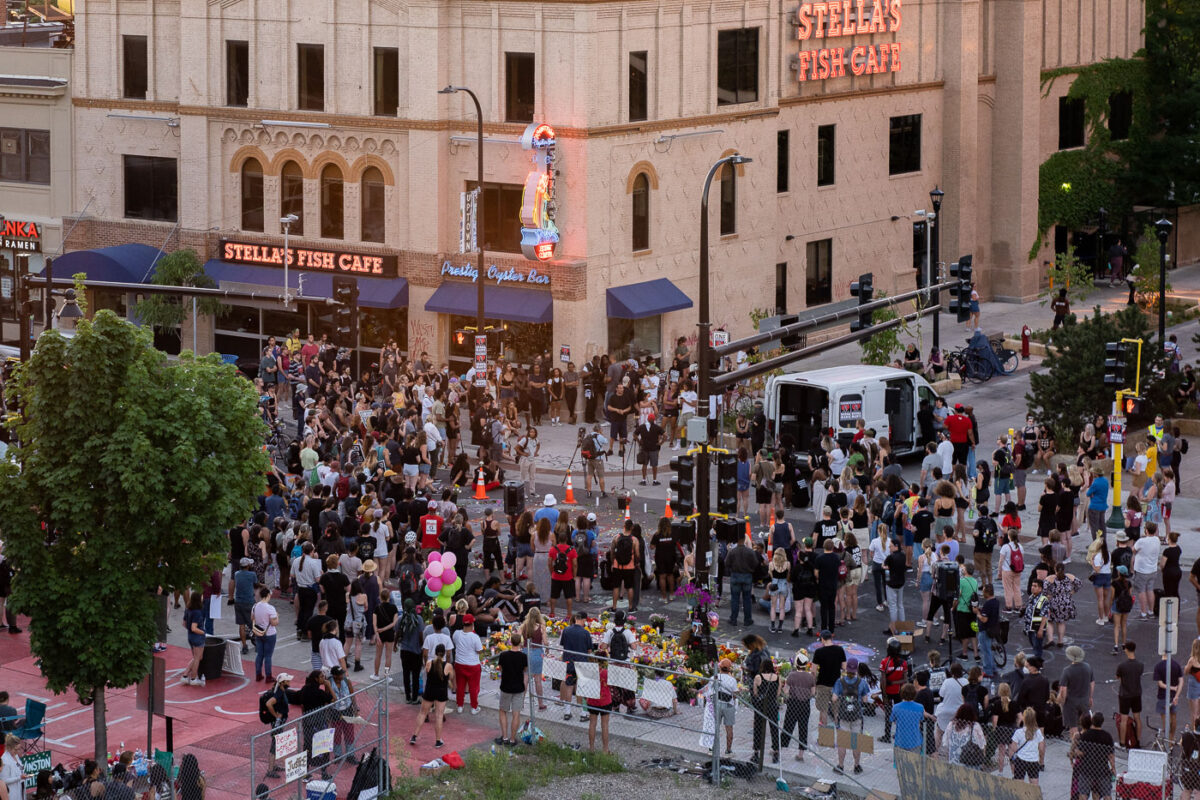
Crowd gathers at Lake and Girard in Minneapolis outside Stella's Fish Cafe during a protest.
A large crowd gathered at the intersection of Lake Street and Girard Avenue in Uptown Minneapolis on June 5, 2021. The protest was held in response to the fatal shooting of Winston Smith by a federal task force on June 3, 2021. On June 3, 2021, members of a U.S. Marshals Service fugitive task force fatally shot 32-year-old Winston “Boogie” Smith Jr. on the top level of a parking ramp in Minneapolis’ Uptown neighborhood while attempting to arrest him on a felony warrant. Authorities said Smith fired a handgun from inside his vehicle during the encounter, while family members and activists questioned the official account and demanded the release of additional evidence. The killing led to weeks of protests, street occupations, and confrontations with police in Uptown, becoming another major flashpoint in Minneapolis during the period following the murder of George Floyd. Earlier in the day Minneapolis city officials along with The Agape Movement coordinated to open the streets that had been closed at George Floyd Square since his murder.

Protest at Lake and Girard, Uptown Minneapolis

Protester holds a Justice for Winston Smith sign during a Minneapolis march on Lake Street.
A protester holds a sign reading "Justice for Winston Smith" on Lake Street in Minneapolis. This protest occurred following the June 3rd killing of Winston Smith by a Federal Task Force. The following day, Deona Marie was killed when a driver intentionally struck protesters demonstrating against Smith's death. On June 3, 2021, members of a U.S. Marshals Service fugitive task force fatally shot 32-year-old Winston “Boogie” Smith Jr. on the top level of a parking ramp in Minneapolis’ Uptown neighborhood while attempting to arrest him on a felony warrant. Authorities said Smith fired a handgun from inside his vehicle during the encounter, while family members and activists questioned the official account and demanded the release of additional evidence. The killing led to weeks of protests, street occupations, and confrontations with police in Uptown, becoming another major flashpoint in Minneapolis during the period following the murder of George Floyd. Earlier in the day Minneapolis city officials along with The Agape Movement coordinated to open the streets that had been closed at George Floyd Square since his murder. On June 13, 2021, 31-year-old Deona Marie Knajdek was killed when a driver accelerated into a group of demonstrators gathered in Minneapolis’ Uptown neighborhood during ongoing protests over the killing of Winston “Boogie” Smith Jr. Protesters had blocked the intersection of West Lake Street and Girard Avenue with vehicles and barricades when Nicholas Kraus drove a Jeep Cherokee into the crowd at high speed, killing Knajdek and injuring several others. Kraus was later charged with second-degree murder, two counts of second-degree assault with a dangerous weapon, and criminal vehicular operation. In 2023, he pleaded guilty to murder and assault charges and was sentenced to more than 20 years in prison for the attack.

Minneapolis Protest: Justice for Winston Smith Sign on Lake Street

Protester holds a Justice for Winston Smith sign during a march in Uptown Minneapolis.
A protester holds a sign reading "Justice for Winston Smith" during a march in Uptown Minneapolis. The protest occurred in the aftermath of the June 3rd law enforcement killing of Winston Smith and the subsequent death of Deona Marie. On June 13, 2021, 31-year-old Deona Marie Knajdek was killed when a driver accelerated into a group of demonstrators gathered in Minneapolis’ Uptown neighborhood during ongoing protests over the killing of Winston “Boogie” Smith Jr. Protesters had blocked the intersection of West Lake Street and Girard Avenue with vehicles and barricades when Nicholas Kraus drove a Jeep Cherokee into the crowd at high speed, killing Knajdek and injuring several others. Kraus was later charged with second-degree murder, two counts of second-degree assault with a dangerous weapon, and criminal vehicular operation. In 2023, he pleaded guilty to murder and assault charges and was sentenced to more than 20 years in prison for the attack. On June 3, 2021, members of a U.S. Marshals Service fugitive task force fatally shot 32-year-old Winston “Boogie” Smith Jr. on the top level of a parking ramp in Minneapolis’ Uptown neighborhood while attempting to arrest him on a felony warrant. Authorities said Smith fired a handgun from inside his vehicle during the encounter, while family members and activists questioned the official account and demanded the release of additional evidence. The killing led to weeks of protests, street occupations, and confrontations with police in Uptown, becoming another major flashpoint in Minneapolis during the period following the murder of George Floyd. Earlier in the day Minneapolis city officials along with The Agape Movement coordinated to open the streets that had been closed at George Floyd Square since his murder.

Minneapolis Protest: Justice for Winston Smith Sign

Protesters gather at Lake Street and Girard Avenue in Minneapolis, with signs for Winston Smith and Deona Marie.
Protesters gather at the intersection of Lake Street and Girard Avenue in Minneapolis on June 5, 2021. The protest was held in response to the killing of Winston Smith and Deona Marie. On June 13, 2021, 31-year-old Deona Marie Knajdek was killed when a driver accelerated into a group of demonstrators gathered in Minneapolis’ Uptown neighborhood during ongoing protests over the killing of Winston “Boogie” Smith Jr. Protesters had blocked the intersection of West Lake Street and Girard Avenue with vehicles and barricades when Nicholas Kraus drove a Jeep Cherokee into the crowd at high speed, killing Knajdek and injuring several others. Kraus was later charged with second-degree murder, two counts of second-degree assault with a dangerous weapon, and criminal vehicular operation. In 2023, he pleaded guilty to murder and assault charges and was sentenced to more than 20 years in prison for the attack. On June 3, 2021, members of a U.S. Marshals Service fugitive task force fatally shot 32-year-old Winston “Boogie” Smith Jr. on the top level of a parking ramp in Minneapolis’ Uptown neighborhood while attempting to arrest him on a felony warrant. Authorities said Smith fired a handgun from inside his vehicle during the encounter, while family members and activists questioned the official account and demanded the release of additional evidence. The killing led to weeks of protests, street occupations, and confrontations with police in Uptown, becoming another major flashpoint in Minneapolis during the period following the murder of George Floyd. Earlier in the day Minneapolis city officials along with The Agape Movement coordinated to open the streets that had been closed at George Floyd Square since his murder.

Protest at Lake and Girard, Minneapolis, after Winston Smith’s death

Protesters gather at a Minneapolis intersection beneath a red traffic light and Deona Marie posters.
Protesters gather at the intersection of Lake Street and Girard in Minneapolis on June 14, 2021. The protest was held in response to the killing of Winston Smith by a federal task force on June 3, 2021, and the subsequent death of Deona Marie on June 13, 2021. On June 3, 2021, members of a U.S. Marshals Service fugitive task force fatally shot 32-year-old Winston “Boogie” Smith Jr. on the top level of a parking ramp in Minneapolis’ Uptown neighborhood while attempting to arrest him on a felony warrant. Authorities said Smith fired a handgun from inside his vehicle during the encounter, while family members and activists questioned the official account and demanded the release of additional evidence. The killing led to weeks of protests, street occupations, and confrontations with police in Uptown, becoming another major flashpoint in Minneapolis during the period following the murder of George Floyd. Earlier in the day Minneapolis city officials along with The Agape Movement coordinated to open the streets that had been closed at George Floyd Square since his murder. On June 13, 2021, 31-year-old Deona Marie Knajdek was killed when a driver accelerated into a group of demonstrators gathered in Minneapolis’ Uptown neighborhood during ongoing protests over the killing of Winston “Boogie” Smith Jr. Protesters had blocked the intersection of West Lake Street and Girard Avenue with vehicles and barricades when Nicholas Kraus drove a Jeep Cherokee into the crowd at high speed, killing Knajdek and injuring several others. Kraus was later charged with second-degree murder, two counts of second-degree assault with a dangerous weapon, and criminal vehicular operation. In 2023, he pleaded guilty to murder and assault charges and was sentenced to more than 20 years in prison for the attack.

Minneapolis Protest for Deona Marie and Winston Smith

Protesters hug outside Seven Points in Minneapolis after a march.
Protesters gather outside the Seven Points complex in Minneapolis following the killing of Deona Marie. On June 13, 2021, 31-year-old Deona Marie Knajdek was killed when a driver accelerated into a group of demonstrators gathered in Minneapolis’ Uptown neighborhood during ongoing protests over the killing of Winston “Boogie” Smith Jr. Protesters had blocked the intersection of West Lake Street and Girard Avenue with vehicles and barricades when Nicholas Kraus drove a Jeep Cherokee into the crowd at high speed, killing Knajdek and injuring several others. Kraus was later charged with second-degree murder, two counts of second-degree assault with a dangerous weapon, and criminal vehicular operation. In 2023, he pleaded guilty to murder and assault charges and was sentenced to more than 20 years in prison for the attack. On June 3, 2021, members of a U.S. Marshals Service fugitive task force fatally shot 32-year-old Winston “Boogie” Smith Jr. on the top level of a parking ramp in Minneapolis’ Uptown neighborhood while attempting to arrest him on a felony warrant. Authorities said Smith fired a handgun from inside his vehicle during the encounter, while family members and activists questioned the official account and demanded the release of additional evidence. The killing led to weeks of protests, street occupations, and confrontations with police in Uptown, becoming another major flashpoint in Minneapolis during the period following the murder of George Floyd. Earlier in the day Minneapolis city officials along with The Agape Movement coordinated to open the streets that had been closed at George Floyd Square since his murder.

Protesters embrace after Deona Marie protest, Minneapolis

Protesters hold Black Lives Matter signs on Lake Street in Minneapolis.
Protesters hold "Black Lives Matter" signs on Lake Street at Hennepin Avenue in Minneapolis. The protest was in response to the law enforcement killing of Winston Smith on June 3, 2021, and Deona Marie on June 13, 2021. On June 13, 2021, 31-year-old Deona Marie Knajdek was killed when a driver accelerated into a group of demonstrators gathered in Minneapolis’ Uptown neighborhood during ongoing protests over the killing of Winston “Boogie” Smith Jr. Protesters had blocked the intersection of West Lake Street and Girard Avenue with vehicles and barricades when Nicholas Kraus drove a Jeep Cherokee into the crowd at high speed, killing Knajdek and injuring several others. Kraus was later charged with second-degree murder, two counts of second-degree assault with a dangerous weapon, and criminal vehicular operation. In 2023, he pleaded guilty to murder and assault charges and was sentenced to more than 20 years in prison for the attack. On June 3, 2021, members of a U.S. Marshals Service fugitive task force fatally shot 32-year-old Winston “Boogie” Smith Jr. on the top level of a parking ramp in Minneapolis’ Uptown neighborhood while attempting to arrest him on a felony warrant. Authorities said Smith fired a handgun from inside his vehicle during the encounter, while family members and activists questioned the official account and demanded the release of additional evidence. The killing led to weeks of protests, street occupations, and confrontations with police in Uptown, becoming another major flashpoint in Minneapolis during the period following the murder of George Floyd. Earlier in the day Minneapolis city officials along with The Agape Movement coordinated to open the streets that had been closed at George Floyd Square since his murder.

Black Lives Matter Protest on Lake Street, Minneapolis

Protesters in Minneapolis carry a banner reading “Stop the War on Black America!”
Protesters marched through Uptown Minneapolis carrying signs that read "This is a Revolt Against Racism! Stop the War on Black America!" and "Remember Deona Marie." The marches occurred following the law enforcement shooting death of Winston Smith on June 3, 2021, and the subsequent killing of protester Deona Marie on June 13, 2021, when Nicholas Kraus drove his vehicle into a crowd of demonstrators. The "Revolt Against Racism" banner and "Remember Deona Marie" signs reflect the ongoing activism and demands for justice within the community. On June 3, 2021, members of a U.S. Marshals Service fugitive task force fatally shot 32-year-old Winston “Boogie” Smith Jr. on the top level of a parking ramp in Minneapolis’ Uptown neighborhood while attempting to arrest him on a felony warrant. Authorities said Smith fired a handgun from inside his vehicle during the encounter, while family members and activists questioned the official account and demanded the release of additional evidence. The killing led to weeks of protests, street occupations, and confrontations with police in Uptown, becoming another major flashpoint in Minneapolis during the period following the murder of George Floyd. Earlier in the day Minneapolis city officials along with The Agape Movement coordinated to open the streets that had been closed at George Floyd Square since his murder. On June 13, 2021, 31-year-old Deona Marie Knajdek was killed when a driver accelerated into a group of demonstrators gathered in Minneapolis’ Uptown neighborhood during ongoing protests over the killing of Winston “Boogie” Smith Jr. Protesters had blocked the intersection of West Lake Street and Girard Avenue with vehicles and barricades when Nicholas Kraus drove a Jeep Cherokee into the crowd at high speed, killing Knajdek and injuring several others. Kraus was later charged with second-degree murder, two counts of second-degree assault with a dangerous weapon, and criminal vehicular operation. In 2023, he p

Minneapolis Protest: “Revolt Against Racism” Sign

Protesters in Uptown Minneapolis hold signs for Winston Smith and Deona Marie during a march.
A march for justice took place in Uptown Minneapolis, honoring Deona Marie and Winston Smith. The crowd, estimated at around a thousand people, carried signs with portraits of Marie and Smith. The march concluded with a candlelight vigil at Lake and Girard, the site where Deona Marie was killed. On June 13, 2021, 31-year-old Deona Marie Knajdek was killed when a driver accelerated into a group of demonstrators gathered in Minneapolis’ Uptown neighborhood during ongoing protests over the killing of Winston “Boogie” Smith Jr. Protesters had blocked the intersection of West Lake Street and Girard Avenue with vehicles and barricades when Nicholas Kraus drove a Jeep Cherokee into the crowd at high speed, killing Knajdek and injuring several others. Kraus was later charged with second-degree murder, two counts of second-degree assault with a dangerous weapon, and criminal vehicular operation. In 2023, he pleaded guilty to murder and assault charges and was sentenced to more than 20 years in prison for the attack.

Visual Justice March for Deona Marie & Winston Smith in Uptown Minneapolis

Protesters gather at Seven Points parking ramp in Minneapolis, with messages painted on the red pavement.
Protesters gathered at the Seven Points parking ramp in Uptown Minneapolis on August 31, 2021, to protest the law enforcement shooting death of Winston Smith ten days prior. The protest also honored Deona Marie Knajdek, who was killed the previous day when Nicholas Kraus drove his vehicle into a crowd of demonstrators. The red pavement of the ramp was covered in messages such as "FREE AMERICA," "POLICE BRUTALITY," and "HOW MANY MORE," reflecting the ongoing activism and public outcry following Smith's death and other instances of police violence. On June 3, 2021, members of a U.S. Marshals Service fugitive task force fatally shot 32-year-old Winston “Boogie” Smith Jr. on the top level of a parking ramp in Minneapolis’ Uptown neighborhood while attempting to arrest him on a felony warrant. Authorities said Smith fired a handgun from inside his vehicle during the encounter, while family members and activists questioned the official account and demanded the release of additional evidence. The killing led to weeks of protests, street occupations, and confrontations with police in Uptown, becoming another major flashpoint in Minneapolis during the period following the murder of George Floyd. Earlier in the day Minneapolis city officials along with The Agape Movement coordinated to open the streets that had been closed at George Floyd Square since his murder. On June 13, 2021, 31-year-old Deona Marie Knajdek was killed when a driver accelerated into a group of demonstrators gathered in Minneapolis’ Uptown neighborhood during ongoing protests over the killing of Winston “Boogie” Smith Jr. Protesters had blocked the intersection of West Lake Street and Girard Avenue with vehicles and barricades when Nicholas Kraus drove a Jeep Cherokee into the crowd at high speed, killing Knajdek and injuring several others. Kraus was later charged with second-degree murder, two counts of second-degree assault with a dangerous weapon, and criminal vehicular operation. In 2023

Minneapolis Protest for Winston Smith and Deona Marie

People stand on Lake Street in Minneapolis beside red-painted road text reading “STOP THE COVER UP.”
Protesters painted "Stop the cover up" in red on Lake Street in Minneapolis, near the Seven Points Mall parking ramp. This act of protest occurred after Winston Smith was killed by law enforcement on June 3rd. The message was painted for the second consecutive day, indicating a persistent demand for transparency and accountability following the incident. The location, a prominent urban thoroughfare, became a site for public expression of grief and dissent.

Protesters paint “Stop the cover up” on Lake Street, Minneapolis
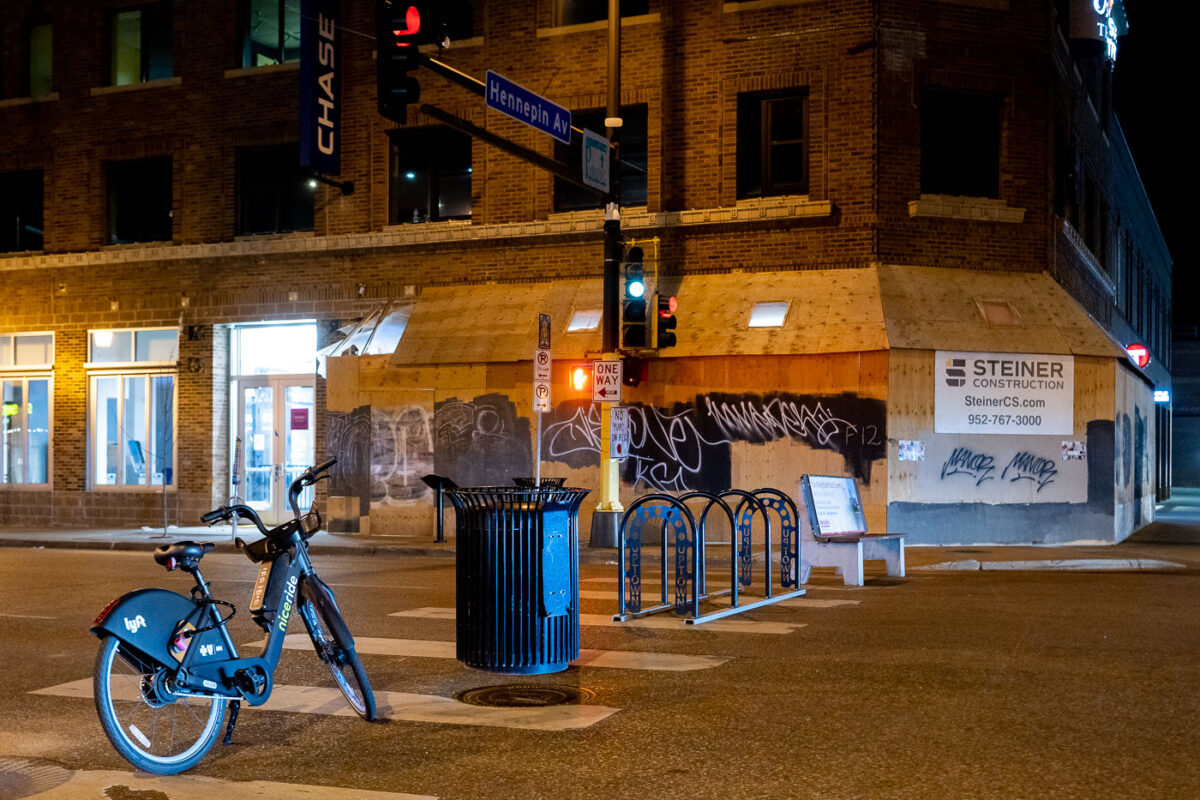
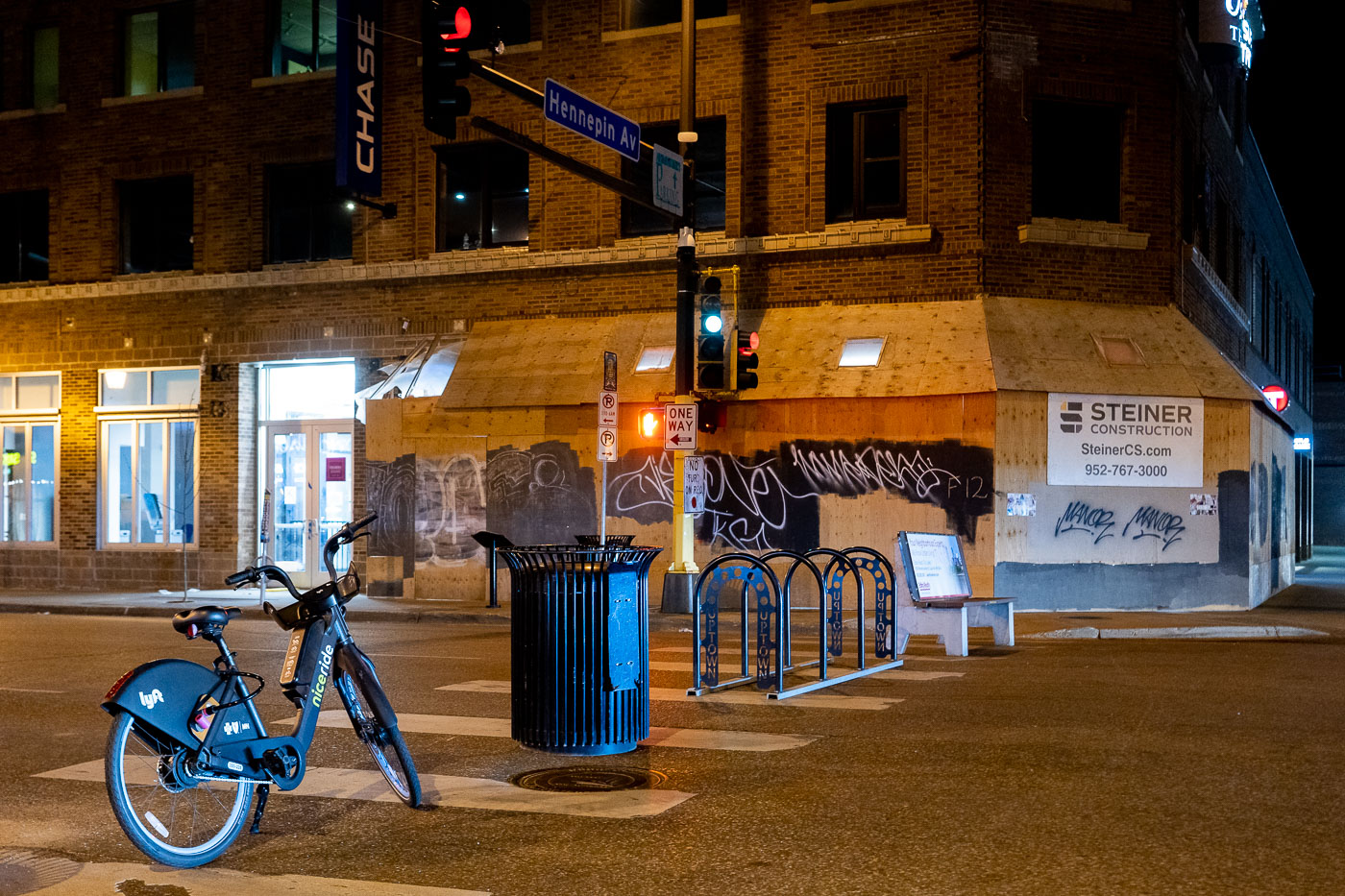
Makeshift barricades and a rental bike at Hennepin Avenue and Lake Street in Minneapolis at night
Makeshift barricades, including a bicycle, garbage can, and bike rack, were placed on Lake Street at Hennepin Avenue in Minneapolis. These barriers were erected during continuing protests following the law enforcement shooting death of Winston Smith on June 3rd. On June 3, 2021, members of a U.S. Marshals Service fugitive task force fatally shot 32-year-old Winston “Boogie” Smith Jr. on the top level of a parking ramp in Minneapolis’ Uptown neighborhood while attempting to arrest him on a felony warrant. Authorities said Smith fired a handgun from inside his vehicle during the encounter, while family members and activists questioned the official account and demanded the release of additional evidence. The killing led to weeks of protests, street occupations, and confrontations with police in Uptown, becoming another major flashpoint in Minneapolis during the period following the murder of George Floyd. Earlier in the day Minneapolis city officials along with The Agape Movement coordinated to open the streets that had been closed at George Floyd Square since his murder.

Makeshift Barricades on Lake Street, Minneapolis
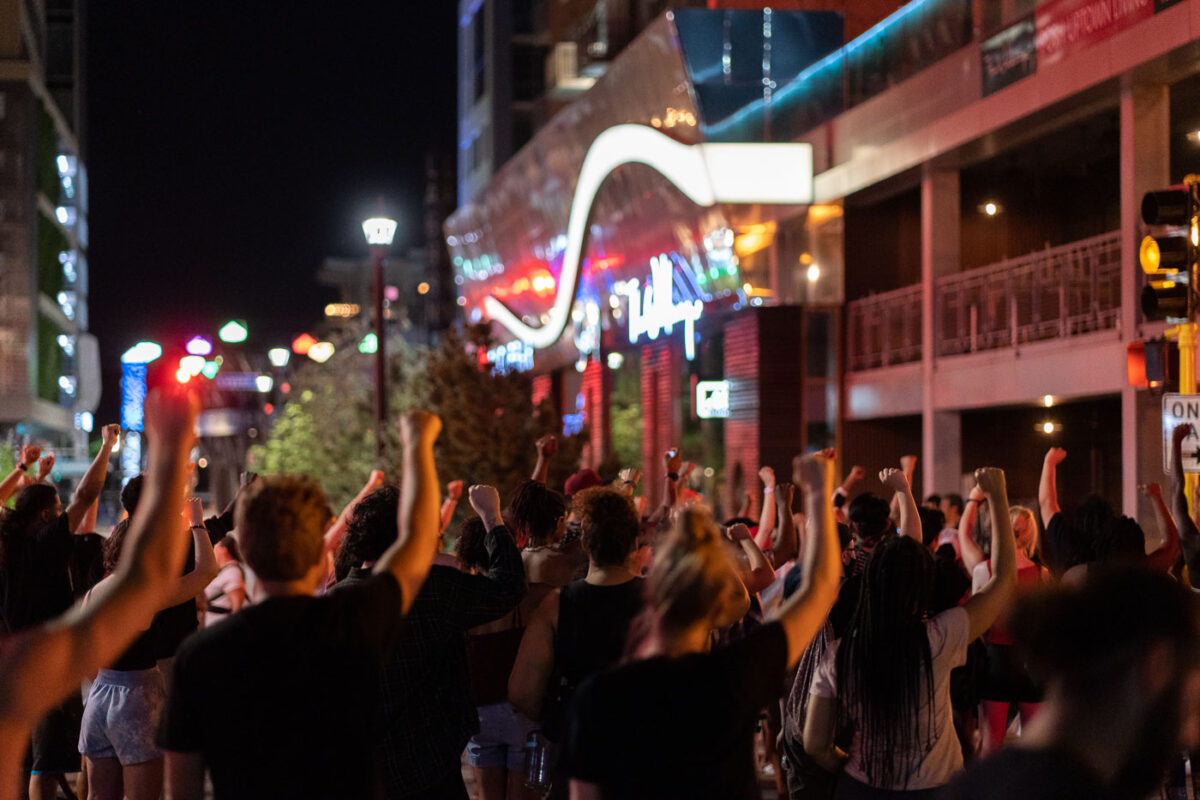
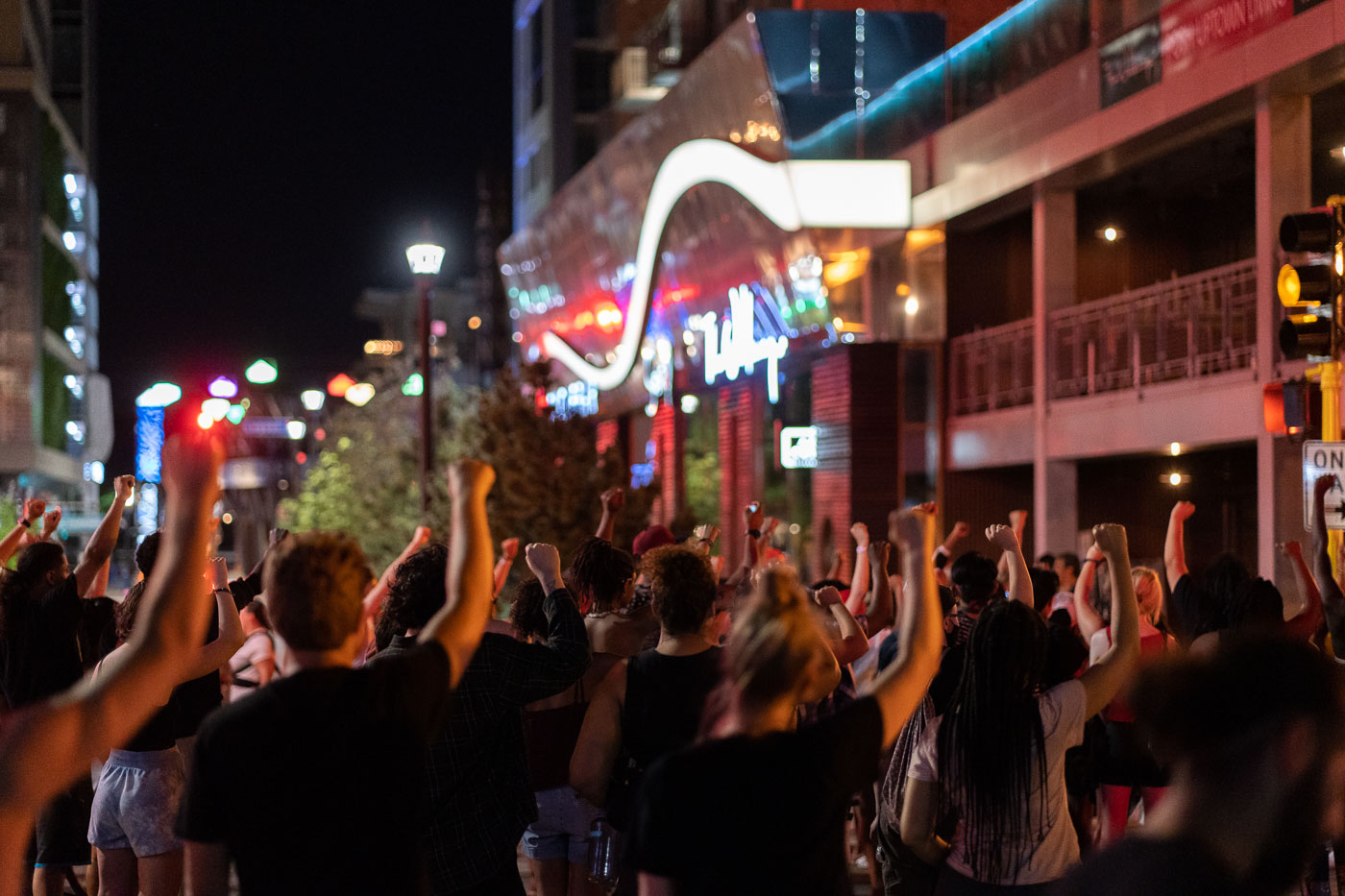
Protesters raise fists on Lake Street in Minneapolis at night
Protesters raise their fists in solidarity during a march in Uptown Minneapolis on June 5, 2021. This demonstration occurred on the third day of protests following the law enforcement shooting death of Winston Smith on June 3rd. On June 3, 2021, members of a U.S. Marshals Service fugitive task force fatally shot 32-year-old Winston “Boogie” Smith Jr. on the top level of a parking ramp in Minneapolis’ Uptown neighborhood while attempting to arrest him on a felony warrant. Authorities said Smith fired a handgun from inside his vehicle during the encounter, while family members and activists questioned the official account and demanded the release of additional evidence. The killing led to weeks of protests, street occupations, and confrontations with police in Uptown, becoming another major flashpoint in Minneapolis during the period following the murder of George Floyd. Earlier in the day Minneapolis city officials along with The Agape Movement coordinated to open the streets that had been closed at George Floyd Square since his murder.

Uptown Minneapolis Protestors Raise Fists for Winston Smith
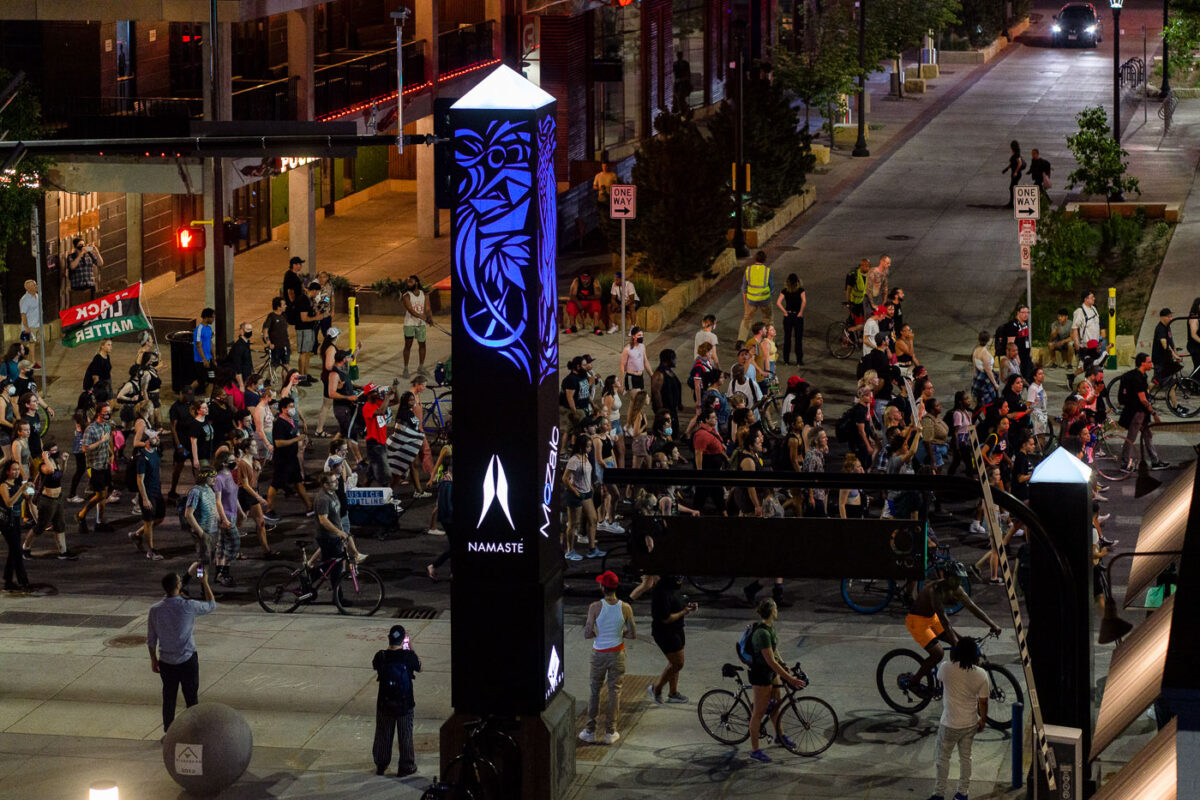
Protesters march on Lagoon Avenue in Minneapolis at night.
Protesters march down Lagoon Avenue in Minneapolis on the third night of demonstrations following the shooting death of Winston Smith. On June 3, 2021, members of a U.S. Marshals Service fugitive task force fatally shot 32-year-old Winston “Boogie” Smith Jr. on the top level of a parking ramp in Minneapolis’ Uptown neighborhood while attempting to arrest him on a felony warrant. Authorities said Smith fired a handgun from inside his vehicle during the encounter, while family members and activists questioned the official account and demanded the release of additional evidence. The killing led to weeks of protests, street occupations, and confrontations with police in Uptown, becoming another major flashpoint in Minneapolis during the period following the murder of George Floyd. Earlier in the day Minneapolis city officials along with The Agape Movement coordinated to open the streets that had been closed at George Floyd Square since his murder.

Protesters March on Lagoon Avenue in Minneapolis After Winston Smith Death
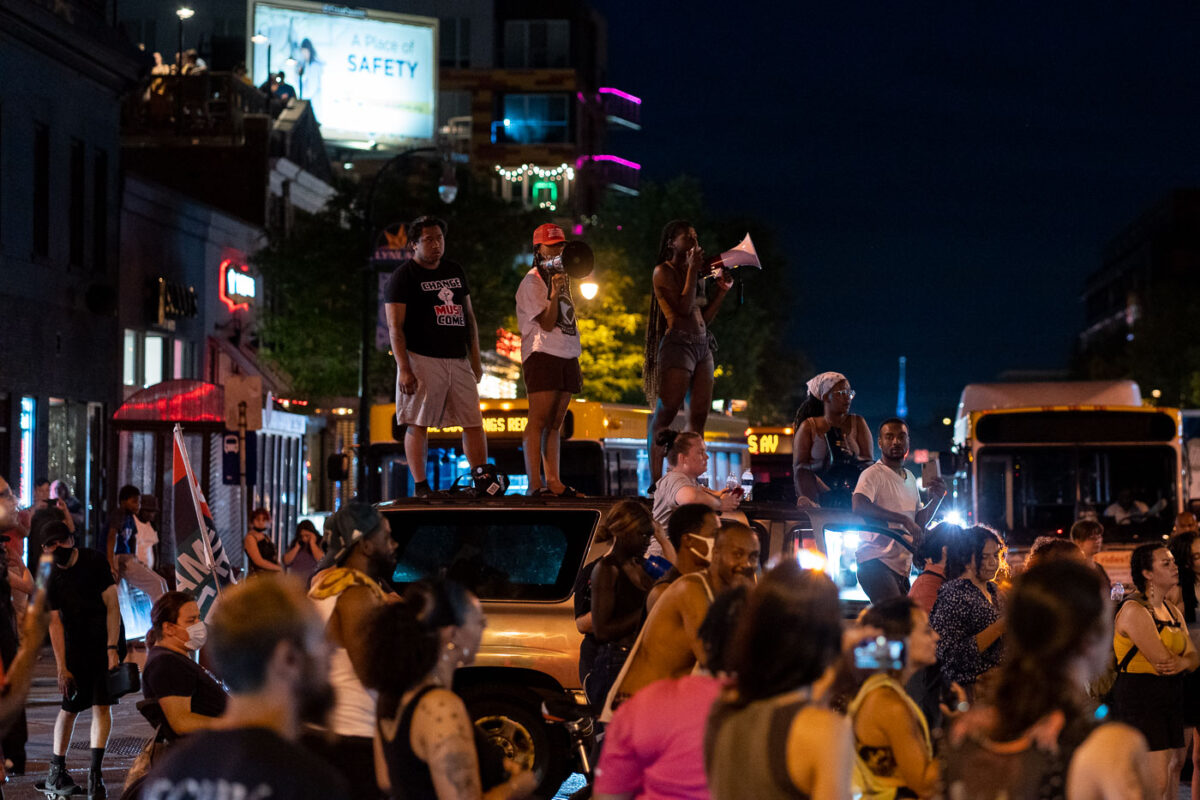
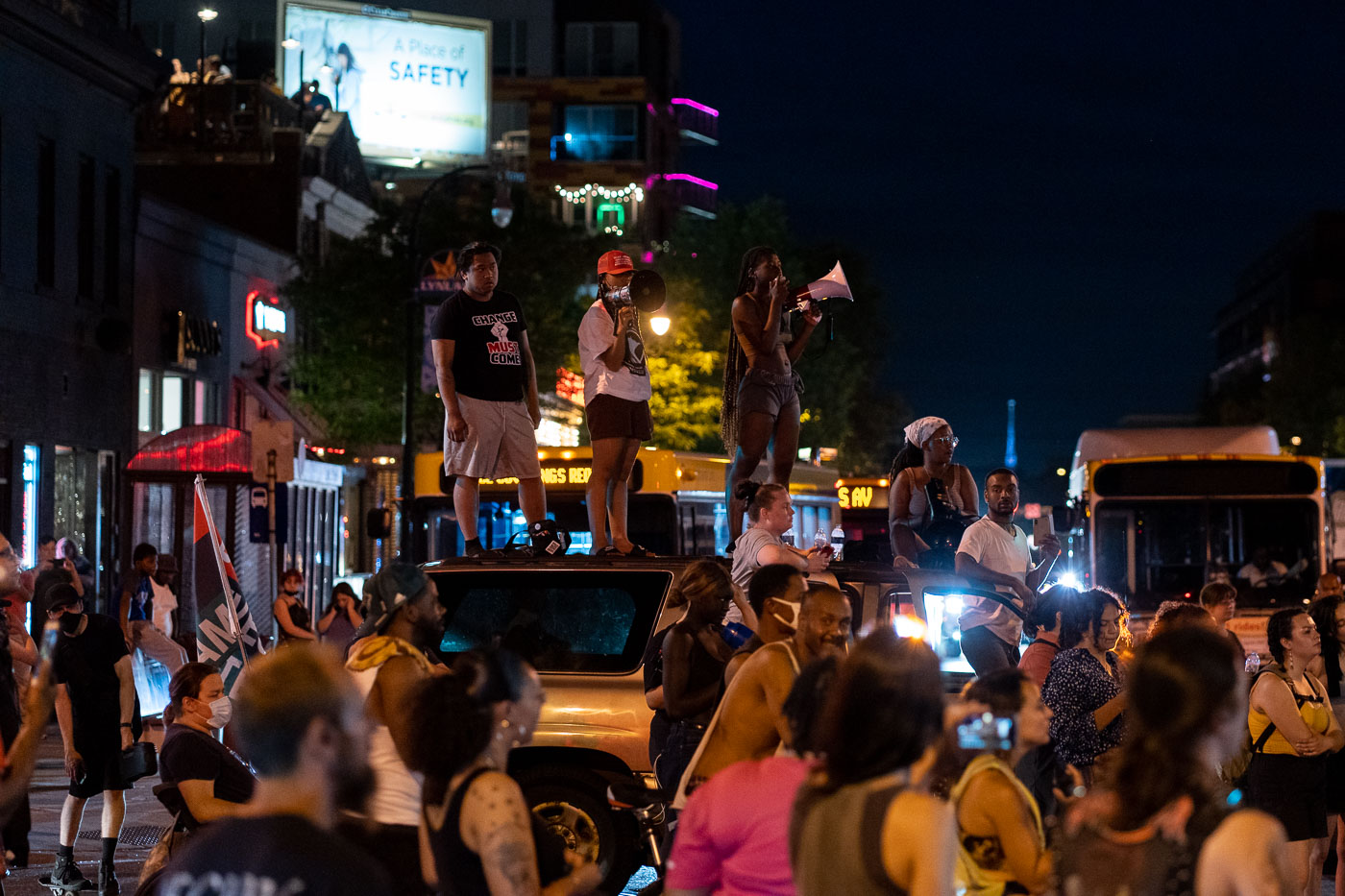
Protesters stand on a vehicle at Lyndale and Lake Street in Minneapolis at night.
Protesters gathered on the third night of demonstrations following the law enforcement shooting death of Winston Smith on June 3rd in Minneapolis. Officials stated that officers from Hennepin and Ramsey County, operating as part of a Federal Task Force, discharged their weapons while attempting to serve a warrant. The protests occurred at the intersection of Lyndale Avenue and Lake Street, a significant commercial and transit hub in the Uptown neighborhood. On June 3, 2021, members of a U.S. Marshals Service fugitive task force fatally shot 32-year-old Winston “Boogie” Smith Jr. on the top level of a parking ramp in Minneapolis’ Uptown neighborhood while attempting to arrest him on a felony warrant. Authorities said Smith fired a handgun from inside his vehicle during the encounter, while family members and activists questioned the official account and demanded the release of additional evidence. The killing led to weeks of protests, street occupations, and confrontations with police in Uptown, becoming another major flashpoint in Minneapolis during the period following the murder of George Floyd. Earlier in the day Minneapolis city officials along with The Agape Movement coordinated to open the streets that had been closed at George Floyd Square since his murder.

Protesters on Cars at Lyndale and Lake Street, Minneapolis
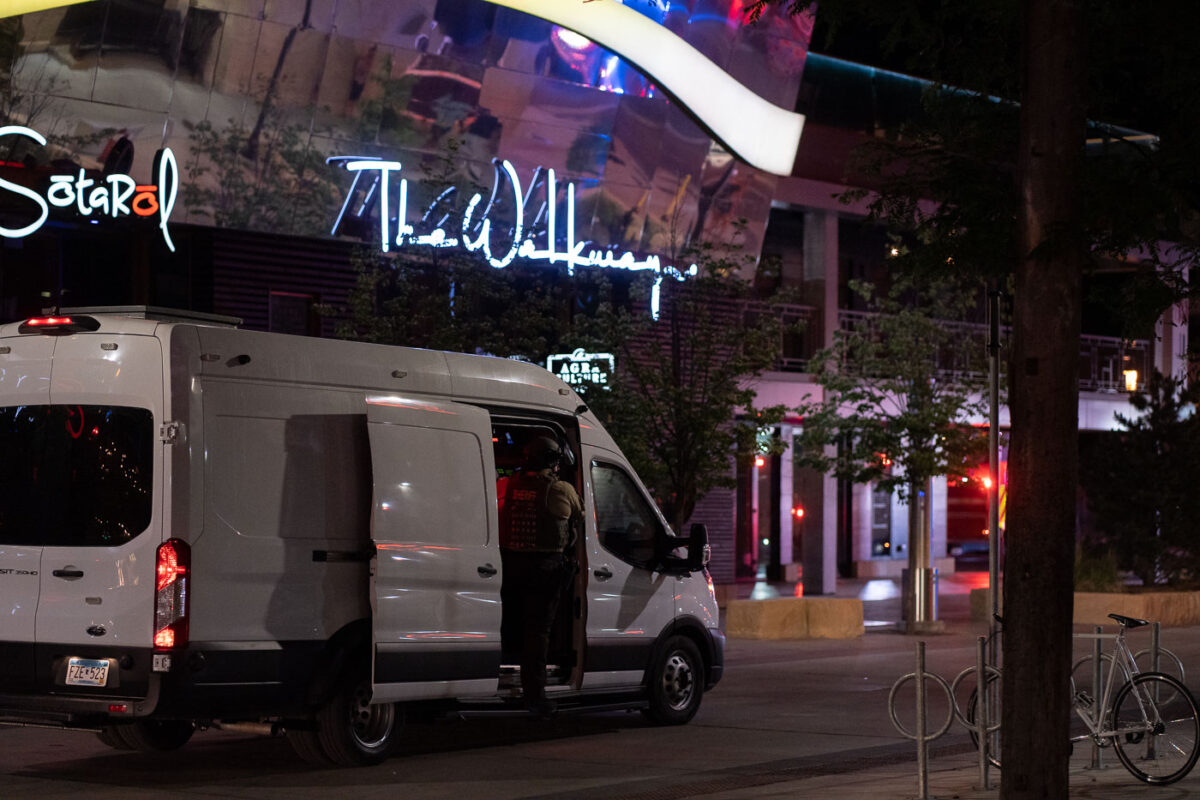
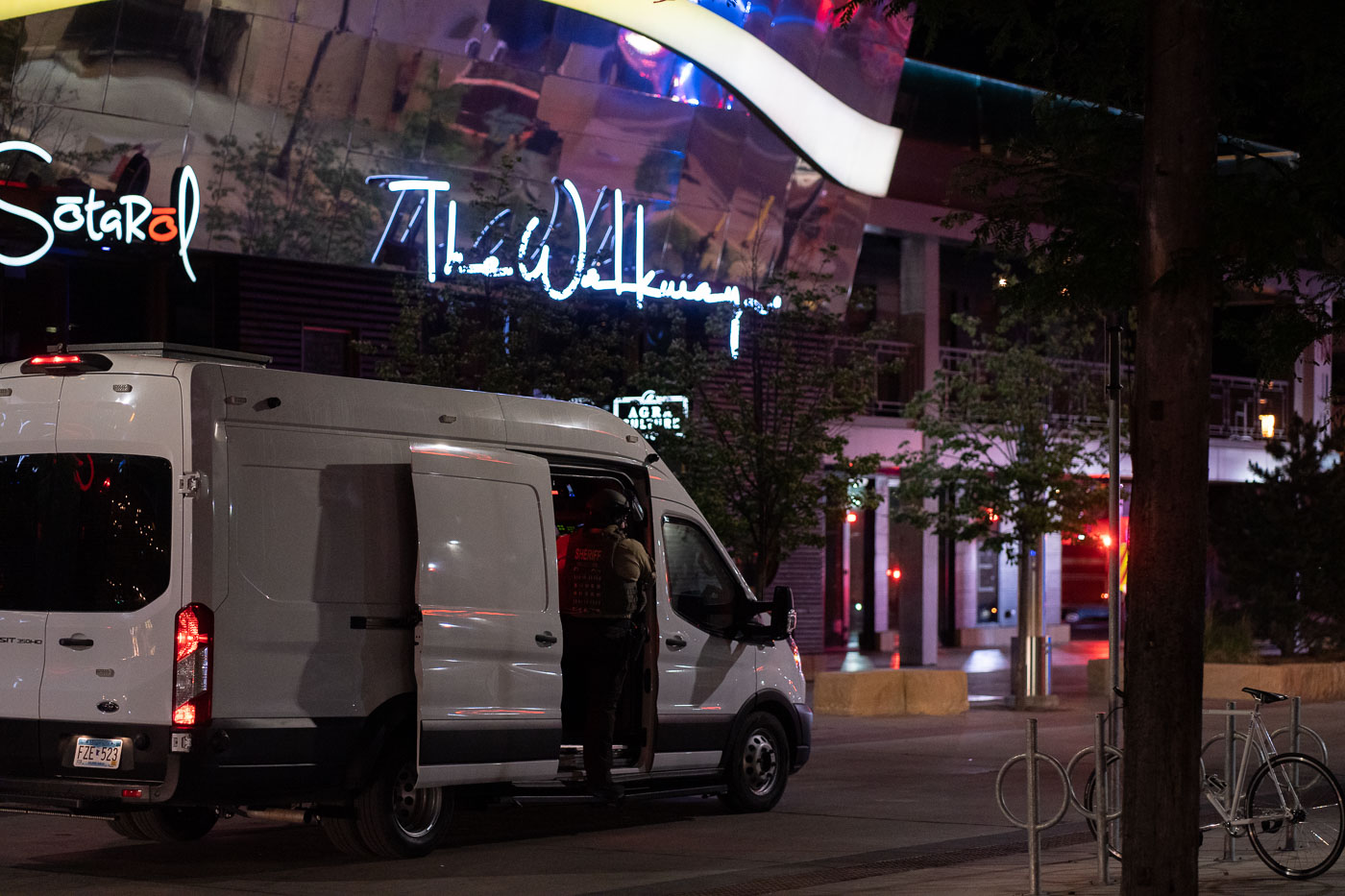
Hennepin County sheriff's van parked outside SōtaRōl in Minneapolis at night
A Hennepin County Sheriff's Department van is parked on Girard Avenue in Minneapolis during protests following the death of Winston Smith. On June 3, 2021, members of a U.S. Marshals Service fugitive task force fatally shot 32-year-old Winston “Boogie” Smith Jr. on the top level of a parking ramp in Minneapolis’ Uptown neighborhood while attempting to arrest him on a felony warrant. Authorities said Smith fired a handgun from inside his vehicle during the encounter, while family members and activists questioned the official account and demanded the release of additional evidence. The killing led to weeks of protests, street occupations, and confrontations with police in Uptown, becoming another major flashpoint in Minneapolis during the period following the murder of George Floyd. Earlier in the day Minneapolis city officials along with The Agape Movement coordinated to open the streets that had been closed at George Floyd Square since his murder.

Minneapolis Sheriff’s van on Girard Ave during Winston Smith protests
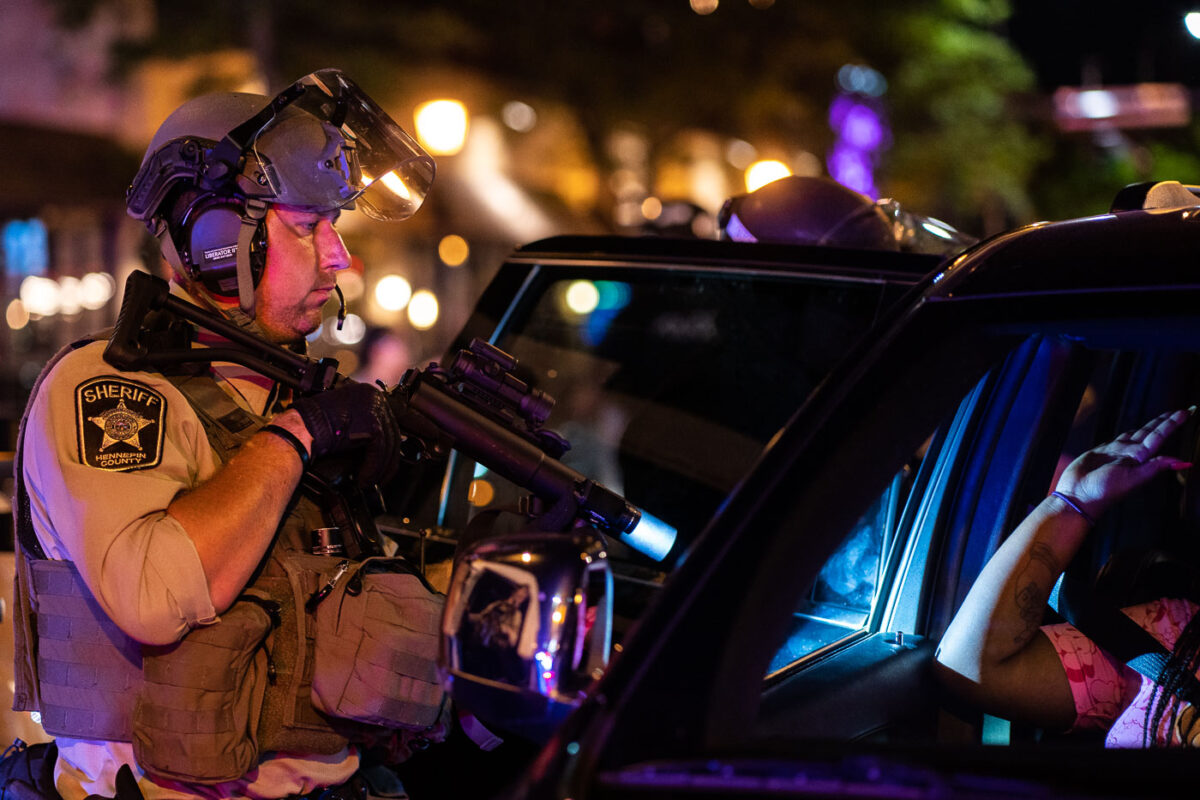
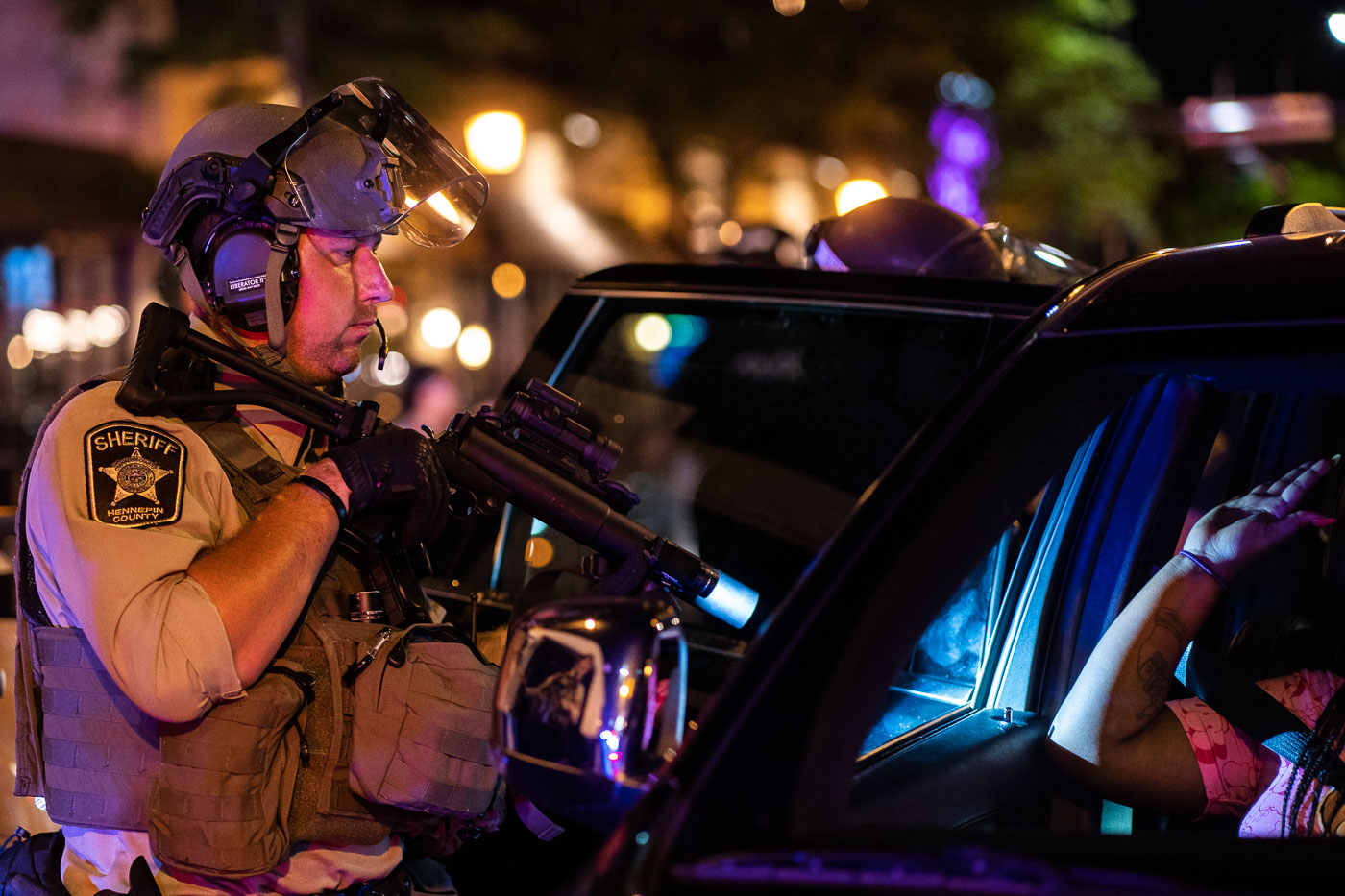
Hennepin County sheriff points a rifle at a driver during protests in Minneapolis.
A Hennepin County Sheriff's deputy points a firearm at a vehicle during protests in Minneapolis on June 5, 2021. On June 3, 2021, members of a U.S. Marshals Service fugitive task force fatally shot 32-year-old Winston “Boogie” Smith Jr. on the top level of a parking ramp in Minneapolis’ Uptown neighborhood while attempting to arrest him on a felony warrant. Authorities said Smith fired a handgun from inside his vehicle during the encounter, while family members and activists questioned the official account and demanded the release of additional evidence. The killing led to weeks of protests, street occupations, and confrontations with police in Uptown, becoming another major flashpoint in Minneapolis during the period following the murder of George Floyd. Earlier in the day Minneapolis city officials along with The Agape Movement coordinated to open the streets that had been closed at George Floyd Square since his murder.

Hennepin County Sheriff points gun at vehicle during protests
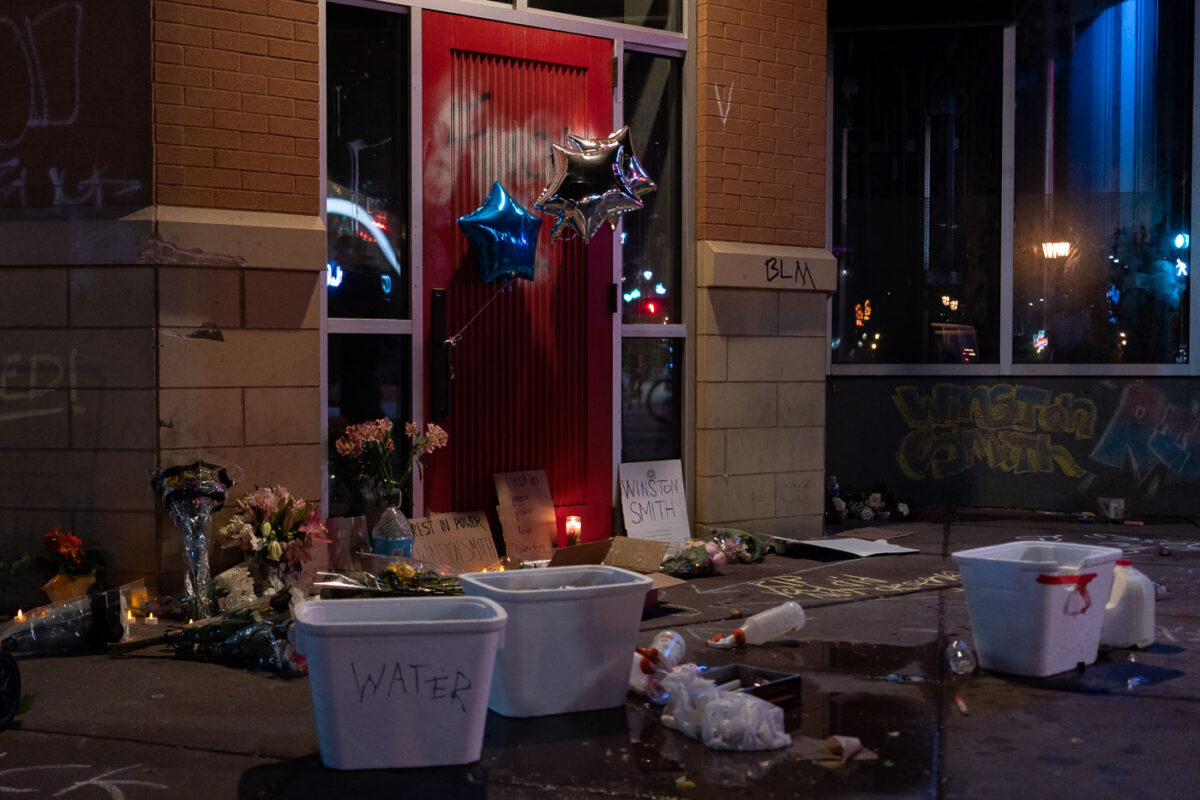
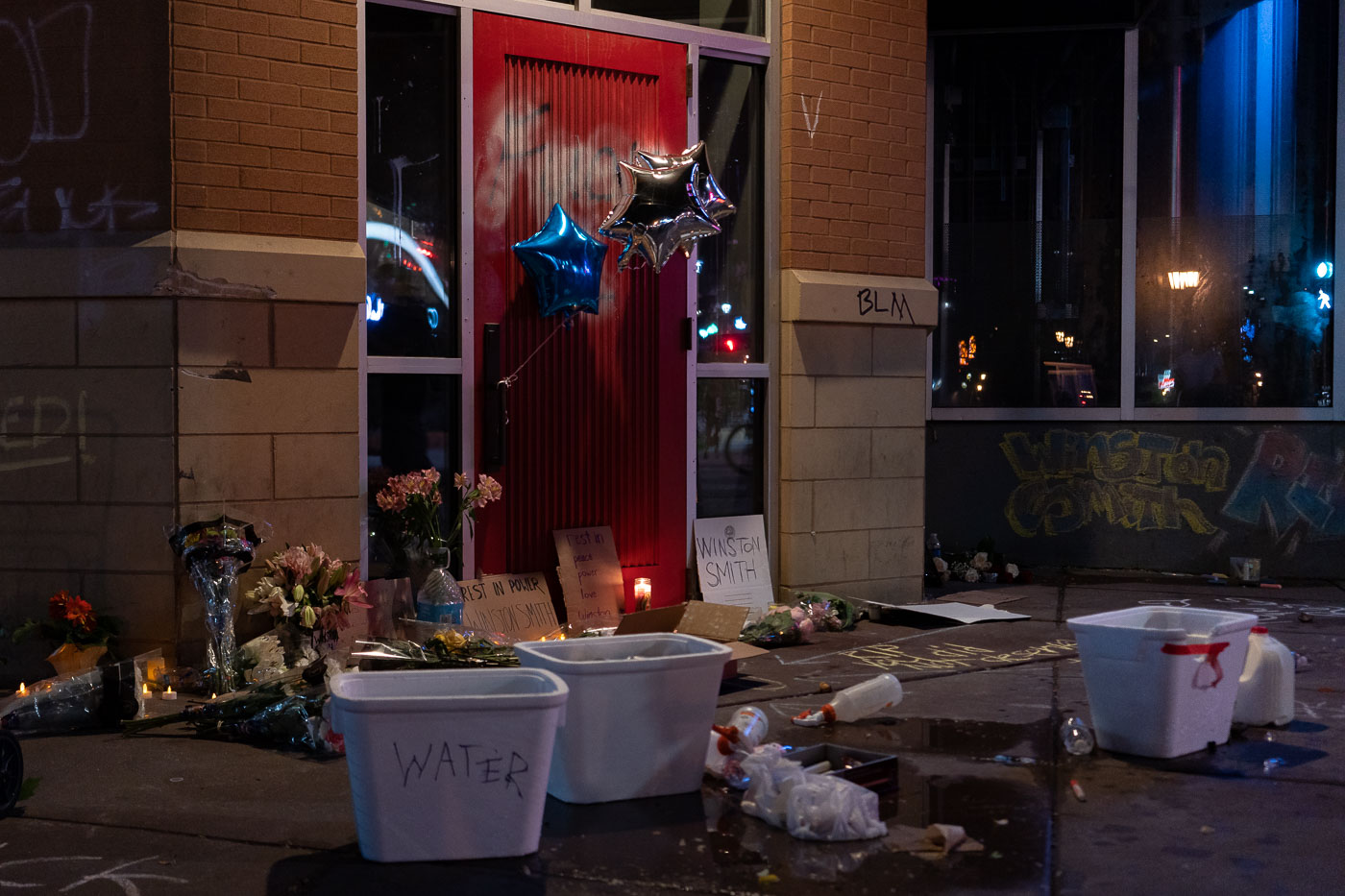
Winston Smith memorial with flowers and candles on Lake Street in Minneapolis at night.
A makeshift memorial for Winston Smith is seen on Lake Street in Minneapolis. On June 3, 2021, members of a U.S. Marshals Service fugitive task force fatally shot 32-year-old Winston “Boogie” Smith Jr. on the top level of a parking ramp in Minneapolis’ Uptown neighborhood while attempting to arrest him on a felony warrant. Authorities said Smith fired a handgun from inside his vehicle during the encounter, while family members and activists questioned the official account and demanded the release of additional evidence. The killing led to weeks of protests, street occupations, and confrontations with police in Uptown, becoming another major flashpoint in Minneapolis during the period following the murder of George Floyd. Earlier in the day Minneapolis city officials along with The Agape Movement coordinated to open the streets that had been closed at George Floyd Square since his murder.

Winston Smith Memorial on Lake Street, Minneapolis
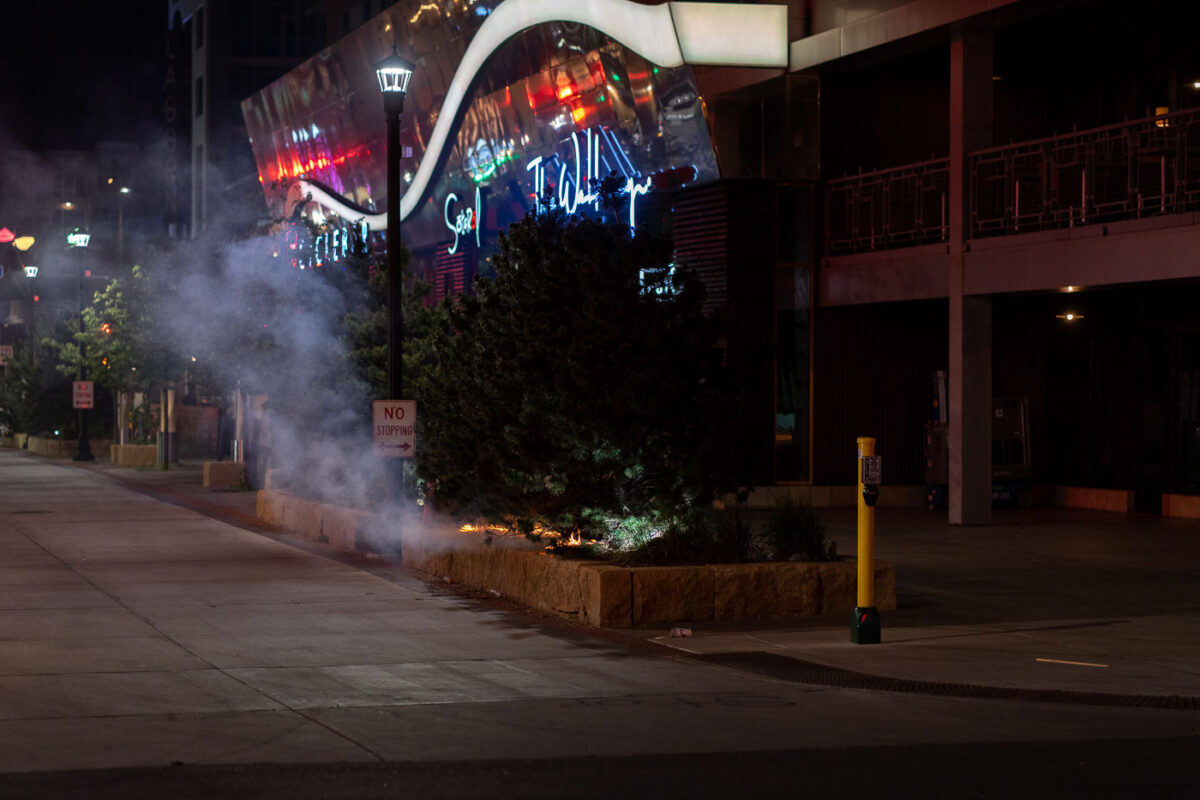
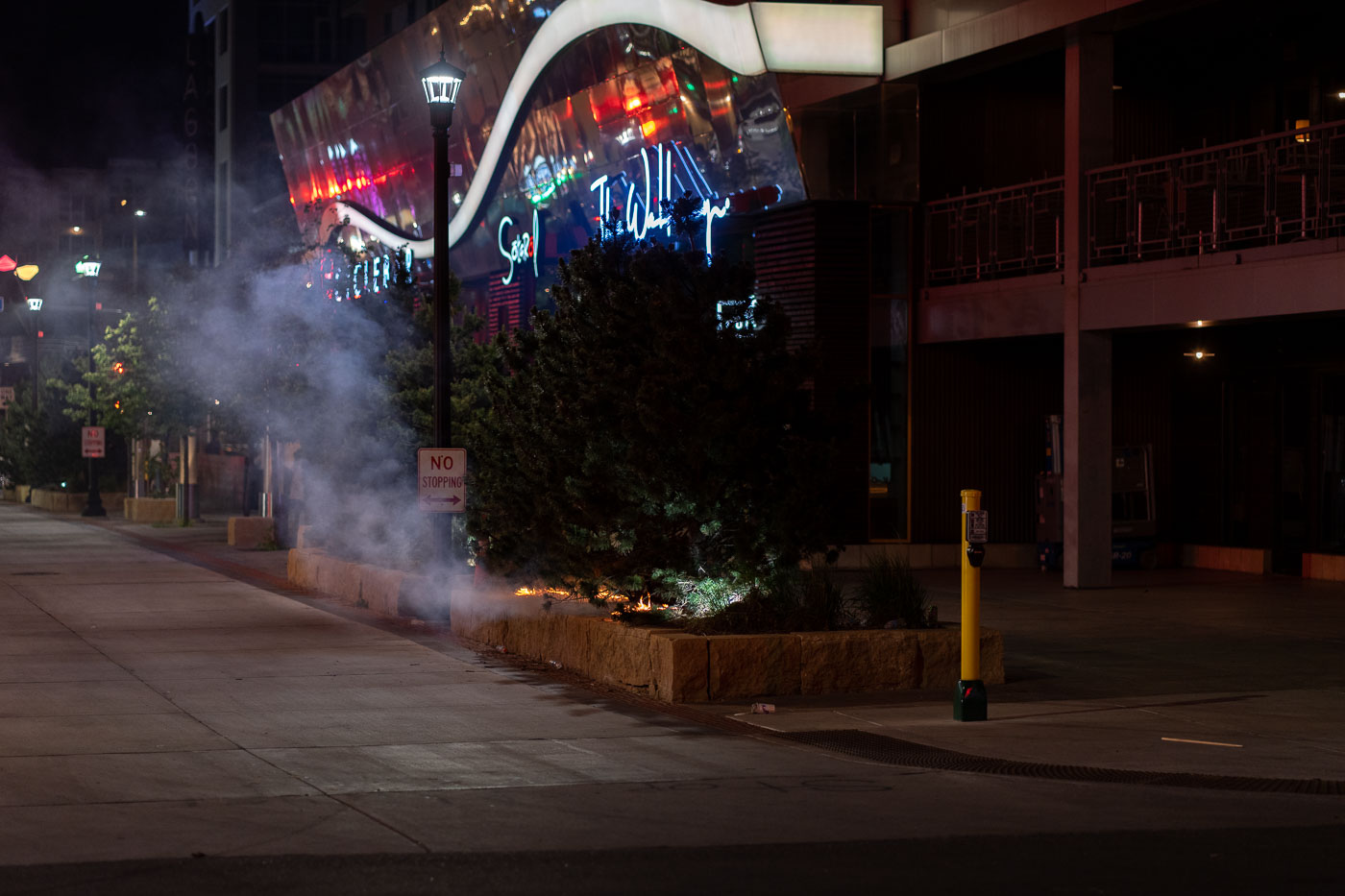
Small fire and smoke rise from bushes on Girard Ave in Minneapolis at night.
Bushes burn on Girard Avenue in Minneapolis during protests following the law enforcement shooting death of Winston Smith on June 3rd. On June 3, 2021, members of a U.S. Marshals Service fugitive task force fatally shot 32-year-old Winston “Boogie” Smith Jr. on the top level of a parking ramp in Minneapolis’ Uptown neighborhood while attempting to arrest him on a felony warrant. Authorities said Smith fired a handgun from inside his vehicle during the encounter, while family members and activists questioned the official account and demanded the release of additional evidence. The killing led to weeks of protests, street occupations, and confrontations with police in Uptown, becoming another major flashpoint in Minneapolis during the period following the murder of George Floyd. Earlier in the day Minneapolis city officials along with The Agape Movement coordinated to open the streets that had been closed at George Floyd Square since his murder.

Bushes burn on Girard Ave, Minneapolis during protests
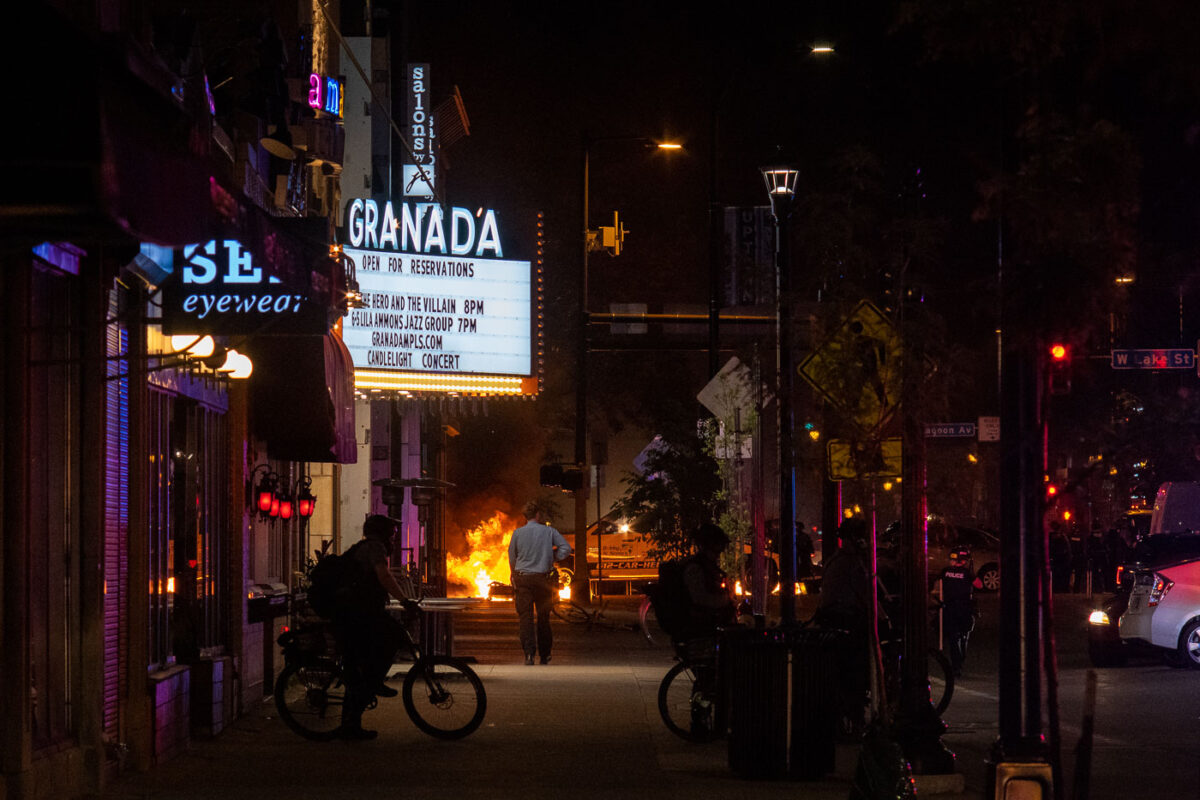
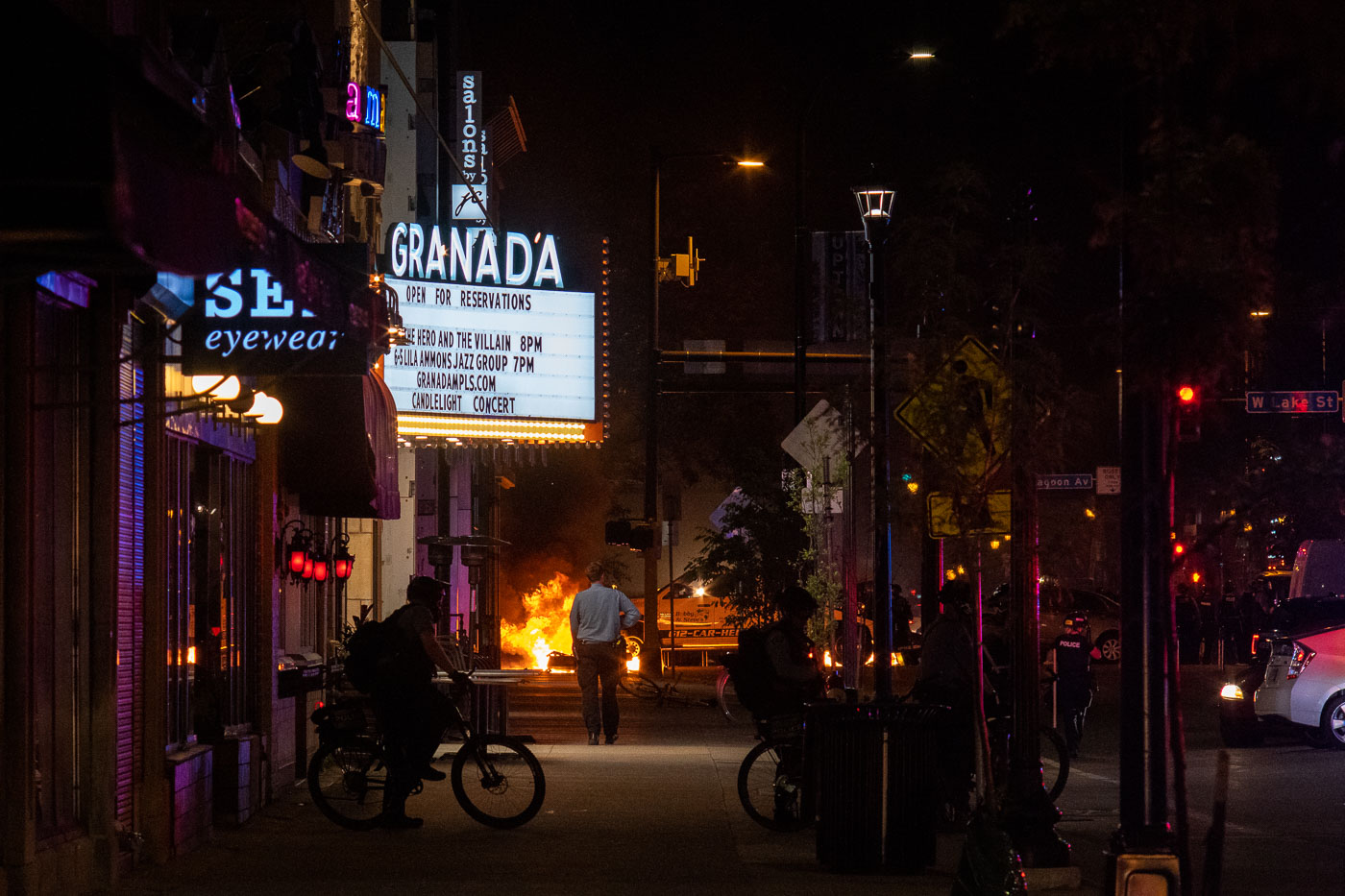
Fire burns on Hennepin Avenue by the Granada Theatre in Minneapolis at night.
Fires burn on Hennepin Avenue in Minneapolis on the night of June 3, 2021, following the shooting death of Winston Smith by federal law enforcement officers. Minneapolis Police are present as flames engulf vehicles and structures in the street near the Granada Theater. On June 3, 2021, members of a U.S. Marshals Service fugitive task force fatally shot 32-year-old Winston “Boogie” Smith Jr. on the top level of a parking ramp in Minneapolis’ Uptown neighborhood while attempting to arrest him on a felony warrant. Authorities said Smith fired a handgun from inside his vehicle during the encounter, while family members and activists questioned the official account and demanded the release of additional evidence. The killing led to weeks of protests, street occupations, and confrontations with police in Uptown, becoming another major flashpoint in Minneapolis during the period following the murder of George Floyd. Earlier in the day Minneapolis city officials along with The Agape Movement coordinated to open the streets that had been closed at George Floyd Square since his murder.

Minneapolis: Fire on Hennepin Ave near Granada Theatre
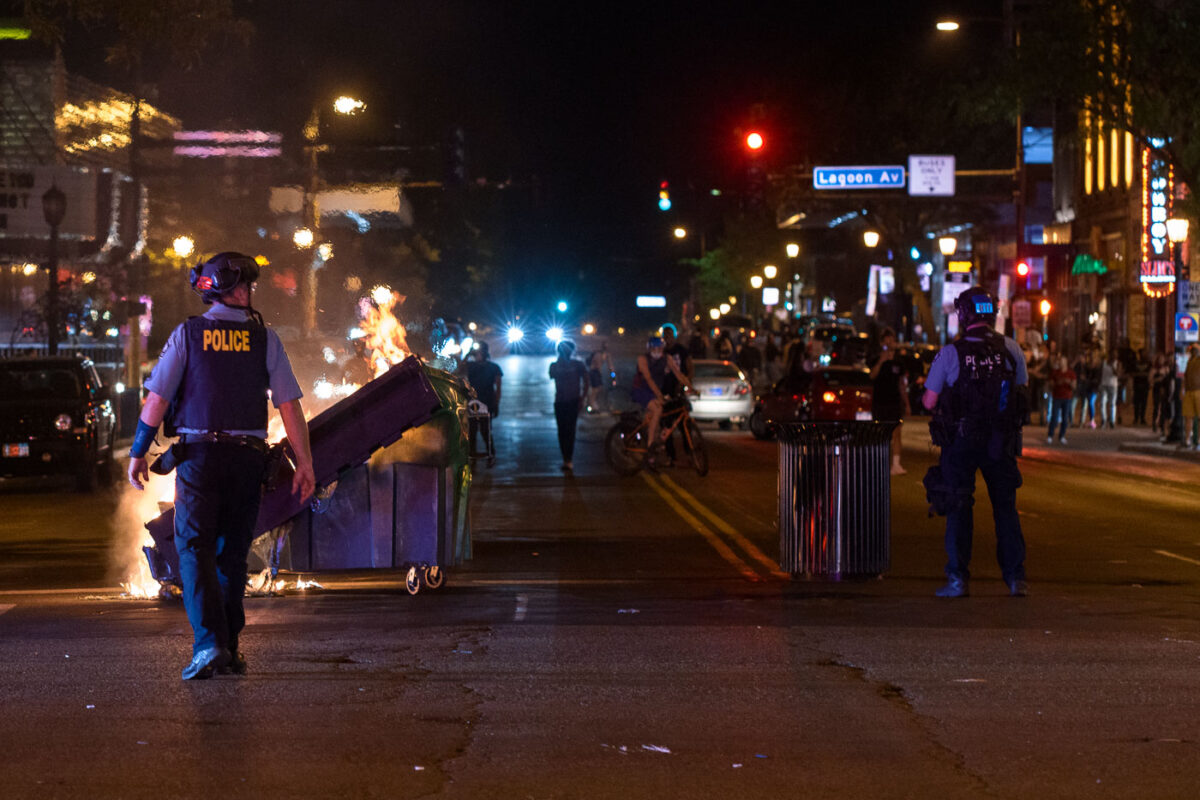
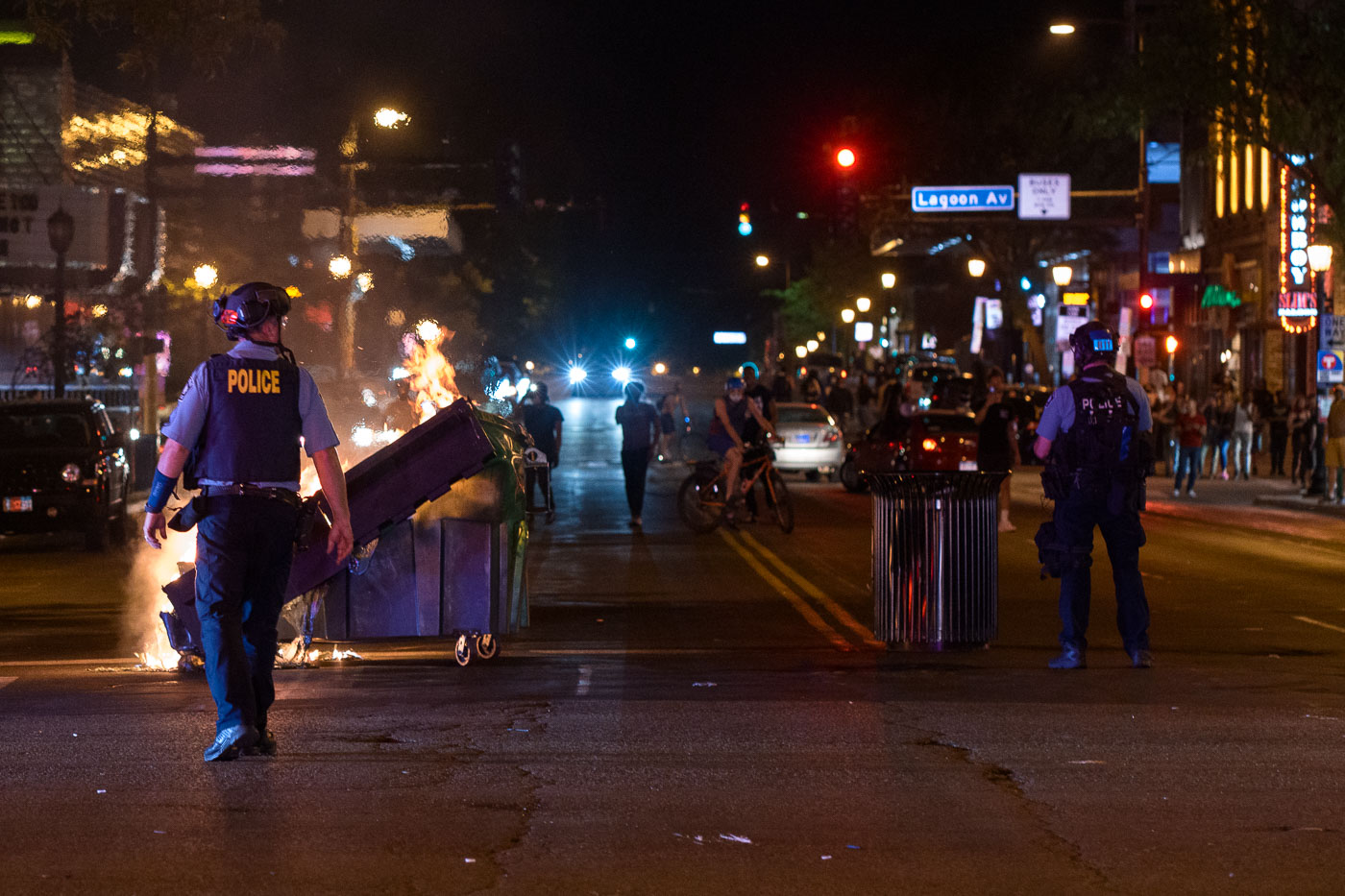
Police stand near a burning dumpster at Lake Street and Hennepin Avenue in Minneapolis at night during protests
Burning dumpsters are visible at the intersection of Hennepin Avenue and Lake Street in Minneapolis on June 5, 2021. This occurred during protests following the law enforcement shooting death of Winston Smith on June 3. The protests, which took place in the Uptown neighborhood, saw unrest and property damage, including fires set in public trash receptacles. On June 3, 2021, members of a U.S. Marshals Service fugitive task force fatally shot 32-year-old Winston “Boogie” Smith Jr. on the top level of a parking ramp in Minneapolis’ Uptown neighborhood while attempting to arrest him on a felony warrant. Authorities said Smith fired a handgun from inside his vehicle during the encounter, while family members and activists questioned the official account and demanded the release of additional evidence. The killing led to weeks of protests, street occupations, and confrontations with police in Uptown, becoming another major flashpoint in Minneapolis during the period following the murder of George Floyd. Earlier in the day Minneapolis city officials along with The Agape Movement coordinated to open the streets that had been closed at George Floyd Square since his murder.

Minneapolis: Burning dumpsters at Lake St & Hennepin Ave during protests
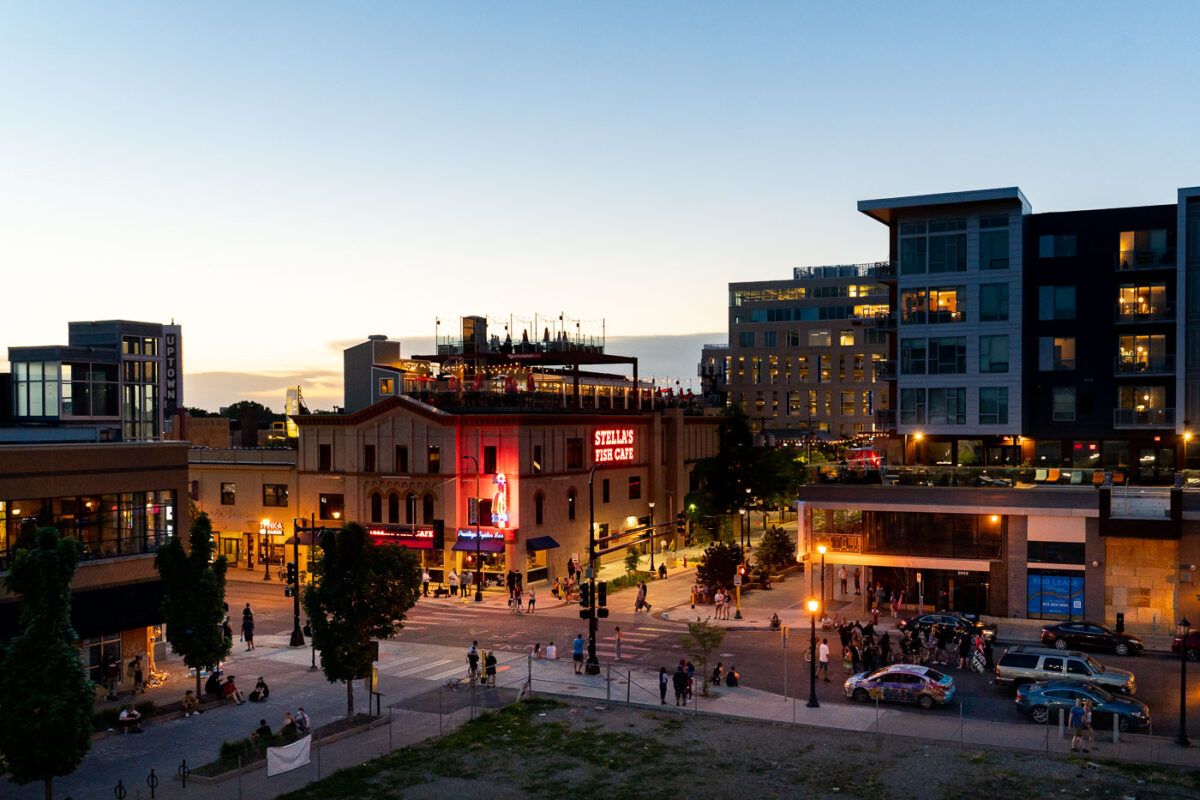
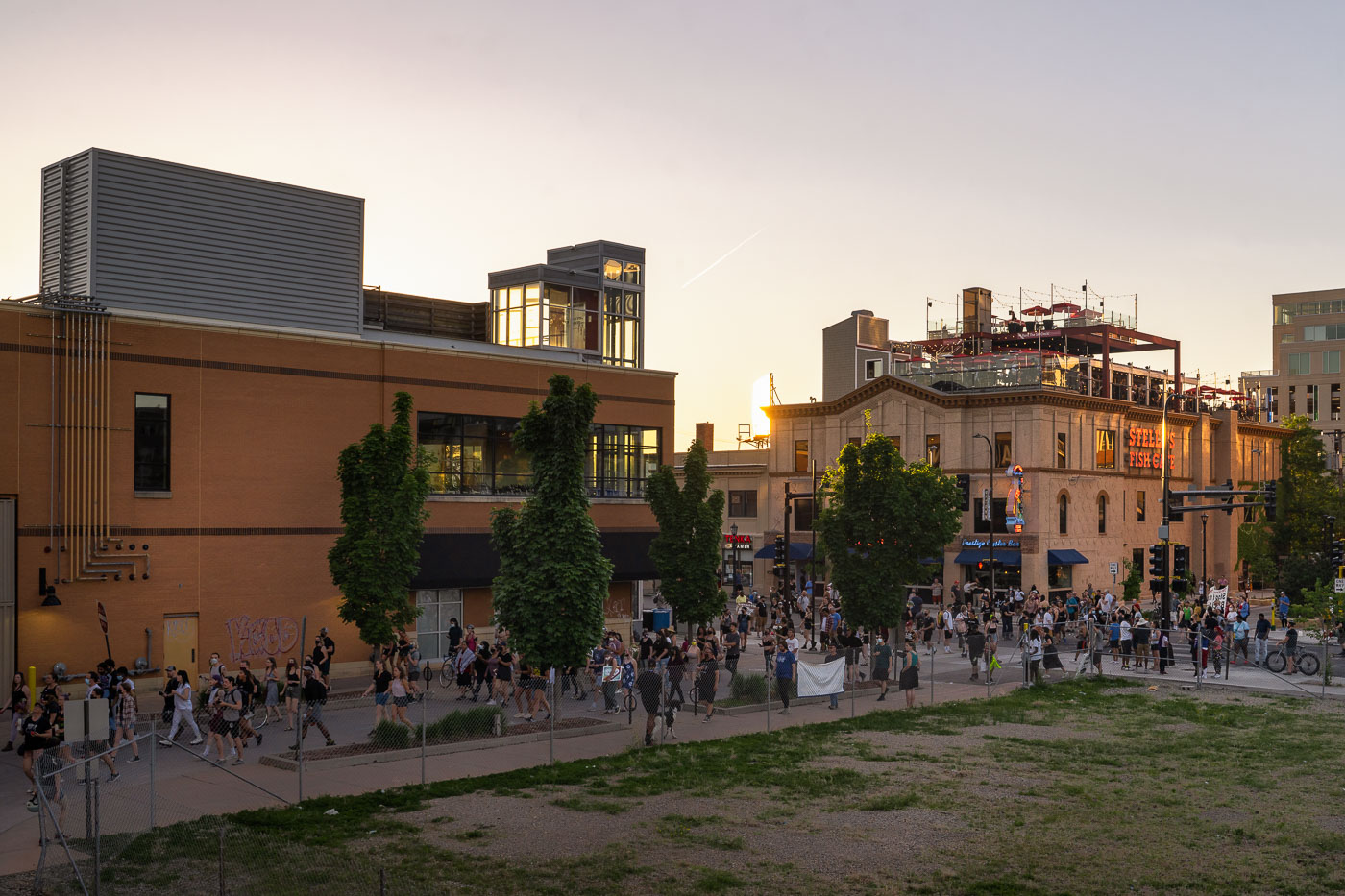
Protesters gather on Lake Street in Uptown Minneapolis at dusk.
Protesters march down Lake Street in Uptown Minneapolis the day after Winston Smith was killed by a federal law enforcement task force. On June 3, 2021, members of a U.S. Marshals Service fugitive task force fatally shot 32-year-old Winston “Boogie” Smith Jr. on the top level of a parking ramp in Minneapolis’ Uptown neighborhood while attempting to arrest him on a felony warrant. Authorities said Smith fired a handgun from inside his vehicle during the encounter, while family members and activists questioned the official account and demanded the release of additional evidence. The killing led to weeks of protests, street occupations, and confrontations with police in Uptown, becoming another major flashpoint in Minneapolis during the period following the murder of George Floyd. Earlier in the day Minneapolis city officials along with The Agape Movement coordinated to open the streets that had been closed at George Floyd Square since his murder.

Minneapolis Protest on Lake Street After Winston Smith Killing
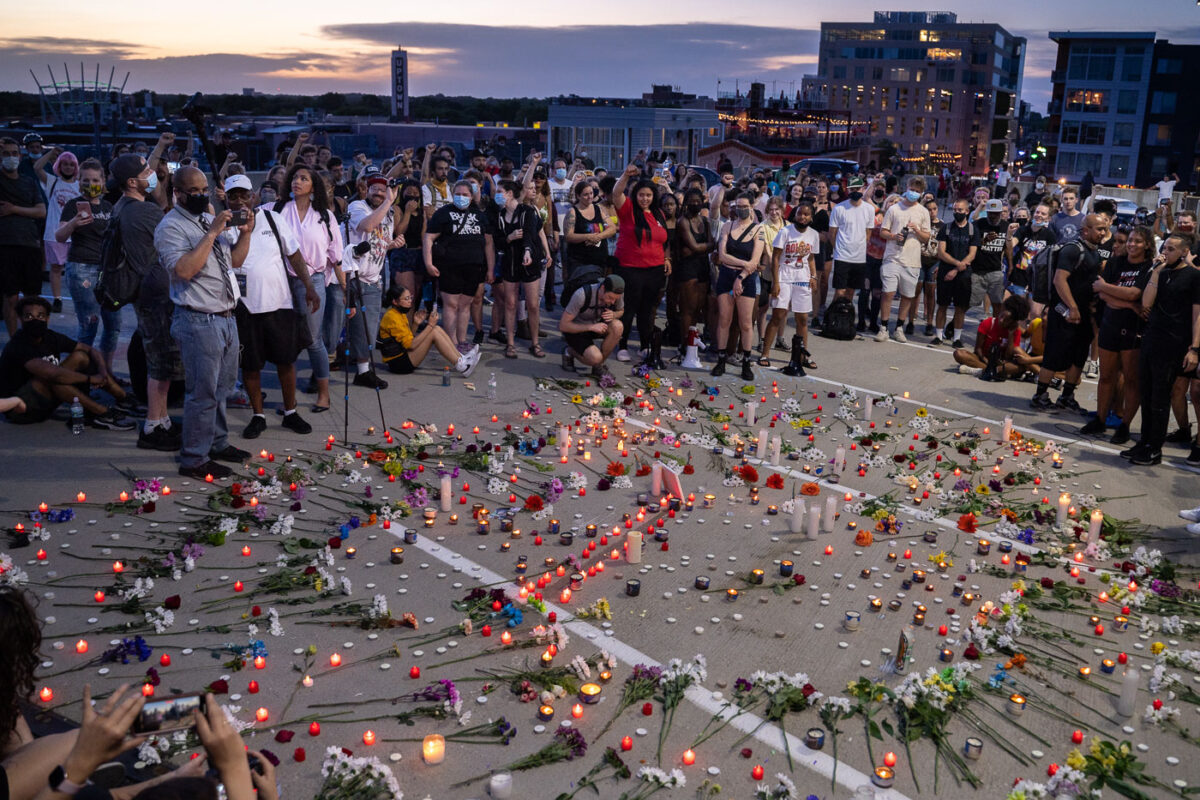
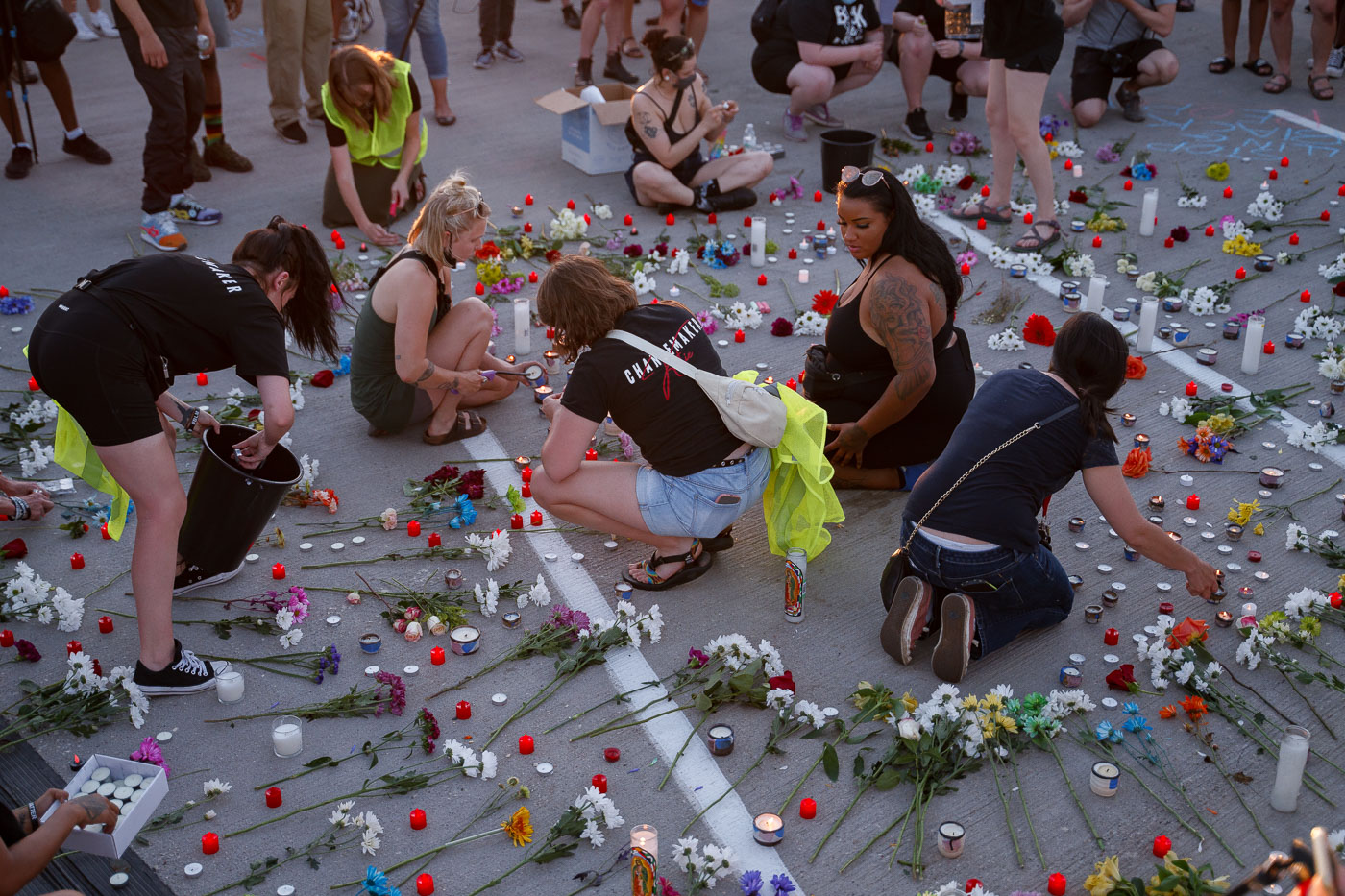
Minneapolis vigil for Winston Smith with candles and flowers at dusk in Uptown.
A vigil was held in Minneapolis following the police shooting of Winston Smith. Community members gathered to honor his memory, placing numerous candles and flowers on the ground where he was killed by a federal task force. On June 3, 2021, members of a U.S. Marshals Service fugitive task force fatally shot 32-year-old Winston “Boogie” Smith Jr. on the top level of a parking ramp in Minneapolis’ Uptown neighborhood while attempting to arrest him on a felony warrant. Authorities said Smith fired a handgun from inside his vehicle during the encounter, while family members and activists questioned the official account and demanded the release of additional evidence. The killing led to weeks of protests, street occupations, and confrontations with police in Uptown, becoming another major flashpoint in Minneapolis during the period following the murder of George Floyd. Earlier in the day Minneapolis city officials along with The Agape Movement coordinated to open the streets that had been closed at George Floyd Square since his murder.

Minneapolis Vigil for Winston Smith After Police Shooting
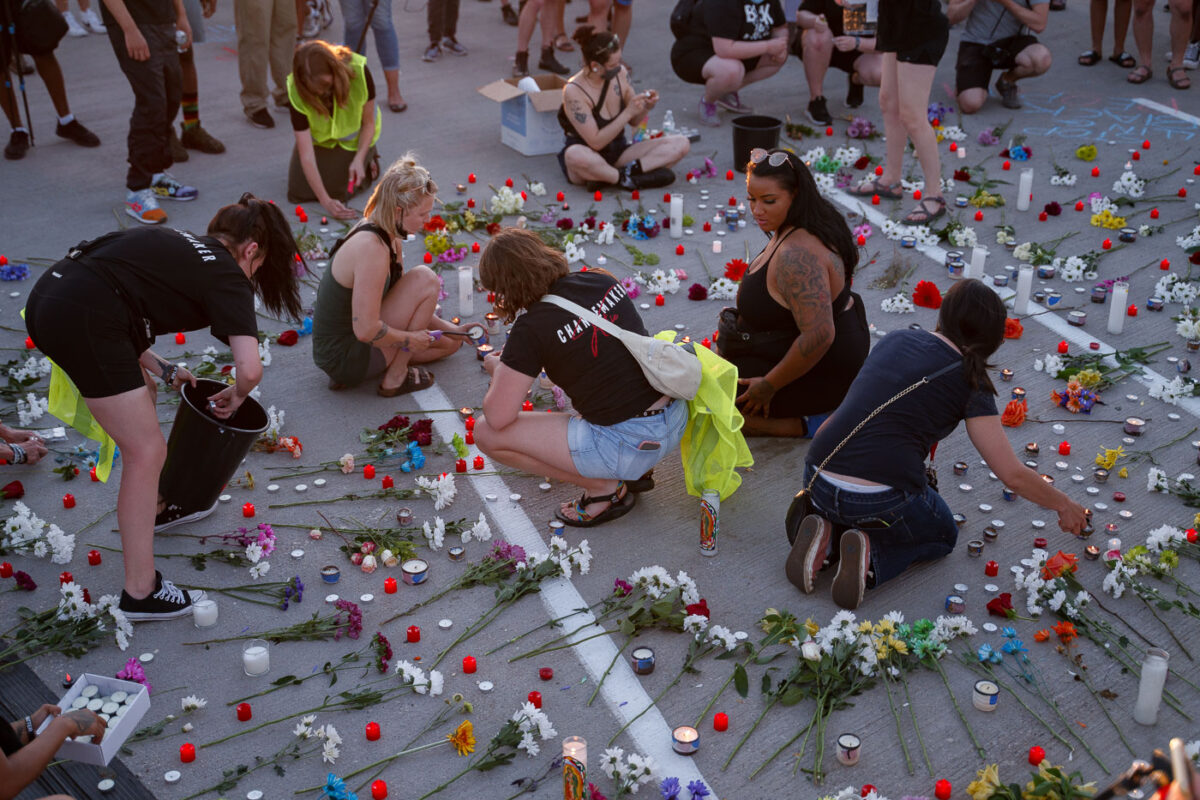
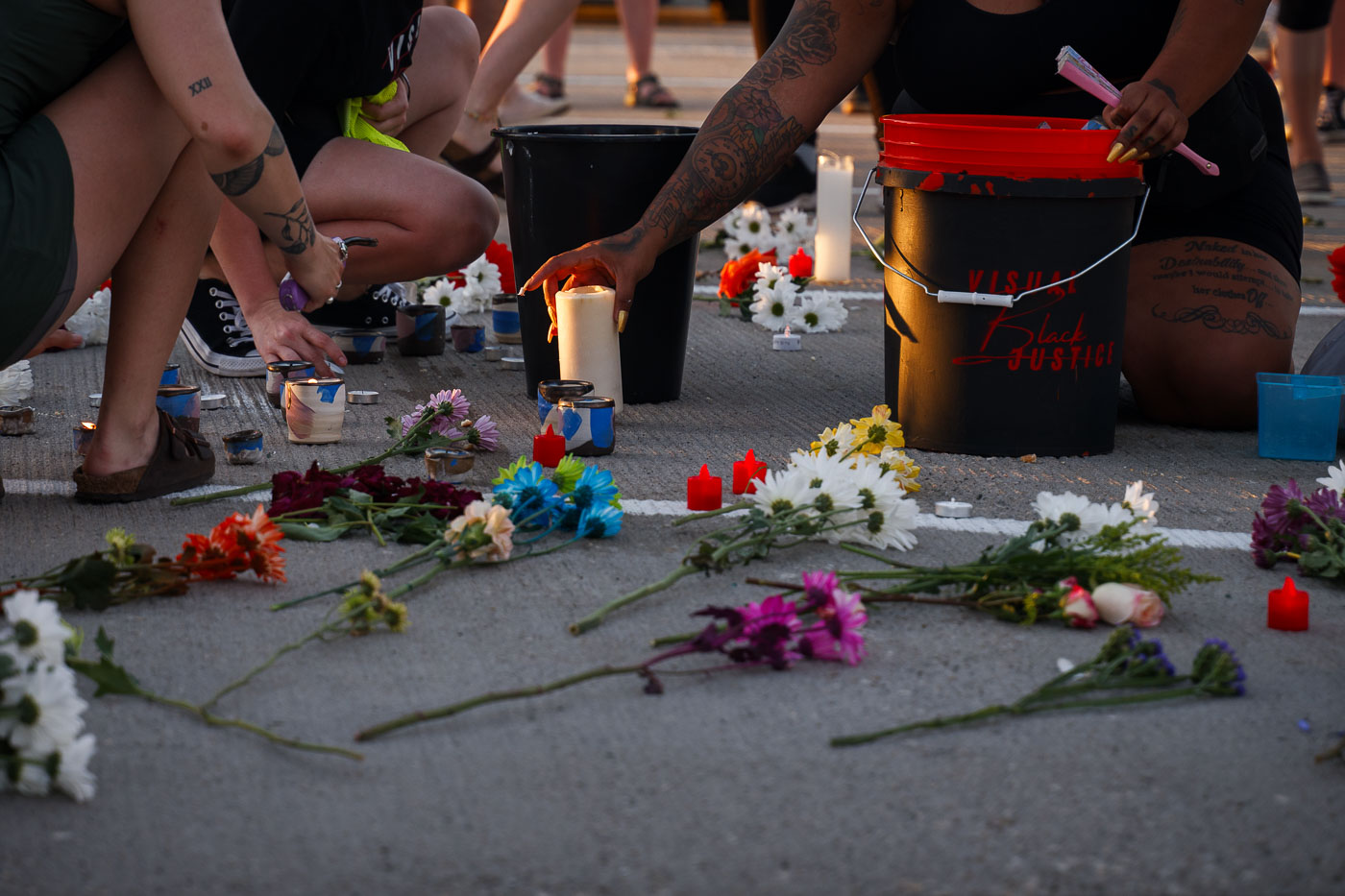
Mourners place candles and flowers on pavement at a vigil in Uptown Minneapolis.
A vigil is held at the site where Winston Smith was killed by law enforcement on June 3rd. Participants placed flowers and lit candles on the pavement, creating a memorial. The event occurred in Uptown Minneapolis, a neighborhood that saw significant unrest following Smith's death and other incidents of police violence. On June 3, 2021, members of a U.S. Marshals Service fugitive task force fatally shot 32-year-old Winston “Boogie” Smith Jr. on the top level of a parking ramp in Minneapolis’ Uptown neighborhood while attempting to arrest him on a felony warrant. Authorities said Smith fired a handgun from inside his vehicle during the encounter, while family members and activists questioned the official account and demanded the release of additional evidence. The killing led to weeks of protests, street occupations, and confrontations with police in Uptown, becoming another major flashpoint in Minneapolis during the period following the murder of George Floyd. Earlier in the day Minneapolis city officials along with The Agape Movement coordinated to open the streets that had been closed at George Floyd Square since his murder.

Protesters with candles at Winston Smith vigil
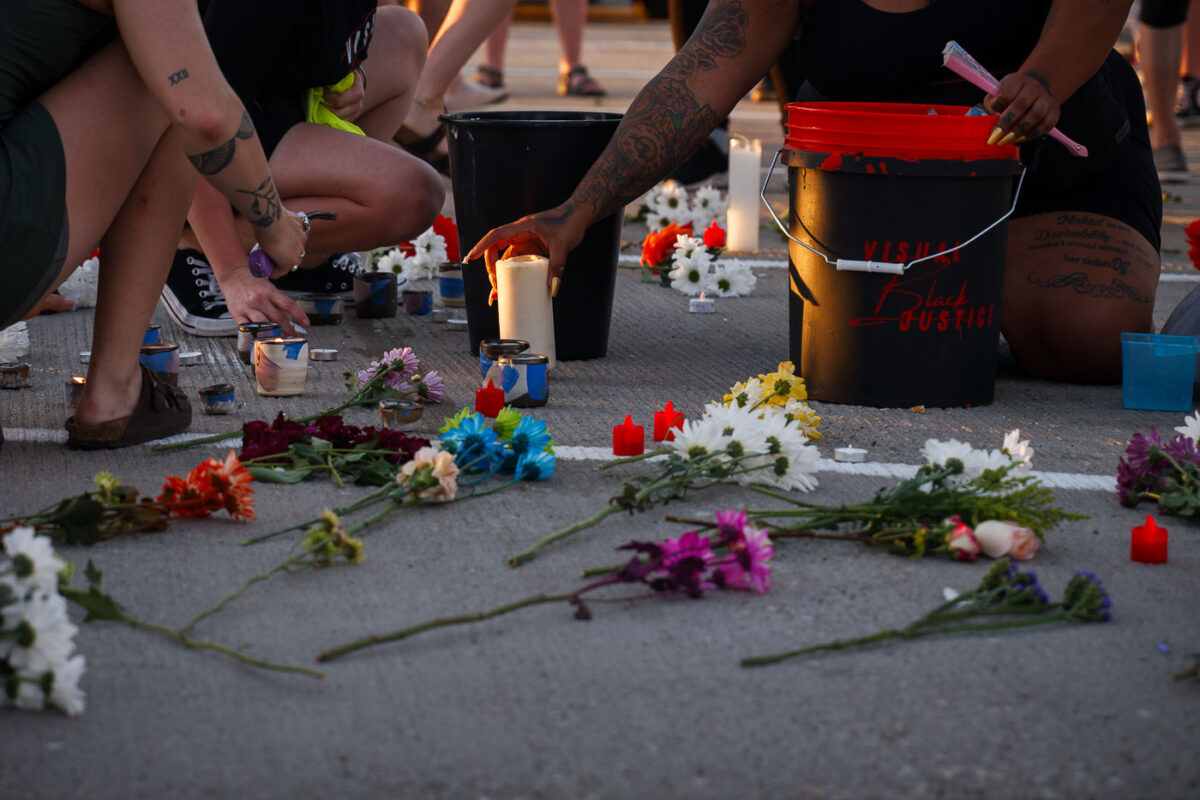
Mourners place candles and flowers at a vigil in Minneapolis for Winston Smith.
A vigil was held on the parking ramp in Uptown Minneapolis where Winston Smith was killed by law enforcement on June 4th, 2021. Attendees lit candles and placed flowers in remembrance of Smith, who was shot and killed by a federal task force. On June 3, 2021, members of a U.S. Marshals Service fugitive task force fatally shot 32-year-old Winston “Boogie” Smith Jr. on the top level of a parking ramp in Minneapolis’ Uptown neighborhood while attempting to arrest him on a felony warrant. Authorities said Smith fired a handgun from inside his vehicle during the encounter, while family members and activists questioned the official account and demanded the release of additional evidence. The killing led to weeks of protests, street occupations, and confrontations with police in Uptown, becoming another major flashpoint in Minneapolis during the period following the murder of George Floyd. Earlier in the day Minneapolis city officials along with The Agape Movement coordinated to open the streets that had been closed at George Floyd Square since his murder.

Winston Smith Vigil on Parking Ramp, Uptown Minneapolis
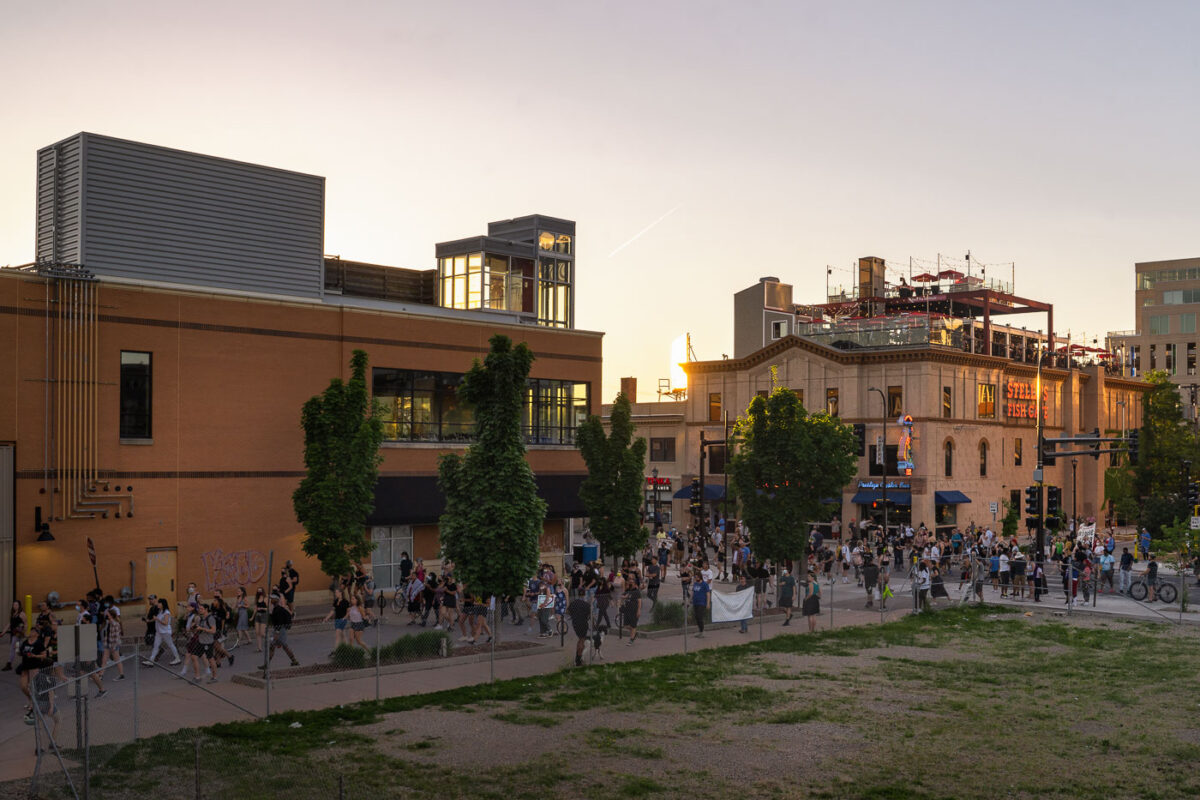
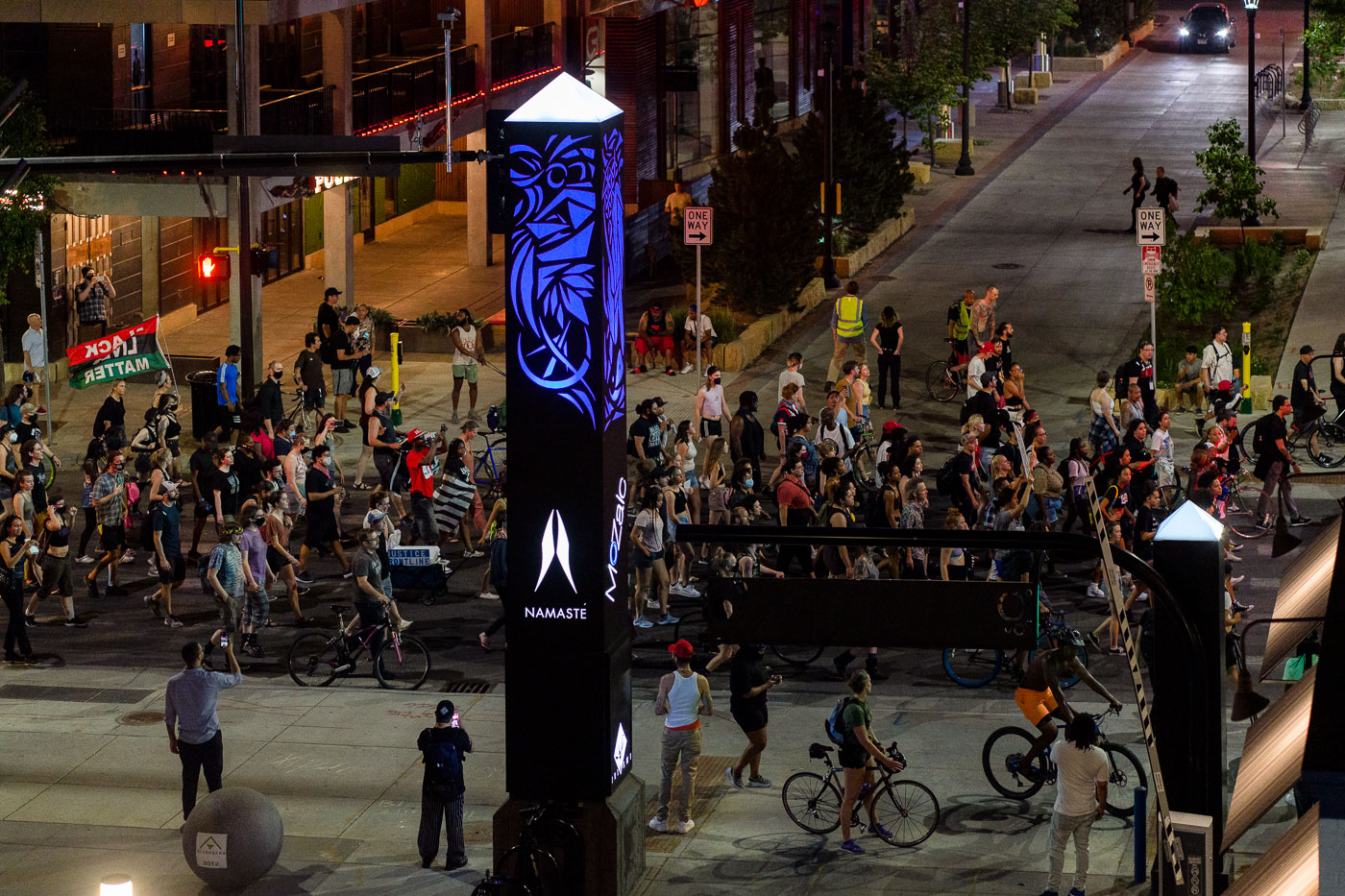
Protesters march along Hennepin Avenue in Uptown Minneapolis at sunset
Protesters march through Uptown Minneapolis on June 24, 2021, following the killing of Winston Smith. On June 3, 2021, members of a U.S. Marshals Service fugitive task force fatally shot 32-year-old Winston “Boogie” Smith Jr. on the top level of a parking ramp in Minneapolis’ Uptown neighborhood while attempting to arrest him on a felony warrant. Authorities said Smith fired a handgun from inside his vehicle during the encounter, while family members and activists questioned the official account and demanded the release of additional evidence. The killing led to weeks of protests, street occupations, and confrontations with police in Uptown, becoming another major flashpoint in Minneapolis during the period following the murder of George Floyd. Earlier in the day Minneapolis city officials along with The Agape Movement coordinated to open the streets that had been closed at George Floyd Square since his murder.

Protesters March in Uptown Minneapolis After Winston Smith Killing
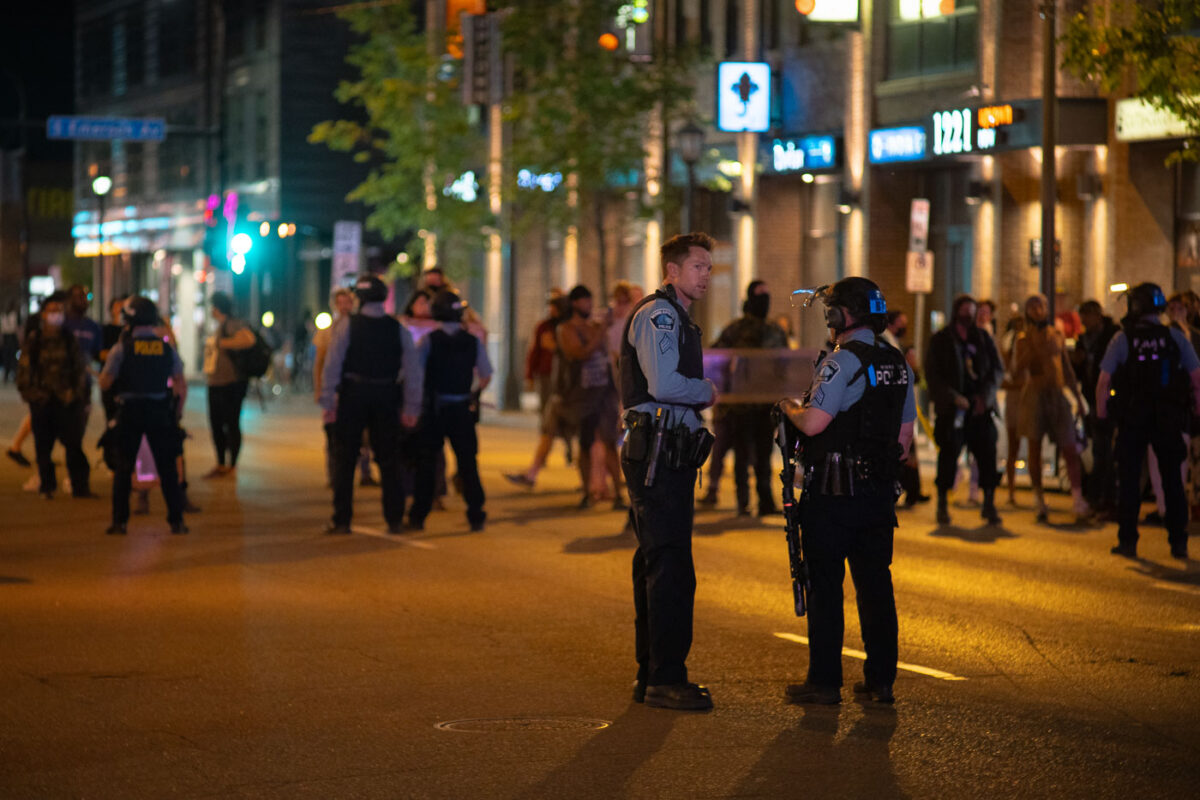
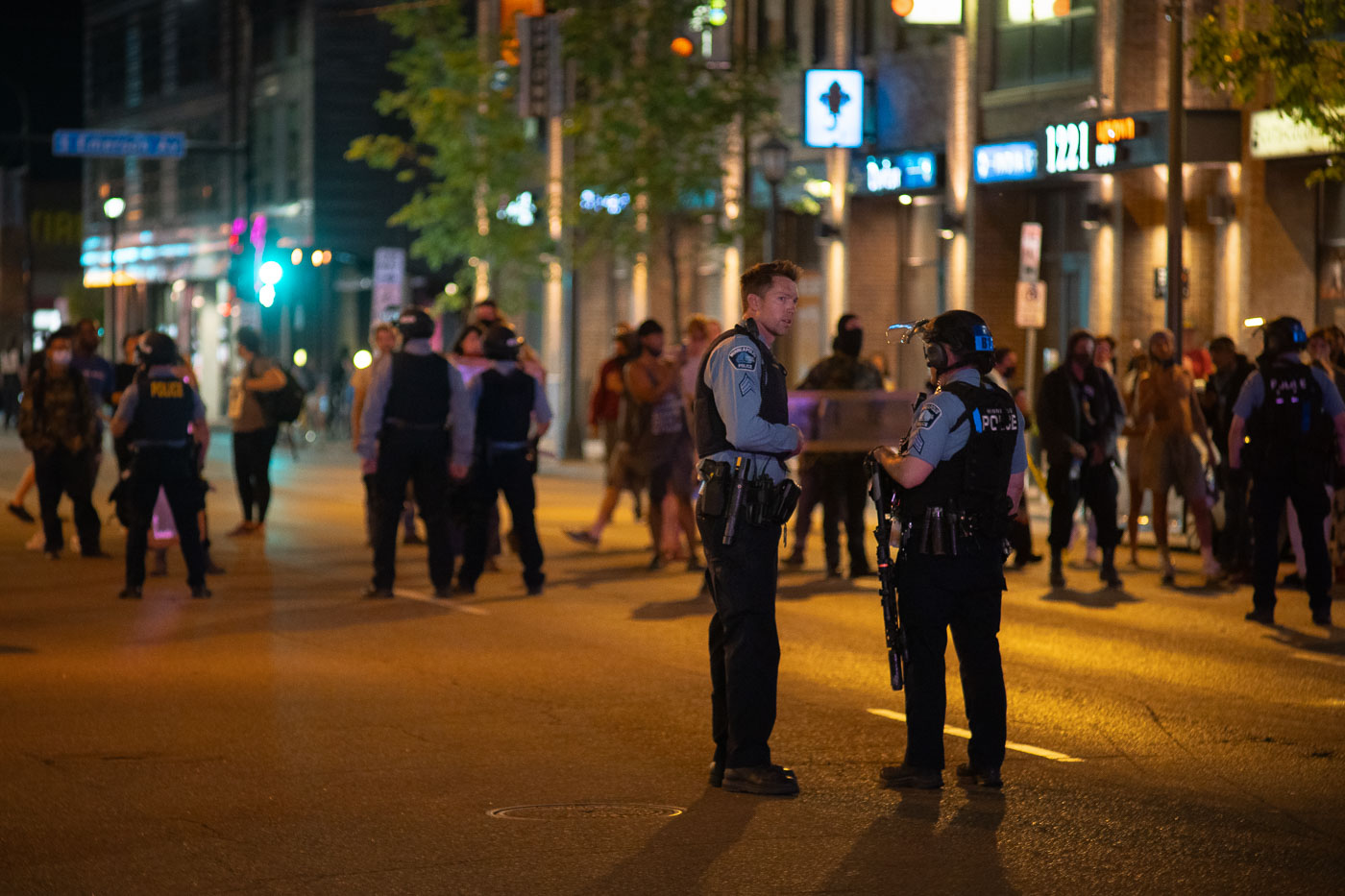
Minneapolis police officers stand on Lake Street near protesters at night
Minneapolis Police officers confront protesters on Lake Street in Minneapolis on June 3, 2021. The gathering occurred hours after Winston Smith Jr. was killed by police in a parking garage in the Uptown neighborhood. On June 3, 2021, members of a U.S. Marshals Service fugitive task force fatally shot 32-year-old Winston “Boogie” Smith Jr. on the top level of a parking ramp in Minneapolis’ Uptown neighborhood while attempting to arrest him on a felony warrant. Authorities said Smith fired a handgun from inside his vehicle during the encounter, while family members and activists questioned the official account and demanded the release of additional evidence. The killing led to weeks of protests, street occupations, and confrontations with police in Uptown, becoming another major flashpoint in Minneapolis during the period following the murder of George Floyd. Earlier in the day Minneapolis city officials along with The Agape Movement coordinated to open the streets that had been closed at George Floyd Square since his murder.

Minneapolis Police confront Winston Smith protesters on Lake Street
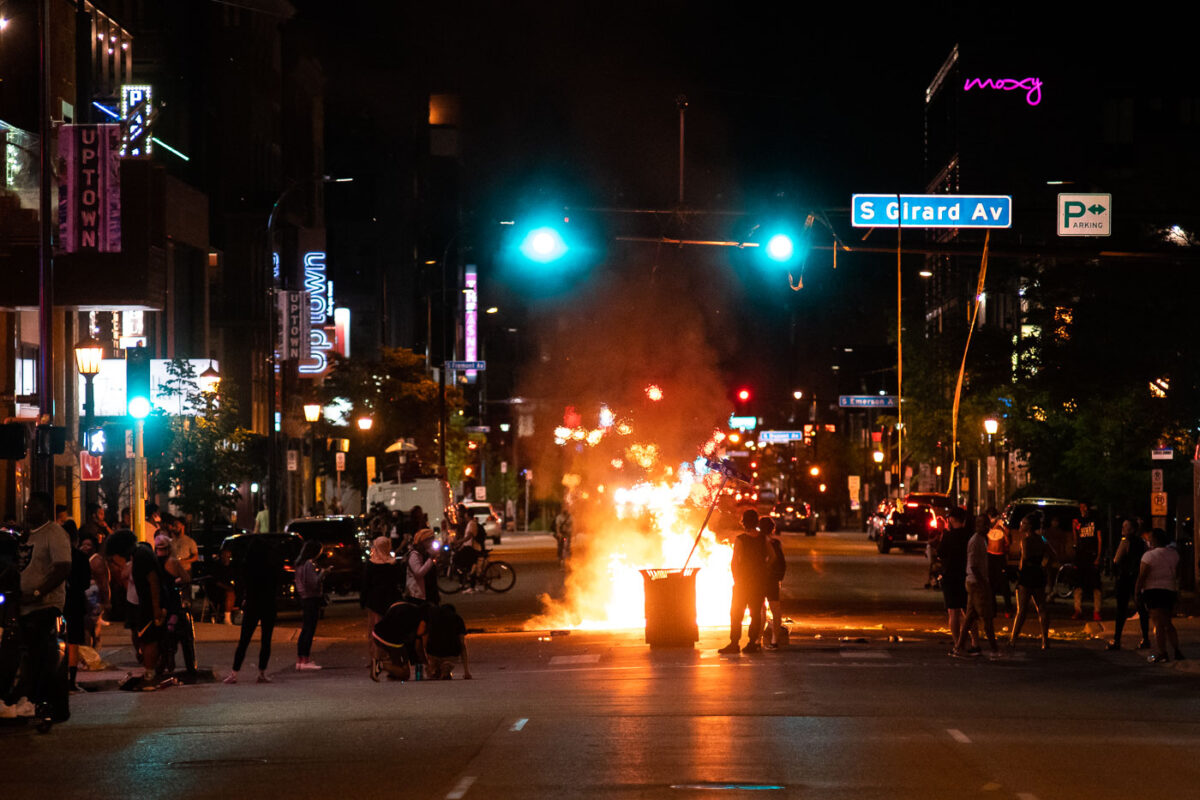
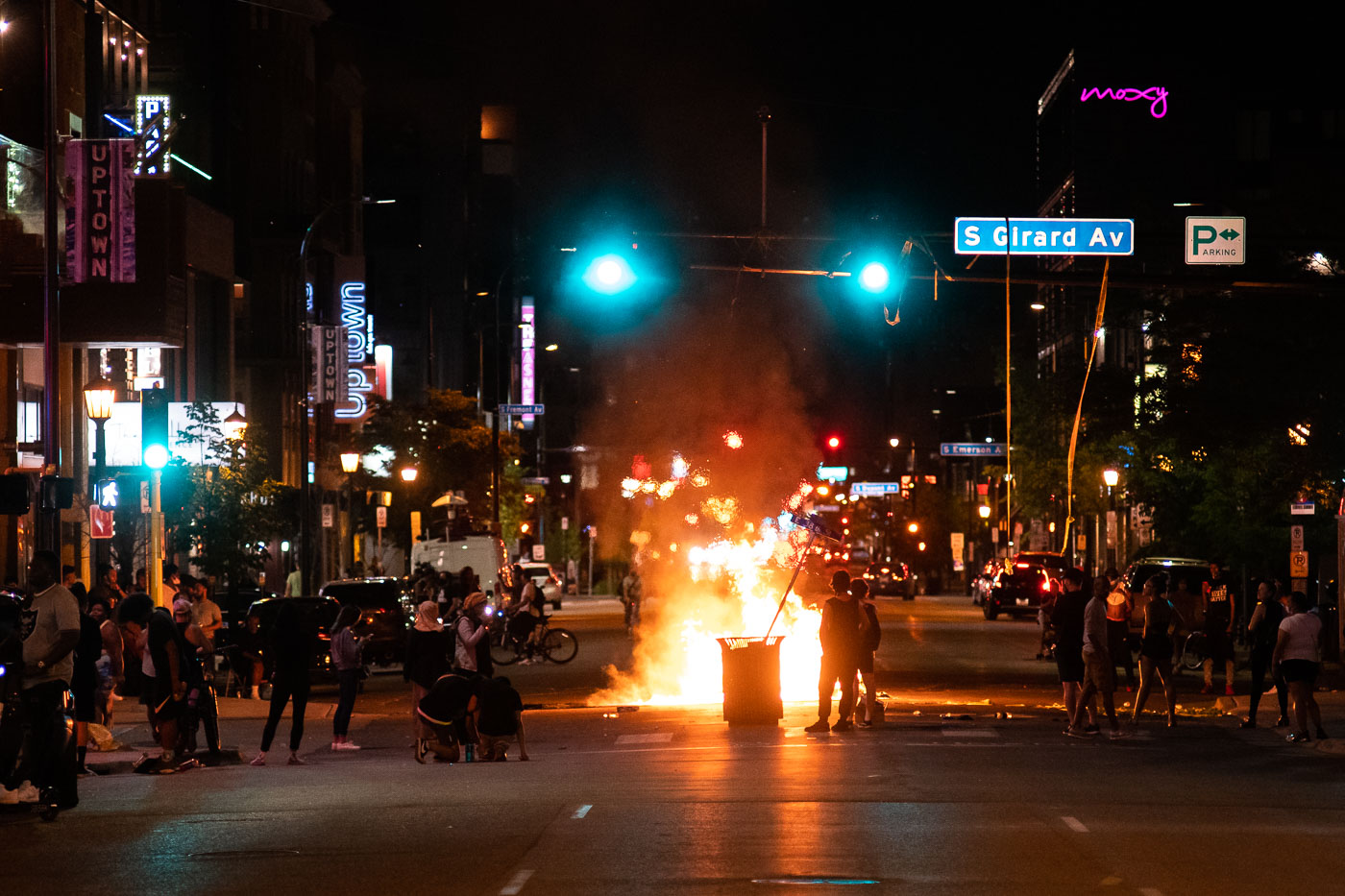
People gather around a burning trash can at Lake Street and S Girard Ave in Minneapolis at night.
Protesters gather at the intersection of Lake Street and South Girard Avenue in Uptown Minneapolis on June 23, 2021. On June 3, 2021, members of a U.S. Marshals Service fugitive task force fatally shot 32-year-old Winston “Boogie” Smith Jr. on the top level of a parking ramp in Minneapolis’ Uptown neighborhood while attempting to arrest him on a felony warrant. Authorities said Smith fired a handgun from inside his vehicle during the encounter, while family members and activists questioned the official account and demanded the release of additional evidence. The killing led to weeks of protests, street occupations, and confrontations with police in Uptown, becoming another major flashpoint in Minneapolis during the period following the murder of George Floyd. Earlier in the day Minneapolis city officials along with The Agape Movement coordinated to open the streets that had been closed at George Floyd Square since his murder.

Minneapolis: Fire at Lake St & S Girard Ave After Winston Smith Killing
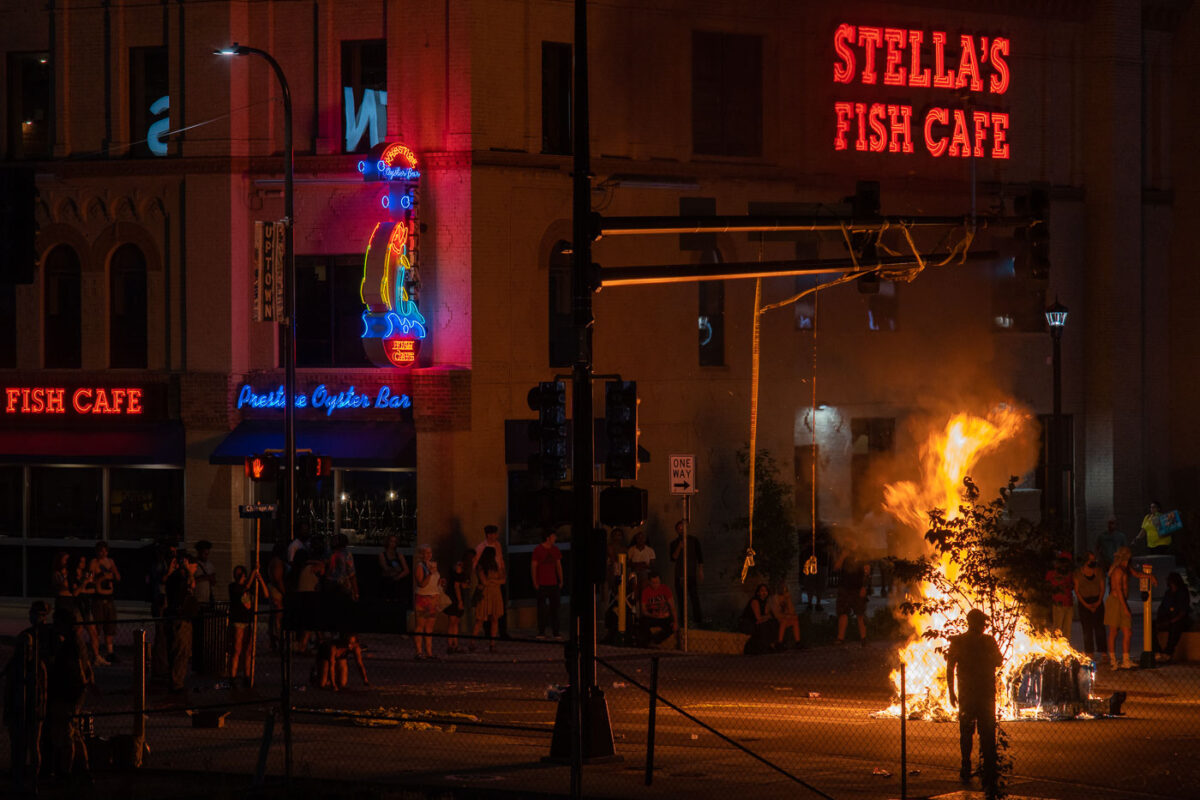
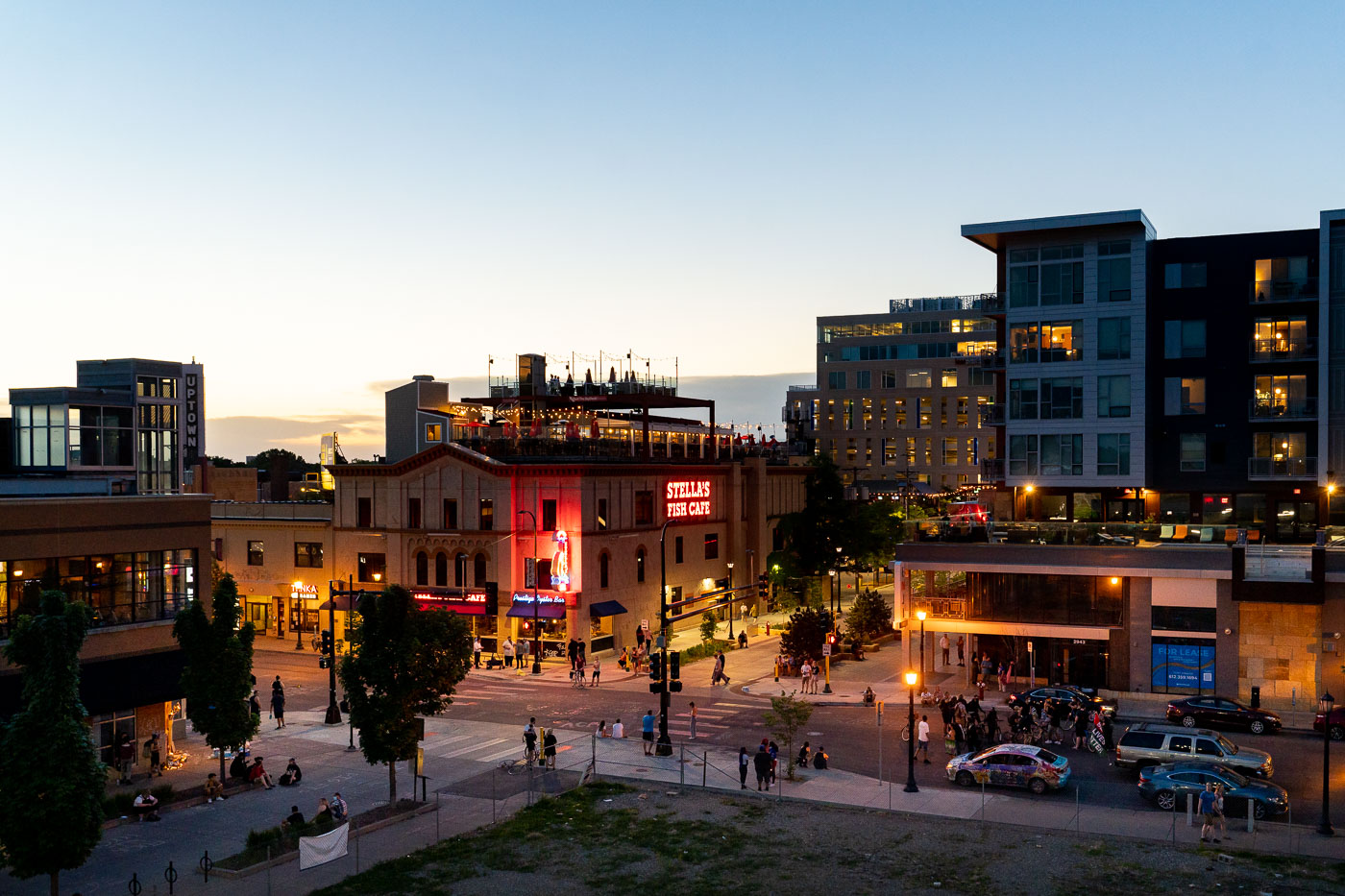
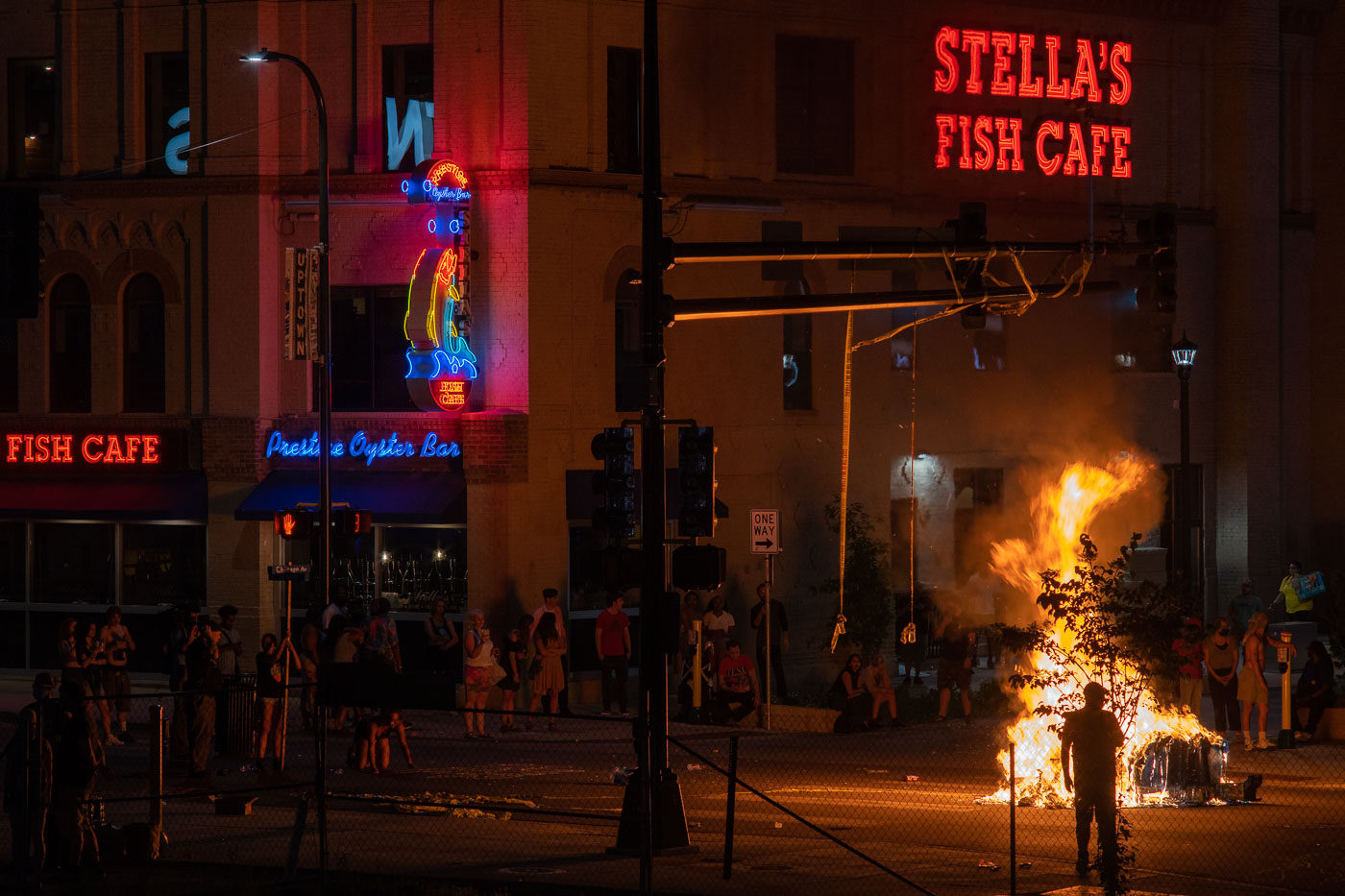
Fire burns in the street outside Stella's Fish Cafe on Lake Street in Minneapolis during unrest.
On the evening of June 3, 2020, protests erupted in Uptown Minneapolis following the killing of Winston Smith by law enforcement earlier that day. The unrest led to fires and property damage along Lake Street, a major commercial corridor. On June 3, 2021, members of a U.S. Marshals Service fugitive task force fatally shot 32-year-old Winston “Boogie” Smith Jr. on the top level of a parking ramp in Minneapolis’ Uptown neighborhood while attempting to arrest him on a felony warrant. Authorities said Smith fired a handgun from inside his vehicle during the encounter, while family members and activists questioned the official account and demanded the release of additional evidence. The killing led to weeks of protests, street occupations, and confrontations with police in Uptown, becoming another major flashpoint in Minneapolis during the period following the murder of George Floyd. Earlier in the day Minneapolis city officials along with The Agape Movement coordinated to open the streets that had been closed at George Floyd Square since his murder.

Minneapolis: Fire on Lake Street during Winston Smith protests
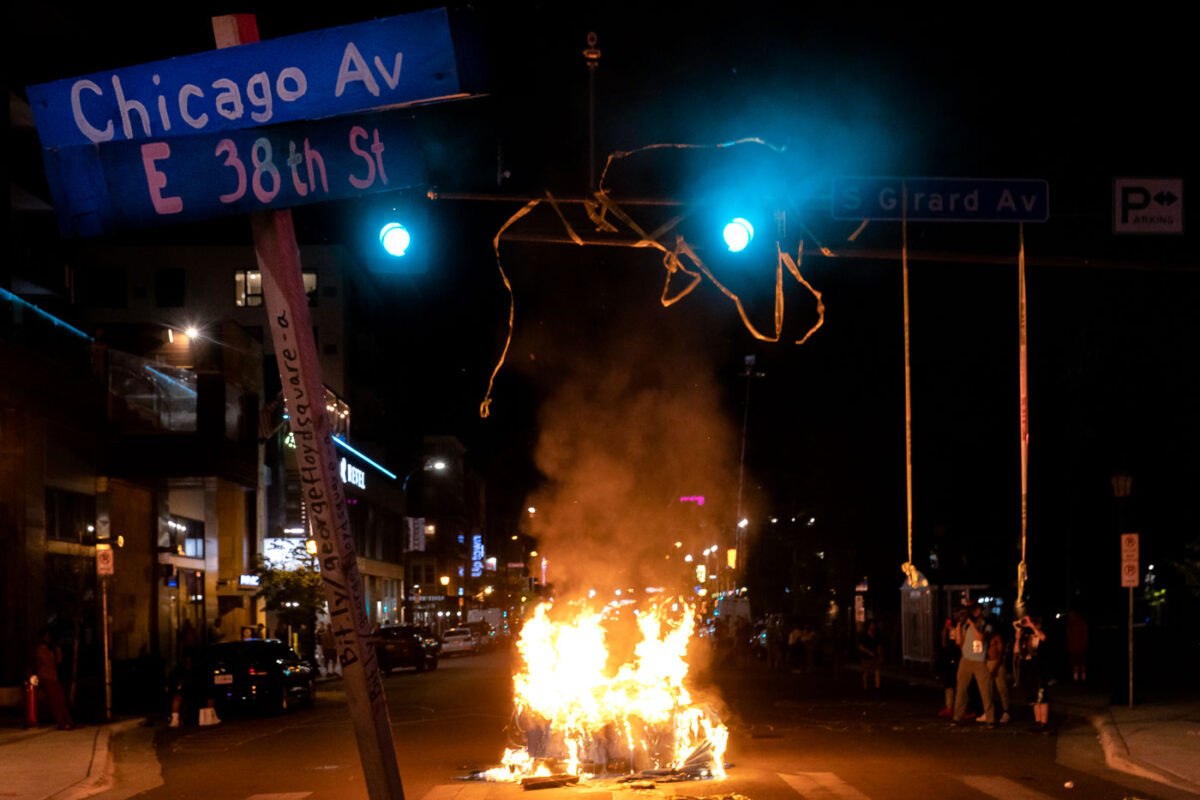
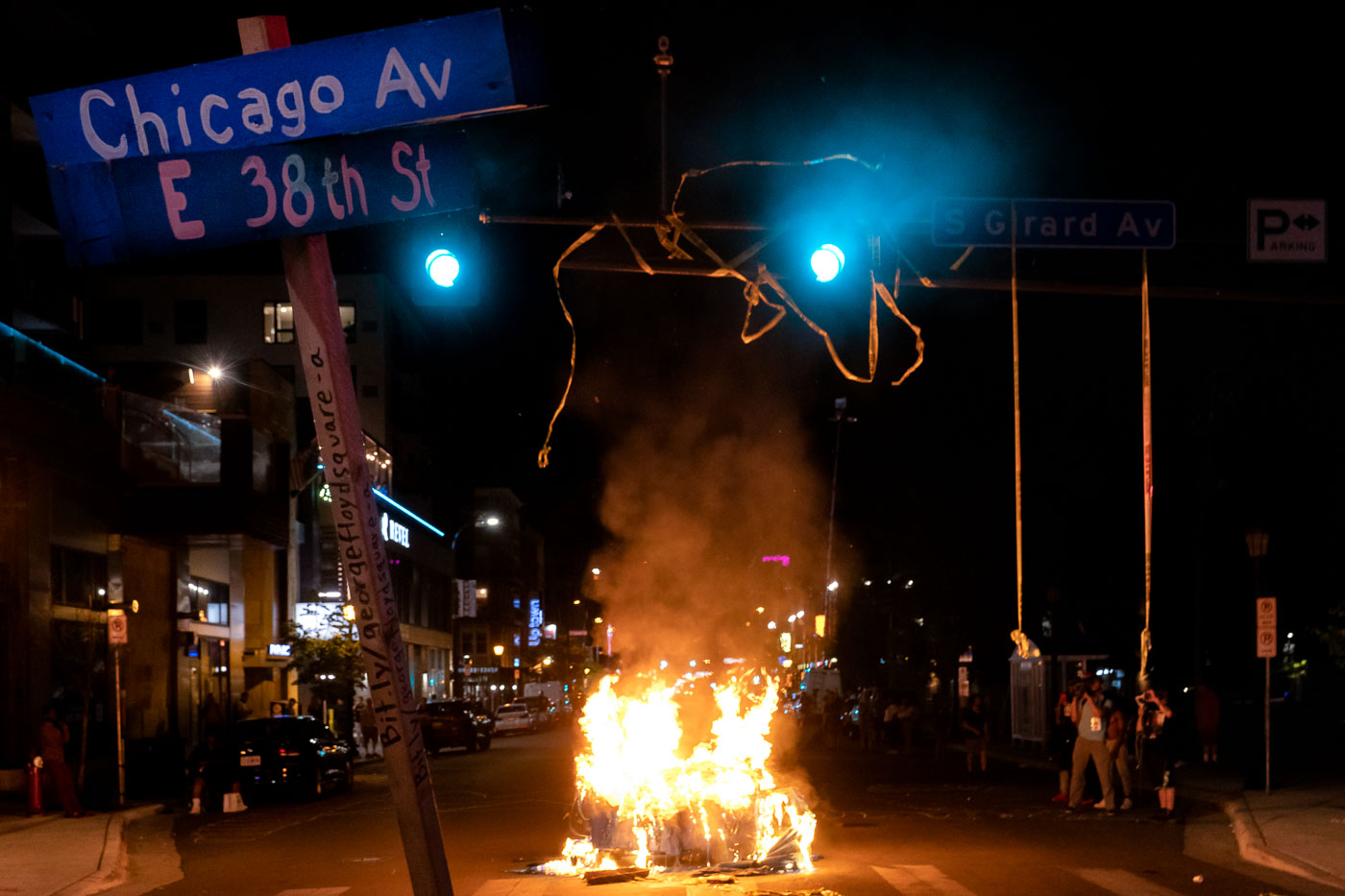
Fire burns in the street at Chicago Ave and S Girard Ave in Minneapolis at night.
Protesters burn a dumpster at Lake Street and Girard avenue in Uptown Minneapolis on June 3, 2021. On June 3, 2021, members of a U.S. Marshals Service fugitive task force fatally shot 32-year-old Winston “Boogie” Smith Jr. on the top level of a parking ramp in Minneapolis’ Uptown neighborhood while attempting to arrest him on a felony warrant. Authorities said Smith fired a handgun from inside his vehicle during the encounter, while family members and activists questioned the official account and demanded the release of additional evidence. The killing led to weeks of protests, street occupations, and confrontations with police in Uptown, becoming another major flashpoint in Minneapolis during the period following the murder of George Floyd. Earlier in the day Minneapolis city officials along with The Agape Movement coordinated to open the streets that had been closed at George Floyd Square since his murder.

Minneapolis: Fire at Chicago Ave and S Girard Ave during protest
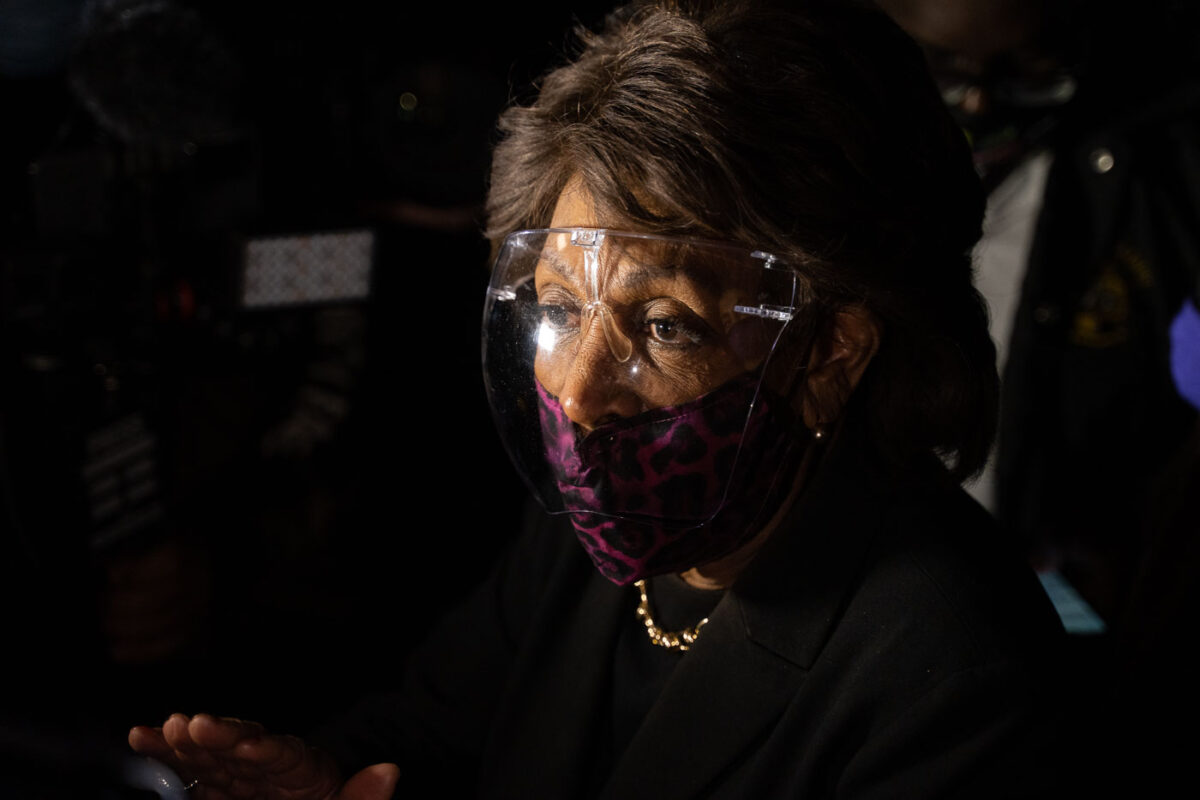
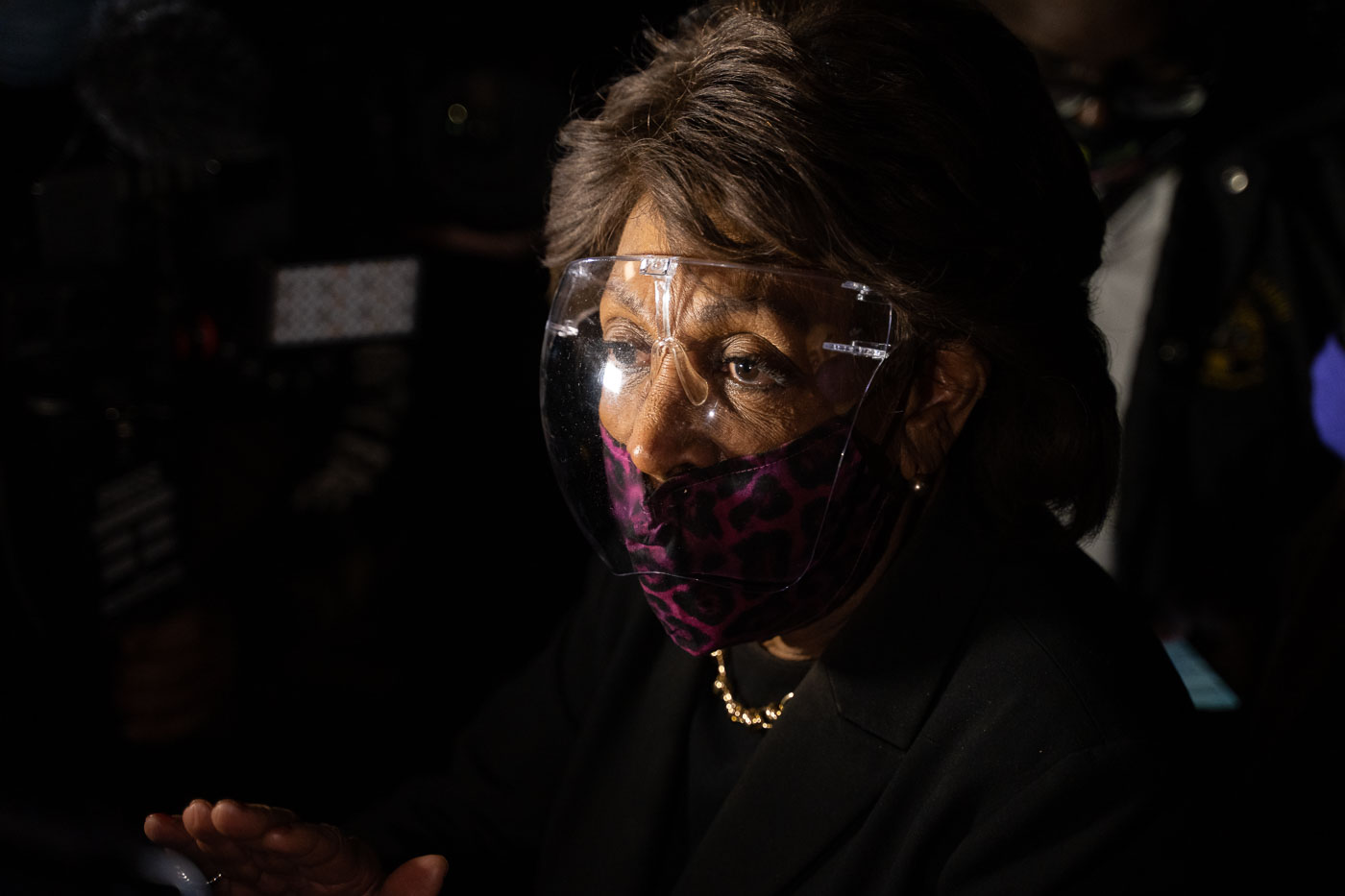
Maxine Waters at a protest in Brooklyn Center, Minnesota.
U.S. Representative Maxine Waters addresses protesters gathered outside the Brooklyn Center Police Department on April 15, 2021. The protests, which entered their seventh consecutive day, were in response to the fatal shooting of Daunte Wright by a Brooklyn Center police officer on April 11. Waters, a prominent figure in civil rights and social justice advocacy, traveled to Brooklyn Center to engage with the community and lend her support to the ongoing calls for accountability and reform.

Maxine Waters Addresses Protesters in Brooklyn Center
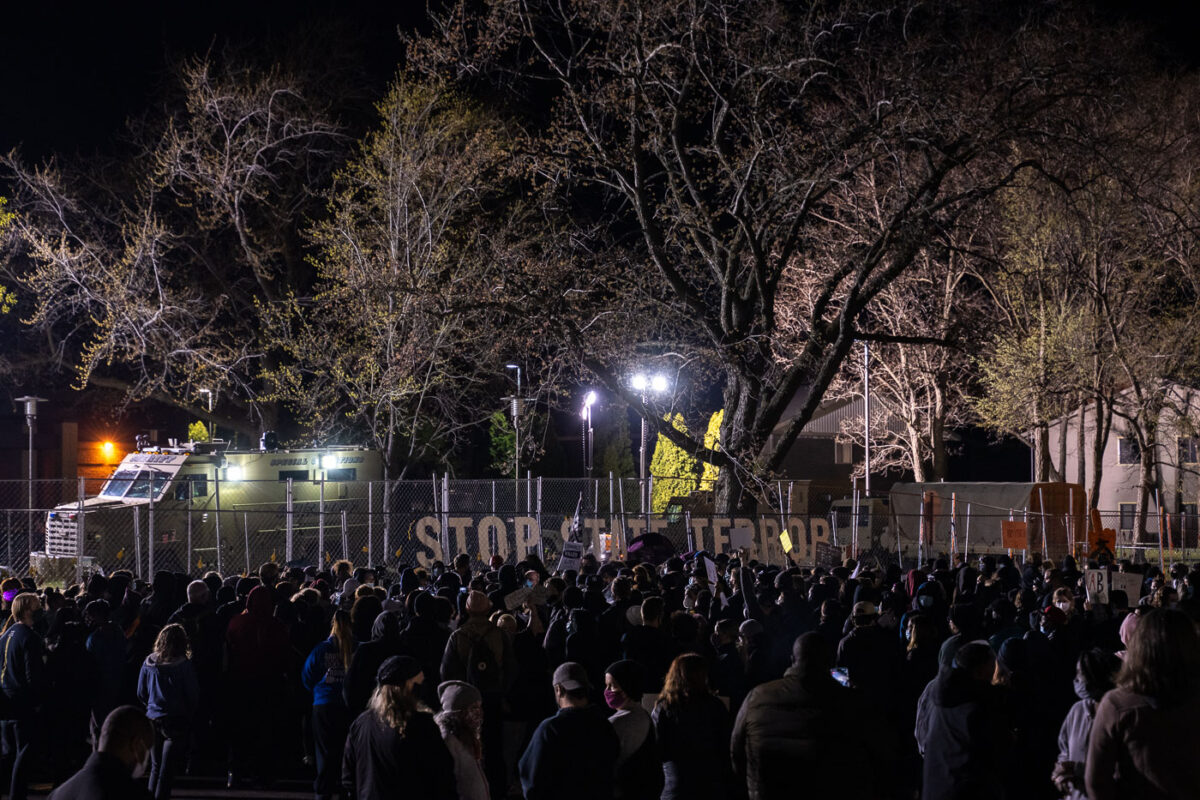
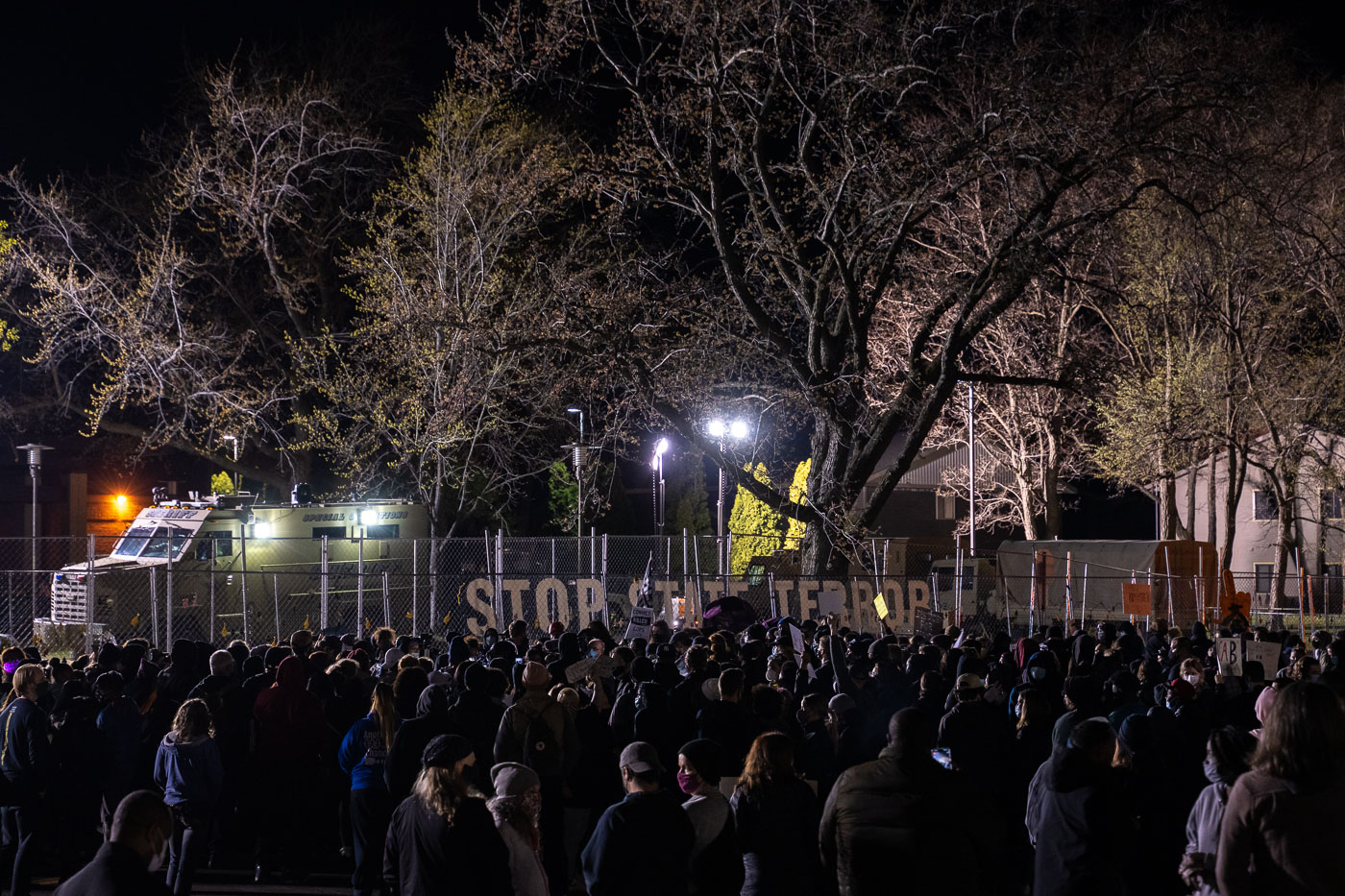
Protesters outside Brooklyn Center Police Department in Minnesota at night, with a police vehicle behind a fence.
Protesters gathered outside the Brooklyn Center Police Department on April 18, 2021, marking the seventh consecutive day of demonstrations. The protests were ignited by the fatal shooting of Daunte Wright, a 20-year-old Black man, by a police officer during a traffic stop in Brooklyn Center, Minnesota, on April 11, 2021. The demonstrations reflect ongoing concerns about police brutality and racial injustice.

Brooklyn Center Protest for Daunte Wright
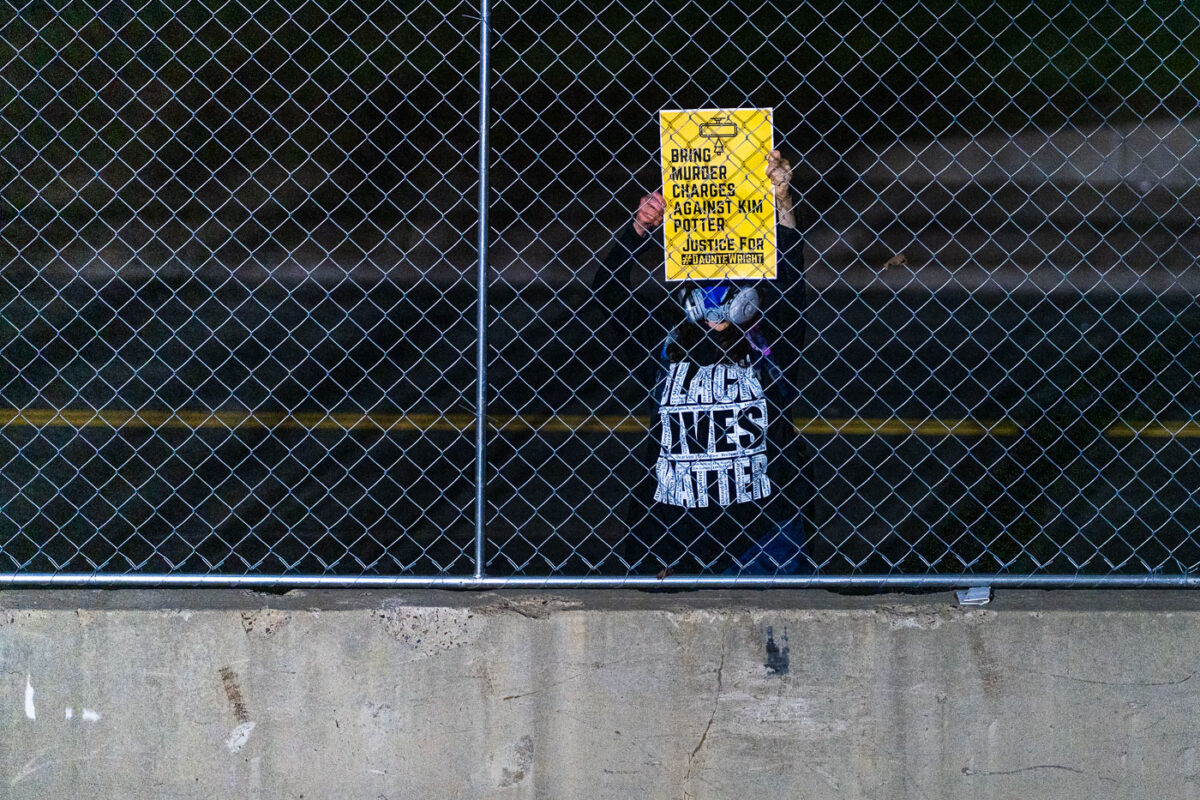
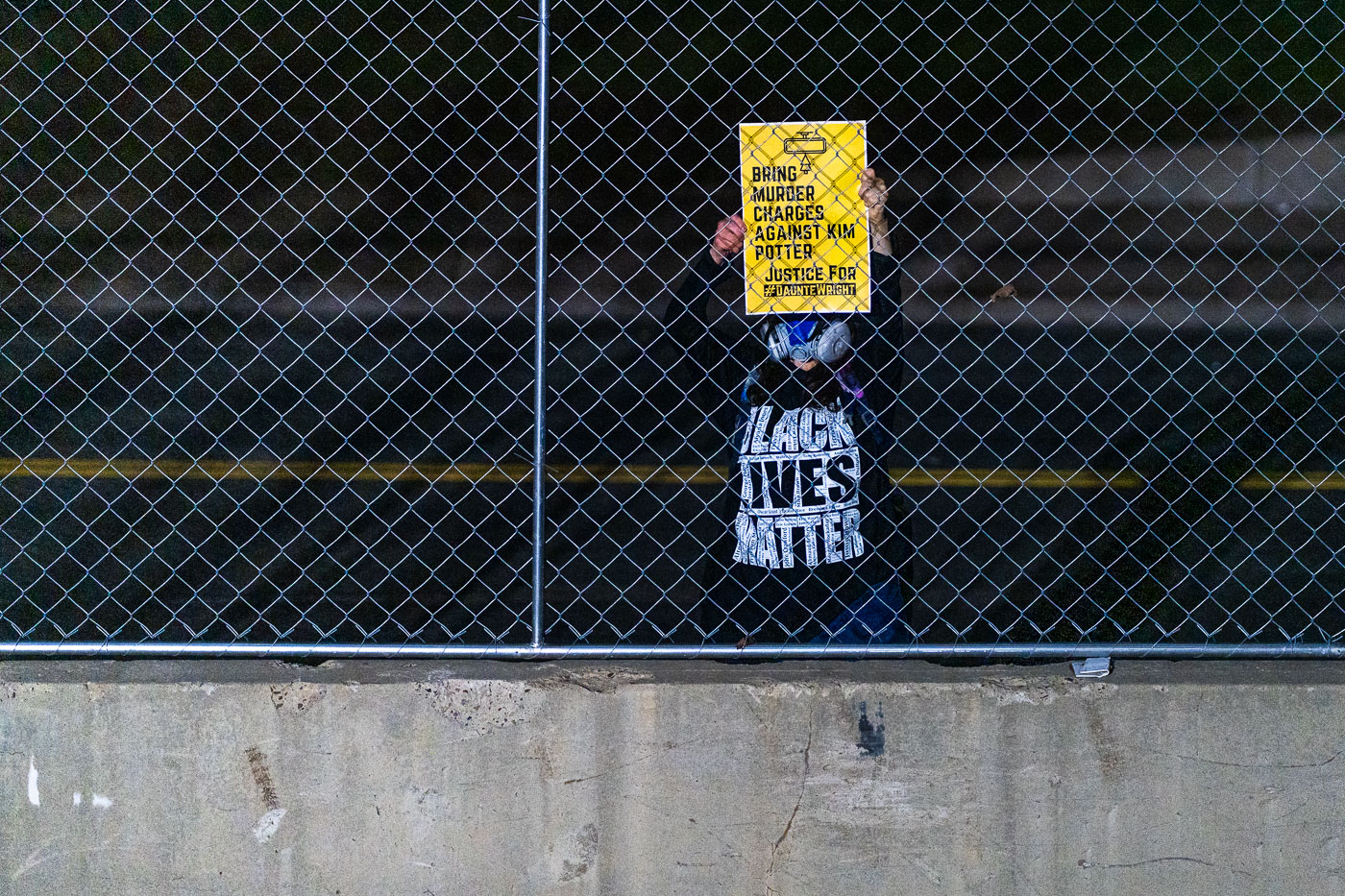
Protester behind a fence in Minneapolis holds sign demanding murder charges against Kim Potter.
A protester holds a sign demanding murder charges against former Brooklyn Center police officer Kim Potter, following the death of Daunte Wright. The protest took place outside the Hennepin County Government Center, a courthouse in Minneapolis. Wright was killed during a traffic stop in Brooklyn Center on April 11, 2021, and Potter was later convicted of second-degree manslaughter. The sign also includes the hashtag #DaunteWright, connecting the protest to the broader movement for racial justice and police accountability.

Protester holds sign for murder charges against Kim Potter in Brooklyn Center
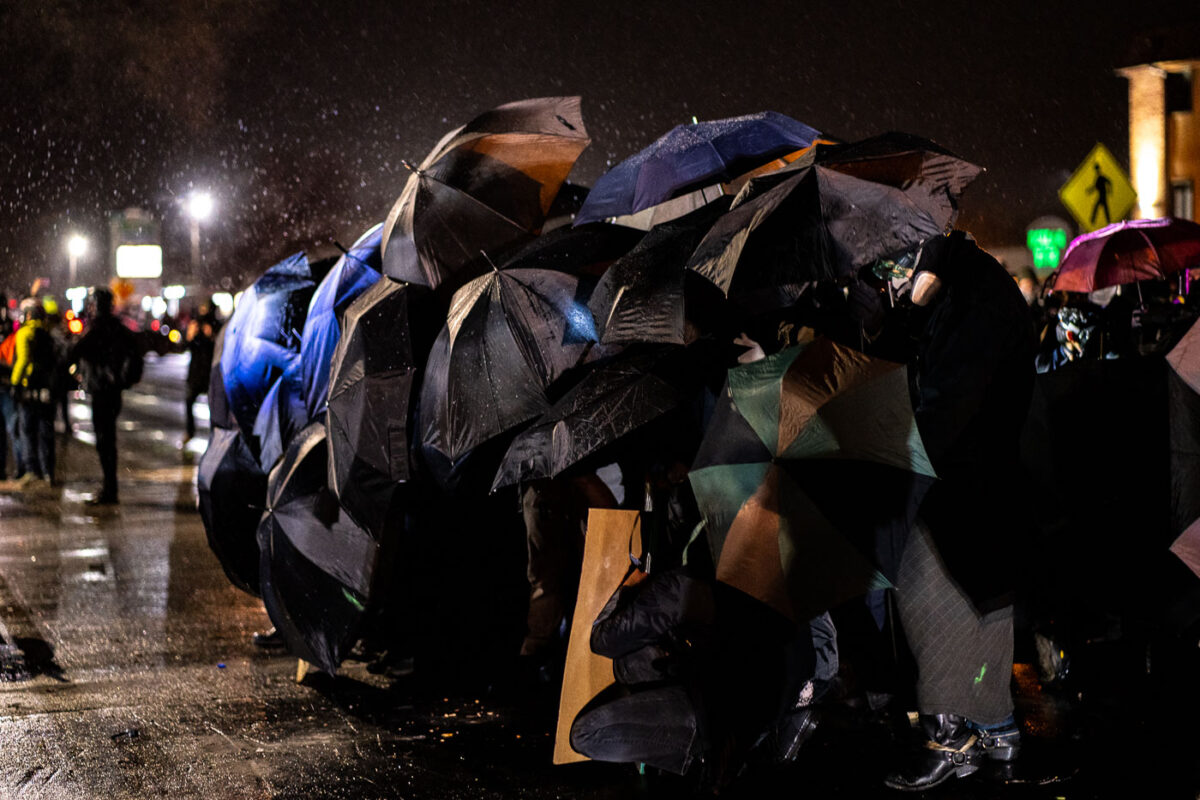
Protesters with umbrellas outside Brooklyn Center Police Department during the Daunte Wright protest.
Protesters gathered outside the Brooklyn Center Police Department on April 11th, 2021, to protest the shooting death of Daunte Wright. The demonstration occurred the day after Wright, a 20-year-old Black man, was killed by police during a traffic stop. Protesters used umbrellas to shield themselves from chemical irritants deployed by law enforcement.

Brooklyn Center protesters use umbrellas during Daunte Wright protest
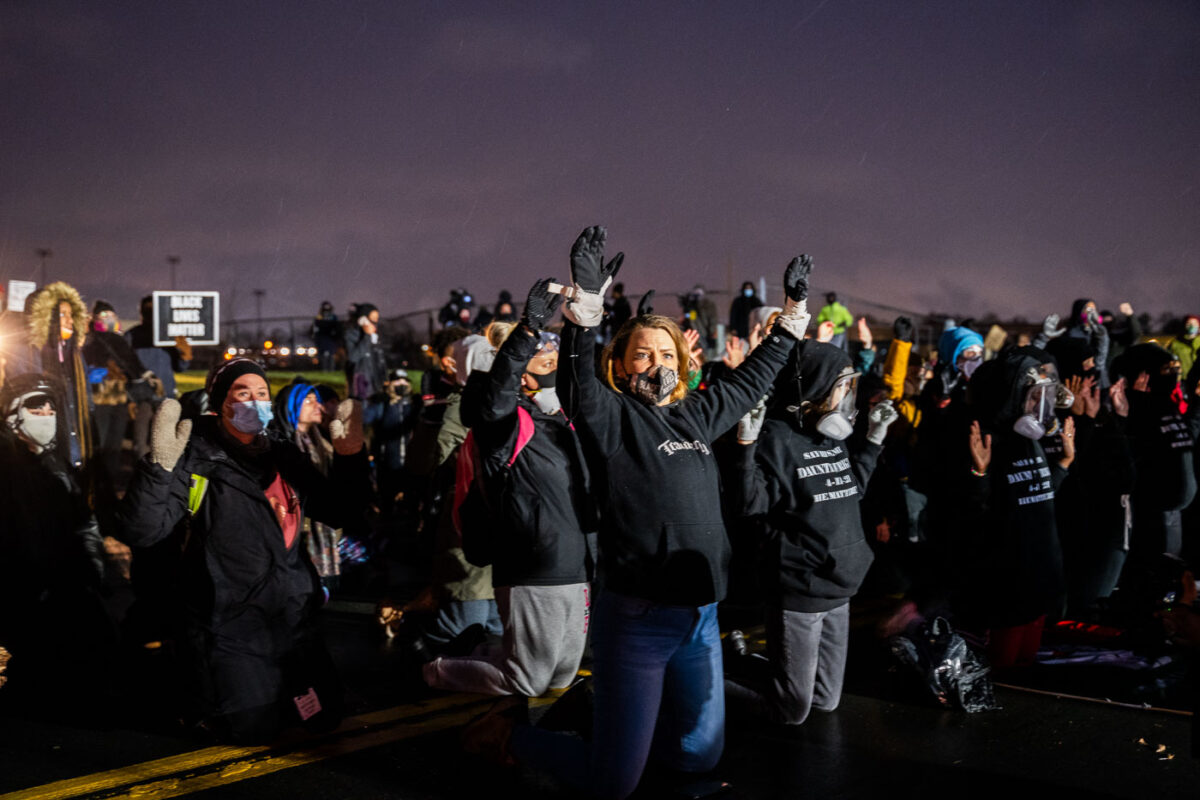
Protesters kneel with hands raised outside Brooklyn Center Police Department after Daunte Wright's killing.
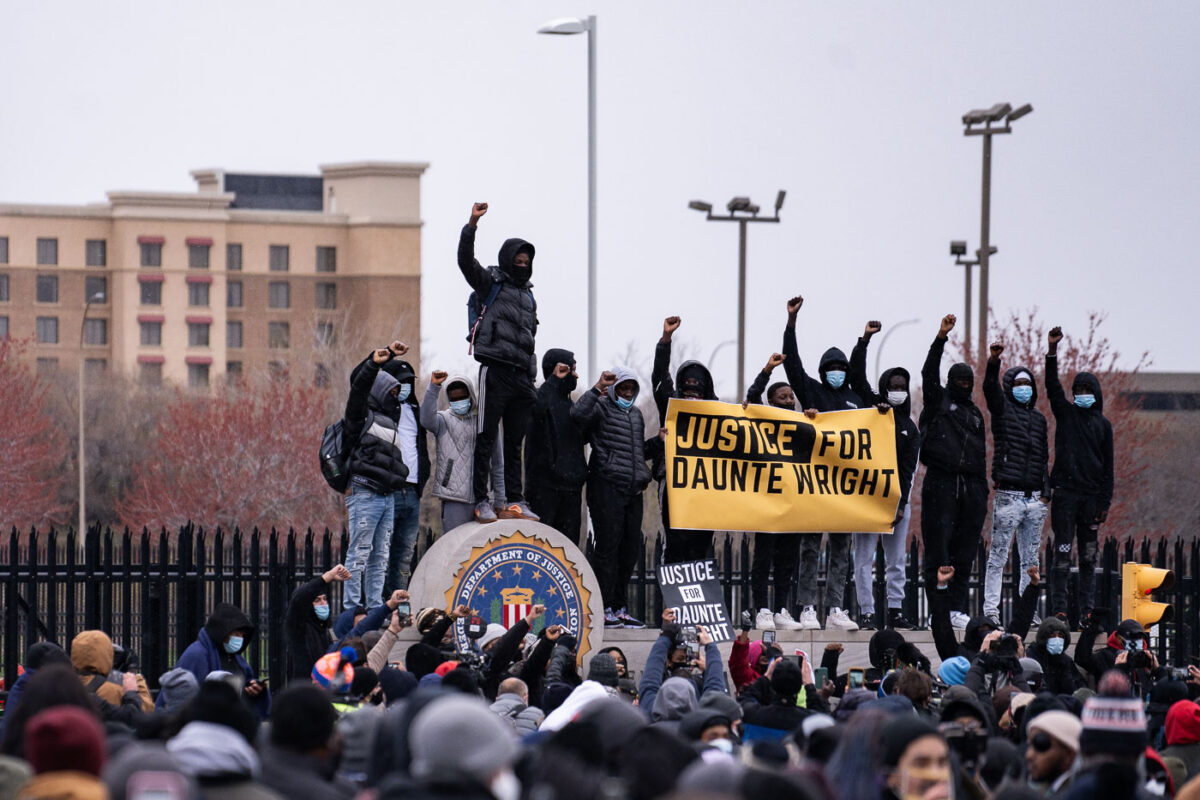
Protesters gather outside the Brooklyn Center Police Department following the death of Daunte Wright. Wright, a 20-year-old Black man, was fatally shot by officer Kim Potter during a traffic stop on April 11, 2021. The incident sparked widespread protests and calls for police reform in Brooklyn Center, a suburb of Minneapolis.

Protesters with hands raised outside Brooklyn Center Police Department
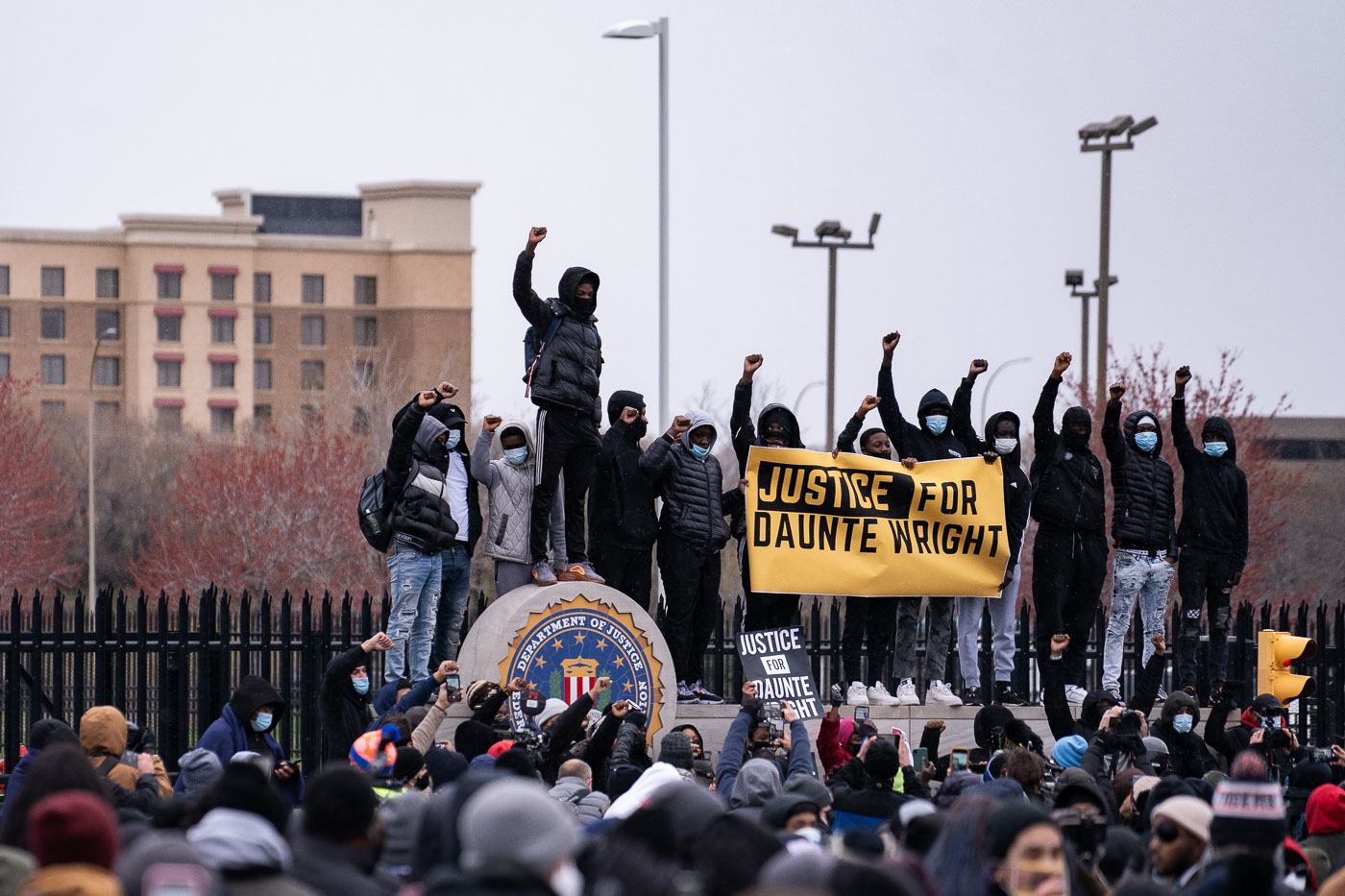
Protesters outside the FBI Minneapolis Field Office with a Justice for Daunte Wright banner.
Protesters gathered outside the FBI Minneapolis Field Office on April 12, 2021, to protest the death of Daunte Wright. Wright, a 20-year-old Black man, was fatally shot by Brooklyn Center Police officer Kim Potter during a traffic stop the previous day. The incident sparked widespread outrage and protests across the Minneapolis–Saint Paul metropolitan area. The FBI Minneapolis Field Office is a federal law enforcement facility responsible for a range of investigative and security operations within the region.

Protesters at FBI Minneapolis Field Office for Daunte Wright
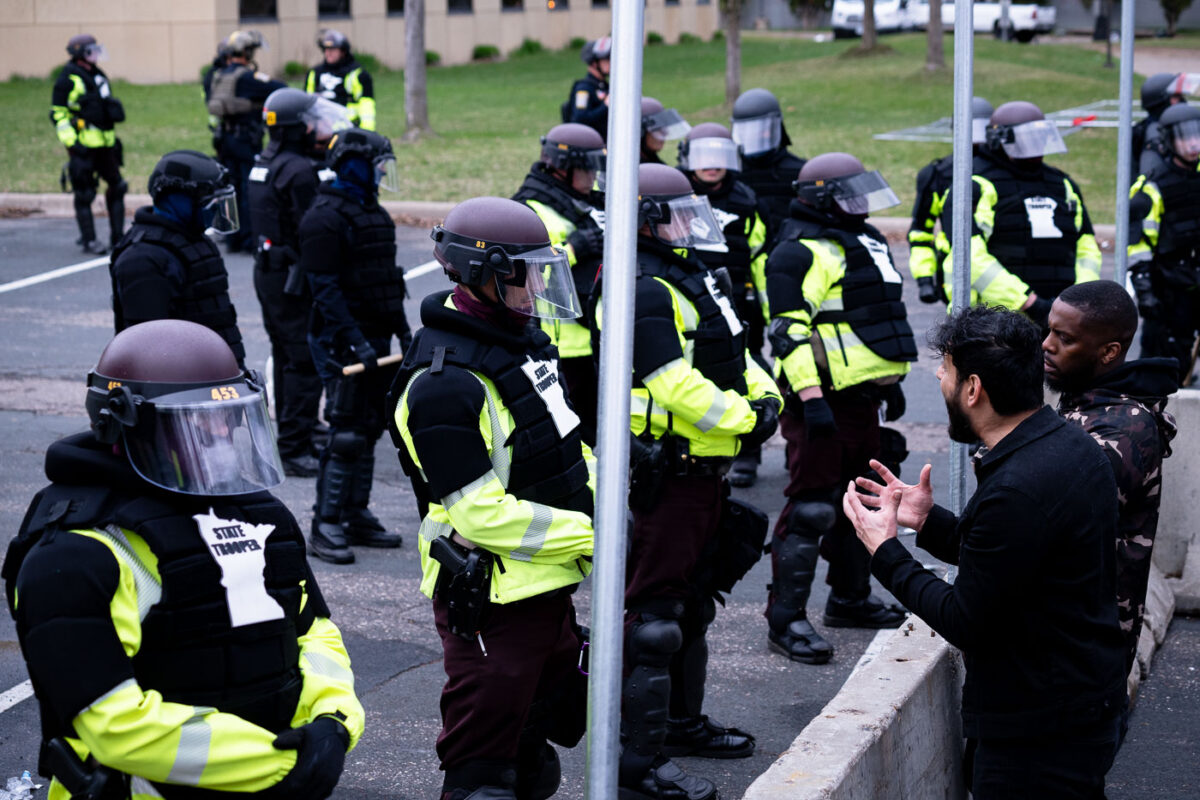
Man speaks with Minnesota State Patrol officers outside Brooklyn Center Police Department.
A man speaks with Minnesota State Patrol officers outside the Brooklyn Center Police Department on April 12, 2021. The previous evening, Daunte Wright, a Black man, was shot and killed by Brooklyn Center Police officer Kim Potter during a traffic stop. His death sparked protests and unrest in the Minneapolis suburb. State Patrol officers, identifiable by their riot gear and "State Trooper" patches, were deployed to maintain order amidst the ongoing public reaction to Wright's killing.

Brooklyn Center: Man speaks with State Patrol after Daunte Wright killing
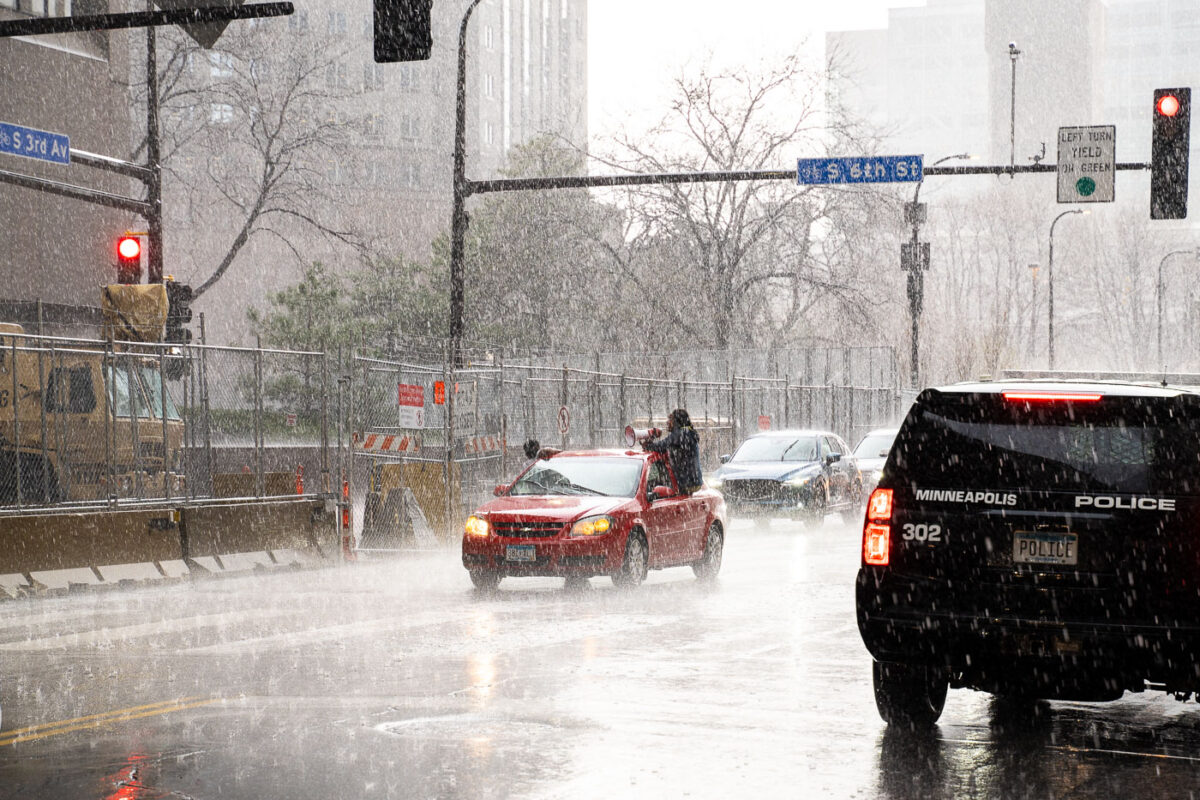
Protest caravan on South 5th Street in downtown Minneapolis during heavy rain.
A protest caravan navigates through heavy rain in downtown Minneapolis, approaching the Hennepin County Government Center. This event occurred during the trial of Derek Chauvin, the former Minneapolis police officer charged with the murder of George Floyd on May 25, 2020. The caravan's presence underscored the ongoing public attention and activism surrounding the trial and the broader issues of racial justice and police accountability.

Minneapolis protest caravan during Derek Chauvin trial in rain
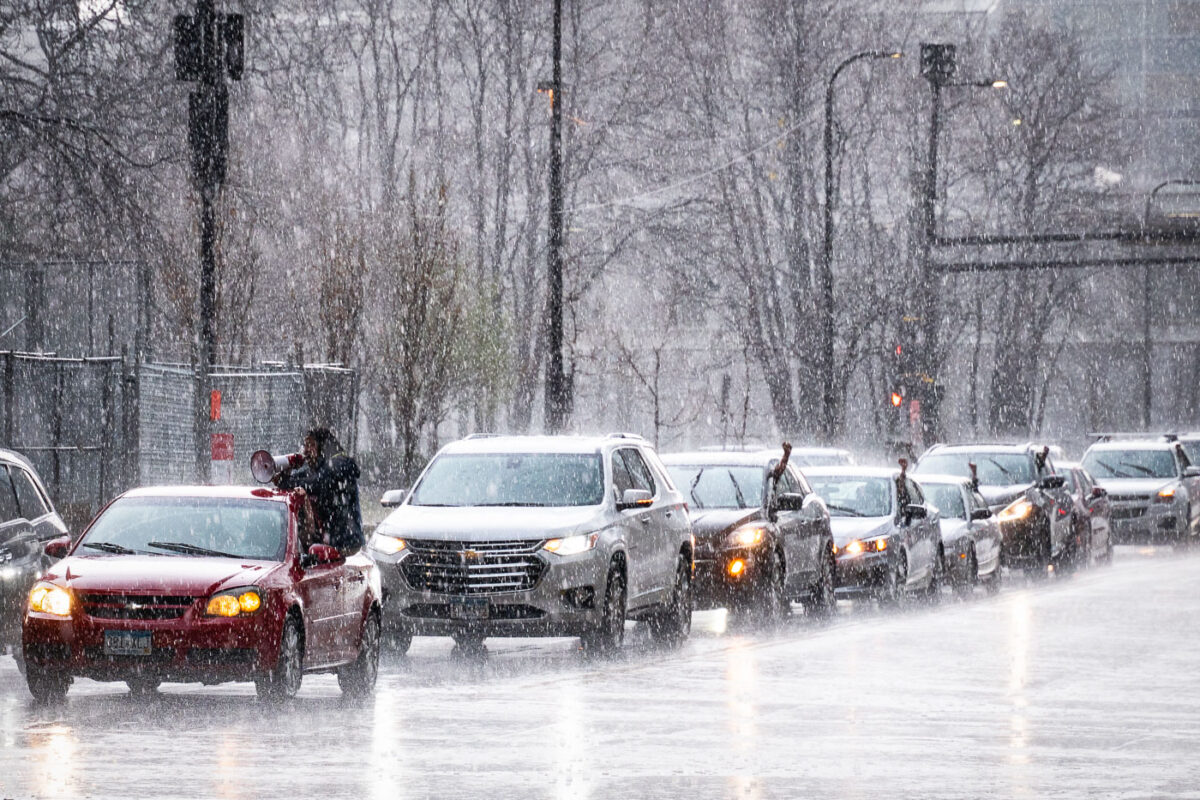
Protest caravan in downtown Minneapolis during heavy rain near the Hennepin County Government Center.
A protest caravan proceeds through downtown Minneapolis in heavy rain on April 19, 2021. The procession circled the Hennepin County Government Center, where the trial of former police officer Derek Chauvin was underway. Chauvin was on trial for the murder of George Floyd, an event that occurred on May 25, 2020, in South Minneapolis and sparked widespread protests. The caravan's route highlighted the courthouse's significance as the site of this nationally scrutinized legal proceeding.

Minneapolis Protest Caravan in Pouring Rain During Chauvin Trial
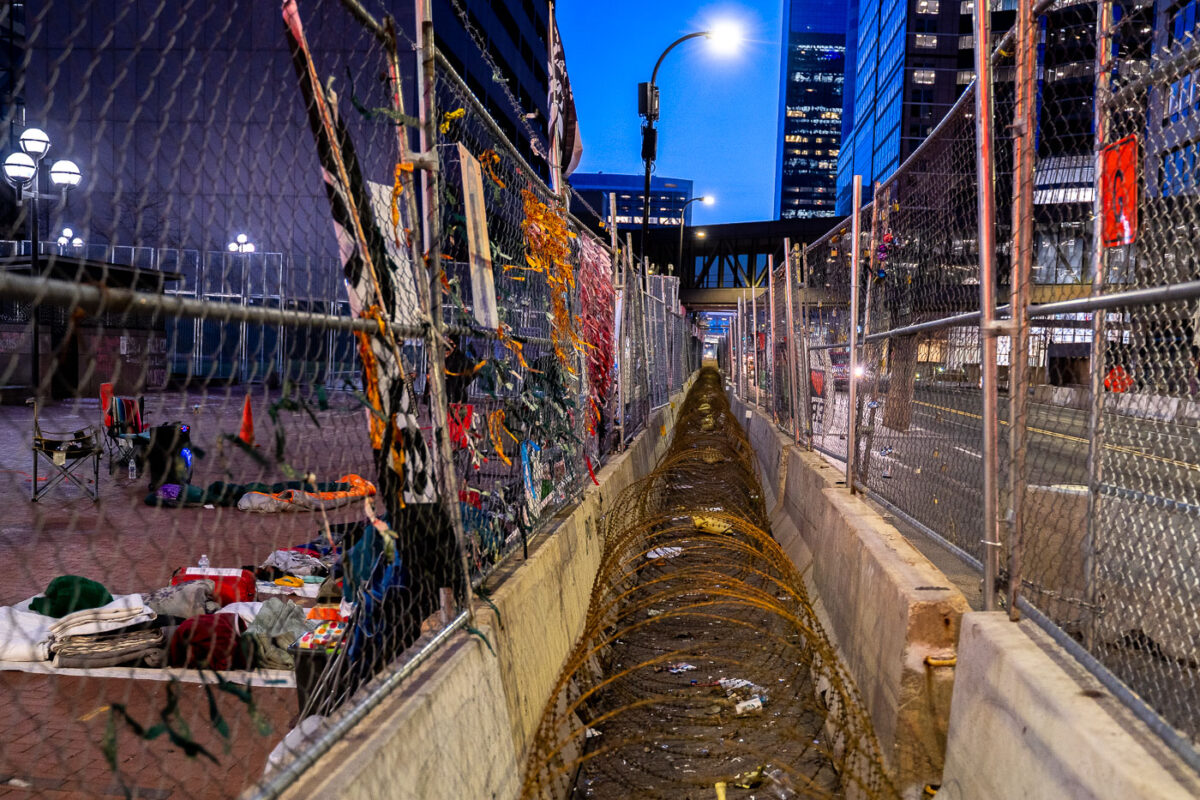
Razor wire and protest signs at Hennepin County Government Center in Minneapolis during the Derek Chauvin trial.
Razor wire and protest signs surround the Hennepin County Government Center in Minneapolis during the trial of Derek Chauvin. The security measures were put in place following the death of George Floyd on May 25, 2020, and the subsequent protests. The area has become a focal point for demonstrations, with protesters decorating the fencing with signs and ribbons, indicating a continuous occupation of the space.

Minneapolis Government Center: Razor wire and protest signs
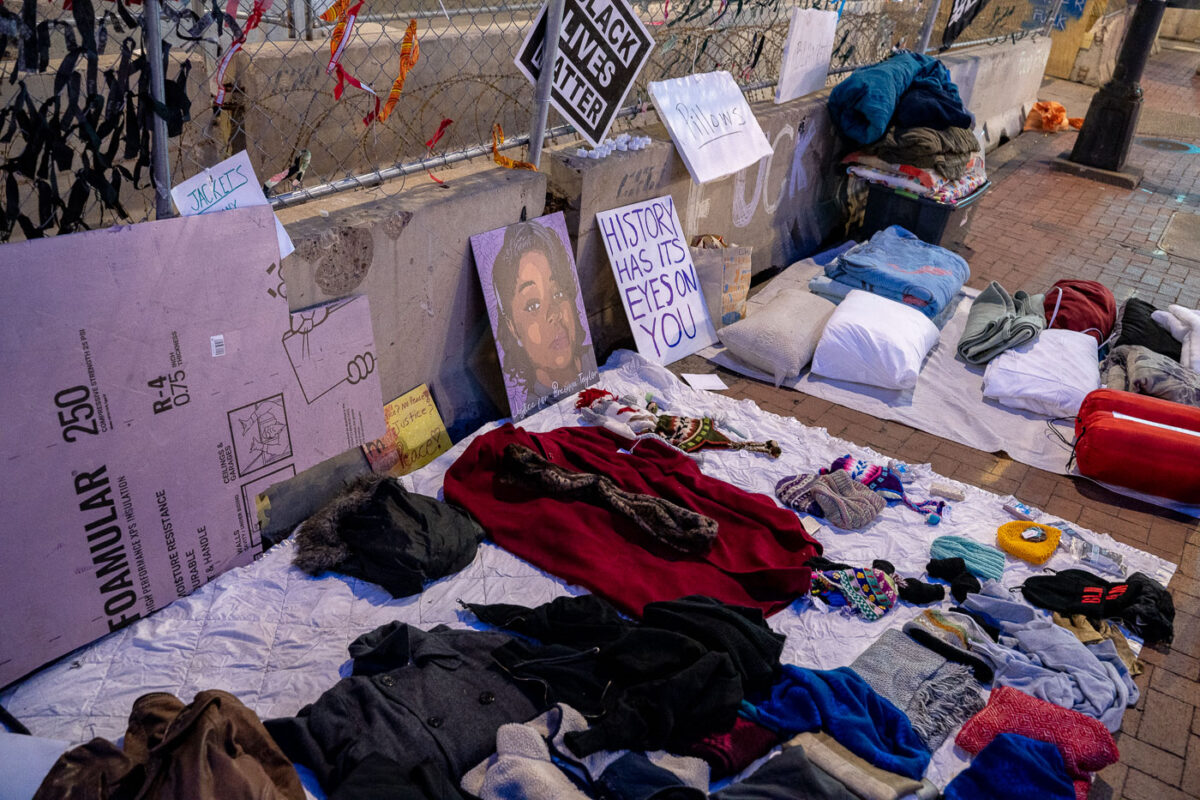
Blankets and clothing for protesters at Hennepin County Government Center in Minneapolis.
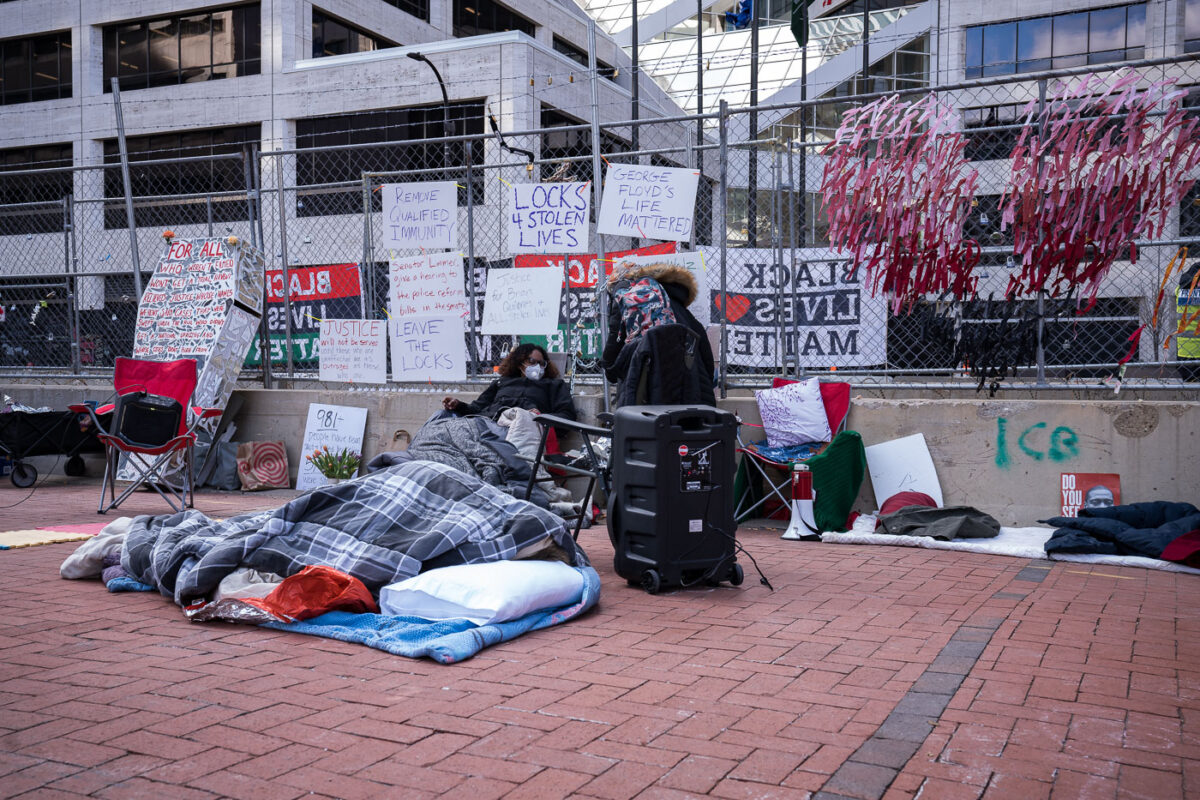
Supplies including blankets, pillows, and jackets were made available to protesters occupying the Hennepin County Government Center in Minneapolis. The occupation occurred during the 2021 Derek Chauvin trial, a period of heightened activism following the murder of George Floyd. The presence of these supplies highlights the sustained nature of the protest and the community's efforts to support those participating. The "Black Lives Matter" signs and portraits of victims of police brutality, such as Breonna Taylor, underscore the movement's core demands for racial justice and police accountability.

Minneapolis: Supplies for protesters at Hennepin County Government Center
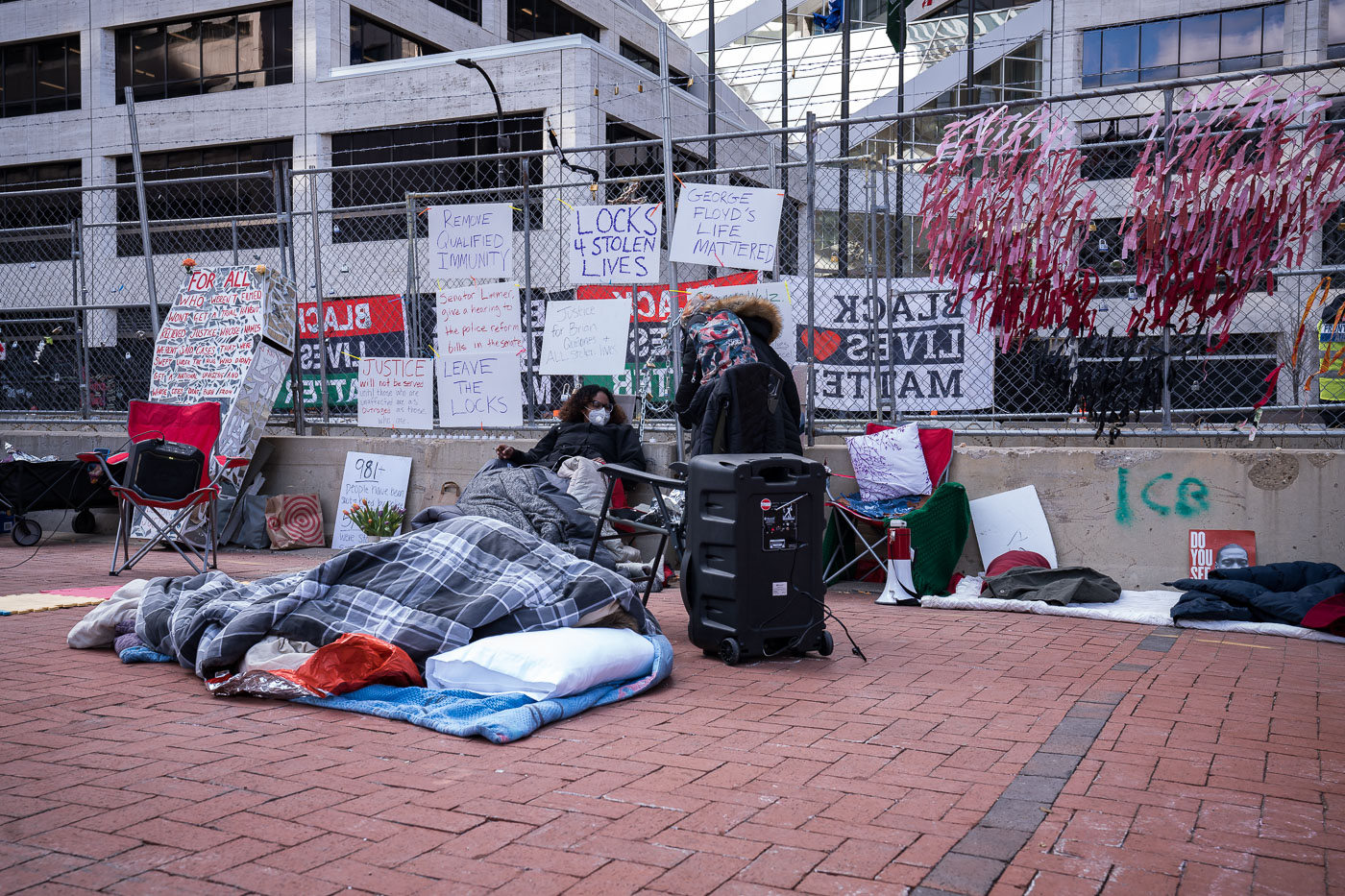
Protesters occupy courthouse property during George Floyd trial
Since March 15th, families and supporters have been placing locks inscribed with the names of victims of police brutality on the fencing surrounding the Hennepin County Government Center in Minneapolis. These locks are periodically removed by authorities, prompting protesters to maintain a continuous presence, with individuals locking themselves to the fence 24/7. Their demands include meetings with city and state officials, the abolition of qualified immunity for police officers, and legislative action on police accountability bills. The protest highlights ongoing concerns about police violence and accountability in the wake of high-profile incidents.

Hennepin County Courthouse Protest: Locks for Stolen Lives
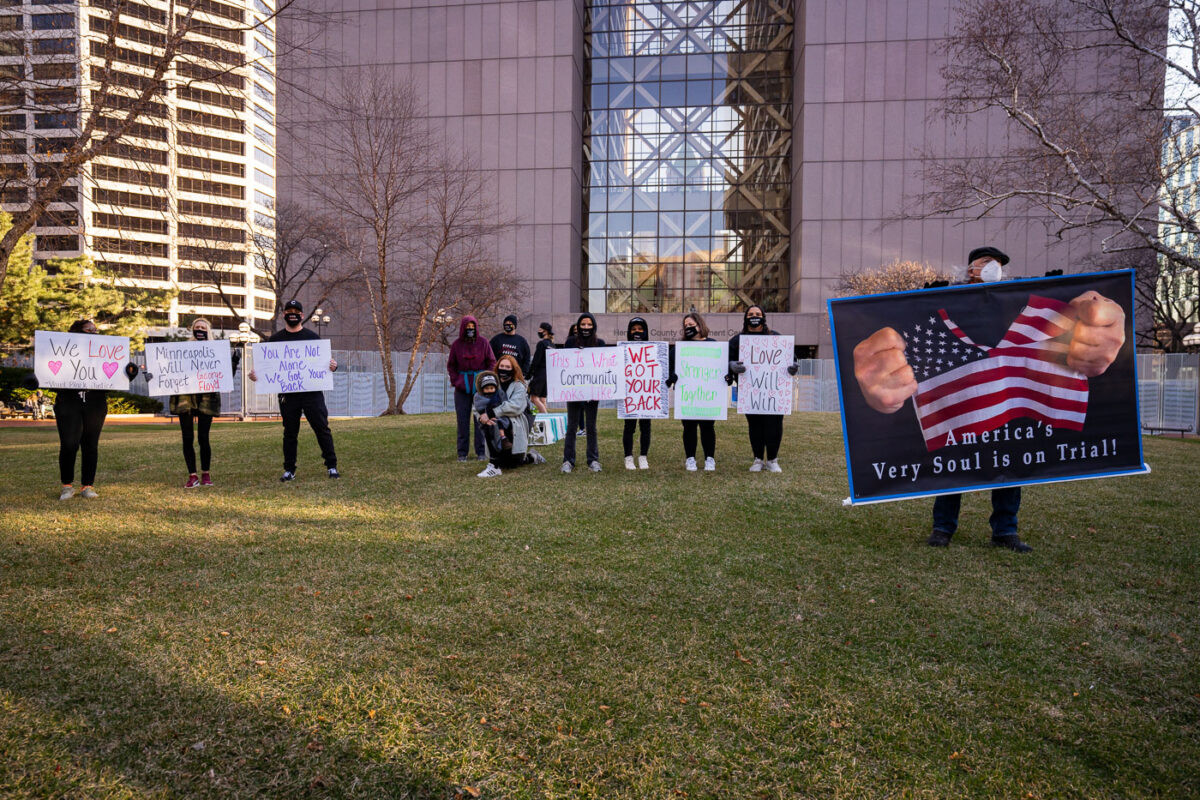
Opening Statement Protest in downtown Minneapolis
Protesters gathered outside the Hennepin County Government Center in Minneapolis on March 29, 2021, as opening statements began in the murder trial of former police officer Derek Chauvin. The trial followed the death of George Floyd, who died in police custody in Minneapolis in May 2020, sparking widespread protests against police brutality. The signs held by the demonstrators reflect sentiments of community support and a call for justice, with one banner stating, "America's Very Soul is on Trial!" The Hennepin County Government Center serves as a key judicial and administrative hub for the county.

Minneapolis Protest Outside Hennepin County Government Center
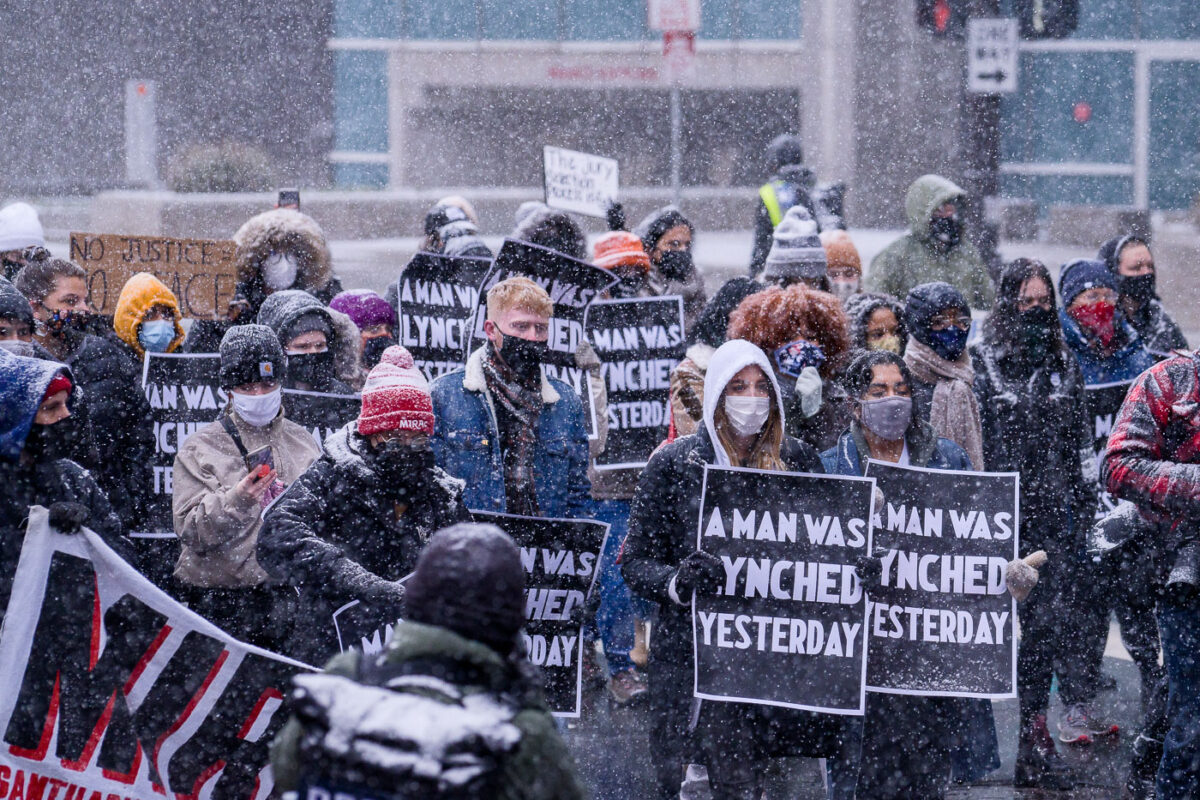
A Man Was Lynched Yesterday Protest Signs
Protesters gathered outside the Hennepin County Government Center in Minneapolis during a snowstorm. The courthouse was the site of the Derek Chauvin murder trial, who was charged in the death of George Floyd. Signs carried by the protesters read "A Man Was Lynched Yesterday," referencing the ongoing racial injustice and police brutality protests that followed Floyd's murder on May 25, 2020.

Minneapolis Protest: “A Man Was Lynched Yesterday” Signs

Roses in blood art installation at Chauvin trial
Roses, some appearing to be stained with red paint to resemble blood, were placed in a puddle outside the Hennepin County Government Center in Minneapolis. This installation occurred during the trial of Derek Chauvin, a former Minneapolis police officer charged with the murder of George Floyd. The trial, held in April 2021, drew significant national attention to issues of police brutality and racial justice.

Roses in paint outside Hennepin County Government Center during Chauvin trial

Reflect art installation outside Chauvin trial
An art installation reading "REFLECT" stands outside the Hennepin County Government Center in Minneapolis. The installation was present during the trial of Derek Chauvin, a former Minneapolis police officer charged with the murder of George Floyd on May 25, 2020. The trial, which began on March 8, 2021, drew significant public attention and protests related to police brutality and racial justice. The "REFLECT" installation, along with scattered roses and protest signs, served as a visual reminder of the ongoing discourse surrounding Floyd's death and its broader implications.

Reflect art installation outside Hennepin County Government Center

Protesters with mirrors and flowers outside Chauvin trial
Flowers and mirrors are placed on the street outside the Hennepin County Government Center in Minneapolis, Minnesota. This display occurred during the period of protests and unrest following the murder of George Floyd in May 2020 and the subsequent trial of Derek Chauvin. The mirrors, some bearing red paint, likely symbolize reflection and accountability, while the flowers serve as a memorial to victims of police brutality. The Hennepin County Government Center was a focal point for many demonstrations during this time.

Flowers and mirrors outside Hennepin County Government Center

Bringing In the National Guard flyer
A sign posted on a chain-link fence surrounding the Hennepin County Government Center in Minneapolis reads "Bringing in the National Guard. What Could Possibly Go Wrong?" The poster includes a photograph from the Kent State shootings on May 4, 1970, where the Ohio National Guard fired on unarmed students during a protest. This juxtaposition of historical imagery with the contemporary presence of the National Guard in Minneapolis, likely during the protests following the murder of George Floyd, serves as a pointed commentary on the potential for state-sanctioned violence. The inclusion of flowers suggests a memorial or a somber reflection on the events.

Hennepin County Government Center: National Guard Sign

Black Lives Matter chalk on black boards
Messages of protest and solidarity are chalked onto boarded-up windows of a building near the Hennepin County Government Center in Minneapolis. The messages, including "Justice for George Floyd," "Stop Killing Us," and "Black Lives Matter," were created in the context of the trial of former Minneapolis Police Officer Derek Chauvin. Chauvin was charged with murder in the death of George Floyd on May 25, 2020, an event that sparked widespread protests against police brutality and racial injustice.

Minneapolis: BLM messages on boarded-up building near Chauvin trial

Minnesota National Guard outside Hennepin Courthouse
A member of the Minnesota National Guard stands in front of a military vehicle outside the Hennepin County Government Center in Minneapolis. This deployment occurred during a period of heightened tension and unrest in the city, following the murder of George Floyd and the subsequent trial of Derek Chauvin. The National Guard was activated to support local law enforcement and maintain order amidst widespread protests against police brutality. The Hennepin County Government Center, a prominent civic building in downtown Minneapolis, served as a focal point during these events.

Minnesota National Guard at Hennepin County Government Center

Justice 4 George Floyd and All Stolen Lives in Minneapolis
A large crowd gathered in downtown Minneapolis on March 8, 2021, to protest the murder of George Floyd and demand justice. The protest occurred outside the Hennepin County Government Center on the morning of the first day of the trial for former Minneapolis police officer Derek Chauvin. Chauvin was charged with second-degree murder and manslaughter in connection with Floyd's death on May 25, 2020. The "Black Lives Matter" movement gained significant momentum following Floyd's death, highlighting issues of police brutality and racial injustice.

Minneapolis Protest for George Floyd and Stolen Lives

Protesters march through downtown at start of Chauvin trial
A large crowd gathered in downtown Minneapolis for a protest related to the trial of Derek Chauvin, the former Minneapolis Police Officer charged in the murder of George Floyd on May 25, 2020. The protest took place outside the Hennepin County Government Center prior to the start of the trial. Many carried signs with messages such as "Justice for George Floyd," "Convict Killer Cops," and "Black Lives Matter," reflecting the broader movement against police brutality and racial injustice.

Protesters march downtown Minneapolis for Derek Chauvin trial

George Floyd pins being sold outside courthouse
Pins commemorating George Floyd and bearing the slogan "I Can't Breathe" are displayed for sale outside the Hennepin County Courthouse in Minneapolis. This location was the site of the trial of Derek Chauvin, the former Minneapolis police officer convicted of Floyd's murder in April 2021. The sale of such merchandise reflects the broader cultural and political impact of Floyd's death and the subsequent Black Lives Matter movement, which gained significant momentum following the incident in May 2020. The courthouse itself is a significant civic building in downtown Minneapolis, serving as a central hub for legal proceedings in the county.

George Floyd Pins Sold Outside Hennepin County Courthouse

Minneapolis is under military occupation
Protesters gathered outside the Hennepin County Government Center in Minneapolis on March 8, 2021, the day the Derek Chauvin murder trial began. The sign, held by a protester, reads "Minneapolis is under military occupation," reflecting the sentiment of many during the widespread protests against police brutality that followed George Floyd's murder. The trial itself was a focal point for ongoing activism and calls for justice and accountability within the Minneapolis community and beyond.

Minneapolis Protest Sign: “Minneapolis is under military occupation”

Protester writes with chaulk at Chauvin trial
During the trial of Derek Chauvin, a protester writes messages in chalk outside the Hennepin County Courthouse in Minneapolis. The trial, which began in March 2021, centered on the murder of George Floyd, a Black man who died in police custody. The courthouse and surrounding areas became a focal point for protests and demonstrations related to police brutality and racial justice. The chalk messages serve as a form of public expression and a visual record of the community's response to the ongoing legal proceedings and broader social issues.

Chalk message at Hennepin County Courthouse during Chauvin trial

Protesters behind security fencing at Chauvin trial
Protesters gathered outside the Hennepin County Government Center in Minneapolis during the trial of Derek Chauvin. The courthouse was surrounded by security fencing, a measure implemented due to the high-profile nature of the trial and concerns about potential unrest. The trial, which began in March 2021, stemmed from the murder of George Floyd by Minneapolis police officer Derek Chauvin in May 2020. Protests against police brutality and racial injustice, often under the banner of Black Lives Matter, had been ongoing in Minneapolis and across the nation since Floyd's death.

Protesters at Hennepin County Government Center during Chauvin Trial

Large protest in Minneapolis at start of Chauvin trial
Protesters gathered outside the Hennepin County Government Center in Minneapolis on March 8, 2021, awaiting the start of the trial for former police officer Derek Chauvin. Chauvin was charged with murder and manslaughter in the death of George Floyd on May 25, 2020, an event that sparked widespread protests against police brutality and racial injustice. The Hennepin County Government Center serves as a key administrative and judicial hub for the county, and its proximity to the site of Floyd's murder made it a focal point for demonstrations.

Minneapolis Protest Outside Hennepin County Government Center

Abolish Police and Prisons protest sign
Protesters gathered outside the Hennepin County Government Center in Minneapolis on March 8, 2021, ahead of the Derek Chauvin trial. Chauvin, a former Minneapolis police officer, was charged in the murder of George Floyd on May 25, 2020. The sign "Abolish Police + Prisons" reflects a central demand of the Black Lives Matter movement, which gained widespread attention following Floyd's death and has continued to advocate for systemic reform of law enforcement and the justice system.

Minneapolis Protest: Abolish Police and Prisons Sign

The World Is Watching protest in Minneapolis
Protesters gathered outside the Hennepin County Government Center in Minneapolis on March 8, 2021, the morning of the Derek Chauvin trial. Chauvin, a former Minneapolis police officer, was charged with the murder of George Floyd on May 25, 2020. The banner reads "Justice 4 George Floyd & All Stolen Lives. The World Is Watching." This event highlights the broader Black Lives Matter movement and calls for accountability in cases of police brutality.

Minneapolis Protest for George Floyd Outside Hennepin County Government Center

St Paul Justice 4 George march protest signs
Protesters gathered in St. Paul, Minnesota, to demand justice for George Floyd. The "Justice 4 George" sign reflects the widespread outrage and calls for accountability following Floyd's murder by Minneapolis police officer Derek Chauvin. This event was part of a larger movement protesting police brutality and racial injustice across the United States.

St. Paul Protest for George Floyd Justice

I Kneel To Stand For protest sign
Protesters gathered outside the Minnesota Governor's Residence in St. Paul, holding signs that expressed solidarity with various marginalized groups. The rally occurred during the trial of Derek Chauvin, a former Minneapolis police officer whose murder conviction stemmed from the killing of George Floyd. The signs reflect broader concerns about police violence and systemic injustices, advocating for the rights of Black and Brown individuals, veterans, Native Americans, immigrants, and victims of domestic violence, among others. The "I Kneel to Stand For" message highlights a commitment to social justice and equality.

Protester Holds Sign at Minnesota Governor’s Residence Rally

Protesters at Tim Walz residence in March 2021
Protesters gathered outside the Minnesota Governor's Residence in St. Paul, holding signs and raising fists in solidarity with victims of police brutality. The "Welcome to Minneapolis" hoodie worn by one individual, along with imagery referencing the "3rd Precinct" and "Shut Down Line 3," suggests a connection to broader social justice movements in the region. The signs depict Philando Castile and another unidentified victim, highlighting specific instances of police violence that have fueled public outcry and calls for reform.

Protest at MN Governor’s Residence for Police Brutality Victims

Community Control of MPD
A protester holds a sign reading "COMMUNITY CONTROL OF MPD" outside the Hennepin County Government Center in Minneapolis on February 25, 2021. The protest was announced for March 8th, coinciding with the start of the Derek Chauvin trial. This event highlights ongoing calls for police reform and community oversight of law enforcement in Minneapolis, a movement that gained significant momentum following the murder of George Floyd in 2020. On May 25, 2020, Minneapolis police officer Derek Chauvin murdered 46-year-old George Floyd during an arrest outside Cup Foods at the intersection of 38th Street and Chicago Avenue in south Minneapolis. Video recorded by bystanders showed Chauvin kneeling on Floyd’s neck for more than nine minutes while Floyd repeatedly said he could not breathe. Three other Minneapolis police officers - J. Alexander Kueng, Thomas Lane, and Tou Thao — were also present during the arrest and later faced criminal charges for their roles in Floyd’s death. Floyd’s murder sparked protests and civil unrest across Minneapolis and around the world, leading to widespread demonstrations against police violence, major policy debates on policing, and the conviction of Chauvin on murder and manslaughter charges in 2021.

Minneapolis Protest for Community Control of MPD

Save the Boards protest on Lake Street in Minneapolis
Protesters marched down Lake Street in Minneapolis on February 21, 2021, organized by Save The Boards to Memorialize the Movement and Visual Black Justice. The group demanded federal action to abolish the death penalty, reopen all police brutality cases, and defund or demilitarize police departments.

Save the Boards protest on Lake Street, Minneapolis

The Police Are The Biggest Gang in America
A protester holds a sign reading "THE POLICE ARE THE BIGGEST GANG IN AMERICA" attributed to Tupac, during a march on Inauguration Day in Minneapolis. The march, which began at South High School and proceeded to the Minneapolis Police 3rd Precinct, was organized to advocate for community control of the police and for President Biden to reverse Trump-era environmental policies. This event occurred amidst ongoing national discussions about policing and environmental justice.

Minneapolis Protest: “Police Are The Biggest Gang” Sign

Protesters at 3rd Precinct on Inauguration Day
Protesters gathered outside the Minneapolis Police Third Precinct on Inauguration Day, January 20, 2021. The precinct had been a focal point of protests following the murder of George Floyd in May 2020 and was subsequently set ablaze. This demonstration occurred less than three weeks after Dolal Idd was killed by Minneapolis Police during a firearm sting, an incident that reignited tensions and calls for police reform.

Protesters at Minneapolis Police 3rd Precinct on Inauguration Day

Protesters outside Minneapolis police station on Inauguration Day
Protesters gathered outside the Minneapolis Police Third Precinct on Inauguration Day, January 20, 2021, to advocate for community control of the police. The precinct had been set ablaze during protests following the murder of George Floyd in May 2020 and was still under reconstruction. This demonstration occurred less than three weeks after the fatal police shooting of Dolal Idd, an event that further fueled tensions and calls for police reform in Minneapolis.

Minneapolis Police 3rd Precinct Protest on Inauguration Day

Protesters on Inauguration Day in Minneapolis
On Inauguration Day, January 20, 2021, approximately 100 protesters marched through Minneapolis. The march began at South High School and proceeded to the 3rd Precinct police station. Demonstrators voiced demands for President Biden to reverse Trump-era environmental policies and called for community control of the police. The march took place on Lake Street, a major thoroughfare in South Minneapolis that has been a site of significant activism and community organizing.

Minneapolis Protesters March on Inauguration Day

Minnesota State Patrol surround the State Capitol
Minnesota State Patrol officers are stationed at the Minnesota State Capitol in St. Paul on January 6, 2021. The presence of law enforcement followed reports of potential protests, occurring on the same day as the insurrection at the U.S. Capitol in Washington, D.C. The Minnesota State Capitol building, designed by architect Cass Gilbert, was completed in 1905 and serves as the seat of government for the state of Minnesota.

Minnesota State Patrol at State Capitol Amidst Protest Reports

National Guard Vehicle at Minnesota State Capitol
A Minnesota National Guard Humvee is parked near the Minnesota State Capitol in St. Paul during a period of civil unrest. The presence of military vehicles at the state capitol complex often indicates heightened security measures in response to protests or other public safety concerns. The Minnesota State Capitol building, completed in 1905, serves as the seat of government for the state of Minnesota and is a significant historical landmark.

National Guard Humvee at Minnesota State Capitol in Snow

Trump supporters and heavy security at MN State Capitol
Minnesota State Patrol officers, including members of the Special Response Team, are stationed at the Minnesota State Capitol in St. Paul. This presence was in response to reports of potential protests following the January 6th, 2021, insurrection at the U.S. Capitol. The image shows officers in tactical gear and an armored vehicle, indicating a heightened security posture. The presence of individuals associated with a "Stop The Steal" rally, as suggested by the keywords, underscores the political tensions of the period.

MN State Patrol Guards Capitol Amidst Protest Following Jan 6th

Heavily secure MN State Capitol during Stop The Steal protest
Minnesota State Patrol officers stand guard at the Minnesota State Capitol in St. Paul on January 6, 2021. The presence of law enforcement was in response to reports of potential protests following the insurrection at the U.S. Capitol building in Washington D.C. that same day. The "Stop The Steal" movement, which falsely claimed widespread fraud in the 2020 presidential election, organized rallies across the country.

MN State Capitol security during Stop The Steal protest

4 Protesters at a Stop The Steal rally in St Paul
Minnesota State Patrol officers stand guard at the Minnesota State Capitol in St. Paul on January 6, 2021. The presence of law enforcement was in response to reports of potential protests following the insurrection at the U.S. Capitol building in Washington D.C. that same day. The image shows a small group of individuals, some holding signs, gathered near the Knute Nelson monument on the Capitol grounds.

Protesters at Minnesota State Capitol, St. Paul

Stop The Steal Rally at the MN State Capitol
Security forces, including the National Guard, State Patrol, and local law enforcement, were present at the Minnesota State Capitol in St. Paul during a pro-Trump rally. The event, which drew approximately 20 attendees, occurred amidst heightened security concerns following reports of potential violence at state capitols nationwide. The presence of multiple law enforcement agencies underscored the tense political climate of the time, particularly in the context of the "Stop the Steal" movement and its aftermath.

Pro-Trump Rally Security at MN State Capitol

Open carry of guns around a State Capitol protest
Armed individuals walk near the Minnesota State Capitol building in St. Paul. The presence of armed citizens at a pro-Trump rally, estimated at 20 attendees, occurred amidst heightened security. Law enforcement agencies, including Ramsey County, St. Paul Police, DNR Conservation Officers, State Patrol, and the National Guard, were deployed due to concerns about potential violence at state capitols nationwide.

Armed individuals near Minnesota State Capitol protest
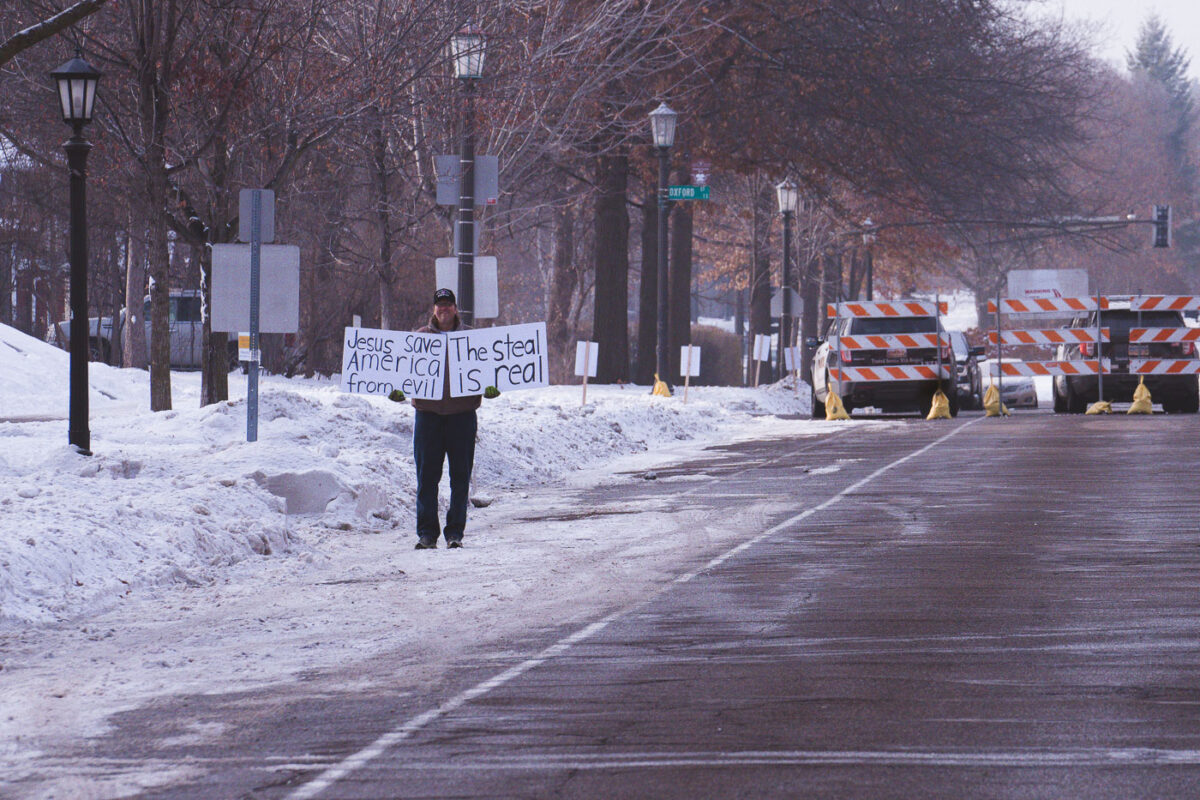
Jesus Save America From Evil protest sign
A lone protester stands outside the Minnesota Governor's Residence in St. Paul, holding a sign that reads "Jesus save America from evil. The steal is real." This message references the "Stop the Steal" movement, which falsely claimed widespread fraud in the 2020 United States presidential election. The presence of barricades and police vehicles suggests a security response, possibly related to ongoing political tensions or protests in the area. The Minnesota Governor's Residence serves as the official home and principal workplace of the state's governor.

Protester with “Jesus Save America” sign at MN Governor’s Residence
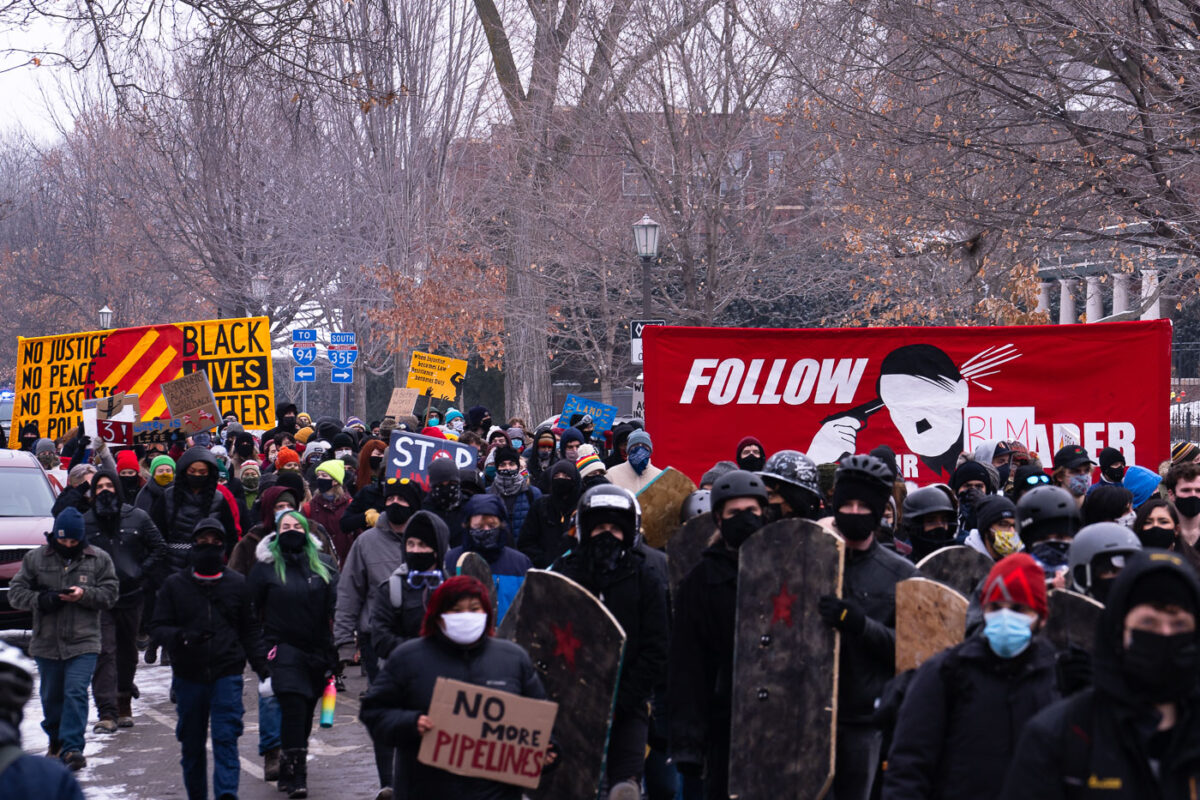
Protesters with shields arrive at a Stop The Steal protest
Protesters marched through St. Paul, Minnesota, carrying signs with slogans such as "Cash not Covid," "No More Pipelines," and "Black Lives Matter." The march, which occurred during a period of widespread social unrest and public health concerns, brought together various activist groups. The "No More Pipelines" signs indicate opposition to fossil fuel infrastructure projects, a common theme in environmental activism. The presence of "Black Lives Matter" banners highlights the ongoing movement for racial justice.

St. Paul Protest: “Cash not Covid” and “No More Pipelines” Signs
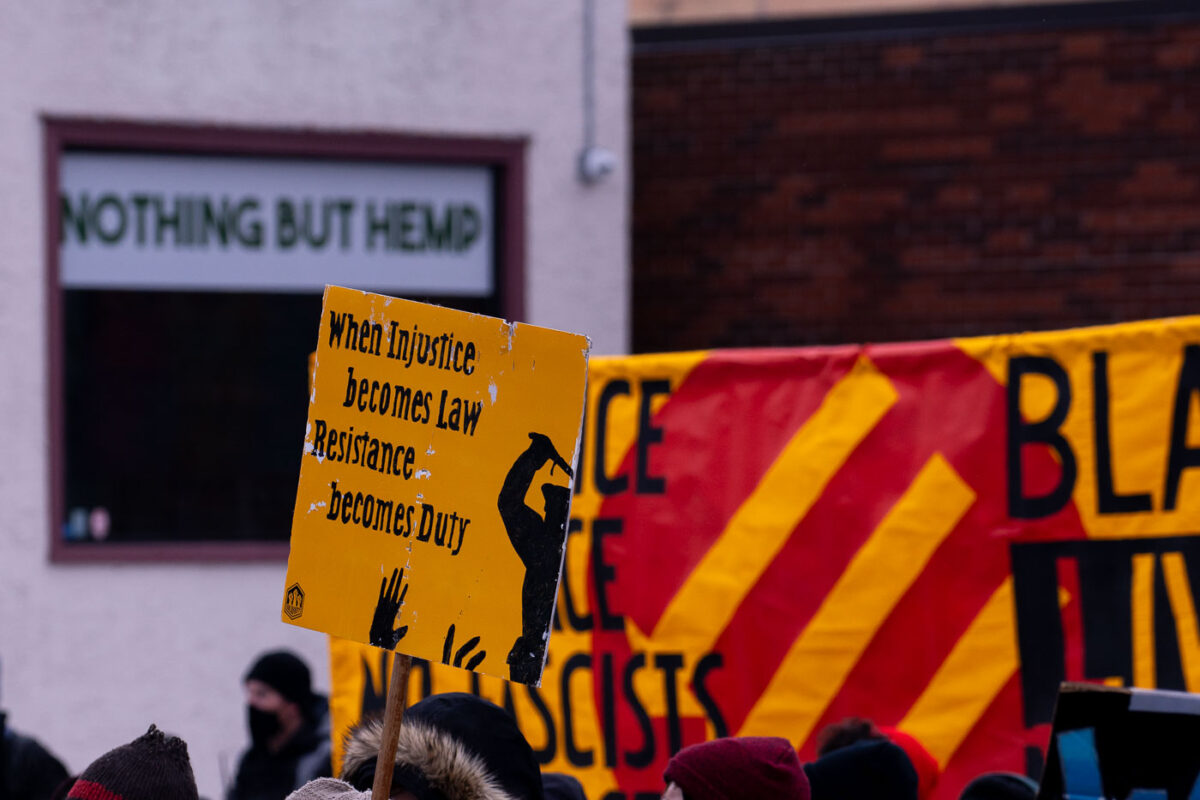
Counter Protest at Stop The Steal Rally in Minnesota
A protester holds a sign reading "When Injustice becomes Law Resistance becomes Duty" during a march in St. Paul, Minnesota. The sign's message reflects a sentiment of civil disobedience in response to perceived legal injustices. In the background, a banner displays "BLACK LIVES MATTER" and slogans such as "COMMUNITY NOT COPS" and "PEOPLE NOT PIPELINES," indicating the protest's alignment with broader social justice movements. The presence of these messages suggests the event was a counter-protest or a demonstration related to the Minneapolis Uprising and ongoing calls for police reform and racial equity.

St. Paul Counter Protest: “When Injustice Becomes Law” Sign