Place Archive

Louisiana

The abandoned Dixie Brewery in New Orleans, closed since 2005, stands in a state of significant disrepair with peeling paint, broken windows, and scattered industrial debris. Its vacant concrete vats, rusted machinery, and defaced exterior walls document the decline of a once-active industrial site in the aftermath of Hurricane Katrina.

81 photos

City

Photos from Louisiana
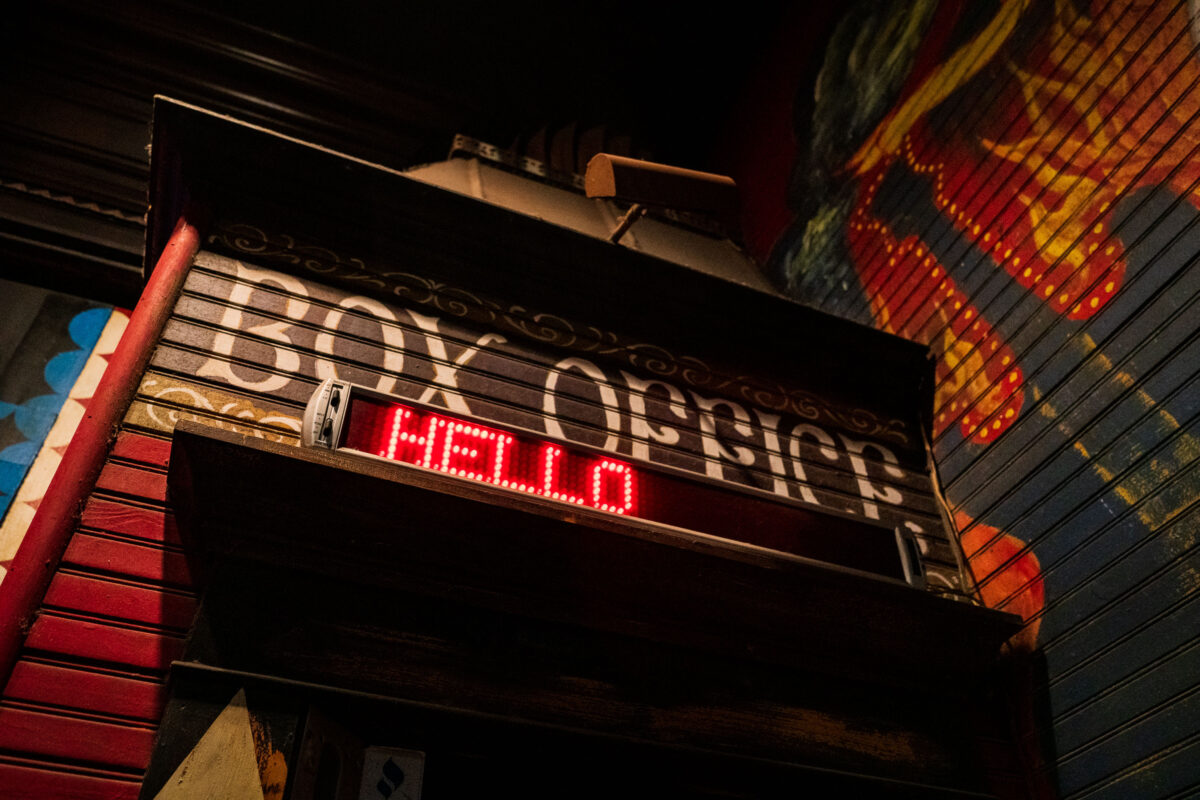
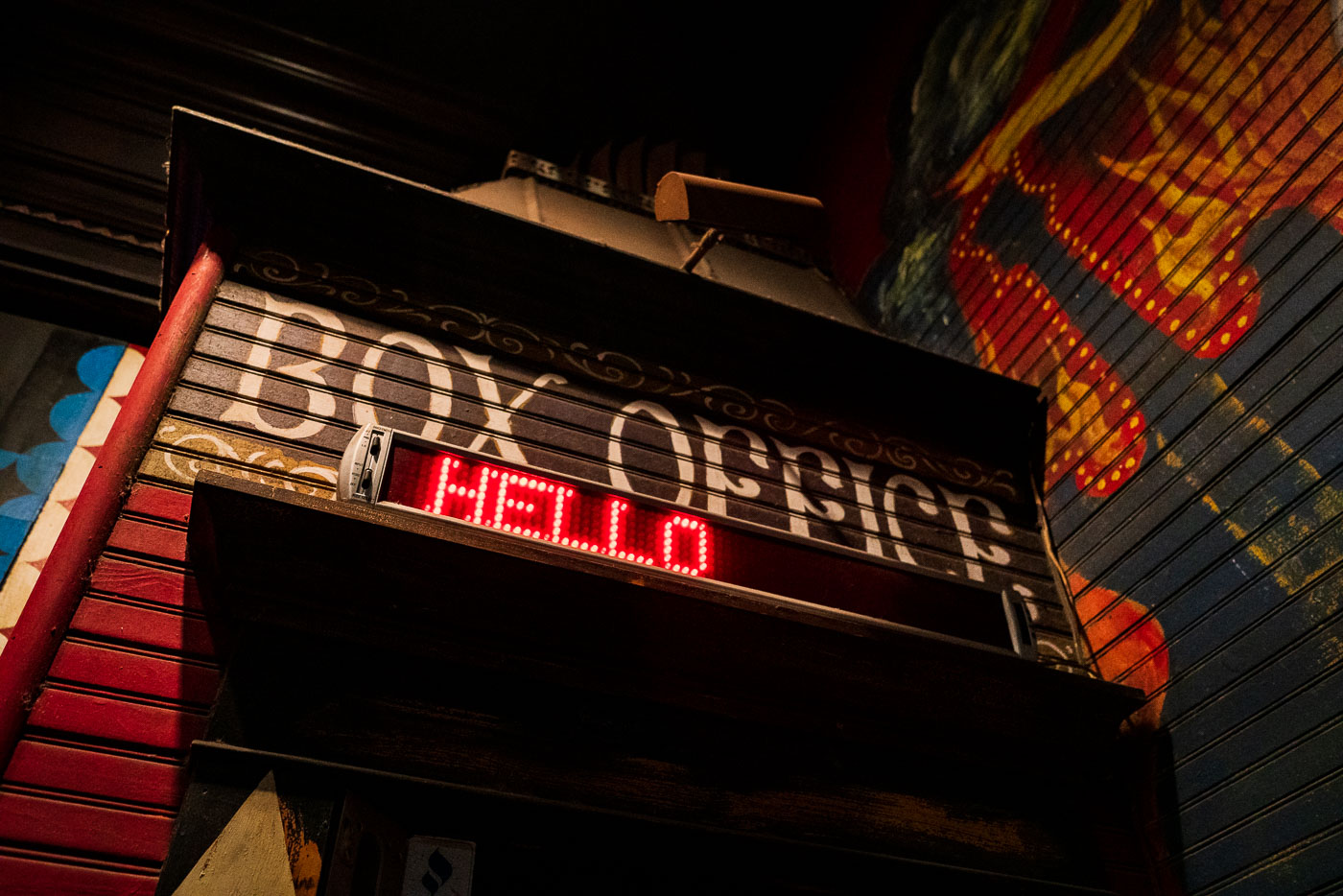
Red LED "HELLO" sign above a box office in New Orleans.
A "Box Office" sign with a red LED display showing "HELLO" is visible on a building in New Orleans. The sign is mounted above a shuttered window, suggesting it is part of a venue such as a theater or music hall. The "HELLO" message could indicate an opening for ticket sales or the start of a performance. New Orleans has a rich history of live entertainment, from jazz clubs to historic theaters, and box offices are a crucial element of these cultural institutions.
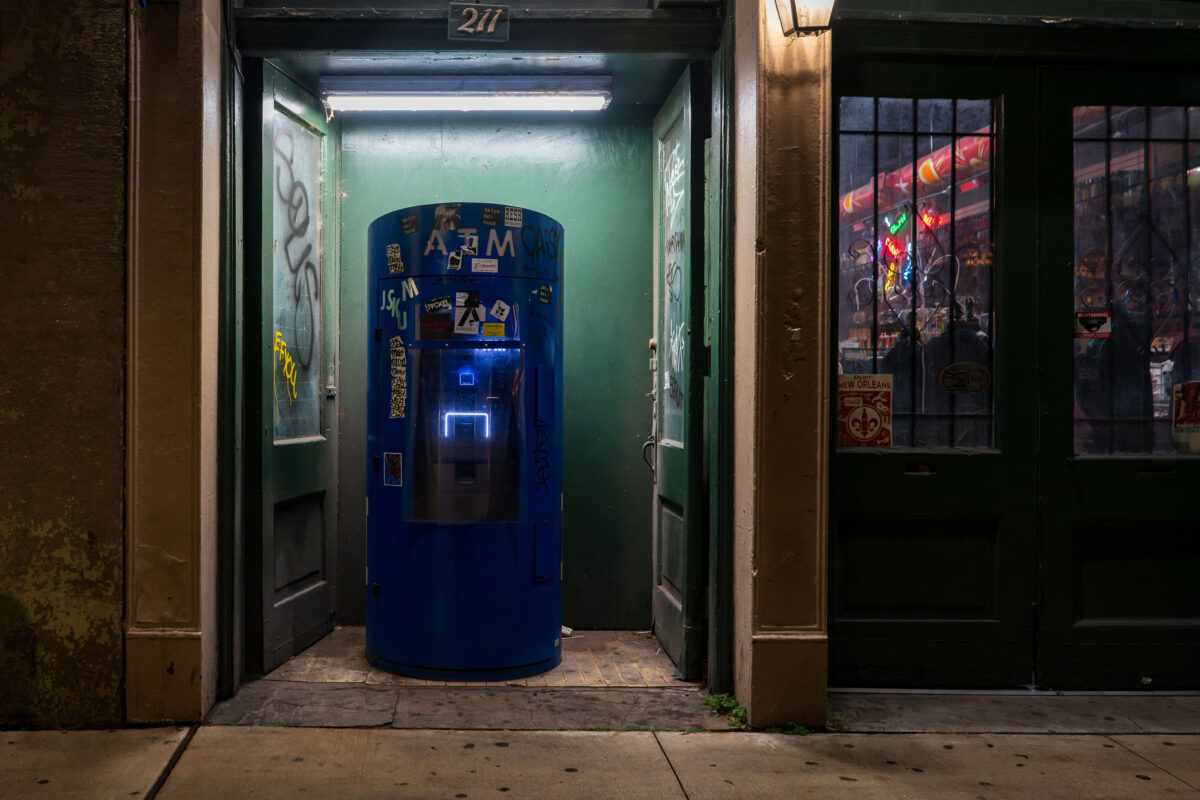
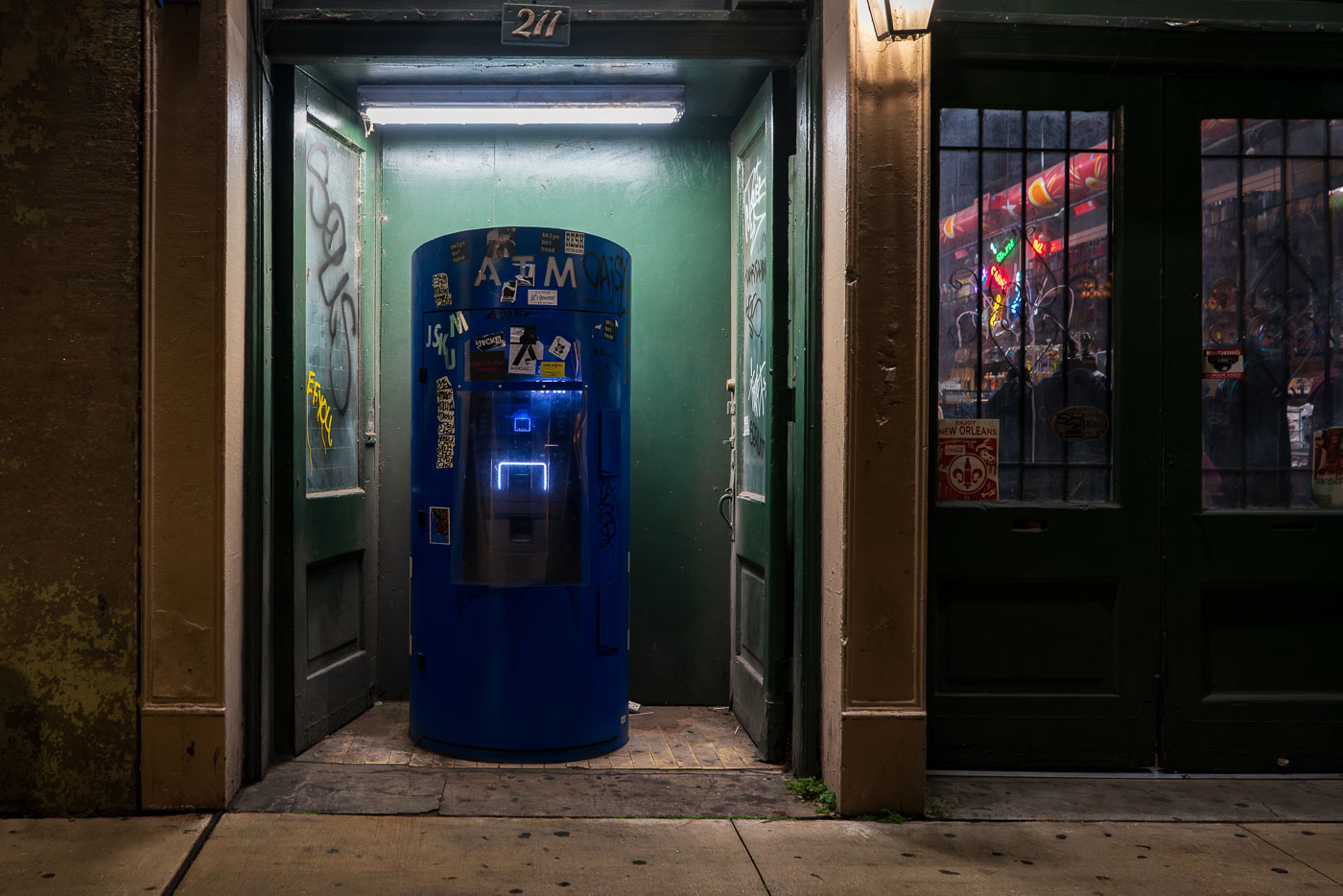
Graffiti-covered ATM in a doorway at 211 Decatur St., New Orleans
A blue ATM is situated within a narrow doorway at 211 Decatur Street in New Orleans' French Quarter. The machine is covered in graffiti and stickers, reflecting the vibrant and often uncurated street art culture of the area. Decatur Street, a historic thoroughfare, has long been a commercial and cultural hub, adapting to modern needs while retaining its unique character. The presence of the ATM highlights the ongoing integration of contemporary services into the fabric of this historic urban environment.
Sun 509 Bangkok Spa sign in New Orleans.
A sign for Sun 509 Bangkok Spa hangs in New Orleans, Louisiana. The establishment offers therapeutic services, drawing on traditions associated with Thai massage and wellness practices. Such businesses often serve as cultural touchstones, providing a connection to international customs within the local urban environment. The sign itself, with its bold lettering, indicates the presence of a service catering to relaxation and health.
Felix's Sea Foods neon sign in New Orleans' French Quarter under awning lights
A neon sign for Felix's Sea Foods illuminates the entrance to the restaurant in New Orleans' French Quarter. Established in 1946, Felix's is a long-standing establishment known for its casual atmosphere and fresh seafood, particularly its oysters. The sign, with its distinctive green lettering and red arrow, is a familiar sight in this historic district, drawing locals and tourists alike to experience a taste of New Orleans' culinary heritage.
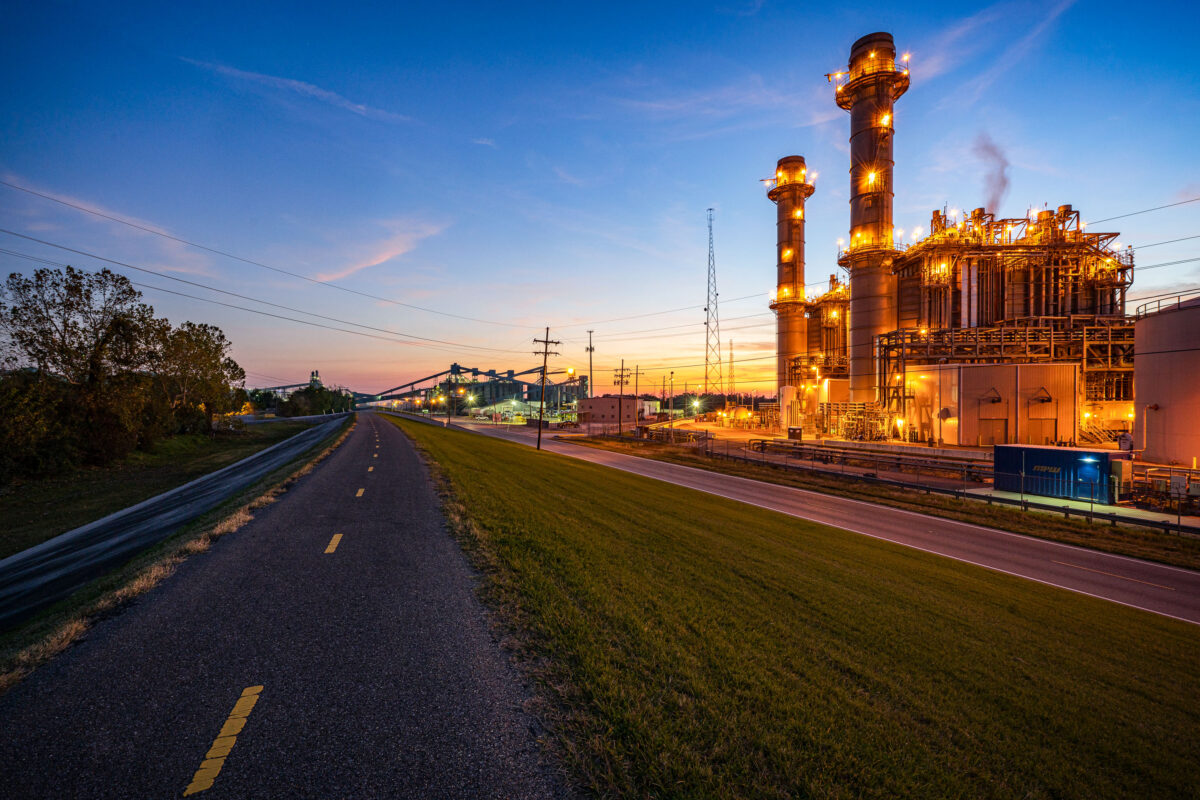
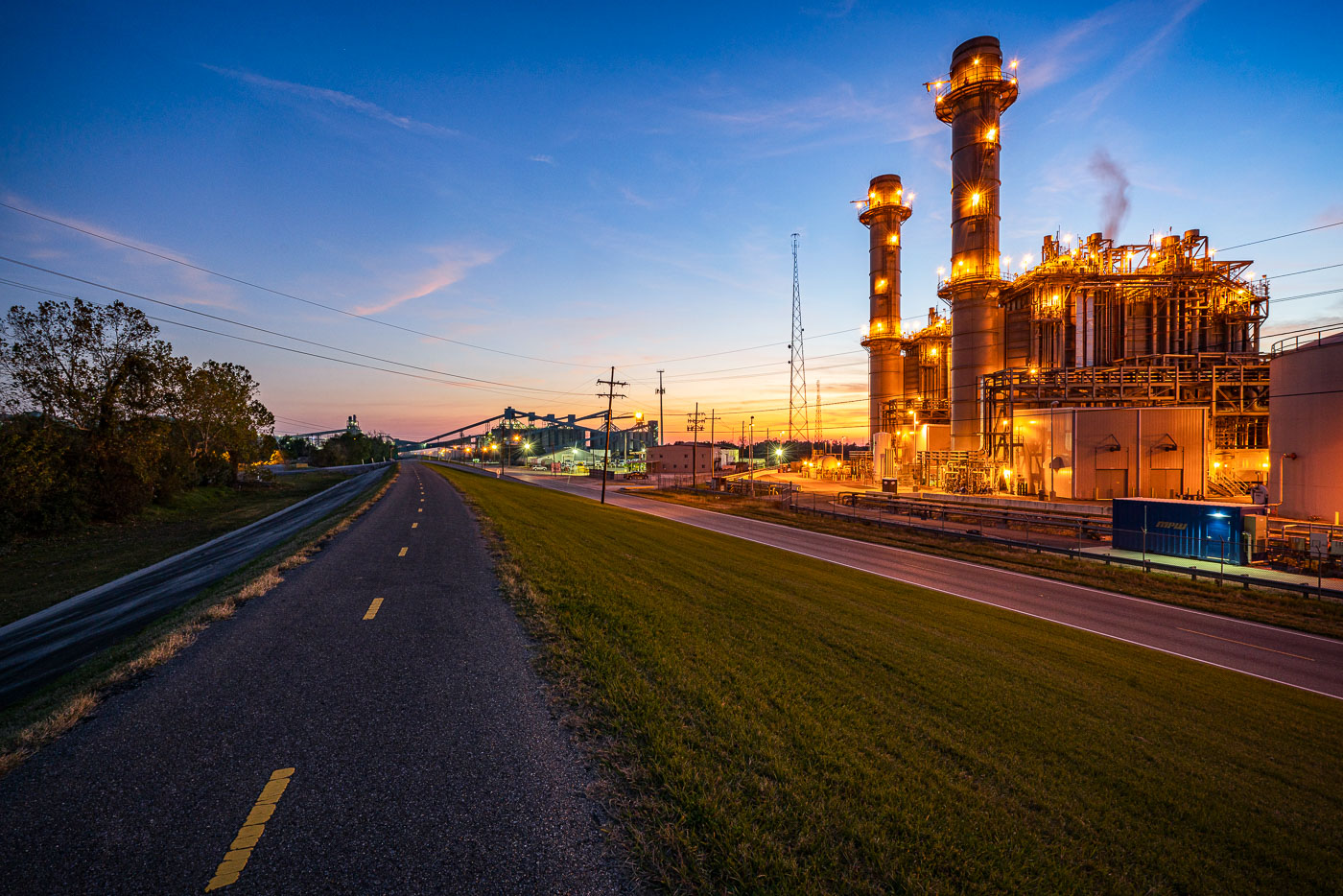
Entergy Ninemile 6 power plant beside a bike trail in Westwego, Louisiana, at dusk
Entergy Corporation's Ninemile 6 power plant, a 560-megawatt natural gas-fired unit located in Westwego, Louisiana, began operation in December 2014. The construction of this facility, which supplies electricity to the greater New Orleans area, cost $655 million. The plant is situated near a levee wall and a bike trail, highlighting its integration into the local infrastructure and environment.
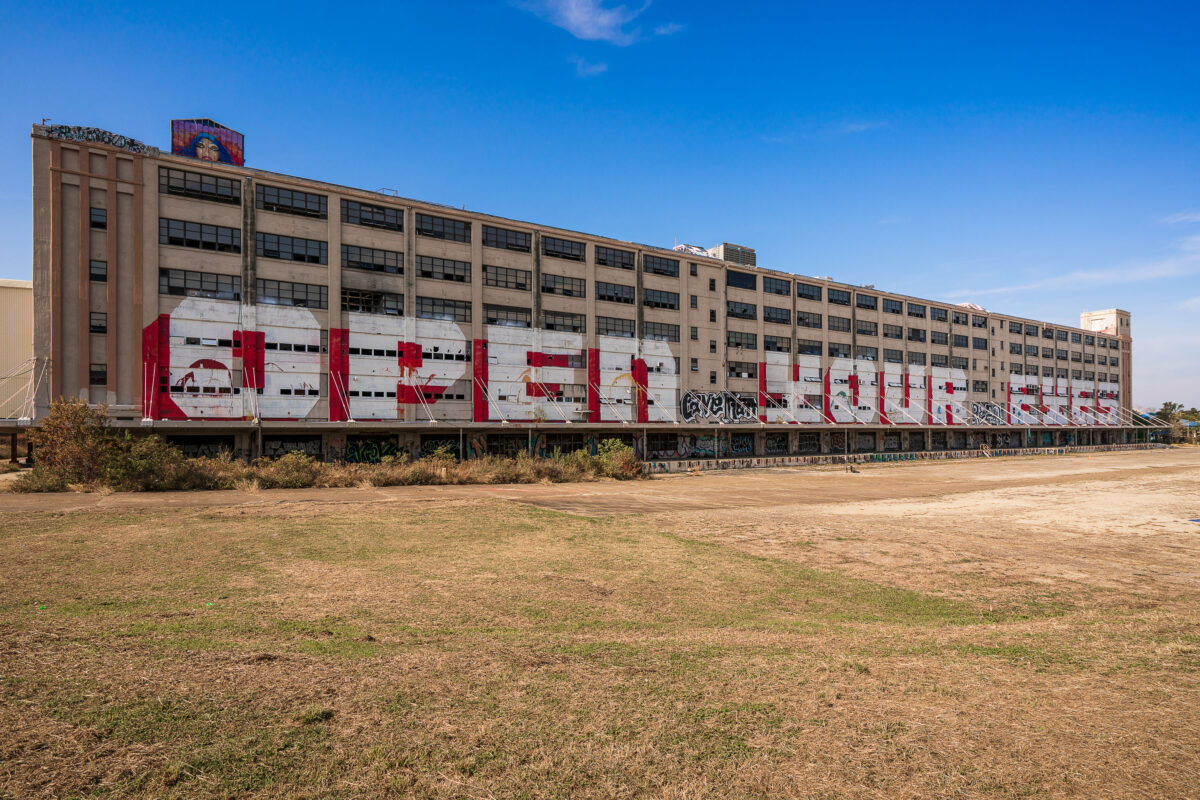
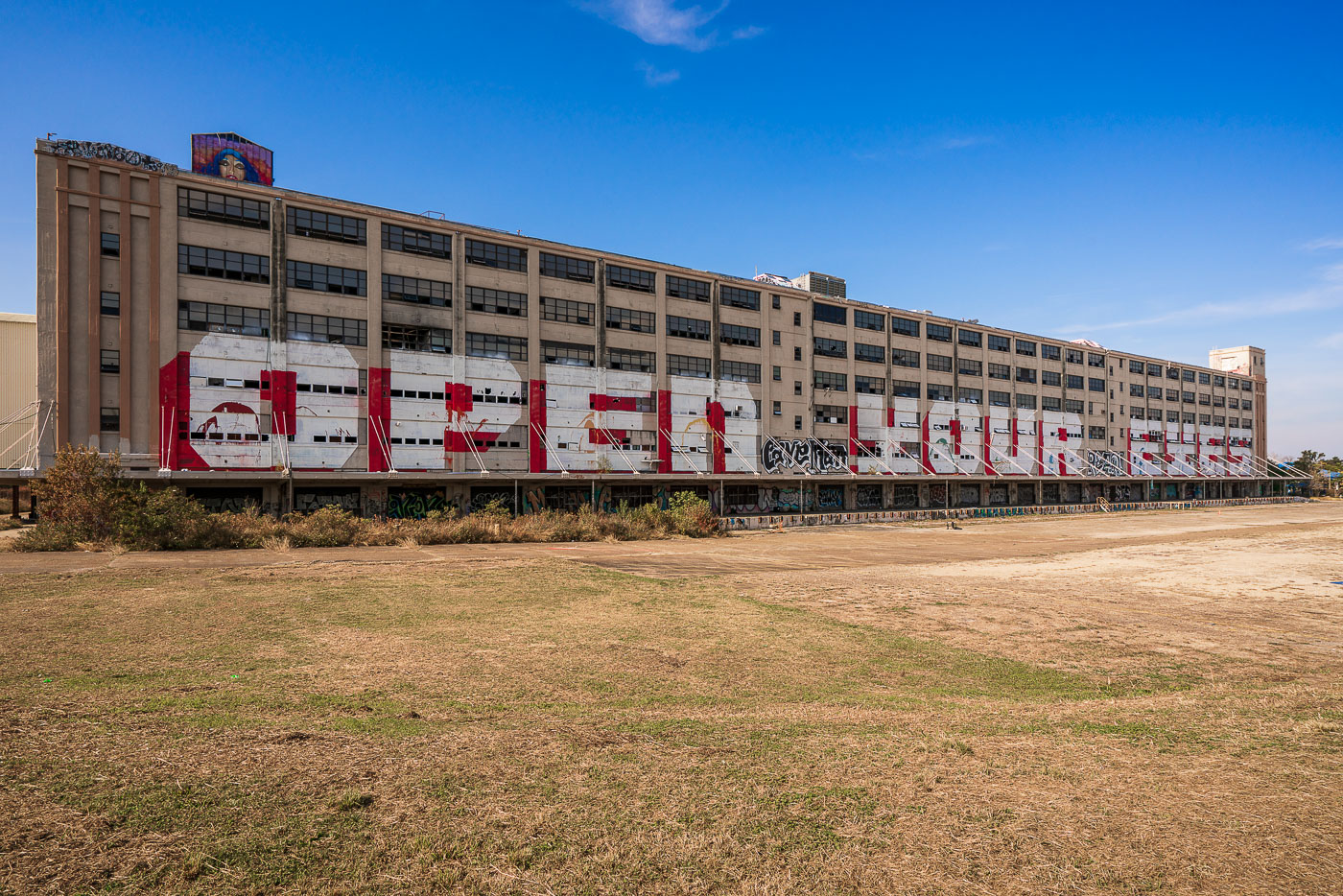
Graffiti-covered former Naval Support Activity warehouse in New Orleans under a blue sky
Graffiti adorns a former warehouse at the Naval Support Activity New Orleans, a decommissioned military logistics facility. The "Open House" mural, a large-scale artwork, covers multiple bays of the building, transforming the industrial structure into a canvas. The base, which operated along the Mississippi River, is now awaiting redevelopment, with the graffiti symbolizing the site's transition from military use to a space for artistic expression and potential future revitalization.
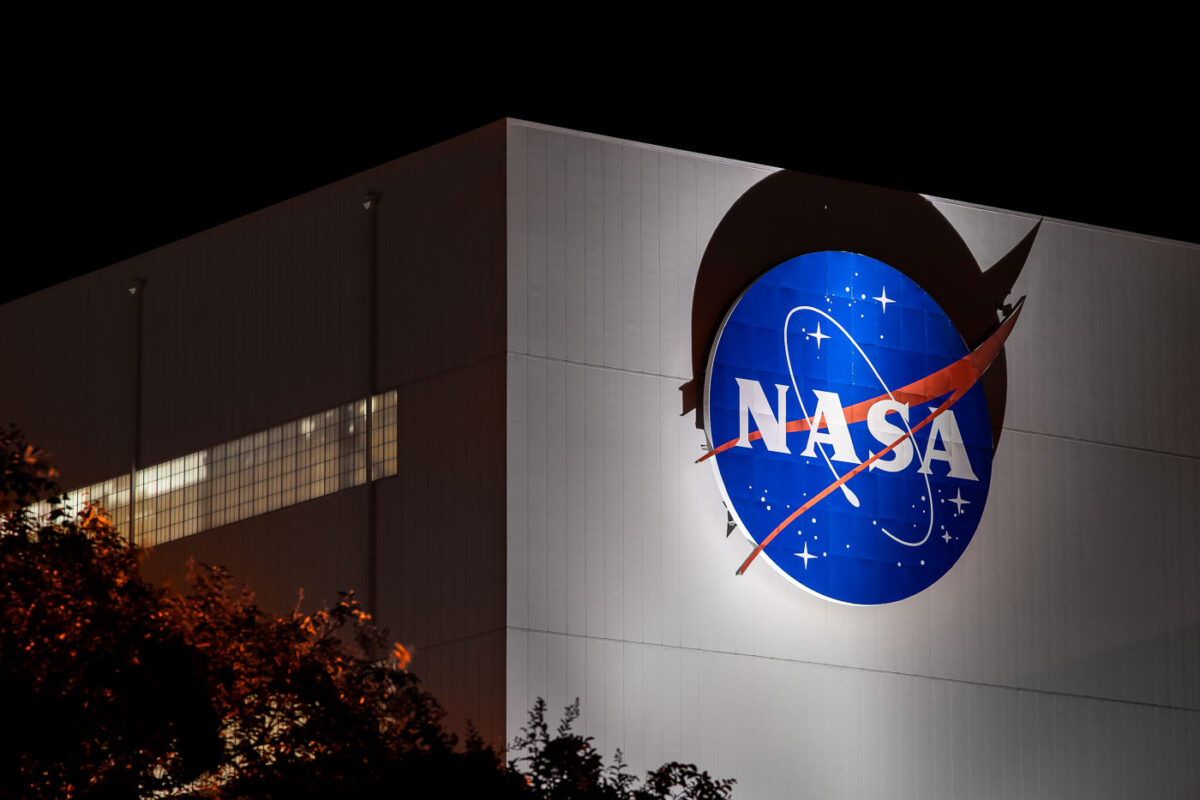
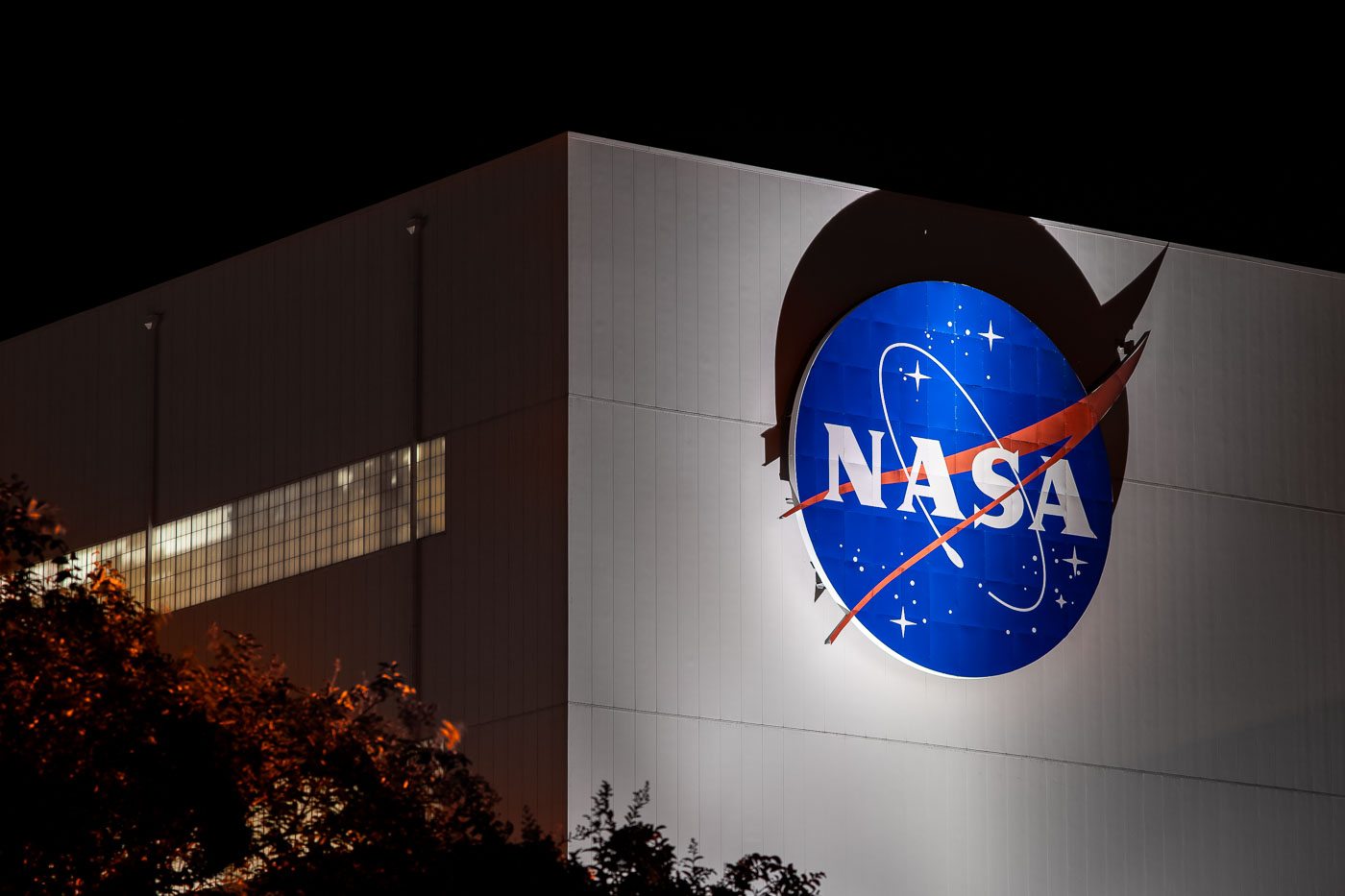
NASA Michoud Assembly Facility at Night
The NASA logo is illuminated on the exterior of the Michoud Assembly Facility in New Orleans, Louisiana. Established during World War II, this vast industrial complex was later repurposed to support the Apollo and Space Shuttle programs. Today, the facility continues its central role in U.S. space manufacturing. Michoud currently supports the construction of major components for NASA’s Artemis missions, including the Space Launch System rocket and the Orion spacecraft.
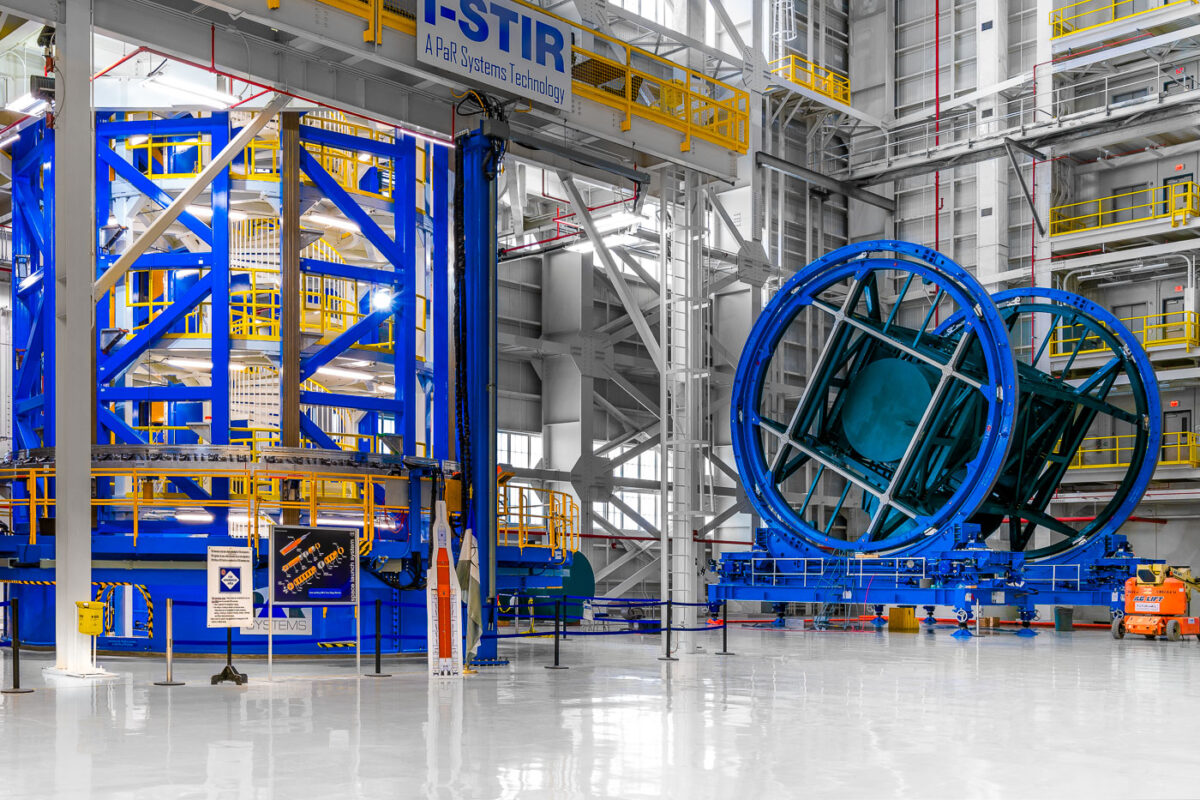
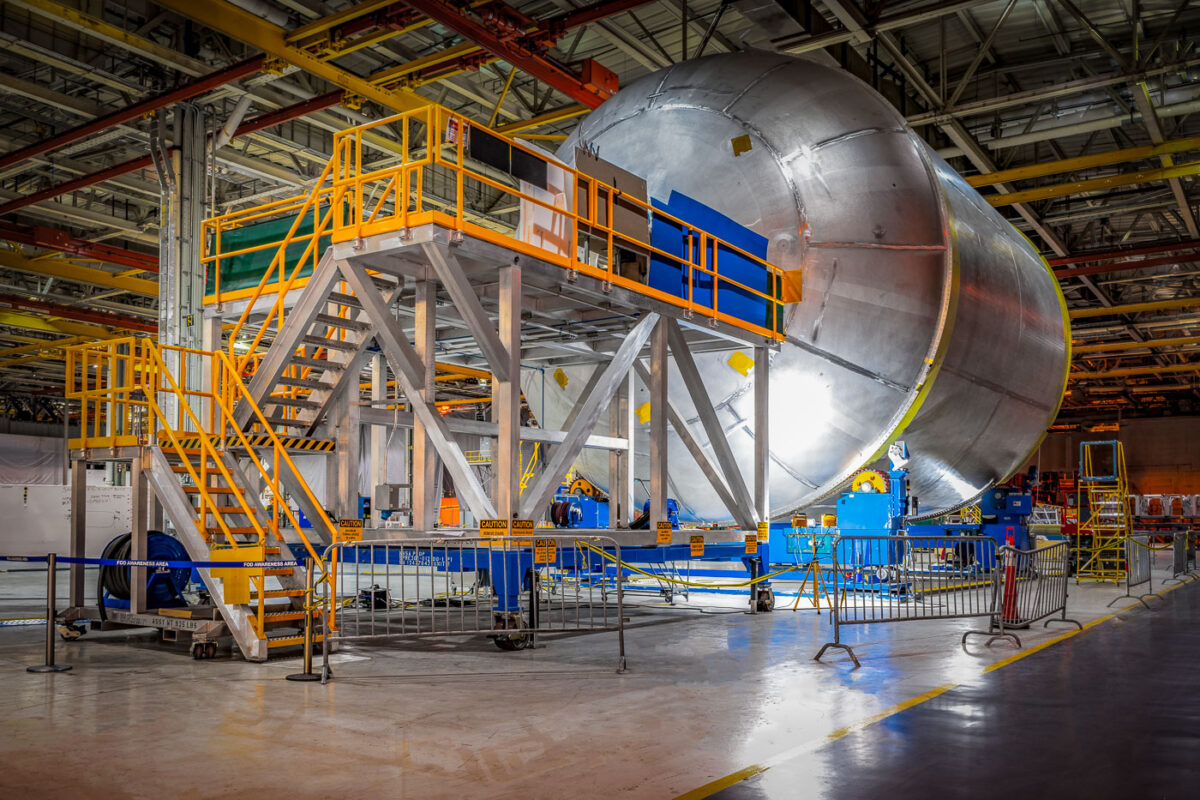
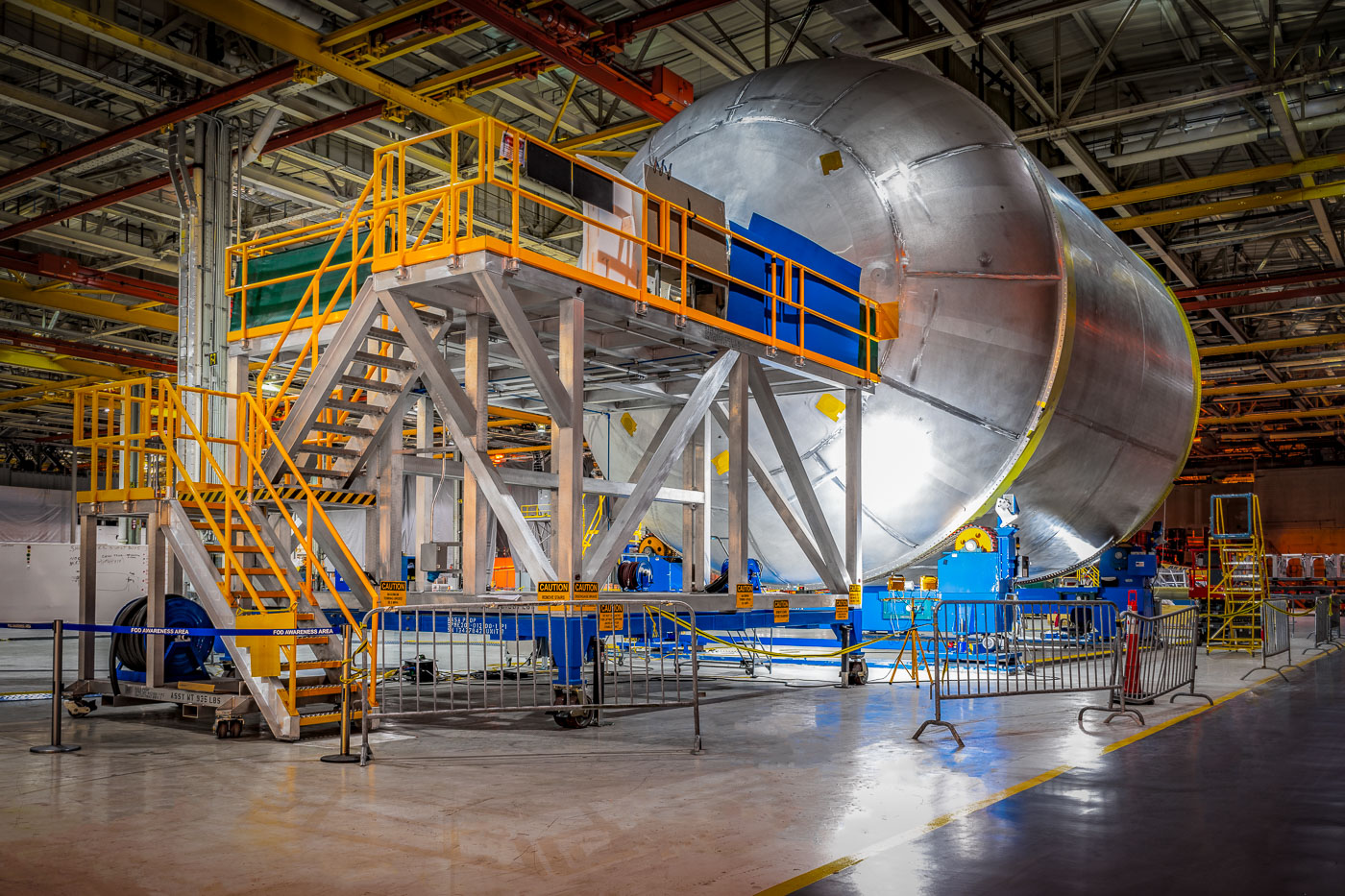
NASA tooling 3
The Vertical Weld Center (VWC) at NASA’s Michoud Assembly Facility, which is producing components for the Space Launch System (SLS) and Artemis rockets. Shown here is the tool used to do the barrel fabrication. From NASA: The Barrel Fabrication process consists of the sequential trimming and welding of Barrel Panels on the Vertical Weld Center (VWC) to form a 8.4-meter barrel. Post-weld non-destructive evaluation is also performed while the Barrel is positioned on the VWC. Barrels will be fabricated for the LH2 Tank, LO2 Tank, Forward Skirt, and Engine Section and transported to Building 110 for weld operations on the Vertical Assembly Center. NASA says there are 40 different Barrel Panel configurations with various thicknesses and heights and the 32 barrels to be fabricated each weight between 6,600 to 9,500 pounds.
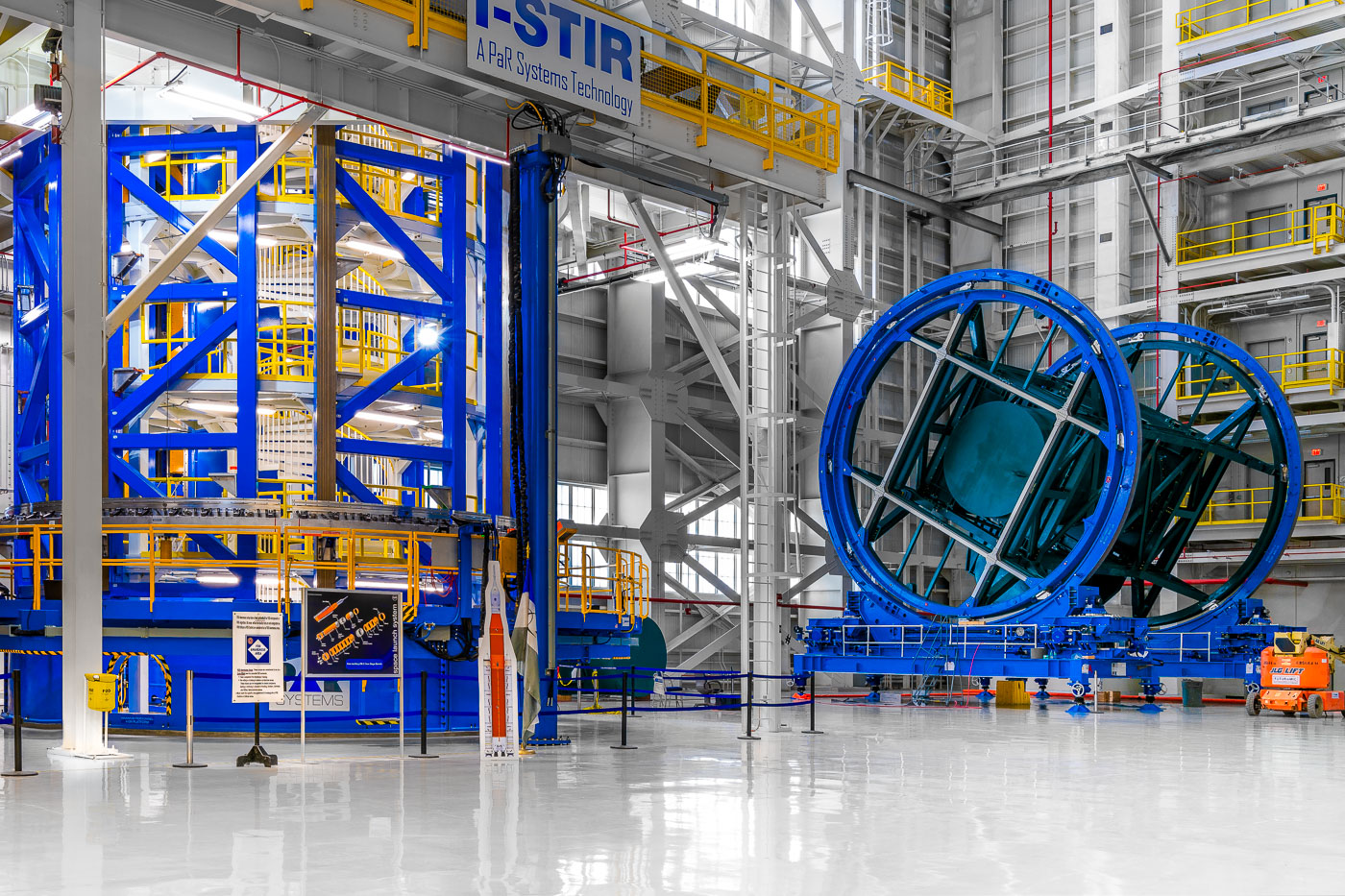
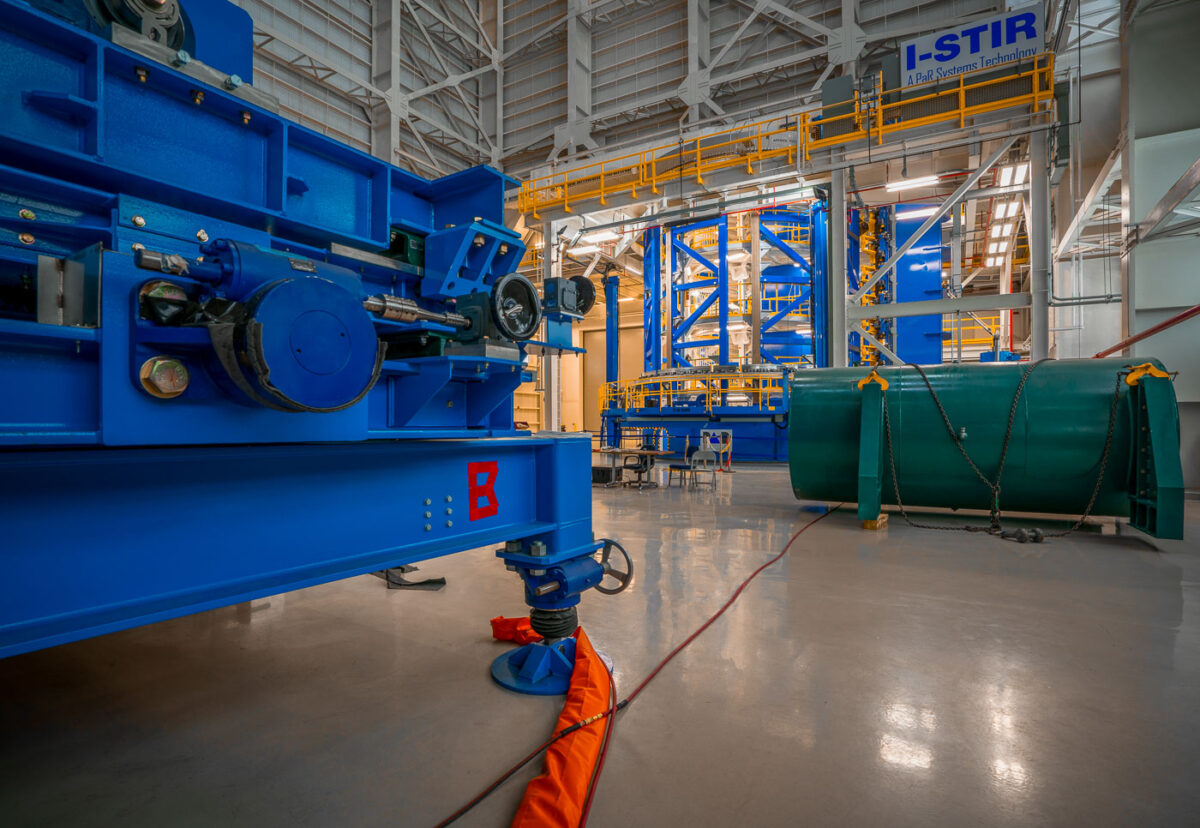
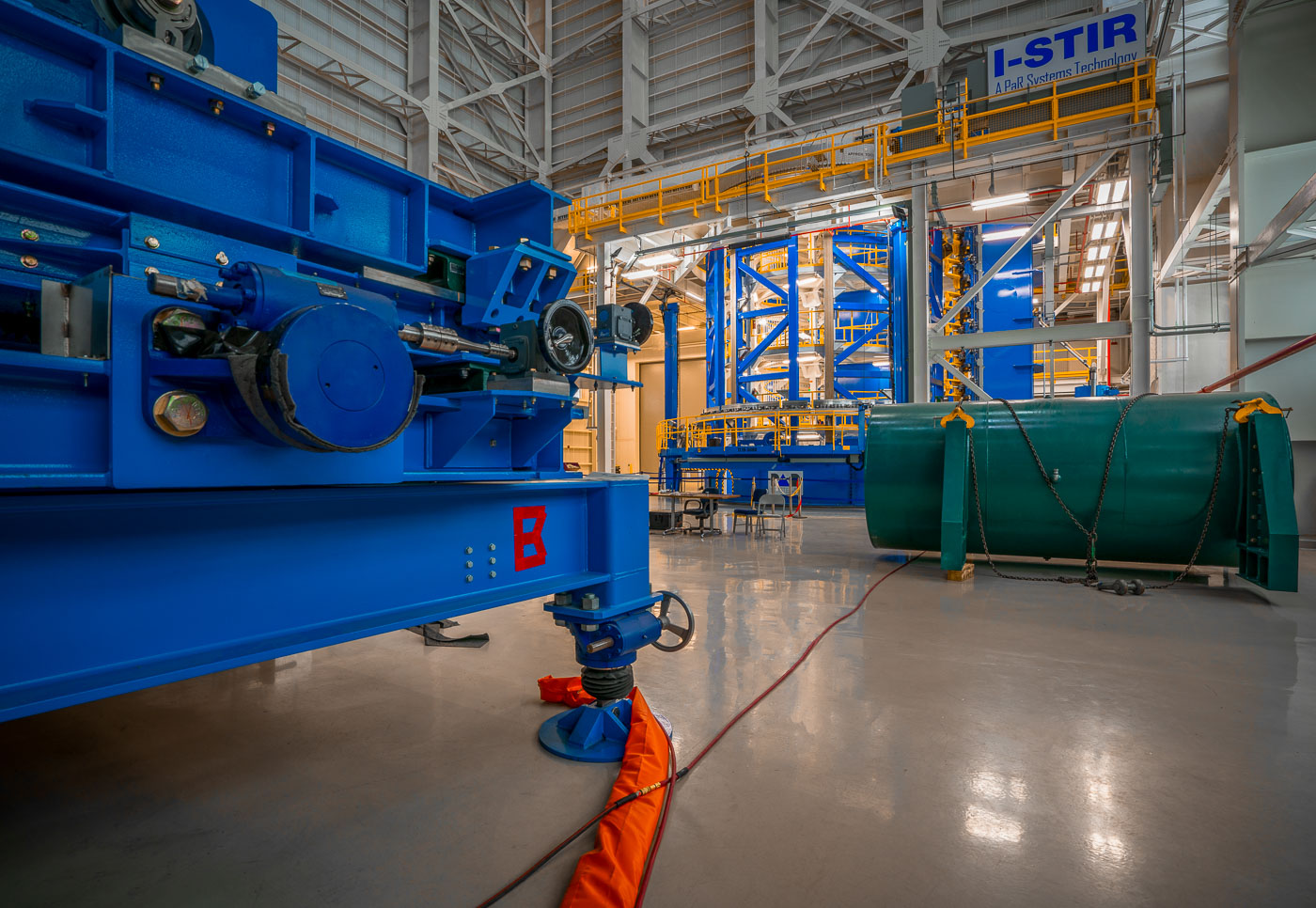
Inside the vertical weld center at NASA Michoud
The Vertical Weld Center at NASA Michoud Assembly Facility in Louisiana houses the friction-stir-weld tool, a critical piece of infrastructure for the Space Launch System (SLS) program. This specialized tool is designed to weld barrel panels for both wet and dry structures of the SLS core stage. It precisely joins these panels to form complete barrels for the rocket's two pressurized tanks, the intertank, the forward skirt, and the aft engine section. The SLS core stage is a fundamental component of NASA's Artemis missions, which aim to return humans to the Moon and prepare for future missions to Mars. The facility plays a vital role in the production of America's next-generation heavy-lift rocket.
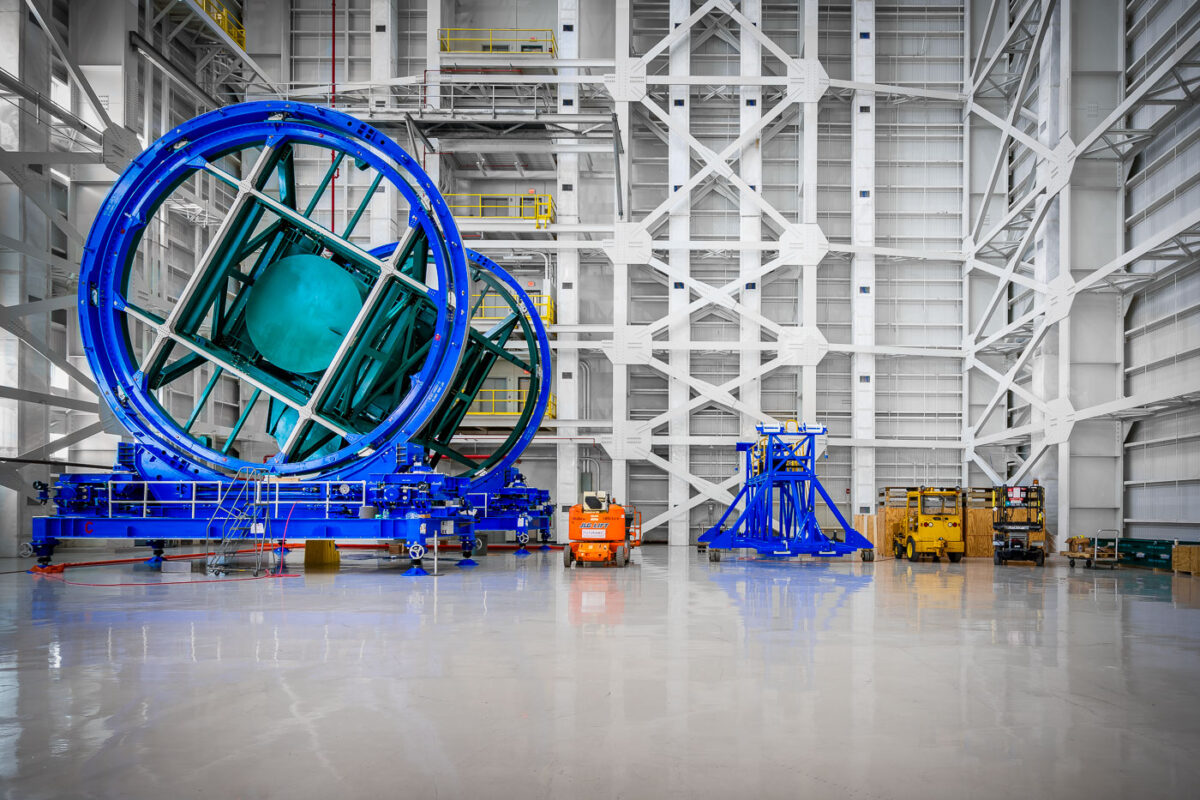
Vertical weld center at NASA Michoud Rocket Facility
The Vertical Weld Center (VWC) operates within NASA’s Michoud Assembly Facility in New Orleans, Louisiana. This precision friction-stir welding system is engineered to join massive aluminum alloy panels, forming the rocket fuel tanks and core stages for the Space Launch System (SLS). The facility, a key site for aerospace manufacturing since the 1940s, plays a crucial role in the production of components for America's space exploration programs. The VWC's advanced tooling, visible in bright blue and yellow structures, ensures millimeter-level accuracy during assembly, a requirement for the Artemis program's deep space missions.
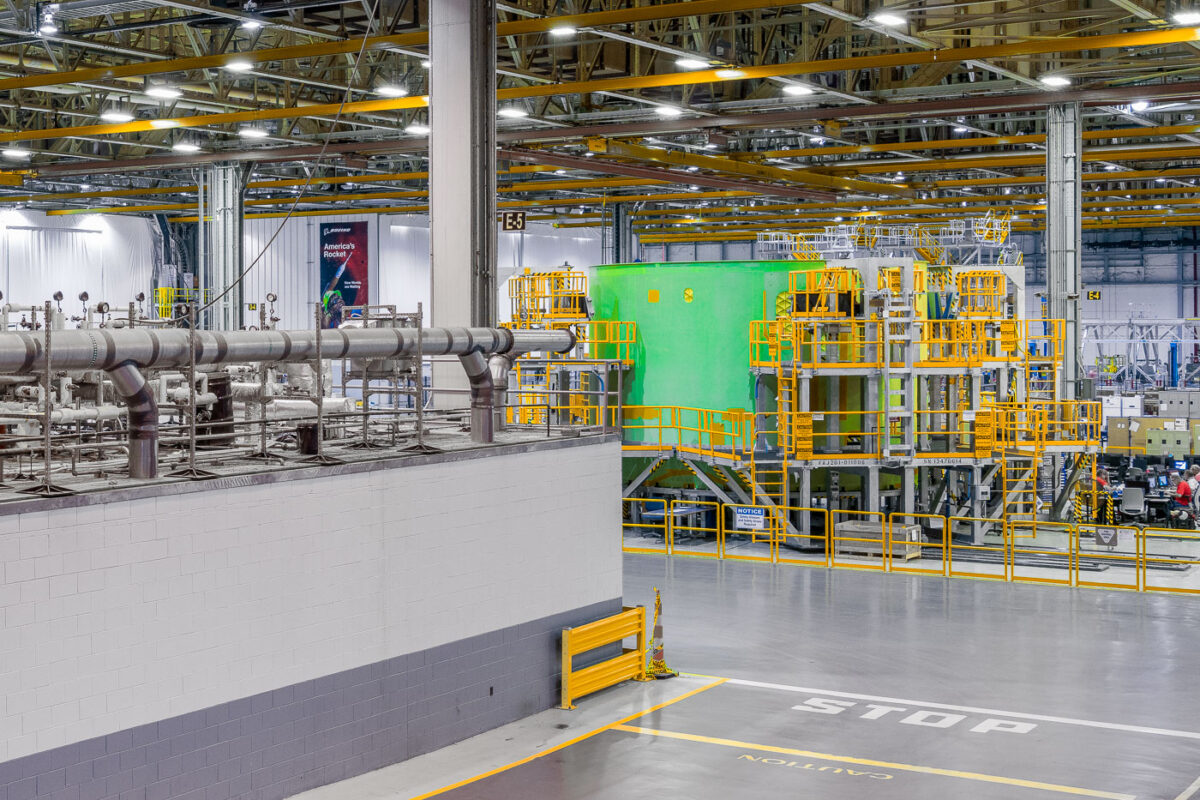
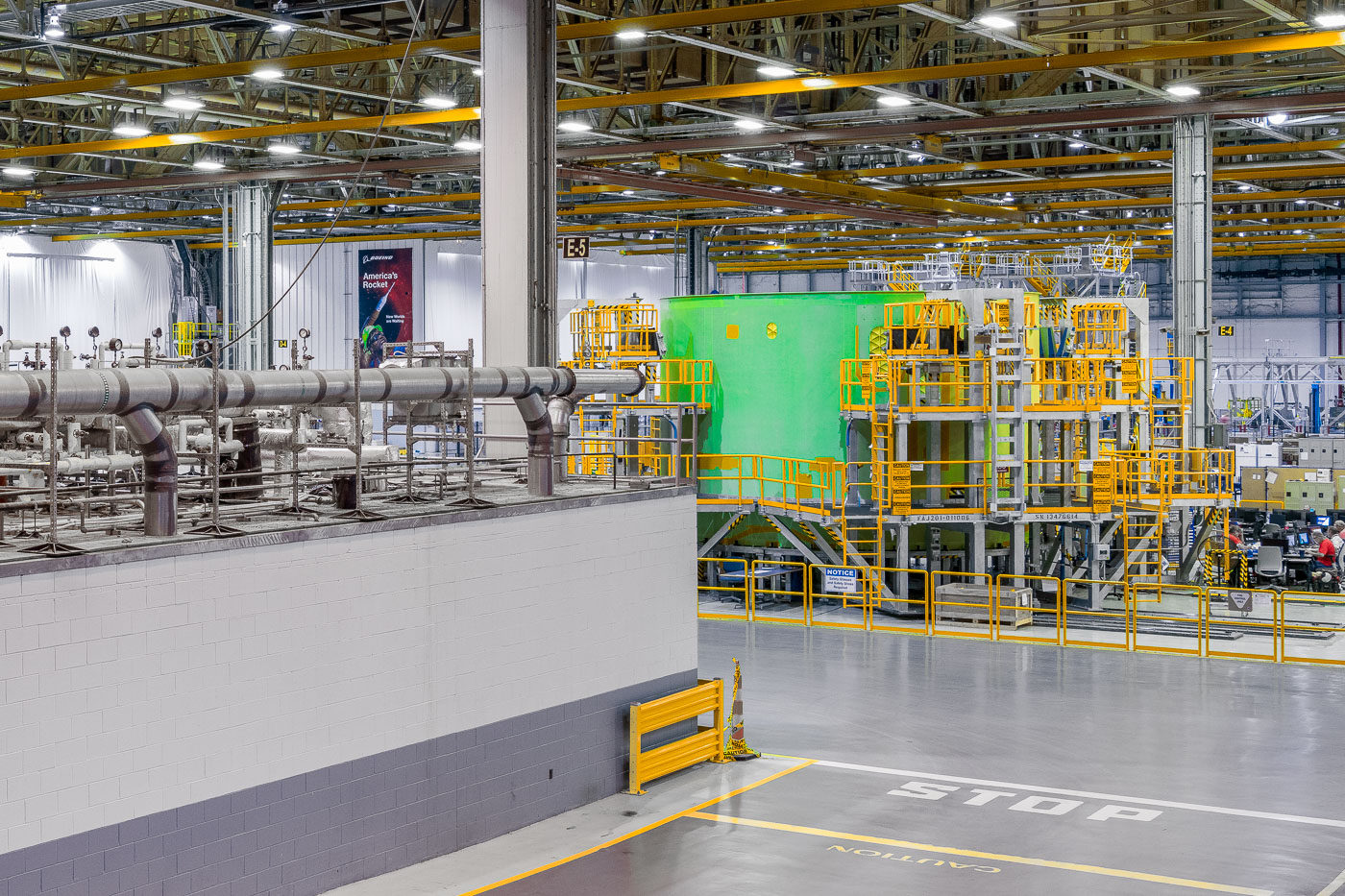
Inside the massive NASA Michoud Assembly Facility
At the NASA Michoud Assembly Facility in New Orleans, Louisiana, a component of the Space Launch System (SLS) rocket core stage undergoes production. This vast industrial complex, historically significant for manufacturing components for the Saturn V and Space Shuttle programs, now serves as a primary site for assembling the core stages of "America's Rocket". The green-painted structure, surrounded by specialized yellow access platforms and intricate piping, represents a critical section of the massive tooling infrastructure required for precise rocket assembly and testing. These core stages, produced by Boeing, are integral to NASA's Artemis program, which aims to return humans to the Moon and establish a sustained lunar presence.
Interior of the SLS fuel tank at NASA Michoud Facility
The interior of a Space Launch System (SLS) Core Stage fuel tank at NASA Michoud Assembly Facility in New Orleans, Louisiana. This massive tank is designed to hold cryogenic liquid hydrogen and liquid oxygen propellants, powering the rocket's four RS-25 engines. The Core Stage is the central component of the SLS, a super heavy-lift launch vehicle developed for NASA's Artemis program. Michoud Assembly Facility serves as a primary manufacturing and assembly site for these critical components, supporting the agency's efforts to return humans to the Moon and explore deeper into space.
NASA Space Launch System Liquid Oxygen Tank
A liquid oxygen tank for NASA’s Space Launch System core stage is positioned for processing inside the Michoud Assembly Facility. Formed from welded aluminum-lithium sections, the tank stores supercooled liquid oxygen that feeds the RS-25 engines during launch. Together with the larger liquid hydrogen tank, it supplies the propellants required to generate thrust for missions in NASA’s Artemis program.
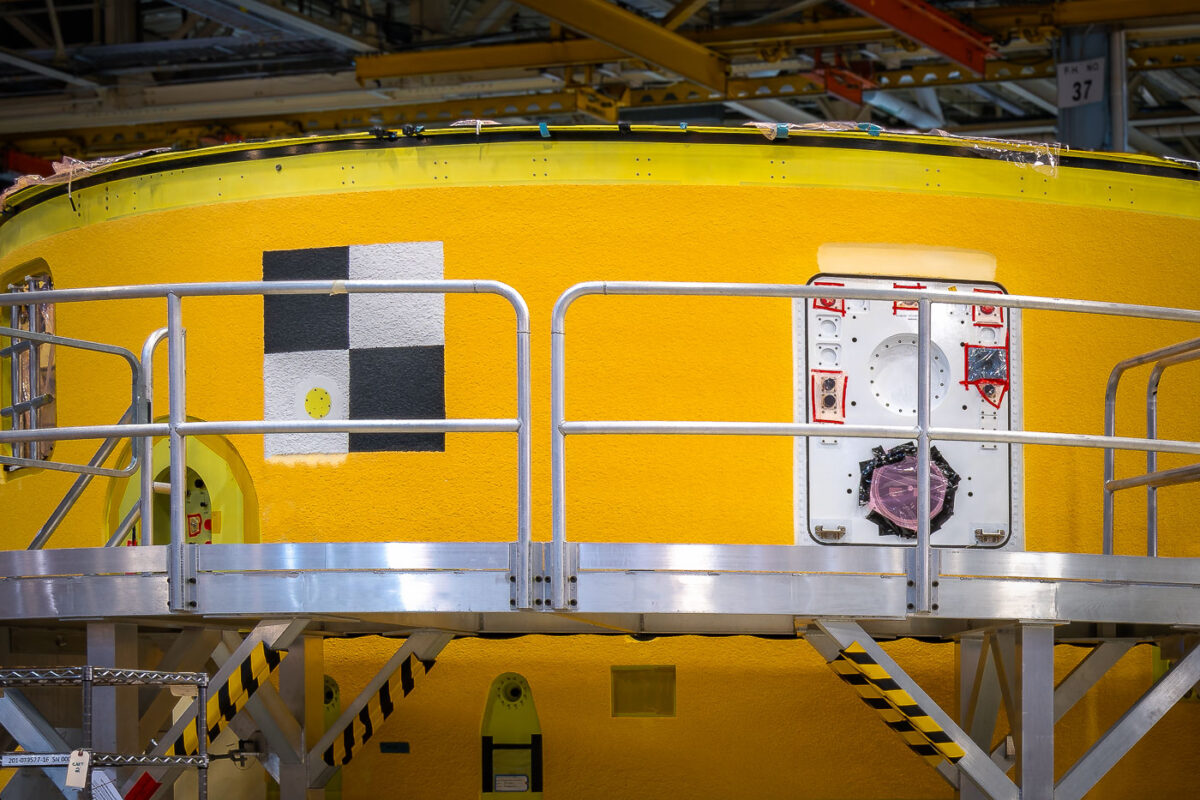
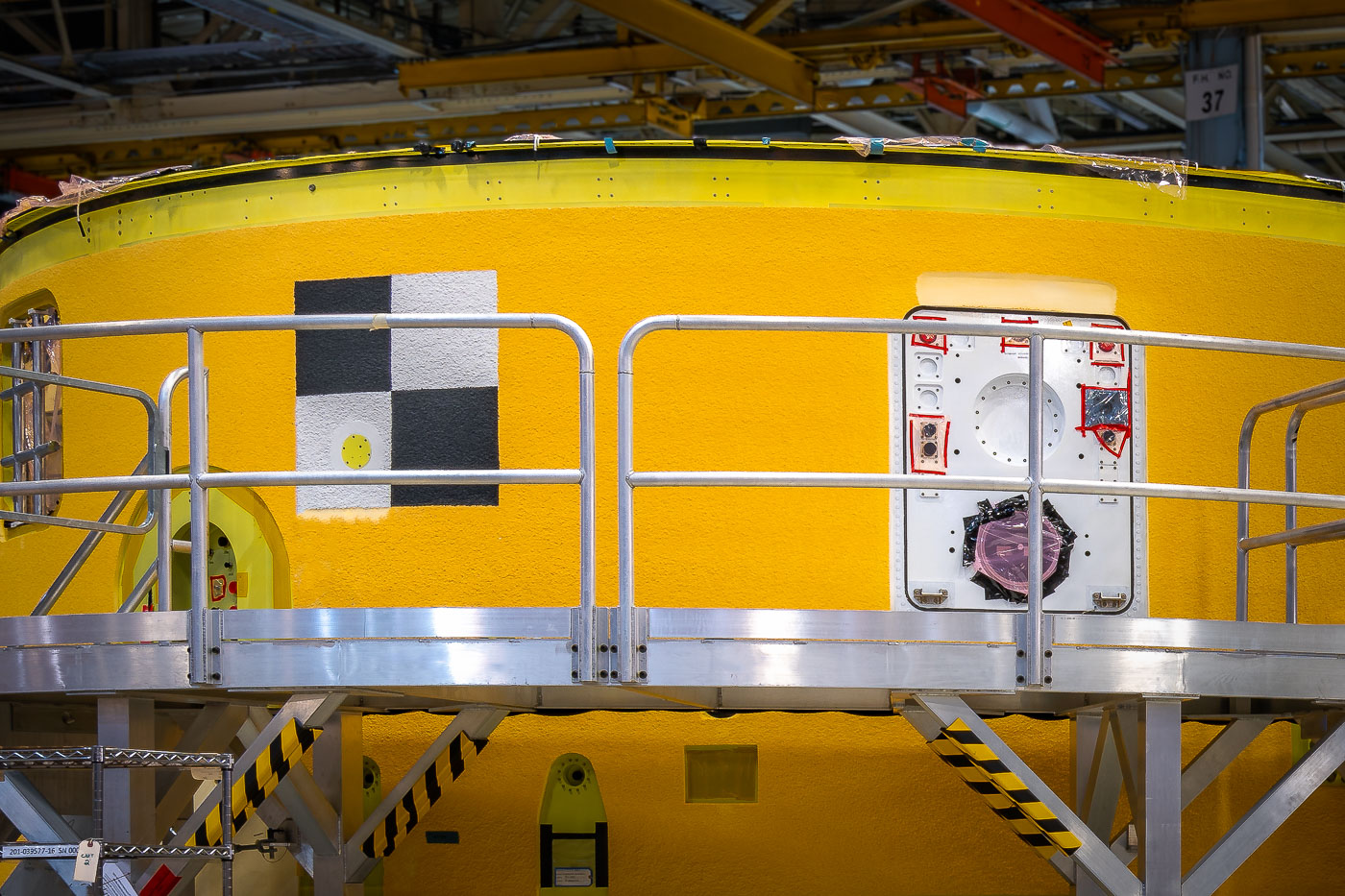
SLS Forward Skirt NASA Rocket
The forward skirt section of NASA’s Space Launch System is shown shortly after its final assembly at the Michoud Assembly Facility in New Orleans, Louisiana. This uppermost segment houses the rocket’s flight computers, avionics, and camera systems, serving as the control center that guides the SLS during launch and ascent. Built for the Artemis I (Exploration Mission-1) mission, this critical structure was manufactured at Michoud, a significant NASA facility with a long history of producing large-scale aerospace components. It would later be integrated into the core stage for its 2020 launch from Kennedy Space Center, marking a key step in the Artemis program's efforts to return humans to the Moon.
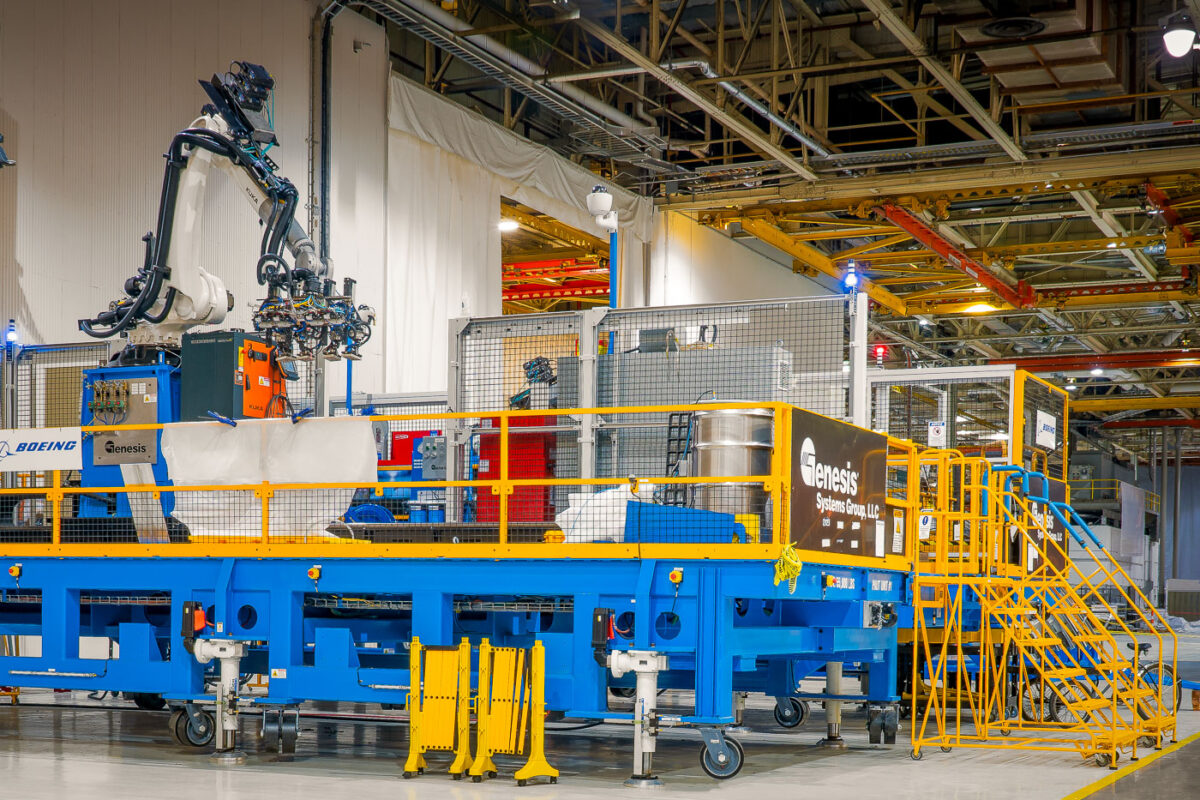
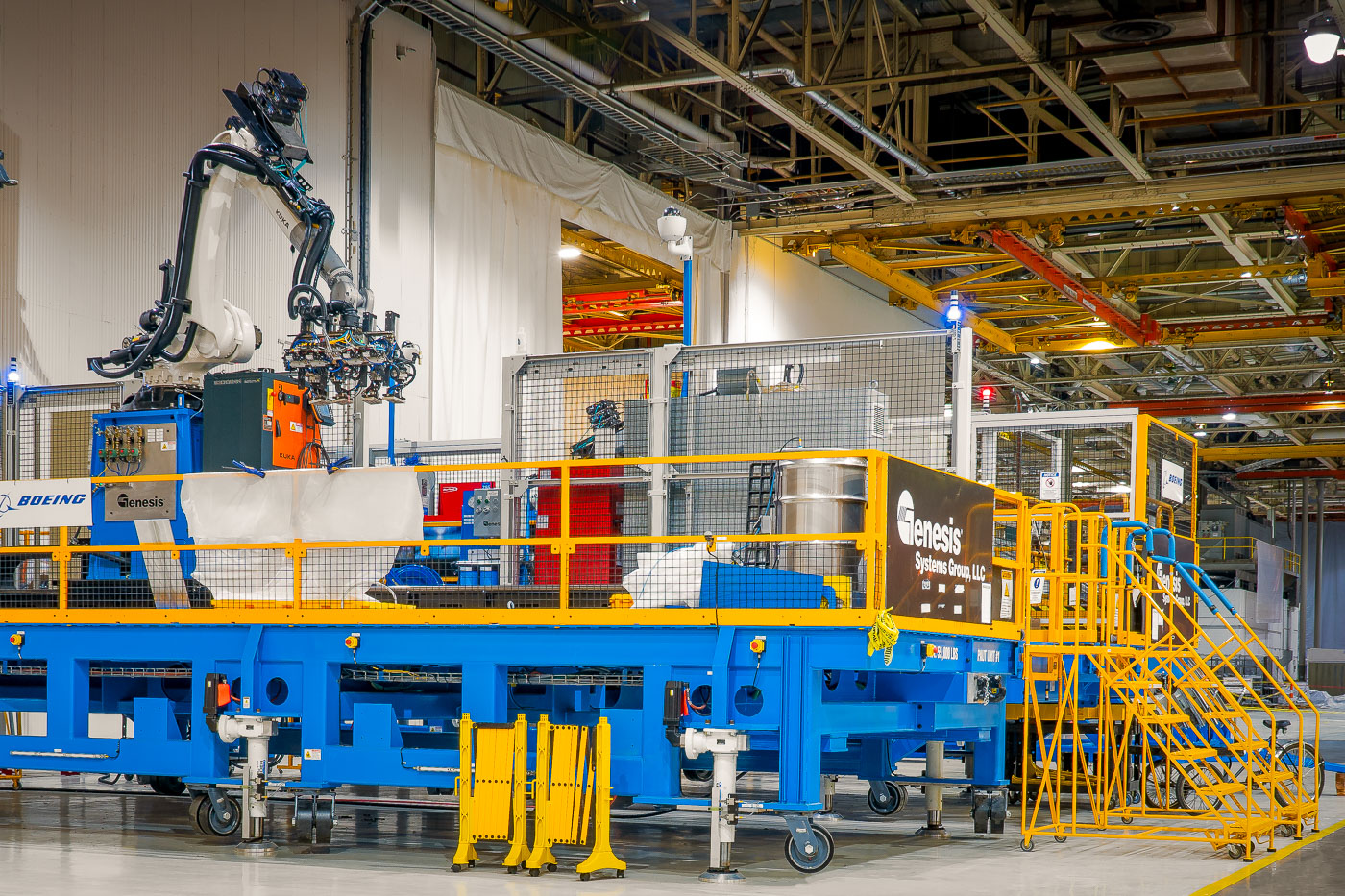
Manufacturing robots at NASA Michoud Assembly Facility
At NASA’s Michoud Assembly Facility in New Orleans, Louisiana, a robotic friction stir welding cell, developed by Genesis Systems Group and Boeing, constructs components for the Space Launch System (SLS) core stage. Michoud, a site with a long history of aerospace manufacturing since the 1960s, plays a crucial role in producing large-scale structures for space exploration. This advanced system precisely joins massive aluminum panels using friction stir welding, creating the rocket’s fuel tanks and structural sections. This specialized process ensures the structural integrity and reliability essential for the SLS, which powers NASA’s Artemis missions to the Moon and beyond.
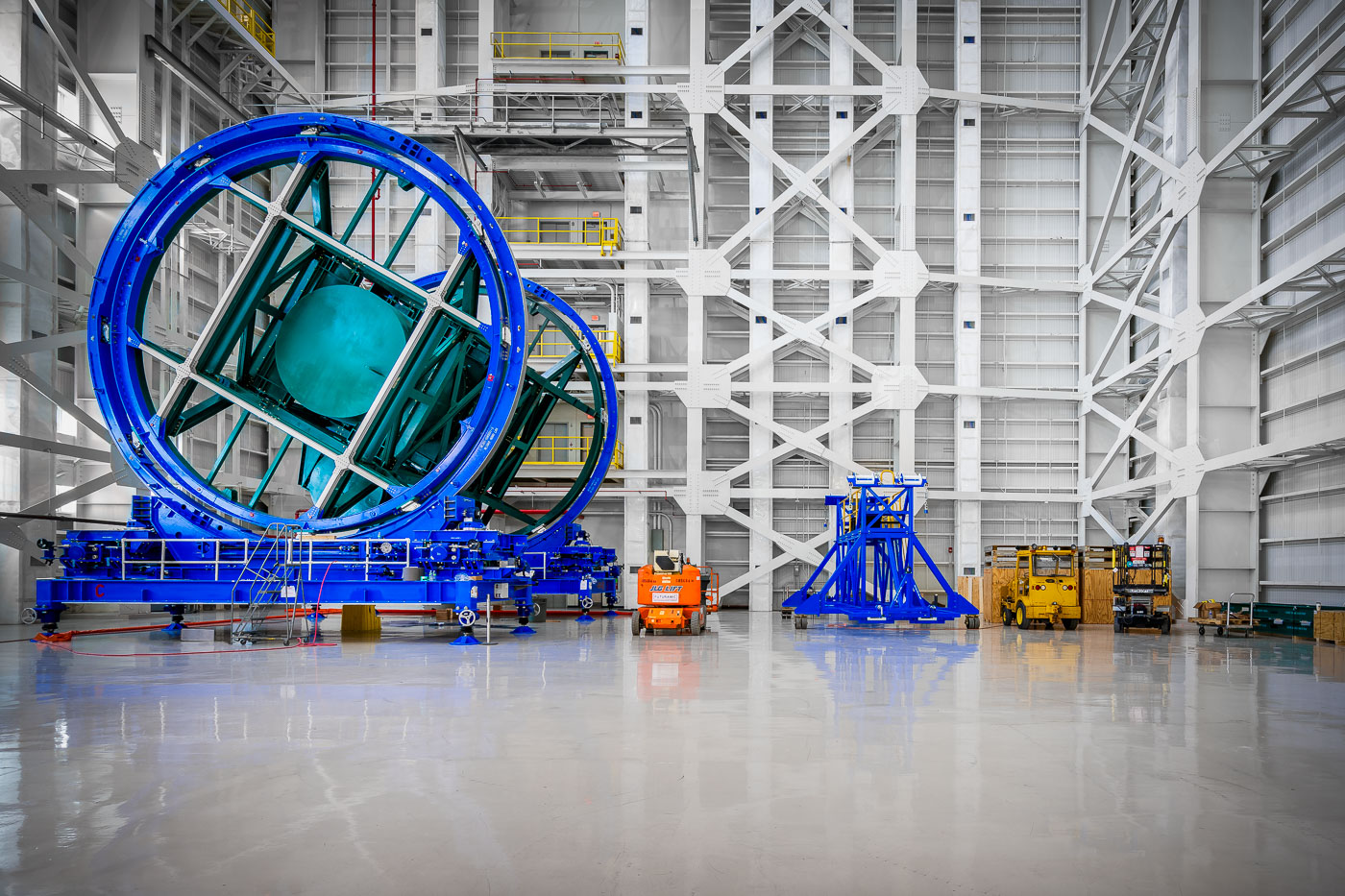
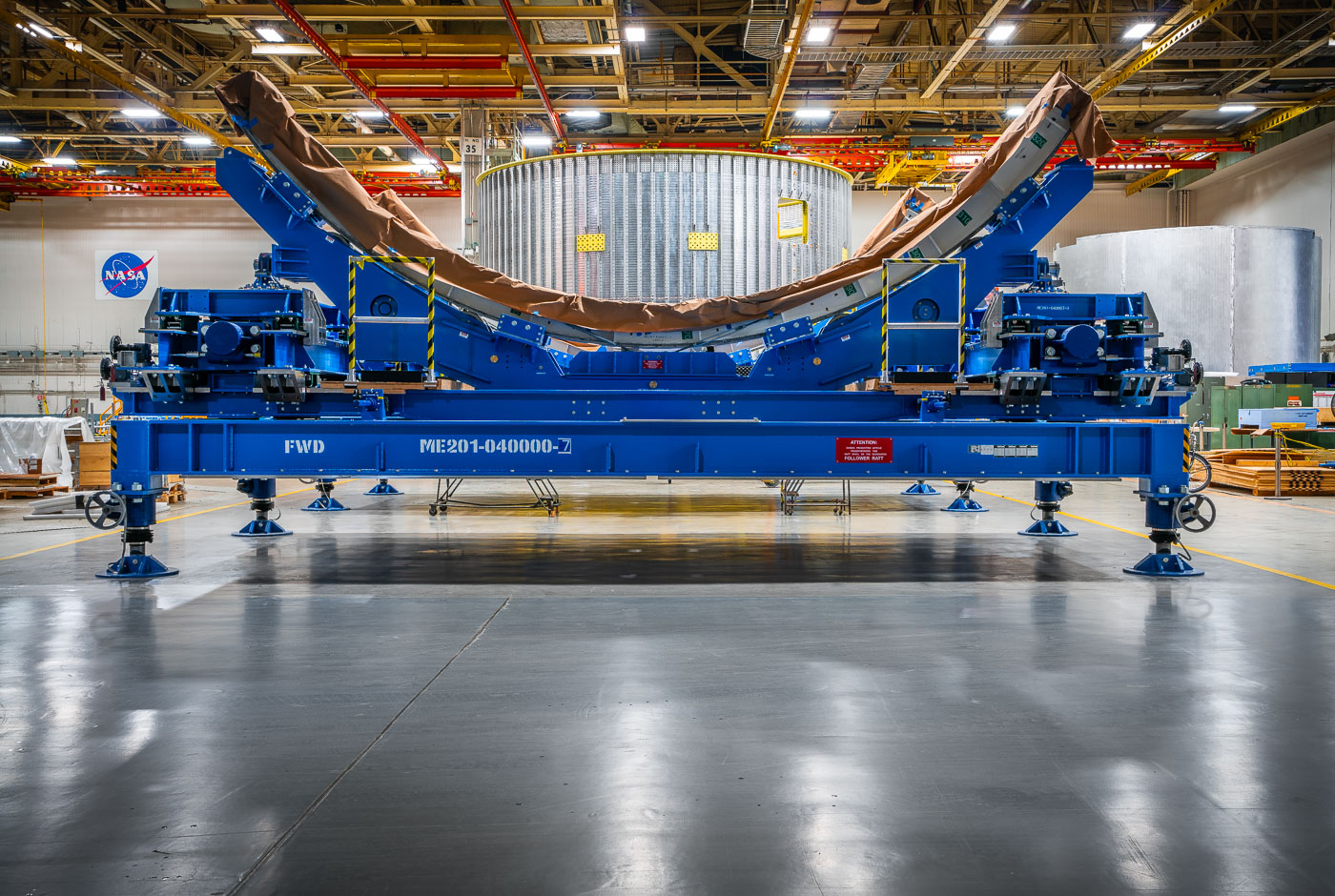
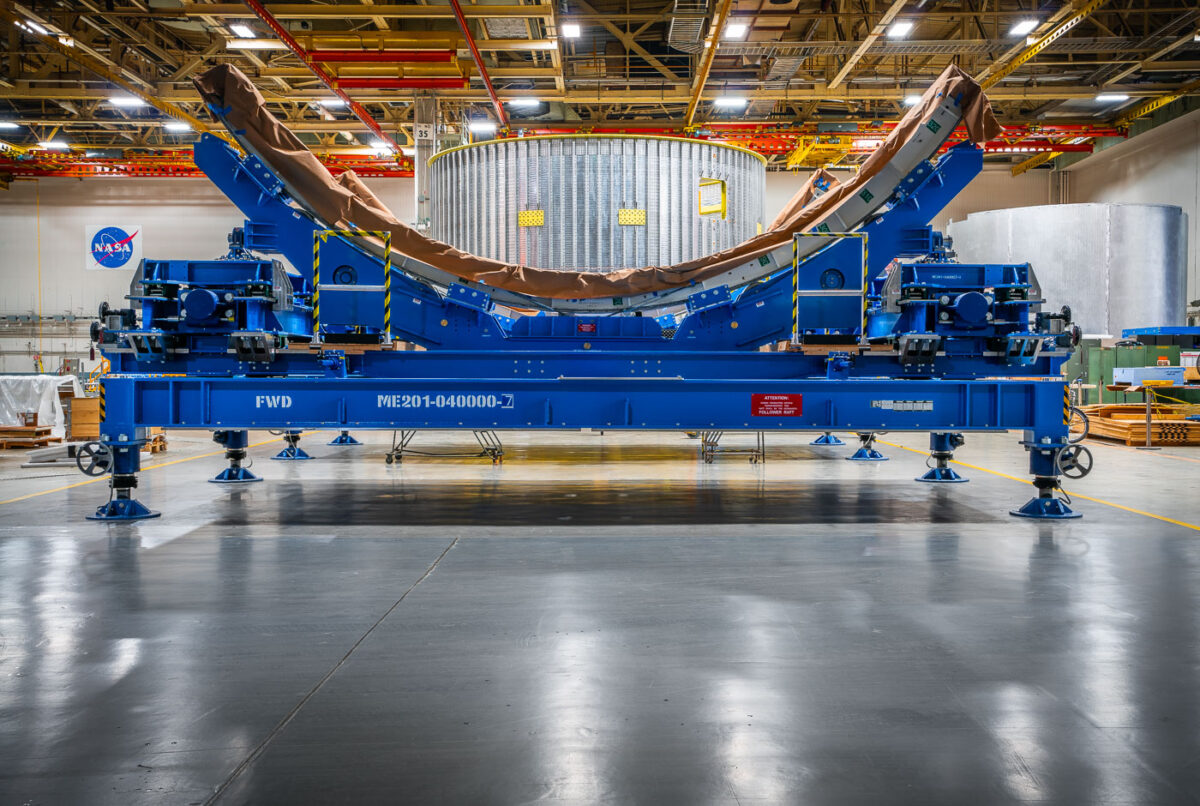
Barrel tools at NASA Michoud Assembly Facility
Precision barrel tooling for the Space Launch System (SLS) core stage is positioned on the production floor at NASA’s Michoud Assembly Facility in New Orleans, Louisiana. This specialized infrastructure is crucial for the assembly of the massive rocket, which supports the Artemis missions to the Moon. The fixtures precisely hold large aluminum panels during the friction stir welding process, ensuring the perfect alignment and uniform curvature required for the rocket’s cylindrical sections. NASA Michoud Assembly Facility has a long history of producing large-scale space structures, including components for the Saturn V and Space Shuttle programs. In the background, a completed barrel segment awaits further integration, highlighting the facility's ongoing contribution to space exploration.
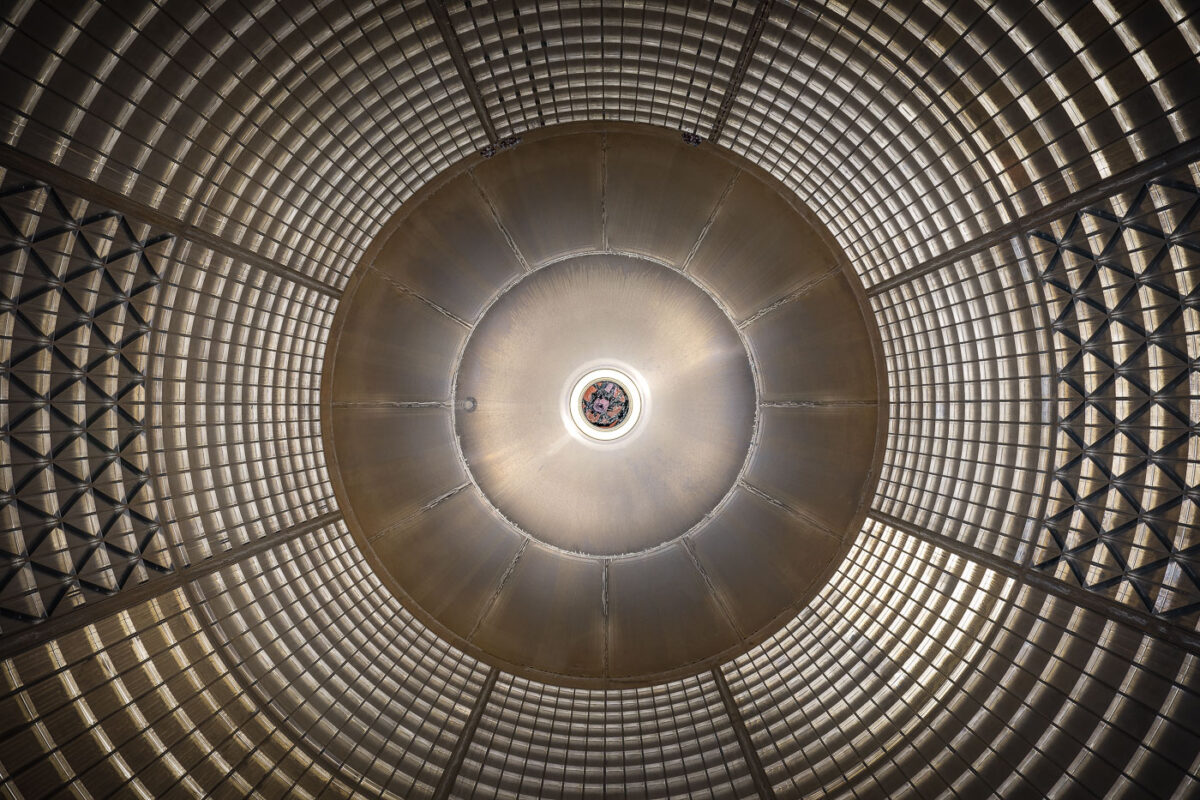
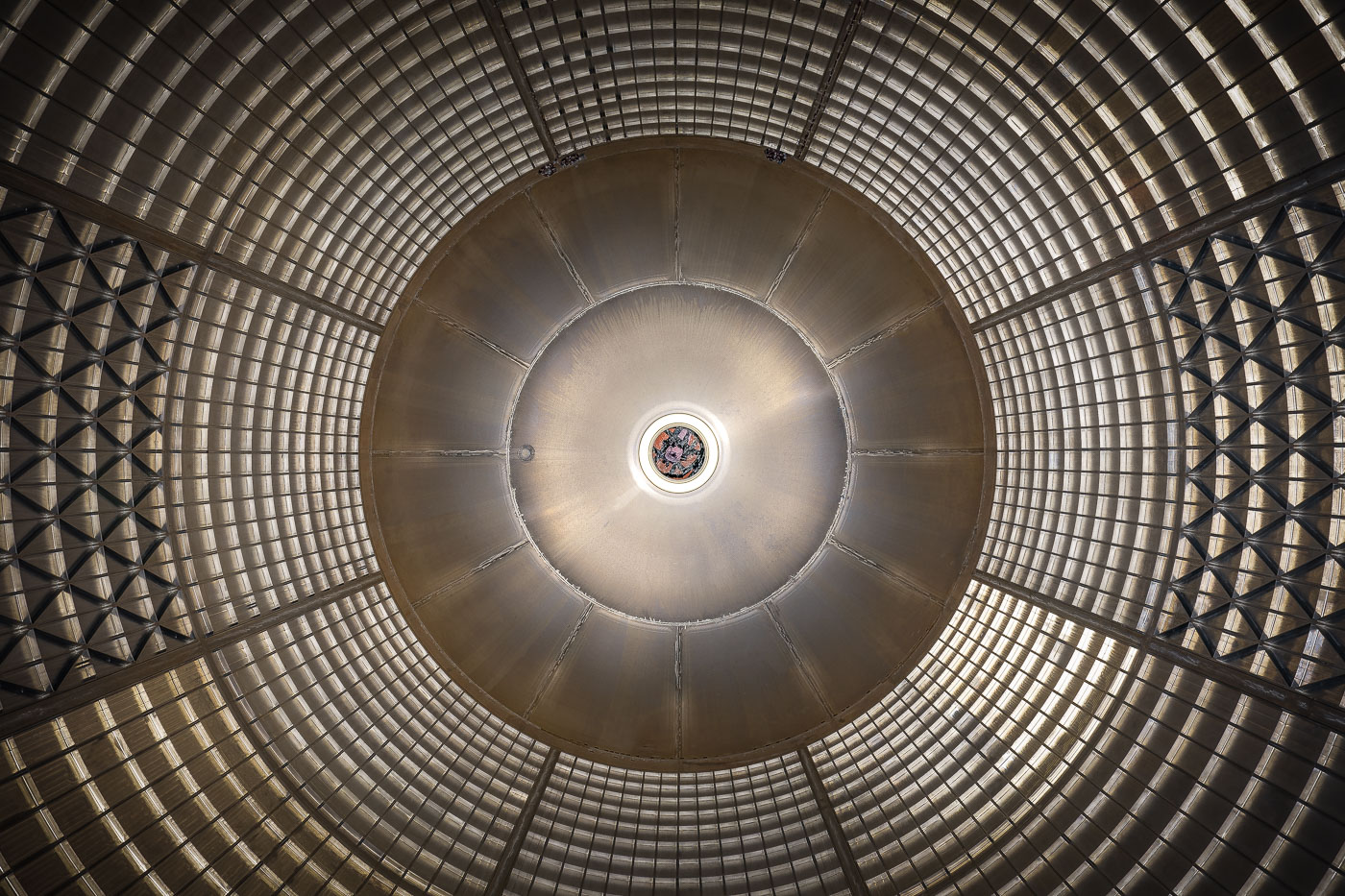
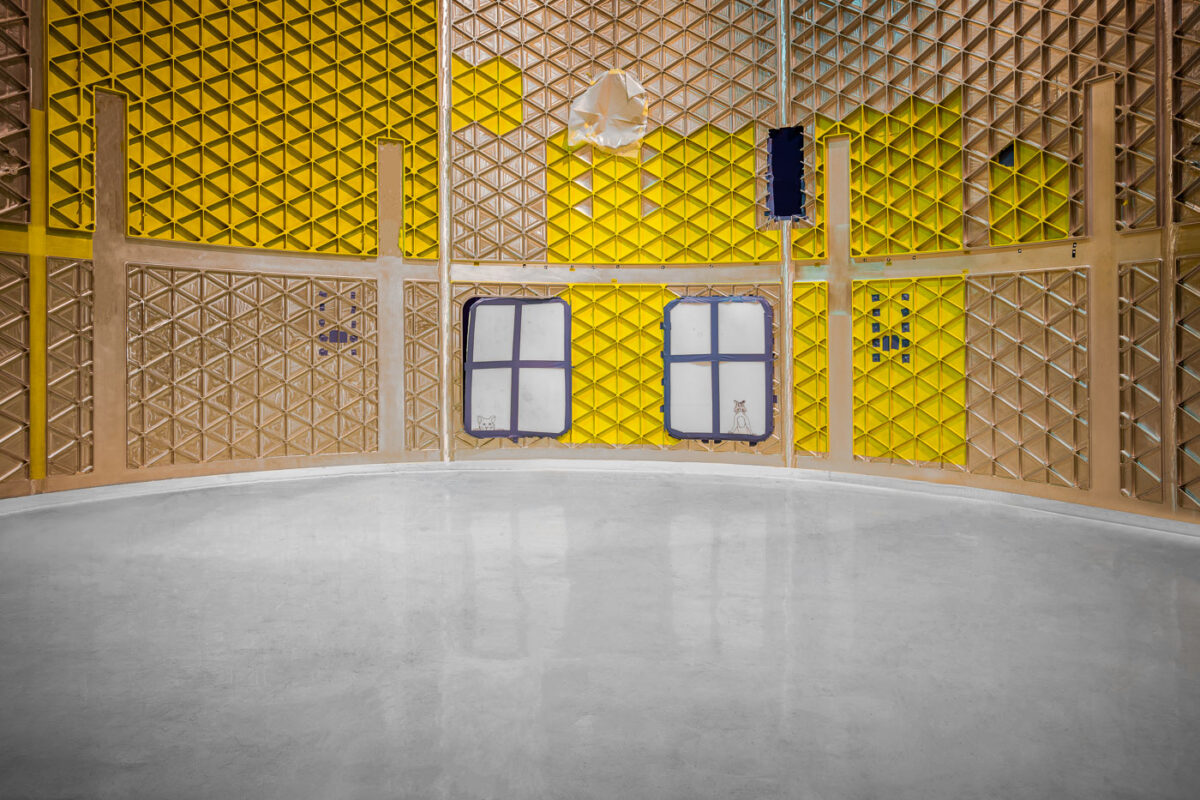
Inside SLS Barrel at NASA Michoud Assembly Facility
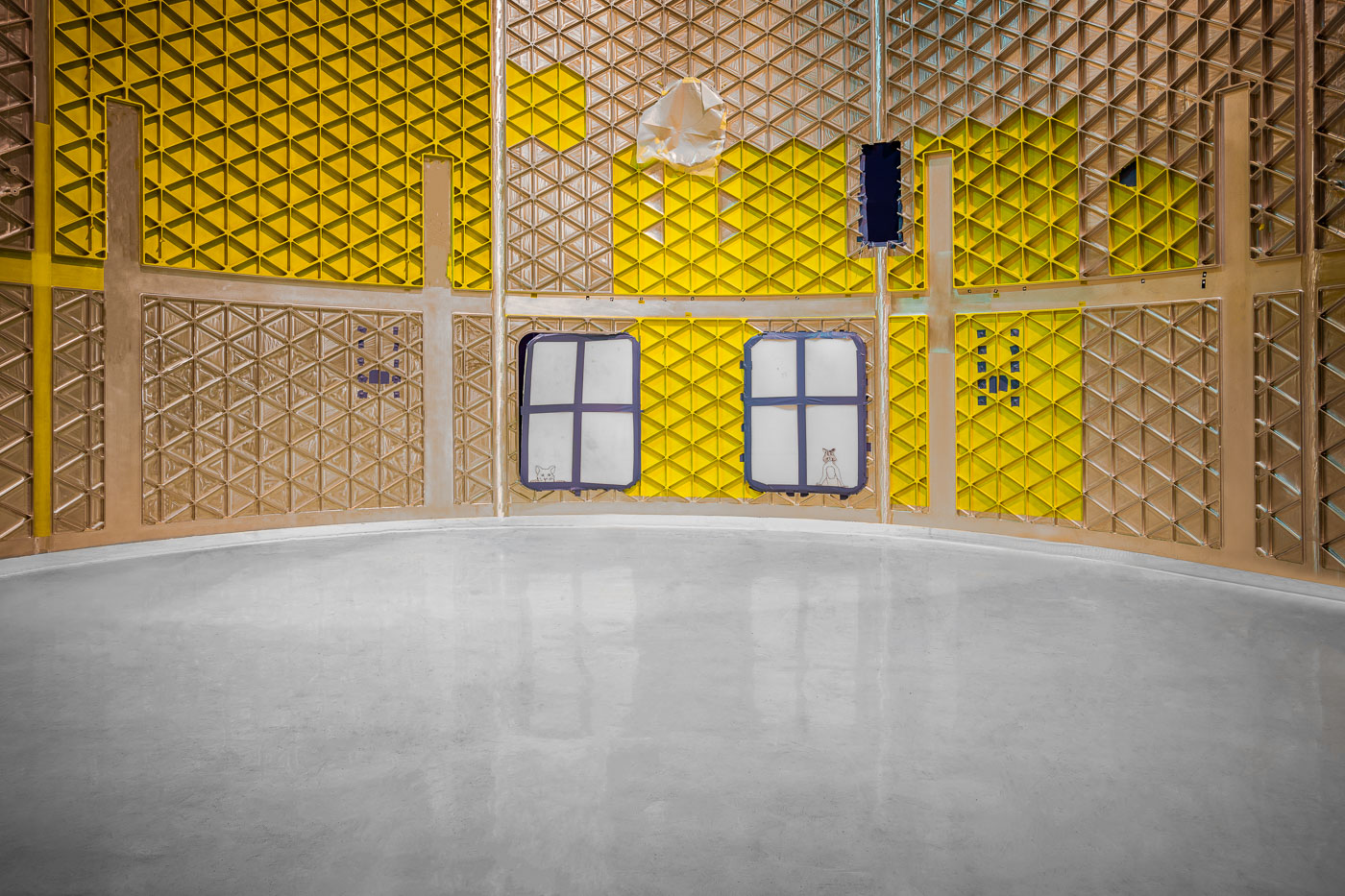
This photograph shows the interior of a Space Launch System (SLS) liquid hydrogen tank barrel at NASA's Michoud Assembly Facility in New Orleans, Louisiana. This component is a critical part of the SLS core stage, designed to hold super-cold liquid hydrogen, one of the propellants for the rocket's engines. Constructed from AI 2219, a specialized aerospace aluminum alloy, the barrel's robust design ensures structural integrity under extreme conditions. The SLS rocket is central to NASA's Artemis program, which aims to return humans to the Moon and prepare for future missions to Mars. The Michoud Assembly Facility plays a vital role in the manufacturing and assembly of large-scale space structures for American space exploration.
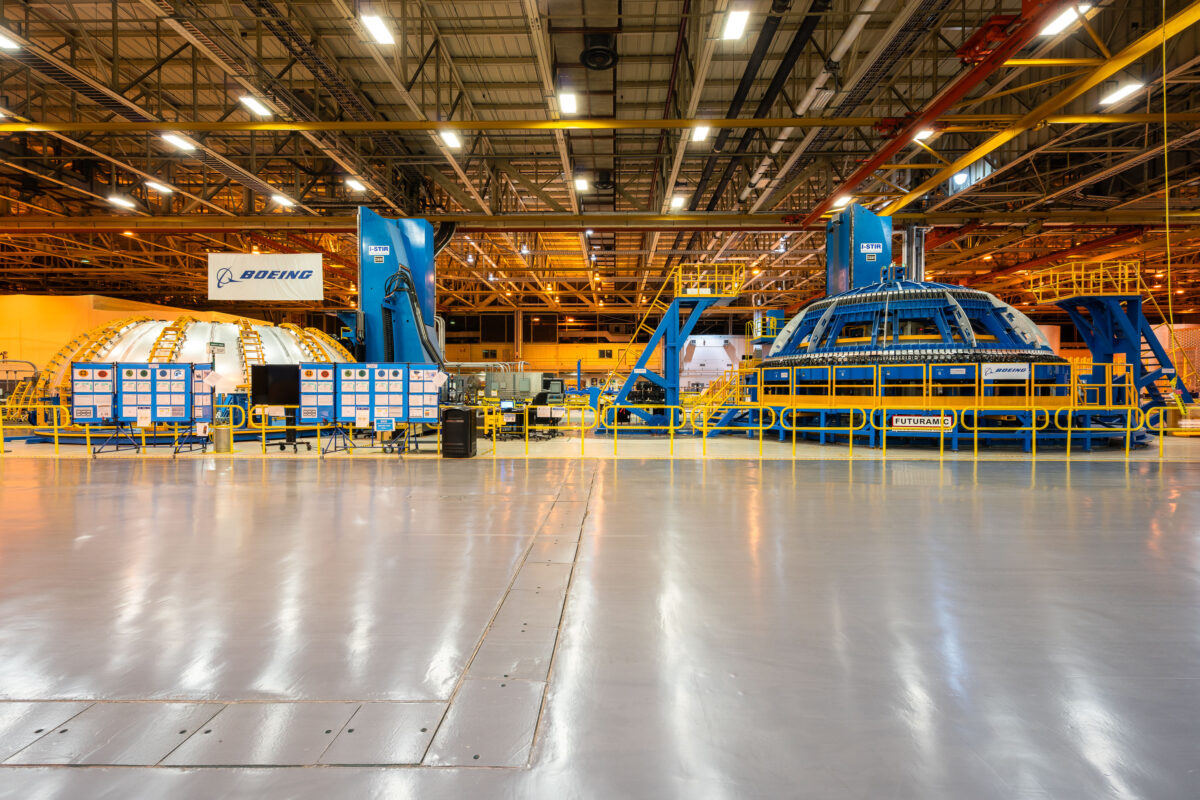
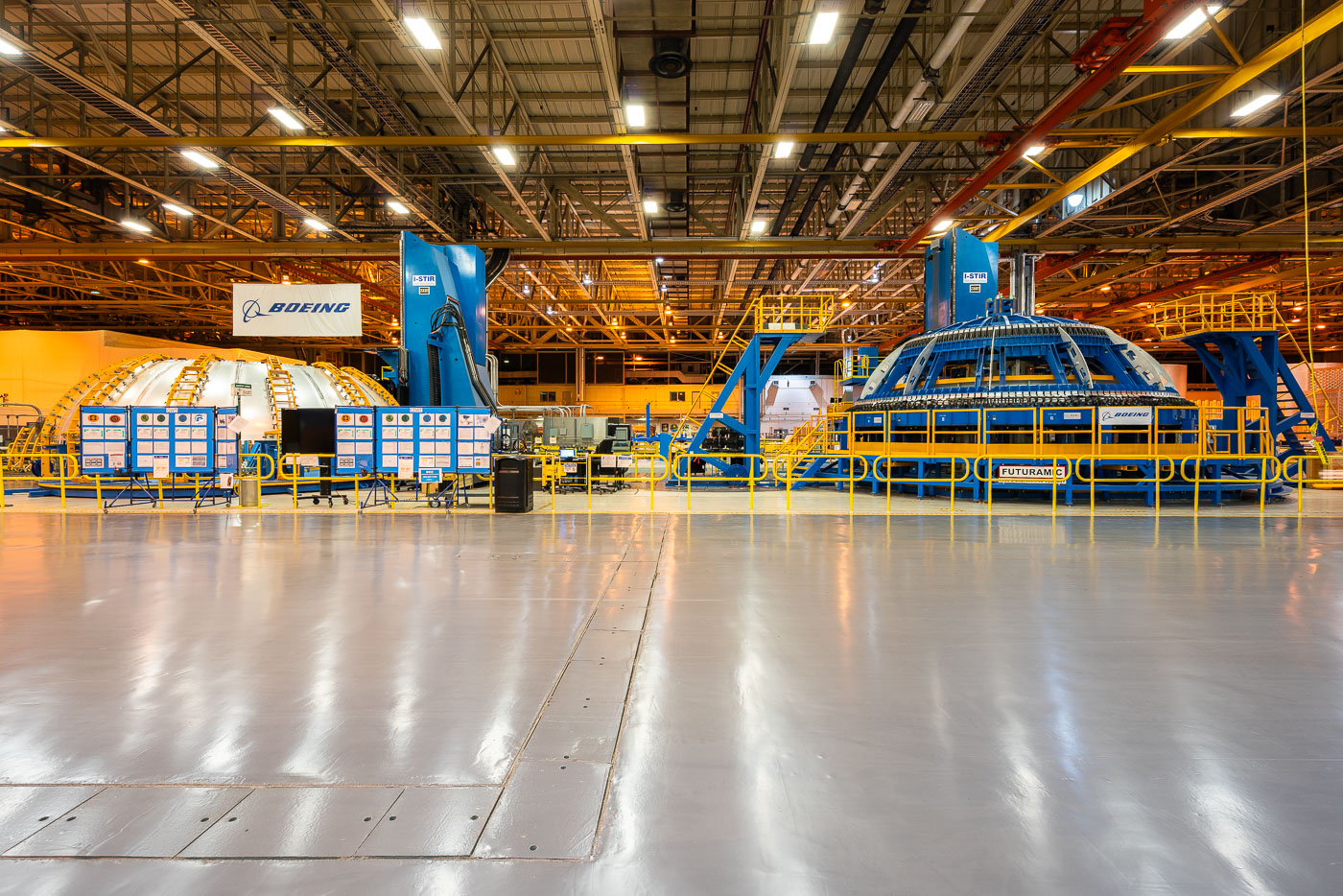
The Boeing Gore Weld Tool at Michoud Assembly Facility in New Orleans is used for friction-stir welding of aluminum dome sections for aerospace vehicles like NASA's SLS rocket.
Boeing Gore Weld Tool at Michoud Assembly Facility, New Orleans. The facility manufactures components for next-generation aerospace vehicles, including the Space Launch System (SLS) for NASA's Artemis program. The Gore Weld Tool, built by Futureamic, joins massive aluminum dome sections using friction-stir welding for rocket fuel tanks and spacecraft pressure vessels. Michoud Assembly Facility has a long history in spaceflight hardware production, having previously manufactured components for the Saturn V rockets and Space Shuttle external tanks. It continues to be a key national center for large-scale precision manufacturing and assembly of spaceflight hardware, supporting deep space exploration efforts. Keywords: Boeing, Michoud Assembly Facility, New Orleans, Gore Weld Tool, Space Launch System, Artemis program, friction-stir welding, aerospace manufacturing
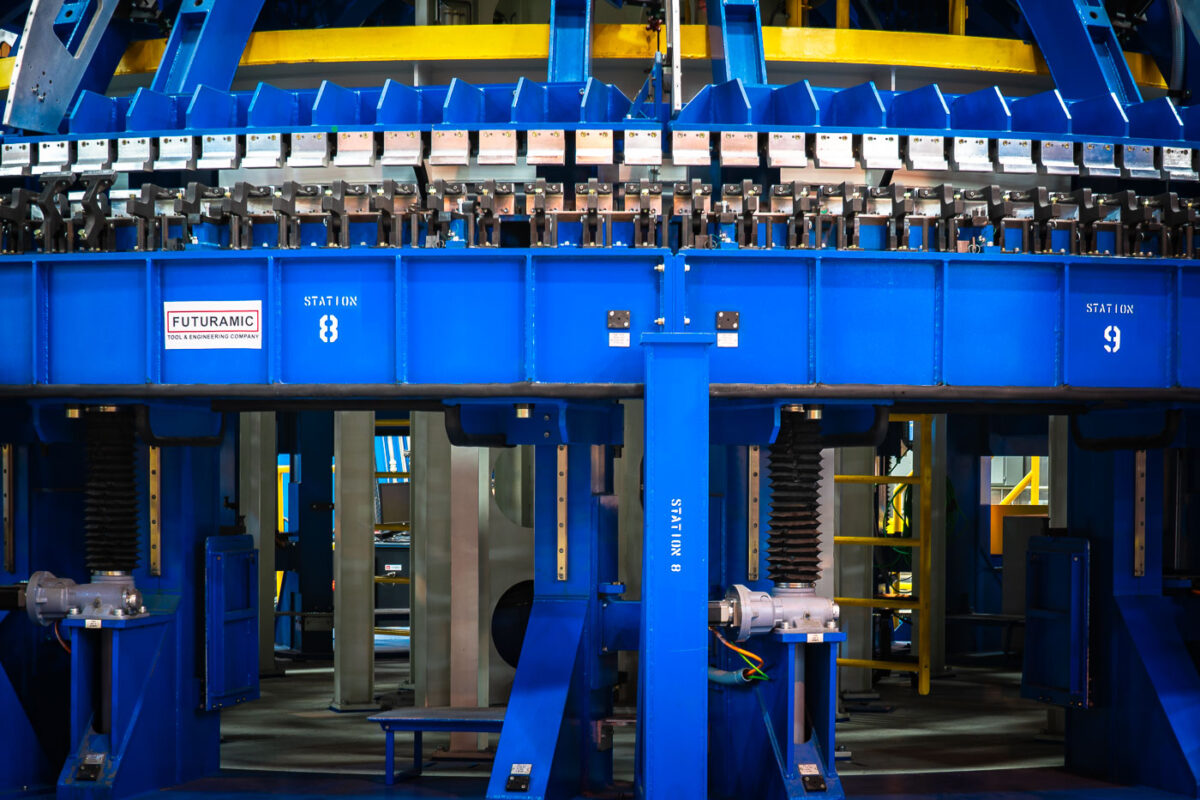
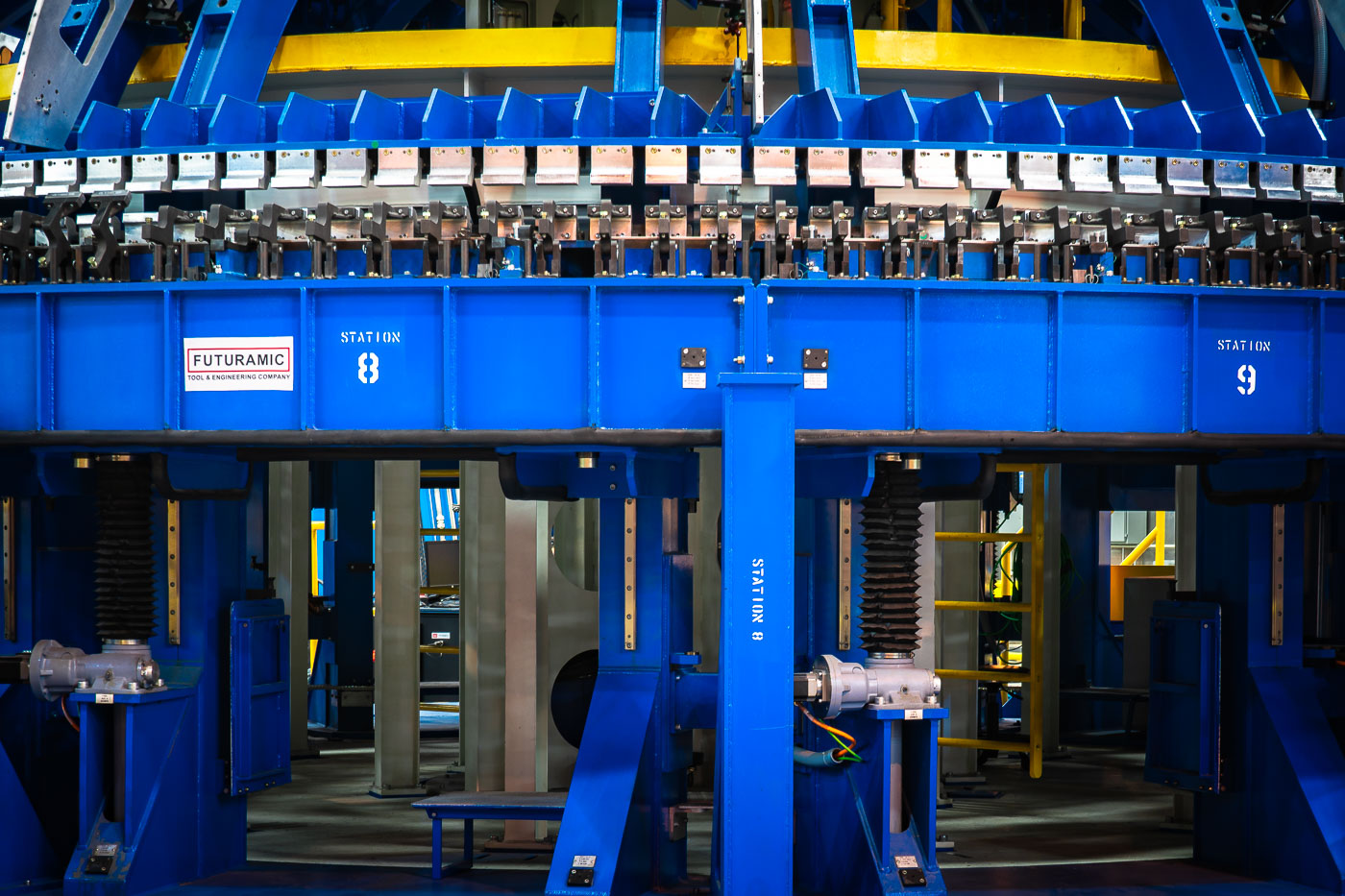
Boeing Gore Weld Tool Station 8 at NASA's Michoud Assembly Facility in New Orleans, Louisiana, used for manufacturing the SLS core stage for the Artemis program.
The image shows the Boeing Gore Weld Tool Station 8 at NASA's Michoud Assembly Facility in New Orleans, Louisiana. This heavy-duty industrial equipment is designed for precision welding of large-scale components. A label on the equipment reads "FUTURAMIC TOOL & ENGINEERING COMPANY." This station is part of the manufacturing process for the Space Launch System (SLS) core stage, a critical component for NASA's Artemis program. The SLS is the most powerful rocket ever built and is intended to carry astronauts to the Moon and eventually to Mars. The Michoud Assembly Facility has a long history of building large structures for space exploration, including the Saturn V rocket and the Space Shuttle external fuel tanks.
The Boeing Gore Weld Tool Station 8, labeled "FUTURAMIC TOOL & ENGINEERING COMPANY," is a large industrial machine at NASA's Michoud Assembly Facility in New Orleans, Louisiana, used for welding components for the Space Launch System.
The Boeing Gore Weld Tool Station 8, labeled "FUTURAMIC TOOL & ENGINEERING COMPANY," is a large industrial machine located at NASA's Michoud Assembly Facility in New Orleans, Louisiana. This station is designed for precision welding of large-scale components for space exploration. This equipment is integral to the manufacturing of the Space Launch System (SLS) core stage, a key element of NASA's Artemis program aimed at returning humans to the Moon and venturing to Mars. The Michoud facility has a legacy of constructing major space hardware, including the Saturn V rocket and Space Shuttle external tanks, underscoring its critical role in America's space endeavors. Keywords: Artemis, NASA, Michoud Assembly Facility, SLS, Space Launch System, New Orleans, Aerospace Manufacturing
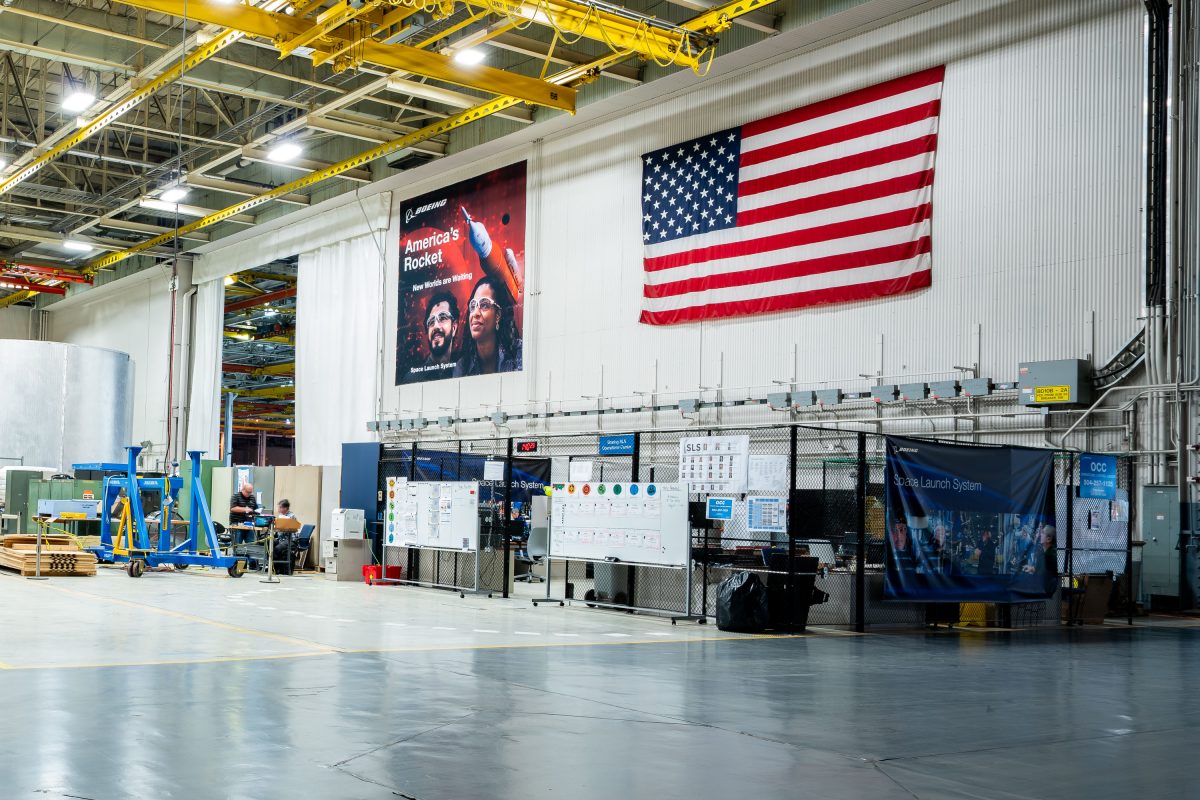
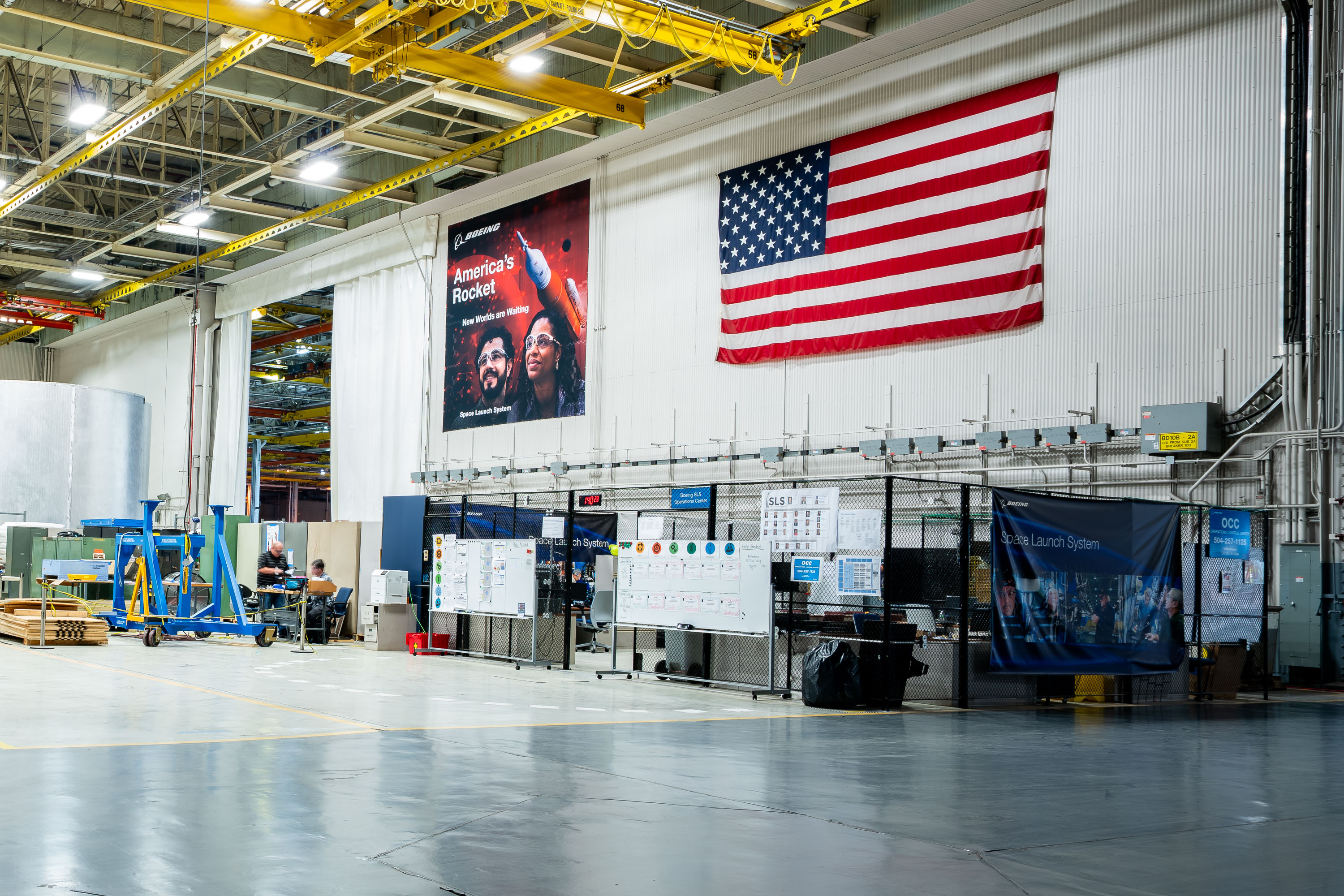
Missions in Hallway at the NASA Michoud Assembly Facility
A corridor at NASA’s Michoud Assembly Facility in New Orleans, Louisiana, displays a collection of mission patches and crew insignias. These emblems chronicle significant milestones in American aerospace history, reflecting the facility's contributions to programs like Apollo and the Space Shuttle. Today, Michoud continues its legacy as a primary manufacturing site for the Space Launch System (SLS) core stage, critical for NASA's Artemis missions. The display serves as a historical testament to the facility's ongoing role in space exploration, set against its industrial backdrop.
NASA Vertical Assembly Center at Michoud
The Vertical Assembly Center rises inside the Michoud Assembly Facility, where major sections of NASA’s Space Launch System core stage are stacked and integrated. This multi-story structure supports the alignment and joining of large rocket elements, including propellant tanks and structural segments, into a single flight article. Built at Michoud and later transported for testing and launch, each core stage reflects the continuation of large-scale rocket manufacturing at a facility that has supported U.S. human spaceflight since the Saturn V program.
From the top of NASAs cleaning cell at Michoud
The Space Launch System (SLS) Fuel Tank Cleaning Cell is situated within the Vertical Assembly Center at NASA Michoud Assembly Facility in Louisiana. This specialized facility is engineered to meticulously clean the interior of the massive fuel tanks destined for the Space Launch System rocket. The SLS rocket, designed to be the world’s largest, is a cornerstone of NASA's Artemis program, which aims to return humans to the Moon. The rigorous cleaning process is essential to maintain the structural integrity and optimal performance of these critical components for future space missions.
Look from the top of a NASA vertical assembly center
The towering interior of NASA’s Michoud Assembly Facility in New Orleans, Louisiana, is dedicated to the fabrication and assembly of major components for the Space Launch System (SLS) rocket. This massive Vertical Assembly Area, characterized by its multilevel platforms, access walkways, and heavy structural supports, is engineered for the precision alignment of rocket stages. The facility's specialized environment is crucial for preparing the core stages that power the Artemis missions, which aim to return humans to the Moon and advance deep space exploration. Michoud has a significant history in American space endeavors, contributing to programs from Apollo to the Space Shuttle, and continues its legacy with the next generation of human spaceflight.

Built in Minneapolis

Photographs showcasing change over time

Browse by location, move through long-running series, or start with recent work.