Place Archive

Kyoto

Yasaka Shrine in Kyoto’s Gion district is a historical Shinto site established in 656 AD, featuring traditional paper lanterns inscribed with Japanese characters. The shrine hosts the annual Gion Matsuri festival, a major event that draws visitors every July and reflects Kyoto’s enduring cultural heritage.

1 photo set 20 photos

Photos from Kyoto
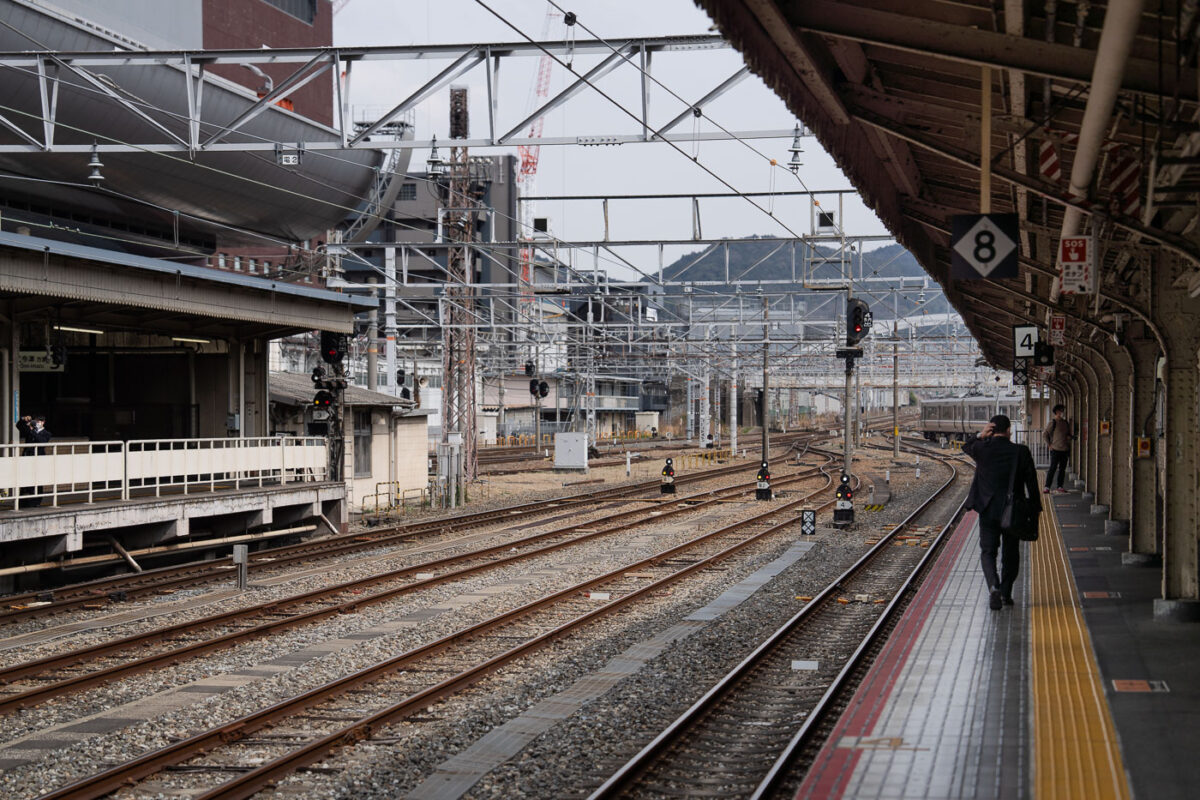
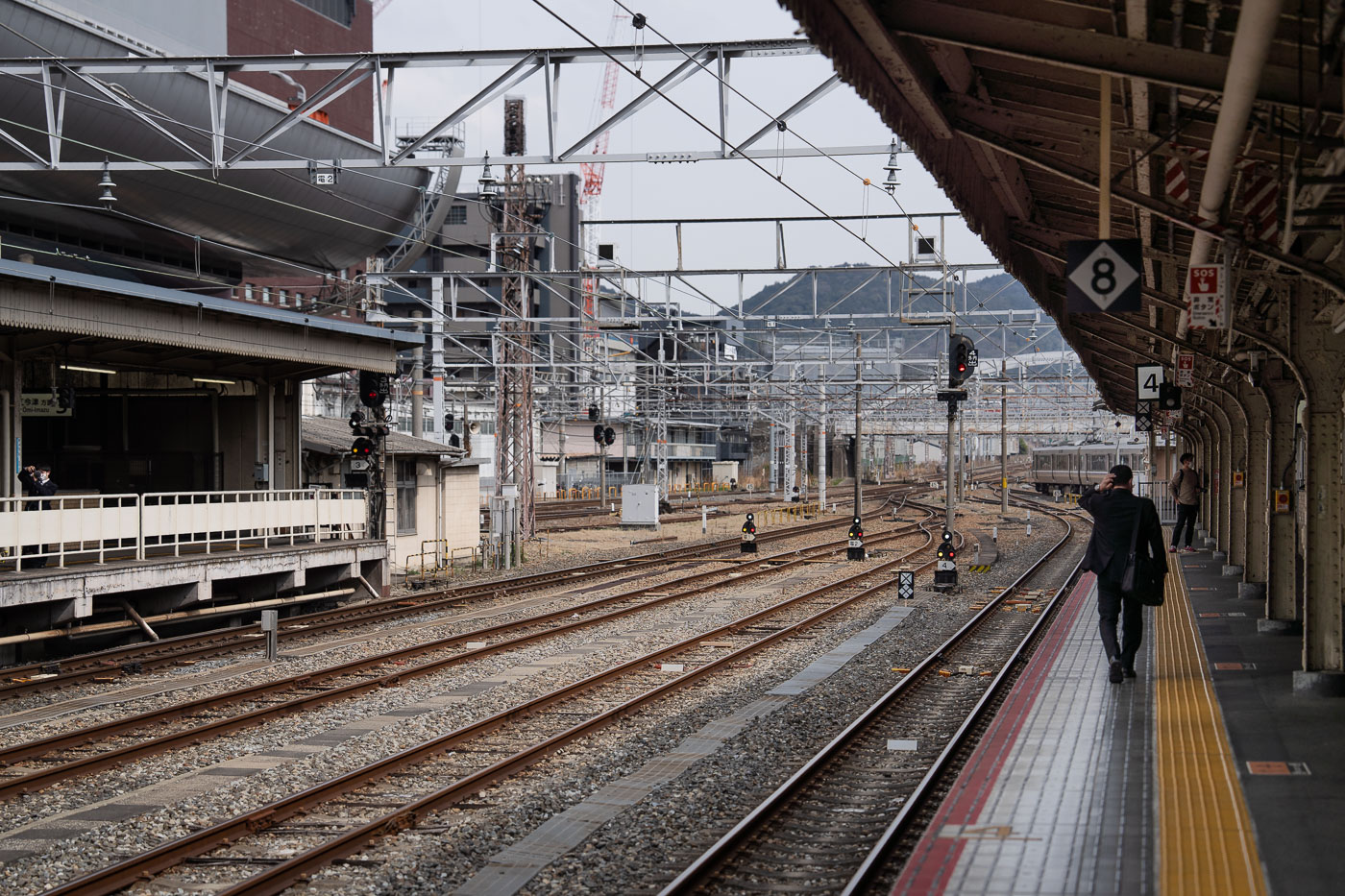
Commuters on platforms at Kyoto Station in Kyoto, Japan, beside multiple rail tracks.
Kyoto Station, a major transportation hub in Japan, serves as a critical node for both Shinkansen (bullet train) and local JR lines. The station's complex network of tracks and platforms, visible here, facilitates the daily movement of millions of commuters and travelers. Its modern architecture, designed by Hiroshi Hara, was completed in 1997 and features a vast, open concourse and a distinctive steel lattice roof. The station's design emphasizes connectivity and efficiency, reflecting its role as a gateway to Kyoto and the wider Kansai region.
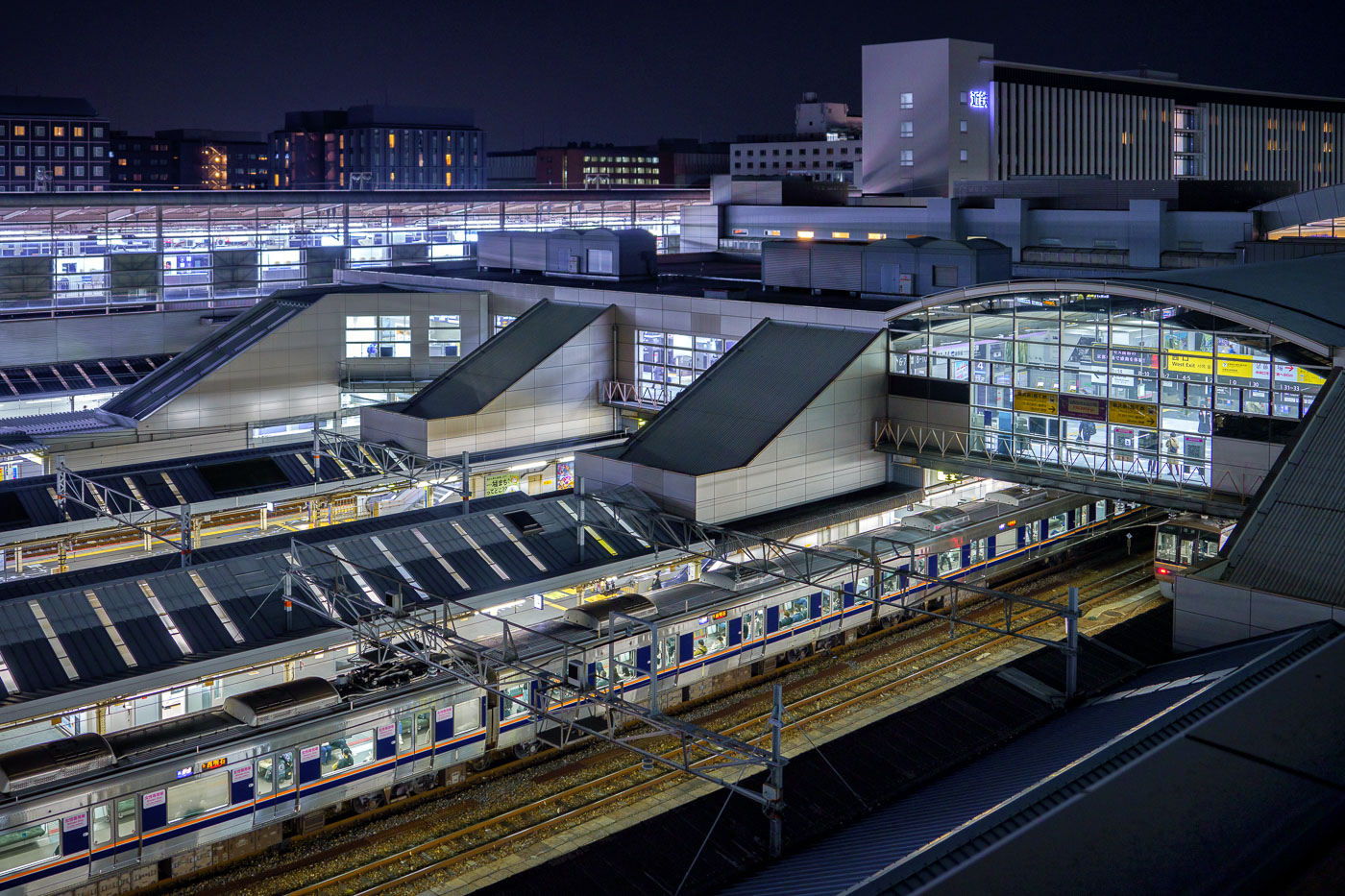
Kyoto Station platforms and trains at night in Kyoto, Japan
Kyoto Station, a major transportation hub in Kyoto, Japan, is illuminated at night. Opened in 1997, the station's modern architecture, designed by Hiroshi Hara, features a vast glass atrium and steel structure, contrasting with the city's traditional aesthetic. It serves as a central point for Shinkansen bullet trains, local JR lines, and private railways, facilitating travel for millions of passengers annually. The station complex also includes a hotel, department stores, and numerous shops and restaurants, making it a vibrant center of activity day and night.
Prada storefront in Kyoto, Japan, with illuminated sign and handbag display.
The Prada store in Kyoto, Japan, presents a sophisticated storefront designed to attract luxury consumers. Established in 1913, Prada has grown into a global fashion powerhouse, known for its innovative designs and high-quality materials. This particular store, photographed in March 2023, showcases the brand's contemporary aesthetic through its window display. The architecture of the building, with its dark stone facade and illuminated signage, reflects the modern urban environment of Kyoto.
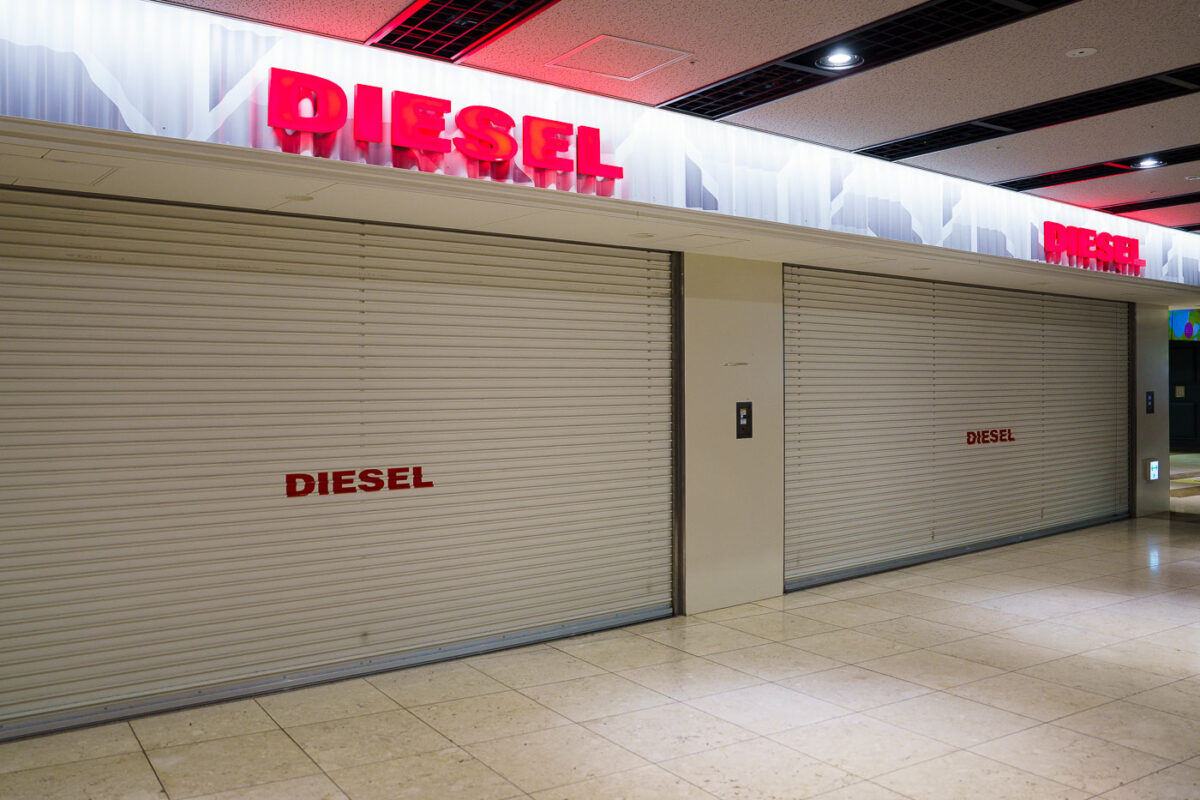
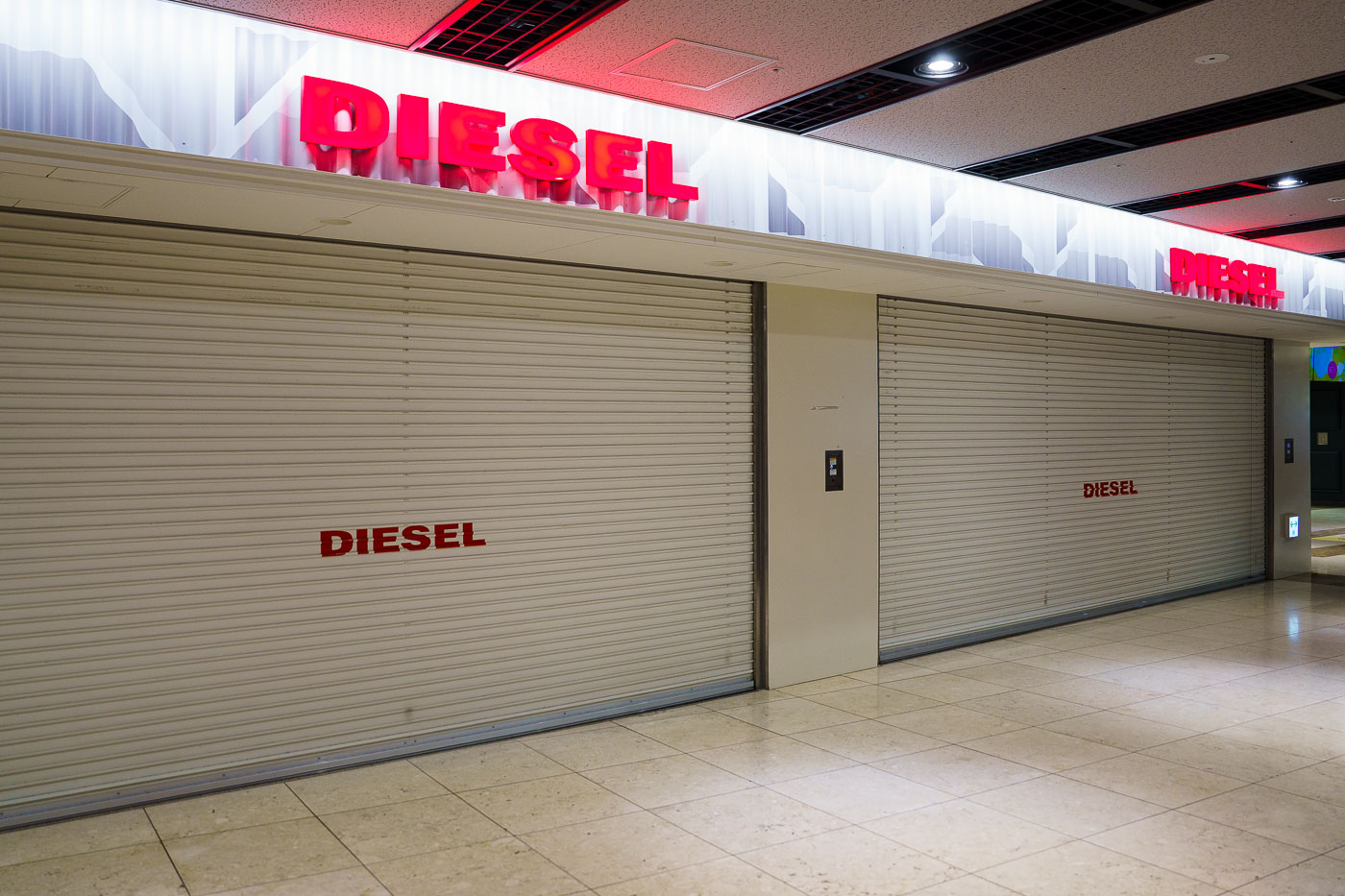
Closed Diesel store in Kyoto, Japan, with metal shutters down.
The Diesel store in Kyoto, Japan, is shown with its security shutters down. The prominent red "DIESEL" signage indicates the brand's presence within this commercial space. Stores like this are typical in urban centers, serving as retail outlets for fashion brands.
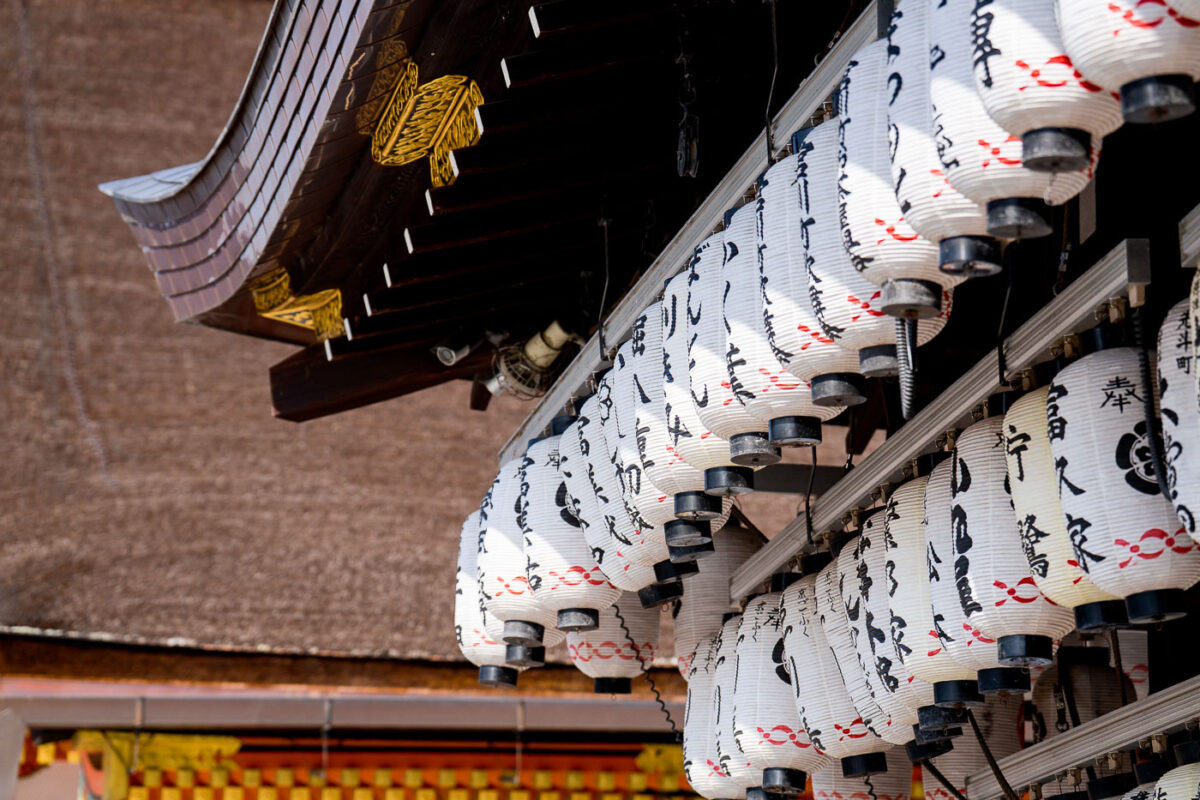
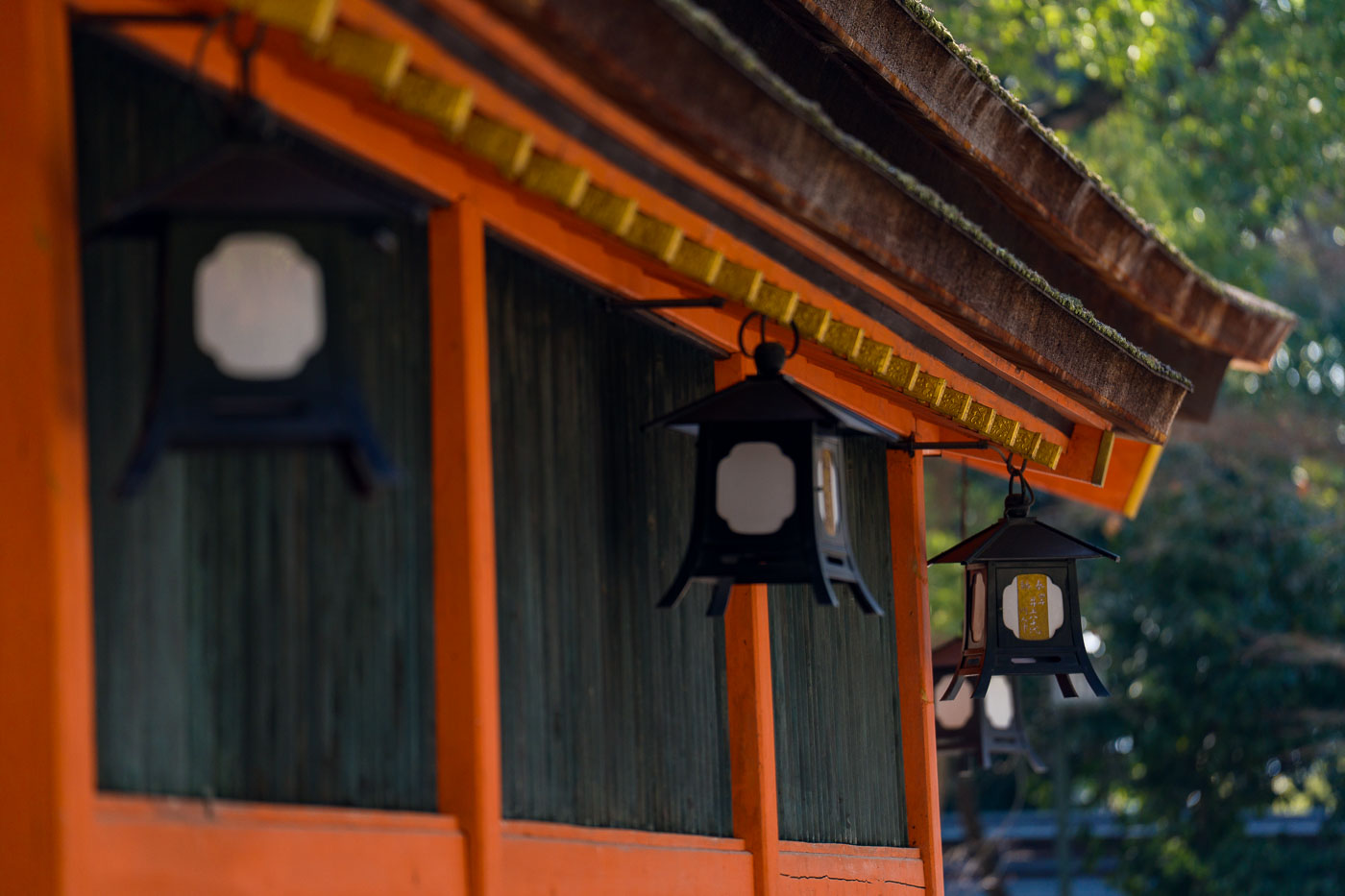
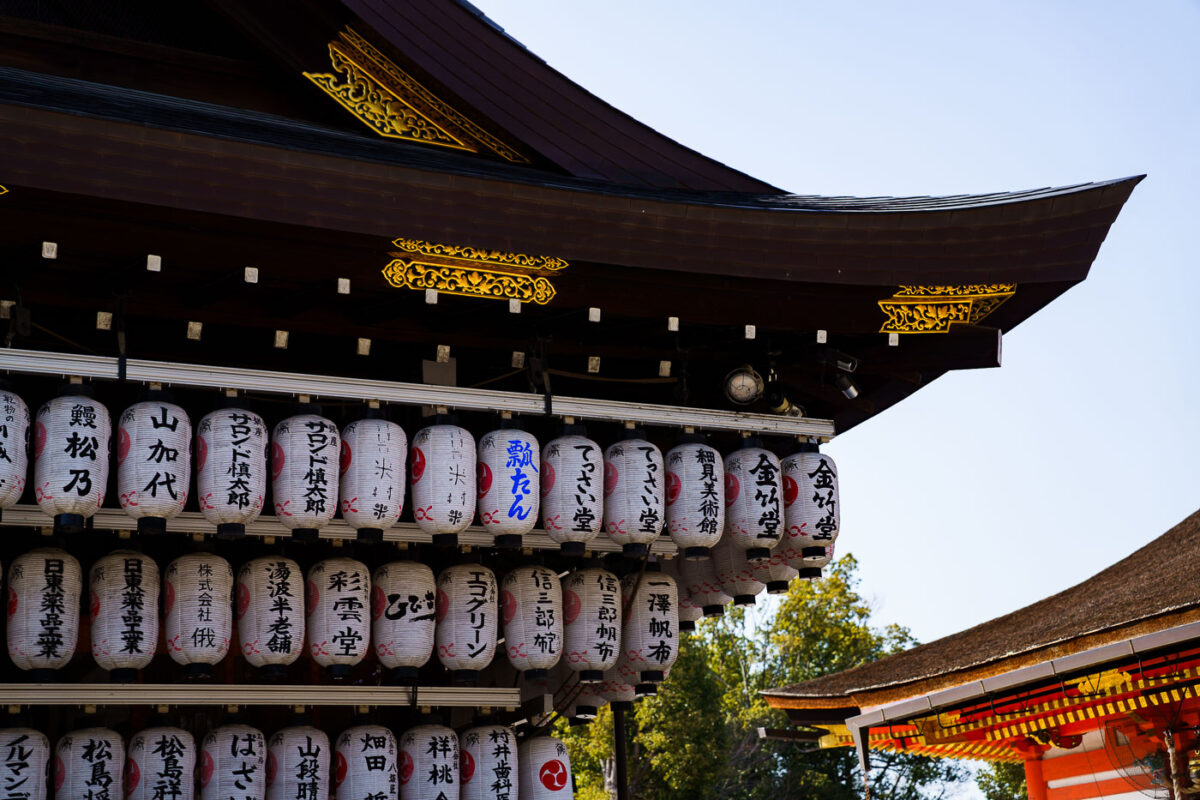
Rows of lanterns hang beneath the eaves of Yasaka Shrine in Kyoto.
Rows of white paper lanterns, inscribed with Japanese characters and red accents, hang beneath the eaves of Yasaka Shrine in Kyoto. These lanterns, known as 'chochin,' are a common sight at Japanese shrines and temples, often donated by businesses and individuals as offerings. They are traditionally lit during festivals and ceremonies, illuminating the grounds and creating a festive atmosphere. Yasaka Shrine, also known as Gion Shrine, is a prominent Shinto shrine located in the Gion district of Kyoto, with a history dating back to the 7th century.
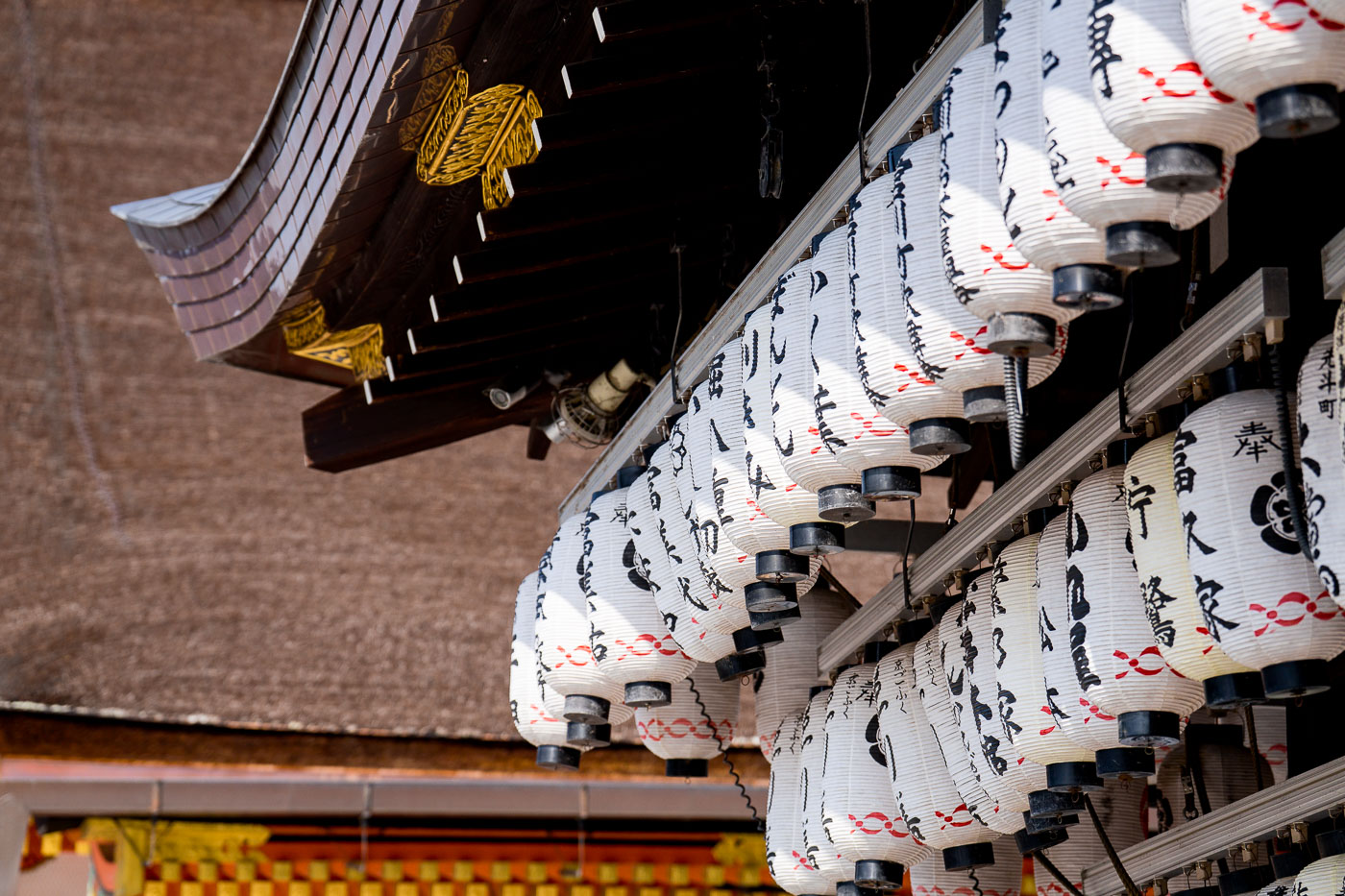
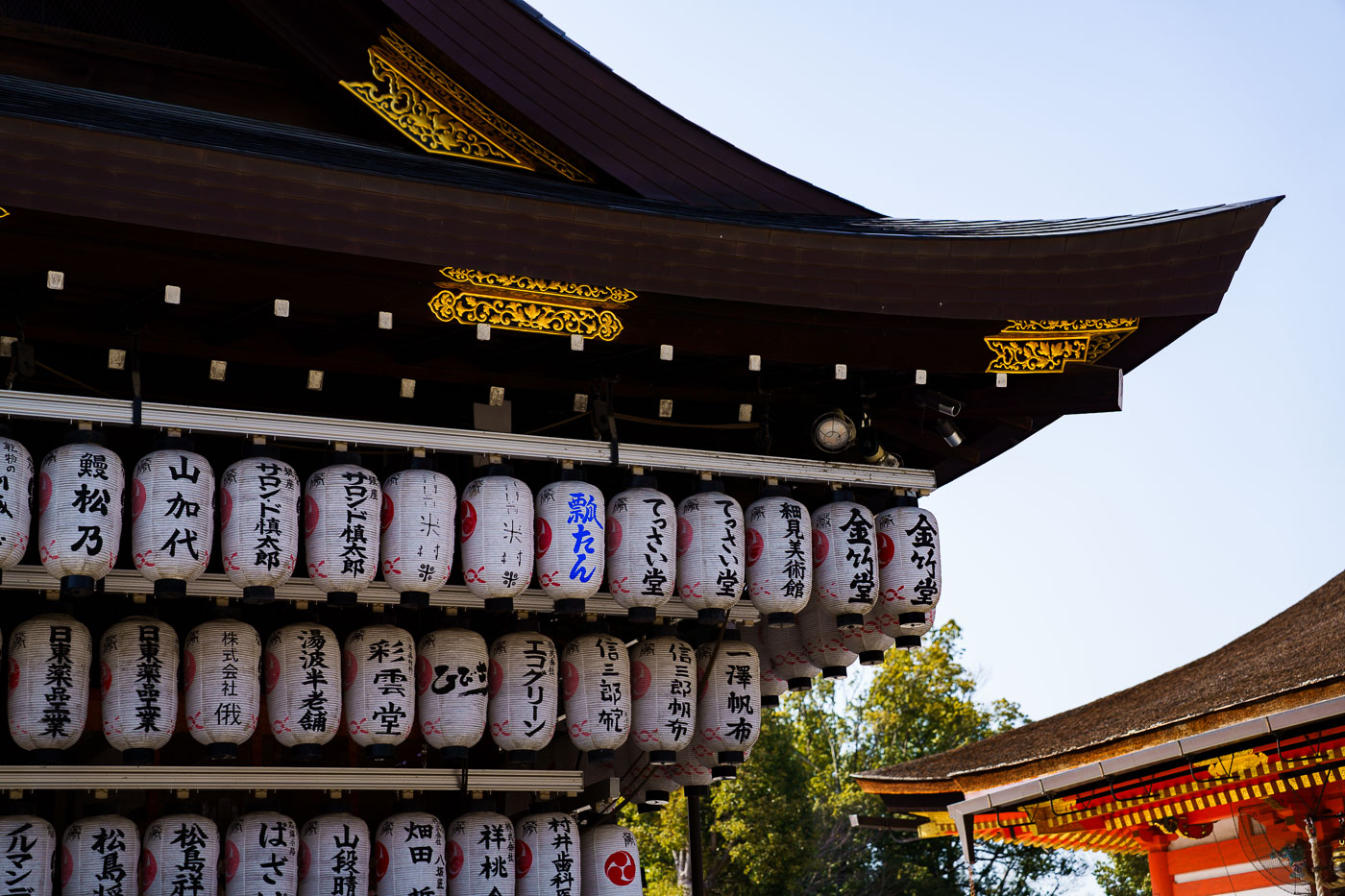
Lanterns hang from the eaves of Yasaka Shrine in Kyoto, Japan.
Lanterns hang from the eaves of a building at Yasaka Shrine in Kyoto, Japan. The shrine, also known as Gion Shrine, is a prominent Shinto shrine located in the Gion district. It was founded in 656 AD and has been rebuilt multiple times throughout its history, most recently in 1654. Yasaka Shrine is famous for its annual Gion Matsuri, one of Japan's most famous festivals, which takes place every July.
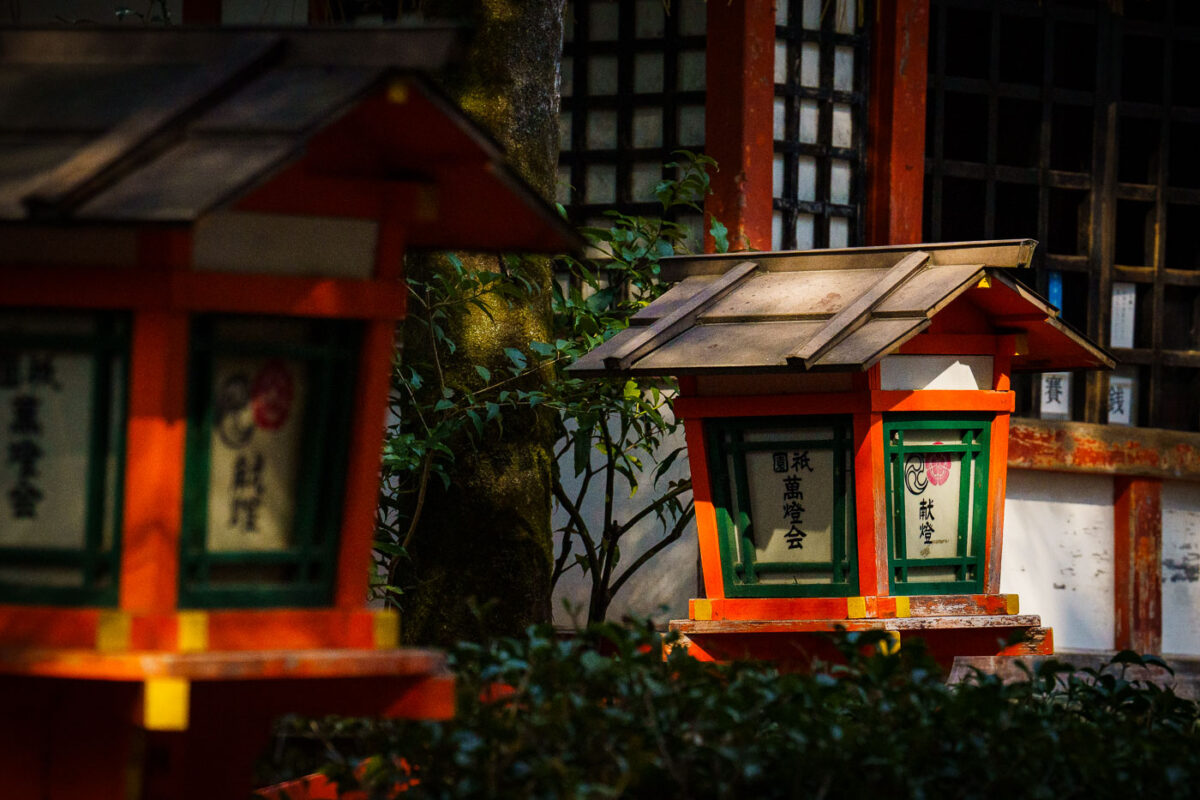
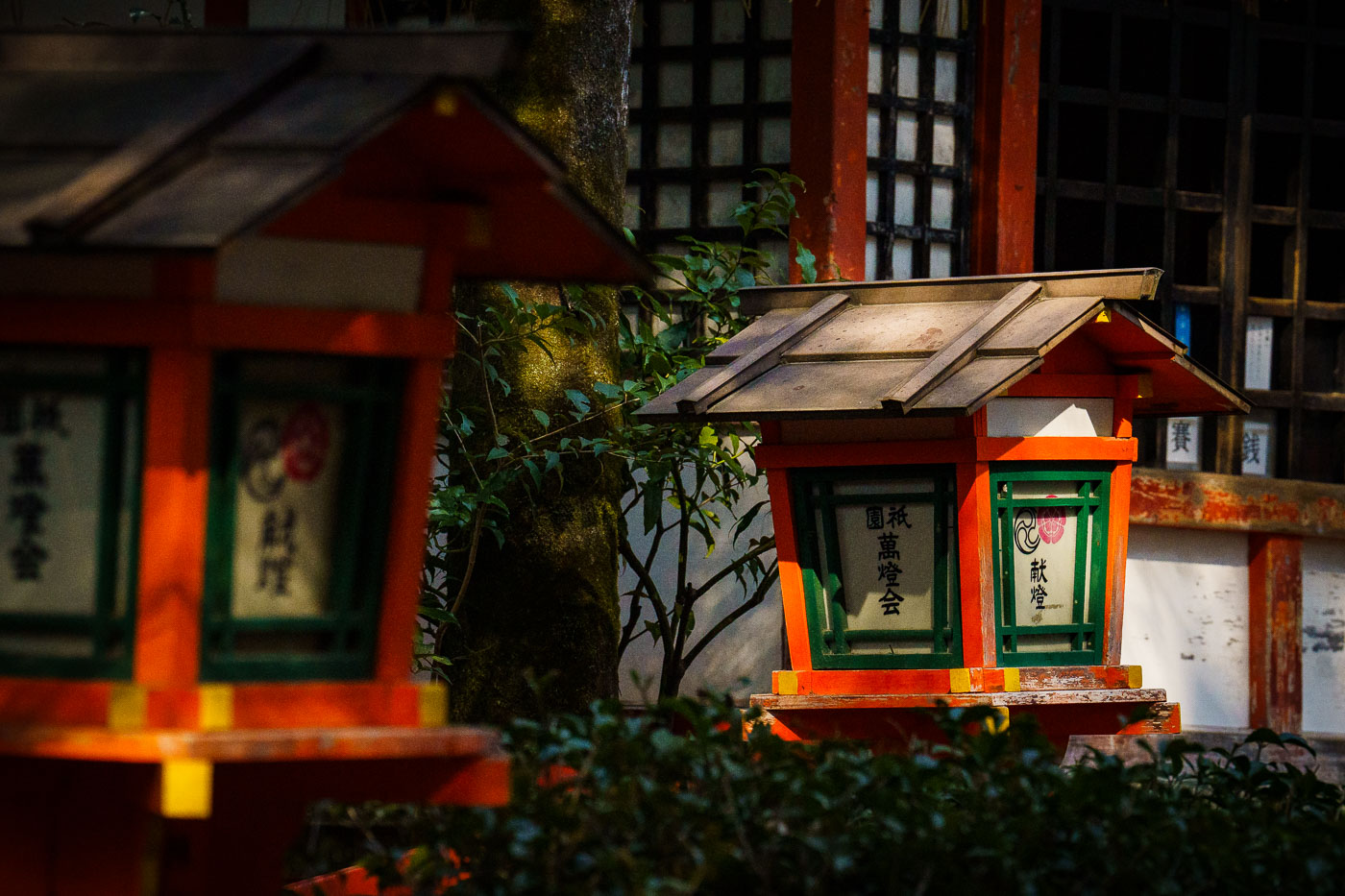
Lanterns at Yasaka Shrine in Kyoto, Japan.
Lanterns at Yasaka Shrine in Kyoto, Japan. These lanterns, known as 'tĹŤrĹŤ', are a common feature in Japanese shrines and temples, serving both decorative and functional purposes. They are often donated by individuals or businesses as a form of offering and are lit during festivals and ceremonies. Yasaka Shrine, also known as Gion Shrine, is one of Kyoto's most famous and historic Shinto shrines, with a history dating back to the 9th century. It is particularly renowned for its association with the Gion Matsuri, one of Japan's most celebrated festivals.
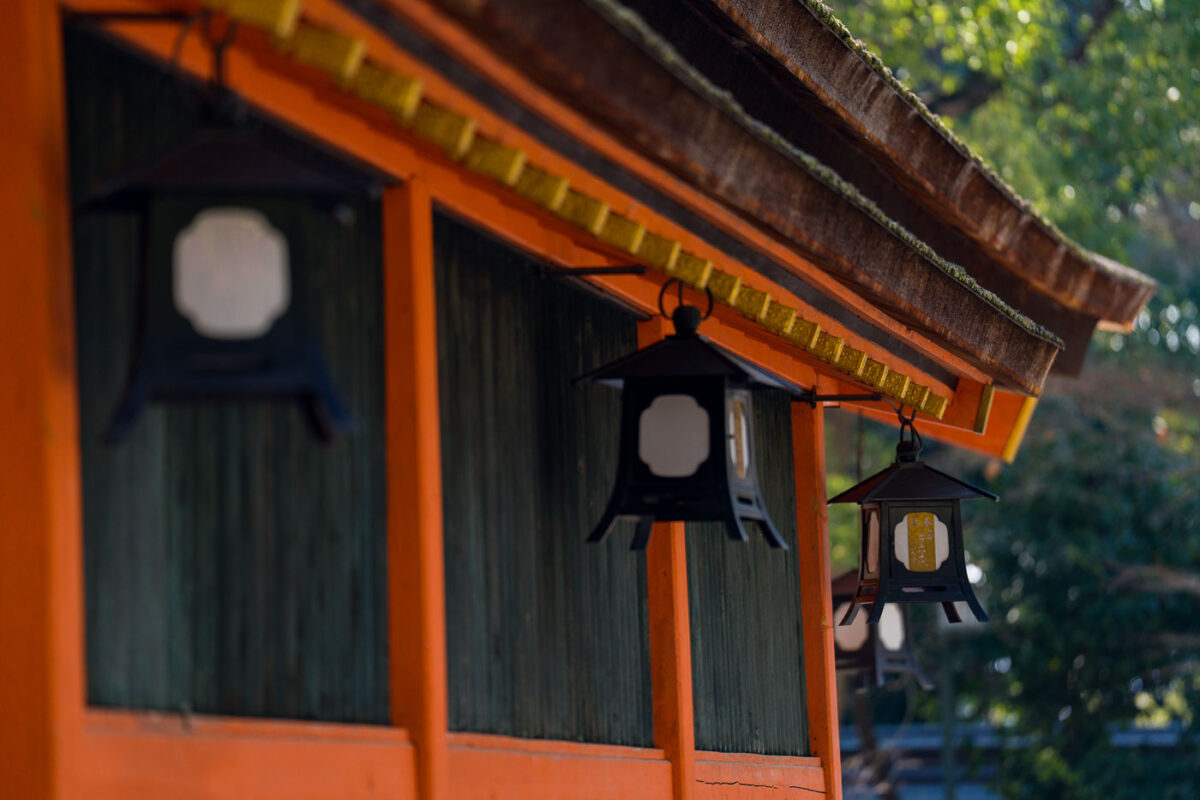
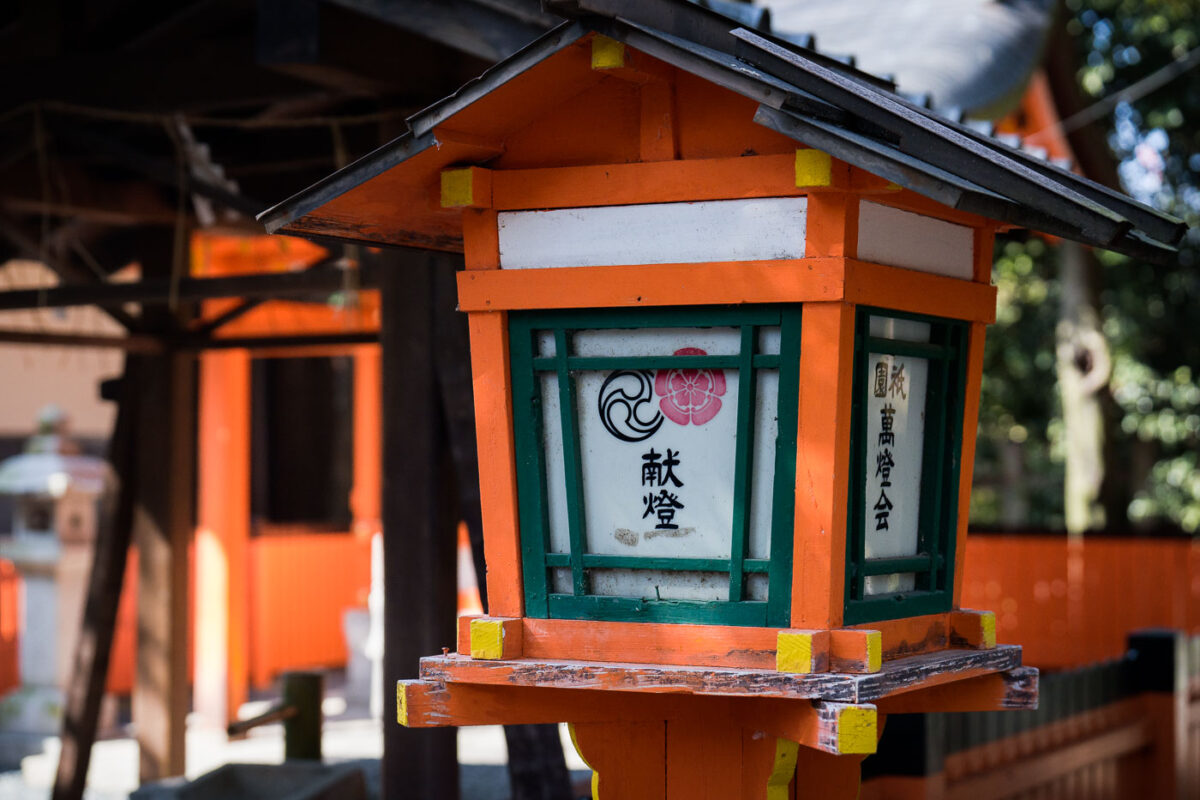
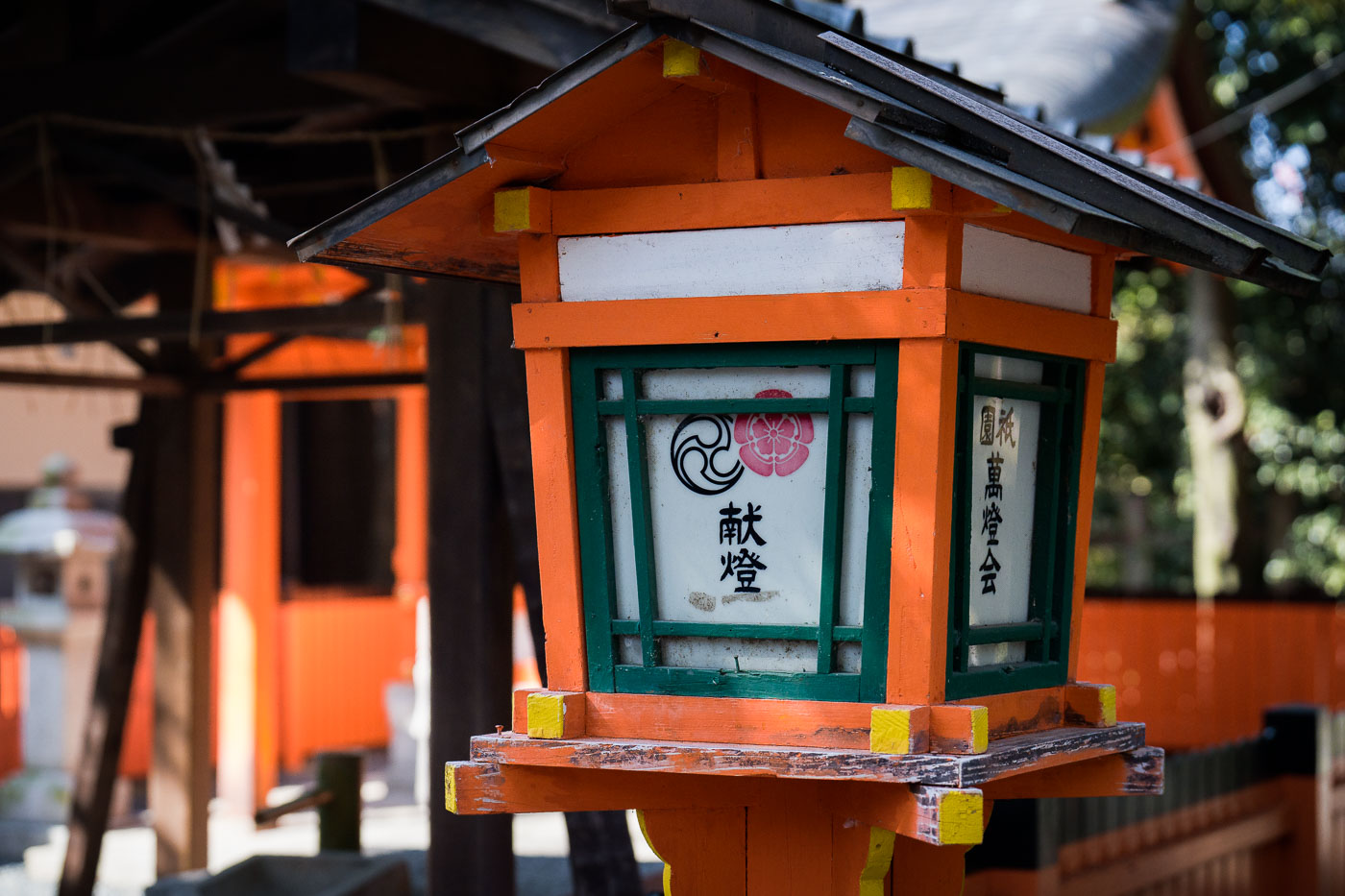
Lantern at Yasaka Shrine in Kyoto, Japan
A lantern stands in the grounds of Yasaka Shrine in Kyoto, Japan. The shrine, also known as Gion Shrine, is a prominent Shinto shrine located in the Gion district. It was founded in 656 AD and has been rebuilt numerous times throughout its history, most notably after fires in 1470 and 1864. The shrine is famous for its annual Gion Matsuri, one of Japan's most celebrated festivals, which takes place every July.
Paper lanterns hang beneath the eaves of Yasaka Shrine in Kyoto, Japan.
Rows of white paper lanterns, inscribed with Japanese characters, hang beneath the eaves of Yasaka-Jinja Shrine in Kyoto, Japan. These lanterns, known as 'chochin,' are often donated by businesses and individuals as offerings to the shrine. Yasaka-Jinja, also known as Gion Shrine, is a prominent Shinto shrine located in the Gion district of Kyoto. It was founded in 656 AD and is famous for its annual Gion Matsuri festival, one of Japan's most celebrated festivals.
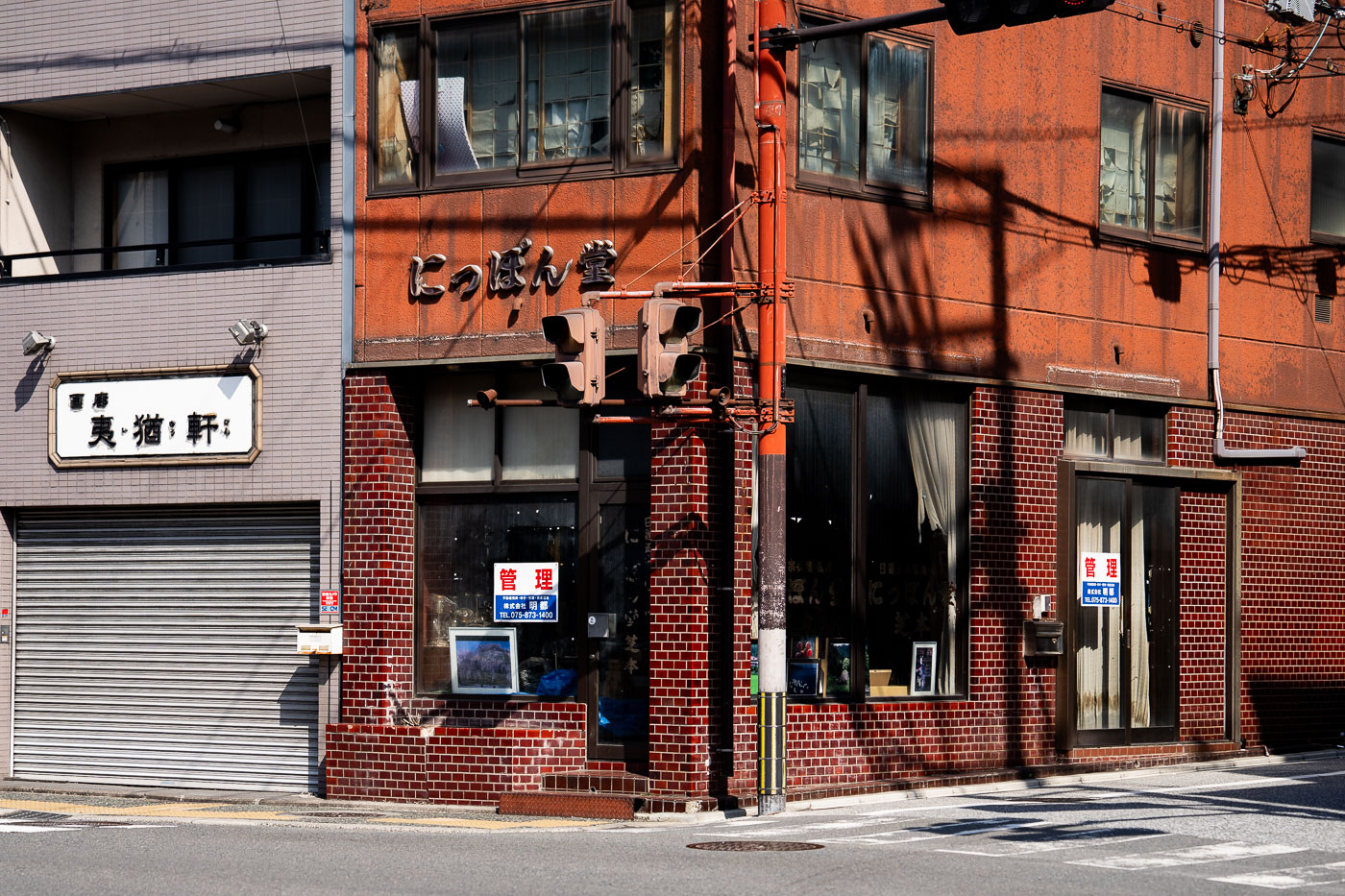
Nippondo Building at a Kyoto street corner with weathered orange and brick facades.
The Nippondo Building stands at a street corner in Kyoto, Japan, its weathered orange facade contrasting with the adjacent building's lighter tones. The building features traditional Japanese signage, indicating a commercial establishment. Traffic signals and streetlights are visible, underscoring its function as part of the city's transportation network. The architecture, with its brickwork and large windows, suggests a mid-20th-century construction, typical of commercial buildings in Japanese cities during that era.
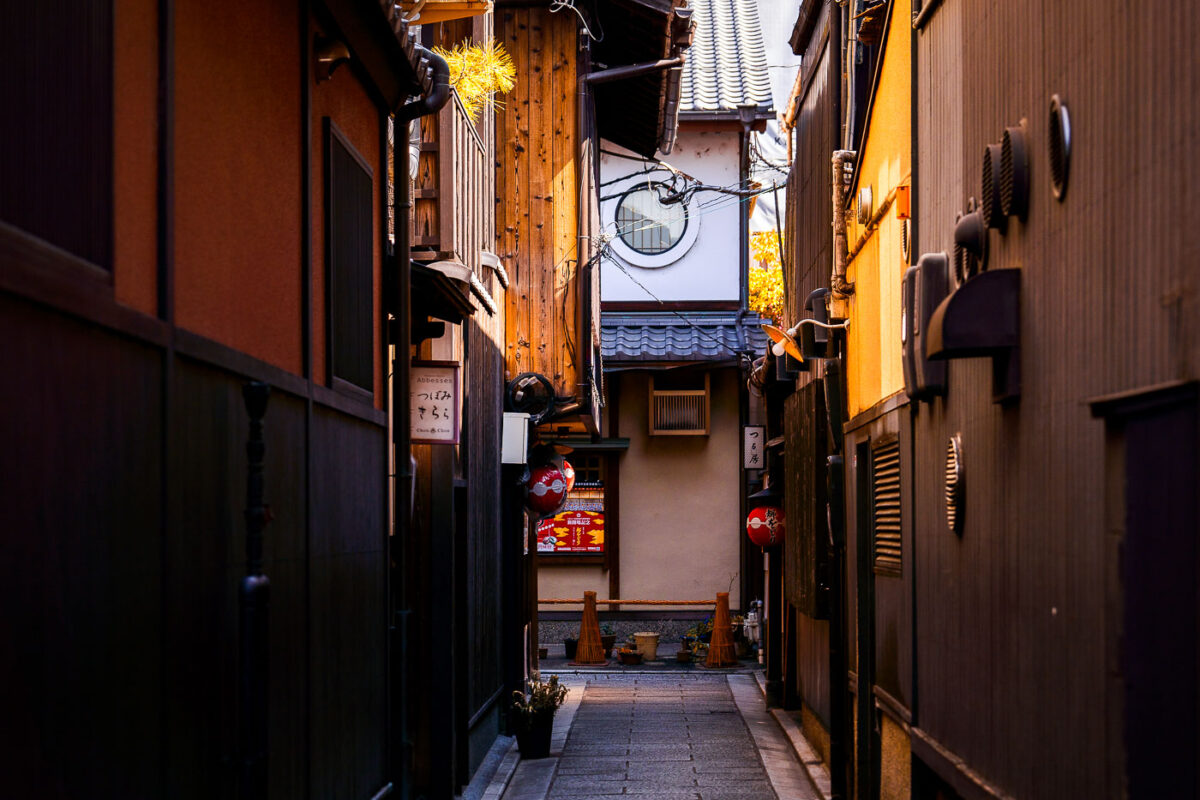
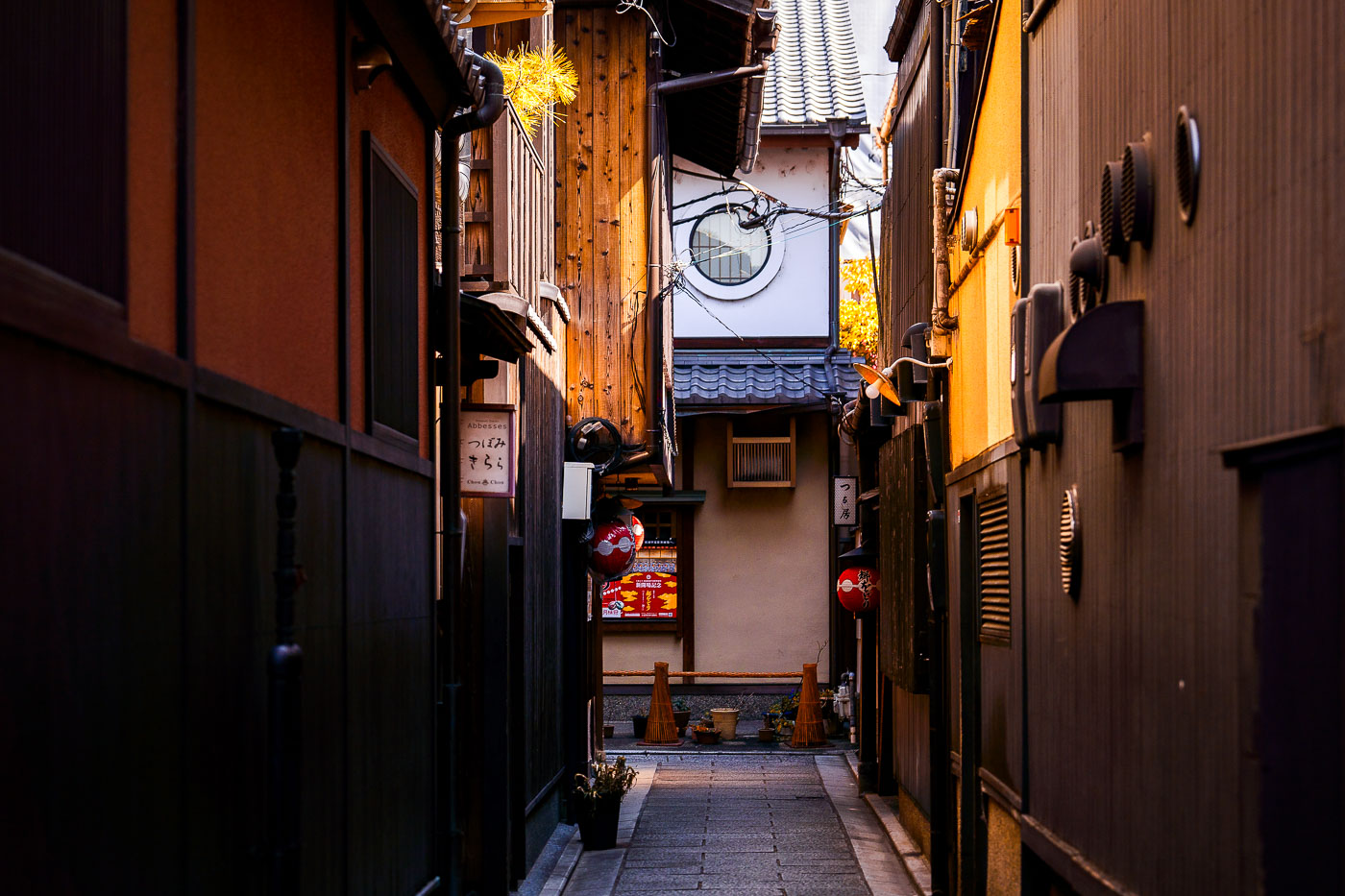
Narrow alley off Hanamikoji-dori in Kyoto’s Gion district with wooden townhouses and lanterns
A narrow alleyway off Hanamikoji-dori in Kyoto's Gion district, photographed in March 2023. This historic area is characterized by its preserved machiya townhouses, traditional wooden buildings that reflect architectural styles from the Edo and Meiji periods. Many of these structures, which historically served as residences and shops for merchants, retain their classic features such as wooden latticework and deep-eaved roofs. The alley's intimate scale and traditional lanterns hint at the presence of small eateries and teahouses, contributing to the district's enduring association with Kyoto's geiko and maiko culture.
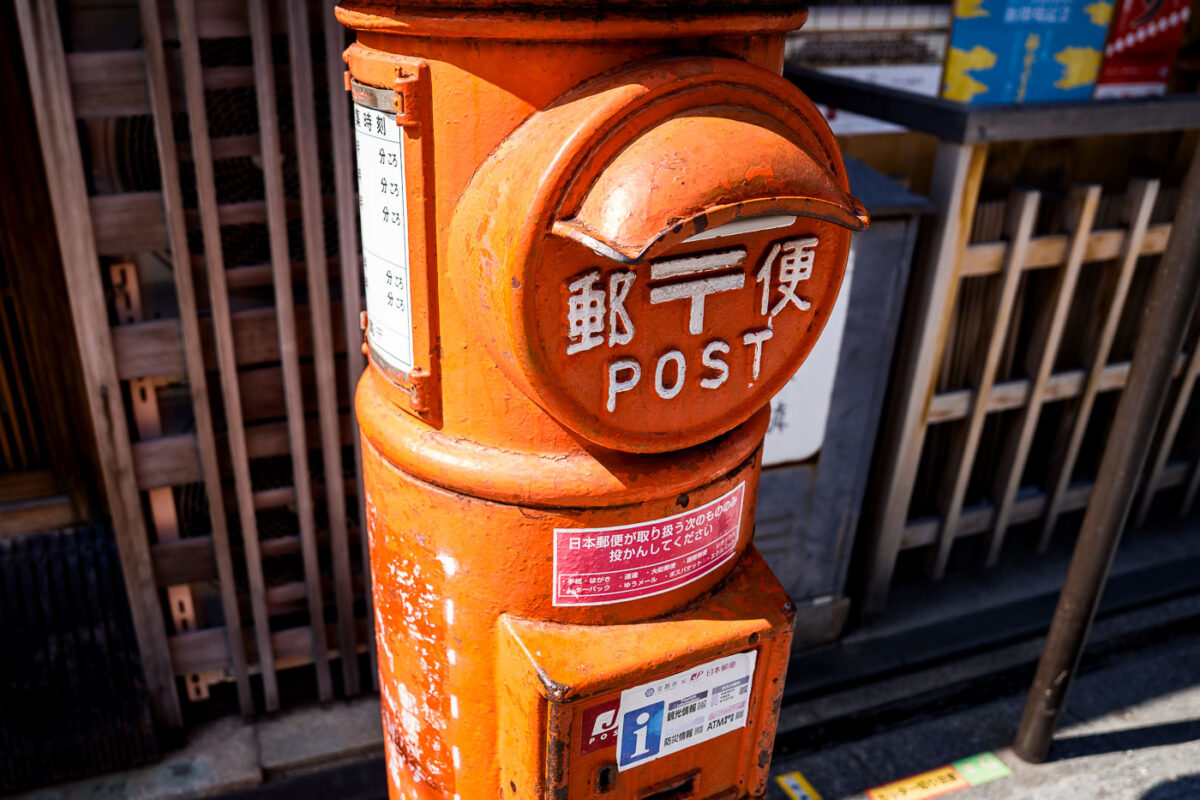
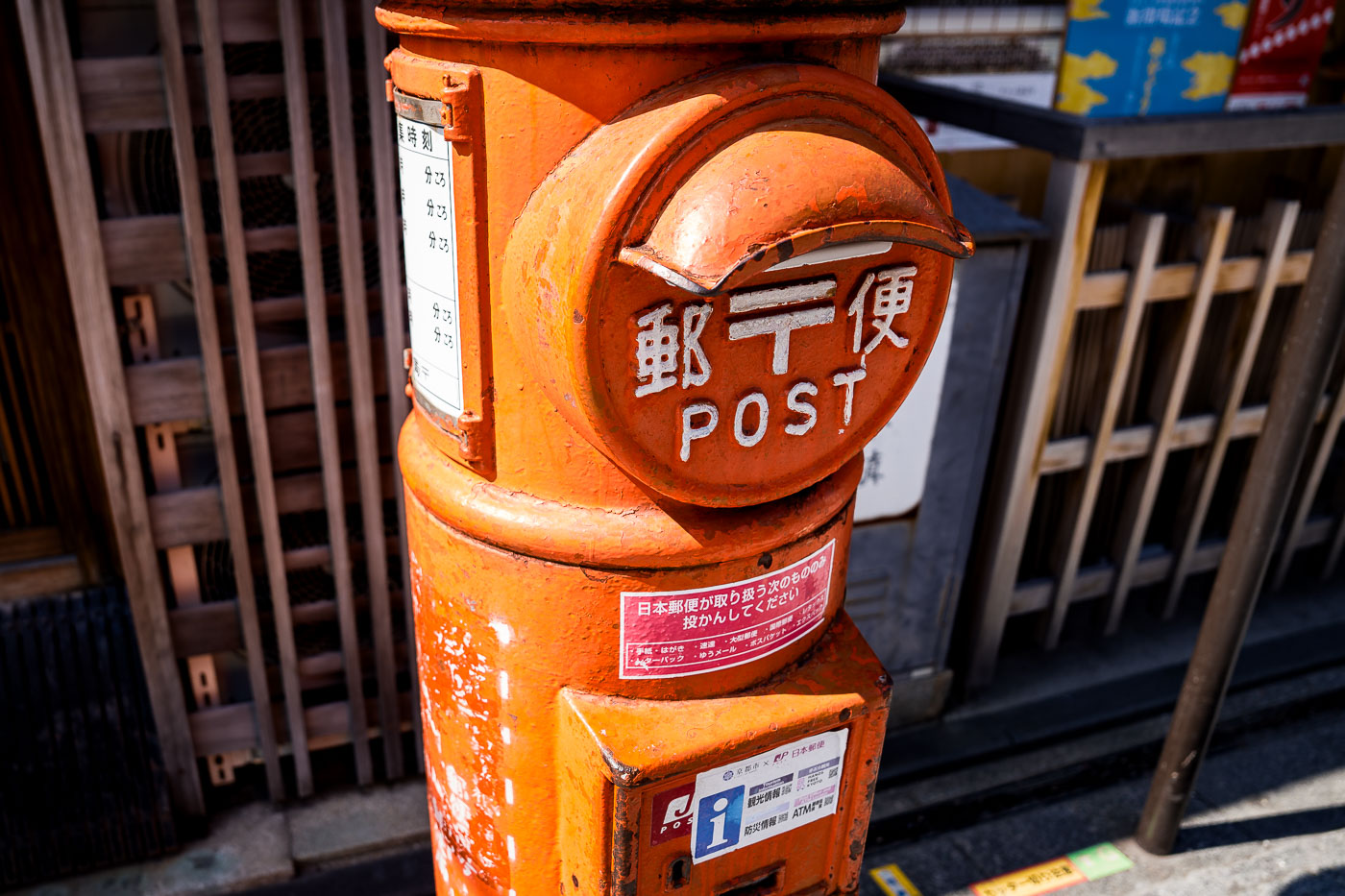
Orange vintage Japanese post box in Kyoto, Japan.
A vintage orange post box, a common sight in Kyoto, Japan, stands as a testament to the nation's modernized postal infrastructure introduced in the early 20th century. These cylindrical mailboxes, designed for durability and visibility, served as a familiar feature across Japan through the mid-20th century. While newer designs are prevalent in urban centers, many historic districts like Kyoto continue to preserve these older models, maintaining their functional role within Japan Post's network. This practice helps preserve the traditional streetscape while offering a tangible connection to the country's civic and architectural past.
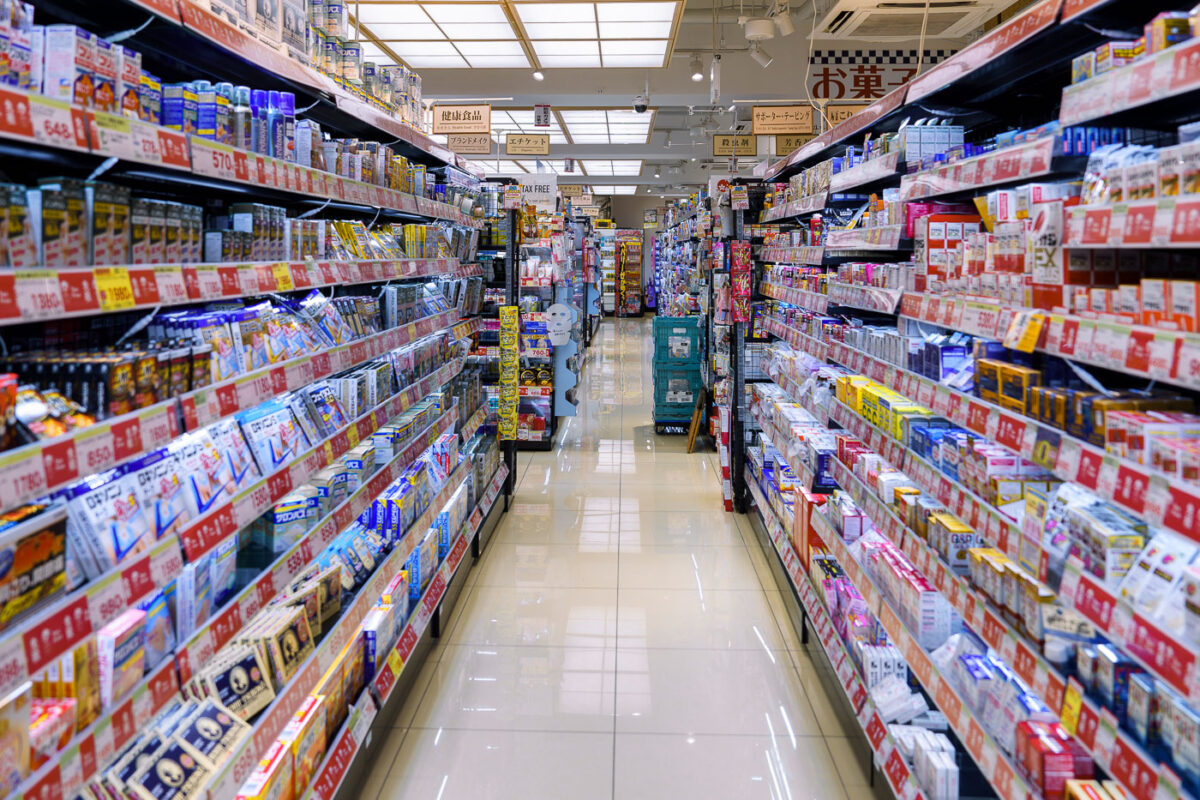
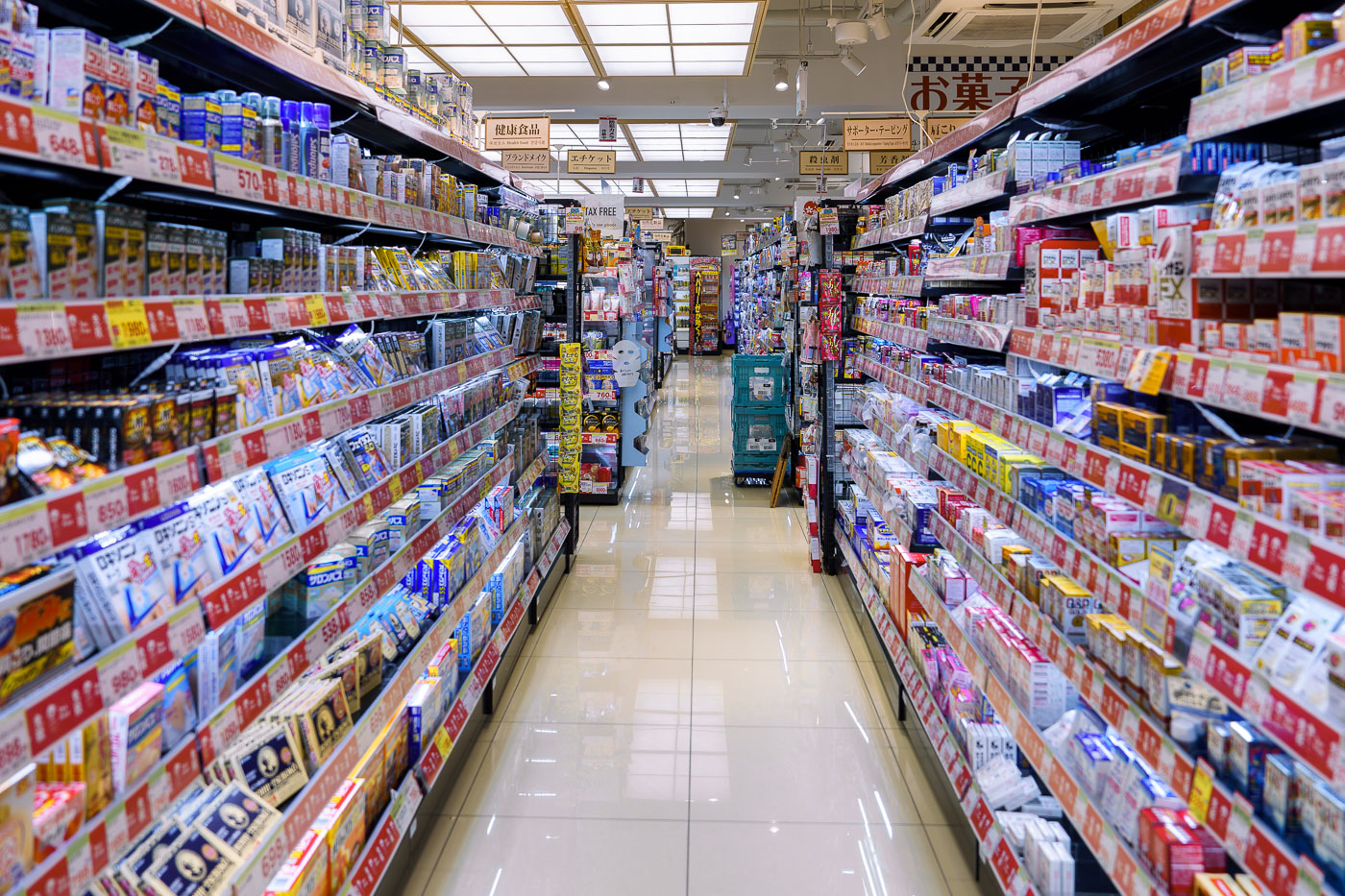
Aisle of snacks and medicines in a Tokyo convenience store.
An aisle stocked with snacks, medicines, and daily essentials in a Tokyo convenience store, photographed in March 2023. Japanese convenience stores, known as 'konbini,' are integral to urban life, offering 24-hour access to a wide array of products and services. Their dense product displays and frequent rotation of limited-edition items reflect Japan's dynamic retail culture and efficient use of space.
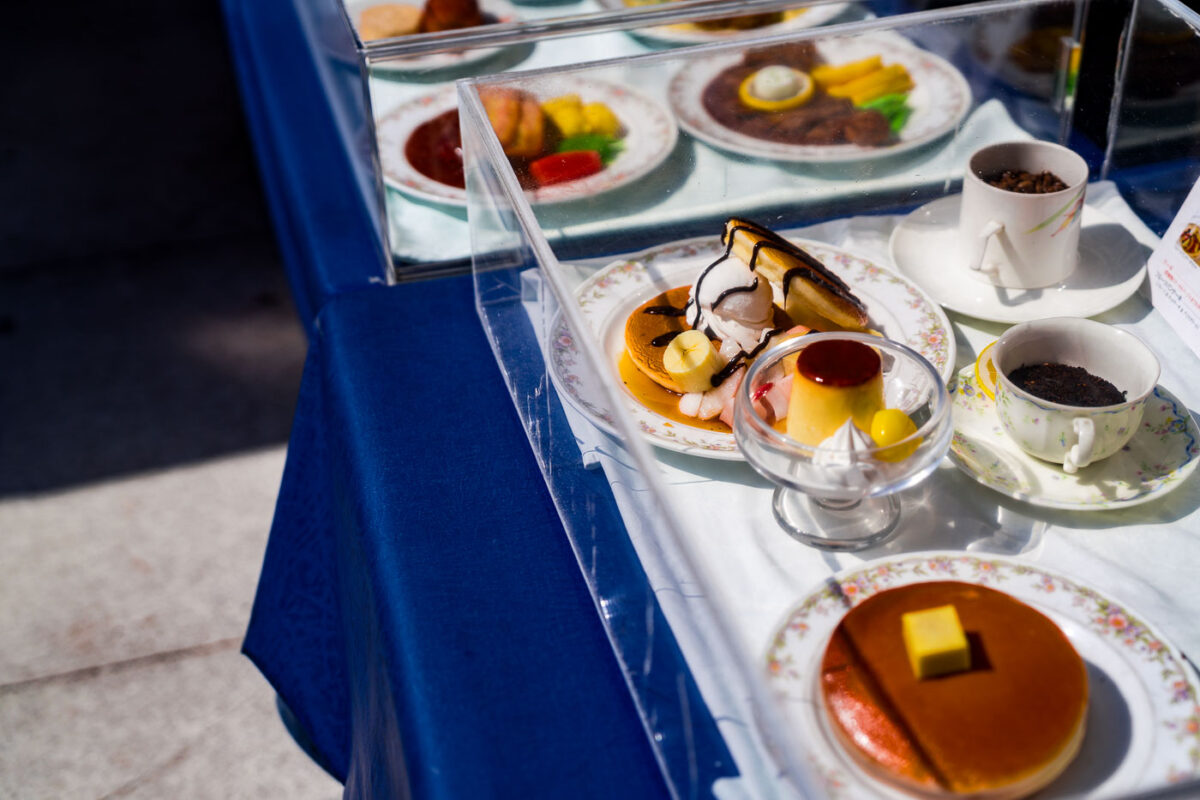
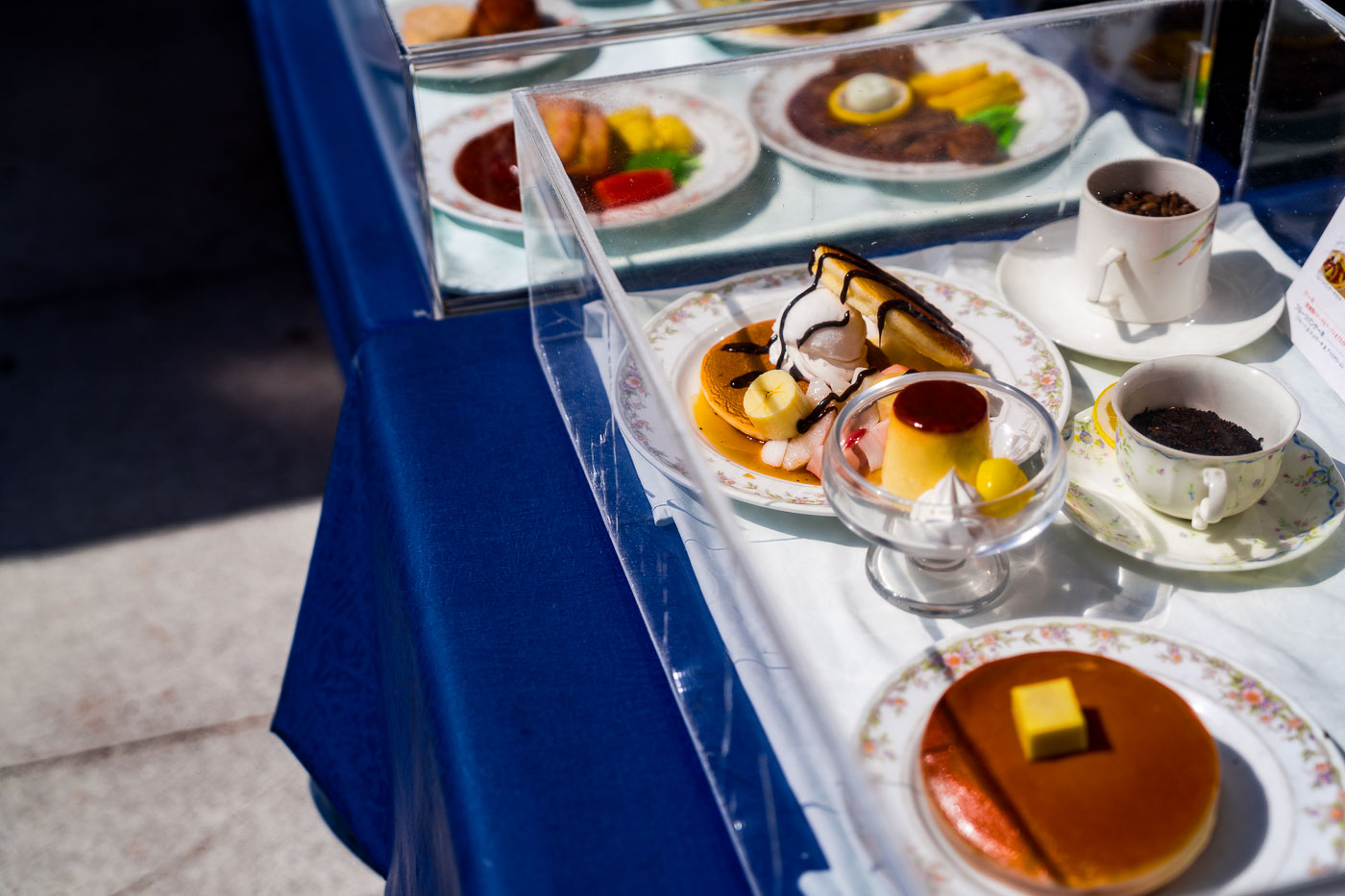
Plastic food desserts displayed in a glass case outside a café in Osaka, Japan.
A display of shokuhin sampuru, hyper-realistic plastic food models, is presented outside a café in Osaka. These handcrafted replicas, originating from early 20th-century Japan, were initially developed to help restaurants showcase menu items, particularly Western dishes that were unfamiliar to many diners. The models, including pancakes, pudding, and parfait, are meticulously crafted and preserved. Osaka continues to be a significant center for sampuru production, where artisans maintain the tradition of hand-sculpting and painting these lifelike representations.
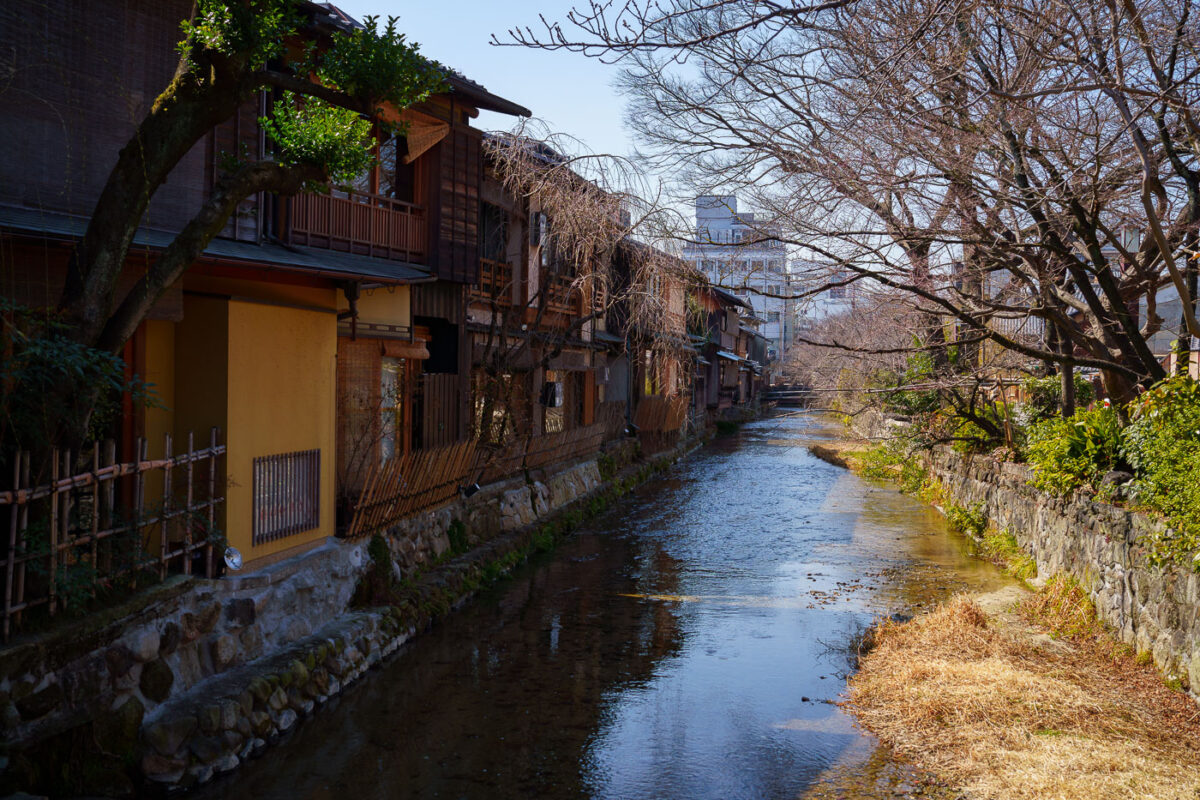
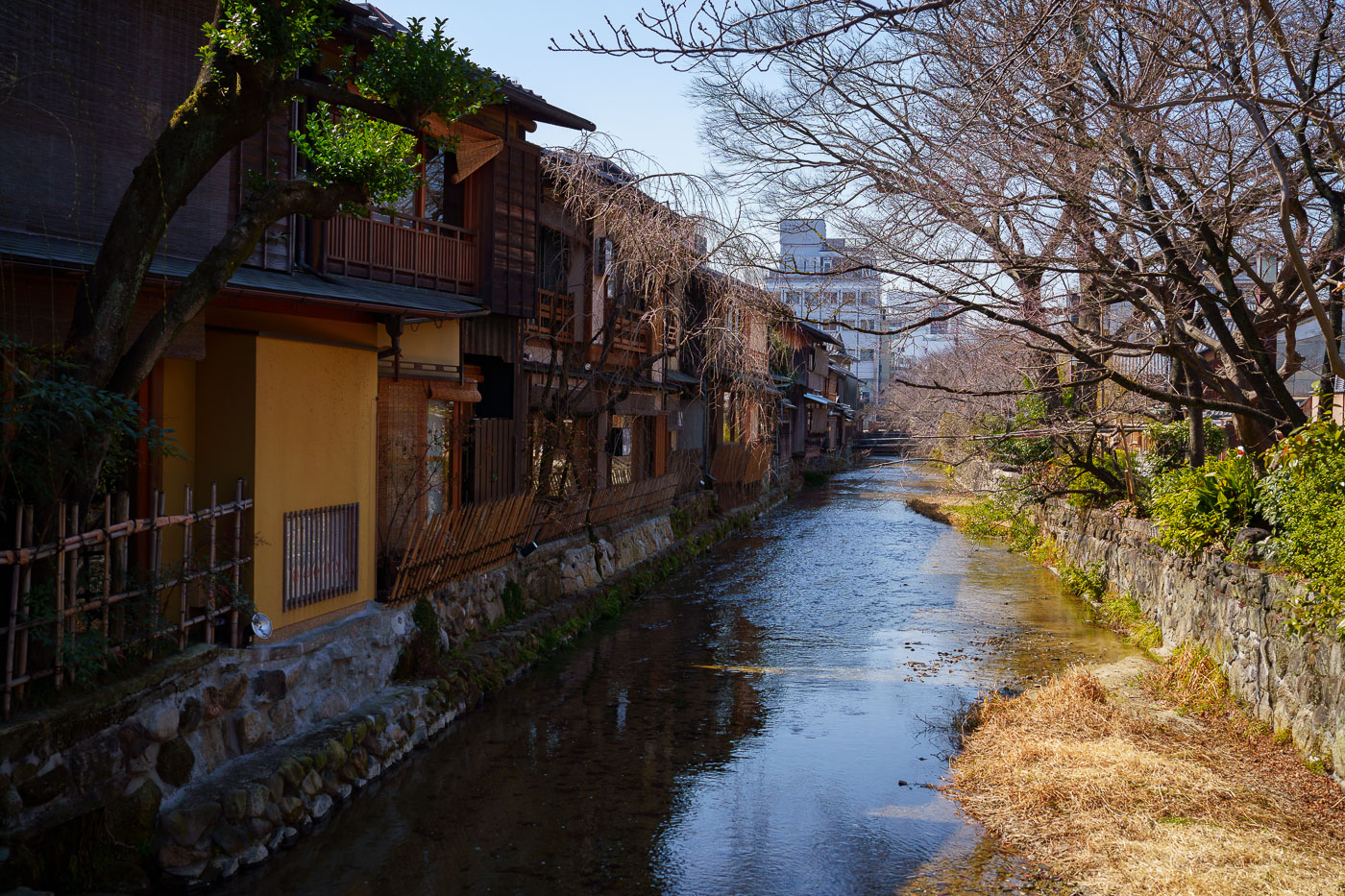
Shirakawa Stream in Kyoto beside traditional machiya houses and bare trees in Gion.
The Shirakawa Stream, a historic waterway in Kyoto's Gion district, flows alongside traditional wooden machiya houses. These structures, many dating to the early 20th century, historically served as teahouses and restaurants for the geiko and maiko communities. The area's design, with stone embankments and low bridges, reflects centuries of urban planning integrated with natural watercourses. While the cherry trees are bare in early spring, this picturesque area becomes a popular destination during sakura season.
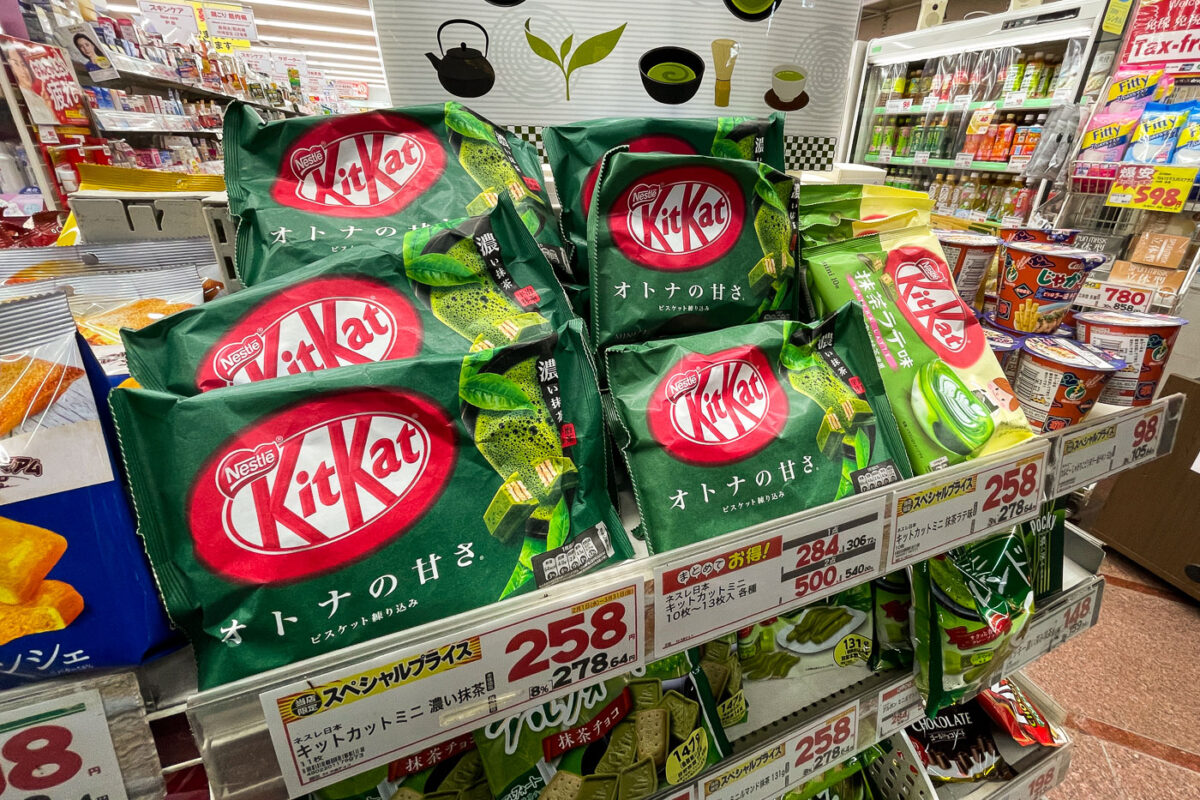
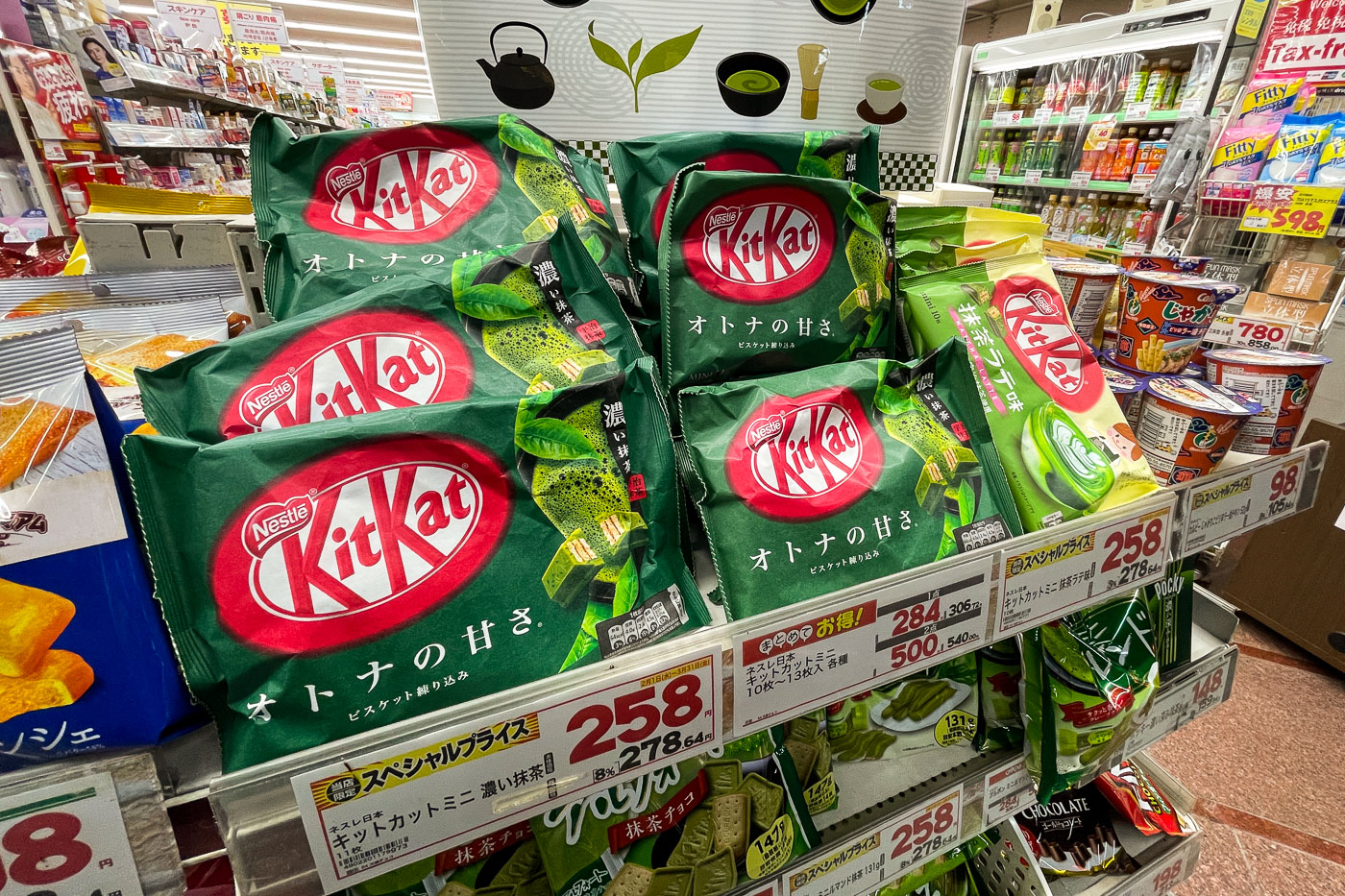
Matcha KitKat bags on display in a Tokyo convenience store.
A shelf lined with matcha-flavored KitKats in a Tokyo convenience store — a distinctly Japanese twist on a global snack. The bold green packaging, accented by the signature red logo, promotes Nestlé’s “Otona no Amasa” (Adult Sweetness) series, a richer, less sugary variant aimed at mature tastes. Japan’s endless flavor variations, from wasabi to sake, have turned KitKats into a collector’s item for travelers and locals alike. The display, organized yet bursting with color, captures the vibrant consumer culture of Japan’s konbini — where even a quick snack reflects national creativity and curiosity.
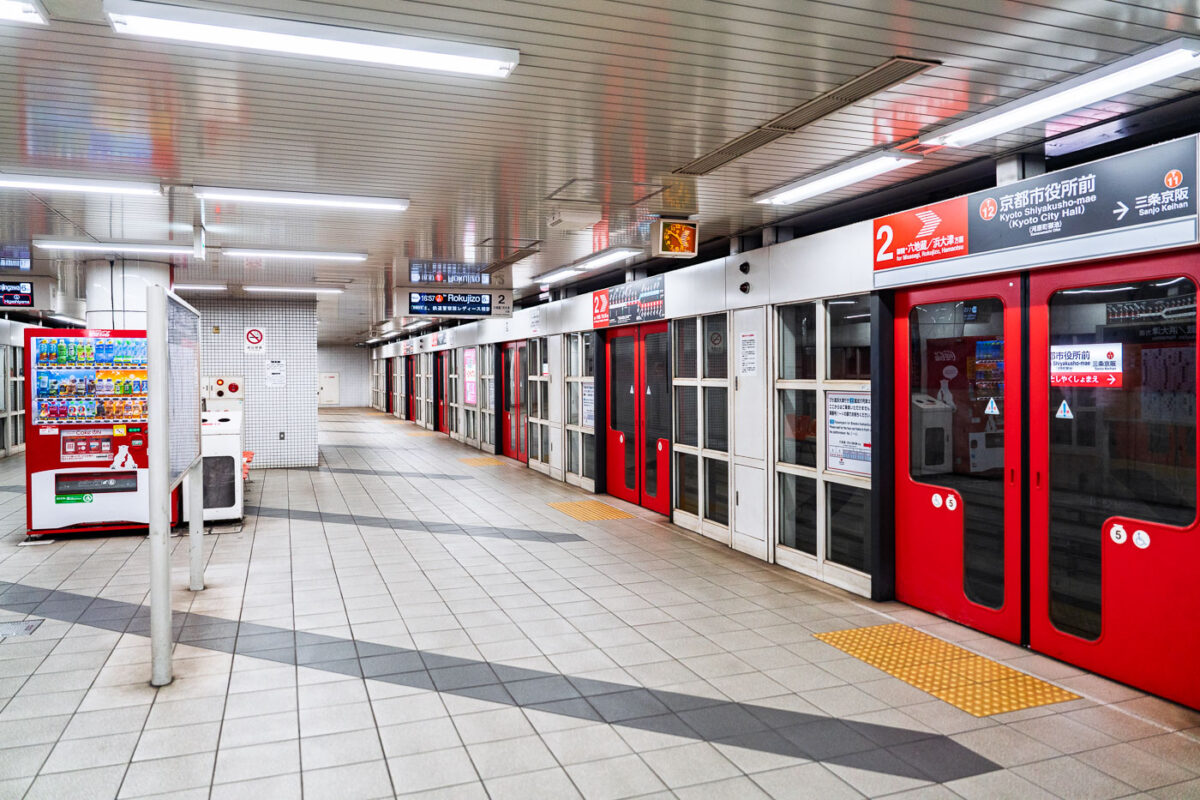
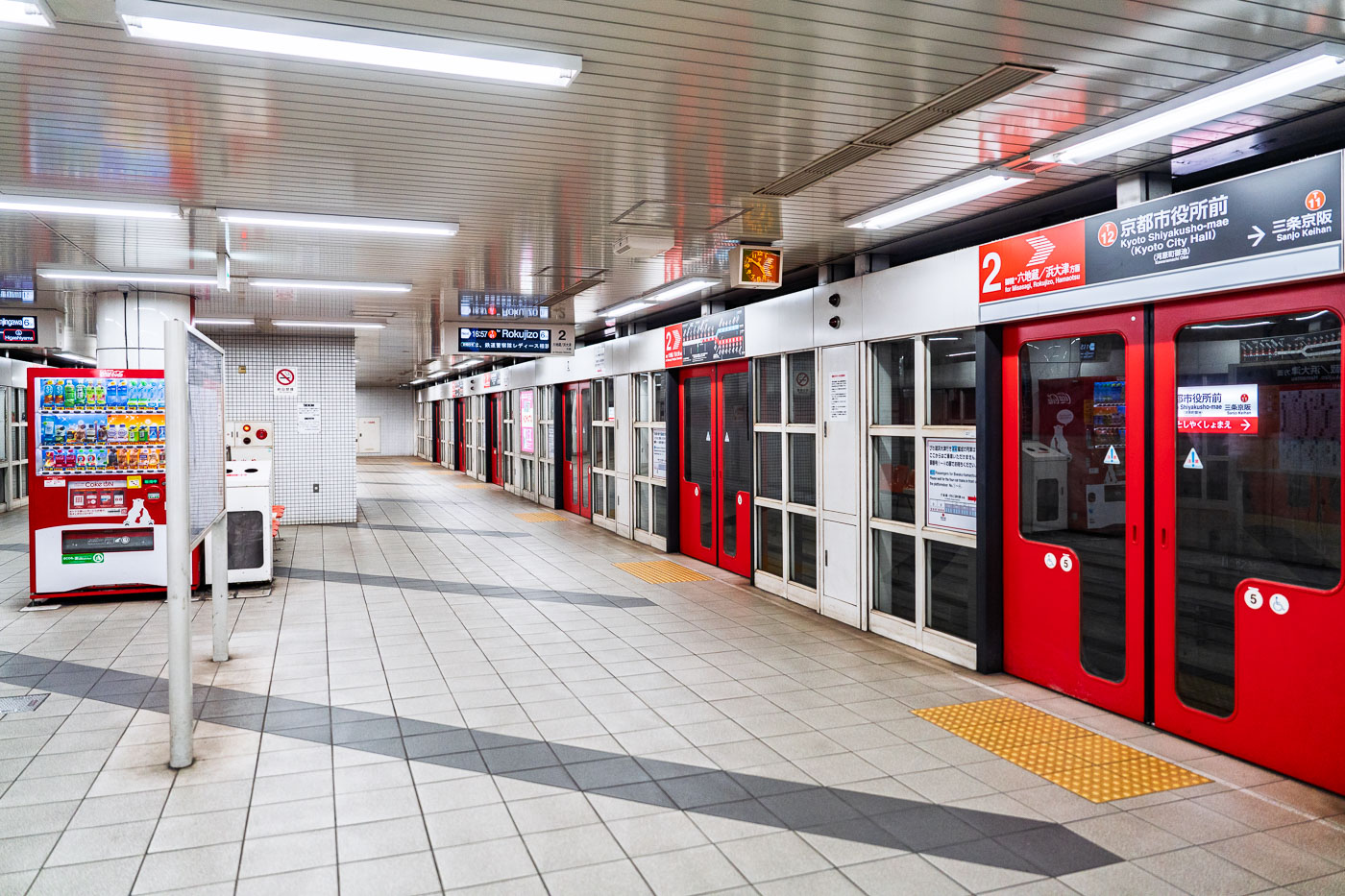
Empty Kyoto City Subway platform at Shiyakusho-mae Station, Japan, with red doors and vending machines.
A quiet moment inside the Kyoto City Subway at Shiyakusho-mae Station, where the red-lined doors and bright vending machines reflect the city’s clean, orderly transit design. The tiled floors, yellow tactile paving, and minimalist signage embody the practical beauty of Japanese public infrastructure. Empty corridors like this highlight the calm rhythm of off-peak urban life in Kyoto.
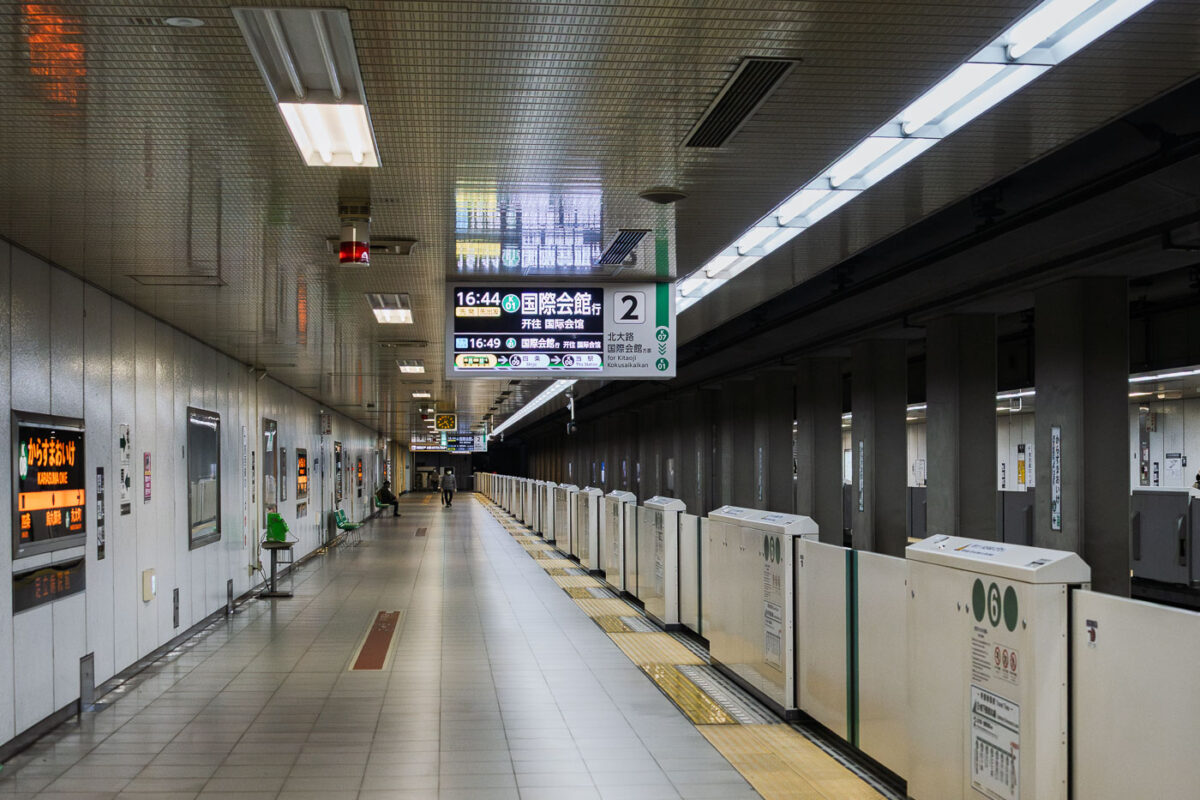
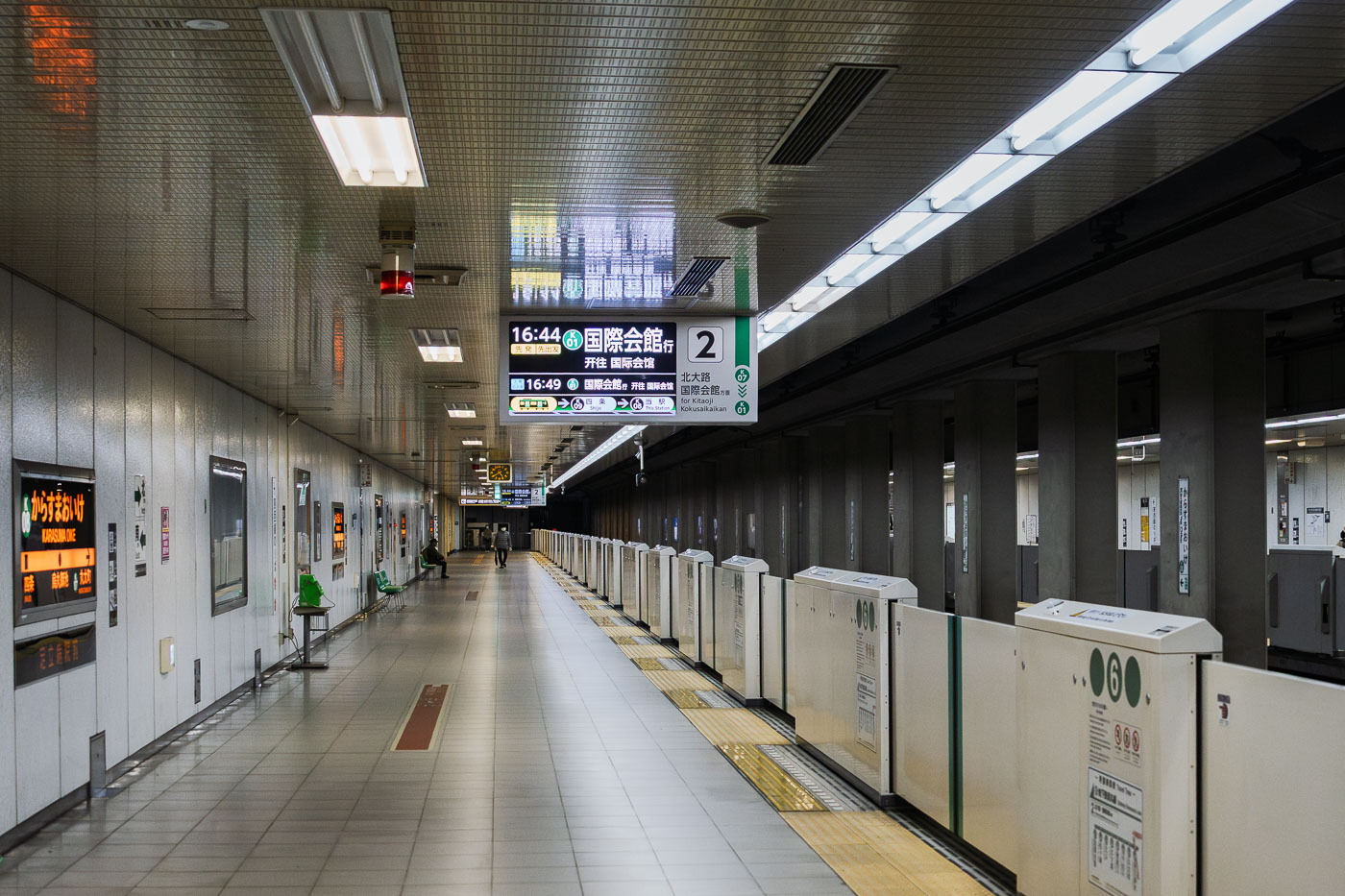
Empty Karasuma Oike Station platform in Kyoto, Japan, with platform-edge doors and digital signage.
A quiet moment on the platform at Karasuma Oike Station, one of the key interchange points within the Kyoto Municipal Subway system. Opened in 1981 as part of the Karasuma Line, the station later became a transfer hub when the Tōzai Line opened in 1997, creating a central east–west and north–south connection beneath Kyoto’s urban core. The platform features platform-edge doors—introduced across Kyoto’s subway network to improve safety and accessibility—along with digital signage that displays through-service connections toward the northern suburbs and toward the International Conference Center. Located beneath the intersection of Karasuma-dōri and Oike-dōri, the station plays an important role in linking government offices, business districts, and cultural areas throughout central Kyoto.
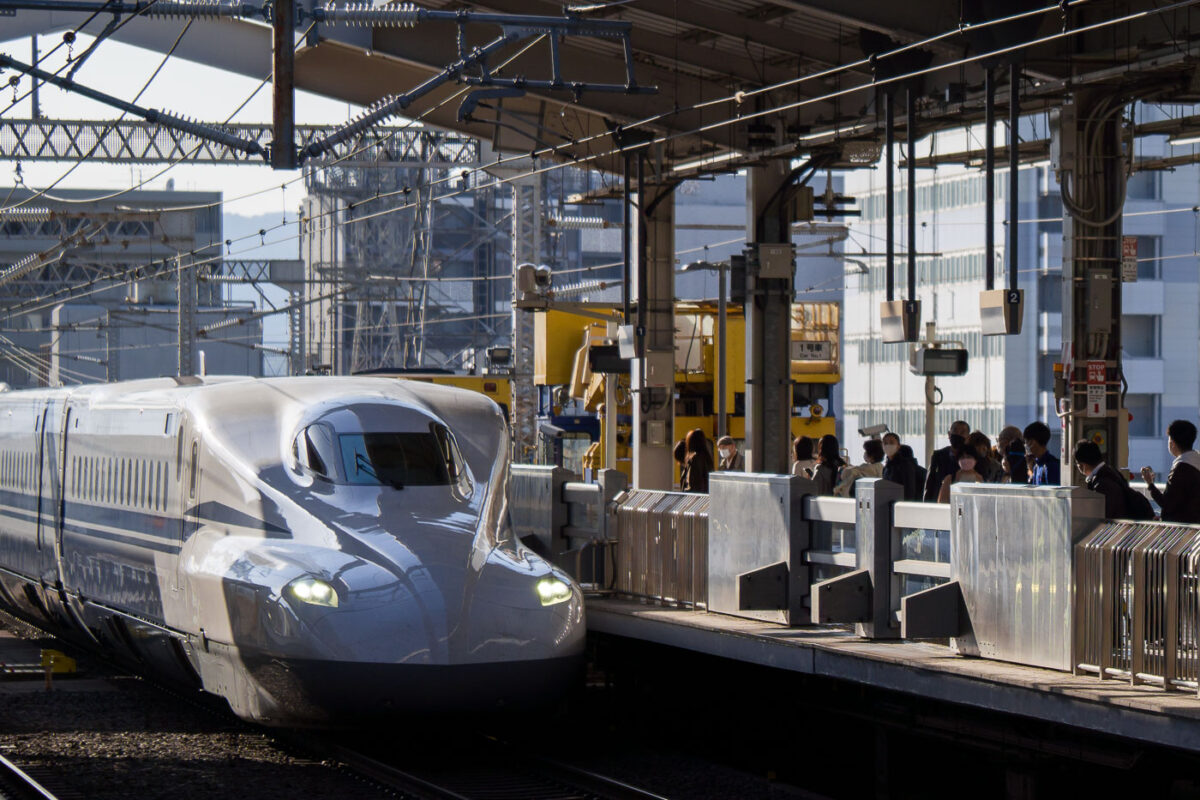
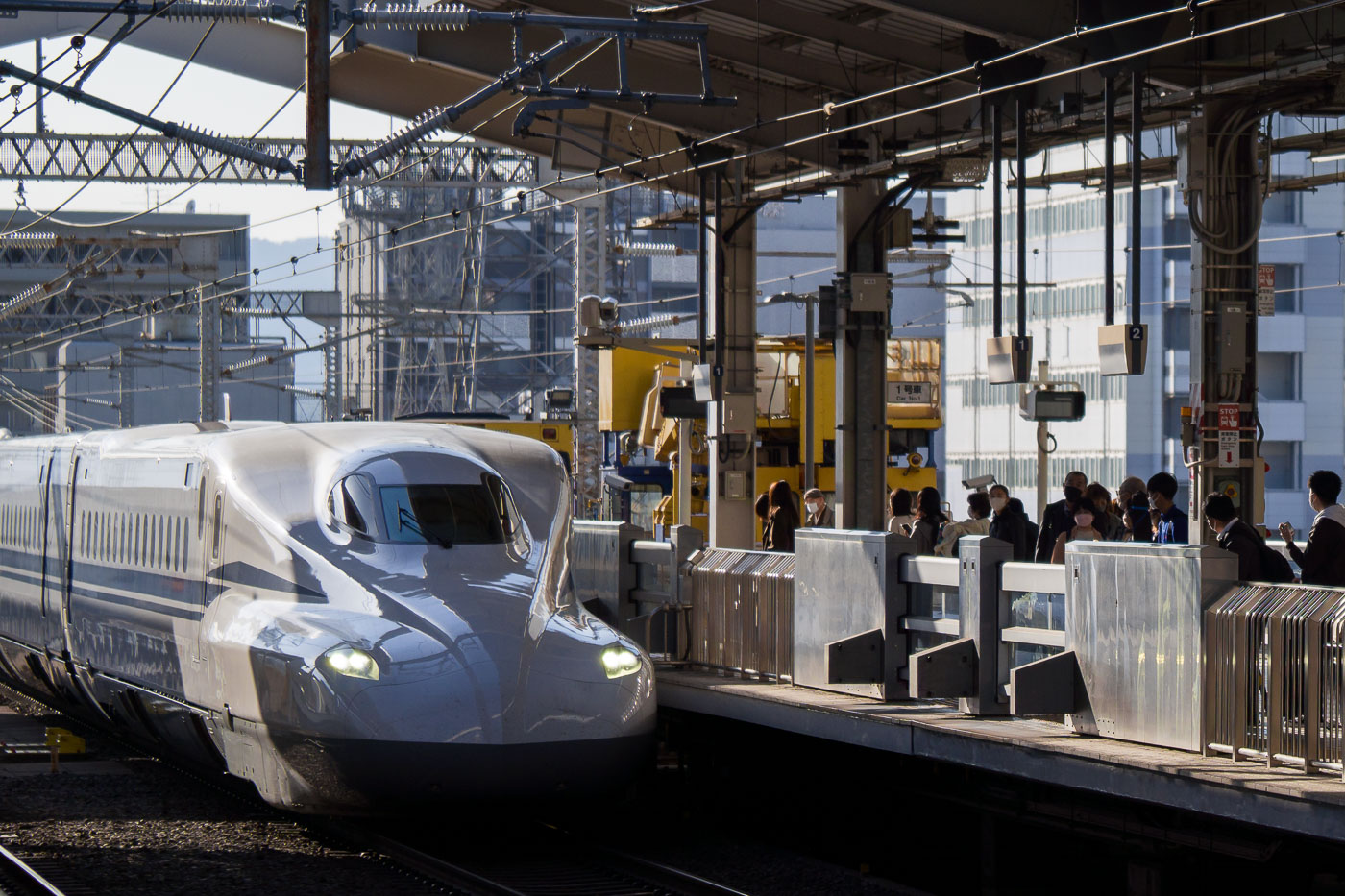
N700A Shinkansen arriving at Kyoto Station as passengers wait on the platform
An N700A-series Shinkansen arrives at Kyoto Station, one of the busiest hubs on the Tōkaidō and San’yō Shinkansen network. Introduced by JR Central as an upgraded variant of the earlier N700 design, the N700A incorporated improved braking, enhanced bogies, and automatic train control refinements, supporting smoother high-speed operation along Japan’s primary intercity corridor. Kyoto Station has served Shinkansen services since 1964, when the original Tōkaidō Line opened for the Tokyo–Osaka route ahead of the Tokyo Olympics. Today it remains a major interchange for regional and long-distance rail, handling millions of passengers annually traveling between Kansai, Tokyo, and the Chūgoku region.
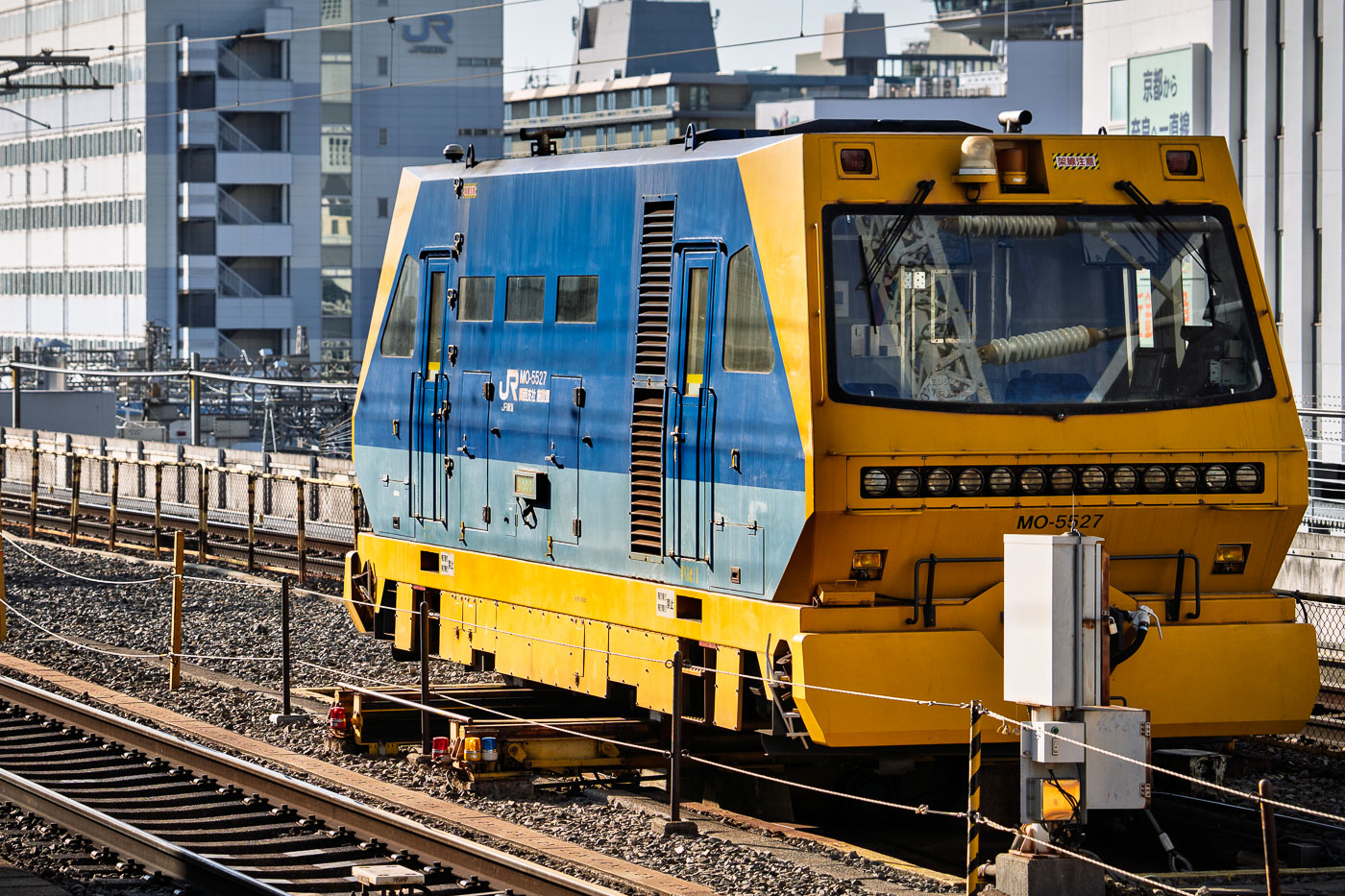
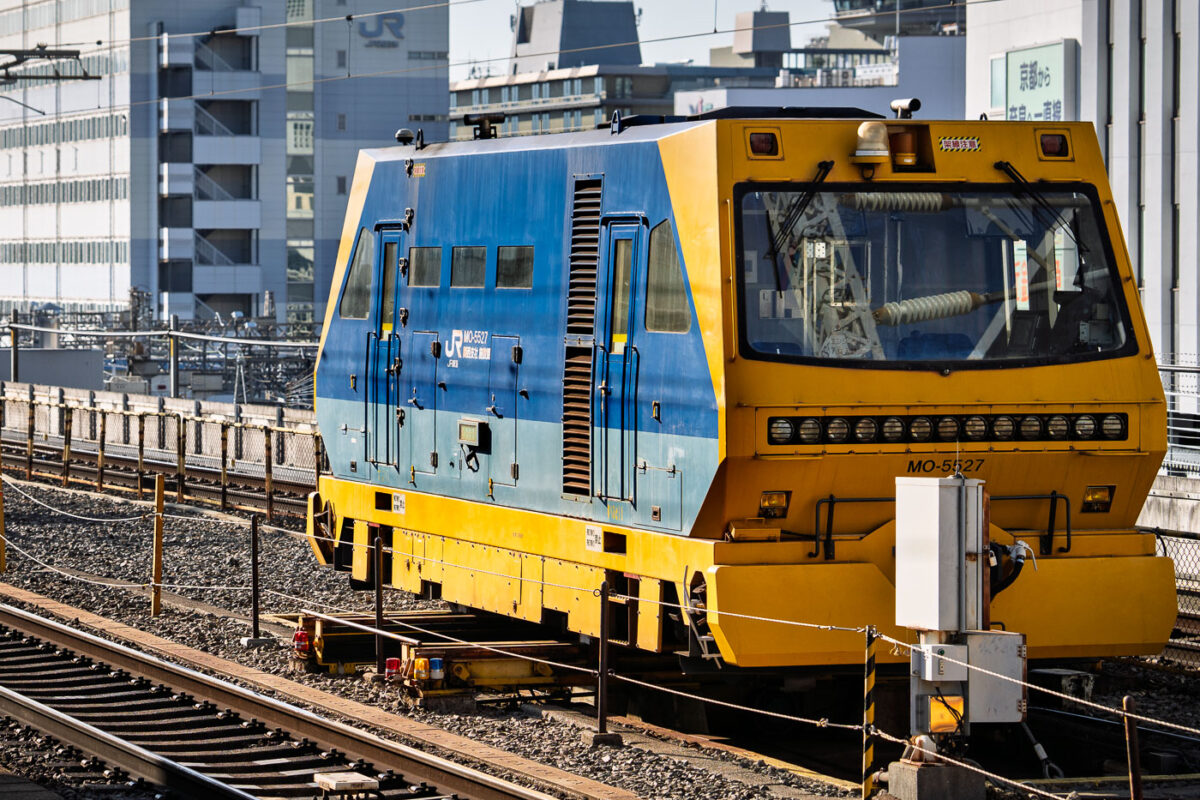
JR West track maintenance vehicle on elevated tracks in Kyoto, Japan.
A JR West track maintenance vehicle stands on an elevated railway in Kyoto, painted in bright yellow and blue. These machines are vital to Japan’s rail network, used for track inspection, alignment, and upkeep during off-peak hours. The geometric design and industrial strength of the vehicle contrast with the dense urban surroundings, illustrating Japan’s precision engineering and efficiency in rail transport.

Built in Minneapolis

Photographs showcasing change over time

Browse by location, move through long-running series, or start with recent work.