Place Archive

Japan

Japan’s urban landscapes are defined by complex transportation hubs like Tokyo’s Nippori Station and Kyoto Station, where layered rail lines facilitate vast daily commuter flows. Districts such as Osaka’s Shinsekai preserve early 20th-century entertainment architecture, featuring illuminated signage and retro eateries that illustrate enduring cultural and commercial traditions.

100 photos

Location

Japan Locations

Photos from Japan
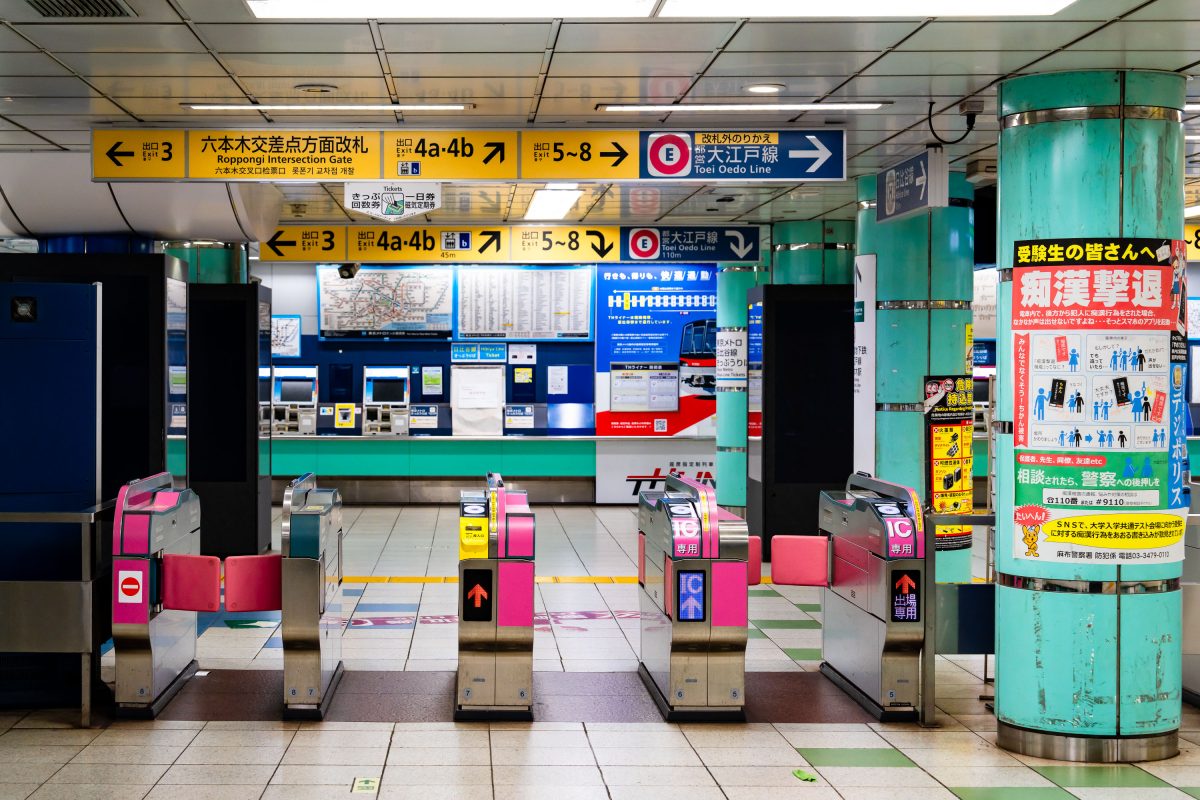
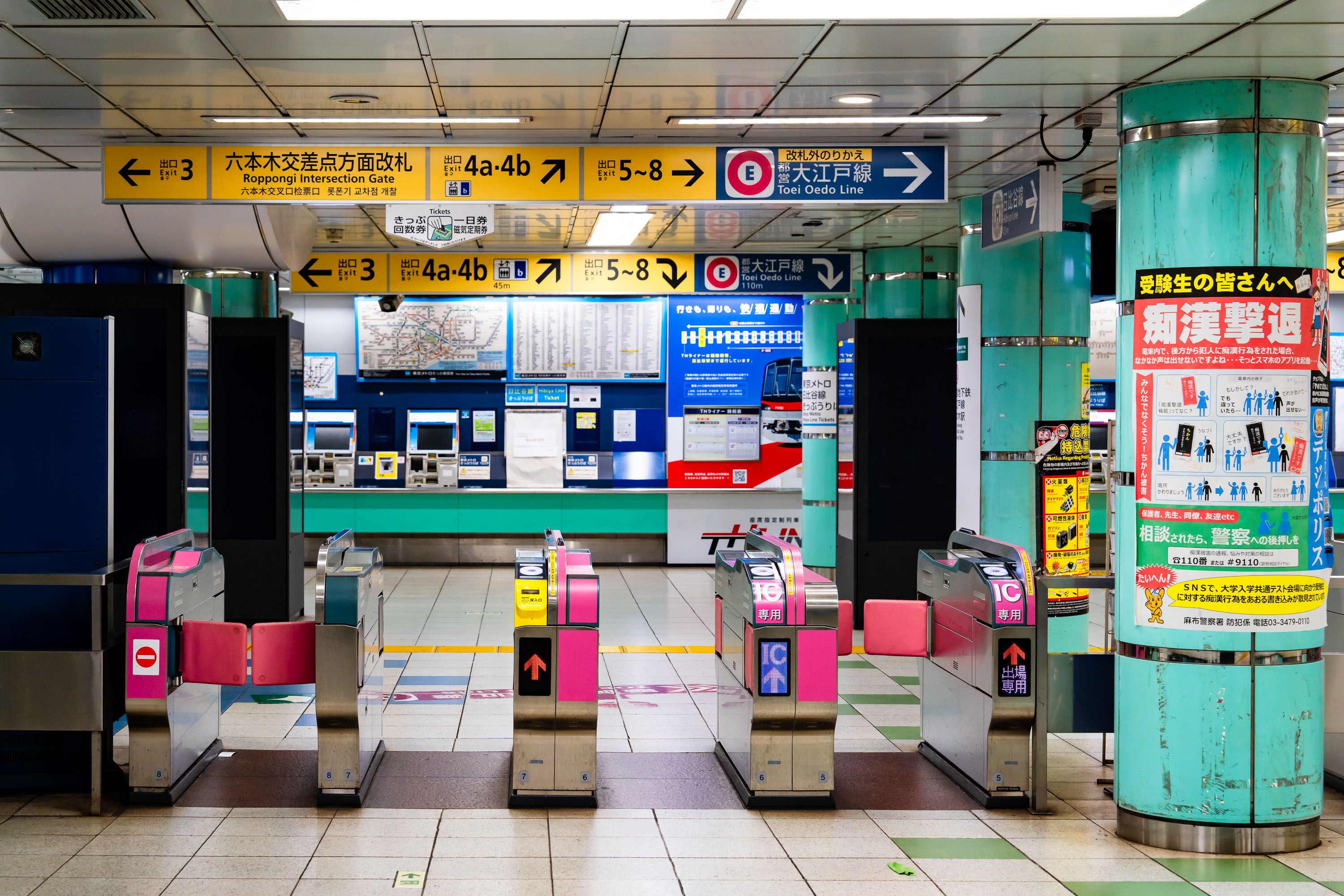
Pink and silver automatic ticket gates at Roppongi Station on the Tokyo subway system.
Automatic ticket gates at Roppongi Station on the Tokyo Metro Hibiya and Oedo lines in Minato City, Tokyo. The station serves the Roppongi commercial and nightlife district and connects to the Roppongi Intersection area above ground. Toei's Oedo Line and Tokyo Metro's Hibiya Line both operate through this interchange, making it a key transfer point in central Tokyo's subway network.
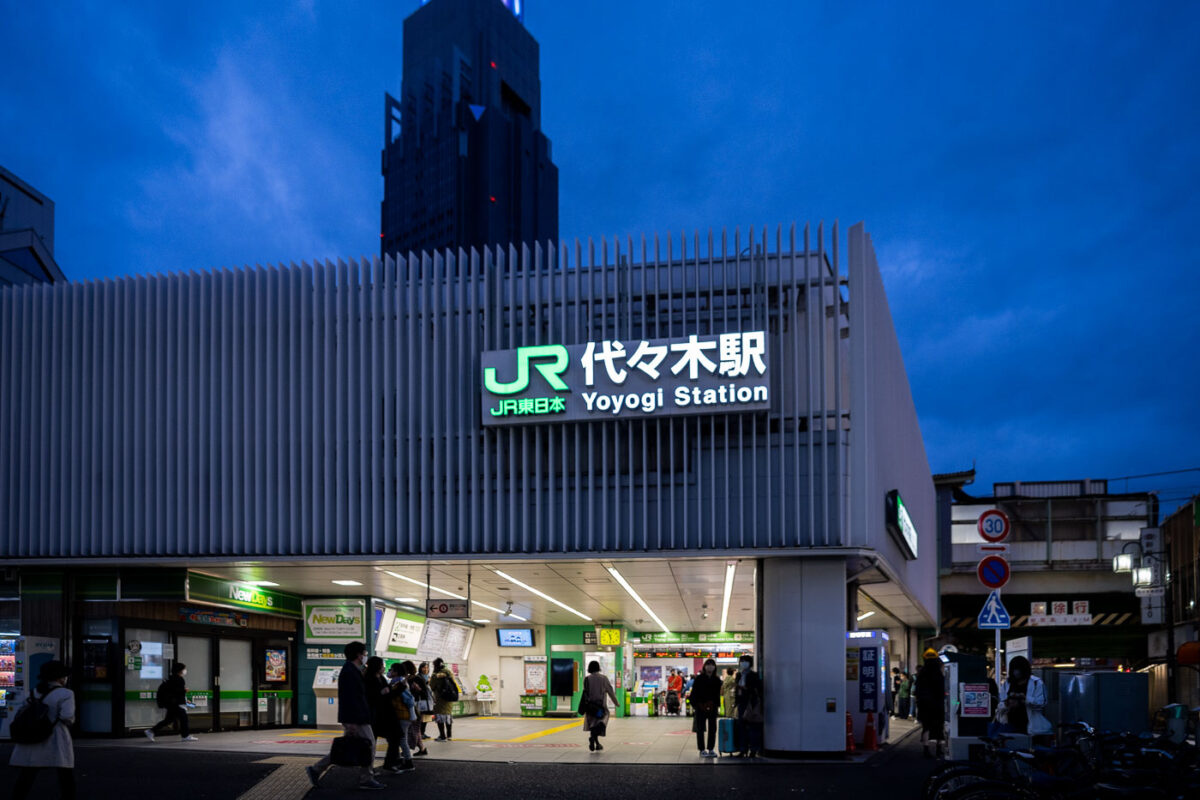
Commuters enter JR Yoyogi Station beneath its illuminated sign at dusk in Shibuya, Tokyo.
JR Yoyogi Station sits in Tokyo's Shibuya ward, serving as a stop on the Yamanote and Chuo-Sobu lines. Operated by JR East, the station opened in 1906 and connects riders traveling between Shinjuku and Harajuku. Its position along the Yamanote loop makes it a minor but steady transfer point within the wider Tokyo commuter rail network.
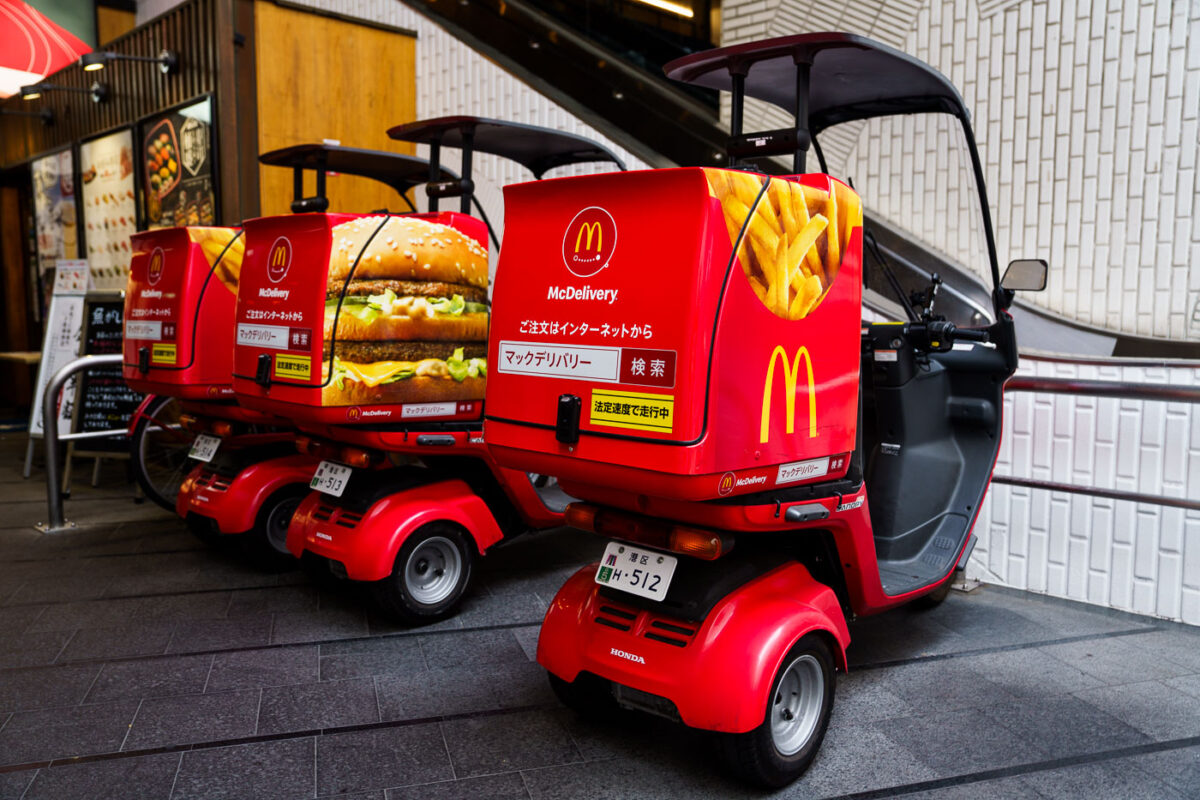
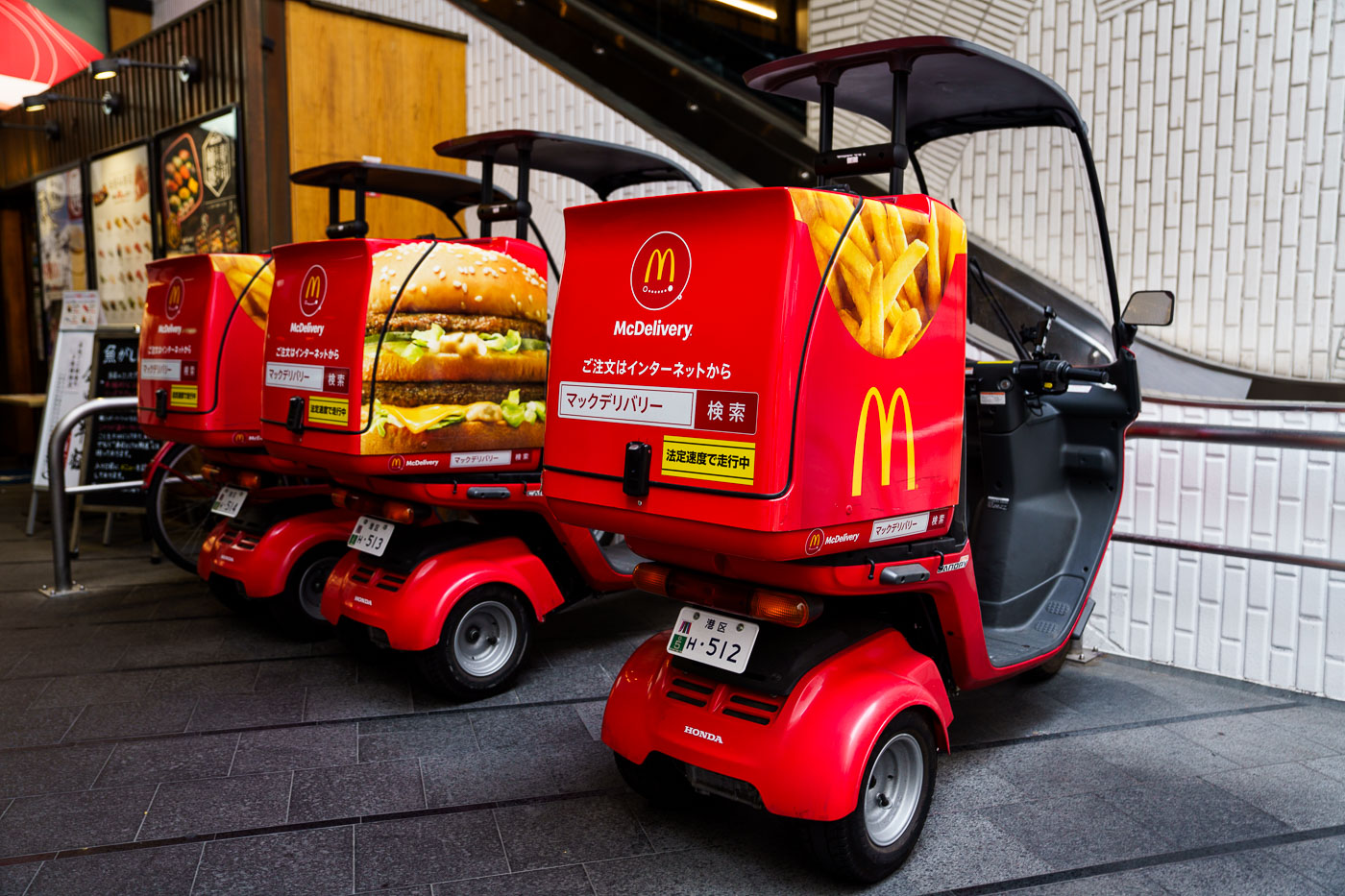
Red McDonald's McDelivery three-wheeled scooters parked outside a Japanese restaurant location.
McDelivery is McDonald's Japan's delivery service, launched in the country in 2011 and now operating from thousands of participating locations nationwide. Orders placed online or through the McDonald's app are carried out on compact three-wheeled scooters like these, each fitted with an insulated cargo box that keeps burgers and fries at temperature during the trip. The boxes double as rolling advertisements, wrapped in Big Mac and fries imagery alongside instructions to search "McDelivery" to order online. A sticker noting compliance with the legal speed limit Japanese regulations governing kei-class delivery vehicles used by franchises across the country.
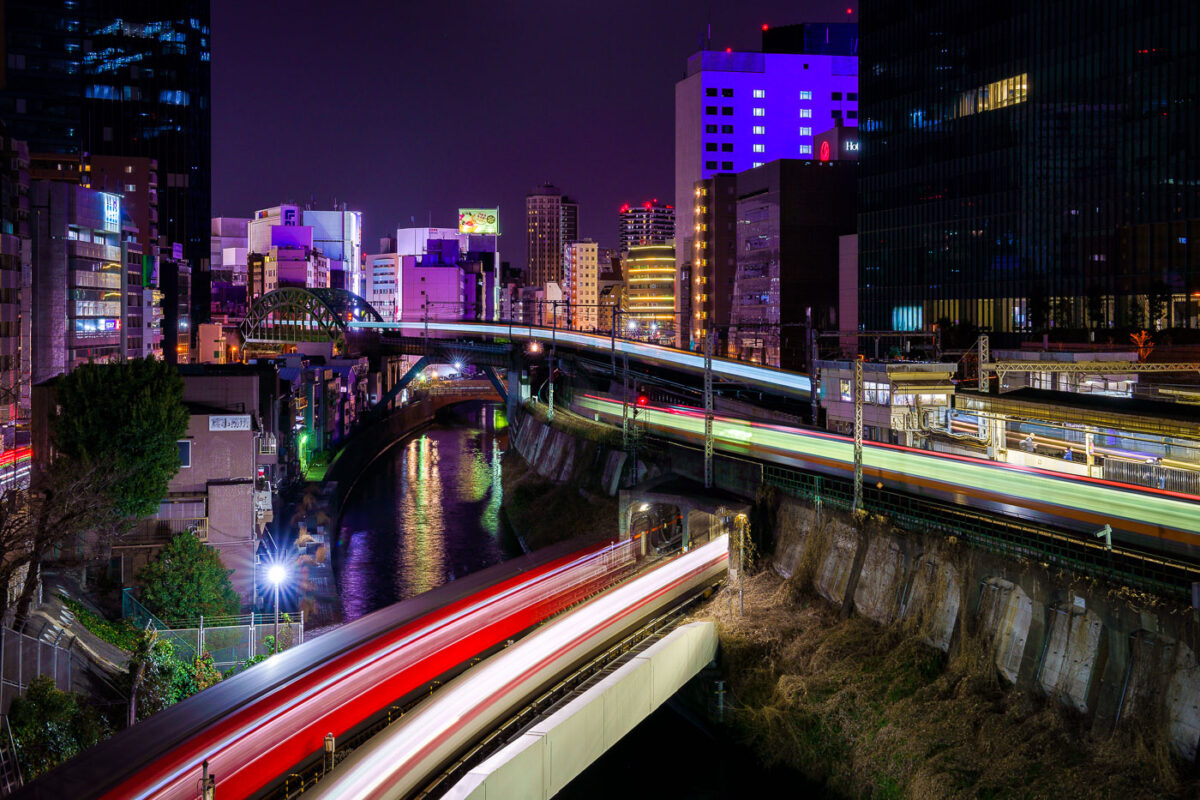
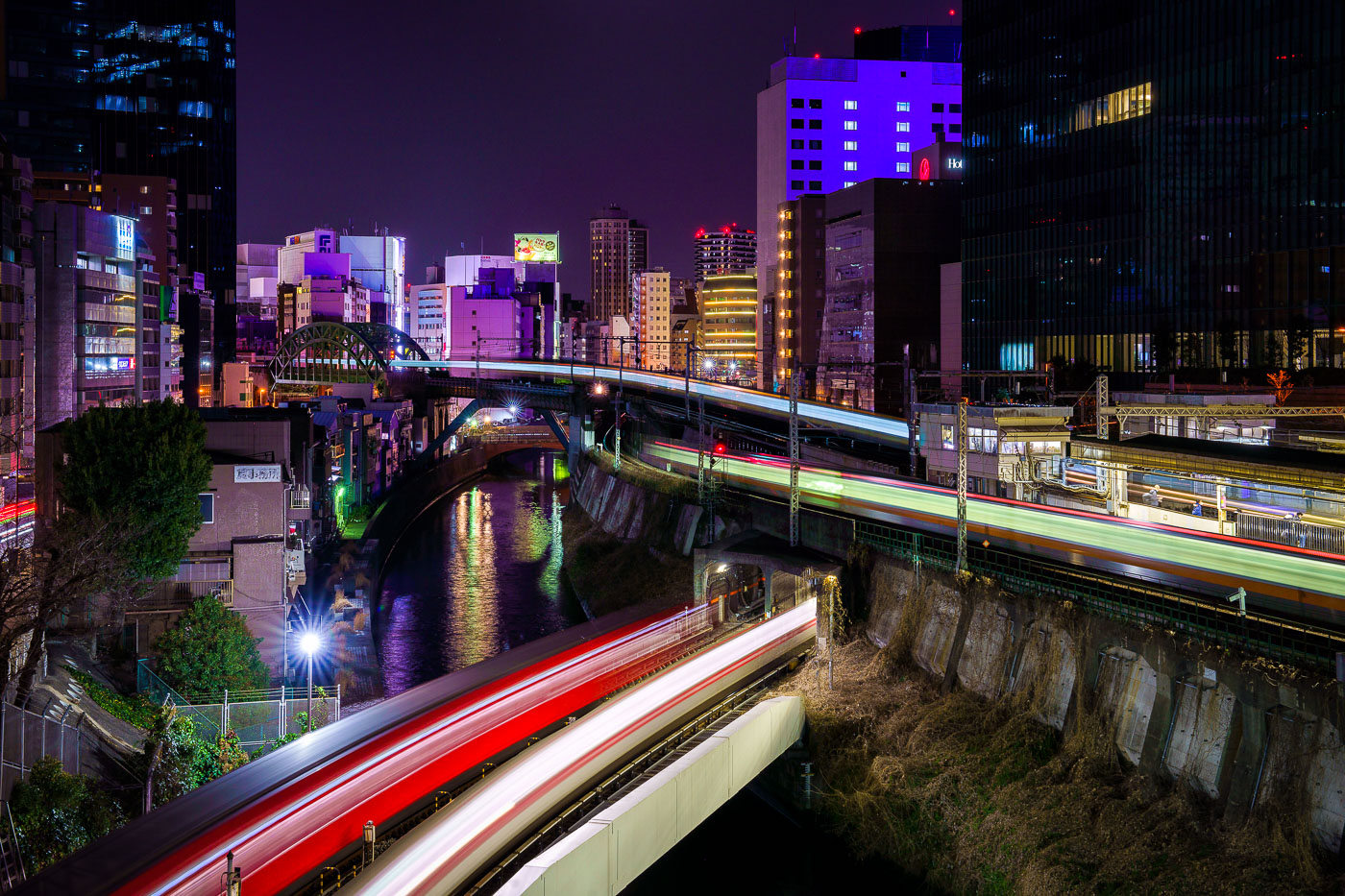
Elevated train lines in Tokyo at night, with light trails reflecting on a canal below and illuminated buildings in the background.
Trains streak through Tokyo at night, their lights blurring into red and white trails against the urban landscape. The image captures multiple elevated train lines crossing over a canal, with the reflections of city lights shimmering on the water's surface. Buildings illuminated with neon signs and office lights form a dense backdrop to the transit arteries.
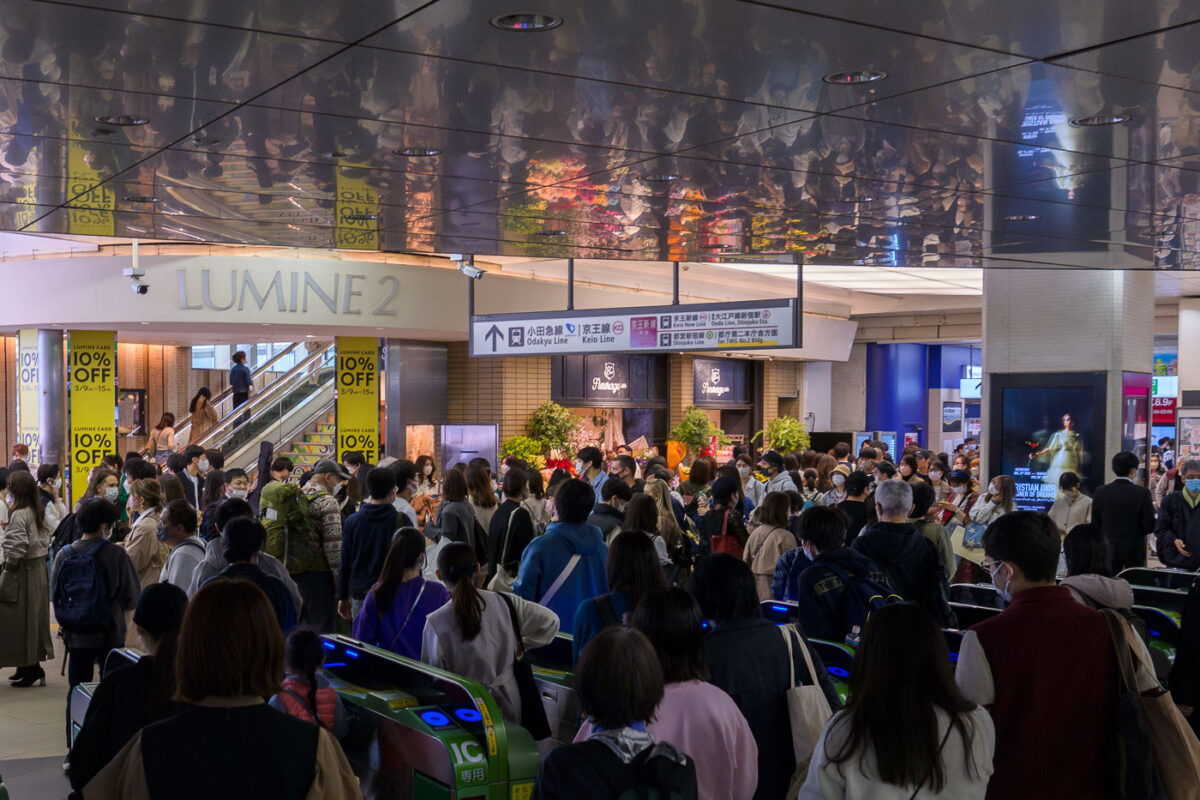
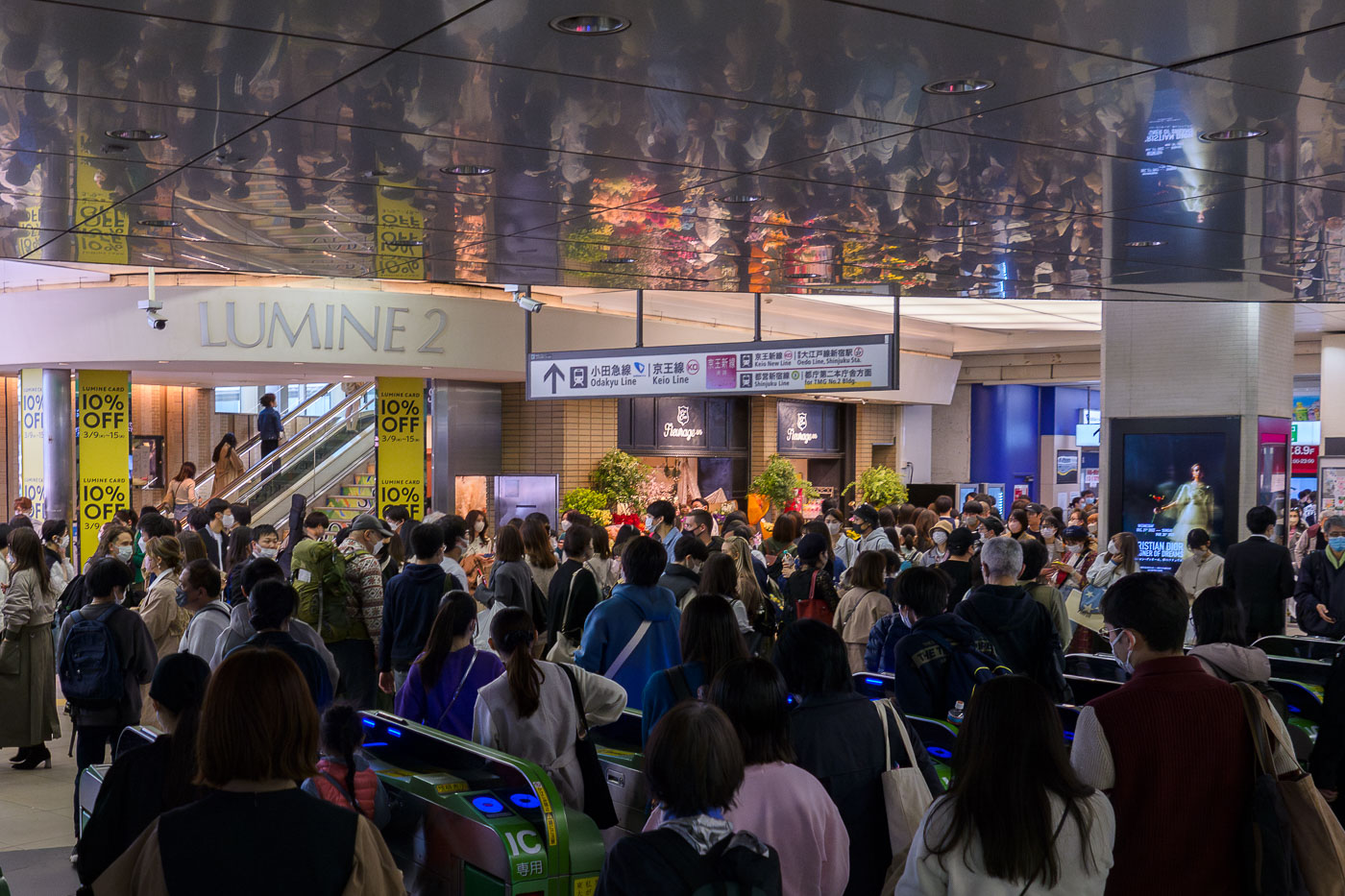
Crowded concourse near the Lumine 2 entrance and train line signage at Shinjuku Station in Tokyo.
Shinjuku Station in Tokyo serves as a major interchange connecting the Odakyu Line, Keio Line, Toei Oedo Line, and Toei Shinjuku Line, making it one of the busiest rail hubs in the world. The Lumine 2 building, visible at this concourse entrance, houses retail shops directly integrated into the station complex. This area functions as a key pedestrian junction where commuters transfer between private railway lines and Tokyo's subway network. The was taken on March 11, 2023, during a period when mask-wearing remained common practice in Japan.
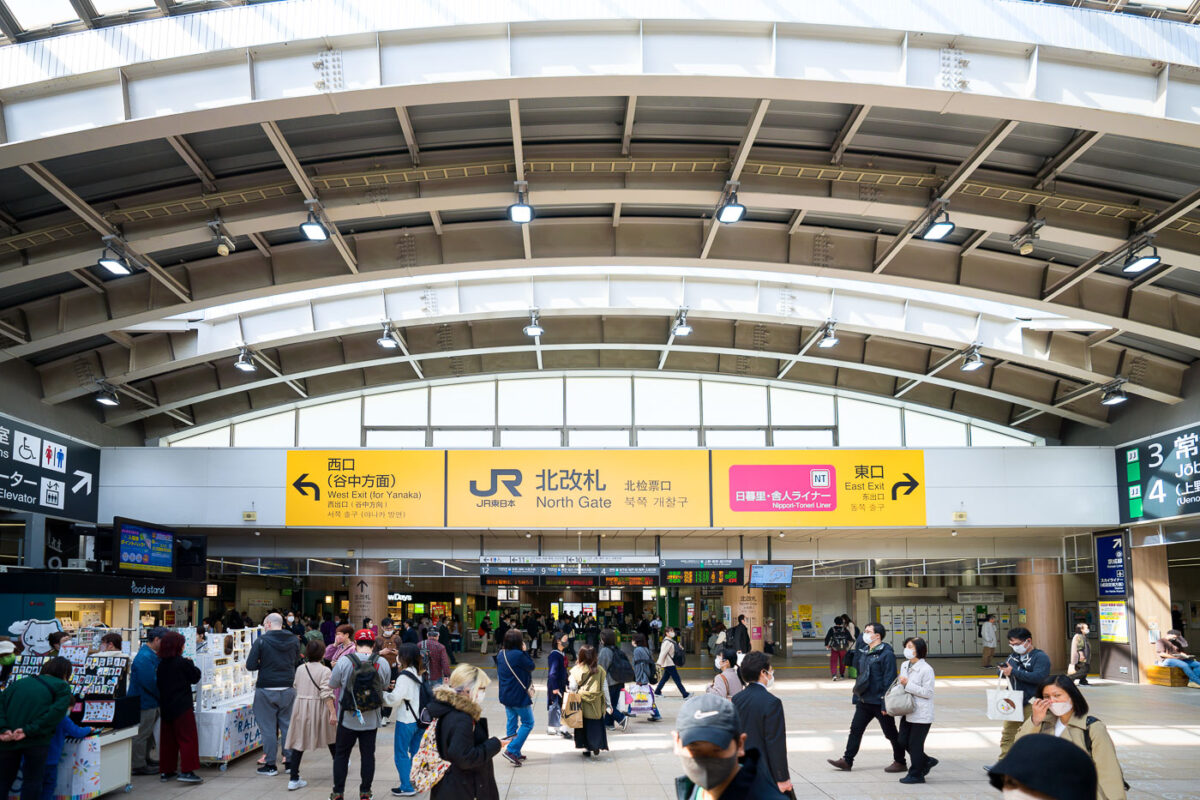
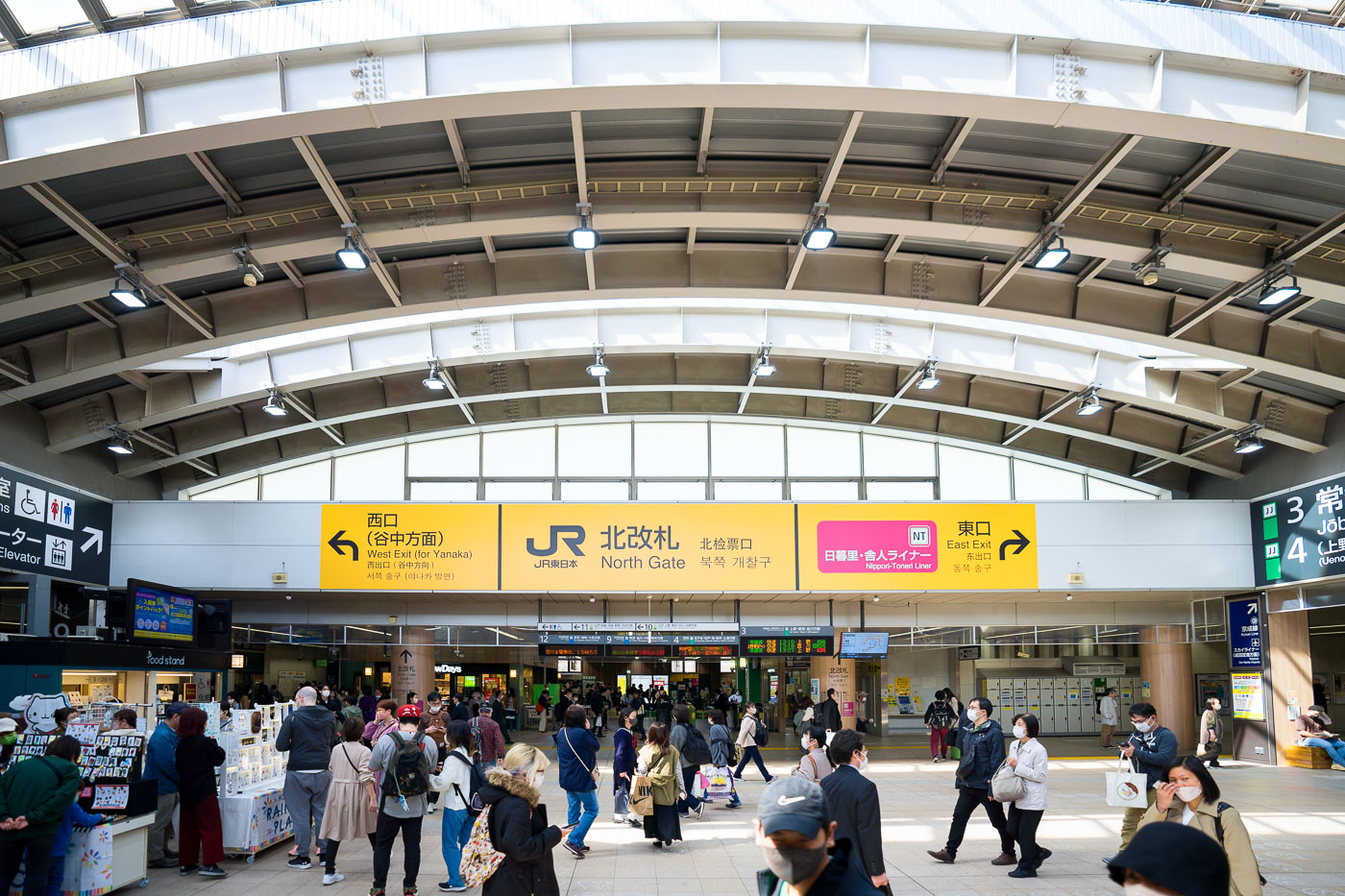
Nippori Station North Gate concourse in Tokyo with directional signs and commuters.
Nippori Station's North Gate ticket concourse links JR East's Yamanote and Keihin-Tohoku lines with the Nippori-Toneri Liner, an automated guideway line that opened in 2008 to serve the Adachi district to the north. The west exit leads toward Yanaka, a neighborhood known for its old temples and preserved prewar streets, while the east exit opens onto Nippori's commercial side near Nishi-Nippori. JR East operates the station, which also connects to the Keisei Main Line, making it a transfer point for travelers heading to Narita Airport. Nippori has served this stretch of northeastern Tokyo since 1905, when it opened as a stop on what was then the Nippon Railway.
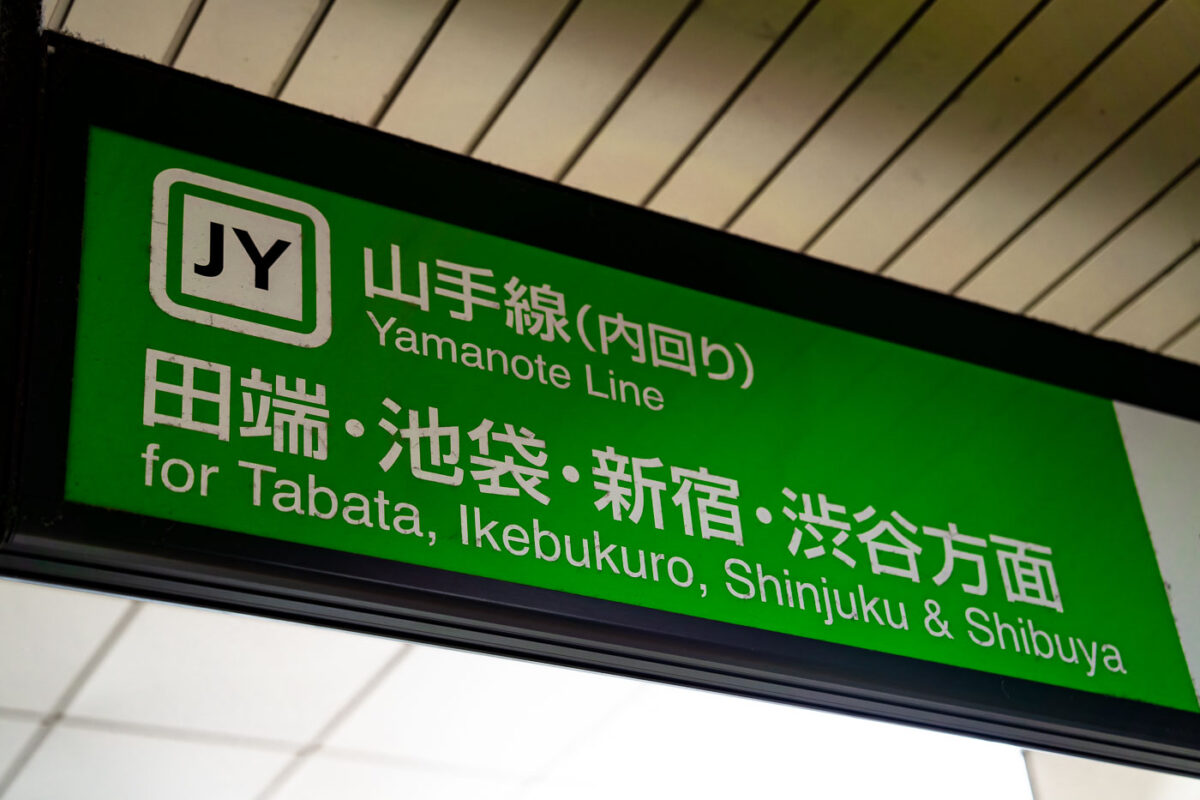
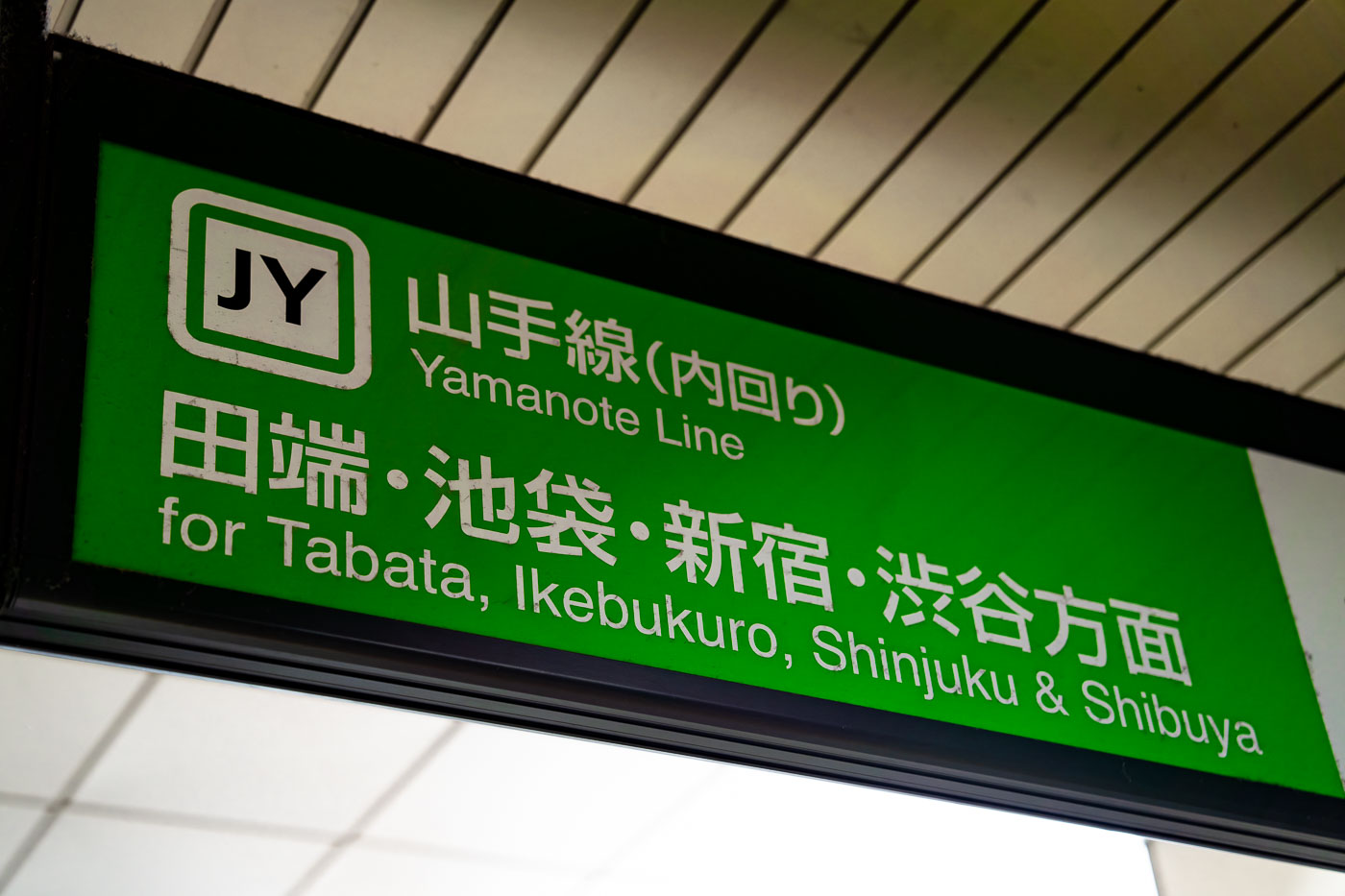
Green directional sign for JR Yamanote Line at Tokyo station serving Tabata, Ikebukuro, Shinjuku, and Shibuya.
The Yamanote Line circles central Tokyo on a 34.5-kilometer loop, connecting 30 stations including Shinjuku, Shibuya, and Ikebukuro. JR East operates the line, which carries roughly 3.5 million riders a day, among the busiest rail services in the world. Trains run in two directions, marked as inner loop (uchimawari) and outer loop (sotomawari), a distinction posted on station signage to help passengers choose the correct platform. The line opened in stages between 1885 and 1925 and now forms the backbone of Tokyo's commuter rail network, linking major business, retail, and entertainment districts along its route.
Two barn owls with heart-shaped facial disks perched close together at a Tokyo owl cafe.
Owl cafes like this one let visitors view and handle owls at close range, often for the price of a drink and a timed session. Tokyo has several such cafes, a niche offshoot of Japan's broader animal cafe industry that also includes cat, rabbit, and hedgehog venues. Barn owls, recognizable by their heart-shaped facial disks, are among the species commonly kept at these establishments. Regulations on the keeping and display of owls in Japan have tightened in recent years amid welfare concerns raised by animal rights groups.
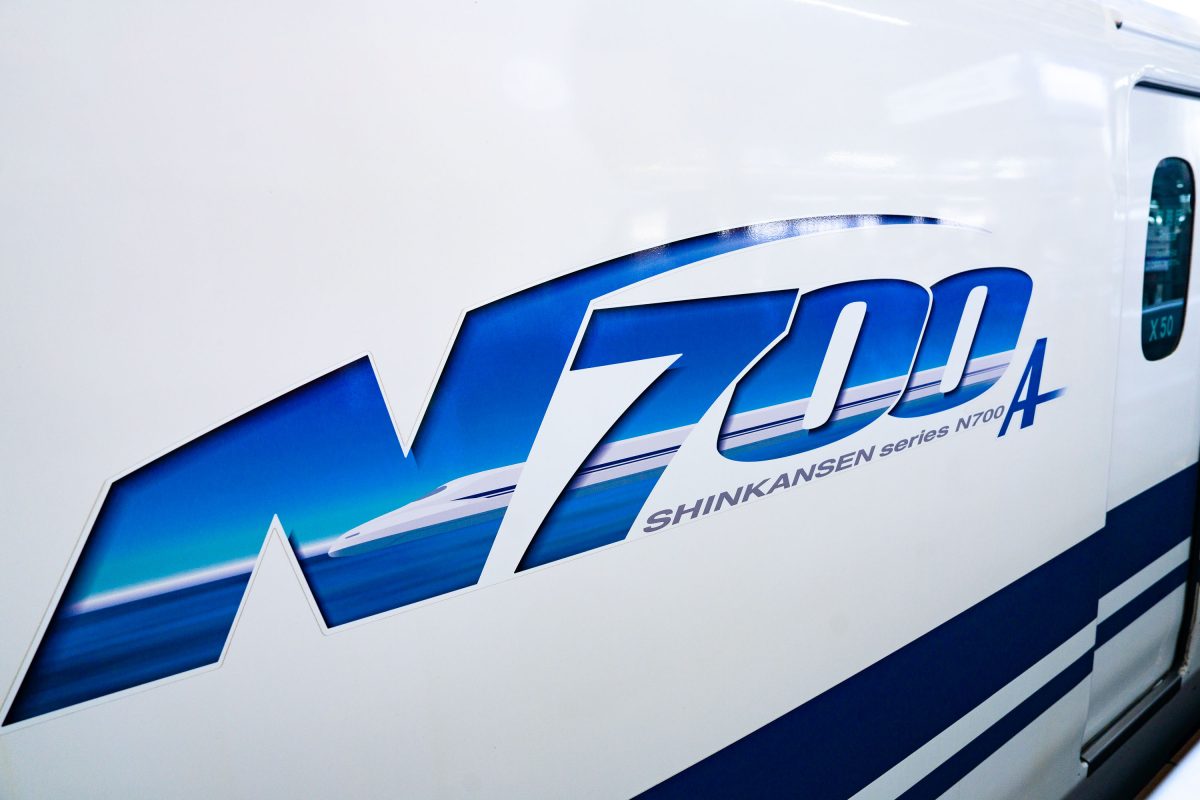
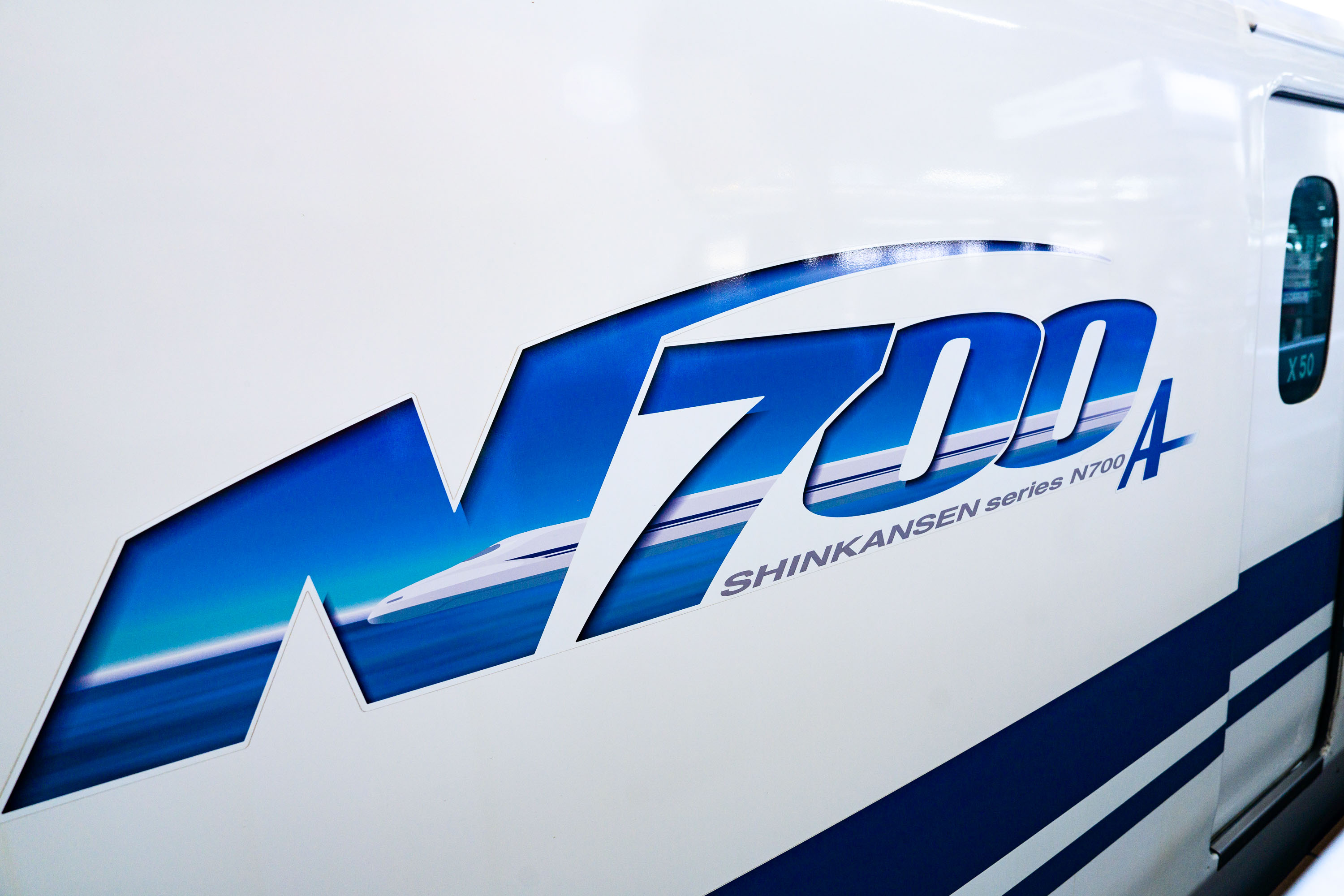
Blue and white N700A Shinkansen logo decal on the side of a Japanese high-speed train.
This logo decal marks a Shinkansen N700A series train operated in Japan's high-speed rail network. The N700A, an upgraded version of the original N700 series, entered service in 2013 with improved braking systems and active suspension technology. Operated primarily by JR Central and JR West on the Tokaido and Sanyo Shinkansen lines, these trains connect major cities including Tokyo, Nagoya, and Osaka at speeds up to 300 km/h.
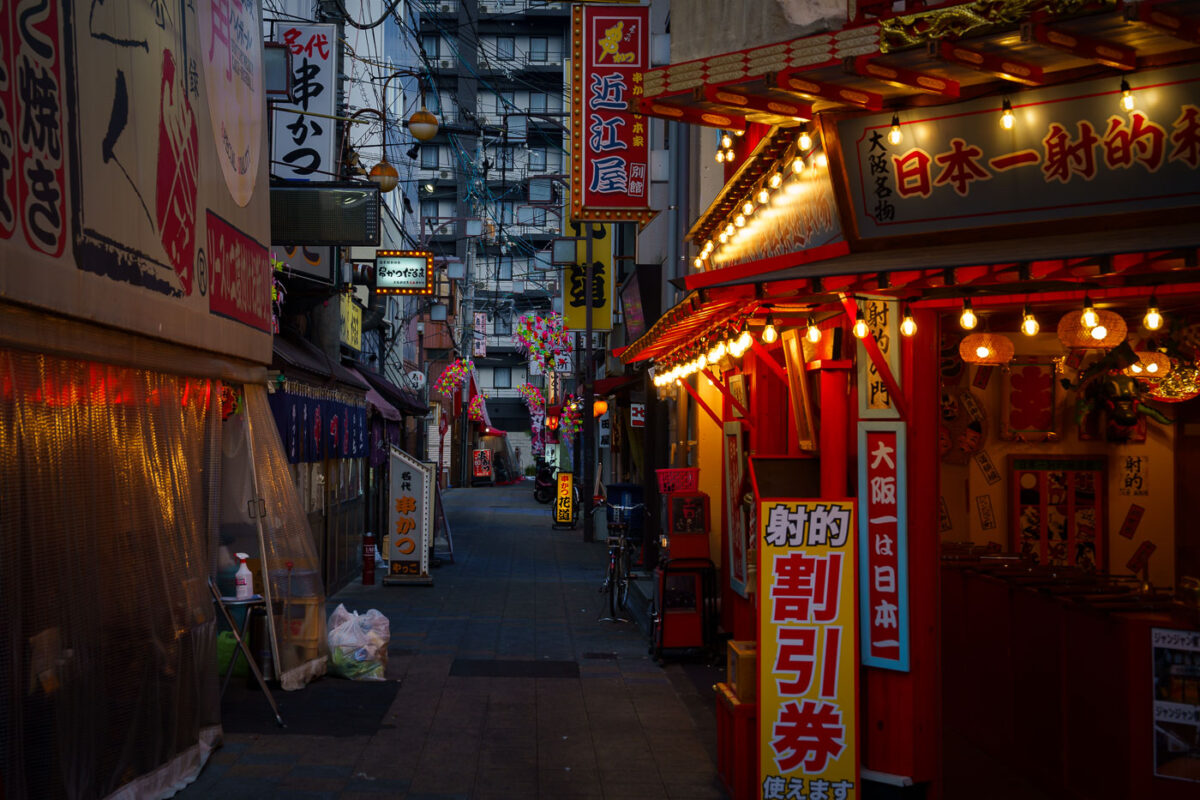
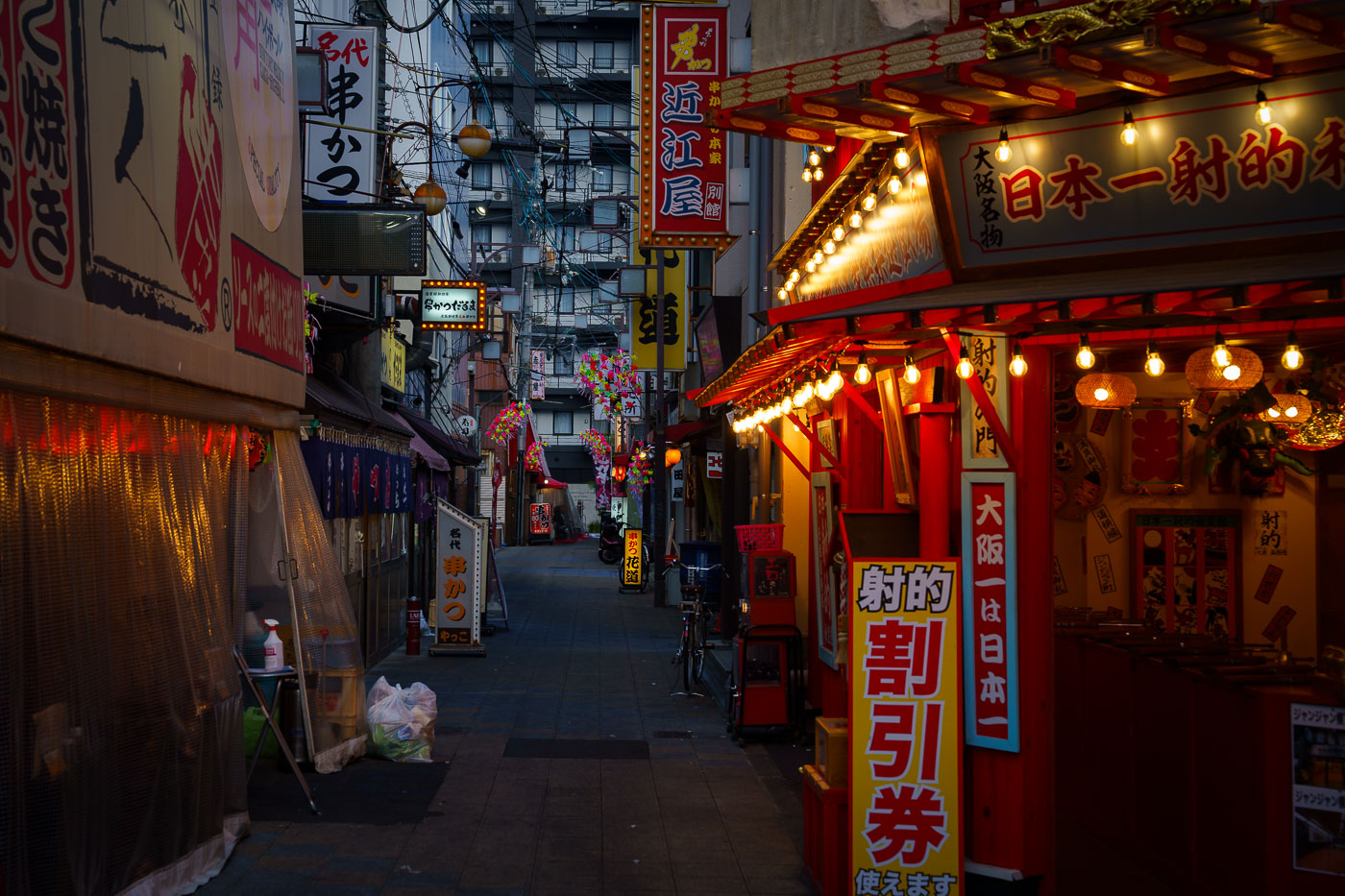
Shinsekai entertainment district in Osaka, Japan, with illuminated restaurant signs along a narrow street.
Shinsekai, Osaka, Japan, is a historic entertainment district known for its dense clusters of restaurants, game parlors, and illuminated signage. Developed in 1912, the neighborhood was modeled in part on Western amusement districts and remains associated with retro-style nightlife and dining.
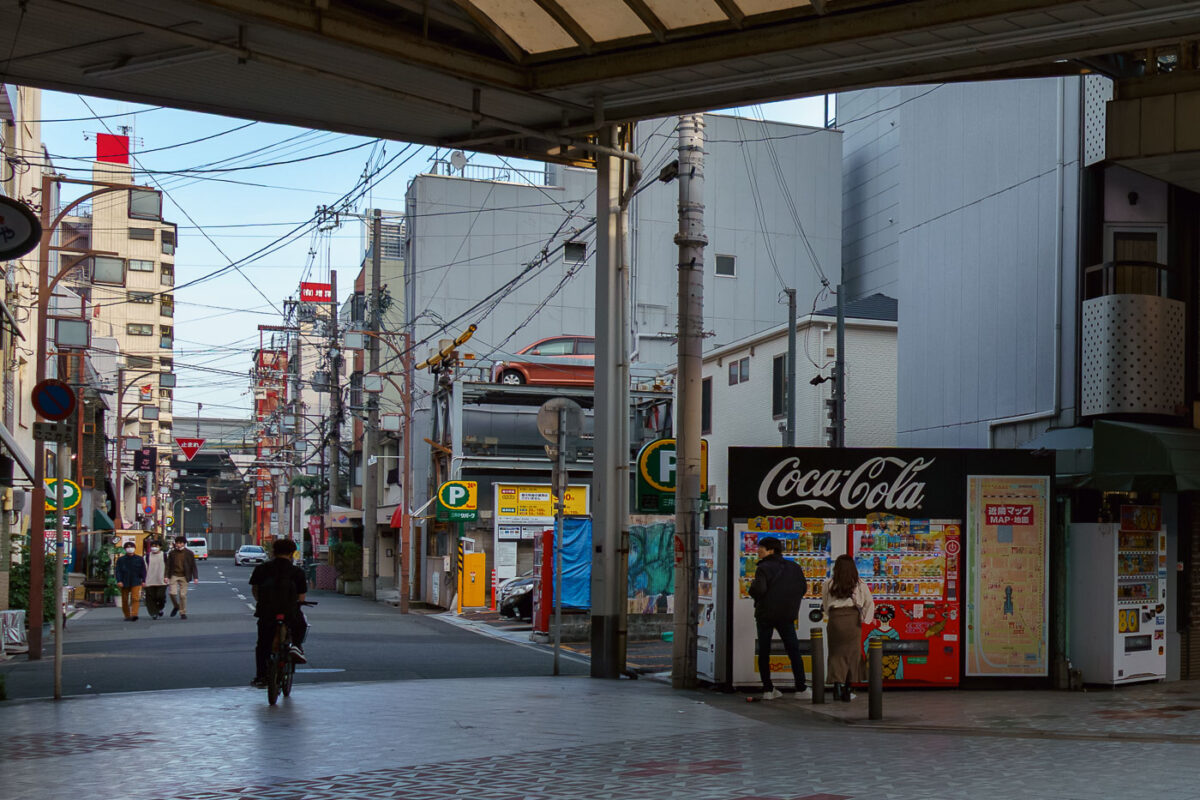
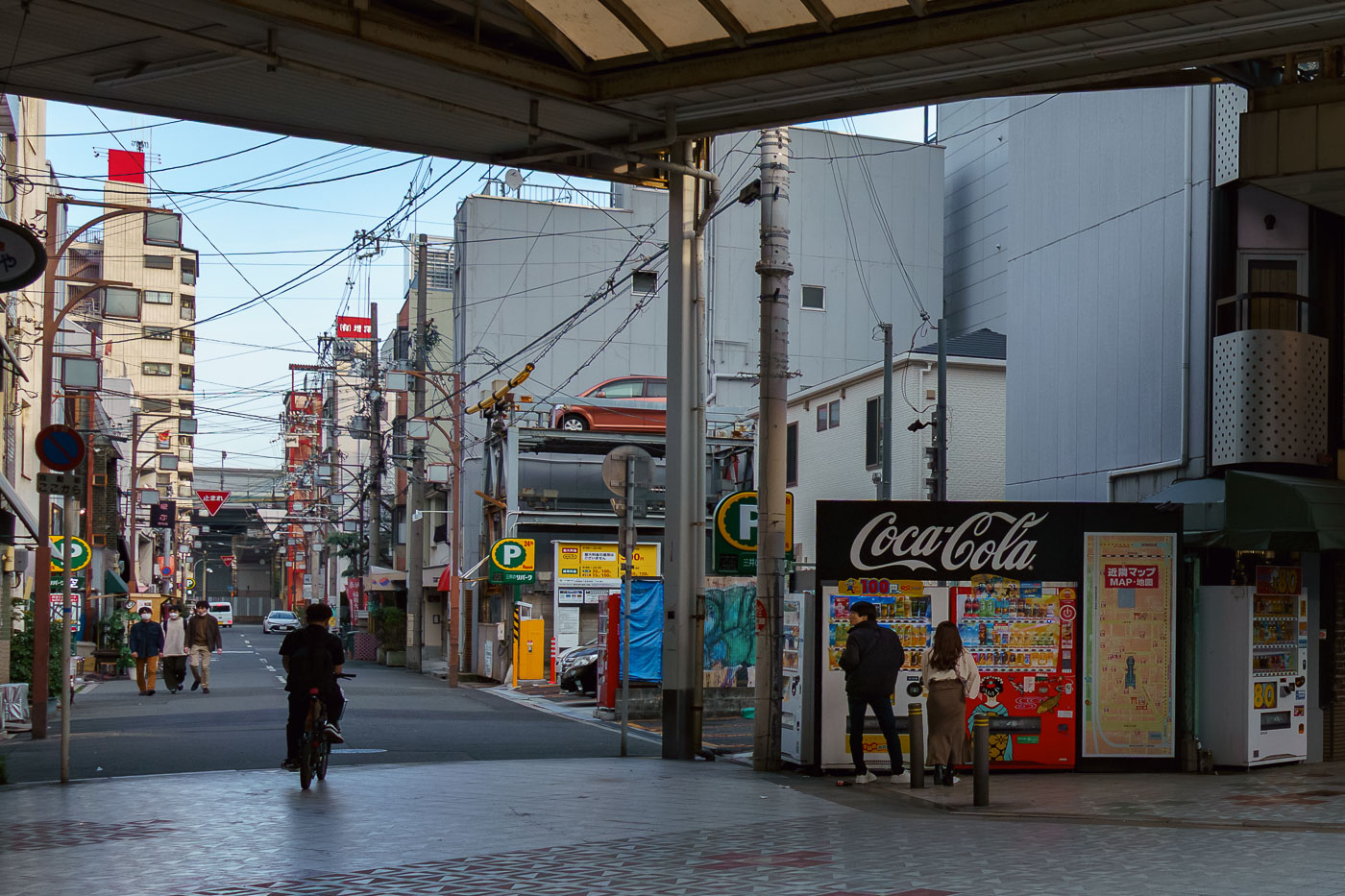
Coca-Cola vending machines on a street in Osaka, Japan, beside a local area map.
Coca-Cola vending machines on a street in Osaka, Japan, offer drinks and a local area map for nearby pedestrians. Vending machines are widely used throughout Japan for convenient beverage sales in public spaces.
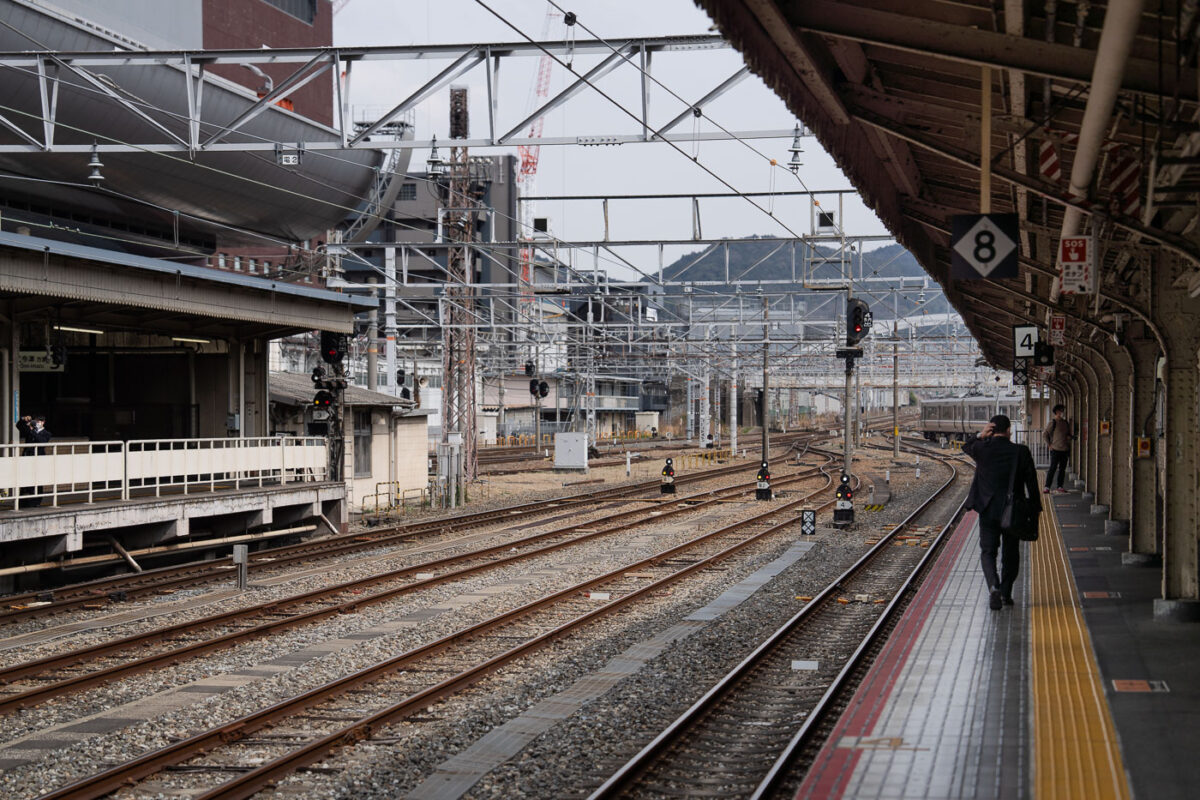
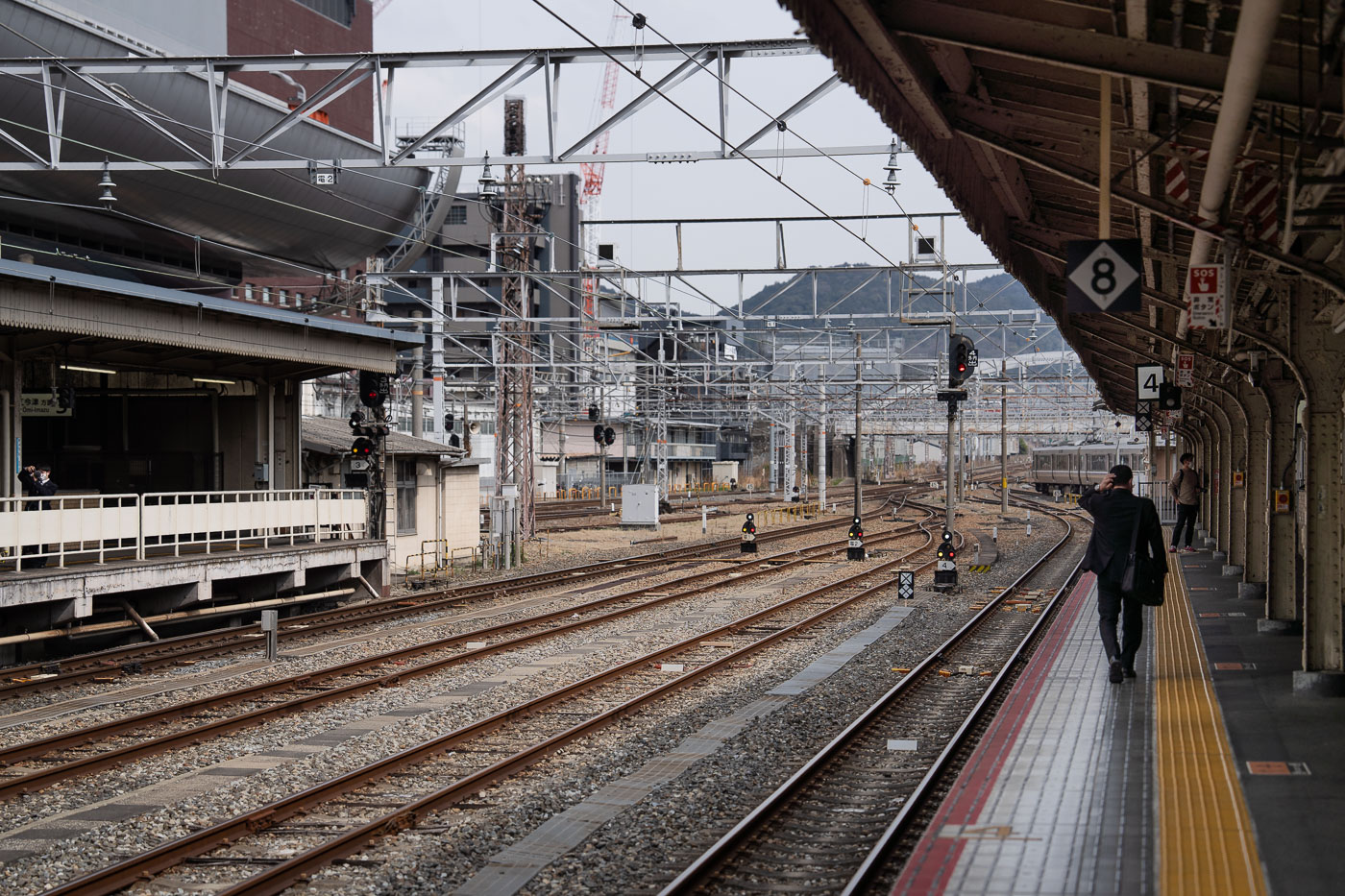
Person walking along a platform at Kyoto Station with multiple rail tracks and overhead wires visible.
Kyoto Station serves as the primary rail terminal for Kyoto, Japan, linking Japan Railways lines with the Tokaido Shinkansen bullet train service. The station's extensive network of tracks and elevated platforms accommodates both long-distance and regional trains connecting Kyoto to Osaka, Tokyo, and other cities across the Kansai region. Opened in its current form in 1997, the complex ranks among Japan's busiest transit hubs, moving commuters and travelers throughout the day.
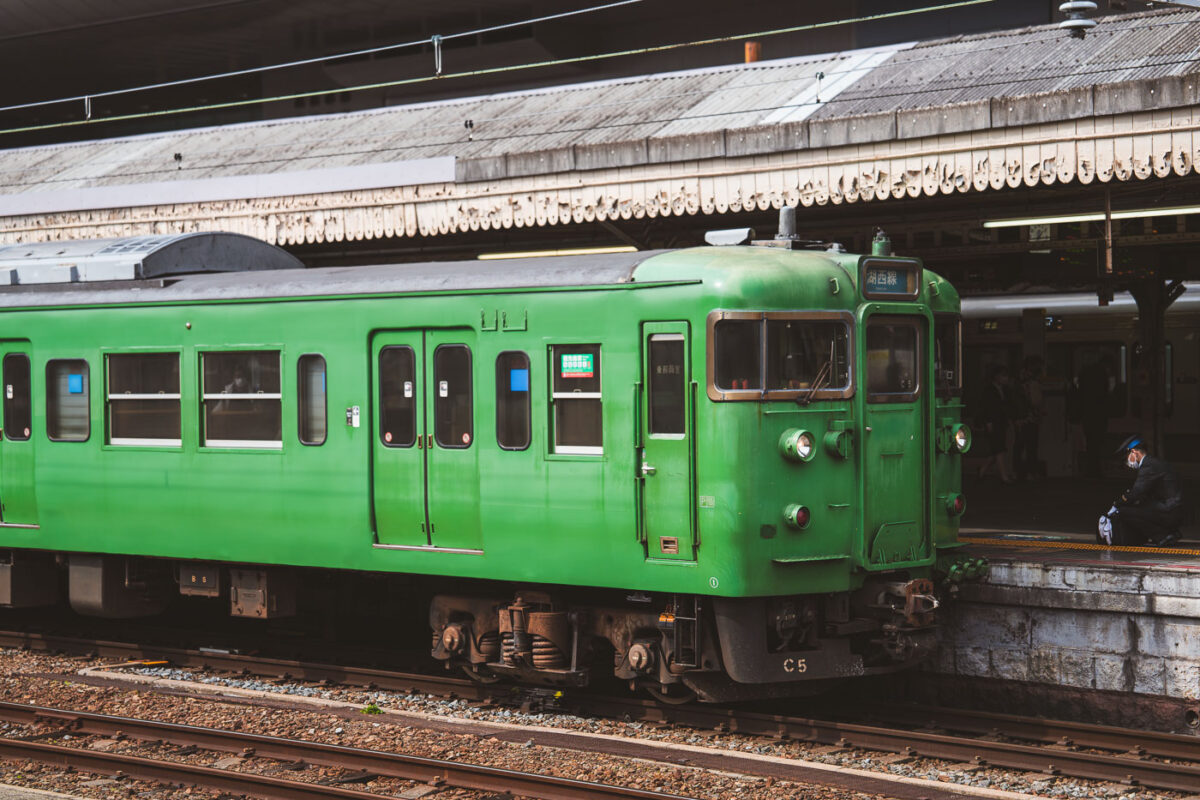
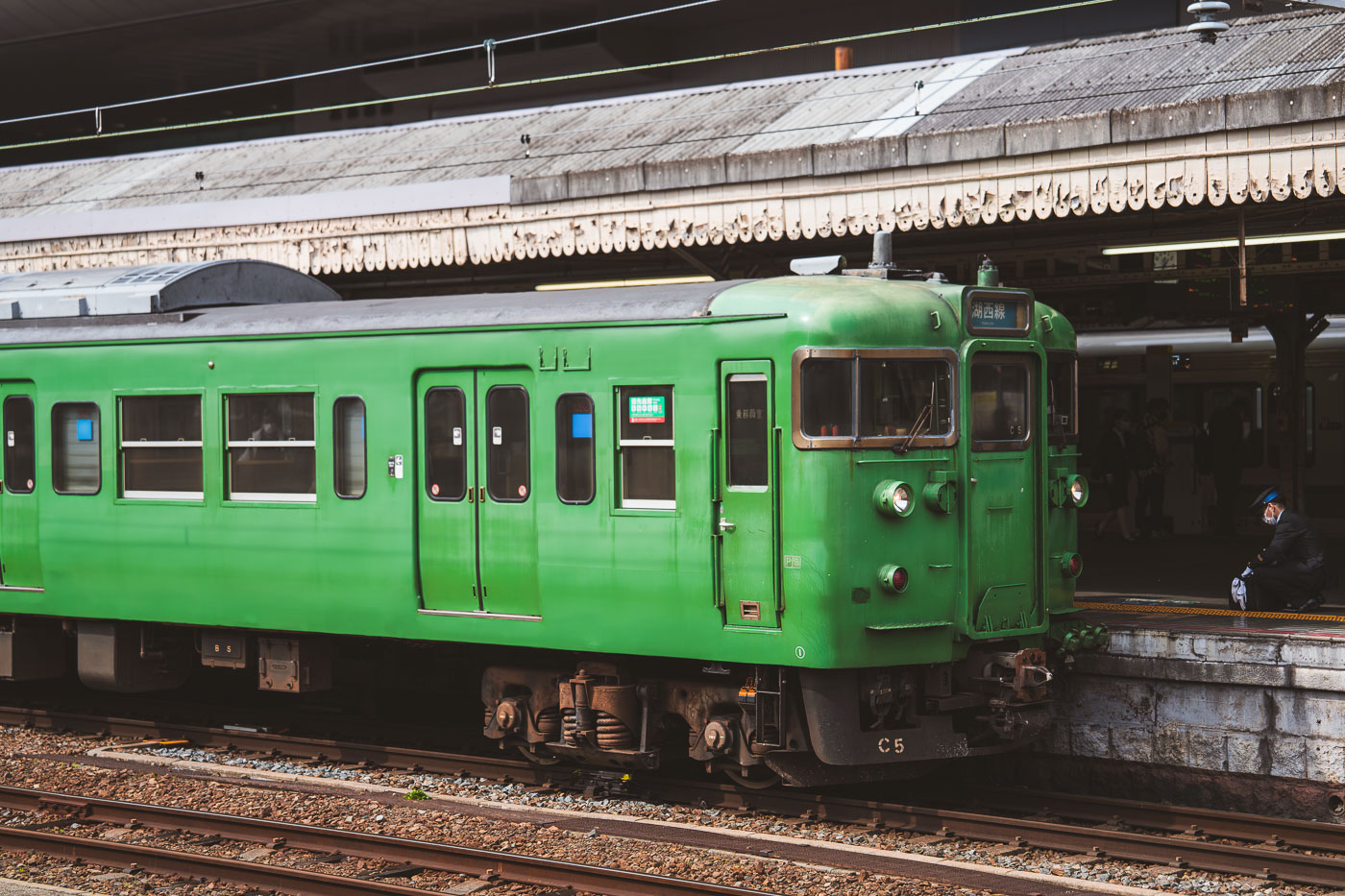
Green commuter train at a Kyoto, Japan station platform with a conductor nearby.
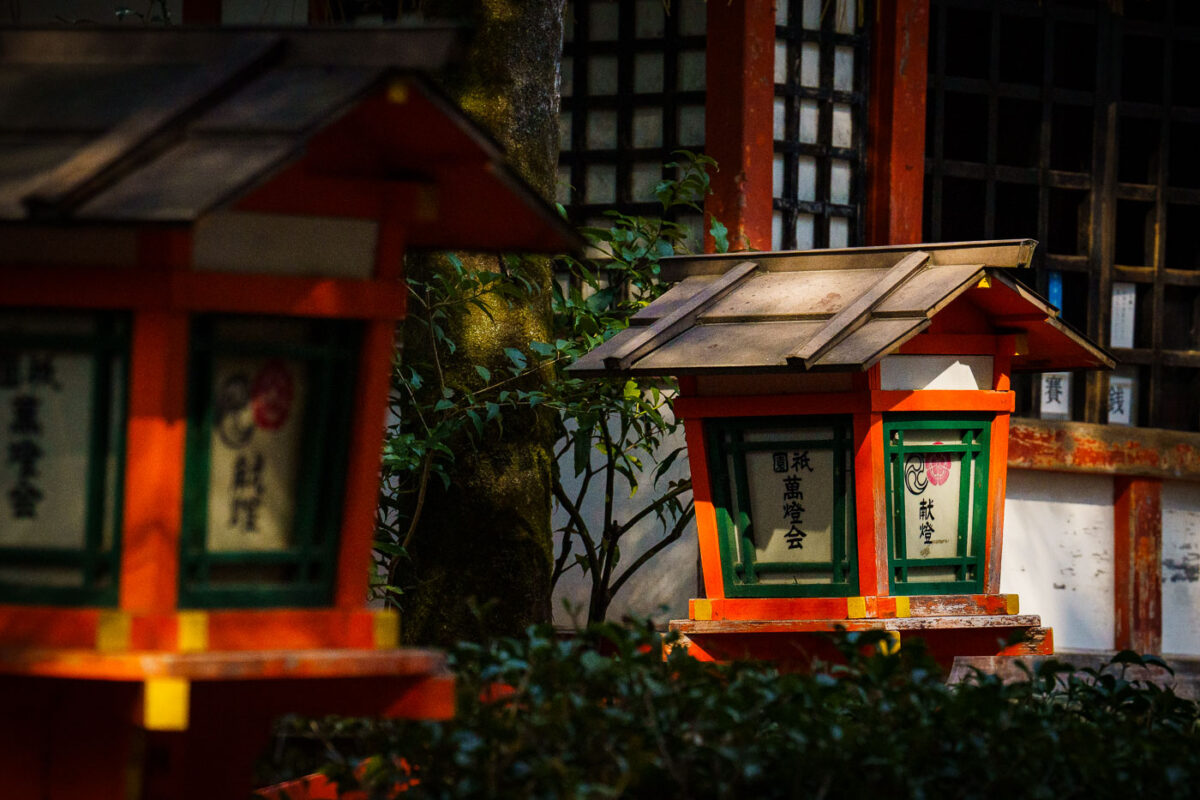
A green commuter train stands at a platform in Kyoto, Japan. The older railcar appears to be in regular passenger service on a regional line, with a conductor at the platform preparing for departure.
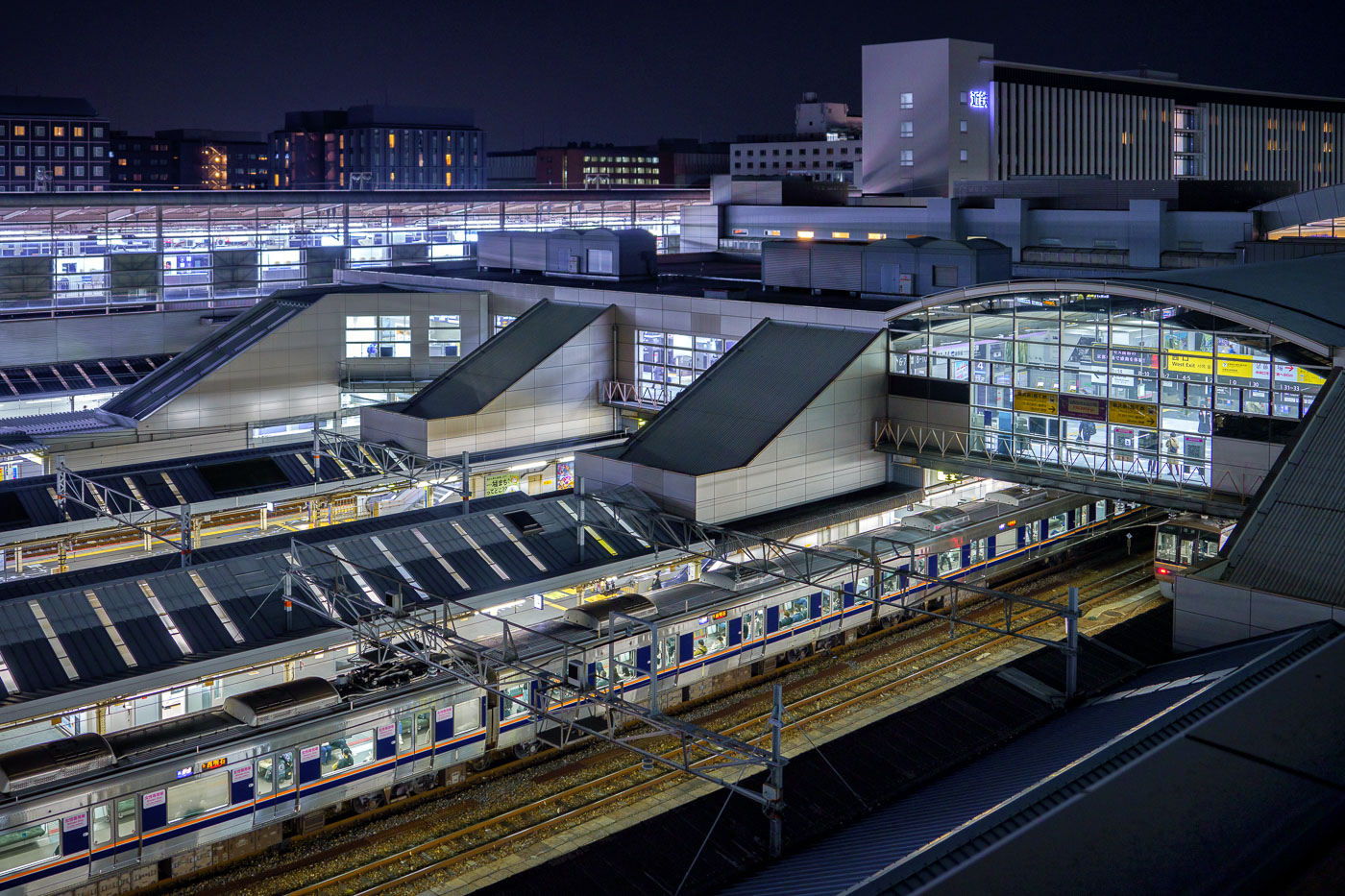
Multiple train platforms and tracks illuminated at night beneath the glass-roofed structure of Kyoto Station.
Kyoto Station, located in central Kyoto, Japan, is one of the country's largest transportation hubs, serving Shinkansen, JR West, JR Central, and several private railway lines. Opened in 1997 to mark the city's 1,200th anniversary, the station was designed by architect Hiroshi Hara and features a vast steel-and-glass structure spanning multiple levels. Beyond its transit function, the complex houses a shopping mall, hotel, theater, and observation areas, making it a central node connecting Kyoto to major cities across Japan.
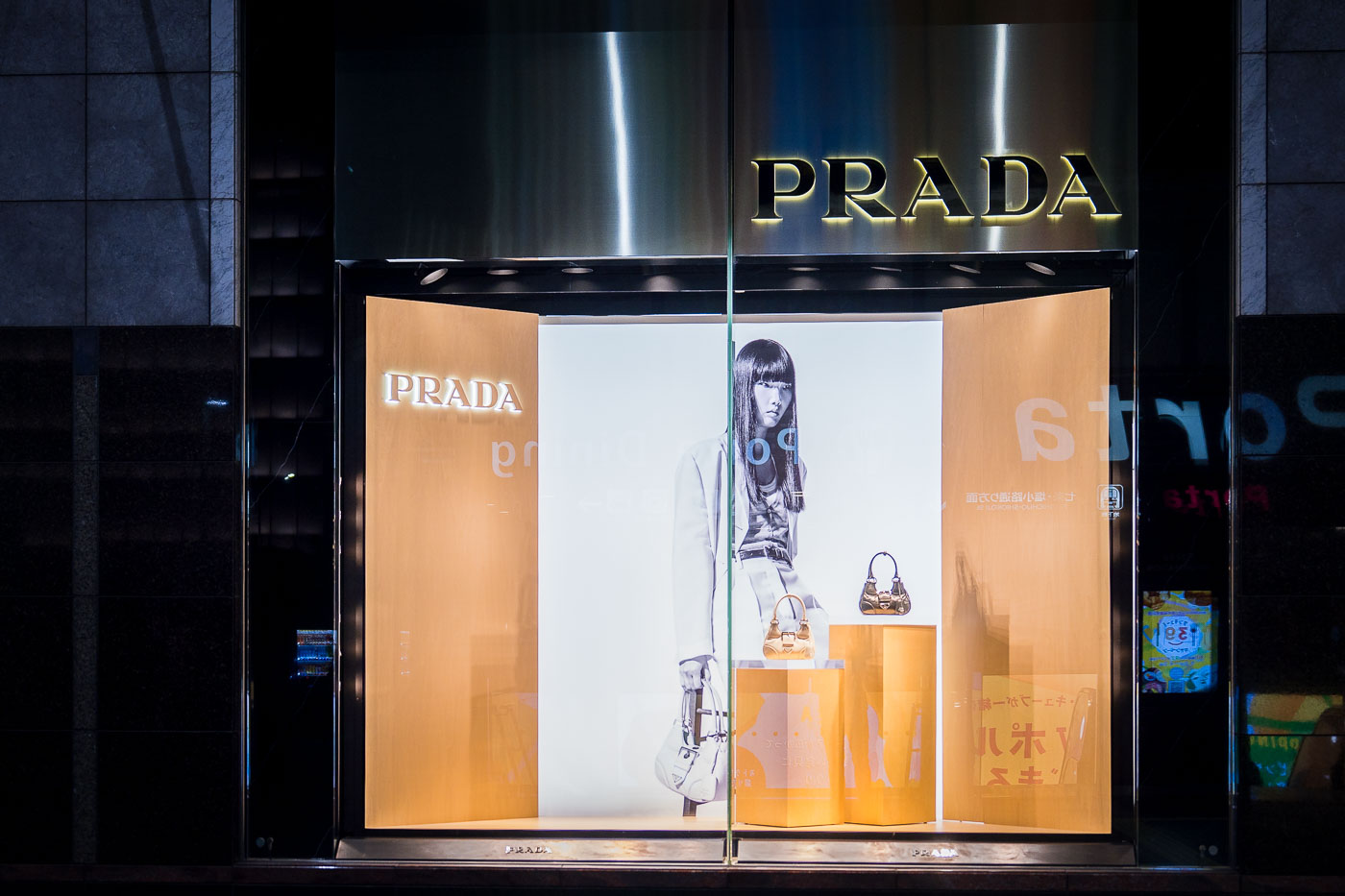
Prada storefront in Kyoto, Japan, with a luxury retail window display and illuminated sign.
Prada storefront in Kyoto, Japan. The luxury fashion house, founded in 1913, operates boutiques worldwide for handbags, clothing, and accessories. This Kyoto location features a contemporary retail display on a central commercial street.
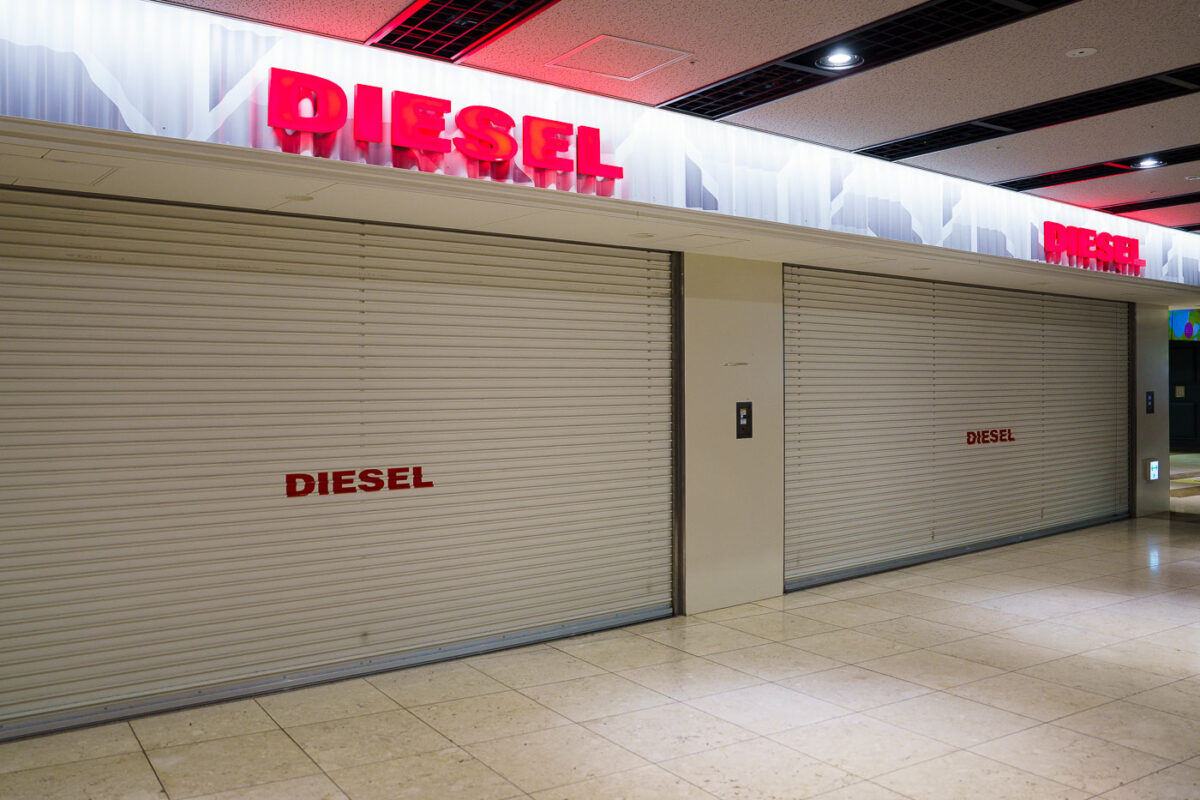
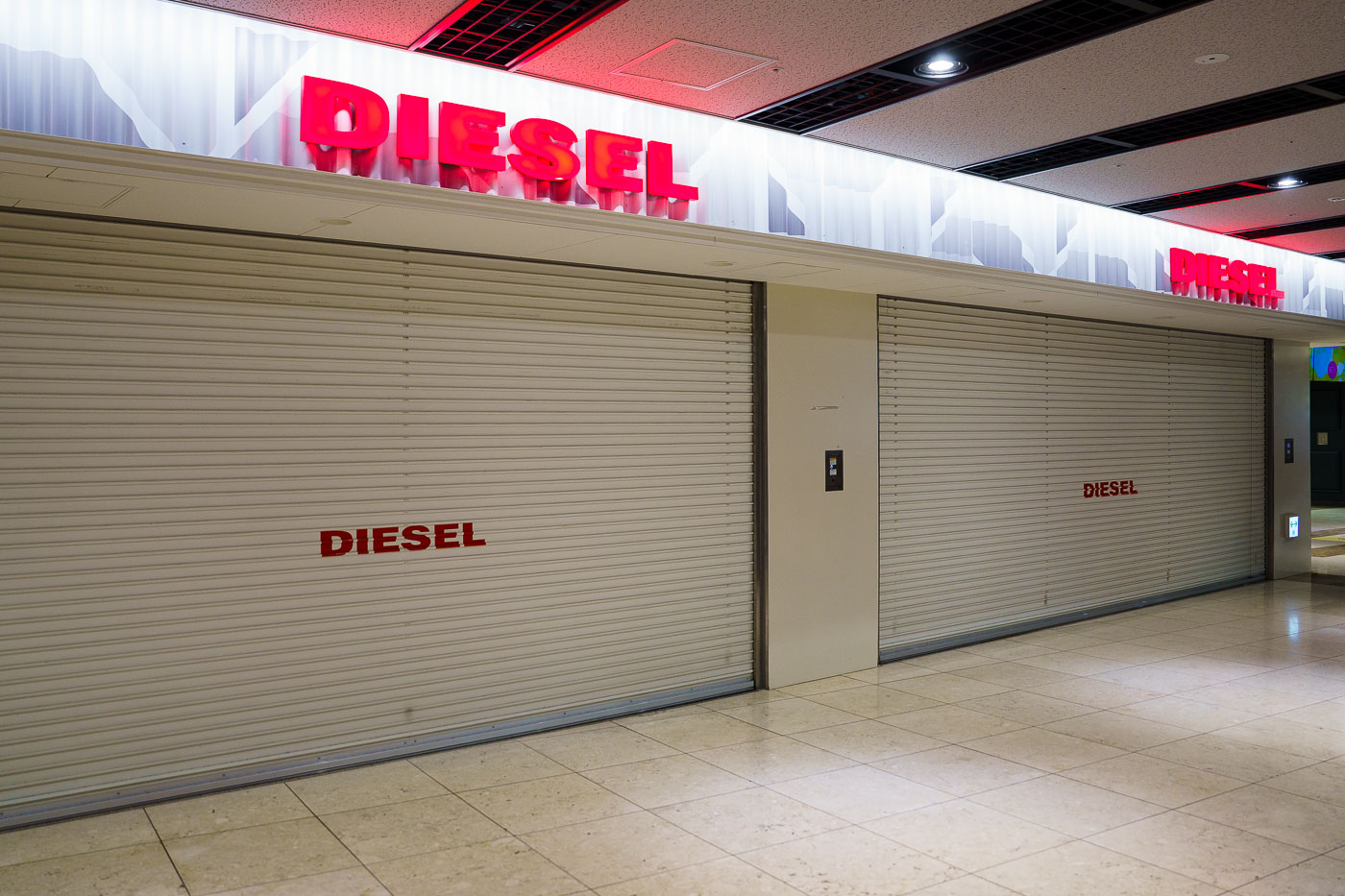
Diesel storefront in Kyoto, Japan, with closed security shutters.
Diesel storefront in Kyoto, Japan, with its security shutters closed. The fashion retailer’s branding remains visible above the closed entrance.
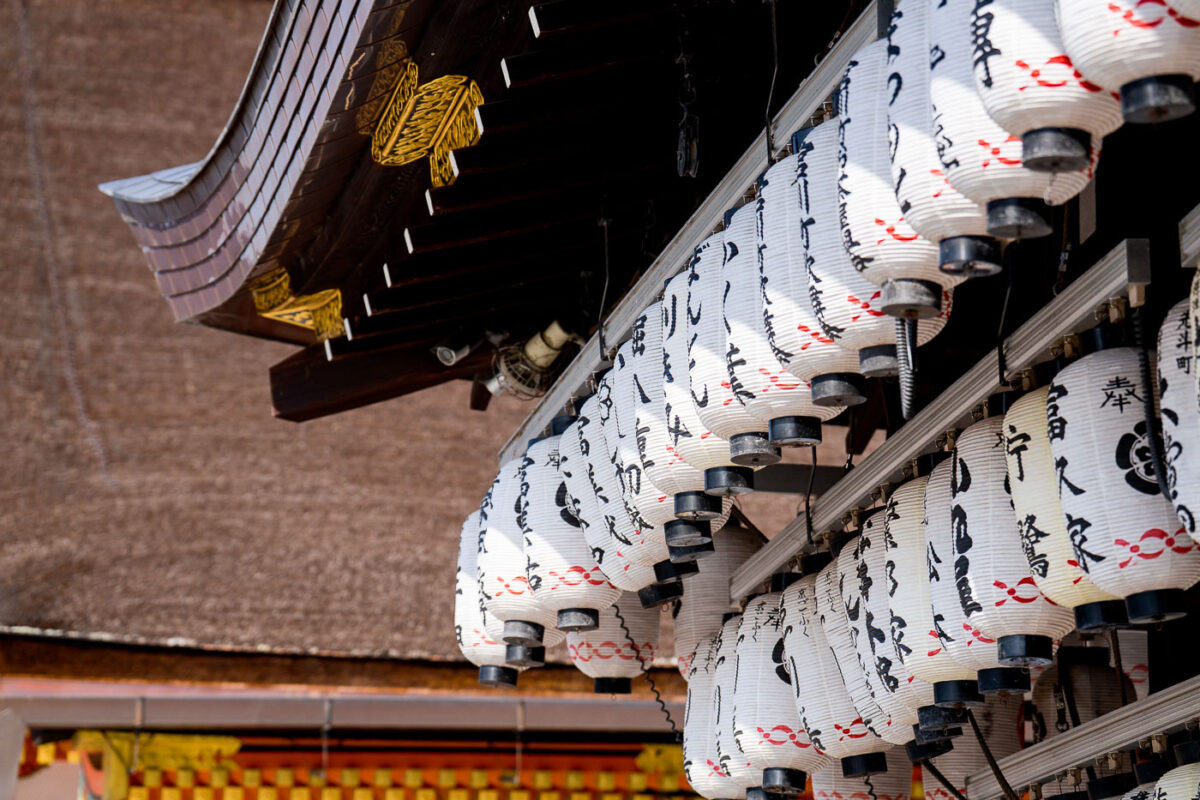
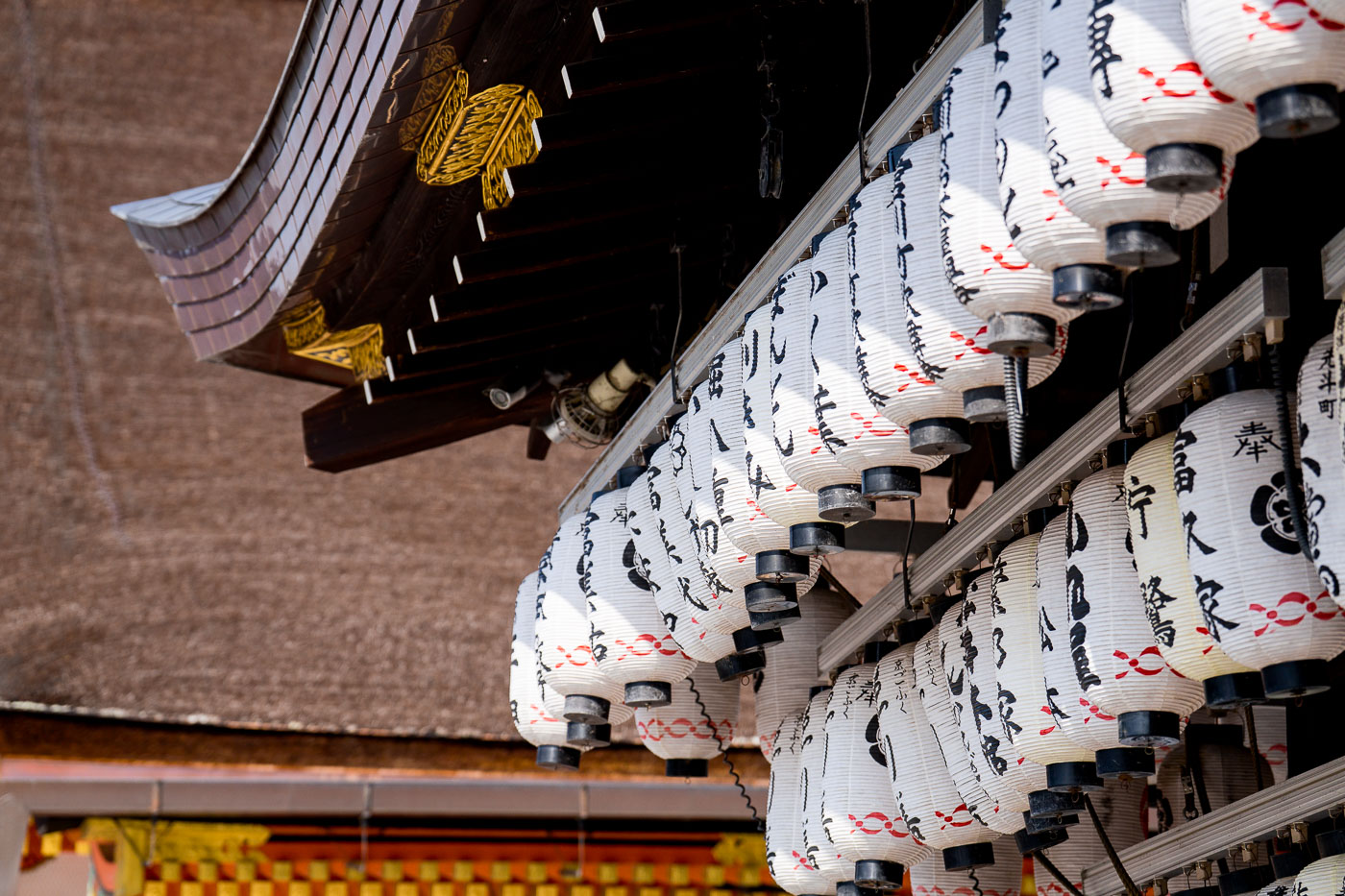
Yasaka Shrine in Kyoto with rows of white chochin lanterns beneath the eaves.
Yasaka Shrine in Kyoto displays rows of white chochin lanterns beneath the shrine eaves. These paper lanterns are commonly donated as offerings and are used during festivals and ceremonial occasions.
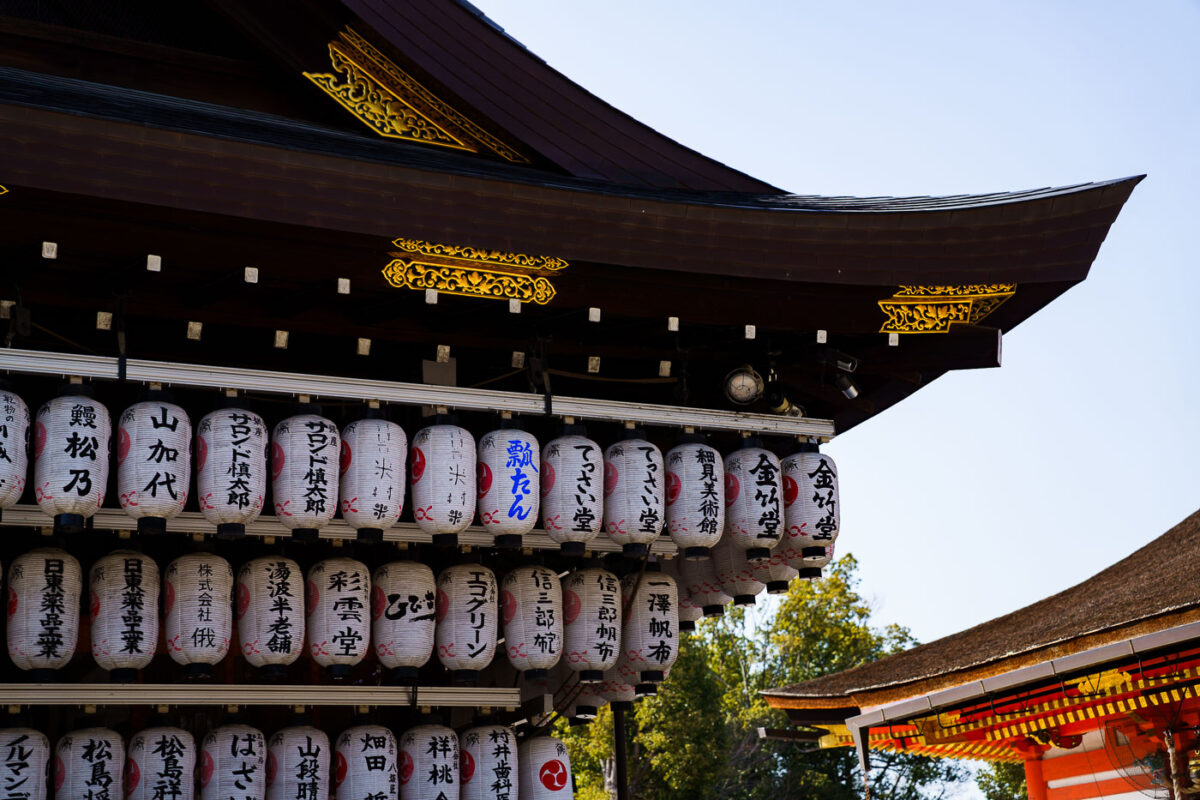
Yasaka Shrine lanterns hang from a Kyoto shrine building in Gion.
Yasaka Shrine in Kyoto, Japan, is also known as Gion Shrine and stands in the Gion district. The shrine was founded in 656 and rebuilt several times, including in 1654. It is closely associated with Gion Matsuri, one of Japan’s best-known annual festivals.
Yasaka Shrine tōrō lanterns in Kyoto, Japan.
Yasaka Shrine in Kyoto, Japan, is known for its rows of donated tōrō lanterns. The shrine, also called Gion Shrine, is closely associated with the Gion Matsuri and has been a major Shinto site in Kyoto since the 9th century.
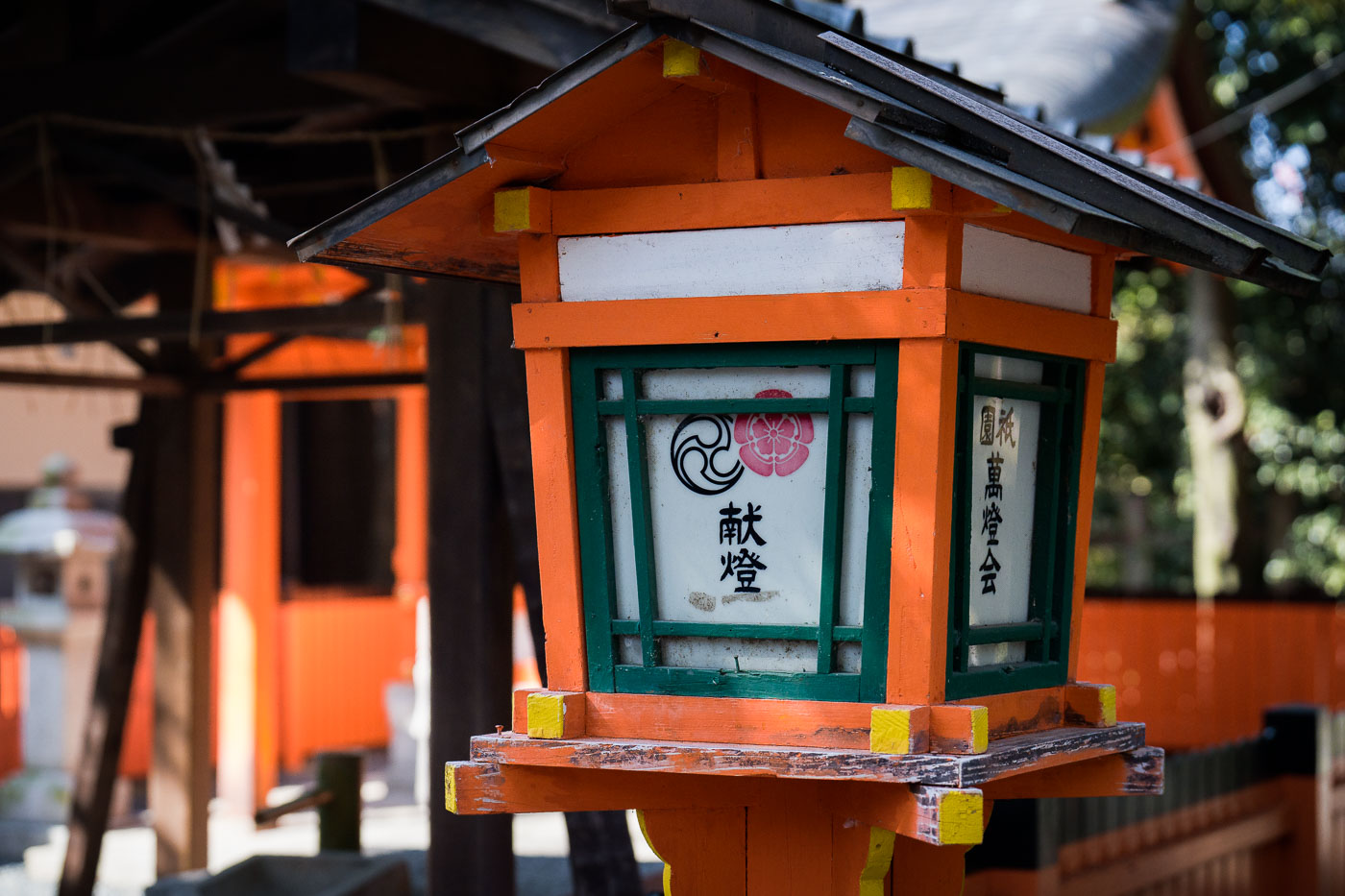
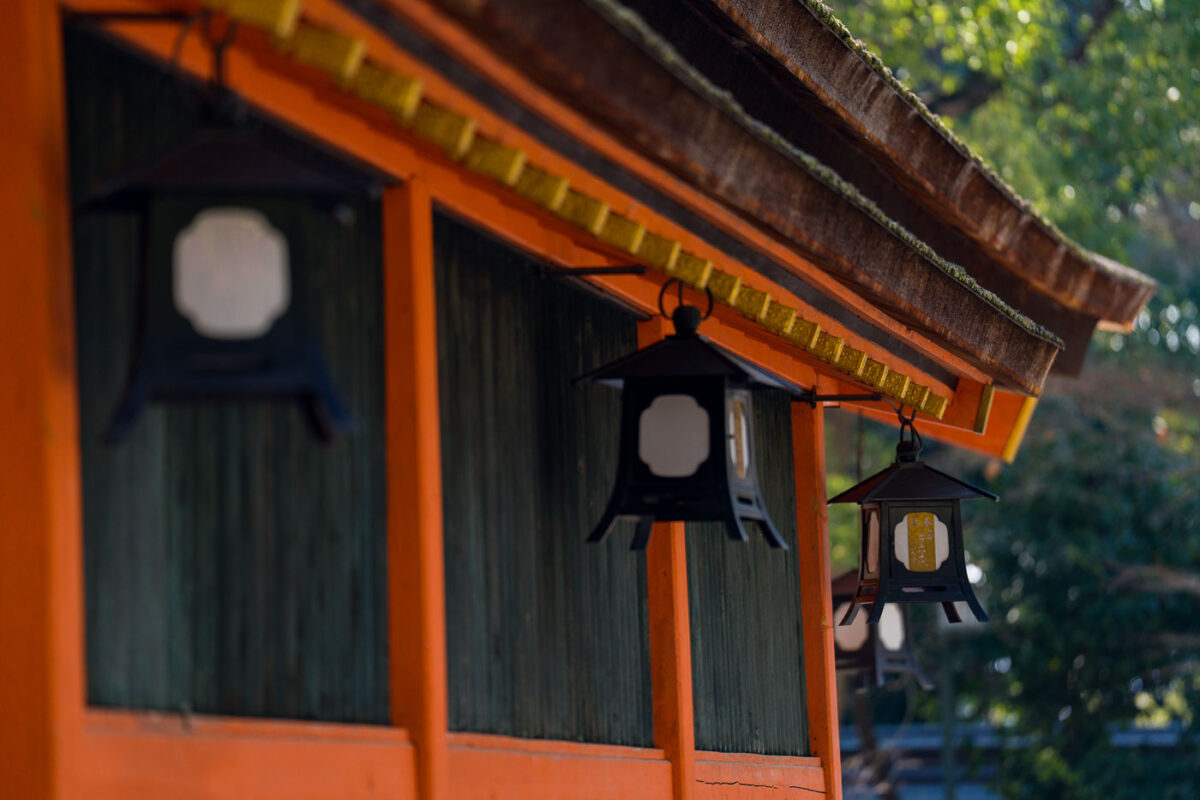
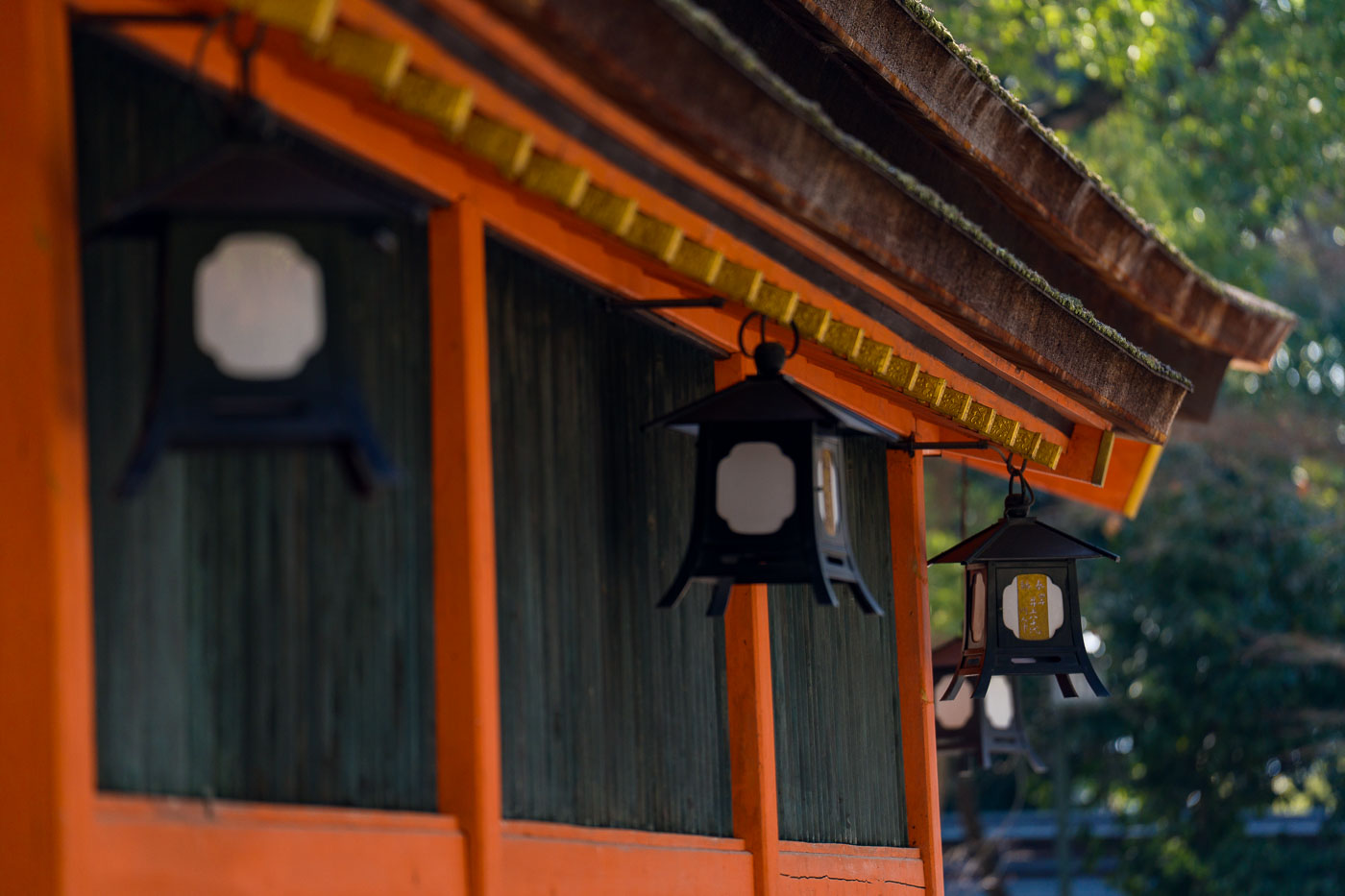
Yasaka Shrine lantern stand in Kyoto with orange and green painted wood.
Yasaka Shrine, also known as Gion Shrine, is a major Shinto shrine in Kyoto’s Gion district. The shrine dates to 656 AD and is associated with the annual Gion Matsuri, one of Japan’s best-known festivals.
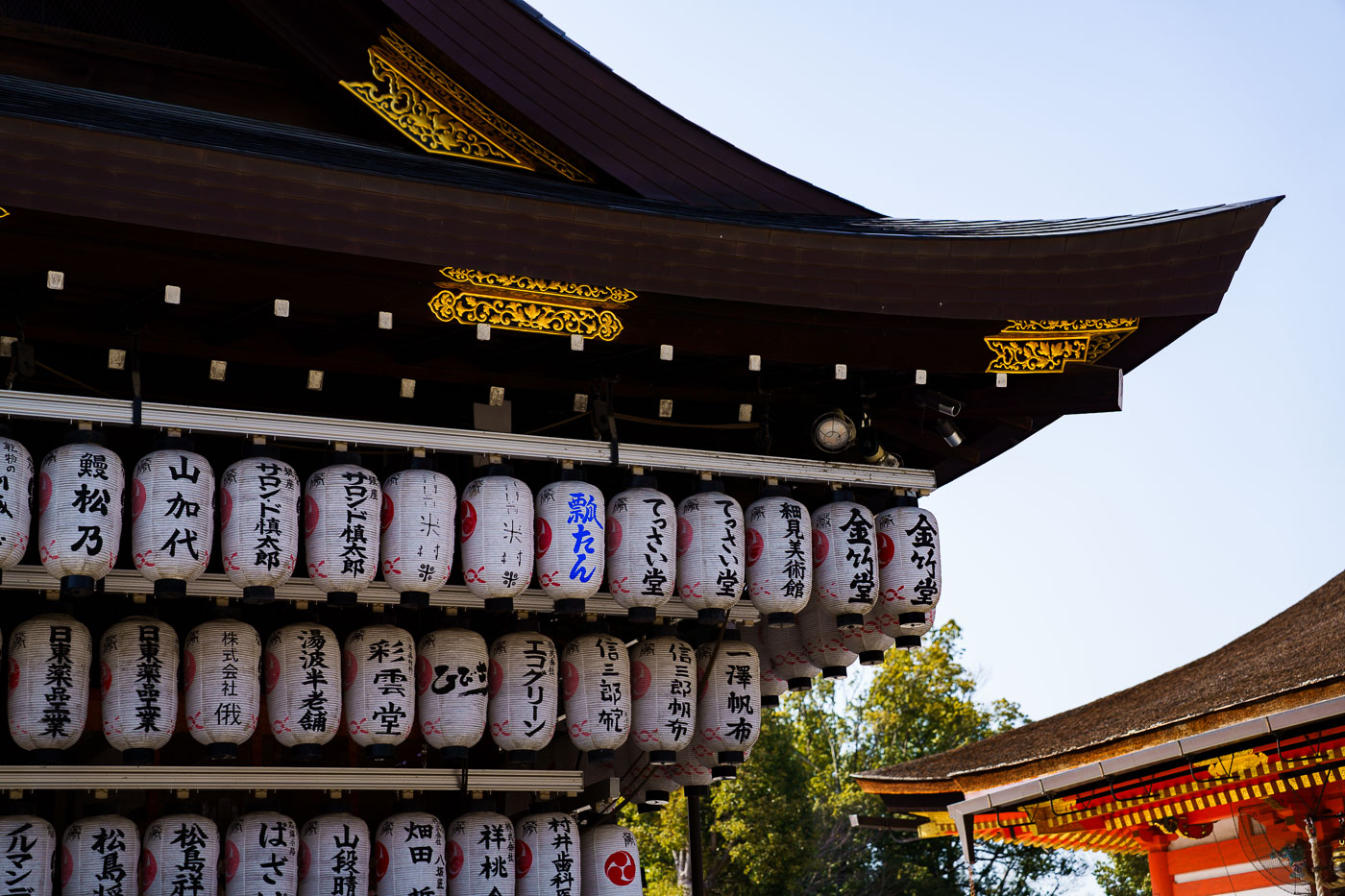
Yasaka Shrine lanterns in Kyoto’s Gion district hang beneath the eaves of the shrine.
Yasaka Shrine in Kyoto’s Gion district is known for rows of donated chochin lanterns hung beneath the shrine eaves. The lanterns are inscribed with the names of businesses and supporters and are a familiar feature of the shrine’s approach. Yasaka Shrine, also called Gion Shrine, is one of Kyoto’s प्रमुख Shinto shrines and is associated with the annual Gion Matsuri festival.
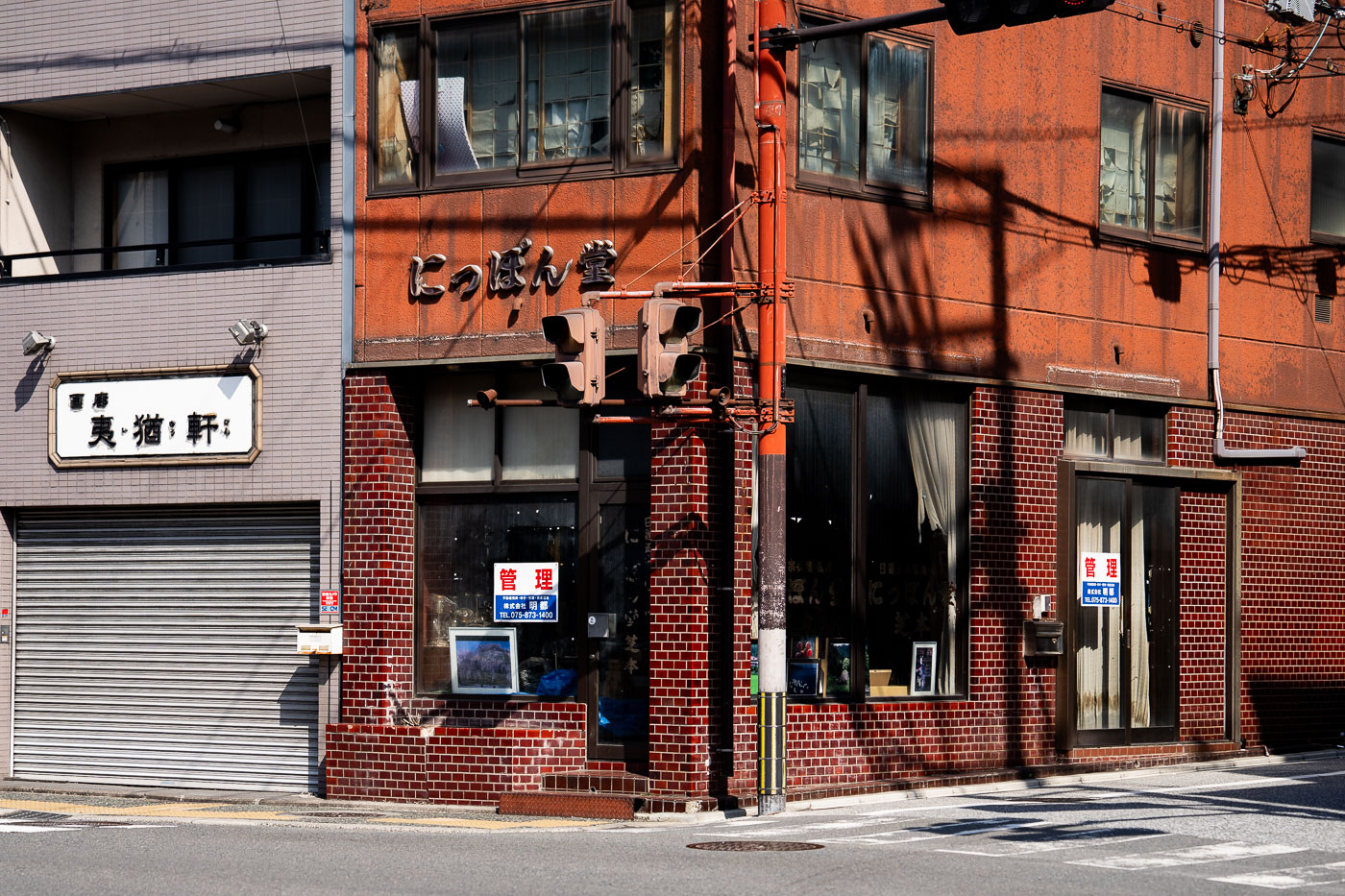
Nippondo Building at a Kyoto street corner with weathered orange and red tile exterior.
Nippondo Building, Kyoto, Japan. The corner commercial building appears to house a small business and sits beside another low-rise structure along a street with traffic signals. Its tiled lower facade and weathered upper exterior suggest an older urban storefront building.
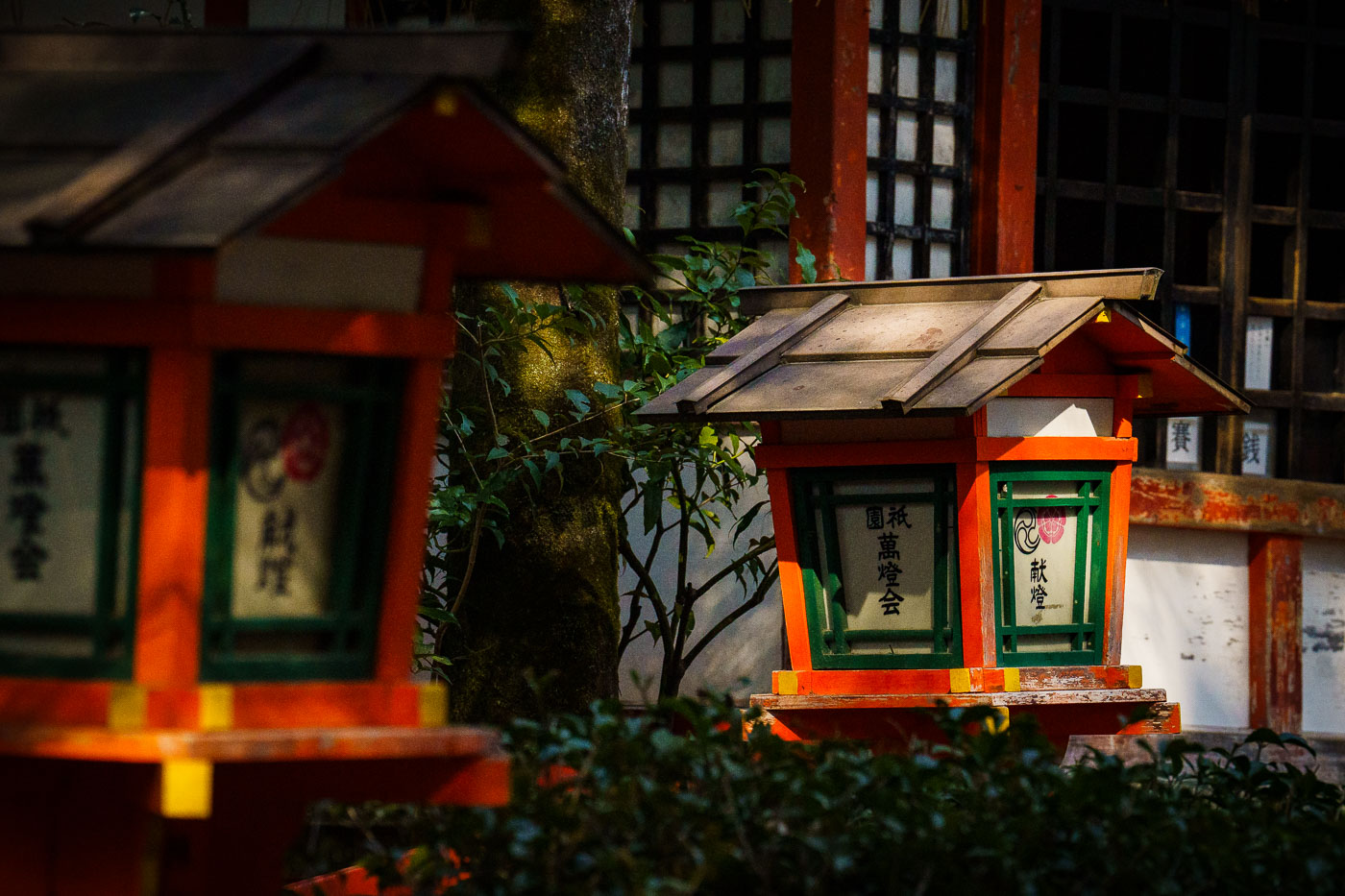
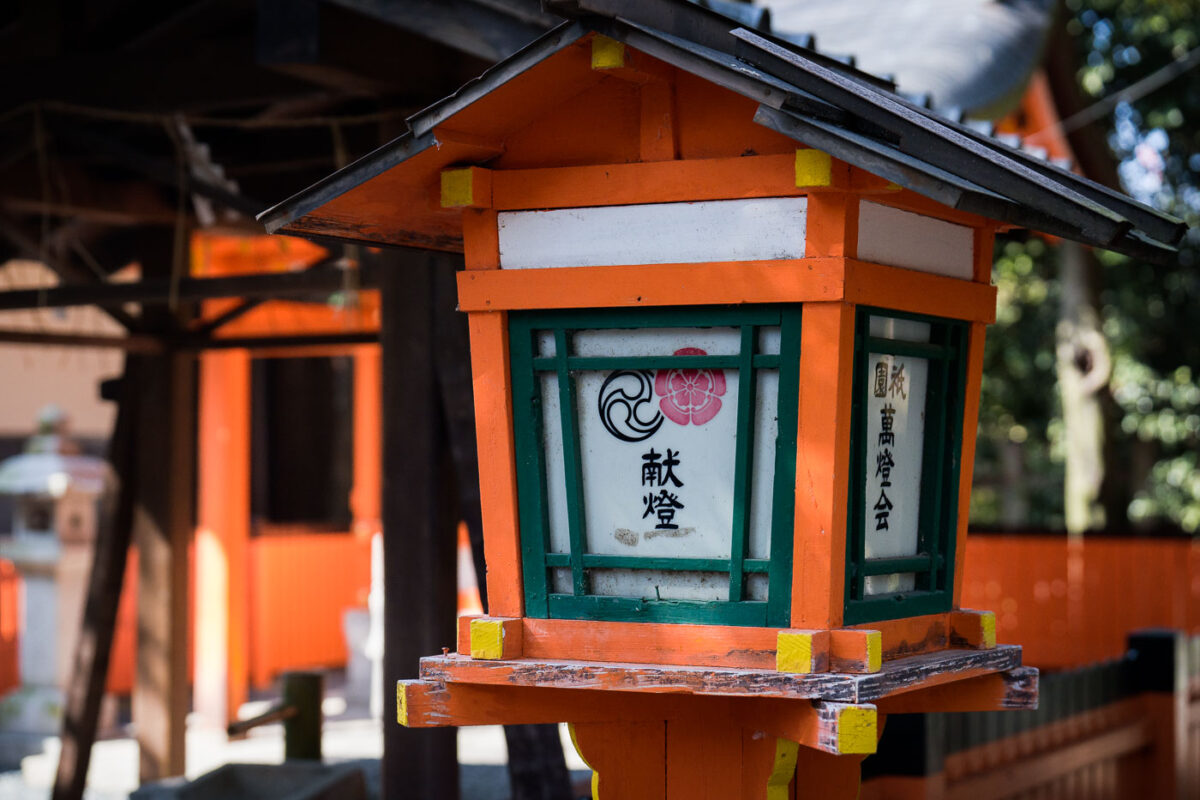
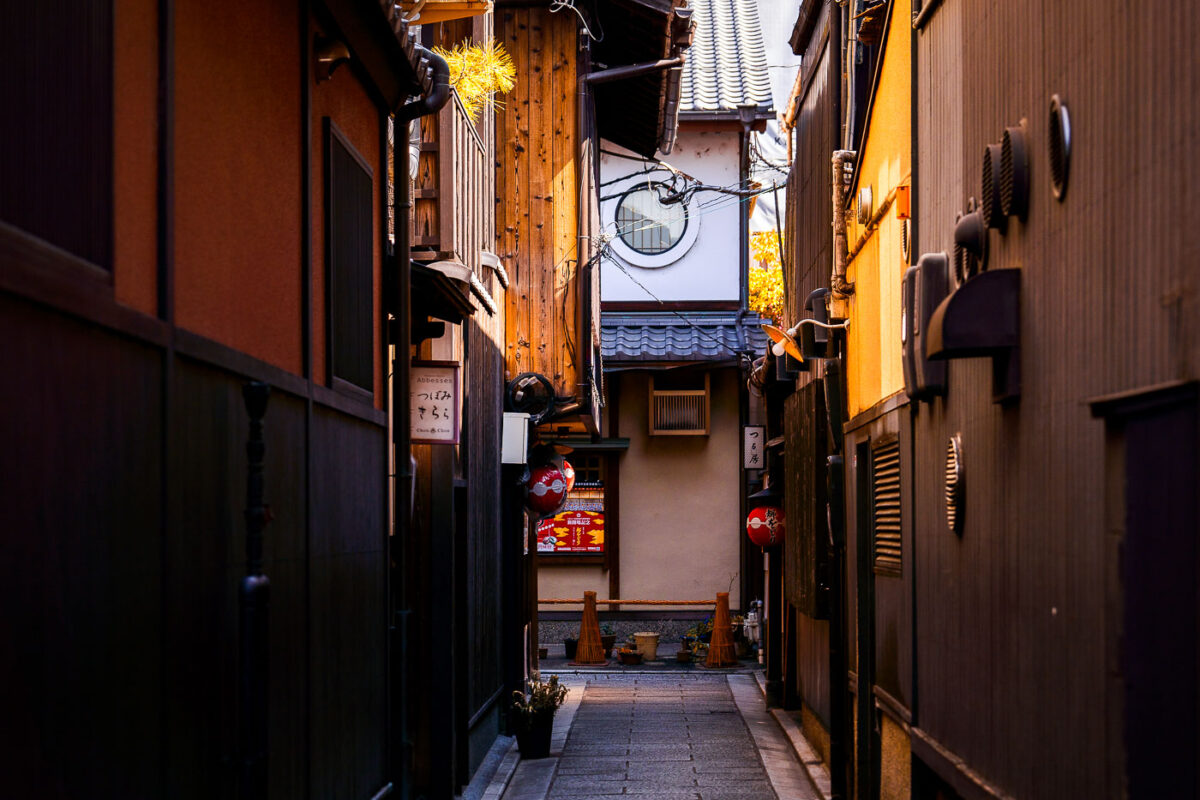
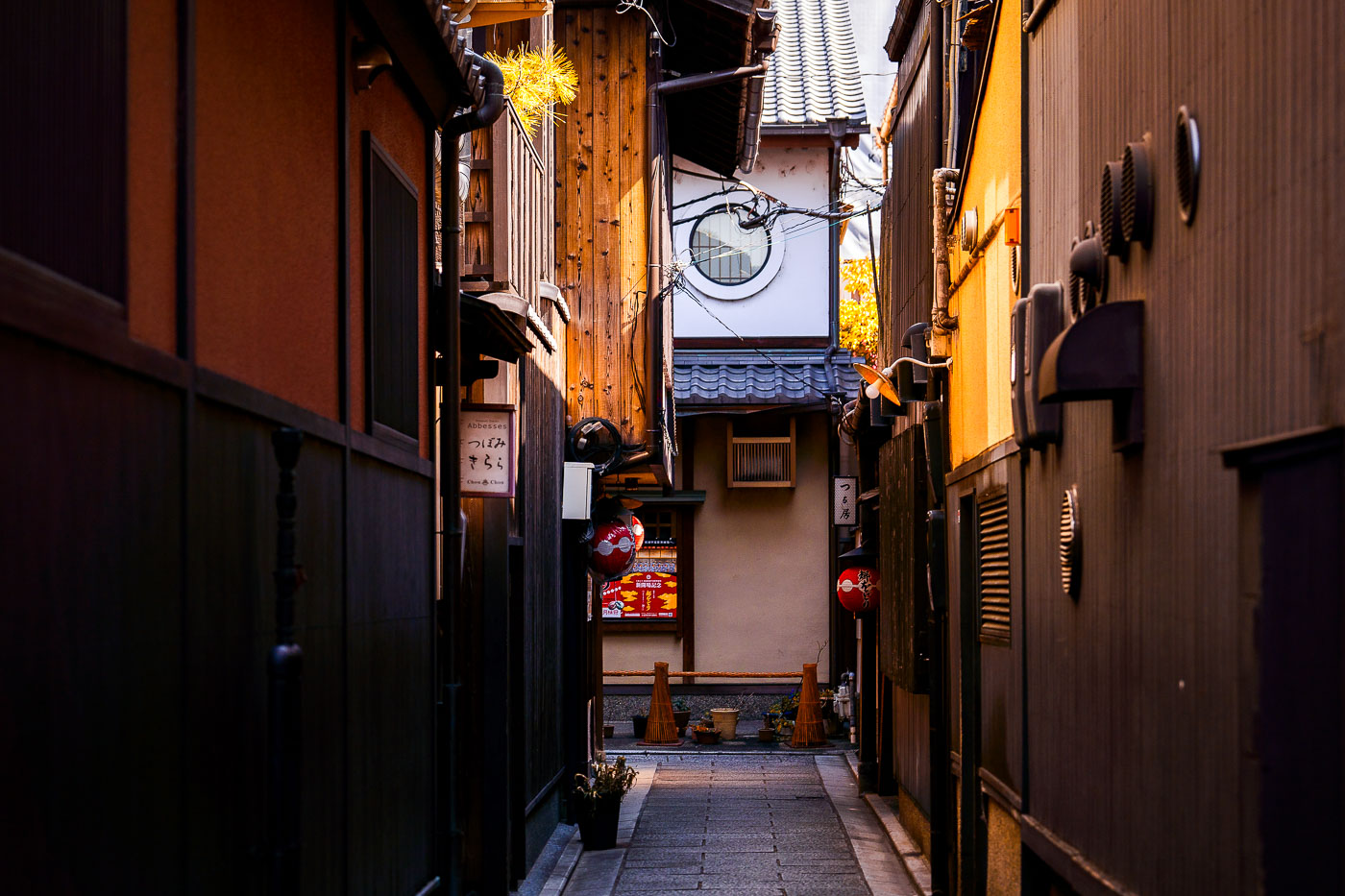
Alley off Hanamikoji-dori in Kyoto's Gion district with traditional wooden buildings.
An alley off Hanamikoji-dori in Kyoto’s Gion district, known for preserved machiya townhouses and traditional teahouses. The area remains closely associated with Kyoto’s geiko and maiko culture.
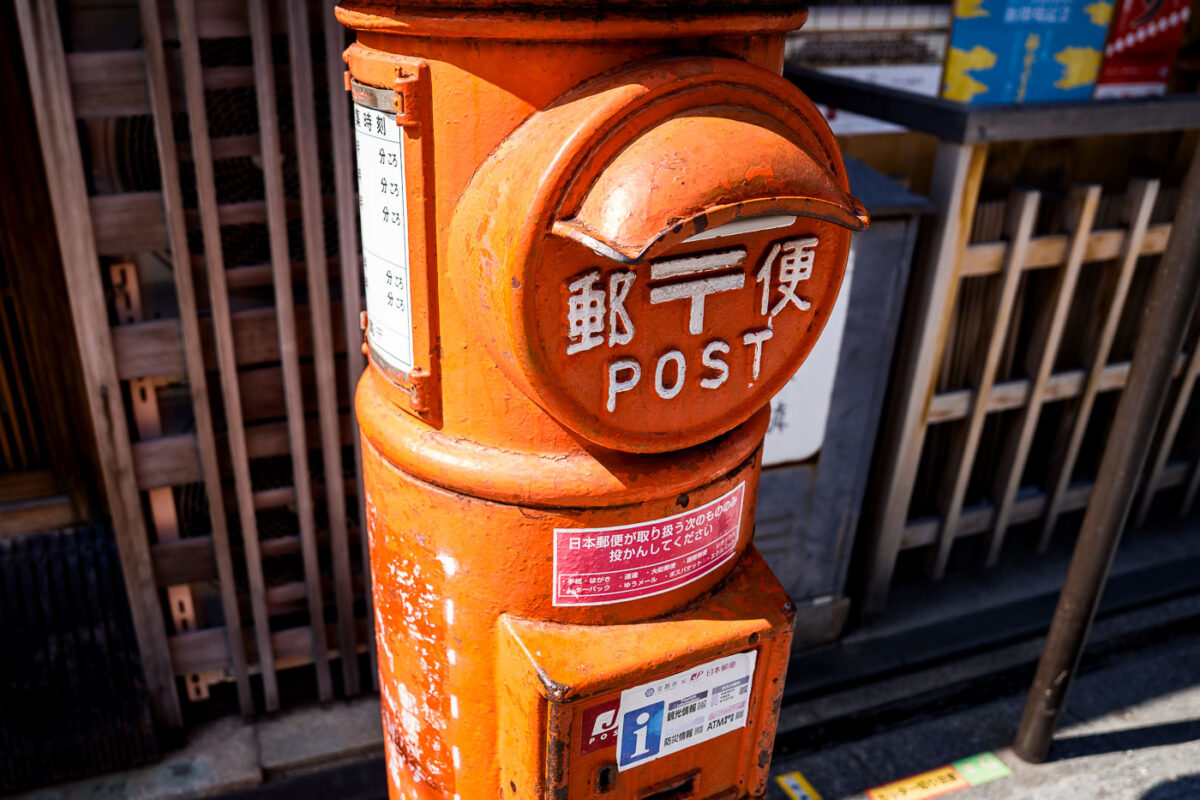
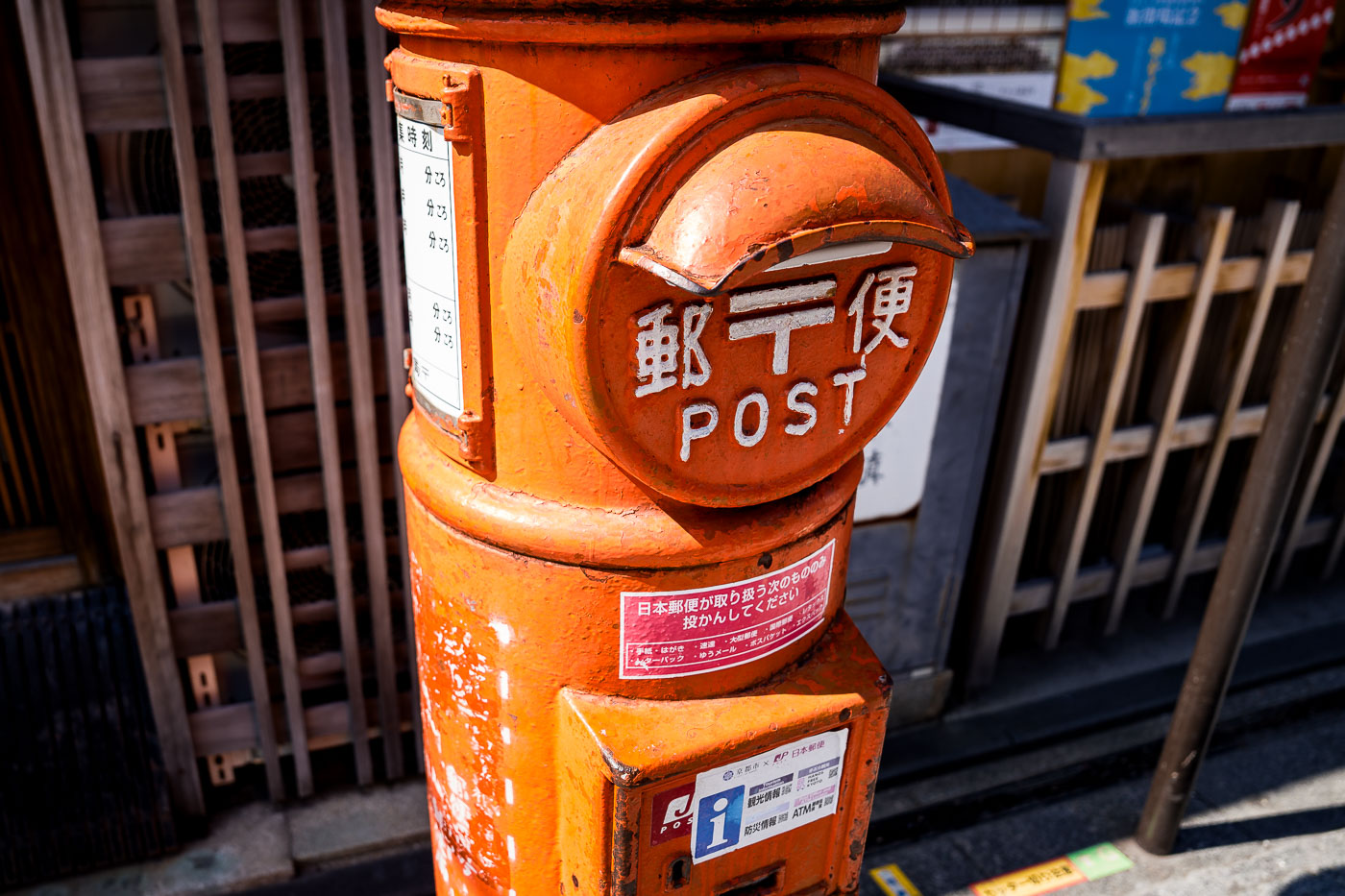
Vintage Japanese post box in Kyoto, Japan.
A vintage Japanese post box stands in Kyoto, Japan. These cylindrical mailboxes were widely installed across the country during the 20th century and remain in use in some areas.

Built in Minneapolis

Minneapolis Photographer

Browse by location, move through long-running series, or start with recent work.