Place Archive

Belgium

Belgium’s railway architecture ranges from the modern steel and glass of Liège-Guillemins Station by Santiago Calatrava to disused Autorail Série 400 trains and decaying locomotives near Charleroi’s former industrial sites. In Bruges and Namur, historic canals and cobblestone streets reflect the cities’ medieval and 19th-century urban fabric, marked by preserved guild houses, gothic architecture, and evidence of ongoing renovation.

25 photos

Location

Belgium Locations

Photos from Belgium
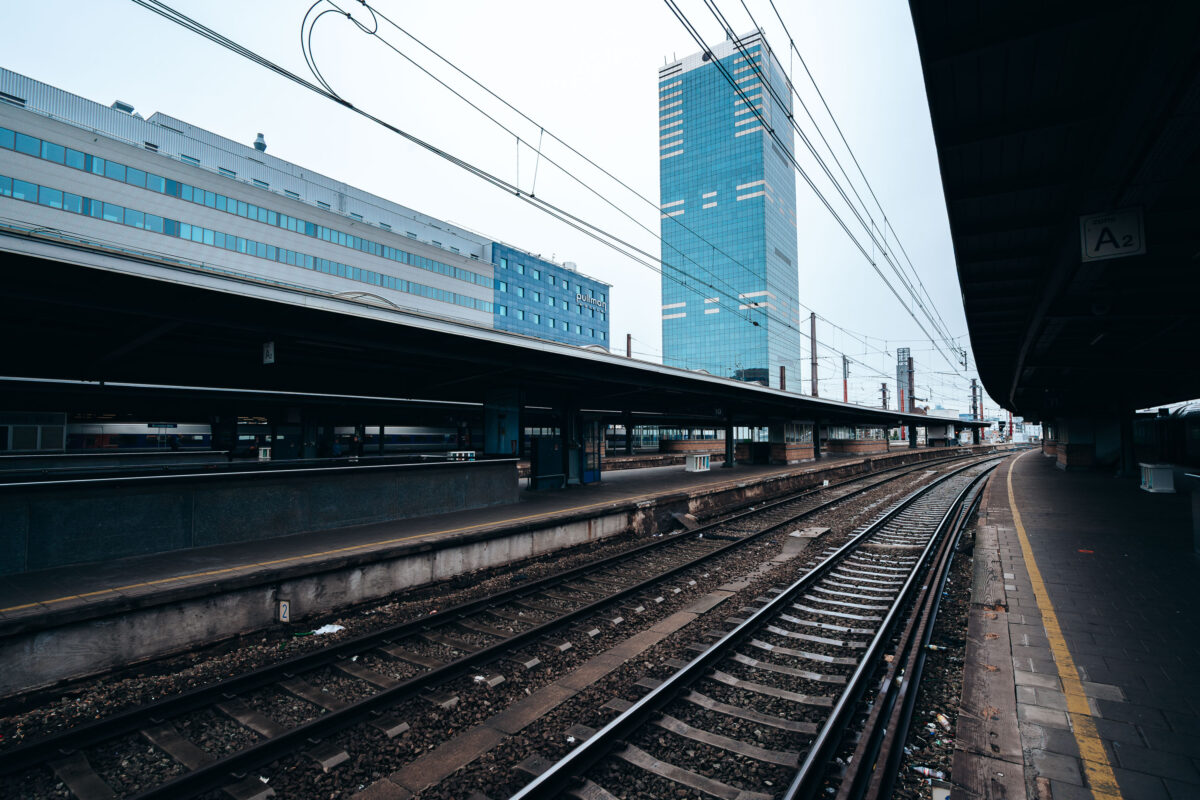
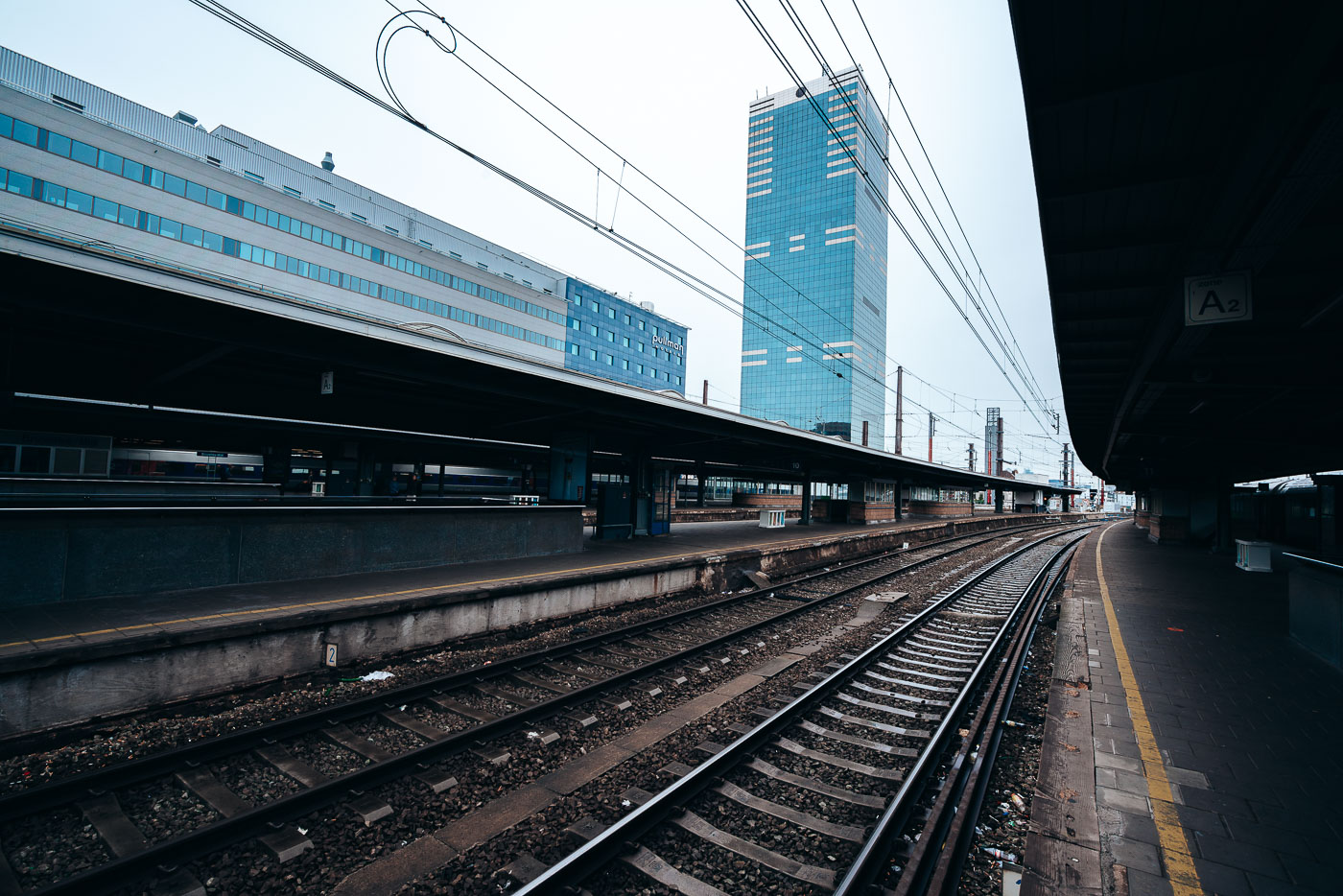
Brussels South/Midi Station platforms and adjacent Pullman Hotel in Brussels, Belgium, a major railway hub for international and domestic train services.
Brussels-South/Midi Station, a major railway hub in Brussels, Belgium, is pictured in September 2017. The station serves as a key international gateway, connecting high-speed trains like Thalys and Eurostar with domestic Belgian rail services. Adjacent to the platforms, the Pullman Hotel and a modern glass skyscraper reflect the station's role as a nexus of transportation and commerce in the city.
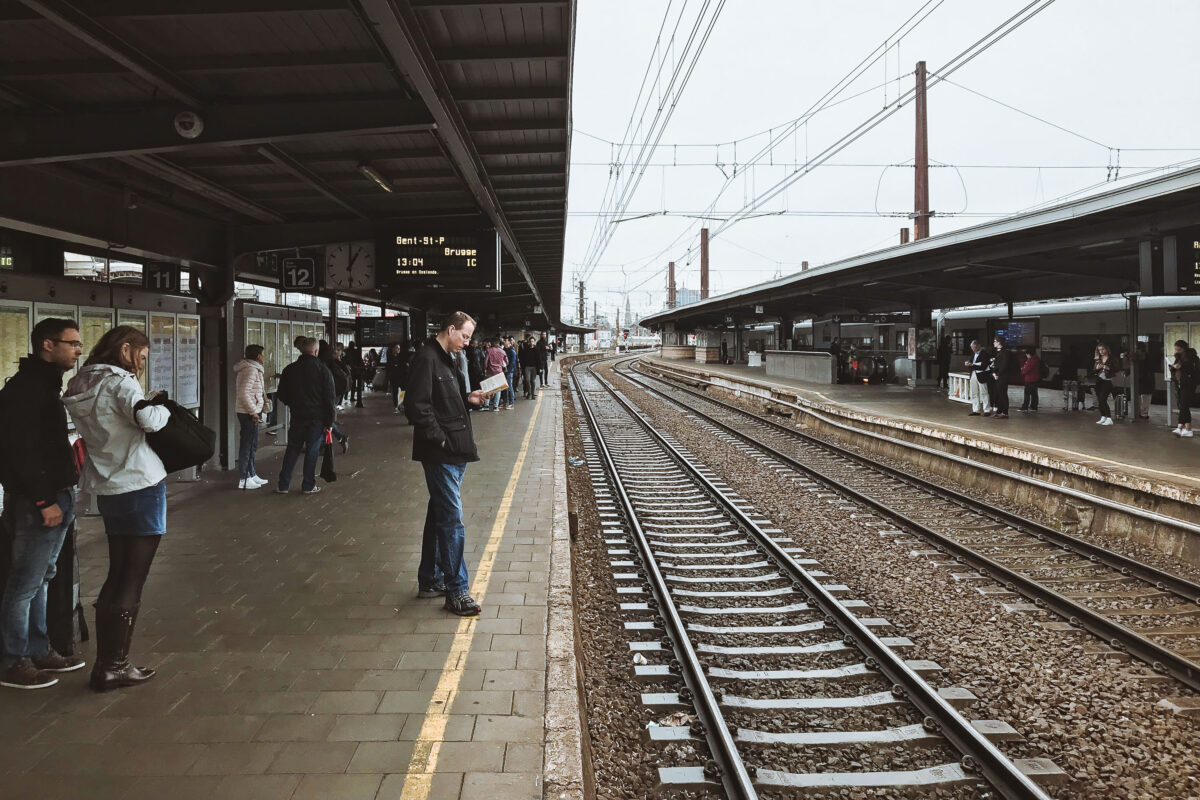
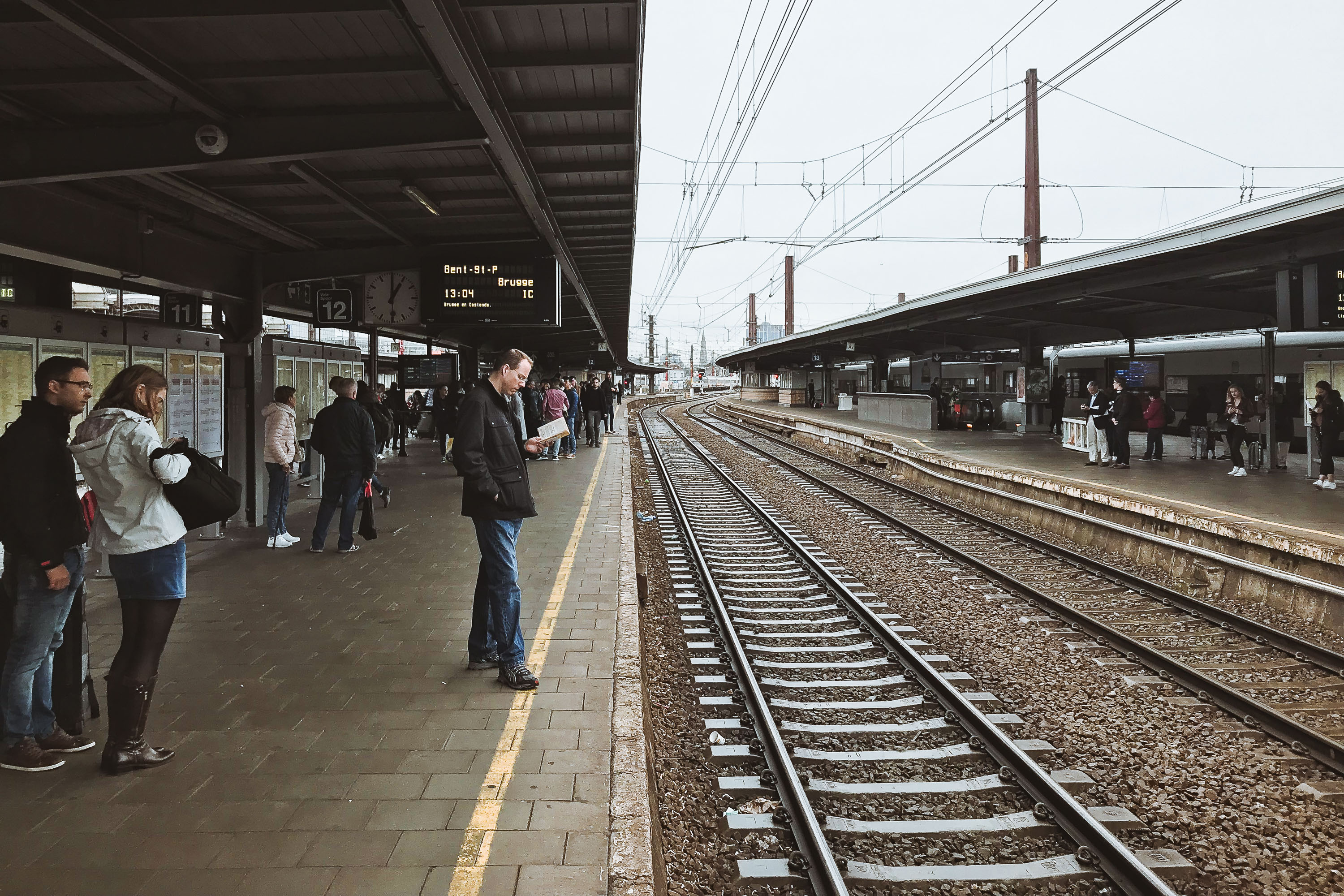
Passengers wait on the platform at Brussels-Midi Station, a major international railway hub, with train tracks stretching into the distance.
Passengers wait on a platform at Brussels-Midi Station in Brussels, Belgium, beside tracks and overhead electrification equipment. An electronic departure board lists an InterCity train at 13:04 for Bent-St-P and Brugge, while platform signs mark adjacent tracks.
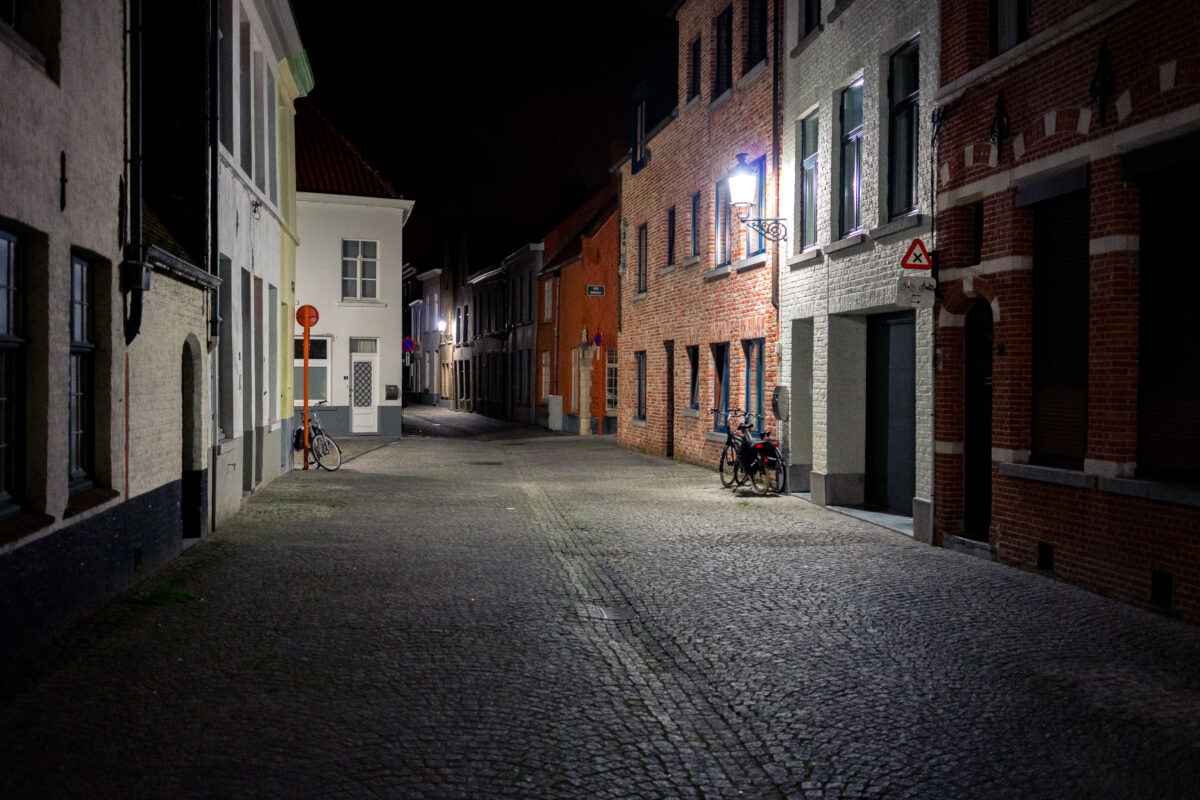
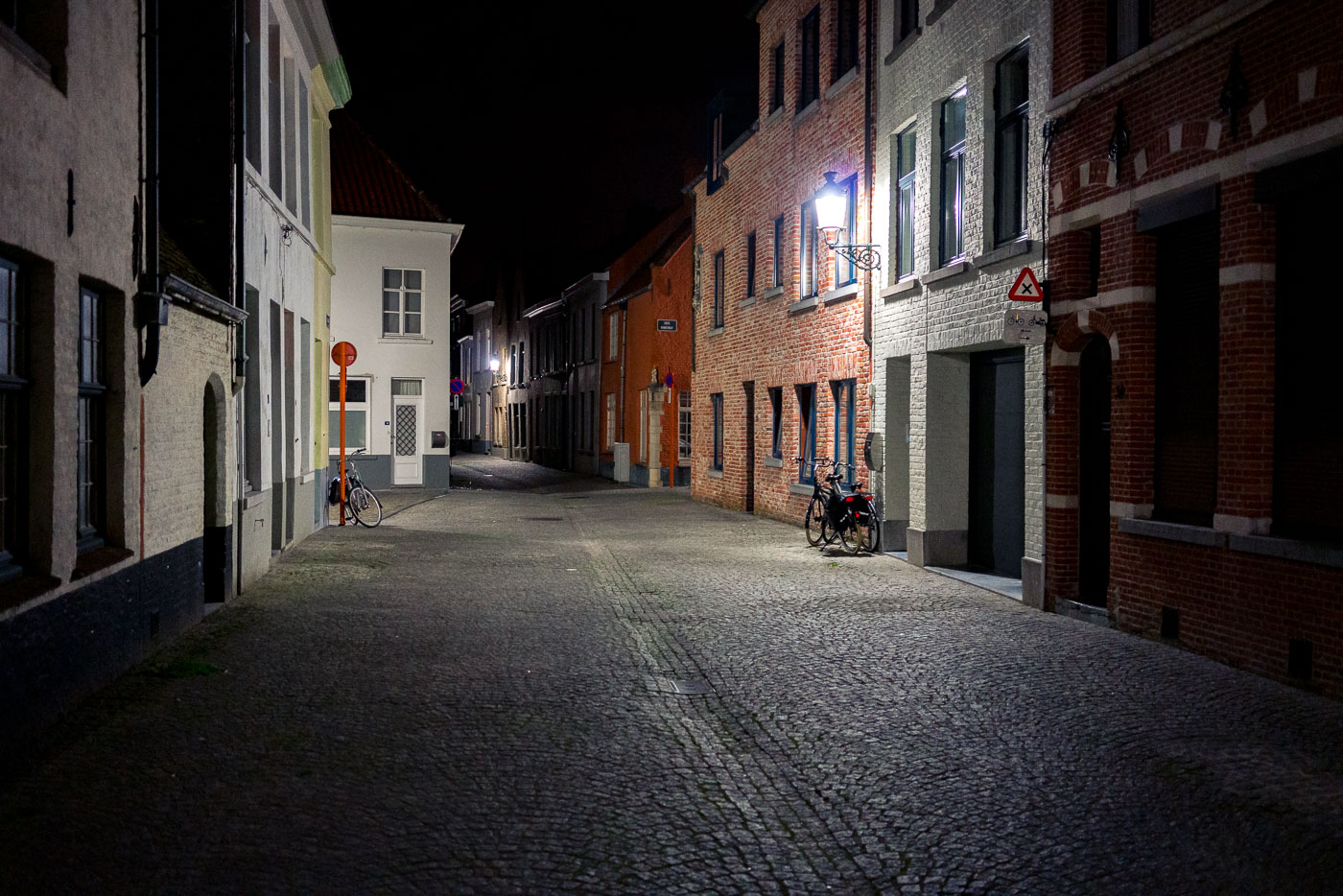
Bicycles parked on a cobblestone street in Bruges, Belgium, at night under a streetlamp.
A narrow cobblestone street in Bruges, Belgium, is lined with brick and plaster houses and lit by a single streetlamp at night. Bicycles are parked along the lane, and European road signs mark the restricted traffic arrangement in the historic center.
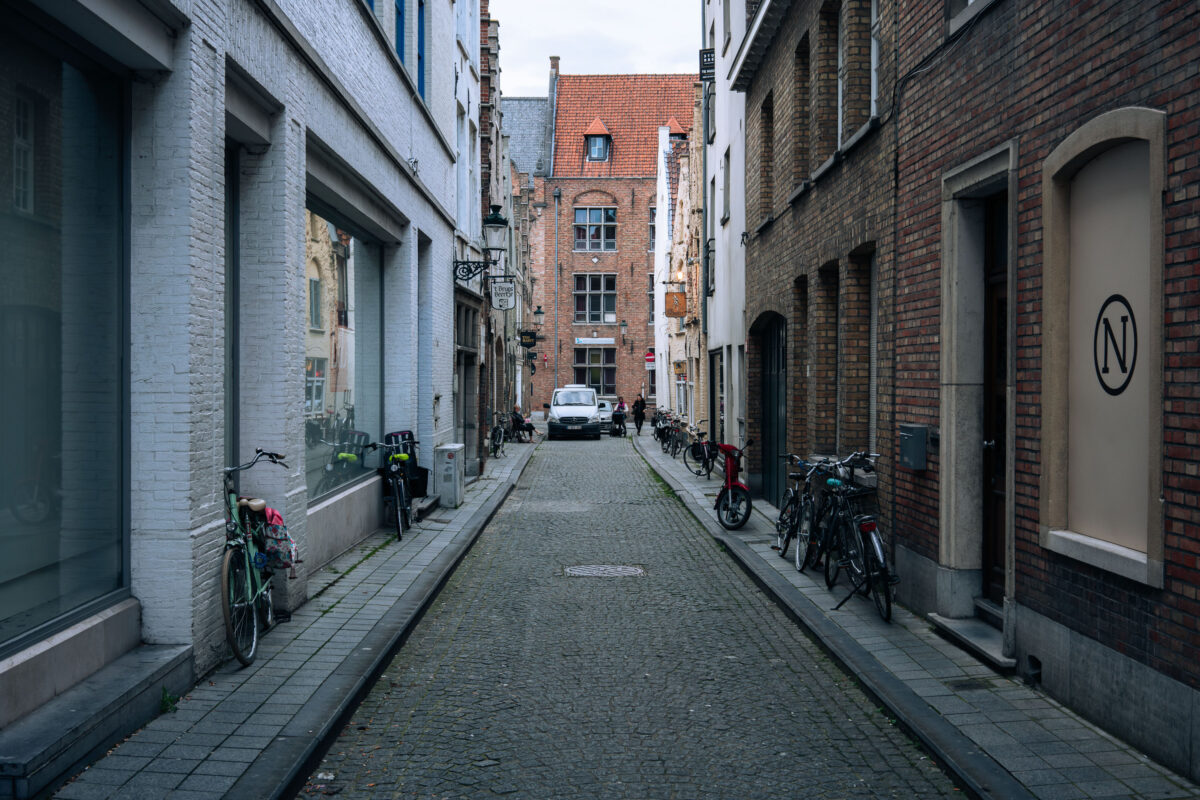
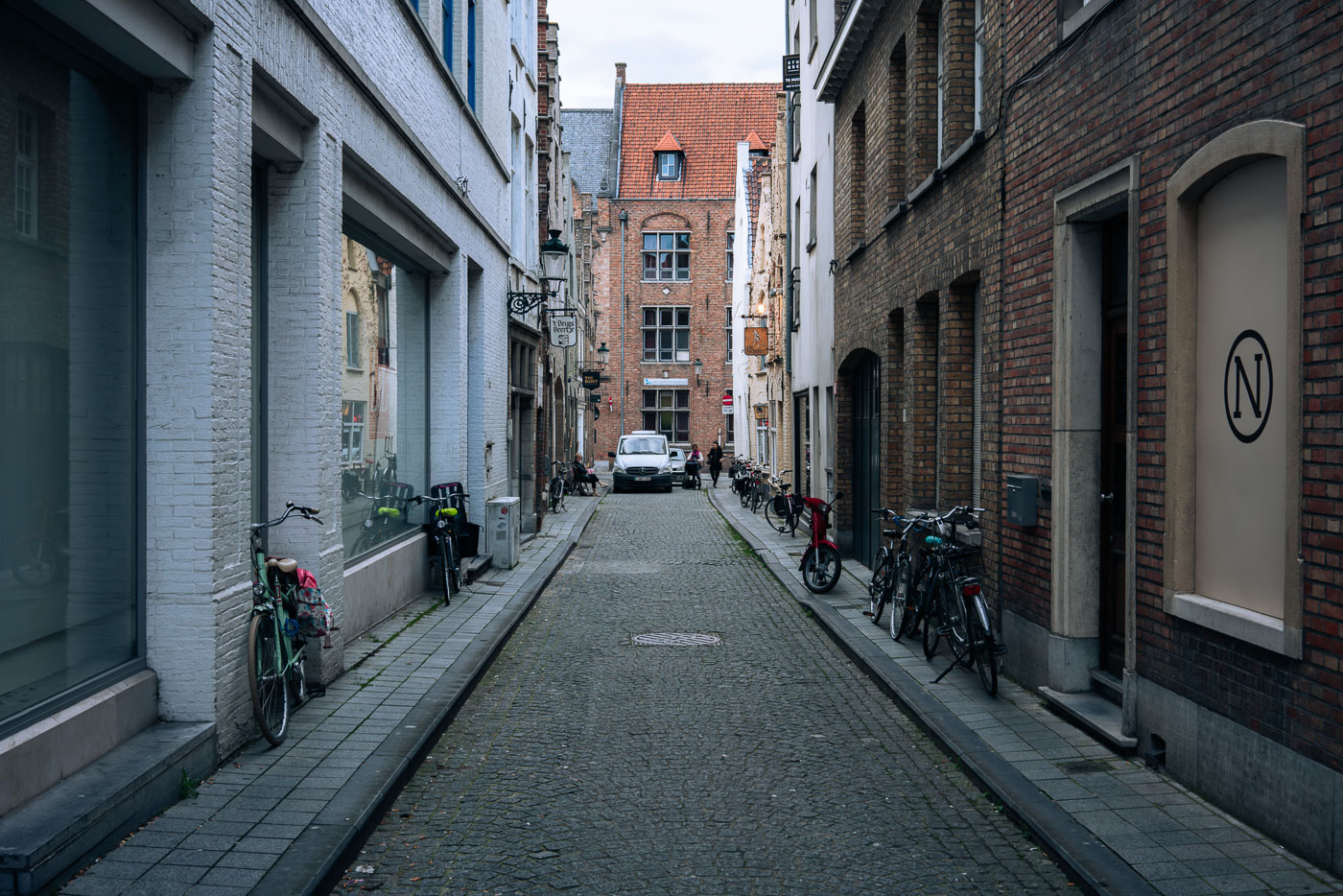
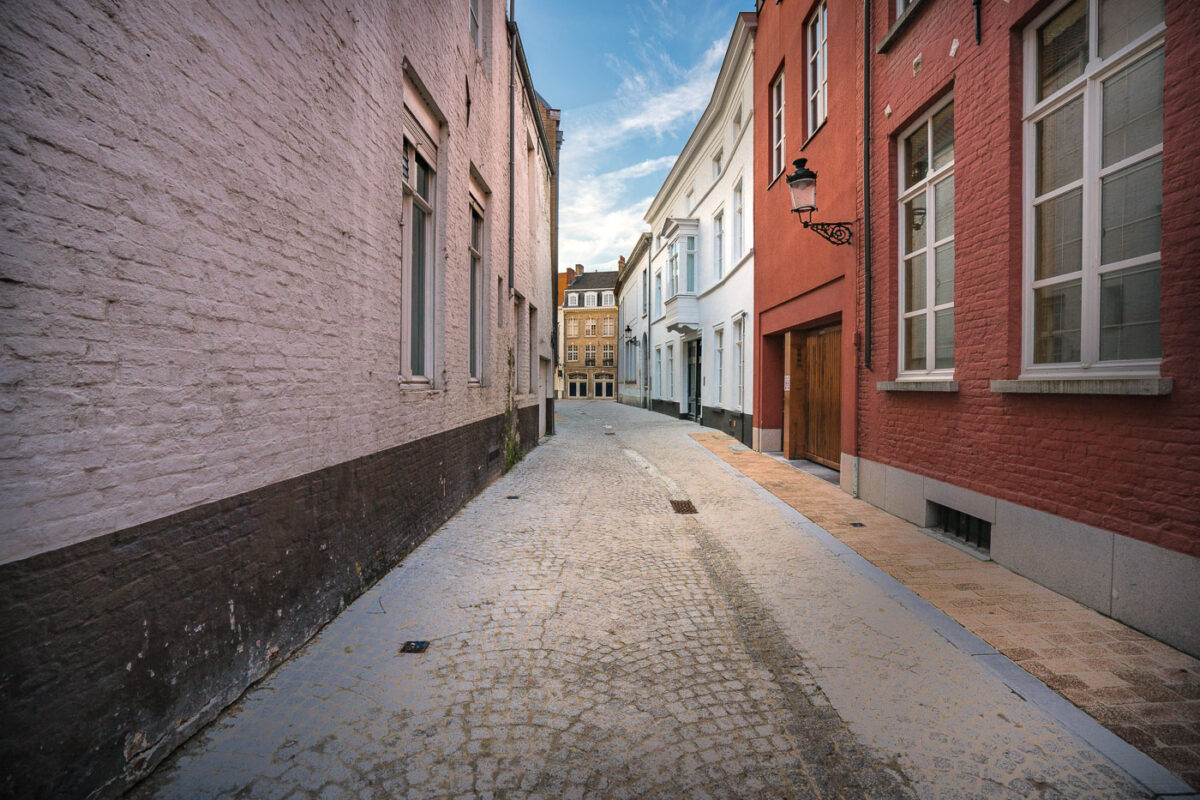
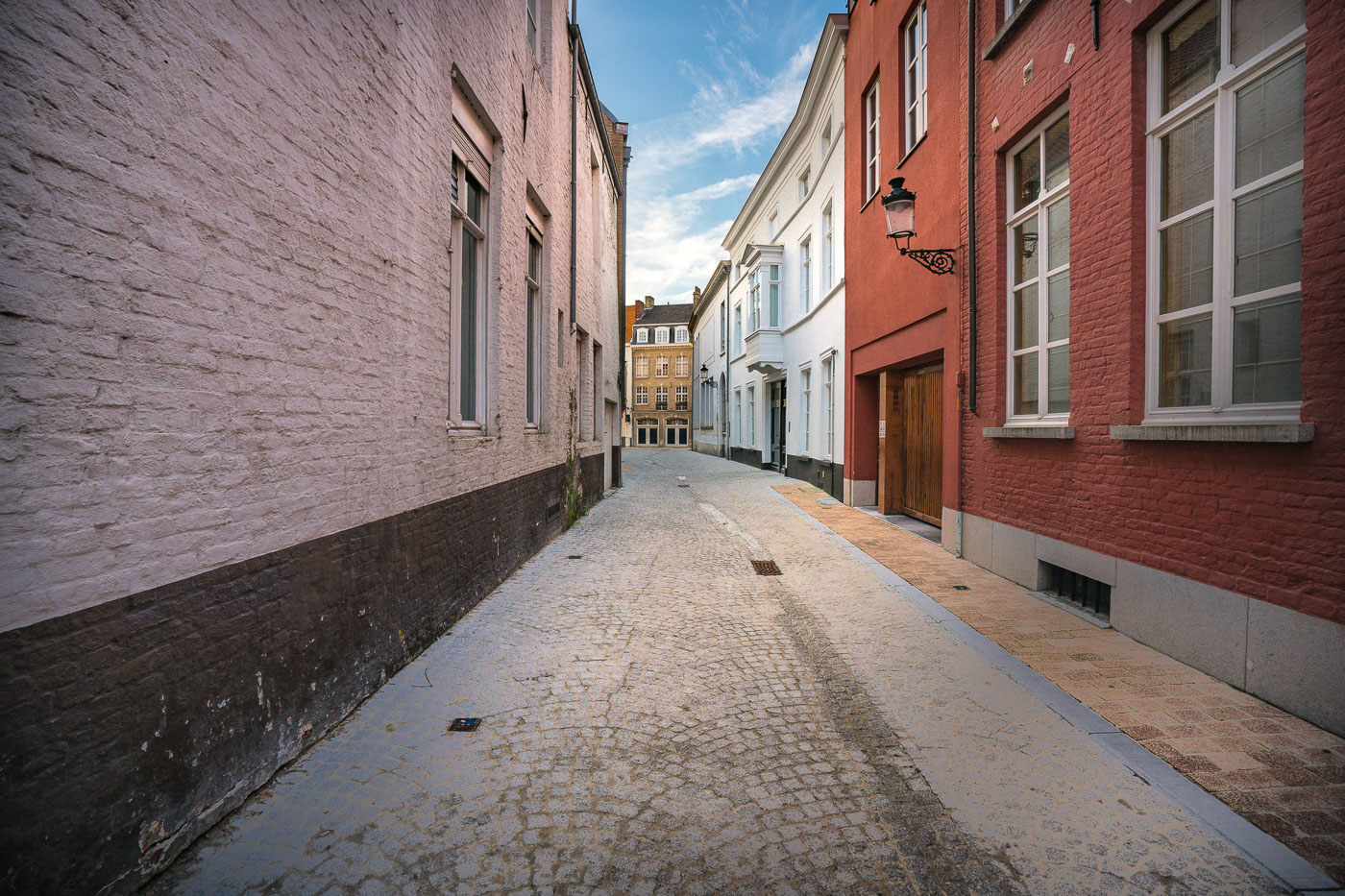
Bicycles parked on a cobblestone alleyway in Bruges, Belgium, lined with historic brick and white-washed buildings.
A narrow cobblestone alley in Bruges, Belgium, is lined with brick and white-painted buildings and parked bicycles. The street leads toward a cluster of historic buildings with stepped and gabled roofs, typical of the city’s preserved old center.
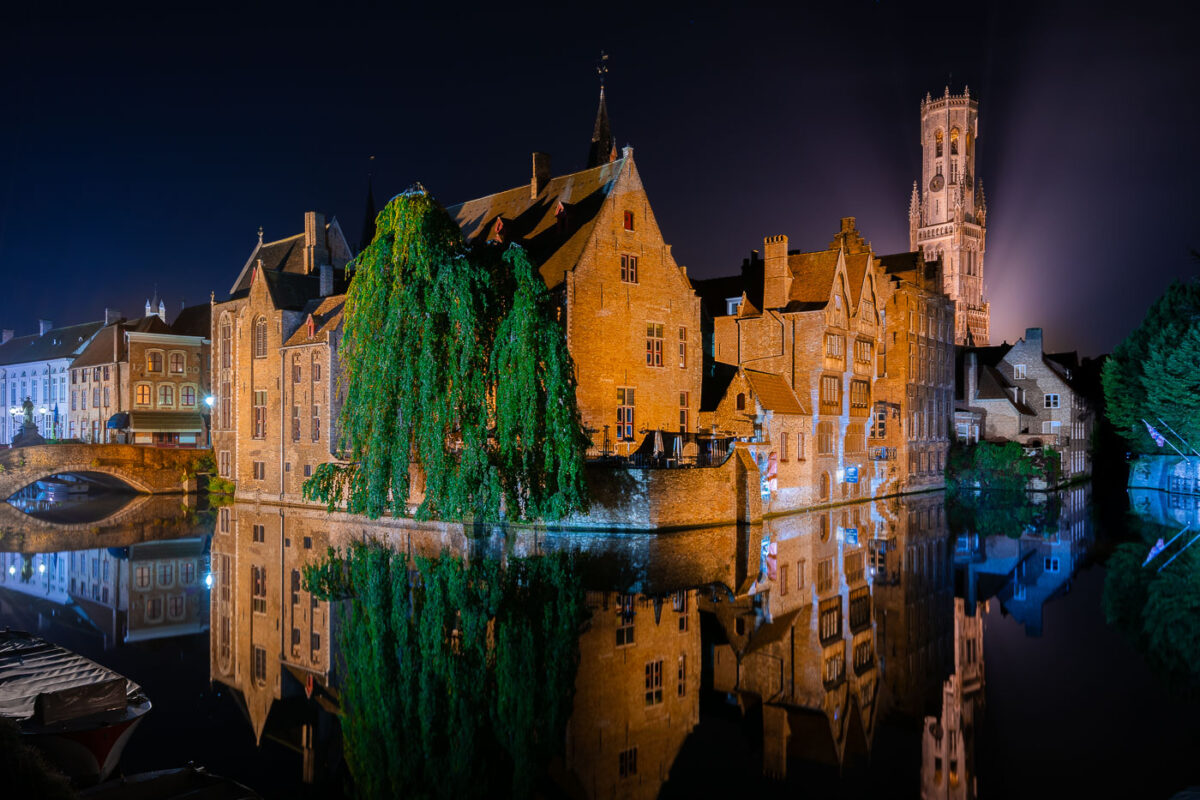
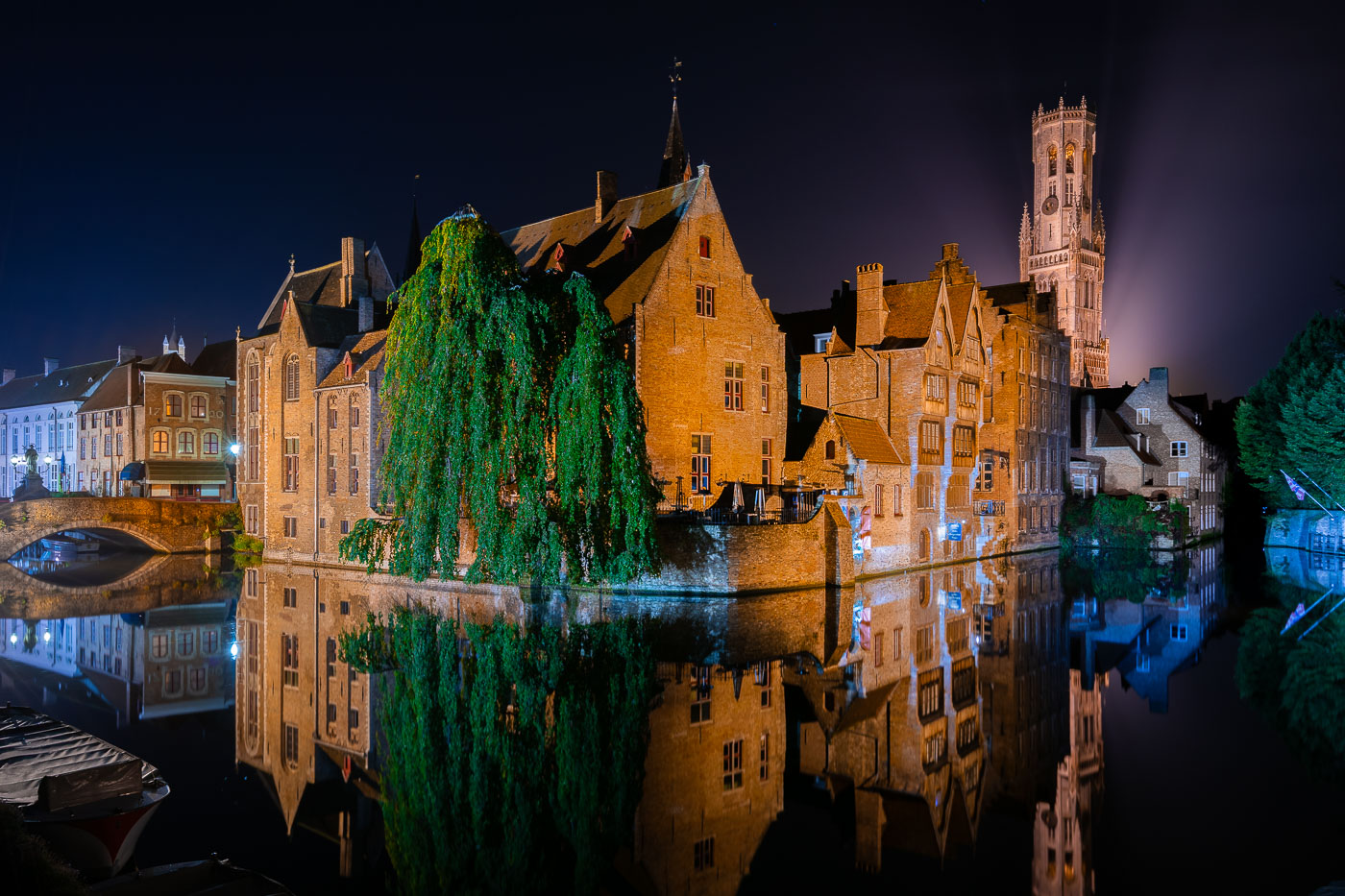
The Belfry of Bruges and historic buildings reflected in the River Reie at night.
The historic center of Bruges, Belgium, is illuminated at night along the River Reie, with the Belfry of Bruges rising above the surrounding medieval buildings. The canal-front houses and the belfry are mirrored in the still water beside a stone bridge and moored boats.
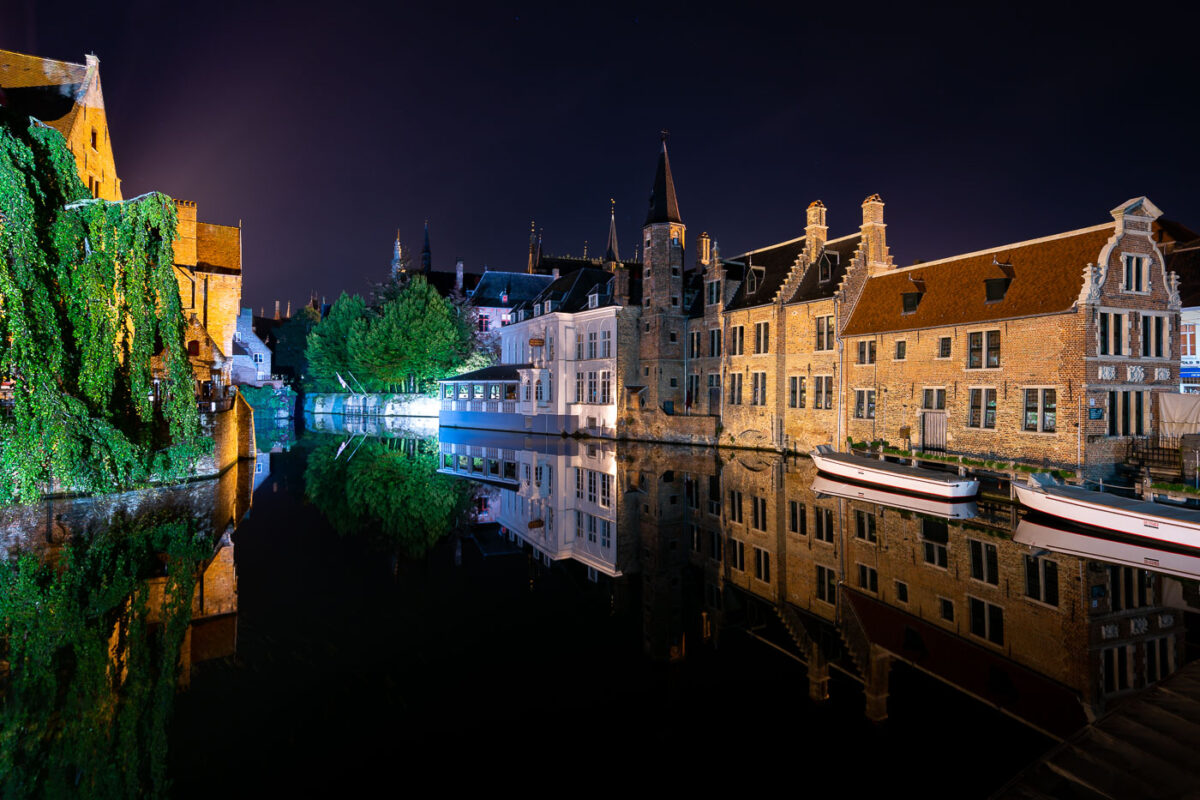
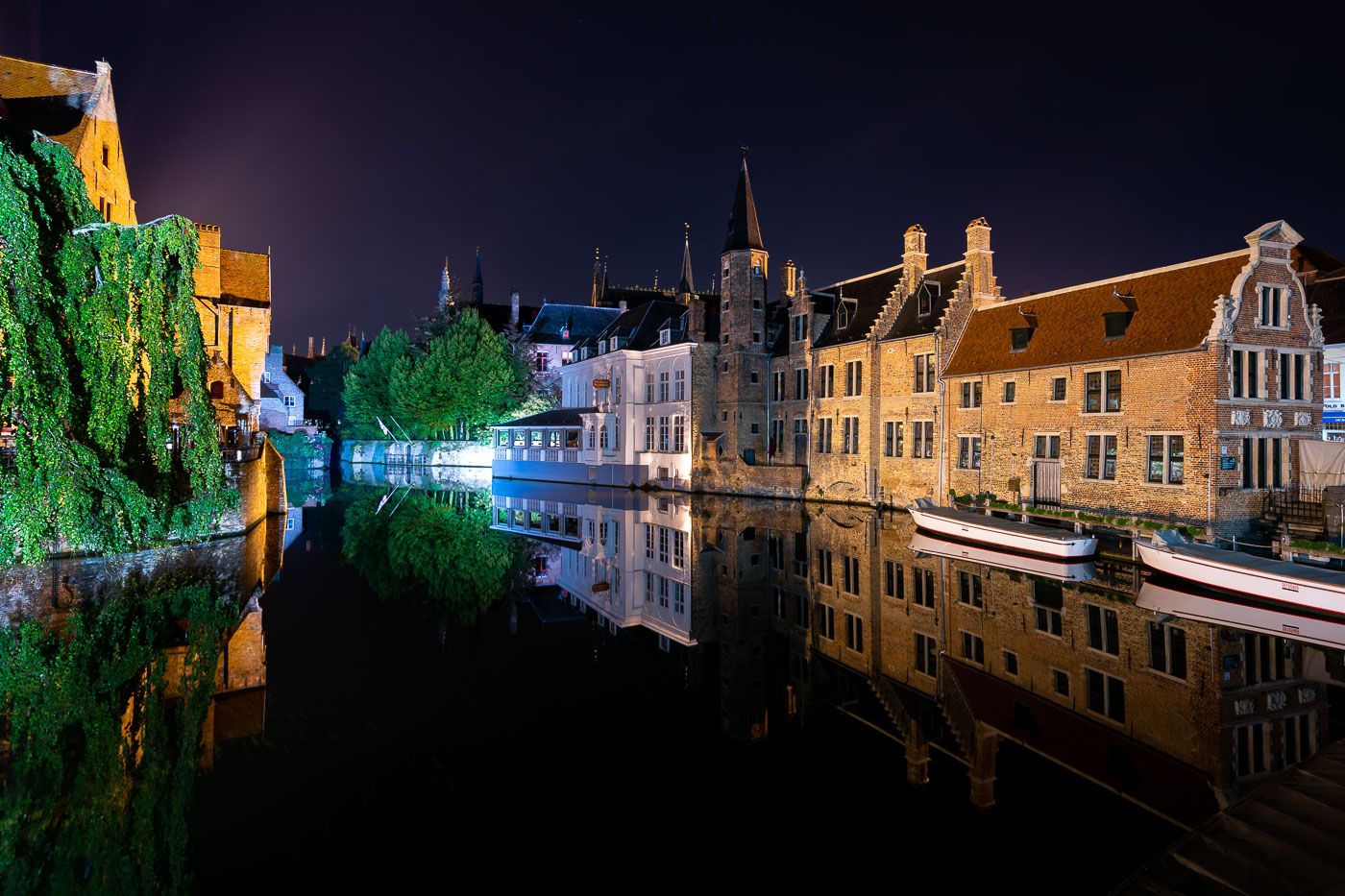
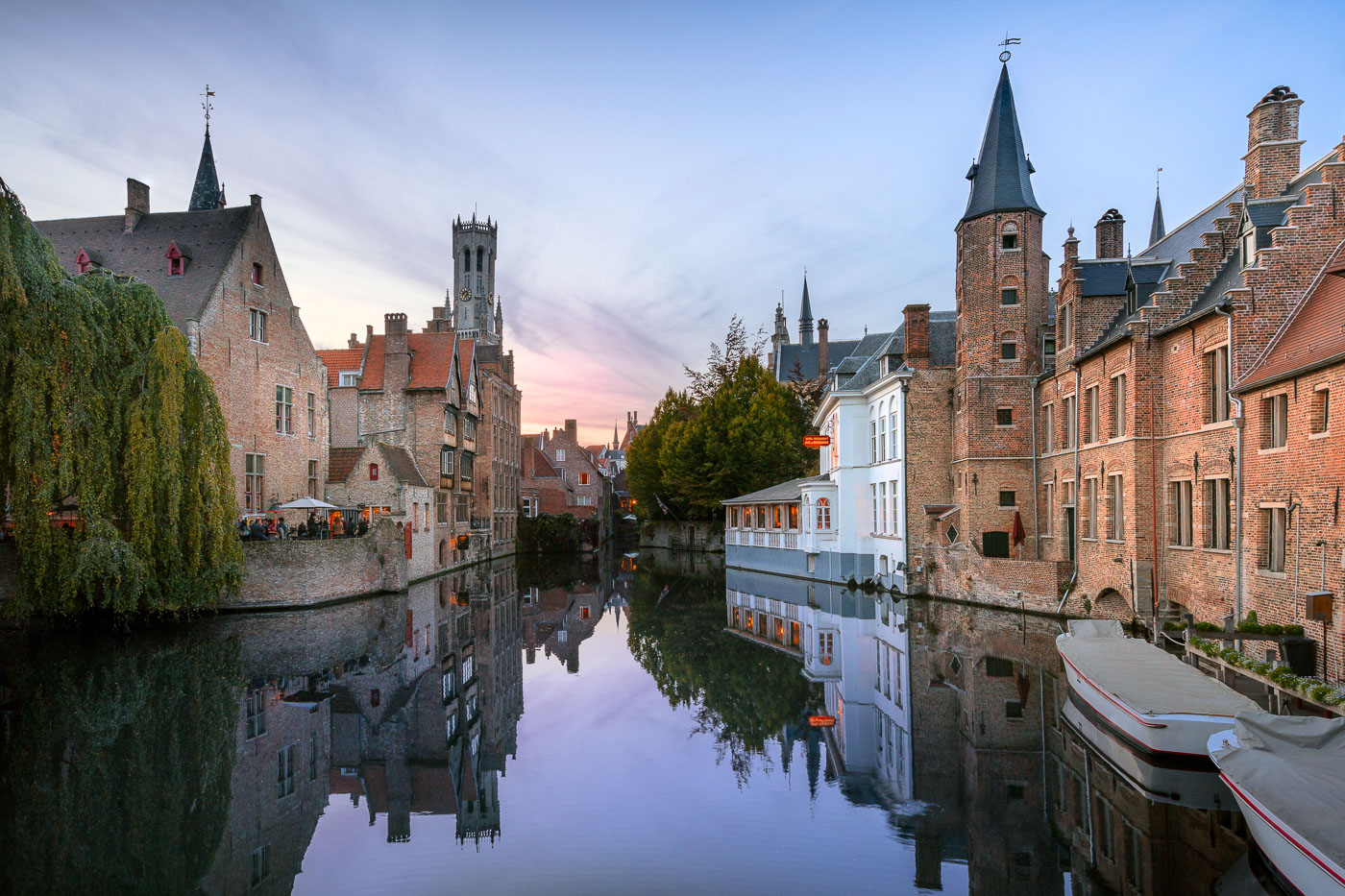
Medieval canal houses and guild buildings along the Rozenhoedkaai on the River Reie in Bruges, Belgium, at night.
Medieval guild houses and merchant buildings line the Rozenhoedkaai along the River Reie in Bruges, Belgium. The quay dates to the medieval period when Bruges functioned as one of northern Europe's principal trading centers, and the buildings along this stretch housed merchant guilds and commercial operations. The tower visible at center is part of the Poortersloge, a 14th-century guild hall. A tour boat is moored along the right bank near the Steenhouwersdijk.
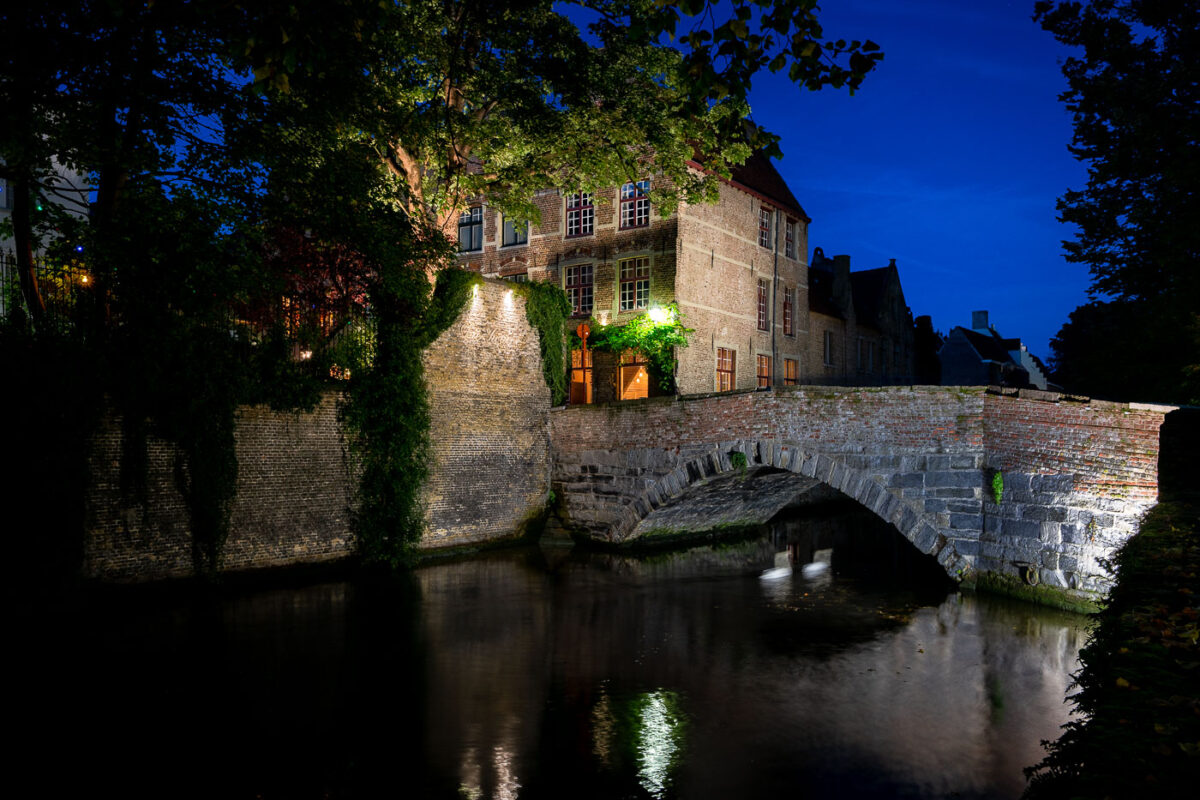
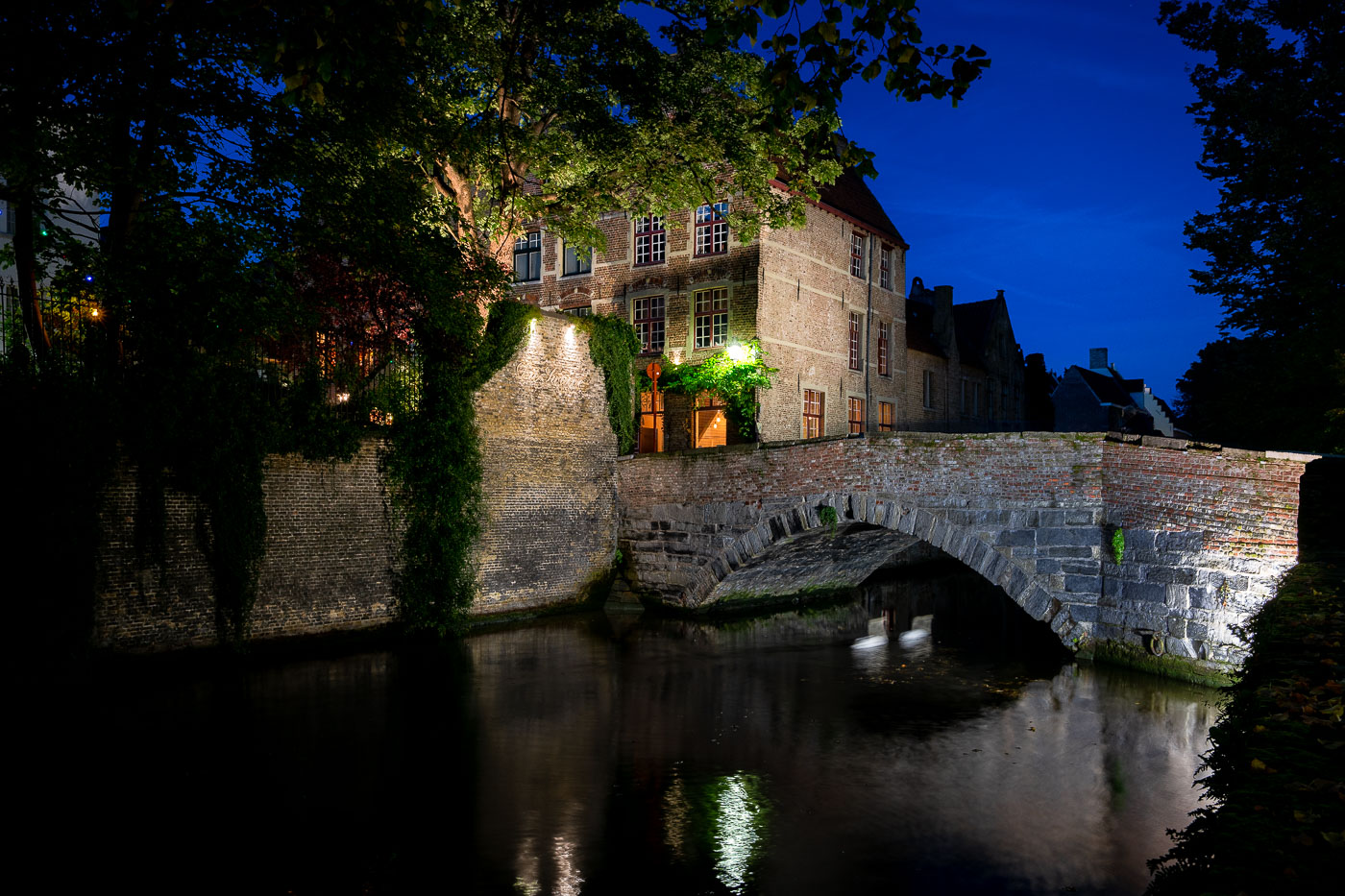
A stone bridge crosses the Reie canal in Bruges, Belgium, at night.
A stone and brick arch bridge crosses the Reie canal in Bruges, Belgium, beside a historic waterside building. The canal runs through the city’s UNESCO-listed historic center, where bridges and waterways remain part of the preserved medieval street pattern.
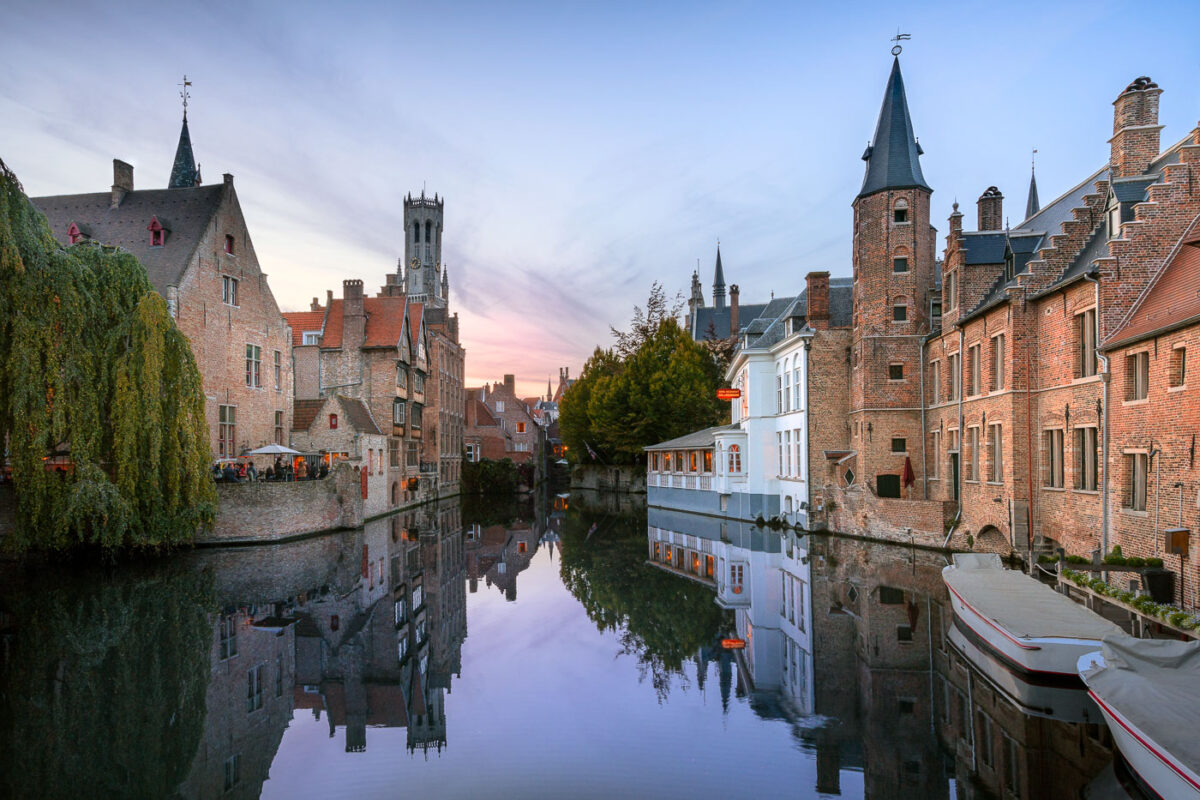
The Rozenhoedkaai canal and Belfry of Bruges in Belgium at dusk.
Rozenhoedkaai canal in Bruges, Belgium, with the Belfry of Bruges rising above the historic city center. The canal runs through a UNESCO World Heritage-listed area known for its preserved medieval streets, guild houses, and church towers.
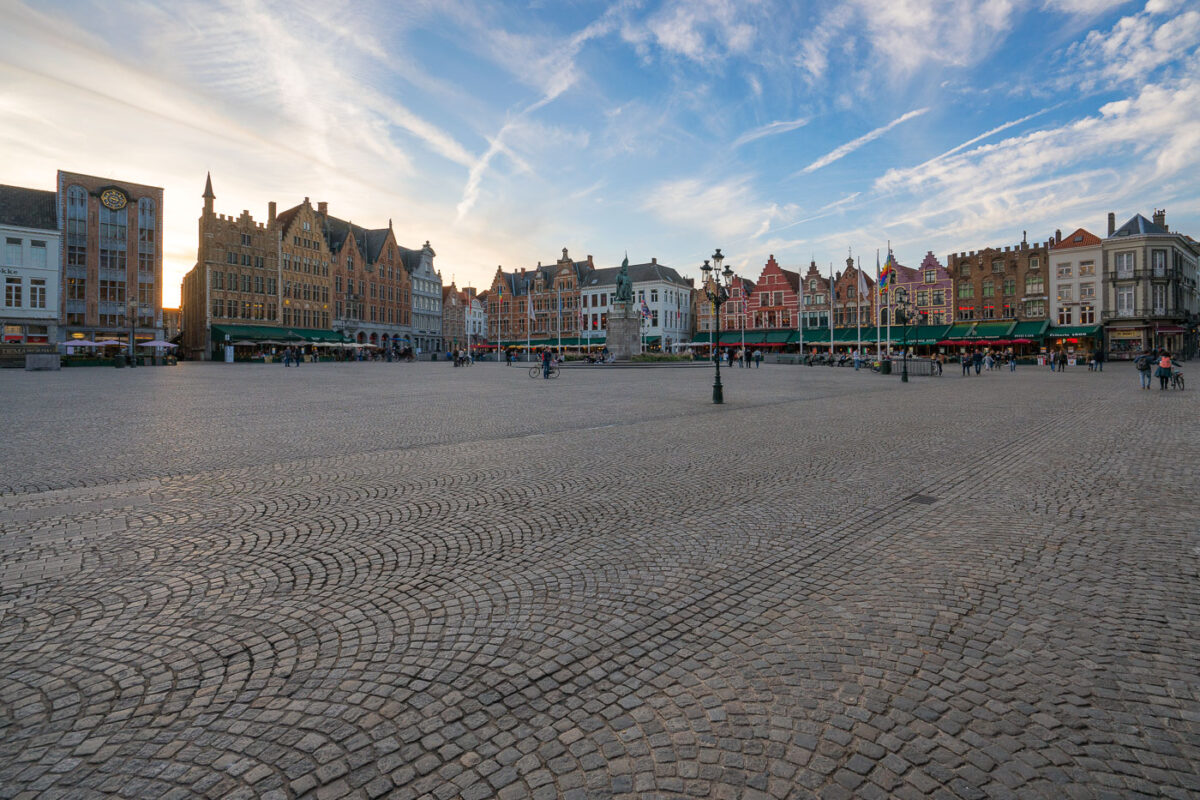
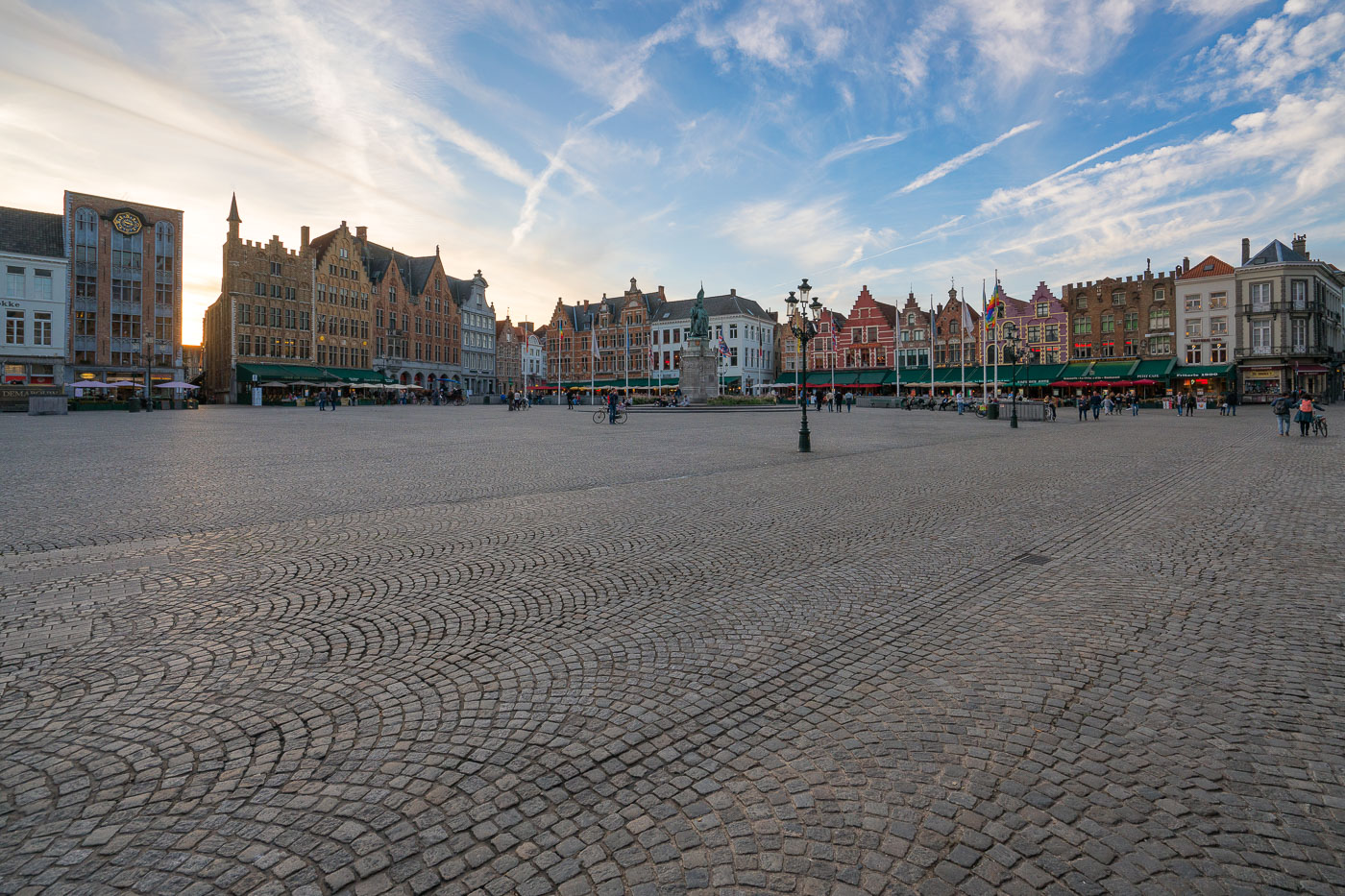
Bruges Markt Square guild houses at sunset with people strolling and dining.
Bruges’ Markt square in West Flanders, Belgium, is lined with step-gabled guild houses and cafés beneath a broad evening sky. The 1887 monument to Jan Breydel and Pieter de Coninck stands at the center of the cobblestoned square, where pedestrians and cyclists move among restaurant terraces and flagpoles.
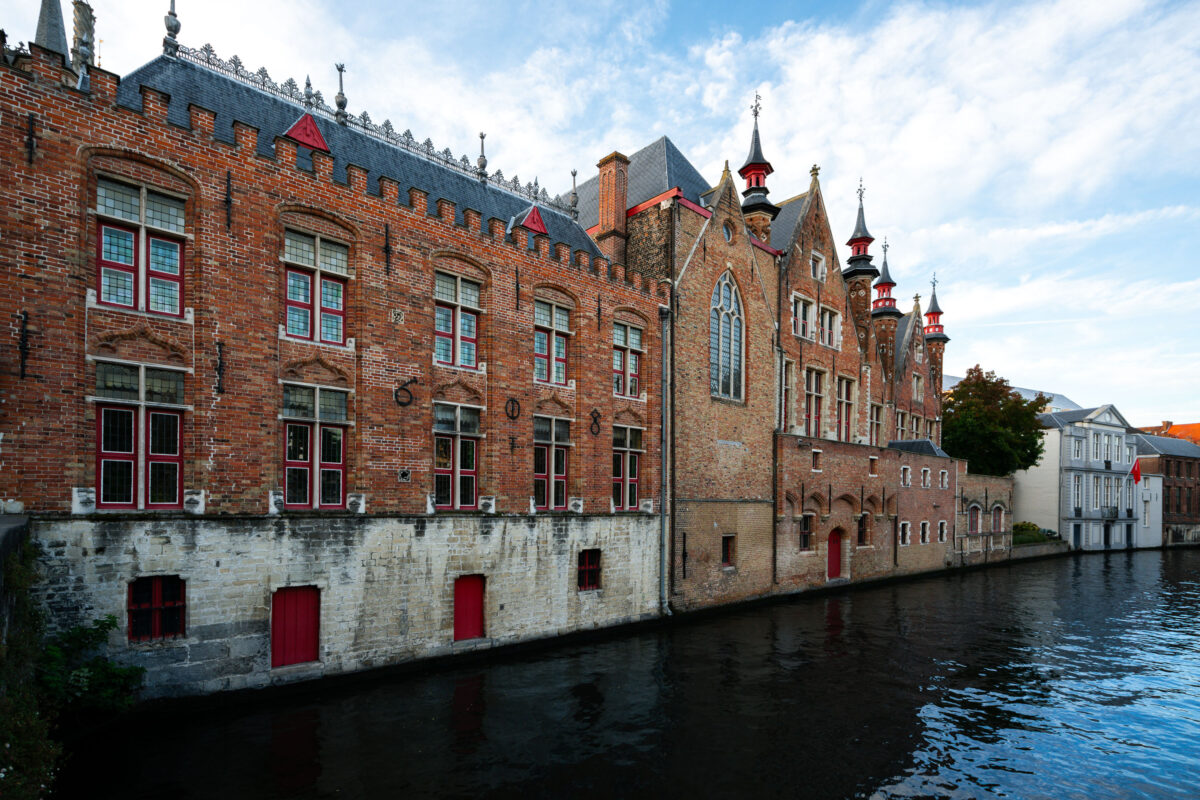
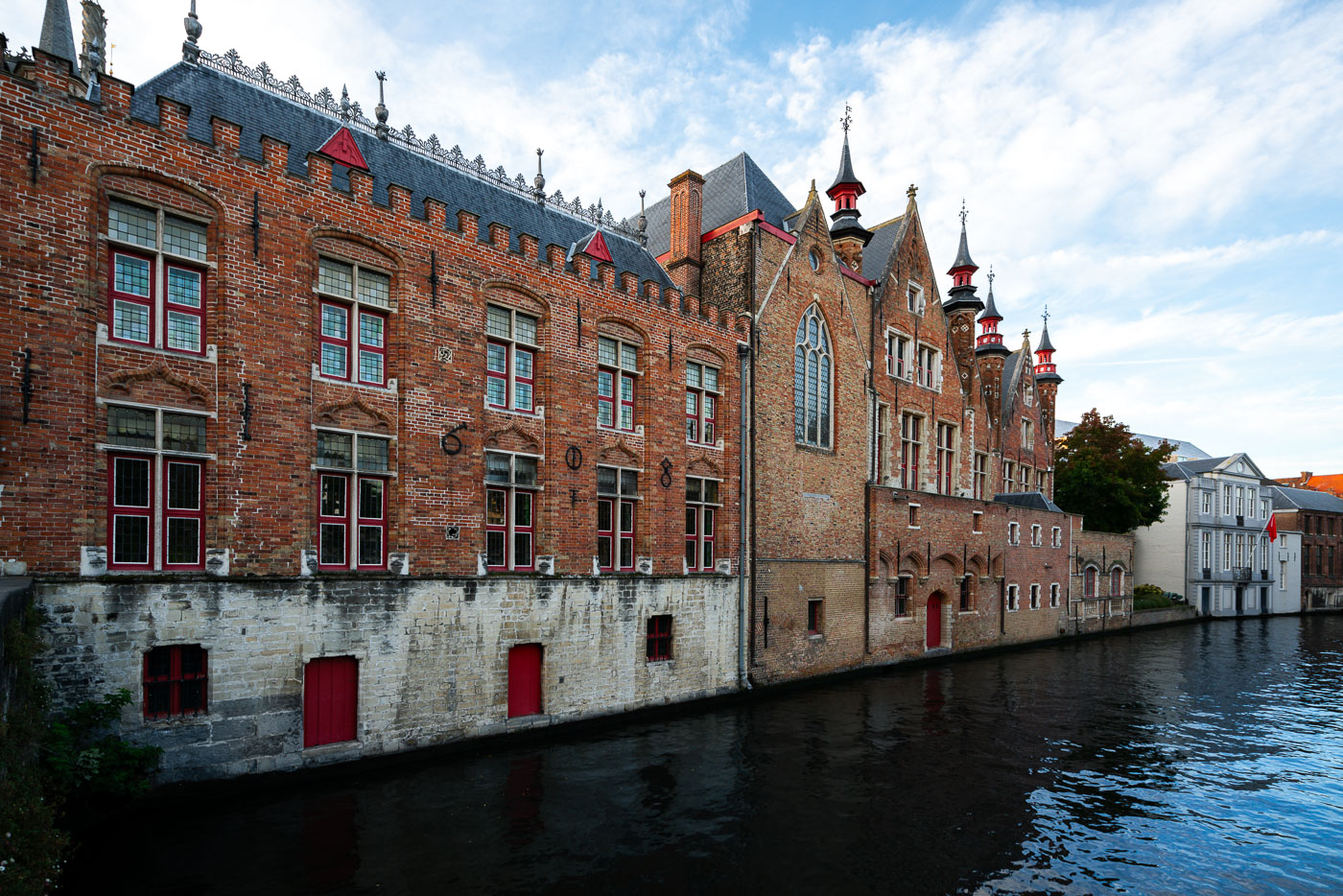
Gothic buildings line the Reie Canal in Bruges, Belgium, with crenellated rooflines and arched windows.
Red-brick Gothic buildings line the River Reie in central Bruges, Belgium. The canal-facing facades have crenellated rooflines, arched windows with red-painted frames, and pale stone bases at water level, while slender spires and turrets rise above the roofs. The buildings form part of Bruges’ historic canal district in the UNESCO-listed old town.
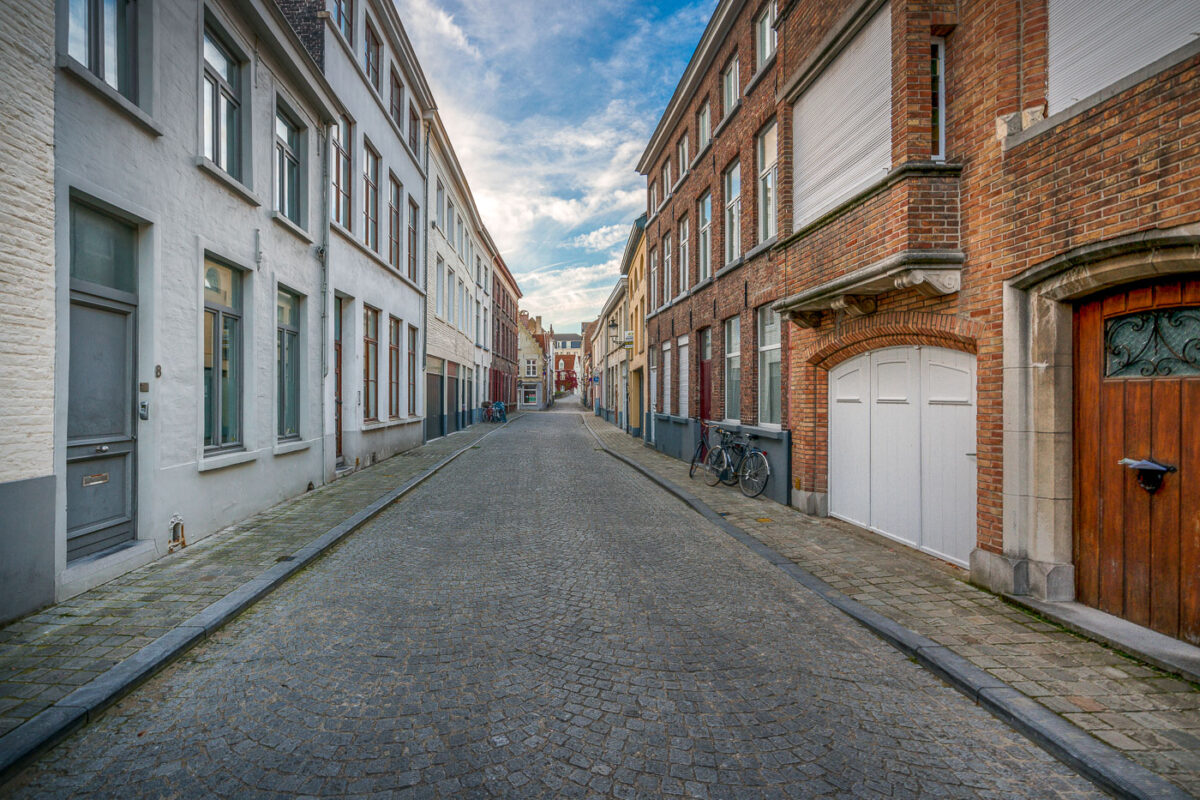
Cobblestone street with historic townhouses and bicycles in Bruges, Belgium.
A narrow cobblestone street in Bruges, Belgium, is lined with historic townhouse façades and parked bicycles. The street surface is paved in granite setts, and the buildings along both sides include brick, plaster, and painted masonry fronts with doors and large windows typical of the city’s historic center.
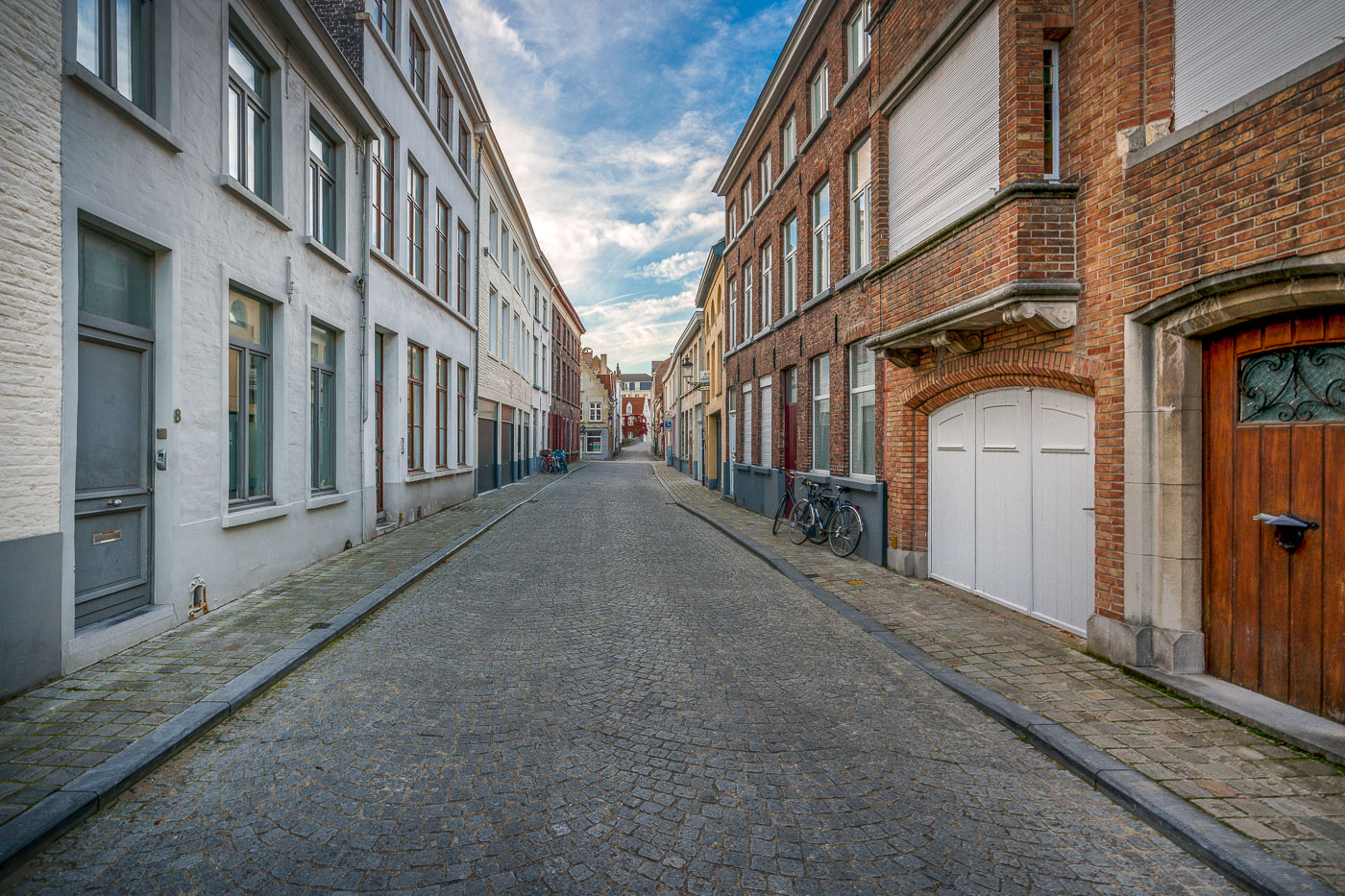
A cobblestone street in Bruges, Belgium, lined with historic brick townhouses under a blue sky.
A narrow cobblestone street in Bruges, Belgium, is lined with closely spaced brick townhouses and painted façades. The lane runs through the city’s historic center, where preserved buildings and tight street patterns reflect Bruges’ medieval street plan.
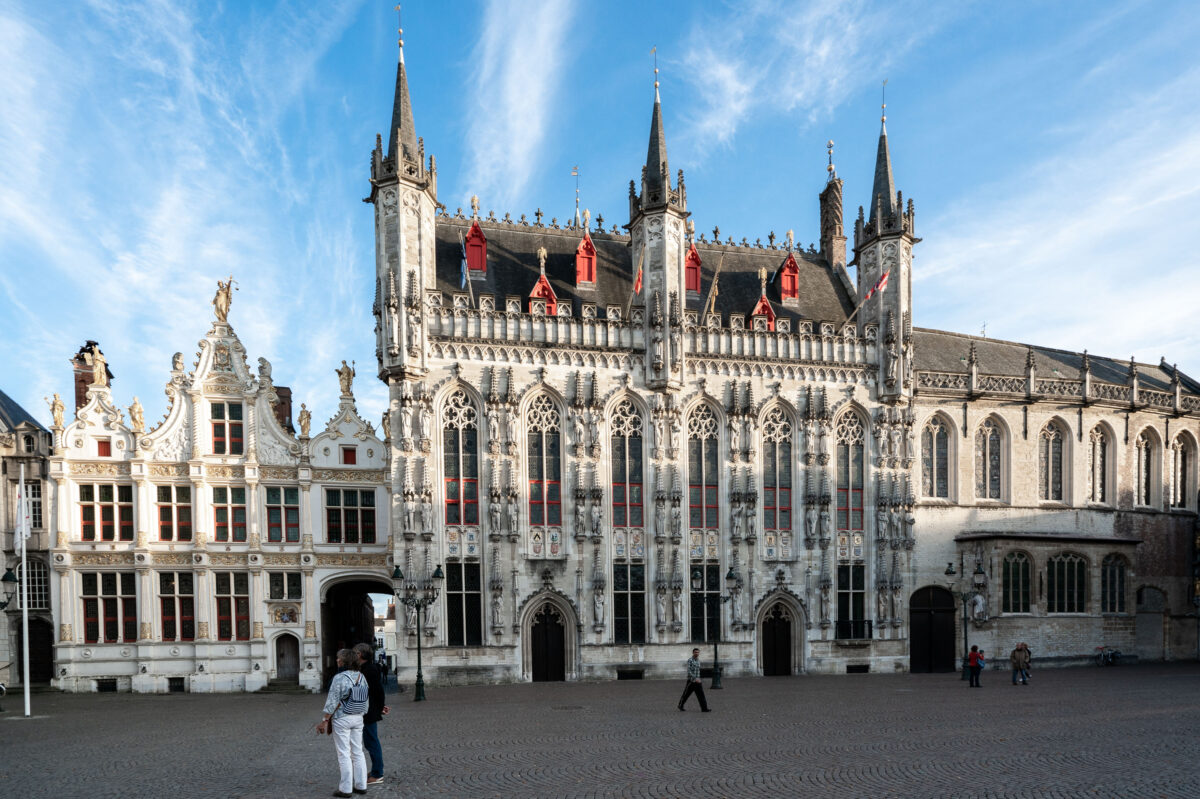
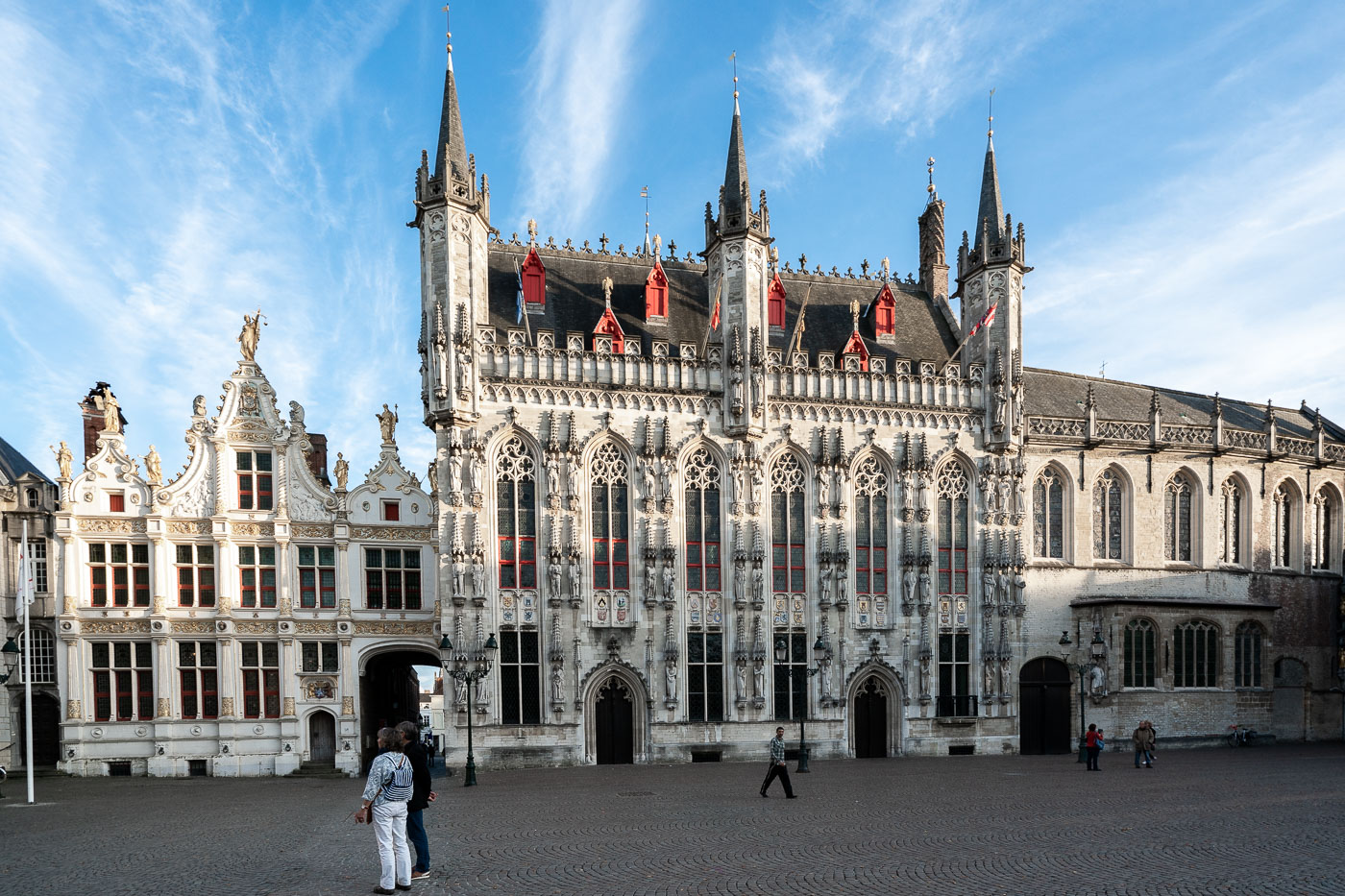
Bruges City Hall and Old Civil Registry at Burg Square, Belgium, featuring Gothic and Renaissance architecture.
Bruges City Hall and the adjoining Old Civil Registry stand on Burg Square in Bruges, Belgium. The Gothic city hall, completed in 1421, is one of the oldest in the Low Countries, while the Renaissance Old Civil Registry dates to 1537. Both buildings are part of Bruges’ UNESCO-listed historic center.
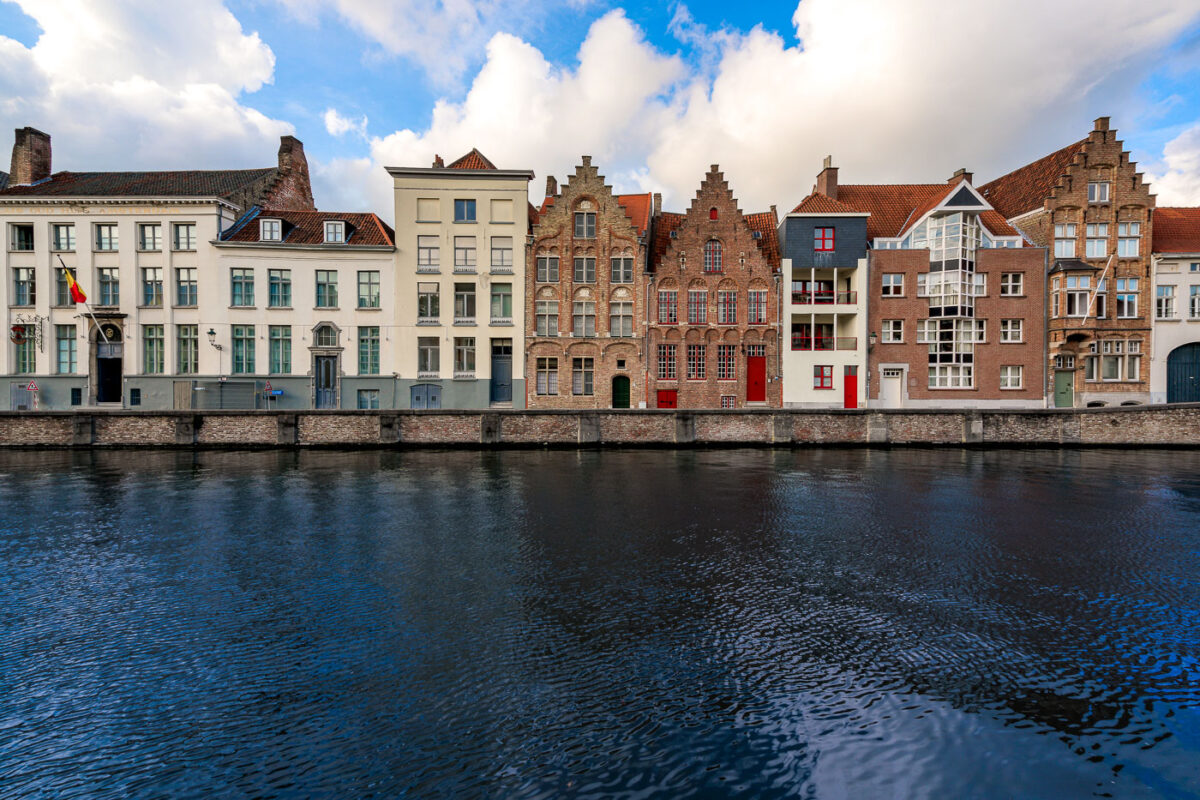
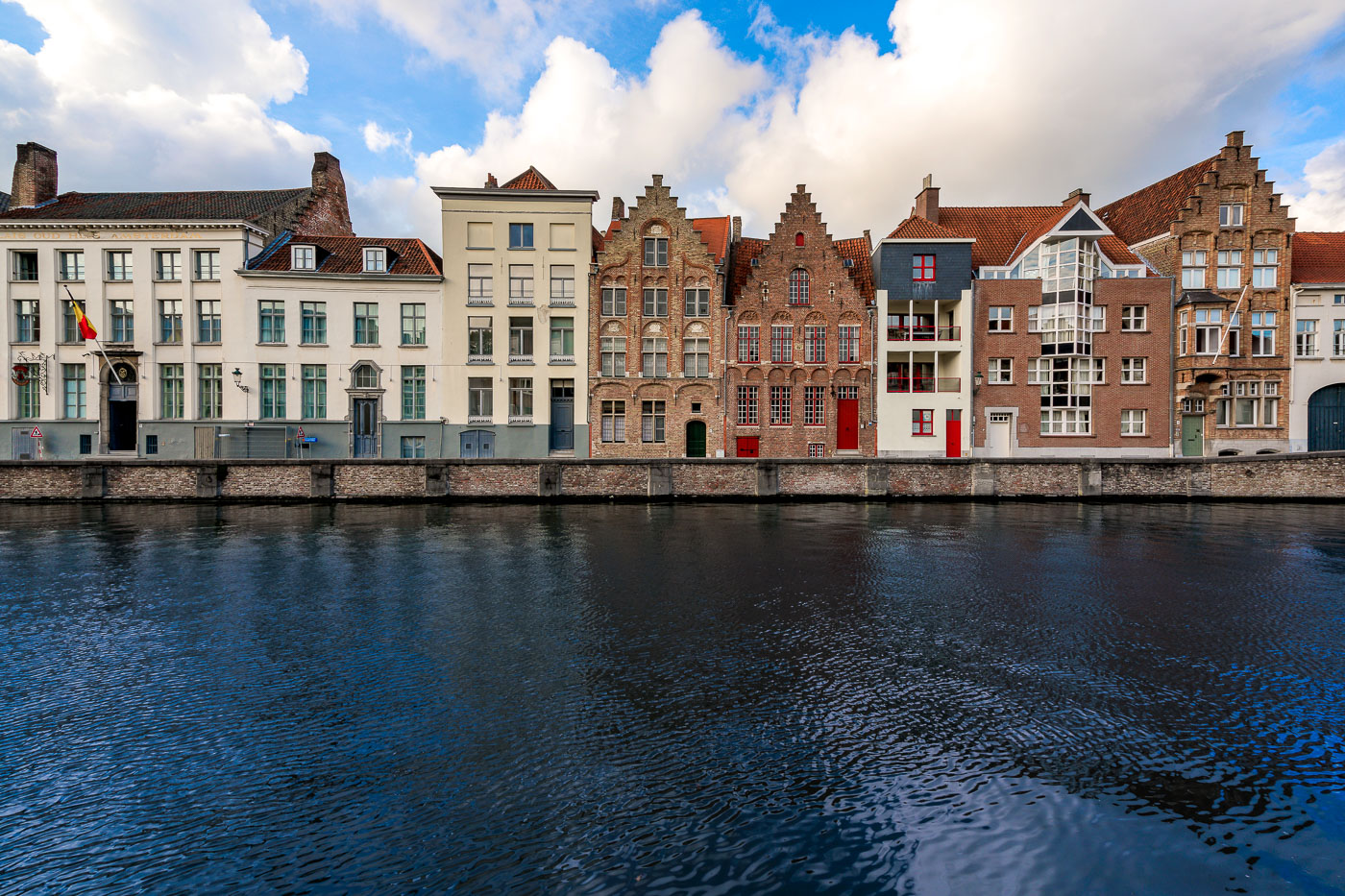
Historic canal houses with stepped-gable facades line the River Reie waterfront in Bruges, Belgium.
Canal-side houses along the River Reie in Bruges, Belgium, include stepped-gable and narrow brick facades typical of the city’s historic core. The buildings line the water’s edge across from a stone embankment, with a mix of older masonry houses and later infill structures.
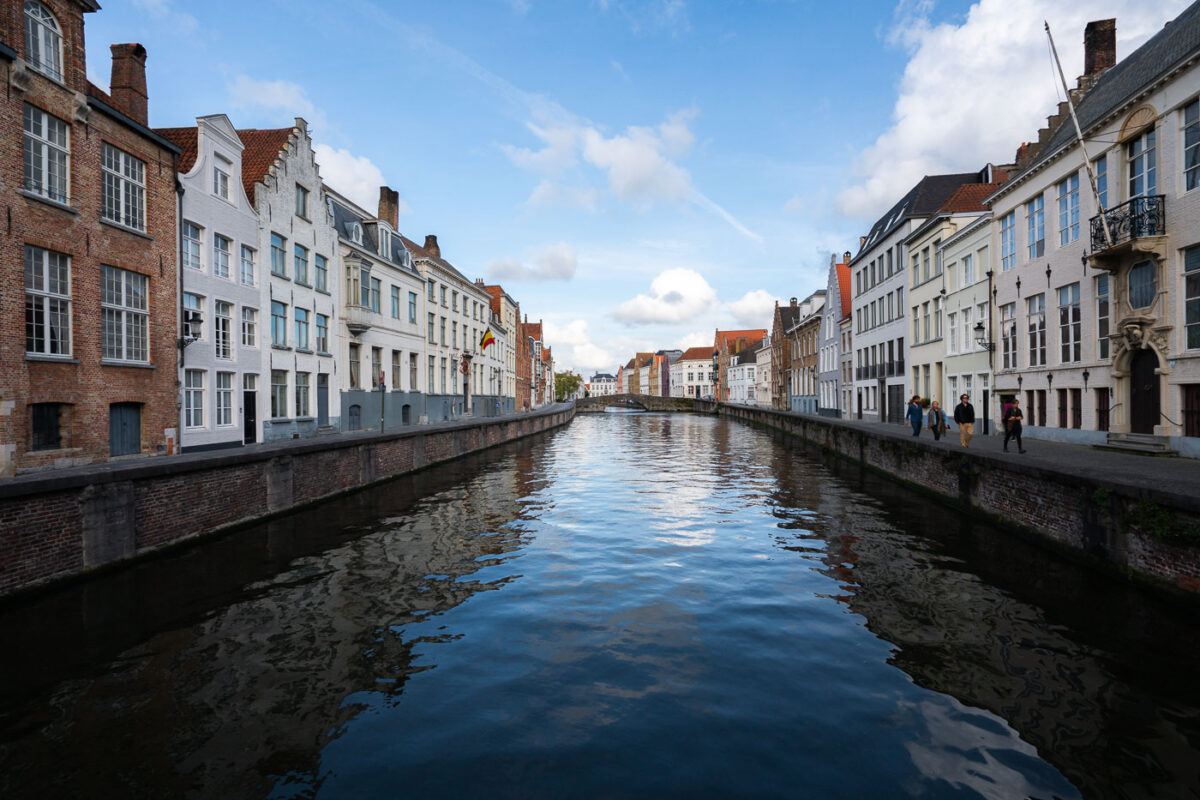
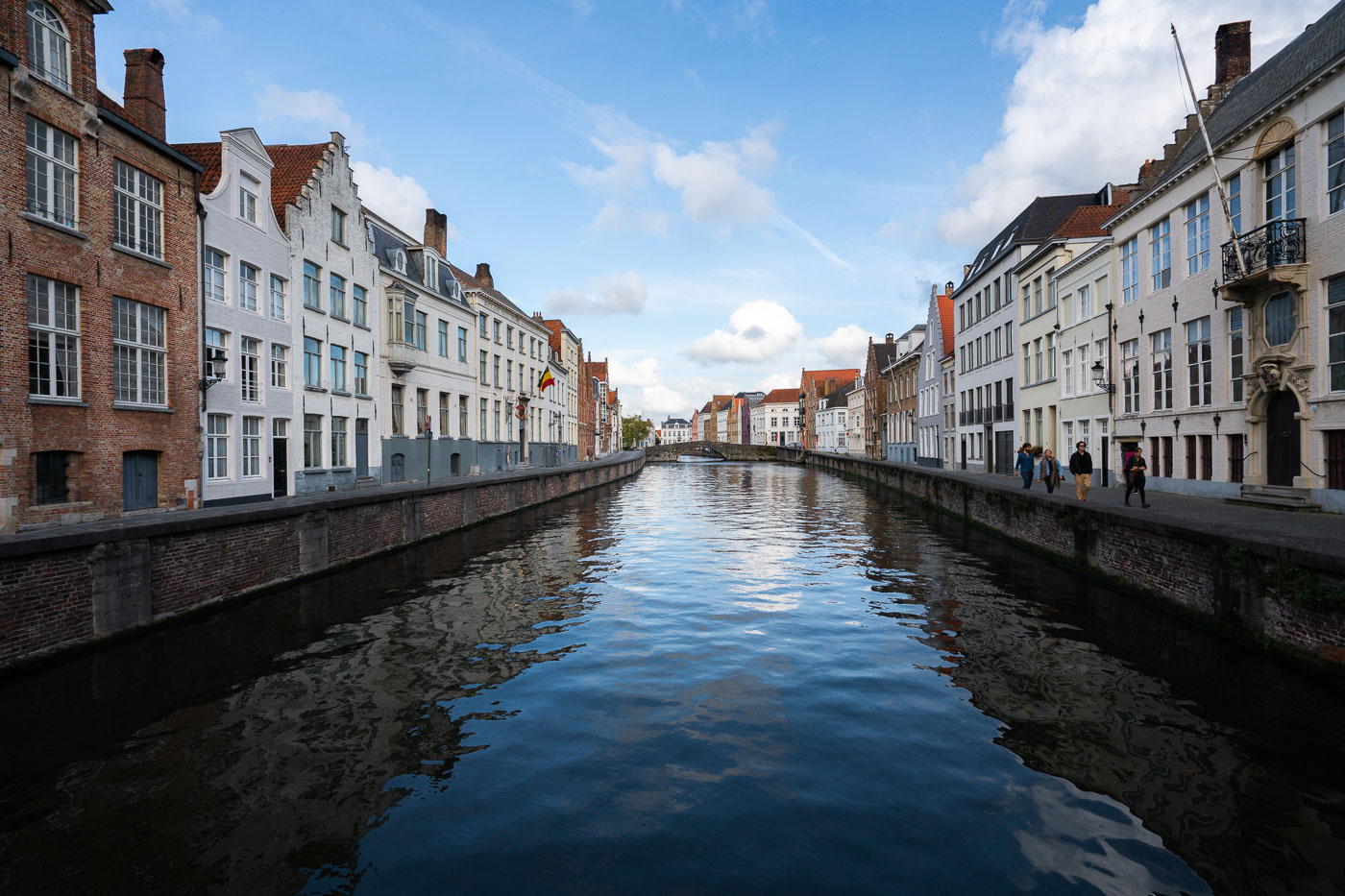
Historic townhouses line the River Reie canal in Bruges, Belgium.
Canal houses along the River Reie in Bruges, Belgium, front one of the city’s historic waterways near the medieval center. The narrow brick and stucco townhouses, many with stepped or gabled roofs, line both banks beside a small arched bridge spanning the canal.
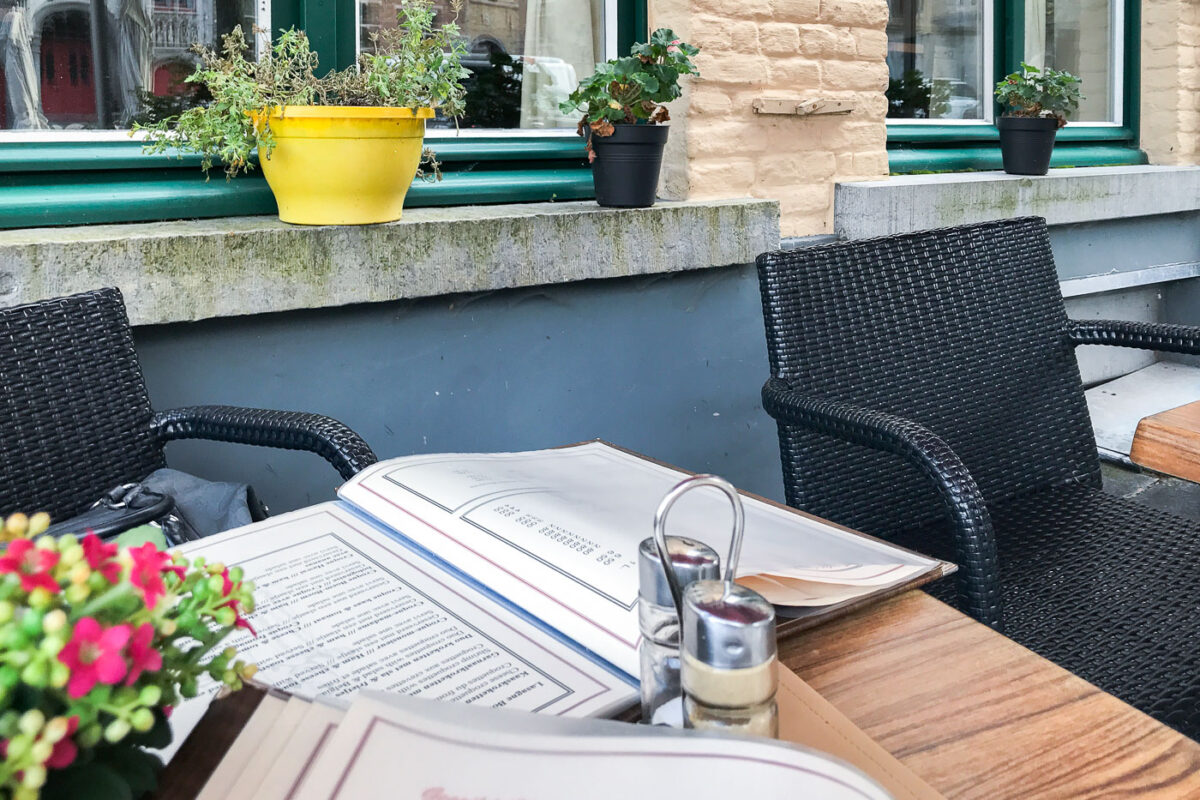
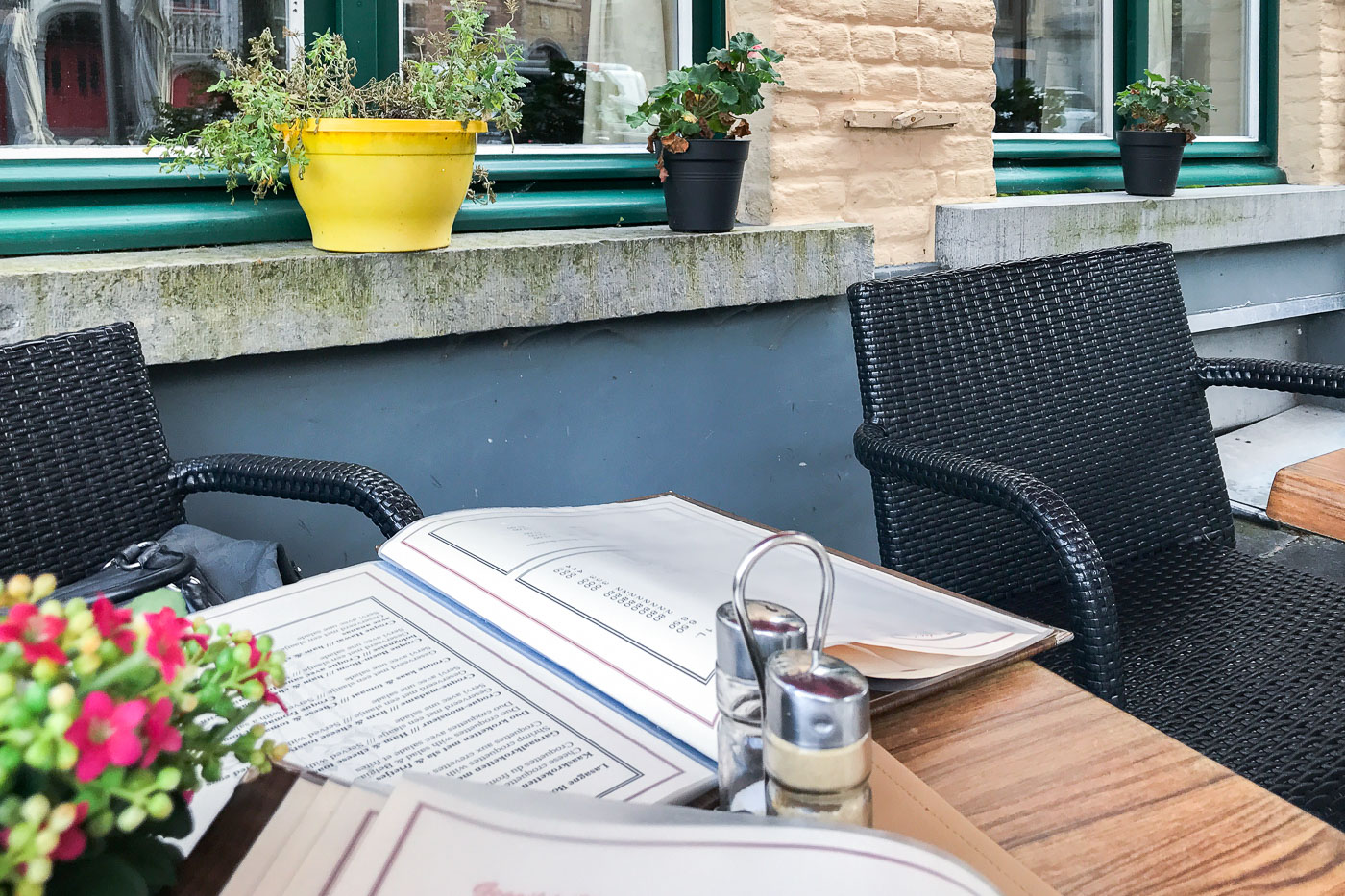
Cafe table with menu and chairs on a cobblestone street in Bruges, Belgium.
An outdoor cafe table in Bruges, Belgium, is set with menus and condiments beside wicker chairs. The table sits against a historic building facade with painted window trim and potted plants on the sill, typical of the city’s street-side dining areas.
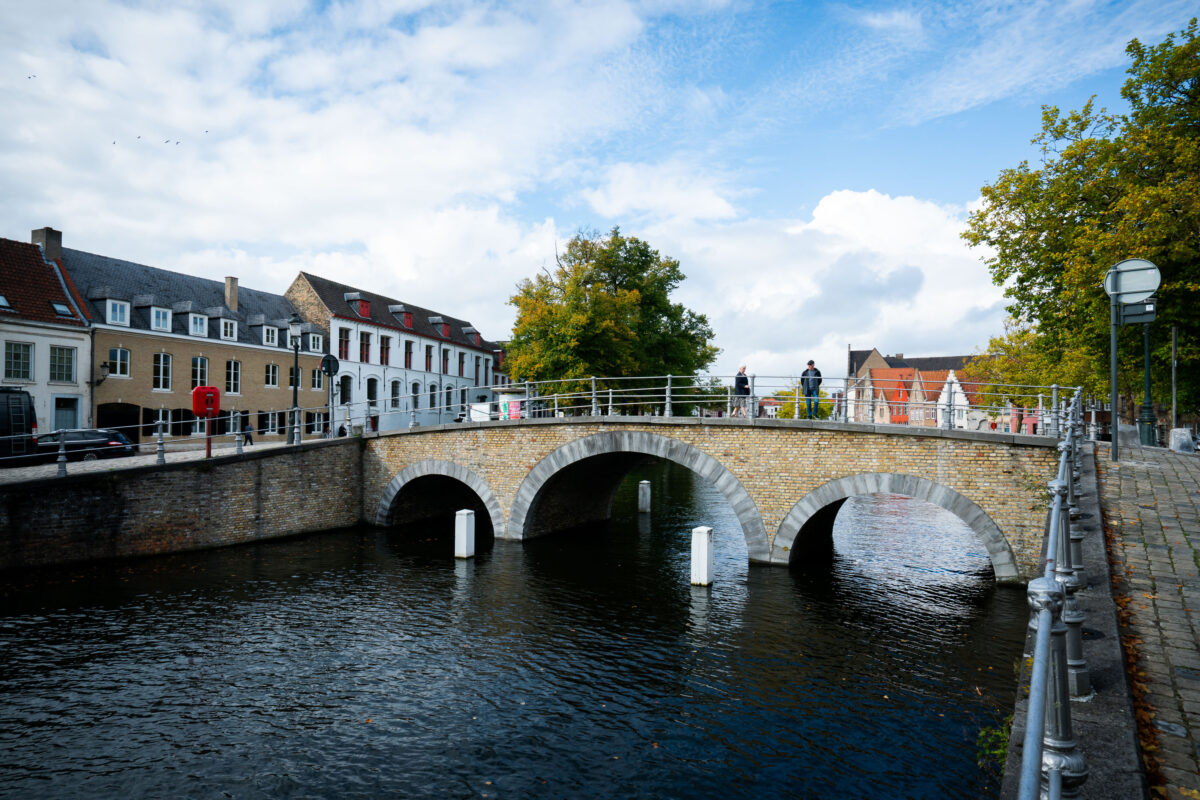
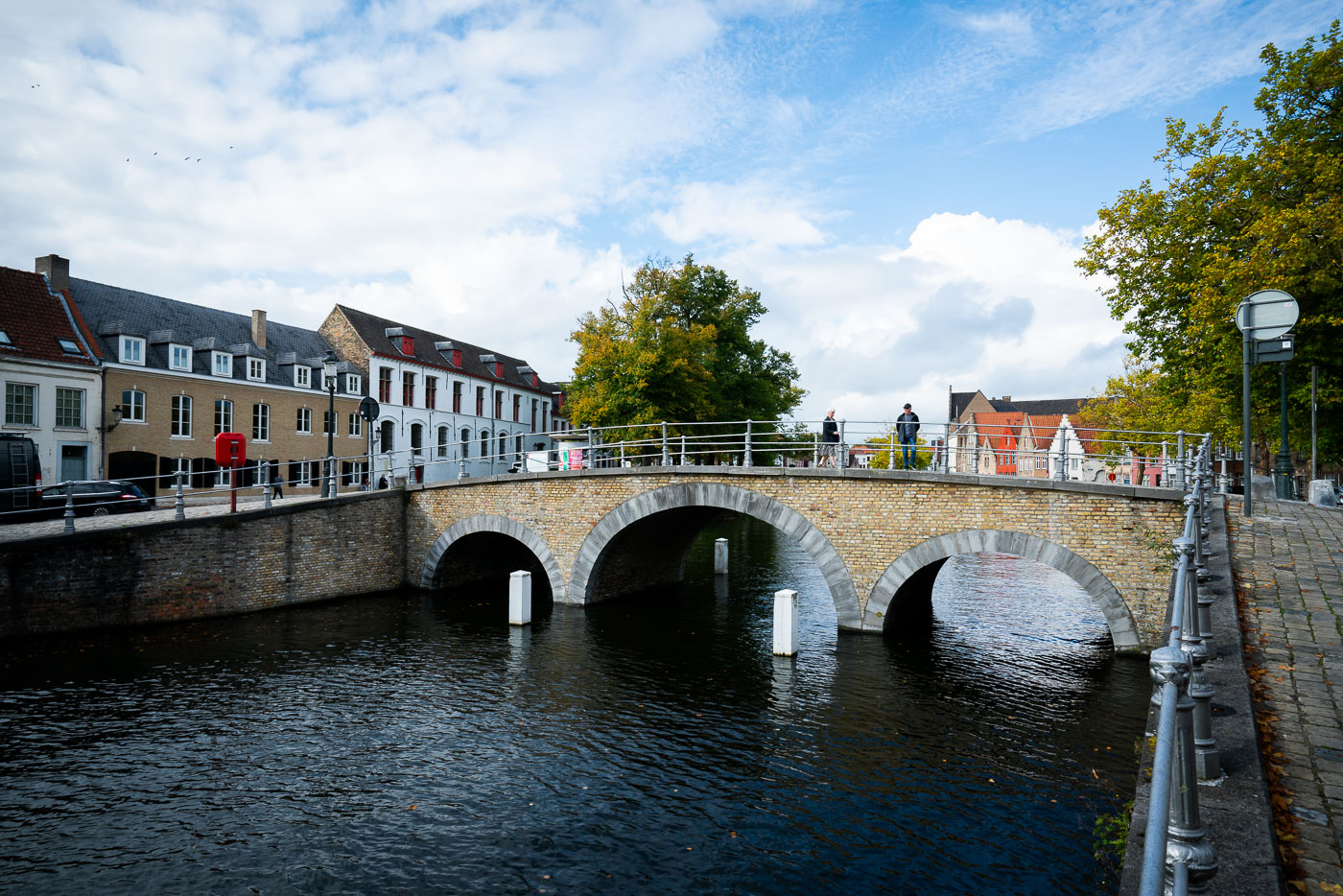
A three-arched brick bridge spans the River Reie in Bruges, Belgium, with pedestrians crossing and historic buildings lining the canal.
A three-arched brick bridge crosses a branch of the River Reie in Bruges, Belgium. Pedestrians walk across the bridge beside canalside houses and railings along the waterway in the historic city center.
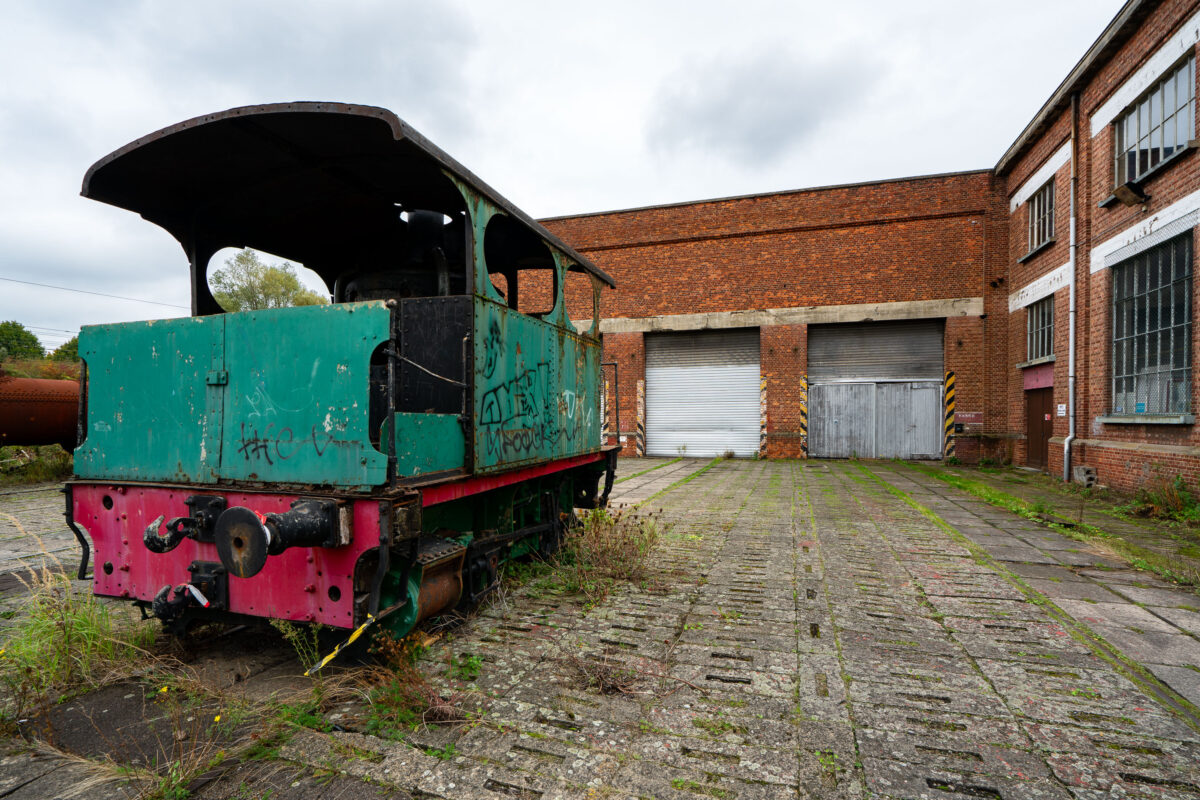
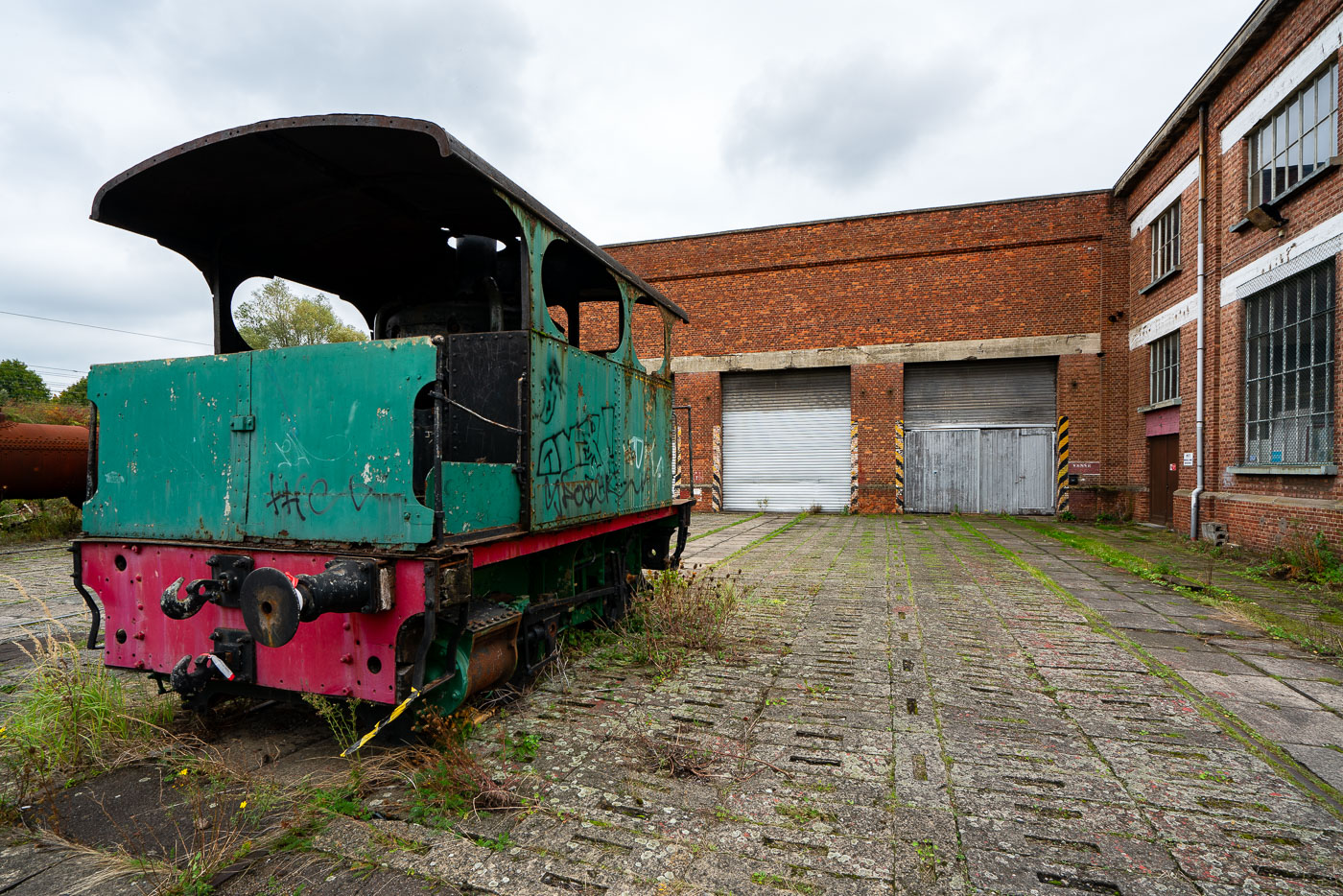
Abandoned locomotive at an industrial site in Belgium, with a brick building in the background.
An abandoned locomotive sits on tracks in a former industrial yard in Belgium. The small engine, with a weathered green body and pink front panel, stands beside brick factory buildings with closed loading doors and large industrial windows.
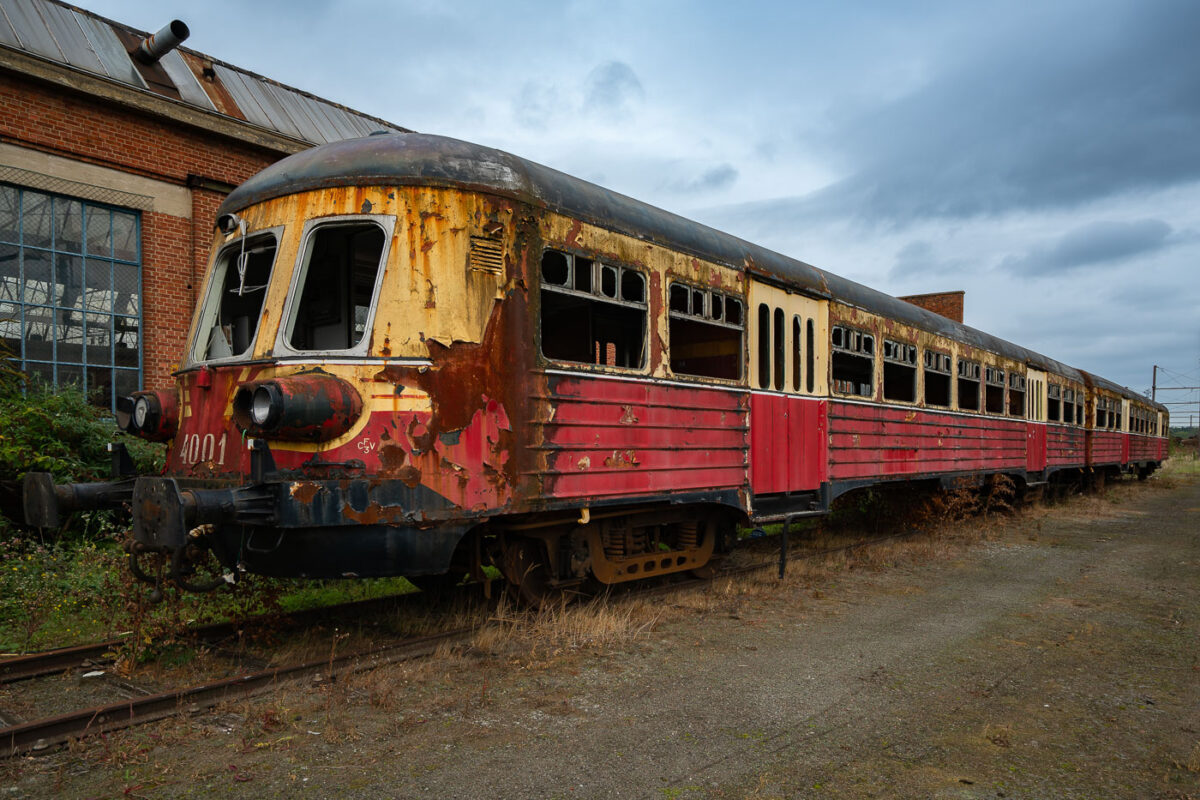
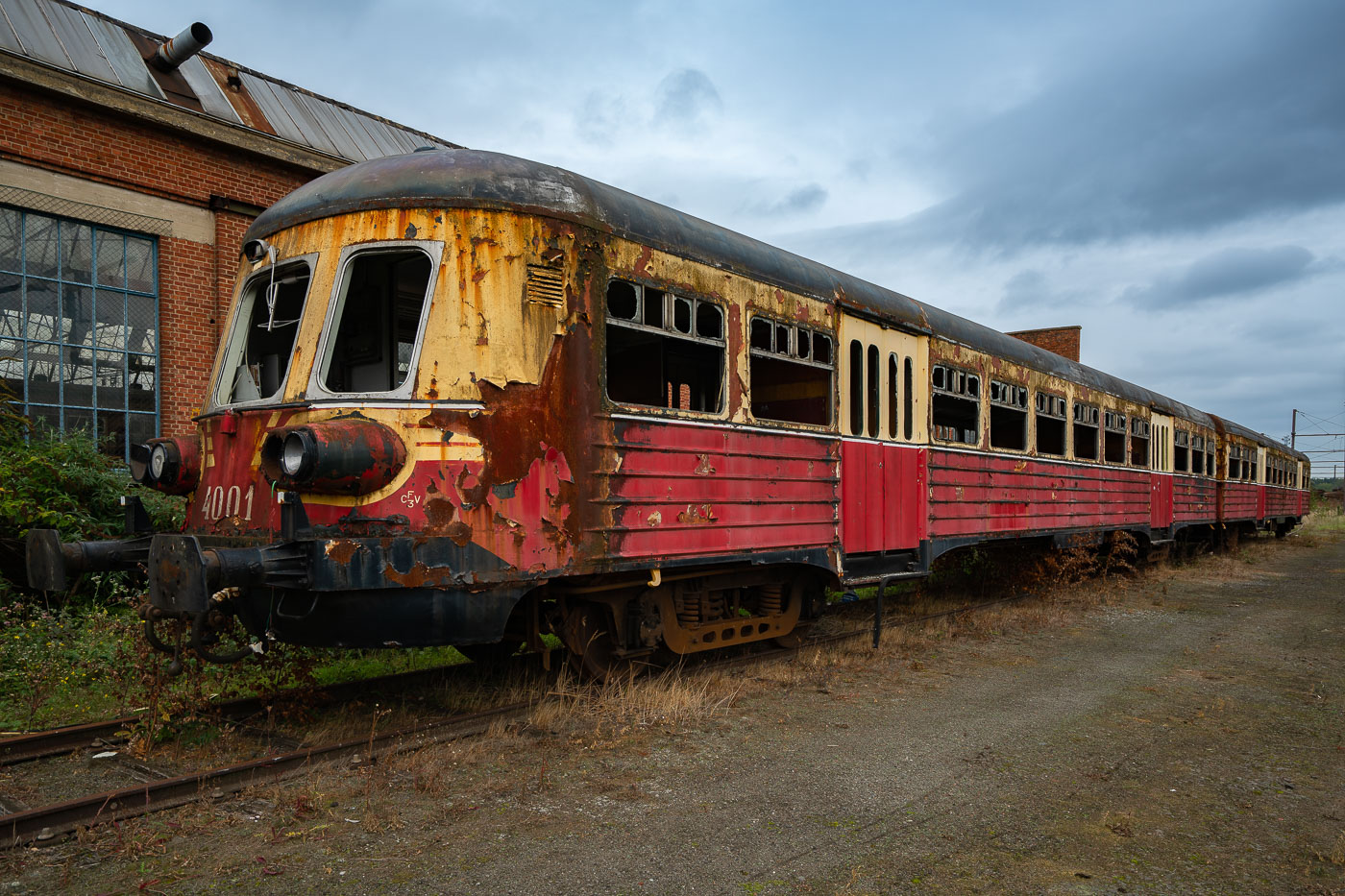
Abandoned SNCB Autorail 4001 sits on a disused track near Charleroi, Belgium.
An abandoned SNCB/NMBS Autorail Série 400, unit no. 4001, sits on a disused track near Charleroi, Belgium. These diesel multiple units, built by BN (La Brugeoise et Nivelles) in the early 1950s, were a significant post-war modernization effort for Belgian regional rail. Their streamlined design and distinctive red-and-cream livery symbolized industrial progress at the time.
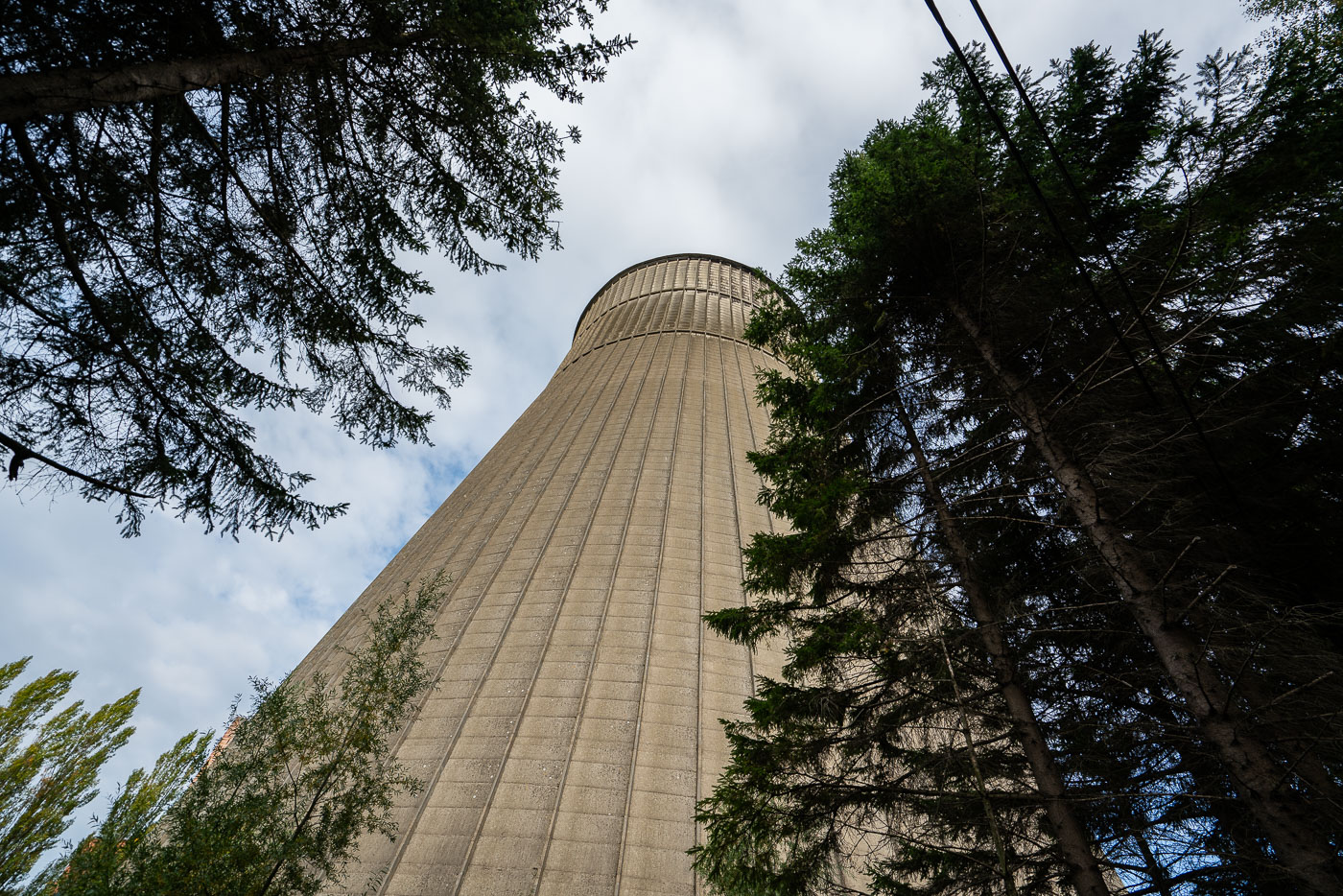
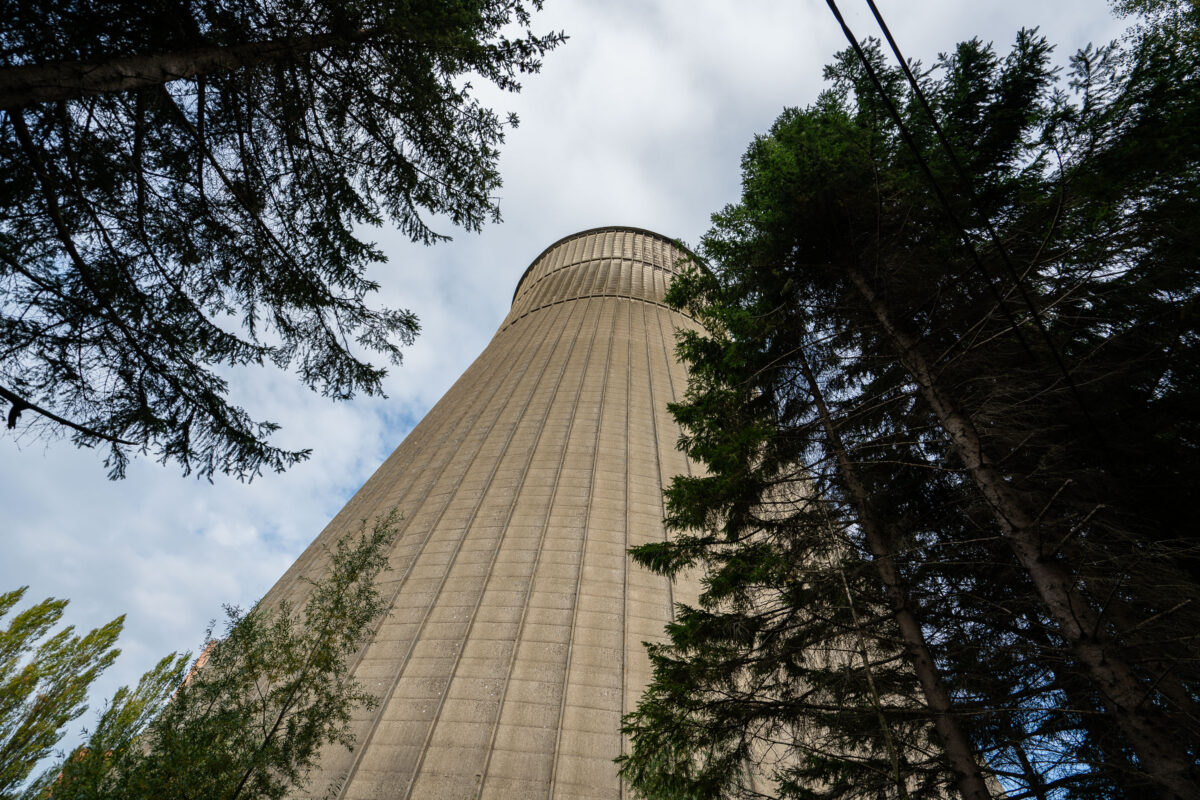
The Monceau-sur-Sambre cooling tower in Charleroi, Belgium, stands as a relic of the region's industrial past.
The Monceau-sur-Sambre cooling tower in Charleroi, Belgium, is a 118-meter reinforced-concrete hyperboloid built in the 1960s for the nearby power station. Its flared shell and vertical ribbing were designed to cool large volumes of circulating water used by the generating plant. The associated coal-fired station was taken out of service in the early 2000s, leaving the tower as one of the most prominent surviving industrial structures in the Charleroi area.
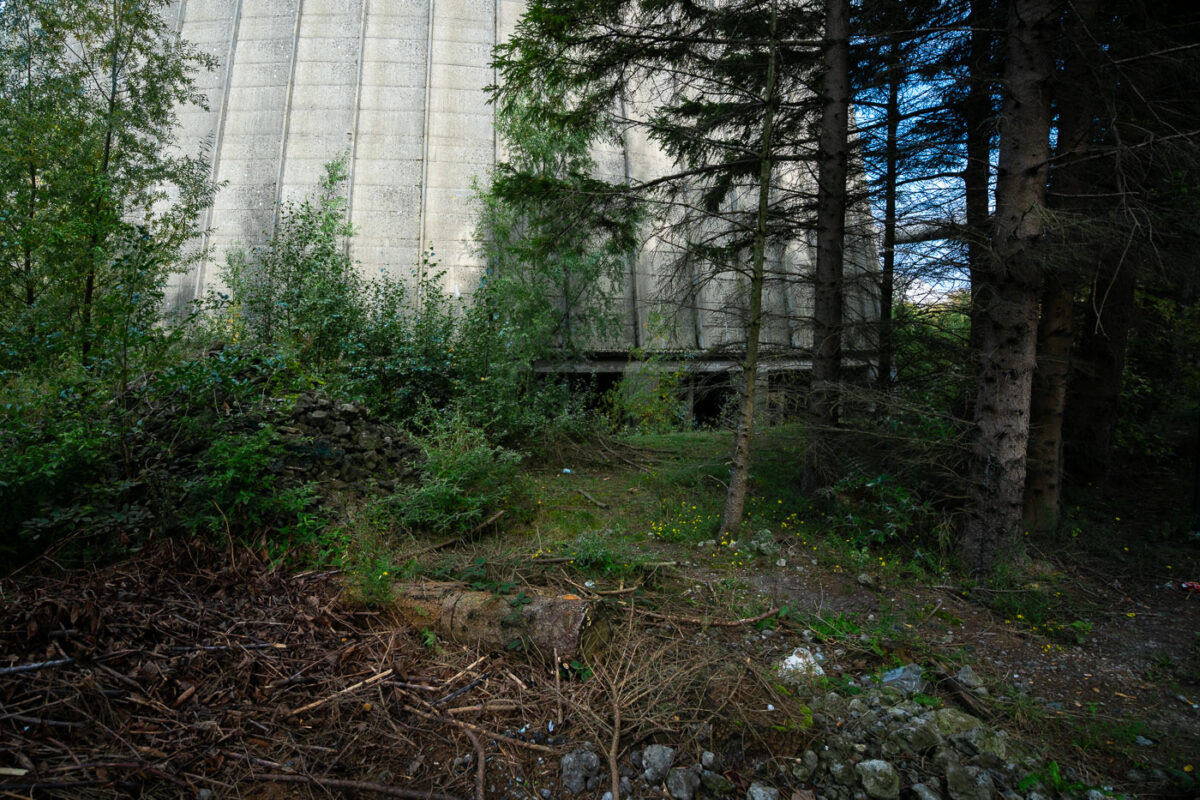
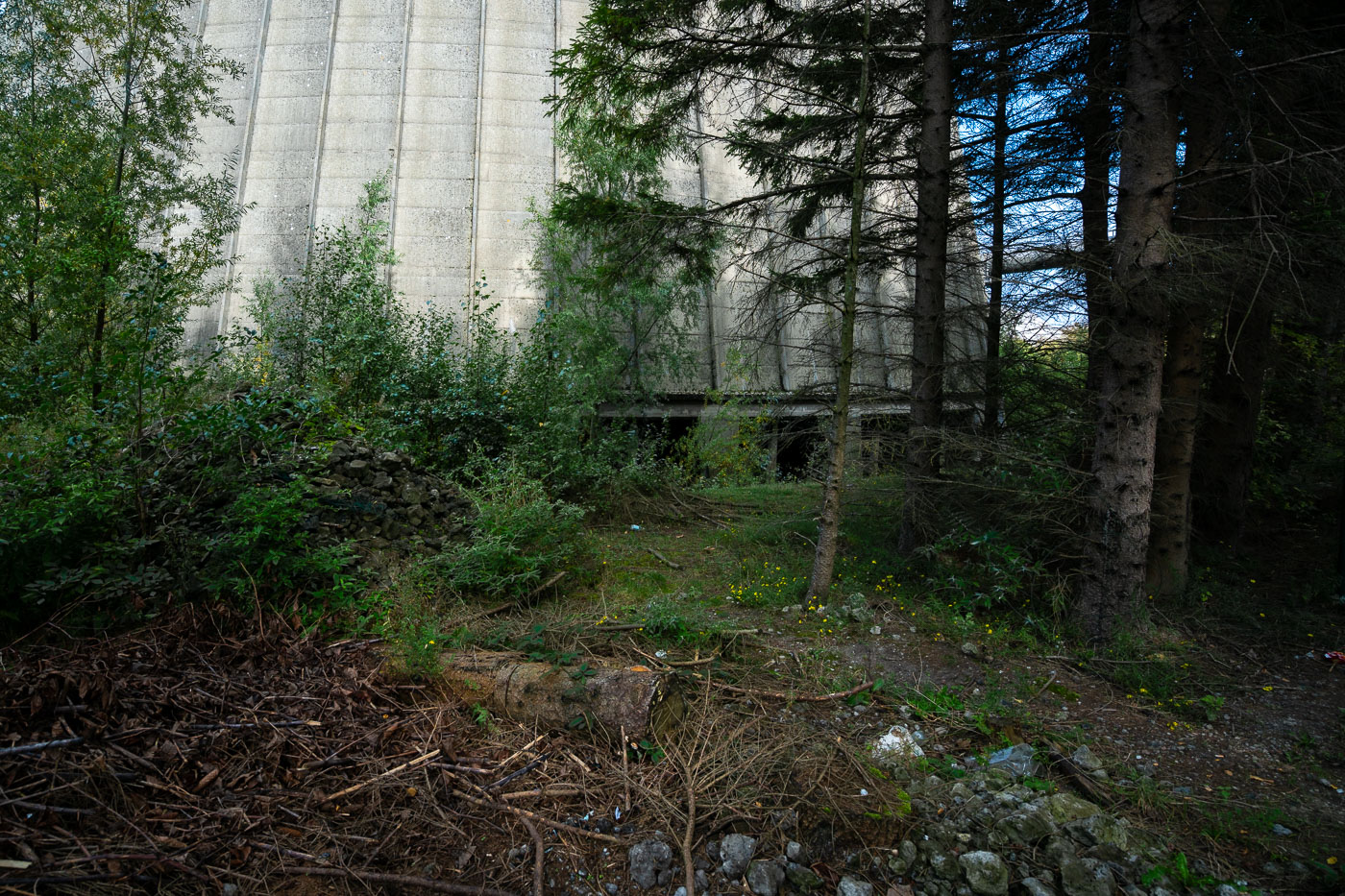
The base of a cooling tower at the former Monceau-sur-Sambre power plant in Charleroi, Belgium, is overgrown with vegetation.
The base of a cooling tower at the former Monceau-sur-Sambre power plant in Charleroi, Belgium, stands amid dense vegetation on the abandoned industrial site. The tower was part of a coal-fired generating station in the Charleroi basin, one of Belgium’s major heavy-industry regions. By 2017, when this view was made, the plant had been closed and the remaining structures formed part of the post-industrial landscape left after the decline of coal-fired power generation in the area.
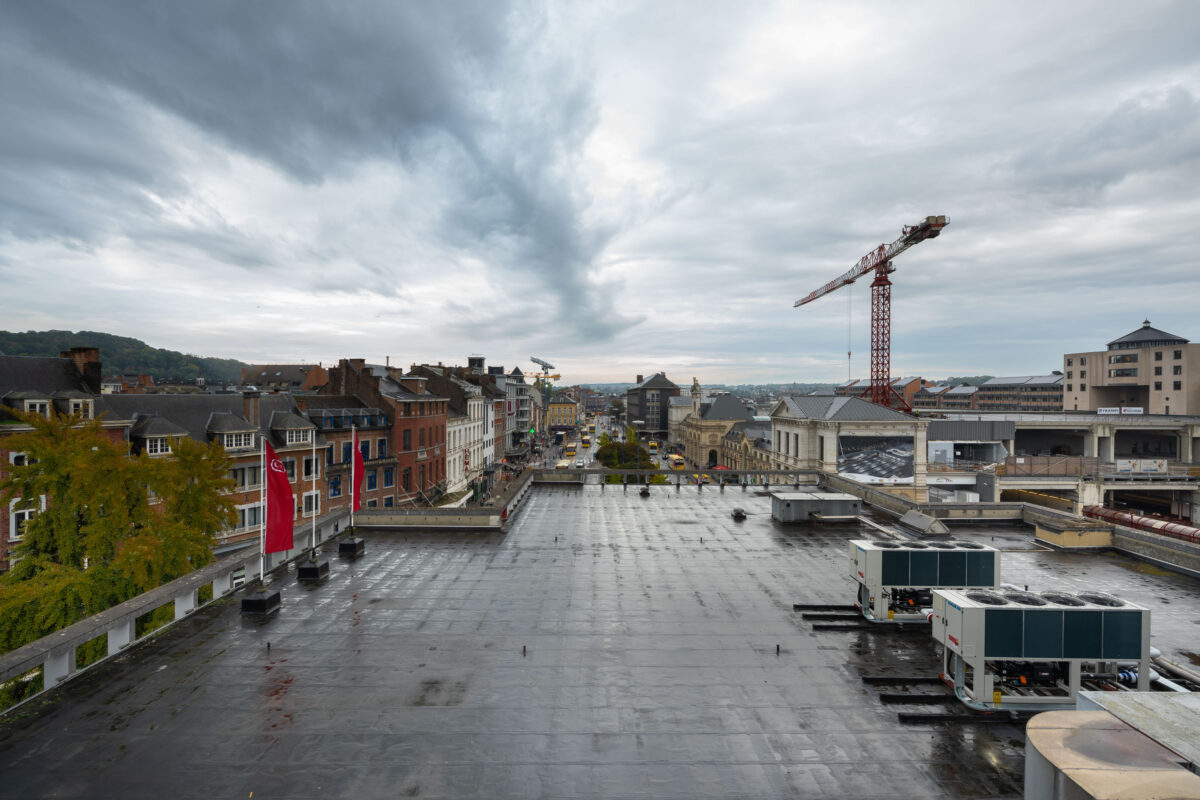
A construction crane is visible over Rue de Fer in Namur, Belgium, with 19th-century buildings and modern structures lining the street.
Rue de Fer in Namur, Belgium, runs past the city’s main railway station beneath a large construction crane. The streetscape includes older multistory buildings and newer commercial blocks, while work continues around the station area.
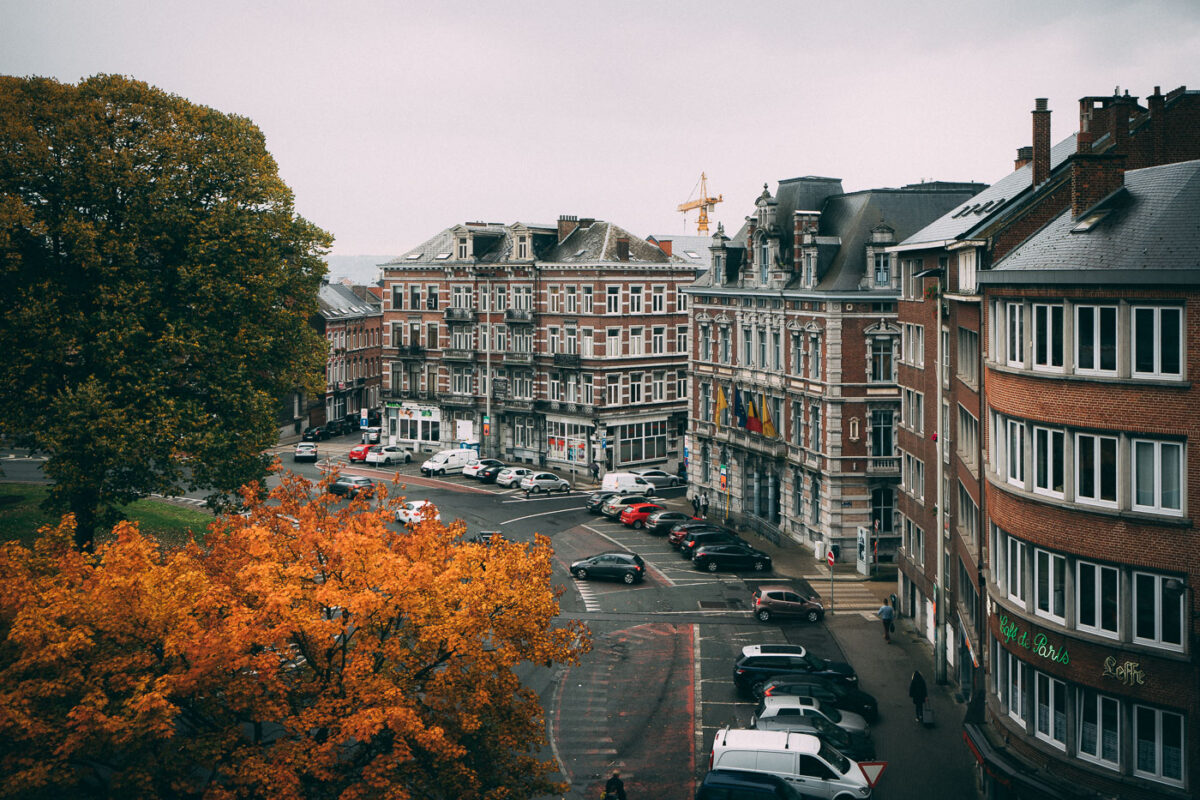
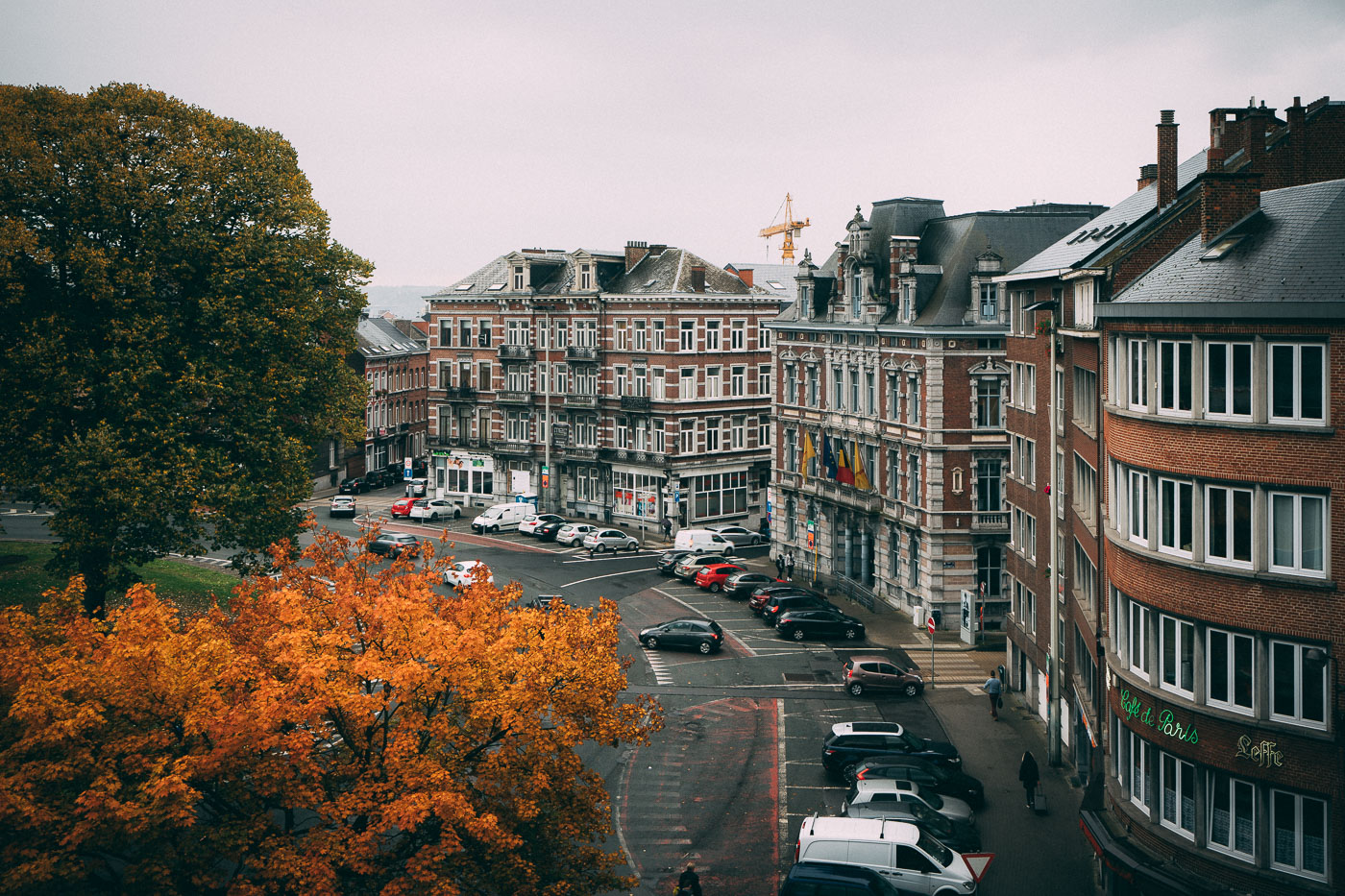
Place de la Digue in Namur, Belgium, with autumn foliage and diverse architecture.
Place de la Digue in Namur, Belgium, is framed by late-autumn trees and surrounded by multi-story buildings with ornate facades and slate roofs. A building on the square displays Belgian flags, and a construction crane rises in the background above the rooftops. Cars are parked along the street and around the square in the center of the city.
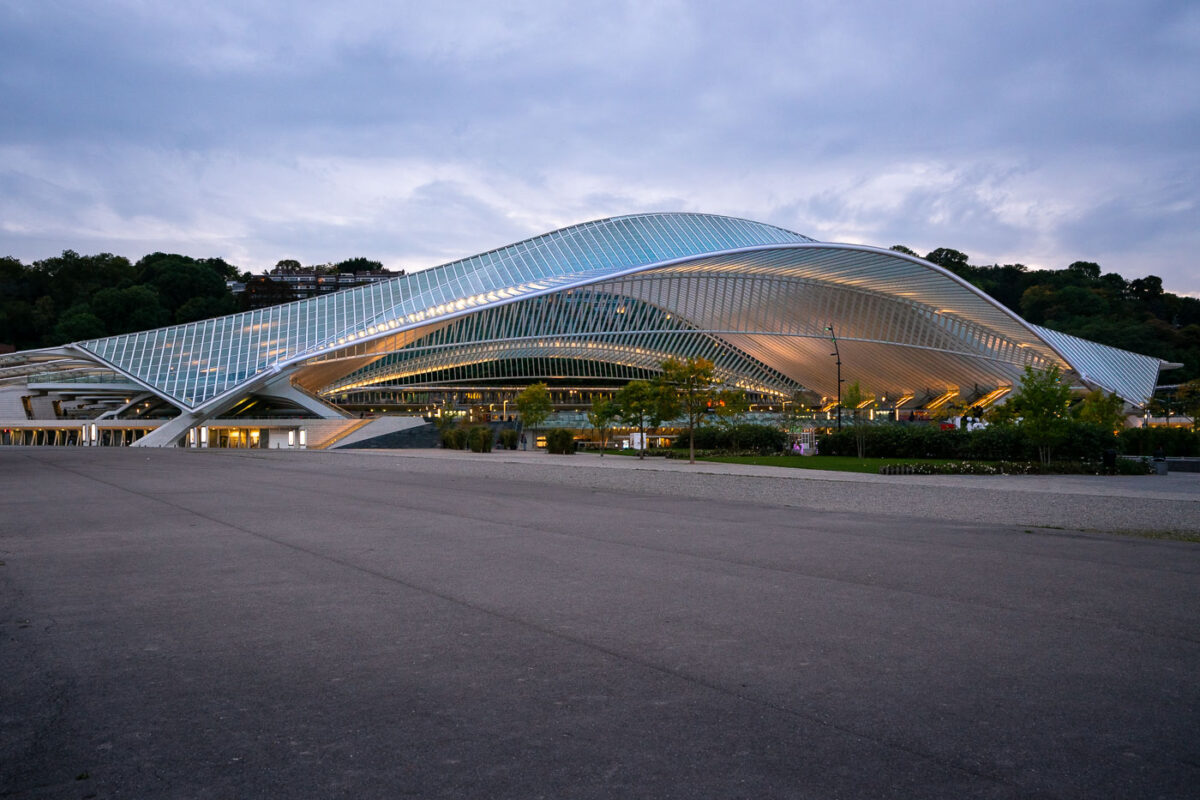
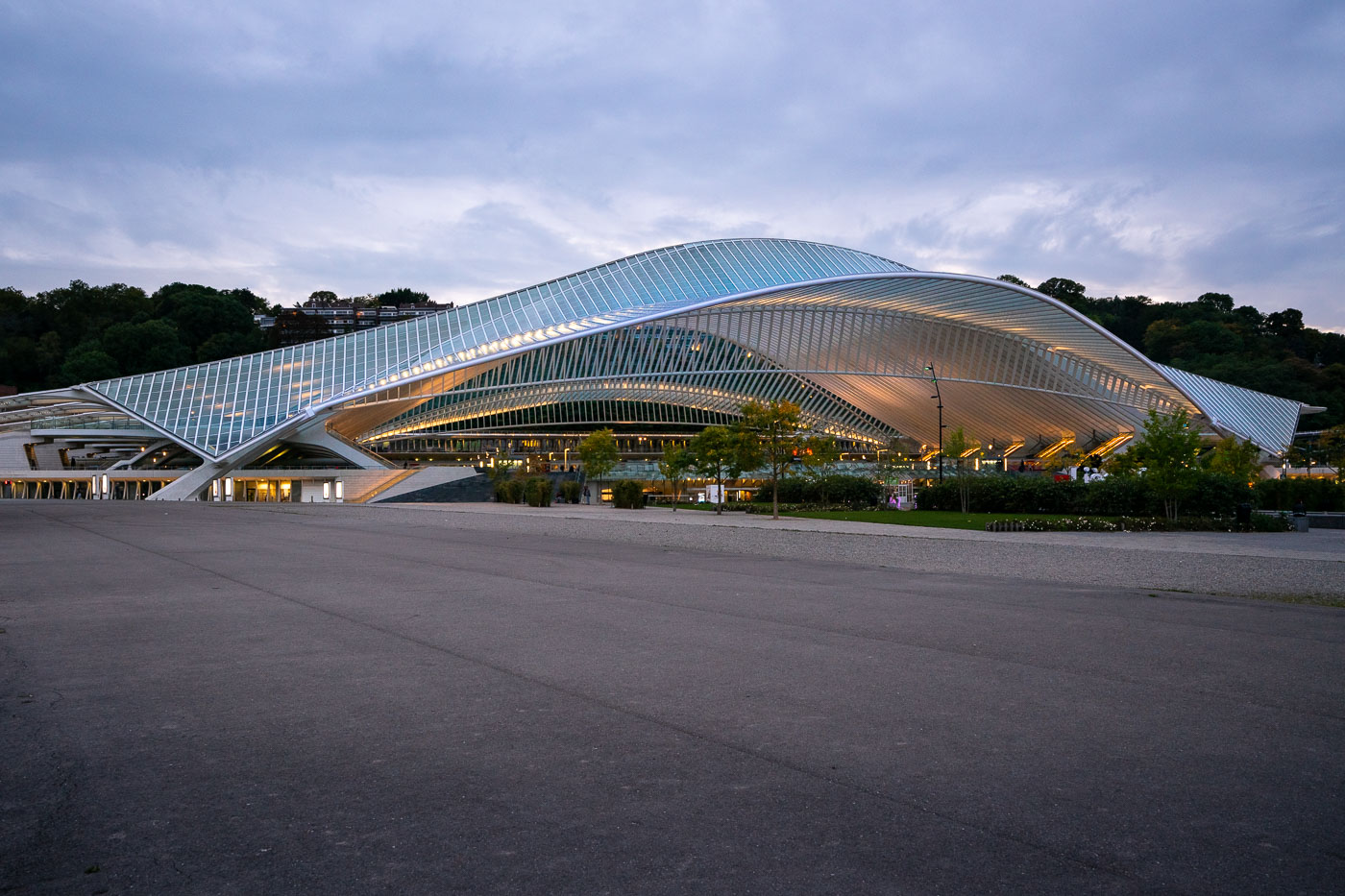
Liège-Guillemins Station in Liège, Belgium, a modern train hub designed by Santiago Calatrava.
Liège-Guillemins Station in Liège, Belgium, is a high-speed rail station designed by Santiago Calatrava and opened in 2009. The station’s sweeping glass-and-steel roof covers five platforms and ten tracks, and it replaced an earlier station that dated to 1958.

Built in Minneapolis

Minneapolis Photographer

Browse by location, move through long-running series, or start with recent work.