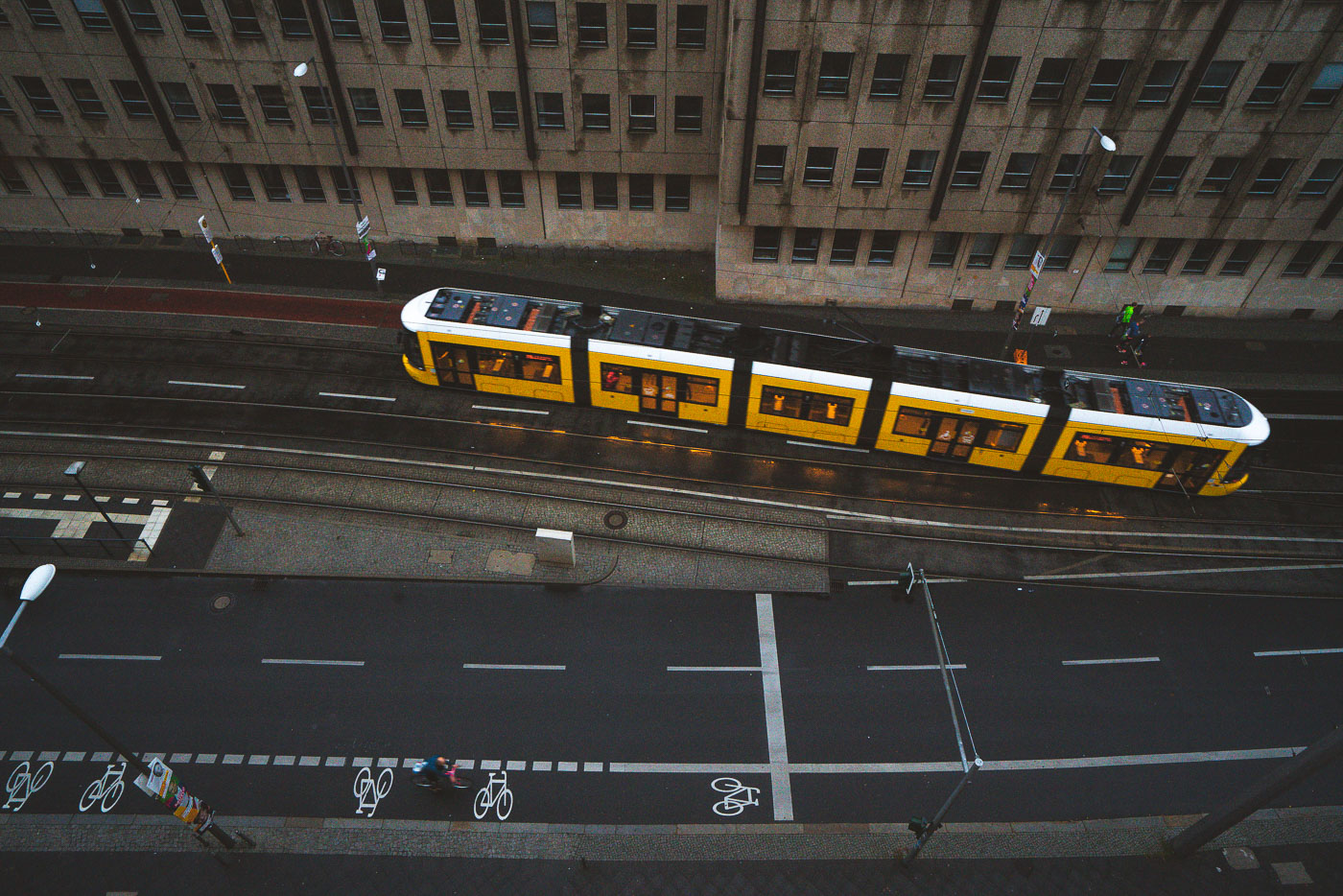
Yellow BVG tram traveling along wet Berlin street with cyclists and office buildings visible from above.

Germany

Photography from Germany documents key transportation hubs such as Berlin Hauptbahnhof and Köln Hauptbahnhof, illustrating their architectural features and roles in national and international rail networks. Images focus on the interaction of trains, passengers, and infrastructure within these stations, highlighting developments from early 20th-century expansions to modern post-reunification designs.

Cities in Germany
Photos from Germany

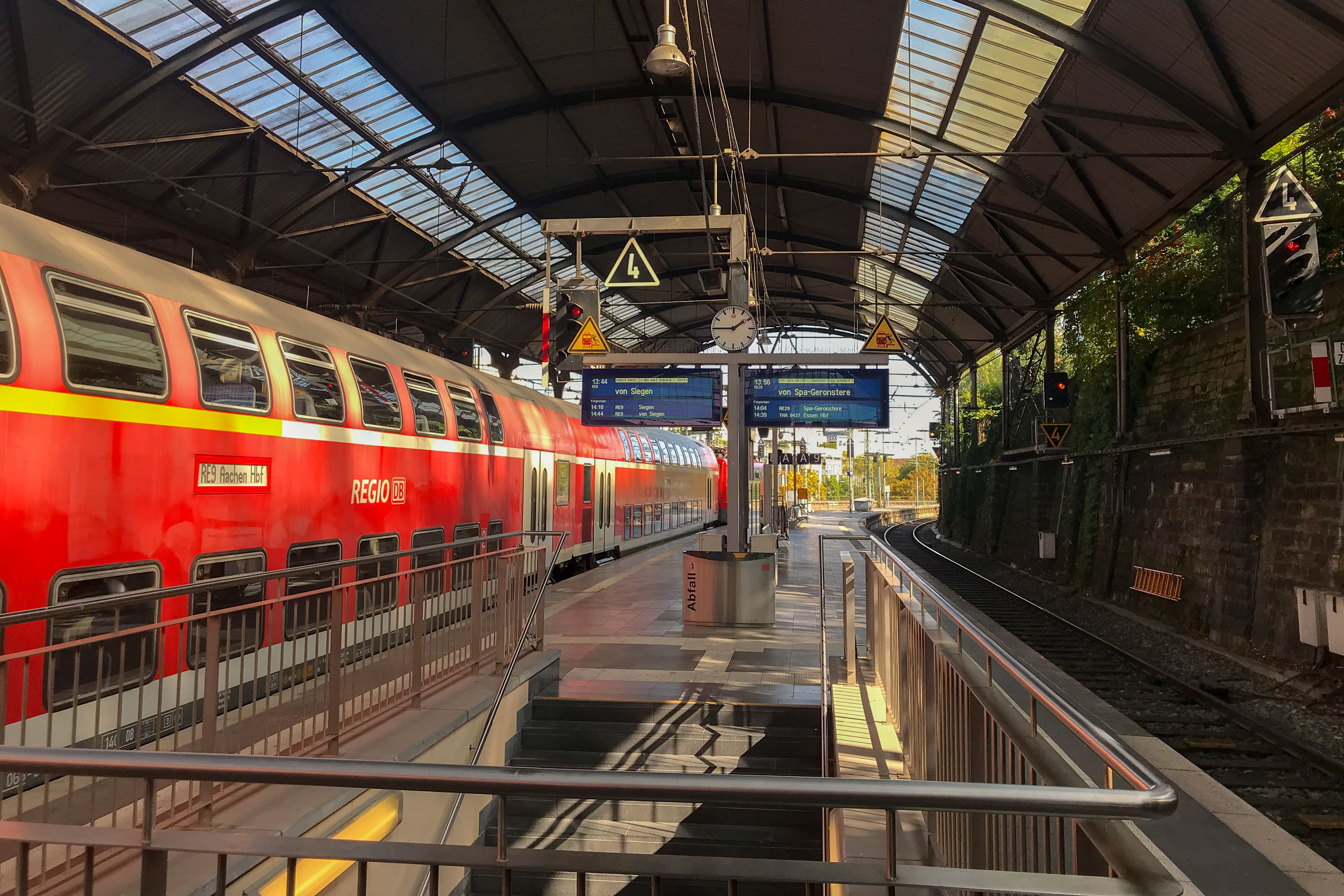
Red REGO regional train stopped at a German railway station platform under a glass and steel roof structure.
A Deutsche Bahn regional train marked for Aachen Hauptbahnhof waits at a platform in Aachen, Germany. Destination boards on the platform show arrivals from Siegen and from Spa-Géronstère in Belgium, a reminder that the line crosses the border just west of the city.
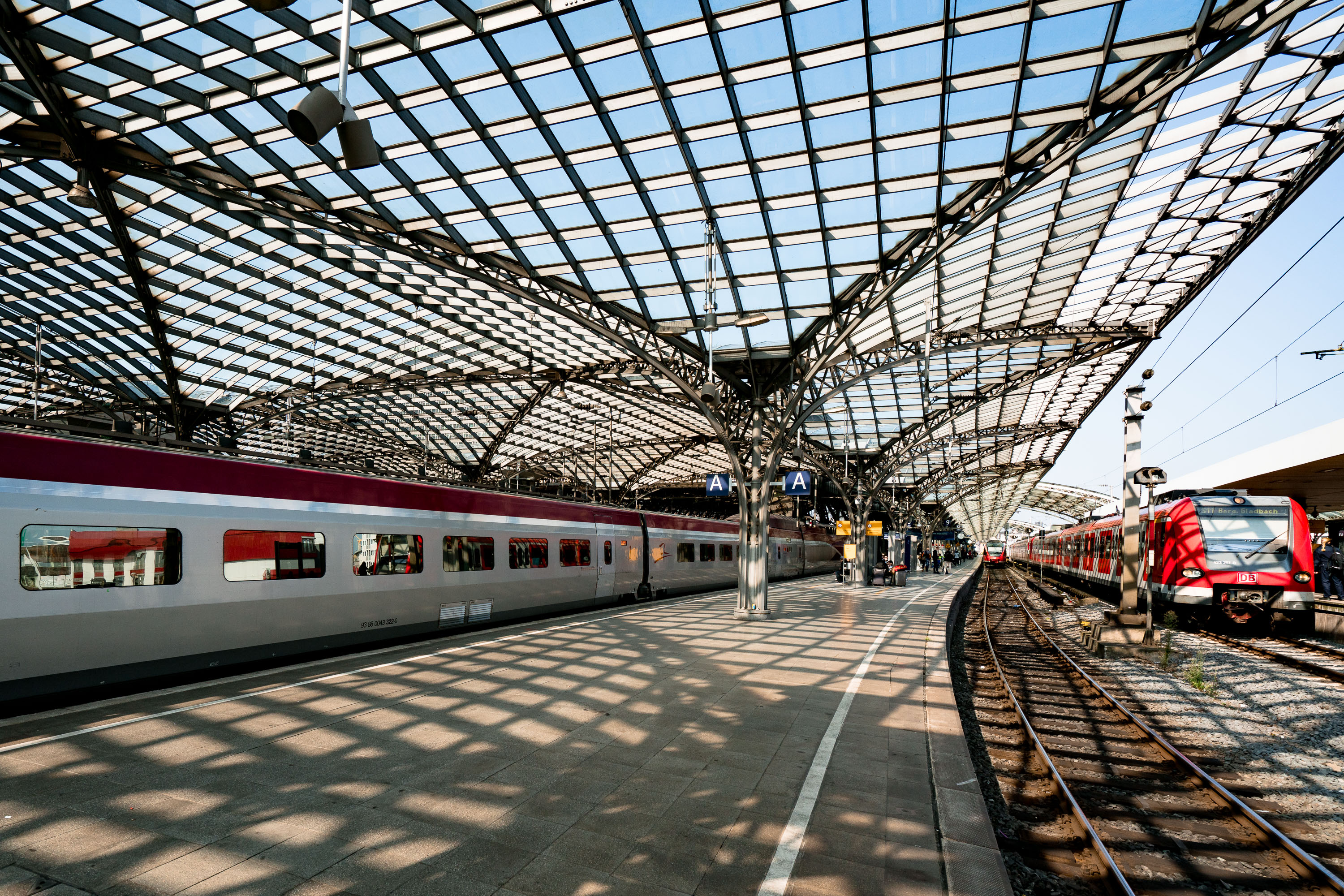
Red and white trains stop at platforms under a steel lattice canopy at Cologne Central Station.
Köln Hauptbahnhof is Cologne's main railway station, standing next to Cologne Cathedral. The current station building dates to 1957, replacing one destroyed in World War Two, and its steel and glass platform canopy remains a signature feature of the rebuild.
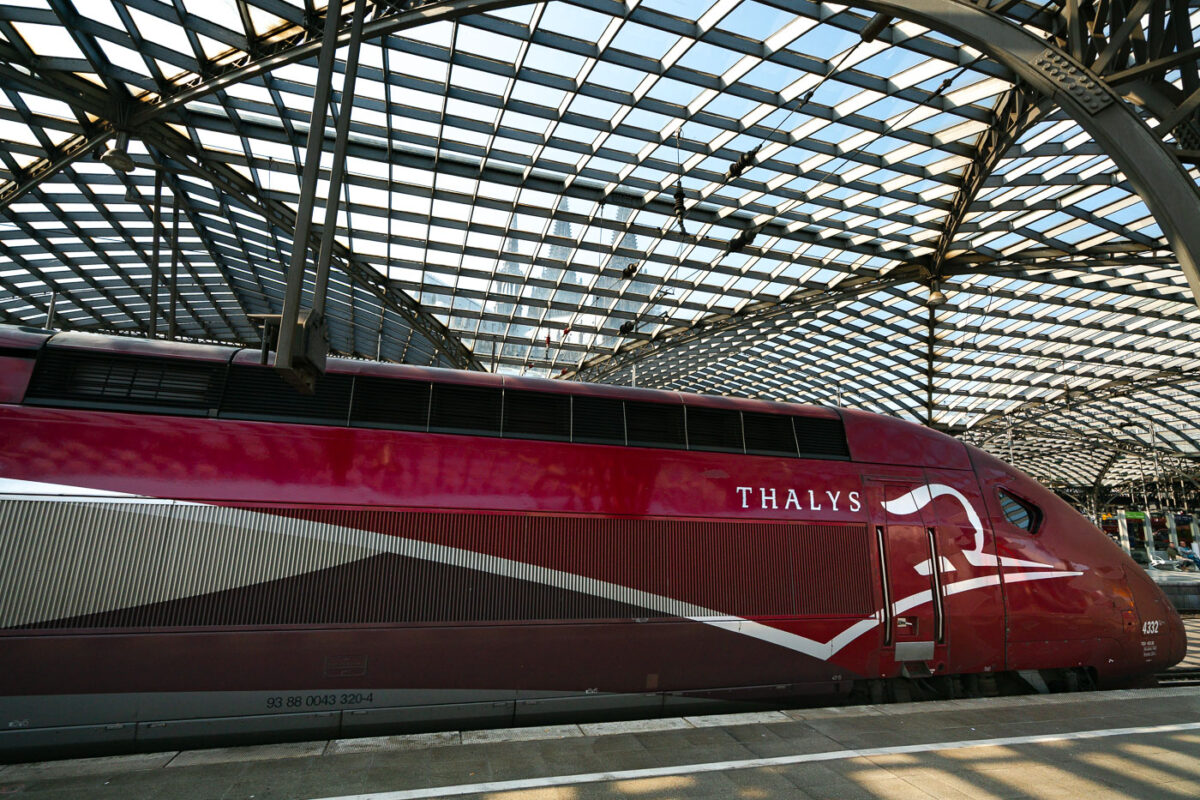
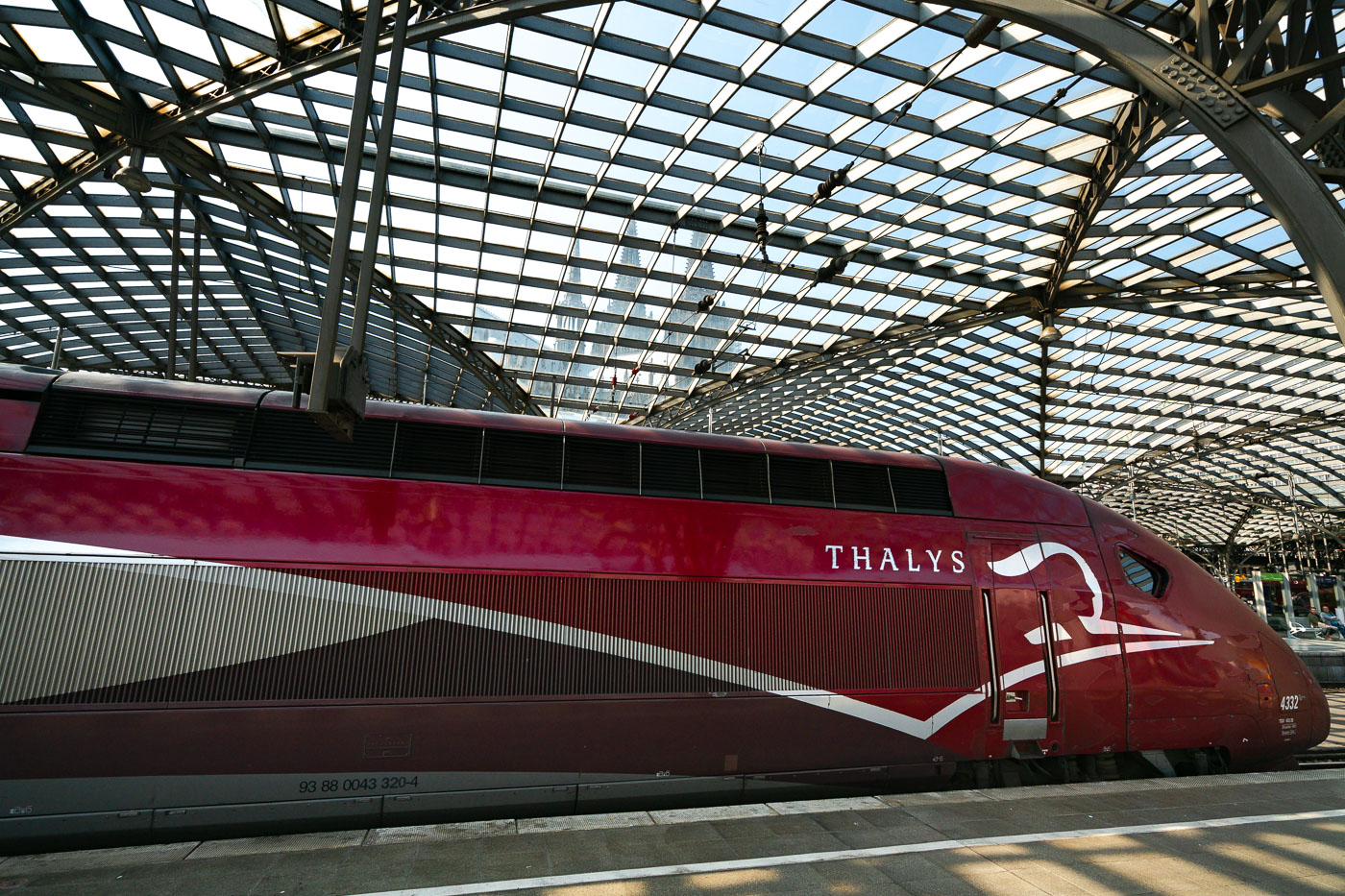
A red and white Thalys train rests under the glass and steel canopy of Köln Hauptbahnhof in Cologne, Germany.
A Thalys train sits under the train shed at Köln Hauptbahnhof in Cologne. Thalys trains have linked Cologne to Paris, Brussels, and Amsterdam since the service began in 1996, running the PBKA route named for its four endpoint cities. The station's current building opened in 1894 next to Cologne Cathedral, and Thalys merged into the Eurostar brand in 2023.
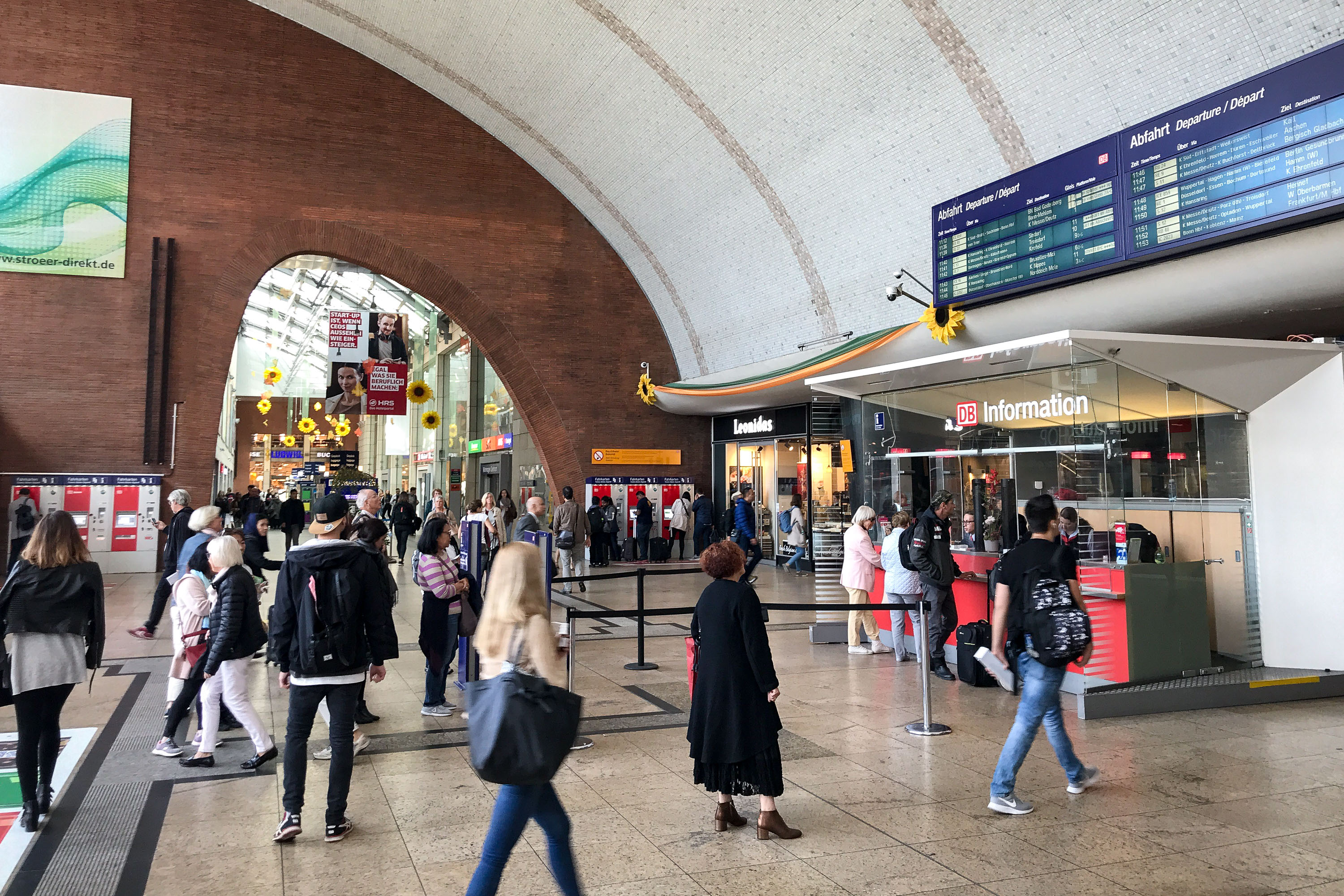
Travelers move through the main concourse of Cologne Central Station, with departure boards and information desk visible.
Köln Hauptbahnhof is Cologne's main railway station, built in its current form in 1894 next to Cologne Cathedral. It is one of the busiest stations in Germany, handling trains on routes including the Cologne to Frankfurt high speed line. Travelers pass through the concourse here past a DB Information desk and ticket machines.
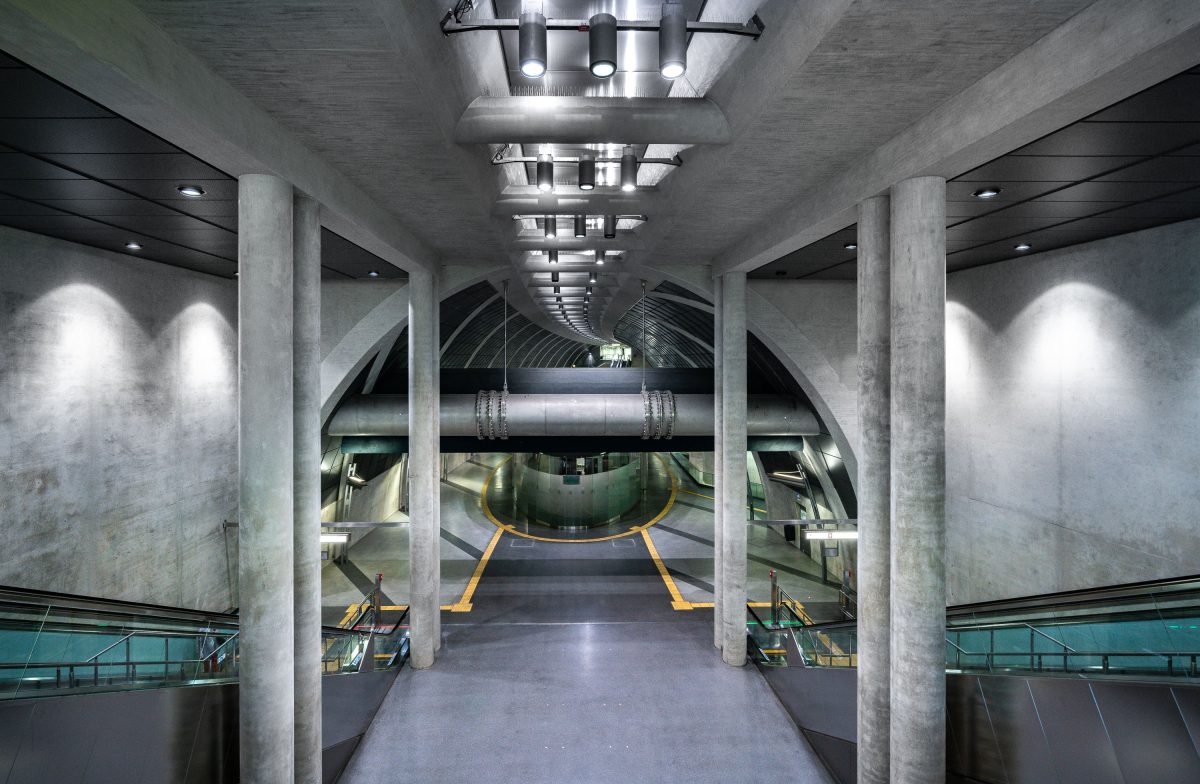
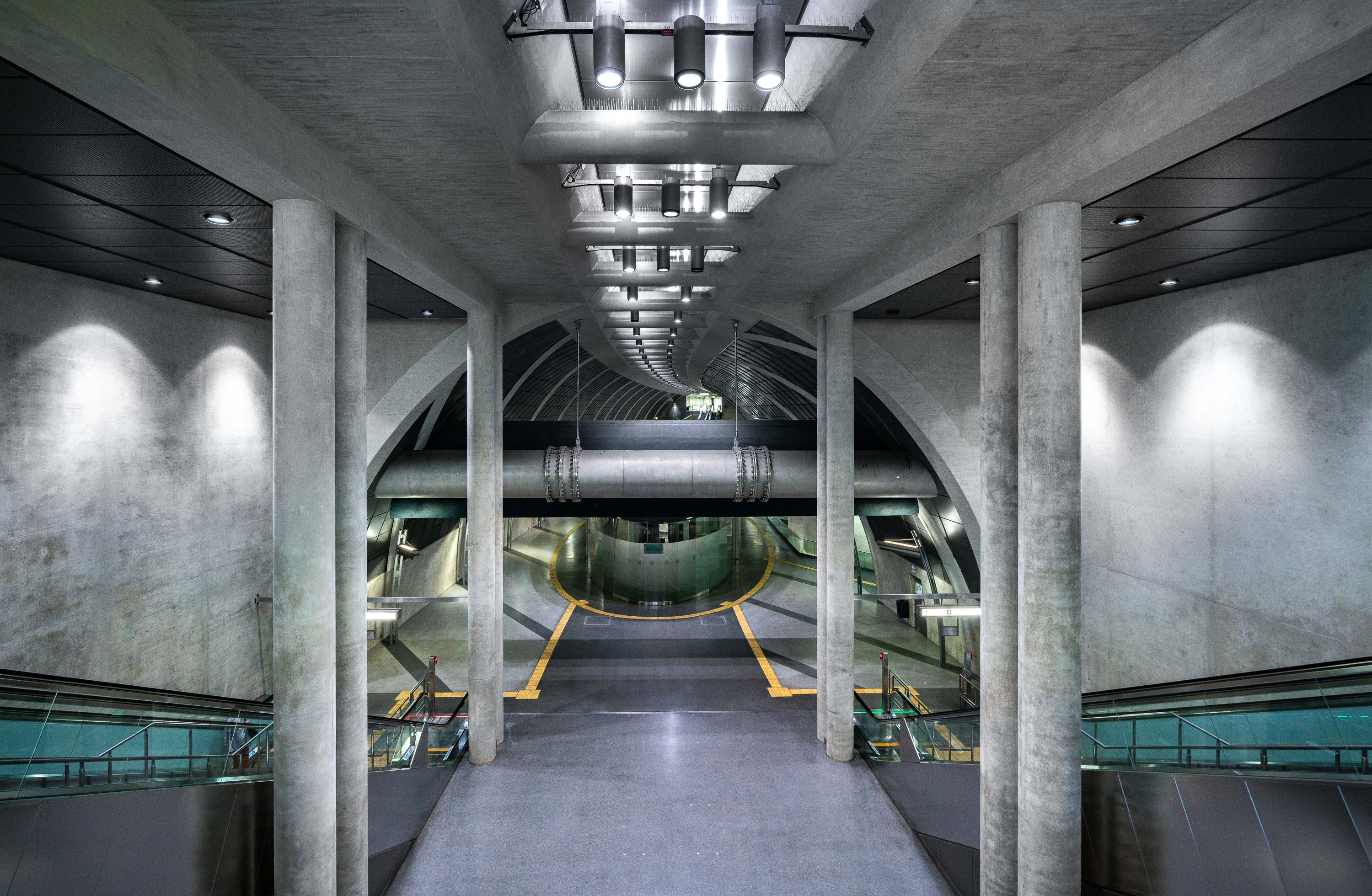
Heumarkt station platform with concrete columns, escalators, and yellow safety markings along the floor.
Heumarkt is an underground Stadtbahn station in Cologne, Germany, named for the adjacent market square in the old town. Its platforms and concourse are built in raw poured concrete, with wide arched vaults carrying the tunnels below.
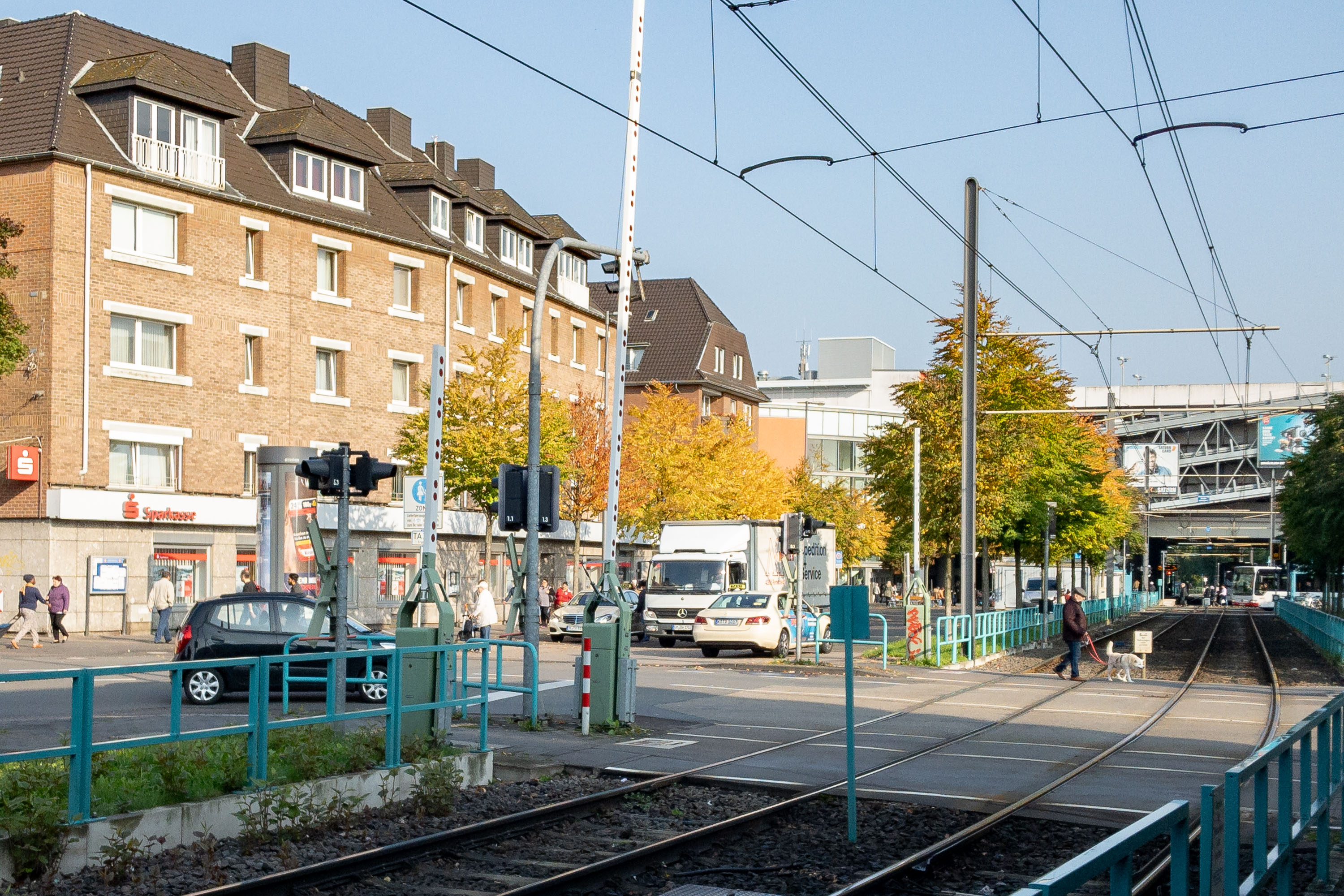
Porz Markt tram station in Cologne with tracks, overhead wires, and residential buildings in autumn.
Porz Markt is a stop on the Cologne Stadtbahn, serving Line 7 in the Porz district on the city's east side. Trees in autumn color stand along the tracks near the Sparkasse branch and nearby shops.
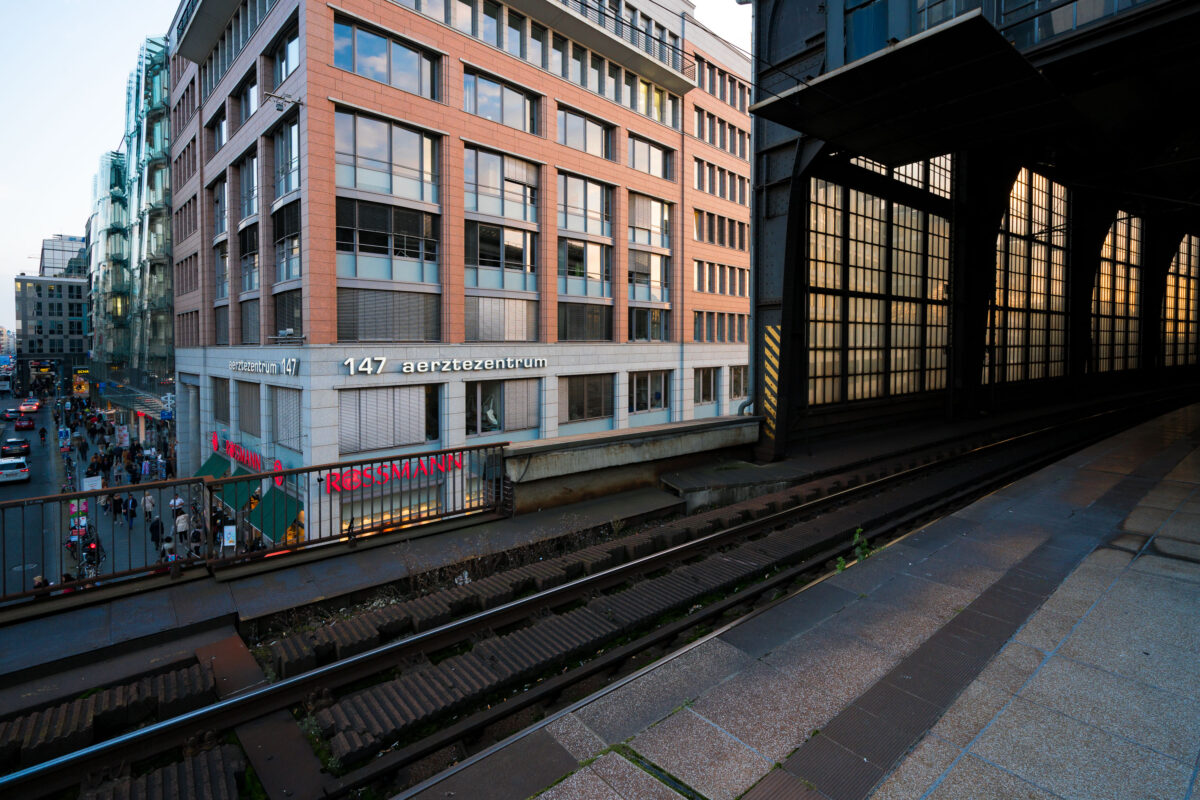
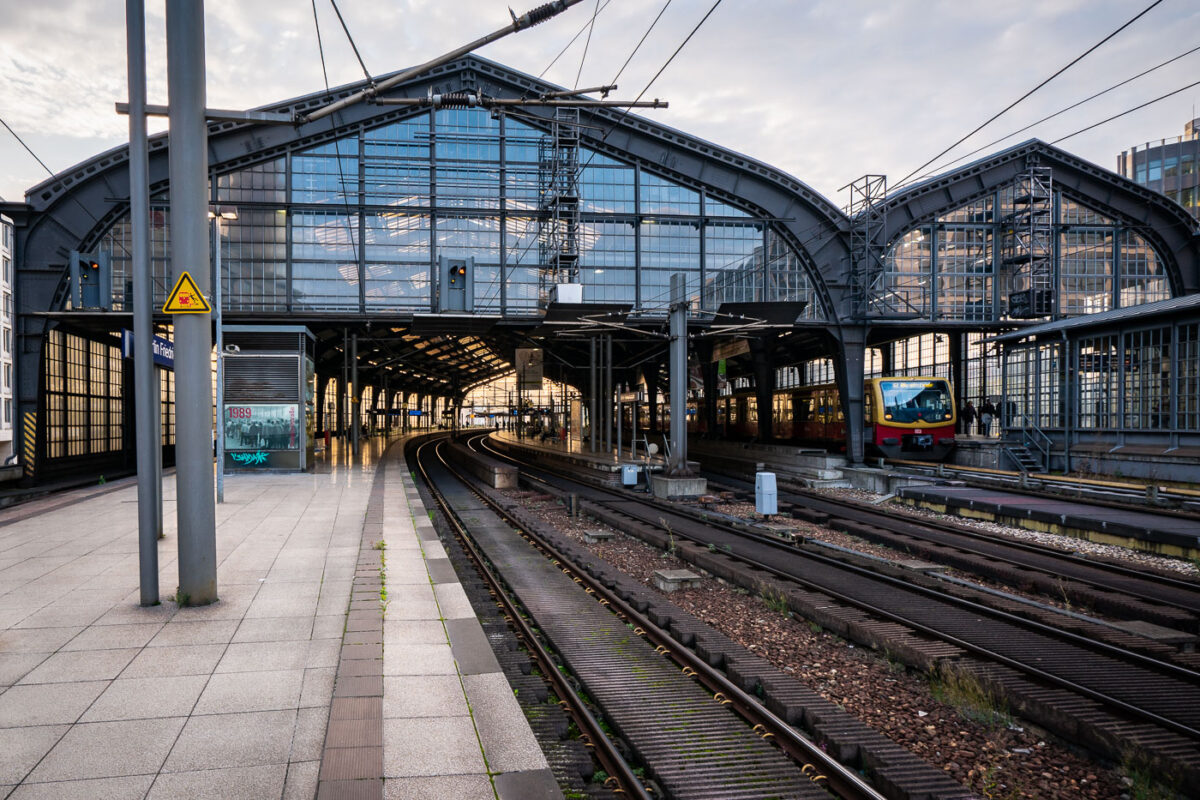
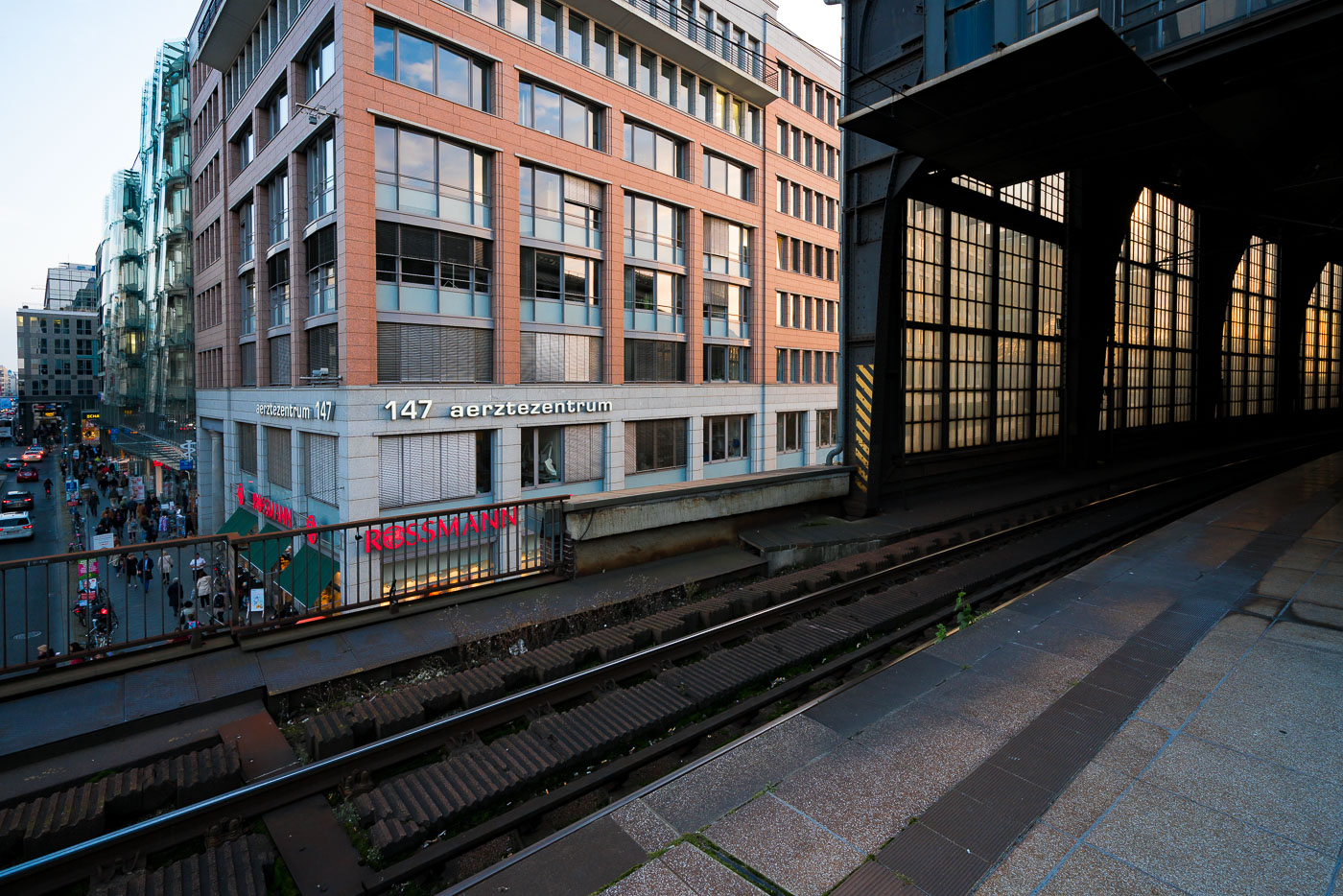
Elevated railway tracks at Berlin Friedrichstraße Station run beside the Aerztezentrum building and surrounding office architecture along Georgenstraße.
Berlin Friedrichstraße Station in Berlin has elevated tracks running beside Georgenstraße. The view looks past the station structure toward the Aerztezentrum at No. 147 and nearby office buildings along the street.
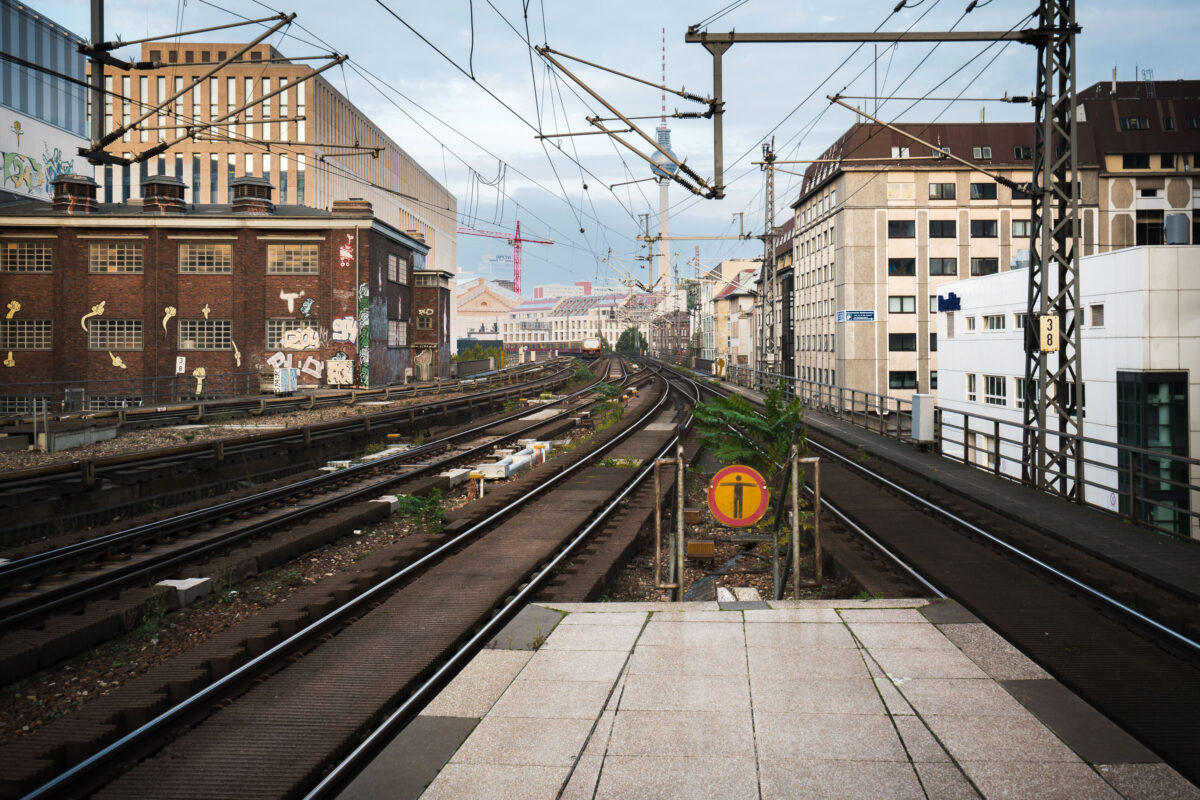
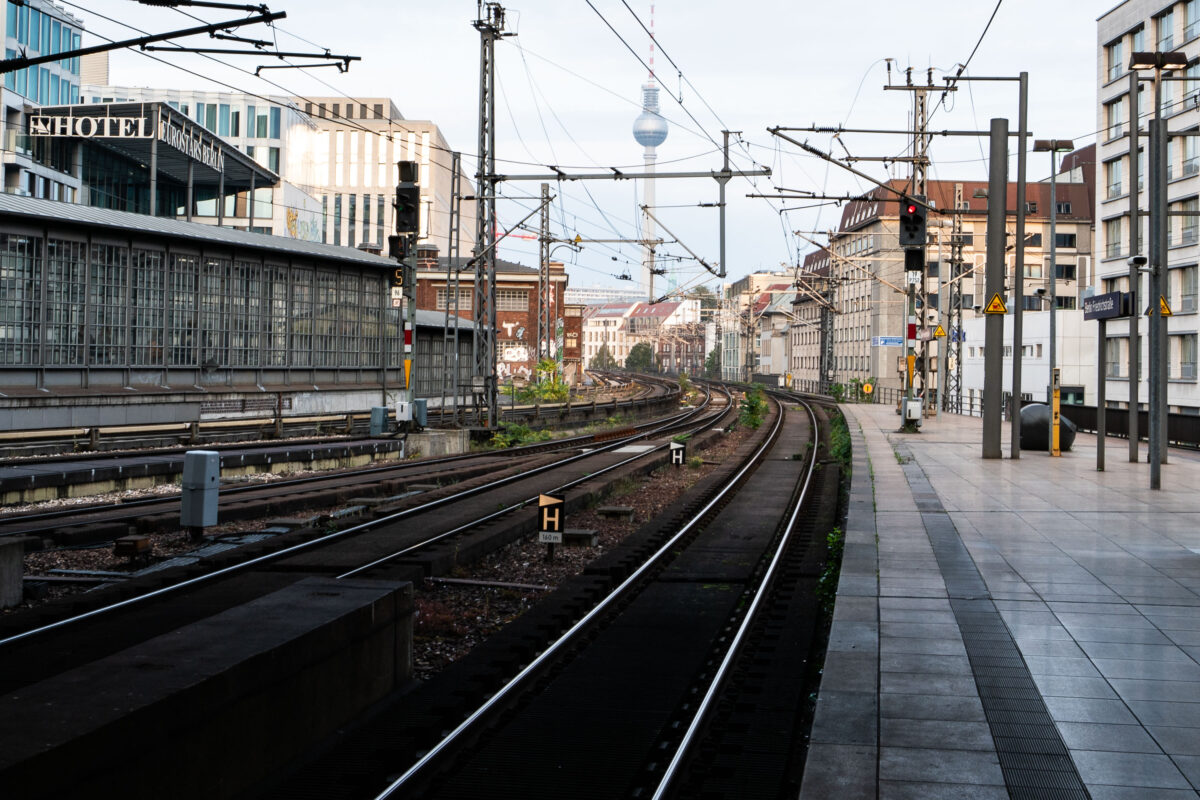
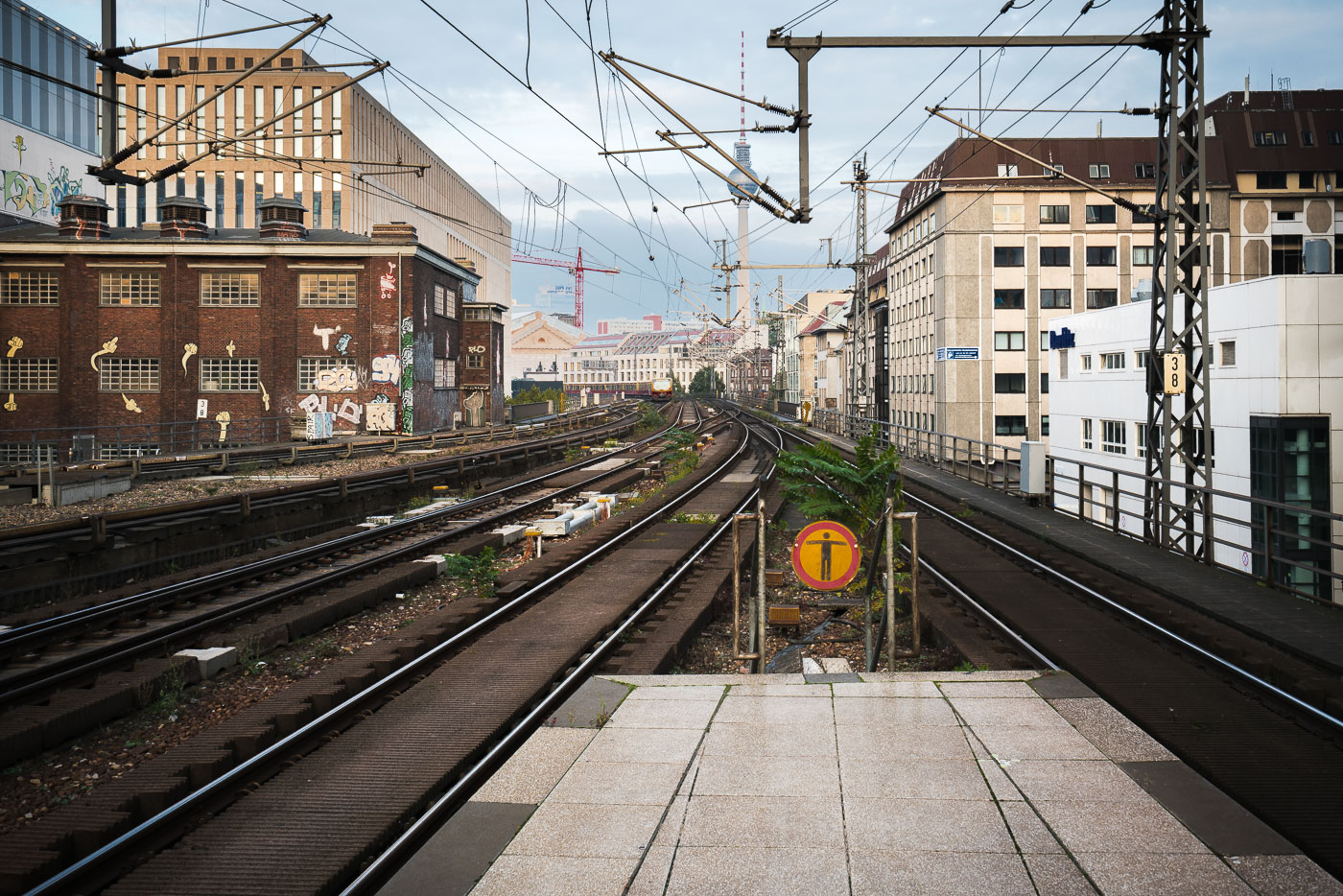
Elevated S-Bahn tracks at Berlin Friedrichstraße station extend eastward between brick and modern office buildings with the Fernsehturm visible in the distance.
Berlin Friedrichstraße station in Berlin looks east along the elevated S-Bahn tracks. The Fernsehturm rises in the distance beyond the rail corridor, which runs through a dense mix of office and older industrial buildings.
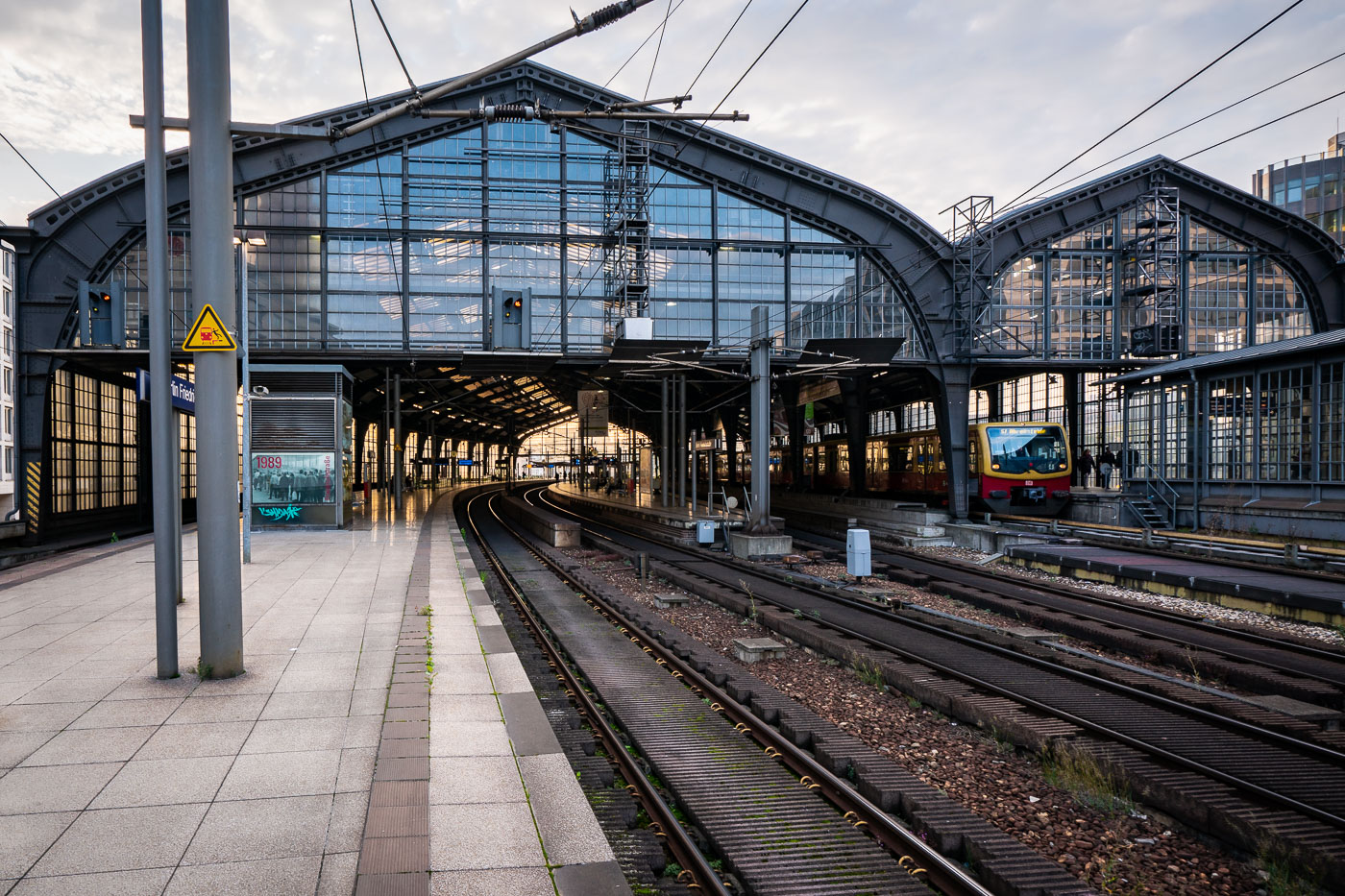
Elevated S-Bahn platforms at Berlin Friedrichstraße Station sit beneath a steel-and-glass canopy with multiple railway tracks visible below.
Berlin Friedrichstraße Station in Berlin, Germany, has elevated S-Bahn platforms under a large steel-and-glass canopy. The station opened in 1882 and serves as a major interchange for S-Bahn, regional, and long-distance rail services.
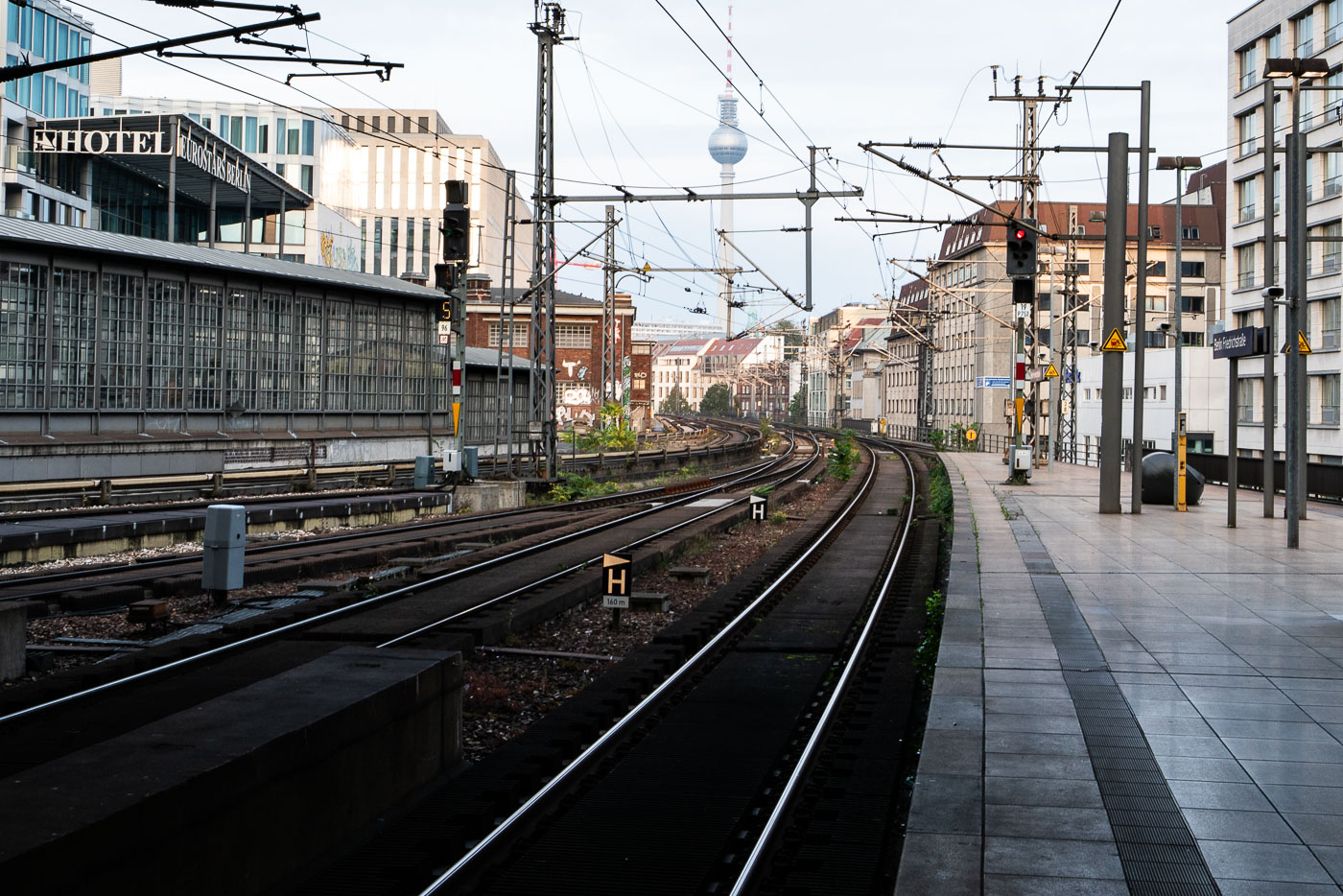
Berlin Friedrichstraße Station platform with curved S-Bahn and regional rail tracks, Fernsehturm visible in the distance, and surrounding urban architecture.
Berlin Friedrichstraße Station in Berlin shows S-Bahn and regional rail tracks curving eastward past the platforms. The Fernsehturm rises in the distance above the station approach, and the Eurostars Berlin hotel stands beside the tracks.
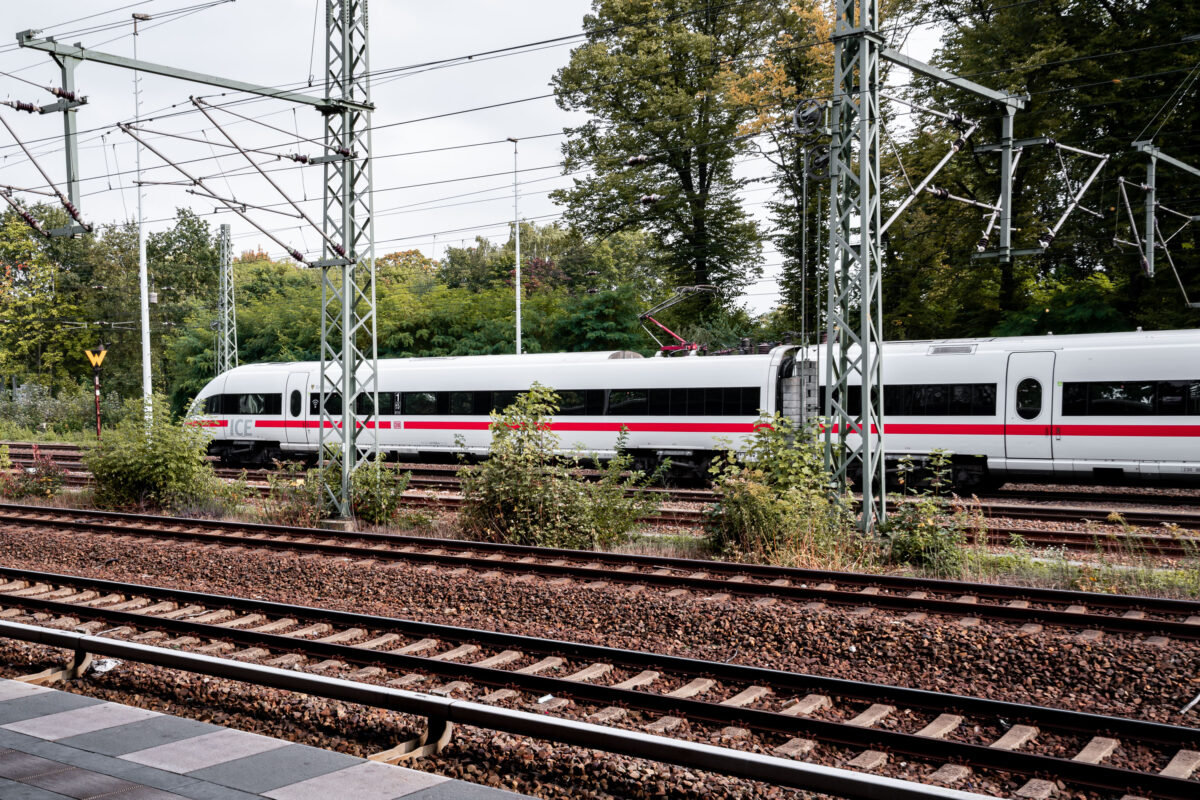
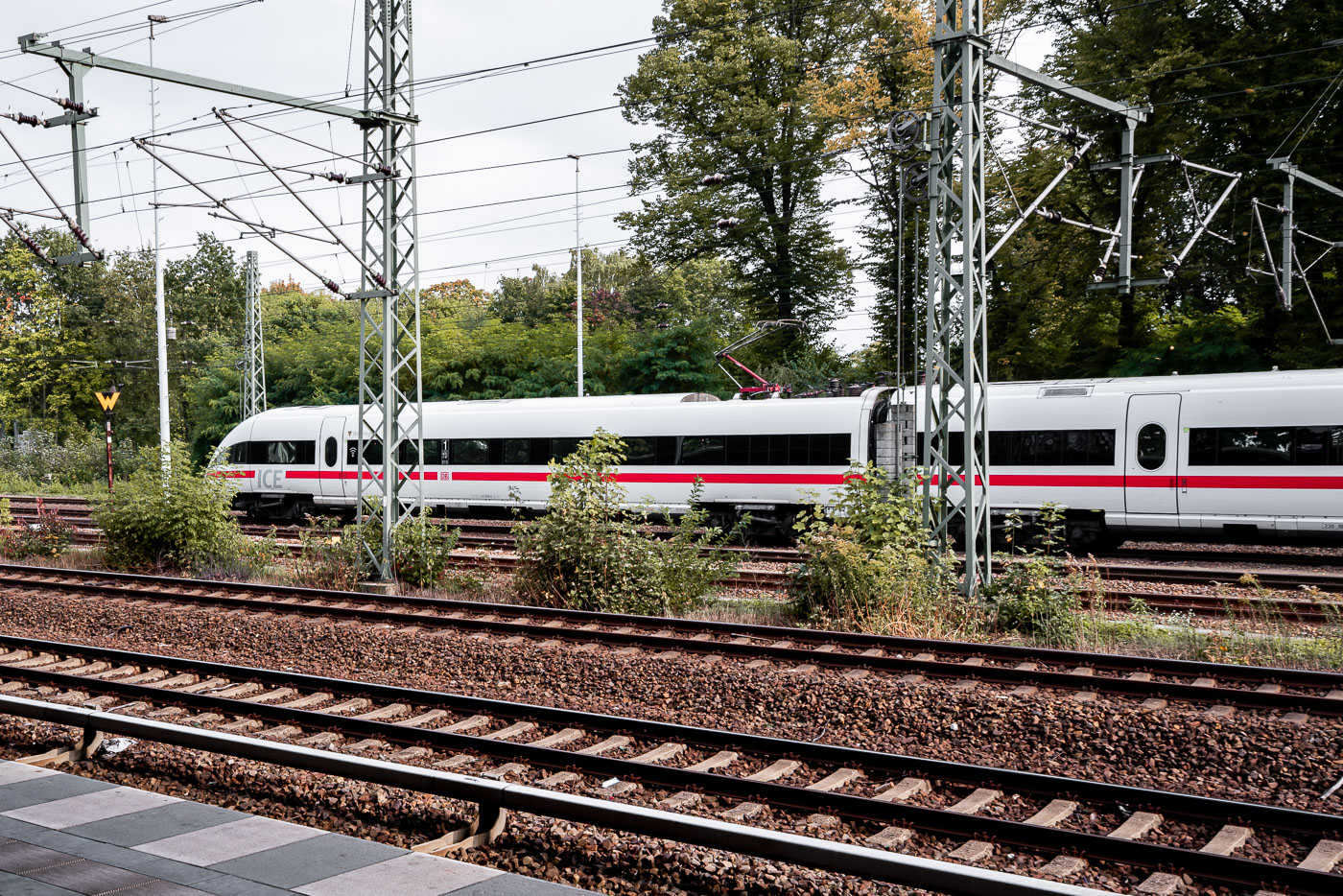
Deutsche Bahn ICE 3 high-speed train passes beneath overhead catenary lines on an electrified Berlin rail line.
A Deutsche Bahn ICE 3 train runs past electrified tracks in Berlin. The high-speed train is shown under the overhead catenary system used on Germany’s mainline rail network.
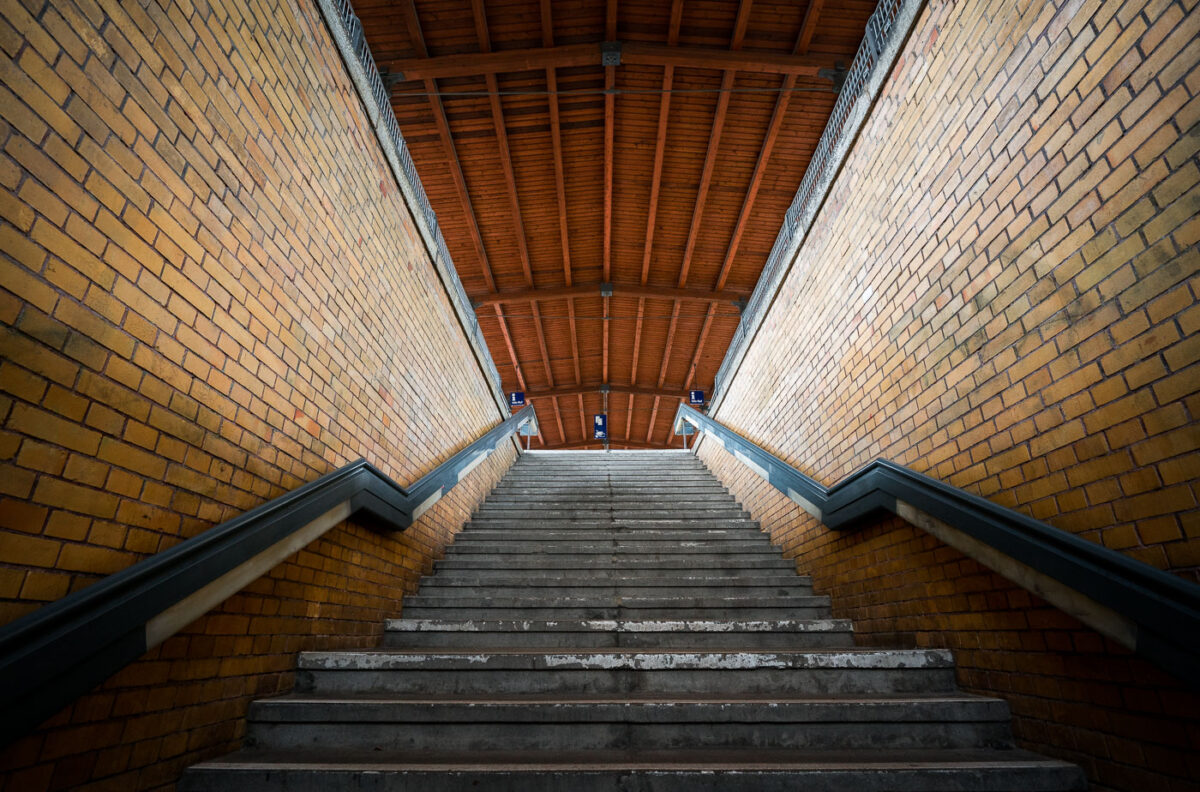
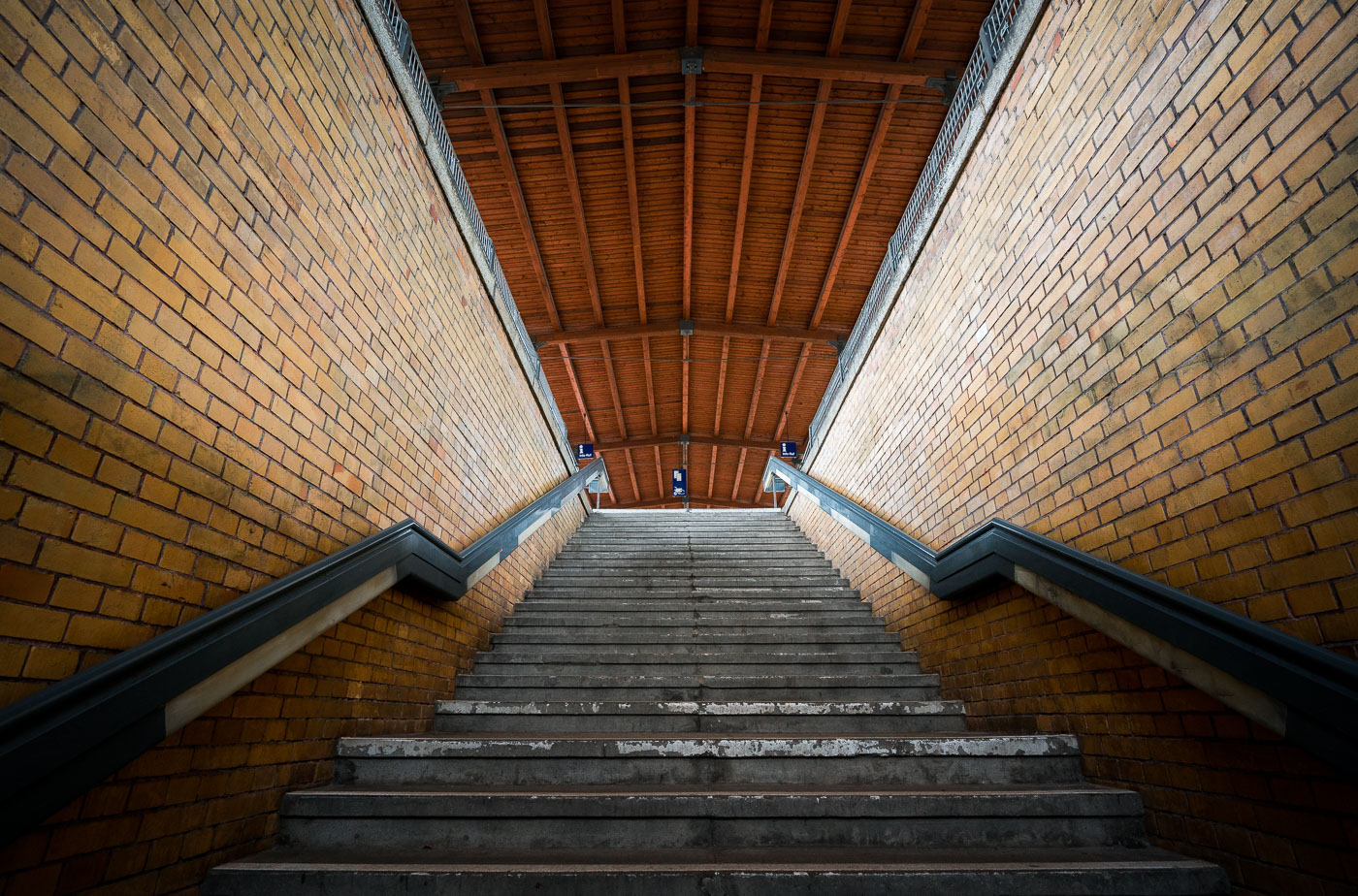
Symmetrical brick stairwell with timber ceiling and metal handrails ascending through a Berlin train station underpass.
A stairway inside a Berlin train station rises between yellow brick walls beneath a timber roof structure. Metal handrails flank the steps, and small platform signs hang near the top of the stairwell.
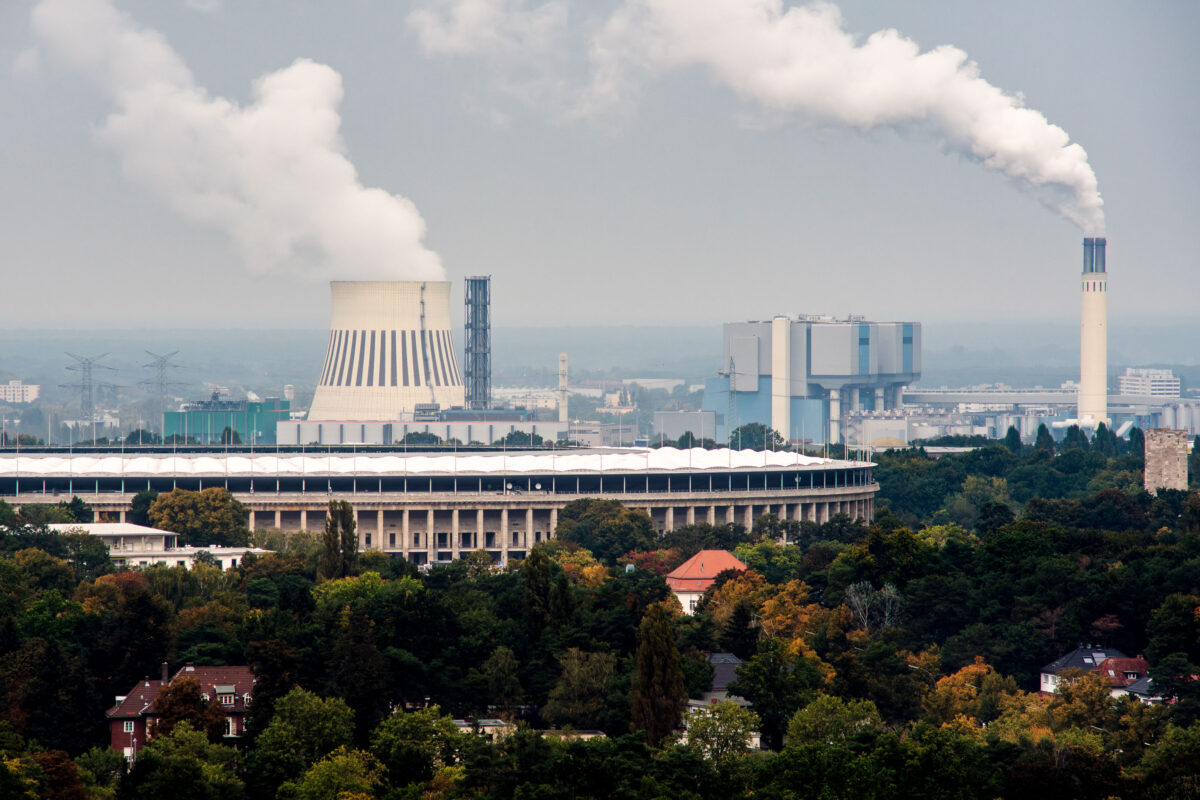
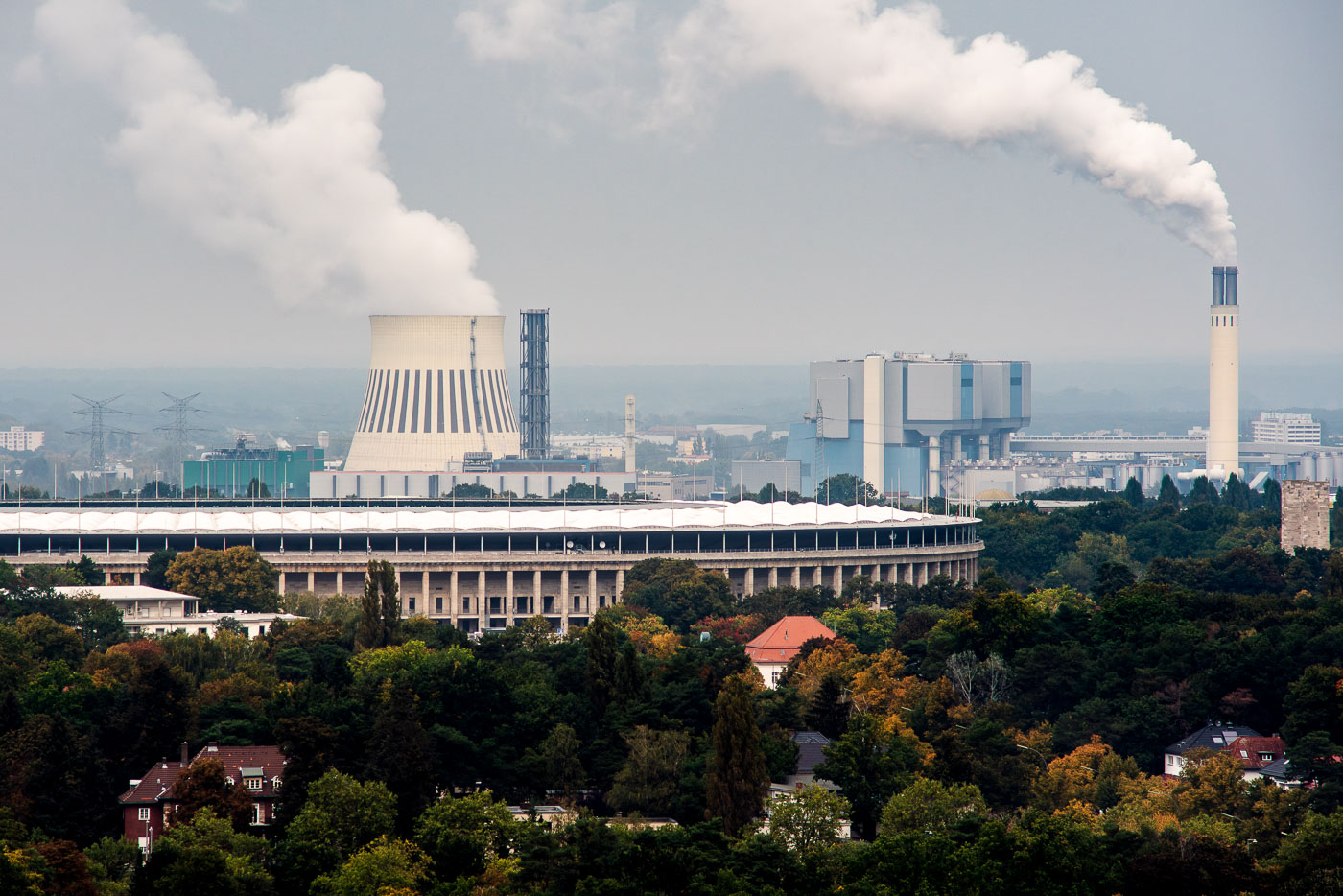
Olympiastadion and Reuter power plant complex in Berlin's Westend district, with the 1936 Olympic stadium and industrial facilities visible.
The Olympiastadion was built for the 1936 Summer Olympics and designed by architect Werner March, replacing an earlier stadium on the same grounds. A 2004 renovation gave the structure a translucent roof and reduced capacity to roughly 74,000 seats; it now serves as the home ground of Hertha BSC and hosts the annual DFB-Pokal final. Behind it, the Reuter West plant generates combined heat and power for western Berlin, operated by Vattenfall on a site in Siemensstadt first developed with the original Kraftwerk Reuter in 1931. Reuter West itself was built in stages between 1987 and 1990 to supply district heating alongside electricity, a dual role reflected in the plant's cooling tower and chimney stack.
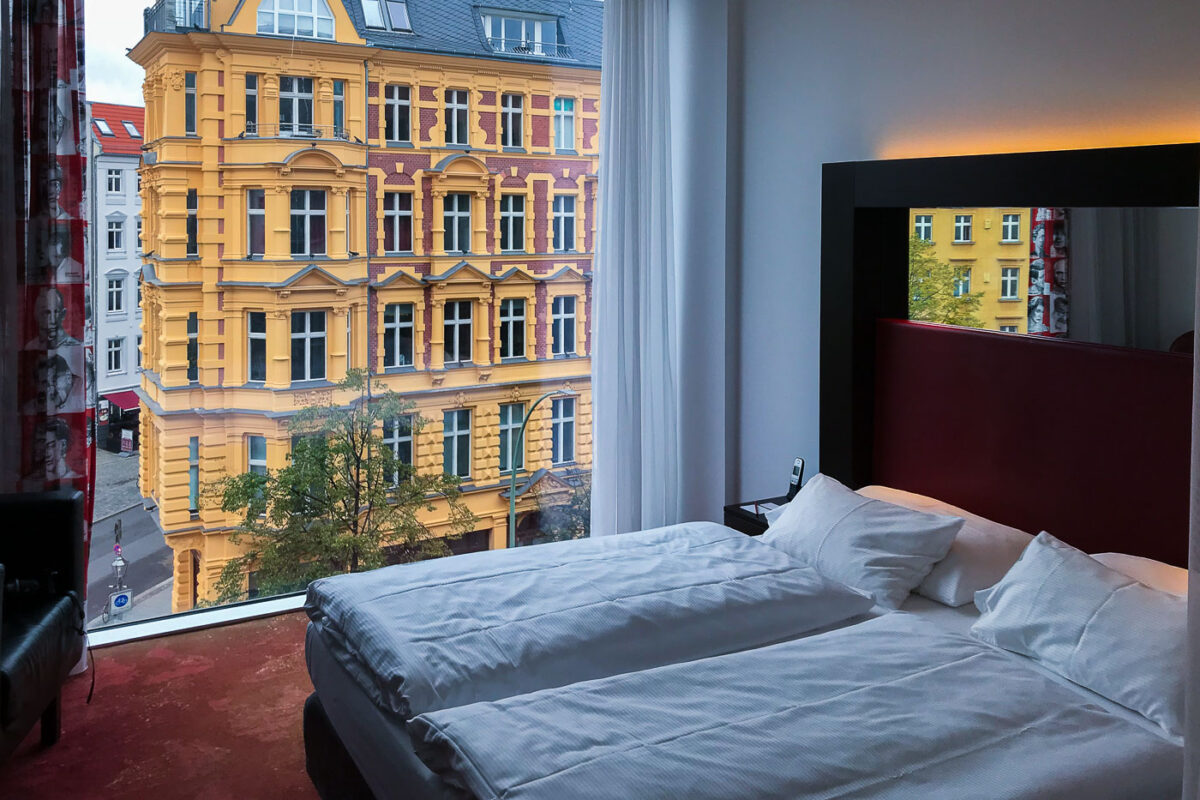
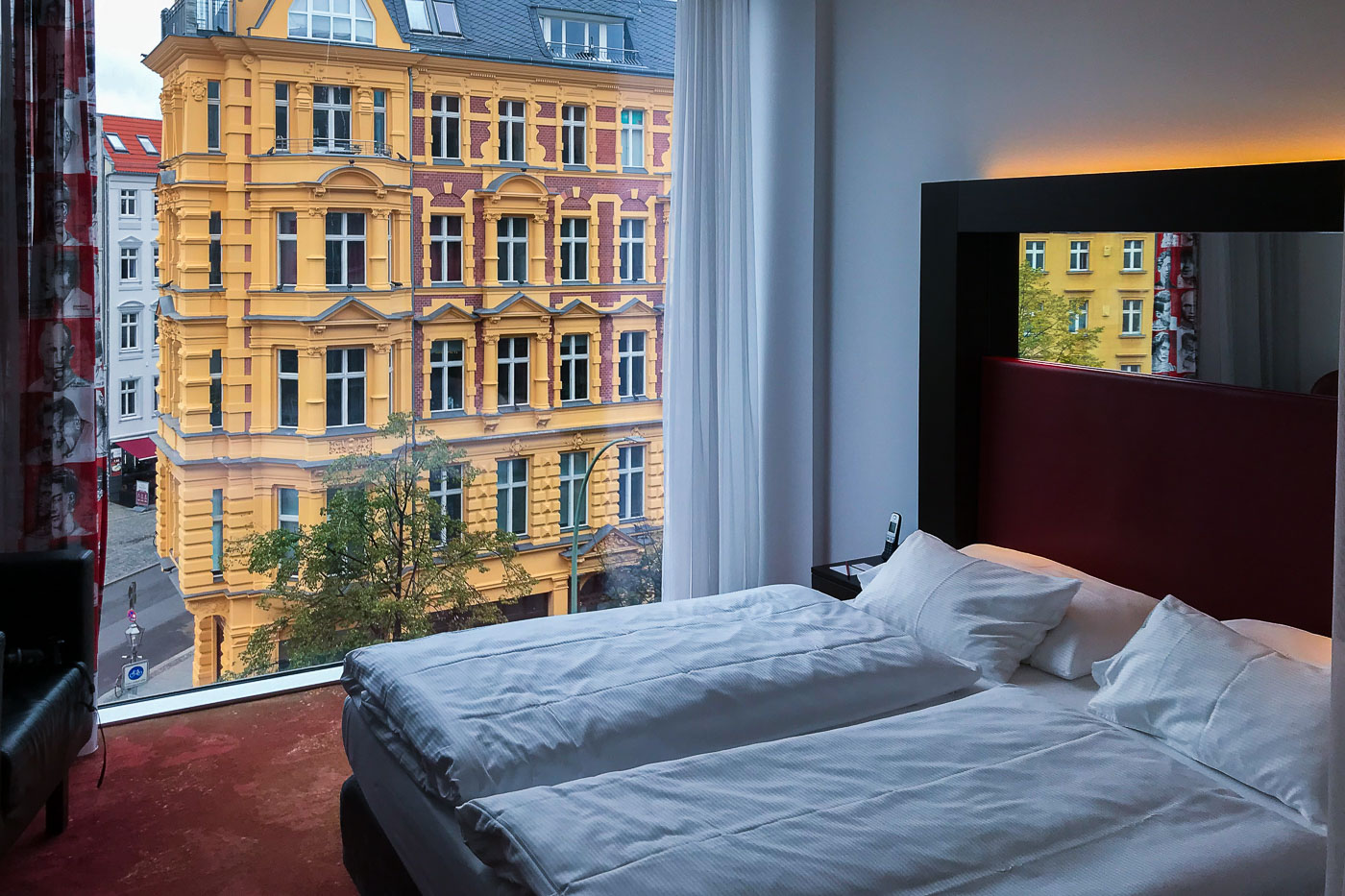
Hotel room bed with view of a yellow Gründerzeit building across the street in Berlin Mitte.
Gründerzeit buildings like this one take their name from Germany's "founders' era," the rapid industrial and urban expansion that followed unification in 1871. Berlin saw entire districts built in this style through the 1880s and 1890s, with stucco facades, bay windows, and brick detailing marking apartment blocks for the city's growing middle class. Many of these buildings in Mitte survived Allied bombing in World War II only to fall into disrepair under East German administration, when maintenance budgets for private housing stock were scarce. Since reunification in 1990, large-scale restoration projects have returned facades across Mitte to something close to their original color schemes and ornamentation, a process that has made the neighborhood one of the most sought-after residential areas in the city.
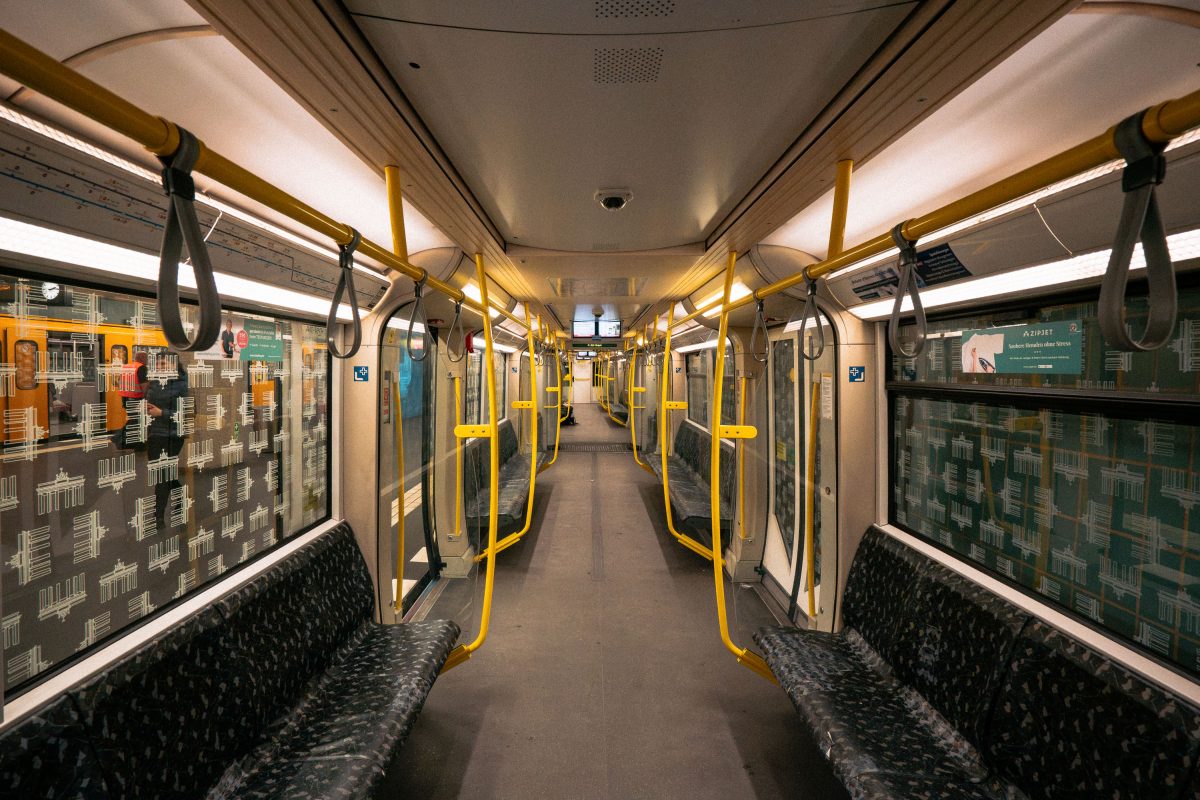
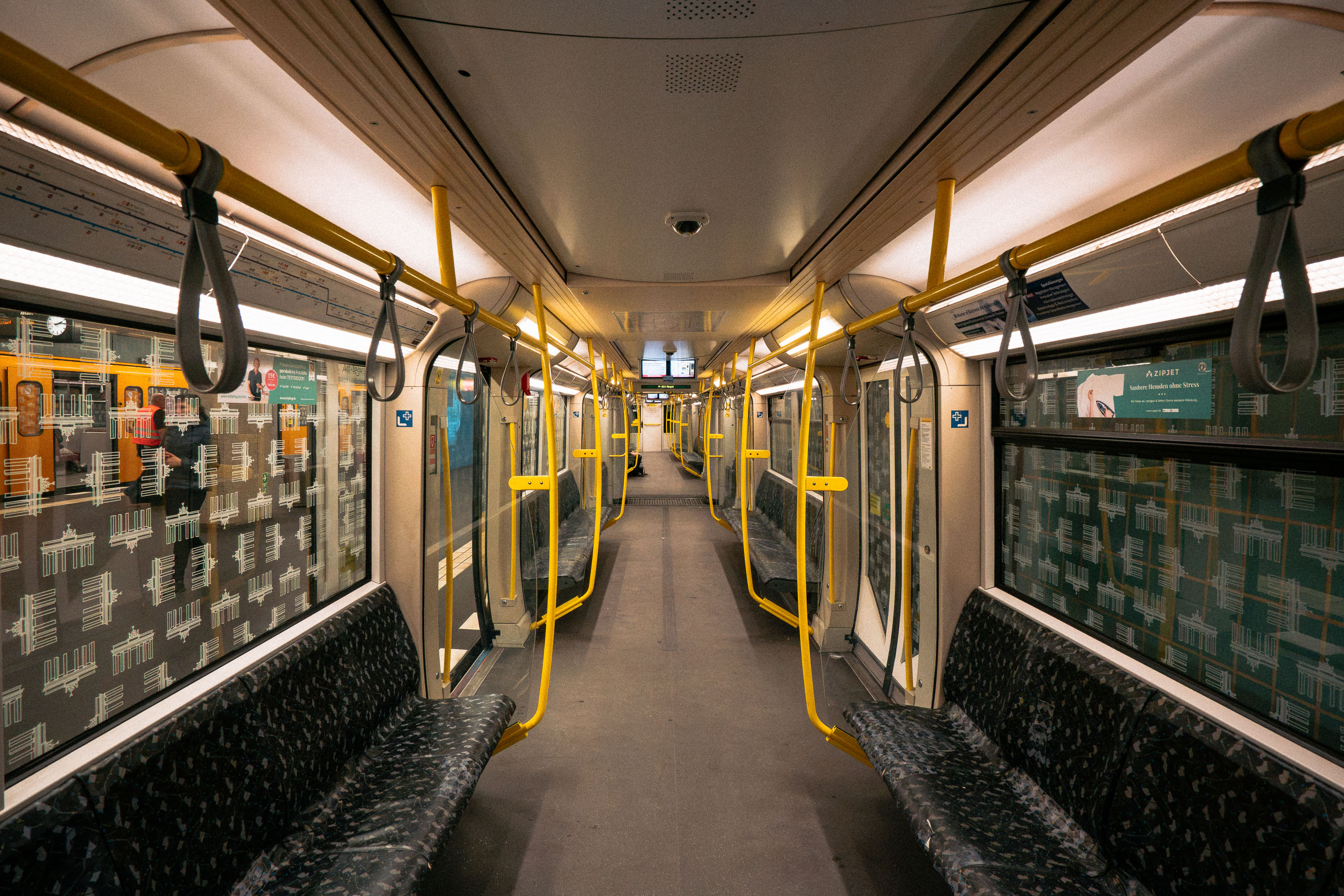
Interior of a public transit train car with yellow handrails and black seats lining both sides.
The Berlin U-Bahn is the city's rapid transit system, first opened in 1902 and now covering ten lines across more than one hundred fifty stations. Its cars carry the system's signature yellow handrails and poles, a color scheme tied to the BVG, the public operator that has run Berlin's transit network since 1929.
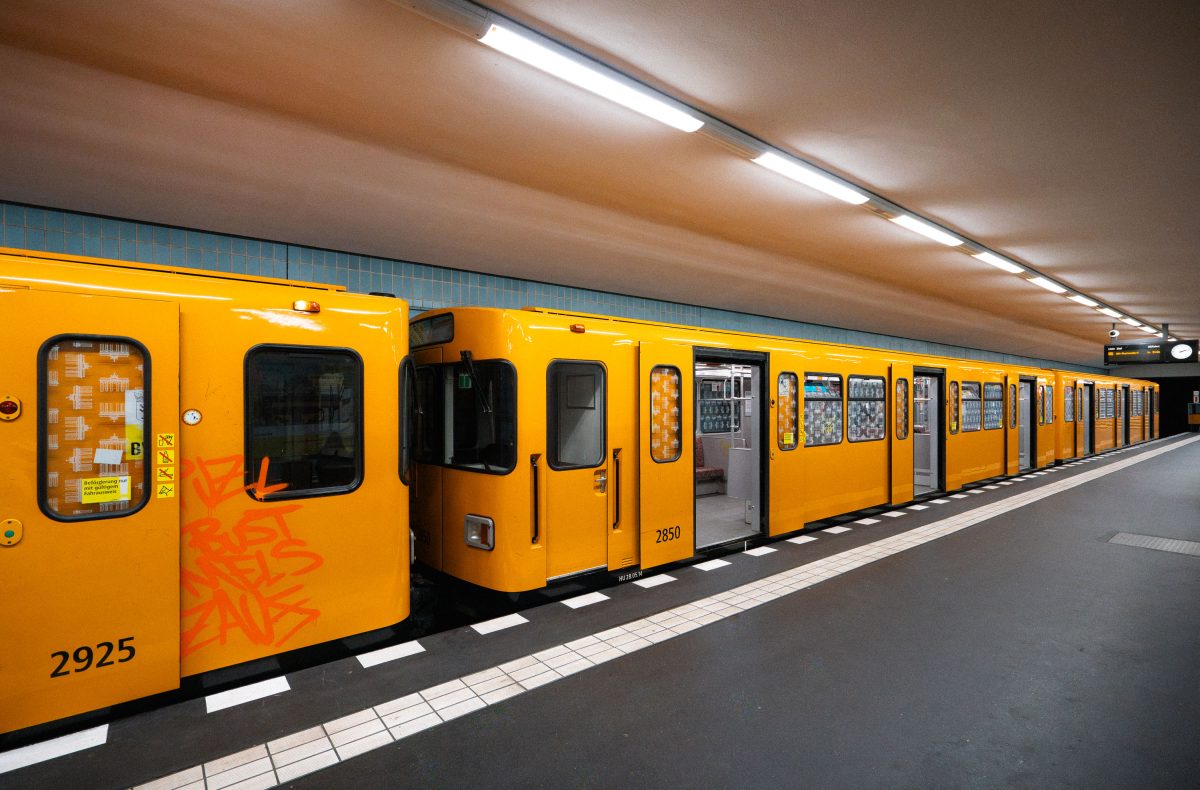
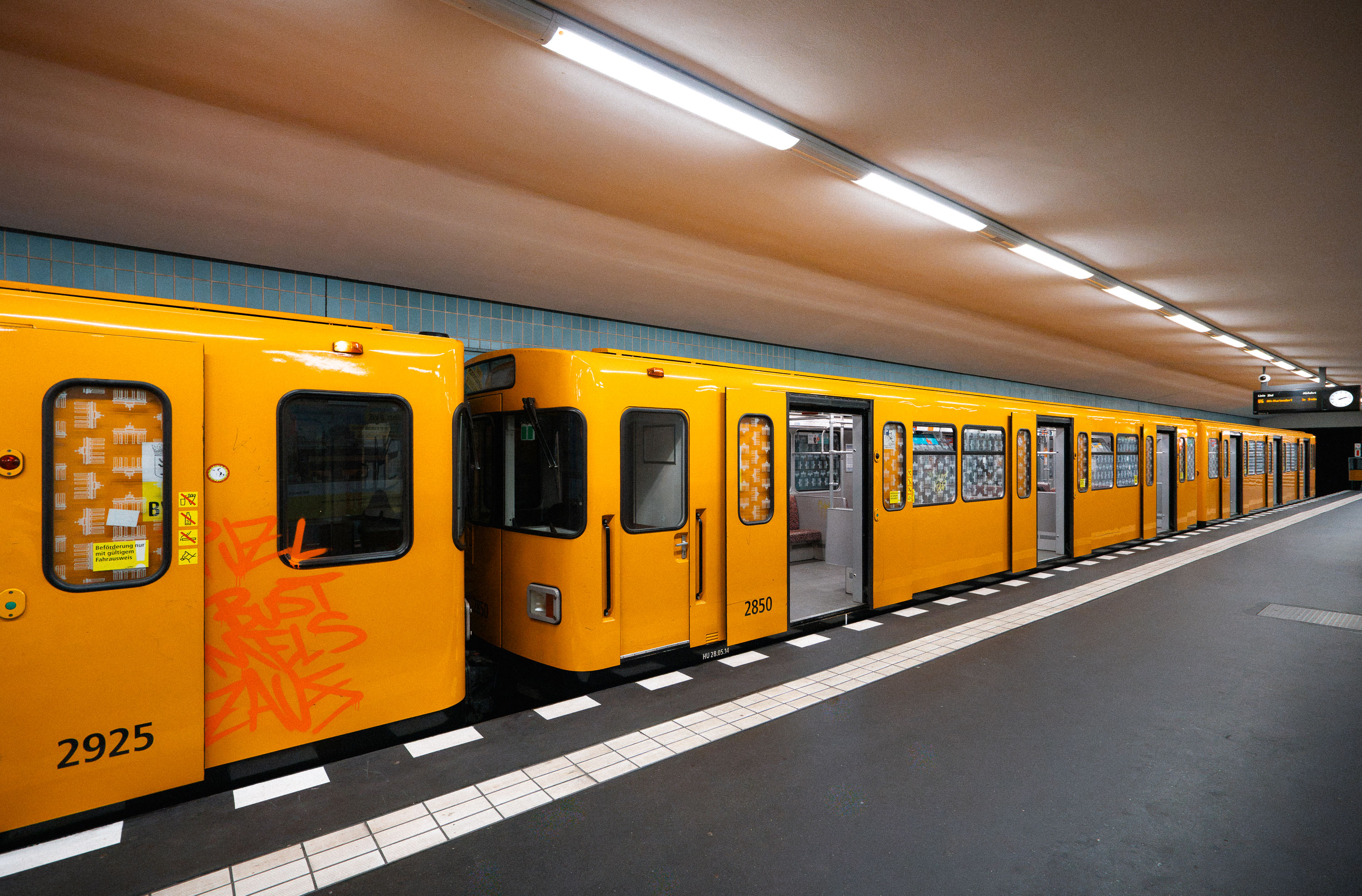
A yellow subway train stopped at an underground station platform with fluorescent ceiling lights.
Alt-Tegel is a station on Berlin's U6 line, serving as its northern terminus in the Tegel district. The station opened in 1958, and its platform sits below a long, vaulted ceiling.
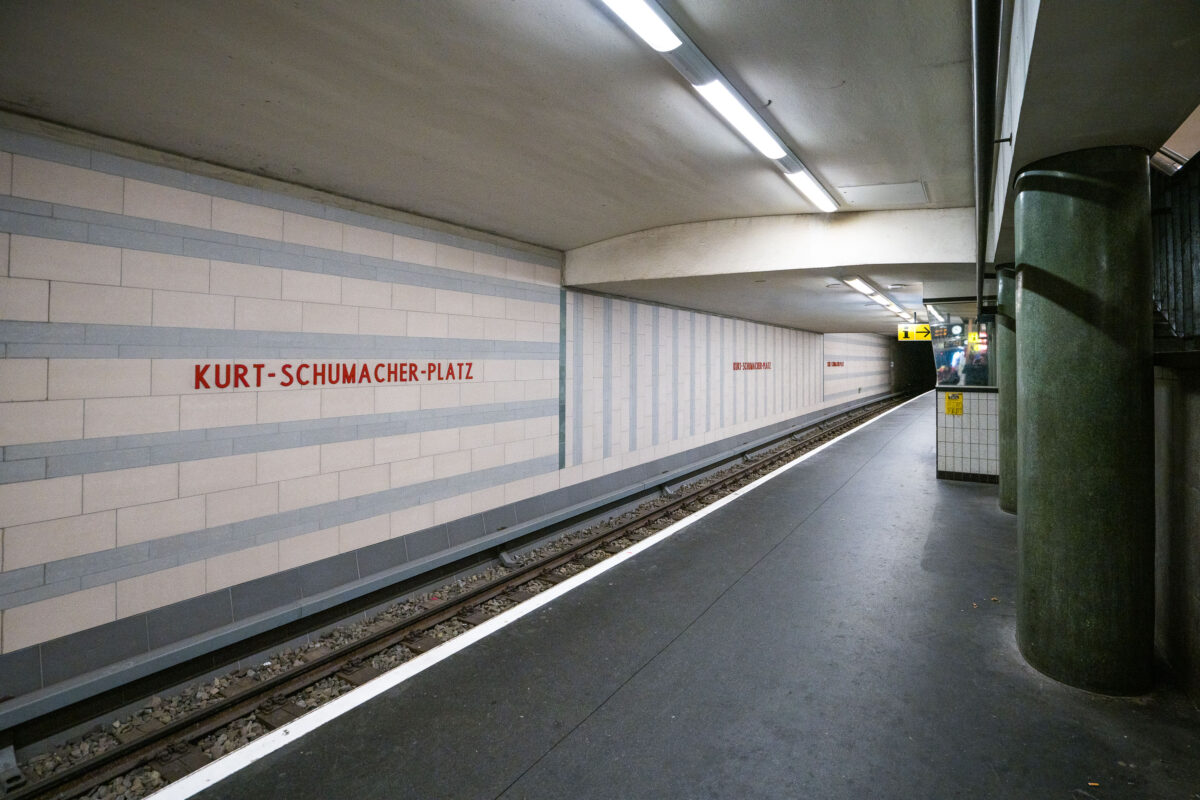
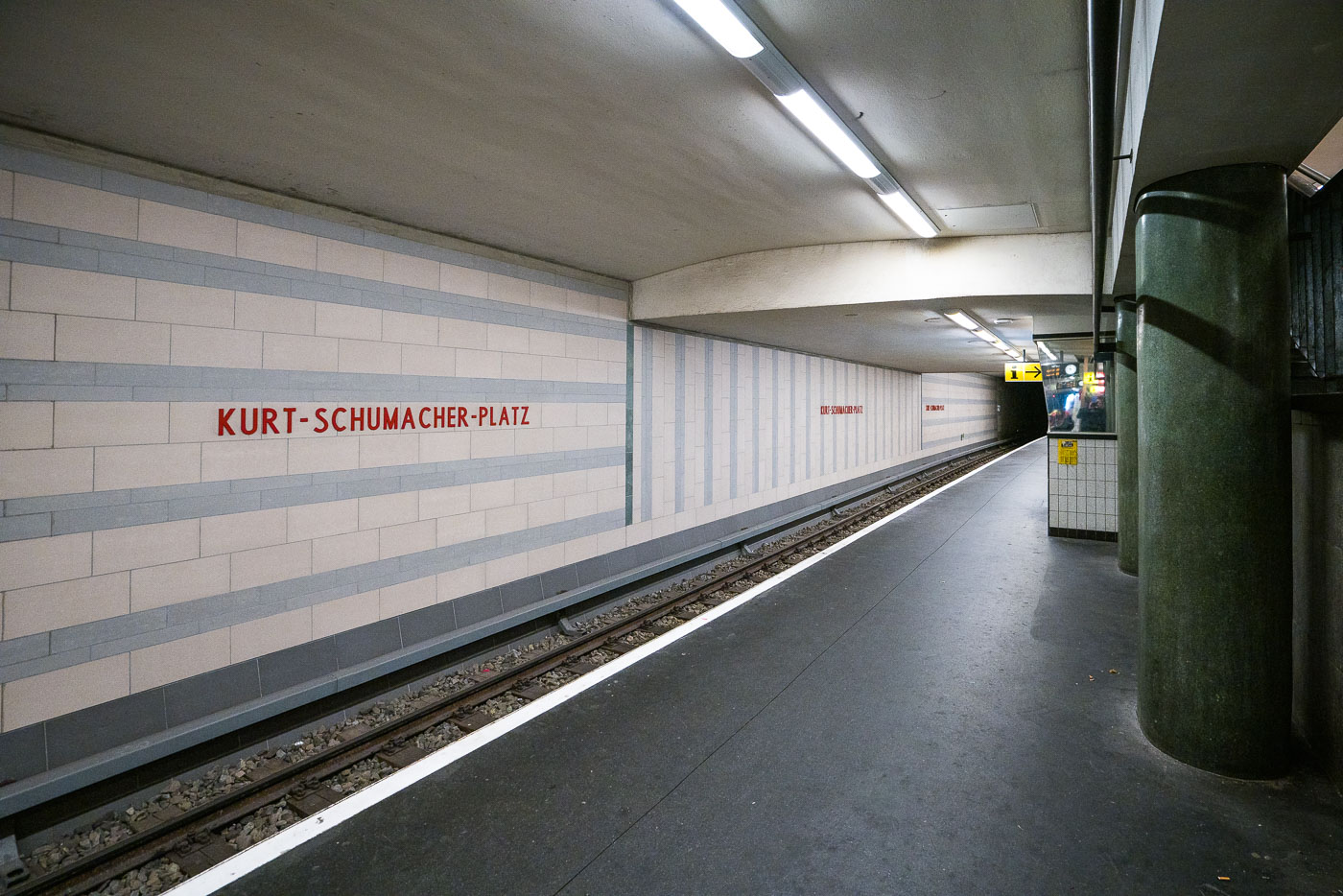
Kurt-Schumacher-Platz U-Bahn platform in Berlin displays light tile walls with gray bands and red station lettering typical of 1950s West Berlin transit design.
Kurt-Schumacher-Platz station in Berlin’s Reinickendorf district is a U6 U-Bahn stop. The platform has light tile walls with gray bands and red station lettering, a design typical of mid-1950s West Berlin transit architecture.
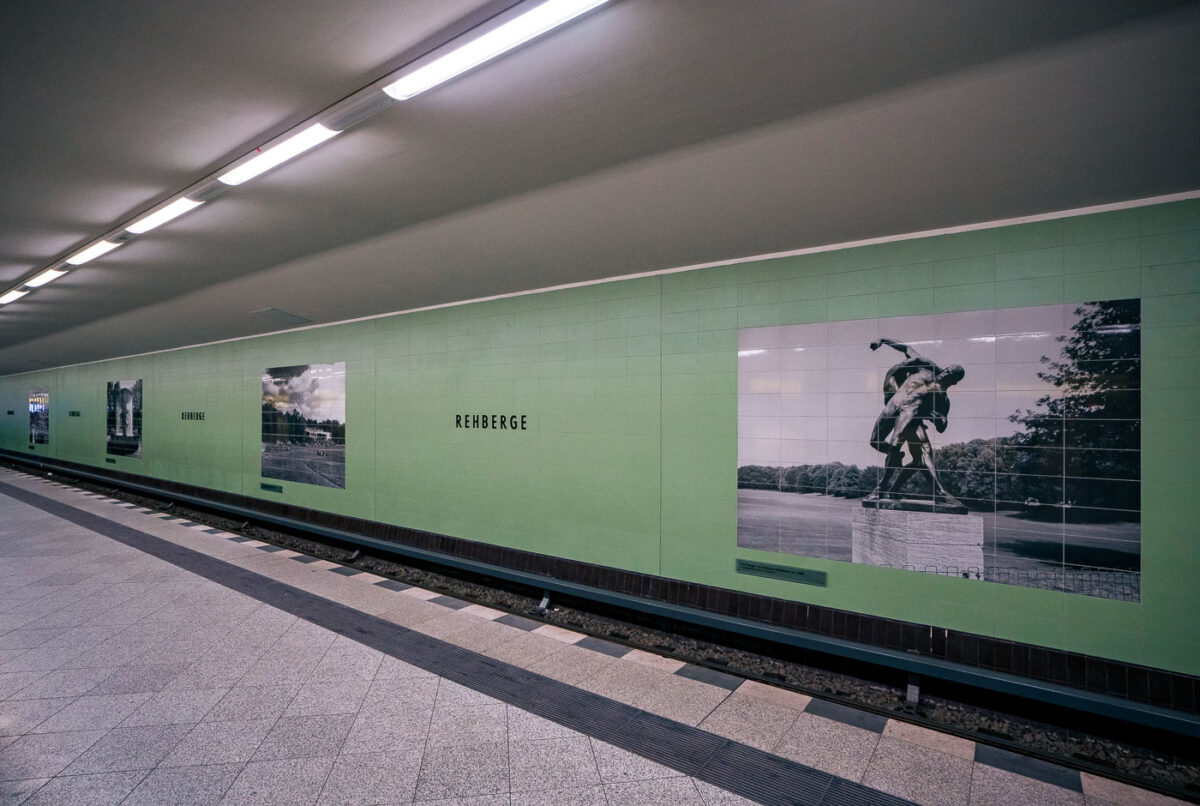
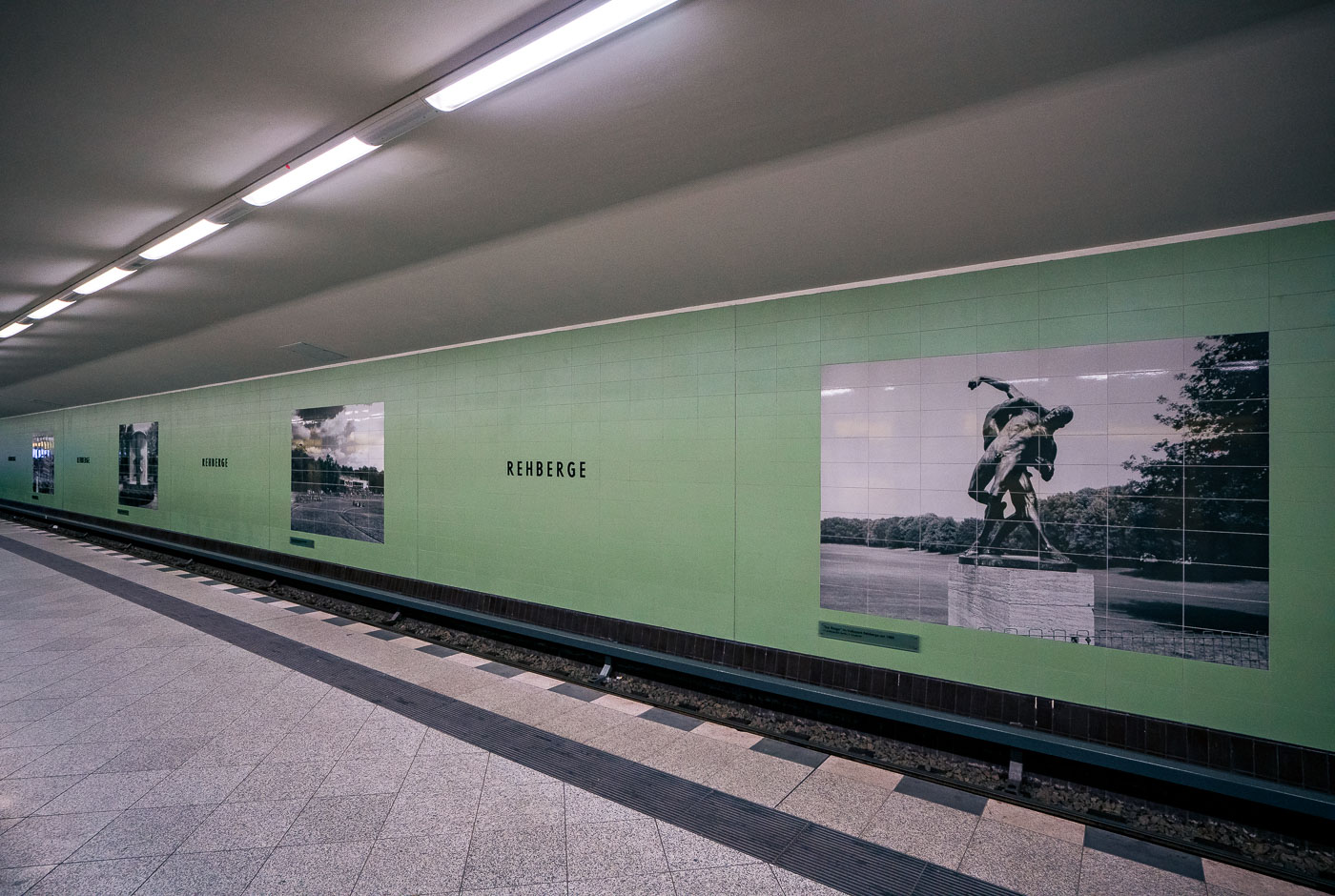
Rehberge U-Bahn station platform in Berlin's Wedding district displays mint-green tiled walls with photographic murals of park landscapes and sculptures.
Rehberge U-Bahn Station, located in Berlin's Wedding district, opened in 1956 as part of the postwar expansion of the U6 line. The station's platform features mint-green tiled walls adorned with large photographic murals depicting local park landscapes and public sculptures, including a piece titled "Der Ringer" in Volkspark Rehberge. These visual elements connect the transit space to its surrounding urban environment and history. Serving as a vital link for commuters, the station continues to function as a key component of Berlin's public transportation network operated by BVG.
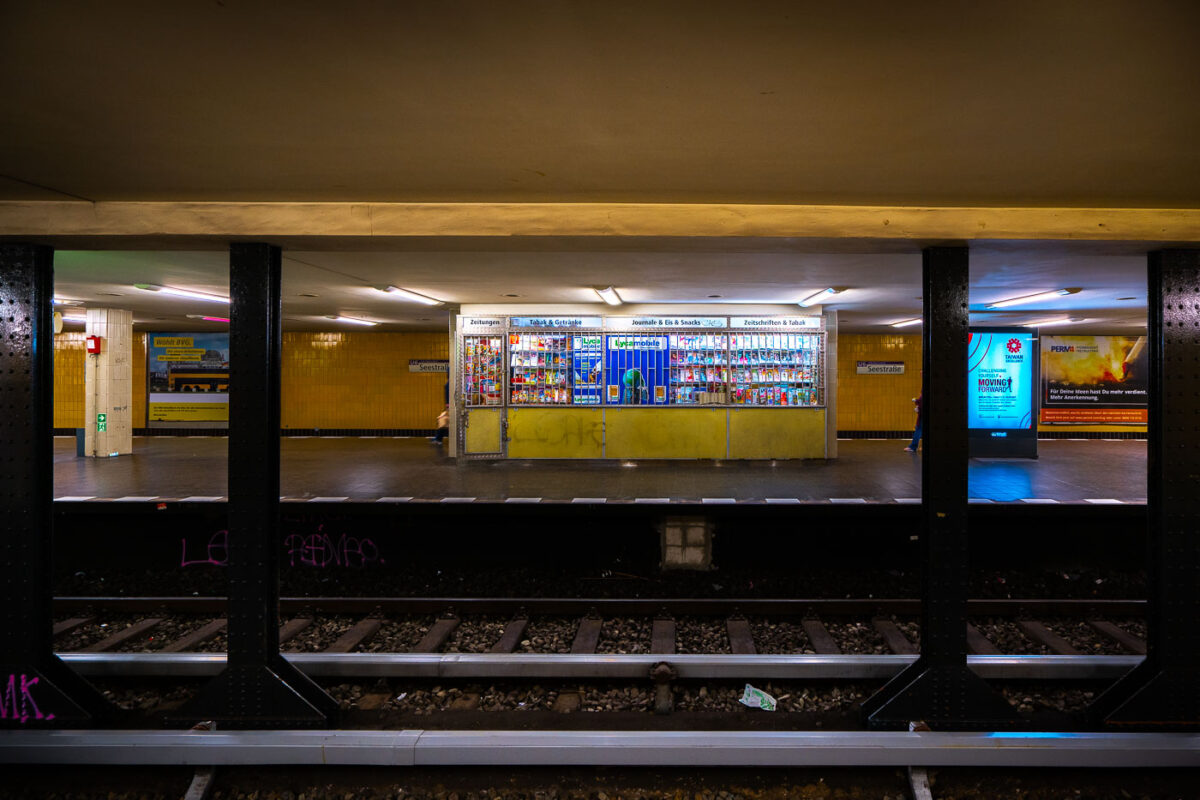
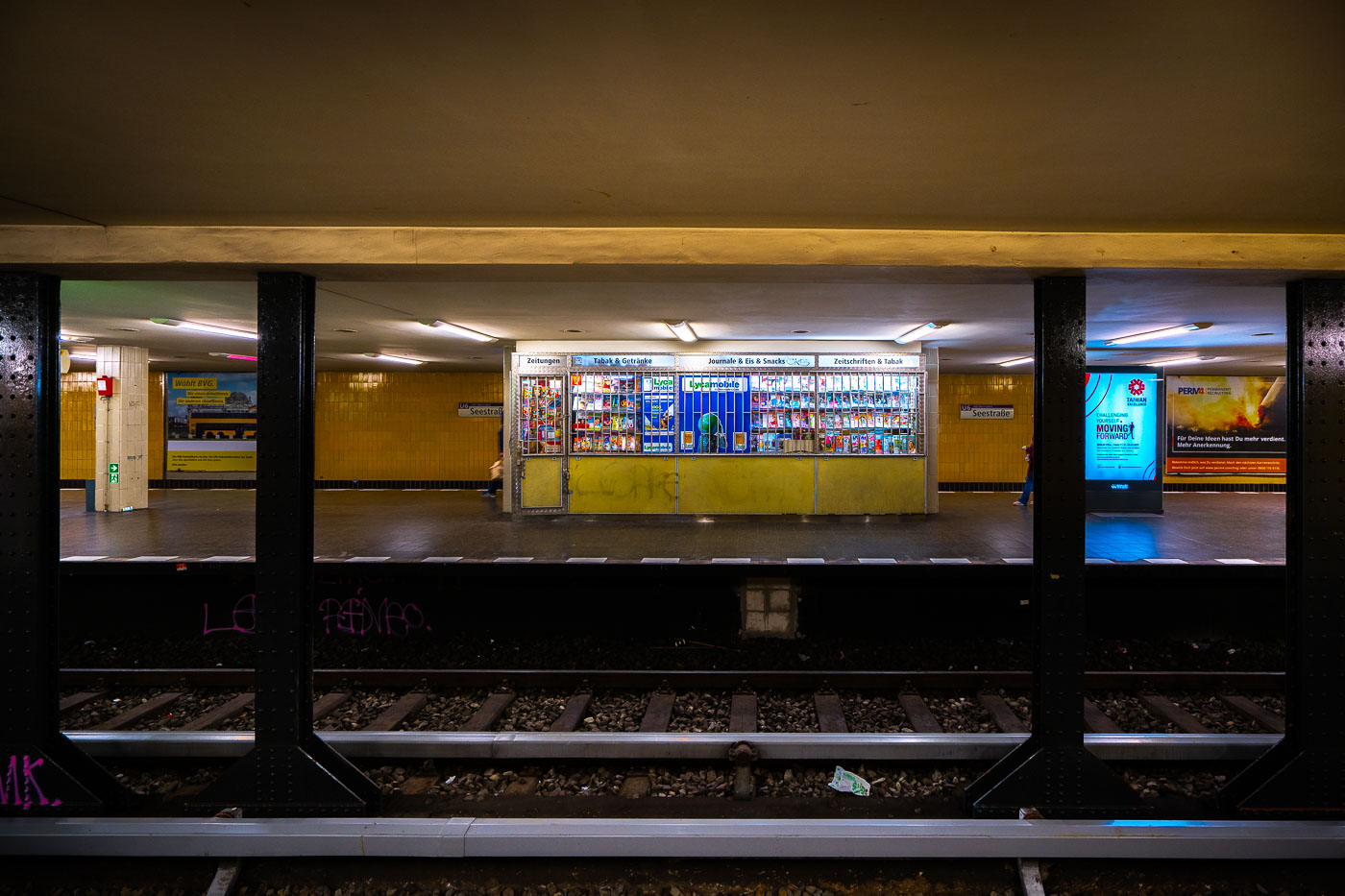
Seestraße U-Bahn station platform in Berlin features a central kiosk with yellow storefront beneath fluorescent lighting.
Seestraße U-Bahn station in Berlin’s Wedding district, with a central kiosk on the platform. The station opened in 1923 and served as the northern terminus of the U6 line until the late 1950s.
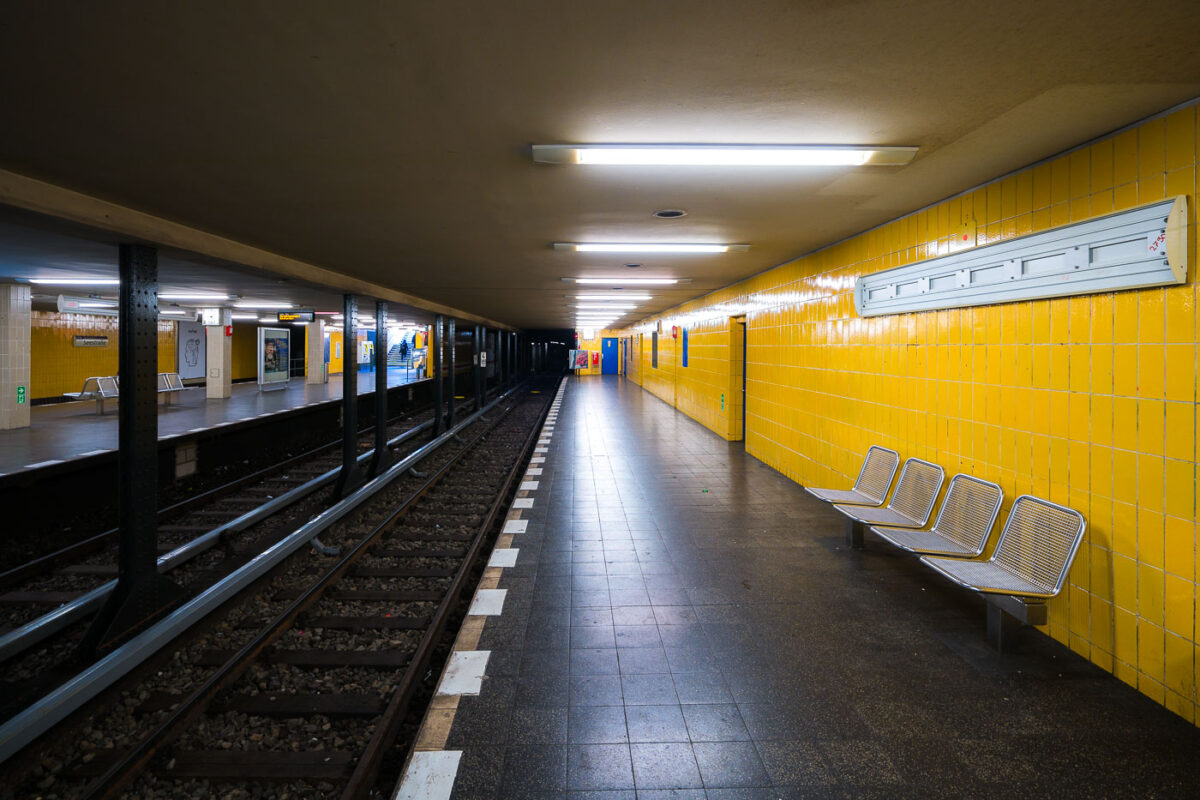
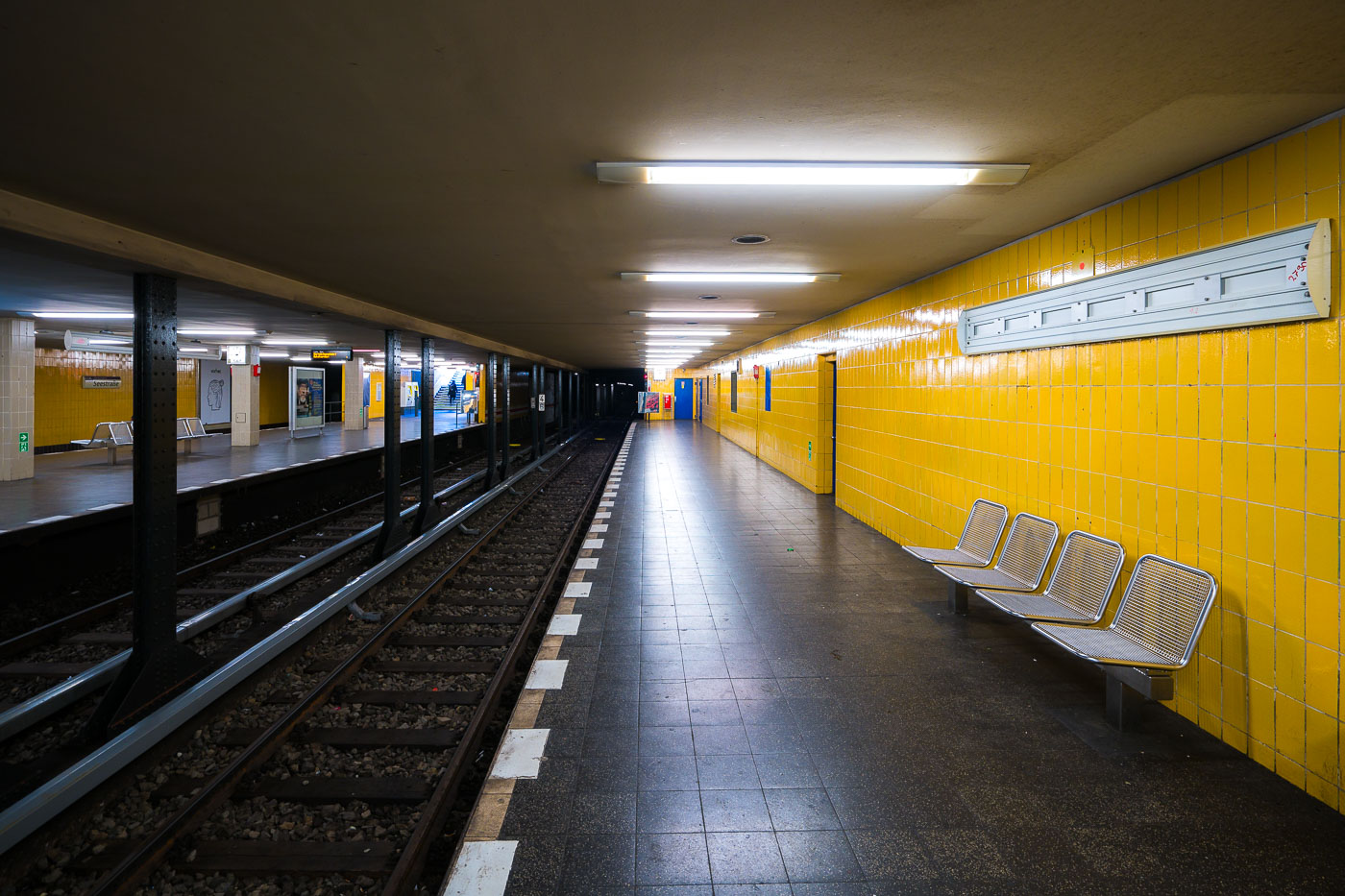
Seestraße U-Bahn station platform in Berlin's Wedding district features bright yellow tiled walls and metal bench seating.
Seestraße U-Bahn station in Berlin’s Wedding district has twin side platforms with bright yellow tile walls and metal benches. The station opened in 1923 and is served by the U6 line.
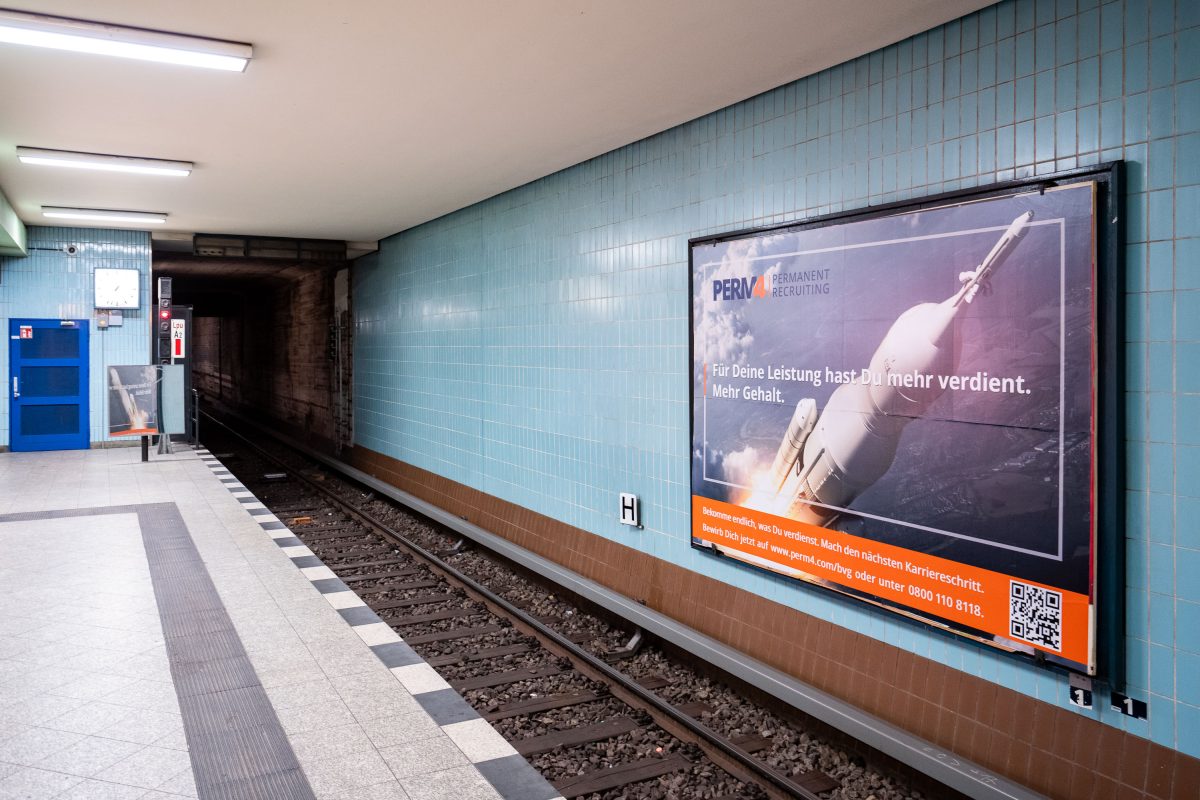
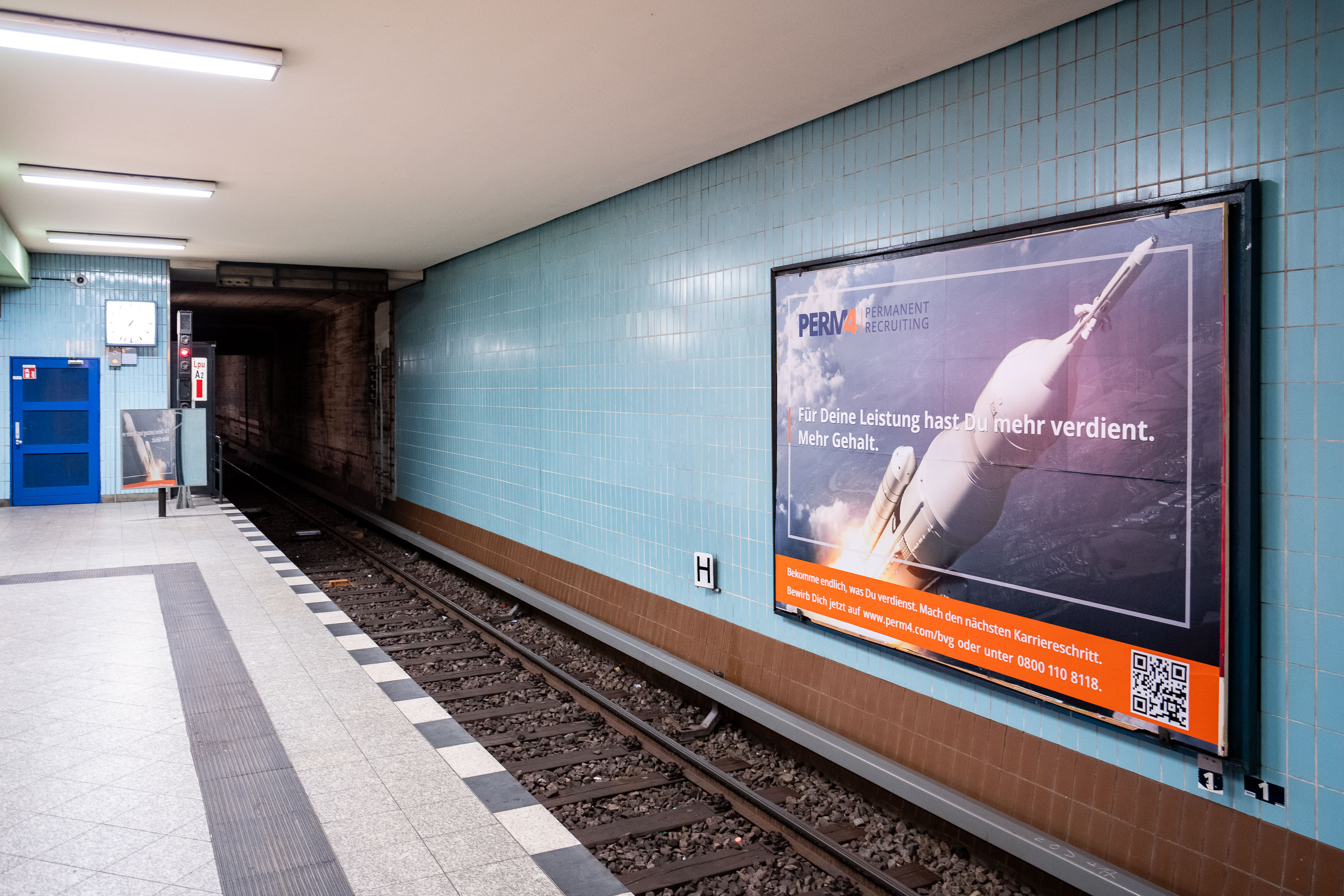
Recruiting advertisement with a rocket graphic on the platform wall of Leopoldplatz U-Bahn station in Berlin.
Leopoldplatz U-Bahn station in Berlin serves as a stop on the city's underground rail network, identifiable by its light blue tiled walls and platform signage. A large advertisement for PERM4, a permanent recruiting agency, is displayed along the platform wall, featuring a rocket launch image and a QR code linking to job listings. The station connects to Berlin's U6 and U9 lines, situated in the Wedding district of Mitte.
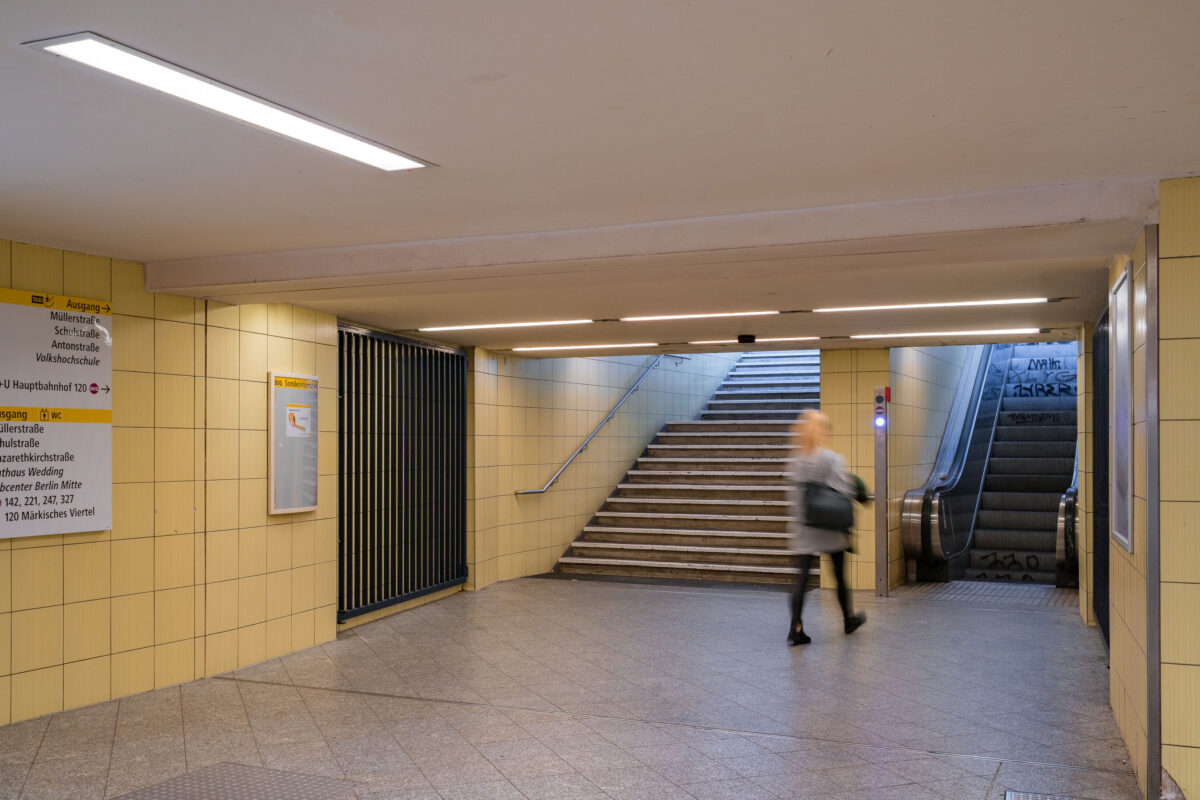
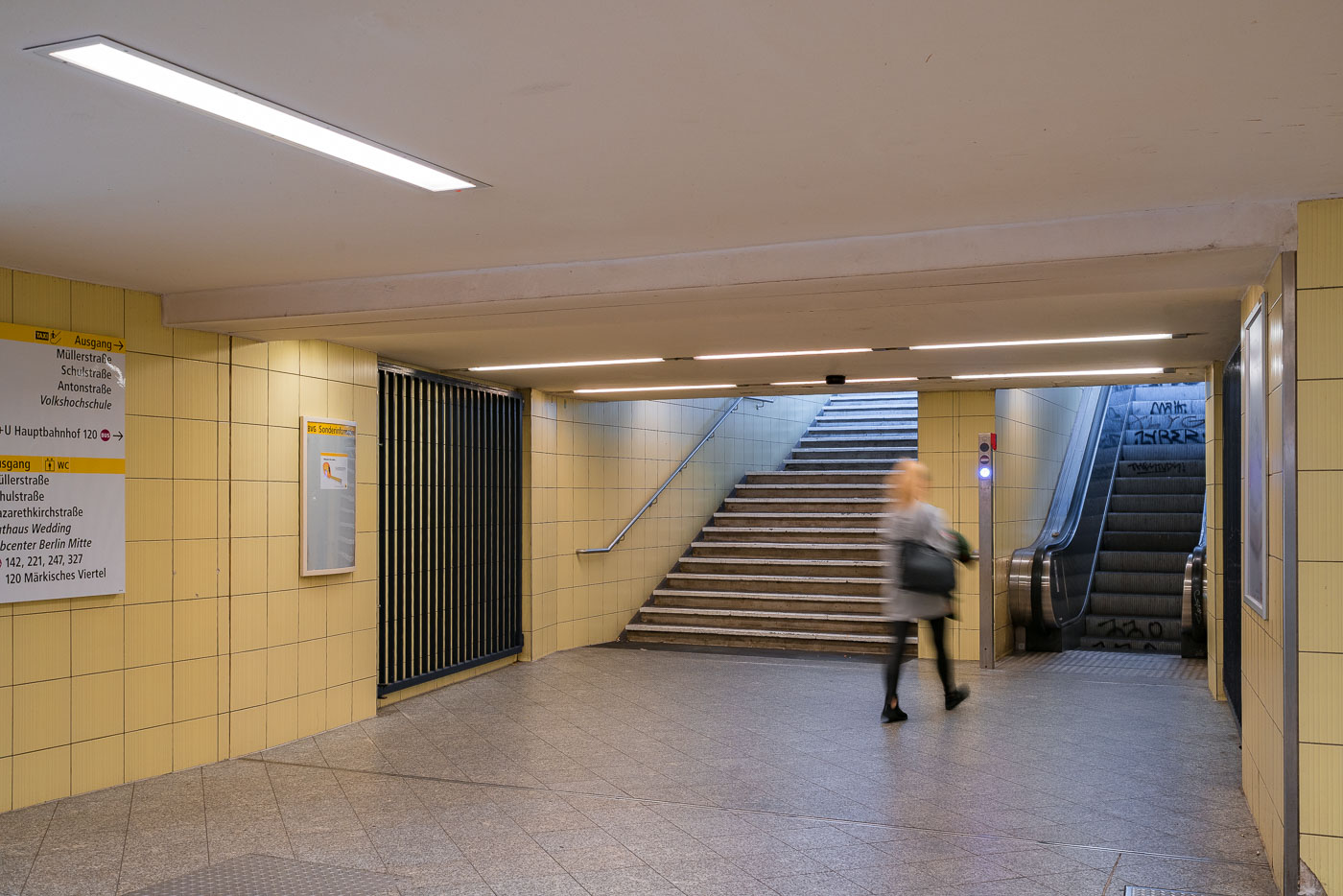
Commuter walking through a yellow-tiled underground passageway at Wedding U-Bahn station in Berlin connecting stairs and escalators.
Wedding U-Bahn station in Berlin has a tiled underground passageway connecting stairways and an escalator to street exits. A commuter passes through the corridor, which is signed for nearby streets and bus connections.
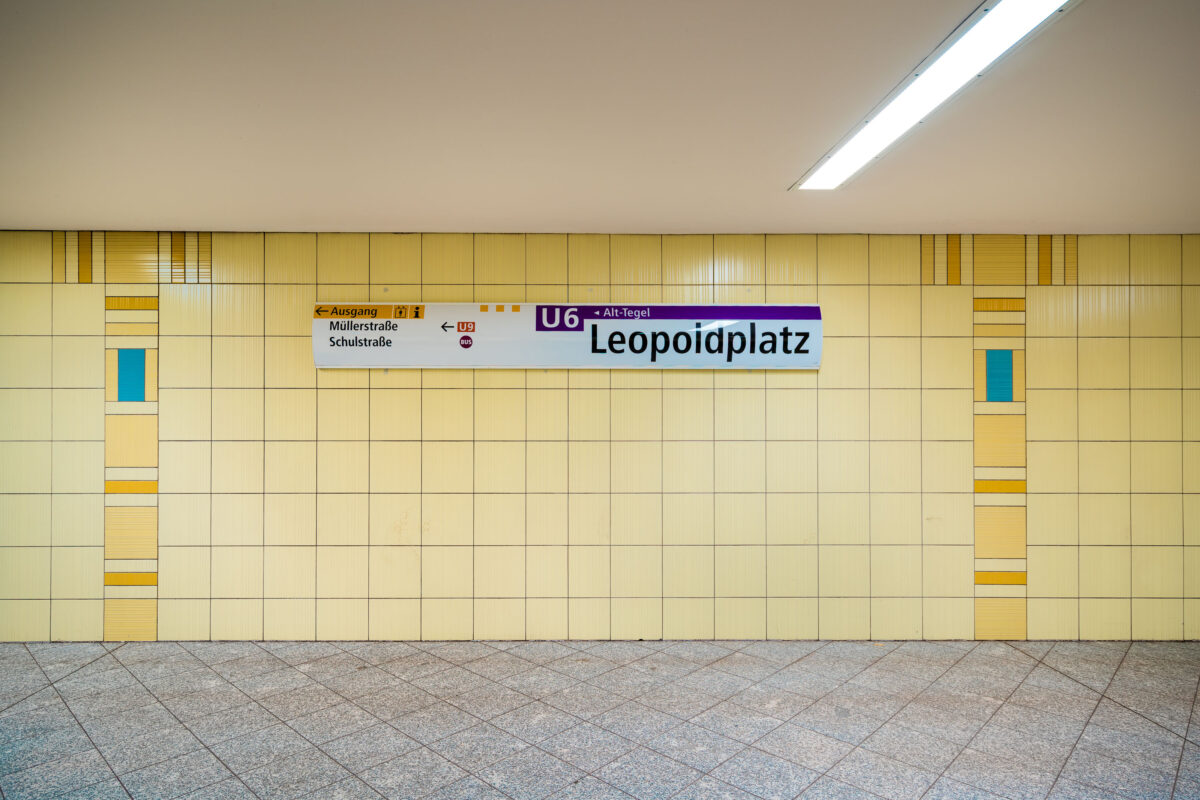
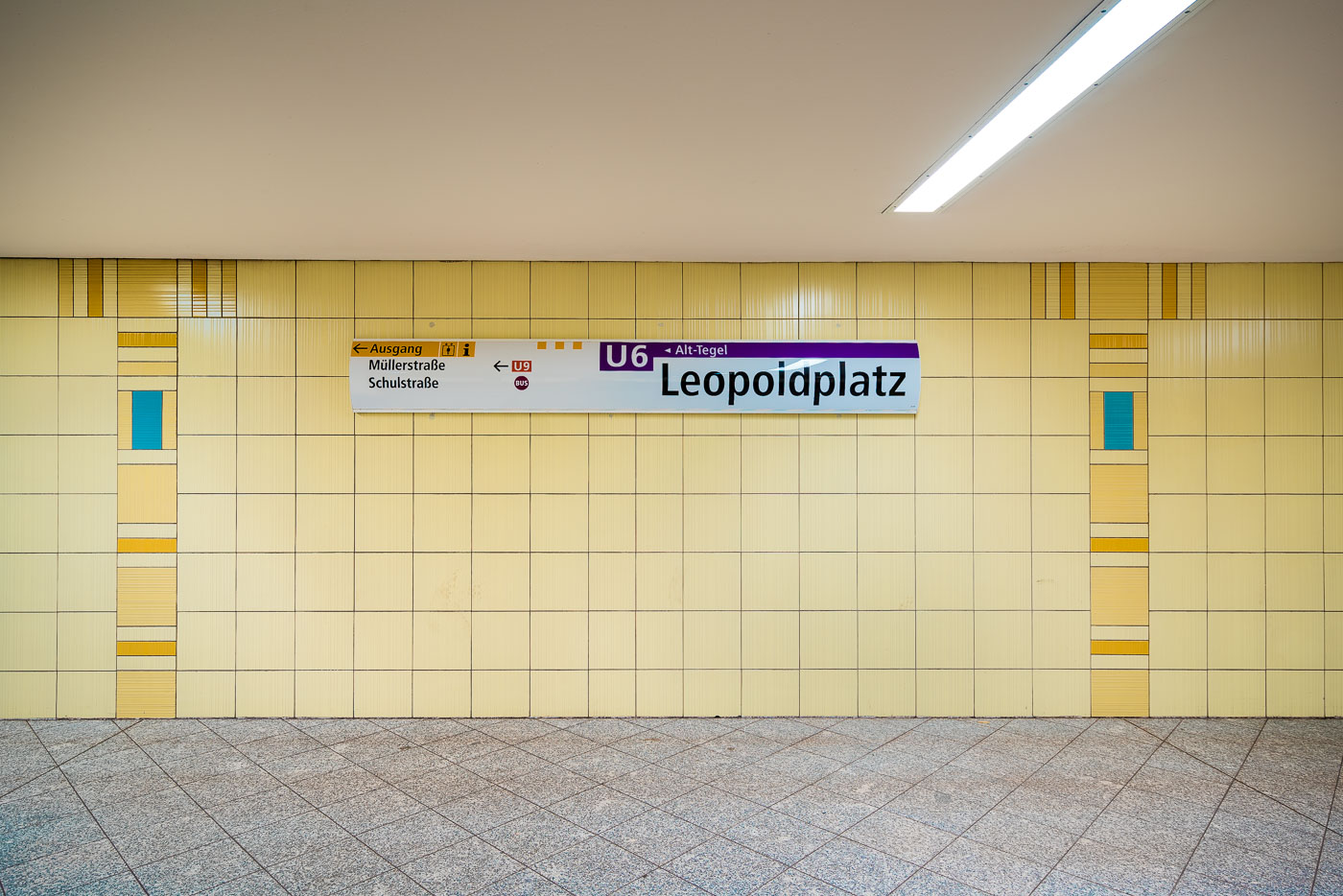
Leopoldplatz U-Bahn station platform in Berlin displays pale yellow ceramic wall tiles with blue and ochre accent bands.
Leopoldplatz U-Bahn Station in Berlin has pale yellow ceramic wall tiles with blue and ochre accents. The station is served by the U6 and U9 lines and sits beneath Leopoldplatz in the Wedding district.
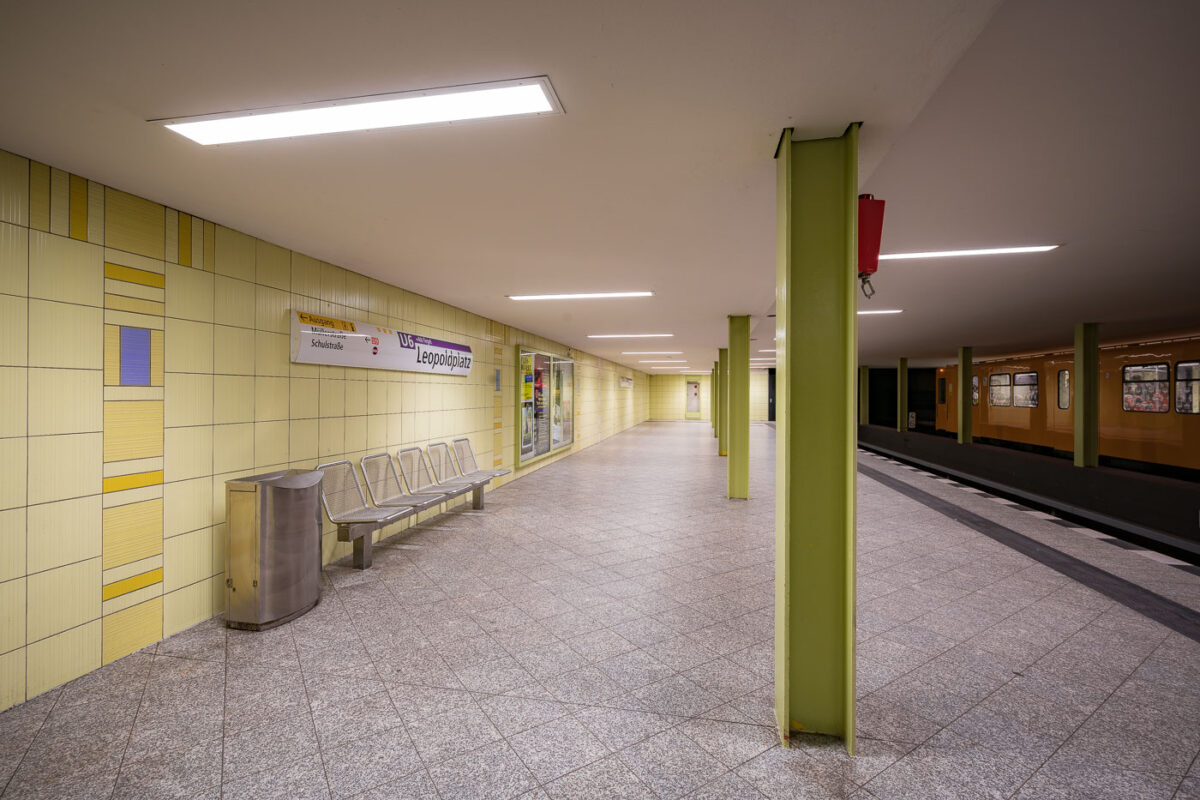
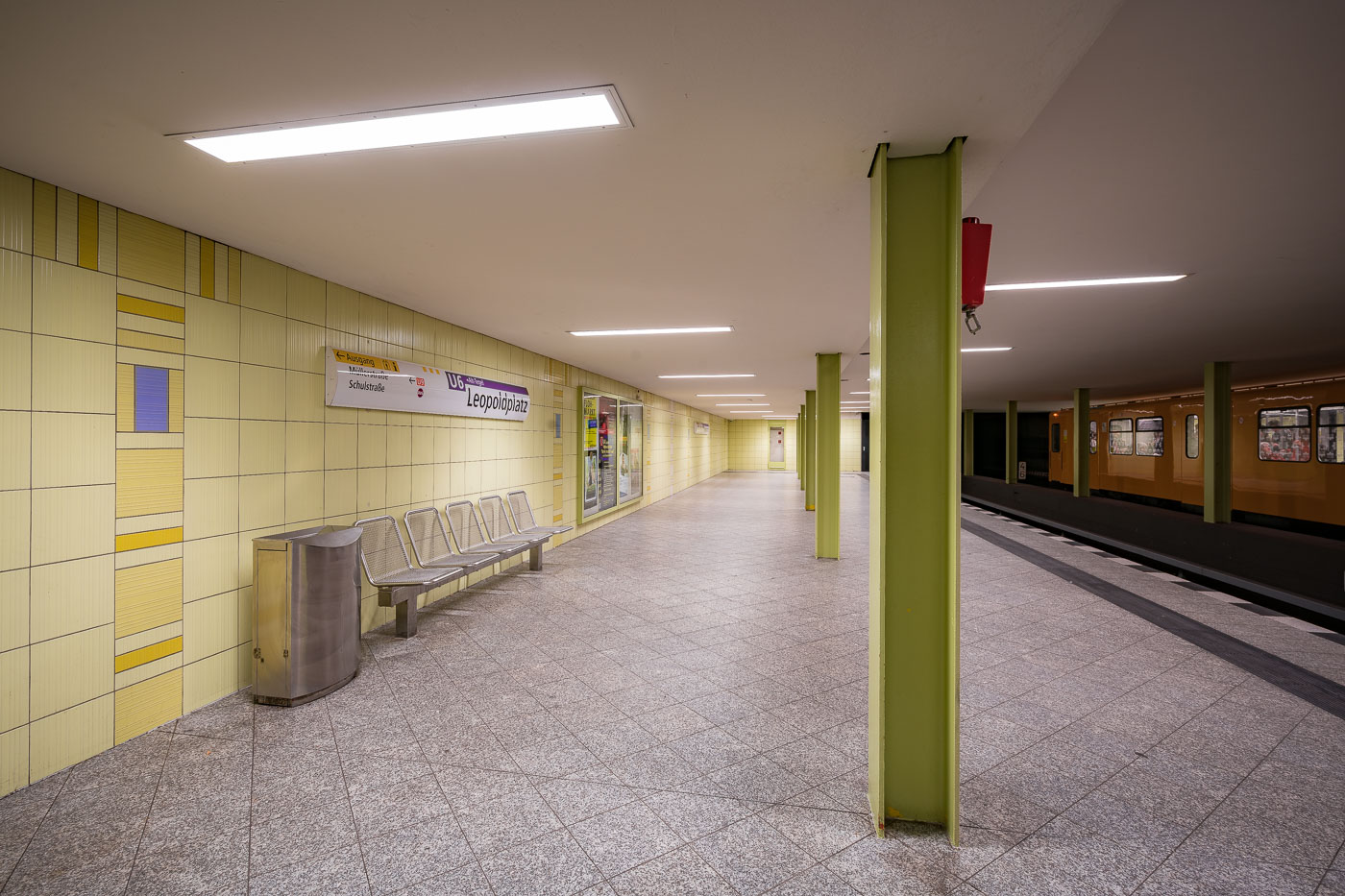
Leopoldplatz U-Bahn station platform on Berlin's U9 line features yellow tiled walls, green support columns, and metal bench seating.
Leopoldplatz U-Bahn station in Berlin includes a lower-level platform on the U9 line. The platform features pale yellow wall tiles, green-painted support columns, and bench seating along the wall.

More in Europe

© 1996–2026 Chad Davis