Place Archive

Nebraska

Omaha’s rail yards feature longstanding safety signage, including a faded warning against riding atop freight cars. Grain elevator silos in the city are concrete structures now covered in graffiti, marking a transition from industrial use to urban art surfaces.

6 photos

Cities

Photos from Nebraska
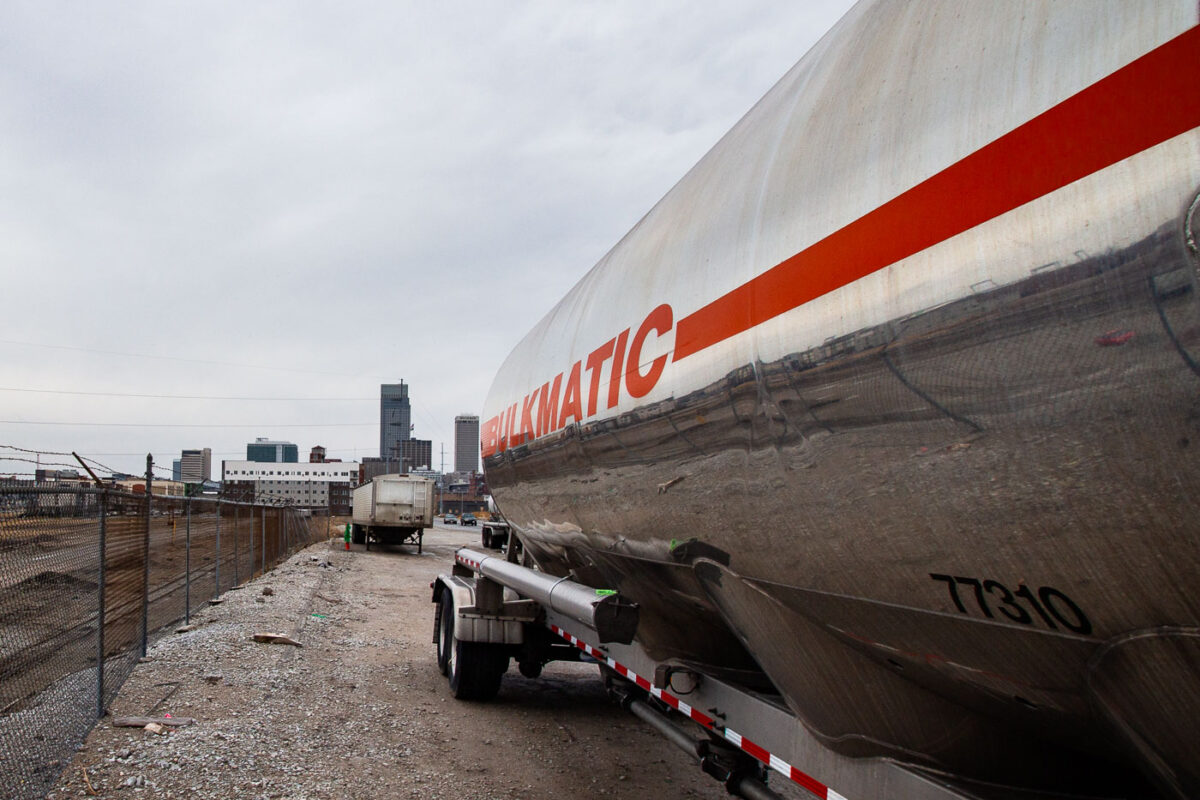
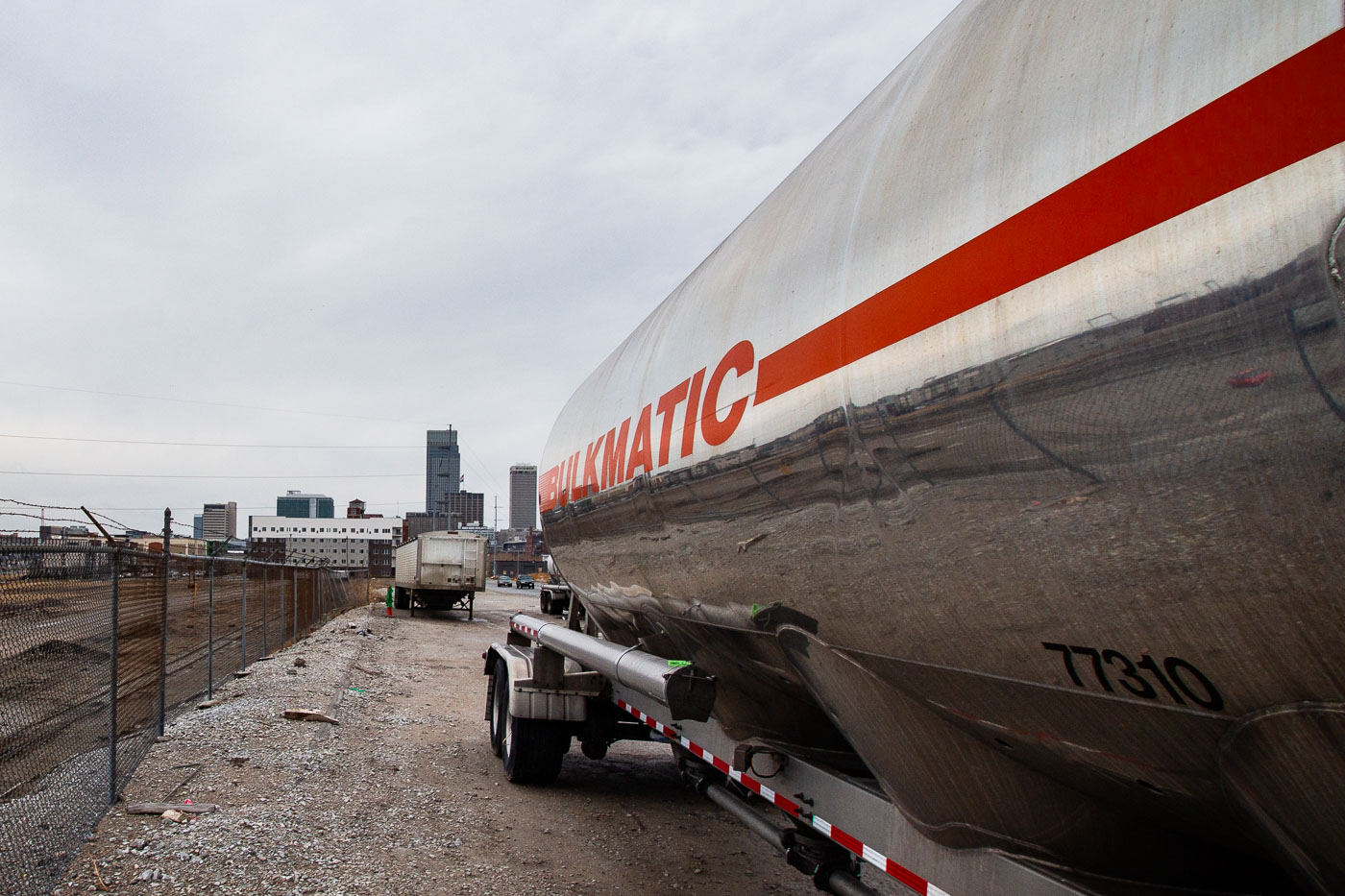
Bulkmatic tank trailer 77310 parked in Omaha, Nebraska.
Bulkmatic hauls dry bulk commodities like grain, cement, sand, and plastic pellets across the country using pneumatic tank trailers such as this one, numbered 77310. The company's trailers are designed to load and unload through sealed systems, keeping powdered or granular cargo protected from moisture and contamination during transport. Omaha's position along major interstate and rail corridors makes it a natural stop for bulk freight moving between grain-producing regions and processing or distribution centers.
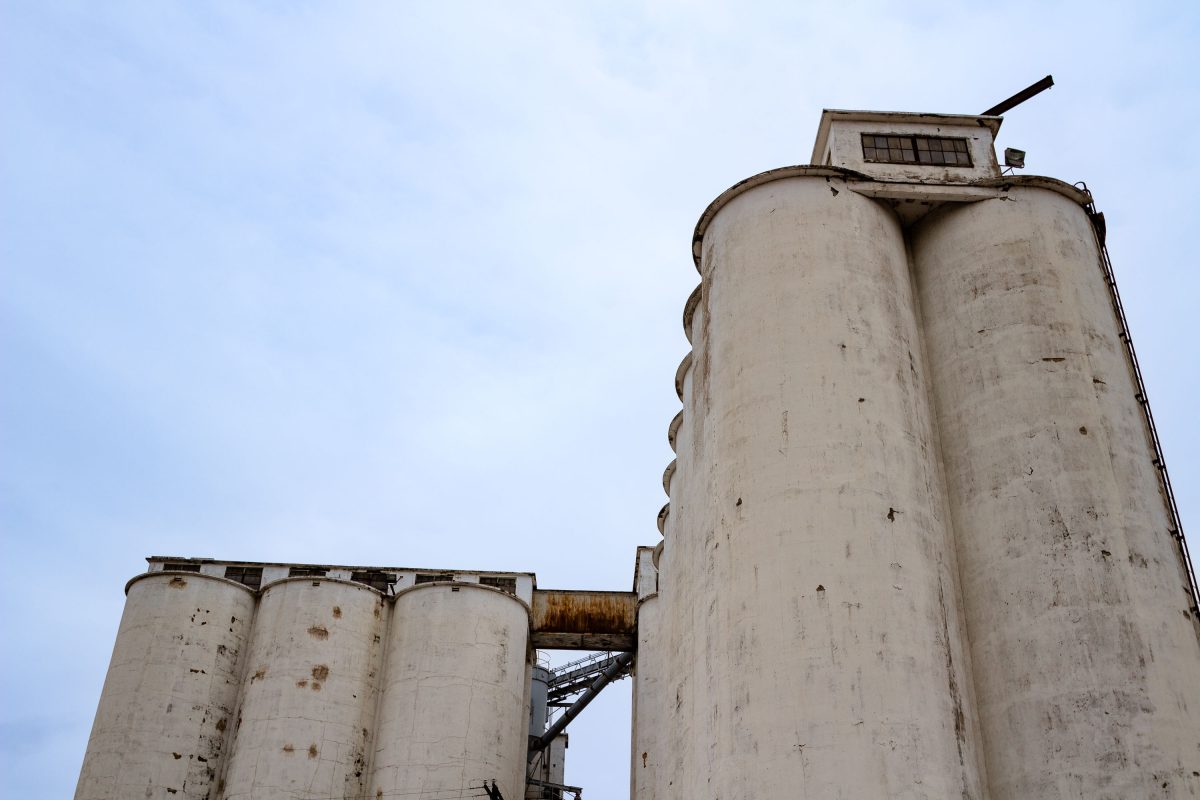
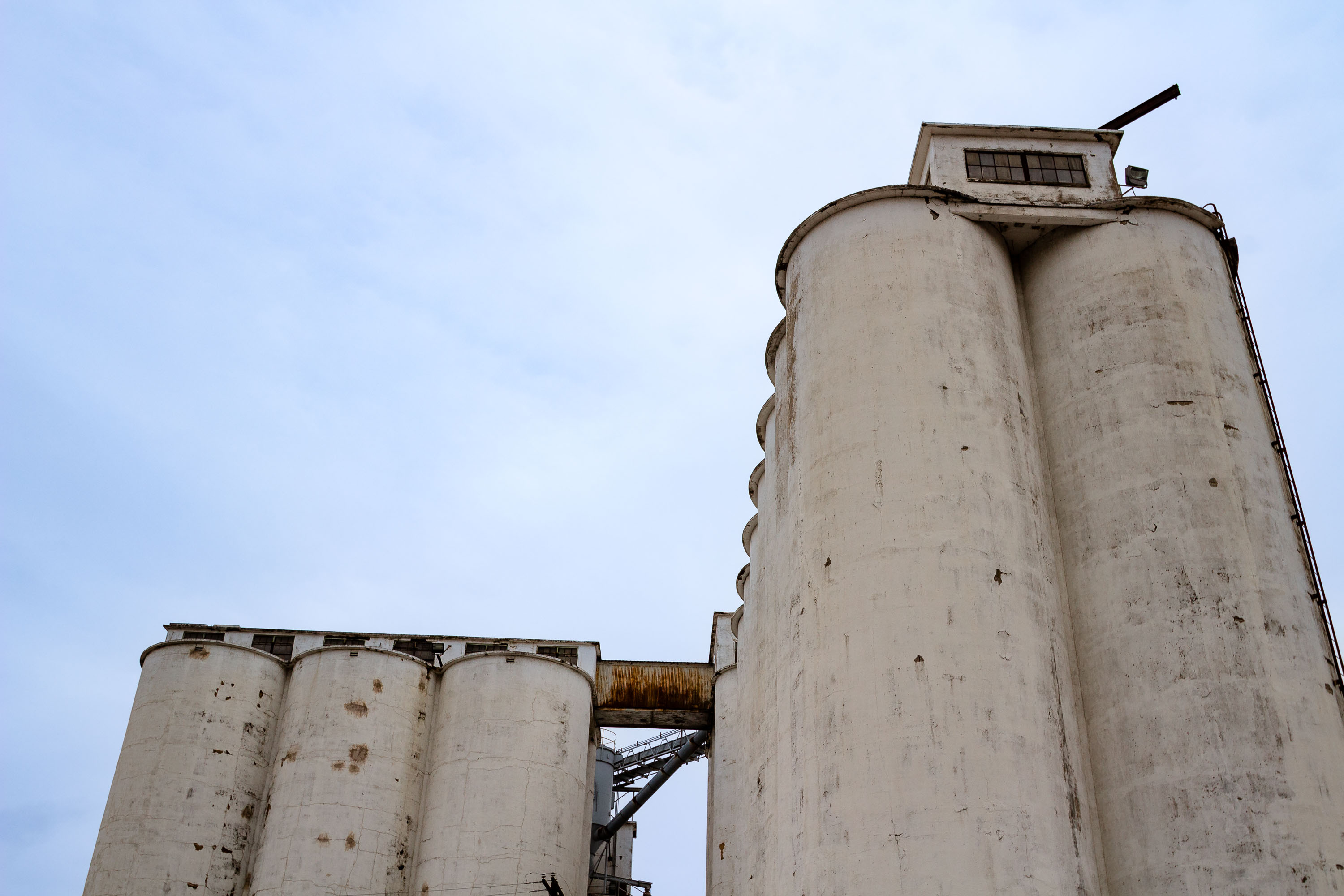
Tall concrete grain elevator silos with an elevated headhouse stand against the sky in Omaha, Nebraska.
This concrete grain elevator complex, built in the cylindrical silo style common to early-to-mid 20th-century terminals, once stored bulk grain such as wheat and corn awaiting rail shipment. A connecting headhouse and conveyor system moved grain between the storage bins before loading it onto railcars. Complexes like this were typically sited along active rail lines to allow direct transfer from truck or train to storage. The facility is no longer in operation, and the concrete silos remain standing as a remnant of Omaha's industrial grain trade.
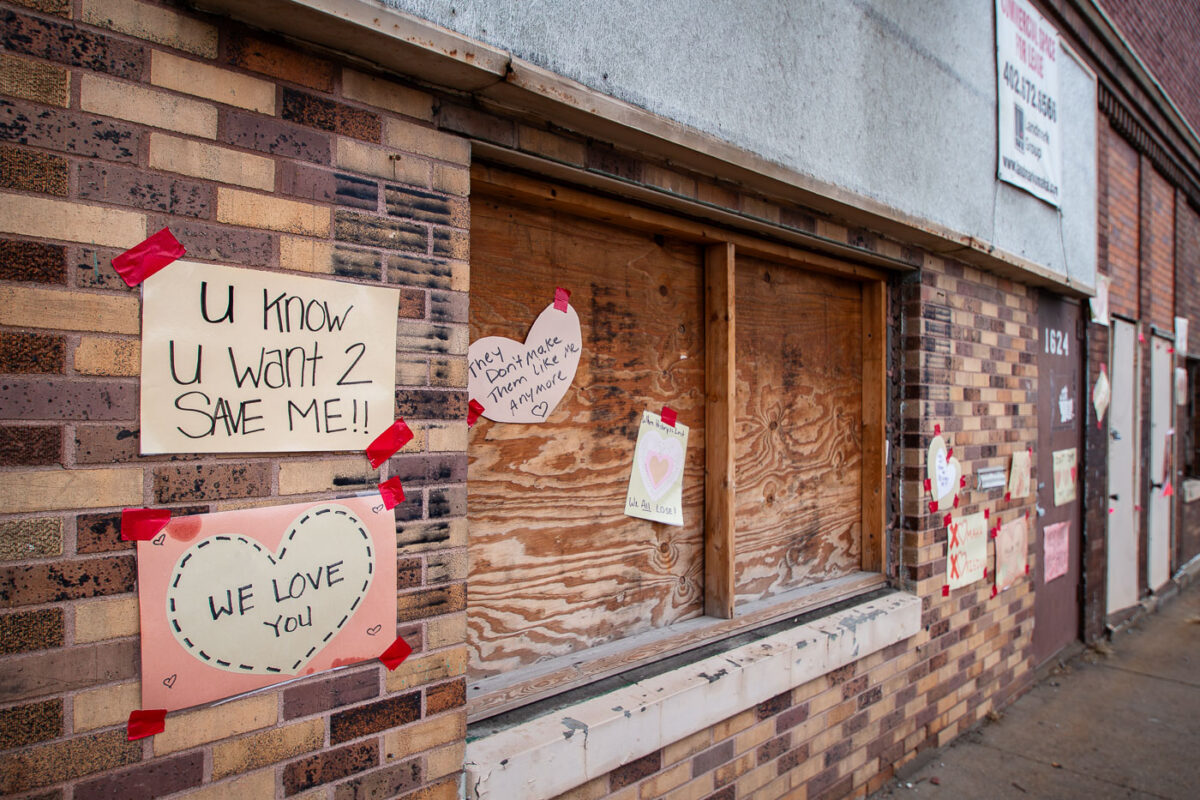
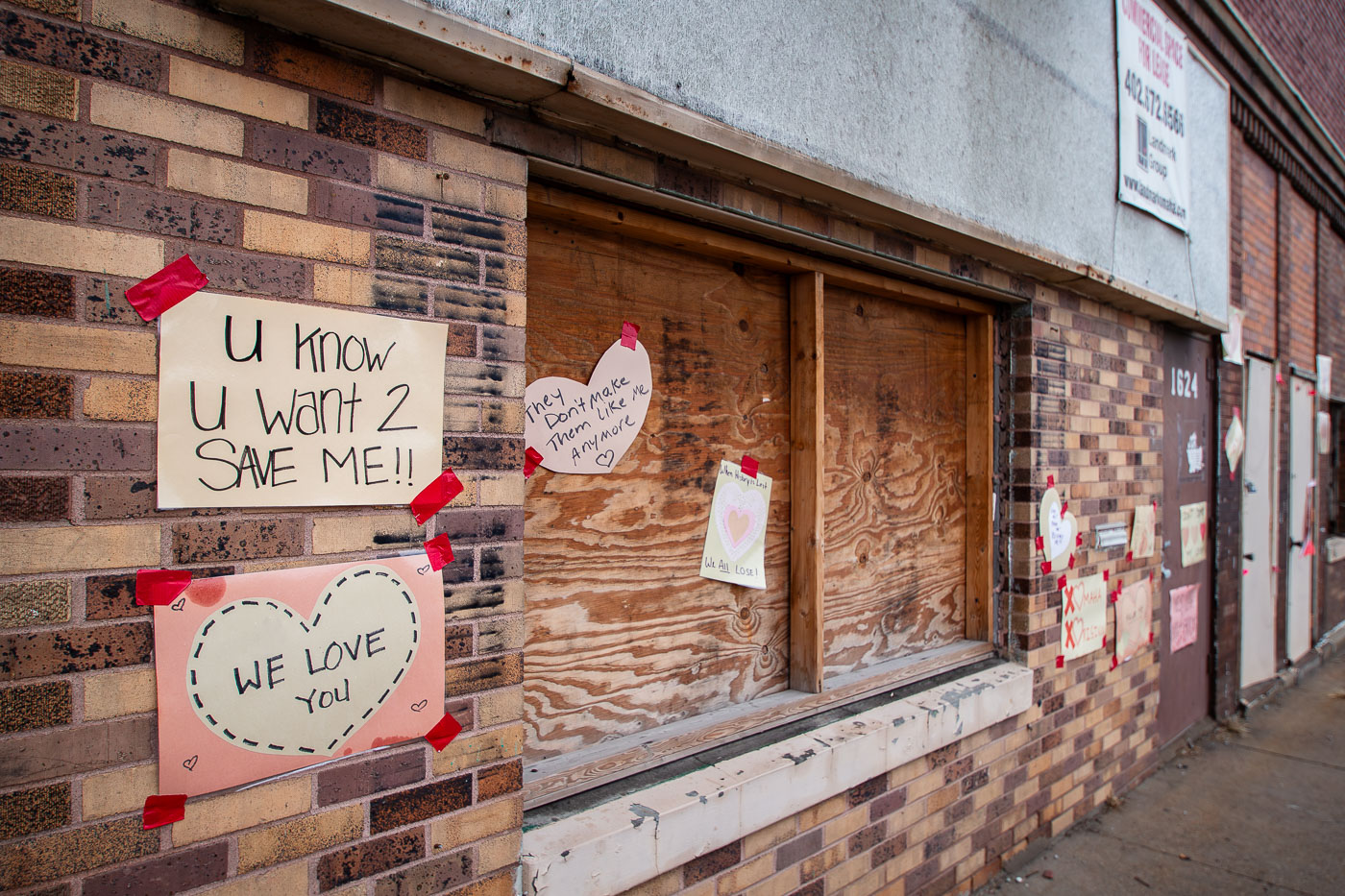
Fitzgerald Rooms building in Omaha, Nebraska, covered with handwritten preservation signs.
The Fitzgerald Rooms building sits at 1624 in Omaha, its street-level windows boarded over with plywood. Handmade signs taped to the brick call for the building to be saved, with messages like "U Know U Want 2 Save Me!!" and "We Love You" pleading against demolition or removal. A "For Lease" sign posted nearby lists the property as available commercial space, suggesting the building's future use was still undecided at the time.
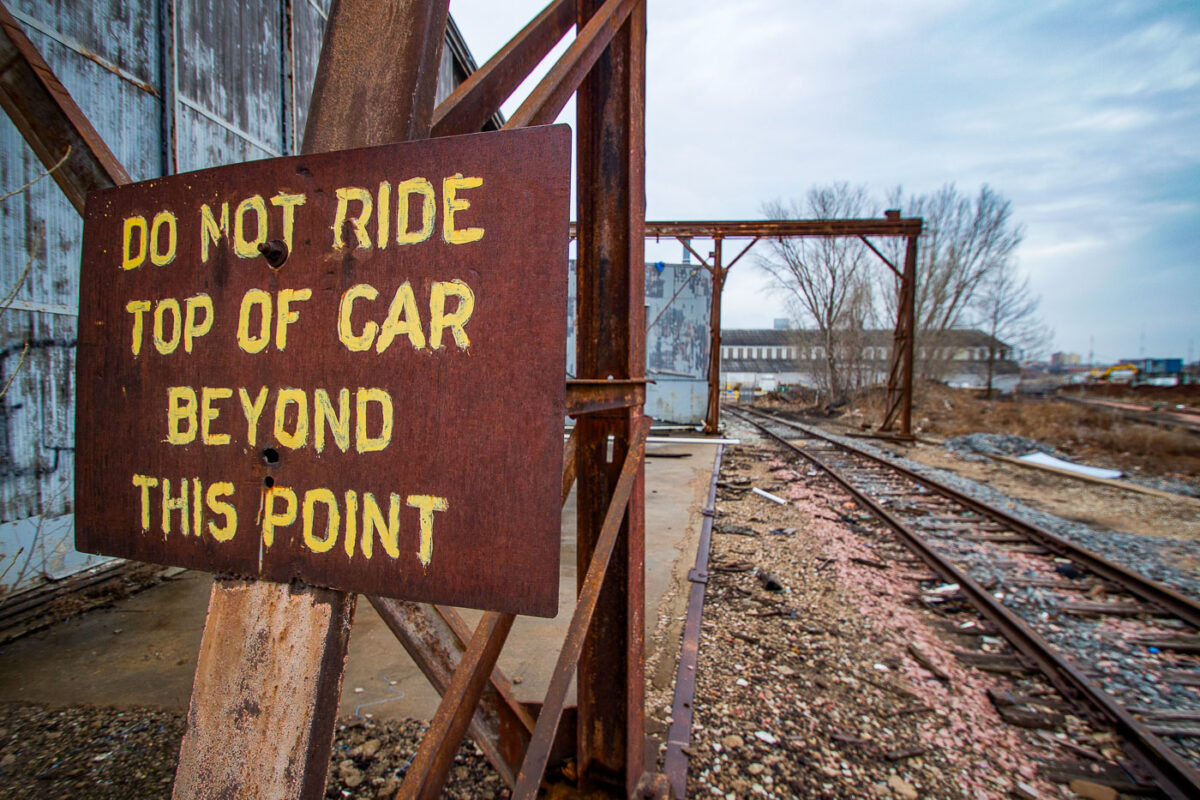
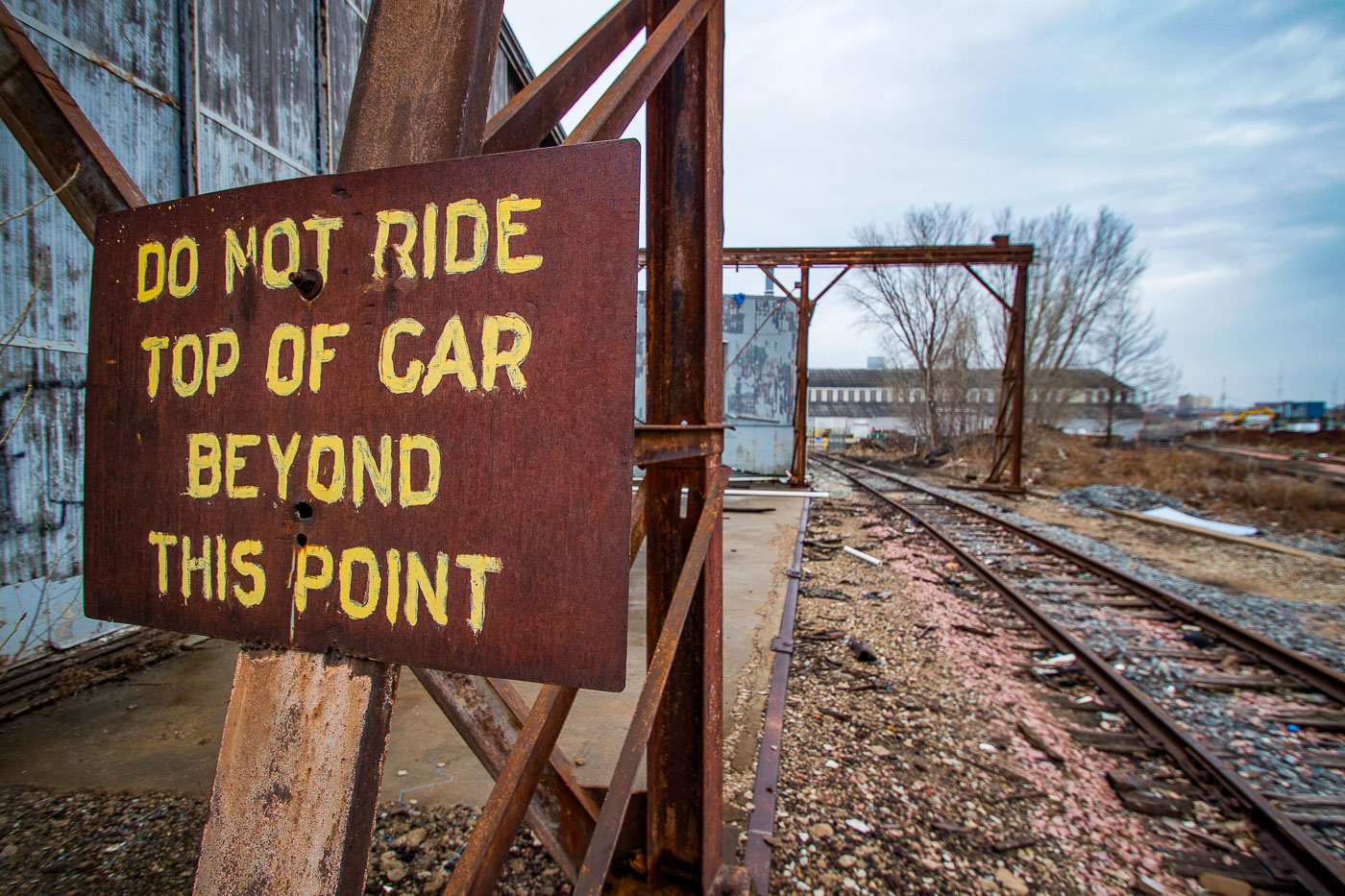
Railroad safety sign in Omaha, Nebraska, warns workers not to ride on top of rail cars.
The sign's warning — "Do Not Ride Top of Car Beyond This Point" — marks a boundary once used to keep brakemen and yard workers from climbing onto moving rail cars, a common but dangerous practice before modern safety rules restricted it. Rail yards like this one relied on such hand-lettered signage to communicate hazards long before standardized safety placards became common. The rusted mounting and weathered lettering suggest the sign has stood in place for decades, outlasting much of the rail activity it once regulated.
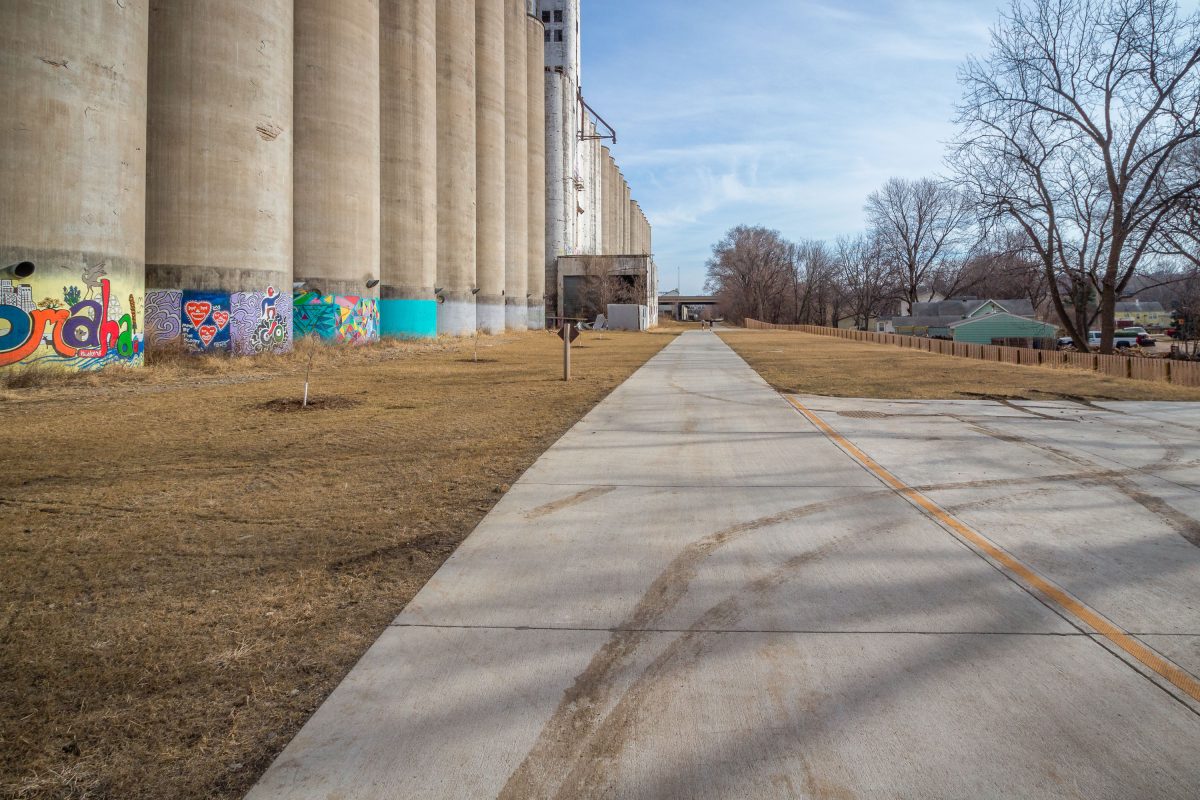
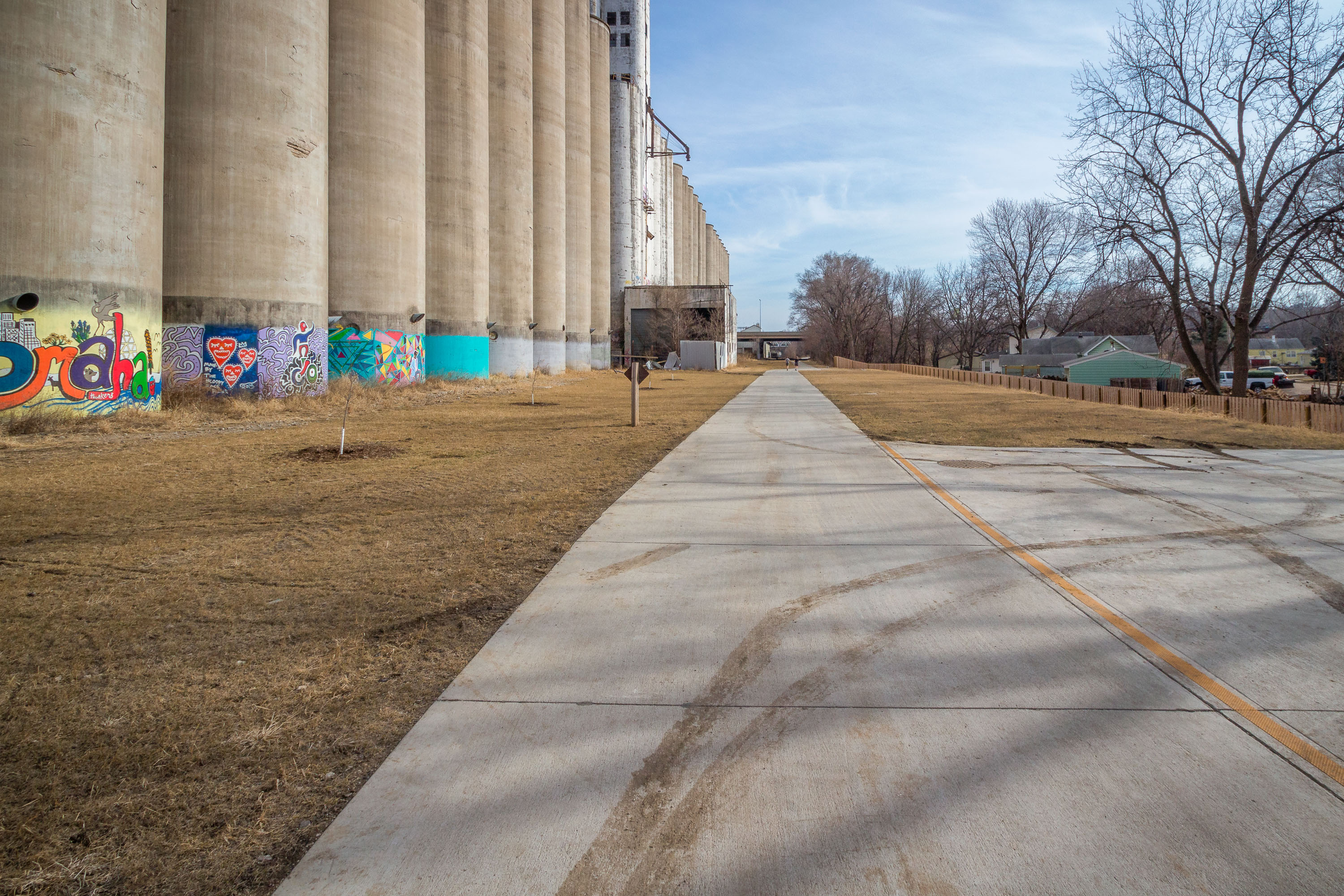
Paved South Omaha Trail runs beside painted concrete grain elevator silos in Omaha, Nebraska.
Grain elevator silos like these once stored corn and soybeans shipped through Omaha's rail and river networks, a trade that shaped the city's South Omaha industrial corridor through much of the 20th century. Many of the region's concrete elevators were built in the early 1900s to serve the Union Stockyards and surrounding grain trade, and several still stand today even after their industrial use ended. The murals painted along the silo bases, including lettering that spells "Omaha," are part of a broader effort to repurpose the structures as public art rather than demolish them. The adjacent trail follows a former rail corridor and now connects South Omaha neighborhoods for pedestrian and bicycle use.
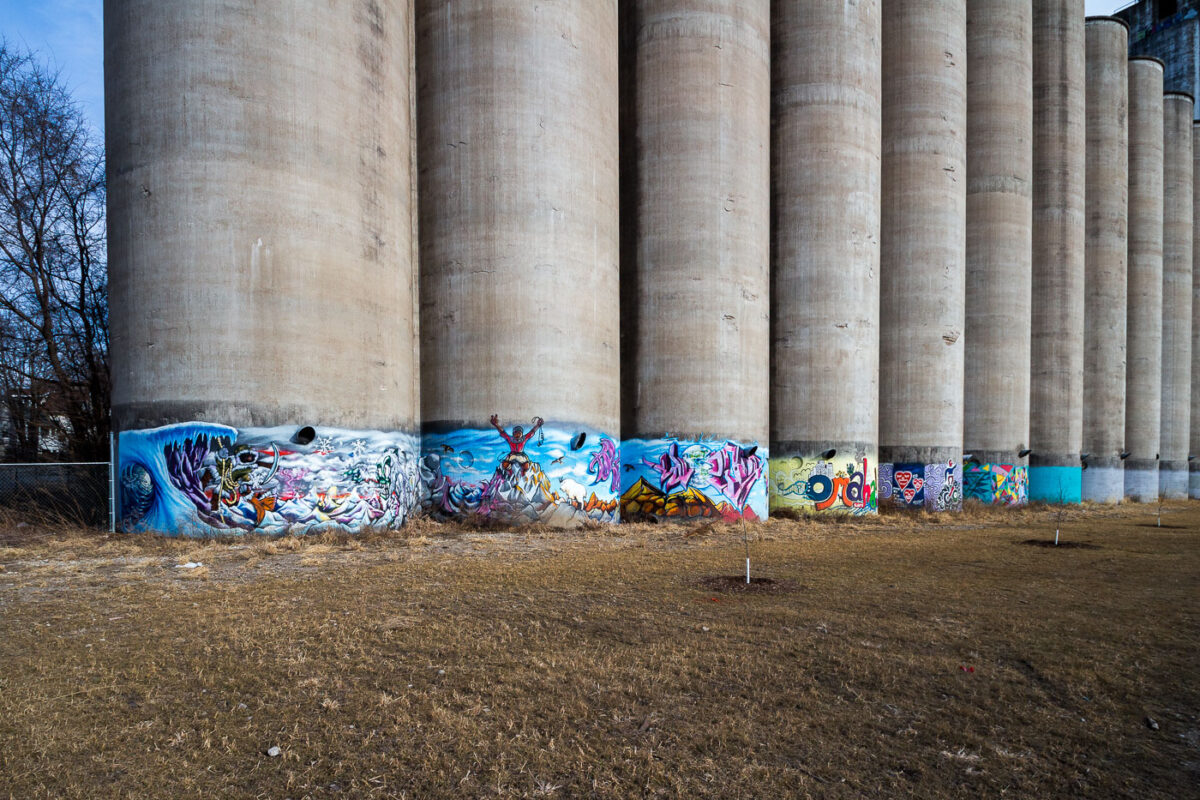
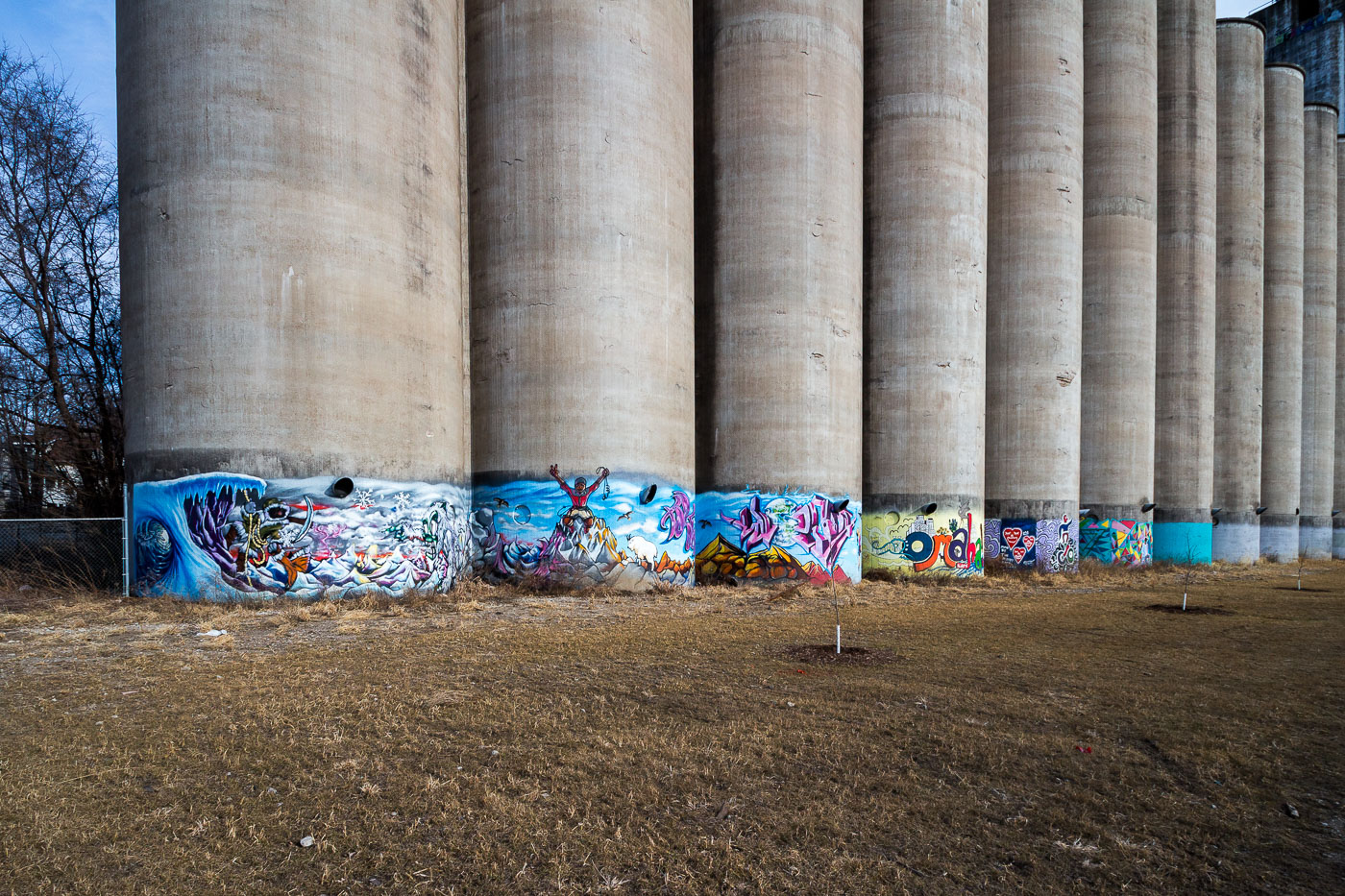
Omaha grain silos in Omaha, Nebraska, with graffiti murals along the base.
Omaha grain silos in Omaha, Nebraska, have large-scale graffiti murals painted along their lower sections. The concrete elevators are part of the city’s grain-handling infrastructure. Their cylindrical forms rise above the mural panels beside an open lot.

Built in Minneapolis

Minneapolis Photographer

Browse by location, move through long-running series, or start with recent work.