Photo Set
Minneapolis COVID Shutdown
Nicollet Mall, Hennepin Avenue and surrounding blocks during Minnesota's spring 2020 stay-at-home orders
March 15, 2020 - December 18, 2020Minneapolis
Nicollet Mall went quiet almost overnight in March 2020, when Minnesota's stay-at-home order emptied the streets of downtown Minneapolis and shuttered bars, restaurants, music venues, and shops across the city. What had been one of the busiest pedestrian corridors in the Upper Midwest became a stretch of wet pavement and dark storefronts.
The closures arrived fast. Governor Tim Walz issued the statewide stay-at-home order on March 27, 2020, and within days transit platforms were nearly deserted, the Orpheum Theatre on Hennepin Avenue had posted a "Stay Safe, Stay Tuned" message on its marquee, and the Cabooze on Cedar Avenue in the West Bank was telling passersby that "it will get better." First Avenue kept its doors shut while its marquee urged people to vote. The Hilton Minneapolis arranged guest-room lights into the word "HOPE." These were not performances — they were a city trying to hold itself together through glass and signage.
The practical adjustments accumulated alongside the symbolic ones. The city disabled hundreds of pedestrian crosswalk buttons to reduce contact with shared surfaces, Minneapolis Parks closed parkways to vehicles and reserved them for foot and bicycle traffic, and retailers that remained open posted social distancing instructions at their entrances.
This period sits at the opening of a longer and more turbulent stretch for Minneapolis. The shutdown documented here preceded the killing of George Floyd on May 25, 2020, and the unrest that followed — events that would reshape the city's politics, its built environment, and its sense of itself for years afterward. What these weeks capture is the city at a particular kind of stillness, before everything that came next.
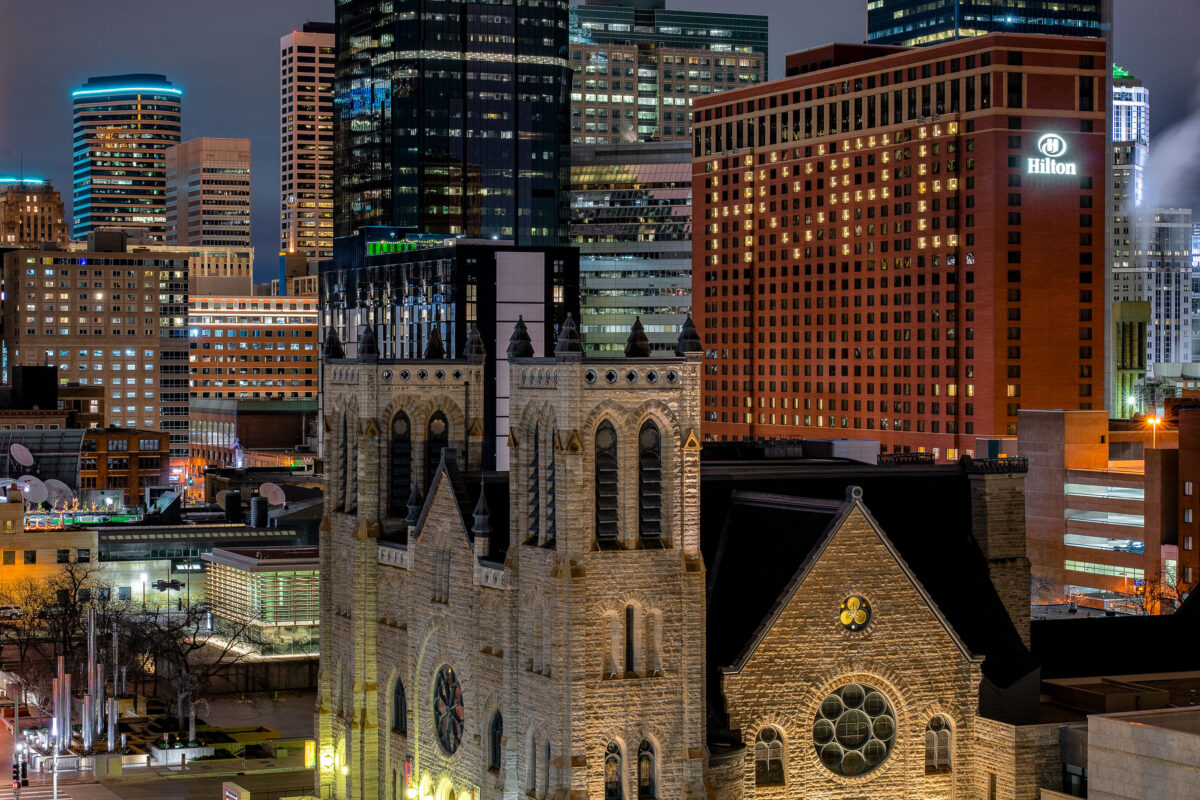
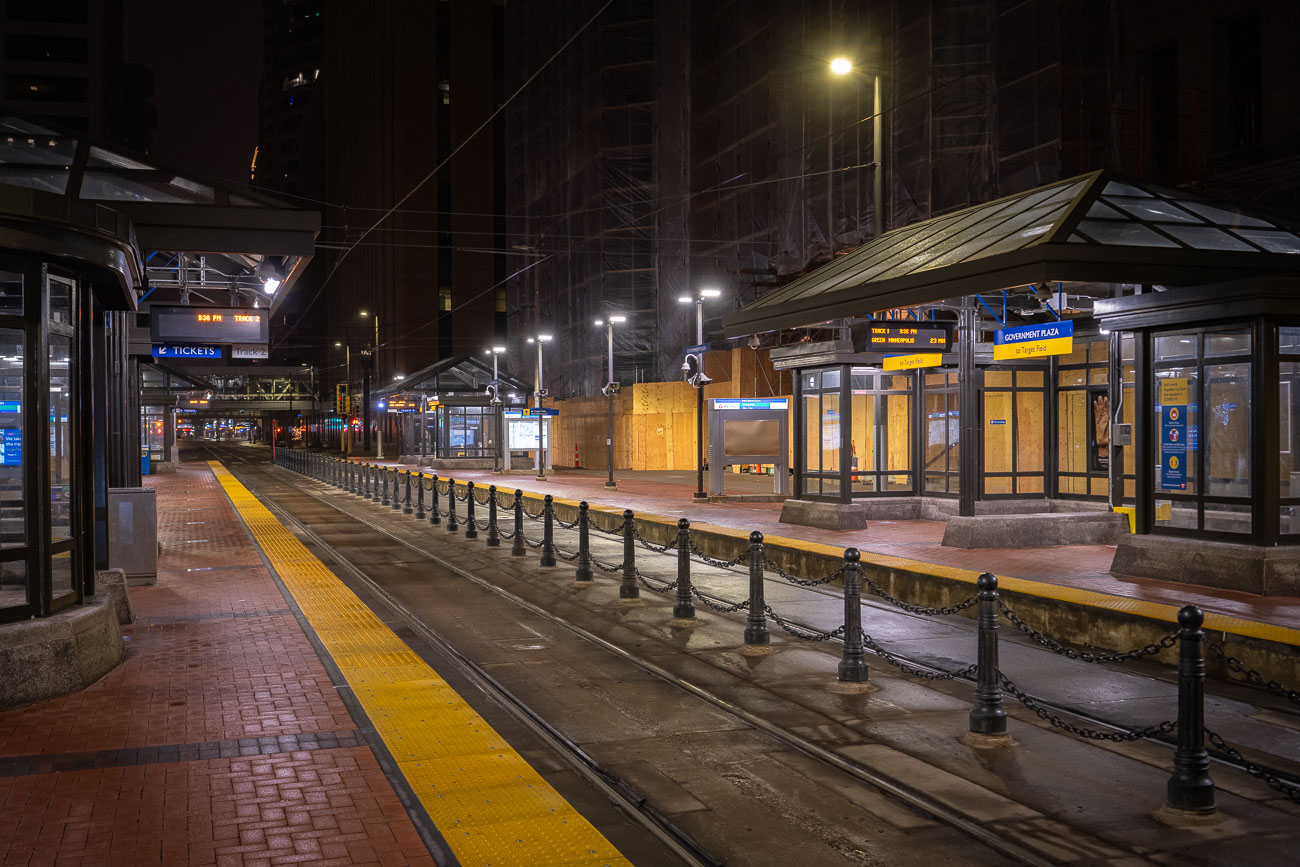 View full post: Government Plaza LRT Station, Downtown Minneapolis
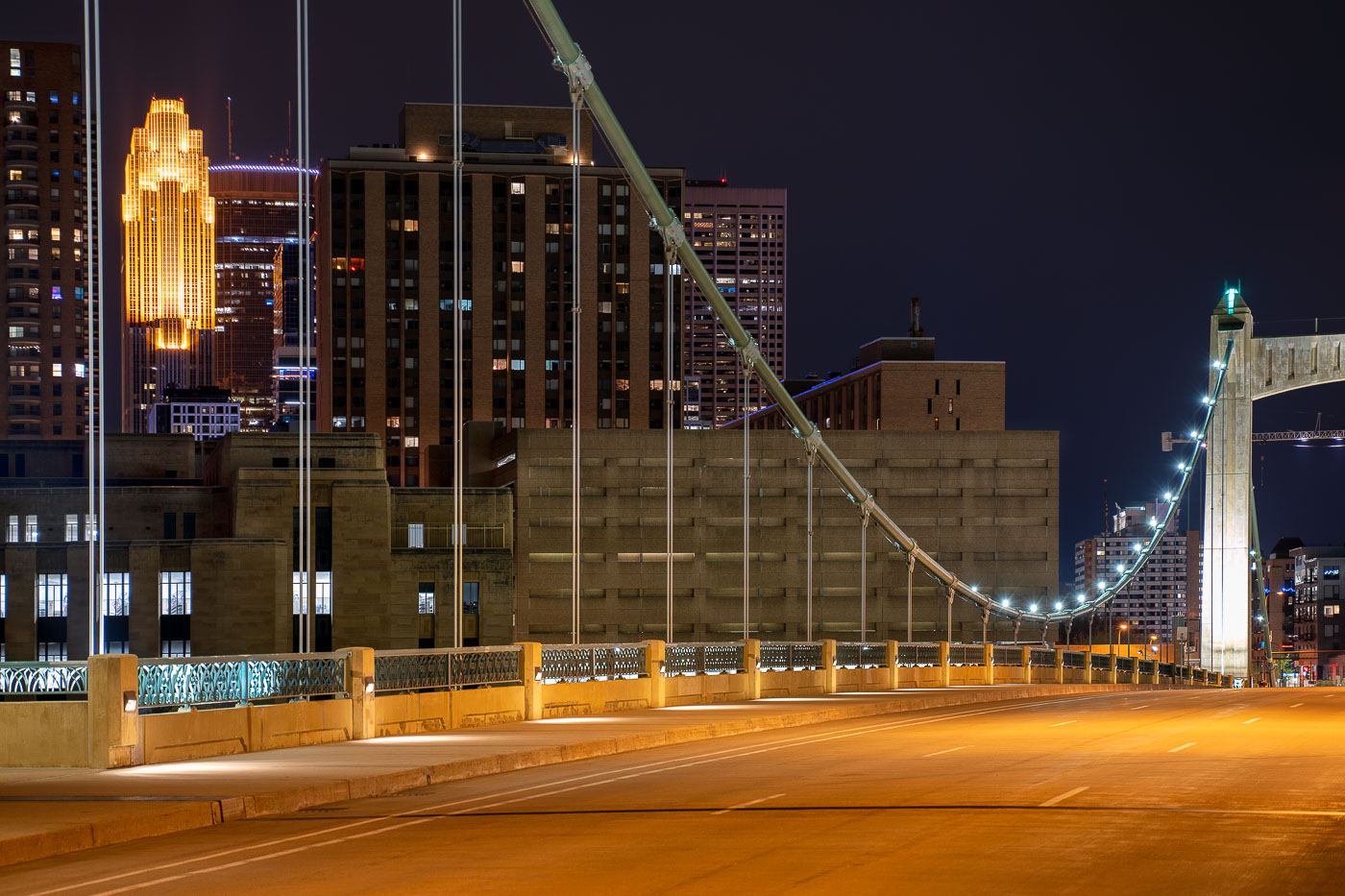 View full post: Hennepin Avenue Bridge, Minneapolis, During COVID-19 Pandemic
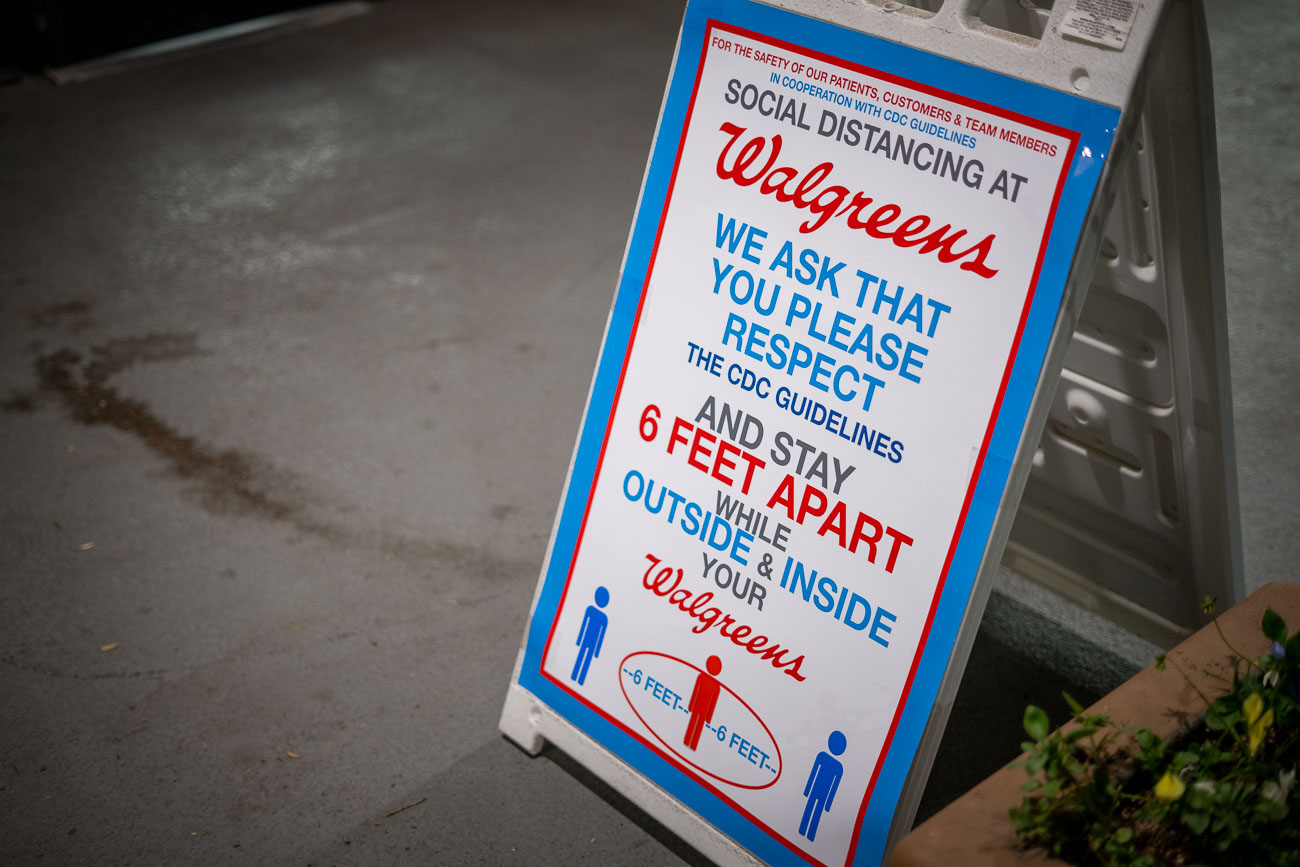 View full post: Social Distancing Sign at a Minneapolis Walgreens
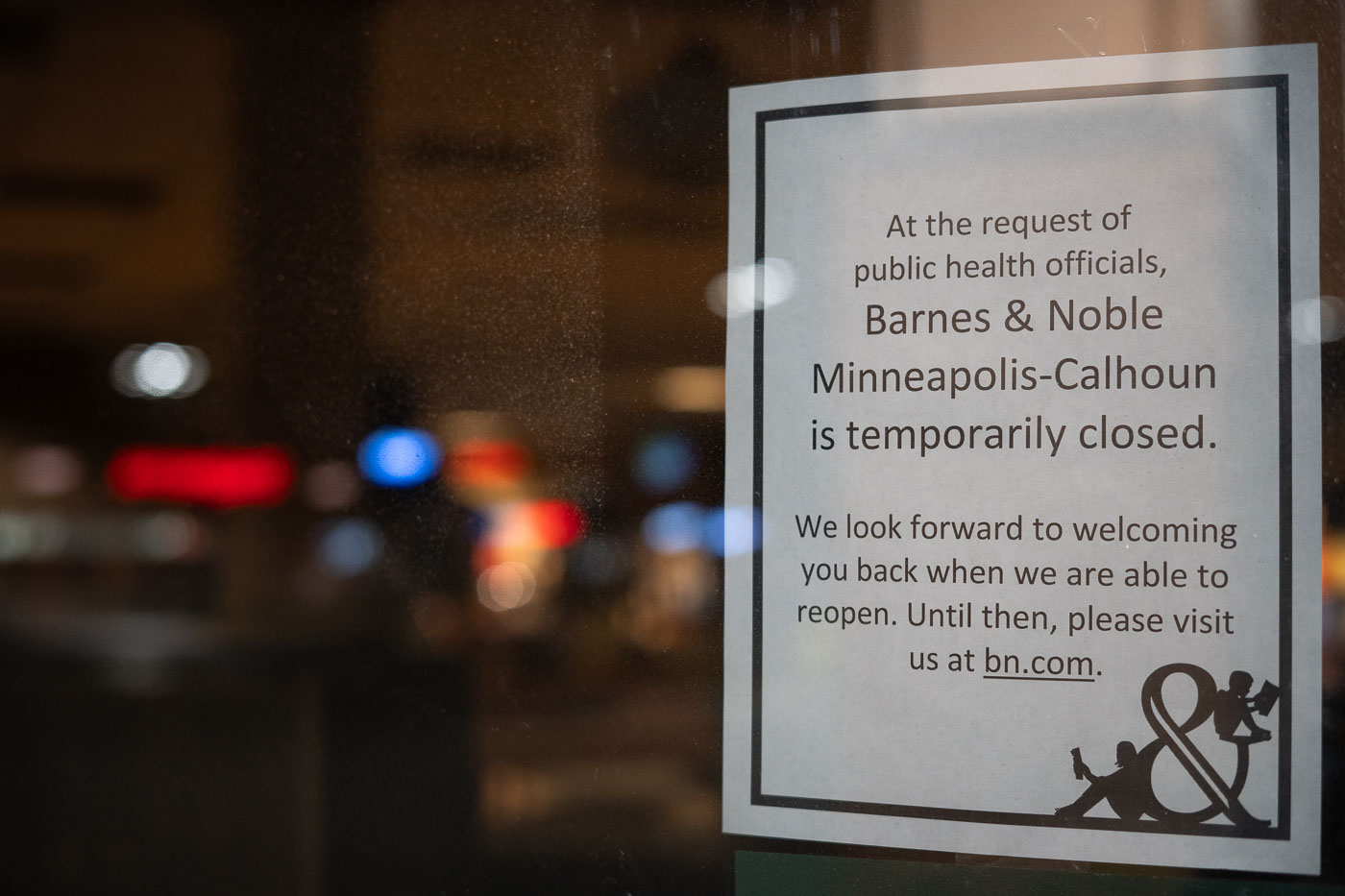 View full post: Minneapolis Barnes & Noble Temporarily Closed Due to COVID-19
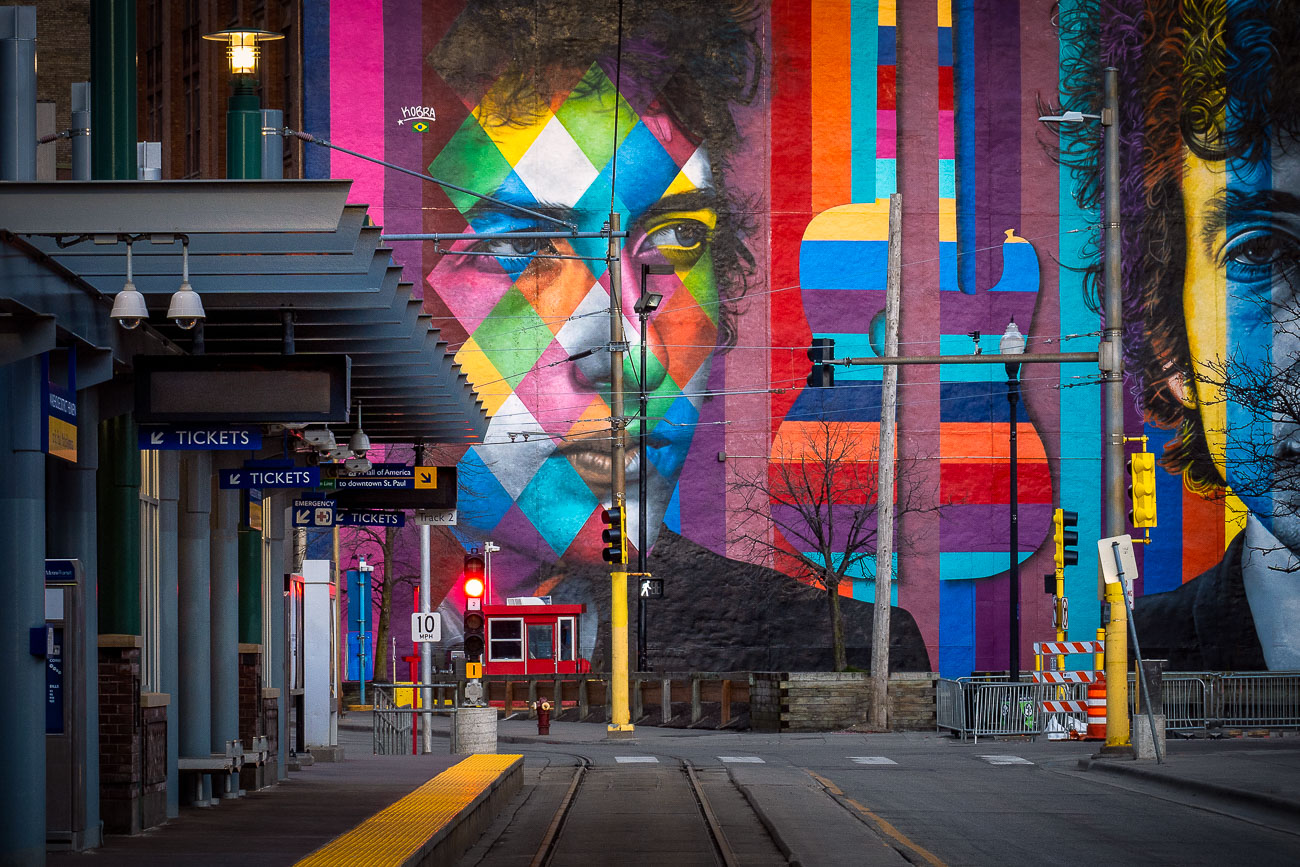 View full post: Eduardo Kobra’s “Face of Music” Mural on Hennepin Avenue
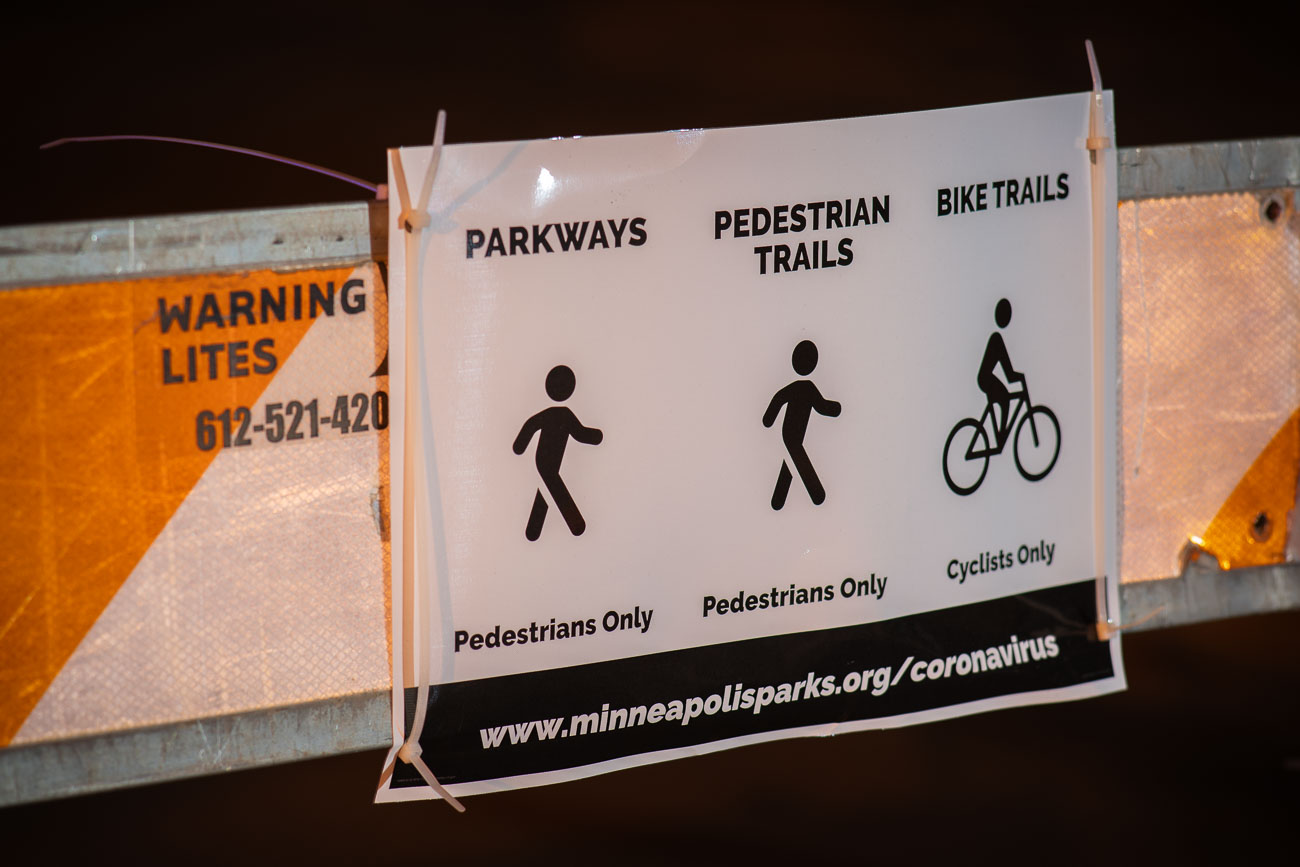 View full post: Minneapolis Parks COVID-19 Signage for Parkways and Trails
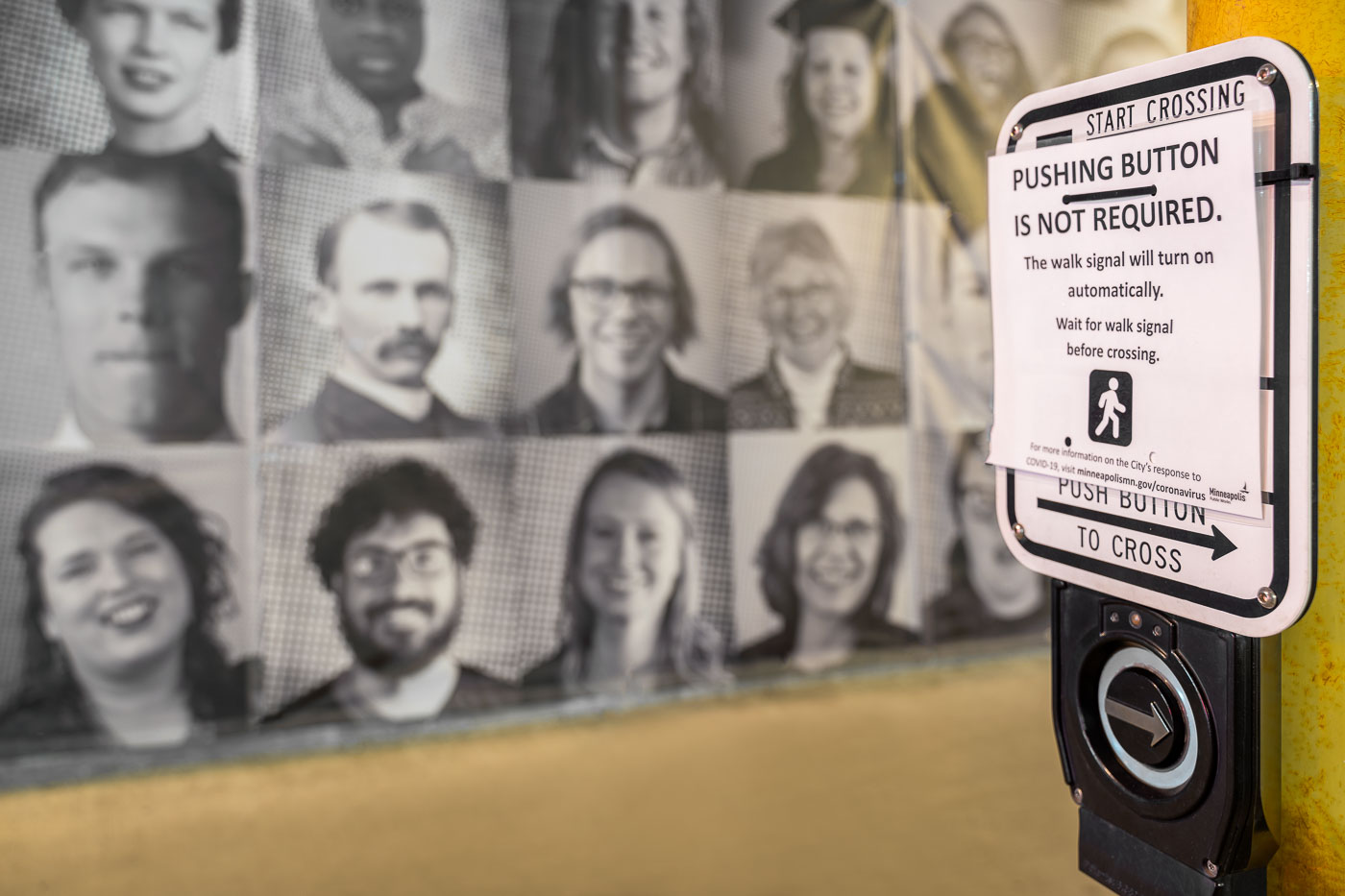 View full post: Automatic Walk Signal Notice on a Minneapolis Crosswalk Button
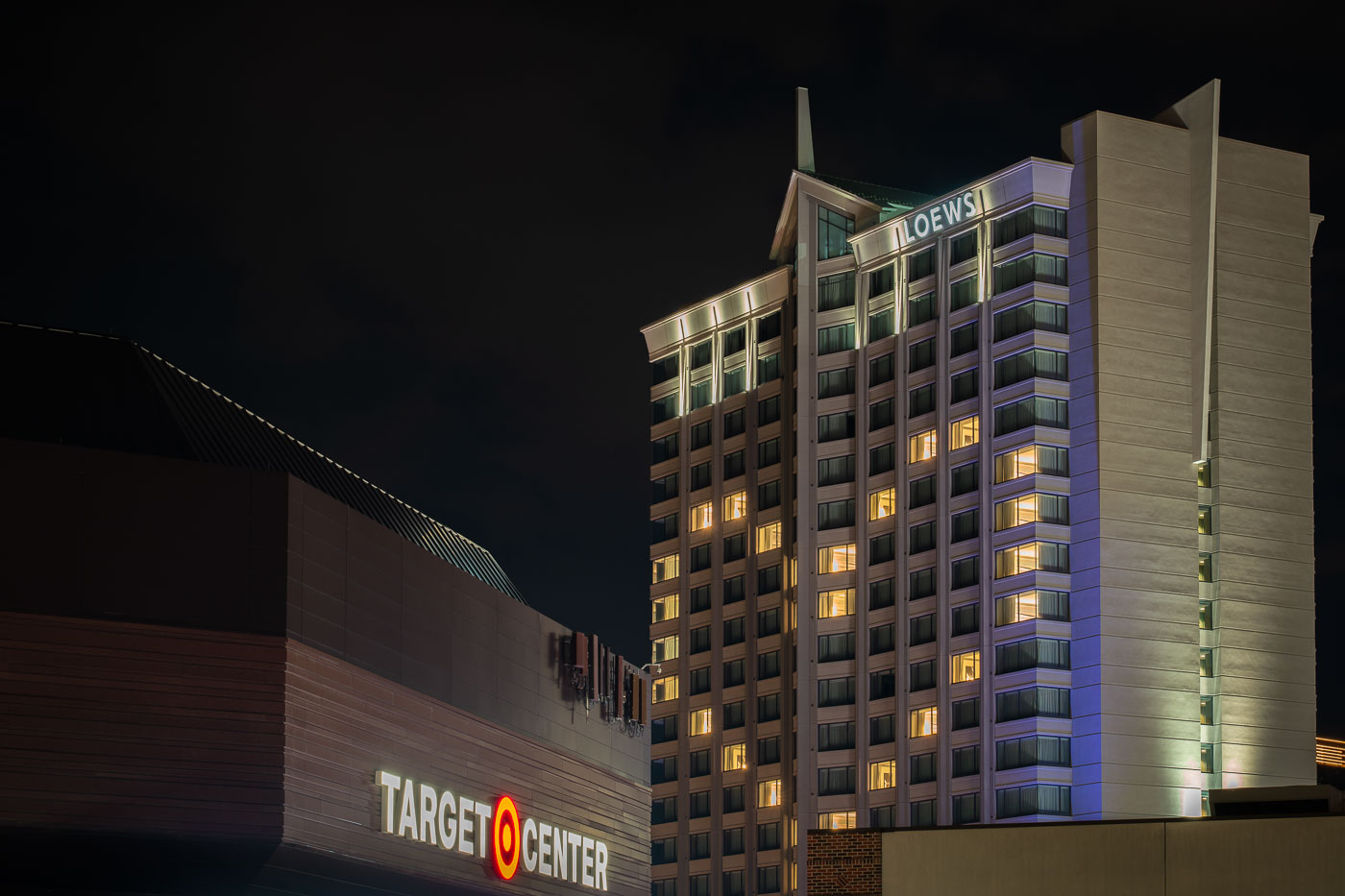 View full post: Loews Minneapolis Hotel Beside Target Center at Night
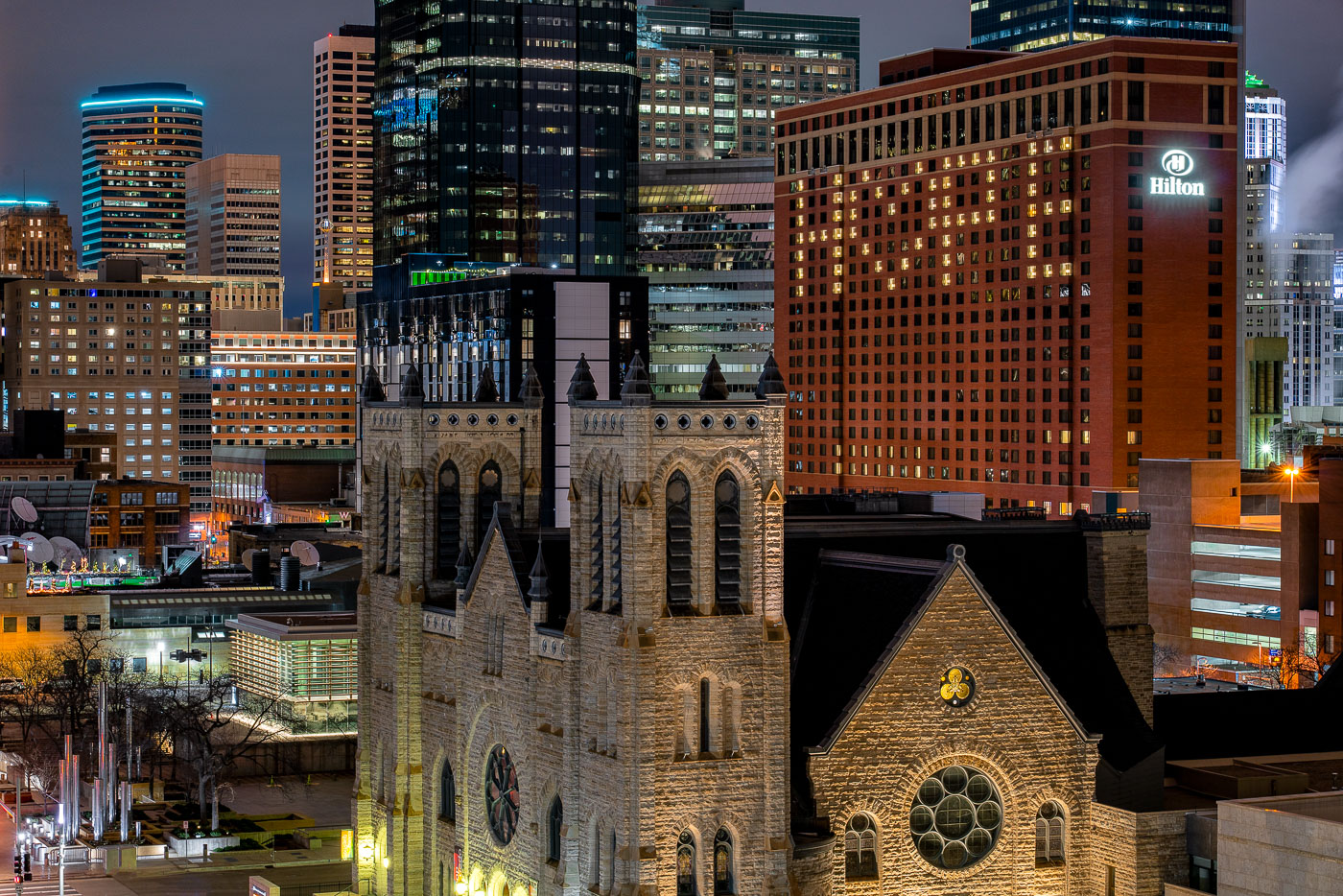 View full post: Hilton Minneapolis Windows Spell “HOPE” During COVID-19
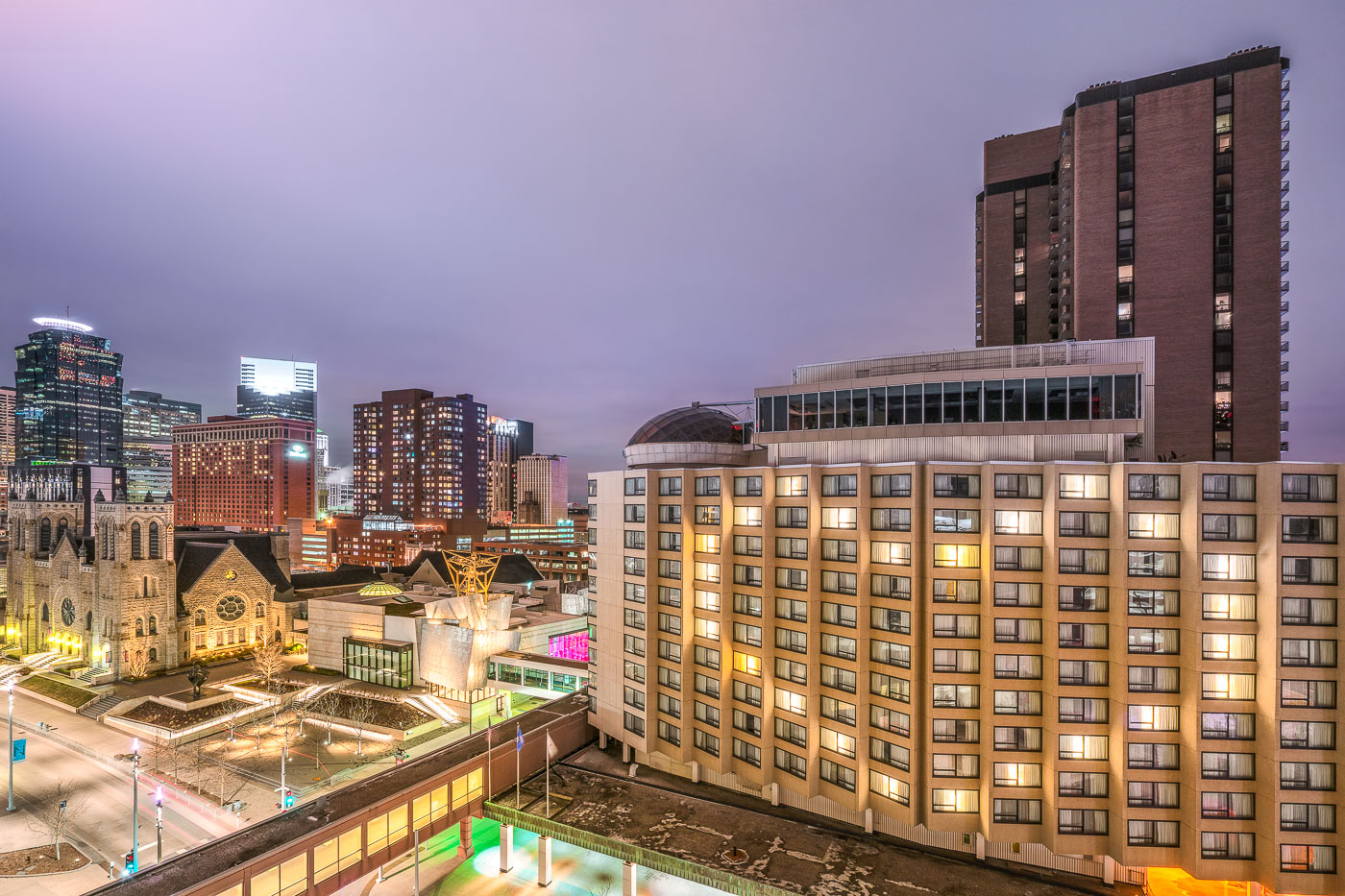 View full post: Millennium Hotel Overlooking Downtown Minneapolis During COVID-19
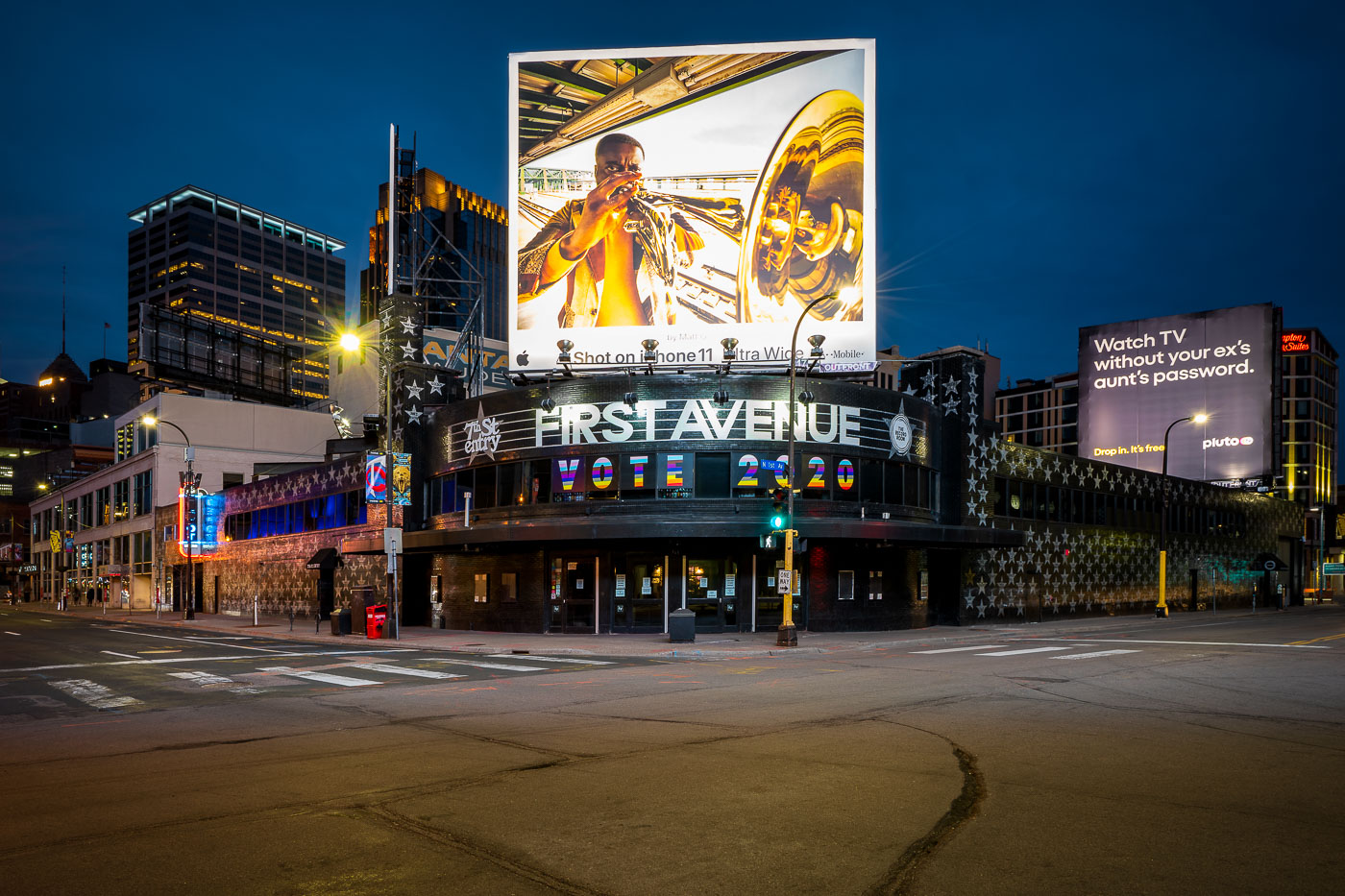 View full post: “VOTE 2020” Marquee at First Avenue During Empty Streets
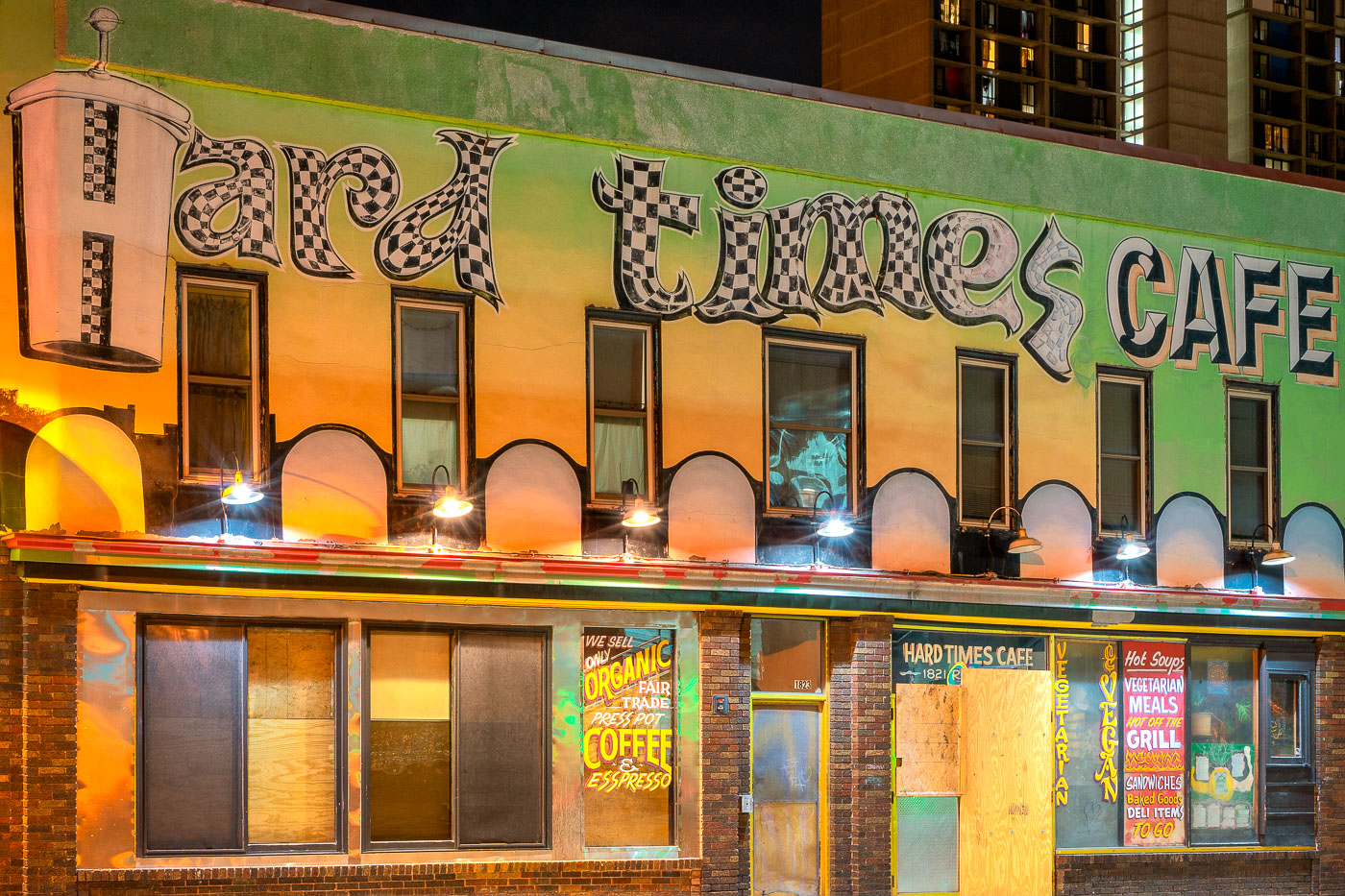 View full post: Hard Times Cafe, Minneapolis: Boarded Up During COVID-19
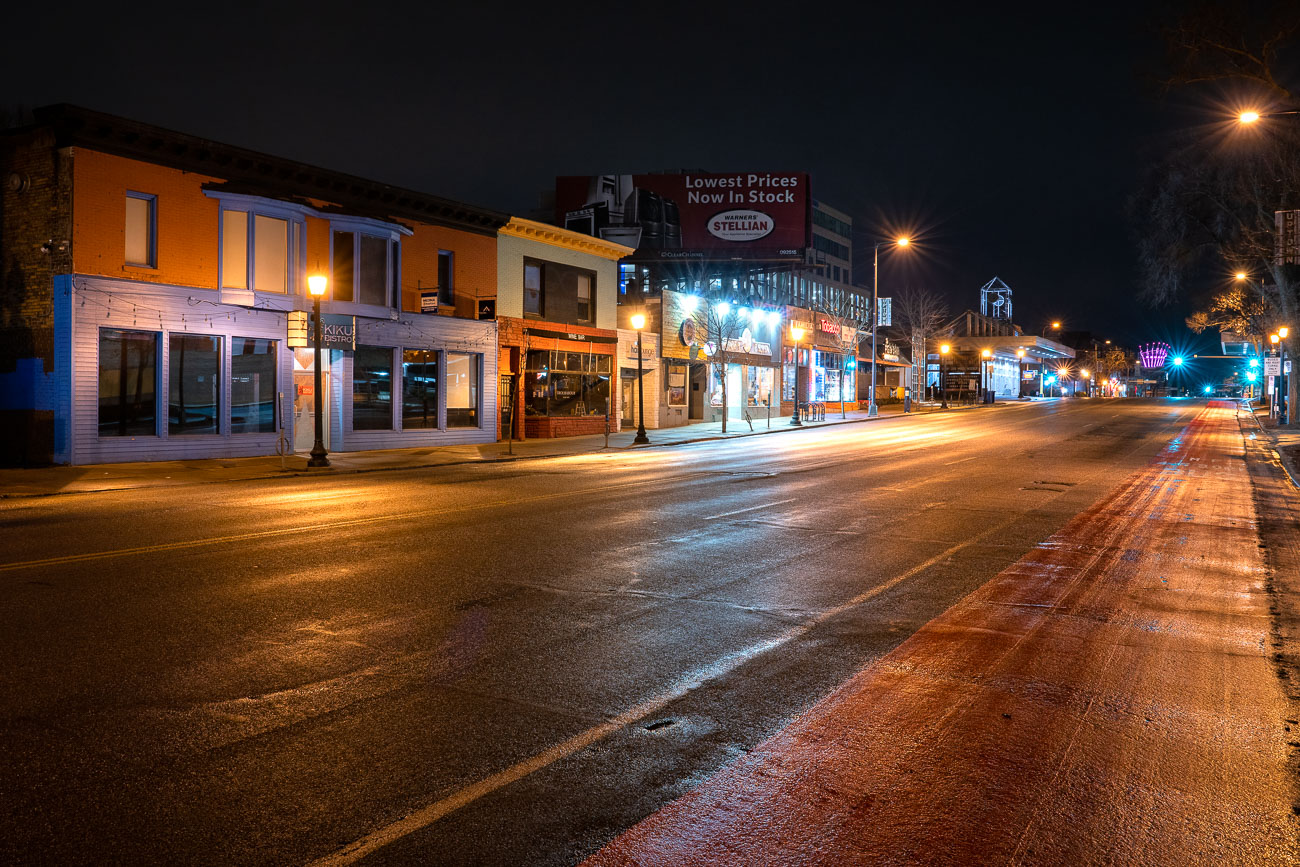 View full post: Hennepin Ave, Uptown Minneapolis: First Night of Stay-at-Home Order
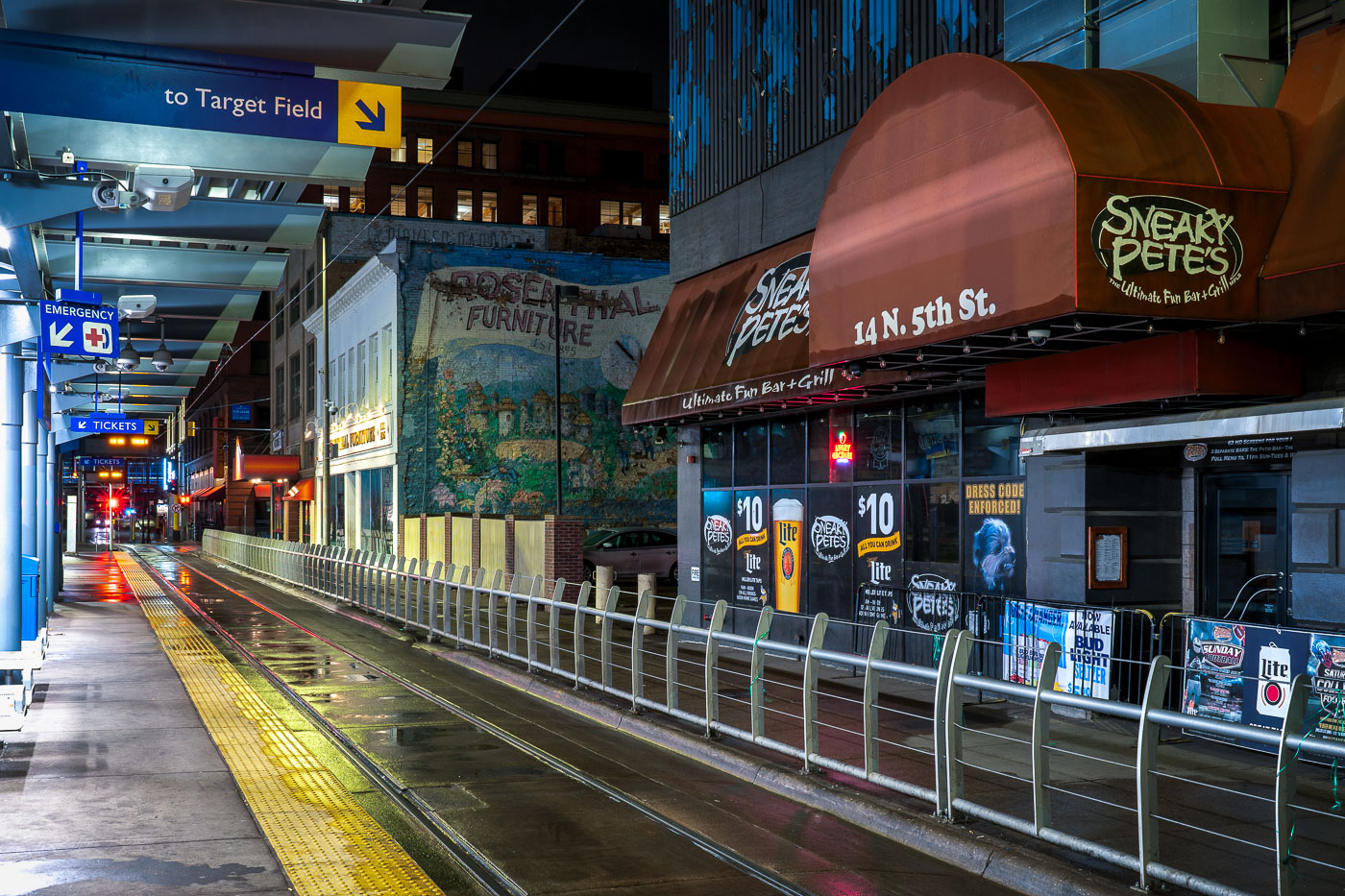 View full post: Sneaky Pete’s Bar, 14 N. 5th St., Minneapolis, COVID-19 Stay at Home Order
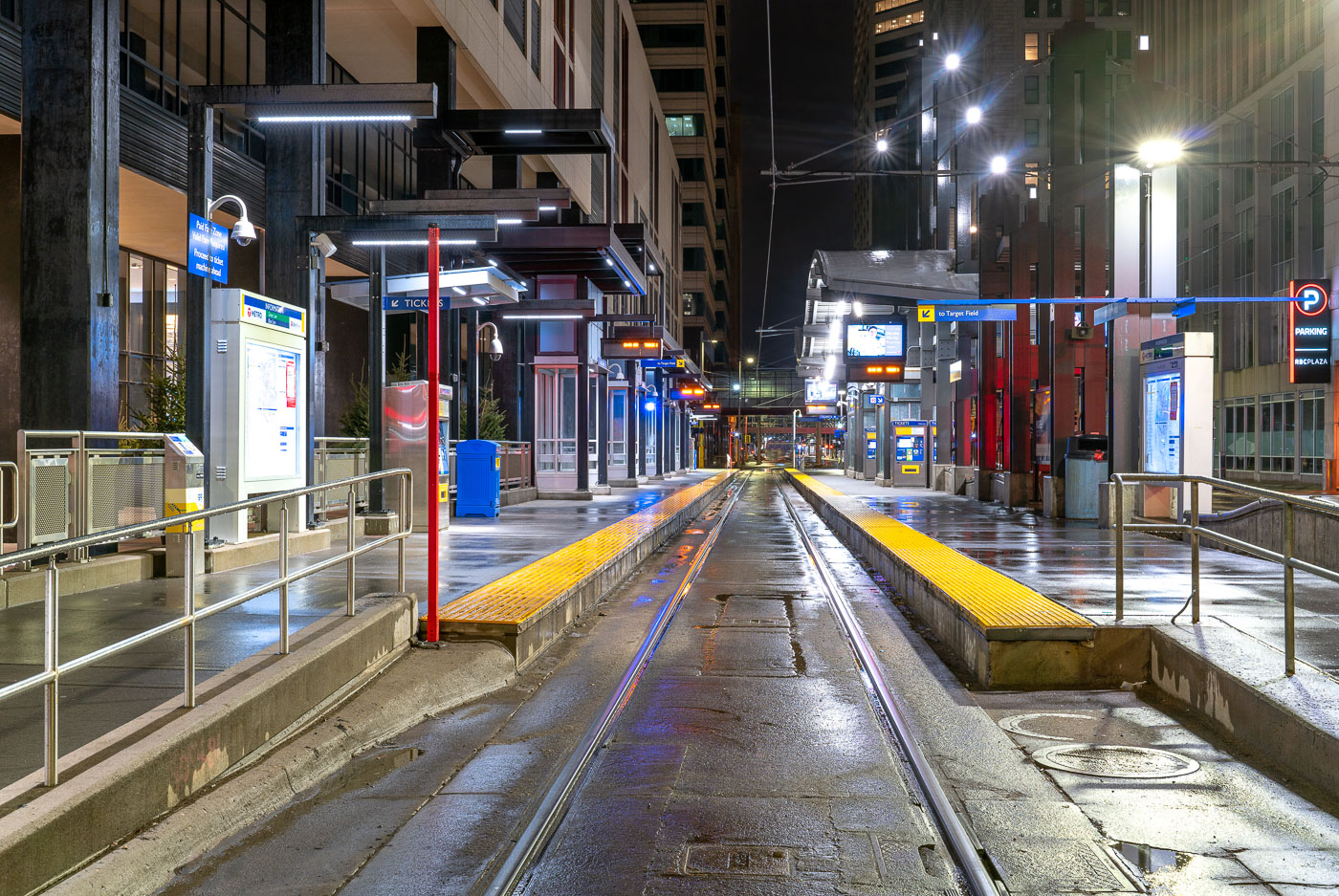 View full post: A Rainy Night at Minneapolis’s Nicollet Mall Station
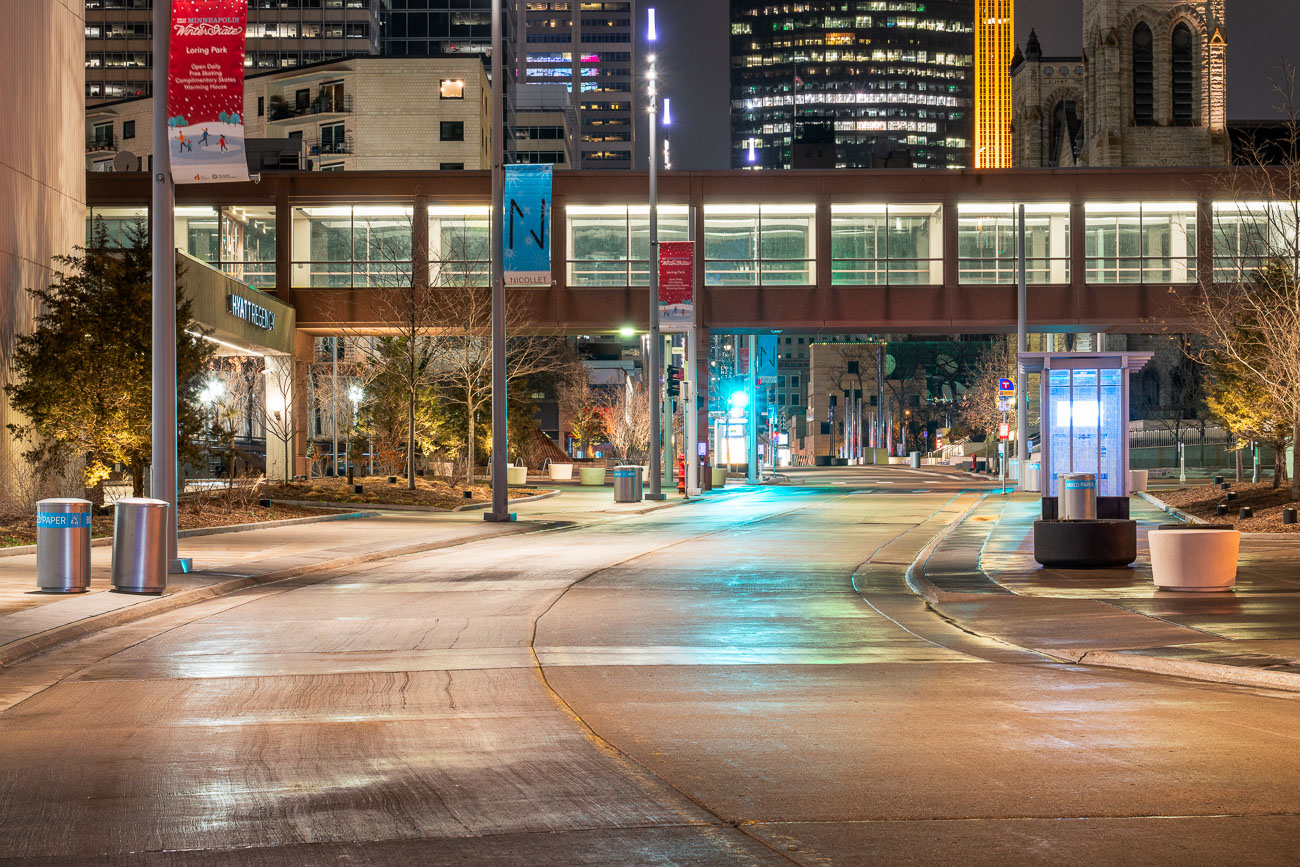 View full post: Nicollet Mall, Downtown Minneapolis During COVID-19 Stay-at-Home
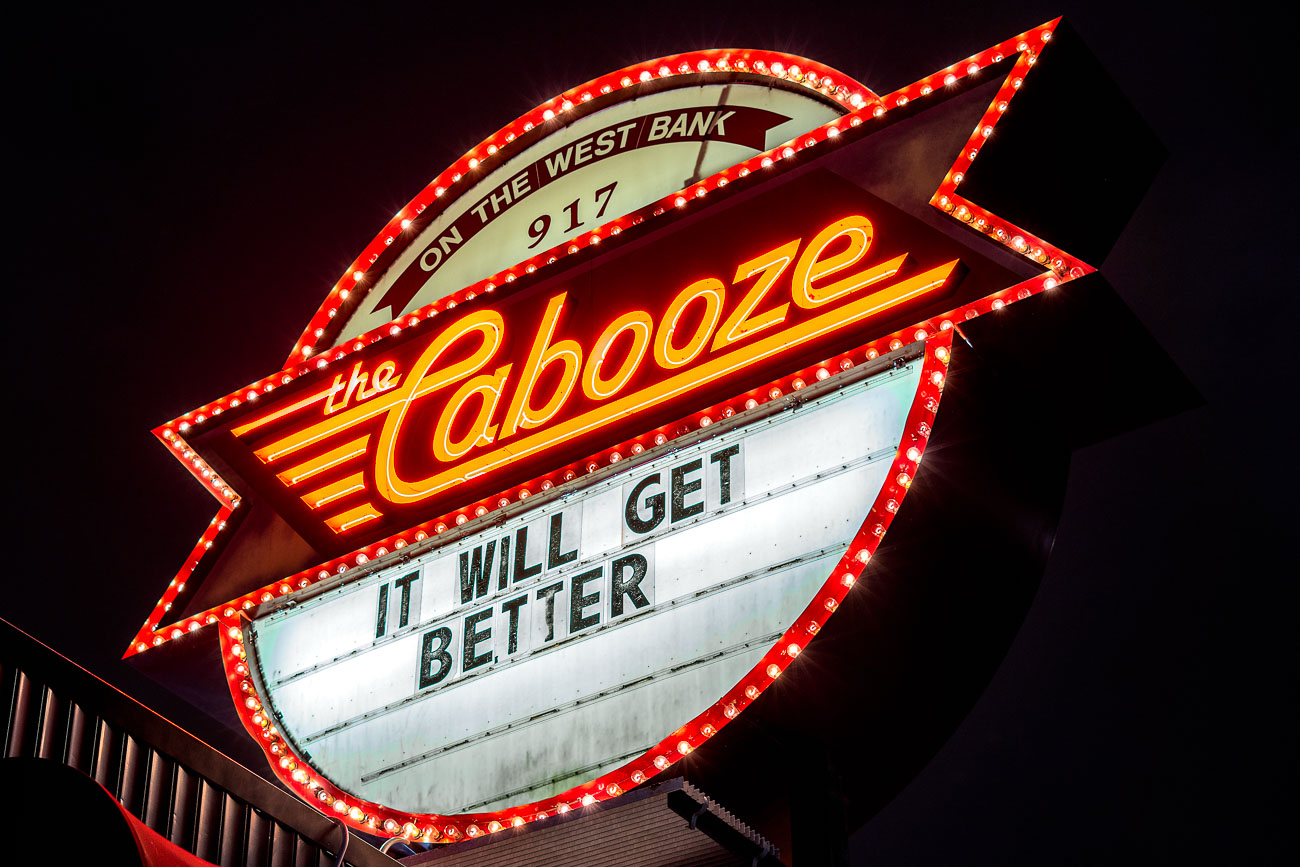 View full post: “It Will Get Better”: The Cabooze Marquee on the West Bank
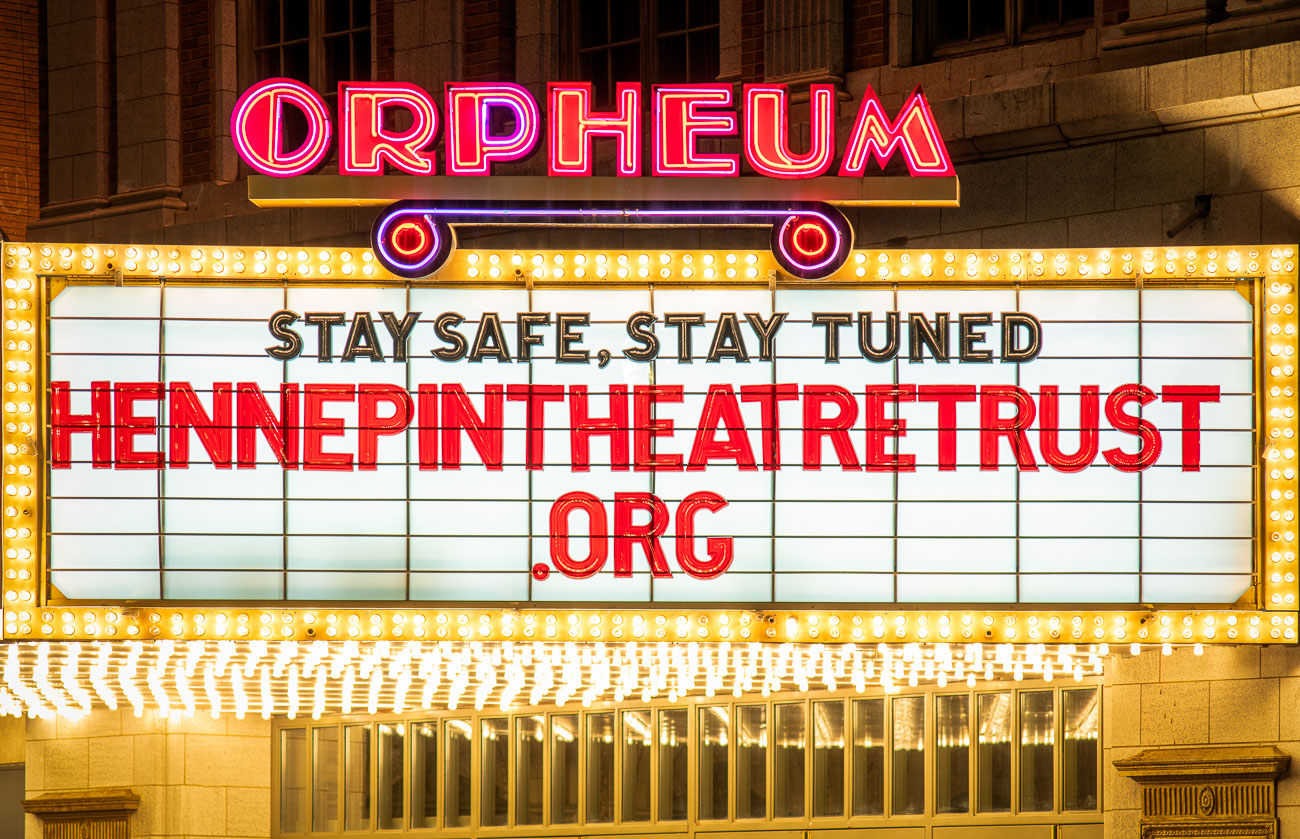 View full post: “Stay Safe, Stay Tuned” on the Orpheum Theatre Marquee
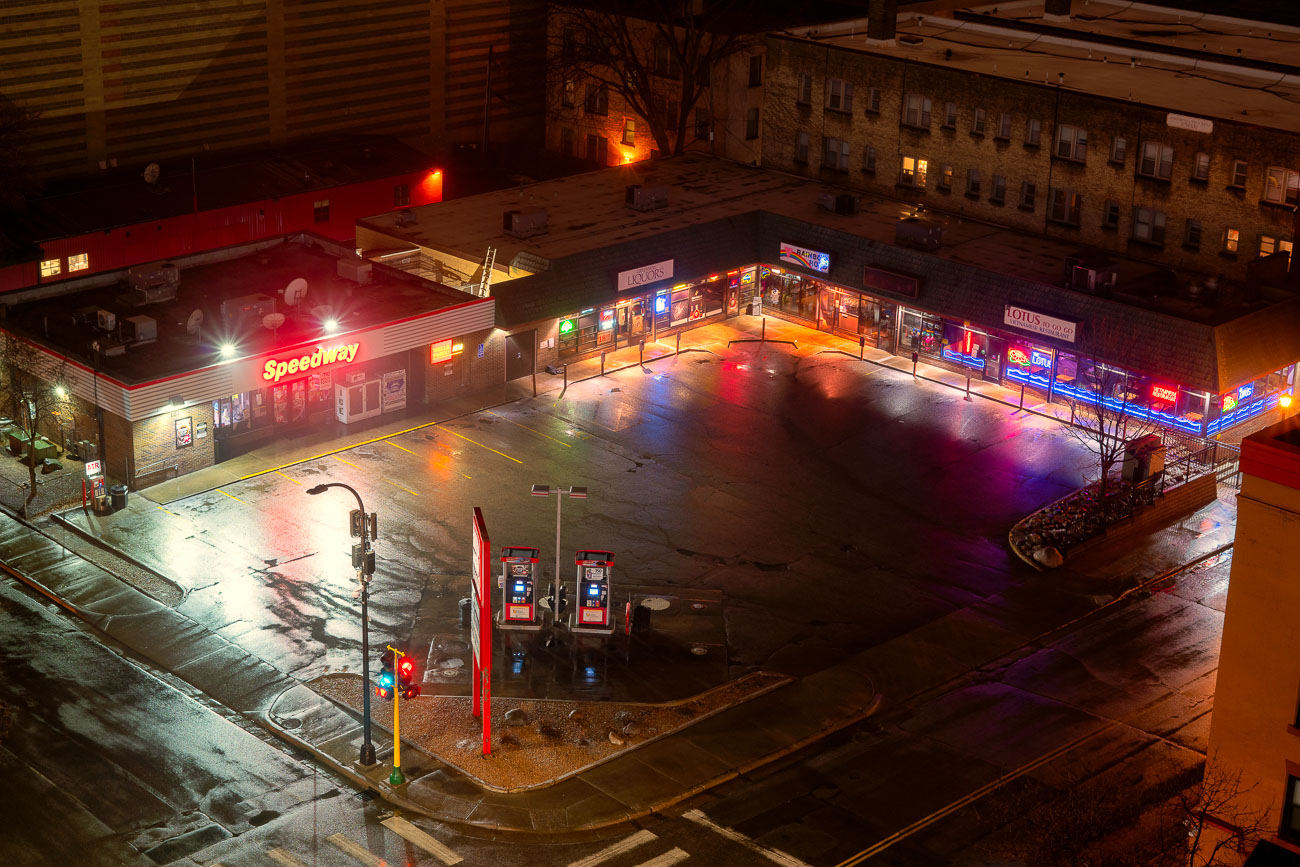 View full post: Speedway Station in Loring Park During the COVID-19 Shutdown
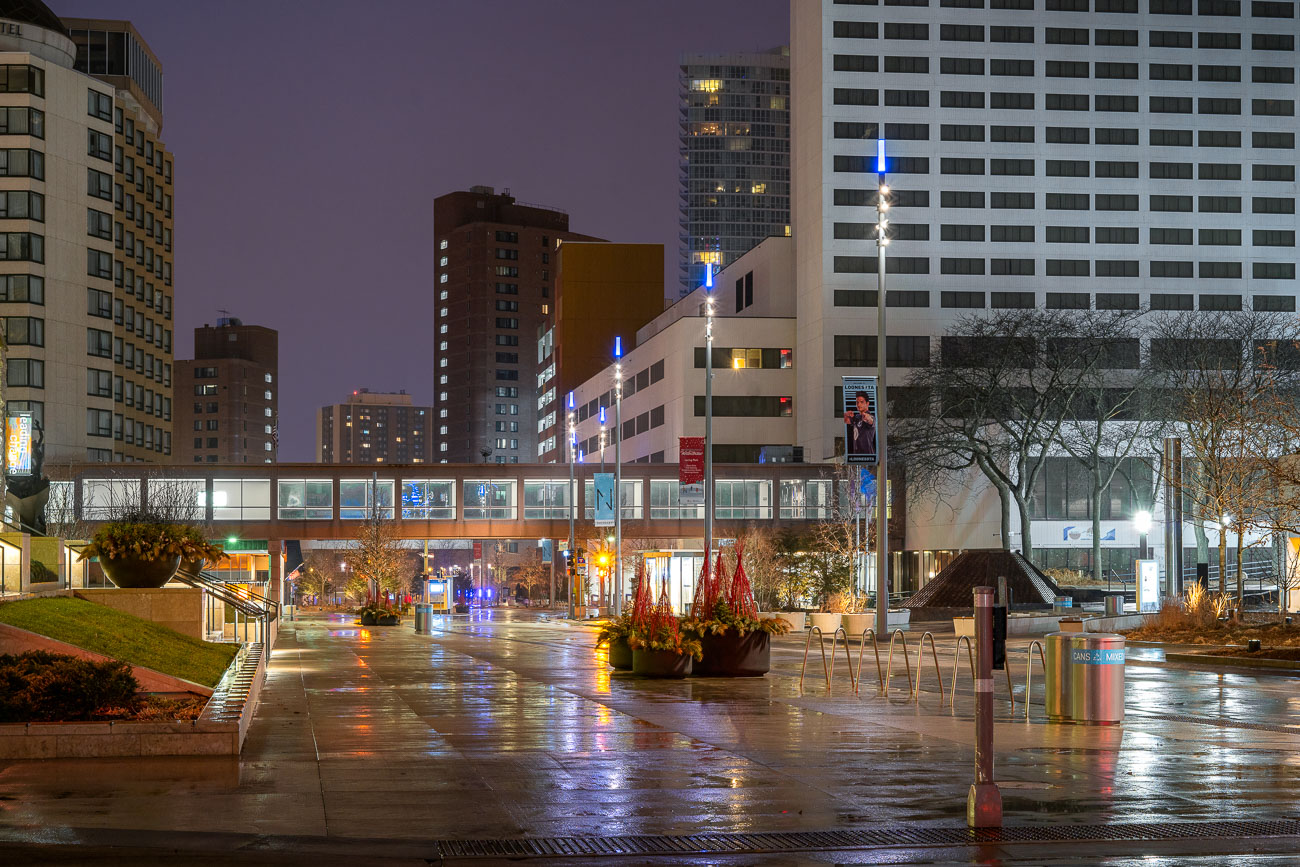 View full post: Nicollet Mall Deserted on a Rainy Night During COVID-19
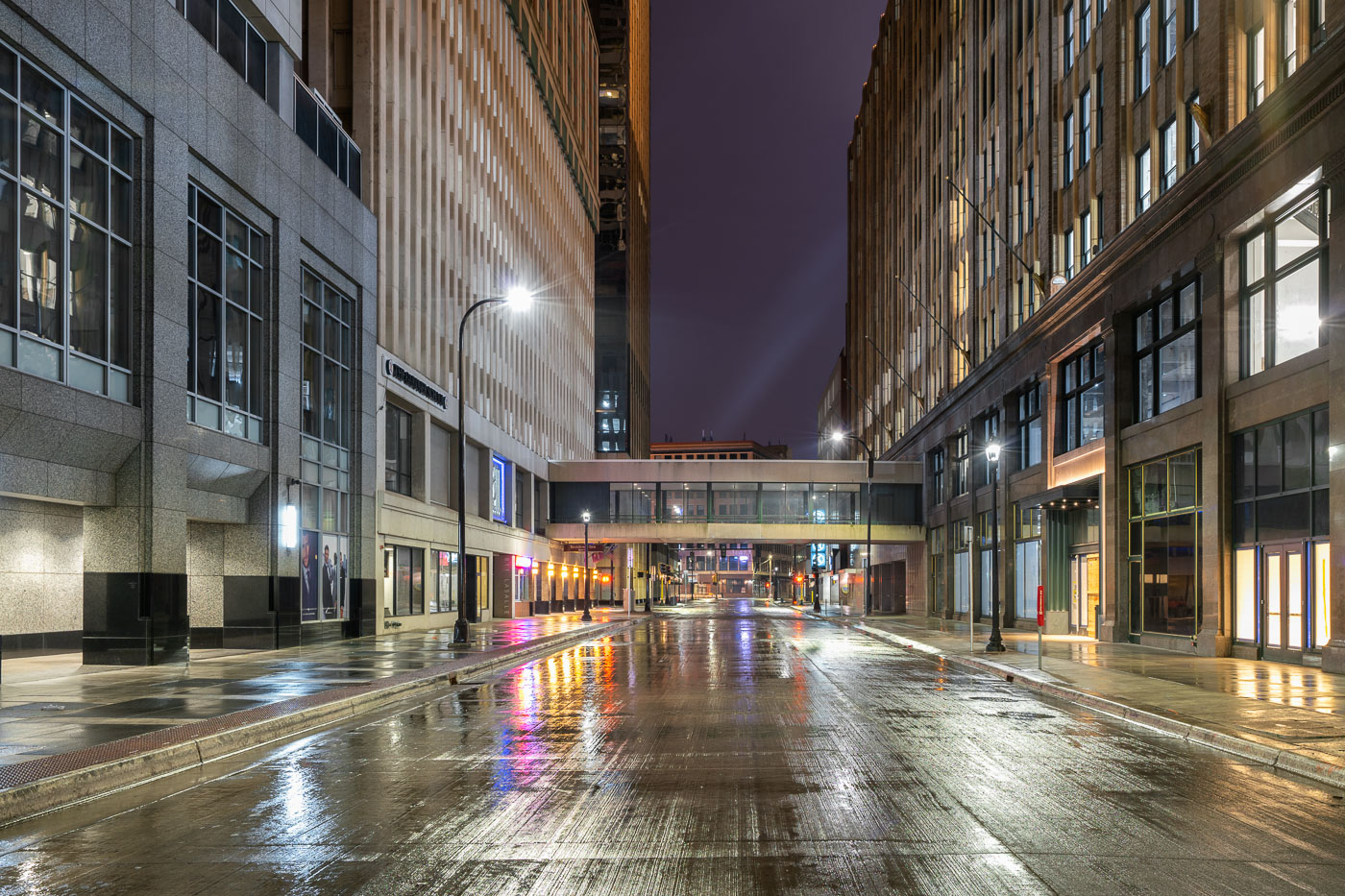 View full post: Downtown Minneapolis S 8th St During COVID-19 Pandemic
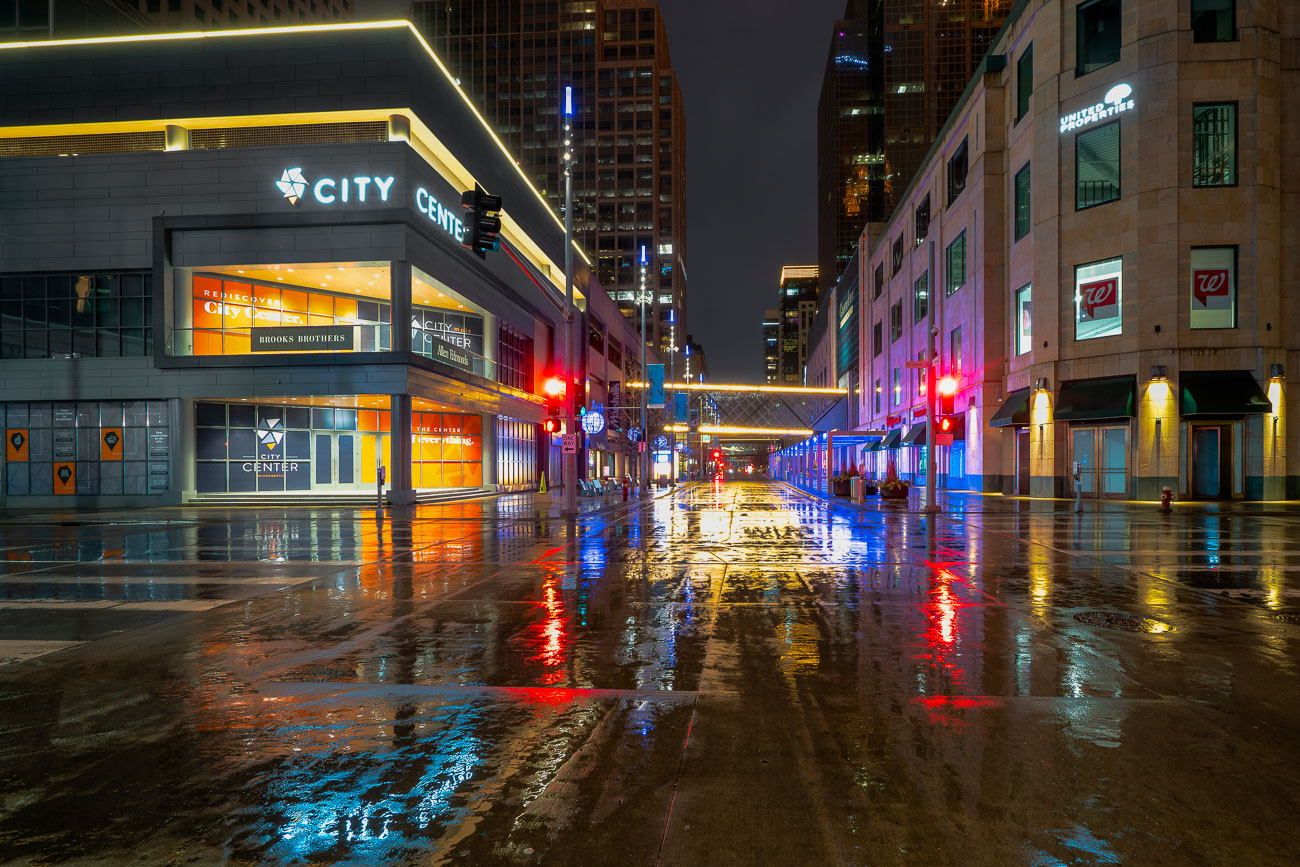 View full post: Rainy Night on Nicollet Mall, Downtown Minneapolis, Early COVID-19
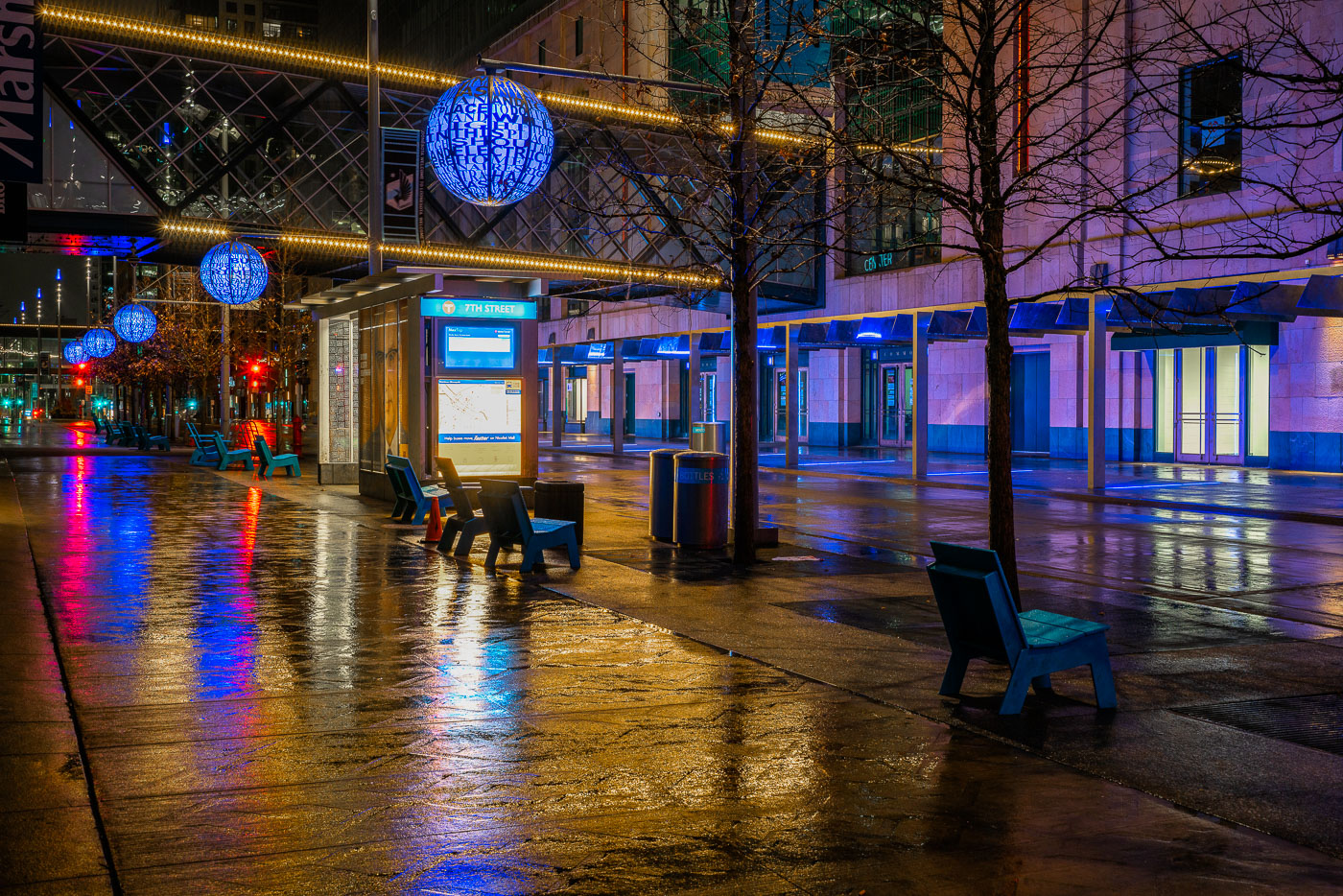 View full post: Nicollet Mall, Minneapolis: Rainy Night During COVID-19
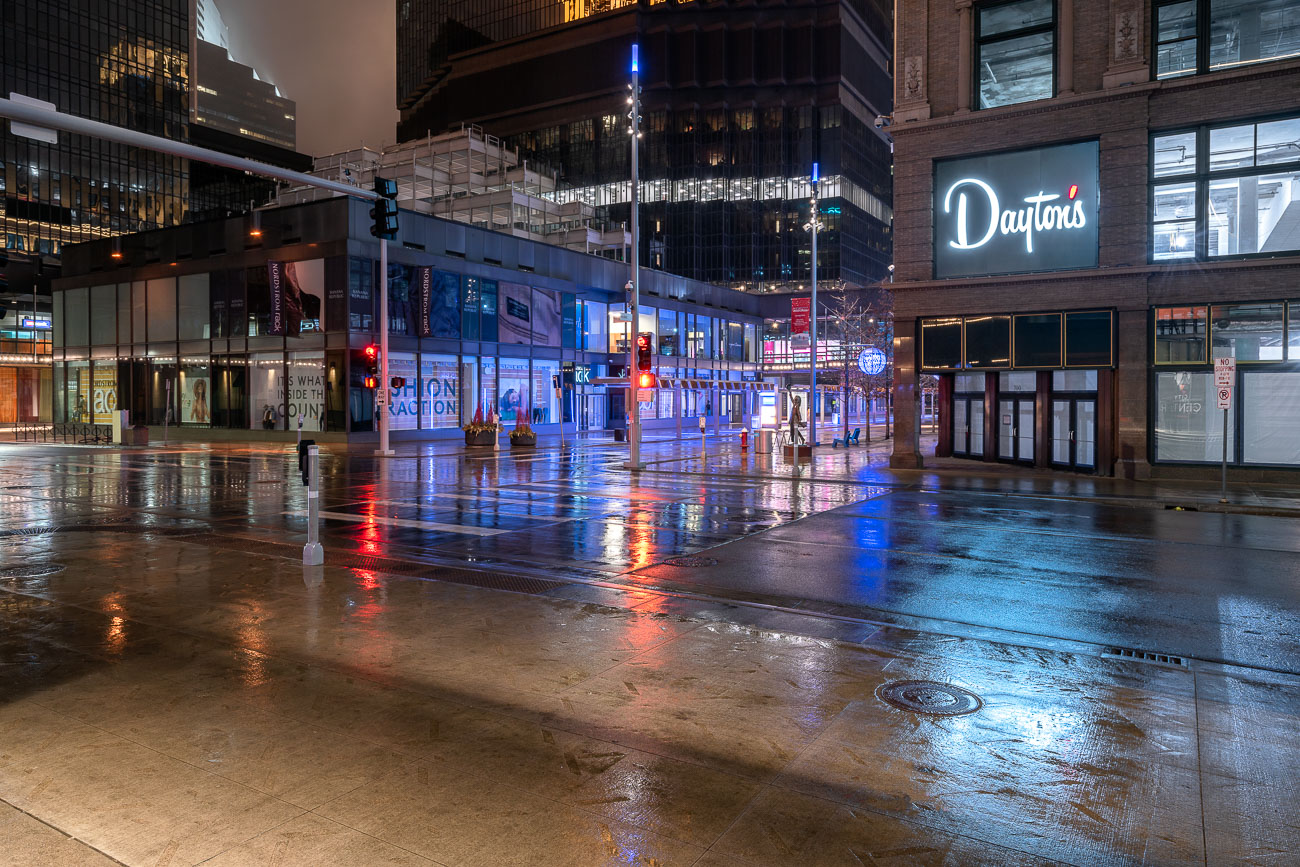 View full post: Dayton’s and IDS Center, Nicollet Mall, Minneapolis, Early COVID-19
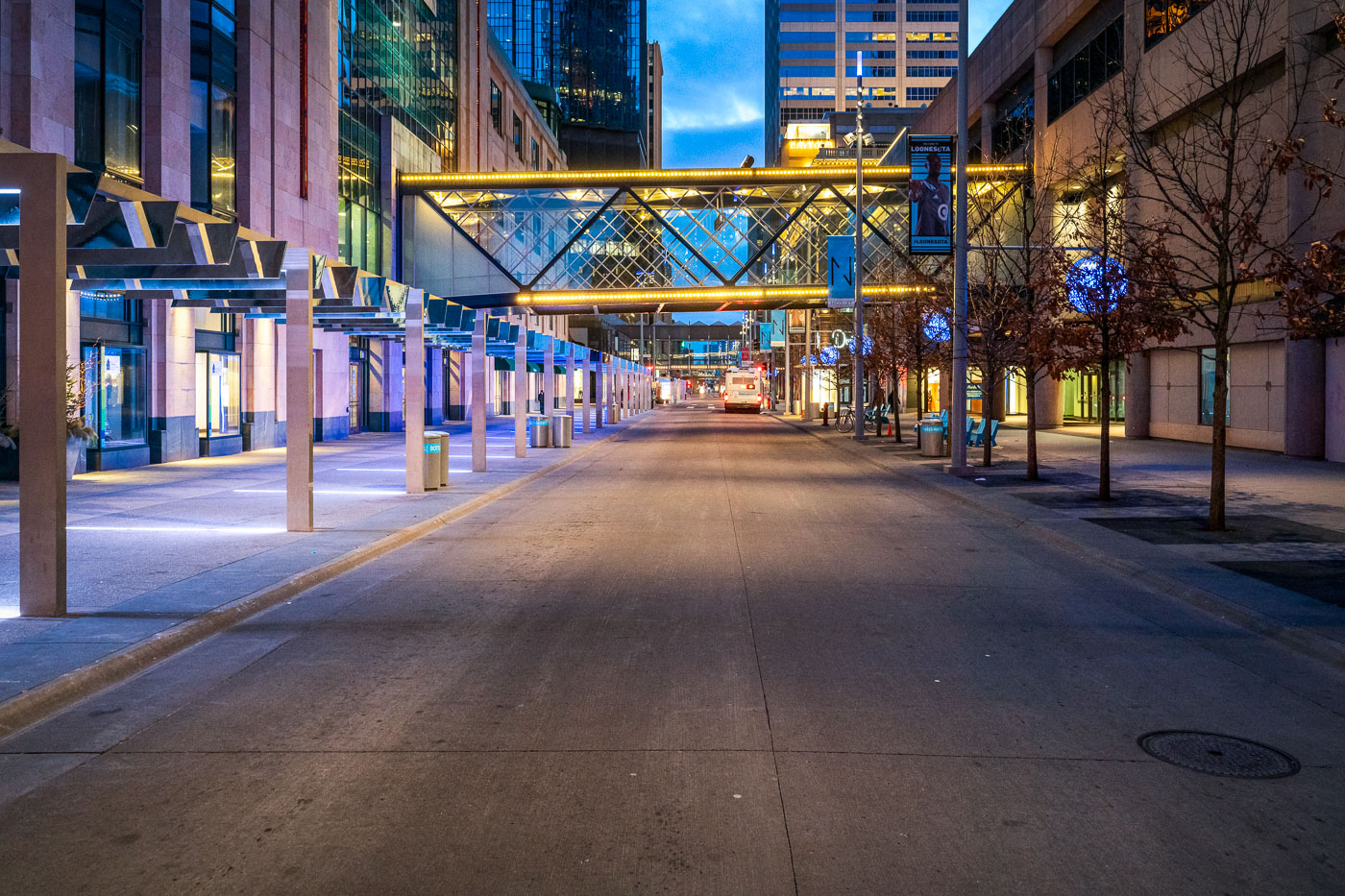 View full post: Nicollet Mall at Dusk During Minneapolis’s COVID-19 Shutdown