Place Archive

Wisconsin

The Foxconn campus in Mount Pleasant showcases industrial infrastructure centered around the distinctive mirrored-glass Globe, now a data center following scaled-back manufacturing plans. Wisconsin Dells is noted for its use of World War II-era DUKW amphibious vehicles, known as “Ducks,” operating on designated trails along the Wisconsin River, blending historical technology with local tourism.

128 photos

Cities

Photo Sets

Photos from Wisconsin
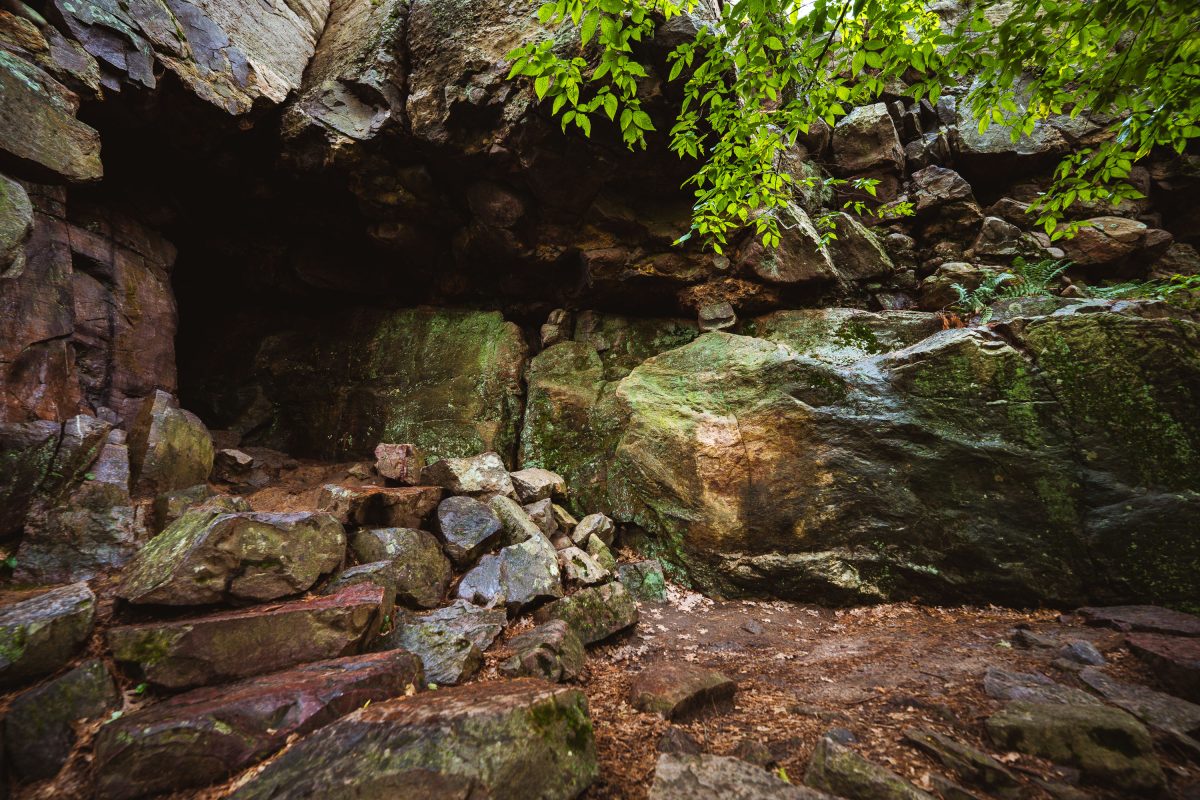
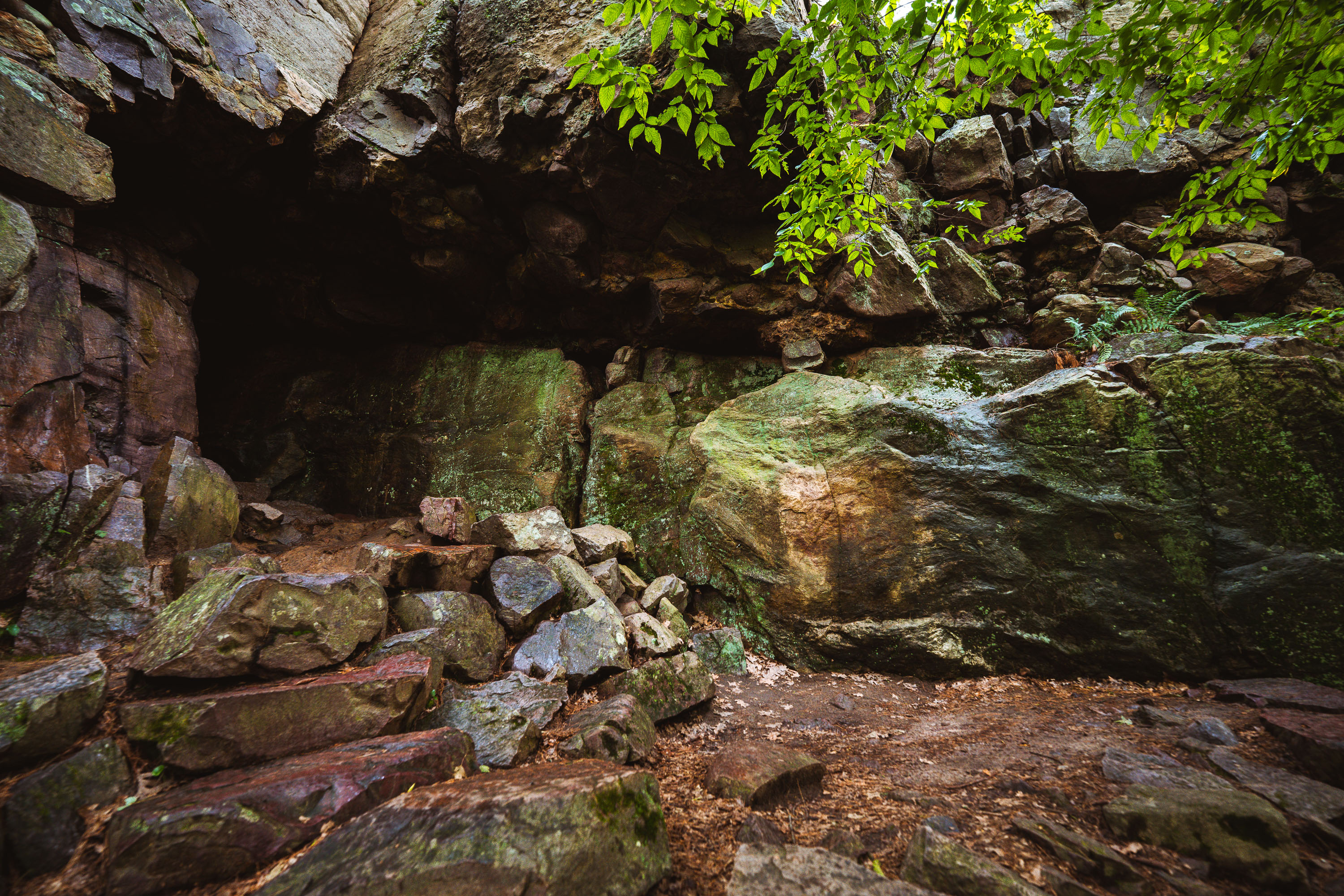
Elephant Cave, Devil's Lake State Park, Wisconsin

Elephant Cave sits along the East Bluff at Devil's Lake State Park, near Baraboo, Wisconsin. The bluff's quartzite boulders formed roughly 1.5 billion years ago and were later shaped by glacial meltwater during the last Ice Age, when the ancient Wisconsin River was dammed and diverted around the area. Devil's Lake is the most-visited state park in Wisconsin's system, drawing over two million visitors a year to its bluffs, talus slopes, and lake below. The park lies within the Baraboo Range, one of the oldest exposed rock formations in North America.

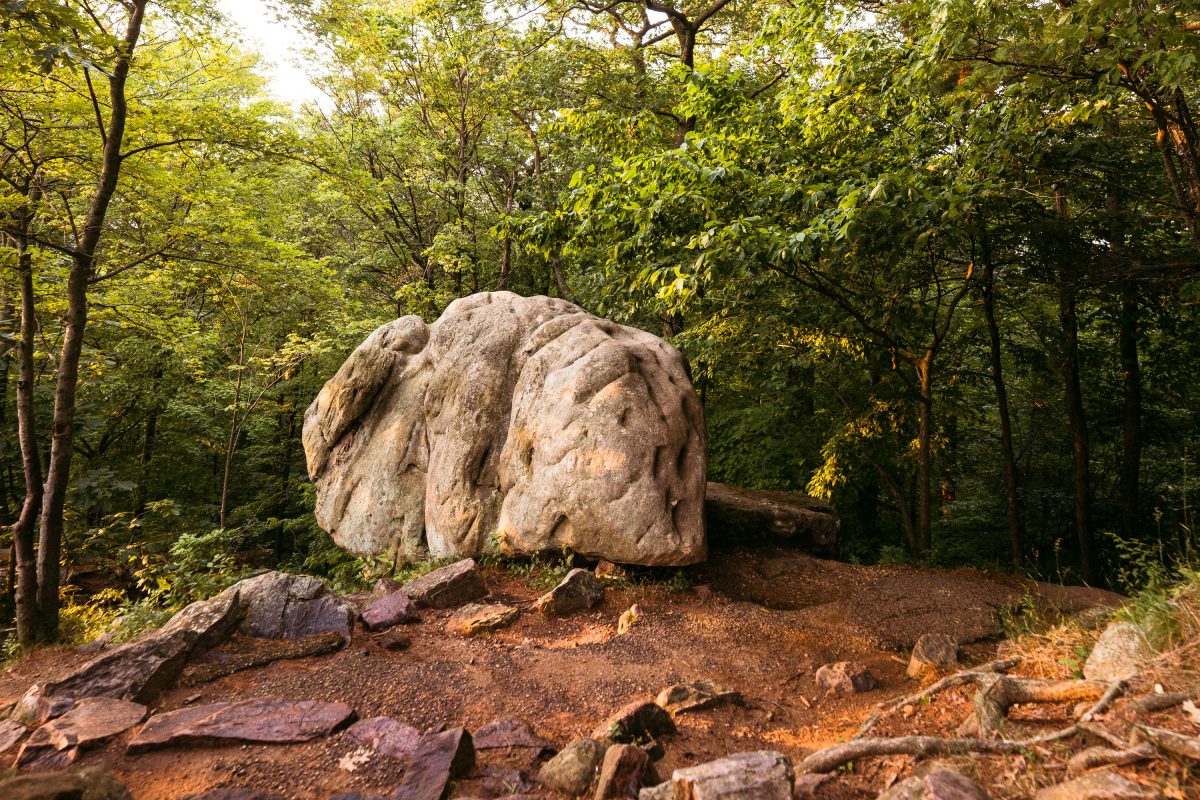
Elephant Rock, a large quartzite boulder, sits on a wooded bluff at Devil's Lake State Park, Wisconsin.
Elephant Rock is a large quartzite boulder along the bluff trails at Devil's Lake State Park near Baraboo. The park's quartzite formed roughly 1.6 billion years ago, making it among the oldest exposed rock in North America, and boulders like this one resulted from ancient rock layers weathering and splitting apart over time. Devil's Lake State Park covers more than 9,000 acres and draws more annual visitors than any other park in the Wisconsin state system. The Ice Age Trail, a National Scenic Trail, runs through the park's bluffs near formations such as this one.

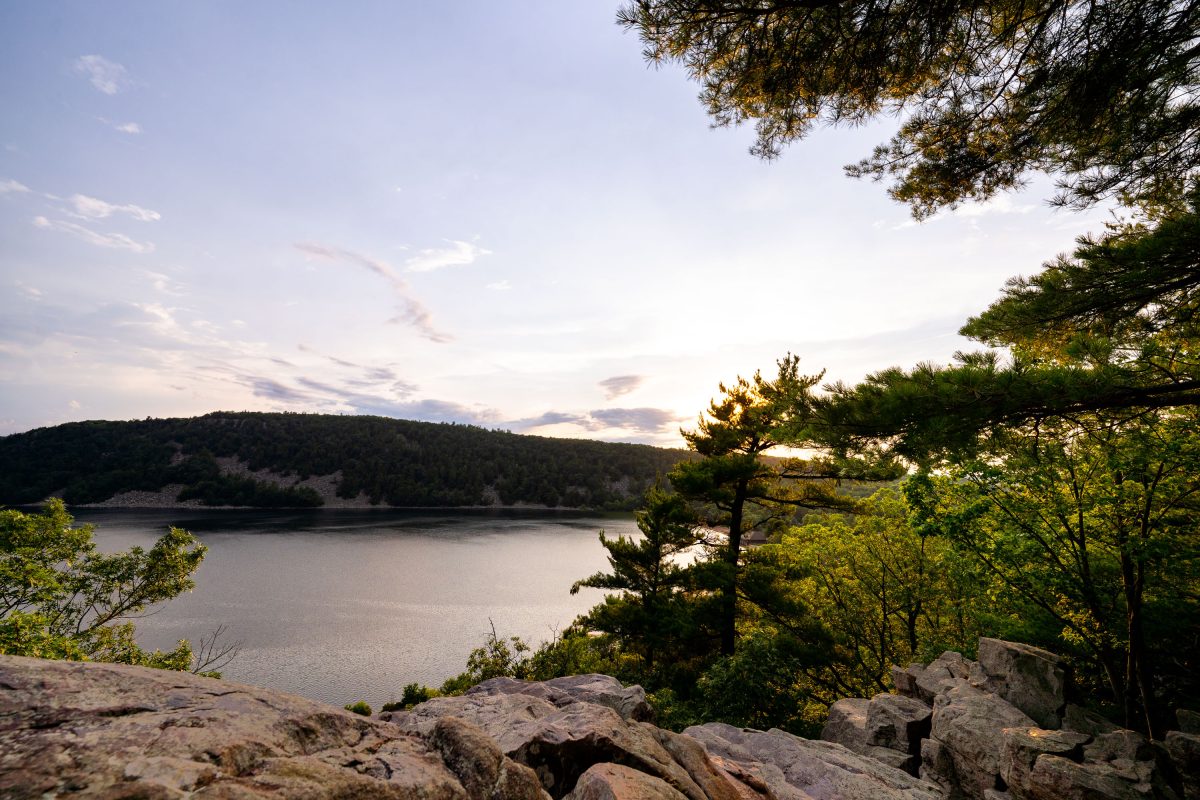
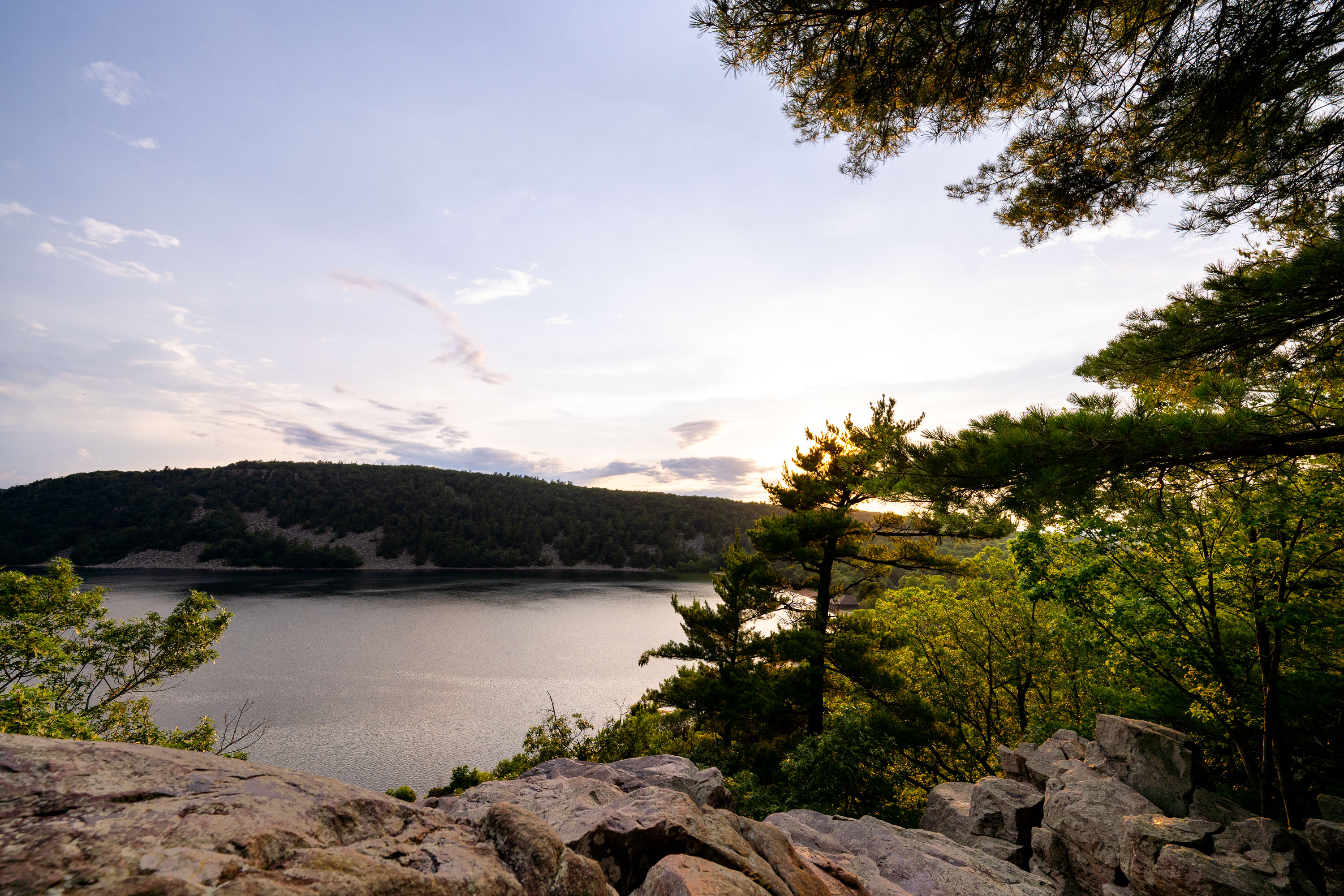
Sunset light filters through pine trees above Devil's Lake in Devil's Lake State Park, Wisconsin.
Devil's Lake State Park draws more visitors than any other state park in Wisconsin, with over three million arriving each year. The 360-acre lake at its center formed roughly 15,000 years ago when glacial debris blocked both ends of an ancient river gorge, leaving quartzite bluffs rising several hundred feet on either side. Those bluffs rank among the oldest exposed rock formations in North America, dating back nearly 1.6 billion years. The park sits within Wisconsin's Driftless Area, a region bypassed by glaciers during the last ice age, which left its river valleys and rock outcrops largely unaltered. Trails along the East Bluff and West Bluff give hikers elevated views of the lake below.
Devil's Lake State Park East Bluff
Devil's Lake State Park sits within Wisconsin's Baraboo Range, among the oldest exposed rock formations in North America, with quartzite dating back some 1.6 billion years. The East Bluff Trail climbs along a talus slope of massive quartzite boulders left behind as ancient cliff faces broke apart over time. At more than 9,000 acres, Devil's Lake is the largest property in the Wisconsin State Park System and consistently draws more visitors than any other park in the state. The lake itself formed when glacial debris dammed an ancient river channel, sealing off the valley at both ends and creating the basin seen today.
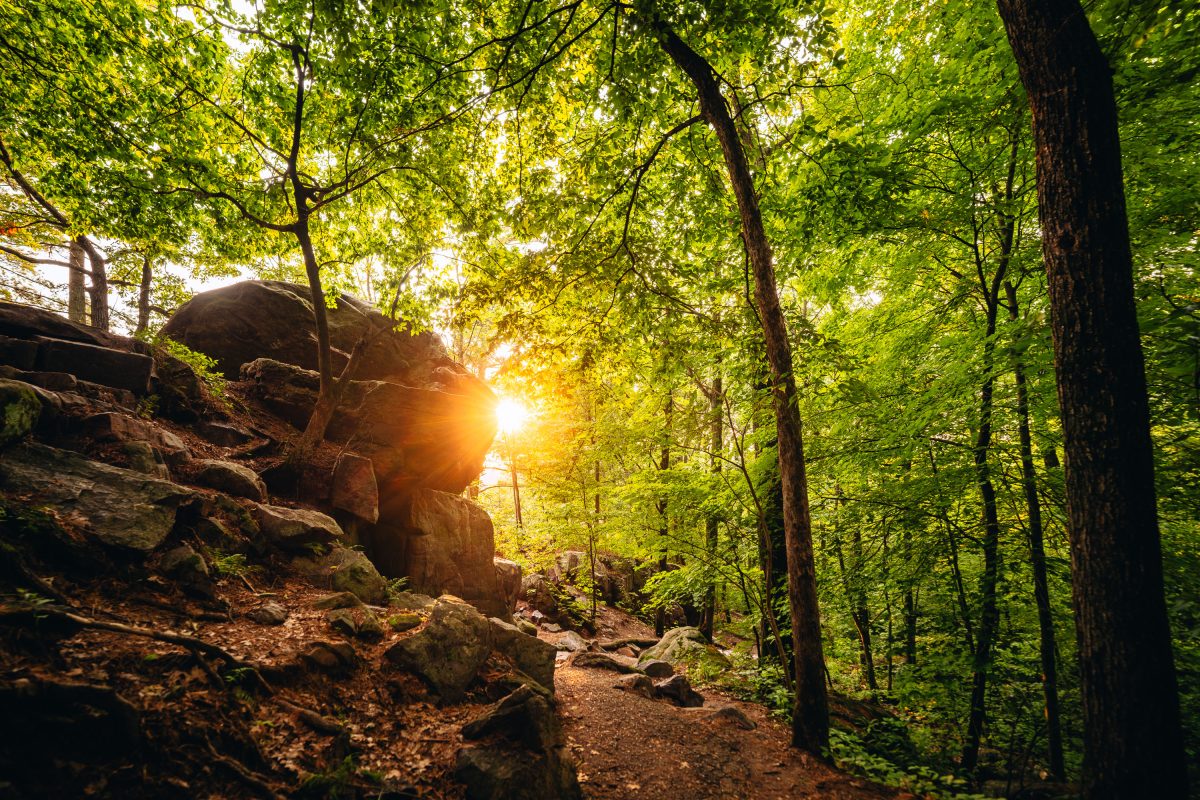
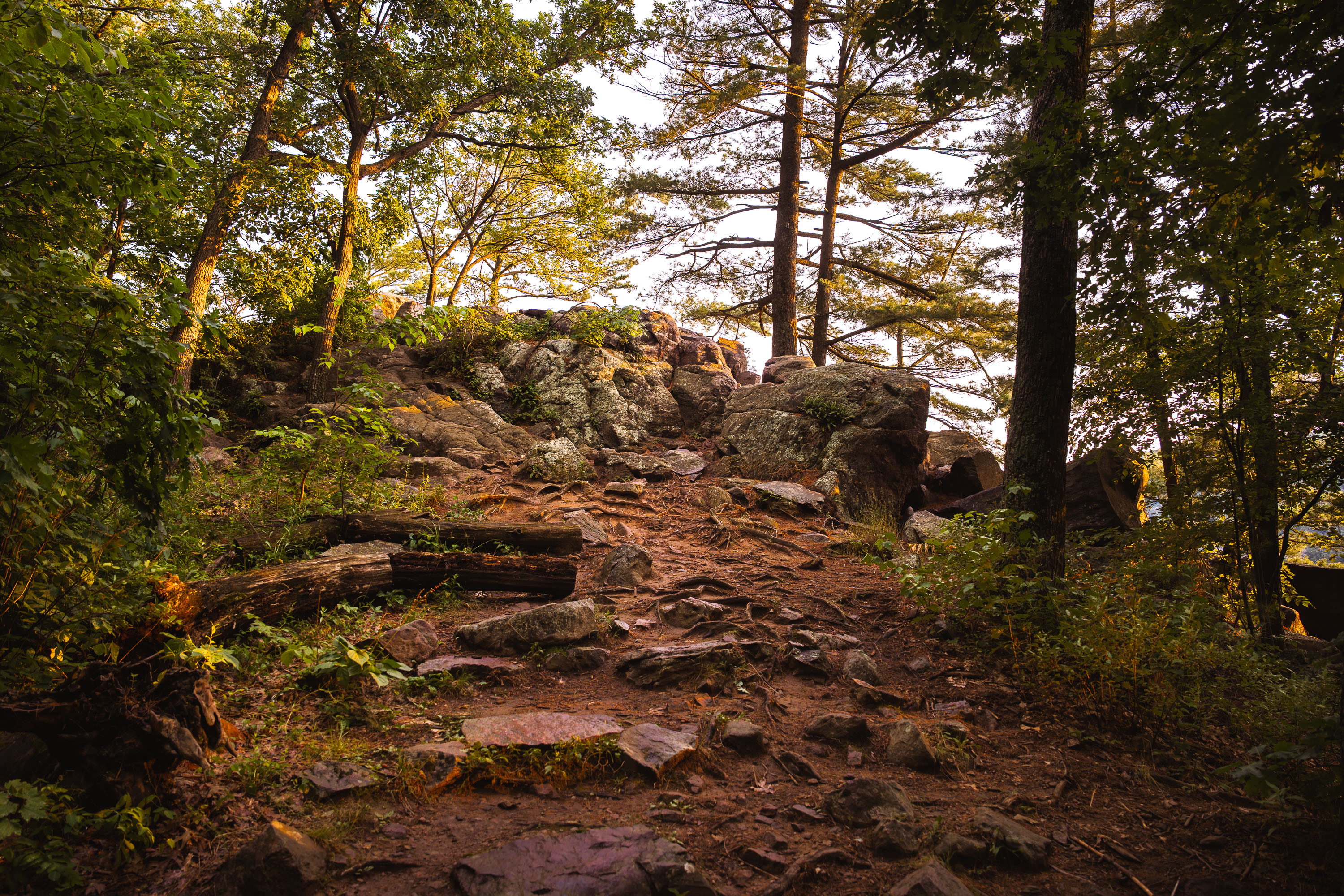
Tree roots at Devil's Lake State Park
Devil's Lake State Park sits in the Baraboo Range, a band of quartzite hills formed roughly 1.6 billion years ago among the oldest exposed rock in North America. The East Bluff trail climbs about 500 feet above the lake, crossing talus fields of quartzite boulders left behind as the surrounding cliffs eroded over millions of years. Glacial ice sheets stopped just short of this valley during the last ice age, damming the ancient Wisconsin River and creating the lake that gives the park its name. At roughly 9,200 acres, Devil's Lake draws more visitors annually than any other property in the Wisconsin state park system.

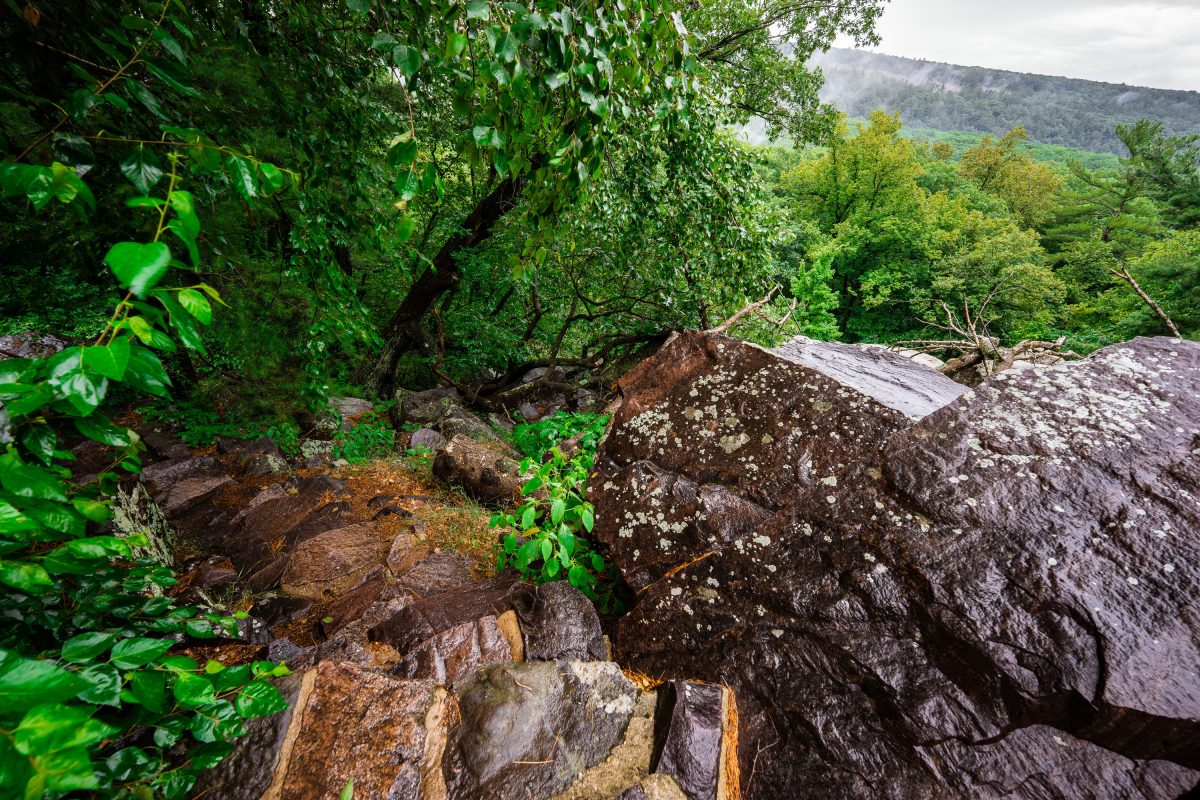
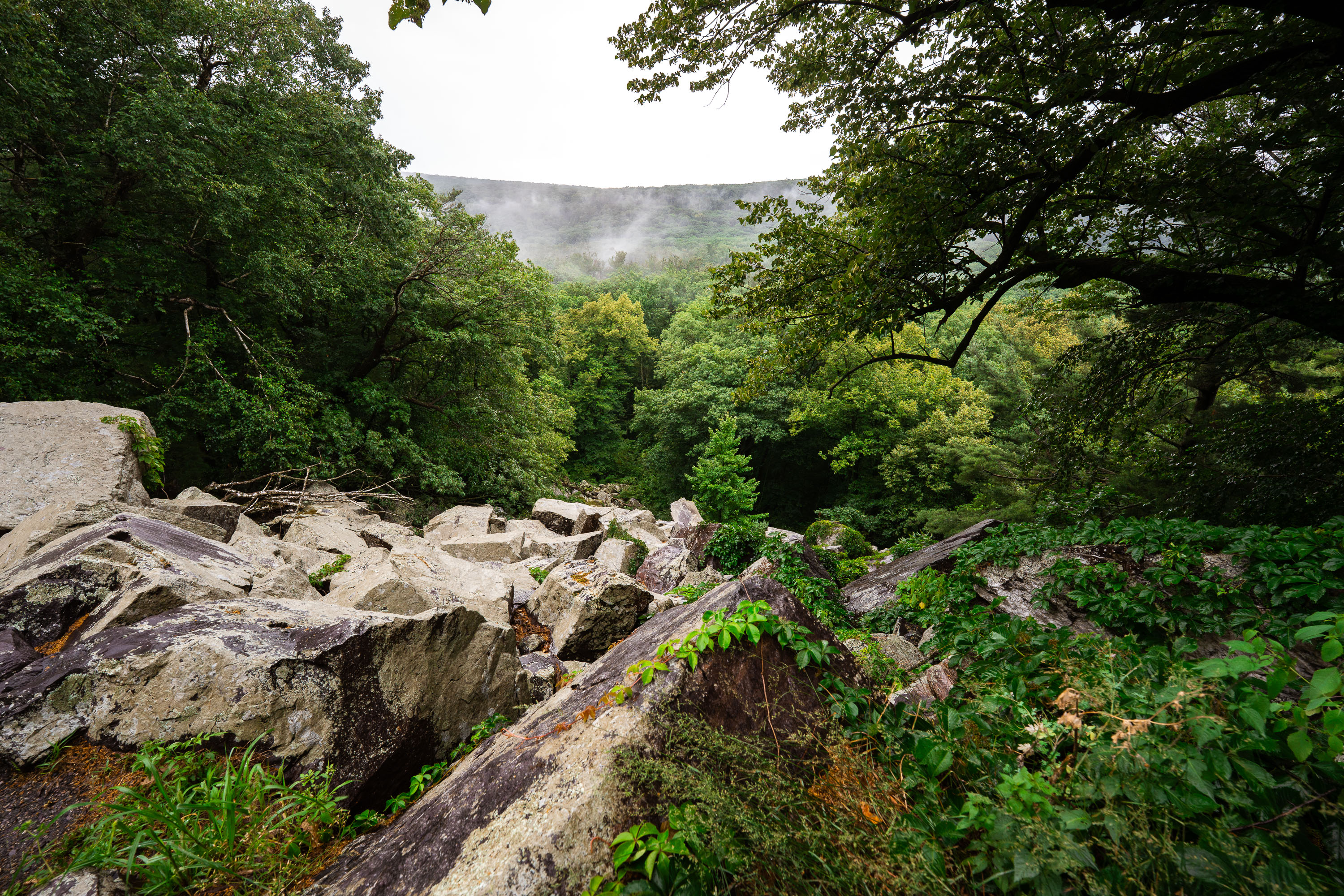
Quartzite boulders and talus rock line the East Bluff Trail at Devil's Lake State Park, Wisconsin.
Devil's Lake State Park sits near Baraboo, Wisconsin, within the Baraboo Range, a set of quartzite hills formed roughly 1.6 billion years ago. The East Bluff Trail traces the rim above the lake, passing over quartzite talus fields left by centuries of freeze-thaw fracturing along the bluff. The park itself spans over 9,000 acres and draws more than three million visitors a year, making it one of the most heavily used state parks in Wisconsin. Its bluffs and lake basin were carved by glacial activity that dammed an ancient river channel during the last Ice Age.
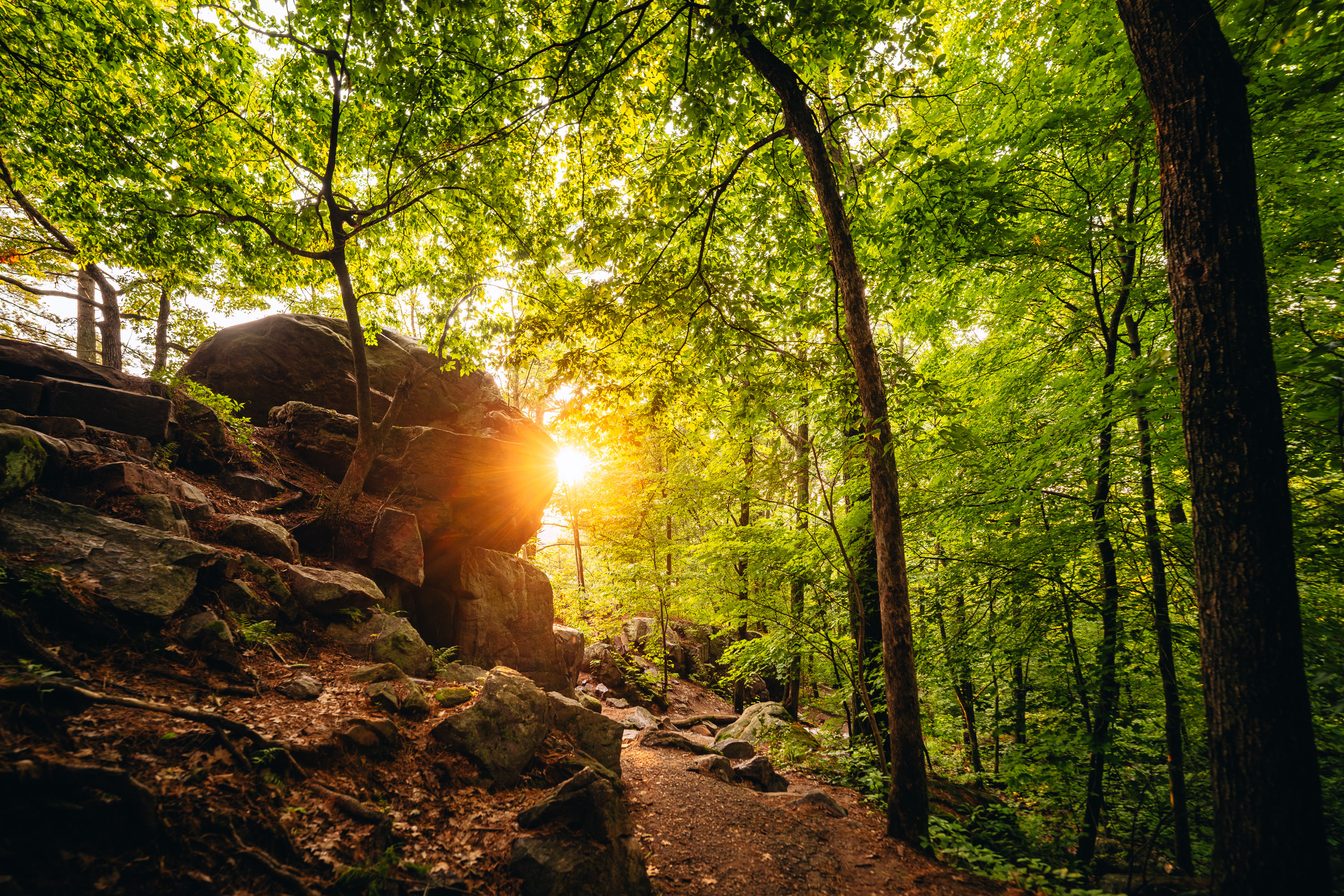
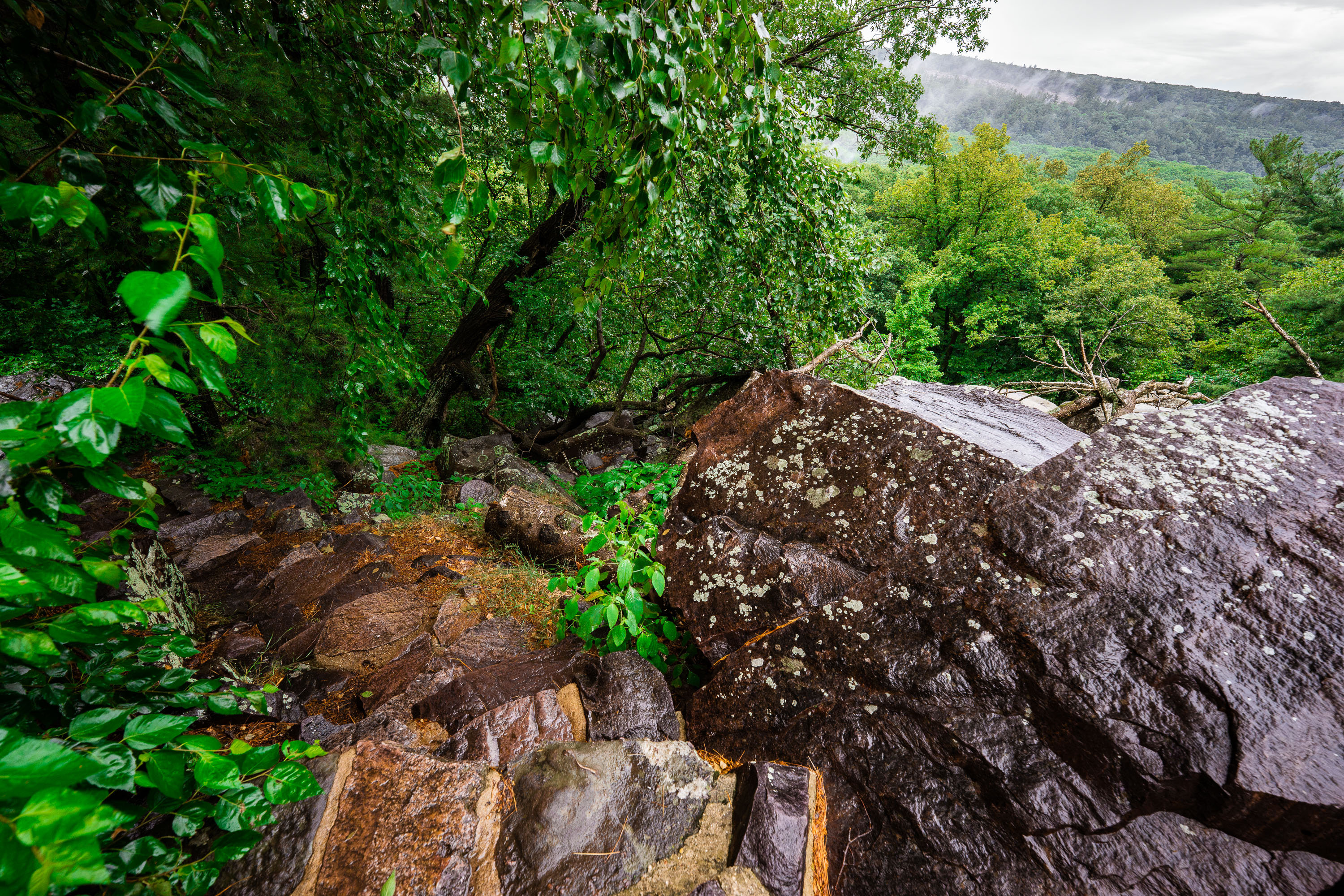
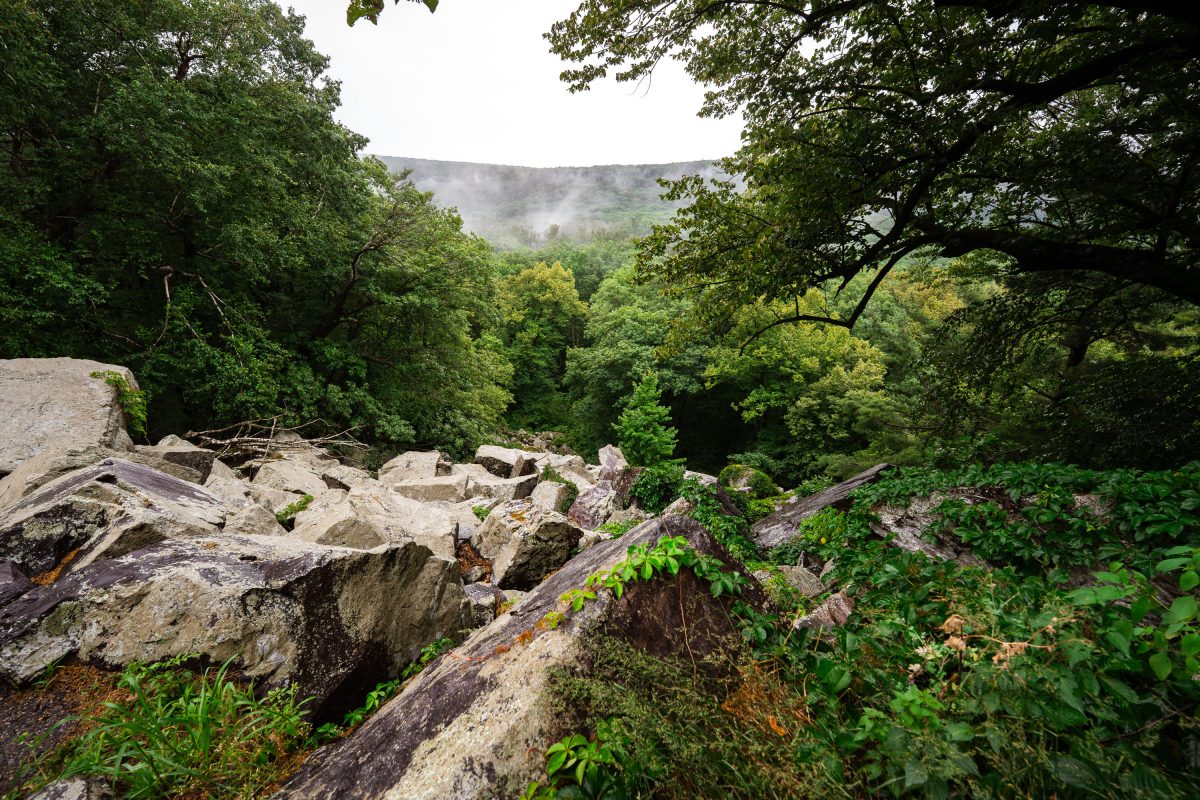
Rocky talus slope and dense forest along the East Bluff Trail at Devil's Lake State Park, Wisconsin.
Devil's Lake State Park covers roughly 9,200 acres in Baraboo, Wisconsin, and sits within the Baraboo Range, among the oldest exposed rock formations in North America. The East Bluff Trail climbs sections of quartzite talus, remnants of ancient bedrock broken apart by glacial and freeze-thaw activity over thousands of years. Dense stands of oak, maple, and basswood cover much of the bluff, part of the park's mixed hardwood forest. The park is Wisconsin's most visited state park, drawing more than three million visitors annually.
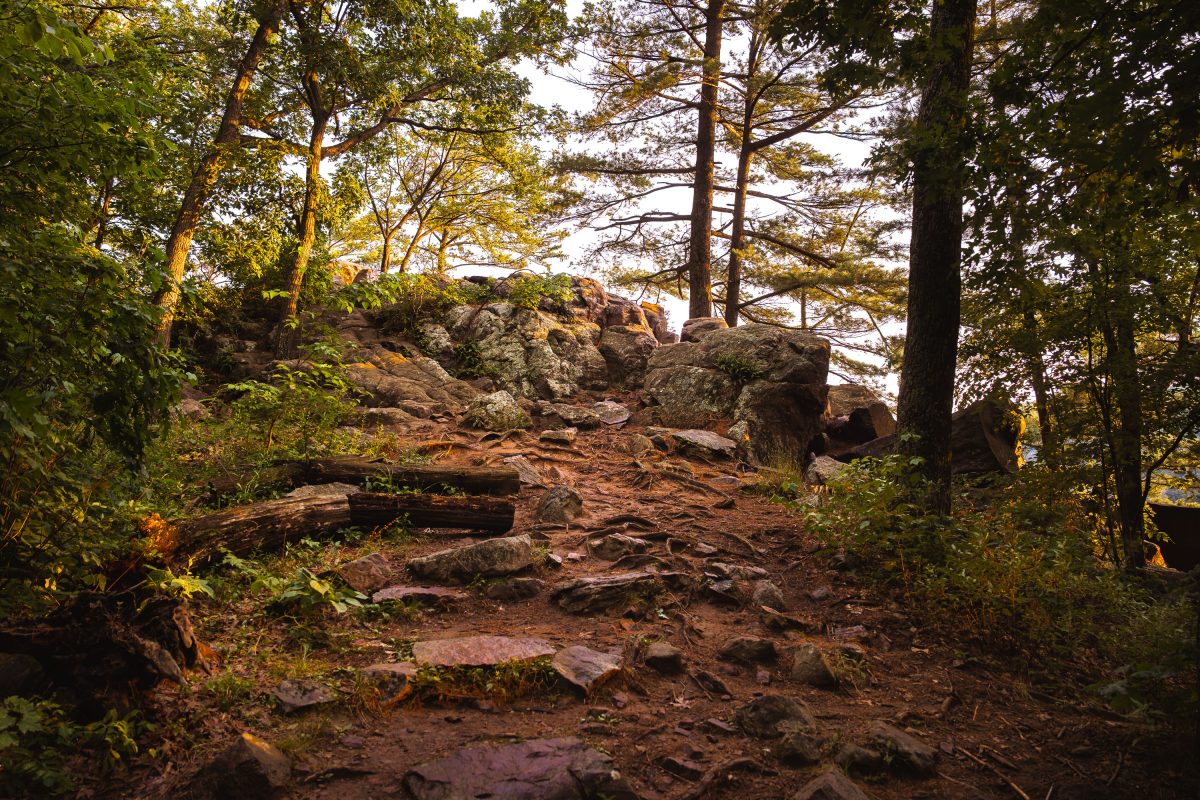
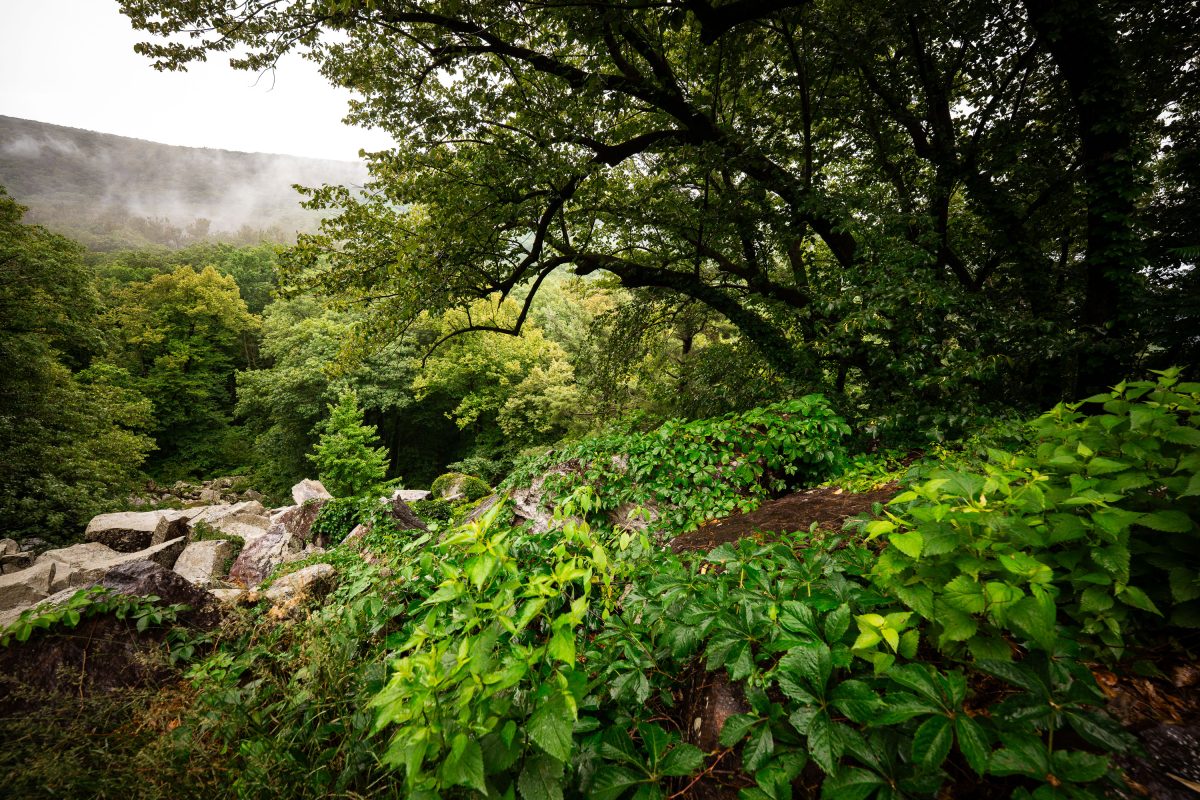
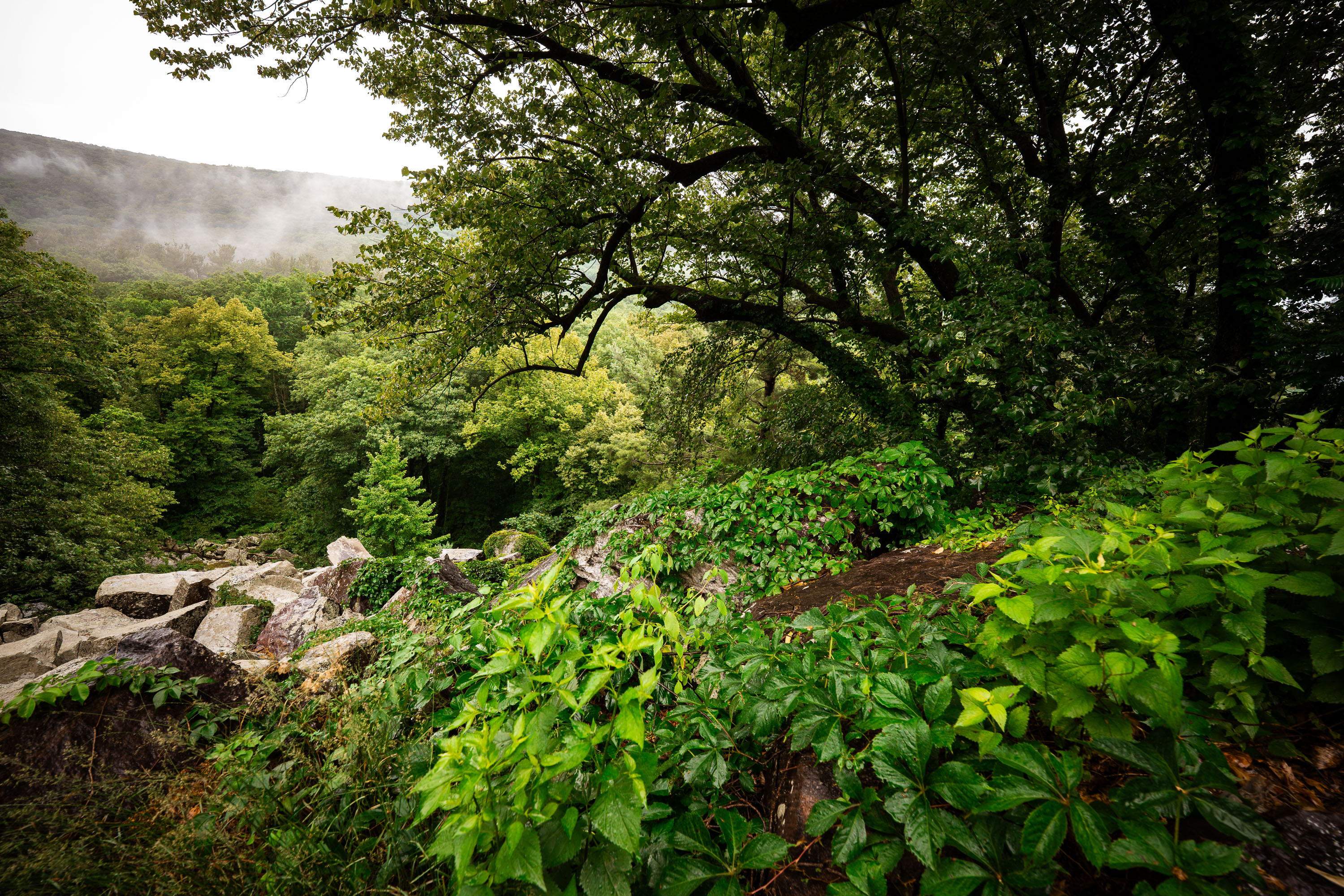
Boulder-strewn talus slope on the East Bluff at Devil's Lake State Park, Wisconsin, surrounded by forest.
Devil's Lake State Park sits within the Baraboo Hills, a range of quartzite bluffs formed roughly 1.6 billion years ago and later carved by glacial meltwater during the last ice age. The East Bluff rises about 500 feet above the lake and is lined with talus slopes—fields of broken quartzite boulders left behind as the cliff face eroded over millennia. Devil's Lake itself formed when glacial debris dammed both ends of an ancient river gorge, creating the enclosed lake seen today. Covering more than 9,000 acres, the park draws over three million visitors a year, making it the most visited state park in Wisconsin.
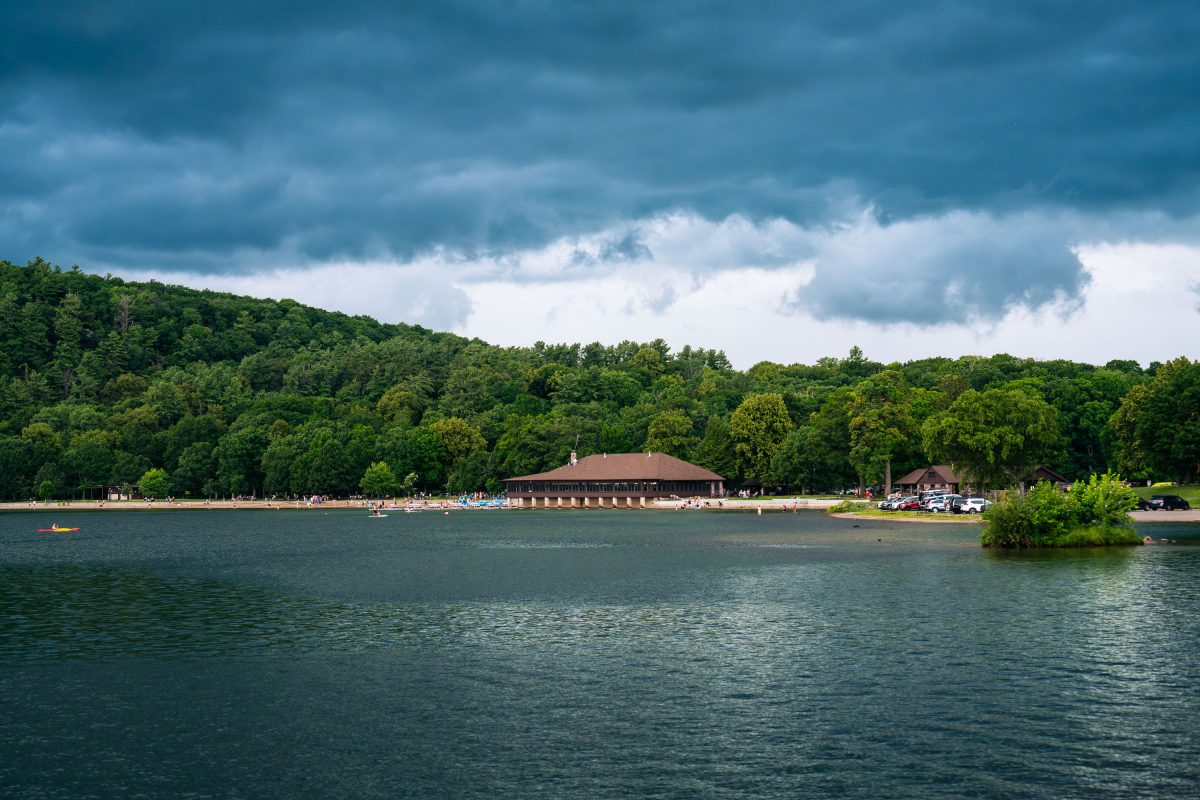
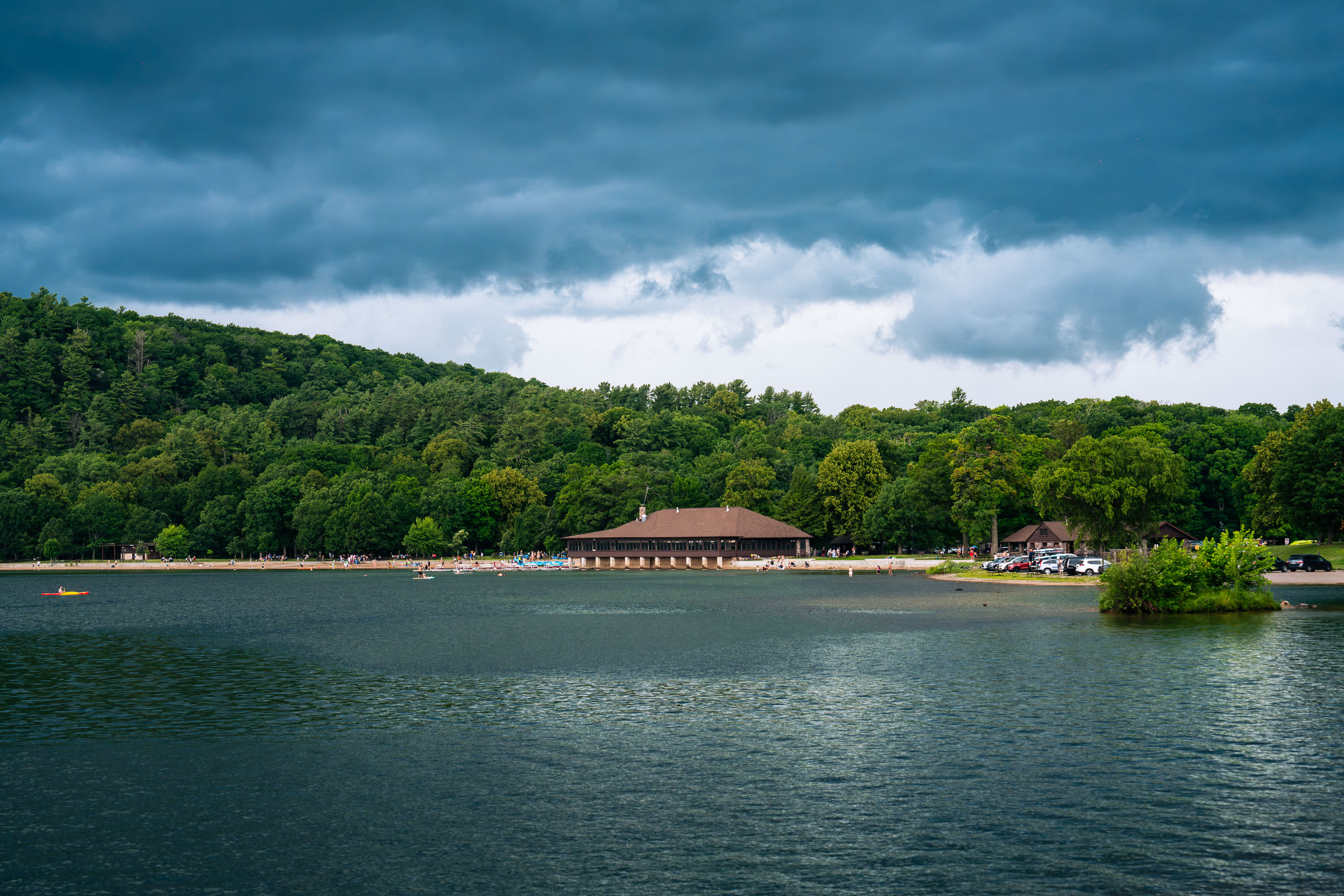
Devil's Lake at Devil's Lake State Park
Devil's Lake at Devil's Lake State Park as a thunderstorm rolls in. The pictured Chateau on the North Shore of the lake was built in 1925.
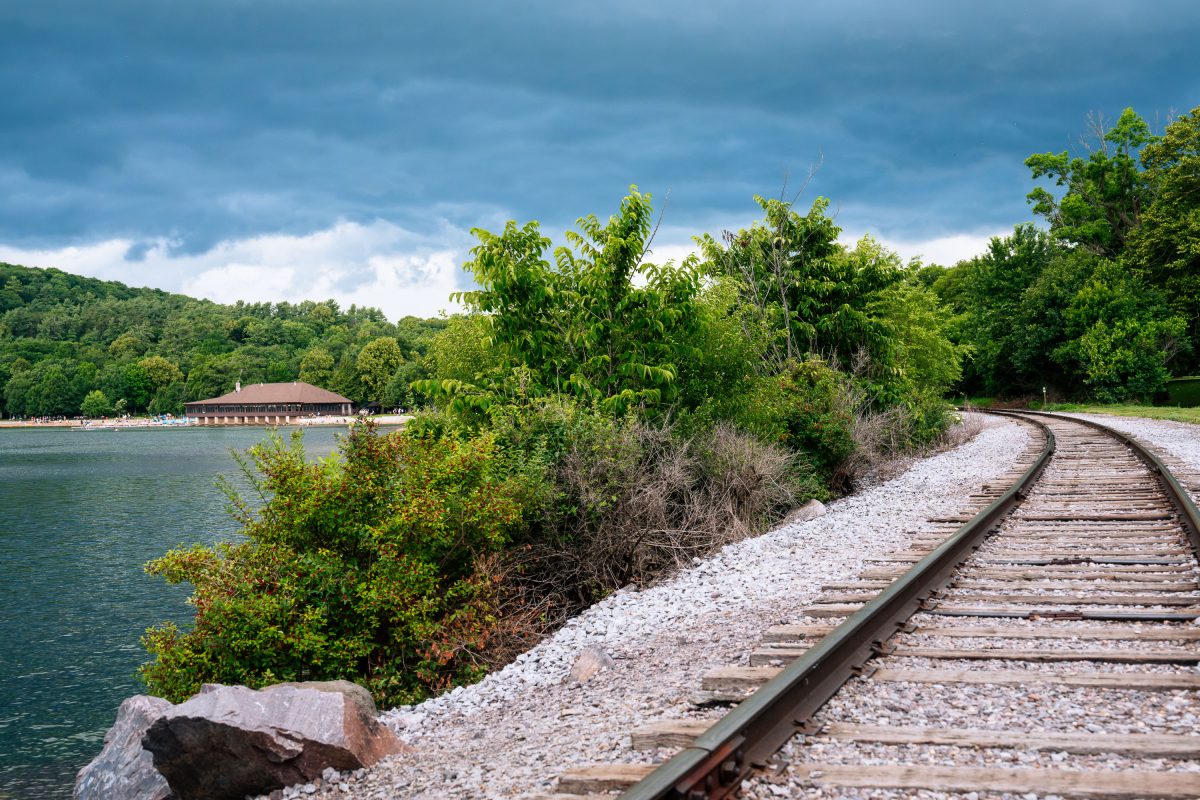
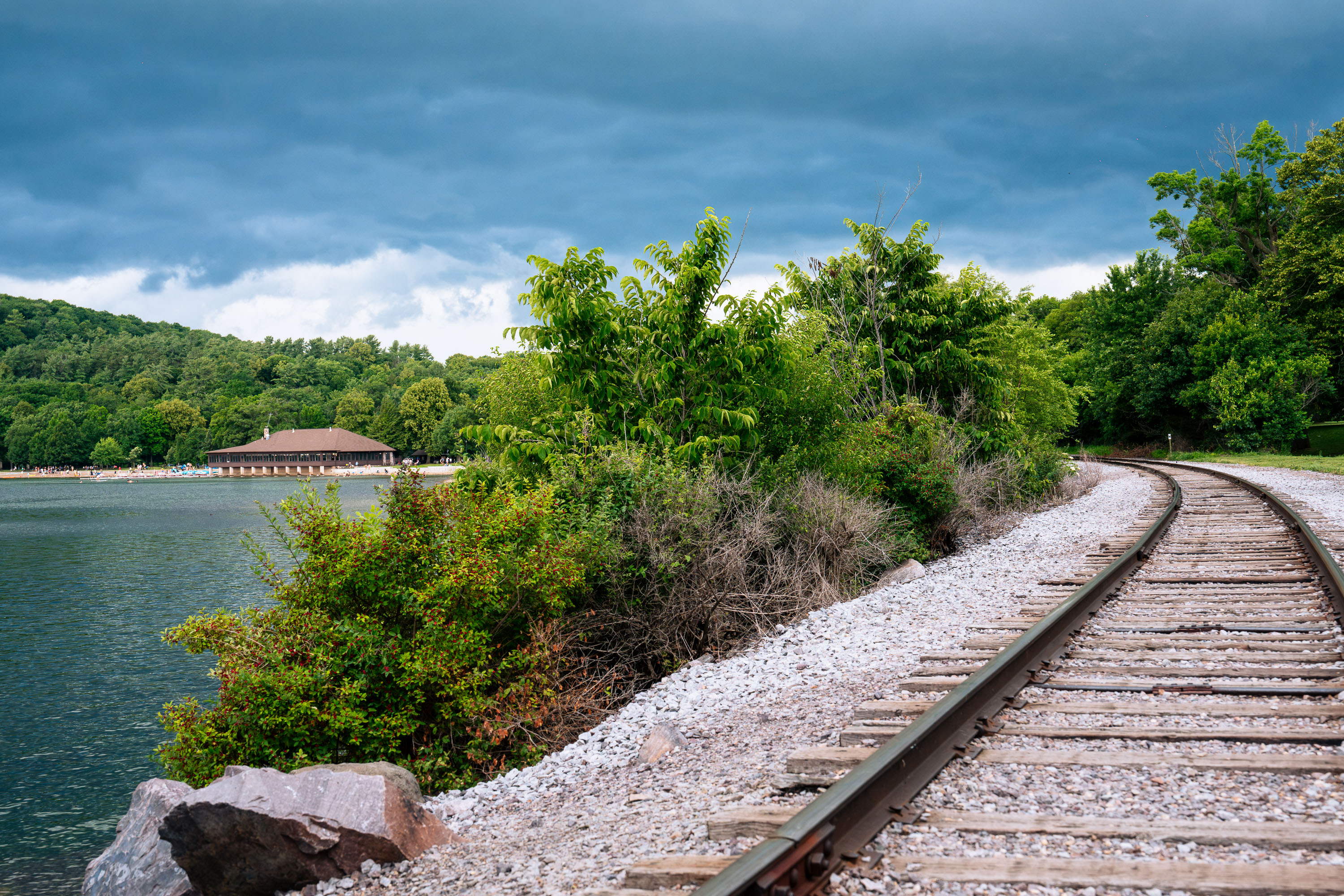
Railroad tracks at Devil's Lake State Park in Wisconsin

The railroad tracks around Devil's Lake at Devil's Lake State Park. The Chateau pictured on the north shore of the lake was built in 1925.
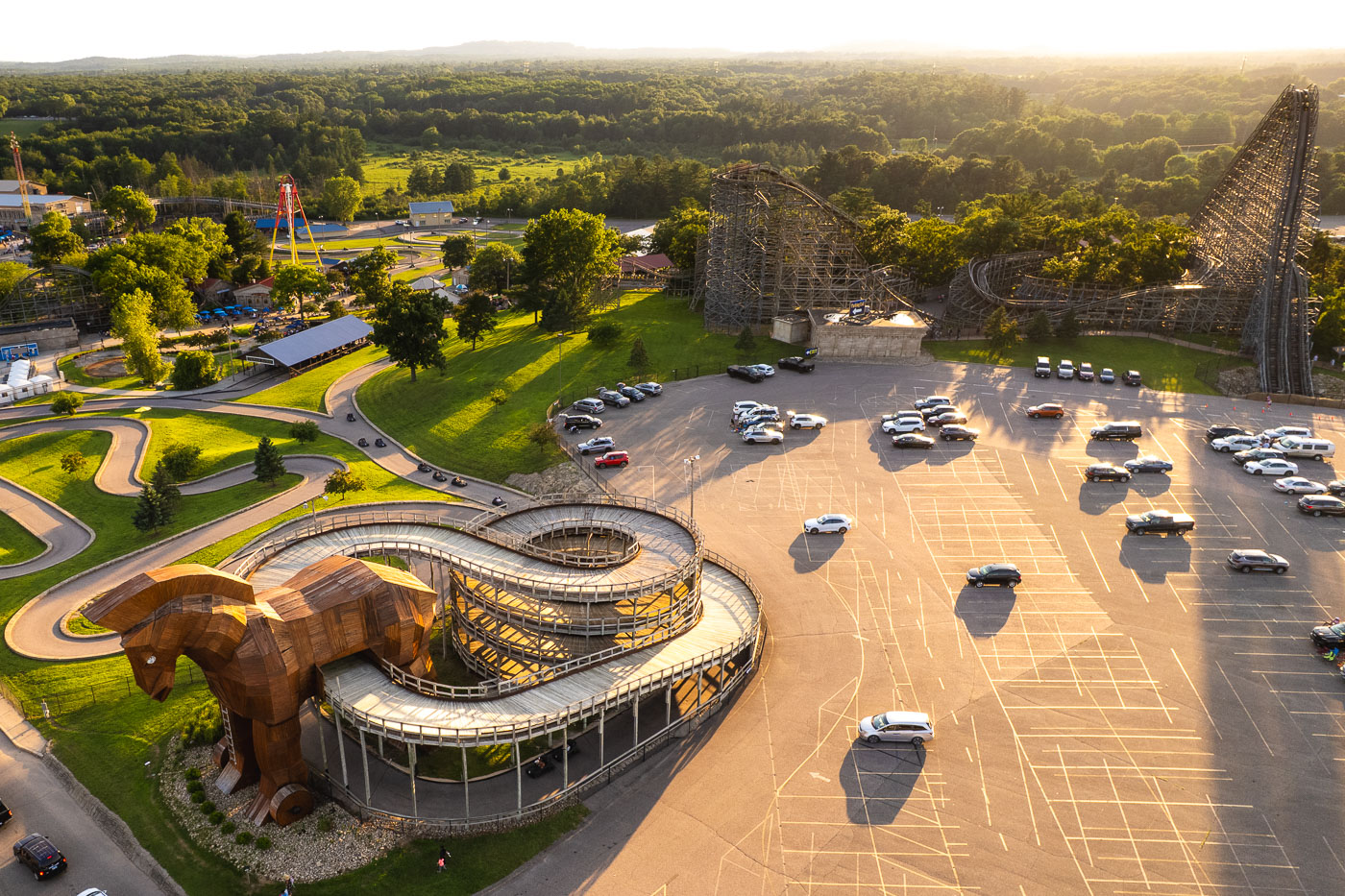
Wooden horse sculpture at Mt. Olympus Water and Theme Park in Wisconsin Dells, Wisconsin.

Mt. Olympus Water & Theme Park built its Trojan horse structure as the centerpiece of a spiral roller coaster near the park's entrance in Wisconsin Dells. The horse anchors the track for the Cyclops-themed coaster, one of several rides at the park designed around Greek mythology, alongside attractions like Zeus and Hades. Mt. Olympus sits along the Wisconsin Dells Parkway, part of a stretch of the city known for its concentration of theme parks and waterparks.

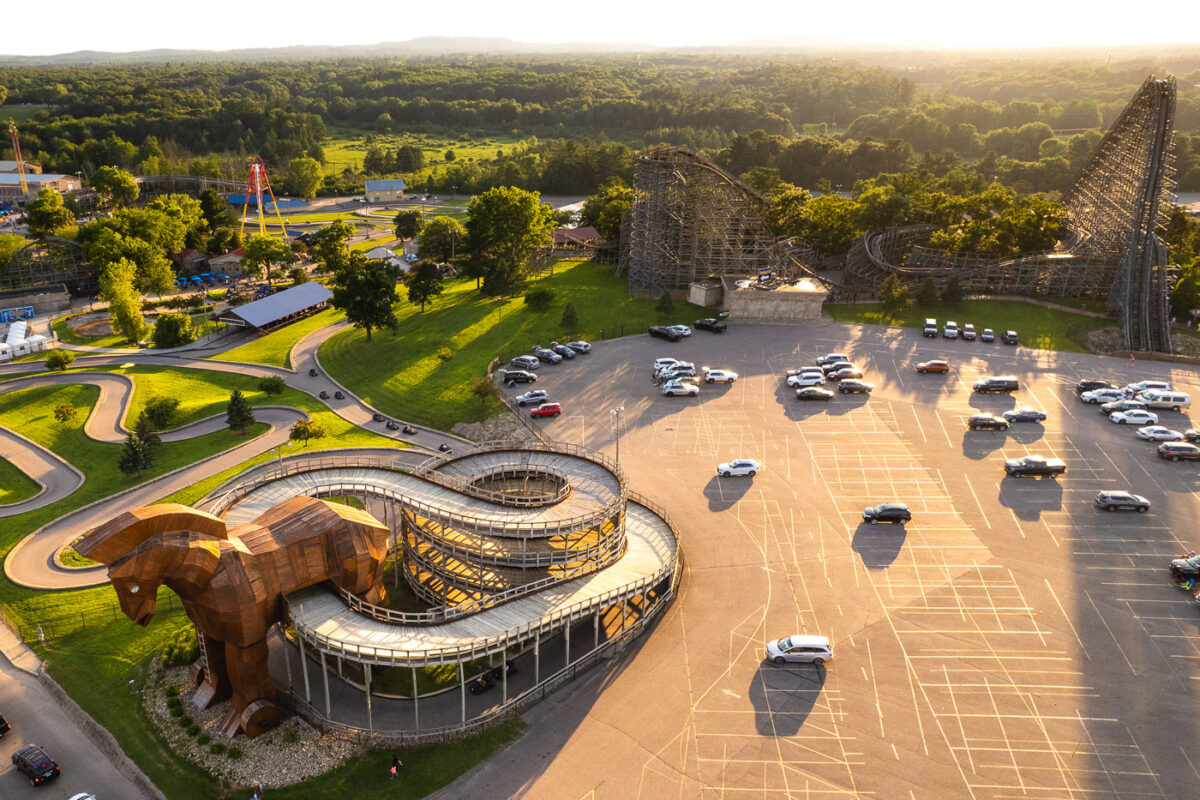
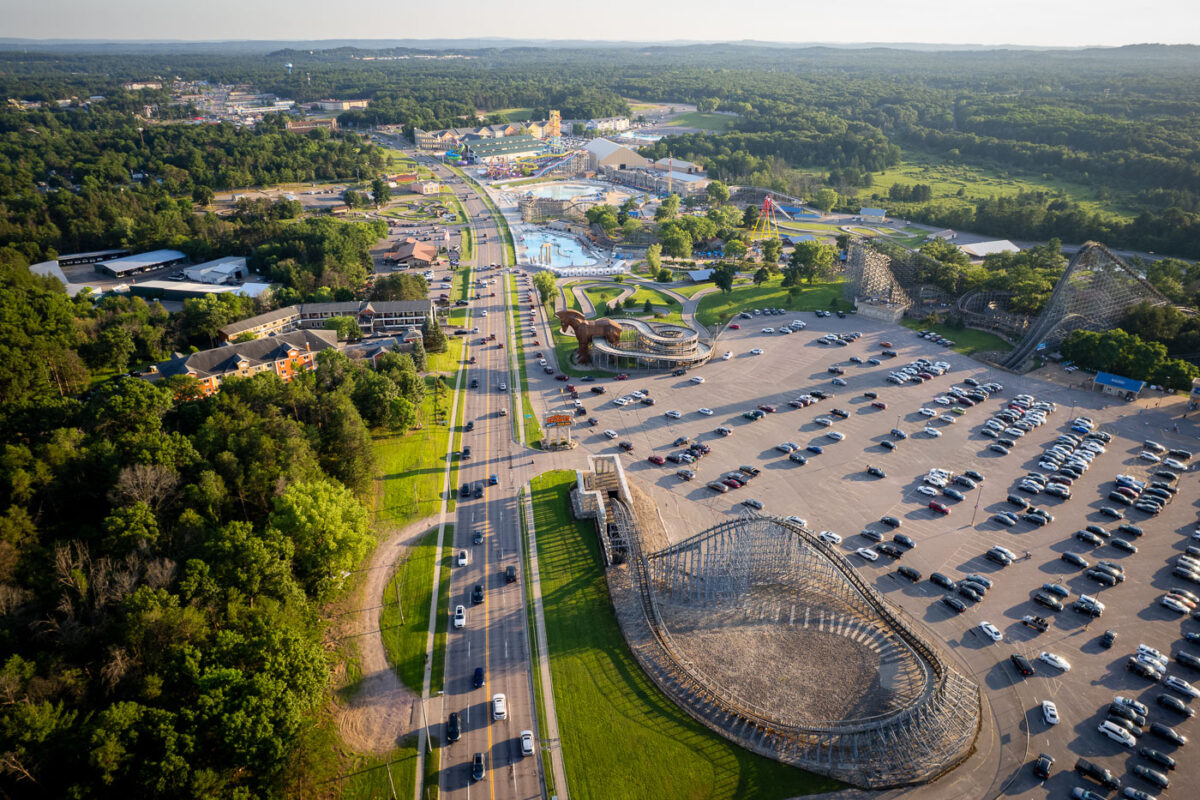
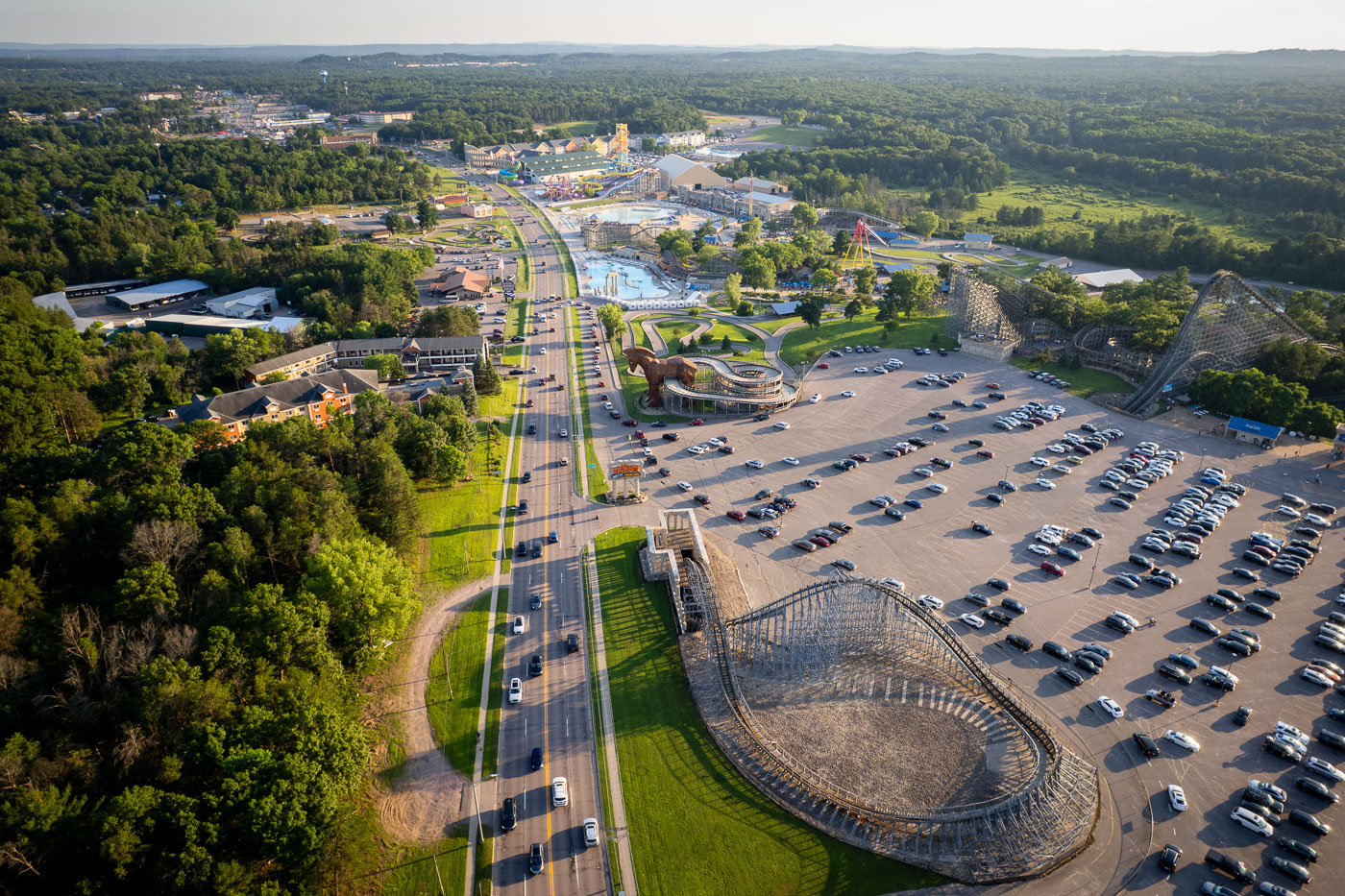
Mt. Olympus Water and Theme Park in Wisconsin Dells, with roller coasters, water slides and a parking lot
Mt. Olympus Water & Theme Park sits along U.S. Highway 12, known locally as the Wisconsin Dells Parkway, in Wisconsin Dells, Wisconsin. The complex opened in the late 1990s as a Greek mythology-themed water park and has since grown to include an outdoor water park and a lineup of wooden and steel roller coasters, among them Cyclops and Hades 360. A large wooden horse modeled after the Trojan horse marks the park's entrance along the parkway. The same stretch of road carries the Wisconsin Ducks, amphibious tour vehicles that shuttle visitors between area attractions and the Wisconsin River.
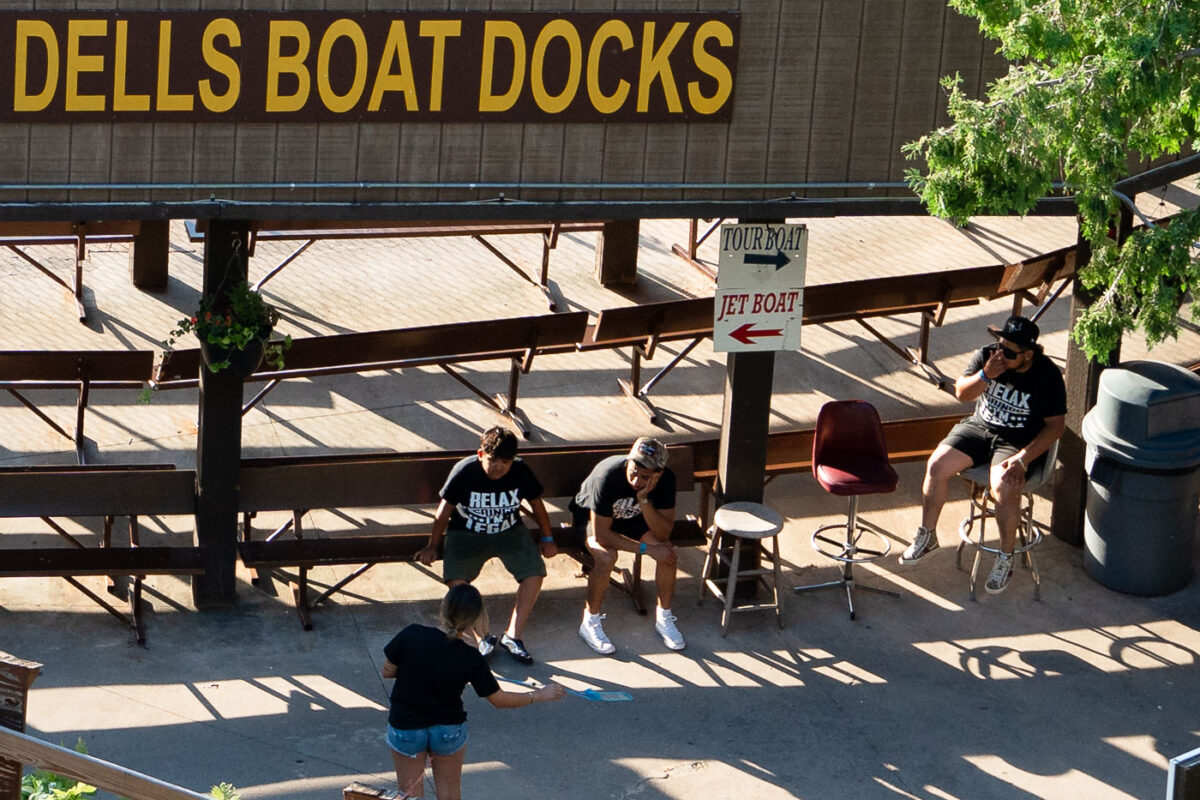
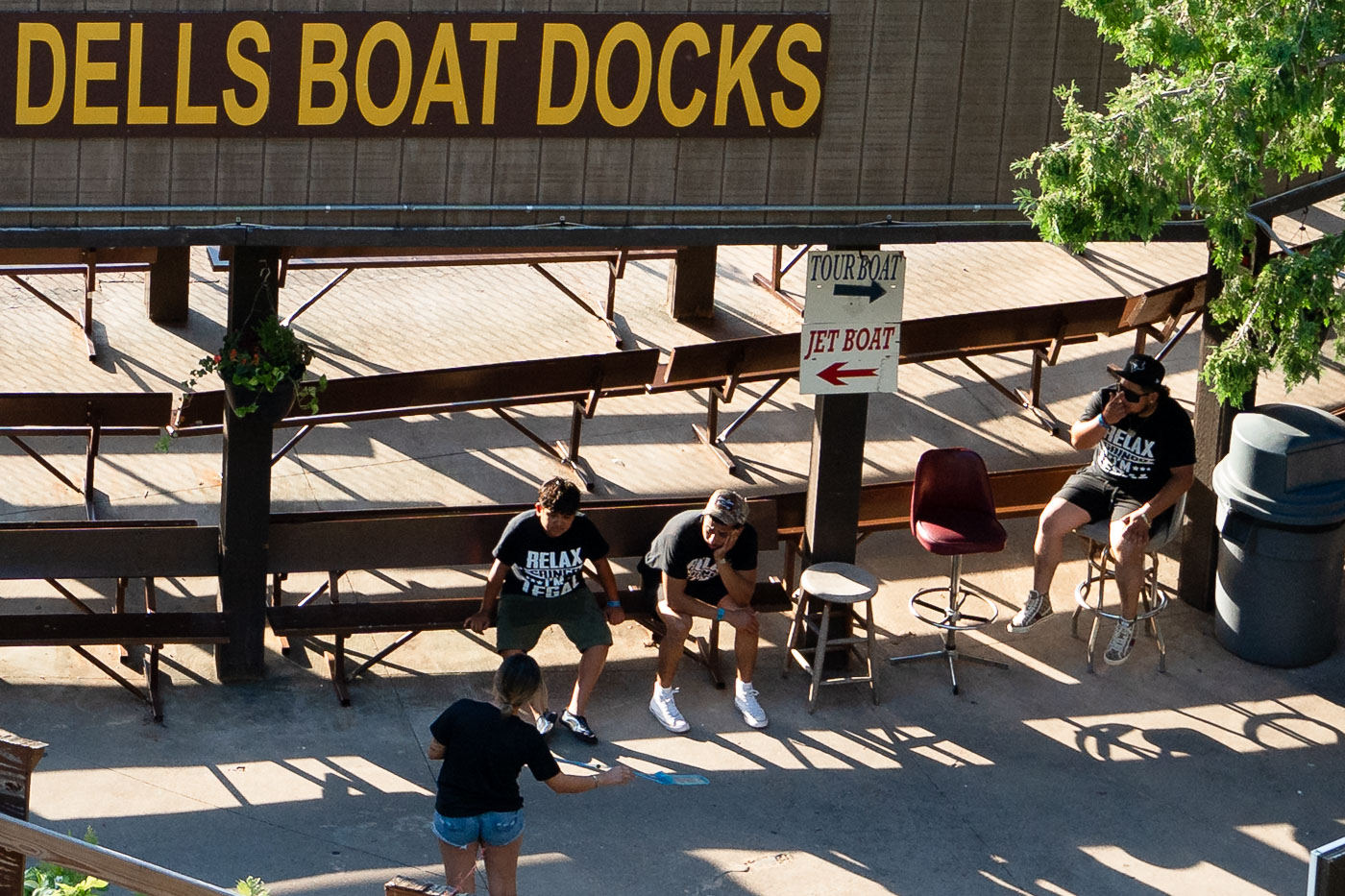
People wearing matching shirts sit at Dells Boat Docks in Wisconsin Dells, Wisconsin.
Dells Boat Docks operates jet boat and tour boat rides on the Wisconsin River in Wisconsin Dells, one of the area's longest-running attractions. The company's tour boats follow routes along the Upper Dells rock formations, a scenic stretch shaped by glacial meltwater thousands of years ago. Riders typically check in at a dockside queue before boarding, with separate lines for jet boats and narrated tour boats.
Green Bay Packers wide receiver Christian Watson walks off the field at Lambeau Field during a December 2024 game against the New
Christian Watson, a Green Bay Packers wide receiver since being drafted in the second round out of North Dakota State in 2022, plays home games at Lambeau Field, which opened in 1957 and holds just over 81,000 fans. The "END RACISM" message painted in the end zone has appeared at NFL stadiums since 2020, part of a league-wide initiative allowing messaging on game-day fields. Watson wore number 9 for Green Bay before later being traded to the Dallas Cowboys in 2025.
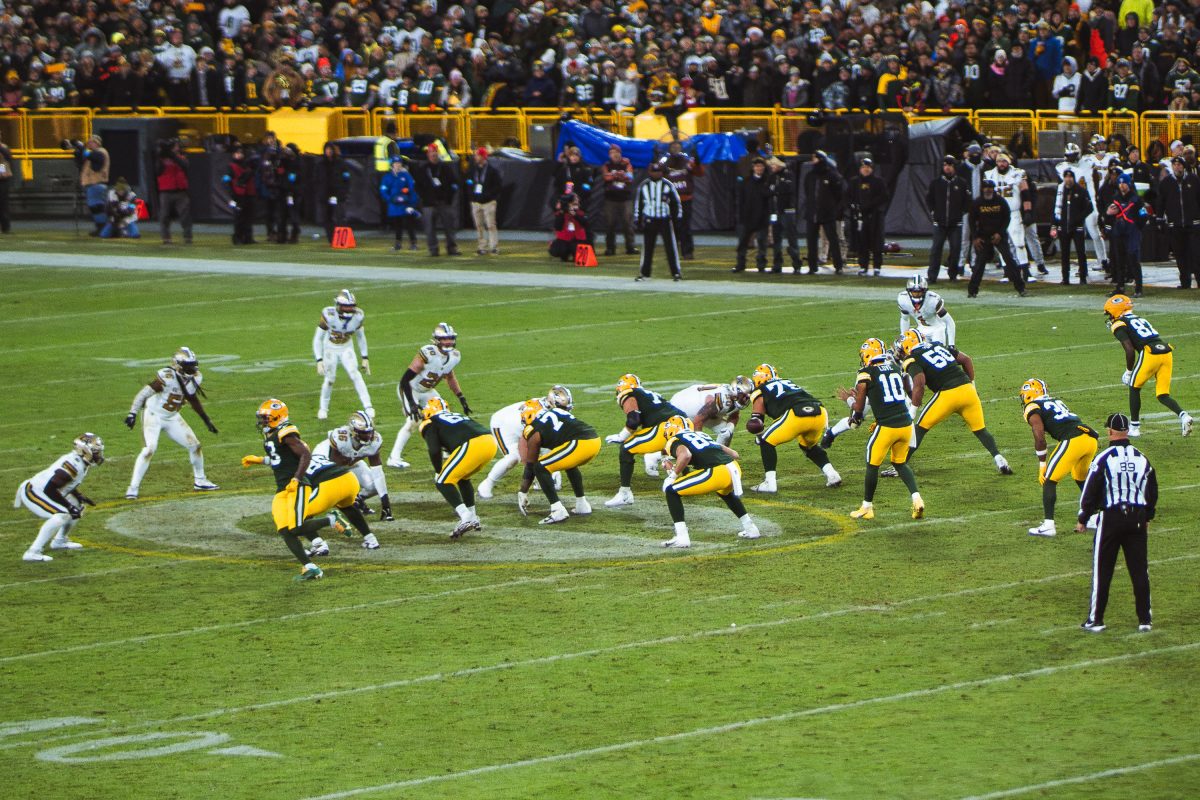
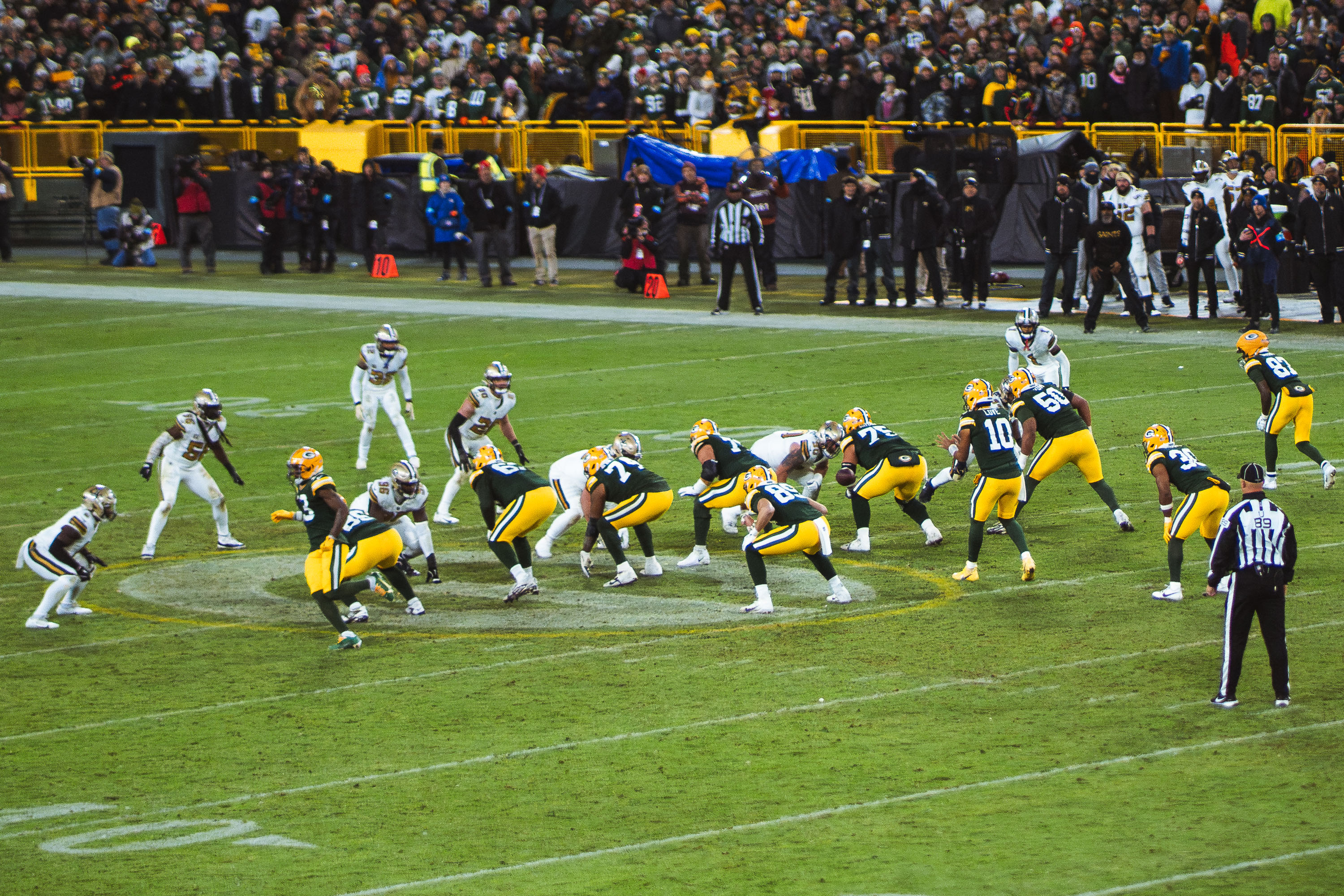
Green Bay Packers quarterback Jordan Love and offensive linemen huddle on the field during an NFL game at Lambeau Field.
Lambeau Field has hosted the Green Bay Packers since 1957, making it the oldest continually operating stadium in the NFL. Jordan Love took over as the team's starting quarterback in 2023 after four seasons as a backup to Aaron Rodgers. On December 23, 2024, Green Bay shut out the New Orleans Saints 34-0 in a game played under the stadium's outdoor lights, a rarity for the Packers' late-season home schedule. The win extended Green Bay's streak of home victories that season and kept the team in playoff contention heading into the final weeks of the regular season.
Green Bay Packers fans wearing team apparel and Jordan Love jersey gather outdoors at Lambeau Field.
Lambeau Field has served as the home of the Green Bay Packers since 1957, making it the oldest continuously operating stadium in the NFL. The venue holds roughly 81,441 fans, nearly all of whom are shareholders in the publicly owned franchise, one of the last of its kind in American professional sports. Jordan Love took over as the Packers' starting quarterback in 2023 and wears No. 10, the number visible on jerseys throughout the stands. This game, played December 23, 2024, pitted the Packers against the New Orleans Saints in a regular-season NFC matchup.
Green Bay Packers quarterback Jordan Love leads an offensive play against the New Orleans Saints at Lambeau Field.
Lambeau Field has hosted the Green Bay Packers since 1957, making it the oldest continually operating stadium in the NFL. It sits at 1265 Lombardi Avenue, a name honoring former head coach Vince Lombardi, and holds more than 81,000 fans on game day. Jordan Love became the Packers' starting quarterback in 2023, three years after Green Bay drafted him in the first round. On December 23, 2024, the Packers hosted the New Orleans Saints at Lambeau Field in a late-season game.
NFL unauthorized transmission warning displayed on stadium screen at Lambeau Field during Green Bay Packers game.
Lambeau Field's video board carries a standard NFL warning during Green Bay Packers home games, cautioning against unauthorized transmission of the broadcast, including play-by-play accounts of the action. The notice states that violators may be ejected from the stadium and directs questions to the league's compliance office, a standard condition tied to the NFL's media rights enforcement. The accompanying game strip shows a Packers-Saints matchup from the 2024 season.
Green Bay Packers player catches touchdown pass during NFL game against New Orleans Saints at Lambeau Field.
Dontayvion Wicks caught a touchdown pass for the Green Bay Packers during a 34-0 win over the New Orleans Saints at Lambeau Field on December 23, 2024. Wicks, a fifth-round pick out of Virginia in 2023, has been part of Green Bay's receiving corps alongside quarterback Jordan Love. Lambeau Field, opened in 1957, holds just over 81,000 fans and is the oldest continuously operating stadium in the NFL. The Packers have played there since the stadium's construction, making it one of the league's most enduring home venues.
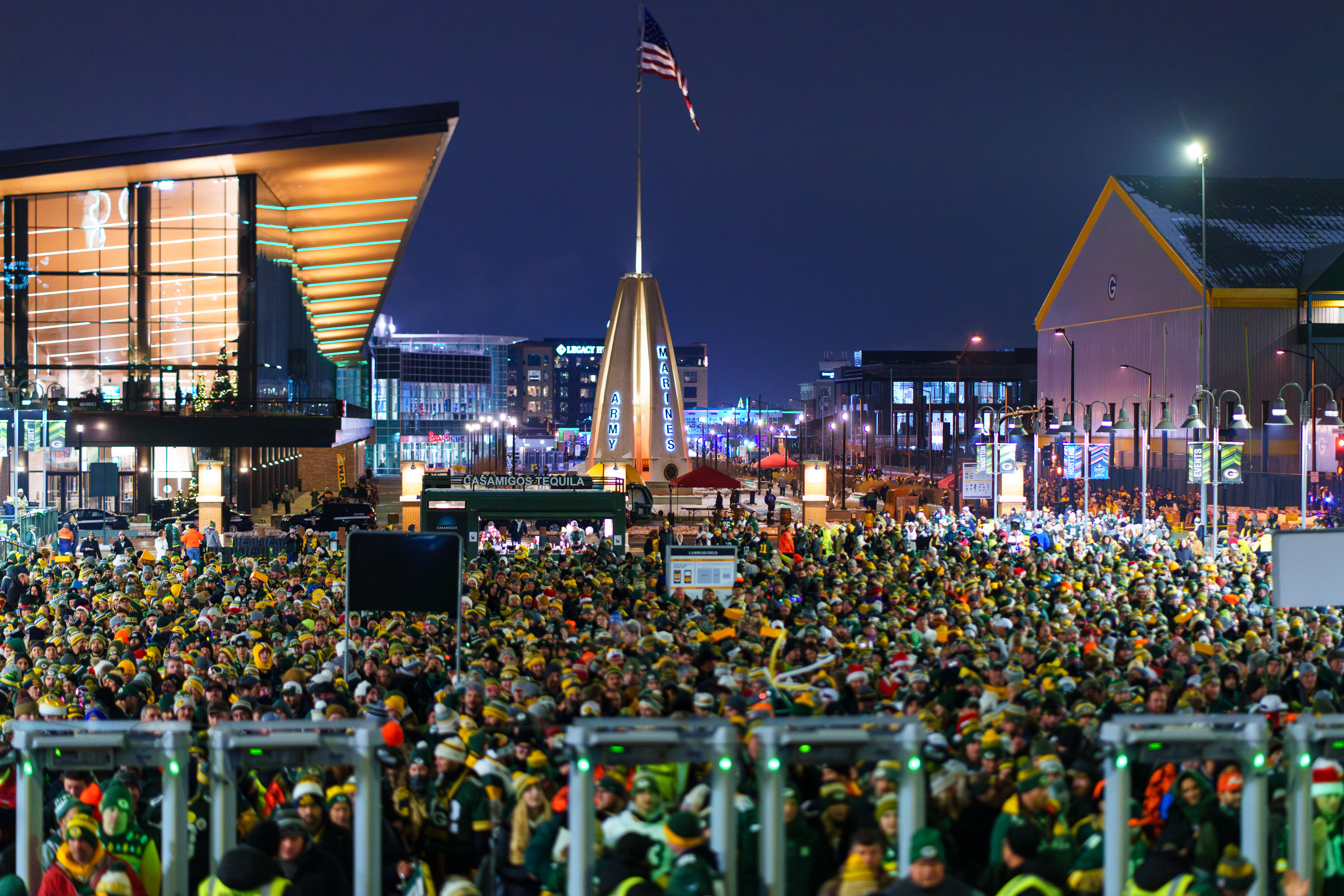
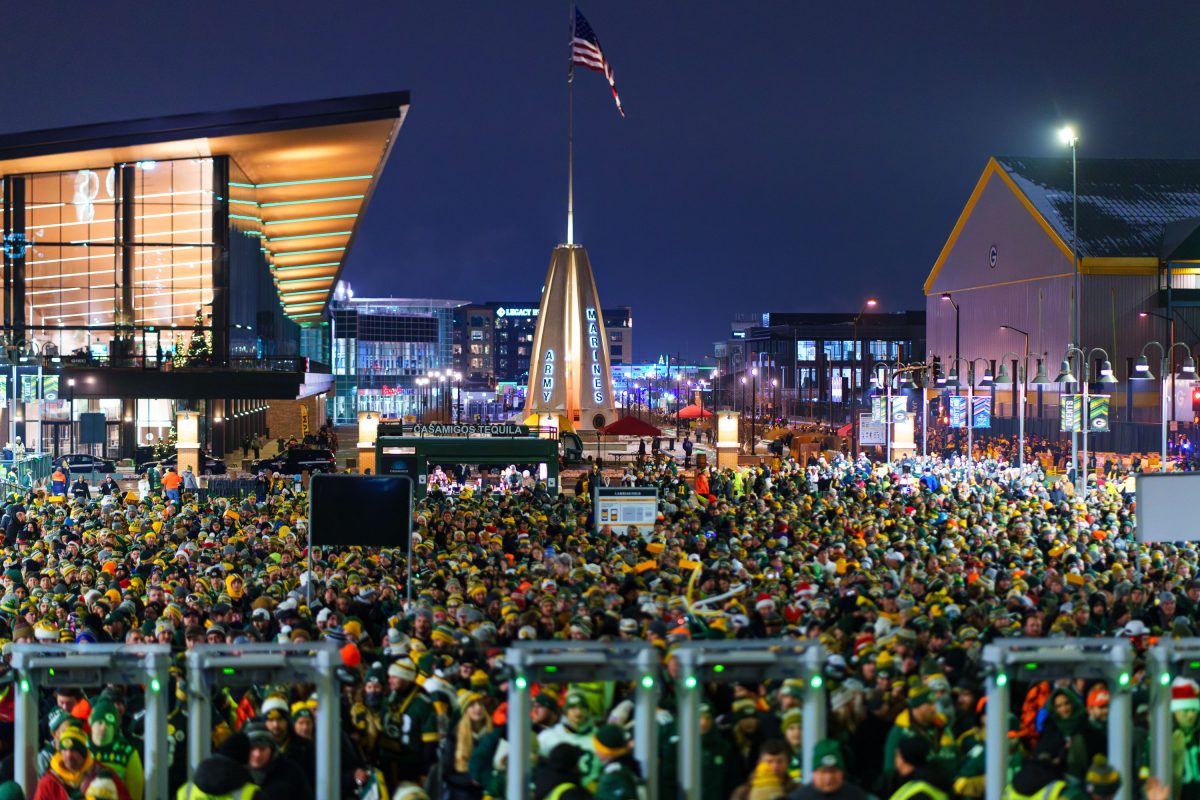
Thousands of Green Bay Packers fans gather outside Lambeau Field before the December 23, 2024 game against the New Orleans Saints.
Lambeau Field has been home to the Green Bay Packers since 1957, making it the oldest continuously operating stadium in the NFL. Its official capacity is 81,441, following a series of expansions that included the 2003 addition of the Titletown atrium on the stadium's south end. The Packers hosted the New Orleans Saints here on December 23, 2024, winning 34-0. The stadium takes its name from Curly Lambeau, who co-founded the franchise in 1919 and served as its head coach for 29 seasons.
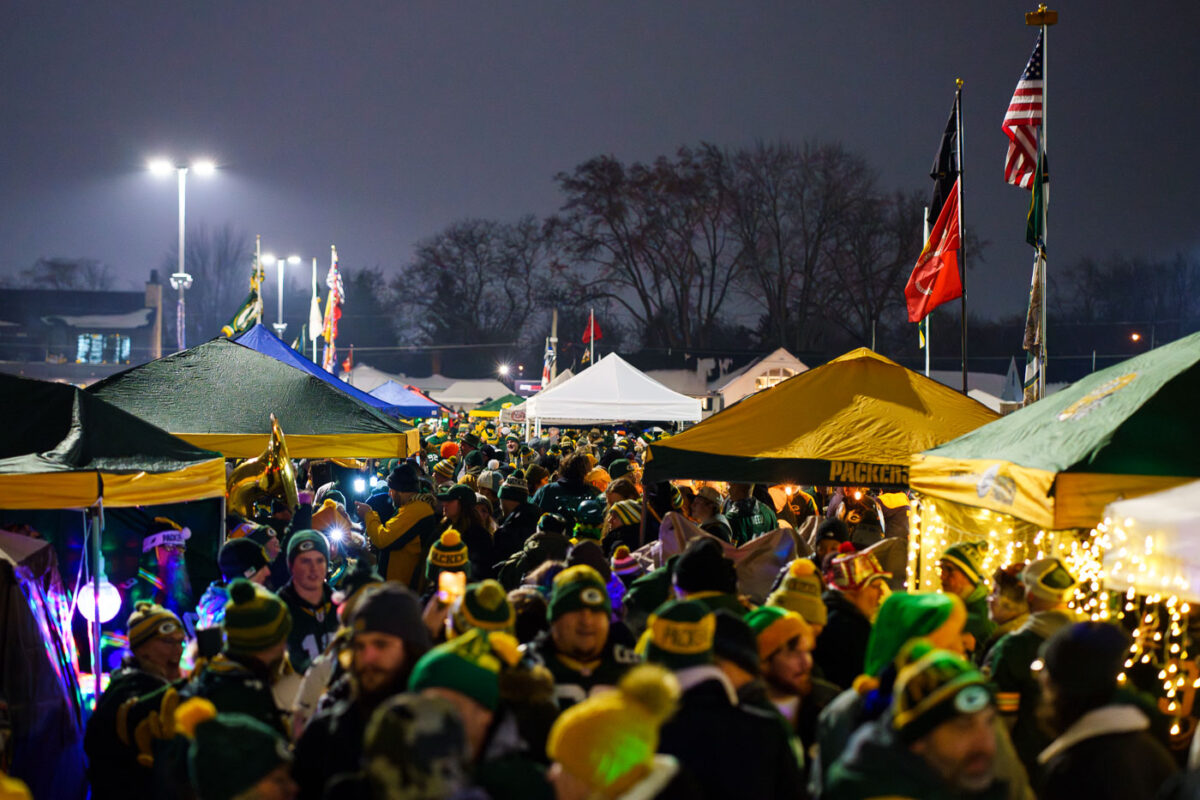
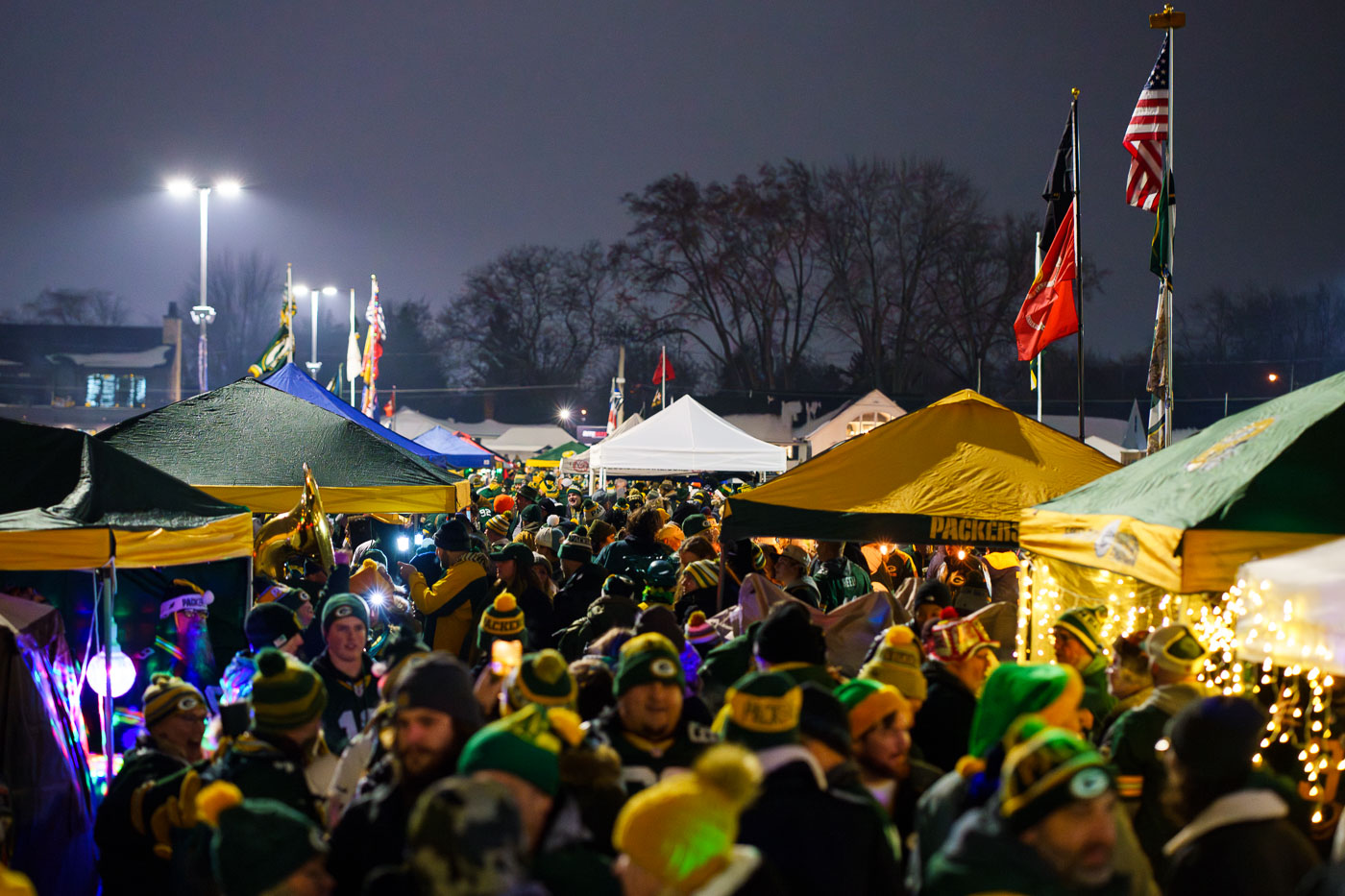
Fans gather in yellow and green team colors at a nighttime tailgate outside Lambeau Field in Green Bay, Wisconsin.
Lambeau Field has hosted Green Bay Packers home games since 1957, and the parking lots surrounding it fill with tailgaters on game days regardless of the weather. The stadium seats more than 81,000 and sits at 1265 Lombardi Avenue, named for former head coach Vince Lombardi. This tailgate preceded a December 23, 2024 matchup in which the Packers shut out the New Orleans Saints 34-0. Green and gold gear, popcorn stands, and makeshift bars set up out of trailers and tents are a fixture of the pregame ritual here, drawing fans hours before kickoff.
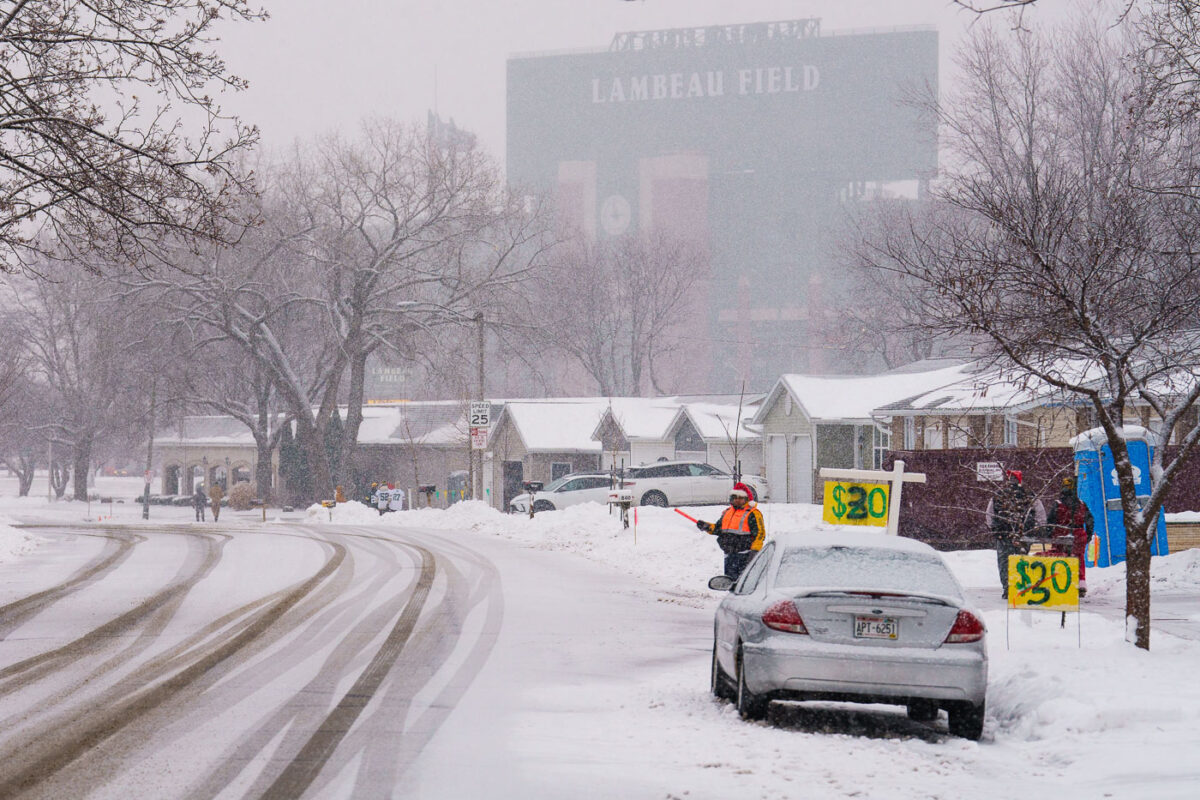
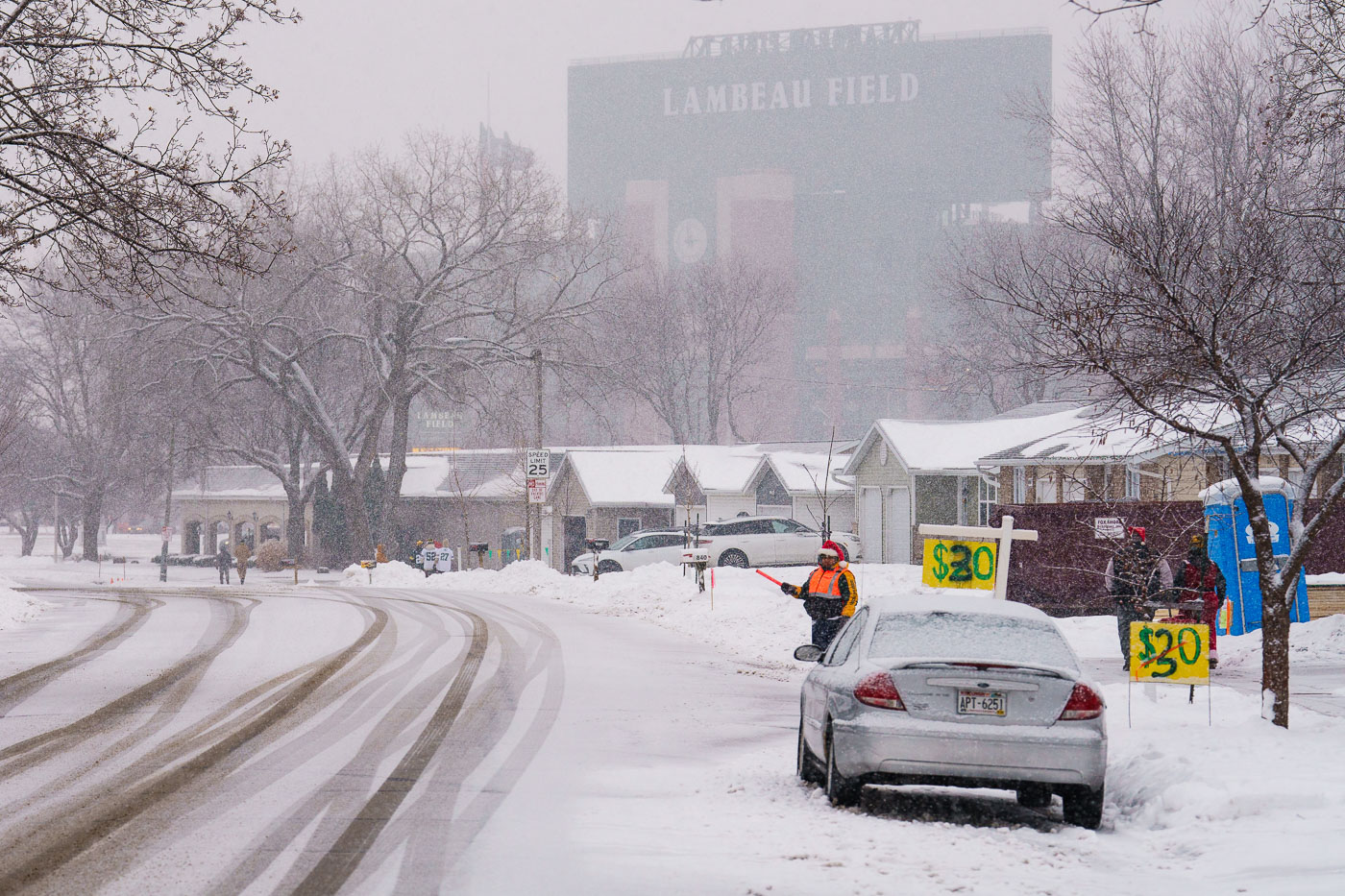
Person in safety vest directs cars to residential driveway parking for twenty dollars near Lambeau Field in snowy Green Bay.
Homeowners near Lambeau Field rent out their driveways for gameday parking, a long-standing practice in the neighborhoods surrounding the stadium. Rates typically run $20 to $40 depending on proximity to the gates and demand for that day's matchup. The stadium, home to the Green Bay Packers since 1957, holds over 81,000 fans and sits along Lombardi Avenue in Green Bay, Wisconsin. On snowy game days, city crews and private lot owners alike depend on volunteers or paid staff to direct traffic through the narrow residential streets that ring the property.
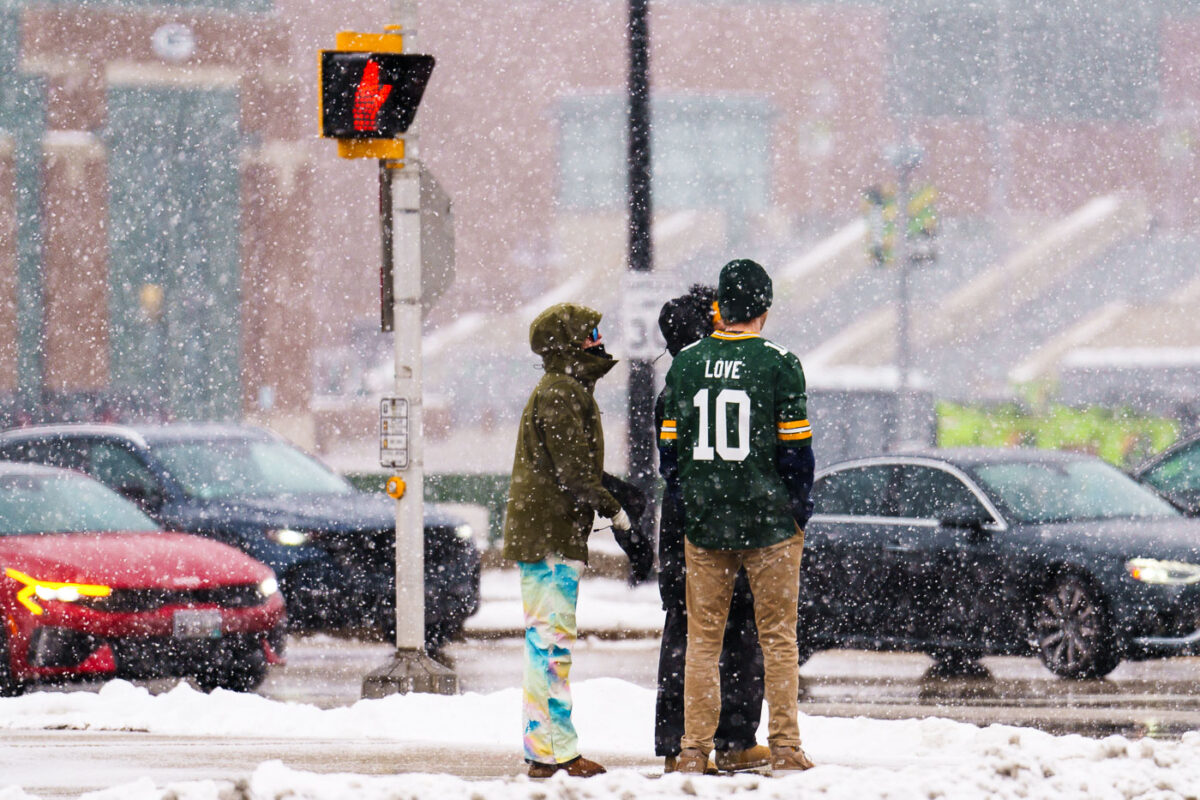
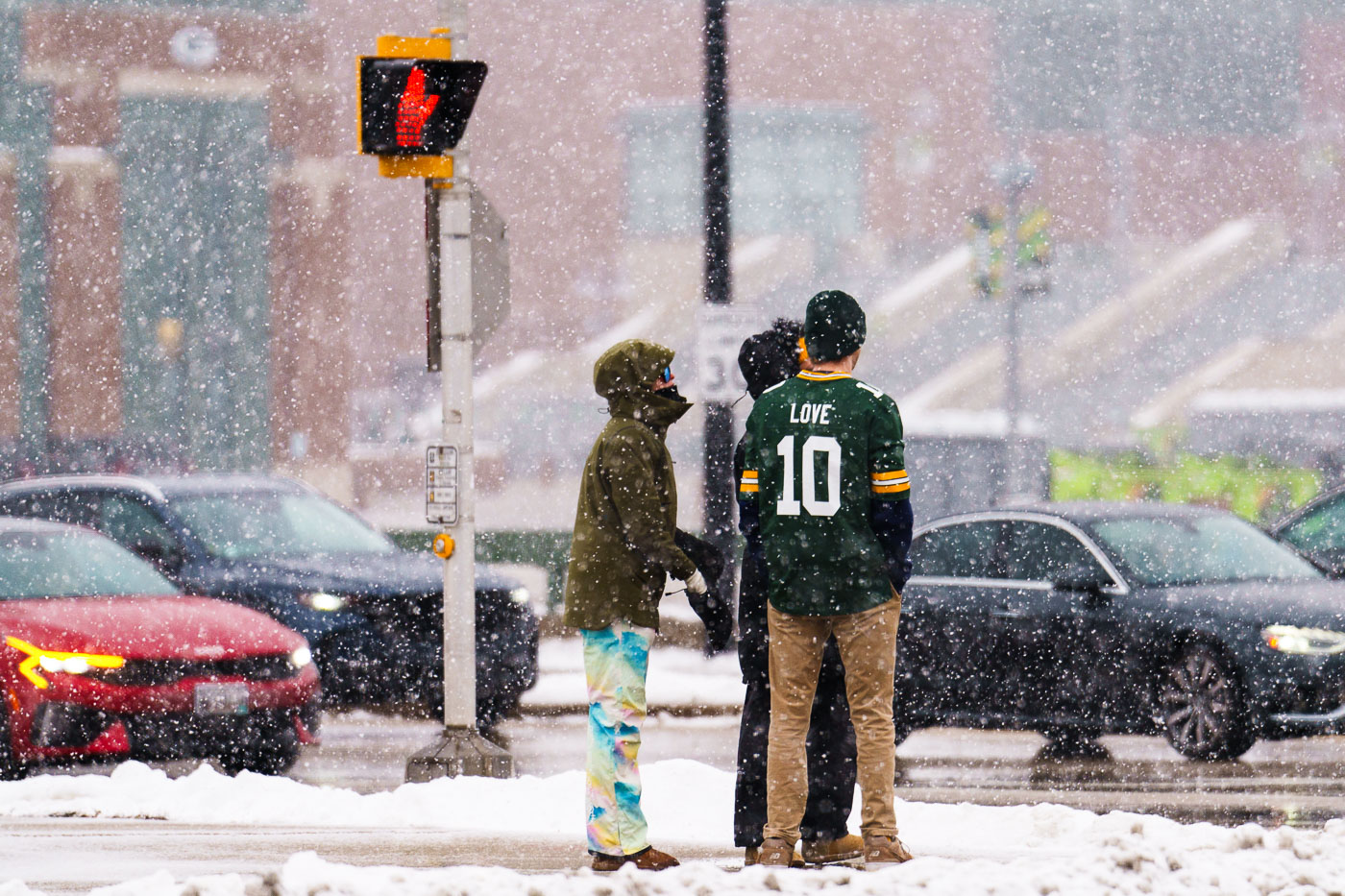
Fan wearing Jordan Love jersey stands on snowy Lombardi Avenue outside Lambeau Field in Green Bay during December snowstorm.
Lombardi Avenue runs along the west side of Lambeau Field, connecting the stadium's main gates to the parking lots and the Don Hutson Center. Fans walking it on December 23, 2024, were heading to a game against the New Orleans Saints, which Green Bay won 34-0. The street is named for Vince Lombardi, who coached the Packers to five NFL championships between 1959 and 1967 and whose name has been attached to the Super Bowl trophy since 1970.
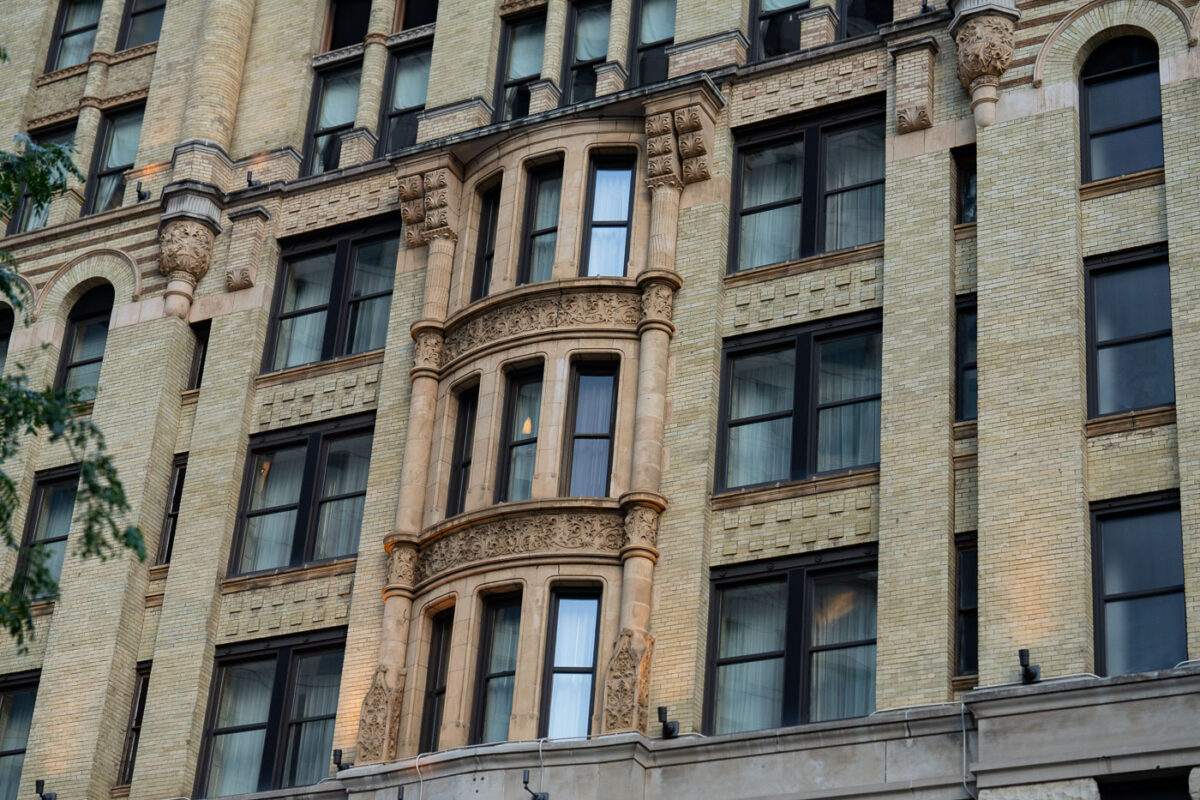
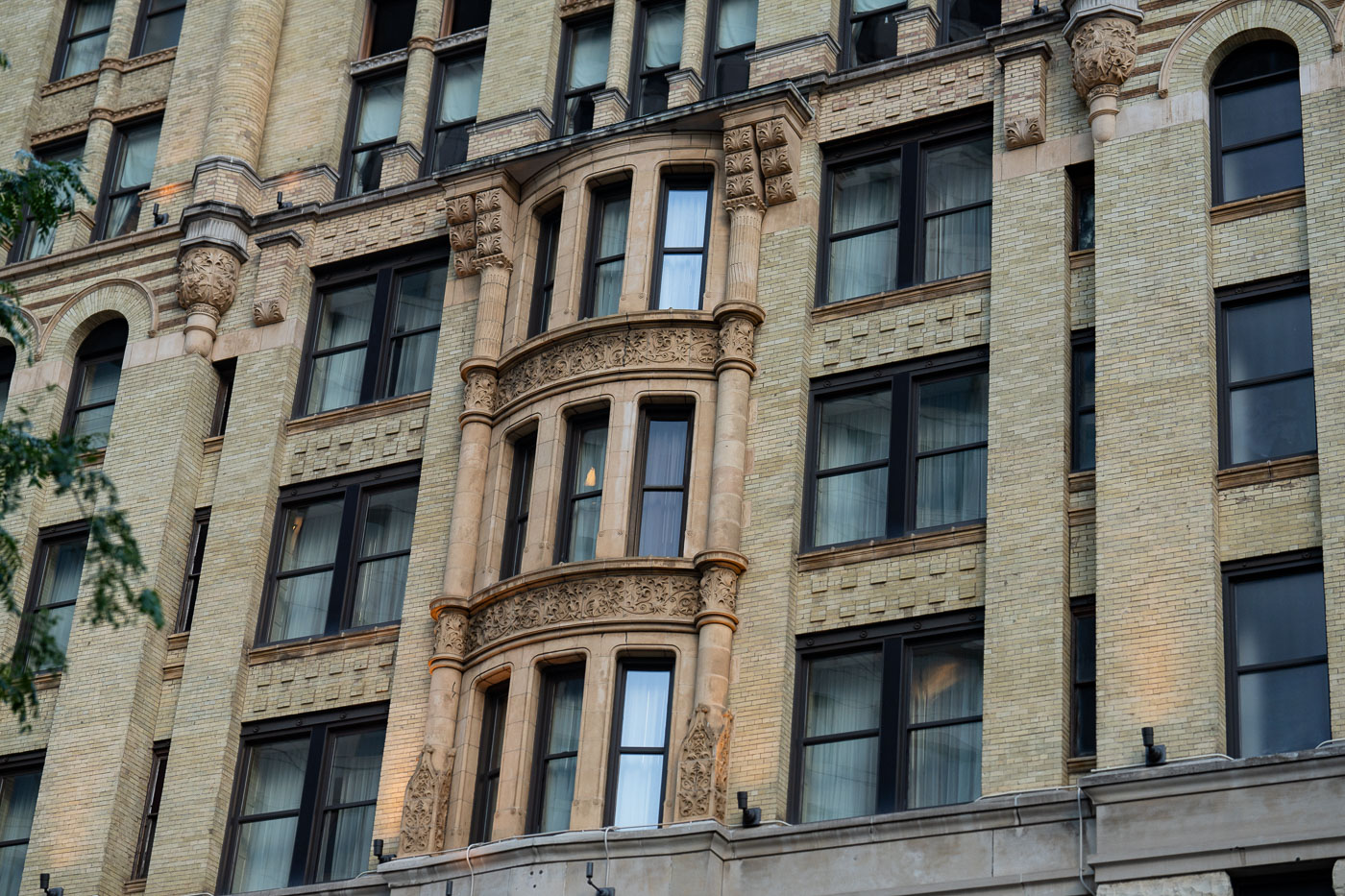
The Pfister Hotel's ornate Romanesque Revival facade with decorative bay windows in Milwaukee.
The Pfister Hotel opened in 1893 as one of Milwaukee's first hotels to offer running water and electricity in every guest room. Local architects Charles Kirchhoff and Thomas Rose designed the building in a blend of Romanesque Revival and Victorian styles, and it remains listed on the National Register of Historic Places. Its lobby holds one of the largest hotel collections of Victorian-era art in the country. During the 2024 Republican National Convention, the hotel served as the lodging site for former President Donald Trump and operated under heightened security.

Built in Minneapolis

Minneapolis Photographer

Browse by location, move through long-running series, or start with recent work.