Place Archive

Green Bay

Coverage spans Lambeau Field and the streets and infrastructure of greater Green Bay, with recurring attention to the Fox River crossings, broadcast towers, commercial interiors, and the built environment of the city’s west side. The Packers’ home stadium and its surrounding facilities appear alongside a demolished entertainment venue and roadside landmarks, together tracing a city shaped as much by its industrial and media infrastructure as by its football identity.

67 photos

Location

Photos from Green Bay
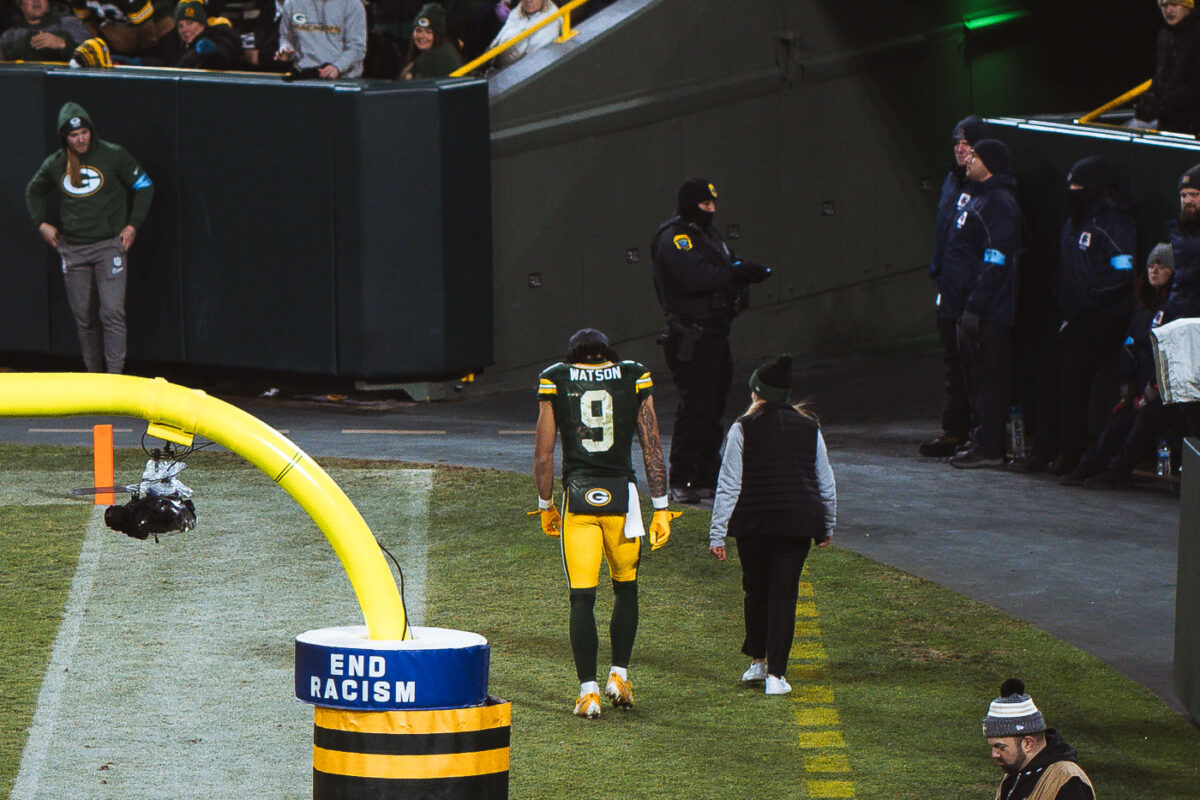
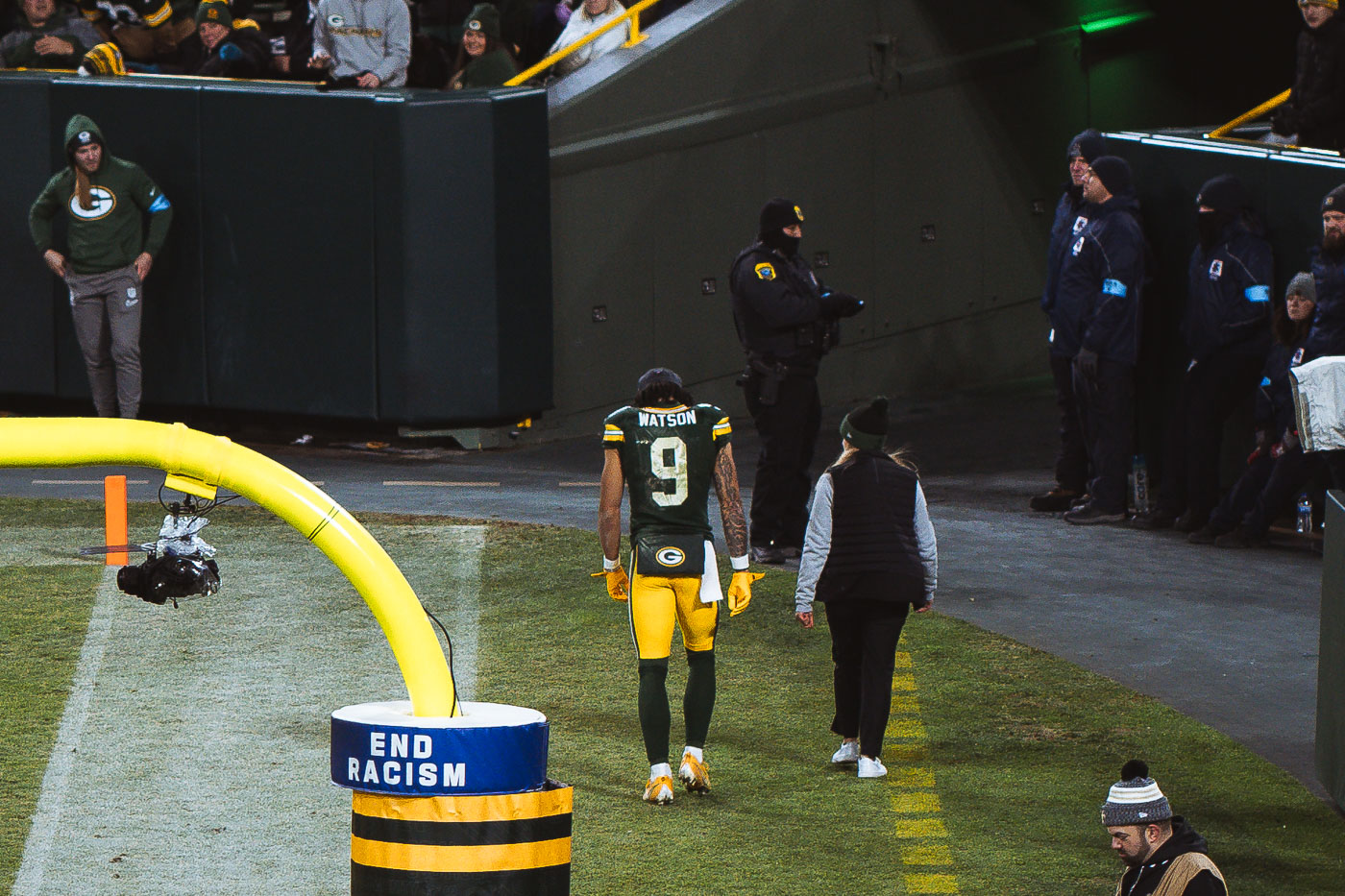
Green Bay Packers wide receiver Christian Watson walks off the field at Lambeau Field during a December 2024 game against the New
Christian Watson, a Green Bay Packers wide receiver since being drafted in the second round out of North Dakota State in 2022, plays home games at Lambeau Field, which opened in 1957 and holds just over 81,000 fans. The "END RACISM" message painted in the end zone has appeared at NFL stadiums since 2020, part of a league-wide initiative allowing messaging on game-day fields. Watson wore number 9 for Green Bay before later being traded to the Dallas Cowboys in 2025.
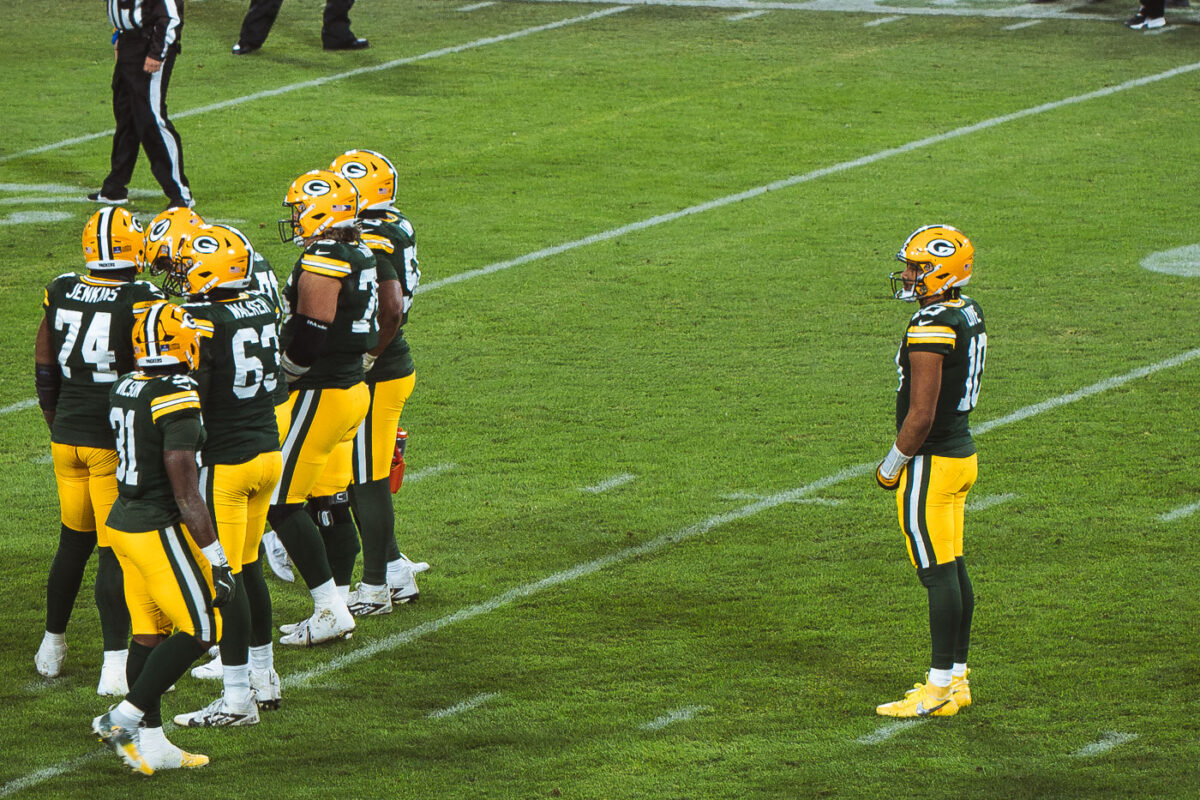
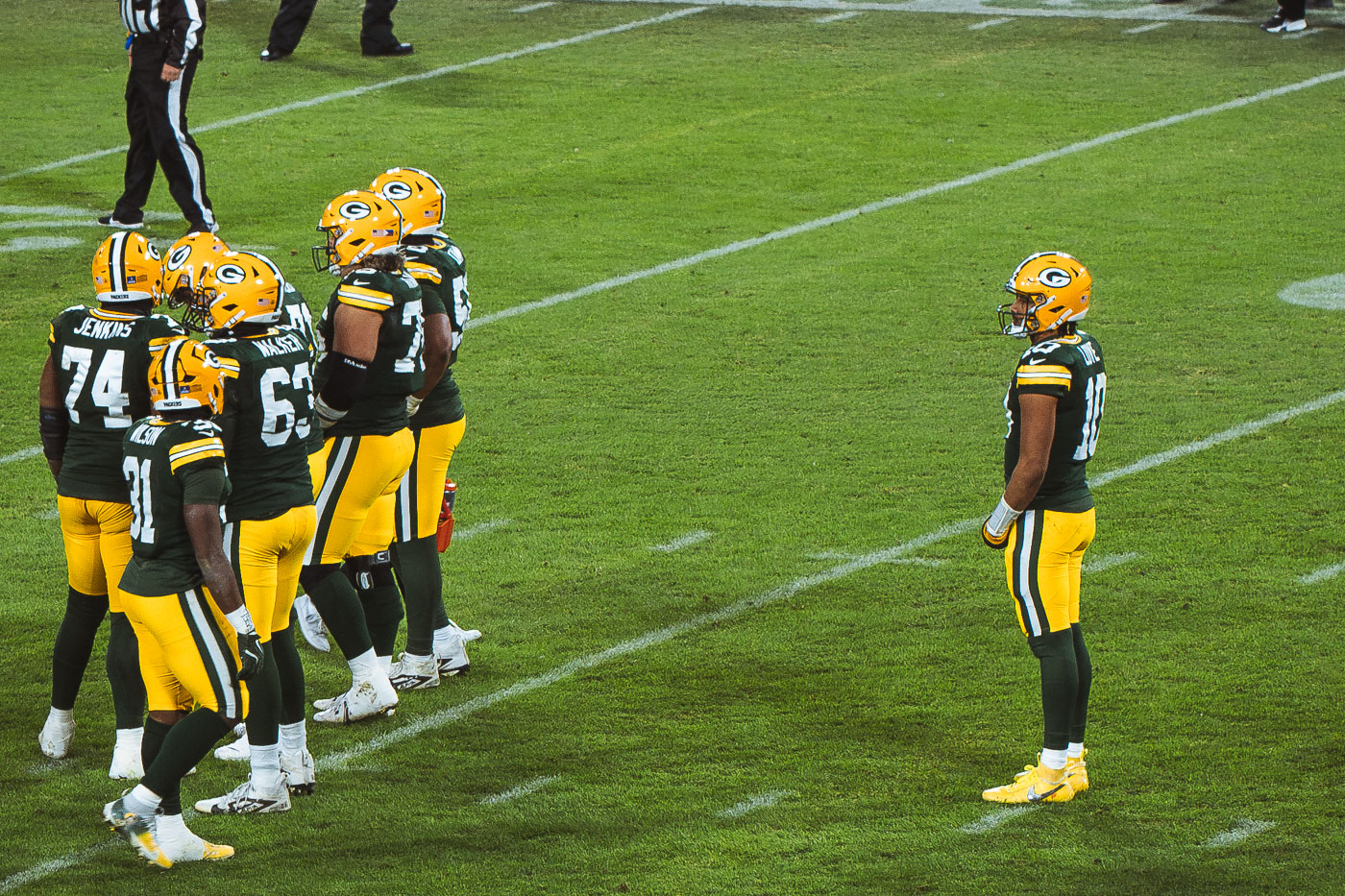
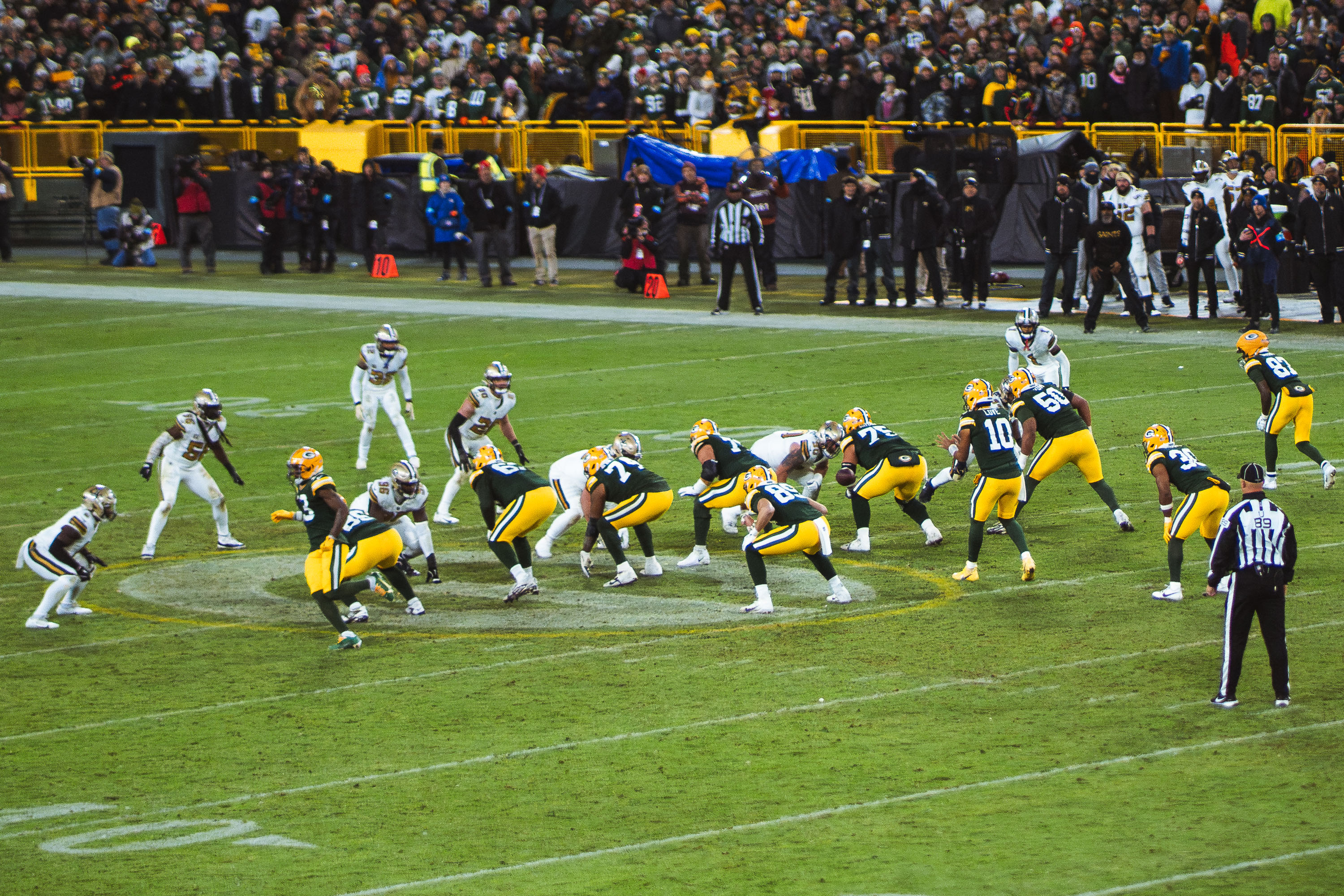
Green Bay Packers quarterback Jordan Love and offensive linemen huddle on the field during an NFL game at Lambeau Field.
Lambeau Field has hosted the Green Bay Packers since 1957, making it the oldest continually operating stadium in the NFL. Jordan Love took over as the team's starting quarterback in 2023 after four seasons as a backup to Aaron Rodgers. On December 23, 2024, Green Bay shut out the New Orleans Saints 34-0 in a game played under the stadium's outdoor lights, a rarity for the Packers' late-season home schedule. The win extended Green Bay's streak of home victories that season and kept the team in playoff contention heading into the final weeks of the regular season.
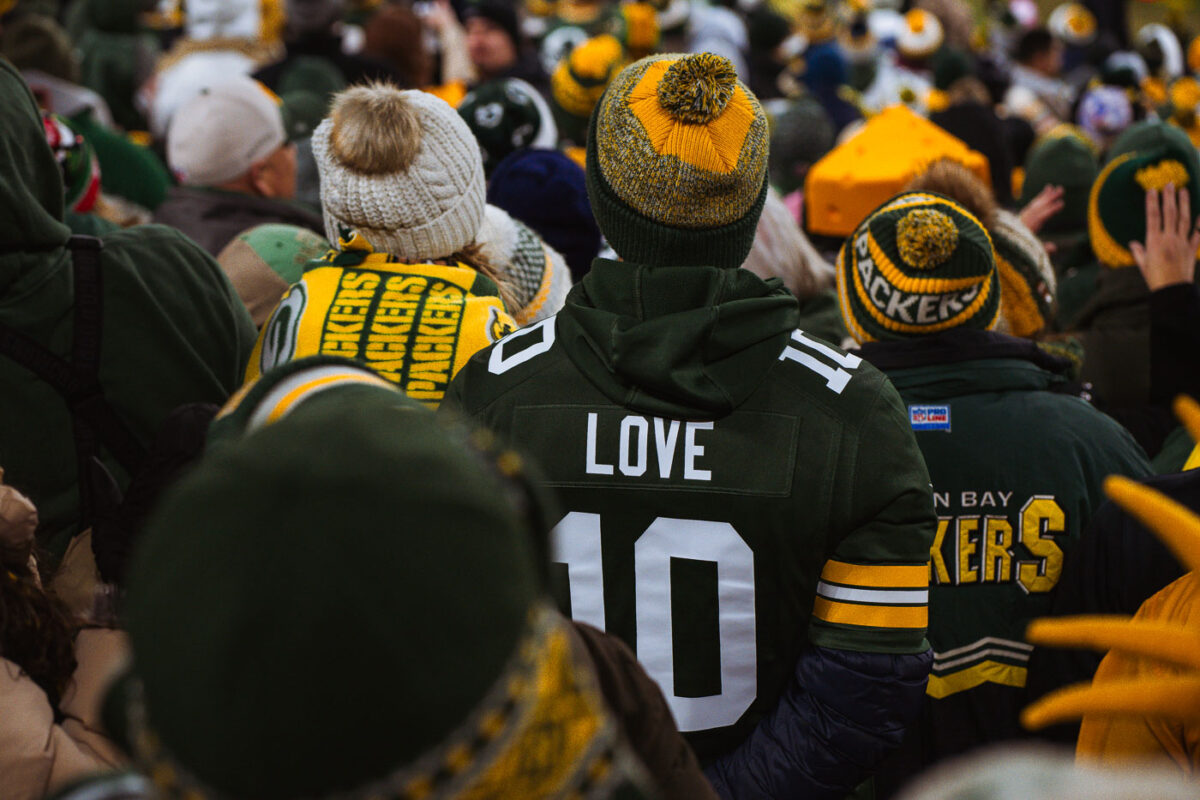
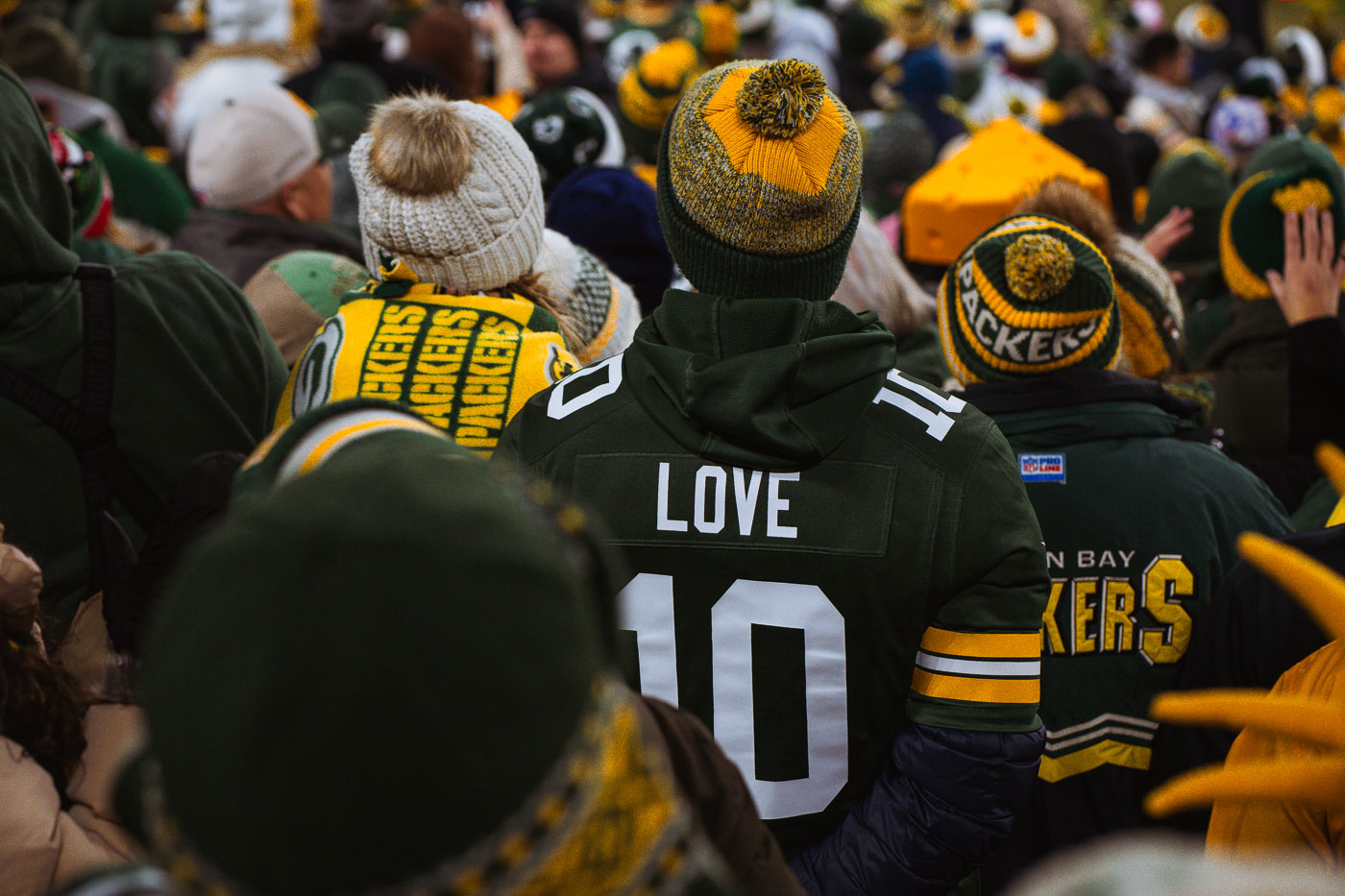
Green Bay Packers fans wearing team apparel and Jordan Love jersey gather outdoors at Lambeau Field.
Lambeau Field has served as the home of the Green Bay Packers since 1957, making it the oldest continuously operating stadium in the NFL. The venue holds roughly 81,441 fans, nearly all of whom are shareholders in the publicly owned franchise, one of the last of its kind in American professional sports. Jordan Love took over as the Packers' starting quarterback in 2023 and wears No. 10, the number visible on jerseys throughout the stands. This game, played December 23, 2024, pitted the Packers against the New Orleans Saints in a regular-season NFC matchup.
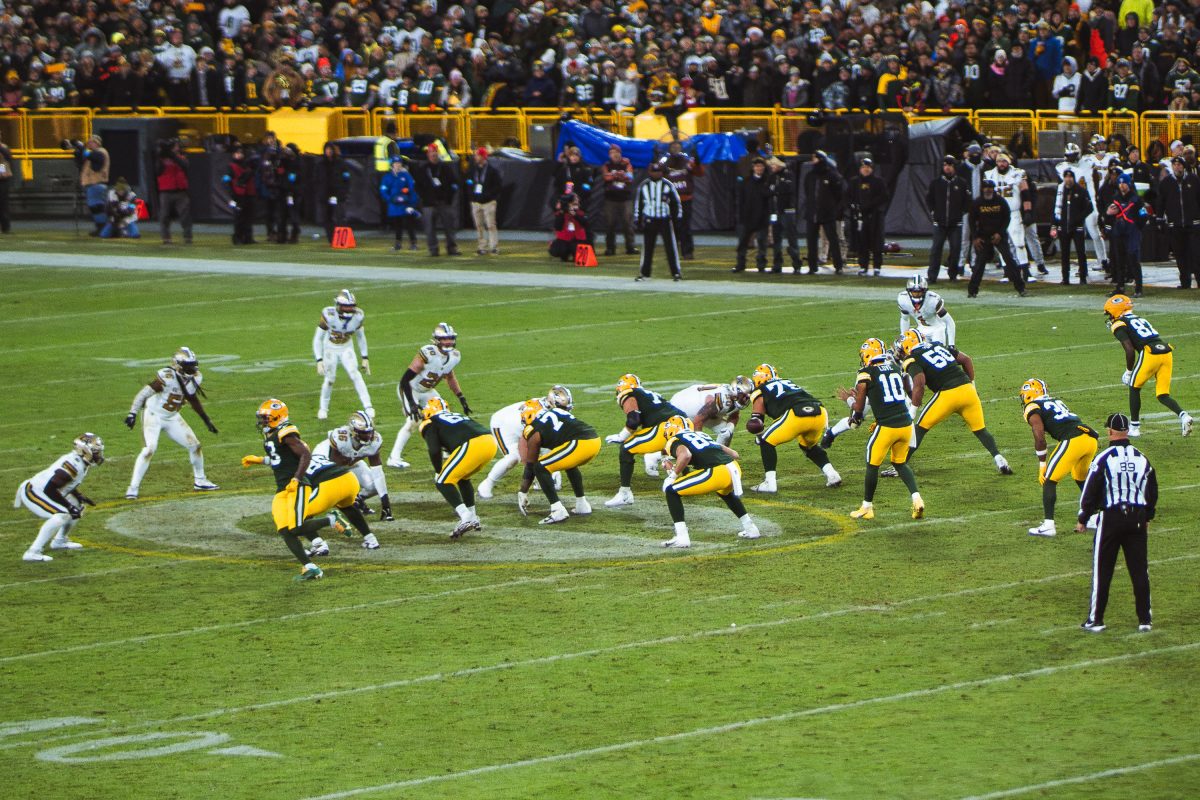
Green Bay Packers quarterback Jordan Love leads offense against New Orleans Saints at Lambeau Field.
Lambeau Field has hosted the Green Bay Packers since 1957, making it the oldest continually operating stadium in the NFL. It sits at 1265 Lombardi Avenue, a name honoring former head coach Vince Lombardi, and holds more than 81,000 fans on game day. Jordan Love became the Packers' starting quarterback in 2023, three years after Green Bay drafted him in the first round. On December 23, 2024, the Packers hosted the New Orleans Saints at Lambeau Field in a late-season game.
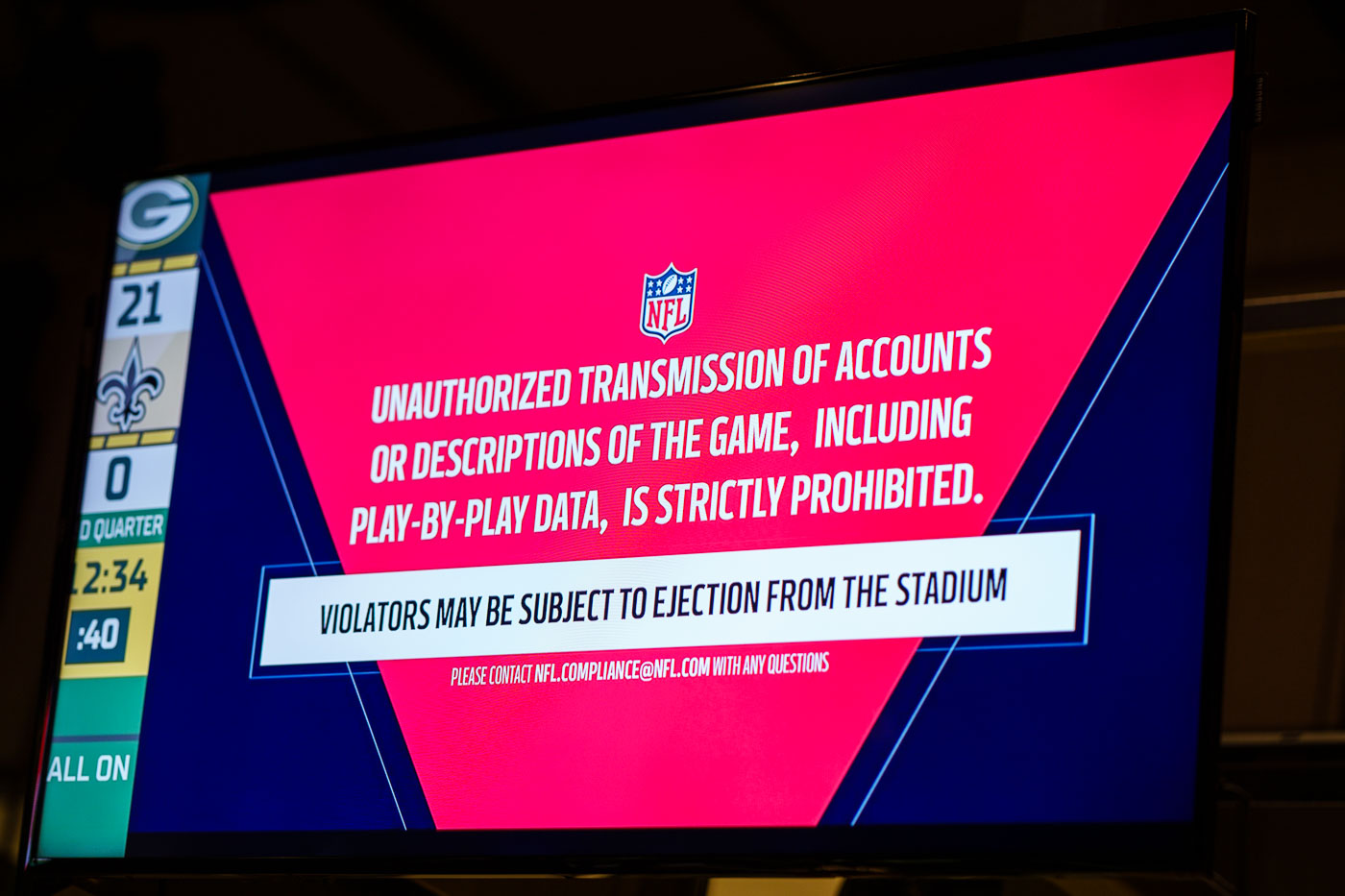
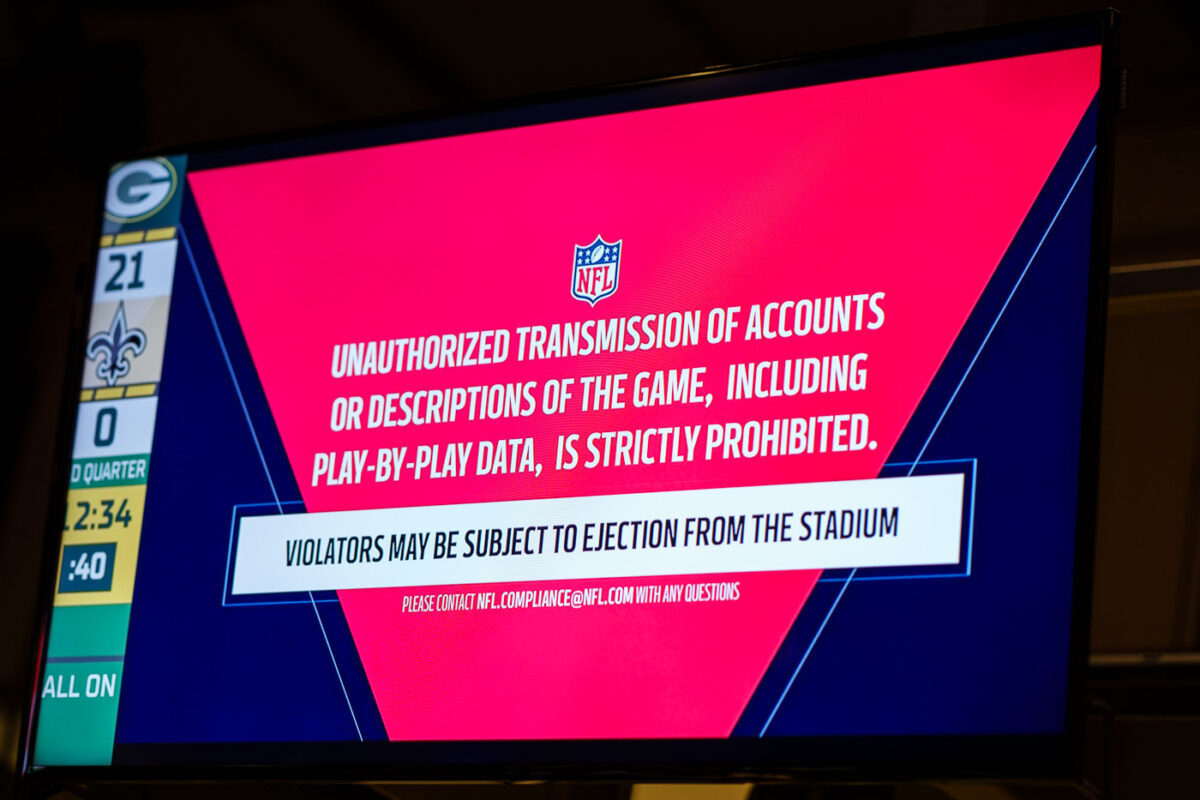
NFL unauthorized transmission warning displayed on stadium screen at Lambeau Field during Green Bay Packers game.
Lambeau Field's video board carries a standard NFL warning during Green Bay Packers home games, cautioning against unauthorized transmission of the broadcast, including play-by-play accounts of the action. The notice states that violators may be ejected from the stadium and directs questions to the league's compliance office, a standard condition tied to the NFL's media rights enforcement. The accompanying game strip shows a Packers-Saints matchup from the 2024 season.
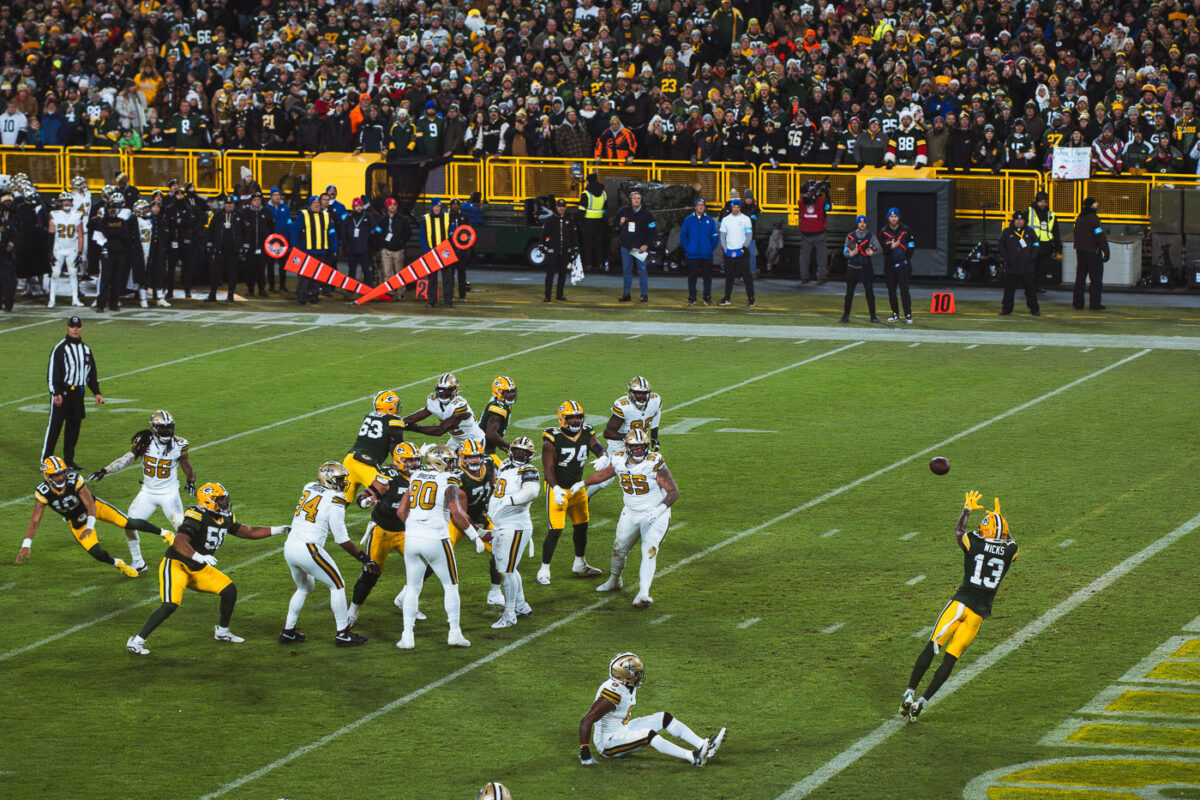
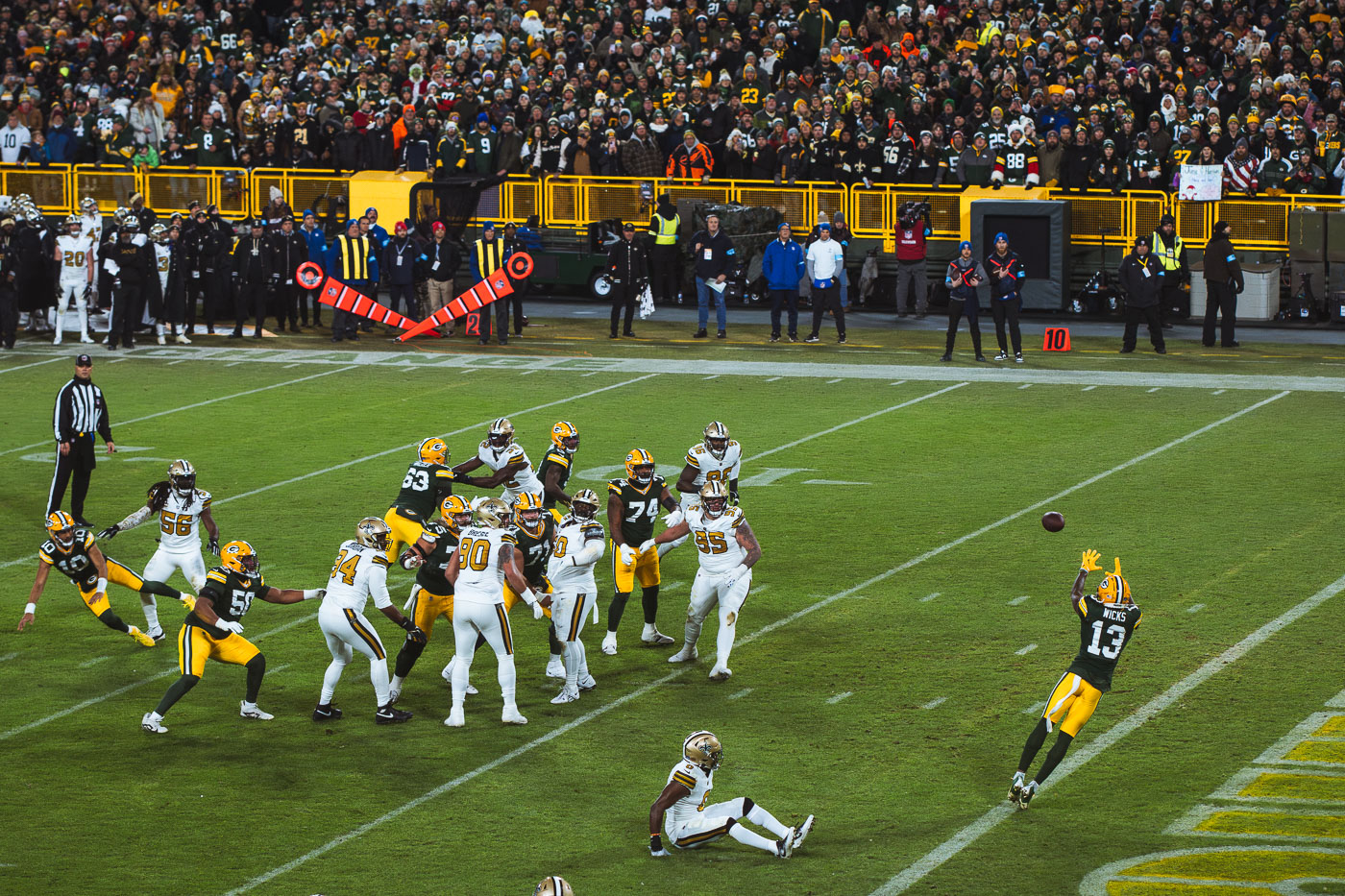
Green Bay Packers player catches touchdown pass during NFL game against New Orleans Saints at Lambeau Field.
Dontayvion Wicks caught a touchdown pass for the Green Bay Packers during a 34-0 win over the New Orleans Saints at Lambeau Field on December 23, 2024. Wicks, a fifth-round pick out of Virginia in 2023, has been part of Green Bay's receiving corps alongside quarterback Jordan Love. Lambeau Field, opened in 1957, holds just over 81,000 fans and is the oldest continuously operating stadium in the NFL. The Packers have played there since the stadium's construction, making it one of the league's most enduring home venues.
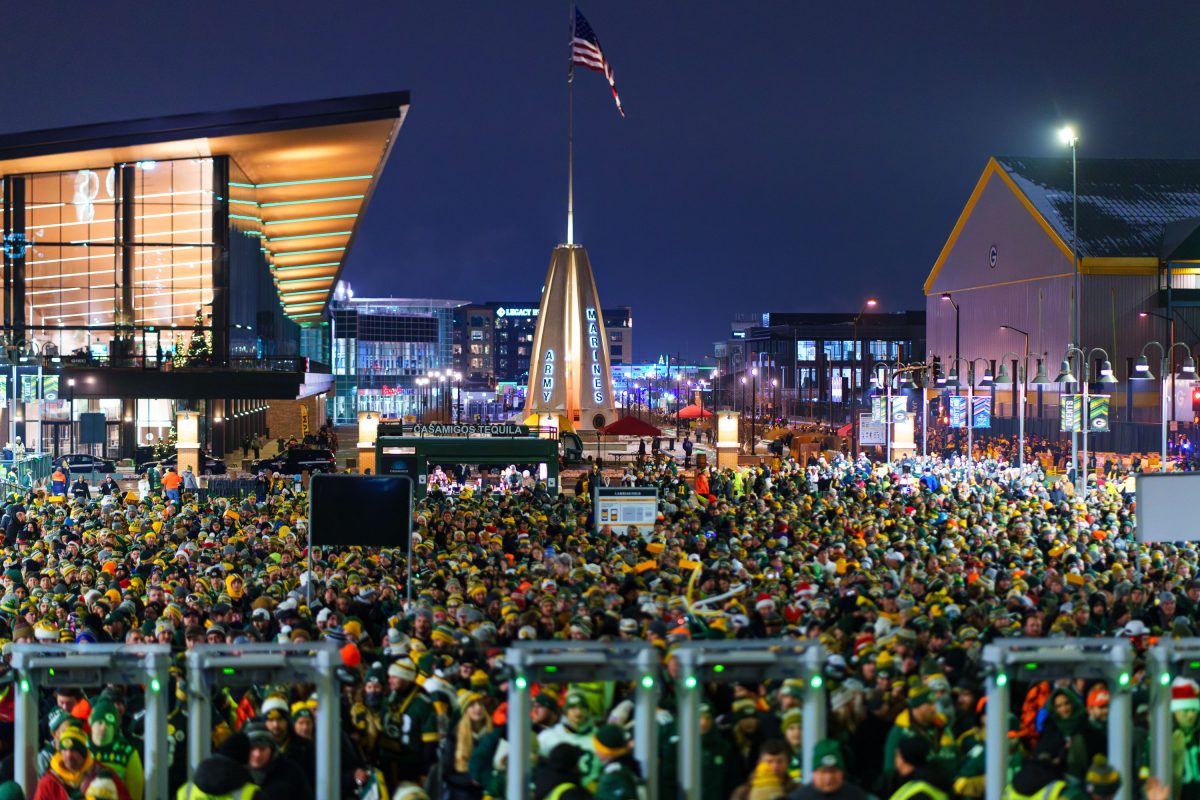
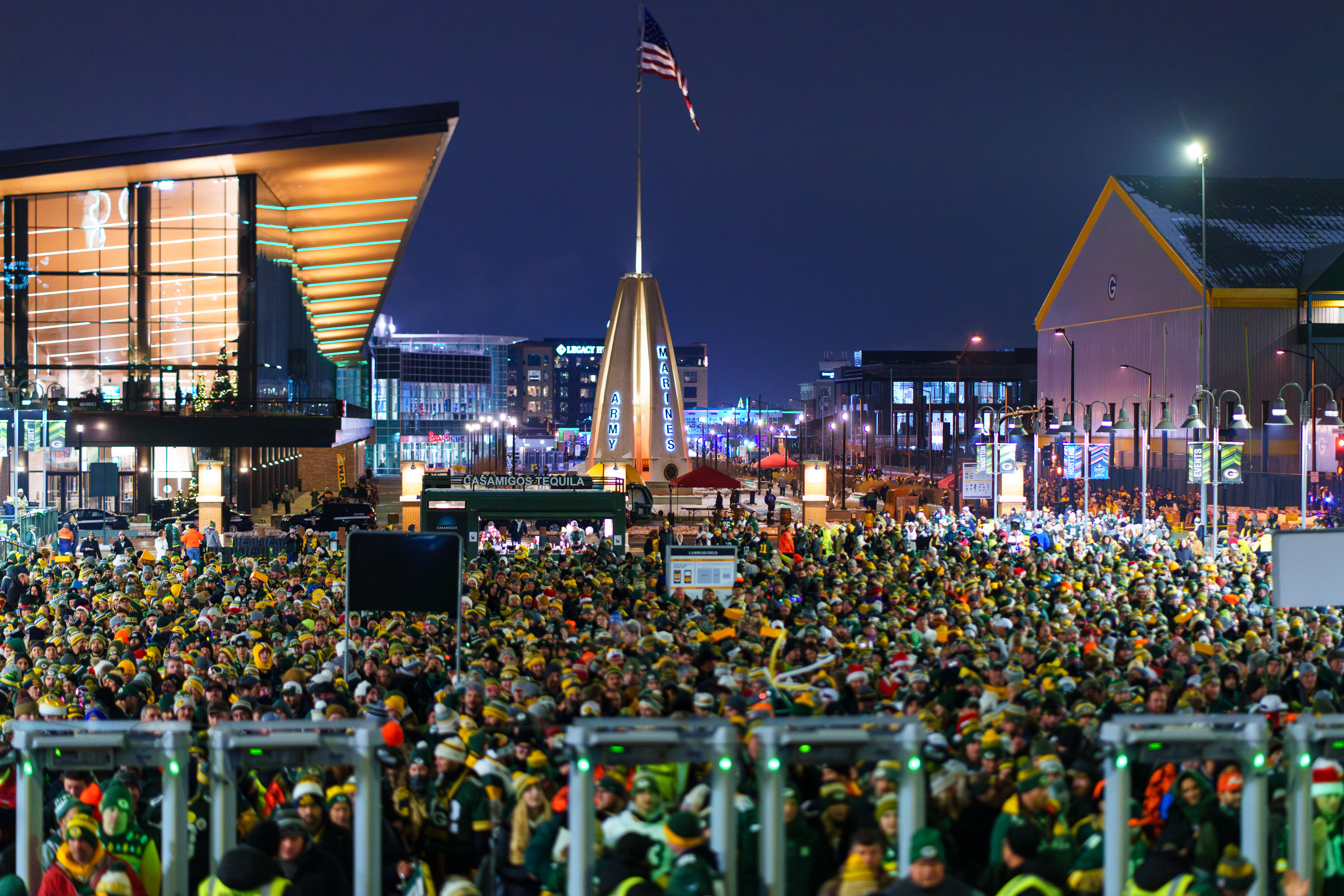
Thousands of fans gather at Lambeau Field in Green Bay for a Packers game against the New Orleans Saints.
Lambeau Field has been home to the Green Bay Packers since 1957, making it the oldest continuously operating stadium in the NFL. Its official capacity is 81,441, following a series of expansions that included the 2003 addition of the Titletown atrium on the stadium's south end. The Packers hosted the New Orleans Saints here on December 23, 2024, winning 34-0. The stadium takes its name from Curly Lambeau, who co-founded the franchise in 1919 and served as its head coach for 29 seasons.
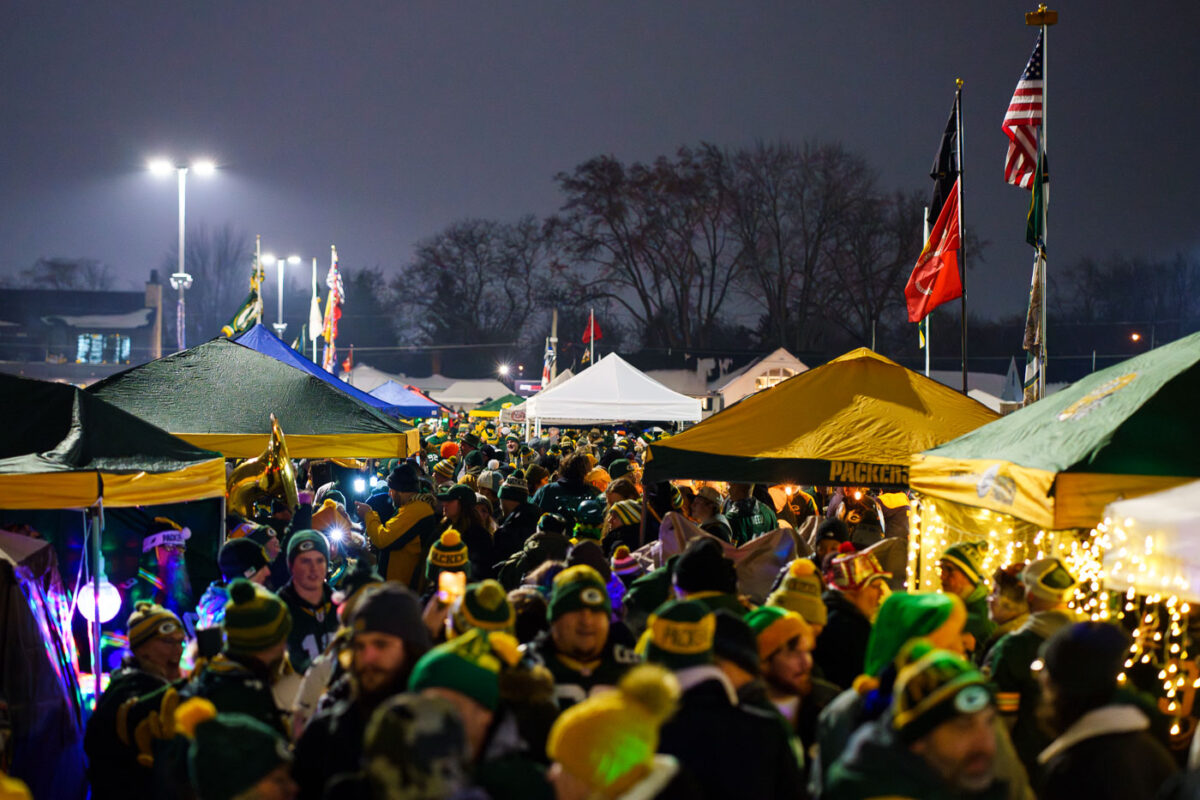
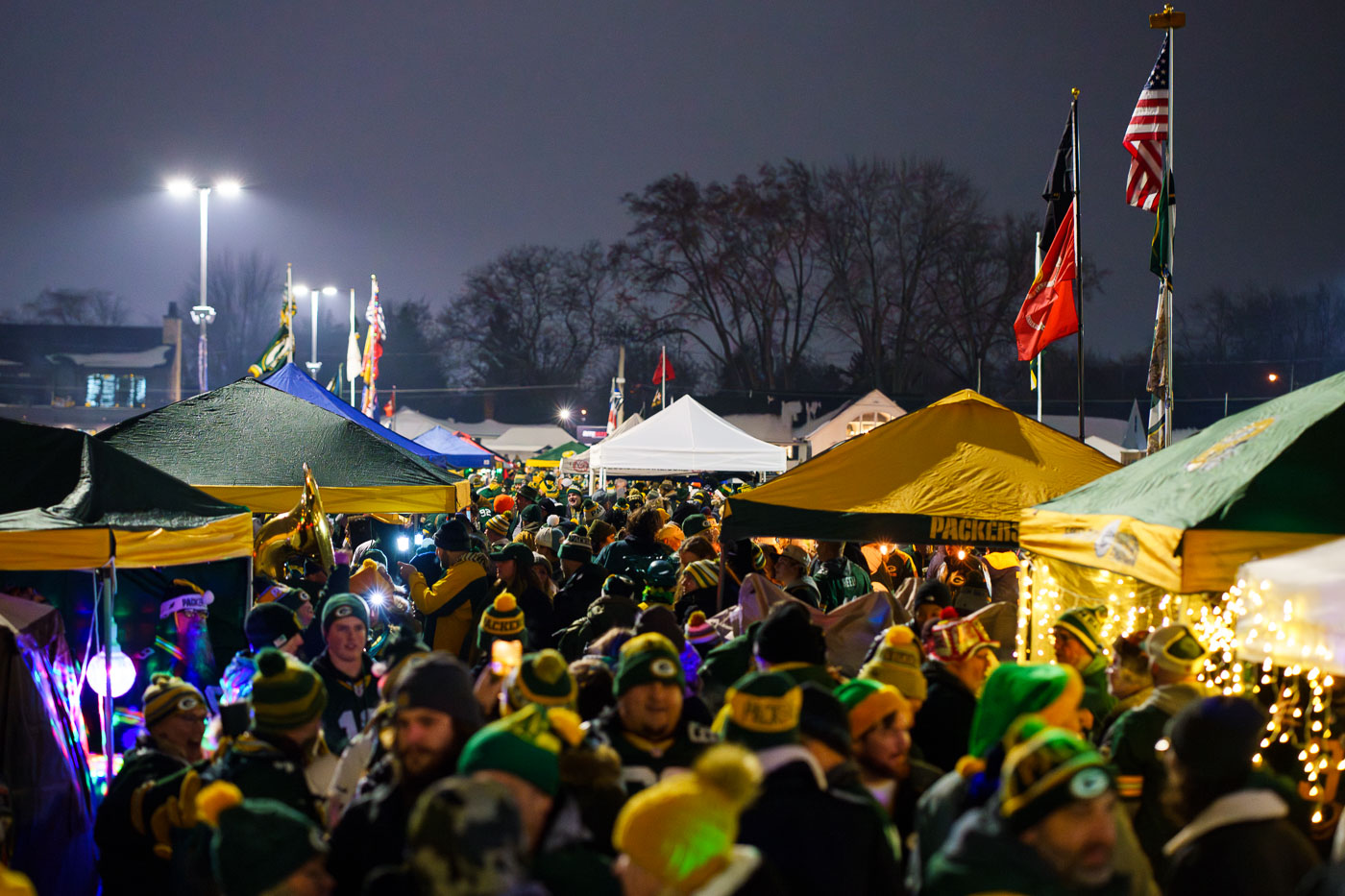
Fans gather in yellow and green team colors at a nighttime tailgate outside Lambeau Field in Green Bay, Wisconsin.
Lambeau Field has hosted Green Bay Packers home games since 1957, and the parking lots surrounding it fill with tailgaters on game days regardless of the weather. The stadium seats more than 81,000 and sits at 1265 Lombardi Avenue, named for former head coach Vince Lombardi. This tailgate preceded a December 23, 2024 matchup in which the Packers shut out the New Orleans Saints 34-0. Green and gold gear, popcorn stands, and makeshift bars set up out of trailers and tents are a fixture of the pregame ritual here, drawing fans hours before kickoff.
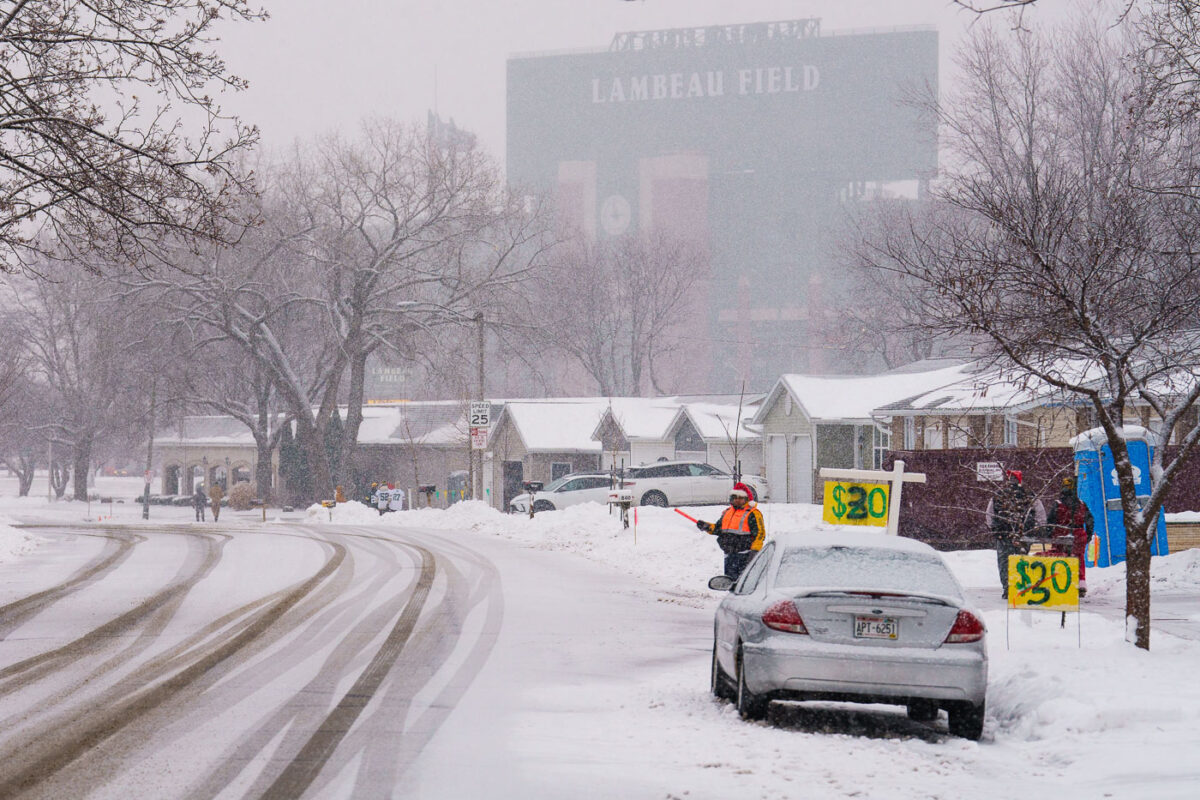
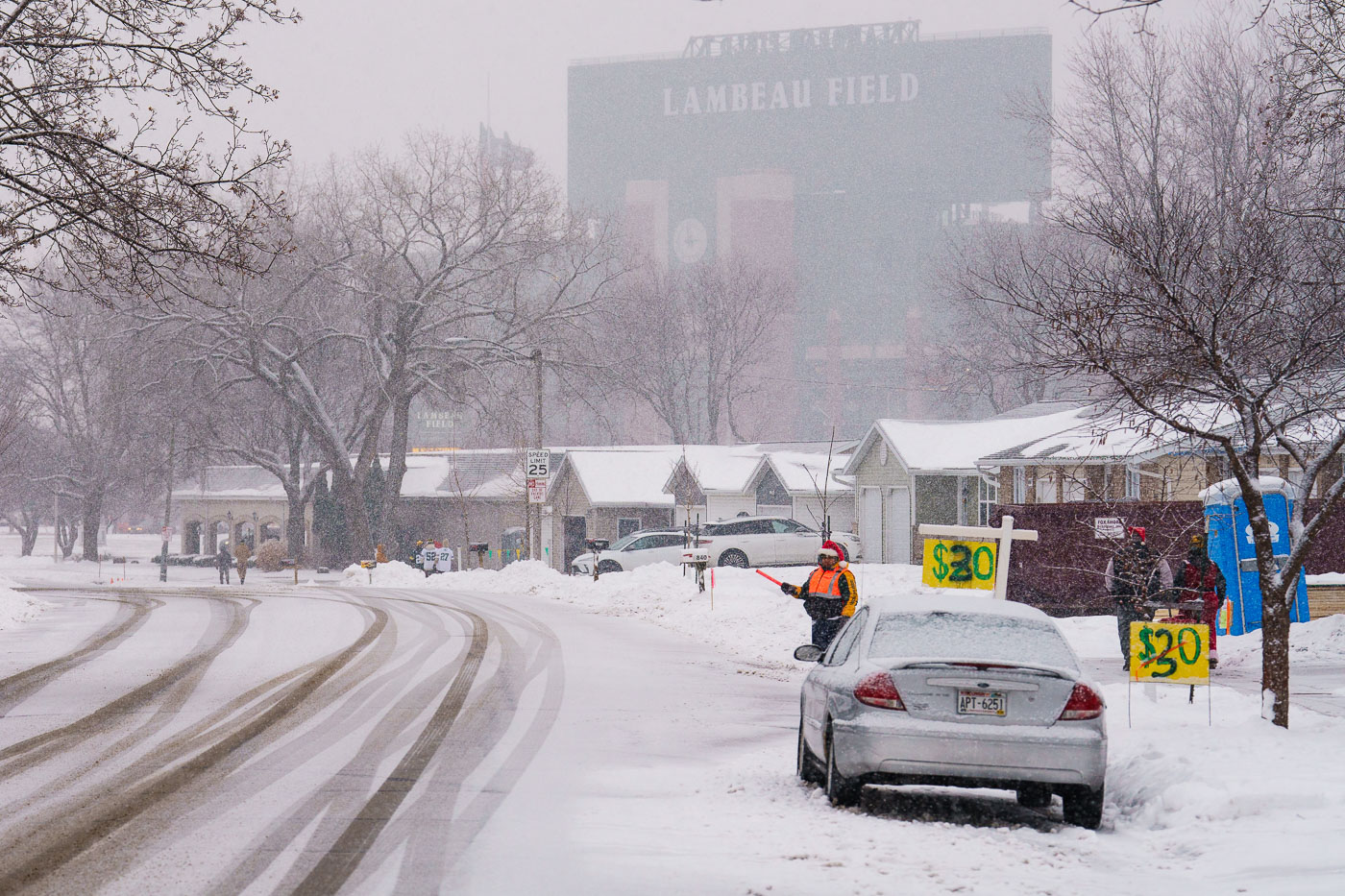
Person in safety vest directs cars to residential driveway parking for twenty dollars near Lambeau Field in snowy Green Bay.
Homeowners near Lambeau Field rent out their driveways for gameday parking, a long-standing practice in the neighborhoods surrounding the stadium. Rates typically run $20 to $40 depending on proximity to the gates and demand for that day's matchup. The stadium, home to the Green Bay Packers since 1957, holds over 81,000 fans and sits along Lombardi Avenue in Green Bay, Wisconsin. On snowy game days, city crews and private lot owners alike depend on volunteers or paid staff to direct traffic through the narrow residential streets that ring the property.
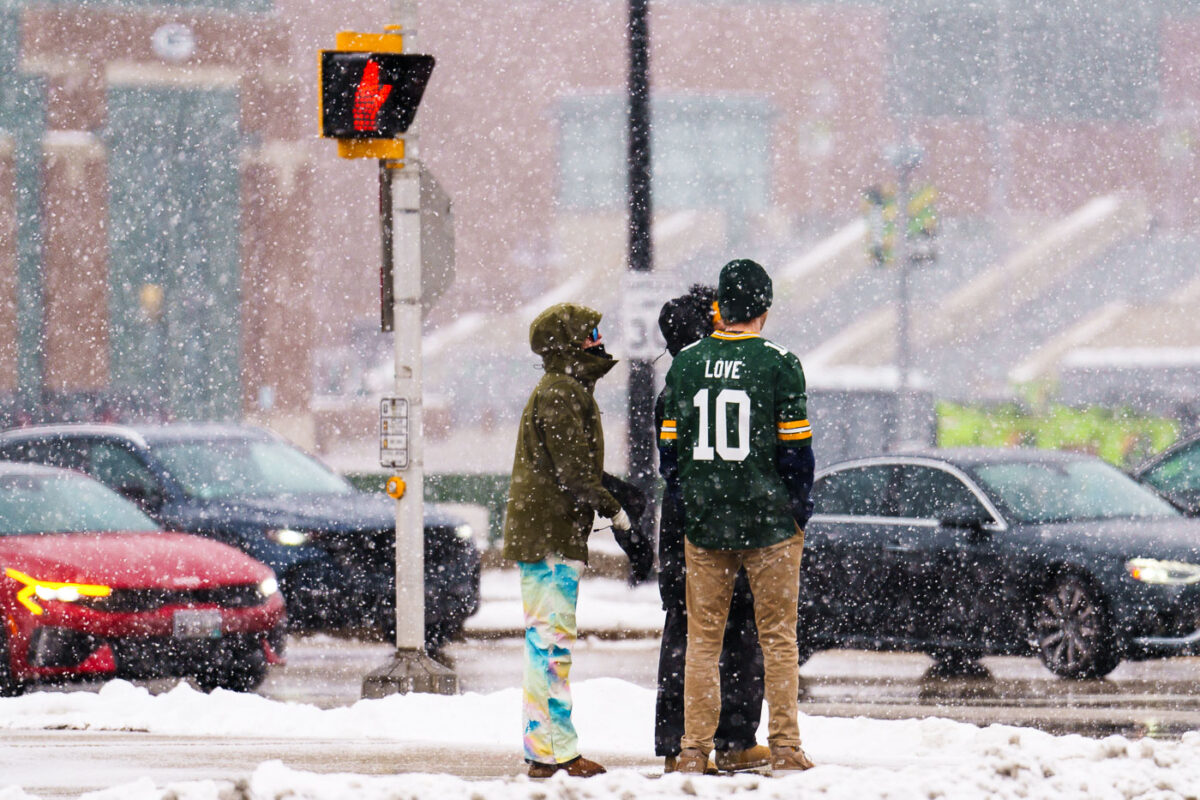
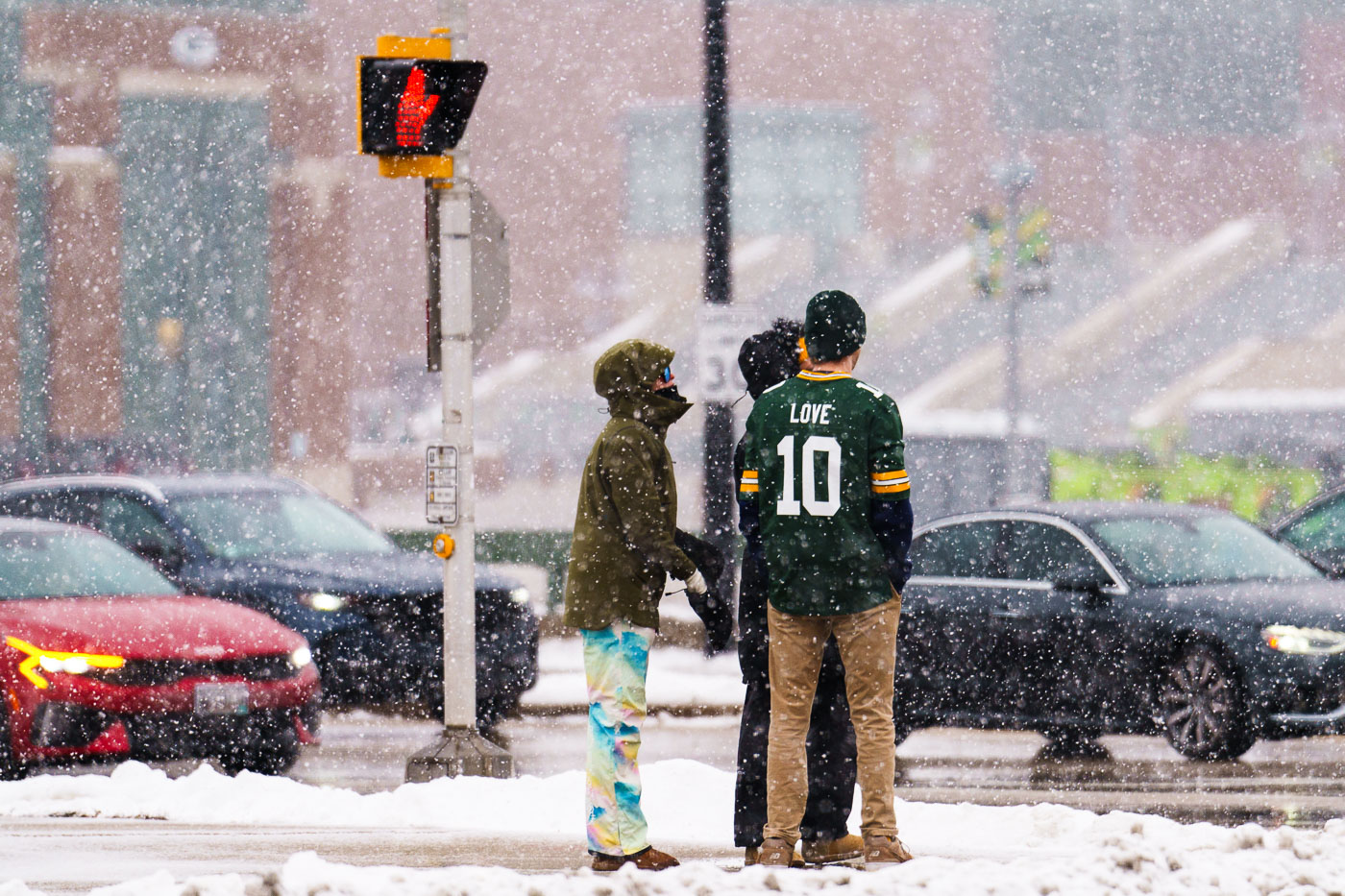
Fan wearing Jordan Love jersey stands on snowy Lombardi Avenue outside Lambeau Field in Green Bay during December snowstorm.
Lombardi Avenue runs along the west side of Lambeau Field, connecting the stadium's main gates to the parking lots and the Don Hutson Center. Fans walking it on December 23, 2024, were heading to a game against the New Orleans Saints, which Green Bay won 34-0. The street is named for Vince Lombardi, who coached the Packers to five NFL championships between 1959 and 1967 and whose name has been attached to the Super Bowl trophy since 1970.
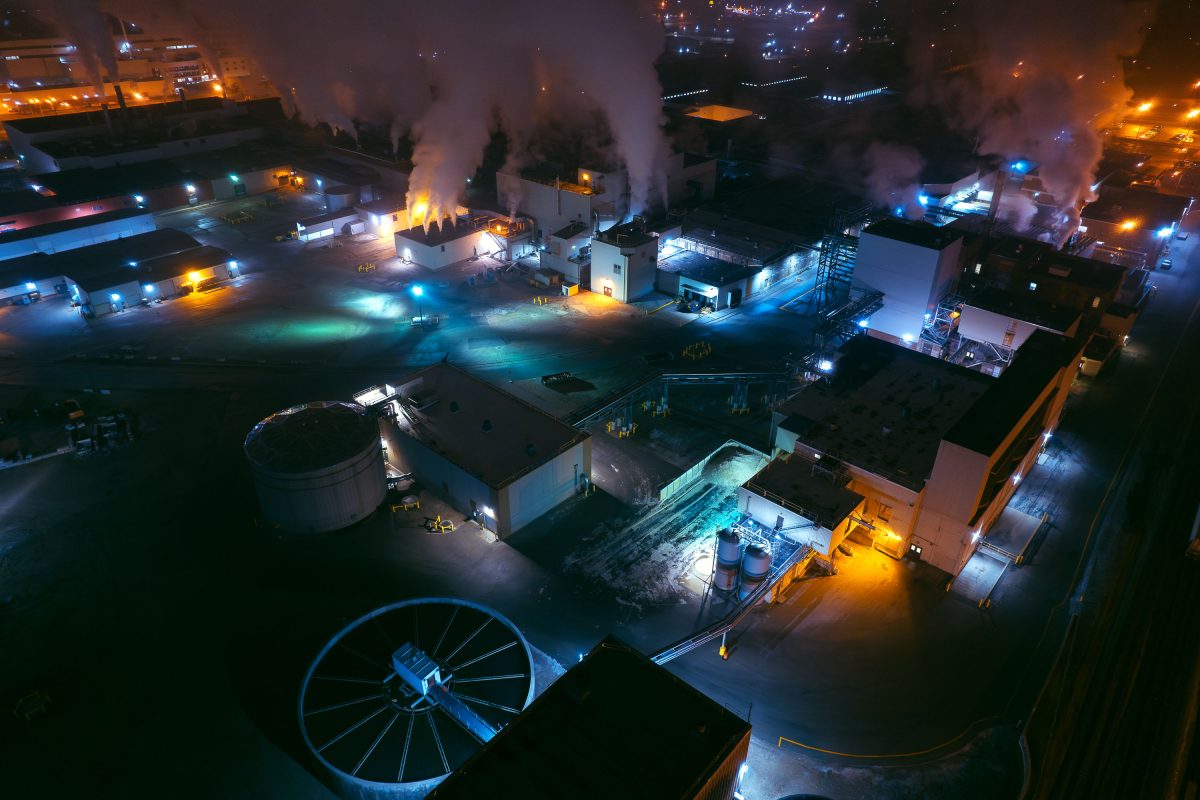
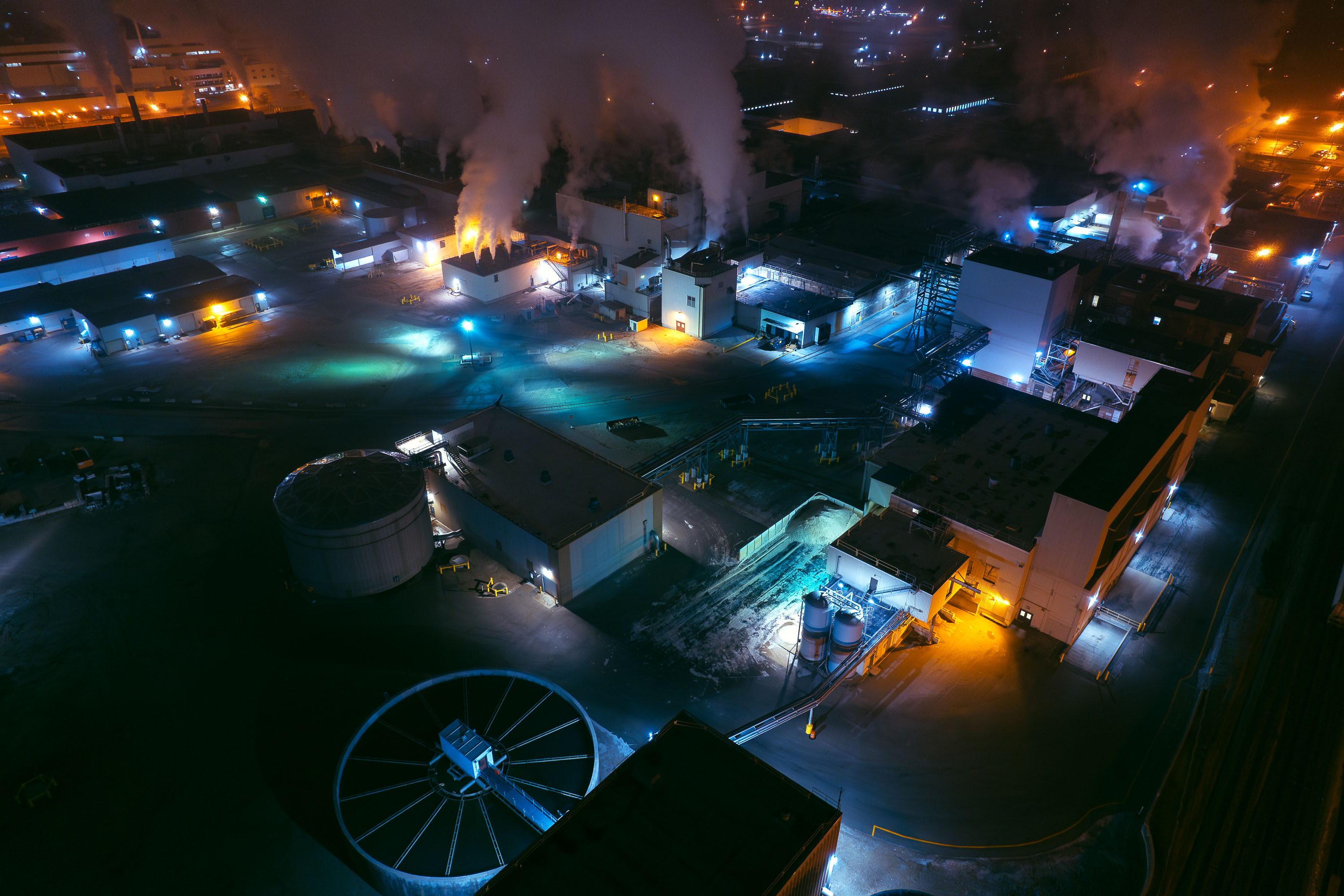
Procter & Gamble Charmin paper mill in Green Bay, Wisconsin, emits steam plumes at night with illuminated industrial structures and storage tanks.
Procter & Gamble's Green Bay facility produces Charmin toilet paper, part of a tissue operation the company built up after acquiring the Charmin Paper Company in 1957. The plant sits along the Fox River, a corridor that has anchored paper manufacturing in the region for well over a century thanks to easy access to water and rail transport. Round-the-clock production is typical at mills of this scale, where steam stacks and drying operations run continuously to keep pace with national distribution demands.
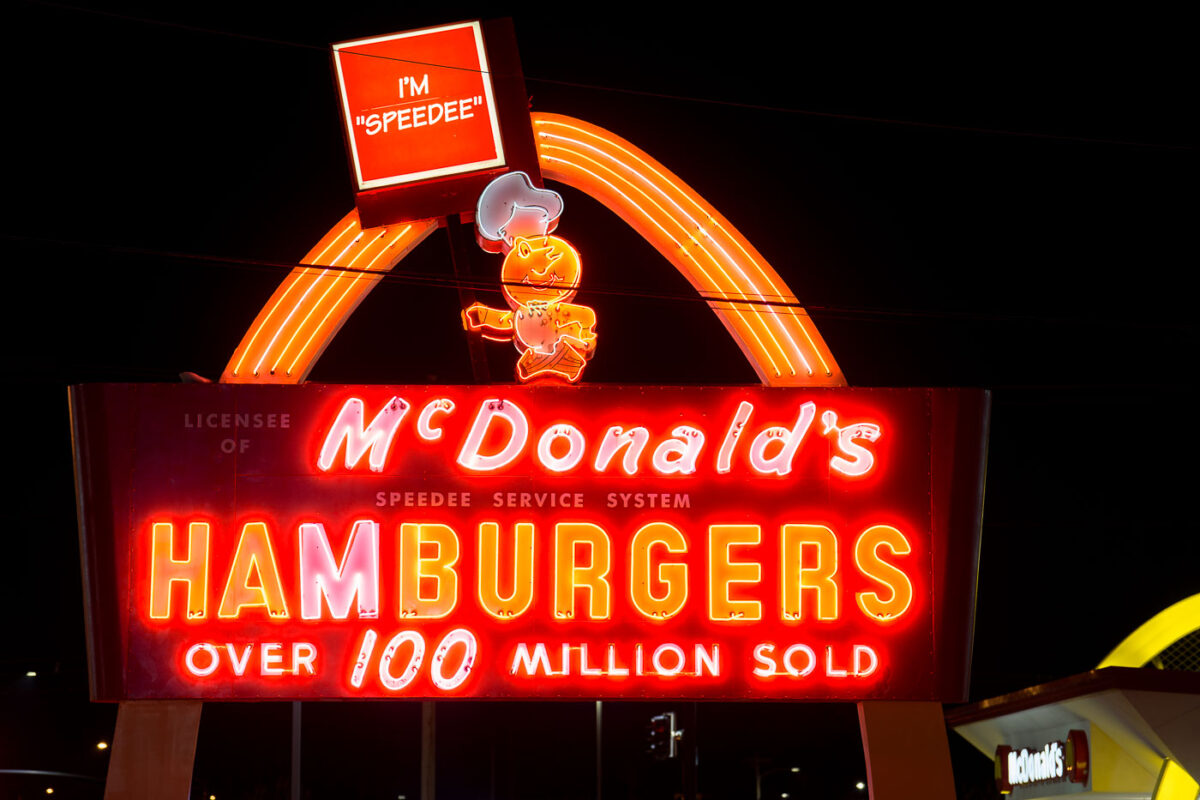
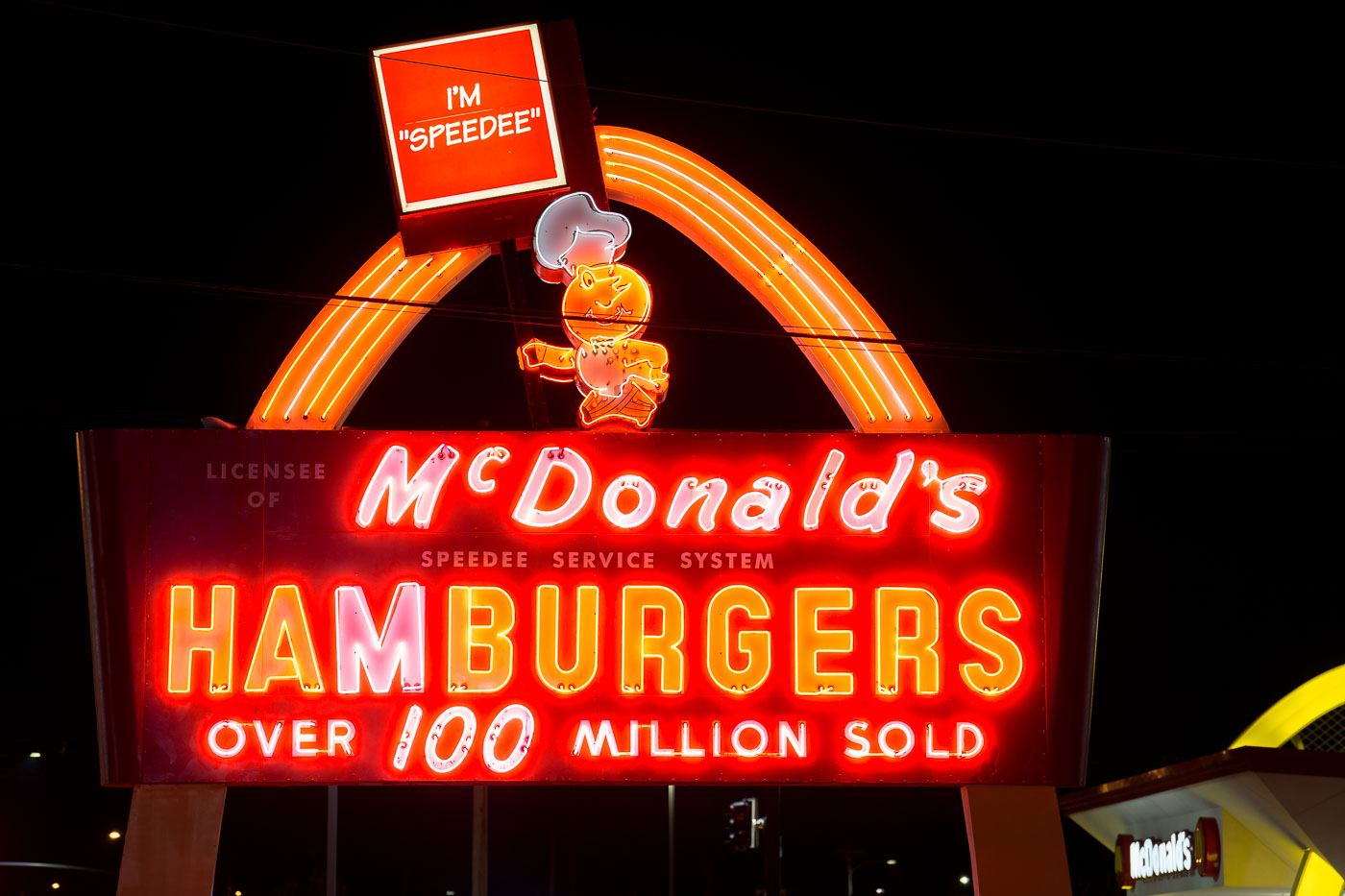
Vintage McDonald's neon sign with "Speedee" mascot in Green Bay, Wisconsin.
One of the few surviving original McDonald’s neon signs still standing in the United States is located in Green Bay, Wisconsin. Installed during the era before the Golden Arches fully defined the brand, the sign features “Speedee,” the chain’s early mascot introduced in the 1950s to promote the company’s streamlined “Speedee Service System.” The illuminated red-and-yellow marquee—advertising hamburgers and boasting “Over 100 Million Sold”—reflects the rapid national expansion of the franchise during its formative years. Today it serves as both a functioning restaurant sign and a preserved piece of mid-century fast-food history.
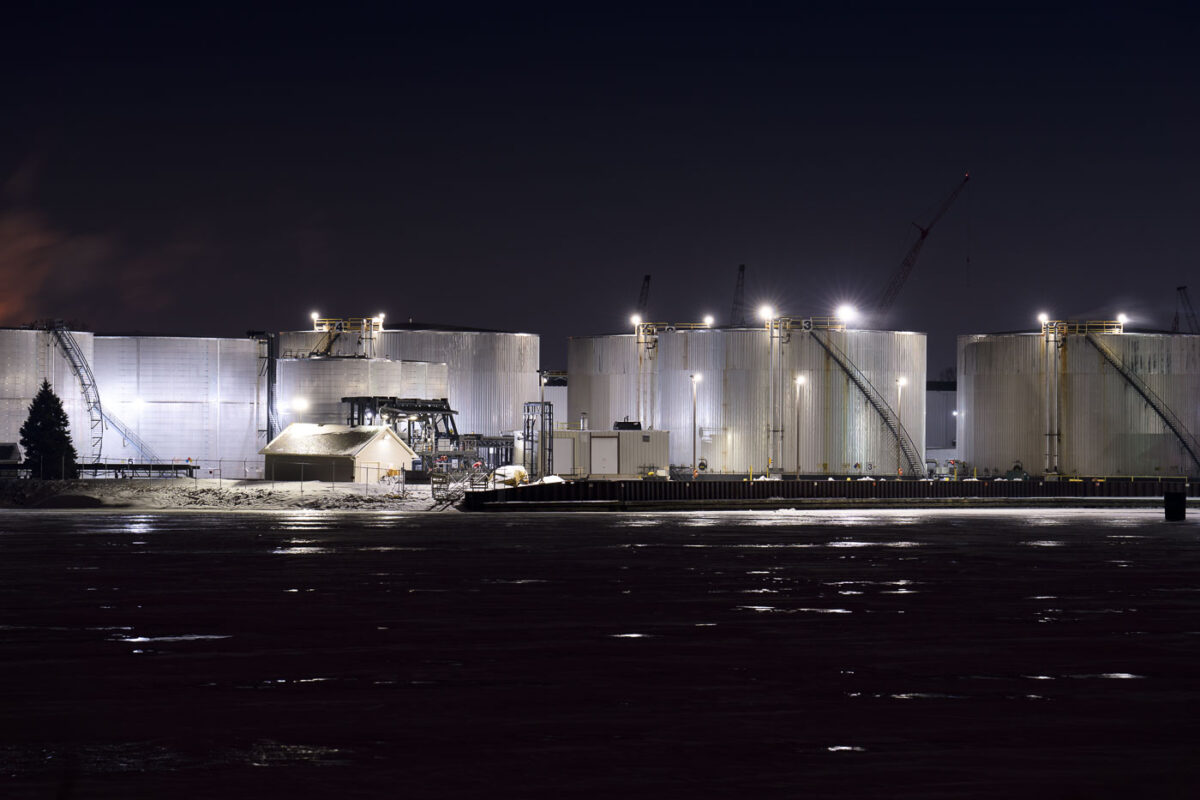
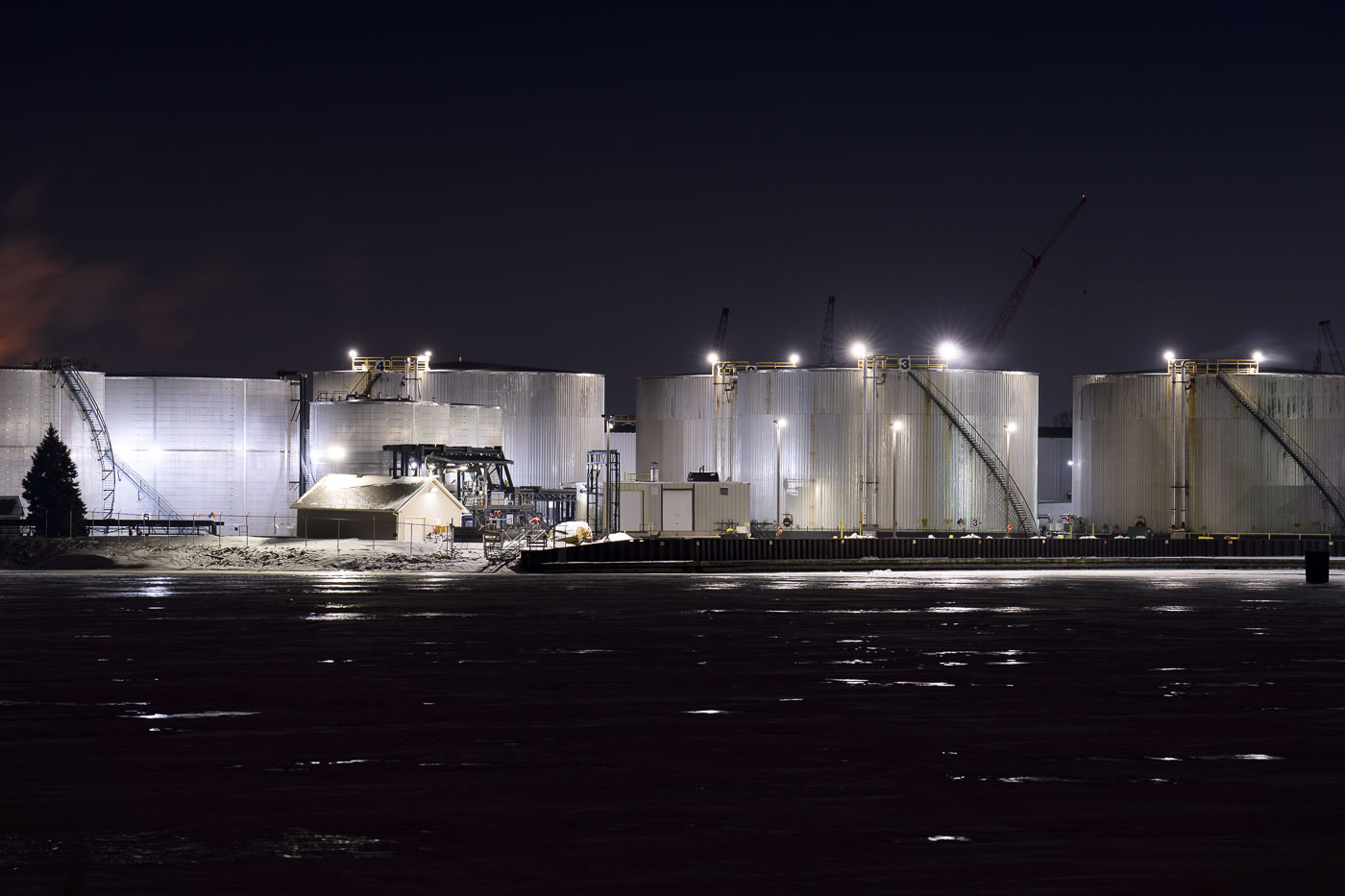
Storage tanks at Construction Resources Management in Green Bay, Wisconsin, illuminated on a winter night.
Large cylindrical storage tanks at Construction Resources Management, Inc. line the west bank of the Fox River in Green Bay, Wisconsin. Viewed from across the frozen river on a winter night, the facility is illuminated by perimeter lighting that reflects faintly off the ice. The site serves regional construction and materials operations, part of the industrial corridor that has long defined the waterfront between downtown Green Bay and the port district.
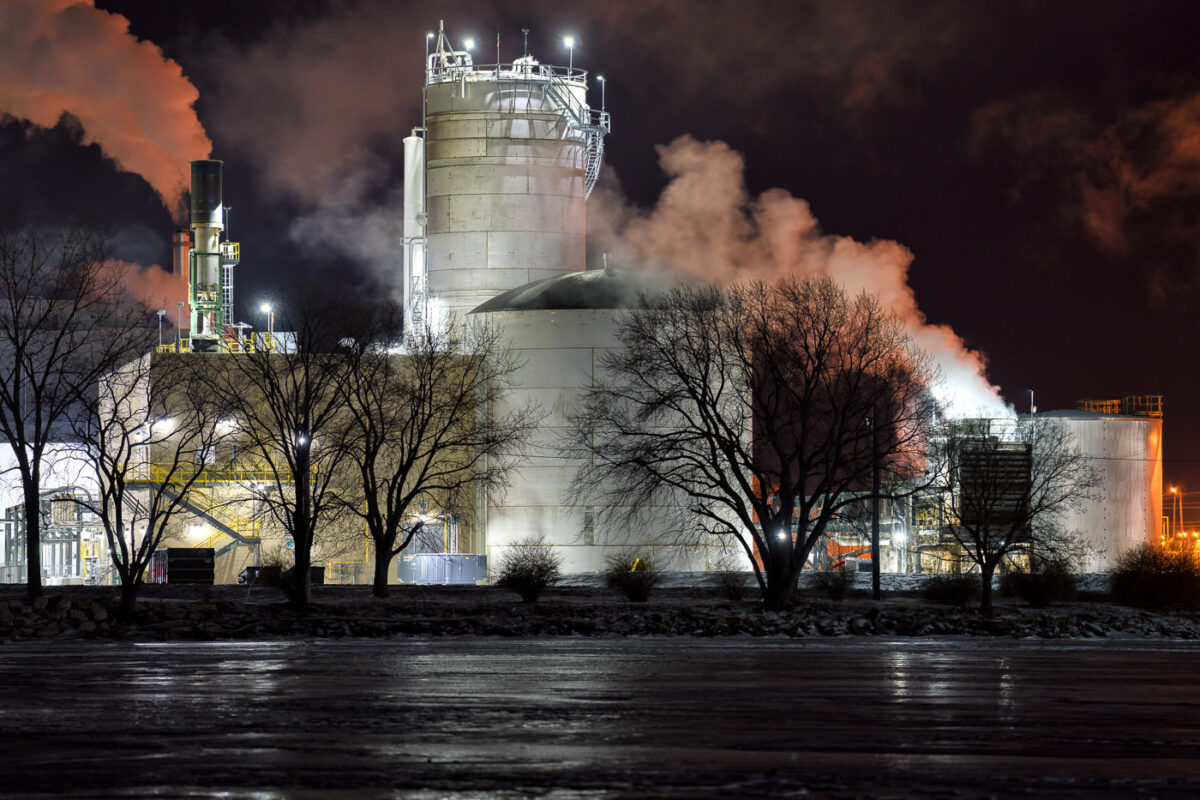
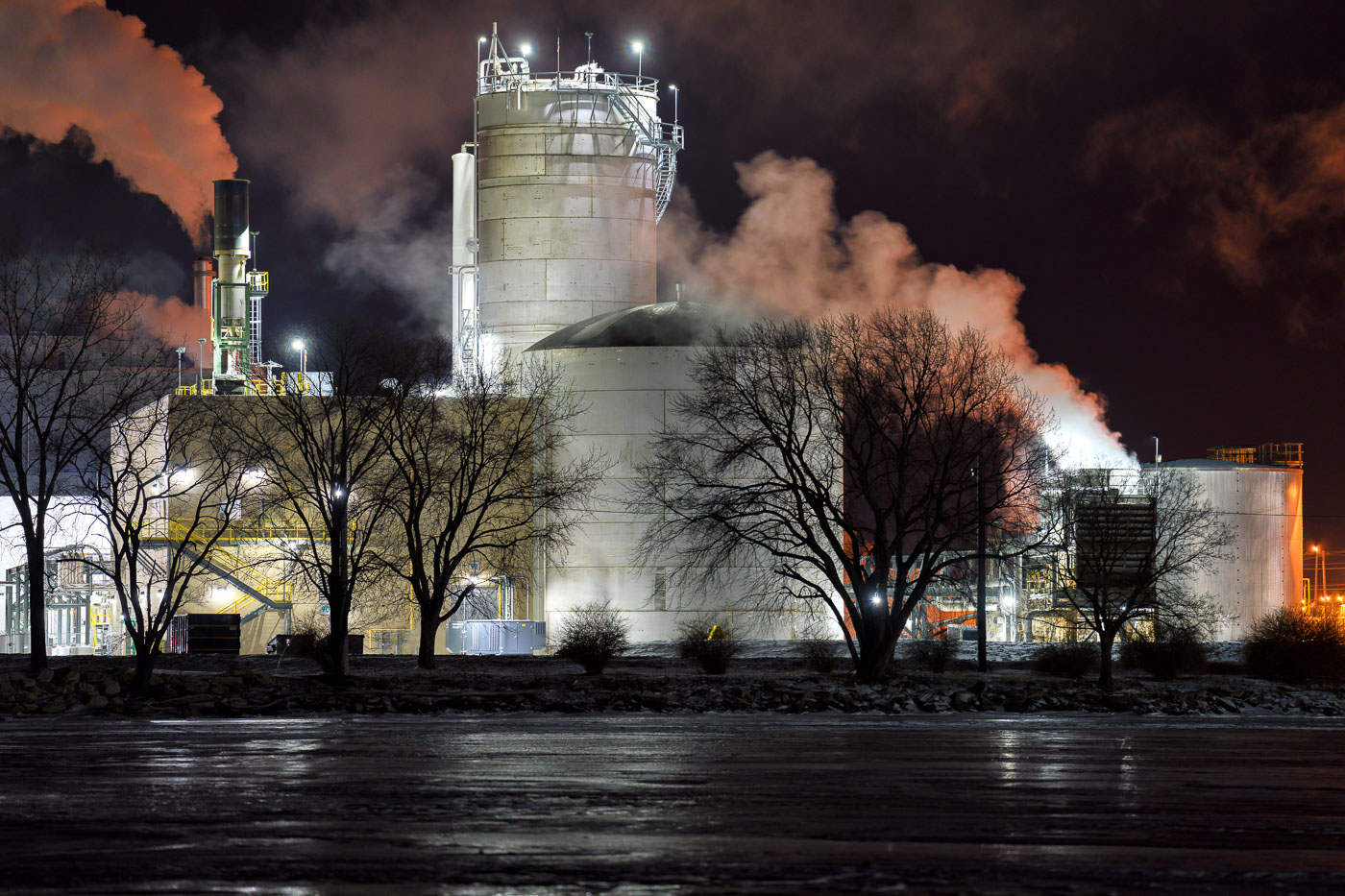
Green Bay Packaging's modern paper mill on the Fox River in Wisconsin emits steam plumes into the winter night sky.
Green Bay Packaging's recycled paper mill sits along the Fox River in Green Bay, Wisconsin. The company completed this containerboard mill in 2021, replacing an older facility and consolidating production into a single advanced plant designed to cut water and energy use. The mill produces recycled containerboard used in corrugated packaging, drawing on the company's long history as a family-owned packaging manufacturer based in Green Bay. Steam from its process operations is a routine byproduct of papermaking, generated by the heat required to pulp and dry recycled fiber into new board.
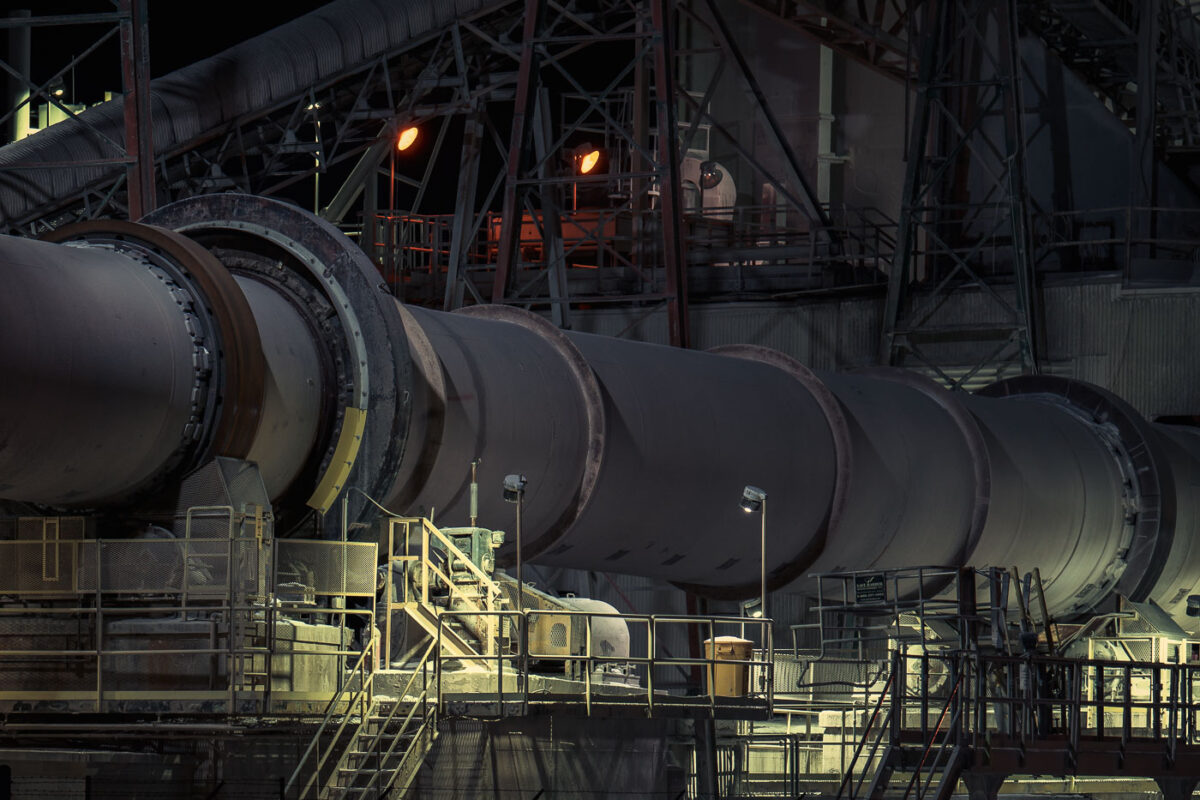
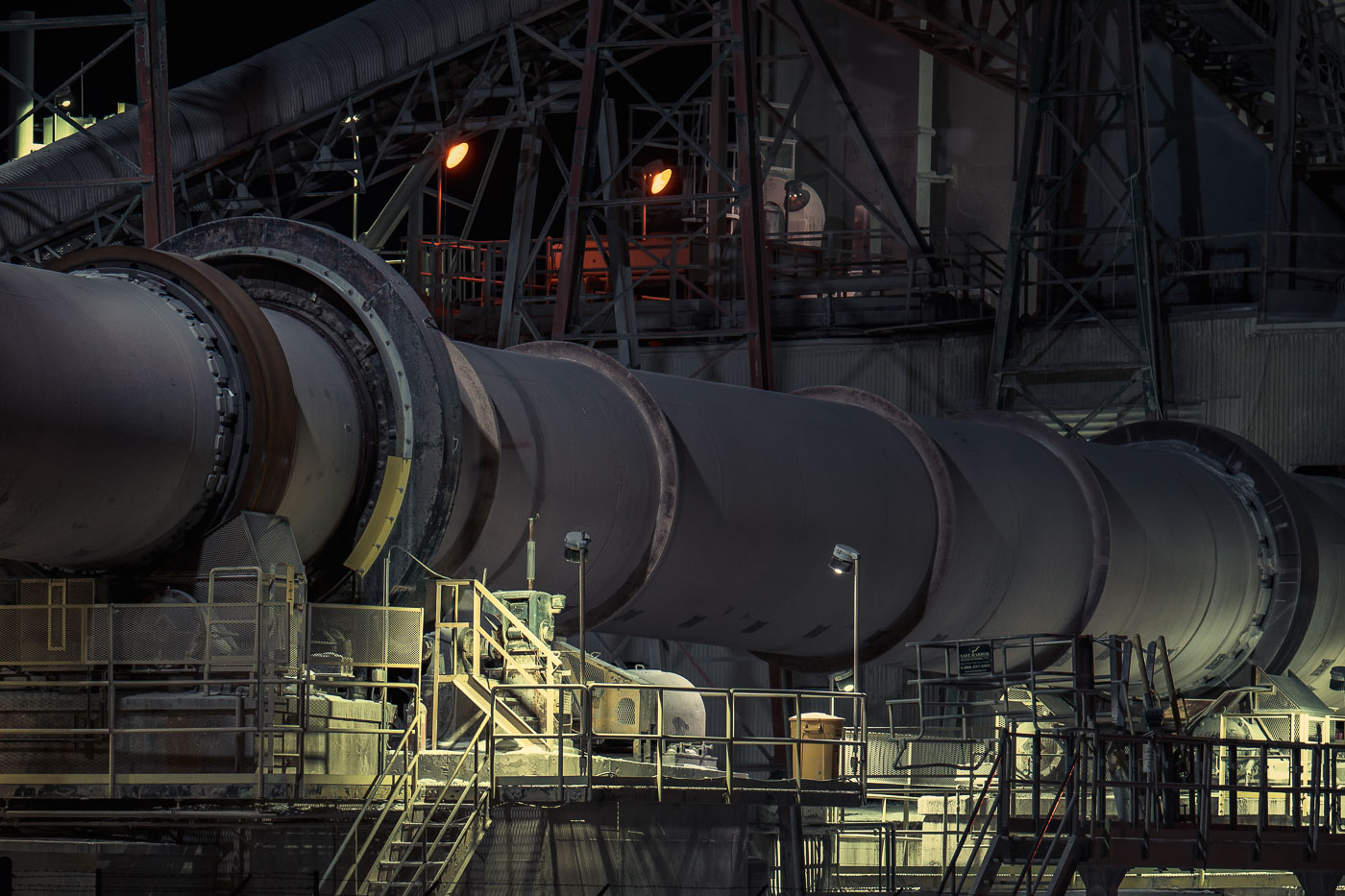
Rotary kiln system at the Graymont lime plant in Green Bay, Wisconsin, at night.
A section of the rotary kiln system at the Graymont lime plant in Green Bay, Wisconsin, captured at night under maintenance and work lights. The massive rotating kiln—central to the calcination process that transforms limestone into high-purity lime—runs along a network of elevated platforms, access stairs, and steel supports. The orange glow from overhead lamps highlights the heat-intensive nature of kiln operations, while the surrounding catwalks and conveyors reflect the layered engineering required to keep the continuous production line moving.
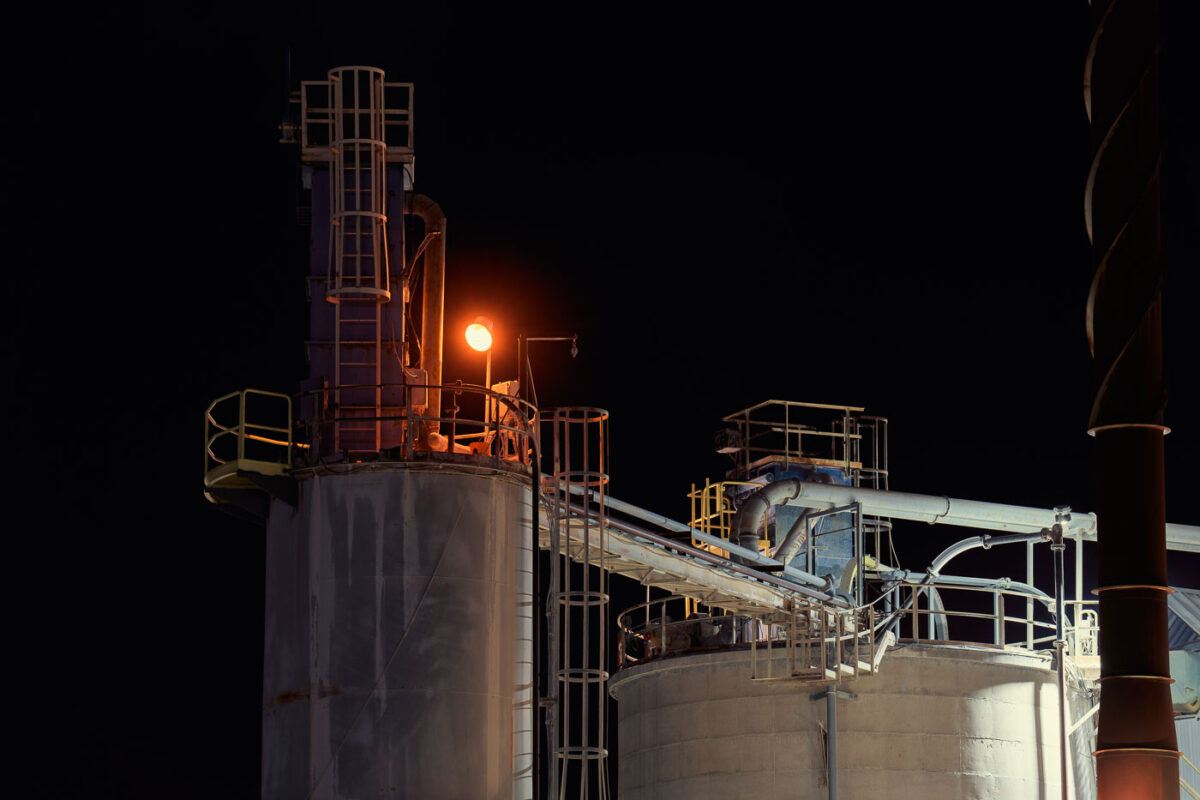
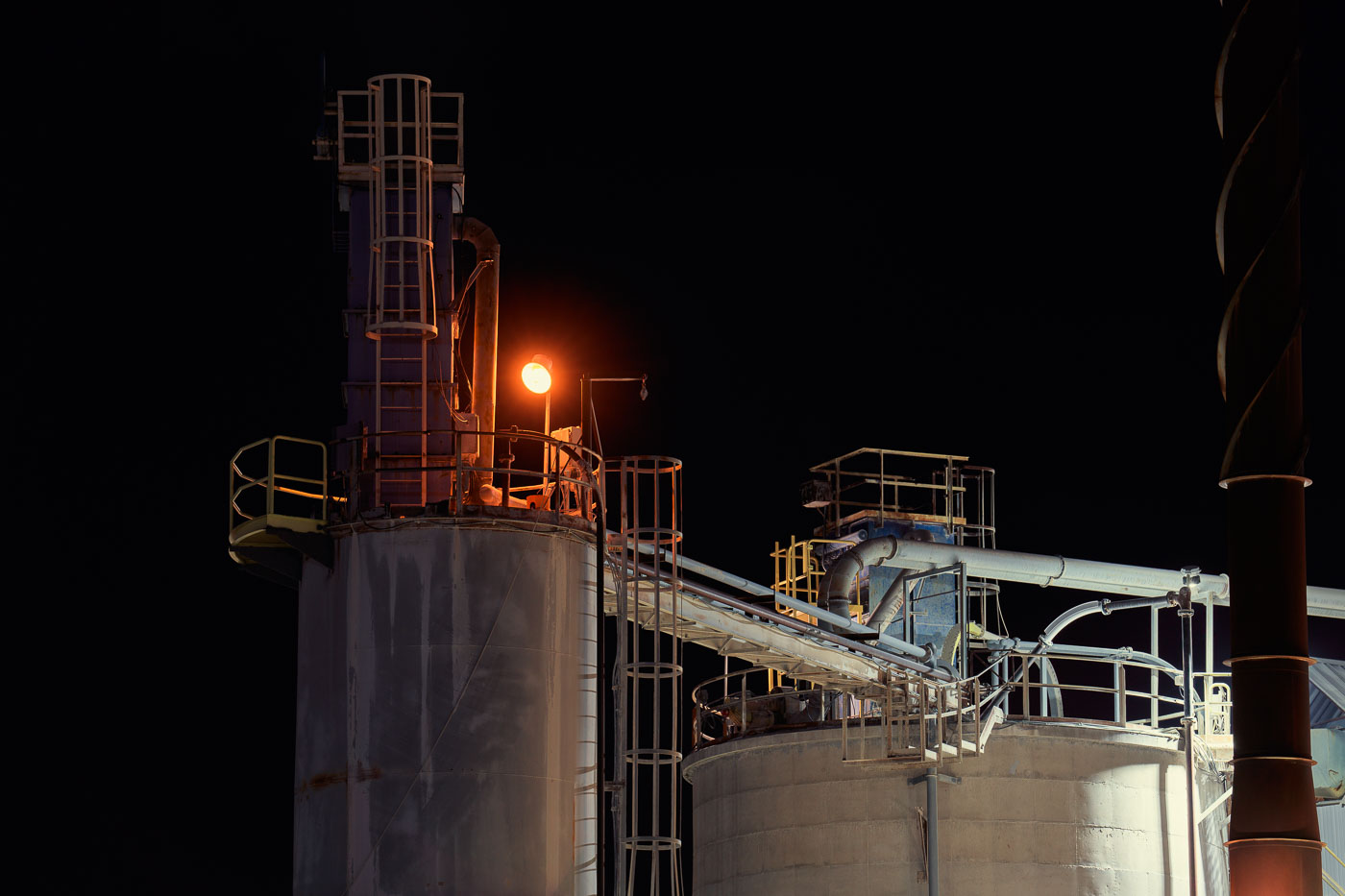
Lime silos and transfer systems at the Graymont plant in Green Bay, Wisconsin, illuminated at night.
Illuminated by a single amber work light, the upper platforms and transfer pipes of the Graymont lime plant in Green Bay, Wisconsin stand out against the night sky. The cylindrical storage silos are connected by enclosed conveyor and piping systems that move processed lime between different stages of production. Catwalks, ladders, and pipe supports trace the geometry of an industrial site that has long supplied lime for regional steelmaking, water treatment, and construction uses.
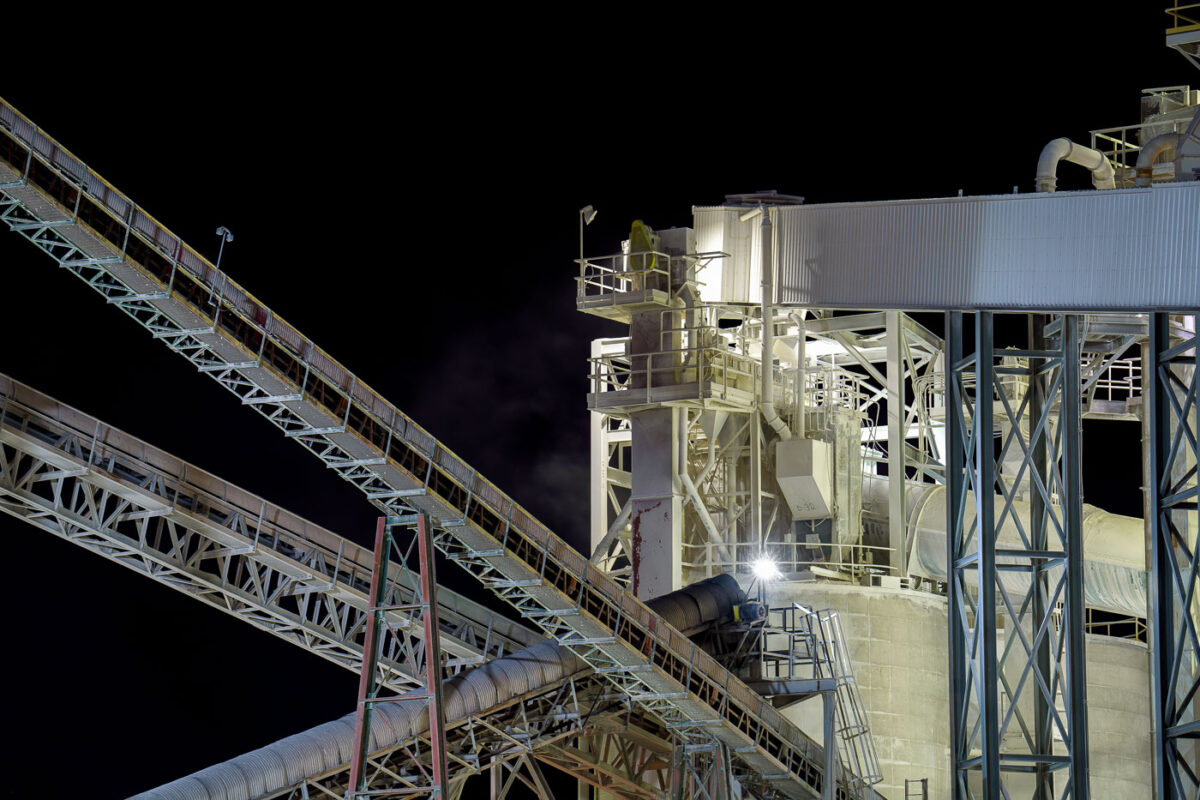
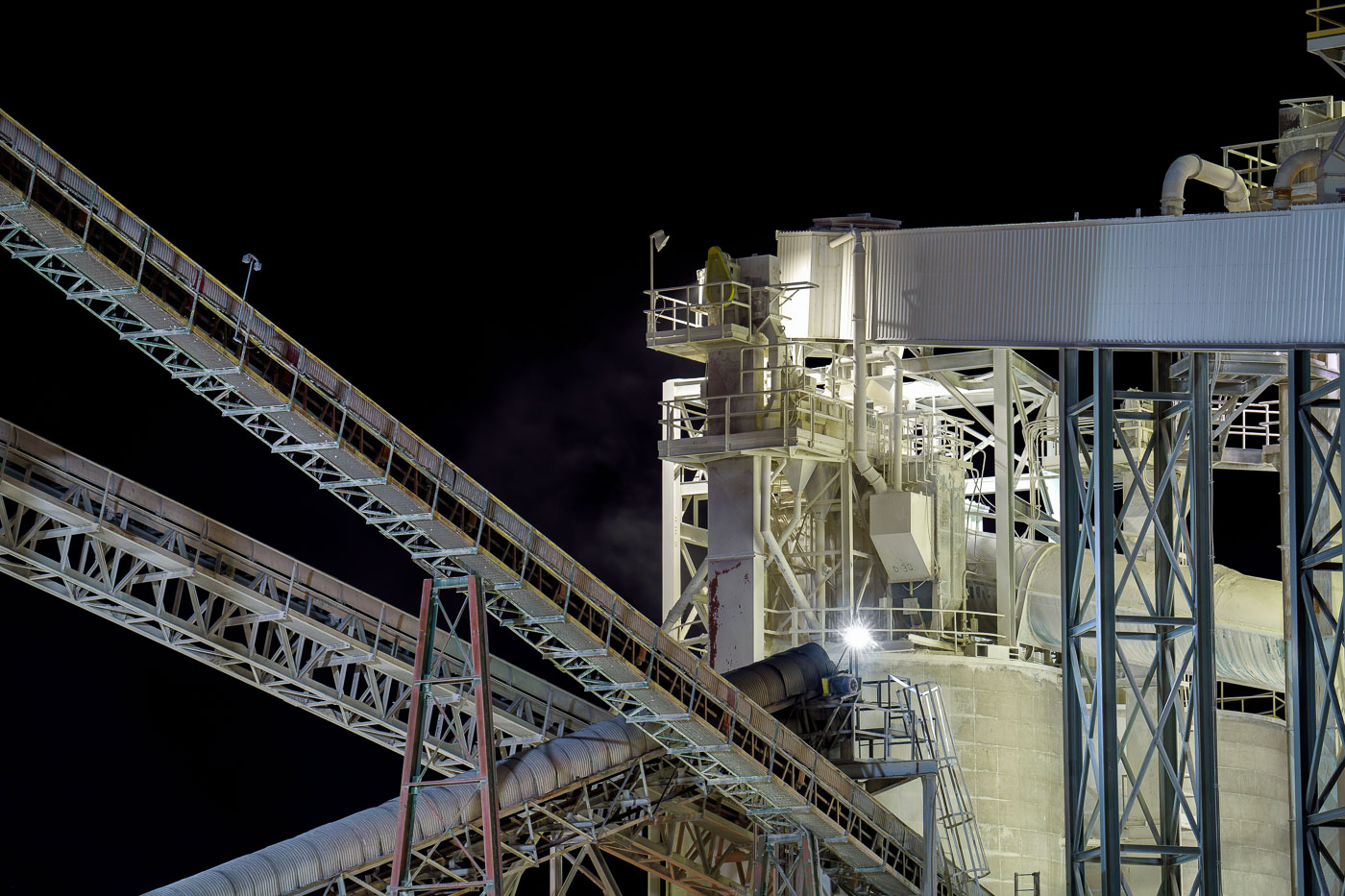
Conveyor towers and processing equipment at the Graymont lime plant in Green Bay, Wisconsin at night.
A detailed nighttime view of the conveyor towers and processing equipment at the Graymont lime plant in Green Bay, Wisconsin. The illuminated catwalks, ducts, and steel trusses highlight the facility’s continuous material-handling system, where crushed limestone moves through enclosed conveyors toward the plant’s kilns and storage silos. Fine dust, visible in the lights near the upper platforms, reflects the industrial character of a site that has served the region’s construction and manufacturing sectors for decades.
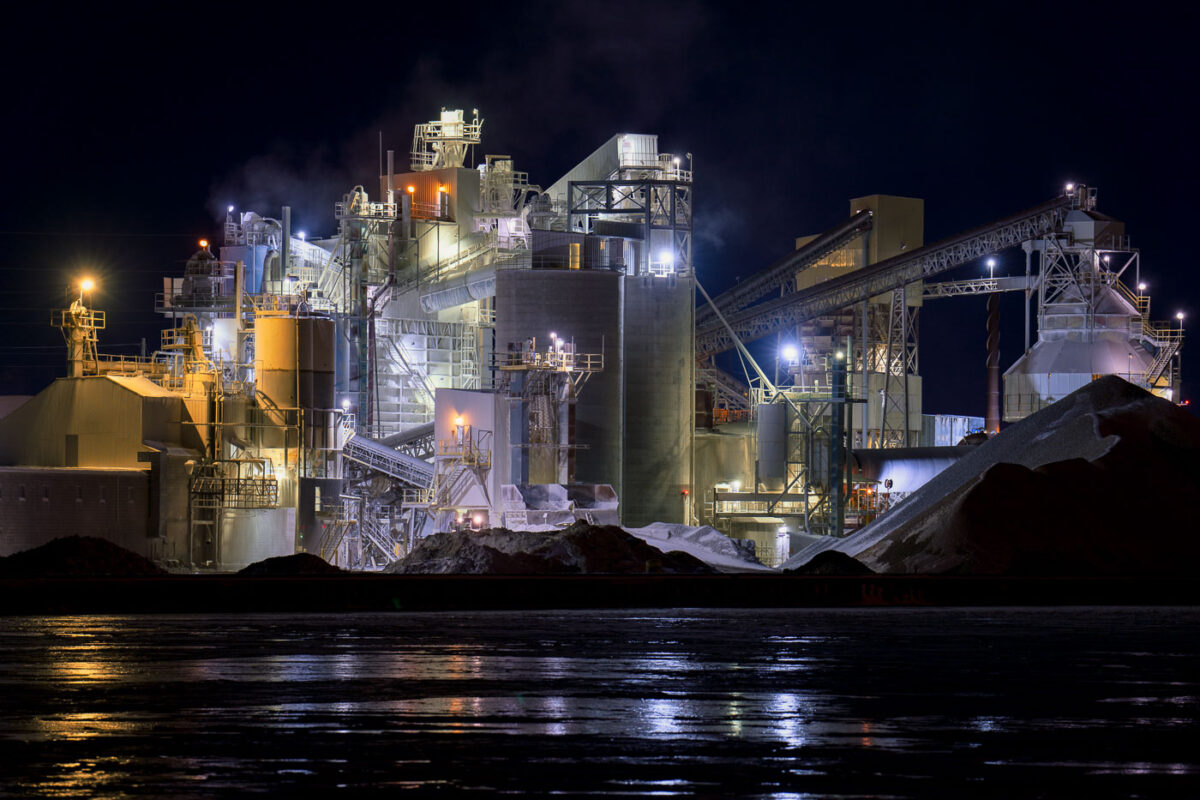
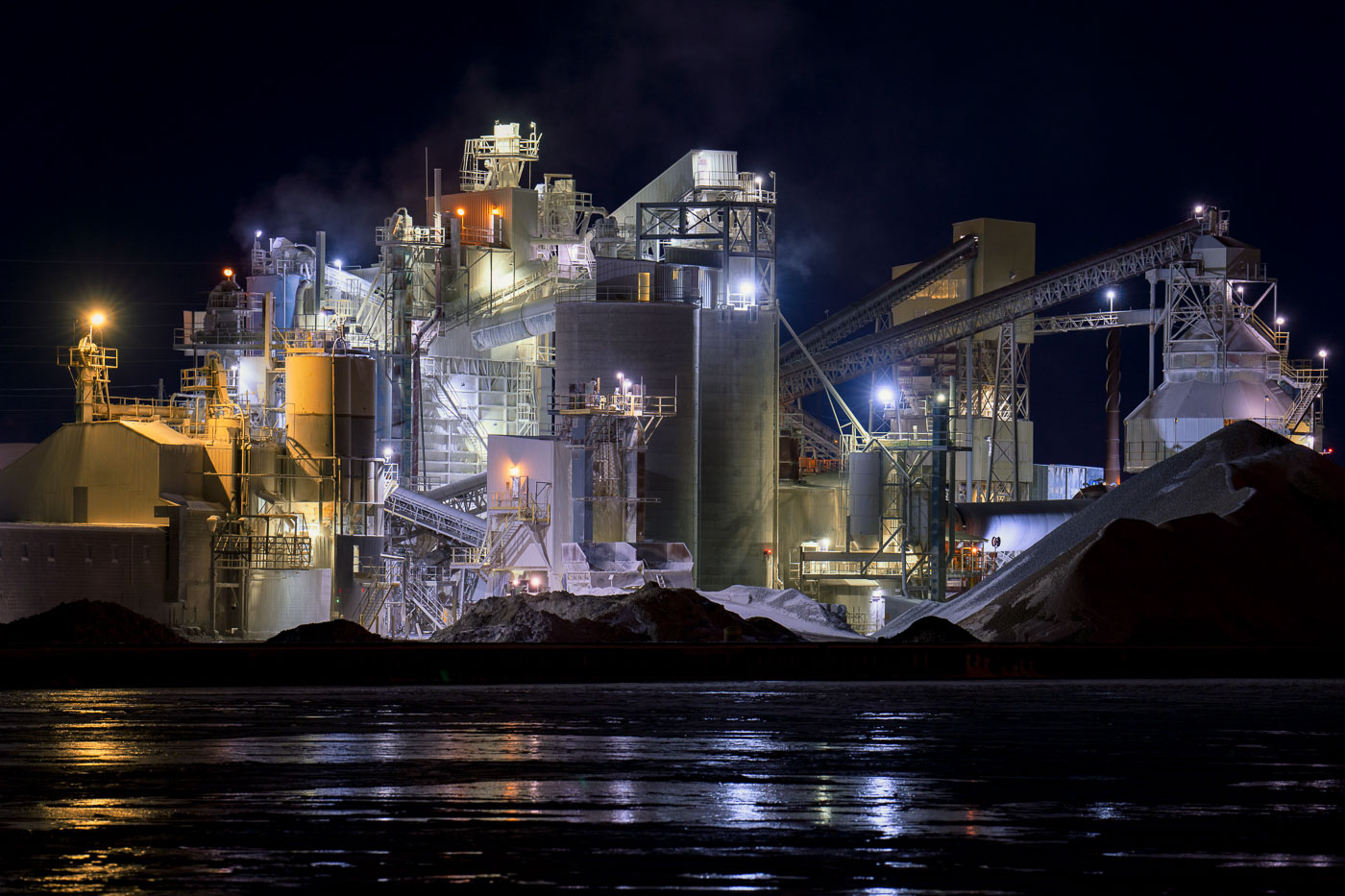
The Graymont lime plant operates at night along the Fox River in Green Bay, Wisconsin, with lights reflecting on the frozen water.
The Graymont lime processing plant along the Fox River in Green Bay, Wisconsin, illuminated during nighttime operations. The facility’s network of silos, conveyors, and dust-collection towers stands out against the dark sky, with steam drifting from active kilns and processing units. Reflections from the plant’s industrial lighting shimmer across the frozen river surface, highlighting the site’s role in the region’s long-standing manufacturing and mineral production corridor.
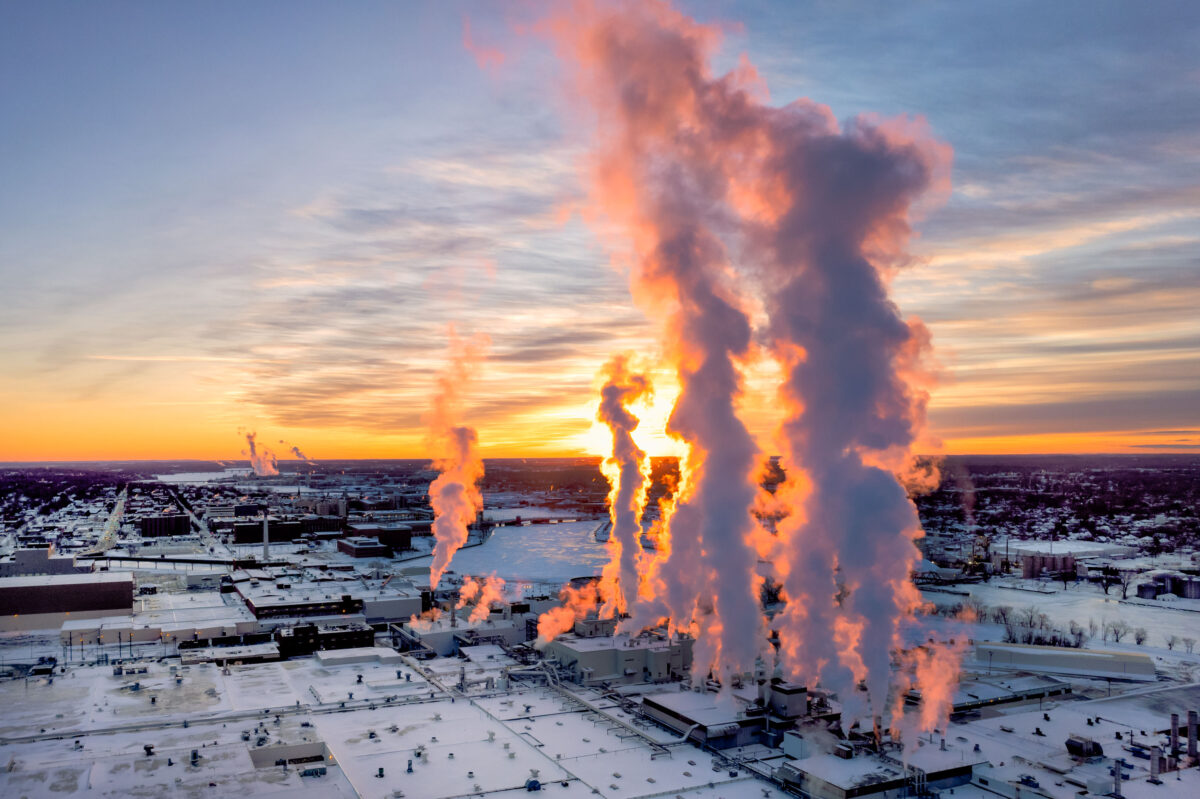
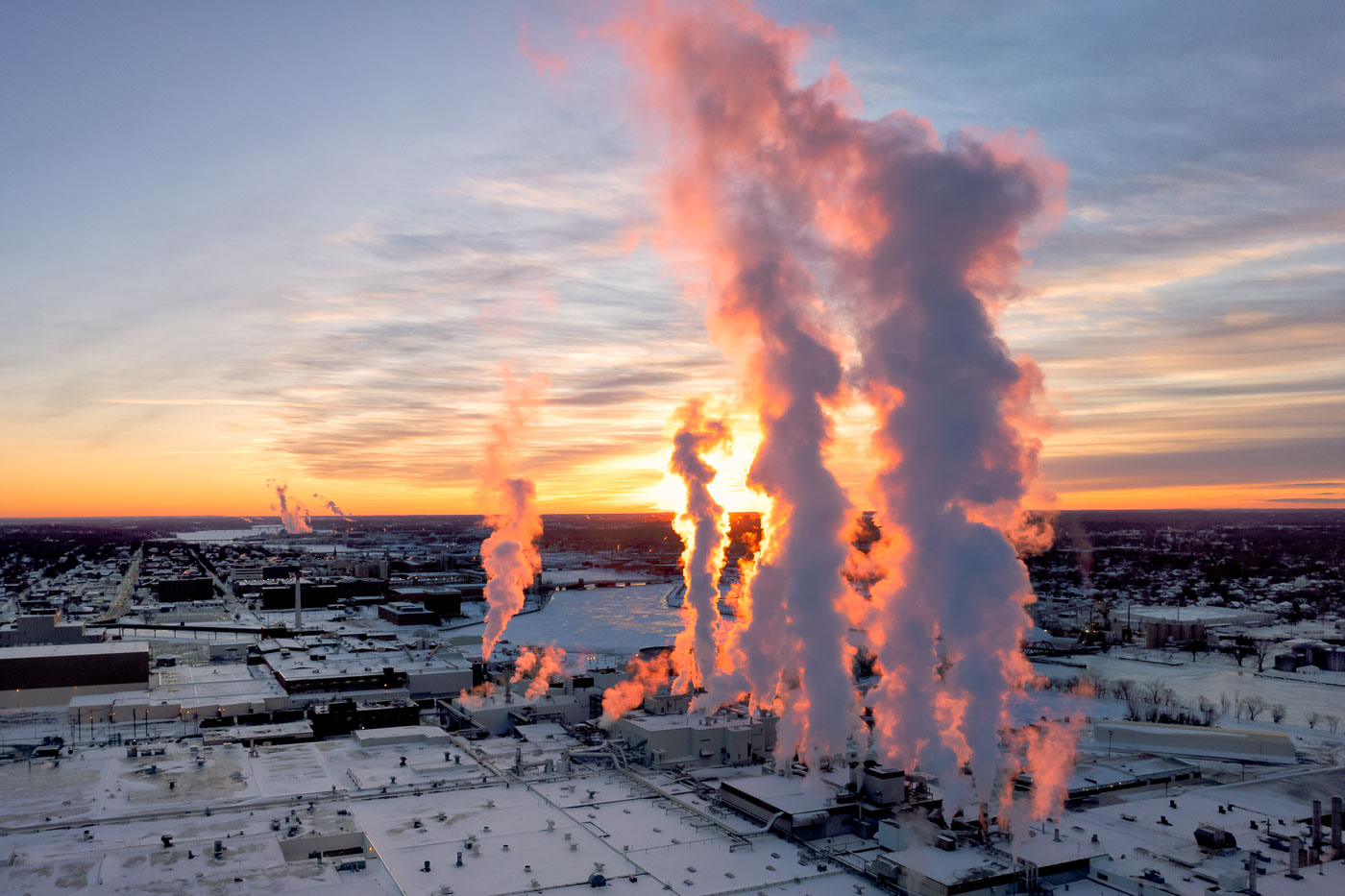
Procter & Gamble paper mill in Green Bay, Wisconsin releases steam columns at sunrise over the frozen Fox River.
The Procter & Gamble plant on Quincy Street began as the Charmin Paper Mills, founded in Green Bay in 1892 and acquired by P&G in 1957. The site sits along the Fox River and remains one of the company's primary manufacturing locations for Charmin bathroom tissue and Bounty paper towels. Steam from the mill's process stacks is a routine byproduct of pulp and paper production, most visible on cold mornings when it condenses in the winter air. Green Bay's paper industry dates to the 19th century, when the Fox River's flow made it an early center for mills converting wood pulp into finished paper goods.
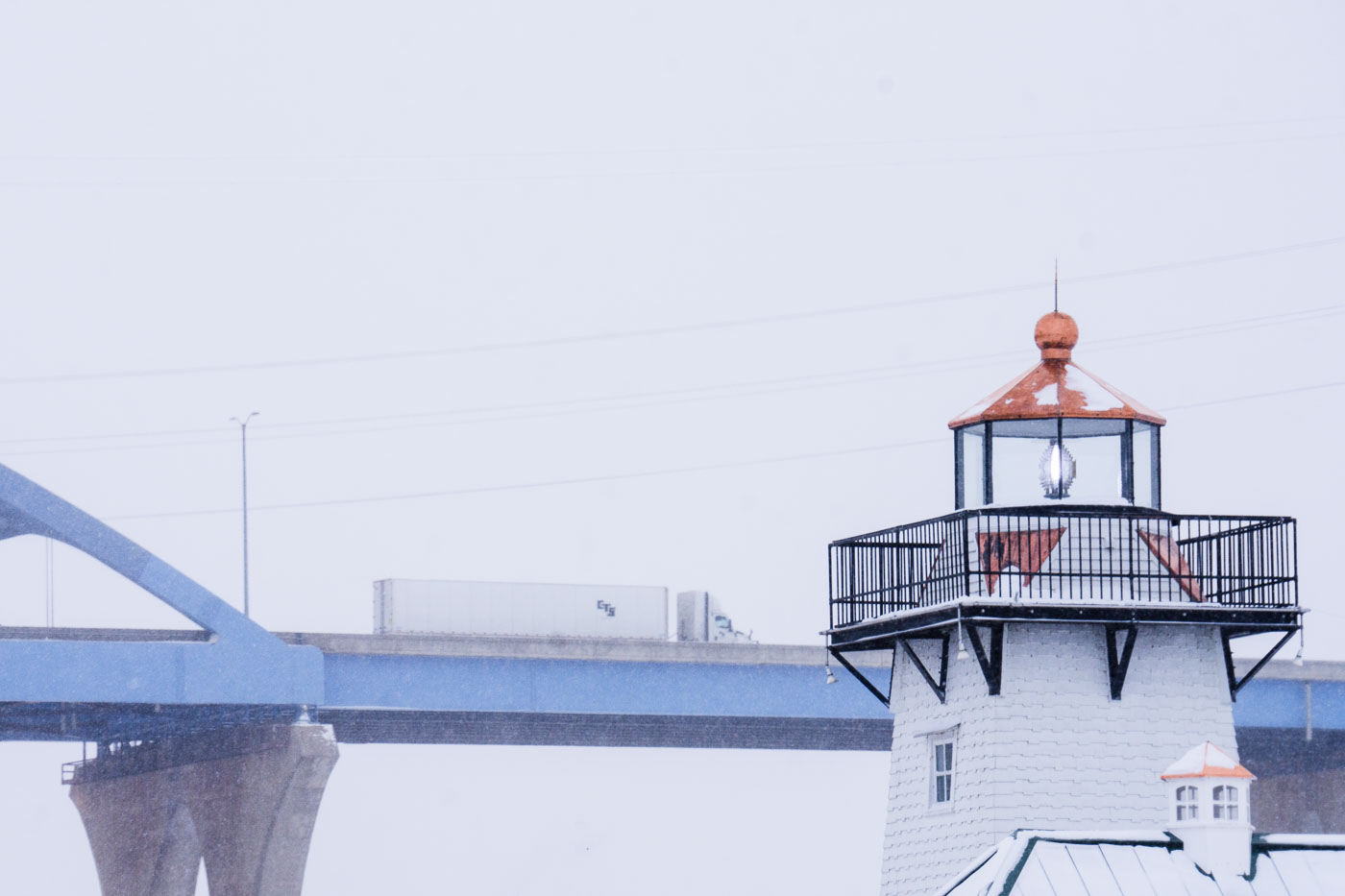
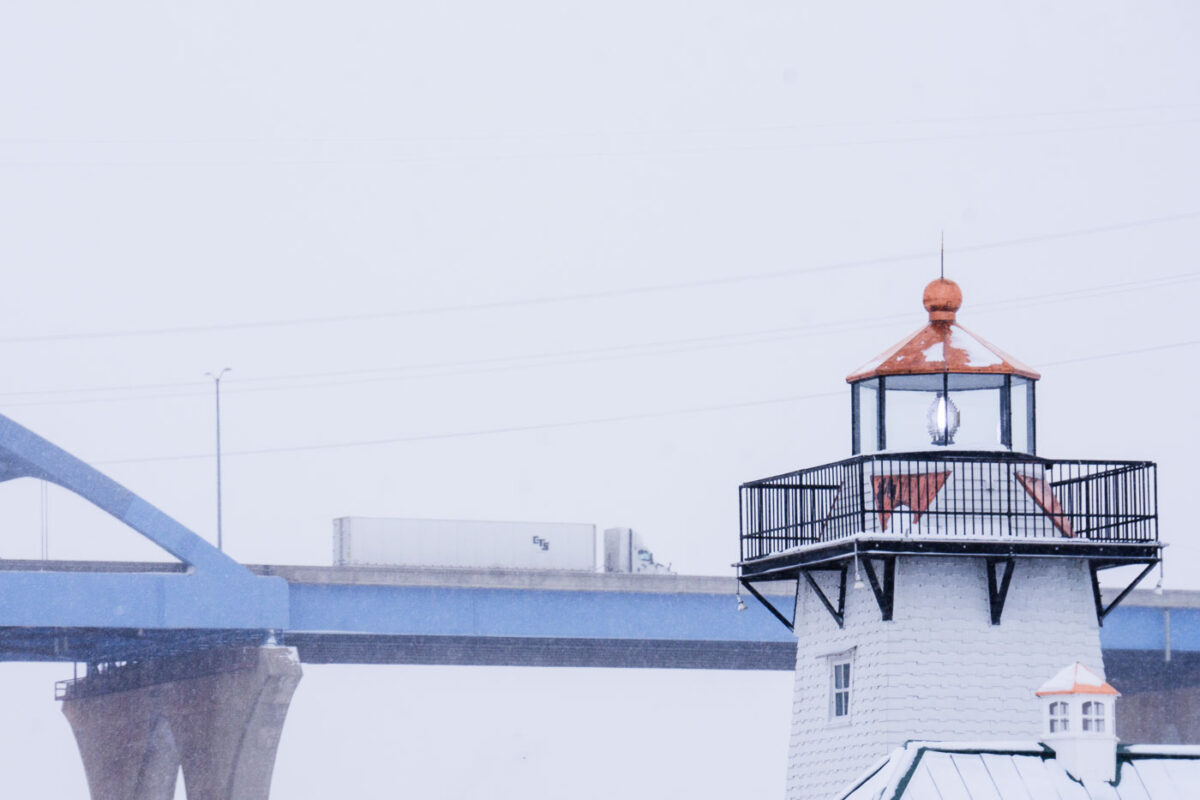
A tractor-trailer crosses the Leo Frigo Memorial Bridge in Green Bay, Wisconsin, during a snowstorm, with a lighthouse in the foreground.
A CTS tractor-trailer crosses the Leo Frigo Memorial Bridge—locally known as the Tower Drive Bridge—during a winter snowstorm in Green Bay, Wisconsin. In the foreground, the familiar shingled lighthouse structure along the riverfront stands out against the white sky, its lantern room partially frosted as lake-effect snow drifts through the scene. The contrast between the elevated highway and the shoreline landmark highlights the mix of transportation corridors that define Green Bay’s industrial waterfront.
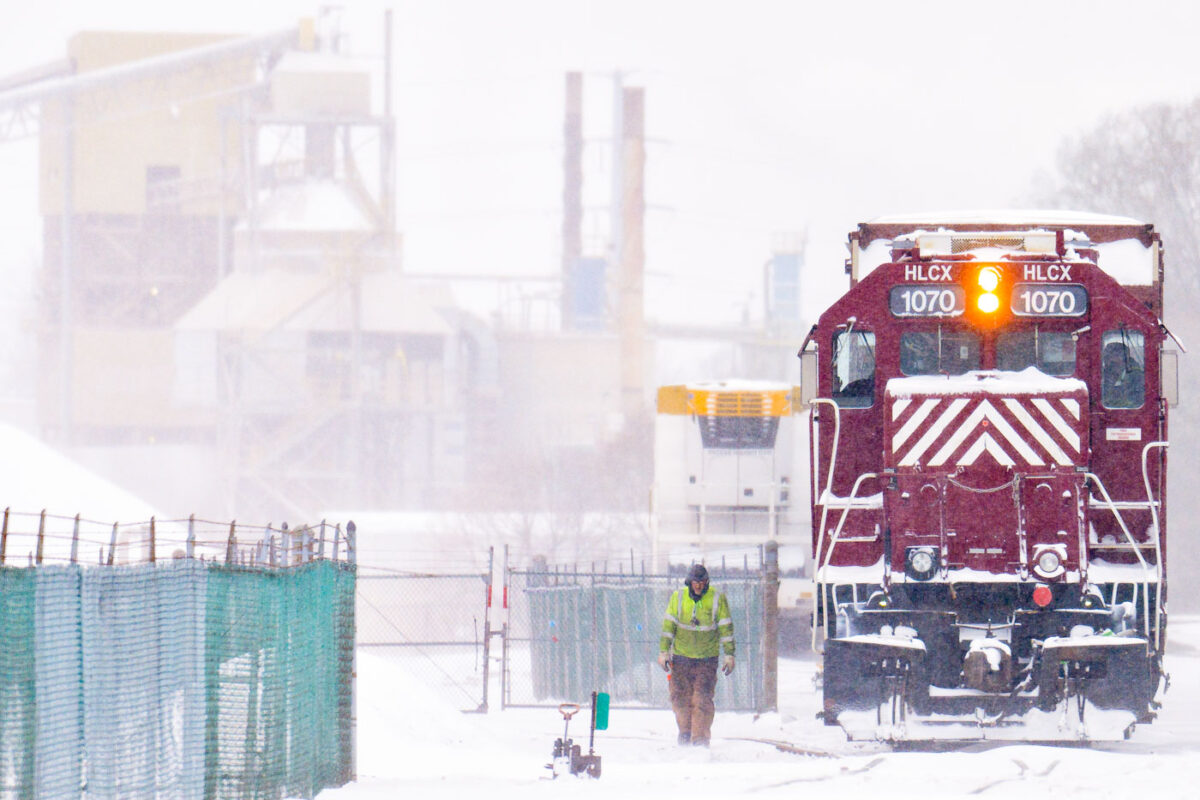
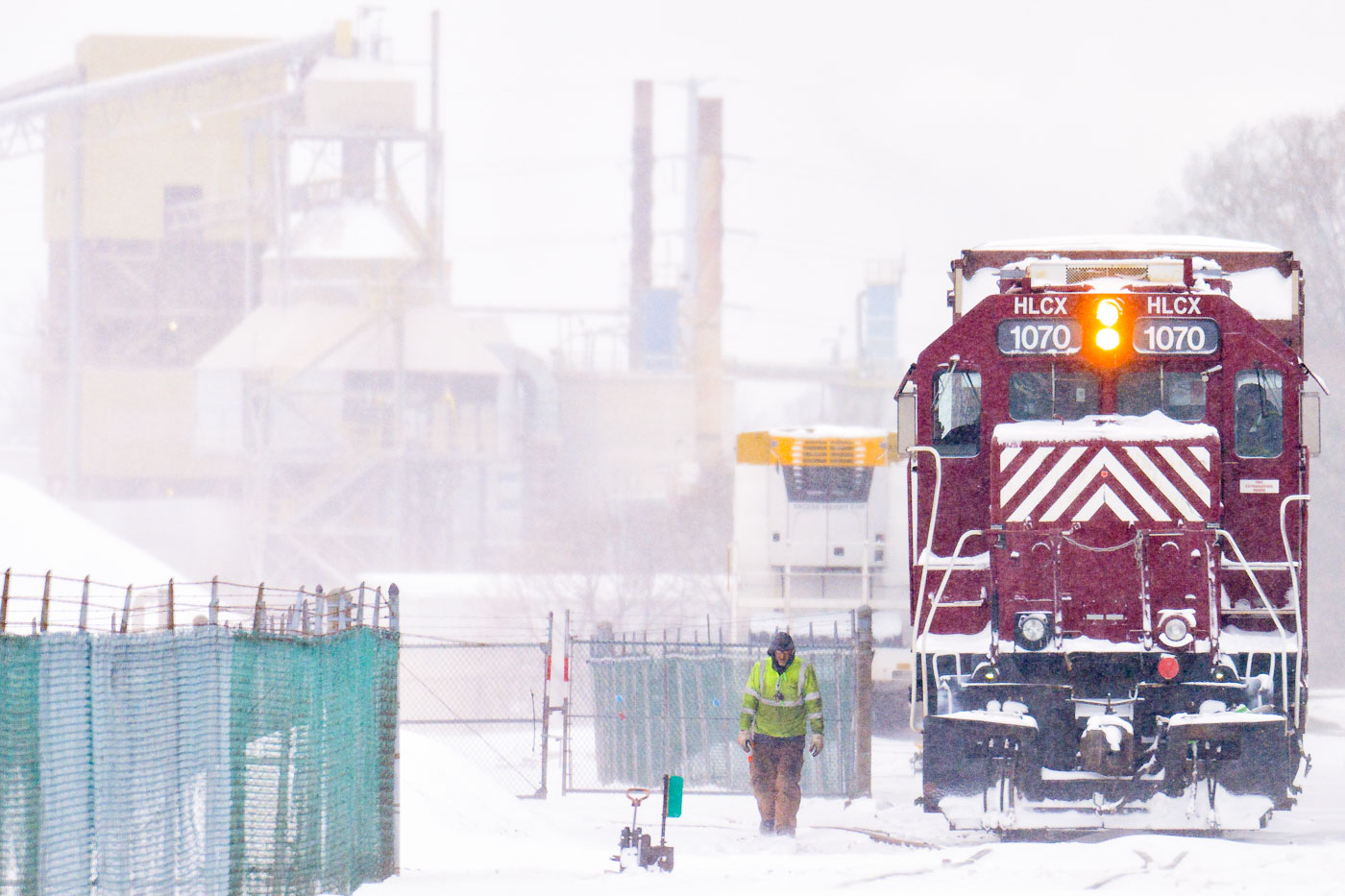
A freight crew member walks near a train during a snowstorm in Green Bay, Wisconsin.
A freight crew member walks alongside HLCX 1070 during a heavy snowstorm at Quincy Street and Eastman Avenue in Green Bay, Wisconsin. The locomotive’s headlights cut through the blowing snow as operations continue despite low visibility and freezing conditions. Industrial structures in the background fade into the whiteout, highlighting how rail work persists year-round across the region’s manufacturing and transportation corridors.
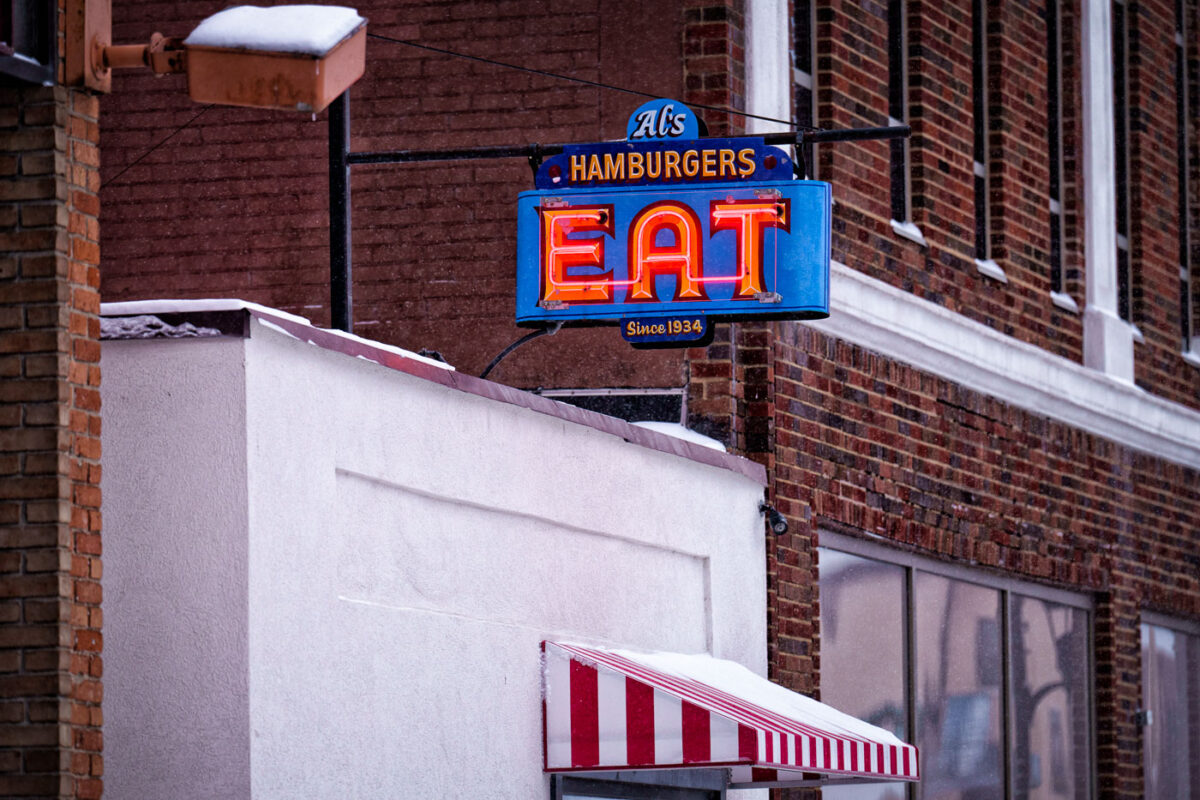
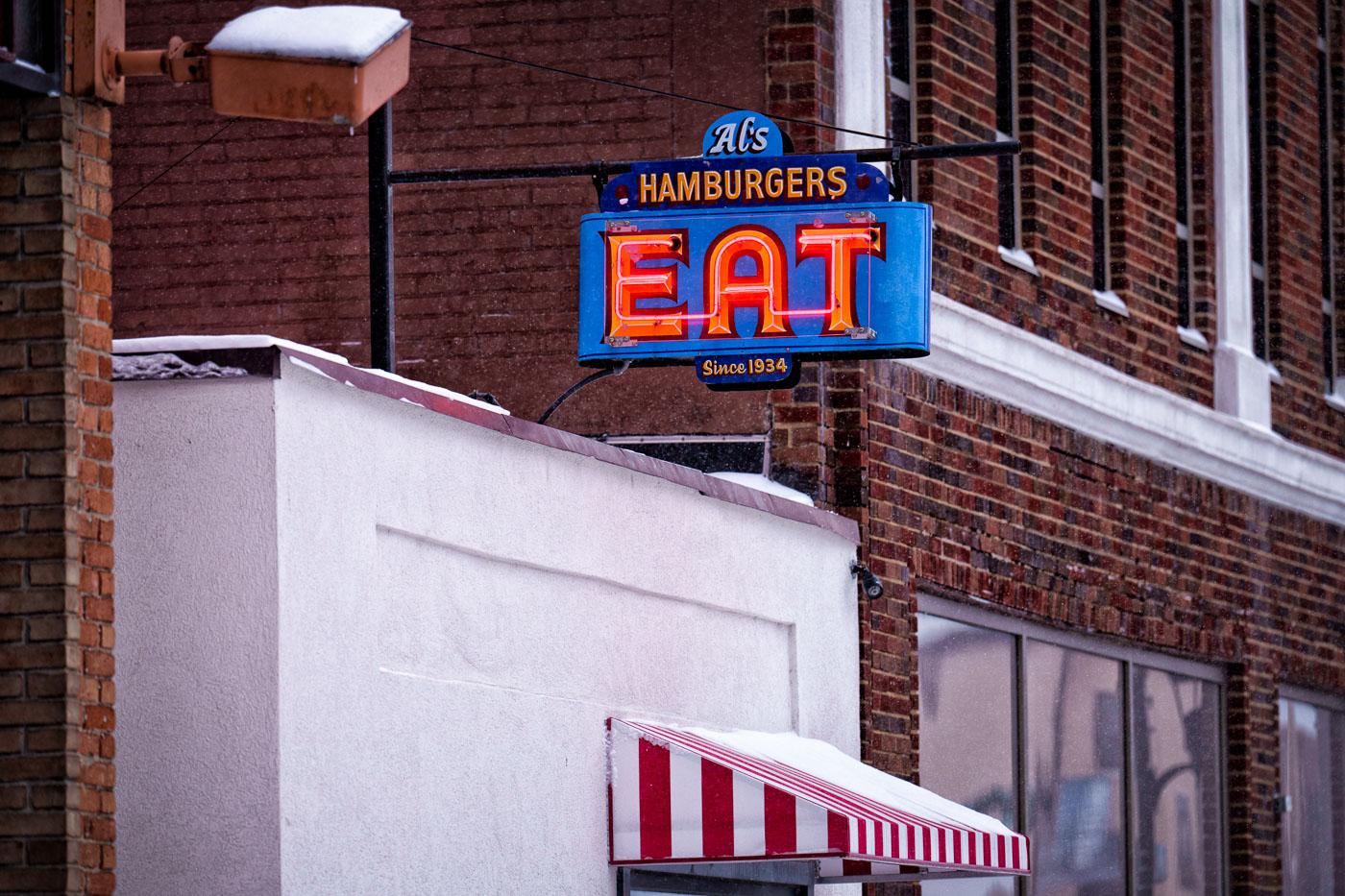
Al's Hamburgers neon sign in Green Bay during winter snowfall.
The glowing neon “EAT” sign at Al’s Hamburgers stands out against the snowy backdrop of winter in Minneapolis. The sign, with its bright mid-century colors and bold lettering, has been part of the business’s identity since the diner opened in 1934. Its classic styling reflects the era when small neighborhood restaurants relied on eye-catching storefront signs to draw in passing traffic. Light snow gathers on the striped awning below, adding a seasonal layer to one of the area’s longstanding local landmarks.
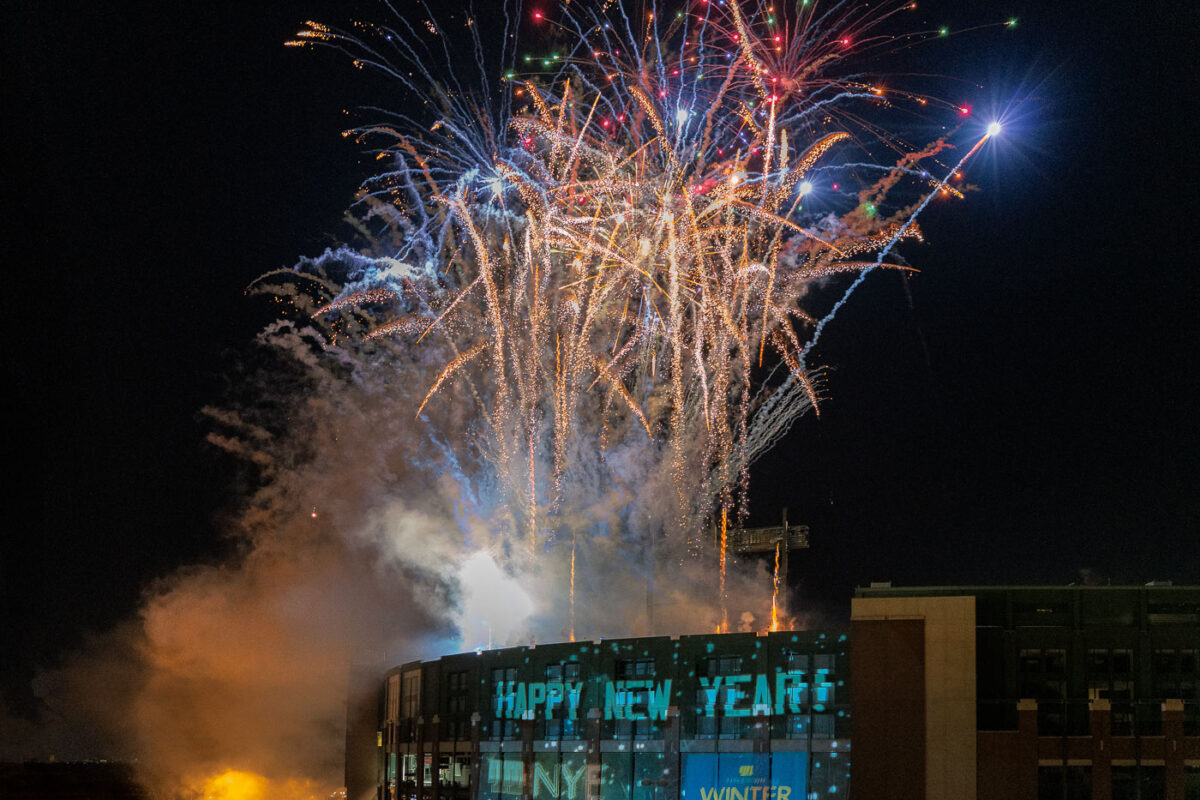
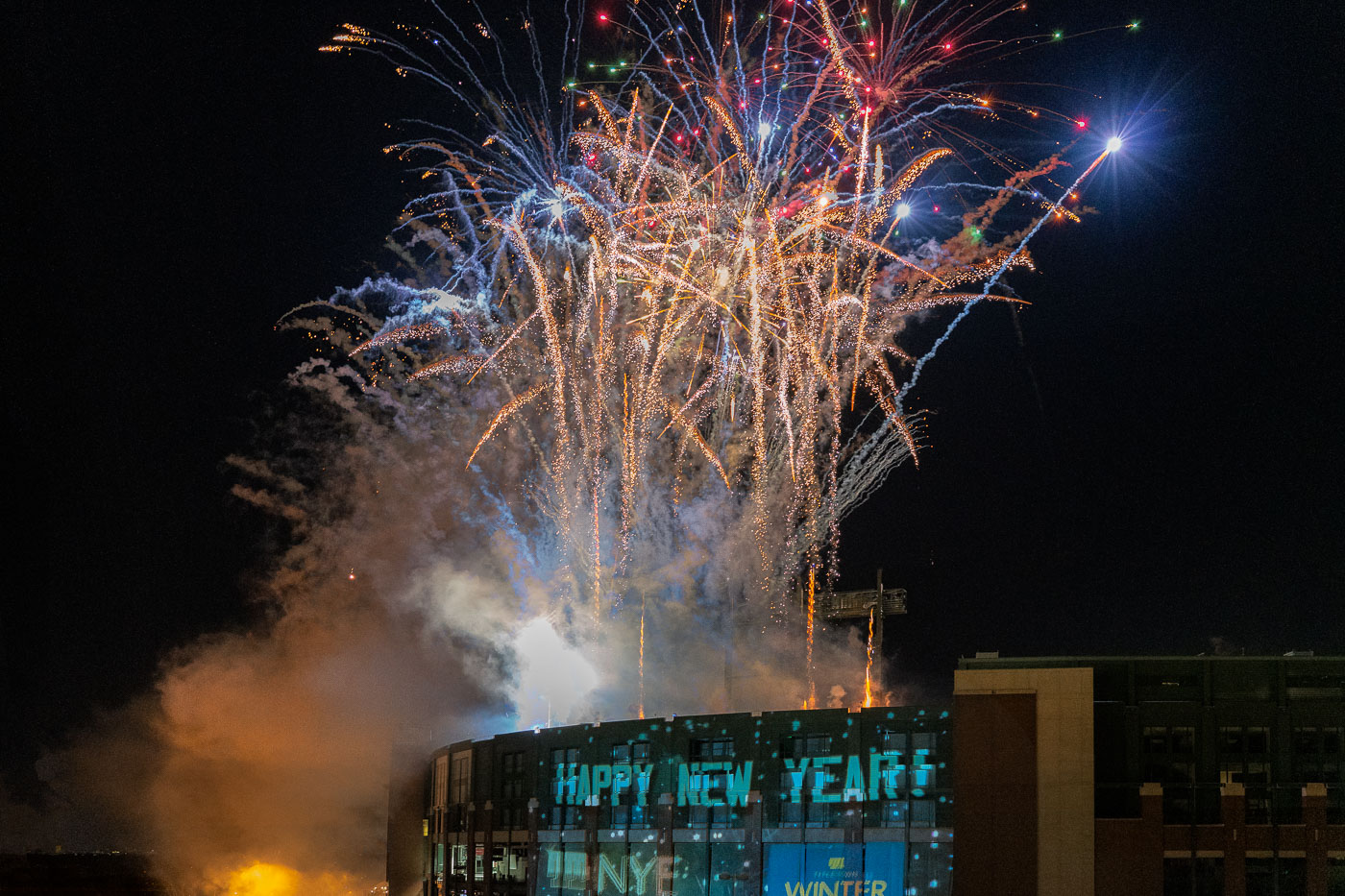
Fireworks explode over Lambeau Field in Ashwaubenon, Wisconsin, during a New Year's Eve celebration.
Fireworks illuminate the night sky above Lambeau Field in Ashwaubenon, Wisconsin, during a New Year's Eve celebration. The stadium, home to the NFL's Green Bay Packers, displayed "HAPPY NEW YEAR" and "WINTER" on its facade. This event marks a public tradition of ushering in the new year with pyrotechnics.
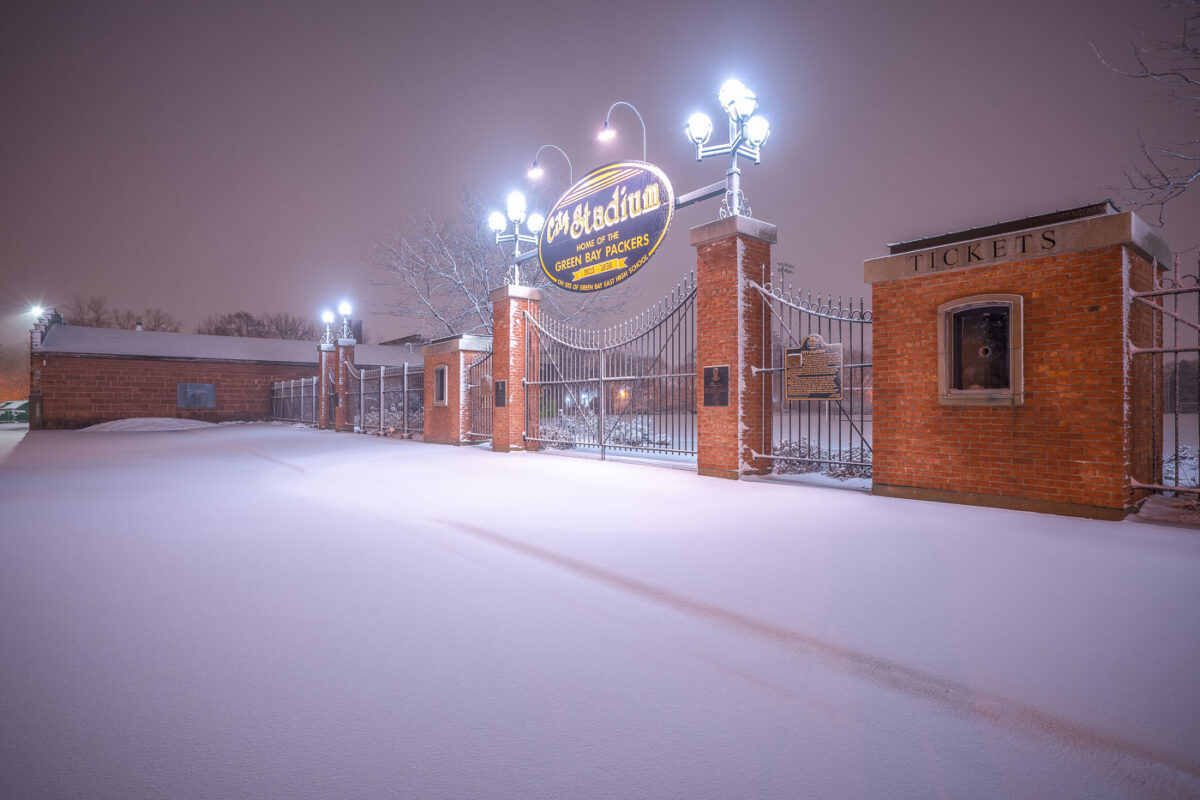
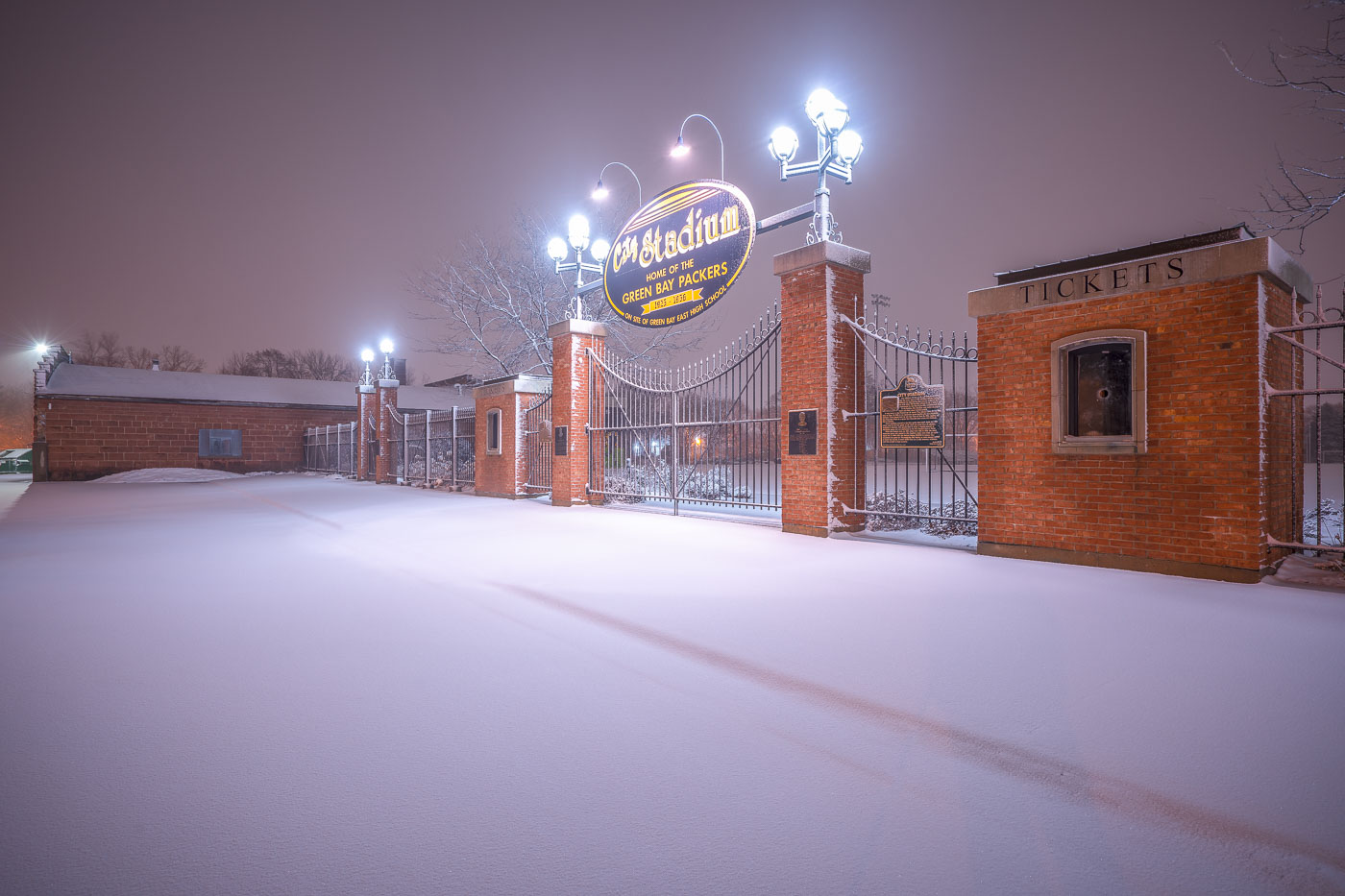
City Stadium entrance gates in Green Bay, Wisconsin, in winter, former home of the Green Bay Packers 1925-1956.
The entrance gates to City Stadium in Green Bay, Wisconsin, are pictured here in winter. This stadium served as the home field for the Green Bay Packers, an NFL team, from 1925 to 1956. The site of City Stadium is now occupied by Green Bay East High School. The stadium was a significant venue for professional football during its operational years, hosting numerous games that contributed to the Packers' early history and legacy.

Built in Minneapolis

Minneapolis Photographer

Browse by location, move through long-running series, or start with recent work.