Place Archive

Milwaukee

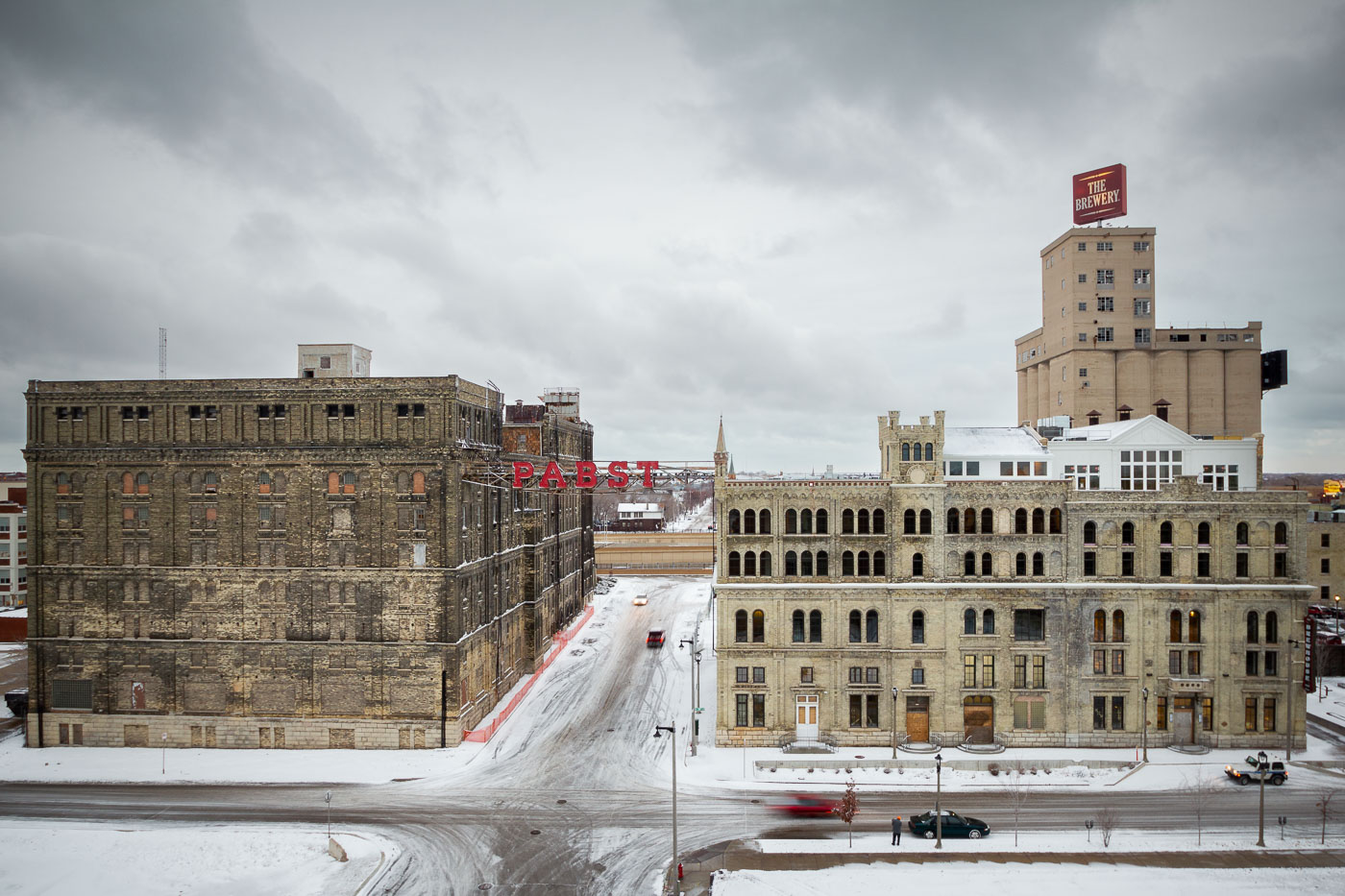
The Pabst Brewery complex, founded in the mid-19th century and inactive since 2001, displays a range of industrial architectural styles and is being redeveloped for new purposes. The Marquette Interchange, completed in 2008, connects interstates I-43, I-94, and I-794, facilitating traffic flow through Milwaukee’s downtown.

Markers

Milwaukee Photo Locations

6 geotagged photos

Photos
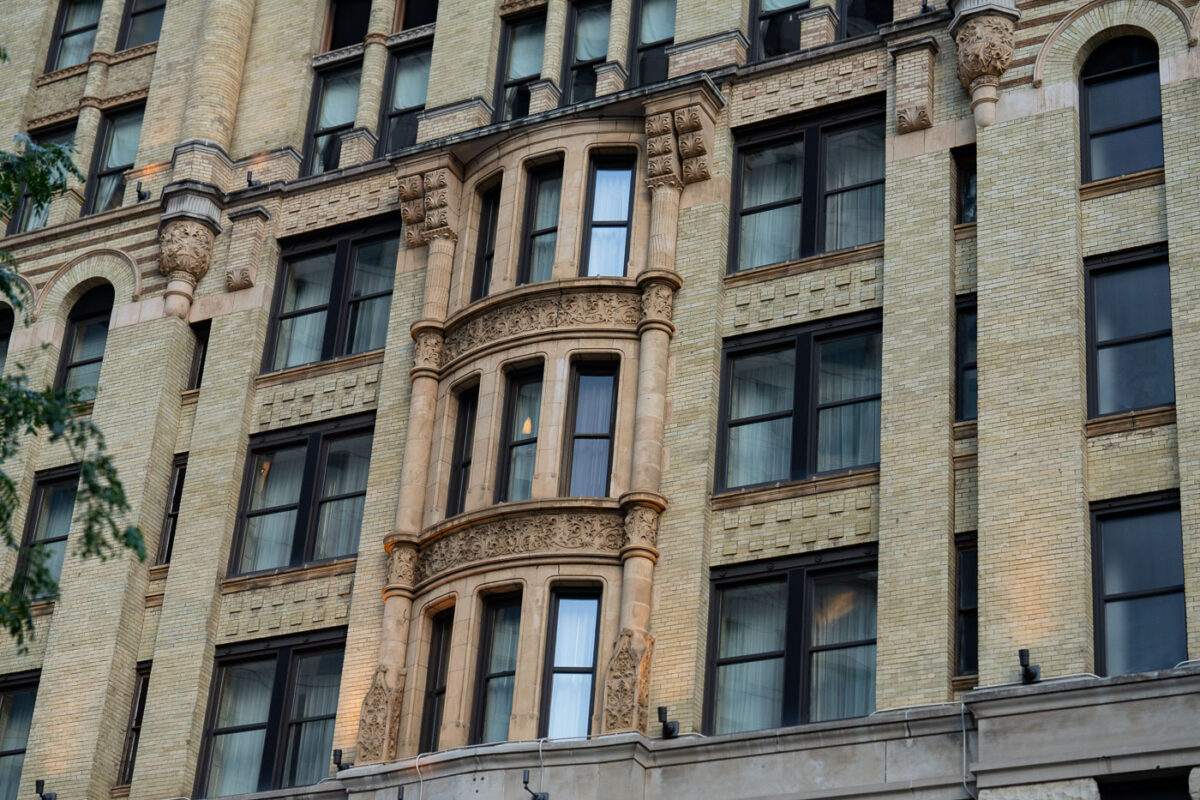
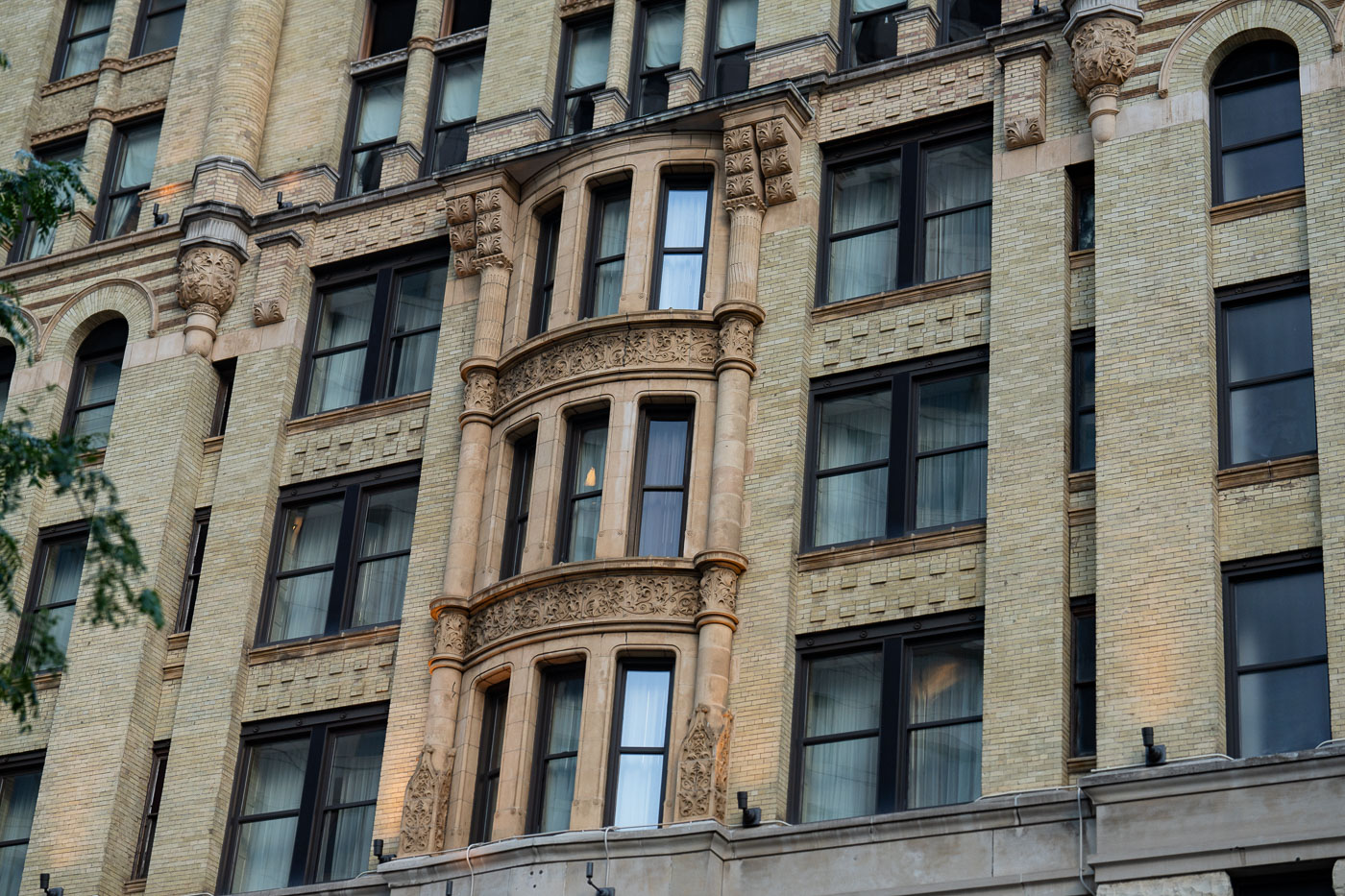
The Pfister Hotel's ornate Romanesque Revival facade with decorative bay windows in Milwaukee.
The Pfister Hotel opened in 1893 as one of Milwaukee's first hotels to offer running water and electricity in every guest room. Local architects Charles Kirchhoff and Thomas Rose designed the building in a blend of Romanesque Revival and Victorian styles, and it remains listed on the National Register of Historic Places. Its lobby holds one of the largest hotel collections of Victorian-era art in the country. During the 2024 Republican National Convention, the hotel served as the lodging site for former President Donald Trump and operated under heightened security.
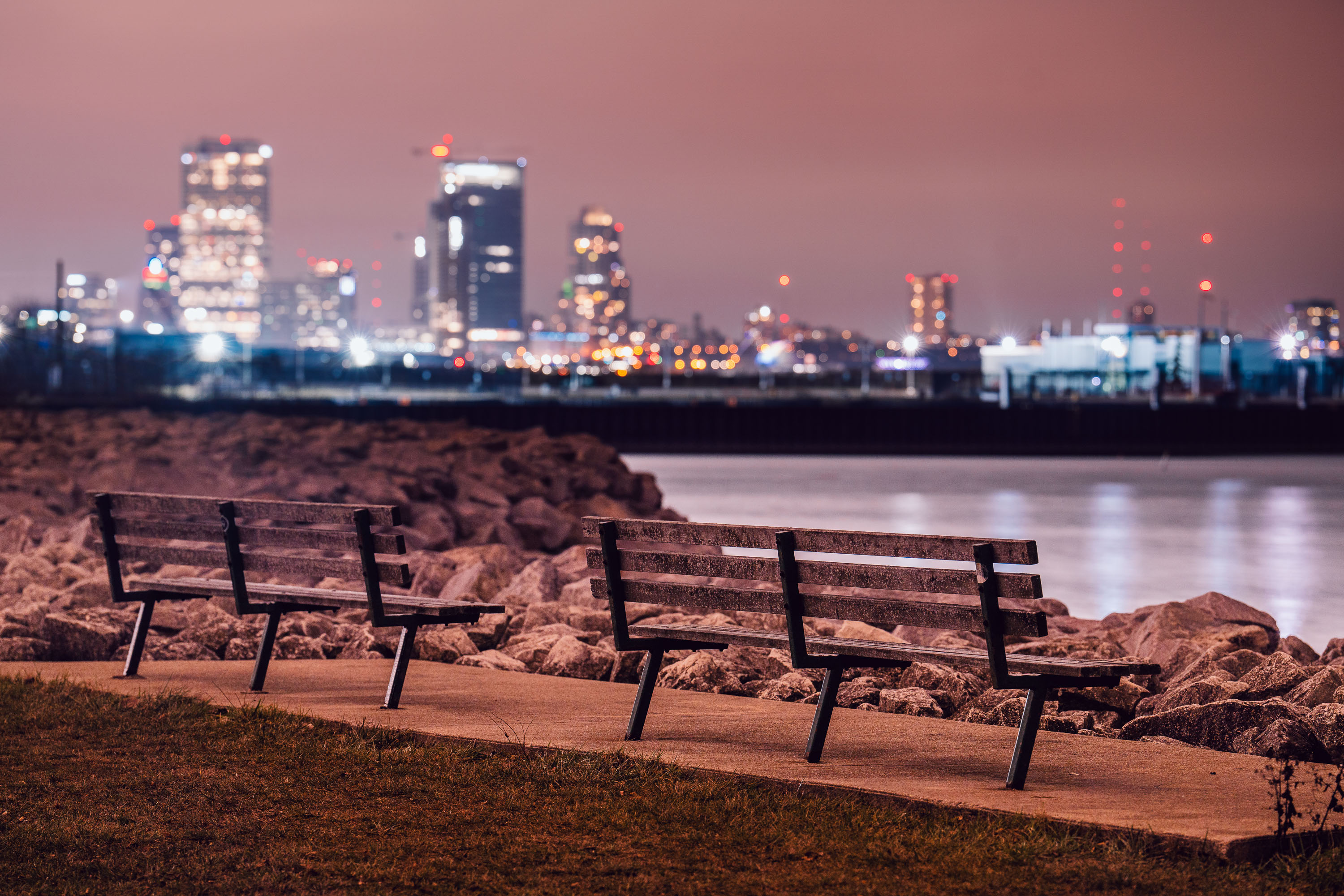
Wooden benches on Milwaukee's lakefront face the city skyline across Lake Michigan at dusk.
Milwaukee sits on the western shore of Lake Michigan, the only Great Lake located entirely within the United States. The lake covers about 22,300 square miles and reaches depths near 925 feet, ranking second among the five Great Lakes by volume. Riprap and paved paths like this one run along much of Milwaukee's lakefront, part of a long-running effort to control erosion while keeping the shoreline open to the public. The downtown skyline across the water grew up largely in the 20th century as Milwaukee developed into a shipping and manufacturing center on the lake.
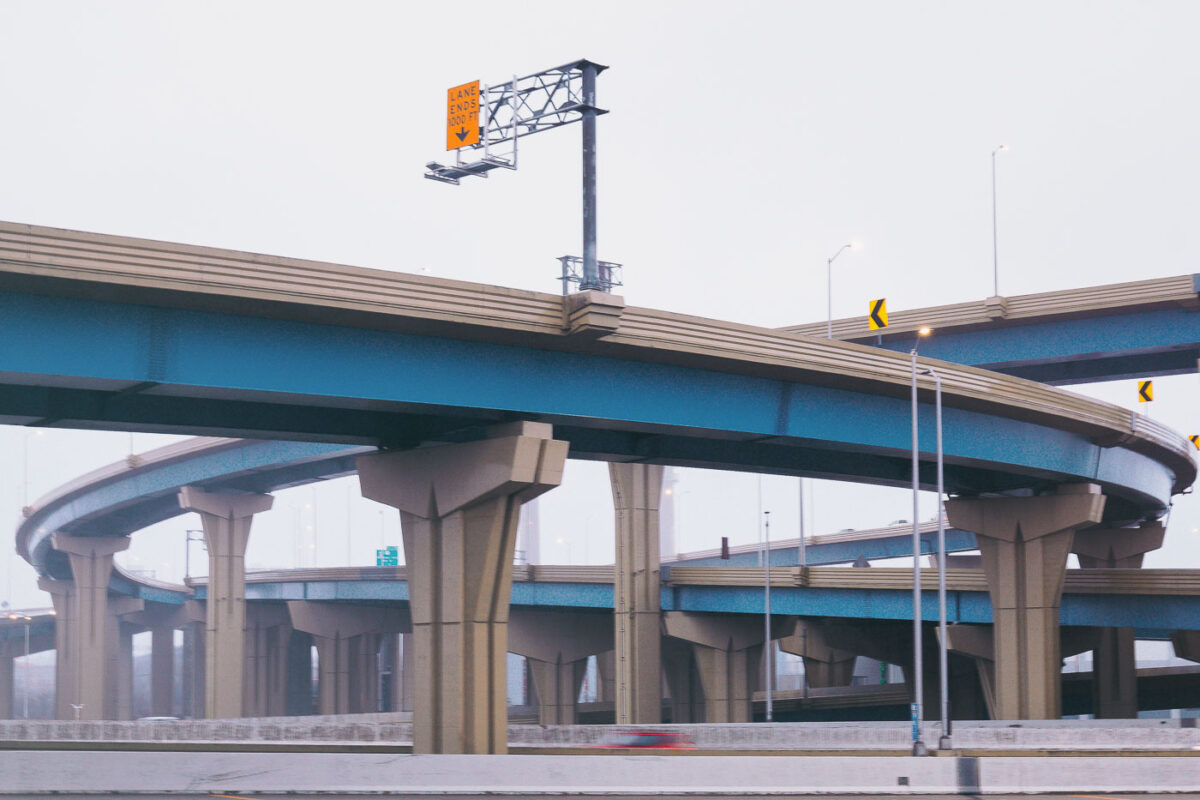
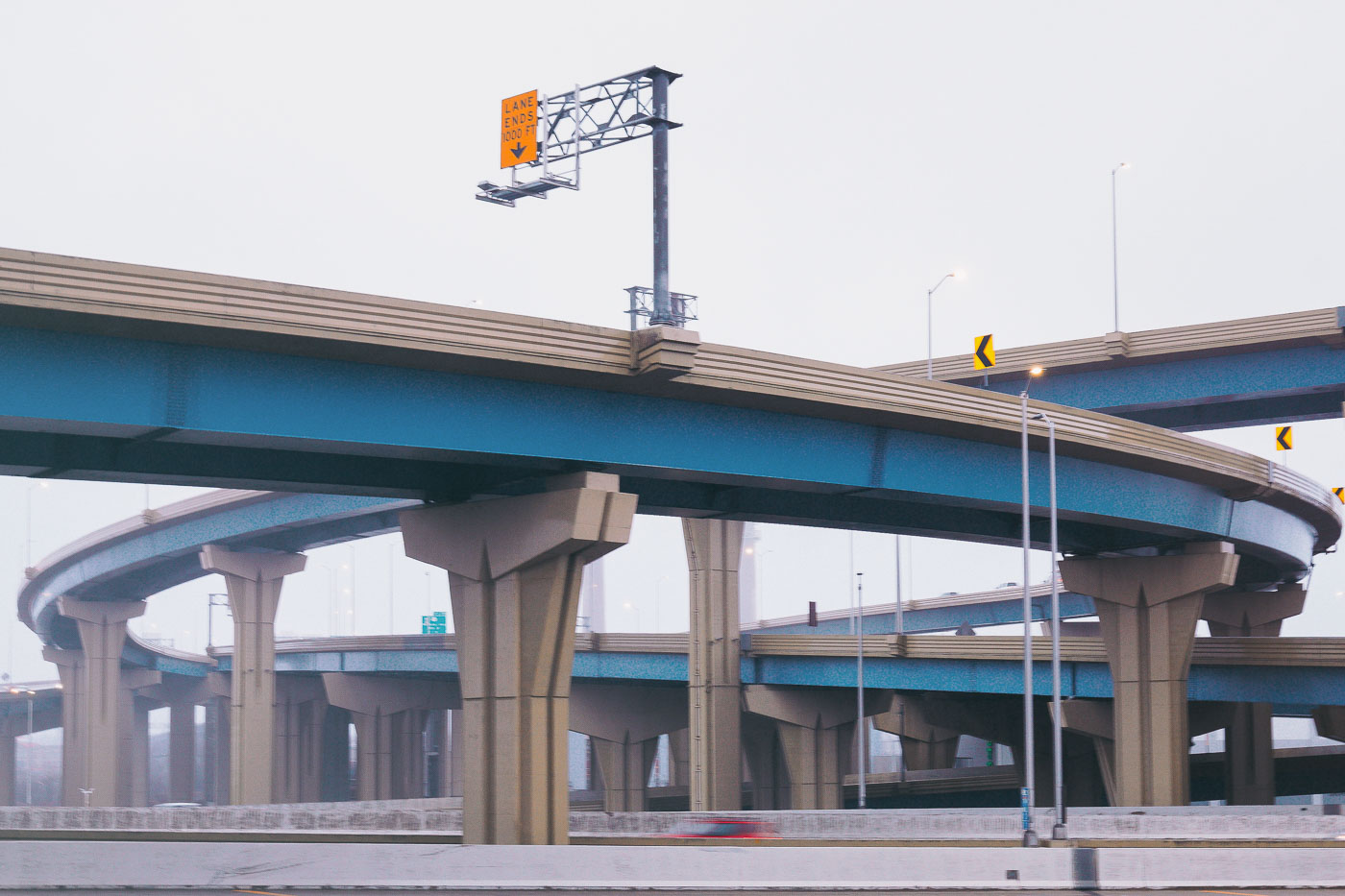
Multi-level highway ramps and concrete support columns of Milwaukee's Marquette Interchange.
The Marquette Interchange links Interstate 43, Interstate 94, and Interstate 794 at the edge of downtown Milwaukee. The current structure opened in 2008, replacing a cloverleaf design that had carried traffic since 1968. At $810 million, the rebuild was the largest public works project in Wisconsin history at the time. It now carries roughly 300,000 vehicles a day, ranking it among the busiest interchanges in the state.
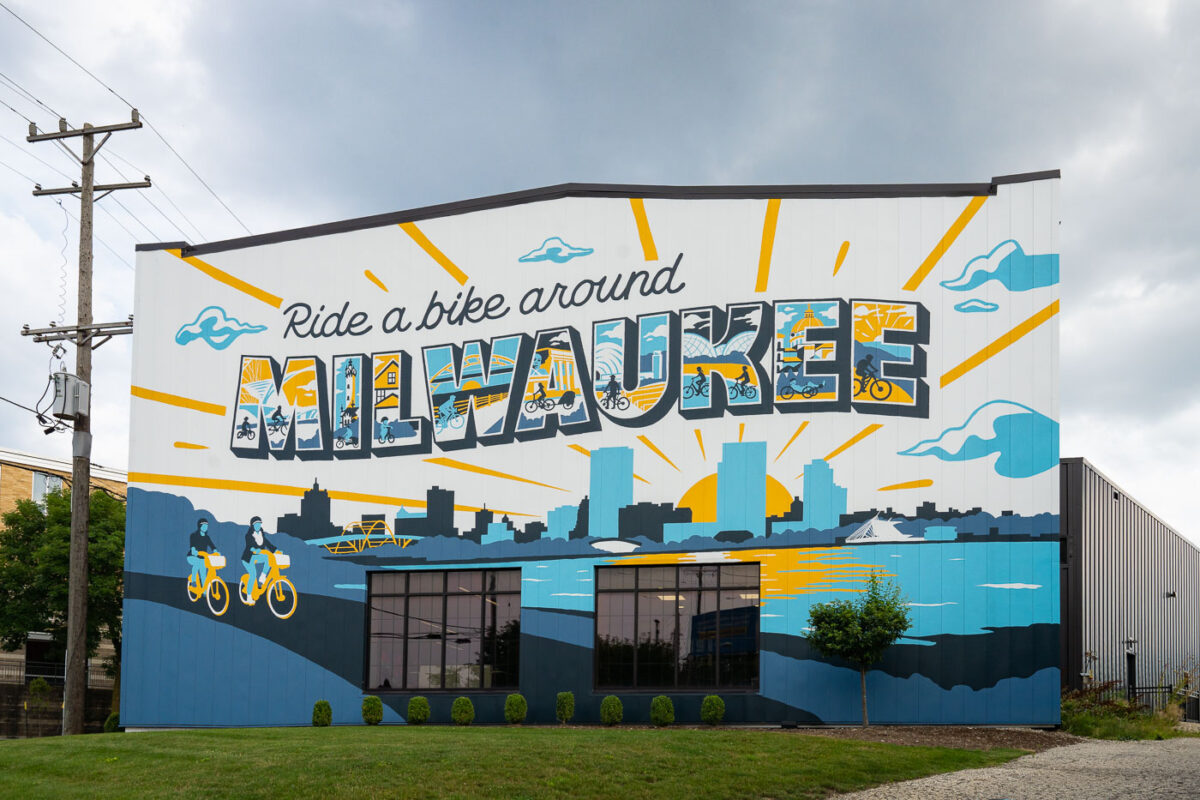
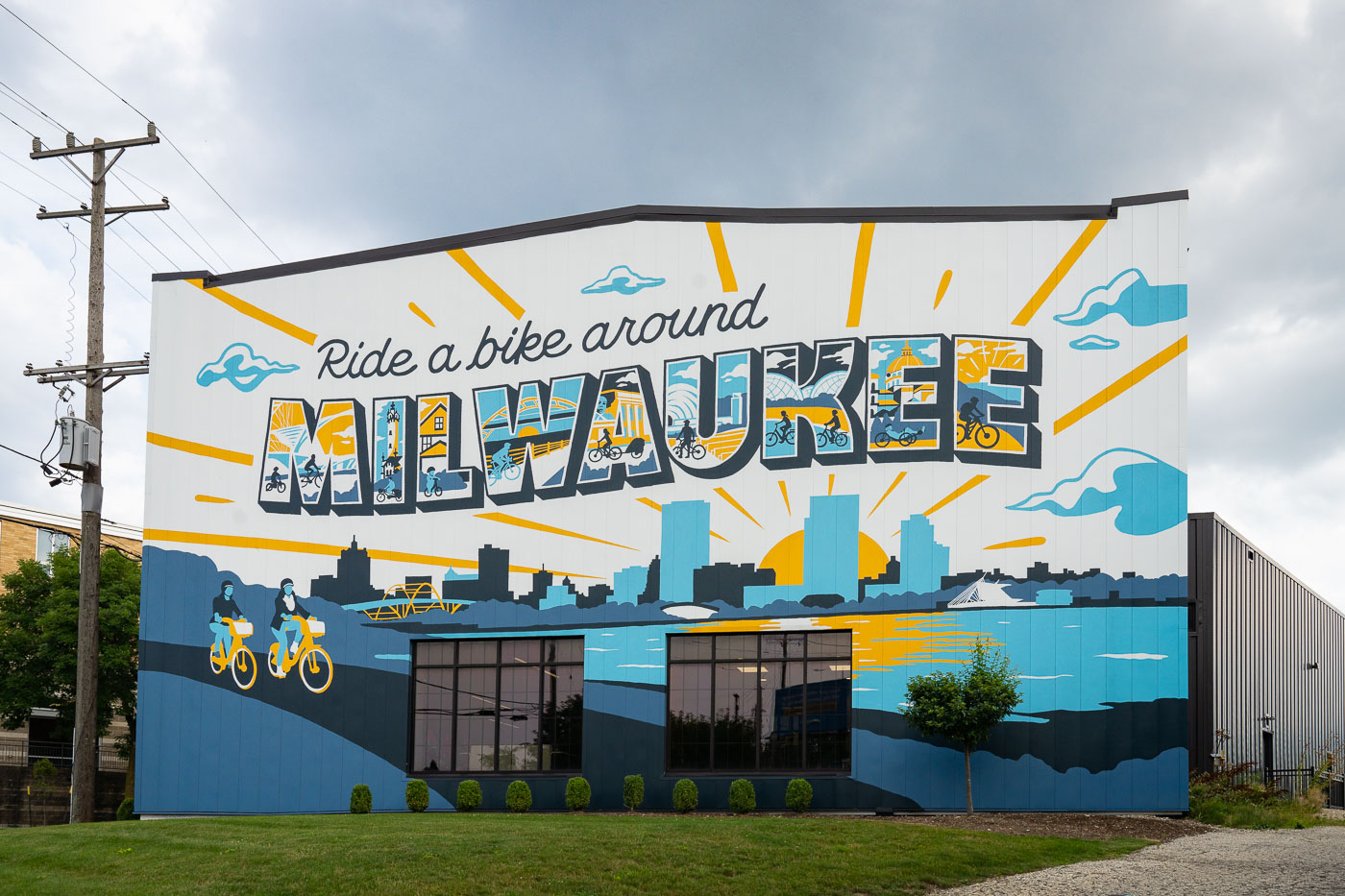
"Ride a Bike Around Milwaukee" mural on Wheel & Sprocket storefront featuring city skyline and cyclists.
The mural reads "Ride a Bike Around Milwaukee" in bold lettering above a stylized rendering of the city's downtown skyline and the Hoan Bridge along the lakefront. It covers the exterior wall of a Wheel & Sprocket store, a bicycle retailer that traces its origins to a single Milwaukee-area shop opened in 1973. Cyclists depicted throughout the design echo the city's network of bike paths, including the Oak Leaf Trail, and its Bublr Bikes share program, which launched in 2014 with stations concentrated in and around downtown Milwaukee.
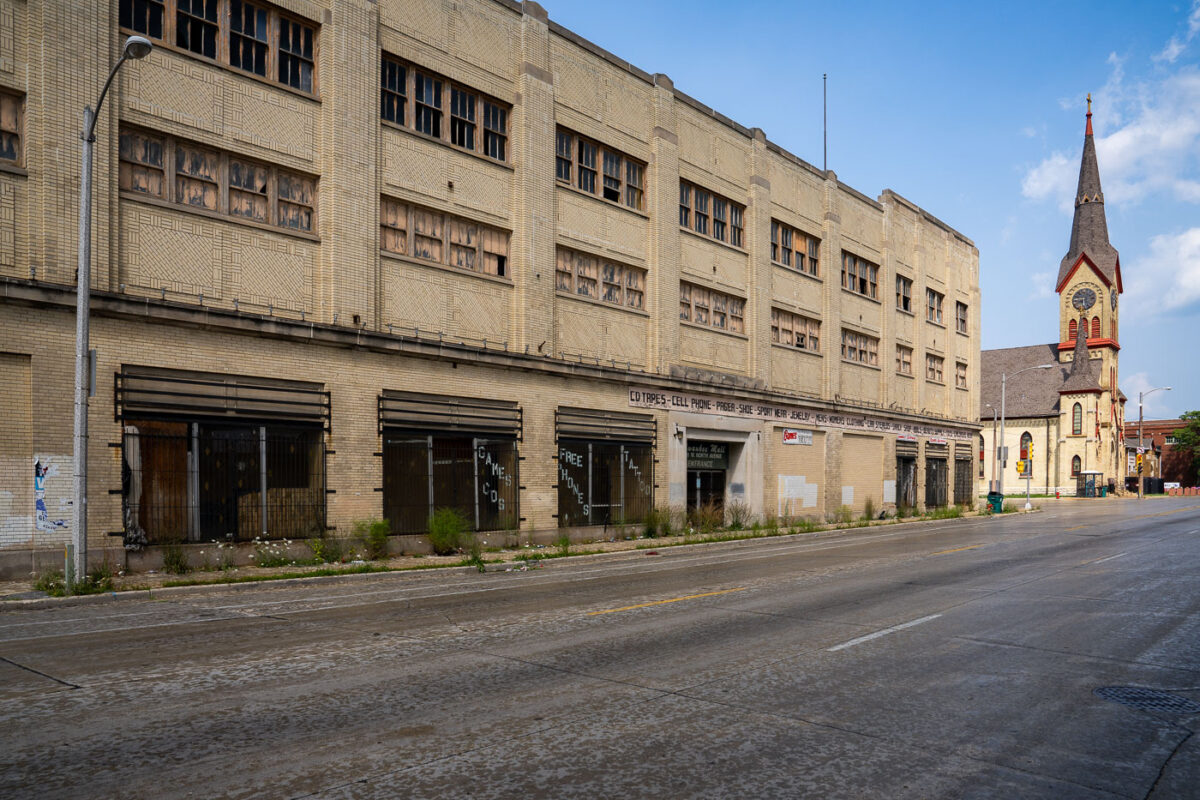
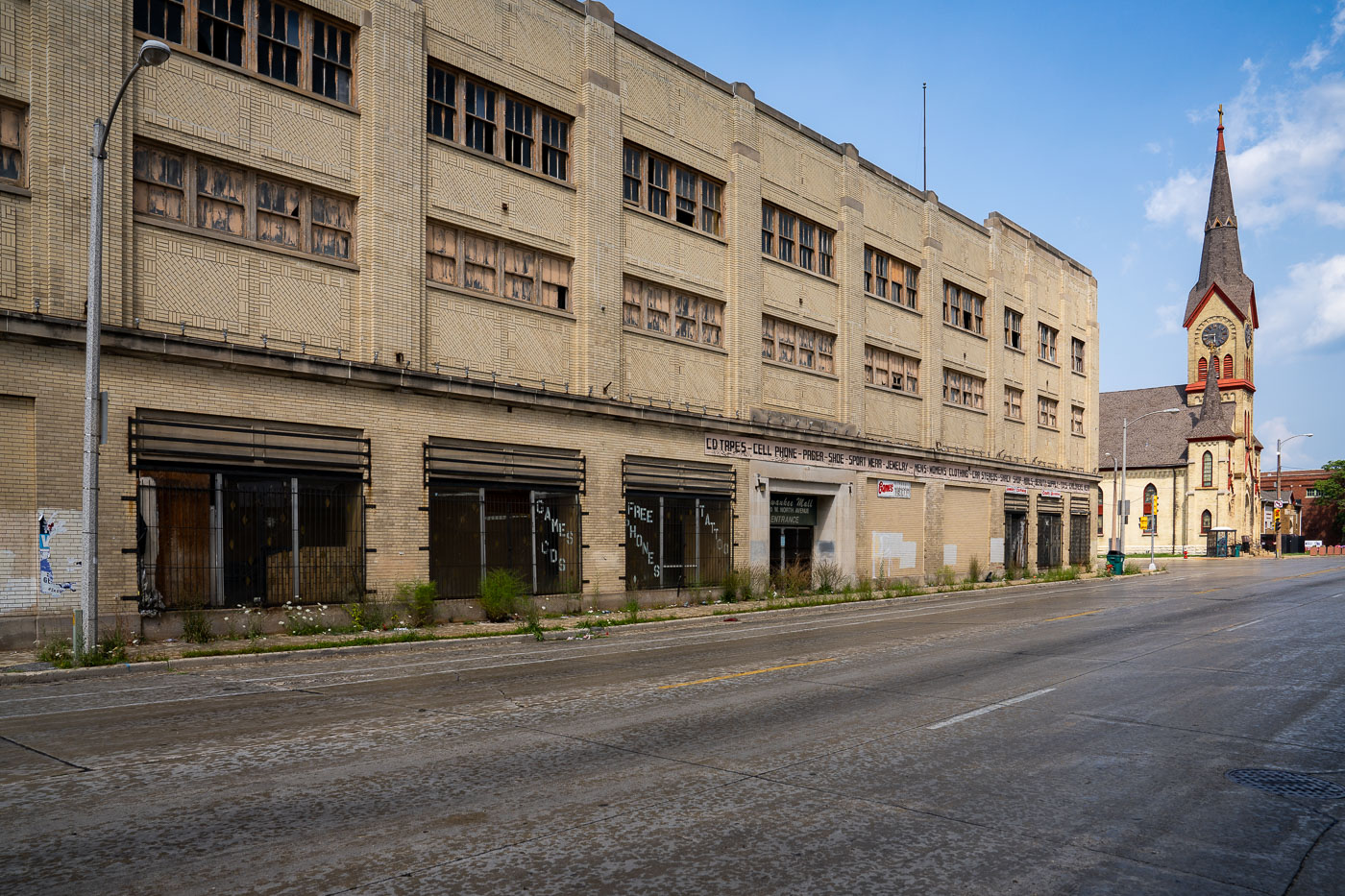
Vacant Milwaukee Mall building with boarded storefronts and neighboring church steeple on North Avenue.
Milwaukee Mall sits empty along West North Avenue, its ground-floor bays fronted by metal security grates and faded signs once advertising phone cards, jewelry, and clothing. The building operated for years as a discount retail arcade before closing, leaving its upper-floor windows broken out or boarded over. Nearby stands a church spire with a working clock, part of the older commercial corridor that once anchored this stretch of North Avenue.
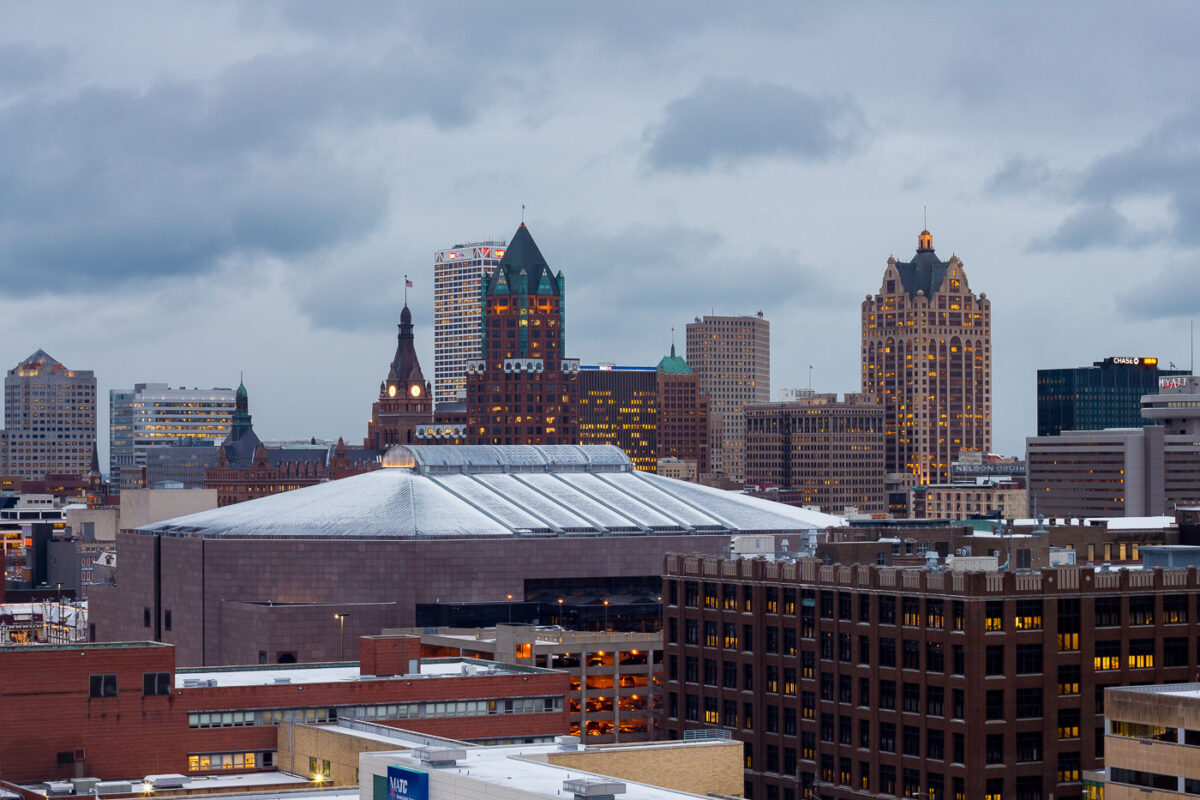
Milwaukee skyline featuring the Bradley Center arena, US Bank Center tower, and City Hall clock tower.
Milwaukee City Hall, completed in 1895 in the Romanesque Revival style, once held the title of tallest habitable building in the United States outside New York City, and its clock tower remains a defining piece of the downtown skyline. The U.S. Bank Center, finished in 1973, stands 601 feet tall across 42 floors and ranks among the tallest buildings in Wisconsin. The Bradley Center opened in 1988 as the home arena for the Milwaukee Bucks and Marquette University's men's basketball team, built with funding from the Pettit family in honor of Bradley Corporation founder Harry Lynde Bradley. The Bucks played there until 2018, when the team moved into the newly built Fiserv Forum and the arena was later demolished.
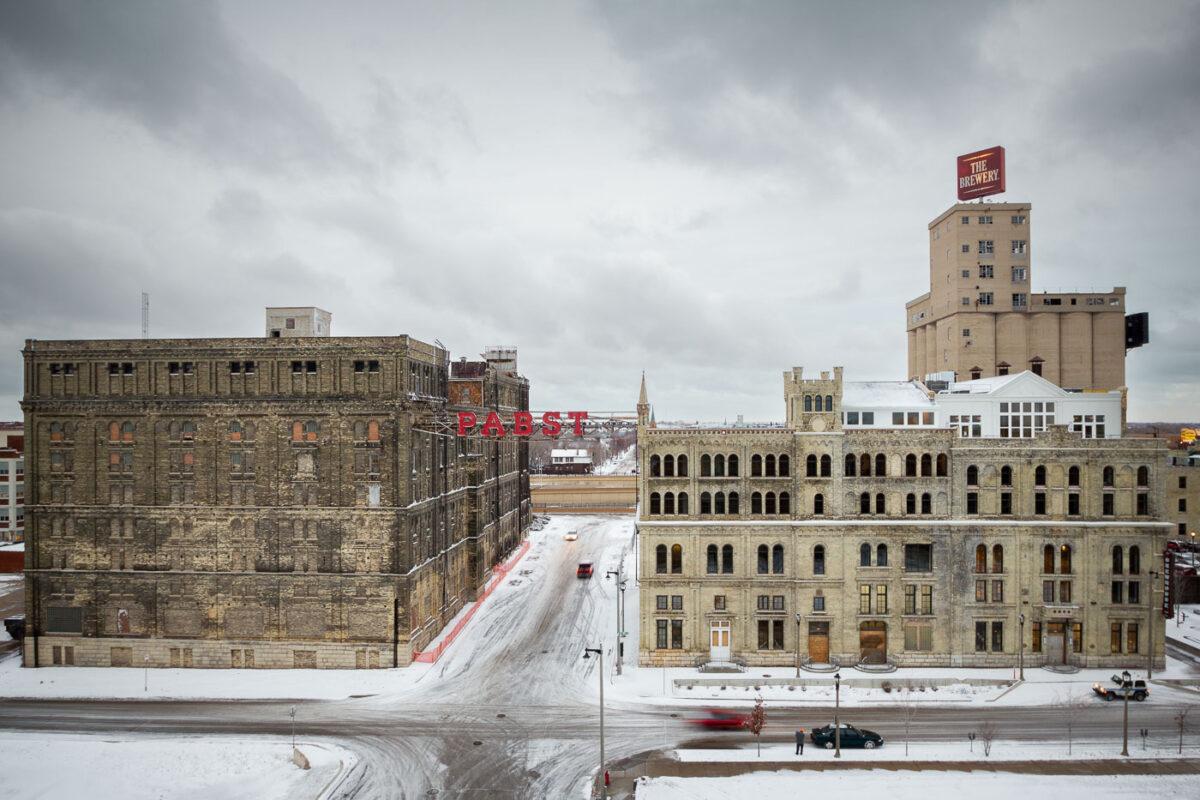
Pabst Brewery Complex buildings in snow-covered Milwaukee, with grain elevator and brewery tower visible.
The Pabst Brewing Company built this complex on Milwaukee's near west side starting in the 1860s, expanding it in stages as Pabst grew into the largest brewer in the United States by the late 19th century. The "Pabst" lettering on the old grain elevator and "The Brewery" sign atop the tower date from that era of continuous production. Pabst closed the Milwaukee brewery in 1996, ending more than 130 years of brewing at the site. The 21-acre complex, listed on the National Register of Historic Places, has since been redeveloped as a mixed-use district with offices, apartments, and a hotel occupying several of the former industrial buildings.

Built in Minneapolis

Minneapolis Photographer

Browse by location, move through long-running series, or start with recent work.