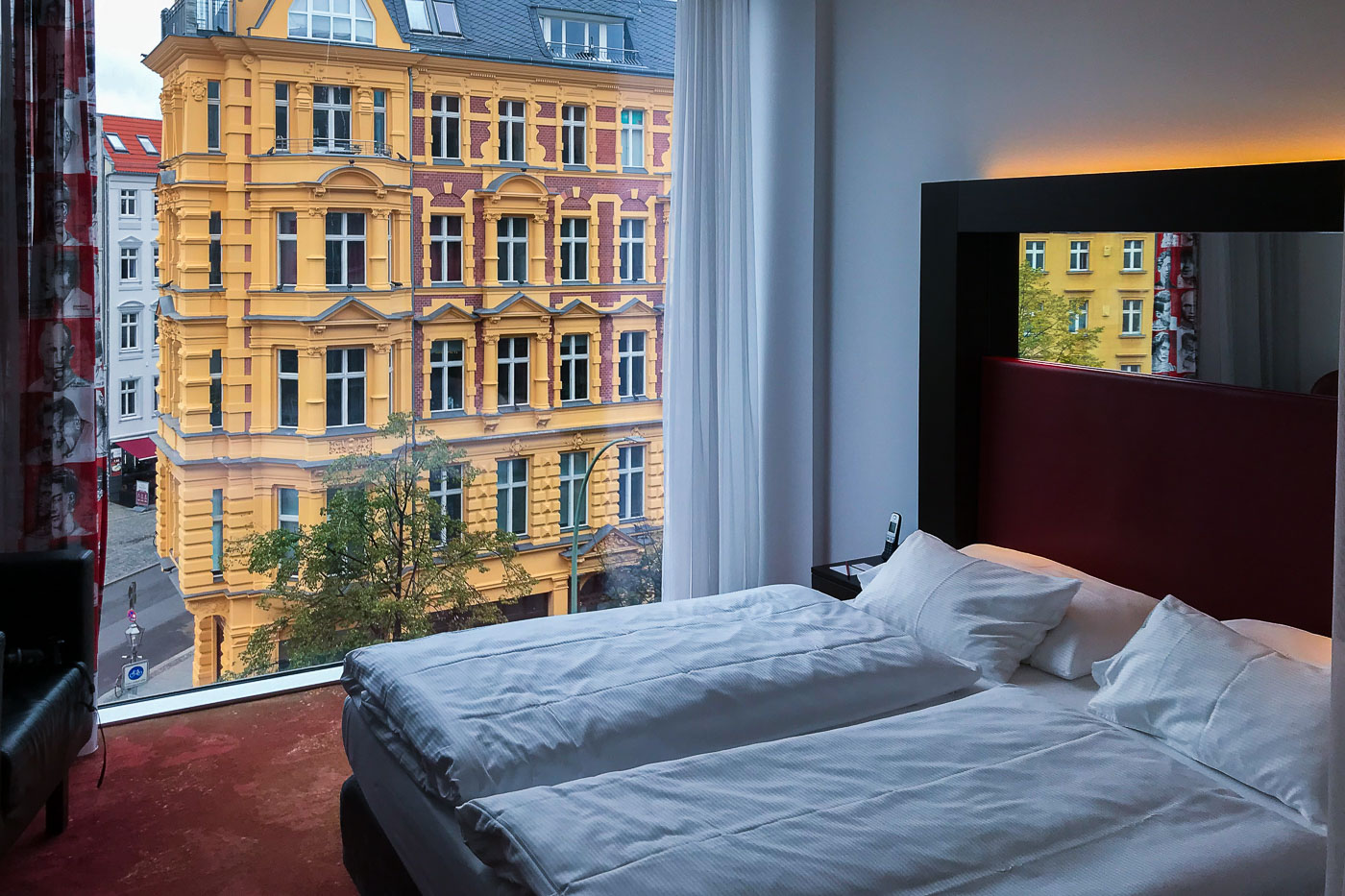
A Gründerzeit Facade Across the Street in Berlin Mitte
Taken
Taken
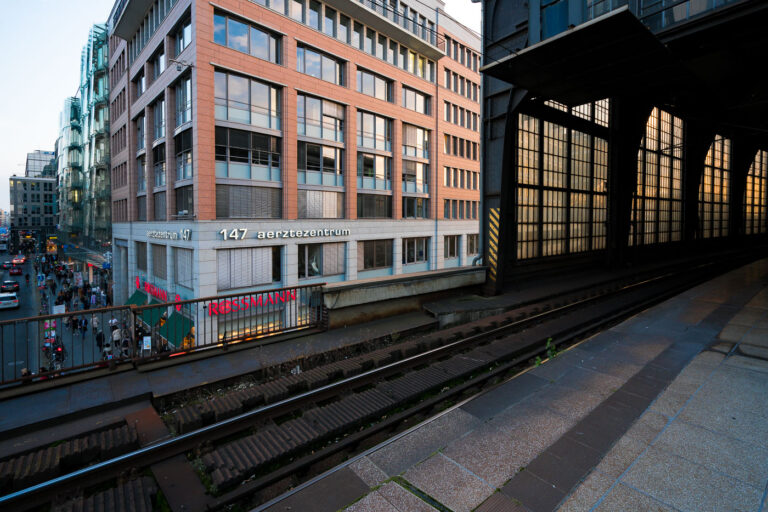
Gründerzeit buildings like this one take their name from Germany's "founders' era," the rapid industrial and urban expansion that followed unification in 1871. Berlin saw entire districts built in this style through the 1880s and 1890s, with stucco facades, bay windows, and brick detailing marking apartment blocks for the city's growing middle class. Many of these buildings in Mitte survived Allied bombing in World War II only to fall into disrepair under East German administration, when maintenance budgets for private housing stock were scarce. Since reunification in 1990, large-scale restoration projects have returned facades across Mitte to something close to their original color schemes and ornamentation, a process that has made the neighborhood one of the most sought-after residential areas in the city.
Taken
More from
Berlin
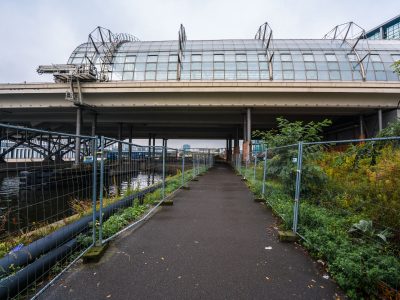 Fenced Path Beneath Berlin Hauptbahnhof's Elevated Tracks
A fenced pedestrian path runs beneath Berlin Hauptbahnhof beside the Spree River in Berlin, Germany. The elevated station opened in…
 Construction Crane Rises Near Friedrichstraße in Berlin-Mitte
Friedrichstraße has anchored Berlin's Mitte district since the late 17th century, when Friedrich I ordered its development as a central…
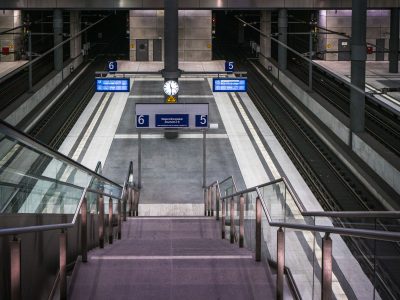 Stairway to Tracks 5 and 6 at Berlin Hauptbahnhof
Berlin Hauptbahnhof’s lower-level platforms for tracks 5 and 6 are shown in the deep north-south rail link beneath the station…
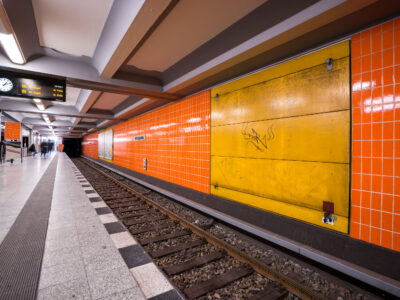 Graffiti-Marked Service Panel at Wedding Station
Wedding U-Bahn station in Berlin has an underground platform lined with orange tiles and yellow service panels. The station is…
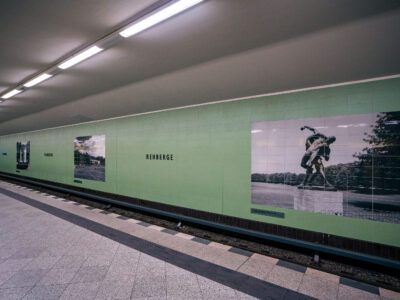 Park Murals Along the Platform at Rehberge Station
Rehberge U-Bahn Station, located in Berlin's Wedding district, opened in 1956 as part of the postwar expansion of the U6…
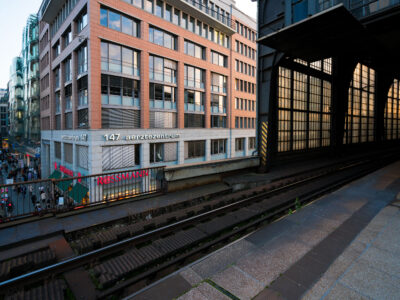 Friedrichstraße Station Platform Overlooking Georgenstraße
Berlin Friedrichstraße Station in Berlin has elevated tracks running beside Georgenstraße. The view looks past the station structure toward the…