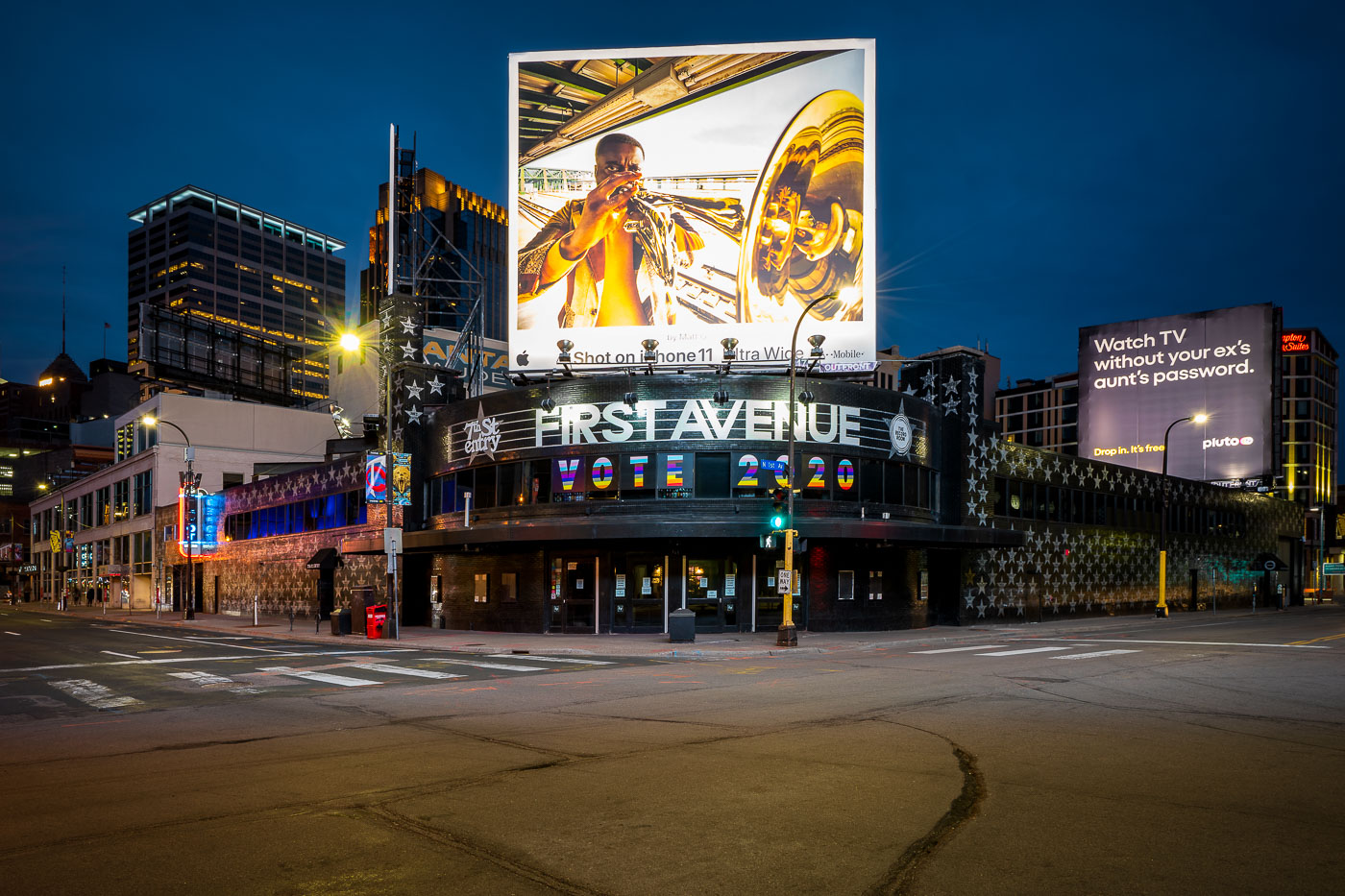
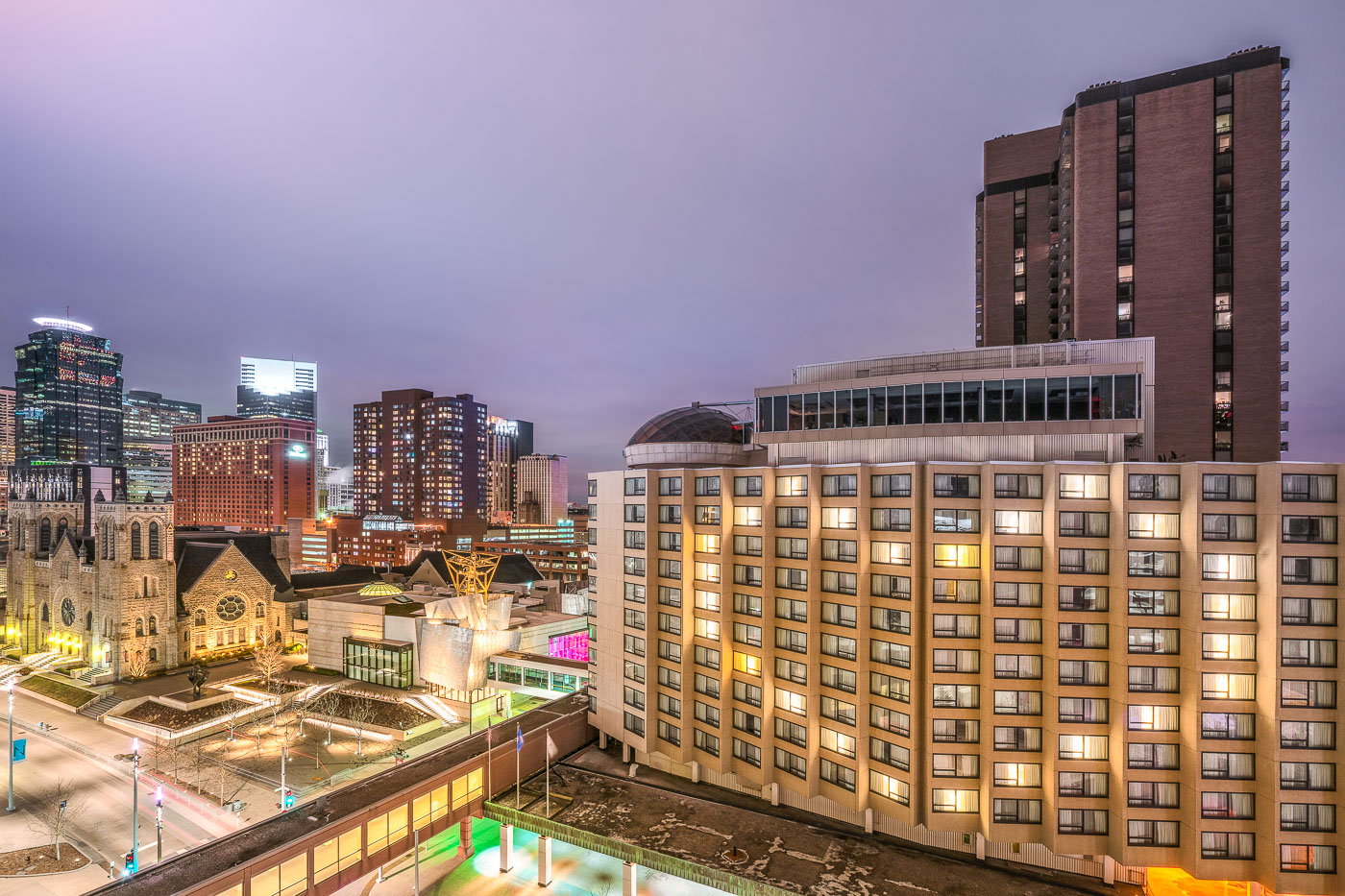
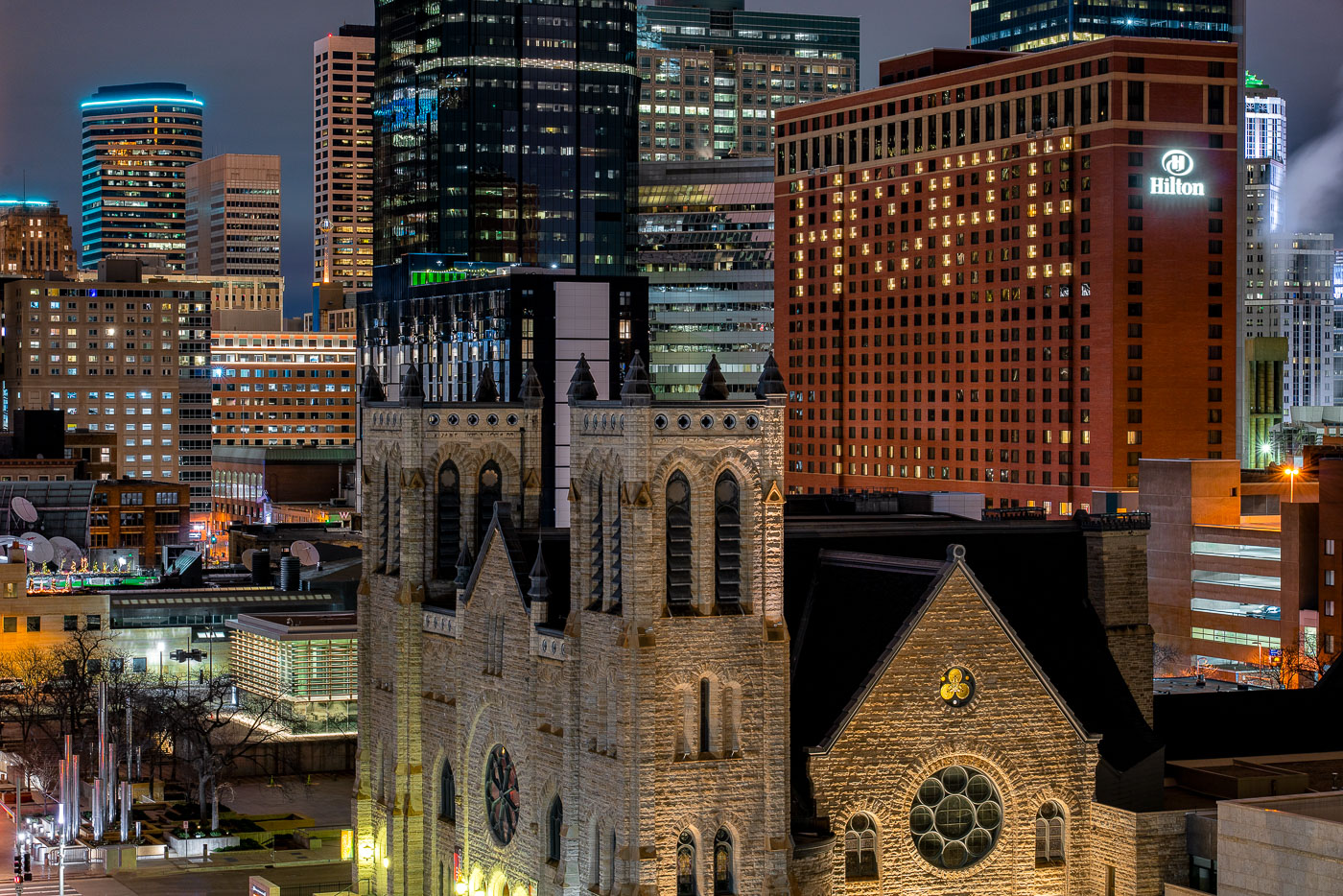
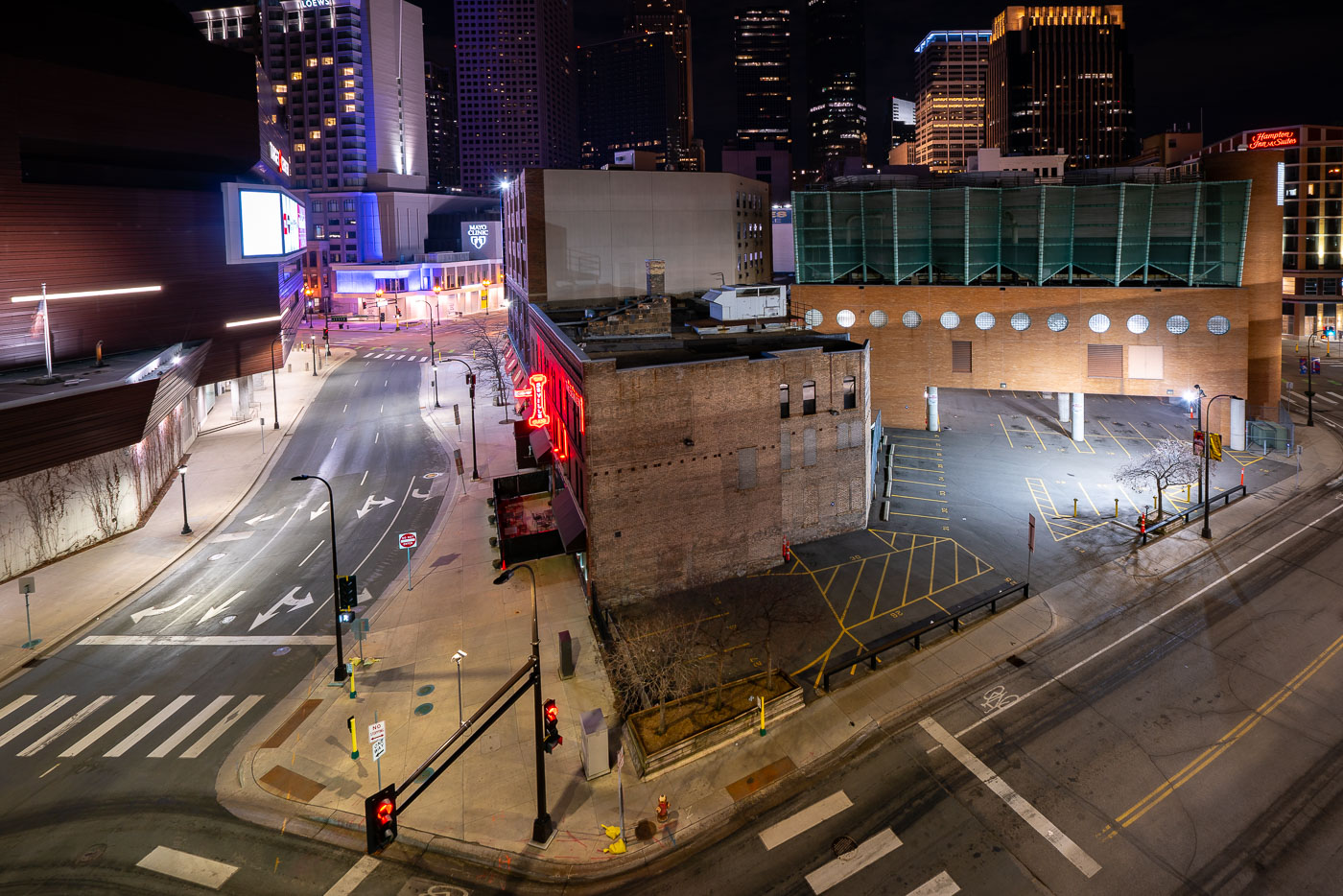
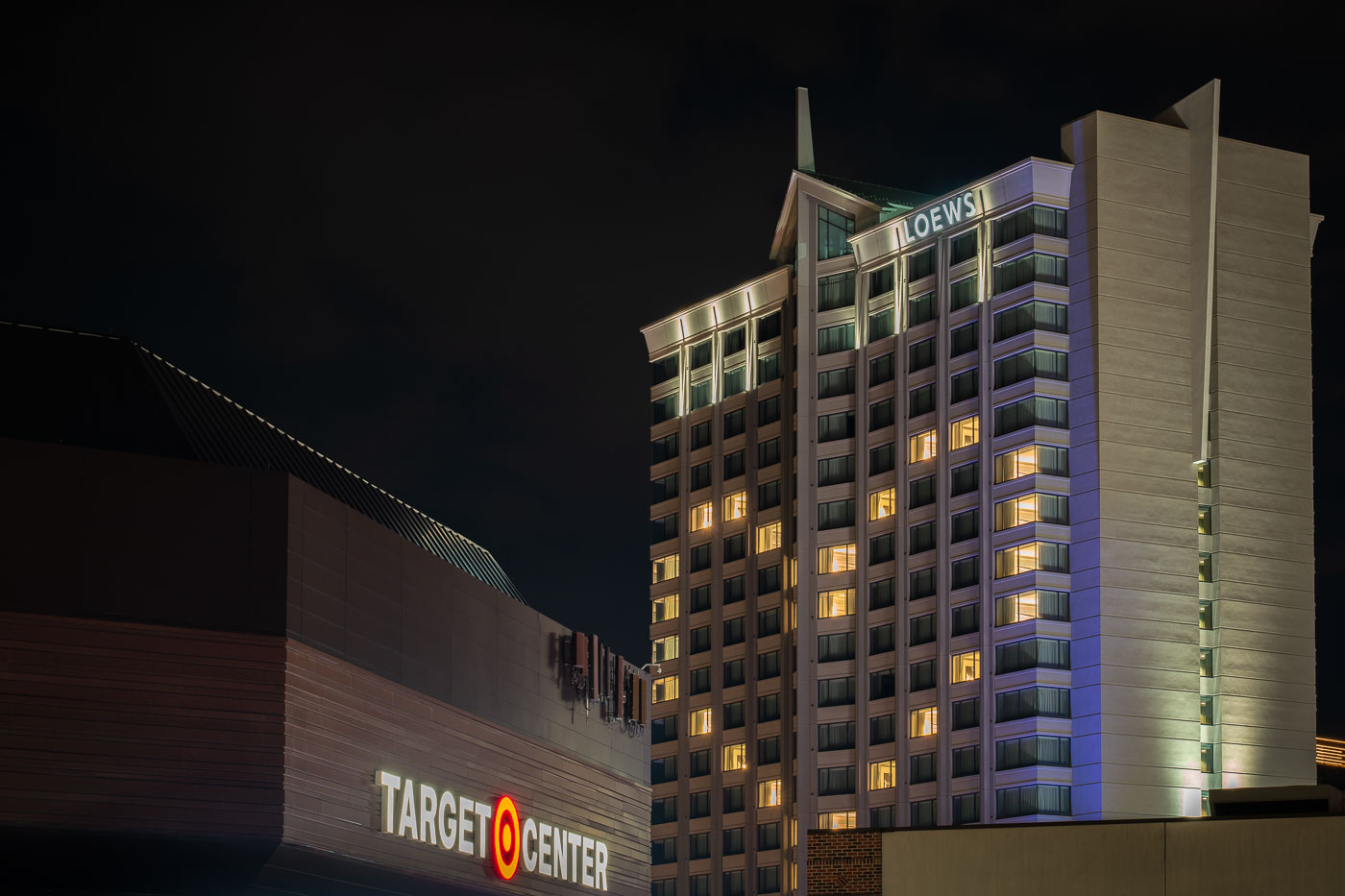
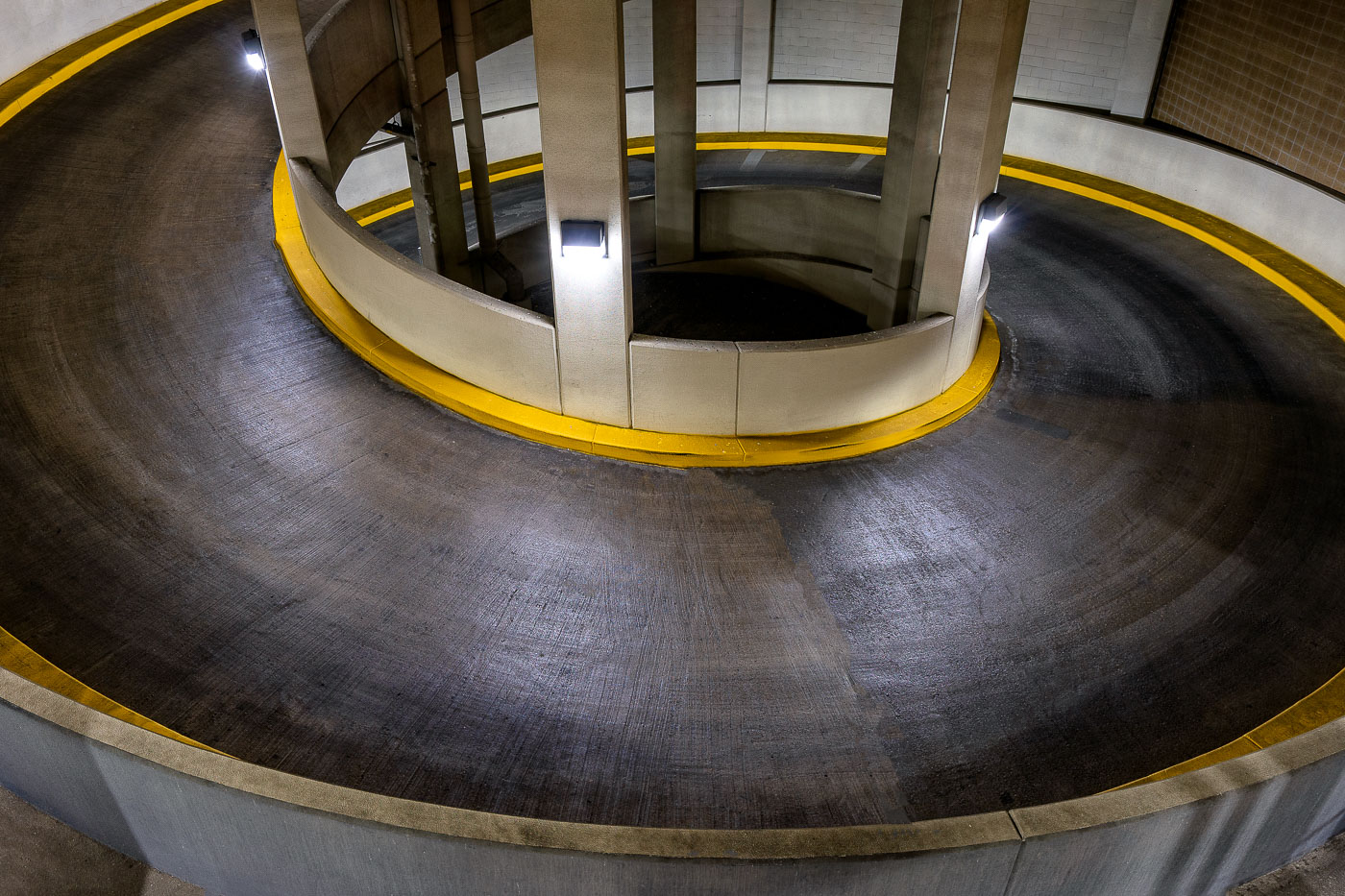
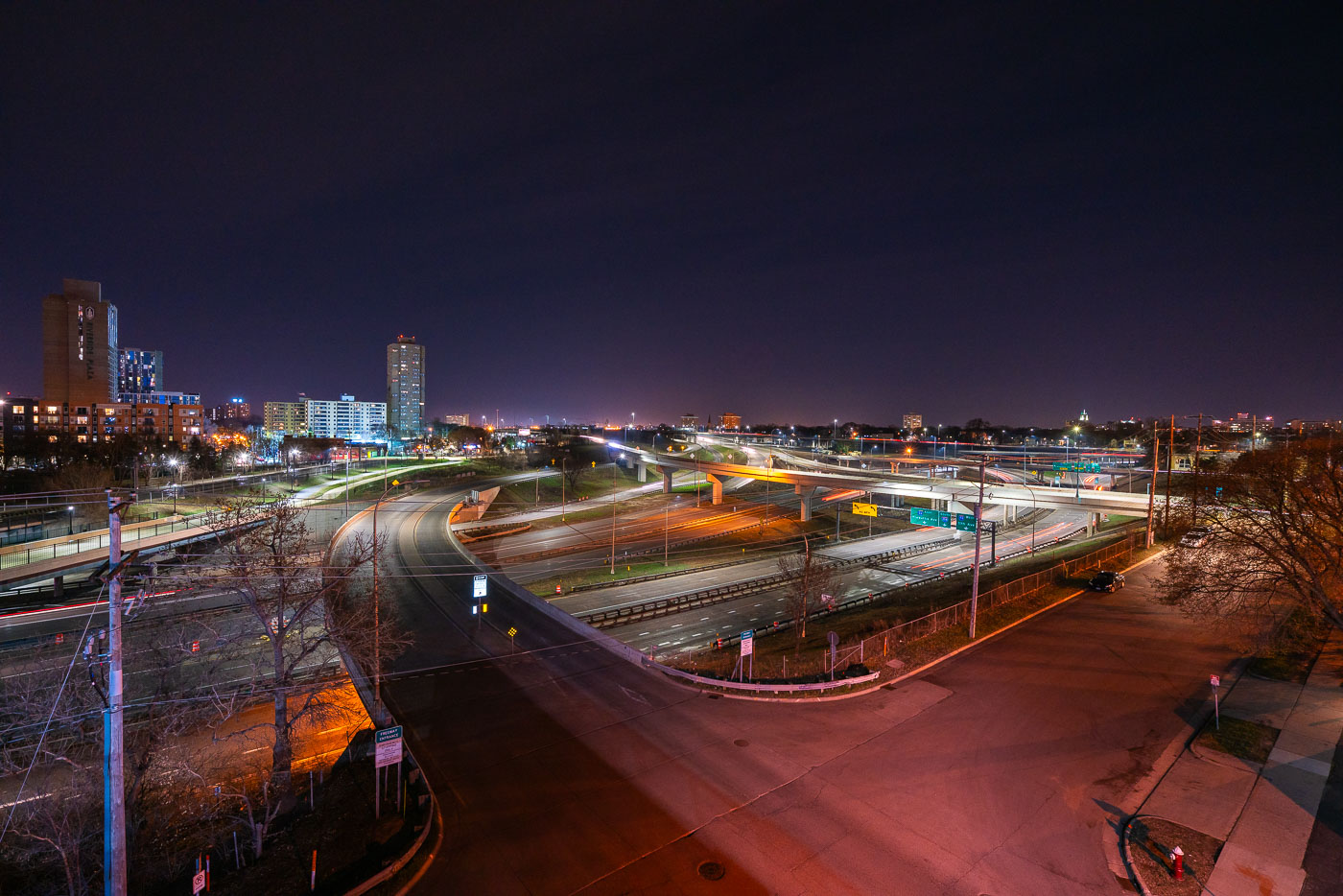
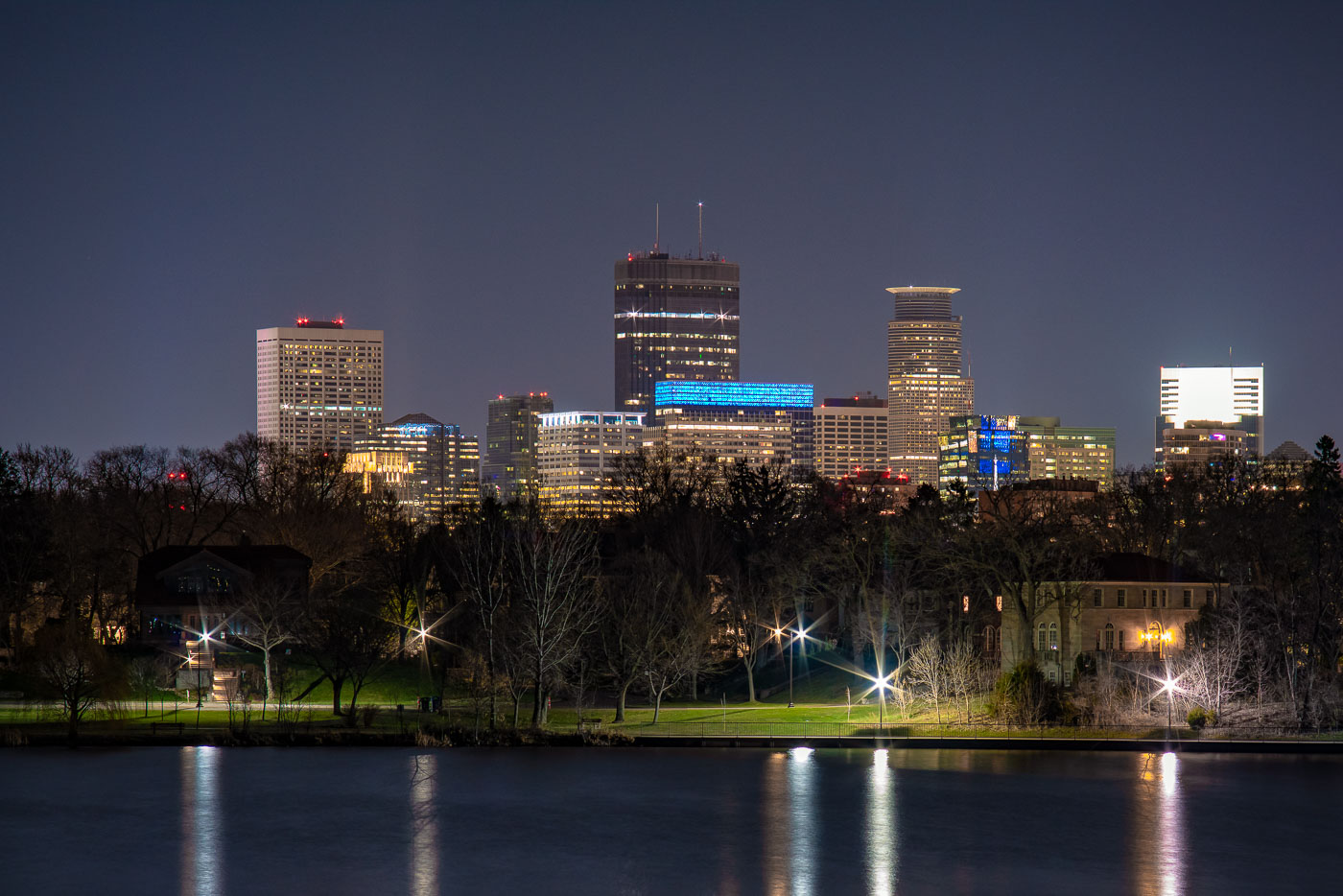
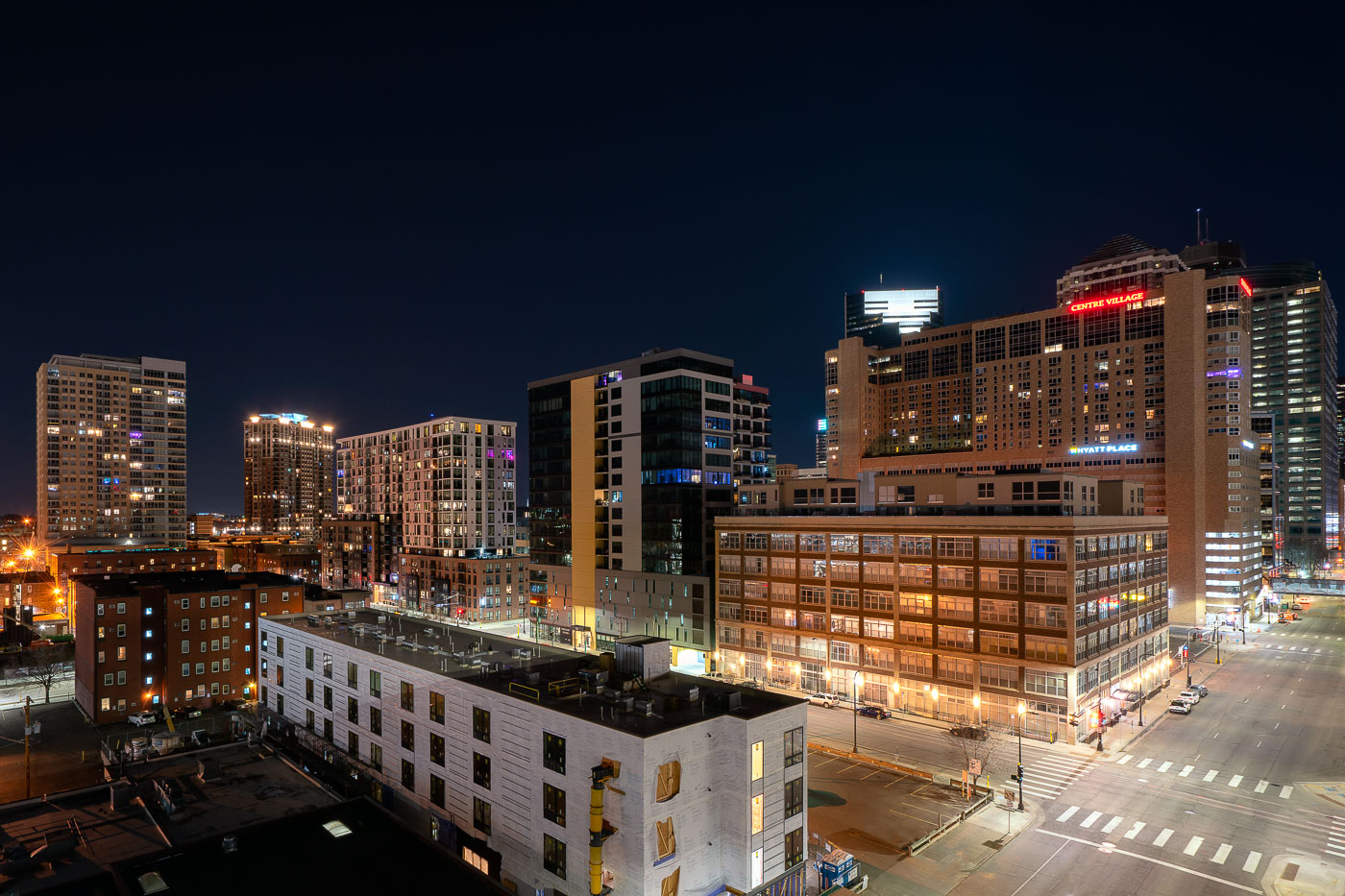
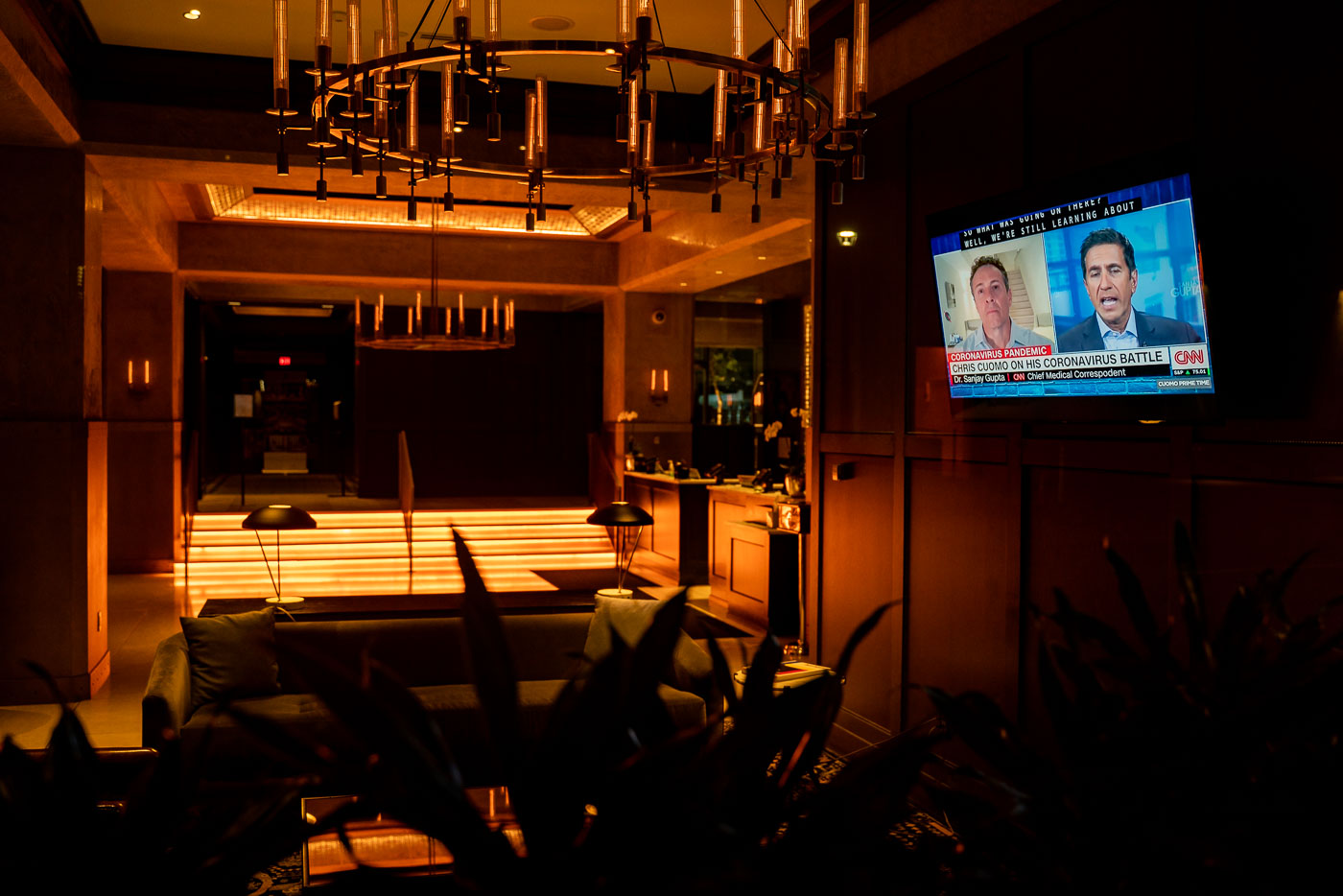
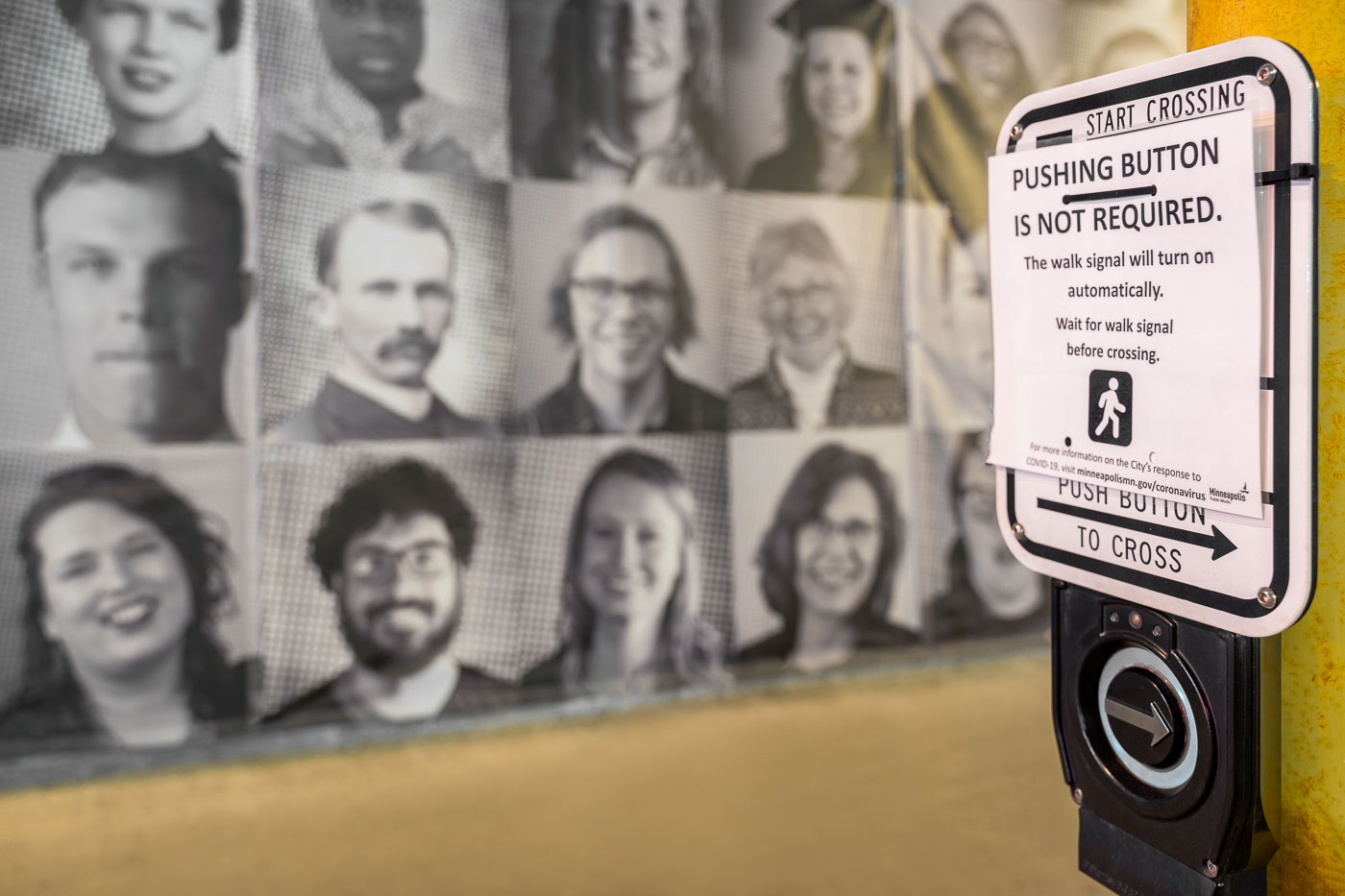
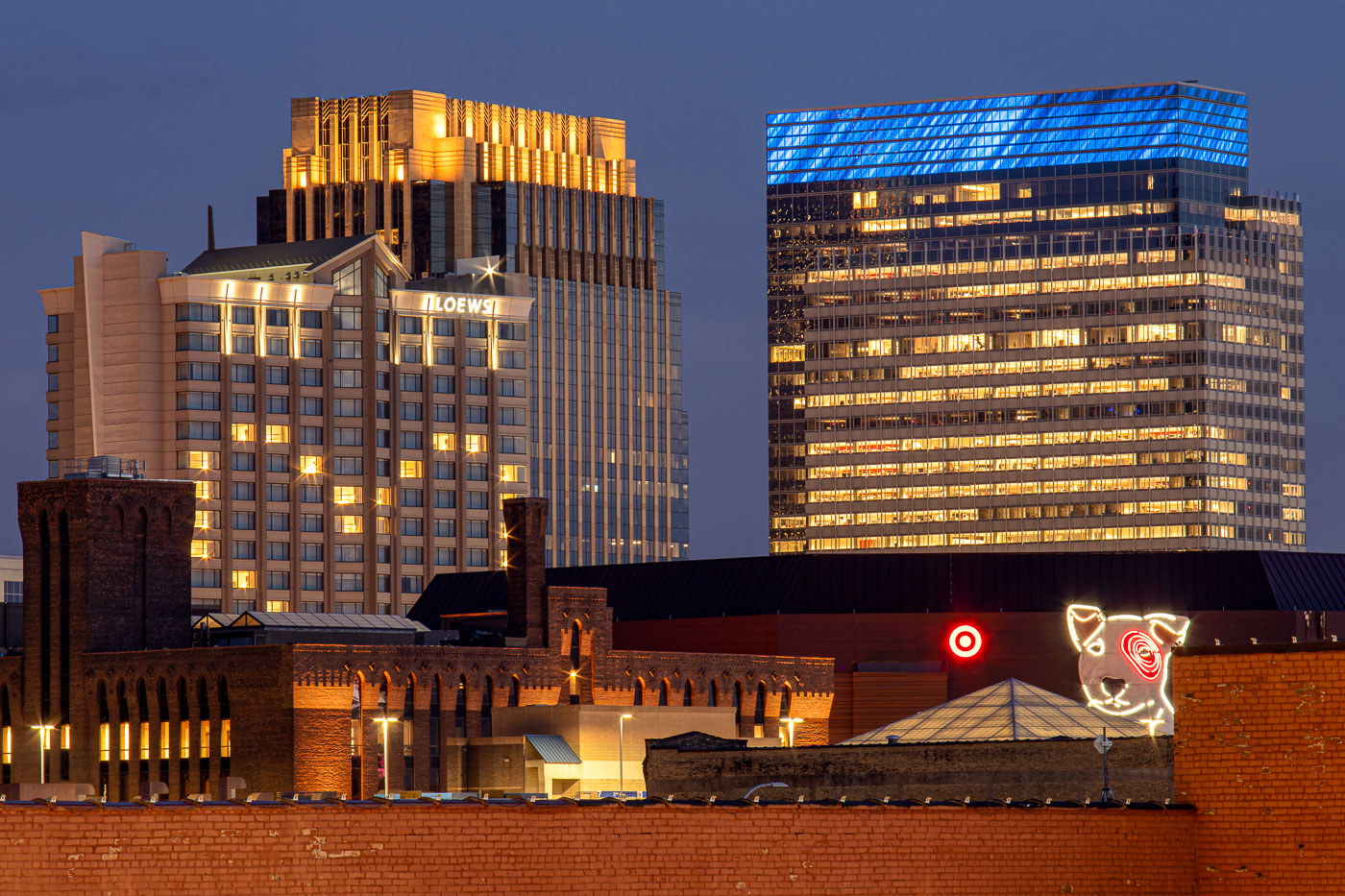
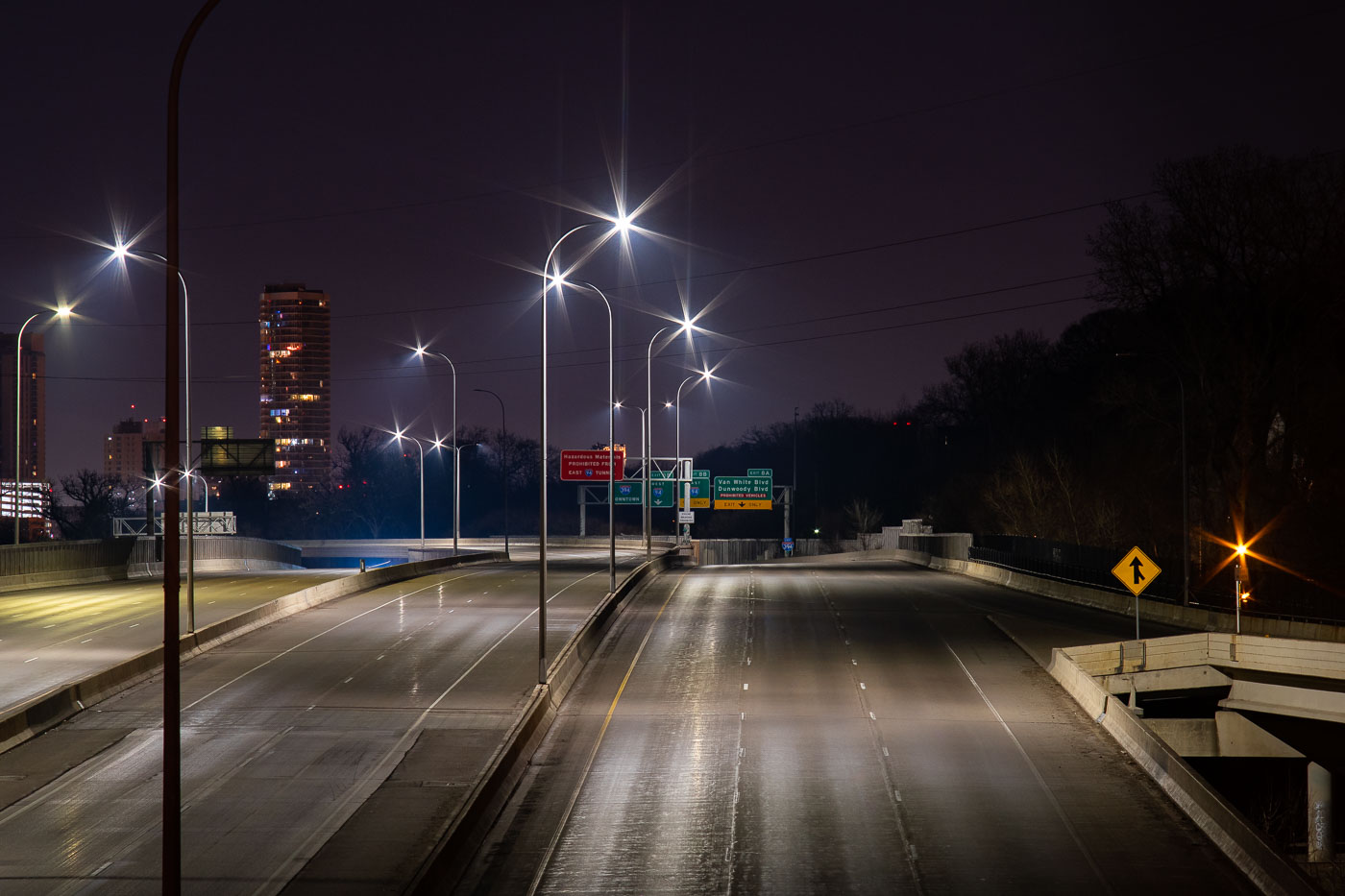
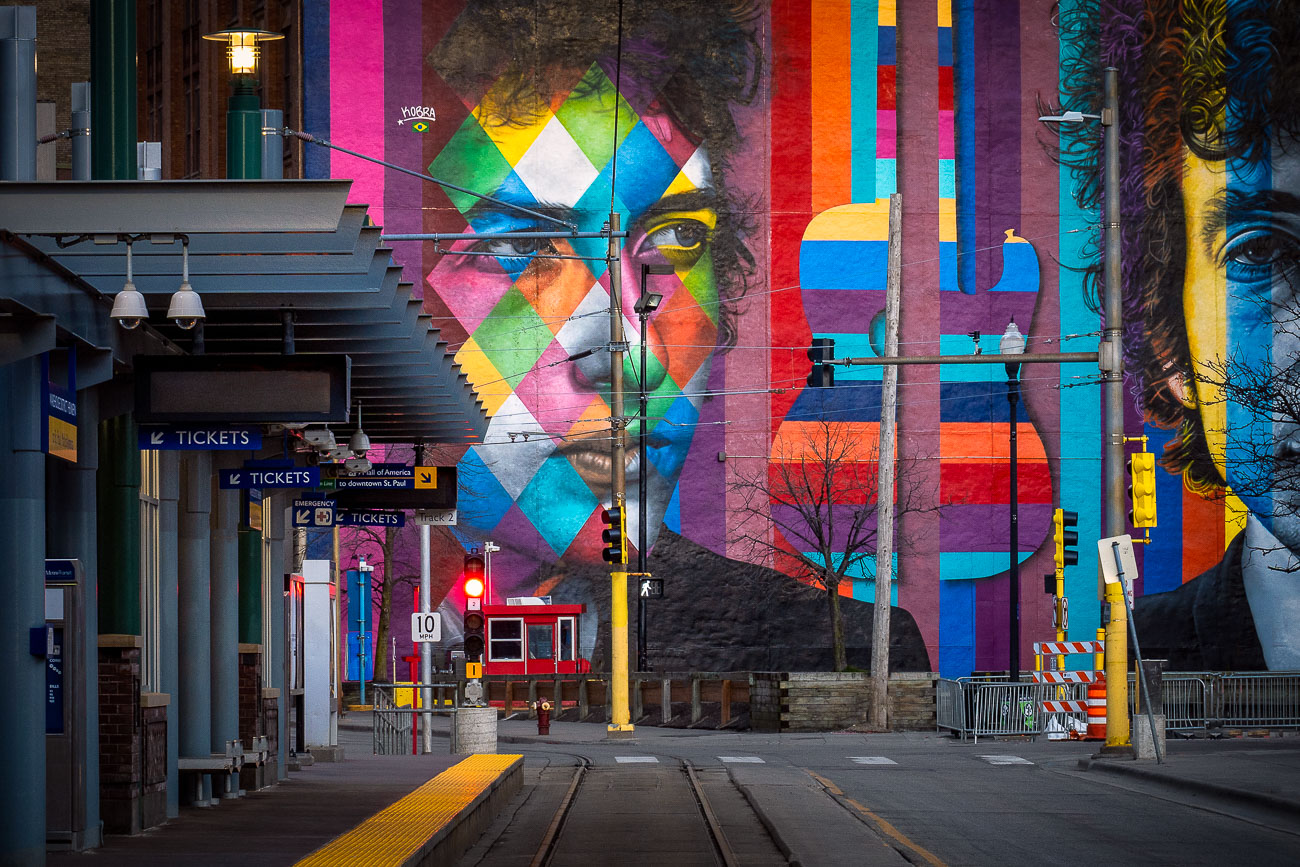
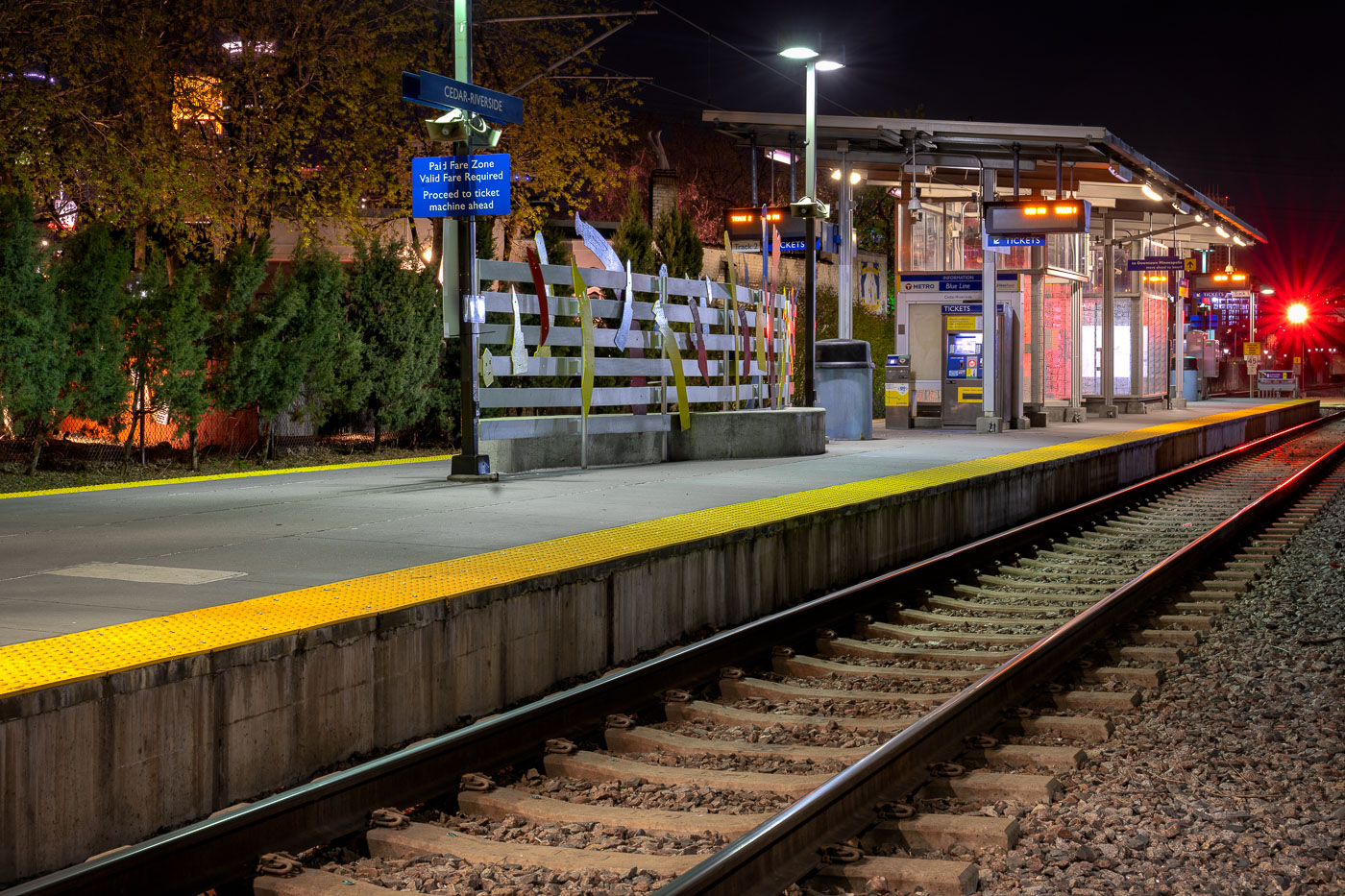
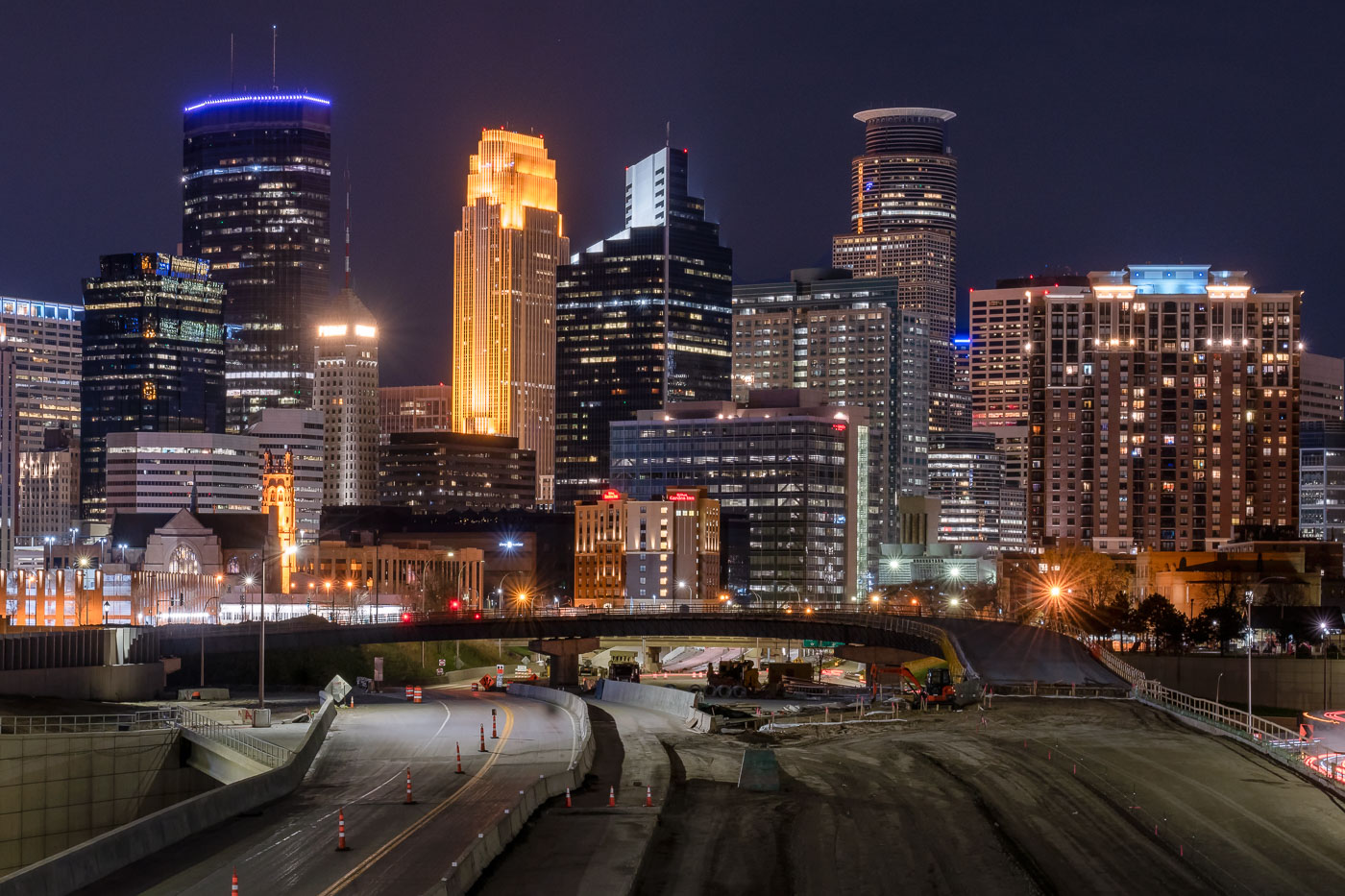
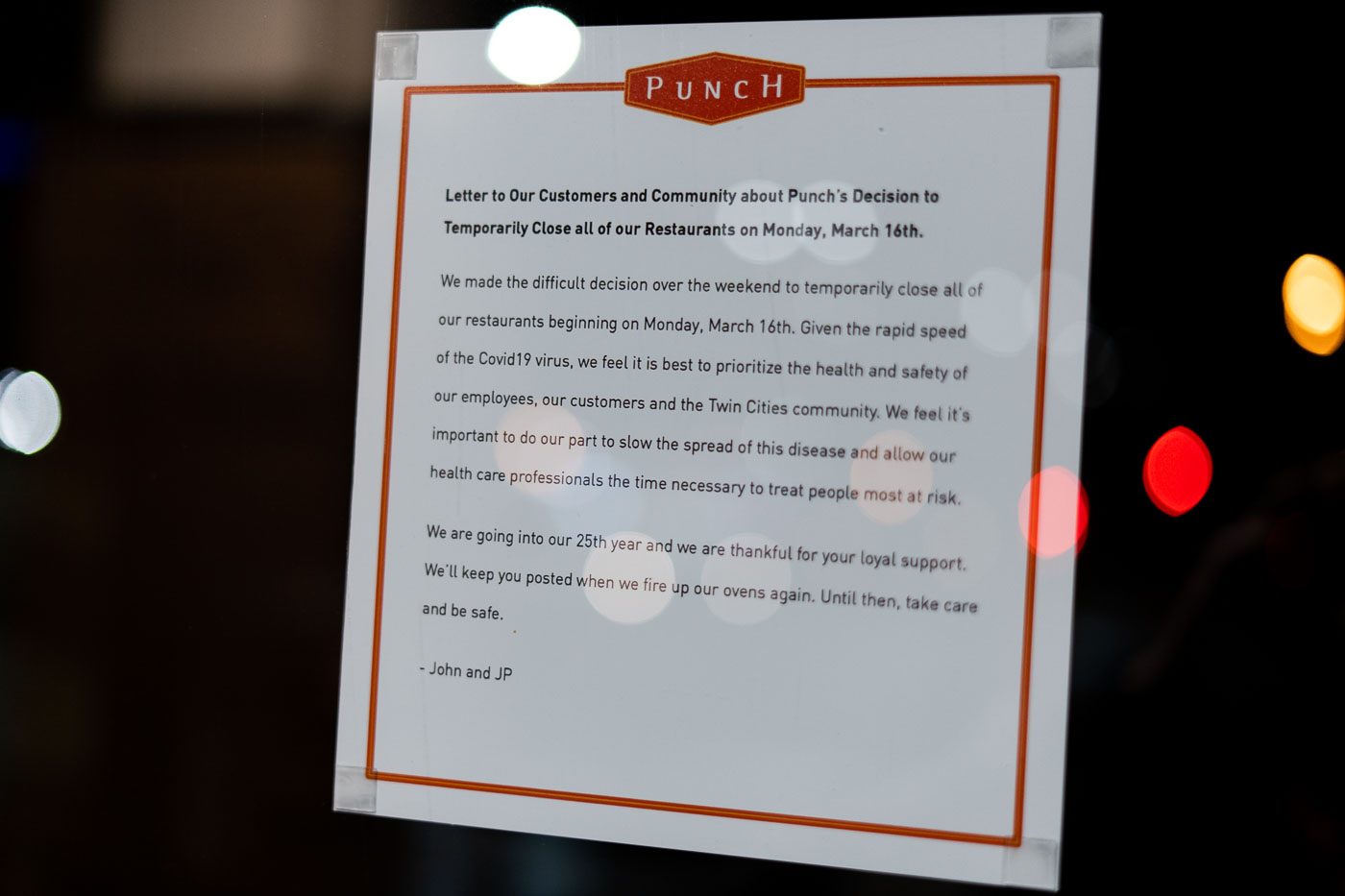
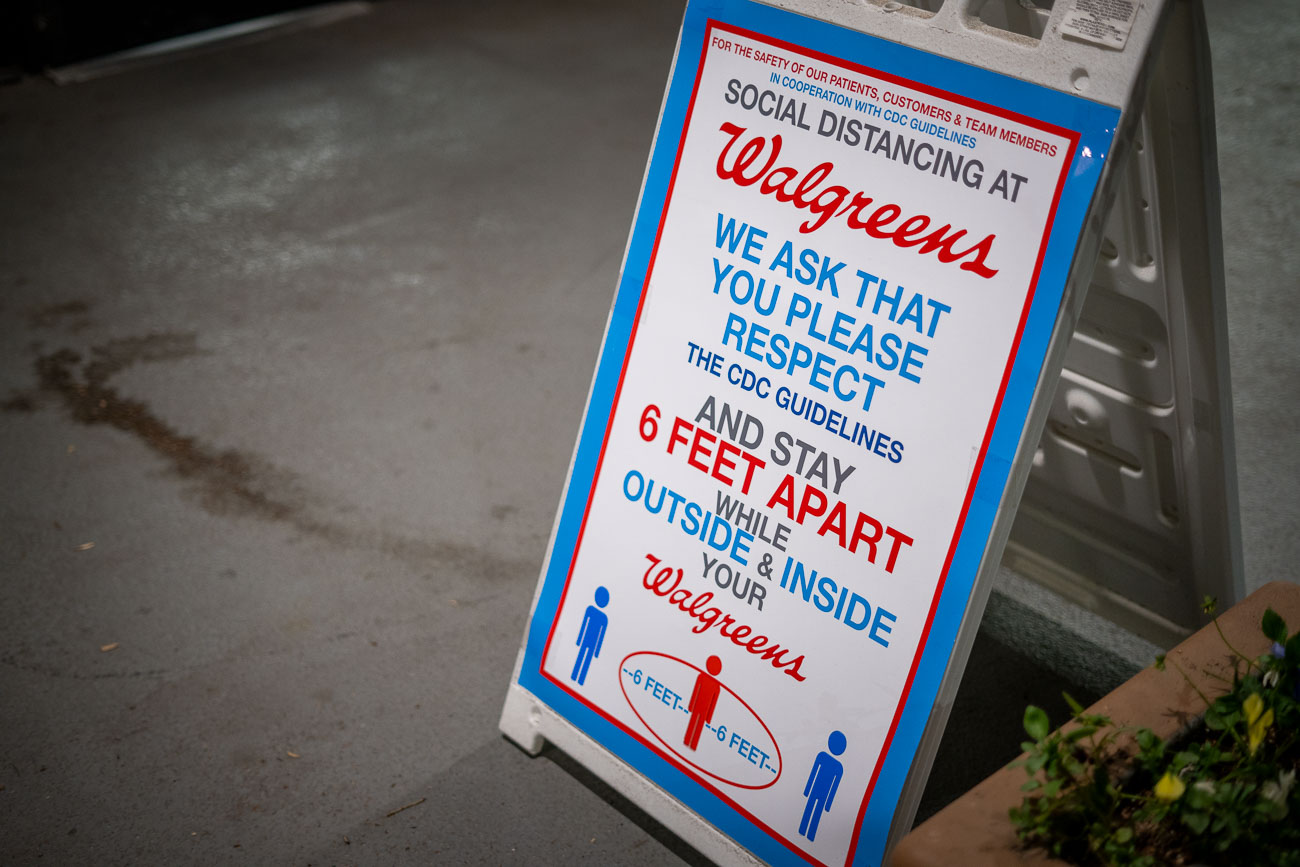
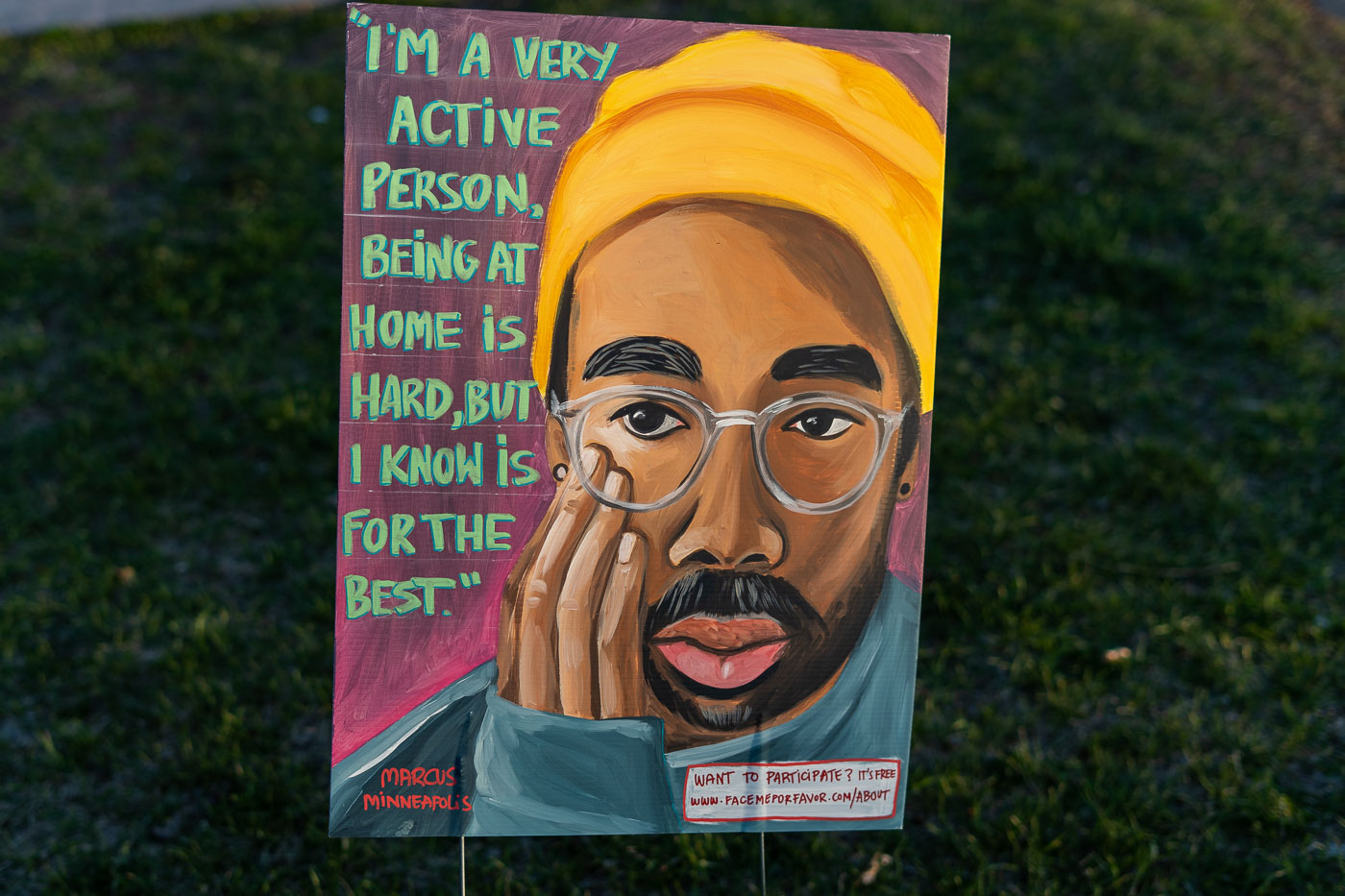
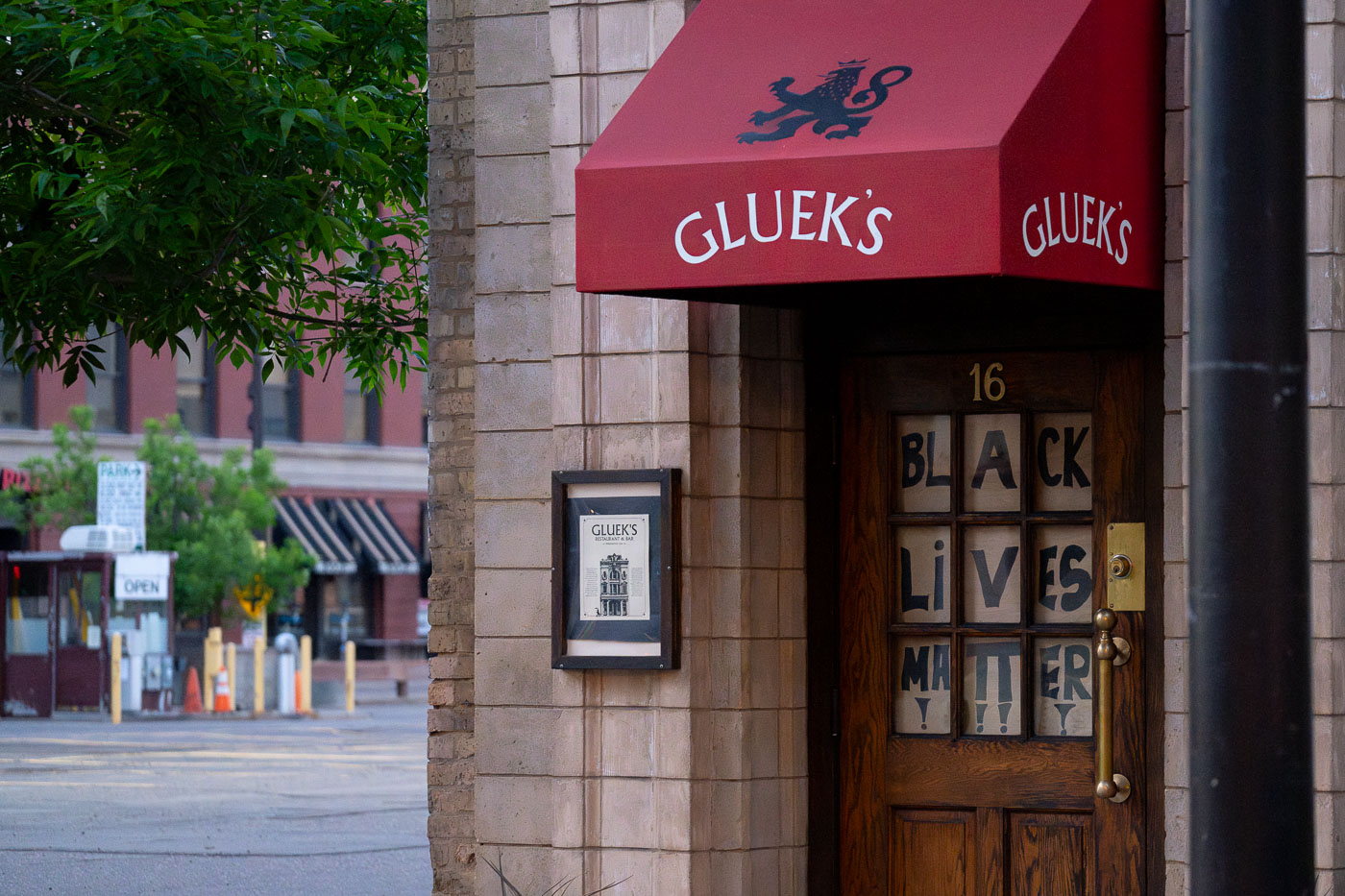
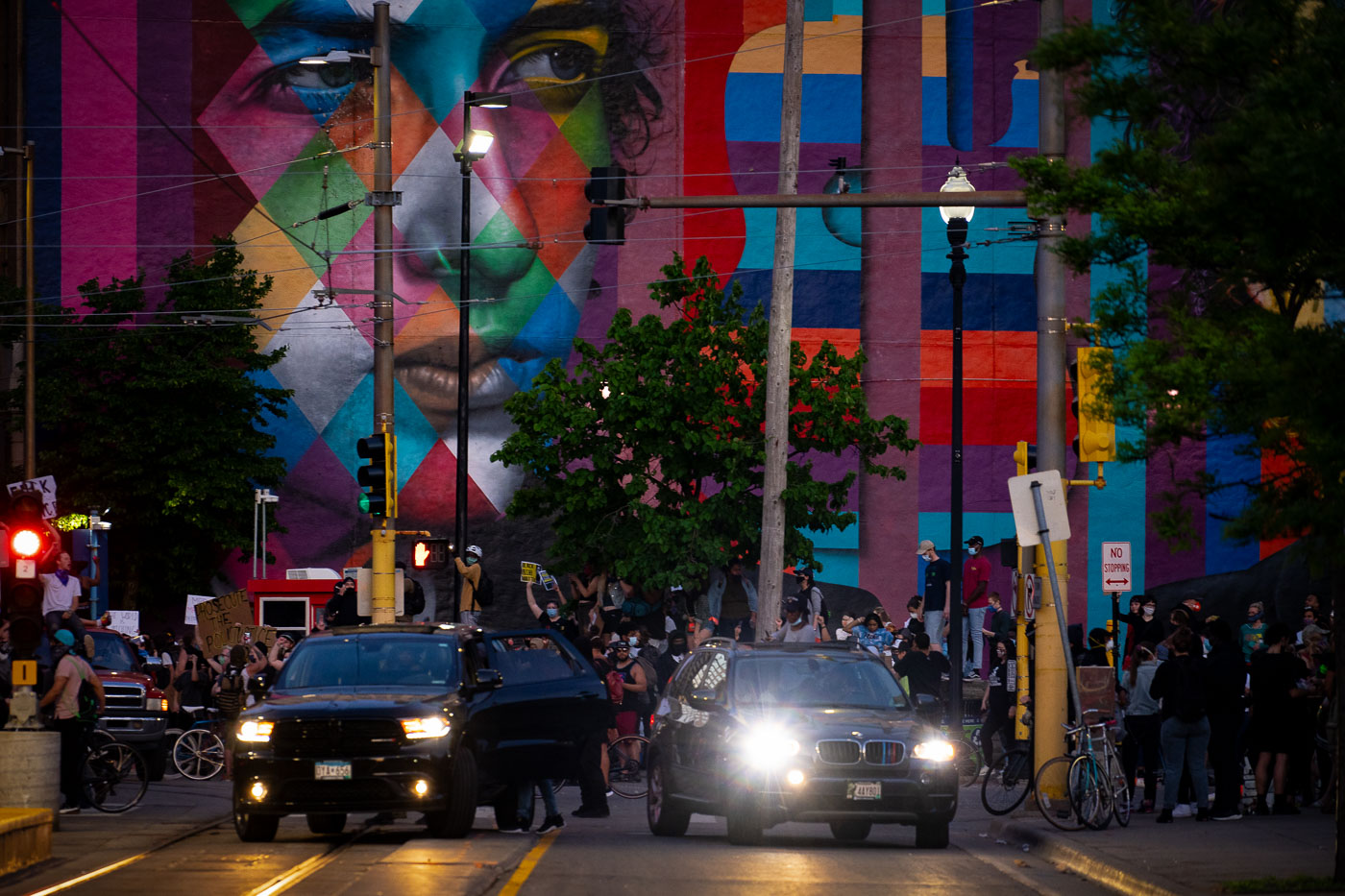
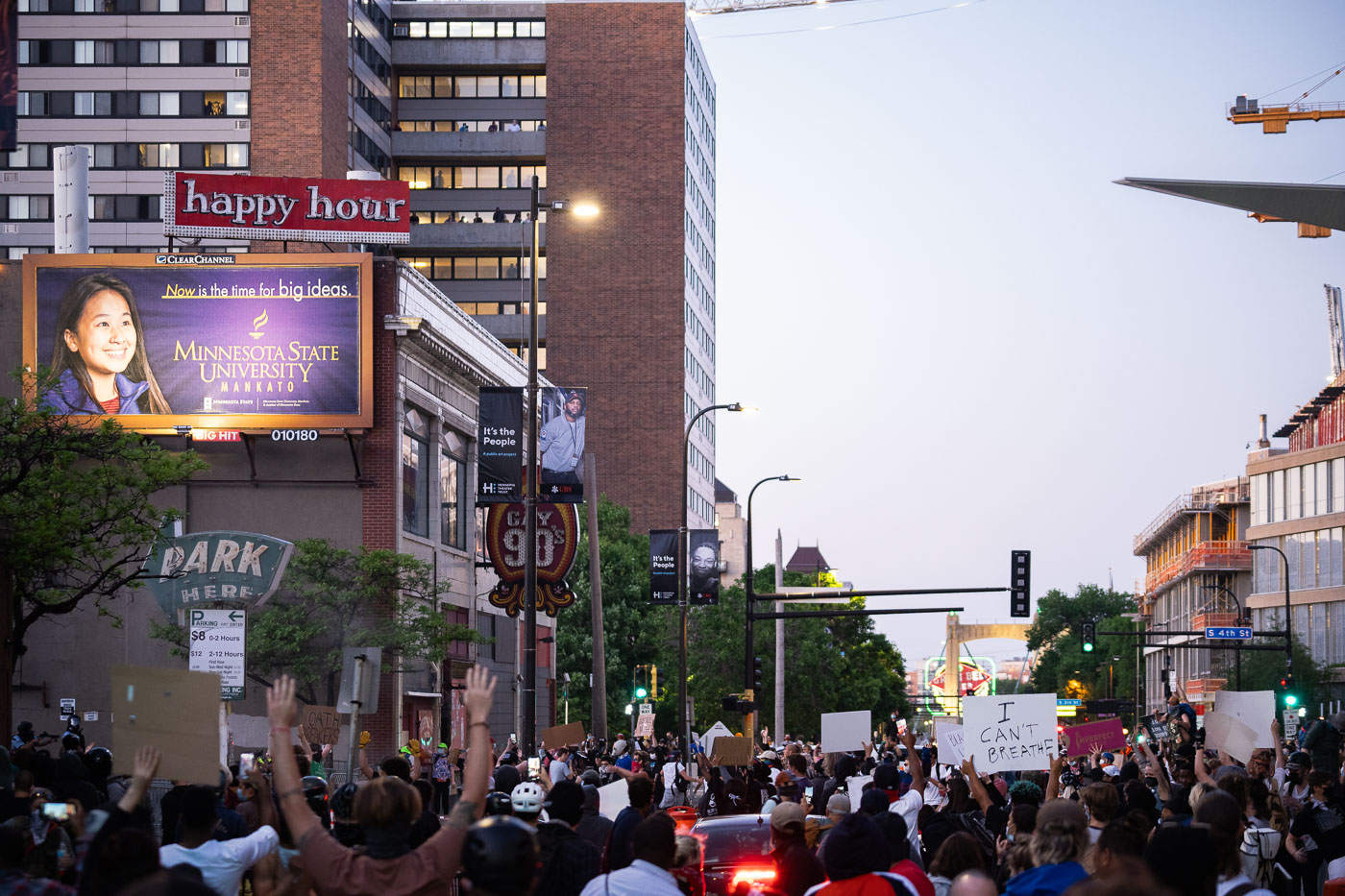
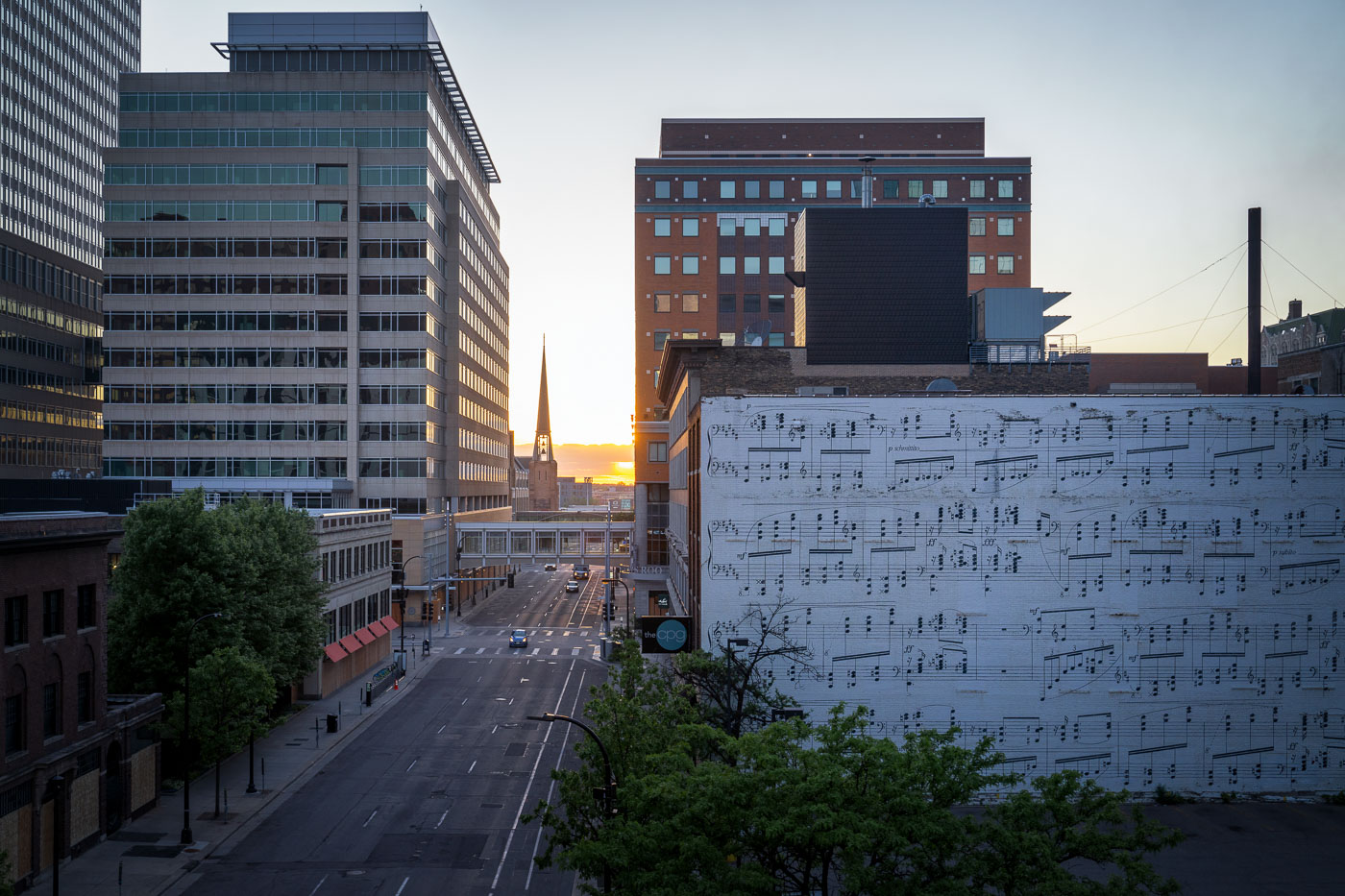
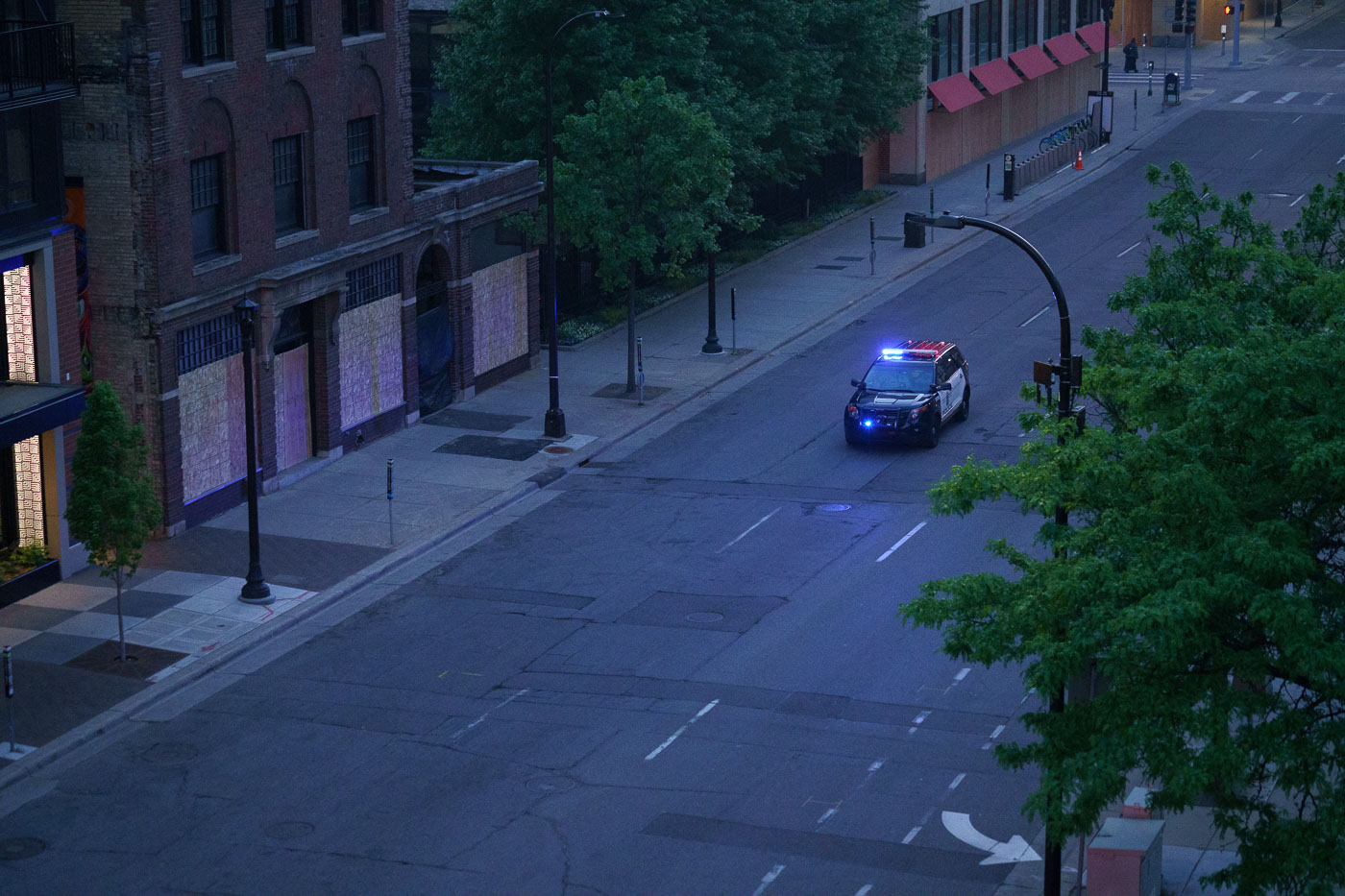
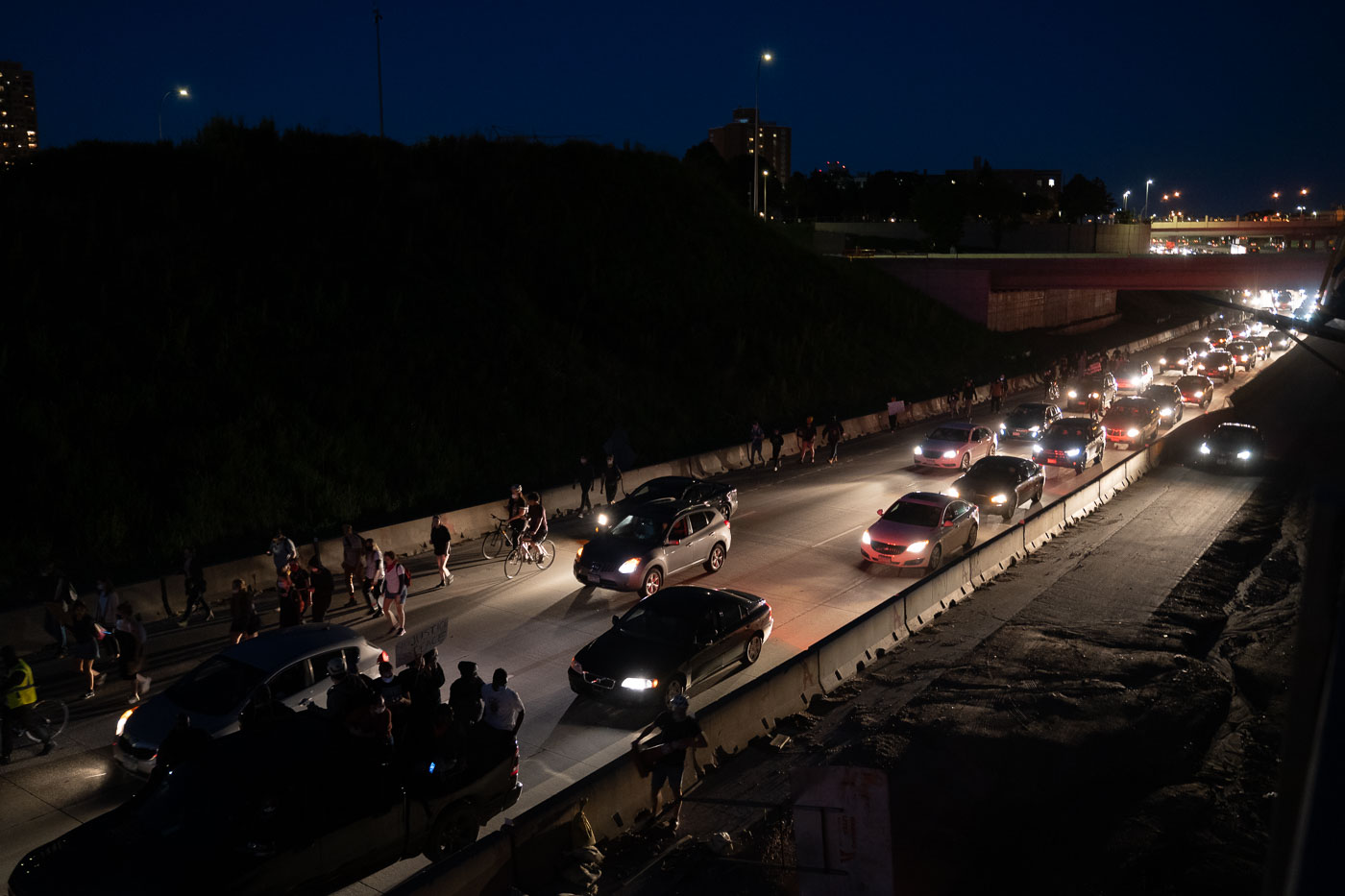
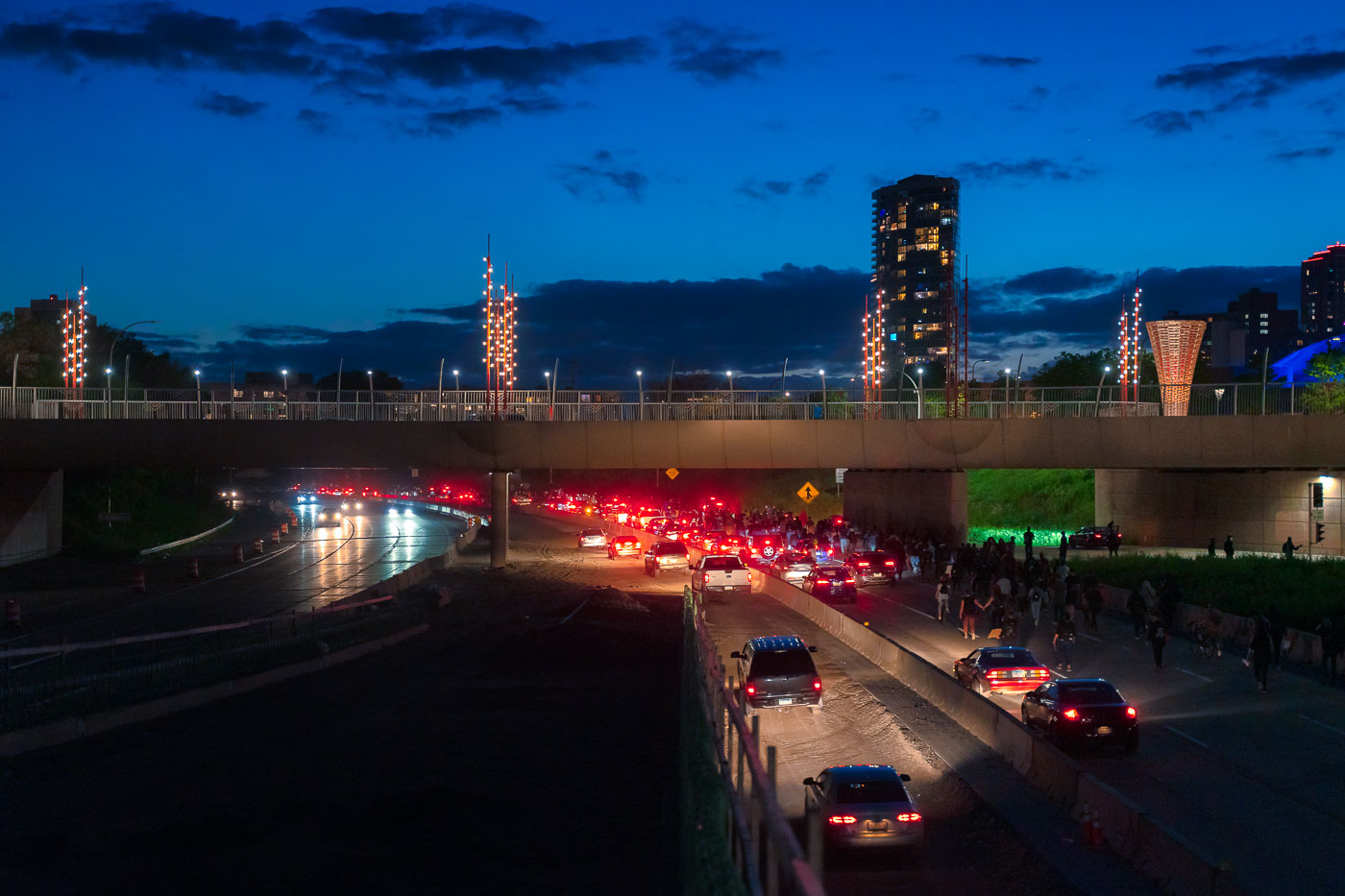
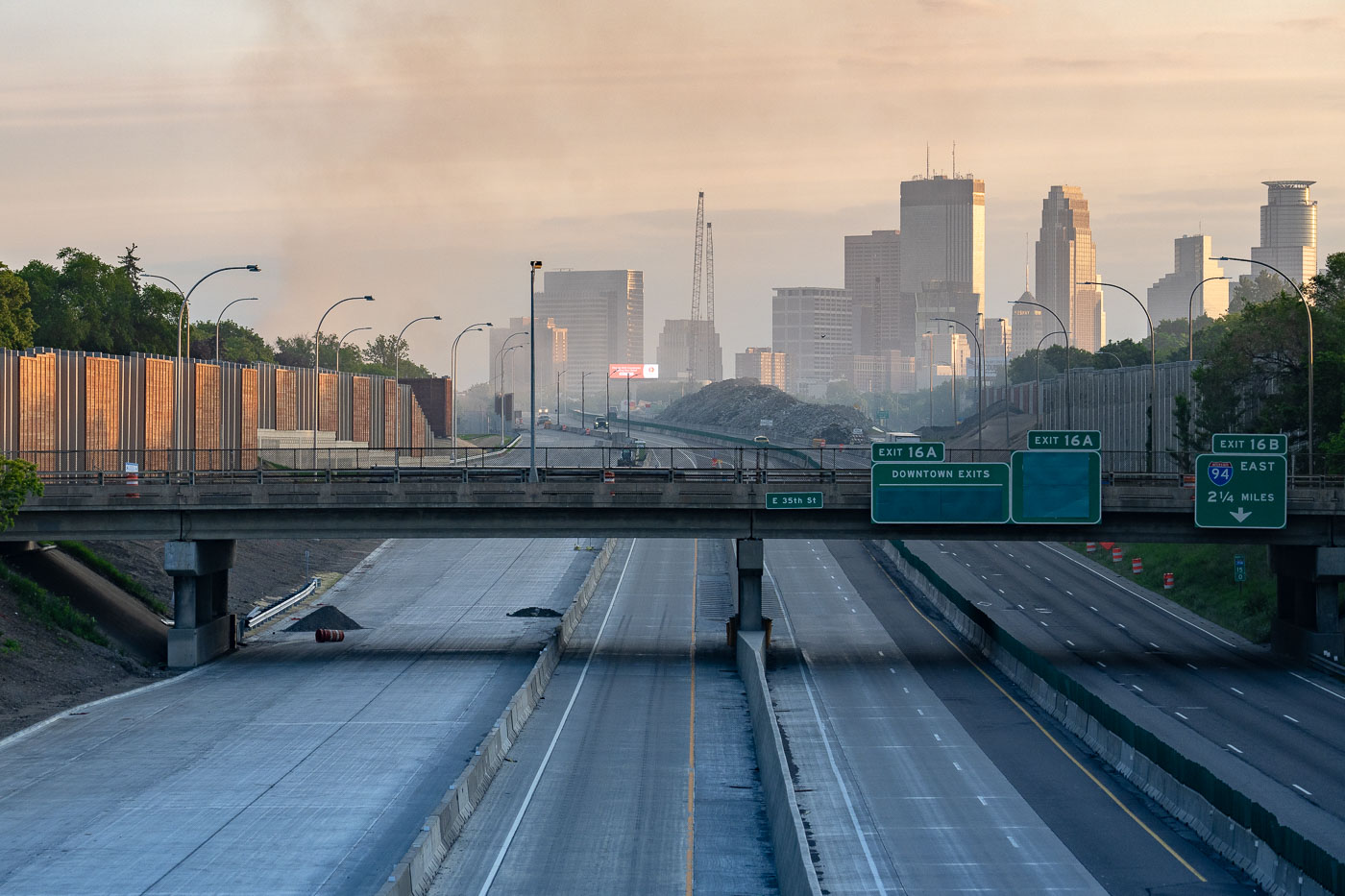
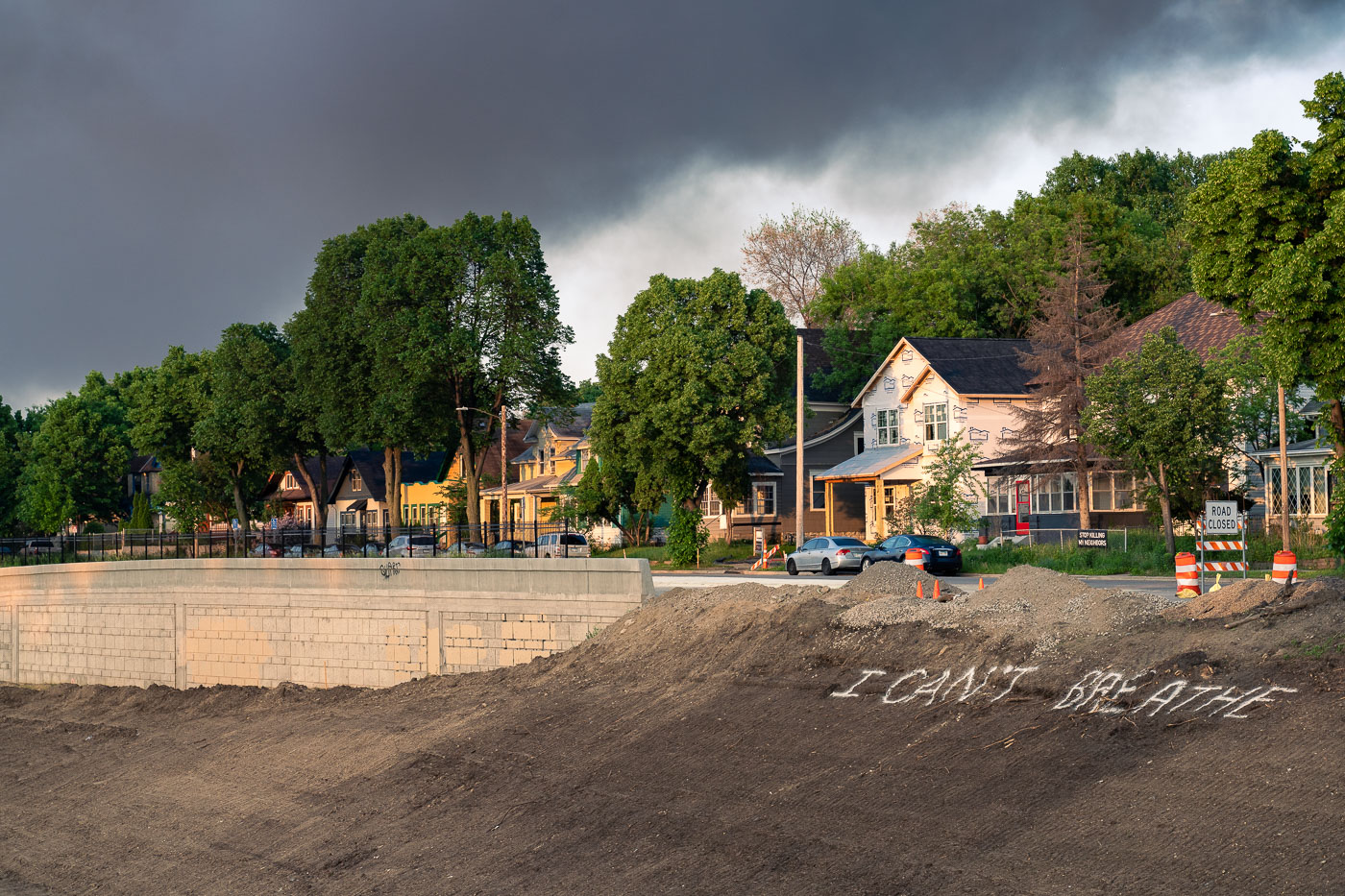
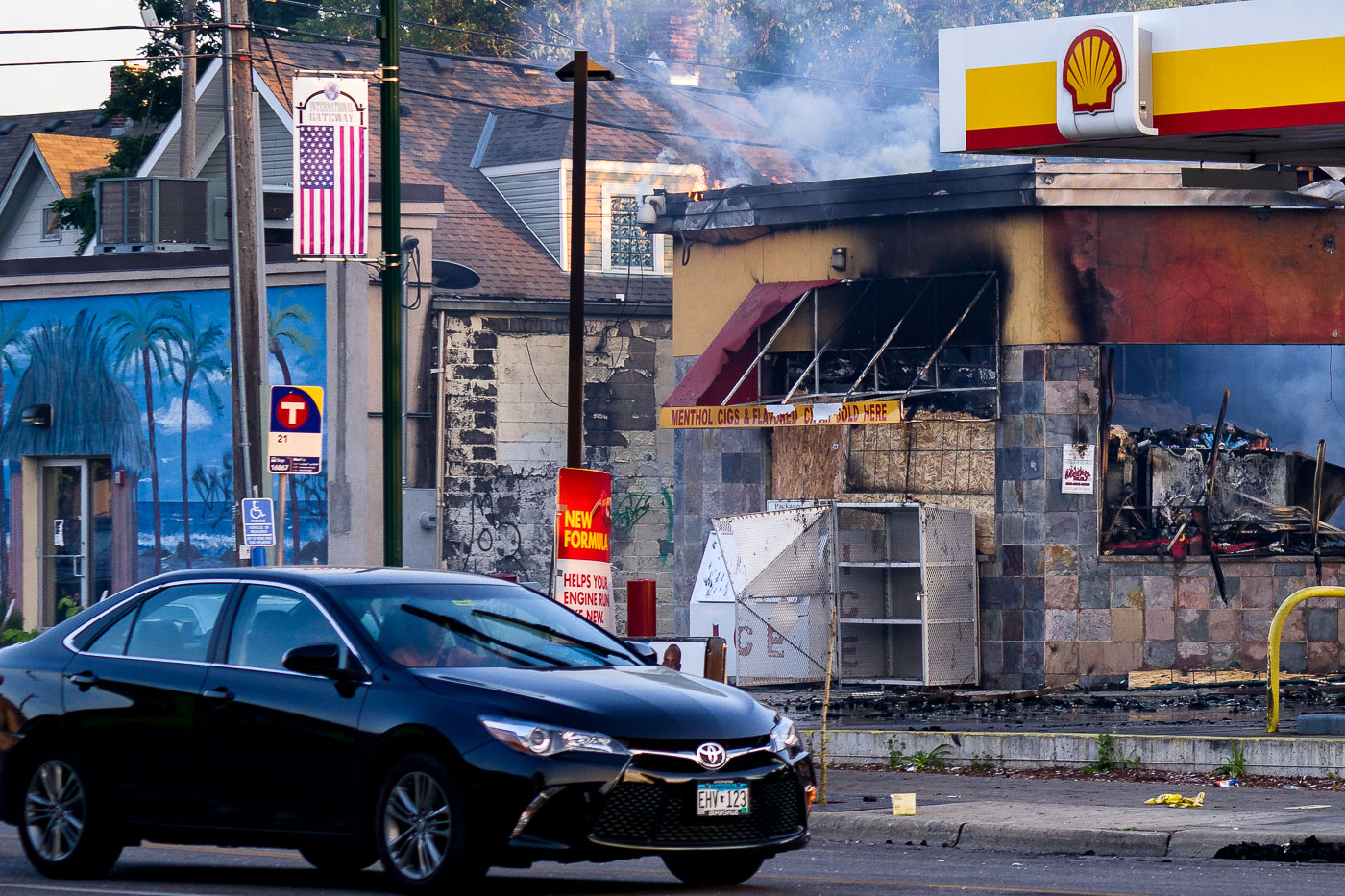
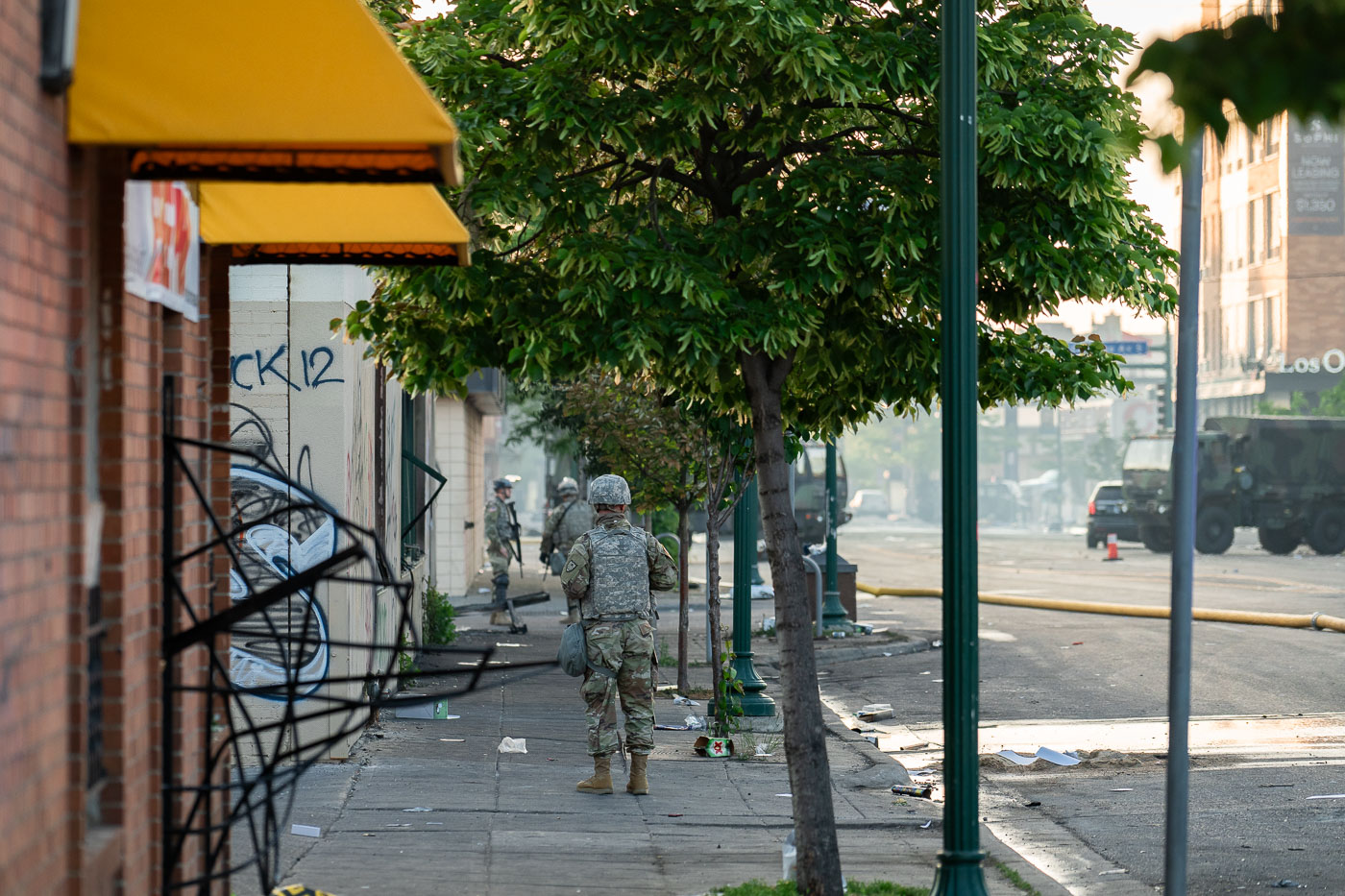
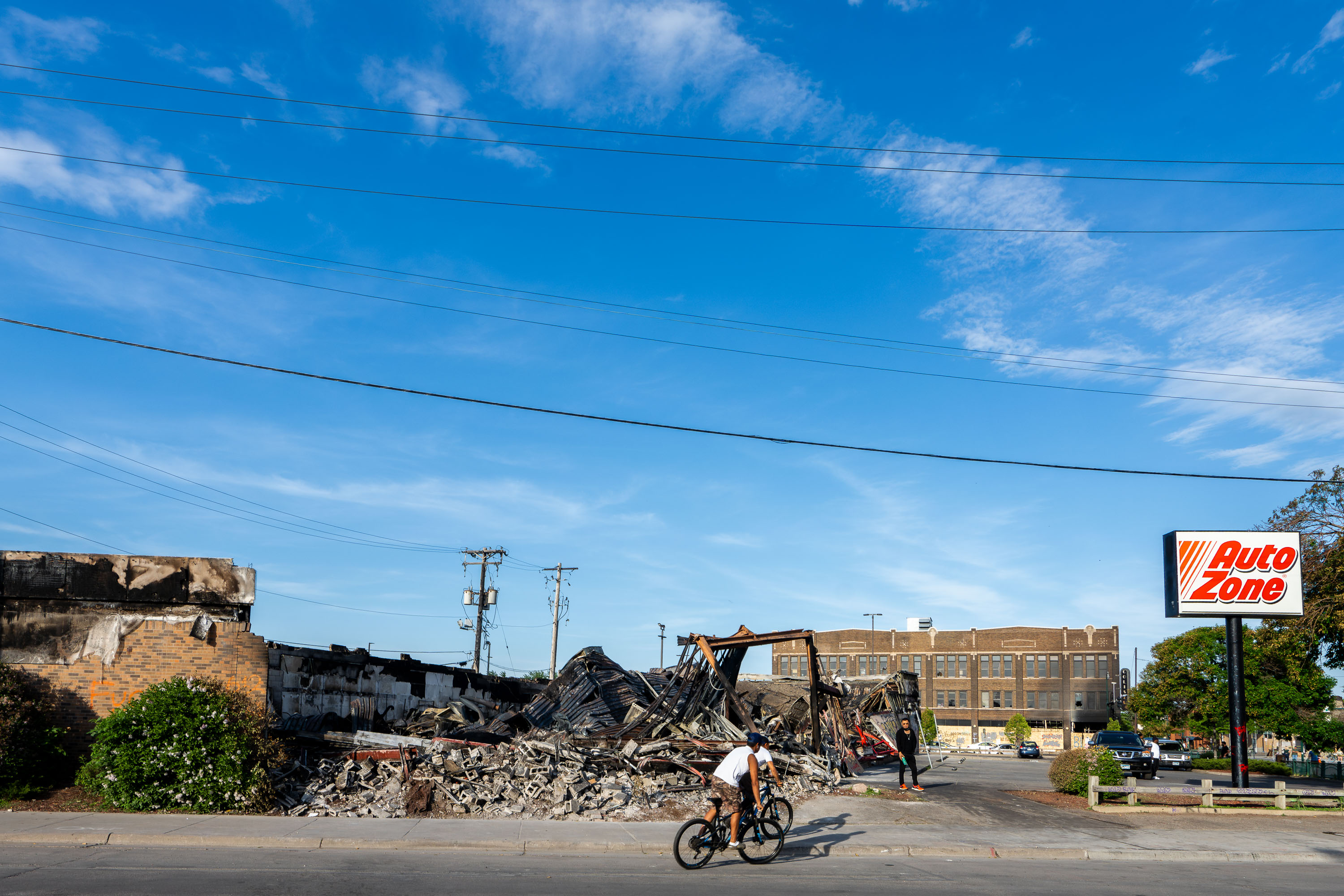
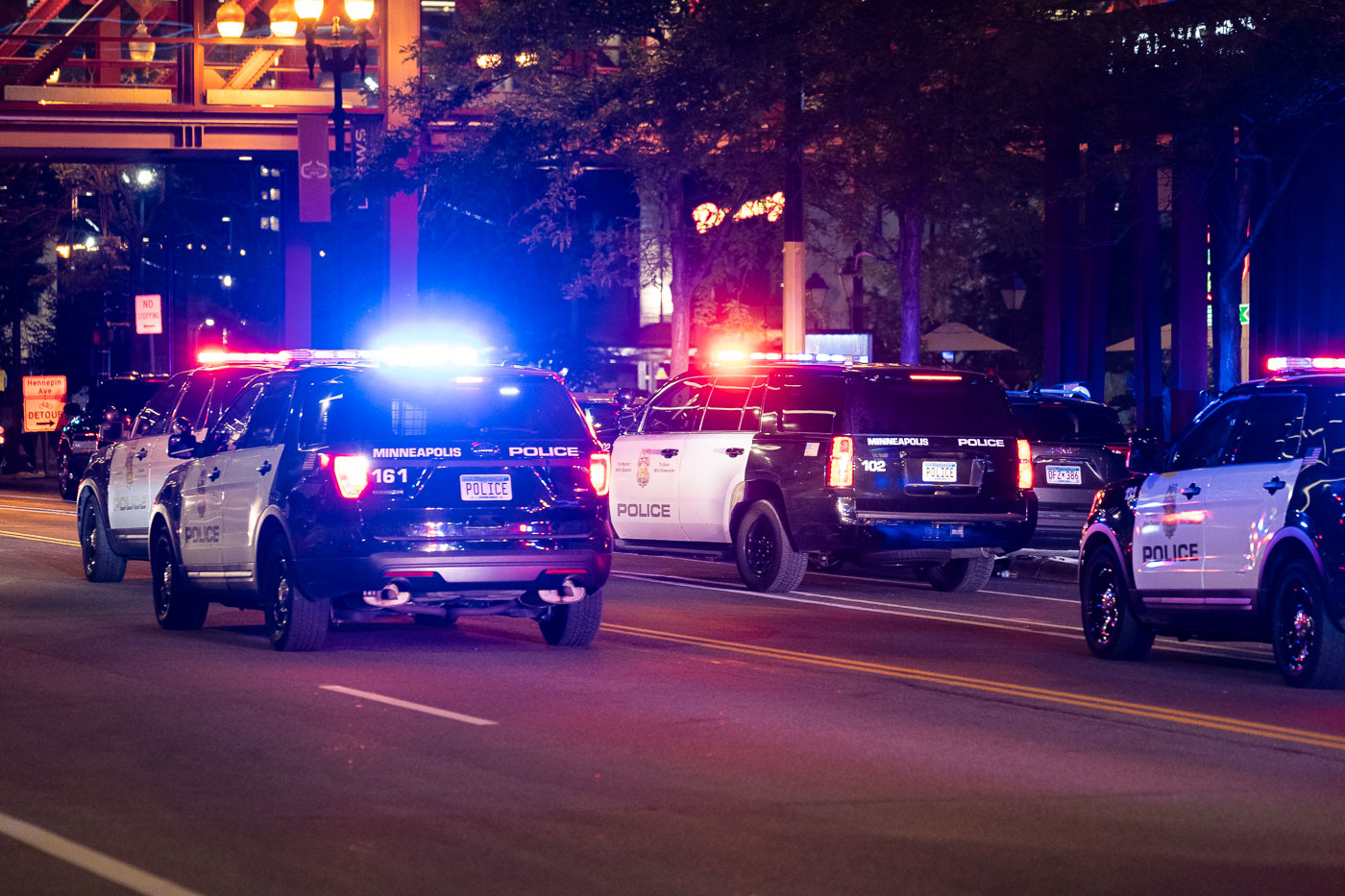
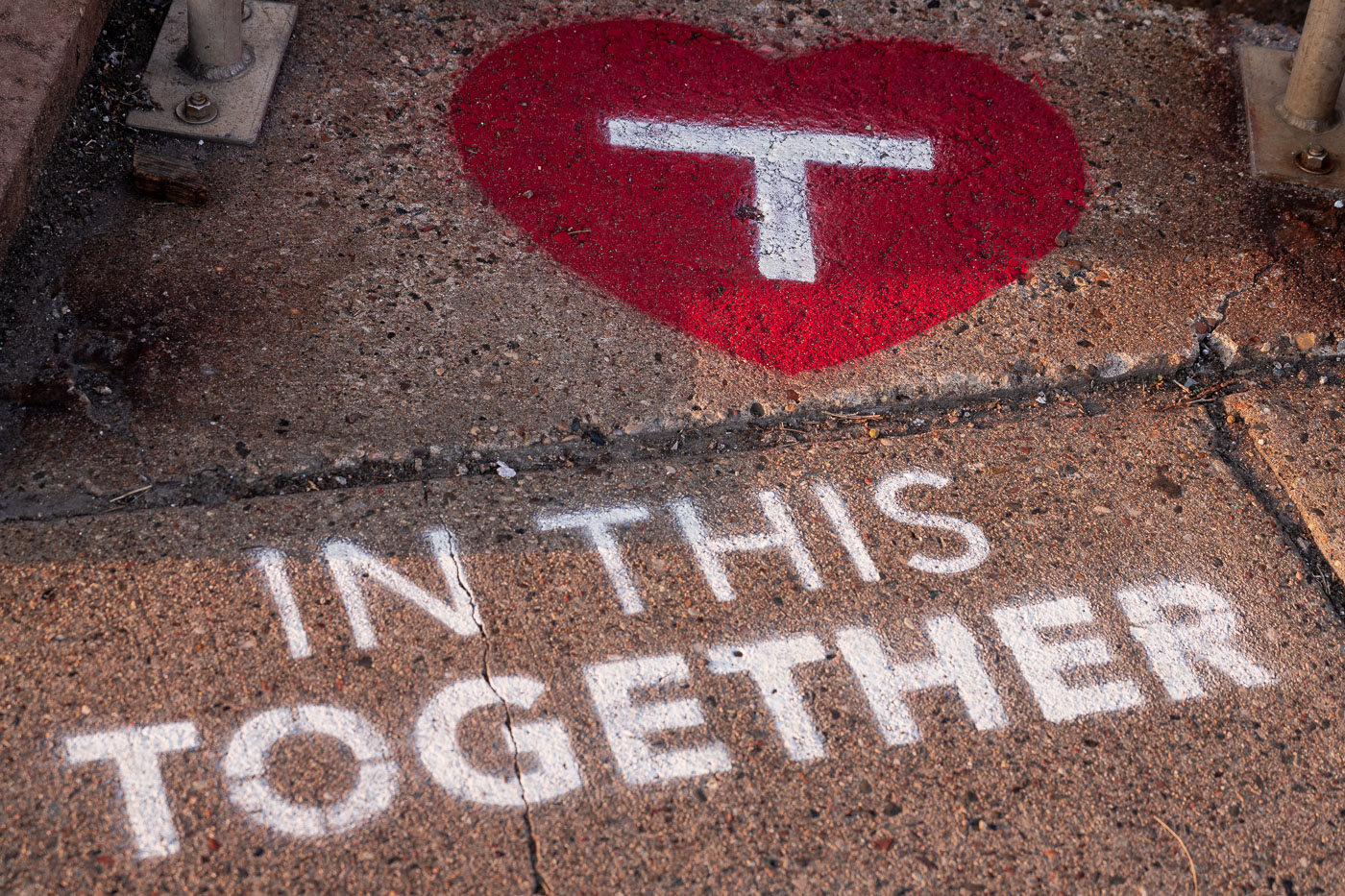
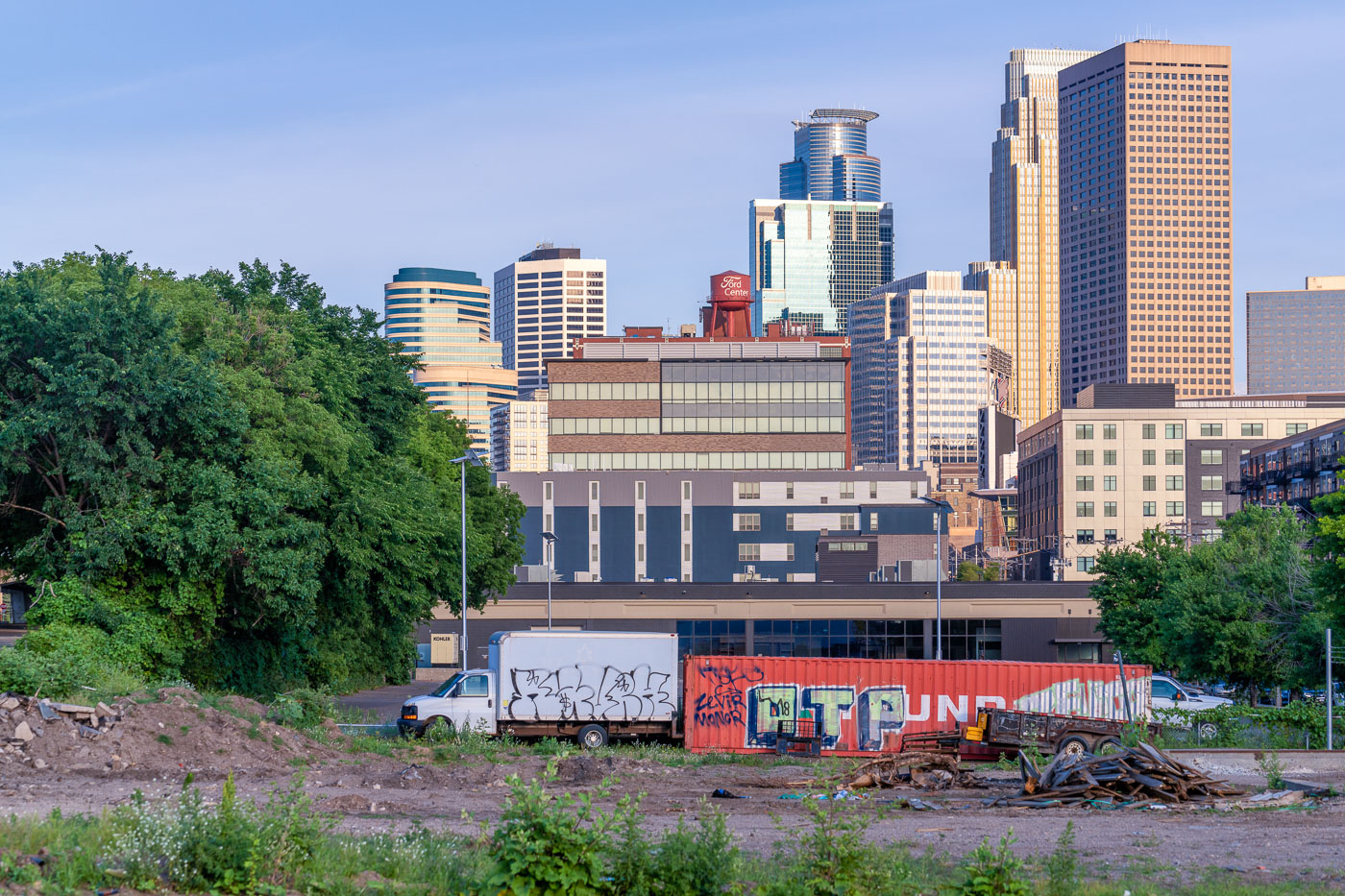
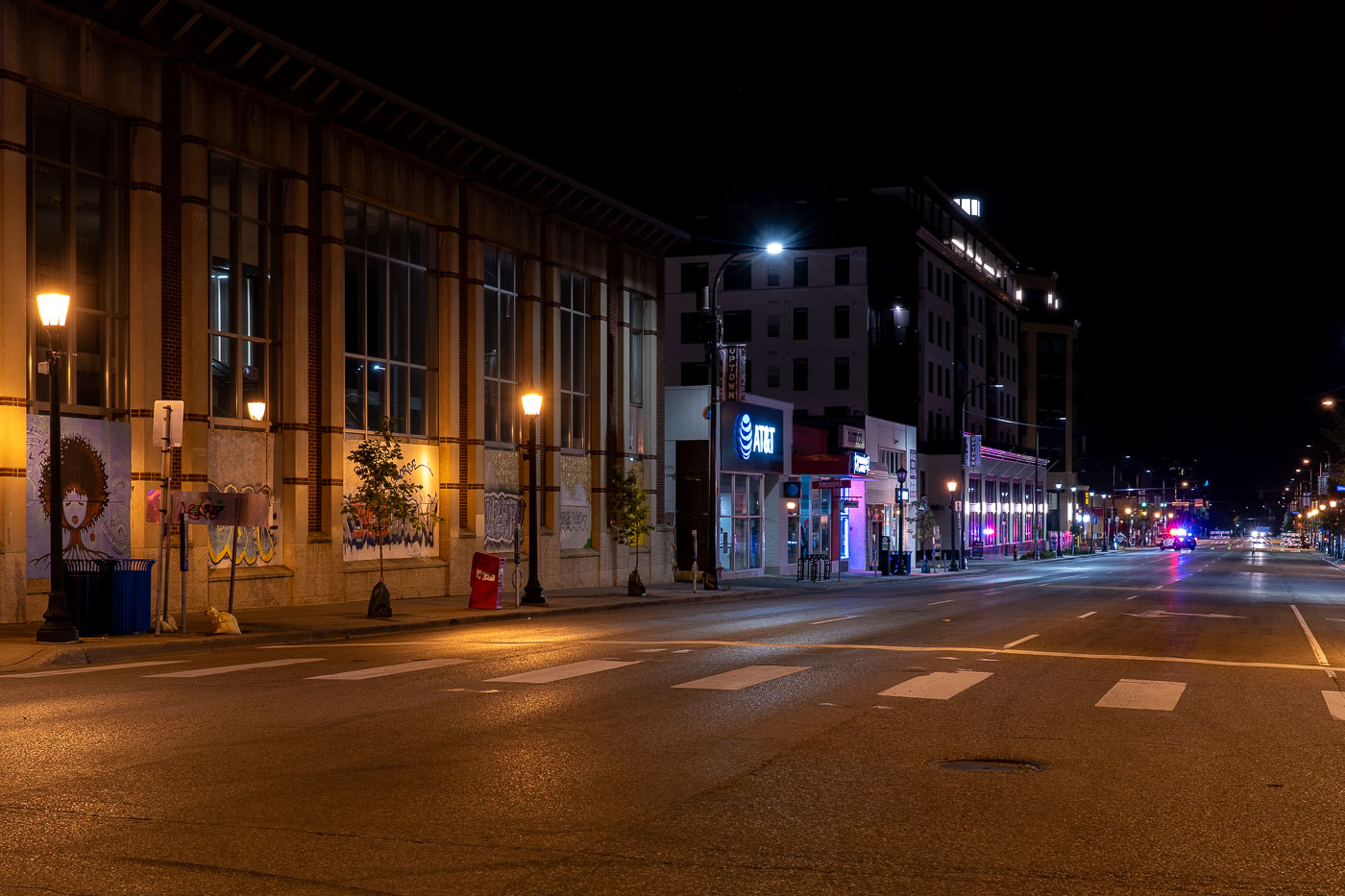
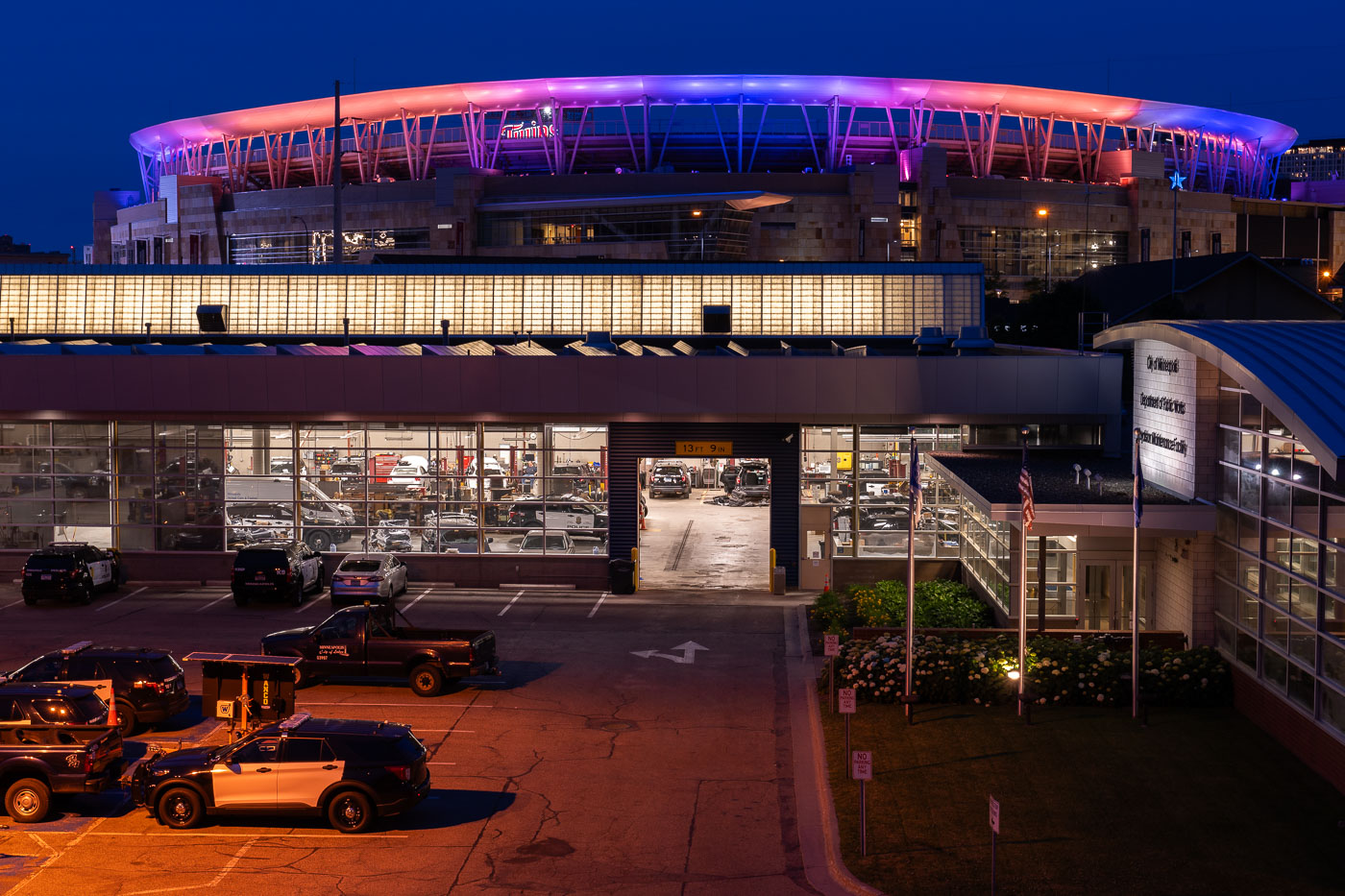
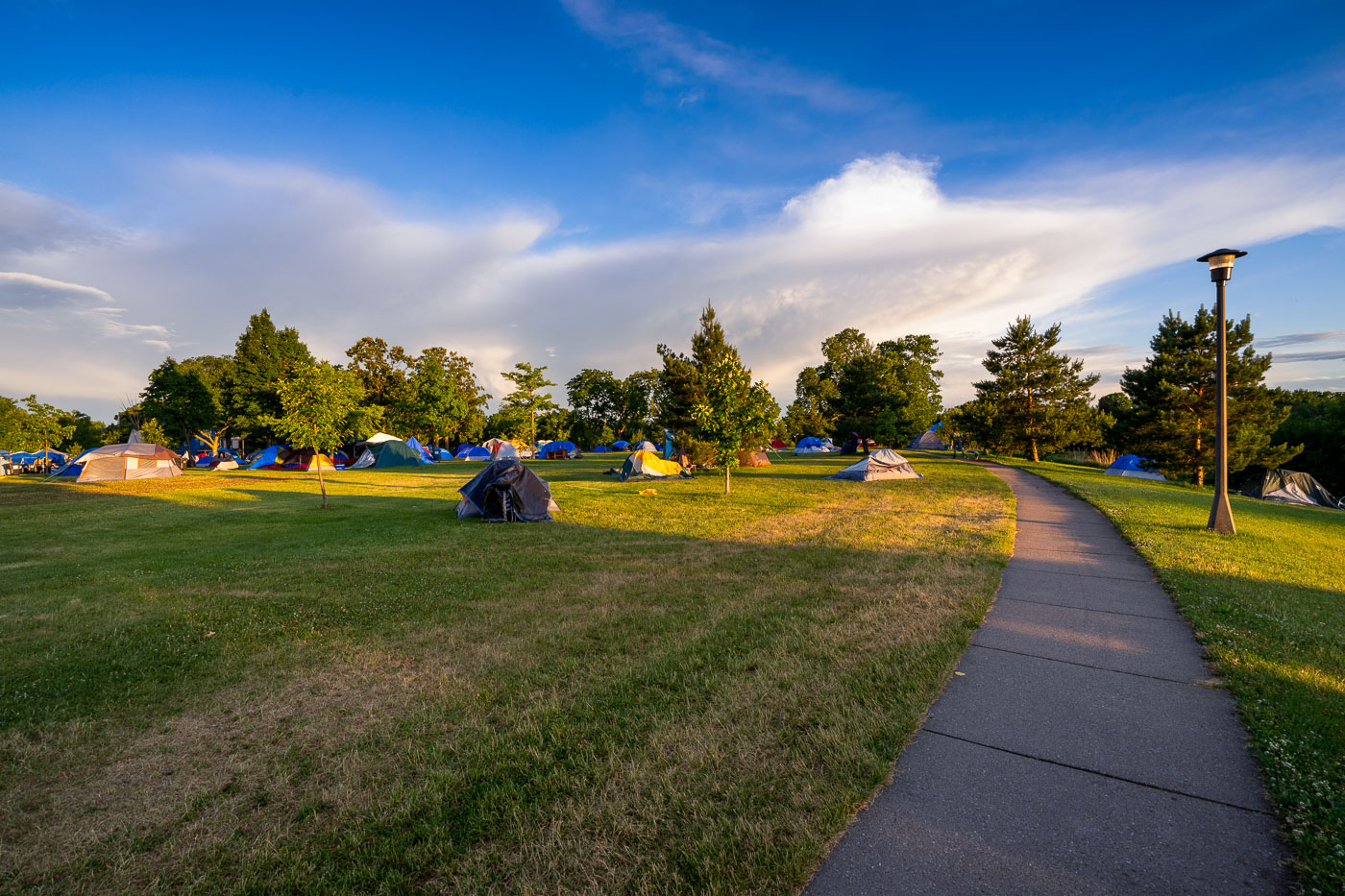
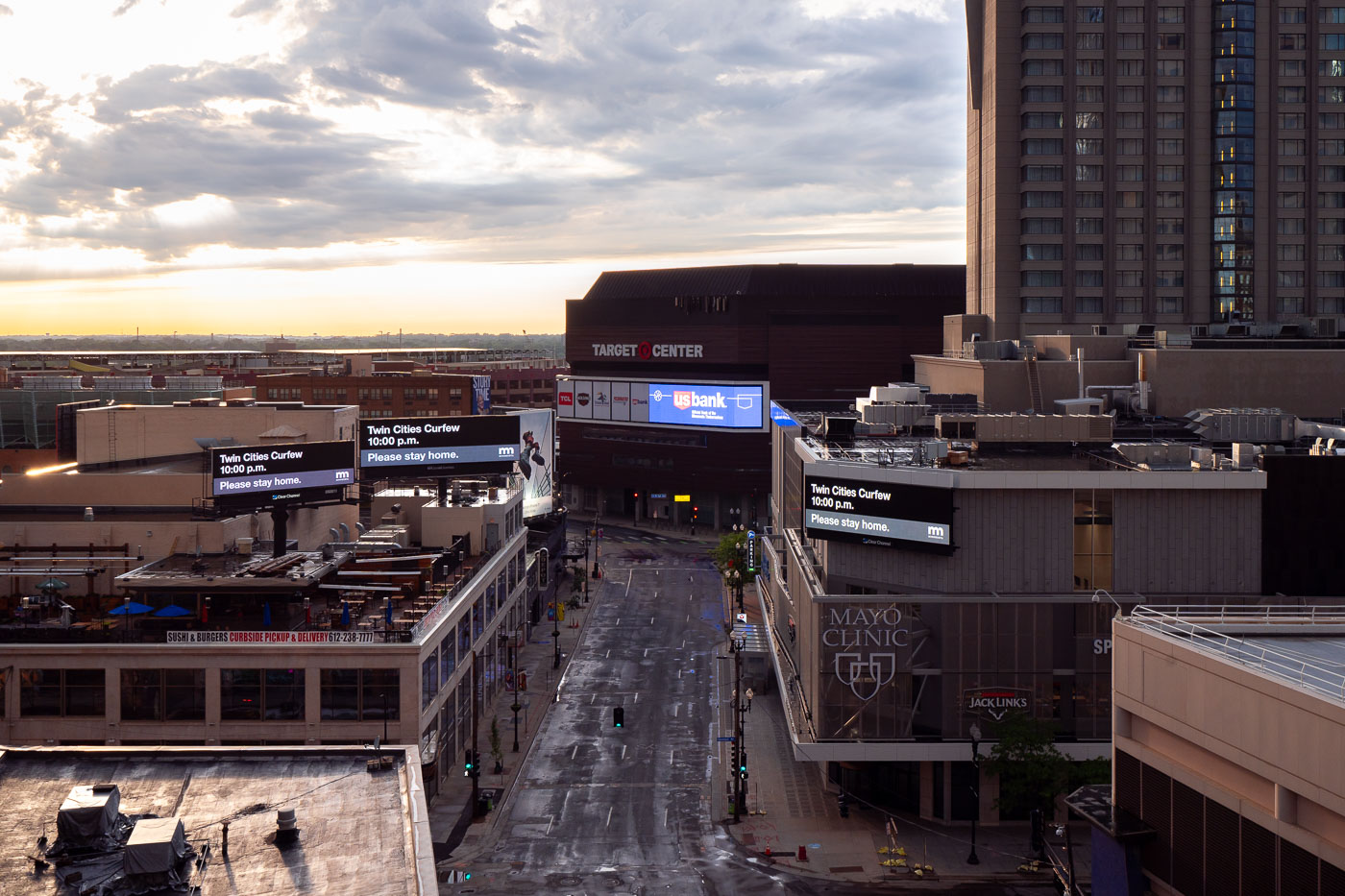
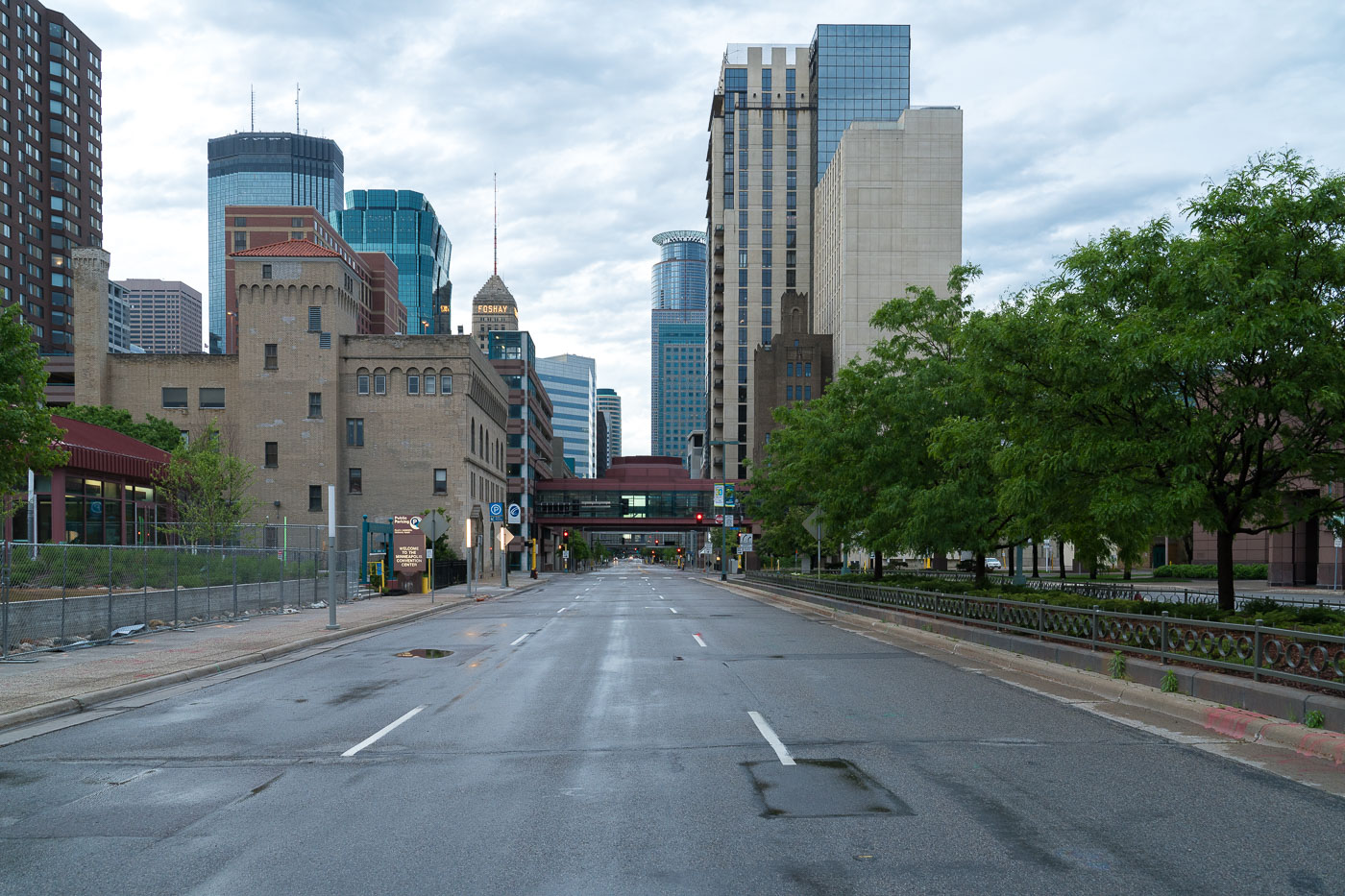
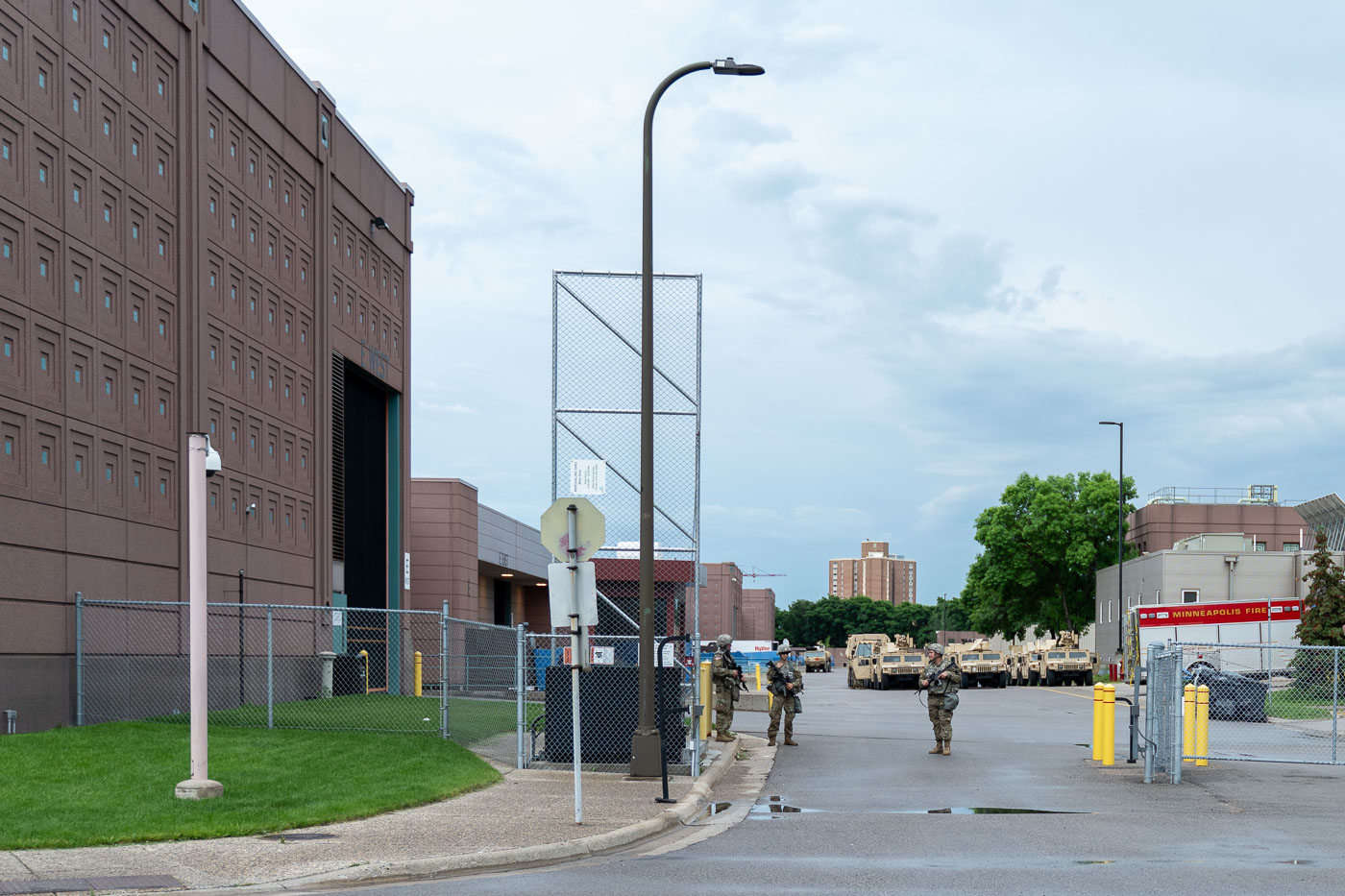
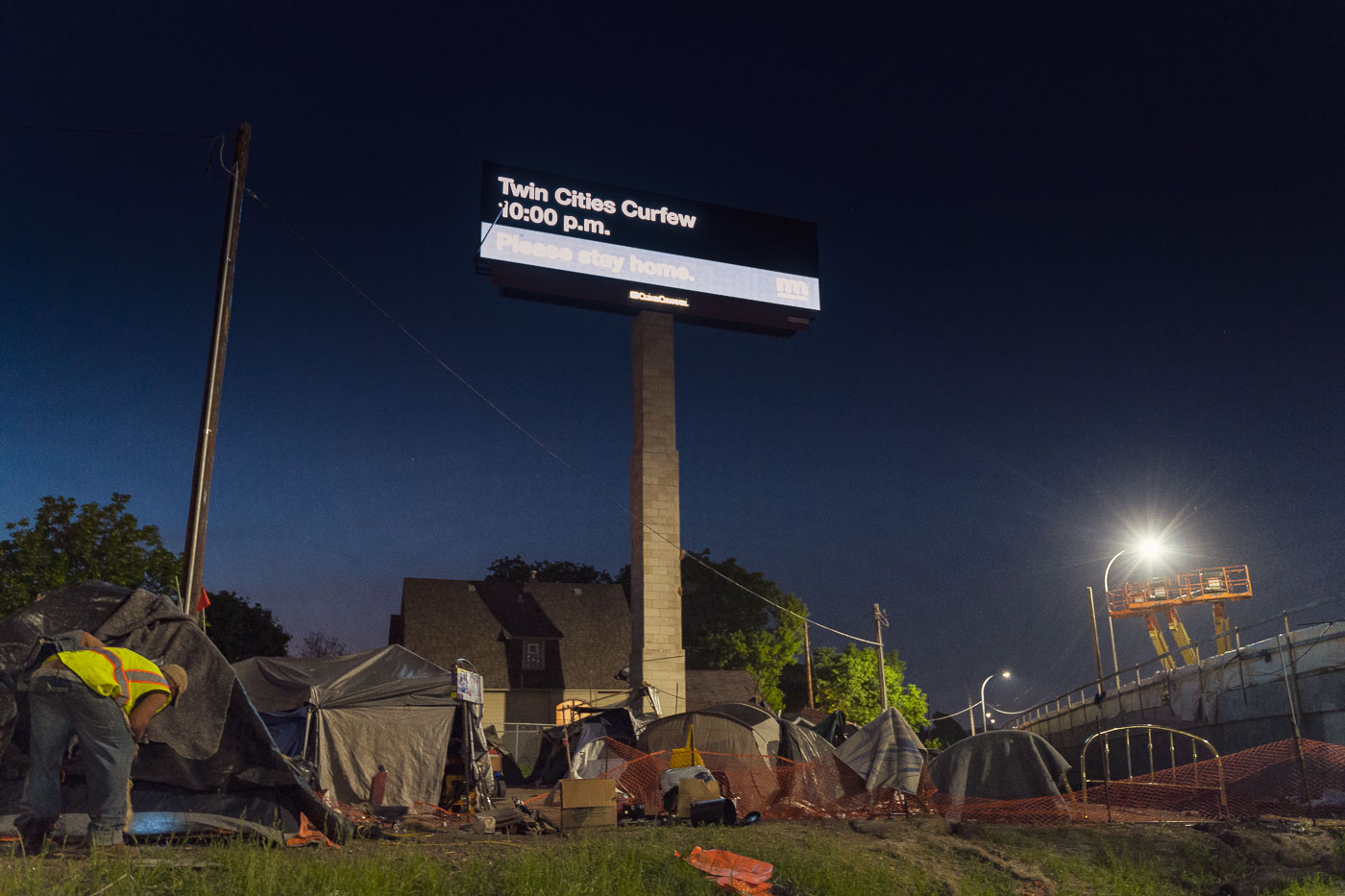
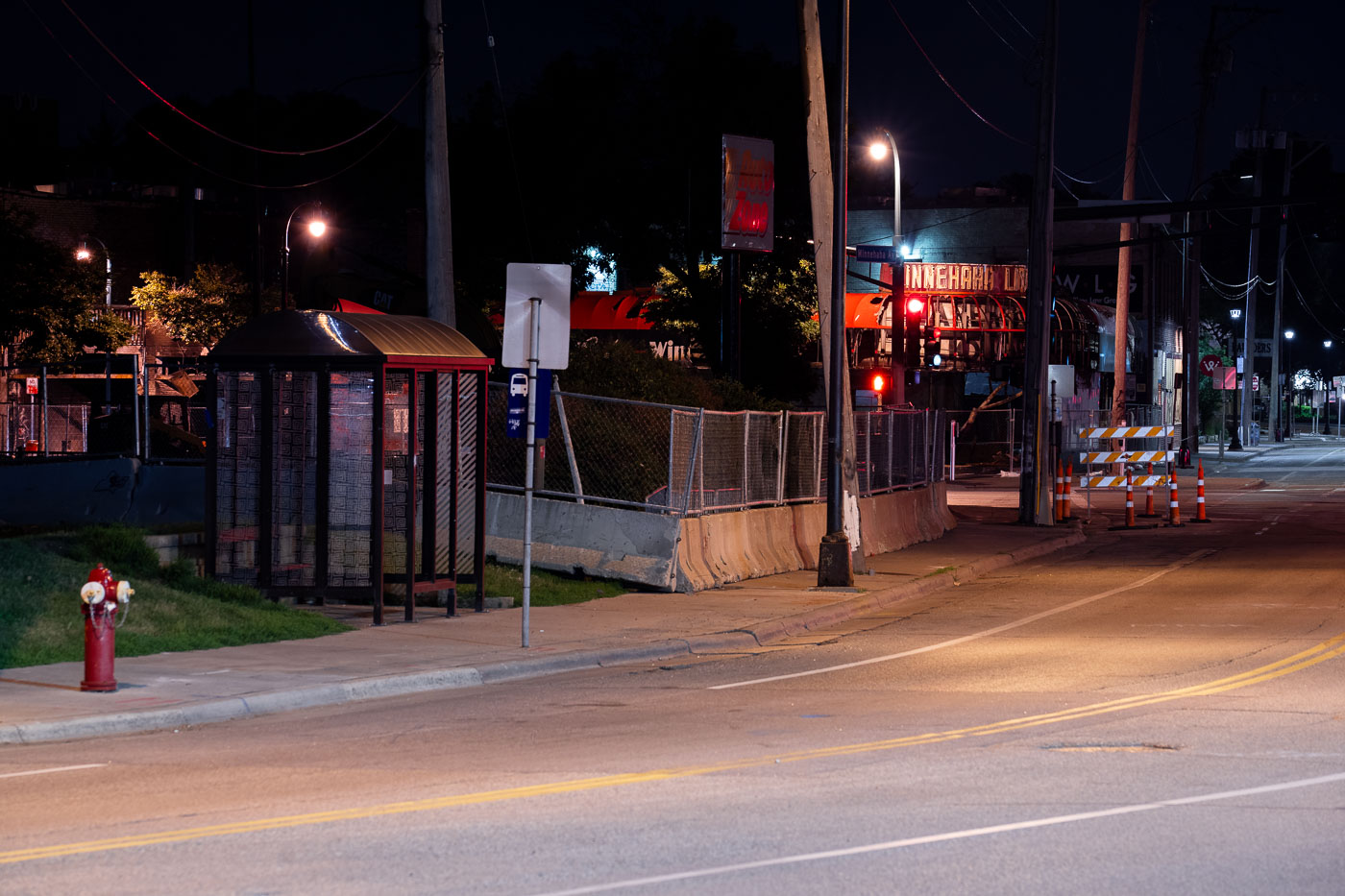
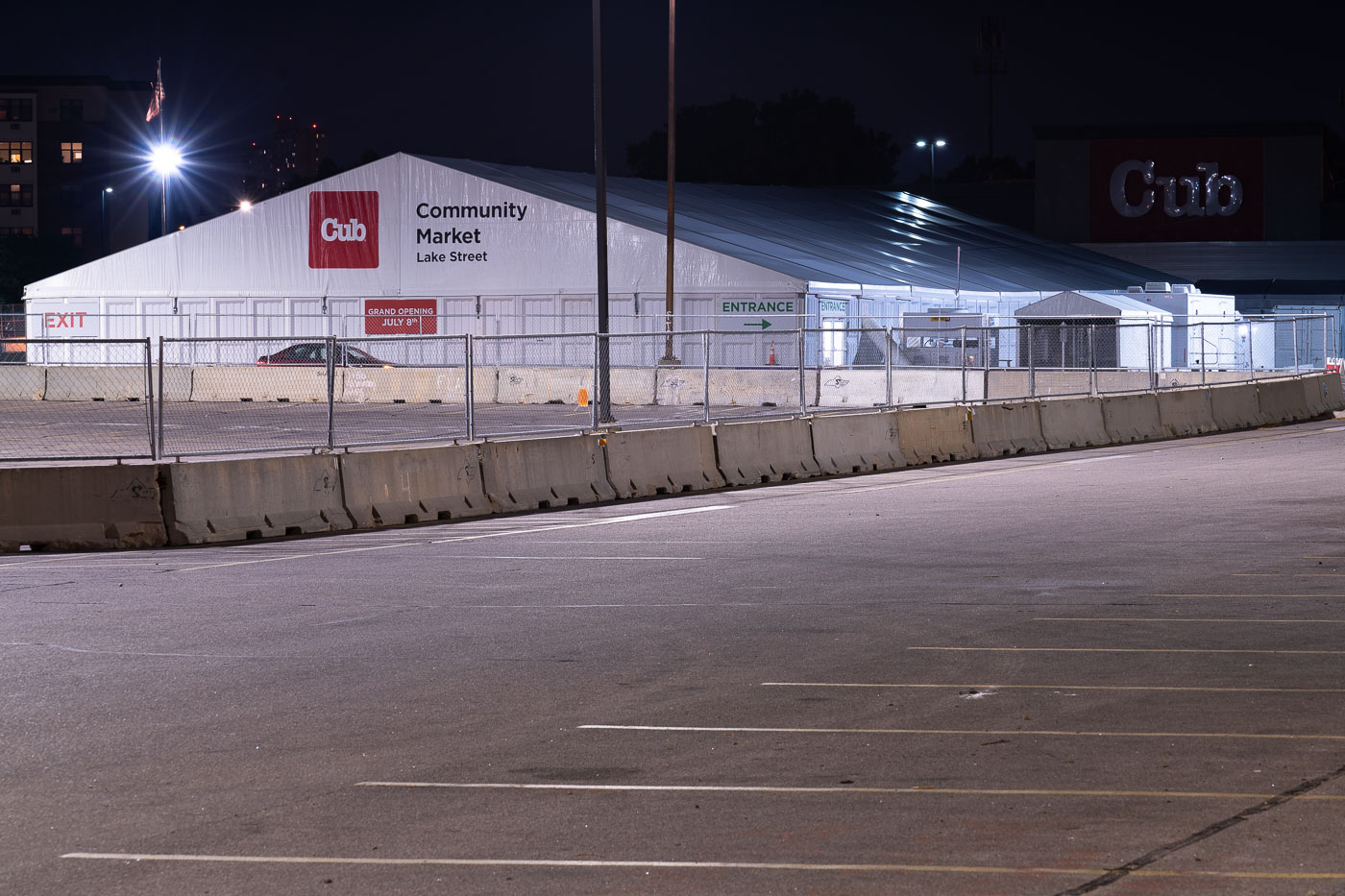
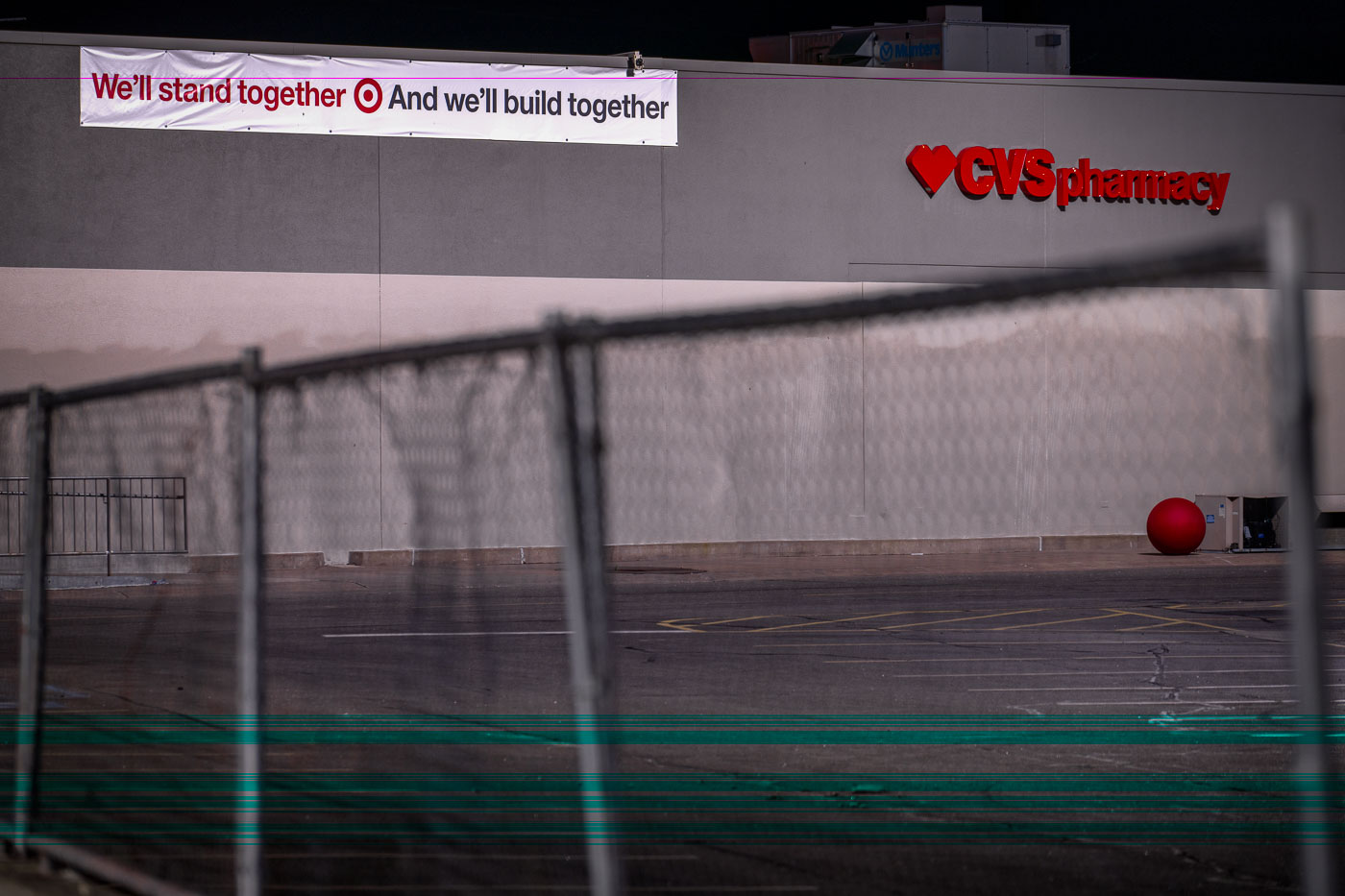
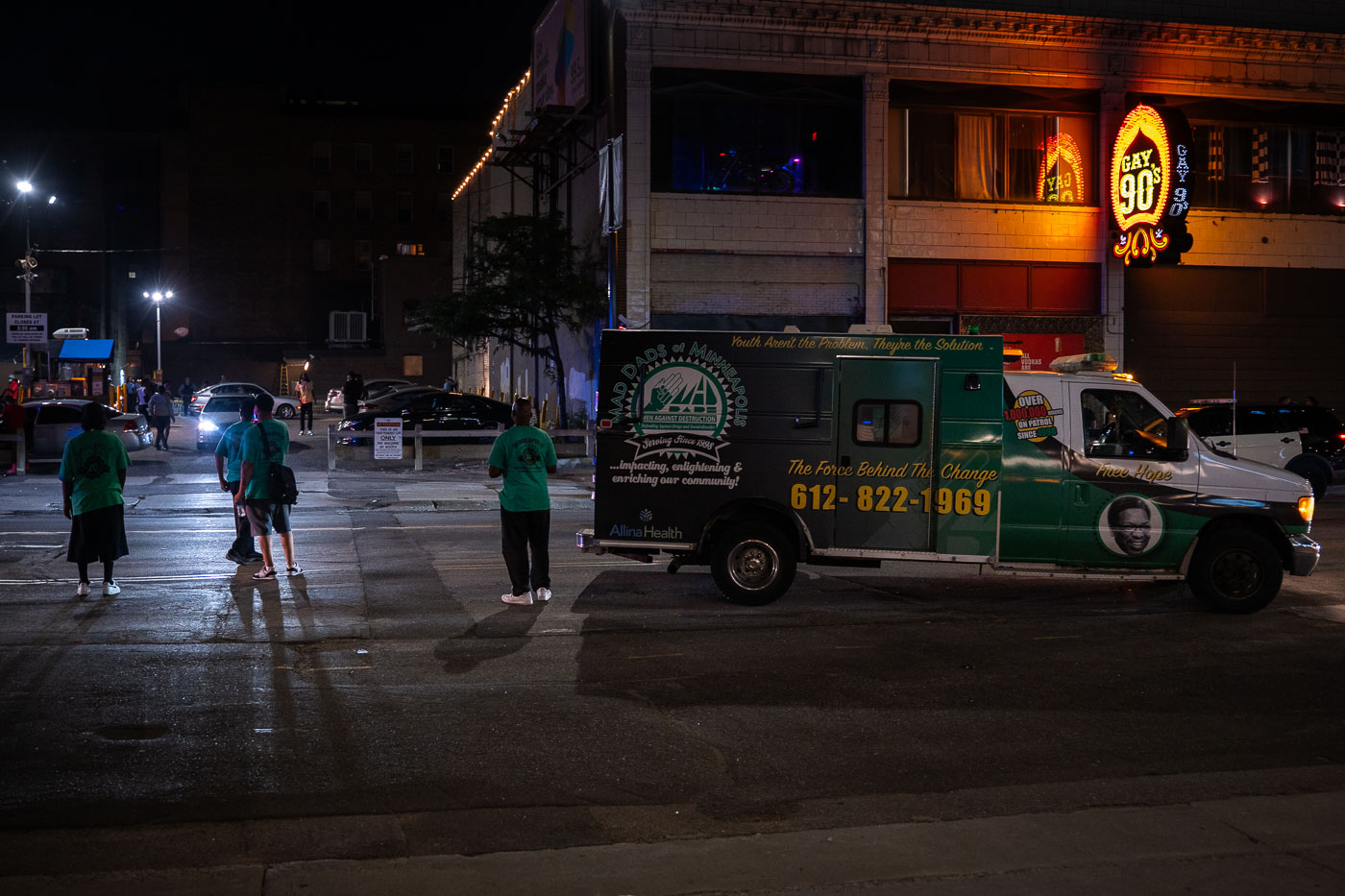
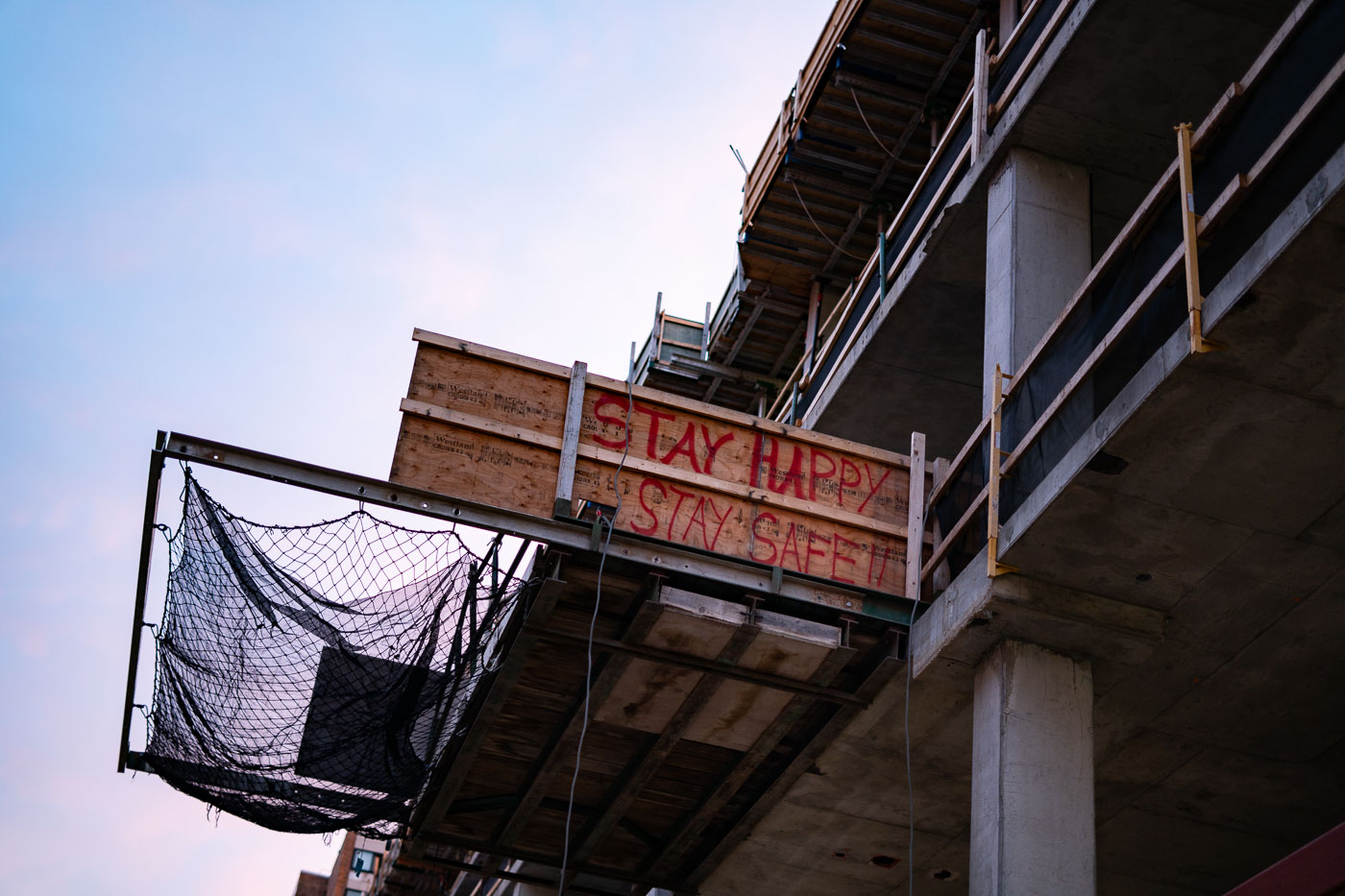
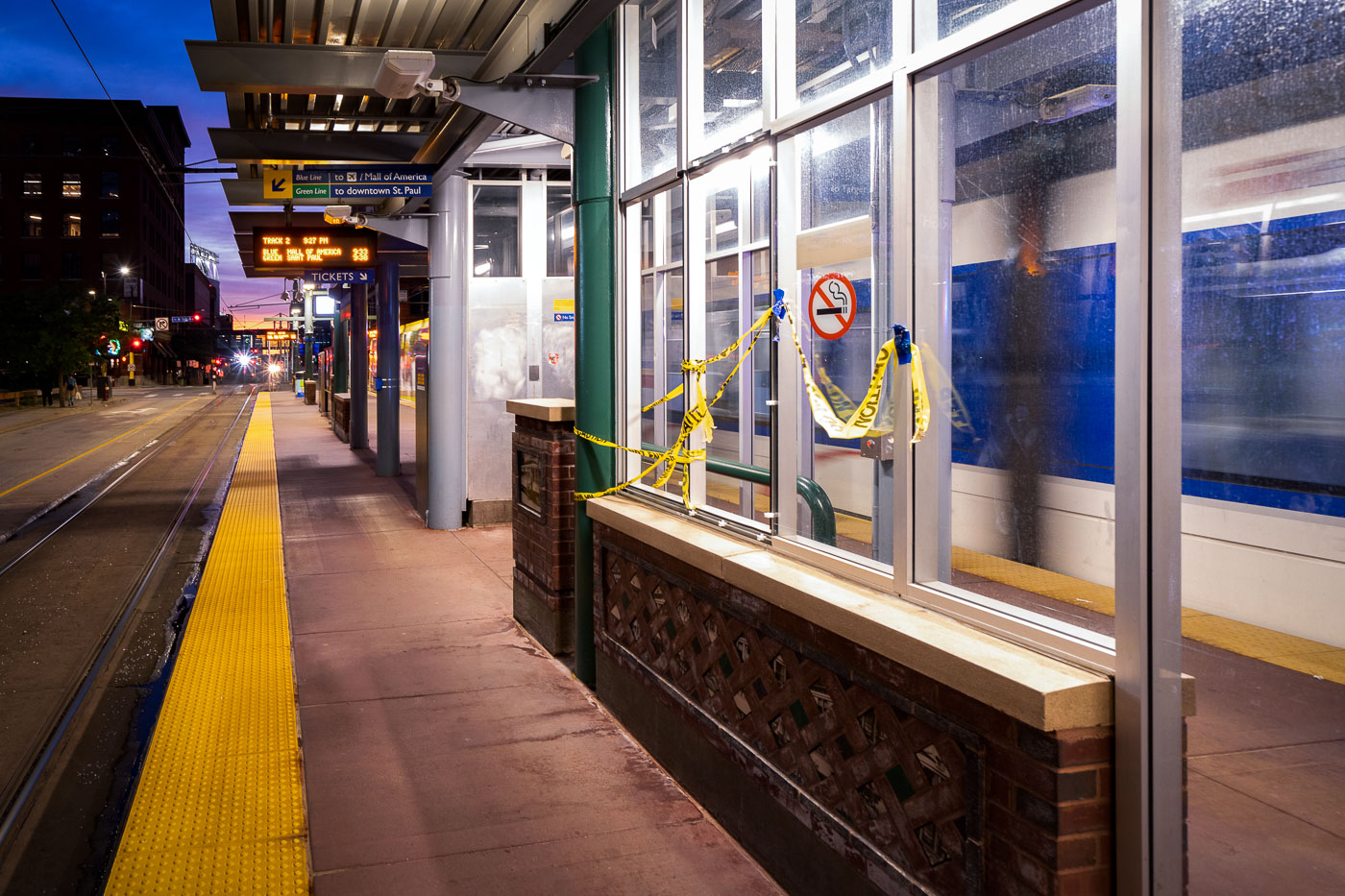
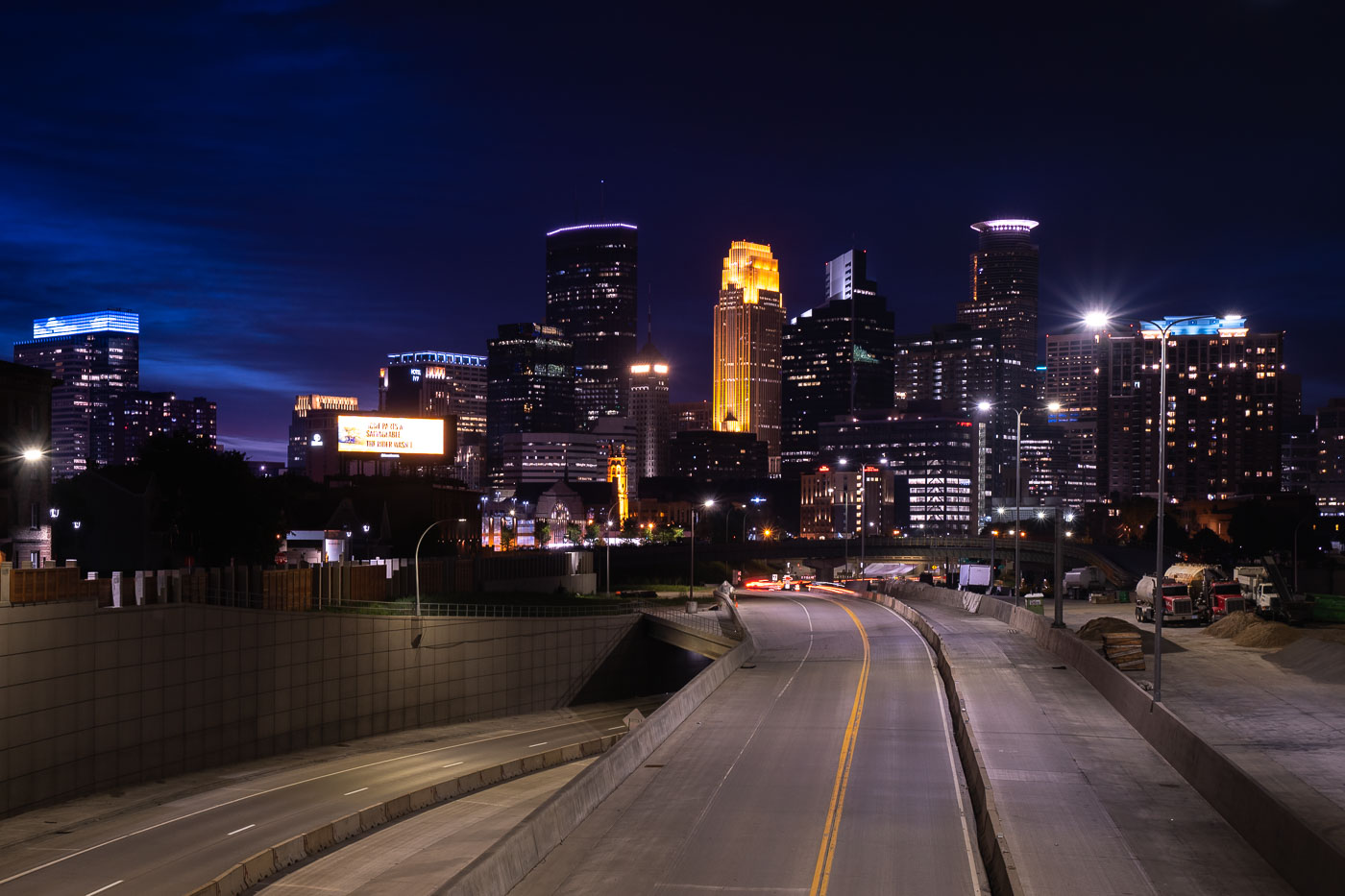
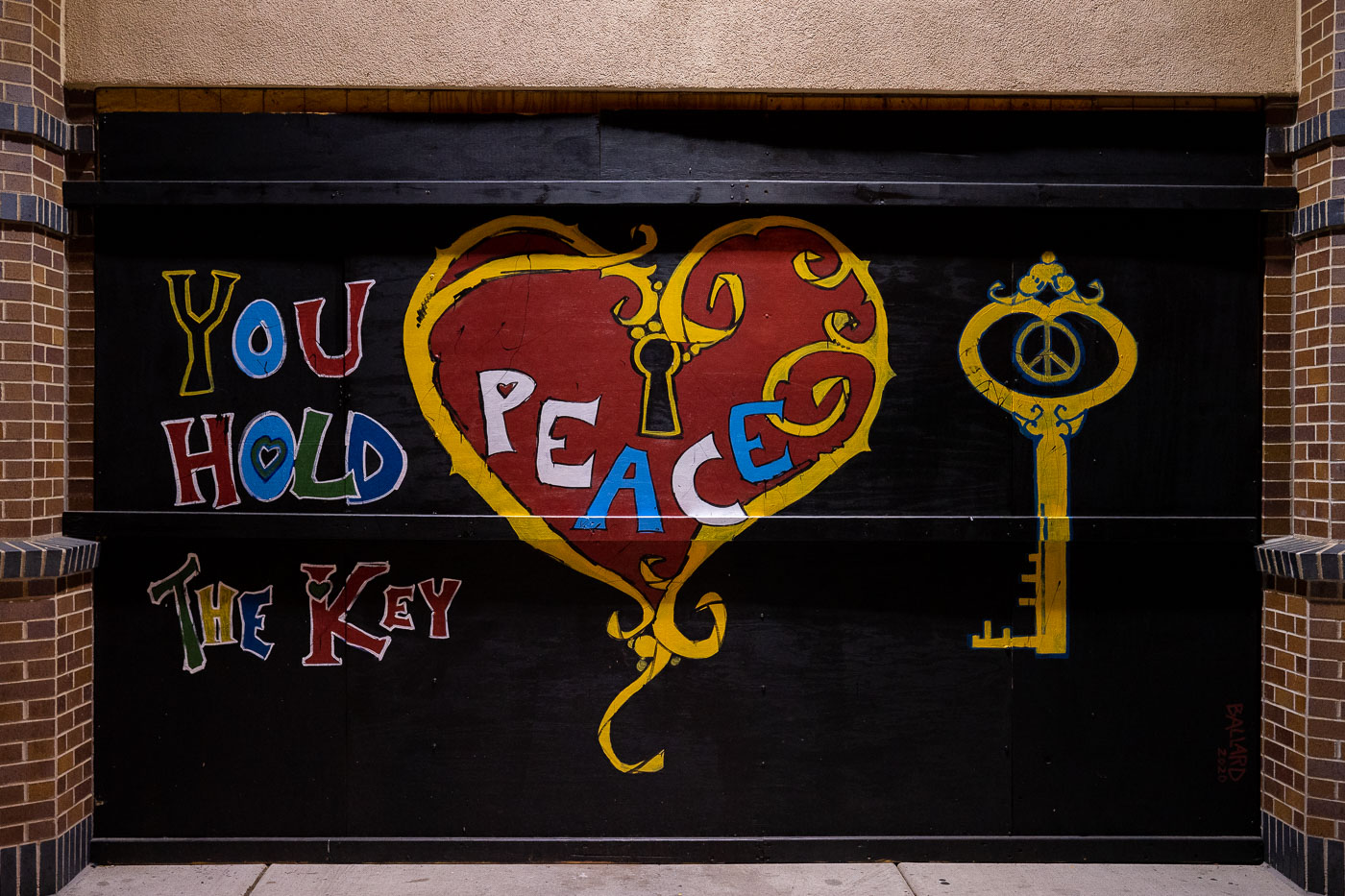
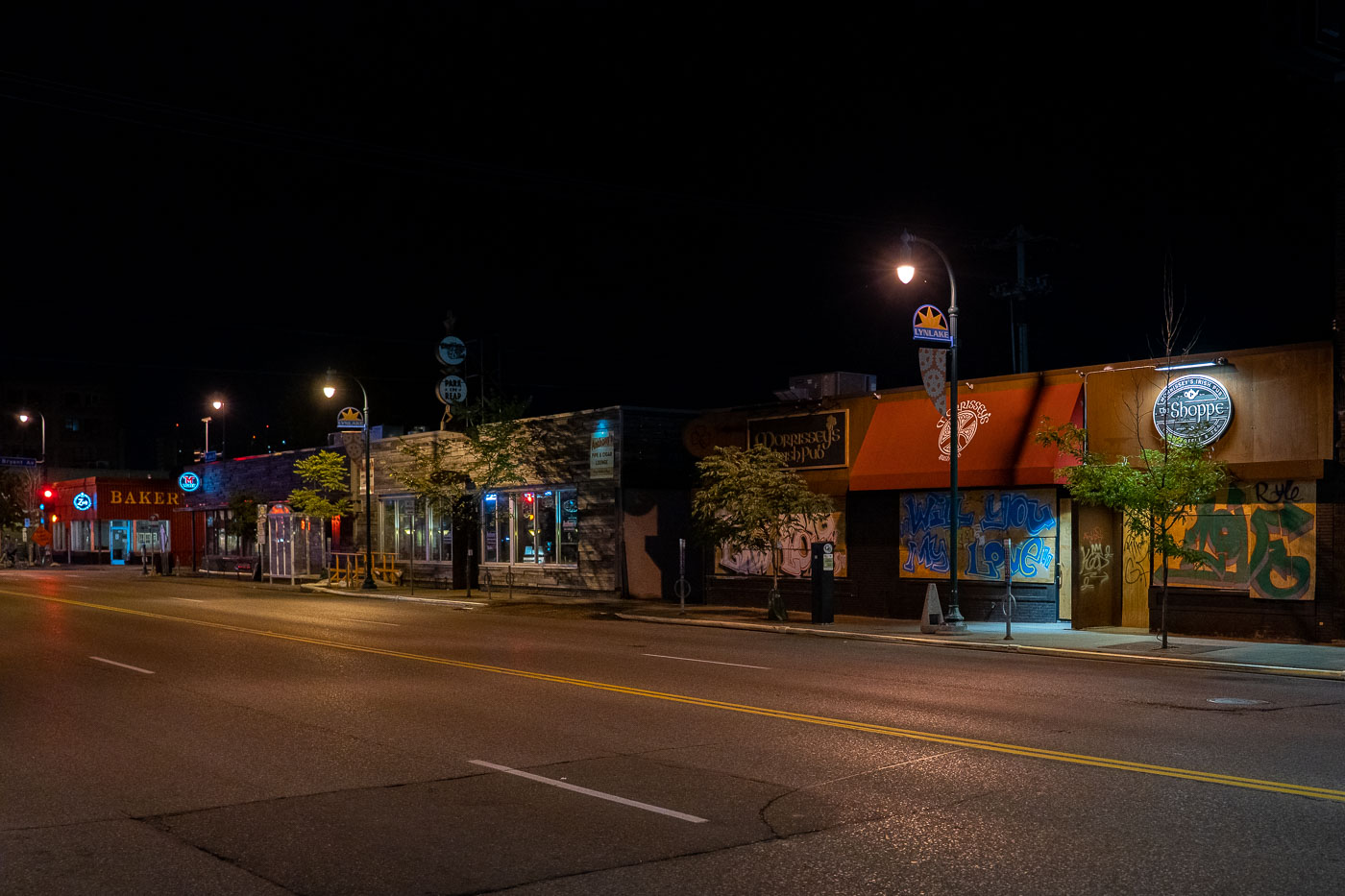
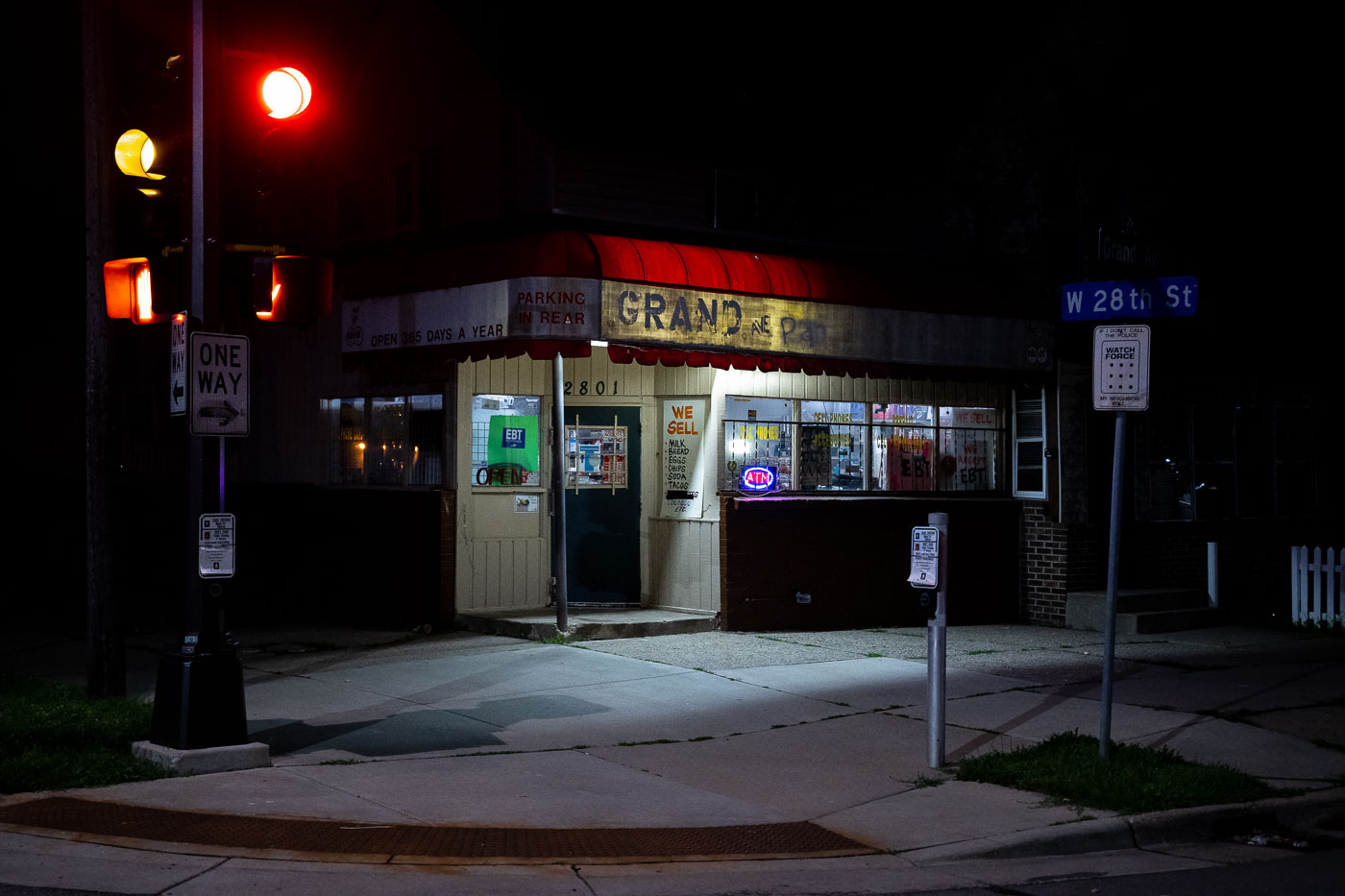
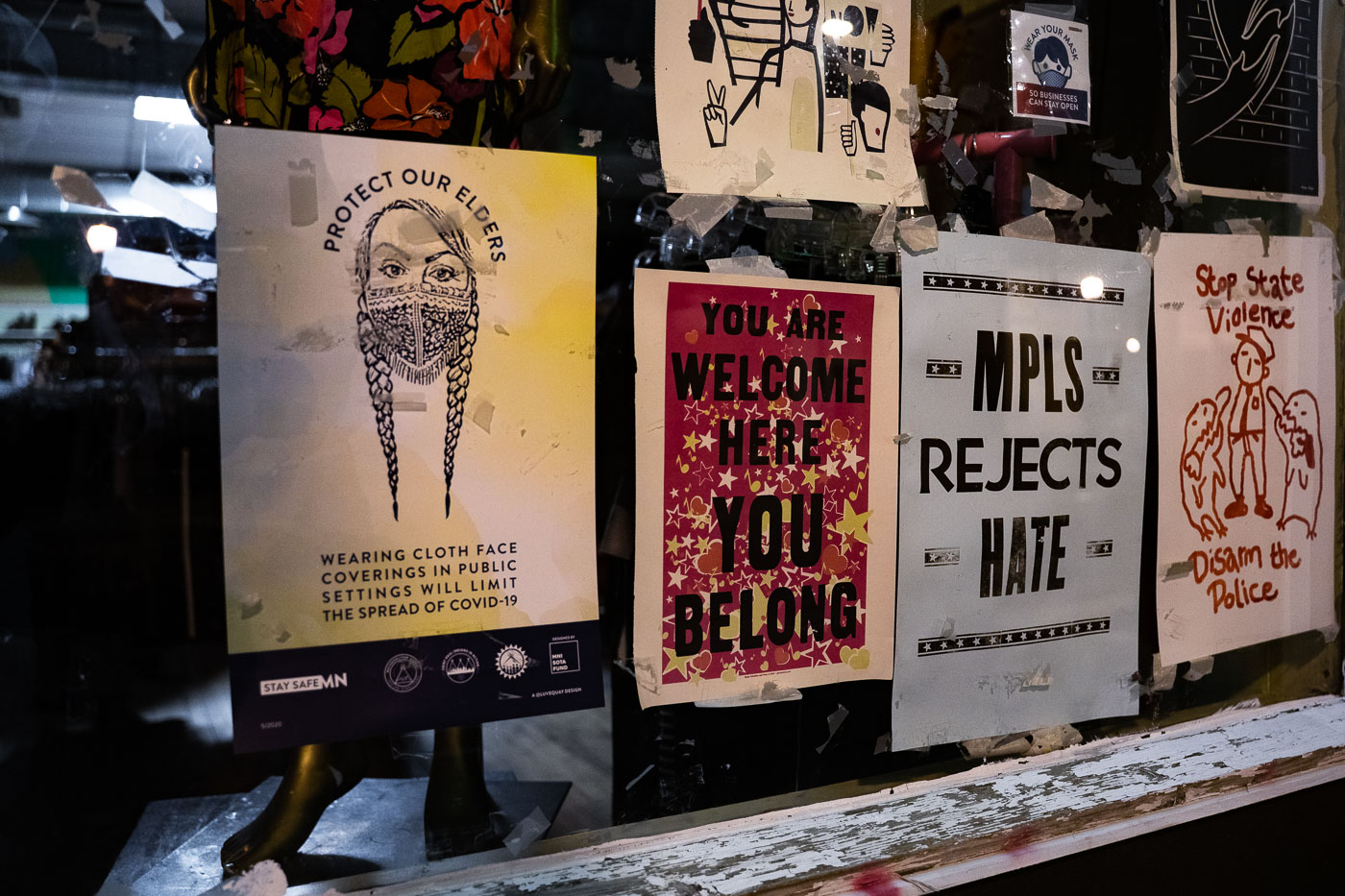
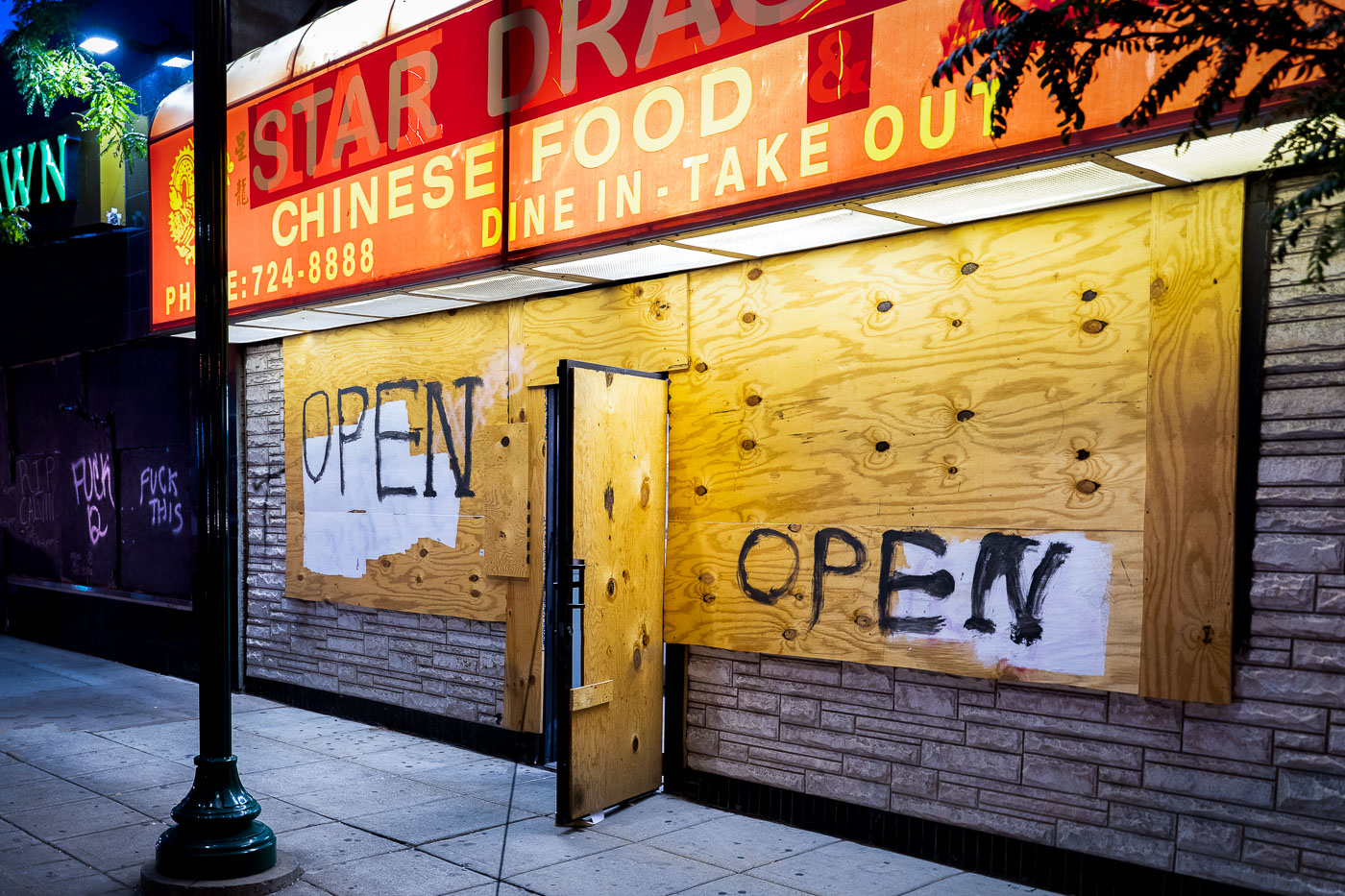
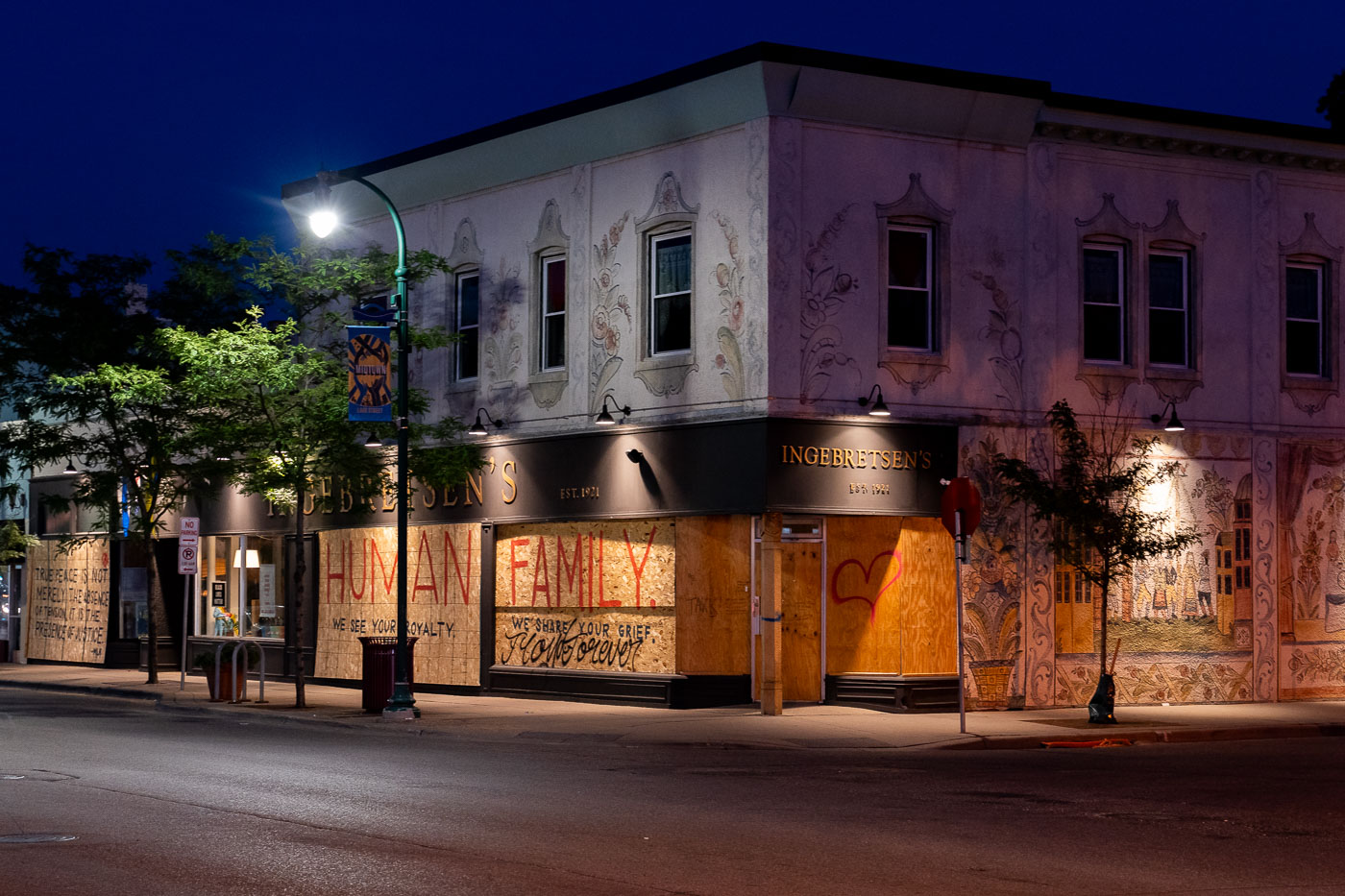
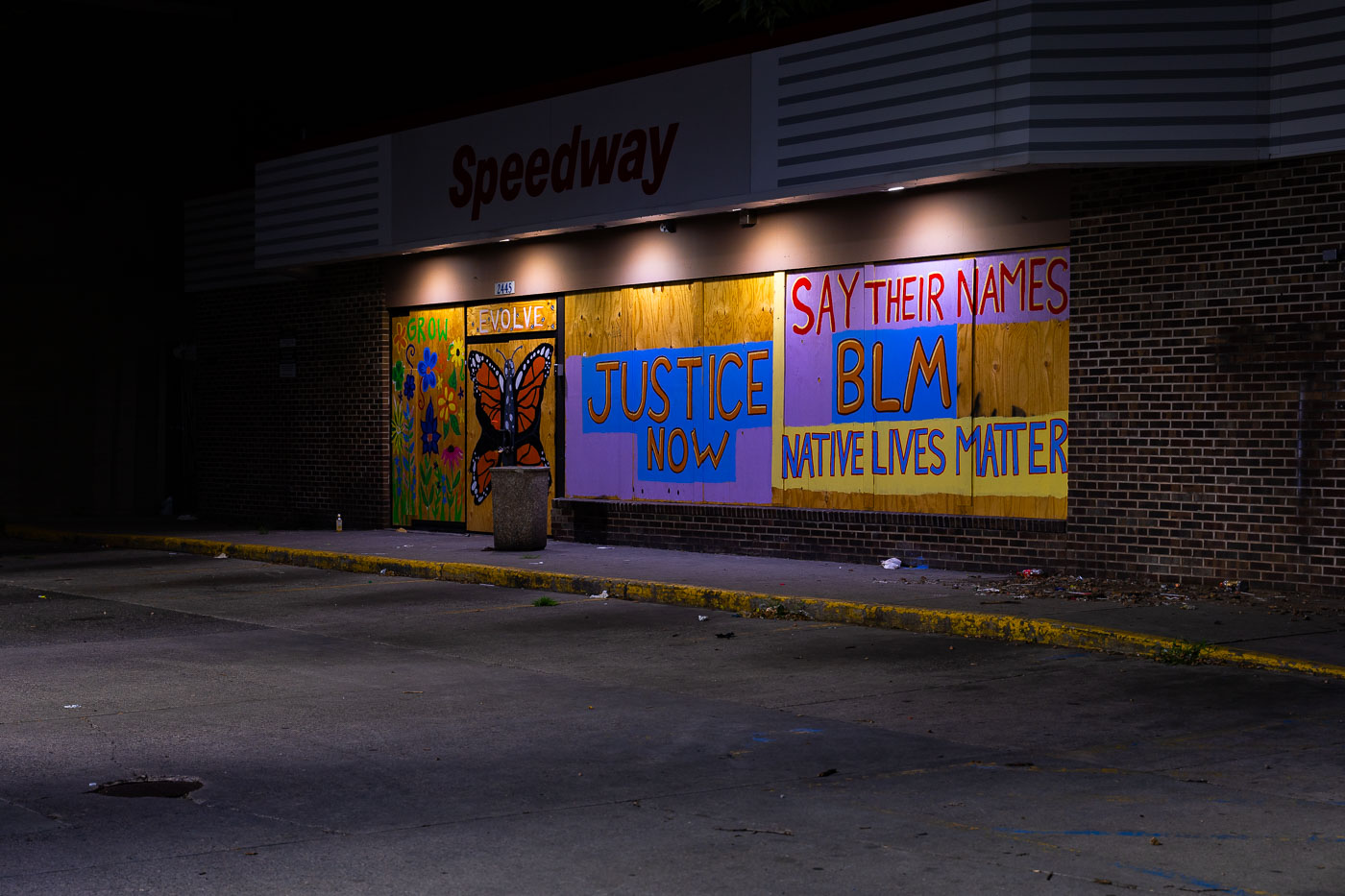
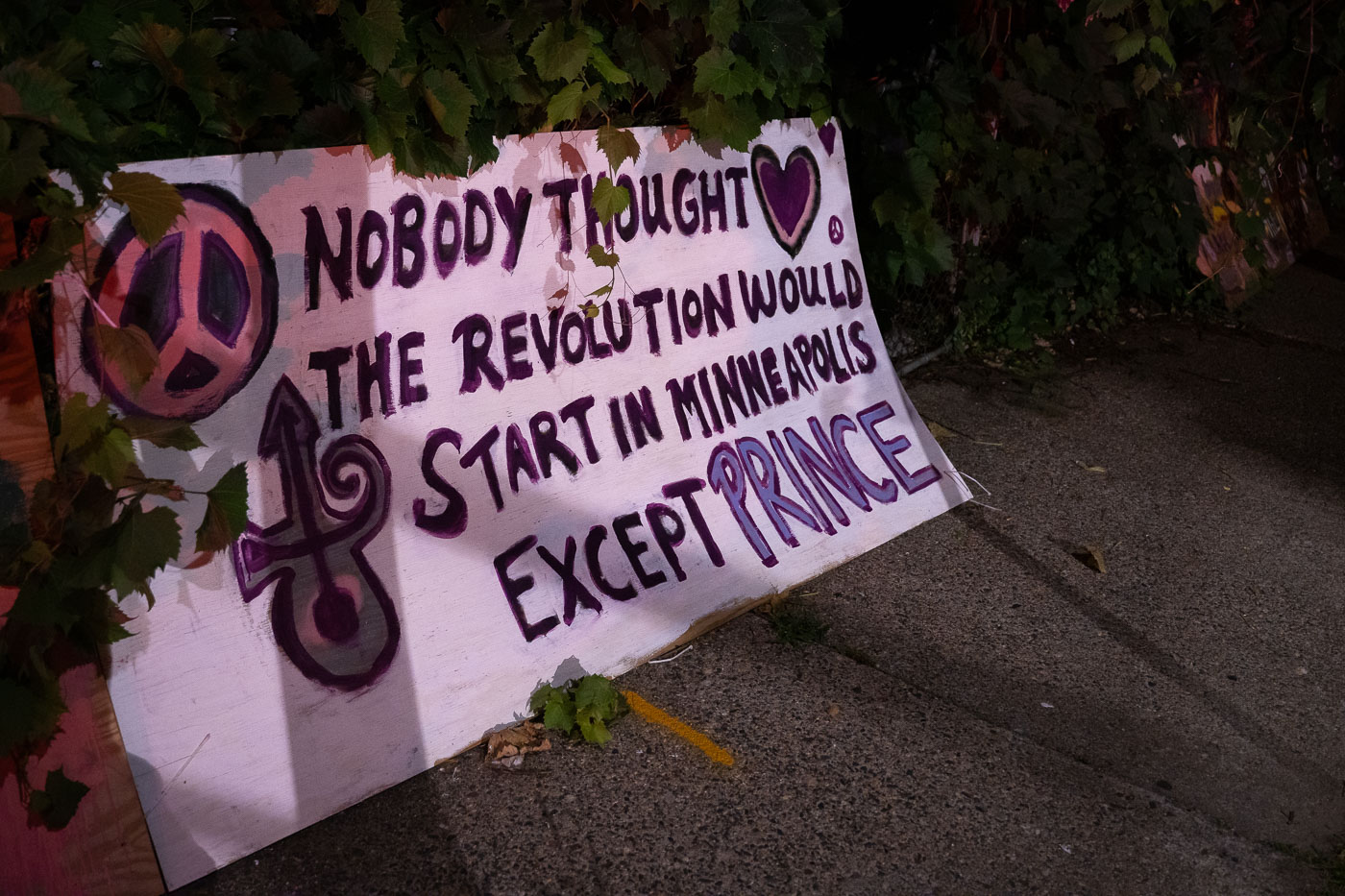
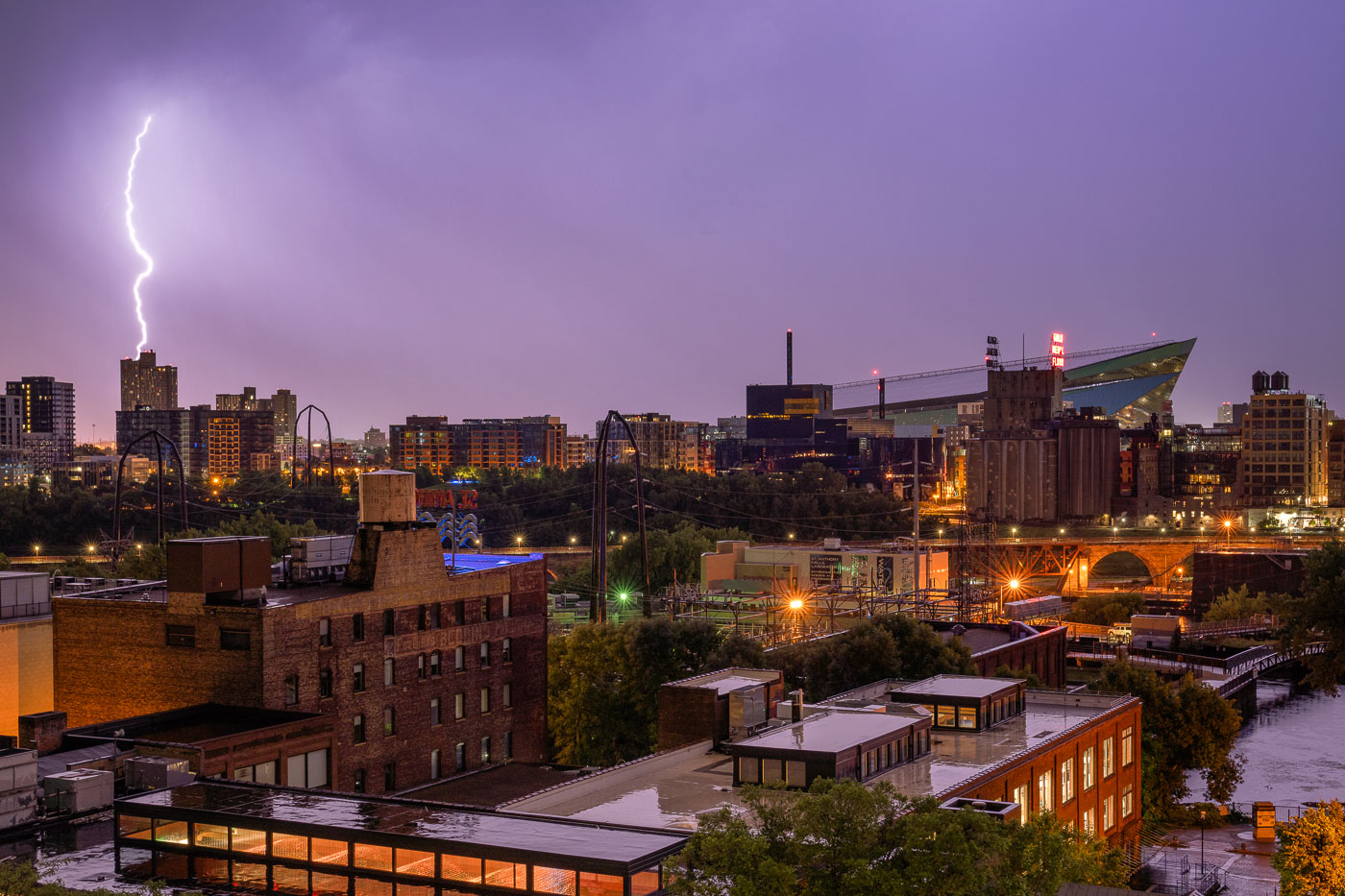
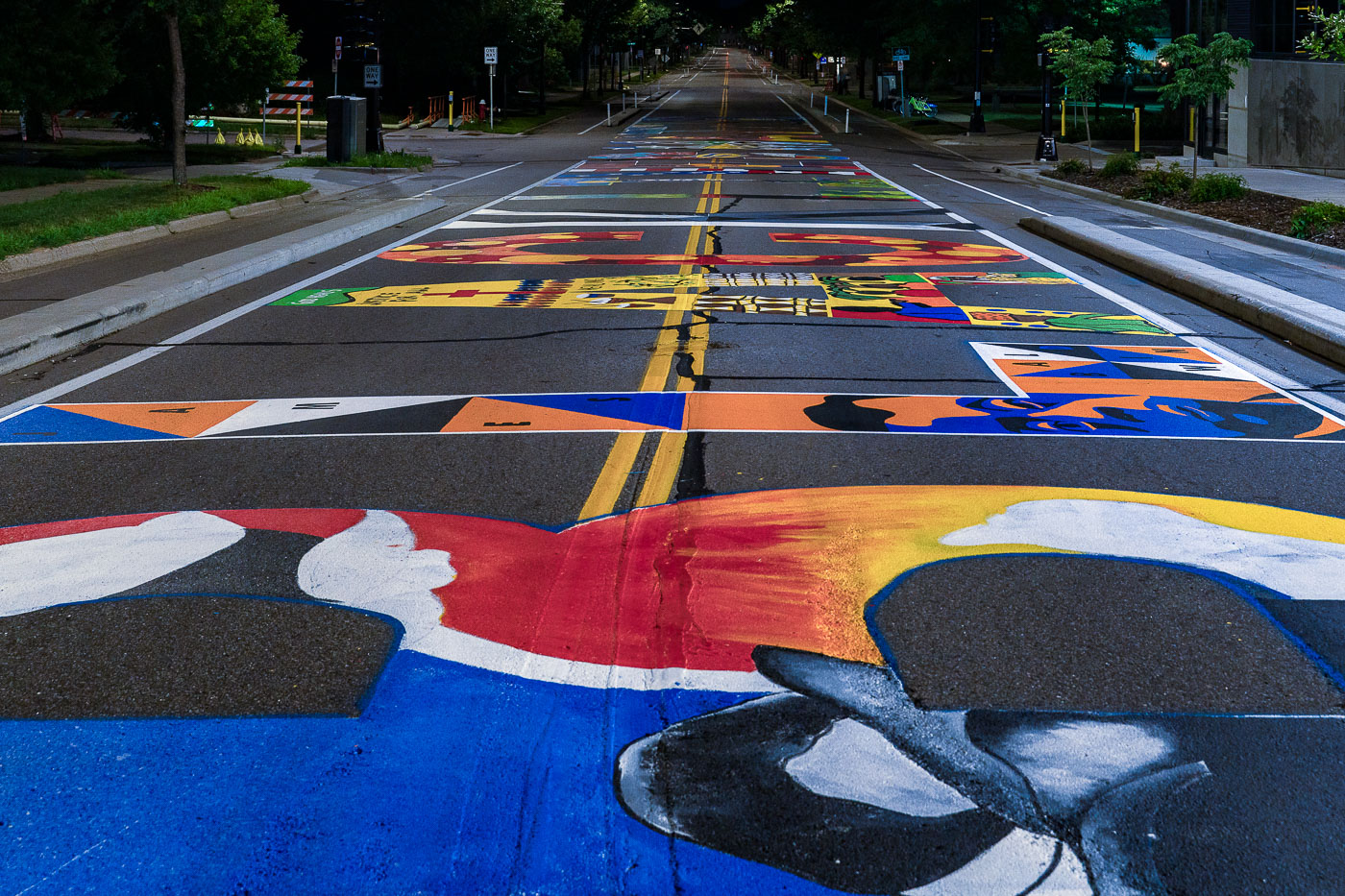
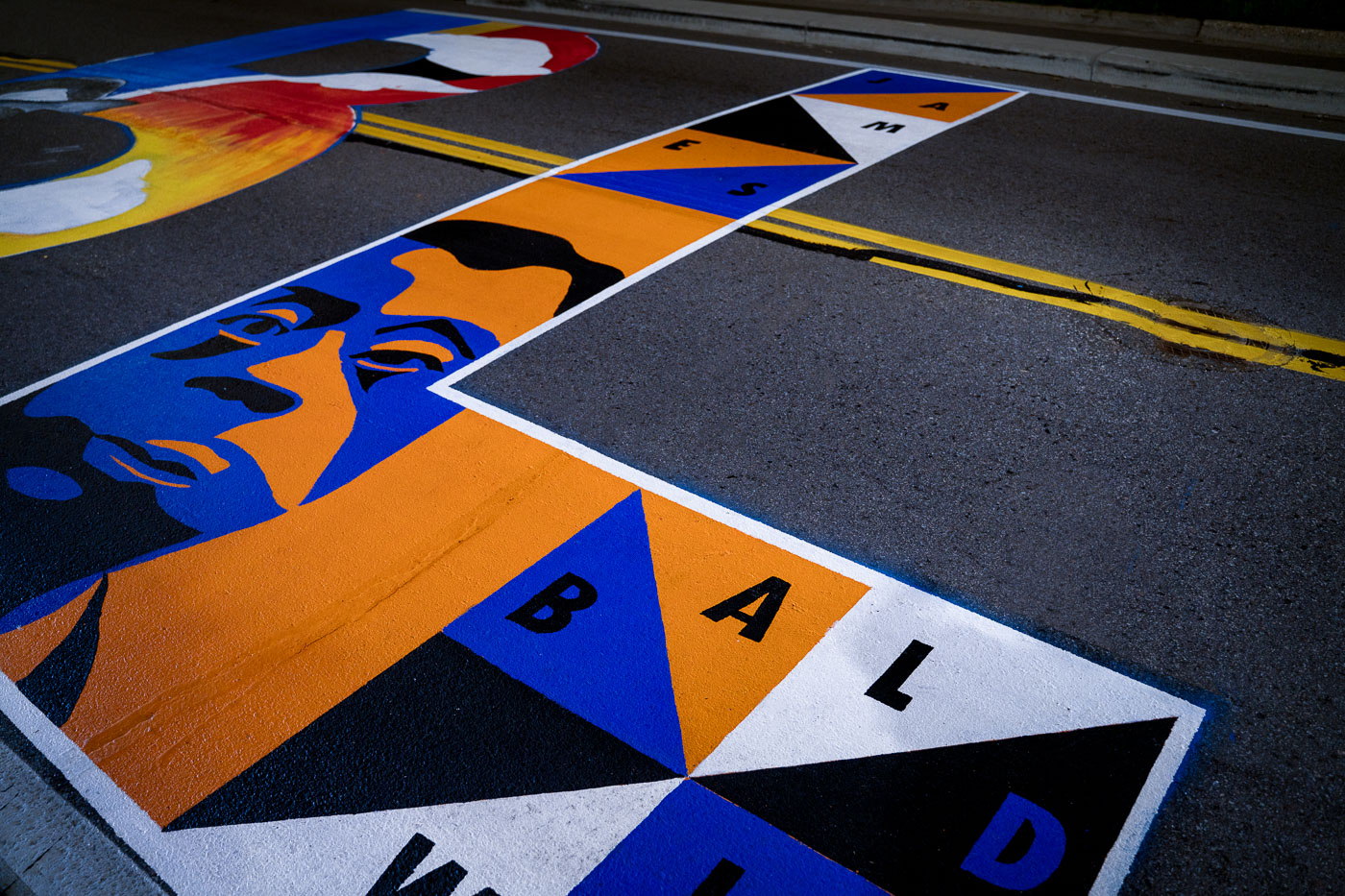
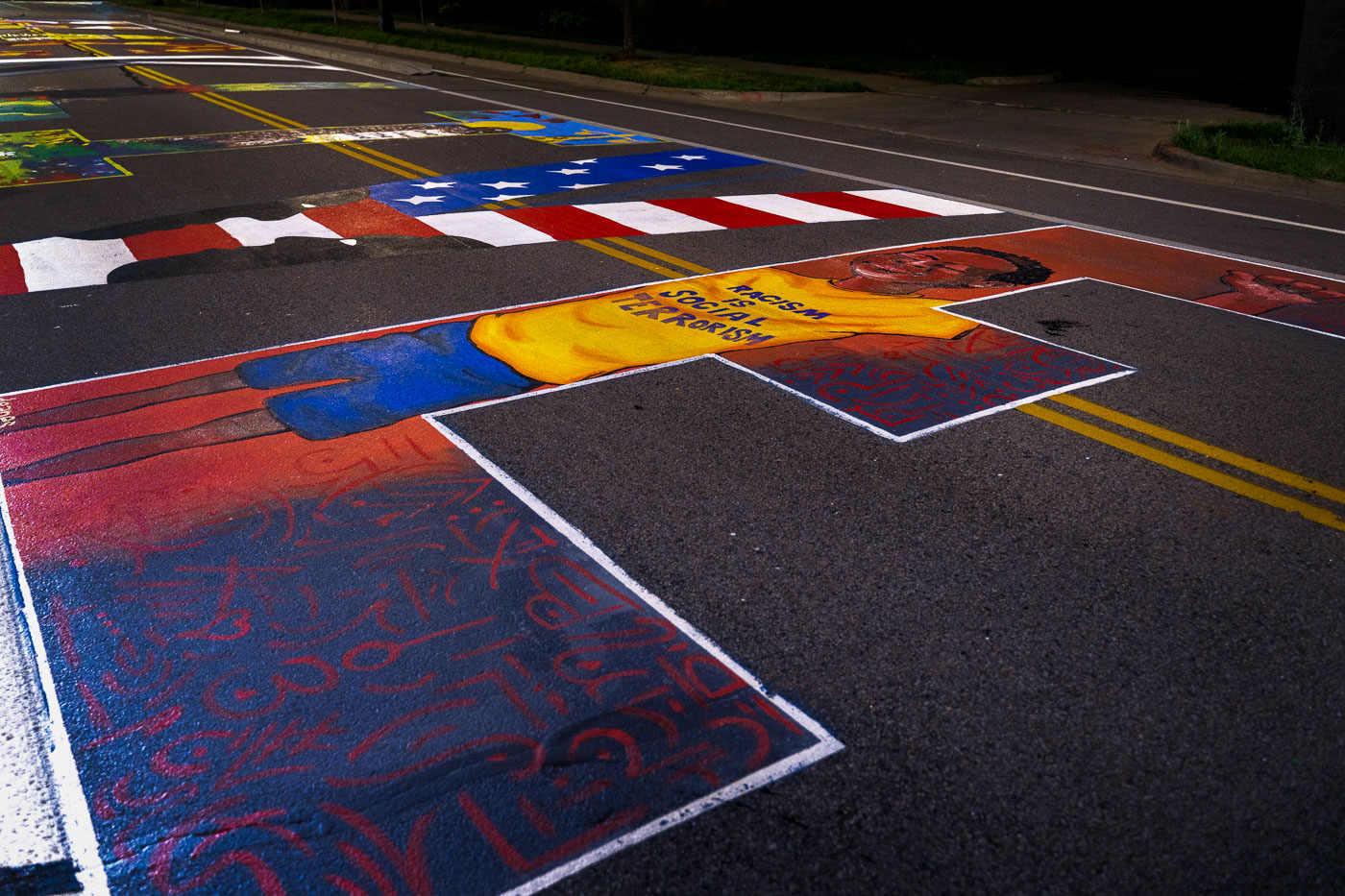
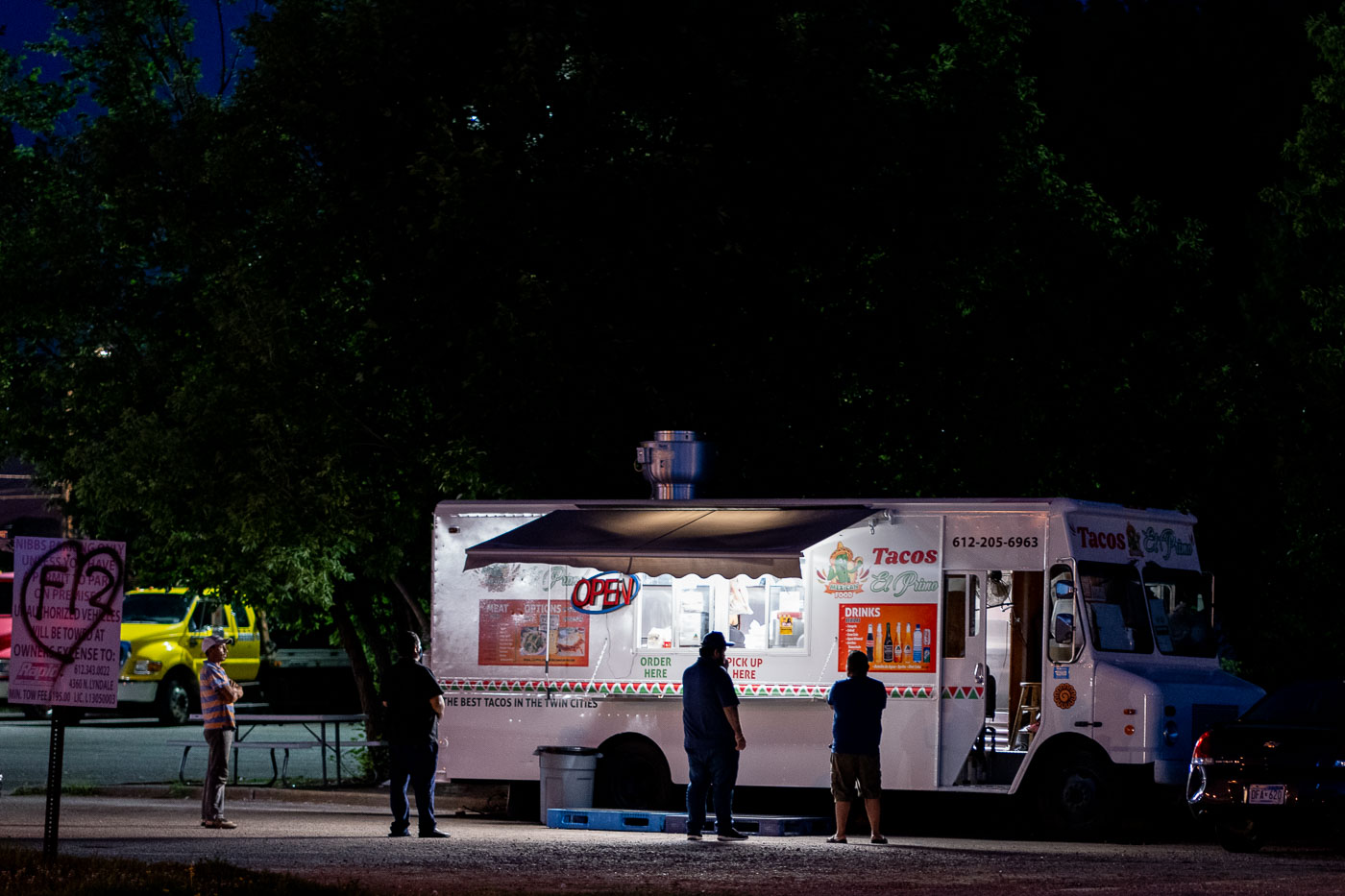
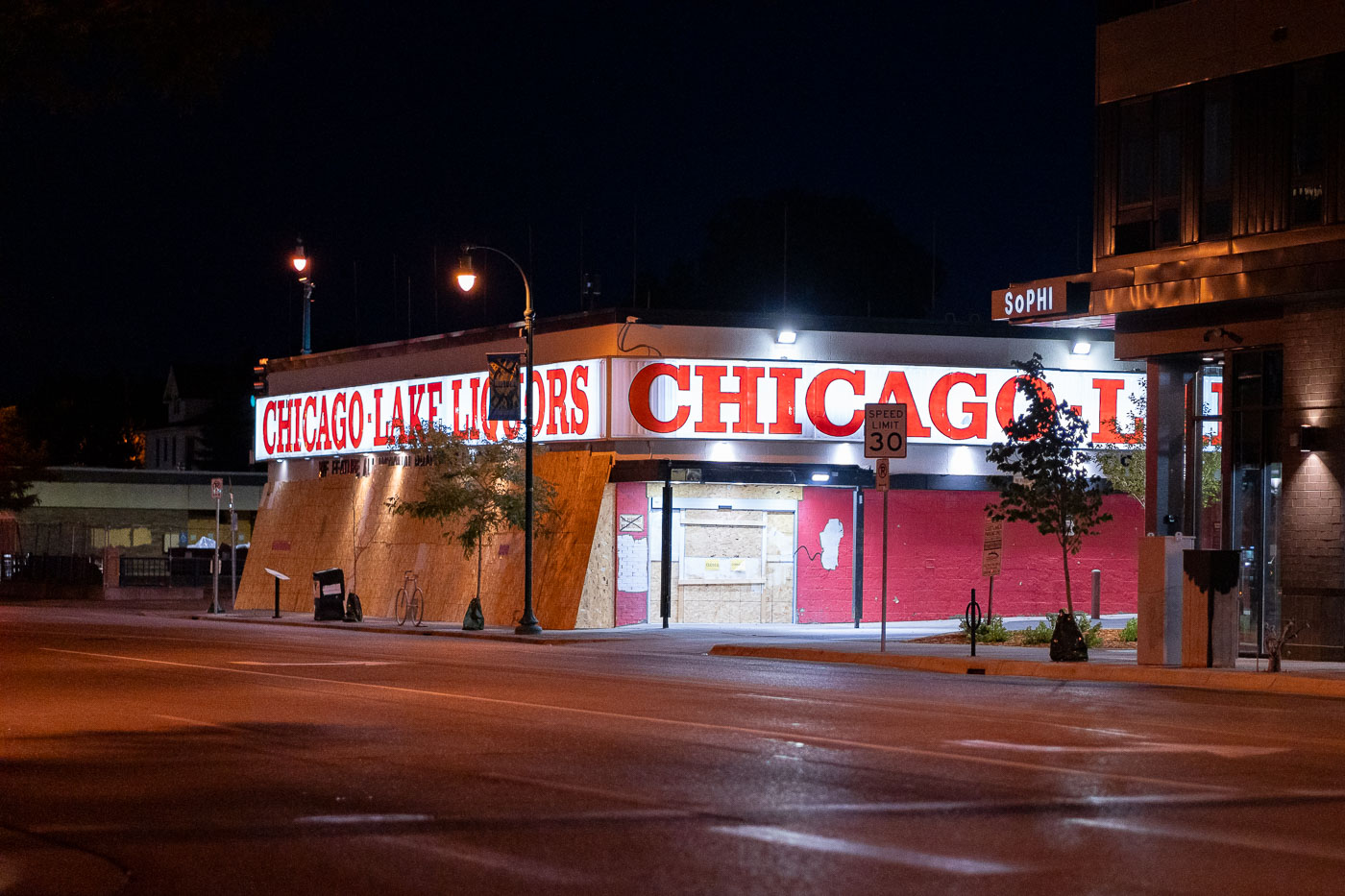
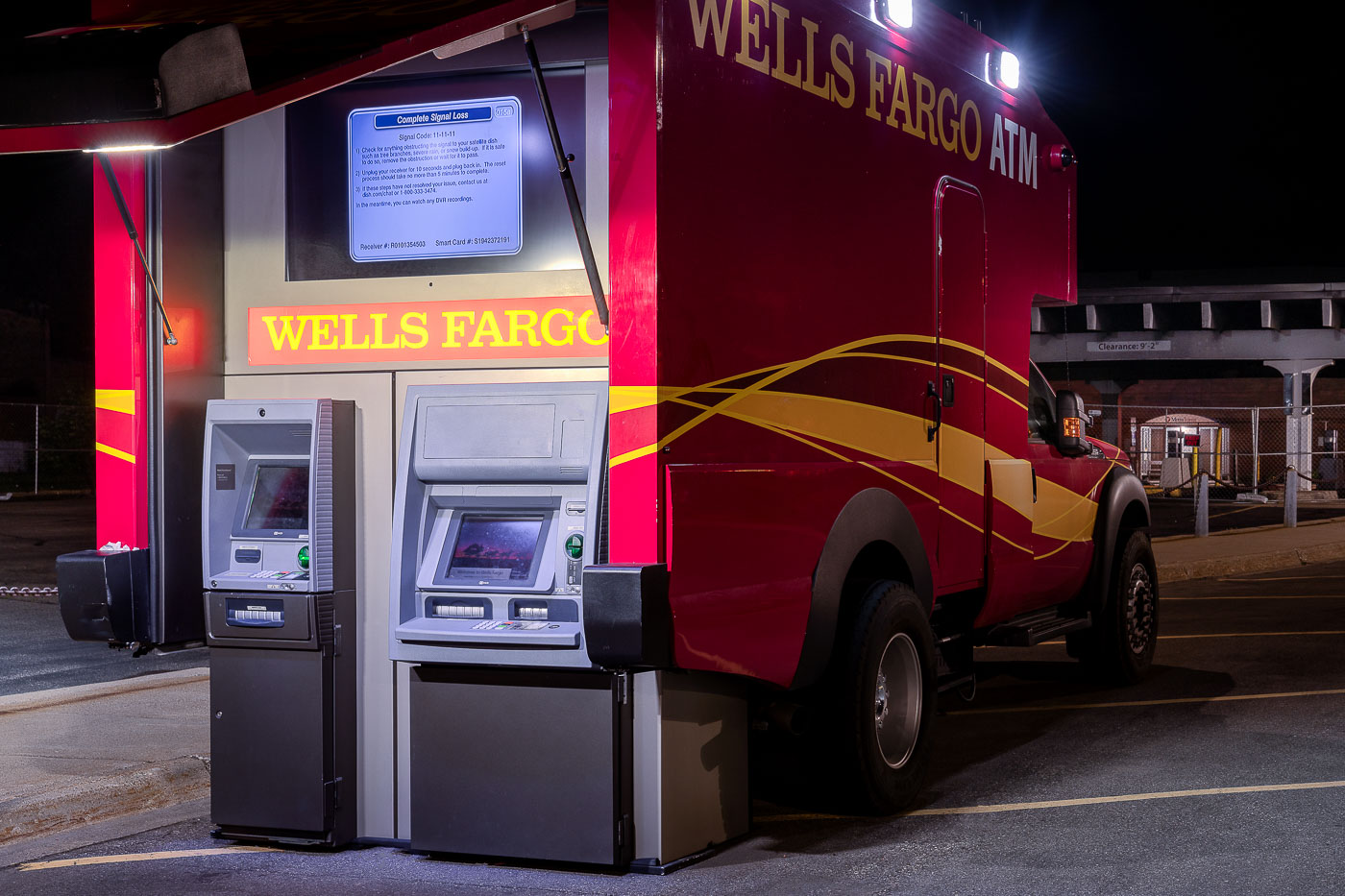
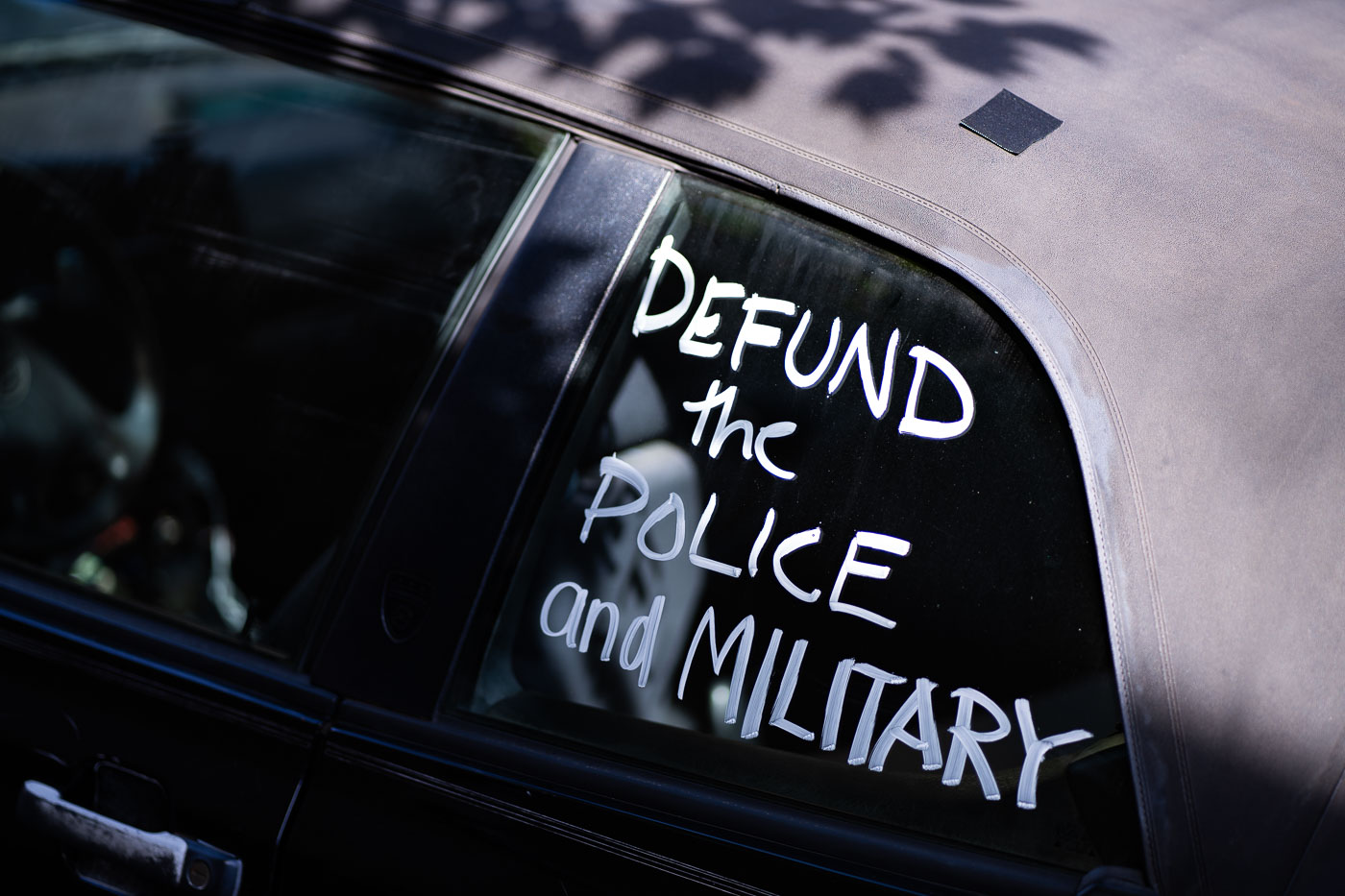
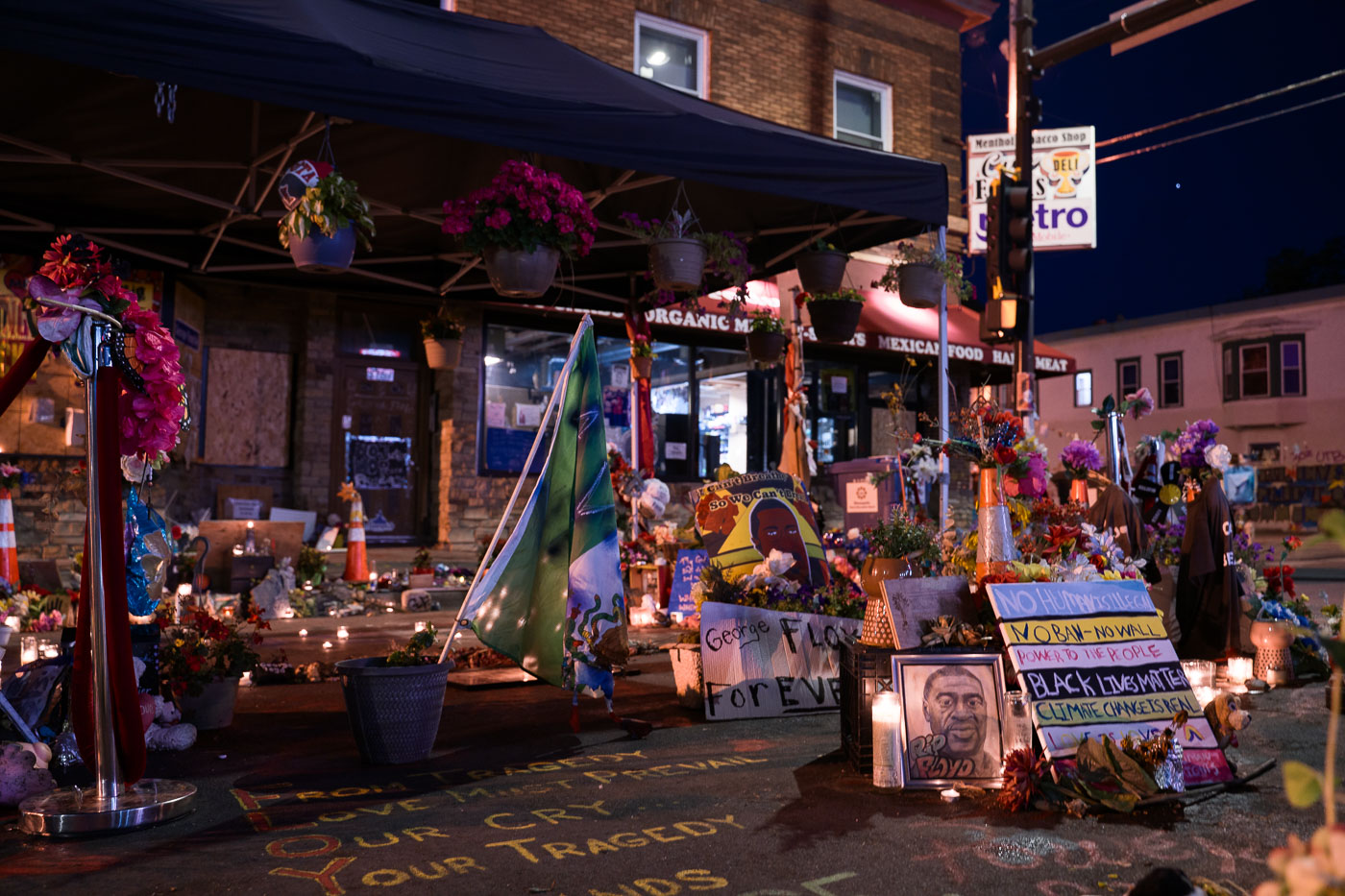
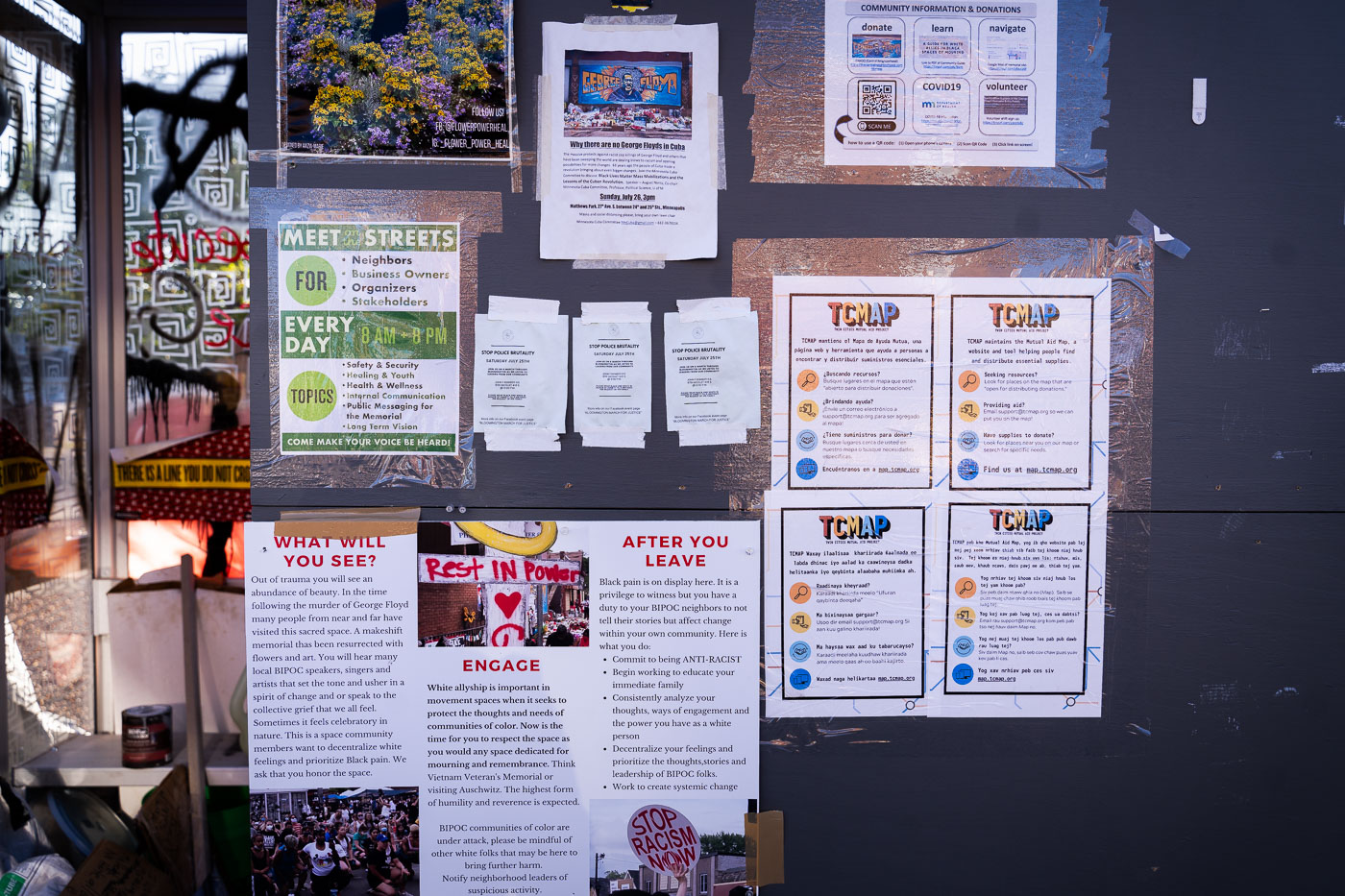
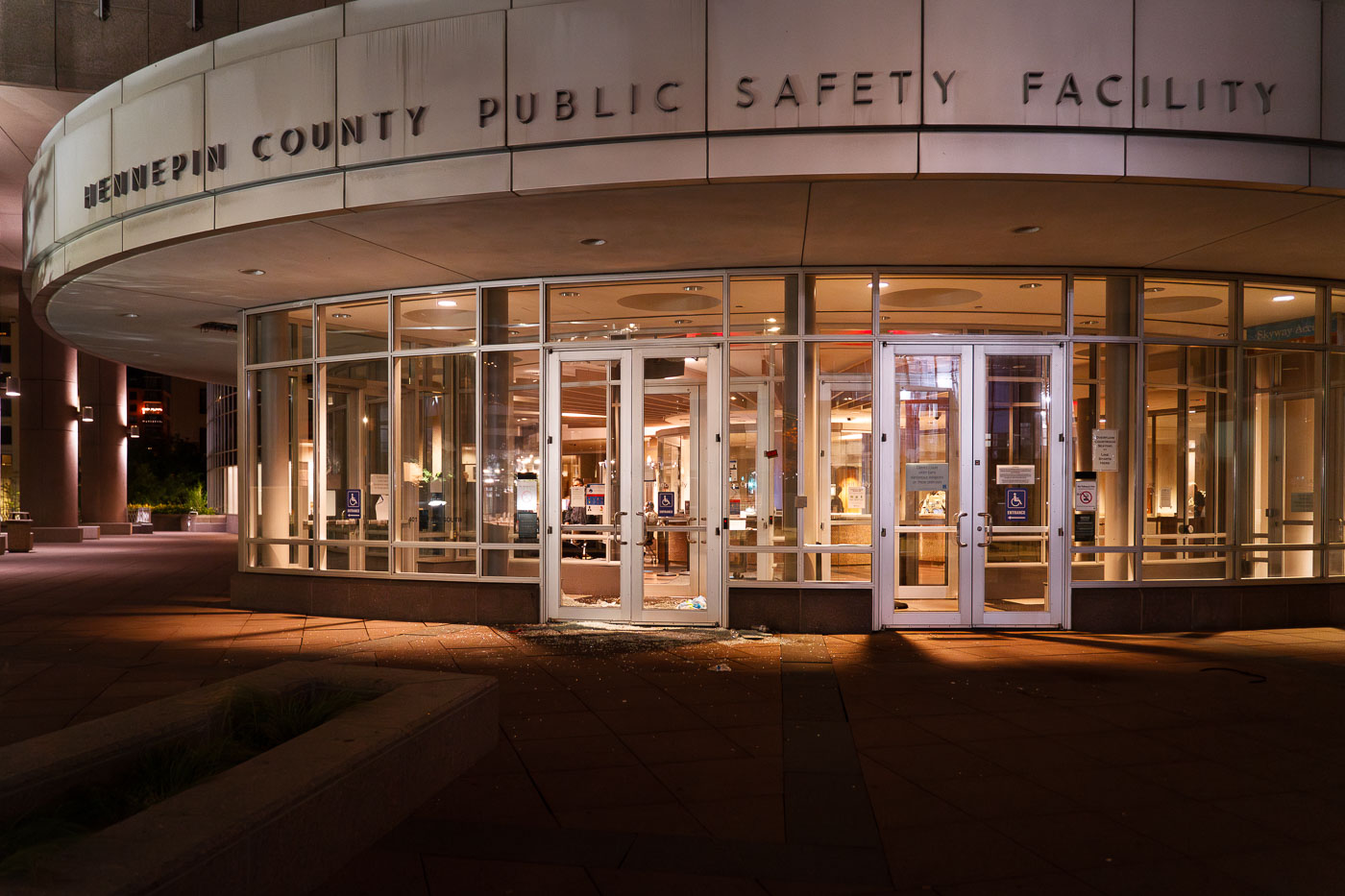
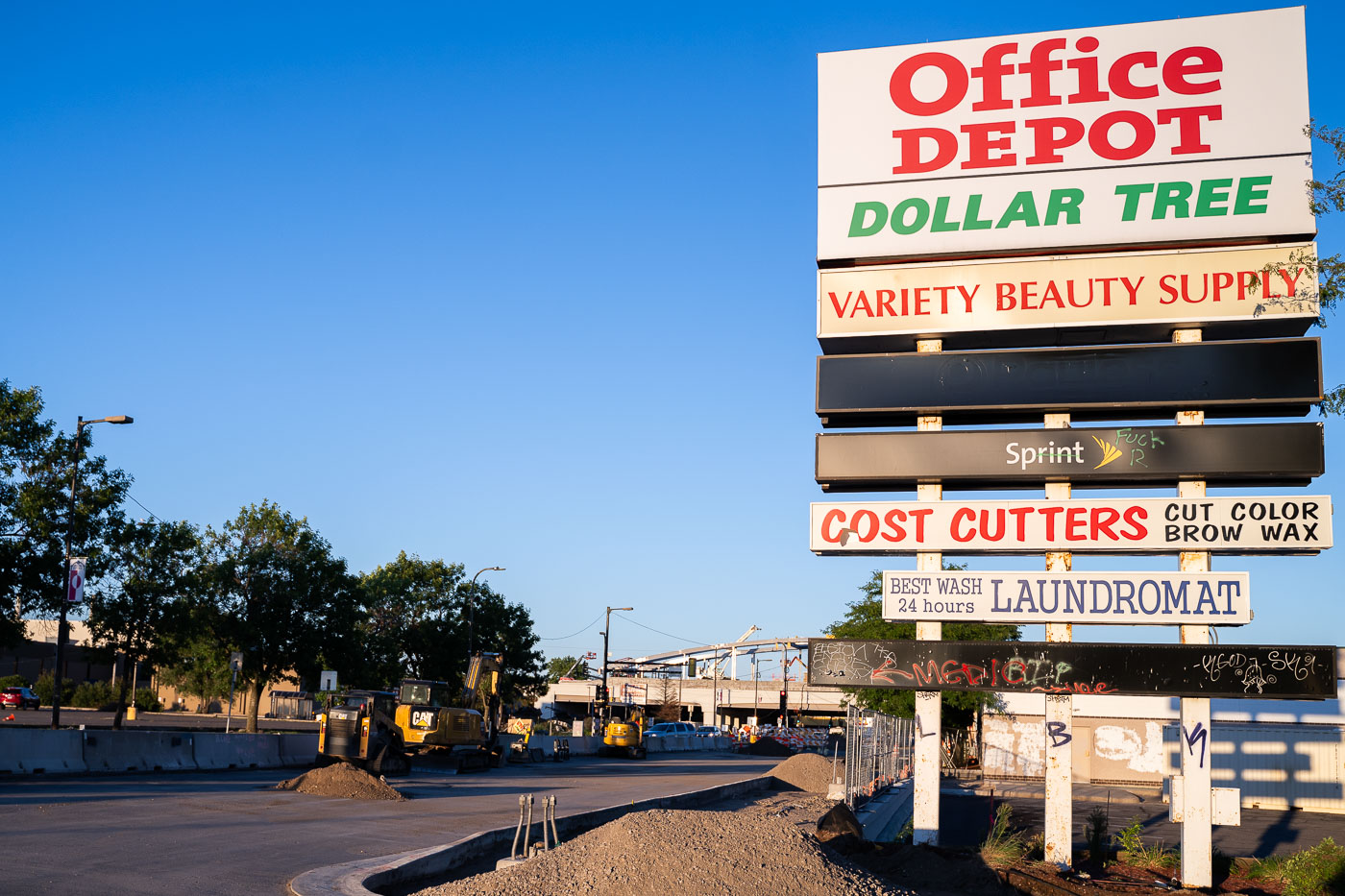
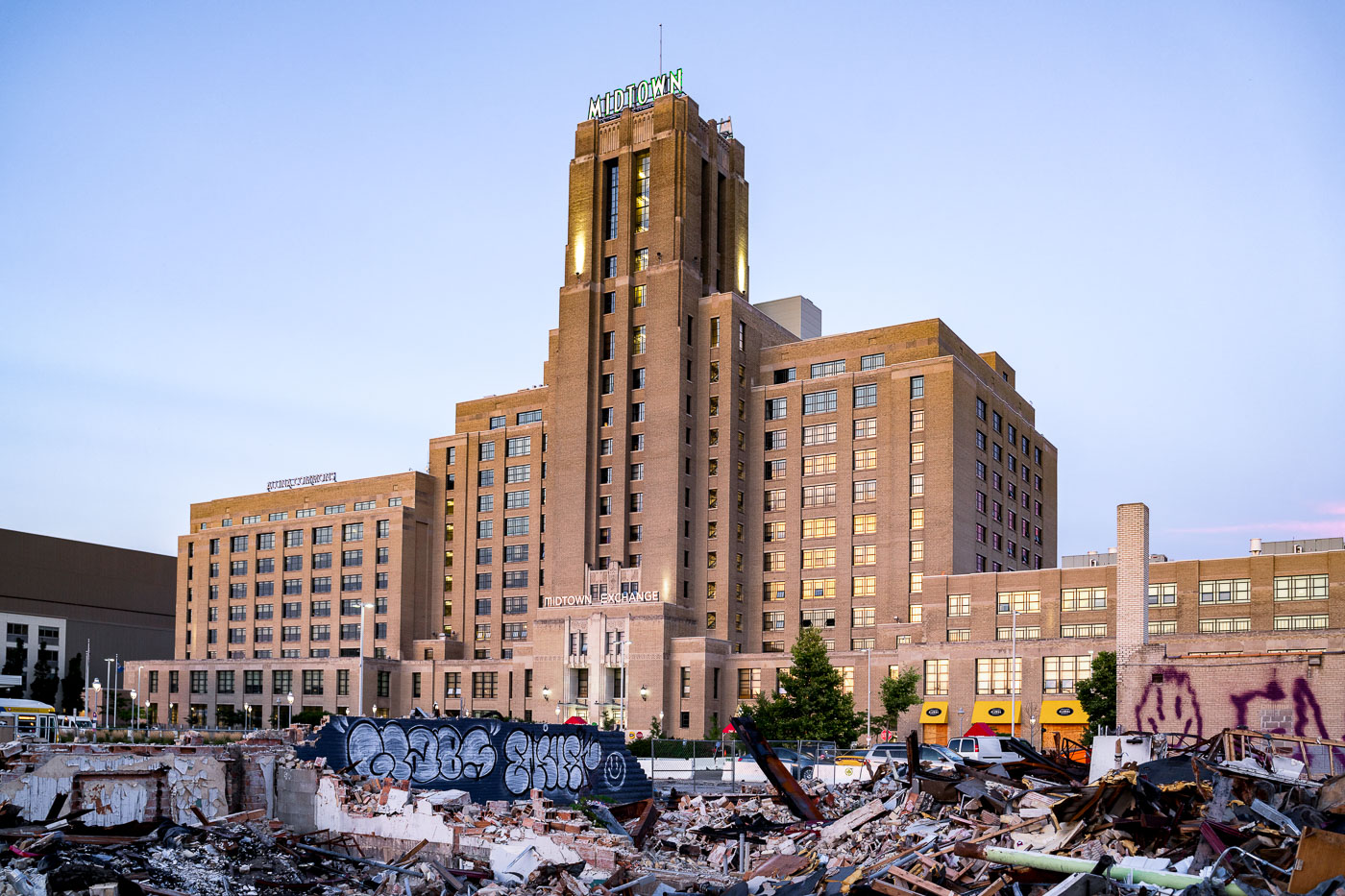
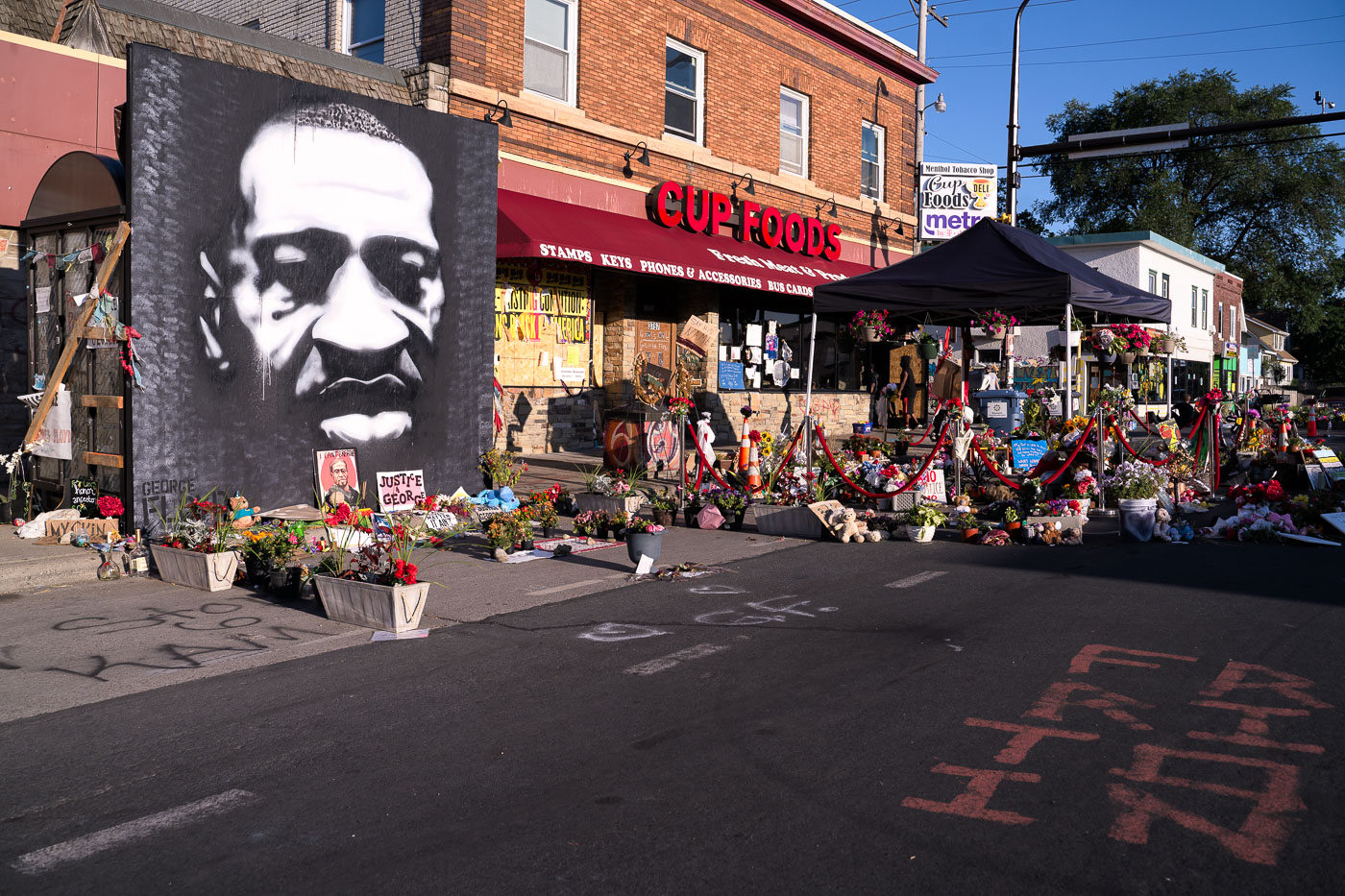
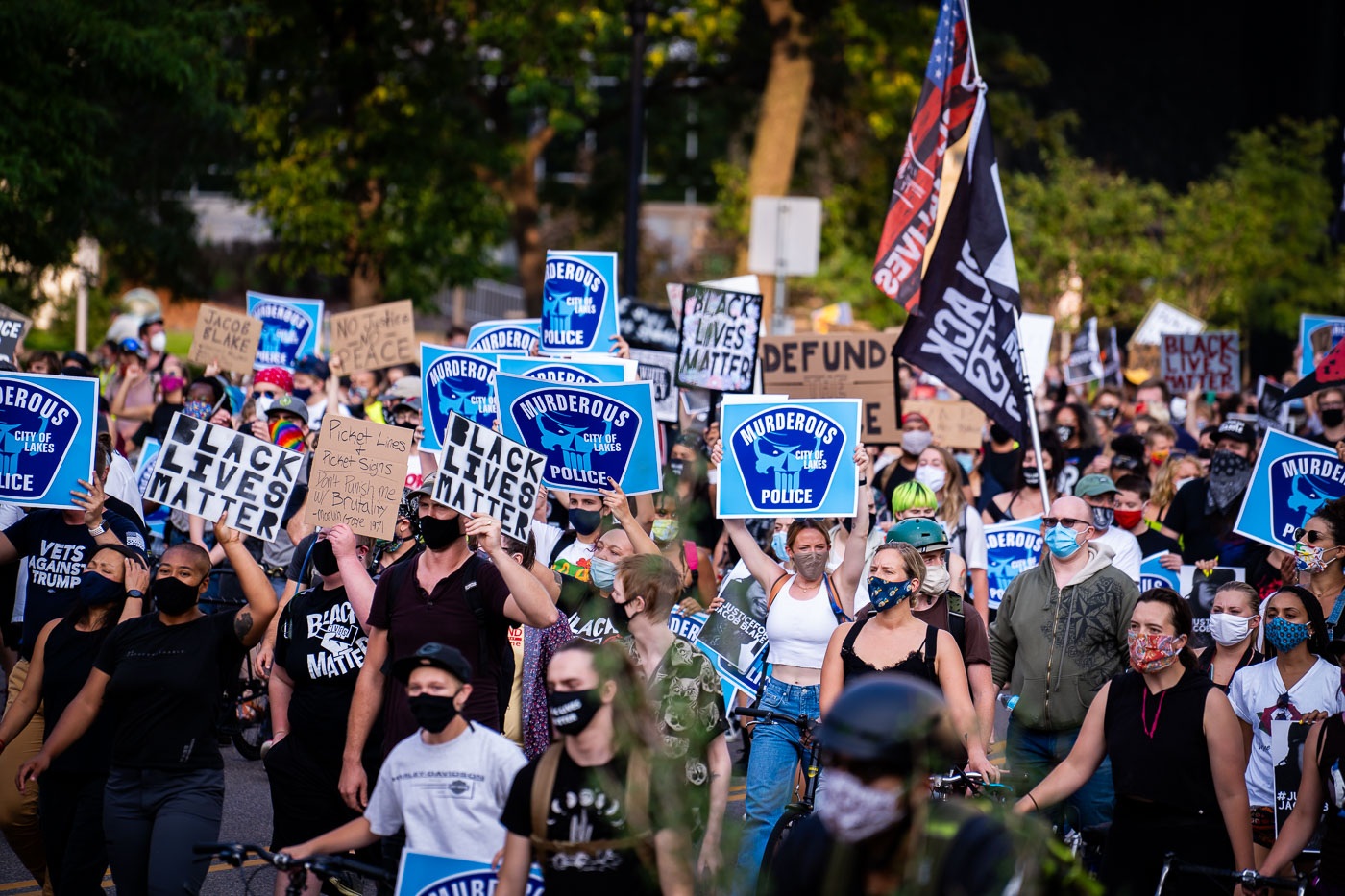
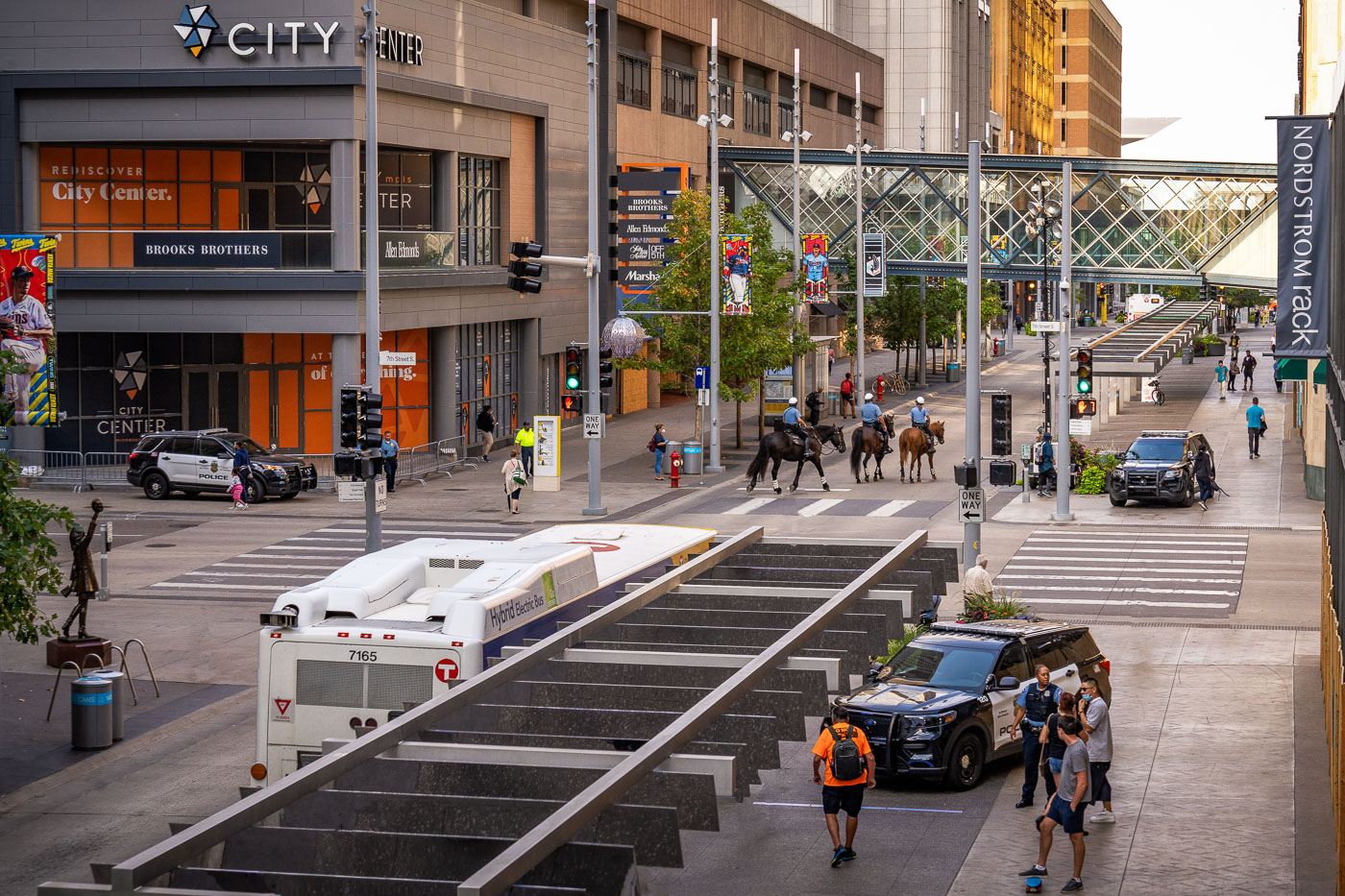
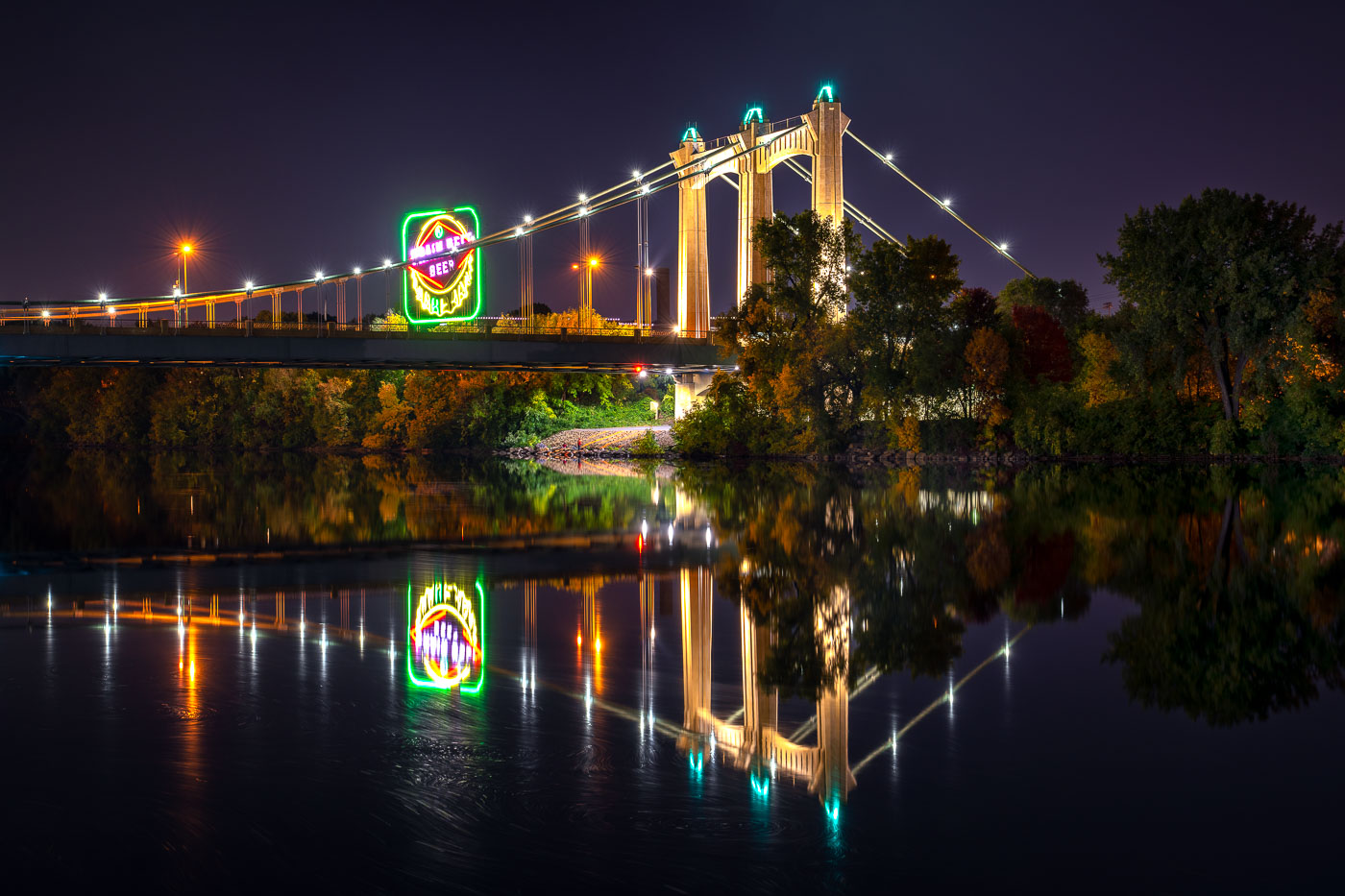
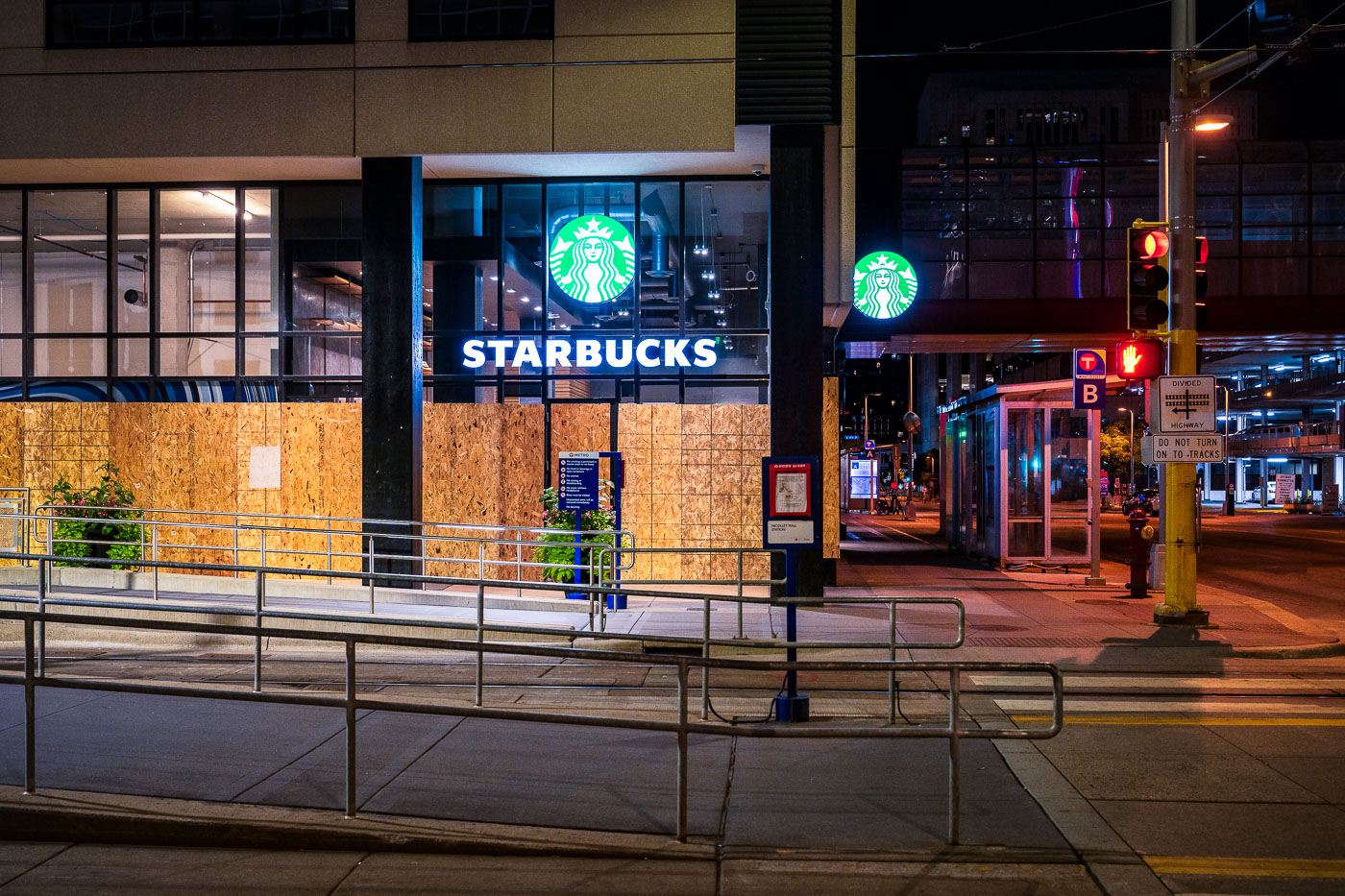
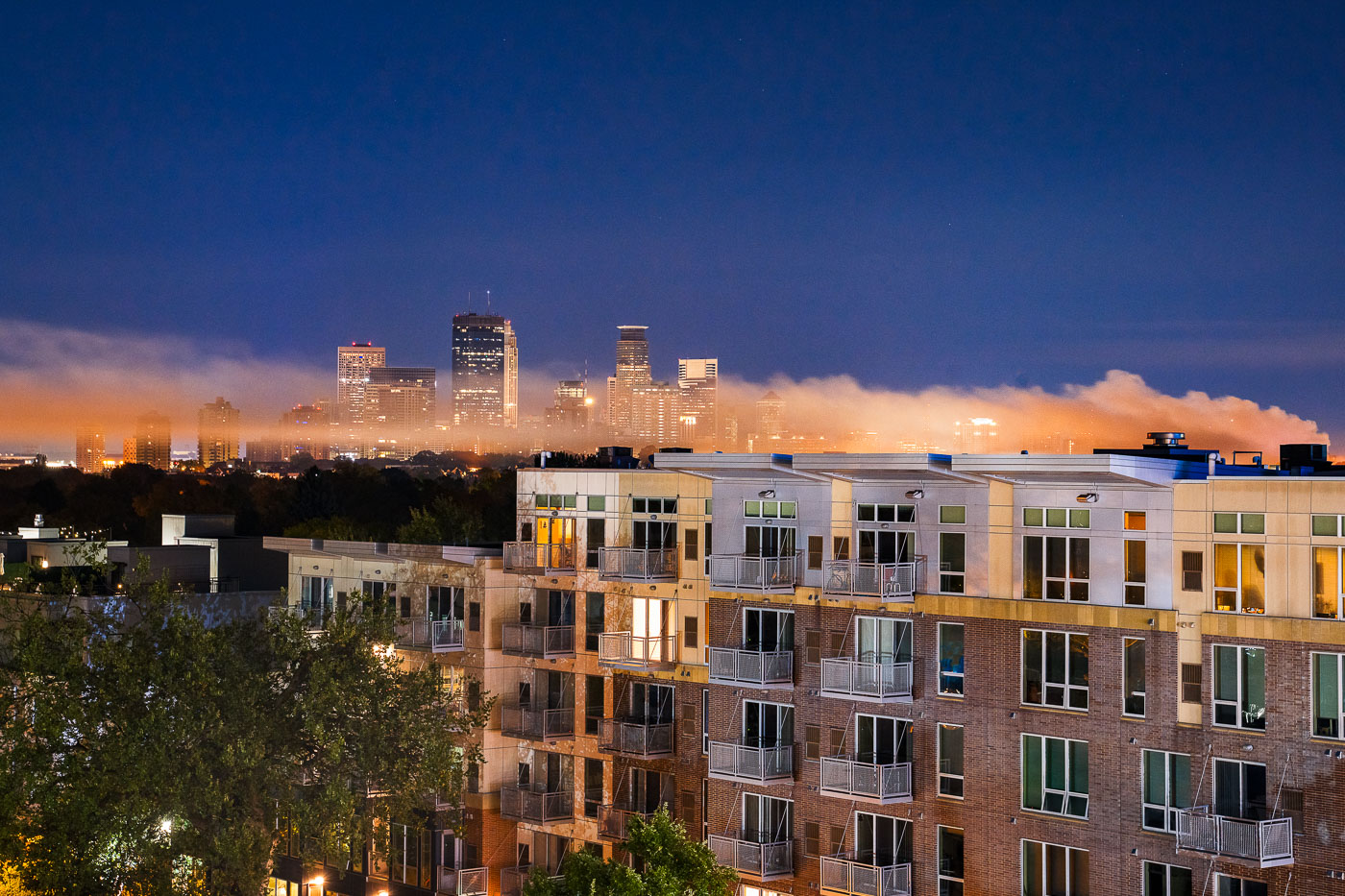
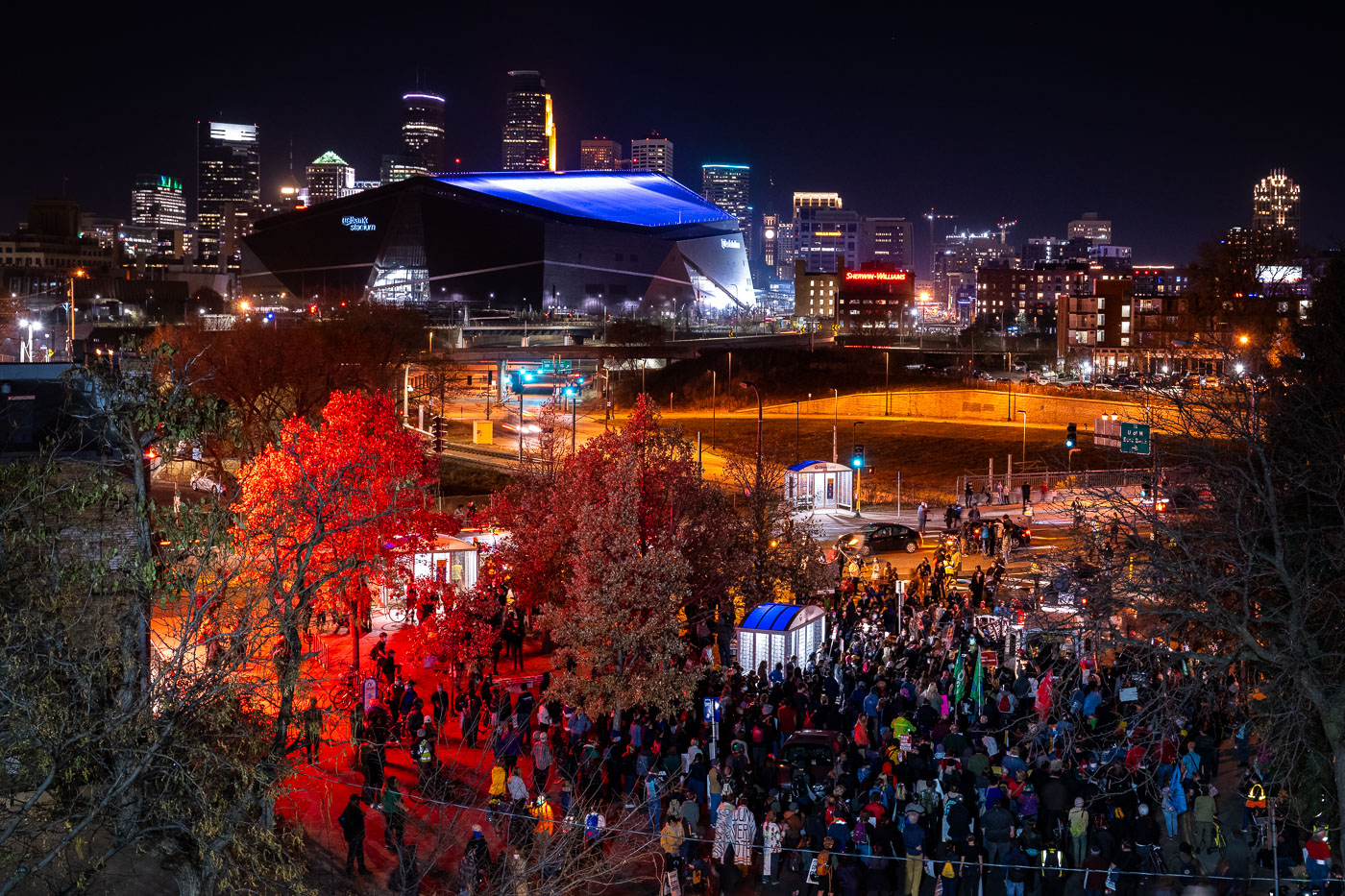
April 1, 2020Lucky Dragon Restaurant serves Vietnamese and Chinese cuisine from a storefront on Minneapolis's West Bank, in the Cedar-Riverside neighborhood near the University of Minnesota. Next door, Hard Times Cafe has operated as a 24-hour coffeehouse since the early 1990s, drawing a mix of students, night-shift workers, and the neighborhood's longtime punk and counterculture crowd. Cedar-Riverside took shape as a dense immigrant enclave in the late 19th century and later became a center of Minneapolis's Somali and East African community, giving the area its wide range of restaurants and small businesses.April 2, 2020First Avenue, the nightclub at 701 First Avenue North, occupies a building that opened in 1937 as a Greyhound bus depot before its conversion to a music venue in 1970. Its Mainroom has hosted acts from Prince—who filmed key s of "Purple Rain" here—to touring bands across nearly every genre. The 7th Street Entry, the smaller adjoining room, opened in 1980 as a launching pad for punk and indie acts. The building's exterior stars, added over the years, each mark a musician who has performed there. On this night the marquee read "VOTE 2020" instead of a show listing, a message posted while the venue sat closed under Minnesota's statewide shutdown orders.April 3, 2020The Millennium Hotel Minneapolis sits at 1313 Nicollet Mall, a high-rise a few blocks from the Minneapolis Convention Center. The tower opened in the 1970s under an earlier flag before joining the Millennium Hotels and Resorts chain, and its upper floors face north over downtown toward the Mississippi River. During the early weeks of the 2020 coronavirus shutdown, hotel occupancy across downtown Minneapolis fell sharply as conventions, sporting events, and business travel came to a halt.April 3, 2020The Hilton Minneapolis, a 32-story tower at 1001 Marquette Avenue, spelled out the word "HOPE" and a heart in its guest-room windows on April 3, 2020, during the early weeks of Minnesota's COVID-19 stay-at-home order. The 821-room hotel opened in 1992 and remains one of the largest in the state. Just north of the hotel stands Westminster Presbyterian Church, a Gothic Revival building completed in 1897 for a congregation founded in 1857, making it one of downtown Minneapolis's oldest continuously operating churches.April 4, 2020Ramp A is one of several municipal parking ramps the City of Minneapolis operates in the downtown core, serving nearby government offices, hotels, and retail. The ramp typically fills with commuters and visitors on weekdays but stood empty in early April 2020, during the citywide shutdown ordered in response to the COVID-19 pandemic.April 4, 2020The Seville Club sits at 1st Avenue North and 9th Street in downtown Minneapolis, near the Target Center. Its red neon sign has long marked the block along a stretch of downtown known for nightlife and entertainment venues. In April 2020, statewide stay-at-home orders halted nightclub operations and left the surrounding streets and parking areas largely empty, a temporary condition rather than a permanent closure.April 4, 2020The Loews Minneapolis Hotel sits along First Avenue North next to the Target Center arena in downtown Minneapolis. Target Center opened in 1990 and has served as the home arena for the Minnesota Timberwolves and, since 1999, the Minnesota Lynx. The arena holds roughly 18,798 fans for basketball and has hosted concerts and other events since its debut. The Loews hotel occupies a tower built in 2000 as part of the same downtown block, giving visitors direct access to the arena's entertainment district.April 6, 2020Ramp C is a municipal parking garage in downtown Minneapolis, operated by the city as part of its downtown parking system. The structure's central spiral connects its parking levels with a continuous curved roadway rather than straight ramps between floors, a common design solution for maximizing vehicle capacity on a compact urban site. Yellow curb markings delineate the traffic lane around the concrete support core. Facilities like Ramp C serve commuters, downtown employees, and visitors to nearby offices and entertainment venues in the central business district.April 10, 2020Interstate 35W cuts through the Cedar-Riverside neighborhood just south of downtown Minneapolis, carrying traffic between the city center and southern suburbs along the Twin Cities' busiest north-south corridor. The high-rise towers of Riverside Plaza, built in 1973 as public housing and now home to a large East African immigrant community, stand along the freeway's western edge. The interchange visible here connects 35W with Washington Avenue and the University of Minnesota's West Bank campus, one of several ramps rebuilt after the 2007 collapse of the 35W bridge over the Mississippi River prompted a broader reconstruction of the corridor.April 15, 2020Metro Transit operates the bulk of bus and rail service across Minneapolis, St. Paul, and the surrounding Twin Cities metro area. Its fleet includes standard 40-foot coaches like the ones numbered here, typically pulled from routes for storage, repair, or reassignment between garages. During the early months of the COVID-19 pandemic, the agency cut scheduled service significantly as ridership dropped, leaving more buses parked than usual. Metro Transit is run by the Metropolitan Council, the regional planning body that also oversees transit for the seven-county Twin Cities area.April 17, 2020Lake of the Isles sits at the western edge of Minneapolis's Chain of Lakes, linked by man-made channels to Bde Maka Ska to the south and Cedar Lake to the north.April 18, 2020Centre Village rises over downtown Minneapolis at Second Avenue South, a mixed-use high-rise completed in 1984 that combines residential units with commercial space. The Hyatt Place hotel occupies part of the same complex, serving business travelers and visitors to the city center. Both buildings sit within blocks of the Mississippi riverfront and the Central Business District, an area built up largely in the 1980s as downtown Minneapolis added residential towers alongside its office core.April 18, 2020Hennepin EMS operates as the ambulance service of Hennepin Healthcare, formerly known as Hennepin County Medical Center, which serves as Minnesota's only adult Level I trauma center and one of two in the state for pediatric trauma. The service covers Minneapolis and much of Hennepin County, responding to roughly 100,000 calls a year and transporting patients to HCMC's downtown campus on Chicago Avenue. Its paramedics also staff a community paramedic program that follows up with high-need patients outside the emergency room. HCMC has held its Level I trauma designation since the American College of Surgeons verification program began rating hospitals in the 1980s.April 18, 2020Chris Cuomo discussed his own coronavirus diagnosis with CNN's chief medical correspondent, Dr. Sanjay Gupta, in an April 2020 segment that aired on the network amid the early weeks of the pandemic. The broadcast appeared on a lobby television at the Marquette Hotel in downtown Minneapolis, part of the Hilton-affiliated property on South Seventh Street near the IDS Center. Cuomo, then a primetime anchor for CNN, quarantined at home after testing positive and returned to reporting on air during his recovery.April 21, 2020Minneapolis disabled the push-to-activate function on hundreds of pedestrian crossing buttons in spring 2020, switching signals to run on automatic timers instead. The city cited concerns about shared surfaces during the COVID-19 pandemic, part of a broader public health response that also touched transit, parks, and other city infrastructure. Signs like this one were taped over the manual buttons at intersections across the city, directing pedestrians to wait for the walk signal rather than press the crossing button.April 23, 2020Target's corporate headquarters tower rises at 1000 Nicollet Mall, its glass exterior wrapped in a blue-lit crown near the top floors. The company has been based in downtown Minneapolis since its founding as a Dayton's discount offshoot in 1962, and its headquarters campus remains one of the largest employers in the city's core. The neon Bullseye dog sign near the building's base is a longstanding piece of Target's branding, drawn from the company's mascot, Bullseye. To the left, the Loews Minneapolis Hotel occupies part of the LaSalle Plaza complex, a mixed-use development completed in 1991 that also includes office space and street-level retail along Nicollet Mall.April 25, 2020Interstate 394 connects downtown Minneapolis to the western suburbs, running past the Cedar-Riverside neighborhood and merging with Interstate 94 near the Lowry Hill Tunnel. The freeway opened in stages during the late 1980s and early 1990s, replacing what had long been planned as an inner-city extension of Highway 12. Minnesota's stay-at-home order, in effect from late March through mid-May 2020, cut traffic across the Twin Cities metro to a fraction of normal volumes. Overnight counts on routes like I-394 dropped by more than half compared to pre-pandemic averages during that period.April 27, 2020Eduardo Kobra painted this mural of Bob Dylan, titled "Face of Music," in 2015 for the Downtown Improvement District's Betsy-Ann Kane public art initiative. Brazilian street artist Kobra is known for his geometric, kaleidoscope-patterned portraits, which he has installed in cities worldwide. The mural covers roughly 90 feet of wall along the light rail corridor near Nicollet Mall Station, close to Hennepin Avenue in downtown Minneapolis. Dylan grew up in Hibbing, Minnesota, and began his music career in Dinkytown near the University of Minnesota before moving to New York in 1961.April 27, 2020Cedar-Riverside Station sits along Metro Transit's Blue Line, formerly the Hiawatha Line, which opened in 2004 as the region's first light-rail route. The station serves the Cedar-Riverside and West Bank neighborhoods, just south of downtown Minneapolis and adjacent to the University of Minnesota's West Bank campus. The Blue Line runs roughly 12 miles between downtown Minneapolis, Minneapolis-Saint Paul International Airport, and the Mall of America in Bloomington. Metro Transit operates the line with trains arriving every 7 to 10 minutes during peak service hours.April 27, 2020Interstate 35W cuts through downtown Minneapolis on its way between the northern and southern suburbs, carrying more than 100,000 vehicles a day under normal conditions. The tallest building on the skyline, the IDS Center, rises 792 feet and has held the title of Minnesota's tallest structure since its completion in 1972, designed by architect Philip Johnson. Capella Tower, completed in 1992 as the Norwest Center, stands 776 feet tall and is topped by a lattice crown that's lit gold for much of the year. This stretch of freeway saw major nighttime lane closures and repaving work in spring 2020, part of ongoing maintenance on one of the Twin Cities' primary north-south corridors.April 29, 2020Punch Pizza posted this letter to customers announcing the temporary closure of all its restaurants beginning Monday, March 16, 2020. Signed by co-founders John Soranno and JP Audette, the notice cites the need to protect employees, customers, and the Twin Cities community from the spread of Covid-19. The letter notes the company was entering its 25th year in business at the time of the shutdown.April 29, 2020Walgreens posted this A-frame sign outside one of its Minneapolis stores asking customers to keep six feet of distance, both inside and outside the building, in line with CDC guidance during the COVID-19 pandemic. Pharmacies were classified as essential businesses under Minnesota's stay-at-home order, allowing them to remain open while most retail closed. Chains including Walgreens adopted floor markers, capacity limits, and posted signage like this one to manage store traffic during the outbreak's early months.April 30, 2020The sign at Powderhorn Park pairs a painted portrait with a quoted statement: "I'm a very active person, being at home is hard, but I know is for the best." It's signed "Marcus Minneapolis" and includes a web address inviting others to participate, suggesting the piece was part of a broader community art project rather than a single standalone work. Powderhorn Park, on the city's South Side, became a gathering point for public art and expression during the spring 2020 pandemic shutdowns.April 30, 2020Powderhorn Park anchors a residential section of South Minneapolis, its 66 acres laid out around Powderhorn Lake since the park's founding in 1889. The Minneapolis Park and Recreation Board maintains the grounds, which include the lake itself, open lawns, and a recreation center built in the 1970s. The neighborhood surrounding the park takes its name from the same source, and the park remains one of the larger green spaces on the city's south side.
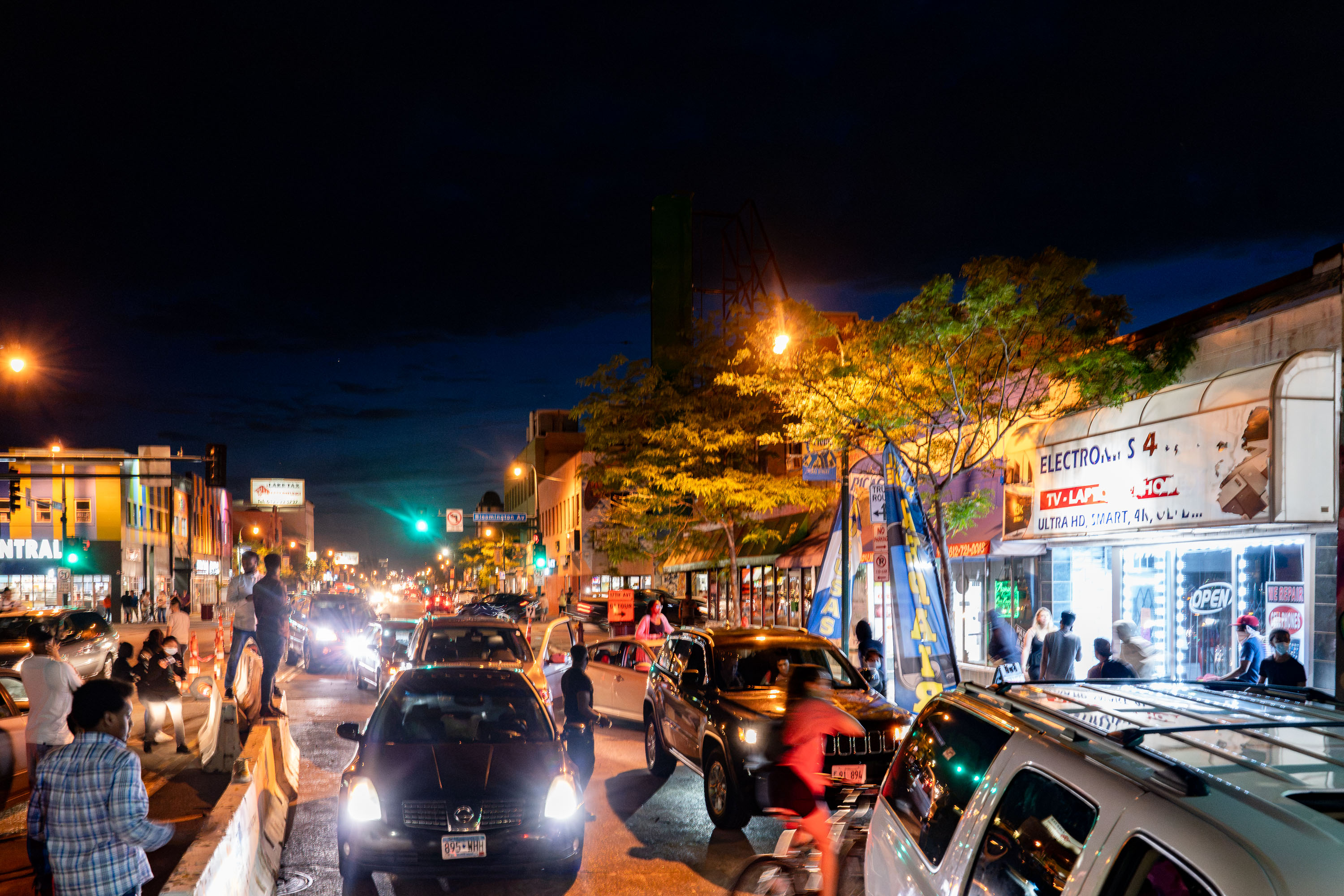
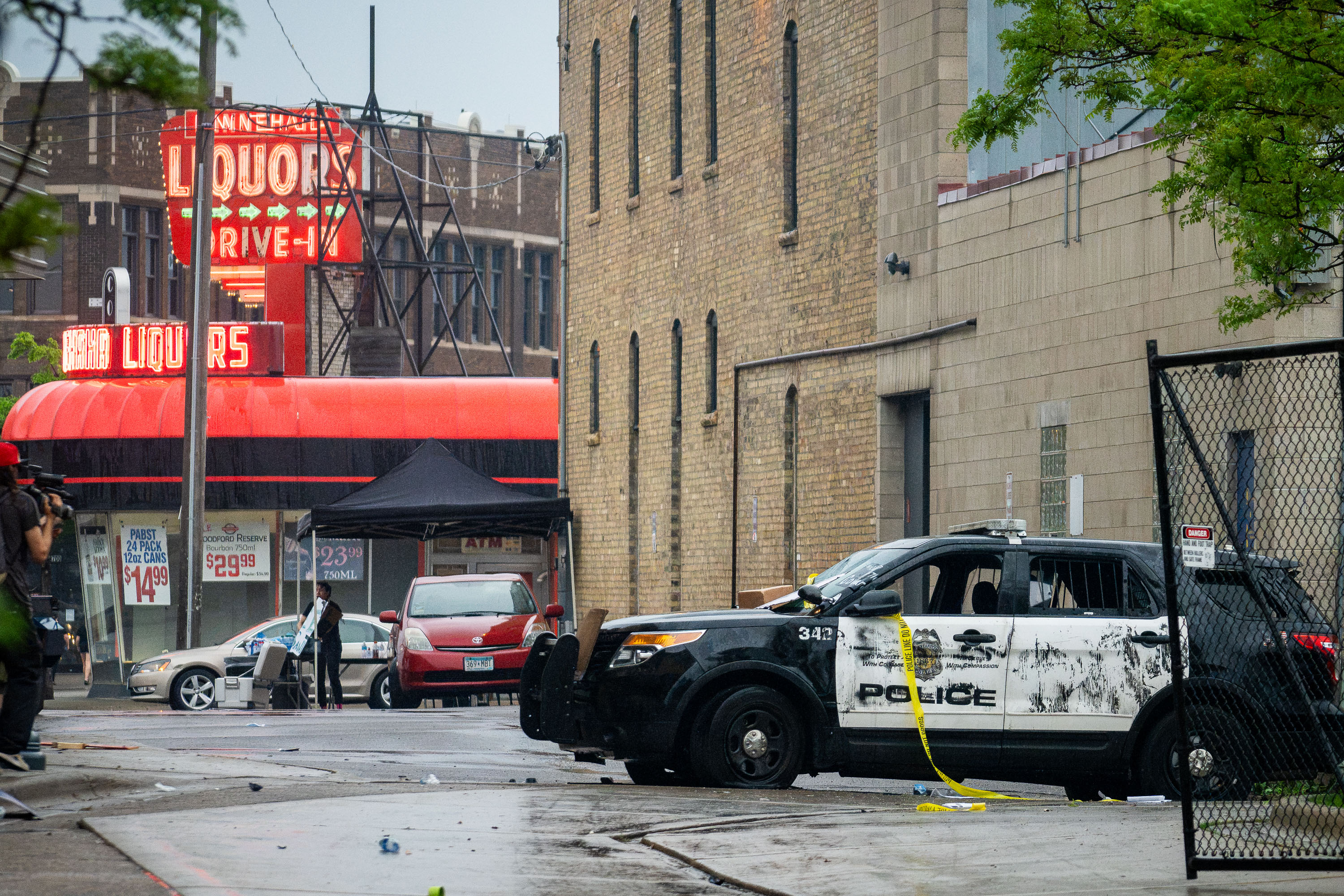
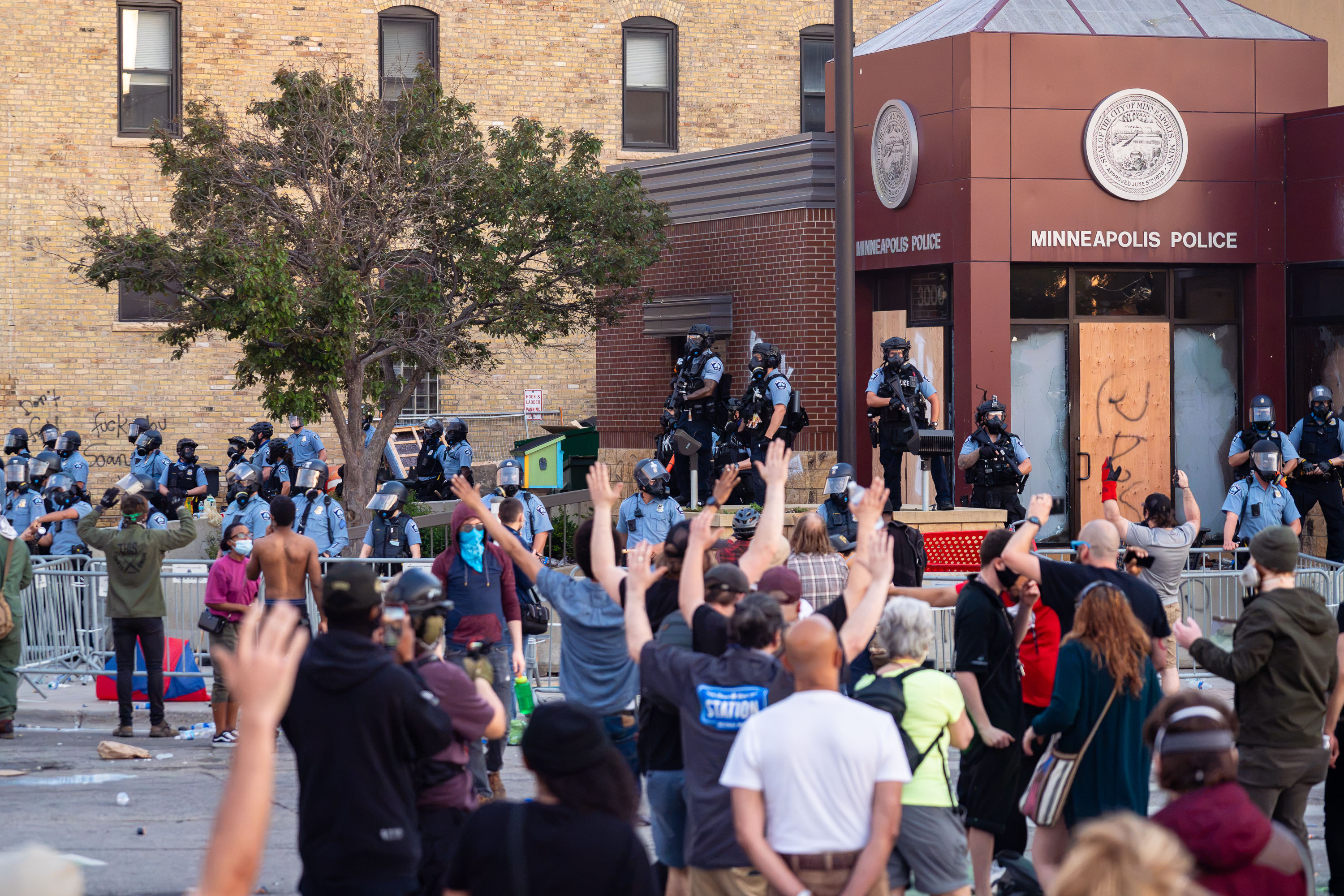
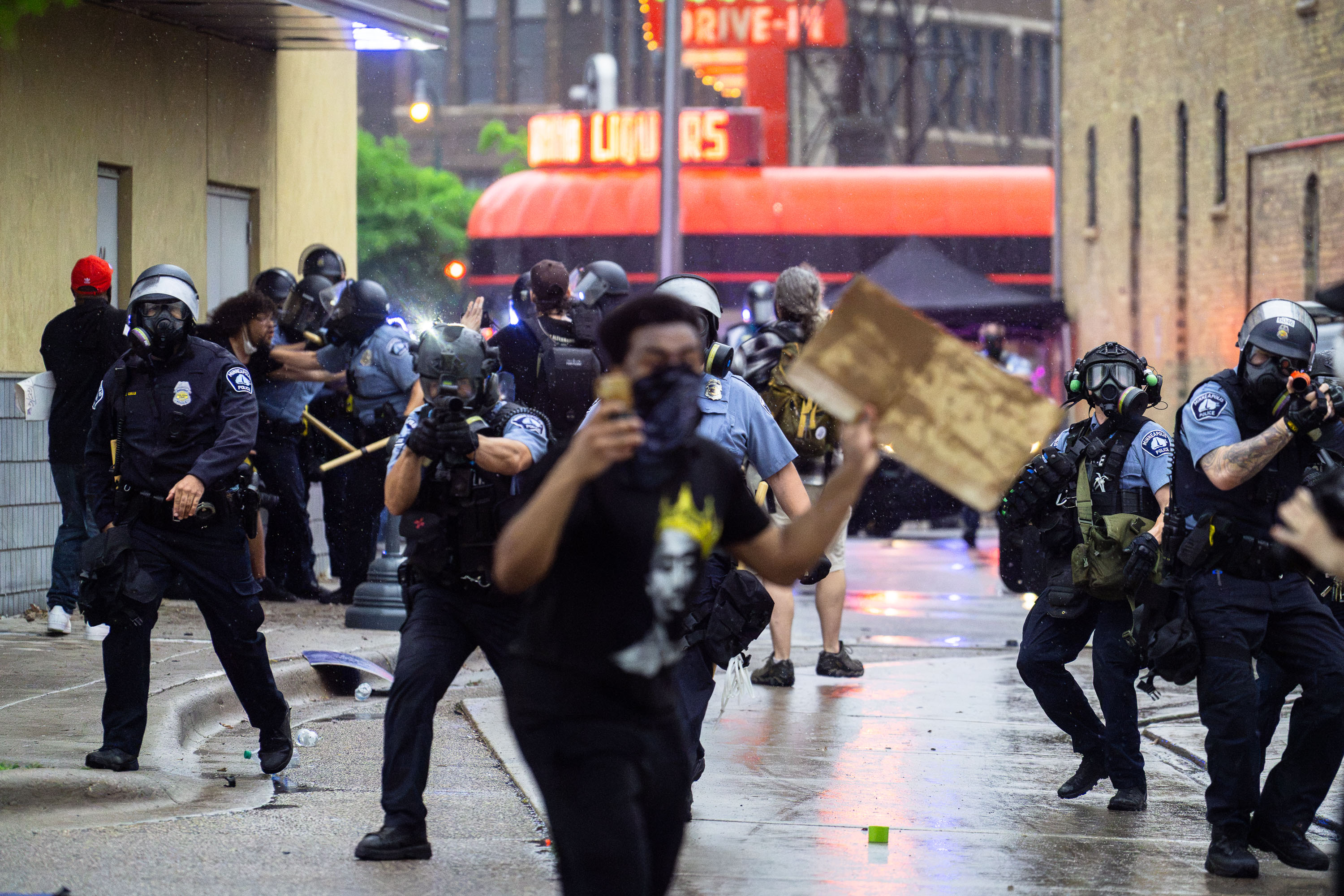
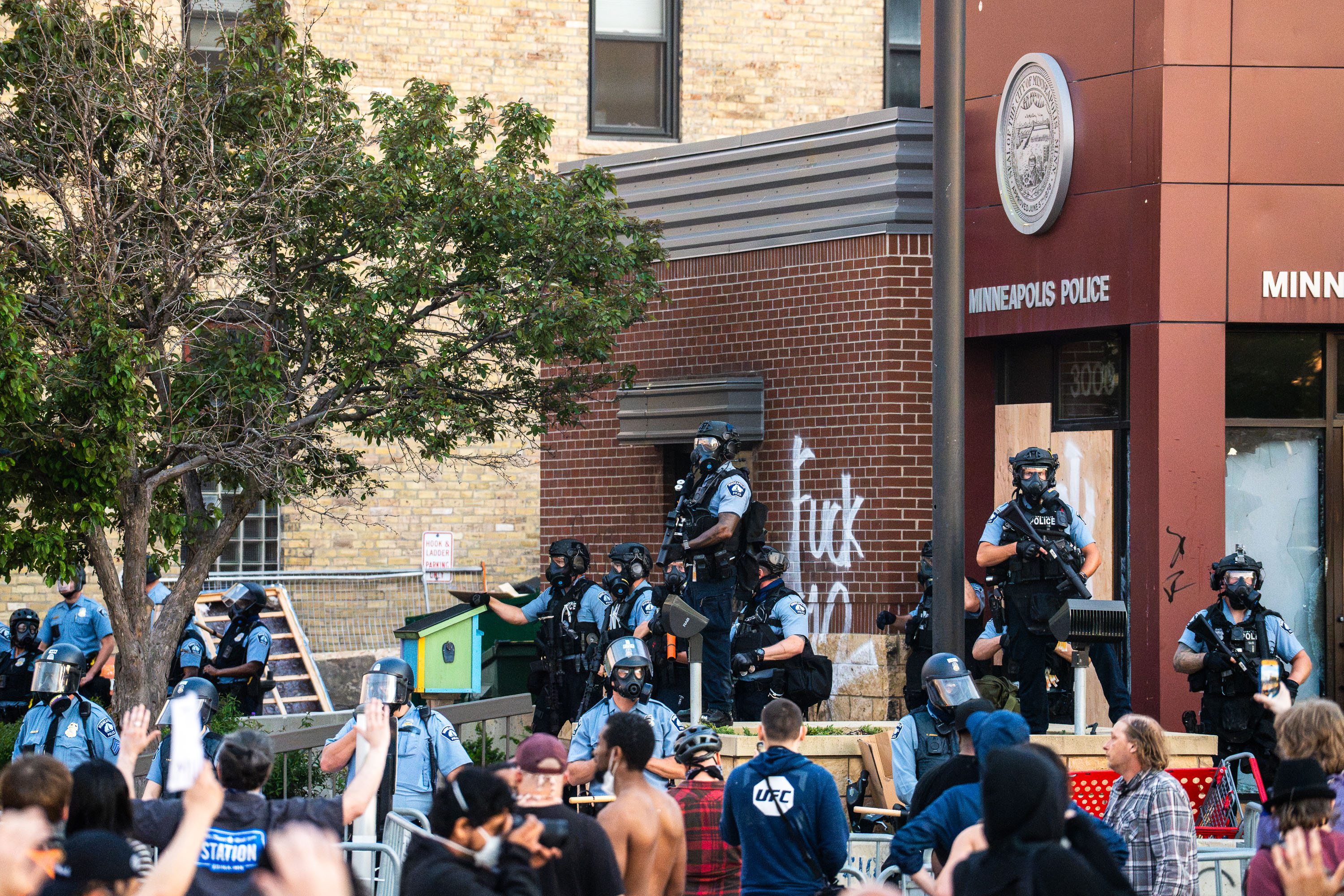
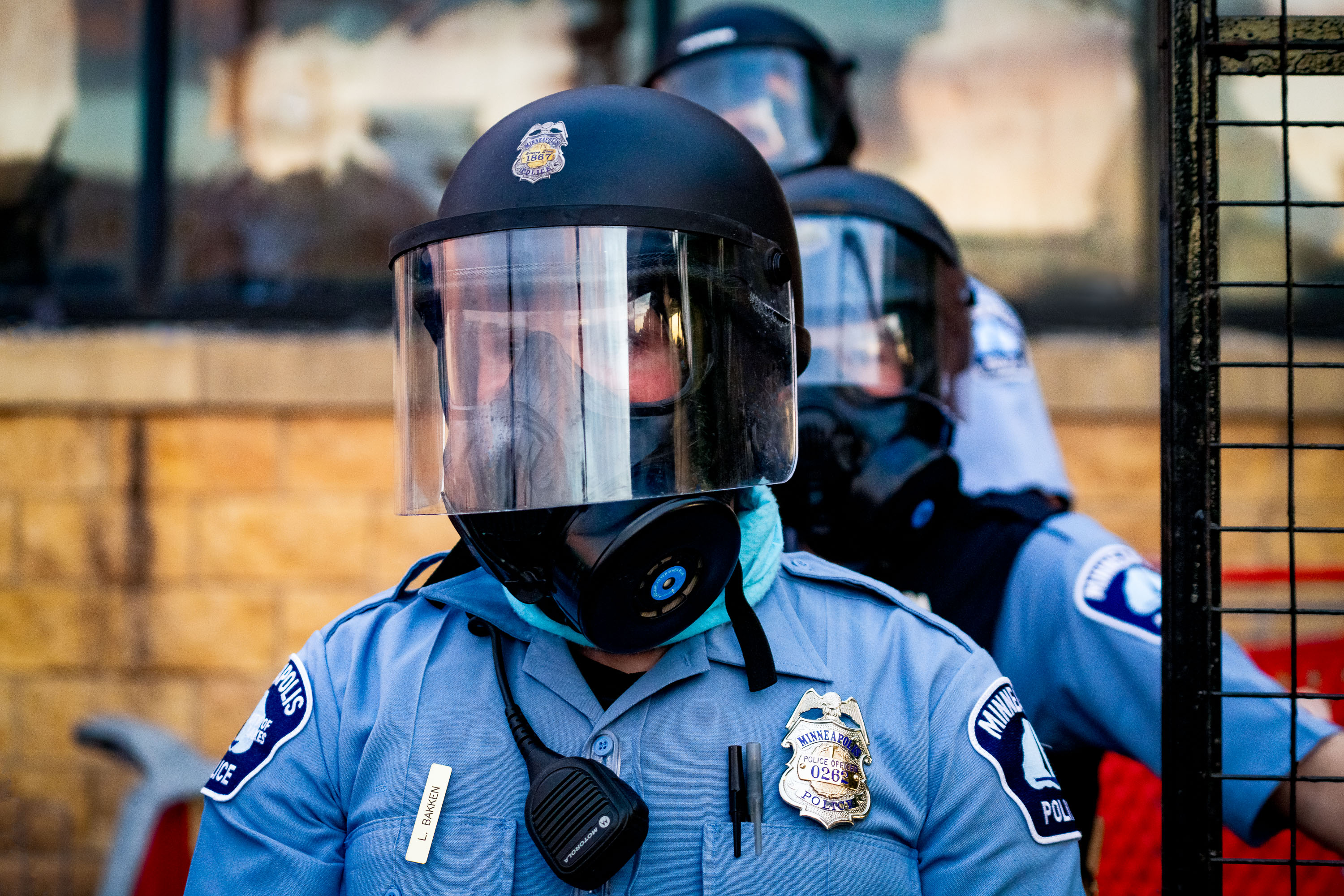
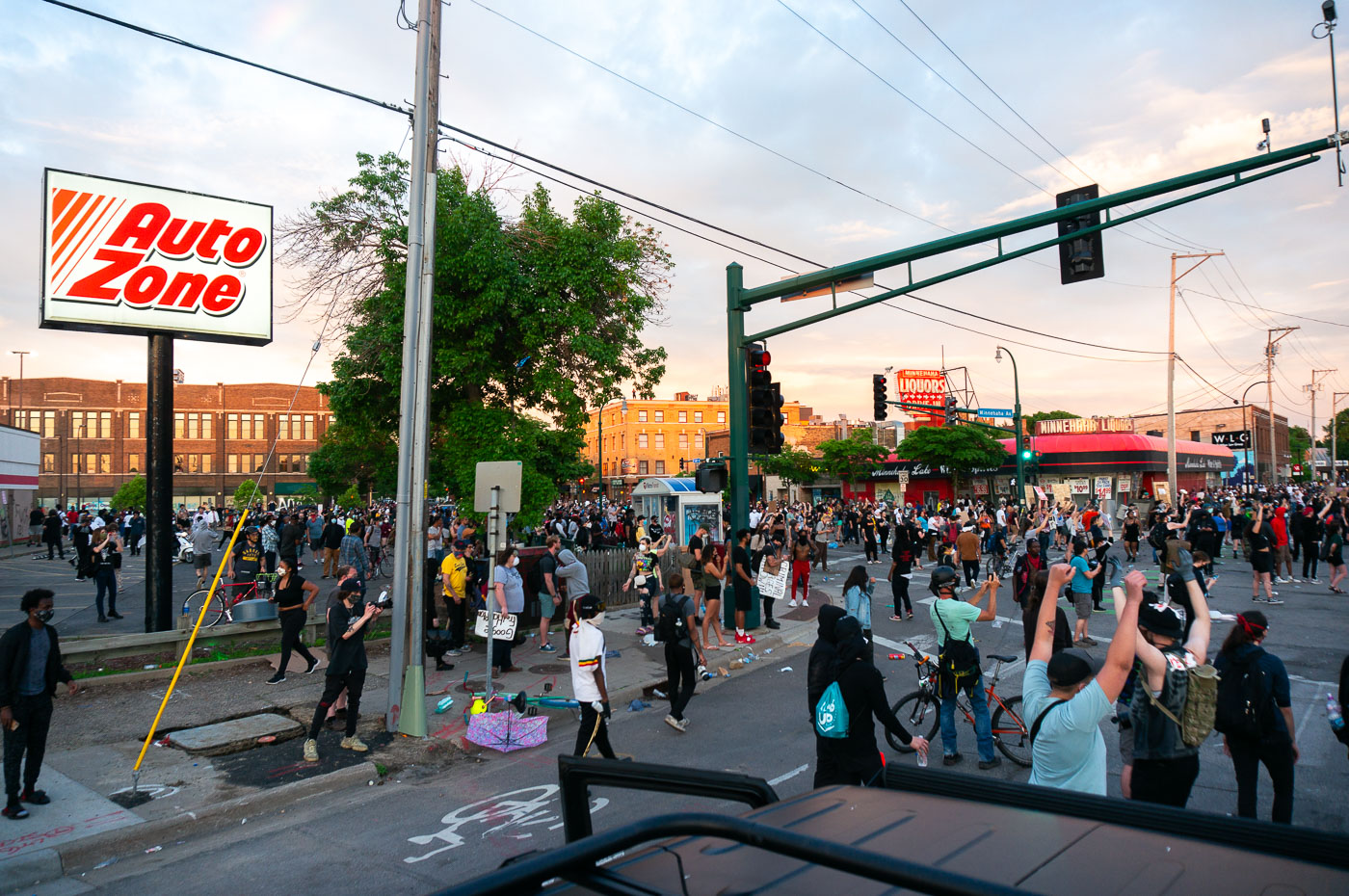
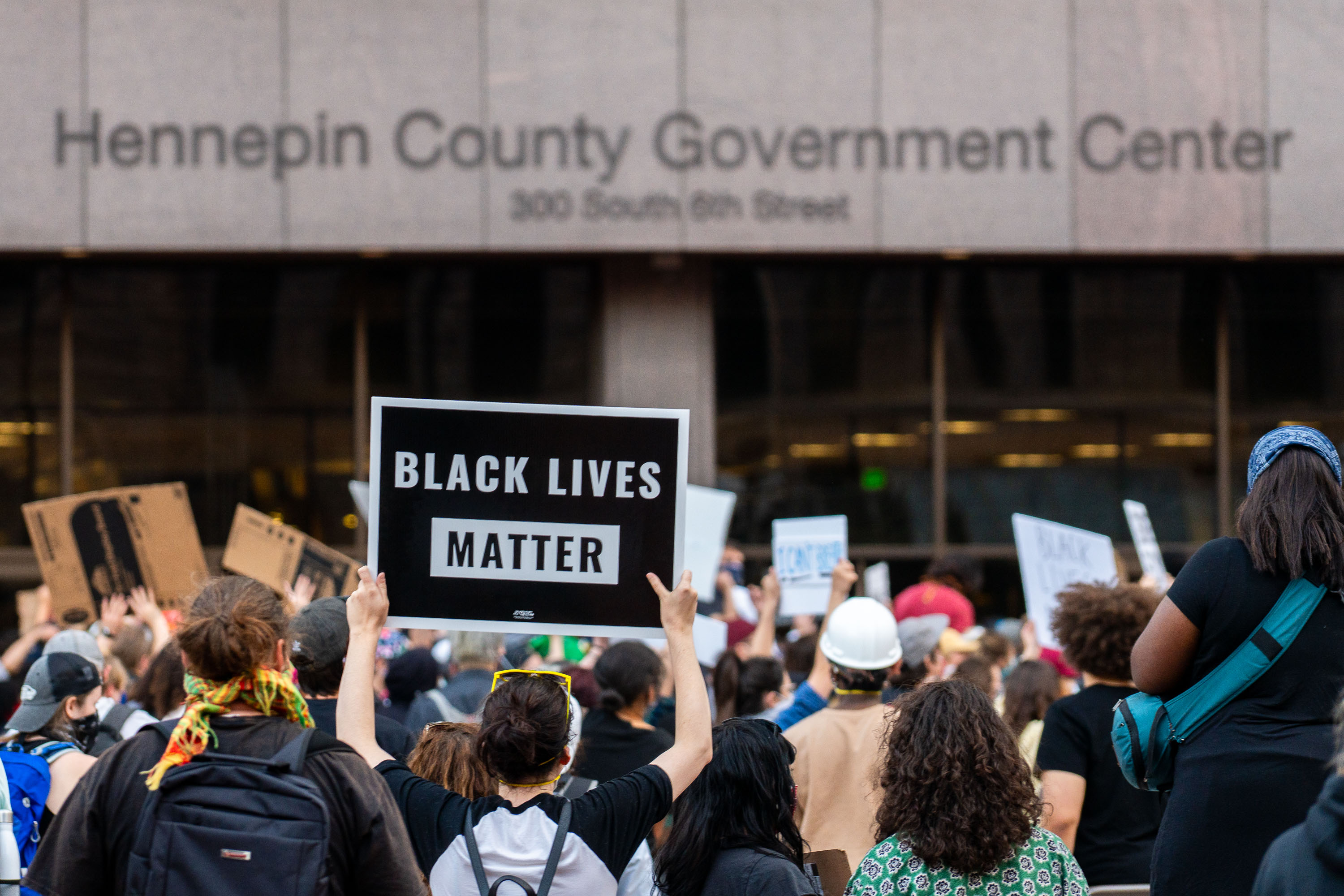
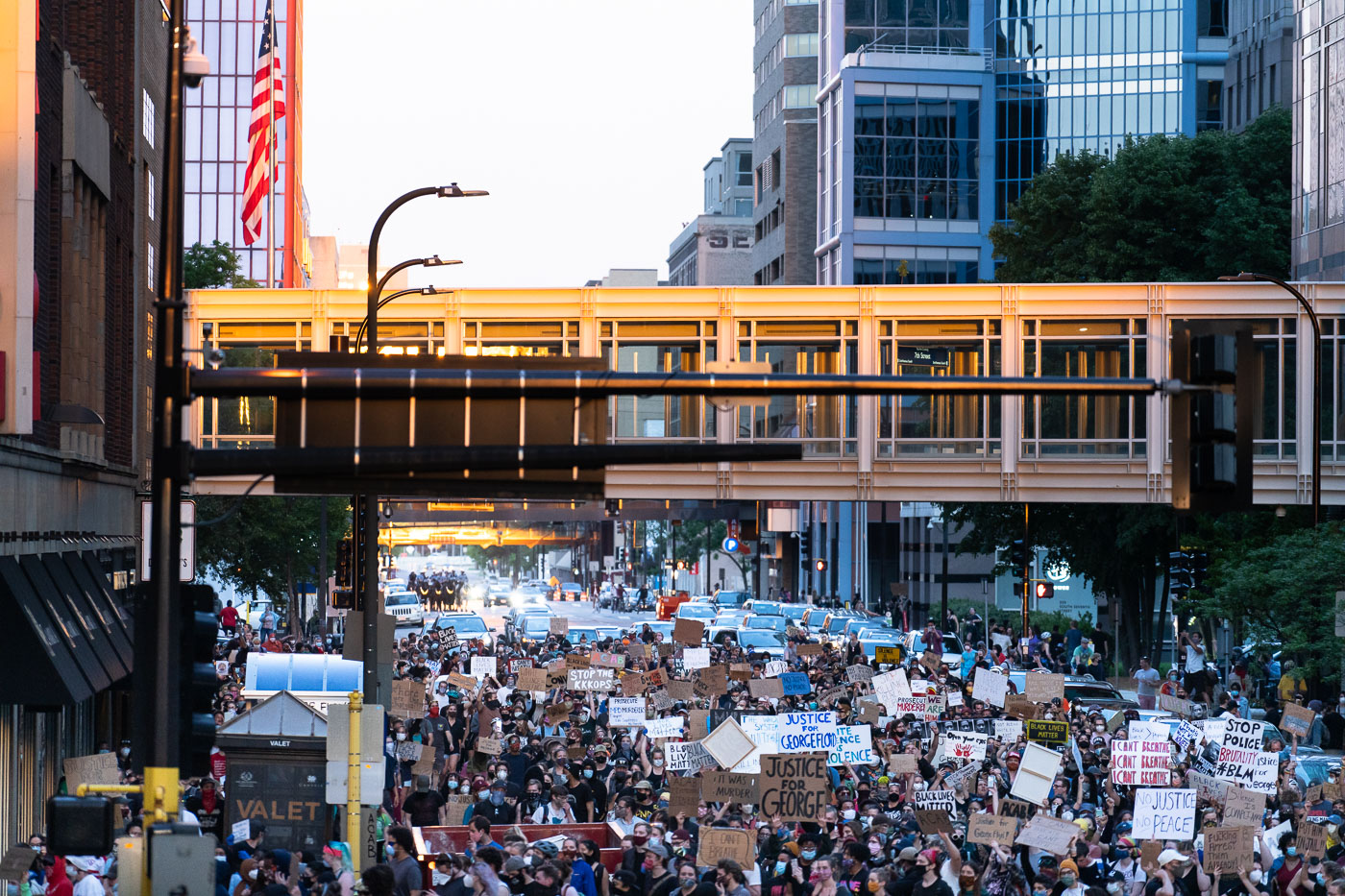
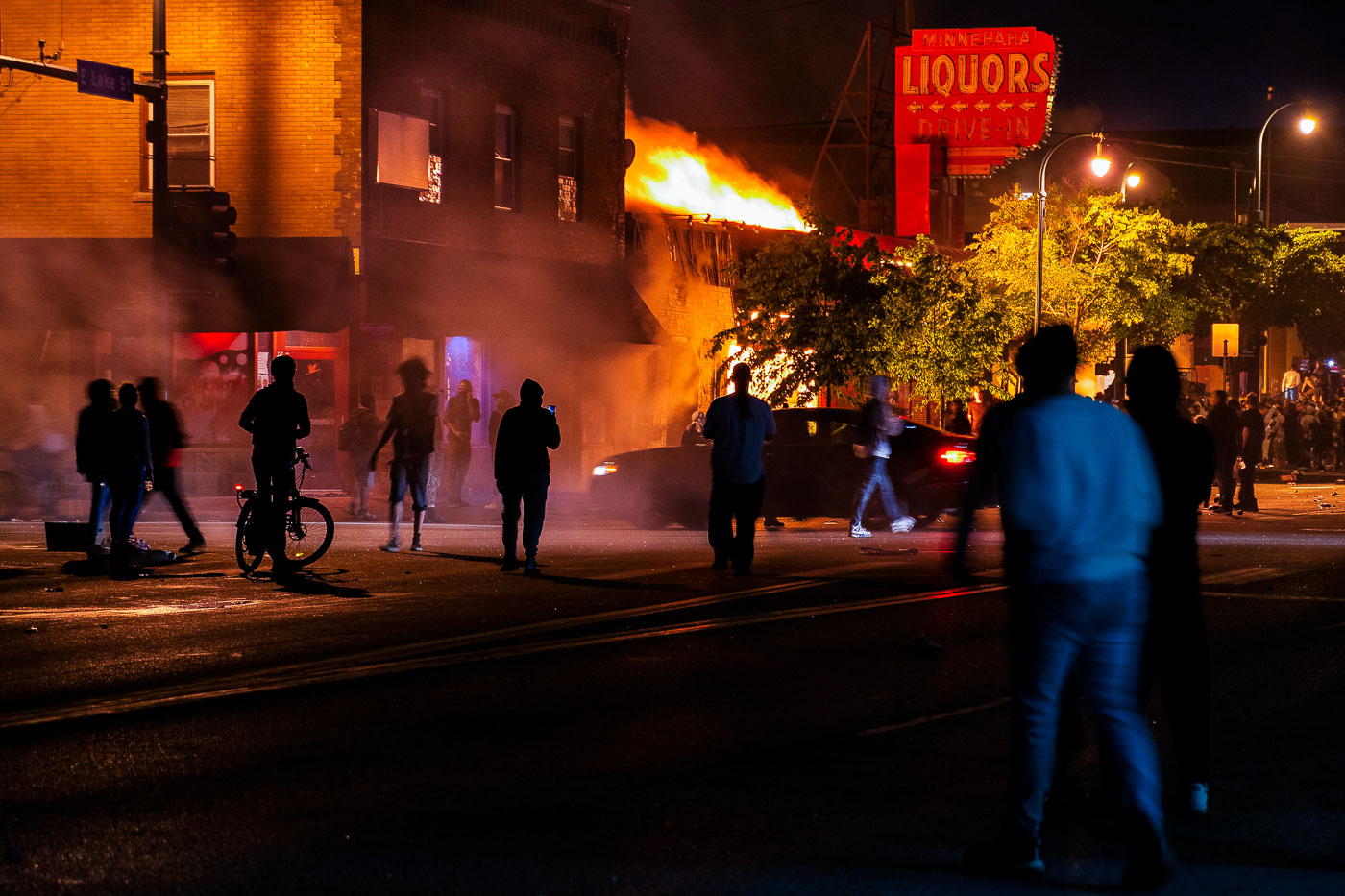
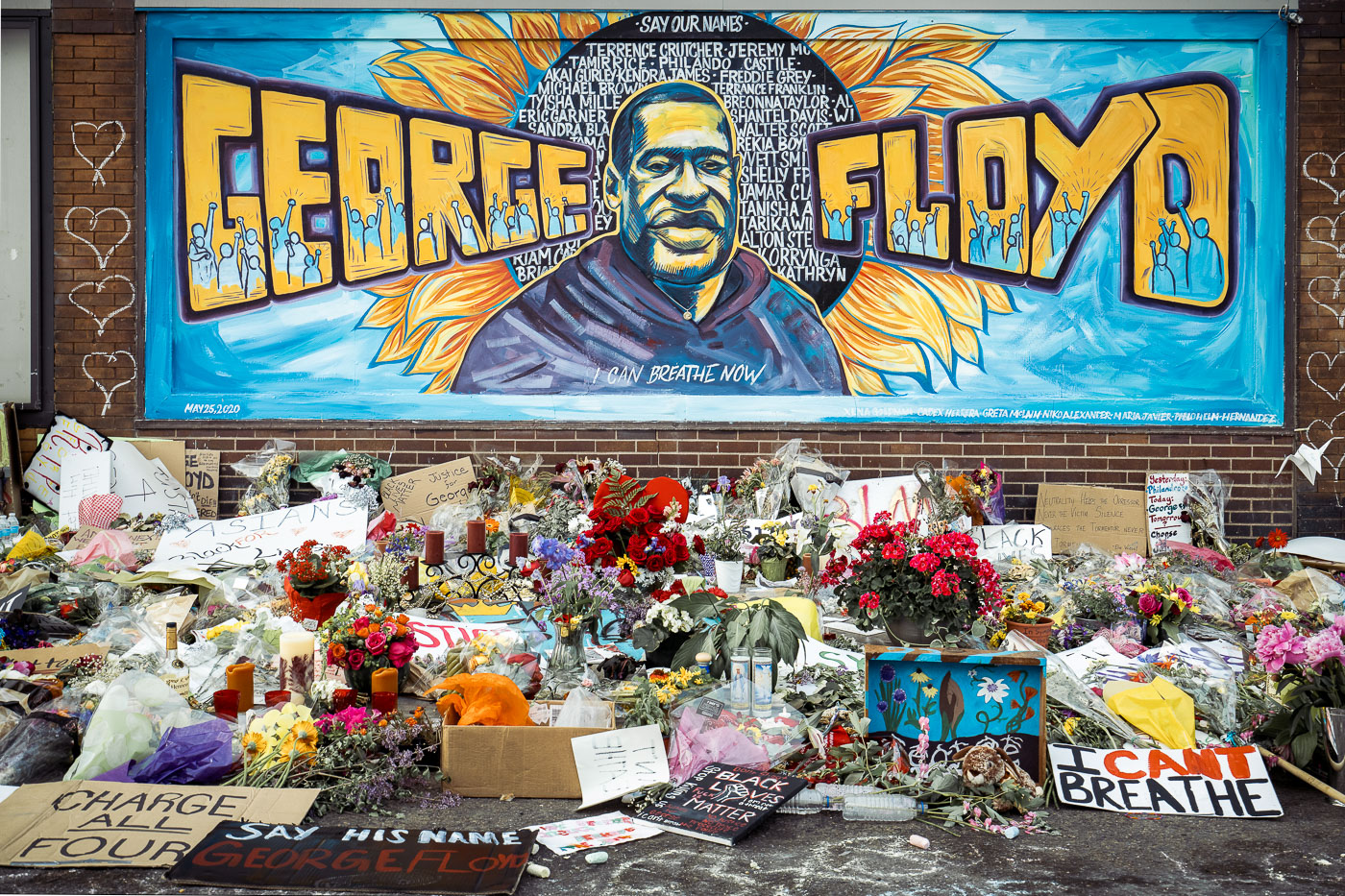
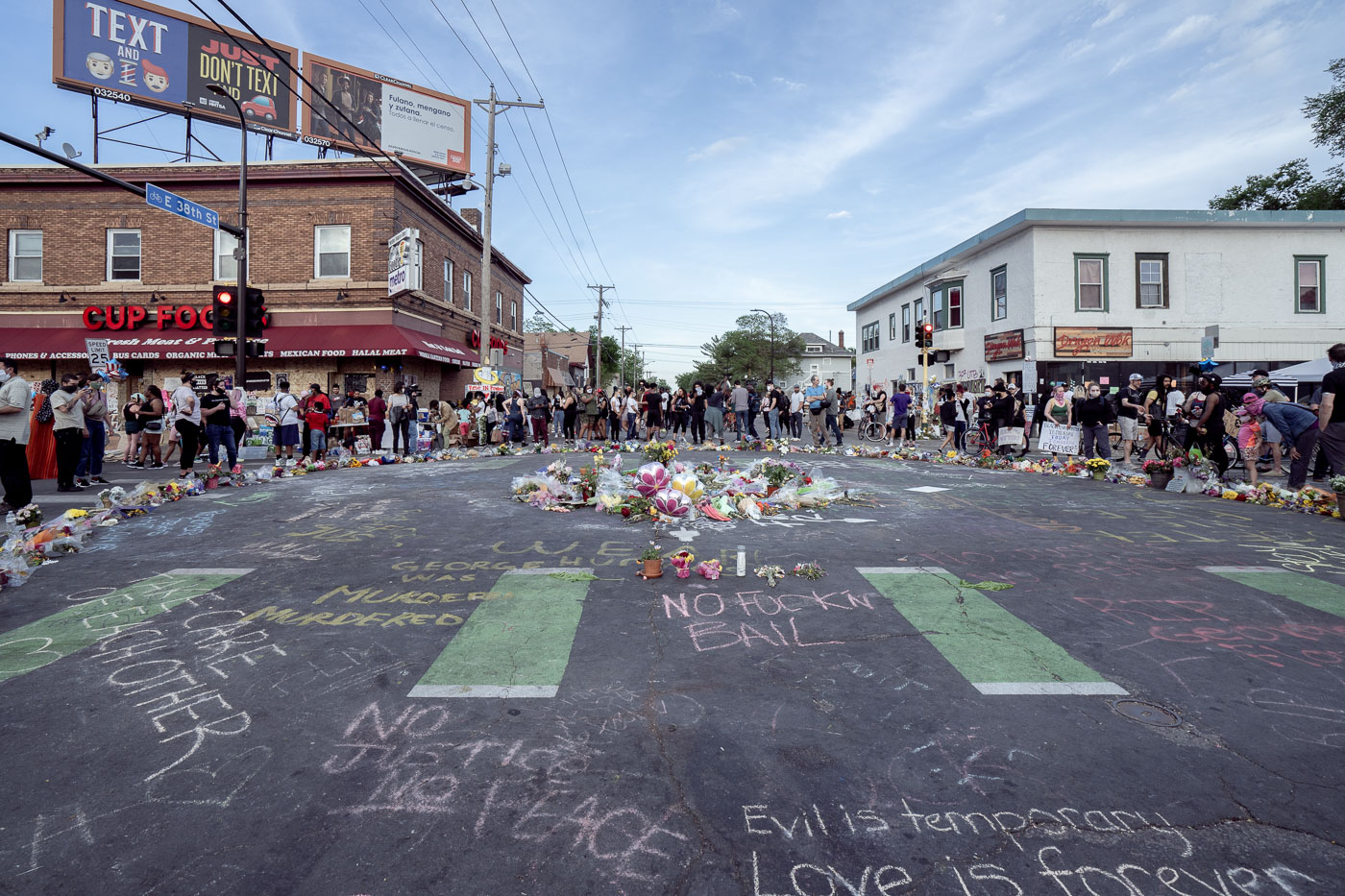
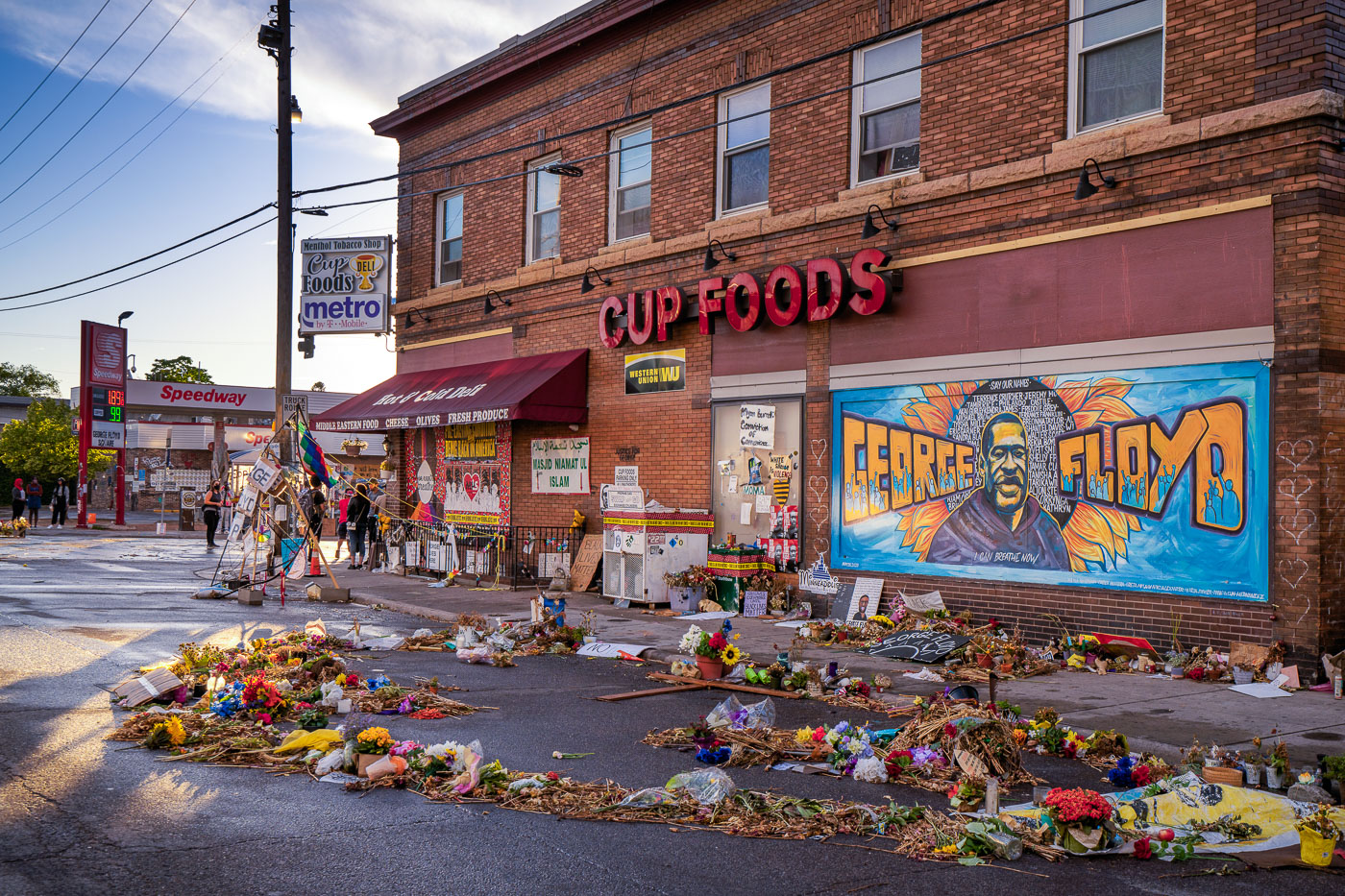
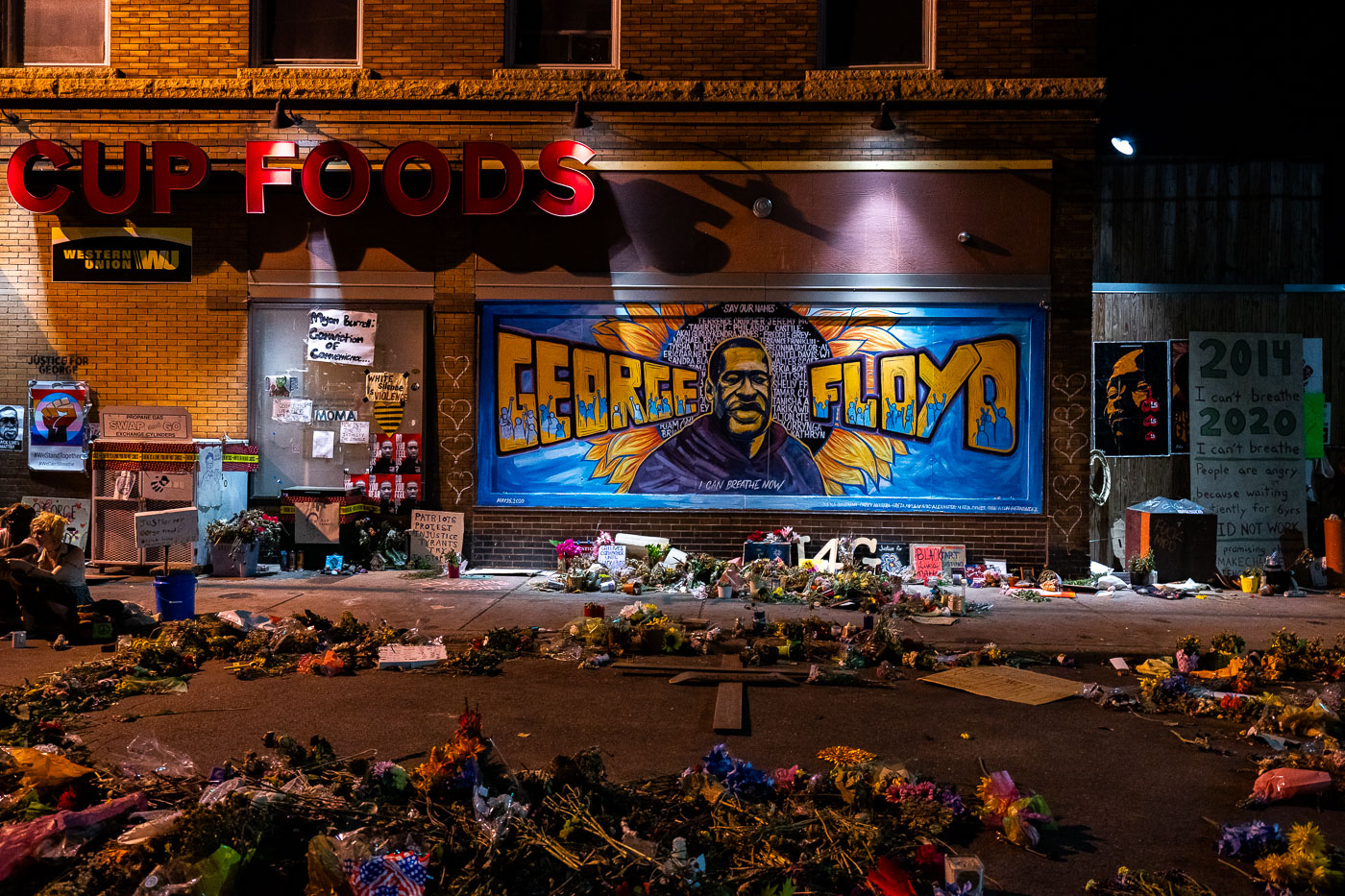
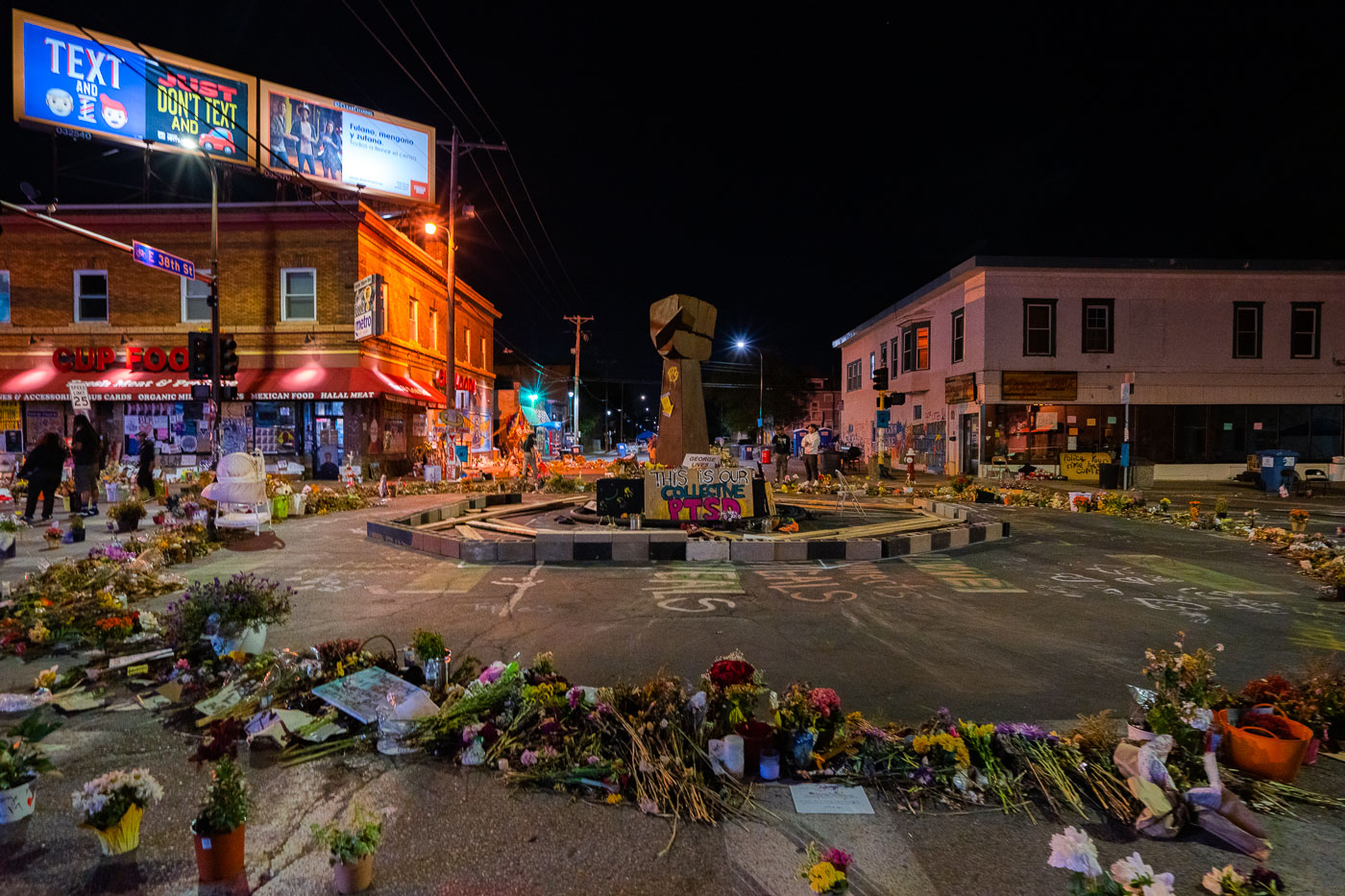
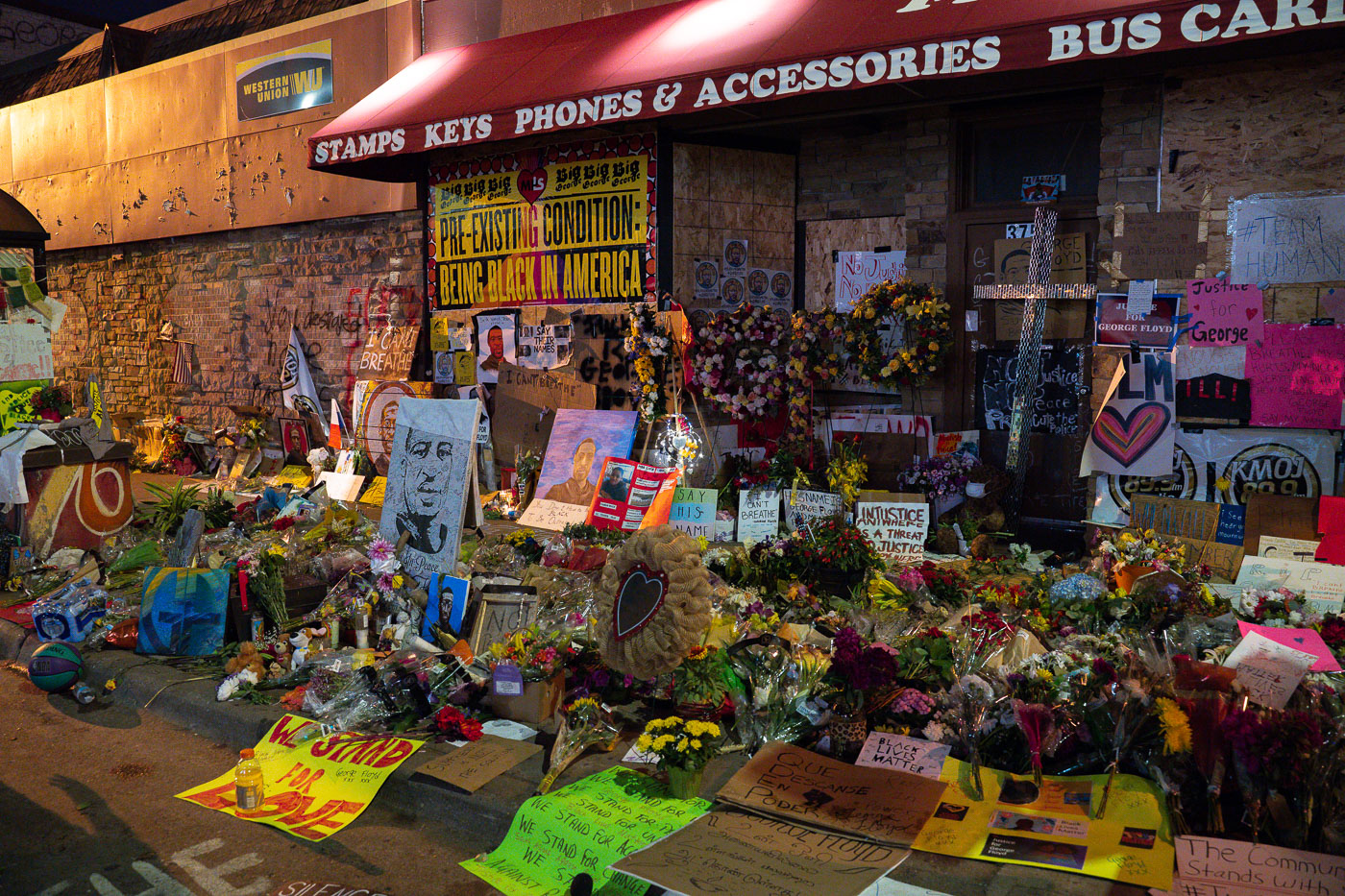
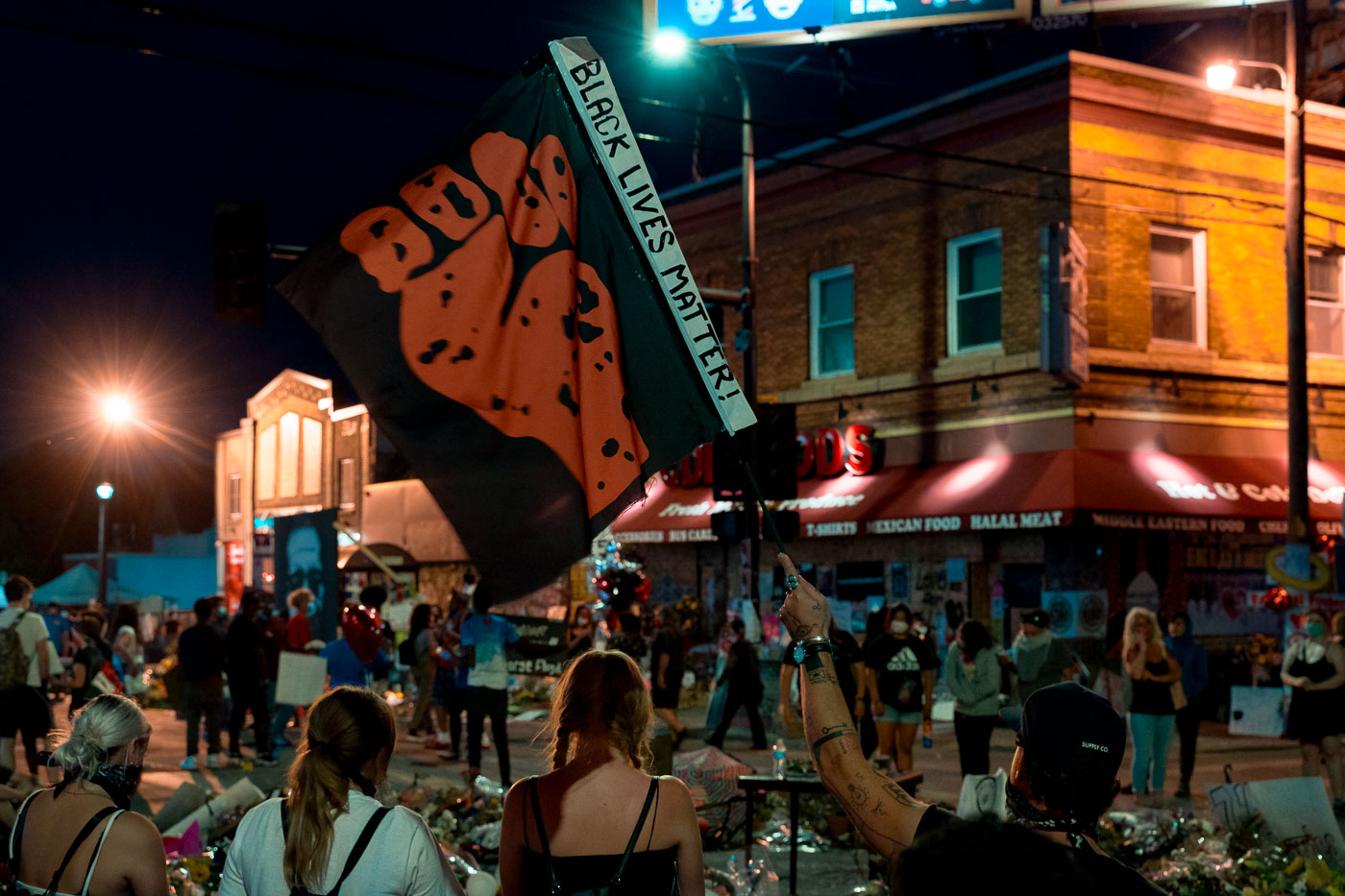
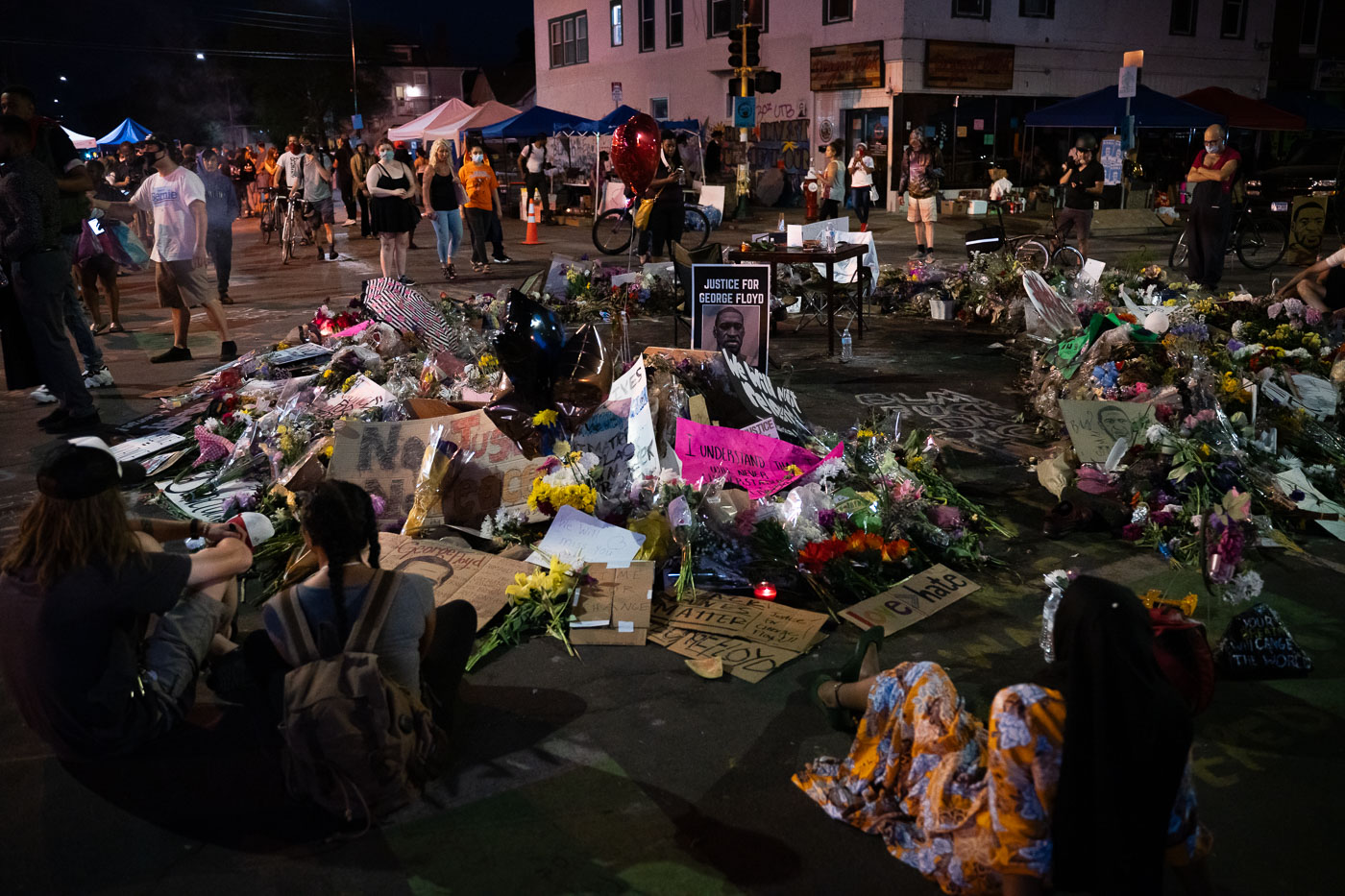
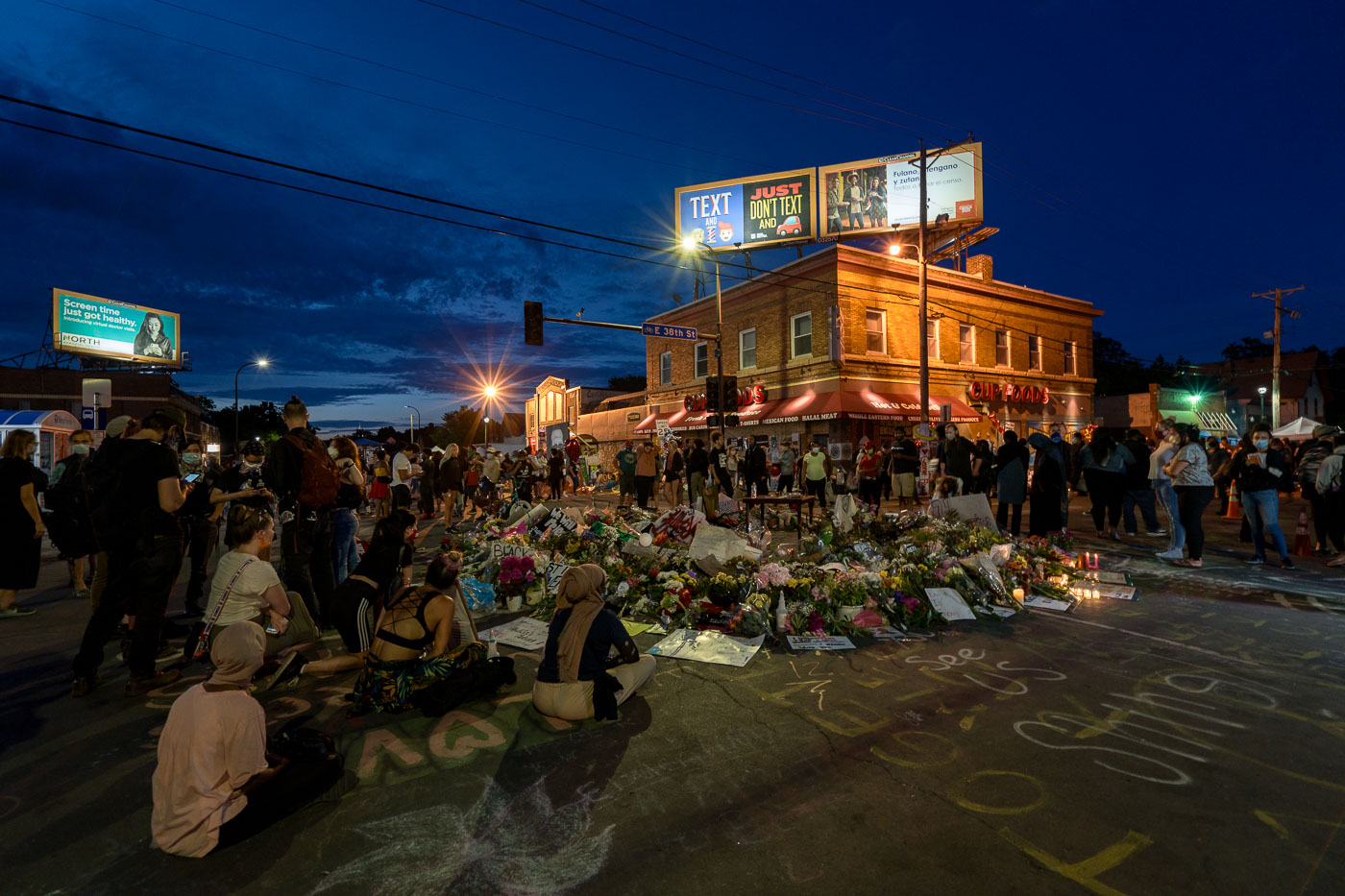
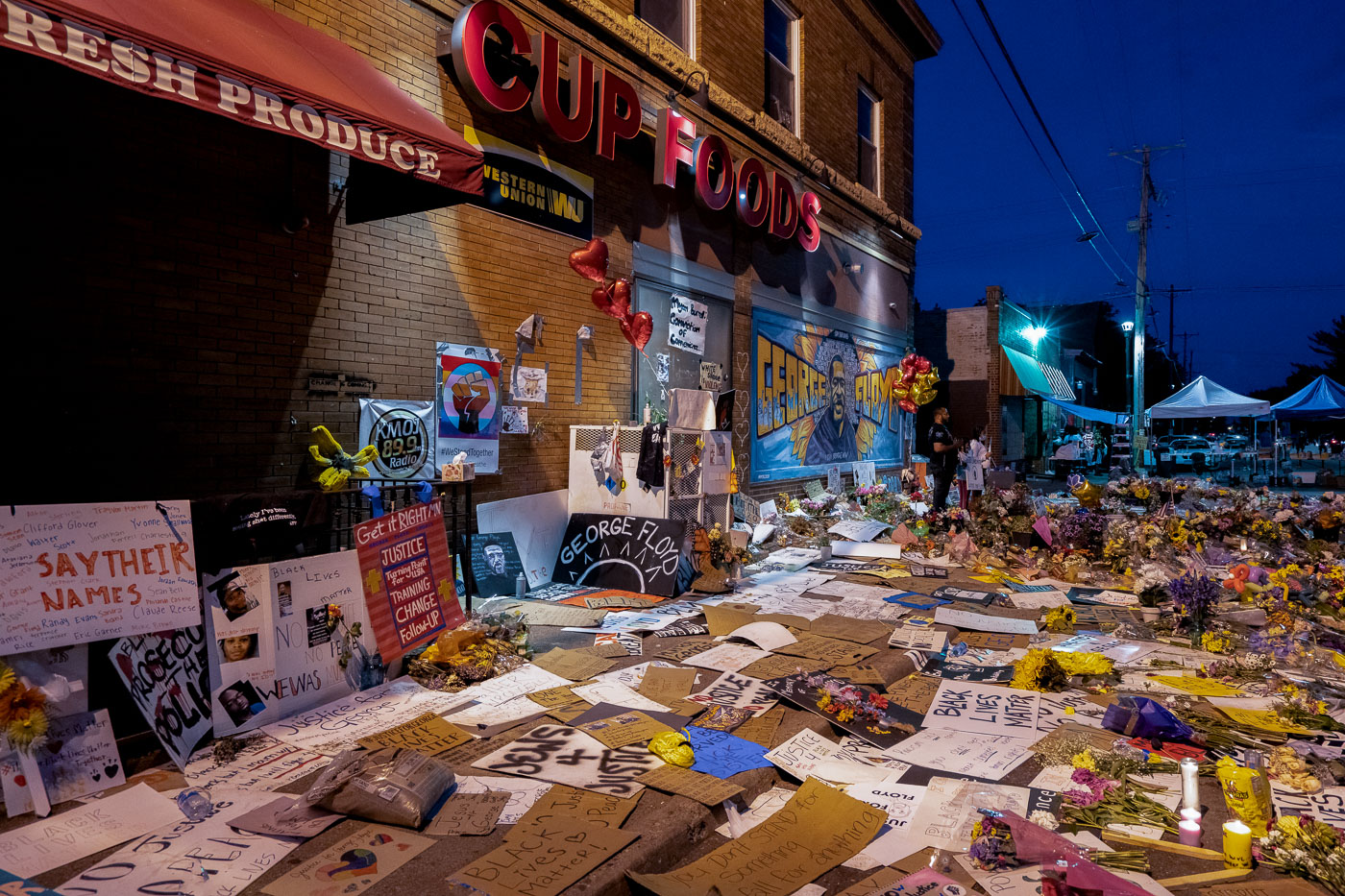
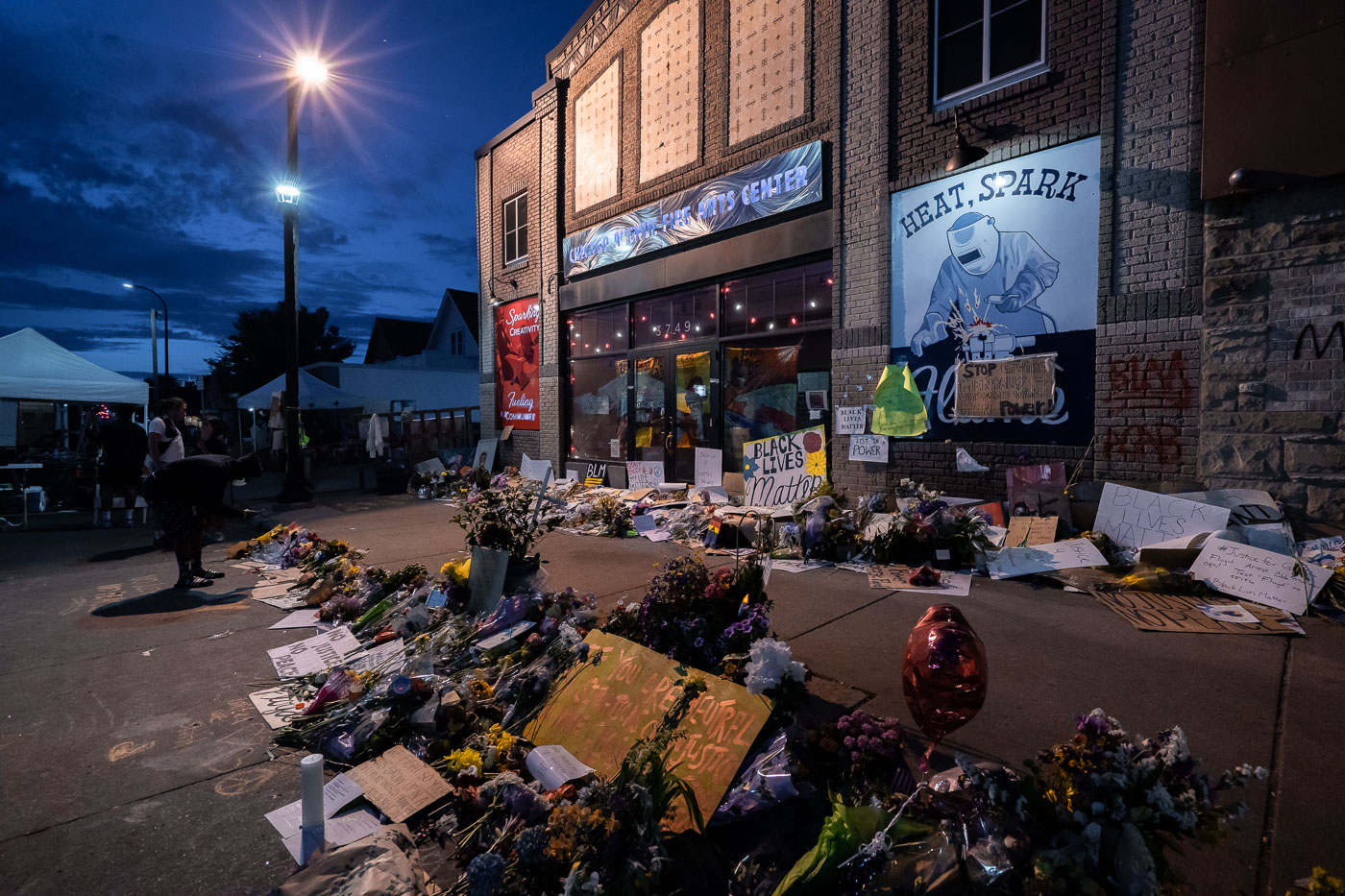
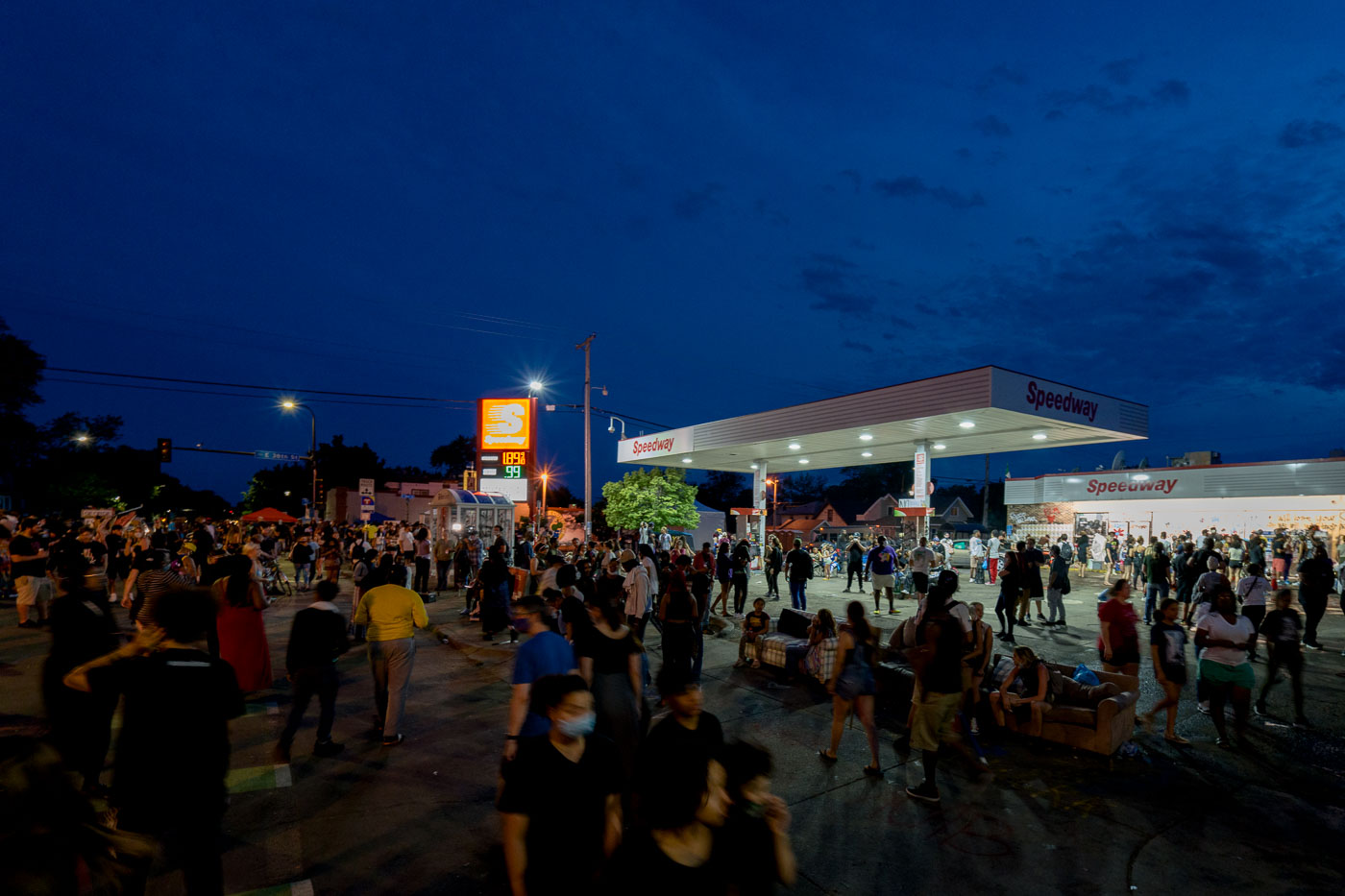
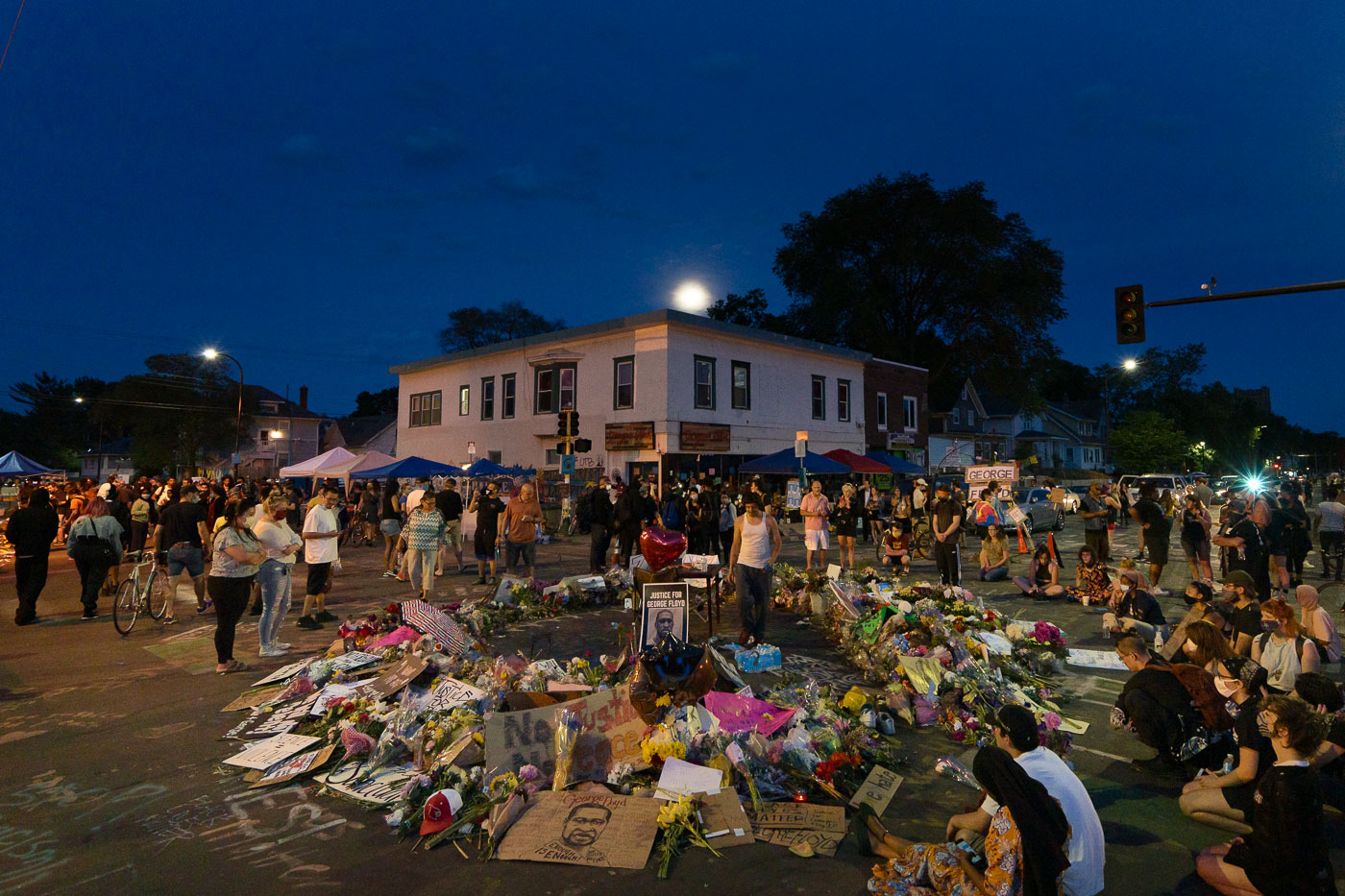
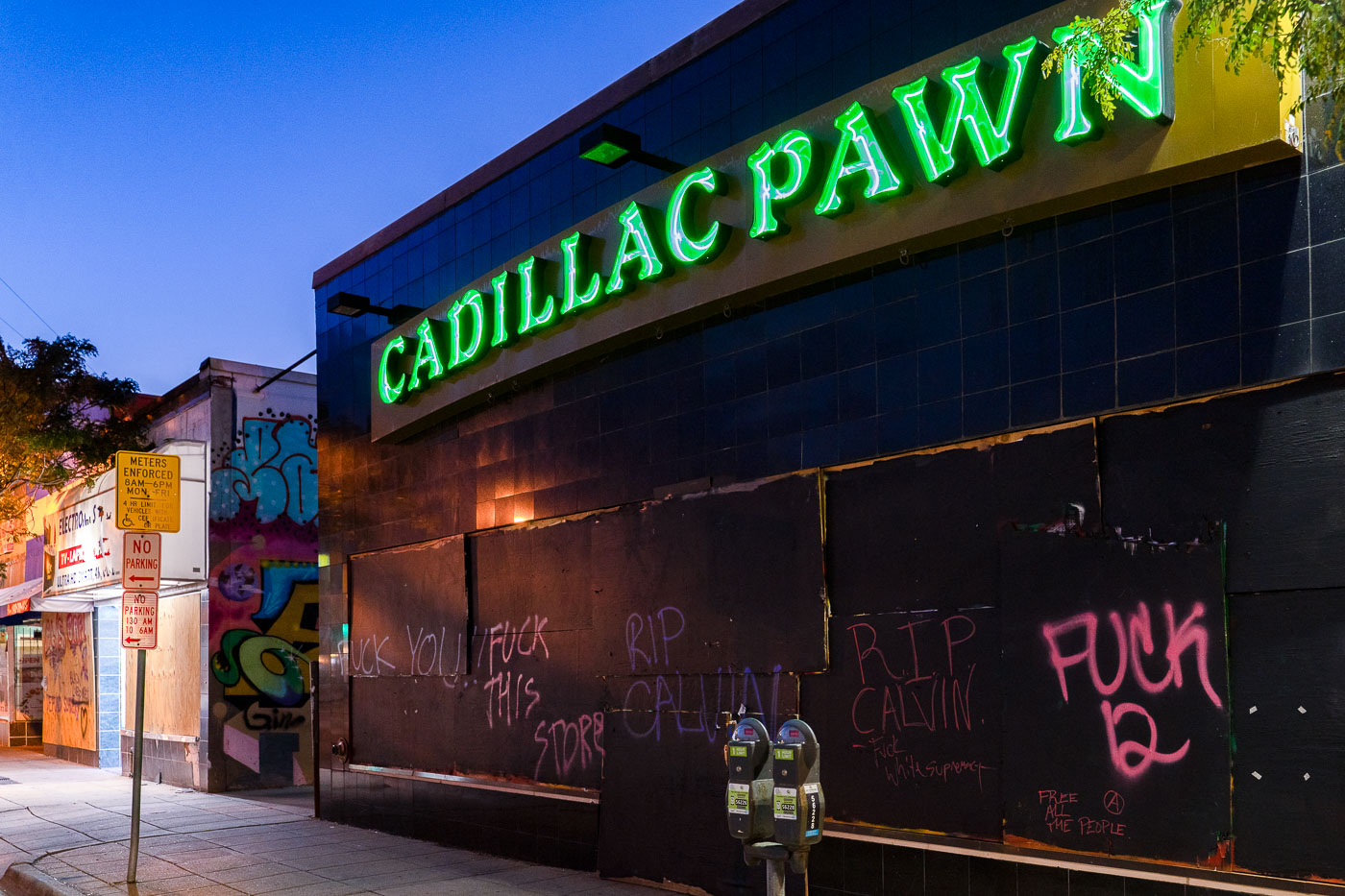
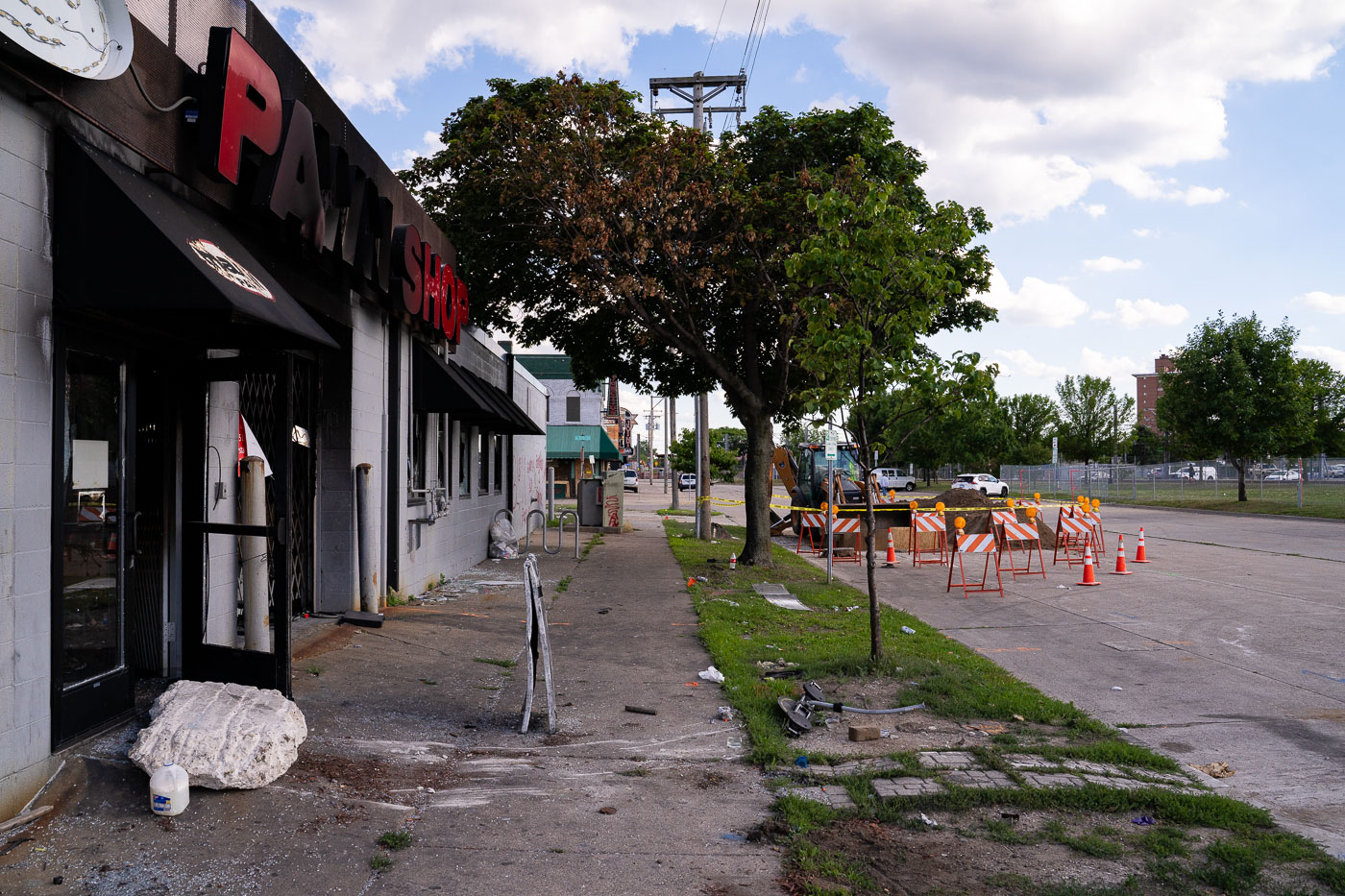
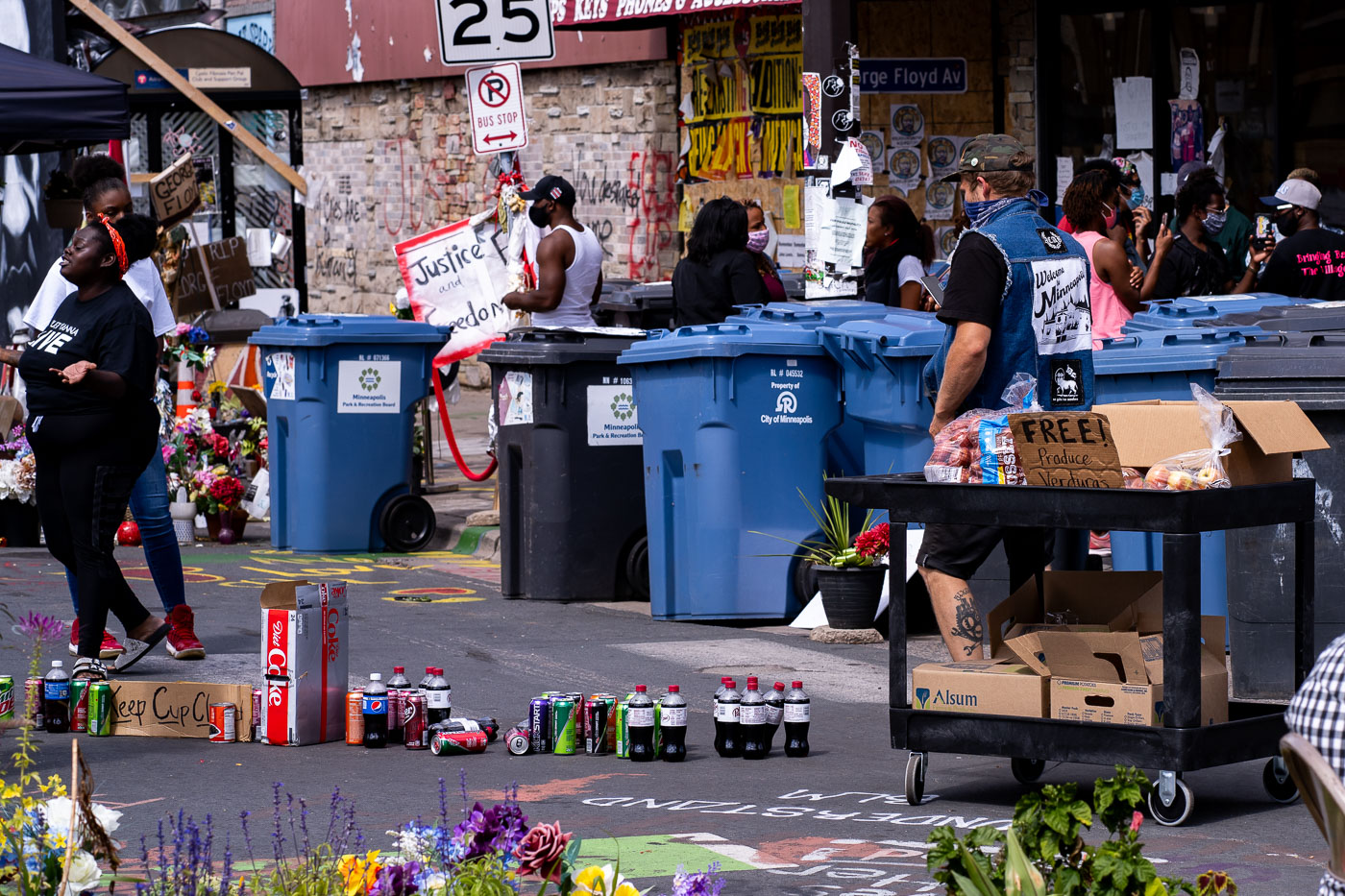
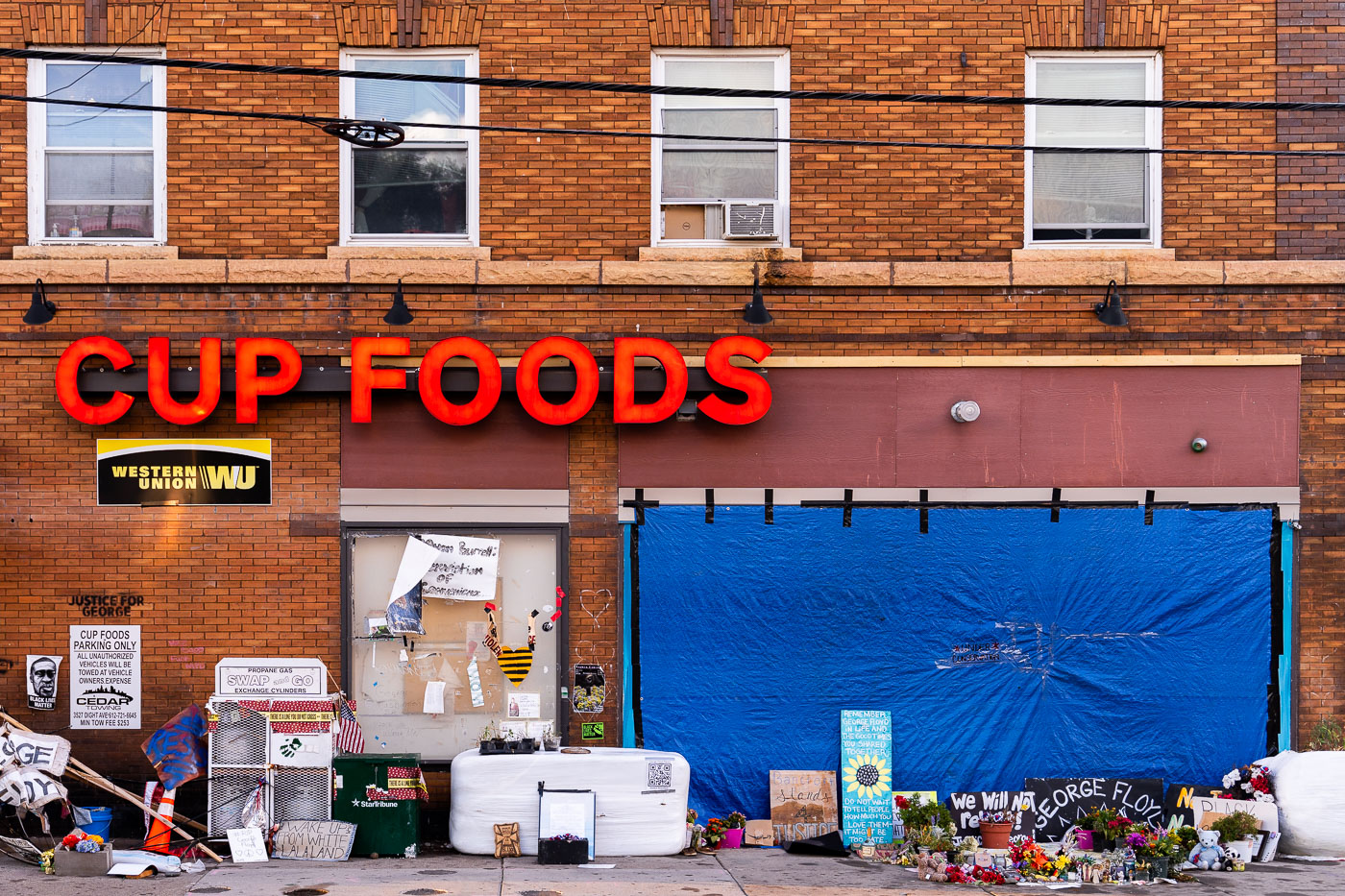
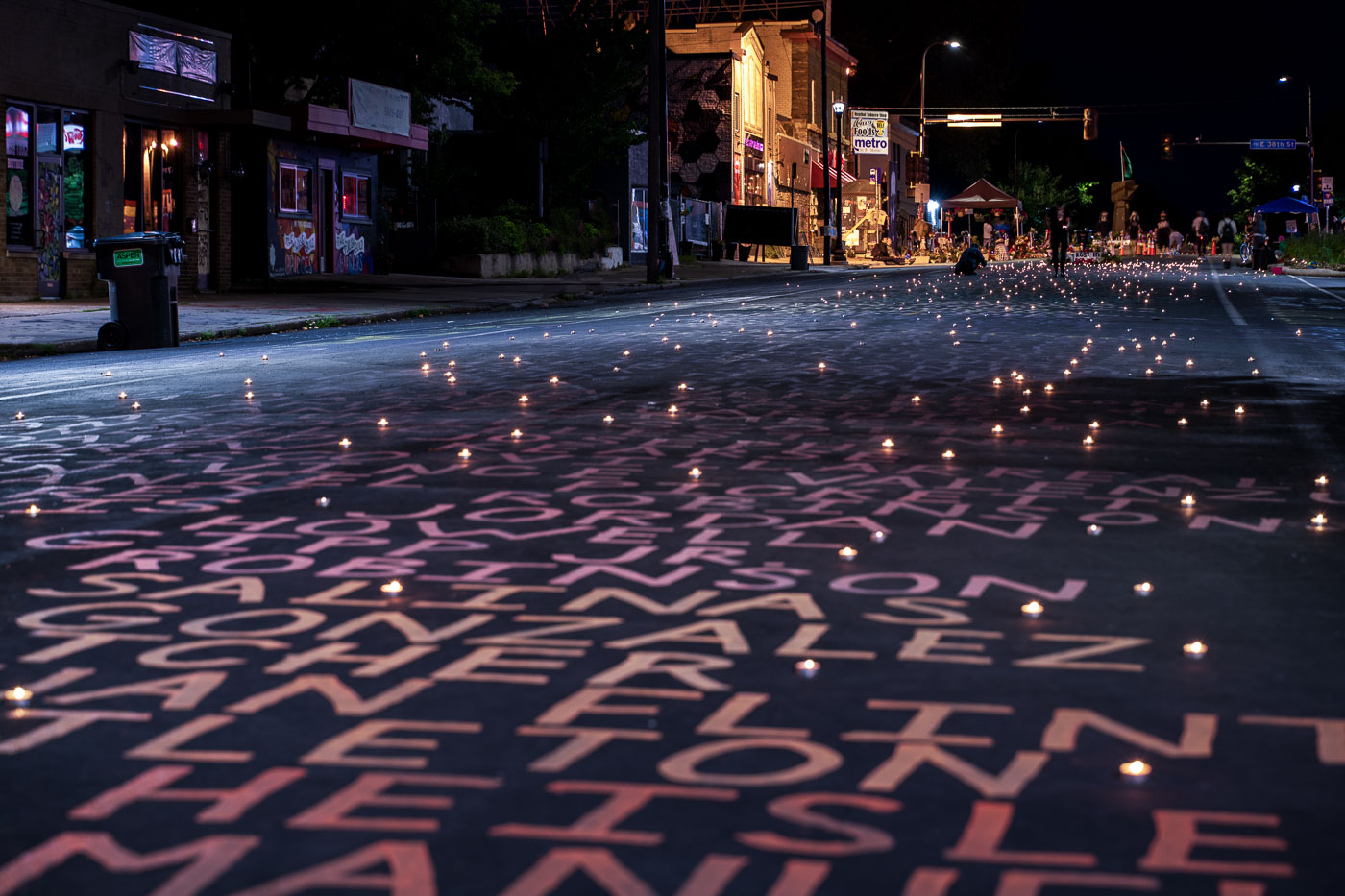
May 5, 2020An emergency vehicle races through a Nicollet Mall intersection in downtown Minneapolis on the night of May 5, 2020. Nicollet Mall is the main shopping street in downtown Minneapolis, a mall twelve blocks long that opened in 1967 and was rebuilt from 2015 to 2017.May 27, 2020East Lake Street in South Minneapolis is crowded with cars and pedestrians outside an electronics store on the night of May 27, 2020, during protests that followed the killing of George Floyd.May 26, 2020A damaged Minneapolis Police squad car, unit 342, sits outside the Third Precinct station in Minneapolis on May 26, 2020, with the Minnehaha Liquor sign visible across the street. Broken windows, blackened doors, and police tape mark the vehicle after unrest following the killing of George Floyd by Minneapolis police officers. The Third Precinct became a major location for protests and confrontations in the days that followed.May 27, 2020Protesters and Minneapolis police officers face each other outside the Minneapolis Police 3rd Precinct at 3000 Minnehaha Avenue in Minneapolis on May 27, 2020. Officers in riot gear stand on the entrance steps and behind metal barricades while demonstrators gather in the street with many raising their hands.May 26, 2020Minneapolis Police officers fire less-lethal munitions on a street near the 3rd Precinct station in Minneapolis on May 26, 2020, as a protester runs through the foreground holding a sign. The officers are wearing helmets and gas masks during demonstrations that followed the killing of George Floyd and intensified around the precinct.May 27, 2020Protesters and Minneapolis police outside the third precinct on May 27th, 2020, the second day of protests following the death of George Floyd.May 27, 2020Minneapolis police officers in riot gear stand outside the Third Precinct station on Minnehaha Avenue in Minneapolis on May 27, 2020. The photograph was made on the second day of protests after the killing of George Floyd, when the precinct had become a central location for demonstrations against police violence and racial injustice.May 26, 2020Two people hold a hand lettered sign reading "BLM, Justice for George Floyd" and listing the Hennepin County District Attorney's phone number on 36th Street in Minneapolis. The sign calls for charges against the officers involved in George Floyd's death on May 25, 2020.May 26, 2020A protester holds a "Black Lives Matter, Stop the Killing" sign at East 38th Street and Chicago Avenue in South Minneapolis on May 26, 2020. The protest comes a day after George Floyd died at the same intersection while in police custody, an event that set off weeks of unrest across the city.May 26, 2020Cup Foods sits at the corner of East 38th Street and Chicago Avenue in Minneapolis, the site where George Floyd was killed by Minneapolis police on May 25, 2020. Crowds fill the intersection the day after his death, carrying signs reading "Stop Letting These Cops Be Judge, Jury, Executioner."May 26, 2020A protester raises a cardboard sign reading "Floyd Castile Clark RIP" near 38th Street and Chicago Avenue in Minneapolis on May 26, 2020. The sign names George Floyd, Philando Castile, and Jamar Clark, Black men killed by police in the Twin Cities area. Floyd died a day earlier at the intersection.May 26, 2020Marchers carry a hand-lettered sign reading "STOP LETTING THESE COPS BE THE JUDGE, JURY & EXECUTIONER" on East 38th Street in Minneapolis on May 26, 2020. The demonstration comes a day after George Floyd died in Minneapolis police custody, and the crowd moves toward the Third Precinct station.May 26, 2020George Floyd Square is the memorial at 38th Street and Chicago Avenue in Minneapolis, where George Floyd died on May 25, 2020. Flowers and handwritten signs, including one reading "I Can't Breathe," cover the pavement at the site.May 26, 2020Cup Foods is a grocery store at East 38th Street and Chicago Avenue in Minneapolis, outside which George Floyd was killed by Minneapolis police on May 25, 2020. A crowd fills the street in front of the store the next day, carrying signs and umbrellas as they gather near the site.May 26, 2020A memorial to George Floyd grows at the corner of East 38th Street and Chicago Avenue in Minneapolis, outside Cup Foods, where he was killed by police on May 25, 2020. A sign reading "Justice for George Floyd" stands among flowers, balloons, and stuffed animals left at the curb.May 26, 2020George Floyd Square sits at East 38th Street and Chicago Avenue in Minneapolis, where George Floyd died on May 25, 2020. Flowers, candles, a teddy bear, and handmade signs reading "Black Lives Matter" and "My Life Matters" cover the pavement at the intersection.May 26, 2020Crowds gather outside the Minneapolis Police 3rd Precinct on Lake Street, holding signs including one reading "Black Lives Matter." The protest comes a day after George Floyd died in police custody on May 25, 2020, after marching roughly two miles from 38th Street and Chicago Avenue.May 26, 2020Protesters gather outside the Minneapolis Police Third Precinct on Lake Street on May 26, 2020, a day after George Floyd died in the custody of a Minneapolis police officer. Some climb onto a brick ledge at the building's entrance while others below hold signs reading "Black Lives Matter."May 26, 2020The Minneapolis Police 3rd Precinct station sits on Minnehaha Avenue, a few blocks from the Minnehaha Liquor store. Crowds gathered there on May 26, 2020, the day after George Floyd died in police custody a few miles away. A protester stands on top of a parked squad car with hands raised as the crowd fills the street below.May 26, 2020A protester carries jugs of milk outside the Minneapolis Police Department's 3rd Precinct station, spray painted with graffiti after demonstrations following the killing of George Floyd by police on May 25, 2020. Protesters often kept milk on hand to rinse tear gas and chemical irritants from their eyes during the unrest. The precinct building was abandoned by police and burned days later as protests continued.May 26, 2020The Minneapolis Police 3rd Precinct station sits on Minnehaha Avenue in south Minneapolis, with boarded up windows and broken glass marking it during the unrest after George Floyd's death on May 25, 2020. Two protesters raise their fists toward the building as graffiti covers the wall beside its investigations entrance.May 26, 2020Minneapolis Police officers deployed less-lethal weapons to disperse protesters near the Minneapolis Police 3rd Precinct in May 2020. These protests erupted following the killing of George Floyd by a Minneapolis police officer, leading to widespread civil unrest.May 26, 2020Minneapolis police officers in riot gear advance down a smoke filled street near the Minneapolis Police 3rd Precinct on Lake Street during protests after the killing of George Floyd in May 2020. The officers push forward in a line as tear gas drifts through the street, clearing protesters and bystanders from the area around the station.May 26, 2020A banner reading "COPS MURDER! ABOLISH POLICE!" hangs below graffiti on a wall along Lake Street in South Minneapolis on May 26, 2020. The messages went up the day after George Floyd died in Minneapolis police custody on May 25, 2020.May 27, 2020Dollar Tree store in Minneapolis has its front windows broken out, with glass and debris left on the sidewalk after unrest broke out across the city following the killing of George Floyd on May 25, 2020.May 27, 2020This Target store sits near the Minneapolis Police 3rd Precinct on Lake Street. Smoke fills the self-checkout area on May 27, 2020, during unrest following the killing of George Floyd.May 27, 2020The interior of a Target store in Minneapolis is filled with smoke or haze, with merchandise scattered across the floor and damaged displays visible on May 27, 2020. The damage occurred during the unrest that followed the murder of George Floyd, when businesses across Minneapolis were vandalized and looted.May 27, 2020A Target shopping center sign in Minneapolis is marked with graffiti reading “Justice for George” and “Abolish Police” on May 27, 2020. The sign also lists Cub Foods and Dollar Tree, while a crowd gathers at street level near the commercial center. This location was across from the Minneapolis Police Third Precinct, which became a major gathering point in the protests following the killing of George Floyd.May 27, 2020The Target store on East Lake Street in Minneapolis is shown on May 27, 2020, as people and vehicles crowd the parking lot during looting and unrest after the killing of George Floyd. The store stood near the Minneapolis Police Department’s 3rd Precinct, an area that became a major center of protest and property damage in the first days after Floyd’s death.May 27, 2020Protesters gather outside the Minneapolis Police 3rd Precinct on East Lake Street near Minnehaha Avenue in Minneapolis on May 27, 2020. The demonstration took place two days after the death of George Floyd in police custody, as crowds assembled at the Third Precinct station. Minneapolis police officers are visible outside the building and on the roof while people in the street hold signs and raise their hands toward the precinct.May 27, 2020Minneapolis police officers stand on the roof and at the entrance of the Minneapolis Police 3rd Precinct on Lake Street in Minneapolis on May 27, 2020, as protesters gather behind barricades outside the building. Several officers aiming less-lethal launchers from the roof, while boarded and damaged windows are visible across the front of the precinct. The station became a central location in the protests that followed the killing of George Floyd earlier that week.May 27, 2020Minneapolis Police officers stand on the roof of the department’s 3rd Precinct station in south Minneapolis on May 27, 2020. Several officers are equipped with helmets, shields, and less-lethal launchers as the building became a flashpoint during protests that followed the killing of George Floyd two days earlier.May 27, 2020Minneapolis Police officers in riot gear stand outside the department’s 3rd Precinct station on Lake Street in Minneapolis on May 27, 2020. The building’s entrance and windows are boarded and broken, with graffiti visible on the plywood as crowds gather in the foreground.May 27, 2020Minneapolis Police on the roof of the 3rd Precinct as protesters gathered outside following the killing of George Floyd days earlier.May 27, 2020Protesters gather at Lake Street and Minnehaha Avenue in south Minneapolis on May 27, 2020, during demonstrations following the killing of George Floyd. The intersection, directly across from the Minneapolis Police 3rd Precinct, became a major gathering point that evening.May 27, 2020A protester spray-paints anti-police graffiti on a boarded Target sign in Minneapolis, Minnesota, near the Minneapolis Police 3rd Precinct on May 27, 2020. The messages on the panel include “COPS R SLAVE CATCHERS” and “Fuck 12,” written during unrest that followed the killing of George Floyd.May 27, 2020A protester holds a hand-lettered sign reading “Cold Blooded Murder” outside the Minneapolis Police 3rd Precinct on Lake Street in Minneapolis on May 27, 2020. The precinct became a central gathering point in demonstrations following the killing of George Floyd by Minneapolis police officers.May 27, 2020A Minneapolis Police officer in gas mask, helmet, and tactical gear reloads a less-lethal launcher outside the Minneapolis Police 3rd Precinct in Minneapolis on May 27, 2020. The photograph was made during the protests that followed the killing of George Floyd, when the precinct became a central location for clashes between demonstrators and law enforcement.May 27, 2020A Minneapolis Police officer in gas mask and tactical gear aims a less-lethal launcher outside the Minneapolis Police 3rd Precinct in Minneapolis, Minnesota. The photograph was made on May 27, 2020, during protests following the killing of George Floyd by Minneapolis police officers.May 27, 2020Minneapolis Police officers in riot gear and gas masks stand outside the department’s 3rd Precinct station in Minneapolis on May 27, 2020, during protests following the killing of George Floyd.May 27, 2020Minneapolis Police officers in riot gear stand outside the Third Precinct station on Lake Street in Minneapolis on May 27, 2020. The precinct became a central location during the unrest that followed the killing of George Floyd.May 27, 2020A man on a motorcycle confronts Minneapolis Police officers stationed outside the 3rd Precinct during protests in May 2020. These protests began on May 26, 2020, following the death of George Floyd while in police custody. On the second day of protests, a crowd gathered near the precinct, which served as a focal point for public outcry against police brutality. Officers, protected by metal barriers, maintained a perimeter as protesters voiced their grievances.May 27, 2020Outside Cadillac Pawn on Lake Street in South Minneapolis during protests and riots following the death of George Floyd 2 days earlier.
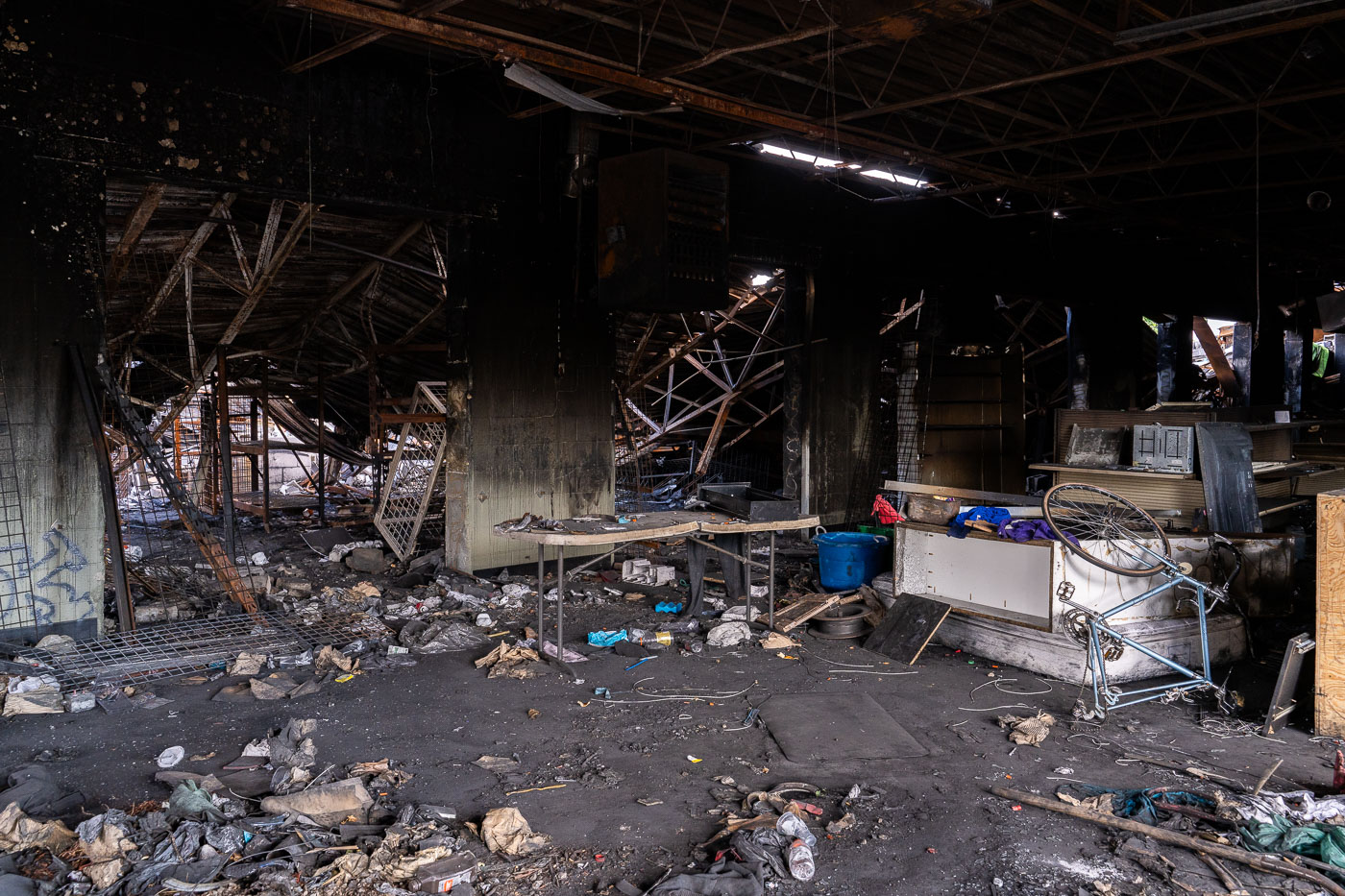
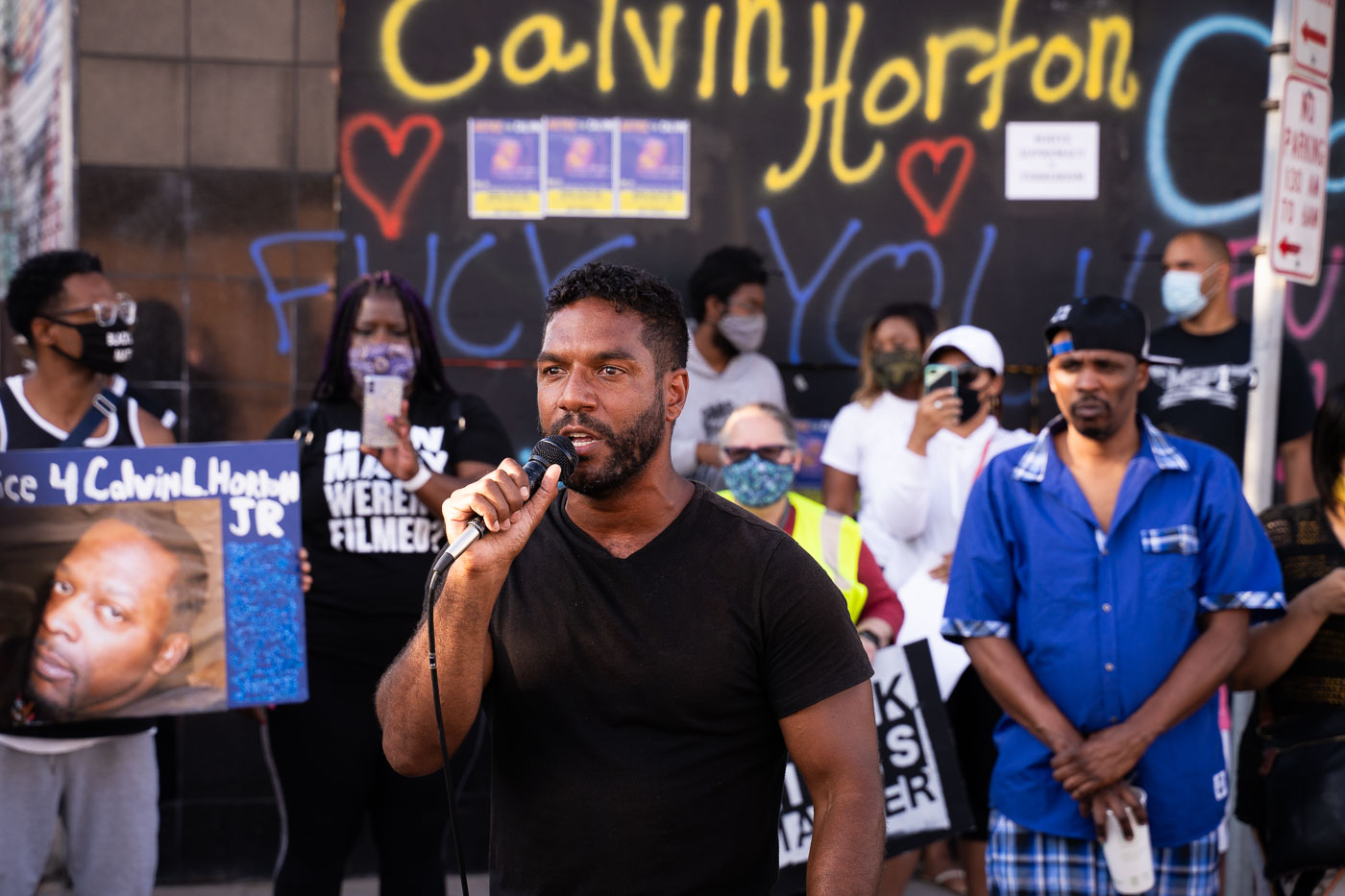
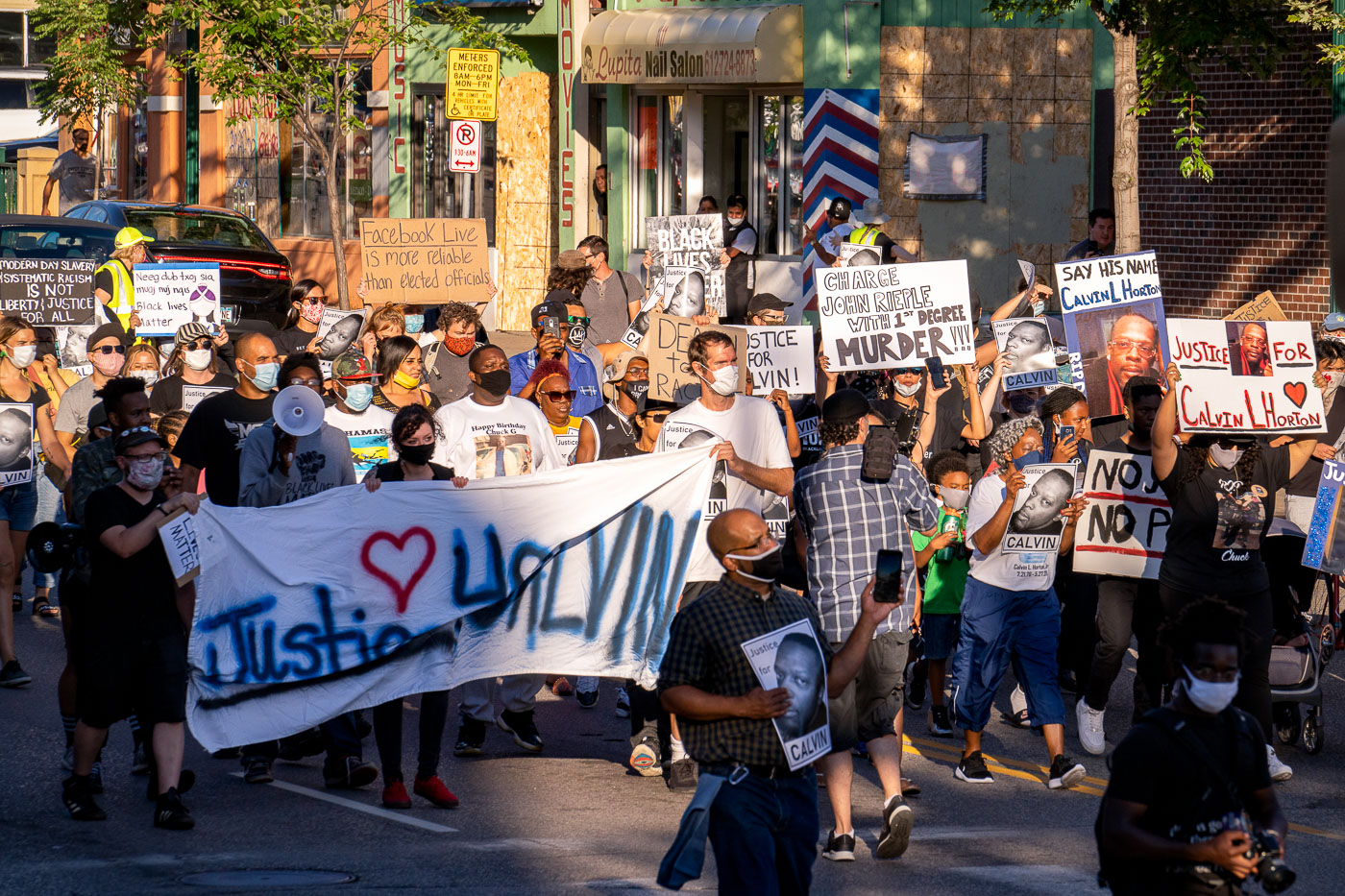
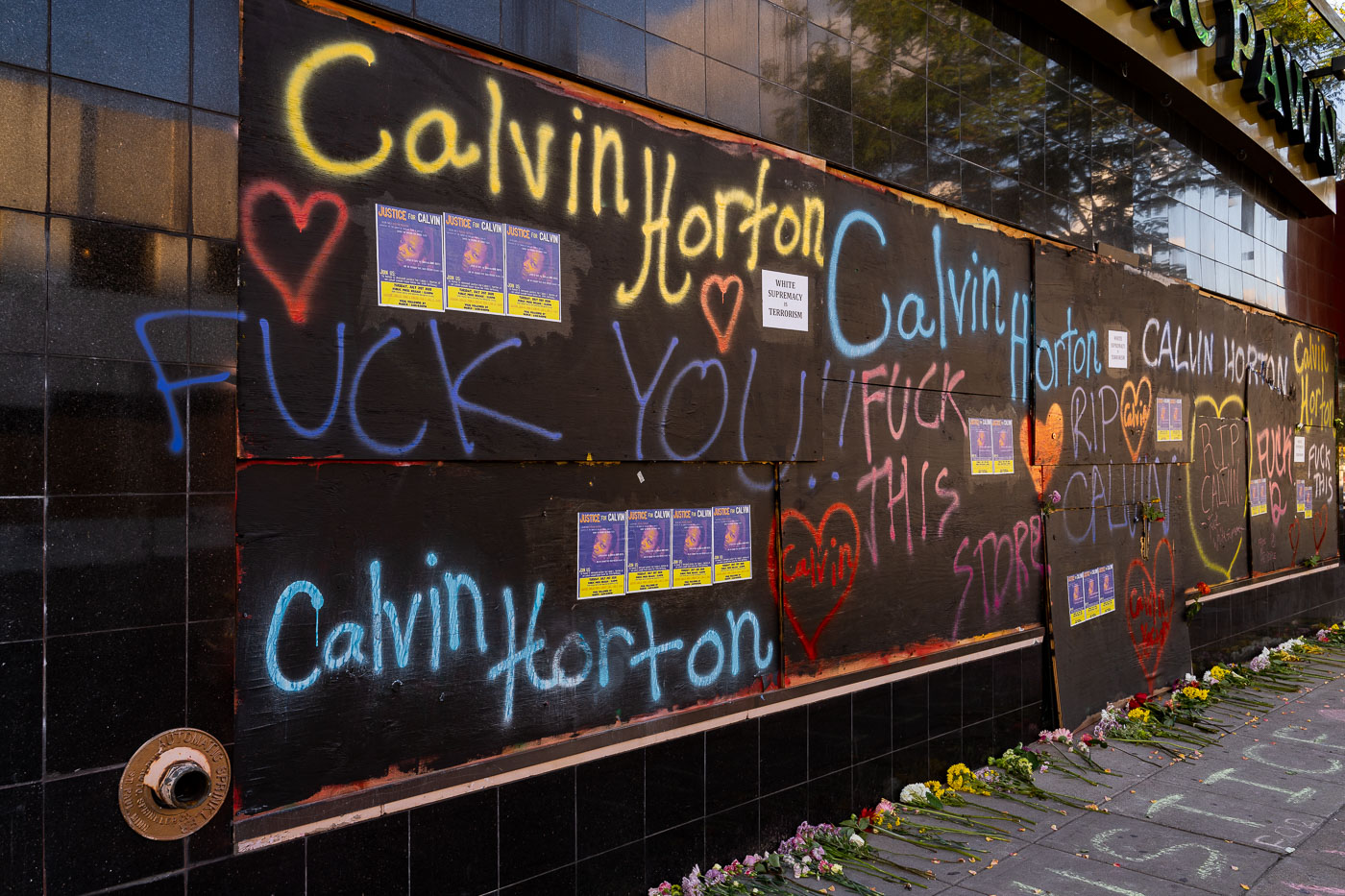
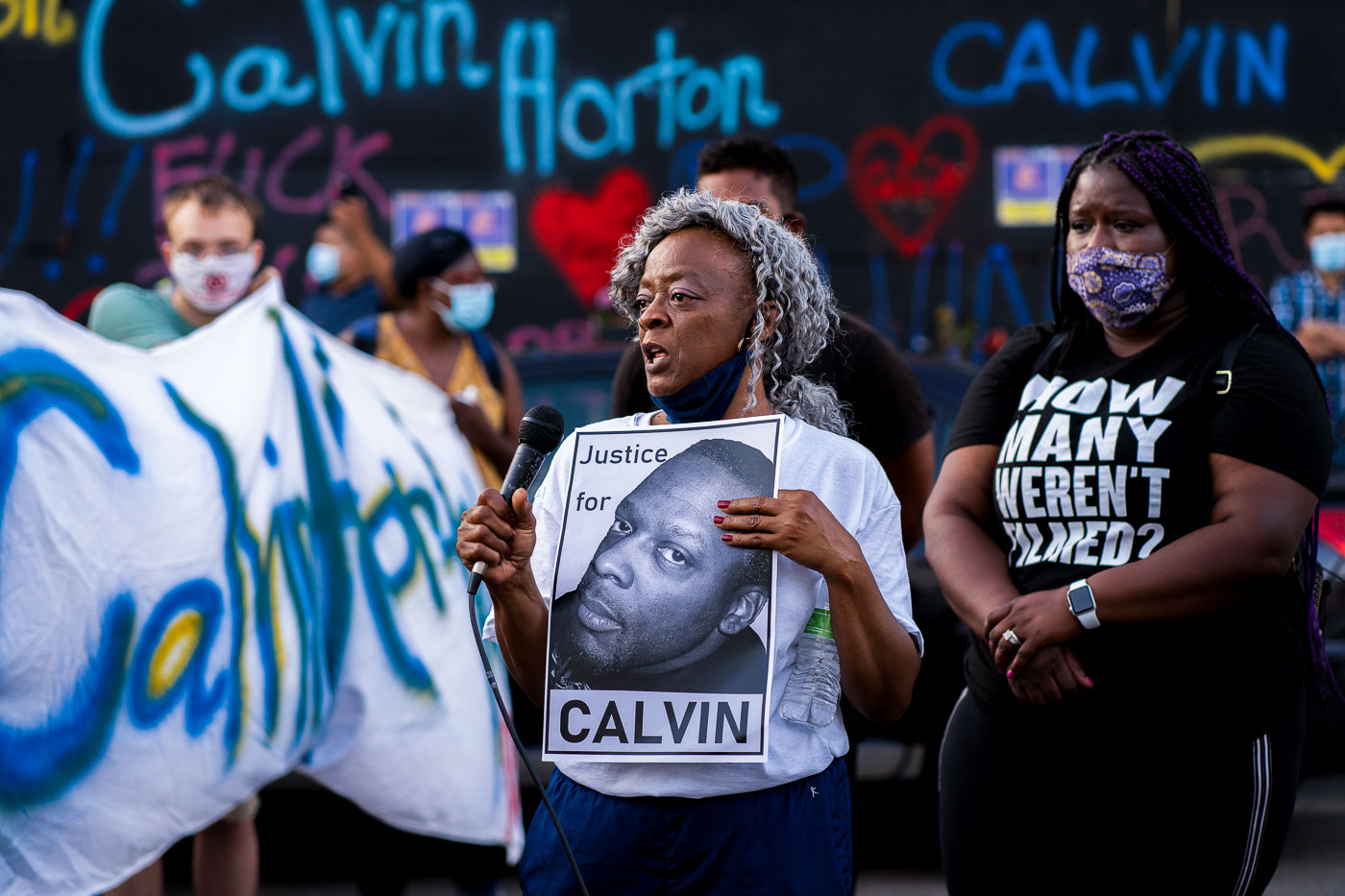
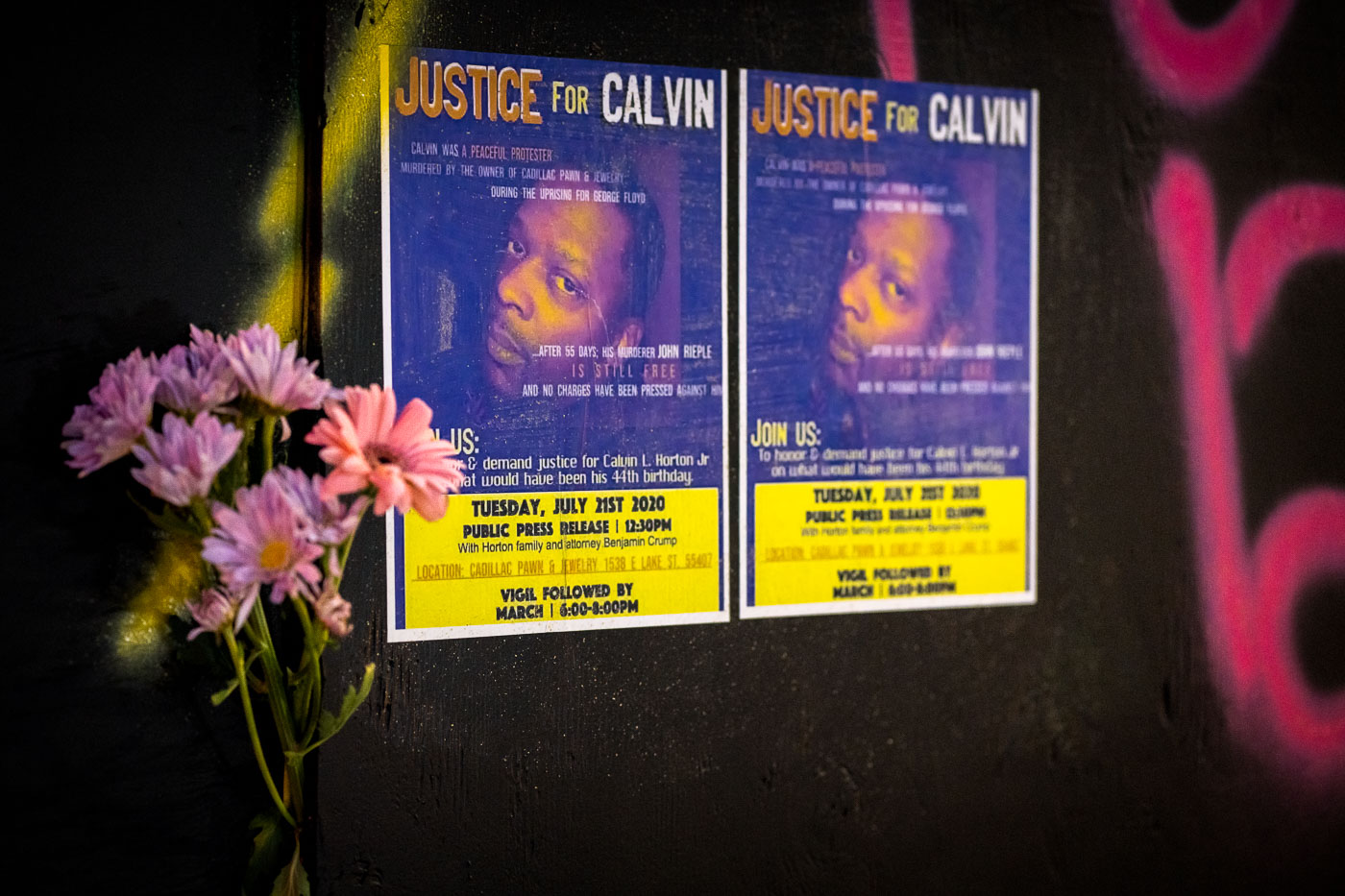
Calvin Horton Jr. was shot and killed here by the business owner.May 27, 2020Minneapolis Fire Department vehicles block East Lake Street at Minnehaha Avenue in Minneapolis on May 27, 2020, as firefighters work amid heavy smoke, flashing emergency lights, and debris scattered across the roadway. The AutoZone store at this corner was the first major fire during the unrest that followed the murder of George Floyd.May 27, 2020Minneapolis Fire Department works on putting out fires on the corner of East Lake Street and Minnehaha Avenue. The AutoZone on the corner was the first fire lit during the uprising.May 27, 2020Minneapolis Fire Department outside the AutoZone on Lake Street.May 27, 2020Minneapolis Fire Department crews respond to fires on Minnehaha Avenue near East Lake Street in Minneapolis on May 27, 2020. The response took place during the second night of unrest following the death of George Floyd, when multiple businesses and properties along Lake Street were damaged or burned.May 27, 2020A Wendy’s restaurant on 27th Avenue South in Minneapolis stands across from the Minneapolis Police Department’s Third Precinct on May 27, 2020. Graffiti including “ACAB” and references to George Floyd covers the restaurant exterior.May 27, 2020Minneapolis Police officers in riot gear stand outside the Coliseum Building on 27th Avenue South during the second day of protests in Minneapolis. These protests followed the death of George Floyd, which occurred on May 25, 2020. The Coliseum Building, a significant commercial and office structure built in 1917, and the Hennepin County Medical Center East Lake Clinic are visible, with graffiti on the clinic's facade. This area along 27th Avenue South was a key location during the widespread civil unrest in late May 2020, reflecting the community's response to the events.May 27, 2020The Wendy's restaurant located on Minnehaha Avenue in Minneapolis was engulfed in flames on May 28, 2020. This occurred on the second day of widespread protests that erupted following the death of George Floyd while in police custody. The building's brick exterior is covered with graffiti, including messages expressing anti-police and anti-capitalist sentiments. The destruction of commercial properties, such as this fast-food establishment, became a visible manifestation of the intense civil unrest and community frustration during the Minneapolis Uprising.May 27, 2020Graffiti reading “FUCK JACOB FREY” is painted on the window of a vacant retail storefront in Minneapolis on May 27, 2020. A Wellington Management “For Lease” sign remains posted inside the glass-fronted space, while additional white paint marks cover much of the facade. The image was made during the second night of protests after the killing of George Floyd, in the area near the Minneapolis Police Department’s Third Precinct.May 27, 2020The entrance of an Aldi grocery store in Minneapolis bears broken glass and damage on the night of May 27, 2020, during protests that followed the killing of George Floyd. Store signage and a COVID-19 safety notice remain visible inside the vestibule, placing the damage in the early months of the pandemic. Commercial property damage and looting affected businesses across Minneapolis as demonstrations spread through the city.May 27, 2020A Wendy’s restaurant on 26th Avenue South in Minneapolis is seen at night on May 27, 2020, with fireworks overhead and vehicle light trails crossing the street in the foreground. The photograph was made on the second day of major protests in Minneapolis following the death of George Floyd. Graffiti on the building and the late-night activity place the fast-food outlet within the unrest affecting commercial corridors in south Minneapolis.May 27, 2020Protesters stand near a small fire and improvised barricades on Minnehaha Avenue in Minneapolis on the night of May 27, 2020. The photograph was made during demonstrations that followed the death of George Floyd, with smoke, fencing, and street obstructions visible along the roadway. Emergency lights are visible in the background as people move around the blocked-off street.May 27, 2020Emergency vehicles and police line Minnehaha Avenue in Minneapolis near the AutoZone and Minnehaha Liquors stores on the night of May 27, 2020. The photograph shows firefighters working beside a fire truck, officers in riot gear farther down the street, and debris scattered across the roadway during protests following the killing of George Floyd. This commercial stretch of South Minneapolis became one of the most heavily affected areas during the unrest.May 27, 2020Graffiti reading “FLOYD” covers the tiled wall beneath the Hiawatha Avenue overpass near Lake Street in Minneapolis as a pedestrian walks past on the night of May 27, 2020. Additional messages including “RIP GF” and other anti-police graffiti surround the large tag. The markings appeared in the area during the protests and unrest that followed the killing of George Floyd.May 27, 2020A shattered storefront window on Lake Street in Minneapolis frames a sign reading “we’ve always been IN THIS TOGETHER” on May 27, 2020. The damage occurred during the second night of protests following the killing of George Floyd. The sign appears to be a public-health message from the COVID-19 pandemic, contrasting with the broken glass at a retail business along one of the city’s main commercial corridors.May 27, 2020The Apple Store on Hennepin Avenue in Minneapolis stands behind cracked and punctured front glass on the night of May 27, 2020. The damage occurred during the second day of protests following the death of George Floyd, when businesses in central Minneapolis were being secured and assessed.May 28, 2020The Everlake housing development under construction on 26th Avenue South in Minneapolis burns during the early hours of May 28, 2020. The fire occurred amid unrest following the killing of George Floyd, as flames spread through the wood-framed structure and debris, downed lines, and a damaged car filled the street in front of the site.May 28, 2020The Everlake Apartments, a six-story housing development in Minneapolis, burn during overnight unrest on May 28, 2020. The fire occurred during protests and disturbances following the death of George Floyd, with the building near the Minneapolis Police Department’s 3rd Precinct.May 28, 2020A Wendy’s restaurant on 26th Avenue South in Minneapolis burns in the early hours of May 28, 2020, during unrest following the killing of George Floyd. Flames are visible through the windows and across the roofline, while graffiti including “Justice 4 George” is painted on the building’s exterior. The fire occurred during several nights of destruction and protest in Minneapolis after Floyd was killed by Minneapolis police on May 25, 2020.May 28, 2020The Everlake Apartments construction site in Minneapolis burns during the early hours of May 28, 2020. The six-story housing development, still under construction, was heavily damaged as fire moved through the wood-frame structure. The blaze occurred during protests in the city following the police killing of George Floyd, with flames, smoke, and debris filling the street around the site.May 28, 2020The Everlake development in Minneapolis burns on May 28, 2020, as a person leans out of an SUV in the foreground and flames consume the six-story housing project under construction. The fire occurred near the Minneapolis Police 3rd Precinct during overnight unrest following the killing of George Floyd. Everlake was one of several properties damaged as protests and civil disorder spread through the area.May 28, 2020The Everlake apartment building burns in Minneapolis, Minnesota, in the early hours of May 28, 2020. The six-story residential development stood near the Minneapolis Police Department’s 3rd Precinct, an area where protests had intensified after the killing of George Floyd. Flames engulf the structure as a bystander watches from a vehicle in the foreground.May 28, 2020The Everlake housing development in Minneapolis burns on May 28, 2020, as flames consume the six-story residential building under construction near the city’s Third Precinct police station. The fire occurred during overnight unrest following the killing of George Floyd.May 28, 2020An alley near East 29th Street and 26th Avenue South in Minneapolis is filled with smoke and backlit by fire during overnight unrest on May 28, 2020. A vehicle moves through the alley as flames burn behind nearby buildings, illuminating utility poles, wires, and the walls of adjacent structures. The fires occurred during the second night of protests following the killing of George Floyd.May 28, 2020A fire burns across from a residence on East 29th Street in Minneapolis in the early hours of May 28, 2020. The photograph was made during the second day of protests in the city after the death of George Floyd, when multiple fires were reported in neighborhoods near the demonstrations.May 28, 2020People walk through an alley off East 29th Street in Minneapolis as a large fire burns across the street in the early hours of May 28, 2020. The photograph was made during the second night of unrest following the death of George Floyd, when fires and property damage spread through parts of south Minneapolis.May 28, 2020A damaged US Bank ATM stands on Lake Street in Minneapolis in the early hours of May 28, 2020. The machine’s front panels have been torn open, exposing internal components and leaving debris scattered around the base. The damage occurred during unrest that followed the death of George Floyd.May 28, 2020A damaged drive-through window at a U.S. Bank branch on Lake Street in Minneapolis is shown on May 28, 2020. The glass is shattered, debris is scattered below the opening, and graffiti reading “Black” and “Pigs” is painted across the window and brick wall. The damage occurred during unrest in Minneapolis following the death of George Floyd, when businesses along the Lake Street commercial corridor were vandalized and looted.May 28, 2020The AutoZone store at 2700 Minnehaha Avenue in Minneapolis burns in the early hours of May 28, 2020, across from the Minneapolis Police Department’s Third Precinct. Flames have consumed much of the one-story commercial building, leaving the roofline partially collapsed as graffiti covers the exterior wall. The fire occurred during the first nights of unrest after the murder of George Floyd.May 28, 2020A Minneapolis police officer stands beside patrol vehicles as the AutoZone store burns in Minneapolis early on May 28, 2020. The fire was photographed during the second night of unrest following the killing of George Floyd, when businesses and other properties in the city were damaged or destroyed.May 28, 2020Minneapolis police officers stand on Lake Street in Minneapolis as a commercial building burns during overnight unrest on May 28, 2020. The fire occurred during the protests and property destruction that followed the murder of George Floyd by a Minneapolis police officer.May 28, 2020A Minneapolis Police squad car is parked in front of burning commercial buildings in Minneapolis in the early hours of May 28, 2020. Visible signage and context identify the businesses as an AutoZone and a Wendy’s, both engulfed in flames during unrest that followed the killing of George Floyd.May 28, 2020The interior of Sunny’s Wigs on Lyndale Avenue in Minneapolis is shown in disarray after looting in late May 2020. Merchandise, boxes, and store fixtures are strewn across the floor while display cases and sales counters remain in place inside the retail shop. The damage occurred during unrest that followed the killing of George Floyd.May 28, 2020The Target store in Uptown Minneapolis is pictured with debris on the sidewalk and displaced shopping carts at the entrance in the early hours of May 28, 2020. The damage followed unrest in Minneapolis after the police killing of George Floyd.May 28, 2020Protesters gather outside the Hennepin County Government Center in downtown Minneapolis on May 28, 2020, with signs including one reading “Black Lives Matter".
The protest took place 3 days after George Floyd was killed.May 28, 2020Protesters gather outside the Hennepin County Government Center in downtown Minneapolis on May 28, 2020, during demonstrations following the murder of George Floyd.May 28, 2020A protest march for George Floyd fills 7th Street in downtown Minneapolis on May 28, 2020. Protesters carry signs reading “Justice for George,” “Black Lives Matter,” and “Stop Police Brutality” as they move through downtown. The march took place on the third day of protests after George Floyd was killed by Minneapolis police.May 28, 2020Gluek’s Bar & Restaurant in downtown Minneapolis displays a hand-lettered “Black Lives Matter” message across the glass panes of its entrance door. The photograph was made on May 28, 2020, during the protests and unrest that followed the killing of George Floyd.May 28, 2020A cyclist rides past O'Donovan's Irish Pub on North 7th Street in downtown Minneapolis on May 28, 2020. The pub's windows and doors are boarded over, with handwritten messages including references to George Floyd and calls for justice visible on the plywood.May 28, 2020Minneapolis Police bicycle patrol officers ride along North 5th Street in downtown Minneapolis on May 28, 2020, during protests following the death of George Floyd. A group of mounted officers is visible farther up the street as police units moved through the downtown area for crowd-control operations.May 28, 2020Minneapolis Police officers prepare less-lethal weapons on a downtown Minneapolis street on May 28, 2020, three days after George Floyd was killed.May 28, 2020Protesters gather on Hennepin Avenue in downtown Minneapolis beside Eduardo Kobra’s Bob Dylan mural on May 28, 2020, during demonstrations following the death of George Floyd.May 28, 2020Protesters march on Hennepin Avenue near the Minneapolis Police 1st Precinct in downtown Minneapolis on May 28, 2020, during demonstrations after the death of George Floyd.May 28, 2020Protesters stand before the burning Minneapolis Police 3rd Precinct on Lake Street in Minneapolis, Minnesota, on May 28, 2020. The station became a focal point during protests that followed the killing of George Floyd, with demonstrators gathering around the building as fire consumed part of the structure.May 28, 2020A protester stands in front of the burning Minneapolis Police 3rd Precinct on Lake Street in Minneapolis, Minnesota, on May 28, 2020. The image was made on the third night of protests following the killing of George Floyd. The 3rd Precinct served south Minneapolis, and the fire at the station became one of the most widely recognized moments of the unrest in the city.May 28, 2020The Minneapolis Police 3rd Precinct burns in Minneapolis, Minnesota, on May 28, 2020, as people gather outside the building during protests after the death of George Floyd. Flames engulf the station after officers withdrew from the site earlier that night. The fire at the precinct became one of the most widely recognized moments of the protests that spread across Minneapolis and other cities in the days following Floyd’s killing.May 28, 2020The GM Tobacco building on East Lake Street in Minneapolis burns on the night of May 28, 2020, during protests that followed the killing of George Floyd. Flames engulf the storefront and upper facade, with anti-police graffiti visible on the front of the building and a person standing on the sidewalk at right. The property was in the area of south Minneapolis where unrest was concentrated near the Minneapolis Police Department’s 3rd Precinct.May 28, 2020Protesters gather outside the burning Minneapolis Police 3rd Precinct on East Lake Street in Minneapolis on the night of May 28, 2020. The fire followed days of protests after the killing of George Floyd, a Black man who died in police custody on May 25. The 3rd Precinct, the station where former officer Derek Chauvin had worked, was abandoned by police before the building was set ablaze.May 28, 2020Fire burns at the Minneapolis Police Third Precinct on East Lake Street in Minneapolis on May 28, 2020, as a crowd gathers outside during protests following the death of George Floyd. The police station had been abandoned by officers earlier that evening before the building was set ablaze. The Third Precinct became one of the most visible locations in Minneapolis during the unrest that followed Floyd’s killing.May 28, 2020The Minnehaha Liquors building on East Lake Street in Minneapolis burns on the night of May 28, 2020, as people gather in the street during unrest following the murder of George Floyd. The commercial building, marked by the large Minnehaha Liquors Drive-In sign, also housed Midori’s Floating World Cafe. The fire was part of widespread damage along the Lake Street corridor during several nights of protests, confrontations, and property destruction in south Minneapolis.May 28, 2020The Minnehaha Liquors building burns on East Lake Street at South 27th Avenue in Minneapolis on May 28, 2020, as crowds gather in the roadway nearby. The fire occurred during the third night of protests following the killing of George Floyd, when commercial corridors along Lake Street saw extensive unrest and property damage.May 28, 2020A protester holds a sign reading “Jail all racist killer cops!” in front of the burning GM Tobacco store on East Lake Street in Minneapolis on May 28, 2020. The photograph was made during nighttime protests that followed the killing of George Floyd by Minneapolis police four days earlier.May 28, 2020GM Tobacco and neighboring storefronts on East Lake Street in Minneapolis burn as people gather outside on the night of May 28, 2020. The fire occurred during protests and unrest that followed the death of George Floyd in Minneapolis police custody. Midori’s can also be seen along the block, part of a heavily damaged commercial corridor south of downtown.May 28, 2020Protesters gather at a Metro Transit bus shelter on East Lake Street in Minneapolis as the Minneapolis Police 3rd Precinct burns in the background on May 28, 2020. The station was set on fire during protests that followed the killing of George Floyd, and its burning became one of the most widely recognized moments of the unrest in Minneapolis.May 28, 2020Volunteer medics operate a makeshift treatment station outside the Minneapolis Police 3rd Precinct on Minnehaha Avenue in Minneapolis on May 28, 2020. Under a canopy lit at night, the group treats and assists people amid protests following the killing of George Floyd. The 3rd Precinct became a central location during the unrest and was evacuated and burned later that night.May 28, 2020Volunteer medics work at a temporary aid station outside the Minneapolis Police 3rd Precinct in Minneapolis on May 28, 2020. Wearing reflective vests, masks, and headlamps, they organize supplies and prepare treatment for people gathered during protests following the killing of George Floyd. The precinct at 3000 Minnehaha Avenue became a central protest site that night and was later set on fire.May 28, 2020Fire burns at the Target store on East Lake Street in Minneapolis on May 28, 2020. The blaze consumed part of the building during unrest that followed the killing of George Floyd, with smoke and sparks rising above the roofline. Graffiti on the exterior walls, including anti-police messages, remained visible on the facade as the fire spread.May 28, 2020Graffiti on the exterior of Minneapolis Midtown Station in Minneapolis includes the messages “THE PEOPLE shouldn’t be afraid of the gov. The gov should be afraid of THE PEOPLE!!!” and “RISE UP.” Photographed on May 28, 2020, the writing appeared during the unrest and protests that followed the murder of George Floyd.May 28, 2020Lake Street/Midtown Station in Minneapolis stands with a shattered ground-floor window on May 28, 2020. The Metro Transit light rail station sustained visible damage during the third day of unrest in the city after the killing of George Floyd. Broken glass remains on the sidewalk outside the station entrance, where signage for the transit facility is still visible.May 28, 2020Damage to the entrance of the Lake Street/Midtown light rail station in Minneapolis is visible on May 28, 2020, with shattered glass in the doors and station windows. Operated by Metro Transit, the station is part of the Blue Line and serves the Lake Street corridor in south Minneapolis. The damage occurred during the third day of unrest in the city after the killing of George Floyd.May 28, 2020A Wells Fargo branch on Lake Street in Minneapolis stands boarded and spray-painted during the unrest that followed the murder of George Floyd in May 2020. Graffiti on the facade includes the messages “STEAL IT BACK!” and “KILL Bankers,” while broken glass and plywood cover parts of the entrance and windows.May 29, 2020A boarded storefront on Lake Street in Minneapolis bears the message “Justice for Floyd” in the early hours of May 29, 2020. The sign appeared during protests and unrest following the killing of George Floyd, when many businesses in the corridor covered windows with plywood for protection.May 29, 2020A large fire burns near East Lake Street and Snelling Avenue in Minneapolis, Minnesota, during overnight protests on May 29, 2020, following the killing of George Floyd by Minneapolis police officers. The photograph shows traffic moving beneath the Metro Transit Blue Line rail crossing as flames and smoke rise behind commercial buildings along the Lake Street corridor in south Minneapolis.May 29, 2020A Starbucks in downtown Minneapolis has multiple shattered street-facing windows on May 29, 2020, after overnight unrest following the killing of George Floyd. Broken glass covers the sidewalk outside the corner storefront, and the lit interior remains visible through the damaged facade.May 29, 2020Star Tribune and Pioneer Press newspaper racks stand on a sidewalk in downtown Minneapolis in the early hours of May 29, 2020, with broken glass scattered across the pavement nearby. The visible Star Tribune front page reads “Violent protests intensify,” placing the photograph during unrest following the killing of George Floyd.May 29, 2020Minnesota State Patrol officers in riot gear stand in formation on Nicollet Mall in downtown Minneapolis on May 29, 2020. The deployment took place during the third day of protests and unrest following the killing of George Floyd by Minneapolis police on May 25. Nicollet Mall is a major pedestrian and transit corridor in the city center, and state officers were mobilized there to reinforce law enforcement presence overnight.May 29, 2020This Target store sits at Nicollet Mall and Ninth Street South in downtown Minneapolis, its glass rotunda entrance topped with the company's bullseye logo. Plywood covers the ground-floor windows and doors here in the early hours of May 29, 2020, as businesses across the city boarded up amid the unrest following George Floyd's killing by police.May 29, 2020Handwritten signs are posted on the entrance of the Calhoun Building at 711 Lake Street in Uptown Minneapolis on May 29, 2020. The messages express support for Black Lives Matter and racial justice during protests following the killing of George Floyd. One sign reads, “BIPOC Artists Here! BIPOC Organizations Here! Houseless People Sleep Here!".May 29, 2020Venus Unveiled, a lingerie store on Lake Street in Minneapolis, appears with a shattered front display window and the interior exposed in the early hours of May 29, 2020. The damage came during the unrest that spread along Lake Street after the killing of George Floyd.May 29, 2020The interior of Venus Unveiled on Lake Street in Minneapolis is shown after looting during the unrest that followed the killing of George Floyd in May 2020. Photographed in the early hours of May 29, 2020, the image documents damage to one of many businesses affected along the Lake Street commercial corridor.May 29, 2020A boarded-up McDonald’s drive-thru on Hennepin Avenue in Uptown Minneapolis serves a customer through a small opening cut into the plywood on May 29, 2020. The restaurant’s windows and exterior were covered with protective boards as businesses in the area responded to damage and unrest following the killing of George Floyd.May 29, 2020A McDonald’s drive thru window on Hennepin and Lagoon during the civil unrest in Minneapolis following the murder of George Floyd.May 29, 2020The entrance of the Uptown Theater on Hennepin Avenue in Minneapolis, Minnesota, has shattered glass and damaged doors in the early hours of May 29, 2020.May 29, 2020S 10th Street in downtown Minneapolis is shown at sunset on May 29, 2020, with very light traffic and few people visible. Mid-rise office and commercial buildings line the corridor, and a large mural of musical notation covers the wall of the building at right, while a church spire rises in the distance. The photograph was made during the period of unrest in Minneapolis following the killing of George Floyd, when parts of the downtown street network were noticeably quieter than usual.May 29, 2020A Minneapolis Police squad car patrols South 10th Street in downtown Minneapolis on May 29, 2020, passing commercial buildings with plywood covering their ground-floor windows. The boarded storefronts document security measures taken by businesses during the unrest that followed the killing of George Floyd.May 29, 2020Protesters and stopped traffic occupy Interstate 94 in Minneapolis on the night of May 29, 2020, during demonstrations following the killing of George Floyd. Photographed from an overpass, the image shows marchers moving along the freeway while cars queue in adjacent lanes under streetlights.May 29, 2020Protesters and halted traffic fill Interstate 94 in downtown Minneapolis on May 29, 2020, during the fourth day of demonstrations following the killing of George Floyd. The nighttime photograph shows marchers occupying the freeway lanes beneath a pedestrian bridge as vehicles back up along the corridor. I-94 is a major east-west route through Minneapolis and Saint Paul.May 29, 2020Protesters and bicyclists march along Interstate 94 in Minneapolis on May 29, 2020, during demonstrations after the killing of George Floyd. The freeway, a major route through Minneapolis and Saint Paul, was temporarily occupied as people moved through the traffic lanes carrying signs, including one reading "NO JUSTICE NO PEACE."May 29, 2020Traffic is backed up on Interstate 94 in Minneapolis, Minnesota, near the 1st Avenue South exit, as an overhead highway message board reads, “CURFEW IN EFFECT 8PM TO 6AM.” The photograph was made on May 29, 2020, during protests following the killing of George Floyd, when state and local officials imposed overnight movement restrictions across Minneapolis and other Twin Cities communities.May 29, 2020Boarded storefronts in downtown Minneapolis are marked with the spray-painted messages “BLM” and “BLACK OWNED” on May 29, 2020. The plywood covers were installed to protect retail businesses during unrest following the killing of George Floyd by Minneapolis police earlier that week.May 31, 2020The fire-damaged remains of Minnehaha Liquors on Lake Street in South Minneapolis are shown on May 31, 2020, with the roof burned away and the interior reduced to debris. The store was destroyed during the civil unrest that followed the murder of George Floyd.May 31, 2020Sunsara Taylor, a representative of the Revolutionary Communist Party, speaks at a protest outside the Minneapolis 3rd Precinct on Lake Street. This location became a focal point during the Minneapolis Uprising following the killing of George Floyd. The precinct was a central site for demonstrations against police brutality and systemic injustice.May 29, 2020Protesters and traffic fill the streets near the Minneapolis Police 5th Precinct in Minneapolis, Minnesota, on the night of May 29, 2020. The gathering took place during the fourth day of protests following the killing of George Floyd by Minneapolis police officers on May 25. The 5th Precinct became one of several police facilities in the city where demonstrators assembled to protest police violence and demand accountability.May 29, 2020A car burns in the drive-thru lane of a Wells Fargo branch in Minneapolis on May 29, 2020. The fire occurred during overnight protests following the killing of George Floyd, with the bank located across the street from the Minneapolis Police Department’s 5th Precinct.May 29, 2020A car burns outside the Wells Fargo branch on East 31st Street in Minneapolis on May 29, 2020. The fire occurred during the fourth night of protests following the killing of George Floyd, after demonstrators had marched through South Minneapolis. The bank stands across from the Minneapolis Police Department’s 5th Precinct, an area that drew large crowds and repeated unrest that week.May 29, 2020A Wells Fargo branch on Nicollet Avenue in South Minneapolis burns on the night of May 29, 2020. The bank, across from the Minneapolis Police Department’s Fifth Precinct, was damaged during unrest that followed the killing of George Floyd. Flames are visible through the front windows as fire spreads across the ground-floor banking area.May 29, 2020The Lake Street Station post office in South Minneapolis appears here after fire damage during the protests of late May 2020. Broken windows, smoke-stained openings, and a scorched interior are visible along the brick exterior of the United States Postal Service facility on Lake Street near East 31st Street. The fire occurred during the fourth night of unrest in Minneapolis following the killing of George Floyd while in police custody, and the building was later declared a total loss and rebuilt.May 29, 2020The United States Postal Service’s Lake Street Station in South Minneapolis is shown filled with smoke during unrest on May 29, 2020, the fourth night of demonstrations following the killing of George Floyd. Located on East 31st Street, the post office served the surrounding neighborhoods as a local mail-processing and retail facility. The building was later declared a total loss and subsequently rebuilt.May 29, 2020Protesters gather along Lake Street in Minneapolis late on May 29, 2020, during demonstrations following the death of George Floyd. Taken on the fourth night of protests in Minneapolis, the image documents Lake Street as one of the main corridors where marches, rallies, and confrontations unfolded in the days after Floyd’s killing.May 30, 2020A Walgreens pharmacy and food mart on Lake Street in Minneapolis stands damaged and smoking in the early hours of May 30, 2020. Plywood covers the entrance, windows are broken, and graffiti is visible on the exterior of the one-story commercial building. The store was photographed during the unrest that followed the police killing of George Floyd, when numerous businesses along the Lake Street corridor were damaged or burned.May 30, 2020A commercial building burns on Lake Street in South Minneapolis in late May 2020. The fire occurred during the unrest that followed the killing of George Floyd by Minneapolis police. Lake Street, a major east-west commercial corridor lined with small businesses and services, was heavily damaged during those nights.May 30, 2020A commercial building burns on Lake Street in South Minneapolis in the early hours of May 30, 2020, during protests following the killing of George Floyd. Flames and heavy smoke engulf the structure as a person stands in silhouette on the street in front of the fire. The image was made on the fourth night of unrest, when numerous businesses and buildings along the Lake Street corridor were damaged or destroyed.May 30, 2020A burning excavator and multiple building fires line Lake Street in Minneapolis during overnight unrest on May 30, 2020, in the days after the killing of George Floyd.May 30, 2020An orange moon rises beside the downtown Minneapolis skyline in Minnesota in the early hours of May 30, 2020, during the unrest that followed the killing of George Floyd. Visible landmarks include U.S. Bank Stadium at left and the M Health Clinics and Surgery Center in the foreground, with office and medical buildings filling the city center. The moon’s color was likely intensified by smoke and haze hanging over the city as fires burned during that period.May 30, 2020The Stone Arch Bridge spans the Mississippi River in Minneapolis. Built in 1883 as a railroad bridge, the structure is a prominent historic landmark along the riverfront near St. Anthony Falls.May 30, 2020Smoke rises over the Lake Street area of Minneapolis in the early morning hours of May 30, 2020, as fires burn during protests following the killing of George Floyd. The photograph looks across a South Minneapolis residential and commercial district, with apartment buildings, a church, and neighborhood streets in the foreground and a broad plume of smoke extending across the night sky. Lake Street, a major east-west corridor, sustained extensive fire and property damage during that night of unrest.May 30, 2020Fires burn along Lake Street in Minneapolis, Minnesota, on May 30, 2020, sending a large plume of smoke over surrounding apartment buildings before dawn. The fires occurred during unrest following the killing of George Floyd by Minneapolis police. Lake Street is a major commercial corridor in south Minneapolis and sustained extensive damage during the nights of arson and looting that followed the protests.May 30, 2020Smoke rises over the Lake Street area of Minneapolis, Minnesota, in the early hours of May 30, 2020, during protests and unrest following the killing of George Floyd. A residential high-rise and roadway are visible in the foreground as smoke drifts across the corridor, where multiple commercial buildings were damaged by fire that week. Lake Street became one of the most heavily affected areas in south Minneapolis during the fourth day of demonstrations.May 30, 2020Smoke rises over the Lake Street corridor in Minneapolis, Minnesota, in the early hours of May 30, 2020, as fires burn during protests following the death of George Floyd. The photograph looks across South Minneapolis at a broad plume spreading above mid-rise residential and institutional buildings. Lake Street, a major commercial artery, sustained extensive fire damage and business losses during the unrest that followed Floyd’s killing by Minneapolis police.May 30, 2020Nordstrom Rack occupies ground-floor retail space at the IDS Center on Nicollet Mall in downtown Minneapolis. The IDS Center, completed in 1972, rises as Minnesota's tallest building and anchors this stretch of the mall with offices and shops. Plywood now covers the storefront's windows in the early hours of May 30, 2020, after protests and unrest followed the killing of George Floyd.May 30, 2020Minnesota National Guard soldiers stand at an intersection on Nicollet Mall in downtown Minneapolis on May 30, 2020, during overnight protests following the death of George Floyd. The troops are positioned outside commercial buildings with plywood covering the windows and doors, reflecting security measures taken as unrest spread through the city. Nicollet Mall is a major downtown pedestrian and transit corridor, and the Guard deployment marked the city and state's emergency response during the fourth day of unrest.May 30, 2020Hagen’s Auto Body on Nicollet Avenue in South Minneapolis is pictured with its windows and doors boarded on May 30, 2020. The collision repair shop remained lit overnight, with a red “WE ARE OPEN” banner hanging on the brick facade and a message painted on the plywood reading, “WE HAVE BEEN PART OF THIS COMMUNITY FOR 50 YEARS AND WE CARE ABOUT IT.” The photograph was made during the fourth day of protests in Minneapolis following the death of George Floyd.May 30, 2020A Minnesota National Guard Humvee and a soldier with a riot shield stand on Lake Street in Minneapolis on May 30, 2020, during protests following the death of George Floyd. The Guard was deployed in the city as officials responded to unrest, fires, and damage in commercial corridors including Lake Street. Storefronts, emergency lights, and the largely empty street place the photograph in the overnight security presence that followed several days of demonstrations.May 26, 2020Rain comes down on Lake Street the day after George Floyd was killed. Earlier in the evening protesters marched from 38th Street and Chicago Avenue to the Minneapolis Police 3rd Precinct.May 30, 2020National Guard troops and a Minneapolis Fire Department truck are positioned on Lake Street at the Lyn-Lake Speedway station in Minneapolis, Minnesota, in the early morning of May 30, 2020. The deployment followed overnight fires and unrest in the city after the killing of George Floyd. National Guard units were sent to secure streets and support emergency access as fire crews responded to active blazes and damaged properties along the corridor.May 30, 2020Minnesota National Guard troops and military vehicles block Lake Street near the Speedway station in the LynLake area of South Minneapolis on May 30, 2020. Thick smoke rises behind the intersection as firefighters and emergency vehicles respond during unrest that followed the killing of George Floyd. The deployment was part of the state response to secure major commercial corridors and assist local law enforcement and fire operations overnight.May 30, 2020A Minnesota National Guard vehicle and soldier stand outside the boarded Bryant-Lake Bowl in Uptown Minneapolis on May 30, 2020. The business, a long-running bowling alley, theater, and restaurant, had covered its street-facing windows with plywood as unrest followed the killing of George Floyd. The photograph shows the LynLake commercial district under military presence in the early morning hours.May 30, 2020A man sweeps broken glass from the sidewalk outside a damaged storefront on Lake Street in Uptown Minneapolis, Minnesota, on May 30, 2020. The cleanup took place in the aftermath of unrest following the killing of George Floyd, when shattered windows and other damage lined commercial blocks across the corridor.May 30, 2020Minnesota National Guard troops and military vehicles block Lake Street in the LynLake area of Uptown Minneapolis before sunrise on May 30, 2020. The deployment came during protests and unrest following the killing of George Floyd by Minneapolis police, with smoke from fires visible in the distance along the commercial corridor. Lake Street, a major east-west route lined with apartments, shops, and businesses, was heavily affected during the unrest and remained under a strong security presence as day broke.May 30, 2020Minnesota National Guard vehicles and personnel are stationed on Lake Street in Minneapolis near the LynLake district on May 30, 2020. Smoke rises in the distance at dawn as military and emergency vehicles line the commercial corridor after several nights of unrest following the killing of George Floyd. Lake Street is a major east-west route through South Minneapolis, lined with businesses, housing, and neighborhood landmarks.May 30, 2020Minneapolis Fire Department crews work at the damaged Speedway gas station on Lake Street in Minneapolis in the early morning of May 30, 2020. Smoke rises from the collapsed roof area as firefighters move through debris around the convenience store and fuel station. The fire occurred during the fourth day of unrest in Minneapolis following the killing of George Floyd, when numerous commercial properties along Lake Street were damaged or destroyed.May 30, 2020Burned debris and overturned shopping carts block Pillsbury Avenue in South Minneapolis at sunrise on May 30, 2020. The photograph was made on the fourth day of protests following the killing of George Floyd, with smoke still visible in the distance and traffic signals lit above an otherwise quiet street. Scattered trash bins, charred remains, and temporary roadwork barrels show the disruption left on this residential corridor overnight.May 30, 2020Burned debris from a dumpster lies on Lake Street in Minneapolis on May 30, 2020, with smoke still rising from the remains. The image was made during the unrest that followed the murder of George Floyd, when Lake Street, one of the city’s main commercial corridors, sustained extensive fire and property damage. The photograph documents the immediate aftermath on the street surface, with ash, melted material, and charred refuse left behind.May 30, 2020Debris and small smoldering fires block Lake Street in Minneapolis on the morning of May 30, 2020, with boarded storefronts and damaged buildings lining the corridor. The photograph shows the aftermath of unrest that followed the killing of George Floyd, when businesses and streets along this major South Minneapolis commercial route sustained extensive fire and impact damage. Smoke rises from burned material in the roadway as the street remains largely empty at daybreak.May 30, 2020The “Welcome to Lynlake” sign at Lake Street and Lyndale Avenue in Minneapolis appears with smoke staining and fire damage on May 30, 2020. The sign marks the Lyn-Lake commercial district in Uptown Minneapolis, an area that saw extensive unrest and property damage in the days after the murder of George Floyd. A damaged traffic signal beside the sign further documents the condition of the intersection during that period.May 30, 2020A George Floyd memorial at a South Minneapolis home is shown on May 30, 2020. The display includes a framed portrait of Floyd, lit candles, flowers, and memorial objects arranged beside lanterns along a wooden fence. A button referencing the 1963 March on Washington connects the tribute to the longer history of the civil rights movement in the United States.May 30, 2020Residents outside an apartment building on Nicollet Avenue in South Minneapolis hold a garden hose on May 30, 2020, during unrest following the murder of George Floyd. The photograph shows two masked people positioned beside the brick building, apparently prepared to spray water toward a nearby fire. Businesses and residential properties along Nicollet Avenue were threatened by fires and damage during that period.May 30, 2020A resident uses a garden hose beside an O'Reilly Auto Parts store on Nicollet Avenue in South Minneapolis on May 30, 2020. The photograph was made during the unrest that followed the murder of George Floyd, when fires damaged businesses along the corridor. Here, a nearby resident works from behind a fence between adjacent buildings to keep flames from spreading to surrounding properties.May 30, 2020The O'Reilly Auto Parts store on Nicollet Avenue in South Minneapolis burns on May 30, 2020, with flames visible inside the building and much of the structure collapsed into the parking lot. The fire took place during the days of unrest in Minneapolis following the killing of George Floyd.May 30, 2020The O'Reilly Auto Parts store on Nicollet Avenue in South Minneapolis burns on May 30, 2020, with flames rising from the collapsed structure and debris spread across the parking lot. The fire occurred during the unrest that followed the killing of George Floyd by Minneapolis police. The image shows extensive damage to the retail building as smoke and active flames continue to consume the site.May 30, 2020An O'Reilly Auto Parts store on Nicollet Avenue in South Minneapolis burns on May 30, 2020, as heavy smoke rises above the block. The fire occurred during the unrest that followed the killing of George Floyd, when numerous commercial properties in Minneapolis were damaged or destroyed. Parked vehicles line the street in the foreground, including one marked with the words “PEOPLE NOT PROFIT.”May 30, 2020The O'Reilly Auto Parts and Family Dollar store on Nicollet Avenue in South Minneapolis burns on May 30, 2020. Flames and heavy black smoke rise from the retail building as traffic continues along the street in the early morning hours. The fire occurred during the unrest that followed the police killing of George Floyd, when numerous businesses along major commercial corridors in Minneapolis were damaged or destroyed.May 30, 2020A firefighter walks past the burning O'Reilly Auto Parts store on Nicollet Avenue in South Minneapolis on May 30, 2020. The building is collapsed and still actively burning as crews work in the area during the unrest that followed the killing of George Floyd. Fires damaged numerous commercial properties across Minneapolis during those days.May 30, 2020Smoke rises over residential houses in South Minneapolis at sunrise on May 30, 2020. The photograph shows a neighborhood street as heavy black plumes from overnight fires spread above homes and utility lines. The fires followed several days of protests in Minneapolis after the killing of George Floyd by a Minneapolis police officer.May 30, 2020A Minneapolis Fire Department firefighter stands on Nicollet Avenue in South Minneapolis as crews respond to a fire at the O'Reilly Auto Parts store on May 30, 2020. Fire engines and hose lines are positioned along the street in the early morning as firefighters work near the commercial corridor. The fire occurred during the period of civil unrest in Minneapolis following the death of George Floyd, when numerous businesses and properties across the city were damaged or burned.May 30, 2020Interstate 35W approaching downtown Minneapolis, Minnesota, is seen under a layer of smoke at daybreak on May 30, 2020. Overhead signs for downtown exits, East 35th Street, and Interstate 94 place the view along the main north-south freeway corridor leading into the city center. The haze followed overnight fires during protests after the death of George Floyd, and the light traffic contrasts with the volume normally carried on this route.May 30, 2020“I Can’t Breathe” is spray-painted on a dirt embankment beside Interstate 35W in South Minneapolis on May 30, 2020. The message appeared in the days after George Floyd was killed by Minneapolis police on May 25, during protests and unrest across the city. Morning light falls on nearby houses while smoke lingers over the neighborhood from fires set overnight.May 30, 2020A fire-damaged Shell gas station on Lake Street in Minneapolis burns on the morning of May 30, 2020. Smoke rises from the convenience store area as traffic passes on the commercial corridor, and a Metro Transit bus stop sign is visible beside the property. The damage followed nights of protests and unrest in the city after the killing of George Floyd.May 30, 2020Firefighters battle a blaze on East Lake Street at Columbus Avenue in South Minneapolis as a Minnesota National Guard soldier and Minneapolis police vehicles stand nearby. The image shows heavy smoke, water streams, and collapsed brick debris from a badly damaged commercial building. Photographed on May 30, 2020, the fire occurred during the unrest following the killing of George Floyd, when parts of the Lake Street corridor sustained extensive damage.May 30, 2020Minnesota National Guard soldiers and a Minneapolis Police vehicle are stationed at Chicago Avenue South and Lake Street in Minneapolis on May 30, 2020. A military transport truck is parked beside the Los Ocampo commercial building, with debris and haze visible along the corridor. The deployment came during the unrest and protests that followed the murder of George Floyd, when National Guard troops and local law enforcement were sent to major intersections and business districts across south Minneapolis.May 30, 2020Members of the Minnesota National Guard patrol Lake Street in Minneapolis on May 30, 2020, passing boarded and graffiti-marked storefronts amid debris left on the street. The deployment came after several nights of fires and property damage during protests following the death of George Floyd. Lake Street, a major commercial corridor in south Minneapolis, was among the areas most heavily affected, and National Guard units were sent to support security operations and protect businesses and residents.May 30, 2020Minnesota National Guard troops and Minneapolis Fire Department vehicles are positioned in Midtown Minneapolis on May 30, 2020, with the Midtown Exchange building rising through smoke at sunrise in the background. The large brick structure, topped by the “MIDTOWN EXCHANGE” sign, was originally built as a Sears, Roebuck and Company mail-order and retail complex. The deployment came after overnight unrest following the killing of George Floyd, as firefighters responded to active fires and the National Guard supported local authorities.May 30, 2020Smoke rises around the Midtown Exchange in south Minneapolis as sunrise lights East Lake Street on May 30, 2020. Minnesota National Guard troops and Minneapolis Fire Department personnel are visible near the Lake Street commercial corridor after overnight fires and unrest following protests over the killing of George Floyd. The Midtown Exchange, originally built in 1928 as a Sears, Roebuck and Company mail-order and retail complex, had been redeveloped as a mixed-use building before the disturbances.May 30, 2020A Shell gas station on Lake Street in Minneapolis stands heavily burned on the morning of May 30, 2020, with smoke still rising from the convenience store behind the pump canopy. The damage followed overnight unrest after the killing of George Floyd, which led to fires and destruction along major commercial corridors in south Minneapolis. A Metro Transit bus stop and campaign signs remain in the foreground, situating the station within the everyday streetscape of Lake Street.May 30, 2020A fire-damaged Shell gas station on Lake Street in Minneapolis is pictured on the morning of May 30, 2020. The convenience store behind the pumps is gutted and still smoking, with parts of the roof and facade burned away. The damage followed nights of unrest in Minneapolis after the murder of George Floyd, when businesses along Lake Street, one of the city’s main commercial corridors, were heavily affected.May 30, 2020A Minnesota National Guard vehicle stands on a street near the Midtown Exchange in south Minneapolis as Minneapolis firefighters work amid smoke at daybreak on May 30, 2020. The photograph was made during the unrest that followed the killing of George Floyd, when fires and heavy emergency response affected commercial corridors across the city. The Midtown Exchange, a large mixed-use redevelopment of the historic Sears, Roebuck and Company building, is visible in the area behind the response.May 30, 2020A McDonald’s drive-thru menu board in Minneapolis displays a handwritten notice on May 30, 2020, announcing that the restaurant would close at 6:30 p.m. because of “the recent activity in our city.” Posted over the lower right portion of the menu, the sign states that the location would reopen the following morning at 7 a.m. The temporary closure came during the period of protests and unrest in Minneapolis after the killing of George Floyd, when many businesses altered hours or shut down temporarily.May 31, 2020A street artist paints a portrait of George Floyd on plywood boarding along Hennepin Avenue in Minneapolis on May 31, 2020. The temporary panels were installed over storefront windows after unrest and property damage following Floyd’s death in Minneapolis on May 25. Murals and memorial art appeared across the city during this period, using boarded facades as improvised public canvases.May 31, 2020Bryant-Lake Bowl is a bowling alley, theater, and restaurant on Lake Street in Uptown Minneapolis. Plywood covers its ground-floor windows, spray-painted with "PEOPLE LIVE HERE" and "DO NOT BURN." The boards went up after unrest broke out along Lake Street following the killing of George Floyd in May 2020.May 31, 2020The Speedway gas station on Lake Street in Minneapolis is shown on May 31, 2020, with its convenience store building heavily damaged by fire while the pump canopy and fueling area remain standing. Wet pavement and debris mark the immediate aftermath of firefighting at the site. The damage occurred during the unrest that followed the killing of George Floyd, which left numerous businesses and buildings burned or damaged along the Lake Street corridor.May 31, 2020The Wells Fargo bank building on Nicollet Avenue in Minneapolis bears fire damage and graffiti on May 31, 2020. Soot blackens the brick facade above a damaged entrance, and broken windows are visible on the upper level. Graffiti on the wall includes the phrases “BURN THE BANK” and “ACAB,” photographed in the days following the killing of George Floyd.May 31, 2020A hand-lettered “FREE FOOD” sign in South Minneapolis directs residents to a sidewalk distribution table stocked with canned goods, produce, and other supplies. The sign identifies the Central Area Neighborhood Development Organization, which organized the mutual-aid food table during the unrest following the killing of George Floyd in late May 2020. Set up along a residential street, the table provided basic groceries in an area where normal access to food had been disrupted.May 31, 2020The burned Foot Locker storefront on Lake Street in Minneapolis stands damaged on May 31, 2020, with shattered upper windows, a collapsed ground-floor opening, and debris visible inside the retail space. The store was among the businesses affected during the unrest that followed the killing of George Floyd in Minneapolis in late May 2020. A pedestrian walks past the fire-damaged building as cleanup and recovery had yet to begin.May 31, 2020Chicago-Lake Liquors on Lake Street in Minneapolis stands boarded up on May 31, 2020, with graffiti on the plywood-covered entrance and on a concrete barrier in front of the store. The large corner liquor store, identified by its prominent sign and drive-in customer parking lot, was among many businesses in the area that installed protective coverings after unrest following the killing of George Floyd.May 31, 2020A graffiti-covered damaged car sits outside a boarded-up US Bank branch on Lake Street in Minneapolis on May 31, 2020. The image includes the bank’s drive-through area and nearby commercial buildings along the Lake Street corridor, where many properties were closed or secured with plywood after unrest following the police killing of George Floyd. A cyclist passes in the foreground, contrasting with the visible damage and anti-police graffiti left on the car and bank building.May 31, 2020A Minnesota National Guard helicopter carrying a Bambi bucket flies over South Minneapolis on May 31, 2020. The aircraft was deployed for aerial fire suppression during the unrest that followed the killing of George Floyd, when fires burned at multiple locations across the city. Photographed from below through tree leaves, the image shows the helicopter in transit with the suspended water bucket visible beneath the fuselage.May 31, 2020Graffiti covers the exterior of a Target store on East Lake Street in Minneapolis on May 31, 2020. The markings line the lower walls of the building while the store’s red facade and bullseye logo remain visible above. The site is near the Minneapolis Police Department’s 3rd Precinct, an area heavily affected during protests following the killing of George Floyd.May 31, 2020Handmade signs reading “White supremacy is a public health crisis. We.Are.The.Cure. Anti-Racism NOW” hang from the Minneapolis Police Third Precinct building on Lake Street in Minneapolis on May 31, 2020. The precinct became a major focus of protests after the murder of George Floyd by Minneapolis police five days earlier.May 31, 2020The Minneapolis Police Third Precinct building on Lake Street in Minneapolis stands burned and heavily damaged on May 31, 2020. Broken windows, charred exterior surfaces, and debris inside the entrance are visible after the fire during protests that followed the killing of George Floyd on May 25, 2020. The precinct was a local police station, and its destruction became one of the most widely recognized images from the unrest in south Minneapolis.May 31, 2020The fire-damaged Minnehaha Liquors sign and facade on Lake Street in Minneapolis are shown on May 31, 2020. The business was burned during the unrest that followed the death of George Floyd on May 25, leaving the storefront’s metal framing exposed and the neon sign partially intact. Lake Street, one of Minneapolis’s main commercial corridors, saw extensive damage to businesses during those days.May 31, 2020The burned remains of El Nuevo Rodeo stand on Lake Street in south Minneapolis on May 31, 2020. The restaurant and entertainment venue was heavily damaged by fire during the unrest that followed the murder of George Floyd, leaving its brick exterior blackened and much of the interior reduced to rubble. A handwritten warning sign about unstable walls and caution tape at the sidewalk mark the building as unsafe in the immediate aftermath of the fire.May 31, 2020Minneapolis Police Chief Medaria Arradondo speaks with residents and demonstrators at George Floyd Square in Minneapolis on May 31, 2020. The gathering took place at the intersection of Chicago Avenue and East 38th Street, where protests and memorial activity followed the killing of George Floyd days earlier. Arradondo’s visit, seen here with other uniformed officers and members of the public, came during a period of sustained scrutiny of the Minneapolis Police Department and demands for reform.May 31, 2020Minneapolis Police Chief Medaria Arradondo stands in a crowd at George Floyd Square in Minneapolis on May 31, 2020. George Floyd Square, at Chicago Avenue and East 38th Street, became a gathering place for memorials and protests after George Floyd was killed by Minneapolis police on May 25, 2020. Arradondo appears wearing a face mask during the COVID-19 pandemic as residents, activists, and media remained gathered at the site in the days after Floyd’s death.May 31, 2020A woman paints the words “Black Lives” on the pavement at George Floyd Square in Minneapolis on May 31, 2020. The site, at the intersection of East 38th Street and Chicago Avenue, became a gathering place for memorials and protest activity after the killing of George Floyd. Flowers and chalk markings visible around her reflect the informal tributes that covered the street during the early days of the memorial.May 31, 2020The George Floyd mural and memorial at George Floyd Square in South Minneapolis cover the side of the Cup Foods building where Floyd was killed on May 25, 2020. The painted tribute shows his portrait framed by the words “George Floyd” and “I Can Breathe Now,” with the names of other people killed by police written behind him. Flowers, candles, signs, and handwritten messages left at the base of the wall document the site’s role as a public place of mourning and protest in the days after his death.May 31, 2020A street medic stands at George Floyd Square in Minneapolis on May 31, 2020, identified by a "MEDIC" patch on a tan backpack. The square, at the former intersection of East 38th Street and Chicago Avenue, became a central gathering place after the murder of George Floyd six days earlier. Street medics worked independently during the protests to provide first aid and basic medical support to people in the area.May 27, 2020A person photographs the interior of the Target store on East Lake Street in Minneapolis through shattered front windows on May 27, 2020. The damage was sustained during the unrest and protests that followed the killing of George Floyd. Located in the East Lake Street commercial corridor, the store was among numerous businesses in south Minneapolis that were broken into or damaged that week.May 30, 2020An O'Reilly Auto Parts store on Nicollet Avenue in Minneapolis burns after being set on fire during unrest in late May 2020. The photograph shows flames inside the collapsing commercial building, with twisted metal panels, exposed wiring, and piles of masonry debris in the foreground. The fire occurred in the days following the murder of George Floyd, when numerous businesses and other structures in the area were damaged or destroyed.May 31, 2020George Floyd Square at East 38th Street and Chicago Avenue in South Minneapolis is pictured on May 31, 2020, with mourners and visitors gathered around a memorial of flowers, candles, and handwritten messages in the street. The intersection became a center of remembrance and protest after George Floyd was killed by Minneapolis police on May 25, 2020. Chalked statements on the pavement and offerings placed around the crossroads document how the site was being used as a community-maintained memorial in the days following his death.May 31, 2020The United States Post Office at 110 E. 31st Street in Minneapolis stands boarded up and fire-damaged on May 31, 2020. Burned sections of the roof and upper facade are visible, while cranes rise behind the building during repair or demolition work. The post office was damaged in unrest that followed the murder of George Floyd and serves the surrounding South Minneapolis neighborhood.May 28, 2020The Minnehaha Liquors store burns on East Lake Street in Minneapolis, Minnesota, as fireworks burst overhead on May 28, 2020. The fire occurred during the third night of unrest following the killing of George Floyd. Minnehaha Liquors, identified by its large roadside sign, stood along Lake Street, a major commercial corridor where numerous businesses were damaged during that period.May 31, 2020Bikers go past the remains of the burned AutoZone building on Minnehaha Ave. The store was the first store to burn during protests that followed the May 25th death of George Floyd.May 28, 2020The AutoZone store on East Lake Street in Minneapolis burns during overnight unrest on May 28, 2020, following the killing of George Floyd. Located across from the Minneapolis Police Department’s 3rd Precinct, the auto-parts retailer was among the first commercial buildings destroyed by fire in the area.May 27, 2020Minneapolis Police officers stand outside a burning AutoZone store in Minneapolis on May 28, 2020, the second day of protests following the death of George Floyd. The AutoZone, located at 3030 Nicollet Avenue, was among the first businesses to sustain significant damage during the widespread civil unrest.
June 28, 2020Minneapolis Police vehicles patrol 1st Avenue in Downtown Minneapolis. A caravan of squad cars was deployed to disperse groups of 'hot rodders' who had gathered in the area. These individuals were reportedly performing 'donuts' and other maneuvers in city intersections, disrupting traffic.June 27, 2020Metro Transit stencil art on a sidewalk in Minneapolis’s North Loop neighborhood features the agency’s white “T” inside a red heart above the words “IN THIS TOGETHER.” The marking appears outside a Metro Transit facility and references the Twin Cities regional transit operator.June 27, 2020Downtown Minneapolis rises behind a vacant lot in the North Loop on June 27, 2020. A graffiti-marked box truck and shipping container stand on cleared industrial land west of the central business district, where former warehouse and service parcels have increasingly been converted to housing and commercial development.June 27, 2020Minneapolis Fire Department personnel extinguish a smoking dumpster fire on a residential street in South Minneapolis on June 27, 2020.June 27, 2020The Uptown Theater in Minneapolis, Minnesota, is shown at night with its marquee reading “ASSURE YOU WE’RE NOT OPEN” as two Minneapolis police officers with bicycles stand on the sidewalk beneath the canopy. The theater, a longstanding landmark in the Uptown district, was closed during a period of unrest and restricted street activity in late June 2020 following the killing of George Floyd. The image documents police presence along the largely empty commercial corridor near Hennepin Avenue and Lagoon Avenue during overnight street closures.June 27, 2020Boarded storefronts at Fifth Element on Hennepin Avenue in Uptown Minneapolis are covered with murals and protest messages in June 2020. The plywood panels include hand-painted portraits, “Black Lives Matter” text, and a memorial sign for George Floyd, whose killing on May 25, 2020, led many businesses across Minneapolis to install protective boarding.June 27, 2020The Spectacle Shoppe and Fifth Element on Hennepin Avenue in Uptown Minneapolis are boarded up and covered with murals and messages referencing George Floyd and Black Lives Matter. Photographed in late June 2020, the storefronts combine business signage with painted tributes, protest text, and portraits across the plywood panels.June 27, 2020Lake Street at Hennepin Avenue in Uptown Minneapolis is shown at night during a police street closure on June 27, 2020. The normally busy commercial corridor appears largely empty, with boarded storefront windows and murals visible along the block. Minneapolis police imposed weekend closures in the area at the time in response to large late-night car gatherings in the entertainment district.June 25, 2020This city fleet maintenance garage sits downtown next to Target Field, its service bays holding municipal vehicles for repair work. Minneapolis Police squad cars are parked outside the building and inside the open bay, among the vehicles serviced at the facility.June 23, 2020A large tent encampment covers part of Powderhorn Park in Minneapolis in June 2020. The camp formed after many unhoused residents were displaced from “The Sanctuary” at the Sheraton Minneapolis Midtown Hotel and moved to the park.June 23, 2020George Floyd Square at Chicago Avenue and East 38th Street in Minneapolis is pictured outside Cup Foods on June 23, 2020. Flowers and memorial offerings cover the wet street after rain near the storefront where George Floyd was killed by Minneapolis police a month earlier. A large mural on the building and handwritten signs mark the site as a place of mourning, remembrance, and protest.June 23, 2020A handwritten sign at George Floyd Square in Minneapolis asks visitors not to discard offerings left at the memorial at Chicago Avenue and East 38th Street. The sign is placed beside containers filled with wilted flowers and other tributes, underscoring efforts to preserve materials left in the days after George Floyd was killed in May 2020. George Floyd Square became both a memorial site and a protest space, where notes, signs, and offerings were treated as part of the public remembrance.June 23, 2020George Floyd Square at Chicago Avenue and East 38th Street in Minneapolis is shown on June 23, 2020, with floral tributes surrounding the raised fist sculpture and a rainbow visible after a storm. The intersection became a memorial after George Floyd was murdered by police here on May 25, 2020.June 23, 2020The Minneapolis Police Department’s 5th Precinct in south Minneapolis is shown behind concrete barricades, chain-link fencing, and razor wire in June 2020. Graffiti on the barriers includes “GEORGE FLOYD” and “Justice 4 Floyd,” linking the fortifications to the unrest that followed Floyd’s murder by Minneapolis police. The temporary security perimeter turned the station and the street in front of it into a heavily controlled area during that period.June 23, 2020The Minneapolis Police Department’s Fourth Precinct in North Minneapolis is shown behind chain-link fencing, concrete barricades, and extensive coils of razor wire on June 23, 2020. The added security surrounded the police station in the weeks after the murder of George Floyd and the protests that followed across Minneapolis. A sign on the fence reading “PLEASE PRACTICE SOCIAL DISTANCING” places the fortifications within the concurrent COVID-19 pandemic.June 23, 2020The Minneapolis Police Department Second Precinct station in Northeast Minneapolis is shown behind stacked concrete barricades and coils of razor wire on June 23, 2020. The security perimeter was erected after protests and unrest following the murder of George Floyd in May 2020. Graffiti reading “Hold Fast” is visible on one of the barriers in front of the station.June 21, 2020A shattered storefront display filled with women's shoes is shown at Hennepin Avenue and Lagoon Avenue in Uptown Minneapolis on June 21, 2020.
Broken glass covers the display platform and nearby floor inside the retail shop. The damage was photographed following a mass shooting that left 14 injured.June 21, 2020The Uptown Theater at Hennepin Avenue and Lagoon Avenue in Uptown Minneapolis with shattered glass windows. The windows were broken during a mass shooting that wounded 11.June 20, 2020Target Corporate Headquarters in downtown Minneapolis is illuminated with the Juneteenth flag on its rooftop LED display. Photographed on June 20, 2020, the installation marked Juneteenth, the annual commemoration of June 19, 1865, when enslaved people in Texas were informed of their freedom. The building’s programmable facade, a prominent feature of the city center, was used here for a public observance of the holiday.June 20, 2020A handmade “FREE GROCERIES 4 NEIGHBORS” sign rests on a Minneapolis street in June 2020. Made from a rough sheet of wood and painted in blue letters, the sign points to neighborhood mutual-aid efforts that distributed food and other basic supplies after the police killing of George Floyd and the disruption of nearby businesses and services. Informal signs like this appeared across the city as residents organized local relief for their communities.June 20, 2020A stuffed owl with a handwritten note to Gianna Floyd sits among candles, flowers, and other memorial items at George Floyd Square in Minneapolis. The memorial is located at 38th Street and Chicago Avenue, where public tributes accumulated after George Floyd was killed by Minneapolis police on May 25, 2020. The note asks Gianna, Floyd’s daughter, to hug the toy when she misses her father, placing a personal message of grief within the larger memorial at the site.June 20, 2020Chalk art on Chicago Avenue at George Floyd Square in Minneapolis reads “Free Our Brothers” and “Lock Up Our Oppressors.” Painted across the street with the image of a figure behind bars, the message was part of the protest memorials and street art that appeared at the site in June 2020 after the murder of George Floyd. George Floyd Square became a focal point for mourning, calls for police accountability, and community-led occupation of the intersection.June 20, 2020A former Metro Transit bus shelter at George Floyd Square in Minneapolis is covered with protest messages and symbols at the intersection of 38th Street and Chicago Avenue. The glass panels bear hand-painted phrases including “Power,” “No Justice No Peace,” and “White Silence Is Violence,” along with raised-fist imagery and other markings. After the murder of George Floyd in May 2020, the intersection became a community-maintained memorial and protest site, and transit structures there were repurposed as surfaces for mourning and political expression.June 20, 2020A stencil portrait of George Floyd on a sidewalk along Chicago Avenue in Minneapolis is shown in close view. The work appeared in the area after Floyd was killed by Minneapolis police in May 2020, when streets around the corridor filled with memorials, murals, and protest art. Painted directly on the pavement, the portrait reflects how public space was used for remembrance and demands for racial justice during that period.June 20, 2020A gas pump at the Speedway station in George Floyd Square, Minneapolis, is marked with red “Black Lives Matter” graffiti. The station stands across from the intersection where George Floyd was killed by Minneapolis police on May 25, 2020.June 20, 2020A City Pages newspaper poster is taped to a gas pump at the Speedway station in George Floyd Square, South Minneapolis. The June 3-9, 2020 cover features the words “George Floyd” and a raised fist above the headline at the bottom, linking the site to the protests and memorial activity that followed Floyd’s killing. The gas station at East 38th Street and Chicago Avenue became part of the occupied public space and neighborhood memorial during June 2020.June 20, 2020The Speedway gas station at East 38th Street and Chicago Avenue in Minneapolis is shown covered with graffiti and boarded storefront panels in June 2020. The station stood within George Floyd Square, the intersection where George Floyd was killed by Minneapolis police on May 25, 2020. In the weeks after his murder, the property became part of a memorial and protest site, with messages painted across the pumps, walls, and doors.June 17, 2020The Sheraton Hotel in Minneapolis is seen at night from the Midtown Greenway, with plywood covering multiple ground-level doors and windows. The boarding was in place in mid-June 2020, after Minneapolis Police cleared and closed the hotel during the unrest that followed the murder of George Floyd. Stairways, fencing, and landscaping along the Greenway are visible in the foreground, placing the hotel directly beside the pedestrian and bicycle corridor.June 16, 2020A mural on the boarded windows of the Red Cow restaurant on Hennepin Avenue in Uptown Minneapolis honors George Floyd and Martin Luther King Jr. Painted after Floyd’s killing in 2020, the temporary storefront artwork includes the words “Rest in Power George Floyd Say His Name” and a quotation attributed to King. The boards turned the closed restaurant frontage into a memorial and protest surface during a period of unrest and mourning in Minneapolis.June 16, 2020The burned remains of a strip mall on Lake Street in Minneapolis fill the foreground, with piles of brick, twisted metal, and collapsed roofing left after a fire. A Dollar General sign is still visible on one surviving section of the commercial building behind the rubble. The damage dates to the unrest and protests that followed the killing of George Floyd in May 2020, when multiple businesses along the Lake Street corridor were burned or destroyed.June 16, 2020Boarded storefronts along Lake Street in Minneapolis, including the Yusuf Center and Dulce Mex #2, are shown on June 16, 2020. Plywood covers the ground-floor windows and doors, with graffiti and memorial messages such as “RIP George” and “Justice for Floyd” visible on the barriers and concrete traffic dividers. The businesses were protected after the protests and unrest that followed the killing of George Floyd in Minneapolis in May 2020.June 16, 2020A Metro Transit bus passes the burned Atlas Staffing building on East Lake Street in Minneapolis on June 16, 2020. The commercial structure shows heavy fire damage, with collapsed cinder-block walls and a charred facade visible along the sidewalk. The building was among numerous Lake Street properties damaged during the unrest that followed the killing of George Floyd in late May 2020. The image contrasts ongoing bus service on the corridor with the destruction still visible several weeks later.June 16, 2020The fire-damaged remains of the Atlas Staffing building in Minneapolis fill the frame, with collapsed roofing, twisted metal, and charred block walls still standing. The employment agency’s premises were destroyed in May 2020 during the unrest that followed the killing of George Floyd. Photographed about three weeks later, the site shows the extent of damage left to commercial properties in the area.June 16, 2020A burned Redbox kiosk stands outside a former Walgreens on Lake Street in Minneapolis. Black smoke stains mark the brick wall behind the kiosk, and red graffiti reading “BLACK Solidarity” is painted beside it. The photograph was made on June 16, 2020, weeks after the store was damaged during protests following the May 25 killing of George Floyd.June 16, 2020A Wells Fargo mobile ATM truck is serviced in Minneapolis in June 2020. The temporary banking unit, equipped with a satellite dish and onboard teller machines, was deployed after a nearby Wells Fargo branch was destroyed by fire. Parked along a commercial street, the vehicle provided cash access and basic banking transactions while regular branch service was disrupted.June 15, 2020Cup Foods at East 38th Street and Chicago Avenue in Minneapolis is covered with memorial tributes beneath a mural of George Floyd. Photographed at night in June 2020, the storefront at what became known as George Floyd Square is lined with flowers, signs, candles, and other offerings left after Floyd was killed by Minneapolis police on May 25, 2020.June 15, 2020The Raised Fist Memorial at George Floyd Square in Minneapolis stands at the junction of Chicago Avenue and East 38th Street, surrounded by flowers, candles, signs, and other tributes in June 2020. The memorial was established after George Floyd was killed by a Minneapolis police officer on May 25, 2020, and the intersection became a community-maintained protest and remembrance site. At the center of the square, the large clenched-fist sculpture anchors a traffic circle filled with offerings and messages left during the first weeks of protests over Floyd’s death.June 15, 2020A welcome table at George Floyd Square in Minneapolis stands at the crossroads of East 38th Street and Chicago Avenue, where a memorial and community healing space formed after George Floyd was killed by police in May 2020. Hand-lettered signs on the table read “Black Lives, Black Love, Black Justice” and describe the area as sacred ground for the Black and African American community and their allies.June 15, 2020Minneapolis Police Department officers clear the lobby of the abandoned Midtown Sheraton Hotel in Minneapolis on June 15, 2020. The former hotel had been vacated by its owner and was being secured after weeks of unrest following the murder of George Floyd. The hotel was unofficially referred to as "The Sanctuary Hotel" where homeless was using it for shelter following the murder of George Floyd.June 15, 2020Minneapolis police officers stand outside the Sheraton Hotel at 2901 Chicago Avenue in Minneapolis while the former Sheraton hotel was being cleared of squatters.June 15, 2020The Sheraton hotel in downtown Minneapolis is shown as Minneapolis police officers and members of MAD DADS gather in the parking area on June 15, 2020. They arrived to remove those that had been squatting inside the closed Sheraton hotel building.June 14, 2020The Minneapolis Police Department’s 5th Precinct station at 3101 Nicollet Avenue South in Minneapolis is surrounded by chain-link fencing, razor wire, and concrete barriers marked with graffiti. The image was made in June 2020, weeks after protests followed the killing of George Floyd and prompted added security at police facilities across the city.June 14, 2020The fire-damaged Lake Street Station post office in Minneapolis fills the frame, with soot-stained brickwork and the partially intact “MINNEAPOLIS” lettering visible on the facade. This United States Postal Service building on the Lake Street corridor was burned during the unrest that followed the murder of George Floyd in May 2020.June 14, 2020Graffiti on the former USPS post office on East 31st Street in Minneapolis reads, “WE LOVE OUR POSTAL PATRONS! WE WILL BE BACK TO SERVE YOU.” The message covers a long brick exterior wall of the damaged postal facility, which was burned during the unrest that followed the murder of George Floyd in May 2020. Photographed in June 2020, the building remained closed as the handwritten message addressed customers and the anticipated return of mail service.June 14, 2020A fire-damaged commercial building on Chicago Avenue in Minneapolis stands behind temporary chain-link fencing in June 2020. Storefront signs for Community Safety Center and Midtown Eye Care remain in place, while shattered second-floor windows and blackened interiors mark extensive fire damage. The building was damaged during the unrest that followed the May 25, 2020, killing of George Floyd, leaving visible disruption along this commercial corridor.June 14, 2020The burned interior of Uncle Hugo’s Science Fiction Bookstore is shown on Chicago Avenue in Minneapolis in June 2020. The longtime independent bookstore was destroyed by fire during the unrest that followed the May 25, 2020, killing of George Floyd. Charred walls, collapsed framing, and piles of burned books and debris fill the gutted building. Uncle Hugo’s operated alongside its sister business, Uncle Edgar’s Mystery Bookstore, and had long been a well-known destination for science fiction and mystery readers.June 14, 2020The rear of the former Uncle Hugo’s Science Fiction Bookstore on Chicago Avenue in Minneapolis is shown on June 14, 2020, with burned debris still visible inside a charred doorway and graffiti covering the alley walls. The independent bookstore was destroyed in the unrest that followed the May 25, 2020 killing of George Floyd. Midtown Global Market and the Allina Commons building are visible in the background above the alley.June 14, 2020The burned remains of a Popeyes Louisiana Kitchen drive-thru stand on Chicago Avenue in Minneapolis. Reduced to a low pile of charred debris by mid-June 2020, the restaurant was destroyed in the fires and unrest that followed the May 25, 2020, killing of George Floyd in police custody.June 14, 2020The Kmart store on Lake Street in Minneapolis is shown on June 14, 2020, with large “Store Closing Sale” banners and boarded storefront windows covered in murals and graffiti. Messages and images painted across the boards include “Love Conquers Hate,” peace symbols, and portraits, turning the facade into a temporary public art surface in the weeks after the murder of George Floyd. Shopping carts remain stacked near the entrance as the store stands closed behind the painted boards.June 14, 2020Minneapolis police officers take cover behind a squad SUV outside the Sheraton Hotel in Midtown Minneapolis early on June 14, 2020. One officer points a rifle toward broken hotel windows as police respond to reports of a fire at the building. The hotel had been occupied by squatters in the weeks after the murder of George Floyd, and visible damage to the entrance and windows reflects the unrest affecting the property at that time.June 14, 2020Minneapolis police officers gather outside the Sheraton Hotel in Midtown Minneapolis during an overnight response in June 2020. Several squad cars are parked near a side entrance as officers confer beside the building. The response took place during the period of unrest in Minneapolis following the murder of George Floyd, when police and fire crews were repeatedly dispatched to commercial properties across the city.June 12, 2020The lobby of the Midtown Sheraton on Lake Street in Minneapolis sits in disarray, with scattered trash, overturned items, and a damaged front desk visible in the hotel interior. The property was used during the COVID-19 pandemic to house people experiencing homelessness. By June 2020, after those residents had left, the building bore damage associated with unrest that followed the murder of George Floyd.June 12, 2020The Sheraton Hotel lobby on Lake Street in Minneapolis is shown in disarray on June 12, 2020. During the unrest that followed the murder of George Floyd, the hotel was temporarily used as shelter for people experiencing homelessness. The reception desk is covered by a clear barrier and posted notices, while overturned furniture, scattered belongings, and debris remain across the lobby floor.June 12, 2020Protesters gather at 18th Avenue NE and University Avenue NE in Minneapolis, outside the Minneapolis Police Federation headquarters, on June 12, 2020. Signs in the crowd call for police defunding and for the resignation of federation president Bob Kroll, whose leadership drew sustained criticism after the murder of George Floyd.June 12, 2020Protesters gather outside the Minneapolis Police & Fire Union Offices in Minneapolis on June 12, 2020, calling for the resignation of police union president Bob Kroll. Signs reading “George Floyd,” “Black Lives Matter,” and messages directed at Kroll are raised in front of the union building, whose windows are boarded up. The protest took place during the sustained local response to the murder of George Floyd and demands for police accountability in Minneapolis.June 12, 2020Protesters outside the Minneapolis Police Federation headquarters in Minneapolis hold signs criticizing union president Bob Kroll during demonstrations following the killing of George Floyd in June 2020. Hand-lettered messages including “Eat Shit, Bob Kroll” and “Now you’re gonna get it, Bobby!” are raised above the crowd, while another sign references Black Lives Matter.June 12, 2020A protest banner in Minneapolis is covered with red handprints and the message “Bob Kroll has blood on his hands.” The banner refers to Bob Kroll, then head of the Minneapolis police union, during protests that followed the murder of George Floyd.
The protest and march called for Bob Kroll to step down as Minneapolis Police Union leader.June 11, 2020The burned remains of a furniture store on Chicago Avenue in South Minneapolis stand in partial ruin on June 11, 2020. The image shows surviving brick side walls and a debris-filled interior after the building was destroyed by fire during the unrest that followed the killing of George Floyd in Minneapolis in late May 2020. Damage to businesses along this corridor left visible gaps in the commercial streetscape weeks after the fire.June 11, 2020The fire-damaged interior of a Foot Locker on Lake Street in Minneapolis is shown weeks after the unrest that followed the killing of George Floyd in May 2020. Charred debris, collapsed ceiling materials, burned fixtures, and overturned display furniture remain inside the gutted retail space. The damage was part of a wider pattern of destruction to businesses along the Lake Street commercial corridor during that period.June 11, 2020The former Sheraton Hotel in Minneapolis is shown at dusk, with the neighboring Allina Commons building visible at right. In June 2020, after the killing of George Floyd and the unrest that followed in the city, the hotel was repurposed as a temporary shelter for people experiencing homelessness. The building’s use during that period reflected an emergency response to immediate housing and safety needs near the Lake Street corridor.June 11, 2020Boarded storefronts at Cheng's Garden Chinese Restaurant, El Rey, and Subway in a South Minneapolis strip mall are shown on June 11, 2020. Sheets of plywood cover the windows and doors, with hand-painted messages including "POC Owned," "BIPOC Owned," and "George. Say His Name." The businesses were among many in Minneapolis that were boarded up in the weeks after the May 25, 2020 killing of George Floyd, as commercial corridors across the city prepared for damage during protests and unrest.June 10, 2020A projection titled "Revolution Will Be Televised" illuminates the historic Gold Medal Flour grain elevators in downtown Minneapolis. The art installation, displayed on the concrete silos, features text recounting historical events related to police actions and social justice, resonating with themes from the Minneapolis Uprising. Viewers gather in Gold Medal Park, a public green space adjacent to the former industrial complex, to observe the temporary display. The Gold Medal Flour complex, once a major industrial site, represents Minneapolis's milling history and now stands as a prominent landmark in the city's riverfront district.June 10, 2020The burned remains of the AutoZone store on East Lake Street in Minneapolis fill the frame, with a damaged Metro Transit sign lying across the rubble in the foreground. The store was among the first buildings destroyed during the unrest that followed the murder of George Floyd by Minneapolis police in May 2020. East Lake Street, a major commercial corridor in south Minneapolis, sustained widespread fire damage and business losses during that period. Store signs for Aldi and Walgreens are visible in the background beyond the debris.June 10, 2020A “No Hate Zone” sign and a small “Welcome” mat are attached to the fire-damaged exterior of the former Minneapolis Police 3rd Precinct on Lake Street in Minneapolis. The building was heavily burned during protests that followed the killing of George Floyd on May 25, 2020. The improvised installation marks the site in the weeks after the precinct was abandoned and damaged.June 10, 2020The fire-damaged facade of the Minneapolis Police Third Precinct on Lake Street in Minneapolis shows the remaining letters of the building’s original signage. The precinct was heavily burned during the unrest that followed the killing of George Floyd in May 2020. A police station serving south Minneapolis, the building became one of the most widely recognized damaged sites from that period.June 10, 2020Minnehaha Liquors on East Lake Street in Minneapolis stands fire-damaged in the aftermath of unrest following the May 25, 2020, killing of George Floyd. Broken windows, charred interiors, and boarded wall sections remain visible beneath the store’s sign. Graffiti on the facade includes the words “Justice for Floyd,” linking the damaged storefront to the protests and calls for accountability that spread along the Lake Street corridor in late May and early June 2020.June 10, 2020The fire-damaged interior of Minnehaha Liquors on East Lake Street in Minneapolis is shown in June 2020, with collapsed roof beams, twisted shelving, and burned merchandise filling the gutted store. The liquor store was destroyed during the unrest that followed the murder of George Floyd in May 2020. Located across from the Minneapolis Police Third Precinct, the building was one of many businesses on the Lake Street corridor that suffered extensive fire damage.June 9, 2020Cleanup tools line the sidewalk on 27th Avenue South in Minneapolis beside a brick building with boarded windows on June 9, 2020. Brooms, shovels, dustpans, and other supplies were left out for volunteers cleaning debris and damaged storefronts after the unrest that followed the murder of George Floyd.June 9, 2020A fire-damaged chiropractor office on East Lake Street in Minneapolis is shown from the rear, with barred windows, soot-blackened brick walls, and debris scattered across the lot. The commercial building was burned during the unrest that followed the May 25, 2020 killing of George Floyd. Located across from the former Minneapolis Police 3rd Precinct station, it was among many Lake Street businesses damaged by fire and looting in late May 2020.June 9, 2020The Minneapolis Police 1st Precinct station on North 4th Street in downtown Minneapolis is surrounded by stacked concrete barriers topped with razor wire. The security fortifications were installed in early June 2020 after protests and unrest followed the killing of George Floyd and after the Minneapolis Police 3rd Precinct building was overrun and set on fire.June 7, 2020The boarded storefront of Hoban Korean BBQ on Hennepin Avenue South in Minneapolis is covered with plywood painted with business information and a large heart-shaped “Justice for George” mural. The boards include the messages “OPEN for change and take-out” and a phone number, along with a note for DoorDash drivers. The storefront was photographed in June 2020, when many Minneapolis businesses were boarded following unrest after the May 25, 2020, killing of George Floyd.June 7, 2020The Granada Theater on Hennepin Avenue in Uptown Minneapolis displays “Justice 4 George Floyd” and “Uptown Love” on its marquee. Painted plywood covers the theater’s ground-floor windows and doors, with large “BLM” graffiti and floral artwork visible across the facade. The boarding reflects security measures used by many Twin Cities businesses during protests and unrest following the police killing of George Floyd in May 2020. Built in 1928, the theater became a prominent public surface for messages during that period.June 7, 2020The boarded entrance of The General Store Dad on Hennepin Avenue in Uptown Minneapolis is shown on June 7, 2020. Plywood panels cover the storefront doors and windows, with handwritten text identifying the business as “a community work space” and stating, “Nothing left to steal except some La Croix,” followed by an offer to call for a drink. The protective boarding was installed after protests and unrest in Minneapolis following the killing of George Floyd by Minneapolis police in May 2020.June 7, 2020A mural of Maya Angelou mounted on boarded storefront windows at Calhoun Square in Minneapolis features a passage from her poem “Still I Rise.” Installed along Hennepin Avenue in June 2020, the temporary artwork was part of the wave of protest murals and memorial art that appeared across the city after the murder of George Floyd. The painted boards combine Angelou’s portrait with the lines, “You may write me down in history with your bitter, twisted lies … but still, like dust, I’ll rise.”June 7, 2020Calhoun Square at Lake Street and Hennepin Avenue in Uptown Minneapolis is shown at night with its rooftop sign illuminated and its ground-floor storefronts boarded and painted with murals. The mall was later renamed Seven Points Mall.
Shown here boarded up with murals after the killing of George Floyd.June 7, 2020Boarded storefronts covered with murals line West Lake Street in Minneapolis in the early hours of June 7, 2020. The painted plywood panels include messages such as “Justice 4 George,” “Black Lives Matter,” “I Can’t Breathe,” and “I Have a Dream,” displayed across retail spaces protected after damage and unrest following the police killing of George Floyd in late May 2020. The murals turned the temporary barriers into a highly visible corridor of memorial and protest art along one of the city’s main commercial streets.June 7, 2020The burned SuperAmerica gas station on Lake Street in Minneapolis stands behind a chain-link fence with its canopy collapsed and interior reduced to charred debris. The station was damaged during the unrest that followed the May 25, 2020 killing of George Floyd, when many businesses along the Lake Street corridor were burned or looted. Before the fire, the site provided fuel and convenience retail services on one of the city’s main east-west commercial streets.June 7, 2020The “Love Hope Unity” mural in an alley in Minneapolis’s Uptown neighborhood covers a long black-painted brick wall with large multicolored graffiti-style lettering. Photographed in June 2020, the work is part of the wave of public art created across Minneapolis after the murder of George Floyd and the protests that followed. Its message of love, hope, and unity places the alley within the city’s wider landscape of memorial and response murals from that period.June 7, 2020Boarded storefronts on Lake Street in Minneapolis are covered with handwritten warnings including “Kids Live Upstairs” and “Please Don’t Burn” in the days after the May 25, 2020 killing of George Floyd. The businesses, photographed at night, include ground-floor retail spaces in a mixed-use commercial block with apartments above. Plywood barriers were widely installed along the corridor during the unrest to protect windows while also drawing attention to residents living over the shops.June 7, 2020George Floyd memorial murals cover the boarded windows of Jakeeno’s Pizza on Chicago Avenue in Minneapolis. Photographed in early June 2020, the storefront displays hand-painted portraits, flowers, and messages including “Black Lives Matter” and “Say His Name” that were created after Floyd was killed by Minneapolis police on May 25, 2020, a short distance away. The boards turned the restaurant’s facade into a temporary memorial and a marker of the protests for racial justice that spread across the city.June 5, 2020Adam Turman’s 2020 mural on the boarded-up Uptown Theatre on Hennepin Avenue in Uptown Minneapolis fills the facade with the words “THE RIGHT THING” above a figure presenting “LOVE MPLS” in outstretched fists. Created in the days after the murder of George Floyd, the work uses bold lettering and a medallion in Pan-African colors to reference solidarity, Black liberation, and calls for justice. Painted on temporary plywood covering the theater, the mural reflects how storefront barriers across Minneapolis became surfaces for public art and messages during that period.June 5, 2020A marcher on Park Avenue in Minneapolis holds a large sign reading “White Supremacists We See You … You Fuck” during a protest on June 5, 2020. Other participants walk ahead carrying signs including “Black Lives Matter” and a memorial message for Breonna Taylor. The march took place 10 days after George Floyd was killed.June 5, 2020Protesters march along Park Avenue toward downtown Minneapolis on June 5, 2020, with the downtown skyline visible in the background. The march took place during the wave of protests that followed the killing of George Floyd by Minneapolis police.June 5, 2020Protesters march on Park Avenue in Minneapolis on June 5, 2020, during the protests that followed the killing of George Floyd. The crowd carries handmade signs calling for justice, denouncing racism and police violence, and criticizing “All Lives Matter” responses.June 5, 2020A fire-damaged building on East 29th Street in Minneapolis stands gutted, with charred brick walls, exposed steel framing, and collapsed debris filling the interior. The structure was burned during the unrest that followed the May 25, 2020 murder of George Floyd. Located about a block from the Minneapolis Police Third Precinct, it shows the extent of property destruction in the surrounding neighborhood in early June 2020.June 5, 2020A house in South Minneapolis shows extensive fire damage to its exterior siding, with melted cladding exposing the wood underneath, while an American flag hangs between the front windows. The photograph was made on June 5, 2020, shortly after fires during the unrest that followed the murder of George Floyd in Minneapolis. The damage visible on the residential building documents how nearby fires affected homes as well as commercial properties in the area.June 5, 2020The burned remains of Chicago Furniture on Chicago Avenue in Minneapolis stand gutted less than two weeks after unrest following the killing of George Floyd in May 2020. The two-story brick retail building shows extensive fire damage, with missing windows, collapsed interior sections, and scorched exterior walls. A pedestrian passes memorial flowers placed along the sidewalk, underscoring how commercial properties on this corridor were left damaged during that period.June 5, 2020The burned remains of Wong's Chinese Restaurant on Chicago Avenue in Minneapolis are pictured on June 5, 2020, with potted flowers placed along the sidewalk in front of the gutted interior. The restaurant was heavily damaged by fire in the unrest that followed George Floyd's murder in late May 2020.June 5, 2020A burned commercial building on Chicago Avenue in south Minneapolis stands gutted beside U-7 Nails on June 5, 2020. The brick exterior remains, but the roof and interior have been destroyed, with a partial sign above the storefront advertising building materials and plumbing. The damage was part of the widespread fire and destruction along Minneapolis commercial corridors following the murder of George Floyd in late May 2020. The image documents the immediate aftermath for small businesses in the neighborhood as cleanup and rebuilding began.June 4, 2020The Granada Theatre on Hennepin Avenue in Uptown Minneapolis is shown boarded up with a marquee reading “Justice 4 George Floyd” and “Uptown Love.” A large pink “BLM” mural covers the plywood across the theater’s ground-floor facade. Photographed on June 4, 2020, the image documents how the theater’s exterior was used for messages tied to the protests and neighborhood response after the killing of George Floyd.June 4, 2020A George Floyd mural covers boarded windows at Stella’s Fish Cafe on Lake Street in Uptown Minneapolis. The painting includes Floyd’s portrait, the words “SAY MY NAME,” and repeated “BLM” text, while adjacent plywood panels are marked with messages including “Justice 4” and “Say His Name.” The boards were installed to protect storefronts during the unrest that followed Floyd’s killing in May 2020, and many became surfaces for memorials and protest art across Minneapolis.June 4, 2020Members of the Minnesota National Guard stand outside a boarded CVS Pharmacy on Lake Street in Uptown Minneapolis on June 4, 2020. The deployment came during the period of unrest and protests in Minneapolis following the murder of George Floyd. Plywood covers the storefront windows and doors, reflecting the precautionary measures taken by businesses along the corridor during that time.June 4, 2020Boarded storefronts on Lake Street in Minneapolis are covered with protest art and messages in early June 2020. Visible text and symbols include “Black Lives Matter,” “Don’t Shoot,” a peace sign, and “Liberty + Justice 4 All” painted across plywood panels protecting business entrances. The boards were installed after the murder of George Floyd and became surfaces for memorials, political messages, and neighborhood response along one of the city’s main commercial corridors.June 4, 2020Bryant-Lake Bowl on Lake Street in Minneapolis is shown boarded up at night, with its neon sign lit above plywood covered in protest graffiti. Messages painted on the boards include “Liberty and Justice for all,” “People live here,” and “Freedom.” The bowling alley, theater, and restaurant was among the Lake Street businesses that secured their storefronts during the unrest following the May 25, 2020, killing of George Floyd.June 4, 2020The Iron Door Pub on Lyndale Avenue in Uptown Minneapolis is boarded up in early June 2020, with plywood covering its windows and doors. Messages including “BLM,” “Stay Safe,” “MPLS Strong,” and “Look for the helpers” are spray-painted across the boards. Taken a week after the killing of George Floyd.June 4, 2020The boarded storefronts of Smitten Kitten and Caffrey's Deli on Lyndale Avenue in Minneapolis are shown during the protests that followed the murder of George Floyd in May and June 2020. Plywood covering the ground-floor windows and doors is marked with hand-painted messages including “We want cops in cuffs,” “Don’t burn, we live here,” and “People live here, kids live here.”June 4, 2020George Floyd memorial outside Cup Foods at East 38th Street and Chicago Avenue in Minneapolis on June 4, 2020. Flowers, wreaths, portraits, handwritten signs, and candles cover the storefront at the location where Floyd was killed by a Minneapolis police officer on May 25, 2020. The memorial formed in the days after his death and became the center of what is now known as George Floyd Square.June 4, 2020A protester raises a Black Lives Matter flag at George Floyd Square, the intersection of East 38th Street and Chicago Avenue in Minneapolis, Minnesota. The photograph was made on June 4, 2020, days after George Floyd was killed by Minneapolis police at this corner on May 25. People gather around the street memorial and protest site, where flowers, signs, and tributes filled the intersection during sustained calls for racial justice and police accountability.June 4, 2020George Floyd Square at East 38th Street and Chicago Avenue in South Minneapolis is shown on June 4, 2020, filled with flowers, handwritten signs, candles, and portraits left in memory of George Floyd. People stand and sit around the memorial at night as tents and informal gathering areas line the street behind it. The intersection became a major site of mourning and protest after Floyd was killed by Minneapolis police on May 25, 2020.June 4, 2020Community members gather around a memorial at East 38th Street and Chicago Avenue in Minneapolis on June 4, 2020, days after the killing of George Floyd. Flowers, candles, signs, and chalk messages cover the street in front of Cup Foods, the store beside the intersection where Floyd was killed on May 25. The site became known as George Floyd Square and remained a place of mourning, protest, and community vigil during the nationwide protests against police violence and racism.June 4, 2020George Floyd Square outside Cup Foods in South Minneapolis is shown covered with flowers, candles, handwritten signs, and memorial objects on June 4, 2020. The memorial formed at the corner of East 38th Street and Chicago Avenue after George Floyd was killed by Minneapolis police on May 25, 2020. A large mural of Floyd and messages calling for justice line the storefront, documenting the site’s role as a place of mourning and protest.June 4, 2020The George Floyd memorial at 38th Street and Chicago Avenue in Minneapolis is lined with flowers, signs, candles, and handwritten tributes outside Chicago Avenue Fire Arts Center. Photographed on June 4, 2020, about 10 days after George Floyd was killed by Minneapolis police, the intersection had become a large public memorial and gathering place. Messages including “Black Lives Matter” and calls for justice are visible among the offerings placed along the sidewalk.June 4, 2020A crowd gathers at George Floyd Square at Chicago Avenue and East 38th Street in Minneapolis, Minnesota, outside the Speedway gas station on June 4, 2020. The intersection became a memorial and protest site after George Floyd was killed by Minneapolis police there on May 25, 2020.June 4, 2020George Floyd Square at Chicago Avenue and East 38th Street in Minneapolis is shown at night on June 4, 2020, with mourners and visitors gathered around a large street memorial of flowers, signs, candles, and portraits. The memorial formed in the days after George Floyd was killed by Minneapolis police on May 25, 2020, at this intersection. By the time of this photograph, the crossroads had become a center for remembrance, protest, and community gathering.June 4, 2020A Minnesota National Guard armored vehicle drives through downtown Minneapolis on June 4, 2020. The deployment followed the killing of George Floyd on May 25 and the protests and unrest that spread across the city in the days after his death. National Guard units were activated to support local authorities during the emergency response, bringing military vehicles onto central city streets.June 4, 2020A military helicopter flies past the IDS Center in downtown Minneapolis on June 4, 2020. The aircraft presence came during the state security response that followed protests over the killing of George Floyd. Completed in 1972, the IDS Center is the tallest building in Minneapolis and a major office, retail, and hotel complex in the city center.June 4, 2020Cub Foods on Broadway Avenue in North Minneapolis is shown boarded up on June 4, 2020, with downtown Minneapolis visible in the background. Plywood covers the store entrances and sections of the exterior as businesses across the city took protective measures after protests and unrest following the killing of George Floyd.June 4, 2020A McDonald’s restaurant on Broadway Avenue in North Minneapolis is boarded over in early June 2020. Plywood covers the front windows while signs at the entrance and drive-thru state that service remains open. The protective boarding reflects security measures adopted by some Minneapolis businesses after the killing of George Floyd on May 25, 2020 and the unrest that followed.June 4, 2020A fire-damaged retail building on Broadway Avenue in North Minneapolis stands with its roof partially collapsed and storefronts burned out on June 4, 2020. The structure housed neighborhood businesses, including Flora's Hair Designs and a cafe, before it was damaged during the unrest that followed the May 25 killing of George Floyd. Burned interiors, exposed framing, and boarded windows show the extent of the destruction to commercial property along the corridor.June 4, 2020Protest murals and handwritten signs cover the boarded storefronts of a commercial building on Broadway Avenue in North Minneapolis. Photographed on June 4, 2020, the messages reference George Floyd, Black Lives Matter, and demands for racial justice in the days after Floyd was killed by Minneapolis police on May 25. The temporary artwork turned plywood coverings on closed businesses into a public memorial and message wall, with calls to “say his name,” “stop killing us,” and “rebuild community” visible across the block.June 4, 2020Boards bearing the message "George Floyd Say His Name" are displayed on a building facade in North Minneapolis in June 2020.June 4, 2020The fire-damaged O'Reilly Auto Parts store in North Minneapolis stands boarded and gutted in the aftermath of unrest following the May 25, 2020 killing of George Floyd. Burn marks, a collapsed opening, and shattered front windows are visible on the one-story retail building. The business, part of a national auto parts chain, was among numerous commercial properties damaged in Minneapolis during late May and early June 2020.June 4, 2020The State Theatre in downtown Minneapolis is boarded over beneath its marquee, which displays the Martin Luther King Jr. quote, “The time is always right to do what is right.” The plywood covering the entrance and street-level windows reflects protective measures taken by many Minneapolis businesses in early June 2020 after the murder of George Floyd. Opened in 1921, the theater is a historic performing arts venue and former movie palace on Hennepin Avenue.June 4, 2020The Target flagship store at Nicollet Mall and South 9th Street in downtown Minneapolis is boarded up and closed on June 4, 2020. Temporary plywood covers the ground-level windows and entrances, and posted notices state that the store is temporarily closed. The closures came during the period of unrest and protests in Minneapolis following the May 25 killing of George Floyd, when businesses across the city center took protective measures.June 4, 2020Minnesota National Guard troops and military vehicles stand outside the Federal Reserve Bank of Minneapolis, Ninth District, in Minneapolis on June 4, 2020. The deployment took place during the period of unrest and protests that followed the killing of George Floyd on May 25. The Federal Reserve Bank building, visible behind the troops, is the regional headquarters for the Ninth Federal Reserve District.June 4, 2020Boards covering storefront windows at 110 N. 3rd Street in downtown Minneapolis bear hand-painted messages including “Black Lives Matter” and “Justice 4 George.” Photographed on June 4, 2020, the boarded facade also includes notes such as “People’s pets live here” and “Kids live here,” combining protest messages with notices to passersby in a mixed commercial and residential building. The markings appeared in the days after the murder of George Floyd, when plywood over downtown businesses became surfaces for mourning, demands for justice, and neighborhood communication.June 4, 2020The Minneapolis Police 1st Precinct in downtown Minneapolis is shown behind concrete barriers, fencing, concertina wire, and a road closure checkpoint on June 4, 2020. Minneapolis police officers and a Minnesota National Guard soldier stand at the secured perimeter during the citywide protests following the killing of George Floyd. The image shows the extensive fortification of the precinct and street access controls that were in place in the weeks after unrest spread through Minneapolis.June 2, 2020Cowboy Slim’s Saloon at Hennepin Avenue and Lagoon Avenue in Uptown Minneapolis is boarded up and covered in graffiti, including the words “GEORGE” and “FLOYD,” in a photograph made on June 2, 2020. The temporary plywood barriers and street barricade place the image in the period of protests and unrest following the May 25, 2020 killing of George Floyd. Neon signage remains lit above the boarded windows, contrasting the nightlife business’s normal appearance with the conditions in the neighborhood at that time.June 2, 2020The Uptown Theater in Uptown Minneapolis is shown boarded up on June 2, 2020, with protest messages painted across plywood covering its facade. Red spray-painted text on the boards reads “Silence = Violence” and “Wake Up White People,” while the marquee above says “ITS OVER” and “GO HOME.” The historic movie theater was among many Twin Cities buildings covered after protests that followed the murder of George Floyd.June 2, 2020National Guard soldiers and Humvees stand outside the Minneapolis Convention Center in downtown Minneapolis on June 2, 2020. The convention center was being used as a temporary base during the protests and unrest that followed the murder of George Floyd. The image shows armed troops and military vehicles positioned on the facility grounds during the state response in Minneapolis.June 2, 2020A mural with the words “The times they are a-changin’” is reflected in a puddle in downtown Minneapolis, Minnesota. The text quotes the title lyric of Bob Dylan’s 1964 song “The Times They Are a-Changin’,” linking the public artwork to the Minnesota-born songwriter.June 2, 2020Downtown Minneapolis near Target Center is lined with digital billboards displaying a “Twin Cities Curfew 10:00 p.m. Please stay home” message on June 2, 2020. The photograph looks down South 7th Street toward the arena, with nearby commercial buildings and largely empty streets under evening light. The warning was posted during the period of curfews imposed after the killing of George Floyd, when officials used roadside signs and billboards to communicate public safety restrictions across the city.June 2, 2020An empty street in downtown Minneapolis runs past the Minneapolis Convention Center, with the Foshay Tower and other central business district buildings visible in the background. The photograph was made in early June 2020 during protests that followed the killing of George Floyd.June 2, 2020National Guard personnel stand outside the marshalling yard at the Minneapolis Convention Center in Minneapolis on June 2, 2020. The convention center was being used as a temporary National Guard base during the citywide protests that followed the murder of George Floyd. A line of military vehicles is parked inside the fenced service area behind the guards, while the convention center’s patterned exterior wall fills the left side of the frame.June 1, 2020A digital billboard in South Minneapolis displays a “Twin Cities Curfew 10:00 p.m. Please stay home” message above a homeless encampment on the night of June 1, 2020. Tents, tarps, and fencing fill the lot beneath the sign, with a resident visible at left. The photograph was made during the period of curfews imposed in Minneapolis after the police killing of George Floyd, placing an official public safety directive directly over an encampment already occupying the site.June 1, 2020Makeshift barricades on a residential street in South Minneapolis block traffic during the unrest following the killing of George Floyd in late May and early June 2020. The barriers consist of orange traffic barrels, official roadwork signs reading “Sidewalk Closed Ahead 1 Block,” and a household yard-waste bin placed across the roadway at night. Residents in parts of South Minneapolis set up street closures like these to restrict vehicle access and create controlled neighborhood entry points during the period of protests and unrest.June 1, 2020Minnesota National Guard troops stand outside Cedar Food & Grill on Cedar Avenue in South Minneapolis on June 1, 2020. The grocery, produce, and deli storefront is boarded up, with handwritten signs on the plywood noting that it is minority owned. Their deployment came in the days after the May 25 killing of George Floyd, when National Guard units were stationed around Minneapolis commercial corridors and neighborhood businesses during the unrest.June 1, 2020Tow trucks are lined up at Bobby & Steve's Auto World, a Mobil gas station and convenience store in downtown Minneapolis, on June 1, 2020. The photograph was made at about 9:20 p.m., roughly 40 minutes before a 10:00 p.m. curfew took effect after days of protests and unrest following the May 25 killing of George Floyd.June 1, 2020A Minnesota National Guard member stands watch on the roof of the Hennepin County Sheriff’s Forensic Science Laboratory in downtown Minneapolis. The photograph was made on June 1, 2020, during the period of protests and heightened security that followed the killing of George Floyd. The laboratory is a Hennepin County law enforcement facility used for forensic analysis, and National Guard troops were deployed around Minneapolis as a nighttime curfew took effect.June 1, 2020The Hennepin County Government Center at 300 South 6th Street in downtown Minneapolis is barricaded with concrete barriers and traffic cones across the street outside the building. The county complex houses administrative offices and courts, and the road restrictions appear to have been put in place during the nighttime security measures that accompanied the citywide curfew in early June 2020. The curfew followed protests after the police killing of George Floyd.June 1, 2020Concrete barricades and chain-link fencing line Hennepin Avenue in downtown Minneapolis near the Minneapolis Police 1st Precinct. The barriers were installed in late May and early June 2020 after protests followed the killing of George Floyd. In this block, temporary security measures surround parking lots and building frontages, reflecting the tightened perimeter around the precinct and nearby businesses.June 1, 2020The AC Hotel Minneapolis Downtown in downtown Minneapolis is boarded with plywood across its ground-floor windows and entrance on June 1, 2020. The protective barriers were installed as businesses prepared for a 10 p.m. curfew and possible damage during unrest following the killing of George Floyd on May 25.June 1, 2020National Guard troops and layered concrete and metal barricades block a street outside the Minneapolis Police 1st Precinct in downtown Minneapolis on June 1, 2020. The image shows a heavily restricted perimeter with military vehicles, fencing, and traffic-control barriers positioned around the station. These security measures were put in place during the unrest and protests that followed the killing of George Floyd on May 25, 2020.June 1, 2020A Minnesota National Guard Humvee is parked on Nicollet Mall in downtown Minneapolis, beneath the city’s skyway system near 7th Street South. The photograph was taken on June 1, 2020, during the period of unrest that followed the May 25 killing of George Floyd. Storefronts along the pedestrian corridor are covered with plywood, and the otherwise empty street shows the security presence in the central business district.June 1, 2020Minnesota National Guard troops stand outside City Center in downtown Minneapolis on June 1, 2020, during protests following the May 25, 2020 murder of George Floyd. The image shows three armed service members at the entrance to the mixed-use retail and office complex as the city remained under curfew orders that week.June 1, 2020Boarded storefronts on Hennepin Avenue in Uptown Minneapolis, including a Walgreens and an Orangetheory Fitness, are shown on June 1, 2020. Plywood covers the windows and doors of both businesses following days of unrest in Minneapolis after the killing of George Floyd. Graffiti on the boards includes “JUSTICE 4 GEORGE” and references to Black Lives Matter.June 1, 2020A cyclist rides past a boarded Walgreens storefront on Hennepin Avenue in Uptown Minneapolis on June 1, 2020. Plywood covers the windows and doors, with graffiti reading “EMPTY + BURNED” painted across several panels. The boarding was installed after unrest in Minneapolis following the killing of George Floyd on May 25, 2020, leaving commercial corridors such as Uptown marked by temporary security measures and damage.June 1, 2020A Justice for George Floyd billboard seen above an encampment in Minneapolis 3 days after his murder.
July 4, 2020Fireworks over North 1st Avenue in downtown Minneapolis on July 4, 2020. The display rises above commercial buildings along the street in the Warehouse District area. A University of Minnesota Carlson School of Management billboard is visible among the downtown buildings.July 1, 2020Metro Transit Blue Line over Hiawatha Avenue and the Midtown Greenway in Minneapolis. This elevated light rail segment is part of the Blue Line, which opened in 2004 and links downtown Minneapolis with southern destinations including Minneapolis–Saint Paul International Airport and Mall of America. The former Minneapolis Depot water tower appears in the distance.July 1, 2020Dollar General at the Hi-Lake Shopping Center on East Lake Street in Minneapolis after fire damage in 2020. The shopping center also included an H&R Block office and other storefronts damaged during the unrest that followed the murder of George Floyd. Debris from the destroyed front portion of the complex remained across the site in early July 2020.July 1, 2020Target on East Lake Street in Minneapolis undergoes renovation after the store was damaged by fire in May 2020. The site sits across Lake Street from the Minneapolis Police Department's Third Precinct. Temporary facilities and construction equipment occupied the parking lot as rebuilding continued in early July 2020.July 1, 2020Minnehaha Liquors at East Lake Street and Minnehaha Avenue in Minneapolis appears behind fencing and concrete barriers in July 2020. The business was destroyed during the unrest that followed the killing of George Floyd, leaving a cleared and secured lot at the intersection. The corner sits near the former Third Precinct station and other fire-damaged Lake Street properties.July 1, 2020Cub Community Market on East Lake Street in Minneapolis was a temporary grocery store established after the nearby Cub Foods was damaged by fire in May 2020. The tent market provided interim food access while the permanent store was rebuilt. A sign at the site announced a July 8 grand opening.July 1, 2020A Target store, which includes a CVS Pharmacy, stands on East Lake Street in Minneapolis. This location was significantly affected by looting during the 2020 unrest that followed the May 25th death of George Floyd. A banner displayed on the building's facade reads, "We'll stand together And we'll build together," conveying a message of community resilience and recovery. Temporary fencing is visible in the foreground, indicating ongoing security or rebuilding efforts in the area.July 4, 2020The MAD DADS organization operates its outreach truck on Hennepin Avenue in downtown Minneapolis, positioned outside the Gay 90s nightclub. Established to foster positive change and community stability, MAD DADS focuses on violence interruption, youth development, and assisting individuals re-entering society from prison. Their dedicated presence in urban areas like Hennepin Avenue underscores their mission to provide community service and support. The Gay 90s nightclub, a prominent and long-standing establishment, serves as a recognizable landmark in this vibrant Minneapolis district.July 5, 2020Cub Foods temporary market, Minneapolis. This temporary grocery structure was set up to maintain food access while a nearby Cub Foods store underwent repairs after damage in 2020. The interior contains mostly empty retail shelving and store fixtures.July 5, 2020A temporary shuttle bus station, branded "Cub Kindness," was established in Minneapolis to provide essential transportation for residents. This service offered complimentary rides to the Cub Foods store at The Quarry, following extensive damage to the local Cub Foods store during the civil unrest in May 2020. The unrest occurred in the aftermath of George Floyd's murder, impacting local infrastructure and community access to resources. The shuttle operated daily from 10:00 AM to 5:00 PM, serving as a vital link for grocery access during the community's recovery period.July 5, 2020Minneapolis Police investigate the killing of Leneesha Columbus in South Minneapolis on July 5, 2020. The response includes multiple officers and squad cars on a residential street near George Floyd Square.July 9, 2020Burned O'Reilly Auto Parts on Nicollet Avenue in Minneapolis remained collapsed and uncleared in July 2020. The store was damaged during the unrest that followed the murder of George Floyd in May 2020. Graffiti on the adjacent wall ties the site to that period in the city.July 9, 2020Stay Happy Stay Safe sign at a downtown Minneapolis construction site. The message is painted on a temporary wooden barrier attached to an unfinished concrete building with scaffolding, guardrails, and safety netting. The structure was under active development in July 2020.July 9, 2020Warehouse District/Hennepin Station in downtown Minneapolis has caution tape blocking part of the METRO light rail platform. Signs for the Blue Line and Green Line are posted under the station canopy. The station serves trains through the Warehouse District on 5th Street in the city center.July 9, 2020Interstate 35W approaches downtown Minneapolis during overnight construction in July 2020. The freeway corridor curves toward the central business district, with lane shifts, barriers, and active work areas visible along the roadway. The Minneapolis skyline rises beyond the construction zone.July 10, 2020Minneapolis Mayor Jacob Frey addresses participants at an Oromo march in Northeast Minneapolis on July 10, 2020. This march, part of a series of protests in Minneapolis during the summer of 2020, highlighted Oromo community concerns and broader calls for social justice. The Oromo community in Minneapolis is one of the largest outside of Ethiopia.July 10, 2020An Oromo protest march in Northeast Minneapolis calls attention to political conditions in Ethiopia. Demonstrators carry Oromo flags and signs criticizing Prime Minister Abiy Ahmed and demanding freedom for Oromo political prisoners. The march took place in July 2020.July 10, 2020A woman sits atop a vehicle during an Oromo march in Northeast Minneapolis on July 10, 2020.July 10, 2020Oromo protesters march across a bridge spanning the Mississippi River in Minneapolis. This protest drew attention to ongoing unrest in Ethiopia.July 10, 2020Oromo protesters gather outside the Hennepin County Government Center in downtown Minneapolis. The crowd fills the plaza around the central fountain, with people carrying Oromo and American flags and signs.July 12, 2020The "You Hold the Key" mural by Ballard covers a boarded-up CVS Pharmacy on Lake Street in Minneapolis. Painted in 2020, it features a heart, the word "PEACE," and a large key on protective boards over the storefront.July 12, 2020Murals adorn boarded-up storefronts along West Lake Street in Minneapolis's Lyn-Lake neighborhood. These boards were installed on businesses in July 2020 as a protective measure following civil unrest that occurred after the May 25, 2020 murder of George Floyd by Minneapolis police officer Derek Chauvin. Many of these temporary barriers were subsequently transformed into public art by various artists. The murals became a significant visual record of the period, contributing to the cultural landscape of Uptown Minneapolis.July 12, 2020The Quik Shop convenience store stands at the corner of Grand Avenue and West 28th Street in South Minneapolis. Photographed in the early morning hours of July 12, 2020, the store operates as a local retail hub, providing daily necessities to the neighborhood. Its continued operation, indicated by the "Open 365 Days a Year" sign, reflects the resilience of community businesses in the aftermath of the civil unrest that affected Minneapolis in the preceding months. A "Watch Force" sign on a nearby pole further indicates community efforts towards security and mutual aid during this period.July 12, 2020A storefront window in Minneapolis displays a collection of signs reflecting the dual crises of the COVID-19 pandemic and the social justice protests of May 2020. One prominent sign, dated May 2020, encourages public health measures with the message "Protect our elders" and guidance on wearing face coverings to limit the spread of COVID-19. Alongside these, messages such as "MPLS Rejects Hate," "You are welcome here you belong," and "Stop State Violence Disarm the Police" express solidarity and demands for systemic change during the Minneapolis Uprising. These public displays served as a means for businesses and community members to communicate vital public health information and participate in civic discourse during a period of significant social unrest and public health emergency.July 12, 2020The "Floyd's World" mural, located on Nicollet Avenue in Minneapolis, was created on June 5, 2020, in the aftermath of George Floyd's murder and the Minneapolis Uprising. This large-scale graffiti art, painted on the side of a commercial building, features the phrases "Floyd's World" and "Talking about the Revolution," accompanied by a raised fist symbol. The mural serves as a public expression of grief, protest, and a call for social change, reflecting the community's response to the events of that period. It remains a significant piece of public art documenting a critical moment in Minneapolis history.July 12, 2020A Slice of New York pizza shop on Nicollet Avenue in Minneapolis is shown with its storefront windows boarded up. This protective measure was widely adopted by businesses in the area following the civil unrest and protests that erupted after the death of George Floyd on May 25, 2020. Despite the boarding, which includes messages like 'We Are Open' and murals referencing the Black Lives Matter movement, the establishment continues to operate for carry-out and delivery. The image reflects the resilience of local businesses and the visible impact of the historical events on the urban environment of Minneapolis.July 12, 2020A Native Lives Matter rally gathered at the Minnesota State Capitol in St. Paul on July 12, 2020. Designed by Cass Gilbert and completed in 1905, the Capitol building features a prominent marble dome and the gilded Quadriga sculpture, serving as the seat of Minnesota's state government. This protest advocated for Indigenous rights and justice, occurring months after the murder of George Floyd by Minneapolis Police. The event underscored the ongoing calls for social justice and accountability within Minnesota's communities.July 12, 2020Royce White addresses participants at a Native Lives Matter rally held at the Minnesota State Capitol in St. Paul.July 12, 2020Gabriel Black Elk addresses a rally outside the Minnesota State Capitol in St. Paul, marking the five-year anniversary of his brother Paul Castaway's death. Paul Castaway was shot and killed by the Denver Police on July 12, 2015. The protest highlights ongoing concerns about police violence and Indigenous rights, with attendees holding signs advocating for "Native Lives Matter" and remembering Castaway.July 12, 2020The Ananya Dance Theatre in St. Paul features murals painted on its boarded-up exterior. These artworks emerged in the aftermath of the 2020 protests following the murder of George Floyd, transforming the protective boards into a public expression of grief and calls for justice. The murals include messages such as "JUSTICE FOR GEORGE FLOYD" and "BLACK LIVES MATTER," alongside affirmations like "POC WOMAN OWNED," reflecting the theatre's identity and community solidarity. Ananya Dance Theatre, a professional dance company, uses performance to address social justice issues, making its building a fitting canvas for these protest art expressions.July 12, 2020The remains of a former Subway restaurant and a tax office are visible on University Avenue West in St. Paul. These structures were destroyed by fire during the civil unrest that followed the May 25, 2020 murder of George Floyd in Minneapolis. The debris, contained by an orange construction fence, marks a site of significant damage in the aftermath of the protests. The destruction of these commercial properties reflects the widespread impact of the protests on local businesses and urban environments in the Twin Cities.July 12, 2020Kiku Bistro on Hennepin Avenue displays protest graffiti from 2020. This restaurant, located in Uptown Minneapolis, boarded its windows with plywood panels following the May 25, 2020 death of George Floyd and the subsequent civil unrest. These protective boards became canvases for public expression, featuring graffiti and murals related to the widespread protests. The artwork includes "BLM" (Black Lives Matter) and other messages reflecting the community's response. This imagery documents a specific period of public commentary and artistic engagement within the city's commercial districts.July 13, 2020A flyer from ReUSE Minnesota is displayed on a plywood storefront in Minneapolis. The organization coordinates the recovery of plywood used to cover doors and windows across the Twin Cities. This initiative emerged following the widespread boarding up of businesses during the Minneapolis Uprising, aiming to divert materials from landfills. ReUSE Minnesota also collaborates with the Minnesota Historical Society to preserve select pieces of plywood, recognizing their cultural and historical significance as artifacts from a period of social unrest.July 13, 2020The phrase 'No Justice, No Peace' is spray-painted in red on a sidewalk next to a public bench in South Minneapolis. This slogan became a prominent rallying cry during the widespread protests and civil unrest that followed the murder of George Floyd in Minneapolis in May 2020. Such public markings served as a direct expression of community grief, anger, and demands for systemic change, transforming urban spaces into sites of protest and remembrance. These messages, often temporary, marked the physical landscape of the city, reflecting the ongoing struggle for racial justice.July 13, 2020The interior of the Minnehaha Station United States Post Office, located at 3033 27th Avenue South in Minneapolis, shows extensive fire damage. This facility was severely burned during the civil unrest in May 2020, which followed the death of George Floyd. Charred walls, debris, and damaged mail sorting cages are visible, indicating the extent of the destruction within this essential community service building. The incident rendered the post office inoperable, disrupting postal services for residents in the surrounding Minneapolis neighborhood.July 13, 2020A burned United States Postal Service (USPS) van rests within the fire-damaged Minnehaha Post Office in South Minneapolis. This facility, located on 27th Avenue South, sustained extensive damage during the civil unrest that followed the May 25, 2020 death of George Floyd. As a vital piece of public infrastructure, the Minnehaha Station provided essential mail services to the local community. The destruction of the building and its contents, including the delivery vehicle, reflects the widespread property damage experienced during the Minneapolis Uprising.July 13, 2020The interior of the Minnehaha Station United States Post Office, located at 3033 27th Avenue South in Minneapolis, shows extensive fire damage. This facility served as a vital postal service hub for the local community. The building was severely damaged by fire and arson during the civil unrest in Minneapolis following the death of George Floyd in May 2020. Twisted metal and charred remains illustrate the widespread destruction that affected numerous structures in the city during that period.July 13, 2020The Minnehaha Station United States Post Office, located at 3033 27th Avenue South in Minneapolis, stands as a burned-out structure. This facility previously served as a vital postal service hub for the surrounding community. The building was extensively damaged by fire and arson during the civil unrest in Minneapolis following the death of George Floyd in May 2020. The remaining brick shell and debris are a visible reminder of the widespread property damage that occurred during the protests, with graffiti reading 'Justice for George' on an adjacent wall further contextualizing the site.July 13, 2020Murals and protest art adorn boarded-up buildings along Minnehaha Avenue in South Minneapolis. These public art installations emerged in the aftermath of the May 25, 2020, death of George Floyd and the subsequent widespread protests. The artwork includes tributes to George Floyd, calls for justice, and messages such as "Abolish The Police," reflecting the community's demands for systemic change. Serving as a temporary public canvas, these expressions visually documented the grief and activism that characterized the Minneapolis Uprising.July 14, 2020Storefronts along a street in Minneapolis, including Gamut Gallery, are boarded with plywood. These boards were installed to protect businesses during the civil unrest and protests that followed the murder of George Floyd in May 2020. Many of the plywood panels were subsequently transformed into murals and public art, reflecting themes of justice and community. Businesses like Gamut Gallery, 'fades of gray,' 'BEE INK,' and 'ROSE SALON' participated in this widespread practice across the city.July 15, 2020Attorney Ben Crump addresses the media outside the Minneapolis Federal Courthouse in Downtown Minneapolis on July 15, 2020. He announced the filing of a civil rights lawsuit on behalf of the family of George Floyd against the City of Minneapolis and four police officers. This press conference took place amidst widespread protests and calls for police accountability following Floyd's death in May 2020, a period often referred to as the Minneapolis Uprising. The Federal Courthouse serves as a significant venue for legal proceedings and public statements related to federal cases and civil liberties.July 16, 2020The phrase "No Justice No Peace!" is spray-painted in red on a blue brick wall in Minneapolis. This graffiti marks the site of the former Chicago Furniture store on Chicago Avenue, which sustained extensive fire damage during the civil unrest that followed the death of George Floyd on May 25, 2020. The burned-out structure stands as a physical reminder of the widespread protests and property damage that occurred across the city. This message reflects the demands for social justice that emerged from the Minneapolis uprising.July 16, 2020Damaged commercial buildings stand on the 2900 block of Chicago Avenue in Minneapolis, showing the aftermath of civil unrest in May 2020. These retail establishments, including U-7 Nails, sustained significant fire and looting damage following the death of George Floyd. Graffiti on a boarded-up storefront references George Floyd and Breonna Taylor, underscoring the social justice themes of the protests. The extensive damage to these local businesses reflects the profound and lasting impact of the events on the city's urban fabric and community.July 16, 2020A building on Chicago Avenue in Minneapolis stands extensively damaged by fire, with a small pot of flowers placed among the debris. This structure was burned during the civil unrest that followed the May 25, 2020 death of George Floyd. The widespread damage across Minneapolis during this period, often referred to as the Minneapolis Uprising, impacted numerous local businesses and properties. The flowers offer a contrasting element within the remnants of the fire-damaged interior.July 16, 2020The Hop Wong Chinese Restaurant on Chicago Avenue in Minneapolis is seen boarded up, with a sign indicating it remains open for takeout and delivery services. The adjacent structure to the left is severely damaged by fire, its interior reduced to rubble. This image documents the impact on local businesses in the aftermath of the 2020 protests and civil unrest that followed the death of George Floyd on May 25th. The restaurant's efforts to continue operations reflect the resilience of community establishments during a period of significant disruption and recovery.July 16, 2020The interior of a commercial building on Chicago Avenue in Minneapolis shows extensive fire damage. This damage occurred in 2020, following the May 25th death of George Floyd, which sparked widespread protests and civil unrest in the city. The building was among many structures in Minneapolis that sustained damage from arson and fires during the period of intense public protest and associated disturbances. Charred office furniture and debris fill the space, reflecting the destructive impact of the events on local businesses and infrastructure.July 16, 2020The Midtown Transit Center at Chicago Avenue and Lake Street in Minneapolis is shown boarded up on July 16, 2020. This facility serves as a key public transportation hub, connecting multiple bus routes in the city. The boarding of the transit center and surrounding retail stores occurred in the aftermath of the civil unrest that followed the murder of George Floyd in May 2020. Many businesses and public structures across Minneapolis were secured with boards during this period, reflecting widespread efforts to protect properties.July 16, 2020Cadillac Pawn, located at 1538 E Lake Street in Minneapolis, stands boarded with graffiti following the widespread unrest that occurred after the May 25th, 2020 death of George Floyd. The retail store was heavily looted during these events. Messages spray-painted on the boards include "RIP Calvin" and "Fuck this store," referencing Calvin Horton Jr., who was shot and killed by the store owner, with no charges filed in the case. This site serves as a stark reminder of the community's grievances and the profound impact of the 2020 protests on local businesses and the urban environment.July 16, 2020Star Dragon Restaurant, a Chinese restaurant located at 1540 E Lake Street in South Minneapolis, is shown with its windows boarded up. These protective measures were implemented during the civil unrest that followed the May 25, 2020, death of George Floyd. Despite the plywood coverings, the business remained operational, as indicated by the "OPEN" signs painted on the boards and the partially opened entrance. This retail establishment on Lake Street illustrates the resilience and challenges faced by local businesses during a period of significant social upheaval in the city.July 16, 2020Ingebretsen's, a long-standing Scandinavian food market and gift shop, is located at 1601 E Lake Street in South Minneapolis. Established in 1921, the family-owned business has served as a cultural hub for the city's Scandinavian community for over a century. The store's windows were boarded and subsequently covered with protest messages and graffiti following the civil unrest in May 2020, which occurred after the death of George Floyd. Messages such as "HUMAN FAMILY" and a quote from Martin Luther King Jr. advocating for justice were painted on the protective boards, reflecting community sentiments during this period. This image documents the physical impact and public expression on local businesses along Lake Street during a significant moment in Minneapolis's recent history.July 17, 2020A Speedway gas station in South Minneapolis displays painted art boards covering its windows. These murals emerged during the Minneapolis Uprising, a period of widespread protest and unrest following the murder of George Floyd in May 2020. The plywood boards, initially installed for protection, became a public canvas for messages such as "Justice Now," "Say Their Names," "BLM," and "Native Lives Matter." This form of public art provided a means of community expression and remembrance, reflecting the social and political climate of the time.July 17, 2020This protest sign, displayed in South Minneapolis, features a quote attributed to Prince: "Nobody thought the revolution would start in Minneapolis except Prince." The sign was out during the widespread protests and civil unrest that followed the killing of George Floyd in May 2020.July 18, 2020A lightning bolt illuminates the early morning sky over downtown Minneapolis on July 18, 2020, striking a high-rise building. In the background, US Bank Stadium, the home of the Minnesota Vikings since its opening in 2016, stands prominently with its distinctive angular roof.July 19, 2020The Black Lives Matter street mural on Plymouth Avenue in North Minneapolis is a significant public art installation. Completed on July 18, 2020, this collaborative artwork was created in the aftermath of the Minneapolis Uprising and widespread protests against racial injustice. Each letter of "Black Lives Matter" was designed by different artists, transforming the street into a collective statement. The mural serves as a prominent cultural landmark in North Minneapolis, reflecting the community's ongoing commitment to racial equity and remembrance.July 19, 2020A segment of the Black Lives Matter street mural on Plymouth Avenue in North Minneapolis features a portrait of writer and activist James Baldwin. This public art installation was completed on July 18, 2020, following the widespread protests for racial justice in Minneapolis and across the nation. The mural serves as a powerful statement of solidarity and a memorial, transforming the urban environment into a canvas for social commentary. It stands as a lasting symbol of the Minneapolis Uprising and the ongoing movement for Black liberation, reflecting the community's commitment to justice and equality.July 19, 2020The Black Lives Matter mural on Plymouth Avenue in North Minneapolis serves as a powerful public art installation. Created in the aftermath of the 2020 protests, this street art piece became a significant symbol during the Minneapolis Uprising. The mural incorporates diverse artistic expressions, including a figure wearing a shirt that reads "Racism is social terrorism." This artwork highlights the community's demand for racial justice and systemic change, transforming a public thoroughfare into a canvas for social commentary.July 19, 2020The Black Lives Matter Mural on Plymouth Avenue in North Minneapolis features this segment dedicated to 'Super Women of Social Justice.' Completed on July 18th, 2020, the vibrant street art displays names of influential figures including Rosa Parks, Harriet Tubman, and Malala Yousafzai. This public art piece emerged in the wake of the Minneapolis Uprising, transforming the street into a site of remembrance and advocacy. It serves as a significant cultural marker, commemorating the ongoing movement for racial justice and equality within the urban environment.July 19, 2020The USPS Lake Street Station and a Stop N Shop gas station stand on Lake Street in Minneapolis. These commercial properties sustained significant damage, including instances of arson, during the civil unrest that occurred in May 2020 following the death of George Floyd. The boarded-up windows and visible repairs on both structures reflect the impact of these events on local businesses and infrastructure. The USPS facility continues to serve as a critical postal service hub for the surrounding community, while the Stop N Shop provides essential fuel and convenience services.July 19, 2020The United States Postal Service (USPS) Lake Street Station in Minneapolis sustained significant fire damage during the Minneapolis Uprising. The brick building shows signs of charring and boarded-up windows, with white graffiti on its facade stating, "WE LOVE OUR POSTAL PATRONS! WE WILL BE BACK TO SERVE YOU!" This message reflects the station's commitment to its community despite the extensive damage from arson. As a critical piece of public infrastructure, the Lake Street Station provides essential postal services to residents and businesses in the surrounding Minneapolis neighborhood.July 20, 2020Handwritten signs detailing community rules and meeting schedules are affixed to a tree at the Powderhorn East homeless encampment in South Minneapolis. This temporary settlement emerged as a response to housing insecurity, providing shelter for individuals during a period of significant social unrest in the city. The encampment, located within Powderhorn Park, was subsequently cleared by Minneapolis Police on July 21, 2020. Such sites underscore the challenges of homelessness and the community-led efforts to address immediate needs in urban areas.July 20, 2020A stairway at Powderhorn Park in South Minneapolis is cordoned off by "Police Line Do Not Cross" tape. This area of the park was previously the site of a large homeless encampment, established in the summer of 2020 amidst the Minneapolis Uprising and growing concerns over housing insecurity. The presence of the police tape and scattered debris, including a broken chair, indicates the recent closure or clearing of the encampment. Powderhorn Park, a significant public green space in the city, became a focal point for discussions on homelessness and community support during this period.July 20, 2020Minneapolis Park Police officers conducted an eviction of a homeless encampment at Powderhorn Park in South Minneapolis on July 20, 2020. This action occurred during a period of heightened public attention to homelessness and social justice issues in the city, following the civil unrest of the Minneapolis Uprising. Powderhorn Park, a prominent public green space, had become a temporary shelter for many individuals experiencing homelessness throughout the summer. The police operation to remove tents and temporary structures highlighted the ongoing challenges faced by urban communities in addressing housing insecurity and providing adequate support for vulnerable populations.July 20, 2020Minneapolis Park Police and Minneapolis Park & Recreation Board staff oversaw the clearing of a homeless encampment at Powderhorn Park in South Minneapolis on July 20, 2020. This operation addressed the significant growth of unhoused individuals residing in the park following the social unrest and economic disruptions experienced in the city during early 2020. Powderhorn Park, a historic green space established in the late 19th century, functions as a vital community and recreational area. The clearing aimed to remove temporary shelters and relocate residents, underscoring the complex challenges of homelessness and the management of public spaces in urban environments.July 20, 2020Minneapolis Park Police officers clear a homeless encampment at Powderhorn Park in South Minneapolis on July 20, 2020. This action addressed the growing number of unsheltered individuals residing in public parks, a situation exacerbated by the social and economic disruptions experienced in Minneapolis during that year. Powderhorn Park, a significant green space in South Minneapolis, became one of several locations where temporary shelters emerged, highlighting the city's challenges with housing insecurity. The clearing operations by park authorities aimed to manage these encampments and public health concerns.July 20, 2020The interior of a GoPuff food delivery service facility on Cedar Avenue in Minneapolis displays significant damage. This damage occurred during the civil unrest and protests that followed the May 25, 2020, death of George Floyd. GoPuff operates as a rapid delivery service, utilizing local micro-fulfillment centers to store and dispatch a wide range of products directly to customers. The disarray of shelving, scattered products, and debris on the floor reflects the widespread impact on businesses in the area during that period.July 20, 2020The interior of Max It Pawn on Cedar Avenue in Minneapolis shows extensive fire damage, with its roof caved in and corrugated metal structures twisted and rusted. This retail store sustained significant destruction during the protests and civil unrest that occurred in Minneapolis following the death of George Floyd on May 25, 2020. The building's charred remains and collapsed roof are a stark reminder of the widespread impact on local businesses. The damage to establishments like Max It Pawn became a visible representation of the profound effects of the Minneapolis Uprising on commercial districts and the community.July 20, 2020The interior of Max It Pawn on Cedar Avenue in Minneapolis displays extensive fire damage. This retail establishment was destroyed by arson following the May 25th, 2020 death of George Floyd. The destruction of the store reflects the broader impact of the civil unrest and protests that occurred across Minneapolis during that period, affecting numerous local businesses and the urban environment.July 20, 2020A single shoe rests amidst shattered glass and debris within the fire-damaged Max It Pawn shop on Cedar Avenue in Minneapolis. This retail establishment suffered extensive damage by arson during the civil unrest and protests that occurred in the city following the May 25, 2020 death of George Floyd. The destruction of businesses like Max It Pawn was a significant aspect of the period known as the Minneapolis Uprising. These remnants serve as a historical record of the profound social and economic impact on the community.July 20, 2020The charred interior of Max It Pawn on Cedar Avenue in South Minneapolis. This retail store sustained extensive fire damage and was destroyed during the civil unrest in Minneapolis following the murder of George Floyd in May 2020. The structural damage and debris on the floor reflect the widespread impact of arson and property destruction that occurred across the city during this period. The destruction of businesses like Max It Pawn became a visible marker of the protests and the community's response to systemic injustice.July 20, 2020The Max It Pawn shop on Cedar Avenue in Minneapolis sustained significant damage. This retail building was destroyed by fires that occurred in the aftermath of the May 25th, 2020 death of George Floyd. The storefront, with its broken windows and charred interior, reflects the widespread property damage experienced by businesses in the urban core during the period of civil unrest. Debris and construction barriers on the sidewalk indicate ongoing cleanup and the lasting impact on the commercial district. This site serves as a historical marker of the events that unfolded in Minneapolis.July 21, 2020Toussaint Morrison addresses a protest for Calvin Horton Jr. outside Cadillac Pawn on Lake Street in Minneapolis. This gathering took place amidst widespread protests in Minneapolis following the murder of George Floyd, with participants demanding charges in the death of Calvin Horton Jr.July 21, 2020Protesters march on Lake Street in Minneapolis, demanding justice for Calvin Horton on what would have been his 44th birthday. The march was directed towards the home of Minneapolis City Council member Alondra Cano. Calvin Horton was shot and killed on May 27th by John Rieple, the owner of Cadillac Pawn, during the widespread unrest that followed the May 25th death of George Floyd. Participants carried signs calling for Rieple to be charged with murder.July 21, 2020A boarded-up storefront of Cadillac Pawn on Lake Street in Minneapolis displays graffiti and memorial messages for Calvin Horton Jr. Horton Jr. was killed by the owner of the pawn shop on May 27, 2020, during the civil unrest that followed the murder of George Floyd.July 21, 2020Mae Roberts, mother of Calvin Horton Jr., addresses attendees at a vigil held outside Cadillac Pawn on Lake Street in Minneapolis. The gathering commemorated what would have been her son's 44th birthday. Calvin Horton Jr. was killed on May 27th by the owner of the pawn shop during the unrest that occurred in Minneapolis following the death of George Floyd.July 21, 2020Graffiti covers the exterior of a US Bank branch on Lake Street in Minneapolis. This damage occurred during the widespread protests and civil unrest that followed the May 25, 2020 death of George Floyd.July 21, 2020The Family Dollar store on Lake Street in Minneapolis sustained severe fire damage. This destruction occurred during the widespread protests and civil unrest that followed the May 25, 2020 death of George Floyd.July 21, 2020Community-created art installations function as traffic calming measures on 16th Avenue South and East 31st Street in South Minneapolis. These artistic barriers are part of local efforts to manage vehicle speed and enhance pedestrian safety in residential areas. Following the 2020 Minneapolis Uprising, many neighborhoods implemented community-led initiatives to reclaim public spaces and address local concerns, including traffic safety. The installations, featuring figures and a sign reading 'BIENVENIDOS / WELCOME,' reflect community engagement and a desire for safer, more welcoming streets.July 21, 2020A memorial for Calvin Horton Jr. is arranged on the pavement outside Cadillac Pawn on Lake Street in Minneapolis. This vigil marks what would have been his 44th birthday. Horton was fatally shot by the owner of Cadillac Pawn on May 27, 2020, amidst the widespread protests and civil unrest that followed the May 25, 2020, death of George Floyd in the city.July 21, 2020A memorial for Calvin Horton Jr. stands outside Cadillac Pawn on Lake Street in Minneapolis. Horton Jr. was shot and killed on May 27, 2020, during the civil unrest that followed the death of George Floyd in Minneapolis. The memorial features posters bearing Horton Jr.'s image and calls for justice, affixed to the plywood boards protecting the storefront, alongside flowers and candles placed on the sidewalk.July 21, 2020Posters and flowers adorn the boarded-up Cadillac Pawn & Jewelry on Lake Street in Minneapolis, serving as a memorial for Calvin Horton Jr. Horton was shot and killed by the store's owner, John Rieple, on May 27, 2020, during the widespread unrest in Minneapolis following the death of George Floyd. The flyers announce a public press release and a vigil followed by a march on July 21, 2020, demanding justice and highlighting that no charges had been filed against Rieple 55 days after the incident.July 21, 2020A temporary notice spray-painted on a wall along Lake Street in Minneapolis indicates ongoing mural work. This message, reading 'MURAL WORK IN PROGRESS PLEASE DO NOT VANDALIZE STAY SAFE YALL,' reflects community efforts to create public art in the aftermath of the 2020 Minneapolis Uprising. Following widespread protests and property damage, many businesses and community spaces along Lake Street became canvases for murals, transforming affected areas into sites of remembrance, resilience, and artistic expression. Such temporary signage served to protect these nascent artworks and foster a sense of collective ownership and respect for the rebuilding process.July 21, 2020Customers maintain social distance while waiting in line at the Tacos El Primo food truck on Lake Street in Minneapolis. This practice became widespread during the COVID-19 pandemic, influencing how businesses like mobile eateries operated. Lake Street, a significant commercial corridor in South Minneapolis, hosts a variety of local businesses that adapted to serve the community during challenging times. Food trucks provided accessible dining options and continued to be a part of the urban landscape, offering essential services to residents.July 21, 2020Chicago Lake Liquors, a retail establishment located on Lake Street in Minneapolis, is shown with its storefront windows boarded up. This protective measure was implemented in response to the civil unrest that occurred in Minneapolis following the killing of George Floyd in May 2020. Boarding up businesses became a common practice across the city during this period to prevent damage and looting. Lake Street, a major commercial corridor, experienced significant damage and disruption during the uprising, with many businesses like Chicago Lake Liquors taking precautions or facing rebuilding efforts.July 23, 2020A Wells Fargo Mobile ATM truck is positioned in the parking lot of the former Wells Fargo Bank at 3030 Nicollet in South Minneapolis. This temporary financial service was deployed after the original bank branch was destroyed during the civil unrest following the May 25th, 2020 death of George Floyd. Its presence aimed to restore essential banking access for residents and businesses in the affected Lake Street corridor. The mobile unit served as a critical piece of infrastructure, providing continuity of service in an area experiencing significant disruption.July 23, 2020A car in Downtown Minneapolis displays the message 'Defund the Police and Military' written on its window. This message reflects a key demand of the social justice protests that gained prominence in Minneapolis and across the United States following the murder of George Floyd in May 2020. The call to 'defund' advocates for reallocating police budgets to community services and alternative public safety models. Such expressions on private vehicles became a common form of public discourse and protest during this period, particularly in urban environments like Minneapolis.July 23, 2020A protest occurred outside the Federal Courthouse in downtown Minneapolis on July 23rd, 2020. Participants gathered to oppose the deployment of federal officers to cities across the country, a contentious issue during the broader Black Lives Matter movement. A veteran held a Veterans For Peace flag, while a banner in the background proclaimed "Black Lives Matter Native Lives Matter," reflecting the diverse concerns of the attendees. The Federal Courthouse, a significant government building, served as a focal point for civic expression during this period of heightened social unrest.July 23, 2020A protester holds a sign reading "Feds in Portland proving our point. Stay Strong PDX" outside the Federal Courthouse in downtown Minneapolis. This protest, held on July 23rd, 2020, was part of a nationwide movement against the deployment of federal officers to various U.S. cities. The Federal Courthouse serves as a significant government building in Minneapolis, housing federal courts and related offices. The protest highlighted concerns about federal intervention in local affairs and civil liberties during a period of widespread social unrest.July 23, 2020Protesters gathered outside the Warren E. Burger Federal Building and U.S. Courthouse in downtown Minneapolis on July 23, 2020. The protest addressed the deployment of federal officers to cities across the United States, a contentious issue during the broader period of civil unrest following the murder of George Floyd. Completed in 1897, the Warren E. Burger Federal Building is a significant example of Romanesque Revival architecture, housing federal courts and administrative offices. Its prominence as a site of federal authority makes it a frequent location for public protests concerning national policies and justice.July 24, 2020A protester fastens signs together in preparation for the 'How many weren’t filmed?' March in Uptown Minneapolis. This march called for accountability regarding police violence. Signs prepared for the event featured names of individuals like Breonna Taylor, Tamir Rice, and Sandra Bland, who were killed by police or in police custody.July 24, 2020Protesters gathered for the "How Many Weren't Filmed?" march in Uptown Minneapolis. This march advocated for racial justice and police accountability, with participants carrying signs that included messages such as "Black Lives Matter" and "No Justice No Peace."July 24, 2020Protesters marched through Uptown Minneapolis on July 24, 2020, carrying signs that questioned police accountability and demanded justice.July 24, 2020Toussaint Morrison leads the “How many weren’t filmed?” March down Hennepin Avenue in Uptown Minneapolis.July 24, 2020Toussaint Morrison and Nekima Levy Armstrong address a crowd during a protest in Uptown Minneapolis on July 24, 2020. The gathering took place outside a city council member's home, following a march through the Uptown neighborhood. This event was part of the ongoing protests in Minneapolis, which gained momentum after the murder of George Floyd.July 24, 2020A large group of protesters marches through Uptown Minneapolis as part of a 'March for those who weren't filmed'. This event occurred during a period of widespread protests in Minneapolis following the killing of George Floyd.July 25, 2020The Federal Courthouse in downtown Minneapolis, a key site for federal judicial proceedings, displays "ACAB" graffiti through its windows. This public expression emerged during the widespread protests and civil unrest that occurred in Minneapolis following the murder of George Floyd in May 2020. The building's prominent location made it a focal point for public sentiment during this period of social upheaval. In the foreground, sculptures from Tom Otterness's "The Goose Lake Cycle" series, installed on the courthouse grounds, also bear protest-related markings, reflecting the broader impact of the Minneapolis Uprising on the urban environment.July 25, 2020Graffiti reading "FEDS OFF OUR STREET" is visible on the pavement outside the US Federal Courthouse in Downtown Minneapolis. This message emerged during the Minneapolis Uprising, a period of widespread protests and civil unrest in 2020. The federal courthouse, a symbol of federal authority, became a focal point for expressions of dissent against government presence and actions during this time. Such markings reflect public sentiment and the charged atmosphere surrounding the events in Minneapolis.July 25, 2020Graffiti covers a large log and the windows of the Warren E. Burger Federal Building and U.S. Courthouse in downtown Minneapolis. The messages, including 'ACAB' on the courthouse windows and 'BE WATER MY FRIEND' on the log, emerged as expressions of dissent during the Minneapolis Uprising. This federal judicial center, completed in 1966, became a significant site for public protest in May and June 2020. The spray paint can resting on the log further highlights the direct and immediate nature of these statements made within the urban environment.July 26, 2020Graffiti reading "Burn This", "ACAB", and "FUCK 12" is visible on the grounds and windows of the Diana E. Murphy United States Courthouse in downtown Minneapolis. This federal judicial building, completed in 1996, serves as a central location for federal legal proceedings in the district. The messages reflect the intense public sentiment and unrest that characterized the Minneapolis Uprising, a period of significant social protest following the killing of George Floyd. The graffiti on this government building underscores the anti-establishment and anti-police sentiments prevalent during this historical period.July 26, 2020Graffiti reading 'ACAB' and 'FUCK 12' is visible on the pavement outside the Federal Courthouse in downtown Minneapolis. This graffiti emerged during a period of widespread protests and civil unrest in Minneapolis, particularly following the murder of George Floyd in May 2020. Federal courthouses, as symbols of the justice system, often become focal points for public expression during protests concerning legal and social issues. The phrases 'ACAB' (All Cops Are Bastards) and 'FUCK 12' are anti-police slogans commonly used in protests against police brutality and systemic injustice.July 26, 2020Graffiti covers a wall of the Hennepin County Medical Examiner building in downtown Minneapolis. The spray-painted messages include "Abolish the police" and "AutoZone them again," referencing the burning of the AutoZone building during the 2020 Minneapolis Uprising. The AutoZone fire was one of the first major acts of property destruction during the widespread protests and civil unrest that followed the murder of George Floyd. As the official body responsible for investigating deaths in Hennepin County, including those involving law enforcement, the Medical Examiner's office became a site for expressions of public dissent and calls for systemic change.July 26, 2020Graffiti reading 'Fuck Redskins Owner' is visible on the Minnesota Vikings ship sculpture outside US Bank Stadium in Downtown Minneapolis. This act of vandalism occurred prior to a game between the Minnesota Vikings and the Washington Redskins, drawing attention to the long-standing controversy surrounding the Washington NFL team's name. The ship sculpture is a distinctive architectural feature of US Bank Stadium, which opened in 2016. Located in Downtown Minneapolis, the stadium serves as the home of the Minnesota Vikings and a major venue for sports and entertainment events.July 26, 2020Graffiti reading 'Still time to riot' marks a concrete wall at US Bank Stadium in Downtown Minneapolis. This message, along with other protest-related inscriptions visible nearby, emerged during the Minneapolis Uprising of 2020. The multi-purpose stadium, completed in 2016, is the home of the Minnesota Vikings and a significant venue for major events in the city. The presence of such messages on public infrastructure underscores the period of intense social and political unrest that impacted Minneapolis.July 26, 2020Graffiti reading “Everybody Hates the Police” is visible on the windows of a building in downtown Minneapolis. This message emerged during the Minneapolis Uprising, a period of widespread protests and civil unrest that followed the killing of George Floyd in May 2020. The shattered window pane and concrete barriers in the background indicate the damage and security measures present in the area during this historically significant time. Such graffiti served as a direct expression of public sentiment and a visual record of the social and political climate in the city. It reflects the intense public discourse and community response to events that reshaped the urban landscape and social consciousness of Minneapolis.July 26, 2020Concrete barricades in Downtown Minneapolis display graffiti, including the phrase 'Graffiti = A Voice,' alongside construction banners for Hennepin Healthcare. These barricades, often used for security or to delineate construction zones, became a canvas for public expression during the Minneapolis Uprising, reflecting a period of civil unrest and protest. Messages such as 'ACAB' and an anarchy symbol, alongside the statement 'Graffiti = A Voice,' underscore the role of street art as a form of dissent and communication in urban environments. The presence of Mortenson Construction branding on the barricades and Hennepin Healthcare banners above suggests an active construction site where temporary infrastructure intersected with public discourse.July 26, 2020Graffiti expressing messages such as "Stolen Land," "Evictions Are Violence," and "Housing Is A Human Right" is visible on a wall of the Hennepin County Medical Center in Downtown Minneapolis. These messages reflect themes of housing insecurity and social justice that gained prominence during the Minneapolis Uprising and subsequent protests in the city. As a major public hospital, Hennepin County Medical Center serves a diverse population in Minneapolis, making its exterior a visible site for public commentary on social issues. The phrases highlight ongoing discussions about land ownership, the right to housing, and systemic inequalities within urban environments.July 27, 2020Rebuilding efforts are underway on Minnehaha Avenue in Minneapolis, as indicated by a sign from Wellington Management. This particular block suffered substantial arson damage during the civil unrest that occurred in the city. The sign thanks various community organizations, including the Longfellow Business Association and Lake Street Council, for their support and generosity in the redevelopment process. This initiative reflects a collaborative commitment to restoring and revitalizing the urban environment following the historical events.July 27, 2020The melted and torn sign of a Wendy's restaurant stands on Minnehaha Avenue in South Minneapolis. This damage resulted from arson during the widespread protests and civil unrest that followed the May 25, 2020, death of George Floyd. The restaurant was among numerous businesses in the area that sustained significant damage or were destroyed during this period. Above the damaged Wendy's sign, a new sign for 'Quruxley Restaurant' is visible, indicating a change in tenancy or rebuilding efforts at the site.July 27, 2020The AutoZone sign stands over a cleared lot at the intersection of East Lake Street and Minnehaha Avenue in Minneapolis. This site was formerly home to the AutoZone store, which was the first building to burn during the civil unrest that followed the May 25, 2020 death of George Floyd. The cleared ground marks a significant location in the events that unfolded across the city, particularly near the Minneapolis Police 3rd Precinct. The remaining sign serves as a stark reminder of the widespread damage and subsequent rebuilding efforts in the area.July 28, 2020The Minneapolis Police First Precinct police station in downtown Minneapolis is fortified with concrete blocks. These security measures were implemented following the widespread protests and civil unrest that occurred in Minneapolis in May 2020, sparked by the murder of George Floyd. The concrete blocks serve as a protective barrier for the station, which is a critical piece of civic infrastructure responsible for law enforcement operations in the city's central district. The presence of these barricades reflects a period of heightened security and ongoing community tensions in the urban environment.July 28, 2020A paper sign bearing an image of George Floyd and the text 'FELLOW BROTHER GEORGE FLOYD' is affixed to the wooden facade of a business in Minneapolis. This memorial emerged in the aftermath of Floyd's killing in May 2020, becoming a widespread form of public expression during the subsequent protests and the Minneapolis Uprising. Such signs served to honor Floyd and articulate demands for justice within the urban landscape. Positioned alongside a video surveillance warning, the sign reflects the charged atmosphere and community responses in the city during this significant historical period.July 19, 2020A community-painted mural on Plymouth Avenue in Minneapolis, created in July 2020, features a prominent stylized portrait. This public artwork emerged in the aftermath of the Minneapolis Uprising, reflecting collective expression and resilience within the community. Such street art served as a significant visual response to the social and political events of the period, transforming urban spaces into sites of public dialogue and remembrance. The mural's presence on Plymouth Avenue underscores its role in documenting a specific historical moment in Minneapolis.July 9, 2020The storefronts of Augies and Brass Rail, adult entertainment venues on Hennepin Avenue in Downtown Minneapolis, are boarded up. This measure was widely adopted by businesses during the Minneapolis Uprising in May 2020, following the killing of George Floyd. The plywood boards feature graffiti, including "RIP Floyd," "ANARCHY," and "ACAB," reflecting the public outcry and calls for justice. Hennepin Avenue has long served as a significant commercial and entertainment corridor in the city, and these boarded establishments document the period of civil unrest and its impact on the urban landscape.July 20, 2020Minneapolis Park Police personnel clear tents and belongings from an encampment at Powderhorn Park in July 2020. This action followed the establishment of a large homeless encampment in the park, which grew significantly in the wake of the Minneapolis Uprising and broader discussions around housing insecurity. Powderhorn Park, a prominent urban green space in South Minneapolis, is historically designated for public recreation and community events. The clearing operation underscored the complex challenges of homelessness and the management of public spaces within the city.July 23, 2020A protest march proceeds along S 4th Avenue in downtown Minneapolis on July 23, 2020. Participants gathered to protest the deployment of federal officers to cities nationwide, with the march route often passing the Federal Courthouse. Above the street, a billboard displays the message 'Uptown reels after gunfire, bloodshed,' reflecting local concerns amidst the broader Minneapolis Uprising.July 24, 2020Protesters march in Uptown Minneapolis carrying signs calling for change, Black Lives Matter, and justice for George Floyd. The demonstration was part of the July 2020 protests in Minneapolis following George Floyd’s killing.July 5, 2020A sign on the door of a child care center during May/June unrest in Minneapolis over the murder of George Floyd. Sign reads "Please this is a child care center. Children attend this center. We are all in this together"
August 26, 2020Arrests made by Minneapolis Police in downtown Minneapolis after looting broke out following false rumors of a Minneapolis Police shooting. The rumors spread quickly on social media while tensions were still high over the police killing of George Floyd.August 24, 2020A protest march for Jacob Blake proceeds through downtown Minneapolis, passing the Minneapolis Police 1st Precinct station. The march demanded justice for Jacob Blake, who was shot by Kenosha Police in August 2020, sparking widespread protests against police brutality and racial injustice across the United States. Participants carried signs advocating for Black Lives Matter and police accountability.August 3, 2020The patch on this denim jacket depicts the Minneapolis Police Department's 3rd Precinct headquarters on fire, captioned "Welcome to Minneapolis!" Protesters overran and burned the building on May 28, 2020, four days after George Floyd was killed by 4 Minneapolis police officers a few miles away at 38th Street and Chicago Avenue.August 22, 2020The parking lot of Gandhi Mahal restaurant on Lake Street in South Minneapolis shows a burned-out car and scattered debris. This site was significantly impacted during the civil unrest that occurred in Minneapolis following the May 25, 2020, death of George Floyd. Gandhi Mahal, a community-oriented establishment, was among numerous businesses on Lake Street that sustained damage.August 24, 2020A protest gathered outside the Hennepin County Government Center in Downtown Minneapolis in solidarity with Jacob Blake. This rally occurred after Jacob Blake was shot by police in Kenosha, Wisconsin, in August 2020, sparking widespread protests against police violence.August 24, 2020A march for justice for Jacob Blake took place outside the Minneapolis Police 1st Precinct in Downtown Minneapolis. Participants gathered in solidarity, demanding accountability following the shooting of Jacob Blake by Kenosha Police in August 2020. This protest reflects ongoing public calls for police reform and racial justice, echoing sentiments from the Minneapolis Uprising earlier that year. Protesters carried signs with messages such as 'Black Lives Matter,' 'No Justice No Peace,' and 'Defund the Police,' advocating for systemic change.August 3, 2020George Floyd Square formed at the intersection of 38th Street and Chicago Avenue after George Floyd was killed on May 25, 2020, prompting the city to barricade the area to vehicle traffic. Cup Foods, the corner store where the fatal police encounter began, sits at the center of the site. A "Keep Cup Closed" sign a push by some community members to keep the store shuttered rather than let it reopen for business. Volunteers have used the square to distribute free food and other supplies to residents throughout the ongoing occupation.August 22, 2020A Subway restaurant on East Lake Street in South Minneapolis displays "PEACE" graffiti across its boarded windows and entrance. The plywood panels were installed following widespread protests that occurred in Minneapolis after the death of George Floyd on May 25, 2020.August 24, 2020Minneapolis Police officers conducted arrests following a march in downtown Minneapolis, where protesters sought justice for Jacob Blake. The protest was part of a series of public demonstrations that occurred across the United States in August 2020, following the police shooting of Jacob Blake in Kenosha, Wisconsin.August 8, 2020"Could we please give the police dept to the grand mothers?" reads a hand-lettered sign carried outside the Minnesota State Capitol in St. Paul, credited to artist Junada Petrus.August 26, 2020In Downtown Minneapolis in August 2020, a man provides aid to a woman who was pepper-sprayed by the Minneapolis Police Department. This incident occurred during protests that erupted following false rumors of a police shooting. The widespread unrest in Minneapolis during this period highlighted ongoing tensions between the community and law enforcement.August 28, 2020A Black Lives Matter solidarity rally took place on August 28, 2020, at Joanne R. Levin Park in Minneapolis. This public gathering near Lake of the Isles was part of the widespread protests for racial justice and police accountability that followed the murder of George Floyd. Attendees are seen sitting on the grass, listening to speakers, with signs advocating for specific local actions, such as the recall of Hennepin County Attorney Mike Freeman. Joanne R. Levin Park, a neighborhood green space, frequently serves as a site for community events and public assembly in Minneapolis.August 16, 2020Protesters gathered outside the Minneapolis Police Fifth Precinct on Nicollet Avenue on August 16, 2020.August 10, 2020Burnout marks scar the asphalt outside the Minneapolis Police 1st Precinct in Downtown Minneapolis. These tire marks are remnants of "Hot Rodders" gatherings, which frequently occurred at various city intersections throughout the summer.August 28, 2020A Minnesota National Guard M-ATV and a Hennepin County Sheriff's Department vehicle are positioned on Nicollet Mall in downtown Minneapolis on August 29, 2020. Their presence followed civil unrest that erupted after false rumors of a police shooting circulated days earlier. Nicollet Mall, a prominent pedestrian and transit mall, serves as a central artery in the city's commercial district. The vehicles are stationed near a Target store, a major retailer with a significant presence in the area, reflecting the heightened security measures in the urban environment during this period.August 25, 2020Hennepin County Sheriff's Officers stand guard on the Hennepin County Public Safety Facility in downtown Minneapolis. This occurred during a protest in August 2020, following the arrest of a dozen individuals after a large march in solidarity with Jacob Blake. Completed in 1982, the Hennepin County Public Safety Facility houses the Hennepin County Jail and other public safety operations for the county.August 17, 2020The interior of a strip mall undergoing renovation in South Minneapolis, located across from the Minneapolis 5th Police Precinct. This commercial property sustained significant damage during the protests that occurred in May 2020, following the death of George Floyd.August 3, 2020"I Can't Breathe" became a rallying cry after Eric Garner's 2014 death in police custody and resurfaced nationally following George Floyd's killing in Minneapolis in May 2020. Business owners along Hennepin Avenue boarded up storefronts during the unrest that followed, and many of those panels became surfaces for spray-painted messages and stickers. Black Lives Matter, founded in 2013 by Alicia Garza, Patrisse Cullors, and Opal Tometi, is referenced directly on one board. The "Minneapolis: The Happiest Place on Earth" sticker ties to the Mapping Prejudice project at the University of Minnesota, which maps historic racial covenants that once barred Black residents from owning property in parts of the city.August 24, 2020Inmates inside the Hennepin County Public Safety Facility, also known as the Hennepin County Jail, look down on a protest occurring below in Downtown Minneapolis. This facility, which serves as the primary detention center for Hennepin County, is situated adjacent to the historic Minneapolis City Hall. During the protest, individuals gathered outside, playing music and advocating for the release of those incarcerated.August 10, 2020Hennepin County and the Metropolitan Council's Regional Railroad Authority posted this notice along the Midtown Greenway during the summer of 2020, directing people living in encampments to shelter hotlines — 612-348-9410 for families, 612-248-2350 for single adults — and a COVID-19 nurse triage line at 612-348-5553. The notice cited Governor Tim Walz's executive order allowing counties to restrict or close encampments if adequate housing or shelter space became available, or if an encampment's size threatened residents' health and safety. It also listed pandemic guidelines: tents spaced at least 12 by 12 feet apart, six feet of distance between people, cloth face coverings for anyone over age two, outdoor gatherings capped at 25 people, and no more than 10 tents per encampment. The Midtown Greenway runs roughly five and a half miles through south Minneapolis along a former Milwaukee Road rail corridor, now used as a bicycle and pedestrian trail beneath street level.August 24, 2020The SEE retail store on Hennepin Avenue in Uptown Minneapolis displays a reopening sign and a mural on its boarded-up facade. The boarding and artwork reflect the aftermath of the Minneapolis Uprising in May 2020, which led many businesses to secure their premises. A sign announces the store's reopening on August 24, 2020, alongside a message for "JUSTICE FOR GEORGE!!" and a "SEE EQUALITY" logo, indicating solidarity with social justice movements. Adjacent to the reopening notice, a mural featuring the phrase "ONE LOVE MINNEAPOLIS" and hands reaching for a heart conveys a message of community and resilience.August 10, 2020The Minneapolis Police 1st Precinct police station is located at 19 N 4th Street in downtown Minneapolis.August 16, 2020Protesters gather outside the Minneapolis Police Fifth Precinct on Nicollet Avenue on August 16, 2020. The group is seen grilling hot dogs.August 3, 2020George Floyd Square sits at the intersection of 38th Street and Chicago Avenue in South Minneapolis, where police officer Derek Chauvin killed George Floyd on May 25, 2020. Community members barricaded the intersection in the weeks that followed, and it remained closed to through traffic for more than a year as it evolved into a memorial and gathering space.August 17, 2020Protesters participate in an 8-minute and 46-second 'lay-in' at George Floyd Square in Minneapolis during August 2020. This protest action symbolizes the duration a Minneapolis Police officer knelt on George Floyd's neck, resulting in his death. George Floyd Square, situated at the intersection of Chicago Avenue and East 38th Street, transformed into a memorial and community space following Floyd's murder in May 2020. The square continues to function as a site for remembrance, community gathering, and ongoing advocacy for racial justice and police accountability.August 24, 2020Two Minneapolis Police officers stand near the 1st Precinct police station in Downtown Minneapolis equipped with zip ties and batons.August 10, 2020Graffiti reading "ACAB" and "NO COPS" marks a brick building in downtown Minneapolis.August 25, 2020A Hennepin County Sheriff's Officer stands outside the Hennepin County Public Safety Facility in downtown Minneapolis. This occured during a march seeking justice for Jacob Blake.August 25, 2020Hennepin County Sheriff's Officers stand guard outside the Hennepin County Public Safety Facility in downtown Minneapolis. This complex houses the Hennepin County Jail and other public safety operations, serving as a central point for the county's justice system. Officers were deployed as protesters gathered following arrests made during a march in solidarity with Jacob Blake.August 25, 2020Hennepin County Sheriff's officers, some equipped with riot gear and holding cans of irritants, stand inside the garage of the Hennepin County Public Safety Facility in downtown Minneapolis. Their deployment was in response to a protest gathering outside the facility, where individuals demanded the release of those arrested earlier. The protest was part of a Jacob Blake solidarity march through downtown Minneapolis, reflecting broader unrest. The Hennepin County Public Safety Facility functions as a primary jail for the county, serving as a central point for law enforcement operations and public demonstrations concerning justice.August 19, 2020Thurston Jewelers and Bondesque, located on Lake Street in Uptown Minneapolis, are depicted with their storefronts boarded. These boards feature various protest art and messages, including calls for justice and affirmations like 'Black Lives Are Beautiful'. The boarding and artwork emerged during the 2020 protests in Minneapolis, following the murder of George Floyd, which led to widespread civil unrest and calls for systemic change.August 3, 2020George Floyd Square sits at the intersection of 38th Street and Chicago Avenue, where George Floyd died on May 25, 2020, after being pinned by police officer Derek Chauvin. In the aftermath, community members closed the intersection to traffic and built a memorial of flowers, candles, and hand-painted signs that has been continuously maintained and expanded since. The area was informally renamed George Floyd Square, and Minneapolis city crews did not fully reopen it to vehicle traffic until June 2021. A raised fist sculpture and a rotating collection of memorial art remain fixtures at the site.August 10, 2020The billboard stands above a Clear Channel advertising space in the North Loop, on a brick warehouse building along Washington Avenue North. It displays a tweet from writer Frederick Joseph, posted June 5, 2020, reading: "Protestors aren't trying to start a race war — we're trying to end one." The message appeared during the weeks of demonstrations that followed the killing of George Floyd by Minneapolis police in May 2020. Clear Channel Outdoor operates numerous digital and static billboards throughout the Twin Cities, and this one sat above Runyon's, a longtime bar and restaurant on the same block.August 3, 2020Cup Foods sits at the corner of East 38th Street and Chicago Avenue, the site where George Floyd was killed on May 25, 2020. Mahmoud Abumayyaleh, whose family has owned the store since 1990, closed the business in the aftermath and reopened it weeks later amid the memorial that grew around the intersection. The area has since been known as George Floyd Square.August 22, 2020Storefronts along Lake Street in Minneapolis display murals painted on protective boards. These boards were installed on businesses in August 2020, following widespread protests in Minneapolis after the May 25, 2020 death of George Floyd. The murals, created by community members and artists, transformed the temporary barriers into public canvases for messages of hope, unity, and social justice. Messages such as 'Black Lives Matter' and calls for community solidarity are visible on the boards covering businesses like Total Wireless, Pineda Tacos, and Subway.August 3, 2020Stone Arch Cinema operates at 117 SE Main Street in Minneapolis's St. Anthony Main district, along the east bank of the Mississippi River near the historic Stone Arch Bridge. The marquee's message — "I'll Be Back, Hasta La Vista, Baby" — quotes Arnold Schwarzenegger's line from "Terminator 2: Judgment Day." Theaters across Minnesota closed to in-person moviegoing in 2020 under statewide COVID-19 restrictions, and many independent cinemas used their marquees to post messages to passersby during the shutdown.August 27, 2020A Minneapolis Fire Department truck responds to an arson fire at the Walgreens Drug Store located at 4323 Chicago Avenue in South Minneapolis. This incident occurred during civil unrest on the morning of August 27th, 2020, resulting in damage to the retail establishment.August 3, 2020A comedy show put on at the Speedway gas station at 38th Street and Chicago Avenue. The gas station is now known as The People's Way and has been a gathering place inside George Floyd Square since Floyd's May 2020 murder.August 20, 2020The Mississippi River flows through downtown Minneapolis at night, featuring the illuminated Hennepin Avenue Bridge. This historic suspension bridge, originally built in 1855 and rebuilt multiple times, connects the east and west banks of the city, serving as a vital transportation artery. Along the riverfront, the United States Post Office and the Federal Reserve Bank of Minneapolis stand as prominent structures, contributing to the city's commercial and governmental functions.August 24, 2020A protest and rally gathered outside the Hennepin County Government Center in Downtown Minneapolis in solidarity with Jacob Blake after he was shot by police in Kenosha, Wisconsin, on August 24, 2020. This event was part of broader social justice movements in Minneapolis and across the nation, advocating for police accountability and an end to qualified immunity.August 27, 2020The interior of the AT&T store at 1433 W Lake Street in Uptown Minneapolis is seen through a shattered window, revealing damage from looting and vandalism. This incident occurred in the morning hours of August 27, 2020, following a period of civil unrest in the city.August 24, 2020The Master Collision auto repair shop on West Lake Street in Minneapolis features murals painted on its boarded windows. These artworks were created following the widespread unrest in May 2020, which occurred after the killing of George Floyd.August 17, 2020Protesters raise their fists at George Floyd Square in Minneapolis during a rally held on the same day President Trump visited the city. This site, located at the intersection of Chicago Avenue and East 38th Street, became a community-maintained memorial and protest hub following the murder of George Floyd by Minneapolis police in May 2020. The area around Cup Foods, where Floyd was killed, was transformed into a space for collective mourning and calls for justice.August 24, 2020A protester holds a sign during a march in downtown Minneapolis, outside the Hennepin County Government Center. This protest was held in solidarity with Jacob Blake, whose shooting by police in Kenosha, Wisconsin, in August 2020, sparked widespread demonstrations against police brutality and racial injustice. The sign, which reads "Murderous Police City Of Lakes" refers to the Minneapolis Police Department.August 28, 2020A Minnesota National Guard vehicle is positioned on Nicollet Mall in downtown Minneapolis in August 2020. This deployment occurred in response to civil unrest that followed false rumors of a police shooting, which led to property damage in the city center. The vehicle is seen near the historic Dayton's Project building, a significant architectural and commercial landmark.August 28, 2020The Hennepin County Government Center in Downtown Minneapolis stands boarded up in August 2020. This measure was taken amidst widespread unrest and protests following the killing of George Floyd, and specifically after false rumors of a police shooting circulated in the city. Designed by John Carl Warnecke & Associates and completed in 1974, the building serves as the primary seat for Hennepin County government, housing the Hennepin County District Court and various administrative offices. The boarding reflects the extensive security measures implemented across Minneapolis during a period of significant social upheaval.August 17, 2020Toussaint Morrison addresses a rally at George Floyd Square in Minneapolis in August 2020. This protest took place on the same day President Trump visited Minneapolis, adding a layer of political significance to the gathering. George Floyd Square, situated at the intersection of Chicago Avenue and East 38th Street, emerged as a significant memorial and site for ongoing protests following George Floyd's murder in May 2020.August 17, 2020The George Floyd mural at Cup Foods on East 38th Street in Minneapolis located near where George Floyd was murdered by police on May 25, 2020. This location, known as George Floyd Square, became an autonomous zone and a significant memorial site following his death, drawing visitors and activists from around the world. The photograph, taken on August 17, 2020, shows the mural adorned with numerous flowers and other tributes, reflecting its ongoing use as a place of remembrance and protest.August 22, 2020Graffiti reading "No Sleep Til Justice" is visible on the signage of the Lake Street/Midtown Station in South Minneapolis.August 3, 2020George Floyd Square sits at the intersection of East 38th Street and Chicago Avenue in Minneapolis, marked by a t-shirt reading "Bryant Neighborhood Organization, E 38th St & Chicago Av." The intersection became the site of a memorial and gathering place after George Floyd's death there in May 2020.August 24, 2020A protest march for Jacob Blake proceeds along S Washington Avenue in downtown Minneapolis. Participants carried signs expressing solidarity with Jacob Blake, who was shot by Kenosha police, and advocating for "Black Lives Matter" and "Defund the Police." This event in 2020 was part of a series of widespread protests across the United States addressing police brutality and racial injustice.August 10, 2020Extinction Rebellion is an international movement founded in the UK in 2018 that uses nonviolent civil disobedience to demand government action on climate change. Its logo, an hourglass inside a circle, appears on the sticker as a warning of time running out for species extinction. The nearby "5 Demands for Emergency COVID-19 Survival" sticker lists calls common to mutual aid networks during the pandemic, including free healthcare, suspended rent and debt, and the release of detainees. Together the stickers reflect the overlapping political movements — anti-Trump, climate, and pandemic-era mutual aid — that circulated on Minneapolis streets in 2020.August 12, 2020A "Heroes Work Here" banner is displayed outside the United States Post Office in Downtown Minneapolis. The banner, which reads "Minneapolis MN P&DC" and "Every Day Heroes Delivering Hope," recognizes the essential role of postal workers. This facility serves as a vital hub for mail processing and distribution for Minneapolis and the surrounding region.August 24, 2020Wheat paste art featuring George Floyd and a poster from Mapping Prejudice is displayed on Hennepin Avenue in Uptown Minneapolis. The colorful poster, designed by Mapping Prejudice, subverts the phrase "Minneapolis The Happiest Place on Earth" with a character resembling Snow White stating "Let's Seek Justice for George!", drawing attention to the city's history of racial covenants. These public art installations emerged during the Minneapolis Uprising, serving as a visual protest against racial injustice and a call for accountability following George Floyd's murder.August 24, 2020Protesters marched through downtown Minneapolis in August 2020 in solidarity with Jacob Blake, who was shot by Kenosha police. This event was part of a broader national movement advocating for racial justice and police accountability. Participants carried signs bearing messages such as 'Black Lives Matter' and 'Justice for Jacob Blake,' reflecting the core demands of the protest.August 24, 2020Minneapolis Police 1st Precinct Inspector Bill Peterson engages with protesters in Downtown Minneapolis following a march that led to arrests.August 8, 2020The Minnesota State Capitol, completed in 1905 and designed by architect Cass Gilbert, is the seat of Minnesota's legislature and governor's office. On August 8, 2020, demonstrators gathered on its grounds carrying signs reading "Defund the Police" and "Fund Teachers Not Police," calling for reduced police funding and the removal of school resource officers in favor of counselors. The rally followed months of protests across the Twin Cities after the police killing of George Floyd in Minneapolis that May.August 27, 2020A digital message sign on Interstate 394 in Minneapolis displays a curfew notice, effective from 10 PM to 6 AM. This measure was implemented on the evening of August 26th, 2020, in response to civil unrest and protests that followed false rumors in the city.August 19, 2020The former K-Mart store on West Lake Street in Minneapolis displays extensive murals created in the aftermath of the 2020 protests. These artworks, some depicting portraits and messages related to the Minneapolis Uprising, transformed the building's exterior into a public canvas. The retail store has since been repurposed as a United States Post Office, providing essential services after two local post offices were destroyed by fire during the protests.August 17, 2020Graffiti covers an exit sign on Haiwatha Avenue in Minneapolis. This act of protest art, documented on August 17, 2020, emerged during the Minneapolis Uprising following the murder of George Floyd. Messages such as "Floyd" and "ACAB" reflect the widespread public outcry and calls for police accountability that characterized the period.August 19, 2020The George Floyd mural on the exterior of Cup Foods, located at E 38th Street in Minneapolis, is covered by a blue tarp. This action followed an act of vandalism against the artwork, which is a prominent feature of the George Floyd Memorial at George Floyd Square. The site gained profound historical significance as the location where George Floyd was killed in May 2020, leading to global protests against racial injustice.August 3, 2020George Floyd Square sits at the intersection of Chicago Avenue and East 38th Street, the site where George Floyd was killed by Minneapolis police on May 25, 2020. In the weeks and months that followed, the intersection was closed to traffic and taken over by residents and organizers, who filled it with memorials, artwork, and a list of names of other people killed by police around the country. The names painted across the pavement became one of the square's recurring memorial elements, repainted and added to as the site evolved from protest ground into a semi-permanent gathering place. The city did not fully reopen the intersection to vehicle traffic until June 2021.August 3, 2020An "Abolish The Police" sign at George Floyd Square months after Floyd was killed by the Minneapolis Police.August 10, 2020Boarded-up commercial buildings line a street in Downtown Minneapolis in August 2020. A Minneapolis Police mobile surveillance camera is positioned in the foreground, providing additional security monitoring near the boarded storefronts, which are located around the corner from the Minneapolis Police First Precinct station.August 3, 2020A night photo of the George Floyd Memorial in August 2020.August 3, 2020George Floyd Square sits at the intersection of 38th Street and Chicago Avenue, the corner where George Floyd was killed by Minneapolis police on May 25, 2020. The Twin Cities Mutual Aid Project, known locally as TCMAP, posts resource guides there covering food, supplies, and COVID-19 assistance for people in need.August 25, 2020The main entrance of the Hennepin County Public Safety Facility in downtown Minneapolis displays damage to its glass doors. This facility, which includes the Hennepin County Jail, serves as a central hub for the county's public safety and justice operations.August 17, 2020A strip mall sign on Lake Street in Minneapolis, featuring businesses such as Office Depot and Dollar Tree, stands amidst ongoing construction in August 2020. The sign displays graffiti, including the word "Medic", signifying the location of a medic during the protests that followed the May 25, 2020 death of George Floyd. This commercial corridor on Lake Street sustained significant damage during the unrest.August 29, 2020The phrase "Pain is Purification" is inscribed on a train bridge in North Minneapolis.August 28, 2020Minnesota National Guard members stand on Marquette Avenue in Downtown Minneapolis following the False Rumors riot. This deployment occurred in response to civil unrest, part of the broader Minneapolis Uprising, which saw protests and disturbances across the city. The presence of the National Guard aimed to maintain order and secure areas in the urban environment. Marquette Avenue is a major thoroughfare in the city's central business district, characterized by its mix of historic and modern architecture, including the stone building visible in the background.August 22, 2020The rubble of a former furniture store stands on Chicago Avenue in Minneapolis. This site was among many businesses damaged or destroyed during the Minneapolis Uprising in May 2020.August 28, 2020Hennepin Avenue United Methodist Church, a long-standing institution in Minneapolis, displays a sign promoting a "Dismantling Racism" sermon series. This initiative reflects the church's commitment to social justice, particularly in the wake of the Black Lives Matter movement and the Minneapolis Uprising. Located on Hennepin Avenue near Downtown, the church serves as a community hub. The presence of both the American and Pride flags on its grounds further underscores its inclusive mission and engagement with contemporary social issues.August 25, 2020Pizza boxes, some with slices remaining, are seen outside the Hennepin County Jail in downtown Minneapolis in August 2020. These provisions were supplied by "jail support" for protesters who had gathered at the Hennepin County Public Safety Facility. The protest demanded the release of individuals arrested earlier that evening, following a march in response to the shooting of Jacob Blake in Kenosha, Wisconsin. A handwritten note on one box, "ONLY TOUCH YOUR SLICE," indicates a practical instruction for sharing food during the event.August 3, 2020Mapping Prejudice is a University of Minnesota research project that maps racial covenants — clauses once written into property deeds barring non-white residents from owning or occupying homes — across Hennepin County. The project has identified thousands of these covenants, many dating to the early 20th century, and made its findings public through an online map at mappingprejudice.org. This sticker, styled after the Disney castle logo and reading "Minneapolis: The Happiest Place on Earth," uses that branding to point to the gap between the city's reputation and its documented history of housing discrimination.August 17, 2020A community food shelf operates on a sidewalk in a South Minneapolis neighborhood on August 17, 2020. This mutual aid initiative provides free food, indicated by the "FREE FOOD COMIDA GRATIS" signage, to residents. addressing immediate needs.August 25, 2020Hennepin County Sheriff's Officers and other law enforcement personnel stand guard outside the Hennepin County Public Safety Facility in downtown Minneapolis. This complex serves as a central hub for the county's justice system, including the Hennepin County Jail. The officers were deployed during a protest that occurred after several individuals were arrested following a large march downtown. This march was held in solidarity with Jacob Blake, highlighting ongoing public concerns regarding law enforcement actions and civil rights.August 17, 2020Jay Webb, caretaker of the George Floyd Square garden, addresses a gathering at a protest in Minneapolis. The rally took place at George Floyd Square, located at the intersection of Chicago Avenue and East 38th Street, a site that became a permanent memorial and protest space after the murder of George Floyd in May 2020. This particular protest occurred on a day when President Trump was visiting the city, adding to the local activism. The surrounding walls feature protest graffiti, including phrases like "Black Lives Matter" and "Abolish," reflecting the ongoing calls for justice and systemic change.August 19, 2020A mural depicting a young Black girl with a raised fist is prominently displayed on West Lake Street in Uptown Minneapolis. This artwork, seen on August 19, 2020, emerged as part of the widespread artistic responses following the murder of George Floyd in May 2020. The mural includes the hashtag #AMPLIFYBLACKVOICES.August 22, 2020George Floyd graffiti on a retaining wall along the Midtown Greenway in Minneapolis, photographed on August 22, 2020.August 17, 2020A Wells Fargo bank branch on Nicollet Avenue in Minneapolis displays extensive fire damage, boarded up following protests in May 2020. The building was burned during civil unrest that occurred after the death of George Floyd on May 25, 2020. A Minneapolis Police squad car is stationed nearby. This security was maintained around the clock to facilitate the safe retrieval of items from safety deposit boxes by bank customers.August 24, 2020Protesters gather outside the Hennepin County Public Safety Facility in Downtown Minneapolis. The gathering seeks the release of individuals arrested during a downtown Minneapolis march earlier in the evening. Completed in 1982, the facility houses the Hennepin County Jail and serves as a central hub for public safety operations in the county.August 24, 2020Protesters burn a sign displaying 'Murderous City of Lakes Police' in Downtown Minneapolis. This act took place during a protest march held the evening after Jacob Blake was shot by Kenosha Police in Wisconsin. The protest in Minneapolis was part of a wider series of demonstrations against police brutality and racial injustice that intensified across the United States.August 20, 2020The historic Pillsbury A Mill stands illuminated on the Mississippi River near downtown Minneapolis. Once the world's largest flour mill, this National Historic Landmark played a crucial role in Minneapolis's development as a milling center.August 26, 2020Hennepin County Sheriff's Department officers patrol outside the Nordstrom Rack and IDS Center in Downtown Minneapolis on August 27, 2020. This deployment followed widespread looting and vandalism that erupted after false rumors circulated throughout the city.August 22, 2020The storefront of ICC Wireless Boost Mobile on Lake Street in Minneapolis is covered with plywood boards. These boards were installed for protection during the Minneapolis Uprising, a period of civil unrest following the murder of George Floyd in May 2020. Despite the protective barriers, the store declared itself "Open for Business" with painted signs, alongside other messages like "We fix Phones," and the company logos.August 22, 2020Graffiti expressing "R.I.P. George Floyd" and "ACAB" covers a wall at the Lake Street / Midtown Station in South Minneapolis.August 8, 2020The rally took place in Woodbury, Minnesota, on August 8, 2020, organized to show support for law enforcement. A "Thin Blue Line" flag is mounted on a motorcycle near the gathering. The event drew counter-demonstrators carrying "Black Lives Matter" signs.August 2, 2020The Martin Olav Sabo Bridge carries the Midtown Greenway bike and pedestrian trail over Hiawatha Avenue and the METRO Blue Line tracks in Minneapolis. Built in 2007 and named for the longtime Minnesota congressman, the bridge links the Greenway to Minnehaha Avenue near the Midtown Farmers Market. The phrase "Autozone the police," written on its railing, refers to the AutoZone store on Lake Street that became the first building burned during the unrest following George Floyd's murder.August 3, 2020Plywood covered this Walgreens on Hennepin Avenue after windows were broken during the unrest following George Floyd's death in police custody on May 25, 2020. Business owners across Minneapolis boarded up storefronts in the days that followed, and many of those panels turned into makeshift memorials and message boards. Here, someone spray-painted "RIP FLOYD" alongside a raised fist and the words "LOVE GEORGE," part of a wave of street tributes that spread through the city's commercial corridors that summer.August 19, 2020The Speedway gas station on West Lake Street in the Lynlake neighborhood of Minneapolis stands under a twilight sky. This site was among many businesses affected by arson during the protests that followed the murder of George Floyd in May 2020. While the original gas station building was destroyed and subsequently cleared, the fuel canopy and signage are still visible.August 28, 2020Community members address attendees at a Black Lives Matter rally held in Joanne R. Levin Park, Minneapolis, on August 28, 2020. The event provided a platform for neighbors to discuss racial justice and community inclusivity in the wake of the Minneapolis Uprising. Speakers utilized a decorated truck as a temporary stage to engage with the assembled crowd. Joanne R. Levin Park, located near Lake of the Isles, served as a public gathering space for these important civic discussions.August 3, 2020A George Floyd mural on a fence near near George Floyd Square. "ONE LOVE" written in the grass.August 19, 2020George Floyd Square, located at the intersection of Chicago Avenue and East 38th Street in Minneapolis, is shown on August 19, 2020. This site became a community-maintained memorial and protest zone following the murder of George Floyd by Minneapolis police on May 25, 2020, outside the adjacent Cup Foods. The Speedway gas station sign displays protest messages such as "MPD = DEFUND" and "FUCK TRUMP," while the surrounding area features numerous tributes, graffiti, and art installations. The square functioned as an autonomous zone for a period, serving as a gathering place for activism, remembrance, and community support.August 23, 2020The former K-Mart building on Lake Street in Minneapolis was transformed into a public art installation following the murder of George Floyd in May 2020. Its boarded-up facade became a canvas for large-scale murals and graffiti. These artworks emerged during a period of widespread protest and rebuilding in the city. Subsequently, the building was repurposed to house a temporary Post Office, providing essential services after two nearby postal facilities were damaged.August 26, 2020A man sits on Nicollet Mall in Downtown Minneapolis, holding a sign for assistance, as Minneapolis Police officers and vehicles respond to unrest. This event occurred after false rumors of a police shooting led to rioting in the downtown area. Nicollet Mall, a prominent pedestrian and transit mall, has served as a central commercial and public space in Minneapolis since its initial development in the 1960s. The man later died by suicide, adding a tragic dimension to the events of the Minneapolis Uprising.August 22, 2020The Midtown Exchange building at 2929 Chicago Avenue in Minneapolis stands behind the debris of structures damaged by fires. These fires occurred during the civil unrest that followed the May 25, 2020 death of George Floyd, impacting the South Minneapolis neighborhood. Originally constructed in 1928 as a Sears, Roebuck and Company catalog distribution center, the Midtown Exchange now functions as a prominent mixed-use complex, housing businesses, residences, and a public market.August 3, 2020George Floyd Square formed at the intersection of 38th Street and Chicago Avenue South, where Floyd was killed by Minneapolis police on May 25, 2020.August 24, 2020Protesters march through downtown Minneapolis, Minnesota, holding signs in solidarity with Jacob Blake following his shooting by Kenosha police in August 2020. Participants carried signs with messages such as "Black Lives Matter" and "Murderous City of Lakes Police," directly referencing the Minneapolis Police Department.
September 30, 2020LynLake Brewery and neighboring storefronts on Lyndale Avenue in Uptown Minneapolis are pictured at night in September 2020.September 30, 2020Beauty Paradise Hair & Wigs at 405 West Lake Street in Uptown Minneapolis is pictured during its grand opening on September 26, 2020. A large banner reading “Grand Opening” hangs across the storefront.September 30, 2020Popeyes Louisiana Kitchen on Lake Street in Minneapolis stands boarded up at night, with plywood covering its windows and graffiti visible across the storefront.September 30, 2020Murals and graffiti cover the exterior wall of the former K-Mart building on Lake Street in South Minneapolis. The painted boards include the large phrase “LOVE YOUR ENEMY,” an “MPLS” mural with the words “JUSTICE FOR FLOYD NOW,” and other artist panels installed across the boarded facade.September 30, 2020The Dakota Jazz Club & Restaurant on Nicollet Mall in downtown Minneapolis is boarded over with plywood on its doors and street-facing windows.September 30, 2020Boarded storefronts line Nicollet Mall in downtown Minneapolis at night in late September 2020.September 30, 2020The George Floyd memorial star is painted on the exterior wall of First Avenue in downtown Minneapolis. Added in 2020 after Floyd’s killing, the memorial placed his name on one of Minneapolis’s most recognizable entertainment landmarks during a period of mourning and protest in the city.September 25, 2020Minneapolis Police officers, including a mounted unit, patrol Nicollet Mall at South 7th Street in downtown Minneapolis on September 25, 2020.September 24, 2020The Hennepin Avenue Bridge crosses the Mississippi River in Minneapolis, connecting downtown with Northeast Minneapolis. The suspension bridge, completed in 1990, is the fifth structure at this crossing, where the city’s first bridge over the Mississippi once stood.September 24, 2020The Hubert H. Humphrey statue stands outside Minneapolis City Hall in downtown Minneapolis, with plywood covering the building behind it and a City Hall Victory Garden in the foreground. The bronze memorial honors Humphrey, who served as mayor of Minneapolis, a U.S. senator, and vice president of the United States.September 24, 2020The Hennepin County Public Safety Facility in downtown Minneapolis is shown at night behind metal barricades, traffic barrels, and stacked crowd-control fencing. Plywood covers the building’s ground-level windows and doors, and graffiti reading “fuck MPD” is written on the back of a street sign in the foreground. The county complex houses jail and court functions, and the security measures visible here were in place in September 2020 after protests in the area.September 24, 2020Graffiti reading “Replace RBG With fucking nobody” is painted on a wall along the Midtown Greenway in Minneapolis. The message refers to the vacancy on the U.S. Supreme Court following the death of Justice Ruth Bader Ginsburg in September 2020.September 16, 2020Graffiti reading “Fuck The System” is painted on a concrete wall beside a bike trail tunnel in Minneapolis. The illuminated underpass has marked lanes for cyclists and pedestrians and forms part of the city’s off-street trail network.September 16, 2020Block Party to Block the Precinct sign at a Minneapolis protest on September 16, 2020. The gathering opposed plans for a new lease for the Minneapolis Police Department's 3rd Precinct after the original station on Minnehaha Avenue was burned earlier that year following the killing of George Floyd.September 16, 2020Supporters of the Recall Mike Freeman campaign gather on Minnehaha Avenue in Minneapolis at a street-side petition table. A volunteer holds a large “Recall Mike Freeman” sign while attendees line up to sign the recall petition.September 16, 2020Protesters gather beside the Midtown Greenway in south Minneapolis on September 16, 2020, for a “Block Party to Block the Precinct” rally opposing plans for a new Minneapolis Police 3rd Precinct site. The protest came months after the original 3rd Precinct building was abandoned following damage during unrest after the killing of George Floyd.September 15, 2020Cowboy Slim’s Saloon stands at Hennepin Avenue and Lagoon Avenue in Uptown Minneapolis.September 15, 2020The former Kmart building on Lake Street in Minneapolis is covered with murals and graffiti-style artwork. A chain-link fence now surrounds the property.September 15, 2020Mounted Minneapolis police officers patrol Nicollet Mall in downtown Minneapolis as a Metro Transit bus approaches along the transit corridor.September 11, 2020The Hennepin County Family Justice Center in downtown Minneapolis is boarded over at street level behind chain-link fencing and concrete barriers. The building houses Hennepin County court functions related to family law and domestic matters. The protective barriers and plywood cover much of the ground-floor facade along the street, reflecting heightened security measures in place in September 2020.September 11, 2020A boarded Starbucks at Nicollet Mall Station in downtown Minneapolis is shown at the corner of South Marquette Avenue beside the METRO light rail platform.September 11, 2020The entrance to the 365 Nicollet apartment building in downtown Minneapolis is surrounded by plywood boarding while the glass entry doors remain accessible.September 10, 2020The 4Marq Apartments on Marquette Avenue in downtown Minneapolis are boarded at street level at night.September 10, 2020Rand Tower in downtown Minneapolis is shown at night with red, white, and blue exterior lighting accenting its upper stories. The Art Deco skyscraper, completed in 1929 and designed by Holabird & Root, is a prominent landmark in the city center.September 10, 2020Target World Headquarters at 1000 Nicollet Mall in downtown Minneapolis is seen at night with its ground-floor windows and entrances covered by plywood.September 30, 2020Boarded storefronts on Lake Street in Minneapolis are marked with spray-painted messages reading “Do Not Burn” and “People Live Here” in this nighttime view from September 2020. The plywood covers retail windows and doors along a commercial corridor that was heavily damaged after protests following the killing of George Floyd in May 2020.September 24, 2020Concrete barricades, chain-link fencing, and metal crowd-control barriers stand outside the downtown Minneapolis jail in September 2020. Graffiti on the barriers includes the message “DO GOOD GUYS EMERGENCY PREP. USE BULLDOZERS?”.
October 8, 2020The phrase "MPLS <3 PDX" is spray-painted on concrete barriers in Downtown Minneapolis, positioned across from the Hennepin County Jail. This graffiti signifies a connection between Minneapolis and Portland, Oregon, two cities that experienced significant protest activity during the Minneapolis Uprising.October 1, 2020A mural featuring a Native American chief and the quote "Let us put our minds together and see what life we can make for our children" is displayed on the side of a former K-Mart building on Nicollet Avenue in South Minneapolis.October 2, 2020A Minneapolis Police Officer under the burned out Wells Fargo Bank on Nicollet Ave. The bank sits across the street from the Fifth Precinct and was burned during unrest.October 3, 2020A building wall in South Minneapolis displays both a community mural and protest graffiti. The mural, featuring a panda holding a "HOPE" balloon and Chinese characters for "hope", is painted on a brick section. Adjacent to it, graffiti on a painted concrete block wall reads "ACAB" and "EVICT THE COPS".October 3, 2020The phrase "Live Laugh Loot" is spray-painted on the sidewalk in front of a damaged US Bank branch located on Lake Street in Midtown Minneapolis.October 4, 2020The cleared site of the former AutoZone retail store stands on Lake Street at Minnehaha Avenue in Minneapolis. This commercial building was destroyed during the widespread protests and unrest that occurred in the city following the May 25, 2020 death of George Floyd.October 4, 2020A Domino's Pizza retail store in Minneapolis stands damaged by fire, secured by a chain-link fence and marked with graffiti. This building was affected during the civil unrest that followed the May 25, 2020 death of George Floyd.October 4, 2020Smoke from a vacant home fire on South 4th Avenue rises over the Minneapolis skyline in the early morning hours of October 4th, 2020. This incident occurred during the Minneapolis Uprising, a period of significant civil unrest and protests in the city.October 4, 2020A protest banner displaying the message "NO KKKOPS NO PIPELINES" is affixed to the Martin Olav Sabo Bridge in Minneapolis. This cable-stayed bridge, completed in 2007, is a dedicated pedestrian and bicycle crossing over Hiawatha Avenue, named for former U.S. Representative Martin Olav Sabo.October 4, 2020The Nordstrom Rack store is located within the IDS Center, a prominent skyscraper in downtown Minneapolis. Its street-level windows are covered with white-painted boards, installed following widespread civil unrest and property damage that occurred in August 2020.October 4, 2020The Target Flagship Store on Nicollet Mall in downtown Minneapolis stands with its entrance boarded with plywood.October 4, 2020The WCCO-TV building on Nicollet Mall in downtown Minneapolis is shown with its exterior boarded up.October 5, 2020The State Theatre, a historic performing arts venue on Hennepin Avenue in downtown Minneapolis, features a marquee displaying a quote from Martin Luther King Jr. The message, "The time is always right to do what is right".October 5, 2020A temporary Walgreens mobile pharmacy stands illuminated on Lake Street in Minneapolis. This modular facility was established in response to widespread damage and looting of retail stores, including pharmacies, during the 2020 protests and civil unrest in Minneapolis. It provided essential pharmaceutical services to the community when many permanent drug stores were unable to operate.October 5, 2020Graffiti reading "Lisa Bender Must Go" is visible on the boarded-up windows of Fox Den Salon at 2727 Hennepin Avenue in Uptown Minneapolis. Lisa Bender served as the Minneapolis City Council President during a period of significant social and political unrest in the city.October 7, 2020Protests outside the Minneapolis police 5th precinct police station as Derek Chauvin makes bail.October 7, 2020Protesters kneel on Nicollet Avenue outside the Minneapolis Police 5th Precinct. This protest occurred following the pre-trial release of former police officer Derek Chauvin on bond, who was charged in the May 25, 2020 death of George Floyd.October 7, 2020Minnesota State Patrol arrive to arrest protesters gathering at the Minneapolis Police 5th precinct after Derek Chauvin was released on bail.October 7, 2020Minneapolis Police along with State Patrol Conservation Officers arrive to the 5th Precinct with a large amount of tactical gear to clear out and arrest 51 people protesting after Derek Chauvin is released on bail.October 7, 2020Minneapolis Police along with State Patrol Conservation Officers arrive to the 5th Precinct with a large amount of tactical gear to clear out and arrest 51 people protesting after Derek Chauvin is released on bail.October 7, 2020Minneapolis Police along with State Patrol Conservation Officers arrive to the 5th Precinct with a large amount of tactical gear to clear out and arrest 51 people protesting after Derek Chauvin is released on bail.October 8, 2020Protesters gathered outside the Hennepin County Government Center in Downtown Minneapolis, advocating for "Jail Not Bail" following the release of former Minneapolis Police Officer Derek Chauvin on bond. Chauvin was charged in connection with the May 25th death of George Floyd.October 8, 2020Protesters gather outside the Hennepin County Government Center in Downtown Minneapolis on October 8, 2020. This protest occurred the day after former Minneapolis Police Officer Derek Chauvin was released from jail on bond. Chauvin was charged in the May 25, 2020, death of George Floyd, an event that sparked widespread protests in Minneapolis and globally. The Hennepin County Government Center serves as the primary administrative and judicial hub for Hennepin County, housing courts and government offices.October 8, 2020Protesters march through Downtown Minneapolis in October 2020, the day after Derek Chauvin was released on bail. This march was part of sustained protests against police brutality and racial injustice, which intensified following the killing of George Floyd earlier that year. Participants carried signs demanding 'Justice for George Floyd' and advocating for the 'Defund And Abolish' movement, reflecting widespread calls for systemic change.October 8, 2020A protest sign reading "Hey Derek you forgot your hat!" is held during a march in downtown Minneapolis, the day after former Minneapolis Police Officer Derek Chauvin was released on bond. The sign also features a drawing resembling a Ku Klux Klan hood, with additional text including "BREAK THE THIN BLUE LINE" and "ARREST KILLER KKK OPS?". Protesters marched towards the Minneapolis Police 1st Precinct to voice opposition to Chauvin's release and demand police accountability.October 8, 2020Protesters march past the Minneapolis First Precinct in Downtown Minneapolis. This march occurred the day after former Minneapolis Police Officer Derek Chauvin was released on bond. Chauvin had been charged in the May 25, 2020 death of George Floyd, an event that sparked widespread protests against police brutality and racial injustice.October 8, 2020Toussaint Morrison addresses a crowd during a protest in Downtown Minneapolis. This march took place the day after former Minneapolis Police officer Derek Chauvin was released on bond. Chauvin was charged in connection with the May 25th death of George Floyd in South Minneapolis.October 10, 2020Following the destruction of the Minneapolis Third Precinct in May 2020, the Minneapolis Police Department relocated its operations to the Minneapolis Convention Center in Downtown Minneapolis.October 10, 2020Murals adorn the boarded-up exterior of the former K-Mart building on Nicollet Avenue in South Minneapolis.October 12, 2020An aerial perspective reveals the distinctive glass-pyramid roof of the Crystal Court, a prominent indoor public plaza located within the IDS Center in downtown Minneapolis.October 14, 2020A community food distribution takes place at George Floyd Square in Minneapolis. This event, held on what would have been George Floyd's 47th birthday, provides essential supplies to local residents. Volunteers distribute a variety of provisions, including fresh produce, bread, canned goods, and diapers, from tables set up under a tent. George Floyd Square, located at the intersection of 38th Street and Chicago Avenue, became a focal point for protests and community organizing following George Floyd's murder in May 2020, and continues to serve as a site for mutual aid and remembrance.October 14, 2020Angela Harrelson, aunt of George Floyd, addresses a gathering at George Floyd Square in Minneapolis. The event took place on what would have been George Floyd's 47th birthday, commemorating his life and the ongoing movement for racial justice. George Floyd Square, located at the intersection of 38th Street and Chicago Avenue, became a protest site and memorial following Floyd's murder by police in May 2020.October 14, 2020George Floyd's aunt Angela Harrelson, cousin Paris Stevens, and memorial caretaker Jeanelle Austin speak at George Floyd Square in Minneapolis. They gathered to commemorate what would have been George Floyd's 47th birthday. George Floyd Square, located at the intersection of 38th Street and Chicago Avenue, became a community memorial and protest site following Floyd's murder by police on May 25, 2020.October 14, 2020A community gathering took place at George Floyd Square in Minneapolis to commemorate what would have been George Floyd's 47th birthday. A bouncy castle was set up at the Speedway gas station, a prominent location within the square, as part of the remembrance activities. George Floyd Square, located at the intersection of 38th Street and Chicago Avenue, emerged as a memorial and protest site following George Floyd's murder by Minneapolis police in May 2020.October 16, 2020Students for a Democratic Society (SDS) at the University of Minnesota organized a protest in Dinkytown, Minneapolis, advocating for community control of the University of Minnesota Police Department (UMPD). The event specifically demanded the establishment of a Civilian Police Accountability Council (CPAC).October 17, 2020Protesters gather around a fire pit for warmth at George Floyd Square in Minneapolis. This site became a focal point for protests and community organizing following the murder of George Floyd in May 2020. The square, located at the intersection of 38th Street and Chicago Avenue, served as a sustained protest zone during the Minneapolis Uprising.October 17, 2020Community members gather under the canopy of the former Speedway gas station, now known as People's Way, within George Floyd Square in Minneapolis. This site became a focal point for protests and a permanent memorial following the murder of George Floyd in May 2020. The People's Way station serves as a community hub, offering resources and a space for ongoing dialogue and remembrance.October 18, 2020A notice posted on the boarded-up US Bank branch on Lake Street in South Minneapolis announces its closure due to damage sustained during the civil unrest of May 2020. This branch, a key retail banking establishment, was significantly impacted during the widespread protests and associated riots that followed the death of George Floyd.October 20, 2020A community greenhouse stands covered in the first snowfall at George Floyd Square in Minneapolis. This structure was erected as part of ongoing community efforts at the site, which became a memorial and protest space following the murder of George Floyd in May 2020. The greenhouse is enclosed to protect plants and maintain a green space through the colder months. George Floyd Square, located at the intersection of 38th Street and Chicago Avenue, has served as a focal point for remembrance, activism, and community organizing since the Minneapolis Uprising.October 20, 2020The first snowfall of the season blankets George Floyd Square at the intersection of 38th Street and Chicago Avenue in South Minneapolis. This site became a global focal point for protests against racial injustice following the murder of George Floyd by Minneapolis police on May 25, 2020.October 20, 2020George Floyd Square, located at the intersection of 38th Street and Chicago Avenue in Minneapolis, serves as a permanent memorial and protest site following the murder of George Floyd in May 2020. Amidst a snowfall, a Metro Transit bus stop sign is overlaid with a handmade message declaring "BUSES DO NOT STOP HERE: Effective: NOW Reason: We Need Justice," reflecting the community's ongoing demands.October 22, 2020Community activist Nekima Levy Armstrong addresses a protest outside the Minneapolis Police 4th Precinct. The gathering was part of the 25th annual National Day of Protest to Stop Police Brutality, Repression and the Criminalization of a Generation. The 4th Precinct, located in North Minneapolis, has historically been a significant site for protests concerning police conduct and accountability.October 22, 2020Protesters gather outside the Minneapolis Police 4th Precinct during the 25th annual National Day of Protest to Stop Police Brutality. Participants hold signs expressing dissent against the justice system and police, reflecting themes central to the Black Lives Matter movement. This annual protest, observed on October 22nd, addresses ongoing concerns regarding police conduct and systemic injustices.October 22, 2020Michelle Gross, founder of Communities United Against Police Brutality, addresses a gathering at the Minneapolis Fourth Precinct. The protest was organized as part of the 25th National Day of Protest to Stop Police Brutality. This location, the Minneapolis Police Fourth Precinct, has been a focal point for numerous protests against police misconduct and racial injustice in the city.October 22, 2020Protesters march during the 25th National Day of Protest to stop police brutality in North Minneapolis. Prior to the march, they gathered outside the Minneapolis police 4th precinct police station.October 25, 2020Chalk art on the street outside Minneapolis Mayor Jacob Frey's home in Northeast Minneapolis, The protest addressed the city's policies regarding homeless encampment evictions. The message, 'Jacob + Police = ", reflects public sentiment and criticism directed at the mayor and law enforcement.October 25, 2020Michael Toussaint, father of Myon Burrell, speaks at a protest held at George Floyd Square in Minneapolis. Burrell was convicted of murder in 2002, and his case has drawn widespread calls for exoneration due to concerns about the conviction. George Floyd Square, located at the intersection of 38th Street and Chicago Avenue, became a memorial and a site for ongoing protests and advocacy following the murder of George Floyd in May 2020.October 25, 2020Myon Burrell Jr., son of Myon Burrell, speaks at an exoneration rally in George Floyd Square, Minneapolis. Myon Burrell Sr. was convicted of murder in 2002, and his case has since garnered significant public attention and calls for his release. The rally advocates for his exoneration, highlighting ongoing efforts to address perceived injustices within the legal system. George Floyd Square, located at the intersection of 38th Street and Chicago Avenue, serves as a prominent site for protests and community gatherings related to racial justice and police accountability in Minneapolis.October 25, 2020Supporters gather at George Floyd Square in Minneapolis for a protest concerning the case of Myon Burrell. Burrell was convicted of murder in 2002, and his case has drawn widespread attention, with many calling for his exoneration due to questions surrounding the investigation and evidence. George Floyd Square, located at the Speedway gas station at 38th Street and Chicago Avenue, became a permanent memorial and site for community organizing and protest following the murder of George Floyd in May 2020. The square continues to serve as a significant public space for addressing issues of racial justice and criminal justice reform in Minneapolis.October 25, 2020Elizer Darris of the ACLU speaks at a protest for Myon Burrell at George Floyd Square in Minneapolis. Supporters gathered to call for the exoneration of Myon Burrell, who was convicted of murder in 2002. His case has drawn significant attention and criticism regarding the justice system. George Floyd Square, located at the intersection of 38th Street and Chicago Avenue, has become a prominent site for protests and calls for racial justice following the murder of George Floyd in 2020.October 27, 2020A march proceeds down Lake Street in Minneapolis, expressing solidarity with Philadelphia following the killing of Walter Wallace Jr. Participants carried signs, some advocating for "Black Lives Matter" and justice for victims of police violence, as they moved along the commercial thoroughfare. Lake Street.October 27, 2020Protesters march from South High School to the Minneapolis Third Precinct, expressing solidarity with Philadelphia following the killing of Walter Wallace Jr. in October 2020. The Minneapolis Third Precinct, which was a significant site during the 2020 protests for George Floyd, served as a symbolic location for this demonstration against police brutality. This march highlights the continued demands for police accountability and racial justice in Minneapolis and across the United States.October 27, 2020Protesters march on Lake Street in Minneapolis, holding signs advocating for an anti-racist future. This march, originating from South High School and heading towards the Minneapolis Third Precinct, was held in solidarity with Philadelphia following the killing of Walter Wallace Jr. Participants carried signs, including one stating 'A MAN WAS LYNCHED YESTERDAY,' reflecting ongoing calls for racial justice and accountability in the city and nationwide.October 29, 2020A temporary memorial for Walter Wallace Jr. stands under a light rail bridge in Minneapolis. Walter Wallace Jr. was killed by police in Philadelphia in October 2020, an event that sparked protests across the United States.October 29, 2020The remains of a commercial building on Lake Street in Minneapolis, which previously housed restaurants, stand damaged. This structure was affected during the civil unrest that occurred in May and June 2020. The unrest followed the murder of George Floyd and significantly impacted the commercial corridor around the Minneapolis Police Third Precinct.October 5, 2020The George Floyd mural is prominently displayed on the exterior wall of Cup Foods, located on East 38th Street within George Floyd Square in Minneapolis. This site holds profound historical significance as the location where George Floyd was murdered on May 25, 2020, an event that catalyzed global protests against racial injustice and police brutality.
November 2, 2020A marcher carries a hand-lettered sign reading "PUBLIC SAFETY SHOULD BE PROACTIVE NOT REACTIVE" past Old Town Saloon on Hennepin Avenue in the Marcy-Holmes neighborhood of Northeast Minneapolis. The march on November 2, 2020 heads from Holmes Park toward Mayor Jacob Frey's residence, with demonstrators calling on the city to address rising homelessness.November 2, 2020A housing protest passes through Northeast Minneapolis near Mayor Jacob Frey's home, where marchers meet counter-demonstrators carrying an American flag and a Thin Blue Line flag. A protester points and speaks directly to a man in a "Make America Great Again" cap as others look on. The march is part of a string of demonstrations over homelessness and housing policy in Minneapolis following the unrest of 2020.November 2, 2020Jacob Frey has served as mayor of Minneapolis since 2018, after representing the city's Third Ward on the City Council. The sign held outside his home reads "Bye, Bye Mayor Frey, Evicted" and cites the BLM, NLM, ULM and Justice coalitions that organized in Minneapolis in 2020. Protesters demand his resignation during the demonstration outside his residence.November 2, 2020Residents step out onto their balconies of an apartment building in northeast Minneapolis to watch a march pass on the street below.November 2, 2020A banner reading "EVICTION NOTICE JACOB FREY, SIGNED: THE PEOPLE" is laid on the sidewalk outside Minneapolis Mayor Jacob Frey's home in Northeast Minneapolis. Demonstrators gather around it, one carrying a sign reading "NO EVICTIONS ON STOLEN LAND."November 2, 2020A housing and homelessness march moves past Bishops Barbershop on Hennepin Avenue in Northeast Minneapolis. The march happened on November 2, 2020, the night before the U.S. presidential election, with organizers calling on Mayor Jacob Frey to address the city's rising number of unsheltered residents.November 3, 2020Westminster Presbyterian Church sits at Nicollet Mall and 12th Street in downtown Minneapolis. Founded in 1857, it's one of the city's oldest congregations and has occupied its current Romanesque-style building since 1897. On this Election Day, a digital marquee reading "Vote by Nov. 3!" stood alongside a sidewalk sign marking the church as a polling location. Churches and other community institutions across Minneapolis regularly polling sites during municipal, state, and federal elections.November 3, 2020Nicollet Mall in downtown Minneapolis with plywood covers on many ground-floor storefronts in the months after the unrest that followed George Floyd's killing in May 2020.November 3, 2020Hennepin Avenue crosses Lagoon Avenue at the center of Minneapolis's Uptown neighborhood, a commercial strip that grew up around the Lagoon Theater and streetcar lines running through the district in the early 20th century. Williams Uptown Pub & Cafe has operated near this corner for decades, part of a stretch of bars and restaurants that made Uptown a nightlife destination for the city. The intersection sits a few blocks from the Chain of Lakes, connecting the neighborhood's residential streets to its retail core along Hennepin and Lake Street.November 3, 2020The plywood covering John Fluevog's storefront on Hennepin Avenue became a canvas for hand-lettered messages and drawings, including references to James Baldwin, Grace Jones, and the phrase "Love Is Not Dead." The shoe retailer, known for its avant-garde designs since founding in Vancouver in 1970, operates a location here in Uptown Minneapolis near the corner of Lagoon Avenue. Business owners across the city boarded up storefronts for protection following the unrest that spread after George Floyd's killing in May 2020, and many of those boards were later turned into sites for murals and text-based artwork by local artists.November 3, 2020This AT&T store sits on Lake Street in Uptown Minneapolis, a commercial corridor that saw widespread property damage after the killing of George Floyd in May 2020. Many businesses along the strip boarded their windows in the aftermath and kept the plywood up for months afterward, some using it as makeshift signage during reconstruction. A "Now Open" banner on the boards here signals the store's return to business despite the unfinished repairs. Lake Street has long served as one of South Minneapolis's primary retail and transit corridors, connecting the Midtown Greenway to neighborhoods stretching from Uptown to the Mississippi River.November 3, 2020Bryant Square Park sits at Bryant Avenue South and West 31st Street in the Uptown neighborhood of Minneapolis, a few blocks from the corridor where a march passed earlier that night. Officers from the Minneapolis Police Department, Minneapolis Park Police, and Hennepin County Sheriff's Office converged on the park following the demonstration, making a series of arrests. The operation came on Election Night 2020, months after the killing of George Floyd had drawn sustained protest activity to Minneapolis streets and parks.November 3, 2020Bryant Square Park, a public park in the Uptown neighborhood of Minneapolis, was the site of arrests following a protest march on the night of November 3, 2020. Officers from the Minneapolis Police Department, Minneapolis Park Police, and Hennepin County Sheriff's Office took part in detaining marchers after the group arrived at the park. That night's demonstration was one of several held across the city as results from the 2020 presidential election came in.November 3, 2020Bryant Square Park sits in the Uptown neighborhood of Minneapolis, at the corner of Bryant Avenue South and 33rd Street. The park has served as a gathering point for marches and demonstrations in the years since George Floyd's death in police custody in May 2020. On the night of November 3, 2020, Minneapolis Police officers and members of the press assembled near the park as a march moved through the area, part of a wider pattern of protest activity that continued across the city into the fall election season.November 3, 2020A Minneapolis police officer stands watch beside a squad car during an election night protest in Uptown Minneapolis on November 3, 2020. Officers deployed in tactical gear and rifles that night as marches moved through the neighborhood toward Bryant Square Park, where police made several arrests. The response came amid a broader wave of unrest that had gripped Minneapolis for months following George Floyd's killing that May, with departments across the city on heightened alert for potential Election Day disturbances.November 3, 2020Target's Uptown Minneapolis store sits at 900 W Lake Street, a location that opened in 2018 as part of a mixed-use development along the Lake Street corridor. The entrance doors were tagged with "Stand Up Fight Back" and "Free Stuff!" after a night march down Lake Street. Target boarded and reinforced several Minneapolis-area stores that year following repeated break-ins and vandalism at its locations.November 4, 2020The Saks Off 5th storefront on Nicollet Mall in downtown Minneapolis stands boarded in plywood, with two posters reading "100% In For Democracy" and "Stronger Together, Better Together, Always Together." Both bear the logo of the Civic Alliance, a nonpartisan coalition of U.S. companies formed in 2020 to encourage voter participation and support election integrity. Saks Off 5th, the discount division of Saks Fifth Avenue, joined dozens of national retailers that boarded storefronts ahead of the 2020 presidential election, anticipating possible unrest tied to the vote count. The image was captured on Election Day, November 4, 2020.November 4, 2020Minneapolis City Hall, completed in 1906, houses the seat of government for both the city and Hennepin County under one Romanesque Revival roof. Its clock tower rises 345 feet, making it one of the taller landmarks on the downtown skyline. The building was designed by Long and Kees and remains listed on the National Register of Historic Places.November 4, 2020Freedom Road Socialist Organization is a Marxist-Leninist group founded in the 1980s that organizes around anti-capitalist and anti-police causes in cities including Minneapolis. The phrase "the whole damn system is guilty as hell" has circulated in leftist protest movements since the 1970s, often invoked after police killings to argue that reform efforts fall short of addressing root causes.November 4, 2020The banner reading "No Killer Cops, ICE Raids, US Wars, Black Native Stolen Lives Matter" appeared during a nighttime march along Cedar Avenue in Minneapolis's West Bank neighborhood on November 4, 2020, the night after the presidential election. The route passed the storefront of Midwest Mountaineering, a longtime outdoor-gear retailer at 309 Cedar Avenue South. The demonstration linked opposition to police killings with calls against immigration raids and foreign wars, continuing demands raised during the protests that followed George Floyd's killing by Minneapolis police in May 2020.November 4, 2020Crowds gathered near U.S. Bank Stadium on the night of November 4, 2020, the evening after Election Day, before marching toward Interstate 94. Minnesota State Patrol and Minneapolis police later arrested 646 people for occupying the highway, the largest mass arrest in state history.November 4, 2020This march moved onto Interstate 94 near downtown Minneapolis, shutting down a stretch of the freeway that links the city's core to neighborhoods on its edges. Demonstrators carried signs and a banner reading "All Power to the People," part of a wave of protests that followed the 2020 election. Minnesota State Patrol and Minneapolis police later closed in on marchers on the freeway, leading to roughly 646 arrests and citations — one of the largest mass detentions in the state's history.November 4, 2020Interstate 94 cuts through downtown Minneapolis, linking the Twin Cities and carrying tens of thousands of vehicles daily under normal conditions. Marchers shut the freeway down as they moved through carrying banners reading "No Killer Cops" and "The Whole Damn System Is Guilty as Hell." Protesters occupying the interstate led Minnesota State Patrol and Minneapolis police to close lanes and, on several nights that fall, make mass arrests of demonstrators for blocking the roadway. Banners referencing Black, Native, and immigrant communities point to organizing coalitions that linked police violence with ICE raids and broader demands for systemic change.November 4, 2020Interstate 94 runs through the heart of Minneapolis, connecting downtown to St. Paul and serving as a major route for commuters and freight alike. On the night of November 4, 2020, following the presidential election, Minnesota State Patrol troopers formed a line across the freeway's lanes to stop a march that had moved onto the highway from surrounding streets. State Patrol, rather than Minneapolis police, holds jurisdiction over incidents on the interstate system within city limits. That night's march ended with 646 arrests, one of the largest mass detentions in Minnesota history, after demonstrators were held on the freeway for several hours before being processed and released.November 4, 2020Minneapolis police officers stand along a fence on the I-94 overpass, monitoring a crowd gathered on the highway after the November 2020 presidential election. Protesters had marched onto the interstate to oppose President Trump's attempts to challenge the election results. Law enforcement closed the highway and arrested 646 people that night, the largest mass arrest in Minnesota history. Many demonstrators carried signs calling for community control of police and denouncing voter suppression.November 4, 2020Officers from the Minneapolis Police Department hold a pedestrian overpass above Interstate 94 as protesters fill the freeway below. The demonstration followed the November 2020 election, when marchers moved from downtown Minneapolis toward Cedar-Riverside to protest the presidential race outcome. Minnesota State Patrol and Minneapolis Police later blocked both ends of the freeway and detained roughly 646 people, one of the largest mass arrests in the state's history. Interstate 94 links Minneapolis and St. Paul and has been a repeated site of demonstrations shutting down traffic in both cities.November 4, 2020Minneapolis Police Department's mounted patrol unit responded to a march that followed the 2020 presidential election, when demonstrators moved onto Interstate 94. That night's march ended with roughly 646 arrests, one of the largest mass detentions in Minneapolis history.November 14, 2020The "Stop the Steal" movement organized rallies across the country after the November 2020 presidential election, pressing baseless claims of widespread voter fraud and calling for state officials to block certification of the results. In St. Paul, demonstrators gathered outside the Minnesota State Capitol on November 14, 2020, carrying American flags alongside campaign banners like the "Trump Train" flag pictured here.November 4, 2020Minnesota State Patrol troopers moved in on Interstate 94 near downtown Minneapolis after marchers left city streets and walked onto the highway on the night of November 4, 2020, hours after Election Day. Officers blocked both directions of traffic and held the group on the roadway before arresting 646 people, one of the largest mass arrests in Minnesota history. Most of those detained were released without formal charges in the days that followed.November 4, 2020Interstate 94 in Minneapolis was the site of a mass arrest on November 4, 2020, the day after Election Day, when Minnesota State Patrol troopers and Minneapolis police stopped a march that had moved onto the freeway's eastbound lanes near downtown. Officers detained 646 people that night, one of the largest mass arrests in Minnesota history, loading protesters onto transit buses brought in for the operation. The march followed the national call of the presidential race for Joe Biden and was one of several demonstrations moving through downtown Minneapolis that week.November 4, 2020Interstate 94 cuts through central Minneapolis, connecting downtown to the University of Minnesota area and beyond. On the night of November 4, 2020, demonstrators marched onto the freeway following the presidential election, part of a wave of protests that had continued in the city since George Floyd's killing that May. State troopers and Minneapolis police shut down the highway and moved in to clear it, ultimately arresting roughly 646 people—the largest single mass arrest in Minnesota history. Graffiti reading "FLOYD" marks the concrete retaining wall beneath the overpass, one of many such markings left across the city during that period.November 5, 2020US Bank Plaza rises 40 stories at 200 South 6th Street, one of downtown Minneapolis's taller office towers since its completion in 1981. The building takes its name from its anchor tenant, U.S. Bank, though it houses numerous other business tenants across its floors. Plywood paneling over its ground-floor entrances as a precaution many downtown property owners took to guard against window damage during periods of unrest in the city.November 5, 2020The Minneapolis Convention Center, at 1301 Second Avenue South, became a temporary precinct for Minneapolis police after the Third Precinct building on Lake Street burned during the unrest following George Floyd's killing in May 2020. Minnesota State Patrol vehicles and prisoner transport buses staged at the center's loading docks, marked D East and C West, during subsequent demonstrations in the city. The convention center, which normally hosts trade shows and public events, sits blocks from the Nicollet Mall skyway system and downtown high-rises visible along the skyline behind it.November 5, 2020The Minneapolis Convention Center became a temporary base for Minneapolis Police's Third Precinct after the original station on Lake Street burned during the unrest following George Floyd's murder in May 2020. Minnesota State Patrol units, including LRAD (Long Range Acoustic Device) vehicles and transport buses, staged at the center's loading docks during subsequent protests in the city. The Third Precinct's relocation to the Convention Center kept a police presence in downtown Minneapolis while officials debated whether and where to rebuild the burned station.November 7, 2020The Hook and Ladder Theater & Lounge sits on Minnehaha Avenue in Minneapolis's Longfellow neighborhood, inside a converted firehouse that now serves as home base for the Firehouse Performing Arts Center. The building stands a few blocks from the Minneapolis Police Third Precinct station, which was set ablaze during the unrest following George Floyd's killing in May 2020. Marchers carrying "Rise" and "People Power" flags passed the venue on November 7, 2020, the day major news networks projected Joe Biden as the winner of the presidential election.November 7, 2020"Abolish The Police" mural on Moon Palace Books. Seen in November 2020.November 7, 2020The Minneapolis Police Third Precinct sits on Lake Street in South Minneapolis, and it was here that protesters gathered after Joe Biden was declared the winner of the 2020 presidential election. A demonstrator's hand-lettered "No Coup" sign spoke to fears that Donald Trump would refuse to concede the race. The precinct building had been burned during the unrest following George Floyd's death in May 2020, and by this gathering it remained fenced off and reinforced with concrete barriers as the department continued to operate out of temporary quarters elsewhere in the city.November 7, 2020Marchers carried hand-painted signs reading "No Burning Trash" and "Stop Environmental Racism" through Minneapolis on November 7, 2020, the day major news outlets projected Joe Biden as the winner of the presidential race. The demonstration linked opposition to waste incineration and pollution in low-income neighborhoods with the broader wave of marches that followed the election call. Environmental justice organizing in the Twin Cities has long focused on facilities like the Hennepin Energy Recovery Center, a downtown trash-burning incinerator that critics have targeted for its emissions impact on nearby communities of color.November 7, 2020"Democracy Defender" vests mark volunteers from Nonviolent Peaceforce, a global nonprofit that trains civilians in unarmed protection work at protests and conflict zones. The group deployed monitors at marches across Minneapolis following the 2020 presidential election, positioning themselves between demonstrators and police to de-escalate potential confrontations. A "Green New Deal" sign carried nearby points to the range of causes represented in the crowd that day. The Third Precinct station had already become a of unrest in Minneapolis months earlier, drawing continued demonstrations through the fall.November 7, 2020The Minneapolis Police Third Precinct sits on East Lake Street, rebuilt after the original station was burned during the unrest that followed George Floyd's killing in May 2020. This gathering came on the day Joe Biden was declared the winner of the 2020 presidential election, drawing marchers carrying "Green New Deal" signs and a "Rise" banner tied to environmental justice organizing.November 7, 2020Marchers carry a "Jews Against Fascism" banner down Lake Street on November 7, 2020, the day major networks declared Joe Biden the winner of the presidential election. The route passed the former Minneapolis Police Third Precinct at Lake Street and Minnehaha Avenue, burned by protesters in May 2020 after the killing of George Floyd.November 7, 2020Aztec dance traditions, known as danza azteca or mexica, trace back to pre-Hispanic ceremonial practice and remain active today among Indigenous and Chicano communities across North America. The feathered headdress worn here, called a penacho, is typically built from pheasant or macaw feathers and signals rank or role within a dance troupe. The clay vessel held in this image is used to burn copal, a resin incense central to purification rites performed before and during ceremonial dances. Face coverings were required at outdoor public gatherings in 2020, the year this march took place along Lake Street in Minneapolis.November 7, 2020Marchers moved along Lake Street near South 17th Avenue in Minneapolis after news broke of Joe Biden's win in the 2020 presidential election. Signs carried through the crowd read "Count Every Vote," "Land Back," and messages supporting workers' rights, tying the moment to causes beyond the election itself. Aztec danzantes in feathered headdresses marched among the crowd, a common presence at Lake Street demonstrations tied to the Twin Cities' Indigenous and Chicano communities. Lake Street itself runs through some of Minneapolis's most ethnically diverse neighborhoods, including the Latino commercial corridor around Midtown.November 7, 2020"Defund the police" became a national rallying cry after George Floyd was killed by Minneapolis police in May 2020, with activists calling for cities to shift funding from police departments toward housing, mental health, and community-based safety programs. In Minneapolis, the phrase appeared on signs, murals, and clothing throughout that year's protests. This march took place on November 7, 2020, the day major news networks called the presidential race for Joe Biden, when demonstrators in the city combined election reactions with continued demands for police reform.November 7, 2020A hand-lettered sign reading "COVID PPE / Snacks" identifies this wagon as a mutual aid station, stocked with hand sanitizer, disposable medical masks, hand warmers, and packaged snacks. Volunteers organizing such stations typically distribute supplies free of charge to marchers, a practice that became common at Minneapolis demonstrations during the COVID-19 pandemic. The mix of protective gear and warmers the practical needs of participants marching outdoors in November, when the city's temperatures often fall near freezing.November 7, 2020The mural above the marchers depicts a farmworker and desert plants, one of many large-scale works commissioned along Lake Street after the corridor sustained heavy damage following George Floyd's killing in May 2020. Lake Street is a major east-west commercial corridor through South Minneapolis and has long served as a hub for the city's Latino and immigrant-owned businesses. The march passing beneath it took place on November 7, 2020, the day media outlets projected Joe Biden as the winner of the presidential race. Demonstrators carried signs addressing policing and housing as they moved along the street.November 7, 2020Powderhorn Park, on Minneapolis's south side, was a gathering point for marches following the November 2020 presidential election. Marchers moved from the park through nearby streets, with signs and patches expressing opposition to Donald Trump, including imagery comparing him to Adolf Hitler. The neighborhood had already served as a staging ground for demonstrations earlier that year following the killing of George Floyd, making it a familiar assembly point for organizers by the time of the election.November 7, 2020The Coliseum Building stands on Lake Street in Minneapolis, its ground-floor storefronts boarded with plywood after damage during the 2020 civil unrest. Built in 1917, the building originally housed a theater along with retail and commercial tenants serving the Longfellow neighborhood. Community members later painted the plywood panels with murals and messages, turning the boards into a temporary public canvas.November 8, 2020The mural reading "Black Lives Matter, All Year Round" covers boarded-up storefronts on Lyndale Avenue in Uptown Minneapolis. Plywood panels like these went up over windows and doors across the city after unrest broke out in the wake of George Floyd's killing in May 2020, and many were later painted by local artists rather than removed. Months after the initial unrest, murals such as this one remained in place, turning storm boards into lasting public artwork.November 9, 2020The mural reading "Help + Love Each Other" covers boarded-up windows at Uptown Smoke Shop, an e-cigarette retailer at 1408 Lake Street in Minneapolis's Uptown neighborhood. Plywood went up over storefronts along Lake Street after the unrest that followed George Floyd's killing in May 2020, and many of those boards became canvases for community-painted messages rather than being removed once repairs were made.November 9, 2020Tires Plus operates a tire and auto repair shop on Lake Street in Minneapolis's Uptown neighborhood. Plywood covering its windows carries the message "Stop Line 3," a reference to opposition against Enbridge's Line 3 oil pipeline expansion through northern Minnesota. Other markings reading "No More Prez" and "Riots 2020" were added amid the unrest that followed George Floyd's death in 2020.November 10, 2020Juxtaposition Arts, a Minneapolis youth-focused art and design nonprofit based in North Minneapolis, created the mural covering the Target store's exterior wall on Lake Street. The panel reads "We Stand Together, We Build Together," spanning the length of the building in a series of connected murals. This Target location sits near the site of the Minneapolis Police Third Precinct, which was damaged during the unrest following George Floyd's death in May 2020. The store itself sustained damage in the same period and later reopened with the mural installed along its street-facing wall.November 10, 2020This building at Minnehaha Avenue and East 28th Street in South Minneapolis sustained fire and structural damage during the unrest that followed George Floyd's killing in May 2020. The corner sits within the Longfellow neighborhood, a stretch of Minnehaha Avenue where several storefronts burned or were looted that week. Months later, by November 2020, the structure remained partially collapsed, its ruins boarded and marked with graffiti through the winter.November 10, 2020A worker clears fresh snow from a downtown Minneapolis sidewalk with a walk-behind snow blower, working past a U.S. Bank branch. Minnesota's first significant snowfall of the 2020-21 season arrived in mid-November, catching the Twin Cities before many businesses had switched from fall to winter maintenance routines. Downtown property managers and city crews typically have a matter of hours to clear walkways after a storm, since Minneapolis code requires adjacent property owners to keep public sidewalks passable.November 10, 2020Maruso Bar sits on Hennepin Avenue in downtown Minneapolis, a stretch of the street long associated with the city's nightlife and entertainment district near First Avenue and the Hennepin Theatre District.November 10, 2020The UnBank Company operates check-cashing and short-term loan storefronts, marketed as an alternative to traditional banks for customers without conventional accounts. This branch sits on Hennepin Avenue in downtown Minneapolis, its windows and doors covered in plywood while a banner reading "Yes, We Are OPEN For You!" hangs across the boards. Neon signs for "Cash Loans" and "Checks Cashed" remain part of the storefront, advertising the same services the plywood was meant to protect. Metal barricades stand along the sidewalk in front of the entrance.November 10, 2020The State Theatre opened in 1921 on Hennepin Avenue as a movie palace, part of downtown Minneapolis's early 20th-century theater district. Architect J.R. Davidson designed the building in the Renaissance Revival style typical of the era's movie palaces. After decades as a cinema, the theater was restored as a live performance venue and now operates under Hennepin Theatre Trust, alongside the nearby Orpheum and Pantages theaters. Its marquee has displayed "The Overseer: Divinity and Humanity," an installation by artist Reggie Leflore, paired with a quote from Martin Luther King Jr.November 10, 2020Hop Wong is a Chinese restaurant on Chicago Avenue in the Midtown neighborhood of Minneapolis. Its boarded-up windows and door date to the unrest that followed George Floyd's death in May 2020, when many businesses along the Lake Street and Chicago Avenue corridors sustained damage. A hand-lettered "Hop Wong Now Open" sign and a lit "Open" placard mark its return to business behind the plywood.November 10, 2020Plywood covering a storefront on Lake Street carries the hand-painted name "George Floyd," one of many boarded windows along the corridor turned into memorials after his killing in police custody in May 2020. Businesses along Lake Street boarded their windows that spring after nights of fires and looting during the unrest that followed Floyd's death. Rather than being removed once the immediate unrest subsided, many of these boards remained in place for months, repainted by artists and volunteers with murals, names, and messages tied to the Black Lives Matter movement.November 10, 2020The mural reads "Black Lives Matter All Year Round," painted across plywood boards on a building along Lyndale Avenue in Minneapolis's Uptown neighborhood. The piece is one of many murals painted on boarded storefronts across Minneapolis following the unrest that followed George Floyd's killing in May 2020, when businesses across the city covered their windows and local artists turned the boards into canvases. Many of these murals remained in place for months afterward, becoming a lasting public record of that period even as boards came down elsewhere.November 14, 2020Demonstrators massed outside the Minnesota State Capitol on November 14, 2020, one of dozens of "Stop the Steal" rallies held across the country that weekend to contest Joe Biden's victory over Donald Trump. Its front plaza and surrounding mall have long served as the traditional site for protests and political gatherings in St. Paul, from labor demonstrations to Second Amendment rallies. Many in the crowd carried flags and signs referencing unproven claims of ballot fraud that Trump and his allies raised in the weeks following the election.November 14, 2020Supporters of Donald Trump gathered on the Minnesota State Capitol mall on November 14, 2020, as part of the nationwide "Stop the Steal" demonstrations contesting the results of that year's presidential election. Similar rallies took place in state capitals across the country the same weekend, organized by pro-Trump groups demanding recounts and audits.November 14, 2020On November 14, 2020, crowds carrying Trump flags and American flags gathered at the Minnesota State Capitol grounds for a "Stop the Steal" rally, part of a wave of demonstrations held nationwide after the presidential election as supporters of Donald Trump challenged the results.November 14, 2020A white SUV painted with "#StopTheSteal," QAnon references, and an image of Donald Trump was parked near the Minnesota State Capitol on November 14, 2020. The vehicle carried the phrase "Still Your President" alongside an American flag mounted on its rear rack. It appeared during a rally in St. Paul that drew supporters contesting the outcome of the 2020 presidential election. QAnon, a conspiracy movement built around unfounded claims of a secret cabal opposed by Trump, gained visibility at many such gatherings that fall.November 14, 2020The Minnesota Governor's Residence at 1006 Summit Avenue was the site of a demonstration against Enbridge's Line 3 pipeline replacement on November 14, 2020. Built in 1912 for lumber baron Horace Hills Irvine, the mansion became the official gubernatorial residence in 1965 and is now used for public receptions as well as the governor's private quarters. The Line 3 project reroutes an aging pipeline to carry Canadian tar sands crude across northern Minnesota to Enbridge's terminal in Superior, Wisconsin, crossing the Mississippi River headwaters and treaty-protected Anishinaabe hunting and fishing territory. Opponents, including members of the White Earth and Red Lake Bands, argued the project risked water contamination and violated 1855 treaty rights, a legal argument later tested in tribal and state courts.November 14, 2020The Minnesota Governor's Residence sits at 1006 Summit Avenue in St. Paul, a Tudor-style mansion built in 1910 for lumber baron Horace Hills Irvine. The state has used it as the official governor's residence since 1965, when the Irvine family donated it, and it's listed on the National Register of Historic Places. On November 14, 2020, demonstrators gathered outside the residence as part of the nationwide "Stop the Steal" movement, which claimed widespread fraud in that year's presidential election despite no evidence supporting the allegations. The protest was one of many held at statehouses and governors' residences across the country that month.November 14, 2020The Minnesota Governor's Residence at 1006 Summit Avenue has served as the official home of the state's governor since 1965. Built in 1912 for lumber baron Horace Hills Irvine, the Tudor Revival mansion was donated to the state by the Irvine family in the 1960s. In November 2020, demonstrators gathered outside the residence as part of the nationwide "Stop the Steal" movement disputing the results of the presidential election, directing criticism at Governor Tim Walz.November 14, 2020The Minnesota Governor's Residence at 1006 Summit Avenue in St. Paul has served as the official home of the state's governor since 1965. Built in 1910 for lumber baron Horace Hills Irvine, the mansion was donated to the state and placed on the National Register of Historic Places. On November 14, 2020, demonstrators gathered outside the residence for a "Stop the Steal" rally, part of a nationwide movement disputing the outcome of the 2020 presidential election.November 14, 2020The Minnesota Governor's Residence on Summit Avenue in St. Paul drew a "Stop the Steal" rally on November 14, 2020. The demonstration followed the November 3rd presidential election and echoed similar rallies held that month in state capitals across the country, with protesters disputing the vote count and demanding a halt to certification. Signs at the rally, including one reading "Election Ended NOV 3rd, Legal Votes Only!", reflected the movement's core claim that the results were fraudulent.November 14, 2020The Minnesota Governor's Residence on Summit Avenue in St. Paul has served as the official home of the state's governor since 1965, when it was donated to the state by the Irvine family. On November 14, 2020, demonstrators gathered outside the mansion as part of the nationwide "Stop the Steal" movement, which disputed Joe Biden's victory over Donald Trump in that year's presidential election. Members of the Proud Boys, a far-right organization founded in 2016, appeared among the crowd, a presence that became common at pro-Trump rallies across the country in the weeks following the election.November 14, 2020The Minnesota Governor's Residence at 1006 Summit Avenue has served as the state's official executive residence since 1965, when businessman Charles W. Gillette donated the Tudor-style mansion to the state. Summit Avenue itself is one of the best-preserved Victorian boulevards in the country, lined with mansions built by railroad and lumber barons in the late 19th century. On November 14, 2020, supporters gathered along the avenue for a "Stop the Steal" rally contesting the results of the presidential election, carrying Trump 2020 flags and signs disputing Joe Biden's victory. The residence's public-facing location on a major St. Paul thoroughfare has made it a recurring site for demonstrations directed at the sitting governor.November 16, 2020This building on Lake Street once housed a K-Mart before becoming the Lake-Street Minnehaha Temporary Station, a USPS facility set up after the neighborhood's original postal buildings were damaged during the unrest that followed George Floyd's death in May 2020. The station has continued to handle mail and package service for the surrounding Minneapolis community. Painted across the storefront, a mural reading "LET THE HEALING" was added afterward as part of a wave of public art that appeared on boarded and repurposed buildings along the corridor.November 16, 2020The former Kmart at Lake Street and Nicollet Avenue closed in 2020 after decades of operation, and its parking lot was pressed into service as a staging ground for USPS delivery vans. The move came after the nearby Lake Street postal station was damaged during the unrest following George Floyd's death in May 2020, forcing carriers to work out of temporary sites while repairs were made. Rows of USPS vans parked here each morning for loading before drivers headed out on their routes. The high-rise towers visible behind the lot are part of the Whittier neighborhood's residential corridor along Nicollet Avenue.November 18, 2020This post office on Lake Street occupies a building that once housed a K-Mart store. The U.S. Postal Service moved operations here after its Lake Street and Minnehaha Avenue branches were damaged during the unrest that followed George Floyd's killing in May 2020. Murals cover much of the building's exterior, added by local artists in the months after the damage.November 18, 2020This building on Lake Street served as the former K-Mart site before the US Postal Service converted it into a temporary station. USPS opened the location after the Lake Street and Minnehaha post office branches were destroyed during the unrest that followed George Floyd's killing in May 2020. The temporary station restored mail and package services to the surrounding Longfellow and Powderhorn neighborhoods while a permanent replacement was planned.November 18, 2020This stretch of West Lake Street once held a SuperValu grocery store, part of a chain that has operated in Minnesota since the 1920s. The building sat empty after the store's closure, its blue-lit exterior a holdover from the retail signage era. Rows of mismatched chairs left along the sidewalk here have appeared intermittently since 2020, placed by passersby rather than any organized group.November 19, 2020The 401 Building at 401 North Third Street began as a warehouse in the North Loop's old warehouse district, part of the milling and shipping infrastructure that once served the riverfront. Like many of its neighbors, it's since been converted to loft-style condominiums and commercial space, a common path for the district's brick-and-timber buildings since the 1980s. Target Field Station, visible to the east, opened in 2014 as a transit hub serving Northstar Commuter Rail, light rail, and bus routes, along with a public plaza used for Minnesota Twins game-day events. Downtown Minneapolis rises beyond both, its cluster of high-rises anchored by the IDS Center and Wells Fargo Center towers.November 19, 2020Target Field Station opened in 2014 as the transit hub serving Target Field and the North Loop. It's a stop on both the METRO Green Line and Blue Line, connecting downtown Minneapolis to St. Paul, the airport, and Mall of America. A public plaza next to the station hosts pregame gatherings before Twins games.November 19, 2020This Speedway station sits along Hennepin Avenue in Uptown Minneapolis, a commercial strip lined with bars, restaurants, and retail storefronts. The location sustained damage during the unrest that swept through Minneapolis in late May 2020, when fires and looting hit numerous businesses along Lake Street and Hennepin Avenue.November 25, 2020The Hilton Garden Inn Minneapolis Downtown sits at 1101 Nicollet Mall, within a few blocks of the Minneapolis Convention Center and Orchestra Hall. It's part of the wave of hotel construction that filled in downtown Minneapolis blocks in the 2000s to serve convention and business travel near Nicollet Mall.November 25, 2020Fifth Element is a hip-hop and skateboard shop on Hennepin Avenue in Uptown Minneapolis, known for its role in the city's skate and street culture . After the store's windows were boarded up during the unrest following George Floyd's death in police custody in May 2020, local artists painted the plywood with a portrait of Floyd alongside the phrases "Black Lives Matter" and "Black Is Beautiful." The mural was one of hundreds that appeared on boarded storefronts throughout Minneapolis that year, part of a broader effort by artists to turn plywood barricades into public memorials and protest art.November 25, 2020Via's Vintage sits at 2408 Hennepin Avenue in the Uptown neighborhood, selling secondhand and vintage clothing and accessories. The shop keeps regular retail hours seven days a week, including Sunday afternoons, a schedule posted at its entrance along with its phone number and website.November 25, 2020Plywood covering the storefront at 2741 Hennepin Avenue reads "Justice 4 George Floyd," painted with a red heart on either side of the word "4." The building sits in Uptown Minneapolis, a commercial stretch of Hennepin Avenue lined with retail shops and restaurants. Following George Floyd's death in police custody in May 2020, many Minneapolis businesses boarded their windows against anticipated damage, and those plywood panels became surfaces for murals, memorials, and protest messages across the city.November 25, 2020A "Residents or Guest Only, No Trespassing" banner from the Neighbor Watch program hangs on a chain-link fence along a South Minneapolis residential block. Yellow traffic bollards and posted "One Way," "Do Not Enter," and "No Parking" signs restrict vehicle movement on the street. Neighborhood watch groups in Minneapolis are typically organized by residents in coordination with local police precincts to monitor and report suspicious activity on their blocks.November 25, 2020George Floyd was killed by Minneapolis police officer Derek Chauvin on May 25, 2020, on the sidewalk outside Cup Foods at the corner of 38th Street and Chicago Avenue. Within days, the intersection filled with flowers, signs, and artwork, and residents began calling it George Floyd Square. A wrought-iron gate and a wall of flowers now mark the spot where Floyd died, tended by volunteers who've kept the memorial going through changes of season for months at a time.November 25, 2020George Floyd Square sits at the intersection of 38th Street and Chicago Avenue in Minneapolis, outside Cup Foods, where George Floyd died on May 25, 2020. The words "I can't breathe" — spoken by Floyd during his arrest and later echoed by Eric Garner in 2014 — are painted directly on the street alongside a large mural of angel wings. Flowers, handwritten signs, and personal offerings surround the artwork, left and maintained by visitors and neighborhood volunteers. For more than a year after Floyd's death, the intersection remained closed to through traffic and was informally managed by community members as a memorial and gathering space.November 26, 2020The bronze George Washington statue in Washburn Fair Oaks Park was pulled from its base and left splashed with red and yellow paint, with "LAND BACK!" written across its side. The statue was dedicated in 1897, a gift to the city from the Daughters of the American R. It depicted Washington on horseback and had stood in the park for over a century before it was toppled.November 26, 2020The Pioneers Monument was sculpted by John K. Daniels and dedicated in 1936 to honor early European settlers in Minnesota. Vandals covered the granite base in red paint, writing "Decolonize," "Land Back," and "All Colonizers Are Bastards" across the statue and its steps. The monument depicts pioneer figures in bronze atop a stone pedestal and has drawn criticism in recent years from Indigenous activists who argue it glorifies colonization. Similar defacement has targeted other Minneapolis monuments tied to settler history amid broader calls to reconsider public memorials.November 27, 2020A taped flyer reading "DROP THE CHARGES! DUMPING TRUMP IS NOT A CRIME" hangs on a stone gate pillar at the Minnesota Governor's Residence on Summit Avenue in St. Paul. The flyer references Interstate 94's Highway 646, invoking the November 4, 2020 protest in which Minnesota State Patrol and Minneapolis police detained more than 600 demonstrators who had blocked the freeway following the presidential election. A bronze plaque below the flyer notes the residence's listing on the National Register of Historic Places.November 28, 2020Proud Boys and "Stop the Steal" marchers walk along Summit Avenue in St. Paul on November 28, 2020, protesting the results of the presidential election. The route passes the Minnesota Governor's Residence at 1006 Summit Avenue.November 28, 2020Proud Boys members and counter-protesters confront each other outside the Minnesota Governor's Residence during a "Stop the Steal" rally on November 28, 2020. The house, at 1006 Summit Avenue in St. Paul, was built in 1912 for lumberman Horace Irvine and given to the state by his daughters in 1965. It has been the official home of Minnesota governors ever since.November 28, 2020Proud Boys members wear motorcycle and military style helmets, one marked "PB" and "FAFO," outside the Minnesota Governor's Residence in St. Paul. The group gathered on November 28, 2020, during a Stop the Steal rally contesting the presidential election results.November 28, 2020Crowds gather outside the Minnesota Governor's Residence on Summit Avenue in St. Paul on November 28, 2020, for a "Stop the Steal" rally, some carrying American flags while one man in the group wears a vest marked "ANTIFA."November 28, 2020The Minnesota Governor's Residence is a Tudor style mansion on Summit Avenue in St. Paul, the official home of Minnesota's governor since 1965. Crowds gather outside its fence during a "Stop the Steal" rally and counter-protest on November 28, 2020, with chemical irritant drifting through the group as marchers press against each other.November 29, 2020The Hexagon Bar sits at Lake Street and 26th Avenue South in Minneapolis's Longfellow neighborhood, a live-music dive bar known for punk and metal shows. The building burned during the unrest that followed George Floyd's murder in May 2020.
December 2, 2020Protesters march on Rice Street in St. Paul, holding signs to voice concerns about police accountability. This protest took place a day after the St. Paul Police Department released body camera footage of an officer shooting Joseph Washington, an unarmed Black man, who was being attacked by a K9. The officer involved in the shooting was subsequently fired from the force. The sign displayed questions the depth of reform, stating, "You fired ONE officer. How many Killers still on the force?".December 2, 2020Protesters march along Front Avenue in St. Paul, Minnesota, following the police shooting of Joseph Washington. This night march is part of ongoing public protests demanding police accountability and justice. Participants carry signs advocating for an end to police violence and addressing issues such as material poverty.December 4, 2020Toshira Garraway Allen, a prominent local activist, addresses attendees at a protest in St. Paul. The rally calls for justice for Justin Teigen, her son's father, who was killed by St. Paul police in 2009. This event underscores the persistent activism in St. Paul advocating for accountability in cases of police violence.December 4, 2020Protesters march in St. Paul following the shooting of Joseph Washington by St. Paul police. One participant holds a sign that reads, "Lying to Cops = 'Obstruction of Justice'? Lying Cops = Destruction of Legitimacy." This event contributes to the ongoing public discourse in the Twin Cities metropolitan area concerning law enforcement practices and justice.December 5, 2020A Black Lives Matter counter-protest marches towards the Minnesota Governor's Residence in St. Paul. This march was organized in response to a 'Stop The Steal' gathering, which had been attended by groups such as the Proud Boys at the Governor's Residence in prior weeks.December 5, 2020Protesters associated with the "Stop The Steal" movement gathered in St. Paul, Minnesota. Some participants wore tactical gear, reflecting the heightened tensions surrounding the 2020 US Presidential election results. This protest, held near the Minnesota Governor's Residence, was part of a series of nationwide events challenging the election outcome.December 5, 2020A "Stop The Steal" protest took place outside the Minnesota Governor's Residence in St. Paul on December 5, 2020. Protesters gathered on Summit Avenue, near the intersection with Chatsworth Street, to challenge the results of the 2020 presidential election, with many displaying "Back The Blue" and "Keep America Great" flags.December 5, 2020A woman observes protests from a window at the Minnesota Governor's Residence in St. Paul. In the foreground, a red banner displaying "Follow Your Leader" alongside an image of a gun pointed at a head is held by participants. For weeks, the Governor's Residence has been the site of "Stop The Steal" protests, often drawing counter-protests.December 5, 2020Counter protesters stand with homemade shields outside the Minnesota Governor's Residence in St. Paul. They gathered in opposition to a "Stop The Steal" rally, which had been occurring regularly at this location for several weeks.December 5, 2020Minnesota State Patrol officers stand guard during a 'Stop The Steal' protest and counter-protest on Summit Avenue in St. Paul, Minnesota. The protest, which included 'Back The Blue' supporters, gathered near the Minnesota Governor's Residence. This event reflects the broader 'Stop The Steal' movement that emerged following the 2020 U.S. presidential election, asserting claims of election fraud. The counter-protest developed after weeks of the Proud Boys joining the 'Stop The Steal' protesters in the area, underscoring heightened political tensions.December 5, 2020Minnesota State Patrol officers stand guard at a 'Stop The Steal' rally in St. Paul. This protest took place outside the Minnesota Governor's Residence, a historic mansion serving as the official residence of the state's governor since 1965. The State Patrol was deployed after counter-protesters arrived. Supporters of the 'Stop The Steal' movement had been gathering for several weeks at this location, protesting the results of the 2020 presidential election.December 5, 2020A participant at a "Stop The Steal" protest in St. Paul receives the National Lawyers Guild (NLG) legal support number written on their hand. This practice provides quick access to legal assistance in the event of arrest during public gatherings.December 5, 2020Minnesota State Patrol officers and other law enforcement personnel stand guard outside the Minnesota Governor's Residence in St. Paul during a 'Stop The Steal' protest on December 5, 2020. The protest, advocating for the overturning of the 2020 presidential election results, drew both supporters and counter-protesters to the official residence of Governor Tim Walz.December 8, 2020The remains of a Wells Fargo bank branch stand on Nicollet Avenue in Minneapolis, following its destruction during the civil unrest of May 2020. This building, located across from the Minneapolis Police Fifth Precinct station, was burned during the uprising that followed the May 25, 2020 death of George Floyd.December 8, 2020The remains of the Wells Fargo Bank on Nicollet Avenue in Minneapolis are visible at night. This retail financial institution was destroyed by arson following the May 25, 2020 death of George Floyd, during a period of widespread protest in the city. The bank was located directly across the street from the Minneapolis Police Department's Fifth Precinct station.December 10, 2020Minneapolis Park Police vehicles are stationed in Uptown Minneapolis, adjacent to The Mall Park.December 12, 2020A flyer about Minneapolis 2020 budget priorities is posted on a building in Uptown Minneapolis. The poster compares funding for law enforcement and violence prevention, stating that 13 percent of the city budget, or $193 million, went to the Minneapolis Police Department while 2 percent, or $24.1 million, went to the Health Department for violence prevention. The flyer was produced by Pillsbury United Communities and calls attention to spending choices during a period of debate over public safety in Minneapolis.December 12, 2020Minnesota State Patrol officers stand across the grounds of the Minnesota State Capitol in St. Paul during protests after the 2020 presidential election. The state capitol, designed by Cass Gilbert and completed in 1905, houses Minnesota’s legislative, executive and judicial branches. The building’s dome and front lawn are visible behind the officers and a small group of demonstrators, with pedestrians crossing the foreground.December 12, 2020Armed demonstrators gather outside the Minnesota State Capitol in St. Paul, Minnesota, during a “Stop the Steal” rally on Dec. 12, 2020. Several participants wear tactical clothing and carry rifles and other gear while standing among flags and other protesters on the capitol grounds. The rally followed the 2020 presidential election and drew people challenging the results.December 12, 2020Protesters gather on the grounds of the Minnesota State Capitol in St. Paul on December 12, 2020, during a “Stop the Steal” rally. The crowd holds Trump 2020 and American flags, a thin blue line flag, and signs as some participants wear winter clothing and tactical gear. The state capitol, completed in 1905, stands in the background as the seat of Minnesota government.December 12, 2020A speaker addresses a protest at the intersection of Minnehaha Avenue and Payne Avenue in St. Paul on December 12, 2020. Protesters marched from Wilder Playground to the St. Paul Police facility at this location to advocate for racial equality and the defunding or abolition of the police.December 12, 2020Protesters gathered in St. Paul during the Minneapolis Uprising, marching from Wilder Playground to the St. Paul Police station at Minnehaha Avenue and Payne Avenue. The march aimed to raise awareness about racial inequality and advocate for the defunding or abolition of the police, a central demand of the broader movement.December 12, 2020A protester holds a sign advocating for "Economic Justice" during a public rally in Minneapolis. This protest occurred amidst broader calls for social and economic reform that emerged from the Minneapolis Uprising.December 12, 2020A Black Lives Matter march took place in St. Paul, Minnesota, with protesters gathering at Minnehaha & Payne. Participants marched from Wilder Playground to the St. Paul Police station, where speakers addressed racial inequality and advocated for police reform.December 15, 2020Myon Burrell is greeted by supporters and media outside the Minnesota Correctional Facility – Stillwater, following his release on December 15, 2020. Burrell had served 18 years for the 2002 murder of 11-year-old Tyesha Edwards, a crime he consistently denied committing. His sentence was commuted by the Minnesota Board of Pardons after an investigation raised serious doubts about his conviction. The gathering outside the Stillwater, Minnesota facility marks a significant moment in a case that drew national attention to issues of wrongful conviction and racial justice.December 15, 2020Myon Burrell departs the Stillwater Correctional Facility in Stillwater, Minnesota, following the commutation of his sentence. He had served 18 years for the 2002 death of 11-year-old Tyesha Edwards, a crime Burrell consistently maintained he did not commit. His release on December 1, 2020, came after a national investigation raised significant questions about the evidence in his original conviction. The Stillwater Correctional Facility, officially known as the Minnesota Correctional Facility – Stillwater, is a maximum-security state prison that has operated since its opening in 1914.December 16, 2020Flyers are affixed to a pole outside the Minneapolis Third Precinct police station on Lake Street. This station was significantly damaged by fire during the Minneapolis Uprising in May 2020, following the murder of George Floyd. The prominent flyer demands "DROP THE CHARGES!" and states "DUMPING TRUMP IS NOT A CRIME." This call to "Drop the Charges" refers to the 646 individuals criminally charged during the largest mass arrest in Minnesota history, which occurred after a post-election march onto I-94. Other messages on the pole, including "ABOLISH THE MPD!", reflect ongoing demands for police reform and accountability in Minneapolis.December 17, 2020Boards bearing protest art are being systematically removed from storefronts along Lake Street in South Minneapolis. These temporary installations emerged following the widespread protests and civil unrest in late May 2020, sparked by the murder of George Floyd. A dedicated commission is actively collecting and preserving this art, which served as a powerful visual record of community sentiment and resilience during that summer.December 17, 2020The interior of Cadillac Pawn on West Lake Street in Minneapolis displays damage, including a shattered window visible in the background. This commercial establishment was among many businesses along the Lake Street corridor that sustained damage during the civil unrest following the killing of George Floyd in May 2020.December 17, 2020The former Cadillac Pawn building on East Lake Street in Minneapolis is shown boarded up. The plywood boards display graffiti and posters memorializing Calvin Horton, whose death was associated with the location during periods of unrest. Hennepin County authorities declined to prosecute the owner in connection with Horton's death, citing insufficient evidence.December 17, 2020The demolition of a US Bank branch on West Lake Street in Minneapolis is shown at night. This branch sustained damage during the Minneapolis Uprising, leading to its subsequent removal. The site was cleared for the construction of a new bank building, reflecting the broader redevelopment efforts in the area.December 17, 2020Chicago Lake Liquors, a retail store located on Lake Street in Minneapolis, is shown with its windows uncovered. The removal of protective boards from its storefront signifies a phase of recovery following the civil unrest that occurred in Minneapolis.December 17, 2020The Freewheel Bike Center, a bicycle shop located on the Midtown Greenway in Minneapolis, stands boarded up. This measure was taken during the widespread protests and civil unrest that followed the murder of George Floyd in May 2020. Posters calling for 'Justice for Calvin Horton' are affixed to the plywood, referencing a man allegedly killed by a pawn shop owner during the same period of unrest. Hennepin County later announced it would not prosecute the case due to a stated lack of evidence.December 17, 2020A new regulatory sign stands on the Minneapolis Midtown Greenway, a 5.5-mile-long rail-to-trail urban corridor in Minneapolis, Minnesota, dedicated to pedestrians and cyclists. The sign lists rules including prohibitions against sleeping, camping, and erecting structures like tents or tarps. Its installation followed the eviction of a large homeless encampment from the greenway on December 17th and 18th.December 17, 2020An illuminated Target billboard on Lake Street in Minneapolis displays a message announcing, "Our Doors are Open for the Lake Street Community." This advertisement appeared after Target retail locations in the area sustained damage and temporarily closed following the civil unrest in May 2020, which occurred after the death of George Floyd. The billboard communicates the return of essential retail services to the Lake Street corridor, a vital commercial and residential area that experienced significant disruption. It signifies Target's commitment to the community during a period of recovery and rebuilding.December 17, 2020A temporary US Bank branch operates from a modular building in a parking lot on Lake Street in Minneapolis. This facility was established to provide banking services following widespread damage to businesses in the area during the May 2020 protests after the death of George Floyd.December 18, 2020A sign declares "You are now entering the free state of George Floyd" at George Floyd Square in Minneapolis. This area, located at the intersection of 38th Street and Chicago Avenue, transformed into a protest zone following the May 25, 2020 death of George Floyd. The square has since served as a memorial and a site for ongoing activism, marked by various installations and community-maintained barricades. It represents a sustained public protest and a demand for justice.December 18, 2020A handmade map, positioned at George Floyd Square in Minneapolis, guides visitors through the memorial site. The map outlines significant areas including the George Floyd Memorial, the Say Their Names Memorial, and a Memorial Cemetery, along with a designated Food/Supply Drive. Located at the intersection of Chicago Avenue and 38th Street, this area transformed into a protest zone and community hub following George Floyd's death on May 25, 2020.December 19, 2020Protesters participate in a Black Lives Matter anti-fascist march in downtown St. Paul. The marchers carried a large banner proclaiming "NO JUSTICE NO PEACE NO FASCISTS NO POLICE" and "BLACK LIVES MATTER," reflecting the movement's core demands. The protest moved through the city streets, including the intersection of Walnut Street and Chestnut Street, as part of broader demonstrations addressing racial injustice and police accountability that gained prominence in the Twin Cities and nationwide.December 19, 2020The phrase "Fuck Piss Boys" is spray-painted on the tiled wall of a highway tunnel in St. Paul. This graffiti emerged around December 19, 2020, a date that coincided with a "Stop The Steal" rally organized by the Proud Boys in the Minneapolis-St. Paul metropolitan area.December 22, 2020This corrugated metal tunnel is located beneath the former Wells Fargo drive-thru on Nicollet Avenue in Minneapolis. The bank building above was extensively damaged by arson on May 29, 2020, during the Minneapolis Uprising, across from the Minneapolis police 5th Precinct. Following the fire, the site remained secured for months to protect undamaged safety deposit boxes within the bank structure. The tunnel, likely part of the building's utility infrastructure, shows signs of disuse and debris, reflecting the aftermath of the events.December 23, 2020The interior of a safety deposit vault is visible within the burned Wells Fargo bank located on Nicollet Avenue in Minneapolis. This branch, situated across from the Minneapolis Police 5th Precinct, sustained significant fire damage on May 29, 2020, during the Minneapolis Uprising. Despite the extensive destruction to the rest of the building, the robust construction of the vault protected its contents, including numerous safety deposit boxes. For months following the fire, the site remained secured to ensure the integrity of these undamaged boxes and facilitate their eventual retrieval by customers.December 23, 2020The interior of a Wells Fargo bank on Nicollet Avenue in Minneapolis, showing the aftermath of damage sustained during the Minneapolis Uprising on May 29, 2020. Despite the extensive fire damage throughout the building, the bank's vault, designed for secure storage, remained intact. The presence of undamaged safe deposit boxes within the vault necessitated the site's prolonged security for several months following the unrest.December 23, 2020This image presents a strip mall situated at Nicollet Avenue and Lake Street in Minneapolis, documented after sustaining damage during the civil unrest of May 2020. Retailers including Office Depot and Dollar Tree are visible, with some storefronts showing signs of repair or temporary boarding. The unrest followed the May 25, 2020 murder of George Floyd, resulting in widespread protests and property damage throughout the city. Temporary protective sheeting and construction containers occupy portions of the parking lot, reflecting ongoing recovery efforts for these commercial properties.December 23, 2020A Wells Fargo sign stands above a bank building on Nicollet Avenue in Minneapolis. The structure sustained fire damage during the civil unrest that followed the death of George Floyd on May 25, 2020. This image, taken from the bank's damaged roof, overlooks the Minneapolis skyline and surrounding commercial area. The bank is situated across from the Minneapolis Police 5th Precinct station, a significant location during the protests.December 26, 2020A strip mall at the corner of Nicollet Avenue and Lake Street in Minneapolis shows extensive damage. This retail complex, which housed businesses such as Office Depot, Cost Cutters, and a Laundromat, was heavily damaged following the May 25, 2020 death of George Floyd and the subsequent protests and unrest in the city. Boarded-up windows and graffiti cover the building, indicating the impact of the events.December 26, 2020The People's Closet, a community clothing exchange, and a painted piano stand at George Floyd Square in Minneapolis. This area, located at E 38th Street and Chicago Avenue, transformed into a protest zone following the May 25, 2020, death of George Floyd. The People's Closet provides free clothing and resources, reflecting the mutual aid efforts that emerged within the protest space.December 26, 2020A protest sign is affixed to a pole at George Floyd Square, located at the intersection of Chicago Avenue and East 38th Street in Minneapolis. The sign, painted blue, features messages such as "Protect Each Other," "Justice 4 George Floyd," and "Masks Help Us All," alongside stencil art of masked faces. George Floyd Square became a memorial and protest site following the murder of George Floyd by Minneapolis police in May 2020.December 26, 2020A boarded-up building stands in Minneapolis, near the site of the former Third Precinct of the Minneapolis Police Department. The plywood boards, installed as a protective measure during periods of civil unrest, are covered with protest messages. Graffiti includes names like "Breonna Taylor" and "Jacob Blake," alongside phrases such as "Mpls Hates Kenosha Cops," "1312," and "ACAB."December 26, 2020An excavator operates amidst snow-covered rubble at the demolition site of former businesses on Lake Street in Minneapolis. These structures, which included Minnehaha Liquors, a chiropractor’s office, and GM Tobacco, were destroyed during the widespread protests and civil unrest that followed the May 25, 2020 death of George Floyd.December 26, 2020George Floyd Square in Minneapolis, located at Chicago Avenue and East 38th Street, serves as a protest zone and memorial site following the May 25, 2020 death of George Floyd. A former Speedway sign displays a countdown to the Derek Chauvin trial, indicating "GEORGE FLOYD TRIAL IN 73 DAYS."December 26, 2020The remains of the Atlas Staffing building stand on Lake Street in Minneapolis, its exterior covered in graffiti. This structure was among many properties damaged or destroyed by fire during the civil unrest that followed the May 25, 2020 death of George Floyd.December 26, 2020A Black Lives Matter mural by Reggie LeFlore adorns boarded-up storefronts at the corner of Lyndale Avenue and Lake Street in Uptown Minneapolis. This artwork emerged in the aftermath of the 2020 Minneapolis Uprising, transforming damaged properties into public expressions of protest and solidarity. Adjacent to the mural, the #FixLyndale message advocates for the long-standing community effort to reconfigure Lyndale Avenue, a corridor known for high rates of vehicle and pedestrian accidents.December 27, 2020Protest murals adorn boarded-up storefronts along Hennepin Avenue in Uptown Minneapolis. These artworks emerged in the aftermath of the Minneapolis Uprising in May 2020, which followed the murder of George Floyd.December 27, 2020Minneapolis Police officers arrive at George Floyd Square, located at the intersection of E 38th Street and Elliot Avenue in South Minneapolis, following a shooting incident. Prior to their arrival, two victims had been transported to hospitals by community members present at the square. Residents at the square confronted the responding officers, subsequently offering to escort five of them to collect shell casings from the site. George Floyd Square emerged as a significant memorial and protest site after the murder of George Floyd in May 2020.December 27, 2020Minneapolis Police officers investigate a shooting at George Floyd Square in South Minneapolis on December 27, 2020. This site, located at the intersection of E 38th Street and Chicago Avenue, transformed into a significant memorial and protest space following the murder of George Floyd in May 2020.December 29, 2020The Lake Street Station Post Office at 110 E 31st Street in South Minneapolis stands in ruins following its destruction. The facility was burned on May 29, 2020, during the George Floyd uprising, an act of arson that severely disrupted local postal services. Both the Lake Street and Minnehaha postal stations subsequently relocated to a vacant K-Mart building on Lake Street to maintain operations. The United States Postal Service later rebuilt the Lake Street Station Post Office, reopening it three years after the original structure was destroyed.December 29, 2020The interior of the USPS Lake Street Station at 110 E 31st Street in South Minneapolis shows extensive fire damage. This postal facility was burned on May 29, 2020, during the protests that followed the murder of George Floyd. Following the destruction, postal services, including those from the Minnehaha Station, were temporarily relocated to a vacant K-Mart on Lake Street. The original post office building was eventually rebuilt and reopened to the community three years to the day after the fire.December 29, 2020The burned United States Postal Service (USPS) Post Office at 110 E 31st Street in South Minneapolis stands as a historical marker of the George Floyd uprising. This facility, located directly across from the Minneapolis Police 5th Precinct, was extensively damaged by arson on May 29th. Following the destruction, postal services for the area, including the Minnehaha Station, were temporarily relocated to a vacant K-Mart on Lake Street. The original post office building was eventually rebuilt and reopened to the public exactly three years after the incident, restoring essential community services.December 29, 2020A mural adorns protective boards on an H&M retail store located on Hennepin Avenue in Uptown Minneapolis. This artwork emerged during the Minneapolis Uprising following the murder of George Floyd in May 2020, when many businesses boarded their windows for protection. The mural, featuring a figure in a canoe and a lotus flower, carries messages such as "When we know justice say their names" and "everyone interconnected together," reflecting themes of community and calls for justice.December 29, 2020The People's Way, a former Speedway gas station at George Floyd Square in Minneapolis, is seen covered in snow. This site, located at the intersection of 38th Street and Chicago Avenue, transformed into a protest zone following the May 25, 2020 death of George Floyd. The area now functions as a community gathering space and memorial, featuring murals, graffiti, and various installations that reflect ongoing calls for justice and social change.December 29, 2020The Community Book Shelf stands at George Floyd Square, located at the intersection of 38th Street and Chicago Avenue in Minneapolis. This community-driven initiative functions as a free exchange, allowing individuals to donate and borrow books. It emerged as part of the informal memorials and community infrastructure established in the wake of the 2020 Minneapolis Uprising and the murder of George Floyd.December 29, 2020The George Floyd Memorial at George Floyd Square, located outside Cup Foods on Chicago Avenue in Minneapolis, is seen after a December snowfall. This site became an impromptu memorial following the murder of George Floyd by Minneapolis police on May 25, 2020, sparking widespread protests against racial injustice and police brutality. The memorial, which includes flowers, signs, and other tributes, serves as a permanent public space for remembrance and a symbol of the ongoing movement for civil rights. The area around Cup Foods, where Floyd was killed, was transformed into a community-managed space, reflecting its role as a focal point for activism and reflection.December 29, 2020A winter warming hut stands amidst snow and barricades at George Floyd Square in Minneapolis. This site, located at the intersection of 38th Street and Chicago Avenue, became a protest zone and memorial following the murder of George Floyd on May 25, 2020. Community members constructed structures like this warming hut to provide shelter and support for those maintaining the memorial and protest presence, especially during the cold Minnesota winters.December 30, 2020Minneapolis Police vehicles are parked at the Holiday gas station near the intersection of 36th Avenue and Cedar Avenue in Minneapolis, following the fatal shooting of Dolal Idd. The incident occurred on December 30, 2020, after a traffic stop, leading to a police investigation at the site. A 'Don't Tread On Me' flag is visible on one of the civilian vehicles within the secured perimeter. This event occurred during a period of heightened public scrutiny and protest regarding police conduct in Minneapolis.December 30, 2020Minneapolis police officers stand guard at the Holiday Gas station located at 36th Avenue and Cedar Avenue in Minneapolis. This location became a focal point for protests following the fatal shooting of Dolal Idd by Minneapolis police. Protesters gathered to demand accountability and justice, with signs such as 'Black Lives Matter' visible among the crowd.December 30, 2020Minneapolis Police Officer on Holiday Gas Station Roof during Protest. A Minneapolis Police officer stands on the roof of the Holiday gas station at 36th Avenue and Cedar Avenue. This deployment occurred during a protest outside the station, where community members gathered following the fatal shooting of Dolal Idd by Minneapolis police.December 30, 2020A police helicopter's spotlight illuminates the night sky above 36th Street and Cedar Avenue in Minneapolis during a protest. This gathering took place outside the Holiday Gas station, the site where Dolal Idd was killed by Minneapolis Police on December 30, 2020.December 30, 2020A Minneapolis police officer stands during a protest following the fatal shooting of Dolal Idd. This protest took place near the intersection of 36th Avenue and Cedar Avenue in Minneapolis, outside the Holiday Gas station where Idd was killed by Minneapolis Police. Dolal Idd was shot by Minneapolis Police on December 30, 2020, leading to public protests regarding police use of force.December 30, 2020A participant stands at a candlelight vigil for Dolal Idd at the intersection of 36th Avenue and Cedar Avenue in Minneapolis. This memorial event took place across from the Holiday Gas station where Idd was killed by Minneapolis Police on December 30, 2020.December 31, 2020Protesters gathered at the intersection of 36th Avenue and Cedar Avenue in Minneapolis, following the fatal shooting of Dolal Idd by Minneapolis Police. This protest took place amidst ongoing public unrest and calls for police accountability, intensified by the killing of George Floyd by Minneapolis Police earlier in the year, approximately one mile from this location.December 31, 2020Minneapolis Police officers stand in formation during a protest at the Holiday Gas station located at 36th Avenue and Cedar Avenue in Minneapolis. The protest took place following the fatal shooting of Dolal Idd by Minneapolis Police earlier in the day.December 31, 2020Protesters gather on East 36th Street in Minneapolis, near the Holiday gas station where Dolal Idd was killed by Minneapolis police in December 2020. This protest occurred less than a year after George Floyd's killing by police approximately one mile away, fueling ongoing unrest against police violence in the city.December 31, 2020Protesters gather at the Holiday Gas station located at 36th Avenue and Cedar Avenue in Minneapolis. This protest occurred on December 31, 2020, the day after Dolal Idd was shot and killed by Minneapolis police during a traffic stop.December 31, 2020Workers board up the windows of a Holiday Gas station on Cedar Avenue in South Minneapolis. This precautionary measure was taken in anticipation of potential unrest following the Minneapolis Police shooting of Dolal Idd on December 30, 2020. The incident occurred in a city that had experienced widespread protests and civil unrest earlier in 2020, particularly after the killing of George Floyd by Minneapolis police approximately one mile from this location.December 31, 2020A resident of 17th Avenue in Minneapolis applauds a march held in response to the killing of Dolal Idd by Minneapolis Police. The protest took place the night after Idd's death in December 2020, drawing participants through South Minneapolis.December 31, 2020Protesters march on Cedar Avenue at East 35th Street in South Minneapolis, the night after Minneapolis police shot and killed Dolal Idd. The march addresses the police killing of Idd, which occurred during a firearm sting operation on December 30, 2020. Minneapolis Police released video footage, stating it showed Idd firing first from his vehicle.December 31, 2020A protest sign reading "AGAIN?" rests on a public receptacle during a vigil for Dolal Idd on West 36th Street in Minneapolis. Dolal Idd was killed by Minneapolis Police on December 30, 2020, an event that prompted further public outcry. The question "AGAIN?" reflects community frustration and demands for accountability regarding police violence, connecting to the broader context of the Minneapolis Uprising.December 31, 2020The 'Stop 12' graffiti on this stop sign at Cedar Avenue in South Minneapolis emerged following the fatal shooting of Dolal Idd by Minneapolis Police on December 30, 2020. The incident occurred near a Holiday Gas station on Cedar Avenue, approximately one mile from the site where George Floyd was murdered. Minneapolis Police released video footage, stating it showed Idd firing first through his car window during a firearm sting operation.December 31, 2020A New Year's Eve protest took place in Downtown Minneapolis, part of a nationwide call to support individuals imprisoned by the state. Approximately one hundred participants gathered in the urban environment. Law enforcement agencies, including the Minneapolis Police, State Patrol, Golden Valley PD, and Hennepin Sheriffs, responded to the event. Dozens of arrests were made after the Hennepin County Jail was spray-painted during the protest.December 31, 2020Hennepin County Sheriff's Department deputies are present in Downtown Minneapolis during a New Year's Eve protest. This event was part of an annual nationwide "Noise Protest" organized to call for the abolishing of prisons and to stand in solidarity with incarcerated individuals. The protest in Minneapolis led to approximately 40 arrests, reflecting ongoing public engagement with issues of criminal justice and incarceration.December 31, 2020On New Year's Eve, approximately 100 individuals gathered in Downtown Minneapolis for a nationwide protest supporting those imprisoned by the state. Following an incident where the Hennepin County Jail was spray-painted, multiple law enforcement agencies, including Minneapolis Police, State Patrol, Golden Valley Police Department, and Hennepin County Sheriffs, responded to the area. This coordinated response, which included state aerial surveillance, led to the arrest of dozens of participants.December 30, 2020Federal agents from the Bureau of Alcohol, Tobacco, Firearms and Explosives (ATF) and the Drug Enforcement Administration (DEA) gather outside the Holiday Gas station in Minneapolis. This location, situated near 36th Avenue and Cedar Avenue, became a focal point following the fatal shooting of Dolal Idd by Minneapolis Police on December 31, 2020.December 31, 2020Holiday Gas on Cedar Ave. in Minneapolis with boards up in preperation for what they perceived as possible unrest following the Minneapolis Police shooting fo Dolal Idd the night before.December 31, 2020Graffiti on a Red Box video rental machine at Holiday Gas on Cedar Ave. in Minneapolis.The Minneapolis Police shot and killed Dolal Idd the night before on December 30th, 2020. This is one mile from where George Floyd was murdered.