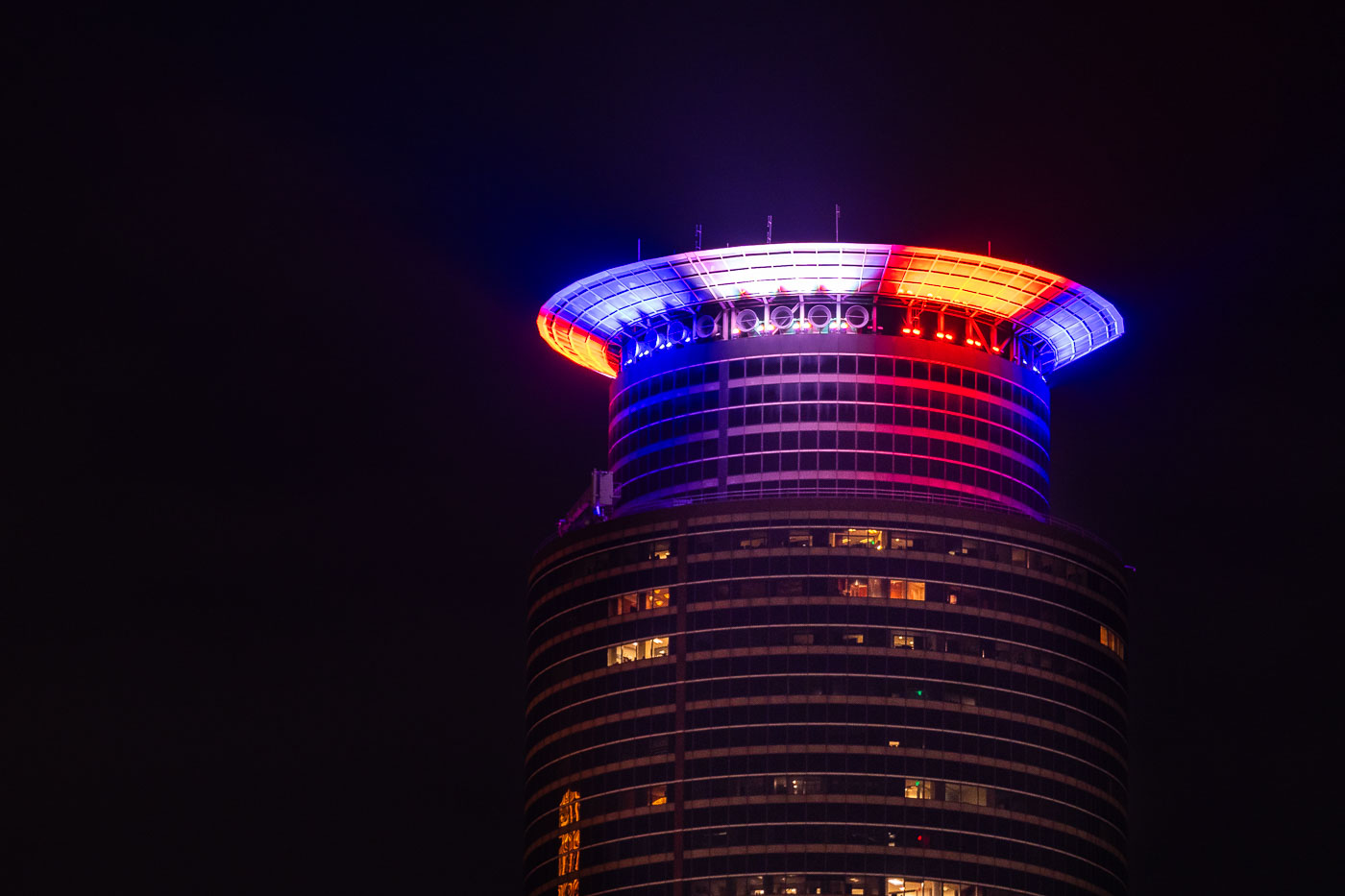
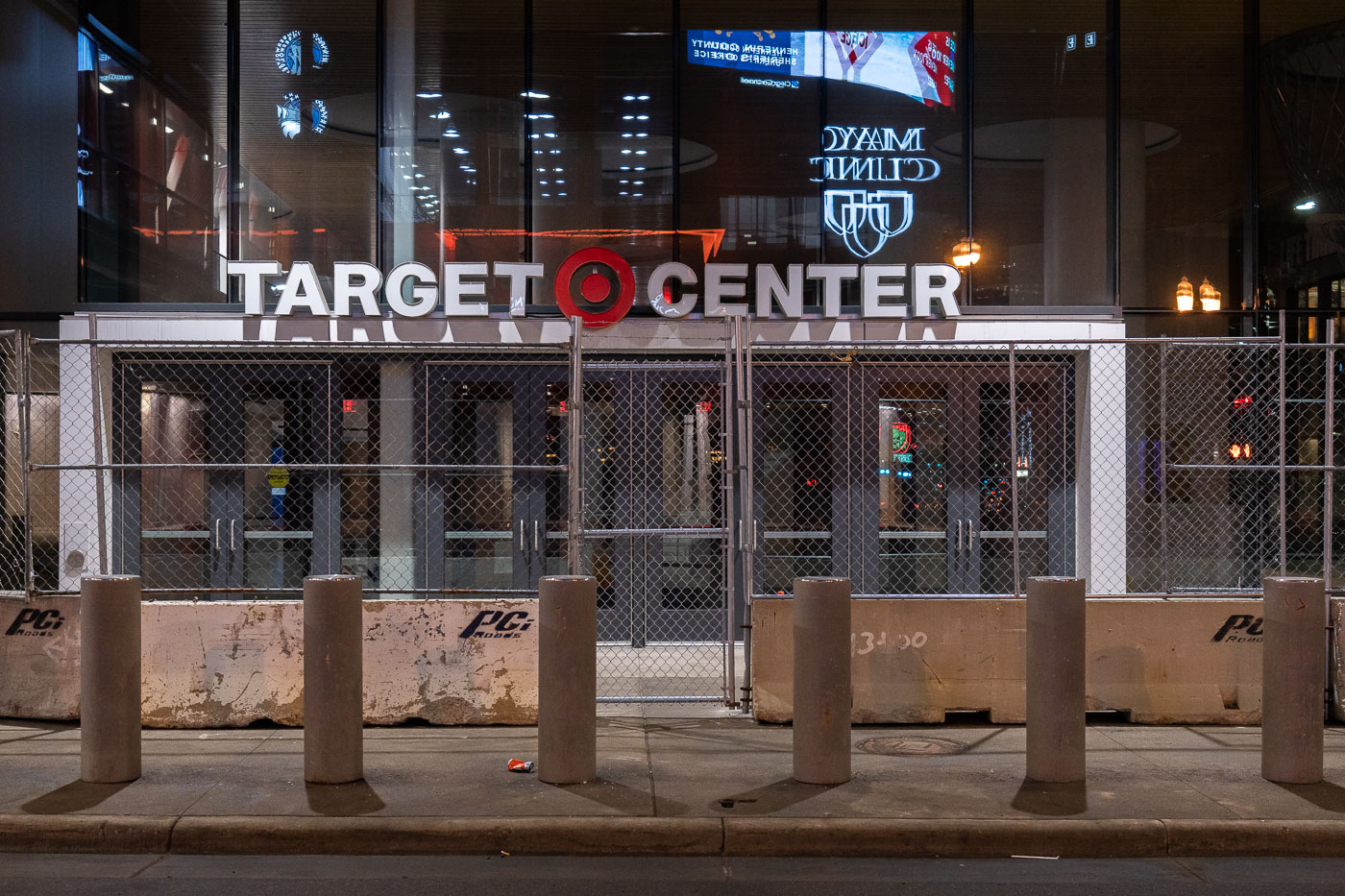
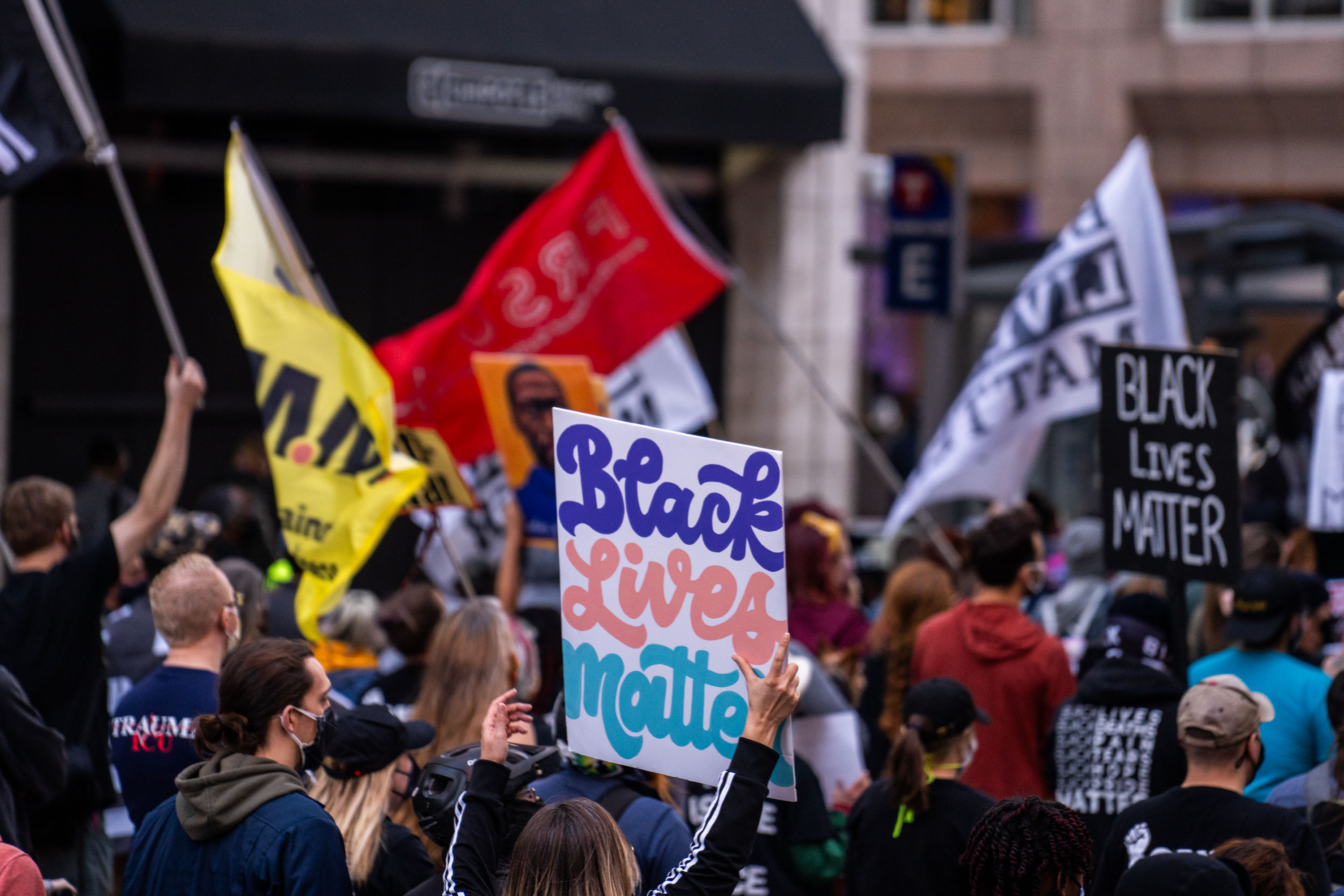
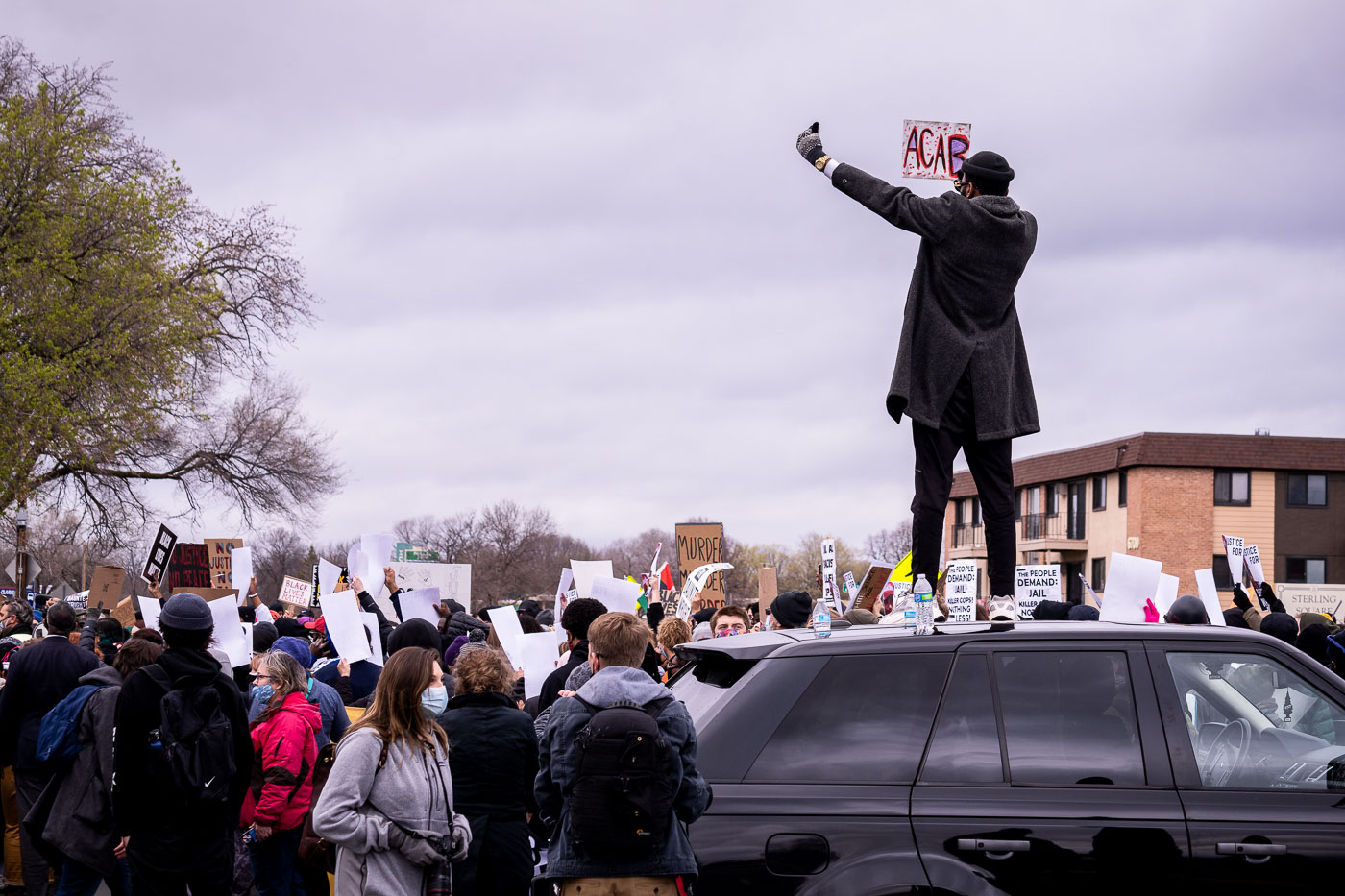
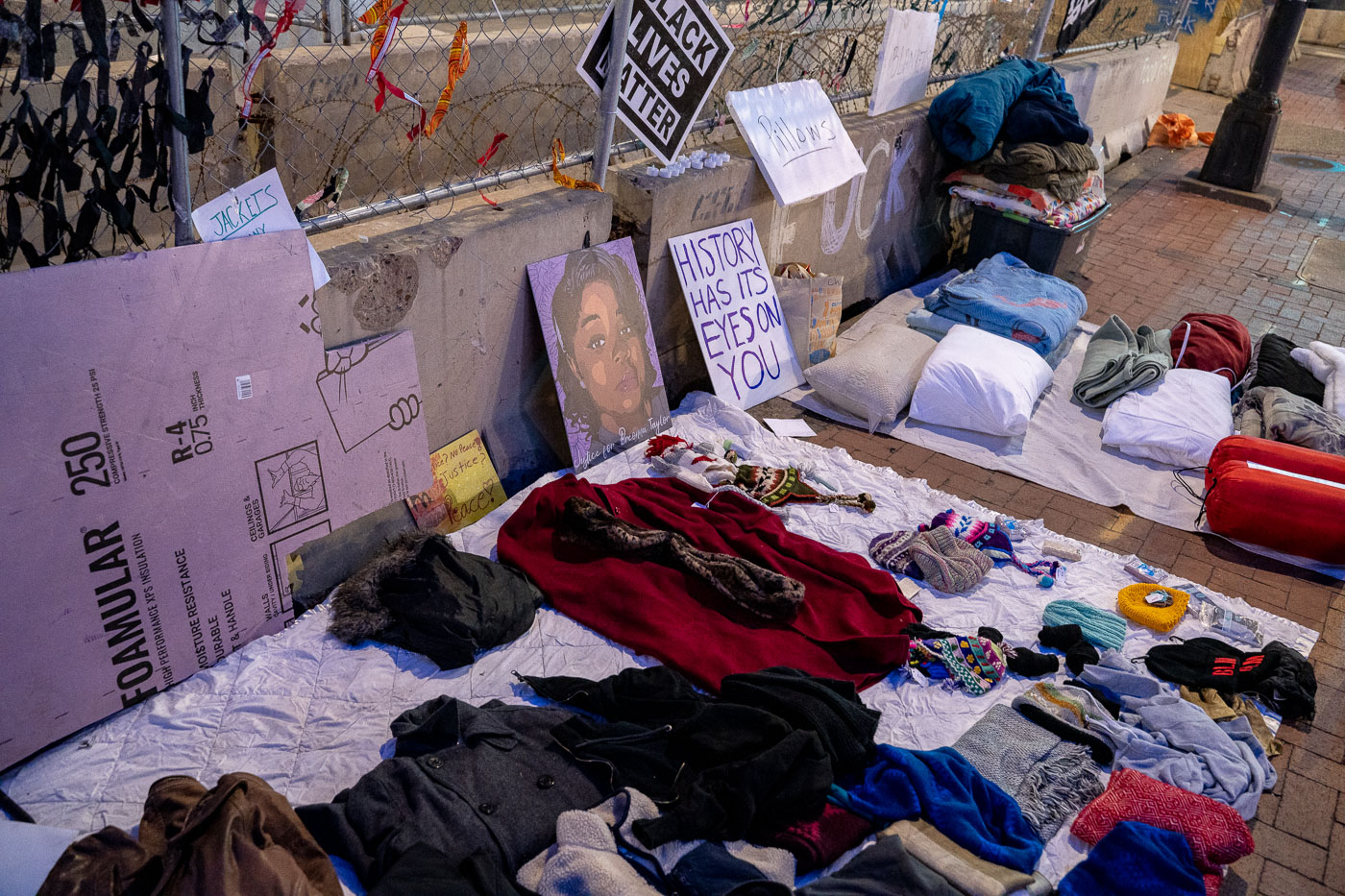
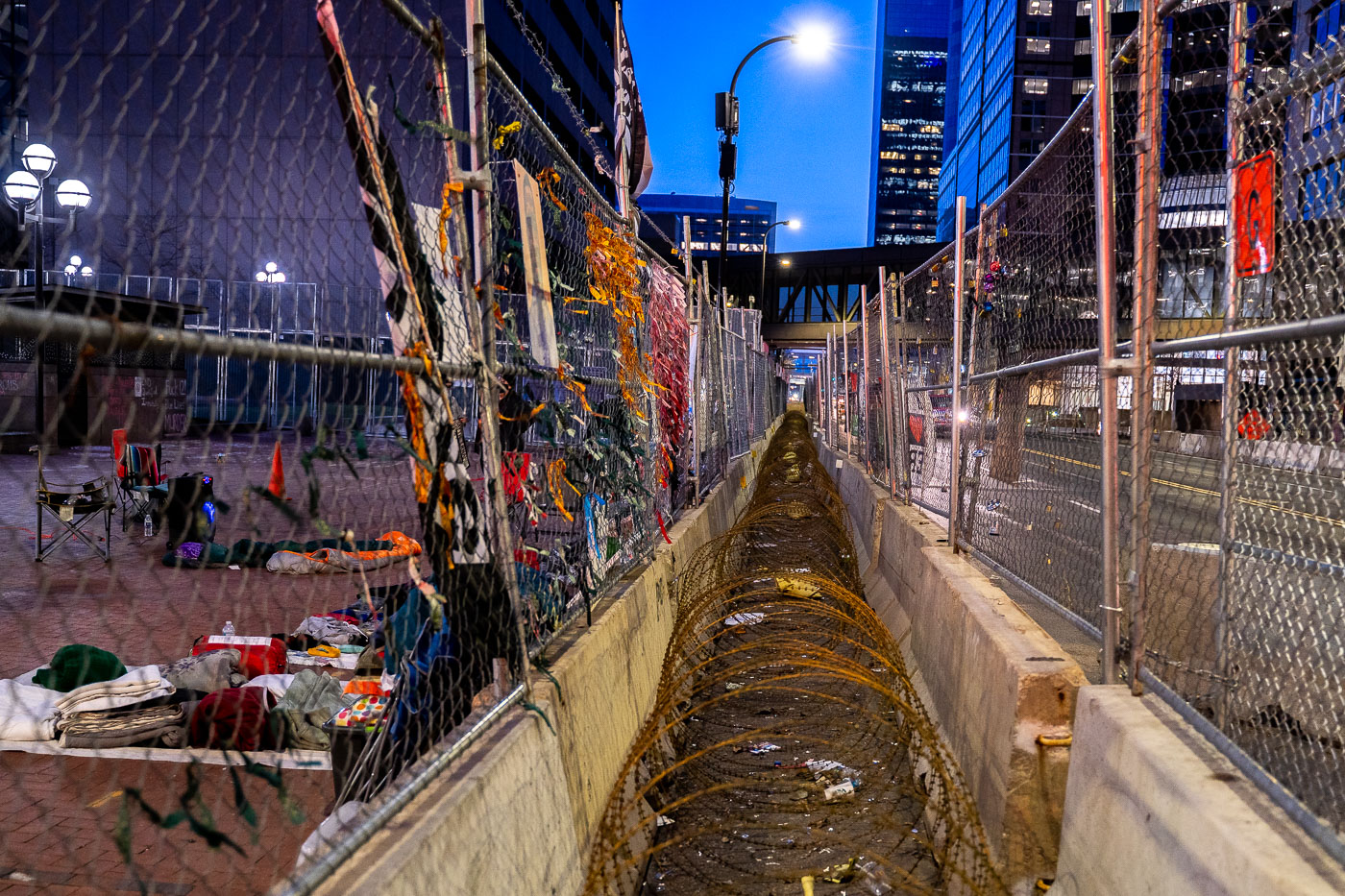
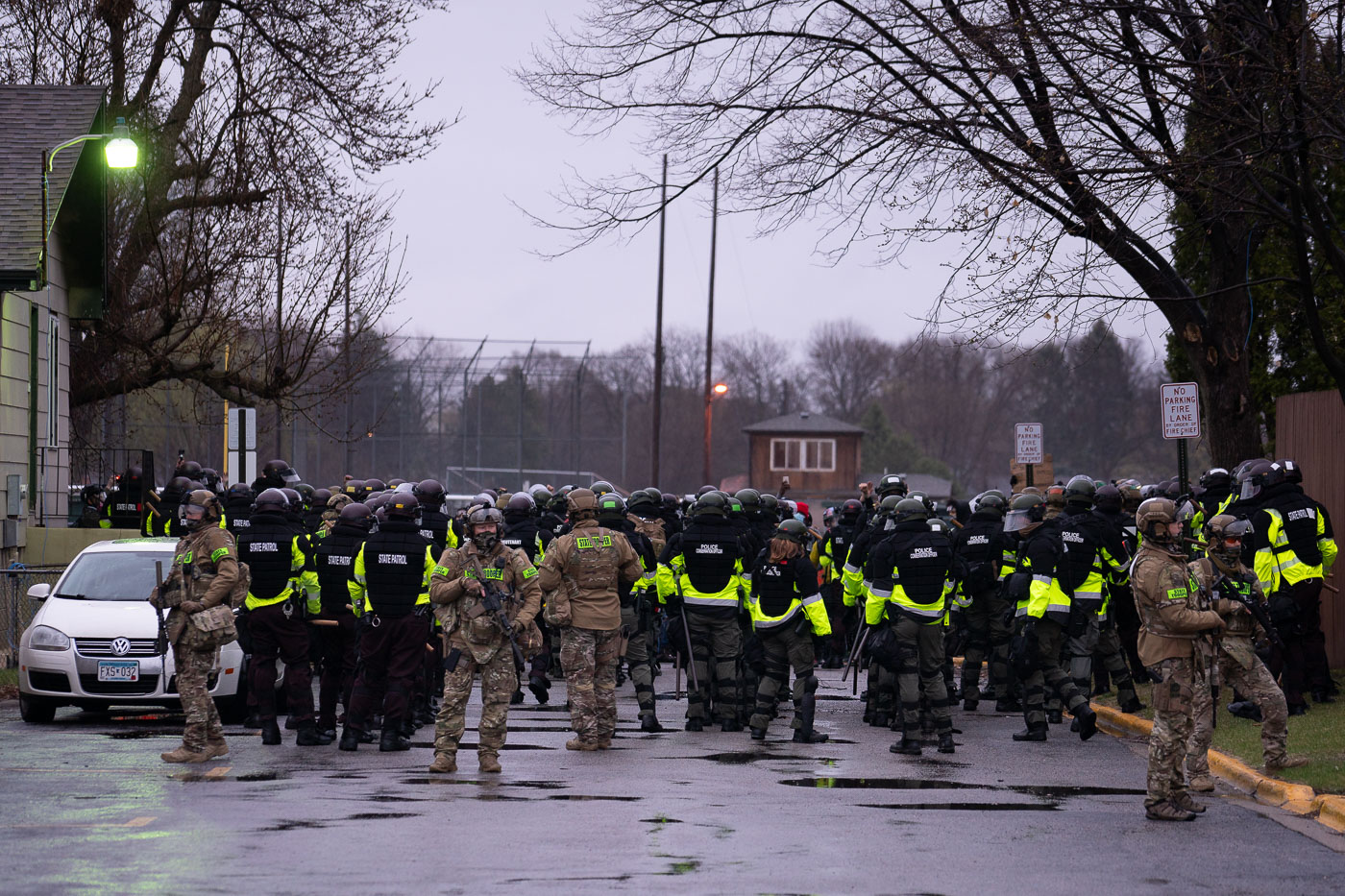
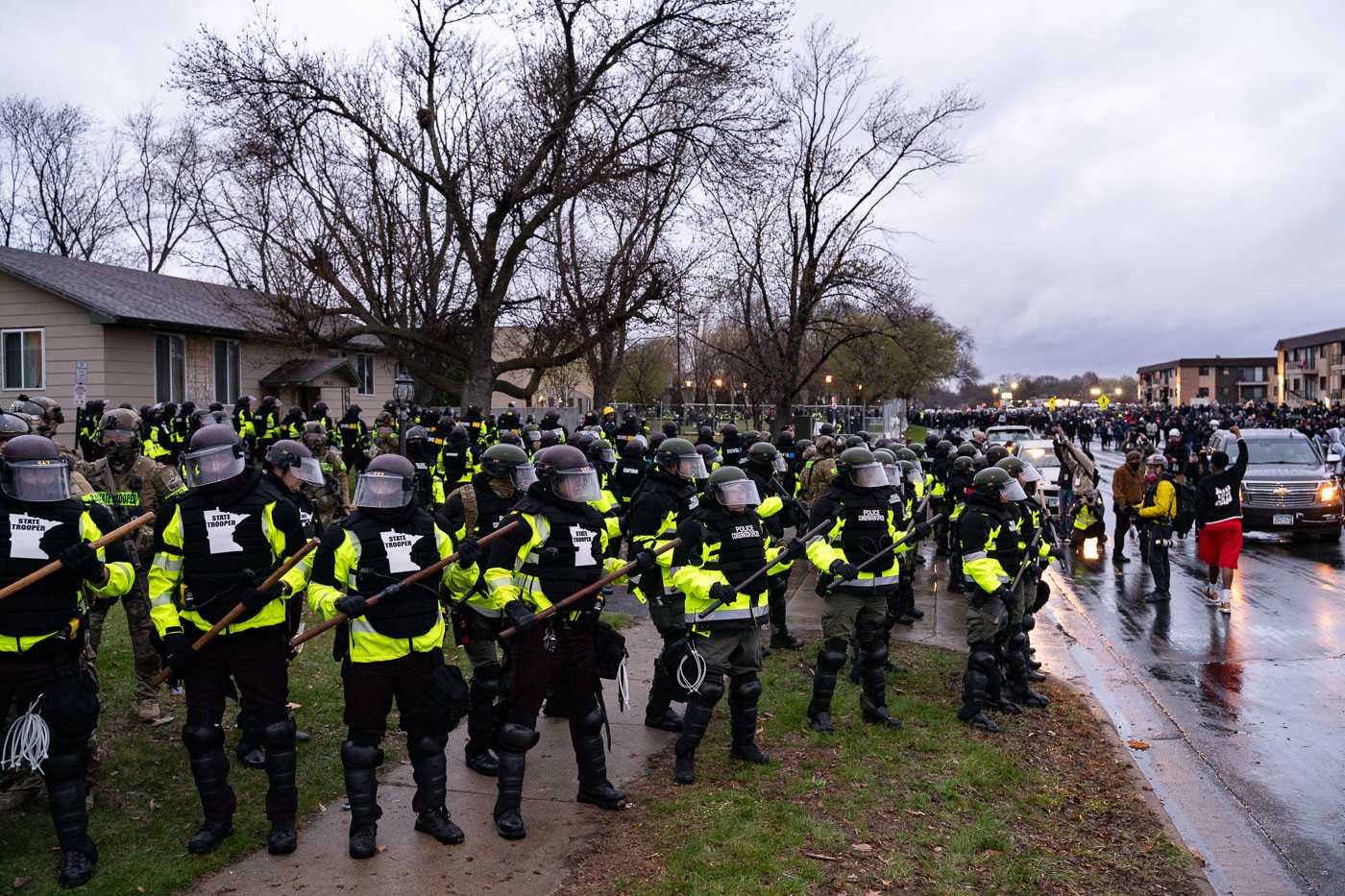
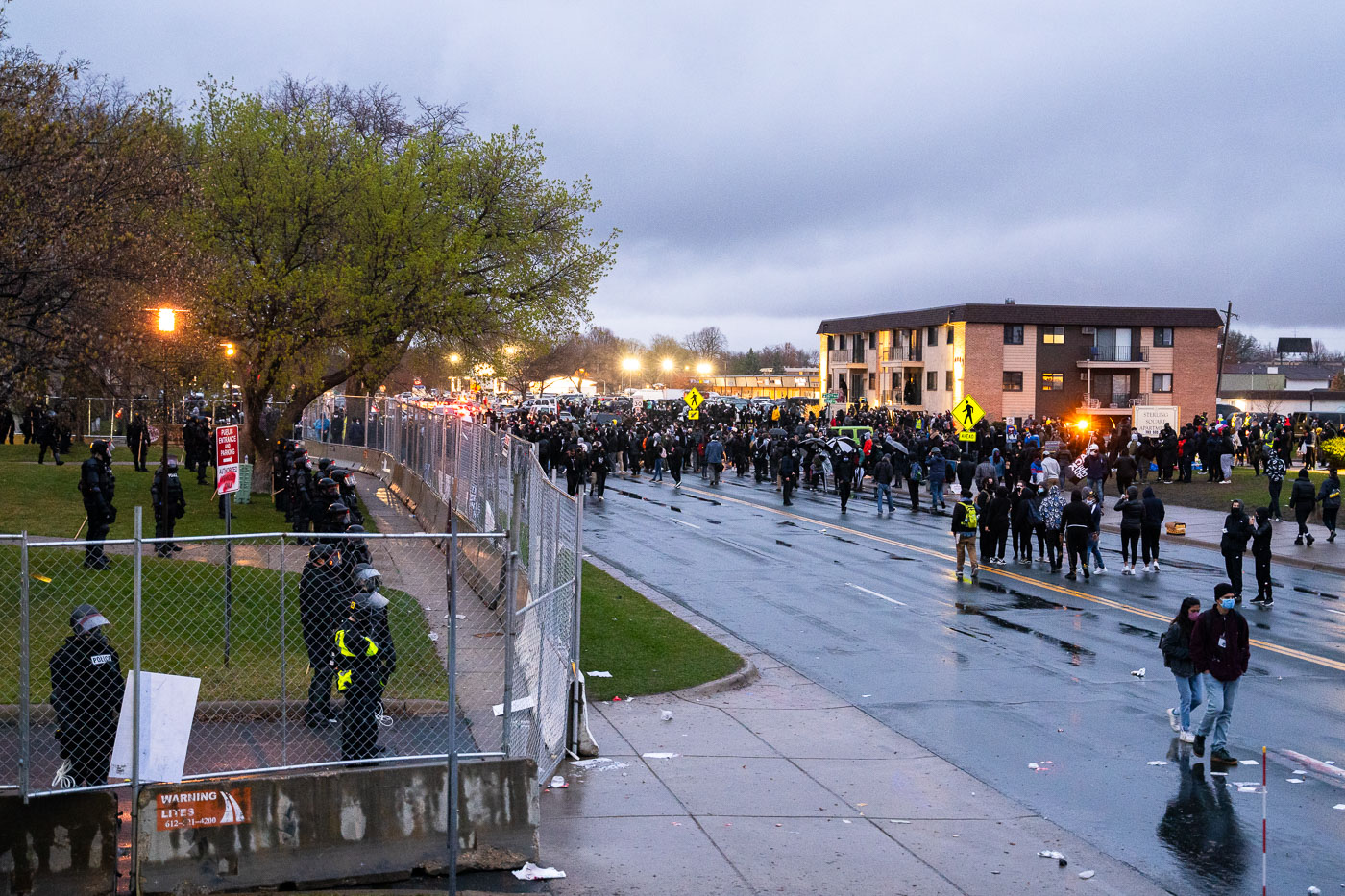
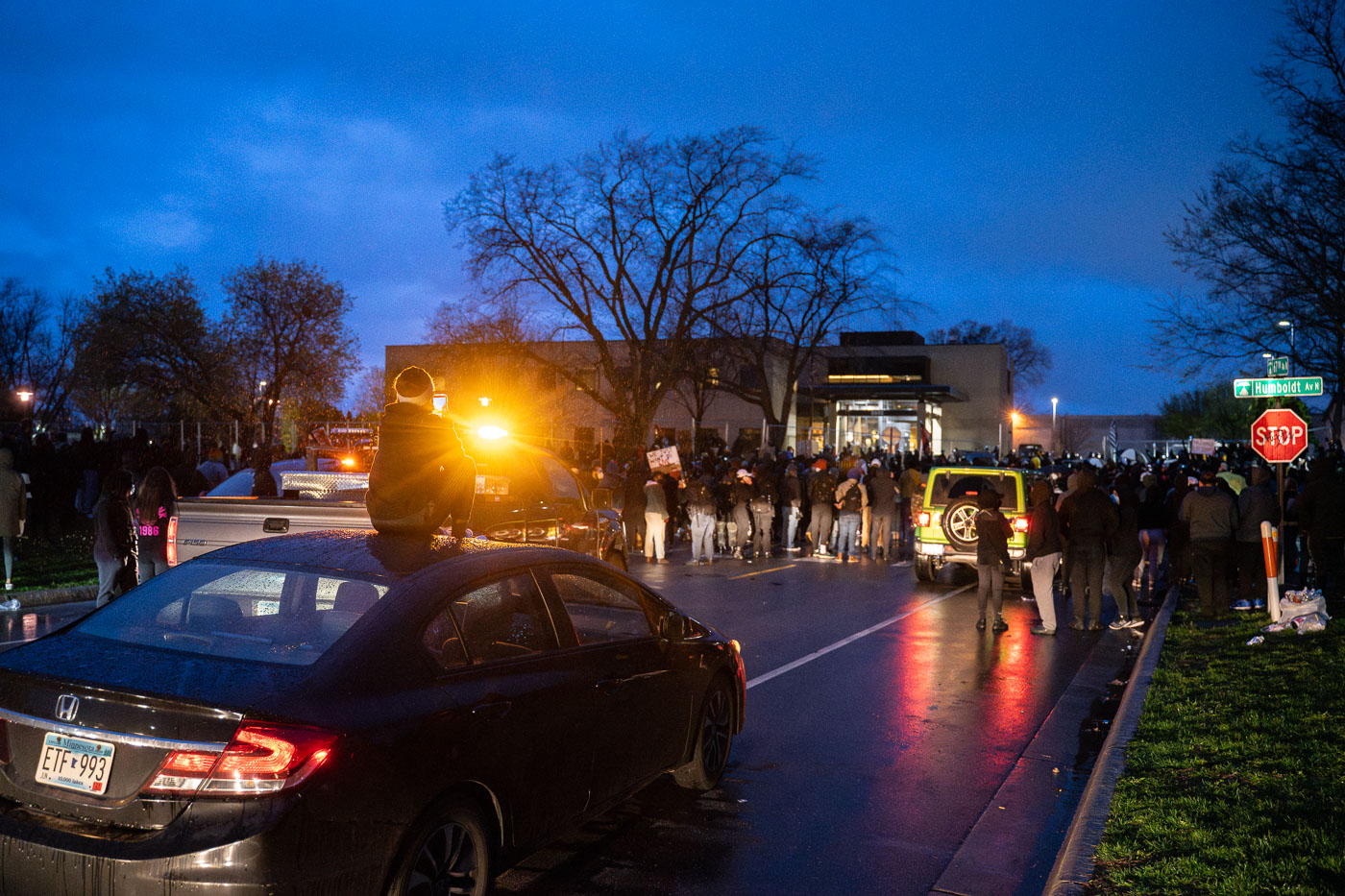
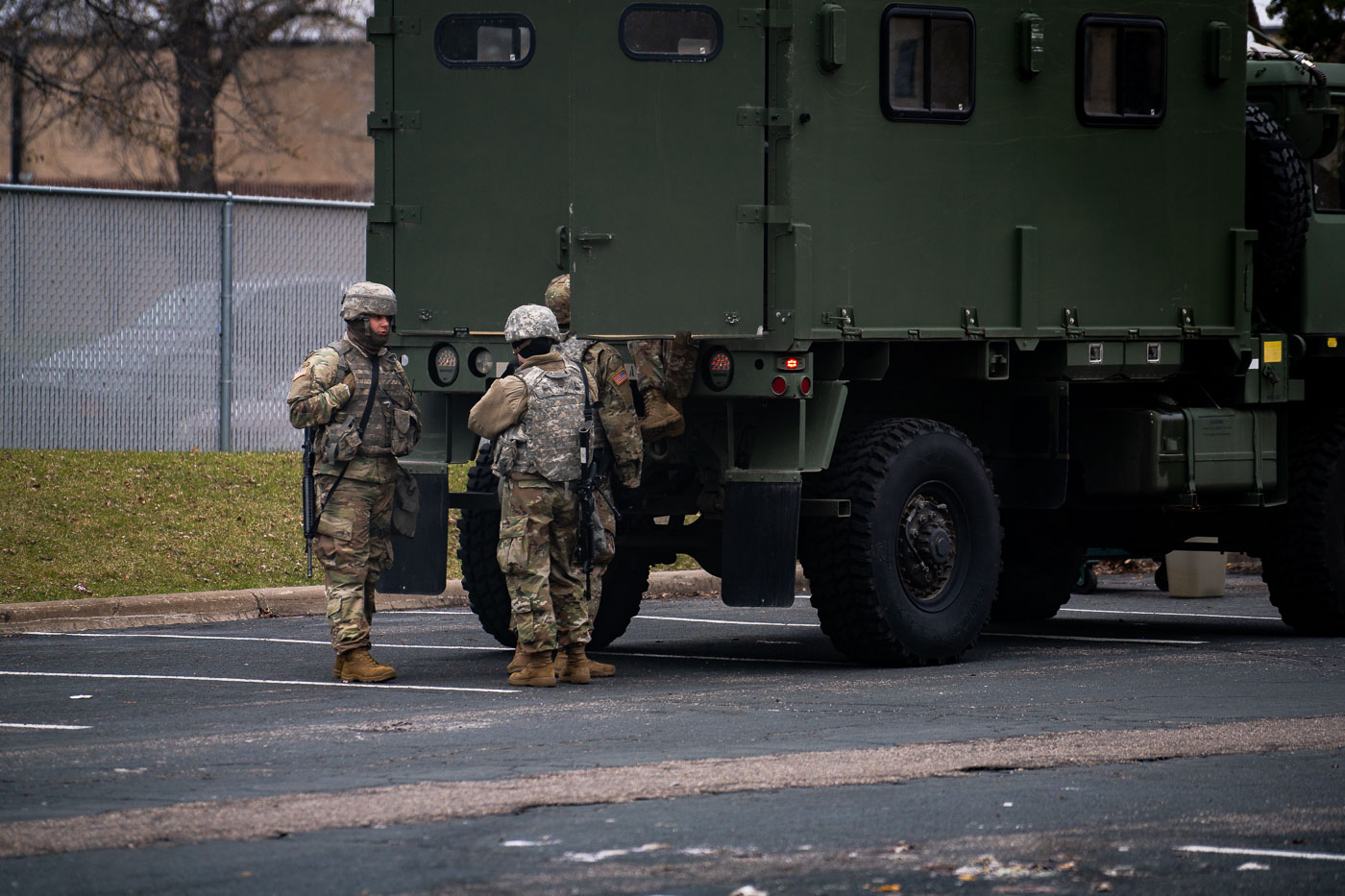
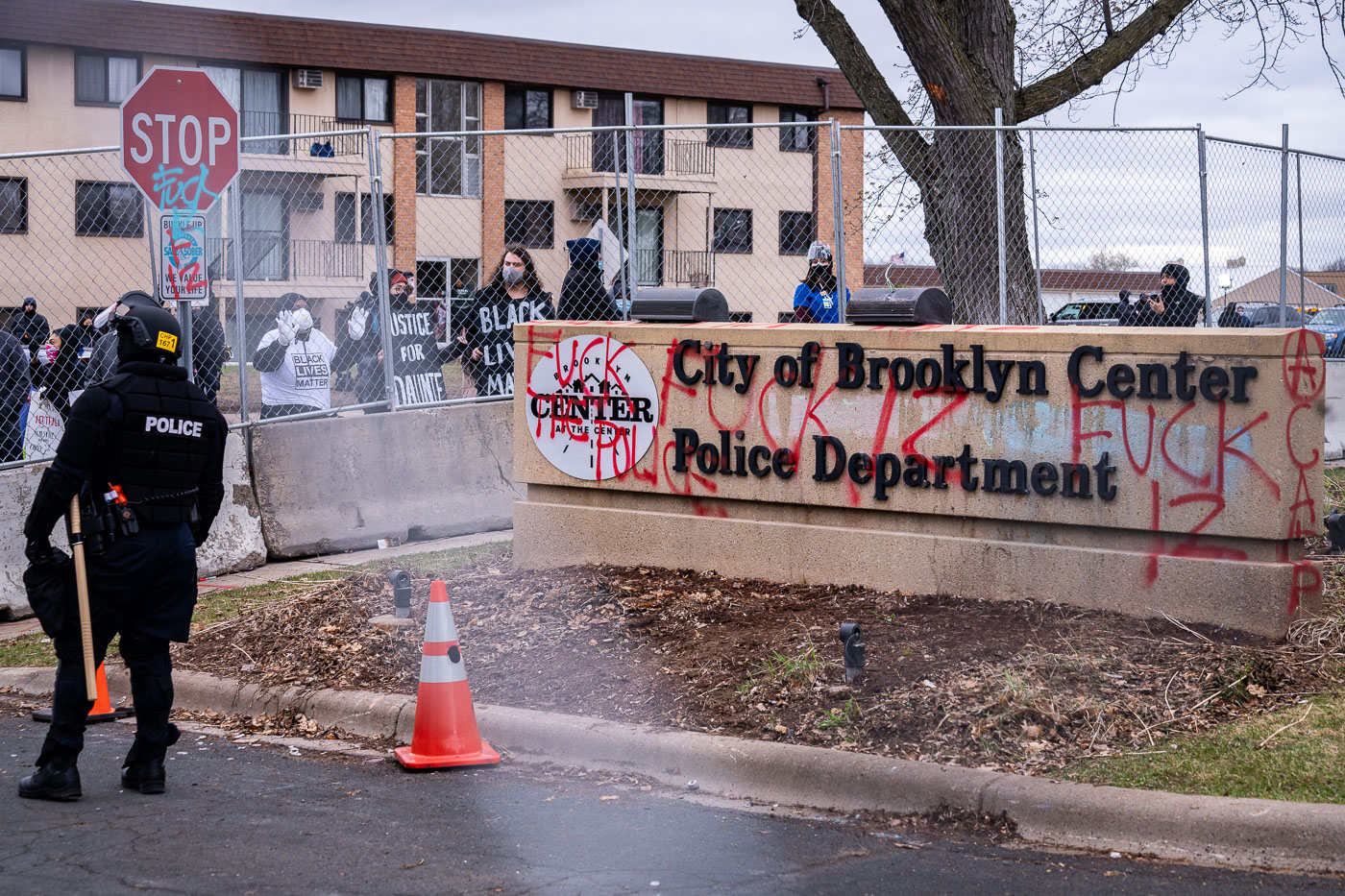
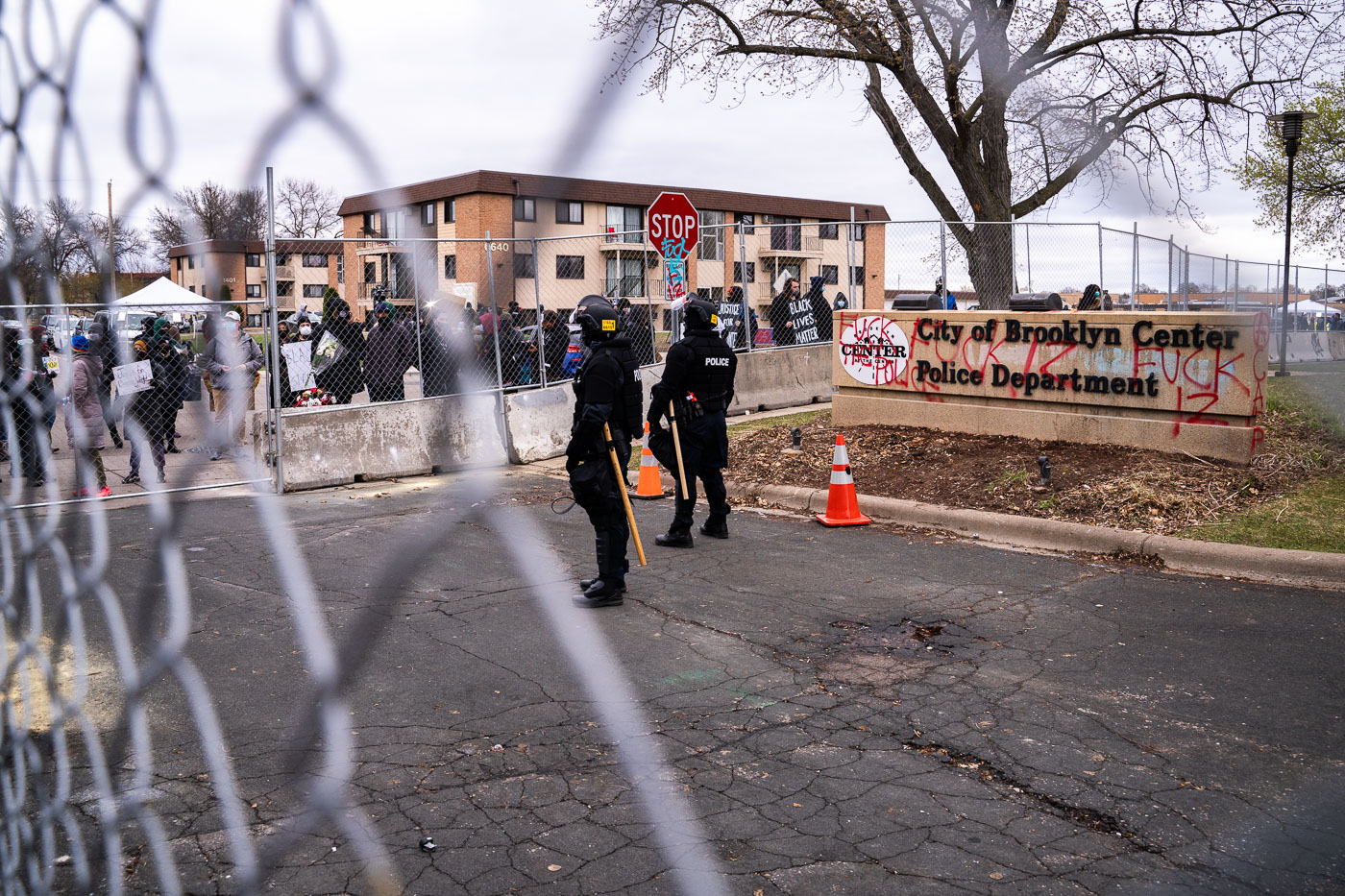
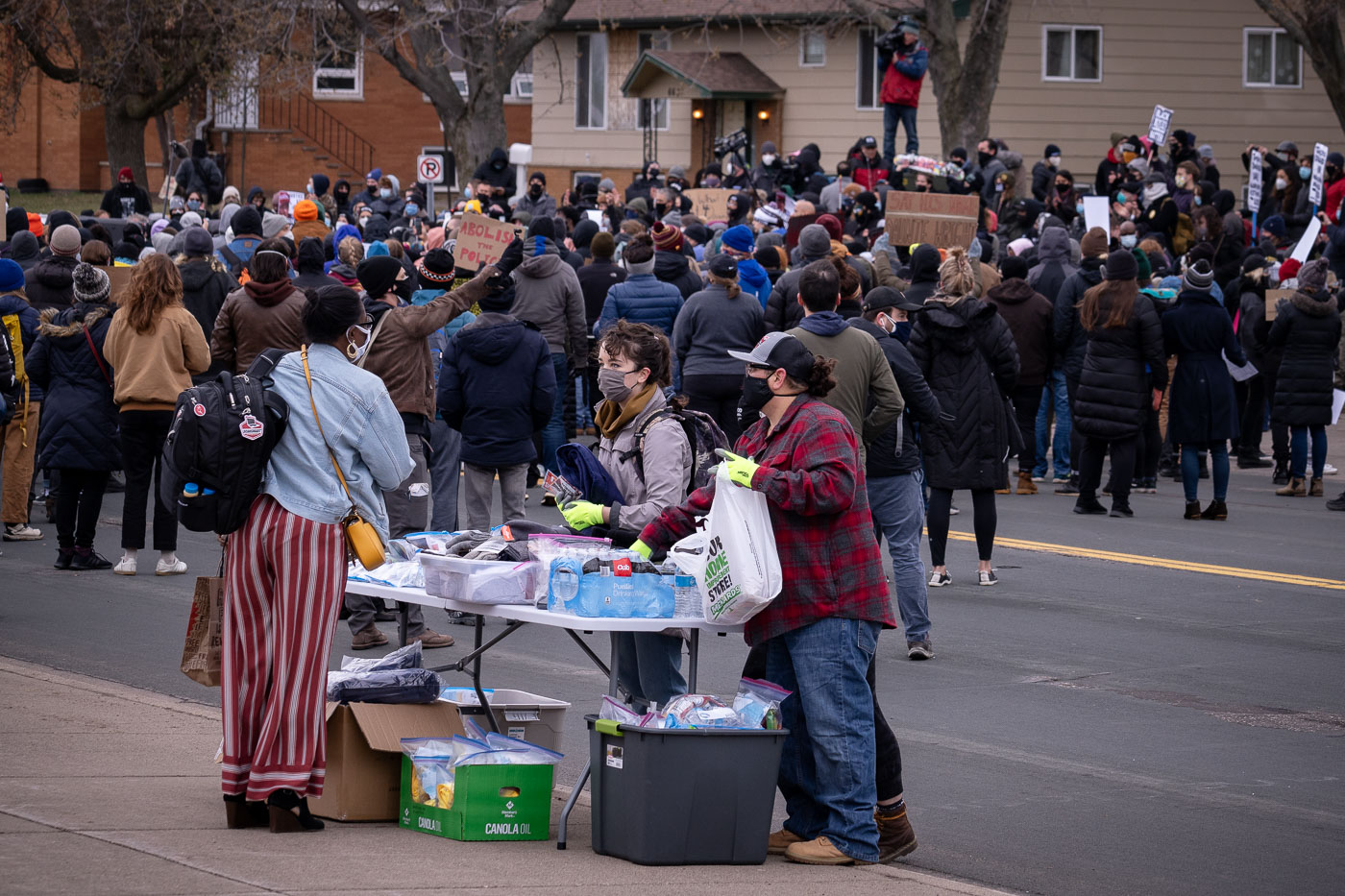
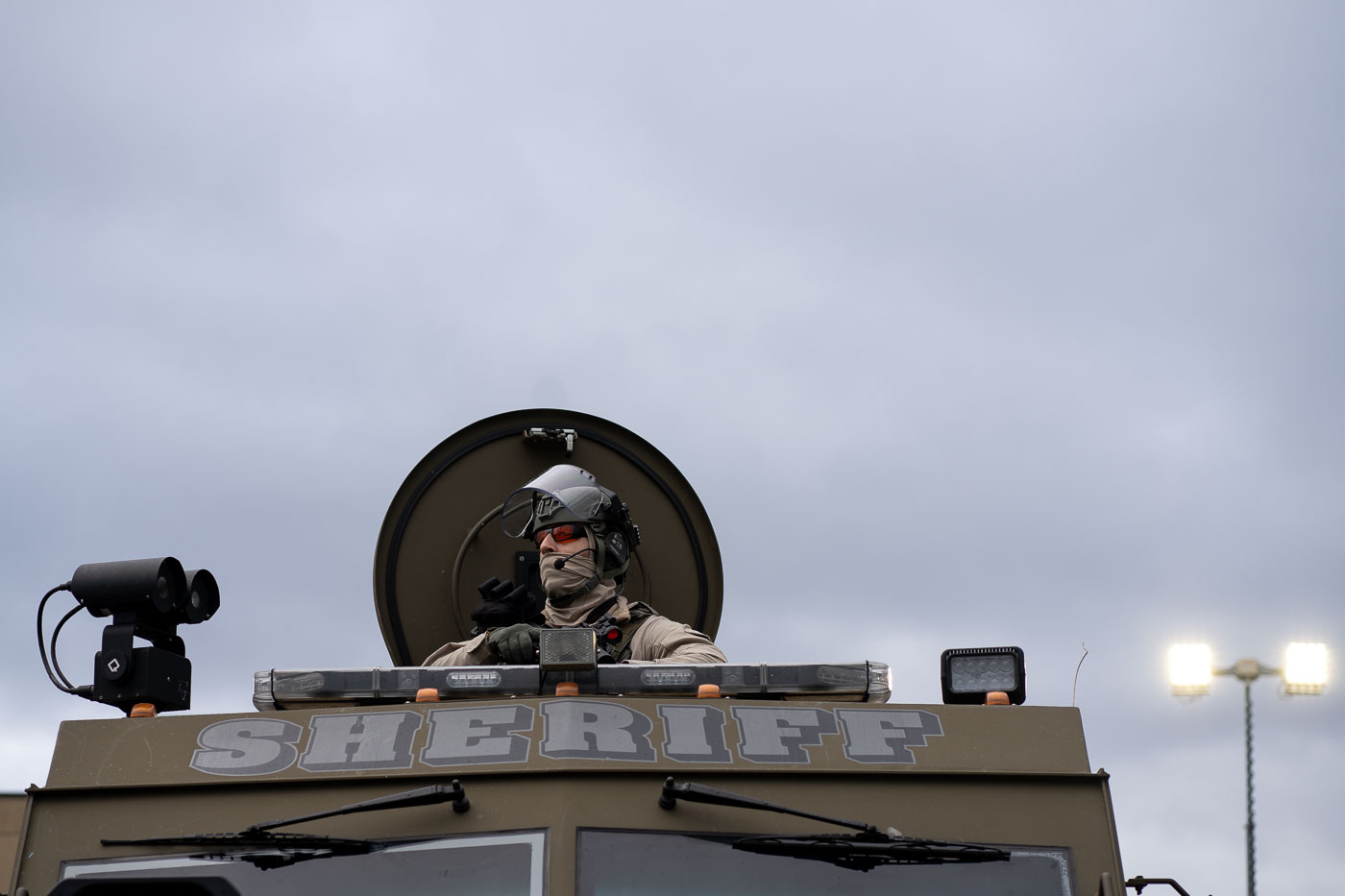
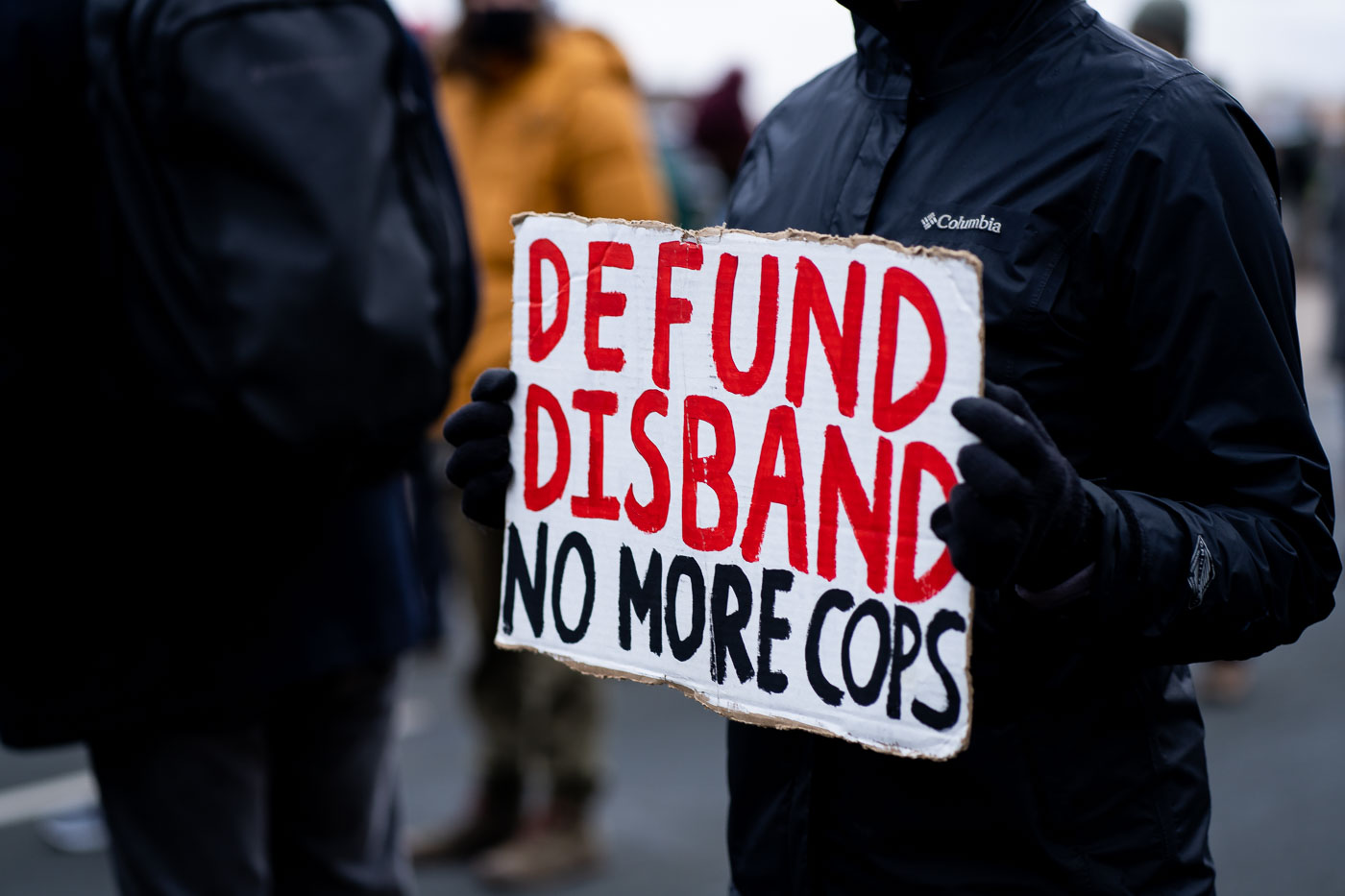
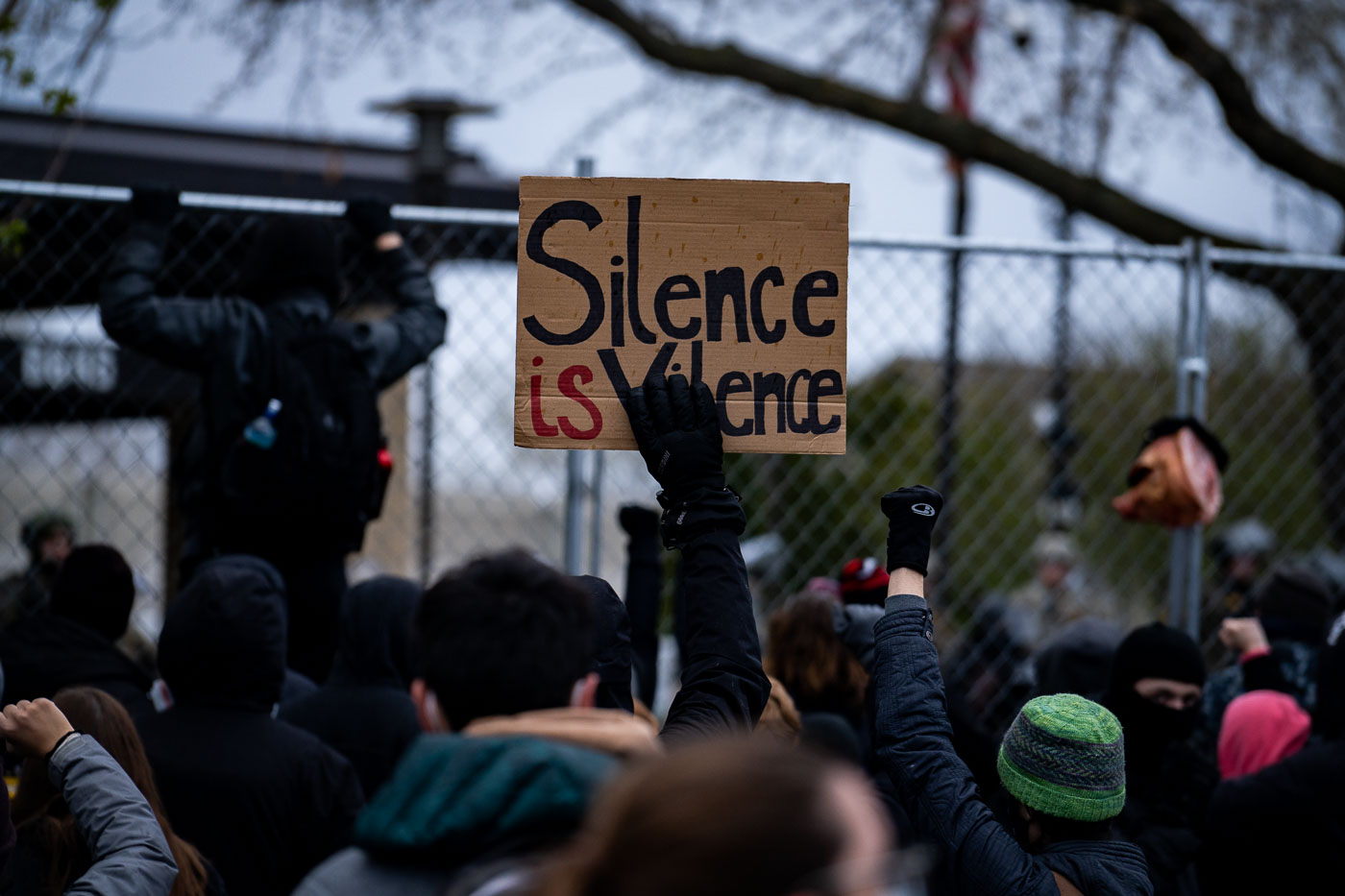
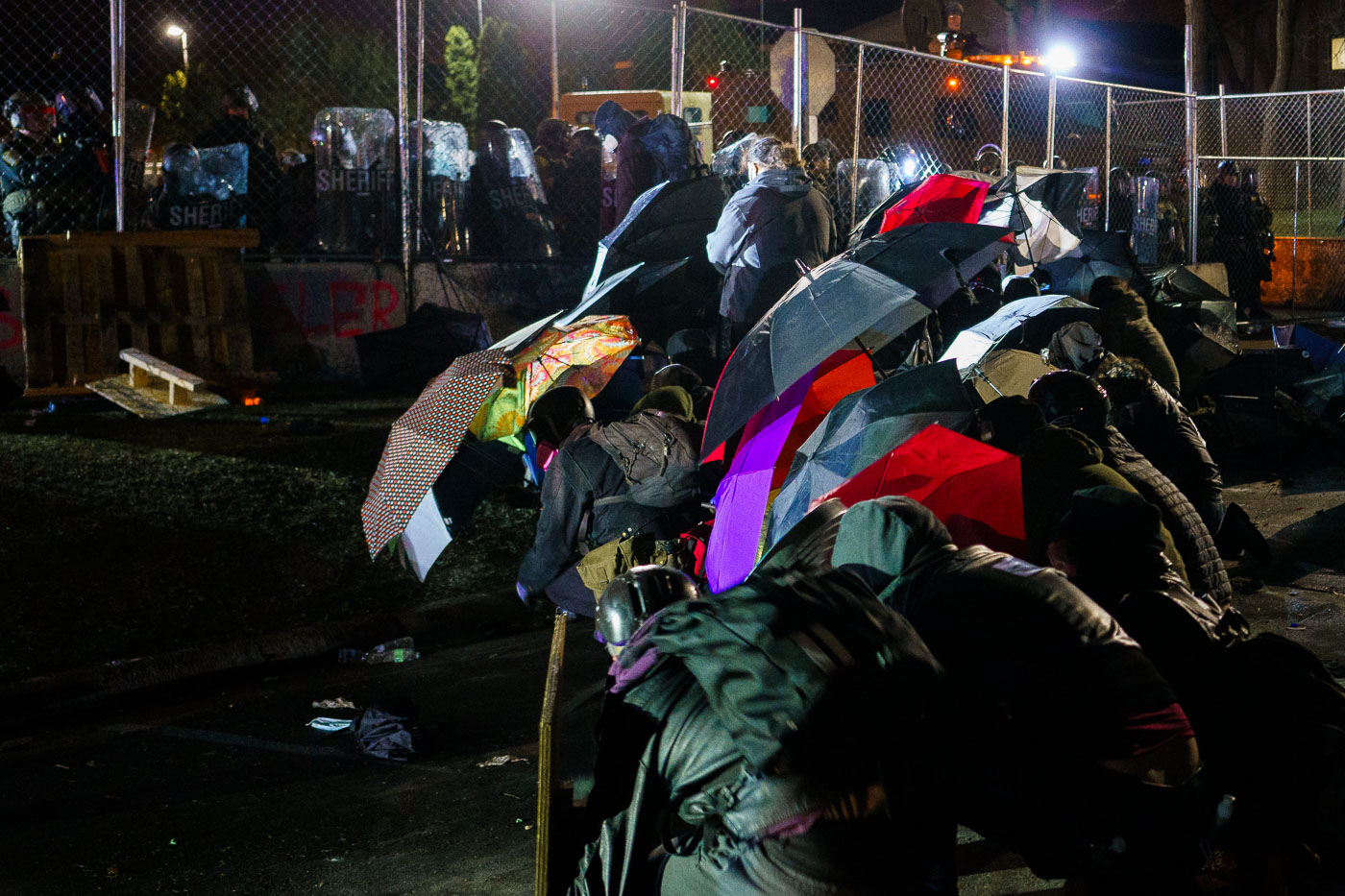
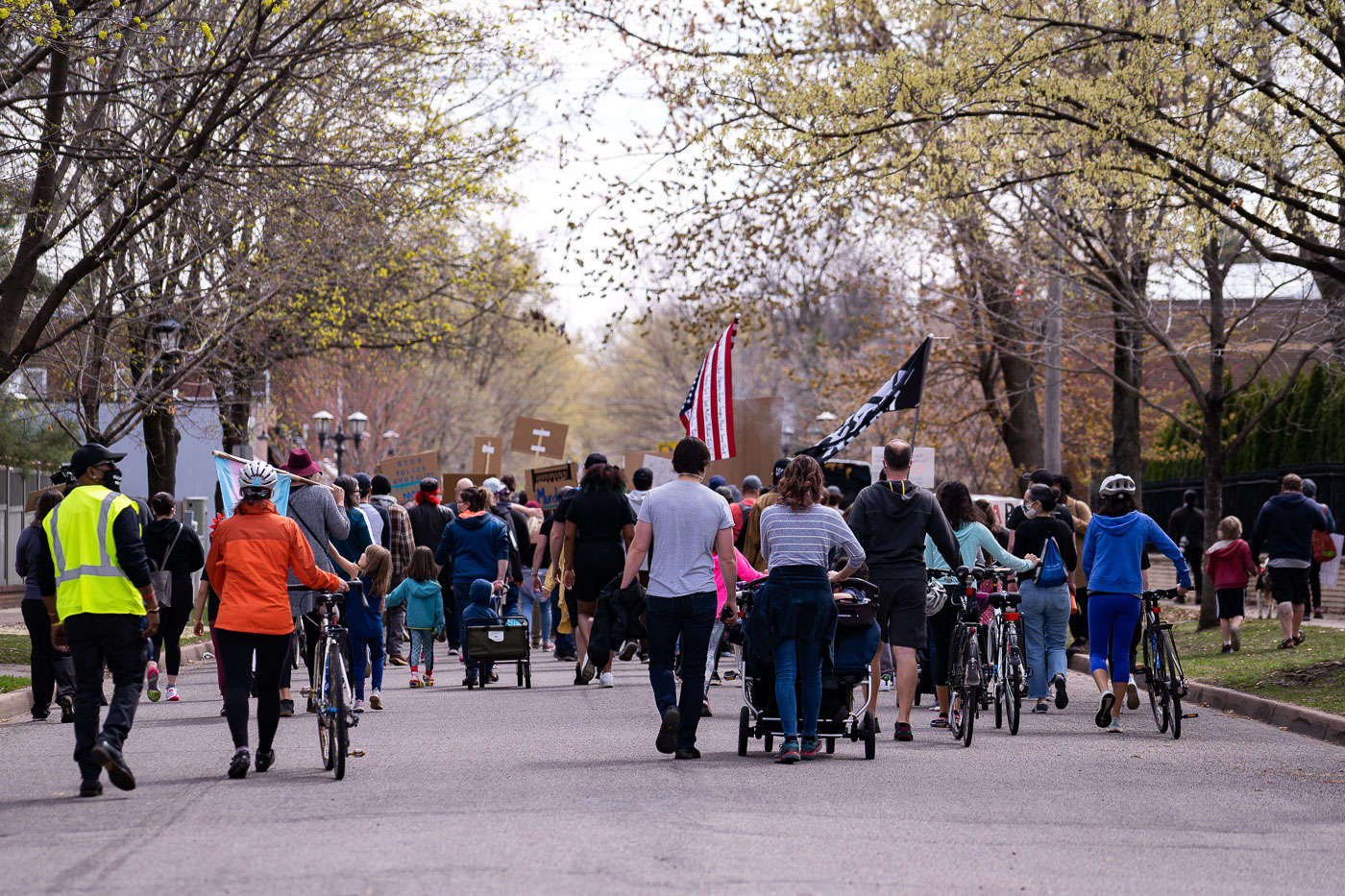
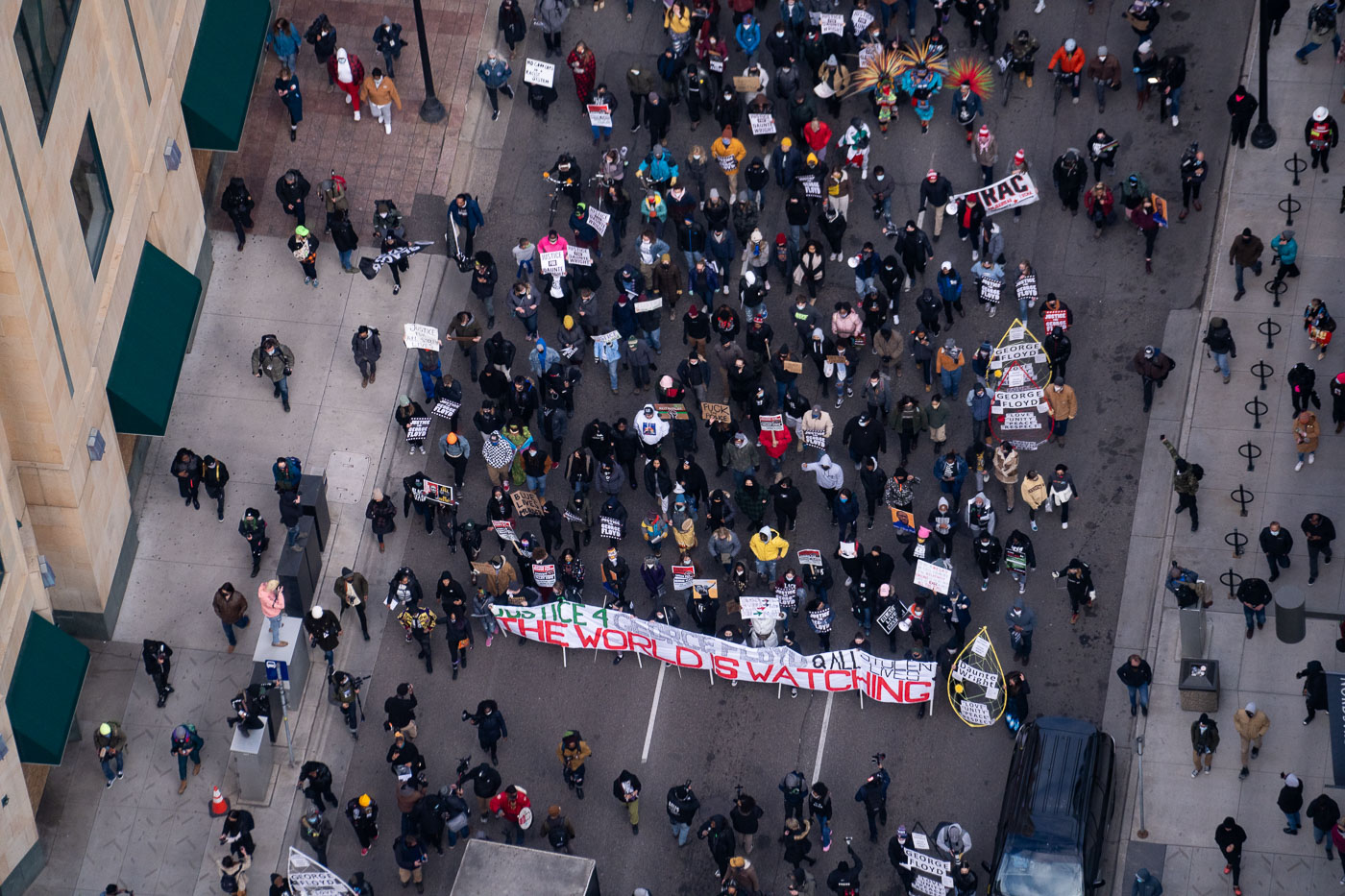
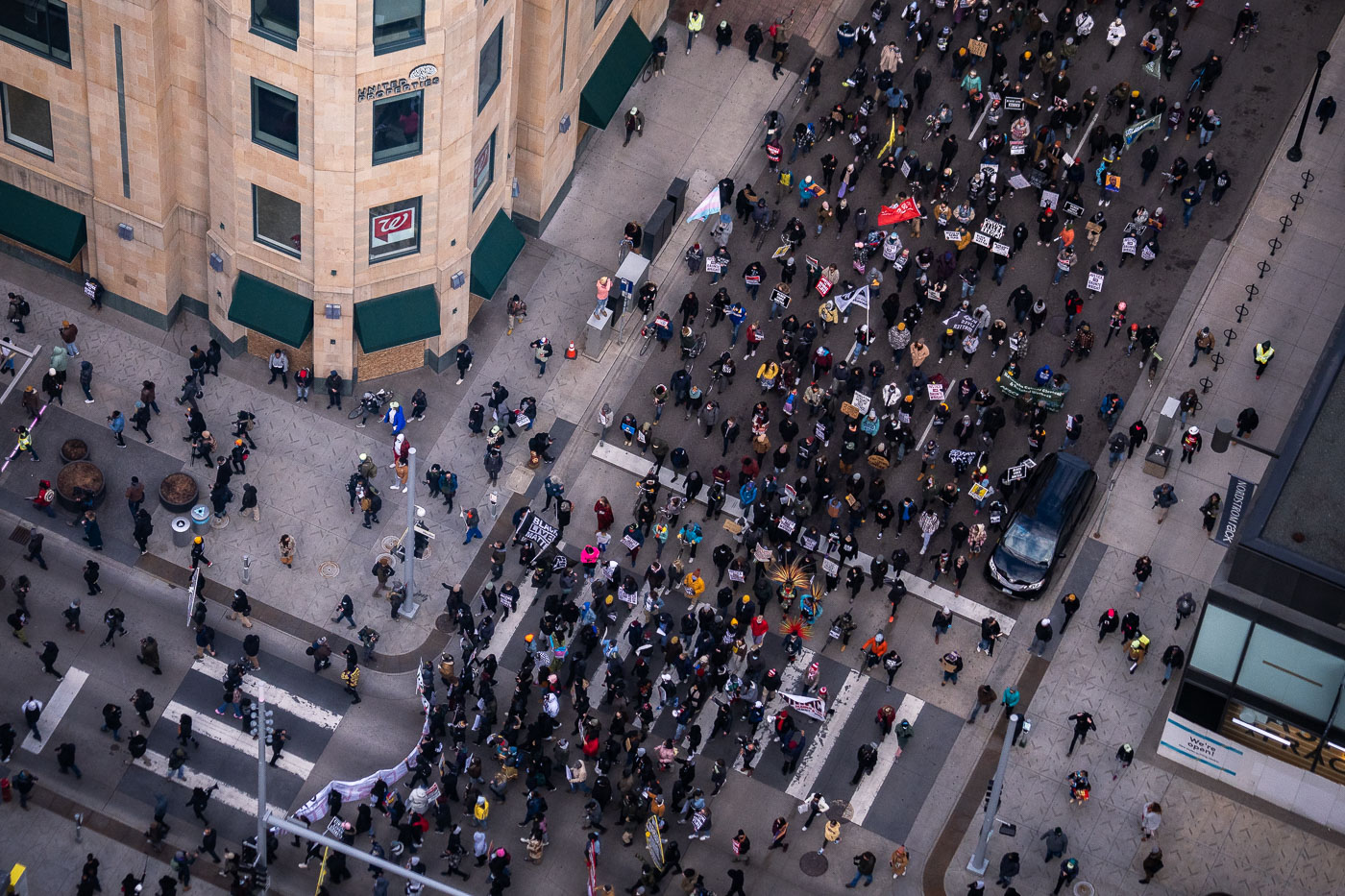
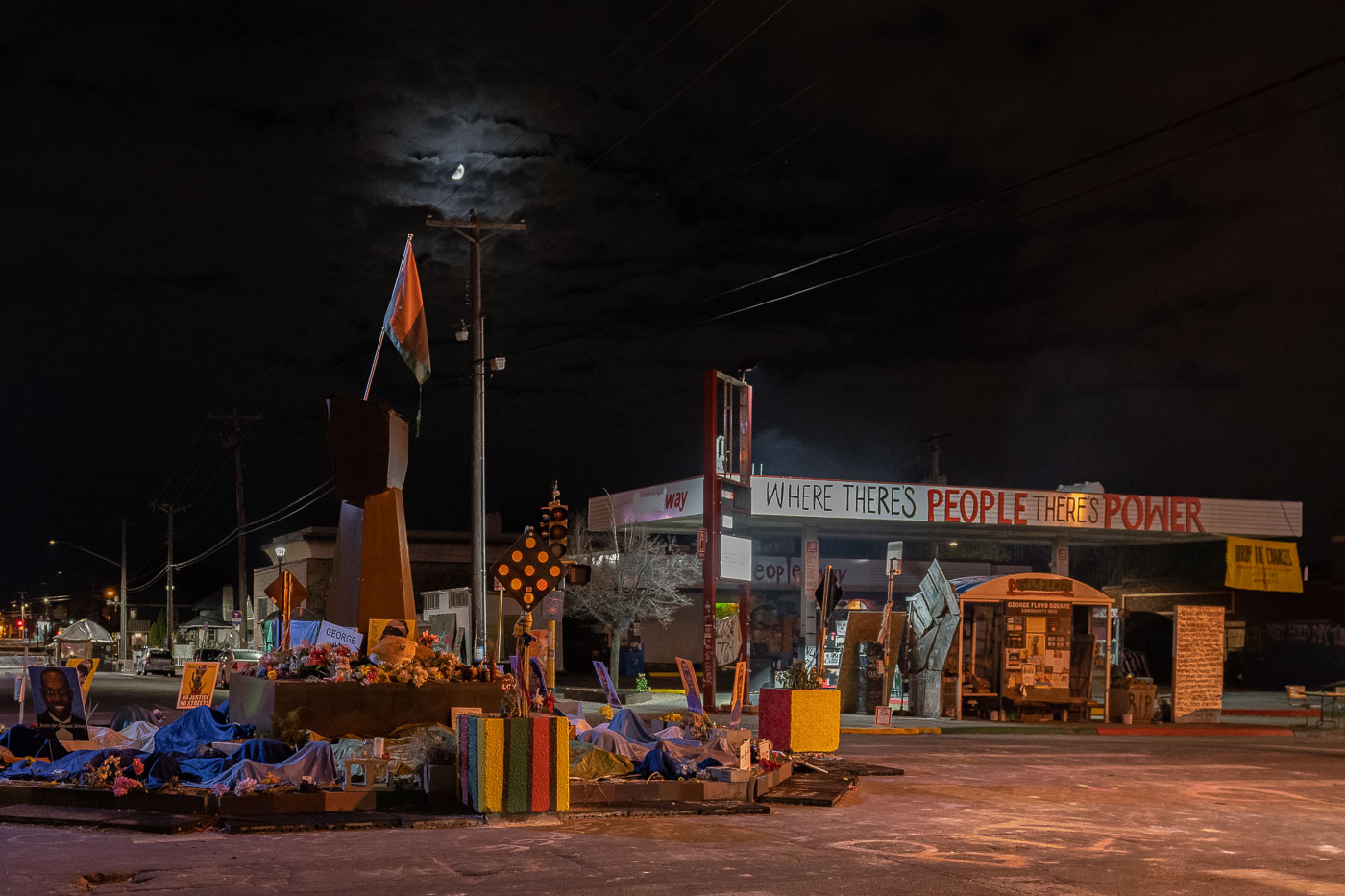
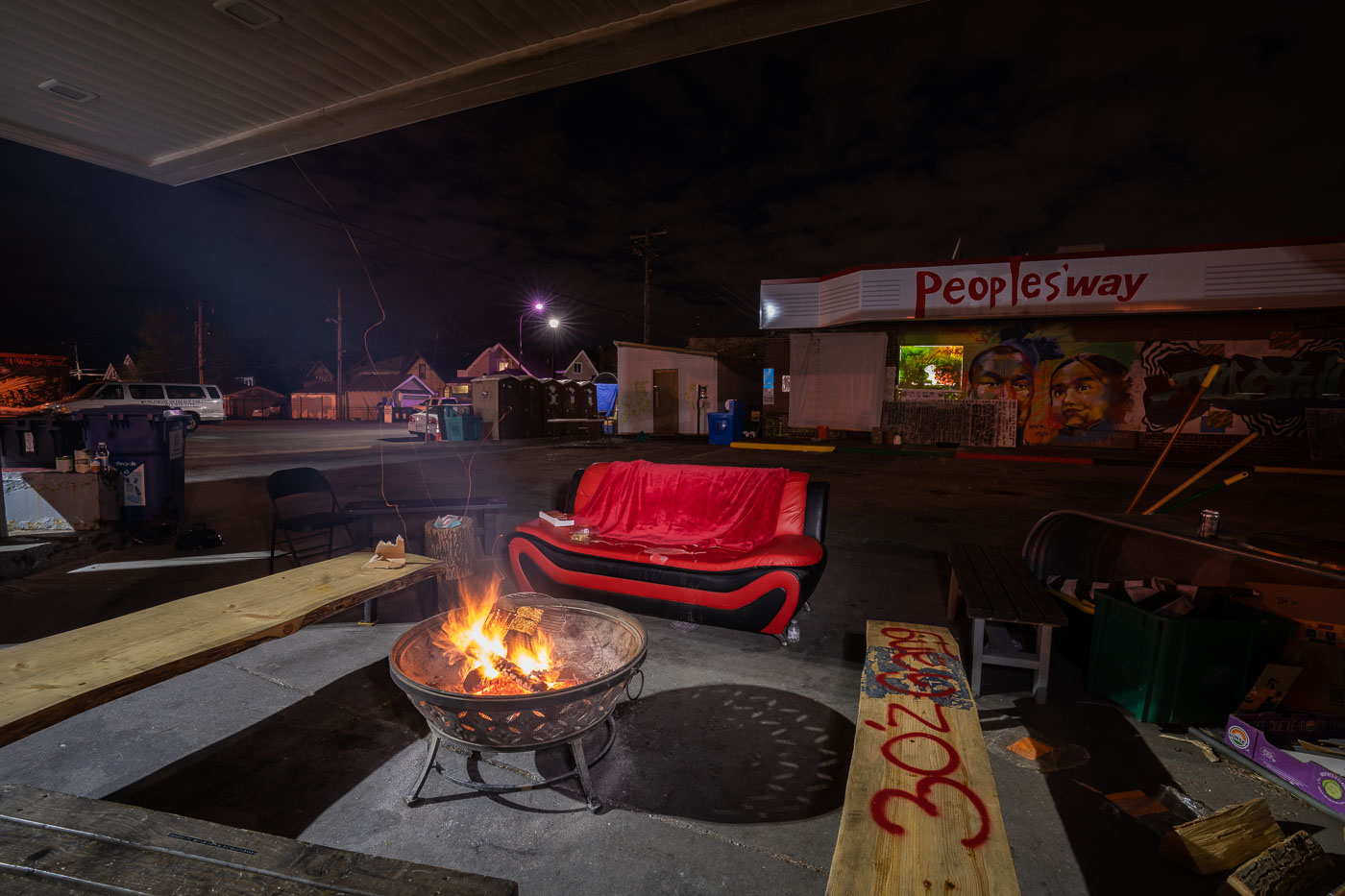
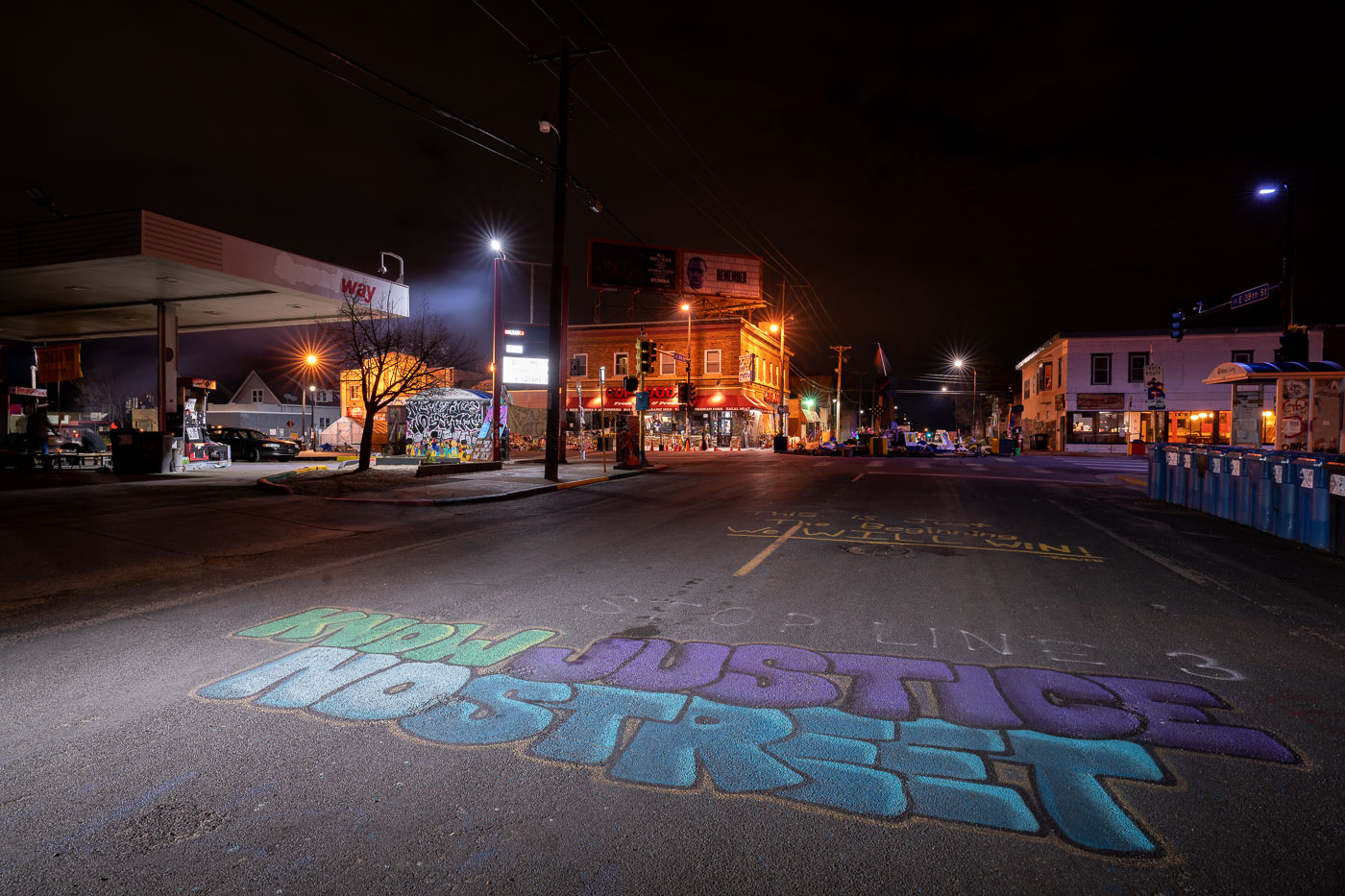
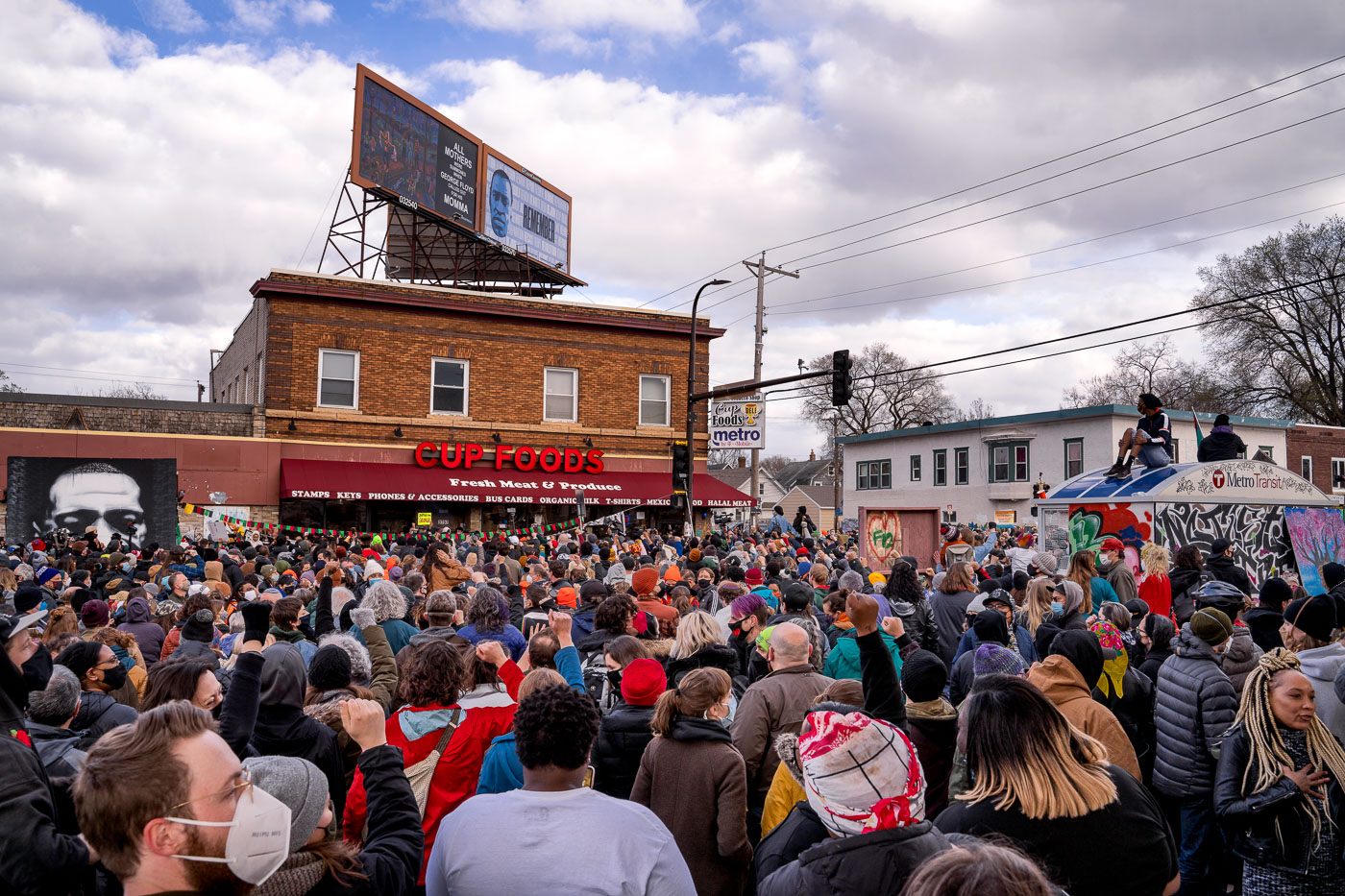
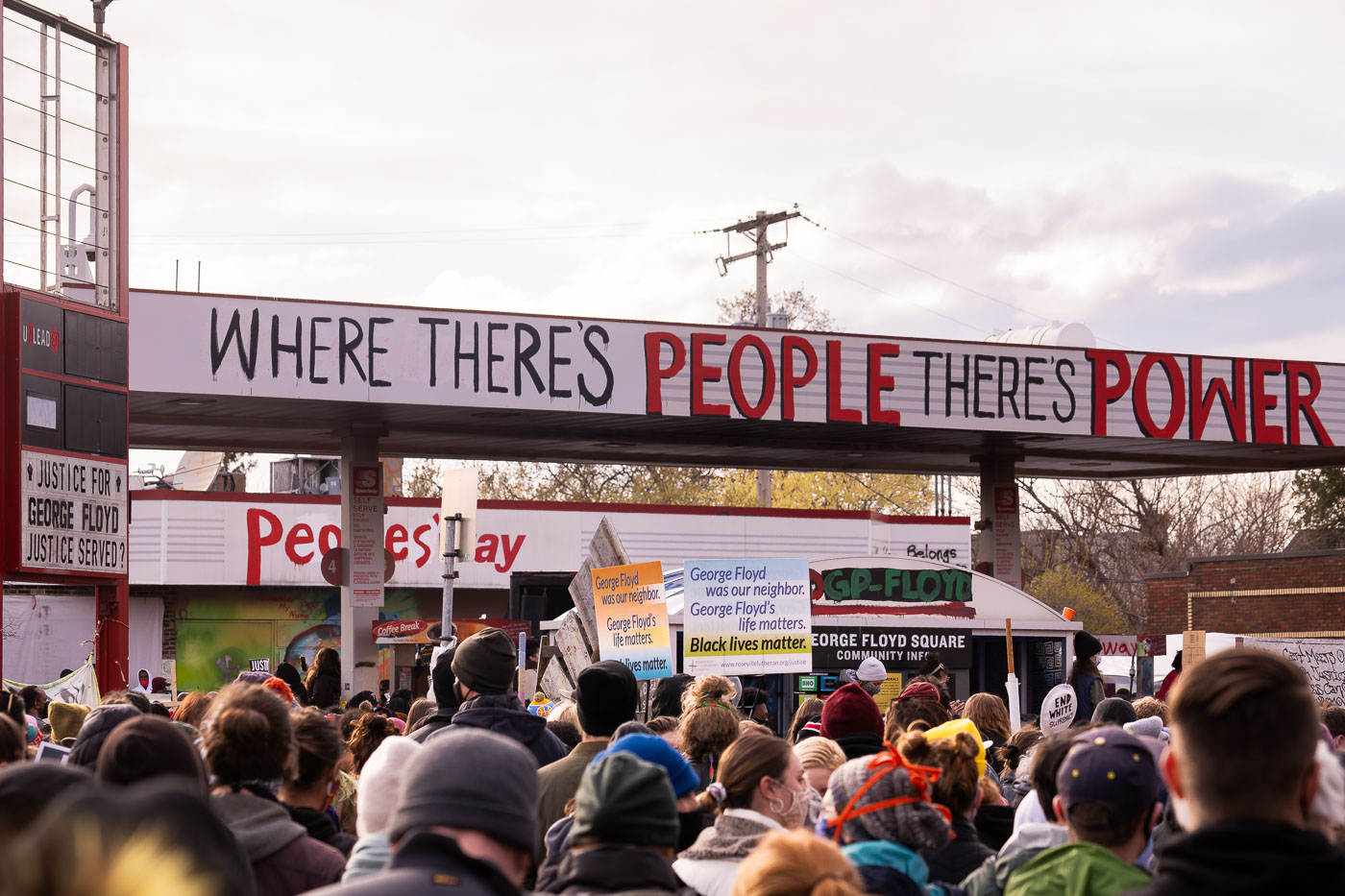
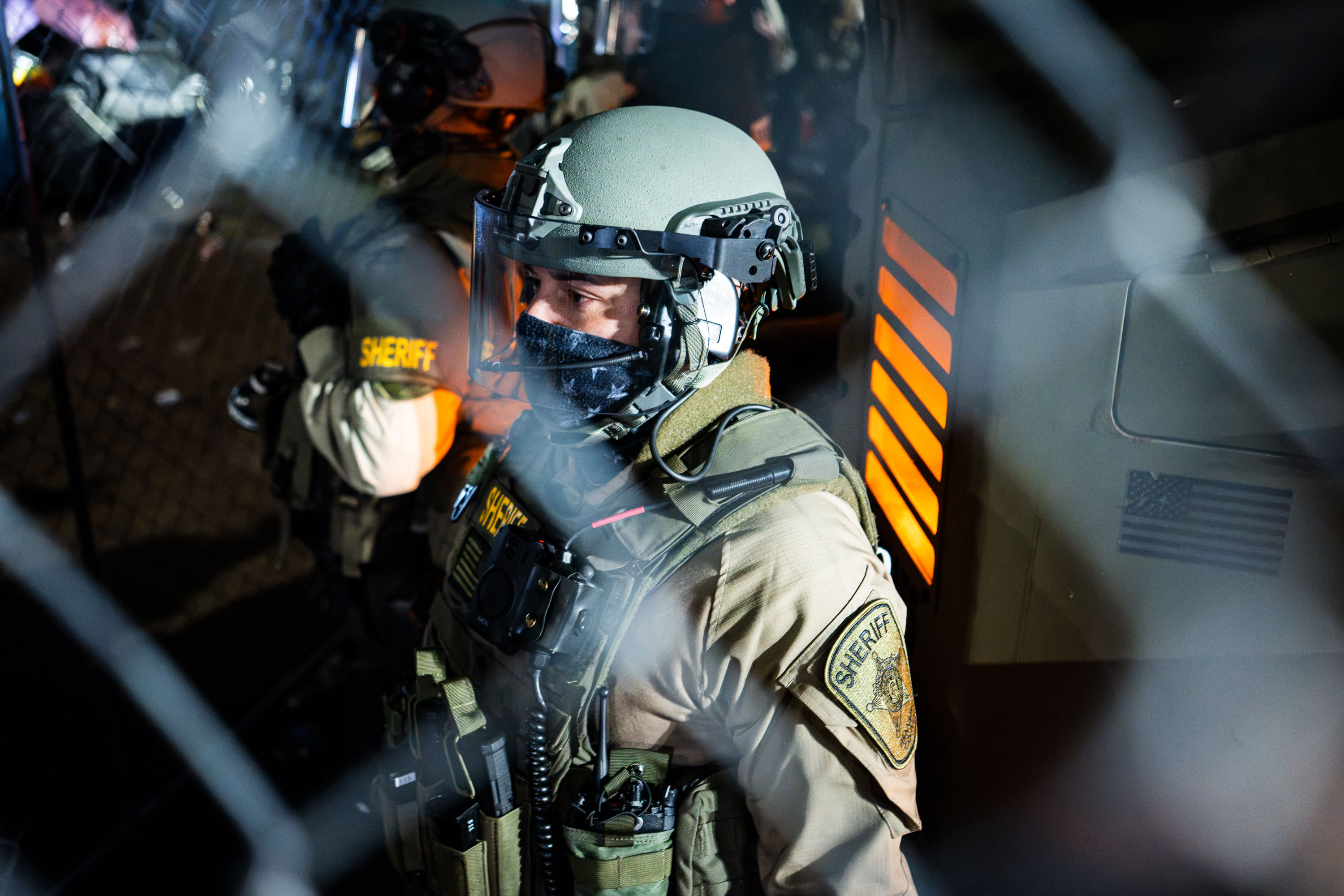
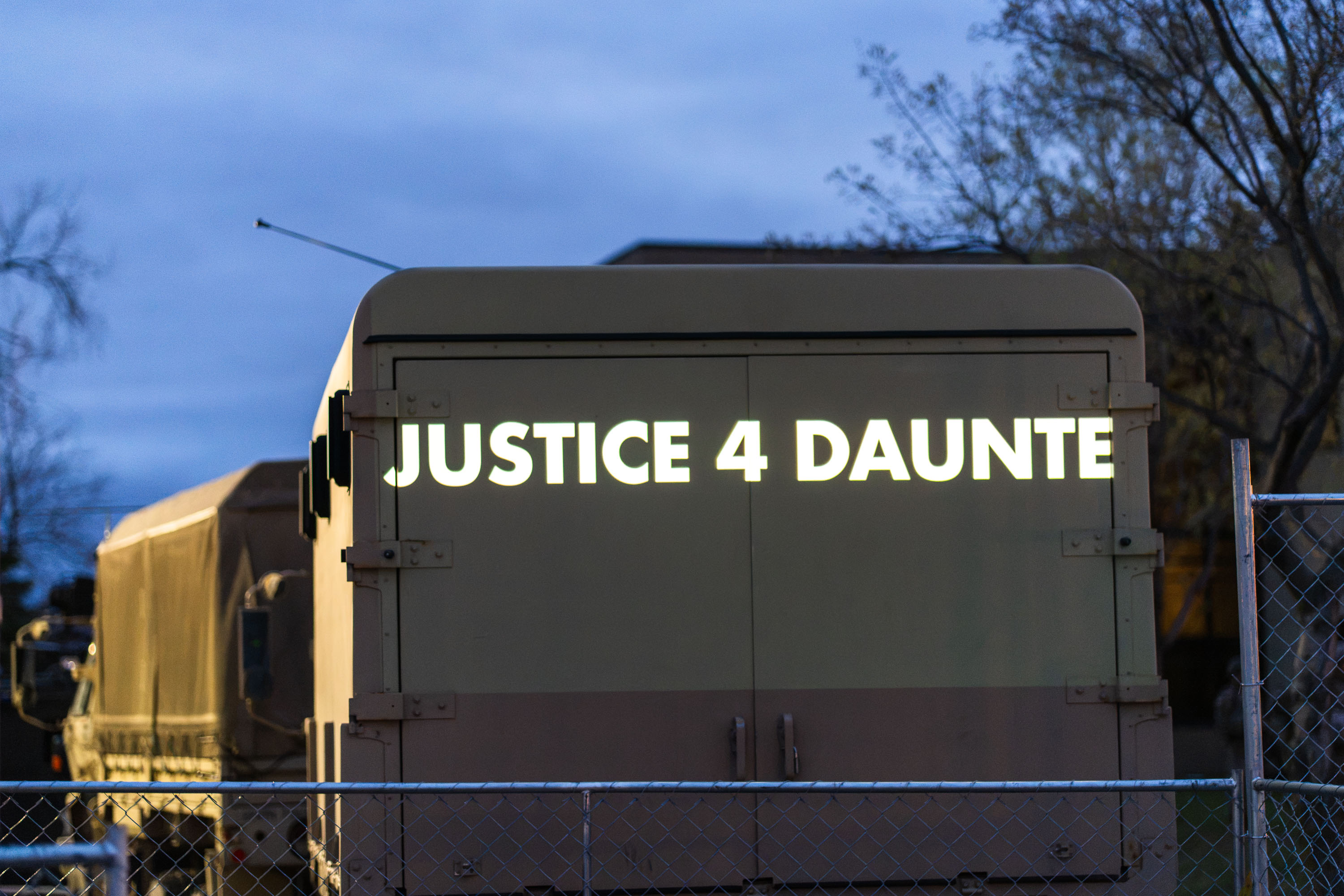
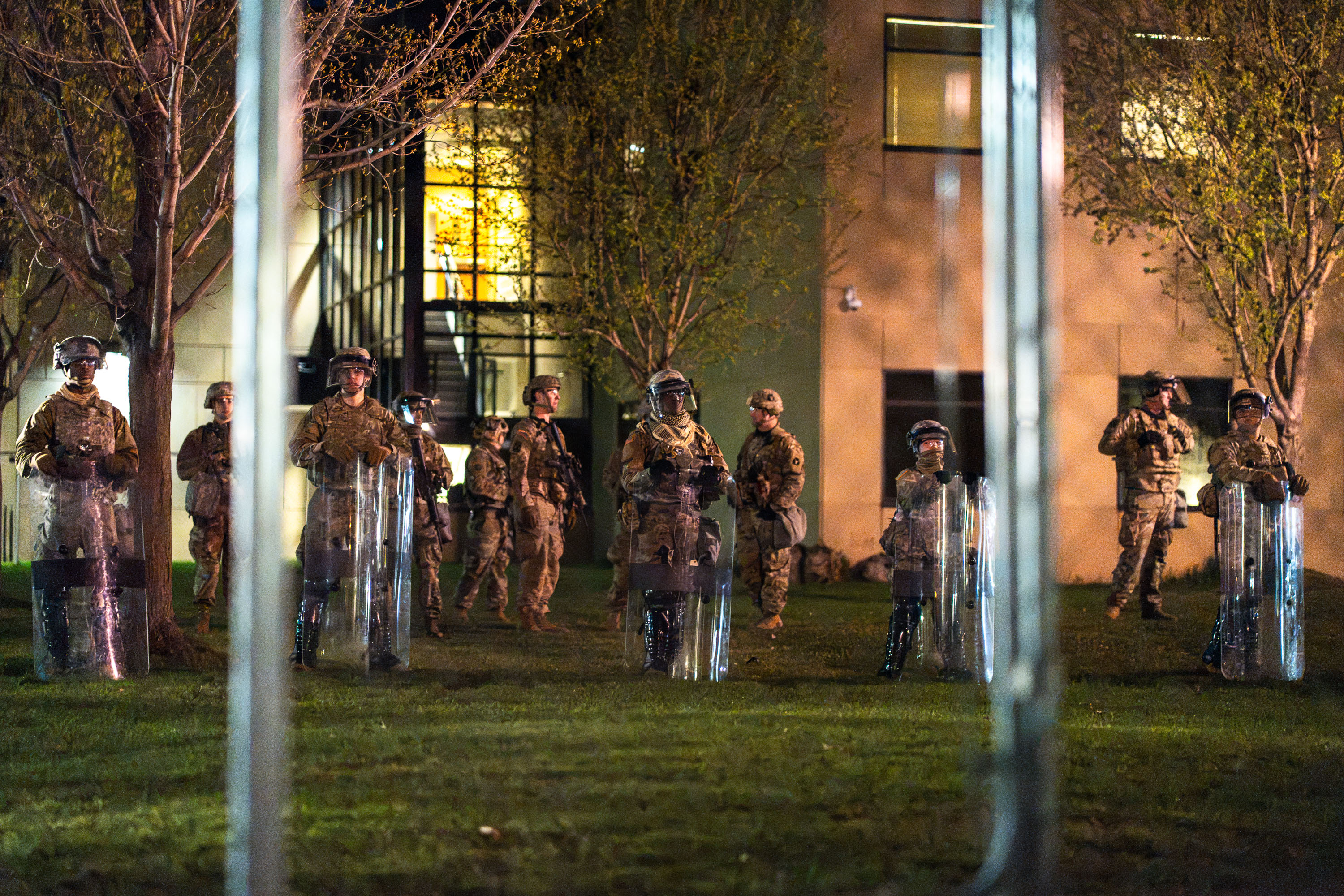
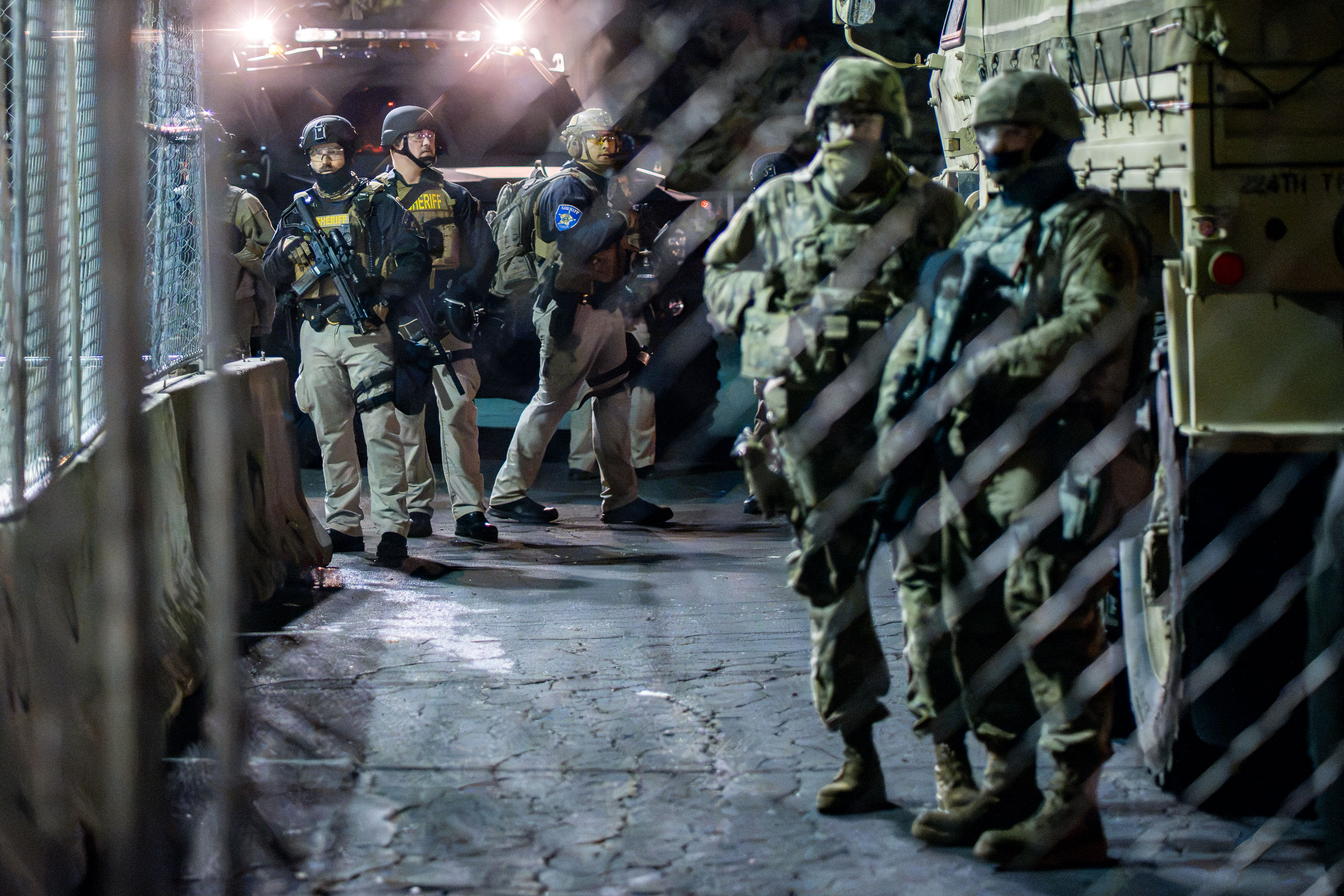
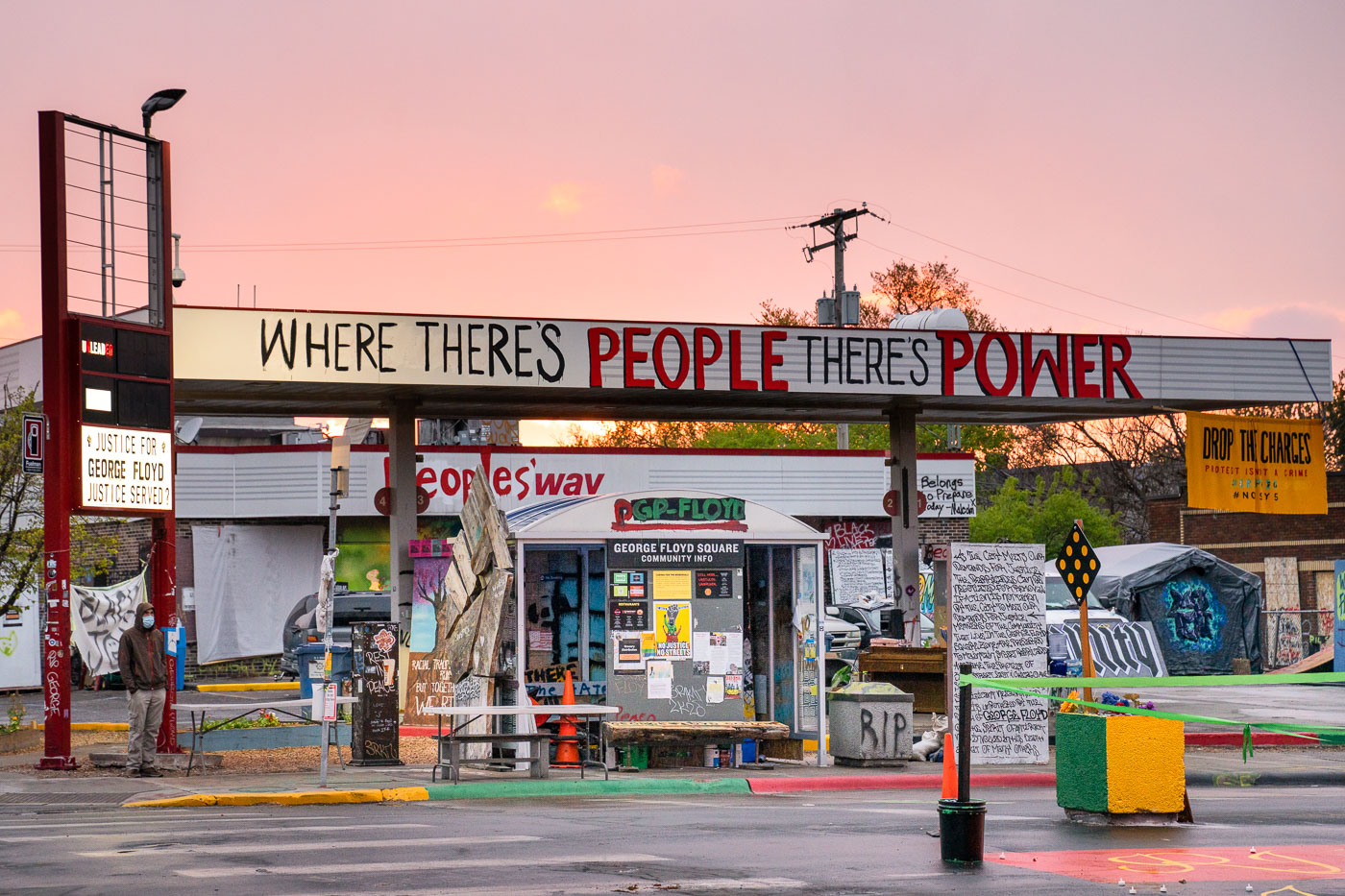
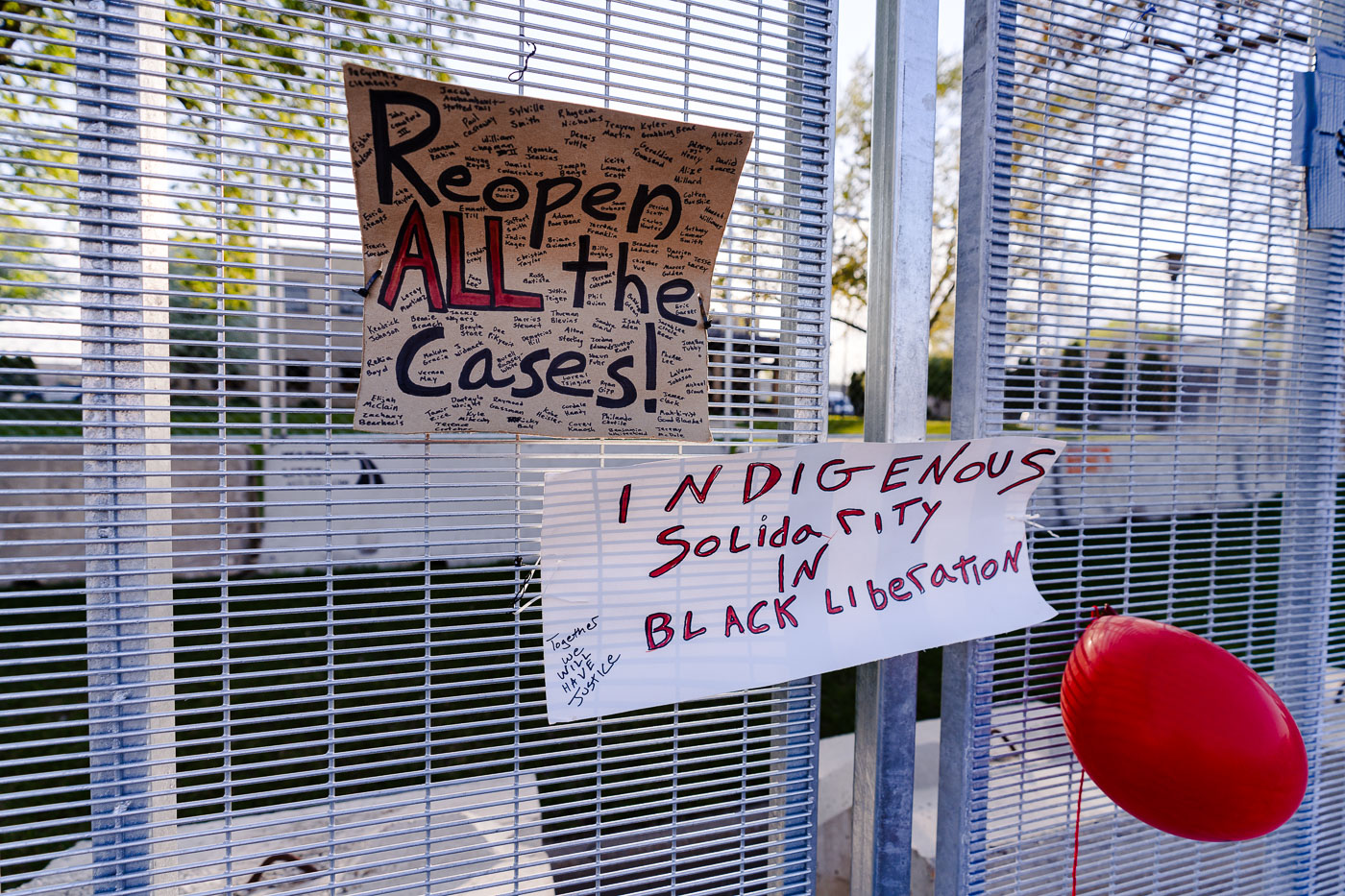
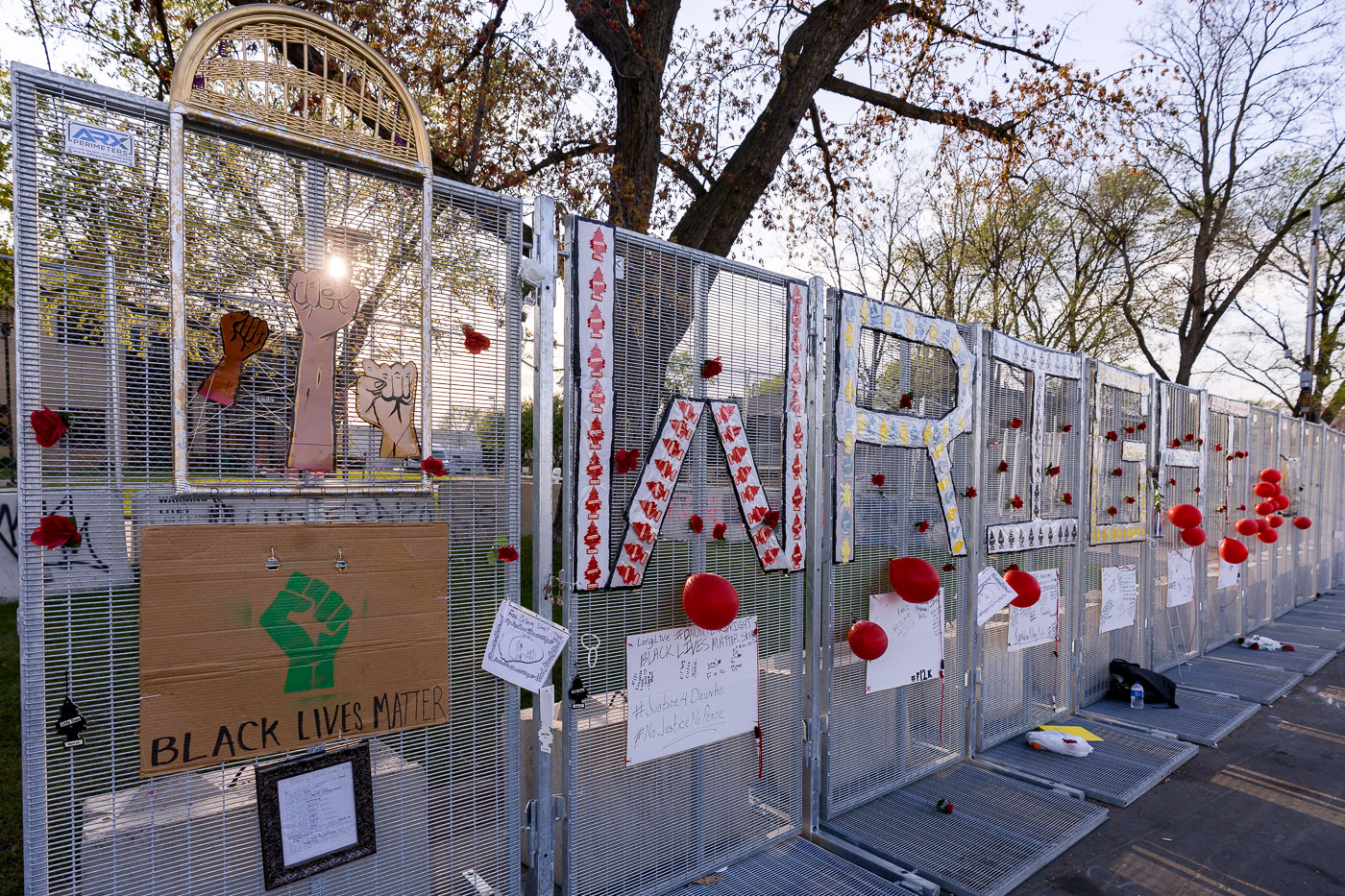
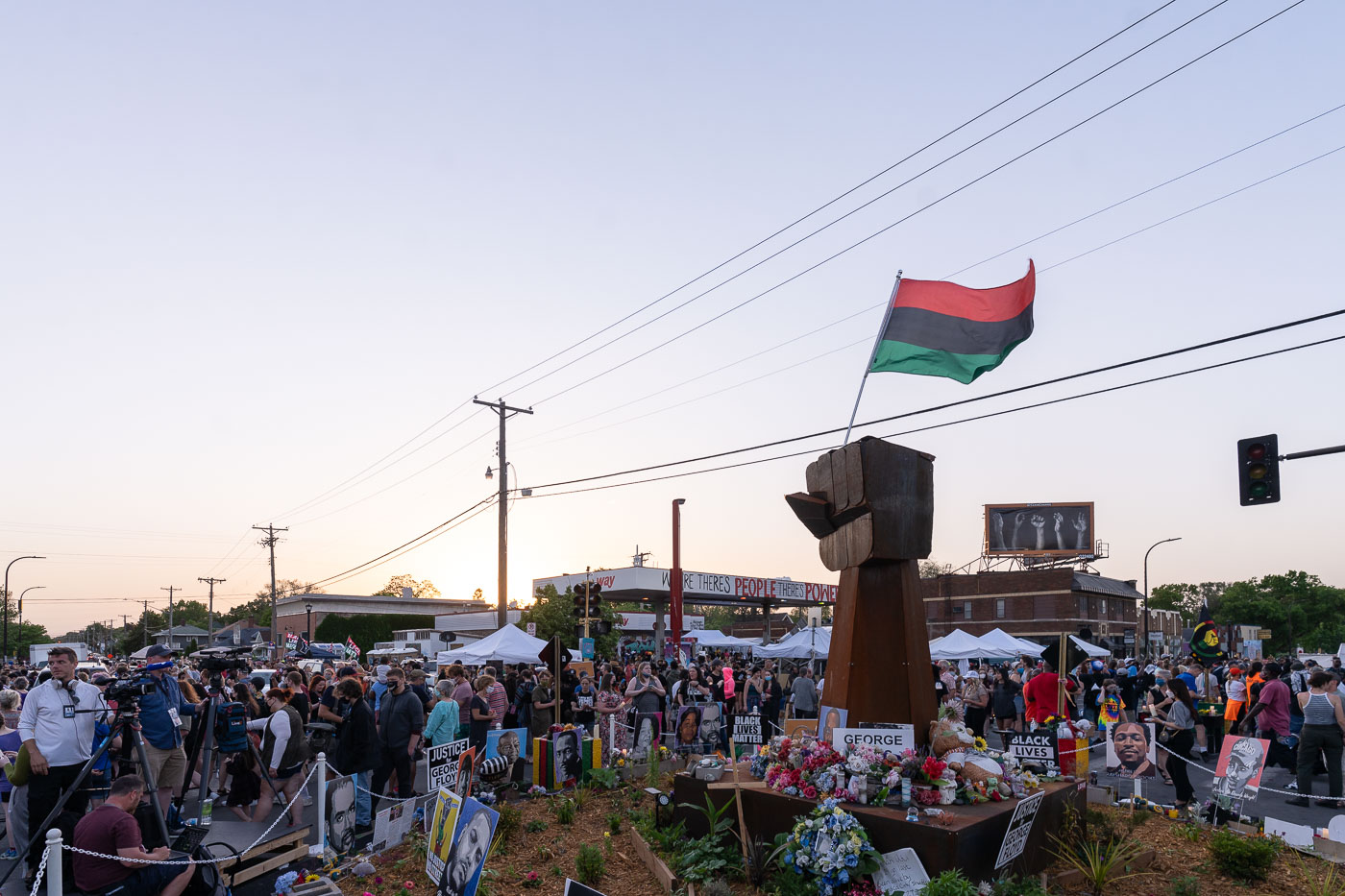
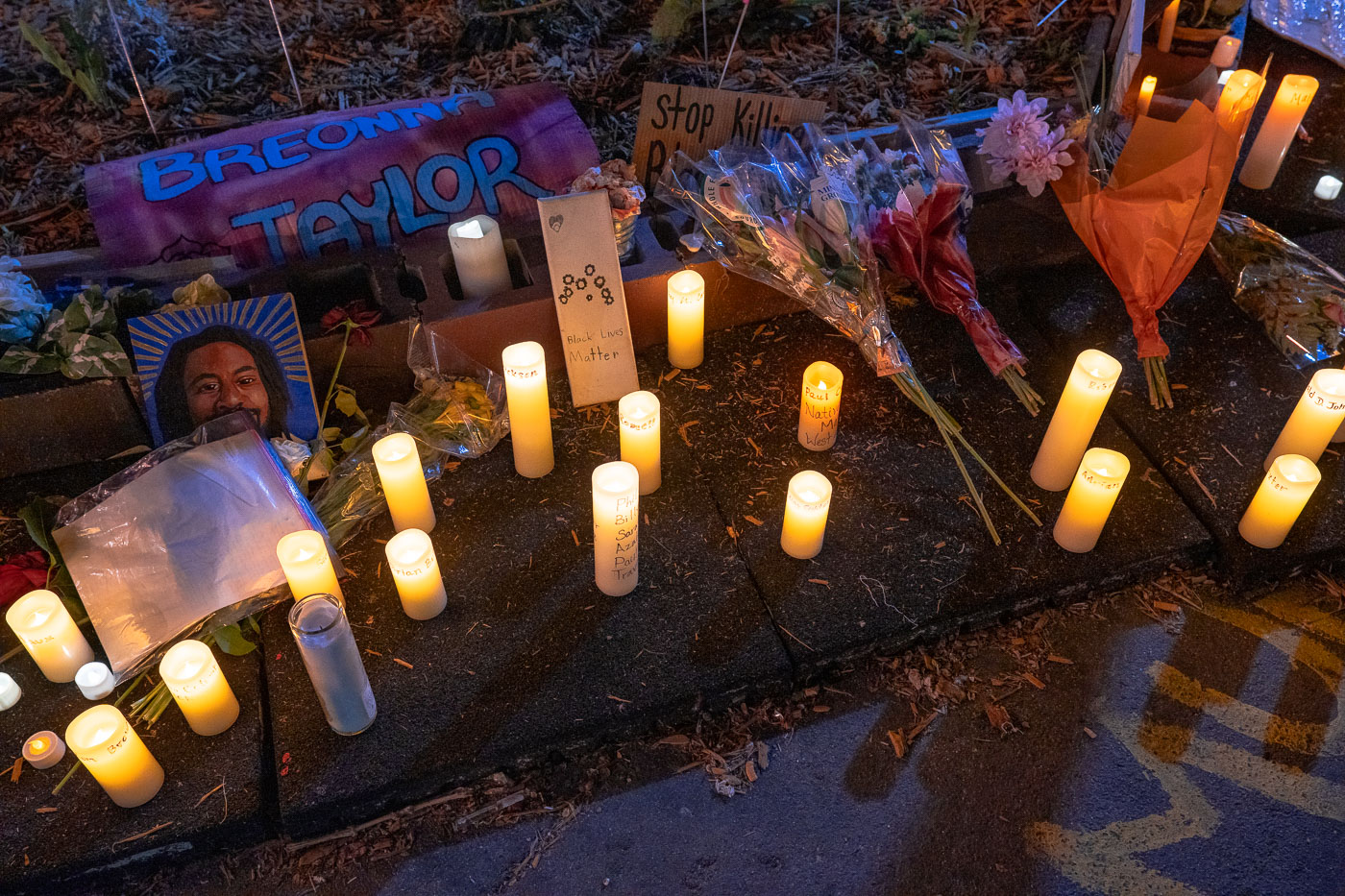
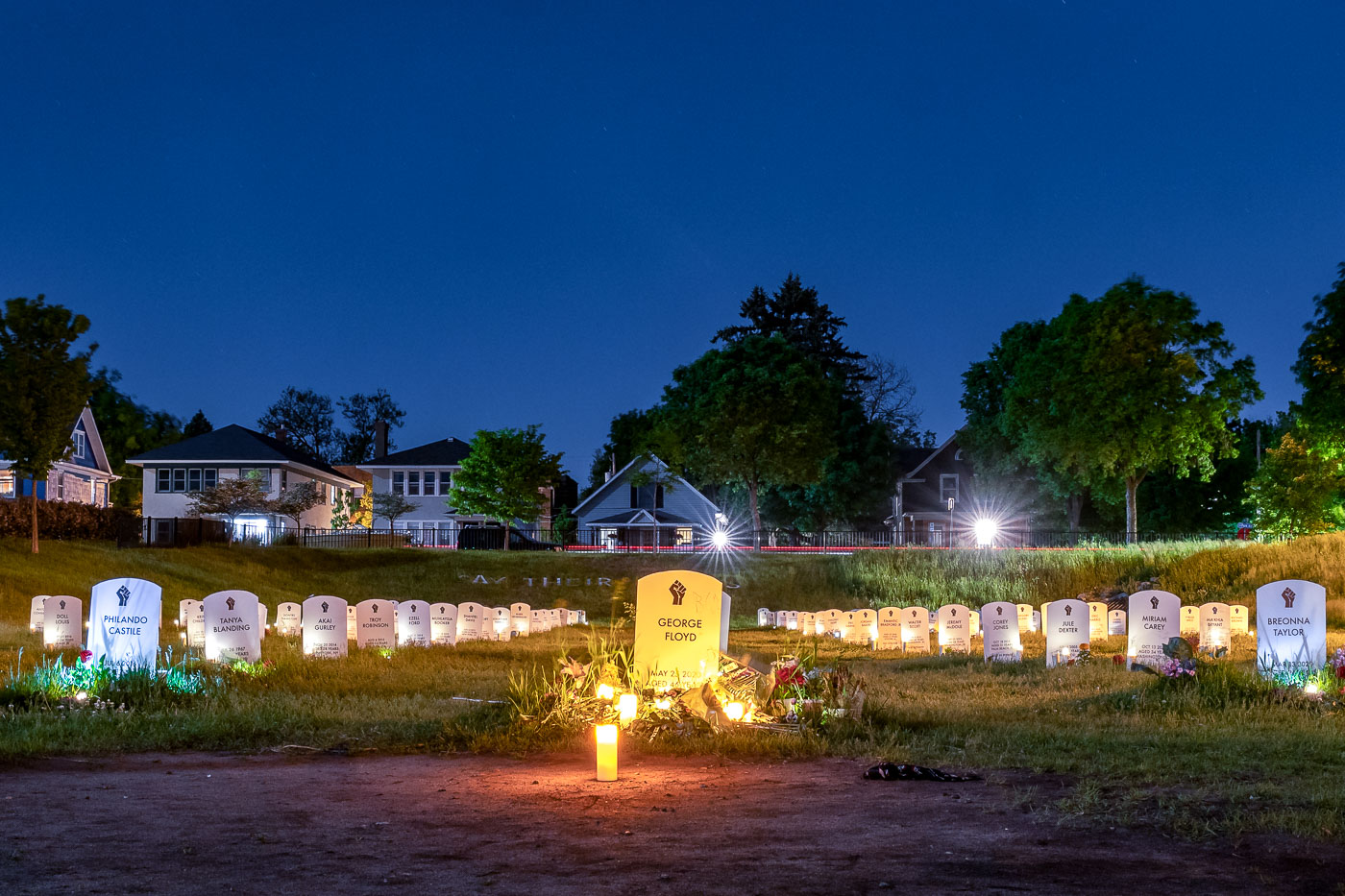
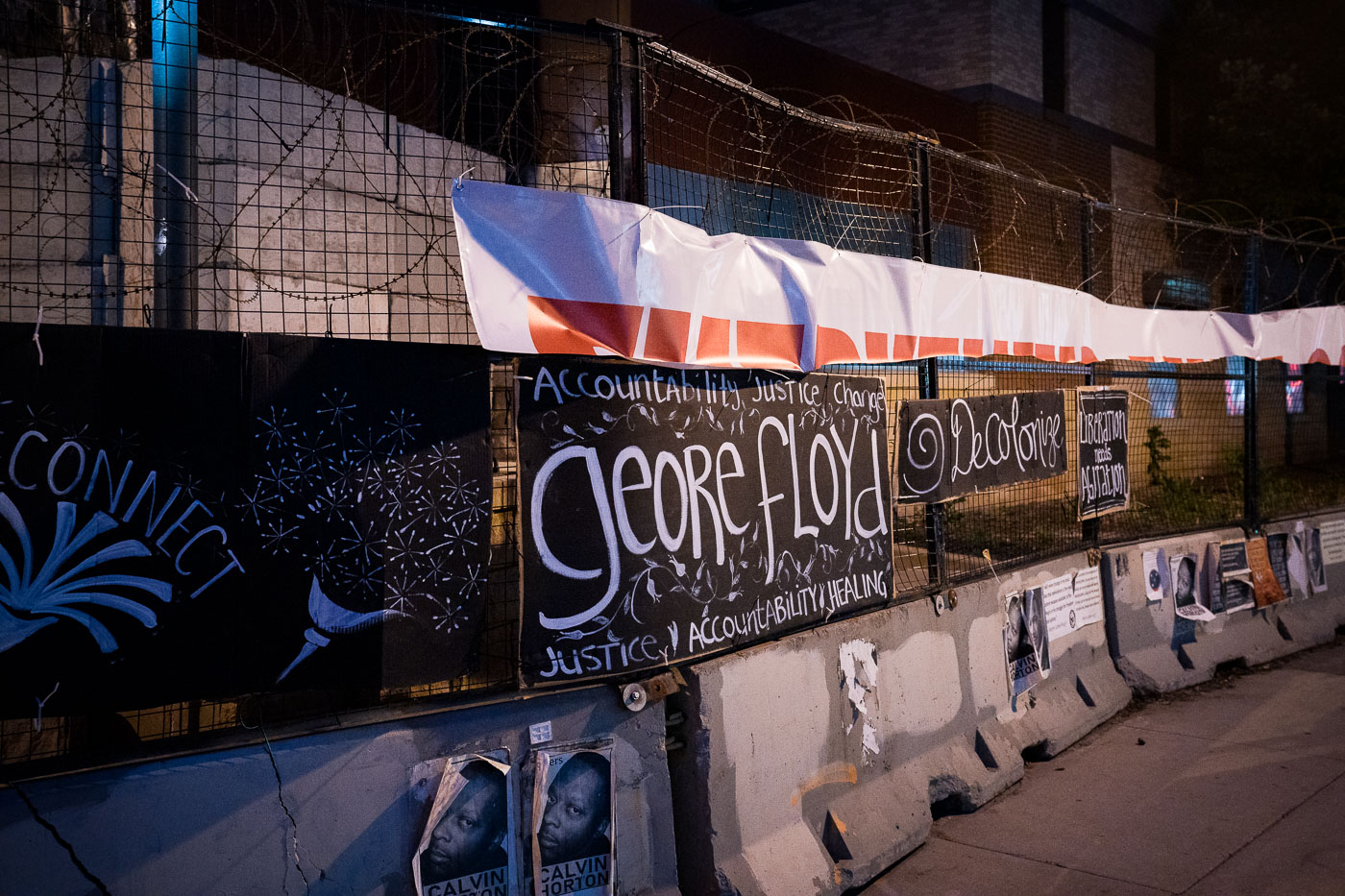
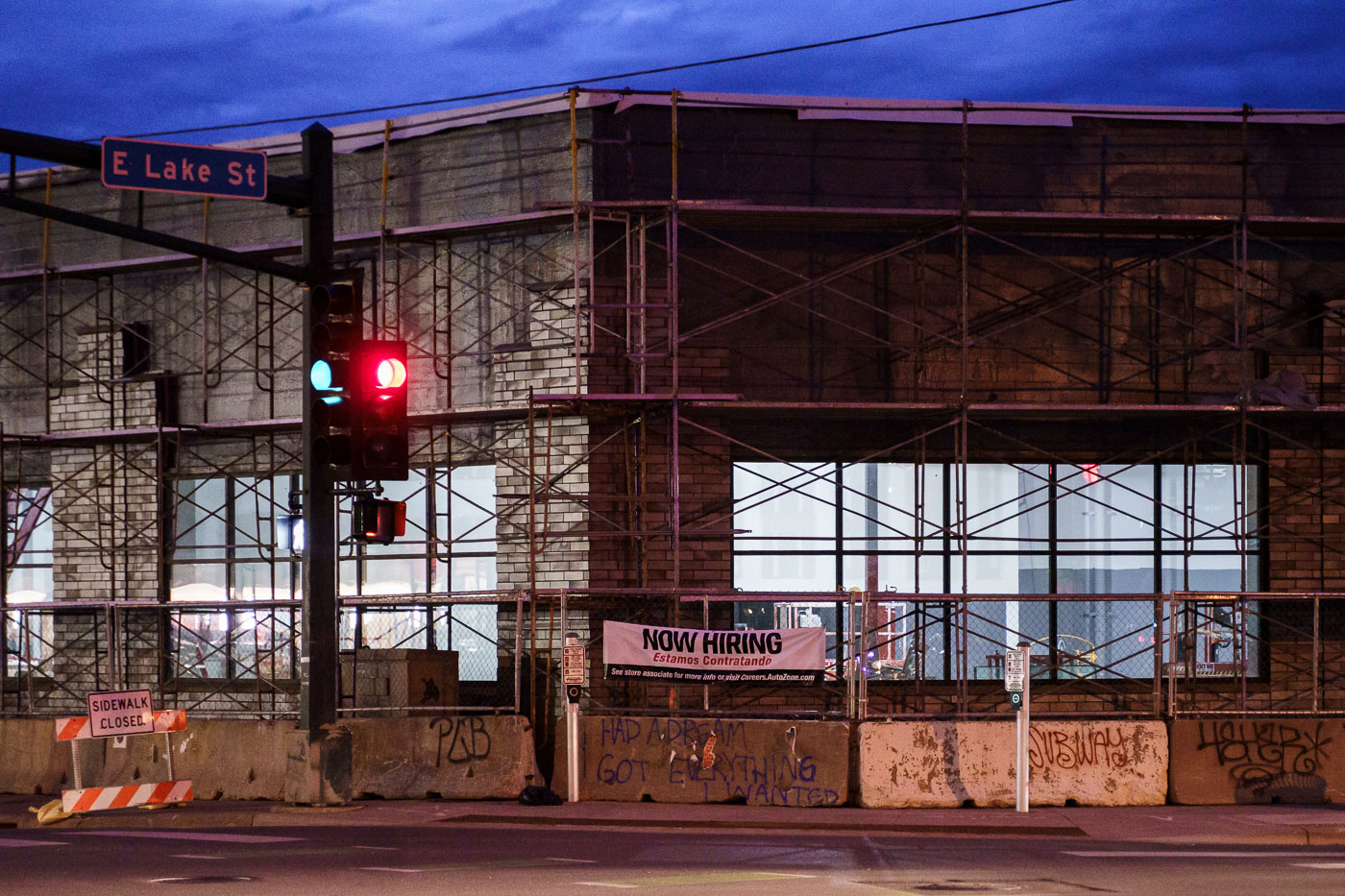
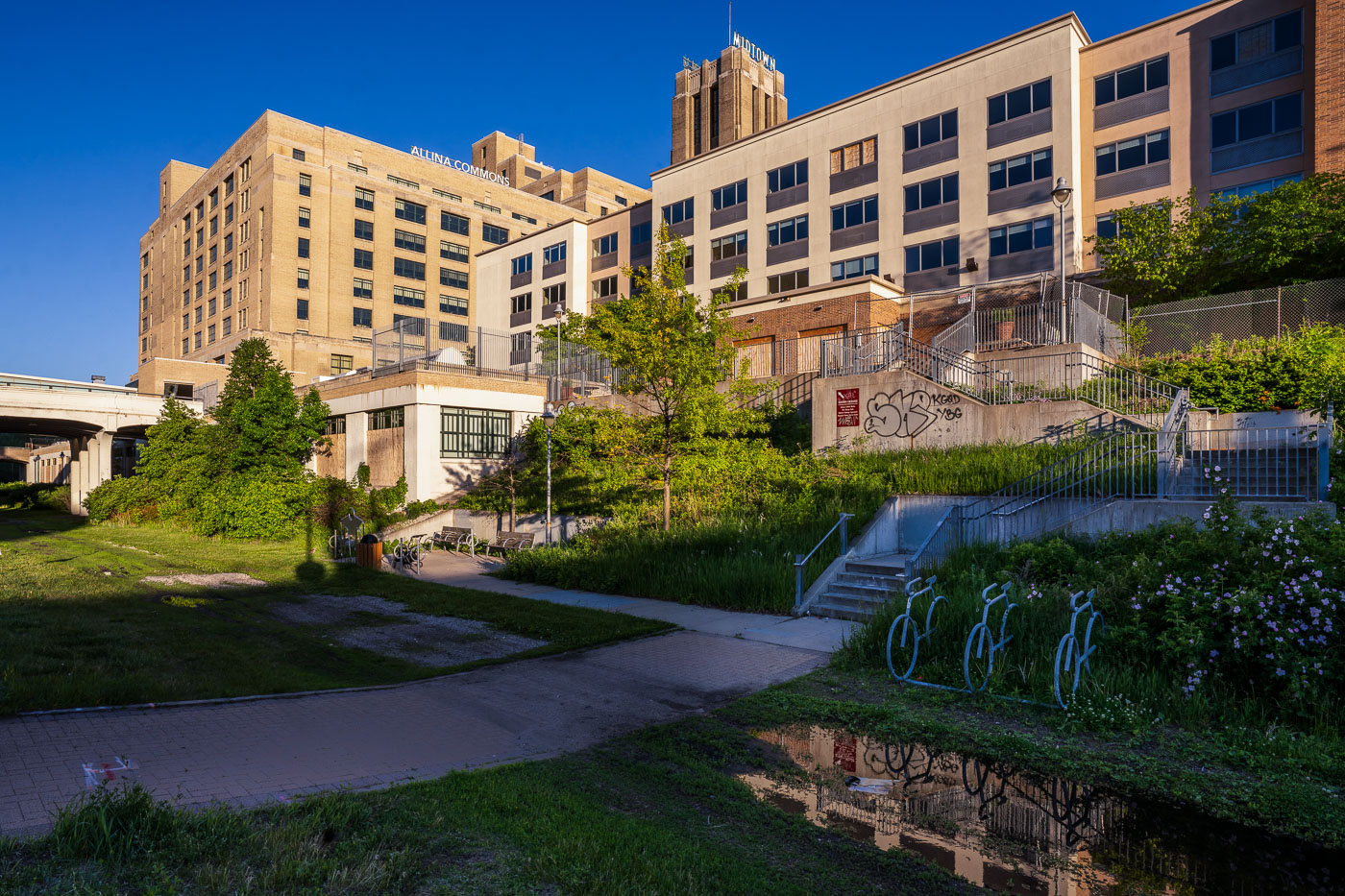
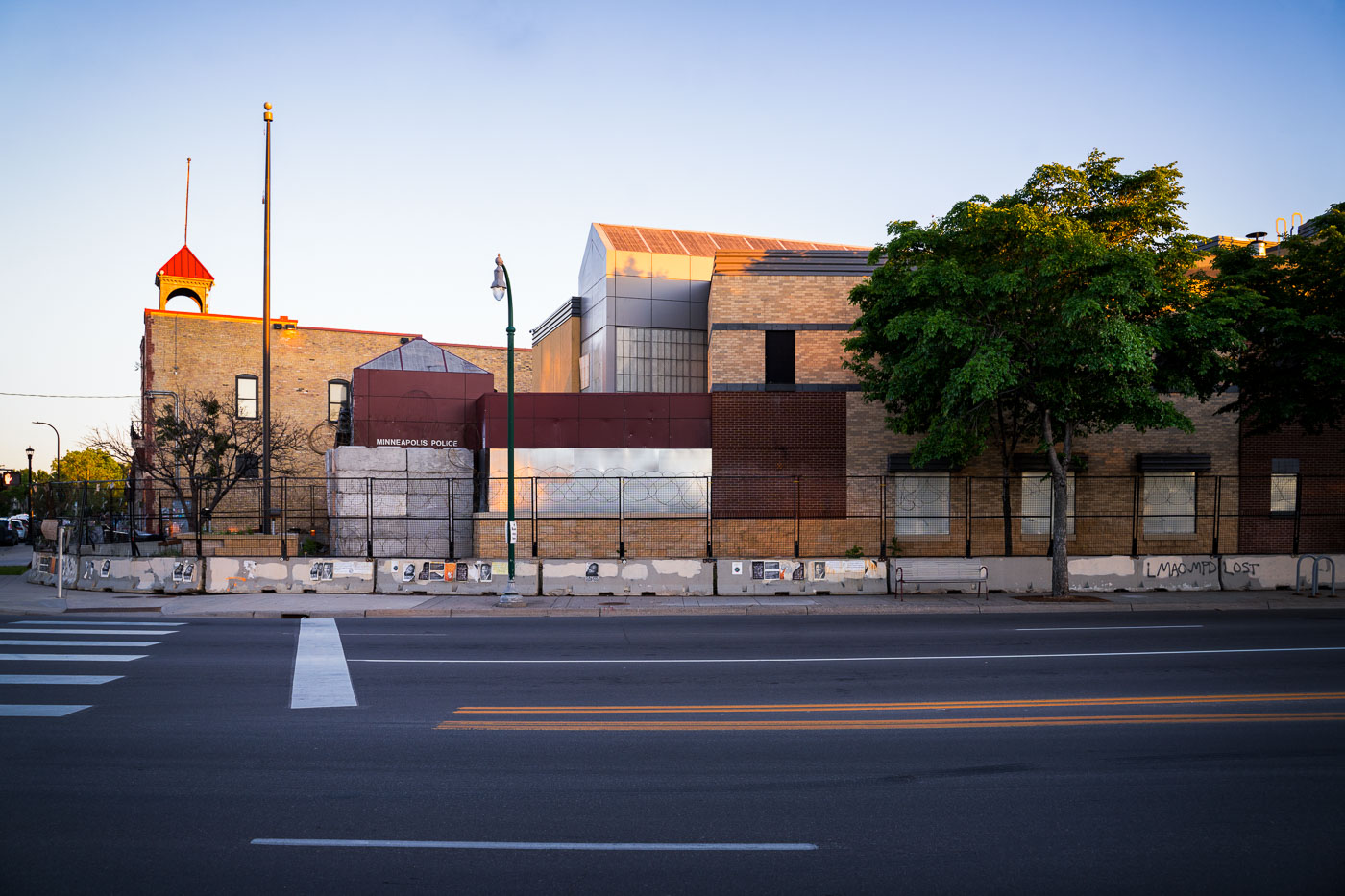
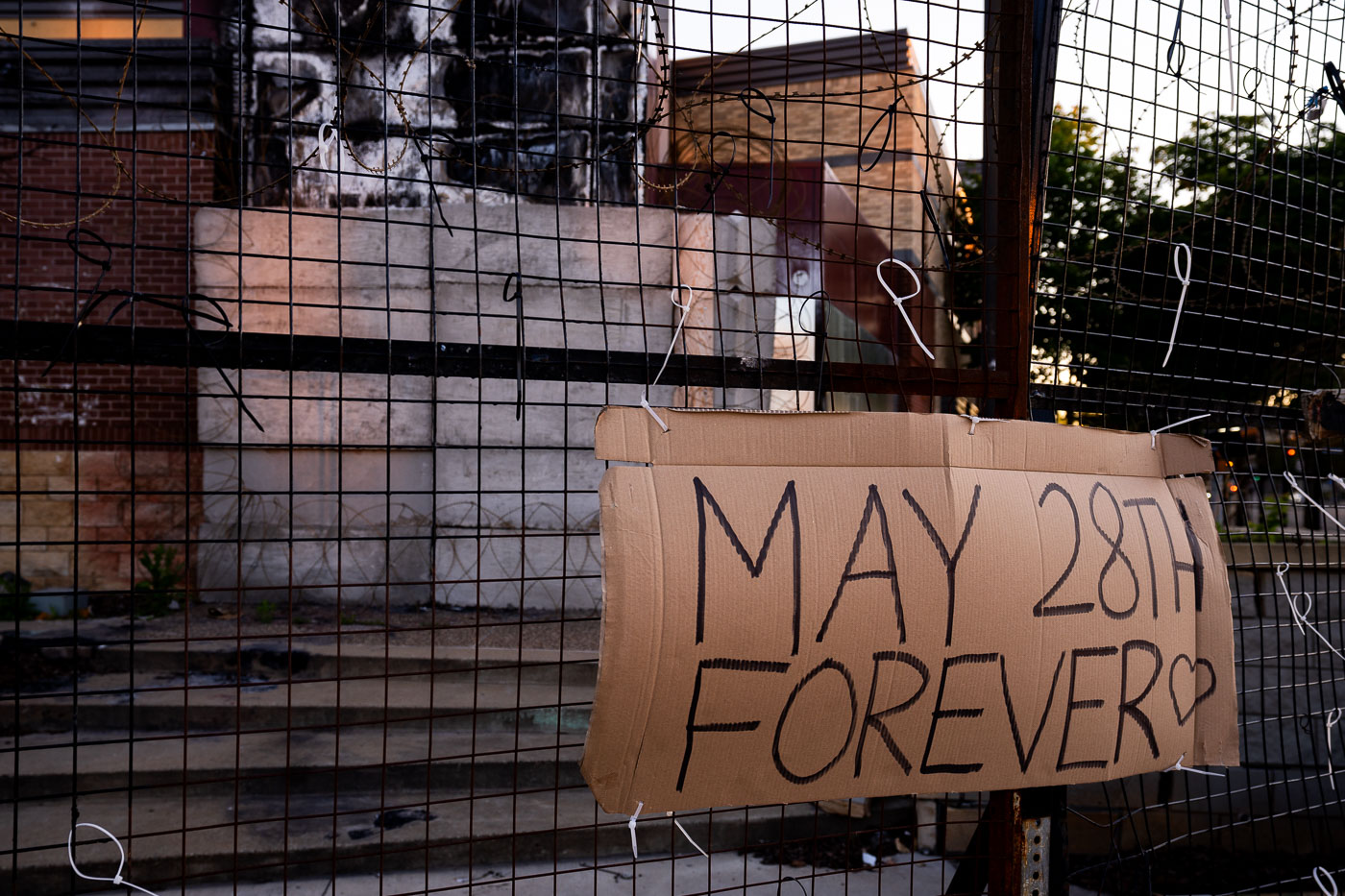
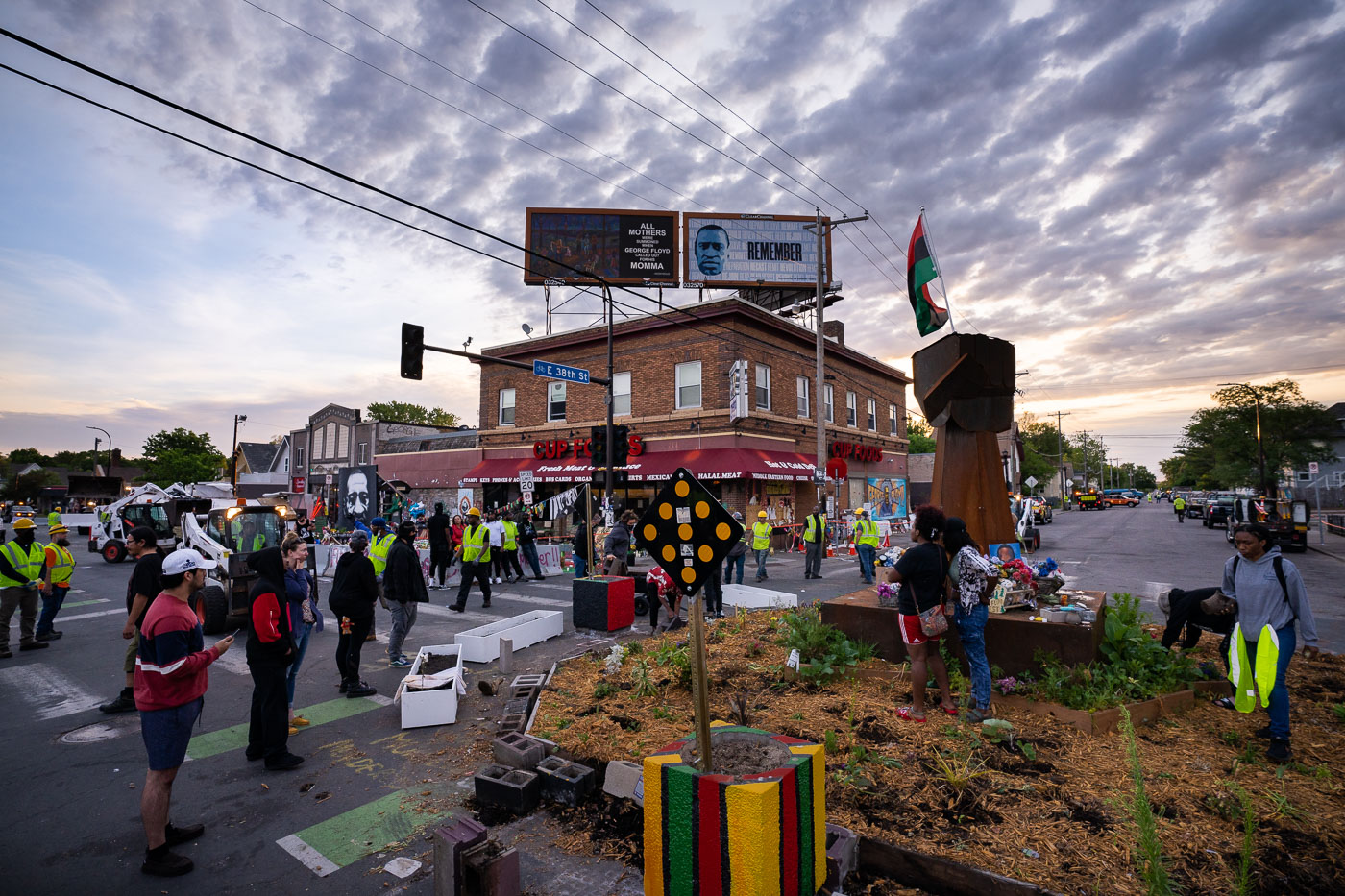
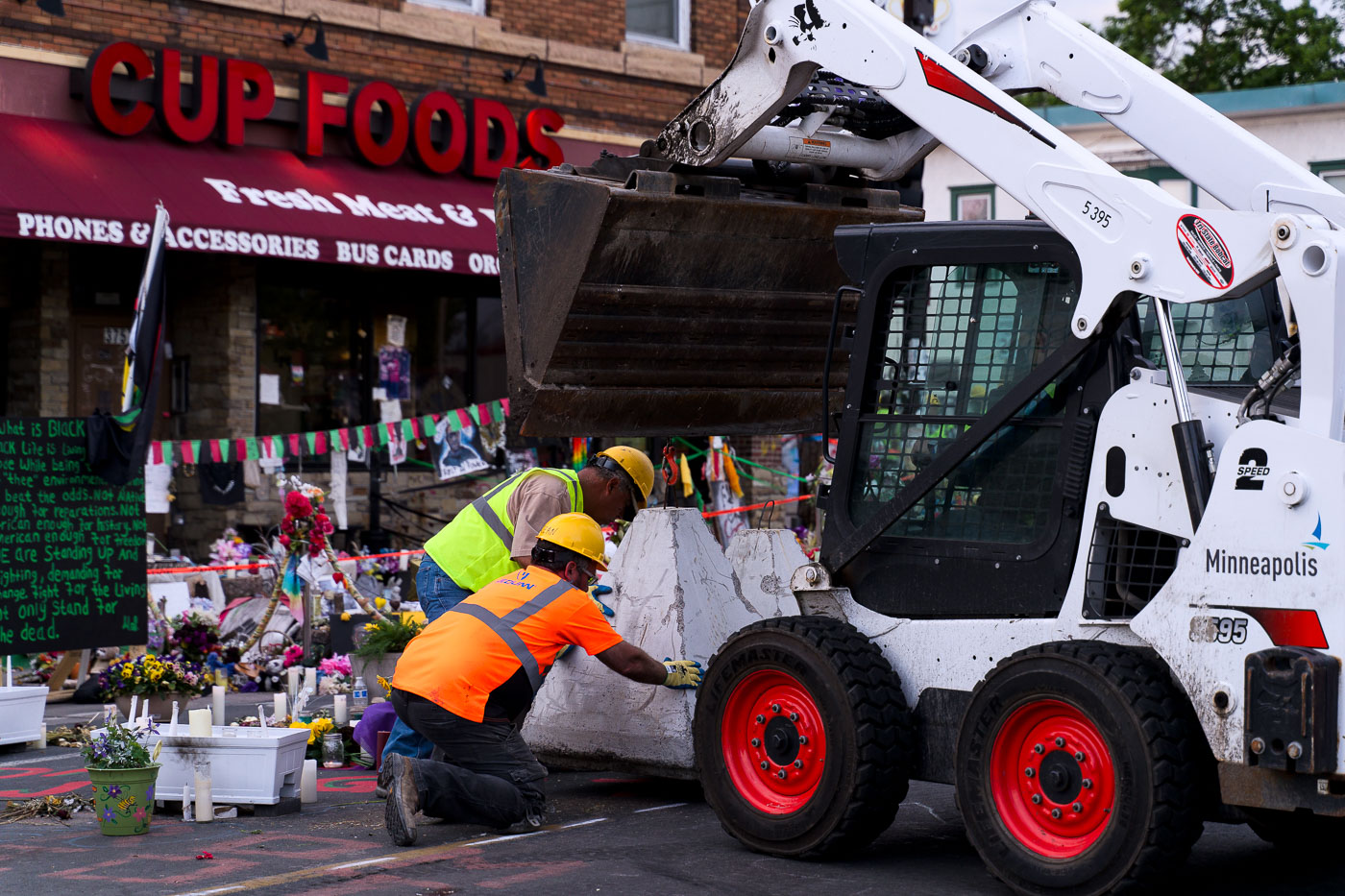
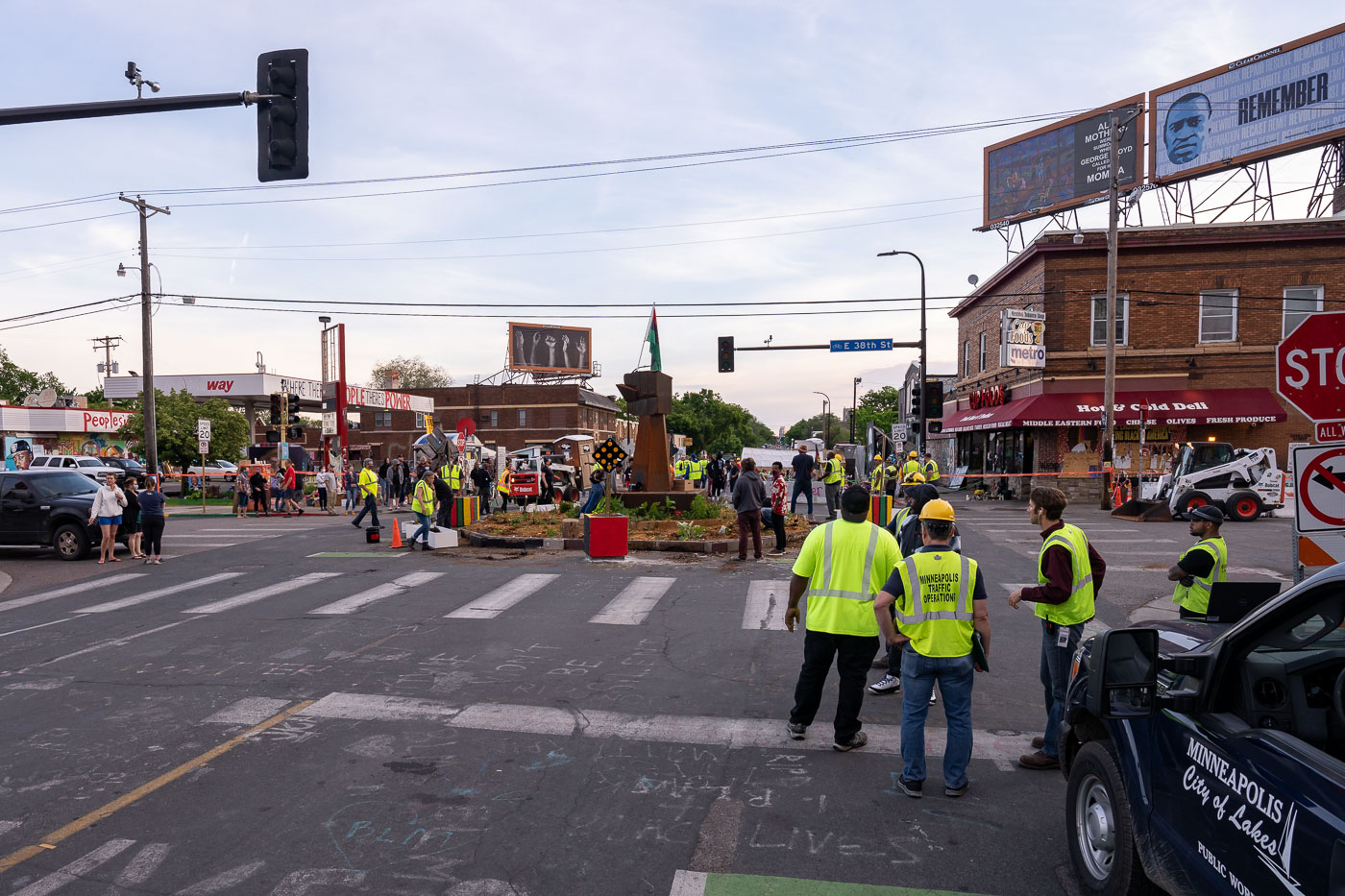
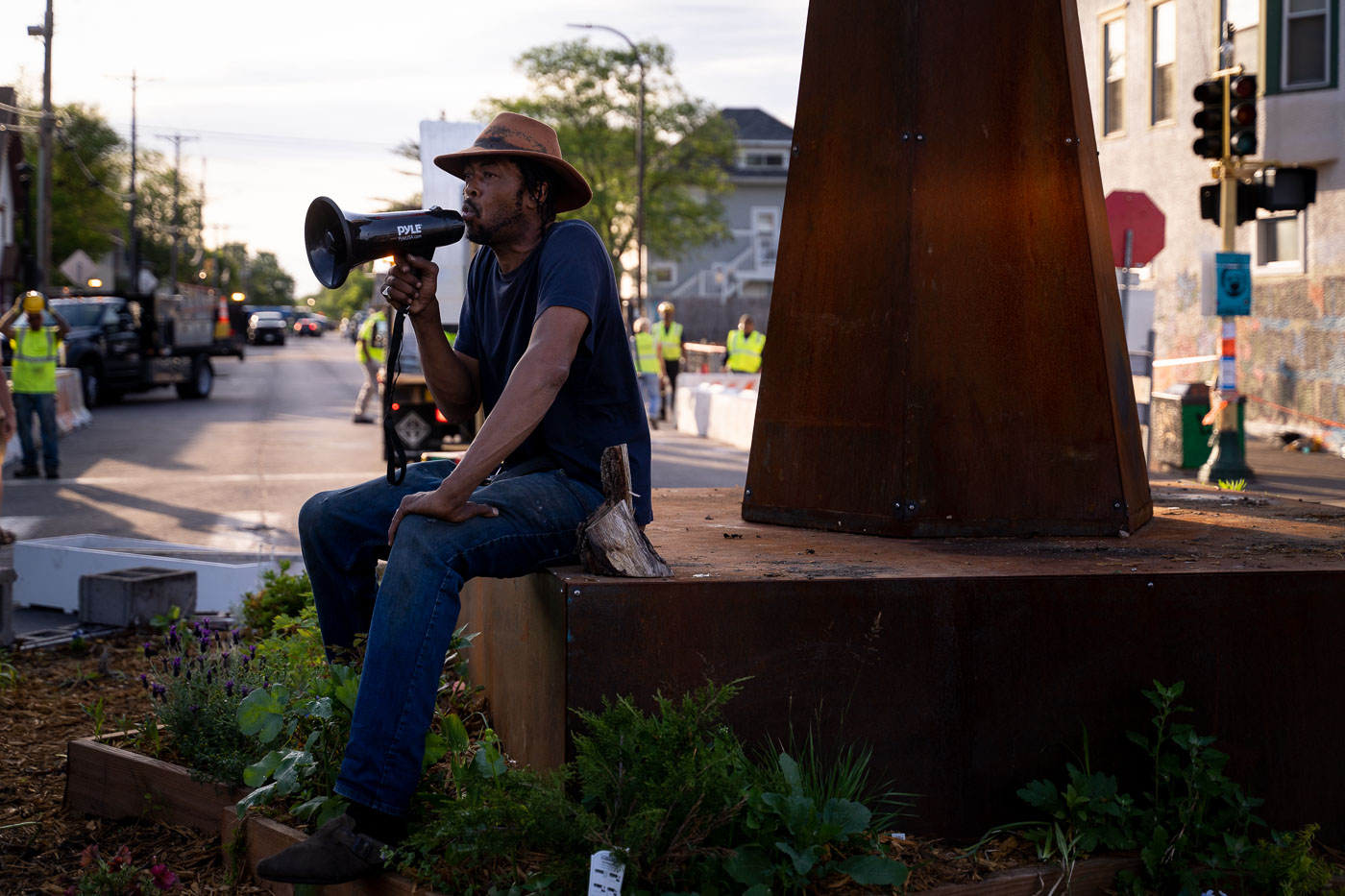
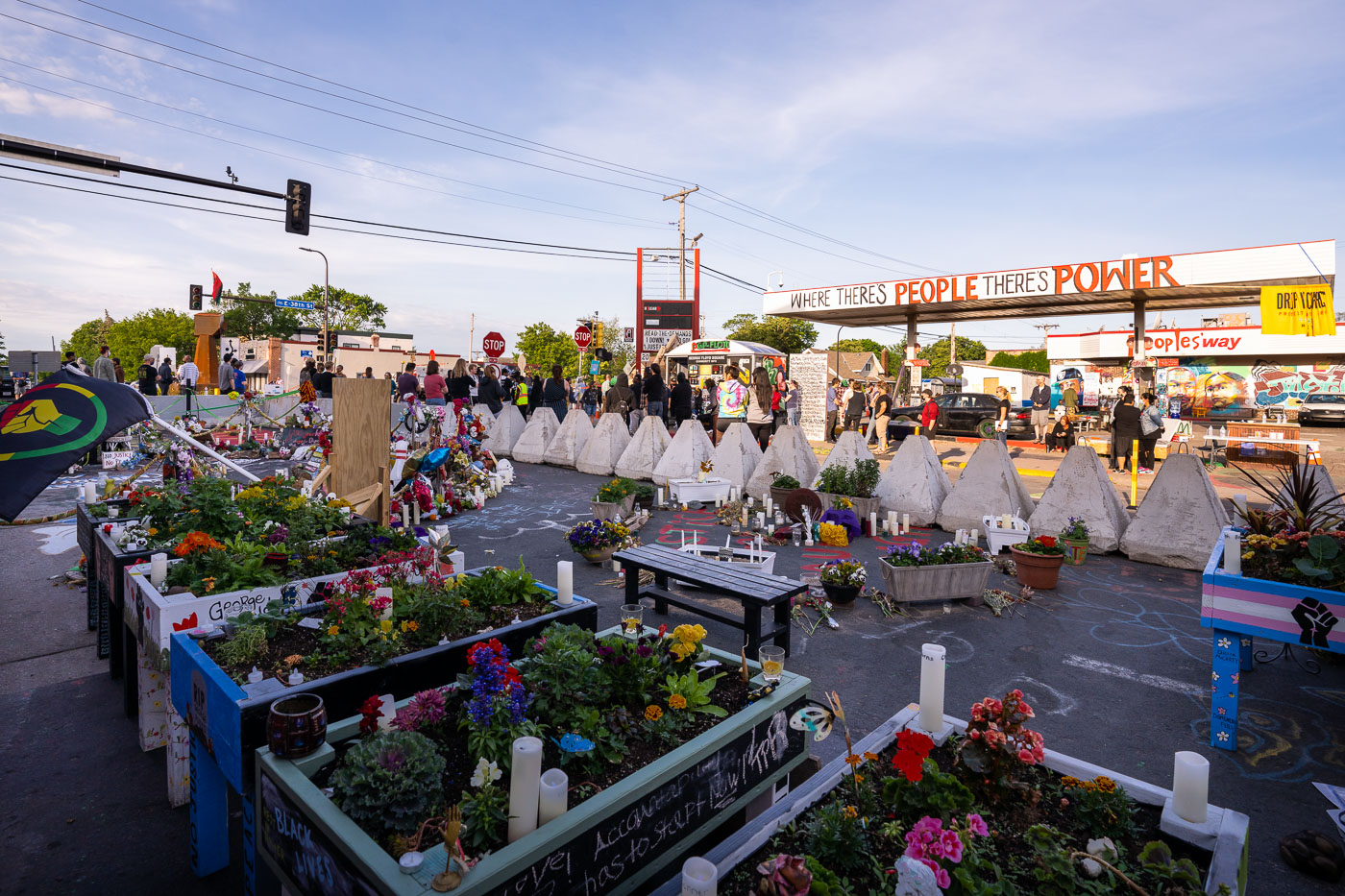
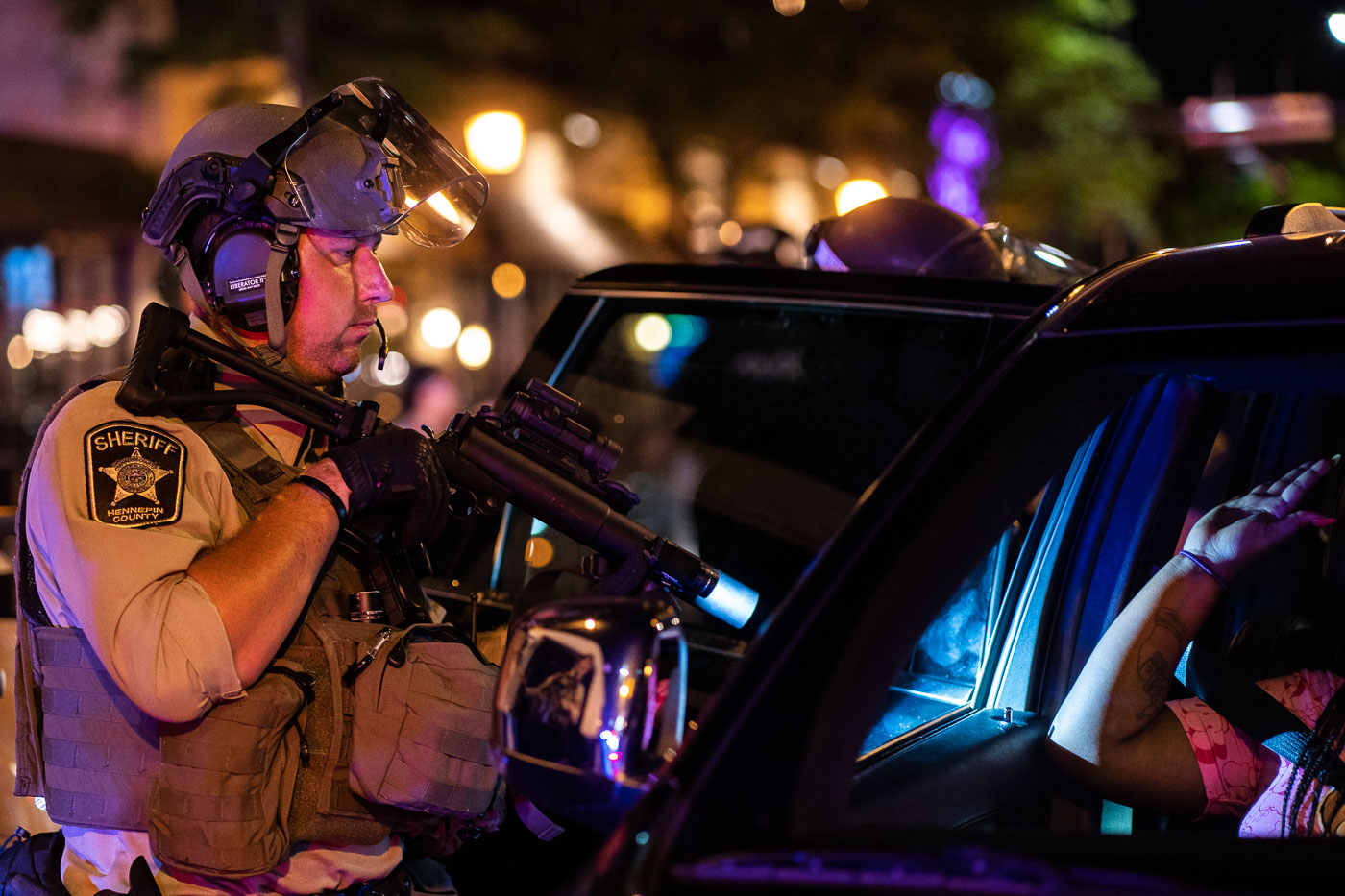
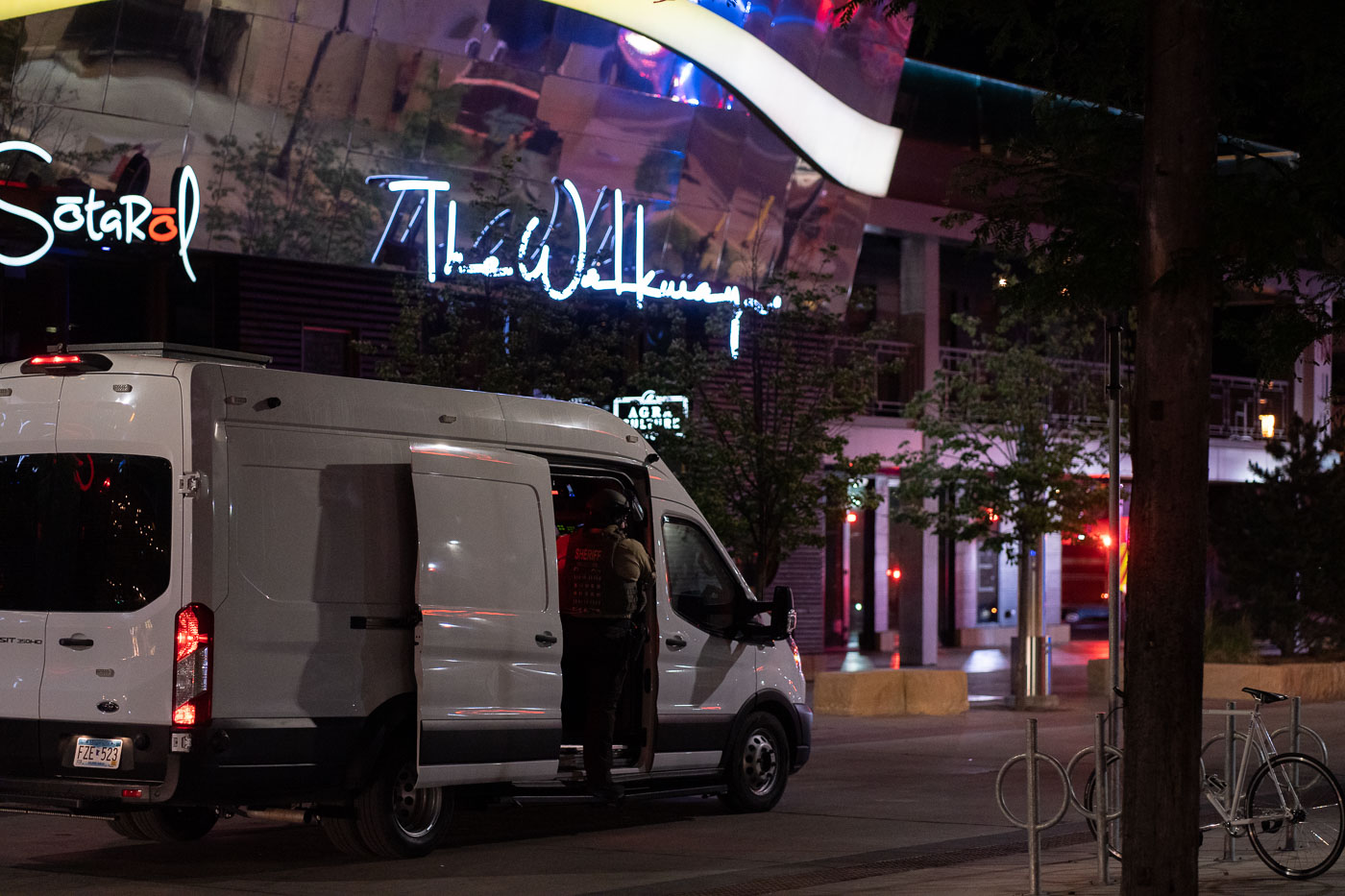
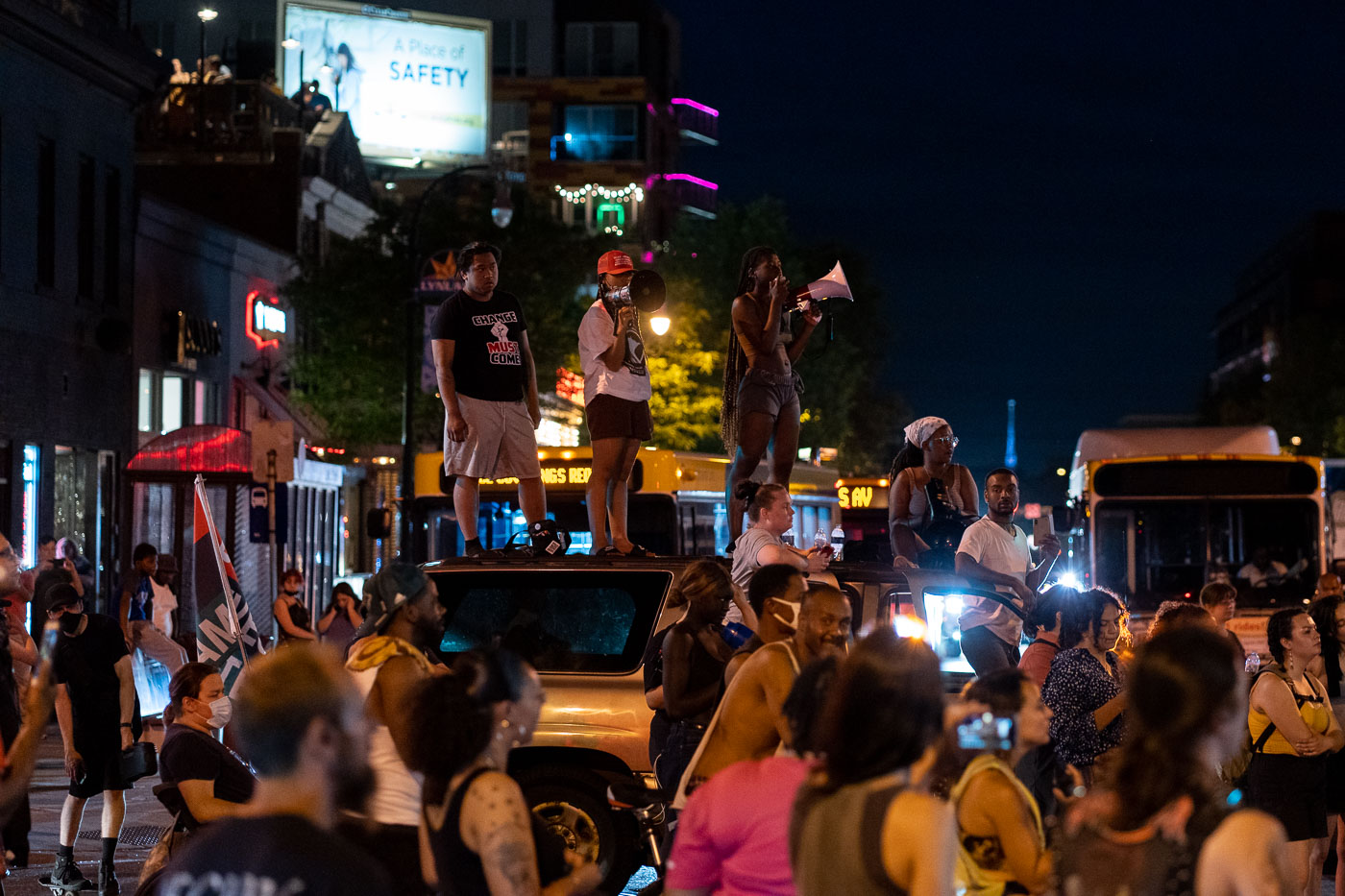
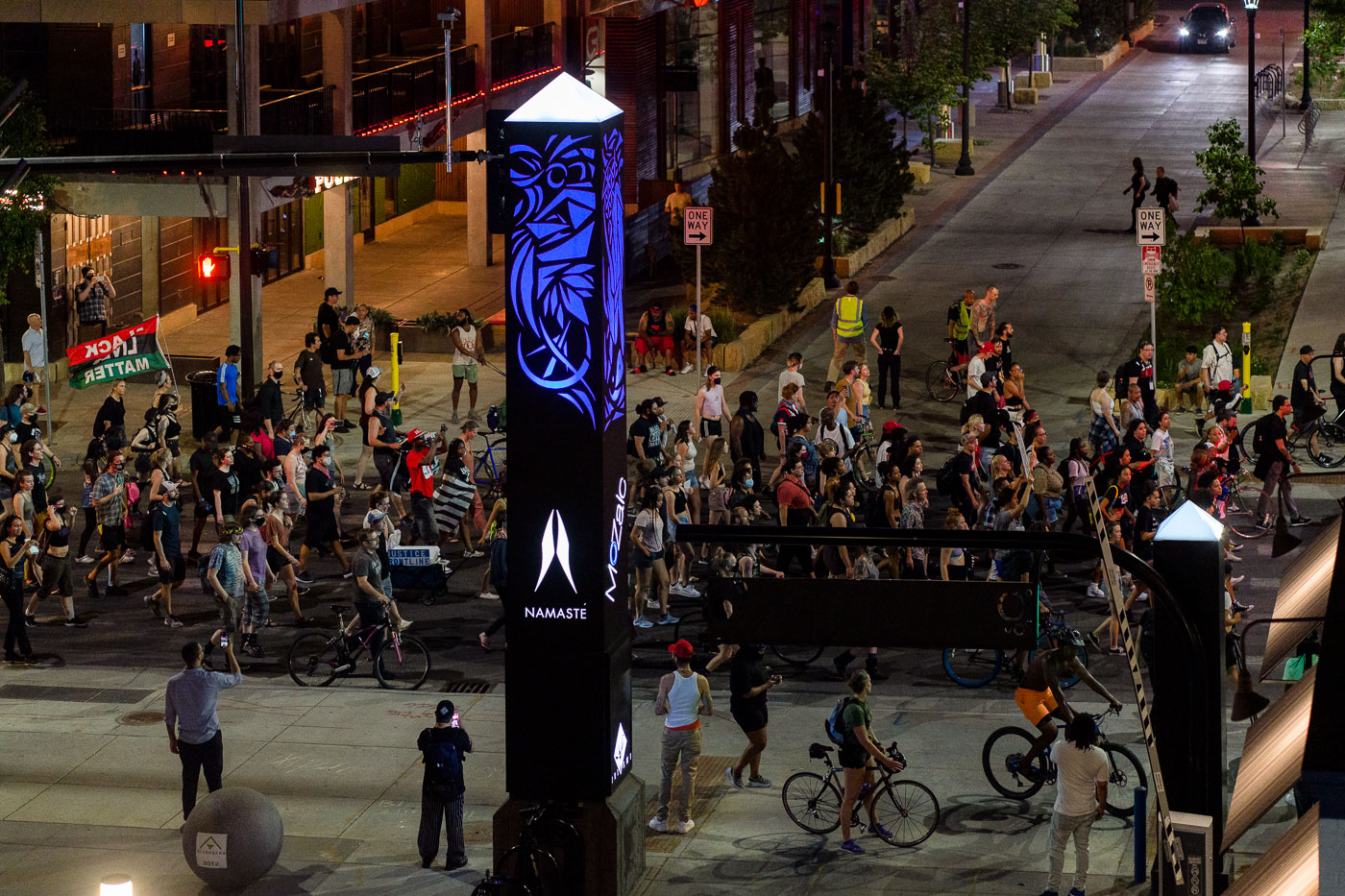
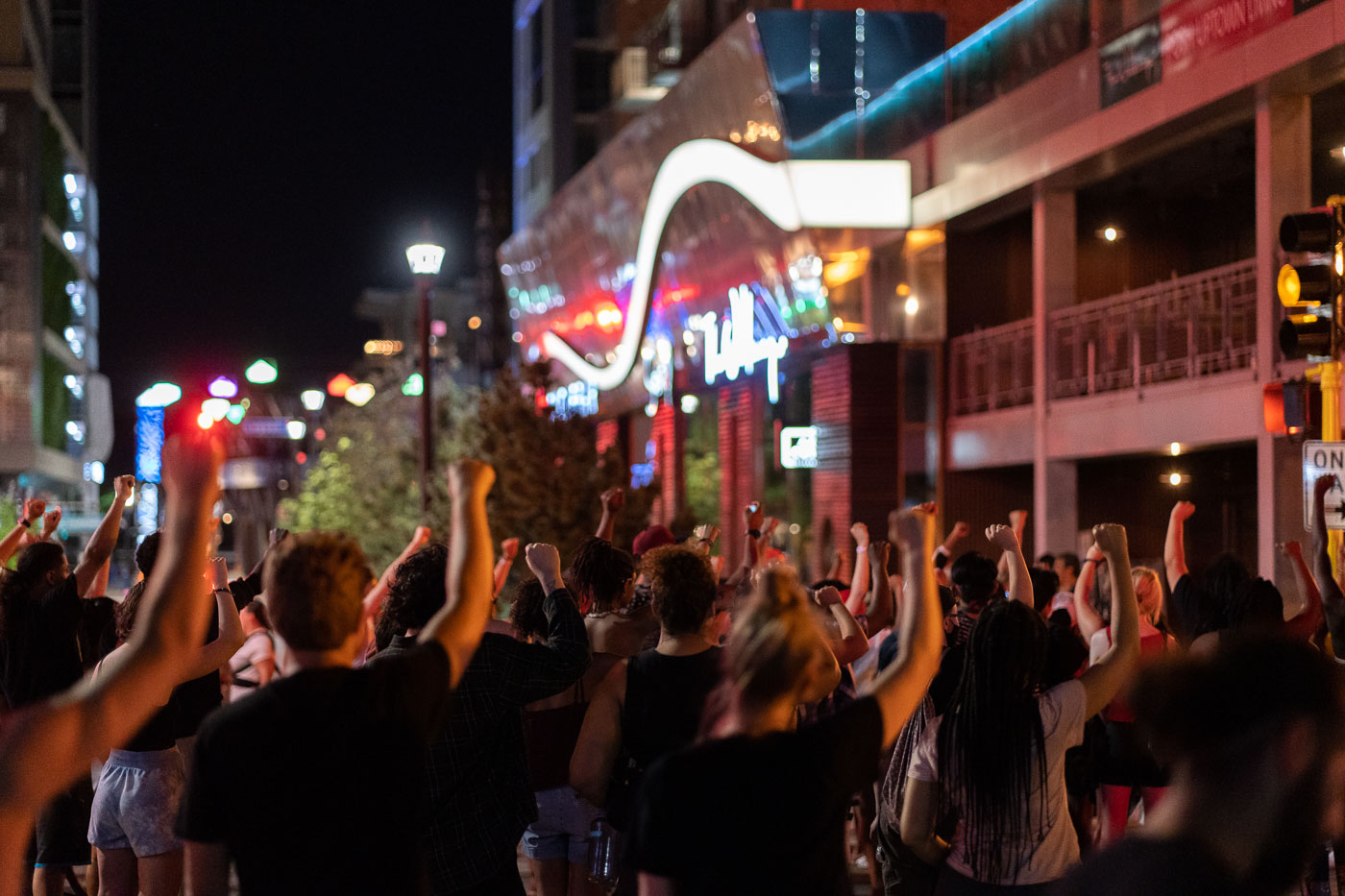
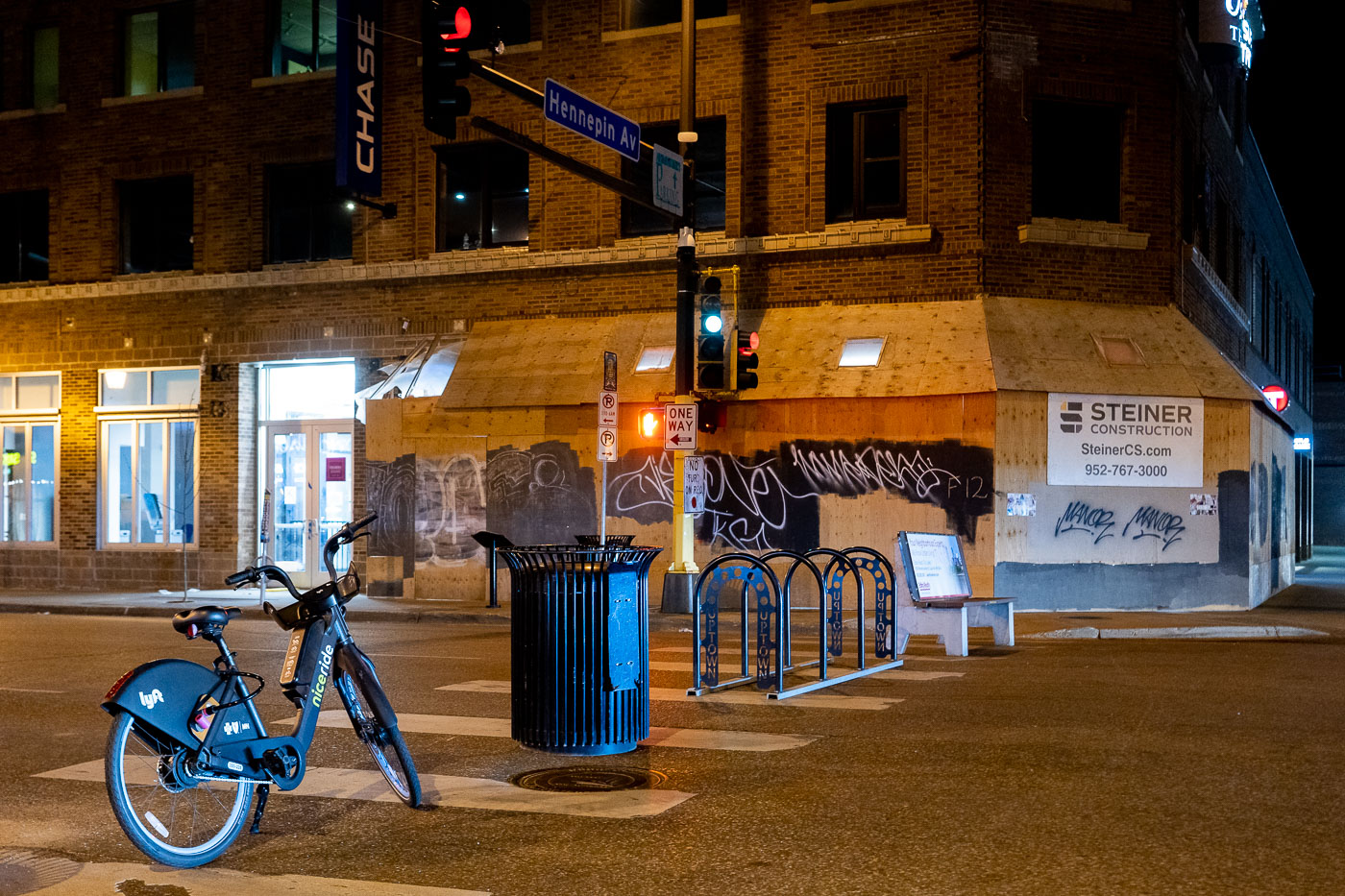
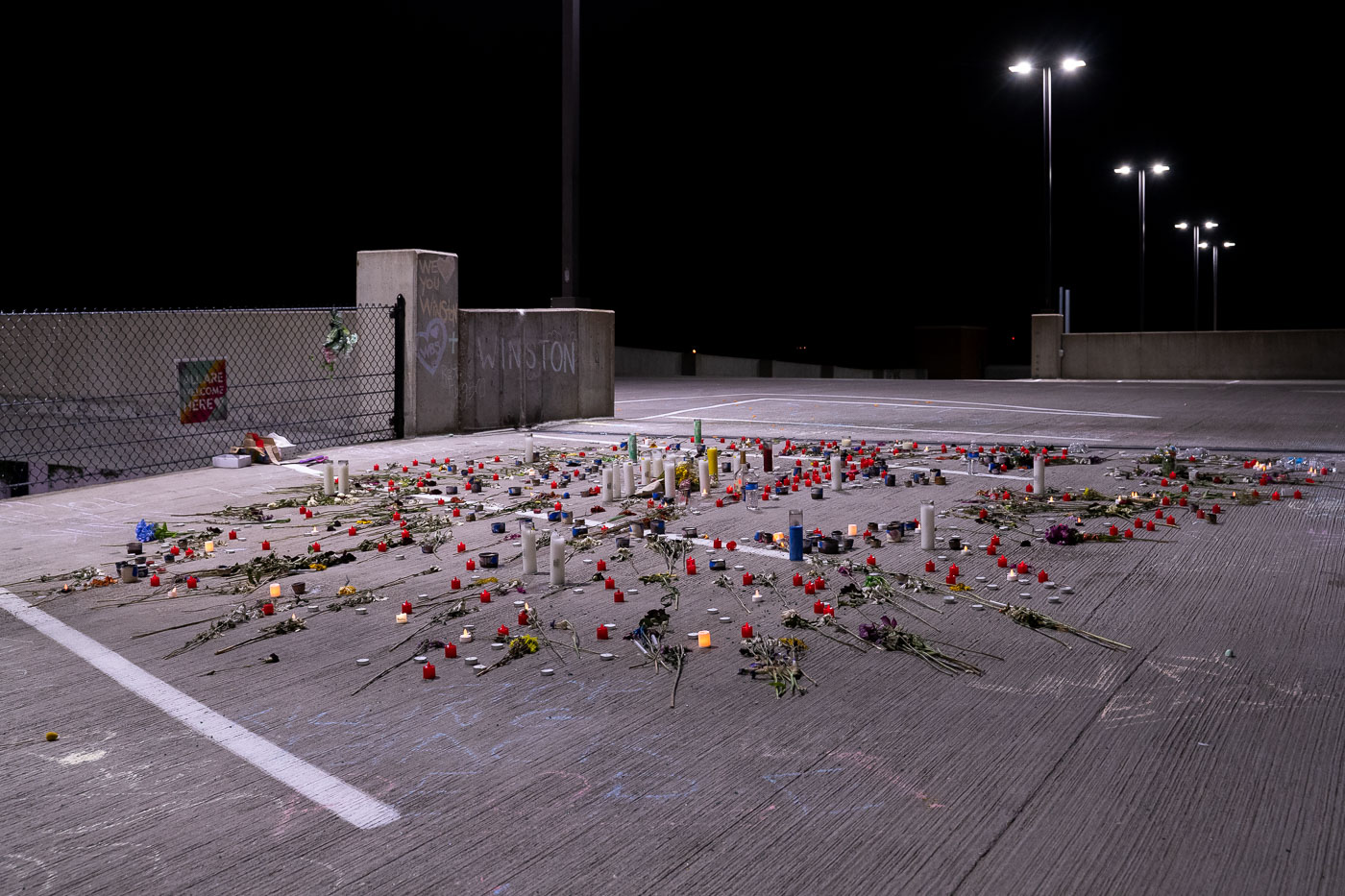
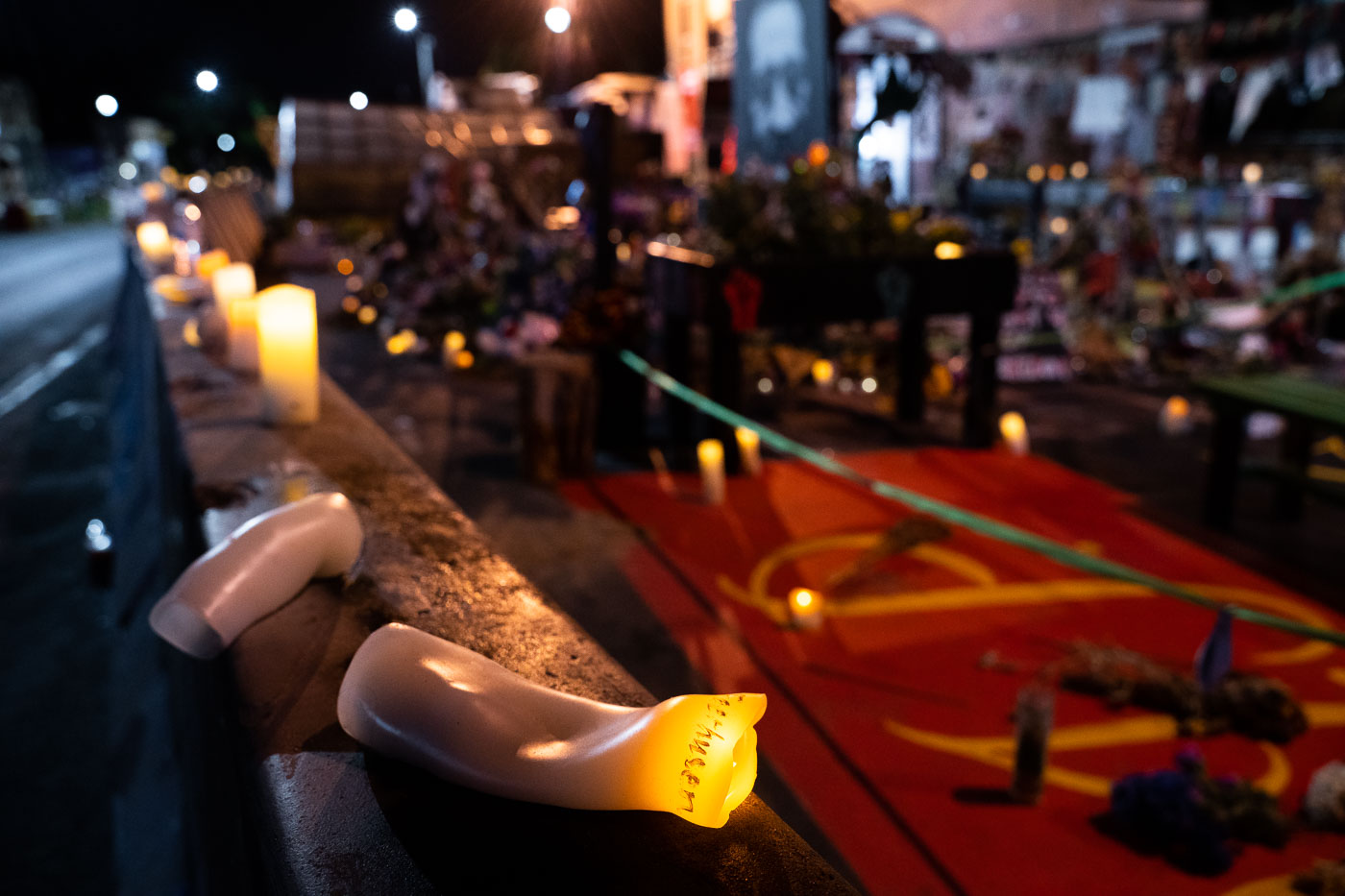
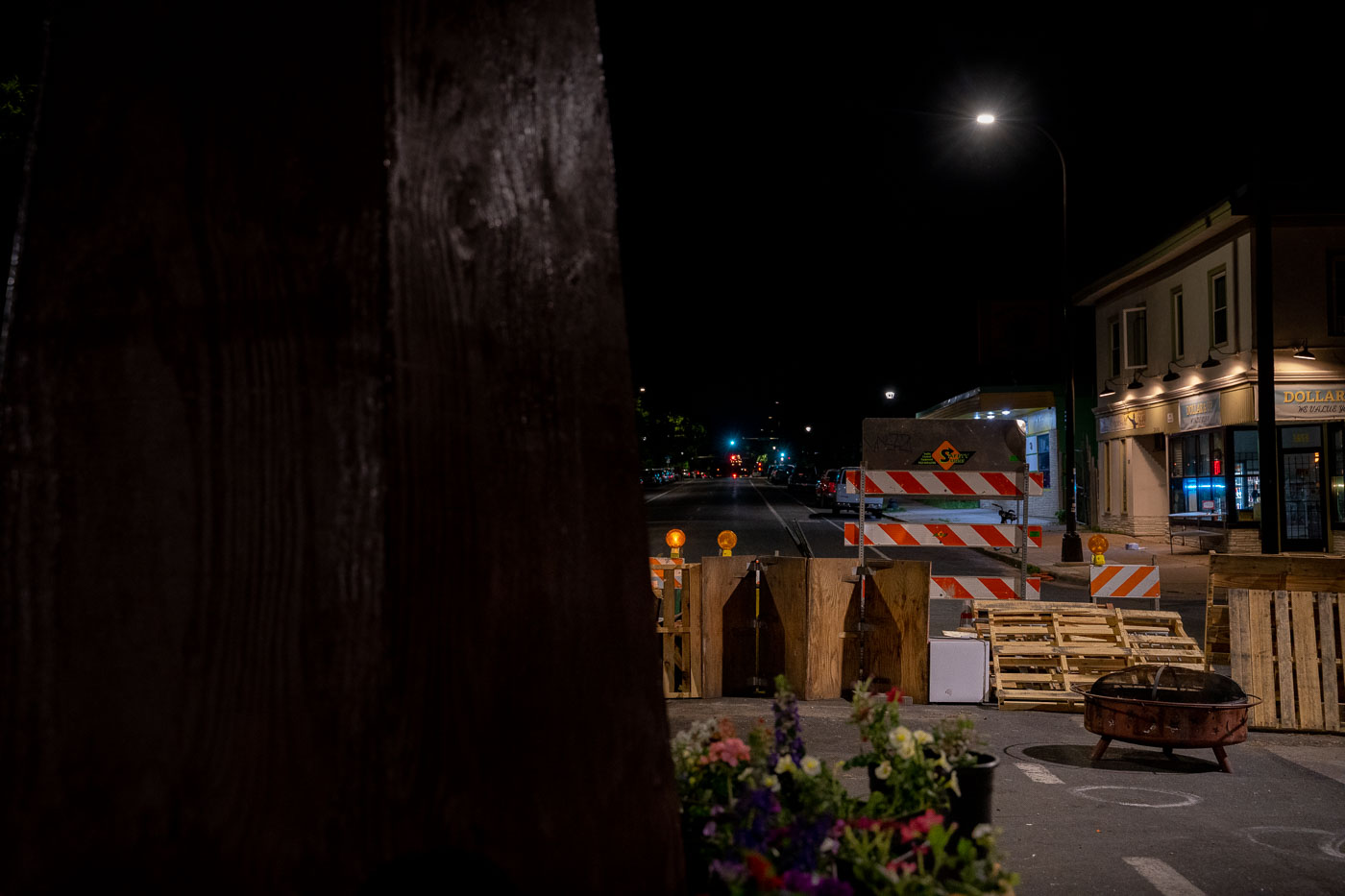
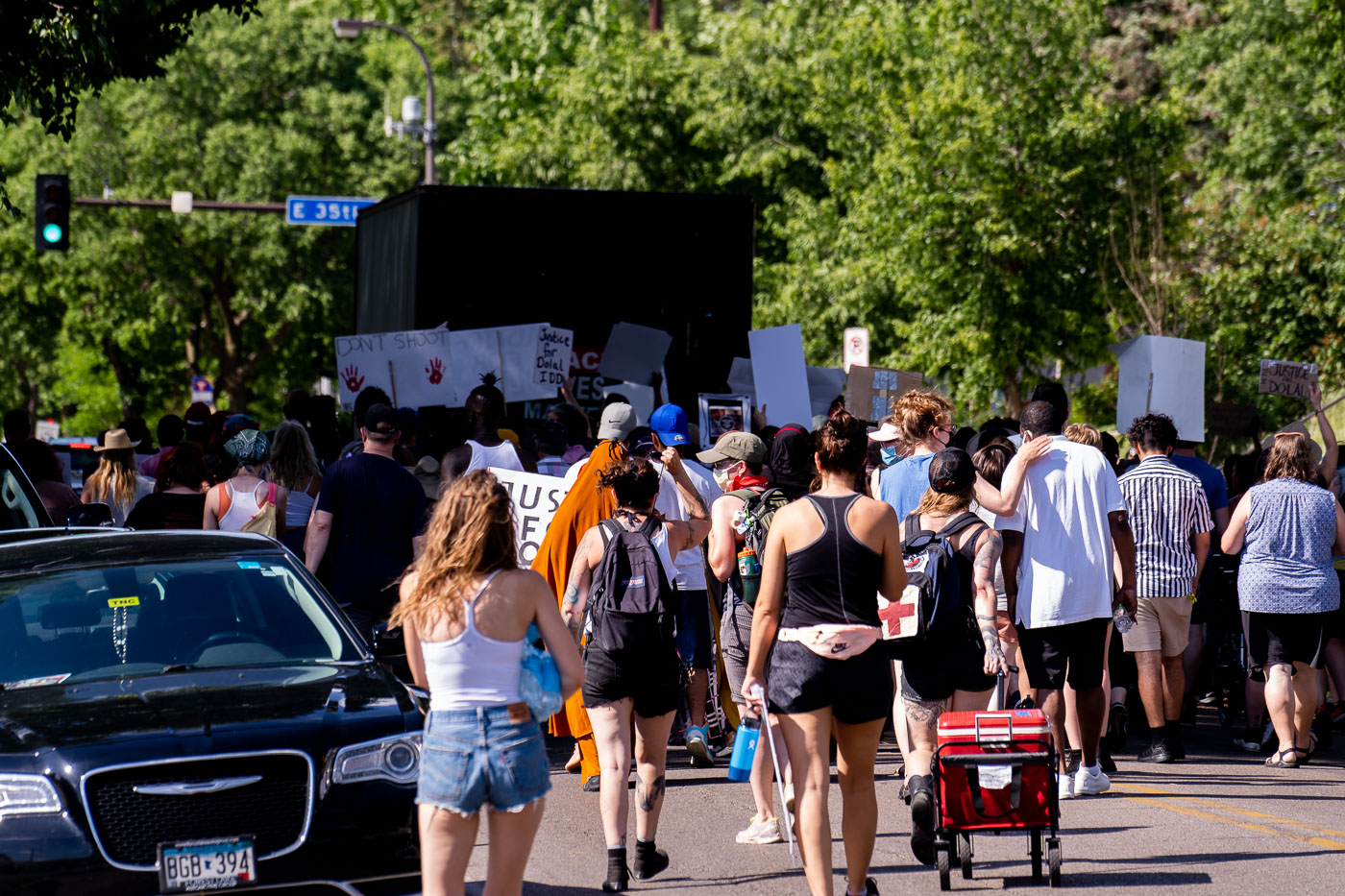
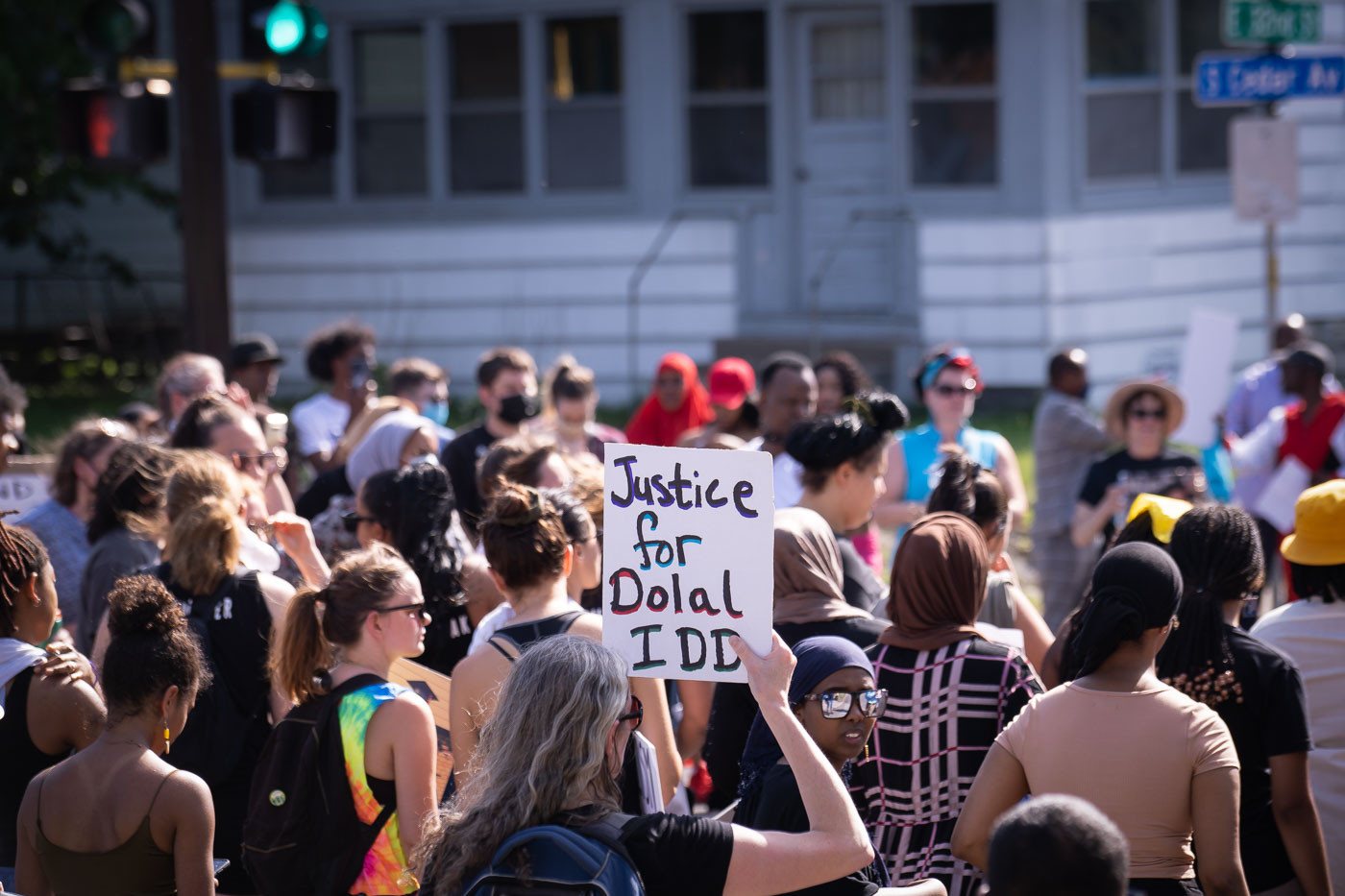
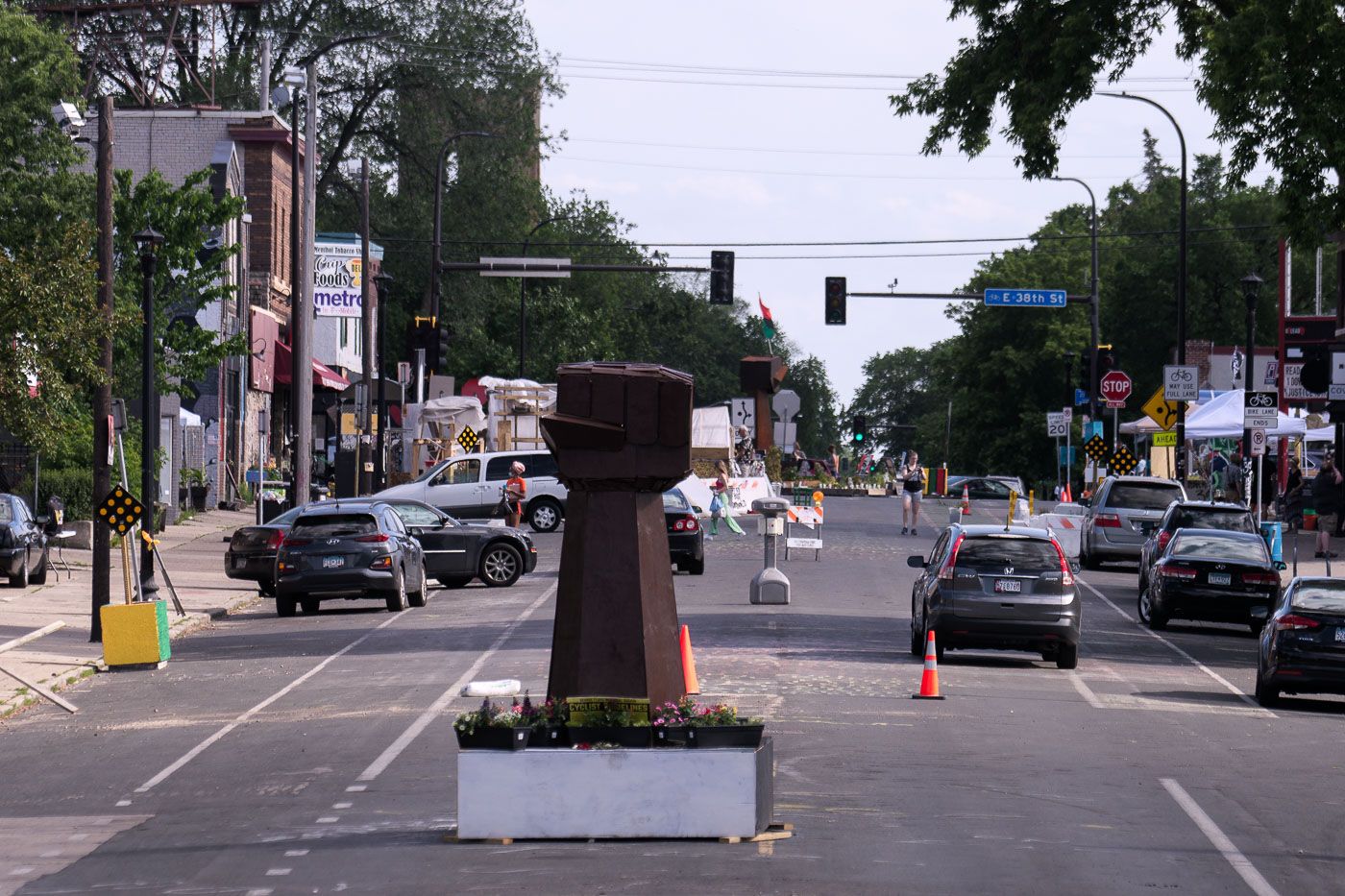
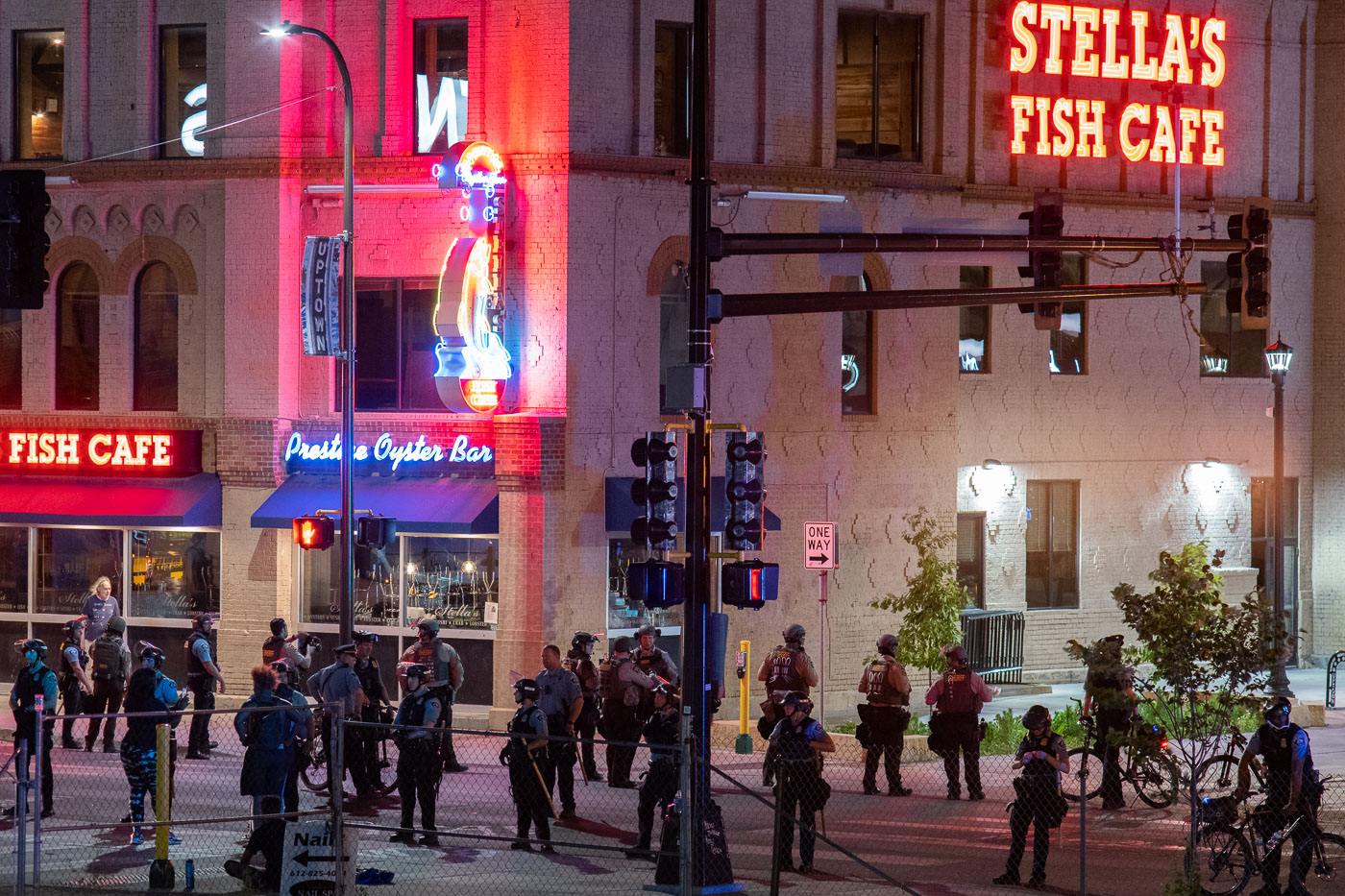
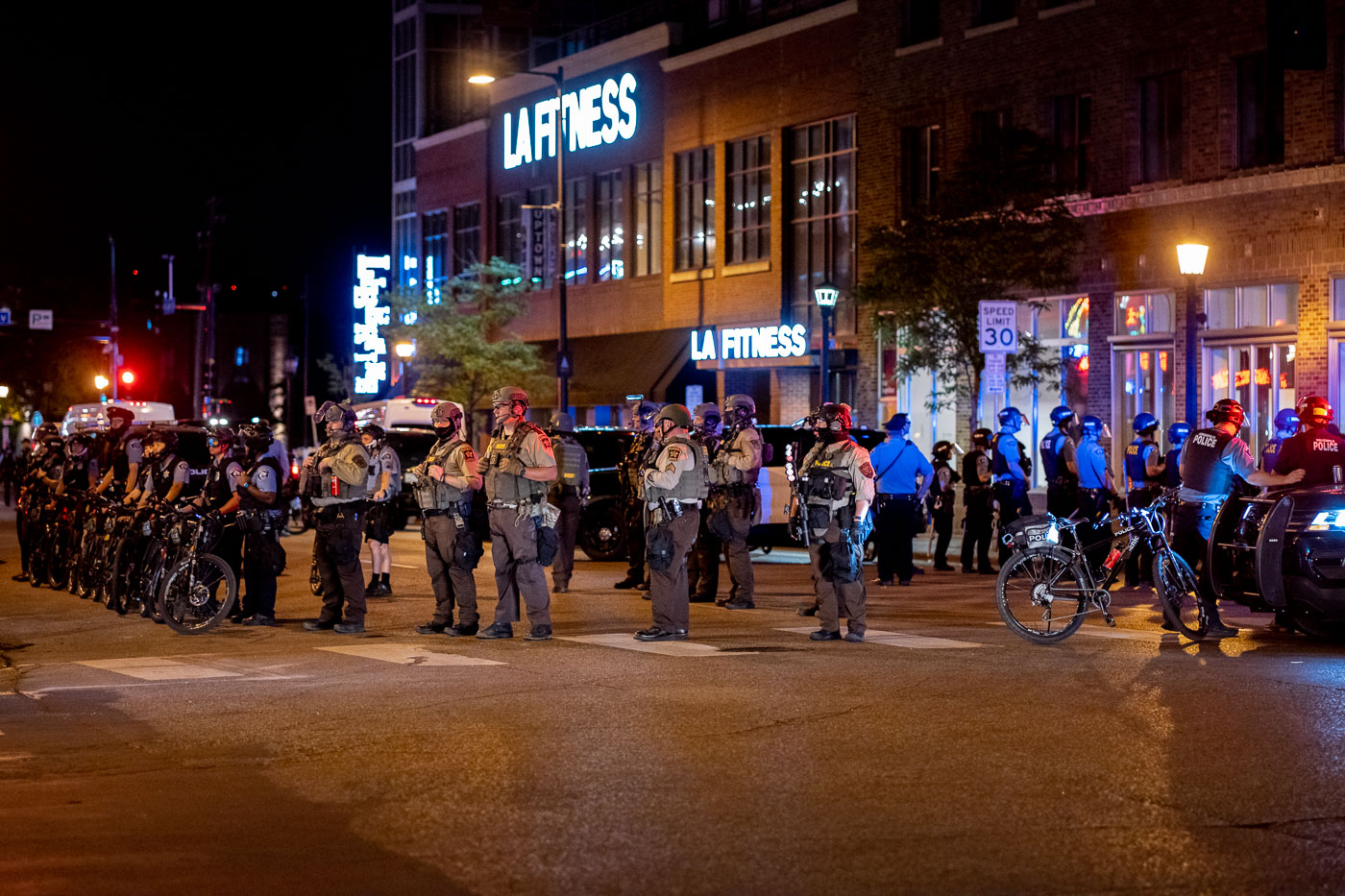
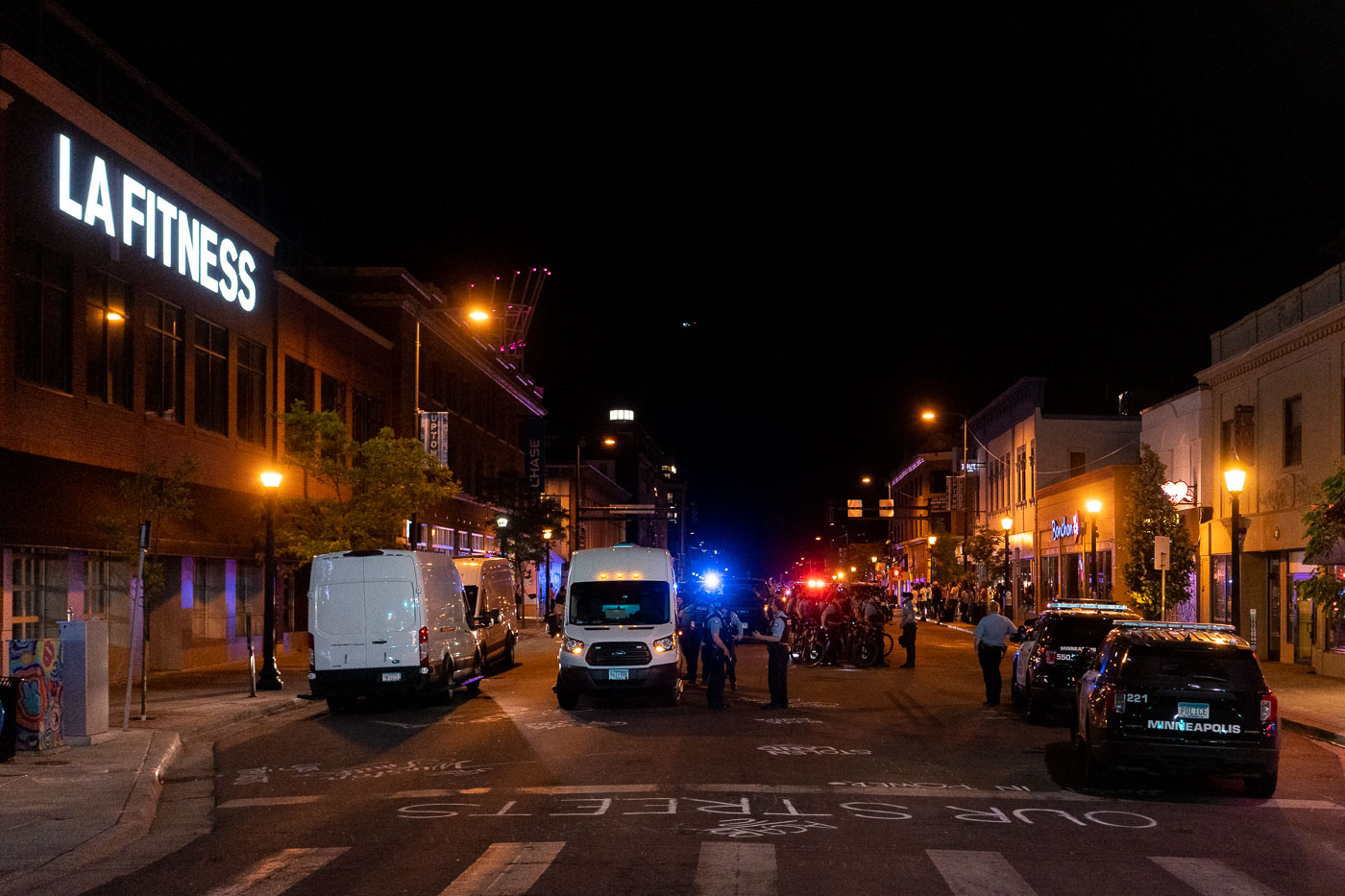
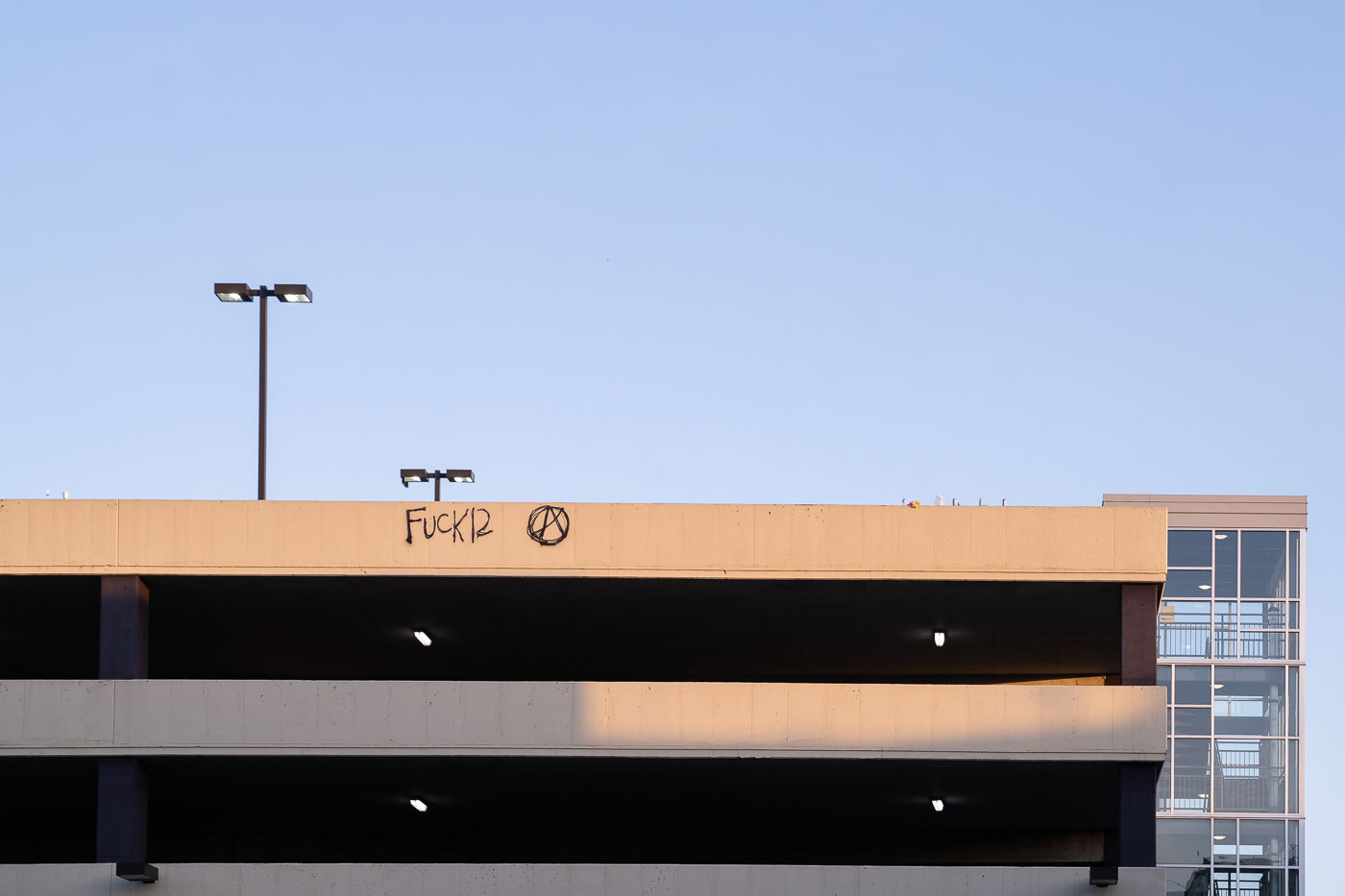
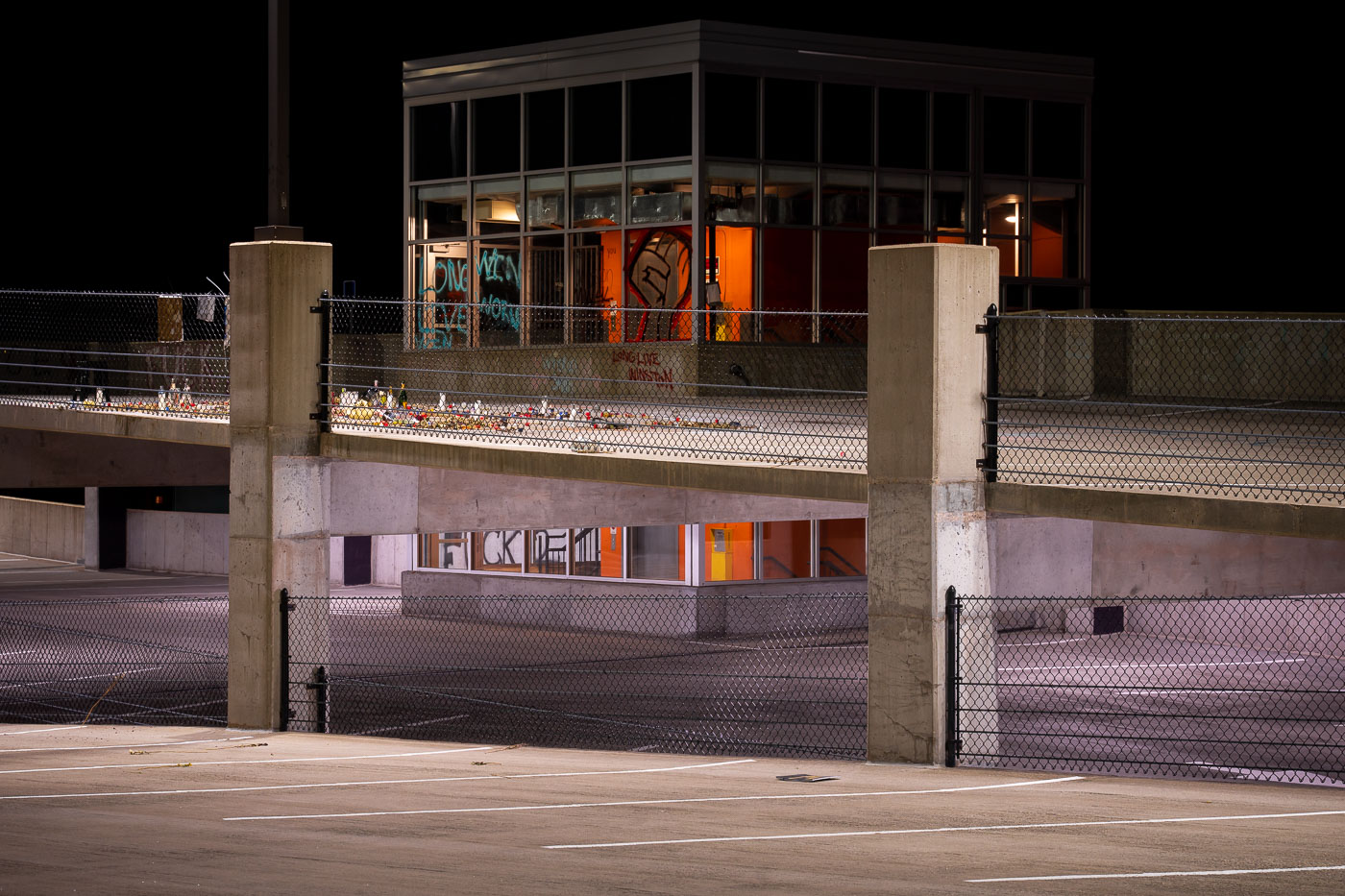
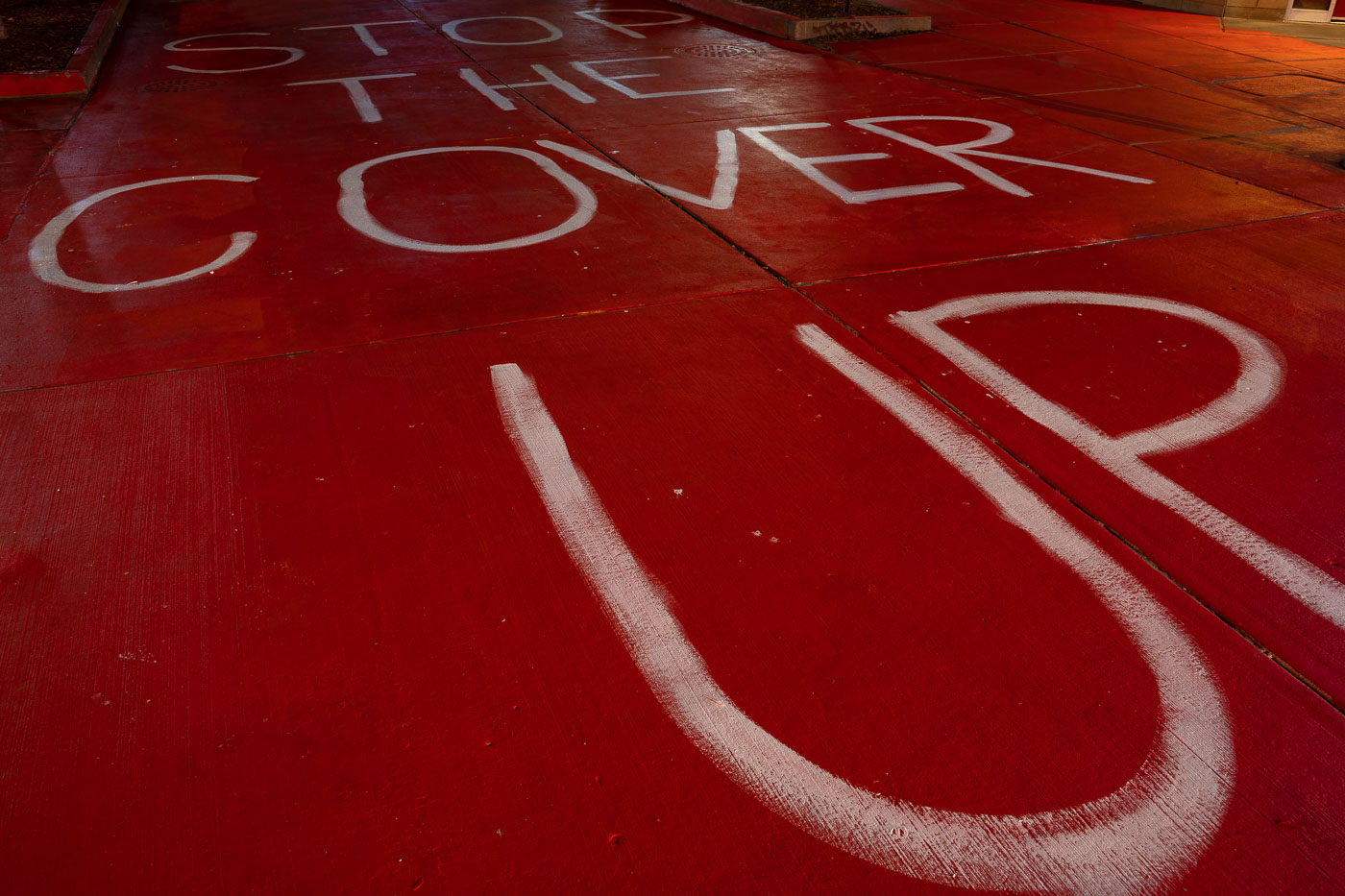
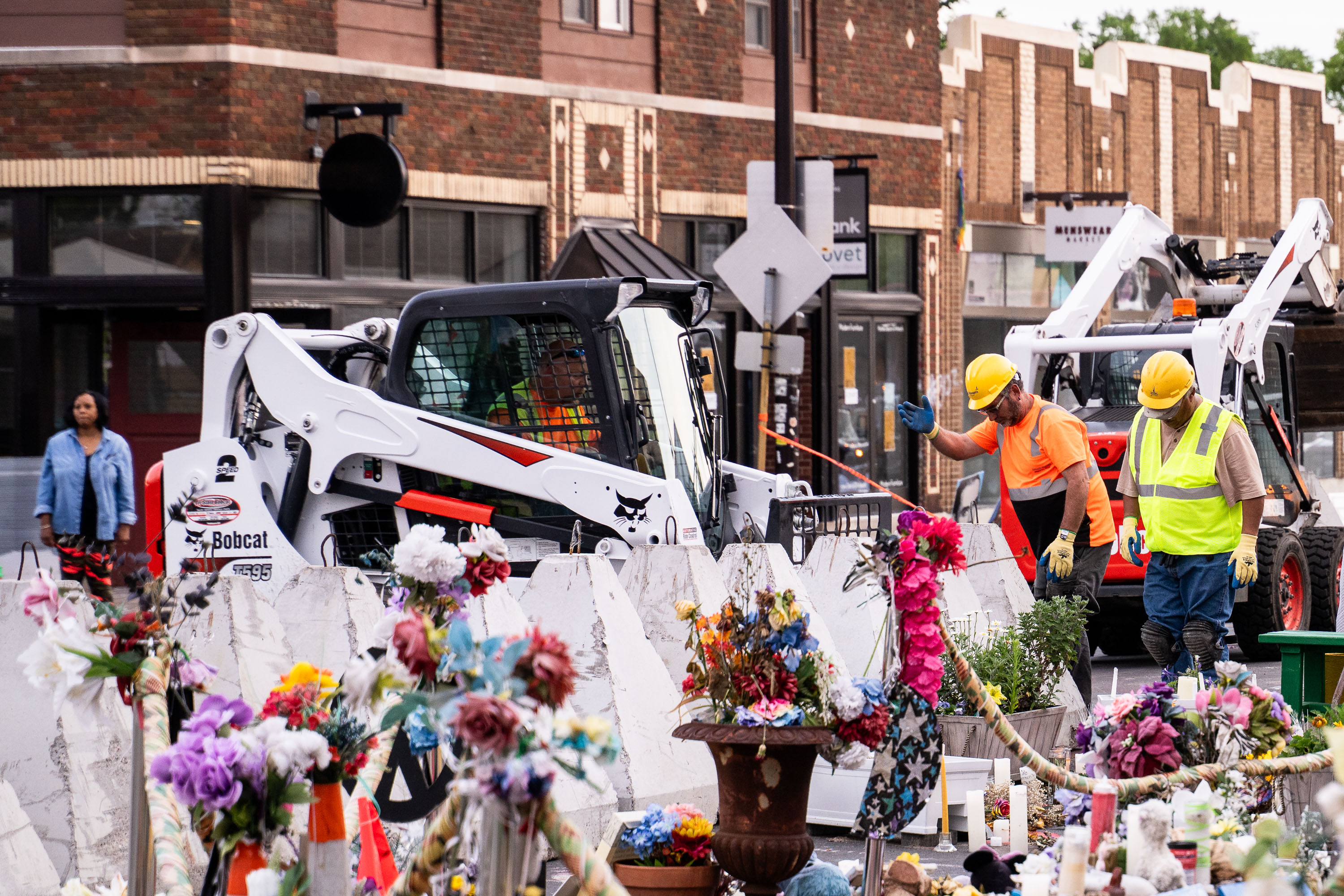
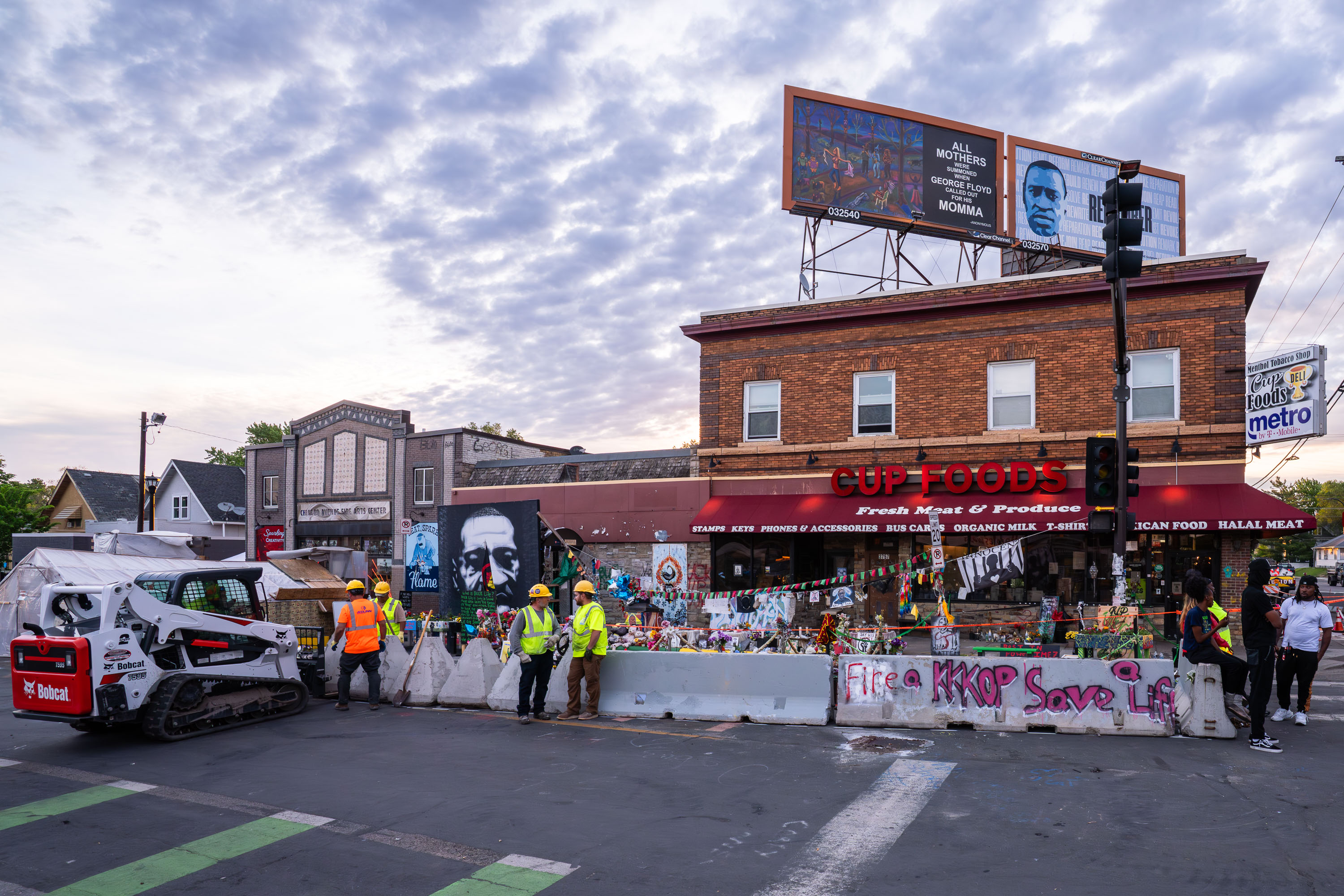
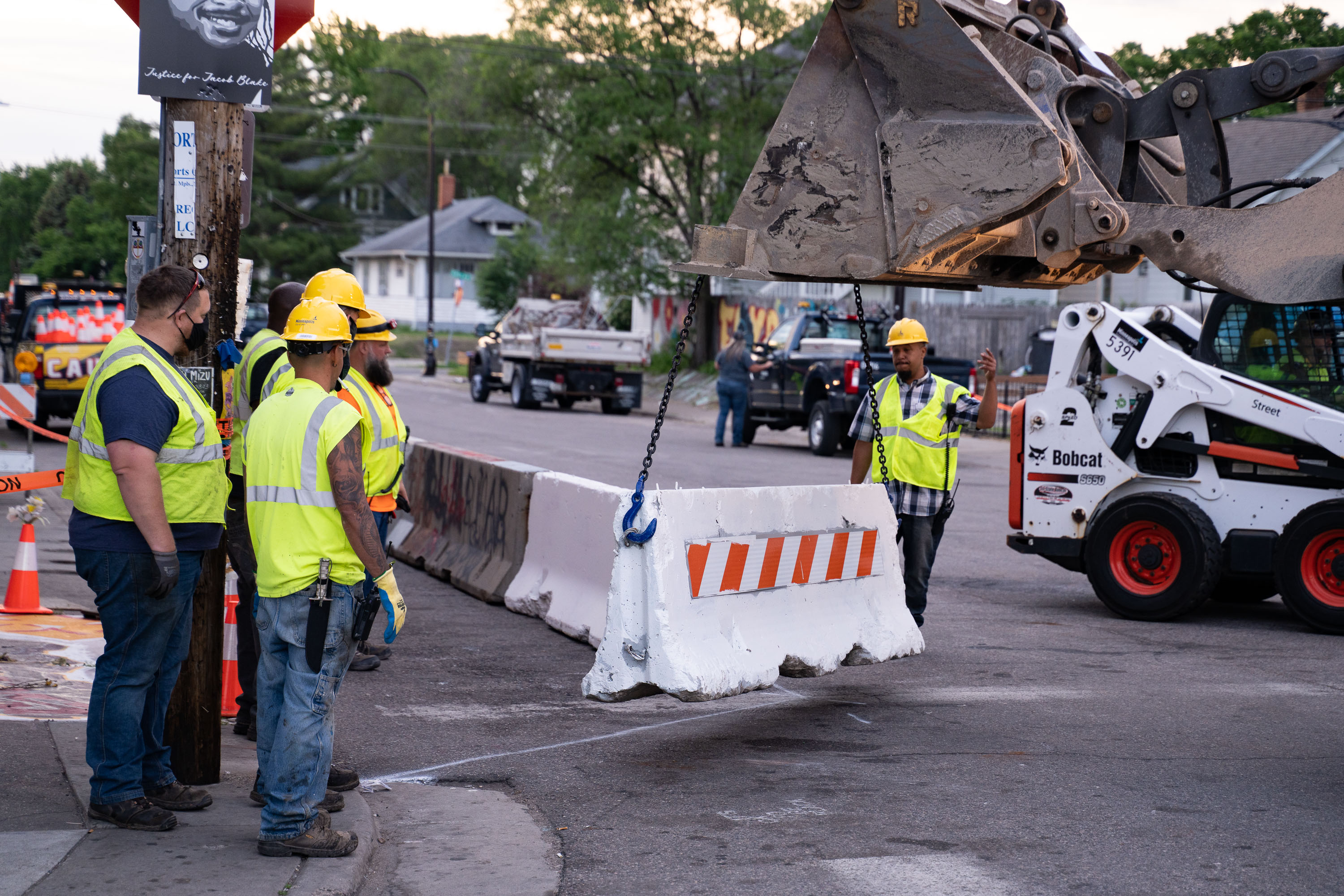
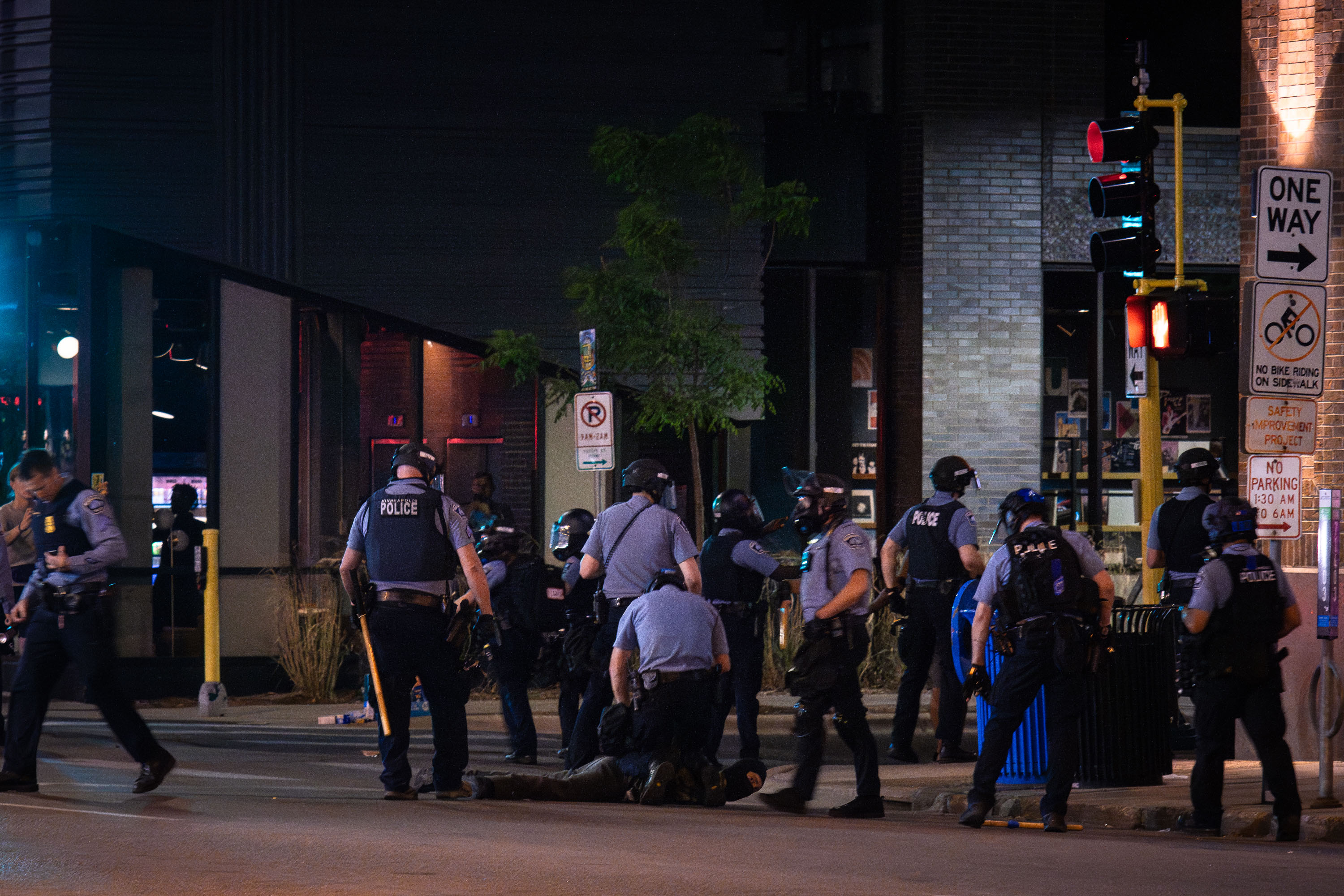
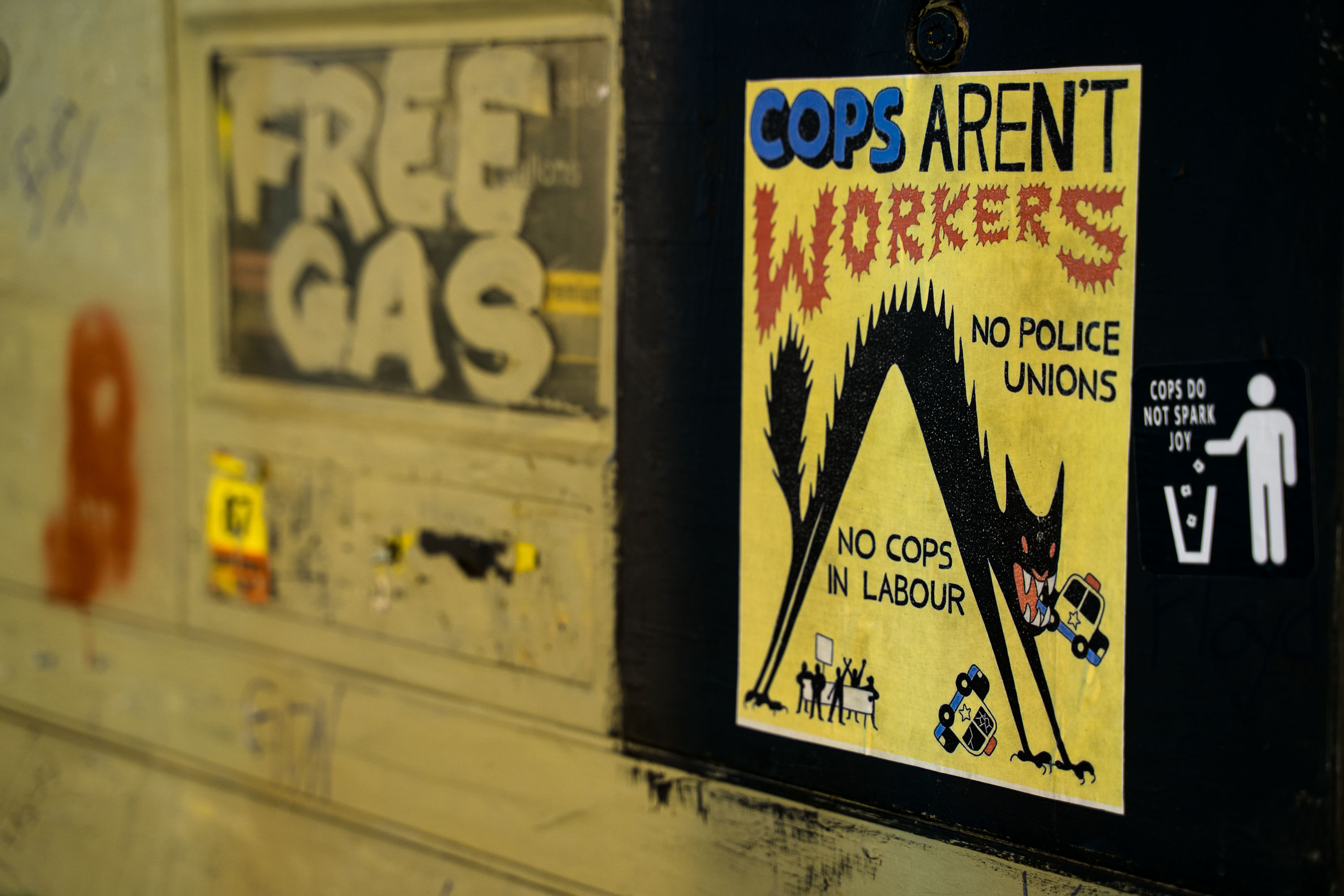
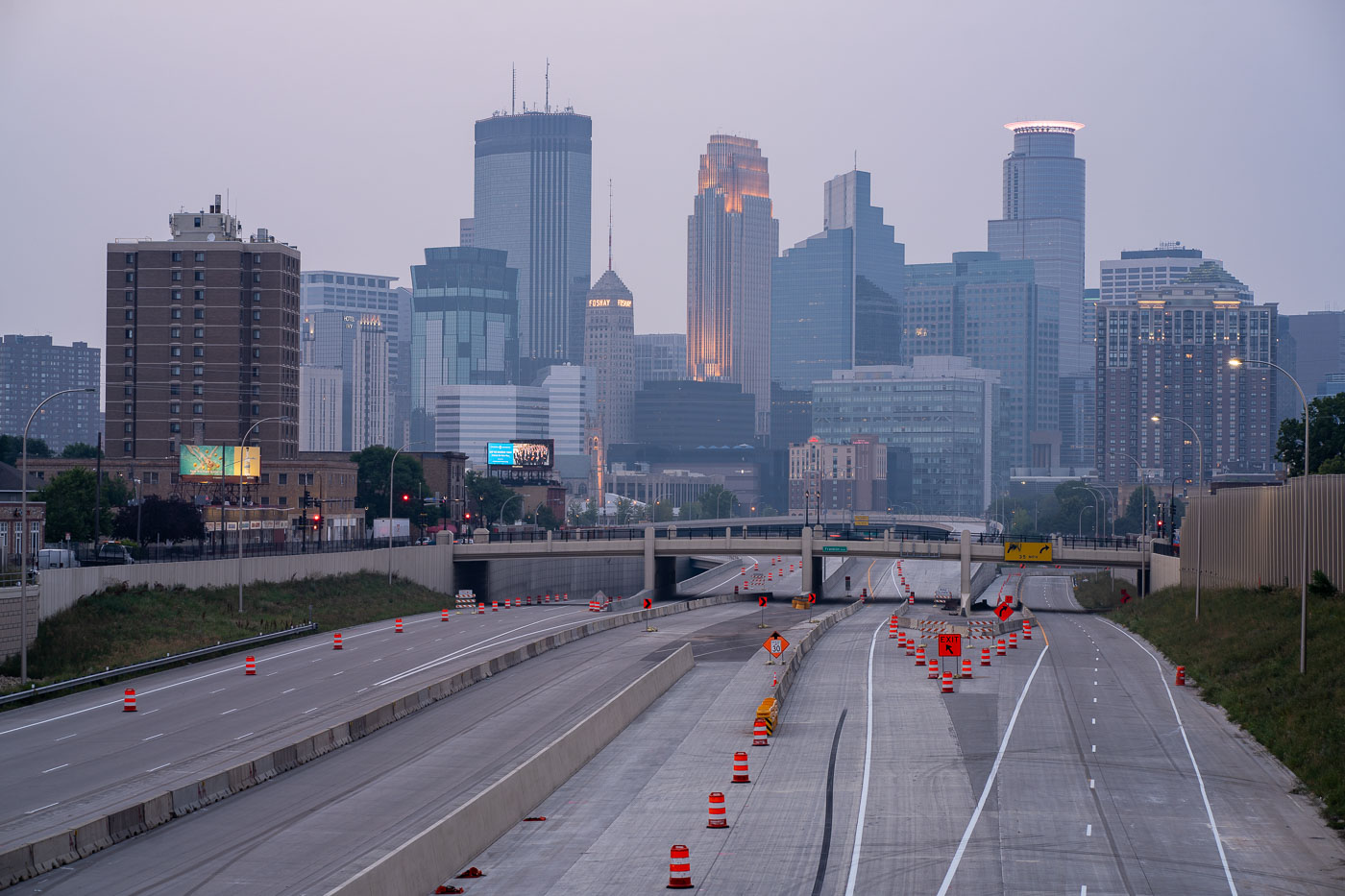
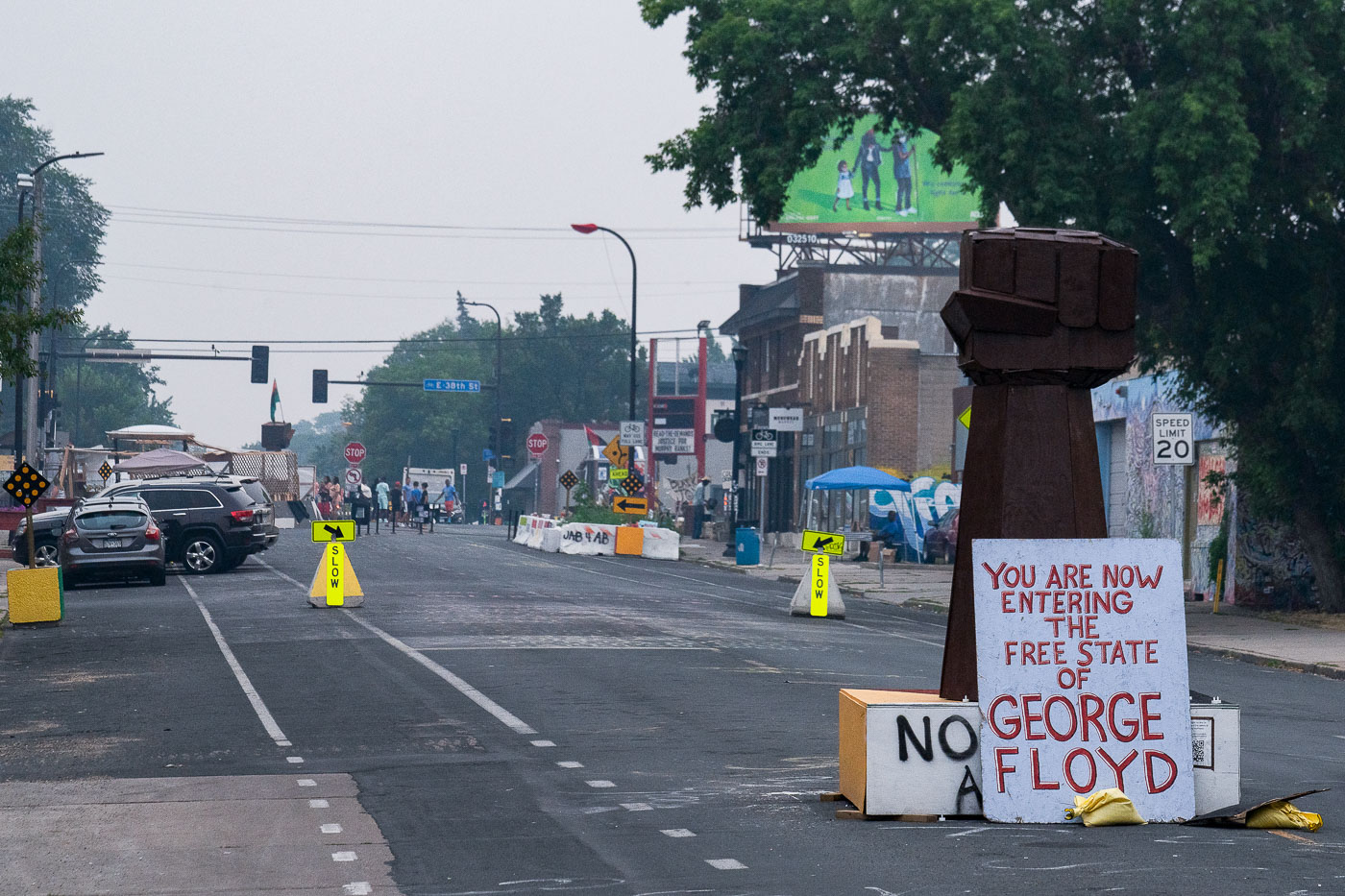
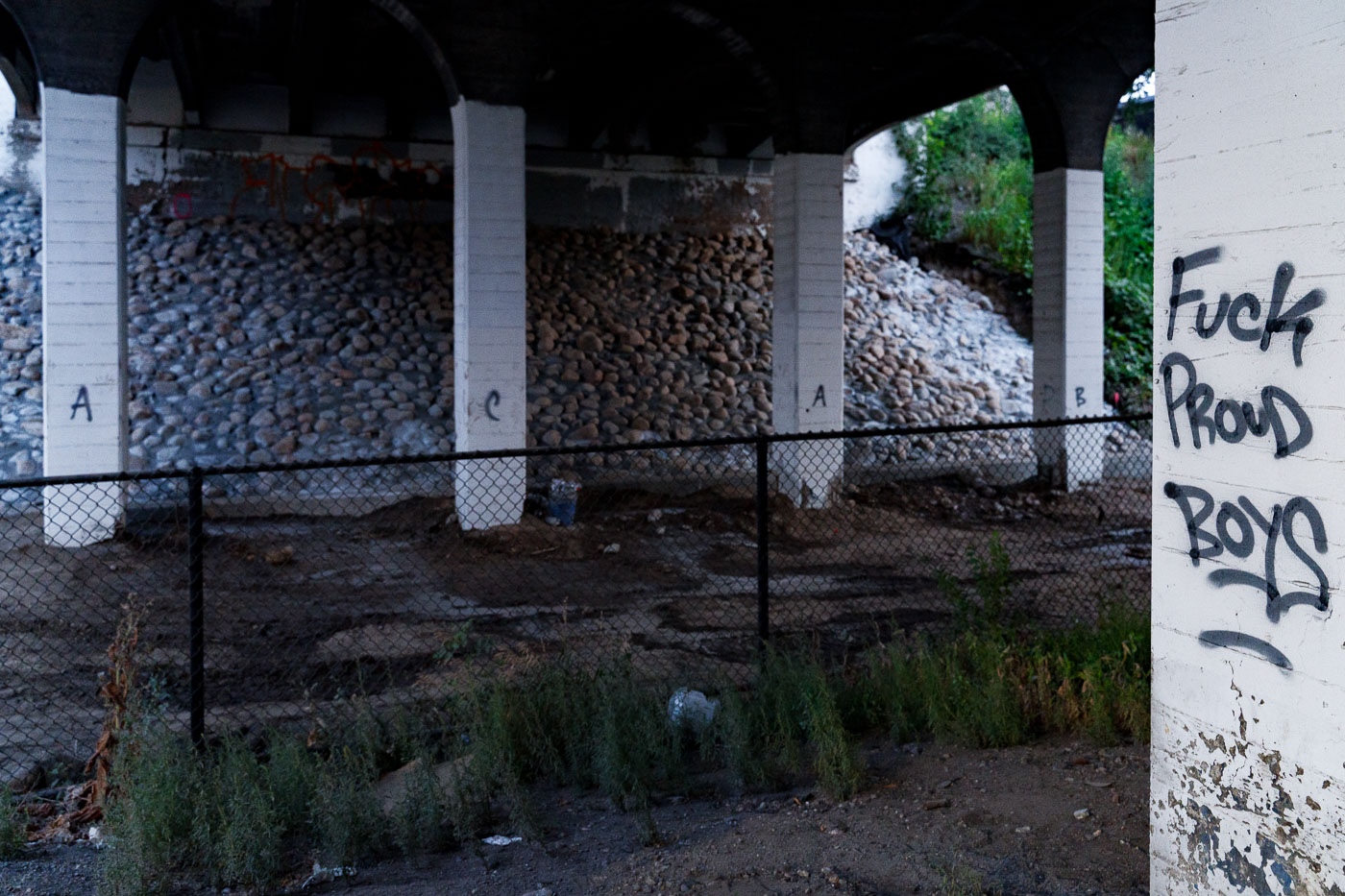
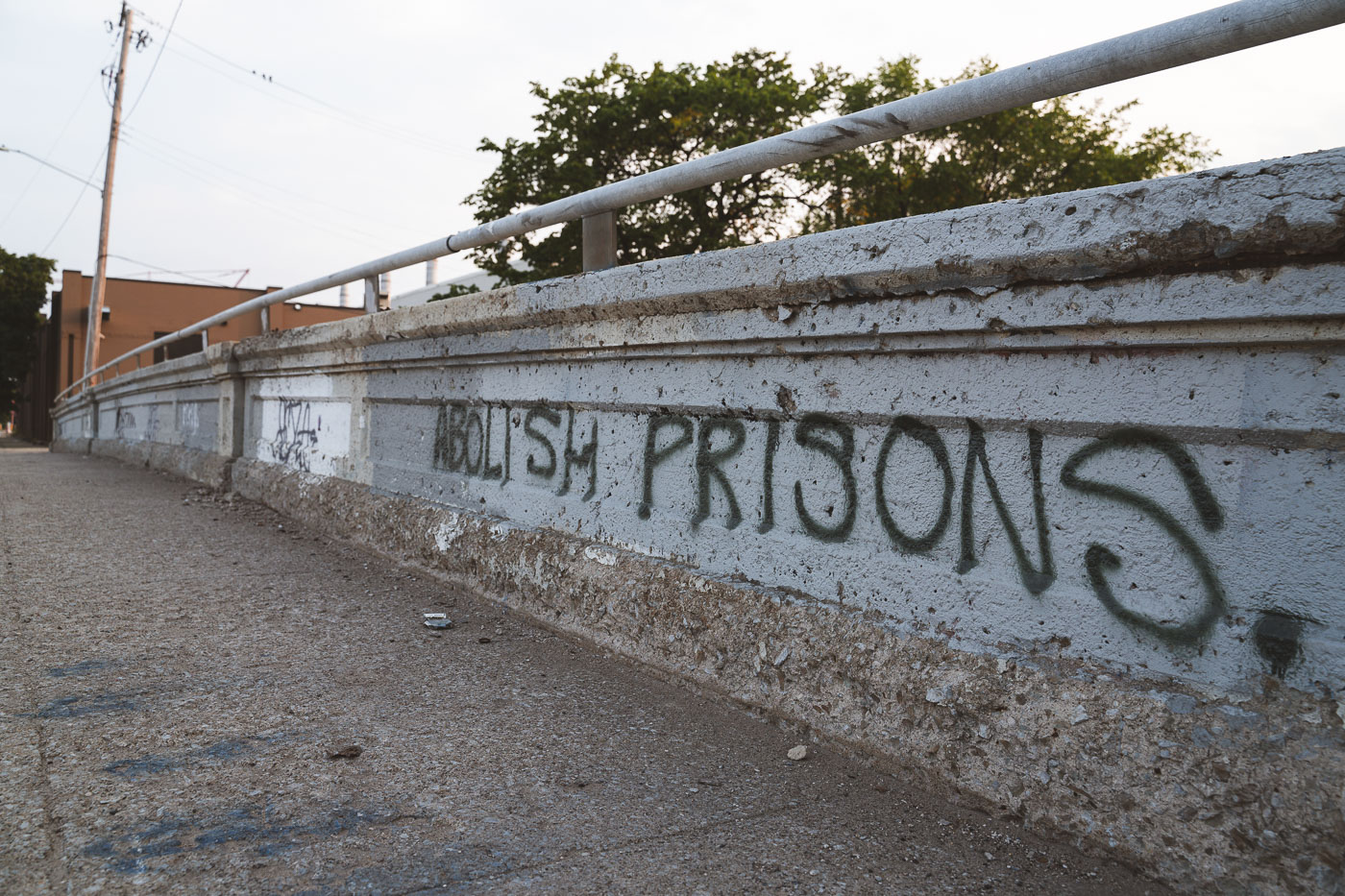
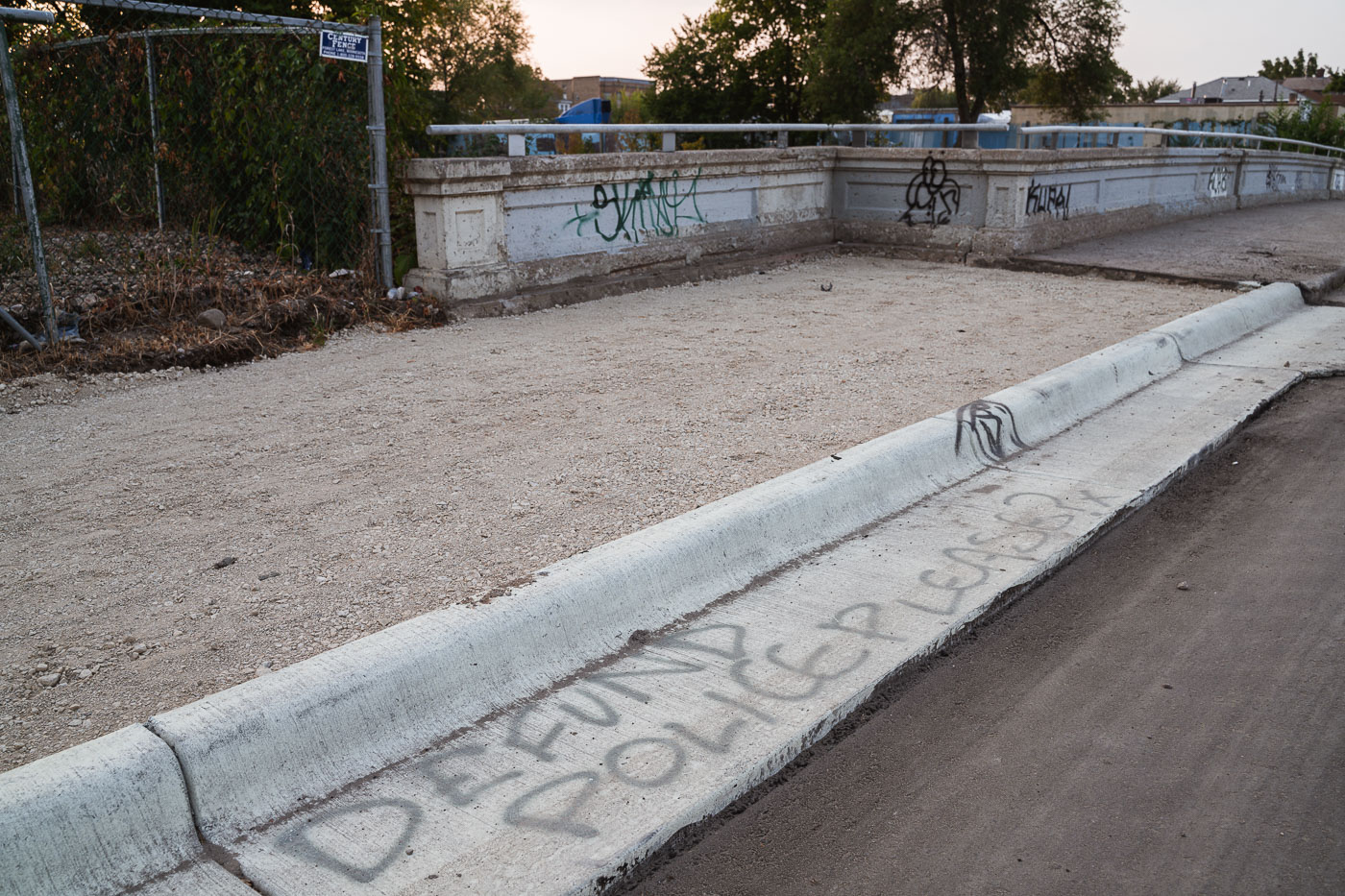
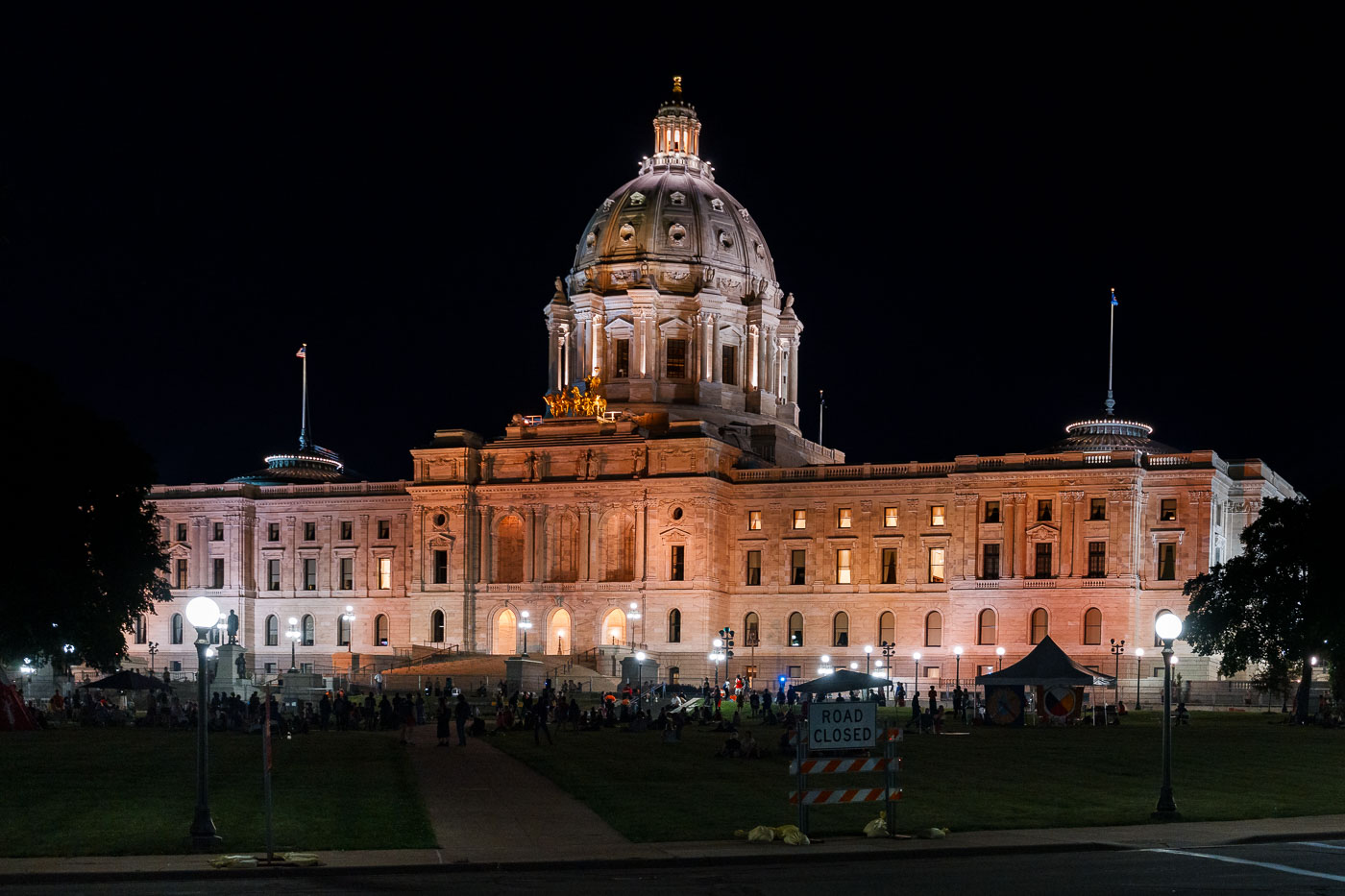
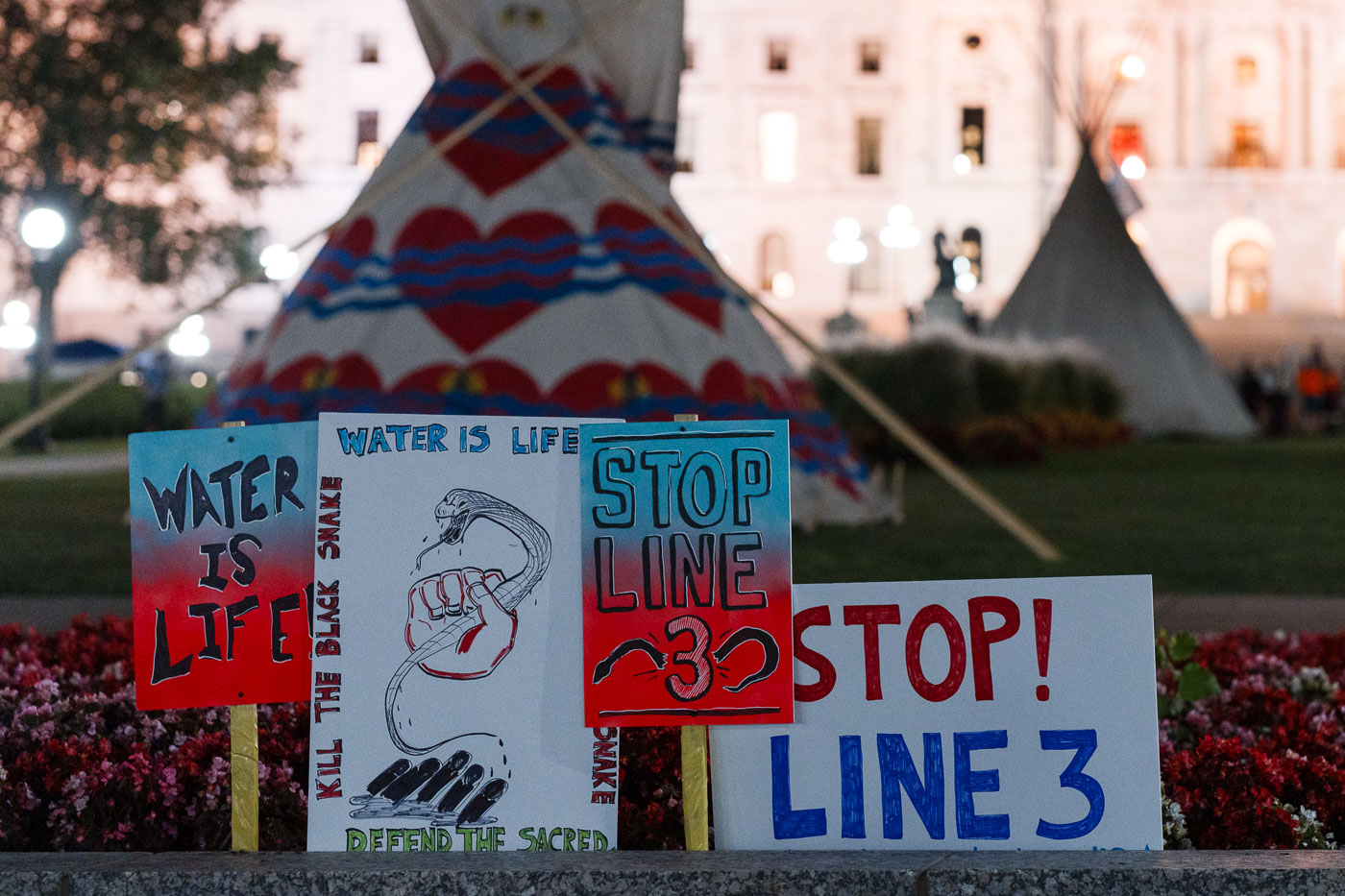
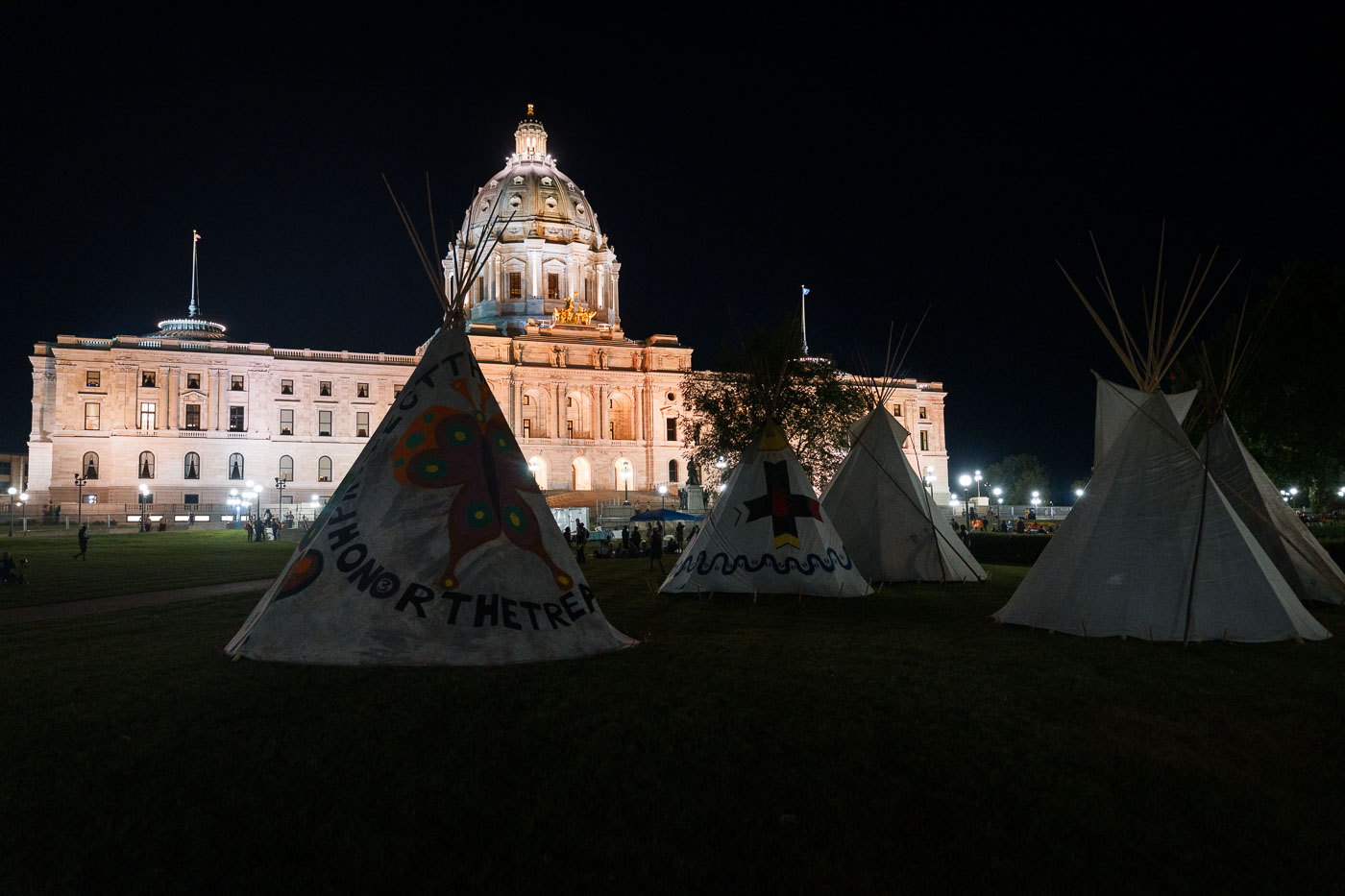
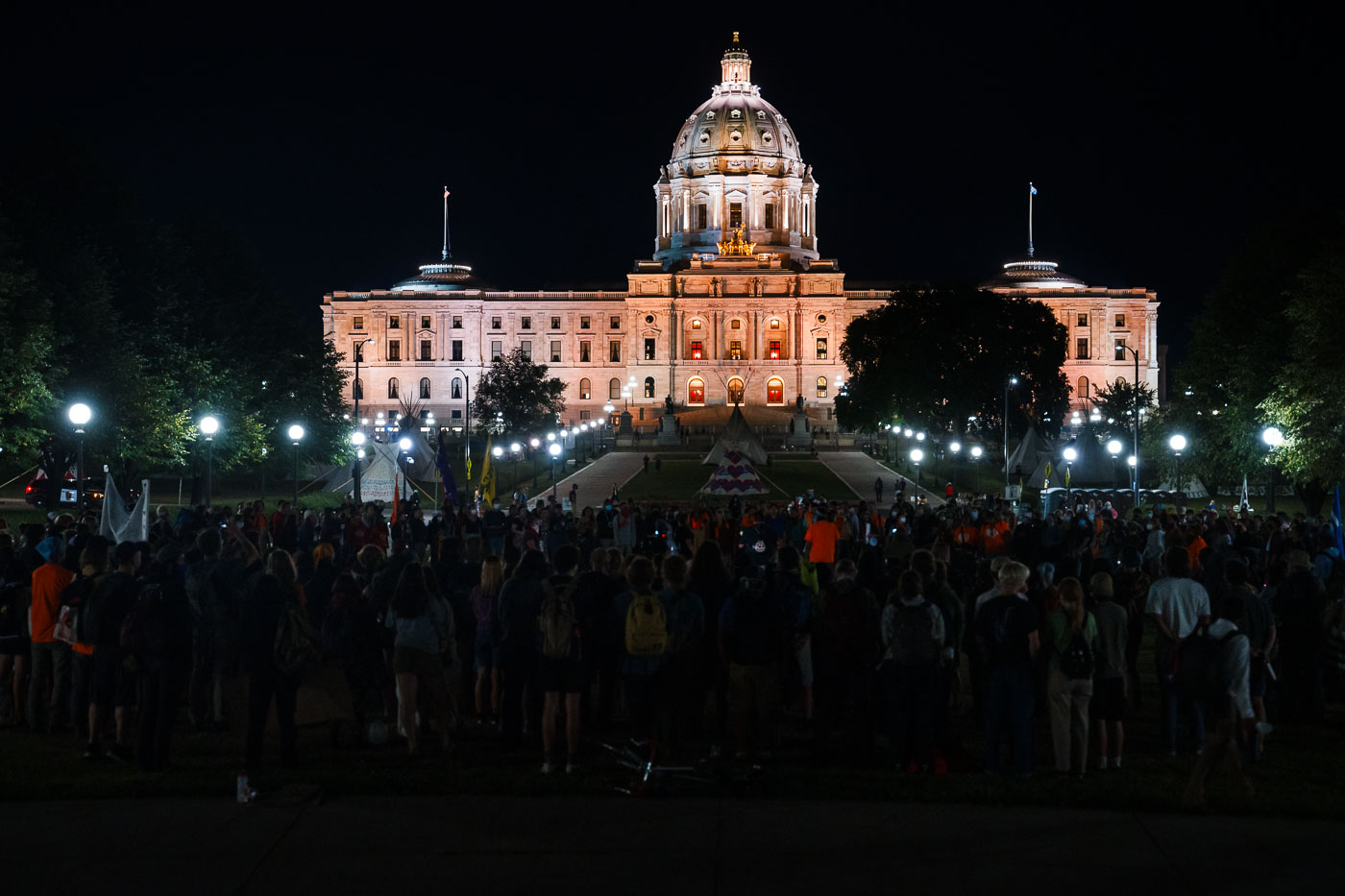
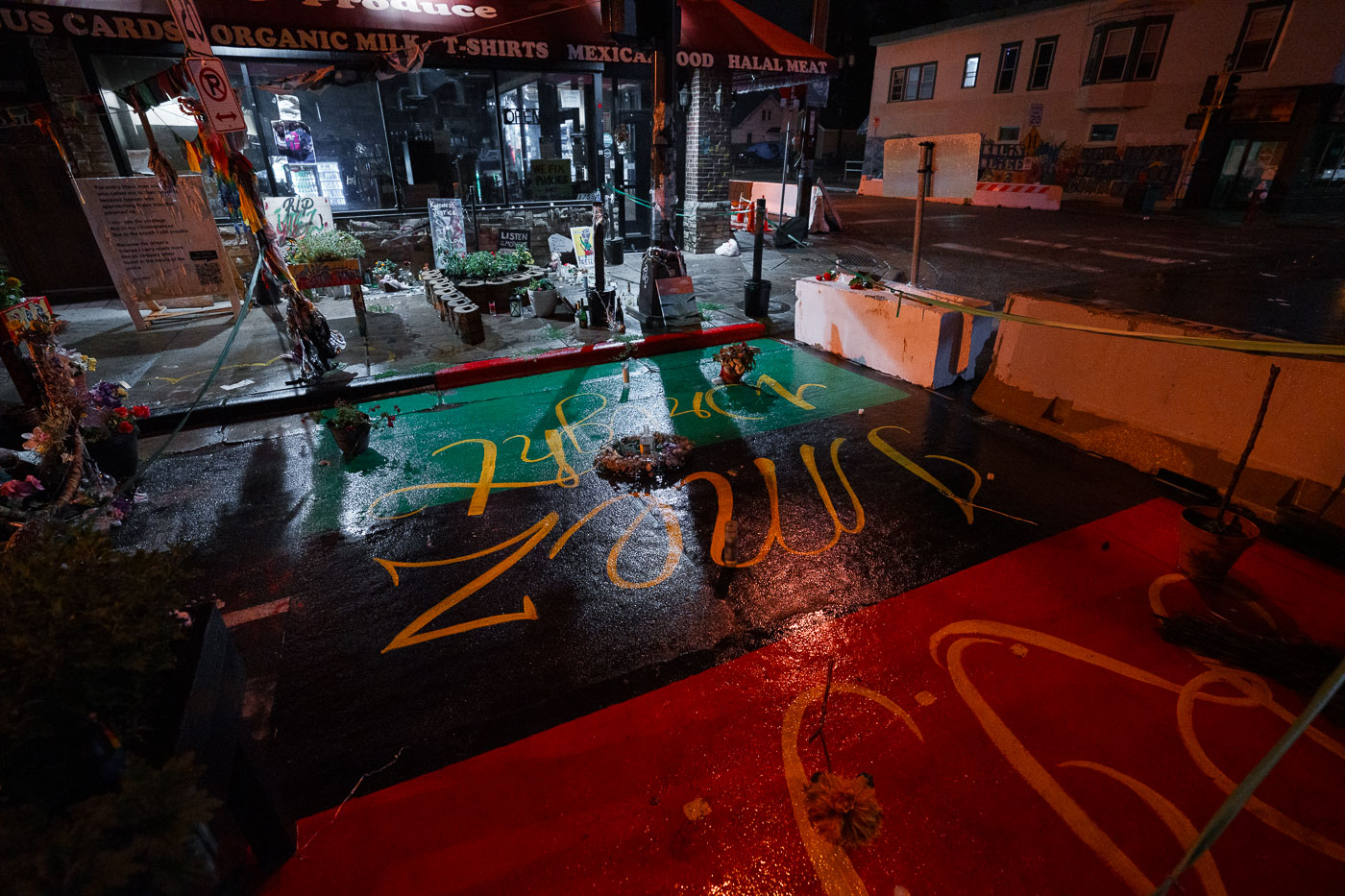
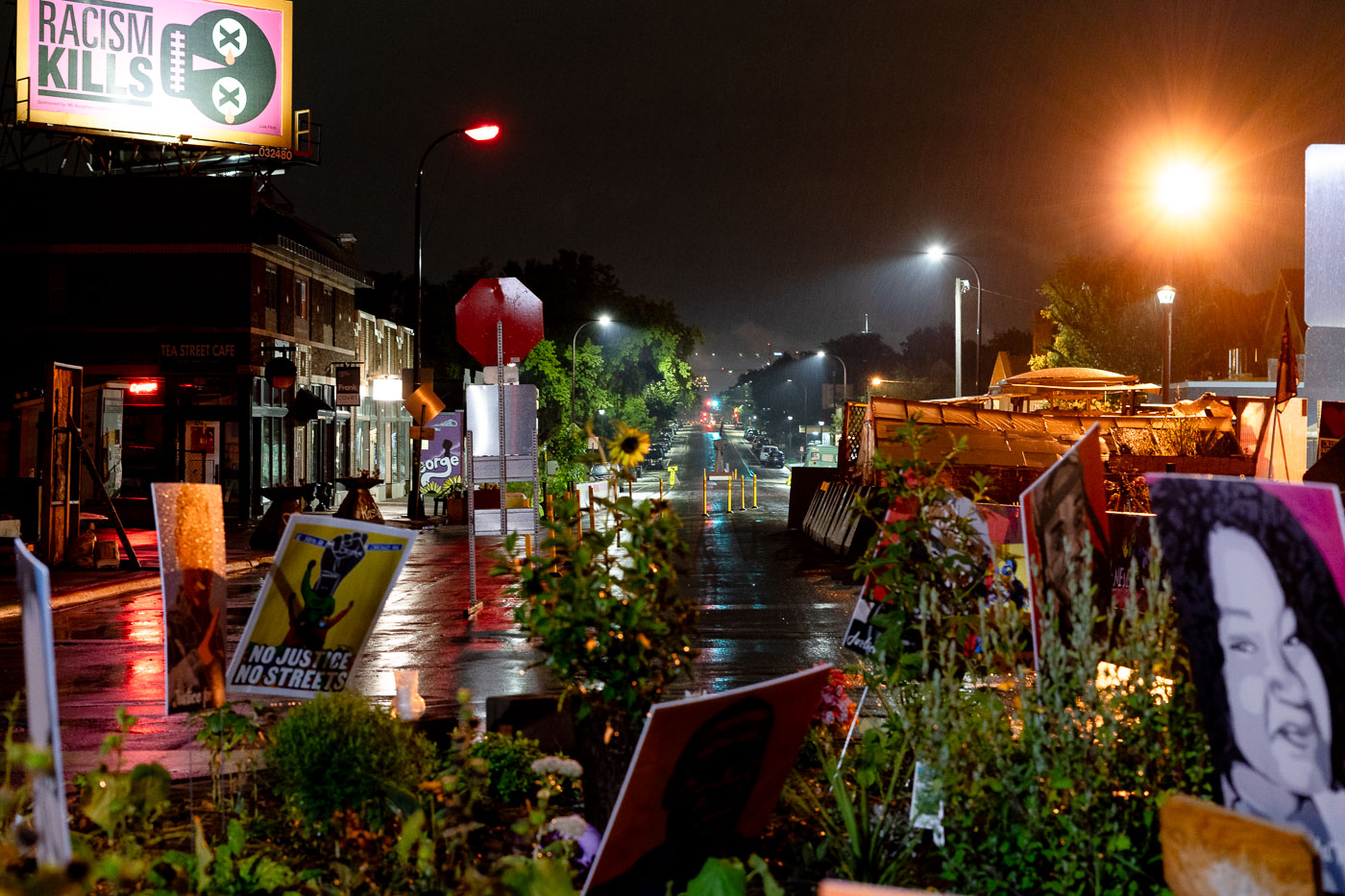
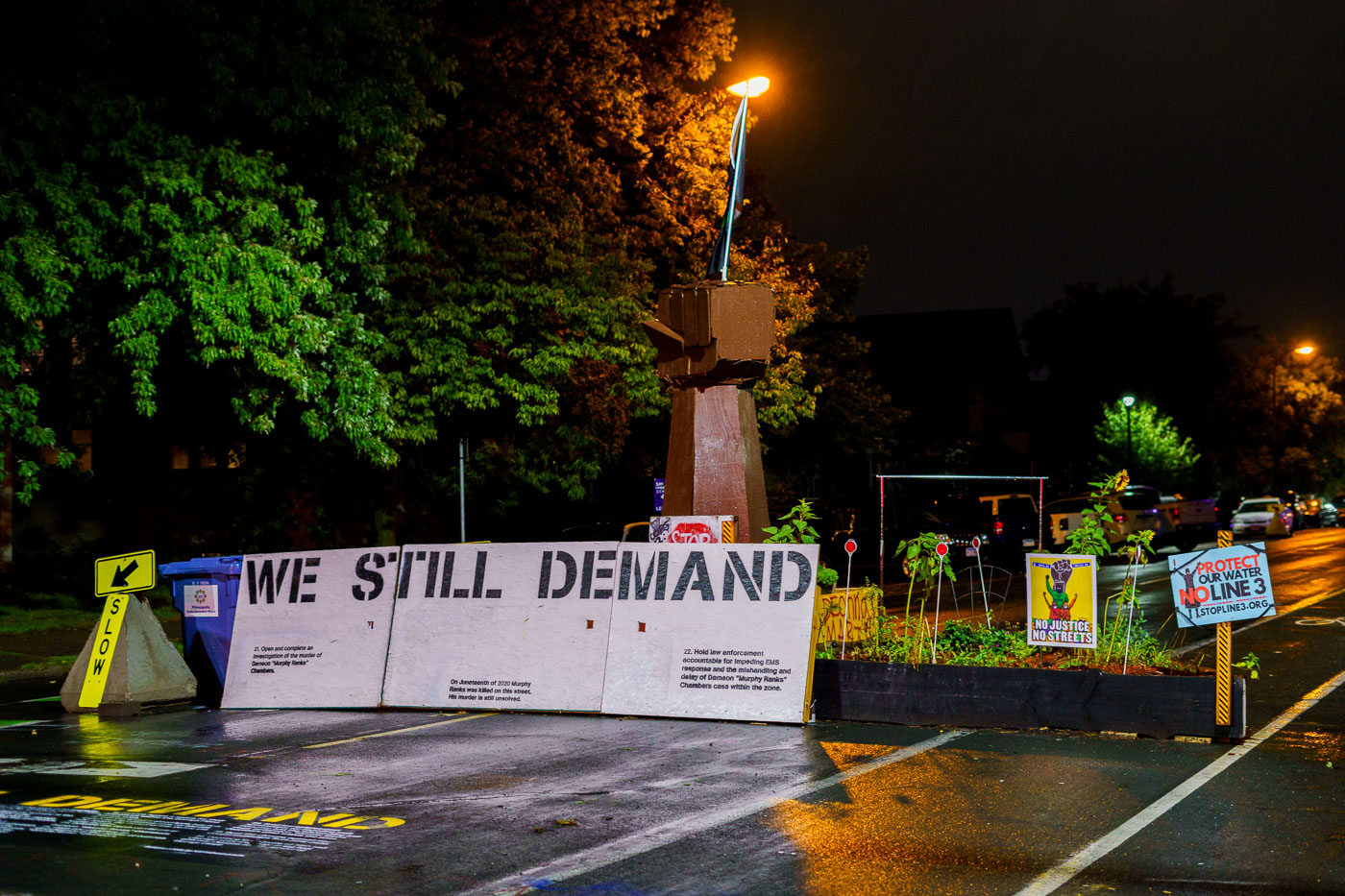
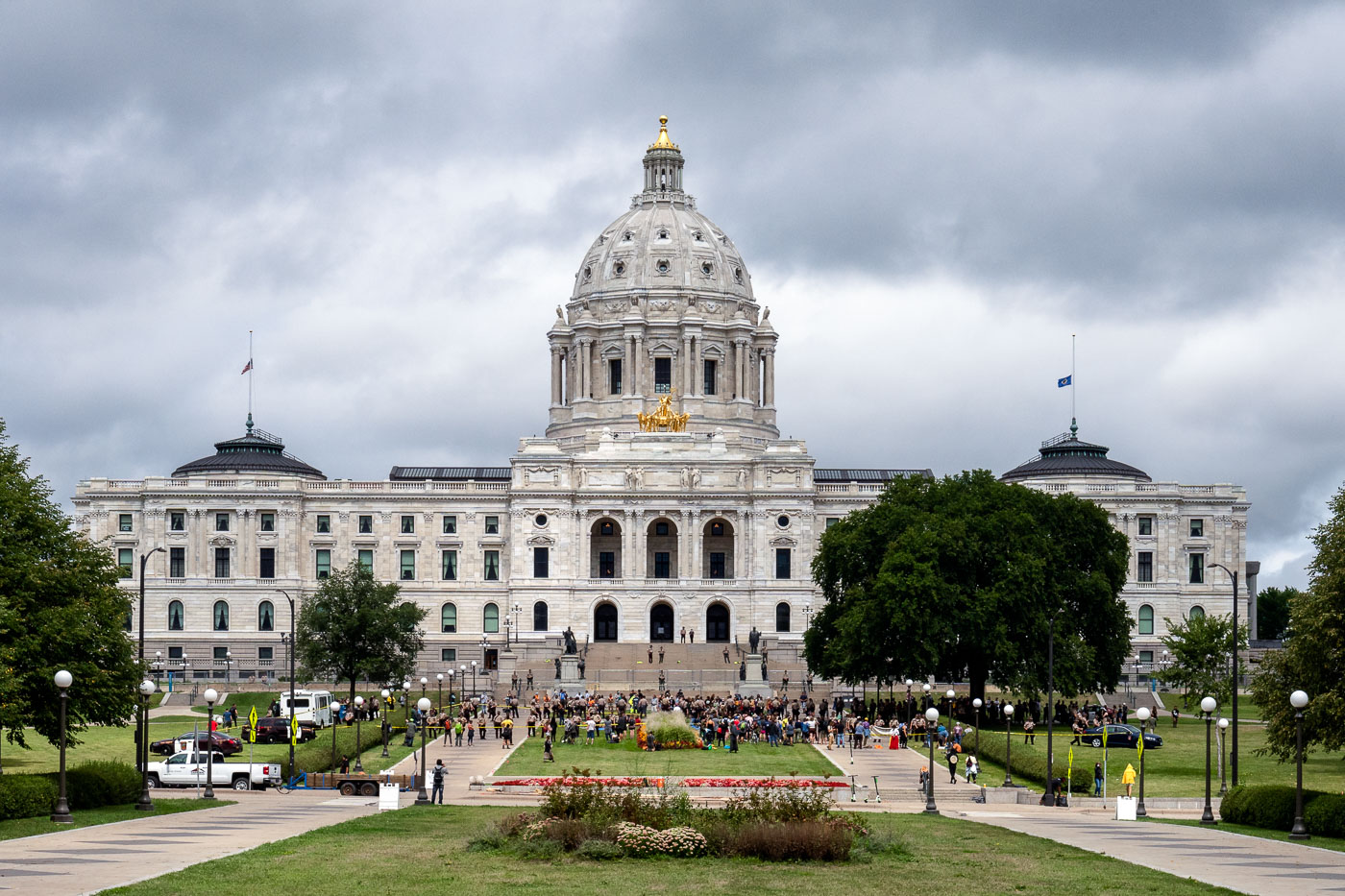
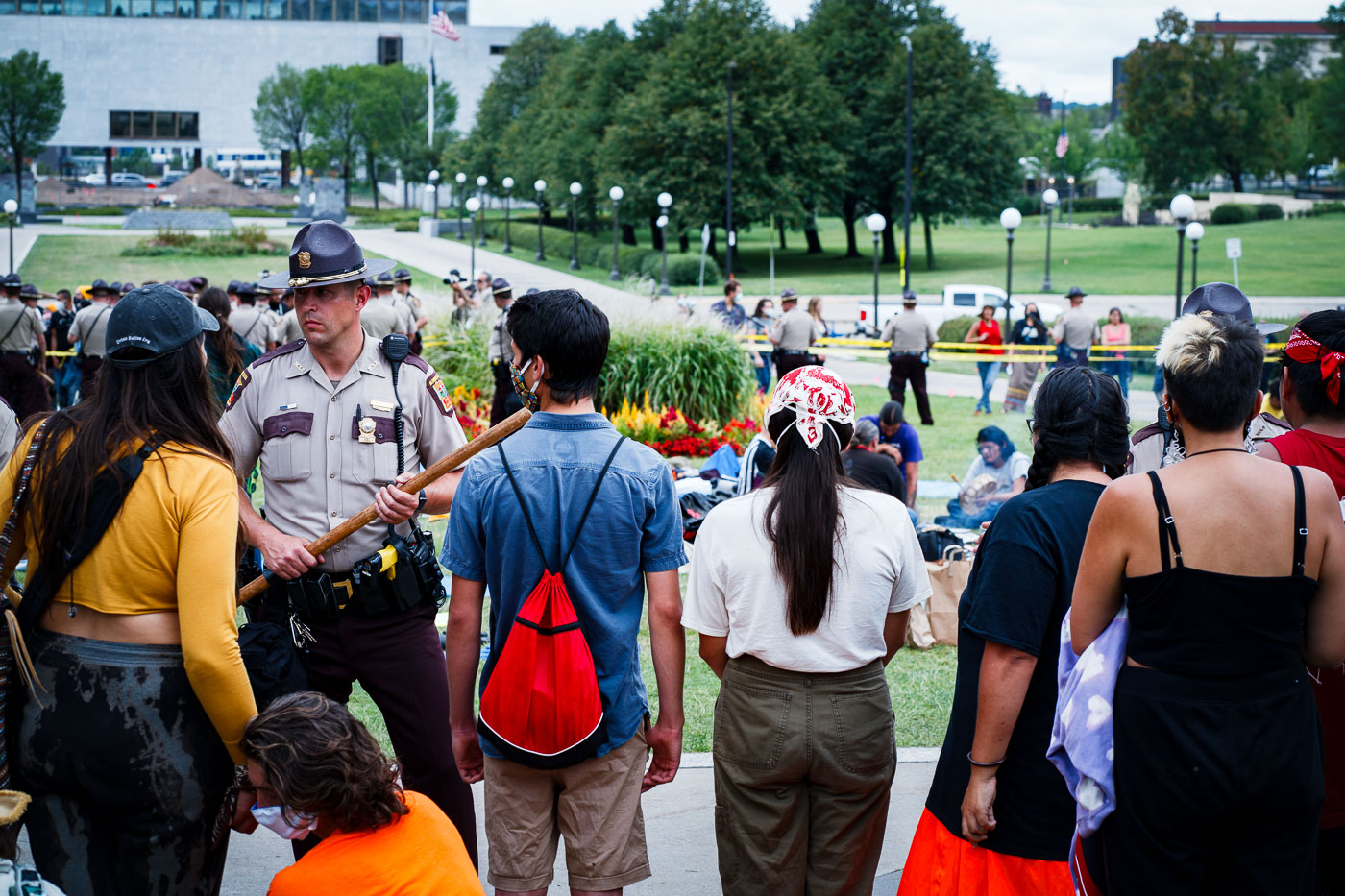
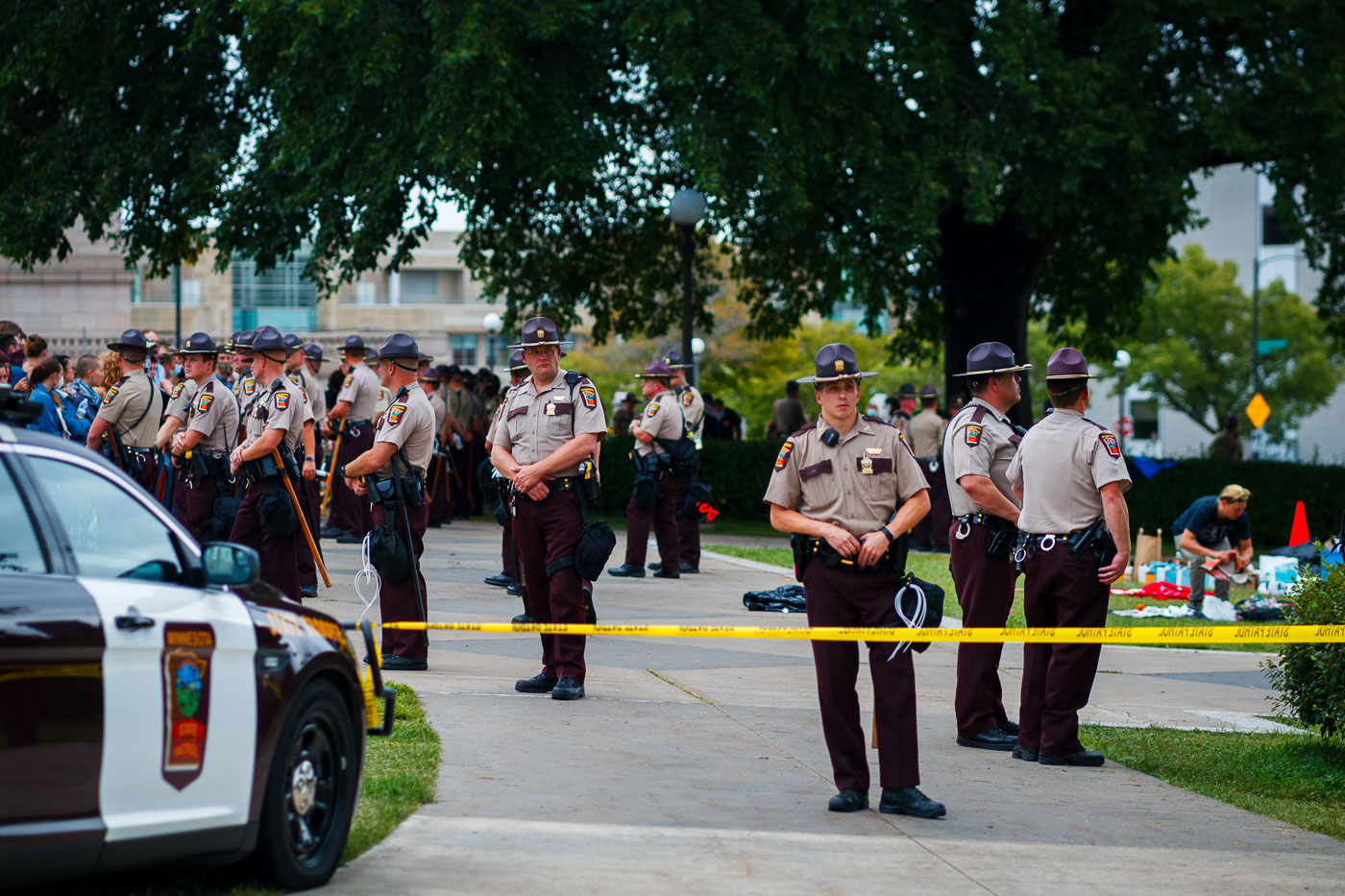
January 1, 2021On New Year's Eve, approximately one hundred individuals gathered for a nationwide call to protest in support of those incarcerated by the state. The Minneapolis Police Department, State Patrol, Golden Valley Police Department, and Hennepin County Sheriff's Office, along with aerial surveillance, responded to the Hennepin County Juvenile Justice Center. This response occurred after the building was spray-painted with graffiti, leading to the arrest of dozens of participants. The graffiti visible on the building's pillars includes the phrases "Fuck 12" and "Free Our Kids," reflecting anti-police sentiment and concern for youth in the justice system.January 1, 2021Police vehicles are present at Mill Ruins Park in Minneapolis on New Year's Eve, following a protest. Approximately 100 individuals gathered in response to a nationwide call to protest the imprisonment of state inmates. The protest escalated when the jail was spray-painted, leading to a significant police response involving Minneapolis Police, State Patrol, Golden Valley PD, and Hennepin Sheriffs, resulting in numerous arrests. Mill Ruins Park, located on the Mississippi River, is a historic site that was once the heart of Minneapolis's flour milling industry.January 1, 2021On New Year's Eve, Minneapolis Police arrested approximately 40 individuals at Mill Ruins Park during a "Noise Demonstration." This annual protest calls for the abolition of prisons and expresses solidarity with incarcerated people. The Mill Ruins Park area, located in downtown Minneapolis, is a historic site that was once the heart of the city's flour milling industry, with remnants of its industrial past visible in the ruins and repurposed brick buildings that now house residences and businesses.January 1, 2021Minneapolis Police arrested approximately 40 individuals on New Year's Eve at Mill Ruins Park during an annual "Noise Demonstration." This protest, part of a nationwide movement, called for the abolition of prisons and expressed solidarity with incarcerated individuals. The demonstration took place in downtown Minneapolis, a location with a rich history tied to the city's milling industry and now a public space.January 3, 2021Boarded storefronts on Nicollet Mall in Minneapolis, with graffiti reading "A riot is the language of the unheard" attributed to MLK. The image captures the aftermath of civil unrest, likely related to the Minneapolis Uprising of 2020, which followed the murder of George Floyd. Nicollet Mall, a prominent pedestrian mall in downtown Minneapolis, experienced significant damage and looting during this period. The plywood coverings and graffiti serve as a visual testament to the events and the community's response.January 3, 2021Protesters gathered on Cedar Avenue in South Minneapolis on January 3, 2021, to demand justice for Dolal Idd. Idd was killed by Minneapolis Police officers on December 30, 2020, during a traffic stop. This incident marked the first police-involved killing in the city since the death of George Floyd in May 2020. The protest, held outside a Holiday Gas station, drew approximately a thousand participants carrying signs with messages such as "Justice for Dolal Idd" and "No Justice No Peace."January 3, 2021Protesters gathered outside the Holiday Gas station at Cedar Avenue and 36th Avenue South in Minneapolis, seeking justice for Dolal Idd. Idd, a Somali-American man, was killed by Minneapolis Police officers on December 30, 2020, during a traffic stop. This incident marked the first police-involved killing in Minneapolis since the murder of George Floyd in May 2020, occurring less than a mile away. The protest highlighted ongoing concerns about police conduct and accountability within the city.January 3, 2021Protesters gathered at Cedar Avenue and 36th Street in South Minneapolis on December 31, 2020, to demand justice for Dolal Idd. Idd was killed by Minneapolis Police officers during a traffic stop on December 30, 2020. This incident marked the first police-involved killing in Minneapolis since the death of George Floyd in May 2020. The protest, held outside a Holiday Gas station, reflected ongoing community concerns about police conduct and accountability.January 3, 2021Protesters gathered outside a Holiday Gas station in South Minneapolis on January 1, 2021, to protest the killing of Dolal Idd. Idd was shot and killed by Minneapolis Police on December 30, 2020, during a traffic stop. This protest occurred approximately one mile from where George Floyd was killed by police on May 25, 2020, and was part of a broader movement calling for police abolition and justice for victims of police brutality. The sign reads "Abolish Police, Ice, Poverty, Capitalism, Patriarchy, White Supremacy, War, Fossil Fuel Use and Anything Else That Is Keeping This Fuckery Afloat."January 3, 2021Protesters gathered outside the Dur Dur Bakery & Grocery at Cedar Avenue and 36th Street in South Minneapolis on January 3, 2021, to demand justice for Dolal Idd. Idd, a Somali-American man, was killed by Minneapolis Police officers on December 30, 2020, during a traffic stop. This incident marked the first police-involved killing in Minneapolis since the murder of George Floyd in May 2020, occurring less than a mile from that location. The protest highlighted ongoing concerns about police brutality and racial injustice in the city.January 3, 2021Protesters gathered at Cedar Avenue and 36th Street in South Minneapolis to demand justice for Dolal Idd. Idd was killed by Minneapolis Police on December 30, 2020, during a traffic stop. This incident marked the first police-involved killing in Minneapolis since George Floyd's death approximately one mile away on May 25, 2020. The protest highlights ongoing concerns about police conduct and accountability within the city.January 3, 2021Protesters gathered on Cedar Avenue in South Minneapolis on January 3, 2021, to demand justice for Dolal Idd. Idd was killed by Minneapolis Police officers on December 30, 2020, during a traffic stop. This incident marked the first police killing in the city since George Floyd's death in May 2020, which had ignited widespread protests and calls for police reform. The gathering on Cedar Avenue reflected ongoing community concerns about police accountability and racial justice.January 3, 2021Protesters march towards George Floyd Square in Minneapolis in January 2021. The square, established in the summer of 2020 following the murder of George Floyd, became a focal point for racial justice activism. This march originated from the site where Dolal Idd was killed by police approximately one mile away, highlighting ongoing concerns about police brutality and systemic racism in the city. The area around George Floyd Square has been transformed into a memorial and a space for community organizing.January 3, 2021Protesters gathered at George Floyd Square in South Minneapolis on January 1, 2021, to demand justice for Dolal Idd. Idd was killed by Minneapolis Police on December 30, 2020, during a traffic stop, marking the first police killing in the city since George Floyd's death in May 2020. The square, located at the intersection of Cedar Avenue and 38th Street, became a focal point for activism and community organizing following Floyd's murder.January 6, 2021Minnesota State Patrol officers stand outside the Governor's Mansion in St. Paul on January 6, 2021. The presence of law enforcement at the official residence coincided with protests and unrest across the country, including the attack on the U.S. Capitol. Governor Tim Walz later stated that the State Patrol entered the mansion to remove his son due to safety concerns amid the national events.January 6, 2021A "Trump Train" truck, adorned with "Trump Pence 2016" and "Make America Great Again" banners, American flags, and "45" painted on its side, is parked near the Minnesota Governor's Residence. This gathering occurred following a "Storm The Capitol" event at the Minnesota State Capitol on January 6, 2021. The "Trump Train" phenomenon involved supporters organizing convoys and rallies to express political support, particularly during election cycles and significant political events. The presence of such vehicles and gatherings highlights the mobilization and visible expression of political sentiment among certain groups.January 6, 2021Protesters gathered outside the Minnesota Governor's Residence in St. Paul on January 6, 2021, the same day a mob attacked the U.S. Capitol. The "Stop the Steal" movement, which falsely claimed widespread fraud in the 2020 presidential election, organized protests across the country. Minnesota State Patrol officers are visible, and Governor Tim Walz later stated that his son was removed from the residence due to safety concerns amid the protest.January 6, 2021Supporters of then-President Donald Trump gathered outside the Minnesota Governor's Residence in St. Paul on January 6, 2021. The protest followed a "Storm The Capitol" event held earlier that day at the Minnesota State Capitol building. This event was part of a broader national effort by Trump supporters to contest the results of the 2020 presidential election. The Governor's Residence serves as the official home of the state's chief executive.January 6, 2021The Minnesota State Capitol building in St. Paul is illuminated at dusk on January 6, 2021. This date is significant as it marks the day of the attack on the U.S. Capitol in Washington D.C., an event that prompted heightened security measures nationwide. The Minnesota State Capitol, designed by architect Cass Gilbert, was completed in 1905 and serves as the seat of government for the state of Minnesota, housing the Minnesota Legislature and the offices of the governor. Its Beaux-Arts architecture features a prominent dome and is a symbol of the state's governance.January 6, 2021Capella Tower in downtown Minneapolis is illuminated in red, white, and blue lights. The building, completed in 1992, is a prominent feature of the Minneapolis skyline and houses offices and hotel accommodations. The patriotic lighting on January 6, 2021, coincided with the attack on the United States Capitol Building in Washington D.C., reflecting a moment of national turmoil and remembrance.January 9, 2021Protesters gathered in St. Paul, Minnesota, to voice opposition to the Line 3 pipeline project. Signs carried by the marchers included slogans such as "Protect Our Water, No Line 3," "Cash not covid," and "People not pipelines." The protest occurred near the Minnesota Governor's Residence, highlighting concerns about environmental impact and indigenous rights related to the pipeline's construction. The Line 3 pipeline, intended to transport oil from Alberta, Canada, to Superior, Wisconsin, has faced significant opposition from environmental groups and Indigenous communities concerned about potential water contamination and treaty violations.January 9, 2021Counter-protesters gathered outside the Minnesota Governor's Residence in St. Paul, carrying banners with slogans such as "No Justice, No Peace, No Fascists, No Cops" and "Black Lives Matter." The event, referred to as "The People's March," also featured signs advocating for "Cash not covid," "Community not cops," "People not pipelines," and "Politics without proud boys." This demonstration occurred amidst broader national movements advocating for racial justice and against police brutality, as well as political events surrounding the 2020 election.January 9, 2021Protesters gathered in St. Paul, Minnesota, for "The People's March," carrying signs with slogans such as "Aiding and Abetting is Also a Crime." The marchers advocated for various causes, including "Cash not covid," "Community not cops," "People not pipelines," and "Politics without proud boys." The event was part of broader movements like Black Lives Matter and the Minneapolis Uprising, reflecting ongoing social and political activism in the region. The signs and chants indicate a complex set of grievances and demands related to public health, policing, environmental concerns, and political polarization.January 9, 2021A protester holds a sign reading "When Injustice becomes Law Resistance becomes Duty" during a march in St. Paul, Minnesota. The sign's message reflects a sentiment of civil disobedience in response to perceived legal injustices. In the background, a banner displays "BLACK LIVES MATTER" and slogans such as "COMMUNITY NOT COPS" and "PEOPLE NOT PIPELINES," indicating the protest's alignment with broader social justice movements. The presence of these messages suggests the event was a counter-protest or a demonstration related to the Minneapolis Uprising and ongoing calls for police reform and racial equity.January 9, 2021Protesters marched through St. Paul, Minnesota, carrying signs with slogans such as "Cash not Covid," "No More Pipelines," and "Black Lives Matter." The march, which occurred during a period of widespread social unrest and public health concerns, brought together various activist groups. The "No More Pipelines" signs indicate opposition to fossil fuel infrastructure projects, a common theme in environmental activism. The presence of "Black Lives Matter" banners highlights the ongoing movement for racial justice.January 9, 2021A lone protester stands outside the Minnesota Governor's Residence in St. Paul, holding a sign that reads "Jesus save America from evil. The steal is real." This message references the "Stop the Steal" movement, which falsely claimed widespread fraud in the 2020 United States presidential election. The presence of barricades and police vehicles suggests a security response, possibly related to ongoing political tensions or protests in the area. The Minnesota Governor's Residence serves as the official home and principal workplace of the state's governor.January 14, 2021A digital billboard displays a message from the FBI seeking information regarding the U.S. Capitol violence. The billboard features the FBI seal and an image of the U.S. Capitol building, along with contact information including a website and a phone number. This public appeal was part of the ongoing investigation into the events of January 6, 2021, aiming to gather evidence and identify individuals involved in the attack on the Capitol. The use of digital billboards is a common tactic for law enforcement to reach a broad audience with urgent public safety messages.January 15, 2021Barriers and Minnesota State Patrol vehicles secure the Minnesota State Capitol building in St. Paul on the weekend before the Presidential inauguration in January 2021. This security measure followed an FBI affidavit warning of potential protests at state capitols nationwide, prompted by the January 6th insurrection at the U.S. Capitol. The Minnesota State Capitol, designed by architect Cass Gilbert, was completed in 1905 and serves as the seat of government for the state of Minnesota.January 16, 2021The Minnesota State Capitol in St. Paul is shown with roads closed and heavy security presence. This was in response to reports of potential violence at state capitols following a pro-Trump rally. The presence of law enforcement from multiple agencies, including the National Guard, underscores the heightened security measures taken to protect the state government building and its surroundings.January 16, 2021The Cathedral of Saint Paul, a prominent landmark in St. Paul, Minnesota, stands under heavy security during a pro-Trump rally. The presence of a National Guard vehicle and multiple law enforcement agencies underscores the heightened security measures implemented across state capitols following reports of potential violence. The cathedral, completed in 1912, is a significant example of Beaux-Arts architecture and serves as the mother church of the Roman Catholic Archdiocese of Saint Paul and Minneapolis. The rally, which drew approximately 20 attendees, occurred amidst a period of national unrest and political tension.January 16, 2021Minnesota law enforcement officers are stationed outside the Minnesota State Capitol building in Saint Paul, Minnesota. This image was taken approximately ten days after the January 6, 2021, attack on the United States Capitol in Washington, D.C., during which a mob of supporters of then-President Donald Trump attempted to overturn the results of the 2020 presidential election. The heightened security presence at state capitols across the country reflected concerns about potential further unrest.January 16, 2021Minnesota Conservation Officers, identifiable by their uniforms and insignia, are seen on duty in the snow at the Minnesota State Capitol. The officers are equipped with protective gear and firearms, indicating a security presence during a period of unrest or heightened alert. The Minnesota State Capitol building, located in Saint Paul, serves as the seat of government for the state and is a significant historical landmark.January 16, 2021Armed individuals walk near the Minnesota State Capitol building in St. Paul. The presence of armed citizens at a pro-Trump rally, estimated at 20 attendees, occurred amidst heightened security. Law enforcement agencies, including Ramsey County, St. Paul Police, DNR Conservation Officers, State Patrol, and the National Guard, were deployed due to concerns about potential violence at state capitols nationwide.January 16, 2021Security forces, including the National Guard, State Patrol, and local law enforcement, were present at the Minnesota State Capitol in St. Paul during a pro-Trump rally. The event, which drew approximately 20 attendees, occurred amidst heightened security concerns following reports of potential violence at state capitols nationwide. The presence of multiple law enforcement agencies underscored the tense political climate of the time, particularly in the context of the "Stop the Steal" movement and its aftermath.January 16, 2021Minnesota National Guard members stand near a Humvee at the Minnesota State Capitol in St. Paul. The heightened security was in response to threats of violence at state capitols nationwide following the January 6, 2021, attack on the U.S. Capitol. A small pro-Trump rally was also taking place at the Minnesota State Capitol that day. The presence of multiple law enforcement agencies, including the National Guard, underscored the tense atmosphere and concerns for public safety.January 16, 2021Minnesota National Guard and State Patrol officers maintain a perimeter around the Minnesota State Capitol building in St. Paul. The presence of military and law enforcement vehicles and personnel suggests a response to a significant public event or protest. The Minnesota State Capitol, completed in 1905, is a Beaux-Arts style building that houses the state's legislative and judicial branches.January 17, 2021Minnesota State Patrol officers stand guard at the Minnesota State Capitol in St. Paul on January 6, 2021. The presence of law enforcement was in response to reports of potential protests following the insurrection at the U.S. Capitol building in Washington D.C. that same day. The image shows a small group of individuals, some holding signs, gathered near the Knute Nelson monument on the Capitol grounds.January 17, 2021Minnesota State Patrol officers stand guard at the Minnesota State Capitol in St. Paul on January 6, 2021. The presence of law enforcement was in response to reports of potential protests following the insurrection at the U.S. Capitol building in Washington D.C. that same day. The "Stop The Steal" movement, which falsely claimed widespread fraud in the 2020 presidential election, organized rallies across the country.January 17, 2021Minnesota State Patrol officers, including members of the Special Response Team, are stationed at the Minnesota State Capitol in St. Paul. This presence was in response to reports of potential protests following the January 6th, 2021, insurrection at the U.S. Capitol. The image shows officers in tactical gear and an armored vehicle, indicating a heightened security posture. The presence of individuals associated with a "Stop The Steal" rally, as suggested by the keywords, underscores the political tensions of the period.January 17, 2021A Minnesota National Guard Humvee is parked near the Minnesota State Capitol in St. Paul during a period of civil unrest. The presence of military vehicles at the state capitol complex often indicates heightened security measures in response to protests or other public safety concerns. The Minnesota State Capitol building, completed in 1905, serves as the seat of government for the state of Minnesota and is a significant historical landmark.January 17, 2021Minnesota State Patrol officers are stationed at the Minnesota State Capitol in St. Paul on January 6, 2021. The presence of law enforcement followed reports of potential protests, occurring on the same day as the insurrection at the U.S. Capitol in Washington, D.C. The Minnesota State Capitol building, designed by architect Cass Gilbert, was completed in 1905 and serves as the seat of government for the state of Minnesota.January 18, 2021George Floyd Square, located at the intersection of East 38th Street and Chicago Avenue in Minneapolis, Minnesota, became a focal point for protests following the murder of George Floyd in May 2020. The site, including the Cup Foods store where Floyd was apprehended, was transformed into a memorial and autonomous zone. This image shows the memorial on Martin Luther King Day, featuring a metal fist sculpture that replaced earlier iterations, symbolizing community strength and resilience. The memorial continues to serve as a space for remembrance and activism.January 20, 2021On Inauguration Day, January 20, 2021, approximately 100 protesters marched through Minneapolis. The march began at South High School and proceeded to the 3rd Precinct police station. Demonstrators voiced demands for President Biden to reverse Trump-era environmental policies and called for community control of the police. The march took place on Lake Street, a major thoroughfare in South Minneapolis that has been a site of significant activism and community organizing.January 20, 2021Protesters gathered outside the Minneapolis Police Third Precinct on Inauguration Day, January 20, 2021, to advocate for community control of the police. The precinct had been set ablaze during protests following the murder of George Floyd in May 2020 and was still under reconstruction. This demonstration occurred less than three weeks after the fatal police shooting of Dolal Idd, an event that further fueled tensions and calls for police reform in Minneapolis.January 20, 2021Protesters gathered outside the Minneapolis Police Third Precinct on Inauguration Day, January 20, 2021. The precinct had been a focal point of protests following the murder of George Floyd in May 2020 and was subsequently set ablaze. This demonstration occurred less than three weeks after Dolal Idd was killed by Minneapolis Police during a firearm sting, an incident that reignited tensions and calls for police reform.January 20, 2021A protester holds a sign reading "THE POLICE ARE THE BIGGEST GANG IN AMERICA" attributed to Tupac, during a march on Inauguration Day in Minneapolis. The march, which began at South High School and proceeded to the Minneapolis Police 3rd Precinct, was organized to advocate for community control of the police and for President Biden to reverse Trump-era environmental policies. This event occurred amidst ongoing national discussions about policing and environmental justice.January 23, 2021Graffiti and messages are displayed on concrete barricades that surrounded the Minneapolis Police Department's 3rd Precinct. The precinct was a focal point during the 2020 Minneapolis uprising, following the murder of George Floyd. The messages reflect the complex sentiments expressed during the period of unrest, with one card offering a "Merry Christmas" to the MPD, while large red spray paint reads "Fuck Your Precinct." These markings serve as a visual record of the intense public reaction and protest directed at law enforcement during that time.January 23, 2021Graffiti on the exterior of the Minneapolis Police Department's Third Precinct reads "We'll Burn This Bitch Again" and "Fuck 12." The precinct building was abandoned by police and subsequently set ablaze by protesters on May 28, 2020, during the unrest following the murder of George Floyd. The building has remained vacant and unrepaired since the incident, serving as a visual reminder of the protests and the community's response to police actions. The graffiti reflects the anger and defiance expressed by some during the period of civil unrest.January 23, 2021The interior of a Walgreens store on E Lake Street in Minneapolis, showing extensive damage sustained during the civil unrest following the murder of George Floyd in May 2020. The unrest led to widespread protests and riots across the city, resulting in significant property destruction. This particular store became a symbol of the damage inflicted on local businesses and the community during that period. The image captures the aftermath, with debris and structural damage visible, contrasted by the illuminated street outside.January 23, 2021Protesters gathered at the Minnesota State Capitol in St. Paul during winter. The "Stop the Steal" movement, which falsely claimed widespread fraud in the 2020 presidential election, organized protests across the United States. This event at the Minnesota State Capitol, a significant government building designed by Cass Gilbert and completed in 1905, reflects the broader national unrest and challenges to democratic processes that occurred following the election. The presence of American flags and the winter setting are characteristic of the period's political climate and the geographic location.January 23, 2021The George Floyd Square Memorial, located at the intersection of Chicago Avenue and East 38th Street in Minneapolis, Minnesota, stands as a testament to the protests and uprisings that followed the murder of George Floyd in May 2020. This site, which was occupied by protesters for over a year, has become a permanent memorial and a gathering place for community remembrance and activism. The memorial features various tributes, including flowers, candles, and artwork, arranged around a central monument. Despite the winter snow, the site remains a significant location for reflecting on racial justice and police brutality.January 23, 2021The former Speedway gas station at the intersection of 38th Street and Chicago Avenue in Minneapolis, now known as George Floyd Square, served as a focal point for protests following George Floyd's murder in May 2020. The sign displays "GEORGE FLOYD TRIAL IN 44 DAYS," indicating the proximity to the Derek Chauvin trial. This location became a symbol of the Minneapolis Uprising and a community-organized space, referred to as "The People's Way," where residents asserted their presence and demands for justice. The "BLACK JOY" banner visible in the image reflects the ongoing cultural and social significance of the square amidst the backdrop of legal proceedings and community activism.January 23, 2021George Floyd Square in Minneapolis, Minnesota, on January 23, 2021, during a snowfall. This site, located at the intersection of East 38th Street and Chicago Avenue, became a focal point for protests following the murder of George Floyd in May 2020. The area, often referred to as the George Floyd Memorial, has been maintained by activists and community members as a space for remembrance and continued activism. The memorial features numerous tributes, including flowers, signs, and personal items, placed amidst the snow.January 23, 2021A sign marking George Floyd Square stands in the snow at the intersection of Chicago Avenue and East 38th Street in Minneapolis. This location became a focal point for protests and activism following the murder of George Floyd in May 2020. The square, initially an occupied protest zone, has since been transformed into a memorial and community space, reflecting ongoing efforts to address racial injustice and police brutality. The repurposed Minneapolis Park & Recreation Board sign signifies the area's transition and its enduring importance as a site of remembrance and civic engagement.January 23, 2021Barricades at George Floyd Square in Minneapolis on January 23, 2021, during a snowfall. This area became a protest zone following the murder of George Floyd in May 2020. The barricades, adorned with messages such as "RESPECT ONE ANOTHER" and "YOU ARE NOW ENTERING THE FREE STATE OF GEORGE FLOYD," signify the community's assertion of control and memorialization of the event. The "RESIDENTS ONLY" signs indicate restricted access, reflecting the self-governance established by protesters.January 23, 2021The AutoZone on W. Lake Street in Minneapolis is shown under winter construction cover, signifying its rebuilding after damage sustained during the 2020 civil unrest. While another AutoZone location on East Lake Street was the first building to burn, this W. Lake Street store represents the initial complete reconstruction effort in the area. The rebuilding of businesses like this AutoZone is a key aspect of the ongoing redevelopment and recovery of the Lake Street corridor.January 30, 2021Protesters march in St. Paul, Minnesota, holding a banner that reads "We want SOUP FOR MY FAMILY and YOURS." The banner features stylized figures and a vibrant color scheme, contrasting with the overcast sky and urban backdrop. This protest likely relates to social justice issues, possibly advocating for food security or economic relief, as suggested by the slogan. The presence of the Minneapolis Uprising keywords indicates a connection to broader social movements in the region.January 31, 2021Speedway gas station preparing to reopen following a rebuilt after being burned down in May 2020.January 6, 2021St. Paul Police officers, equipped with less-lethal weapons, are stationed near the Minnesota Governor's Residence on January 6, 2021. This date marked a national day of unrest, with supporters of then-President Donald Trump gathering at the Minnesota State Capitol for a "Storm The Capitol" event. The presence of law enforcement near the Governor's Residence suggests a response to potential disruptions or security concerns related to the events unfolding in the state and across the country.January 6, 2021Protesters gathered outside the Minnesota Governor's Residence in St. Paul on January 6, 2021. The "Black Lives Matter" sign indicates solidarity with the movement, while other individuals present appear to be Trump supporters, some wearing "Keep America Great" attire. This event occurred on the same day as the "Storm The Capitol" rally in Washington D.C., and counter-protests were also present at the Minnesota State Capitol. The Minnesota Governor's Residence serves as the official home and workplace for the state's governor.
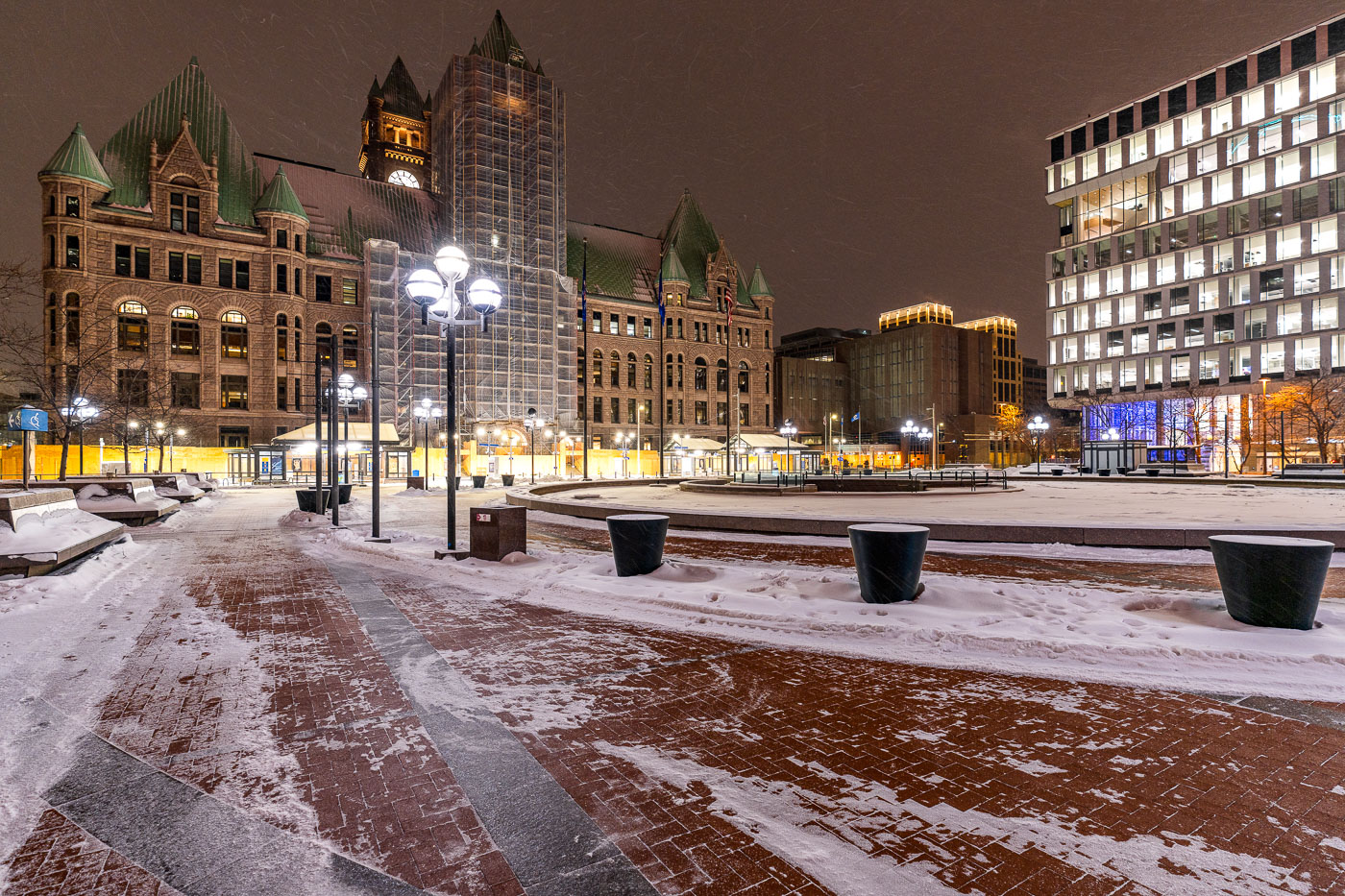
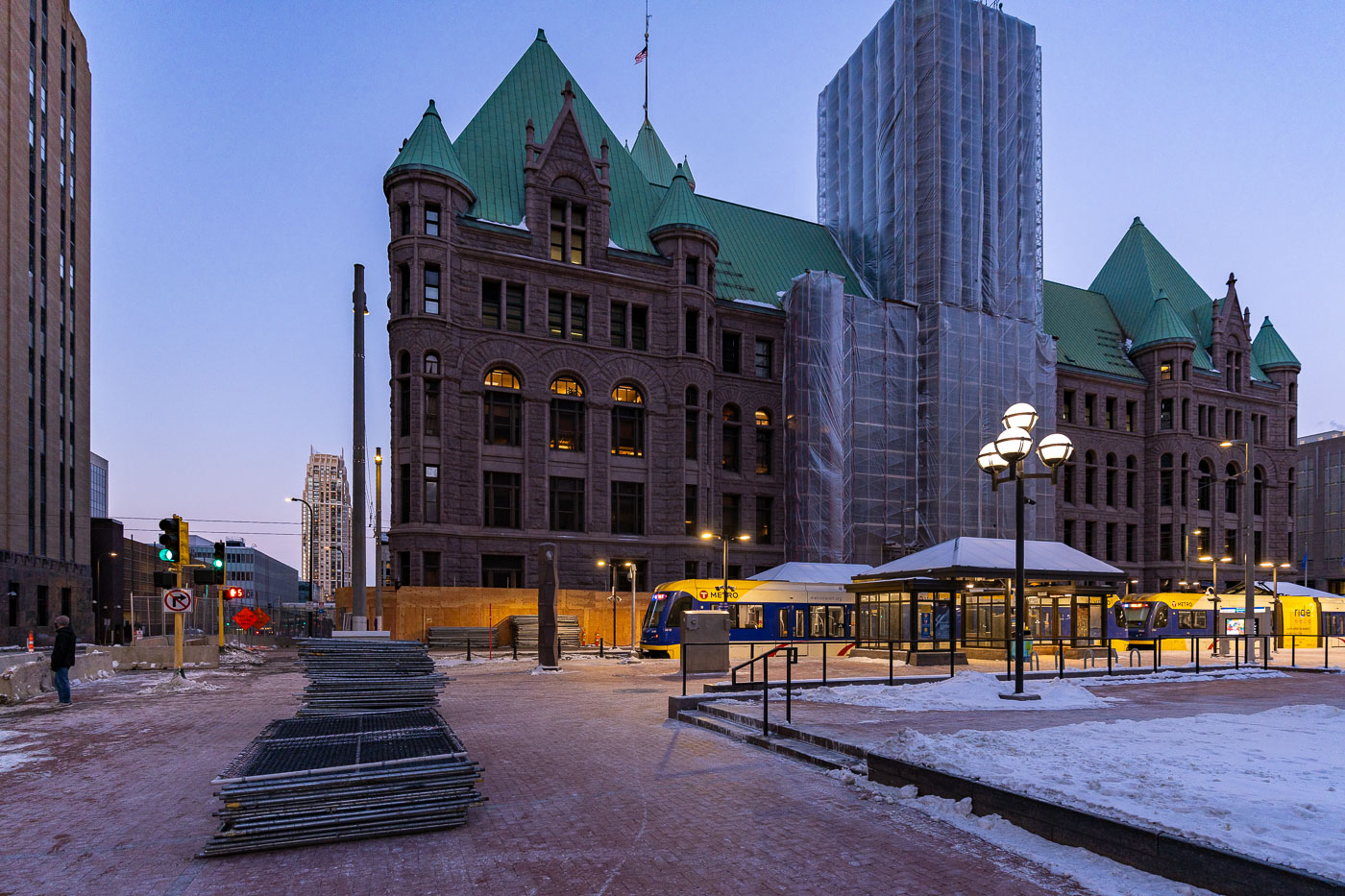
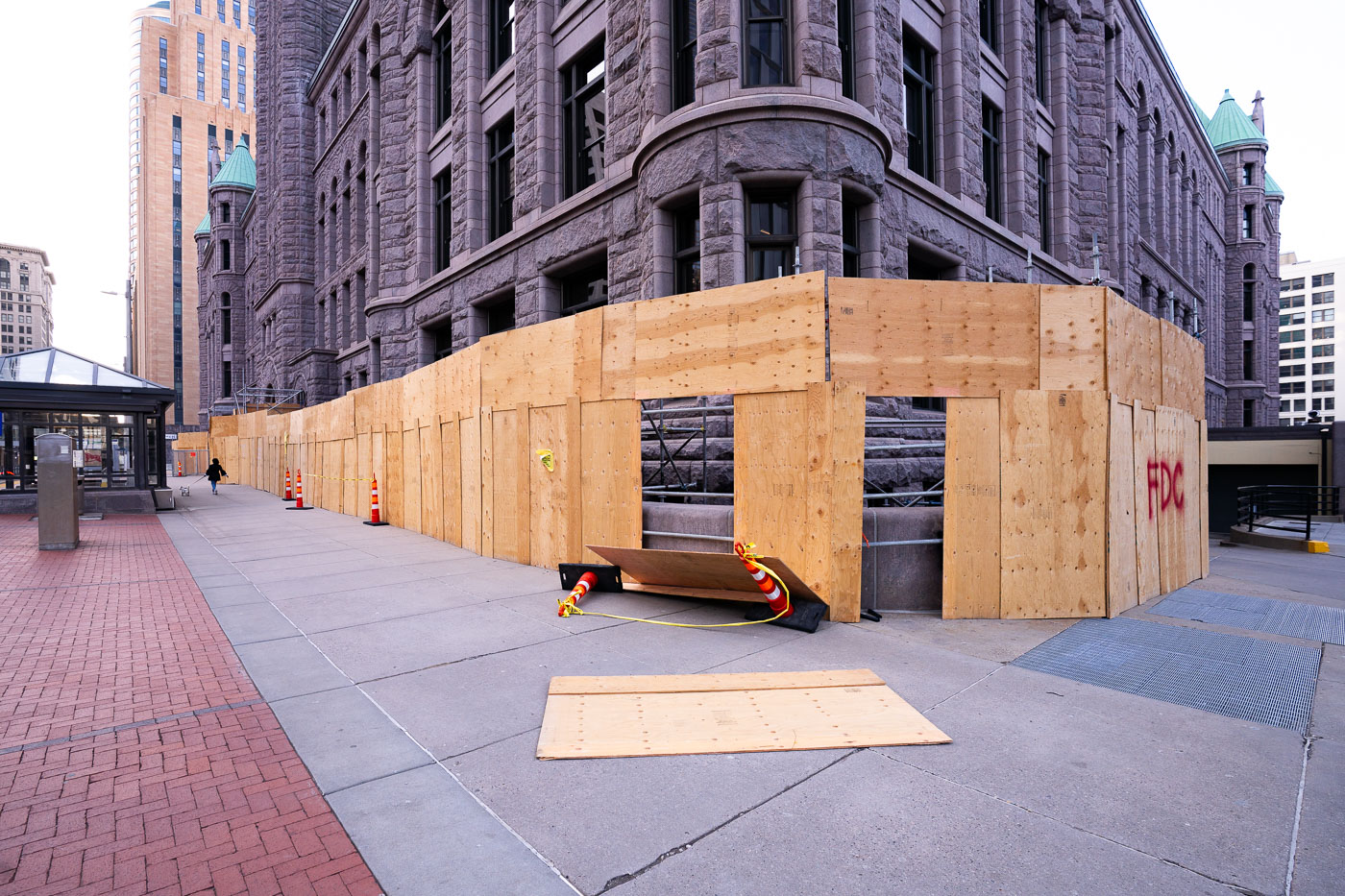
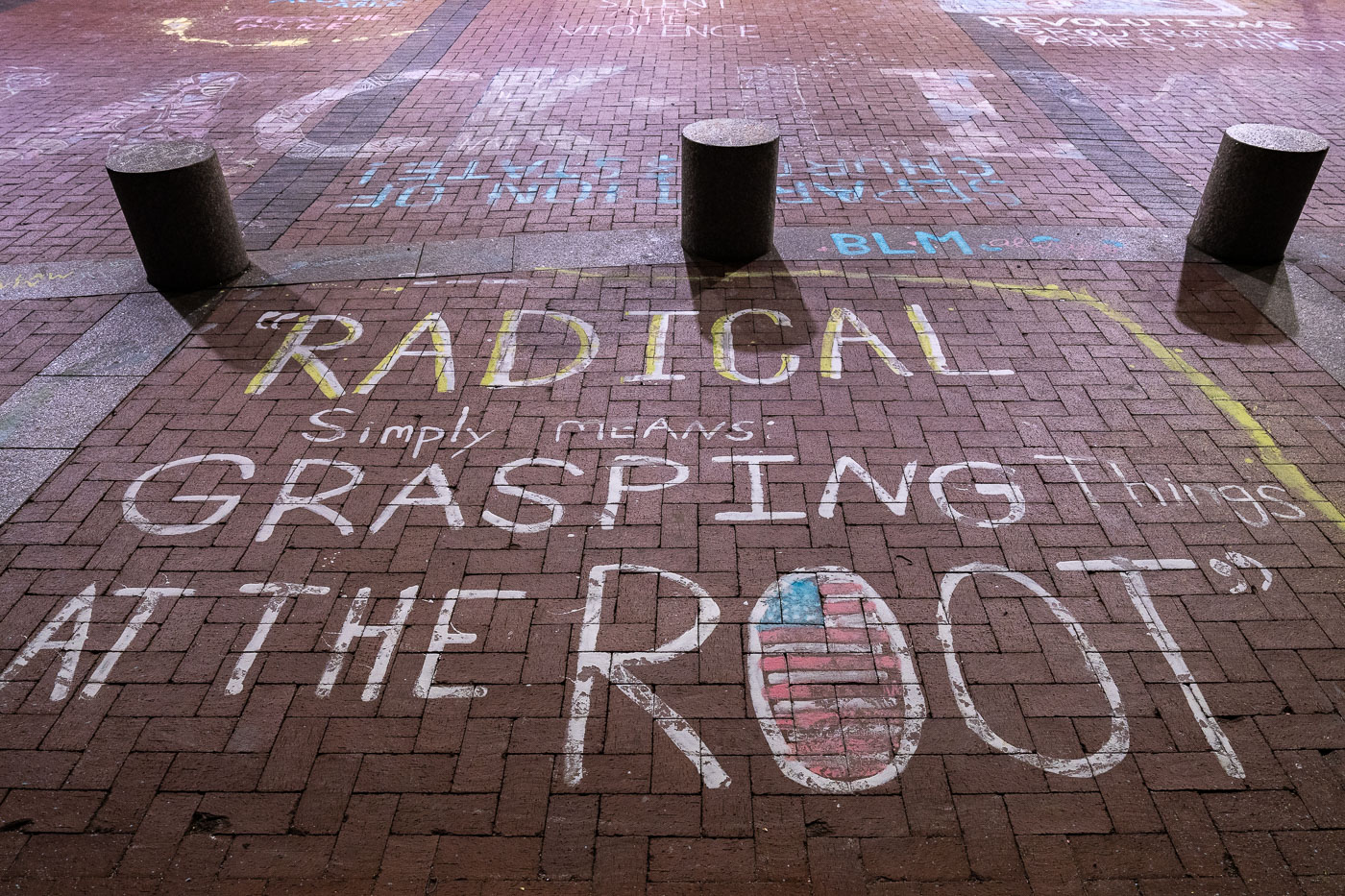
February 17, 2021Minneapolis City Hall and Hennepin County Government Center are seen under snowfall as security preparations are underway for the Derek Chauvin trial. This measure reflects the heightened security concerns surrounding the trial of the former police officer accused in the death of George Floyd, which occurred in Minneapolis.February 3, 2021Graffiti on a concrete wall beneath a bridge along the Midtown Greenway in Minneapolis reads “Fuck Walz + Frey” and “No Line 3.” The text refers to opposition to the Line 3 pipeline project and criticism of Minnesota officials.February 4, 2021A bench at George Floyd Square in Minneapolis bears the inscription "Community building is revolutionary." This message reflects the spirit of the autonomous zone established in the summer of 2020 following the murder of George Floyd.
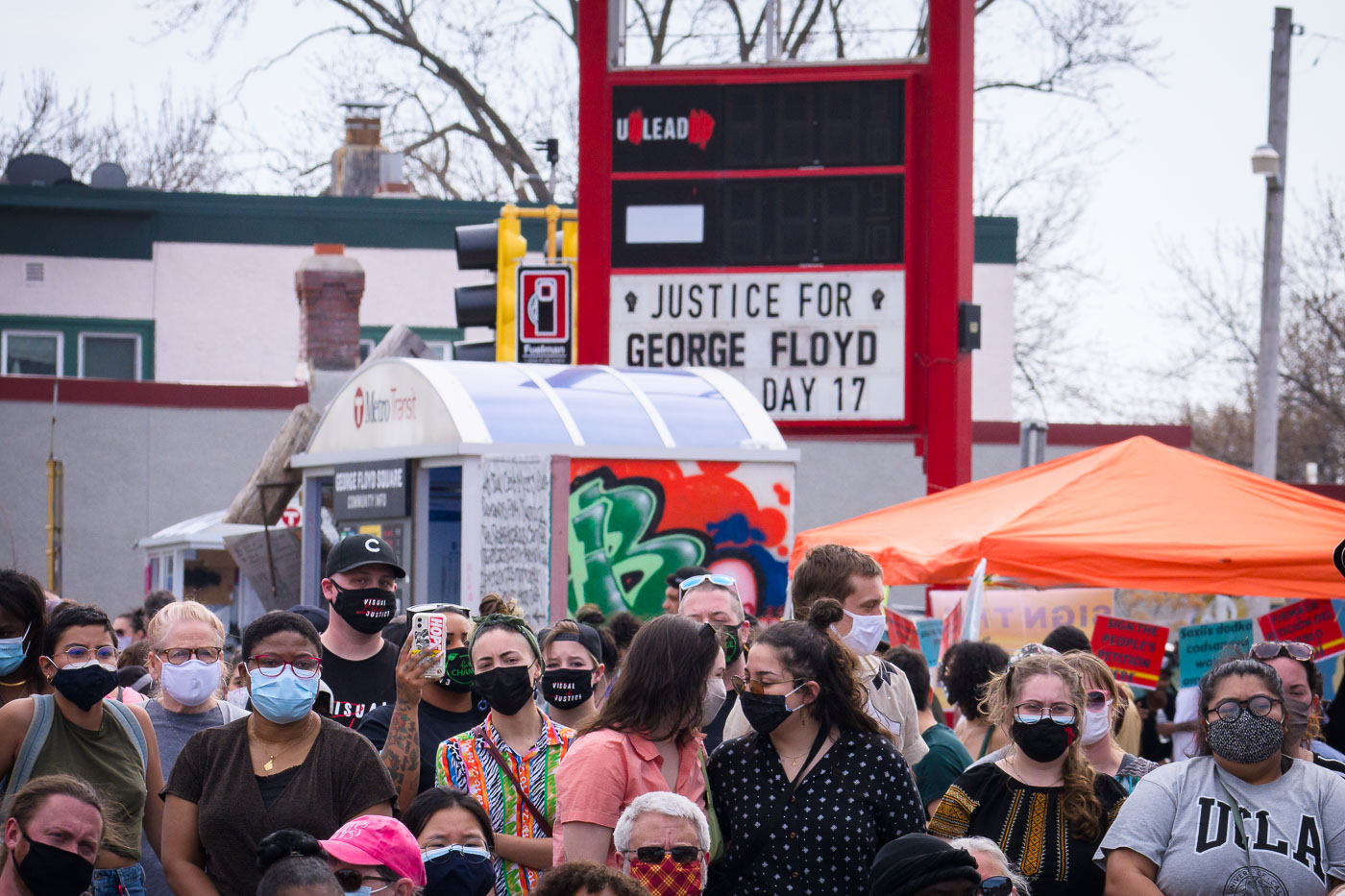
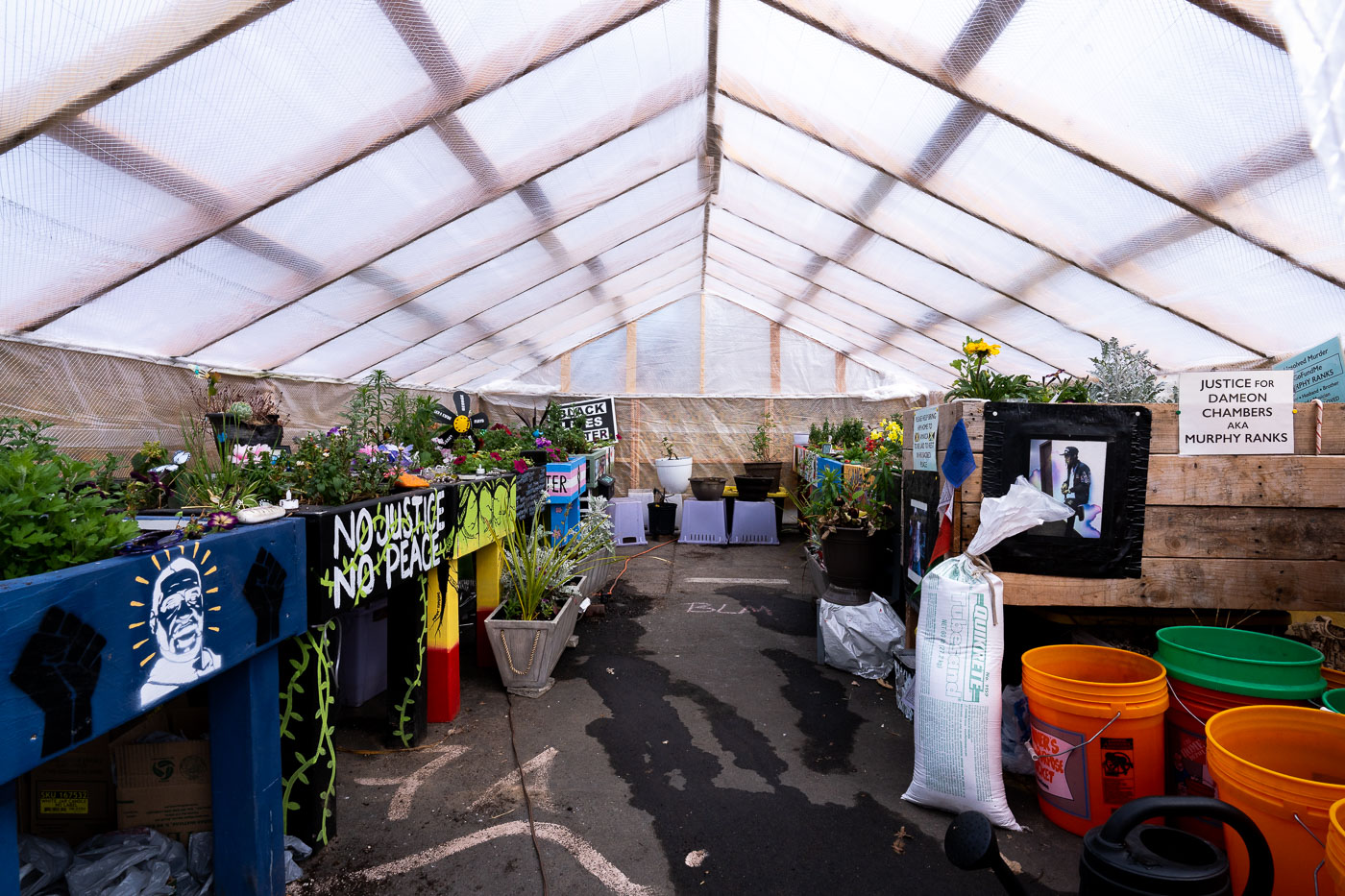
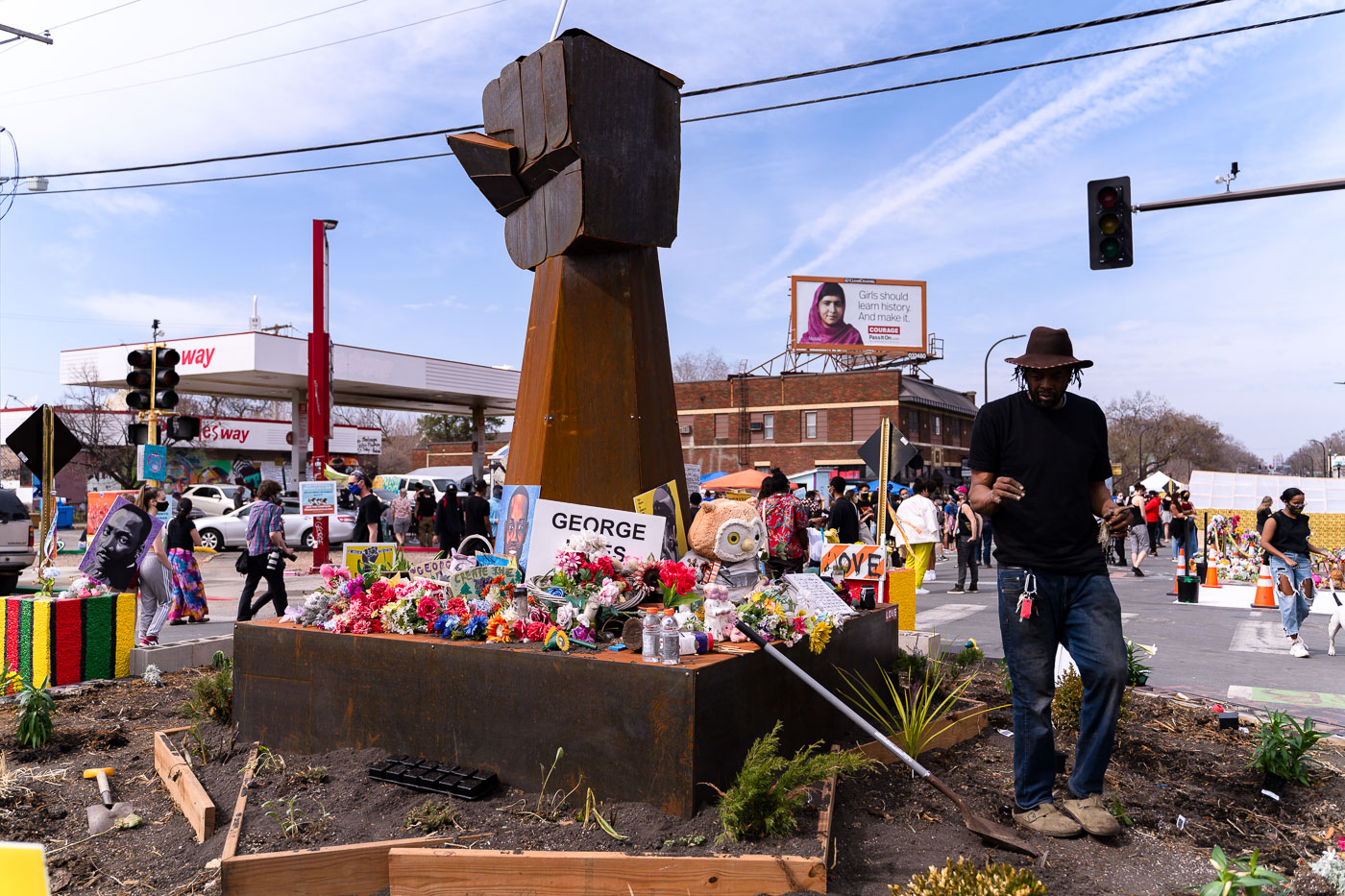
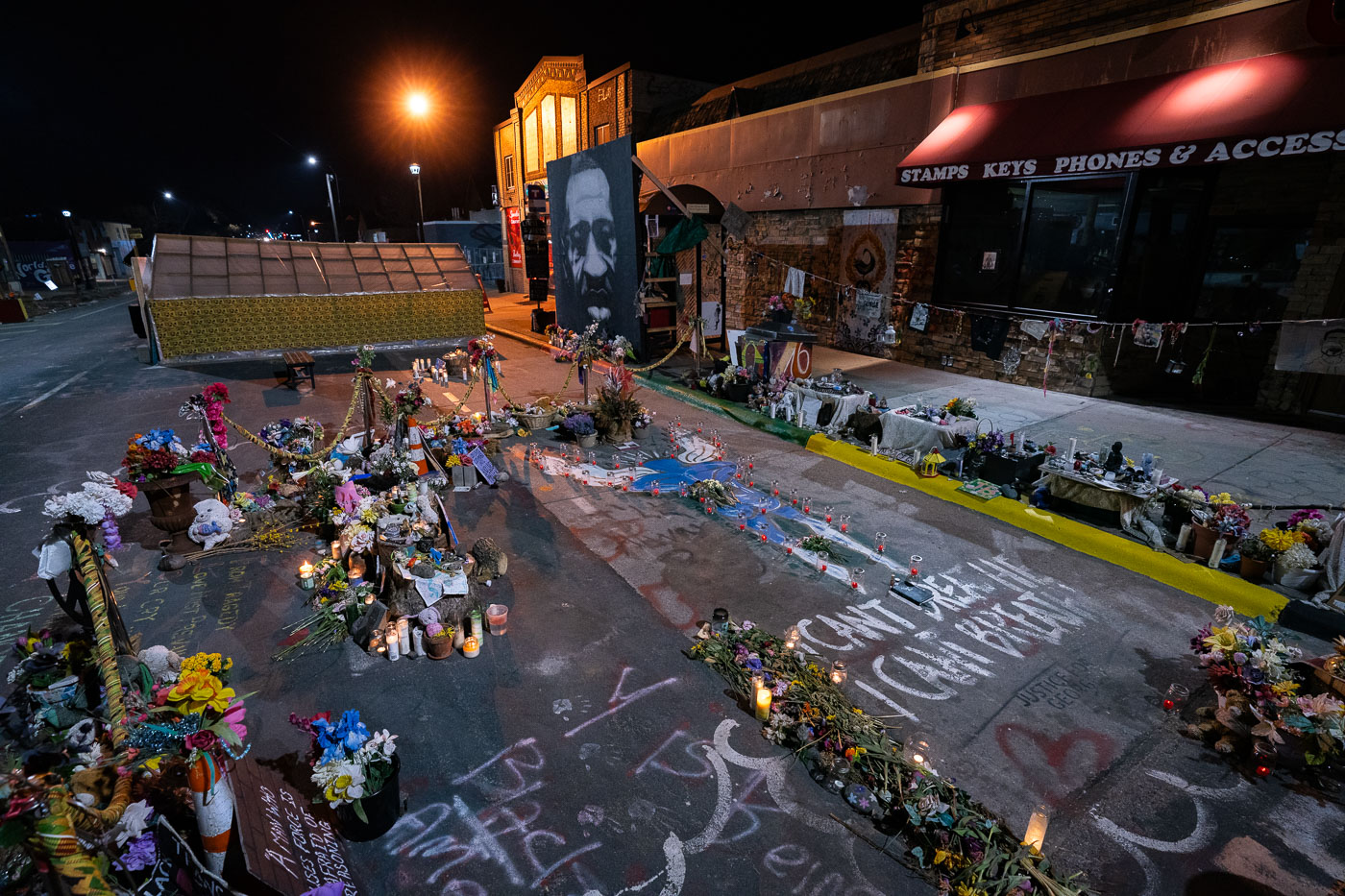
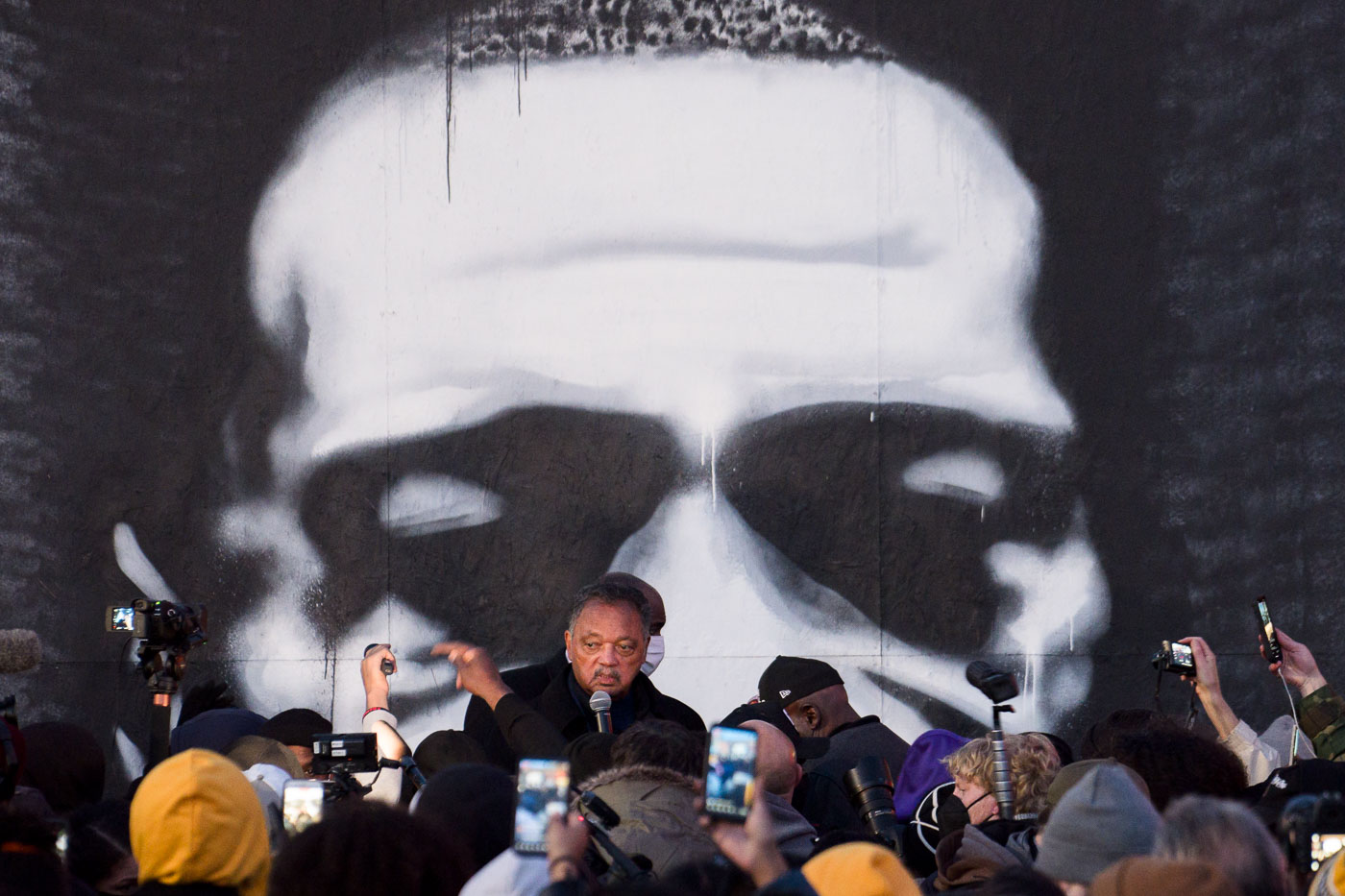
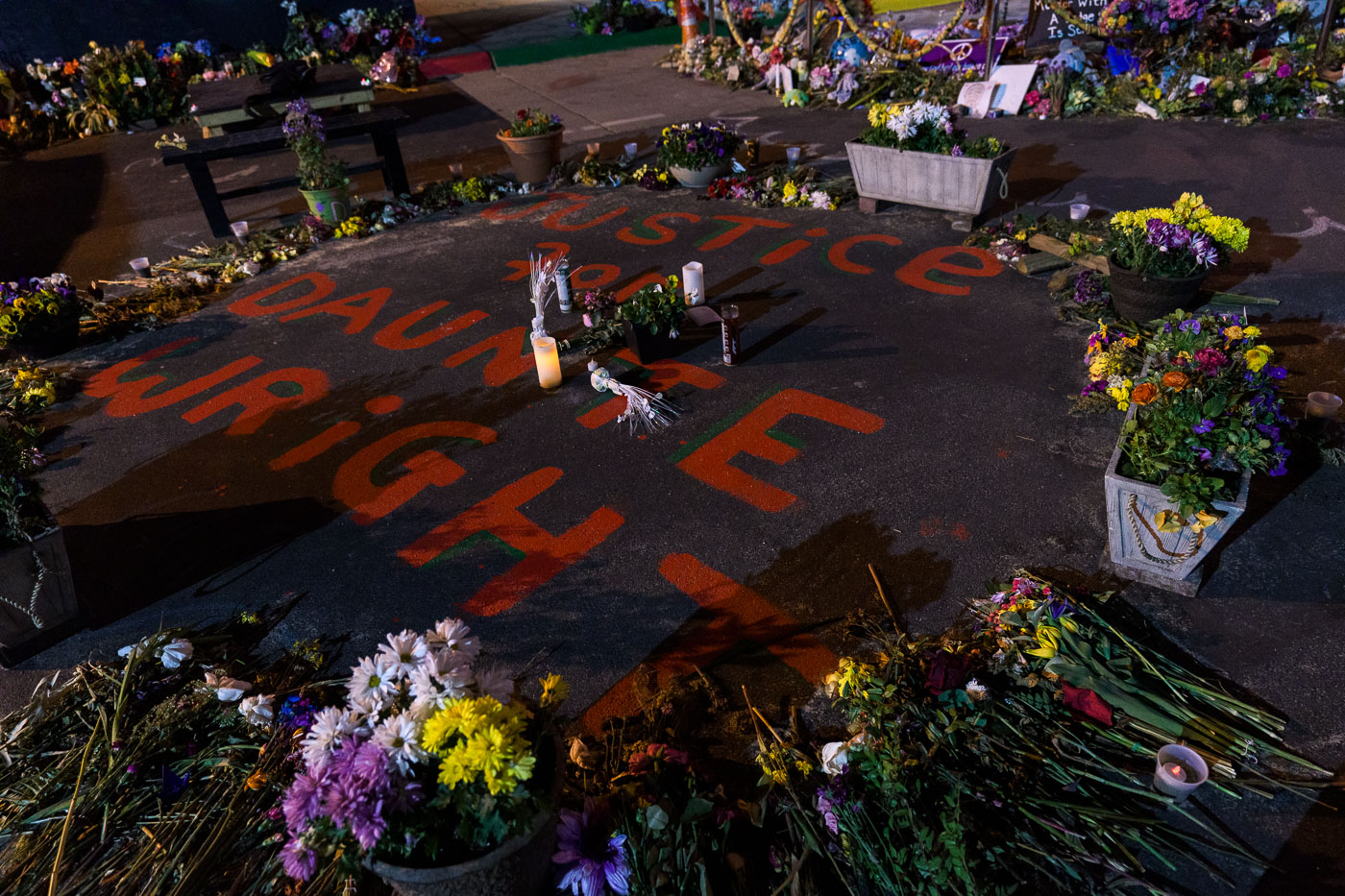
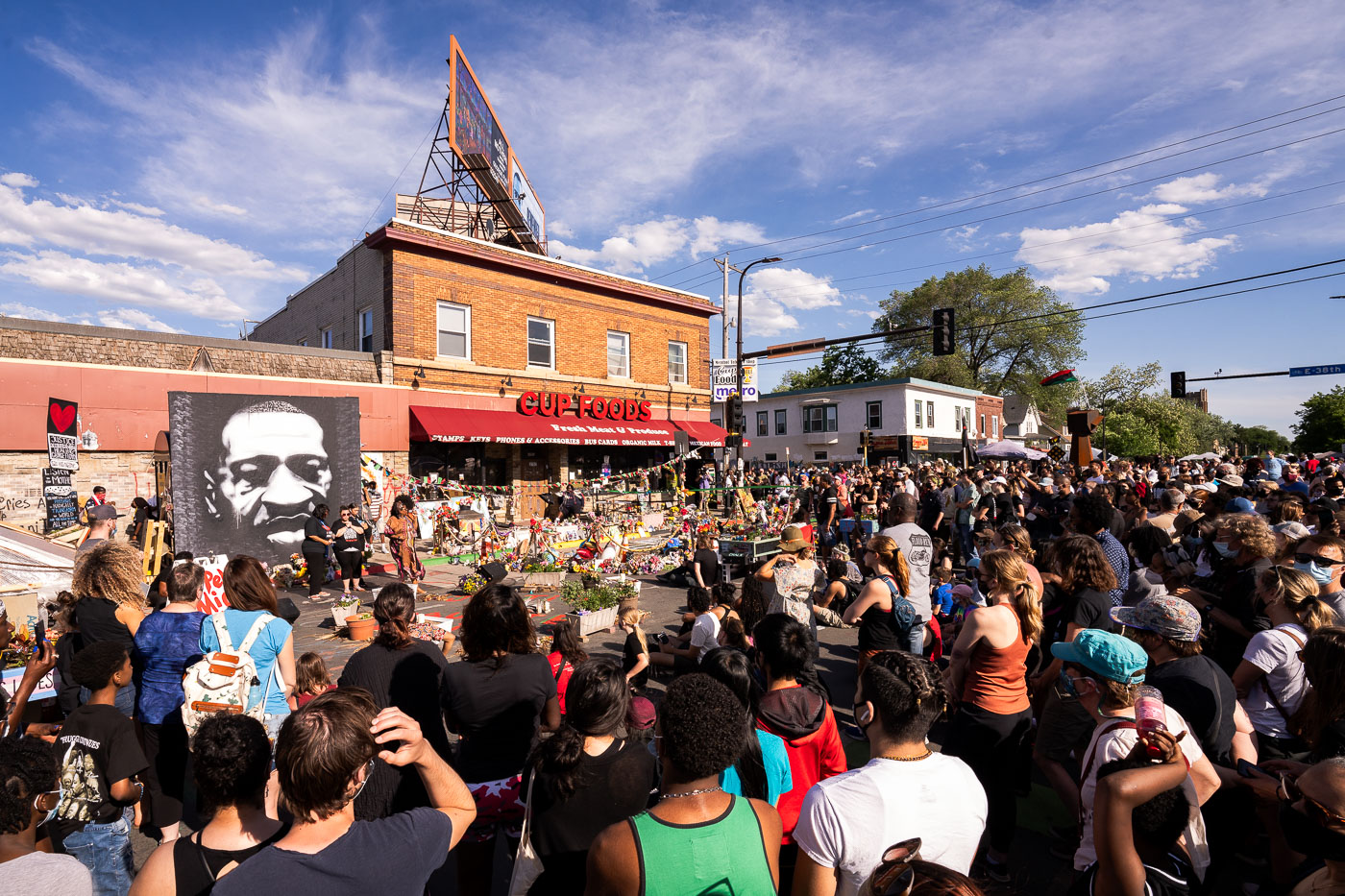
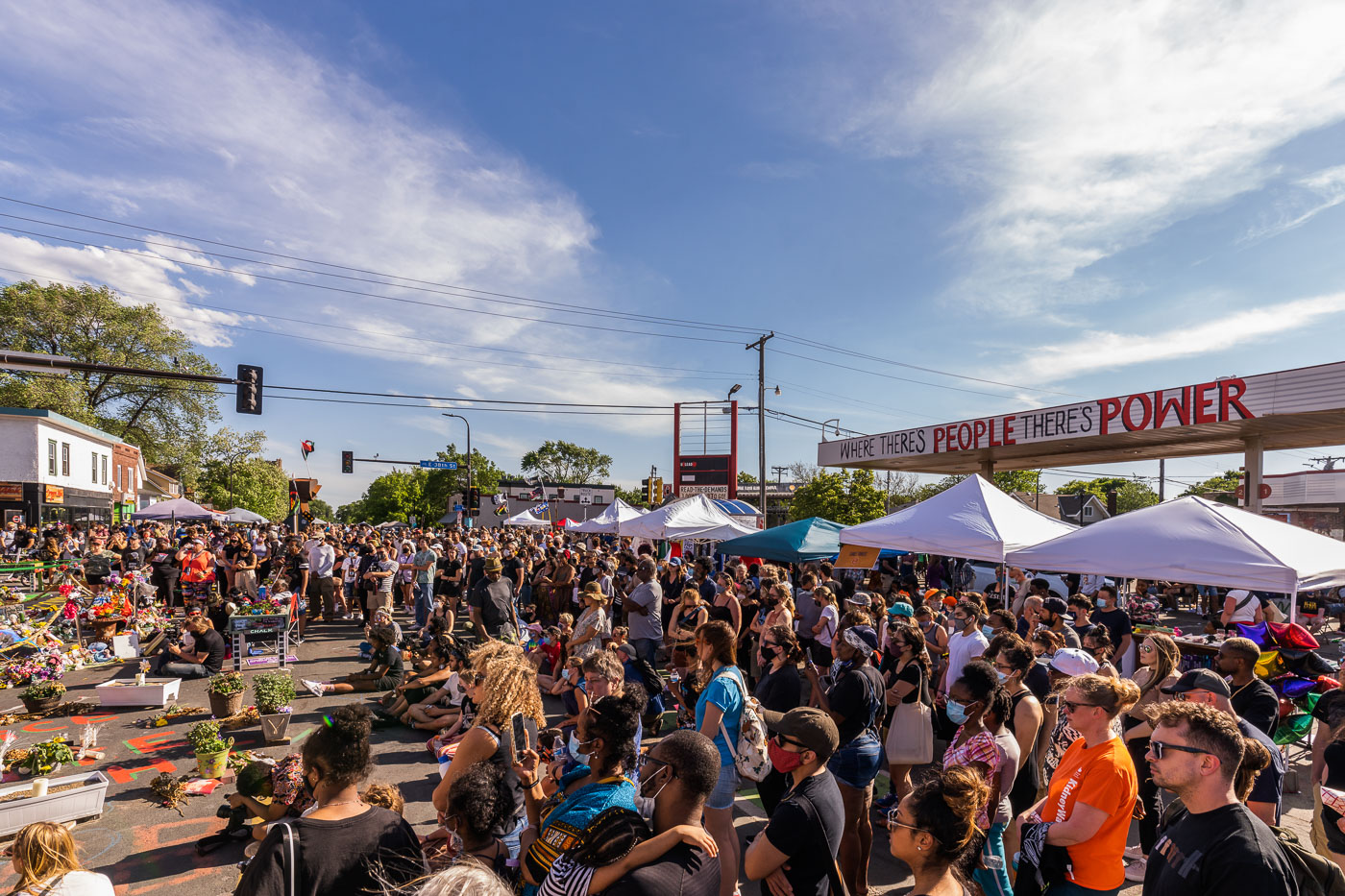
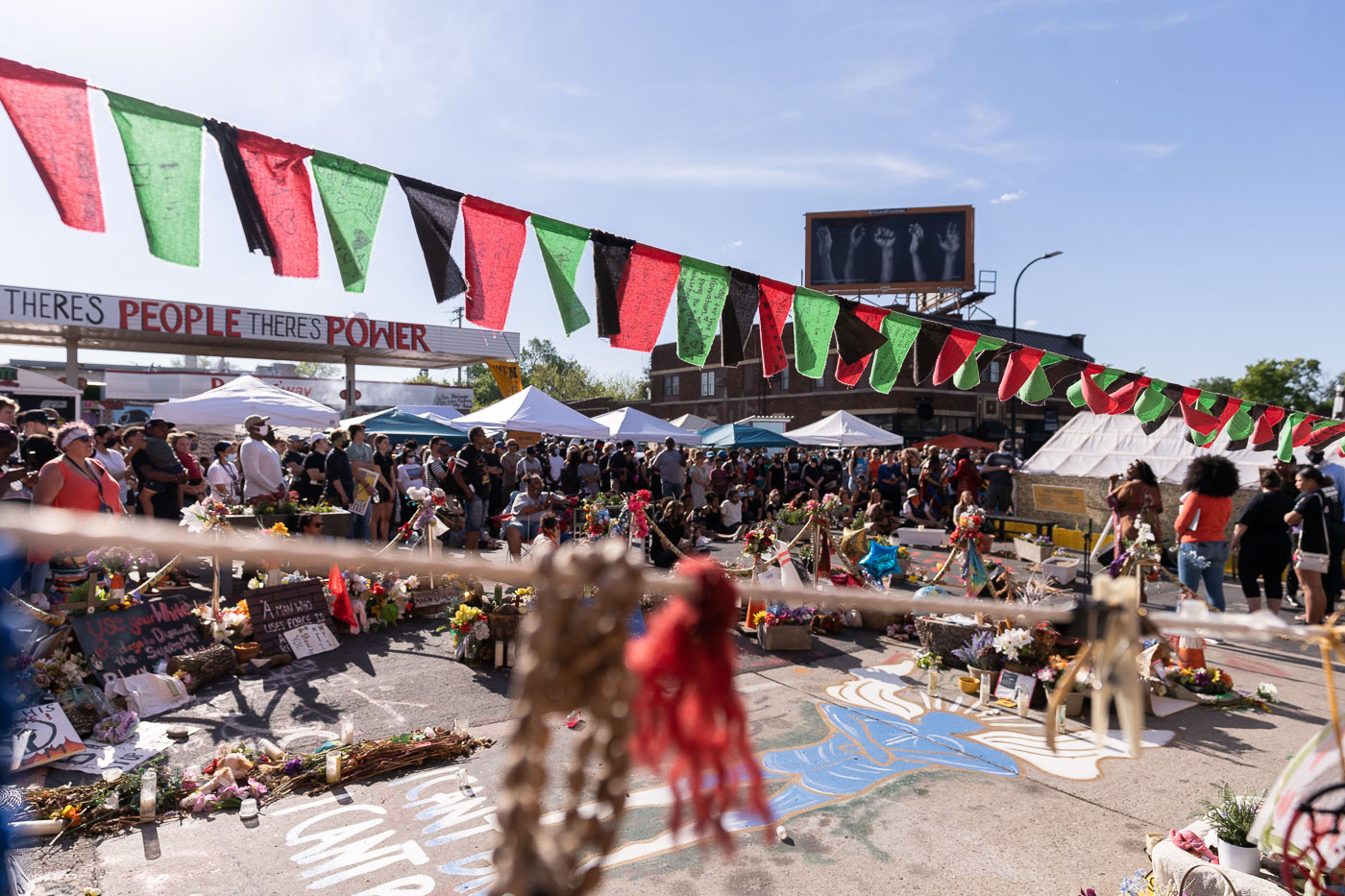
On May 25, 2020, Minneapolis police officer Derek Chauvin murdered 46-year-old George Floyd during an arrest outside Cup Foods at the intersection of 38th Street and Chicago Avenue in south Minneapolis. Video recorded by bystanders showed Chauvin kneeling on Floyd’s neck for more than nine minutes while Floyd repeatedly said he could not breathe. Three other Minneapolis police officers - J. Alexander Kueng, Thomas Lane, and Tou Thao — were also present during the arrest and later faced criminal charges for their roles in Floyd’s death. Floyd’s murder sparked protests and civil unrest across Minneapolis and around the world, leading to widespread demonstrations against police violence, major policy debates on policing, and the conviction of Chauvin on murder and manslaughter charges in 2021.February 4, 2021The George Floyd Memorial, located at the intersection of Chicago Avenue and 38th Street in Minneapolis, is a site of remembrance and protest. Following George Floyd's murder by police in May 2020, this area became a focal point for demonstrations against racial injustice and police brutality. The memorial features art, tributes, and the prominent phrase "I Can't Breathe," a reference to Floyd's final words.February 15, 2021A large mural of George Floyd's face is displayed at George Floyd Square in South Minneapolis during the winter of 2021. The square, located at the intersection of Chicago Avenue and 38th Street, became a focal point for protests and activism following Floyd's murder by police in May 2020. The area has since been transformed into a memorial and community space, marked by various artworks, signs, and tributes, including this mural.
On May 25, 2020, Minneapolis police officer Derek Chauvin murdered 46-year-old George Floyd during an arrest outside Cup Foods at the intersection of 38th Street and Chicago Avenue in south Minneapolis. Video recorded by bystanders showed Chauvin kneeling on Floyd’s neck for more than nine minutes while Floyd repeatedly said he could not breathe. Three other Minneapolis police officers - J. Alexander Kueng, Thomas Lane, and Tou Thao — were also present during the arrest and later faced criminal charges for their roles in Floyd’s death. Floyd’s murder sparked protests and civil unrest across Minneapolis and around the world, leading to widespread demonstrations against police violence, major policy debates on policing, and the conviction of Chauvin on murder and manslaughter charges in 2021.February 15, 2021George Floyd Square in Minneapolis, is shown 21 days before the start of the trial of Derek Chauvin, the former Minneapolis police officer charged in Floyd's death. The intersection of 38th Street and Chicago Avenue became a focal point for protests and activism following Floyd's murder in May 2020. The area has been transformed into a memorial and a space for community gathering, marked by tributes and art.
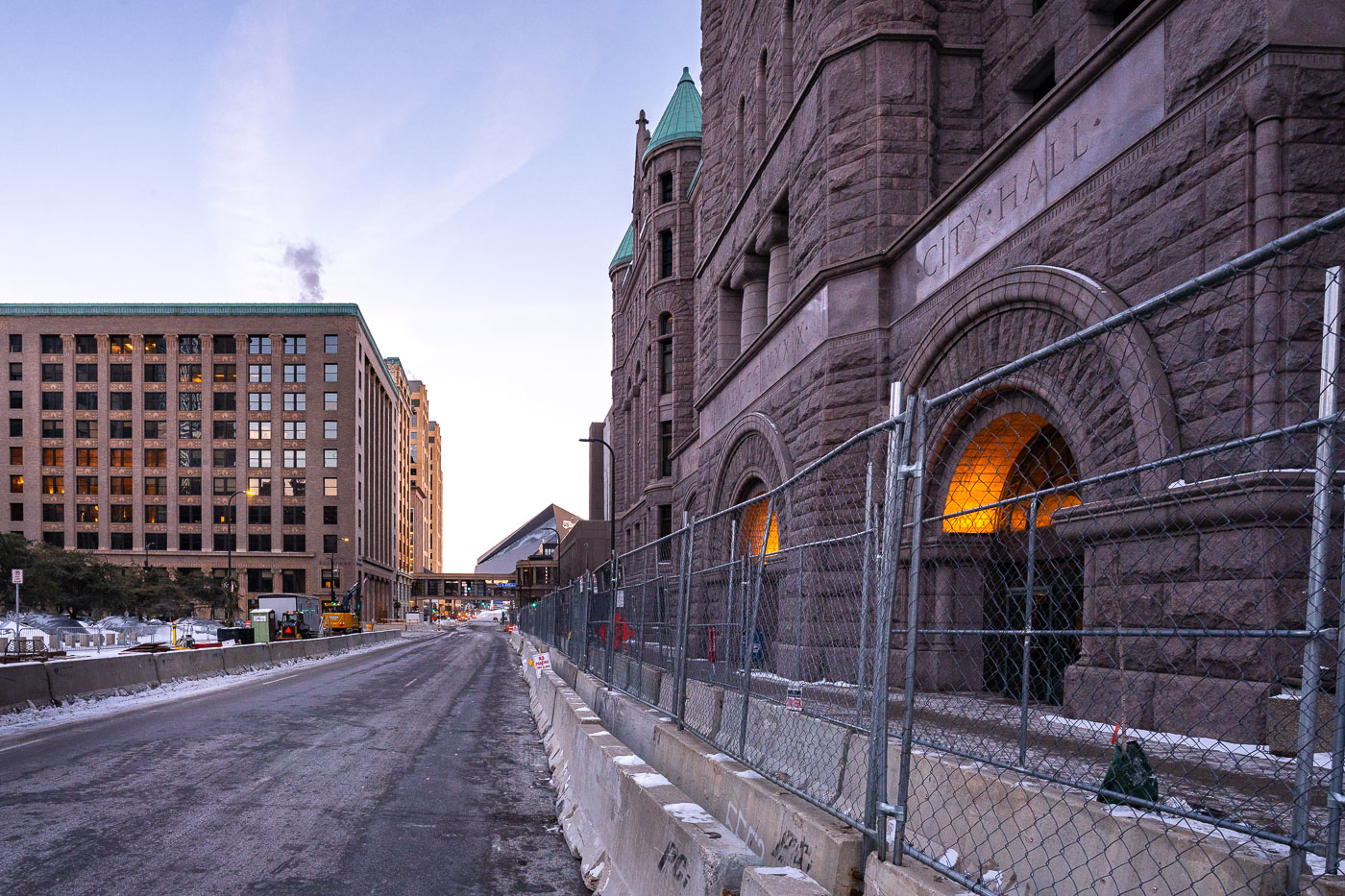
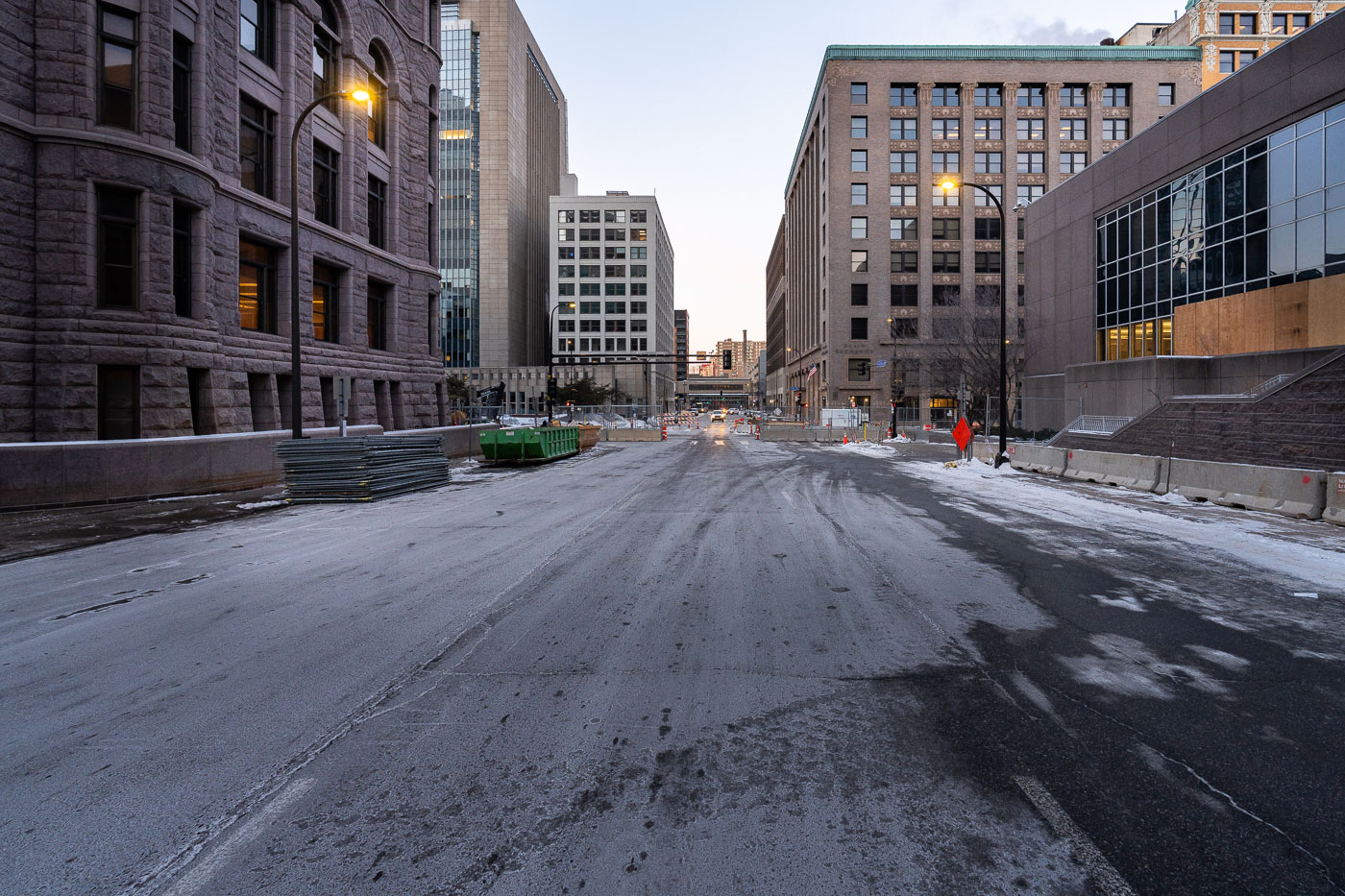
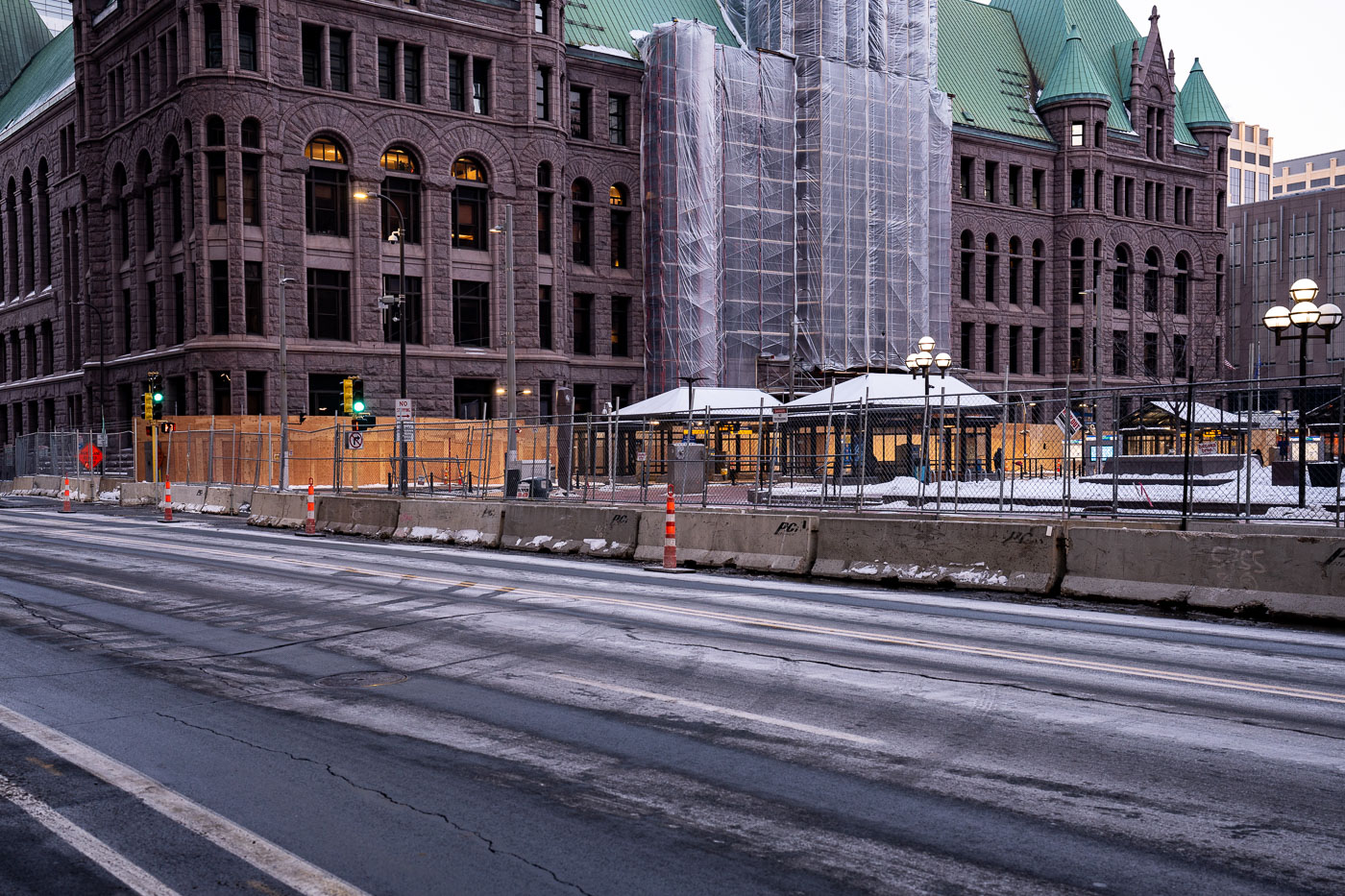
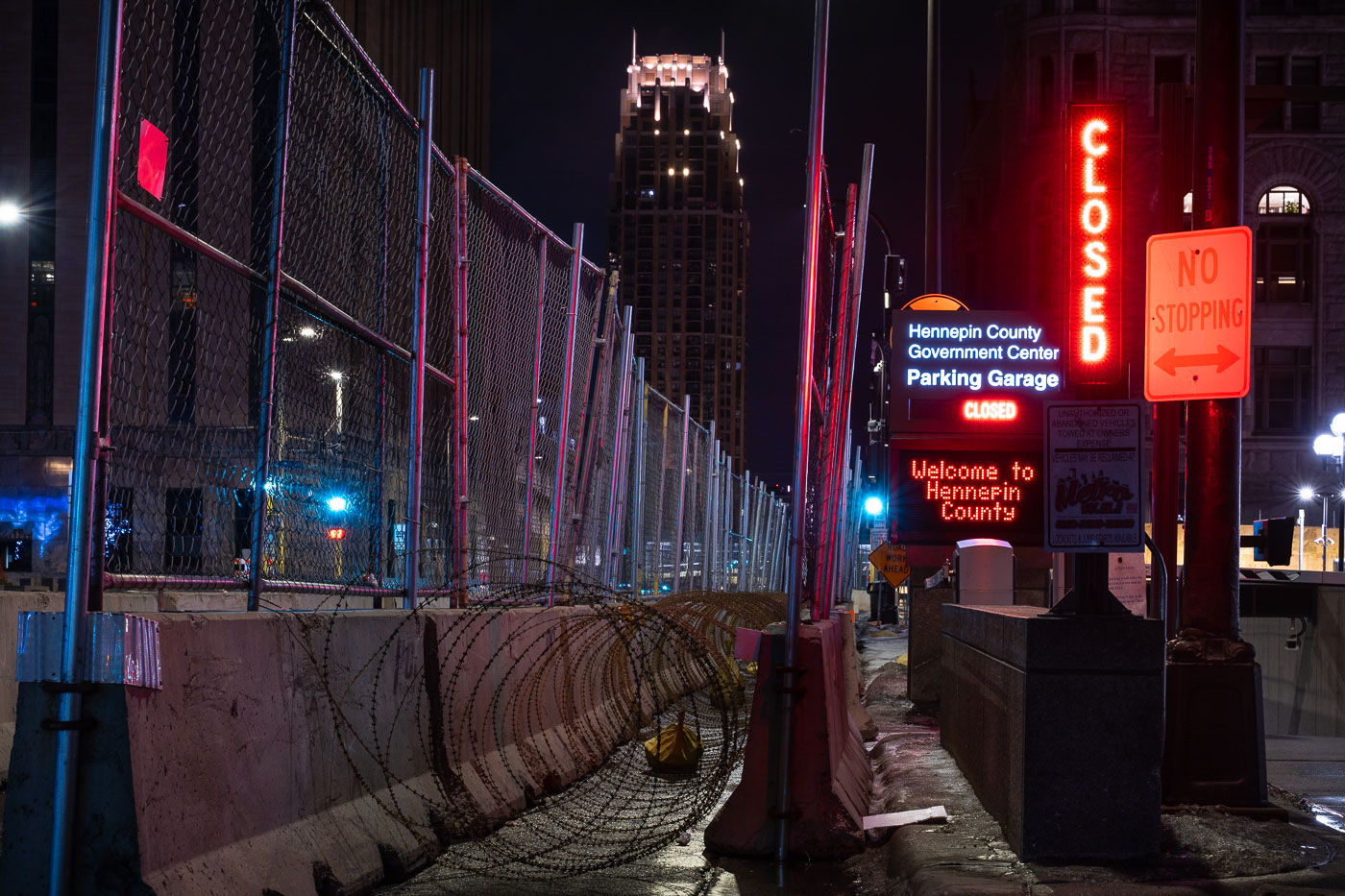
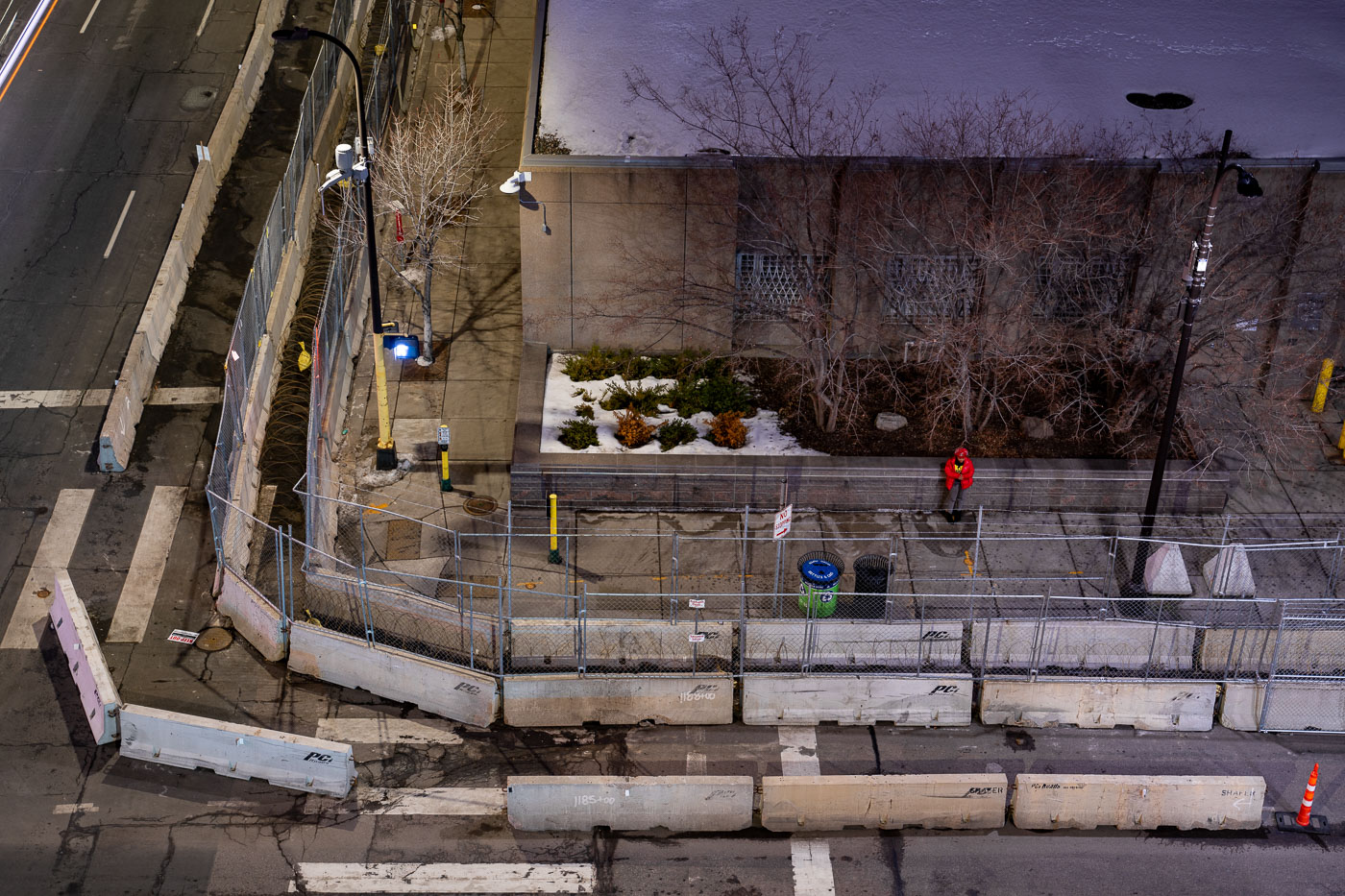
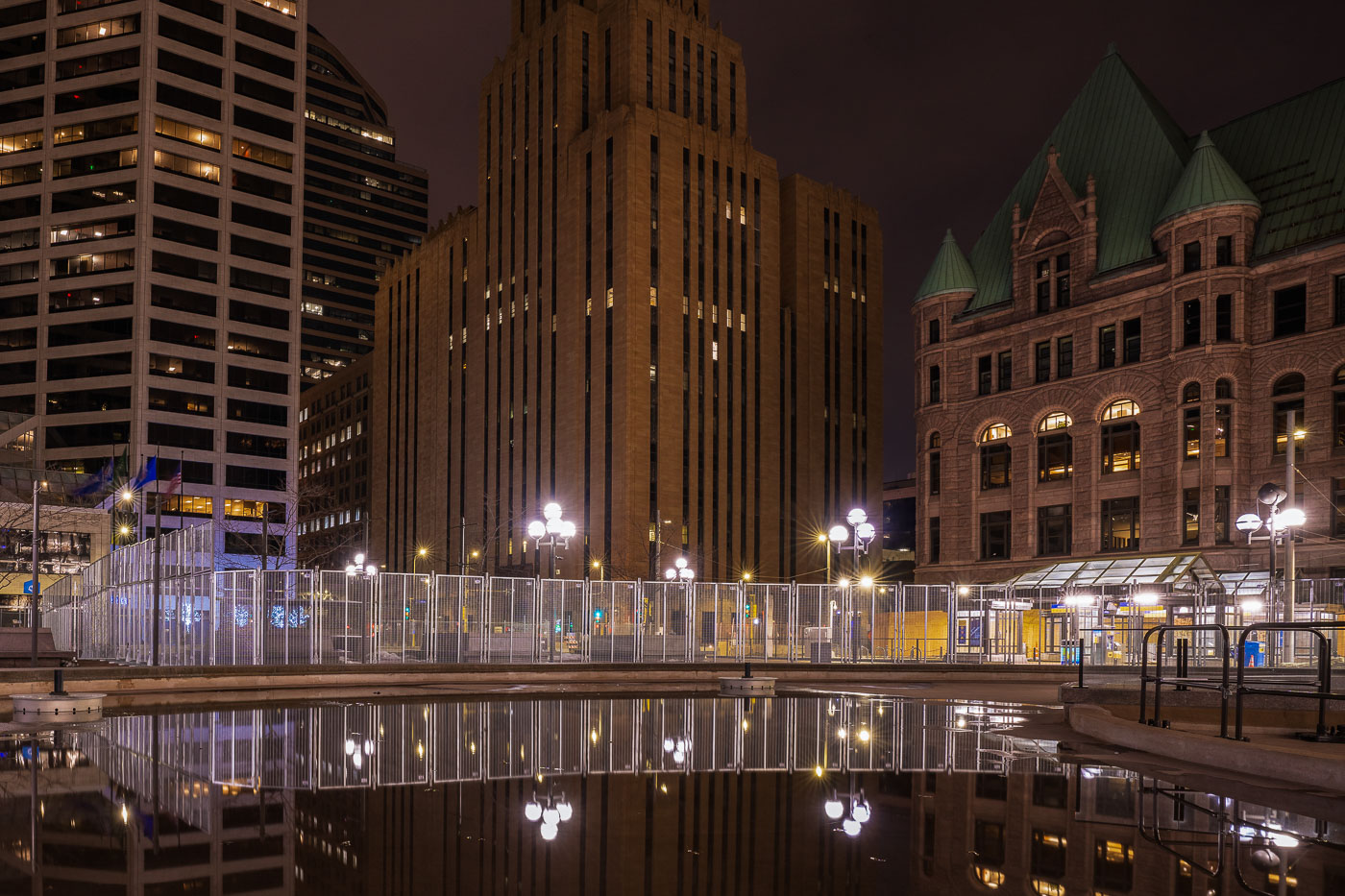
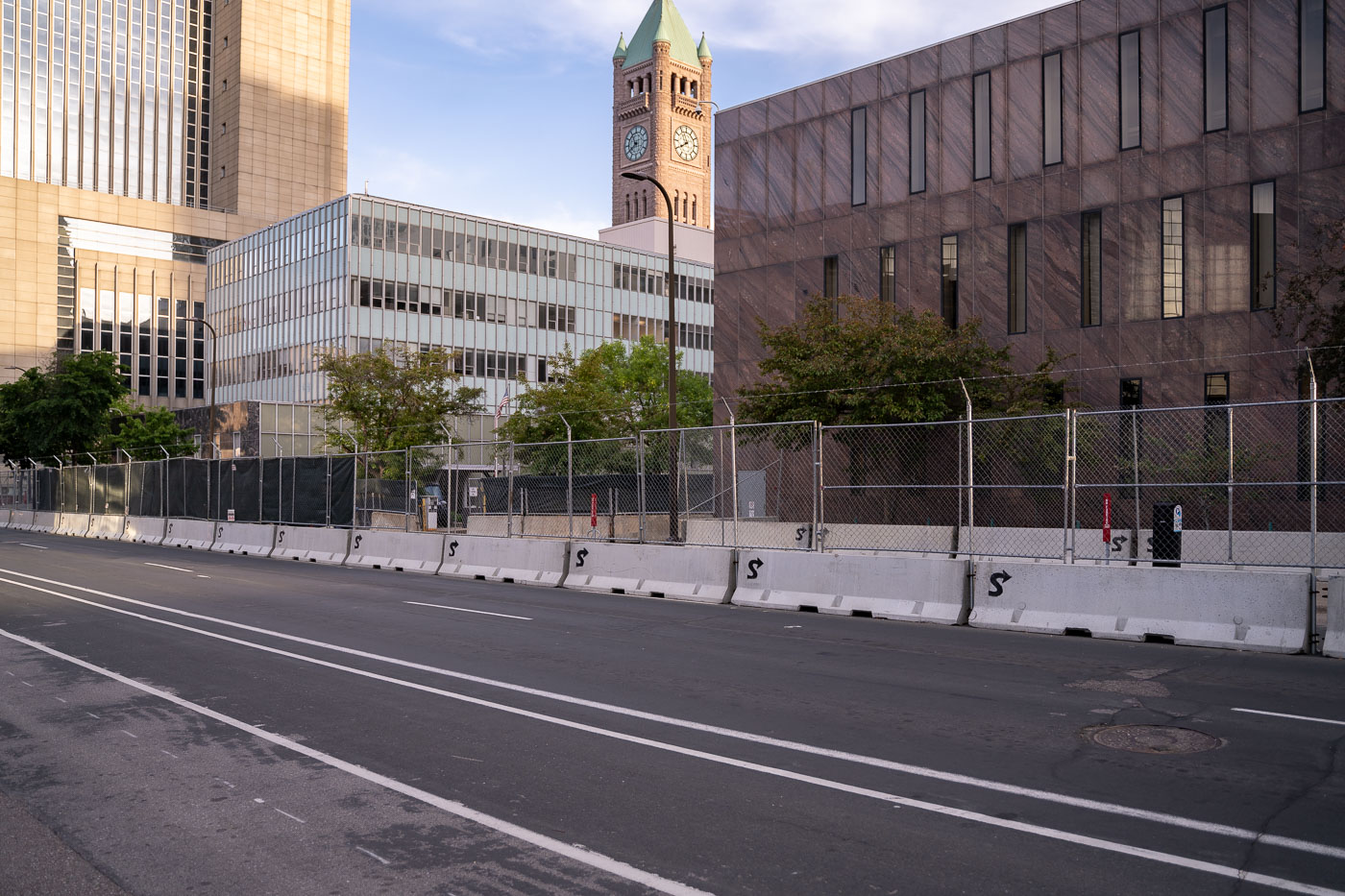
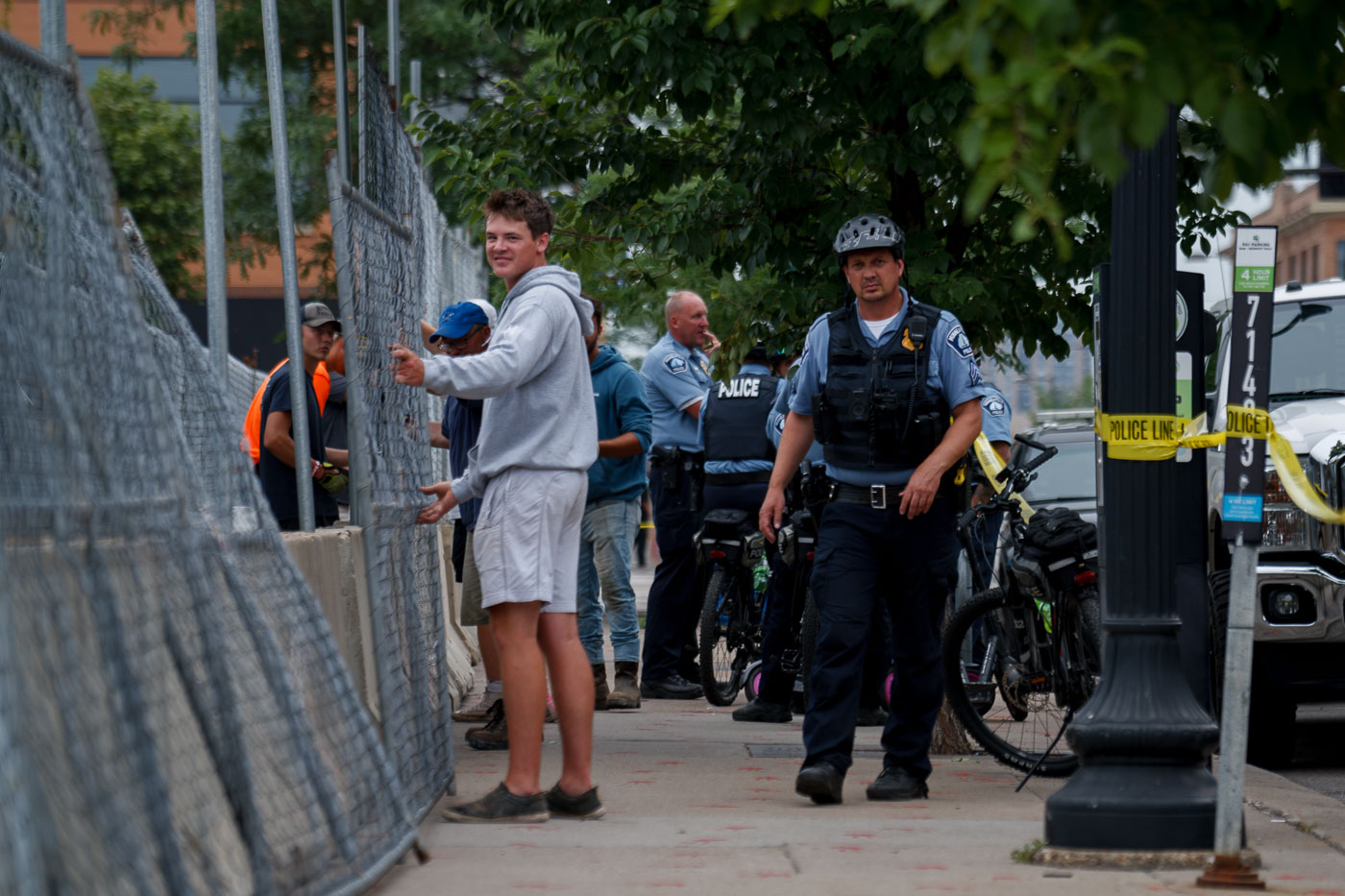
On May 25, 2020, Minneapolis police officer Derek Chauvin murdered 46-year-old George Floyd during an arrest outside Cup Foods at the intersection of 38th Street and Chicago Avenue in south Minneapolis. Video recorded by bystanders showed Chauvin kneeling on Floyd’s neck for more than nine minutes while Floyd repeatedly said he could not breathe. Three other Minneapolis police officers - J. Alexander Kueng, Thomas Lane, and Tou Thao — were also present during the arrest and later faced criminal charges for their roles in Floyd’s death. Floyd’s murder sparked protests and civil unrest across Minneapolis and around the world, leading to widespread demonstrations against police violence, major policy debates on policing, and the conviction of Chauvin on murder and manslaughter charges in 2021.February 16, 2021Fencing and barricades begin going up around downtown locations with Derek Chauvin trial just 20 days away.February 16, 2021Security fencing and concrete barriers surround Minneapolis City Hall and the Hennepin County Jail in anticipation of the Derek Chauvin murder trial.February 16, 2021Fencing and barricades surround Minneapolis City Hall and the Hennepin County Government Center in downtown Minneapolis on February 16, 2021. These security measures were installed in anticipation of the Derek Chauvin murder trial, which began on March 8, 2021.
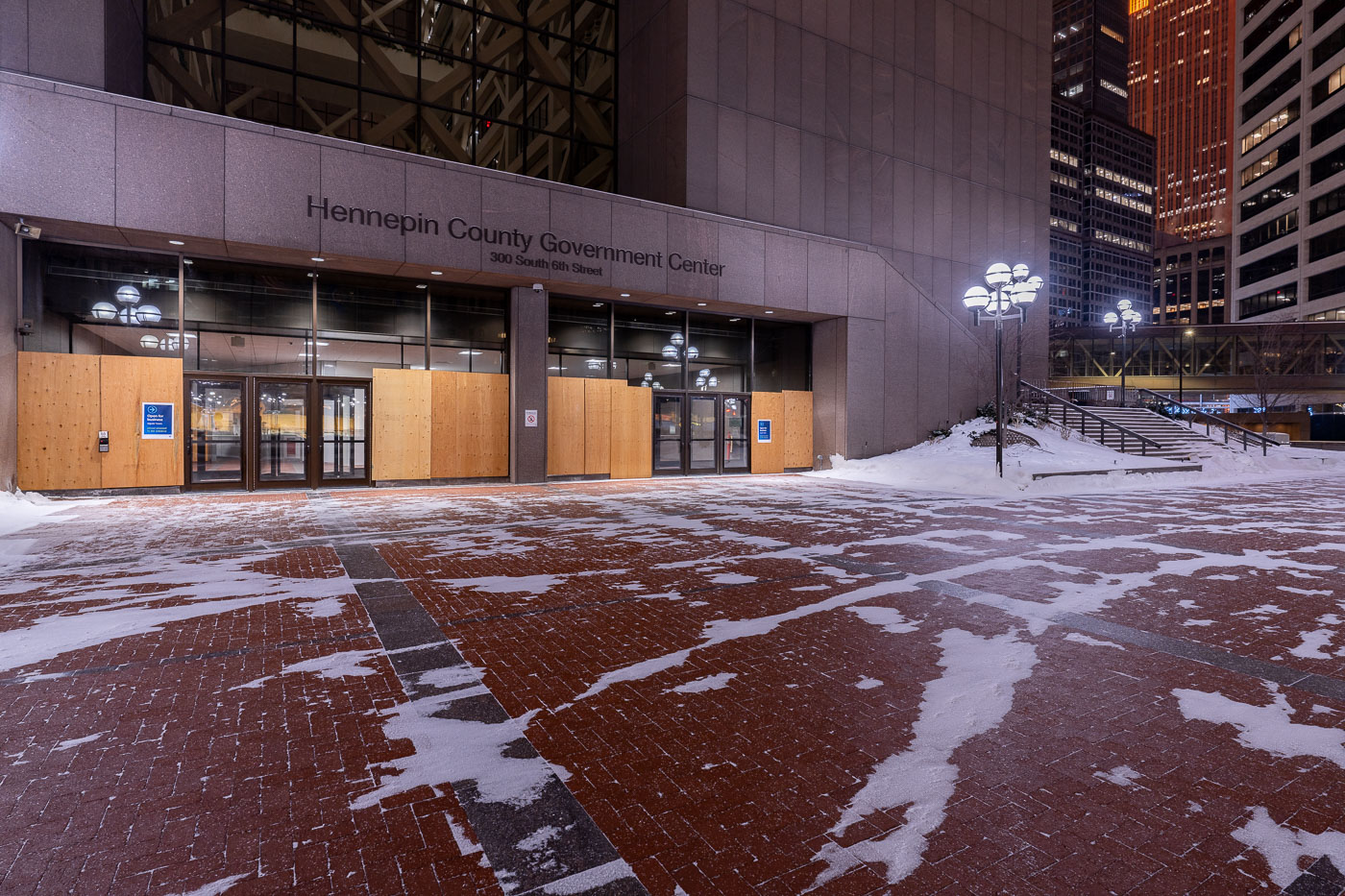
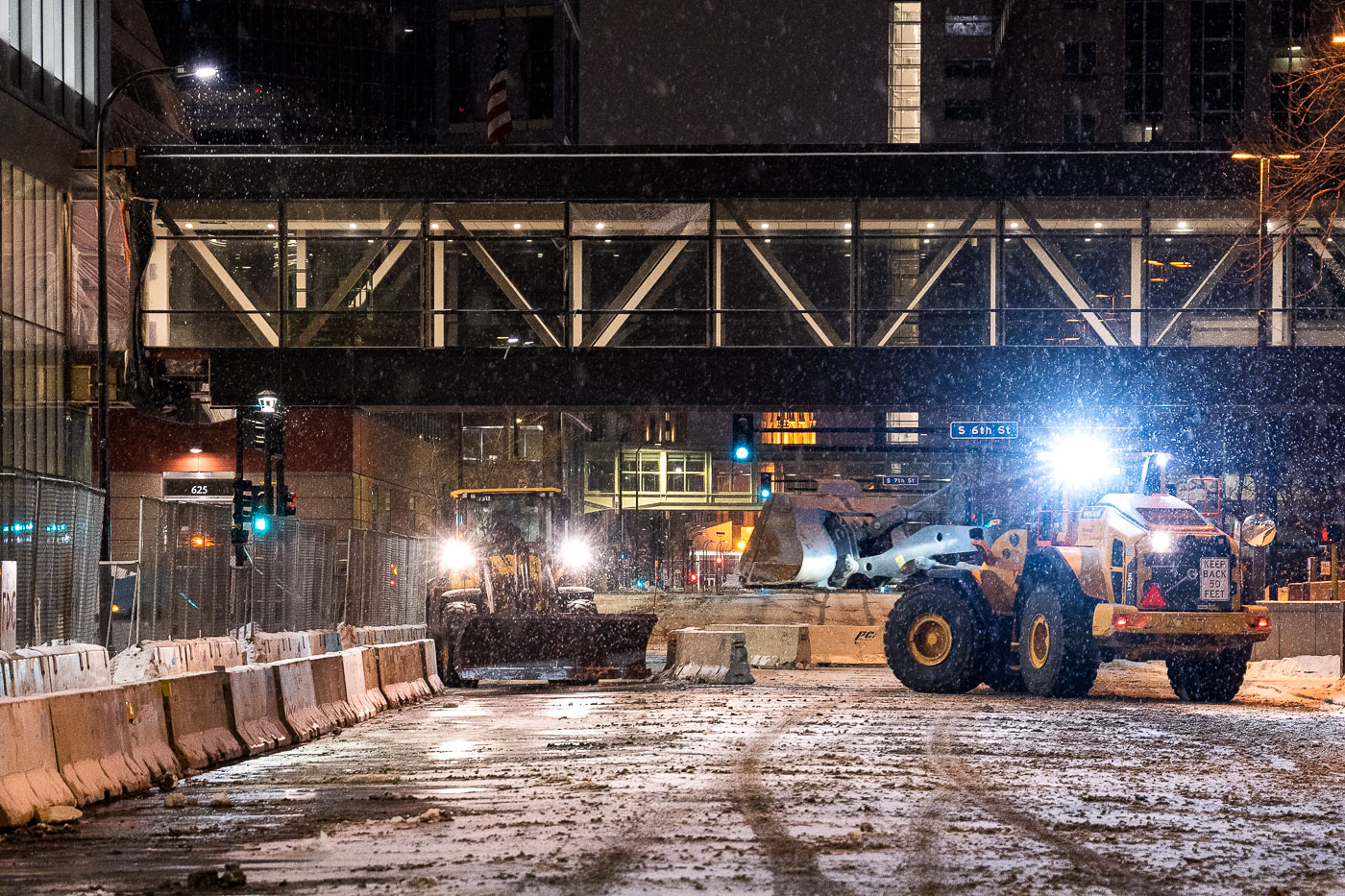
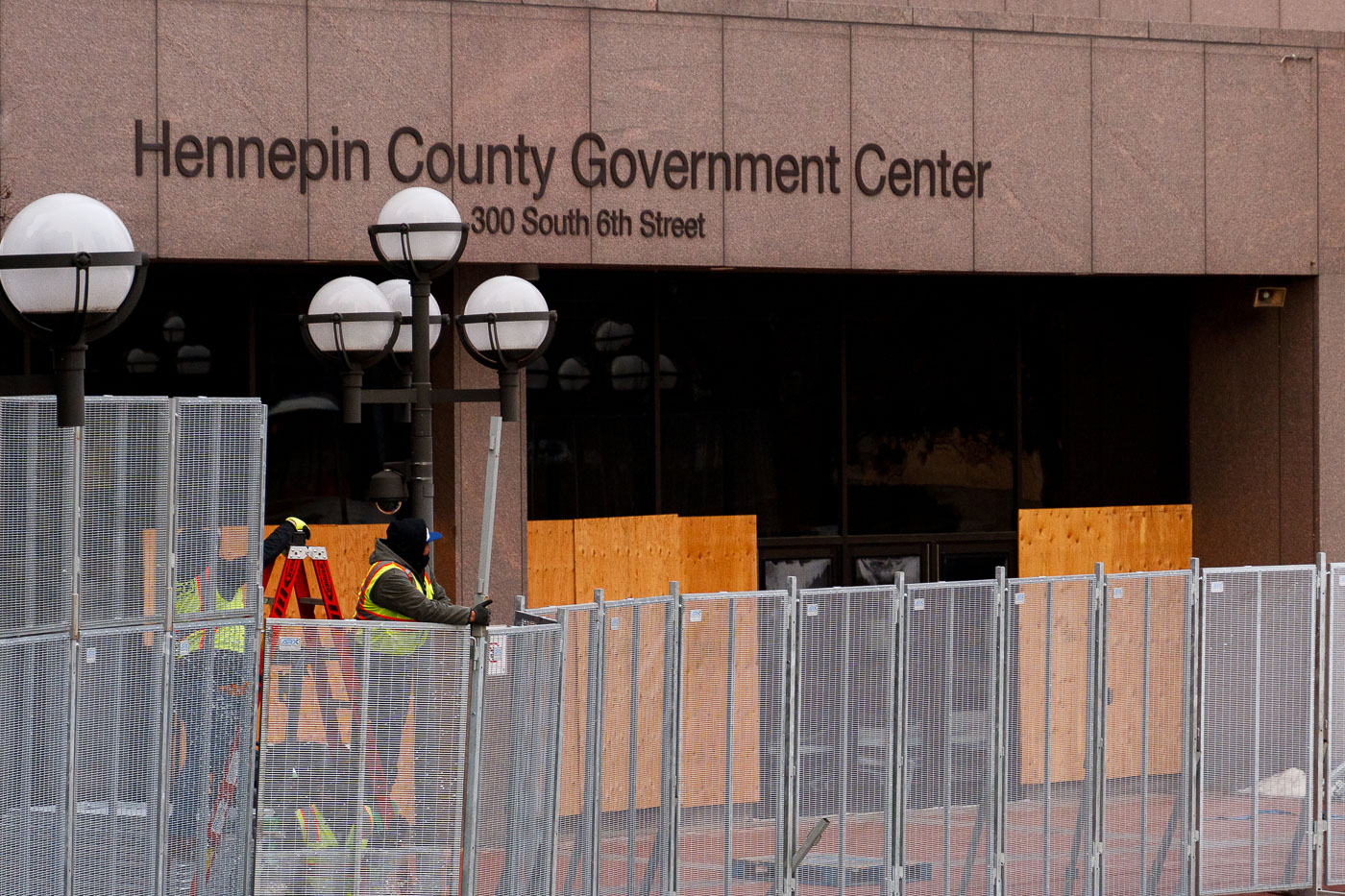
On May 25, 2020, Minneapolis police officer Derek Chauvin murdered 46-year-old George Floyd during an arrest outside Cup Foods at the intersection of 38th Street and Chicago Avenue in south Minneapolis. Video recorded by bystanders showed Chauvin kneeling on Floyd’s neck for more than nine minutes while Floyd repeatedly said he could not breathe. Three other Minneapolis police officers - J. Alexander Kueng, Thomas Lane, and Tou Thao — were also present during the arrest and later faced criminal charges for their roles in Floyd’s death. Floyd’s murder sparked protests and civil unrest across Minneapolis and around the world, leading to widespread demonstrations against police violence, major policy debates on policing, and the conviction of Chauvin on murder and manslaughter charges in 2021.February 17, 2021The Hennepin County Government Center in downtown Minneapolis was boarded up in anticipation of the Derek Chauvin trial in March 2021. The building, located at 300 South 6th Street, houses county government offices and courtrooms.February 17, 2021Public Works vehicles install jersey barriers around government buildings in Minneapolis in anticipation of the Derek Chauvin trial.
On May 25, 2020, Minneapolis police officer Derek Chauvin murdered 46-year-old George Floyd during an arrest outside Cup Foods at the intersection of 38th Street and Chicago Avenue in south Minneapolis. Video recorded by bystanders showed Chauvin kneeling on Floyd’s neck for more than nine minutes while Floyd repeatedly said he could not breathe. Three other Minneapolis police officers - J. Alexander Kueng, Thomas Lane, and Tou Thao — were also present during the arrest and later faced criminal charges for their roles in Floyd’s death. Floyd’s murder sparked protests and civil unrest across Minneapolis and around the world, leading to widespread demonstrations against police violence, major policy debates on policing, and the conviction of Chauvin on murder and manslaughter charges in 2021.February 18, 2021Construction continues on the Midtown Corner apartment building in Minneapolis during the winter of 2020. The six-story structure, located a block from the Minneapolis Police Department's Third Precinct, was still under construction when it sustained damage during civil unrest in the summer of 2020.February 18, 2021The Cub Foods store in South Minneapolis is shown here during its grand reopening after being damaged during the civil unrest following the death of George Floyd in May 2020. This grocery store, a vital community resource, is located a block from the Minneapolis Police Department's 3rd precinct station, which was a focal point of protests. The reopening signifies a step towards recovery and rebuilding for the neighborhood.February 18, 2021The Wells Fargo Bank branch on Nicollet Avenue in South Minneapolis shown on February 18, 2021 shows damage from fires that occurred during the unrest following the murder of George Floyd in May 2020. The building, located across from the Minneapolis Police Fifth Precinct, sustained significant damage, with boarded-up windows and evidence of burning along its lower facade.
On May 25, 2020, Minneapolis police officer Derek Chauvin murdered 46-year-old George Floyd during an arrest outside Cup Foods at the intersection of 38th Street and Chicago Avenue in south Minneapolis. Video recorded by bystanders showed Chauvin kneeling on Floyd’s neck for more than nine minutes while Floyd repeatedly said he could not breathe. Three other Minneapolis police officers - J. Alexander Kueng, Thomas Lane, and Tou Thao — were also present during the arrest and later faced criminal charges for their roles in Floyd’s death. Floyd’s murder sparked protests and civil unrest across Minneapolis and around the world, leading to widespread demonstrations against police violence, major policy debates on policing, and the conviction of Chauvin on murder and manslaughter charges in 2021.February 18, 2021Shops on Lake Street in Minneapolis are shown with a OPEN sign on February 18, 2021 after significant damage sustained during civil unrest in the summer of 2020. The unrest followed the murder of George Floyd on May 25, 2020, and led to widespread protests and property destruction across the city.
On May 25, 2020, Minneapolis police officer Derek Chauvin murdered 46-year-old George Floyd during an arrest outside Cup Foods at the intersection of 38th Street and Chicago Avenue in south Minneapolis. Video recorded by bystanders showed Chauvin kneeling on Floyd’s neck for more than nine minutes while Floyd repeatedly said he could not breathe. Three other Minneapolis police officers - J. Alexander Kueng, Thomas Lane, and Tou Thao — were also present during the arrest and later faced criminal charges for their roles in Floyd’s death. Floyd’s murder sparked protests and civil unrest across Minneapolis and around the world, leading to widespread demonstrations against police violence, major policy debates on policing, and the conviction of Chauvin on murder and manslaughter charges in 2021.February 18, 2021Temporary security barricades are erected on February 18, 2021 around the Hennepin County Government Center at 300 South 6th Street in Minneapolis. These measures were put in place in anticipation of the trial of Derek Chauvin, the former police officer charged in the May 2020 murder of George Floyd.
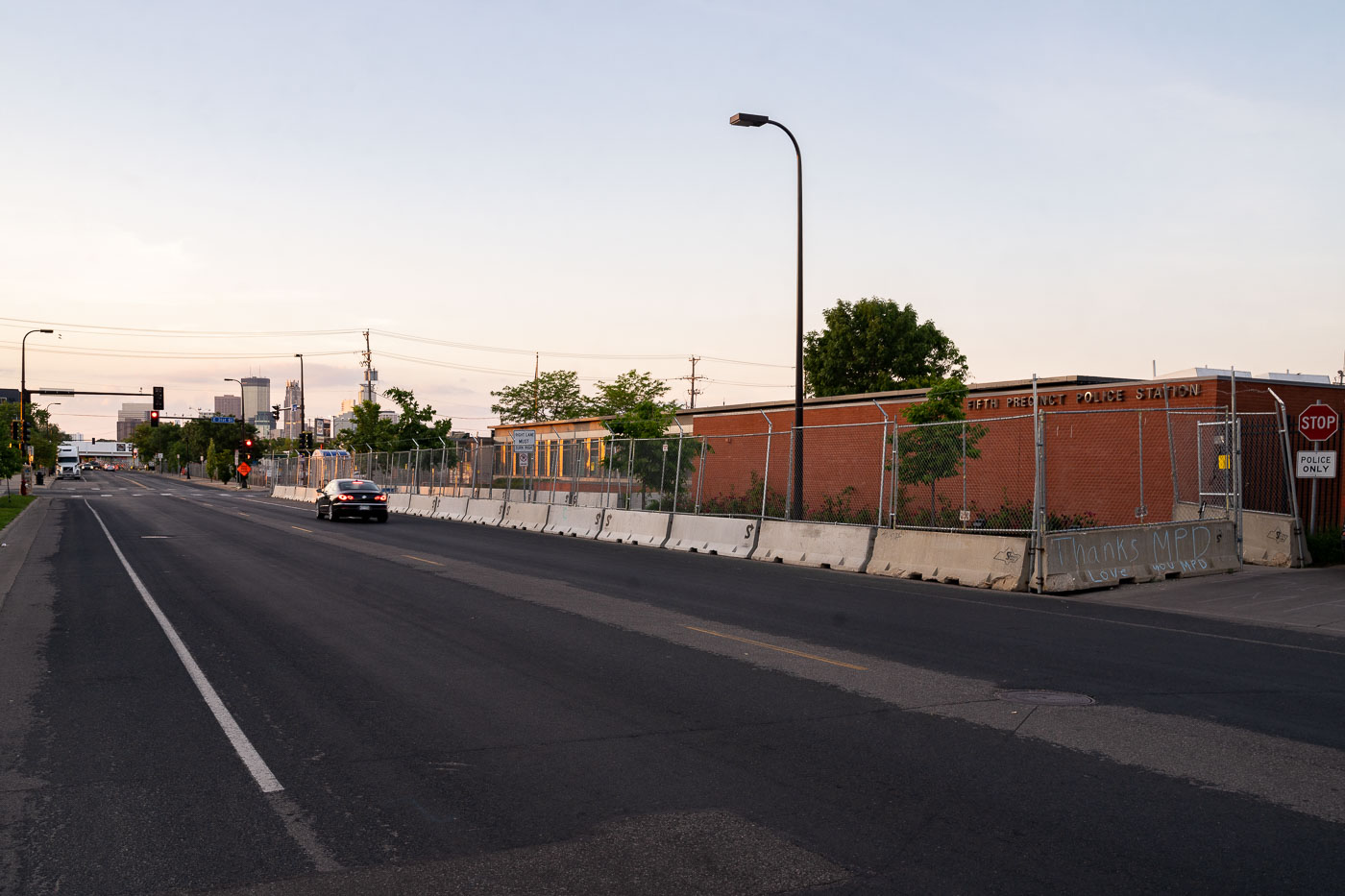
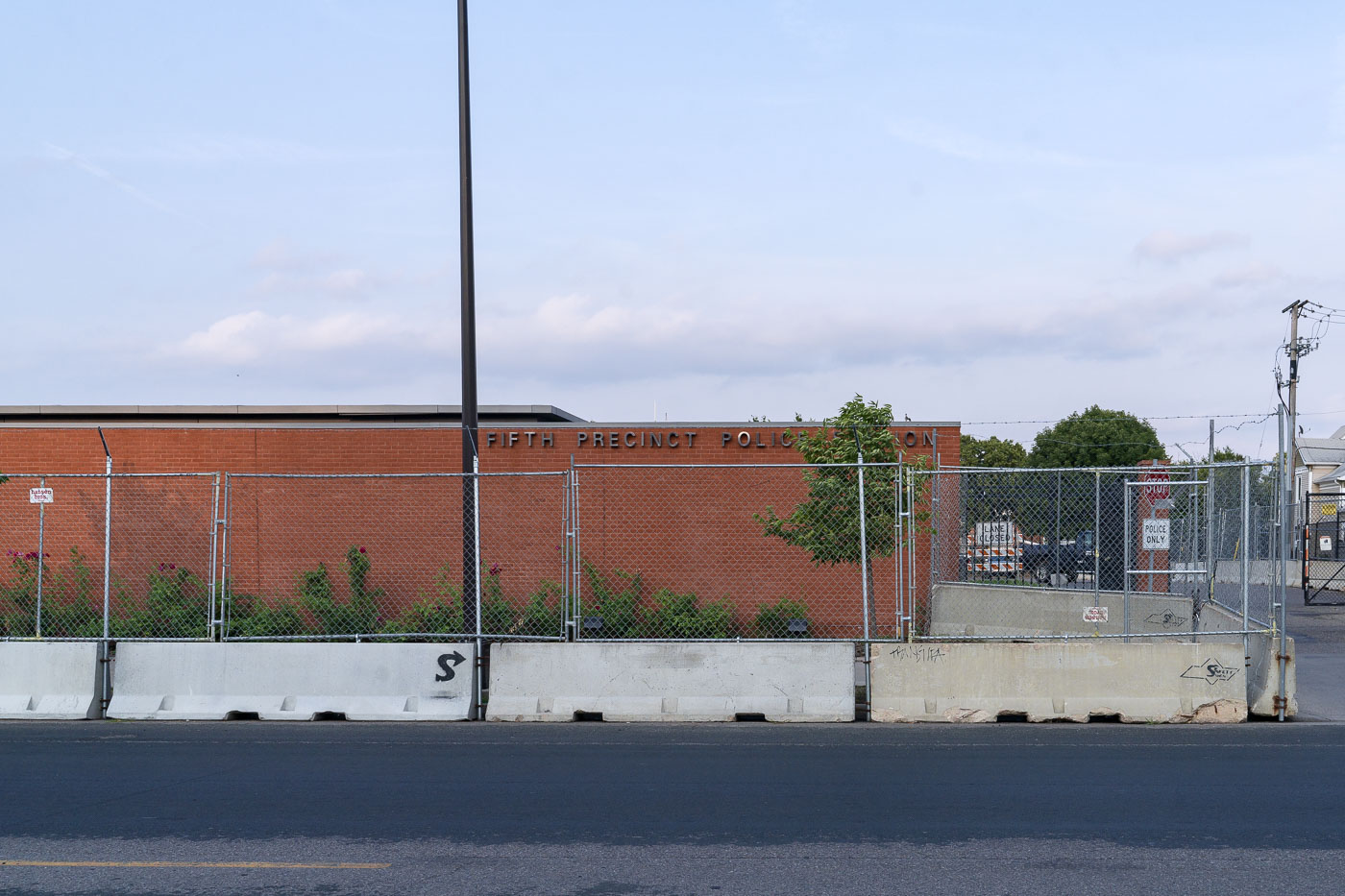
On May 25, 2020, Minneapolis police officer Derek Chauvin murdered 46-year-old George Floyd during an arrest outside Cup Foods at the intersection of 38th Street and Chicago Avenue in south Minneapolis. Video recorded by bystanders showed Chauvin kneeling on Floyd’s neck for more than nine minutes while Floyd repeatedly said he could not breathe. Three other Minneapolis police officers - J. Alexander Kueng, Thomas Lane, and Tou Thao — were also present during the arrest and later faced criminal charges for their roles in Floyd’s death. Floyd’s murder sparked protests and civil unrest across Minneapolis and around the world, leading to widespread demonstrations against police violence, major policy debates on policing, and the conviction of Chauvin on murder and manslaughter charges in 2021.February 19, 2021Minneapolis City Hall and the Hennepin County Government Center are shown fortified with security fencing and boarded-up windows. This measure was implemented in anticipation of the Derek Chauvin murder trial in 2021, reflecting heightened security concerns surrounding the proceedings.February 19, 2021The Minneapolis Police Fifth Precinct is shown on February 19, 2021 surrounded by security barriers. These barriers have been a consistent presence around the precinct since the murder of George Floyd in May 2020, reflecting the heightened security measures in place following widespread protests and civil unrest.
On May 25, 2020, Minneapolis police officer Derek Chauvin murdered 46-year-old George Floyd during an arrest outside Cup Foods at the intersection of 38th Street and Chicago Avenue in south Minneapolis. Video recorded by bystanders showed Chauvin kneeling on Floyd’s neck for more than nine minutes while Floyd repeatedly said he could not breathe. Three other Minneapolis police officers - J. Alexander Kueng, Thomas Lane, and Tou Thao — were also present during the arrest and later faced criminal charges for their roles in Floyd’s death. Floyd’s murder sparked protests and civil unrest across Minneapolis and around the world, leading to widespread demonstrations against police violence, major policy debates on policing, and the conviction of Chauvin on murder and manslaughter charges in 2021.February 21, 2021Protesters marched down Lake Street in Minneapolis on February 21, 2021, organized by Save The Boards to Memorialize the Movement and Visual Black Justice. The group demanded federal action to abolish the death penalty, reopen all police brutality cases, and defund or demilitarize police departments.February 21, 2021A gathering took place at George Floyd Square in Minneapolis to commemorate the anniversary of Malcolm X's assassination and discuss Black liberation movements. The event also coincided with the GFS Liberation Loppet, an event honoring explorer Matthew Henson, who is credited by some with being the first to reach the North Pole. The "Peoples Way" mural is visible on the building behind the attendees, a reference to the community's renaming of the intersection after George Floyd's murder. The "George Floyd Trial In 15 Days" sign on the Speedway gas station highlights the ongoing legal proceedings related to his death.February 21, 2021A young person places flowers on a memorial at George Floyd Square in Minneapolis on February 21, 2021. The square, established in the wake of George Floyd's murder in May 2020, has become a site of protest and remembrance. The gathering also honored Malcolm X, a prominent figure in the Civil Rights Movement, and explorer Matthew Henson, who was part of the first expedition to reach the North Pole. The event, which included the GFS Liberation Loppet, served as a moment to reflect on Black liberation movements and historical figures.
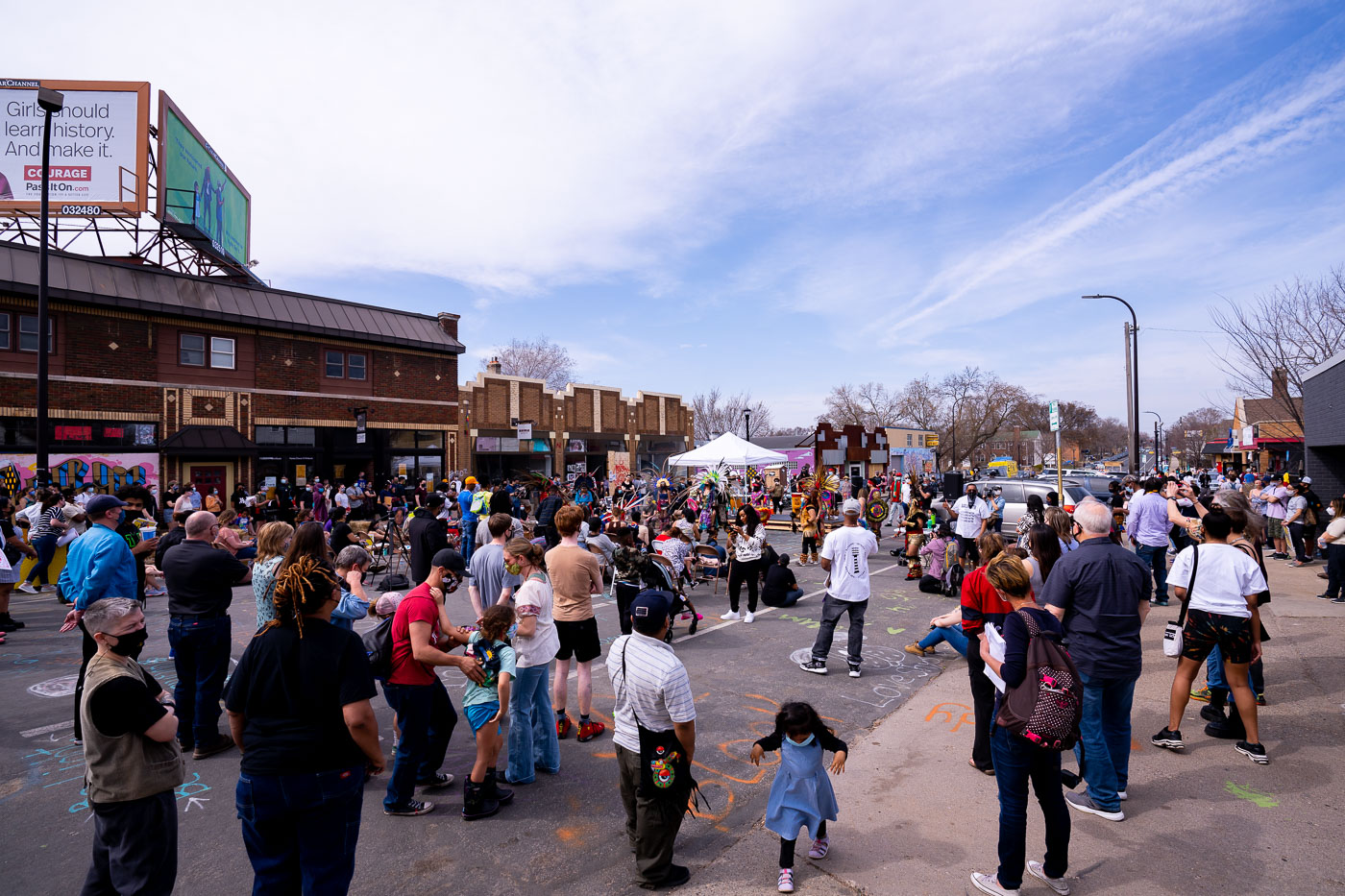
On May 25, 2020, Minneapolis police officer Derek Chauvin murdered 46-year-old George Floyd during an arrest outside Cup Foods at the intersection of 38th Street and Chicago Avenue in south Minneapolis. Video recorded by bystanders showed Chauvin kneeling on Floyd’s neck for more than nine minutes while Floyd repeatedly said he could not breathe. Three other Minneapolis police officers - J. Alexander Kueng, Thomas Lane, and Tou Thao — were also present during the arrest and later faced criminal charges for their roles in Floyd’s death. Floyd’s murder sparked protests and civil unrest across Minneapolis and around the world, leading to widespread demonstrations against police violence, major policy debates on policing, and the conviction of Chauvin on murder and manslaughter charges in 2021.February 21, 2021Barricades remain at George Floyd Square in Minneapolis, a space that became a focal point for protests following the murder of George Floyd in May 2020. The square, located at the intersection of Chicago Avenue and 38th Street, was occupied by protesters for months, transforming it into a community hub and a symbol of the movement for racial justice.February 22, 2021Concrete barricaded shown on February 22, 2021 around the Hennepin County Medical Examiner's Office in downtown Minneapolis in anticipation of the Derek Chauvin murder trial.
On May 25, 2020, Minneapolis police officer Derek Chauvin murdered 46-year-old George Floyd during an arrest outside Cup Foods at the intersection of 38th Street and Chicago Avenue in south Minneapolis. Video recorded by bystanders showed Chauvin kneeling on Floyd’s neck for more than nine minutes while Floyd repeatedly said he could not breathe. Three other Minneapolis police officers - J. Alexander Kueng, Thomas Lane, and Tou Thao — were also present during the arrest and later faced criminal charges for their roles in Floyd’s death. Floyd’s murder sparked protests and civil unrest across Minneapolis and around the world, leading to widespread demonstrations against police violence, major policy debates on policing, and the conviction of Chauvin on murder and manslaughter charges in 2021.February 23, 2021Security fencing and concrete barriers surround the Minneapolis Police 2nd Precinct in northeast Minneapolis on February 23, 2021. This measure was implemented in anticipation of the Derek Chauvin murder trial in 2021. The precinct building itself, constructed in 1911, has served as a law enforcement facility for over a century. The heightened security reflects the significant public attention and potential for unrest surrounding the trial, which followed the murder of George Floyd.
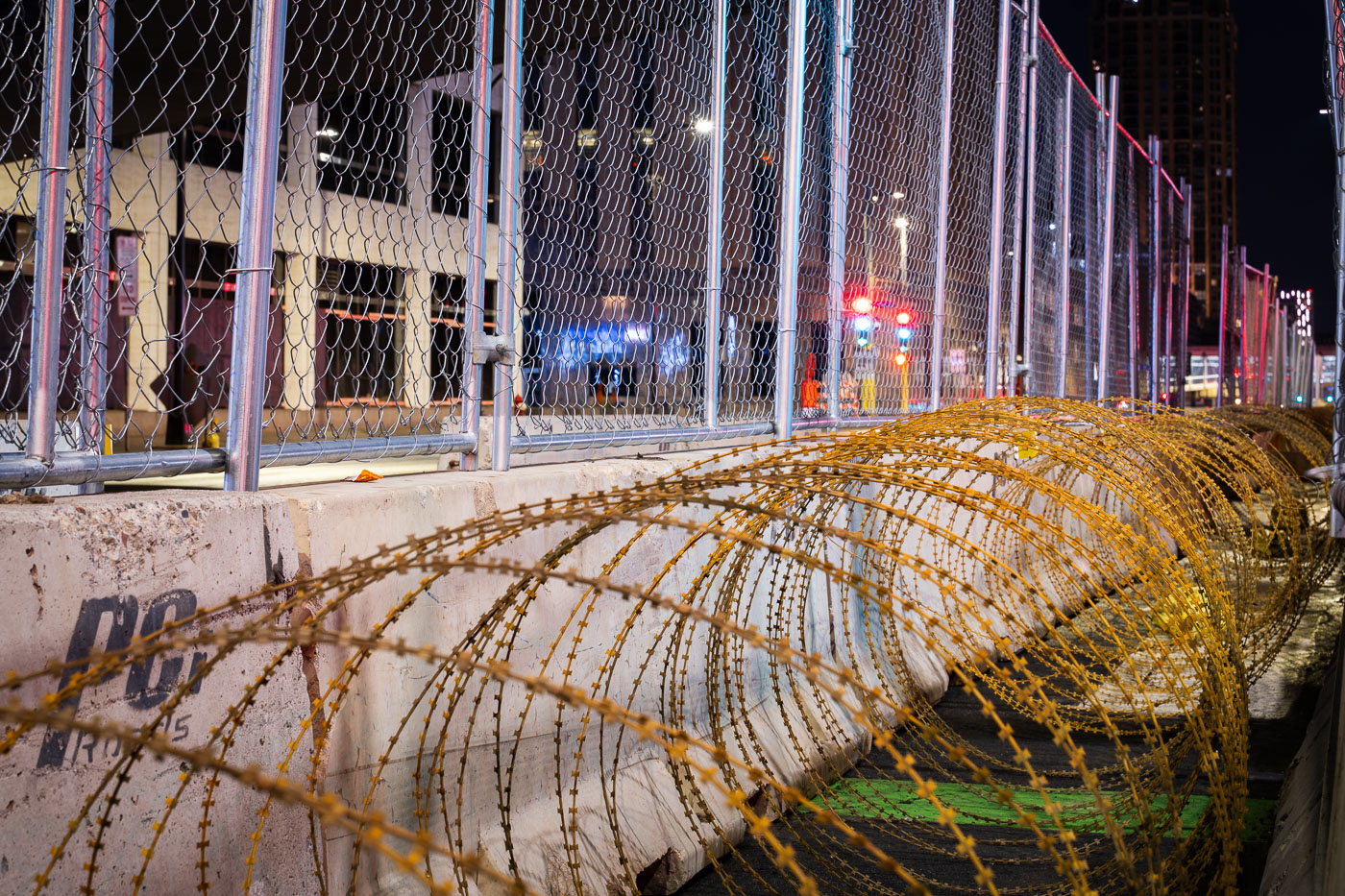
On May 25, 2020, Minneapolis police officer Derek Chauvin murdered 46-year-old George Floyd during an arrest outside Cup Foods at the intersection of 38th Street and Chicago Avenue in south Minneapolis. Video recorded by bystanders showed Chauvin kneeling on Floyd’s neck for more than nine minutes while Floyd repeatedly said he could not breathe. Three other Minneapolis police officers - J. Alexander Kueng, Thomas Lane, and Tou Thao — were also present during the arrest and later faced criminal charges for their roles in Floyd’s death. Floyd’s murder sparked protests and civil unrest across Minneapolis and around the world, leading to widespread demonstrations against police violence, major policy debates on policing, and the conviction of Chauvin on murder and manslaughter charges in 2021.February 24, 2021A discarded newspaper, featuring an article about the Minneapolis mayoral race, lies in the snow outside the Hennepin County Government Center. The article, titled "Who's running for Mayor of Minneapolis?", highlights the candidates and the political landscape of the city.February 24, 2021Razor wire fencing is installed around the Hennepin County Government Center in Minneapolis, Minnesota. This security measure was put in place in anticipation of the Derek Chauvin trial, which was scheduled to begin less than two weeks after this photograph was taken. The trial stemmed from the death of George Floyd, whose killing by Chauvin in May 2020 sparked widespread protests and unrest in Minneapolis and across the nation.February 24, 2021Security measures, including razor wire and concrete barriers, were erected around the Hennepin County Government Center in Minneapolis in anticipation of the Derek Chauvin trial.
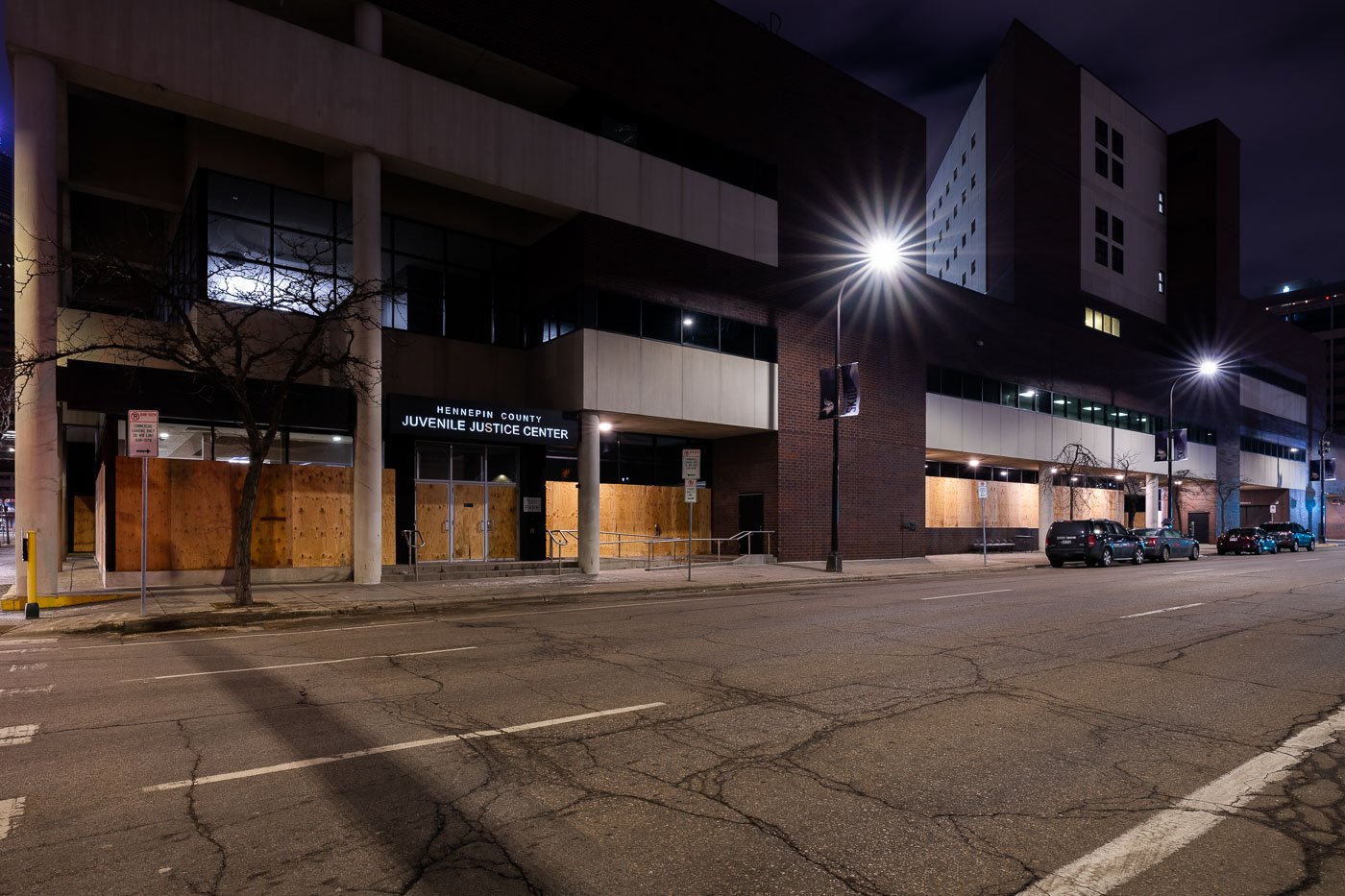
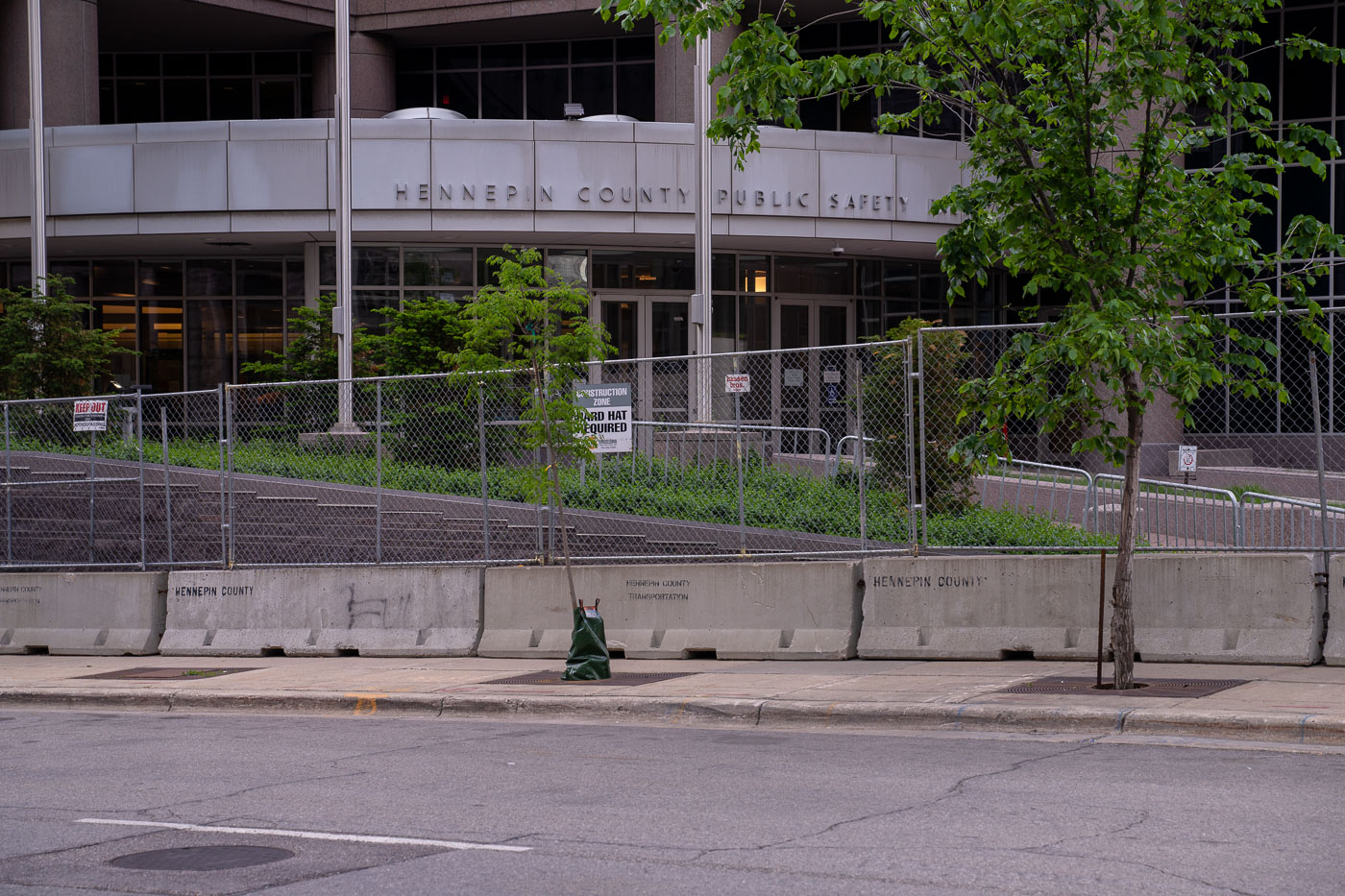
On May 25, 2020, Minneapolis police officer Derek Chauvin murdered 46-year-old George Floyd during an arrest outside Cup Foods at the intersection of 38th Street and Chicago Avenue in south Minneapolis. Video recorded by bystanders showed Chauvin kneeling on Floyd’s neck for more than nine minutes while Floyd repeatedly said he could not breathe. Three other Minneapolis police officers - J. Alexander Kueng, Thomas Lane, and Tou Thao — were also present during the arrest and later faced criminal charges for their roles in Floyd’s death. Floyd’s murder sparked protests and civil unrest across Minneapolis and around the world, leading to widespread demonstrations against police violence, major policy debates on policing, and the conviction of Chauvin on murder and manslaughter charges in 2021.February 24, 2021The Hennepin County Juvenile Justice Center in downtown Minneapolis is shown boarded up in anticipation of the Derek Chauvin trial in April 2021. The building, located at 590 Park Avenue, serves as a courthouse for juvenile legal proceedings. The extensive boarding and security measures were implemented in response to concerns about potential unrest and protests stemming from the trial, which followed the murder of George Floyd in May 2020.February 24, 2021Security barricades and fencing surround the Hennepin County Public Safety Facility in Minneapolis on February 24, 2021 in anticipation of the Derek Chauvin murder trial. The extensive security measures, including concrete barriers and razor wire, were implemented to manage potential protests and ensure the safety of the courthouse and surrounding areas.
On May 25, 2020, Minneapolis police officer Derek Chauvin murdered 46-year-old George Floyd during an arrest outside Cup Foods at the intersection of 38th Street and Chicago Avenue in south Minneapolis. Video recorded by bystanders showed Chauvin kneeling on Floyd’s neck for more than nine minutes while Floyd repeatedly said he could not breathe. Three other Minneapolis police officers - J. Alexander Kueng, Thomas Lane, and Tou Thao — were also present during the arrest and later faced criminal charges for their roles in Floyd’s death. Floyd’s murder sparked protests and civil unrest across Minneapolis and around the world, leading to widespread demonstrations against police violence, major policy debates on policing, and the conviction of Chauvin on murder and manslaughter charges in 2021.February 25, 2021A protester holds a sign reading "COMMUNITY CONTROL OF MPD" outside the Hennepin County Government Center in Minneapolis on February 25, 2021. The protest was announced for March 8th, coinciding with the start of the Derek Chauvin trial. This event highlights ongoing calls for police reform and community oversight of law enforcement in Minneapolis, a movement that gained significant momentum following the murder of George Floyd in 2020.
On May 25, 2020, Minneapolis police officer Derek Chauvin murdered 46-year-old George Floyd during an arrest outside Cup Foods at the intersection of 38th Street and Chicago Avenue in south Minneapolis. Video recorded by bystanders showed Chauvin kneeling on Floyd’s neck for more than nine minutes while Floyd repeatedly said he could not breathe. Three other Minneapolis police officers - J. Alexander Kueng, Thomas Lane, and Tou Thao — were also present during the arrest and later faced criminal charges for their roles in Floyd’s death. Floyd’s murder sparked protests and civil unrest across Minneapolis and around the world, leading to widespread demonstrations against police violence, major policy debates on policing, and the conviction of Chauvin on murder and manslaughter charges in 2021.February 25, 2021Michelle Gross speaks at a press conference outside the Hennepin County Government Center in Minneapolis on February 25, 2021. Activists gathered to announce a protest planned for that day, demanding justice and change in the wake of the Derek Chauvin trial. The signs held by attendees called for the conviction of Chauvin and justice for George Floyd.
On May 25, 2020, Minneapolis police officer Derek Chauvin murdered 46-year-old George Floyd during an arrest outside Cup Foods at the intersection of 38th Street and Chicago Avenue in south Minneapolis. Video recorded by bystanders showed Chauvin kneeling on Floyd’s neck for more than nine minutes while Floyd repeatedly said he could not breathe. Three other Minneapolis police officers - J. Alexander Kueng, Thomas Lane, and Tou Thao — were also present during the arrest and later faced criminal charges for their roles in Floyd’s death. Floyd’s murder sparked protests and civil unrest across Minneapolis and around the world, leading to widespread demonstrations against police violence, major policy debates on policing, and the conviction of Chauvin on murder and manslaughter charges in 2021.February 25, 2021Nekima Levy Armstrong, a prominent activist, speaks at a press conference held outside the Hennepin County Government Center in Downtown Minneapolis on February 25, 2021. The conference announced a March 8th protest, with participants expressing their determination to demand justice and change despite perceived fortifications around government buildings. The signs held by attendees call for the conviction of Derek Chauvin and justice for George Floyd and other victims, reflecting the ongoing protests and calls for accountability following the murder of George Floyd.
On May 25, 2020, Minneapolis police officer Derek Chauvin murdered 46-year-old George Floyd during an arrest outside Cup Foods at the intersection of 38th Street and Chicago Avenue in south Minneapolis. Video recorded by bystanders showed Chauvin kneeling on Floyd’s neck for more than nine minutes while Floyd repeatedly said he could not breathe. Three other Minneapolis police officers - J. Alexander Kueng, Thomas Lane, and Tou Thao — were also present during the arrest and later faced criminal charges for their roles in Floyd’s death. Floyd’s murder sparked protests and civil unrest across Minneapolis and around the world, leading to widespread demonstrations against police violence, major policy debates on policing, and the conviction of Chauvin on murder and manslaughter charges in 2021.February 26, 2021Temporary fencing is being installed around the Hennepin County Government Center in Minneapolis, located at 300 South 6th Street. This security measure was put in place in anticipation of the trial of Derek Chauvin, a former Minneapolis police officer.
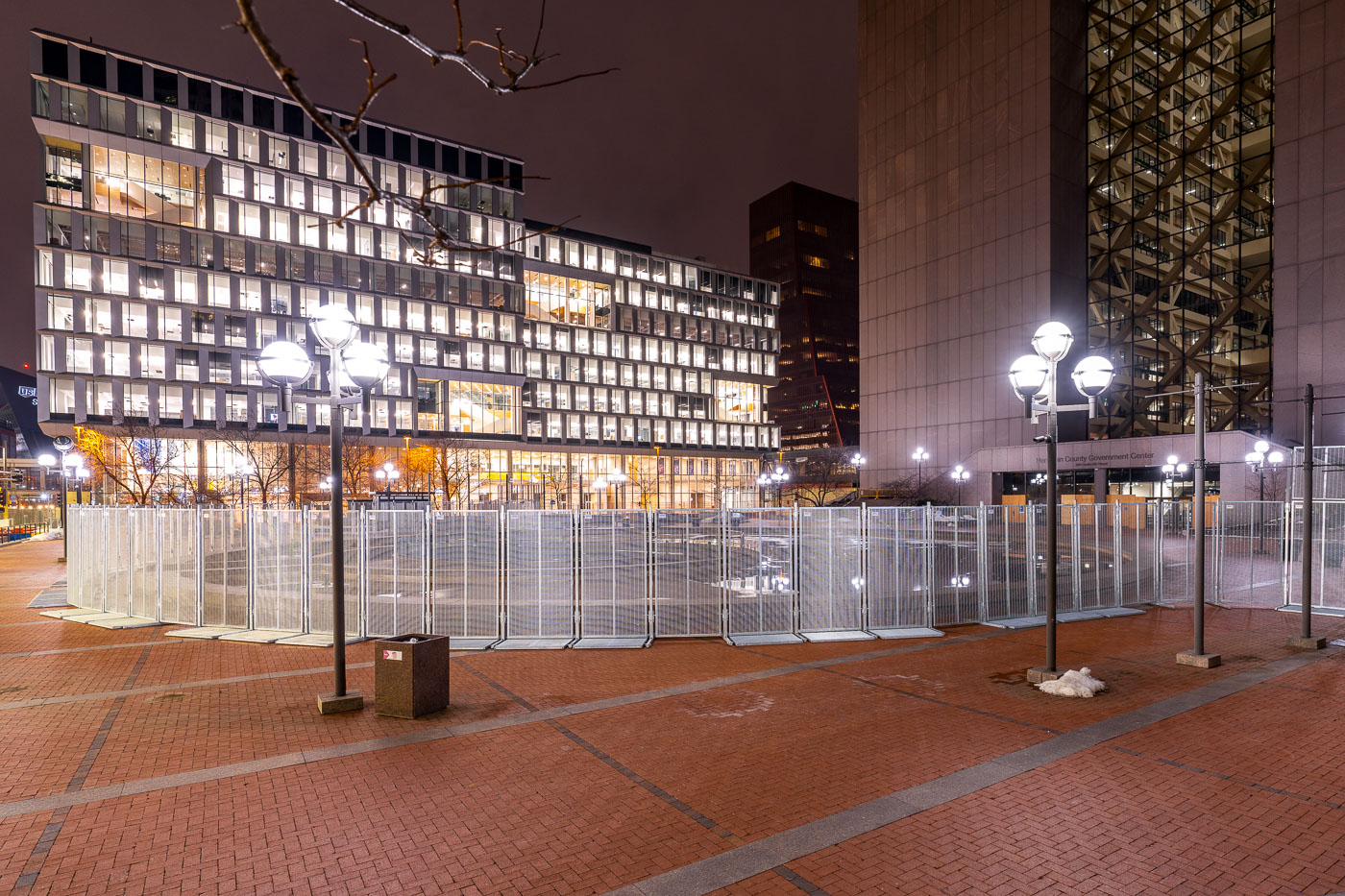
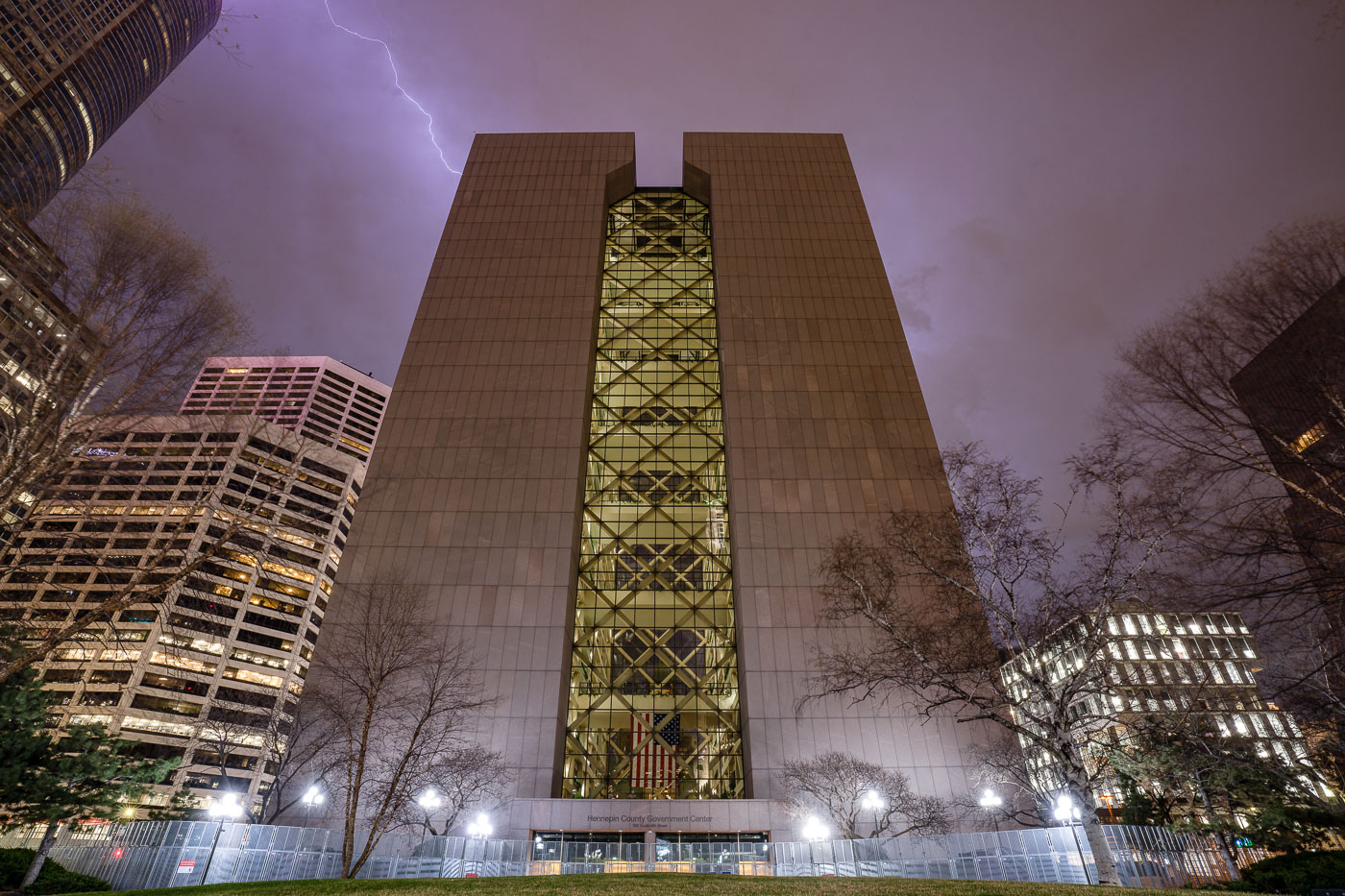
On May 25, 2020, Minneapolis police officer Derek Chauvin murdered 46-year-old George Floyd during an arrest outside Cup Foods at the intersection of 38th Street and Chicago Avenue in south Minneapolis. Video recorded by bystanders showed Chauvin kneeling on Floyd’s neck for more than nine minutes while Floyd repeatedly said he could not breathe. Three other Minneapolis police officers - J. Alexander Kueng, Thomas Lane, and Tou Thao — were also present during the arrest and later faced criminal charges for their roles in Floyd’s death. Floyd’s murder sparked protests and civil unrest across Minneapolis and around the world, leading to widespread demonstrations against police violence, major policy debates on policing, and the conviction of Chauvin on murder and manslaughter charges in 2021.February 28, 2021Temporary security fencing is erected around the Hennepin County Government Center in Minneapolis on February 28, 2021, in anticipation of the Derek Chauvin murder trial. The installation of this fencing, part of Operation Safety Net, was a measure to secure the courthouse and manage potential public gatherings during the high-profile trial, which began jury selection on March 8, 2021. The courthouse complex, a significant piece of Brutalist architecture in downtown Minneapolis, was the site of the trial for the death of George Floyd, an event that sparked widespread protests and unrest.
On May 25, 2020, Minneapolis police officer Derek Chauvin murdered 46-year-old George Floyd during an arrest outside Cup Foods at the intersection of 38th Street and Chicago Avenue in south Minneapolis. Video recorded by bystanders showed Chauvin kneeling on Floyd’s neck for more than nine minutes while Floyd repeatedly said he could not breathe. Three other Minneapolis police officers - J. Alexander Kueng, Thomas Lane, and Tou Thao — were also present during the arrest and later faced criminal charges for their roles in Floyd’s death. Floyd’s murder sparked protests and civil unrest across Minneapolis and around the world, leading to widespread demonstrations against police violence, major policy debates on policing, and the conviction of Chauvin on murder and manslaughter charges in 2021.February 28, 2021Security fencing surrounds the Hennepin County Government Center in Minneapolis, Minnesota, in anticipation of the Derek Chauvin murder trial. The trial, which began jury selection on March 8, 2021, followed the death of George Floyd and subsequent protests. The fencing, part of Operation Safety Net, was installed to secure the courthouse and surrounding areas during the high-profile legal proceedings.
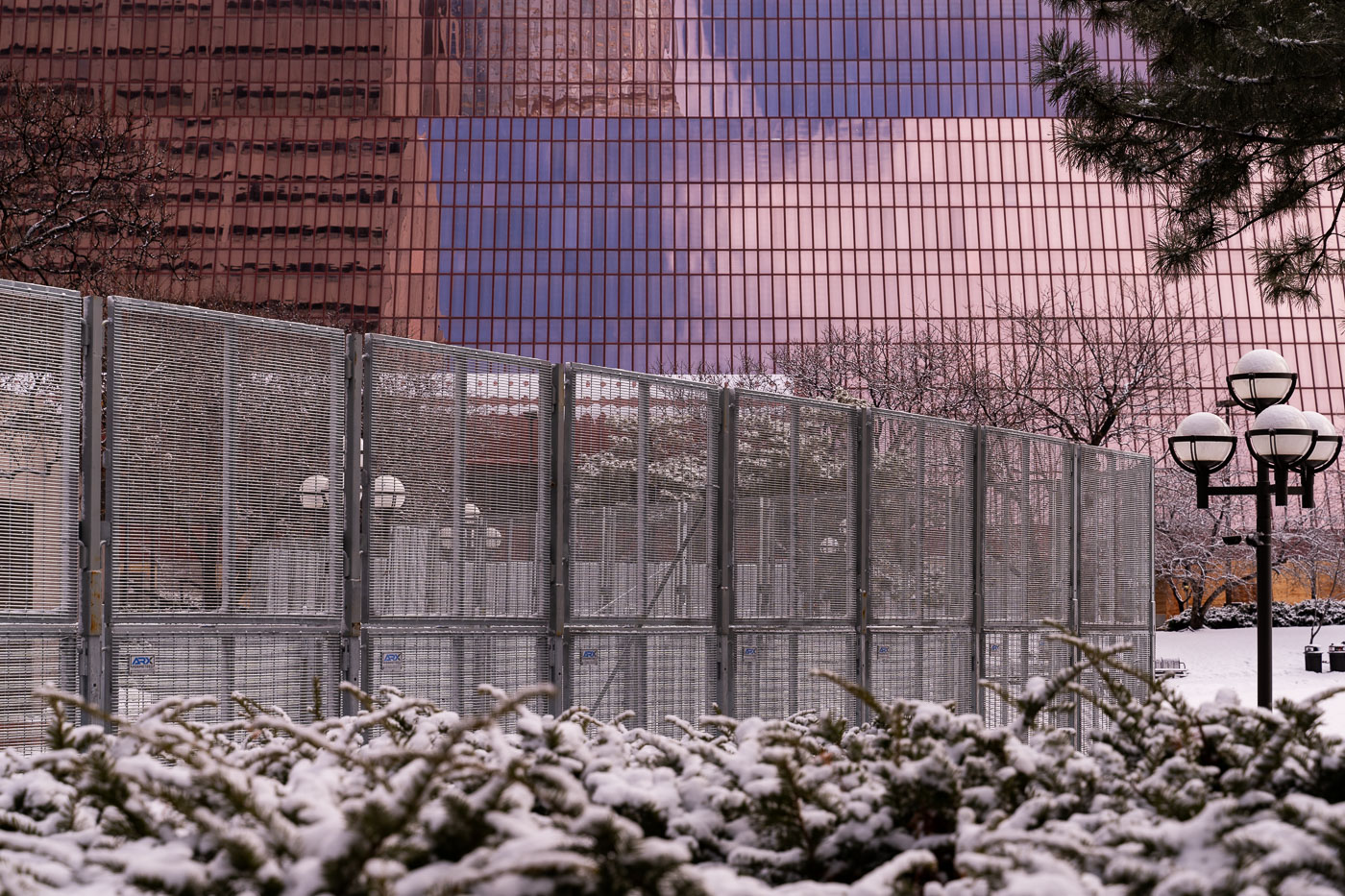
On May 25, 2020, Minneapolis police officer Derek Chauvin murdered 46-year-old George Floyd during an arrest outside Cup Foods at the intersection of 38th Street and Chicago Avenue in south Minneapolis. Video recorded by bystanders showed Chauvin kneeling on Floyd’s neck for more than nine minutes while Floyd repeatedly said he could not breathe. Three other Minneapolis police officers - J. Alexander Kueng, Thomas Lane, and Tou Thao — were also present during the arrest and later faced criminal charges for their roles in Floyd’s death. Floyd’s murder sparked protests and civil unrest across Minneapolis and around the world, leading to widespread demonstrations against police violence, major policy debates on policing, and the conviction of Chauvin on murder and manslaughter charges in 2021.February 28, 2021Temporary fencing by APX Perimeters surrounds the Hennepin County Government Center in Minneapolis, in anticipation of the Derek Chauvin murder trial. The installation of this security measure was part of Operation Safety Net, a multi-agency response to ensure public safety during the trial and potential unrest following the death of George Floyd. Jury selection was scheduled to begin on March 8, 2021, making the courthouse a focal point of national attention.February 28, 2021Razor wire fencing, a security measure, surrounds the Hennepin County Government Center in Minneapolis. This installation was part of Operation Safety Net, a multi-agency effort to provide security during the Derek Chauvin murder trial. The trial, which began with jury selection on March 8, 2021, followed the death of George Floyd and subsequent protests.
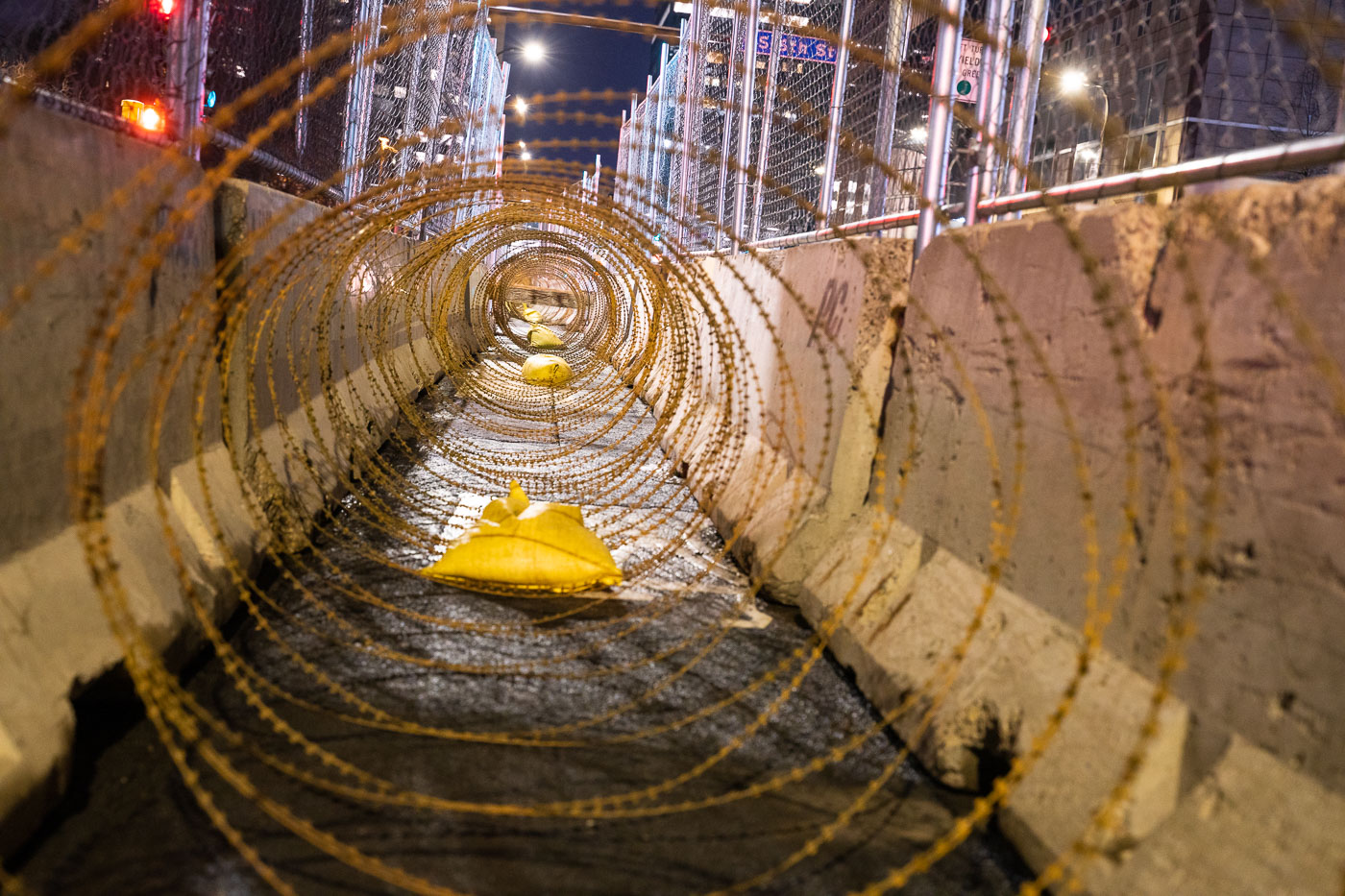
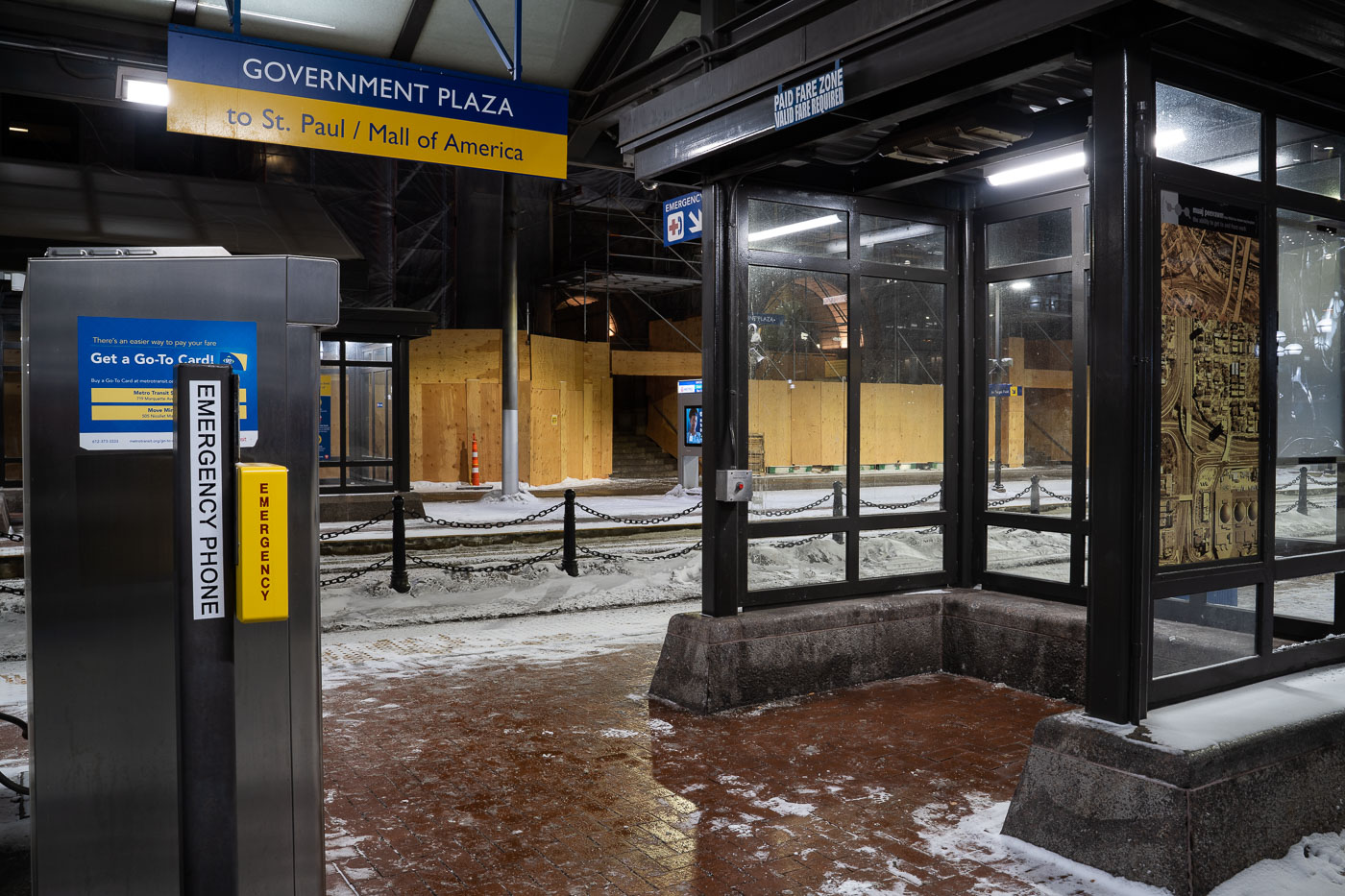
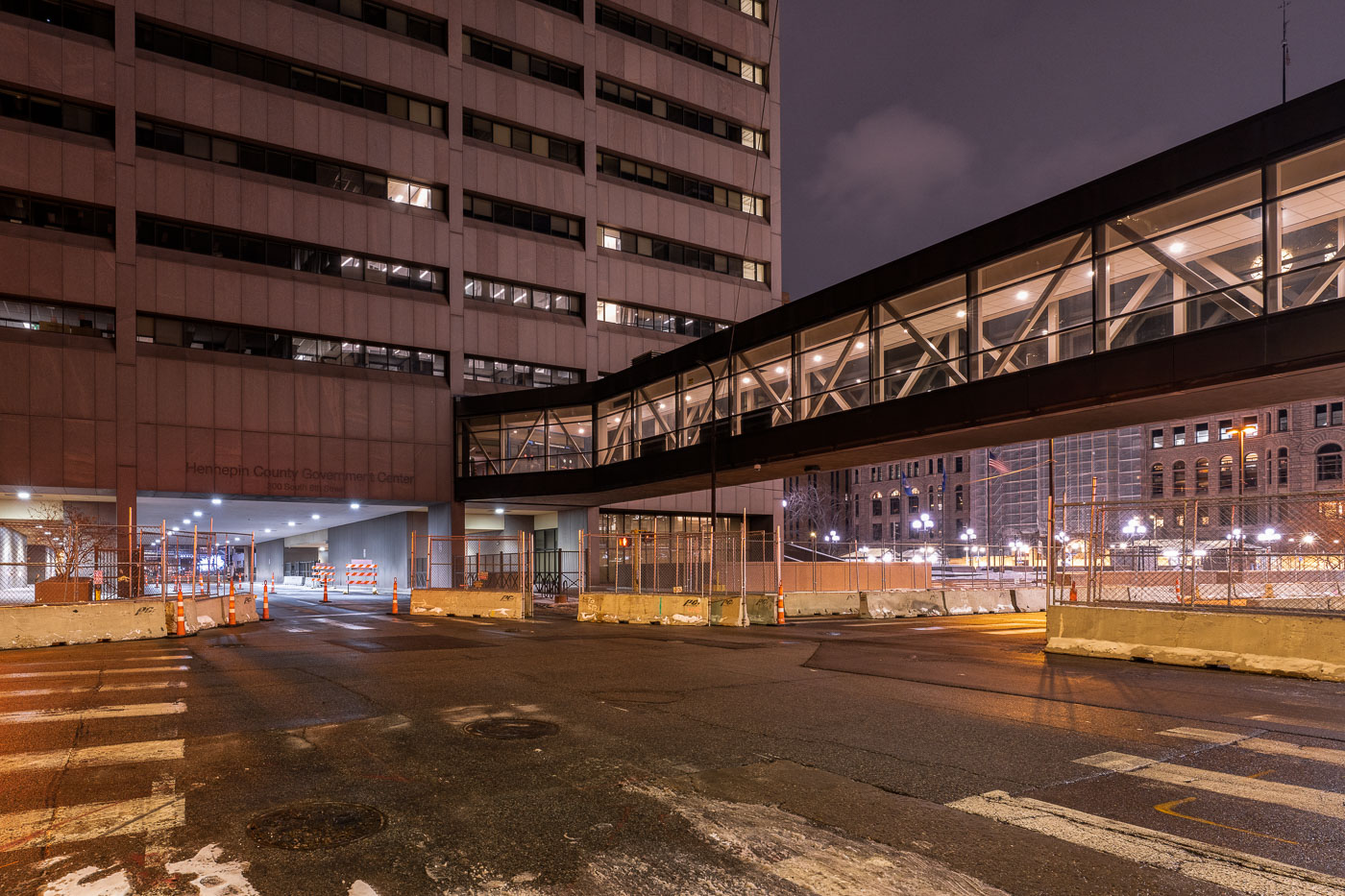
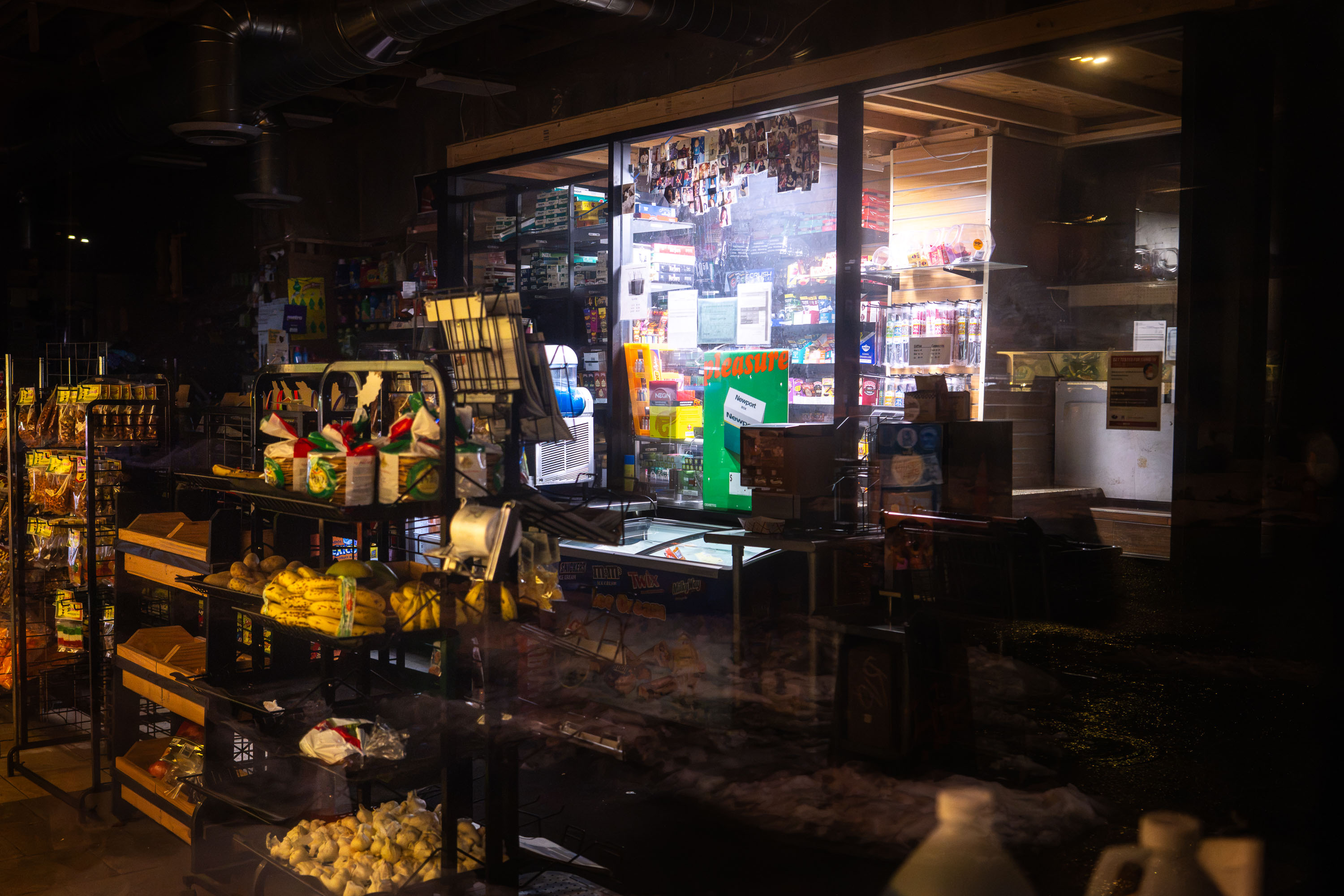
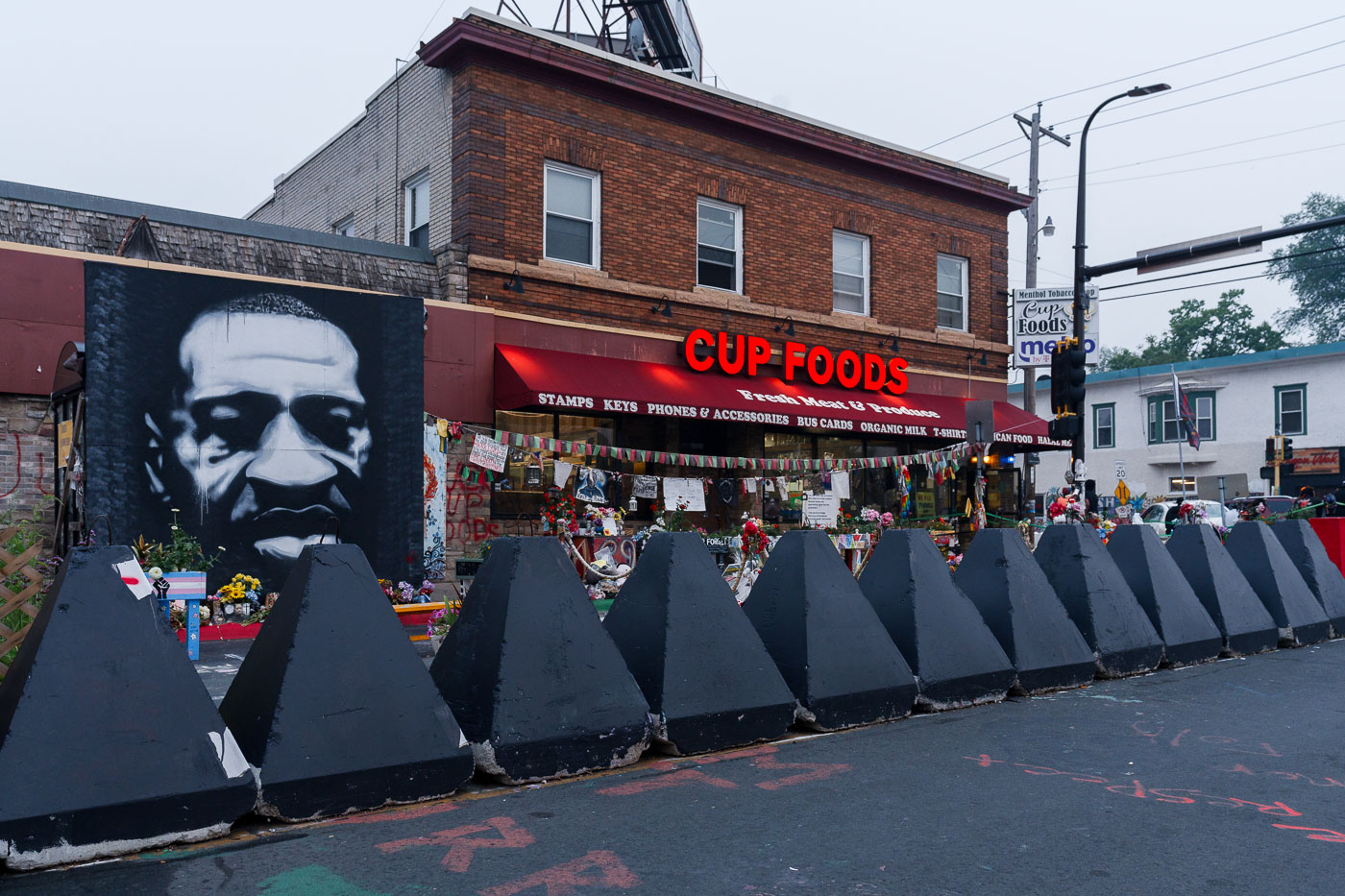
On May 25, 2020, Minneapolis police officer Derek Chauvin murdered 46-year-old George Floyd during an arrest outside Cup Foods at the intersection of 38th Street and Chicago Avenue in south Minneapolis. Video recorded by bystanders showed Chauvin kneeling on Floyd’s neck for more than nine minutes while Floyd repeatedly said he could not breathe. Three other Minneapolis police officers - J. Alexander Kueng, Thomas Lane, and Tou Thao — were also present during the arrest and later faced criminal charges for their roles in Floyd’s death. Floyd’s murder sparked protests and civil unrest across Minneapolis and around the world, leading to widespread demonstrations against police violence, major policy debates on policing, and the conviction of Chauvin on murder and manslaughter charges in 2021.February 24, 2021Razor wire and concrete barriers form a secured corridor outside the Hennepin County Government Center in downtown Minneapolis. The government center houses county courts and administrative offices. Temporary fencing and barricades were installed around the complex during security preparations in early 2021.February 17, 2021Government Plaza station in downtown Minneapolis serves Metro Transit Blue and Green Line trains. The platform signage directs riders toward St. Paul and the Mall of America. Plywood barriers were installed around parts of the station area in February 2021 during heightened security measures tied to the Derek Chauvin trial.February 17, 2021The Hennepin County Government Center in downtown Minneapolis has plywood covering several ground-floor windows and entrances. The county courthouse complex was being secured in February 2021 ahead of the Derek Chauvin trial in the death of George Floyd. The building stands at 300 South 6th Street.February 17, 2021Hennepin County Government Center in downtown Minneapolis houses county courts and administrative offices.February 18, 2021Hennepin County Jail, Minneapolis. Temporary fencing and concrete barriers surround the jail complex in downtown Minneapolis during security preparations tied to the Derek Chauvin trial in February 2021. The jail stands next to the Hennepin County Government Center campus.February 18, 2021Hennepin County Government Center in downtown Minneapolis is surrounded by temporary fencing and concrete barriers. The county complex houses courts and county offices, and was under expanded security in early 2021 ahead of the Derek Chauvin trial. A skyway connects the Government Center to adjacent buildings above the secured street level.February 22, 2021Hennepin County Jail in downtown Minneapolis was surrounded by temporary security fencing in February 2021. Additional barriers were installed around government buildings in the area before the Derek Chauvin trial. The jail is part of the Hennepin County public safety and court complex.February 25, 2021Michelle Gross speaks to a crowd at the Hennepin County Government Center announcing plans to protest the start of the Derek Chauvin murder trial.February 4, 2021Inside Cup Foods as seen from George Floyd Square. George Floyd was inside Cup Foods prior to his murder in May 2020.
March 7, 2021Members of the Minnesota National Guard were deployed to secure the Hennepin County Government Center in Minneapolis during the trial of Derek Chauvin in April 2021. The trial followed the murder of George Floyd in May 2020, which sparked widespread protests and unrest in the city. The government center, a prominent civic building in downtown Minneapolis, was fortified with fencing and security personnel to prevent potential disturbances during the highly publicized legal proceedings. The presence of military forces underscored the heightened tensions and the perceived need for enhanced security measures in the city.March 2, 2021Minnesota National Guard vehicles are staged at The Armory in Minneapolis in anticipation of potential civil unrest. This deployment occurred in May 2021, following the conviction of former Minneapolis police officer Derek Chauvin for the murder of George Floyd. The Armory, a historic building completed in 1936, has served as a military facility and a public venue. Its large drill hall and surrounding grounds have historically been used for military training and public gatherings, making it a strategic location for staging resources during times of heightened public tension.March 2, 2021Signage indicating a restricted area and "Authorized Personnel Only" is posted on secure fencing surrounding the Hennepin County Government Center in Minneapolis.March 3, 2021A Hennepin County Sheriff's Special Operations vehicle is visible behind security fencing and concrete barriers outside the Hennepin County Government Center in Minneapolis. The building served as the courthouse for the trial of Derek Chauvin, the former Minneapolis police officer charged in the murder of George Floyd. The trial, which began in March 2021, drew significant public attention and necessitated heightened security measures in the downtown area. The presence of the Special Operations vehicle underscores the security protocols implemented during this high-profile legal proceeding.March 4, 2021A sign at George Floyd Square in Minneapolis reads "Justice for George Floyd. Trial in 3 days." The square, located at the intersection of Chicago Avenue and East 38th Street, became a focal point for protests following the murder of George Floyd in May 2020. The sign's message reflects the anticipation of the trial of Derek Chauvin, the officer accused of Floyd's murder, which began on March 8, 2021. A banner with the words "BLACK TAX" is also visible, indicating the ongoing activism and community organizing within the square.March 6, 2021Protesters gathered in St. Paul, Minnesota, to rally against the Line 3 pipeline project. The sign visible reads "Together We Will Kill the Black Snake Stop Line 3," referencing the pipeline's nickname and the environmental concerns associated with its construction. This protest occurred during a period of heightened activism and legal challenges surrounding the pipeline's development, which has been a significant point of contention due to its potential impact on Indigenous lands and water resources in Minnesota.March 6, 2021Toshira Garraway speaks at a protest outside the Governor's residence, advocating for justice for victims of police violence. The gathering, which included family members of those affected, highlighted cases such as George Floyd, Ahmaud Arbery, and Jaffort Smith. These protests gained prominence following the murder of George Floyd in Minneapolis and subsequent nationwide demonstrations against police brutality and racial injustice. The event underscores the ongoing efforts by activists and families to seek accountability and systemic change within law enforcement.March 6, 2021Protesters gathered outside the Minnesota Governor's Residence in St. Paul, holding signs and raising fists in solidarity with victims of police brutality. The "Welcome to Minneapolis" hoodie worn by one individual, along with imagery referencing the "3rd Precinct" and "Shut Down Line 3," suggests a connection to broader social justice movements in the region. The signs depict Philando Castile and another unidentified victim, highlighting specific instances of police violence that have fueled public outcry and calls for reform.March 6, 2021Protesters gathered outside a residence in Minneapolis, Minnesota, on March 19, 2021, to demand justice for victims of police violence. The protest occurred during the trial of Derek Chauvin, the former Minneapolis police officer charged in the murder of George Floyd. The demonstration aimed to raise awareness and advocate for systemic changes in policing.March 6, 2021Protesters gathered outside the Minnesota Governor's Residence in St. Paul, holding signs that expressed solidarity with various marginalized groups. The rally occurred during the trial of Derek Chauvin, a former Minneapolis police officer whose murder conviction stemmed from the killing of George Floyd. The signs reflect broader concerns about police violence and systemic injustices, advocating for the rights of Black and Brown individuals, veterans, Native Americans, immigrants, and victims of domestic violence, among others. The "I Kneel to Stand For" message highlights a commitment to social justice and equality.March 6, 2021Protesters gathered in St. Paul, Minnesota, to demand justice for George Floyd. The "Justice 4 George" sign reflects the widespread outrage and calls for accountability following Floyd's murder by Minneapolis police officer Derek Chauvin. This event was part of a larger movement protesting police brutality and racial injustice across the United States.March 7, 2021Thousands marched in downtown Minneapolis on March 7, 2021, the day before jury selection began in the trial of Derek Chauvin. The former Minneapolis police officer was charged with the murder of George Floyd, who died on May 25, 2020, sparking widespread protests against police brutality and racial injustice. The marchers carried signs and a casket adorned with flowers, symbolizing their grief and demand for accountability.March 7, 2021Protesters gathered in downtown Minneapolis during the trial of Derek Chauvin, the police officer accused in the murder of George Floyd. The march and subsequent sit-in occurred in April 2021, reflecting ongoing activism and demands for justice following Floyd's death in May 2020. The event highlighted the community's continued engagement with issues of racial inequality and police accountability.March 7, 2021Protesters gather outside the Hennepin County Government Center in downtown Minneapolis on March 7, 2021, during a march and rally held the day before jury selection began in the trial of former Minneapolis police officer Derek Chauvin for the murder of George Floyd. Demonstrators carry signs calling for justice for Floyd and denouncing white supremacy, while many participants wear masks during the ongoing COVID-19 pandemic. The Government Center was a regular assembly point for demonstrations tied to Floyd’s killing on May 25, 2020, and to court proceedings in the Chauvin case.March 7, 2021A protest march took place in downtown Minneapolis on March 7, 2021, the day before Derek Chauvin's trial for the murder of George Floyd began. Participants carried a scroll listing over 470 names of individuals killed by Minnesota police officers. Organizers highlighted that Chauvin was involved in five of those cases, underscoring the broader issue of police brutality. The march proceeded from the Hennepin County Government Center down Hennepin Avenue, drawing attention to systemic issues of racial injustice and police accountability.March 7, 2021Thousands of protestors marched near the Hennepin County Government Center in Minneapolis on March 7, 2021. The march occurred the day before the start of jury selection in the trial of former Minneapolis police officer Derek Chauvin, who was charged with the murder of George Floyd on May 25, 2020. The event was part of ongoing protests against police brutality and racial injustice that followed Floyd's death.March 7, 2021In anticipation of the Derek Chauvin murder trial, storefronts in downtown Minneapolis were boarded up as a security measure. The image shows workers installing plywood over the windows of a Marshalls store, with a Minneapolis Police Department vehicle parked nearby. This preparation reflected concerns about potential unrest and property damage, echoing events that followed the murder of George Floyd in the same city in 2020.March 7, 2021Thousands marched in downtown Minneapolis the day before jury selection began in the trial of former police officer Derek Chauvin. Chauvin was charged with the murder of George Floyd on May 25, 2020, an event that sparked widespread protests against police brutality and racial injustice. The marchers carried signs with messages such as "Police = Tools of White Supremacy" and "Dismantle White Supremacy," reflecting the broader movement for Black Lives Matter. The protests highlighted deep-seated issues of systemic racism and police accountability in the United States.March 7, 2021Thousands marched in Downtown Minneapolis on March 7, 2021, the day before the start of jury selection in the trial of former Minneapolis Police officer Derek Chauvin. Chauvin was charged with the murder of George Floyd on May 25, 2020, an event that sparked widespread protests against police brutality and white supremacy. The marchers carried signs with messages such as "Dismantle White Supremacy" and "We Need Justice," reflecting the ongoing calls for racial equity and accountability.March 7, 2021A protester holds a sign reading "GEORGE FLOYD REST IN POWER" during a march in Minneapolis. The sign also lists the names of other individuals who died due to police brutality, including Eric Garner, Michael Brown, Tamir Rice, Breonna Taylor, and Philando Castile. This protest occurred during the trial of Derek Chauvin, the Minneapolis police officer convicted of murdering George Floyd. The sign serves as a memorial and a statement against racial injustice and police violence.March 7, 2021Protesters approach the Hennepin County Government Center in Minneapolis, Minnesota, during the trial of Derek Chauvin. The "Cage," a temporary security perimeter constructed with chain-link fencing, plywood, and barbed wire, was erected around the courthouse to manage crowds and ensure safety. This measure was implemented in response to widespread protests against police brutality and racial injustice that followed the murder of George Floyd in May 2020. The "Justice for All" signs carried by some individuals reflect the broader movement's demands for accountability and systemic change.March 7, 2021A protester affixes a poster bearing the name "George Floyd" repeatedly to security fencing outside the Hennepin County Government Center. This location served as a focal point during the trial of Derek Chauvin, the police officer convicted of murdering George Floyd in May 2020. The protests that followed Floyd's death brought widespread attention to issues of racial injustice and police brutality. The fencing was erected to secure the government center during the high-profile trial, reflecting the heightened tensions and public engagement surrounding the proceedings.March 7, 2021Protesters gather outside the Hennepin County Government Center in Minneapolis on March 7, 2021. The demonstration occurred the day before the start of jury selection in the trial of Derek Chauvin, the former Minneapolis police officer charged with the murder of George Floyd on May 25, 2020. The government center is a prominent civic building in downtown Minneapolis, serving as the seat of county government and a site for significant public events and protests.March 7, 2021Minnesota National Guard members stand behind fencing at the Hennepin County Government Center in Minneapolis. This security presence was established during the trial of Derek Chauvin, the former Minneapolis police officer charged in the murder of George Floyd. The trial, which began in March 2021, drew significant public attention and heightened security measures around the courthouse. The presence of the National Guard underscored the tense atmosphere and concerns about potential unrest following the widely publicized events of George Floyd's death.March 7, 2021Security measures were heightened around the Hennepin County Government Center in Minneapolis in March 2021. This increased security was in place due to the ongoing murder trial of Derek Chauvin, the former police officer whose actions led to the death of George Floyd. The trial, held within the courthouse, drew significant national attention and prompted concerns about public safety and potential unrest. The presence of barriers and personnel underscored the sensitive nature of the proceedings and the broader context of the Minneapolis Uprising that followed Floyd's death.March 7, 2021National Guard vehicles are positioned outside the Hennepin County Government Center in Minneapolis during the overnight hours. The presence of military vehicles and barricades indicates heightened security measures, likely in response to the civil unrest and protests that occurred in the city. These events were largely sparked by the murder of George Floyd and the subsequent trial of Derek Chauvin, highlighting the complex relationship between law enforcement, the National Guard, and public demonstrations in urban environments.March 7, 2021A memorial for George Floyd outside the Hennepin County Government Center in Minneapolis on March 7, 2021. The memorial features "Justice for All" signs, "Black Lives Matter" messages, and numerous lit candles, placed during the trial of Derek Chauvin. This site became a focal point for protests and tributes following Floyd's murder in May 2020. The "Justice for All" and "My Life Matters" signs reflect the broader movement for racial justice and accountability that emerged from the event.March 7, 2021National Guard soldiers stand outside the Hennepin County Government Center in Minneapolis on March 7, 2021. Their presence was in response to the ongoing trial of Derek Chauvin, the former Minneapolis police officer charged in the murder of George Floyd. The trial, which began in March 2021, drew significant public attention and protests, leading to heightened security measures in the city.March 7, 2021National Guard members stand security outside the Hennepin County Government Center in Minneapolis on March 7, 2021. This deployment occurred during the trial of Derek Chauvin, the former Minneapolis police officer charged in the murder of George Floyd. The presence of the National Guard was a response to concerns about potential unrest and protests related to the high-profile trial. The Hennepin County Government Center serves as a central hub for county administration and judicial proceedings.March 8, 2021Protesters gathered outside the Hennepin County Government Center in Minneapolis on March 8, 2021, the morning of the Derek Chauvin trial. Chauvin, a former Minneapolis police officer, was charged with the murder of George Floyd on May 25, 2020. The banner reads "Justice 4 George Floyd & All Stolen Lives. The World Is Watching." This event highlights the broader Black Lives Matter movement and calls for accountability in cases of police brutality.March 8, 2021Protesters gathered outside the Hennepin County Government Center in Minneapolis on March 8, 2021, ahead of the Derek Chauvin trial. Chauvin, a former Minneapolis police officer, was charged in the murder of George Floyd on May 25, 2020. The sign "Abolish Police + Prisons" reflects a central demand of the Black Lives Matter movement, which gained widespread attention following Floyd's death and has continued to advocate for systemic reform of law enforcement and the justice system.March 8, 2021Protesters gathered outside the Hennepin County Government Center in Minneapolis on March 8, 2021, awaiting the start of the trial for former police officer Derek Chauvin. Chauvin was charged with murder and manslaughter in the death of George Floyd on May 25, 2020, an event that sparked widespread protests against police brutality and racial injustice. The Hennepin County Government Center serves as a key administrative and judicial hub for the county, and its proximity to the site of Floyd's murder made it a focal point for demonstrations.March 8, 2021Protesters gathered outside the Hennepin County Government Center in Minneapolis on March 8, 2021, during the trial of Derek Chauvin. The trial concerned the murder of George Floyd, an event that sparked widespread protests and calls for police reform. This sign, "Police Are The Problem," reflects the sentiment of many demonstrators who questioned law enforcement practices and accountability. The presence of the light rail train in the background highlights the urban setting of the protest, a common backdrop for public gatherings in Minneapolis.March 8, 2021Protesters gathered outside the Hennepin County Government Center in Minneapolis during the trial of Derek Chauvin. The courthouse was surrounded by security fencing, a measure implemented due to the high-profile nature of the trial and concerns about potential unrest. The trial, which began in March 2021, stemmed from the murder of George Floyd by Minneapolis police officer Derek Chauvin in May 2020. Protests against police brutality and racial injustice, often under the banner of Black Lives Matter, had been ongoing in Minneapolis and across the nation since Floyd's death.March 8, 2021During the trial of Derek Chauvin, a protester writes messages in chalk outside the Hennepin County Courthouse in Minneapolis. The trial, which began in March 2021, centered on the murder of George Floyd, a Black man who died in police custody. The courthouse and surrounding areas became a focal point for protests and demonstrations related to police brutality and racial justice. The chalk messages serve as a form of public expression and a visual record of the community's response to the ongoing legal proceedings and broader social issues.March 8, 2021Protesters gathered outside the Hennepin County Government Center in Minneapolis on March 8, 2021, the day the Derek Chauvin murder trial began. The sign, held by a protester, reads "Minneapolis is under military occupation," reflecting the sentiment of many during the widespread protests against police brutality that followed George Floyd's murder. The trial itself was a focal point for ongoing activism and calls for justice and accountability within the Minneapolis community and beyond.March 8, 2021Pins commemorating George Floyd and bearing the slogan "I Can't Breathe" are displayed for sale outside the Hennepin County Courthouse in Minneapolis. This location was the site of the trial of Derek Chauvin, the former Minneapolis police officer convicted of Floyd's murder in April 2021. The sale of such merchandise reflects the broader cultural and political impact of Floyd's death and the subsequent Black Lives Matter movement, which gained significant momentum following the incident in May 2020. The courthouse itself is a significant civic building in downtown Minneapolis, serving as a central hub for legal proceedings in the county.March 8, 2021A large crowd gathered in downtown Minneapolis for a protest related to the trial of Derek Chauvin, the former Minneapolis Police Officer charged in the murder of George Floyd on May 25, 2020. The protest took place outside the Hennepin County Government Center prior to the start of the trial. Many carried signs with messages such as "Justice for George Floyd," "Convict Killer Cops," and "Black Lives Matter," reflecting the broader movement against police brutality and racial injustice.March 8, 2021A large crowd gathered in downtown Minneapolis on March 8, 2021, to protest the murder of George Floyd and demand justice. The protest occurred outside the Hennepin County Government Center on the morning of the first day of the trial for former Minneapolis police officer Derek Chauvin. Chauvin was charged with second-degree murder and manslaughter in connection with Floyd's death on May 25, 2020. The "Black Lives Matter" movement gained significant momentum following Floyd's death, highlighting issues of police brutality and racial injustice.March 8, 2021A member of the Minnesota National Guard stands in front of a military vehicle outside the Hennepin County Government Center in Minneapolis. This deployment occurred during a period of heightened tension and unrest in the city, following the murder of George Floyd and the subsequent trial of Derek Chauvin. The National Guard was activated to support local law enforcement and maintain order amidst widespread protests against police brutality. The Hennepin County Government Center, a prominent civic building in downtown Minneapolis, served as a focal point during these events.March 8, 2021Following the murder of George Floyd by Minneapolis police officers in May 2020, protests erupted across the city and the nation. In response to potential unrest, businesses and public buildings, including the US Bank Building in downtown Minneapolis, were boarded up. This photograph shows the building's facade covered with plywood, adorned with chalk messages reflecting the sentiments of the time. Slogans such as "Justice for George Floyd," "Black Lives Matter," and "Stop Killing Us" are visible, alongside calls to "Abolish MPD" and "Hold Police Accountable." The messages also reference "8:46," the duration of Floyd's fatal encounter with police, and "White Supremacy is the Real Pandemic." The "Retail is Open" sign indicates that despite the surrounding social upheaval, some businesses continued to operate.March 8, 2021Messages of protest and solidarity are chalked onto boarded-up windows of a building near the Hennepin County Government Center in Minneapolis. The messages, including "Justice for George Floyd," "Stop Killing Us," and "Black Lives Matter," were created in the context of the trial of former Minneapolis Police Officer Derek Chauvin. Chauvin was charged with murder in the death of George Floyd on May 25, 2020, an event that sparked widespread protests against police brutality and racial injustice.March 8, 2021A sign posted on a chain-link fence surrounding the Hennepin County Government Center in Minneapolis reads "Bringing in the National Guard. What Could Possibly Go Wrong?" The poster includes a photograph from the Kent State shootings on May 4, 1970, where the Ohio National Guard fired on unarmed students during a protest. This juxtaposition of historical imagery with the contemporary presence of the National Guard in Minneapolis, likely during the protests following the murder of George Floyd, serves as a pointed commentary on the potential for state-sanctioned violence. The inclusion of flowers suggests a memorial or a somber reflection on the events.March 8, 2021Flowers and mirrors are placed on the street outside the Hennepin County Government Center in Minneapolis, Minnesota. This display occurred during the period of protests and unrest following the murder of George Floyd in May 2020 and the subsequent trial of Derek Chauvin. The mirrors, some bearing red paint, likely symbolize reflection and accountability, while the flowers serve as a memorial to victims of police brutality. The Hennepin County Government Center was a focal point for many demonstrations during this time.March 8, 2021An art installation reading "REFLECT" stands outside the Hennepin County Government Center in Minneapolis. The installation was present during the trial of Derek Chauvin, a former Minneapolis police officer charged with the murder of George Floyd on May 25, 2020. The trial, which began on March 8, 2021, drew significant public attention and protests related to police brutality and racial justice. The "REFLECT" installation, along with scattered roses and protest signs, served as a visual reminder of the ongoing discourse surrounding Floyd's death and its broader implications.March 8, 2021Roses, some appearing to be stained with red paint to resemble blood, were placed in a puddle outside the Hennepin County Government Center in Minneapolis. This installation occurred during the trial of Derek Chauvin, a former Minneapolis police officer charged with the murder of George Floyd. The trial, held in April 2021, drew significant national attention to issues of police brutality and racial justice.March 8, 2021The Frattallone's Ace Hardware store on Nicollet Avenue in Minneapolis is boarded up, likely in response to the civil unrest that followed the murder of George Floyd in May 2020. The plywood covering the storefront and the red spray-painted "ACE HARDWARE" graffiti indicate damage or a need for protection. This location, like many businesses in the area, experienced damage during the protests and riots. The presence of the "EXIT" signs and the NFPA 704 hazard diamond on the plywood suggest the store was operational prior to being boarded up.March 9, 2021The Minneapolis Police Department's 1st Precinct building, located in Downtown Minneapolis, is shown with a newly installed security door. This retractable barrier is designed to slide down and cover the building's windows, enhancing security. The installation of such measures reflects the heightened security concerns and the department's response to events such as the Minneapolis Uprising, which significantly impacted the city and its public institutions.March 9, 2021During the Minneapolis Uprising in 2020, following the murder of George Floyd, U.S. Bank Plaza, located across from the Hennepin County Government Center, was boarded up. In response, individuals used chalk to write messages on the boards, transforming them into a public forum for protest and commentary. The messages reflect a range of sentiments, including calls for justice, critiques of law enforcement, and expressions of solidarity with marginalized communities.March 9, 2021The Target Center in Minneapolis, a multi-purpose arena, was secured with fencing and concrete barriers during the trial of Derek Chauvin in April 2021. This measure was implemented to enhance security and prevent potential unrest, mirroring precautions taken at other city-owned properties. The arena, which hosts sporting events and concerts, became a focal point of heightened security due to its proximity to the courthouse and the national attention surrounding the trial.March 10, 2021Protest signs adorn the exterior of the former Minneapolis Police Third Precinct building, which was set ablaze during the unrest following the May 25th death of George Floyd. The signs, including messages such as "Justice for George Floyd," "Defund the Police," and "Black Lives are Sacred," reflect the sentiments of the community and the broader movement for racial justice. The precinct, a symbol of law enforcement in the neighborhood, became a focal point of protests and a site of significant destruction. The presence of these signs on the barricaded structure serves as a visual testament to the events of spring and summer 2020.March 10, 2021Demolition work is underway at the former Wells Fargo Bank building on Nicollet Avenue in Minneapolis, photographed on March 3, 2021. The structure was significantly damaged during civil unrest that followed the murder of George Floyd in May 2020. The building's destruction represents a physical manifestation of the widespread damage and subsequent rebuilding efforts in the city's commercial districts.March 10, 2021Razor wire surrounds the Minneapolis Police Third Precinct building in March 2021. This security measure was installed following protests and unrest that occurred in the city in the preceding year. The precinct, located in the Powderhorn neighborhood of Minneapolis, served as a focal point during periods of civil disturbance. The temporary fortification highlights the heightened security measures implemented to protect police facilities during times of social unrest.March 12, 2021Chalk messages, including "Stop Killer Cops" and "Justice," were written on a wall outside the Hennepin County Government Center in Minneapolis during the trial of Derek Chauvin. The trial, which began in March 2021, stemmed from the May 25, 2020 murder of George Floyd. The messages reflect the public sentiment and activism surrounding the case, which gained national and international attention.March 15, 2021The Hennepin County Government Center in Minneapolis, Minnesota, served as the courthouse for the trial of Derek Chauvin, the former police officer charged in the death of George Floyd. The incident occurred on May 25, 2020, in South Minneapolis, sparking widespread protests and national attention. The building, completed in 1977, houses county administrative offices and courtrooms, functioning as a central hub for local government operations. During the trial, security measures were significantly heightened around the courthouse, reflecting the gravity of the proceedings and the public interest they generated.March 15, 2021A Minnesota National Guard vehicle is parked near the Hennepin County Government Center in Minneapolis. The courthouse was the site of the trial for Derek Chauvin, the former Minneapolis police officer charged in the May 25, 2020, murder of George Floyd. The presence of military vehicles underscored the heightened security and tension surrounding the trial, which began in March 2021.March 15, 2021Mirrored panels bearing protest messages, including "There's Blood In These Streets" and "No Justice No Peace," are displayed outside the Hennepin County Government Center in Minneapolis. The courthouse was the site of the trial for Derek Chauvin, a former Minneapolis police officer charged in the death of George Floyd on May 25, 2020. The messages reflect the ongoing protests and calls for justice that followed Floyd's murder and highlighted systemic issues within law enforcement.March 15, 2021A padlock inscribed with "No justice, No peace" is affixed to a chain-link fence surrounding the Hennepin County Government Center in Minneapolis. This security measure was in place during the 2021 trial of Derek Chauvin, a former Minneapolis police officer charged with the murder of George Floyd. The trial, held in the same building, drew significant public attention and protests related to racial justice and police brutality.March 15, 2021A Minneapolis Police vehicle is parked on 3rd Avenue in Downtown Minneapolis, adjacent to the US Bank Plaza. The plaza's windows and ground-level facade have been boarded up and covered with graffiti, including messages related to the Black Lives Matter movement and the Derek Chauvin trial. This scene reflects the heightened tensions and public response in Minneapolis following the murder of George Floyd in May 2020. The presence of the police car and the boarded-up buildings indicate the city's efforts to manage and respond to the widespread protests and civil unrest that occurred during that period.March 15, 2021Toussaint Morrison addresses a crowd during a protest in Minneapolis on March 15, 2021. The protest occurred during the trial of Derek Chauvin, the former Minneapolis police officer charged in the murder of George Floyd. The trial, which began on March 8, 2021, brought renewed attention to racial injustice and police brutality in the United States. This event was part of a series of demonstrations that took place across the country following Floyd's death in May 2020.March 15, 2021Protesters gathered outside the Hennepin County Government Center in Minneapolis during a snowstorm. The courthouse was the site of the Derek Chauvin murder trial, who was charged in the death of George Floyd. Signs carried by the protesters read "A Man Was Lynched Yesterday," referencing the ongoing racial injustice and police brutality protests that followed Floyd's murder on May 25, 2020.March 15, 2021Protesters gathered in falling snow outside the Hennepin County Government Center in Minneapolis, demanding a fair jury selection process in the trial of Derek Chauvin. Chauvin, a former Minneapolis police officer, was accused of murdering George Floyd on May 25, 2020. The government center serves as a primary administrative and judicial hub for Hennepin County. This protest occurred during the trial, highlighting public scrutiny of the justice system.March 15, 2021During the trial of former Minneapolis Police Officer Derek Chauvin, protesters gathered outside the Hennepin County Government Center. The trial, which began in March 2021, concerned the murder of George Floyd on May 25, 2020. The presence of the National Guard and barricades indicated the heightened security measures in place due to the potential for civil unrest, a concern amplified by the ongoing protests and the Minneapolis Uprising that followed Floyd's death.March 15, 2021Protesters gathered in downtown Minneapolis during a snowstorm outside the Hennepin County Government Center. The demonstration occurred during the trial of Derek Chauvin, the former Minneapolis police officer charged in the death of George Floyd. The "Black Lives Matter" flags visible indicate the protest's alignment with the movement advocating for racial justice and police accountability.March 16, 2021A mobile surveillance unit, powered by solar panels, is positioned in the parking lot of a Target store in Minneapolis. This unit was deployed on March 16th, 2021, a period marked by heightened security concerns following the Minneapolis Uprising. Such mobile surveillance systems are often used to monitor large public areas, including retail parking lots, to deter crime and enhance safety. Their deployment can be a response to specific events or ongoing security needs in urban environments.March 16, 2021Mobile security cameras were deployed near the Minneapolis Third Precinct following the unrest of the Minneapolis Uprising in 2020. These units, often referred to as "mobile command centers" or "surveillance trailers," are equipped with multiple cameras and sometimes loudspeakers. Their purpose is to provide enhanced monitoring and security in areas experiencing heightened activity or civil disturbance. The presence of such technology reflects the increased security measures implemented in response to events like the protests that occurred after the murder of George Floyd, which significantly impacted the area around the Third Precinct.March 16, 2021Locks bearing the names of victims of police violence were placed on fencing surrounding the Hennepin County Government Center in Minneapolis during the trial of Derek Chauvin for the murder of George Floyd. The locks served as a memorial and a symbol of protest. They were removed from the fencing the following day, April 14, 2021, after being in place for approximately one week.March 16, 2021National Guard vehicles and a Hennepin County Sheriff's vehicle were stationed near the Hennepin County Courthouse in Minneapolis during the trial of Derek Chauvin. The trial, held in April 2021, stemmed from the death of George Floyd in May 2020, an event that sparked widespread protests and unrest. The presence of military and law enforcement vehicles underscored the heightened security measures and the tense atmosphere surrounding the proceedings.March 16, 2021The "George Floyd Square Community Info" board, photographed on March 16, 2021, served as a central hub for information and resources within the occupied zone in Minneapolis. The board lists various neighborhood organizations, community services like medical support and advocacy groups, and local restaurants. It also includes a "Please Do Not Disturb the Memorial" notice, indicating the site's designation as a sacred space maintained by community caretakers. The "George Floyd Global Memorial Community Story Preservation" section highlights efforts to document and preserve the history of the site and the events that led to its establishment.March 16, 2021A temporary warming shelter was erected at George Floyd Square in Minneapolis in March 2021, near the barricades that had been established following the murder of George Floyd. This structure provided refuge during cold weather for individuals present at the occupied space. The square, a focal point of protests and activism, was transformed into a community space after Floyd's death in May 2020. The shelter's presence highlights the ongoing community organizing and mutual aid efforts within the protest zone.March 17, 2021A sign reading "Justice 4 George" is displayed on a home at 3338 21st Avenue South in Minneapolis. This message reflects the widespread public outcry and protests that followed the murder of George Floyd, a Black man who died in police custody in Minneapolis in May 2020. The sign serves as a visible statement of solidarity and a demand for accountability within the community. The Minneapolis Uprising, sparked by Floyd's death, brought national and international attention to issues of racial injustice and police brutality.March 17, 2021The Say Their Names Cemetery in South Minneapolis is a memorial site established in the vicinity of George Floyd Square. It honors victims of racial injustice and police brutality, with individual markers bearing names and dates. The memorial serves as a focal point for remembrance and activism, particularly following the murder of George Floyd on May 25, 2020, in Minneapolis. The site is a testament to the ongoing struggle for racial equity and a space for collective grief and protest.March 18, 2021Minneapolis Police officers responded to a homeless encampment on the Near North side of the city. The presence of law enforcement indicates a planned clearing of the encampment, which had been established by individuals experiencing homelessness. Camp protectors were present, suggesting a confrontation or protest against the city's action. This event highlights the ongoing challenges of homelessness and the city's approach to managing encampments.March 18, 2021Locks, many bearing messages, are affixed to the security fencing surrounding the Hennepin County Government Center in Minneapolis. These locks serve as a memorial to victims of police violence, placed during the period of heightened tension and protests following the murder of George Floyd in 2020.March 18, 2021Graffiti reading "No Justice, No Streets" is spray-painted on the exterior of a building at George Floyd Square in Minneapolis. This message reflects the community's sentiment during the prolonged closure of the intersection following the death of George Floyd on May 25, 2020. The square, which became a site of protest and remembrance, was the subject of city discussions regarding its reopening to vehicular traffic.March 19, 2021Protesters gathered at the Minnesota State Capitol in St. Paul in March 2021 to demand justice for George Floyd and an end to police brutality. The demonstration occurred nearly a year after Floyd's murder by Minneapolis police, an event that sparked widespread protests across the nation and globally. The Minnesota State Capitol building, completed in 1905, serves as the seat of government for the state and is a prominent landmark in the Twin Cities.March 19, 2021Protesters gathered in St. Paul, Minnesota, to demand justice for George Floyd and other victims of police brutality. The "No Justice No Streets" slogan, prominently displayed on a sign, reflects the widespread anger and calls for systemic change following Floyd's murder. This event was part of a larger national movement that brought attention to issues of racial inequality and police accountability. The protest took place near the Minnesota State Capitol, a significant site for political action and public assembly in the state.March 20, 2021Security fencing surrounds U.S. Bank Stadium in downtown Minneapolis during the period of heightened security surrounding the Derek Chauvin murder trial in April 2021. The stadium, which opened in 2016, is a multi-purpose venue designed to host sporting events, concerts, and other large gatherings. Its construction was part of a broader effort to revitalize the downtown area and provide a modern facility for the city's professional sports teams.March 20, 2021A protest sign reading "Fire Fire Gentrifire" is displayed on a fence along the Midtown Greenway in Minneapolis.March 20, 2021The Minneapolis Police 2nd Precinct is shown fortified with razor wire and chain-link fencing. This security measure was implemented during the period surrounding the Derek Chauvin murder trial in 2021. The precinct, located in Minneapolis, Minnesota, serves as a key law enforcement facility for the city's north side. The extensive use of razor wire reflects the heightened security concerns and the volatile atmosphere in the city during that time, following widespread protests and unrest.March 20, 2021The Minneapolis Police Department's 2nd Precinct is shown fortified with razor wire and concrete barriers. This security measure was implemented in anticipation of potential unrest during the trial of Derek Chauvin, who was accused of the murder of George Floyd. The precinct, located in the Powderhorn neighborhood of Minneapolis, became a focal point during the widespread protests that followed Floyd's death in May 2020. The extensive security measures reflect the heightened tensions and the city's efforts to protect public buildings and maintain order during a period of significant social and political upheaval.March 21, 2021Barricades at George Floyd Square in Minneapolis display "The 24 Demands" in March 2021, a list of policy changes and actions sought by activists following the murder of George Floyd. The demands cover a range of issues including accountability for law enforcement, community investment, and the closure of the intersection of 38th Street and Chicago Avenue until the trials of the officers involved. This area became a focal point for protests and community organizing in the wake of Floyd's death, with activists establishing a zone to advocate for systemic change.March 22, 2021Centre Village, a mixed-use development in downtown Minneapolis, is seen boarded up. The building houses a Hyatt Place hotel and offices and condominiums. The plywood covering suggests damage or security measures taken in response to events such as the Minneapolis Uprising in late May 2020, which saw widespread protests and unrest in the city. The presence of an ATM sign indicates the building's commercial function.March 22, 2021Concrete barricades are placed in front of the entrance to The Armory in downtown Minneapolis. Originally constructed in 1935 as a National Guard armory, the building has since been repurposed as a popular concert venue. The "ARMORY" inscription is visible above the entrance doors. The presence of the barricades suggests a security measure, possibly in response to events such as the Minneapolis Uprising in 2020, which occurred in the vicinity.March 22, 2021The Hennepin County Health Services Building at 525 Park Avenue South in Minneapolis is shown boarded up. This facility has historically provided essential public health services to the community. The plywood covering suggests a response to damage or security concerns, possibly related to the civil unrest that occurred in Minneapolis in 2020. A sign indicates that services remain available during regular hours, directing visitors to an alternative entrance.March 23, 2021The George Floyd Square Memorial, located at the intersection of 38th Street and Chicago Avenue in South Minneapolis, serves as a tribute to George Floyd, who died in police custody nearby on May 25, 2020. The site became a focal point for protests against racial injustice and police brutality following his death. The memorial features a collection of flowers, candles, artwork, and personal mementos left by visitors. It stands as a powerful symbol of remembrance and a continued call for accountability and social change.March 23, 2021A sign reading "Welcome to George Floyd Square" is displayed in Minneapolis in March 2021, near Cup Foods, the convenience store where George Floyd was murdered by police on May 25, 2020. The area was occupied by protesters for months following Floyd's death, and was renamed George Floyd Square by activists. The sign, featuring a raised fist symbol, and the surrounding memorial elements, signify the ongoing impact of Floyd's murder and the subsequent calls for racial justice and police reform.March 23, 2021A mural honoring George Floyd is displayed on the exterior of Cup Foods in South Minneapolis, the site where Floyd was killed in May 2020. The mural, painted on the 38th Street side of the store, features Floyd's portrait and the names of other Black individuals who have died due to police brutality. The area around the mural has become a memorial, with flowers, signs, and other tributes placed on the sidewalk. This location, often referred to as George Floyd Square, became a focal point for protests and activism following Floyd's death.March 23, 2021Protest signs, including one reading "ACAB" (All Cops Are Bastards) and another with the slogan "THINK ABOUT HOW MANY WEREN'T FILMED," are displayed near Cup Foods in George Floyd Square, Minneapolis. A teddy bear and flowers are placed as tributes. This area became a focal point for protests following the murder of George Floyd in May 2020, and has since been a site of ongoing activism and community organizing. The signs reflect sentiments expressed during the Minneapolis Uprising and subsequent movements advocating for police reform and racial justice.March 23, 2021This mural, located at George Floyd Square in South Minneapolis, commemorates George Floyd. The square became a focal point for protests and activism following Floyd's murder in May 2020. The artwork serves as a memorial and a symbol of the ongoing movement for racial justice and police reform.March 23, 2021A handwritten letter and beaded necklaces are displayed at George Floyd Square in Minneapolis, a site that became a focal point for protests following the murder of George Floyd in May 2020. The area, located at the intersection of 38th Street and Chicago Avenue, was occupied by protesters for months. This memorial serves as a space for remembrance, reflection, and continued activism related to racial justice and police brutality.March 25, 2021Toussaint Morrison speaks at a press conference in Minneapolis regarding an incident where a police officer was seen punching a teenager. The teenager was reportedly protesting the arrest of a carjacking suspect. The Minneapolis Police Department confirmed that an internal affairs investigation had been opened into the officer's conduct. This event occurred in the context of ongoing public scrutiny of police actions in the city.March 25, 2021Mel Reeves speaks to the media outside the Minneapolis Police Department Headquarters on November 13, 2020. Reeves addressed the public following the release of a video showing a Minneapolis police officer punching a teenager who was protesting the arrest of a carjacking suspect. The Minneapolis Police Department confirmed that an internal affairs investigation had been opened into the incident.March 26, 2021The Radisson RED Hotel in downtown Minneapolis is shown boarded up at night. This temporary measure was implemented following the civil unrest and protests that occurred in the city in the spring of 2020. The plywood covering the building's facade served to protect the property from potential damage during a period of heightened social and political tension. The hotel, located in the heart of the city, is a contemporary lodging establishment known for its unique design and amenities.March 26, 2021The Speedway gas station on Lake Street in South Minneapolis is shown preparing to reopen after being rebuilt. This location was significantly damaged during the unrest that followed the murder of George Floyd in May 2020. The rebuilding of this and other businesses in the area reflects the community's resilience and efforts to recover from the events of the Minneapolis Uprising.March 27, 2021The Minneapolis Police Third Precinct and an adjacent Autozone on East Lake Street are seen at night in March 2021. This area was a focal point during the civil unrest that followed the murder of George Floyd in May 2020. The Third Precinct building itself was heavily damaged and eventually abandoned by the Minneapolis Police Department. The surrounding commercial properties, including the Autozone and a nearby Target store, also sustained damage during the period of protests and unrest.March 27, 2021Reconstruction efforts are underway on East Lake Street in Minneapolis on March 27, 2021, following extensive damage to businesses and apartment buildings during the civil unrest of summer 2020. The unrest, sparked by the murder of George Floyd, led to widespread destruction, including the loss of the Autozone, Wendy's, and Everlake Apartments. This image shows the ongoing rebuilding of these structures, symbolizing the community's resilience and determination to recover from the events.March 27, 2021Messages reading "RIP George" and "Can you hear us now!" are spray-painted on the rooftop of a building across from the Minneapolis Police Third Precinct. The precinct building was set ablaze during civil unrest that followed the murder of George Floyd on May 25, 2020. The messages serve as a stark reminder of the public outcry and demands for accountability that characterized the Minneapolis Uprising.March 27, 2021A raised fist sculpture and the Pan-African flag fly at George Floyd Square in Minneapolis in March 2021. The square, located at the intersection of Chicago Avenue and 38th Street, became a focal point for protests following the murder of George Floyd by Minneapolis police officer Derek Chauvin in May 2020. The area was occupied by protesters for an extended period, transforming it into a space for community gathering and activism. The fist and flag symbolize Black Power and solidarity, reflecting the ongoing movement for racial justice.March 27, 2021The George Floyd Memorial mural, located at Cup Foods on the corner of 38th Street and Chicago Avenue in South Minneapolis, was created in the aftermath of George Floyd's murder in May 2020. The mural serves as a focal point for remembrance and protest, situated at the epicenter of the "George Floyd Square" autonomous zone established by activists. This site became a significant gathering place for demonstrations and a symbol of the broader Black Lives Matter movement.March 27, 2021A greenhouse at George Floyd Square in Minneapolis, March 2021, served as a space for cultivating plants and flowers through the winter months. The square became a focal point for protests and activism following the murder of George Floyd in May 2020. This structure, adorned with signs and tributes such as "Black Lives Matter" and "Justice for George Floyd," reflects the community's ongoing commitment to remembrance and social justice.March 28, 2021Protesters march through downtown Minneapolis on March 7, 2021, the day before opening statements in the trial of Derek Chauvin. The former Minneapolis police officer was charged with murder and manslaughter in the death of George Floyd, an incident that occurred in the same city in May 2020. The marchers carried signs with images of Floyd and messages calling for justice, reflecting the widespread public outcry and demands for police accountability that followed Floyd's death.March 28, 2021Civil rights attorney Ben Crump speaks at a press conference in Minneapolis on March 28, 2021. The conference was held prior to the opening statements in the trial of former Minneapolis police officer Derek Chauvin, who was accused of murder in the death of George Floyd. Crump, representing the Floyd family, addressed the media, highlighting the significance of the "8:46" duration of Floyd's restraint, a reference to the time Chauvin's knee was on Floyd's neck. The trial took place amidst heightened national attention on racial justice and police accountability.March 28, 2021Reverend Al Sharpton and civil rights attorney Ben Crump addressed a prayer vigil and rally at Greater Friendship Missionary Church in Minneapolis on March 28, 2021. The event was held for the family of George Floyd ahead of the trial for Derek Chauvin, the former Minneapolis police officer charged in Floyd's death. The vigil, organized by the National Action Network, brought together community leaders and activists to offer support and call for justice. The Greater Friendship Missionary Church has served the South Minneapolis community for decades, providing spiritual guidance and a gathering space for local residents.March 29, 2021Terrence and Philonise Floyd, brother and sister of George Floyd, arrive at the Hennepin County Government Center in Minneapolis. They are present for the opening statements of the trial of former Minneapolis police officer Derek Chauvin, who is accused of murder in connection with Floyd's death. The trial began on March 29, 2021, and drew significant national and international attention due to the circumstances of Floyd's killing and the subsequent protests against police brutality.March 29, 2021Reverend Al Sharpton, a prominent civil rights activist, arrived at the Hennepin County Government Center in Minneapolis, Minnesota, alongside the family of George Floyd. They were present for a press conference held outside the courthouse before the opening statements of the Derek Chauvin trial. The trial, which began on March 29, 2021, concerned the death of George Floyd, an African American man whose killing by Minneapolis police officer Derek Chauvin was captured on video and sparked widespread protests against police brutality.March 29, 2021Civil rights attorney Ben Crump addresses members of the press outside the Hennepin County Government Center in Minneapolis. Crump, representing the family of George Floyd, spoke before the opening statements of the trial of former Minneapolis police officer Derek Chauvin. Chauvin was accused of murdering Floyd on May 25, 2020, an event that sparked widespread protests against police brutality.March 29, 2021Protesters gathered outside the Hennepin County Government Center in Minneapolis on March 29, 2021, as opening statements began in the murder trial of former police officer Derek Chauvin. The trial followed the death of George Floyd, who died in police custody in Minneapolis in May 2020, sparking widespread protests against police brutality. The signs held by the demonstrators reflect sentiments of community support and a call for justice, with one banner stating, "America's Very Soul is on Trial!" The Hennepin County Government Center serves as a key judicial and administrative hub for the county.March 29, 2021Civil rights leader Rev. Al Sharpton speaks outside the Hennepin County Government Center in Minneapolis, Minnesota, on March 29, 2021. He was joined by George Floyd's brothers, Philonise and Terrence Floyd, as opening statements were set to begin in the trial of former Minneapolis police officer Derek Chauvin. The trial stemmed from the May 25, 2020, death of George Floyd, whose murder by Chauvin was captured on video and sparked widespread protests against police brutality and racial injustice across the United States and globally.March 29, 2021On March 29, 2021, civil rights attorney Ben Crump and Rev. Al Sharpton, along with members of George Floyd's family, knelt for 8 minutes and 46 seconds outside the Hennepin County Government Center in Minneapolis. This act of remembrance occurred just prior to the opening statements in the trial of Derek Chauvin, the former Minneapolis police officer accused of murdering George Floyd on May 25, 2020. The duration of the kneeling symbolized the amount of time Chauvin's knee was on Floyd's neck during the fatal arrest, an event that sparked widespread protests against police brutality.March 29, 2021Members of the National Guard are stationed outside the Hennepin County Government Center in Minneapolis. The building, located at 300 South 6th Street, serves as a central hub for county government operations. Its security was heightened during the trial of Derek Chauvin, a former Minneapolis police officer charged in the death of George Floyd. The presence of the National Guard underscored the significant public attention and potential for unrest surrounding the trial.March 29, 2021Civil rights attorneys Ben Crump and Rev. Al Sharpton arrived at the Hennepin County Government Center in Minneapolis on March 29, 2021. Their arrival marked the beginning of opening statements in the murder trial of former Minneapolis police officer Derek Chauvin, who was charged in the death of George Floyd on May 25, 2020. The courthouse was heavily fortified with law enforcement and National Guard personnel due to widespread protests and civil unrest that followed Floyd's death.March 29, 2021A protest sign reading "All Eyez On Justice" with the subtitle "Justice for George Floyd" is displayed outside the Hennepin County Courthouse in Minneapolis. The sign features a gas mask with a shattered lens, symbolizing the urgency and severity of the call for justice. This image was taken on March 29, 2021, during the trial of Derek Chauvin, the former Minneapolis police officer charged with the murder of George Floyd. The protest and subsequent trial drew national and international attention to issues of police brutality and racial injustice.March 29, 2021Protesters gathered in Downtown Minneapolis on March 8, 2021, the day opening statements began in the trial of Derek Chauvin, the former police officer accused of murdering George Floyd on May 25, 2020. The shirt worn by the individual in the foreground displays "I Can't Breathe" along with portraits of Floyd and other Black individuals who died in encounters with law enforcement. This protest was part of a broader movement demanding justice for Floyd and accountability for police brutality.March 29, 2021On March 8, 2021, protesters gathered outside the Hennepin County Government Center in Minneapolis to rally and march on the day opening statements began in the trial of Derek Chauvin. Chauvin, a former Minneapolis police officer, was accused of murdering George Floyd on May 25, 2020. The building, located at 300 South Sixth Street, serves as the seat of county government and houses courtrooms and administrative offices. Security forces, including National Guard members, were visible on the building's upper levels, and barricades were erected around the perimeter.March 29, 2021A protestor carries a Black Lives Matter flag through Downtown Minneapolis on March 8, 2021, the day opening statements began in the trial of Derek Chauvin. Chauvin, a former Minneapolis police officer, was accused of murdering George Floyd on May 25, 2020, an event that sparked widespread protests against police brutality and racial injustice. The trial took place in Hennepin County District Court, with significant public attention and ongoing demonstrations in the city.March 29, 2021Protesters gathered in Downtown Minneapolis on March 29, 2021, the day opening statements began in the murder trial of former police officer Derek Chauvin. Chauvin was accused of killing George Floyd on May 25, 2020, after a video showed him kneeling on Floyd's neck for over eight minutes. The protest highlighted the duration of the restraint and the circumstances surrounding Floyd's death, which sparked widespread demonstrations against police brutality and racial injustice.March 29, 2021On the opening day of the Derek Chauvin trial, protesters gathered in Downtown Minneapolis to march and rally. Chauvin, a former Minneapolis police officer, was accused of murdering George Floyd on May 25, 2020. The protest signifies the ongoing public response to Floyd's death and the subsequent calls for justice and police reform.March 29, 2021Protesters gathered in Downtown Minneapolis on March 29, 2021, the day opening statements began in the trial of former police officer Derek Chauvin. Chauvin was accused of murdering George Floyd on May 25, 2020, an event that sparked widespread protests against racial injustice and police brutality. The signs carried by the crowd reflect the ongoing calls for accountability and justice for Floyd and other victims of police violence.March 29, 2021On March 29, 2021, the first day of opening statements in the trial of Derek Chauvin, a former Minneapolis police officer accused of murdering George Floyd, a woman tied red ribbons to security fencing surrounding the Hennepin County Government Center. The ribbons, arranged in the shape of a heart, served as a public memorial and a symbol of solidarity. The security measures were put in place due to anticipated protests and unrest following the trial, which was a focal point for national conversations about racial justice and police brutality.March 29, 2021Red ribbons bearing the names and brief accounts of victims of police brutality are affixed to the security fencing surrounding the Hennepin County Government Center in Minneapolis. This display was visible on the day opening statements began in the trial of Derek Chauvin, who was accused of murdering George Floyd on May 25, 2020. The ribbons serve as a memorial and a protest, highlighting broader issues of police violence that have been a focus of public attention and activism.March 30, 2021Security fencing and concrete barriers surround the Hennepin County Government Center in Minneapolis, a measure taken during the trial of Derek Chauvin for the murder of George Floyd. The plywood barrier displays protest art, including "Black Lives Matter" and "Fuck 12 Pigs," reflecting the sentiments of demonstrators. This fencing was erected to secure the courthouse and maintain order amidst significant public attention and potential unrest surrounding the trial.March 31, 2021A sign reading "Abolish The Police" is affixed to security fencing surrounding the Hennepin County Government Center in Minneapolis. This fencing was erected during the trial of Derek Chauvin, who was charged with the murder of George Floyd on May 25, 2020. The trial and its aftermath sparked widespread protests and discussions about policing in the United States. The courthouse, a significant piece of mid-century modern architecture, serves as a central hub for legal proceedings in Hennepin County.March 31, 2021Since March 15th, families and supporters have been placing locks inscribed with the names of victims of police brutality on the fencing surrounding the Hennepin County Government Center in Minneapolis. These locks are periodically removed by authorities, prompting protesters to maintain a continuous presence, with individuals locking themselves to the fence 24/7. Their demands include meetings with city and state officials, the abolition of qualified immunity for police officers, and legislative action on police accountability bills. The protest highlights ongoing concerns about police violence and accountability in the wake of high-profile incidents.March 29, 2021Al Sharpton arrives for a press conference outside the Hennepin County Government Center where opening statements in the Derek Chauvin were set to begin an hour later.March 29, 2021Al Sharpton arrives for a press conference outside the Hennepin County Government Center where opening statements in the Derek Chauvin were set to begin an hour later.March 29, 2021Protesters gathered in downtown Minneapolis on March 29, 2021, the day opening statements began in the trial of Derek Chauvin, the former Minneapolis police officer charged in the killing of George Floyd. Floyd died on May 25, 2020, after Chauvin knelt on his neck during an arrest, an incident that sparked demonstrations across the country. The trial was held at the Hennepin County Government Center, just blocks from where marchers carried signs and flags through the city's downtown streets. Chauvin was later convicted on charges of second-degree unintentional murder, third-degree murder, and second-degree manslaughter.
April 12, 2021Protesters gathered outside the Brooklyn Center Police Department in April 2021 following the killing of Daunte Wright. The event led to widespread protests and calls for justice, highlighting ongoing concerns about police violence. Former Brooklyn Center Police Officer Kim Potter was later indicted and faced trial for her role in the incident, which occurred on April 11, 2021.April 1, 2021US Bank Plaza boarded up during the Derek Chauvin murder trial in April 2021.April 1, 2021A National Guard vehicle is visible behind fencing and barricades outside the Hennepin County Government Center in Minneapolis. This security measure was in place during the trial of Derek Chauvin, who was accused of the murder of George Floyd.April 1, 2021Chalk graffiti adorns the exterior of the Hennepin County Government Center in Minneapolis, a site that became a focal point during the protests following the murder of George Floyd on May 25, 2020. The messages, including "Steps for Killer Cops," "End Qualified Immunity," and "Fuck 12! Blue Lives MURDER," reflect the public outcry and demands for justice and accountability. The trial of Derek Chauvin, the officer accused of Floyd's murder, took place in Minneapolis, amplifying the significance of these messages as expressions of dissent and calls for systemic change.April 1, 2021Security fencing surrounds the Hennepin County Government Center in downtown Minneapolis, a site that became a focal point during the 2020 protests following the murder of George Floyd. The fencing, adorned with portraits of victims of police brutality and handwritten messages, serves as a memorial and a barrier. It reflects the heightened security measures and the community's response to racial injustice and police violence that characterized the period.April 1, 2021Supplies including blankets, pillows, and jackets were made available to protesters occupying the Hennepin County Government Center in Minneapolis. The occupation occurred during the 2021 Derek Chauvin trial, a period of heightened activism following the murder of George Floyd. The presence of these supplies highlights the sustained nature of the protest and the community's efforts to support those participating. The "Black Lives Matter" signs and portraits of victims of police brutality, such as Breonna Taylor, underscore the movement's core demands for racial justice and police accountability.April 1, 2021Razor wire and protest signs surround the Hennepin County Government Center in Minneapolis during the trial of Derek Chauvin. The security measures were put in place following the death of George Floyd on May 25, 2020, and the subsequent protests. The area has become a focal point for demonstrations, with protesters decorating the fencing with signs and ribbons, indicating a continuous occupation of the space.April 2, 2021Minneapolis City Hall, a Beaux-Arts style building completed in 1909, is seen here boarded up following damage from heavy winds.April 2, 2021Minnesota National Guard members were deployed to secure the Hennepin County Government Center in Minneapolis during the trial of Derek Chauvin for the murder of George Floyd in 2021. The courthouse complex, a significant civic structure in downtown Minneapolis, was surrounded by enhanced security measures, including fencing and visible patrols, to maintain order and prevent disruptions. This deployment underscored the heightened tensions and the national significance of the trial, which followed widespread protests against police brutality.April 2, 2021Minneapolis City Hall, a historic Beaux-Arts building completed in 1909, was boarded up during the 2021 murder trial of Derek Chauvin.April 2, 2021National Guard members patrolled the perimeter of the Hennepin County Government Center in Minneapolis during the 2021 murder trial of Derek Chauvin. The trial, which followed the death of George Floyd, drew significant public attention and necessitated heightened security measures. Temporary fencing was erected around the government center to control access and ensure the safety of the building and its occupants. The presence of the National Guard underscored the tense atmosphere and the potential for civil unrest during this period.April 2, 2021During the trial of Derek Chauvin, a Minneapolis police officer charged with the murder of George Floyd, community members created chalk art on the plaza outside the Hennepin County Government Center. The mural, which included Black Lives Matter messaging, was a public expression of solidarity and a call for justice. The Government Center is a prominent civic building in downtown Minneapolis, serving as the seat of county government and a courthouse.April 2, 2021A Metro Transit ticket machine stands on Marquette Avenue in Minneapolis, encased in plywood. This machine is part of the public transportation system serving the Minneapolis-Saint Paul metropolitan area. Its presence on Marquette Avenue, a major downtown street, highlights its role in facilitating daily commutes and travel for residents and visitors. The plywood enclosure suggests recent events or ongoing construction that necessitated temporary protection for the infrastructure.April 2, 2021Posters displayed in the window of Catholic Charities of St. Paul and Minneapolis reflect the widespread sentiment following the murder of George Floyd. One poster reads "I CAN'T BREATHE," a direct reference to Floyd's final words and the circumstances of his death. Another poster states, "IF YOU WANT PEACE WORK FOR JUSTICE," urging action and systemic change. These signs appeared during the period of unrest in Minneapolis in 2020, a time of significant public outcry and protest against racial injustice and police brutality.April 4, 2021Protesters gather at George Floyd Square in Minneapolis in April 2021, marking the 17th day of demonstrations following the murder of George Floyd. This intersection, formerly known as the intersection of 38th Street and Chicago Avenue, became a focal point for racial justice protests and a symbol of community resistance. The square was established by activists and residents in the days following Floyd's death on May 25, 2020, and remained a site of ongoing activism and community organizing.April 4, 2021This greenhouse at George Floyd Square in Minneapolis served as a protected space for plants during the winter months, following the memorialization of George Floyd. The structure, adorned with tributes and artwork, including references to "No Justice No Peace" and "Black Lives Matter," reflects the ongoing significance of the square as a site of protest and remembrance. The plants, now brought back into the square, symbolize resilience and continued growth amidst the historical context of racial justice activism.April 4, 2021The George Floyd Square Memorial Garden in Minneapolis is a space dedicated to the memory of George Floyd, who died in police custody in May 2020. The square, located at the intersection of 38th Street and Chicago Avenue, became a focal point for protests against racial injustice and police brutality following Floyd's murder. This memorial garden, with its central sculpture and surrounding floral tributes, serves as a place of remembrance, reflection, and ongoing community engagement. It represents the community's efforts to transform a site of tragedy into a space of healing and activism.April 4, 2021The Peoples Power Love Fest, a community gathering, took place at George Floyd Square in Minneapolis. This location, formerly known as the intersection of 38th Street and Chicago Avenue, became a focal point for protests and activism following the murder of George Floyd in May 2020. The square has since transformed into a space for remembrance, community organizing, and cultural expression, reflecting the ongoing impact of the uprising and calls for racial justice. The festival itself featured music, performances, and community engagement, underscoring the square's continued significance as a hub for social and political dialogue.April 5, 2021Chalk messages, including "RADICAL SIMPLY MEANS: GRASPING THINGS AT THE ROOT" and "BLM," adorn the plaza outside the Hennepin County Government Center in Minneapolis. This occurred during the period when the courthouse was the site of the Derek Chauvin murder trial. Chauvin was charged in the death of George Floyd on May 25, 2020, in South Minneapolis, an event that sparked widespread protests and a reckoning with racial injustice.April 5, 2021The Hennepin County Government Center, completed in 1975, houses both county administrative offices and the district courts in downtown Minneapolis. During the 2021 trial of former police officer Derek Chauvin, the building was surrounded by fencing and concrete barriers as part of heightened security measures. Hennepin County posted signs along the perimeter permitting peaceful demonstrations on the plaza while prohibiting camping, tents, generators, and the storage of unattended property.April 5, 2021Rick's Cabaret in downtown Minneapolis is shown boarded up with security measures in place. This occurred during the period of the Derek Chauvin murder trial in April 2021. The trial and subsequent verdict led to widespread public attention and protests in Minneapolis, prompting businesses to take precautions against potential damage or unrest. The boarding reflects the heightened security concerns and the impact of the trial on the urban environment.April 5, 2021Hennepin County Medical Center boarded up during the Derek Chauvin trial. The hospital, a major public health facility in Minneapolis, was secured with plywood as a precautionary measure amid concerns of unrest following the verdict in the trial of former police officer Derek Chauvin. Chauvin was on trial for the murder of George Floyd, an event that sparked widespread protests and civil unrest in the city and across the nation. The boarding up of the medical center highlights the tension and potential for disruption in the city during this period of heightened public attention and emotion.April 5, 2021George Floyd Square in Minneapolis, April 2021, is a memorial site established following the murder of George Floyd by police on May 25, 2020. The intersection, formerly known as the intersection of 38th Street and Chicago Avenue, became a focal point for protests against racial injustice and police brutality. The memorial features numerous tributes, including flowers, candles, artwork, and messages written on the pavement, such as "I Can't Breathe." This site served as a space for community remembrance and continued activism in the months following Floyd's death.April 5, 2021During the trial of Derek Chauvin, a former Minneapolis police officer, locks bearing the names of victims of police violence were attached to the fencing surrounding the Hennepin County Government Center. These locks serve as a memorial to individuals such as Jamar Clark, Thurman Blevins, Philando Castile, Marcus Golden, Chiasher Vue, Cordale Handy, and George Floyd, all of whom died in incidents involving law enforcement. The display reflects the community's grief and demands for accountability in the wake of police brutality.April 5, 2021Boards at the Star Tribune across from the courthouse.April 5, 2021Lightning strikes the Hennepin County Government Center in Minneapolis during the trial of Derek Chauvin. The building, completed in 1977, serves as the primary administrative center for Hennepin County. During the trial for the murder of George Floyd, which took place in spring 2021, the courthouse was surrounded by extensive security fencing. The trial and its aftermath were significant events in the ongoing national conversation about racial justice and policing.April 6, 2021A surveillance camera and barbed wire are visible in front of the Minneapolis Courthouse, a structure that has been a focal point for public gatherings and protests. The "Spruce Up Your City" sign, ironically placed near security measures, suggests a contrast between civic beautification efforts and the heightened security presence. This juxtaposition became particularly relevant following the 2020 Minneapolis uprising, after which security around public buildings was significantly increased. The camera and wire serve as a visual reminder of the ongoing need for security in urban centers, especially in the aftermath of civil unrest.April 6, 2021George Floyd's family departs the Hennepin County Government Center in downtown Minneapolis. The building, located at 300 South 6th Street, serves as a central hub for county administration and judicial proceedings. Its presence in the downtown core underscores its role in the civic life of Minneapolis. The security measures visible, including fencing and barricades, reflect the heightened tensions and public attention surrounding the Derek Chauvin trial, which was held within this government center.April 6, 2021A protest caravan proceeds through downtown Minneapolis in heavy rain on April 19, 2021. The procession circled the Hennepin County Government Center, where the trial of former police officer Derek Chauvin was underway. Chauvin was on trial for the murder of George Floyd, an event that occurred on May 25, 2020, in South Minneapolis and sparked widespread protests. The caravan's route highlighted the courthouse's significance as the site of this nationally scrutinized legal proceeding.April 6, 2021A protest caravan navigates through heavy rain in downtown Minneapolis, approaching the Hennepin County Government Center. This event occurred during the trial of Derek Chauvin, the former Minneapolis police officer charged with the murder of George Floyd on May 25, 2020. The caravan's presence underscored the ongoing public attention and activism surrounding the trial and the broader issues of racial justice and police accountability.April 6, 2021Barricades and fencing surround the United States Federal Courthouse in Minneapolis during the Derek Chauvin murder trial in April 2021. The courthouse, located in downtown Minneapolis, served as the venue for the trial of former police officer Derek Chauvin, who was accused of the murder of George Floyd. The extensive security measures were implemented to manage potential public gatherings and ensure the safety of the courthouse and its surroundings during this high-profile legal proceeding. The trial concluded with Chauvin's conviction on all charges.April 6, 2021Powderhorn Park in South Minneapolis is illuminated by the city's skyline at night. The park, established in 1889, is one of Minneapolis's oldest and most cherished public spaces, offering residents a place for recreation and community gathering. The prominent building in the foreground is likely part of the former Minneapolis General Hospital complex, which operated from the 1930s until the 1990s. The distant skyscrapers represent the modern urban core of Minneapolis, reflecting the city's growth and development over time.April 6, 2021More Value Food & Deli, a neighborhood convenience store, is located at the corner of East 28th Street and Bloomington Avenue in Minneapolis. The store offers a variety of food items including chicken, burritos, and pizza, and also has an ATM inside. The surrounding brick building is covered in graffiti, a visual element that became more prominent in the area following the Minneapolis Uprising in 2020, which was sparked by the murder of George Floyd nearby. The store's location at this prominent intersection places it within a neighborhood that has experienced significant social and cultural shifts.April 6, 2021Barricades line Chicago Avenue in Minneapolis, marking the area known as George Floyd Square. This space was established by protesters following the murder of George Floyd in May 2020, serving as a site of remembrance and community organizing. The barricades, adorned with messages such as "Respect One Another," physically demarcated the zone and controlled access. The area became a focal point for activism and a symbol of the broader movement for racial justice.April 7, 2021The George Floyd Memorial at George Floyd Square in Minneapolis, Minnesota, on April 7, 2021. This site became a focal point for protests and activism following the murder of George Floyd in May 2020. The memorial, located at the intersection where Floyd was killed, features numerous tributes including flowers, candles, signs, and personal mementos. It serves as a space for remembrance, community gathering, and continued calls for racial justice and police reform.April 8, 2021A poster advocating for police abolition is affixed to a pillar along the Minneapolis Midtown Greenway, a multi-use trail built on a former railroad corridor. The poster, titled "Abolition is a Practice," outlines the philosophy and actions of abolitionist movements, emphasizing collective care, support, and the development of freedom-building practices.April 8, 2021George Floyd Square in Minneapolis was the site of a protest encampment following the murder of George Floyd in May 2020. This image from April 2021 shows a warming station and barricades that were erected by protesters to control access to the area. The square, located at the intersection of 38th Street and Chicago Avenue, became a symbol of the uprising and a space for community organizing and mutual aid. The warming station provided shelter and resources to those present, while the barricades served to protect the occupied space from external interference.April 8, 2021The Minneapolis USPS Loop Station, located in downtown Minneapolis, shows signs of damage with boarded-up windows and broken glass. This facility serves as a critical hub for postal services in the city, providing mail processing and delivery functions. The damage is indicative of the civil unrest that affected Minneapolis in the aftermath of George Floyd's murder in May 2020. The station's function as a public service infrastructure highlights its importance to the daily operations of the community and its vulnerability during periods of social upheaval.April 8, 2021Graffiti art covers the interior walls of an abandoned structure in Minneapolis, including the prominent "RIP Floyd" tag. This artwork emerged in the context of the Minneapolis Uprising of 2020, following the murder of George Floyd. The building, a popular site for urban exploration and graffiti, reflects the city's response to the events of that year. The "RIP Floyd" message serves as a memorial and a statement of protest, rendered in a style common to street art and graffiti culture.April 9, 2021Security fencing and boarded-up entrances surround the Hennepin County Medical Examiner's office at 530 5th Avenue in Minneapolis. This measure was taken in anticipation of the Derek Chauvin trial, which began in March 2021. The office is responsible for investigating deaths in Hennepin County, including those that occur under suspicious circumstances or involve law enforcement. The plywood covering the building's entrances suggests a response to potential unrest or damage during the period of heightened public attention surrounding the trial.April 9, 2021FOX9 billboards in downtown Minneapolis. US Bank Stadium to the left behind security fencing.April 9, 2021Hennepin County Medical Center, located at 717 South 7th Street in Minneapolis, Minnesota, had its windows boarded up during the trial of Derek Chauvin in April 2021. The hospital, a major public health facility serving the Twin Cities, was secured as a precautionary measure amidst concerns of potential unrest following the verdict in the murder trial of George Floyd. The plywood coverings served to protect the building's facade from damage during a period of heightened public tension and protests.April 9, 2021Abolish the MPD protest sign on someones back during a march through downtown Minneapolis.April 9, 2021Protesters gathered in downtown Minneapolis outside the Hennepin County Government Center during the trial of Derek Chauvin, the former police officer charged in the murder of George Floyd. The "Black Lives Matter" flags and signs bearing Floyd's image reflect the broader movement for racial justice and police accountability that gained national attention following Floyd's death in May 2020. The courthouse, a significant civic building in Minneapolis, served as a focal point for demonstrations demanding justice and systemic change.April 9, 2021Protesters marched through downtown Minneapolis during the trial of Derek Chauvin, the former police officer accused in the murder of George Floyd. The sign held by a demonstrator lists names of individuals, including Floyd, Philando Castile, and Tamir Rice, who died in encounters with law enforcement. The list serves as a memorial to victims of police brutality and a call for accountability. The protest occurred amidst widespread national attention on racial injustice and police conduct.April 9, 2021Protesters gathered in downtown Minneapolis during the trial of Derek Chauvin, the police officer accused of murdering George Floyd. The demonstrations, which occurred in the spring of 2021, were part of a broader movement demanding justice for Floyd and other victims of police brutality. Signs held by participants called for accountability for Floyd's death and systemic changes within law enforcement. The protests highlighted ongoing tensions between the community and the Minneapolis Police Department.April 10, 2021A flyer posted on the Minneapolis Midtown Greenway commemorates the "Minneapolis Uprising" that began on May 25, 2020, following the murder of George Floyd by Minneapolis police.April 11, 2021Brooklyn Center Police officers, some in tactical gear, are positioned on a residential street following the killing of Daunte Wright. The incident occurred on April 11, 2021, in Brooklyn Center, Minnesota, a suburb of Minneapolis. Wright's death during a traffic stop by police sparked protests and unrest in the area. The presence of heavily armed officers reflects the tense atmosphere and the response to public demonstrations that followed the event.April 11, 2021Brooklyn Center Police officers in riot gear confront a protester on April 11, 2021, following the fatal shooting of Daunte Wright by Officer Kim Potter. The incident occurred in Brooklyn Center, Minnesota, a suburb of Minneapolis. Wright's death sparked days of protests and unrest, drawing national attention to issues of police brutality and racial injustice. The confrontation highlights the tense atmosphere between law enforcement and community members during the protests.April 11, 2021A protester confronts a police officer in Brooklyn Center, Minnesota, following the shooting death of Daunte Wright by an officer on April 11, 2021. The incident sparked widespread protests and unrest in the Minneapolis suburb. The confrontation highlights the tension between law enforcement and community members during periods of heightened public scrutiny over police conduct. The presence of media and onlookers underscores the public nature of these events and the role of documentation in accountability.April 11, 2021Protesters stand on a Brooklyn Center Police Department vehicle following the death of Daunte Wright. Wright, a 20-year-old Black man, was shot and killed by Officer Kim Potter during a traffic stop in Brooklyn Center, Minnesota, on April 11, 2021. The incident sparked days of protests and unrest in the Minneapolis suburb. The "Black Lives Matter" banner on the police car reflects the broader movement against police brutality and racial injustice.April 11, 2021During protests in Brooklyn Center, Minnesota, following the death of Daunte Wright in April 2021, a demonstrator holds a sign displaying a phone number for jail support. This number, likely for the National Lawyers Guild or a similar organization, was intended to provide legal assistance to those arrested during the demonstrations. The presence of law enforcement in riot gear underscores the tense atmosphere of the protests, which were a response to police violence and systemic issues.April 11, 2021Protesters gathered in Brooklyn Center, Minnesota, following the fatal shooting of Daunte Wright by a police officer on April 11, 2021. The incident sparked widespread protests and unrest in the Minneapolis suburb. The image shows a line of riot police facing a crowd of demonstrators, highlighting the tense confrontation that characterized the aftermath of the shooting. The events in Brooklyn Center became a focal point in the ongoing national conversation about police brutality and racial justice.April 11, 2021Police in riot gear arrived in Brooklyn Center, Minnesota, following the death of Daunte Wright. Protests erupted in the Minneapolis suburb after Wright, a Black man, was fatally shot by a police officer during a traffic stop. The incident occurred on April 11, 2021, and led to widespread demonstrations and unrest. The presence of heavily armored officers and tactical vehicles underscored the tense atmosphere in the community.April 11, 2021Community members gather in Brooklyn Center, Minnesota, to commemorate Daunte Wright following his death. The street is covered in chalk messages and a candle, serving as a makeshift memorial. Wright's death on April 11, 2021, during a traffic stop by a Brooklyn Center police officer, sparked protests and unrest in the Minneapolis–Saint Paul metropolitan area. This event highlighted ongoing concerns about police brutality and racial injustice.April 11, 2021Protesters gathered outside the Brooklyn Center Police Department on the night of April 11, 2021. The gathering occurred shortly after Daunte Wright, a 20-year-old Black man, was fatally shot by Brooklyn Center Police Officer Kim Potter during a traffic stop. The incident sparked widespread protests and unrest in the Minneapolis suburb.April 11, 2021Protesters gather outside the Brooklyn Center Police Department in Brooklyn Center, Minnesota, holding signs that read "Justice 4 George." The "Justice 4 George" slogan refers to George Floyd, a Black man who was murdered by a Minneapolis police officer in May 2020. The Brooklyn Center Police Department was the site of protests following the fatal shooting of Daunte Wright by an officer from that department in April 2021. The presence of riot gear-clad police officers indicates a tense confrontation during the protest.April 11, 2021Protesters gathered outside the Brooklyn Center Police Department following the fatal shooting of Daunte Wright by an officer during a traffic stop. The incident, which occurred on April 11, 2021, sparked widespread protests and unrest in the Minneapolis area. Law enforcement responded with tear gas and other less-lethal measures to disperse the crowds.April 11, 2021Riot police formed a line outside the Brooklyn Center Police Department on April 11, 2021. The deployment followed the fatal shooting of Daunte Wright by an officer during a traffic stop earlier that day. The incident sparked protests and unrest in the Minneapolis suburb, leading to a significant law enforcement presence to manage the crowds and maintain order.April 11, 2021Following the killing of Daunte Wright by Brooklyn Center police, the Minnesota Department of Transportation closed Interstate 694 in both directions. The closure, which affected exits into Brooklyn Center, occurred during protests that followed the incident. The image shows emergency vehicles and traffic cones on the wet highway at night, indicating the disruption to normal traffic flow.April 11, 2021Members of the Minnesota National Guard arrived near the Brooklyn Center Police Headquarters on April 12, 2021. Their deployment followed protests that erupted after the killing of Daunte Wright by a police officer during a traffic stop. The presence of the National Guard was intended to support local law enforcement and restore order amidst the unrest.April 11, 2021University of Minnesota Police Department Officer Williams is seen inside a vehicle outside the Brooklyn Center Police Department. This deployment occurred in April 2021 following protests and unrest after Daunte Wright, a Black man, was fatally shot by Brooklyn Center Police Officer Kim Potter during a traffic stop. The incident sparked widespread public outcry and demonstrations in the Minneapolis area.April 12, 2021Minneapolis Police Department tactical officers emerge from a van in the Uptown neighborhood on the night of April 11, 2021. This deployment occurred in response to reports of looting following the fatal shooting of Daunte Wright by a police officer in nearby Brooklyn Center earlier that day. The events in Uptown were part of a broader period of unrest and protest in Minneapolis following Wright's death, which sparked widespread public attention and calls for police reform. The presence of tactical teams reflects the heightened security measures and police response during periods of civil disturbance.April 12, 2021Minneapolis police officers patrol near Chicago-Lake Liquors in Uptown Minneapolis on April 12, 2021. The patrol occurred in the aftermath of the killing of Daunte Wright by a police officer in nearby Brooklyn Center, Minnesota, which led to widespread protests and unrest. Chicago-Lake Liquors is a long-standing retail establishment in the Uptown neighborhood, a commercial and cultural hub of the city.April 12, 2021A Minneapolis Police officer is seen holding open a broken window at a Walgreens store on April 11, 2021. This incident occurred in the aftermath of the killing of Daunte Wright by a police officer in nearby Brooklyn Center earlier that day. The events in Minneapolis were part of a period of unrest and protests following the death of George Floyd in 2020 and the subsequent killing of Wright. The Walgreens store, a common retail fixture in urban environments, became a focal point for some of the disturbances.April 12, 2021During the period of civil unrest following the murder of George Floyd and the police killing of Daunte Wright, businesses in Minneapolis took protective measures. Calhoun Beach Framing, a custom picture framing shop and art gallery located at 1517 West Lake Street, is shown here as plywood boards are prepared for installation. This proactive step was common for businesses in the Uptown Minneapolis area and across the city during the spring and summer of 2021, as well as in the aftermath of the 2020 protests.April 12, 2021A Minnesota National Guard vehicle is parked on Lake Street in Minneapolis following the killing of Daunte Wright by police in nearby Brooklyn Center. The presence of military vehicles on city streets was a response to unrest and protests that occurred in the days following Wright's death, which echoed the larger demonstrations that took place in the city after the murder of George Floyd in 2020. Businesses along Lake Street had boarded up their windows and storefronts in anticipation of potential damage, a common sight during periods of civil unrest in the city.April 12, 2021National Guard soldiers stand in formation outside the Brooklyn Center Police Department on April 12, 2021. The previous day, Daunte Wright, a 20-year-old Black man, was killed during a traffic stop by Officer Kim Potter, who was a veteran of the force. Wright's death sparked protests and unrest in Brooklyn Center, a suburb of Minneapolis. The police station was fortified with fencing and barricades in anticipation of further demonstrations.April 12, 2021Protesters gathered outside the Brooklyn Center Police Department on April 11th, 2021, following the killing of Daunte Wright. The event was part of a larger wave of protests against police violence that occurred across the United States. Demonstrators held signs with messages such as "Black Lives Matter" and "Why Did Daunte Die?" The protest highlighted ongoing concerns about racial injustice and police accountability.April 12, 2021A man speaks with Minnesota State Patrol officers outside the Brooklyn Center Police Department on April 12, 2021. The previous evening, Daunte Wright, a Black man, was shot and killed by Brooklyn Center Police officer Kim Potter during a traffic stop. His death sparked protests and unrest in the Minneapolis suburb. State Patrol officers, identifiable by their riot gear and "State Trooper" patches, were deployed to maintain order amidst the ongoing public reaction to Wright's killing.April 12, 2021Protesters gathered outside the Brooklyn Center Police Department in Brooklyn Center, Minnesota, following the killing of Daunte Wright. The crowd held signs demanding justice and accountability, with one prominent sign asking, "Why Did Daunte Die?" The residential apartments visible across the street from the police department underscore the proximity of the community to the site of the incident. These protests, part of a broader movement against police violence, occurred in the wake of Wright's death during a traffic stop on April 11, 2021.April 12, 2021Protesters gathered outside the Brooklyn Center Police Department in Brooklyn Center, Minnesota, following the fatal shooting of Daunte Wright on April 11, 2021. The incident sparked widespread protests and calls for justice, drawing national attention to issues of police brutality and accountability. Former Brooklyn Center police officer Kim Potter was later indicted and faced trial for her role in the shooting, which occurred during a traffic stop.April 12, 2021A crowd gathers in Brooklyn Center, Minnesota, at the site where Daunte Wright was killed by police officer Kim Potter on April 11, 2021. The protest occurred in the days following Wright's death, as news of the incident and Potter's upcoming trial on November 30, 2021, spread. Wright's killing, which occurred during a traffic stop, ignited widespread protests against police violence and racial injustice in the Minneapolis–Saint Paul metropolitan area and beyond.April 12, 2021A memorial grows at the site where Daunte Wright was killed by police in Brooklyn Center, Minnesota, on April 11, 2021. The memorial, which includes numerous candles, flowers, and balloons, serves as a gathering place for mourners and activists. Wright's death sparked protests and vigils throughout the Minneapolis–Saint Paul metropolitan area, highlighting ongoing concerns about police violence and racial injustice.April 12, 2021Protesters gather behind a chain-link fence, facing law enforcement officers in riot gear outside the Brooklyn Center Police Department in Brooklyn Center, Minnesota. The protests erupted following the fatal shooting of Daunte Wright by a police officer on April 11, 2021. The image captures the tense standoff between demonstrators demanding justice and police maintaining a perimeter. Signs visible in the crowd express sentiments such as "You can't reform this," reflecting the deep-seated anger and distrust that fueled the unrest.April 12, 2021State Troopers and other law enforcement officers are mobilized in Brooklyn Center, Minnesota, following the fatal shooting of Daunte Wright by a Brooklyn Center Police officer on April 11, 2021. The mobilization occurred as protests erupted in the area, with officers tasked with clearing demonstrators from the vicinity of the Brooklyn Center Police Department. This event marked a significant moment of unrest in the Minneapolis–Saint Paul metropolitan area, drawing national attention to issues of police violence and racial justice.April 12, 2021Minnesota State Patrol officers are mobilized in Brooklyn Center, a suburb of Minneapolis, following the fatal shooting of Daunte Wright by a police officer on April 11, 2021. The mobilization occurred as protesters gathered near the Brooklyn Center Police Department. The incident sparked widespread protests and unrest in the Minneapolis–Saint Paul metropolitan area. The presence of state patrol and other law enforcement agencies was a response to the escalating public reaction and demonstrations.April 12, 2021Minnesota State Patrol officers stand in formation near the Brooklyn Center Police Department on April 12, 2021. The deployment followed the fatal shooting of Daunte Wright by a Brooklyn Center police officer during a traffic stop the previous day. The incident sparked protests and unrest in the community, leading to a significant law enforcement presence.April 12, 2021Protesters gathered outside the Brooklyn Center Police Department on April 11, 2021, following the fatal shooting of Daunte Wright by an officer the previous day. The incident, which occurred during a traffic stop, ignited widespread protests and unrest in the Minneapolis-St. Paul metropolitan area. The Brooklyn Center Police Department is a municipal law enforcement agency serving the city of Brooklyn Center, Minnesota.April 12, 2021Protesters gathered outside the Brooklyn Center Police Department following the fatal shooting of Daunte Wright. Wright, a 20-year-old Black man, was killed by a police officer during a traffic stop on April 11, 2021, in Brooklyn Center, Minnesota. The incident sparked widespread protests and unrest in the Minneapolis metropolitan area, drawing national attention to issues of police brutality and racial injustice. The gathering at the police department reflects the community's response to the event and its demand for accountability.April 12, 2021Protesters gathered in front of the Brooklyn Center Police Department in Brooklyn Center, Minnesota, on April 12, 2021. The protest was in response to the fatal shooting of Daunte Wright by a police officer earlier that day. Law enforcement deployed tear gas and less-lethal munitions to disperse the crowd. The incident sparked further unrest and demonstrations in the Minneapolis area, highlighting ongoing tensions surrounding police violence and accountability.April 12, 2021Protesters gathered outside the Brooklyn Center Police Department following the fatal shooting of Daunte Wright on April 11, 2021. The incident sparked widespread protests and unrest in the Minneapolis suburb. The image shows individuals holding umbrellas amidst a smoky atmosphere, with police presence visible in the background behind a fence. The event highlighted ongoing tensions surrounding police conduct and racial justice in the United States.April 12, 2021Protesters gathered outside the Brooklyn Center Police Department following the fatal shooting of Daunte Wright on April 11, 2021. The sign visible reads, "The Police Are State Terrorists," reflecting the anger and distrust directed at law enforcement during the protests. The Brooklyn Center Police Department is the municipal law enforcement agency responsible for public safety in Brooklyn Center, Minnesota. The events of April 2021 marked a significant period of unrest and calls for police reform in the Minneapolis–Saint Paul metropolitan area.April 12, 2021Protesters gathered outside the Brooklyn Center Police Department on April 11, 2020, following the fatal shooting of Daunte Wright by an officer earlier that day.April 12, 2021Protesters gathered outside the Brooklyn Center Police Department on April 11, 2021, following the fatal shooting of Daunte Wright by a police officer the previous day. The event marked the one-year anniversary of Wright's death, which had sparked widespread protests and unrest in the Minneapolis area. Fireworks were set off during the gathering, illuminating the night sky above the police station.April 12, 2021Protesters gathered outside the Brooklyn Center Police Department on April 11, 2021, following the fatal shooting of Daunte Wright by an officer earlier that day. The incident sparked widespread protests and unrest in the Minneapolis suburb. Law enforcement responded with tear gas and other crowd control measures as demonstrators voiced their anger and grief over Wright's death and broader issues of police violence.April 12, 2021Police in riot gear confront protesters outside the Brooklyn Center Police Department on April 11, 2021. The protest followed the shooting death of Daunte Wright by a police officer the previous day.April 12, 2021National Guard vehicles are staged on Earle Brown Drive in Brooklyn Center, Minnesota, during a period of unrest following the death of Daunte Wright. The presence of military vehicles underscores the significant response to protests that occurred in the Minneapolis area. Brooklyn Center, a suburb of Minneapolis, became a focal point for demonstrations and police activity in April 2021.April 13, 2021The sign for the City of Brooklyn Center Police Department is defaced with graffiti during a protest. The protest was held in response to the death of Daunte Wright, a 20-year-old man who was shot and killed by Brooklyn Park Police officer Kim Potter during a traffic stop on April 11th.April 13, 2021Members of the Minnesota National Guard are pictured outside the Brooklyn Center Police Department. The deployment occurred in April 2021 following protests and unrest after the fatal shooting of Daunte Wright by a police officer in the city. The National Guard was activated to support local law enforcement and maintain order during the period of civil disturbance. This event highlighted the complex relationship between law enforcement, community, and military presence during times of heightened tension.April 13, 2021Law enforcement officers, including the National Guard, are present outside the Brooklyn Center Police Department in Brooklyn Center, Minnesota. This response occurred following the death of Daunte Wright, a 20-year-old man shot by a Brooklyn Park police officer during a traffic stop on April 11th. The incident sparked protests and unrest in the community.April 13, 2021Protesters gathered outside the Brooklyn Center Police Department following the fatal shooting of Daunte Wright on April 11, 2021. The department building and its signage were defaced with graffiti during the unrest. The protests, which occurred in Brooklyn Center, Minnesota, were part of a larger wave of demonstrations against police brutality and racial injustice that followed the incident.April 13, 2021Protesters gathered outside the Brooklyn Center Police Department on April 11, 2020, following the fatal shooting of Daunte Wright by a police officer earlier that day. The incident sparked widespread protests and unrest in the Minneapolis area. The building's signage was defaced with graffiti, indicating the anger and frustration directed at the police department. This event became a significant moment in the ongoing national conversation about police brutality and racial justice.April 13, 2021During protests following the death of Daunte Wright in Brooklyn Center, Minnesota, a support table was set up to distribute essential supplies to participants. The protests, which began on April 11, 2021, occurred outside the Brooklyn Center Police Department and in surrounding areas. This table provided items such as water, masks, and other necessities to those gathered. The distribution of supplies highlights the community's efforts to sustain and support the ongoing demonstrations.April 13, 2021Protesters gathered outside the Brooklyn Center Police Department following the fatal shooting of Daunte Wright on April 11, 2021. The incident, which occurred during a traffic stop, ignited widespread protests and unrest in the Minneapolis area. Demonstrators voiced anger and called for justice and police reform, with signs reading "Abolish the Police" and "No Justice No Peace." The events highlighted ongoing tensions surrounding police conduct and racial injustice in the United States.April 13, 2021National Guard troops and law enforcement officers are stationed outside the Brooklyn Center Police Station in Brooklyn Center, Minnesota. This deployment occurred in April 2021 following the death of Daunte Wright, a 20-year-old Black man, who was shot and killed by Brooklyn Park Police officer Kim Potter during a traffic stop. The incident sparked widespread protests and unrest in the community, leading to the mobilization of the National Guard to assist local law enforcement.April 13, 2021Protesters gathered outside the FBI Minneapolis Field Office on April 12, 2021, to protest the death of Daunte Wright. Wright, a 20-year-old Black man, was fatally shot by Brooklyn Center Police officer Kim Potter during a traffic stop the previous day. The incident sparked widespread outrage and protests across the Minneapolis–Saint Paul metropolitan area. The FBI Minneapolis Field Office is a federal law enforcement facility responsible for a range of investigative and security operations within the region.April 13, 2021Protesters gathered outside the Brooklyn Center Police Department in Brooklyn Center, Minnesota, following the death of Daunte Wright. Wright, a 20-year-old Black man, was fatally shot by Brooklyn Center Police officer Kim Potter during a traffic stop on April 11, 2021. The incident sparked widespread protests and unrest in the Minneapolis metropolitan area. The sign "No Justice No Streets" reflects the protesters' demands for accountability and systemic change within law enforcement.April 13, 2021Protestors gathered outside the Brooklyn Center Police Department in Brooklyn Center, Minnesota, on April 11, 2021. The demonstration was in response to the fatal shooting of Daunte Wright, a 20-year-old Black man, by Brooklyn Park Police officer Kim Potter during a traffic stop earlier that day. The presence of law enforcement, including the National Guard, highlighted the tense atmosphere. The protest underscored ongoing community concerns regarding police conduct and racial justice.April 13, 2021Protesters gather outside the Brooklyn Center Police Department following the death of Daunte Wright. Wright, a 20-year-old Black man, was fatally shot by officer Kim Potter during a traffic stop on April 11, 2021. The incident sparked widespread protests and calls for police reform in Brooklyn Center, a suburb of Minneapolis.April 13, 2021Protesters gather outside the Brooklyn Center Police Department in Brooklyn Center, Minnesota, to protest the death of Daunte Wright. Wright, a 20-year-old Black man, was shot and killed by Brooklyn Center Police officer Kim Potter during a traffic stop on April 11, 2021. The incident sparked widespread protests, and law enforcement, including the Minnesota State Patrol and the National Guard, responded with tear gas and other crowd control measures.April 13, 2021Protesters gathered outside the Brooklyn Center Police Department on April 11th, 2021, to protest the shooting death of Daunte Wright. The demonstration occurred the day after Wright, a 20-year-old Black man, was killed by police during a traffic stop. Protesters used umbrellas to shield themselves from chemical irritants deployed by law enforcement.April 13, 2021Protesters gather near Sterling Square Apartments in Brooklyn Center, Minnesota, following the death of Daunte Wright. The 20-year-old was fatally shot by Brooklyn Center Police officer Kim Potter during a traffic stop on April 11, 2021. The incident sparked widespread protests, with law enforcement agencies including the Brooklyn Center Police, Hennepin County Sheriffs, Minnesota State Patrol, and the National Guard present. The image captures the tense atmosphere with police in riot gear and the aftermath of gatherings, including debris and graffiti on the apartment complex sign.April 14, 2021Minnesota National Guard soldiers are stationed outside Juut Salon and AVEDA Institute in Uptown Minneapolis on April 13, 2021. Their presence followed the shooting death of Daunte Wright by a Brooklyn Center police officer, which ignited protests and civil unrest in the Minneapolis area. The National Guard was deployed to maintain order and protect property during this period of heightened tension.April 14, 2021A Champlin police officer stands guard outside the Brooklyn Center home of Kim Potter, the officer who fatally shot Daunte Wright on April 11, 2021. Chalk messages, including "Daunte Wright Lives Matter," are visible on the street in front of the residence. The incident occurred during a period of heightened tension and protests in the Minneapolis area following Wright's death.April 14, 2021A sheriff's deputy in riot gear stands atop a department vehicle outside the Brooklyn Center Police Department. This image was taken during protests that erupted following the fatal shooting of Daunte Wright by a police officer in the Minneapolis suburb on April 11, 2021. The protests led to unrest and clashes with law enforcement in the days that followed. The Brooklyn Center Police Department serves a community of approximately 30,000 residents and is responsible for maintaining public safety and order.April 14, 2021A protester holds a sign reading "Defund Disband No More Cops" outside the Brooklyn Center Police Department. This protest occurred in the wake of the killing of Daunte Wright by police officer Kim Potter in April 2021. The incident sparked widespread demonstrations and calls for police reform and accountability in Minneapolis and across the United States. The movement to "defund the police" advocates for reallocating funds from law enforcement to community services and social programs.April 14, 2021Protesters gathered outside the Brooklyn Center Police Department following the fatal shooting of Daunte Wright by officer Kim Potter on April 11, 2021. The incident sparked widespread protests and unrest in the Minneapolis suburb. The signs held by demonstrators, such as "Silence is Violence," reflect the broader movement against police brutality and racial injustice that gained national attention following the murder of George Floyd in 2020. The Brooklyn Center Police Department serves a diverse community and has been the focal point of public scrutiny regarding its policing practices.April 14, 2021Law enforcement officers from the Brooklyn Center Police Department, Hennepin County Sheriff's Office, Minnesota State Patrol, and the National Guard established a perimeter around the Brooklyn Center Police Department. This action followed the death of Daunte Wright, a 20-year-old man who was fatally shot by a Brooklyn Center police officer during a traffic stop on April 11th. The presence of multiple law enforcement agencies and the National Guard indicated a significant response to the ensuing community protests.April 14, 2021Law enforcement vehicles, including a "BEAR" tactical unit, and officers from multiple agencies surround the Brooklyn Center Police Department building. The presence of the National Guard, Hennepin County Sheriffs, and Minnesota State Patrol indicates a significant public gathering. This response occurred in the aftermath of the killing of Daunte Wright, a 20-year-old Black man, who was shot by a Brooklyn Center police officer during a traffic stop on April 11, 2021. The incident sparked widespread protests and calls for justice, with demonstrators holding signs such as "Black Lives Matter."April 14, 2021Protesters gathered outside the Brooklyn Center Police Department in Brooklyn Center, Minnesota, on April 12, 2021. The protest was in response to the fatal shooting of Daunte Wright by a police officer the previous day. The Brooklyn Center Police Department is a municipal law enforcement agency serving the city of Brooklyn Center. The events of April 2021 marked a period of significant unrest and public outcry regarding police brutality and racial injustice in the Minneapolis–Saint Paul metropolitan area.April 14, 2021Candles illuminate the Daunte Wright Memorial in Brooklyn Center, Minnesota, on April 14, 2021, the one-year anniversary of his death. Wright, a 20-year-old Black man, was killed during a traffic stop by a police officer in Brooklyn Center. The incident sparked protests and unrest in the Minneapolis area. This memorial, marked by numerous candles and flowers, serves as a place of remembrance and a focal point for ongoing discussions about racial justice and police accountability.April 14, 2021A memorial for Daunte Wright is illuminated by candles at the intersection of Kathrene Drive and 63rd Avenue North in Brooklyn Center, Minnesota. Wright, a 20-year-old Black man, was fatally shot by a police officer during a traffic stop in this location on April 11, 2021. The memorial includes flowers, candles, and a wooden sculpture of a raised fist, which was originally part of the George Floyd Square memorial. The incident sparked protests and unrest in the Minneapolis–Saint Paul metropolitan area.April 15, 2021National Guard troops are stationed on N. Broadway in Minneapolis following the killing of Daunte Wright by Brooklyn Center Police Officer Kim Potter on April 11, 2021. The deployment of military personnel was in response to widespread protests and civil unrest that occurred in the days following the incident. This event marked a period of heightened tension and public outcry over police brutality and racial injustice in the Minneapolis area.April 15, 2021On April 15, 2021, the Brooklyn Center Police Department in Brooklyn Center, Minnesota, was secured with fencing and concrete barriers. This action followed days of protests that began after the fatal shooting of Daunte Wright by a police officer on April 11, 2021. The presence of the National Guard indicated a significant escalation in the response to the ongoing unrest.April 15, 2021Air fresheners hang from the fencing surrounding the Brooklyn Center Police Department, a site of protests following the fatal shooting of Daunte Wright on April 11, 2021. The protests, which lasted for several days, were a response to the killing of the 20-year-old by a police officer during a traffic stop. Reports indicated Wright was pulled over for an air freshener hanging from his rearview mirror, a detail that became a poignant symbol of the unrest.April 15, 2021A candlelight vigil was held for Daunte Wright outside the Brooklyn Center Police Department on April 14, 2021, the fifth consecutive day of protests following his death. Wright, a 20-year-old Black man, was shot and killed by Brooklyn Center Police officer Kim Potter on April 11, 2021, during a traffic stop. The incident sparked widespread protests and calls for police reform in Brooklyn Center, a suburb of Minneapolis.April 15, 2021Protesters gathered outside the Brooklyn Center Police Department on April 14, 2021, the fifth consecutive day of demonstrations. The protests were sparked by the fatal shooting of Daunte Wright, a 20-year-old Black man, by a Brooklyn Center police officer on April 11, 2021. The events led to widespread unrest in the Minneapolis area, with the National Guard being deployed to maintain order. The Brooklyn Center Police Department is a municipal law enforcement agency serving the city of Brooklyn Center, Minnesota.April 15, 2021An Anoka County Sheriff's deputy stands guard outside the Brooklyn Center Police Department on April 14, 2021. Protests had been ongoing for four consecutive days following the fatal shooting of Daunte Wright, a 20-year-old Black man, by a Brooklyn Center police officer on April 11, 2021. The incident sparked widespread demonstrations and unrest in the Minneapolis-St. Paul metropolitan area.April 15, 2021A protester holds a sign demanding murder charges against former Brooklyn Center police officer Kim Potter, following the death of Daunte Wright. The protest took place outside the Hennepin County Government Center, a courthouse in Minneapolis. Wright was killed during a traffic stop in Brooklyn Center on April 11, 2021, and Potter was later convicted of second-degree manslaughter. The sign also includes the hashtag #DaunteWright, connecting the protest to the broader movement for racial justice and police accountability.April 16, 2021Minnesota National Guard soldiers and a Humvee are stationed on Washington Avenue in Minneapolis's North Loop neighborhood during the trial of Derek Chauvin in April 2021. The presence of military personnel was part of "Operation Safety Net," a joint effort by state and local law enforcement and the National Guard to maintain order and protect property during the highly publicized trial. The trial followed the murder of George Floyd by a Minneapolis police officer in May 2020, which sparked widespread protests and unrest in the city and across the nation.April 17, 2021National Guard and Minneapolis Police officers stand on duty near a military vehicle during the trial of Derek Chauvin in Minneapolis. The trial, which concluded in April 2021, stemmed from the May 25th, 2020, killing of George Floyd. The presence of law enforcement and military personnel underscored the heightened tensions in the city following Floyd's death and in anticipation of the trial's verdict.April 17, 2021A Minnesota National Guard Humvee is parked on Nicollet Mall in Minneapolis. The presence of military vehicles on the downtown street reflects the heightened security and civil unrest that occurred in the city following the murder trial of Derek Chauvin for the death of George Floyd. Nicollet Mall, a pedestrian-oriented street, is a central commercial and cultural hub in Minneapolis, and its use by military vehicles underscores the extraordinary circumstances of the period.April 17, 2021Graffiti art adorns plywood barriers erected outside a building in Minneapolis, near the Hennepin County Government Center where the trial of Derek Chauvin was held. The messages, including "No Justice No Peace," "BLM," and "Say Their Names," reflect the widespread protests and calls for racial justice that followed the murder of George Floyd in May 2020. The artwork served as a public expression of grief, anger, and demands for accountability during a period of intense civil unrest and national attention on police brutality.April 17, 2021The Minneapolis Police Fifth Precinct is shown fortified with concrete barriers and razor wire. This security measure was implemented in response to protests and civil unrest that occurred in Minneapolis following the murder of George Floyd in May 2020 and the subsequent trial of Derek Chauvin. The precinct, located in the Powderhorn neighborhood, also experienced heightened security during the trial of Kim Potter for the killing of Daunte Wright in April 2021. The barriers are a physical manifestation of the increased tensions and security concerns surrounding law enforcement facilities during periods of public outcry.April 17, 2021A hand-painted sign announces that Hibachi Buffet is open for business, with additional signs detailing "Open Togo" specials. This sign is positioned in front of the burned remains of the Lake Street Station post office in Minneapolis. The post office building was damaged during the civil unrest that followed the murder of George Floyd in May 2020 and the subsequent trial of Derek Chauvin. The area has seen significant rebuilding efforts, but remnants of the unrest, like this temporary signage, remain visible.April 17, 2021Graffiti reading "No Justice, No Street!" is spray-painted on a white, wave-patterned wall adjacent to Interstate 35W in Minneapolis. This message emerged during the widespread protests and civil unrest that followed the murder of George Floyd in May 2020 and the subsequent trial of Derek Chauvin. The phrase reflects a sentiment of public anger and a demand for accountability and systemic change within the justice system. The location, near a former post office, and the prominent display on a major transportation artery underscore the public nature and urgency of these demands.April 17, 2021National Guard soldiers and Minneapolis Police officers secure the perimeter of the Minneapolis Police Fifth Precinct in South Minneapolis. The precinct was fortified with concrete barriers and razor wire in response to widespread protests and civil unrest that followed the killing of George Floyd in May 2020 and the subsequent trial of Officer Derek Chauvin. The presence of the National Guard was a visible symbol of the state's response to maintain order during a period of intense public scrutiny and activism.April 17, 2021Protesters gathered outside the Brooklyn Center Police Department on April 18, 2021, marking the seventh consecutive day of demonstrations. The protests were ignited by the fatal shooting of Daunte Wright, a 20-year-old Black man, by a police officer during a traffic stop in Brooklyn Center, Minnesota, on April 11, 2021. The demonstrations reflect ongoing concerns about police brutality and racial injustice.April 17, 2021U.S. Representative Maxine Waters addresses protesters gathered outside the Brooklyn Center Police Department on April 15, 2021. The protests, which entered their seventh consecutive day, were in response to the fatal shooting of Daunte Wright by a Brooklyn Center police officer on April 11. Waters, a prominent figure in civil rights and social justice advocacy, traveled to Brooklyn Center to engage with the community and lend her support to the ongoing calls for accountability and reform.April 18, 2021Protesters gathered outside the Minnesota Governor's Residence in St. Paul, Minnesota, to protest the treatment of demonstrators during the preceding week. The sign reads, "Dear State – We will win. You will lose. – the People #ENDOPERATIONSAFTEYNET #COMPLY #CHANGEITORREAPIT." This protest occurred in the context of the Minneapolis Uprising, a period of civil unrest following the murder of George Floyd. Operation Safety Net was a coordinated law enforcement response to the protests.April 18, 2021Protesters gathered outside the Minnesota Governor's Residence in Saint Paul, Minnesota, holding signs that read "END MPD." This protest occurred in the context of broader demonstrations and unrest following the killing of Daunte Wright by police in nearby Minneapolis. The "END MPD" slogan calls for the dissolution of the Minneapolis Police Department, reflecting deep-seated concerns about police conduct and accountability that have been amplified by recent events.April 18, 2021Protesters marched towards the Minnesota Governor's Residence in St. Paul to voice their concerns regarding the treatment of demonstrators in the preceding week. The march occurred in the context of ongoing protests related to the killing of Daunte Wright in nearby Minneapolis. This event highlights the intersection of public dissent and governmental response, as citizens gathered to express grievances directly to the state's chief executive.April 18, 2021National Guard troops are stationed outside the St. Paul Police Western District station, a facility that serves as a key law enforcement hub for the western part of the city. The presence of military personnel and fortified security measures, including fencing and what appears to be a temporary command tent, indicates a response to significant civil unrest. This deployment occurred in the context of the Daunte Wright protests in April 2021, which led to heightened security across the Twin Cities metropolitan area. The station's architecture is functional, designed to withstand potential threats and maintain operational capacity during emergencies.April 18, 2021Minnesota National Guard Humvees and personnel are stationed outside Allianz Field in St. Paul, Minnesota. This deployment occurred during "Operation Safety Net," a security measure implemented in response to the Derek Chauvin murder trial in April 2021. The presence of military vehicles and personnel underscored the heightened security concerns and potential for civil unrest in the Twin Cities following the trial and the murder of George Floyd in 2020. Allianz Field, a soccer stadium, was repurposed as a security perimeter during this period.April 18, 2021National Guard soldiers are stationed outside the Minneapolis Police Fifth Precinct, a location that became a focal point during the trial of Derek Chauvin. The precinct was heavily fortified with fencing and concrete barriers to prevent damage and maintain order amidst protests following the murder of George Floyd. This security measure was part of "Operation Safety Net," a coordinated effort by law enforcement and the National Guard to manage public safety during the high-profile trial.April 19, 2021Protesters gather outside the Hennepin County Government Center in Minneapolis on April 20, 2021, the day before the verdict in the Derek Chauvin trial. The signs reference George Floyd and Daunte Wright, both Black men killed by police in Minneapolis. The protest occurred during a period of heightened tension and activism following Floyd's murder in May 2020 and Wright's death in April 2021. The signs also include messages about vaccination and mask-wearing, reflecting the ongoing COVID-19 pandemic.April 19, 2021On April 19, 2021, hundreds marched through downtown Minneapolis as the jury began deliberations in the murder trial of Derek Chauvin. This protest was part of ongoing demonstrations that had occurred for nearly a year following the death of George Floyd. The marchers carried signs demanding justice and accountability, reflecting the broader movement for racial equality and police reform that gained national attention in 2020. The event highlighted the continued public engagement with issues of systemic racism and police brutality in the city and across the nation.April 19, 2021On April 19, 2021, hundreds marched through downtown Minneapolis as the jury began deliberations in the murder trial of former police officer Derek Chauvin. The protest, which continued the year-long demonstrations for racial justice and police accountability, took place on the anniversary of George Floyd's murder. Protesters carried signs with messages such as "Justice for Daunte Wright" and "Black Lives Matter," reflecting broader concerns about police brutality and systemic racism in the United States. The march occurred in the same city where George Floyd's death in police custody sparked widespread unrest and calls for reform.April 20, 2021George Floyd Square, also known as "The People's Way," is a four-block area in Minneapolis that has been under community control since the murder of George Floyd on May 25, 2020. This memorial was photographed on the evening the jury began deliberations in the Derek Chauvin murder trial. The site serves as a memorial to George Floyd and other victims of racial injustice, and as a space for community organizing and expression.April 20, 2021A campfire burns at George Floyd Square in Minneapolis, April 2021. The site, located at the intersection of 38th Street and Chicago Avenue, became a focal point for protests following the murder of George Floyd in May 2020. The area was renamed "The People's Way" by activists and served as a space for community gatherings and continued demonstrations against racial injustice. The "Peoples Way" signage visible on the building in the background refers to this renaming.April 20, 2021George Floyd Square, located at the intersection of 38th Street and Chicago Avenue in Minneapolis, became a focal point of protests following the murder of George Floyd in May 2020. The area was occupied by protesters for months, transforming it into a community space and a symbol of resistance. The phrase "No Justice No Street" painted on the asphalt reflects the protesters' demands for accountability and systemic change. The square has since become a significant site of remembrance and activism.April 20, 2021A Whole Foods Market in Minneapolis is boarded up with plywood in anticipation of potential unrest following the verdict in the Derek Chauvin murder trial. The trial, which began in March 2021, concerned the death of George Floyd, a Black man whose killing by Chauvin, a white police officer, sparked widespread protests in Minneapolis and across the nation. Businesses across the city took precautionary measures to protect property during this period of heightened tension.April 20, 2021Reverend Jesse Jackson, a prominent civil rights leader, arrived at the Hennepin County Courthouse in Minneapolis, Minnesota, during the trial of Derek Chauvin. Chauvin was charged in the death of George Floyd, which occurred on May 25, 2020, and sparked widespread protests. The courthouse, officially known as the Hennepin County Government Center, is a significant civic building in downtown Minneapolis. The presence of National Guard troops, as seen in the image, underscored the heightened security and tension surrounding the trial and its potential verdict.April 20, 2021A crowd gathers outside the Hennepin County Government Center in Minneapolis on April 20, 2021, awaiting the verdict in the trial of former police officer Derek Chauvin. Chauvin was charged in the death of George Floyd on May 25, 2020, an event that sparked widespread protests. The Hennepin County Government Center, located at 300 South 6th Street, serves as the administrative hub for Hennepin County government and houses courts and offices.April 20, 2021Brandyn Tulloch addresses a crowd gathered outside the Hennepin County Government Center in Minneapolis on April 20, 2021. The gathering occurred as anticipation grew for the verdict in the trial of Derek Chauvin, who was charged in the May 25, 2020 death of George Floyd. The Hennepin County Government Center is a prominent courthouse and administrative building in downtown Minneapolis, serving as the seat of county government and a key location for legal proceedings in the region.April 20, 2021Members of the Minnesota National Guard were stationed outside the Hennepin County Government Center in Minneapolis on April 20, 2021. Their presence was in anticipation of the verdict in the trial of Derek Chauvin, a former Minneapolis police officer charged in the murder of George Floyd. The Hennepin County Government Center serves as a primary administrative and judicial hub for the county, and its security was heightened during this period of significant public attention and potential unrest.April 20, 2021On April 20, 2021, crowds gathered outside the Hennepin County Government Center in Minneapolis to mark the guilty verdict in the murder trial of Derek Chauvin. Chauvin, a former Minneapolis police officer, was found guilty on all three counts for the killing of George Floyd. The verdict was a significant moment in the ongoing national conversation about racial justice and police accountability, following widespread protests that began in Minneapolis in the summer of 2020.April 20, 2021The family of George Floyd departs the Hennepin County Government Center in Minneapolis on April 20, 2021, following the guilty verdict in the trial of Derek Chauvin. Chauvin, a former Minneapolis police officer, was convicted of second-degree unintentional murder, third-degree murder, and second-degree manslaughter in Floyd's death. The verdict was seen as a significant moment in the ongoing national reckoning with racial injustice and police brutality.April 20, 2021Roxie Washington, the mother of George Floyd’s daughter, leaves the Hennepin County Government Center in Minneapolis following the guilty verdict in the trial of Derek Chauvin. Chauvin, a former Minneapolis police officer, was convicted on April 20, 2021, of second-degree unintentional murder, third-degree murder, and second-degree manslaughter for his role in Floyd's death. The verdict was seen as a significant moment in the ongoing national conversation about racial justice and police accountability.April 20, 2021A crowd gathers outside the Hennepin County Government Center in Minneapolis to celebrate the guilty verdict in the murder trial of Derek Chauvin. Chauvin was found guilty on all three counts for the killing of George Floyd, an event that sparked widespread protests and a national reckoning on racial justice. The Hennepin County Government Center is a prominent civic building in downtown Minneapolis, serving as the courthouse for county legal proceedings. The verdict, delivered on April 20, 2021, marked a significant moment in the ongoing struggle for accountability and justice.April 20, 2021A crowd gathered outside the Hennepin County Government Center in Minneapolis reacted to the verdict in the trial of Derek Chauvin. On April 20, 2021, Chauvin, a former Minneapolis police officer, was found guilty of second-degree unintentional murder, third-degree murder, and second-degree manslaughter in the death of George Floyd. The verdict was delivered after a highly publicized trial that drew national attention to issues of police brutality and racial injustice. The Hennepin County Government Center is a prominent civic building in downtown Minneapolis, serving as the seat of county government and a site for significant public events and gatherings.April 20, 2021A crowd gathers outside the Hennepin County Government Center in Minneapolis on April 21, 2021, following the conviction of Derek Chauvin for the murder of George Floyd. The verdict in this high-profile trial, held in the same city where Floyd's death occurred, sparked widespread reactions and protests. The Hennepin County Government Center serves as a central hub for county administration and judicial proceedings, and its plaza has been a focal point for public gatherings and demonstrations.April 20, 2021Crowds gather at George Floyd Square in Minneapolis following the conviction of Derek Chauvin for the murder of George Floyd. The square, located at the intersection of Chicago Avenue and 38th Street, became a focal point for protests and community organizing after Floyd's death in May 2020. The area has been transformed into a memorial and a space for ongoing activism, reflecting the community's demands for racial justice and police accountability. The billboards in the background display messages related to Floyd's death and the broader movement for justice.April 20, 2021A crowd gathers at George Floyd Square in Minneapolis following the guilty verdict in the trial of Derek Chauvin, the police officer charged with the murder of George Floyd. The intersection, formerly known as the intersection of 38th Street and Chicago Avenue, became a focal point for protests and activism after Floyd's death in May 2020. Signs and banners, including "WHERE THERE'S PEOPLE THERE'S POWER" and "George Floyd was our neighbor. George Floyd's life matters," reflect the community's ongoing engagement with issues of racial justice and police accountability.April 20, 2021Marcia Howard addresses a crowd at George Floyd Square in Minneapolis following the guilty verdict in the Derek Chauvin murder trial. The square, an area around the intersection of 38th Street and Chicago Avenue, became a focal point for protests against racial injustice and police brutality after George Floyd's death in May 2020. The verdict in Chauvin's trial, a former Minneapolis police officer, was seen as a significant moment in the ongoing movement for racial equity. Howard's speech at this location underscores the square's role as a space for community expression and remembrance.April 20, 2021Civil rights leader Jesse Jackson addresses a crowd at George Floyd Square in Minneapolis. The square, located at the intersection of Chicago Avenue and 38th Street, became a focal point for protests following the May 25, 2020, killing of George Floyd by Minneapolis police officers. The area has since been transformed into a memorial and a site for ongoing activism and community gatherings.April 22, 2021Mourners gather for the funeral service of Daunte Wright at Shiloh Temple in North Minneapolis. Wright's death on April 11, 2021, during a traffic stop in Brooklyn Center, Minnesota, sparked protests and unrest in the Minneapolis–Saint Paul metropolitan area. The funeral was held on April 22, 2021, at Shiloh Temple, a prominent church in the city's Northside neighborhood. The service honored Wright's life and brought together community members, activists, and family to mourn his loss and address issues of racial injustice and police brutality.April 24, 2021Children's Minnesota Hospital in South Minneapolis was boarded up in anticipation of potential unrest during the Derek Chauvin murder trial in April 2021. The trial, which followed the death of George Floyd, led to heightened security measures across the city. This hospital, a key medical facility for children in the region, was protected to ensure continued operations and the safety of patients and staff amidst the possibility of civil disturbance.April 24, 2021Buildings in downtown Minneapolis, including the US Bank Plaza, were boarded up in the aftermath of the Derek Chauvin murder trial. The plywood coverings, visible in this image, were a response to potential unrest following the verdict. Three days after Chauvin was found guilty of murder and manslaughter, the boarding began to be removed, signaling a return to normalcy in the city center. The trial, which stemmed from the death of George Floyd, had sparked widespread protests and a period of intense social and political focus on Minneapolis.April 30, 2021A memorial for Daunte Wright is visible at George Floyd Square in Minneapolis. Wright, a Black man, was fatally shot by Brooklyn Center Police Officer Kim Potter on April 11, 2021, during a traffic stop in nearby Brooklyn Center. The incident sparked protests and unrest in the Minneapolis–Saint Paul metropolitan area. George Floyd Square, located in South Minneapolis, became a focal point for protests following the murder of George Floyd in May 2020.April 30, 2021Graffiti on the former Speedway gas station at George Floyd Square in Minneapolis reads, "they could give everyone shelter, clean water, healthy food, but instead they bomb other countries. fuck trump fuck obama." This message reflects sentiments expressed during the period of unrest following the murder of George Floyd in May 2020, when the intersection was occupied and renamed by protesters. The Speedway station became a focal point within the autonomous zone, serving as a site for community gathering and artistic expression. The graffiti critiques perceived government priorities and foreign policy.April 30, 2021A "Black Kids Matter" sticker is affixed to a weathered yellow light pole in George Floyd Square, located in South Minneapolis. This area became a focal point of protests and activism following the murder of George Floyd in May 2020. The square, established by protesters at the intersection of 38th Street and Chicago Avenue, served as a space for community organizing and remembrance. The sticker, a symbol of ongoing advocacy for Black youth, reflects the broader social justice movements that have taken root in this significant urban space.April 30, 2021The H&M store on Hennepin Avenue in Minneapolis was boarded up in anticipation of potential unrest following the murder trial of Derek Chauvin. This measure was taken to protect property during a period of heightened public tension and protests. The "We're still open" sign indicates the store's intention to continue operations despite the surrounding circumstances, highlighting the complex interplay between commerce and social events in the urban environment.April 12, 2021Police deploy tear gas on protesters gathering at the Brooklyn Center Police Department after 20-year old Daunte Wright was shot and killed by a Brooklyn Center Police on April 11th, 2020.April 13, 2021Daunte Wright, 20, died on April 11, 2021, after being shot by Brooklyn Center police officer Kim Potter during a traffic stop on 63rd Avenue North. Potter, a 26-year veteran of the department, later said she mistook her handgun for a Taser; she resigned two days after the shooting and was later convicted of manslaughter. Crowds gathered outside the Brooklyn Center Police Department building on Humboldt Avenue in the days following Wright's death, prompting the deployment of Minnesota National Guard troops and State Patrol officers to the site. The department, which serves a city of about 30,000 residents in Hennepin County, faced weeks of nightly demonstrations calling for police accountability. Wright's death came less than 10 miles from the courthouse where former officer Derek Chauvin was on trial at the time for the killing of George Floyd.April 14, 2021April 14, 2021 - Brooklyn Center, Minn. — Brooklyn Center Police, Hennepin County Sheriffs, Minnesota State Patrol and the National Guard surround the police station as the community gathers to protest the death of 20-year old Daunte Wright. Wright was shot and killed by Brooklyn Center Police officer Kim Potter during a traffic stop on April 11th.April 14, 2021April 14, 2021 - Brooklyn Center, Minn. — Brooklyn Center Police, Hennepin County Sheriffs, Minnesota State Patrol and the National Guard surround the police station as the community gathers to protest the death of 20-year old Daunte Wright. Wright was shot and killed by Brooklyn Center Police officer Kim Potter during a traffic stop on April 11th.April 15, 2021April 15, 2021 - Brooklyn Center, Minn. — Protesters gather for the 5th straight day at the Brooklyn Center Police Department after 20-year old Daunte Wright was shot and killed by a Brooklyn Center Police on April 11th, 2020.April 15, 2021Protesters gather for the 5th straight day at the Brooklyn Center Police Department after 20-year old Daunte Wright was shot and killed by a Brooklyn Center Police on April 11th, 2020.April 15, 2021April 15, 2021 - Brooklyn Center, Minn. — Protesters gather for the 5th straight day at the Brooklyn Center Police Department after 20-year old Daunte Wright was shot and killed by a Brooklyn Center Police on April 11th, 2020.
May 5, 2021The Peoples Way at George Floyd Square in Minneapolis. The area has been a place of protest since the May 2020 killing of George Floyd by Minneapolis Police officers.May 6, 2021A sign reading "INDIGENOUS SOLIDARITY IN BLACK LIBERATION" is attached to security fencing outside the Brooklyn Center Police Department. The sign, along with another listing names under the heading "REOPEN ALL THE CASES!", appeared following the death of Daunte Wright.May 6, 2021Temporary security fencing surrounds the Brooklyn Center Police Department in Brooklyn Center, Minnesota, following the death of Daunte Wright in April 2021. The fencing, erected to manage crowds and secure the building, became a canvas for public expression.May 11, 2021A large crowd gathered for a Pro-Palestine march on Chicago Avenue in downtown Minneapolis. Participants carried signs and flags, expressing solidarity with Palestine. This event reflects ongoing global dialogues and local activism concerning the Israeli-Palestinian conflict.May 11, 2021Protesters marched through downtown Minneapolis in solidarity with Palestine. The mural on the brick building reads, "Love is Love, Injustice Anywhere Threatens Justice Everywhere. Science is Real. Water is Life. Women's Rights are Human Rights. When Black Lives Matter, Then All Lives Will Matter. Kindness is Everything."May 13, 2021During the COVID-19 pandemic and the period of civil unrest following the murder of George Floyd in Minneapolis, residents offered mutual aid to their neighbors. This photograph shows a collection of free face masks hung on a chain-link fence in South Minneapolis, with a sign indicating they are available for anyone to take. The gesture reflects a community's response to public health needs and social solidarity during a challenging time.May 16, 2021The "Roll Skate Bounce" event took place at George Floyd Square in Minneapolis, a location that became a focal point for protests and community organizing following the murder of George Floyd in May 2020. The square, formerly known as the intersection of 38th Street and Chicago Avenue, was transformed into a space for remembrance, activism, and community gatherings.May 18, 2021A sign at George Floyd Square in Minneapolis reads "READ THE DEMANDS, 1 DOWN 3 TO GO! & JUSTICE 4 STREETS." This message reflects the ongoing activism and demands for justice following the murder of George Floyd in May 2020. The square, established in the summer of 2020, became a focal point for protests against racial injustice and police brutality.May 19, 2021A banner reading "Everything Must Go!!!" is displayed on the fencing surrounding the Minneapolis Police Third Precinct building. The precinct was heavily damaged during protests following the murder of George Floyd in May 2020.May 19, 2021Construction continues on the Midtown Corner apartment building in Minneapolis, which was damaged during the May 2020 riots. The building, located in South Minneapolis, was under construction when it was set ablaze. The current work signifies the rebuilding and continuation of development in the area following the unrest.May 20, 2021A Black Lives Matter statement is posted on the door of an Urban Outfitters store in Minneapolis. The notice states that store staff reject racial injustice and that all are welcome, placing the retailer among businesses that publicly aligned themselves with racial-equity protests after the murder of George Floyd in Minneapolis in May 2020. Made about a year later, the posting shows how such statements remained part of storefront messaging in the city in May 2021.May 20, 2021A mural honoring Daunte Wright adorns the exterior of Minnesota Food Grocery on West Lake Street in Minneapolis. The mural appeared following the killing of Daunte Wright by police in nearby Brooklyn Center in April 2021, an event that sparked protests and unrest in the Twin Cities.May 21, 2021Community members gather at The People's Way in George Floyd Square, Minneapolis, for an outdoor screening of the documentary "Mayor." This gathering reflects the ongoing use of the space as a community hub and a site of cultural and political expression, following the murder of George Floyd in 2020. The area, formerly known as the intersection of 38th Street and Chicago Avenue, became a focal point for protests and a symbol of resistance. The People's Way itself is a testament to the community's efforts to reclaim and repurpose public space for collective use and dialogue.May 22, 2021The "Save the Boards to Memorialize the Movement" exhibit is displayed at Phelps Park in Minneapolis, adjacent to George Floyd Square. The exhibition features 87 of the nearly 1,000 salvaged boards that were part of the protests and uprisings following the murder of George Floyd in 2020. These boards, often adorned with art and messages of solidarity, serve as a collective memorial to the movement for racial justice.May 22, 2021The "Save The Boards to Memorialize the Movement" exhibit, which displayed 87 of nearly a thousand salvaged boards, was held at Phelps Park in Minneapolis, adjacent to George Floyd Square. The central board features a quote attributed to Martin Luther King Jr.: "True peace is not merely the absence of tension, it is the presence of justice." Other boards include artwork and slogans such as "The Oppressor Does Not Get to Define The Oppressed" and "We fight today for a better tomorrow." This exhibit served as a memorial to the Minneapolis Uprising and the broader struggle for racial justice.May 22, 2021The "Save the Boards to Memorialize the Movement" exhibit is displayed at Phelps Park, adjacent to George Floyd Square in Minneapolis. This exhibition showcases 87 of the nearly one thousand plywood boards that were collected and preserved. These boards, originally used as protective coverings during protests and unrest following the murder of George Floyd in 2020, have been transformed into a memorial.May 23, 2021Reverend Al Sharpton speaks at a rally in downtown Minneapolis on April 28, 2021. The event commemorated the one-year anniversary of George Floyd's murder by Minneapolis police officer Derek Chauvin. Floyd's death, captured on video, sparked widespread protests against racial injustice and police brutality across the United States and globally. This rally was part of ongoing efforts to remember Floyd and advocate for police reform.May 23, 2021Minnesota officials, including Governor Tim Walz and Senators Amy Klobuchar and Tina Smith, attended a George Floyd Remembrance Rally at the Hennepin County Government Center in Minneapolis. The rally marked an anniversary of Floyd's murder, which occurred on May 25, 2020, in Minneapolis. His death, captured on video, sparked widespread protests against racial injustice and police brutality across the United States and globally.May 23, 2021Protesters march through downtown Minneapolis, passing by Eduardo Kobra's "Bob Dylan" mural. This march occurred following a George Floyd Remembrance rally at the Hennepin County Courthouse.May 24, 2021The "Say Their Names Cemetery" in Minneapolis, established a block from George Floyd Square, honors victims of racial injustice and police brutality.May 24, 2021A sign on Lake Street in Minneapolis reads "WE LAKE ST THANK YOU FOR DONATING $12 MILLION TO SUPPORT LAKE ST BUSINESSES." This message reflects community support and financial aid efforts following the unrest and damage that occurred in Minneapolis in 2020. Lake Street, a major commercial corridor, was significantly impacted by the events, leading to widespread destruction of businesses.May 25, 2021A large crowd gathers at George Floyd Square in Minneapolis on the one-year anniversary of George Floyd's murder. The intersection, located at 38th Street and Chicago Avenue, became a focal point for protests and community organizing following Floyd's death in May 2020. This gathering marks a year of continued activism and remembrance at the site, which has been transformed into a space for community expression and memorialization.May 25, 2021Angela Harrelson, aunt of George Floyd, addresses a crowd at George Floyd Square in Minneapolis on May 25, 2021. The gathering marked the one-year anniversary of Floyd's murder by a Minneapolis police officer. The intersection, located at 38th Street and Chicago Avenue, became a focal point for protests and a symbol of racial justice movements following Floyd's death.May 25, 2021A community medic dances at George Floyd Square in Minneapolis on the one-year anniversary of his murder. The square, located at the intersection of Chicago Avenue and 38th Street, became a focal point for protests and activism following Floyd's death in May 2020. It was occupied by activists for months, transforming into a space for community organizing and remembrance.May 25, 2021A large crowd gathered at George Floyd Square in Minneapolis on the one-year anniversary of George Floyd's murder. The intersection, located at 38th Street and Chicago Avenue, became a focal point for protests and a memorial following Floyd's death in May 2020.May 25, 2021On the one-year anniversary of George Floyd's murder, a large gathering took place at 38th Street and Chicago Avenue in Minneapolis, an area that became known as George Floyd Square.May 25, 2021A gathering took place at George Floyd Square in Minneapolis on the one-year anniversary of George Floyd's murder. The intersection, which became a focal point for protests following Floyd's death in May 2020, was transformed into a community space and memorial. Attendees observed the anniversary with tributes, speeches, and communal reflection.May 25, 2021Jaylani Hussein, representing the Council on American-Islamic Relations of Minnesota (CAIR-MN), speaks at George Floyd Square in Minneapolis on the one-year anniversary of George Floyd's murder. The square, located at the intersection of 38th Street and Chicago Avenue, became a focal point for protests and activism following Floyd's death in May 2020.May 25, 2021On the one-year anniversary of George Floyd's murder, community members gathered at the intersection of 38th Street and Chicago Avenue in Minneapolis, a site that became known as George Floyd Square. The gathering marked a year since Floyd's death, which occurred nearby and sparked widespread protests and a global movement for racial justice. The square became a focal point for activism and community organizing in the aftermath of the murder.May 25, 2021A child raises a fist in solidarity at George Floyd Square in Minneapolis during the "Rise and Remember" event in 2021. This location became a focal point for protests and activism following the murder of George Floyd in May 2020. The "Rise and Remember" event commemorated the ongoing struggle for racial justice and remembrance of those lost to police brutality.May 25, 2021A stage is set up at George Floyd Square in Minneapolis for a "Rise & Remember" celebration marking the one-year anniversary of George Floyd's murder. The event featured musical performances and was organized by a coalition of community groups, including the George Floyd Global Memorial and the Chicago Avenue Fire Arts Center. This gathering served as a memorial and a call for continued action and remembrance in the wake of Floyd's death and the subsequent protests.May 25, 2021A memorial stands at George Floyd Square in Minneapolis on the one-year anniversary of his murder. The square, located at the intersection of East 38th Street and Chicago Avenue, became a focal point for protests and activism following Floyd's death in May 2020. The memorial features portraits of Floyd and other victims of police brutality, flowers, stuffed animals, and signs demanding justice. The "Rise and Remember 2021" event marked a year of continued remembrance and advocacy for racial justice in the city and beyond.May 25, 2021Rapper Common and the gospel group Sounds of Blackness performed at George Floyd Square in Minneapolis on May 25, 2021, marking the one-year anniversary of George Floyd's murder. The performance took place at the intersection, which had been occupied by protesters and transformed into a memorial and community space following Floyd's death.May 25, 2021Grammy award-winning artist Common performs at the George Floyd Global Memorial in Minneapolis on the one-year anniversary of George Floyd's murder. The memorial site, established at the intersection where Floyd was killed, serves as a space for remembrance and community gathering. The performance, featuring the song "Glory" with the Sound of Blackness, was part of a larger event to "Rise & Remember" the victims of police brutality and racial injustice.May 25, 2021On the one-year anniversary of George Floyd's murder, community members gathered at George Floyd Square in Minneapolis. The square, located at the intersection of East 38th Street and Chicago Avenue, has been under community control since May 26, 2020. Attendees watched a performance by Common and The Sound of Blackness from atop rooftop billboards.May 25, 2021A community barbecue, "Rise and Remember 2021," was held at George Floyd Square in Minneapolis on the anniversary of George Floyd's murder. The event brought together residents for a gathering that included food preparation, as seen with the large smoker in the foreground. George Floyd Square, formerly the intersection of 38th Street and Chicago Avenue, became a focal point for protests and community organizing following Floyd's death in May 2020.May 25, 2021A crowd gathers at George Floyd Square in Minneapolis on May 25, 2021, marking the one-year anniversary of George Floyd's murder. The intersection, which became a focal point for protests following Floyd's death, was transformed into a memorial and community space. The gathering includes a large sculpture of a raised fist, adorned with flowers and tributes, and a Pan-African flag flying overhead. This site serves as a potent symbol of the ongoing movement for racial justice and a place of remembrance for Floyd and other victims of police brutality.May 25, 2021Candles bearing the names of victims of police violence are illuminated at George Floyd Square in Minneapolis. The memorial was established following the murder of George Floyd on May 25, 2020, and has since become a site of remembrance and protest. The names on the candles, such as Breonna Taylor and others, represent individuals whose lives were lost due to police brutality.May 25, 2021The Say Their Names Cemetery in Minneapolis, established on the one-year anniversary of George Floyd's murder, serves as a memorial to victims of racial injustice and police brutality. The temporary installation features headstones bearing the names of individuals, including George Floyd, Breonna Taylor, Philando Castile, and others, alongside candles and floral tributes.May 26, 2021Art and messages adorn the perimeter of the Minneapolis Police Third Precinct building, one year after the killing of George Floyd by Minneapolis police officers. The precinct was a focal point during the widespread protests and unrest that followed Floyd's death. The artwork and signage reflect calls for justice, accountability, and healing in the community.May 26, 2021The AutoZone on East Lake Street in Minneapolis is shown under reconstruction in May 2021. This location was notably the first business to be set on fire during the 2020 Minneapolis uprising, which followed the murder of George Floyd. The "now hiring" sign reflects the ongoing rebuilding efforts in the area following the unrest.May 28, 2021The Allina Commons building, formerly the Midtown Sheraton Hotel, stands in South Minneapolis. The structure, originally built as a hotel, has been repurposed and is now part of the Allina Health system. Adjacent to the building is the Midtown Greenway, a popular urban trail developed on a former railroad corridor. The Greenway provides a vital link for cyclists and pedestrians through the city, connecting various neighborhoods and parks.May 28, 2021The Minneapolis Police Third Precinct stands fortified one year after it was set ablaze during protests following the murder of George Floyd. The building, a key law enforcement facility for the south Minneapolis area, sustained significant damage during the unrest in May 2020. The surrounding area has been secured with concrete barriers and fencing, reflecting the ongoing impact of the events and the community's response to police actions.May 28, 2021A sign reading "May 28th Forever" is affixed to the fence surrounding the Minneapolis Police Third Precinct. This date marks the one-year anniversary of the precinct being set ablaze during protests following the murder of George Floyd.May 28, 2021Police officers and a chaplain gather at the Minneapolis Police Department's Third Precinct on May 28, 2021, the one-year anniversary of the precinct's burning during civil unrest. The precinct was compromised on May 28, 2020, following the murder of George Floyd.May 28, 2021Minneapolis Police officers gather at the Third Precinct on May 28, 2021 to hold some time of religious ceremony. It was the one-year anniversary of the precinct being burned during protests that followed the murder of George Floyd.May 4, 2021A worker installs equipment inside the nearly completed Wendy's restaurant in South Minneapolis, nearly one year after the building was destroyed by fire during civil unrest in the summer of 2020. The phrase "Blood on His Hands" is visible on the construction barrier out front.May 4, 2021Straw fencing surrounds the former Gandhi Mahal building in South Minneapolis, a site impacted by the unrest following the murder of George Floyd in 2020.May 5, 2021The Fire Arts Center, located at 3749 Chicago Avenue in South Minneapolis, became a focal point for community expression following the murder of George Floyd in 2020. The center's storefront displays tributes and messages related to the Black Lives Matter movement and the ongoing fight for justice. The surrounding area, known as George Floyd Square, transformed into a memorial and gathering space, reflecting the community's response to racial injustice and police brutality.May 25, 2021Toussaint Morrison speaking to the crowd at Rise and Remember 2021 at George Floyd Square.May 25, 2021A mural being painted at George Floyd Square in May 2021.May 4, 2021Super USA convenience store at 3801 Minnehaha Avenue in South Minneapolis.May 4, 2021Corner stores across Minneapolis displayed handmade signs like this one, declaring support for Black Lives Matter, following the police killing of George Floyd in May 2020. Many small business owners posted such messages on their storefronts and security gates during the unrest and protests that followed, both as an expression of solidarity and, in some cases, as a way to prevent damage to their property. Stores in the Lake Street and South Minneapolis corridors, close to the site of Floyd's death, were especially likely to carry these markings well into 2021.May 4, 2021George Floyd Square sits at the intersection of 38th Street and Chicago Avenue in Minneapolis, at the site where George Floyd died in police custody on May 25, 2020. Following his death, the intersection became a self-sustained memorial and protest gathering space, with residents barricading traffic and maintaining art installations, murals, and handwritten signs. Many of the signs left at the square address racism and police violence directly, reflecting the ongoing activism centered at the site. The square remained under community control for over a year before the city moved to reopen it to vehicle traffic in 2021.
June 3, 2021Flowers from the George Floyd Memorial in boxes as the city moves in to open up the streets. Seen on June 3, 2021.
On May 25, 2020, Minneapolis police officer Derek Chauvin murdered 46-year-old George Floyd during an arrest outside Cup Foods at the intersection of 38th Street and Chicago Avenue in south Minneapolis. Video recorded by bystanders showed Chauvin kneeling on Floyd’s neck for more than nine minutes while Floyd repeatedly said he could not breathe. Three other Minneapolis police officers - J. Alexander Kueng, Thomas Lane, and Tou Thao — were also present during the arrest and later faced criminal charges for their roles in Floyd’s death. Floyd’s murder sparked protests and civil unrest across Minneapolis and around the world, leading to widespread demonstrations against police violence, major policy debates on policing, and the conviction of Chauvin on murder and manslaughter charges in 2021.June 1, 2021Temporary barricades surround the Minneapolis Police Department's Third Precinct station, which was relocated after the original building was destroyed by fire during the 2020 Minneapolis Uprising.
On May 25, 2020, Minneapolis police officer Derek Chauvin murdered 46-year-old George Floyd during an arrest outside Cup Foods at the intersection of 38th Street and Chicago Avenue in south Minneapolis. Video recorded by bystanders showed Chauvin kneeling on Floyd’s neck for more than nine minutes while Floyd repeatedly said he could not breathe. Three other Minneapolis police officers - J. Alexander Kueng, Thomas Lane, and Tou Thao — were also present during the arrest and later faced criminal charges for their roles in Floyd’s death. Floyd’s murder sparked protests and civil unrest across Minneapolis and around the world, leading to widespread demonstrations against police violence, major policy debates on policing, and the conviction of Chauvin on murder and manslaughter charges in 2021.June 1, 2021The Hennepin County Public Safety Facility in Downtown Minneapolis, which houses the county jail, is shown with security fencing and concrete barriers. These measures were installed in anticipation of the Derek Chauvin murder trial in 2021, reflecting heightened security concerns in the city following the murder of George Floyd.
On May 25, 2020, Minneapolis police officer Derek Chauvin murdered 46-year-old George Floyd during an arrest outside Cup Foods at the intersection of 38th Street and Chicago Avenue in south Minneapolis. Video recorded by bystanders showed Chauvin kneeling on Floyd’s neck for more than nine minutes while Floyd repeatedly said he could not breathe. Three other Minneapolis police officers - J. Alexander Kueng, Thomas Lane, and Tou Thao — were also present during the arrest and later faced criminal charges for their roles in Floyd’s death. Floyd’s murder sparked protests and civil unrest across Minneapolis and around the world, leading to widespread demonstrations against police violence, major policy debates on policing, and the conviction of Chauvin on murder and manslaughter charges in 2021.June 1, 2021The "Say Their Names Cemetery" is an outdoor memorial located in South Minneapolis, near George Floyd Square. Established in the wake of the murder of George Floyd and subsequent protests, the cemetery serves as a tribute to victims of police violence. Each headstone bears the name of an individual who died as a result of police brutality, with the central marker dedicated to George Floyd himself. The memorial aims to honor these lives and raise awareness about systemic injustice.
On May 25, 2020, Minneapolis police officer Derek Chauvin murdered 46-year-old George Floyd during an arrest outside Cup Foods at the intersection of 38th Street and Chicago Avenue in south Minneapolis. Video recorded by bystanders showed Chauvin kneeling on Floyd’s neck for more than nine minutes while Floyd repeatedly said he could not breathe. Three other Minneapolis police officers - J. Alexander Kueng, Thomas Lane, and Tou Thao — were also present during the arrest and later faced criminal charges for their roles in Floyd’s death. Floyd’s murder sparked protests and civil unrest across Minneapolis and around the world, leading to widespread demonstrations against police violence, major policy debates on policing, and the conviction of Chauvin on murder and manslaughter charges in 2021.June 2, 2021A Metro Transit light rail train in Minneapolis, Minnesota, is wrapped with an advertisement for Jack Daniel's Tennessee Whiskey. The train features prominent imagery of the brand's iconic bottles, including Tennessee Fire, Tennessee Honey, and Tennessee Apple. In the background, the Cedar Riverside apartment buildings, known for their distinctive modernist architecture and colorful window accents, are visible.June 2, 2021A sticker reading "Derek Chauvin Is A Murderer" is affixed to a railing on the Martin Olav Sabo Bridge in Minneapolis. The bridge, which spans Hiawatha Avenue, is a vital transportation link in the city. This message appeared in the context of widespread protests and public outcry following the murder of George Floyd in May 2020, for which former Minneapolis police officer Derek Chauvin was convicted.June 2, 2021A sticker on the Martin Olav Sabo bridge in Minneapolis that reads "Make Racists Afraid Again".June 3, 2021City employees began reopening George Floyd Square to vehicle traffic on June 3, 2021, nearly a year after the intersection was closed following the murder of George Floyd. The square, located at the intersection of East 38th Street and Chicago Avenue in Minneapolis, became a focal point for protests against racial injustice and police brutality. It was transformed into a community space with memorials, art, and gardens, serving as a symbol of resistance and a gathering place for activism.
On May 25, 2020, Minneapolis police officer Derek Chauvin murdered 46-year-old George Floyd during an arrest outside Cup Foods at the intersection of 38th Street and Chicago Avenue in south Minneapolis. Video recorded by bystanders showed Chauvin kneeling on Floyd’s neck for more than nine minutes while Floyd repeatedly said he could not breathe. Three other Minneapolis police officers — J. Alexander Kueng, Thomas Lane, and Tou Thao — were also present during the arrest and later faced criminal charges for their roles in Floyd’s death. Floyd’s murder sparked protests and civil unrest across Minneapolis and around the world, leading to widespread demonstrations against police violence, major policy debates on policing, and the conviction of Chauvin on murder and manslaughter charges in 2021.June 3, 2021Minneapolis Public Works employees place concrete barricades around George Floyd Square, a protest zone established after the murder of George Floyd by Minneapolis police. The square, located at the intersection of 38th Street and Chicago Avenue, became a focal point for demonstrations against racial injustice and police brutality. The area has been maintained by activists and community members as a memorial and a space for continued activism since May 2020.
On the morning of June 3, 2021, city officials along with the Agape Movement coordinated to remove the street barricades and open the square to vehicular traffic.
On May 25, 2020, Minneapolis police officer Derek Chauvin murdered 46-year-old George Floyd during an arrest outside Cup Foods at the intersection of 38th Street and Chicago Avenue in south Minneapolis. Video recorded by bystanders showed Chauvin kneeling on Floyd’s neck for more than nine minutes while Floyd repeatedly said he could not breathe. Three other Minneapolis police officers - J. Alexander Kueng, Thomas Lane, and Tou Thao — were also present during the arrest and later faced criminal charges for their roles in Floyd’s death. Floyd’s murder sparked protests and civil unrest across Minneapolis and around the world, leading to widespread demonstrations against police violence, major policy debates on policing, and the conviction of Chauvin on murder and manslaughter charges in 2021.June 3, 2021Minneapolis Public Works crews began dismantling barricades at George Floyd Square on June 3, 2021. The intersection of 38th Street and Chicago Avenue had been occupied by protesters and transformed into a community space since the murder of George Floyd by Minneapolis police on May 25, 2020. The "autonomous zone" became a focal point for racial justice protests and a memorial to Floyd, featuring art, gardens, and community gatherings.
On May 25, 2020, Minneapolis police officer Derek Chauvin murdered 46-year-old George Floyd during an arrest outside Cup Foods at the intersection of 38th Street and Chicago Avenue in south Minneapolis. Video recorded by bystanders showed Chauvin kneeling on Floyd’s neck for more than nine minutes while Floyd repeatedly said he could not breathe. Three other Minneapolis police officers - J. Alexander Kueng, Thomas Lane, and Tou Thao — were also present during the arrest and later faced criminal charges for their roles in Floyd’s death. Floyd’s murder sparked protests and civil unrest across Minneapolis and around the world, leading to widespread demonstrations against police violence, major policy debates on policing, and the conviction of Chauvin on murder and manslaughter charges in 2021.June 3, 2021Jay Webb addresses a gathering at the George Floyd Square garden in Minneapolis. The square, a site of protest and remembrance following the murder of George Floyd in May 2020, was the subject of ongoing community efforts to transform the space. This image was taken as the city began to reopen the intersection to vehicle traffic, a move that sparked debate and community organizing.
On May 25, 2020, Minneapolis police officer Derek Chauvin murdered 46-year-old George Floyd during an arrest outside Cup Foods at the intersection of 38th Street and Chicago Avenue in south Minneapolis. Video recorded by bystanders showed Chauvin kneeling on Floyd’s neck for more than nine minutes while Floyd repeatedly said he could not breathe. Three other Minneapolis police officers - J. Alexander Kueng, Thomas Lane, and Tou Thao — were also present during the arrest and later faced criminal charges for their roles in Floyd’s death. Floyd’s murder sparked protests and civil unrest across Minneapolis and around the world, leading to widespread demonstrations against police violence, major policy debates on policing, and the conviction of Chauvin on murder and manslaughter charges in 2021.June 3, 2021George Floyd Square, located at the intersection of East 38th Street and Chicago Avenue in Minneapolis, Minnesota, became a focal point for protests following the murder of George Floyd in May 2020. The area was occupied by activists and community members for over a year, transforming it into a space for remembrance, political expression, and community organizing. This photograph shows the square after city officials had removed initial barricades and subsequently erected new ones, alongside numerous community-created memorials, including planters, flowers, candles, and artwork.
On May 25, 2020, Minneapolis police officer Derek Chauvin murdered 46-year-old George Floyd during an arrest outside Cup Foods at the intersection of 38th Street and Chicago Avenue in south Minneapolis. Video recorded by bystanders showed Chauvin kneeling on Floyd’s neck for more than nine minutes while Floyd repeatedly said he could not breathe. Three other Minneapolis police officers - J. Alexander Kueng, Thomas Lane, and Tou Thao — were also present during the arrest and later faced criminal charges for their roles in Floyd’s death. Floyd’s murder sparked protests and civil unrest across Minneapolis and around the world, leading to widespread demonstrations against police violence, major policy debates on policing, and the conviction of Chauvin on murder and manslaughter charges in 2021.June 3, 2021Warming shelters, constructed by activists and used at George Floyd Square, are transported to a City of Minneapolis impound lot. The shelters were removed after the city reopened the intersection to vehicular traffic in June 2021. George Floyd Square became a focal point for protests and activism following the murder of George Floyd by Minneapolis police officers in May 2020. The area was occupied by protesters for over a year, during which time community-built structures like these shelters were erected.
On May 25, 2020, Minneapolis police officer Derek Chauvin murdered 46-year-old George Floyd during an arrest outside Cup Foods at the intersection of 38th Street and Chicago Avenue in south Minneapolis. Video recorded by bystanders showed Chauvin kneeling on Floyd’s neck for more than nine minutes while Floyd repeatedly said he could not breathe. Three other Minneapolis police officers - J. Alexander Kueng, Thomas Lane, and Tou Thao — were also present during the arrest and later faced criminal charges for their roles in Floyd’s death. Floyd’s murder sparked protests and civil unrest across Minneapolis and around the world, leading to widespread demonstrations against police violence, major policy debates on policing, and the conviction of Chauvin on murder and manslaughter charges in 2021.June 3, 2021Minneapolis Public Works crews remove barricades from George Floyd Square, also known as the intersection of 38th Street and Chicago Avenue in South Minneapolis on June 3, 2021. The square became a focal point for protests and community organizing following the murder of George Floyd in May 2020. For over two years, the intersection was largely controlled by protesters and community members, who established it as a space for remembrance and activism. The removal of these barricades by city officials marked a significant moment in the ongoing efforts to reclaim public space and restore traffic flow.
On May 25, 2020, Minneapolis police officer Derek Chauvin murdered 46-year-old George Floyd during an arrest outside Cup Foods at the intersection of 38th Street and Chicago Avenue in south Minneapolis. Video recorded by bystanders showed Chauvin kneeling on Floyd’s neck for more than nine minutes while Floyd repeatedly said he could not breathe. Three other Minneapolis police officers - J. Alexander Kueng, Thomas Lane, and Tou Thao — were also present during the arrest and later faced criminal charges for their roles in Floyd’s death. Floyd’s murder sparked protests and civil unrest across Minneapolis and around the world, leading to widespread demonstrations against police violence, major policy debates on policing, and the conviction of Chauvin on murder and manslaughter charges in 2021.June 3, 2021A protestor holds a "No Justice No Streets" sign at George Floyd Square in Minneapolis. The square, located at the intersection of East 38th Street and Chicago Avenue, became a focal point for protests following the murder of George Floyd in May 2020. For over a year, activists maintained barricades around the area, transforming it into a community space and a symbol of resistance. This image was taken on June 3, 2021, the day the city began efforts to dismantle the barricades and reopen the streets.
On May 25, 2020, Minneapolis police officer Derek Chauvin murdered 46-year-old George Floyd during an arrest outside Cup Foods at the intersection of 38th Street and Chicago Avenue in south Minneapolis. Video recorded by bystanders showed Chauvin kneeling on Floyd’s neck for more than nine minutes while Floyd repeatedly said he could not breathe. Three other Minneapolis police officers - J. Alexander Kueng, Thomas Lane, and Tou Thao — were also present during the arrest and later faced criminal charges for their roles in Floyd’s death. Floyd’s murder sparked protests and civil unrest across Minneapolis and around the world, leading to widespread demonstrations against police violence, major policy debates on policing, and the conviction of Chauvin on murder and manslaughter charges in 2021.June 3, 2021Sheriff's vehicles are present at the Seven Points Mall parking garage in Minneapolis, the site where Winston Smith was killed by law enforcement on June 3, 2021. Smith, a civilian, was shot and killed by officers from the Hennepin County Sheriff's Office and the Minneapolis Police Department. The incident occurred on the top level of the parking structure, leading to protests and public outcry.
On June 3, 2021, members of a U.S. Marshals Service fugitive task force fatally shot 32-year-old Winston “Boogie” Smith Jr. on the top level of a parking ramp in Minneapolis’ Uptown neighborhood while attempting to arrest him on a felony warrant. Authorities said Smith fired a handgun from inside his vehicle during the encounter, while family members and activists questioned the official account and demanded the release of additional evidence. The killing led to weeks of protests, street occupations, and confrontations with police in Uptown, becoming another major flashpoint in Minneapolis during the period following the murder of George Floyd. Earlier in the day Minneapolis city officials along with The Agape Movement coordinated to open the streets that had been closed at George Floyd Square since his murder.June 3, 2021Minneapolis police vehicles are shown on Hennepin Avenue near the parking ramp where Winston Smith was killed by law enforcement hours earlier. The incident occurred on June 3, 2021, during a protest that followed the death of George Floyd in 2020. Smith's death, which took place on top of the ramp, sparked further unrest in the Uptown Minneapolis area.
On June 3, 2021, members of a U.S. Marshals Service fugitive task force fatally shot 32-year-old Winston “Boogie” Smith Jr. on the top level of a parking ramp in Minneapolis’ Uptown neighborhood while attempting to arrest him on a felony warrant. Authorities said Smith fired a handgun from inside his vehicle during the encounter, while family members and activists questioned the official account and demanded the release of additional evidence. The killing led to weeks of protests, street occupations, and confrontations with police in Uptown, becoming another major flashpoint in Minneapolis during the period following the murder of George Floyd. Earlier in the day Minneapolis city officials along with The Agape Movement coordinated to open the streets that had been closed at George Floyd Square since his murder.June 3, 2021Barricades are re-established at George Floyd Square in Minneapolis at sunset on June 3, 2021, following an earlier clearing by the city. The square, located at the intersection of 38th Street and Chicago Avenue, became a focal point of protests and community organizing after the murder of George Floyd in May 2020. The community established autonomous zones and erected barricades to control access and create a space for remembrance and activism.
On May 25, 2020, Minneapolis police officer Derek Chauvin murdered 46-year-old George Floyd during an arrest outside Cup Foods at the intersection of 38th Street and Chicago Avenue in south Minneapolis. Video recorded by bystanders showed Chauvin kneeling on Floyd’s neck for more than nine minutes while Floyd repeatedly said he could not breathe. Three other Minneapolis police officers - J. Alexander Kueng, Thomas Lane, and Tou Thao — were also present during the arrest and later faced criminal charges for their roles in Floyd’s death. Floyd’s murder sparked protests and civil unrest across Minneapolis and around the world, leading to widespread demonstrations against police violence, major policy debates on policing, and the conviction of Chauvin on murder and manslaughter charges in 2021.June 3, 2021Protesters burn a dumpster at Lake Street and Girard avenue in Uptown Minneapolis on June 3, 2021.
On June 3, 2021, members of a U.S. Marshals Service fugitive task force fatally shot 32-year-old Winston “Boogie” Smith Jr. on the top level of a parking ramp in Minneapolis’ Uptown neighborhood while attempting to arrest him on a felony warrant. Authorities said Smith fired a handgun from inside his vehicle during the encounter, while family members and activists questioned the official account and demanded the release of additional evidence. The killing led to weeks of protests, street occupations, and confrontations with police in Uptown, becoming another major flashpoint in Minneapolis during the period following the murder of George Floyd. Earlier in the day Minneapolis city officials along with The Agape Movement coordinated to open the streets that had been closed at George Floyd Square since his murder.June 3, 2021On the evening of June 3, 2020, protests erupted in Uptown Minneapolis following the killing of Winston Smith by law enforcement earlier that day. The unrest led to fires and property damage along Lake Street, a major commercial corridor.
On June 3, 2021, members of a U.S. Marshals Service fugitive task force fatally shot 32-year-old Winston “Boogie” Smith Jr. on the top level of a parking ramp in Minneapolis’ Uptown neighborhood while attempting to arrest him on a felony warrant. Authorities said Smith fired a handgun from inside his vehicle during the encounter, while family members and activists questioned the official account and demanded the release of additional evidence. The killing led to weeks of protests, street occupations, and confrontations with police in Uptown, becoming another major flashpoint in Minneapolis during the period following the murder of George Floyd. Earlier in the day Minneapolis city officials along with The Agape Movement coordinated to open the streets that had been closed at George Floyd Square since his murder.June 3, 2021Protesters gather at the intersection of Lake Street and South Girard Avenue in Uptown Minneapolis on June 23, 2021.
On June 3, 2021, members of a U.S. Marshals Service fugitive task force fatally shot 32-year-old Winston “Boogie” Smith Jr. on the top level of a parking ramp in Minneapolis’ Uptown neighborhood while attempting to arrest him on a felony warrant. Authorities said Smith fired a handgun from inside his vehicle during the encounter, while family members and activists questioned the official account and demanded the release of additional evidence. The killing led to weeks of protests, street occupations, and confrontations with police in Uptown, becoming another major flashpoint in Minneapolis during the period following the murder of George Floyd. Earlier in the day Minneapolis city officials along with The Agape Movement coordinated to open the streets that had been closed at George Floyd Square since his murder.June 4, 2021Minneapolis Police officers confront protesters on Lake Street in Minneapolis on June 3, 2021. The gathering occurred hours after Winston Smith Jr. was killed by police in a parking garage in the Uptown neighborhood.
On June 3, 2021, members of a U.S. Marshals Service fugitive task force fatally shot 32-year-old Winston “Boogie” Smith Jr. on the top level of a parking ramp in Minneapolis’ Uptown neighborhood while attempting to arrest him on a felony warrant. Authorities said Smith fired a handgun from inside his vehicle during the encounter, while family members and activists questioned the official account and demanded the release of additional evidence. The killing led to weeks of protests, street occupations, and confrontations with police in Uptown, becoming another major flashpoint in Minneapolis during the period following the murder of George Floyd. Earlier in the day Minneapolis city officials along with The Agape Movement coordinated to open the streets that had been closed at George Floyd Square since his murder.June 4, 2021Barricades, including a Black Lives Matter banner, at George Floyd Square in Minneapolis. The square, located at the intersection of 38th Street and Elliott Avenue, was established as an autonomous zone following the murder of George Floyd in May 2020. City workers removed the barricades the day before this photograph was taken, marking a significant moment in the ongoing occupation and its eventual dismantling.
On May 25, 2020, Minneapolis police officer Derek Chauvin murdered 46-year-old George Floyd during an arrest outside Cup Foods at the intersection of 38th Street and Chicago Avenue in south Minneapolis. Video recorded by bystanders showed Chauvin kneeling on Floyd’s neck for more than nine minutes while Floyd repeatedly said he could not breathe. Three other Minneapolis police officers - J. Alexander Kueng, Thomas Lane, and Tou Thao — were also present during the arrest and later faced criminal charges for their roles in Floyd’s death. Floyd’s murder sparked protests and civil unrest across Minneapolis and around the world, leading to widespread demonstrations against police violence, major policy debates on policing, and the conviction of Chauvin on murder and manslaughter charges in 2021.June 4, 2021Protesters march through Uptown Minneapolis on June 24, 2021, following the killing of Winston Smith.
On June 3, 2021, members of a U.S. Marshals Service fugitive task force fatally shot 32-year-old Winston “Boogie” Smith Jr. on the top level of a parking ramp in Minneapolis’ Uptown neighborhood while attempting to arrest him on a felony warrant. Authorities said Smith fired a handgun from inside his vehicle during the encounter, while family members and activists questioned the official account and demanded the release of additional evidence. The killing led to weeks of protests, street occupations, and confrontations with police in Uptown, becoming another major flashpoint in Minneapolis during the period following the murder of George Floyd. Earlier in the day Minneapolis city officials along with The Agape Movement coordinated to open the streets that had been closed at George Floyd Square since his murder.June 4, 2021A vigil was held on the parking ramp in Uptown Minneapolis where Winston Smith was killed by law enforcement on June 4th, 2021. Attendees lit candles and placed flowers in remembrance of Smith, who was shot and killed by a federal task force.
On June 3, 2021, members of a U.S. Marshals Service fugitive task force fatally shot 32-year-old Winston “Boogie” Smith Jr. on the top level of a parking ramp in Minneapolis’ Uptown neighborhood while attempting to arrest him on a felony warrant. Authorities said Smith fired a handgun from inside his vehicle during the encounter, while family members and activists questioned the official account and demanded the release of additional evidence. The killing led to weeks of protests, street occupations, and confrontations with police in Uptown, becoming another major flashpoint in Minneapolis during the period following the murder of George Floyd. Earlier in the day Minneapolis city officials along with The Agape Movement coordinated to open the streets that had been closed at George Floyd Square since his murder.June 4, 2021A vigil is held at the site where Winston Smith was killed by law enforcement on June 3rd. Participants placed flowers and lit candles on the pavement, creating a memorial. The event occurred in Uptown Minneapolis, a neighborhood that saw significant unrest following Smith's death and other incidents of police violence.
On June 3, 2021, members of a U.S. Marshals Service fugitive task force fatally shot 32-year-old Winston “Boogie” Smith Jr. on the top level of a parking ramp in Minneapolis’ Uptown neighborhood while attempting to arrest him on a felony warrant. Authorities said Smith fired a handgun from inside his vehicle during the encounter, while family members and activists questioned the official account and demanded the release of additional evidence. The killing led to weeks of protests, street occupations, and confrontations with police in Uptown, becoming another major flashpoint in Minneapolis during the period following the murder of George Floyd. Earlier in the day Minneapolis city officials along with The Agape Movement coordinated to open the streets that had been closed at George Floyd Square since his murder.June 4, 2021A vigil was held in Minneapolis following the police shooting of Winston Smith. Community members gathered to honor his memory, placing numerous candles and flowers on the ground where he was killed by a federal task force.
On June 3, 2021, members of a U.S. Marshals Service fugitive task force fatally shot 32-year-old Winston “Boogie” Smith Jr. on the top level of a parking ramp in Minneapolis’ Uptown neighborhood while attempting to arrest him on a felony warrant. Authorities said Smith fired a handgun from inside his vehicle during the encounter, while family members and activists questioned the official account and demanded the release of additional evidence. The killing led to weeks of protests, street occupations, and confrontations with police in Uptown, becoming another major flashpoint in Minneapolis during the period following the murder of George Floyd. Earlier in the day Minneapolis city officials along with The Agape Movement coordinated to open the streets that had been closed at George Floyd Square since his murder.June 4, 2021Protesters march down Lake Street in Uptown Minneapolis the day after Winston Smith was killed by a federal law enforcement task force.
On June 3, 2021, members of a U.S. Marshals Service fugitive task force fatally shot 32-year-old Winston “Boogie” Smith Jr. on the top level of a parking ramp in Minneapolis’ Uptown neighborhood while attempting to arrest him on a felony warrant. Authorities said Smith fired a handgun from inside his vehicle during the encounter, while family members and activists questioned the official account and demanded the release of additional evidence. The killing led to weeks of protests, street occupations, and confrontations with police in Uptown, becoming another major flashpoint in Minneapolis during the period following the murder of George Floyd. Earlier in the day Minneapolis city officials along with The Agape Movement coordinated to open the streets that had been closed at George Floyd Square since his murder.June 4, 2021Signs indicate that the H&M store on Hennepin Avenue in Minneapolis closed early on June 3, 2021, due to unforeseen circumstances. This closure occurred the day after Winston Smith was killed by law enforcement a block away, leading to concerns about potential unrest. The store was scheduled to reopen the following morning.
On June 3, 2021, members of a U.S. Marshals Service fugitive task force fatally shot 32-year-old Winston “Boogie” Smith Jr. on the top level of a parking ramp in Minneapolis’ Uptown neighborhood while attempting to arrest him on a felony warrant. Authorities said Smith fired a handgun from inside his vehicle during the encounter, while family members and activists questioned the official account and demanded the release of additional evidence. The killing led to weeks of protests, street occupations, and confrontations with police in Uptown, becoming another major flashpoint in Minneapolis during the period following the murder of George Floyd. Earlier in the day Minneapolis city officials along with The Agape Movement coordinated to open the streets that had been closed at George Floyd Square since his murder.June 5, 2021Authorities move in to push out and make arrests of protesters after a dispersal order is given.
On June 3, 2021, members of a U.S. Marshals Service fugitive task force fatally shot 32-year-old Winston “Boogie” Smith Jr. on the top level of a parking ramp in Minneapolis’ Uptown neighborhood while attempting to arrest him on a felony warrant. Authorities said Smith fired a handgun from inside his vehicle during the encounter, while family members and activists questioned the official account and demanded the release of additional evidence. The killing led to weeks of protests, street occupations, and confrontations with police in Uptown, becoming another major flashpoint in Minneapolis during the period following the murder of George Floyd. Earlier in the day Minneapolis city officials along with The Agape Movement coordinated to open the streets that had been closed at George Floyd Square since his murder.June 5, 2021Minneapolis Police officers were present on Hennepin Avenue during protests following the June 3rd shooting death of Winston Smith by a Federal task force. The protests, which occurred in the Uptown Minneapolis neighborhood, drew a significant police response.
On June 3, 2021, members of a U.S. Marshals Service fugitive task force fatally shot 32-year-old Winston “Boogie” Smith Jr. on the top level of a parking ramp in Minneapolis’ Uptown neighborhood while attempting to arrest him on a felony warrant. Authorities said Smith fired a handgun from inside his vehicle during the encounter, while family members and activists questioned the official account and demanded the release of additional evidence. The killing led to weeks of protests, street occupations, and confrontations with police in Uptown, becoming another major flashpoint in Minneapolis during the period following the murder of George Floyd. Earlier in the day Minneapolis city officials along with The Agape Movement coordinated to open the streets that had been closed at George Floyd Square since his murder.June 5, 2021Minneapolis police in the back of a bearcat vehicle driving down Lake Street in Uptown Minneapolis during protests over the shooting death of Winston Smith.
On June 3, 2021, members of a U.S. Marshals Service fugitive task force fatally shot 32-year-old Winston “Boogie” Smith Jr. on the top level of a parking ramp in Minneapolis’ Uptown neighborhood while attempting to arrest him on a felony warrant. Authorities said Smith fired a handgun from inside his vehicle during the encounter, while family members and activists questioned the official account and demanded the release of additional evidence. The killing led to weeks of protests, street occupations, and confrontations with police in Uptown, becoming another major flashpoint in Minneapolis during the period following the murder of George Floyd. Earlier in the day Minneapolis city officials along with The Agape Movement coordinated to open the streets that had been closed at George Floyd Square since his murder.June 5, 2021Burning dumpsters are visible at the intersection of Hennepin Avenue and Lake Street in Minneapolis on June 5, 2021. This occurred during protests following the law enforcement shooting death of Winston Smith on June 3. The protests, which took place in the Uptown neighborhood, saw unrest and property damage, including fires set in public trash receptacles.
On June 3, 2021, members of a U.S. Marshals Service fugitive task force fatally shot 32-year-old Winston “Boogie” Smith Jr. on the top level of a parking ramp in Minneapolis’ Uptown neighborhood while attempting to arrest him on a felony warrant. Authorities said Smith fired a handgun from inside his vehicle during the encounter, while family members and activists questioned the official account and demanded the release of additional evidence. The killing led to weeks of protests, street occupations, and confrontations with police in Uptown, becoming another major flashpoint in Minneapolis during the period following the murder of George Floyd. Earlier in the day Minneapolis city officials along with The Agape Movement coordinated to open the streets that had been closed at George Floyd Square since his murder.June 5, 2021Fires burn on Hennepin Avenue in Minneapolis on the night of June 3, 2021, following the shooting death of Winston Smith by federal law enforcement officers. Minneapolis Police are present as flames engulf vehicles and structures in the street near the Granada Theater.
On June 3, 2021, members of a U.S. Marshals Service fugitive task force fatally shot 32-year-old Winston “Boogie” Smith Jr. on the top level of a parking ramp in Minneapolis’ Uptown neighborhood while attempting to arrest him on a felony warrant. Authorities said Smith fired a handgun from inside his vehicle during the encounter, while family members and activists questioned the official account and demanded the release of additional evidence. The killing led to weeks of protests, street occupations, and confrontations with police in Uptown, becoming another major flashpoint in Minneapolis during the period following the murder of George Floyd. Earlier in the day Minneapolis city officials along with The Agape Movement coordinated to open the streets that had been closed at George Floyd Square since his murder.June 5, 2021Bushes burn on Girard Avenue in Minneapolis during protests following the law enforcement shooting death of Winston Smith on June 3rd.
On June 3, 2021, members of a U.S. Marshals Service fugitive task force fatally shot 32-year-old Winston “Boogie” Smith Jr. on the top level of a parking ramp in Minneapolis’ Uptown neighborhood while attempting to arrest him on a felony warrant. Authorities said Smith fired a handgun from inside his vehicle during the encounter, while family members and activists questioned the official account and demanded the release of additional evidence. The killing led to weeks of protests, street occupations, and confrontations with police in Uptown, becoming another major flashpoint in Minneapolis during the period following the murder of George Floyd. Earlier in the day Minneapolis city officials along with The Agape Movement coordinated to open the streets that had been closed at George Floyd Square since his murder.June 5, 2021A makeshift memorial for Winston Smith is seen on Lake Street in Minneapolis.
On June 3, 2021, members of a U.S. Marshals Service fugitive task force fatally shot 32-year-old Winston “Boogie” Smith Jr. on the top level of a parking ramp in Minneapolis’ Uptown neighborhood while attempting to arrest him on a felony warrant. Authorities said Smith fired a handgun from inside his vehicle during the encounter, while family members and activists questioned the official account and demanded the release of additional evidence. The killing led to weeks of protests, street occupations, and confrontations with police in Uptown, becoming another major flashpoint in Minneapolis during the period following the murder of George Floyd. Earlier in the day Minneapolis city officials along with The Agape Movement coordinated to open the streets that had been closed at George Floyd Square since his murder.June 5, 2021A Hennepin County Sheriff's deputy points a firearm at a vehicle during protests in Minneapolis on June 5, 2021.
On June 3, 2021, members of a U.S. Marshals Service fugitive task force fatally shot 32-year-old Winston “Boogie” Smith Jr. on the top level of a parking ramp in Minneapolis’ Uptown neighborhood while attempting to arrest him on a felony warrant. Authorities said Smith fired a handgun from inside his vehicle during the encounter, while family members and activists questioned the official account and demanded the release of additional evidence. The killing led to weeks of protests, street occupations, and confrontations with police in Uptown, becoming another major flashpoint in Minneapolis during the period following the murder of George Floyd. Earlier in the day Minneapolis city officials along with The Agape Movement coordinated to open the streets that had been closed at George Floyd Square since his murder.June 5, 2021A Hennepin County Sheriff's Department van is parked on Girard Avenue in Minneapolis during protests following the death of Winston Smith.
On June 3, 2021, members of a U.S. Marshals Service fugitive task force fatally shot 32-year-old Winston “Boogie” Smith Jr. on the top level of a parking ramp in Minneapolis’ Uptown neighborhood while attempting to arrest him on a felony warrant. Authorities said Smith fired a handgun from inside his vehicle during the encounter, while family members and activists questioned the official account and demanded the release of additional evidence. The killing led to weeks of protests, street occupations, and confrontations with police in Uptown, becoming another major flashpoint in Minneapolis during the period following the murder of George Floyd. Earlier in the day Minneapolis city officials along with The Agape Movement coordinated to open the streets that had been closed at George Floyd Square since his murder.June 5, 2021Graffiti memorializing Winston Smith, who was killed by law enforcement on June 3, 2021, is visible on a wall along the Midtown Greenway in Minneapolis. The Midtown Greenway is a 5.7-mile paved multi-use trail built on a former railroad corridor. The graffiti, which includes the number "1312" (a numerical code for "All Cops Are Bastards"), appeared in the context of protests and unrest following Smith's death.
On June 3, 2021, members of a U.S. Marshals Service fugitive task force fatally shot 32-year-old Winston “Boogie” Smith Jr. on the top level of a parking ramp in Minneapolis’ Uptown neighborhood while attempting to arrest him on a felony warrant. Authorities said Smith fired a handgun from inside his vehicle during the encounter, while family members and activists questioned the official account and demanded the release of additional evidence. The killing led to weeks of protests, street occupations, and confrontations with police in Uptown, becoming another major flashpoint in Minneapolis during the period following the murder of George Floyd. Earlier in the day Minneapolis city officials along with The Agape Movement coordinated to open the streets that had been closed at George Floyd Square since his murder.June 5, 2021Protesters gathered on the third night of demonstrations following the law enforcement shooting death of Winston Smith on June 3rd in Minneapolis. Officials stated that officers from Hennepin and Ramsey County, operating as part of a Federal Task Force, discharged their weapons while attempting to serve a warrant. The protests occurred at the intersection of Lyndale Avenue and Lake Street, a significant commercial and transit hub in the Uptown neighborhood.
On June 3, 2021, members of a U.S. Marshals Service fugitive task force fatally shot 32-year-old Winston “Boogie” Smith Jr. on the top level of a parking ramp in Minneapolis’ Uptown neighborhood while attempting to arrest him on a felony warrant. Authorities said Smith fired a handgun from inside his vehicle during the encounter, while family members and activists questioned the official account and demanded the release of additional evidence. The killing led to weeks of protests, street occupations, and confrontations with police in Uptown, becoming another major flashpoint in Minneapolis during the period following the murder of George Floyd. Earlier in the day Minneapolis city officials along with The Agape Movement coordinated to open the streets that had been closed at George Floyd Square since his murder.June 5, 2021Protesters march down Lagoon Avenue in Minneapolis on the third night of demonstrations following the shooting death of Winston Smith.
On June 3, 2021, members of a U.S. Marshals Service fugitive task force fatally shot 32-year-old Winston “Boogie” Smith Jr. on the top level of a parking ramp in Minneapolis’ Uptown neighborhood while attempting to arrest him on a felony warrant. Authorities said Smith fired a handgun from inside his vehicle during the encounter, while family members and activists questioned the official account and demanded the release of additional evidence. The killing led to weeks of protests, street occupations, and confrontations with police in Uptown, becoming another major flashpoint in Minneapolis during the period following the murder of George Floyd. Earlier in the day Minneapolis city officials along with The Agape Movement coordinated to open the streets that had been closed at George Floyd Square since his murder.June 5, 2021Stickers advocating for the abolition of the police are affixed to a street pole in Uptown Minneapolis. This message gained prominence during the 2020 protests following the murder of George Floyd, which occurred in Minneapolis.June 5, 2021Protesters raise their fists in solidarity during a march in Uptown Minneapolis on June 5, 2021. This demonstration occurred on the third day of protests following the law enforcement shooting death of Winston Smith on June 3rd.
On June 3, 2021, members of a U.S. Marshals Service fugitive task force fatally shot 32-year-old Winston “Boogie” Smith Jr. on the top level of a parking ramp in Minneapolis’ Uptown neighborhood while attempting to arrest him on a felony warrant. Authorities said Smith fired a handgun from inside his vehicle during the encounter, while family members and activists questioned the official account and demanded the release of additional evidence. The killing led to weeks of protests, street occupations, and confrontations with police in Uptown, becoming another major flashpoint in Minneapolis during the period following the murder of George Floyd. Earlier in the day Minneapolis city officials along with The Agape Movement coordinated to open the streets that had been closed at George Floyd Square since his murder.June 6, 2021Makeshift barricades, including a bicycle, garbage can, and bike rack, were placed on Lake Street at Hennepin Avenue in Minneapolis. These barriers were erected during continuing protests following the law enforcement shooting death of Winston Smith on June 3rd.
On June 3, 2021, members of a U.S. Marshals Service fugitive task force fatally shot 32-year-old Winston “Boogie” Smith Jr. on the top level of a parking ramp in Minneapolis’ Uptown neighborhood while attempting to arrest him on a felony warrant. Authorities said Smith fired a handgun from inside his vehicle during the encounter, while family members and activists questioned the official account and demanded the release of additional evidence. The killing led to weeks of protests, street occupations, and confrontations with police in Uptown, becoming another major flashpoint in Minneapolis during the period following the murder of George Floyd. Earlier in the day Minneapolis city officials along with The Agape Movement coordinated to open the streets that had been closed at George Floyd Square since his murder.June 6, 2021A memorial tribute to Winston Smith is laid out on the rooftop of a parking garage in Uptown Minneapolis. The tribute, consisting of numerous candles, flowers, and chalk messages, marks the location where Smith was killed by a federal task force on June 3, 2021. This event occurred during a period of heightened tension and protests in the city, following the murder of George Floyd the previous year.
On June 3, 2021, members of a U.S. Marshals Service fugitive task force fatally shot 32-year-old Winston “Boogie” Smith Jr. on the top level of a parking ramp in Minneapolis’ Uptown neighborhood while attempting to arrest him on a felony warrant. Authorities said Smith fired a handgun from inside his vehicle during the encounter, while family members and activists questioned the official account and demanded the release of additional evidence. The killing led to weeks of protests, street occupations, and confrontations with police in Uptown, becoming another major flashpoint in Minneapolis during the period following the murder of George Floyd. Earlier in the day Minneapolis city officials along with The Agape Movement coordinated to open the streets that had been closed at George Floyd Square since his murder.June 6, 2021Names of victims of police violence are written in chalk on the concrete base of a parking ramp in Uptown Minneapolis. This memorial appeared days after Winston Smith was killed by law enforcement officers on the ramp's rooftop. The names, including George Floyd, Breonna Taylor, and Daunte Wright, represent individuals whose deaths have fueled protests against police brutality and racial injustice across the United States.
On June 3, 2021, members of a U.S. Marshals Service fugitive task force fatally shot 32-year-old Winston “Boogie” Smith Jr. on the top level of a parking ramp in Minneapolis’ Uptown neighborhood while attempting to arrest him on a felony warrant. Authorities said Smith fired a handgun from inside his vehicle during the encounter, while family members and activists questioned the official account and demanded the release of additional evidence. The killing led to weeks of protests, street occupations, and confrontations with police in Uptown, becoming another major flashpoint in Minneapolis during the period following the murder of George Floyd. Earlier in the day Minneapolis city officials along with The Agape Movement coordinated to open the streets that had been closed at George Floyd Square since his murder.June 6, 2021A memorial message reading "We love you Winston" is chalked onto a concrete pillar in Uptown Minneapolis. This marks the location where Winston Smith, a graffiti artist, was fatally shot by law enforcement on June 3, 2021. His death occurred during a period of heightened tension and protests in the city, following the murder of George Floyd the previous year.
On June 3, 2021, members of a U.S. Marshals Service fugitive task force fatally shot 32-year-old Winston “Boogie” Smith Jr. on the top level of a parking ramp in Minneapolis’ Uptown neighborhood while attempting to arrest him on a felony warrant. Authorities said Smith fired a handgun from inside his vehicle during the encounter, while family members and activists questioned the official account and demanded the release of additional evidence. The killing led to weeks of protests, street occupations, and confrontations with police in Uptown, becoming another major flashpoint in Minneapolis during the period following the murder of George Floyd. Earlier in the day Minneapolis city officials along with The Agape Movement coordinated to open the streets that had been closed at George Floyd Square since his murder.June 6, 2021Street barricades constructed from salvaged materials at the perimeter of George Floyd Square in South Minneapolis. The square, established in the wake of George Floyd's murder in May 2020, became a site of protest and community organizing. These barricades were erected after city officials removed earlier barriers, an attempt to reclaim the space for vehicular traffic that was met with renewed community resistance.
On May 25, 2020, Minneapolis police officer Derek Chauvin murdered 46-year-old George Floyd during an arrest outside Cup Foods at the intersection of 38th Street and Chicago Avenue in south Minneapolis. Video recorded by bystanders showed Chauvin kneeling on Floyd’s neck for more than nine minutes while Floyd repeatedly said he could not breathe. Three other Minneapolis police officers - J. Alexander Kueng, Thomas Lane, and Tou Thao — were also present during the arrest and later faced criminal charges for their roles in Floyd’s death. Floyd’s murder sparked protests and civil unrest across Minneapolis and around the world, leading to widespread demonstrations against police violence, major policy debates on policing, and the conviction of Chauvin on murder and manslaughter charges in 2021.June 6, 2021A handwritten sign at George Floyd Square in Minneapolis reads, "Please take what u NEED, Don’ be Greedy or Stealing. Everything is for Everybody. TAKE CARE of Each other." This message reflects the community's ethos of mutual aid and shared resources that emerged during the occupation of the square following the murder of George Floyd in May 2020. The area became a focal point for protests against racial injustice and police brutality.
On May 25, 2020, Minneapolis police officer Derek Chauvin murdered 46-year-old George Floyd during an arrest outside Cup Foods at the intersection of 38th Street and Chicago Avenue in south Minneapolis. Video recorded by bystanders showed Chauvin kneeling on Floyd’s neck for more than nine minutes while Floyd repeatedly said he could not breathe. Three other Minneapolis police officers - J. Alexander Kueng, Thomas Lane, and Tou Thao — were also present during the arrest and later faced criminal charges for their roles in Floyd’s death. Floyd’s murder sparked protests and civil unrest across Minneapolis and around the world, leading to widespread demonstrations against police violence, major policy debates on policing, and the conviction of Chauvin on murder and manslaughter charges in 2021.June 6, 2021Plastic candles, some bearing handwritten messages, melt in the summer heat at the George Floyd Memorial in George Floyd Square, Minneapolis. This site became a focal point for protests and activism following the murder of George Floyd in May 2020. The memorial, located at the intersection where Floyd was killed, serves as a space for remembrance, community gathering, and continued calls for racial justice and police reform.
On May 25, 2020, Minneapolis police officer Derek Chauvin murdered 46-year-old George Floyd during an arrest outside Cup Foods at the intersection of 38th Street and Chicago Avenue in south Minneapolis. Video recorded by bystanders showed Chauvin kneeling on Floyd’s neck for more than nine minutes while Floyd repeatedly said he could not breathe. Three other Minneapolis police officers - J. Alexander Kueng, Thomas Lane, and Tou Thao — were also present during the arrest and later faced criminal charges for their roles in Floyd’s death. Floyd’s murder sparked protests and civil unrest across Minneapolis and around the world, leading to widespread demonstrations against police violence, major policy debates on policing, and the conviction of Chauvin on murder and manslaughter charges in 2021.June 6, 2021Barricades at the intersection of 37th Street and Chicago Avenue in Minneapolis, a site that became known as George Floyd Square. These barriers were erected by protesters following the murder of George Floyd in May 2020, transforming the area into a space for community gathering and protest. The city's attempts to remove the barricades to reopen the street to traffic were met with resistance, leading to the reinstallation of these temporary structures.
On May 25, 2020, Minneapolis police officer Derek Chauvin murdered 46-year-old George Floyd during an arrest outside Cup Foods at the intersection of 38th Street and Chicago Avenue in south Minneapolis. Video recorded by bystanders showed Chauvin kneeling on Floyd’s neck for more than nine minutes while Floyd repeatedly said he could not breathe. Three other Minneapolis police officers - J. Alexander Kueng, Thomas Lane, and Tou Thao — were also present during the arrest and later faced criminal charges for their roles in Floyd’s death. Floyd’s murder sparked protests and civil unrest across Minneapolis and around the world, leading to widespread demonstrations against police violence, major policy debates on policing, and the conviction of Chauvin on murder and manslaughter charges in 2021.June 6, 2021Protesters march down Cedar Avenue in Minneapolis 6 months after Dolal Idd was killed.
On December 30, 2020, Minneapolis police officers fatally shot 23-year-old Dolal Idd during a traffic stop on Cedar Avenue. Authorities said officers were attempting to arrest Idd in connection with a felony weapons investigation when shots were fired. The killing marked the first fatal shooting by Minneapolis police since the murder of George Floyd earlier in the year on May 25th. The killing took place about a mile from where Floyd was killed.June 6, 2021Protesters gathered in Minneapolis in June 2021 to demand justice for Dolal Idd. This march occurred in South Minneapolis, near the location where the fatal shooting took place.
On December 30, 2020, Minneapolis police officers fatally shot 23-year-old Dolal Idd during a traffic stop on Cedar Avenue. Authorities said officers were attempting to arrest Idd in connection with a felony weapons investigation when shots were fired. The killing marked the first fatal shooting by Minneapolis police since the murder of George Floyd earlier in the year on May 25th. The killing took place about a mile from where Floyd was killed.June 6, 2021Vehicles navigate through George Floyd Square in Minneapolis, June 2021, three days after city officials removed barricades. The square, located at the intersection of Chicago Avenue and East 38th Street, had been occupied by protesters and activists for over a year following the murder of George Floyd nearby in May 2020. The reopening to traffic marked a significant moment in the ongoing efforts to reclaim public space and address the community's demands for justice and accountability.
On May 25, 2020, Minneapolis police officer Derek Chauvin murdered 46-year-old George Floyd during an arrest outside Cup Foods at the intersection of 38th Street and Chicago Avenue in south Minneapolis. Video recorded by bystanders showed Chauvin kneeling on Floyd’s neck for more than nine minutes while Floyd repeatedly said he could not breathe. Three other Minneapolis police officers - J. Alexander Kueng, Thomas Lane, and Tou Thao — were also present during the arrest and later faced criminal charges for their roles in Floyd’s death. Floyd’s murder sparked protests and civil unrest across Minneapolis and around the world, leading to widespread demonstrations against police violence, major policy debates on policing, and the conviction of Chauvin on murder and manslaughter charges in 2021.June 6, 2021Law enforcement officers are present on Lake Street in Minneapolis's Uptown neighborhood during a protest following the June 3rd shooting death of Winston Smith.
On June 3, 2021, members of a U.S. Marshals Service fugitive task force fatally shot 32-year-old Winston “Boogie” Smith Jr. on the top level of a parking ramp in Minneapolis’ Uptown neighborhood while attempting to arrest him on a felony warrant. Authorities said Smith fired a handgun from inside his vehicle during the encounter, while family members and activists questioned the official account and demanded the release of additional evidence. The killing led to weeks of protests, street occupations, and confrontations with police in Uptown, becoming another major flashpoint in Minneapolis during the period following the murder of George Floyd. Earlier in the day Minneapolis city officials along with The Agape Movement coordinated to open the streets that had been closed at George Floyd Square since his murder.June 6, 2021Hennepin County Sheriff's Department and Minneapolis Police officers were deployed on Lake Street in Minneapolis on the night of September 2, 2021. They responded to protests that had been occurring for several days. These demonstrations followed the law enforcement shooting death of Winston Smith earlier that week at the Seven Points parking ramp.
On June 3, 2021, members of a U.S. Marshals Service fugitive task force fatally shot 32-year-old Winston “Boogie” Smith Jr. on the top level of a parking ramp in Minneapolis’ Uptown neighborhood while attempting to arrest him on a felony warrant. Authorities said Smith fired a handgun from inside his vehicle during the encounter, while family members and activists questioned the official account and demanded the release of additional evidence. The killing led to weeks of protests, street occupations, and confrontations with police in Uptown, becoming another major flashpoint in Minneapolis during the period following the murder of George Floyd. Earlier in the day Minneapolis city officials along with The Agape Movement coordinated to open the streets that had been closed at George Floyd Square since his murder.June 7, 2021Minneapolis Police officers are present on Lake Street in Uptown Minneapolis following the law enforcement shooting death of Winston Smith. Smith was killed by Federal Task Force members while they were serving a warrant. The incident sparked days of protests in the area, with "Our Streets" and "Stop Power" spray-painted on the road, indicating the public's response to the event.
On June 3, 2021, members of a U.S. Marshals Service fugitive task force fatally shot 32-year-old Winston “Boogie” Smith Jr. on the top level of a parking ramp in Minneapolis’ Uptown neighborhood while attempting to arrest him on a felony warrant. Authorities said Smith fired a handgun from inside his vehicle during the encounter, while family members and activists questioned the official account and demanded the release of additional evidence. The killing led to weeks of protests, street occupations, and confrontations with police in Uptown, becoming another major flashpoint in Minneapolis during the period following the murder of George Floyd. Earlier in the day Minneapolis city officials along with The Agape Movement coordinated to open the streets that had been closed at George Floyd Square since his murder.June 7, 2021Debris litters the intersection of East 37th Street and Chicago Avenue in Minneapolis, known as George Floyd Square. The city had recently removed concrete barricades that had been in place for over a year, reopening the street to vehicular traffic. The square became a focal point for protests and community organizing following the murder of George Floyd in May 2020. A sign visible in the background reads "I SUPPORT MY NEIGHBORS IN TENTS. NO ENCAMPMENT. NO EVICTIONS."
On May 25, 2020, Minneapolis police officer Derek Chauvin murdered 46-year-old George Floyd during an arrest outside Cup Foods at the intersection of 38th Street and Chicago Avenue in south Minneapolis. Video recorded by bystanders showed Chauvin kneeling on Floyd’s neck for more than nine minutes while Floyd repeatedly said he could not breathe. Three other Minneapolis police officers - J. Alexander Kueng, Thomas Lane, and Tou Thao — were also present during the arrest and later faced criminal charges for their roles in Floyd’s death. Floyd’s murder sparked protests and civil unrest across Minneapolis and around the world, leading to widespread demonstrations against police violence, major policy debates on policing, and the conviction of Chauvin on murder and manslaughter charges in 2021.June 7, 2021Graffiti reading "Fuck 12" and an anarchy symbol are visible on the Seven Points Parking Ramp in Uptown Minneapolis. The phrase "Fuck 12" is a protest slogan against police brutality, with "12" referring to the police.
On June 3, 2021, members of a U.S. Marshals Service fugitive task force fatally shot 32-year-old Winston “Boogie” Smith Jr. on the top level of a parking ramp in Minneapolis’ Uptown neighborhood while attempting to arrest him on a felony warrant. Authorities said Smith fired a handgun from inside his vehicle during the encounter, while family members and activists questioned the official account and demanded the release of additional evidence. The killing led to weeks of protests, street occupations, and confrontations with police in Uptown, becoming another major flashpoint in Minneapolis during the period following the murder of George Floyd. Earlier in the day Minneapolis city officials along with The Agape Movement coordinated to open the streets that had been closed at George Floyd Square since his murder.June 7, 2021Chalk messages, including tributes to Winston Smith and slogans such as "Black Lives Matter," adorn the sidewalk and building exterior of Seven Points Mall in Minneapolis.
On June 3, 2021, members of a U.S. Marshals Service fugitive task force fatally shot 32-year-old Winston “Boogie” Smith Jr. on the top level of a parking ramp in Minneapolis’ Uptown neighborhood while attempting to arrest him on a felony warrant. Authorities said Smith fired a handgun from inside his vehicle during the encounter, while family members and activists questioned the official account and demanded the release of additional evidence. The killing led to weeks of protests, street occupations, and confrontations with police in Uptown, becoming another major flashpoint in Minneapolis during the period following the murder of George Floyd. Earlier in the day Minneapolis city officials along with The Agape Movement coordinated to open the streets that had been closed at George Floyd Square since his murder.June 7, 2021Graffiti reading "ACAB" and "Wince Way" is visible on West Lake Street in Minneapolis. These markings appeared in the vicinity following the June 3rd shooting death of Winston Smith.
On June 3, 2021, members of a U.S. Marshals Service fugitive task force fatally shot 32-year-old Winston “Boogie” Smith Jr. on the top level of a parking ramp in Minneapolis’ Uptown neighborhood while attempting to arrest him on a felony warrant. Authorities said Smith fired a handgun from inside his vehicle during the encounter, while family members and activists questioned the official account and demanded the release of additional evidence. The killing led to weeks of protests, street occupations, and confrontations with police in Uptown, becoming another major flashpoint in Minneapolis during the period following the murder of George Floyd. Earlier in the day Minneapolis city officials along with The Agape Movement coordinated to open the streets that had been closed at George Floyd Square since his murder.June 7, 2021Concrete barriers surround the Minneapolis Police Department's Fifth Precinct station, a measure taken to fortify the building following the murder trial of Derek Chauvin. Chalked messages on the barriers, including "Thanks MPD, Love you MPD," reflect a complex public sentiment towards law enforcement in the aftermath of widespread protests.
On May 25, 2020, Minneapolis police officer Derek Chauvin murdered 46-year-old George Floyd during an arrest outside Cup Foods at the intersection of 38th Street and Chicago Avenue in south Minneapolis. Video recorded by bystanders showed Chauvin kneeling on Floyd’s neck for more than nine minutes while Floyd repeatedly said he could not breathe. Three other Minneapolis police officers - J. Alexander Kueng, Thomas Lane, and Tou Thao — were also present during the arrest and later faced criminal charges for their roles in Floyd’s death. Floyd’s murder sparked protests and civil unrest across Minneapolis and around the world, leading to widespread demonstrations against police violence, major policy debates on policing, and the conviction of Chauvin on murder and manslaughter charges in 2021.June 9, 2021Barricades, including a hand-painted sign reading "STOP Killing Us," have been erected at George Floyd Square in Minneapolis. These barriers appeared after the city cleared earlier barricades on June 3rd, following the murder of George Floyd.
On May 25, 2020, Minneapolis police officer Derek Chauvin murdered 46-year-old George Floyd during an arrest outside Cup Foods at the intersection of 38th Street and Chicago Avenue in south Minneapolis. Video recorded by bystanders showed Chauvin kneeling on Floyd’s neck for more than nine minutes while Floyd repeatedly said he could not breathe. Three other Minneapolis police officers - J. Alexander Kueng, Thomas Lane, and Tou Thao — were also present during the arrest and later faced criminal charges for their roles in Floyd’s death. Floyd’s murder sparked protests and civil unrest across Minneapolis and around the world, leading to widespread demonstrations against police violence, major policy debates on policing, and the conviction of Chauvin on murder and manslaughter charges in 2021.June 9, 2021Hop Wong Chinese Restaurant is seen on Chicago Avenue in Minneapolis on June 9, 2021, amidst extensive street construction. The surrounding area shows signs of recent unrest and ongoing development, with graffiti visible on a boarded-up storefront next to the restaurant. Chicago Avenue has been a significant thoroughfare in Minneapolis, experiencing periods of both commercial activity and social upheaval, particularly in the wake of the 2020 Minneapolis uprising.June 9, 2021The South Minneapolis Youth Garden, located at the intersection of Chicago Avenue and Lake Street, was established as a community initiative. This garden serves as a space for young people to learn about agriculture and healthy eating, fostering a connection to nature within an urban environment. The presence of a memorial sign for Philando Castile indicates the garden's role in community healing and remembrance, particularly in the context of the Minneapolis Uprising.June 11, 2021A t-shirt bearing the slogan "It Takes a Revolution" and an image of Bob Marley is displayed at the George Floyd Memorial in Minneapolis. The memorial was established at the intersection of 38th Street and Chicago Avenue, the site where George Floyd died in police custody on May 25, 2020. This location became a focal point for protests against racial injustice and police brutality following Floyd's death. The t-shirt and accompanying cross, inscribed with "Walk By Faith Not By Sight," are among the many tributes left by visitors to the memorial.
On May 25, 2020, Minneapolis police officer Derek Chauvin murdered 46-year-old George Floyd during an arrest outside Cup Foods at the intersection of 38th Street and Chicago Avenue in south Minneapolis. Video recorded by bystanders showed Chauvin kneeling on Floyd’s neck for more than nine minutes while Floyd repeatedly said he could not breathe. Three other Minneapolis police officers - J. Alexander Kueng, Thomas Lane, and Tou Thao — were also present during the arrest and later faced criminal charges for their roles in Floyd’s death. Floyd’s murder sparked protests and civil unrest across Minneapolis and around the world, leading to widespread demonstrations against police violence, major policy debates on policing, and the conviction of Chauvin on murder and manslaughter charges in 2021.June 11, 2021Graffiti reading "The Blood Is On Your Hands" with red handprints is spray-painted on the pavement outside the parking ramp where Winston Smith died after being shot by law enforcement on June 3, 2021. This location is in Uptown Minneapolis, a neighborhood that experienced significant unrest following Smith's death. The message serves as a protest against police brutality and the actions of law enforcement.
On June 3, 2021, members of a U.S. Marshals Service fugitive task force fatally shot 32-year-old Winston “Boogie” Smith Jr. on the top level of a parking ramp in Minneapolis’ Uptown neighborhood while attempting to arrest him on a felony warrant. Authorities said Smith fired a handgun from inside his vehicle during the encounter, while family members and activists questioned the official account and demanded the release of additional evidence. The killing led to weeks of protests, street occupations, and confrontations with police in Uptown, becoming another major flashpoint in Minneapolis during the period following the murder of George Floyd. Earlier in the day Minneapolis city officials along with The Agape Movement coordinated to open the streets that had been closed at George Floyd Square since his murder.June 11, 2021Red paint marks a private drive near the site where Winston Smith died on June 3, 2021, following a law enforcement shooting in Minneapolis. Protesters have repeatedly painted the road red after property owners attempted to remove the markings. This area has been a focal point for protests since Smith's death, which occurred in the Uptown Minneapolis neighborhood.
On June 3, 2021, members of a U.S. Marshals Service fugitive task force fatally shot 32-year-old Winston “Boogie” Smith Jr. on the top level of a parking ramp in Minneapolis’ Uptown neighborhood while attempting to arrest him on a felony warrant. Authorities said Smith fired a handgun from inside his vehicle during the encounter, while family members and activists questioned the official account and demanded the release of additional evidence. The killing led to weeks of protests, street occupations, and confrontations with police in Uptown, becoming another major flashpoint in Minneapolis during the period following the murder of George Floyd. Earlier in the day Minneapolis city officials along with The Agape Movement coordinated to open the streets that had been closed at George Floyd Square since his murder.June 12, 2021A memorial tribute to Winston Smith rests on the concrete surface of a Minneapolis parking ramp. Smith died on June 3rd, 2021, on this structure after being shot by officers from a federal task force who were serving a warrant. The memorial includes candles, dried flowers, and a decorative dog holding a bottle, arranged on the ground where the incident occurred. This location became a focal point for protests and mourning following Smith's death.
On June 3, 2021, members of a U.S. Marshals Service fugitive task force fatally shot 32-year-old Winston “Boogie” Smith Jr. on the top level of a parking ramp in Minneapolis’ Uptown neighborhood while attempting to arrest him on a felony warrant. Authorities said Smith fired a handgun from inside his vehicle during the encounter, while family members and activists questioned the official account and demanded the release of additional evidence. The killing led to weeks of protests, street occupations, and confrontations with police in Uptown, becoming another major flashpoint in Minneapolis during the period following the murder of George Floyd. Earlier in the day Minneapolis city officials along with The Agape Movement coordinated to open the streets that had been closed at George Floyd Square since his murder.June 12, 2021Graffiti memorializes Winston Smith on the Seven Points Parking Ramp in Minneapolis. Smith was killed by a federal task force on June 3rd, 2021, on the top floor of this structure. The messages spray-painted on the windows and walls express grief, solidarity, and anger.
On June 3, 2021, members of a U.S. Marshals Service fugitive task force fatally shot 32-year-old Winston “Boogie” Smith Jr. on the top level of a parking ramp in Minneapolis’ Uptown neighborhood while attempting to arrest him on a felony warrant. Authorities said Smith fired a handgun from inside his vehicle during the encounter, while family members and activists questioned the official account and demanded the release of additional evidence. The killing led to weeks of protests, street occupations, and confrontations with police in Uptown, becoming another major flashpoint in Minneapolis during the period following the murder of George Floyd. Earlier in the day Minneapolis city officials along with The Agape Movement coordinated to open the streets that had been closed at George Floyd Square since his murder.June 12, 2021The Winston Smith Memorial is located on the roof of the parking ramp at 1525 West Lake Street in Minneapolis, where Smith died on June 3, 2020. Smith, a Black man, was shot and killed by law enforcement officers while he was sleeping in his vehicle on the ramp. His death occurred during the widespread protests that followed the murder of George Floyd. The memorial, consisting of flowers, candles, and other tributes, serves as a site of remembrance and a focal point for ongoing activism related to police brutality and racial justice.
On June 3, 2021, members of a U.S. Marshals Service fugitive task force fatally shot 32-year-old Winston “Boogie” Smith Jr. on the top level of a parking ramp in Minneapolis’ Uptown neighborhood while attempting to arrest him on a felony warrant. Authorities said Smith fired a handgun from inside his vehicle during the encounter, while family members and activists questioned the official account and demanded the release of additional evidence. The killing led to weeks of protests, street occupations, and confrontations with police in Uptown, becoming another major flashpoint in Minneapolis during the period following the murder of George Floyd. Earlier in the day Minneapolis city officials along with The Agape Movement coordinated to open the streets that had been closed at George Floyd Square since his murder.June 12, 2021"Stop The Cover Up" is spray-painted on a red surface near the parking ramp in Uptown Minneapolis where Winston Smith was killed by Law Enforcement on June 3, 2021. Ten days later, Deona Marie was killed when a vehicle drove through barricades erected to protect protesters.
On June 3, 2021, members of a U.S. Marshals Service fugitive task force fatally shot 32-year-old Winston “Boogie” Smith Jr. on the top level of a parking ramp in Minneapolis’ Uptown neighborhood while attempting to arrest him on a felony warrant. Authorities said Smith fired a handgun from inside his vehicle during the encounter, while family members and activists questioned the official account and demanded the release of additional evidence. The killing led to weeks of protests, street occupations, and confrontations with police in Uptown, becoming another major flashpoint in Minneapolis during the period following the murder of George Floyd. Earlier in the day Minneapolis city officials along with The Agape Movement coordinated to open the streets that had been closed at George Floyd Square since his murder.June 12, 2021Protesters painted "Stop the cover up" in red on Lake Street in Minneapolis, near the Seven Points Mall parking ramp. This act of protest occurred after Winston Smith was killed by law enforcement on June 3rd. The message was painted for the second consecutive day, indicating a persistent demand for transparency and accountability following the incident. The location, a prominent urban thoroughfare, became a site for public expression of grief and dissent.June 14, 2021Graffiti on a trash bin in Uptown Minneapolis reads "Winston Smith was murdered," memorializing the man whose killing by law enforcement had been the subject of ongoing protests. The incident occurred after a vehicle drove through protesters and their barricades, resulting in one fatality and three injuries. The driver was apprehended by protesters and subsequently arrested by Minneapolis Police. The graffiti serves as a stark reminder of the tensions and activism surrounding the case in the city.June 14, 2021In Minneapolis, Nicholas Kraus drove his vehicle into barricades set up by protesters near Stella's Fish Cafe. The protest occurred 10 days after the law enforcement shooting death of Winston Smith. The image shows the damaged vehicles and police presence at the site of the incident. This event took place in the Uptown neighborhood of Minneapolis.June 14, 2021Minneapolis, MN. On August 30, 2021, Nicholas Kraus drove his vehicle into a barricade of cars during a protest. The protest was held ten days after the law enforcement shooting death of Winston Smith. Law enforcement vehicles are present at the location, which has been cordoned off with police tape. The sidewalk displays chalked messages related to the protest, including "FREE AMERICA," "ABOLISH THE POLICE," and "HOW MANY MORE?"June 14, 2021A crowd of approximately one thousand people marched through Uptown Minneapolis, carrying signs for Winston Smith and Deona Marie. The march concluded with a candlelight vigil on Lake Street and Girard Avenue, the site where Deona Marie was killed by a vehicle driven into protesters.
On June 3, 2021, members of a U.S. Marshals Service fugitive task force fatally shot 32-year-old Winston “Boogie” Smith Jr. on the top level of a parking ramp in Minneapolis’ Uptown neighborhood while attempting to arrest him on a felony warrant. Authorities said Smith fired a handgun from inside his vehicle during the encounter, while family members and activists questioned the official account and demanded the release of additional evidence. The killing led to weeks of protests, street occupations, and confrontations with police in Uptown, becoming another major flashpoint in Minneapolis during the period following the murder of George Floyd. Earlier in the day Minneapolis city officials along with The Agape Movement coordinated to open the streets that had been closed at George Floyd Square since his murder.
On June 13, 2021, 31-year-old Deona Marie Knajdek was killed when a driver accelerated into a group of demonstrators gathered in Minneapolis’ Uptown neighborhood during ongoing protests over the killing of Winston “Boogie” Smith Jr. Protesters had blocked the intersection of West Lake Street and Girard Avenue with vehicles and barricades when Nicholas Kraus drove a Jeep Cherokee into the crowd at high speed, killing Knajdek and injuring several others. Kraus was later charged with second-degree murder, two counts of second-degree assault with a dangerous weapon, and criminal vehicular operation. In 2023, he pleaded guilty to murder and assault charges and was sentenced to more than 20 years in prison for the attack.June 14, 2021A sticker reading "WinstonSmithWasAssassinated.com" is affixed to a rusted metal surface in Uptown Minneapolis. This sticker references Winston Smith, who was killed by law enforcement on June 3, 2021.
On June 3, 2021, members of a U.S. Marshals Service fugitive task force fatally shot 32-year-old Winston “Boogie” Smith Jr. on the top level of a parking ramp in Minneapolis’ Uptown neighborhood while attempting to arrest him on a felony warrant. Authorities said Smith fired a handgun from inside his vehicle during the encounter, while family members and activists questioned the official account and demanded the release of additional evidence. The killing led to weeks of protests, street occupations, and confrontations with police in Uptown, becoming another major flashpoint in Minneapolis during the period following the murder of George Floyd. Earlier in the day Minneapolis city officials along with The Agape Movement coordinated to open the streets that had been closed at George Floyd Square since his murder.June 14, 2021Protesters gathered at the Seven Points parking ramp in Uptown Minneapolis on August 31, 2021, to protest the law enforcement shooting death of Winston Smith ten days prior. The protest also honored Deona Marie Knajdek, who was killed the previous day when Nicholas Kraus drove his vehicle into a crowd of demonstrators. The red pavement of the ramp was covered in messages such as "FREE AMERICA," "POLICE BRUTALITY," and "HOW MANY MORE," reflecting the ongoing activism and public outcry following Smith's death and other instances of police violence.
On June 3, 2021, members of a U.S. Marshals Service fugitive task force fatally shot 32-year-old Winston “Boogie” Smith Jr. on the top level of a parking ramp in Minneapolis’ Uptown neighborhood while attempting to arrest him on a felony warrant. Authorities said Smith fired a handgun from inside his vehicle during the encounter, while family members and activists questioned the official account and demanded the release of additional evidence. The killing led to weeks of protests, street occupations, and confrontations with police in Uptown, becoming another major flashpoint in Minneapolis during the period following the murder of George Floyd. Earlier in the day Minneapolis city officials along with The Agape Movement coordinated to open the streets that had been closed at George Floyd Square since his murder.
On June 13, 2021, 31-year-old Deona Marie Knajdek was killed when a driver accelerated into a group of demonstrators gathered in Minneapolis’ Uptown neighborhood during ongoing protests over the killing of Winston “Boogie” Smith Jr. Protesters had blocked the intersection of West Lake Street and Girard Avenue with vehicles and barricades when Nicholas Kraus drove a Jeep Cherokee into the crowd at high speed, killing Knajdek and injuring several others. Kraus was later charged with second-degree murder, two counts of second-degree assault with a dangerous weapon, and criminal vehicular operation. In 2023June 14, 2021A march for justice took place in Uptown Minneapolis, honoring Deona Marie and Winston Smith. The crowd, estimated at around a thousand people, carried signs with portraits of Marie and Smith. The march concluded with a candlelight vigil at Lake and Girard, the site where Deona Marie was killed.
On June 13, 2021, 31-year-old Deona Marie Knajdek was killed when a driver accelerated into a group of demonstrators gathered in Minneapolis’ Uptown neighborhood during ongoing protests over the killing of Winston “Boogie” Smith Jr. Protesters had blocked the intersection of West Lake Street and Girard Avenue with vehicles and barricades when Nicholas Kraus drove a Jeep Cherokee into the crowd at high speed, killing Knajdek and injuring several others. Kraus was later charged with second-degree murder, two counts of second-degree assault with a dangerous weapon, and criminal vehicular operation. In 2023, he pleaded guilty to murder and assault charges and was sentenced to more than 20 years in prison for the attack.June 14, 2021Protesters marched through Uptown Minneapolis carrying signs that read "This is a Revolt Against Racism! Stop the War on Black America!" and "Remember Deona Marie." The marches occurred following the law enforcement shooting death of Winston Smith on June 3, 2021, and the subsequent killing of protester Deona Marie on June 13, 2021, when Nicholas Kraus drove his vehicle into a crowd of demonstrators. The "Revolt Against Racism" banner and "Remember Deona Marie" signs reflect the ongoing activism and demands for justice within the community.
On June 3, 2021, members of a U.S. Marshals Service fugitive task force fatally shot 32-year-old Winston “Boogie” Smith Jr. on the top level of a parking ramp in Minneapolis’ Uptown neighborhood while attempting to arrest him on a felony warrant. Authorities said Smith fired a handgun from inside his vehicle during the encounter, while family members and activists questioned the official account and demanded the release of additional evidence. The killing led to weeks of protests, street occupations, and confrontations with police in Uptown, becoming another major flashpoint in Minneapolis during the period following the murder of George Floyd. Earlier in the day Minneapolis city officials along with The Agape Movement coordinated to open the streets that had been closed at George Floyd Square since his murder.
On June 13, 2021, 31-year-old Deona Marie Knajdek was killed when a driver accelerated into a group of demonstrators gathered in Minneapolis’ Uptown neighborhood during ongoing protests over the killing of Winston “Boogie” Smith Jr. Protesters had blocked the intersection of West Lake Street and Girard Avenue with vehicles and barricades when Nicholas Kraus drove a Jeep Cherokee into the crowd at high speed, killing Knajdek and injuring several others. Kraus was later charged with second-degree murder, two counts of second-degree assault with a dangerous weapon, and criminal vehicular operation. In 2023, he pJune 14, 2021Candles for a vigil for Deona Marie who was killed on June 13th after Nicholas Kraus drove his vehicle into those protesting the June 3rd law enforcement killing of Winston Smith.
On June 3, 2021, members of a U.S. Marshals Service fugitive task force fatally shot 32-year-old Winston “Boogie” Smith Jr. on the top level of a parking ramp in Minneapolis’ Uptown neighborhood while attempting to arrest him on a felony warrant. Authorities said Smith fired a handgun from inside his vehicle during the encounter, while family members and activists questioned the official account and demanded the release of additional evidence. The killing led to weeks of protests, street occupations, and confrontations with police in Uptown, becoming another major flashpoint in Minneapolis during the period following the murder of George Floyd. Earlier in the day Minneapolis city officials along with The Agape Movement coordinated to open the streets that had been closed at George Floyd Square since his murder.
On June 13, 2021, 31-year-old Deona Marie Knajdek was killed when a driver accelerated into a group of demonstrators gathered in Minneapolis’ Uptown neighborhood during ongoing protests over the killing of Winston “Boogie” Smith Jr. Protesters had blocked the intersection of West Lake Street and Girard Avenue with vehicles and barricades when Nicholas Kraus drove a Jeep Cherokee into the crowd at high speed, killing Knajdek and injuring several others. Kraus was later charged with second-degree murder, two counts of second-degree assault with a dangerous weapon, and criminal vehicular operation. In 2023, he pleaded guilty to murder and assault charges and was sentenced to more than 20 years in prison for the attack.June 14, 2021On Lake Street in Minneapolis, an artist creates a chalk portrait of Deona Marie. Marie was a participant in protests following the June 3rd law enforcement shooting death of Winston Smith.
On June 3, 2021, members of a U.S. Marshals Service fugitive task force fatally shot 32-year-old Winston “Boogie” Smith Jr. on the top level of a parking ramp in Minneapolis’ Uptown neighborhood while attempting to arrest him on a felony warrant. Authorities said Smith fired a handgun from inside his vehicle during the encounter, while family members and activists questioned the official account and demanded the release of additional evidence. The killing led to weeks of protests, street occupations, and confrontations with police in Uptown, becoming another major flashpoint in Minneapolis during the period following the murder of George Floyd. Earlier in the day Minneapolis city officials along with The Agape Movement coordinated to open the streets that had been closed at George Floyd Square since his murder.
On June 13, 2021, 31-year-old Deona Marie Knajdek was killed when a driver accelerated into a group of demonstrators gathered in Minneapolis’ Uptown neighborhood during ongoing protests over the killing of Winston “Boogie” Smith Jr. Protesters had blocked the intersection of West Lake Street and Girard Avenue with vehicles and barricades when Nicholas Kraus drove a Jeep Cherokee into the crowd at high speed, killing Knajdek and injuring several others. Kraus was later charged with second-degree murder, two counts of second-degree assault with a dangerous weapon, and criminal vehicular operation. In 2023, he pleaded guilty to murder and assault charges and was sentenced to more than 20 years in prison for the attack.June 14, 2021A memorial for Deona Marie, who was killed on June 13th, is adorned with flowers and candles in Minneapolis.
On June 13, 2021, 31-year-old Deona Marie Knajdek was killed when a driver accelerated into a group of demonstrators gathered in Minneapolis’ Uptown neighborhood during ongoing protests over the killing of Winston “Boogie” Smith Jr. Protesters had blocked the intersection of West Lake Street and Girard Avenue with vehicles and barricades when Nicholas Kraus drove a Jeep Cherokee into the crowd at high speed, killing Knajdek and injuring several others. Kraus was later charged with second-degree murder, two counts of second-degree assault with a dangerous weapon, and criminal vehicular operation. In 2023, he pleaded guilty to murder and assault charges and was sentenced to more than 20 years in prison for the attack.
On June 3, 2021, members of a U.S. Marshals Service fugitive task force fatally shot 32-year-old Winston “Boogie” Smith Jr. on the top level of a parking ramp in Minneapolis’ Uptown neighborhood while attempting to arrest him on a felony warrant. Authorities said Smith fired a handgun from inside his vehicle during the encounter, while family members and activists questioned the official account and demanded the release of additional evidence. The killing led to weeks of protests, street occupations, and confrontations with police in Uptown, becoming another major flashpoint in Minneapolis during the period following the murder of George Floyd. Earlier in the day Minneapolis city officials along with The Agape Movement coordinated to open the streets that had been closed at George Floyd Square since his murder.June 14, 2021Protesters hold "Black Lives Matter" signs on Lake Street at Hennepin Avenue in Minneapolis. The protest was in response to the law enforcement killing of Winston Smith on June 3, 2021, and Deona Marie on June 13, 2021.
On June 13, 2021, 31-year-old Deona Marie Knajdek was killed when a driver accelerated into a group of demonstrators gathered in Minneapolis’ Uptown neighborhood during ongoing protests over the killing of Winston “Boogie” Smith Jr. Protesters had blocked the intersection of West Lake Street and Girard Avenue with vehicles and barricades when Nicholas Kraus drove a Jeep Cherokee into the crowd at high speed, killing Knajdek and injuring several others. Kraus was later charged with second-degree murder, two counts of second-degree assault with a dangerous weapon, and criminal vehicular operation. In 2023, he pleaded guilty to murder and assault charges and was sentenced to more than 20 years in prison for the attack.
On June 3, 2021, members of a U.S. Marshals Service fugitive task force fatally shot 32-year-old Winston “Boogie” Smith Jr. on the top level of a parking ramp in Minneapolis’ Uptown neighborhood while attempting to arrest him on a felony warrant. Authorities said Smith fired a handgun from inside his vehicle during the encounter, while family members and activists questioned the official account and demanded the release of additional evidence. The killing led to weeks of protests, street occupations, and confrontations with police in Uptown, becoming another major flashpoint in Minneapolis during the period following the murder of George Floyd. Earlier in the day Minneapolis city officials along with The Agape Movement coordinated to open the streets that had been closed at George Floyd Square since his murder.June 14, 2021Protesters gather outside the Seven Points complex in Minneapolis following the killing of Deona Marie.
On June 13, 2021, 31-year-old Deona Marie Knajdek was killed when a driver accelerated into a group of demonstrators gathered in Minneapolis’ Uptown neighborhood during ongoing protests over the killing of Winston “Boogie” Smith Jr. Protesters had blocked the intersection of West Lake Street and Girard Avenue with vehicles and barricades when Nicholas Kraus drove a Jeep Cherokee into the crowd at high speed, killing Knajdek and injuring several others. Kraus was later charged with second-degree murder, two counts of second-degree assault with a dangerous weapon, and criminal vehicular operation. In 2023, he pleaded guilty to murder and assault charges and was sentenced to more than 20 years in prison for the attack.
On June 3, 2021, members of a U.S. Marshals Service fugitive task force fatally shot 32-year-old Winston “Boogie” Smith Jr. on the top level of a parking ramp in Minneapolis’ Uptown neighborhood while attempting to arrest him on a felony warrant. Authorities said Smith fired a handgun from inside his vehicle during the encounter, while family members and activists questioned the official account and demanded the release of additional evidence. The killing led to weeks of protests, street occupations, and confrontations with police in Uptown, becoming another major flashpoint in Minneapolis during the period following the murder of George Floyd. Earlier in the day Minneapolis city officials along with The Agape Movement coordinated to open the streets that had been closed at George Floyd Square since his murder.June 14, 2021Protesters gather at the intersection of Lake Street and Girard in Minneapolis on June 14, 2021. The protest was held in response to the killing of Winston Smith by a federal task force on June 3, 2021, and the subsequent death of Deona Marie on June 13, 2021.
On June 3, 2021, members of a U.S. Marshals Service fugitive task force fatally shot 32-year-old Winston “Boogie” Smith Jr. on the top level of a parking ramp in Minneapolis’ Uptown neighborhood while attempting to arrest him on a felony warrant. Authorities said Smith fired a handgun from inside his vehicle during the encounter, while family members and activists questioned the official account and demanded the release of additional evidence. The killing led to weeks of protests, street occupations, and confrontations with police in Uptown, becoming another major flashpoint in Minneapolis during the period following the murder of George Floyd. Earlier in the day Minneapolis city officials along with The Agape Movement coordinated to open the streets that had been closed at George Floyd Square since his murder.
On June 13, 2021, 31-year-old Deona Marie Knajdek was killed when a driver accelerated into a group of demonstrators gathered in Minneapolis’ Uptown neighborhood during ongoing protests over the killing of Winston “Boogie” Smith Jr. Protesters had blocked the intersection of West Lake Street and Girard Avenue with vehicles and barricades when Nicholas Kraus drove a Jeep Cherokee into the crowd at high speed, killing Knajdek and injuring several others. Kraus was later charged with second-degree murder, two counts of second-degree assault with a dangerous weapon, and criminal vehicular operation. In 2023, he pleaded guilty to murder and assault charges and was sentenced to more than 20 years in prison for the attack.June 14, 2021Protesters gather at the intersection of Lake Street and Girard Avenue in Minneapolis on June 5, 2021. The protest was held in response to the killing of Winston Smith and Deona Marie.
On June 13, 2021, 31-year-old Deona Marie Knajdek was killed when a driver accelerated into a group of demonstrators gathered in Minneapolis’ Uptown neighborhood during ongoing protests over the killing of Winston “Boogie” Smith Jr. Protesters had blocked the intersection of West Lake Street and Girard Avenue with vehicles and barricades when Nicholas Kraus drove a Jeep Cherokee into the crowd at high speed, killing Knajdek and injuring several others. Kraus was later charged with second-degree murder, two counts of second-degree assault with a dangerous weapon, and criminal vehicular operation. In 2023, he pleaded guilty to murder and assault charges and was sentenced to more than 20 years in prison for the attack.
On June 3, 2021, members of a U.S. Marshals Service fugitive task force fatally shot 32-year-old Winston “Boogie” Smith Jr. on the top level of a parking ramp in Minneapolis’ Uptown neighborhood while attempting to arrest him on a felony warrant. Authorities said Smith fired a handgun from inside his vehicle during the encounter, while family members and activists questioned the official account and demanded the release of additional evidence. The killing led to weeks of protests, street occupations, and confrontations with police in Uptown, becoming another major flashpoint in Minneapolis during the period following the murder of George Floyd. Earlier in the day Minneapolis city officials along with The Agape Movement coordinated to open the streets that had been closed at George Floyd Square since his murder.June 14, 2021A protester holds a sign reading "Justice for Winston Smith" during a march in Uptown Minneapolis. The protest occurred in the aftermath of the June 3rd law enforcement killing of Winston Smith and the subsequent death of Deona Marie.
On June 13, 2021, 31-year-old Deona Marie Knajdek was killed when a driver accelerated into a group of demonstrators gathered in Minneapolis’ Uptown neighborhood during ongoing protests over the killing of Winston “Boogie” Smith Jr. Protesters had blocked the intersection of West Lake Street and Girard Avenue with vehicles and barricades when Nicholas Kraus drove a Jeep Cherokee into the crowd at high speed, killing Knajdek and injuring several others. Kraus was later charged with second-degree murder, two counts of second-degree assault with a dangerous weapon, and criminal vehicular operation. In 2023, he pleaded guilty to murder and assault charges and was sentenced to more than 20 years in prison for the attack.
On June 3, 2021, members of a U.S. Marshals Service fugitive task force fatally shot 32-year-old Winston “Boogie” Smith Jr. on the top level of a parking ramp in Minneapolis’ Uptown neighborhood while attempting to arrest him on a felony warrant. Authorities said Smith fired a handgun from inside his vehicle during the encounter, while family members and activists questioned the official account and demanded the release of additional evidence. The killing led to weeks of protests, street occupations, and confrontations with police in Uptown, becoming another major flashpoint in Minneapolis during the period following the murder of George Floyd. Earlier in the day Minneapolis city officials along with The Agape Movement coordinated to open the streets that had been closed at George Floyd Square since his murder.June 14, 2021A protester holds a sign reading "Justice for Winston Smith" on Lake Street in Minneapolis. This protest occurred following the June 3rd killing of Winston Smith by a Federal Task Force. The following day, Deona Marie was killed when a driver intentionally struck protesters demonstrating against Smith's death.
On June 3, 2021, members of a U.S. Marshals Service fugitive task force fatally shot 32-year-old Winston “Boogie” Smith Jr. on the top level of a parking ramp in Minneapolis’ Uptown neighborhood while attempting to arrest him on a felony warrant. Authorities said Smith fired a handgun from inside his vehicle during the encounter, while family members and activists questioned the official account and demanded the release of additional evidence. The killing led to weeks of protests, street occupations, and confrontations with police in Uptown, becoming another major flashpoint in Minneapolis during the period following the murder of George Floyd. Earlier in the day Minneapolis city officials along with The Agape Movement coordinated to open the streets that had been closed at George Floyd Square since his murder.
On June 13, 2021, 31-year-old Deona Marie Knajdek was killed when a driver accelerated into a group of demonstrators gathered in Minneapolis’ Uptown neighborhood during ongoing protests over the killing of Winston “Boogie” Smith Jr. Protesters had blocked the intersection of West Lake Street and Girard Avenue with vehicles and barricades when Nicholas Kraus drove a Jeep Cherokee into the crowd at high speed, killing Knajdek and injuring several others. Kraus was later charged with second-degree murder, two counts of second-degree assault with a dangerous weapon, and criminal vehicular operation. In 2023, he pleaded guilty to murder and assault charges and was sentenced to more than 20 years in prison for the attack.June 14, 2021A large crowd gathered at the intersection of Lake Street and Girard Avenue in Uptown Minneapolis on June 5, 2021. The protest was held in response to the fatal shooting of Winston Smith by a federal task force on June 3, 2021.
On June 3, 2021, members of a U.S. Marshals Service fugitive task force fatally shot 32-year-old Winston “Boogie” Smith Jr. on the top level of a parking ramp in Minneapolis’ Uptown neighborhood while attempting to arrest him on a felony warrant. Authorities said Smith fired a handgun from inside his vehicle during the encounter, while family members and activists questioned the official account and demanded the release of additional evidence. The killing led to weeks of protests, street occupations, and confrontations with police in Uptown, becoming another major flashpoint in Minneapolis during the period following the murder of George Floyd. Earlier in the day Minneapolis city officials along with The Agape Movement coordinated to open the streets that had been closed at George Floyd Square since his murder.June 15, 2021Barricades are placed in front of a Target store on Lake Street in Minneapolis. Protesters established these barricades to "hold space" following the death of Winston Smith on June 3rd.
On June 3, 2021, members of a U.S. Marshals Service fugitive task force fatally shot 32-year-old Winston “Boogie” Smith Jr. on the top level of a parking ramp in Minneapolis’ Uptown neighborhood while attempting to arrest him on a felony warrant. Authorities said Smith fired a handgun from inside his vehicle during the encounter, while family members and activists questioned the official account and demanded the release of additional evidence. The killing led to weeks of protests, street occupations, and confrontations with police in Uptown, becoming another major flashpoint in Minneapolis during the period following the murder of George Floyd. Earlier in the day Minneapolis city officials along with The Agape Movement coordinated to open the streets that had been closed at George Floyd Square since his murder.June 15, 2021A memorial for Winston Smith and Deona Marie is illuminated by candlelight on a street in Minneapolis. The memorial features chalk art and flower petals scattered across the pavement, with traffic cones indicating a blocked-off area. Smith was killed by law enforcement on June 3rd, and Marie died when a vehicle drove through protest barricades. The "Boogie World" references on the street allude to Smith's middle name, highlighting the personal impact of these events on the community.
On June 3, 2021, members of a U.S. Marshals Service fugitive task force fatally shot 32-year-old Winston “Boogie” Smith Jr. on the top level of a parking ramp in Minneapolis’ Uptown neighborhood while attempting to arrest him on a felony warrant. Authorities said Smith fired a handgun from inside his vehicle during the encounter, while family members and activists questioned the official account and demanded the release of additional evidence. The killing led to weeks of protests, street occupations, and confrontations with police in Uptown, becoming another major flashpoint in Minneapolis during the period following the murder of George Floyd. Earlier in the day Minneapolis city officials along with The Agape Movement coordinated to open the streets that had been closed at George Floyd Square since his murder.
On June 13, 2021, 31-year-old Deona Marie Knajdek was killed when a driver accelerated into a group of demonstrators gathered in Minneapolis’ Uptown neighborhood during ongoing protests over the killing of Winston “Boogie” Smith Jr. Protesters had blocked the intersection of West Lake Street and Girard Avenue with vehicles and barricades when Nicholas Kraus drove a Jeep Cherokee into the crowd at high speed, killing Knajdek and injuring several others. Kraus was later charged with second-degree murder, two counts of second-degree assault with a dangerous weapon, and criminal vehicular operation. In 2023, he pleaded guilty to murder and assault charges and was sentenJune 15, 2021A memorial vigil for Deona Marie was held at the intersection of Lake Street and Girard Avenue in Minneapolis. Marie was killed when a driver struck a group of protesters demonstrating against the Federal Task Force killing of Winston Smith ten days prior. The vigil, marked by numerous candles, flowers, and a portrait of Marie, serves as a somber remembrance of the lives lost and a testament to the ongoing community grief and activism in the wake of police violence.
On June 13, 2021, 31-year-old Deona Marie Knajdek was killed when a driver accelerated into a group of demonstrators gathered in Minneapolis’ Uptown neighborhood during ongoing protests over the killing of Winston “Boogie” Smith Jr. Protesters had blocked the intersection of West Lake Street and Girard Avenue with vehicles and barricades when Nicholas Kraus drove a Jeep Cherokee into the crowd at high speed, killing Knajdek and injuring several others. Kraus was later charged with second-degree murder, two counts of second-degree assault with a dangerous weapon, and criminal vehicular operation. In 2023, he pleaded guilty to murder and assault charges and was sentenced to more than 20 years in prison for the attack.
On June 3, 2021, members of a U.S. Marshals Service fugitive task force fatally shot 32-year-old Winston “Boogie” Smith Jr. on the top level of a parking ramp in Minneapolis’ Uptown neighborhood while attempting to arrest him on a felony warrant. Authorities said Smith fired a handgun from inside his vehicle during the encounter, while family members and activists questioned the official account and demanded the release of additional evidence. The killing led to weeks of protests, street occupations, and confrontations with police in Uptown, becoming another major flashpoint in Minneapolis during the period following the murder of George Floyd. Earlier in the day Minneapolis city officials along with The Agape Movement coordinated to open the streets that had been closed at GeoJune 15, 2021Graffiti reading "RIP Winston Smith" is spray-painted on the storefront of the Juut Salon at the intersection of Lake Street and Hennepin Avenue in Uptown Minneapolis.
On June 3, 2021, members of a U.S. Marshals Service fugitive task force fatally shot 32-year-old Winston “Boogie” Smith Jr. on the top level of a parking ramp in Minneapolis’ Uptown neighborhood while attempting to arrest him on a felony warrant. Authorities said Smith fired a handgun from inside his vehicle during the encounter, while family members and activists questioned the official account and demanded the release of additional evidence. The killing led to weeks of protests, street occupations, and confrontations with police in Uptown, becoming another major flashpoint in Minneapolis during the period following the murder of George Floyd. Earlier in the day Minneapolis city officials along with The Agape Movement coordinated to open the streets that had been closed at George Floyd Square since his murder.
On June 13, 2021, 31-year-old Deona Marie Knajdek was killed when a driver accelerated into a group of demonstrators gathered in Minneapolis’ Uptown neighborhood during ongoing protests over the killing of Winston “Boogie” Smith Jr. Protesters had blocked the intersection of West Lake Street and Girard Avenue with vehicles and barricades when Nicholas Kraus drove a Jeep Cherokee into the crowd at high speed, killing Knajdek and injuring several others. Kraus was later charged with second-degree murder, two counts of second-degree assault with a dangerous weapon, and criminal vehicular operation. In 2023, he pleaded guilty to murder and assault charges and was sentenced to more than 20 years in prison for the attack.June 15, 2021A memorial for Deona Marie is visible at the intersection of Lake Street and Girard Avenue in Minneapolis. Protesters have maintained a presence at this location since the law enforcement shooting death of Winston Smith on June 3, 2021, and the subsequent killing of Deona Marie on June 13, 2021, when Nicholas Kraus drove his vehicle into a crowd of demonstrators.
On June 13, 2021, 31-year-old Deona Marie Knajdek was killed when a driver accelerated into a group of demonstrators gathered in Minneapolis’ Uptown neighborhood during ongoing protests over the killing of Winston “Boogie” Smith Jr. Protesters had blocked the intersection of West Lake Street and Girard Avenue with vehicles and barricades when Nicholas Kraus drove a Jeep Cherokee into the crowd at high speed, killing Knajdek and injuring several others. Kraus was later charged with second-degree murder, two counts of second-degree assault with a dangerous weapon, and criminal vehicular operation. In 2023, he pleaded guilty to murder and assault charges and was sentenced to more than 20 years in prison for the attack.
On June 3, 2021, members of a U.S. Marshals Service fugitive task force fatally shot 32-year-old Winston “Boogie” Smith Jr. on the top level of a parking ramp in Minneapolis’ Uptown neighborhood while attempting to arrest him on a felony warrant. Authorities said Smith fired a handgun from inside his vehicle during the encounter, while family members and activists questioned the official account and demanded the release of additional evidence. The killing led to weeks of protests, street occupations, and confrontations with police in Uptown, becoming another major flashpoint in Minneapolis during the period following the murder of George Floyd. Earlier in the day Minneapolis city officials along with The Agape Movement coordinated to open the streets that had been closed at George Floyd Square since his murder.June 15, 2021"No Justice No Street" graffiti on Lake Street in Minneapolis memorializes victims of police violence and the subsequent protests. The phrase appeared following the law enforcement killing of Winston Smith on June 3, 2021, and the death of Deona Marie on June 13, 2021.
On June 3, 2021, members of a U.S. Marshals Service fugitive task force fatally shot 32-year-old Winston “Boogie” Smith Jr. on the top level of a parking ramp in Minneapolis’ Uptown neighborhood while attempting to arrest him on a felony warrant. Authorities said Smith fired a handgun from inside his vehicle during the encounter, while family members and activists questioned the official account and demanded the release of additional evidence. The killing led to weeks of protests, street occupations, and confrontations with police in Uptown, becoming another major flashpoint in Minneapolis during the period following the murder of George Floyd. Earlier in the day Minneapolis city officials along with The Agape Movement coordinated to open the streets that had been closed at George Floyd Square since his murder.
On June 13, 2021, 31-year-old Deona Marie Knajdek was killed when a driver accelerated into a group of demonstrators gathered in Minneapolis’ Uptown neighborhood during ongoing protests over the killing of Winston “Boogie” Smith Jr. Protesters had blocked the intersection of West Lake Street and Girard Avenue with vehicles and barricades when Nicholas Kraus drove a Jeep Cherokee into the crowd at high speed, killing Knajdek and injuring several others. Kraus was later charged with second-degree murder, two counts of second-degree assault with a dangerous weapon, and criminal vehicular operation. In 2023, he pleaded guilty to murder and assault charges and was sentenced to more than 20 years in prison for the attack.June 15, 2021Barricades and a "Black Lives Matter" sign are visible on Lake Street in Minneapolis, a location that became a site of protest following the death of Winston Smith.
On June 3, 2021, members of a U.S. Marshals Service fugitive task force fatally shot 32-year-old Winston “Boogie” Smith Jr. on the top level of a parking ramp in Minneapolis’ Uptown neighborhood while attempting to arrest him on a felony warrant. Authorities said Smith fired a handgun from inside his vehicle during the encounter, while family members and activists questioned the official account and demanded the release of additional evidence. The killing led to weeks of protests, street occupations, and confrontations with police in Uptown, becoming another major flashpoint in Minneapolis during the period following the murder of George Floyd. Earlier in the day Minneapolis city officials along with The Agape Movement coordinated to open the streets that had been closed at George Floyd Square since his murder.
On June 13, 2021, 31-year-old Deona Marie Knajdek was killed when a driver accelerated into a group of demonstrators gathered in Minneapolis’ Uptown neighborhood during ongoing protests over the killing of Winston “Boogie” Smith Jr. Protesters had blocked the intersection of West Lake Street and Girard Avenue with vehicles and barricades when Nicholas Kraus drove a Jeep Cherokee into the crowd at high speed, killing Knajdek and injuring several others. Kraus was later charged with second-degree murder, two counts of second-degree assault with a dangerous weapon, and criminal vehicular operation. In 2023, he pleaded guilty to murder and assault charges and was sentenced to more than 20 years in prison for the attack.June 15, 2021Barricades line Lake Street in Uptown Minneapolis, June 2020, during the protests following the murder of George Floyd. The barricades, some bearing messages like "FUCK 12," were erected by protesters to block off streets and create autonomous zones. Nearby, memorials for Winston Smith and Deona Marie Knajdek, both killed by law enforcement in early June 2020, were visible.
On June 3, 2021, members of a U.S. Marshals Service fugitive task force fatally shot 32-year-old Winston “Boogie” Smith Jr. on the top level of a parking ramp in Minneapolis’ Uptown neighborhood while attempting to arrest him on a felony warrant. Authorities said Smith fired a handgun from inside his vehicle during the encounter, while family members and activists questioned the official account and demanded the release of additional evidence. The killing led to weeks of protests, street occupations, and confrontations with police in Uptown, becoming another major flashpoint in Minneapolis during the period following the murder of George Floyd. Earlier in the day Minneapolis city officials along with The Agape Movement coordinated to open the streets that had been closed at George Floyd Square since his murder.
On June 13, 2021, 31-year-old Deona Marie Knajdek was killed when a driver accelerated into a group of demonstrators gathered in Minneapolis’ Uptown neighborhood during ongoing protests over the killing of Winston “Boogie” Smith Jr. Protesters had blocked the intersection of West Lake Street and Girard Avenue with vehicles and barricades when Nicholas Kraus drove a Jeep Cherokee into the crowd at high speed, killing Knajdek and injuring several others. Kraus was later charged with second-degree murder, two counts of second-degree assault with a dangerous weapon, and criminal vehicular operation. In 2023, he pleaded guilty to murder and assault charges and was sentenced to more than 20 years in prison for the attack.June 15, 2021Street barricades are visible at the intersection of Hennepin Avenue and Lake Street in Minneapolis on June 15, 2021. These barricades were erected following significant unrest in the area following the killing of Winston Smith.
On June 3, 2021, members of a U.S. Marshals Service fugitive task force fatally shot 32-year-old Winston “Boogie” Smith Jr. on the top level of a parking ramp in Minneapolis’ Uptown neighborhood while attempting to arrest him on a felony warrant. Authorities said Smith fired a handgun from inside his vehicle during the encounter, while family members and activists questioned the official account and demanded the release of additional evidence. The killing led to weeks of protests, street occupations, and confrontations with police in Uptown, becoming another major flashpoint in Minneapolis during the period following the murder of George Floyd. Earlier in the day Minneapolis city officials along with The Agape Movement coordinated to open the streets that had been closed at George Floyd Square since his murder.
On June 13, 2021, 31-year-old Deona Marie Knajdek was killed when a driver accelerated into a group of demonstrators gathered in Minneapolis’ Uptown neighborhood during ongoing protests over the killing of Winston “Boogie” Smith Jr. Protesters had blocked the intersection of West Lake Street and Girard Avenue with vehicles and barricades when Nicholas Kraus drove a Jeep Cherokee into the crowd at high speed, killing Knajdek and injuring several others. Kraus was later charged with second-degree murder, two counts of second-degree assault with a dangerous weapon, and criminal vehicular operation. In 2023, he pleaded guilty to murder and assault charges and was sentenced to more than 20 years in prison for the attack.June 15, 2021Minneapolis Police officers clear barricades on Lake Street on June 15, 2021. The barricades were erected in the aftermath of protests and unrest following the deaths of Winston Smith and Deona Marie.
On June 3, 2021, members of a U.S. Marshals Service fugitive task force fatally shot 32-year-old Winston “Boogie” Smith Jr. on the top level of a parking ramp in Minneapolis’ Uptown neighborhood while attempting to arrest him on a felony warrant. Authorities said Smith fired a handgun from inside his vehicle during the encounter, while family members and activists questioned the official account and demanded the release of additional evidence. The killing led to weeks of protests, street occupations, and confrontations with police in Uptown, becoming another major flashpoint in Minneapolis during the period following the murder of George Floyd. Earlier in the day Minneapolis city officials along with The Agape Movement coordinated to open the streets that had been closed at George Floyd Square since his murder.
On June 13, 2021, 31-year-old Deona Marie Knajdek was killed when a driver accelerated into a group of demonstrators gathered in Minneapolis’ Uptown neighborhood during ongoing protests over the killing of Winston “Boogie” Smith Jr. Protesters had blocked the intersection of West Lake Street and Girard Avenue with vehicles and barricades when Nicholas Kraus drove a Jeep Cherokee into the crowd at high speed, killing Knajdek and injuring several others. Kraus was later charged with second-degree murder, two counts of second-degree assault with a dangerous weapon, and criminal vehicular operation. In 2023, he pleaded guilty to murder and assault charges and was sentenced to more than 20 years in prison for the attack.June 15, 2021Minneapolis Police officers clear street barricades at the intersection of Lake Street and Hennepin Avenue on June 15, 2021. Protesters had closed of the streets protesting the killings of Winston Smith and Deona Marie.
On June 3, 2021, members of a U.S. Marshals Service fugitive task force fatally shot 32-year-old Winston “Boogie” Smith Jr. on the top level of a parking ramp in Minneapolis’ Uptown neighborhood while attempting to arrest him on a felony warrant. Authorities said Smith fired a handgun from inside his vehicle during the encounter, while family members and activists questioned the official account and demanded the release of additional evidence. The killing led to weeks of protests, street occupations, and confrontations with police in Uptown, becoming another major flashpoint in Minneapolis during the period following the murder of George Floyd. Earlier in the day Minneapolis city officials along with The Agape Movement coordinated to open the streets that had been closed at George Floyd Square since his murder.
On June 13, 2021, 31-year-old Deona Marie Knajdek was killed when a driver accelerated into a group of demonstrators gathered in Minneapolis’ Uptown neighborhood during ongoing protests over the killing of Winston “Boogie” Smith Jr. Protesters had blocked the intersection of West Lake Street and Girard Avenue with vehicles and barricades when Nicholas Kraus drove a Jeep Cherokee into the crowd at high speed, killing Knajdek and injuring several others. Kraus was later charged with second-degree murder, two counts of second-degree assault with a dangerous weapon, and criminal vehicular operation. In 2023, he pleaded guilty to murder and assault charges and was sentenced to more than 20 years in prison for the attack.June 15, 2021Minneapolis Police officers dismantle barricades in the Uptown neighborhood on July 14, 2021. The dismantling occurred during protests following the deaths of Winston Smith on June 3 and Deona Marie on June 13.
On June 3, 2021, members of a U.S. Marshals Service fugitive task force fatally shot 32-year-old Winston “Boogie” Smith Jr. on the top level of a parking ramp in Minneapolis’ Uptown neighborhood while attempting to arrest him on a felony warrant. Authorities said Smith fired a handgun from inside his vehicle during the encounter, while family members and activists questioned the official account and demanded the release of additional evidence. The killing led to weeks of protests, street occupations, and confrontations with police in Uptown, becoming another major flashpoint in Minneapolis during the period following the murder of George Floyd. Earlier in the day Minneapolis city officials along with The Agape Movement coordinated to open the streets that had been closed at George Floyd Square since his murder.
On June 13, 2021, 31-year-old Deona Marie Knajdek was killed when a driver accelerated into a group of demonstrators gathered in Minneapolis’ Uptown neighborhood during ongoing protests over the killing of Winston “Boogie” Smith Jr. Protesters had blocked the intersection of West Lake Street and Girard Avenue with vehicles and barricades when Nicholas Kraus drove a Jeep Cherokee into the crowd at high speed, killing Knajdek and injuring several others. Kraus was later charged with second-degree murder, two counts of second-degree assault with a dangerous weapon, and criminal vehicular operation. In 2023, he pleaded guilty to murder and assault charges and was sentenced to more than 20 years in prison for the attack.June 15, 2021Law enforcement officers from multiple agencies respond to protests in Uptown Minneapolis on June 13, 2021. The protests were held in response to the deaths of Winston Smith and Deona Marie.
On June 3, 2021, members of a U.S. Marshals Service fugitive task force fatally shot 32-year-old Winston “Boogie” Smith Jr. on the top level of a parking ramp in Minneapolis’ Uptown neighborhood while attempting to arrest him on a felony warrant. Authorities said Smith fired a handgun from inside his vehicle during the encounter, while family members and activists questioned the official account and demanded the release of additional evidence. The killing led to weeks of protests, street occupations, and confrontations with police in Uptown, becoming another major flashpoint in Minneapolis during the period following the murder of George Floyd. Earlier in the day Minneapolis city officials along with The Agape Movement coordinated to open the streets that had been closed at George Floyd Square since his murder.
On June 13, 2021, 31-year-old Deona Marie Knajdek was killed when a driver accelerated into a group of demonstrators gathered in Minneapolis’ Uptown neighborhood during ongoing protests over the killing of Winston “Boogie” Smith Jr. Protesters had blocked the intersection of West Lake Street and Girard Avenue with vehicles and barricades when Nicholas Kraus drove a Jeep Cherokee into the crowd at high speed, killing Knajdek and injuring several others. Kraus was later charged with second-degree murder, two counts of second-degree assault with a dangerous weapon, and criminal vehicular operation. In 2023, he pleaded guilty to murder and assault charges and was sentenced to more than 20 years in prison for the attack.June 15, 2021Law enforcement officers arrive on Lake Street in Minneapolis to clear a protest site. The protest was organized in response to the killings of Winston Smith and Deona Marie.
On June 3, 2021, members of a U.S. Marshals Service fugitive task force fatally shot 32-year-old Winston “Boogie” Smith Jr. on the top level of a parking ramp in Minneapolis’ Uptown neighborhood while attempting to arrest him on a felony warrant. Authorities said Smith fired a handgun from inside his vehicle during the encounter, while family members and activists questioned the official account and demanded the release of additional evidence. The killing led to weeks of protests, street occupations, and confrontations with police in Uptown, becoming another major flashpoint in Minneapolis during the period following the murder of George Floyd. Earlier in the day Minneapolis city officials along with The Agape Movement coordinated to open the streets that had been closed at George Floyd Square since his murder.
On June 13, 2021, 31-year-old Deona Marie Knajdek was killed when a driver accelerated into a group of demonstrators gathered in Minneapolis’ Uptown neighborhood during ongoing protests over the killing of Winston “Boogie” Smith Jr. Protesters had blocked the intersection of West Lake Street and Girard Avenue with vehicles and barricades when Nicholas Kraus drove a Jeep Cherokee into the crowd at high speed, killing Knajdek and injuring several others. Kraus was later charged with second-degree murder, two counts of second-degree assault with a dangerous weapon, and criminal vehicular operation. In 2023, he pleaded guilty to murder and assault charges and was sentenced to more than 20 years in prison for the attack.June 15, 2021Minneapolis Police cleared the Deona Marie Memorial site at sunset on July 10, 2020. Protesters had gathered at the site, located in the Uptown neighborhood, following the killings of Winston Smith on June 3 and Deona Marie on June 13.
On June 3, 2021, members of a U.S. Marshals Service fugitive task force fatally shot 32-year-old Winston “Boogie” Smith Jr. on the top level of a parking ramp in Minneapolis’ Uptown neighborhood while attempting to arrest him on a felony warrant. Authorities said Smith fired a handgun from inside his vehicle during the encounter, while family members and activists questioned the official account and demanded the release of additional evidence. The killing led to weeks of protests, street occupations, and confrontations with police in Uptown, becoming another major flashpoint in Minneapolis during the period following the murder of George Floyd. Earlier in the day Minneapolis city officials along with The Agape Movement coordinated to open the streets that had been closed at George Floyd Square since his murder.
On June 13, 2021, 31-year-old Deona Marie Knajdek was killed when a driver accelerated into a group of demonstrators gathered in Minneapolis’ Uptown neighborhood during ongoing protests over the killing of Winston “Boogie” Smith Jr. Protesters had blocked the intersection of West Lake Street and Girard Avenue with vehicles and barricades when Nicholas Kraus drove a Jeep Cherokee into the crowd at high speed, killing Knajdek and injuring several others. Kraus was later charged with second-degree murder, two counts of second-degree assault with a dangerous weapon, and criminal vehicular operation. In 2023, he pleaded guilty to murder and assault charges and was sentenced to more than 20 years in prison for the attack.June 15, 2021Police vehicles are present on Lake Street in Uptown Minneapolis, near the site of protests that followed the killings of Winston Smith and Deona Marie in June 2021.
On June 3, 2021, members of a U.S. Marshals Service fugitive task force fatally shot 32-year-old Winston “Boogie” Smith Jr. on the top level of a parking ramp in Minneapolis’ Uptown neighborhood while attempting to arrest him on a felony warrant. Authorities said Smith fired a handgun from inside his vehicle during the encounter, while family members and activists questioned the official account and demanded the release of additional evidence. The killing led to weeks of protests, street occupations, and confrontations with police in Uptown, becoming another major flashpoint in Minneapolis during the period following the murder of George Floyd. Earlier in the day Minneapolis city officials along with The Agape Movement coordinated to open the streets that had been closed at George Floyd Square since his murder.
On June 13, 2021, 31-year-old Deona Marie Knajdek was killed when a driver accelerated into a group of demonstrators gathered in Minneapolis’ Uptown neighborhood during ongoing protests over the killing of Winston “Boogie” Smith Jr. Protesters had blocked the intersection of West Lake Street and Girard Avenue with vehicles and barricades when Nicholas Kraus drove a Jeep Cherokee into the crowd at high speed, killing Knajdek and injuring several others. Kraus was later charged with second-degree murder, two counts of second-degree assault with a dangerous weapon, and criminal vehicular operation. In 2023, he pleaded guilty to murder and assault charges and was sentenced to more than 20 years in prison for the attack.June 15, 2021Law enforcement officers are present at a memorial garden on Lake Street in Minneapolis, established following the killing of Winston Smith on June 3rd by officers serving a warrant as part of a Federal Task Force. The memorial also honors Deona Marie, who was killed on June 13th when a driver struck protesters.
On June 3, 2021, members of a U.S. Marshals Service fugitive task force fatally shot 32-year-old Winston “Boogie” Smith Jr. on the top level of a parking ramp in Minneapolis’ Uptown neighborhood while attempting to arrest him on a felony warrant. Authorities said Smith fired a handgun from inside his vehicle during the encounter, while family members and activists questioned the official account and demanded the release of additional evidence. The killing led to weeks of protests, street occupations, and confrontations with police in Uptown, becoming another major flashpoint in Minneapolis during the period following the murder of George Floyd. Earlier in the day Minneapolis city officials along with The Agape Movement coordinated to open the streets that had been closed at George Floyd Square since his murder.
On June 13, 2021, 31-year-old Deona Marie Knajdek was killed when a driver accelerated into a group of demonstrators gathered in Minneapolis’ Uptown neighborhood during ongoing protests over the killing of Winston “Boogie” Smith Jr. Protesters had blocked the intersection of West Lake Street and Girard Avenue with vehicles and barricades when Nicholas Kraus drove a Jeep Cherokee into the crowd at high speed, killing Knajdek and injuring several others. Kraus was later charged with second-degree murder, two counts of second-degree assault with a dangerous weapon, and criminal vehicular operation. In 2023, he pleaded guilty to murder and assault charges and was sentenced to more than 20 years in prison for the attack.June 15, 2021Minneapolis Public Works and Police cleared barricades from Hennepin Avenue on June 23, 2021. The barricades had been erected by protesters following the law enforcement shooting death of Winston Smith on June 3, 2021. The clearing operation involved a front-end loader and police vehicles, indicating a significant effort to reopen the street.
On June 3, 2021, members of a U.S. Marshals Service fugitive task force fatally shot 32-year-old Winston “Boogie” Smith Jr. on the top level of a parking ramp in Minneapolis’ Uptown neighborhood while attempting to arrest him on a felony warrant. Authorities said Smith fired a handgun from inside his vehicle during the encounter, while family members and activists questioned the official account and demanded the release of additional evidence. The killing led to weeks of protests, street occupations, and confrontations with police in Uptown, becoming another major flashpoint in Minneapolis during the period following the murder of George Floyd. Earlier in the day Minneapolis city officials along with The Agape Movement coordinated to open the streets that had been closed at George Floyd Square since his murder.
On June 13, 2021, 31-year-old Deona Marie Knajdek was killed when a driver accelerated into a group of demonstrators gathered in Minneapolis’ Uptown neighborhood during ongoing protests over the killing of Winston “Boogie” Smith Jr. Protesters had blocked the intersection of West Lake Street and Girard Avenue with vehicles and barricades when Nicholas Kraus drove a Jeep Cherokee into the crowd at high speed, killing Knajdek and injuring several others. Kraus was later charged with second-degree murder, two counts of second-degree assault with a dangerous weapon, and criminal vehicular operation. In 2023, he pleaded guilty to murder and assault charges and was sentenced to more than 20 years in prison for the attack.June 15, 2021Minneapolis Police officers stand in formation on Hennepin Avenue at Lake Street in Uptown Minneapolis on June 15, 2021. This comes after protesters had been blocking the roads following the killings of Winston Smith and Deona Marie.
On June 3, 2021, members of a U.S. Marshals Service fugitive task force fatally shot 32-year-old Winston “Boogie” Smith Jr. on the top level of a parking ramp in Minneapolis’ Uptown neighborhood while attempting to arrest him on a felony warrant. Authorities said Smith fired a handgun from inside his vehicle during the encounter, while family members and activists questioned the official account and demanded the release of additional evidence. The killing led to weeks of protests, street occupations, and confrontations with police in Uptown, becoming another major flashpoint in Minneapolis during the period following the murder of George Floyd. Earlier in the day Minneapolis city officials along with The Agape Movement coordinated to open the streets that had been closed at George Floyd Square since his murder.
On June 13, 2021, 31-year-old Deona Marie Knajdek was killed when a driver accelerated into a group of demonstrators gathered in Minneapolis’ Uptown neighborhood during ongoing protests over the killing of Winston “Boogie” Smith Jr. Protesters had blocked the intersection of West Lake Street and Girard Avenue with vehicles and barricades when Nicholas Kraus drove a Jeep Cherokee into the crowd at high speed, killing Knajdek and injuring several others. Kraus was later charged with second-degree murder, two counts of second-degree assault with a dangerous weapon, and criminal vehicular operation. In 2023, he pleaded guilty to murder and assault charges and was sentenced to more than 20 years in prison for the attack.June 15, 2021Graffiti reading "IF YOU'RE NOT WILLING TO DIE FOR IT TAKE THE WORD FREEDOM OUT YOUR VOCABULARY" is spray-painted on the side of a McDonald's on Hennepin Avenue in Minneapolis on June 15, 2021/ This message appeared during protests following the deaths of Winston Smith and Deona Marie.
On June 3, 2021, members of a U.S. Marshals Service fugitive task force fatally shot 32-year-old Winston “Boogie” Smith Jr. on the top level of a parking ramp in Minneapolis’ Uptown neighborhood while attempting to arrest him on a felony warrant. Authorities said Smith fired a handgun from inside his vehicle during the encounter, while family members and activists questioned the official account and demanded the release of additional evidence. The killing led to weeks of protests, street occupations, and confrontations with police in Uptown, becoming another major flashpoint in Minneapolis during the period following the murder of George Floyd. Earlier in the day Minneapolis city officials along with The Agape Movement coordinated to open the streets that had been closed at George Floyd Square since his murder.
On June 13, 2021, 31-year-old Deona Marie Knajdek was killed when a driver accelerated into a group of demonstrators gathered in Minneapolis’ Uptown neighborhood during ongoing protests over the killing of Winston “Boogie” Smith Jr. Protesters had blocked the intersection of West Lake Street and Girard Avenue with vehicles and barricades when Nicholas Kraus drove a Jeep Cherokee into the crowd at high speed, killing Knajdek and injuring several others. Kraus was later charged with second-degree murder, two counts of second-degree assault with a dangerous weapon, and criminal vehicular operation. In 2023, he pleaded guilty to murder and assault charges and was sentenced to more than 20 years in prison for the attack.June 15, 2021A Minneapolis Police officer stands on Hennepin Avenue during protests that followed the killings of Winston Smith and Deona Marie in June 2021.
On June 3, 2021, members of a U.S. Marshals Service fugitive task force fatally shot 32-year-old Winston “Boogie” Smith Jr. on the top level of a parking ramp in Minneapolis’ Uptown neighborhood while attempting to arrest him on a felony warrant. Authorities said Smith fired a handgun from inside his vehicle during the encounter, while family members and activists questioned the official account and demanded the release of additional evidence. The killing led to weeks of protests, street occupations, and confrontations with police in Uptown, becoming another major flashpoint in Minneapolis during the period following the murder of George Floyd. Earlier in the day Minneapolis city officials along with The Agape Movement coordinated to open the streets that had been closed at George Floyd Square since his murder.
On June 13, 2021, 31-year-old Deona Marie Knajdek was killed when a driver accelerated into a group of demonstrators gathered in Minneapolis’ Uptown neighborhood during ongoing protests over the killing of Winston “Boogie” Smith Jr. Protesters had blocked the intersection of West Lake Street and Girard Avenue with vehicles and barricades when Nicholas Kraus drove a Jeep Cherokee into the crowd at high speed, killing Knajdek and injuring several others. Kraus was later charged with second-degree murder, two counts of second-degree assault with a dangerous weapon, and criminal vehicular operation. In 2023, he pleaded guilty to murder and assault charges and was sentenced to more than 20 years in prison for the attack.June 15, 2021Hennepin County Sheriff's officers stand on Girard Avenue in Minneapolis during a protest. The demonstrations began following the June 3rd and June 13th killings of Winston Smith and Deona Marie, respectively.
On June 3, 2021, members of a U.S. Marshals Service fugitive task force fatally shot 32-year-old Winston “Boogie” Smith Jr. on the top level of a parking ramp in Minneapolis’ Uptown neighborhood while attempting to arrest him on a felony warrant. Authorities said Smith fired a handgun from inside his vehicle during the encounter, while family members and activists questioned the official account and demanded the release of additional evidence. The killing led to weeks of protests, street occupations, and confrontations with police in Uptown, becoming another major flashpoint in Minneapolis during the period following the murder of George Floyd. Earlier in the day Minneapolis city officials along with The Agape Movement coordinated to open the streets that had been closed at George Floyd Square since his murder.
On June 13, 2021, 31-year-old Deona Marie Knajdek was killed when a driver accelerated into a group of demonstrators gathered in Minneapolis’ Uptown neighborhood during ongoing protests over the killing of Winston “Boogie” Smith Jr. Protesters had blocked the intersection of West Lake Street and Girard Avenue with vehicles and barricades when Nicholas Kraus drove a Jeep Cherokee into the crowd at high speed, killing Knajdek and injuring several others. Kraus was later charged with second-degree murder, two counts of second-degree assault with a dangerous weapon, and criminal vehicular operation. In 2023, he pleaded guilty to murder and assault charges and was sentenced to more than 20 years in prison for the attack.June 15, 2021Minneapolis Police officers clear barricades at the intersection of Lake Street and Hennepin Avenue. This area was the site of protests that began on June 3rd, following the killings of Winston Smith and Deona Marie.
On June 3, 2021, members of a U.S. Marshals Service fugitive task force fatally shot 32-year-old Winston “Boogie” Smith Jr. on the top level of a parking ramp in Minneapolis’ Uptown neighborhood while attempting to arrest him on a felony warrant. Authorities said Smith fired a handgun from inside his vehicle during the encounter, while family members and activists questioned the official account and demanded the release of additional evidence. The killing led to weeks of protests, street occupations, and confrontations with police in Uptown, becoming another major flashpoint in Minneapolis during the period following the murder of George Floyd. Earlier in the day Minneapolis city officials along with The Agape Movement coordinated to open the streets that had been closed at George Floyd Square since his murder.
On June 13, 2021, 31-year-old Deona Marie Knajdek was killed when a driver accelerated into a group of demonstrators gathered in Minneapolis’ Uptown neighborhood during ongoing protests over the killing of Winston “Boogie” Smith Jr. Protesters had blocked the intersection of West Lake Street and Girard Avenue with vehicles and barricades when Nicholas Kraus drove a Jeep Cherokee into the crowd at high speed, killing Knajdek and injuring several others. Kraus was later charged with second-degree murder, two counts of second-degree assault with a dangerous weapon, and criminal vehicular operation. In 2023, he pleaded guilty to murder and assault charges and was sentenced to more than 20 years in prison for the attack.June 16, 2021A community garden was planted in an empty lot in Uptown Minneapolis, adjacent to the parking garage where Winston Smith was killed on June 3rd, and near the road where Deona Marie was killed on June 13th.
On June 3, 2021, members of a U.S. Marshals Service fugitive task force fatally shot 32-year-old Winston “Boogie” Smith Jr. on the top level of a parking ramp in Minneapolis’ Uptown neighborhood while attempting to arrest him on a felony warrant. Authorities said Smith fired a handgun from inside his vehicle during the encounter, while family members and activists questioned the official account and demanded the release of additional evidence. The killing led to weeks of protests, street occupations, and confrontations with police in Uptown, becoming another major flashpoint in Minneapolis during the period following the murder of George Floyd. Earlier in the day Minneapolis city officials along with The Agape Movement coordinated to open the streets that had been closed at George Floyd Square since his murder.
On June 13, 2021, 31-year-old Deona Marie Knajdek was killed when a driver accelerated into a group of demonstrators gathered in Minneapolis’ Uptown neighborhood during ongoing protests over the killing of Winston “Boogie” Smith Jr. Protesters had blocked the intersection of West Lake Street and Girard Avenue with vehicles and barricades when Nicholas Kraus drove a Jeep Cherokee into the crowd at high speed, killing Knajdek and injuring several others. Kraus was later charged with second-degree murder, two counts of second-degree assault with a dangerous weapon, and criminal vehicular operation. In 2023, he pleaded guilty to murder and assault charges and was sentenced to more than 20 years in prison for the attack.June 16, 2021Graffiti covers the exterior of a parking ramp in Uptown Minneapolis, the site where Winston Smith was killed by law enforcement on June 3rd. The messages, including "FUCK AMERICA THE KILLING NEEDS TO STOP" and "STOLEN LIVES ON STOLEN LAND," reflect the anger and grief following Smith's death.
On June 3, 2021, members of a U.S. Marshals Service fugitive task force fatally shot 32-year-old Winston “Boogie” Smith Jr. on the top level of a parking ramp in Minneapolis’ Uptown neighborhood while attempting to arrest him on a felony warrant. Authorities said Smith fired a handgun from inside his vehicle during the encounter, while family members and activists questioned the official account and demanded the release of additional evidence. The killing led to weeks of protests, street occupations, and confrontations with police in Uptown, becoming another major flashpoint in Minneapolis during the period following the murder of George Floyd. Earlier in the day Minneapolis city officials along with The Agape Movement coordinated to open the streets that had been closed at George Floyd Square since his murder.June 16, 2021Barricades constructed from concrete blocks, furniture, and construction materials are visible on Lake Street in Uptown Minneapolis on June 16, 2021. These barriers were erected by protesters following the June 3rd killing of Winston Smith by law enforcement and the killing of Deona Marie.
On June 3, 2021, members of a U.S. Marshals Service fugitive task force fatally shot 32-year-old Winston “Boogie” Smith Jr. on the top level of a parking ramp in Minneapolis’ Uptown neighborhood while attempting to arrest him on a felony warrant. Authorities said Smith fired a handgun from inside his vehicle during the encounter, while family members and activists questioned the official account and demanded the release of additional evidence. The killing led to weeks of protests, street occupations, and confrontations with police in Uptown, becoming another major flashpoint in Minneapolis during the period following the murder of George Floyd. Earlier in the day Minneapolis city officials along with The Agape Movement coordinated to open the streets that had been closed at George Floyd Square since his murder.
On June 13, 2021, 31-year-old Deona Marie Knajdek was killed when a driver accelerated into a group of demonstrators gathered in Minneapolis’ Uptown neighborhood during ongoing protests over the killing of Winston “Boogie” Smith Jr. Protesters had blocked the intersection of West Lake Street and Girard Avenue with vehicles and barricades when Nicholas Kraus drove a Jeep Cherokee into the crowd at high speed, killing Knajdek and injuring several others. Kraus was later charged with second-degree murder, two counts of second-degree assault with a dangerous weapon, and criminal vehicular operation. In 2023, he pleaded guilty to murder and assault charges and was sentenced to more than 20 years in prison for the attack.June 16, 2021Minneapolis Police officers clear protesters and barricades from the intersection of Lake Street and Hennepin Avenue. The protests began following the deaths of Winston Smith on June 3rd and Deona Marie on June 13th.
On June 3, 2021, members of a U.S. Marshals Service fugitive task force fatally shot 32-year-old Winston “Boogie” Smith Jr. on the top level of a parking ramp in Minneapolis’ Uptown neighborhood while attempting to arrest him on a felony warrant. Authorities said Smith fired a handgun from inside his vehicle during the encounter, while family members and activists questioned the official account and demanded the release of additional evidence. The killing led to weeks of protests, street occupations, and confrontations with police in Uptown, becoming another major flashpoint in Minneapolis during the period following the murder of George Floyd. Earlier in the day Minneapolis city officials along with The Agape Movement coordinated to open the streets that had been closed at George Floyd Square since his murder.
On June 13, 2021, 31-year-old Deona Marie Knajdek was killed when a driver accelerated into a group of demonstrators gathered in Minneapolis’ Uptown neighborhood during ongoing protests over the killing of Winston “Boogie” Smith Jr. Protesters had blocked the intersection of West Lake Street and Girard Avenue with vehicles and barricades when Nicholas Kraus drove a Jeep Cherokee into the crowd at high speed, killing Knajdek and injuring several others. Kraus was later charged with second-degree murder, two counts of second-degree assault with a dangerous weapon, and criminal vehicular operation. In 2023, he pleaded guilty to murder and assault charges and was sentenced to more than 20 years in prison for the attack.June 16, 2021Minneapolis Police officers clear street barricades on Lake Street in Uptown Minneapolis. These barricades were erected following the killings of Winston Smith and Deona Marie in June 2021.
On June 3, 2021, members of a U.S. Marshals Service fugitive task force fatally shot 32-year-old Winston “Boogie” Smith Jr. on the top level of a parking ramp in Minneapolis’ Uptown neighborhood while attempting to arrest him on a felony warrant. Authorities said Smith fired a handgun from inside his vehicle during the encounter, while family members and activists questioned the official account and demanded the release of additional evidence. The killing led to weeks of protests, street occupations, and confrontations with police in Uptown, becoming another major flashpoint in Minneapolis during the period following the murder of George Floyd. Earlier in the day Minneapolis city officials along with The Agape Movement coordinated to open the streets that had been closed at George Floyd Square since his murder.
On June 13, 2021, 31-year-old Deona Marie Knajdek was killed when a driver accelerated into a group of demonstrators gathered in Minneapolis’ Uptown neighborhood during ongoing protests over the killing of Winston “Boogie” Smith Jr. Protesters had blocked the intersection of West Lake Street and Girard Avenue with vehicles and barricades when Nicholas Kraus drove a Jeep Cherokee into the crowd at high speed, killing Knajdek and injuring several others. Kraus was later charged with second-degree murder, two counts of second-degree assault with a dangerous weapon, and criminal vehicular operation. In 2023, he pleaded guilty to murder and assault charges and was sentenced to more than 20 years in prison for the attack.June 16, 2021Minneapolis police officers remove materials used by protesters to construct barricades on West Lake Street. The protests followed the deaths of Winston Smith on June 3rd and Deona Marie on June 13th.
On June 3, 2021, members of a U.S. Marshals Service fugitive task force fatally shot 32-year-old Winston “Boogie” Smith Jr. on the top level of a parking ramp in Minneapolis’ Uptown neighborhood while attempting to arrest him on a felony warrant. Authorities said Smith fired a handgun from inside his vehicle during the encounter, while family members and activists questioned the official account and demanded the release of additional evidence. The killing led to weeks of protests, street occupations, and confrontations with police in Uptown, becoming another major flashpoint in Minneapolis during the period following the murder of George Floyd. Earlier in the day Minneapolis city officials along with The Agape Movement coordinated to open the streets that had been closed at George Floyd Square since his murder.
On June 13, 2021, 31-year-old Deona Marie Knajdek was killed when a driver accelerated into a group of demonstrators gathered in Minneapolis’ Uptown neighborhood during ongoing protests over the killing of Winston “Boogie” Smith Jr. Protesters had blocked the intersection of West Lake Street and Girard Avenue with vehicles and barricades when Nicholas Kraus drove a Jeep Cherokee into the crowd at high speed, killing Knajdek and injuring several others. Kraus was later charged with second-degree murder, two counts of second-degree assault with a dangerous weapon, and criminal vehicular operation. In 2023, he pleaded guilty to murder and assault charges and was sentenced to more than 20 years in prison for the attack.June 16, 2021Protesters gather on what would have been Deona Marie's birthday. Deona was killed on June 13th when a man drove his vehicle through barricades while she was protesting the police killing of Winston Smith.June 16, 2021Protesters raise their fists on Lake Street in Uptown Minneapolis on what would have been Deona Marie's birthday. Marie was killed on June 13th when a vehicle drove through barricades during a protest for Winston Smith, who had been killed by law enforcement days earlier.
On June 3, 2021, members of a U.S. Marshals Service fugitive task force fatally shot 32-year-old Winston “Boogie” Smith Jr. on the top level of a parking ramp in Minneapolis’ Uptown neighborhood while attempting to arrest him on a felony warrant. Authorities said Smith fired a handgun from inside his vehicle during the encounter, while family members and activists questioned the official account and demanded the release of additional evidence. The killing led to weeks of protests, street occupations, and confrontations with police in Uptown, becoming another major flashpoint in Minneapolis during the period following the murder of George Floyd. Earlier in the day Minneapolis city officials along with The Agape Movement coordinated to open the streets that had been closed at George Floyd Square since his murder.
On June 13, 2021, 31-year-old Deona Marie Knajdek was killed when a driver accelerated into a group of demonstrators gathered in Minneapolis’ Uptown neighborhood during ongoing protests over the killing of Winston “Boogie” Smith Jr. Protesters had blocked the intersection of West Lake Street and Girard Avenue with vehicles and barricades when Nicholas Kraus drove a Jeep Cherokee into the crowd at high speed, killing Knajdek and injuring several others. Kraus was later charged with second-degree murder, two counts of second-degree assault with a dangerous weapon, and criminal vehicular operation. In 2023, he pleaded guilty to murder and assault charges and was sentenced to more than 20 years in prison for the attack.June 16, 2021A birthday cake with lit candles marks what would have been Deona Marie's 32nd birthday. Marie was killed on June 13th in Minneapolis when a vehicle drove through barricades during a protest.
On June 3, 2021, members of a U.S. Marshals Service fugitive task force fatally shot 32-year-old Winston “Boogie” Smith Jr. on the top level of a parking ramp in Minneapolis’ Uptown neighborhood while attempting to arrest him on a felony warrant. Authorities said Smith fired a handgun from inside his vehicle during the encounter, while family members and activists questioned the official account and demanded the release of additional evidence. The killing led to weeks of protests, street occupations, and confrontations with police in Uptown, becoming another major flashpoint in Minneapolis during the period following the murder of George Floyd. Earlier in the day Minneapolis city officials along with The Agape Movement coordinated to open the streets that had been closed at George Floyd Square since his murder.
On June 13, 2021, 31-year-old Deona Marie Knajdek was killed when a driver accelerated into a group of demonstrators gathered in Minneapolis’ Uptown neighborhood during ongoing protests over the killing of Winston “Boogie” Smith Jr. Protesters had blocked the intersection of West Lake Street and Girard Avenue with vehicles and barricades when Nicholas Kraus drove a Jeep Cherokee into the crowd at high speed, killing Knajdek and injuring several others. Kraus was later charged with second-degree murder, two counts of second-degree assault with a dangerous weapon, and criminal vehicular operation. In 2023, he pleaded guilty to murder and assault charges and was sentenced to more than 20 years in prison for the attack.June 16, 2021A memorial for Deona Marie, who was killed on June 13th, 2021, on Lake Street in Minneapolis.
On June 13, 2021, 31-year-old Deona Marie Knajdek was killed when a driver accelerated into a group of demonstrators gathered in Minneapolis’ Uptown neighborhood during ongoing protests over the killing of Winston “Boogie” Smith Jr. Protesters had blocked the intersection of West Lake Street and Girard Avenue with vehicles and barricades when Nicholas Kraus drove a Jeep Cherokee into the crowd at high speed, killing Knajdek and injuring several others. Kraus was later charged with second-degree murder, two counts of second-degree assault with a dangerous weapon, and criminal vehicular operation. In 2023, he pleaded guilty to murder and assault charges and was sentenced to more than 20 years in prison for the attack.
On June 3, 2021, members of a U.S. Marshals Service fugitive task force fatally shot 32-year-old Winston “Boogie” Smith Jr. on the top level of a parking ramp in Minneapolis’ Uptown neighborhood while attempting to arrest him on a felony warrant. Authorities said Smith fired a handgun from inside his vehicle during the encounter, while family members and activists questioned the official account and demanded the release of additional evidence. The killing led to weeks of protests, street occupations, and confrontations with police in Uptown, becoming another major flashpoint in Minneapolis during the period following the murder of George Floyd. Earlier in the day Minneapolis city officials along with The Agape Movement coordinated to open the streets that had been closed at George Floyd Square since his murder.June 16, 2021A protester holds a sign reading "Your life meant something... I promise to fight for you & all the others. RIP Winston we won't let you down Deona" during a protest in Minneapolis. The sign honors Deona Marie Knajdek and Winston Smith, both of whom died in separate incidents in June 2021.
On June 3, 2021, members of a U.S. Marshals Service fugitive task force fatally shot 32-year-old Winston “Boogie” Smith Jr. on the top level of a parking ramp in Minneapolis’ Uptown neighborhood while attempting to arrest him on a felony warrant. Authorities said Smith fired a handgun from inside his vehicle during the encounter, while family members and activists questioned the official account and demanded the release of additional evidence. The killing led to weeks of protests, street occupations, and confrontations with police in Uptown, becoming another major flashpoint in Minneapolis during the period following the murder of George Floyd. Earlier in the day Minneapolis city officials along with The Agape Movement coordinated to open the streets that had been closed at George Floyd Square since his murder.
On June 13, 2021, 31-year-old Deona Marie Knajdek was killed when a driver accelerated into a group of demonstrators gathered in Minneapolis’ Uptown neighborhood during ongoing protests over the killing of Winston “Boogie” Smith Jr. Protesters had blocked the intersection of West Lake Street and Girard Avenue with vehicles and barricades when Nicholas Kraus drove a Jeep Cherokee into the crowd at high speed, killing Knajdek and injuring several others. Kraus was later charged with second-degree murder, two counts of second-degree assault with a dangerous weapon, and criminal vehicular operation. In 2023, he pleaded guilty to murder and assault charges and was sentenced to more than 20 years in prison for the attack.June 16, 2021Chalk art on Lake Street in Minneapolis commemorates Deona Marie, who was killed on June 13th while protesting the law enforcement shooting death of Winston Smith on June 3rd.
On June 13, 2021, 31-year-old Deona Marie Knajdek was killed when a driver accelerated into a group of demonstrators gathered in Minneapolis’ Uptown neighborhood during ongoing protests over the killing of Winston “Boogie” Smith Jr. Protesters had blocked the intersection of West Lake Street and Girard Avenue with vehicles and barricades when Nicholas Kraus drove a Jeep Cherokee into the crowd at high speed, killing Knajdek and injuring several others. Kraus was later charged with second-degree murder, two counts of second-degree assault with a dangerous weapon, and criminal vehicular operation. In 2023, he pleaded guilty to murder and assault charges and was sentenced to more than 20 years in prison for the attack.
On June 3, 2021, members of a U.S. Marshals Service fugitive task force fatally shot 32-year-old Winston “Boogie” Smith Jr. on the top level of a parking ramp in Minneapolis’ Uptown neighborhood while attempting to arrest him on a felony warrant. Authorities said Smith fired a handgun from inside his vehicle during the encounter, while family members and activists questioned the official account and demanded the release of additional evidence. The killing led to weeks of protests, street occupations, and confrontations with police in Uptown, becoming another major flashpoint in Minneapolis during the period following the murder of George Floyd. Earlier in the day Minneapolis city officials along with The Agape Movement coordinated to open the streets that had been closed at George Floyd Square since his murder.June 16, 2021An artist creates a memorial drawing on the pavement outside the parking garage where Winston Smith died on June 3rd. The drawing is a tribute to Smith, who was killed by law enforcement officers.
On June 13, 2021, 31-year-old Deona Marie Knajdek was killed when a driver accelerated into a group of demonstrators gathered in Minneapolis’ Uptown neighborhood during ongoing protests over the killing of Winston “Boogie” Smith Jr. Protesters had blocked the intersection of West Lake Street and Girard Avenue with vehicles and barricades when Nicholas Kraus drove a Jeep Cherokee into the crowd at high speed, killing Knajdek and injuring several others. Kraus was later charged with second-degree murder, two counts of second-degree assault with a dangerous weapon, and criminal vehicular operation. In 2023, he pleaded guilty to murder and assault charges and was sentenced to more than 20 years in prison for the attack.
On June 3, 2021, members of a U.S. Marshals Service fugitive task force fatally shot 32-year-old Winston “Boogie” Smith Jr. on the top level of a parking ramp in Minneapolis’ Uptown neighborhood while attempting to arrest him on a felony warrant. Authorities said Smith fired a handgun from inside his vehicle during the encounter, while family members and activists questioned the official account and demanded the release of additional evidence. The killing led to weeks of protests, street occupations, and confrontations with police in Uptown, becoming another major flashpoint in Minneapolis during the period following the murder of George Floyd. Earlier in the day Minneapolis city officials along with The Agape Movement coordinated to open the streets that had been closed at George Floyd Square since his murder.June 16, 2021A handmade sign reading "Power 2 the People" is displayed at Seven Points Mall in Minneapolis. This sign appeared in the context of protests and unrest following the killing of Winston Smith by a federal task force in June 2021.
On June 3, 2021, members of a U.S. Marshals Service fugitive task force fatally shot 32-year-old Winston “Boogie” Smith Jr. on the top level of a parking ramp in Minneapolis’ Uptown neighborhood while attempting to arrest him on a felony warrant. Authorities said Smith fired a handgun from inside his vehicle during the encounter, while family members and activists questioned the official account and demanded the release of additional evidence. The killing led to weeks of protests, street occupations, and confrontations with police in Uptown, becoming another major flashpoint in Minneapolis during the period following the murder of George Floyd. Earlier in the day Minneapolis city officials along with The Agape Movement coordinated to open the streets that had been closed at George Floyd Square since his murder.June 16, 2021Street barricades are visible at the intersection of Hennepin Avenue and Lake Street in Minneapolis, following protests in August 2021. These protests were sparked by the deaths of Winston Smith and Deona Marie.
On June 3, 2021, members of a U.S. Marshals Service fugitive task force fatally shot 32-year-old Winston “Boogie” Smith Jr. on the top level of a parking ramp in Minneapolis’ Uptown neighborhood while attempting to arrest him on a felony warrant. Authorities said Smith fired a handgun from inside his vehicle during the encounter, while family members and activists questioned the official account and demanded the release of additional evidence. The killing led to weeks of protests, street occupations, and confrontations with police in Uptown, becoming another major flashpoint in Minneapolis during the period following the murder of George Floyd. Earlier in the day Minneapolis city officials along with The Agape Movement coordinated to open the streets that had been closed at George Floyd Square since his murder.
On June 13, 2021, 31-year-old Deona Marie Knajdek was killed when a driver accelerated into a group of demonstrators gathered in Minneapolis’ Uptown neighborhood during ongoing protests over the killing of Winston “Boogie” Smith Jr. Protesters had blocked the intersection of West Lake Street and Girard Avenue with vehicles and barricades when Nicholas Kraus drove a Jeep Cherokee into the crowd at high speed, killing Knajdek and injuring several others. Kraus was later charged with second-degree murder, two counts of second-degree assault with a dangerous weapon, and criminal vehicular operation. In 2023, he pleaded guilty to murder and assault charges and was sentenced to more than 20 years in prison for the attack.June 16, 2021A memorial for Deona Marie is set up on Lake Street in Minneapolis on what would have been her birthday. Marie was killed when Nicholas Kraus drove his vehicle into a crowd of protesters.
On June 13, 2021, 31-year-old Deona Marie Knajdek was killed when a driver accelerated into a group of demonstrators gathered in Minneapolis’ Uptown neighborhood during ongoing protests over the killing of Winston “Boogie” Smith Jr. Protesters had blocked the intersection of West Lake Street and Girard Avenue with vehicles and barricades when Nicholas Kraus drove a Jeep Cherokee into the crowd at high speed, killing Knajdek and injuring several others. Kraus was later charged with second-degree murder, two counts of second-degree assault with a dangerous weapon, and criminal vehicular operation. In 2023, he pleaded guilty to murder and assault charges and was sentenced to more than 20 years in prison for the attack.
On June 3, 2021, members of a U.S. Marshals Service fugitive task force fatally shot 32-year-old Winston “Boogie” Smith Jr. on the top level of a parking ramp in Minneapolis’ Uptown neighborhood while attempting to arrest him on a felony warrant. Authorities said Smith fired a handgun from inside his vehicle during the encounter, while family members and activists questioned the official account and demanded the release of additional evidence. The killing led to weeks of protests, street occupations, and confrontations with police in Uptown, becoming another major flashpoint in Minneapolis during the period following the murder of George Floyd. Earlier in the day Minneapolis city officials along with The Agape Movement coordinated to open the streets that had been closed at George Floyd Square since his murder.June 16, 2021A Minneapolis Police squad car is positioned over "Abolish The Police" graffiti on Lake Street in Uptown Minneapolis. The image was take on June 16, 2021 during unrest following the killings of Deona Marie and Winston Smith.
On June 3, 2021, members of a U.S. Marshals Service fugitive task force fatally shot 32-year-old Winston “Boogie” Smith Jr. on the top level of a parking ramp in Minneapolis’ Uptown neighborhood while attempting to arrest him on a felony warrant. Authorities said Smith fired a handgun from inside his vehicle during the encounter, while family members and activists questioned the official account and demanded the release of additional evidence. The killing led to weeks of protests, street occupations, and confrontations with police in Uptown, becoming another major flashpoint in Minneapolis during the period following the murder of George Floyd. Earlier in the day Minneapolis city officials along with The Agape Movement coordinated to open the streets that had been closed at George Floyd Square since his murder.
On June 13, 2021, 31-year-old Deona Marie Knajdek was killed when a driver accelerated into a group of demonstrators gathered in Minneapolis’ Uptown neighborhood during ongoing protests over the killing of Winston “Boogie” Smith Jr. Protesters had blocked the intersection of West Lake Street and Girard Avenue with vehicles and barricades when Nicholas Kraus drove a Jeep Cherokee into the crowd at high speed, killing Knajdek and injuring several others. Kraus was later charged with second-degree murder, two counts of second-degree assault with a dangerous weapon, and criminal vehicular operation. In 2023, he pleaded guilty to murder and assault charges and was sentenced to more than 20 years in prison for the attack.June 16, 2021Minneapolis police vehicles are lined up on Hennepin Avenue in the Uptown neighborhood. This presence was in response to protests that occurred following the law enforcement shooting death of Winston Smith.June 18, 2021George Floyd Square Garden, located on Chicago Avenue in Minneapolis, was established in the aftermath of the murder of George Floyd in June 2020. This space, which became a focal point for protests and community organizing, transformed a section of the intersection into a garden and memorial. The garden serves as a living tribute to Floyd and a symbol of community resilience and ongoing activism in South Minneapolis.
On May 25, 2020, Minneapolis police officer Derek Chauvin murdered 46-year-old George Floyd during an arrest outside Cup Foods at the intersection of 38th Street and Chicago Avenue in south Minneapolis. Video recorded by bystanders showed Chauvin kneeling on Floyd’s neck for more than nine minutes while Floyd repeatedly said he could not breathe. Three other Minneapolis police officers - J. Alexander Kueng, Thomas Lane, and Tou Thao — were also present during the arrest and later faced criminal charges for their roles in Floyd’s death. Floyd’s murder sparked protests and civil unrest across Minneapolis and around the world, leading to widespread demonstrations against police violence, major policy debates on policing, and the conviction of Chauvin on murder and manslaughter charges in 2021.June 18, 2021Traffic control measures are in place at George Floyd Square in Minneapolis, approximately two weeks after city public works removed street barricades. This area has been under community control since the murder of George Floyd in May 2020. The temporary barriers and signage, including a "SLOW!" figure, indicate ongoing efforts to manage traffic flow and maintain the space's autonomous status.
On May 25, 2020, Minneapolis police officer Derek Chauvin murdered 46-year-old George Floyd during an arrest outside Cup Foods at the intersection of 38th Street and Chicago Avenue in south Minneapolis. Video recorded by bystanders showed Chauvin kneeling on Floyd’s neck for more than nine minutes while Floyd repeatedly said he could not breathe. Three other Minneapolis police officers - J. Alexander Kueng, Thomas Lane, and Tou Thao — were also present during the arrest and later faced criminal charges for their roles in Floyd’s death. Floyd’s murder sparked protests and civil unrest across Minneapolis and around the world, leading to widespread demonstrations against police violence, major policy debates on policing, and the conviction of Chauvin on murder and manslaughter charges in 2021.June 18, 2021A memorial for Winston Smith is arranged on the rooftop of the Seven Points Parking Ramp in Minneapolis. Smith, a protester, was killed on June 3rd by members of a Federal Task Force during demonstrations in the Uptown Minneapolis area. The memorial, consisting of flowers, candles, and handwritten signs, serves as a tribute and a call for justice following his death.
On June 3, 2021, members of a U.S. Marshals Service fugitive task force fatally shot 32-year-old Winston “Boogie” Smith Jr. on the top level of a parking ramp in Minneapolis’ Uptown neighborhood while attempting to arrest him on a felony warrant. Authorities said Smith fired a handgun from inside his vehicle during the encounter, while family members and activists questioned the official account and demanded the release of additional evidence. The killing led to weeks of protests, street occupations, and confrontations with police in Uptown, becoming another major flashpoint in Minneapolis during the period following the murder of George Floyd. Earlier in the day Minneapolis city officials along with The Agape Movement coordinated to open the streets that had been closed at George Floyd Square since his murder.
On June 13, 2021, 31-year-old Deona Marie Knajdek was killed when a driver accelerated into a group of demonstrators gathered in Minneapolis’ Uptown neighborhood during ongoing protests over the killing of Winston “Boogie” Smith Jr. Protesters had blocked the intersection of West Lake Street and Girard Avenue with vehicles and barricades when Nicholas Kraus drove a Jeep Cherokee into the crowd at high speed, killing Knajdek and injuring several others. Kraus was later charged with second-degree murder, two counts of second-degree assault with a dangerous weapon, and criminal vehicular operation. In 2023, he pleaded guilty to murder and assault charges and was sentenced to more than 20 years in prison for the attack.June 18, 2021Graffiti on top of the parking ramp at Lake & Girard. Winston Smith was killed by a Federal Task Force on June 3rd.
On June 3, 2021, members of a U.S. Marshals Service fugitive task force fatally shot 32-year-old Winston “Boogie” Smith Jr. on the top level of a parking ramp in Minneapolis’ Uptown neighborhood while attempting to arrest him on a felony warrant. Authorities said Smith fired a handgun from inside his vehicle during the encounter, while family members and activists questioned the official account and demanded the release of additional evidence. The killing led to weeks of protests, street occupations, and confrontations with police in Uptown, becoming another major flashpoint in Minneapolis during the period following the murder of George Floyd. Earlier in the day Minneapolis city officials along with The Agape Movement coordinated to open the streets that had been closed at George Floyd Square since his murder.June 18, 2021A memorial garden being constructed on June 18, 2021 by protesters at the site where Winston Smith and Deona Marie were killed in Uptown Minneapolis.
On June 3, 2021, members of a U.S. Marshals Service fugitive task force fatally shot 32-year-old Winston “Boogie” Smith Jr. on the top level of a parking ramp in Minneapolis’ Uptown neighborhood while attempting to arrest him on a felony warrant. Authorities said Smith fired a handgun from inside his vehicle during the encounter, while family members and activists questioned the official account and demanded the release of additional evidence. The killing led to weeks of protests, street occupations, and confrontations with police in Uptown, becoming another major flashpoint in Minneapolis during the period following the murder of George Floyd. Earlier in the day Minneapolis city officials along with The Agape Movement coordinated to open the streets that had been closed at George Floyd Square since his murder.
On June 13, 2021, 31-year-old Deona Marie Knajdek was killed when a driver accelerated into a group of demonstrators gathered in Minneapolis’ Uptown neighborhood during ongoing protests over the killing of Winston “Boogie” Smith Jr. Protesters had blocked the intersection of West Lake Street and Girard Avenue with vehicles and barricades when Nicholas Kraus drove a Jeep Cherokee into the crowd at high speed, killing Knajdek and injuring several others. Kraus was later charged with second-degree murder, two counts of second-degree assault with a dangerous weapon, and criminal vehicular operation. In 2023, he pleaded guilty to murder and assault charges and was sentenced to more than 20 years in prison for the attack.June 27, 2021The Winston Smith Protest Garden in Uptown Minneapolis being established as a memorial following the deaths of Winston Smith and Deona Marie.
On June 3, 2021, members of a U.S. Marshals Service fugitive task force fatally shot 32-year-old Winston “Boogie” Smith Jr. on the top level of a parking ramp in Minneapolis’ Uptown neighborhood while attempting to arrest him on a felony warrant. Authorities said Smith fired a handgun from inside his vehicle during the encounter, while family members and activists questioned the official account and demanded the release of additional evidence. The killing led to weeks of protests, street occupations, and confrontations with police in Uptown, becoming another major flashpoint in Minneapolis during the period following the murder of George Floyd. Earlier in the day Minneapolis city officials along with The Agape Movement coordinated to open the streets that had been closed at George Floyd Square since his murder.
On June 13, 2021, 31-year-old Deona Marie Knajdek was killed when a driver accelerated into a group of demonstrators gathered in Minneapolis’ Uptown neighborhood during ongoing protests over the killing of Winston “Boogie” Smith Jr. Protesters had blocked the intersection of West Lake Street and Girard Avenue with vehicles and barricades when Nicholas Kraus drove a Jeep Cherokee into the crowd at high speed, killing Knajdek and injuring several others. Kraus was later charged with second-degree murder, two counts of second-degree assault with a dangerous weapon, and criminal vehicular operation. In 2023, he pleaded guilty to murder and assault charges and was sentenced to more than 20 years in prison for the attack.June 30, 2021A memorial for Deona Marie Knajdek is pictured on Lake Street in Minneapolis on June 30, 2021.
On June 3, 2021, members of a U.S. Marshals Service fugitive task force fatally shot 32-year-old Winston “Boogie” Smith Jr. on the top level of a parking ramp in Minneapolis’ Uptown neighborhood while attempting to arrest him on a felony warrant. Authorities said Smith fired a handgun from inside his vehicle during the encounter, while family members and activists questioned the official account and demanded the release of additional evidence. The killing led to weeks of protests, street occupations, and confrontations with police in Uptown, becoming another major flashpoint in Minneapolis during the period following the murder of George Floyd. Earlier in the day Minneapolis city officials along with The Agape Movement coordinated to open the streets that had been closed at George Floyd Square since his murder.
On June 13, 2021, 31-year-old Deona Marie Knajdek was killed when a driver accelerated into a group of demonstrators gathered in Minneapolis’ Uptown neighborhood during ongoing protests over the killing of Winston “Boogie” Smith Jr. Protesters had blocked the intersection of West Lake Street and Girard Avenue with vehicles and barricades when Nicholas Kraus drove a Jeep Cherokee into the crowd at high speed, killing Knajdek and injuring several others. Kraus was later charged with second-degree murder, two counts of second-degree assault with a dangerous weapon, and criminal vehicular operation. In 2023, he pleaded guilty to murder and assault charges and was sentenced to more than 20 years in prison for the attack.June 30, 2021Protesters in Minneapolis paint concrete barriers surrounding a peace garden. This garden was established by individuals protesting the deaths of Winston Smith and Deona Marie.
On June 3, 2021, members of a U.S. Marshals Service fugitive task force fatally shot 32-year-old Winston “Boogie” Smith Jr. on the top level of a parking ramp in Minneapolis’ Uptown neighborhood while attempting to arrest him on a felony warrant. Authorities said Smith fired a handgun from inside his vehicle during the encounter, while family members and activists questioned the official account and demanded the release of additional evidence. The killing led to weeks of protests, street occupations, and confrontations with police in Uptown, becoming another major flashpoint in Minneapolis during the period following the murder of George Floyd. Earlier in the day Minneapolis city officials along with The Agape Movement coordinated to open the streets that had been closed at George Floyd Square since his murder.
On June 13, 2021, 31-year-old Deona Marie Knajdek was killed when a driver accelerated into a group of demonstrators gathered in Minneapolis’ Uptown neighborhood during ongoing protests over the killing of Winston “Boogie” Smith Jr. Protesters had blocked the intersection of West Lake Street and Girard Avenue with vehicles and barricades when Nicholas Kraus drove a Jeep Cherokee into the crowd at high speed, killing Knajdek and injuring several others. Kraus was later charged with second-degree murder, two counts of second-degree assault with a dangerous weapon, and criminal vehicular operation. In 2023, he pleaded guilty to murder and assault charges and was sentenced to more than 20 years in prison for the attack.June 30, 2021This protest garden was established at the site of the parking garage on Lake Street in Minneapolis where Winston Smith and Deona Marie were killed.
On June 3, 2021, members of a U.S. Marshals Service fugitive task force fatally shot 32-year-old Winston “Boogie” Smith Jr. on the top level of a parking ramp in Minneapolis’ Uptown neighborhood while attempting to arrest him on a felony warrant. Authorities said Smith fired a handgun from inside his vehicle during the encounter, while family members and activists questioned the official account and demanded the release of additional evidence. The killing led to weeks of protests, street occupations, and confrontations with police in Uptown, becoming another major flashpoint in Minneapolis during the period following the murder of George Floyd. Earlier in the day Minneapolis city officials along with The Agape Movement coordinated to open the streets that had been closed at George Floyd Square since his murder.
On June 13, 2021, 31-year-old Deona Marie Knajdek was killed when a driver accelerated into a group of demonstrators gathered in Minneapolis’ Uptown neighborhood during ongoing protests over the killing of Winston “Boogie” Smith Jr. Protesters had blocked the intersection of West Lake Street and Girard Avenue with vehicles and barricades when Nicholas Kraus drove a Jeep Cherokee into the crowd at high speed, killing Knajdek and injuring several others. Kraus was later charged with second-degree murder, two counts of second-degree assault with a dangerous weapon, and criminal vehicular operation. In 2023, he pleaded guilty to murder and assault charges and was sentenced to more than 20 years in prison for the attack.June 16, 2021Minneapolis Police officers are seen near the intersection of Hennepin Avenue and Lake Street, an area that became a focal point for protests following the killings of Winston Smith and Deona Marie in June 2021. Protesters had been occupying the space after Smith's death, which occurred when Hennepin and Ramsey County officers, part of a Federal Task Force, fired their weapons while serving a warrant.
On June 3, 2021, members of a U.S. Marshals Service fugitive task force fatally shot 32-year-old Winston “Boogie” Smith Jr. on the top level of a parking ramp in Minneapolis’ Uptown neighborhood while attempting to arrest him on a felony warrant. Authorities said Smith fired a handgun from inside his vehicle during the encounter, while family members and activists questioned the official account and demanded the release of additional evidence. The killing led to weeks of protests, street occupations, and confrontations with police in Uptown, becoming another major flashpoint in Minneapolis during the period following the murder of George Floyd. Earlier in the day Minneapolis city officials along with The Agape Movement coordinated to open the streets that had been closed at George Floyd Square since his murder.
On June 13, 2021, 31-year-old Deona Marie Knajdek was killed when a driver accelerated into a group of demonstrators gathered in Minneapolis’ Uptown neighborhood during ongoing protests over the killing of Winston “Boogie” Smith Jr. Protesters had blocked the intersection of West Lake Street and Girard Avenue with vehicles and barricades when Nicholas Kraus drove a Jeep Cherokee into the crowd at high speed, killing Knajdek and injuring several others. Kraus was later charged with second-degree murder, two counts of second-degree assault with a dangerous weapon, and criminal vehicular operation. In 2023, he pleaded guilty to murder and assault charges and was sentenced to more than 20 years in prison for the attack.June 3, 2021Agape Movement looks on as Public Works places barricades at the George Floyd Memorial.June 3, 2021The Agape Movement working with Minneapolis Public Works to open up George Floyd Square on June 3, 2021.June 3, 2021City employees move in to open George Floyd Square to vehicle traffic.June 4, 2021Protesters who had been protesting the killing of Winston Smith earlier in the day are arrested on Lake Street in Uptown Minneapolis.June 29, 2021A "Cops Aren't Workers" poster is stuck to a gas pump at George Floyd Square, the intersection at 38th Street and Chicago Avenue in Minneapolis where George Floyd was killed in May 2020. The pump stands at the former Speedway station, renamed "The People's Way".
July 2, 2021A memorial for Winston Smith is arranged on the rooftop of a parking ramp in Uptown Minneapolis. Smith died on June 3, 2021, after being shot by law enforcement officers who were attempting to arrest him. The memorial includes numerous candles, flowers, and signs, and is located on the same parking ramp where the incident occurred.July 2, 2021The Wince Marie Peace Garden sits at Lake Street and Girard Avenue in Uptown Minneapolis. It was established after the deaths of Winston Smith, killed by law enforcement on June 3, 2021, and Deona Marie, killed ten days later when a driver struck a crowd gathered at the site to protest Smith's death.July 3, 2021Members of the "Outreach Experts" organization walk along a sidewalk in Downtown Minneapolis. The group, identifiable by their matching yellow t-shirts, appears to be engaged in community outreach activities.July 3, 2021Protesters close down the streets near the Winston Smith and Deona Marie memorials in Uptown Minneapolis.
Winston Smith was killed by Hennepin and Ramsey County Sheriffs officers who were part of a Federal Task Force on June 3rd. On June 10th, Deona Marie was killed when a protester drove his vehicle through barricades setup to protect those protesting the death of Winston Smith.July 3, 2021Protesters close down the streets near the Winston Smith and Deona Marie memorials in Uptown Minneapolis.
Winston Smith was killed by Hennepin and Ramsey County Sheriffs officers who were part of a Federal Task Force on June 3rd. On June 10th, Deona Marie was killed when a protester drove his vehicle through barricades setup to protect those protesting the death of Winston Smith.July 3, 2021This mural, featuring the name "Winston" in bold lettering, is located on a brick wall in Uptown Minneapolis. Above the main artwork, the phrase "REST IN POWER" is visible in black spray paint.
The mural refers to Winston Smith who was killed by a federal task force on top of the nearby parking ramp a moth prior.July 5, 2021A sun dog, an atmospheric optical phenomenon, is visible above George Floyd Square in Minneapolis. This intersection became a focal point for protests and activism following the murder of George Floyd in May 2020. The memorial at the square serves as a space for remembrance, community gathering, and continued calls for racial justice. The "Where There's People There's Power" mural on the nearby gas station reflects the spirit of the ongoing movement.July 5, 2021The "Wince Way" protest zone in Uptown Minneapolis was established following the deaths of Winston Smith on June 3, 2021, and Deona Marie ten days later.
Winston Smith was killed by a federal task force who was attempting to serve a warrant and Deona Marie was killed when a drunk driver drove through protest barricades.July 5, 2021Memorials for Winston Smith at the location he was killed by a Federal Task Force on June 3rd in Uptown Minneapolis at the Seven Points ramp.July 6, 2021Minneapolis Fire Department crews responded to a dumpster fire behind Stella's Fish Cafe in Uptown Minneapolis. The fire caused an estimated $53,000 in damage to the restaurant.July 6, 2021Casablanca Foods, a grocery store located in South Minneapolis, is seen here on a rainy evening. The store offers a variety of goods including groceries, frozen foods, phone cards, and money transfers, and accepts EBT and WIC.July 6, 2021Signs mark the entrance to the "Free State of George Floyd" in Minneapolis on a rainy night. This area known as George Floyd Square was established in the wake of George Floyd's murder in May 2020.July 7, 2021Barricades were erected at the intersection of Hennepin Avenue and Lagoon Avenue in Minneapolis's Uptown neighborhood during protests following the killing of WInston Smith and illicit street racing.July 8, 2021Barricades were erected at the intersection of Hennepin Avenue and Lagoon Avenue in Minneapolis's Uptown neighborhood during the unrest that followed the killing of Winston Smith.July 8, 2021Fires burn at the intersection of Hennepin Avenue and Lagoon Avenue in Uptown Minneapolis on June 3, 2021, following protests. The unrest occurred in the days after Winston Smith, a Black man, was killed by police.July 8, 2021Minneapolis Police officers respond to attempt to clear out a protest garden outside Seven Points Parking Ramp.
There have been sustained protests outside the parking ramp following the law enforcement killing of Winston Smith.July 8, 2021Minneapolis Police officers are present at the Winston Smith Peace Garden in Uptown Minneapolis. The garden was established on a site where Winston Smith, a Black man, was killed by law enforcement in 2021.July 8, 2021Minneapolis Police officers are present near a memorial for Winston Smith Jr. in the Uptown neighborhood on July 14, 2021. The memorial, known as the "Wince Marie Peace Garden," was established following Smith's death earlier that month. Smith, a Black man, was killed by sheriff's deputies and federal marshals, sparking protests and unrest in Minneapolis.July 8, 2021Police vehicles are present on W Lake Street in Uptown Minneapolis during a protest related to Winston Smith. Protesters had previously shut down streets in the area, and police declared an unlawful assembly.July 11, 2021The Minneapolis skyline is obscured by wildfire smoke, a recurring environmental issue impacting the region. Interstate 35W, a major north-south freeway, is visible in the foreground, marked by construction cones and barriers, indicating ongoing infrastructure work.July 14, 2021Private security clears out the Winston Smith and Deona Marie memorial in Uptown Minneapolis. Some of the contractors were carrying restraint zip ties while being armed with military fatigue. The space had been a protest zone after law enforcement killed Winston Smith on June 3rd. Deona Marie was killed 10 days later when a man drove through barricades into the protesters.July 14, 2021Minneapolis Police and private security cleared the lot at the former Wince Marie Memorial Garden on July 17, 2021, and erected fencing. This action followed a protest related to Winston Smith, whose death in June 2021 sparked demonstrations in the city. The site had been occupied by activists who established a "guerrilla garden" in memory of Smith.July 14, 2021Private security personnel, some armed with restraint zip ties and wearing military-style fatigues, are seen clearing the Winston Smith and Deona Marie memorial site in Uptown Minneapolis. This memorial was established in a protest zone following the law enforcement killing of Winston Smith on June 3rd. Deona Marie was killed ten days later when a vehicle drove through barricades into protesters.July 14, 2021A private security guard stands near the Seven Points Mall protest site in Minneapolis. The area was a protest zone following the law enforcement killing of Winston Smith on June 3rd, and the subsequent death of Deona Marie ten days later when a vehicle drove through barricades into protesters. The security personnel were observed carrying restraint zip ties and were armed, wearing military-style fatigue uniforms.July 14, 2021Private security personnel, identified as Conflict Resolution Group (CRG), are seen placing traffic cones outside the Seven Points Mall parking garage in Minneapolis. This occurred during a period of civil unrest in the city, following the murder of George Floyd in May 2020. The presence of private security, alongside law enforcement, was a common sight during protests and demonstrations in Minneapolis throughout the summer of 2020.July 14, 2021Memorial signs for Winston Smith and Deona Marie Knajdek are placed near barricades at the former Seven Points Mall site in Minneapolis. These signs, some reading "Winston Smith Was Assassinated" and "This Is A Peace Garden NO Alcohol," were part of a memorial that emerged following protests and unrest in the city. The site has been the subject of ongoing activism and remembrance, particularly after the killing of Winston Smith by private security forces in June 2021.July 14, 2021The Deona Marie Memorial Site in Uptown Minneapolis is shown after being cleared by private security contractors. The memorial, initially a guerrilla garden, was established in honor of Deona Marie Knajdek, who was killed in a shooting incident in the area.
Deona Marie had been protesting the law enforcement killing of Winston Smith when a vehicle drove through street barricades killing her.July 14, 2021Private security contractors, some armed and carrying zip ties, clear the Winston Smith and Deona Marie memorial in Uptown Minneapolis. The memorial was established in the space that had served as a protest zone since June 3rd, following the law enforcement killing of Winston Smith. Deona Marie was killed ten days later when a vehicle drove through barricades protecting protesters.July 14, 2021A private security guard, likely employed by Conflict Resolution Group (CRG), observes Lake Street in Minneapolis from an elevated position. The guard is equipped with binoculars and a spotting scope, suggesting a need for surveillance during a period of civil unrest.July 14, 2021Temporary fencing and concrete barriers surround a parking garage that previously served as a memorial site for Winston Smith and Deona Marie in Minneapolis. The site became a focal point for protests following Smith's death in June 2021.July 14, 2021Protesters are seen climbing a fence outside the Winston Smith Memorial Site in Minneapolis. The memorials, dedicated to Winston Smith and Deona Marie, had been cleared by private security contractors earlier that morning.July 16, 2021A sign posted in Uptown Minneapolis reads, "Paramilitary contractors accountable to no one are running around uptown now." Below this, handwritten text states, "They assaulted someone last night." This sign appeared following the deployment of a private security company to patrol the Winston Smith and Deona Marie Memorial sites.July 16, 2021A handmade sign reading "We will not be silent so that you can remain comfortable!" is affixed to security fencing at the intersection of Lake Street and Girard Avenue in Minneapolis. This location became a memorial site following the deaths of Winston Smith and Deona Marie, and the sign reflects the sentiment of ongoing protest and a refusal to accept complacency in the face of injustice.July 22, 2021A few candles and flowers remain at the memorial for Deona Knajdek a week after the space was cleared by private security contractors. Knajdek was killed while protesting the law enforcement shooting death of Winston Smith 10 days prior when a car dove through barricades put in place by protesters.July 22, 2021A "Wince Way" sign, spray-painted with red and white markings, stands near security fencing outside the Lake & Girard parking ramp and Wince Marie Garden in Uptown Minneapolis. The area had been a place of protest after the law enforcement killing of Winston Smith and protester Deona Marie who was killed by a drunk driver while protesting.July 28, 2021Nicollet Mall runs about twelve blocks through downtown Minneapolis, from Washington Avenue to Grant Street. The city closed it to general traffic in 1967, turning it into a transit and pedestrian corridor reserved for buses, taxis, and bikes. A $50 million redesign by James Corner Field Operations reopened the street in 2017 with new lighting, seating, and a single traffic lane for buses. Enclosed skyways link many of the office towers and retail buildings along the route, letting people move between blocks without going outside.July 28, 2021A Metro Transit surveillance unit is positioned on Nicollet Mall in Minneapolis, outside a Target store and a Wine & Spirits shop. These mobile surveillance units, often referred to as "Tippy Cams," are deployed by law enforcement to monitor public spaces, particularly during events or periods of heightened security concern.July 28, 2021The "Love Hope Unity" mural, painted in bold red lettering on the asphalt of a parking lot at the intersection of Franklin and Nicollet Avenues in Minneapolis, serves as a visual testament to community resilience.July 29, 2021Chicago Avenue in Minneapolis, known as George Floyd Square, is seen under a hazy sky caused by smoke from Canadian wildfires. This area became a focal point for protests and activism following the murder of George Floyd in May 2020. The "Free State of George Floyd" sign and barricades signify the community's assertion of autonomy and a memorial to Floyd.July 29, 2021A sign at George Floyd Square in Minneapolis reads "READ THE DEMANDS JUSTICE FOR MURPHY RANKS!" This message was displayed on July 29, 2021, amidst ongoing protests and activism following the murder of George Floyd. The square, established as a site of protest and community organizing, became a focal point for demands for racial justice and police accountability.July 29, 2021George Floyd Square in Minneapolis is seen under a haze of smoke from Canadian wildfires, which caused record-breaking air quality issues in Minnesota.July 2, 2021Graffiti reading "Abolish the Police" and "No Cops" adorns the concrete wall of a parking ramp in Minneapolis. This location is significant as the site where Winston Smith was killed by law enforcement officers on June 3rd. A week later, Deona Marie was killed when a vehicle drove through barricades at a protest related to Smith's death.July 2, 2021The "Wince Marie Peace Garden 4 Ever" message, written in chalk, appears on a planter box at Seven Points Mall in Minneapolis. This memorial was created in the vicinity of where Winston Smith was killed by law enforcement in June 2020.July 7, 2021Graffiti on a wall at Seven Points that reads "Seven Points Are Pigs" and "We'll destroy the garden before you can own it," was left after Winston Smith was killed by a federal task force in a parking ramp tied to the mall in June 2021.
August 5, 2021Temporary fencing and concrete barriers surround the Minneapolis Fifth Precinct Police Station. These security measures were erected in response to protests and civil unrest that occurred in the city, notably following the murder of George Floyd in May 2020.August 5, 2021This outdoor living space, dubbed the "Community Living Room," was established in the vacant lot formerly occupied by O'Reilly Auto Parts on Nicollet Avenue in Minneapolis. The space was created in the aftermath of the 2020 Minneapolis Uprising, serving as a gathering place and symbol of community resilience.August 5, 2021The Say Their Names Memorial in Minneapolis features temporary markers honoring victims of racial injustice, including Emmett Till. Till, a 14-year-old Black boy from Chicago, was brutally murdered in Mississippi in 1955 after allegedly whistling at a white woman. His death and the subsequent acquittal of his murderers by an all-white jury galvanized the Civil Rights Movement. The memorial, located near George Floyd Square, serves as a space for remembrance and reflection on the ongoing struggle for racial equality.August 5, 2021A makeshift memorial stands at George Floyd Square in Minneapolis, honoring Leneesha Columbus. Columbus was killed on July 5, 2020, near the site that became a focal point for protests following the murder of George Floyd. The square, an area occupied by protesters for months after Floyd's death, has become a space for community remembrance and activism.August 5, 2021A sticker on a street sign in Minneapolis reads "BARRICADE MATERIAL." This reflects the resourcefulness employed during the 2020 civil unrest, when a wide variety of objects were repurposed to create barricades. The unrest followed the murder of George Floyd.August 5, 2021A flyer posted on a utility pole in South Minneapolis reads "They Can't Cage Our Rage" and "Abolish Everything."
The cage is in reference to a "protest zone" around the Hennepin County Court House in Downtown Minneapolis during the Derek Chauvin murder trial. Chauvin was tried and convicted in the murder of George Floyd.August 5, 2021Signs advocating for justice for George Floyd and opposing the Line 3 tar sands pipeline are displayed in a residential yard in Minneapolis. The "Justice for George Floyd" sign reflects the widespread protests and activism that followed Floyd's murder by a Minneapolis police officer in May 2020. The "Stop Line 3" sign highlights ongoing opposition to the expansion of the Enbridge Line 3 crude oil pipeline, a project that has faced significant environmental and Indigenous rights concerns.August 5, 2021Graffiti reading "Fuck Proud Boys" and "ACAB" is spray-painted on a concrete support pillar beneath an overpass in South Minneapolis. The Midtown Greenway, a popular multi-use trail, runs through this area and has historically been a site for public art and political expression.August 6, 2021Graffiti reading "Abolish Prisons" is spray-painted on the concrete barrier of a bridge in South Minneapolis. This message reflects sentiments expressed during periods of social unrest and calls for reform within the justice system.August 6, 2021Graffiti reading "Defund Police Please?" is spray-painted on a concrete curb in South Minneapolis.August 6, 2021Construction of a new apartment development is underway at 112 East Lake Street in Minneapolis. The site was previously occupied by a tobacco shop that was destroyed during the civil unrest of 2020.August 8, 2021The Coliseum Building, located on East Lake Street in Minneapolis, stands boarded up and fenced off in August 2021. The building's facade is covered with messages of peace and justice, painted by community members following the Minneapolis Uprising.August 8, 2021Debris litters the parking lot of the Coliseum Building in Minneapolis, a site that was damaged during protests in late May 2020. The building itself, a former auto dealership and event space, was destroyed by fire on May 28th. In the background, a Wendy's restaurant, which had been closed following the unrest, is seen with a "Now Open" banner, indicating a return to normalcy for some businesses in the area.August 8, 2021The Midtown Exchange building, formerly the Sears, Roebuck and Company Mail-Order Warehouse, stands at the corner of Lake Street and Chicago Avenue in Minneapolis.August 10, 2021A sign reading "Days Without Answers" and "Justice for Winston Smith" is displayed at George Floyd Square in Minneapolis. This location became a focal point for protests following the murder of George Floyd in May 2020.
Winston Smith was killed by a federal task force in June 2021 in Uptown Minneapolis.August 10, 2021The I-35W & Lake Street Station in Minneapolis is a multimodal transit hub serving bus routes and connecting to Interstate 35W. Construction was ongoing at the time this photograph was taken.August 10, 2021Graffiti reading "QUIT YOUR JOB! COPS ARE THE OPPS!" is spray-painted on the window of a car wash located across from the Minneapolis Police Department's Fifth Precinct.August 10, 2021A temporary Walgreens mobile pharmacy operates in front of a building under construction on Lake Street in Minneapolis. This structure will become a new Walgreens store, replacing the former Office Depot that was damaged during the Minneapolis Uprising in 2020. The mobile pharmacy provided essential services during the rebuilding and transition period following the unrest.August 15, 2021A protester navigates a scooter over barricades in Uptown Minneapolis. The graffiti referencing "Winston Smith," who was killed 2 months earlier by a federal task force on top of the parking ramp.August 15, 2021"Stop The Cover Up" is spray-painted in red on a concrete barrier outside the parking ramp where Winston Smith died after being shot by law enforcement.August 15, 2021Construction is underway on the US Bank branch located on Lake Street in Minneapolis. The building, adjacent to the Chicago-Lake Liquors store, was damaged during the civil unrest in the summer of 2020.August 15, 2021A burned utility pole stands across from the Minneapolis Police Third Precinct building in South Minneapolis. This pole was damaged during the civil unrest that followed the murder of George Floyd in May 2020. The precinct building itself was a focal point of protests and was eventually set ablaze and abandoned by the Minneapolis Police Department.August 17, 2021The Stop-N-Shop gas station and convenience store in South Minneapolis is shown here after undergoing repairs. The building, located across from the Minneapolis Police Department's Fifth Precinct, was damaged during the civil unrest that followed the murder of George Floyd in May 2020.August 17, 2021Graffiti reading "George Floyd Evict The Police" is spray-painted on the garage door of the Cyclone Car Wash, located across from the Minneapolis Police Department's Fifth Precinct.August 17, 2021The "Raised Fist" monument stands at the intersection of 38th Street and Chicago Avenue in Minneapolis, a site that became known as George Floyd Square. This area was occupied by protesters for months following the murder of George Floyd in May 2020. The "Land Back" and "BIPOC" graffiti on the barricade reflects the broader social justice movements that converged at this location. The square served as a focal point for demonstrations against racial injustice and police brutality.August 18, 2021A "We're Open! During Construction" banner hangs in front of a Little Caesars in Minneapolis. The store was damaged and closed following unrest in the city after the May 2020 murder of George Floyd.August 18, 2021Signs for the "Urban Farm Project" are displayed at the Roof Depot site in South Minneapolis. The project, promoted by EPNIFARM.ORG aimed to transform the former industrial space into a community garden or agricultural hub.August 19, 2021A "Foot Traffic Only" sign and a poster stating "Winston Smith Was Assassinated" are displayed at George Floyd Square in South Minneapolis.August 19, 2021A sticker on a bench in Minneapolis reads "Welcome to Minneapolis!" and features an image of the 3rd Precinct police station engulfed in flames. This imagery directly references the events of May 28, 2020, when the Minneapolis Police Department's 3rd Precinct was set ablaze by protesters following the murder of George Floyd.August 21, 2021Construction continues on the 35W Transit Center in South Minneapolis, a key component of the Interstate 35W corridor improvements. This facility is designed to serve as a major hub for Metro Transit bus routes, connecting commuters across the Twin Cities metropolitan area.August 21, 2021Greenway Liquors, a retail establishment in Minneapolis's Loring Park neighborhood, is shown with its security shutters lowered.August 24, 2021The "Community Living Room" was established on the former O'Reilly Auto Parts lot in Minneapolis, a space that became a gathering point during the Minneapolis Uprising.August 25, 2021Tipi Camp at Minnesota State Capitol Protests Line 3. Protesters gathered at the Minnesota State Capitol in St. Paul to oppose the Enbridge Line 3 pipeline. The camp, featuring tipis, served as a visible symbol of the protest against the pipeline's construction, which threatened sensitive areas and Indigenous treaty lands. Demonstrators urged Governor Walz and President Biden to halt the project, highlighting concerns over environmental impact and tribal sovereignty.August 25, 2021Protesters gathered at the Minnesota State Capitol in St. Paul to oppose the construction of Enbridge's Line 3 pipeline. The pipeline, which transports oil sands from Alberta, Canada, to Superior, Wisconsin, has been a subject of controversy due to environmental concerns and its potential impact on Indigenous lands. This protest specifically called for Governor Tim Walz and President Joe Biden to halt the project, which was nearing completion at the time.August 25, 2021Protesters gathered at the Minnesota State Capitol in St. Paul to oppose the Enbridge Line 3 pipeline. The demonstration called on Governor Tim Walz and President Joe Biden to halt construction of the pipeline, which transports tar sands oil. Concerns raised by activists include potential environmental damage, particularly to the Mississippi River, and the impact on Indigenous treaty rights. The Line 3 pipeline project has been a focal point of environmental and Indigenous activism in Minnesota.August 25, 2021Protesters gathered at the Minnesota State Capitol in St. Paul, Minnesota, to oppose the construction of the Enbridge Line 3 pipeline. The protest, which included a teepee erected on the capitol grounds, called for Governor Walz and President Biden to halt the project. The Line 3 pipeline project has been a significant point of contention, particularly concerning its environmental impact and implications for Indigenous treaty rights.August 25, 2021Protesters gathered at the Minnesota State Capitol in St. Paul on the night of September 27, 2021, to oppose the construction of Enbridge's Line 3 pipeline. The demonstration called on Governor Tim Walz and President Joe Biden to halt the project, which was nearing completion and faced significant opposition due to environmental concerns, particularly regarding tar sands oil transport.August 25, 2021Protesters gathered at the Minnesota State Capitol to oppose the construction of Enbridge's Line 3 pipeline. The signs, featuring slogans like "Water is Life" and "Stop Line 3," reflect concerns about environmental impact and Indigenous rights. The pipeline, which transports tar sands oil, has been a subject of significant controversy and legal challenges. The protest aimed to urge state and federal officials to halt the project, highlighting the ongoing debate over energy infrastructure and its consequences.August 25, 2021Protesters established an overnight camp at the Minnesota State Capitol in Saint Paul to voice opposition to the Enbridge Line 3 pipeline. The demonstration aimed to pressure Governor Walz and President Biden to halt construction of the pipeline, which was nearing completion. The camp, featuring tipis, symbolized Indigenous resistance and concerns over environmental impact and treaty rights related to the tar sands project.August 25, 2021Protesters gathered at the Minnesota State Capitol in Saint Paul to oppose the construction of Enbridge's Line 3 pipeline. The pipeline, which transports crude oil derived from tar sands, has been a subject of significant controversy due to environmental concerns and its potential impact on Indigenous lands and water resources. This protest specifically called for action from Governor Tim Walz and President Joe Biden to halt the pipeline's completion, highlighting the ongoing debate surrounding energy infrastructure and environmental protection in the region.August 27, 2021The Imez Wright Memorial is located at George Floyd Square in Minneapolis, a site that became a focal point for protests following the murder of George Floyd in May 2020. The square, an area formerly known as the intersection of Chicago Avenue and 38th Street, was occupied by protesters for an extended period. This memorial, painted on the street, serves as a tribute to Imez Wright.August 27, 2021George Floyd Square, located at the intersection of Chicago Avenue and 38th Street in Minneapolis, became a focal point of protests following the murder of George Floyd in May 2020. This area, occupied by activists and community members, served as a space for remembrance, protest, and community organizing. The "Racism Kills" billboard visible in the background speaks to the broader issues that fueled the uprising. Despite its designation as a protest zone, the square remained a public street, albeit one transformed by art, memorials, and barricades.August 27, 2021Barricades line Chicago Avenue in Minneapolis's George Floyd Square in August 2021, over a year after the murder of George Floyd. The barricades, erected by community members, served to protect the occupied space. Signs on the barricades reflect ongoing demands for justice, including accountability for law enforcement and opposition to the Line 3 pipeline. The "We Still Demand" message underscores the continued activism and the unresolved issues that fueled the protests.August 27, 2021East Lake Street in Minneapolis, Minnesota, is a vibrant commercial corridor known for its diverse businesses and cultural significance. The street experienced significant damage and unrest following the murder of George Floyd in May 2020, with many businesses on East Lake Street being damaged or destroyed.August 27, 2021Protesters gathered outside the Minnesota State Capitol in St. Paul, continuing their opposition to the Line 3 pipeline project. The demonstration persisted even after the expiration of their permitted event, with approximately one hundred individuals remaining on the grounds. The Minnesota Department of Public Safety reported four arrests related to the protest. The Minnesota State Capitol, completed in 1905, serves as the seat of government for the state and is a significant architectural landmark.August 27, 2021Protesters gathered outside the Minnesota State Capitol in St. Paul to oppose the Line 3 pipeline project. The demonstration occurred after the permitted event had expired, with approximately one hundred individuals remaining on the grounds. The Minnesota Department of Public Safety reported four arrests made by the State Patrol during the event. The Line 3 pipeline, a significant infrastructure project, has been a focal point for environmental and Indigenous rights activism.August 27, 2021Minnesota State Patrol officers stand guard outside the Minnesota State Capitol building in St. Paul. The officers were present during a protest against the Line 3 pipeline, which was nearing completion at the time. Approximately one hundred individuals remained at the Capitol grounds after their permitted event expired, continuing their demonstration. The Minnesota Department of Public Safety reported four arrests related to the protest.August 5, 2021Construction is underway at the site of the future Lake Street Station in Minneapolis, a transit hub designed to serve the I-35W corridor. The previous Atlas Staffing building on this location was destroyed during protests in the summer of 2020 following the murder of George Floyd.August 13, 2021Storefronts along Hennepin Avenue in Uptown Minneapolis display murals and graffiti in August 2021. The murals with the messages "#Justice For George Floyd" and "I Can't Breathe," reflect the community's response to racial injustice and police brutality.August 27, 2021RIP Deona Marie written on a fist at George Floyd Square.
On June 13, 2021, 31-year-old Deona Marie Knajdek was killed when a driver accelerated into a group of demonstrators gathered in Minneapolis’ Uptown neighborhood during ongoing protests over the killing of Winston “Boogie” Smith Jr. Protesters had blocked the intersection of West Lake Street and Girard Avenue with vehicles and barricades when Nicholas Kraus drove a Jeep Cherokee into the crowd at high speed, killing Knajdek and injuring several others. Kraus was later charged with second-degree murder, two counts of second-degree assault with a dangerous weapon, and criminal vehicular operation. In 2023, he pleaded guilty to murder and assault charges and was sentenced to more than 20 years in prison for the attack.
September 5, 2021Sunflowers bloom near a "No Justice No Streets" sign at George Floyd Square in South Minneapolis.
George Floyd Square is at the intersection of 38th Street and Chicago Avenue in south Minneapolis. The 4 block area became a place of protest following the May 25th killing of George Floyd. The area has been transformed into a community memorial space filled with murals, protest art, flowers, barricades, and tributes honoring victims of police violence. The area remained occupied by protesters and closed to vehicular traffic for a year before barricades were removed on June 3, 2021. Following the removal of the barricades, cars began to flow through the area while daily community meetings continue to be held. The city purchased The People’s Way, the former Speedway gas station at 38th/Chicago in June 2023 with plans for a permanent memorial.September 5, 2021The Say Their Names Cemetery is a memorial located in South Minneapolis, near George Floyd Square. Established in the wake of the murder of George Floyd in 2020, it serves as a tribute to victims of racial injustice and police brutality. The memorial features rows of white markers, each representing a life lost, and the words "SAY THEIR NAMES" are prominently displayed.
George Floyd Square is at the intersection of 38th Street and Chicago Avenue in south Minneapolis. The 4 block area became a place of protest following the May 25th killing of George Floyd. The area has been transformed into a community memorial space filled with murals, protest art, flowers, barricades, and tributes honoring victims of police violence. The area remained occupied by protesters and closed to vehicular traffic for a year before barricades were removed on June 3, 2021. Following the removal of the barricades, cars began to flow through the area while daily community meetings continue to be held. The city purchased The People’s Way, the former Speedway gas station at 38th/Chicago in June 2023 with plans for a permanent memorial.September 5, 2021Posters with the message "Racism Kills" are affixed to electrical boxes along the Midtown Greenway in Minneapolis. The Midtown Greenway is a 5.7-mile-long multi-use trail built on a former railroad corridor. The posters appeared in the context of the Minneapolis Uprising, which began in late May 2020 following the murder of George Floyd. The imagery on the posters, featuring a skull-like graphic with a red drop resembling blood, serves as a stark visual protest against racial injustice and police brutality.September 6, 2021A sign for the Midtown Greenway in South Minneapolis is covered in graffiti and a poster. The poster reads "BEWARE! THERE IS NO SUCH THING AS GOOD POLICE."September 6, 2021The Minneapolis Police 5th Precinct building is shown surrounded by security fencing and concrete barriers. This police station, along with others in the city, have been fortified during the Derek Chauvin murder trial.
On May 25, 2020, Minneapolis police officer Derek Chauvin murdered 46-year-old George Floyd during an arrest outside Cup Foods at the intersection of 38th Street and Chicago Avenue in south Minneapolis. Video recorded by bystanders showed Chauvin kneeling on Floyd’s neck for more than nine minutes while Floyd repeatedly said he could not breathe. Three other Minneapolis police officers - J. Alexander Kueng, Thomas Lane, and Tou Thao — were also present during the arrest and later faced criminal charges for their roles in Floyd’s death. Floyd’s murder sparked protests and civil unrest across Minneapolis and around the world, leading to widespread demonstrations against police violence, major policy debates on policing, and the conviction of Chauvin on murder and manslaughter charges in 2021.September 6, 2021George Floyd Square in Minneapolis on September 6, 2021.
George Floyd Square is at the intersection of 38th Street and Chicago Avenue in south Minneapolis. The 4 block area became a place of protest following the May 25th killing of George Floyd. The area has been transformed into a community memorial space filled with murals, protest art, flowers, barricades, and tributes honoring victims of police violence. The area remained occupied by protesters and closed to vehicular traffic for a year before barricades were removed on June 3, 2021. Following the removal of the barricades, cars began to flow through the area while daily community meetings continue to be held. The city purchased The People’s Way, the former Speedway gas station at 38th/Chicago in June 2023 with plans for a permanent memorial.September 6, 2021Barricades constructed from lawn and leaf bags line the street at George Floyd Square in Minneapolis. This area, located at the intersection of 38th Street and Chicago Avenue, became a focal point of protests following the murder of George Floyd in May 2020. After the city cleared official barricades, community members erected these makeshift barriers to maintain control of the space. The bags, filled with soil or sand, served to block vehicle access and demarcate the autonomous zone established by activists.September 8, 2021Overgrowth encroaches on the grounds of a former United States Post Office in South Minneapolis. The building was significantly damaged during civil unrest following the murder of George Floyd in May 2020. The unrest led to widespread destruction and looting in parts of the city, with this post office becoming one of many structures affected.September 9, 2021A "Nail and Beauty Skin Care" establishment in South Minneapolis is boarded up, indicating a period of remodeling or closure. The plywood covering the windows and doors, along with the sign stating "WE ARE REMODELING," suggests ongoing work. The presence of posters that read "TREATIES NOT SANDS" hints at broader social or political contexts relevant to the area, possibly referencing Indigenous land rights or historical agreements.September 9, 2021A "Who Shot Us?" poster offering a $35,000 reward for information leading to the arrest of those responsible for shootings that injured three children in North Minneapolis during the spring of 2021. The poster identifies the victims as 6-year-old Aniya Allen, 9-year-old Trinity Ottoson-Smith, and 10-year-old Ladavionne Garrett Jr. Trinity Ottoson-Smith and Aniya Allen died from their injuries.September 10, 2021A memorial for Dameon "Murphy Ranks" Chambers, who was killed on Juneteenth 2020, is displayed at George Floyd Square in Minneapolis.
George Floyd Square is at the intersection of 38th Street and Chicago Avenue in south Minneapolis. The 4 block area became a place of protest following the May 25th killing of George Floyd. The area has been transformed into a community memorial space filled with murals, protest art, flowers, barricades, and tributes honoring victims of police violence. The area remained occupied by protesters and closed to vehicular traffic for a year before barricades were removed on June 3, 2021. Following the removal of the barricades, cars began to flow through the area while daily community meetings continue to be held. The city purchased The People’s Way, the former Speedway gas station at 38th/Chicago in June 2023 with plans for a permanent memorial.September 12, 2021Street racers gathered in a parking lot near Bde Maka Ska in South Minneapolis, engaging in drifting and other automotive stunts. These events, often held at night in large, underutilized parking areas, draw significant crowds of spectators.September 13, 2021A "Don't Rank Frey" sticker and handwritten messages are visible on a pole outside the Seven Points Mall parking garage on Lake Street in Minneapolis. The messages commemorate Winston Smith, who was killed by law enforcement in June 2021.
On June 3, 2021, members of a U.S. Marshals Service fugitive task force fatally shot 32-year-old Winston “Boogie” Smith Jr. on the top level of a parking ramp in Minneapolis’ Uptown neighborhood while attempting to arrest him on a felony warrant. Authorities said Smith fired a handgun from inside his vehicle during the encounter, while family members and activists questioned the official account and demanded the release of additional evidence. The killing led to weeks of protests, street occupations, and confrontations with police in Uptown, becoming another major flashpoint in Minneapolis during the period following the murder of George Floyd. Earlier in the day Minneapolis city officials along with The Agape Movement coordinated to open the streets that had been closed at George Floyd Square since his murder.September 13, 2021A flyer for "The Unplugging" by New Native Theatre is posted on a fence at the site of the former Gandhi Mahal restaurant in Minneapolis on September 13, 2021. The restaurant was destroyed in May 2020 during civil unrest following the murder of George Floyd. The play, written and directed by Yvette Nolan, ran from September 2-19, 2021, at this location. "The Unplugging" was presented as a free event with a suggested ticket price of $35 or pay-what-you-can, ensuring no one was turned away.September 13, 2021A mural reading "Abolish The Police" is displayed on the exterior of Moon Palace Books in Minneapolis. The building is located a few doors down from the former Minneapolis Police Third Precinct, which was a focal point during the 2020 George Floyd protests. The mural, along with accompanying graffiti art that includes the words "Justice" and "Love," reflects the sentiments expressed during the widespread demonstrations calling for police reform and accountability.September 14, 2021"George Floyd" graffiti is visible on a retaining wall in South Minneapolis on September 14, 2021.
On May 25, 2020, Minneapolis police officer Derek Chauvin murdered 46-year-old George Floyd during an arrest outside Cup Foods at the intersection of 38th Street and Chicago Avenue in south Minneapolis. Video recorded by bystanders showed Chauvin kneeling on Floyd’s neck for more than nine minutes while Floyd repeatedly said he could not breathe. Three other Minneapolis police officers - J. Alexander Kueng, Thomas Lane, and Tou Thao — were also present during the arrest and later faced criminal charges for their roles in Floyd’s death. Floyd’s murder sparked protests and civil unrest across Minneapolis and around the world, leading to widespread demonstrations against police violence, major policy debates on policing, and the conviction of Chauvin on murder and manslaughter charges in 2021.September 14, 2021A wooden sign bearing a quote from Fred Rogers, "Listening is where love begins; listening to ourselves, and then to our neighbors," is placed near the roadside at George Floyd Square in Minneapolis.
George Floyd Square is at the intersection of 38th Street and Chicago Avenue in south Minneapolis. The 4 block area became a place of protest following the May 25th killing of George Floyd. The area has been transformed into a community memorial space filled with murals, protest art, flowers, barricades, and tributes honoring victims of police violence. The area remained occupied by protesters and closed to vehicular traffic for a year before barricades were removed on June 3, 2021. Following the removal of the barricades, cars began to flow through the area while daily community meetings continue to be held. The city purchased The People’s Way, the former Speedway gas station at 38th/Chicago in June 2023 with plans for a permanent memorial.September 14, 2021A visitor map at George Floyd Square in Minneapolis, Minnesota, displays pins marking the origins of individuals who have traveled to the site. The square became a focal point for protests and activism following the murder of George Floyd in May 2020. This map serves as a testament to the widespread attention and solidarity the movement garnered, drawing visitors from across the United States and beyond. It functions as a visual record of the global impact of the events that unfolded here and the community's efforts to memorialize Floyd and advocate for racial justice.September 20, 2021These are the letters that once adorned the Uptown Theater marquee on Hennepin Avenue in Minneapolis. The theater, a landmark in the Uptown neighborhood, ceased operations during the COVID-19 pandemic when Landmark Theaters closed its doors.September 20, 2021Graffiti reading "Revolution" is spray-painted onto a brick wall in downtown Minneapolis. This message appeared during the widespread protests and civil unrest that followed the murder of George Floyd in May 2020.
On May 25, 2020, Minneapolis police officer Derek Chauvin murdered 46-year-old George Floyd during an arrest outside Cup Foods at the intersection of 38th Street and Chicago Avenue in south Minneapolis. Video recorded by bystanders showed Chauvin kneeling on Floyd’s neck for more than nine minutes while Floyd repeatedly said he could not breathe. Three other Minneapolis police officers - J. Alexander Kueng, Thomas Lane, and Tou Thao — were also present during the arrest and later faced criminal charges for their roles in Floyd’s death. Floyd’s murder sparked protests and civil unrest across Minneapolis and around the world, leading to widespread demonstrations against police violence, major policy debates on policing, and the conviction of Chauvin on murder and manslaughter charges in 2021.September 21, 2021A sticker found in South Minneapolis reads "If the kids are united they never will be divided." The sticker also features a circular emblem with the words "Good Night White Pride" and a silhouette of a person kicking another person who is wearing a swastika armband.September 21, 2021A "Sheila Nezhad for Mayor" yard sign is visible in South Minneapolis. The sign, which reads "Sheila for the people VOTE NEZHAD for MAYOR," a political campaign for the city's mayoral office.September 28, 2021Banners displaying messages such as "Black liberation," "More justice, more peace," and "Respect Life" hang at George Floyd Square in Minneapolis.
On May 25, 2020, Minneapolis police officer Derek Chauvin murdered 46-year-old George Floyd during an arrest outside Cup Foods at the intersection of 38th Street and Chicago Avenue in south Minneapolis. Video recorded by bystanders showed Chauvin kneeling on Floyd’s neck for more than nine minutes while Floyd repeatedly said he could not breathe. Three other Minneapolis police officers - J. Alexander Kueng, Thomas Lane, and Tou Thao — were also present during the arrest and later faced criminal charges for their roles in Floyd’s death. Floyd’s murder sparked protests and civil unrest across Minneapolis and around the world, leading to widespread demonstrations against police violence, major policy debates on policing, and the conviction of Chauvin on murder and manslaughter charges in 2021.
George Floyd Square is at the intersection of 38th Street and Chicago Avenue in south Minneapolis. The 4 block area became a place of protest following the May 25th killing of George Floyd. The area has been transformed into a community memorial space filled with murals, protest art, flowers, barricades, and tributes honoring victims of police violence. The area remained occupied by protesters and closed to vehicular traffic for a year before barricades were removed on June 3, 2021. Following the removal of the barricades, cars began to flow through the area while daily community meetings continue to be held. The city purchased The People’s Way, the former Speedway gas station at 38th/Chicago in June 2023 with plans for a permanent memorial.September 28, 2021A "Justice for George: Messages from the People" exhibition poster is displayed in the window of the Seward Community Co-op in Minneapolis. The poster advertises a free outdoor exhibition held from May 21-23, 2021, at Phelps Field Park. Also visible is a poster seeking donations and volunteers to "Help Preserve the Art," indicating a community effort to support artistic expressions related to the movement for justice. The Seward Co-op, a long-standing community institution, has been a site for public discourse and community engagement.September 28, 2021A poster advertises a "Secret March" scheduled for July 4, 2021, at 6:00 PM at Dale & University in Minneapolis. The poster features an image of the U.S. Capitol building and silhouettes of people, some wearing Guy Fawkes masks, a symbol associated with protest movements.September 30, 2021Construction is underway on Lake Street in Minneapolis, adjacent to the I-35W & Lake Street Station. This area experienced significant damage during the 2020 civil unrest, with several buildings on the north side of Lake Street suffering destruction by fire.September 3, 2021Protesters gather on Lake Street in Minneapolis on the three-month anniversary of Winston Smith's death.
On June 3, 2021, members of a U.S. Marshals Service fugitive task force fatally shot 32-year-old Winston “Boogie” Smith Jr. on the top level of a parking ramp in Minneapolis’ Uptown neighborhood while attempting to arrest him on a felony warrant. Authorities said Smith fired a handgun from inside his vehicle during the encounter, while family members and activists questioned the official account and demanded the release of additional evidence. The killing led to weeks of protests, street occupations, and confrontations with police in Uptown, becoming another major flashpoint in Minneapolis during the period following the murder of George Floyd. Earlier in the day Minneapolis city officials along with The Agape Movement coordinated to open the streets that had been closed at George Floyd Square since his murder.September 3, 2021A poster affixed to a pole in Minneapolis references "The People's Independence" and "Power and Justice in the Hands of the People." The poster also depicts an image of a building engulfed in flames, alluding to the burning of the Minneapolis Third Precinct police station on May 28, 2020.
On May 25, 2020, Minneapolis police officer Derek Chauvin murdered 46-year-old George Floyd during an arrest outside Cup Foods at the intersection of 38th Street and Chicago Avenue in south Minneapolis. Video recorded by bystanders showed Chauvin kneeling on Floyd’s neck for more than nine minutes while Floyd repeatedly said he could not breathe. Three other Minneapolis police officers - J. Alexander Kueng, Thomas Lane, and Tou Thao — were also present during the arrest and later faced criminal charges for their roles in Floyd’s death. Floyd’s murder sparked protests and civil unrest across Minneapolis and around the world, leading to widespread demonstrations against police violence, major policy debates on policing, and the conviction of Chauvin on murder and manslaughter charges in 2021.September 3, 2021Bryant Square Park's basketball court in South Minneapolis is illuminated at night, highlighting its use as a public amenity. The park, established in 1912, is part of the Minneapolis Park System, which is renowned for its extensive network of green spaces and recreational facilities.September 3, 2021A vigil is held on Girard Avenue in Minneapolis for Winston Smith, who was killed by law enforcement three months prior. The memorial includes lit candles and a sign reading "WE WILL NEVER STOP DEMANDING ANSWERS WINSTON SMITH."
On June 3, 2021, members of a U.S. Marshals Service fugitive task force fatally shot 32-year-old Winston “Boogie” Smith Jr. on the top level of a parking ramp in Minneapolis’ Uptown neighborhood while attempting to arrest him on a felony warrant. Authorities said Smith fired a handgun from inside his vehicle during the encounter, while family members and activists questioned the official account and demanded the release of additional evidence. The killing led to weeks of protests, street occupations, and confrontations with police in Uptown, becoming another major flashpoint in Minneapolis during the period following the murder of George Floyd. Earlier in the day Minneapolis city officials along with The Agape Movement coordinated to open the streets that had been closed at George Floyd Square since his murder.September 3, 2021A vigil was held on Girard Avenue in Minneapolis to mark the three-month anniversary of the law enforcement shooting death of Winston Smith.
On June 3, 2021, members of a U.S. Marshals Service fugitive task force fatally shot 32-year-old Winston “Boogie” Smith Jr. on the top level of a parking ramp in Minneapolis’ Uptown neighborhood while attempting to arrest him on a felony warrant. Authorities said Smith fired a handgun from inside his vehicle during the encounter, while family members and activists questioned the official account and demanded the release of additional evidence. The killing led to weeks of protests, street occupations, and confrontations with police in Uptown, becoming another major flashpoint in Minneapolis during the period following the murder of George Floyd. Earlier in the day Minneapolis city officials along with The Agape Movement coordinated to open the streets that had been closed at George Floyd Square since his murder.September 5, 2021Sunflowers grow amidst the debris and security measures at the Minneapolis Police Third Precinct. The building was damaged during the civil unrest that followed the murder of George Floyd in May 2020.
On May 25, 2020, Minneapolis police officer Derek Chauvin murdered 46-year-old George Floyd during an arrest outside Cup Foods at the intersection of 38th Street and Chicago Avenue in south Minneapolis. Video recorded by bystanders showed Chauvin kneeling on Floyd’s neck for more than nine minutes while Floyd repeatedly said he could not breathe. Three other Minneapolis police officers - J. Alexander Kueng, Thomas Lane, and Tou Thao — were also present during the arrest and later faced criminal charges for their roles in Floyd’s death. Floyd’s murder sparked protests and civil unrest across Minneapolis and around the world, leading to widespread demonstrations against police violence, major policy debates on policing, and the conviction of Chauvin on murder and manslaughter charges in 2021.September 10, 2021The Seven Points parking ramp in Uptown Minneapolis remains blocked off following protests that occurred following the killings of Winston Smith and Deona Marie.
On June 3, 2021, members of a U.S. Marshals Service fugitive task force fatally shot 32-year-old Winston “Boogie” Smith Jr. on the top level of a parking ramp in Minneapolis’ Uptown neighborhood while attempting to arrest him on a felony warrant. Authorities said Smith fired a handgun from inside his vehicle during the encounter, while family members and activists questioned the official account and demanded the release of additional evidence. The killing led to weeks of protests, street occupations, and confrontations with police in Uptown, becoming another major flashpoint in Minneapolis during the period following the murder of George Floyd. Earlier in the day Minneapolis city officials along with The Agape Movement coordinated to open the streets that had been closed at George Floyd Square since his murder.
On June 13, 2021, 31-year-old Deona Marie Knajdek was killed when a driver accelerated into a group of demonstrators gathered in Minneapolis’ Uptown neighborhood during ongoing protests over the killing of Winston “Boogie” Smith Jr. Protesters had blocked the intersection of West Lake Street and Girard Avenue with vehicles and barricades when Nicholas Kraus drove a Jeep Cherokee into the crowd at high speed, killing Knajdek and injuring several others. Kraus was later charged with second-degree murder, two counts of second-degree assault with a dangerous weapon, and criminal vehicular operation. In 2023, he pleaded guilty to murder and assault charges and was sentenced to more than 20 years in prison for the attack.September 20, 2021A mural reading "BE KIND... STAY BRAVE! WE ARE ALL GEORGE FLOYD" is painted on the side of a building on Nicollet Avenue in South Minneapolis. This artwork appeared in the aftermath of the murder of George Floyd, a Black man who died in police custody in Minneapolis on May 25, 2020.
On May 25, 2020, Minneapolis police officer Derek Chauvin murdered 46-year-old George Floyd during an arrest outside Cup Foods at the intersection of 38th Street and Chicago Avenue in south Minneapolis. Video recorded by bystanders showed Chauvin kneeling on Floyd’s neck for more than nine minutes while Floyd repeatedly said he could not breathe. Three other Minneapolis police officers - J. Alexander Kueng, Thomas Lane, and Tou Thao — were also present during the arrest and later faced criminal charges for their roles in Floyd’s death. Floyd’s murder sparked protests and civil unrest across Minneapolis and around the world, leading to widespread demonstrations against police violence, major policy debates on policing, and the conviction of Chauvin on murder and manslaughter charges in 2021.September 5, 2021The "Jacob Must Go!" poster visible in the pickup window of Moon Palace Books in South Minneapolis. Moon Palace Books is an independent bookstore known for its community engagement and support of local artists and authors.
Jacob refers to Minneapolis Mayor Jacob Frey.September 5, 2021Graffiti reading "George Floyd" is visible on a wooden fence in South Minneapolis, Minnesota.
On May 25, 2020, Minneapolis police officer Derek Chauvin murdered 46-year-old George Floyd during an arrest outside Cup Foods at the intersection of 38th Street and Chicago Avenue in south Minneapolis. Video recorded by bystanders showed Chauvin kneeling on Floyd’s neck for more than nine minutes while Floyd repeatedly said he could not breathe. Three other Minneapolis police officers - J. Alexander Kueng, Thomas Lane, and Tou Thao — were also present during the arrest and later faced criminal charges for their roles in Floyd’s death. Floyd’s murder sparked protests and civil unrest across Minneapolis and around the world, leading to widespread demonstrations against police violence, major policy debates on policing, and the conviction of Chauvin on murder and manslaughter charges in 2021.September 5, 2021Graffiti reading "If we die 12 die" is spray-painted on a street in South Minneapolis, Minnesota.September 5, 2021The Minneapolis Police third precinct. The precinct was burned last may during unrest over the murder of George Floyd.September 5, 2021A Black Lives Matter concrete block in South Minneapolis.
October 3, 2021Conflict Resolution Group (CRG), a private security firm based in Minneapolis, operated this military surplus truck as part of overnight security patrols at Seven Points Mall. Portable lighting stands and orange extension cords set up nearby powered the truck's equipment after dark.October 10, 2021Private security personnel install razor wire atop fencing surrounding the parking garage at Lake & Girard in Minneapolis. This action occurred on June 7, 2021, the day before the County Attorney announced that no charges would be filed against the officers involved in the fatal shooting of Winston Smith on June 3rd. Smith, a federal task force informant, was killed during an encounter with officers, sparking protests and calls for accountability.October 11, 2021Security fencing surrounds the Seven Points Mall parking garage at the intersection of Lake Street and Girard Avenue in Minneapolis. The increased security measures were in place the day before the county attorney announced that no charges would be filed against officers involved in the June 3, 2021, shooting death of Winston Smith. The officers were part of a federal task force serving a warrant at the time of the incident. The area has been a site of protests and unrest, particularly following Smith's death and the Minneapolis Uprising of 2020.October 31, 2021A memorial sign is affixed to a chain-link fence surrounding Seven Points Mall in Uptown Minneapolis. The sign reads "Rest in Peace" and "June 13, 2021," along with a message stating that Deona Marie was killed while protesting against police brutality and urging donations to support her children. The sign includes a photograph of Marie and QR codes for her story and donation page. This memorial reflects the ongoing impact of the Minneapolis Uprising and the broader movement against police violence.October 29, 2021The Murphy Ranks memorial at George Floyd Square on Chicago Avenue in Minneapolis, Minnesota, is seen after an attempt by Minneapolis Public Works to clear the area. This memorial, along with barricades and other elements, became a focal point of community expression and remembrance following the murder of George Floyd in May 2020. The area evolved into a space for protest and public gathering, reflecting the ongoing impact of the Minneapolis Uprising.October 28, 2021Lake & Park Grocery on Lake Street in South Minneapolis is seen on a rainy night in late October 2020. This corner store serves the local community and accepts EBT and WIC, indicating its role in providing essential goods. The photograph was taken just six days before the 2020 Minneapolis municipal election, a period marked by significant public debate and spending on issues such as mayoral control, public safety, and rent control. The presence of the grocery store on Lake Street, an area that experienced significant unrest and rebuilding following the murder of George Floyd, adds a layer of context to the image.October 27, 2021Pumpkins carved with "GF" and a raised fist are displayed at The People's Way at George Floyd Square in Minneapolis. This area has been a site of protest and community organizing since the killing of George Floyd on May 25, 2020. The "People's Way" signage and "Free Gas" placard reflect the ongoing activism and community support initiatives established in the square.October 25, 2021Coin-operated laundromats like this one at 3225 Nicollet Avenue are a fixture of South Minneapolis commercial corridors, offering self-service washers and dryers to renters and residents without in-unit machines.October 25, 2021Posters promoting voter turnout are displayed on a graffiti-covered wall in Uptown Minneapolis. The "mpls is us" campaign, active around the November 2nd election, aimed to encourage civic participation. The posters feature the slogan "We have the tools to make imagination a reality in our city," alongside imagery related to voting and community. This initiative reflects efforts to engage residents in the electoral process within the urban environment.October 24, 2021A Minneapolis Police Department squad car passes a mural on Minnehaha Avenue that reads "Abolish The Police." The mural, painted on plywood covering a building, appeared in the context of widespread protests and calls for police reform following the murder of George Floyd in Minneapolis in May 2020. The "Open Streets" event, which temporarily closes streets to vehicles for community use, was concluding as the police vehicle drove by.October 24, 2021Minneapolis Police officers were present at the Open Streets Minnehaha Avenue event, a community gathering that temporarily closes streets to vehicular traffic to encourage walking, cycling, and local business engagement. These events are designed to foster community interaction and promote active transportation within the city's neighborhoods. The presence of law enforcement at such events is common for ensuring public safety and managing crowds. Minnehaha Avenue is a significant thoroughfare in Minneapolis, known for its commercial activity and residential areas.October 24, 2021Graffiti reading "Riots Work Ya Nerds" is spray-painted on utility boxes along Minnehaha Avenue in Minneapolis. The message appeared during a period of civil unrest in the city, following the murder of George Floyd in May 2020. Minnehaha Avenue is a major thoroughfare in South Minneapolis, known for its vibrant community and businesses. The graffiti reflects the sentiments expressed by some during the protests and uprisings that occurred in the summer of 2020.October 24, 2021A "YES ON 2" yard sign advocating for a Department of Public Safety is displayed on Minnehaha Avenue in Minneapolis. The sign, visible during an Open Streets event, reflects a local political initiative to restructure public safety services. The "Black Lives Matter" sign in the window of the adjacent building, "Two Bettys Green Clean," suggests the broader context of social justice movements active in the city at the time. Open Streets events, which temporarily close streets to vehicles to encourage walking and biking, often serve as platforms for community engagement and political expression.October 24, 2021A banner reading "On Minnehaha, We Celebrate" hangs across Minnehaha Avenue in Minneapolis, during the 2021 Open Streets event. The event coincided with the city's election, and the presence of numerous candidates and discussions about ballot questions like the strong mayor policy, public safety, and rent control were prominent. The backdrop includes the Minneapolis Police Third Precinct building, which was barricaded with concrete barriers and barbed wire, reflecting the ongoing tensions and community responses following the 2020 Minneapolis uprising.October 22, 2021Jacob Frey has served as mayor of Minneapolis since 2018, winning a second term in the November 2021 election. This campaign mailer pairs his image with a uniformed Minneapolis police officer and the message "We need real reform and safer neighborhoods. Keep Mayor Frey working for us." Frey's re-election bid came roughly 18 months after the killing of George Floyd by a Minneapolis police officer, an event that pushed policing policy to the center of the city's politics. Minneapolis voters that same November also rejected a ballot measure that would have replaced the police department with a new Department of Public Safety, leaving Frey's more incremental reform platform intact.October 22, 2021Kate Knuth, a former Minnesota state legislator, ran for mayor of Minneapolis in the 2021 municipal election. She campaigned on climate policy and public safety reform, finishing behind incumbent Jacob Frey in a ranked-choice race that also included Sheila Nezhad and Kate Knuth herself as leading challengers. A "Risa Hustad" sign is also visible in a nearby window; Hustad ran for a seat on the Minneapolis Board of Estimate and Taxation that same year.October 22, 2021Sheila Nezhad ran for mayor of Minneapolis in 2021, one of several candidates challenging incumbent Jacob Frey. Nezhad campaigned on police reform. The adjacent "No Justice No Streets" placard, with its raised-fist imagery, echoes protest graphics that spread through Minneapolis neighborhoods following George Floyd's killing in 2020. Frey was reelected that November, though Nezhad and fellow challenger Kate Knuth together outpolled him in first-choice votes under the city's ranked-choice system.October 21, 2021The Midtown Greenway in South Minneapolis is a multi-use trail built on a former railroad corridor. The "Winston Smith" graffiti visible on the retaining wall refers to Winston Smith, a protester who was killed by federal law enforcement officers a block away from this location in June 2021.October 21, 2021Post office construction beginning on Lake Street Station. The garage portion will remain.October 14, 2021On what would have been George Floyd's 48th birthday, individuals gathered at George Floyd Square in Minneapolis to light candles. This site, located at the intersection of 38th Street and Chicago Avenue, became a focal point for protests and a memorial following Floyd's murder in May 2020. The square has since evolved into a space for community remembrance and activism, reflecting the ongoing impact of the events of 2020.October 14, 2021Known MPLS performs at George Floyd Square in Minneapolis on what would have been George Floyd's 48th birthday. The performance took place at the intersection of Chicago Avenue and 38th Street, a site that became a focal point for protests and activism following Floyd's murder in 2020. The square has since been a space for community gatherings and remembrance. This event highlights the ongoing cultural significance of the square as a place for both commemoration and artistic expression.October 14, 2021Rapper Metasota performs at George Floyd Square in Minneapolis on May 25, 2024, which would have been George Floyd's 50th birthday. The square, formerly known as the intersection of 38th Street and Chicago Avenue, became a focal point of protests and a symbol of racial justice movements following Floyd's murder in 2020. The event honors Floyd's memory and continues the ongoing dialogue around racial equity and community healing in the city.October 14, 2021Family and friends of George Floyd gathered at George Floyd Square in Minneapolis to commemorate his 48th birthday. The event, organized by the George Floyd Global Memorial, included the release of balloons by Floyd's aunt Angela Harrelson, his cousin Paris Stevens, and Jeanelle Austin. George Floyd Square has become a significant site of remembrance and activism following Floyd's murder in May 2020.October 14, 2021Paris Stevens, cousin of George Floyd, speaks at George Floyd Square in Minneapolis on what would have been George Floyd's 48th birthday. The square, located at the intersection of Chicago Avenue and 38th Street, has been a memorial and gathering place since Floyd's murder in May 2020. The event marks a significant date for the community that has coalesced around the memorial, continuing to advocate for racial justice and police reform.October 14, 2021The George Floyd Square Memorial, located at the intersection of Chicago Avenue and 38th Street in South Minneapolis, was established following the murder of George Floyd on May 25, 2020. The site became a focal point for protests against racial injustice and police brutality. This memorial, adorned with flowers, tributes, and artwork, serves as a space for remembrance and a testament to the ongoing movement for racial equity. It was photographed on what would have been George Floyd's 48th birthday.October 14, 2021The Pillar of Truth Deliverance Temple Drum Line marches down Chicago Avenue at George Floyd Square in Minneapolis. The square, located at the intersection of East 38th Street and Chicago Avenue, became a focal point for protests following the murder of George Floyd in May 2020. The street art visible on the pavement lists names of victims of police brutality, serving as a memorial and a constant reminder of the movement's origins. The drum line's presence signifies community resilience and continued activism in the area.October 14, 2021A yellow stone inscribed with "Youth N' Power" is situated near the Say Their Names Memorial at George Floyd Square in Minneapolis. This memorial site emerged from the protests following the murder of George Floyd in May 2020. The square, formerly known as the intersection of 38th Street and Chicago Avenue, became a focal point for activism and community organizing. The "Youth N' Power" stone serves as a testament to the ongoing engagement of young people in social justice movements and their role in shaping the narrative and future of the space.October 13, 2021Concrete barriers, erected as temporary barricades, bear graffiti near Seven Points Mall in Minneapolis. The markings include "ACAB," "Fuck Your Property," and "CRG=GI JOKE," alongside a tribute reading "WINSTON SMITH RIP."
/smith/October 13, 2021Yarn art spelling "Justice 4 George" is affixed to a chain-link fence at Lake Country School in South Minneapolis.October 13, 2021Graffiti reading "I love that I hate that I love you" is visible on the pavement at George Floyd Square in Minneapolis. This location became a focal point of protests and activism following the murder of George Floyd in May 2020. The square, an area formerly known as the intersection of 38th Street and Chicago Avenue, was occupied by protesters for an extended period. The artwork and messages found within the square reflect the complex emotions and ongoing dialogue surrounding racial justice and police brutality in the United States.October 12, 2021A poster in Minneapolis promotes a pledge to vote for rent control in the November 2nd election. The flyer, seen in Uptown Minneapolis, urges citizens to support a charter amendment that would implement rent control policies. It highlights the need for policies that cap rent increases and prevent loopholes, emphasizing that "Rent is Too High." The poster also announces a "Renters Action Assembly" to "Get Out the Vote for Question #3!" indicating a grassroots effort to influence housing policy through electoral action.October 12, 2021An "Abolish The Police" sticker is affixed to a "No Turn on Red" traffic sign in Minneapolis. This act of protest occurred in the context of widespread demonstrations following the murder of George Floyd in May 2020, which led to calls for police reform and abolition. The sticker, placed on public infrastructure, serves as a visual statement against police brutality and the existing system of law enforcement. The "No Turn on Red" sign itself is a common piece of urban signage designed to regulate traffic flow and enhance pedestrian safety.October 12, 2021Violence Interrupter Outreach Workers walk down Hennepin Avenue in Uptown Minneapolis on October 12, 2021.October 12, 2021A Minneapolis Police squad car is parked near the Lake & Girard parking ramp on Lake Street in Uptown Minneapolis. The area was the site of protests and unrest following the murder of George Floyd in May 2020, and the "MinneapolisUprising" saw significant activity in this neighborhood. Graffiti visible on the building, including "Prosecute" and "Kops Out," reflects the sentiments expressed during that period. The "LIBERTINE" sign indicates a business in the vicinity, and the presence of a parking ramp highlights the urban infrastructure of the area.October 11, 2021"Winston Smith was assassinated. Say his name" written on a bridge in South Minneapolis.October 11, 2021The United States Postal Service branch on East Lake Street in Minneapolis occupies a building that formerly housed a K-Mart. This relocation occurred after two nearby post office branches were destroyed during the Minneapolis uprising in 2020. The building's exterior is adorned with murals and graffiti, some of which memorialize figures and events from the uprising.October 11, 2021Security fencing and concrete barricades surround the Minneapolis Police Fifth Precinct building on Nicollet Avenue. The precinct is a key law enforcement facility in the city, and its security measures were heightened following the civil unrest in the summer of 2020. The barricades and fencing are indicative of the increased security protocols implemented to protect police facilities and maintain order in the surrounding urban environment. The presence of these measures highlights the complex relationship between law enforcement and the community in Minneapolis.October 11, 2021The Stop N Shop on Nicollet Avenue in Minneapolis has reopened following damage sustained during the civil unrest of 2020. The store is situated across from the Minneapolis Police Fifth Precinct, a location that became a focal point during the protests. Its reopening signifies a return to normalcy for the local business and the surrounding community after a period of significant disruption.October 11, 2021The Seven Points Mall parking garage in Minneapolis, located on Lake Street, is shown following an incident on June 3rd. New security fencing and protective wrap have been installed on the structure. The area, which was the site of the death of Winston Smith, has been marked with graffiti including "EXPOSE" and "KOPS," reflecting sentiments from the Minneapolis Uprising and broader protests concerning police conduct.October 10, 2021Banners reading "Avenge Indigenous Children" and "Spirit Halloween" are displayed on the barricaded perimeter of the former Minneapolis Police Third Precinct. The building was set ablaze during protests that erupted following the murder of George Floyd on May 25, 2020. The precinct, located in the Powderhorn Park neighborhood, was a focal point of unrest and has remained a symbol of the protests against police brutality. The "Spirit Halloween" banner, featuring a grim reaper figure and the text "Opening Soon!", was placed on the site after the building's destruction.October 10, 2021Concrete barricades, erected around the parking garage where Winston Smith was killed on June 3, 2021, bear graffiti referencing the incident. One message reads "CRG = G.I. Joke," referring to the private security firm Conflict Resolution Group (CRG), while another states "WINSTON SMITH WAS ASSASSINATED BLOOD ON YOUR HANDS SAY HIS NAME."October 10, 2021A Jacob Frey for Mayor of Minneapolis yard sign is displayed alongside a "No Justice No Peace" sign in Minneapolis. The "No Justice No Peace" slogan became prominent during protests and social justice movements, reflecting a demand for systemic change. The presence of both signs during the Open Streets Lyndale Avenue event suggests a complex political and social climate in the city. Jacob Frey was elected Mayor of Minneapolis in 2017 and re-elected in 2021.October 10, 2021During the Open Streets Lyndale event in 2021, a home on Lyndale Avenue in Minneapolis displayed a banner advocating for total abolition. The banner, reading "No Cops, No Judges, No Prison Total Abolition," reflects sentiments that gained prominence following the Minneapolis Uprising of 2020. This movement called for significant reforms and reimagining of policing and the justice system. Open Streets Lyndale is an annual event that closes major streets to cars, allowing people to walk, bike, and engage in community activities.October 10, 2021A sign reading "COMMUNITY CONTROL OF THE POLICE SIGN FOR CPAC HERE" is displayed at a tent during the Minneapolis Open Streets event on Lyndale Avenue in 2021. The "Minneapolis Uprising" of 2020, which followed the murder of George Floyd, brought increased attention to calls for police reform and community oversight. CPAC, likely referring to the Community-Police Advisory Council or a similar organization, was present at the event to gather support and distribute information. The "Open Streets" initiative temporarily closes major streets to vehicle traffic, transforming them into public spaces for community engagement and activities.October 9, 2021Graffiti adorns concrete barriers at the site where Winston Smith died on June 3, 2021, in Minneapolis. Smith was killed by law enforcement officers during an attempted arrest at a parking garage on Lake Street in Uptown Minneapolis. The surrounding area, particularly Lake Street, became a focal point for protests and unrest following the killing of George Floyd in May 2020 and continued to be a site of activism and expression in the aftermath of Smith's death. The graffiti, including messages like "Winston Smith" and "Stop the Cover Up," reflects the community's response to the incident and broader calls for accountability.October 6, 2021Graffiti reading "Burn this shit down" was spray-painted in South Minneapolis on the four-month anniversary of Winston Smith's death. Smith, a Black man, died in June 2020 after being shot by Minneapolis police. The phrase "Fuck 12" is also visible, a common anti-police slogan. This act of vandalism occurred during a period of heightened protest and unrest in Minneapolis following the murder of George Floyd.October 6, 2021A yard sign for Mickey Moore's City Council campaign in Minneapolis's 9th Ward is displayed at night. The sign, which reads "We Need Moore" and lists "Honest * Fair * Responsive" and "Real Change for Better Treatment," indicates a local election. The presence of yard signs is a common method for candidates to gain visibility and communicate their platform to constituents in residential areas.October 6, 2021A memorial for Dolal Idd is pictured on Cedar Avenue in Minneapolis. Idd was killed by Minneapolis Police on December 30, 2020, after officers claimed he fired at them from his car at a Holiday Gas Station. His death, occurring shortly before the new year, became a focal point of protests and unrest in the city, echoing sentiments from the Minneapolis Uprising of 2020.October 6, 2021A yard sign reading "I SUPPORT MY NEIGHBORS IN TENTS, NO ENCAMPMENT EVICTIONS" is displayed on Minnehaha Avenue in Minneapolis. The sign reflects community sentiment regarding homelessness and housing insecurity, particularly in the context of encampment evictions. The presence of such signs indicates local activism and advocacy for unhoused individuals. The bicycle racks in the foreground, also bearing "Minnehaha Avenue" inscriptions, suggest this is a public space within the neighborhood.October 6, 2021A handmade sign reading "Floyd's Free Food Farm" is displayed near the Minneapolis Police Department's Third Precinct. This sign emerged in the aftermath of the murder of George Floyd in May 2020, during which the Third Precinct building was a focal point of protests. The "Free Food Farm" initiative aimed to provide community support and resources in the wake of civil unrest and the ongoing pandemic. The sign's placement near the police precinct served as a visible symbol of community resilience and mutual aid in a time of significant social upheaval.October 6, 2021The AutoZone on East Lake Street in Minneapolis is shown here after its reopening following the 2020 Uprising. This store was notably the first building to catch fire during the unrest that followed the murder of George Floyd.October 5, 2021The Midtown Corner affordable housing project, a six-story development in Minneapolis, is nearing completion. Construction was significantly impacted when the building, then under development, was destroyed during unrest in the city. The project's reconstruction signifies a commitment to providing affordable housing in the Midtown area, despite the challenges faced during its development.October 5, 2021The 7-Sigma facility, located near the Minneapolis Police Department's Third Precinct, was destroyed by arson during the protests that followed the murder of George Floyd in May 2020. The building's destruction became a focal point of the unrest, symbolizing broader anger and frustration within the community. The site has since been fenced off, awaiting future development or demolition.October 3, 2021A vigil is held at the corner of Lake Street and Girard Avenue in Minneapolis for Winston Smith, who was killed four months prior. The memorial is located outside the parking ramp where Smith died at the top. "Winston Smith was assassinated here" is written in purple and pink spray paint on a concrete pillar at the site. The vigil includes numerous candles and floral arrangements, a common practice for public mourning and remembrance.October 3, 2021Protest signs are displayed on a chain-link fence surrounding Seven Points Mall in Minneapolis. The signs, including "Where is the footage?" and "No Justice No Street," reflect ongoing public outcry following the death of Winston Smith by law enforcement four months prior. Another sign advocates for abolishing the police, stating "We Keep Us Safe." These messages highlight community demands for accountability and systemic change in the wake of police violence.October 3, 2021A protest sign in Uptown Minneapolis reads "Frey and Walz Are Cowards." This message is directed at Minneapolis Mayor Jacob Frey and Minnesota Governor Tim Walz, likely referencing their responses to protests and civil unrest. The sign's placement in Uptown, a neighborhood that experienced significant activity during the 2020 Minneapolis uprising, underscores the political climate of the time. The graffiti on the adjacent wall, including references to "Smith," likely alludes to Winston Smith, whose death in police custody in 2021 was a catalyst for renewed protests in the city.October 3, 2021A graffiti-covered van, identified as the "612 Mash Truck," is parked at George Floyd Square in Minneapolis. The square, located at the intersection of Chicago Avenue and 38th Street, became a focal point for protests following the murder of George Floyd in May 2020. The van itself is adorned with messages and symbols, including "612 Mash," "Minneapolis Shall Heal," and imagery related to the Black Lives Matter movement. This vehicle serves as a visual representation of community activism and resilience in the wake of racial injustice.October 3, 2021A flyer for "I-94 Arrestee Legal Support" is posted at George Floyd Square in Minneapolis. The flyer, dated October 1 through November 5, 2021, advertises weekly Wednesday sessions where lawyers from organizations including the ACLU and National Lawyer's Guild would explain legal options offered by the Minneapolis City Attorney. Restorative Circle Keepers were also present to explain the purpose of Circles. George Floyd Square became a significant site of protest and community organizing following the murder of George Floyd in May 2020.October 3, 2021A vigil is held at the Seven Points Mall parking ramp in Minneapolis, four months after Winston Smith was killed there. The vigil includes candles, flowers, and signs, one of which reads "WINSTON SMITH WAS ASSASSINATED." Smith's death on June 3, 2021, sparked protests and contributed to ongoing discussions about police conduct and accountability in the city. The parking ramp is a multi-level structure located in the Uptown area of Minneapolis, a neighborhood that has been a focal point for activism and community organizing.October 3, 2021Posters advocating for the abolition of the police are displayed on a street pole in Uptown Minneapolis. The text reads "Abolish the Police" and "We Keep Us Safe." These posters appeared in the context of protests and unrest following the killing of Winston Smith by federal law enforcement officers in June. The location is near the parking ramp where the incident occurred, highlighting the community's response to police violence and their calls for alternative safety measures.October 3, 2021Protesters gather at the intersection of Lake Street and Girard Avenue in Uptown Minneapolis on the four-month anniversary of Winston Smith's death. Smith, a Black man, was killed by federal law enforcement officers on June 4, 2021, on top of a parking garage at this location. The protest is part of ongoing demonstrations and vigils held in Minneapolis following Smith's death and in response to police brutality.October 3, 2021A vigil was held in Minneapolis to commemorate the four-month anniversary of Winston Smith's death. Smith was killed by a federal task force on top of a parking ramp. The vigil featured "Abolish The Police" signs and "We Keep Us Safe" messaging, reflecting ongoing protests and calls for police reform.October 3, 2021Chalk art on Lake Street in Minneapolis reads "WHERE'S FOOTAGE?" and "NO GOOD COPS IN A RACIST SYSTEM." This protest was in response to the shooting death of Winston Smith by law enforcement on June 3rd, 2021. The "Minneapolis Uprising" refers to the widespread protests that occurred in Minneapolis following the murder of George Floyd in May 2020, and continued in response to other instances of police brutality and racial injustice.October 1, 2021The Daymark apartment building, located on Lake Street in Uptown Minneapolis, is shown here with protective plastic security boards covering its windows. This building was constructed on the site of the former Sons of Norway building, which was demolished.October 1, 2021Seven Points Mall, located at the intersection of Hennepin Avenue and Lake Street in Minneapolis, is shown boarded up at night. The mall's facade is covered with graffiti, including a tag that reads "Deona Marie."
On June 13, 2021, 31-year-old Deona Marie Knajdek was killed when a driver accelerated into a group of demonstrators gathered in Minneapolis’ Uptown neighborhood during ongoing protests over the killing of Winston “Boogie” Smith Jr. Protesters had blocked the intersection of West Lake Street and Girard Avenue with vehicles and barricades when Nicholas Kraus drove a Jeep Cherokee into the crowd at high speed, killing Knajdek and injuring several others. Kraus was later charged with second-degree murder, two counts of second-degree assault with a dangerous weapon, and criminal vehicular operation. In 2023, he pleaded guilty to murder and assault charges and was sentenced to more than 20 years in prison for the attack.October 1, 2021The Uptown Theater, a historic movie theater on Hennepin Avenue in Minneapolis. Opened in 1926, the theater was designed by renowned architect William H. Wheeler and originally served as a vaudeville house before transitioning to film screenings. Adjacent to the theater is ReVamp! Salonspa, a modern business occupying a space within the same block.October 27, 2021A pumpkin carving at George Floyd Square in Minneapolis.October 14, 2021A caretaker lights candles at the George Floyd Memorial, located at the intersection of Chicago Avenue and 38th Street in Minneapolis. This site became a focal point for protests and activism following the murder of George Floyd in May 2020. The memorial serves as a space for remembrance, reflection, and continued calls for racial justice. It is adorned with flowers, artwork, and messages, including "We Will Not Forget" and "Lives On In Us All."October 9, 2021Warming shelters, constructed by activists, were removed from George Floyd Square in Minneapolis on June 3rd. The shelters, which bore slogans such as "Abolish Kill The Police" and "Global Abolition," were located at the Minneapolis Impound Lot. The removal occurred amidst ongoing protests and discussions surrounding police reform and abolition in the city, following the murder of George Floyd in May 2020.October 3, 2021Chalk writing that reads "Seven Points Doesn't Want You To Know" written outside the parking ramp where Winston Smith was killed by law enforcement on June 3rd, 2021.
November 1, 2021A banner reading "NO ANSWER NO JUSTICE" hangs from a barricade at night in George Floyd Square, located at the intersection of Chicago Avenue and 38th Street in Minneapolis. This area became a focal point of protests and community organizing following the murder of George Floyd in May 2020. The square, established by protesters, served as a space for remembrance, activism, and community engagement for several months. The Murphy Ranks Memorial, visible in the background, is one of many tributes that emerged within the square.November 1, 2021A "Warning Twin Cities Police Easily Startled" sign is displayed at the intersection of 39th Street and Chicago Avenue in Minneapolis, a location that became known as George Floyd Square. This area was occupied by protesters and activists for an extended period following the murder of George Floyd in May 2020. The sign, a piece of protest art, humorously critiques perceived police overreactions and behavior during the unrest and subsequent demonstrations in the Twin Cities. It reflects the complex and often tense relationship between the community and law enforcement in the aftermath of Floyd's death.November 1, 2021Yard signs for mayoral candidates Sheila Nezhad and Kate Knuth are displayed together in a South Minneapolis yard, just two days before the election. Both signs feature "Don't Rank Frey" stickers, a reference to the incumbent Minneapolis Mayor Jacob Frey. This campaign messaging indicates a strategy to challenge Frey's re-election through a ranked-choice voting system, where voters rank candidates in order of preference.November 1, 2021The boarded-up Seven Points Mall at the corner of Hennepin Avenue and Lake Street in Minneapolis's Uptown neighborhood. The plywood covering features graffiti, including the name "Deona Marie," a tribute to a protester killed on June 13th. She died when a vehicle drove through barricades erected by demonstrators protesting the law enforcement shooting death of Winston Smith ten days earlier.November 1, 2021Graffiti covers the boarded-up storefronts of the Seven Points mall in Minneapolis's Uptown neighborhood. The image was taken the day before the 2020 election, a period marked by significant social unrest and protests in the city following the murder of George Floyd. The mall, a prominent retail center in Uptown, had been impacted by damage and closures during the Minneapolis Uprising earlier that year. The graffiti reflects the turbulent atmosphere and the messages of protest and dissent prevalent at the time.November 1, 2021Construction fencing and a branded banner for "Seven Points Uptown" are visible at the Seven Points mall parking garage in Minneapolis. The mall, located in the Uptown neighborhood, has undergone various developments and renovations over the years. This fencing indicates ongoing construction or redevelopment work at the site. The "Seven Points" branding suggests a rebranding or new phase for the commercial property.November 1, 2021A yard sign in the Lyndale Neighborhood of South Minneapolis encourages residents to vote. The sign, which reads "Lyndale Neighborhood Votes!" and directs viewers to "Visit mnvotes.org," reflects local civic engagement efforts. Such signs are common during election seasons, serving as a visible reminder of the importance of participation in democratic processes. The presence of this sign in a residential area highlights the neighborhood's commitment to voter turnout.November 1, 2021Yard signs in Minneapolis reflect the political climate during an election cycle. One sign urges voters to "Don't Rank Jacob Frey," indicating opposition to the incumbent mayor and a potential shift in the city's leadership. The sign also presents three ballot questions: "NO TO A MAYORAL POWER GRAB," "YES TO A PUBLIC SAFETY DEPARTMENT," and "YES TO STRONG PROTECTIONS FOR RENTERS." These propositions suggest a public debate around the structure of city government, public safety, and housing policy. Additionally, signs for Londel French and Risa Hustad, candidates for Park Board at Large, are visible, highlighting local electoral contests.November 1, 2021A sticker reading "Don't Rank Nezhad" is affixed to a post along the Midtown Greenway in Minneapolis. This message likely refers to the 2021 Minneapolis mayoral election, where Sheila Nezhad was a candidate. The Midtown Greenway is a popular multi-use trail built on a former railroad corridor, serving as a vital transportation and recreational artery through the city. The presence of such political messaging on public infrastructure highlights the intersection of local politics and urban environments.November 2, 2021A Victor Martinez "float" and campaign signs seen in North Minneapolis on election day.November 2, 2021Minneapolis Mayor Jacob Frey attends a re-election victory celebration near downtown Minneapolis. He was declared the winner of the election the following day with 49% of the vote. The election took place in November 2021, a period marked by ongoing discussions about public safety and governance in Minneapolis, following the events of 2020. Frey's victory secured him a second term leading the city.November 2, 2021Minneapolis Mayor Jacob Frey embraces a supporter at his re-election party, held near downtown Minneapolis. The event took place following the November 2021 election, where Frey secured a second term. His victory came amidst a period of significant civic engagement and political discourse in the city, following the 2020 Minneapolis uprising.November 2, 2021Minneapolis Mayor Jacob Frey speaks to supporters at his re-election party on November 5, 2019. This victory secured his second term leading the city. The event took place in Minneapolis, a significant hub for commerce and culture in the Upper Midwest. Frey's re-election occurred during a period of considerable civic engagement and public discourse within the city.November 3, 2021Protest signs hang on fencing around the parking ramp where Winston Smith was killed by law enforcement on June 3, 2021.November 3, 2021Garbage cans are ablaze on Lake Street in Uptown Minneapolis, the day following the 2020 U.S. Presidential Election. The fires occurred amidst unrest and protests that followed the election, and in the wake of the murder of George Floyd earlier that year. Uptown Minneapolis, a commercial and cultural hub, experienced significant damage and disruption during this period of civil unrest.November 3, 2021Minneapolis firefighters responded to a garbage can fire on Lake Street in the Uptown neighborhood on November 4, 2020, the day after the 2020 presidential election. The fire occurred amidst ongoing unrest and protests in the city following the murder of George Floyd. The presence of emergency services, including the fire department and police, was a common occurrence in this area during the period of civil unrest in Minneapolis.November 3, 2021Graffiti memorializing Winston Smith adorns the Lake Street Parking Ramp in Uptown Minneapolis. Smith was killed by a federal task force on top of the ramp in June 2021.November 3, 2021Minneapolis Fire Department responded to multiple garbage can fires along Lake Street on the night following the 2020 election. The fires occurred amidst protests and unrest in the city, following the death of Winston Smith. Banners visible in the background reflect sentiments from the period, including "People Over Property" and "Buycott." Lake Street, a major commercial corridor in Minneapolis, has been a focal point for community activism and rebuilding efforts.November 6, 2021A dumpster marked with "Winston Smith" graffiti stands on a street in Uptown Minneapolis. This marking serves as a memorial to Winston Smith, who was killed by a federal task force on a parking garage across the street during the 2020 Minneapolis uprising. The uprising followed the murder of George Floyd and involved widespread protests. The dumpster, a temporary piece of infrastructure for construction or demolition debris, has become a canvas for public expression and remembrance.November 6, 2021Protesters paint "Stop The Cover Up" outside the parking garage where Winston Smith was killed by law enforcement 5 months earlier.November 6, 2021A "No Trespassing" sign, splattered with pink paint, is affixed to a chain-link fence outside a parking ramp in Uptown Minneapolis. This location is significant as the site where Winston Smith was killed by law enforcement on June 3, 2021. The incident occurred during protests that followed the killing of George Floyd, and the sign's defacement may reflect the broader unrest and public sentiment at the time. The area around the parking ramp has been a focal point for activism and remembrance.November 7, 2021A neon sign advertises "Tarot Readings" with a phone number at 910 W Lake Street in Minneapolis's Uptown neighborhood. The storefront window displays books related to magic and tarot, alongside decorative items. This location has been a site of various businesses over time, reflecting the dynamic commercial landscape of Lake Street, an area that has also been a focal point for community events and activism, including during the Minneapolis Uprising.November 8, 2021A neon sign reading "Treat Yo Self" illuminates a retail space on Lake Street in Minneapolis. The sign is mounted on a wall covered in artificial pink flowers, creating a vibrant and inviting atmosphere for customers. The surrounding decor, including a hanging rattan chair and shelves stocked with beauty products, suggests the establishment is a boutique or spa. Lake Street is a major commercial corridor in Minneapolis, known for its diverse businesses and cultural significance.November 8, 2021Lake Street is the main commercial strip through Uptown Minneapolis, running west from the Chain of Lakes toward the Mississippi River. This stretch, near Girard Avenue, holds a mix of shops, bars, and restaurants, including the smoke shop and Tenka ramen storefronts.November 8, 2021Graffiti reading "DO YOU KNOW WHO WINSTON SMITH IS??" is spray-painted on the glass doors of the Uptown Theater in Minneapolis. The Uptown Theatre, a historic movie palace opened in 1926, has been a prominent landmark on Hennepin Avenue.November 10, 2021Seven Points Mall, located at Hennepin Avenue and West Lake Street in Minneapolis, is seen here with its protective boards removed. The mall had been covered since May 2020, following the murder of George Floyd and the subsequent civil unrest.November 10, 2021A handwritten notice taped to a Minneapolis bike shop window announces "Free Bikes For Protesters," an unscheduled giveaway of rebuilt bicycles. This initiative emerged as a grassroots mutual-aid effort during the city's protest movement following the killing of George Floyd. The shop, whose primary mission is to support young people experiencing homelessness, adapted its capacity to provide essential transportation for protesters navigating the city amidst street closures and fluctuating transit. These acts of community support, including the provision of bikes, food, and supplies, became vital infrastructure for participants during a period of intense civic mobilization.November 10, 2021Community members carefully dismantle a mural dedicated to George Floyd at George Floyd Square in Minneapolis. The artwork, a significant symbol of remembrance and protest following Floyd's murder in May 2020, was removed as a winter storm approached. The square, located at the intersection of Chicago Avenue and 38th Street, became a focal point for demonstrations against racial injustice and police brutality. The removal of the mural signifies a complex chapter in the ongoing memorialization and community engagement at this historically charged location.November 11, 2021Students and activists gathered outside Prior Lake High School in Prior Lake, Minnesota, to protest a racist video that had recently circulated online. The protest highlights concerns about racism within the school community and the broader societal issues it reflects. The school building, with its prominent "STEM" banners, serves as the backdrop for this expression of student activism and demand for accountability.November 11, 2021Students and community members gathered outside Prior Lake High School to protest racism. The protest was organized in response to a racist video involving a student that gained widespread attention online. This event highlights student activism and the broader societal discussions surrounding racial justice and intolerance within educational institutions. The school building, identified by its signage, served as the backdrop for this demonstration of solidarity and demand for accountability.November 12, 2021Minneapolis Police and Fire Department personnel responded to a vehicle crash at George Floyd Square on East 38th Street. The incident involved a medical emergency for a driver who crashed through a barricade. The area, known as George Floyd Square, has been a focal point for protests and activism since the murder of George Floyd in May 2020. The square has been occupied by activists and has become a symbol of community organizing and demands for justice.November 12, 2021Minneapolis Police and Rescue respond to a man having a medical emergency as he drove through the east side fist. No one on the scene was injured.November 14, 2021A Free Little Food Shelf stands in Powderhorn Park, Minneapolis, during the season's first snowfall. These community-run shelves operate on aNovember 14, 2021Southside Food & Deli, located at 3300 Chicago Avenue in South Minneapolis, is seen here with boarded-up windows and a "Free Palestine" flag displayed. The "In & Out Tobacco+Wireless" sign indicates the diverse retail offerings of the establishment. The presence of plywood over some storefronts and the flag suggest a context of recent unrest or protest, possibly related to the Minneapolis Uprising. The building's exterior is further adorned with vibrant street art, including a mural on the adjacent wall and a utility box featuring a sunflower design.November 14, 2021The Say Their Names Memorial, located in the vicinity of George Floyd Square in South Minneapolis, is seen here dusted with the first snowfall of the season. The memorial features black pinwheels, each inscribed with names of victims of racial injustice and police brutality, serving as a somber tribute. This site became a focal point for protests and activism following the murder of George Floyd in May 2020, and the memorial continues to be a place of remembrance and a symbol of the ongoing movement for racial equality.November 15, 2021A mural honoring Daunte Wright is displayed on Lake Street in Minneapolis. The mural appeared following Wright's death on April 11, 2021, during a traffic stop in nearby Brooklyn Center. The trial for former Brooklyn Center police officer Kimberly Potter, who was charged with first and second-degree manslaughter in connection with Wright's death, was scheduled to begin on November 30th of the same year. The mural is painted on the boarded-up storefront of a business on Lake Street, a commercial corridor that experienced significant damage and unrest following Wright's killing and the murder of George Floyd in 2020.November 16, 2021Security fencing surrounds the Hennepin County Jail in downtown Minneapolis, as seen prior to the Kim Potter trial. The fencing was erected in anticipation of protests related to the trial of Kim Potter, who was accused of killing Daunte Wright. The concrete barrier in the foreground is marked "Hennepin County Transportation," indicating its proximity to transportation infrastructure or facilities managed by the county.November 16, 2021Graffiti reading "The Revolution Continues" and "Stop The Donald" is spray-painted on the light rail tracks outside the Hennepin County Public Safety Facility in downtown Minneapolis. These messages appeared during the period of civil unrest in the city following the murder of George Floyd in May 2020. The Minneapolis Uprising saw widespread protests and activism, with graffiti becoming a common form of expression on public spaces and infrastructure throughout the downtown area.November 16, 2021The Red Dragon Restaurant and Lounge, located on Lyndale Avenue in Minneapolis, offers Polynesian drinks, Cantonese foods, and Szechuan cuisine. The establishment's signage, featuring both English and Chinese characters, indicates its long-standing presence in the community. This building, with its brick facade and distinct storefront windows, contributes to the urban landscape of the area. The restaurant has been a part of the Lyndale Avenue corridor, a significant commercial and cultural artery in Minneapolis.November 16, 2021Hoban Korean BBQ is located on Hennepin Avenue in the Uptown neighborhood of Minneapolis. The restaurant offers Korean barbecue, a dining experience where patrons grill marinated meats at their tables. Uptown Minneapolis is a vibrant commercial and residential district known for its eclectic mix of shops, restaurants, and entertainment venues. Hennepin Avenue serves as a major thoroughfare through the city, historically hosting a variety of businesses and cultural institutions.November 16, 2021Demolition is underway at the former Uptown Theater in Minneapolis, a landmark that opened in 1926. The theater, located on Hennepin Avenue, was a significant cultural hub for the Uptown neighborhood for decades. Its closure and subsequent demolition mark the end of an era for this historic entertainment venue. The ongoing construction signifies a transformation of the site, though the specific future use remains to be seen.November 19, 2021Graffiti art reading "Justice" and "Love" adorns the boarded-up facade of Moon Palace Books in South Minneapolis. The boards were installed in May 2020, following the murder of George Floyd, as a protective measure for businesses in the area. Moon Palace Books notably refused to allow police to stage on their property during the subsequent protests, instead offering their space as a medic station for injured individuals. The "Abolish The Police" message, previously displayed on banners and boards, reflects the sentiment of many during the Minneapolis Uprising.November 20, 2021The Everlake apartment complex, located at Midtown Corner in Minneapolis, displays its prominent signage. This development was constructed on the site of buildings that were damaged or destroyed during the 2020 Minneapolis uprising. The Everlake apartments are marketed as offering "cultural charisma" and "urban connectivity" to residents, aiming to integrate into the Lake Street community.November 20, 2021Protesters gathered in downtown Minneapolis on November 20, 2021, following the acquittal of Kyle Rittenhouse. The march took place the day after the verdict was delivered in Kenosha, where Rittenhouse was found not guilty of all charges related to the fatal shootings during protests in August 2020.November 20, 2021Protesters gathered in downtown Minneapolis on November 20, 2021, following the acquittal of Kyle Rittenhouse. The march took place the day after the verdict was delivered in Kenosha, where Rittenhouse was found not guilty of all charges related to the fatal shootings during protests in August 2020.November 20, 2021Protesters gathered in downtown Minneapolis on November 20, 2021, following the acquittal of Kyle Rittenhouse. The march took place the day after the verdict was delivered in Kenosha, where Rittenhouse was found not guilty of all charges related to the fatal shootings during protests in August 2020.November 20, 2021Protesters gathered in downtown Minneapolis on November 20, 2021, following the acquittal of Kyle Rittenhouse. The march took place the day after the verdict was delivered in Kenosha, where Rittenhouse was found not guilty of all charges related to the fatal shootings during protests in August 2020.November 20, 2021Protesters gathered in downtown Minneapolis on November 20, 2021, following the acquittal of Kyle Rittenhouse. The march took place the day after the verdict was delivered in Kenosha, where Rittenhouse was found not guilty of all charges related to the fatal shootings during protests in August 2020.November 23, 2021Temporary security fencing and concrete barriers were erected around the Lake & Girard parking garage in Minneapolis in November 2021. This structure, adjacent to Seven Points Mall, was the site where Winston Smith Jr. was killed by law enforcement in June 2021. The security measures were implemented following protests and unrest in the city, reflecting a heightened security presence in the area.November 23, 2021The Minneapolis Police Fifth Precinct, located on Nicollet Avenue in South Minneapolis, is shown fortified with security fencing and concrete barriers. This measure was implemented in response to the civil unrest and protests that followed the murder of George Floyd in May 2020. The precinct, like many other public buildings in the area, became a focal point during the Minneapolis Uprising and required enhanced security to protect its facilities and personnel. The barriers serve as a physical deterrent and a symbol of the heightened security measures enacted during a period of significant social and political upheaval.November 23, 2021Graffiti reading "Justice 4 George" is spray-painted on a utility box in South Minneapolis. This message appeared in the context of widespread protests and unrest following the murder of George Floyd by Minneapolis police officers on May 25, 2020. The location, near 38th Street, is significant as it is close to the site of Floyd's death and became a focal point for activism and community organizing. Utility boxes, common elements of urban infrastructure, often become canvases for public expression during times of social and political upheaval.November 27, 2021"Avenge Kenosha" and “Fuck Kyle” written on the barriers surrounding the third precinct.November 28, 2021A poem by Anthony Ceballos, titled "Call It Home," is displayed on a storefront along Hennepin Avenue in Minneapolis. The poem reflects on childhood memories and the cultural landscape of South Minneapolis, referencing local landmarks and businesses. This display is part of Pangea World Theater's "Poetry in the Windows" initiative, which aims to integrate artistic expression into the urban environment and engage the community with local narratives.November 30, 2021Wooden benches sit outside Bryant Lake Bowl on Lake Street in the Uptown neighborhood of Minneapolis. The bar, restaurant, and bowling alley opened in 1993 in a building that once held a bowling alley dating to the 1930s.November 30, 2021Protest signs are displayed outside the Hennepin County Government Center in Minneapolis during the Kim Potter trial. The signs, including portraits of Daunte Wright and messages like "9MM = TASER" and "Justice for Daunte Wright," reflect community concerns and demands for accountability. The trial, which began with the selection of the first juror, focused on the actions of former Brooklyn Center police officer Kim Potter, who was charged in Wright's death. The presence of these signs highlights the ongoing public attention and activism surrounding the case.November 1, 2021Yard signs advocating a "Vote No On Question 3" stance are displayed along Lyndale Avenue in Minneapolis. This imagery likely dates to a period when Question 3 was a ballot measure, prompting public debate and campaign efforts. Such signs are a common feature of local elections, reflecting grassroots political engagement and the efforts of citizens to influence public opinion on specific issues. The presence of these signs on a public thoroughfare like Lyndale Avenue indicates a visible campaign to inform and persuade voters in the surrounding community.November 23, 2021A home in South Minneapolis displays signs in its windows. One sign reads "Justice for George Floyd," referencing the murder of George Floyd by a Minneapolis police officer in May 2020. Other signs advocate for "Abolish the Police," "Stop Hate," and "Justice for Missing and Murdered Indigenous Women."
December 10, 2021Longfellow Family Foods corner store on Minnehaha Ave in Minneapolis during a December snowfall.December 19, 2021A refrigerated trailer, serving as a temporary morgue, is set up outside North Memorial Hospital in Robbinsdale, a suburb of Minneapolis. This measure was implemented during the COVID-19 pandemic, specifically during the spread of the Omicron variant in late 2021 or early 2022, when the state reported critically low ICU bed availability in the Twin Cities metro area. The presence of the mobile morgue underscored the immense strain on healthcare systems during the pandemic's surges.December 20, 2021A sign reading "Justice for Daunte" is displayed in a window of a brick building in Minneapolis's North Loop neighborhood. This message reflects the widespread calls for accountability following the death of Daunte Wright, a Black man killed by police in nearby Brooklyn Center in April 2021. The Minneapolis Uprising, which began in the summer of 2020, saw continued activism and protests throughout the city in response to racial injustice and police brutality. The sign's placement in a residential window signifies the personal impact and community engagement with these critical issues.December 20, 2021CourtTV vans are parked outside the Hennepin County Government Center in Minneapolis. The center is a significant civic building that houses governmental offices and courtrooms. In December 2021, it was the site of the trial for Kim Potter, a former Brooklyn Center police officer charged in the killing of Daunte Wright. The presence of media vans indicates the high public interest and media coverage surrounding the trial.December 20, 2021Signs reading "Justice for Daunte Wright" are displayed outside the Hennepin County Government Center in Minneapolis. The center was the site of the trial for Kim Potter, the former Brooklyn Center police officer charged in Wright's death. The protest art, painted in the style of the American flag, lists the names of individuals who have died in encounters with law enforcement, including Daunte Wright, George Floyd, Philando Castile, and Jamar Clark. The "500" painted on the flag likely refers to the number of individuals whose names are inscribed, symbolizing a broader call for accountability and justice.December 22, 2021A message reading "GUILTY" is written in the snow outside the Hennepin County Government Center in Minneapolis. The message appeared during the Kim Potter trial, where jurors were deliberating the charges against the former Brooklyn Center police officer. The trial garnered significant public attention, particularly in the context of ongoing discussions about policing and justice in the city.December 22, 2021Protesters gathered outside the Hennepin County Government Center in Minneapolis during the Kim Potter trial deliberations. The group, including members of the Wright family, voiced their demands for justice following the death of Daunte Wright. The courthouse, located at 300 South 6th Street, serves as the seat of county government and a venue for significant legal proceedings. The presence of signs, such as one reading "IF YOU'RE NOT ANGRY THEN YOU'RE NOT PAYING ATTENTION," highlights the community's engagement with the trial's outcome and broader issues of racial justice.December 22, 2021Protesters gathered outside the Hennepin County Government Center in Minneapolis on November 17, 2021, during the Kim Potter trial. The group was demanding justice for Daunte Wright, who was killed by police in April 2021. The courthouse lights were shut off for the third consecutive night as jurors deliberated the verdict in the case. The Hennepin County Government Center serves as the primary administrative and judicial hub for the county, housing various government offices and courtrooms.December 23, 2021Protestors gathered outside the Hennepin County Government Center in Minneapolis following the guilty verdict in the trial of former Brooklyn Center police officer Kim Potter. Potter was convicted on all charges of manslaughter for the fatal shooting of Daunte Wright on April 11, 2021. The courthouse serves as a central location for legal proceedings in Hennepin County, and the verdict in this high-profile case drew significant public attention and reaction.December 23, 2021Protestors and media gathered outside the Hennepin County Government Center in Minneapolis following the verdict in the trial of former Brooklyn Center Police Officer Kim Potter. Potter was found guilty on all manslaughter charges for the April 11, 2021 shooting death of Daunte Wright. The government center serves as the courthouse for Hennepin County, the most populous county in Minnesota.December 23, 2021Protesters react outside the Hennepin County Government Center in Minneapolis following the verdict in the trial of former Brooklyn Center Police Officer Kim Potter. Potter was found guilty on all charges of manslaughter in the shooting death of Daunte Wright on April 11, 2021. The Hennepin County Government Center serves as the courthouse for Hennepin County, Minnesota, and is a central location for legal proceedings in the region. The verdict's announcement prompted immediate public response, reflecting the deep community engagement with issues of police conduct and accountability.December 23, 2021Deborah Watts, cousin of Emmett Till, stands outside the Hennepin County Courthouse in Minneapolis. The courthouse was the site where the jury delivered its verdict in the trial of former Brooklyn Center police officer Kim Potter. Potter was found guilty on all counts of manslaughter in the death of Daunte Wright, a Black man whose killing sparked protests in the Minneapolis area. The verdict was delivered on December 23, 2021, following a trial that garnered national attention.December 23, 2021Courteney Ross, the girlfriend of George Floyd, reacts outside the Hennepin County Government Center in Minneapolis following the guilty verdict of former Brooklyn Center police officer Kim Potter. Potter was found guilty on all counts of manslaughter in the death of Daunte Wright, who was killed during a traffic stop in April 2021. The verdict was delivered on December 23, 2021, sparking a range of reactions from activists and community members gathered near the courthouse.December 23, 2021Family members and supporters gather outside the Hennepin County Government Center in Minneapolis following the verdict in the trial of former Brooklyn Center Police Officer Kim Potter. Potter was found guilty on all charges of manslaughter for the April 11, 2021, shooting death of Daunte Wright. The courthouse serves as a central location for legal proceedings in the county, and its steps have become a focal point for public reaction to significant legal decisions.December 23, 2021Protestors gathered outside the Hennepin County Courthouse in Minneapolis following the verdict in the trial of former Brooklyn Center Police Officer Kim Potter. Potter was found guilty on all counts of manslaughter in the shooting death of Daunte Wright on April 11, 2021.December 23, 2021The Daunte Wright Memorial stands at George Floyd Square in Minneapolis, a site that became a focal point for protests following the murder of George Floyd in May 2020. The memorial, seen here in December 2021, includes handmade signs bearing Wright's name and messages of remembrance, alongside artificial flowers and candles. This location, formerly the intersection of 38th Street and Chicago Avenue, was occupied by protesters for an extended period, transforming it into a space for community gathering and activism. The memorial serves as a poignant reminder of the ongoing calls for racial justice and police accountability in the United States.December 1, 2021A sign outside Orchestra Hall in Downtown Minneapolis displays a statement of solidarity with the Black Lives Matter movement. The message, "Music teaches us the value of listening. There is more for us to hear and more for us to do. Black Lives Matter," reflects the Minnesota Orchestra's commitment to addressing racial injustice. This statement was displayed during a period of heightened awareness and activism surrounding racial equity in the United States. Orchestra Hall, a prominent venue for the performing arts in Minneapolis, serves as a cultural anchor in the downtown area.December 1, 2021The former Dayton's department store building on Nicollet Mall in Minneapolis is seen here during the 2021 holiday season. For many decades, Dayton's was a prominent retail anchor in downtown Minneapolis, and its elaborate holiday window displays were a significant cultural tradition that drew large crowds. Although the store closed in 2007, its historic building remains a notable structure on Nicollet Mall, and the tradition of holiday displays in its windows continued in 2021.December 1, 2021Candles arranged in a heart shape on the lawn of the Hennepin County Government Center in Minneapolis serve as a memorial during the trial of Kim Potter. Potter, a former Brooklyn Center police officer, was charged in the April 2021 shooting death of Daunte Wright. The trial, which began with jury selection in late 2021, drew significant public attention and protests in the city. The Government Center is a prominent civic building in downtown Minneapolis, housing various county offices and courtrooms.December 1, 2021A sign at George Floyd Square, also known as The People's Way, in Minneapolis displays a message demanding justice for Daunte Wright. The sign reads, "READ THE DEMANDS! JUSTICE FOR DAUNTE WRIGHT!" This message reflects the ongoing calls for police reform and accountability that gained prominence following Wright's death in April 2021. George Floyd Square became a significant site of protest and community organizing following the murder of George Floyd in May 2020, and it continued to serve as a focal point for activism.December 2, 2021Construction barriers line Chicago Avenue in Minneapolis, signaling the development of the Metro Transit D-Line Bus Rapid Transit. This project, slated for completion in 2022, aims to enhance public transportation by providing faster and more frequent service along the Route 5 corridor. The D-Line is designed to improve the commuter experience with modern amenities such as heated shelters and real-time arrival information. This investment in transit infrastructure reflects Minneapolis's commitment to expanding its public transportation network.December 2, 2021A campfire burns at George Floyd Square in Minneapolis in December 2021, providing a gathering space for community members. The square, established at the intersection of Chicago Avenue and 38th Street, became a significant site for protests and community organizing following the murder of George Floyd in May 2020. The mural "Peoples' Way" and other artwork adorn the adjacent building, symbolizing the ongoing activism and community presence. This space served as a hub for residents to connect and share resources during a period of social unrest.December 2, 2021A Metro Transit bus travels down Marquette Avenue in downtown Minneapolis on a rainy December night. Marquette Avenue is a central business district artery, vital for public transportation and vehicular traffic. The image highlights the continuous operation of public transit during adverse weather, underscoring its role in urban mobility. Reflections on the wet pavement illustrate the interplay of light and the city's built environment.December 2, 2021Marquette Avenue in downtown Minneapolis is shown during a December rain in 2021, with reflections of traffic lights and building signage shimmering on the wet pavement. The Minneapolis Skyway system, a network of enclosed pedestrian bridges connecting buildings, is visible overhead, a characteristic feature of the city's downtown architecture designed to facilitate movement during inclement weather. This street serves as a major artery through the central business district, reflecting the city's ongoing development and its adaptation to climate conditions.December 2, 2021A couple walks along 1st Avenue in downtown Minneapolis on a rainy December evening. The neon sign for Brothers Bar, a long-standing establishment in the city's entertainment district, is visible. This area of downtown Minneapolis has historically been a hub for nightlife and commerce, with 1st Avenue itself being a significant thoroughfare known for its music venues and theaters. The wet pavement reflects the vibrant city lights, creating a dynamic urban atmosphere.December 3, 2021Third Avenue Food Market, located at 1905 3rd Ave S in Minneapolis, Minnesota, is a neighborhood grocery store. The market's prominent signage and illuminated interior suggest it serves as a local hub for convenience and essential goods. Its presence on Third Avenue South places it within a historically significant commercial corridor of the city. The store's operation, indicated by the "OPEN EVERY DAY" sign, highlights its role in providing continuous service to the community.December 4, 2021Six months after Winston Smith was killed by a federal task force, memorial signs were displayed on fencing outside the Lake & Girard parking ramp in Uptown Minneapolis. The signs, including a portrait of Smith and messages such as "Rest in Power Winston" and "Six Months We Remember," serve as a memorial and a continued call for justice. The location is near the site where Smith died, which became a focal point for protests and community remembrance.December 4, 2021Stella's Fish Cafe was a seafood restaurant on Lake Street in the Uptown neighborhood of Minneapolis.December 4, 2021Members of the nonprofit organization We Push For Peace walk through Uptown Minneapolis on a snowy December evening.December 4, 2021Nicollet Mall in downtown Minneapolis is shown during light snowfall in December 2021, with a pedestrian walking past storefronts and seasonal lighting installations. The transit-and-pedestrian corridor was redesigned in the 1960s to prioritize foot traffic along one of the city’s main commercial streets and later rebuilt in the 2010s.December 5, 2021Fresh snow covers the ground and a chain-link fence surrounds the Seven Points Mall parking ramp on Girard Avenue and Lake Street in Minneapolis. The area was fenced off following protests that occurred after the law enforcement killing of Winston Smith on June 3rd, 2021. The Seven Points Mall, a significant commercial and community hub, has been a focal point for activism and unrest, reflecting broader social issues within the urban environment.December 5, 2021The Bakken Museum in Minneapolis, Minnesota, is dedicated to the history of innovation in medicine and technology. Founded in 1975 by Earl Bakken, co-founder of Medtronic, the museum houses exhibits on medical devices and the scientific principles behind them. The building's architecture combines historic stone elements with modern design, as seen here during a winter snowfall.December 6, 2021The Hufan Restaurant & Cafe on Lake Street in Minneapolis displays a mural reading "We're Open" with an arrow, alongside graffiti art including "Transtifa" on the building's upper facade. This imagery reflects the period following the 2020 Minneapolis Uprising, when businesses often boarded up windows and doors for protection. The artwork serves as a visual record of resilience, solidarity, and community identity during a time of significant social and economic disruption in the city.December 7, 2021A sign outside the Brooklyn Center Police Department in Brooklyn Center, Minnesota, designates a protest area and requests that demonstrations conclude by 9:30 PM. The sign also appeals for courtesy, noting that children and families reside nearby. This measure was implemented following protests that occurred in April 2021 after the death of Daunte Wright. The fencing in the background indicates the area was secured during periods of unrest.December 7, 2021Temporary fencing, manufactured by ARX Perimeters, surrounds the Brooklyn Center Police Department in Brooklyn Center, Minnesota. The security measures were installed following the shooting death of Daunte Wright by a police officer in April 2021, which led to widespread protests and unrest in the area. The fencing remained in place through the holiday season, adorned with decorative lights.December 7, 2021A temporary fence, adorned with holiday lights and bearing the name "DAUNTE WRIGHT," stands as a memorial outside the Brooklyn Center Police Department. This memorial was erected following the fatal shooting of Daunte Wright by an officer on April 11, 2021, an event that triggered significant protests and unrest in the Minneapolis area. The fencing, along with ARX perimeters and barricades, also served as a visible symbol of the security measures in place during the period leading up to the opening statements in the Kim Potter manslaughter trial. The memorial serves as a somber reminder of the incident and its profound impact on the community.December 7, 2021The Daunte Wright Memorial, illuminated by holiday lights, stands behind temporary fencing and concrete barriers in Brooklyn Center, Minnesota. This memorial marks the site where Daunte Wright was fatally shot by Brooklyn Center Police Officer Kim Potter on April 11, 2021. The area, adjacent to the Brooklyn Center Police Department, became a focal point for protests and remembrance in the days and months following Wright's death, particularly as the trial for Officer Potter commenced. A sign indicates the designated protest area and requests that demonstrations conclude by 9:30 PM, acknowledging the presence of local families and children.December 8, 2021Courteney Ross and Toshira Garraway are among protesters in downtown Minneapolis following the first day of the Kim Potter manslaughter trial. Potter was on trial for the April 11, 2021, shooting death of Daunte Wright, a 20-year-old man, in Brooklyn Center, Minnesota.December 8, 2021Protesters gathered in downtown Minneapolis on November 17, 2021, holding signs demanding justice for Daunte Wright. This march occurred on the first day of the Kim Potter manslaughter trial. Potter was on trial for the April 11, 2021, shooting death of 20-year-old Daunte Wright in Brooklyn Center, Minnesota, an incident that sparked widespread protests and calls for accountability.December 8, 2021A sign reading "Justice for Daunte Wright" is displayed on a truck during a protest in downtown Minneapolis on November 16, 2021. This protest coincided with the first day of the manslaughter trial for former Brooklyn Center police officer Kim Potter, who was charged in the April 11, 2021, shooting death of Daunte Wright. The trial and related protests brought renewed attention to issues of police brutality and racial justice in the Minneapolis area.December 8, 2021Protesters marched through downtown Minneapolis on November 17, 2021, coinciding with the first day of the Kim Potter manslaughter trial. The trial stemmed from the April 11, 2021, shooting death of Daunte Wright, a 20-year-old man, in Brooklyn Center, Minnesota. This march occurred as Minneapolis continued to confront the aftermath of Wright's death and broader issues of racial justice and police accountability.December 8, 2021Protesters gathered outside the Hennepin County Government Center in downtown Minneapolis on November 15, 2021, coinciding with the first day of the Kim Potter manslaughter trial. Potter was accused of fatally shooting Daunte Wright, a 20-year-old Black man, in Brooklyn Center, Minnesota, on April 11, 2021. This event and the ongoing trial underscored the persistent issues of police brutality and racial injustice within the city.December 8, 2021Protesters march through downtown Minneapolis on December 15, 2021, the first day of the Kim Potter manslaughter trial. Potter is accused of shooting Daunte Wright, a 20-year-old Black man, on April 11, 2021, in Brooklyn Center, Minnesota. The sign held by a protester reads "1 Down 3 to Go!" and "Black Lives Matter," reflecting a demand for accountability and justice for Wright and other victims of police violence.December 9, 2021The Daunte Wright Memorial stands at the intersection of 63rd Avenue North and "Daunte Drive" in Brooklyn Center, Minnesota, the site where Daunte Wright was fatally shot by a police officer on April 11, 2021. The memorial, a collection of graffiti, posters, flowers, and other tributes, serves as a place of remembrance and a symbol of protest against police brutality. The street sign has been altered to honor Wright, and accompanying banners and signs reflect the broader "Black Lives Matter" movement that gained renewed attention following his death.December 9, 2021Little Trees air fresheners, a reference to the item Daunte Wright was reportedly pulled over for by police, adorn his memorial in Brooklyn Center, Minnesota. The memorial, established after Wright's death on April 11, 2021, serves as a site of remembrance and a focal point for discussions on racial justice and police brutality. The variety of scents and colors of the air fresheners represent the ongoing tributes and collective memory of the community.December 10, 2021A "Welcome to Kingfield Neighborhood" sign stands in Minneapolis during a December snowstorm, indicating designated bicycle routes. Established in the late 19th century, Kingfield is a residential area known for its diverse housing and community engagement. The sign serves as a navigational marker for cyclists and drivers alike, highlighting the neighborhood's commitment to alternative transportation. The heavy snowfall is characteristic of Minnesota winters, impacting daily life and transportation throughout the region.December 10, 2021A "DANGER: KEEP OFF ICE NOT SAFE" sign is posted near Bde Maka Ska lake in Minneapolis during a winter snowstorm. The sign, attached to a red post marked "EMERGENCY ONLY," warns of hazardous conditions on the partially frozen lake. Bde Maka Ska is a prominent lake within Minneapolis's Chain of Lakes park system, historically a popular destination for year-round activities. During winter, the lake freezes over, but ice thickness can be unpredictable and unsafe for public access without proper safety assessments.December 10, 2021A cyclist pulls a trailer through a heavy snowfall in Uptown Minneapolis. The image documents the impact of winter weather on urban transportation and daily life in this commercial and residential district. Uptown Minneapolis is known for its active street life and businesses, which continue to function even during severe weather events, demonstrating the resilience of the community.December 10, 2021Longfellow Family Foods, a neighborhood grocery store located at Minnehaha Avenue and East 35th Street in Minneapolis, is shown during a heavy snowstorm. The store serves as a vital retail hub for the surrounding community, offering essential goods such as cigarettes, ice cream, lottery tickets, chips, and milk. The "OPEN" sign indicates its continued operation despite the challenging winter weather, highlighting its importance to residents.December 10, 2021The Fractal Cactus store, located at 3750 Minnehaha Avenue in Minneapolis, is pictured during a snowfall. This retail establishment specializes in houseplants, with a particular focus on cacti and succulents, and is recognized for its prominent neon cactus sign. Minnehaha Avenue is a significant commercial and historical corridor in Minneapolis, contributing to the character of its surrounding neighborhoods. The store's presence and distinctive branding add to the unique identity of this urban commercial district.December 10, 2021The Dripping Root, a cold-pressed juice bar, is seen on Minnehaha Avenue in Minneapolis during a snowfall. The establishment, known for its vibrant interior murals and neon signage, operates within a brick building that reflects the city's architectural character. Minnehaha Avenue is a significant thoroughfare in Minneapolis, historically serving as a commercial and residential corridor.December 2, 2021A "George Floyd" sign is affixed to a utility pole in South Minneapolis, a neighborhood that became a focal point of national attention following his murder in May 2020. A "No Justice No Streets" yard sign is visible nearby, reflecting the sentiments of protesters and activists. These markers serve as public memorials and expressions of ongoing demands for racial justice and police reform in the wake of the Minneapolis Uprising.December 2, 2021A couple walks across the Stone Arch Bridge in Minneapolis in December 2021. Constructed in 1883 for the Great Northern Railway, the bridge spans the Mississippi River and is one of the city's oldest railroad bridges. After ceasing rail operations, it was repurposed in 1999 as a pedestrian and bicycle bridge. The structure offers views of St. Anthony Falls and the downtown Minneapolis skyline, serving as a significant link to the city's industrial past and a popular public space today.December 4, 2021A Taco Taxi food truck is parked on Lagoon Avenue in Minneapolis during a snowfall. Food trucks have become a significant part of the urban culinary landscape, offering diverse and accessible food options. The "Taco Taxi" truck, a purveyor of street food, contributes to the city's dynamic food culture. Its presence in wintery conditions underscores the adaptability of small businesses that continue to serve their communities through various seasons and weather challenges.December 6, 2021A mural in South Minneapolis displays George Floyd's final words, "Please, please, please I can't breathe. Please man I can't breathe." These words became a rallying cry during the protests that followed his death in May 2020. The artwork, painted on a wall adjacent to a residential building, serves as a public memorial and a stark reminder of the events that sparked widespread calls for racial justice and police reform. The mural's presence in the neighborhood where Floyd lived underscores the profound impact of his death on the local community and the nation.December 20, 2021A protest sign stands outside the Hennepin County Government Center in Minneapolis during the jury deliberations in the trial of former police officer Kim Potter. The sign reads, "Where there is no accountability there will be no responsibility. Convict Potter." The trial stemmed from the April 2021 shooting death of Daunte Wright during a traffic stop in nearby Brooklyn Center. The courthouse serves as the primary judicial building for Hennepin County, the most populous county in Minnesota.December 23, 2021Protesters gathered outside the Hennepin County Courthouse in Minneapolis following the verdict in the trial of former Brooklyn Center Police Officer Kim Potter. Potter was found guilty on all charges of manslaughter in connection with the April 11, 2021, shooting death of Daunte Wright. The courthouse, officially known as the Hennepin County Government Center, serves as the administrative center for Hennepin County and houses its court system. The verdict and subsequent protests highlighted ongoing tensions surrounding police conduct and racial justice in the United States.