Place Archive

Berlin

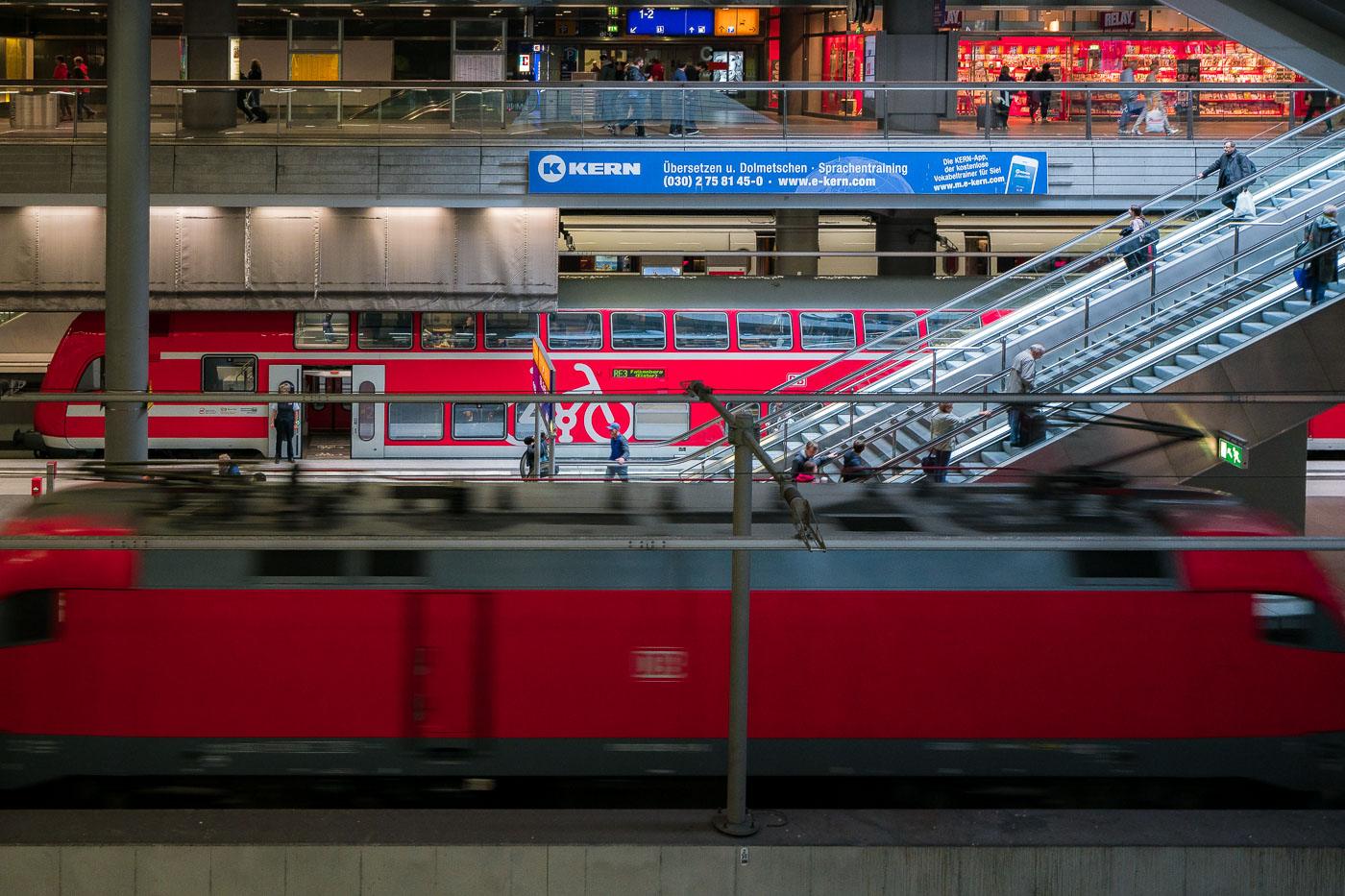
Photography from Berlin documents the city’s extensive public transportation infrastructure, focusing on key sites such as Berlin Hauptbahnhof with its multi-level platforms serving regional and long-distance trains. Images include the functional design of the Wedding U-Bahn station, the U55 shuttle line connecting to the government district, and trams operating on wet city streets amid growing cycling traffic.

34 photos

Photos from Berlin
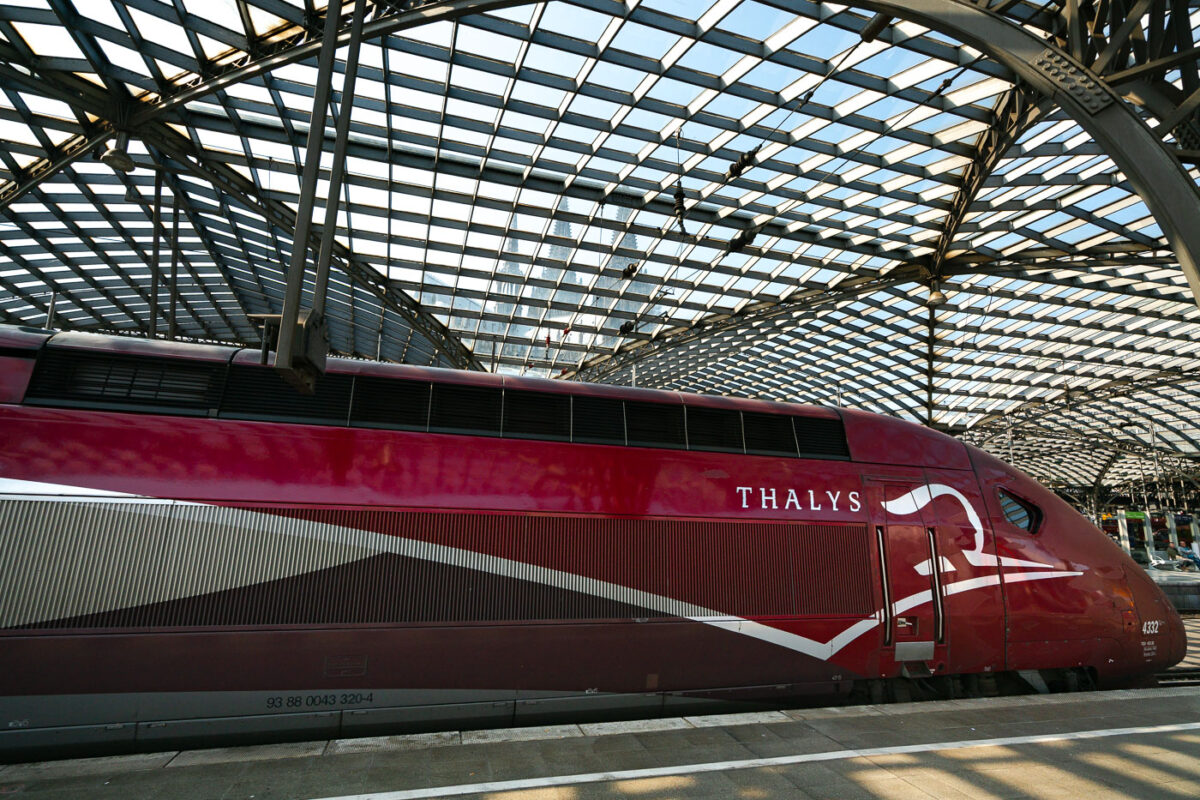
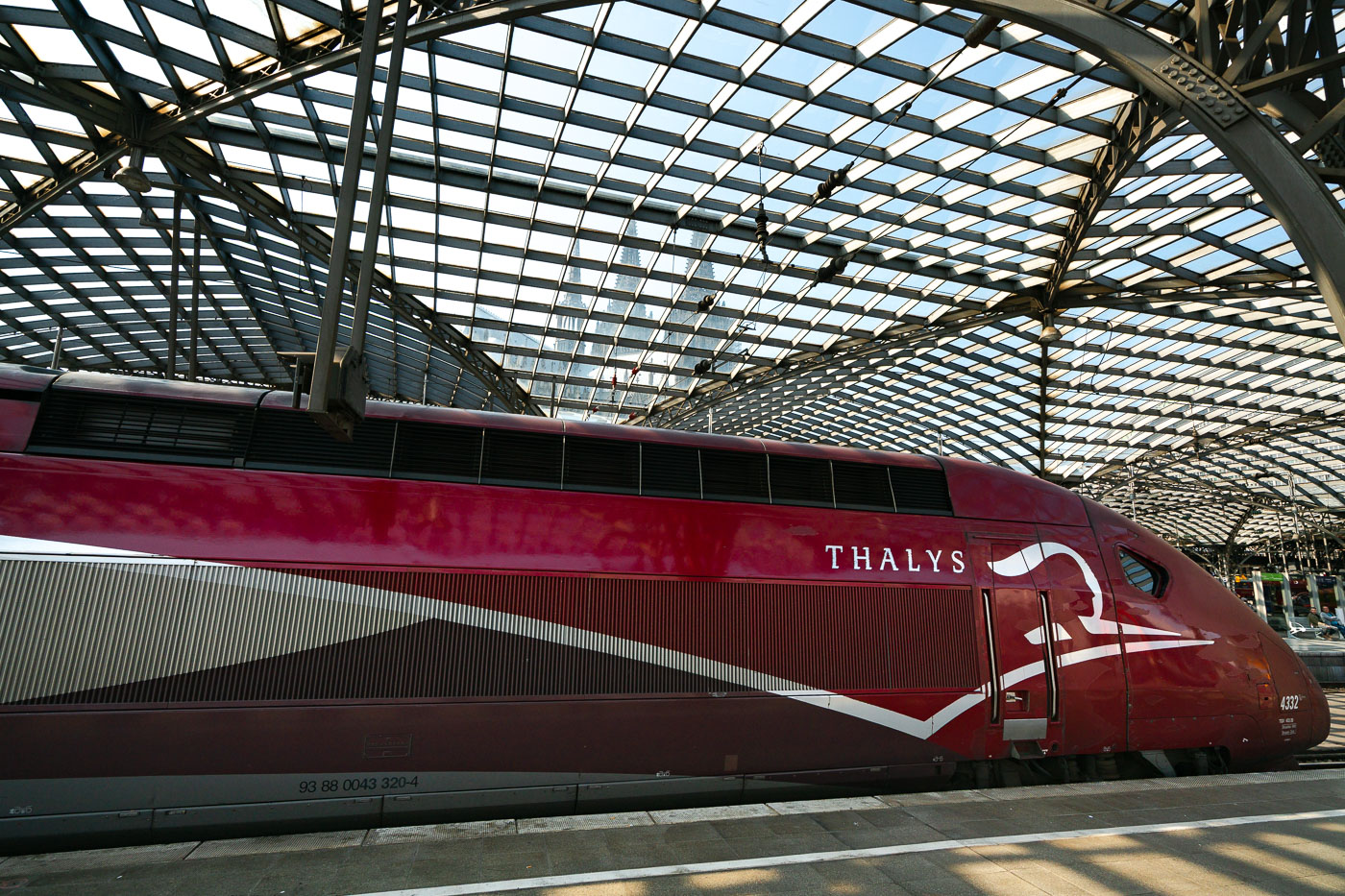
Thalys train at Köln Hauptbahnhof beneath the glass canopy in Cologne.
A Thalys PBKA high-speed train stands at Köln Hauptbahnhof in Cologne. The train is parked beneath the station’s glass-and-steel canopy, part of one of Germany’s major long-distance rail hubs.
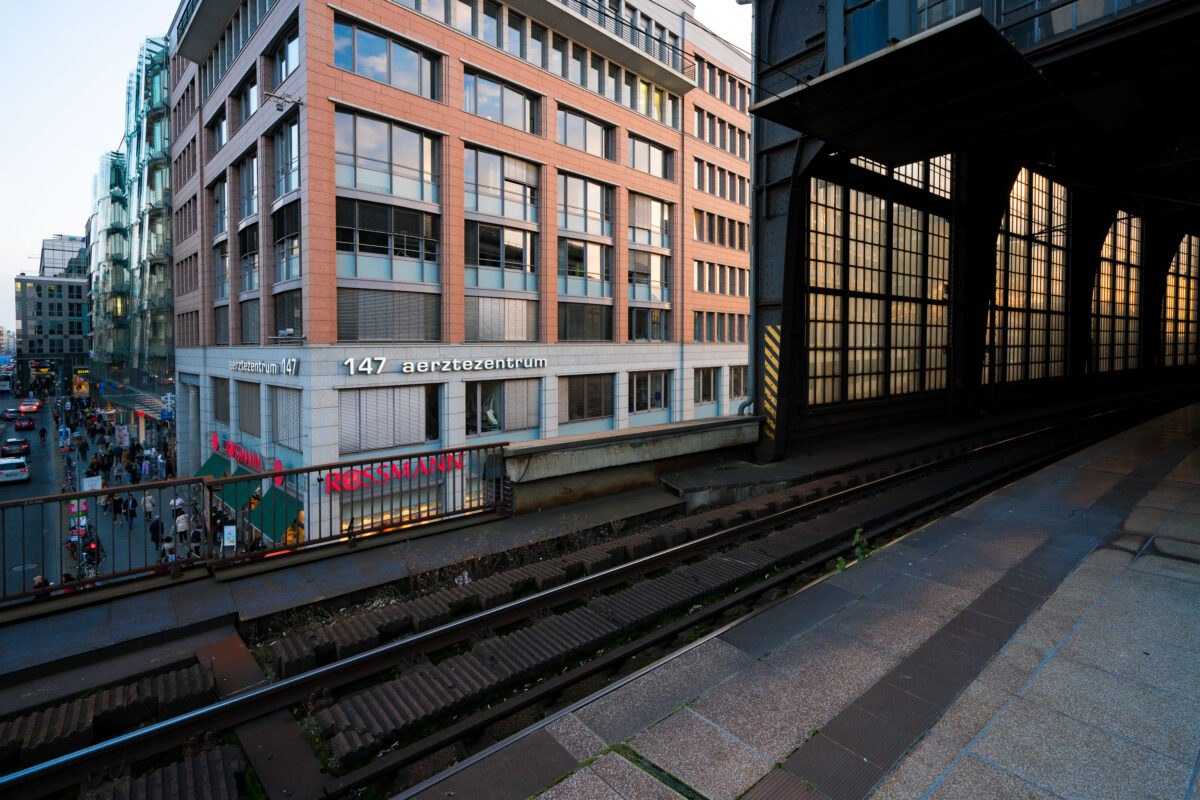
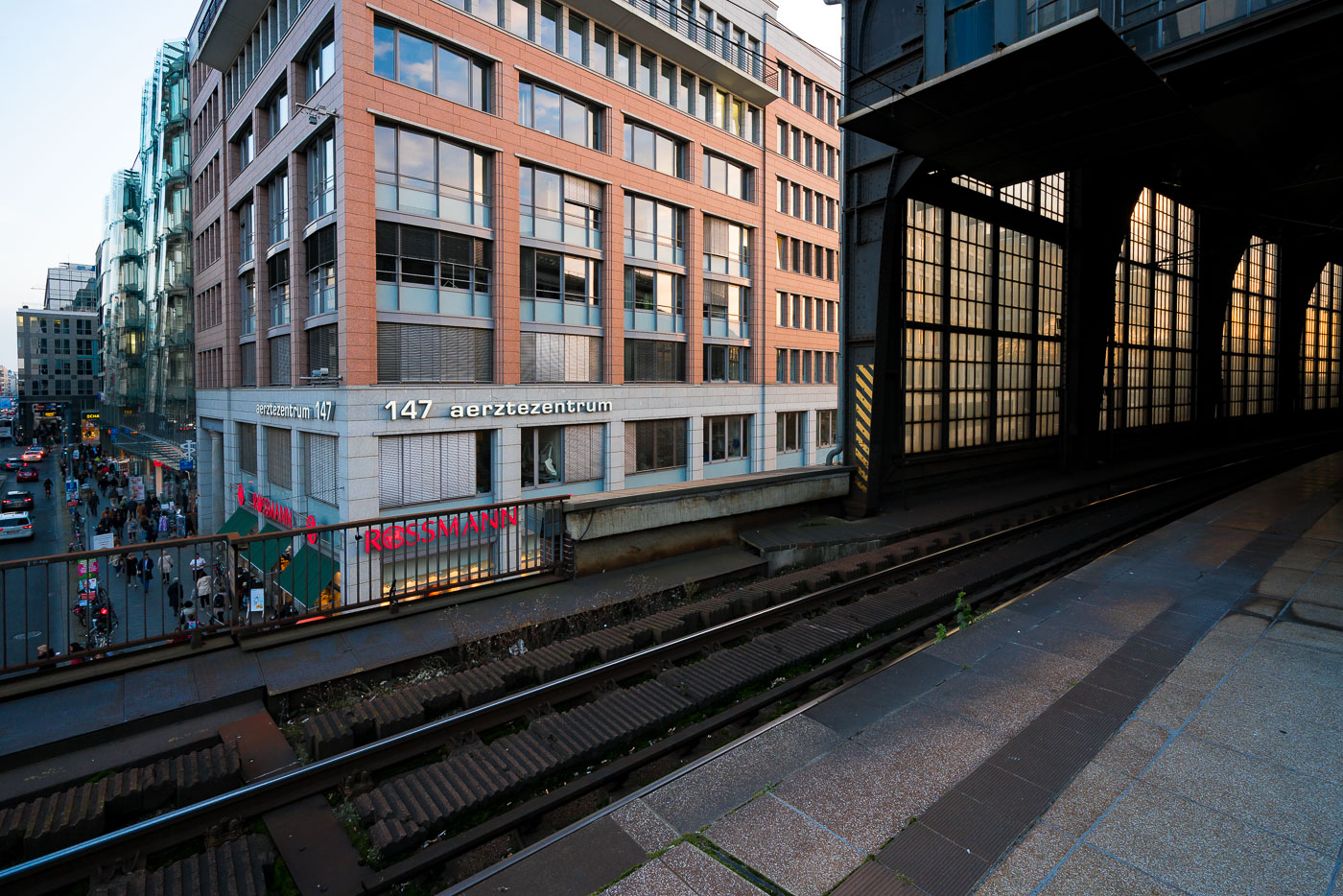
Berlin Friedrichstraße Station tracks beside Georgenstraße in Berlin, with the Aerztezentrum at No. 147.
Berlin Friedrichstraße Station in Berlin has elevated tracks running beside Georgenstraße. The view looks past the station structure toward the Aerztezentrum at No. 147 and nearby office buildings along the street.
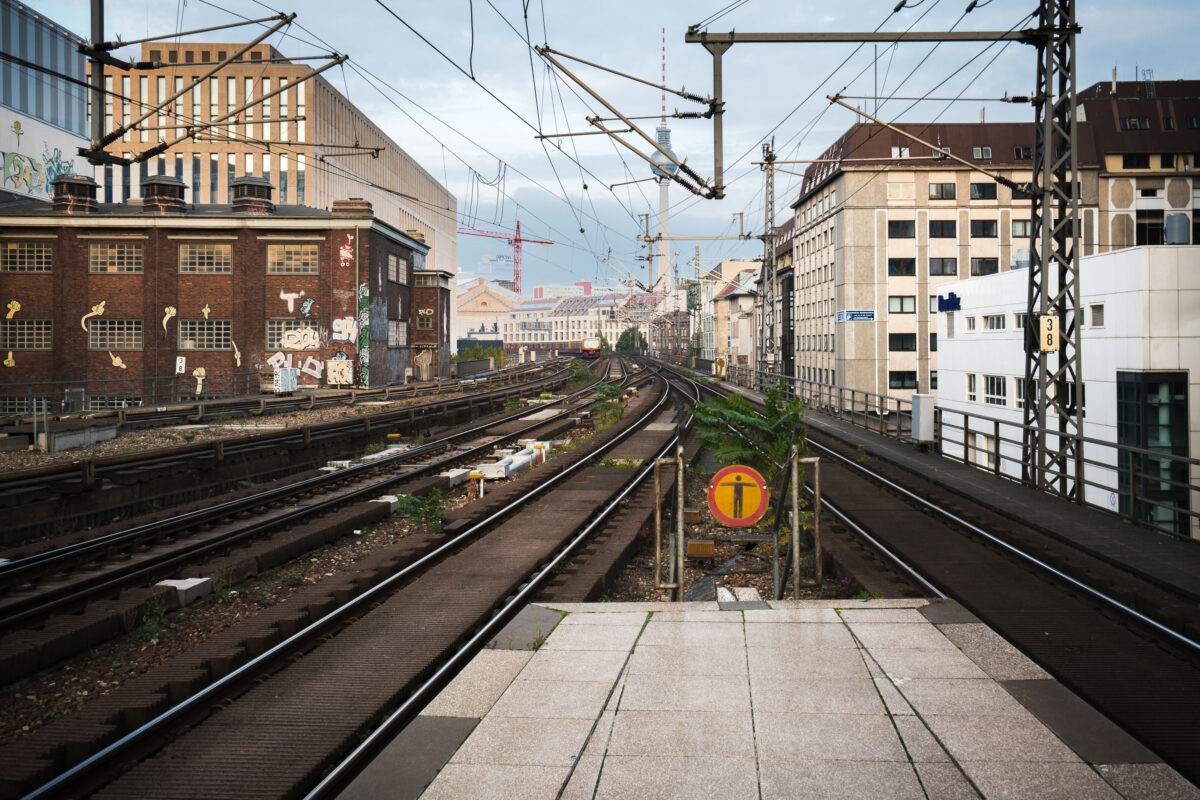
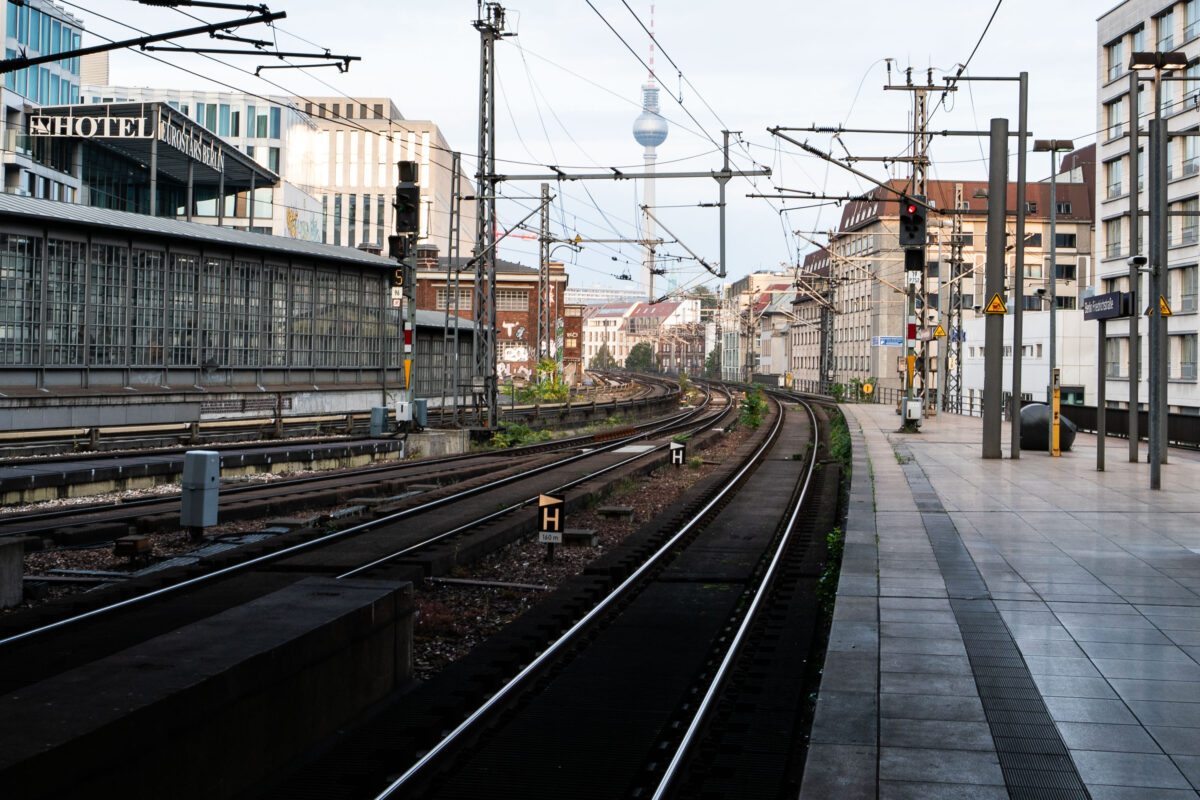
Berlin Friedrichstraße station tracks east with the Fernsehturm in the distance.
Berlin Friedrichstraße station in Berlin looks east along the elevated S-Bahn tracks. The Fernsehturm rises in the distance beyond the rail corridor, which runs through a dense mix of office and older industrial buildings.
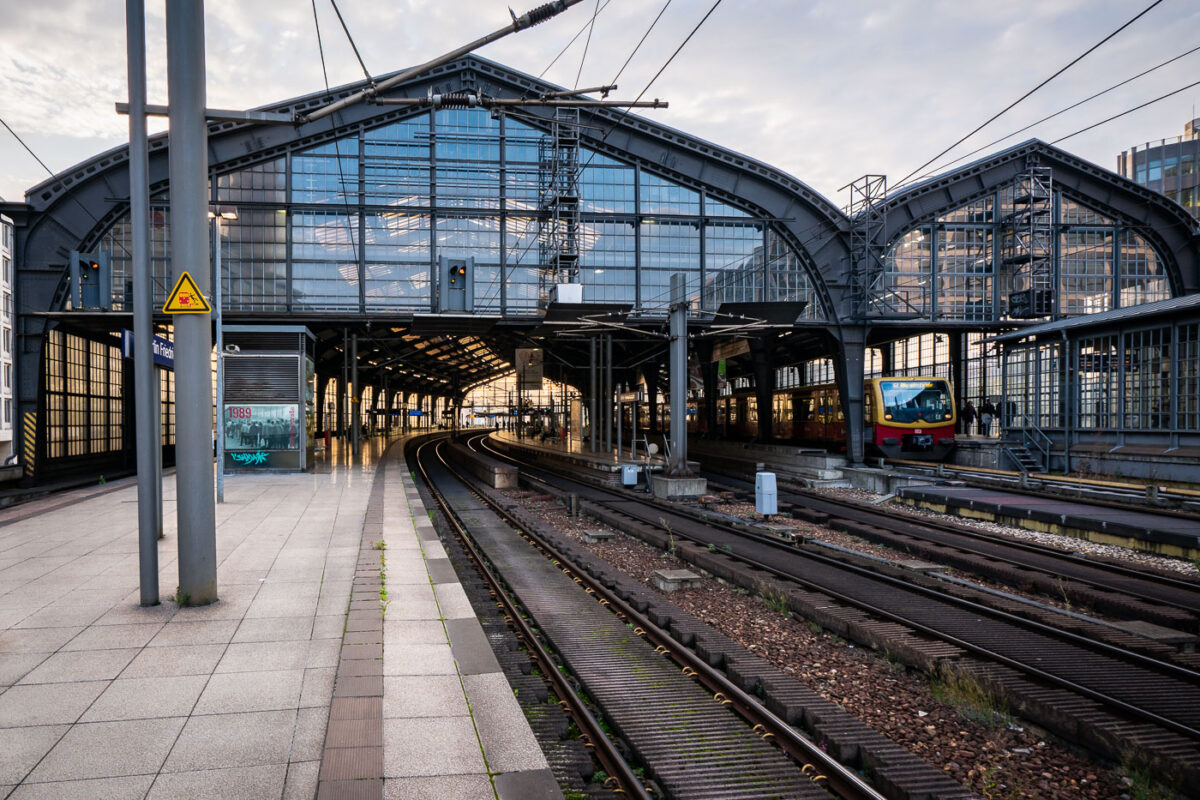
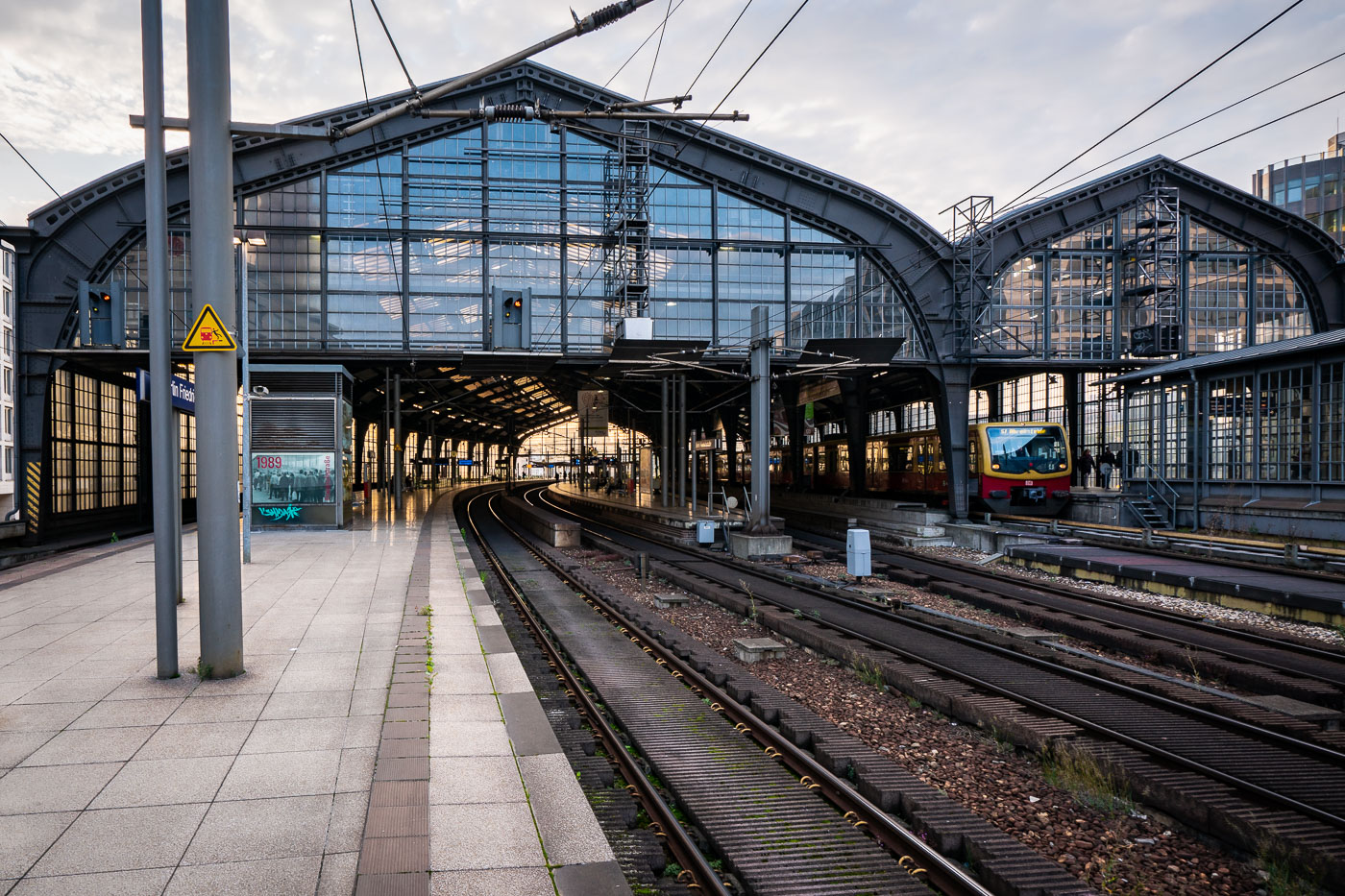
Berlin Friedrichstraße Station S-Bahn platforms under a steel canopy in Berlin.
Berlin Friedrichstraße Station in Berlin, Germany, has elevated S-Bahn platforms under a large steel-and-glass canopy. The station opened in 1882 and serves as a major interchange for S-Bahn, regional, and long-distance rail services.
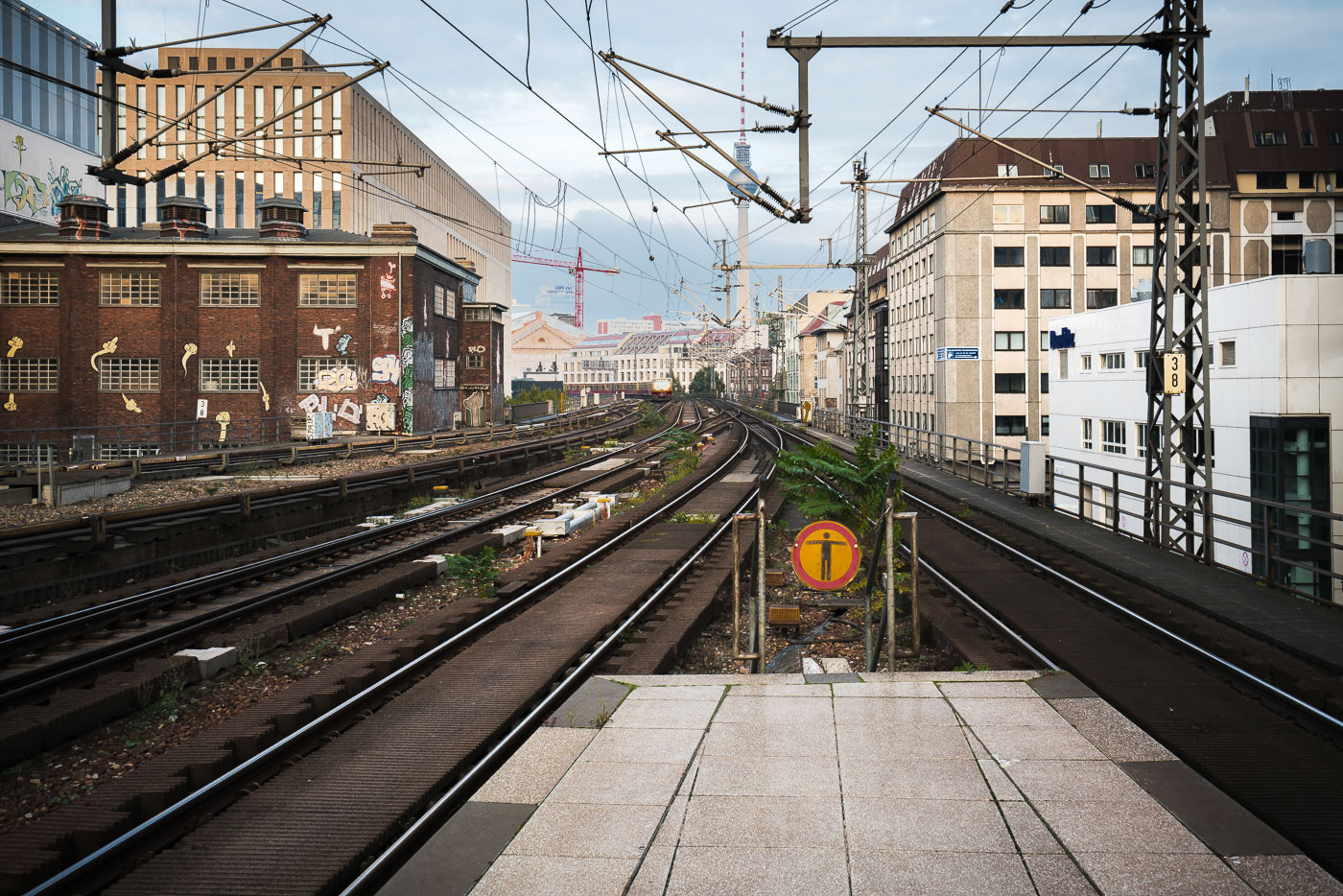
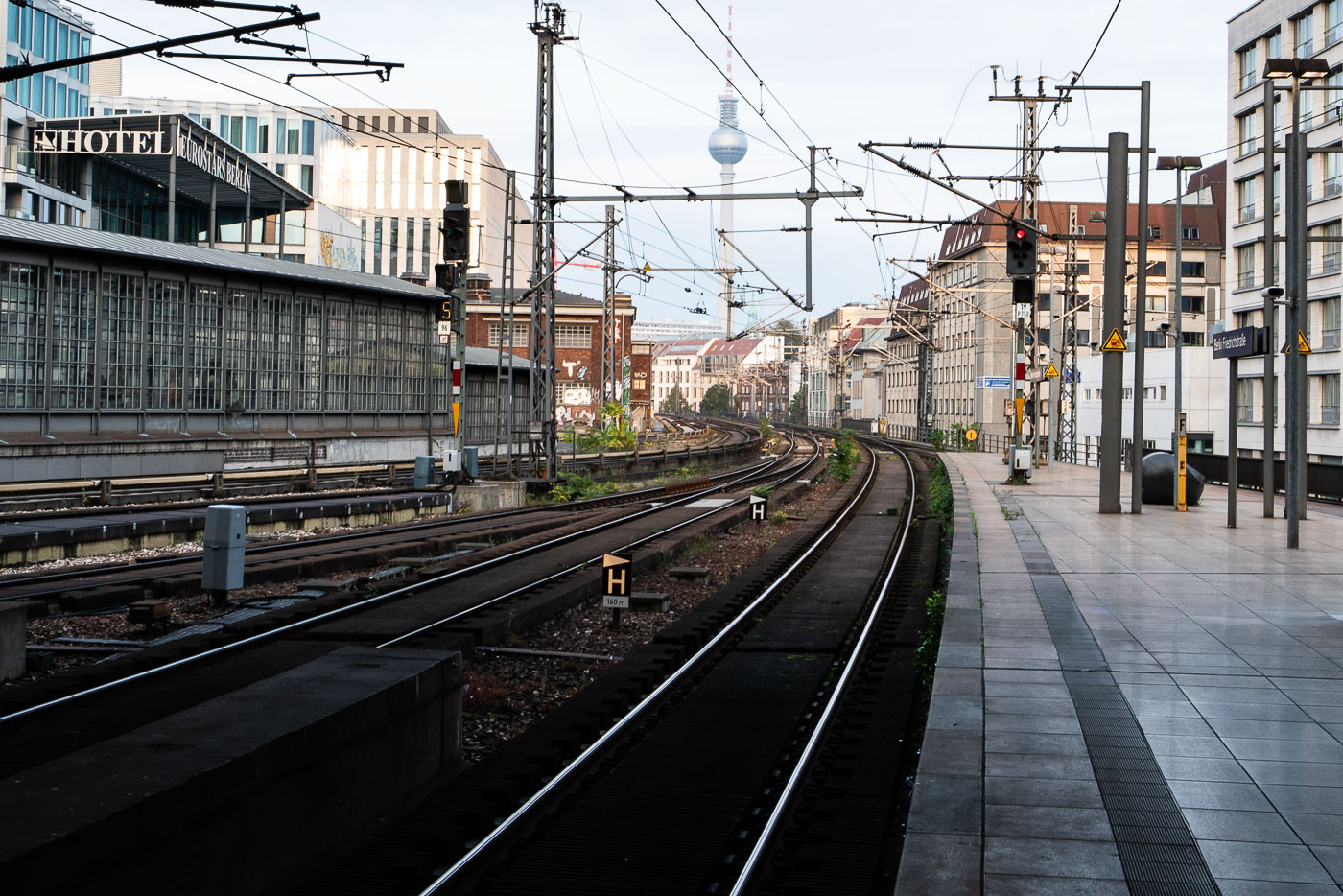
Berlin Friedrichstraße Station tracks curve eastward with the Fernsehturm in the distance.
Berlin Friedrichstraße Station in Berlin shows S-Bahn and regional rail tracks curving eastward past the platforms. The Fernsehturm rises in the distance above the station approach, and the Eurostars Berlin hotel stands beside the tracks.
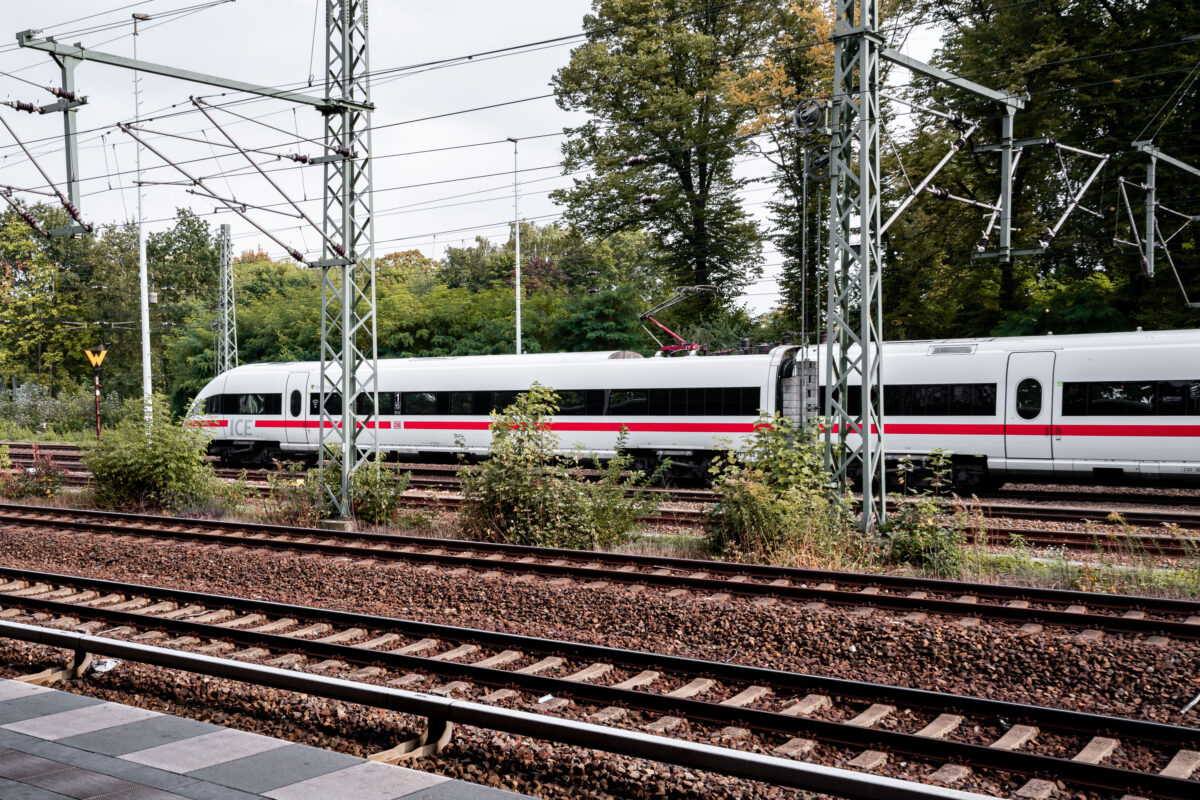
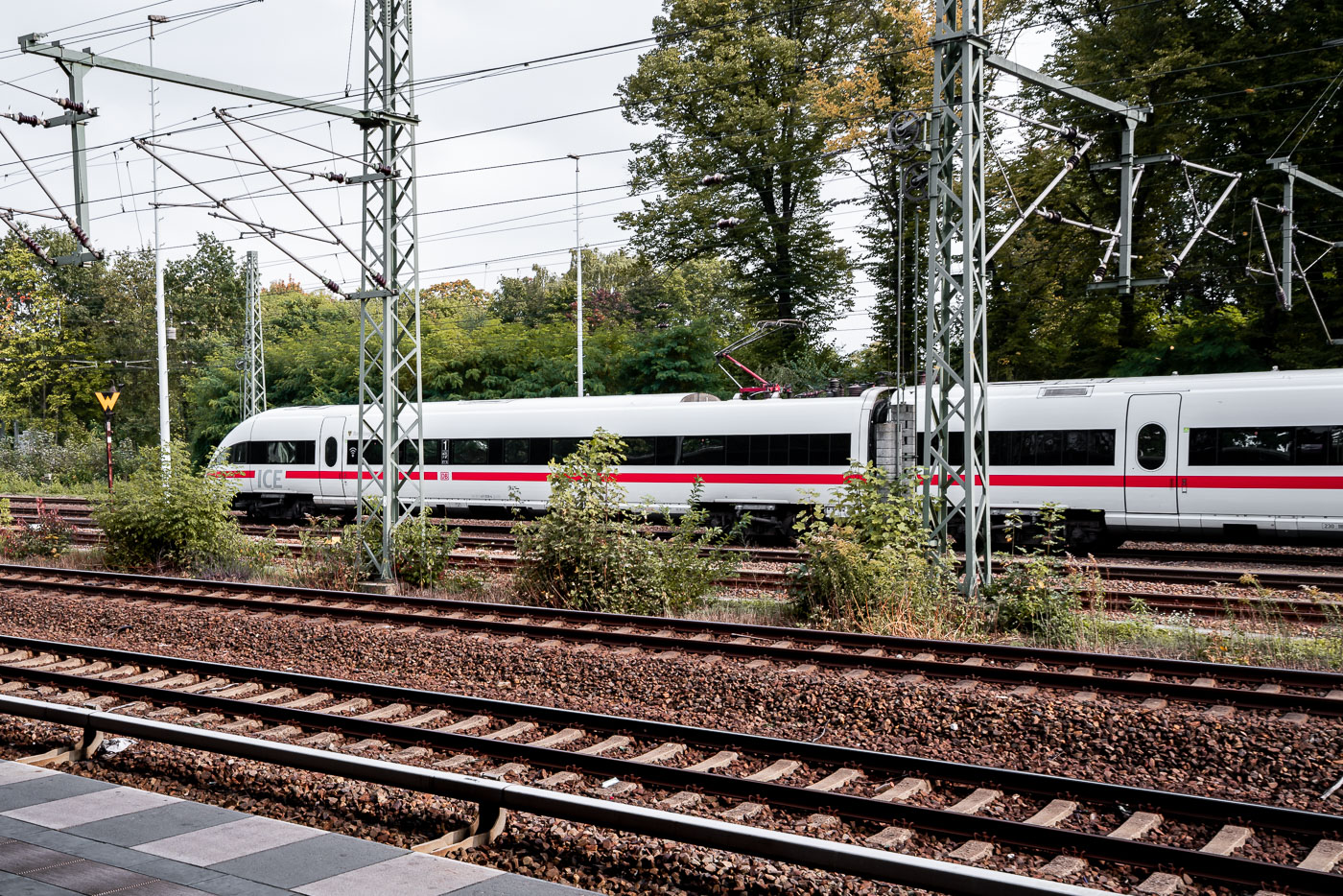
ICE 3 train on electrified tracks in Berlin beneath overhead wires.
A Deutsche Bahn ICE 3 train runs past electrified tracks in Berlin. The high-speed train is shown under the overhead catenary system used on Germany’s mainline rail network.
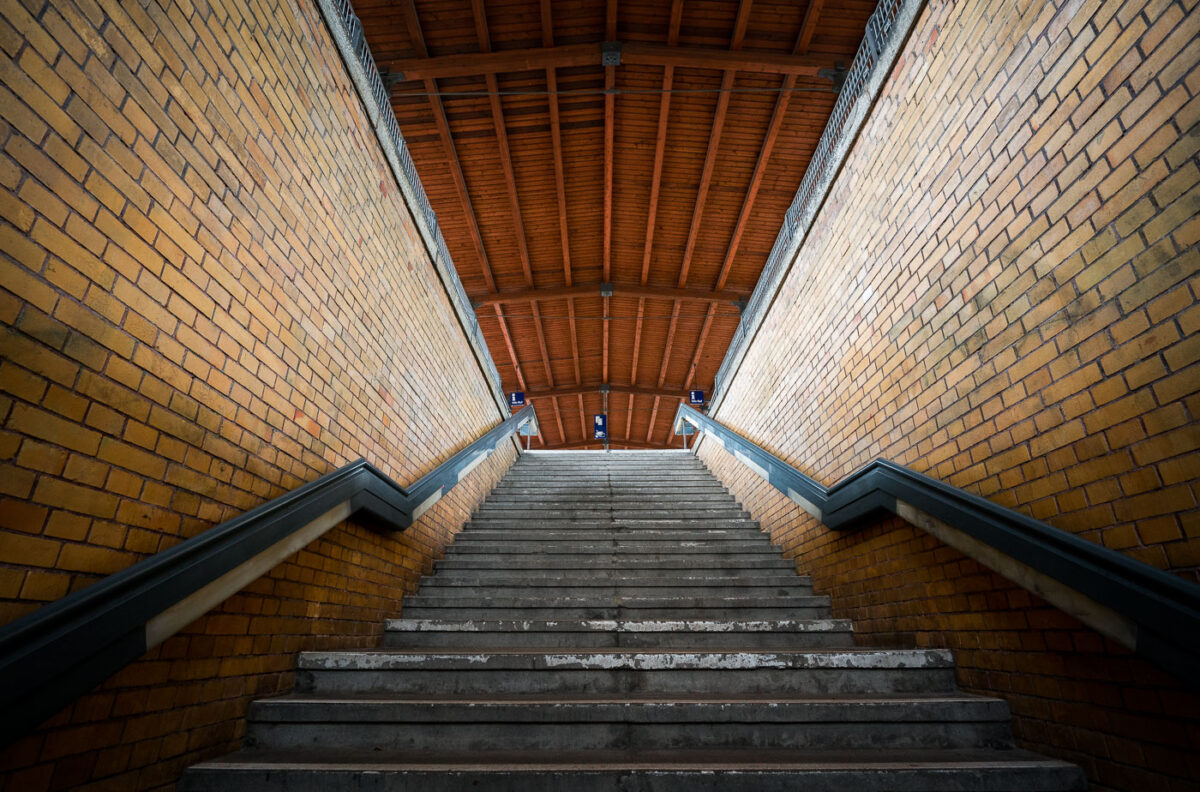
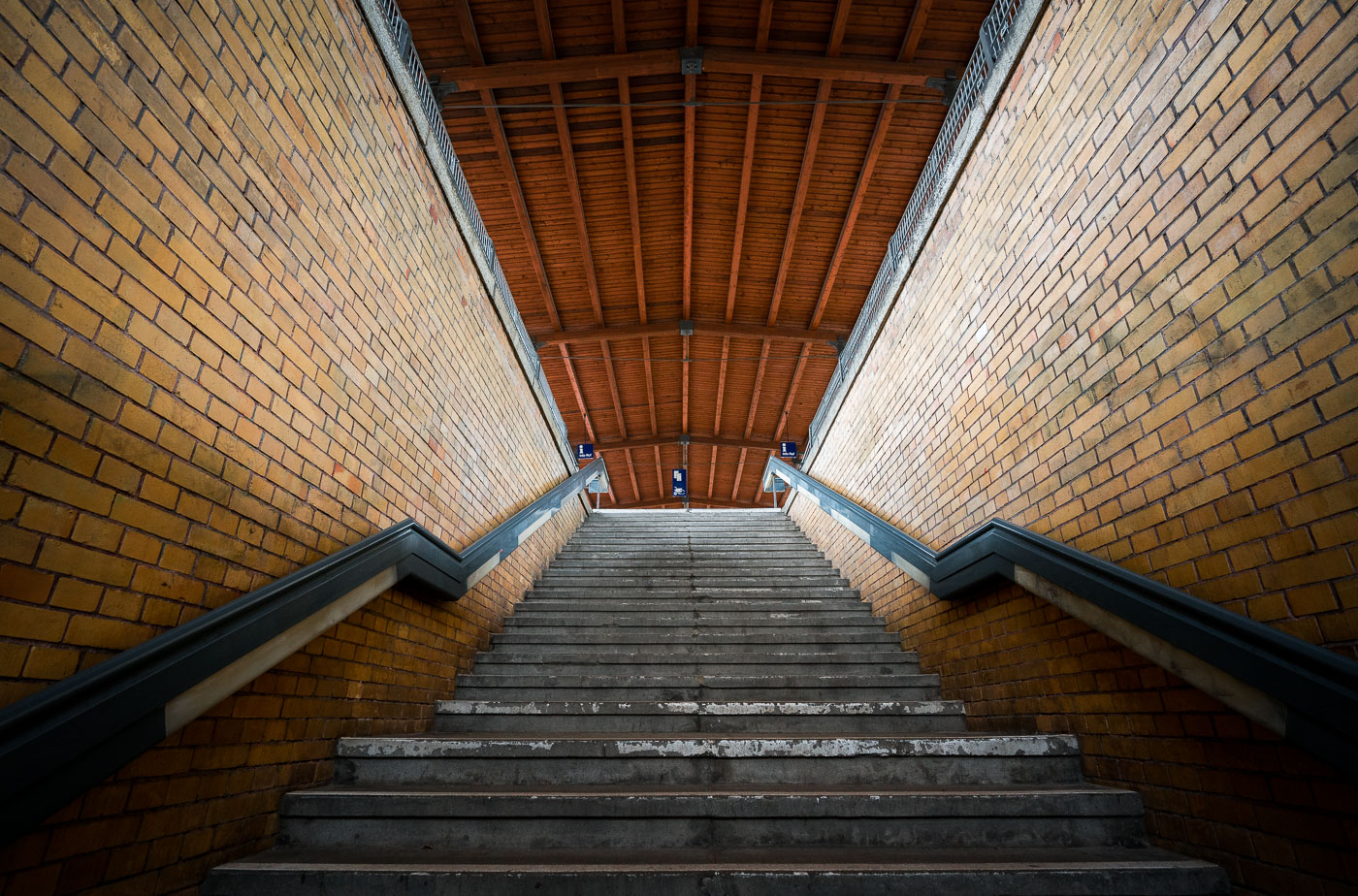
Berlin train station stairway with yellow brick walls and a timber roof.
A stairway inside a Berlin train station rises between yellow brick walls beneath a timber roof structure. Metal handrails flank the steps, and small platform signs hang near the top of the stairwell.
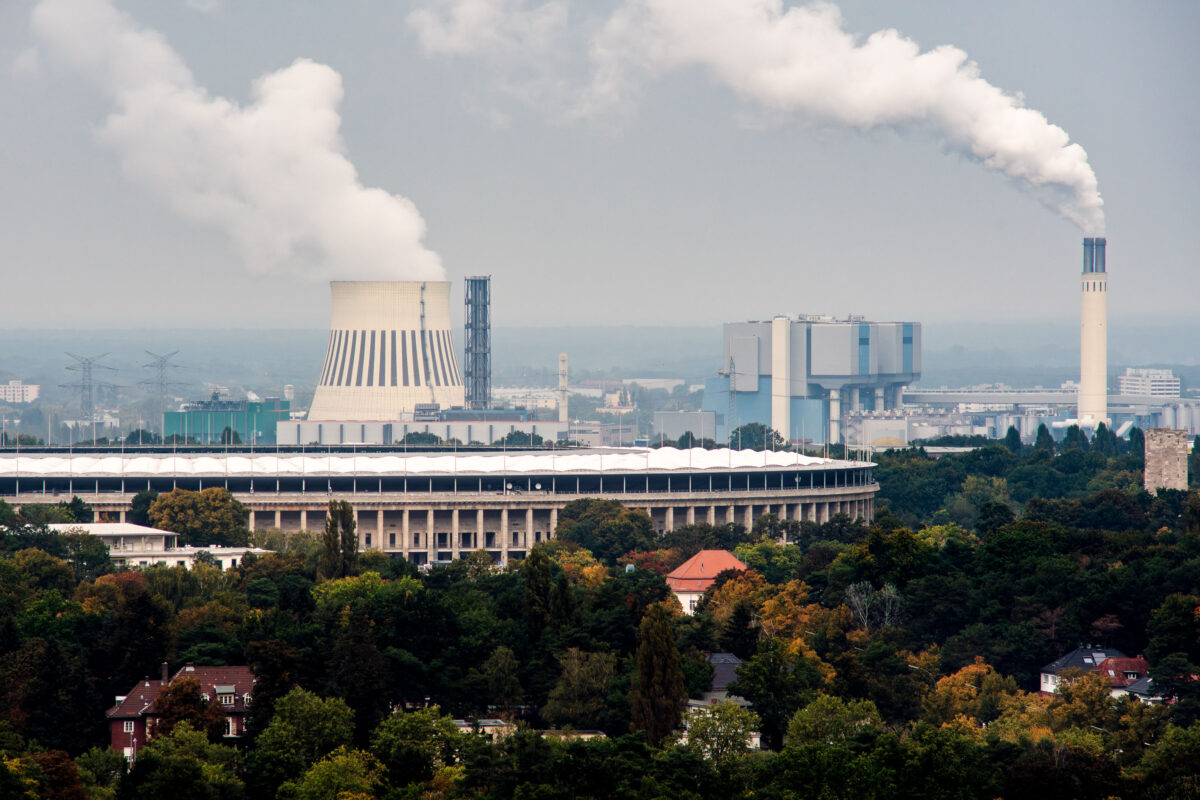
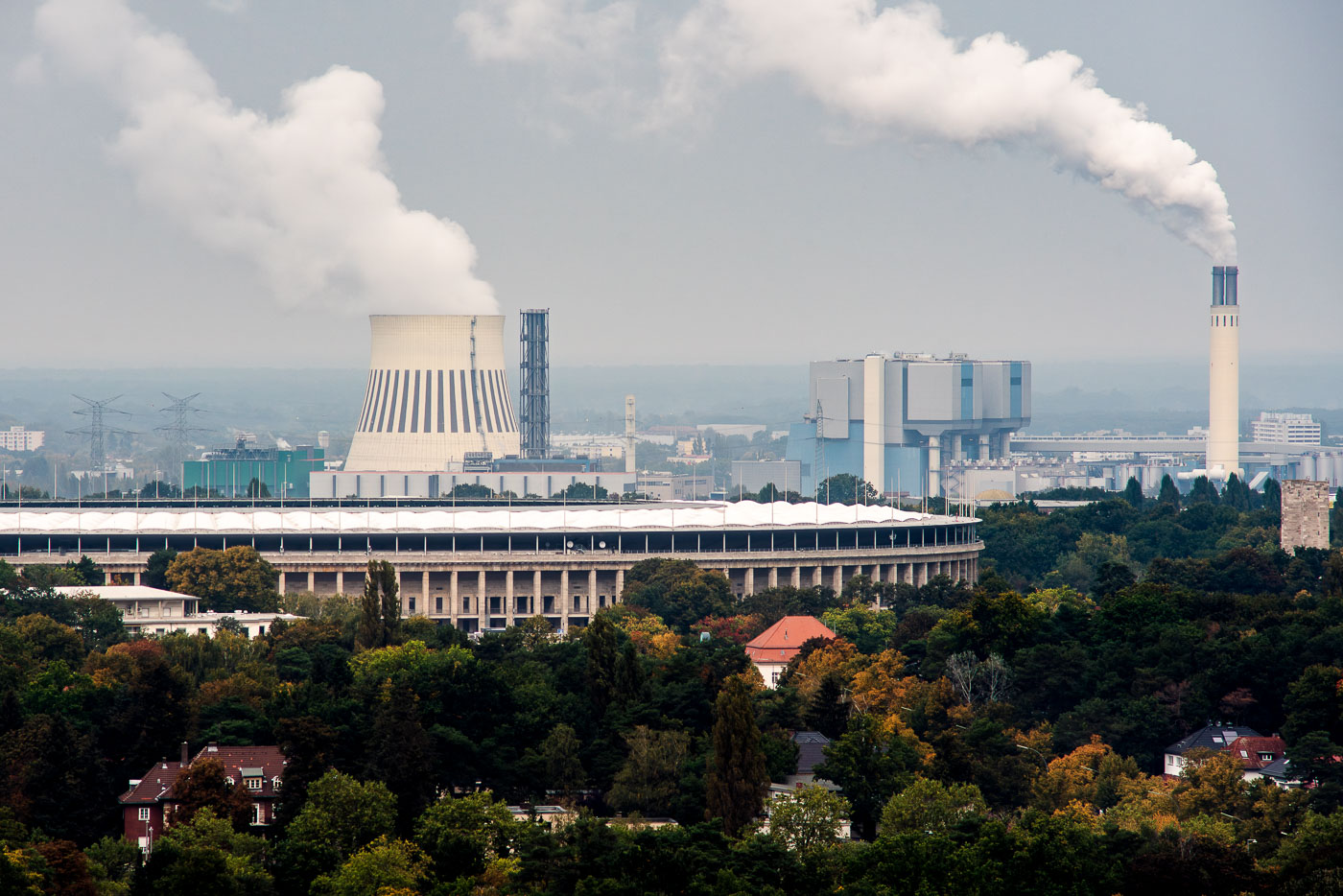
Olympiastadion and Reuter power plant complex in Berlin, with stadium and smokestacks.
The Olympiastadion and Reuter power plant complex are shown in Berlin's Westend district. The stadium, built for the 1936 Olympic Games, stands in the foreground, while the Reuter West plant and the older Reuter facility rise behind it with a cooling tower and chimney.
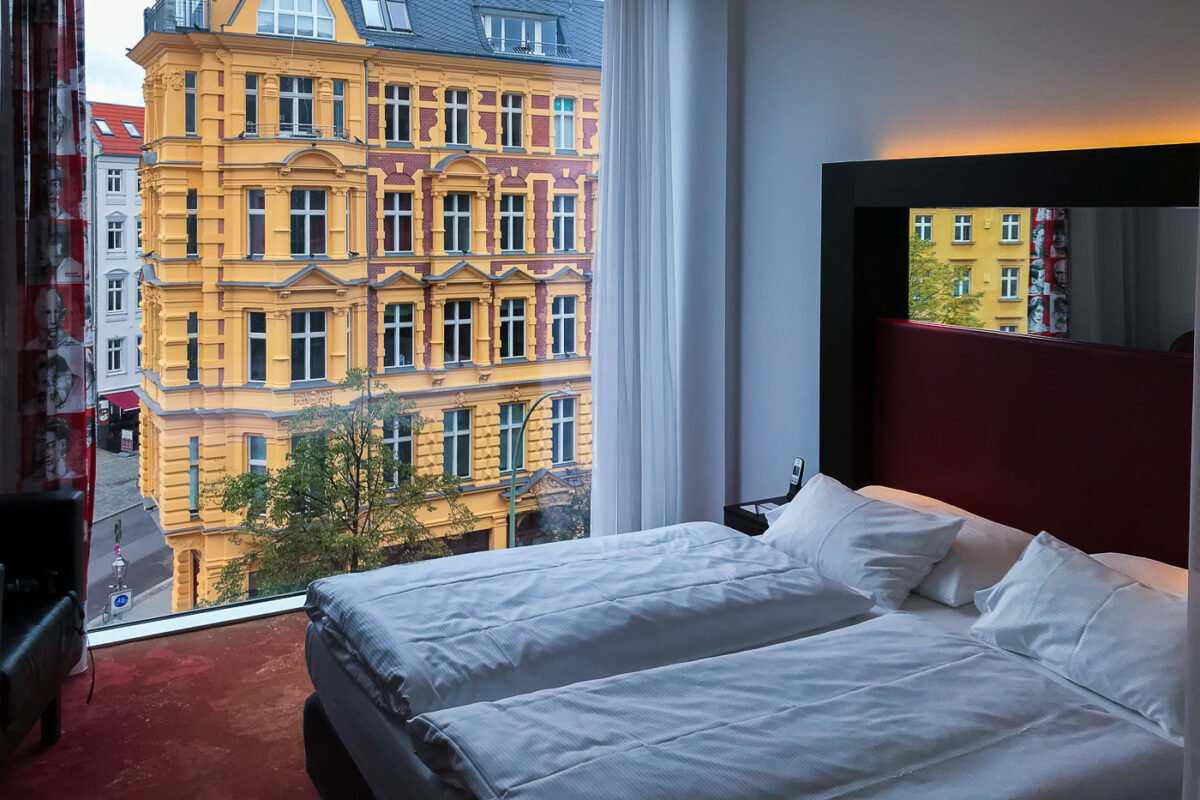
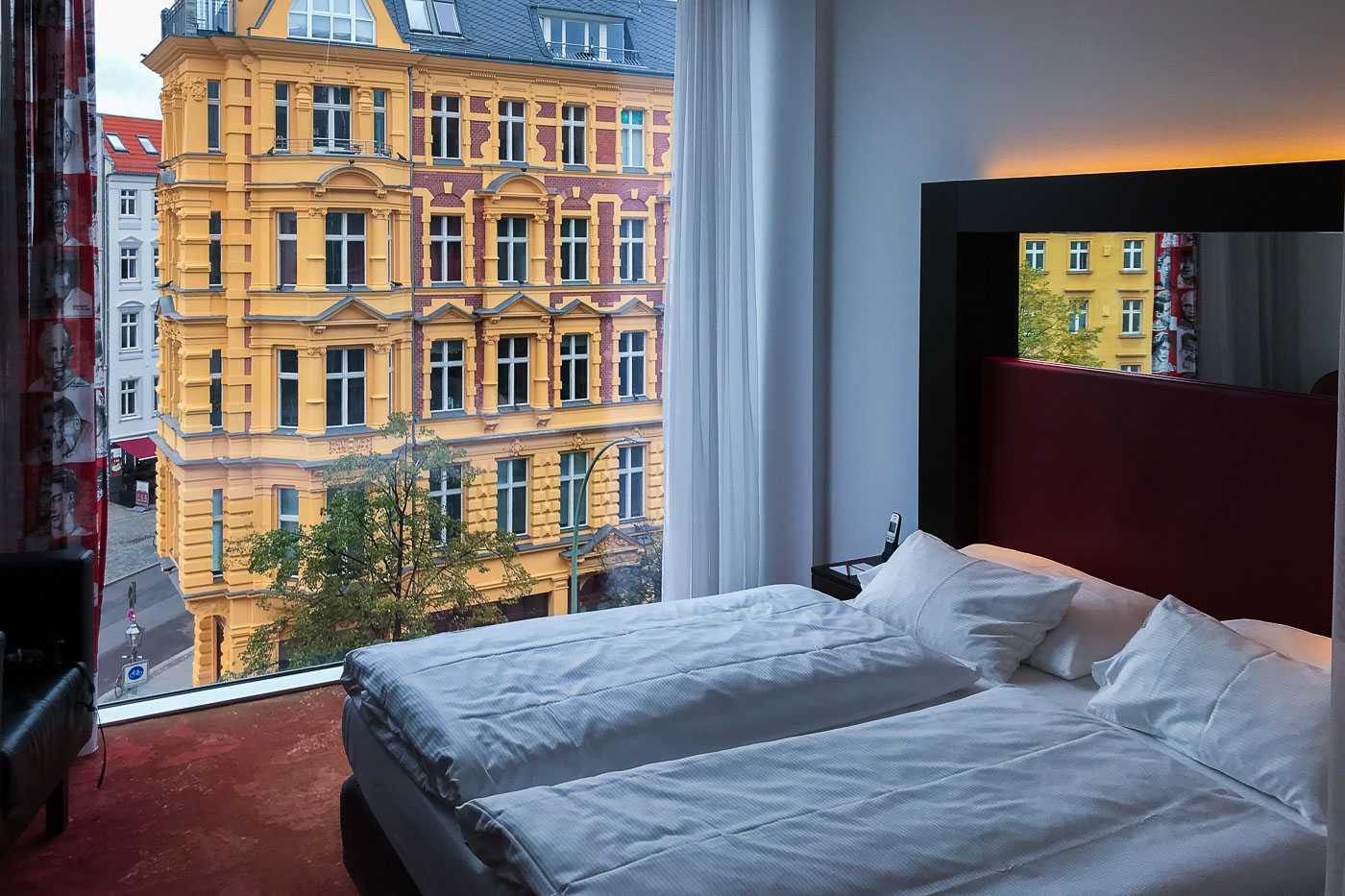
Berlin Mitte hotel room overlooking a restored Gründerzeit building across the street
A hotel room in Berlin Mitte overlooks a restored Gründerzeit building. The yellow stucco facade across the street features tall windows, decorative cornices, and red-brick accents typical of late 19th-century Berlin architecture.
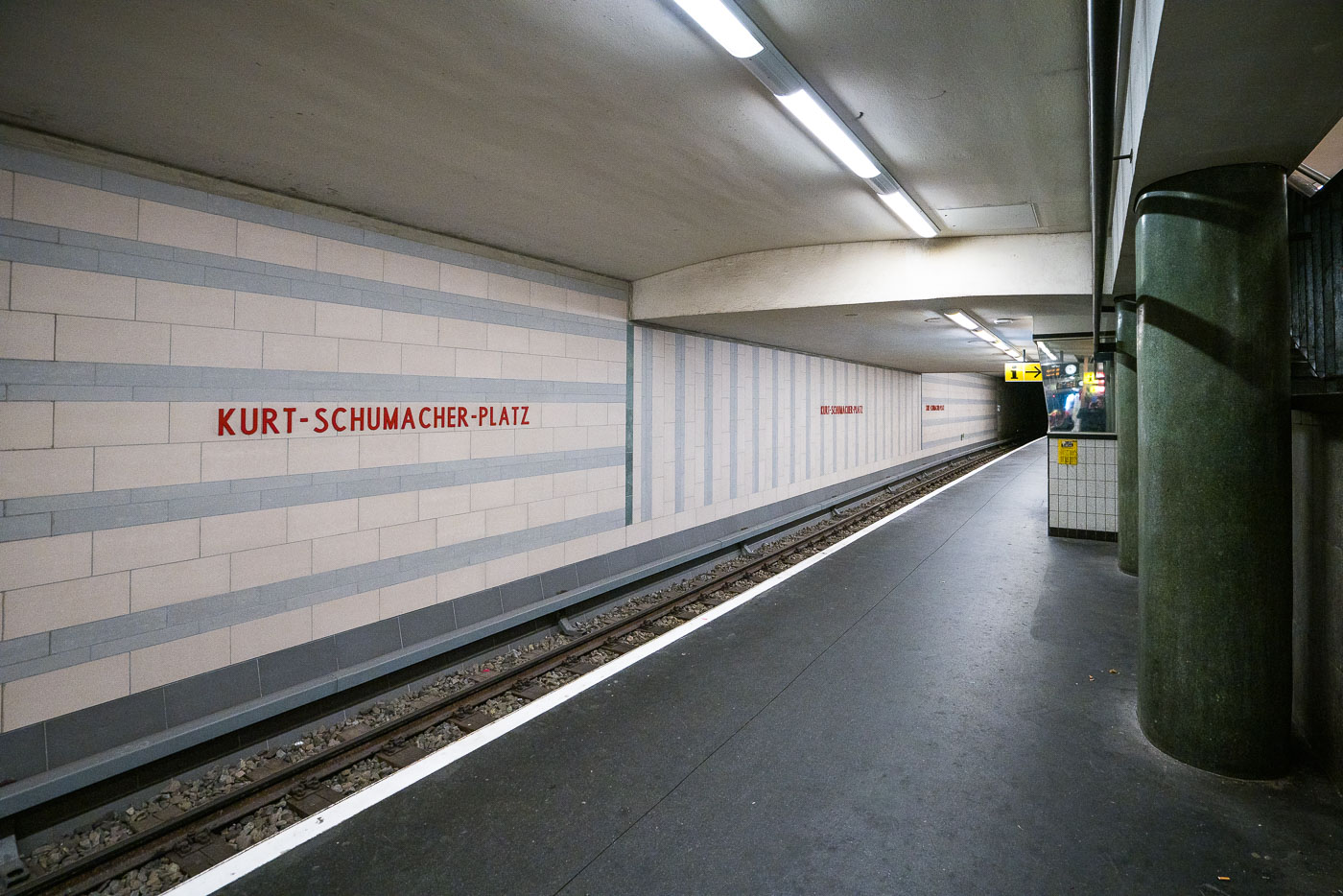
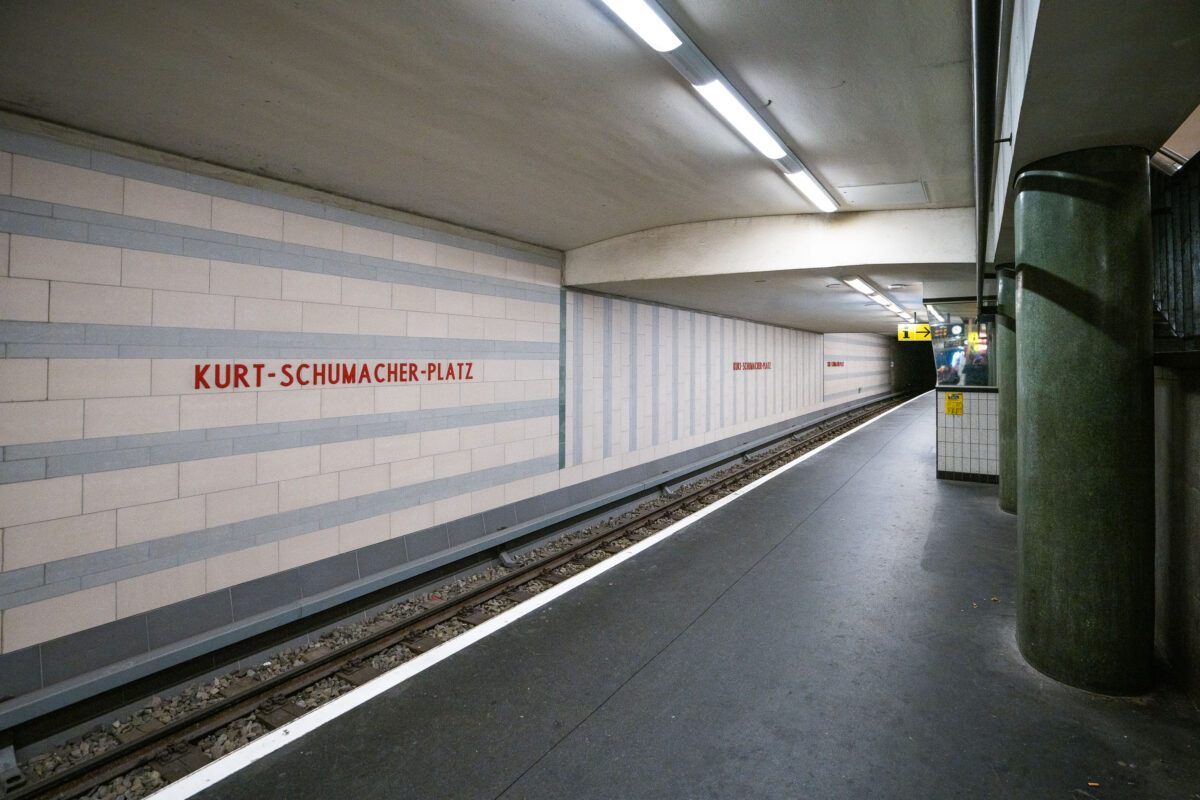
Kurt-Schumacher-Platz U-Bahn platform in Berlin with tiled walls and track.
Kurt-Schumacher-Platz station in Berlin’s Reinickendorf district is a U6 U-Bahn stop. The platform has light tile walls with gray bands and red station lettering, a design typical of mid-1950s West Berlin transit architecture.
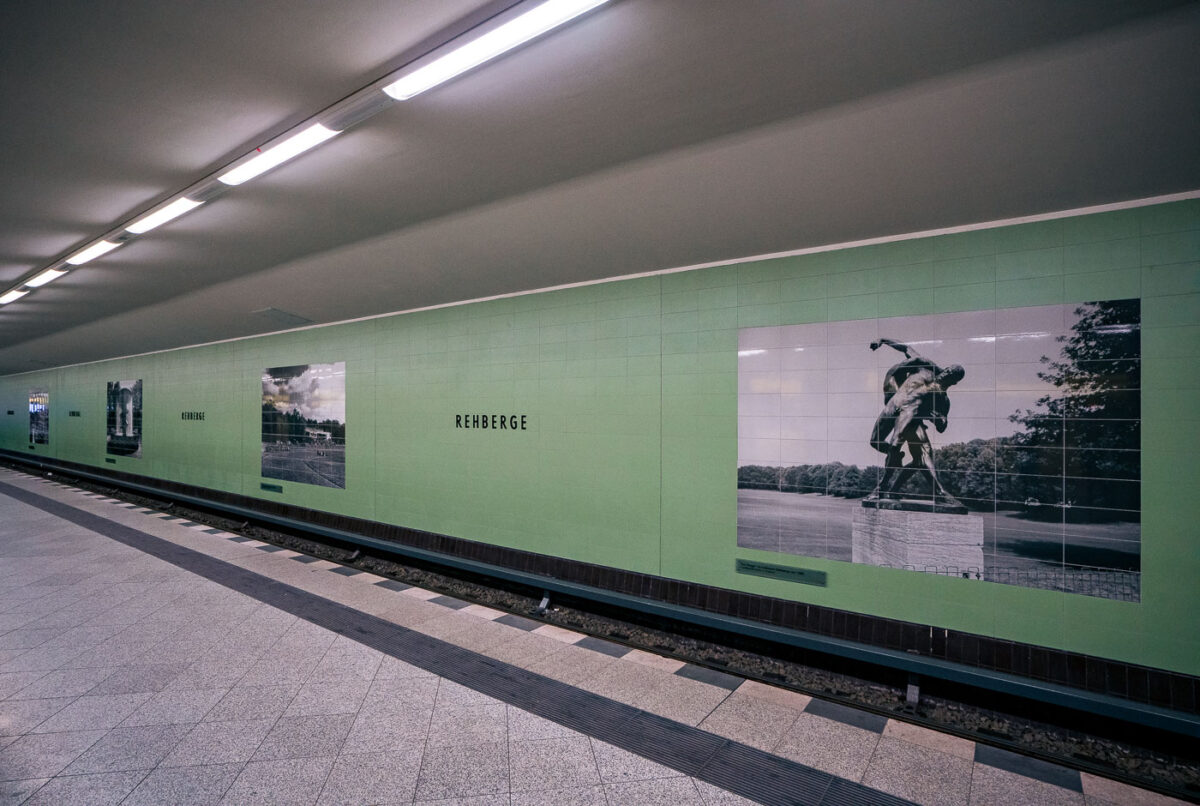
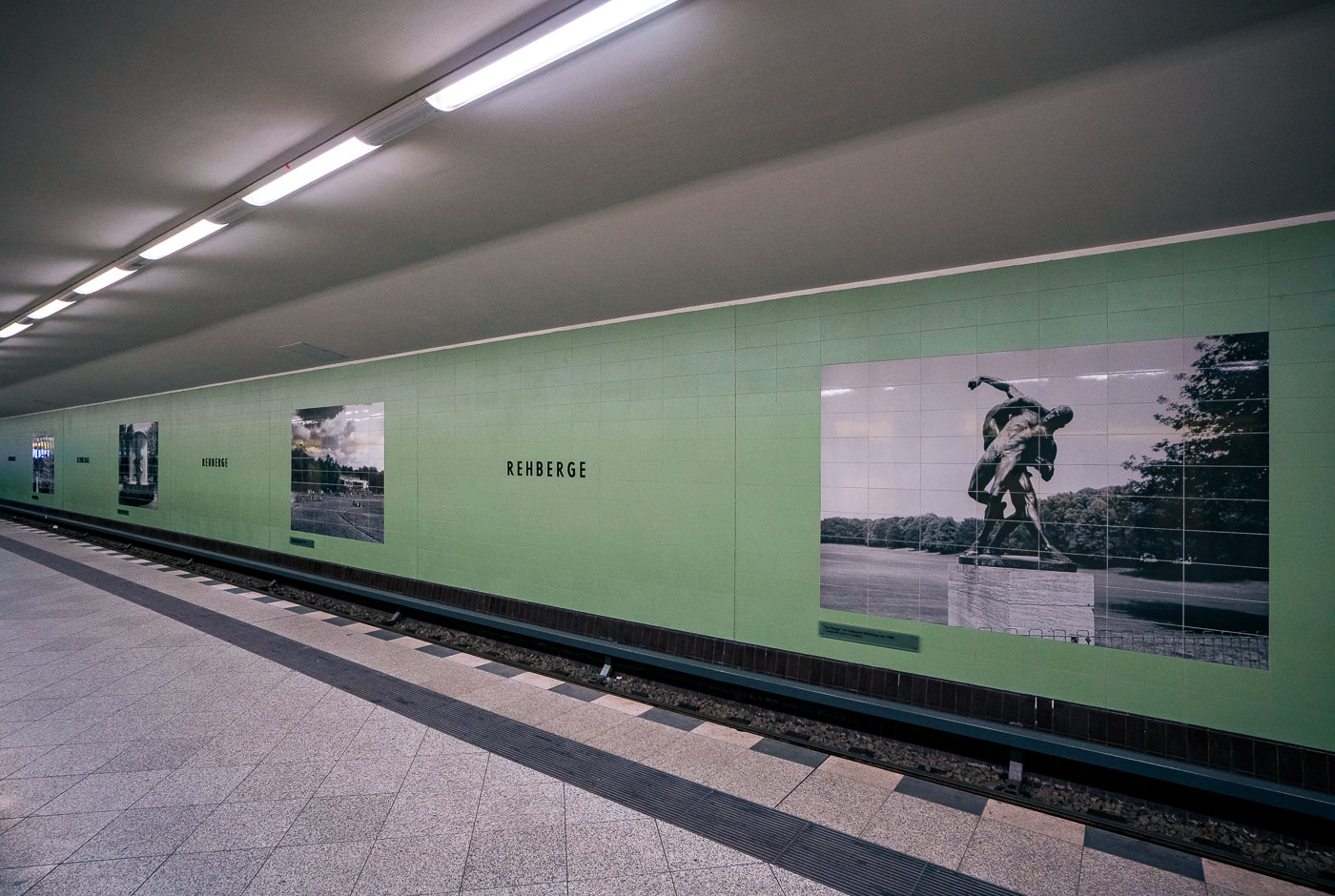
Green train platform Rehberge U-Bahn Station
Rehberge U-Bahn Station, located in Berlin's Wedding district, opened in 1956 as part of the postwar expansion of the U6 line. The station's platform features mint-green tiled walls adorned with large photographic murals depicting local park landscapes and public sculptures, including a piece titled "Der Ringer" in Volkspark Rehberge. These visual elements connect the transit space to its surrounding urban environment and history. Serving as a vital link for commuters, the station continues to function as a key component of Berlin's public transportation network operated by BVG.
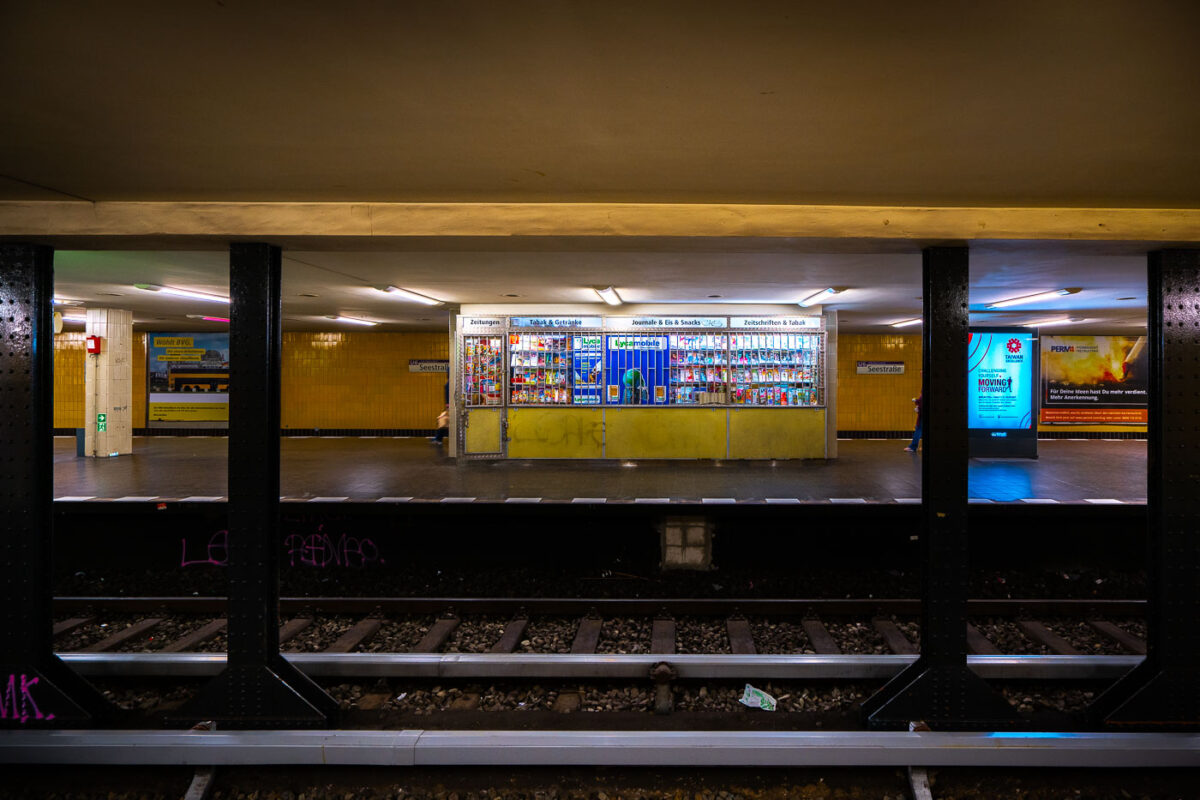
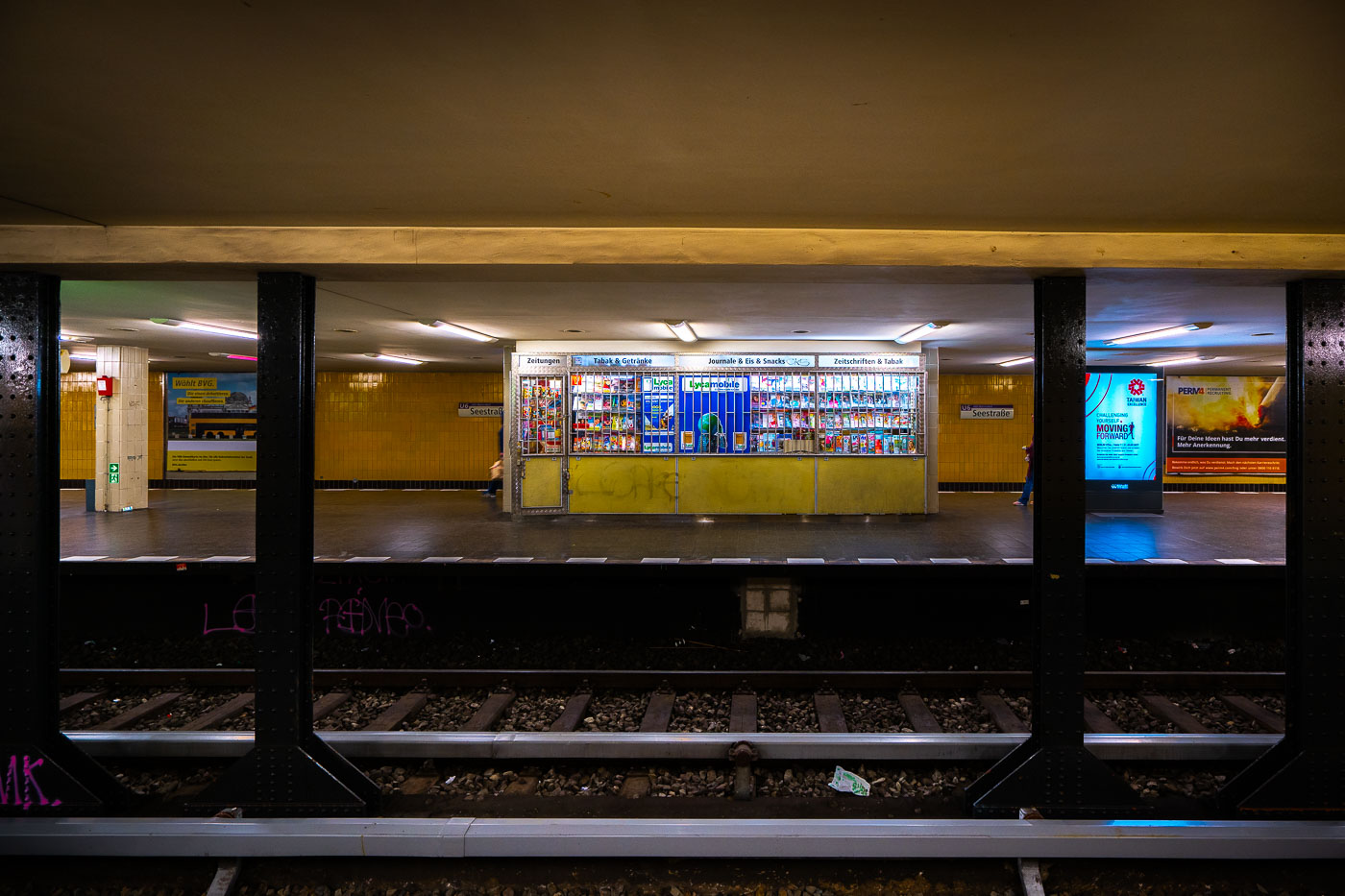
Seestraße U-Bahn station kiosk on the platform in Berlin’s Wedding district.
Seestraße U-Bahn station in Berlin’s Wedding district, with a central kiosk on the platform. The station opened in 1923 and served as the northern terminus of the U6 line until the late 1950s.
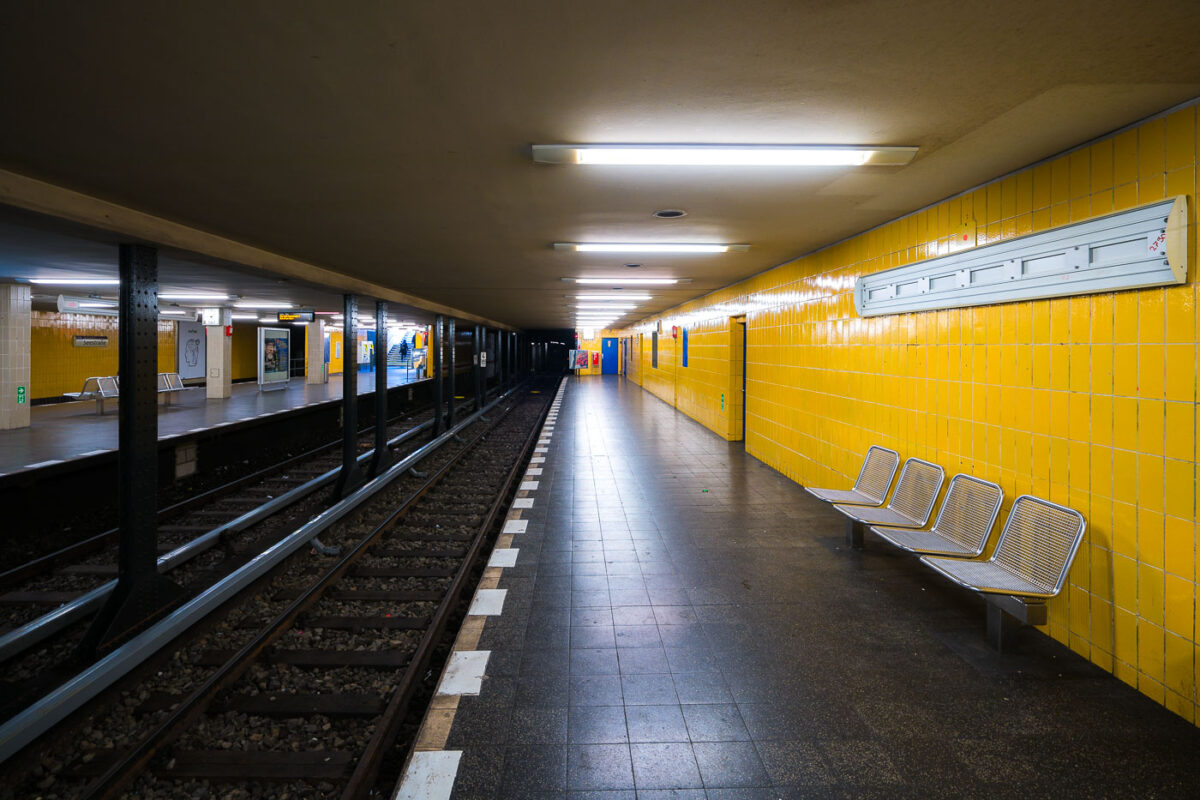
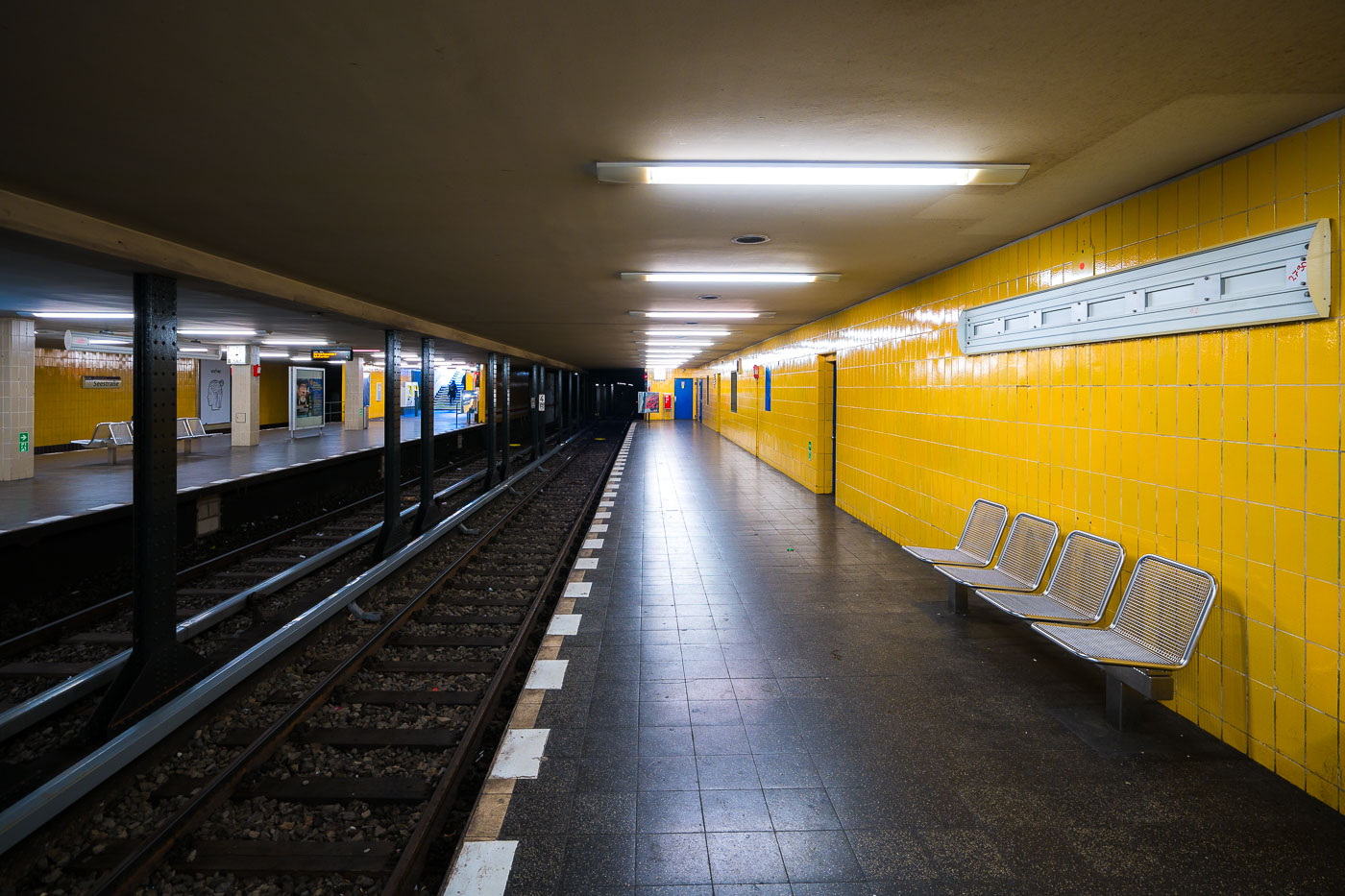
Seestraße U-Bahn station platform in Berlin with yellow tile walls and metal benches
Seestraße U-Bahn station in Berlin’s Wedding district has twin side platforms with bright yellow tile walls and metal benches. The station opened in 1923 and is served by the U6 line.
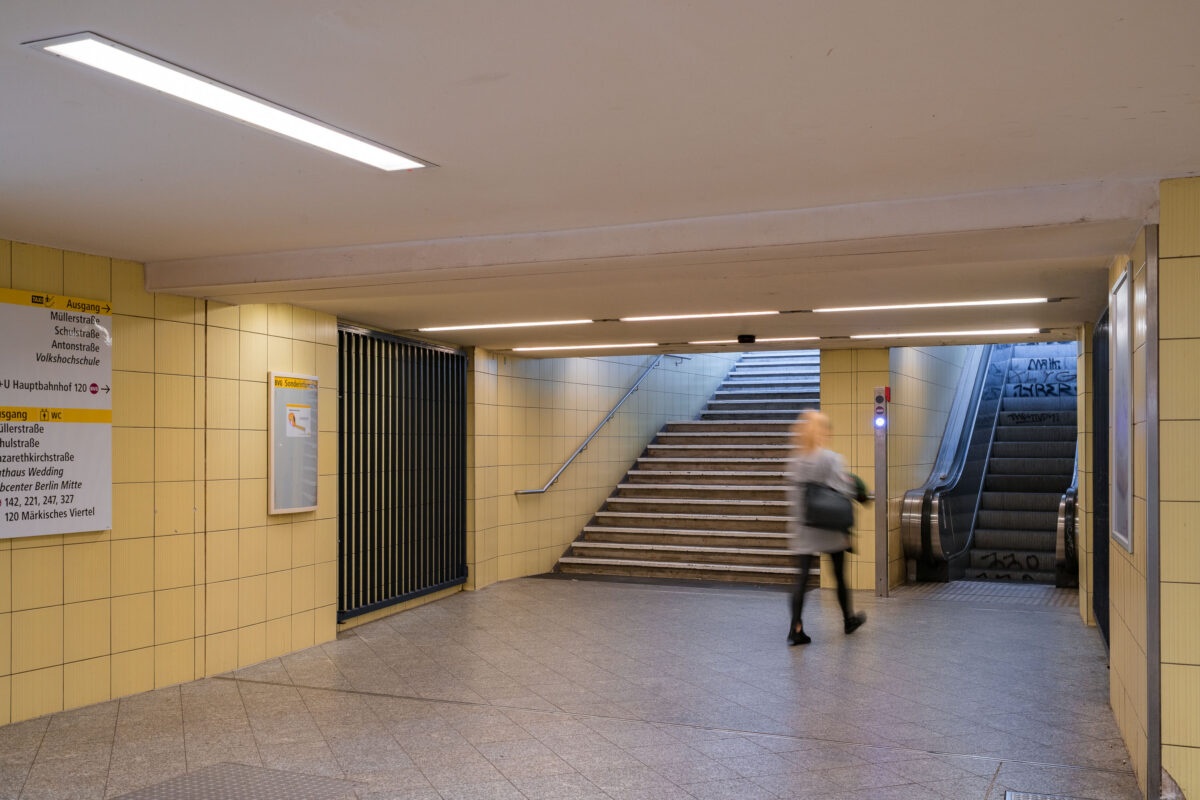
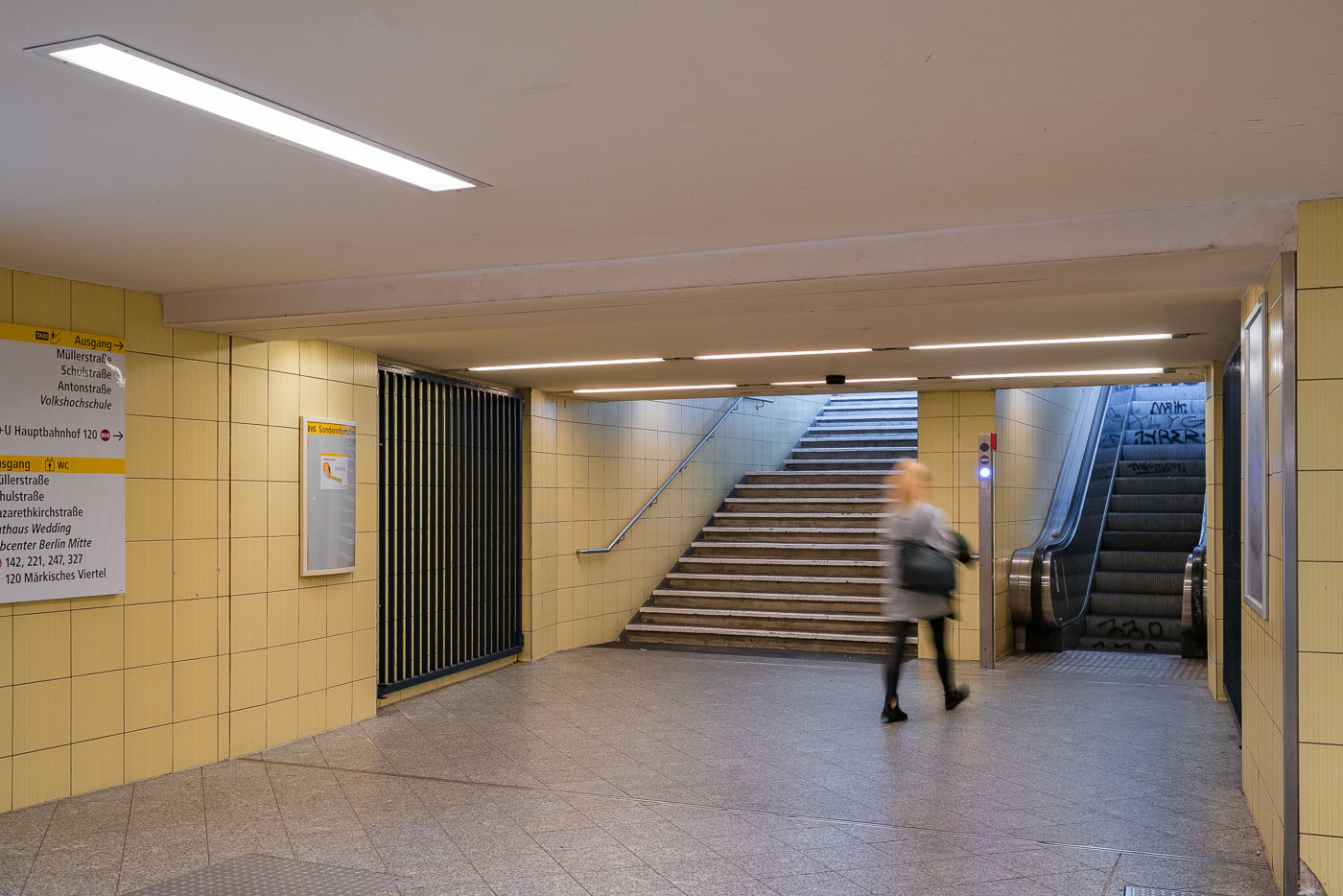
Wedding U-Bahn station passageway in Berlin with stairs, an escalator, and a blurred commuter.
Wedding U-Bahn station in Berlin has a tiled underground passageway connecting stairways and an escalator to street exits. A commuter passes through the corridor, which is signed for nearby streets and bus connections.
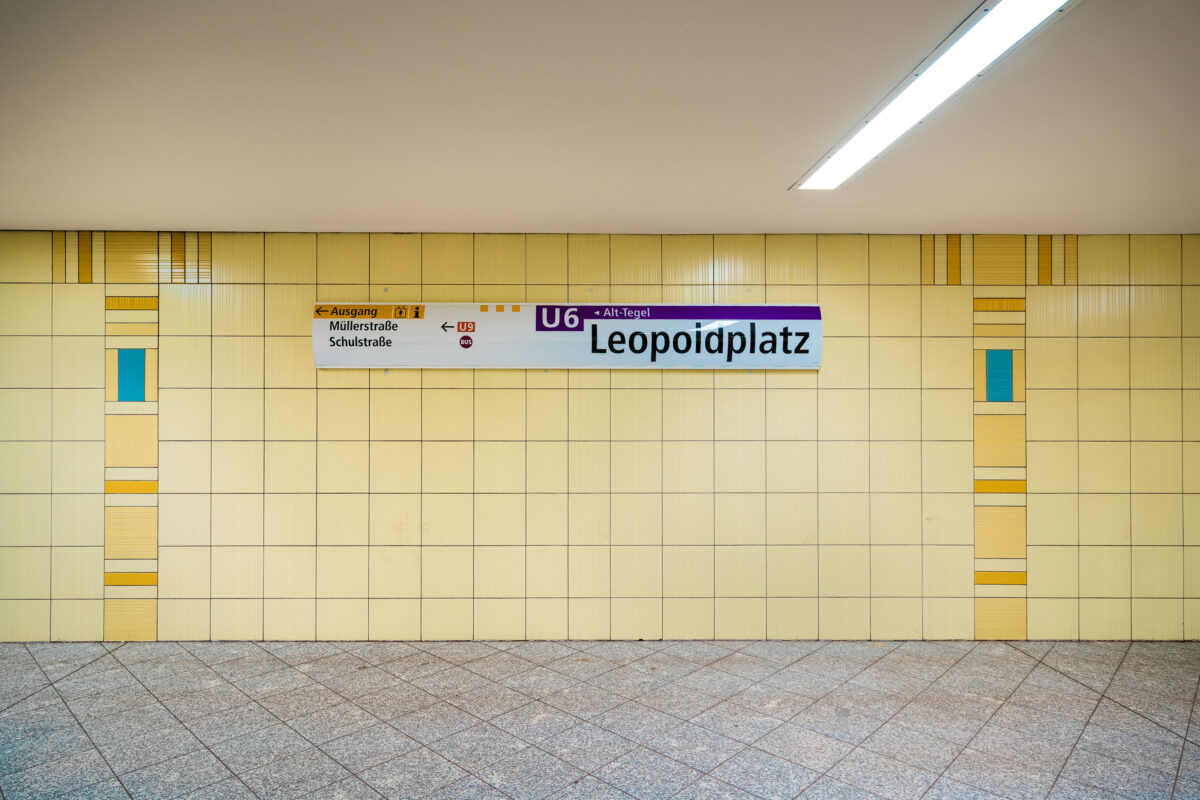
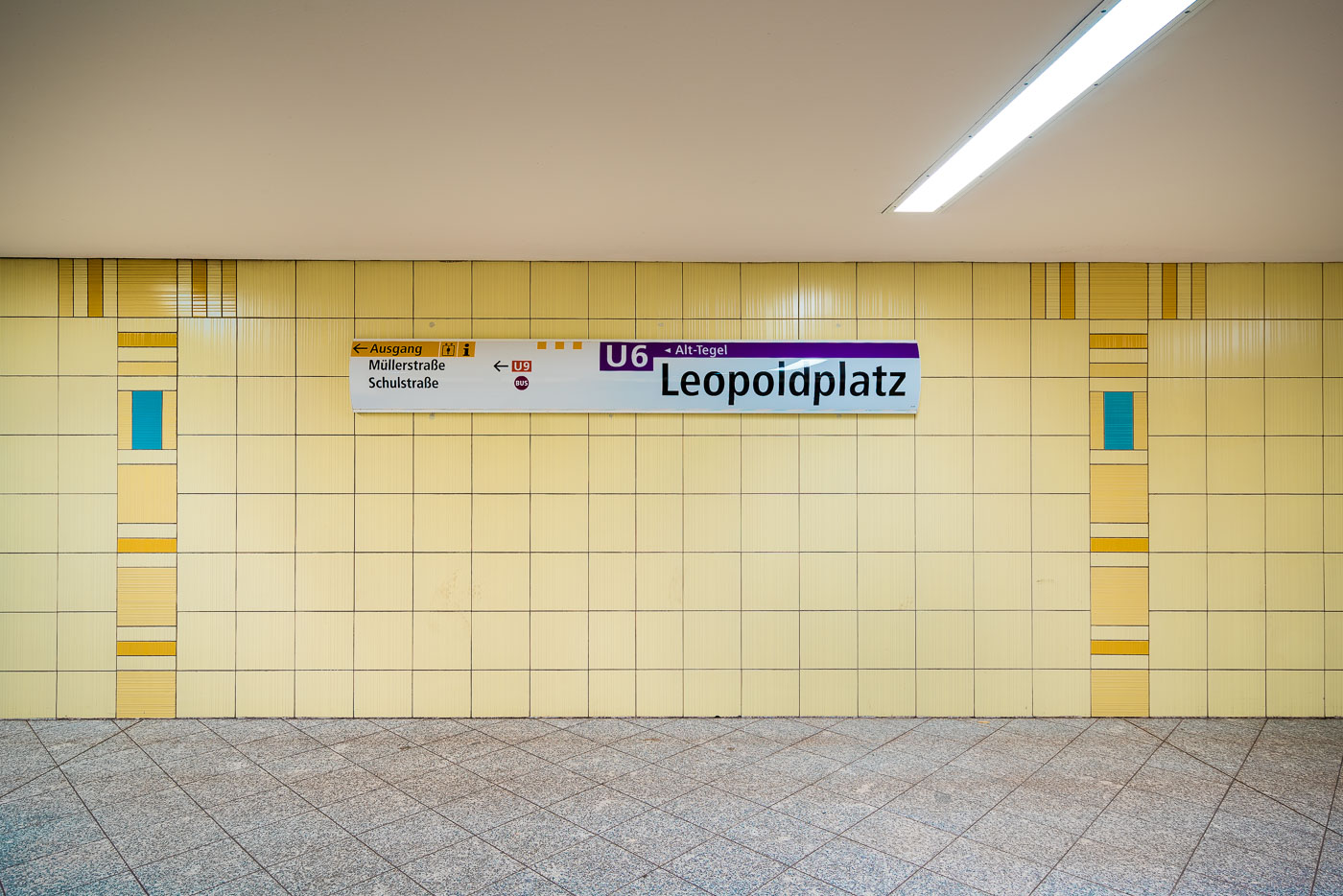
Leopoldplatz U-Bahn Station in Berlin with pale yellow tiled walls and U6 signage
Leopoldplatz U-Bahn Station in Berlin has pale yellow ceramic wall tiles with blue and ochre accents. The station is served by the U6 and U9 lines and sits beneath Leopoldplatz in the Wedding district.
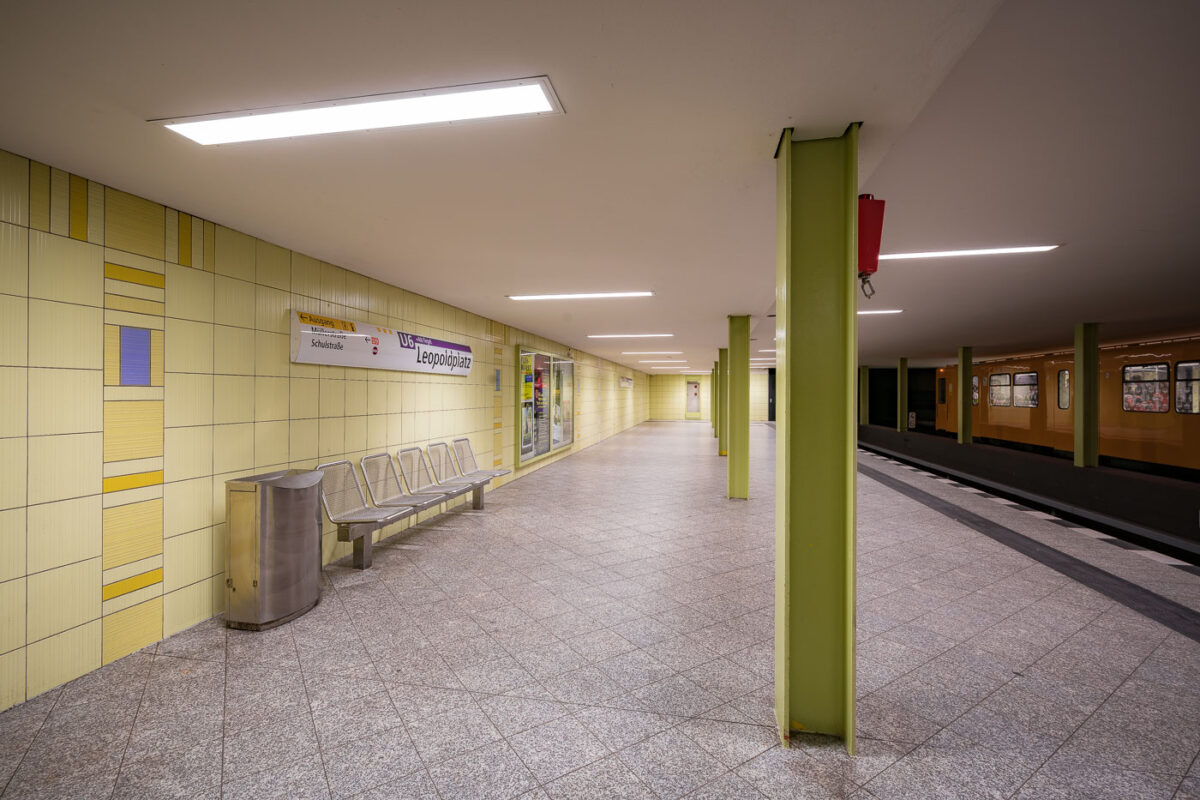
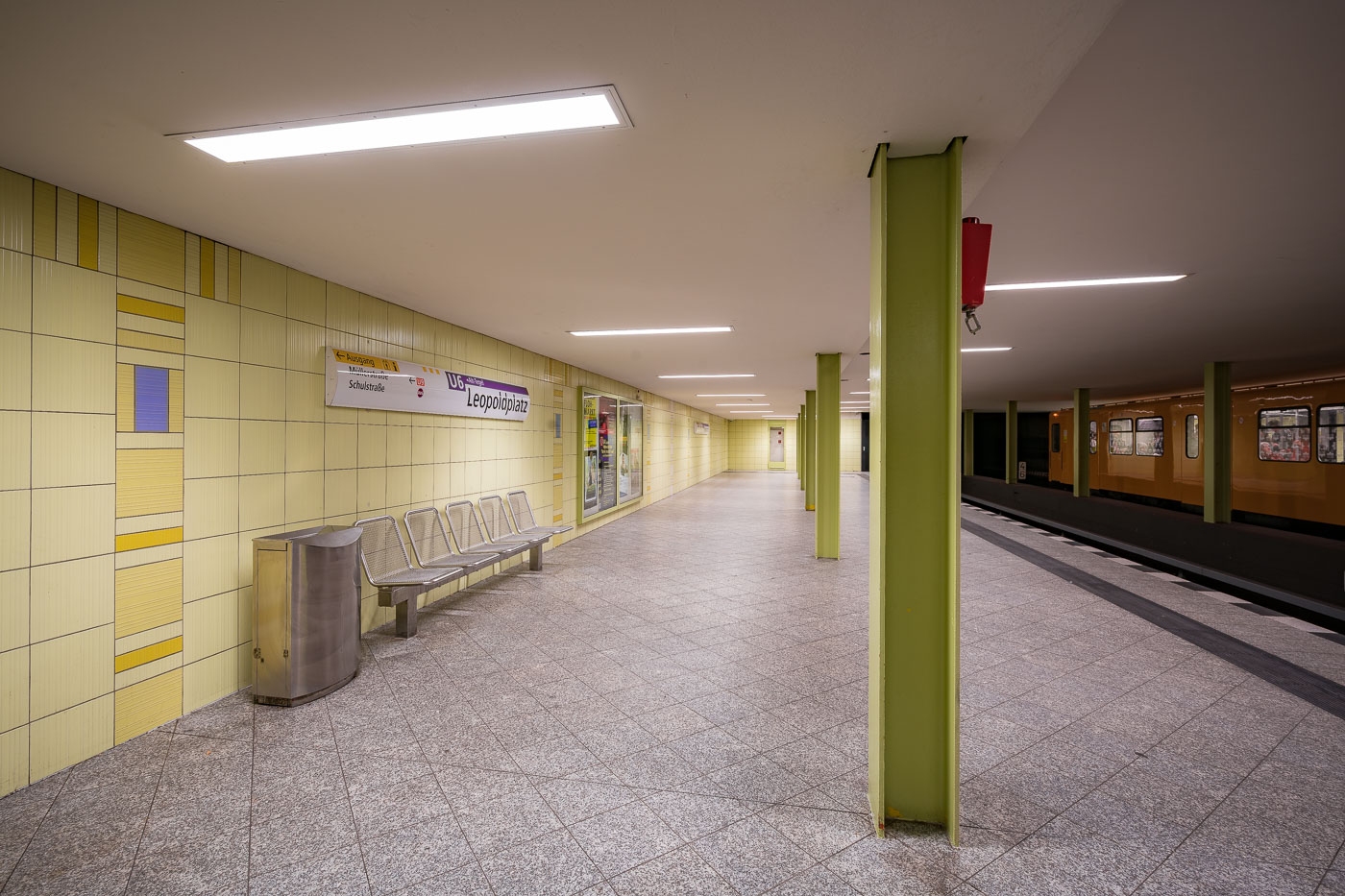
Leopoldplatz U-Bahn U9 platform in Berlin with yellow tiles and green columns
Leopoldplatz U-Bahn station in Berlin includes a lower-level platform on the U9 line. The platform features pale yellow wall tiles, green-painted support columns, and bench seating along the wall.
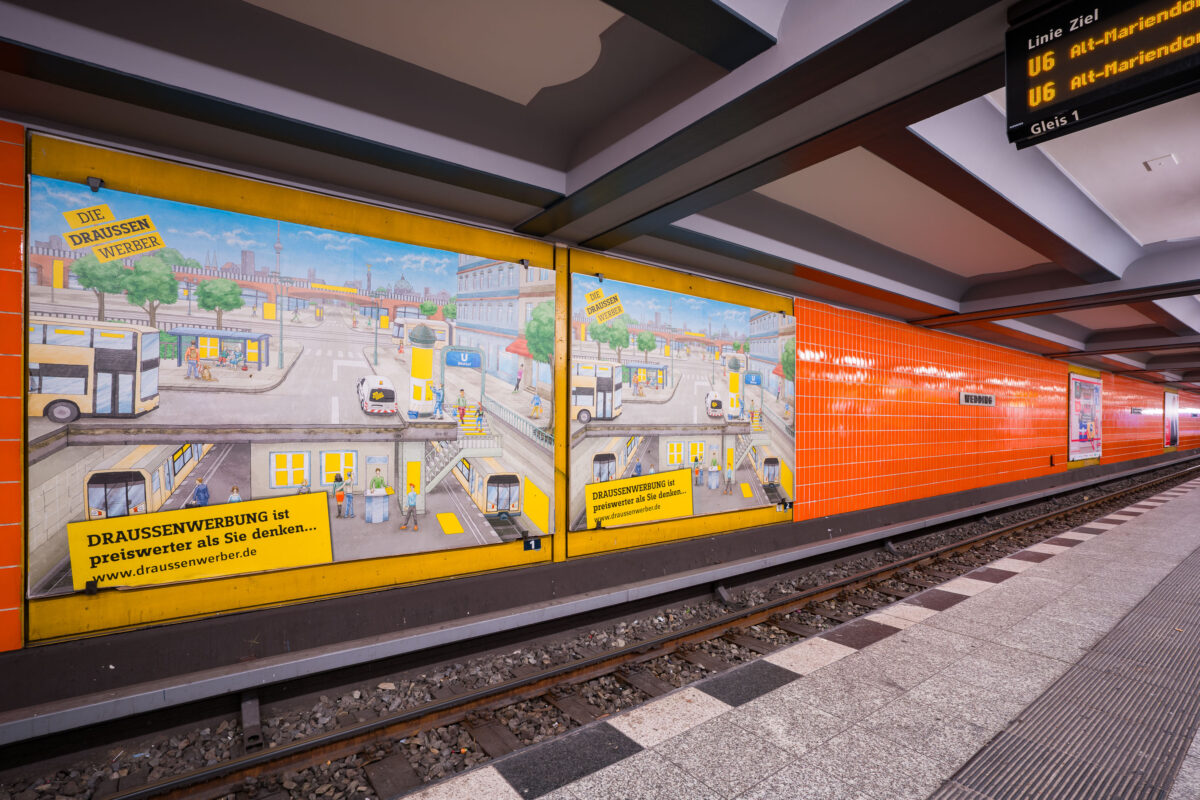
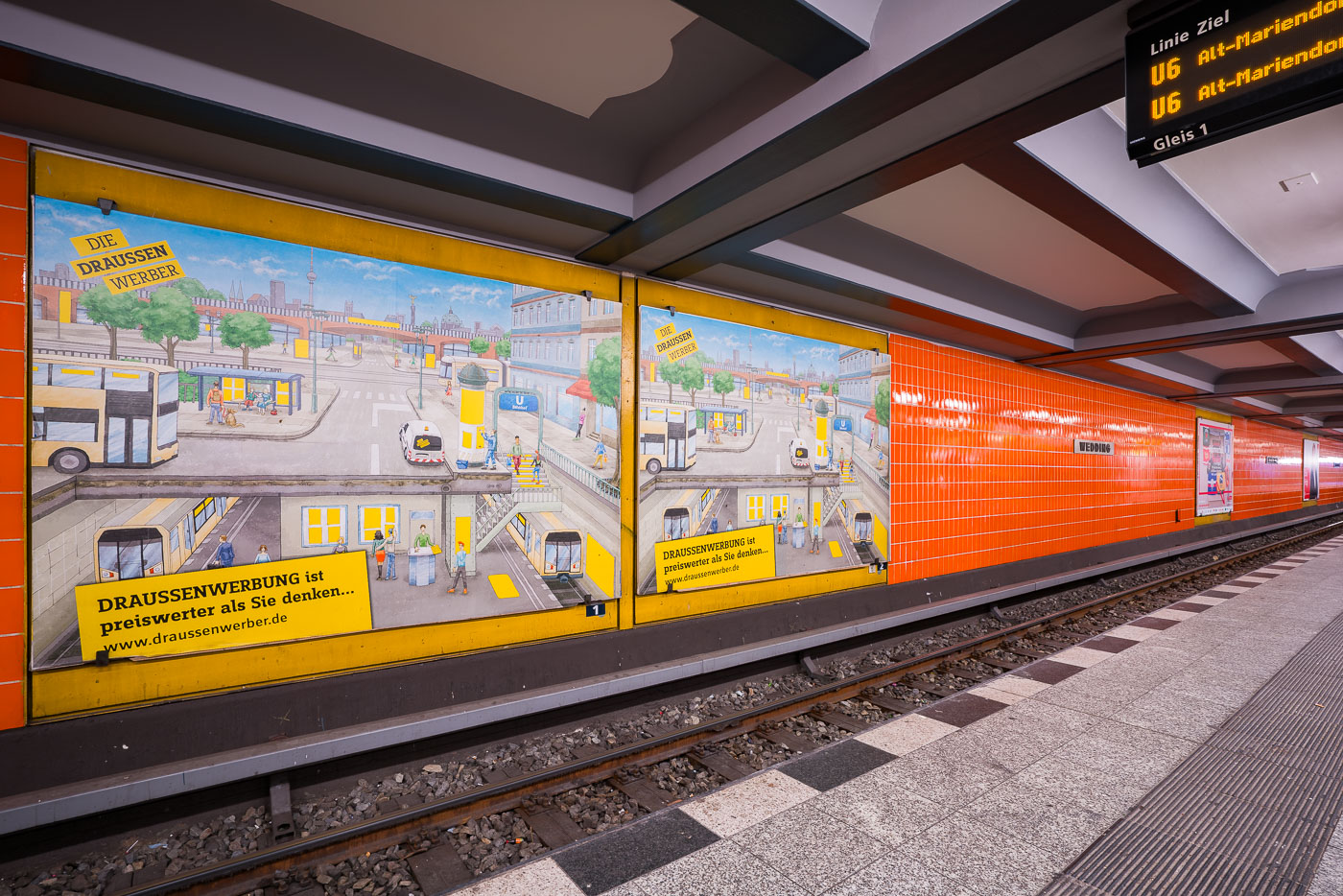
Berlin Wedding U-Bahn station platform with orange tiles and advertising murals.
Berlin Wedding U-Bahn station in Berlin features an orange-tiled platform wall and large advertising murals along track 1. An electronic sign above the platform shows U6 trains toward Alt-Mariendorf.
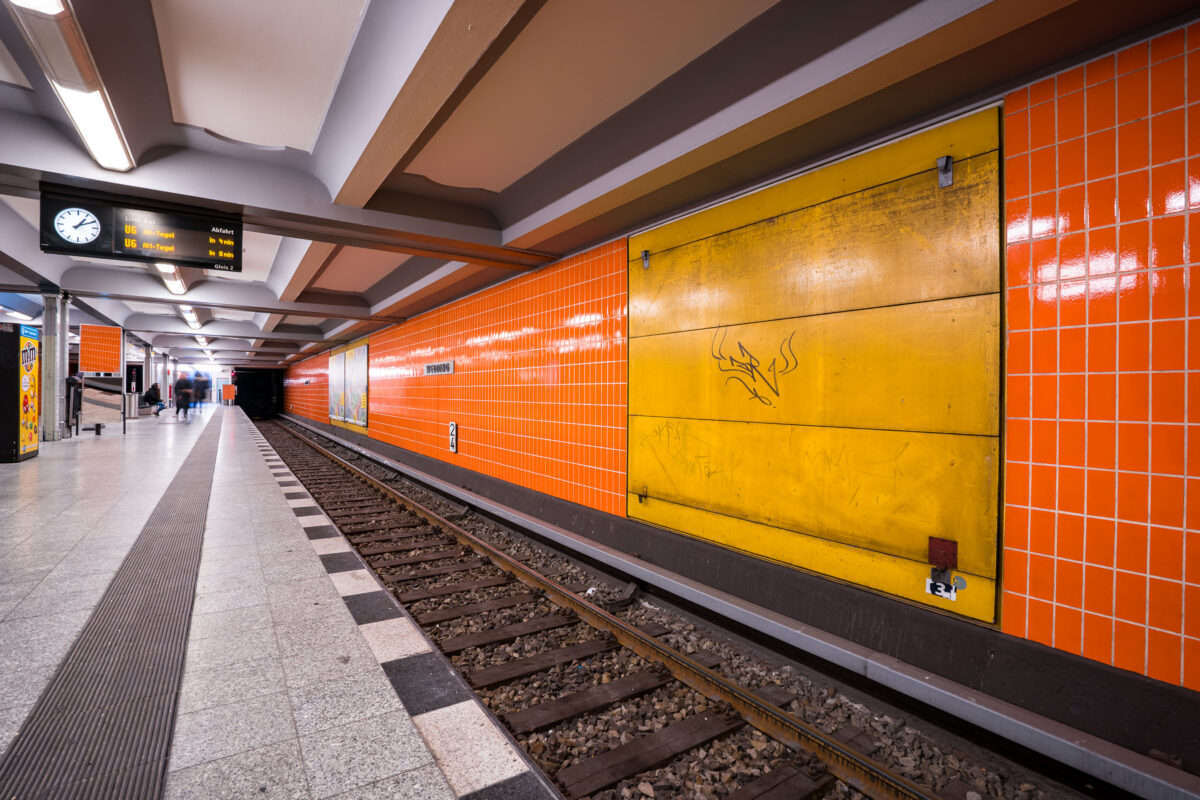
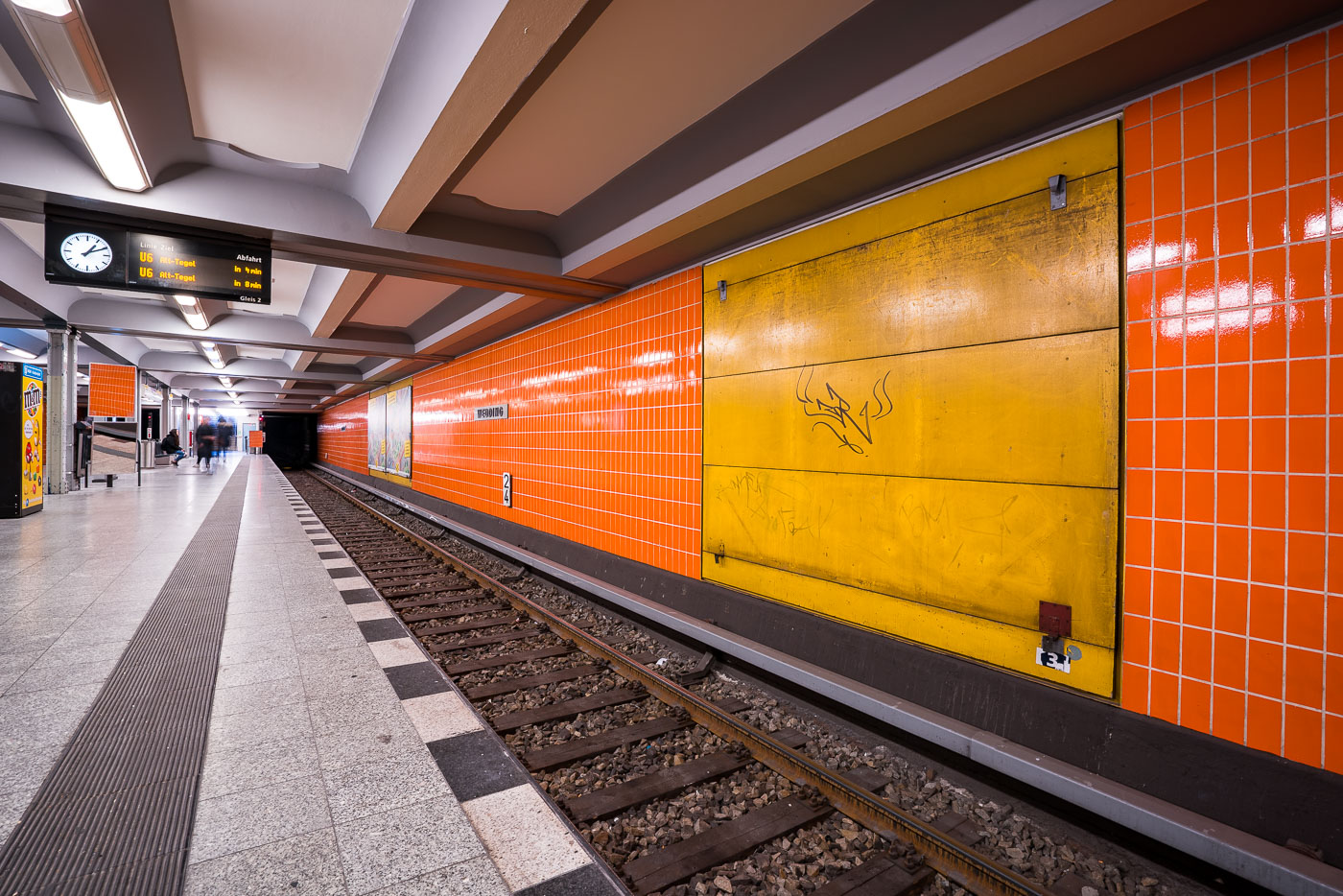
Wedding U-Bahn station platform in Berlin with orange tiles and yellow service panels
Wedding U-Bahn station in Berlin has an underground platform lined with orange tiles and yellow service panels. The station is served by the U6 line, which runs through central Berlin to Alt-Tegel.
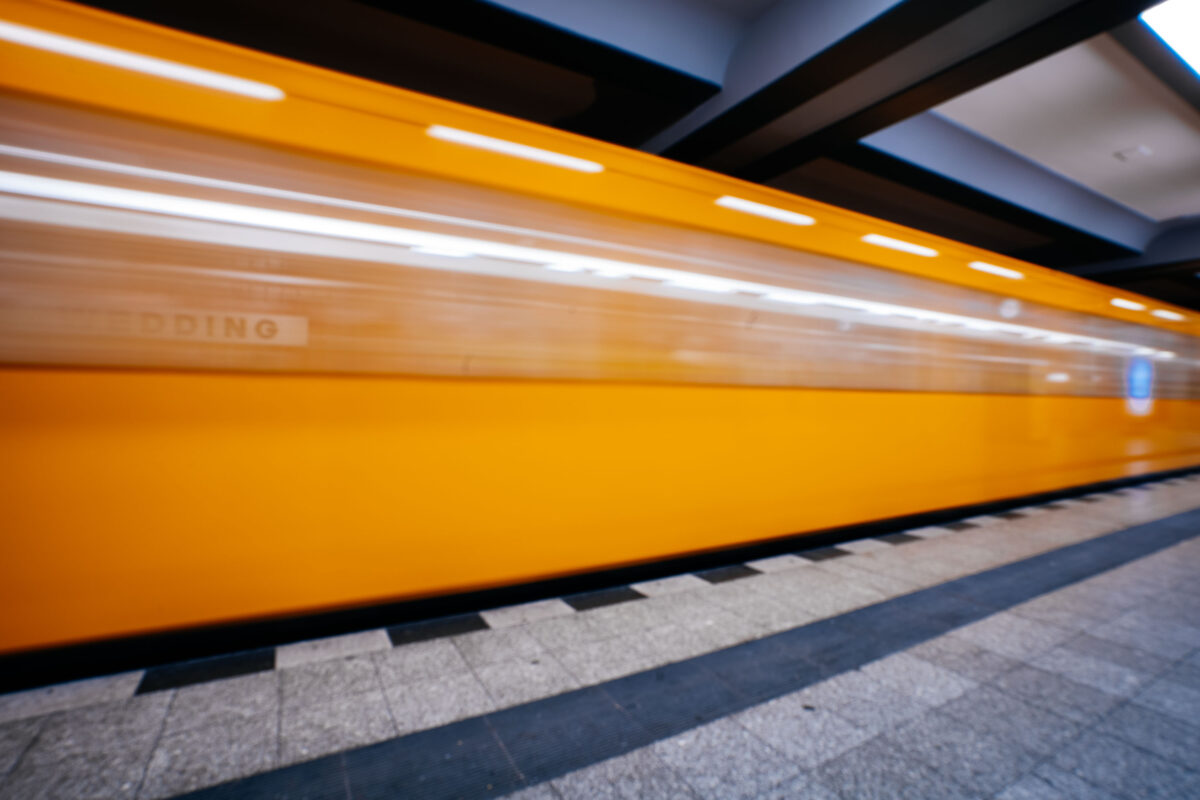
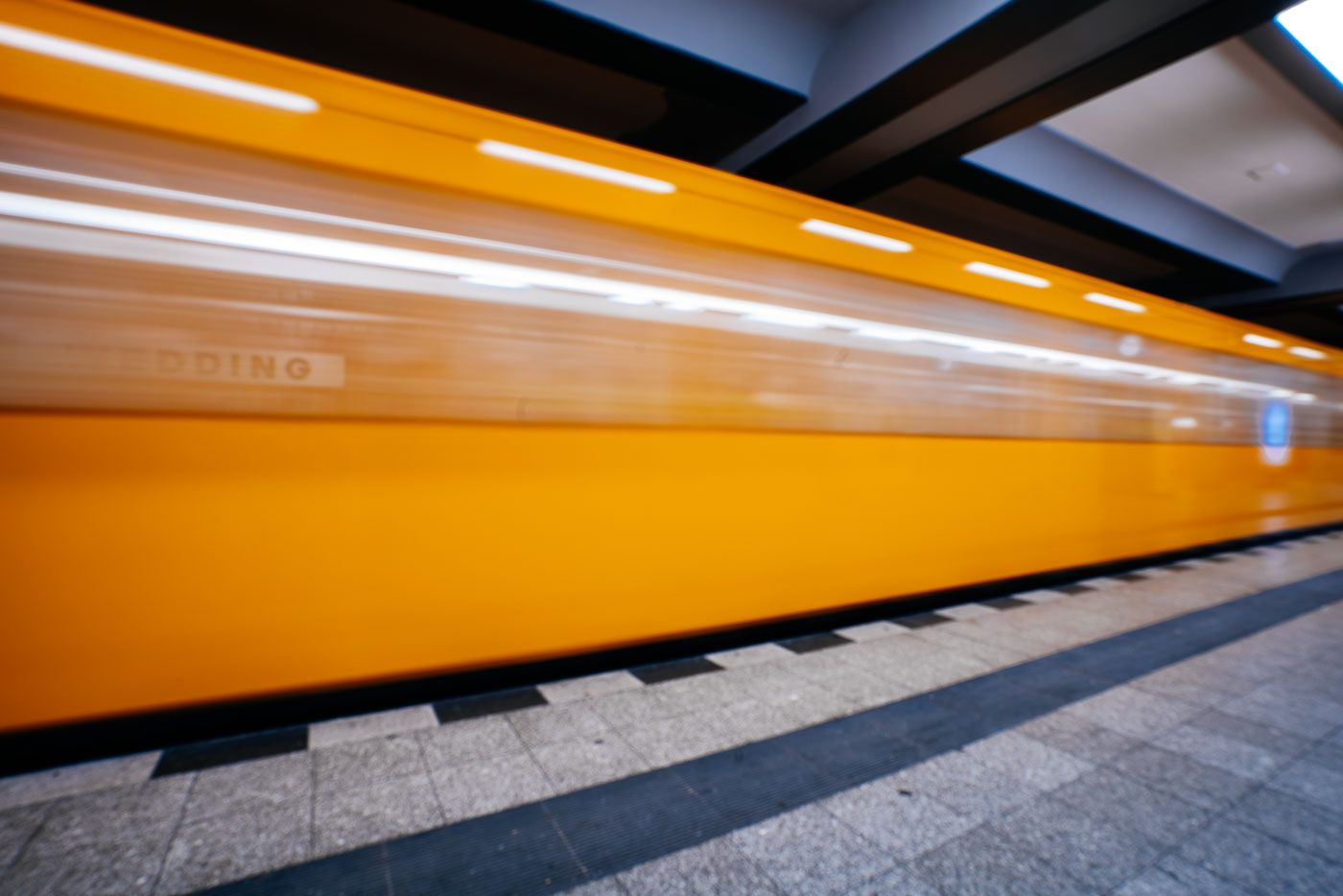
Berlin U6 train at Wedding station in Berlin, blurred by motion while passing the platform
A Berlin U6 train passes through Wedding station on the city’s U-Bahn network. Wedding opened in 1923 and remains a stop on the U6 line in northern Berlin.
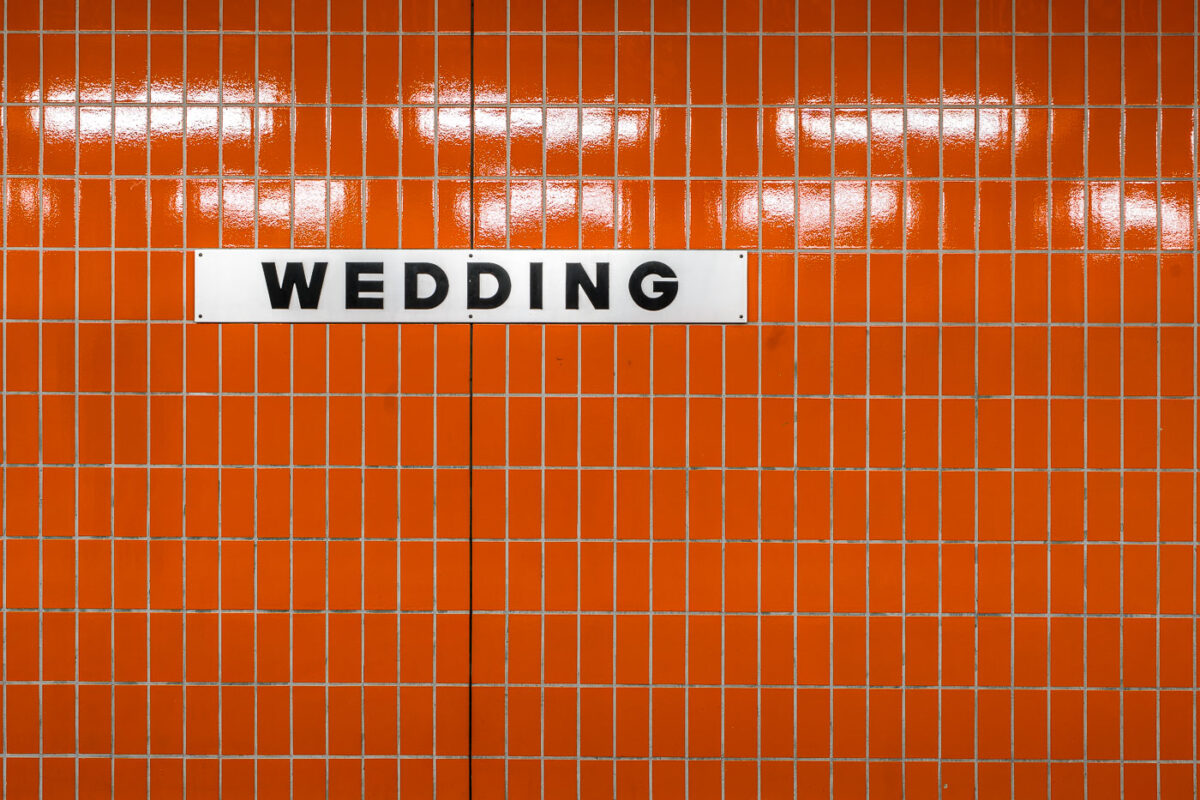
Wedding Station sign on an orange tiled wall in Berlin.
Wedding Station in Berlin, Germany, is identified by a white sign on an orange tiled wall. The station is served by the Berlin U-Bahn and connects with the adjacent S-Bahn station.
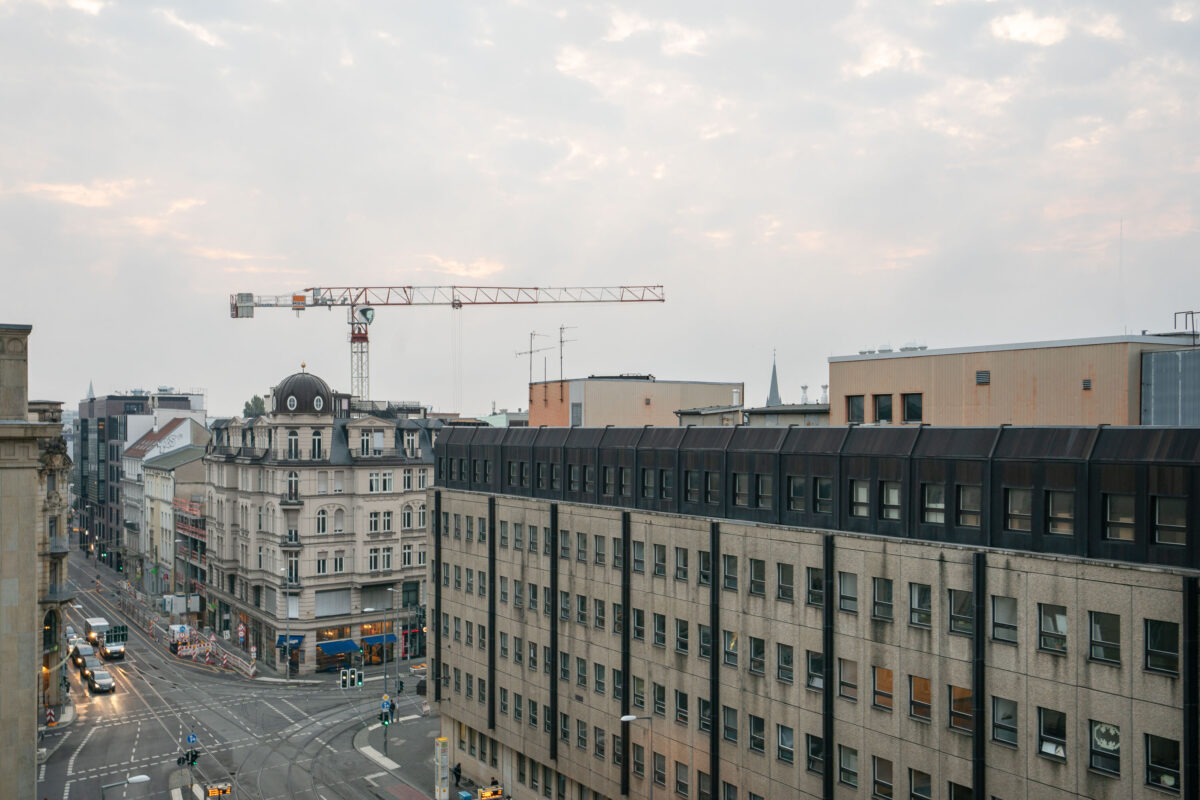
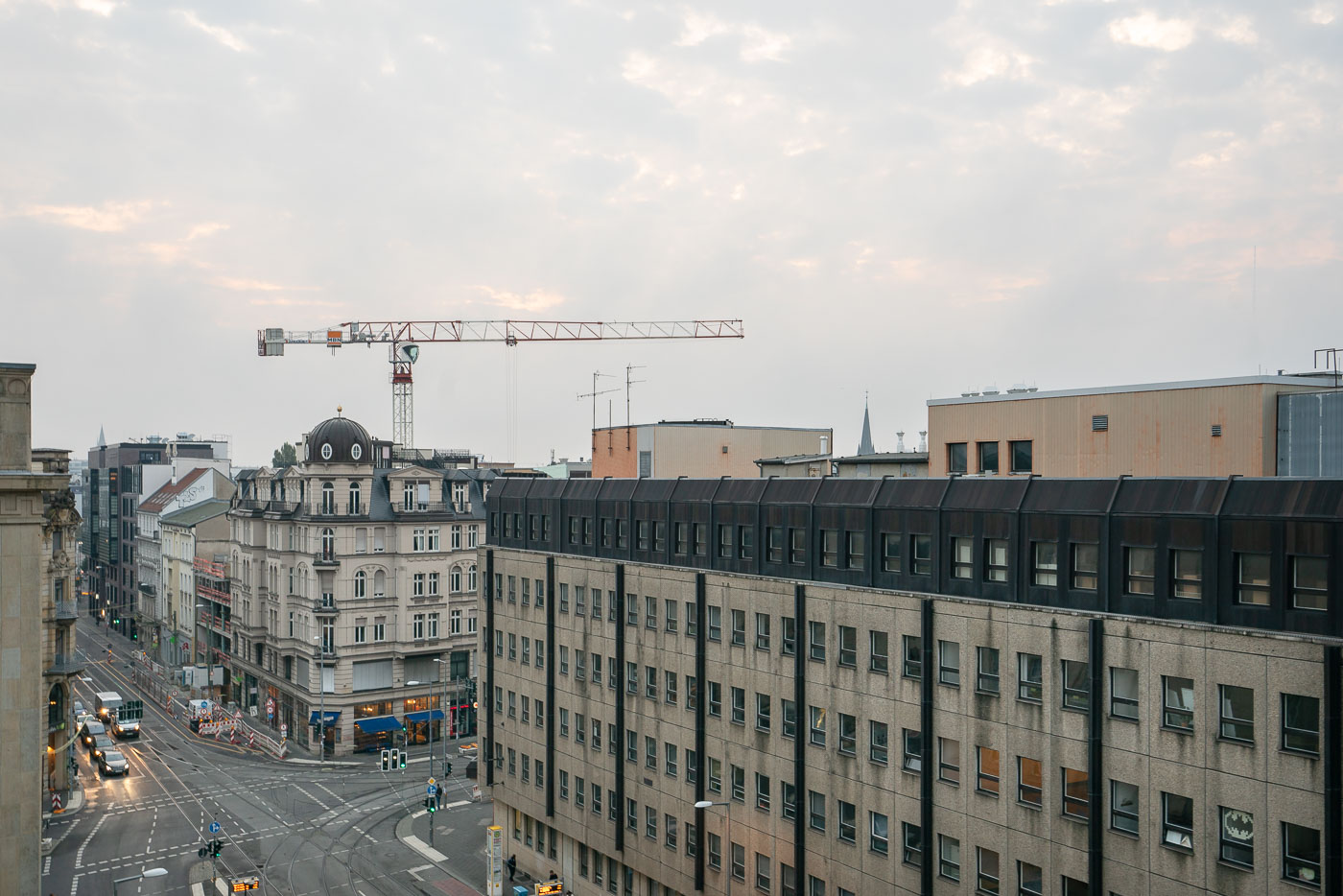
Invalidenstraße and Friedrichstraße in Berlin with postwar buildings and a construction crane.
Invalidenstraße and Friedrichstraße in Berlin are seen from above, with postwar buildings, a historic corner house, and a construction crane. The streets meet near the Mitte district, where rebuilding and new development continue alongside older architecture.
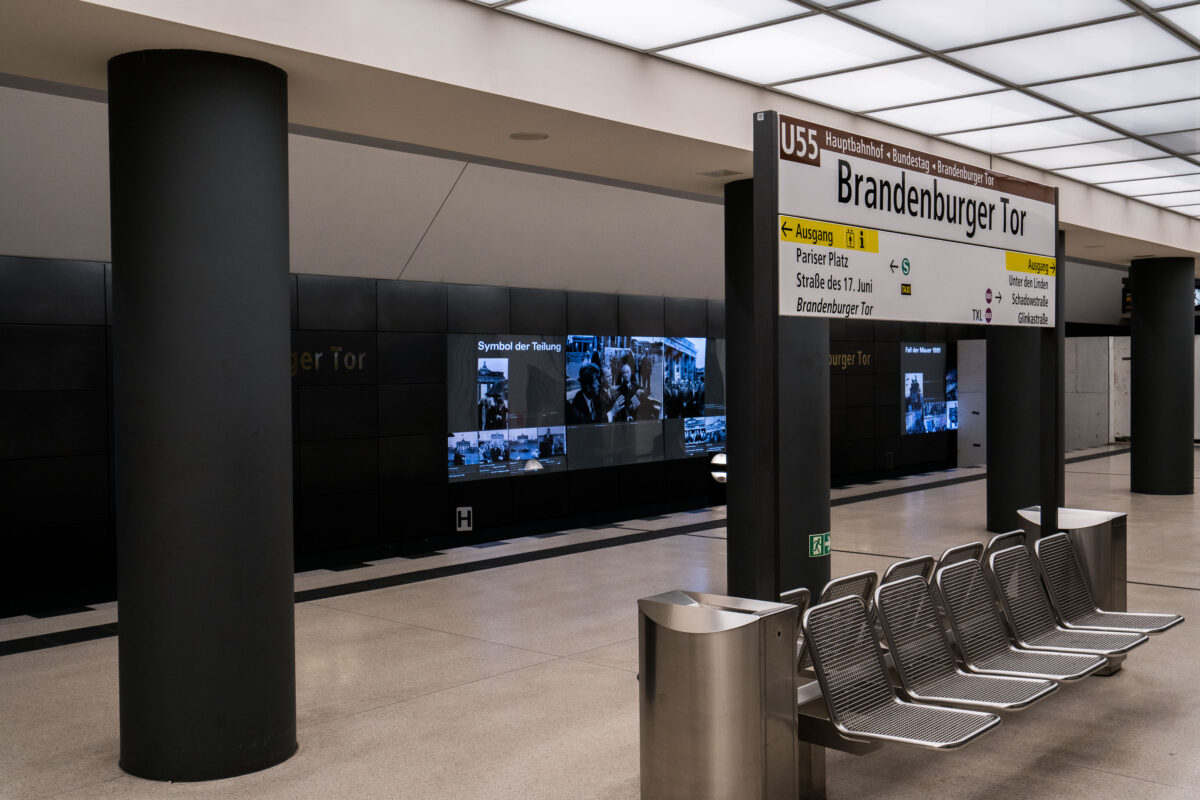
Brandenburger Tor station in Berlin displays “Symbol der Teilung” on the U5 platform.
Brandenburger Tor station on Berlin’s U5 line features a digital exhibit titled “Symbol der Teilung.” The display appears on the platform beneath Pariser Platz, where the station connects to the Hauptbahnhof–Bundestag–Brandenburger Tor route.
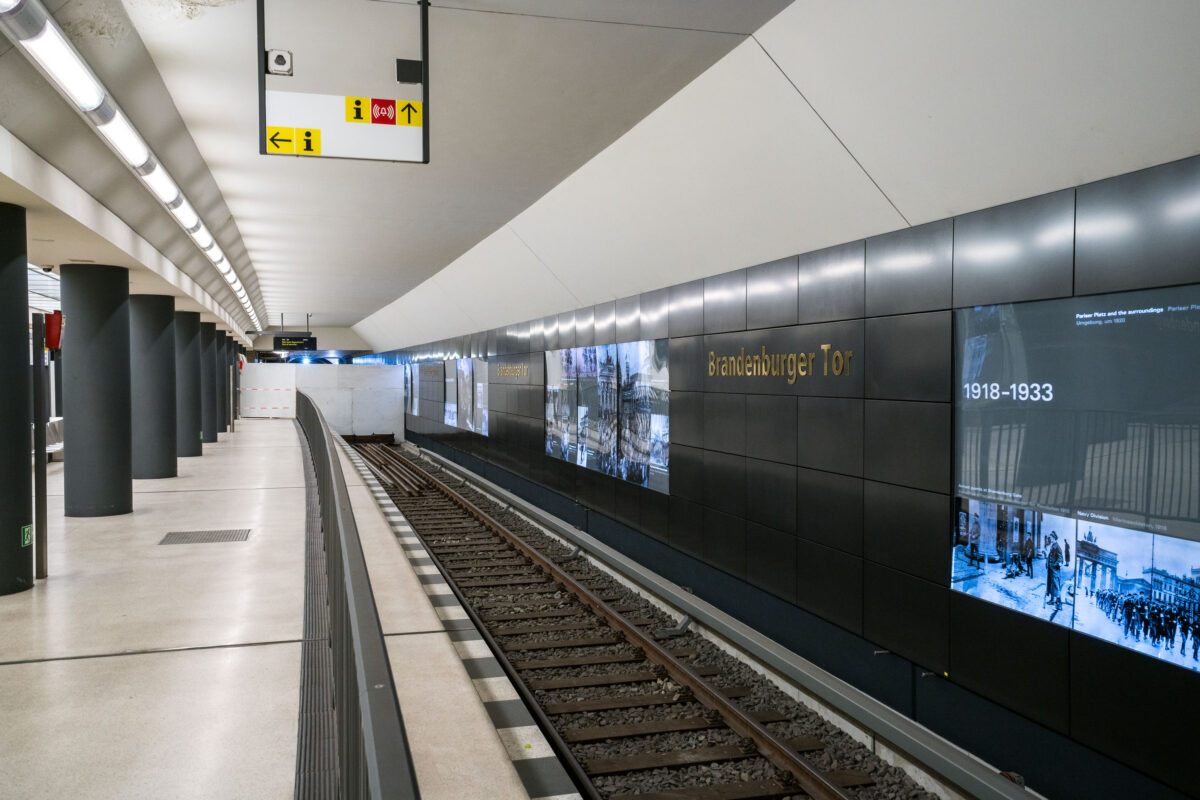
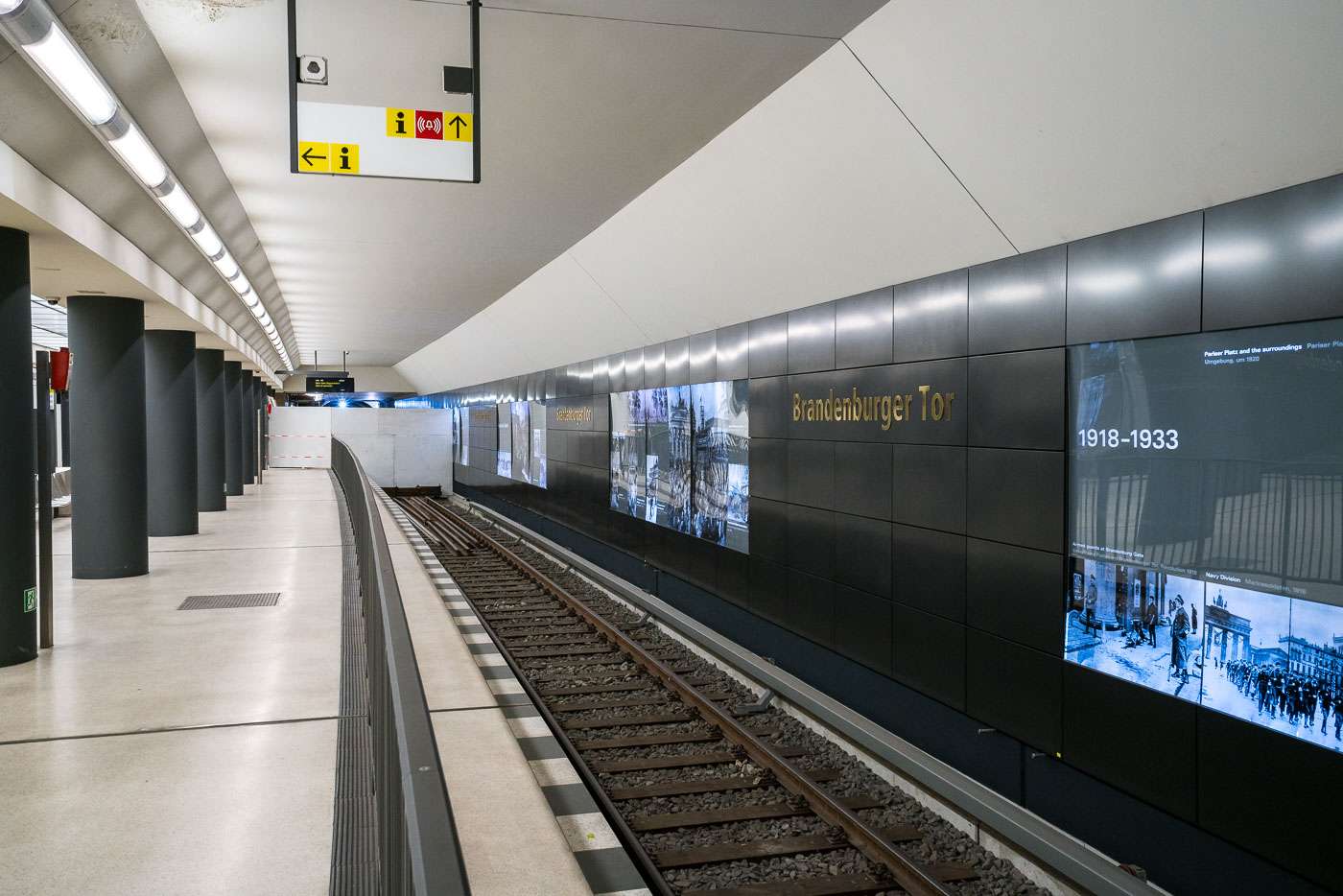
Brandenburger Tor U-Bahn station in Berlin with tracks, platform, and historical wall displays.
Brandenburger Tor U-Bahn station is beneath Pariser Platz in central Berlin. Opened in 2009 on the U55 line, it became part of the U5 in 2020. The station walls feature illuminated panels with historical images and dates related to Berlin and the Brandenburg Gate.
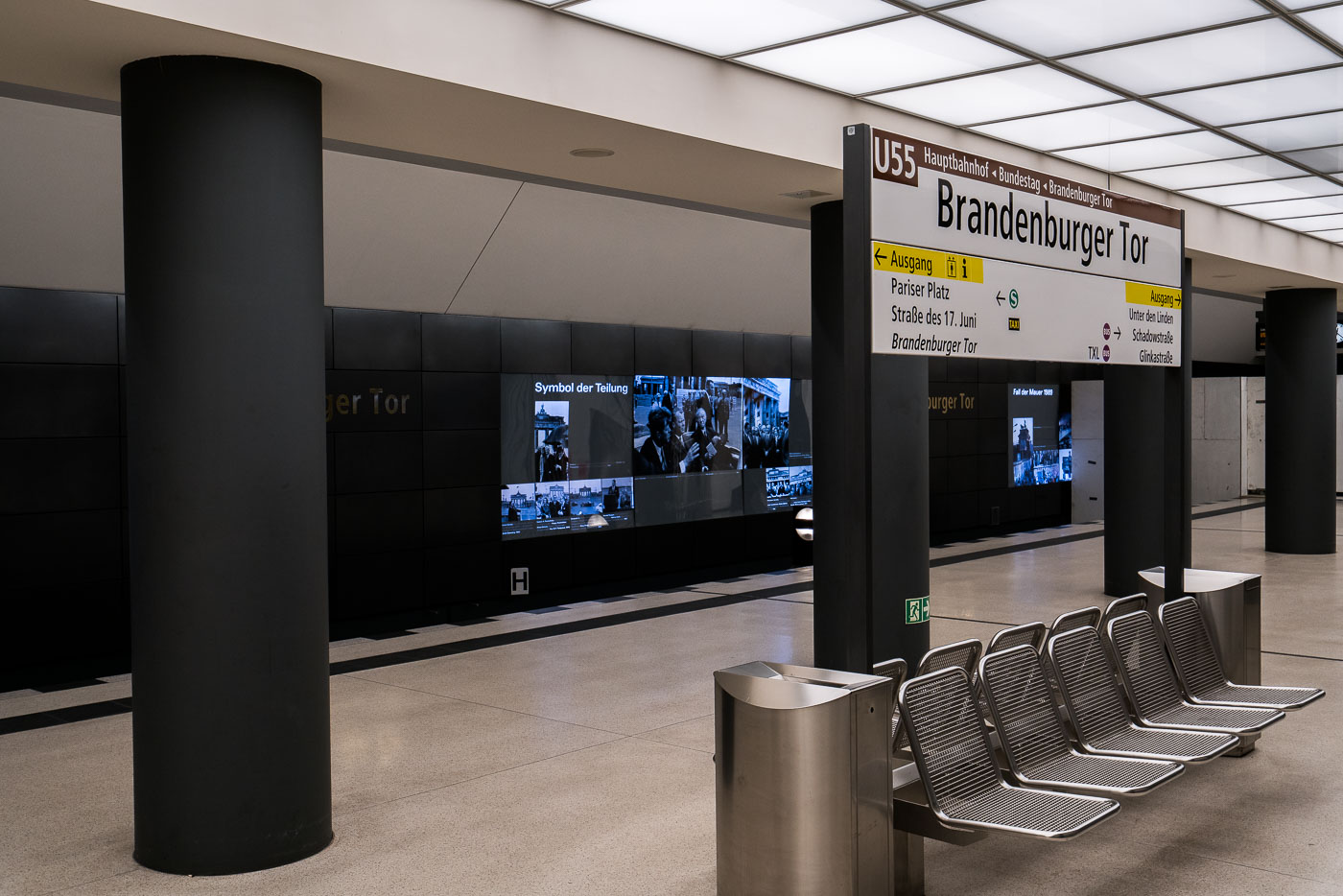
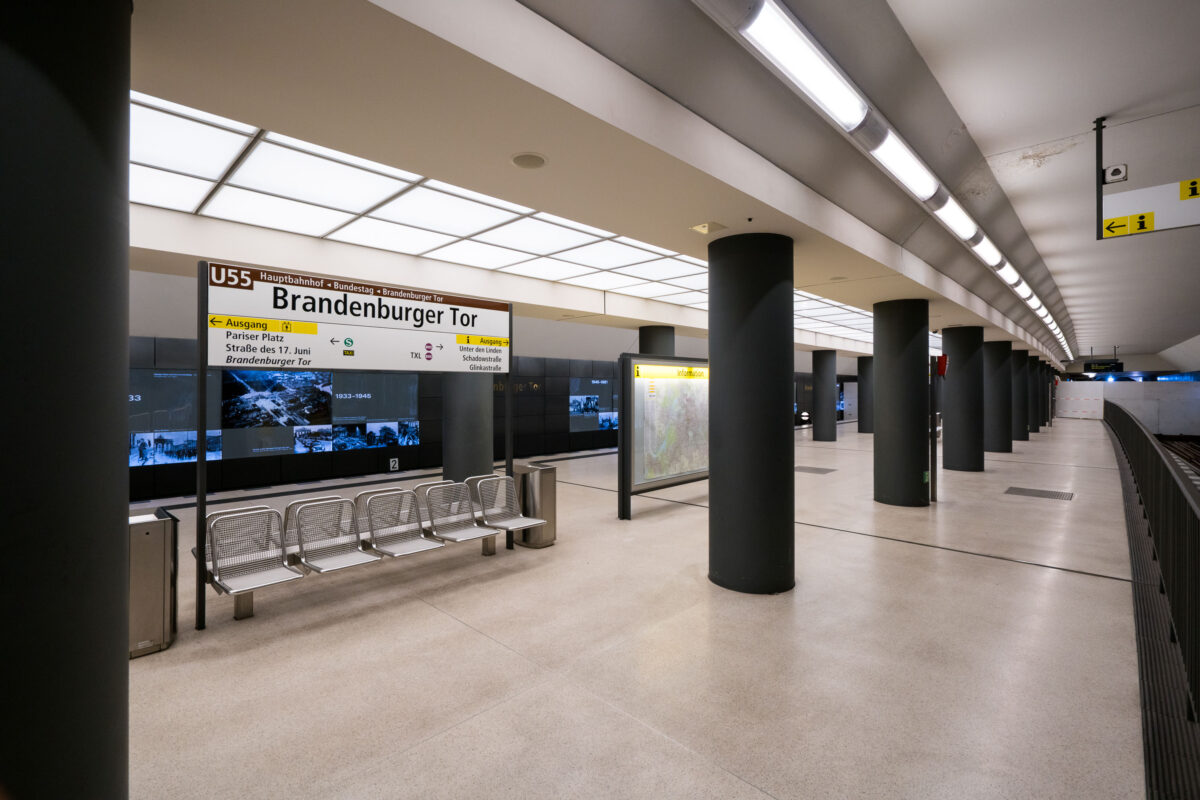
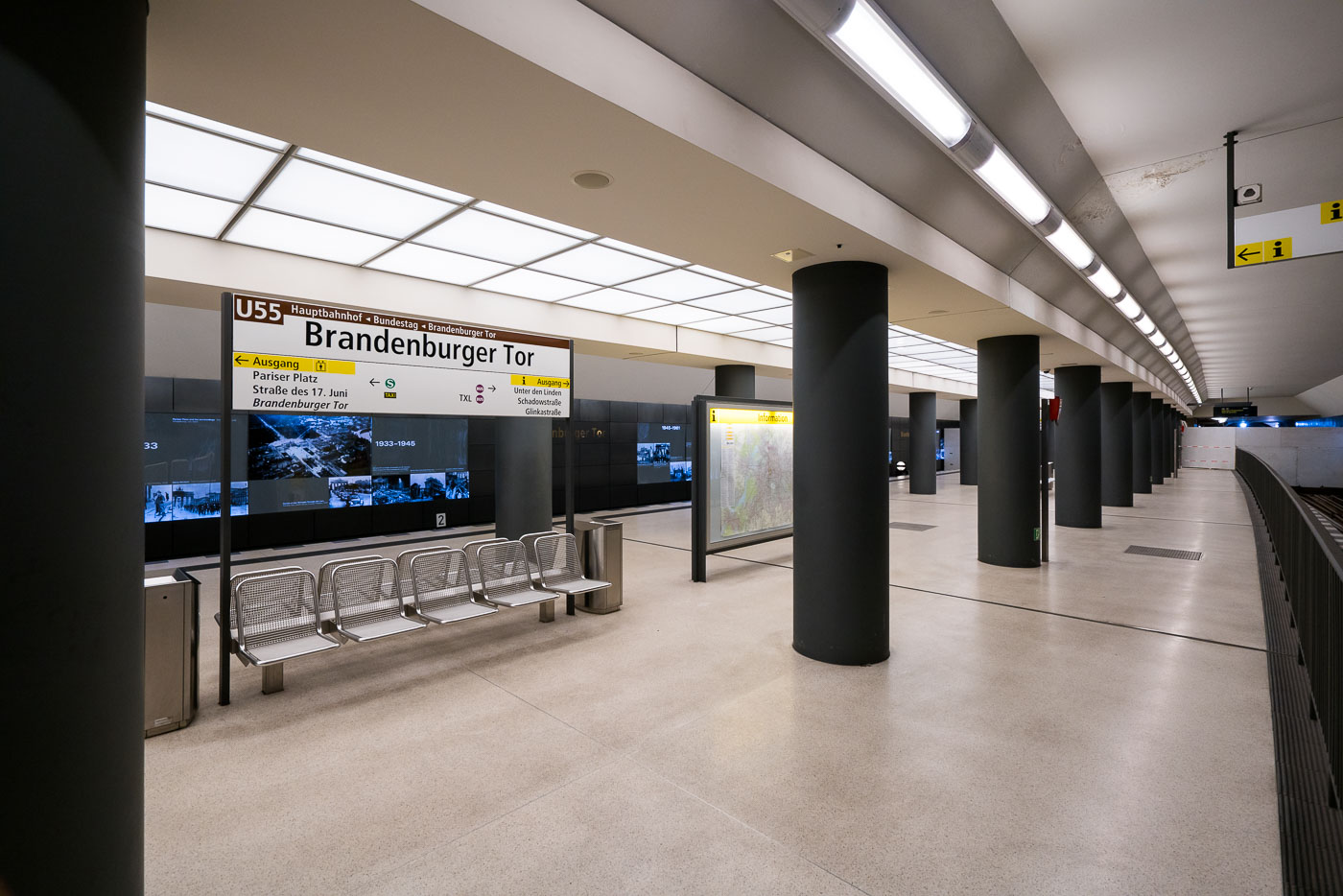
Brandenburger Tor U-Bahn platform in Berlin with black columns and overhead lights.
Brandenburger Tor U-Bahn station in Berlin is served by the U55 line in this platform area. The station opened in 2009 and was later incorporated into the U5 extension in 2020. Black columns, illuminated ceiling panels, and wall displays line the platform.

Built in Minneapolis

Photographs showcasing change over time

Browse by location, move through long-running series, or start with recent work.