Place Archive

Paris

Photography from Paris documents the city’s key transportation hubs, including the Beaux-Arts facades and iron-and-glass train sheds of Gare du Nord and Gare de Lyon, integral to regional, national, and international rail connections. Architectural details of Haussmann-era apartment buildings and Paris Metro infrastructure alongside street scenes at Place des Ternes reveal patterns of urban mobility and residential life within defined arrondissement boundaries.

19 photos

Photos from Paris
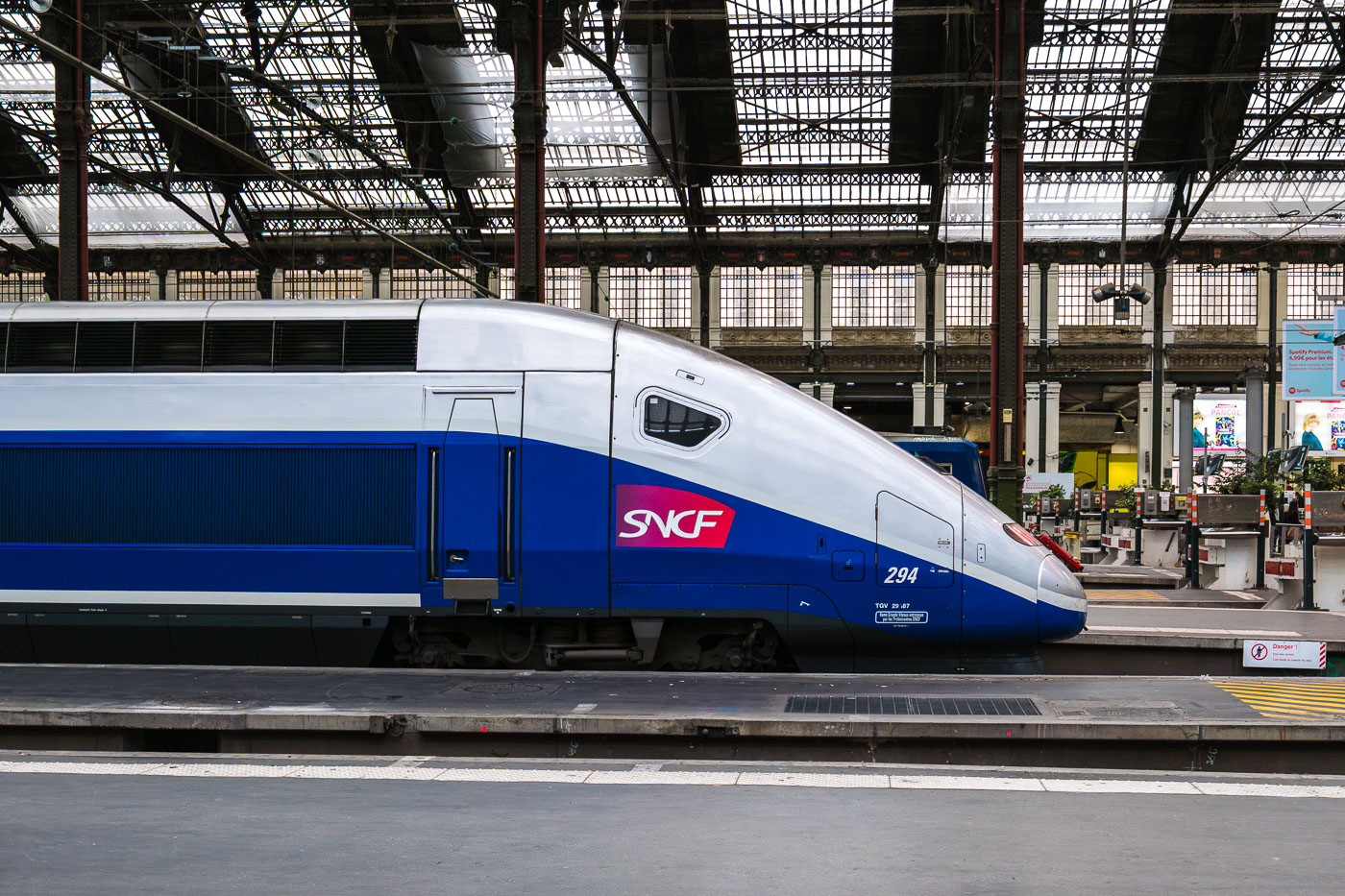
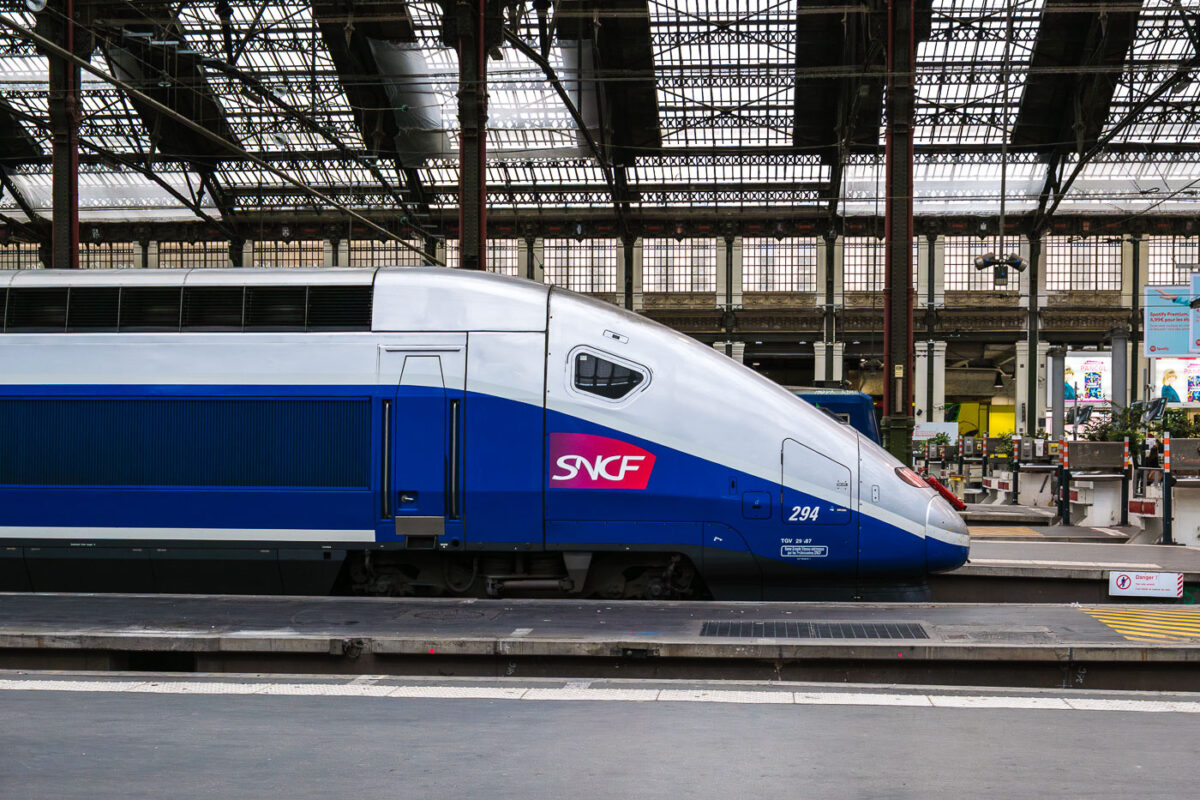
SNCF Train in Paris France
SNCF TGV power car no. 294 stands at Gare de Lyon in Paris, one of the main termini for high-speed rail services from the capital to southeastern France. Opened in 1900 for the Exposition Universelle, Gare de Lyon is known for its large iron-and-glass train shed, visible above the platforms. The station is a principal departure point for TGV routes to cities including Lyon and Marseille, as well as some cross-border services.
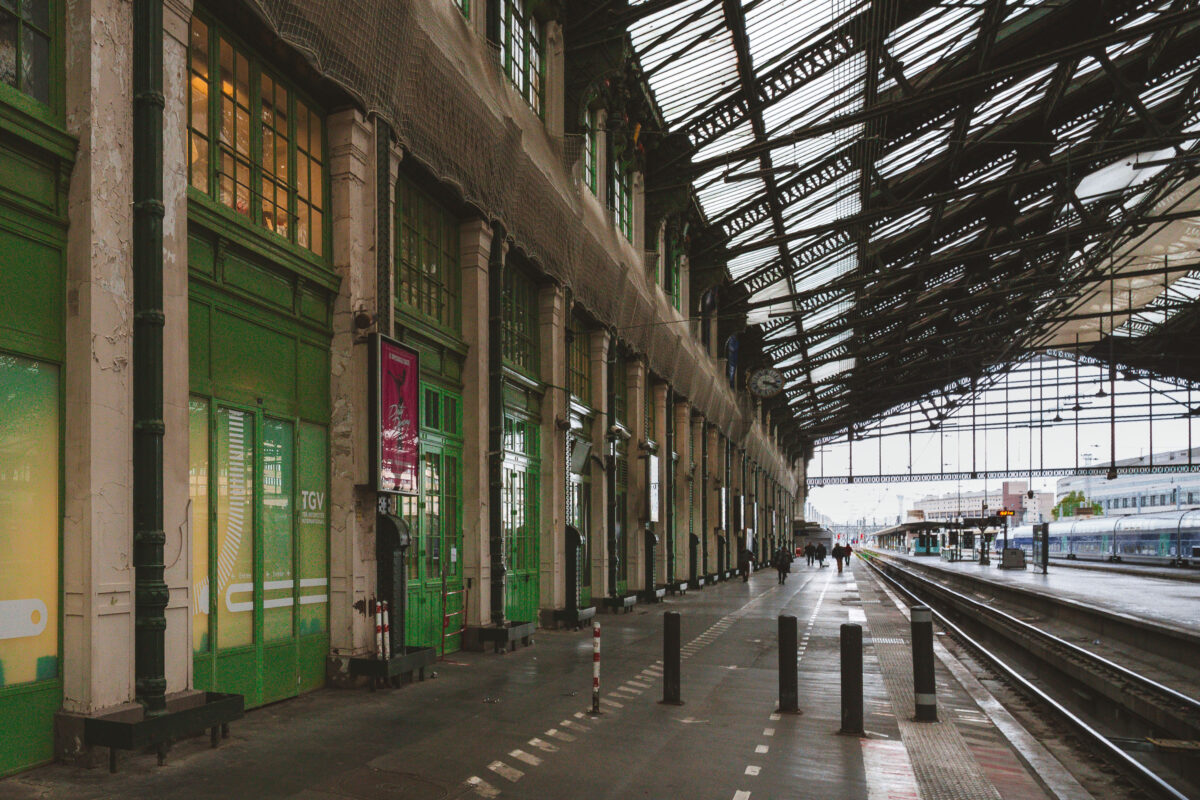
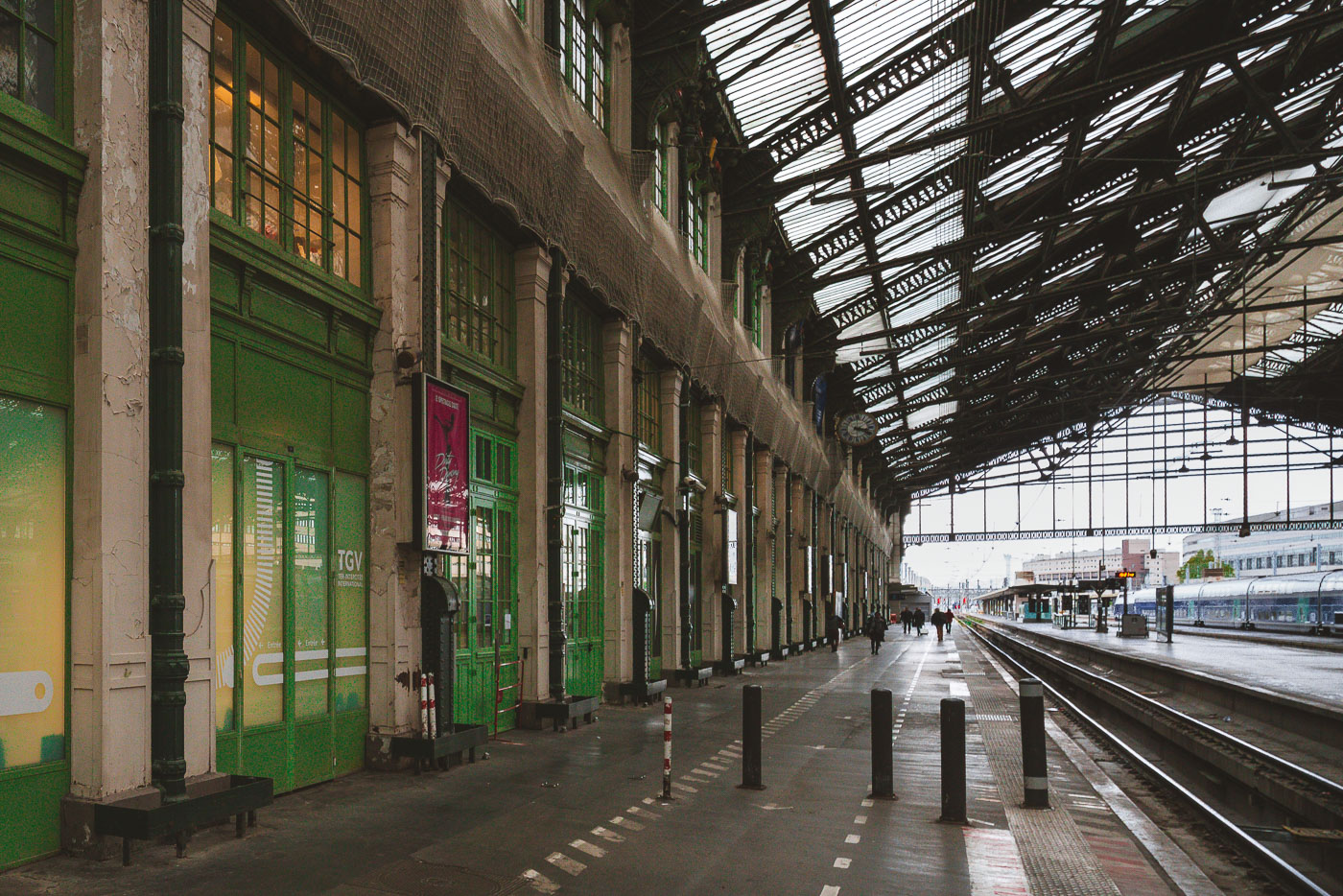
Gare de Lyon Train Station in Paris France
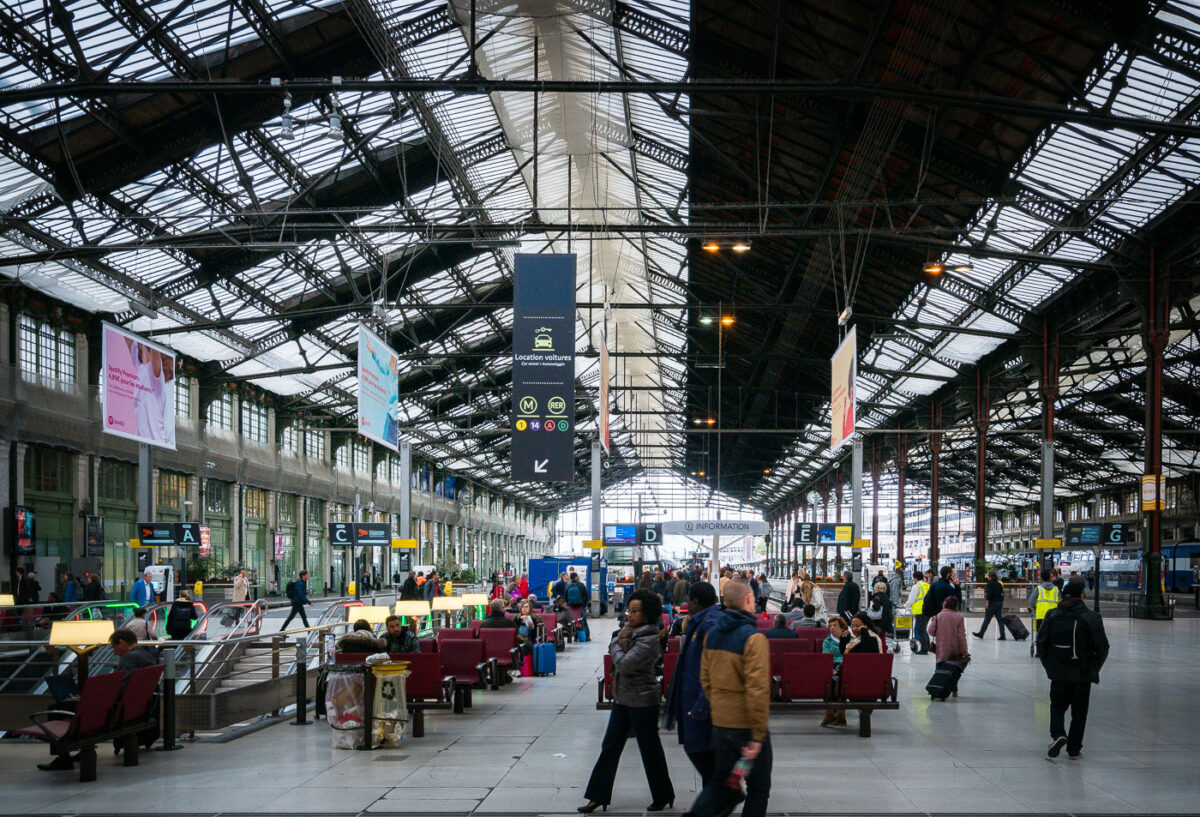
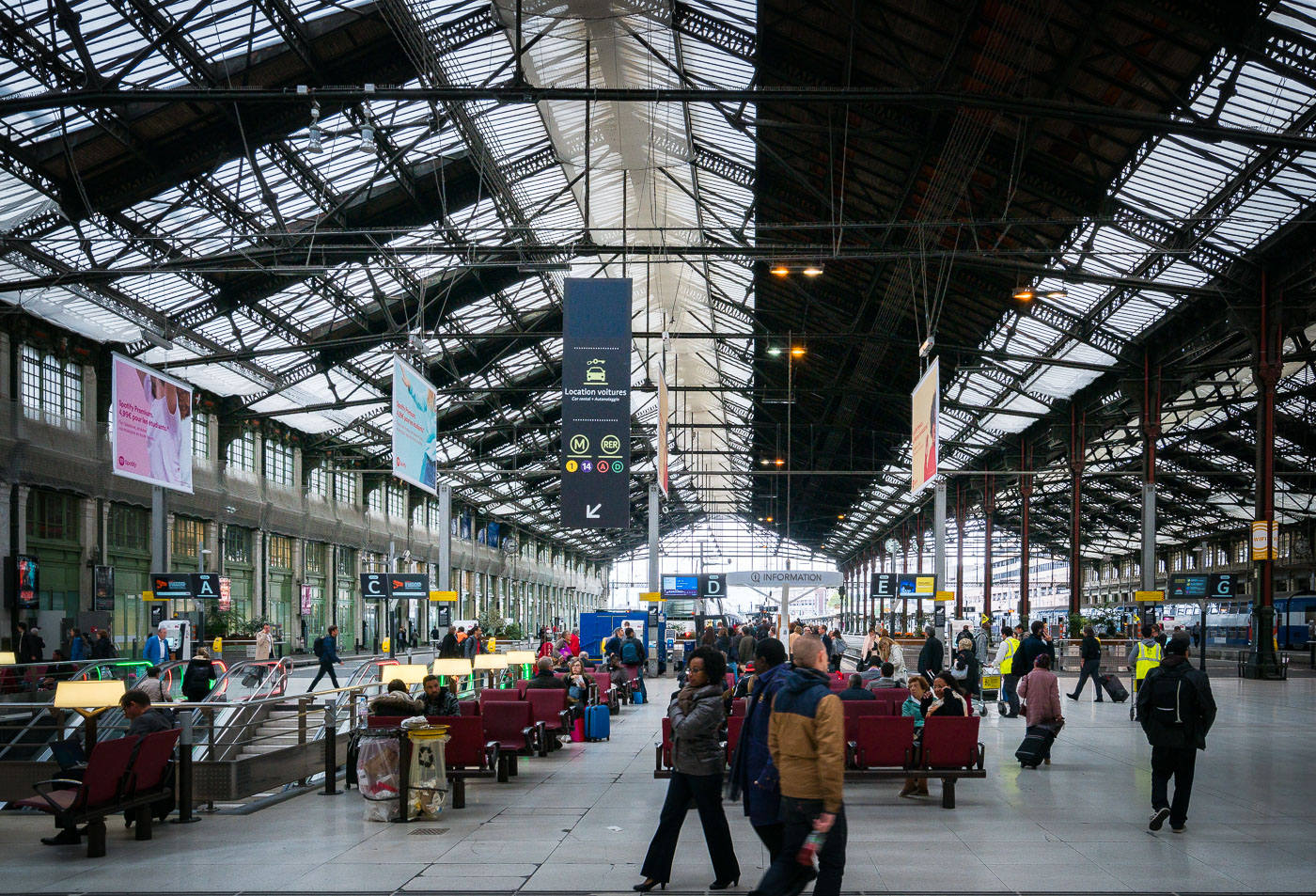
Platforms at Paris Gare de Lyon in Paris are covered by the station’s long iron-and-glass train shed, with TGV equipment visible along the tracks. Located in the 12th arrondissement, Gare de Lyon is one of the capital’s principal terminal stations and handles high-speed services to southeastern France as well as regional and long-distance trains. The station opened in 1855 for the Paris–Lyon line and was extensively rebuilt and expanded around the 1900 Exposition Universelle, establishing much of the complex still in use today.
Paris Gare de Lyon train station 2017
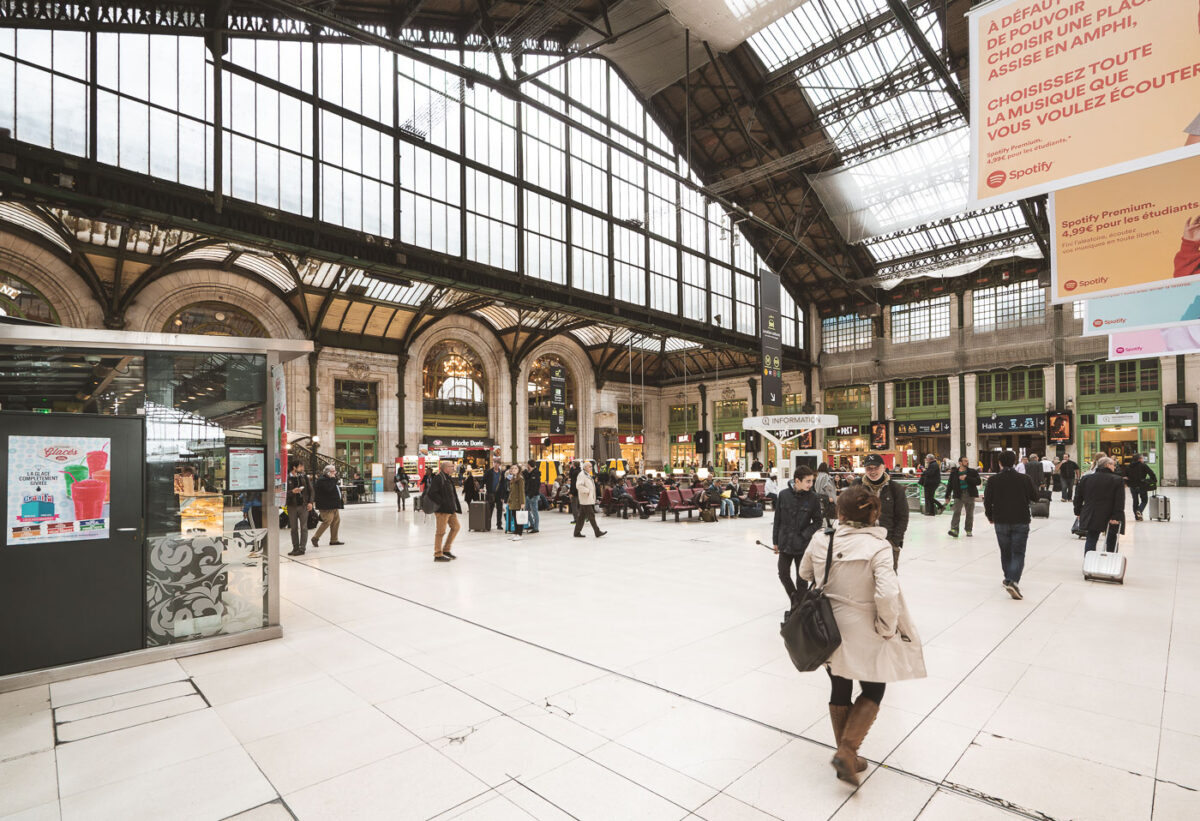
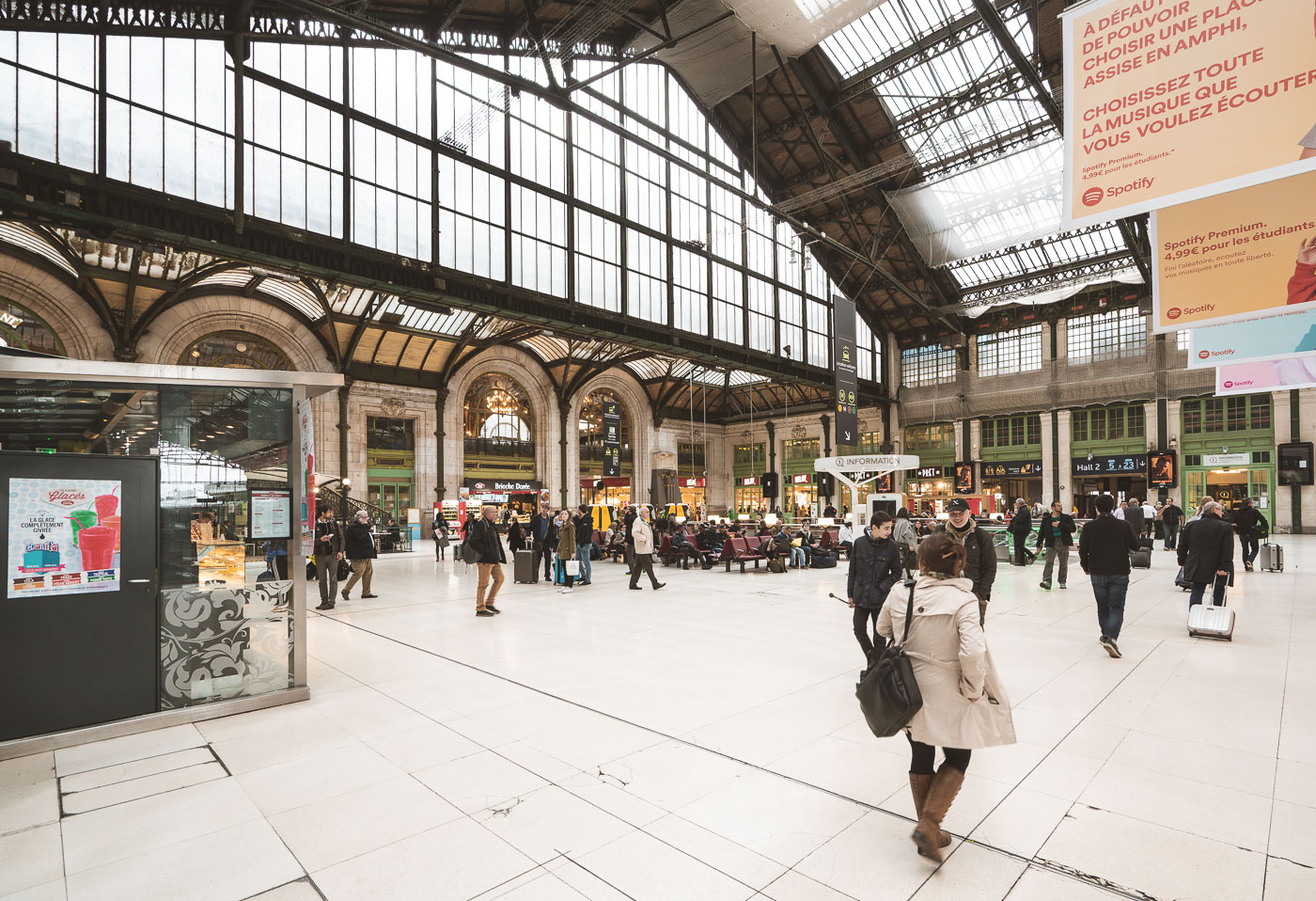
The main concourse of Paris Gare de Lyon in Paris, France, combines a Beaux-Arts terminal building with a large iron-and-glass train shed completed for the 1900 Exposition Universelle. One of the capital’s principal railway stations, Gare de Lyon is the Paris terminus for TGV services to southeastern France and international routes including Switzerland and Italy, alongside regional TER and Transilien trains. The station also connects with the Paris Métro and RER network, making it a major interchange for both long-distance and commuter travel.
Inside the Gare de Lyon train station
The main concourse of Gare de Lyon in Paris, France, is shown beneath the station’s expansive iron-and-glass train shed. Opened in 1900 for the Exposition Universelle, Gare de Lyon is one of Paris’s principal rail terminals, handling long-distance and regional traffic to southeastern France as well as onward international connections. Platform signs, waiting areas, and wayfinding for Métro and RER links underscore the station’s role as a major interchange within the capital’s rail and transit network.
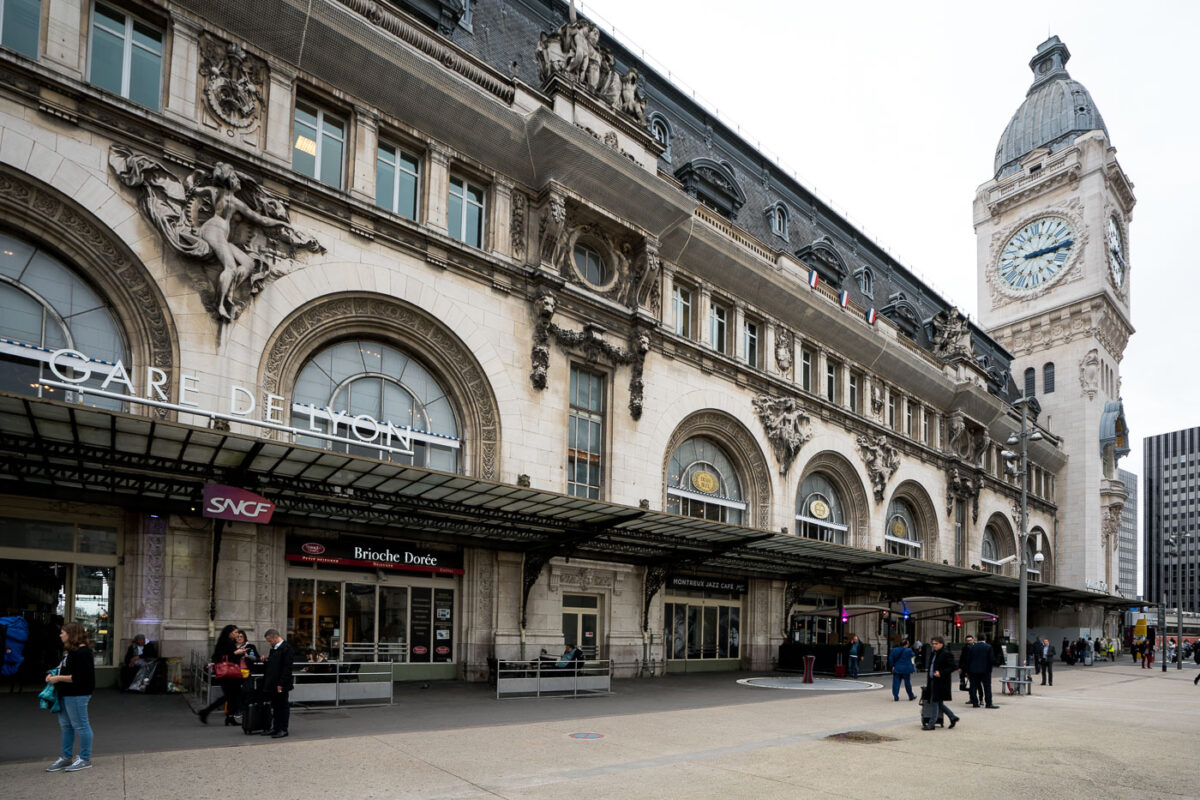
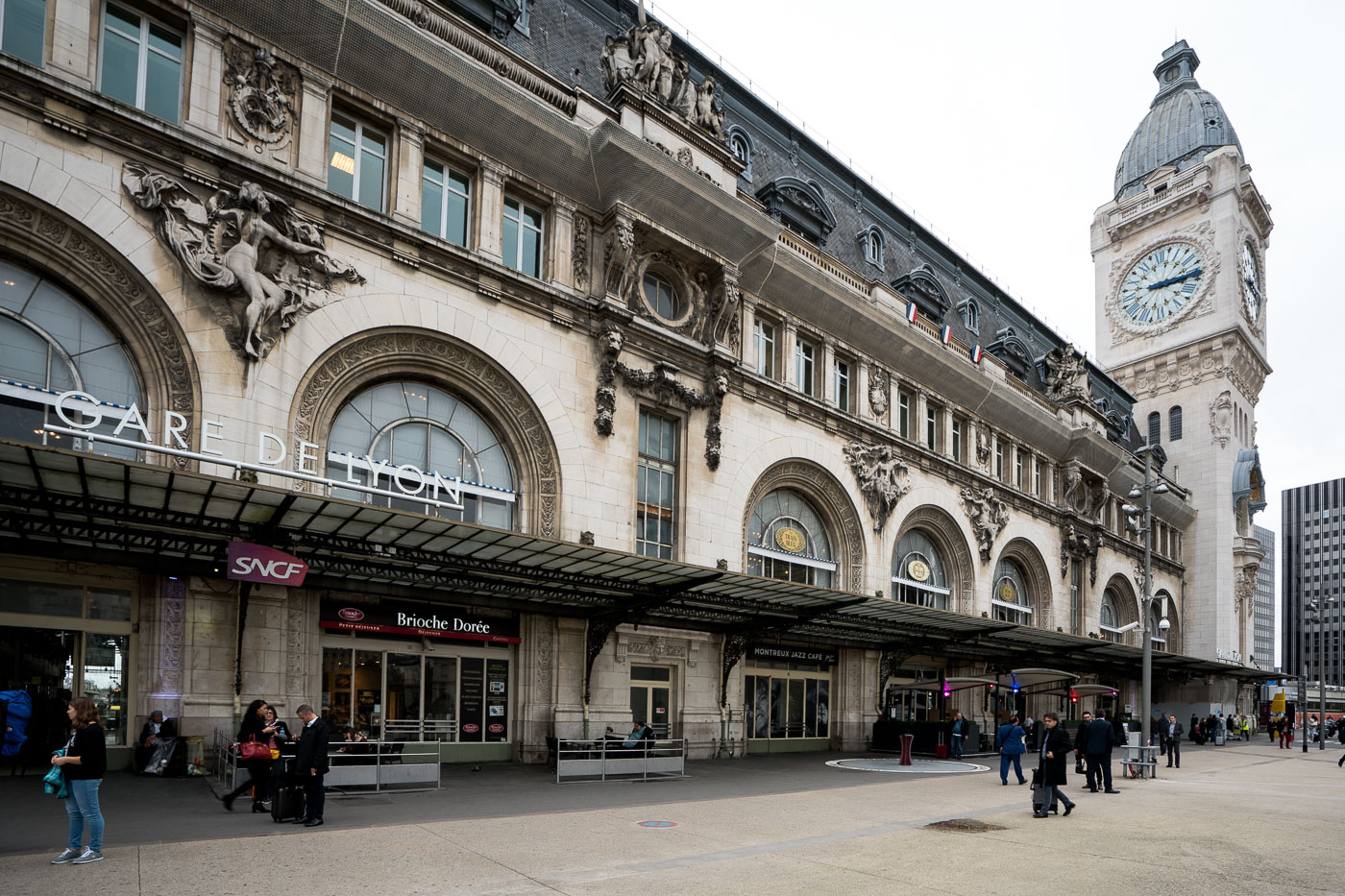
Gare de Lyon train station
Gare de Lyon in Paris, France, is shown from its main façade, with the station’s clock tower and sculpted Belle Époque exterior prominent above the forecourt. The terminal was built for the 1900 Exposition Universelle and is one of Paris’s principal railway stations, handling services to southeastern France as well as international routes linked to Switzerland and Italy. Located on the right bank of the Seine in the 12th arrondissement, the station remains a major hub in the SNCF rail network and for regional connections in the Paris metropolitan area.
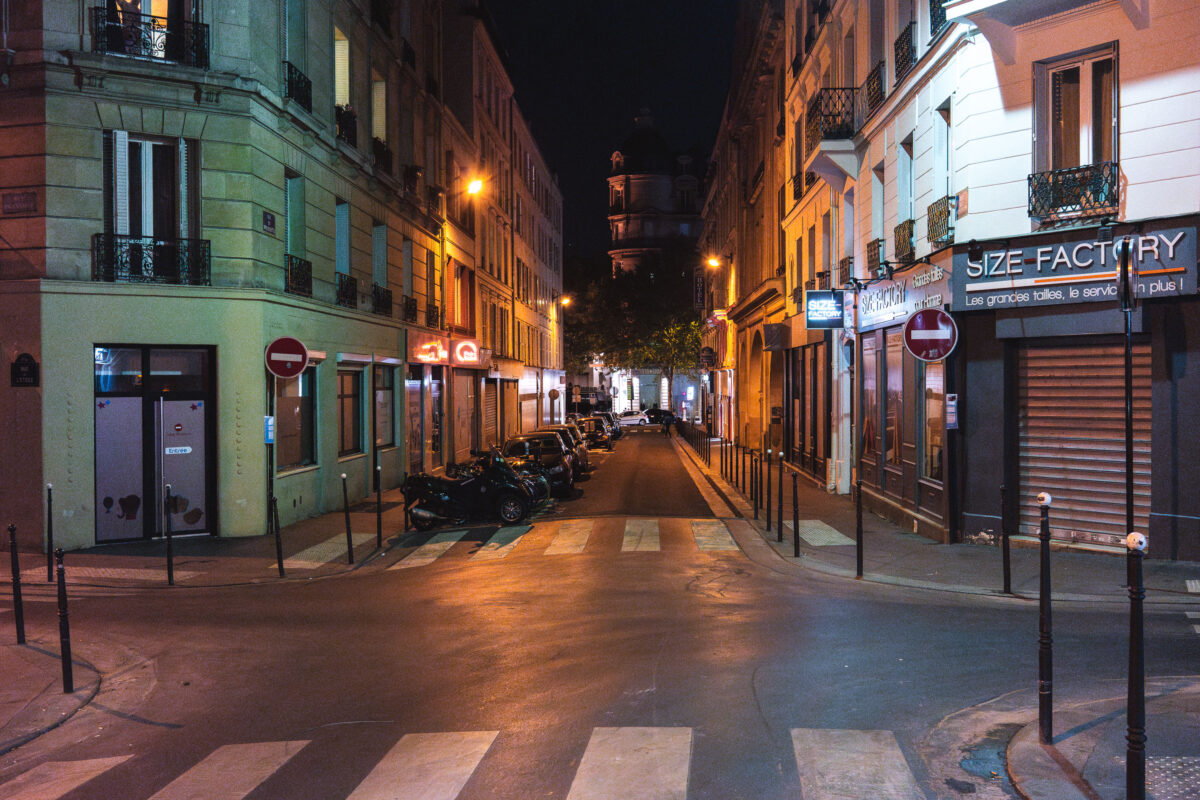
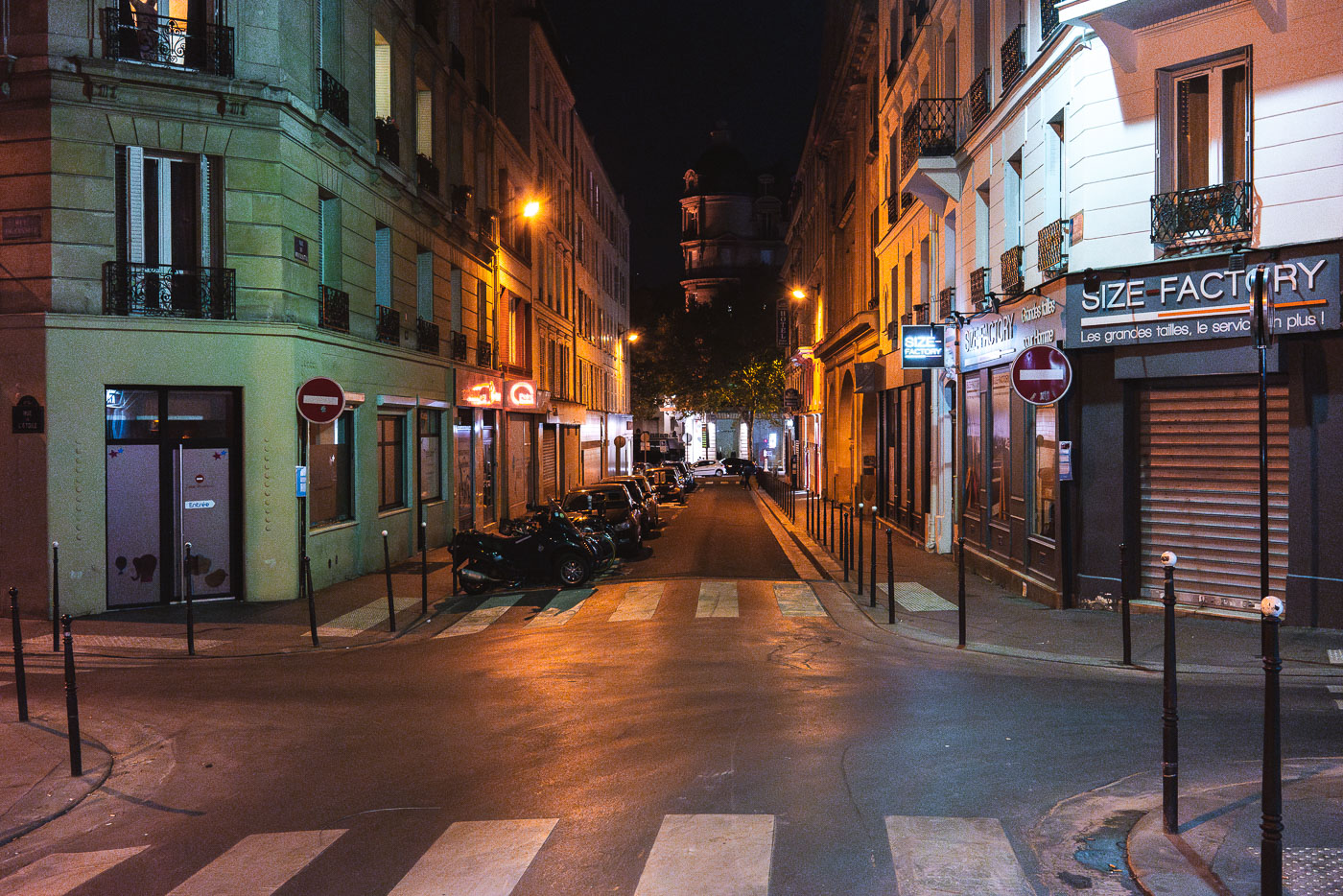
Size Factory store in Paris France
A narrow side street in Paris’s 10th arrondissement is lined with mid-rise residential and commercial buildings typical of the capital’s 19th-century redevelopment. Ground-floor shops and upper-floor apartments share the same street frontage, a common pattern in central Paris neighborhoods shaped by Haussmann-era planning and later infill. Bollards, marked crosswalks, and restricted-entry signage show the traffic controls used on small local streets in the district.
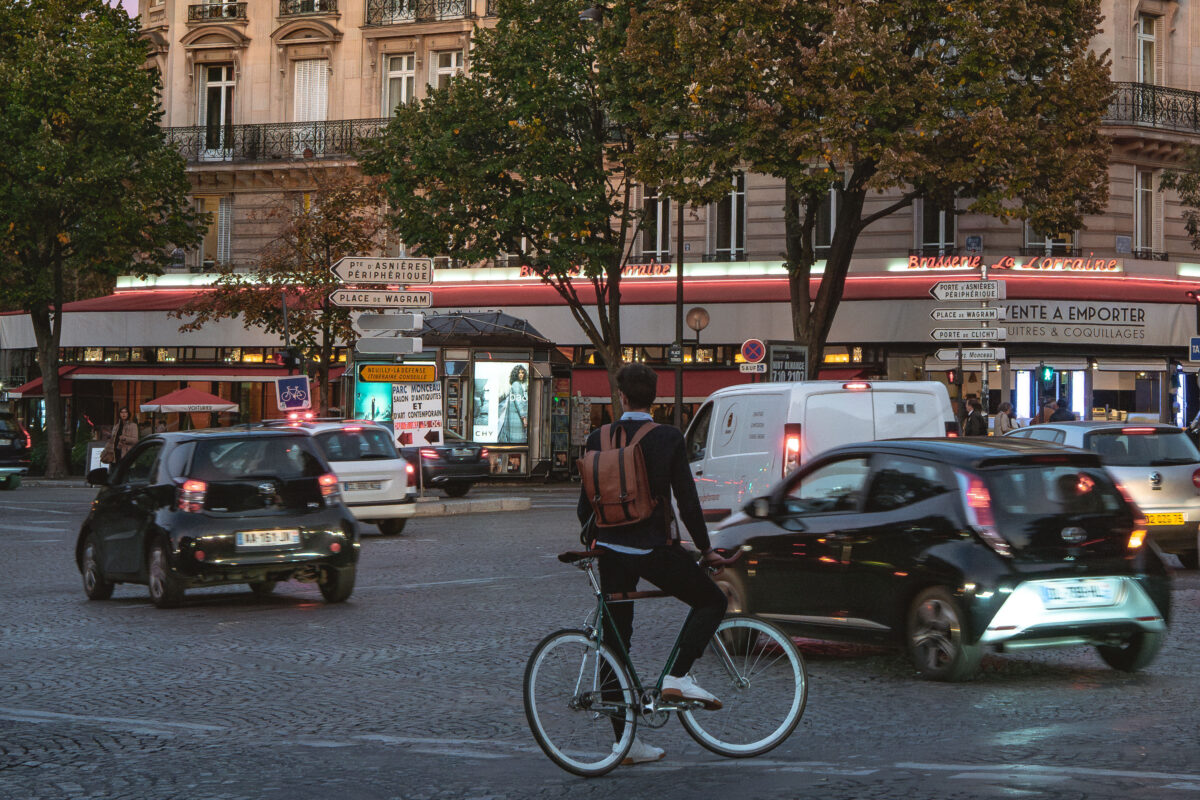
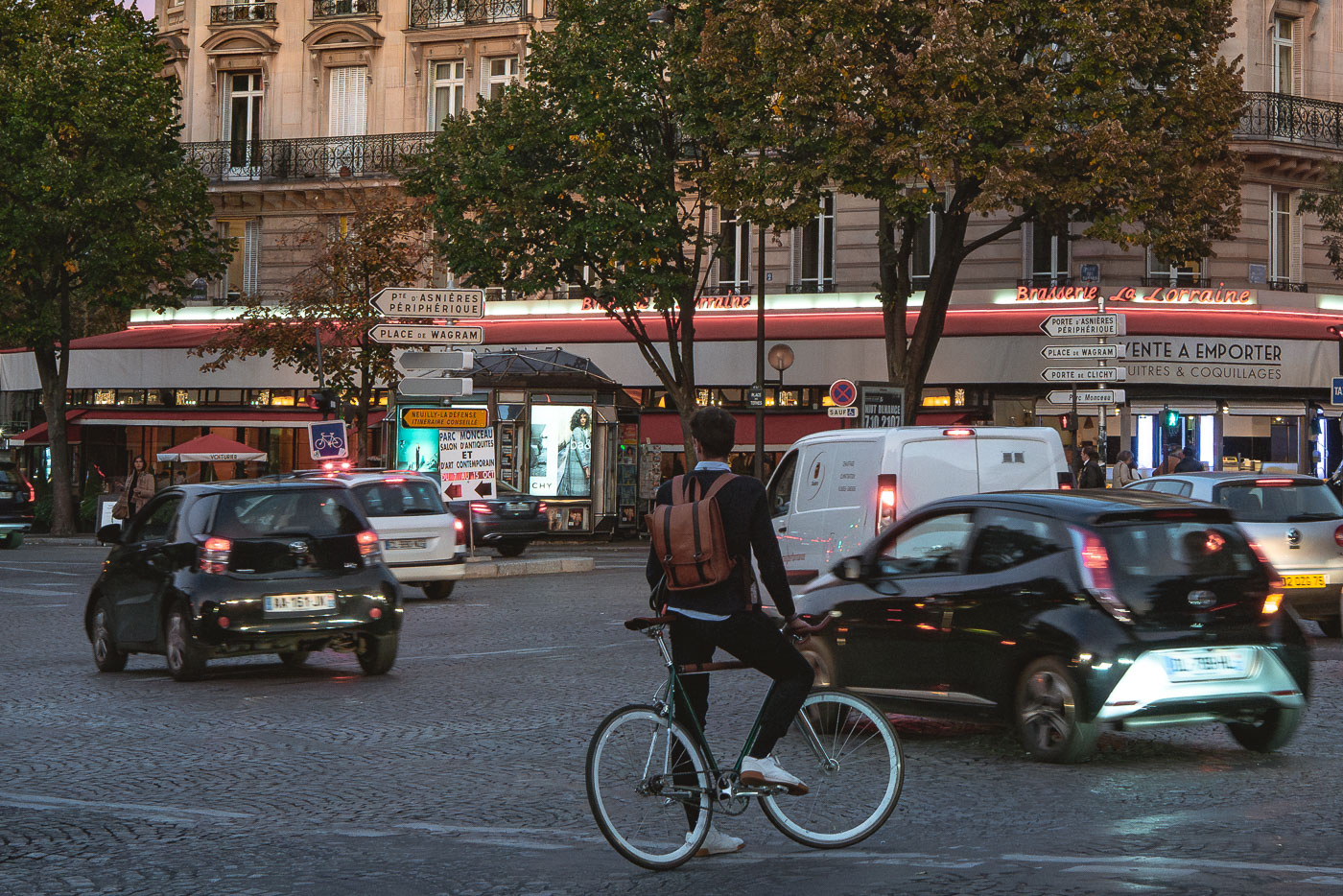
Bicyclist in Paris France
A cyclist waits in traffic at Place des Ternes in Paris, the roundabout at the junction of the 8th, 16th, and 17th arrondissements. The intersection is a major distribution point for traffic moving between the Arc de Triomphe area and routes toward Porte d’Asnières, Porte de Clichy, and Place de Wagram, as shown by the directional signs around the circle. Brasserie La Lorraine, a long-established corner brasserie on the plaza, occupies the ground floor of a Haussmann-era block facing the cobbled roadway.
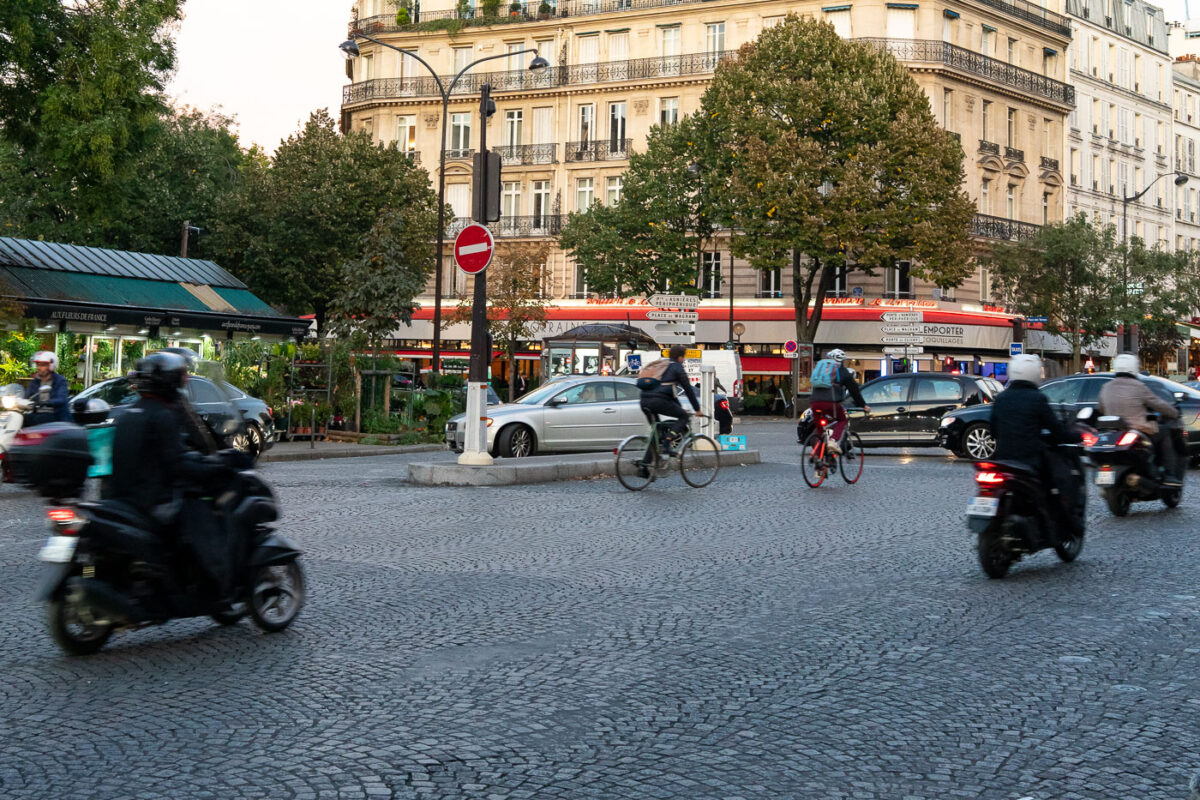
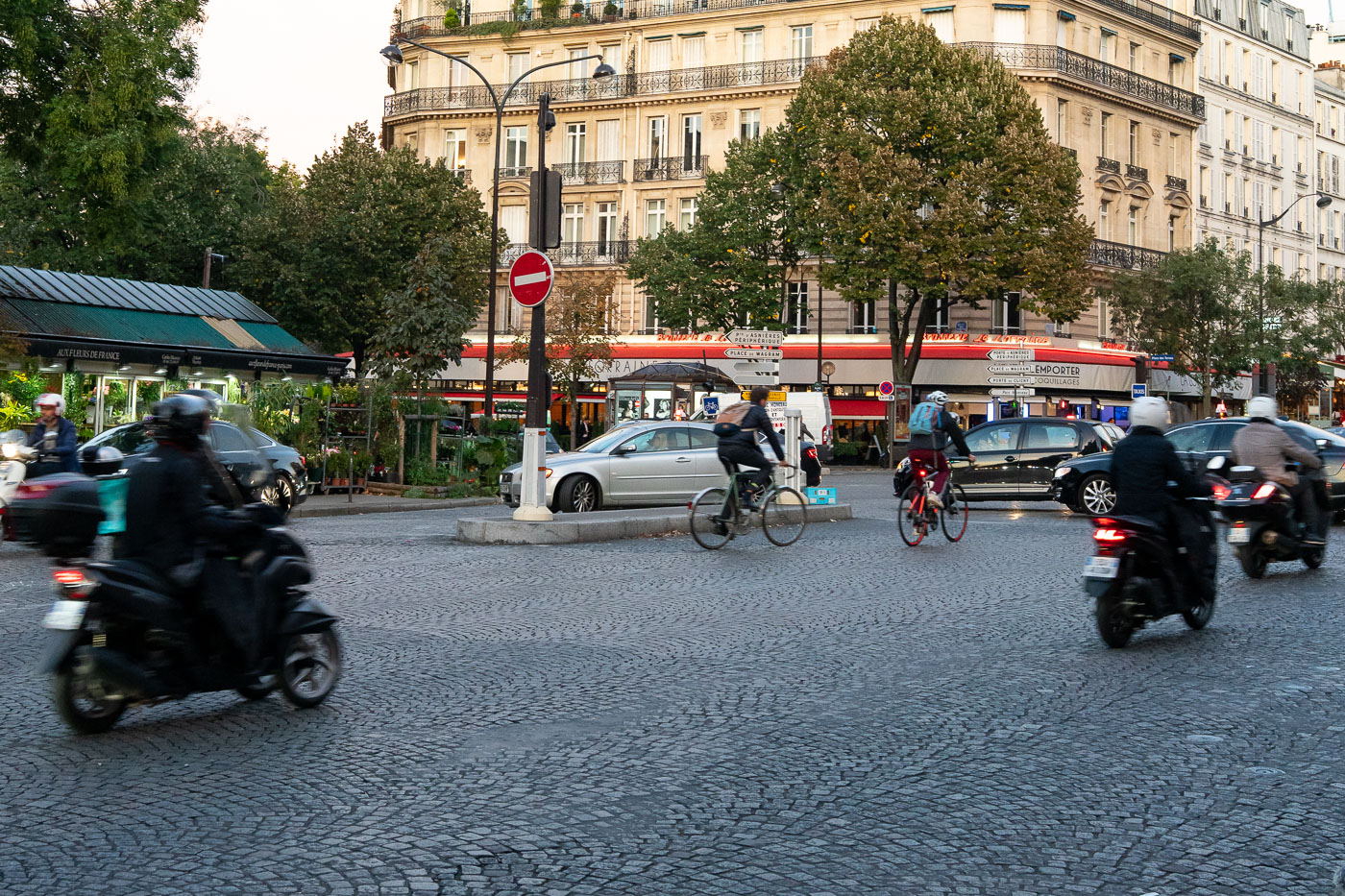
Place de l’Alma, Paris, shows evening traffic including cars and motorcycles, with Haussmann architecture in the background.
Place de l’Alma in Paris is shown as a traffic circle carrying cars, scooters, and cyclists past Haussmann-era apartment blocks and ground-floor businesses. The square sits on the Right Bank near the Pont de l’Alma, where several major routes converge between the 8th and 16th arrondissements. Its present form dates largely to the mid-19th-century rebuilding of Paris, and the nearby bridge, opened in 1856, is known for the Zouave statue long used by residents as an informal gauge of Seine flood levels.
Apartment buildings in Paris France
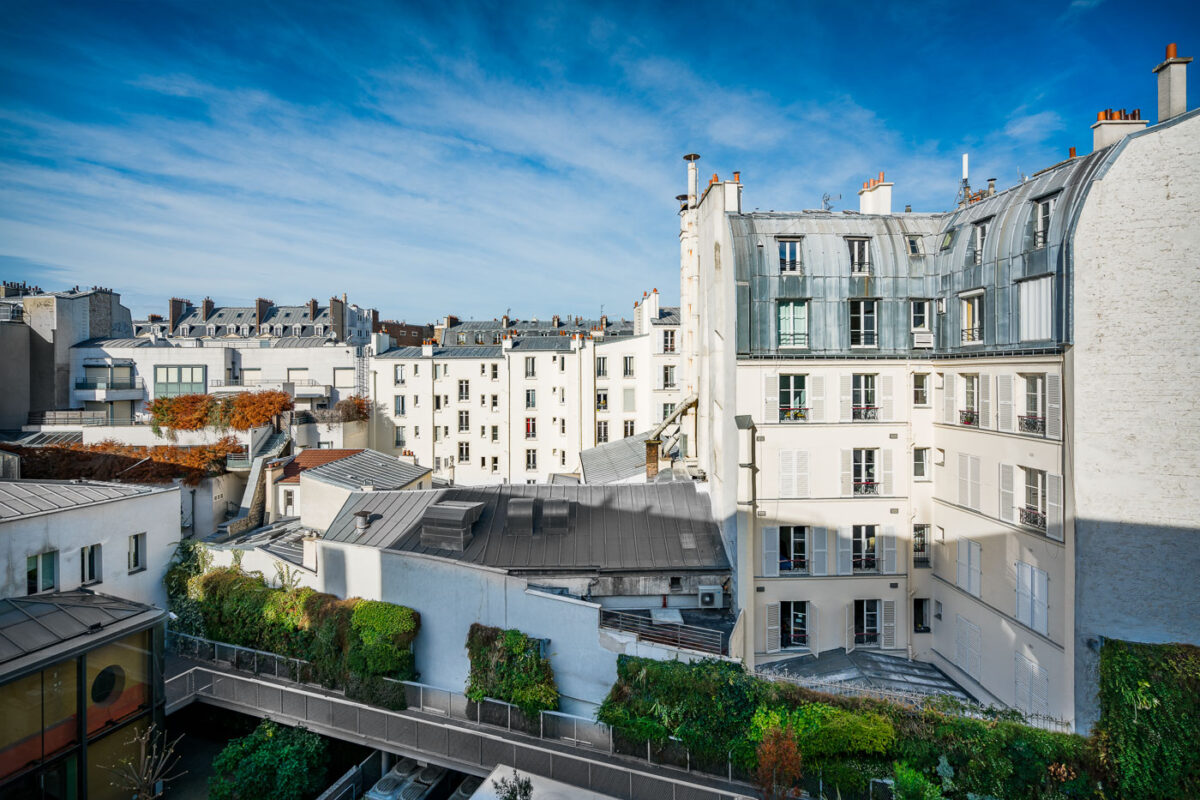
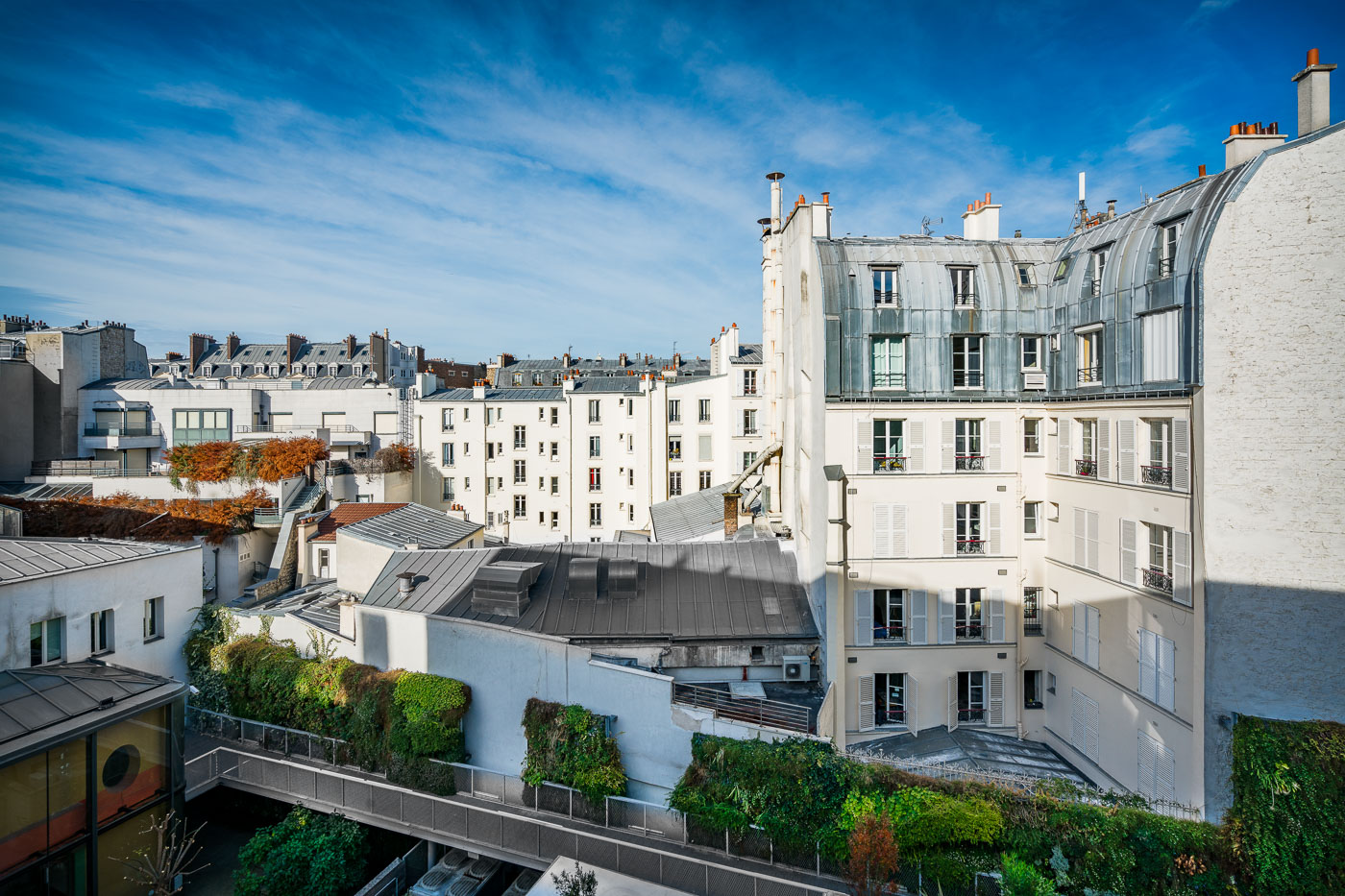
Apartment buildings in Paris’s 9th arrondissement form a dense residential block with zinc-clad mansard roofs, chimney stacks, and white stucco rear façades typical of the city’s 19th-century housing stock. Much of the arrondissement was reshaped during the Haussmann era, when standardized cornice lines and roof forms were used across central Paris as part of large-scale street and housing redevelopment. The courtyard-facing additions, terraces, and planted walls show later adaptations within older apartment parcels, where historic buildings have been updated for continued residential use.
Rooftop view of Paris and Eiffel Tower
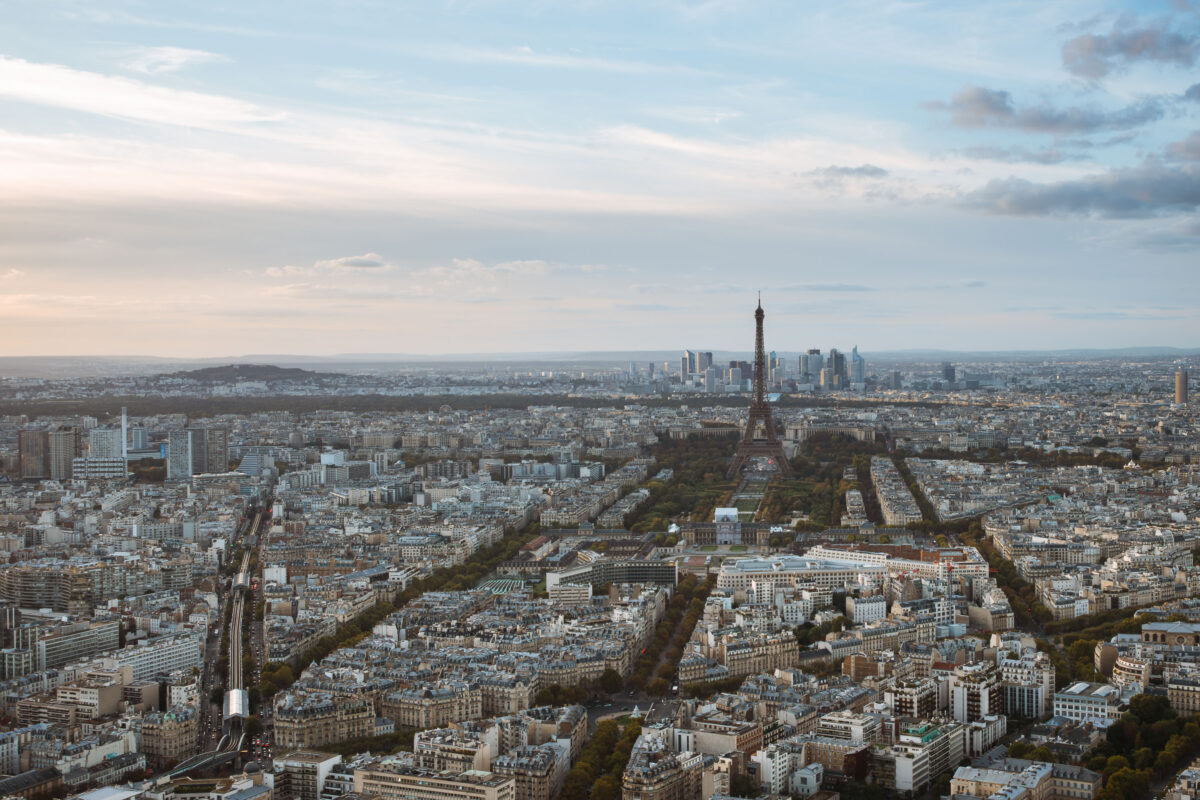
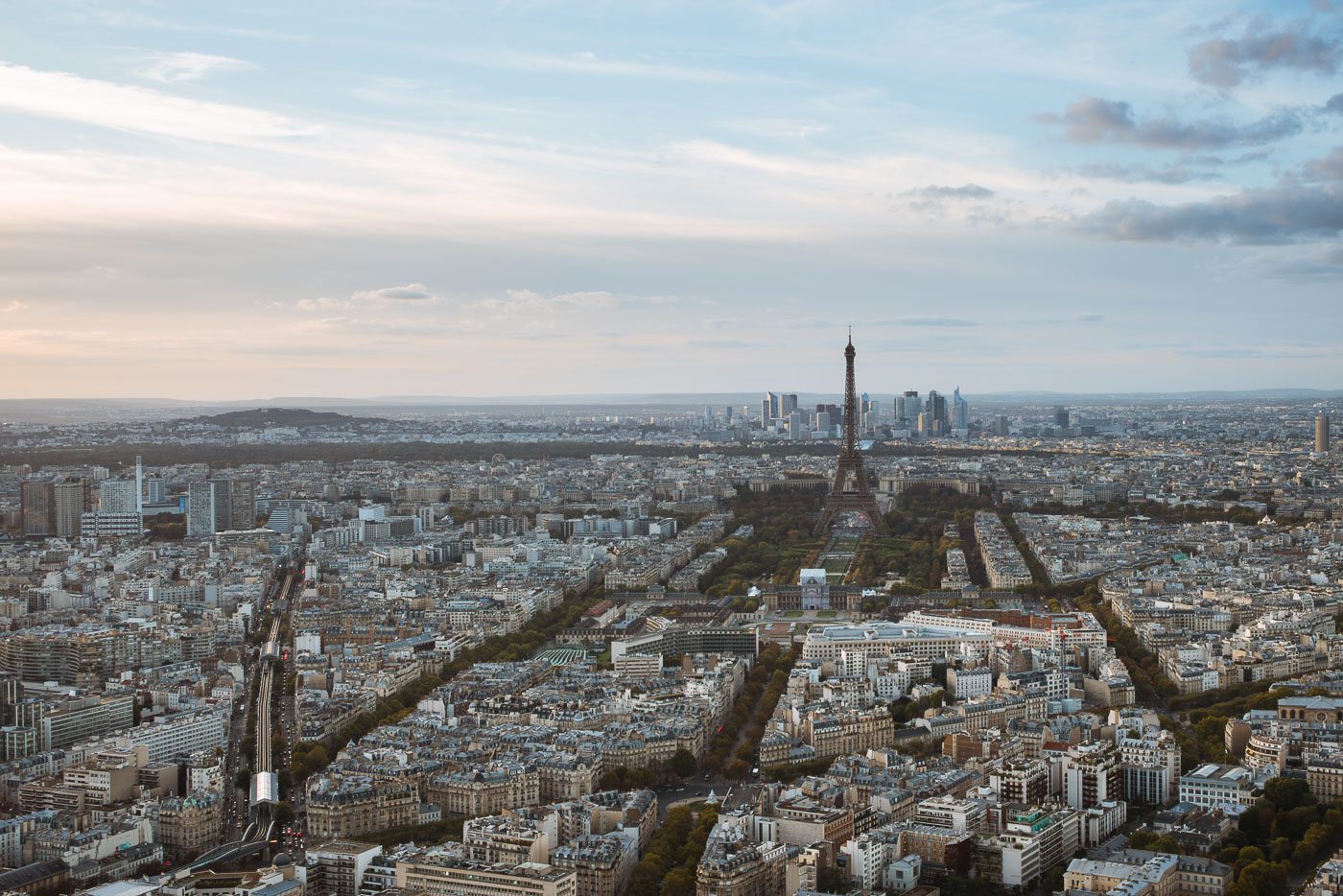
The Eiffel Tower and Champ de Mars are seen in Paris’s 7th arrondissement, with the high-rise district of La Défense visible on the western horizon. Designed by Gustave Eiffel’s company for the 1889 Exposition Universelle, the tower became the city’s best-known landmark and a key element of Paris’s skyline. The surrounding street grid and mid-rise apartment blocks reflect the large-scale 19th-century rebuilding of Paris under Baron Haussmann, while La Défense developed in the postwar period as the metropolitan region’s principal business district.
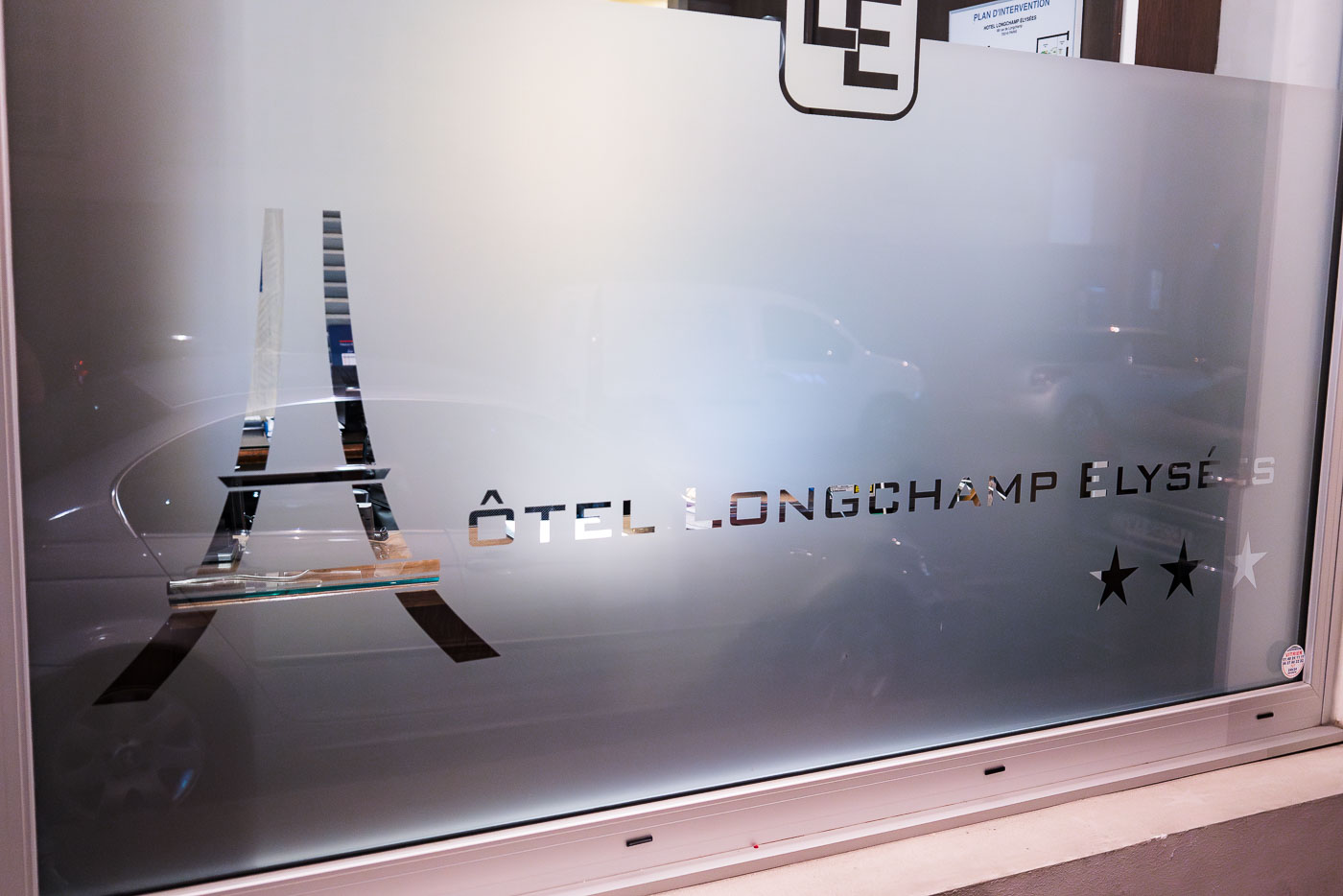
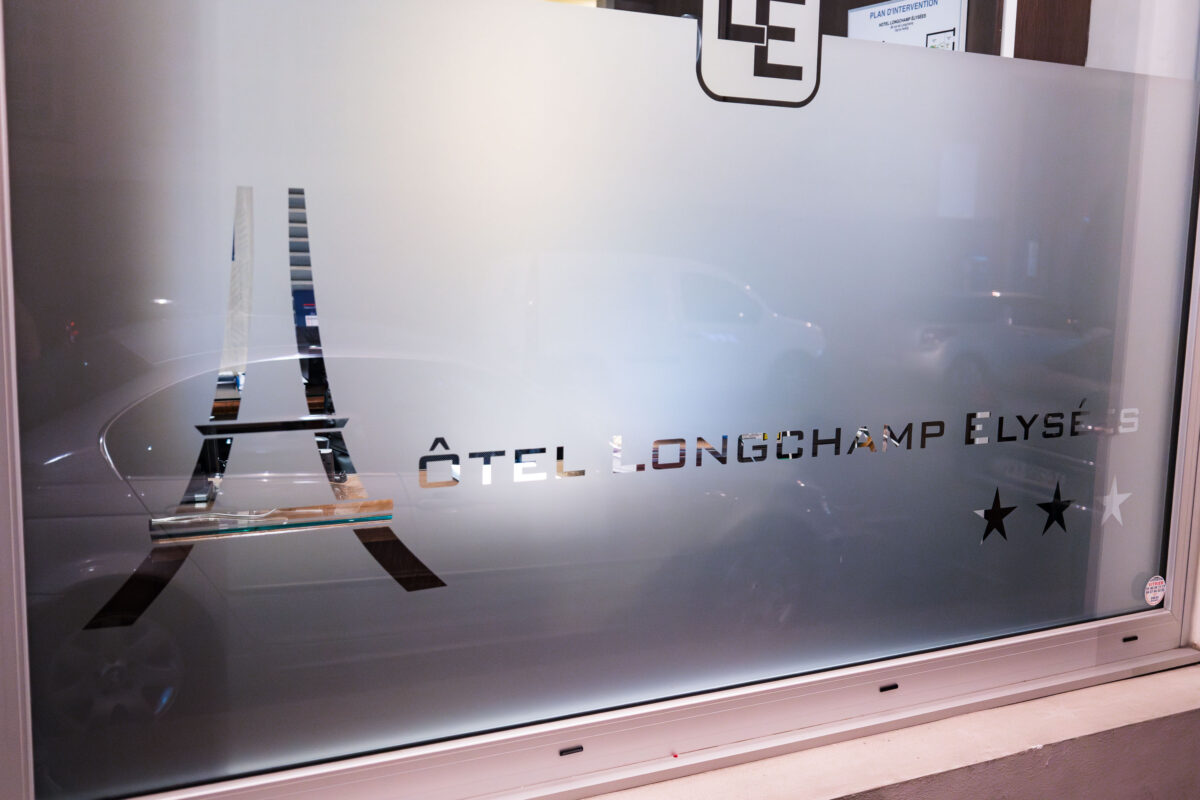
Frosted glass entrance of Hôtel Longchamp Elysées in Paris, featuring the hotel name and a stylized Eiffel Tower design.
The entrance window of Hôtel Longchamp Elysées in Paris displays the hotel’s name on frosted glass with a stylized Eiffel Tower motif. The hotel is in the 16th arrondissement, near the Trocadéro area on the Right Bank, a district associated with embassies, residential streets, and access to major Paris landmarks. The three-star property operates as a small boutique hotel within a neighborhood shaped largely by late 19th- and early 20th-century development.
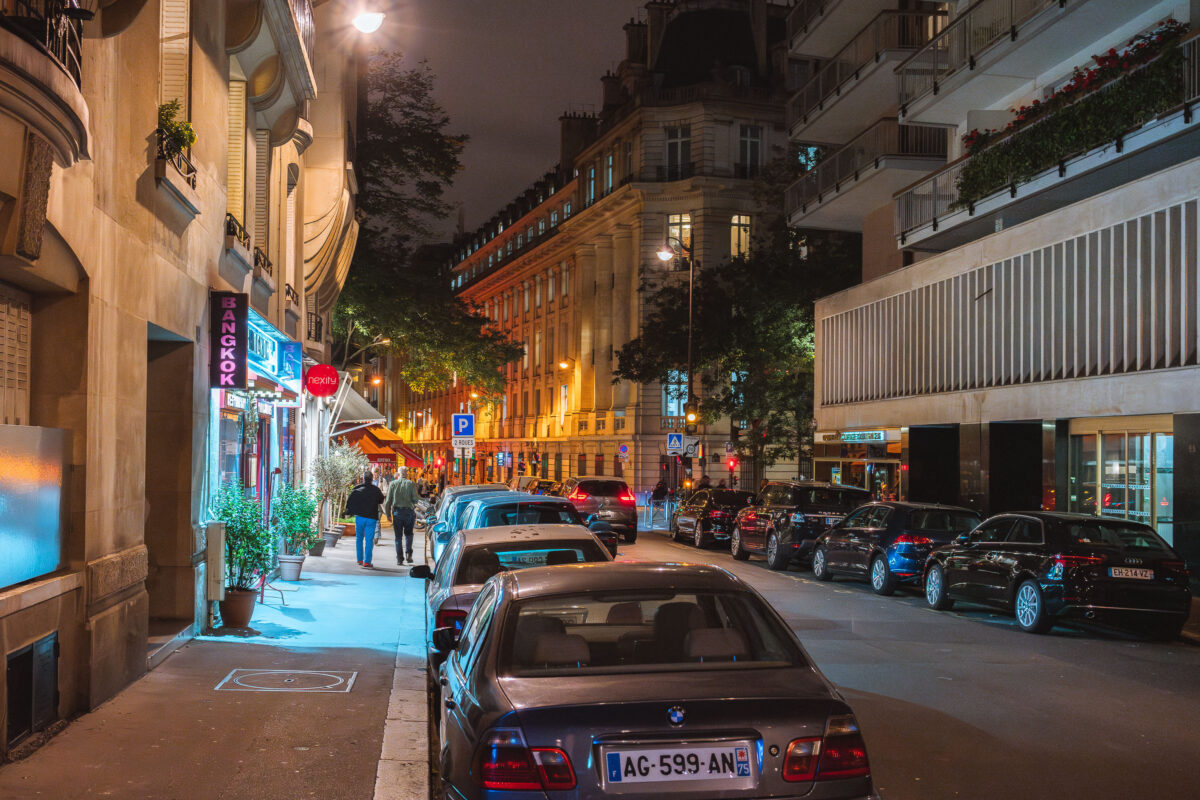
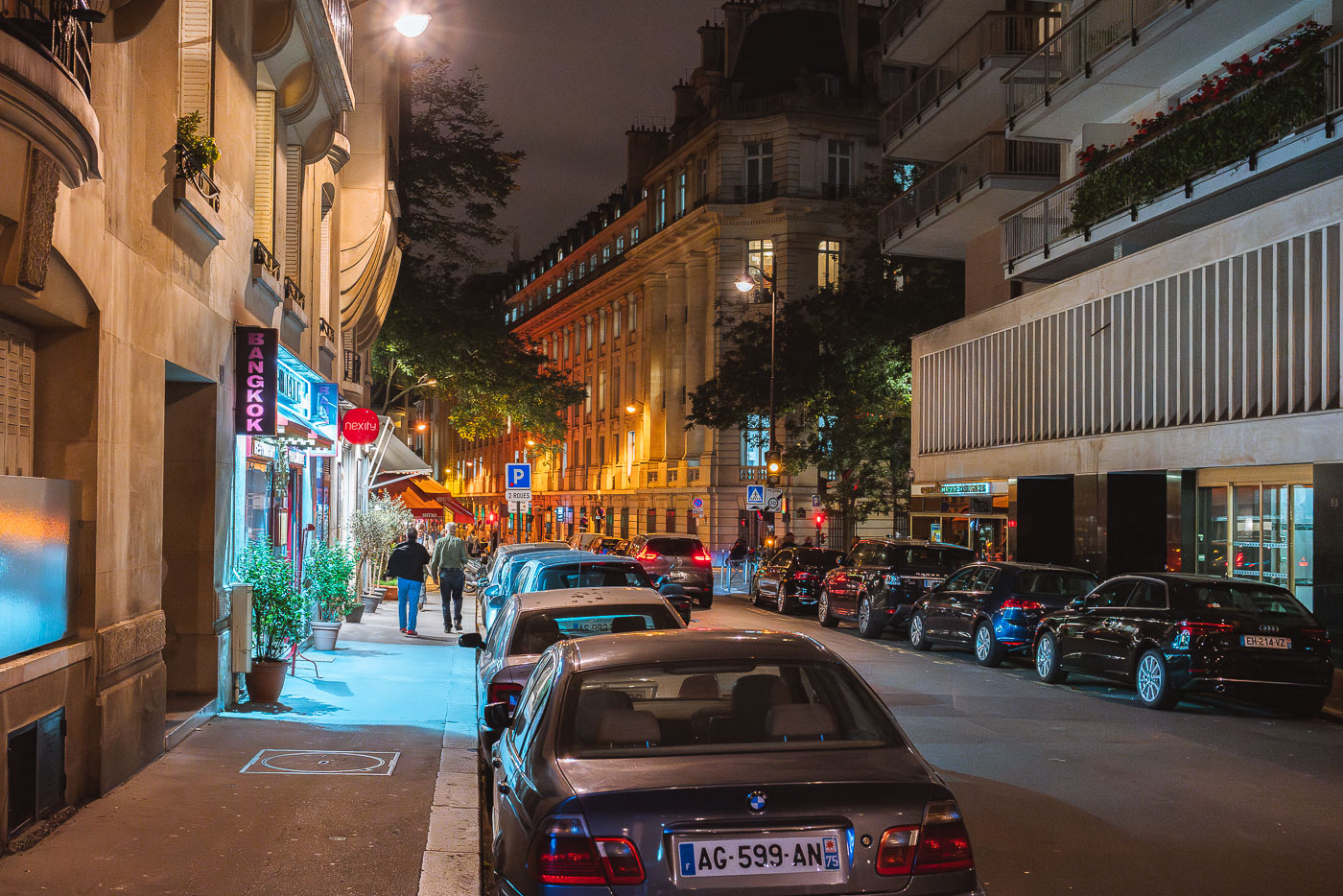
A "Bangkok Restaurant" sign is illuminated at night on a street in Paris, France, in October 2017. Cars are parked along the curb of the urban thoroughfare.
Bangkok Restaurant on a street in Paris, France, is shown at night in October 2017, with its illuminated sign and storefront set among mid-rise residential and commercial buildings. Parked cars, apartment balconies, and ground-floor businesses place the restaurant within a mixed-use Paris streetscape rather than an isolated entertainment district. The setting combines older masonry buildings with newer frontage and apartment construction, a common pattern in many Paris neighborhoods where restaurants operate at street level beneath housing.
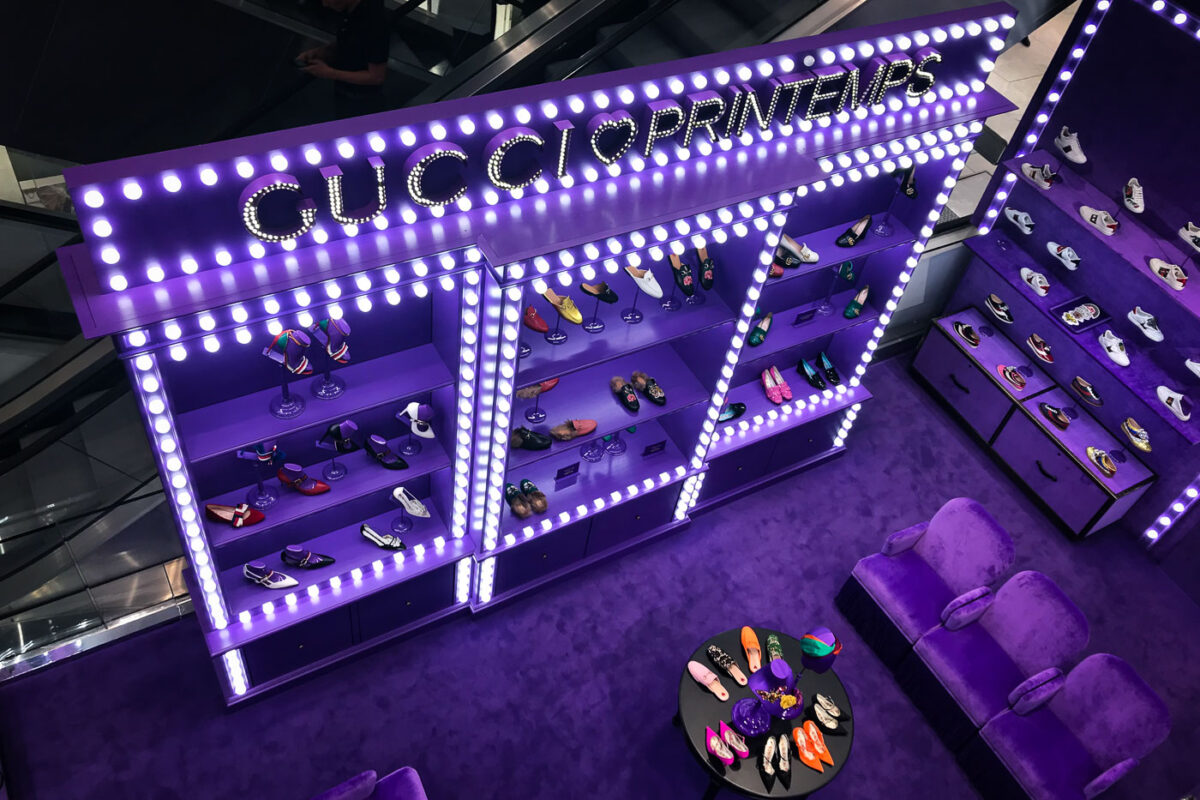
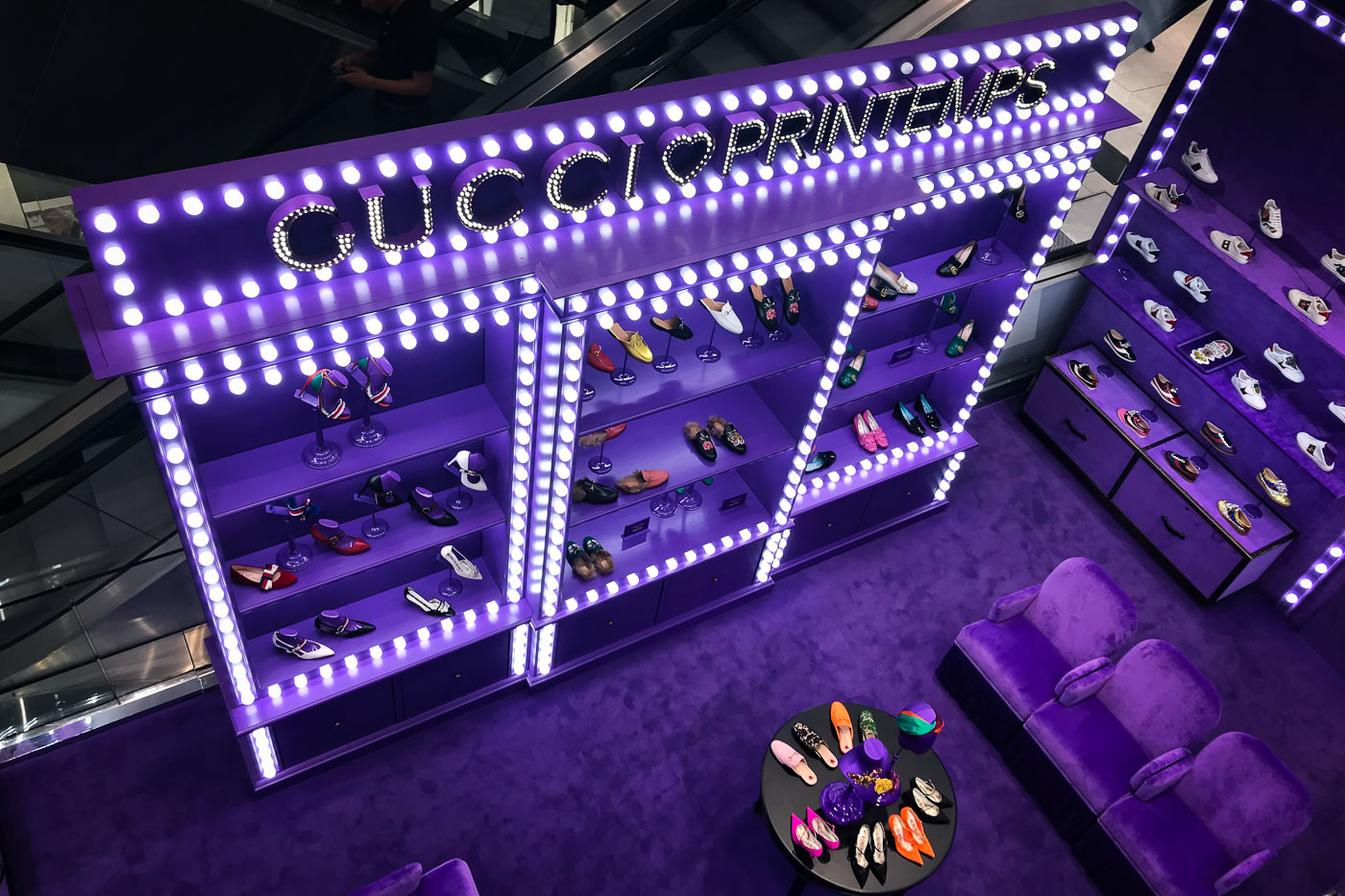
A temporary Gucci pop-up display featuring footwear is presented within the historic Printemps department store in Paris, France.
A Gucci pop-up footwear display inside Printemps in Paris presents the brand’s merchandise within a temporary retail installation on the department store floor. Printemps, founded in 1865 on Boulevard Haussmann, is one of Paris’s best-known department stores and a longstanding destination for fashion and luxury retail. The installation uses custom shelving, seating, and branded fixtures to create a dedicated concession area for Gucci within the larger store.
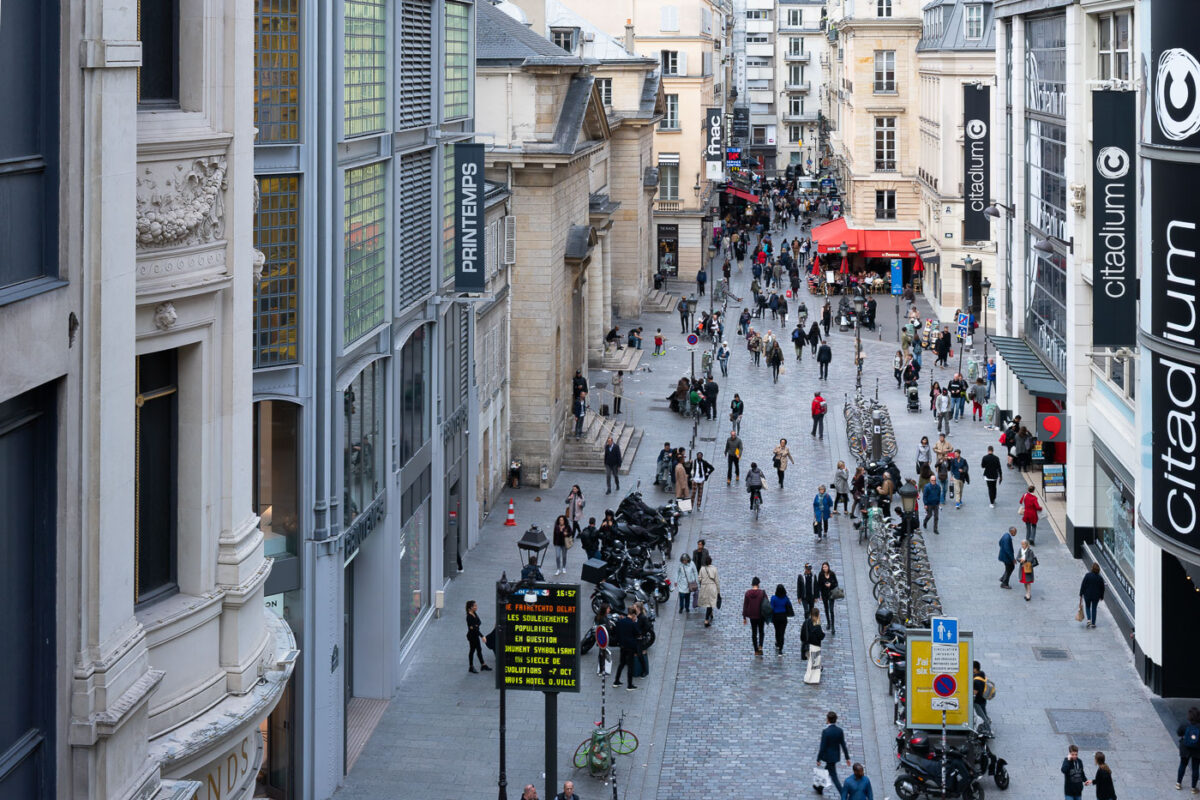
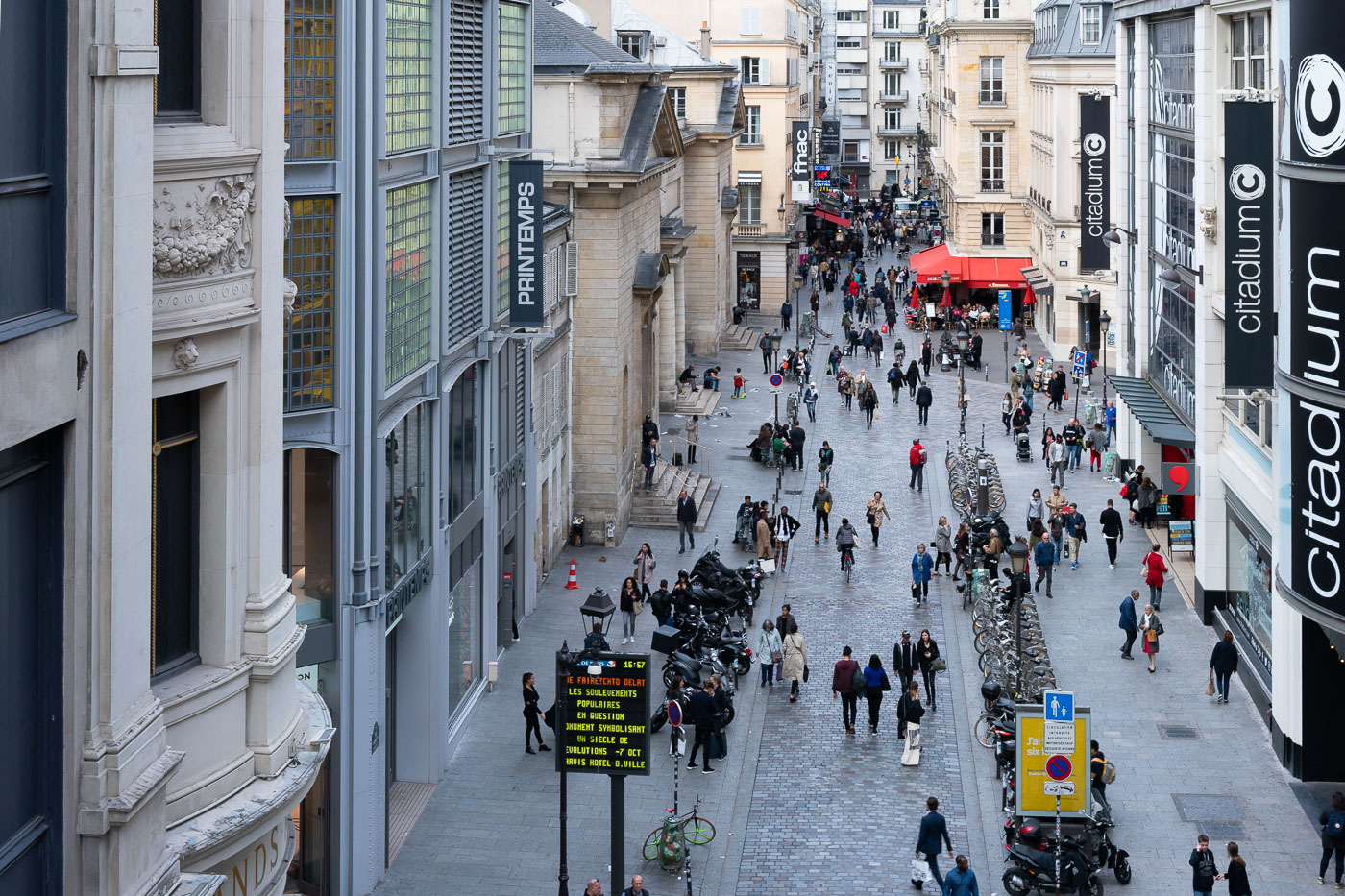
Rue de Caumartin in Paris, France, is a busy shopping street featuring the Printemps department store and Citadium fashion retailer, reflecting the city's role in global commerce.
Rue de Caumartin in Paris, France, runs between the Printemps department store complex and the Citadium retail building in the Opéra district. Printemps, founded in 1865, is one of Paris’s historic grands magasins, while Citadium is a newer fashion-focused retailer occupying part of the same commercial area near Boulevard Haussmann. The street is a pedestrian-heavy shopping corridor shaped by both late-19th-century Parisian stone buildings and later retail redevelopment.
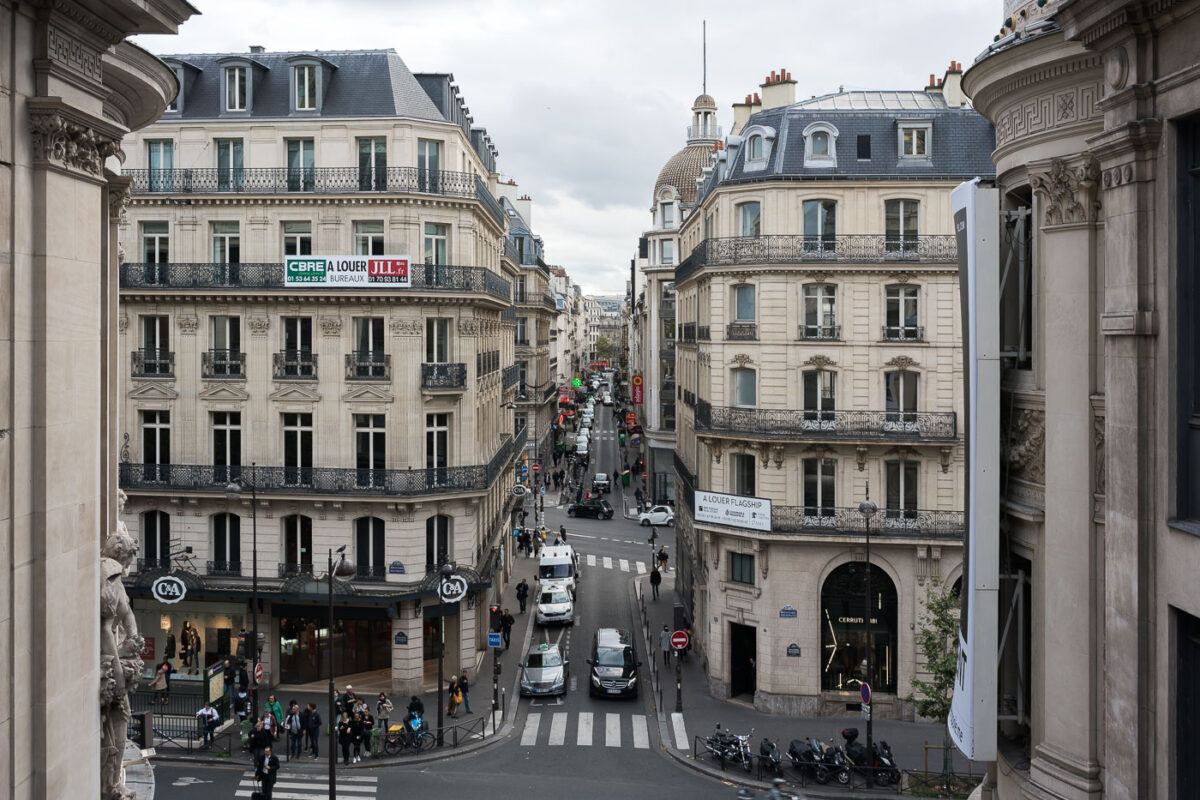
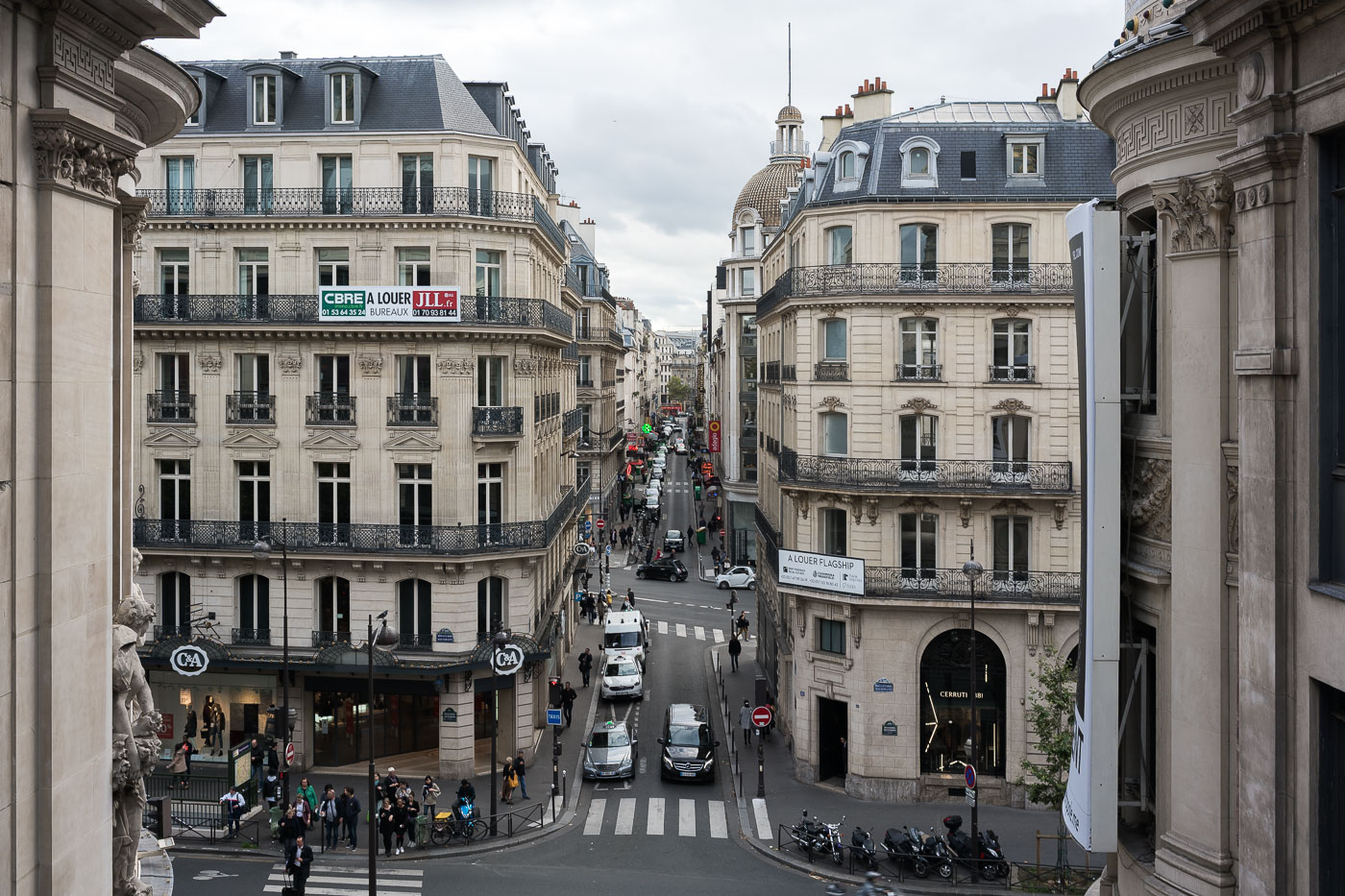
Boulevard Haussmann in Paris, France, featuring Haussmannian architecture and bustling street life with cars and pedestrians.
Boulevard Haussmann and Rue de Caumartin in Paris, France, lined with late 19th-century Haussmann-era buildings and viewed from the Printemps department store skyway. Boulevard Haussmann was laid out during the reconstruction of Paris under Baron Haussmann and became one of the Right Bank’s principal retail and office corridors. Printemps, just outside the frame, is one of the boulevard’s major department stores, and the surrounding blocks remain a concentrated commercial district in the 9th arrondissement.
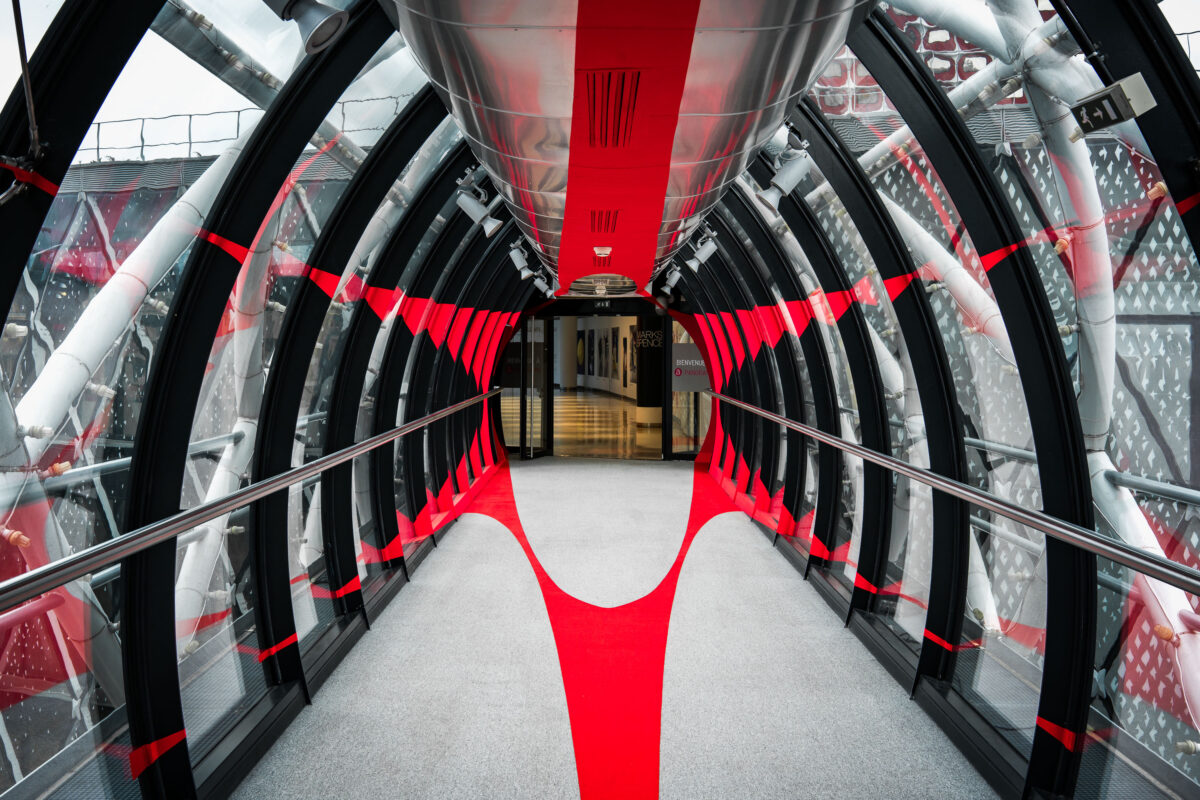
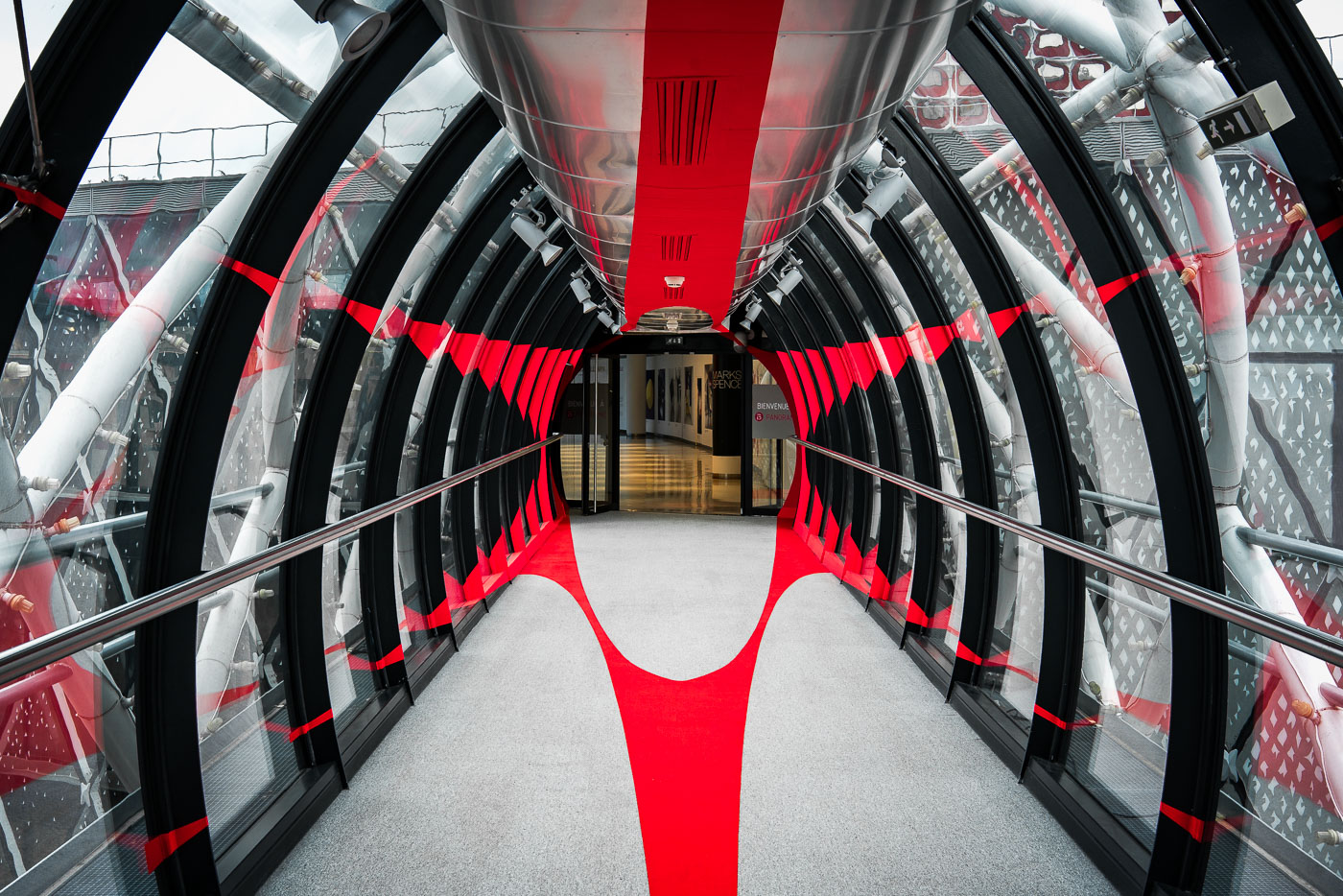
A modern skyway with red accents connects to a shopping mall in Paris, France, facilitating pedestrian movement.
An enclosed pedestrian skyway inside a shopping mall complex in Paris, France, leads directly to retail units including Marks & Spencer and Pandora. The passage is built as a tubular glass-and-steel corridor with exposed structural members and integrated handrails, providing sheltered circulation between parts of the commercial development. Its high-contrast red, black, and metallic interior treatment is part of the architecture of the mall connection rather than a temporary installation.
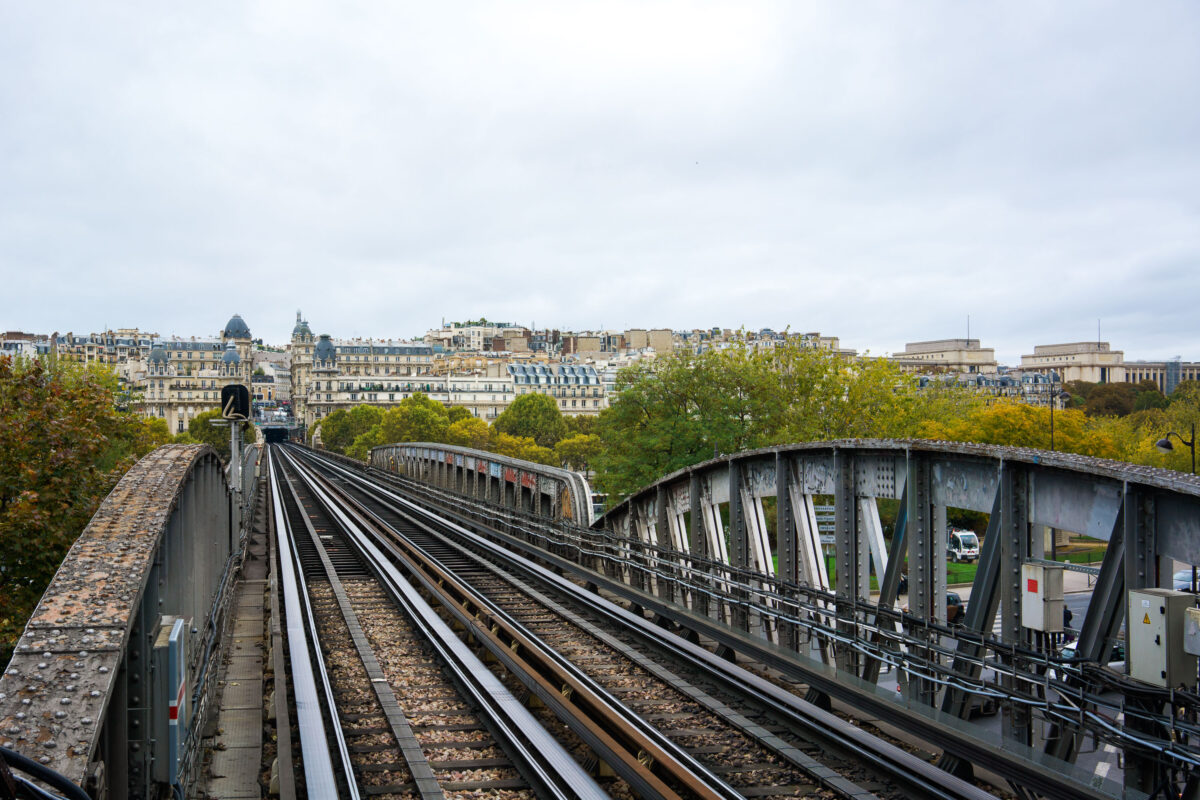
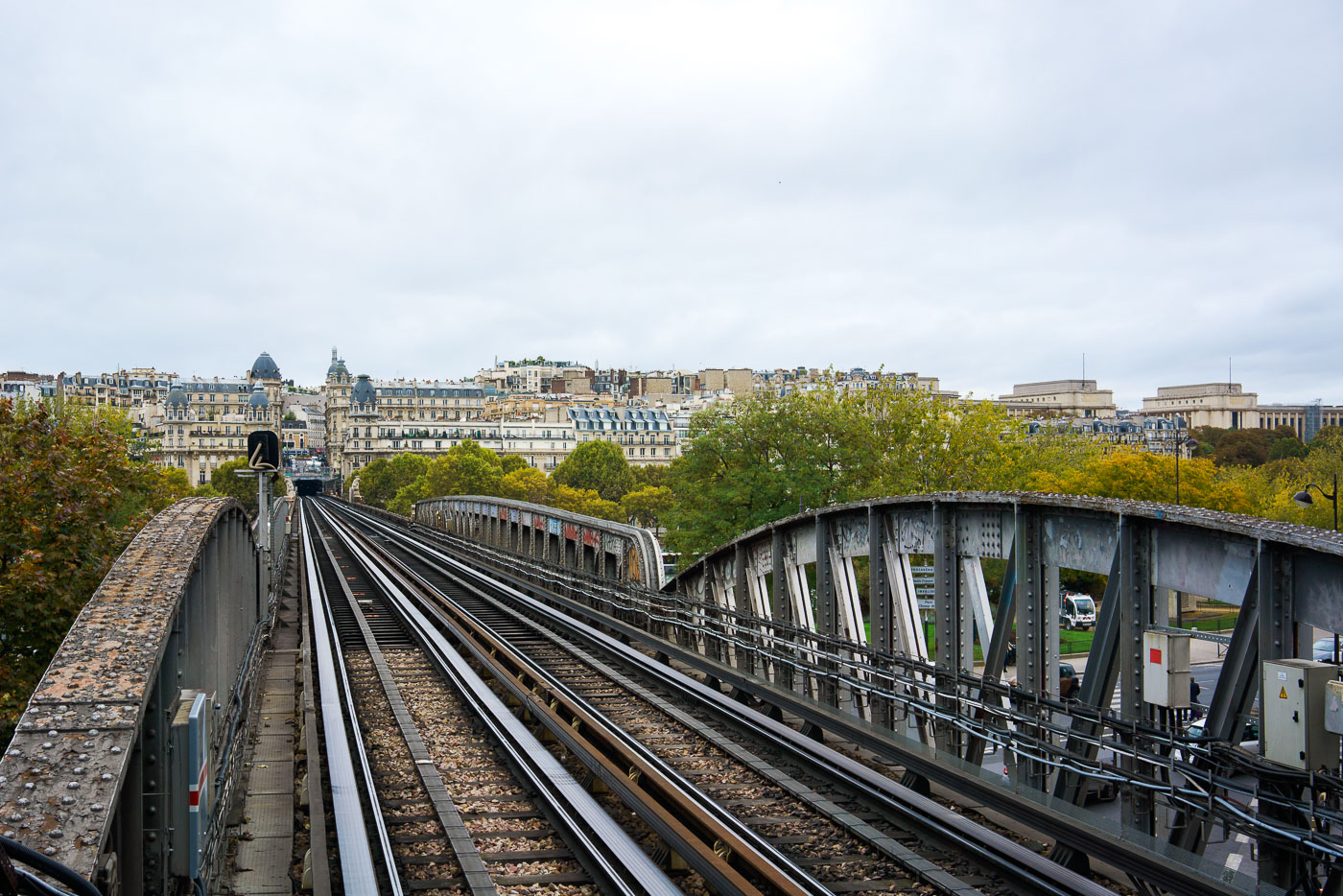
Paris Metro Line 6 on the Pont de Bir-Hakeim bridge, crossing the Seine River with the Passy district architecture in the background.
Paris Métro Line 6 runs across the upper deck of the Pont de Bir-Hakeim in western Paris, approaching Passy station from the Left Bank side of the Seine. The steel viaduct forms the bridge’s upper level above a lower roadway and pedestrian crossing, part of a two-tier structure completed in 1905. Line 6 is one of the capital’s principal elevated métro routes, and this river crossing links the 15th and 16th arrondissements near the Champ de Mars and Trocadéro.
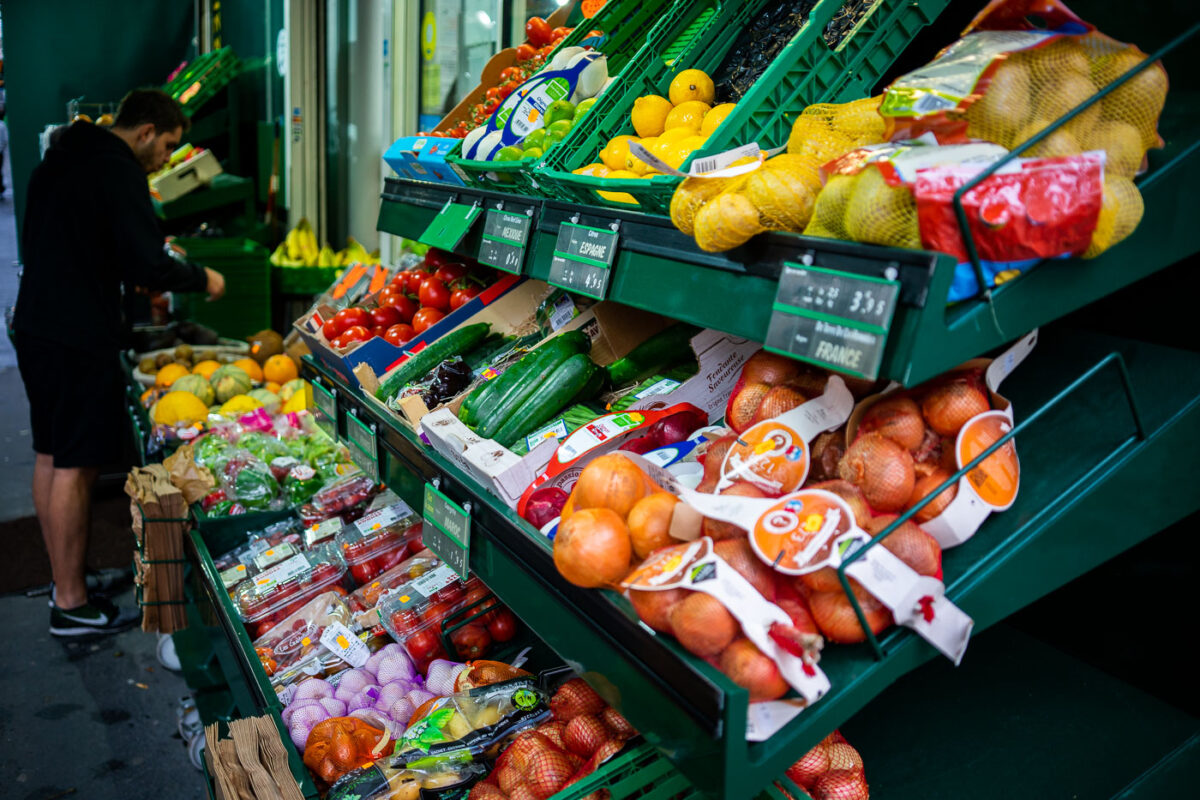
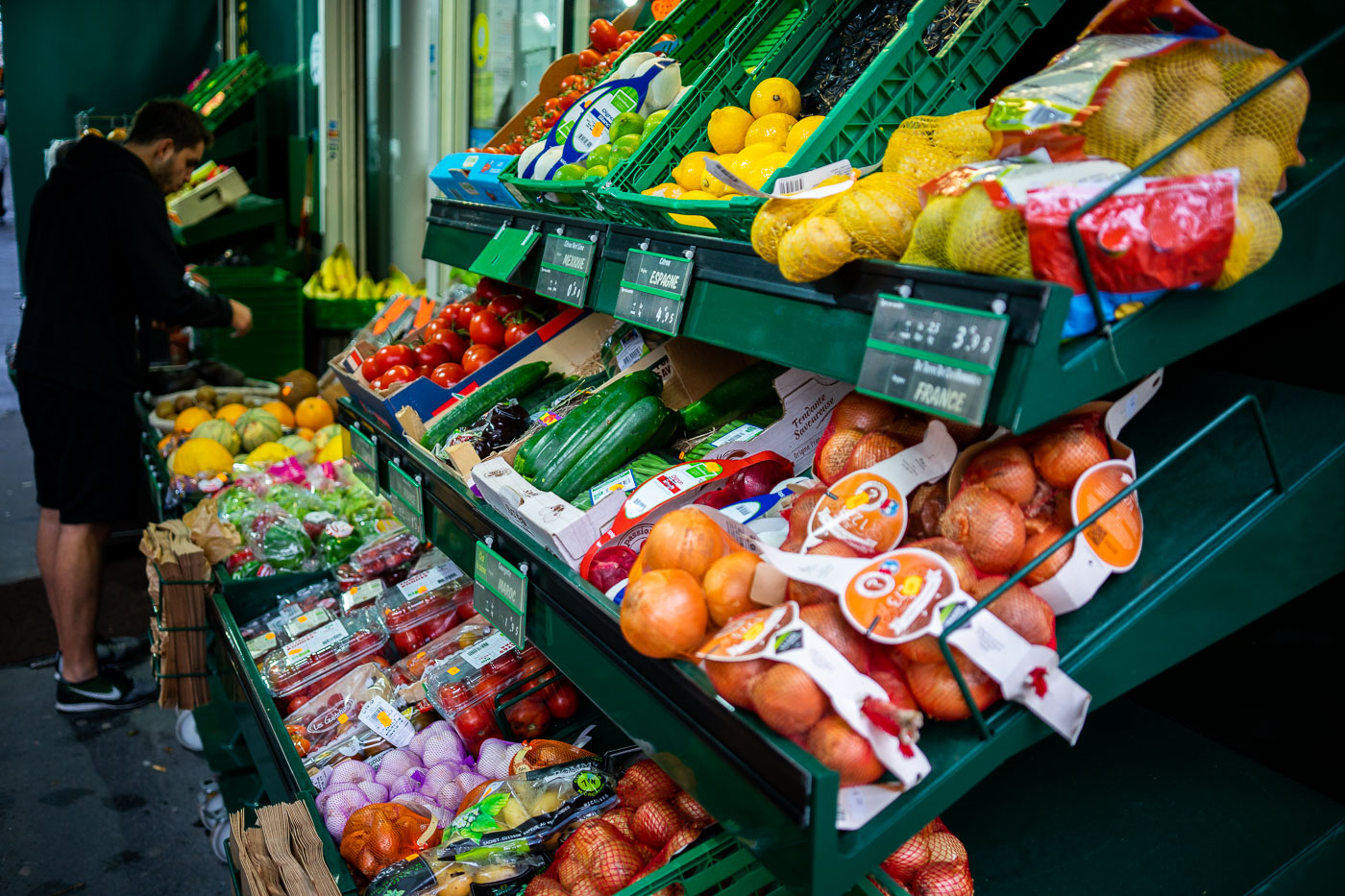
A shopper selects produce at a market in Paris, France. The display features fruits and vegetables with labels indicating their origin, such as Mexico and Spain.
Produce shelves at a market in Paris, France, display fruits and vegetables from several countries, including lemons labeled from Spain and zucchini labeled from Mexico. The assortment includes both loose and packaged goods, consistent with a contemporary supermarket-style produce section rather than a traditional open-air street market. Imported items are a routine part of food retailing in Paris, where neighborhood groceries and larger chains combine French produce with supplies from elsewhere in Europe and beyond.
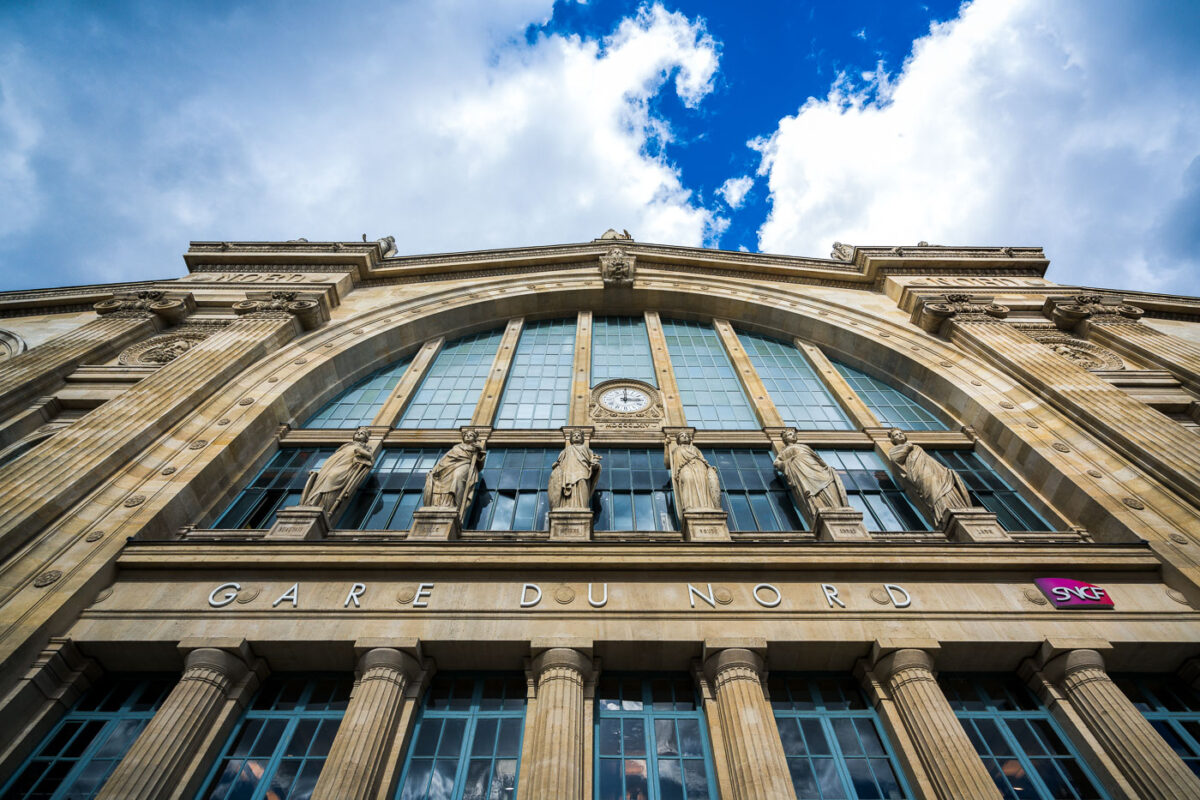
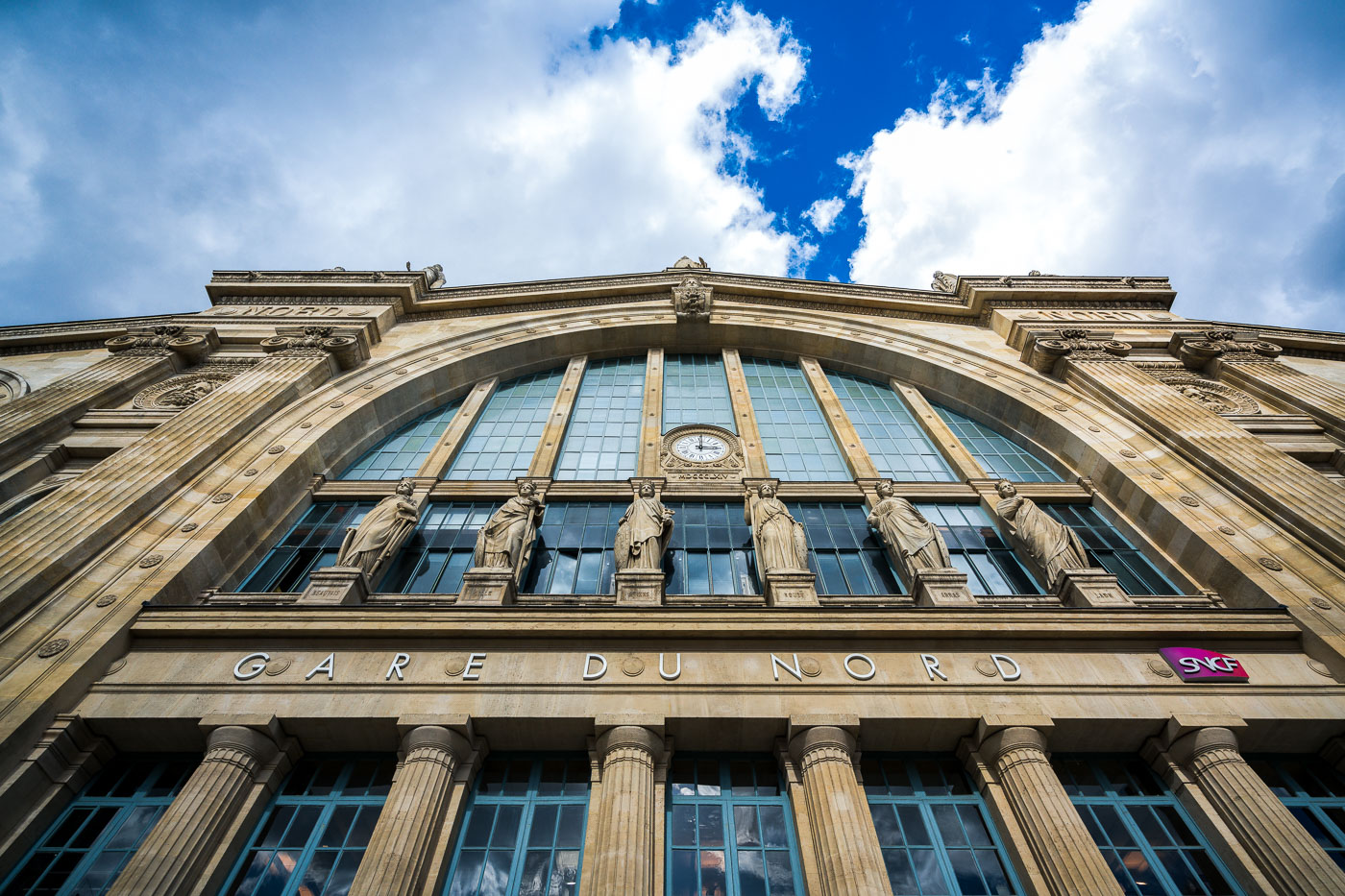
Paris Nord Train Station 2017
Gare du Nord in Paris is shown from the station’s main Beaux-Arts facade, rebuilt to designs by architect Jacques-Ignace Hittorff and opened in 1864. The monumental front includes allegorical statues representing destinations and cities historically linked to the railway network served from Paris-Nord. Gare du Nord is one of Europe’s busiest passenger stations, handling SNCF mainline and suburban traffic as well as RER, Métro, and international services including Eurostar.

Built in Minneapolis

Photographs showcasing change over time

Browse by location, move through long-running series, or start with recent work.