MinneapolisUprising

2,851 photos · 2020–2025

2,851 photographs tagged MinneapolisUprising, 2020–2025.

State Theatre marquee in downtown Minneapolis displays art installation and Martin Luther King Jr. quote during snowstorm.
The State Theatre opened in 1921 on Hennepin Avenue as a movie palace, part of downtown Minneapolis's early 20th-century theater district. Architect J.R. Davidson designed the building in the Renaissance Revival style typical of the era's movie palaces. After decades as a cinema, the theater was restored as a live performance venue and now operates under Hennepin Theatre Trust, alongside the nearby Orpheum and Pantages theaters. Its marquee has displayed "The Overseer: Divinity and Humanity," an installation by artist Reggie Leflore, paired with a quote from Martin Luther King Jr.

The State Theatre Marquee During a Hennepin Avenue Snowstorm

Hop Wong Chinese Restaurant storefront on Chicago Avenue in Minneapolis during heavy snowfall.
Hop Wong is a Chinese restaurant on Chicago Avenue in the Midtown neighborhood of Minneapolis. Its boarded-up windows and door date to the unrest that followed George Floyd's death in May 2020, when many businesses along the Lake Street and Chicago Avenue corridors sustained damage. A hand-lettered "Hop Wong Now Open" sign and a lit "Open" placard mark its return to business behind the plywood.

Hop Wong Chinese Restaurant Reopens on Chicago Avenue After Boarding

Boarded UnBank branch on Hennepin Avenue displays "Open" banner despite plywood-covered windows during Minneapolis November 2020.
The UnBank Company operates check-cashing and short-term loan storefronts, marketed as an alternative to traditional banks for customers without conventional accounts. This branch sits on Hennepin Avenue in downtown Minneapolis, its windows and doors covered in plywood while a banner reading "Yes, We Are OPEN For You!" hangs across the boards. Neon signs for "Cash Loans" and "Checks Cashed" remain part of the storefront, advertising the same services the plywood was meant to protect. Metal barricades stand along the sidewalk in front of the entrance.

Boarded UnBank Branch on Hennepin Avenue, “Yes, We Are Open”

Boarded storefront on Lake Street in Minneapolis displays "George Floyd" text during snowfall.
Plywood covering a storefront on Lake Street carries the hand-painted name "George Floyd," one of many boarded windows along the corridor turned into memorials after his killing in police custody in May 2020. Businesses along Lake Street boarded their windows that spring after nights of fires and looting during the unrest that followed Floyd's death. Rather than being removed once the immediate unrest subsided, many of these boards remained in place for months, repainted by artists and volunteers with murals, names, and messages tied to the Black Lives Matter movement.

“George Floyd” Mural on Boarded Storefront, Lake Street Snowfall

Black Lives Matter mural on Lyndale Avenue in Minneapolis displays "All Year Round" message during snowfall.
The mural reads "Black Lives Matter All Year Round," painted across plywood boards on a building along Lyndale Avenue in Minneapolis's Uptown neighborhood. The piece is one of many murals painted on boarded storefronts across Minneapolis following the unrest that followed George Floyd's killing in May 2020, when businesses across the city covered their windows and local artists turned the boards into canvases. Many of these murals remained in place for months afterward, becoming a lasting public record of that period even as boards came down elsewhere.

“Black Lives Matter All Year Round” Mural on Lyndale Avenue

Protesters at the Minnesota State Capitol on November 14, 2020, hold American flags and signs at a "Stop the Steal" rally.
Demonstrators massed outside the Minnesota State Capitol on November 14, 2020, one of dozens of "Stop the Steal" rallies held across the country that weekend to contest Joe Biden's victory over Donald Trump. Its front plaza and surrounding mall have long served as the traditional site for protests and political gatherings in St. Paul, from labor demonstrations to Second Amendment rallies. Many in the crowd carried flags and signs referencing unproven claims of ballot fraud that Trump and his allies raised in the weeks following the election.

“Stop the Steal” Crowd Outside the Minnesota State Capitol

Protesters at Minnesota State Capitol holding American flags and "Trump Train" banner during November 2020 rally.
The "Stop the Steal" movement organized rallies across the country after the November 2020 presidential election, pressing baseless claims of widespread voter fraud and calling for state officials to block certification of the results. In St. Paul, demonstrators gathered outside the Minnesota State Capitol on November 14, 2020, carrying American flags alongside campaign banners like the "Trump Train" flag pictured here.

“All Aboard the Trump Train” Flag at a Stop the Steal Rally

White SUV decorated with "Stop The Steal" and QAnon messages at Minnesota State Capitol rally, November 2020.
A white SUV painted with "#StopTheSteal," QAnon references, and an image of Donald Trump was parked near the Minnesota State Capitol on November 14, 2020. The vehicle carried the phrase "Still Your President" alongside an American flag mounted on its rear rack. It appeared during a rally in St. Paul that drew supporters contesting the outcome of the 2020 presidential election. QAnon, a conspiracy movement built around unfounded claims of a secret cabal opposed by Trump, gained visibility at many such gatherings that fall.

“Stop the Steal” QAnon SUV at the Minnesota State Capitol

Protester holding "Stop The Steal" sign and American flag at Minnesota Governor's Residence in St. Paul, November 2020.
The Minnesota Governor's Residence sits at 1006 Summit Avenue in St. Paul, a Tudor-style mansion built in 1910 for lumber baron Horace Hills Irvine. The state has used it as the official governor's residence since 1965, when the Irvine family donated it, and it's listed on the National Register of Historic Places. On November 14, 2020, demonstrators gathered outside the residence as part of the nationwide "Stop the Steal" movement, which claimed widespread fraud in that year's presidential election despite no evidence supporting the allegations. The protest was one of many held at statehouses and governors' residences across the country that month.

A “Stop the Steal” Sign Outside the Governor’s Residence in St. Paul

Armed participant at Stop The Steal rally outside Minnesota Governor's Residence in St. Paul, November 2020.
The Minnesota Governor's Residence at 1006 Summit Avenue in St. Paul has served as the official home of the state's governor since 1965. Built in 1910 for lumber baron Horace Hills Irvine, the mansion was donated to the state and placed on the National Register of Historic Places. On November 14, 2020, demonstrators gathered outside the residence for a "Stop the Steal" rally, part of a nationwide movement disputing the outcome of the 2020 presidential election.

Rifle-Carrying Demonstrator at the “Stop the Steal” Rally on Summit Avenue

Protesters with American flags and signs gather at the Minnesota State Capitol in St. Paul during a Stop the Steal rally on
On November 14, 2020, crowds carrying Trump flags and American flags gathered at the Minnesota State Capitol grounds for a "Stop the Steal" rally, part of a wave of demonstrations held nationwide after the presidential election as supporters of Donald Trump challenged the results.

“Stop the Steal” Rally at the Minnesota State Capitol

Supporters holding American flags and Trump signs gather at the Minnesota State Capitol during a Stop the Steal rally on November
Supporters of Donald Trump gathered on the Minnesota State Capitol mall on November 14, 2020, as part of the nationwide "Stop the Steal" demonstrations contesting the results of that year's presidential election. Similar rallies took place in state capitals across the country the same weekend, organized by pro-Trump groups demanding recounts and audits.

Trump Supporters Rally on the Capitol Mall in St. Paul

Protesters against the Enbridge Line 3 pipeline gather outside the Minnesota Governor's Residence in St. Paul.
The Minnesota Governor's Residence at 1006 Summit Avenue was the site of a demonstration against Enbridge's Line 3 pipeline replacement on November 14, 2020. Built in 1912 for lumber baron Horace Hills Irvine, the mansion became the official gubernatorial residence in 1965 and is now used for public receptions as well as the governor's private quarters. The Line 3 project reroutes an aging pipeline to carry Canadian tar sands crude across northern Minnesota to Enbridge's terminal in Superior, Wisconsin, crossing the Mississippi River headwaters and treaty-protected Anishinaabe hunting and fishing territory. Opponents, including members of the White Earth and Red Lake Bands, argued the project risked water contamination and violated 1855 treaty rights, a legal argument later tested in tribal and state courts.

“Water Gives Life” Signs at the Line 3 Protest in St. Paul

Two women hold signs at a winter protest outside the Minnesota Governor's Residence in St. Paul.
The Minnesota Governor's Residence at 1006 Summit Avenue has served as the official home of the state's governor since 1965. Built in 1912 for lumber baron Horace Hills Irvine, the Tudor Revival mansion was donated to the state by the Irvine family in the 1960s. In November 2020, demonstrators gathered outside the residence as part of the nationwide "Stop the Steal" movement disputing the results of the presidential election, directing criticism at Governor Tim Walz.

“Walz Is an Idiot” Sign at the Governor’s Residence in St. Paul

Protester holding "Election Ended NOV 3rd Legal Votes Only!" sign at Minnesota Governor's Mansion Stop the Steal rally, St. Paul
The Minnesota Governor's Residence on Summit Avenue in St. Paul drew a "Stop the Steal" rally on November 14, 2020. The demonstration followed the November 3rd presidential election and echoed similar rallies held that month in state capitals across the country, with protesters disputing the vote count and demanding a halt to certification. Signs at the rally, including one reading "Election Ended NOV 3rd, Legal Votes Only!", reflected the movement's core claim that the results were fraudulent.

“Legal Votes Only” Sign at St. Paul’s Stop the Steal Rally

Masked protester holding American flag and yellow bandana at Stop the Steal rally outside Minnesota Governor's Residence.
The Minnesota Governor's Residence on Summit Avenue in St. Paul has served as the official home of the state's governor since 1965, when it was donated to the state by the Irvine family. On November 14, 2020, demonstrators gathered outside the mansion as part of the nationwide "Stop the Steal" movement, which disputed Joe Biden's victory over Donald Trump in that year's presidential election. Members of the Proud Boys, a far-right organization founded in 2016, appeared among the crowd, a presence that became common at pro-Trump rallies across the country in the weeks following the election.

Proud Boys Member at “Stop the Steal” Rally in St. Paul

Protesters gather outside Minnesota Governor's Residence in St. Paul holding American flags and signs at a Stop the Steal rally.
The Minnesota Governor's Residence at 1006 Summit Avenue has served as the state's official executive residence since 1965, when businessman Charles W. Gillette donated the Tudor-style mansion to the state. Summit Avenue itself is one of the best-preserved Victorian boulevards in the country, lined with mansions built by railroad and lumber barons in the late 19th century. On November 14, 2020, supporters gathered along the avenue for a "Stop the Steal" rally contesting the results of the presidential election, carrying Trump 2020 flags and signs disputing Joe Biden's victory. The residence's public-facing location on a major St. Paul thoroughfare has made it a recurring site for demonstrations directed at the sitting governor.

Trump Flags Fill Summit Avenue at the Governor’s Residence

USPS delivery vehicles staged at temporary post office in former K-Mart building, Minneapolis.
The former Kmart at Lake Street and Nicollet Avenue closed in 2020 after decades of operation, and its parking lot was pressed into service as a staging ground for USPS delivery vans. The move came after the nearby Lake Street postal station was damaged during the unrest following George Floyd's death in May 2020, forcing carriers to work out of temporary sites while repairs were made. Rows of USPS vans parked here each morning for loading before drivers headed out on their routes. The high-rise towers visible behind the lot are part of the Whittier neighborhood's residential corridor along Nicollet Avenue.

USPS Delivery Vans at the Former Lake Street K-Mart

Colorful murals reading "LET THE HEALING" adorn the facade of a temporary post office housed in a former K-Mart on Lake Street in
This building on Lake Street once housed a K-Mart before becoming the Lake-Street Minnehaha Temporary Station, a USPS facility set up after the neighborhood's original postal buildings were damaged during the unrest that followed George Floyd's death in May 2020. The station has continued to handle mail and package service for the surrounding Minneapolis community. Painted across the storefront, a mural reading "LET THE HEALING" was added afterward as part of a wave of public art that appeared on boarded and repurposed buildings along the corridor.

“Let the Healing” Mural at the Lake Street Minnehaha Postal Station

Lake Street Minnehaha temporary post office housed in former K-Mart building with community murals.
This building on Lake Street served as the former K-Mart site before the US Postal Service converted it into a temporary station. USPS opened the location after the Lake Street and Minnehaha post office branches were destroyed during the unrest that followed George Floyd's killing in May 2020. The temporary station restored mail and package services to the surrounding Longfellow and Powderhorn neighborhoods while a permanent replacement was planned.

Temporary USPS Station at the Former K-Mart on Lake Street

Assorted chairs lined up on the sidewalk outside the former SuperValu grocery store on West Lake Street in South Minneapolis.
This stretch of West Lake Street once held a SuperValu grocery store, part of a chain that has operated in Minnesota since the 1920s. The building sat empty after the store's closure, its blue-lit exterior a holdover from the retail signage era. Rows of mismatched chairs left along the sidewalk here have appeared intermittently since 2020, placed by passersby rather than any organized group.

Chairs Outside the Former SuperValu on West Lake Street at Night

Former K-Mart building on Lake Street in Minneapolis converted to a United States Post Office with community murals.
This post office on Lake Street occupies a building that once housed a K-Mart store. The U.S. Postal Service moved operations here after its Lake Street and Minnehaha Avenue branches were damaged during the unrest that followed George Floyd's killing in May 2020. Murals cover much of the building's exterior, added by local artists in the months after the damage.

Post Office Inside the Former K-Mart on Lake Street

Speedway gas station under remodeling on Hennepin Avenue in Uptown Minneapolis at night.
This Speedway station sits along Hennepin Avenue in Uptown Minneapolis, a commercial strip lined with bars, restaurants, and retail storefronts. The location sustained damage during the unrest that swept through Minneapolis in late May 2020, when fires and looting hit numerous businesses along Lake Street and Hennepin Avenue.

Speedway Gas Station at Night on Hennepin Avenue in Uptown
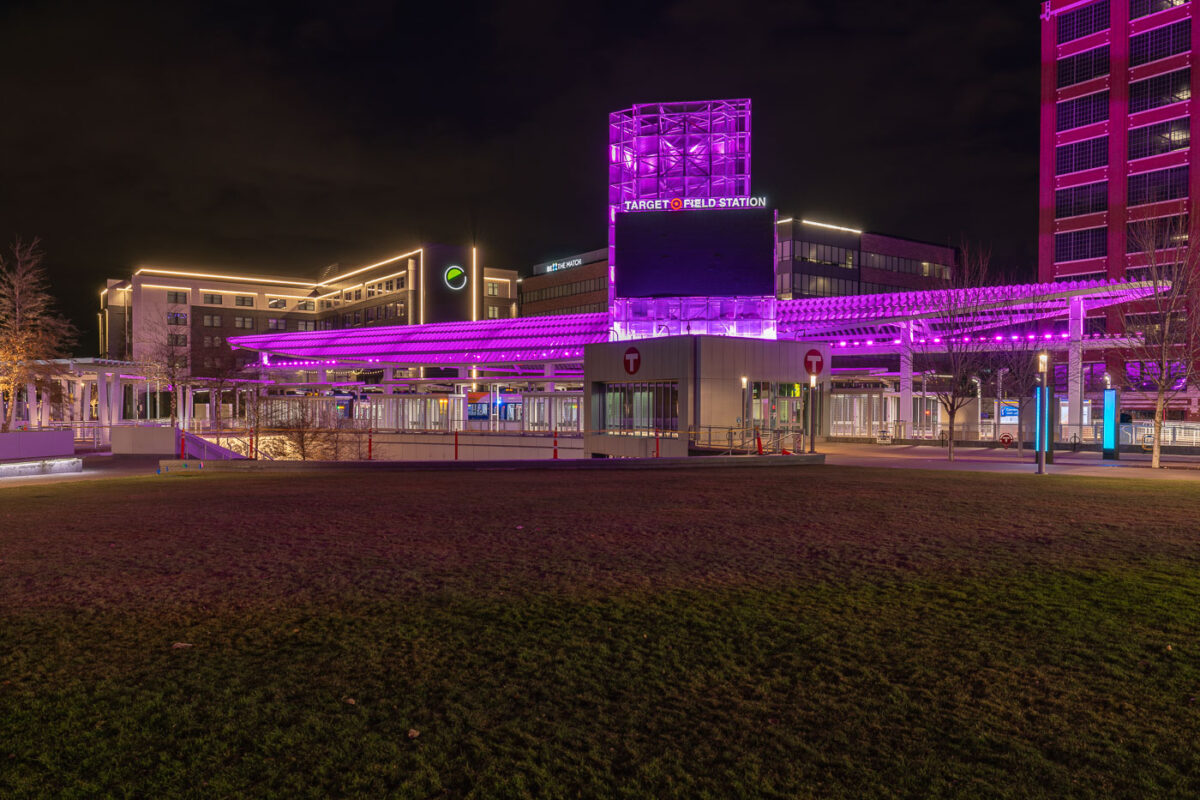
Target Field Station light rail transit hub glows with purple lighting at night in downtown Minneapolis.
Target Field Station opened in 2014 as the transit hub serving Target Field and the North Loop. It's a stop on both the METRO Green Line and Blue Line, connecting downtown Minneapolis to St. Paul, the airport, and Mall of America. A public plaza next to the station hosts pregame gatherings before Twins games.

Target Field Station in Downtown Minneapolis
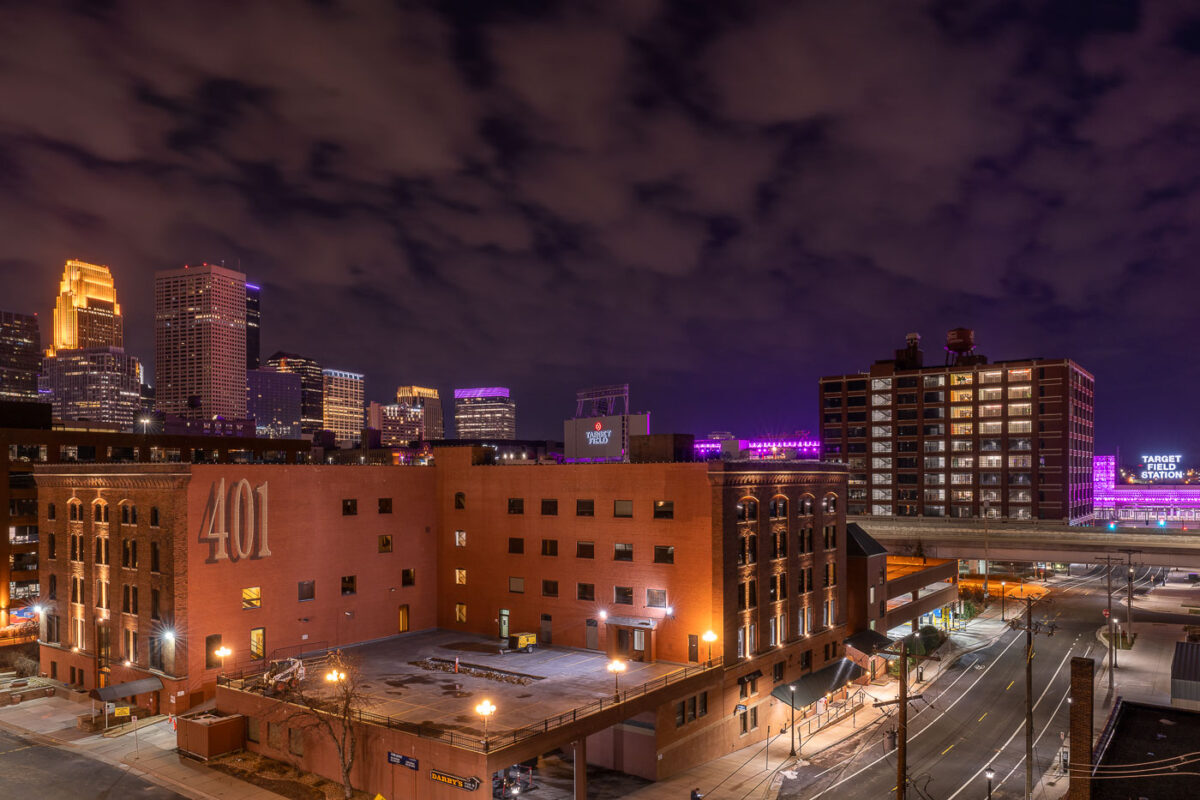
The 401 Building, a converted warehouse with residential units, anchors North Loop with downtown Minneapolis skyline beyond at
The 401 Building at 401 North Third Street began as a warehouse in the North Loop's old warehouse district, part of the milling and shipping infrastructure that once served the riverfront. Like many of its neighbors, it's since been converted to loft-style condominiums and commercial space, a common path for the district's brick-and-timber buildings since the 1980s. Target Field Station, visible to the east, opened in 2014 as a transit hub serving Northstar Commuter Rail, light rail, and bus routes, along with a public plaza used for Minnesota Twins game-day events. Downtown Minneapolis rises beyond both, its cluster of high-rises anchored by the IDS Center and Wells Fargo Center towers.

The 401 Building and Minneapolis Skyline From North Loop

Hilton Garden Inn hotel illuminated at night in downtown Minneapolis surrounded by office buildings.
The Hilton Garden Inn Minneapolis Downtown sits at 1101 Nicollet Mall, within a few blocks of the Minneapolis Convention Center and Orchestra Hall. It's part of the wave of hotel construction that filled in downtown Minneapolis blocks in the 2000s to serve convention and business travel near Nicollet Mall.

Hilton Garden Inn on Nicollet Mall, Minneapolis

Neighborhood Watch banner displayed on residential street in South Minneapolis with traffic control signs and yellow bollards.
A "Residents or Guest Only, No Trespassing" banner from the Neighbor Watch program hangs on a chain-link fence along a South Minneapolis residential block. Yellow traffic bollards and posted "One Way," "Do Not Enter," and "No Parking" signs restrict vehicle movement on the street. Neighborhood watch groups in Minneapolis are typically organized by residents in coordination with local police precincts to monitor and report suspicious activity on their blocks.

Neighbor Watch Banner and Traffic Barriers in South Minneapolis

George Floyd Memorial at Cup Foods, 38th Street and Chicago Avenue, Minneapolis.
George Floyd was killed by Minneapolis police officer Derek Chauvin on May 25, 2020, on the sidewalk outside Cup Foods at the corner of 38th Street and Chicago Avenue. Within days, the intersection filled with flowers, signs, and artwork, and residents began calling it George Floyd Square. A wrought-iron gate and a wall of flowers now mark the spot where Floyd died, tended by volunteers who've kept the memorial going through changes of season for months at a time.

George Floyd Square Memorial Outside Cup Foods

Via's Vintage storefront at 2408 Hennepin Avenue in Uptown Minneapolis displays vintage clothing and holiday decorations.
Via's Vintage sits at 2408 Hennepin Avenue in the Uptown neighborhood, selling secondhand and vintage clothing and accessories. The shop keeps regular retail hours seven days a week, including Sunday afternoons, a schedule posted at its entrance along with its phone number and website.

Via’s Vintage on Hennepin Avenue in Uptown

George Floyd Square memorial at 38th Street and Chicago Avenue in Minneapolis with chalk art and flower tributes.
George Floyd Square sits at the intersection of 38th Street and Chicago Avenue in Minneapolis, outside Cup Foods, where George Floyd died on May 25, 2020. The words "I can't breathe" — spoken by Floyd during his arrest and later echoed by Eric Garner in 2014 — are painted directly on the street alongside a large mural of angel wings. Flowers, handwritten signs, and personal offerings surround the artwork, left and maintained by visitors and neighborhood volunteers. For more than a year after Floyd's death, the intersection remained closed to through traffic and was informally managed by community members as a memorial and gathering space.

‘I Can’t Breathe’ Pavement Art at George Floyd Square

Boarded storefront at Fifth Element on Hennepin Avenue in Uptown Minneapolis with George Floyd portrait mural and "Black Lives
Fifth Element is a hip-hop and skateboard shop on Hennepin Avenue in Uptown Minneapolis, known for its role in the city's skate and street culture . After the store's windows were boarded up during the unrest following George Floyd's death in police custody in May 2020, local artists painted the plywood with a portrait of Floyd alongside the phrases "Black Lives Matter" and "Black Is Beautiful." The mural was one of hundreds that appeared on boarded storefronts throughout Minneapolis that year, part of a broader effort by artists to turn plywood barricades into public memorials and protest art.

George Floyd Mural on Fifth Element’s Boarded Windows, Uptown Minneapolis

Boarded storefront at 2741 Hennepin Avenue in Uptown Minneapolis with "Justice 4 George Floyd" painted on plywood, May 2020.
Plywood covering the storefront at 2741 Hennepin Avenue reads "Justice 4 George Floyd," painted with a red heart on either side of the word "4." The building sits in Uptown Minneapolis, a commercial stretch of Hennepin Avenue lined with retail shops and restaurants. Following George Floyd's death in police custody in May 2020, many Minneapolis businesses boarded their windows against anticipated damage, and those plywood panels became surfaces for murals, memorials, and protest messages across the city.

“Justice 4 George Floyd” Boards on Hennepin Avenue

The Pioneers Statue in Northeast Minneapolis vandalized with red paint and protest messages at night.
The Pioneers Monument was sculpted by John K. Daniels and dedicated in 1936 to honor early European settlers in Minnesota. Vandals covered the granite base in red paint, writing "Decolonize," "Land Back," and "All Colonizers Are Bastards" across the statue and its steps. The monument depicts pioneer figures in bronze atop a stone pedestal and has drawn criticism in recent years from Indigenous activists who argue it glorifies colonization. Similar defacement has targeted other Minneapolis monuments tied to settler history amid broader calls to reconsider public memorials.

“Land Back” Graffiti Sprayed on the Pioneers Monument in Minneapolis

Toppled George Washington statue vandalized with red and yellow paint in Washburn Fair Oaks, Minneapolis.
The bronze George Washington statue in Washburn Fair Oaks Park was pulled from its base and left splashed with red and yellow paint, with "LAND BACK!" written across its side. The statue was dedicated in 1897, a gift to the city from the Daughters of the American R. It depicted Washington on horseback and had stood in the park for over a century before it was toppled.

George Washington Statue Toppled in Washburn Fair Oaks Park

Protest flyer at Minnesota Governor's Residence in St. Paul demanding charges be dropped for arrested demonstrators.
A taped flyer reading "DROP THE CHARGES! DUMPING TRUMP IS NOT A CRIME" hangs on a stone gate pillar at the Minnesota Governor's Residence on Summit Avenue in St. Paul. The flyer references Interstate 94's Highway 646, invoking the November 4, 2020 protest in which Minnesota State Patrol and Minneapolis police detained more than 600 demonstrators who had blocked the freeway following the presidential election. A bronze plaque below the flyer notes the residence's listing on the National Register of Historic Places.

“Drop the Charges” Flyer on the Governor’s Residence Gate
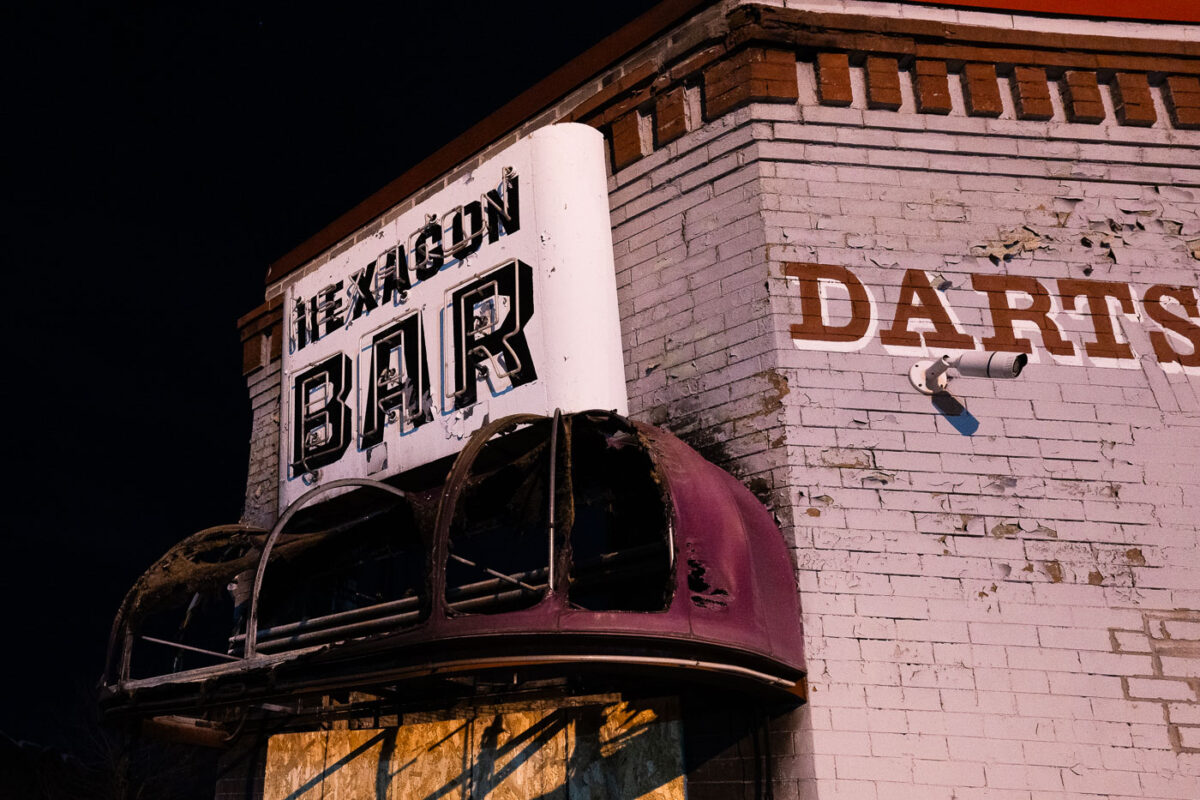
Hexagon Bar's damaged storefront and signage in South Minneapolis at night.
The Hexagon Bar sits at Lake Street and 26th Avenue South in Minneapolis's Longfellow neighborhood, a live-music dive bar known for punk and metal shows. The building burned during the unrest that followed George Floyd's murder in May 2020.

Fire Damage at the Hexagon Bar in South Minneapolis
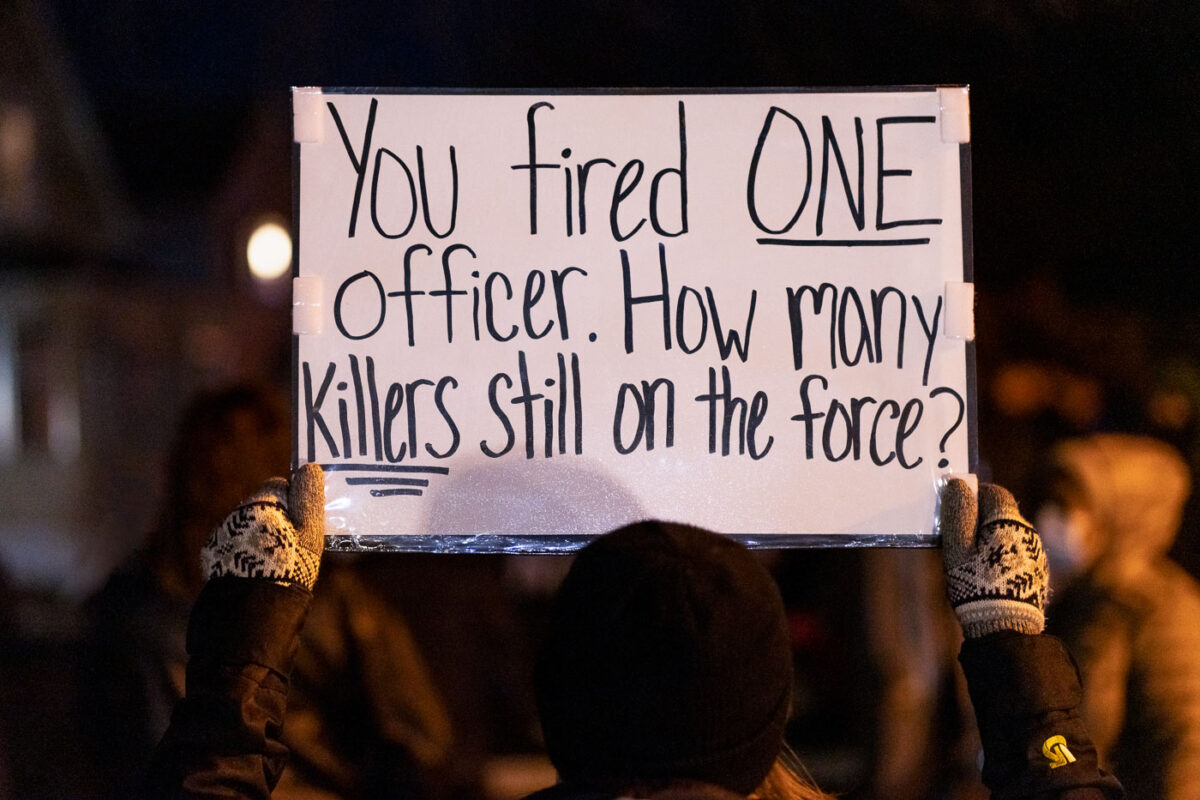
how many killers still on the force
Protesters march on Rice Street in St. Paul, holding signs to voice concerns about police accountability. This protest took place a day after the St. Paul Police Department released body camera footage of an officer shooting Joseph Washington, an unarmed Black man, who was being attacked by a K9. The officer involved in the shooting was subsequently fired from the force. The sign displayed questions the depth of reform, stating, "You fired ONE officer. How many Killers still on the force?".

St. Paul Protest Sign on Rice St. Questions Police Force
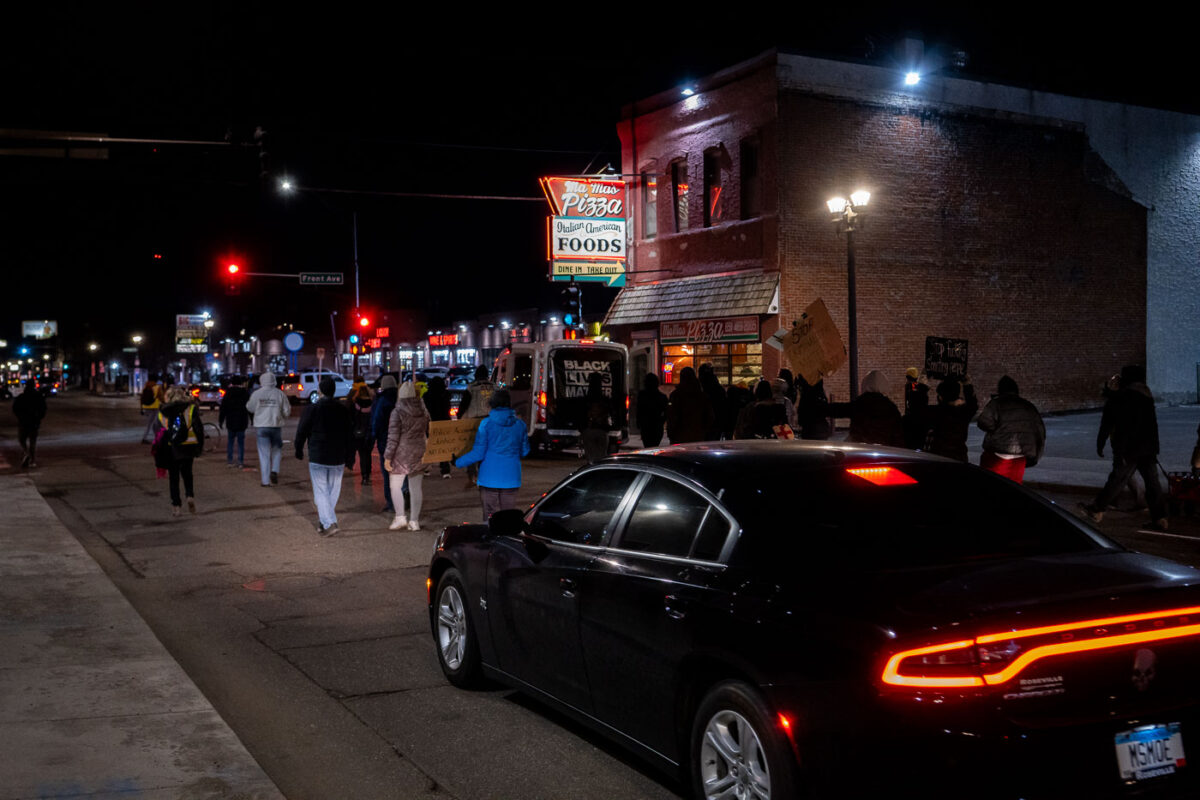
Joseph Washington march in St Paul
Protesters march along Front Avenue in St. Paul, Minnesota, following the police shooting of Joseph Washington. This night march is part of ongoing public protests demanding police accountability and justice. Participants carry signs advocating for an end to police violence and addressing issues such as material poverty.

Night March for Joseph Washington on Front Ave, St. Paul
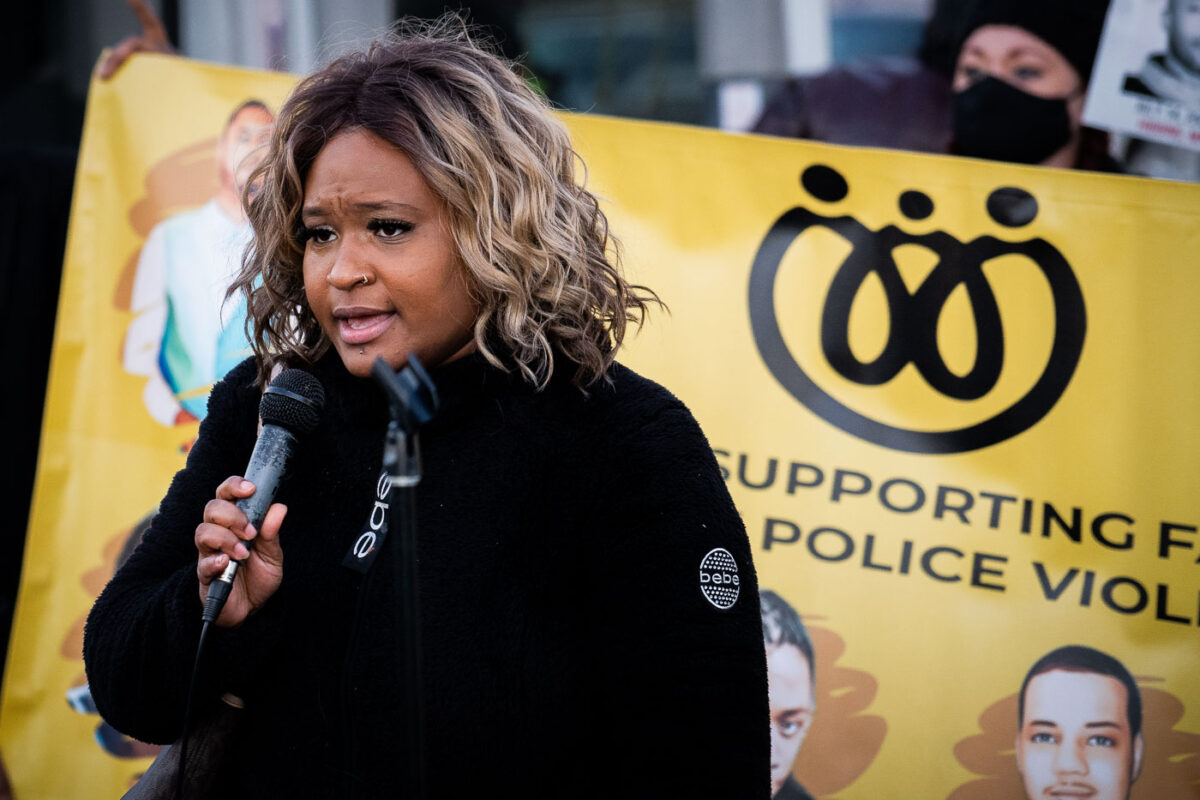
Toshira Garraway Allen speaks in St Paul
Toshira Garraway Allen, a prominent local activist, addresses attendees at a protest in St. Paul. The rally calls for justice for Justin Teigen, her son's father, who was killed by St. Paul police in 2009. This event underscores the persistent activism in St. Paul advocating for accountability in cases of police violence.

Toshira Garraway Allen speaks at St. Paul rally for Justin Teigen
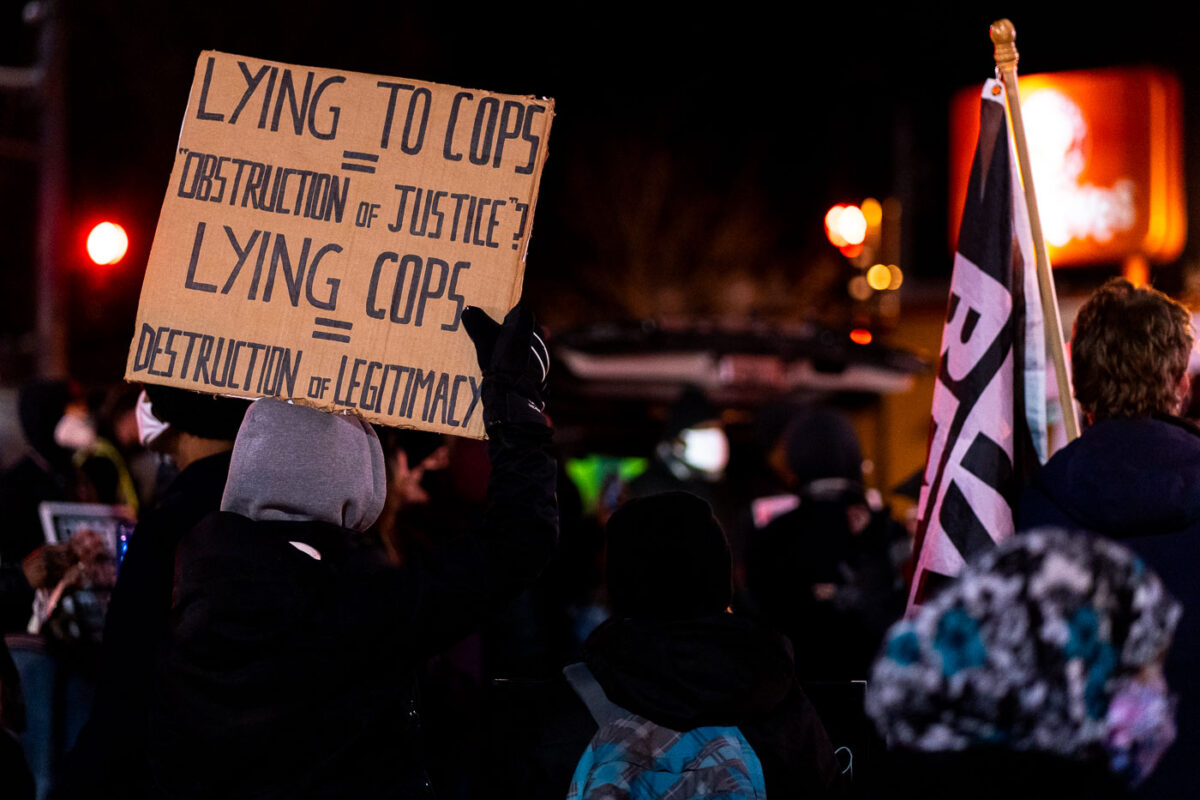
Protest follows the shooting of Joseph Washington
Protesters march in St. Paul following the shooting of Joseph Washington by St. Paul police. One participant holds a sign that reads, "Lying to Cops = 'Obstruction of Justice'? Lying Cops = Destruction of Legitimacy." This event contributes to the ongoing public discourse in the Twin Cities metropolitan area concerning law enforcement practices and justice.

St. Paul Protest for Joseph Washington, Sign on Police Legitimacy
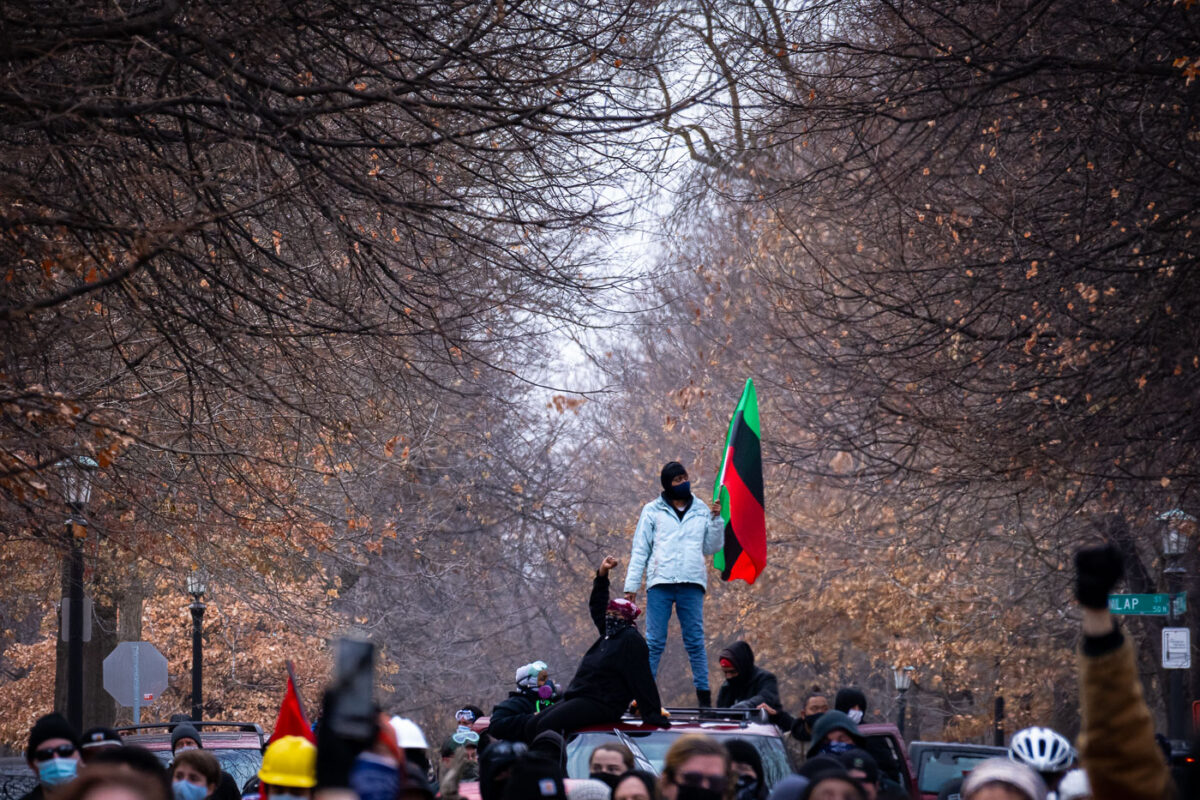
Stop The Steal counter protest in St Paul
A Black Lives Matter counter-protest marches towards the Minnesota Governor's Residence in St. Paul. This march was organized in response to a 'Stop The Steal' gathering, which had been attended by groups such as the Proud Boys at the Governor's Residence in prior weeks.

St. Paul BLM Counter-Protest vs. Stop The Steal
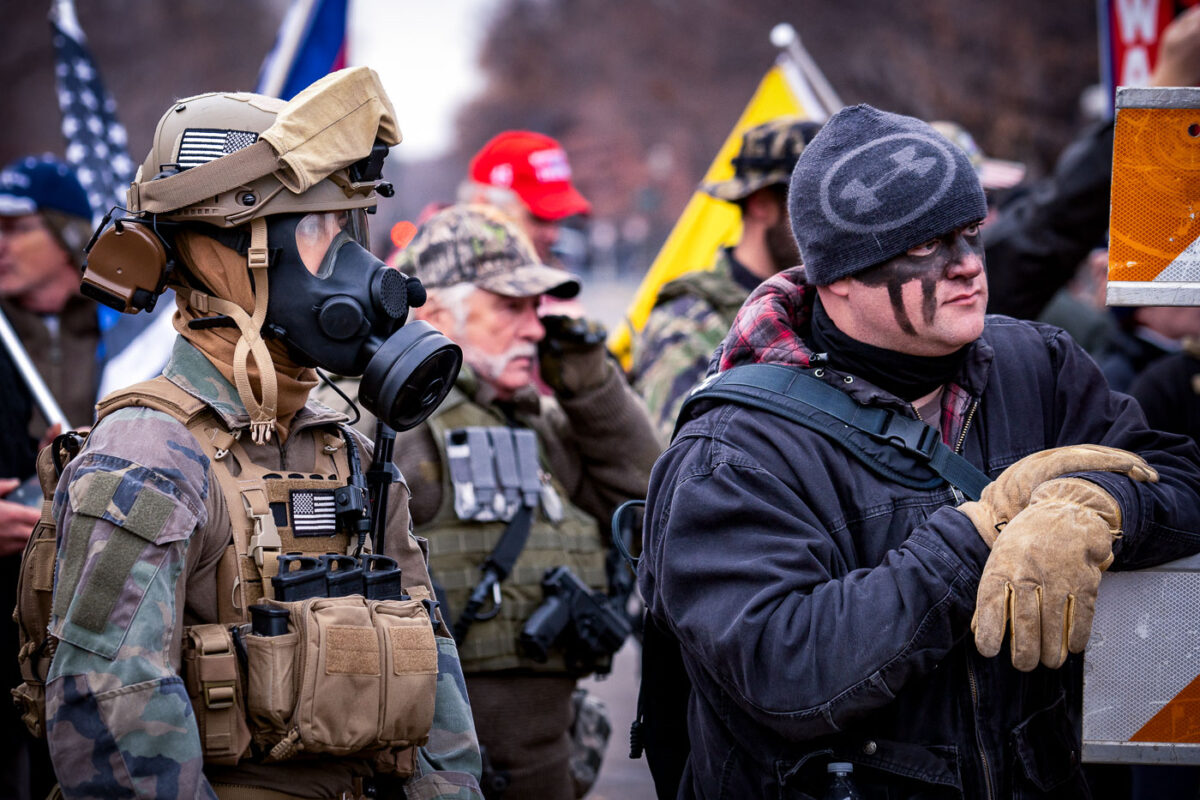
Stop The Steal protesters with face paint
Protesters associated with the "Stop The Steal" movement gathered in St. Paul, Minnesota. Some participants wore tactical gear, reflecting the heightened tensions surrounding the 2020 US Presidential election results. This protest, held near the Minnesota Governor's Residence, was part of a series of nationwide events challenging the election outcome.

Stop The Steal Protesters with Tactical Gear, St. Paul

Stop The Steal protest at Tim Walz residence December 2020
A "Stop The Steal" protest took place outside the Minnesota Governor's Residence in St. Paul on December 5, 2020. Protesters gathered on Summit Avenue, near the intersection with Chatsworth Street, to challenge the results of the 2020 presidential election, with many displaying "Back The Blue" and "Keep America Great" flags.

Stop The Steal Protest at MN Governor’s Residence, St. Paul
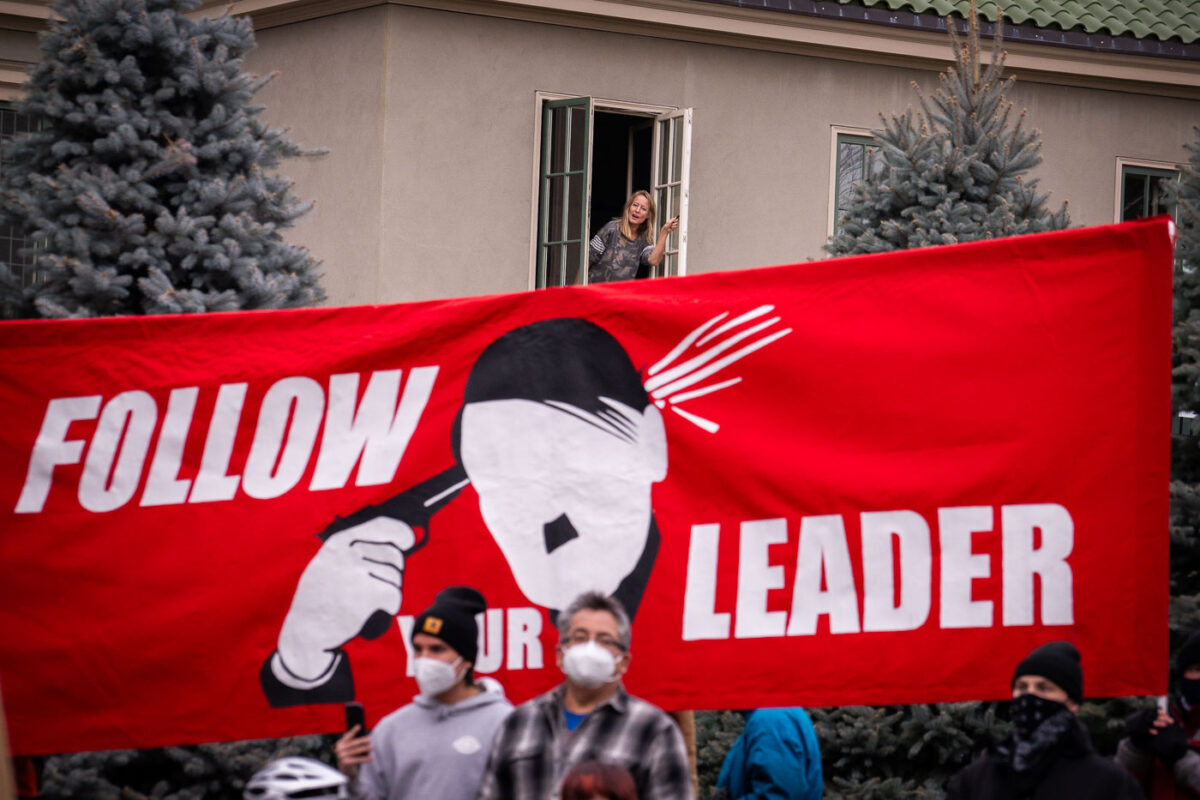
Follow your leader protest sign in St Paul
A woman observes protests from a window at the Minnesota Governor's Residence in St. Paul. In the foreground, a red banner displaying "Follow Your Leader" alongside an image of a gun pointed at a head is held by participants. For weeks, the Governor's Residence has been the site of "Stop The Steal" protests, often drawing counter-protests.

“Follow Your Leader” Banner, MN Governor’s Residence
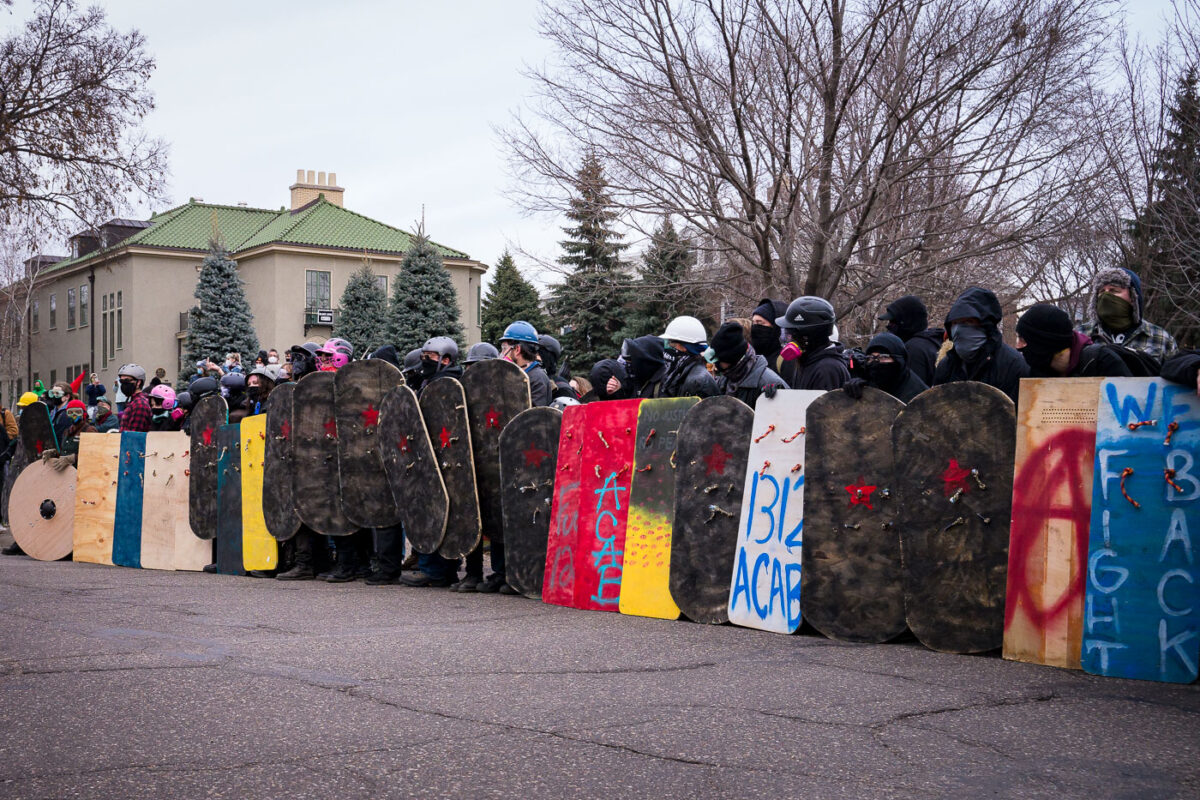
Counter protesters with shields
Counter protesters stand with homemade shields outside the Minnesota Governor's Residence in St. Paul. They gathered in opposition to a "Stop The Steal" rally, which had been occurring regularly at this location for several weeks.

Counter Protesters at Stop The Steal Rally, MN Governor’s Residence
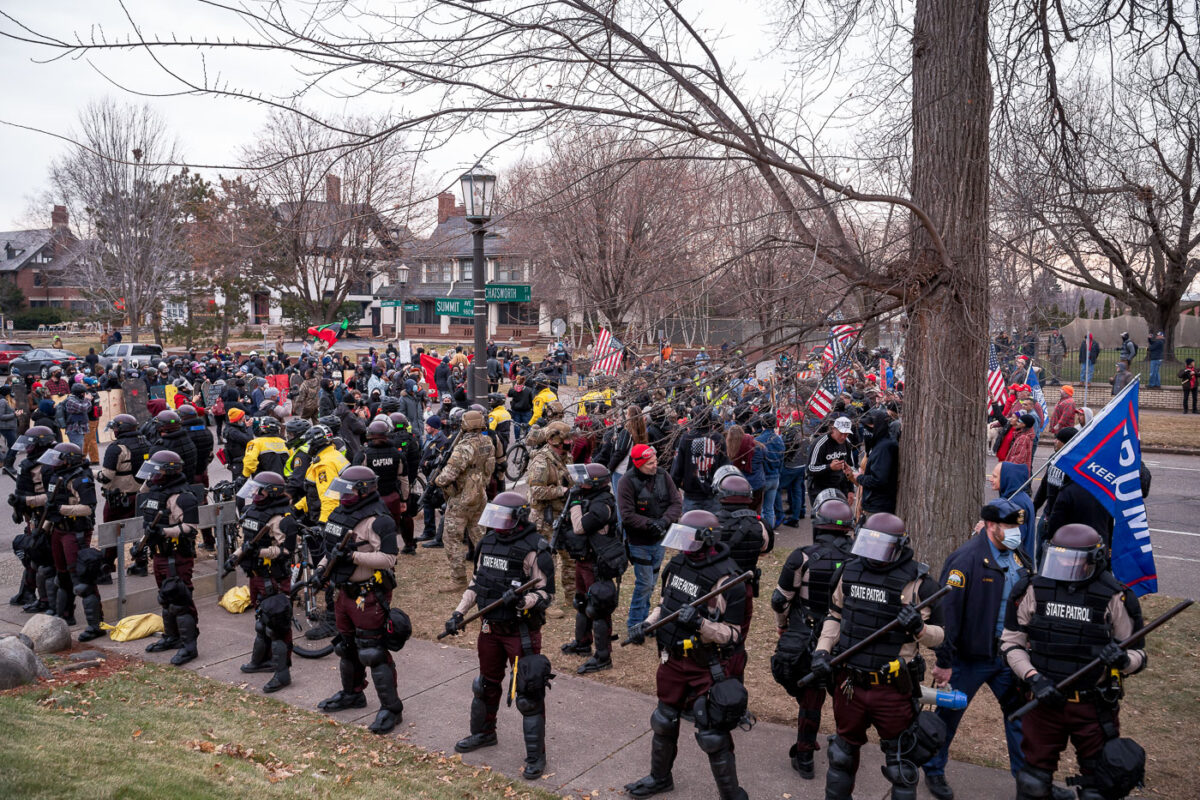
Stop The Steal protesters and police in St Paul
Minnesota State Patrol officers stand guard during a 'Stop The Steal' protest and counter-protest on Summit Avenue in St. Paul, Minnesota. The protest, which included 'Back The Blue' supporters, gathered near the Minnesota Governor's Residence. This event reflects the broader 'Stop The Steal' movement that emerged following the 2020 U.S. presidential election, asserting claims of election fraud. The counter-protest developed after weeks of the Proud Boys joining the 'Stop The Steal' protesters in the area, underscoring heightened political tensions.

Stop The Steal Protest, MN State Patrol, Summit Ave, St. Paul
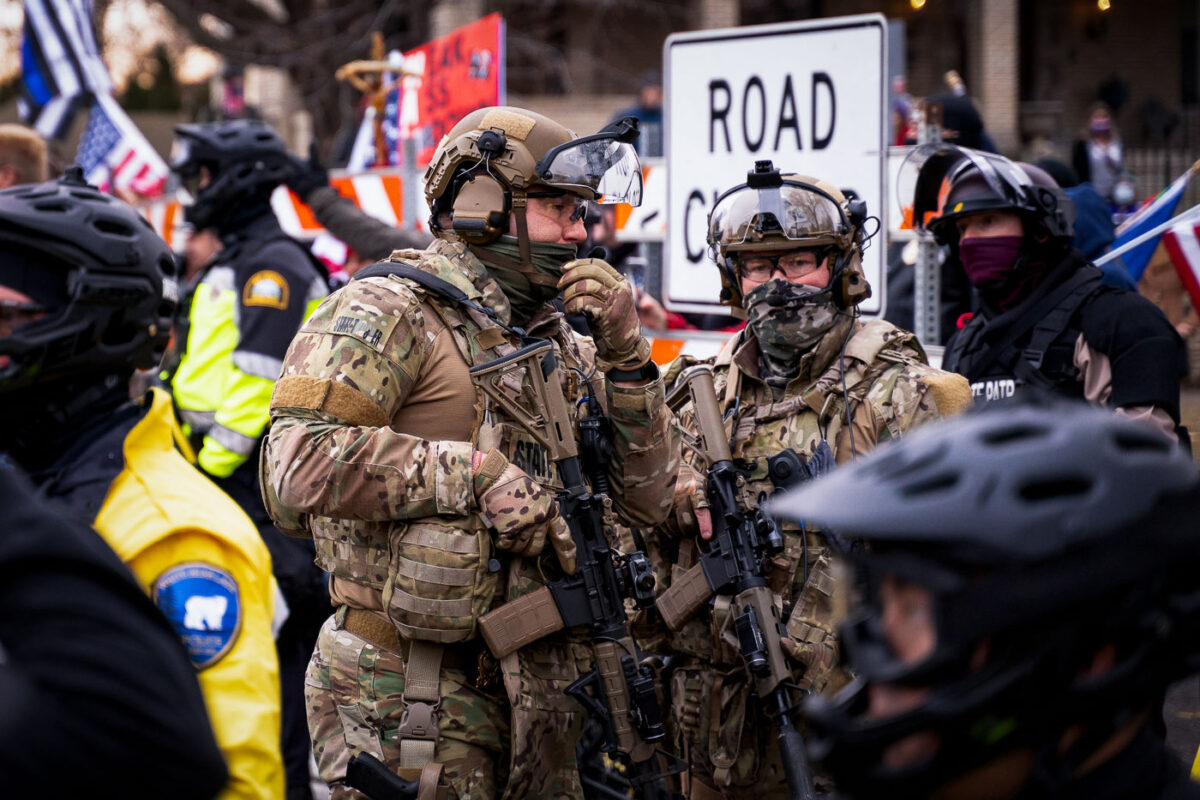
Armed State Patrol at a Stop The Steal rally
Minnesota State Patrol officers stand guard at a 'Stop The Steal' rally in St. Paul. This protest took place outside the Minnesota Governor's Residence, a historic mansion serving as the official residence of the state's governor since 1965. The State Patrol was deployed after counter-protesters arrived. Supporters of the 'Stop The Steal' movement had been gathering for several weeks at this location, protesting the results of the 2020 presidential election.

State Patrol at MN Governor’s Residence Stop The Steal Rally
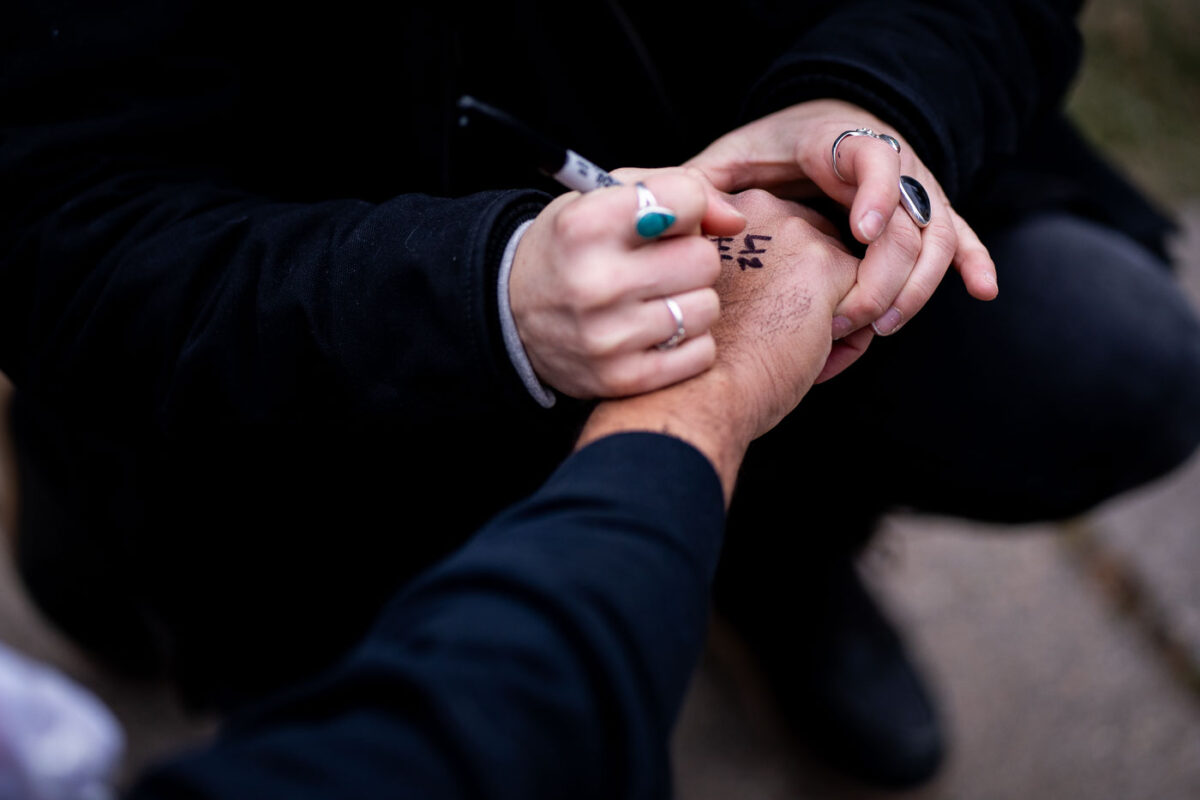
National Lawyers Guild number written on a protester
A participant at a "Stop The Steal" protest in St. Paul receives the National Lawyers Guild (NLG) legal support number written on their hand. This practice provides quick access to legal assistance in the event of arrest during public gatherings.

NLG number on Stop The Steal protester’s hand, St. Paul
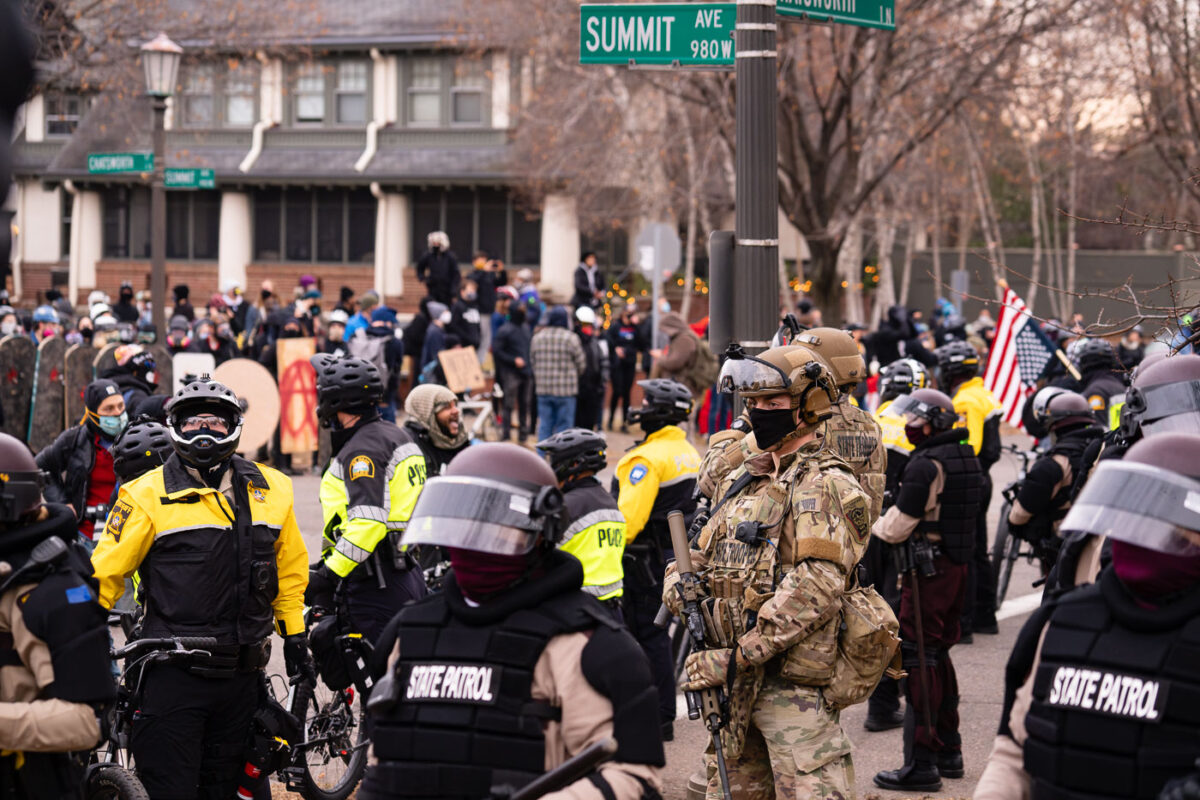
Minnesota State Patrol outside Governor Walz residence
Minnesota State Patrol officers and other law enforcement personnel stand guard outside the Minnesota Governor's Residence in St. Paul during a 'Stop The Steal' protest on December 5, 2020. The protest, advocating for the overturning of the 2020 presidential election results, drew both supporters and counter-protesters to the official residence of Governor Tim Walz.

MN State Patrol at Governor’s Residence Stop The Steal Protest
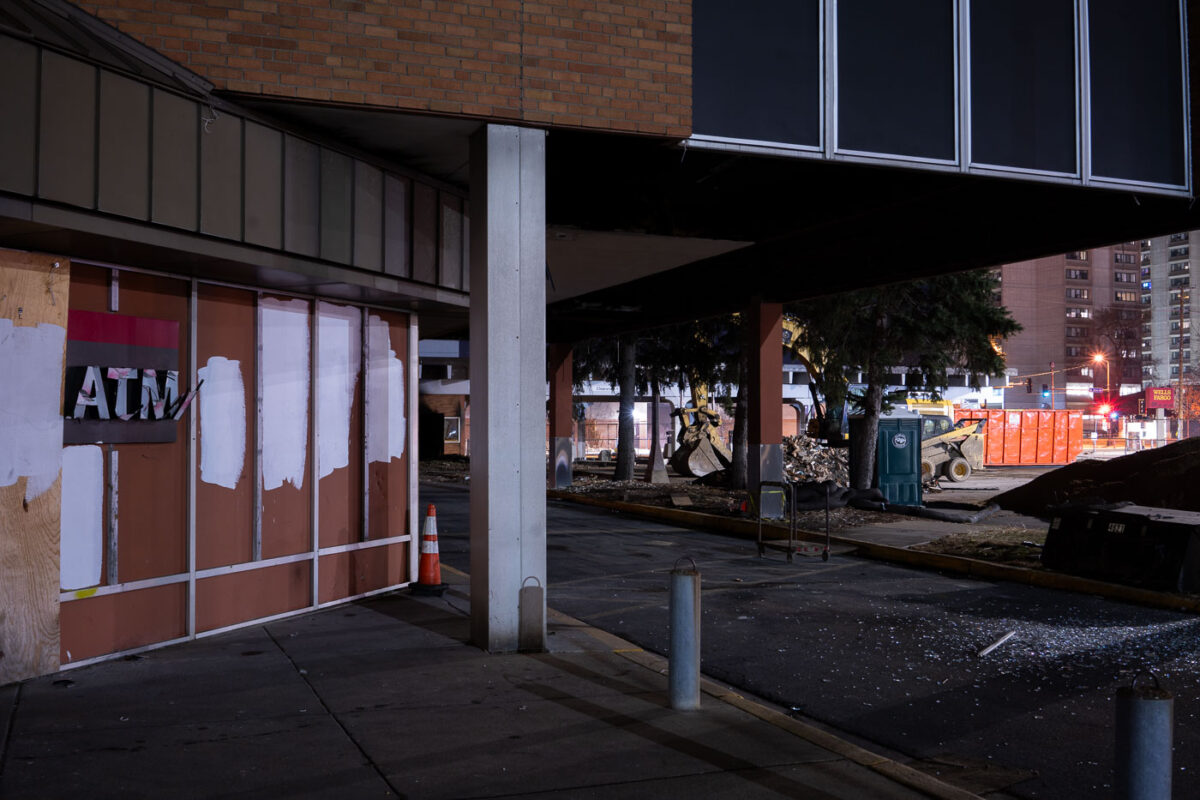
Burned out Wells Fargo building with ATM sign
The remains of a Wells Fargo bank branch stand on Nicollet Avenue in Minneapolis, following its destruction during the civil unrest of May 2020. This building, located across from the Minneapolis Police Fifth Precinct station, was burned during the uprising that followed the May 25, 2020 death of George Floyd.

Burned Wells Fargo ATM, Nicollet Ave, Minneapolis
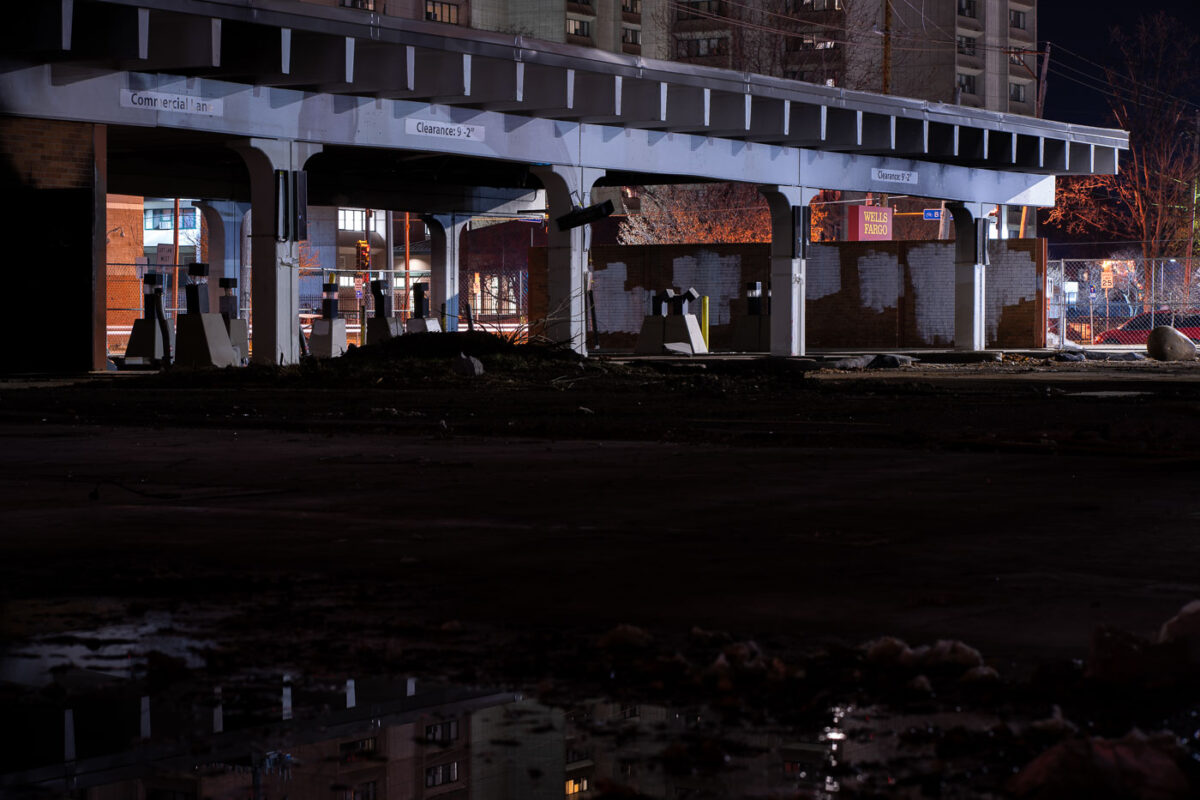
Remains of the burned Wells Fargo Bank
The remains of the Wells Fargo Bank on Nicollet Avenue in Minneapolis are visible at night. This retail financial institution was destroyed by arson following the May 25, 2020 death of George Floyd, during a period of widespread protest in the city. The bank was located directly across the street from the Minneapolis Police Department's Fifth Precinct station.

Wells Fargo Bank Arson Remains, Nicollet Ave, Minneapolis
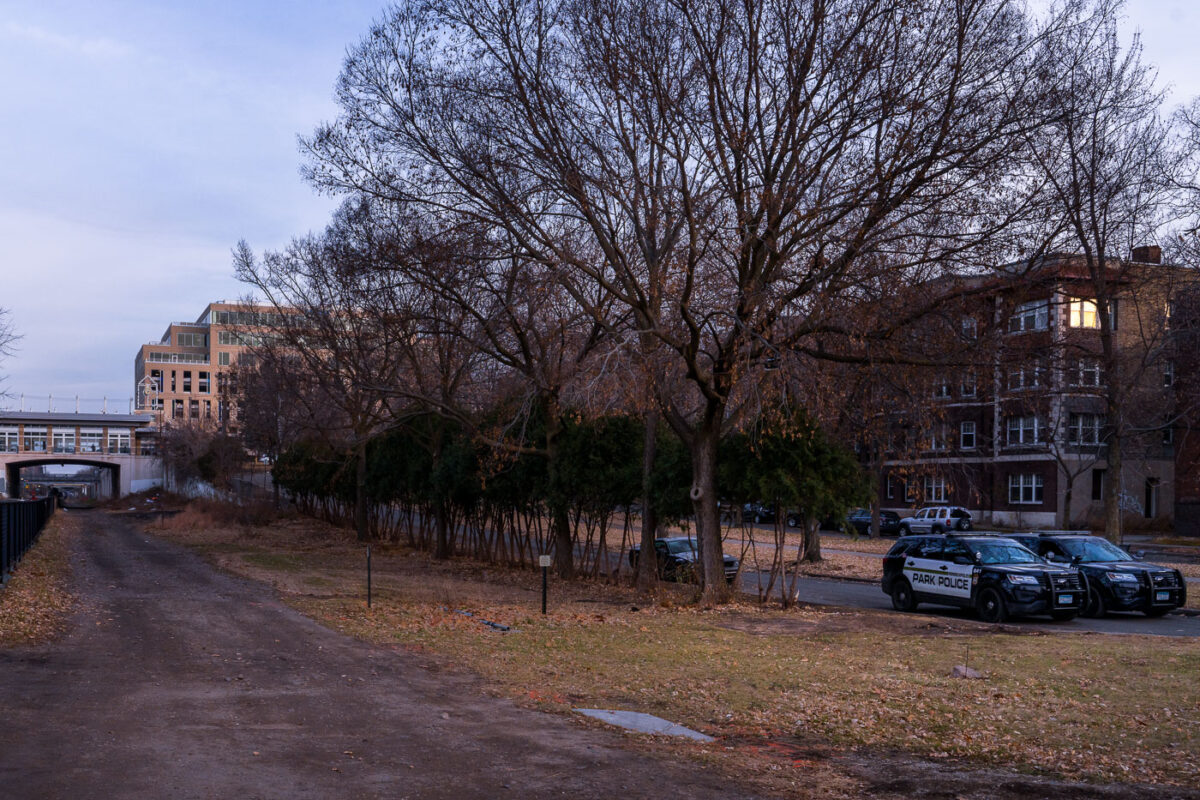
Minneapolis Park Police on The Mall in Uptown
Minneapolis Park Police vehicles are stationed in Uptown Minneapolis, adjacent to The Mall Park.

Minneapolis Park Police Squad Cars, Cleared Encampment Site, Uptown

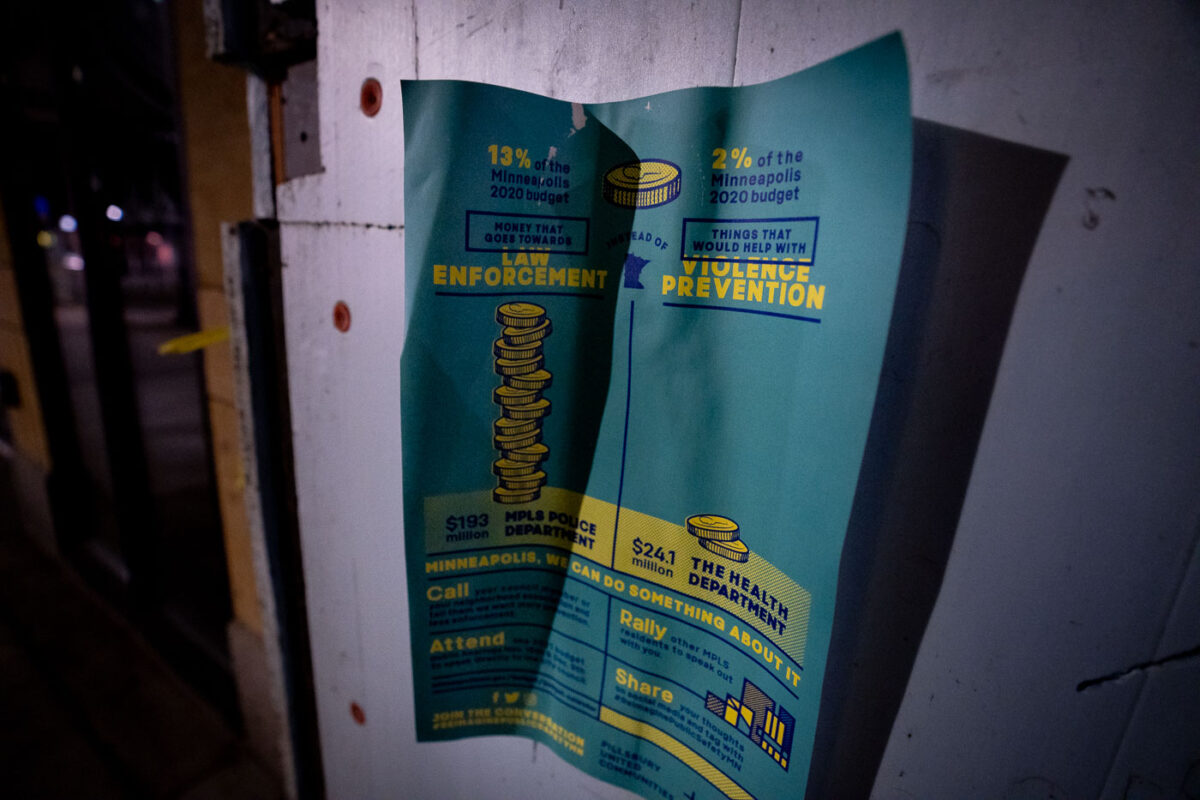
A flyer in Uptown Minneapolis regarding police funding
A flyer about Minneapolis 2020 budget priorities is posted on a building in Uptown Minneapolis. The poster compares funding for law enforcement and violence prevention, stating that 13 percent of the city budget, or $193 million, went to the Minneapolis Police Department while 2 percent, or $24.1 million, went to the Health Department for violence prevention. The flyer was produced by Pillsbury United Communities and calls attention to spending choices during a period of debate over public safety in Minneapolis.

Uptown Minneapolis Police Funding vs. Violence Prevention Flyer

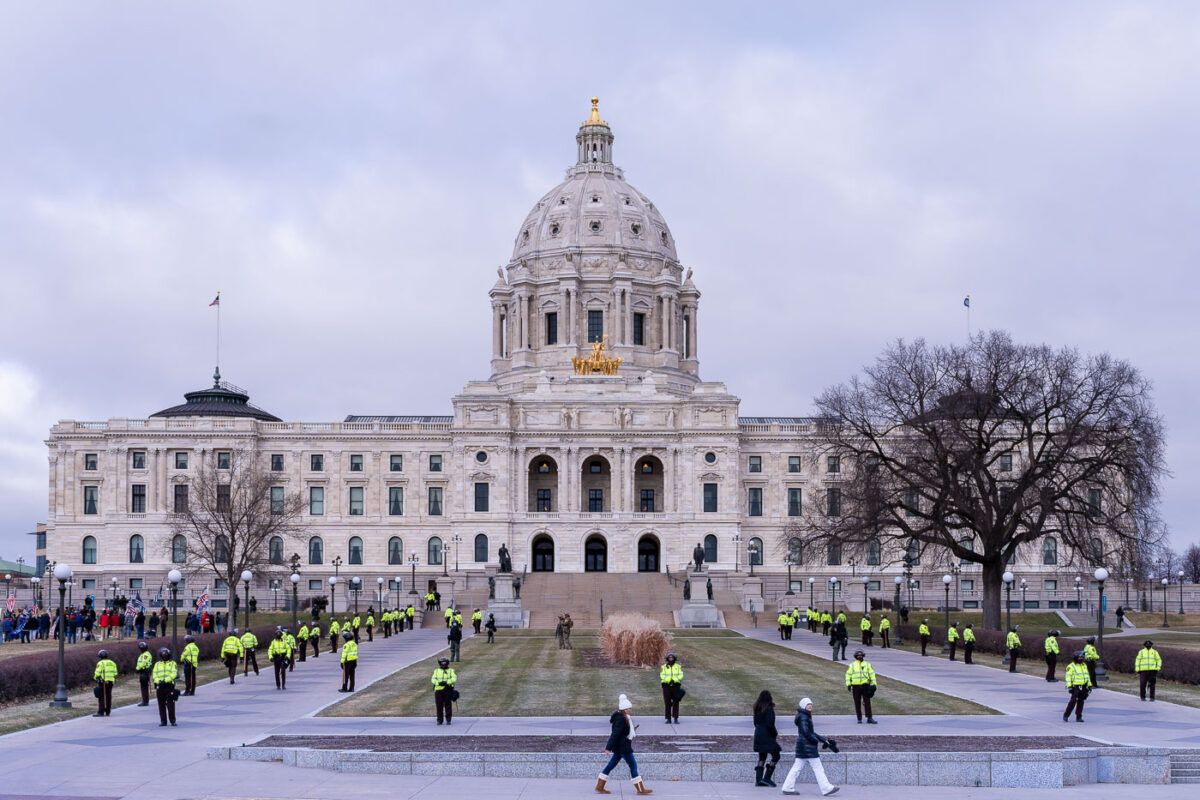
Minnesota State Patrol after Trump looses election
Minnesota State Patrol officers stand across the grounds of the Minnesota State Capitol in St. Paul during protests after the 2020 presidential election. The state capitol, designed by Cass Gilbert and completed in 1905, houses Minnesota’s legislative, executive and judicial branches. The building’s dome and front lawn are visible behind the officers and a small group of demonstrators, with pedestrians crossing the foreground.

Minnesota State Capitol: State Patrol & Election Protests

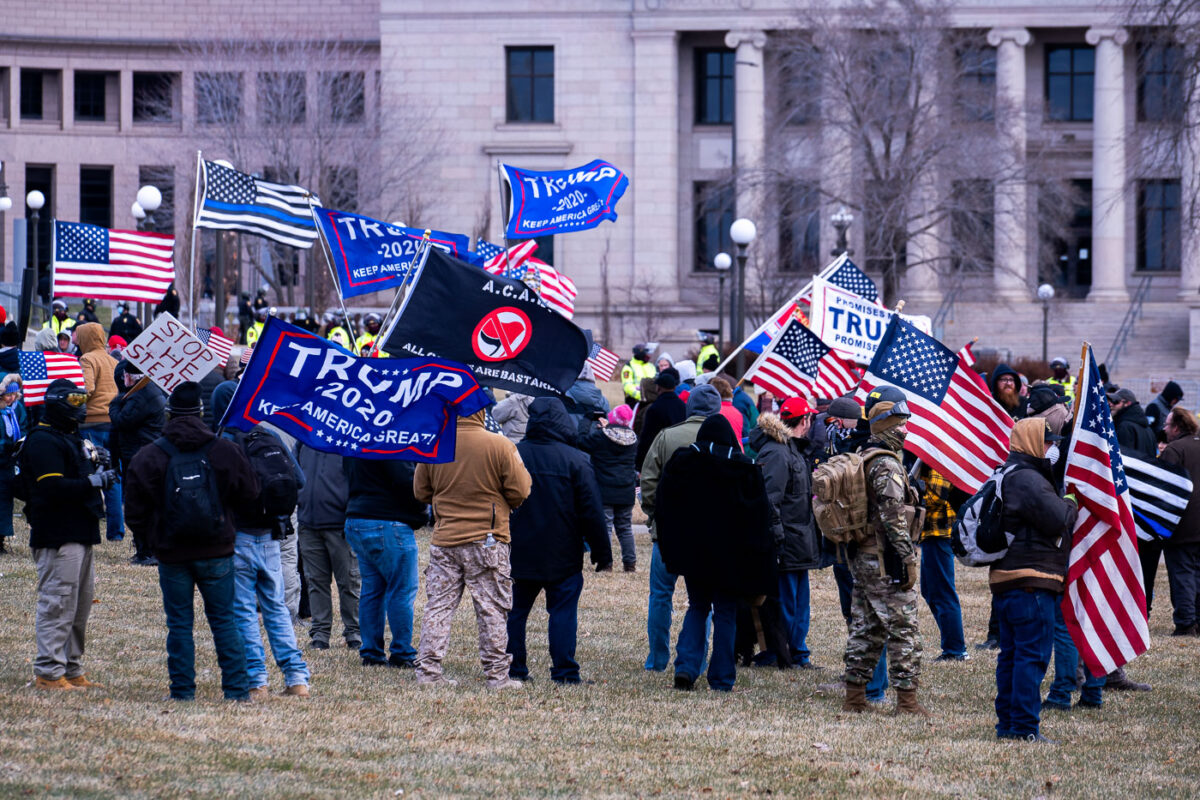
MAGA protesters wave flags at Stop The Steal rally
Protesters gather on the grounds of the Minnesota State Capitol in St. Paul on December 12, 2020, during a “Stop the Steal” rally. The crowd holds Trump 2020 and American flags, a thin blue line flag, and signs as some participants wear winter clothing and tactical gear. The state capitol, completed in 1905, stands in the background as the seat of Minnesota government.

Trump 2020 Flags at Stop The Steal Rally, Minnesota State Capitol

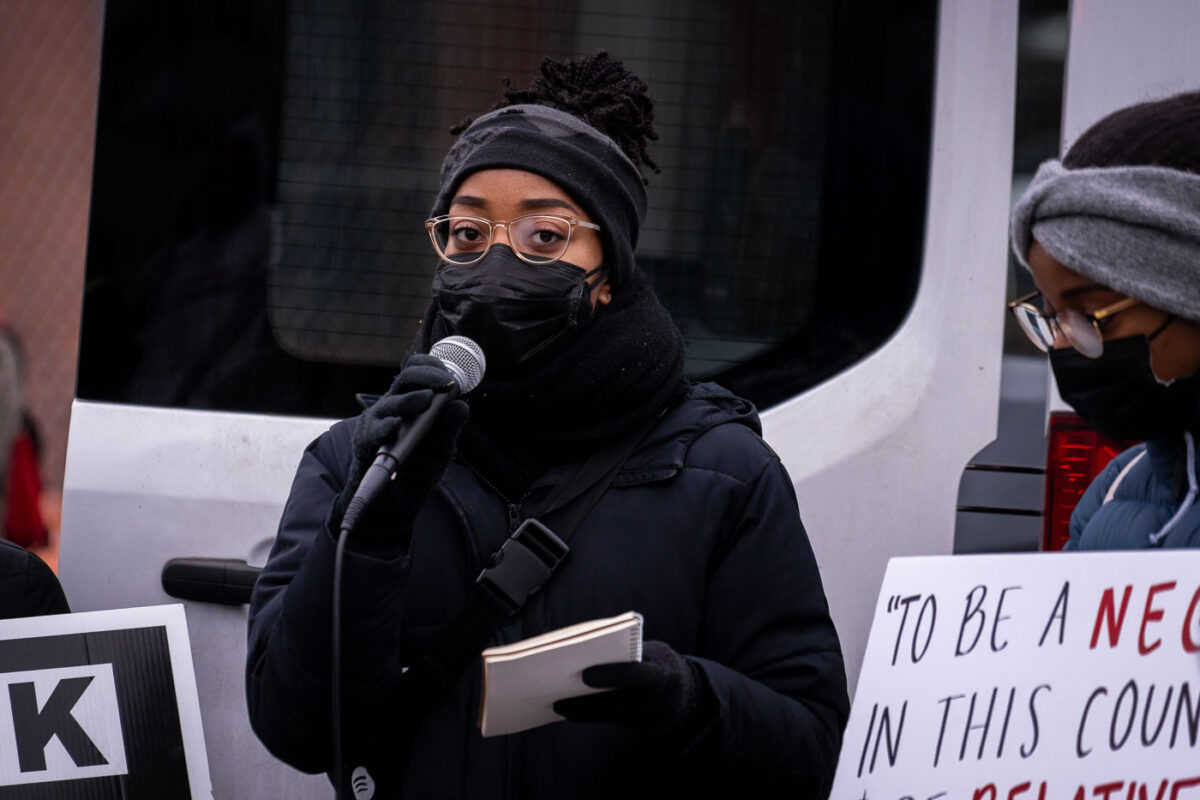
Protest outside St Paul police department in December
A speaker addresses a protest at the intersection of Minnehaha Avenue and Payne Avenue in St. Paul on December 12, 2020. Protesters marched from Wilder Playground to the St. Paul Police facility at this location to advocate for racial equality and the defunding or abolition of the police.

Protest Speaker at Minnehaha & Payne, St. Paul

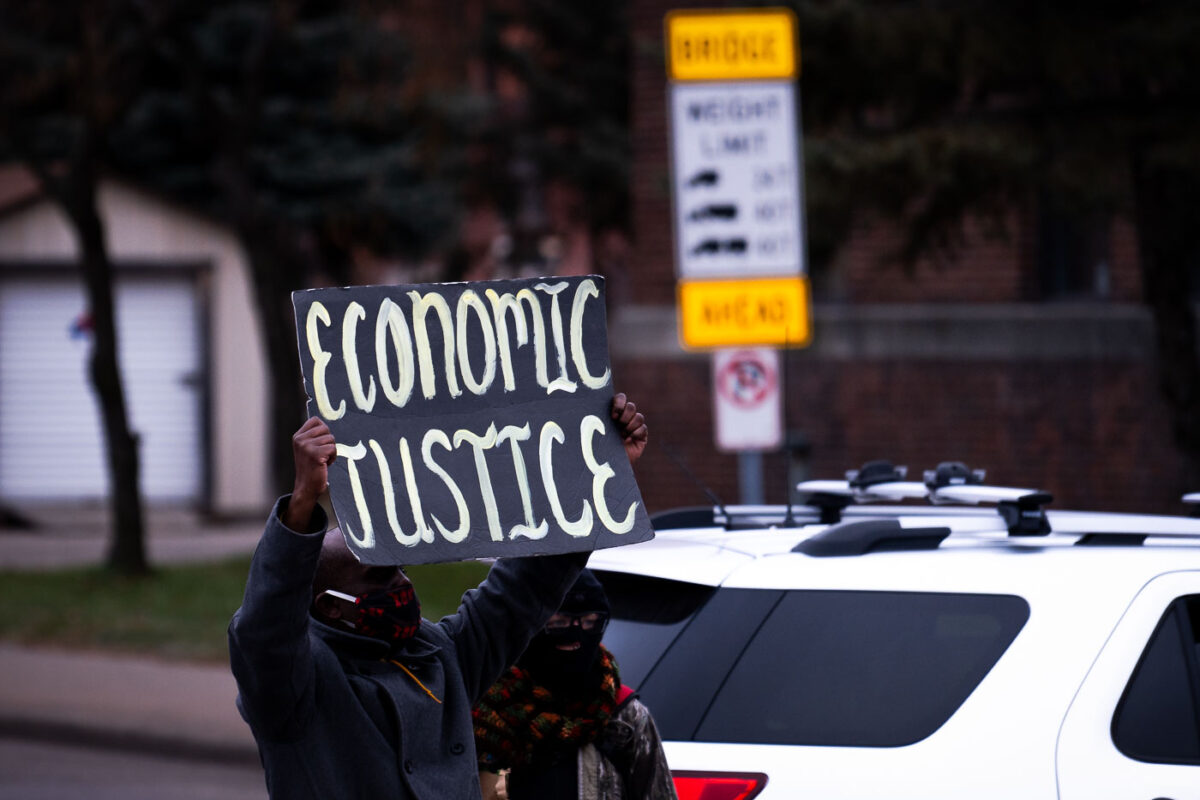
Protester holds a sign that reads Economic Justice
A protester holds a sign advocating for "Economic Justice" during a public rally in Minneapolis. This protest occurred amidst broader calls for social and economic reform that emerged from the Minneapolis Uprising.

Minneapolis Protester with “Economic Justice” Sign

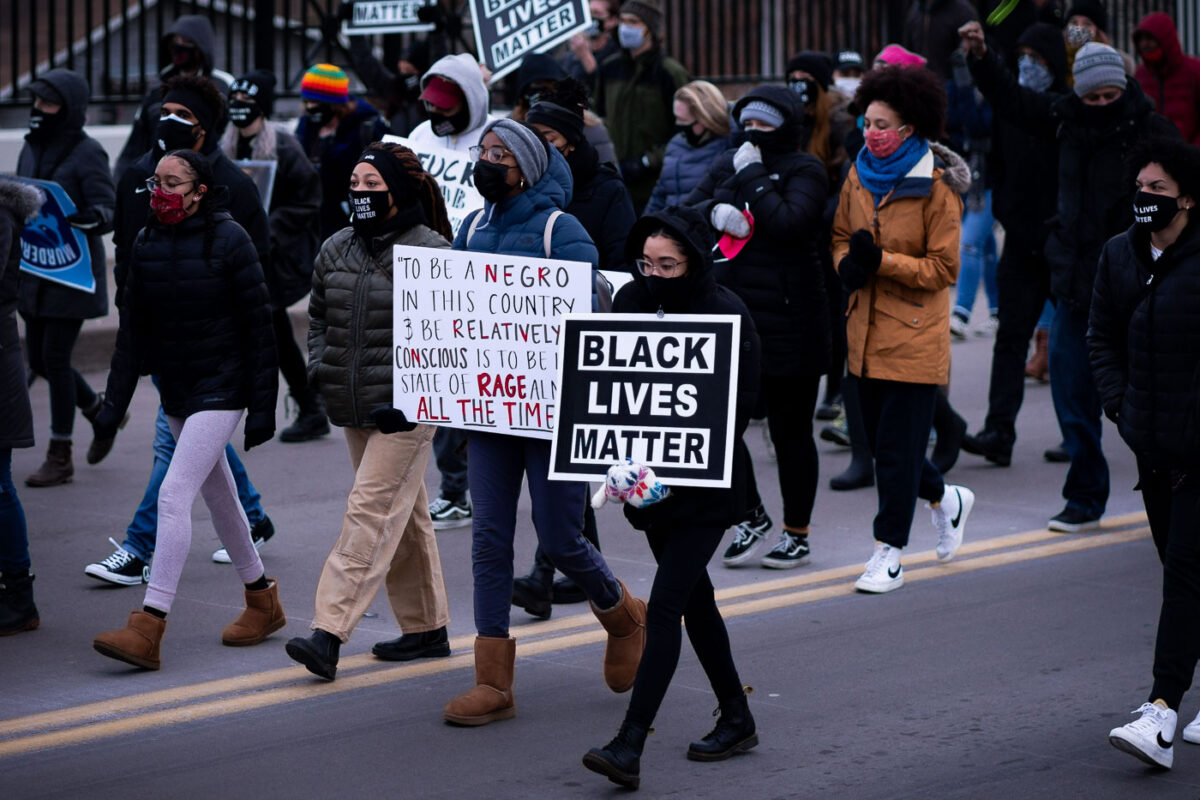
Protesters march to the St Paul Police Department
A Black Lives Matter march took place in St. Paul, Minnesota, with protesters gathering at Minnehaha & Payne. Participants marched from Wilder Playground to the St. Paul Police station, where speakers addressed racial inequality and advocated for police reform.

Black Lives Matter Protest at Minnehaha & Payne, St. Paul

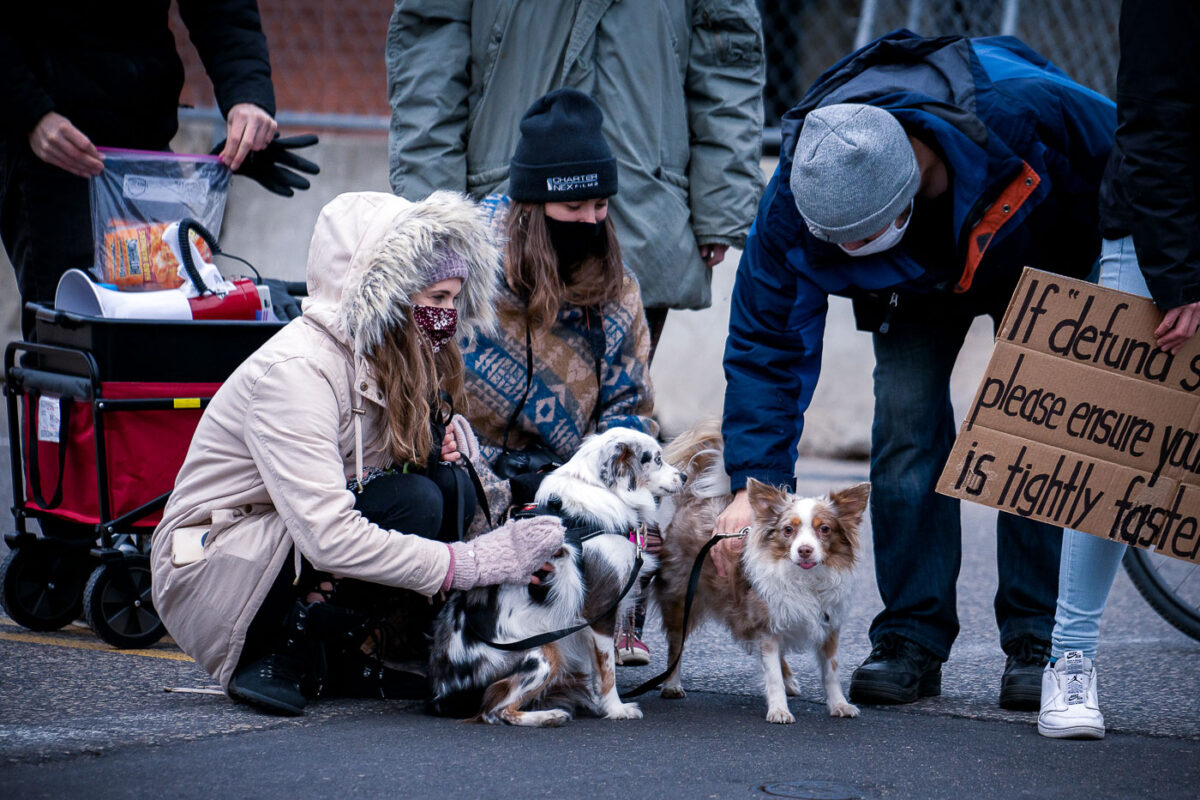
Dogs at a protest outside the St Paul police department
Protesters gathered in St. Paul during the Minneapolis Uprising, marching from Wilder Playground to the St. Paul Police station at Minnehaha Avenue and Payne Avenue. The march aimed to raise awareness about racial inequality and advocate for the defunding or abolition of the police, a central demand of the broader movement.

Dogs at St. Paul Police Protest during Minneapolis Uprising

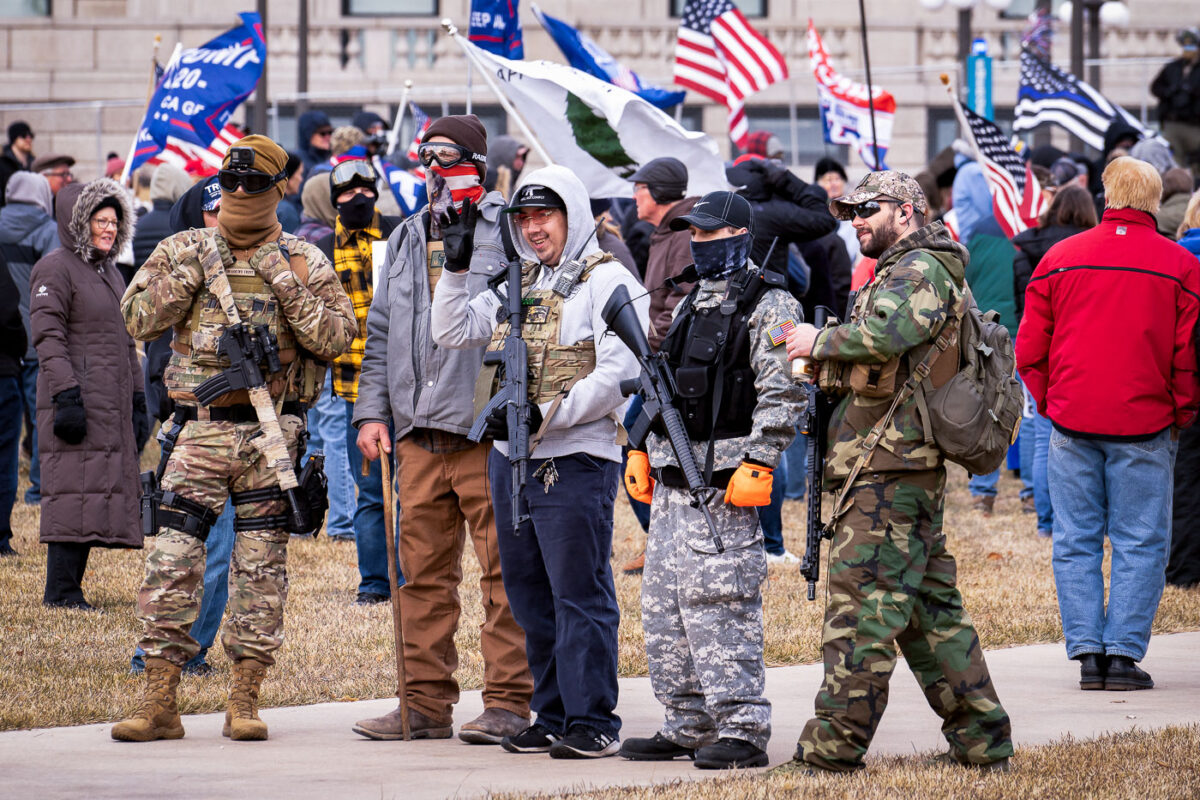
Armed Stop The Steal protesters
Armed demonstrators gather outside the Minnesota State Capitol in St. Paul, Minnesota, during a “Stop the Steal” rally on Dec. 12, 2020. Several participants wear tactical clothing and carry rifles and other gear while standing among flags and other protesters on the capitol grounds. The rally followed the 2020 presidential election and drew people challenging the results.

Armed Protesters at St. Paul Stop The Steal Rally

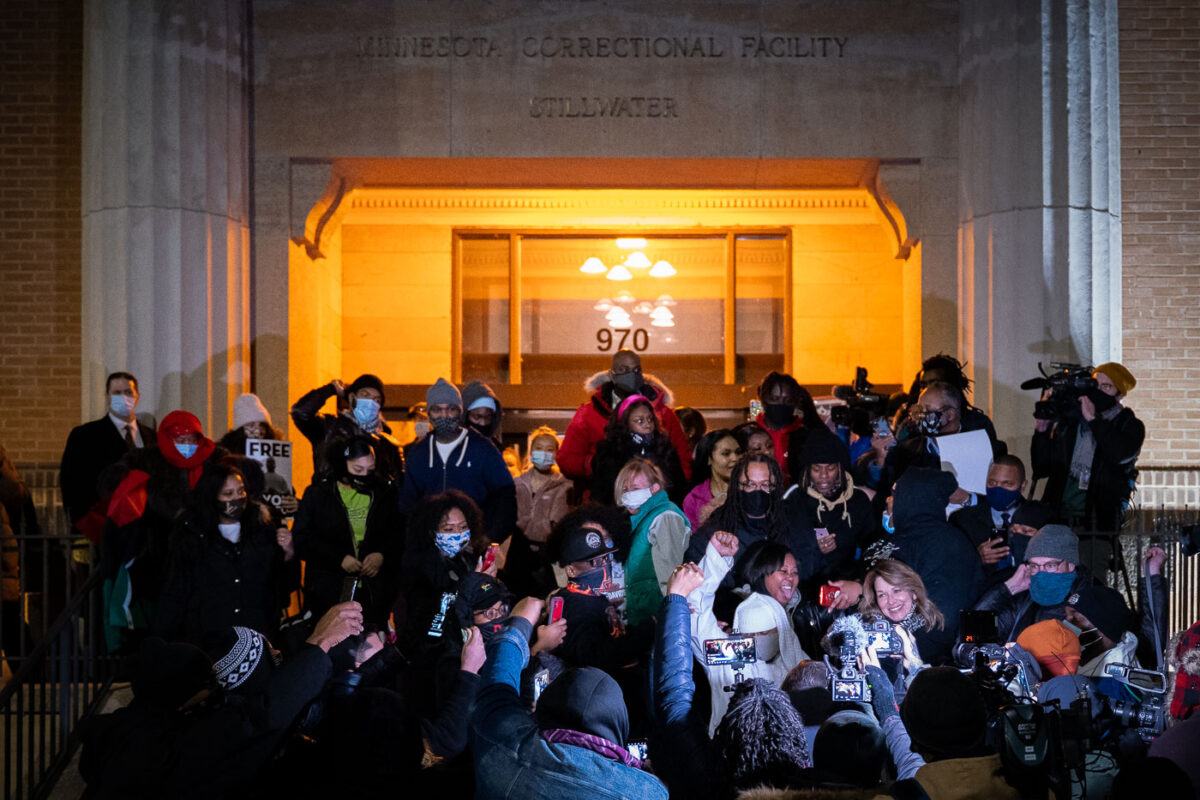
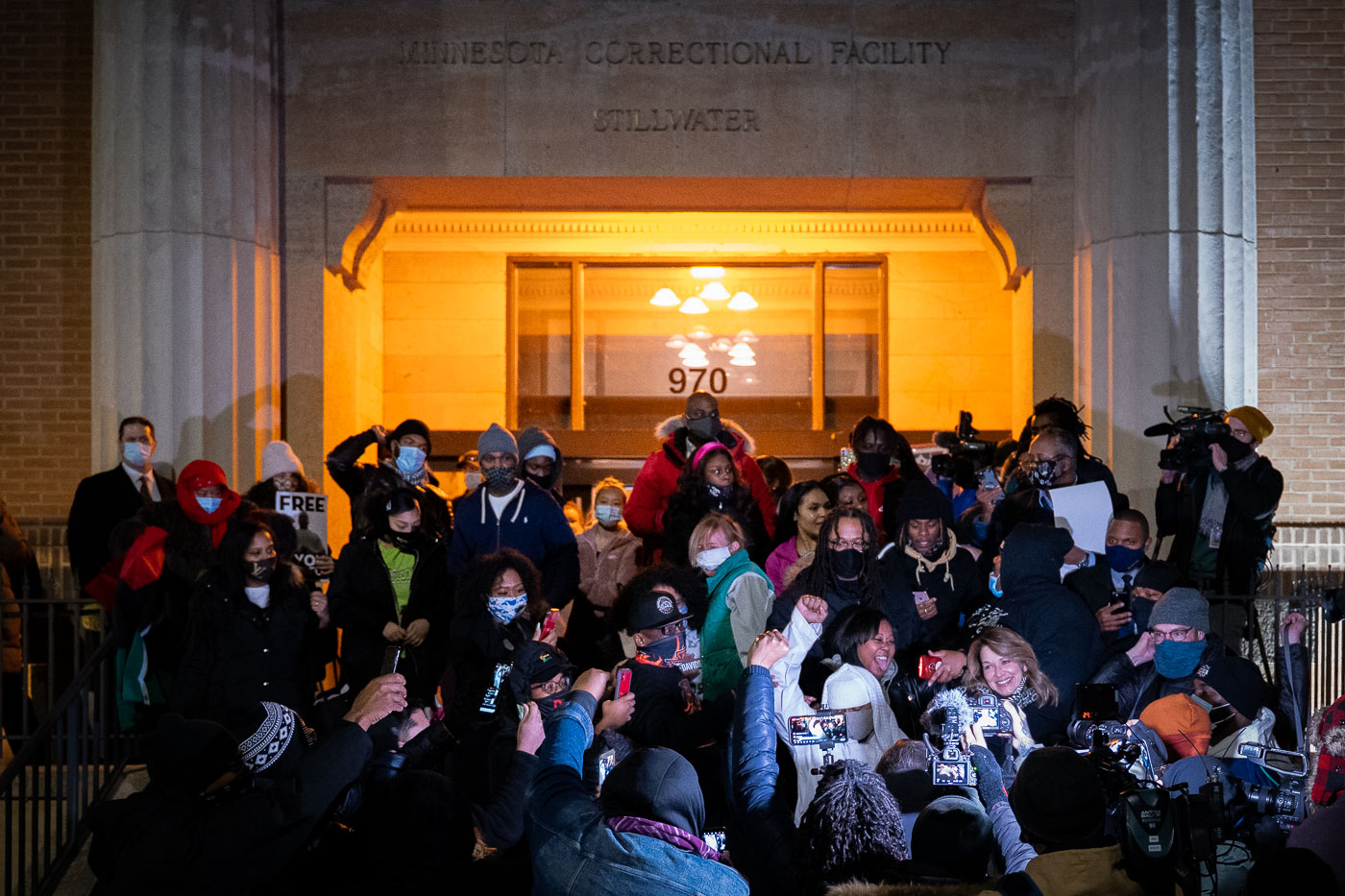
Myon Burrell exits Minnesota Correctional Facility–Stillwater surrounded by supporters and media after his release on December
Myon Burrell is greeted by supporters and media outside the Minnesota Correctional Facility – Stillwater, following his release on December 15, 2020. Burrell had served 18 years for the 2002 murder of 11-year-old Tyesha Edwards, a crime he consistently denied committing. His sentence was commuted by the Minnesota Board of Pardons after an investigation raised serious doubts about his conviction. The gathering outside the Stillwater, Minnesota facility marks a significant moment in a case that drew national attention to issues of wrongful conviction and racial justice.

Crowd Greets Myon Burrell Outside Stillwater Prison, Minnesota

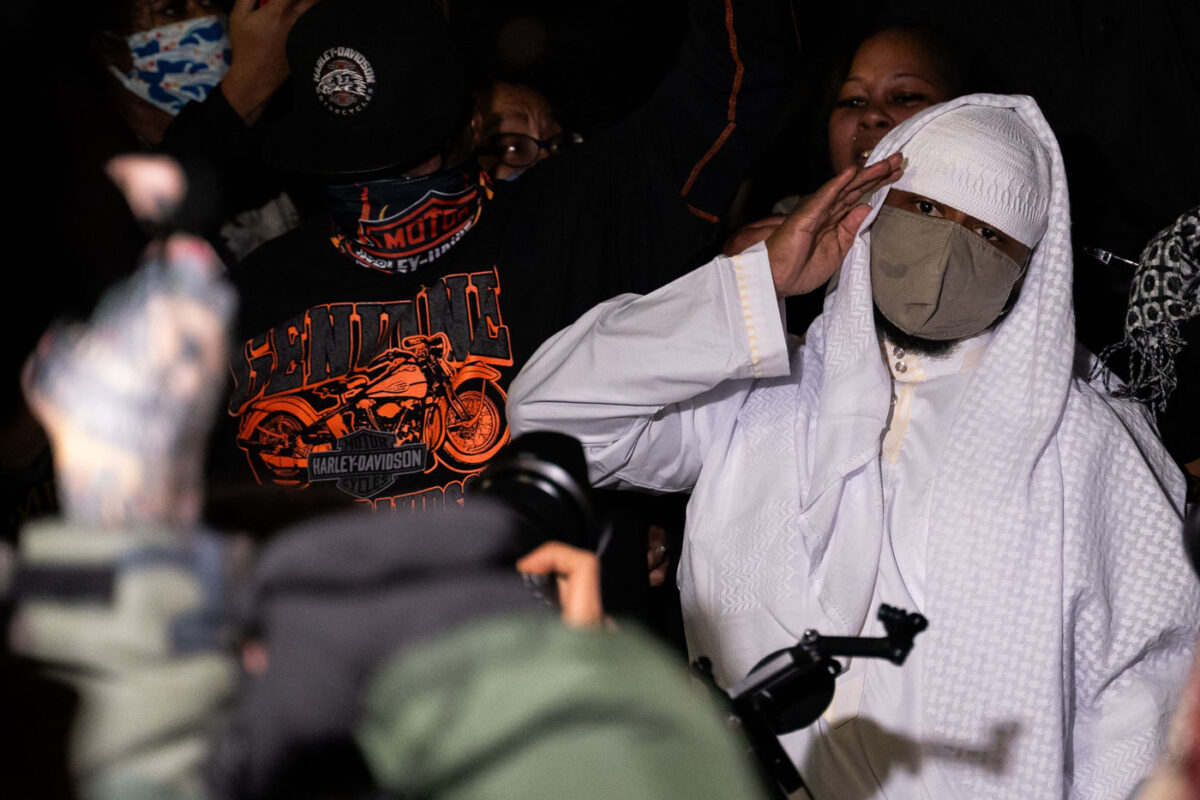
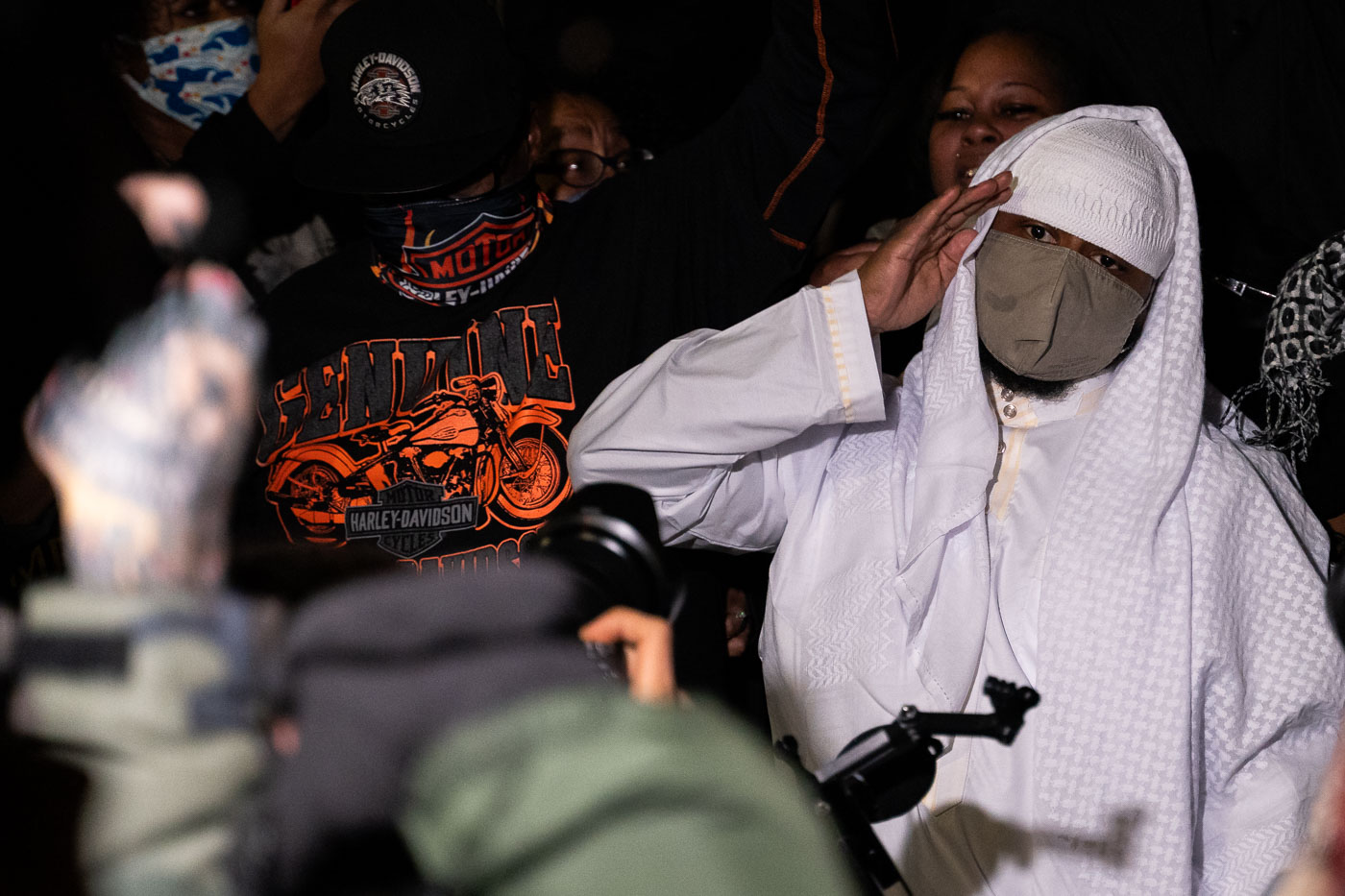
Myon Burrell wears a white cap and sunglasses outside Stillwater Correctional Facility after his sentence commutation on December
Myon Burrell departs the Stillwater Correctional Facility in Stillwater, Minnesota, following the commutation of his sentence. He had served 18 years for the 2002 death of 11-year-old Tyesha Edwards, a crime Burrell consistently maintained he did not commit. His release on December 1, 2020, came after a national investigation raised significant questions about the evidence in his original conviction. The Stillwater Correctional Facility, officially known as the Minnesota Correctional Facility – Stillwater, is a maximum-security state prison that has operated since its opening in 1914.

Myon Burrell Greets Supporters After Stillwater Prison Release

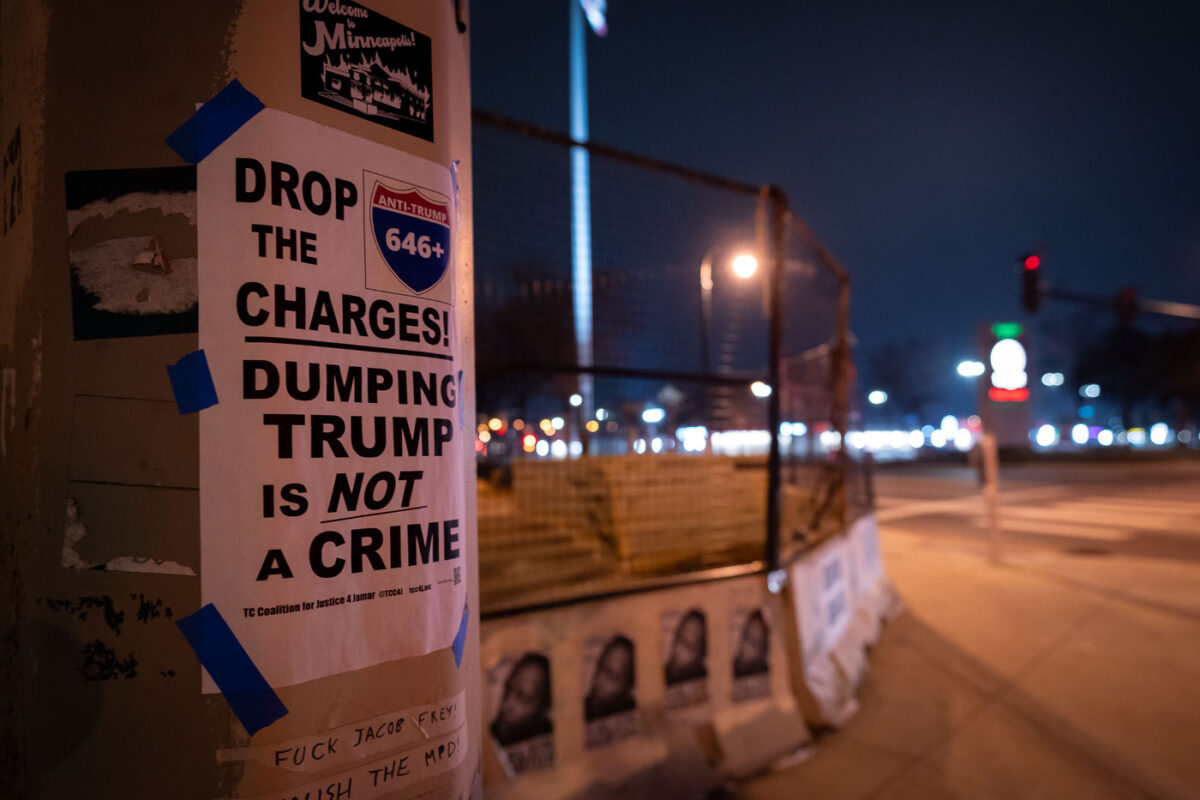
Dumping trump is a not a crime
Flyers are affixed to a pole outside the Minneapolis Third Precinct police station on Lake Street. This station was significantly damaged by fire during the Minneapolis Uprising in May 2020, following the murder of George Floyd. The prominent flyer demands "DROP THE CHARGES!" and states "DUMPING TRUMP IS NOT A CRIME." This call to "Drop the Charges" refers to the 646 individuals criminally charged during the largest mass arrest in Minnesota history, which occurred after a post-election march onto I-94. Other messages on the pole, including "ABOLISH THE MPD!", reflect ongoing demands for police reform and accountability in Minneapolis.

Dumping Trump Is Not a Crime Flyer, Minneapolis 3rd Precinct

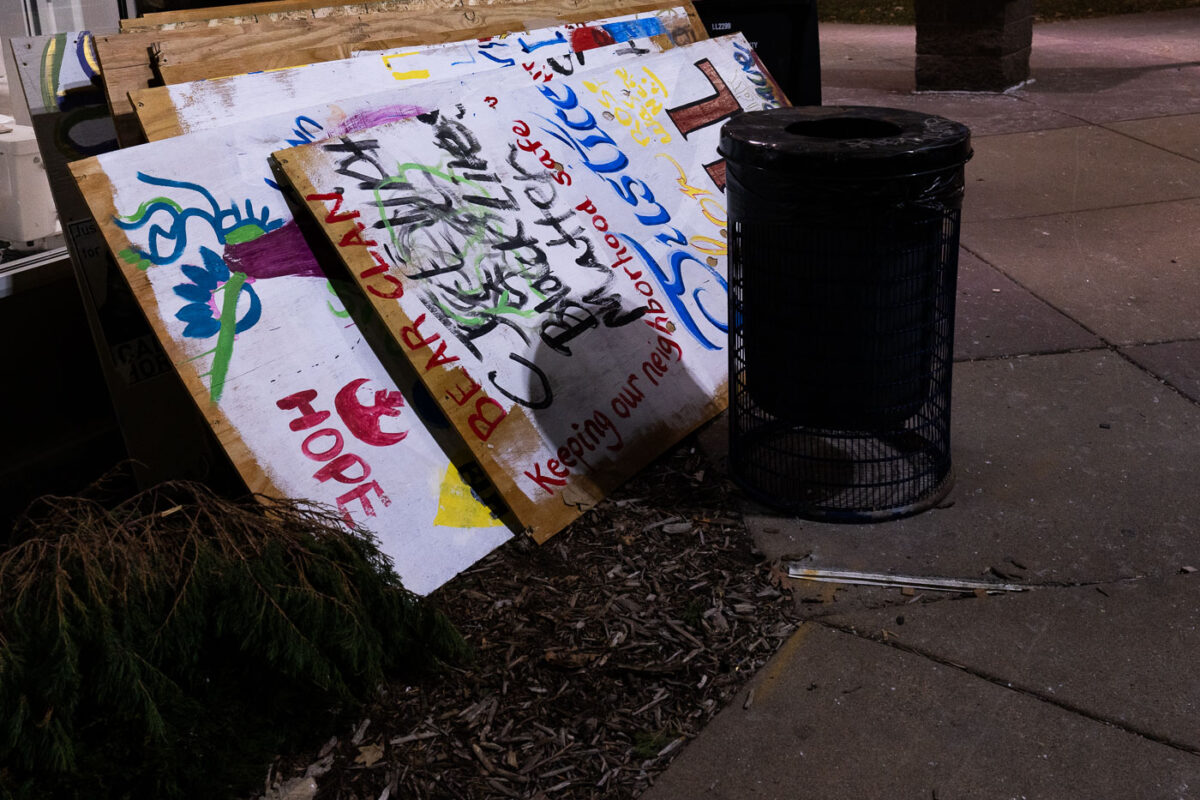
Protest boards coming off windows
Boards bearing protest art are being systematically removed from storefronts along Lake Street in South Minneapolis. These temporary installations emerged following the widespread protests and civil unrest in late May 2020, sparked by the murder of George Floyd. A dedicated commission is actively collecting and preserving this art, which served as a powerful visual record of community sentiment and resilience during that summer.

Protest art boards from Lake Street, Minneapolis

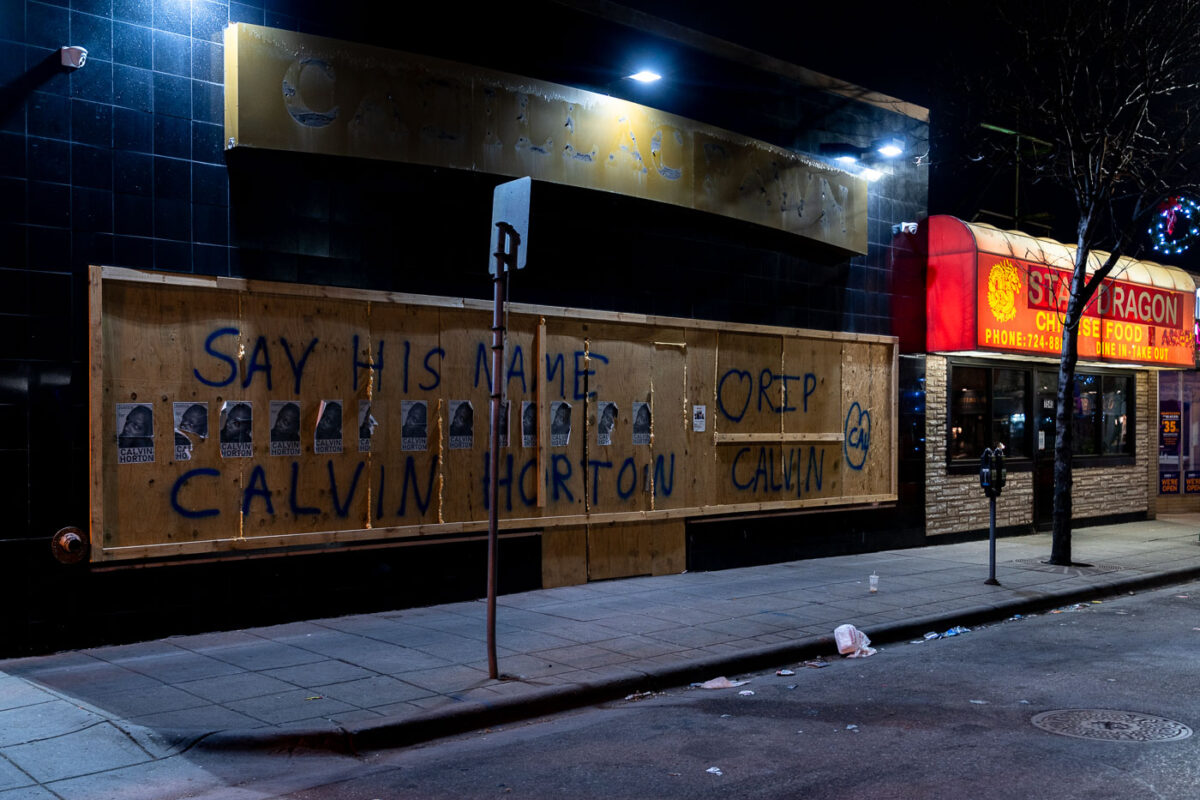
Say his name calvin horton
The former Cadillac Pawn building on East Lake Street in Minneapolis is shown boarded up. The plywood boards display graffiti and posters memorializing Calvin Horton, whose death was associated with the location during periods of unrest. Hennepin County authorities declined to prosecute the owner in connection with Horton's death, citing insufficient evidence.

Cadillac Pawn, E. Lake St., Minneapolis: Calvin Horton Graffiti

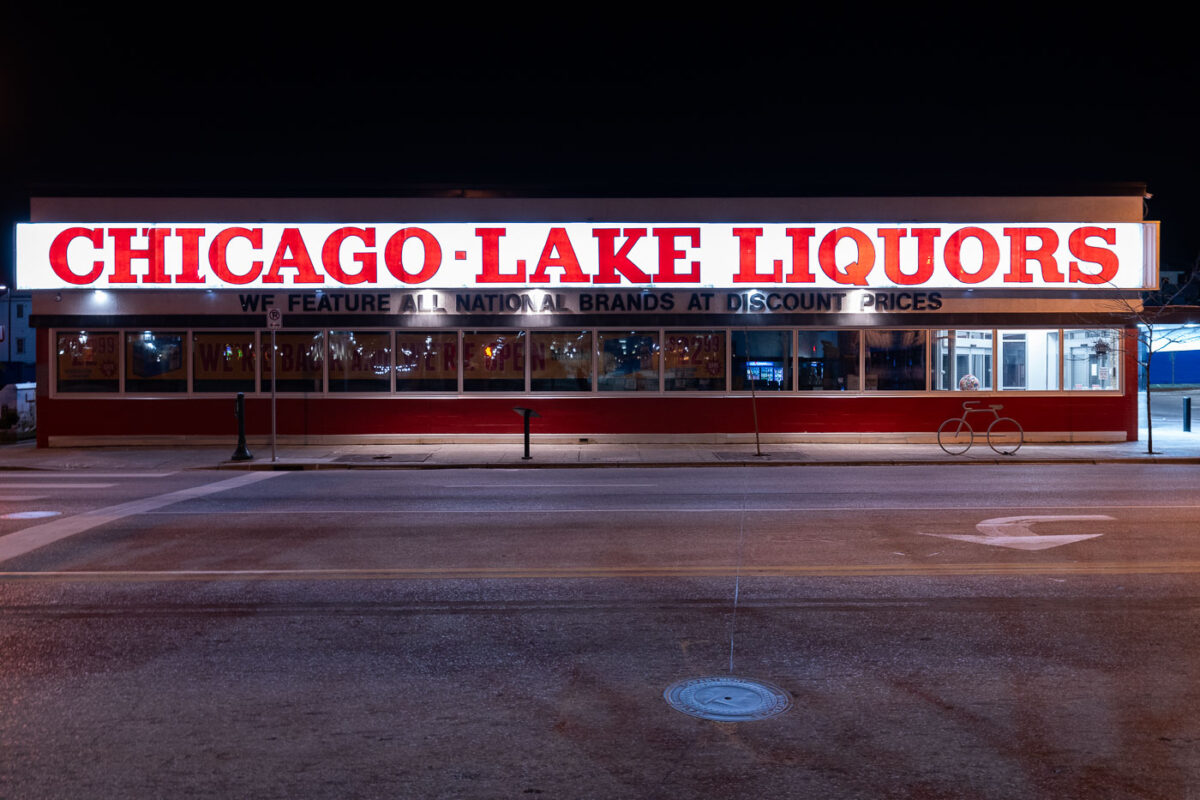
Chicago Lake Liquors after boards were removed
Chicago Lake Liquors, a retail store located on Lake Street in Minneapolis, is shown with its windows uncovered. The removal of protective boards from its storefront signifies a phase of recovery following the civil unrest that occurred in Minneapolis.

Chicago Lake Liquors on Lake Street, Minneapolis, boards removed

Inside the looted Cadillac Pawn store on Lake Street
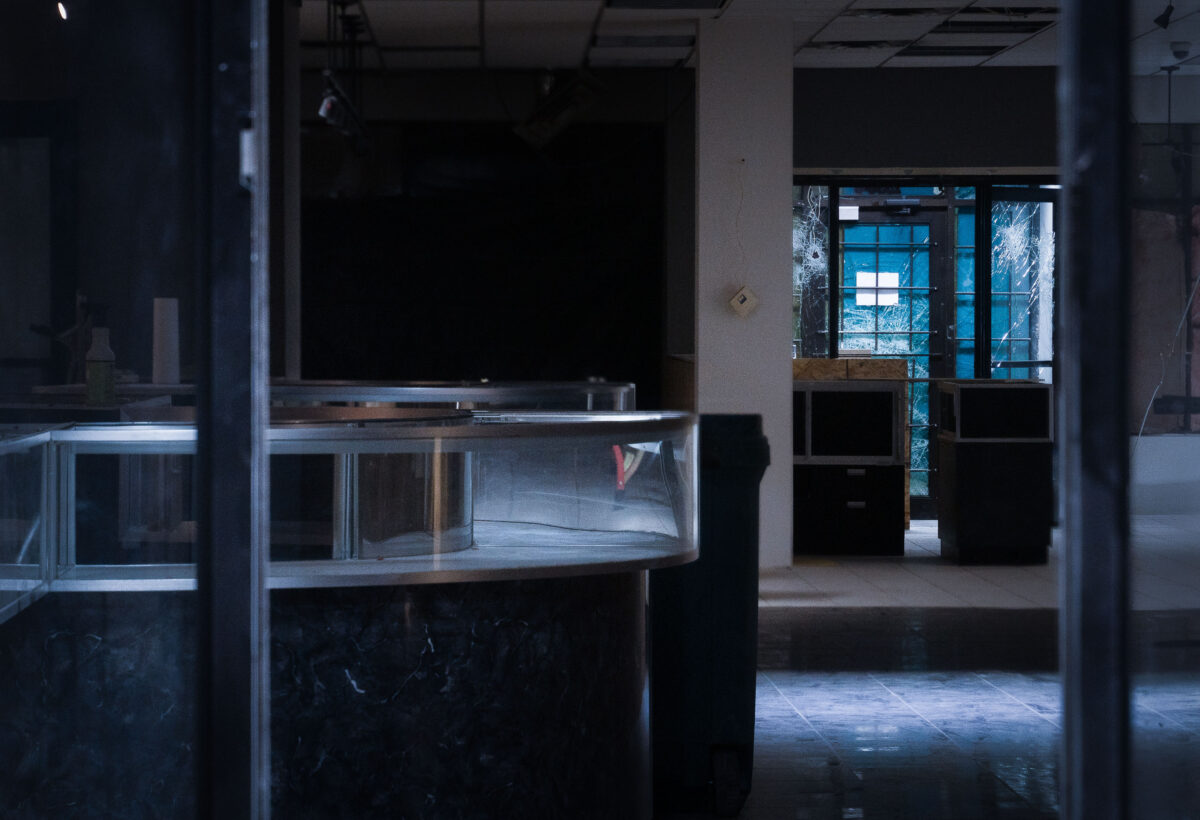
The interior of Cadillac Pawn on West Lake Street in Minneapolis displays damage, including a shattered window visible in the background. This commercial establishment was among many businesses along the Lake Street corridor that sustained damage during the civil unrest following the killing of George Floyd in May 2020.

Cadillac Pawn Interior with Broken Window, Lake Street

Demolition of US Bank on West Lake Street
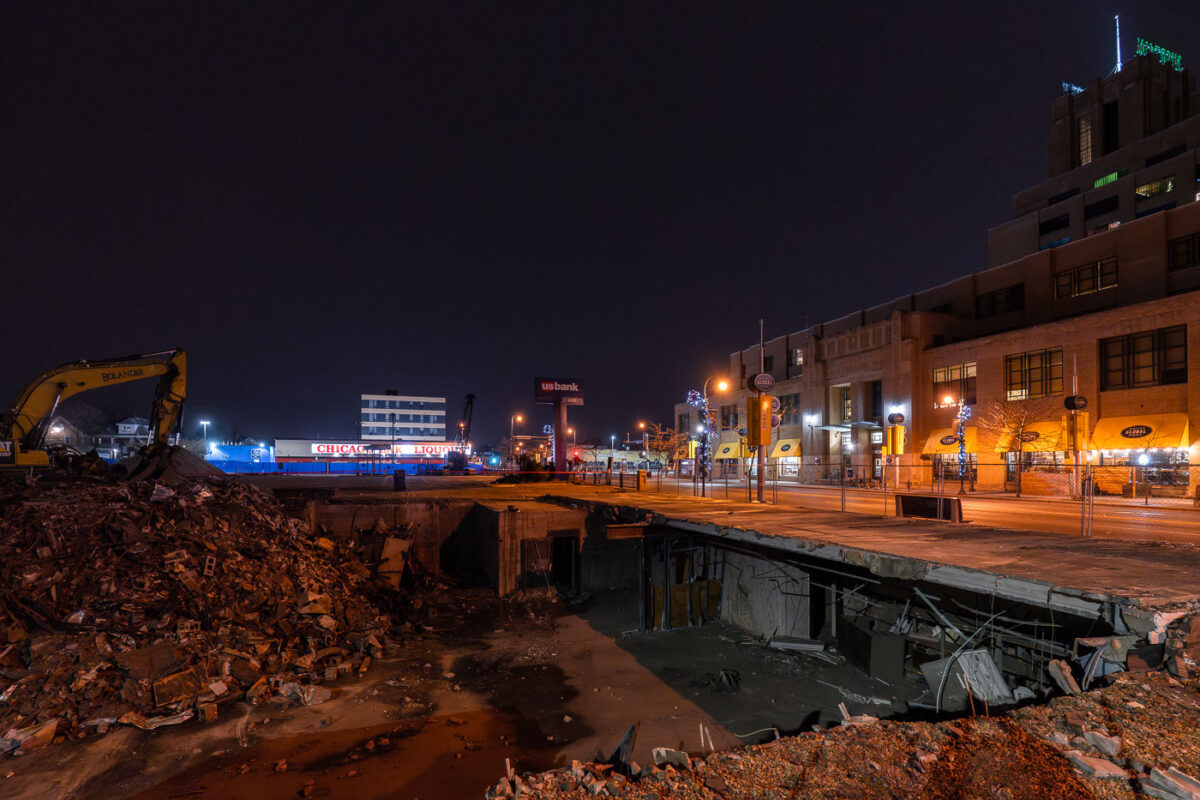
The demolition of a US Bank branch on West Lake Street in Minneapolis is shown at night. This branch sustained damage during the Minneapolis Uprising, leading to its subsequent removal. The site was cleared for the construction of a new bank building, reflecting the broader redevelopment efforts in the area.

Night Demolition of US Bank, West Lake Street, Minneapolis

Freewheel Bike Center with boards
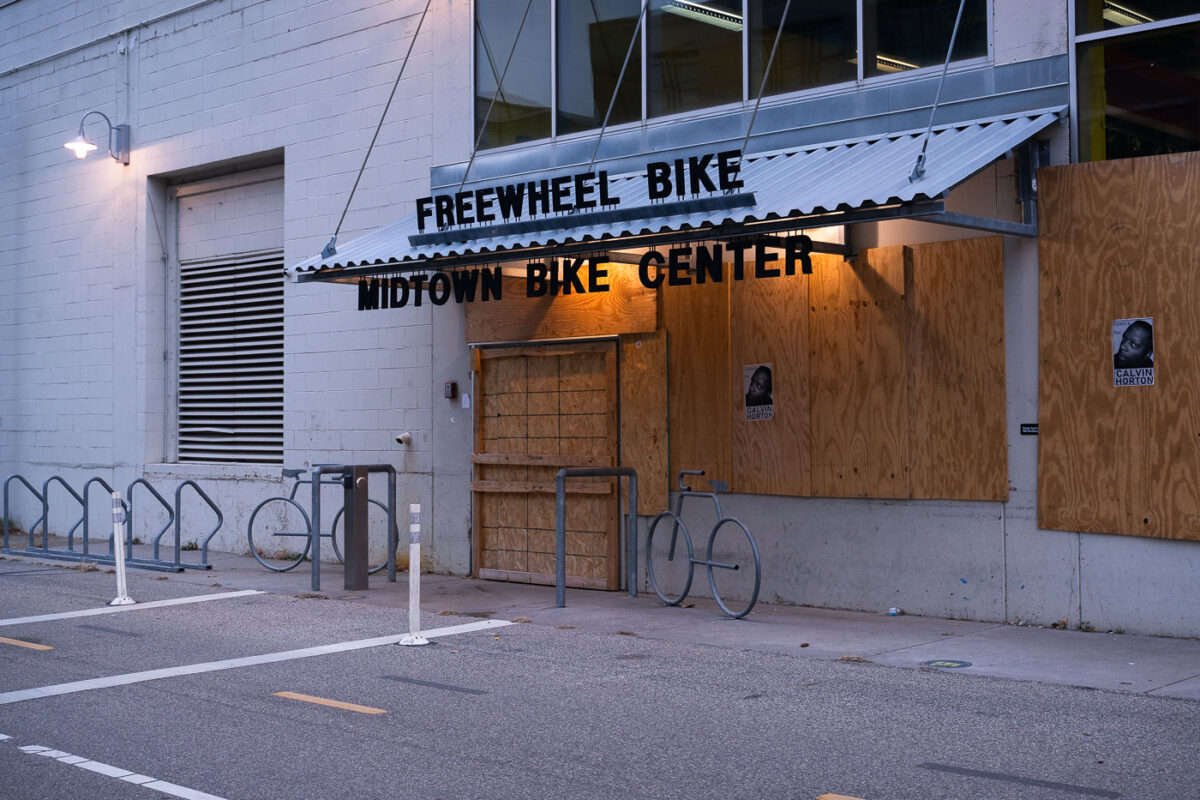
The Freewheel Bike Center, a bicycle shop located on the Midtown Greenway in Minneapolis, stands boarded up. This measure was taken during the widespread protests and civil unrest that followed the murder of George Floyd in May 2020. Posters calling for 'Justice for Calvin Horton' are affixed to the plywood, referencing a man allegedly killed by a pawn shop owner during the same period of unrest. Hennepin County later announced it would not prosecute the case due to a stated lack of evidence.

Freewheel Bike Center, Midtown Greenway, boarded with Calvin Horton flyers

Keep the greenway enjoyable for all sign
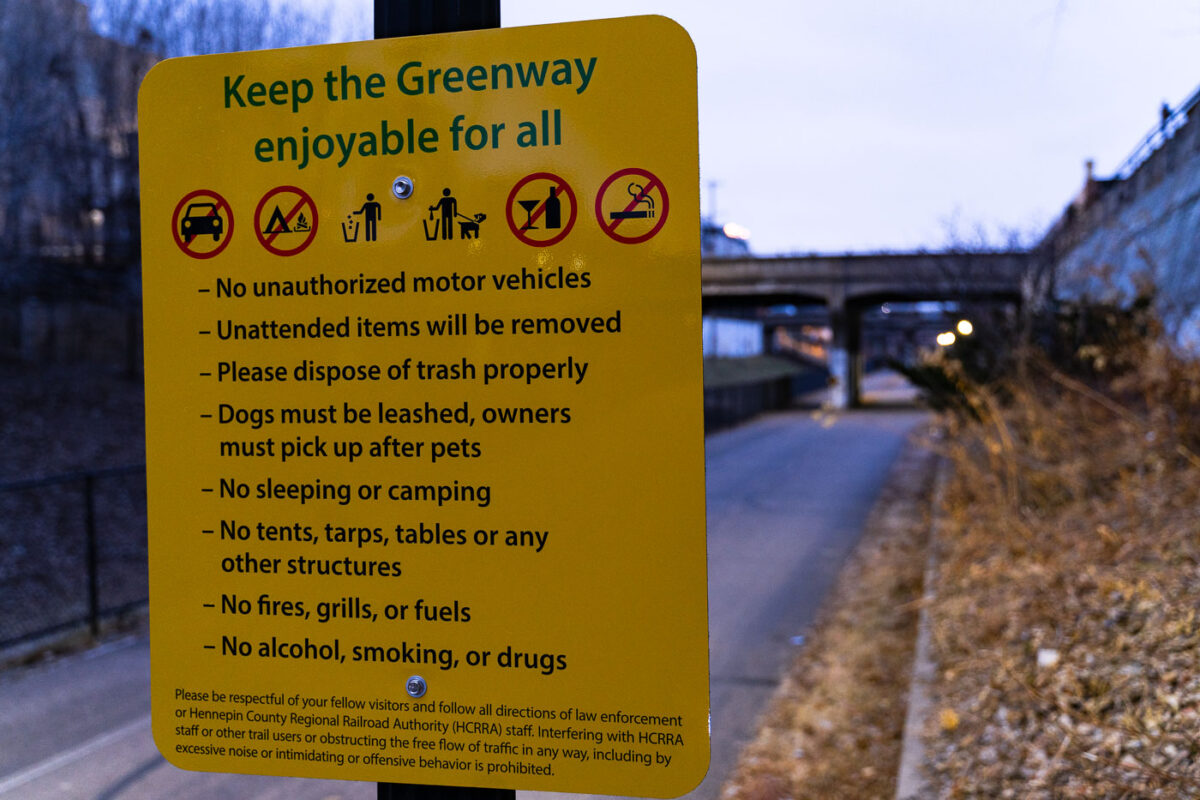
A new regulatory sign stands on the Minneapolis Midtown Greenway, a 5.5-mile-long rail-to-trail urban corridor in Minneapolis, Minnesota, dedicated to pedestrians and cyclists. The sign lists rules including prohibitions against sleeping, camping, and erecting structures like tents or tarps. Its installation followed the eviction of a large homeless encampment from the greenway on December 17th and 18th.

Minneapolis Midtown Greenway Rules Sign After Eviction

Target Billboard after the store reopens
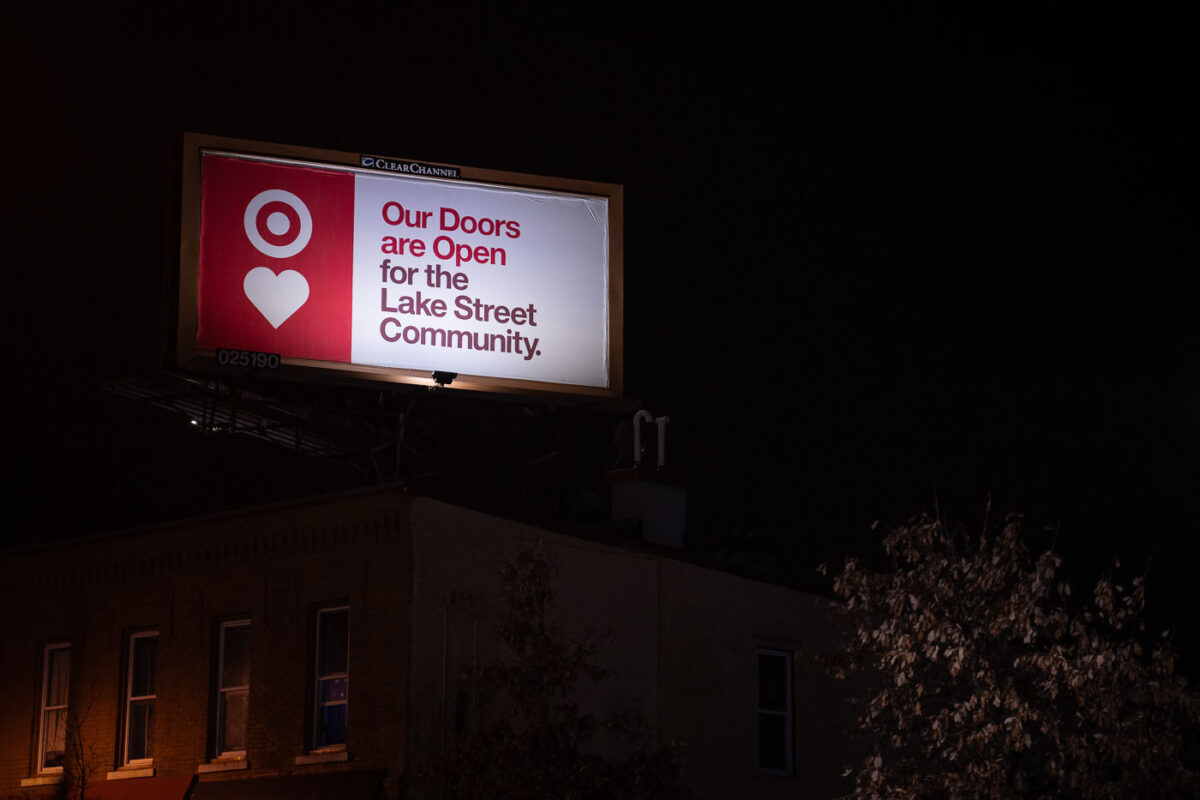
An illuminated Target billboard on Lake Street in Minneapolis displays a message announcing, "Our Doors are Open for the Lake Street Community." This advertisement appeared after Target retail locations in the area sustained damage and temporarily closed following the civil unrest in May 2020, which occurred after the death of George Floyd. The billboard communicates the return of essential retail services to the Lake Street corridor, a vital commercial and residential area that experienced significant disruption. It signifies Target's commitment to the community during a period of recovery and rebuilding.

Target Re-opening Billboard on Lake Street, Minneapolis

Temporary US Bank branch in Minneapolis
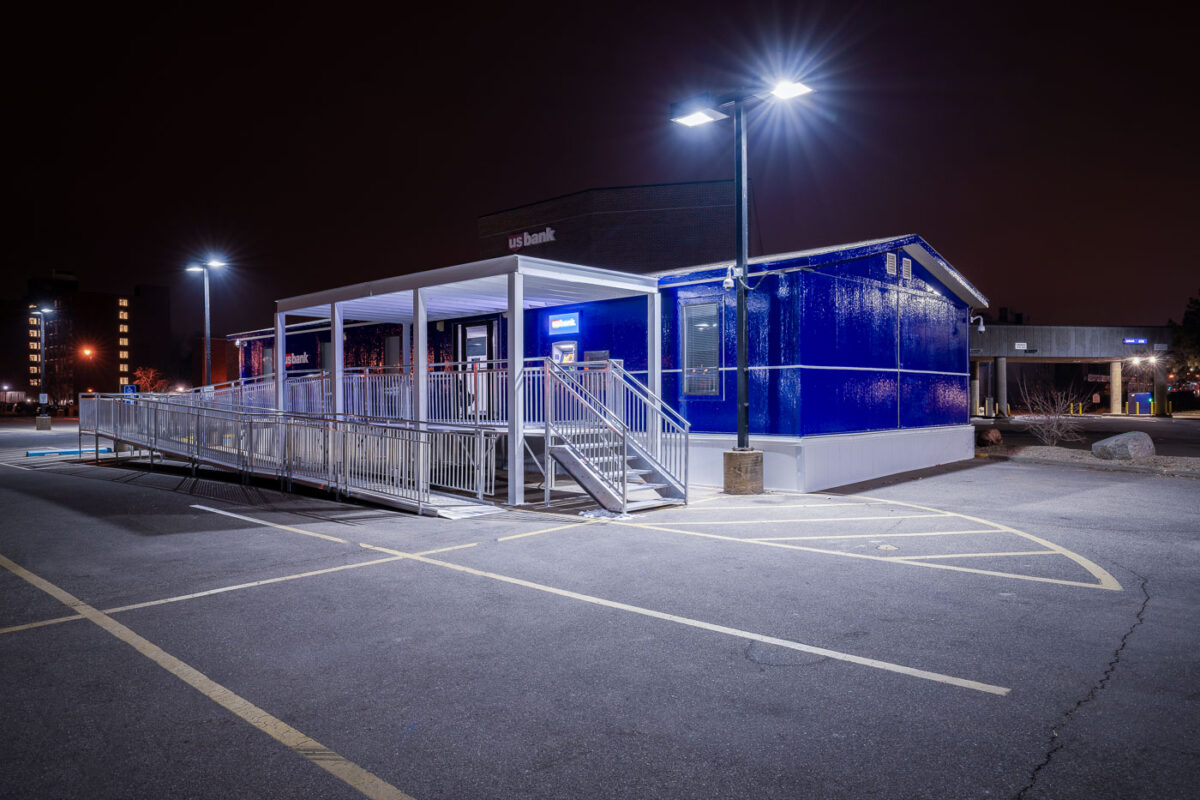
A temporary US Bank branch operates from a modular building in a parking lot on Lake Street in Minneapolis. This facility was established to provide banking services following widespread damage to businesses in the area during the May 2020 protests after the death of George Floyd.

Temporary US Bank branch, Lake Street parking lot, Minneapolis

Free state of George Floyd
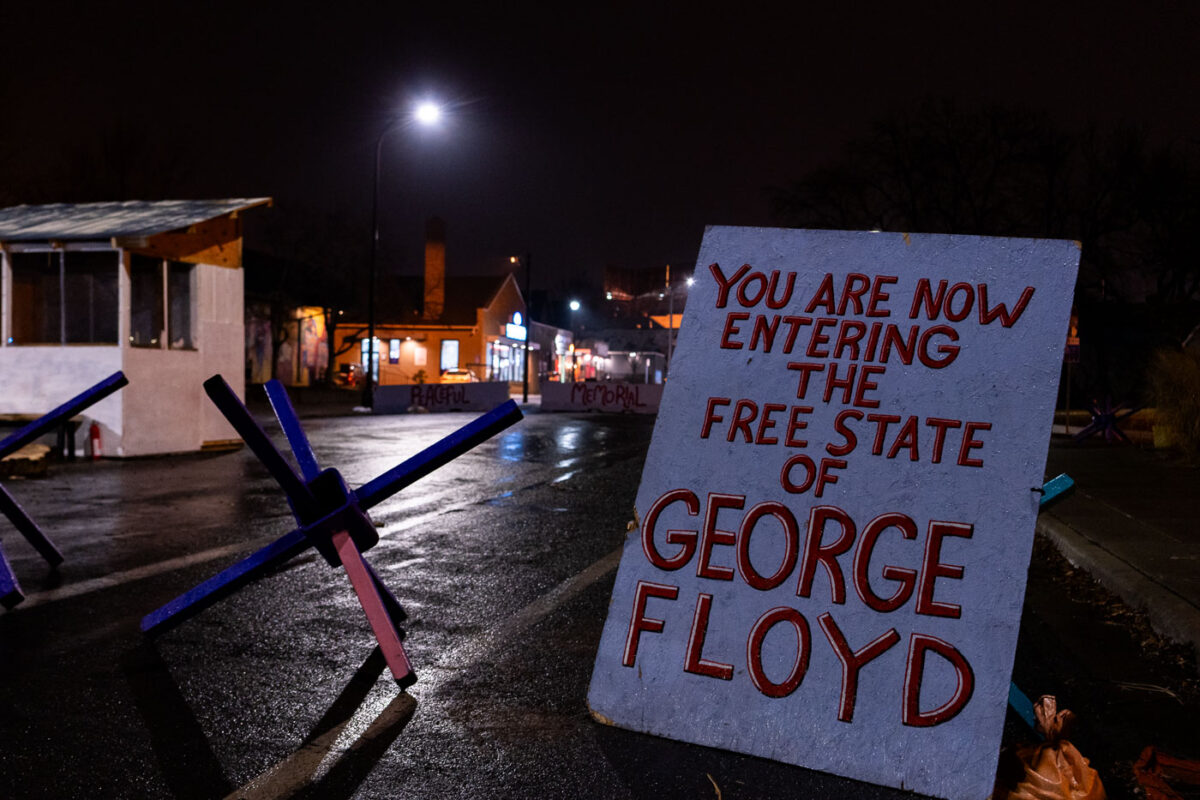
A sign declares "You are now entering the free state of George Floyd" at George Floyd Square in Minneapolis. This area, located at the intersection of 38th Street and Chicago Avenue, transformed into a protest zone following the May 25, 2020 death of George Floyd. The square has since served as a memorial and a site for ongoing activism, marked by various installations and community-maintained barricades. It represents a sustained public protest and a demand for justice.

George Floyd Square: ‘Free State of George Floyd’ Sign

George Floyd Square map on a board
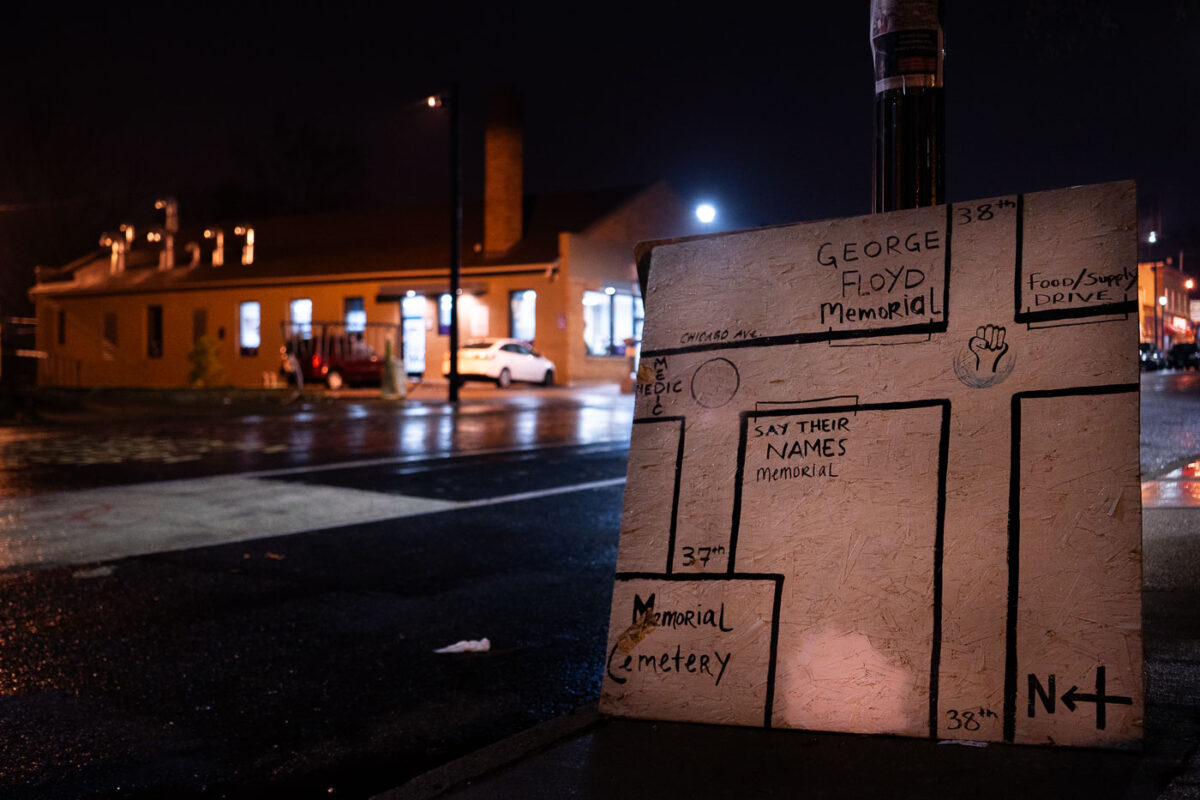
A handmade map, positioned at George Floyd Square in Minneapolis, guides visitors through the memorial site. The map outlines significant areas including the George Floyd Memorial, the Say Their Names Memorial, and a Memorial Cemetery, along with a designated Food/Supply Drive. Located at the intersection of Chicago Avenue and 38th Street, this area transformed into a protest zone and community hub following George Floyd's death on May 25, 2020.

George Floyd Square Memorial Map, Chicago Ave, Minneapolis

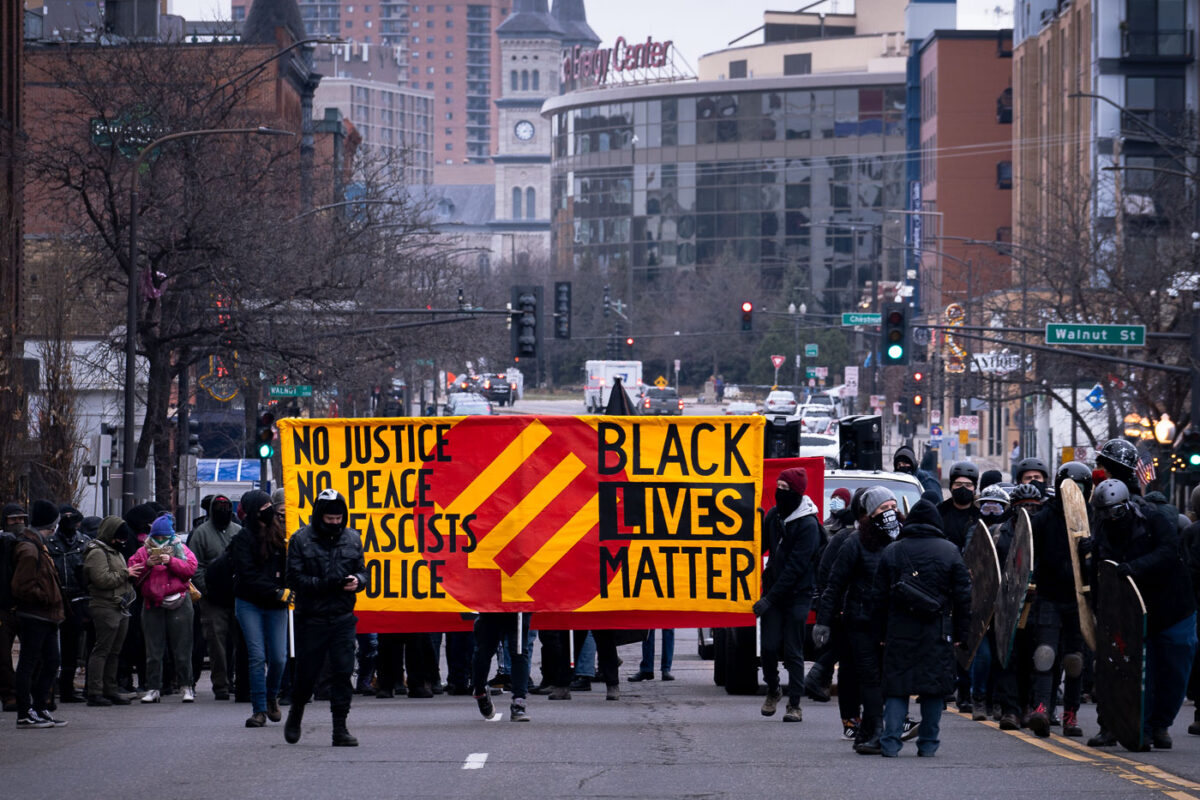
No Justice No peave No Fascists No Police
Protesters participate in a Black Lives Matter anti-fascist march in downtown St. Paul. The marchers carried a large banner proclaiming "NO JUSTICE NO PEACE NO FASCISTS NO POLICE" and "BLACK LIVES MATTER," reflecting the movement's core demands. The protest moved through the city streets, including the intersection of Walnut Street and Chestnut Street, as part of broader demonstrations addressing racial injustice and police accountability that gained prominence in the Twin Cities and nationwide.

Black Lives Matter Anti-Fascist March, St. Paul

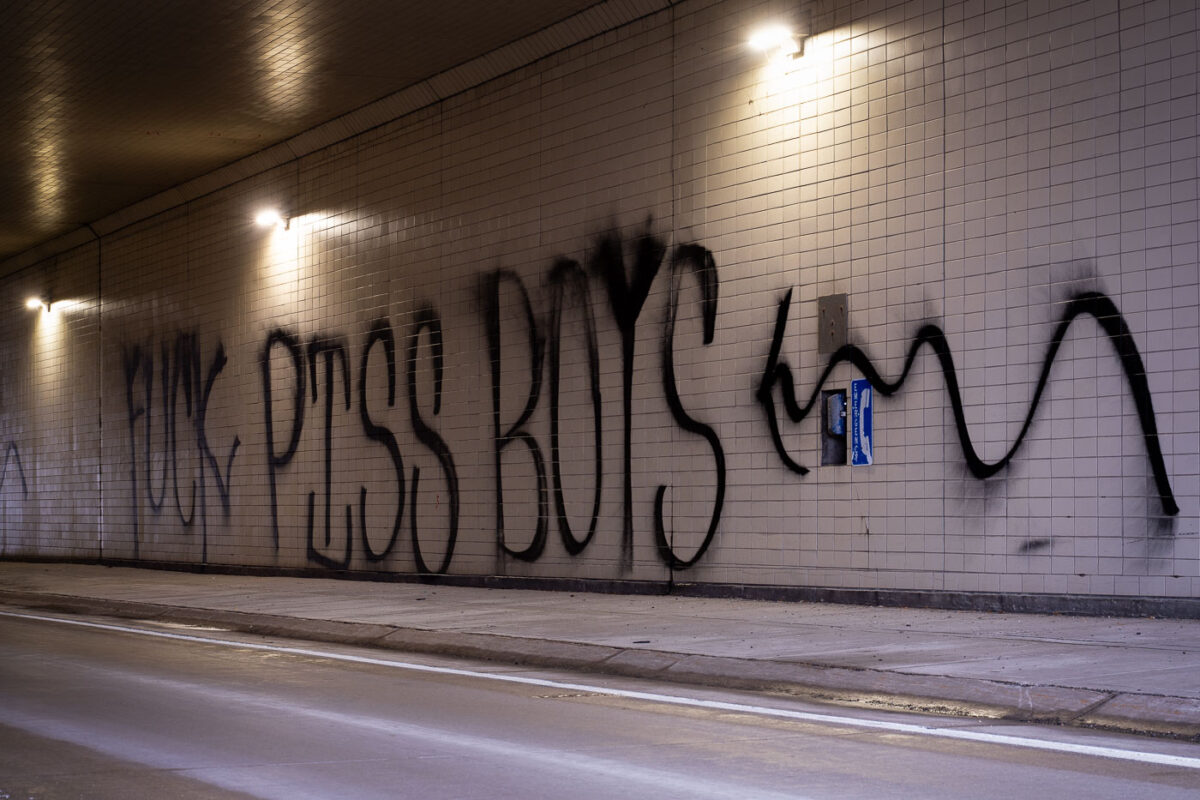
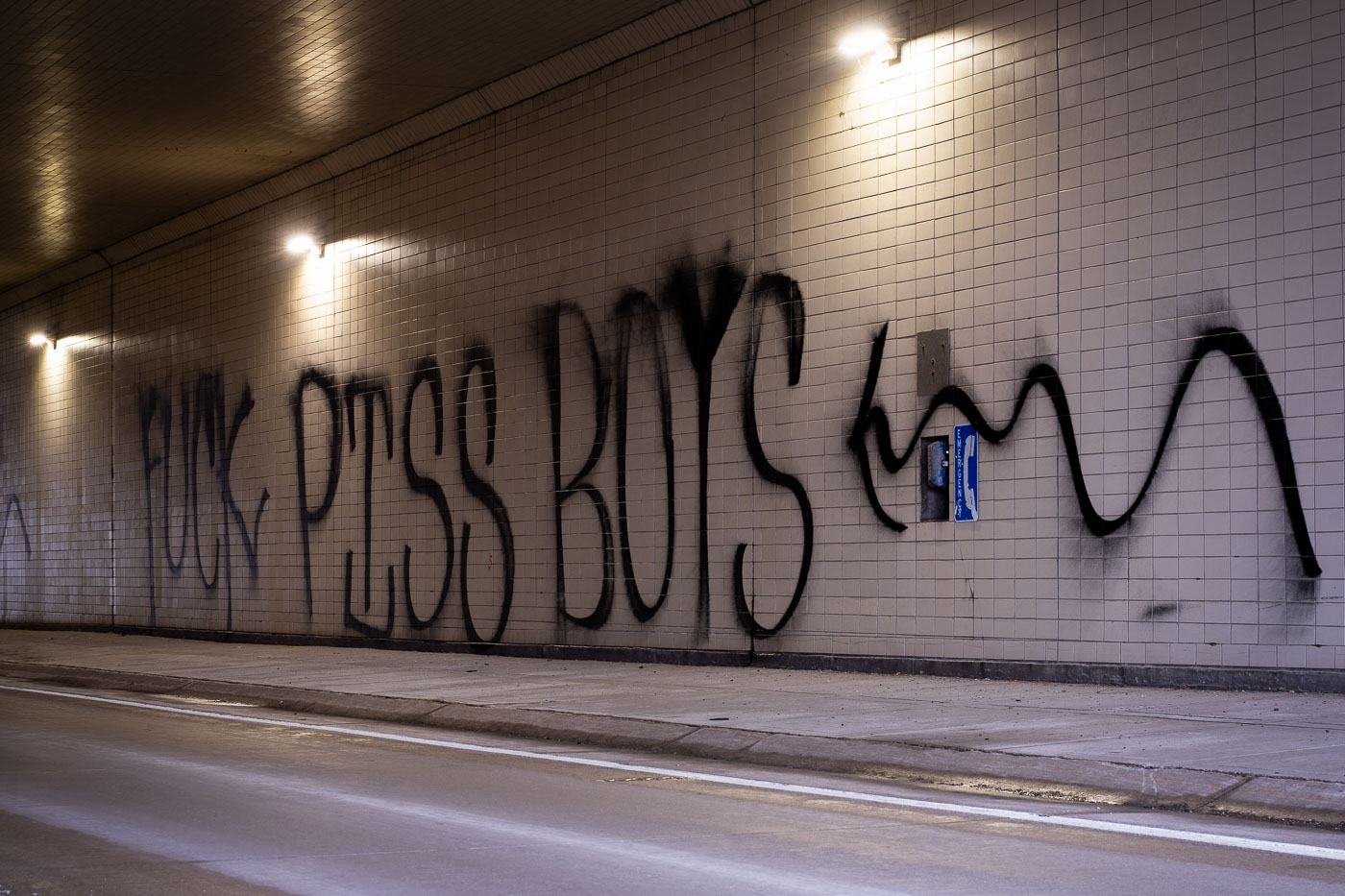
Fuck Piss Boys graffiti
The phrase "Fuck Piss Boys" is spray-painted on the tiled wall of a highway tunnel in St. Paul. This graffiti emerged around December 19, 2020, a date that coincided with a "Stop The Steal" rally organized by the Proud Boys in the Minneapolis-St. Paul metropolitan area.

Graffiti ‘Fuck Piss Boys’ St. Paul Highway Tunnel

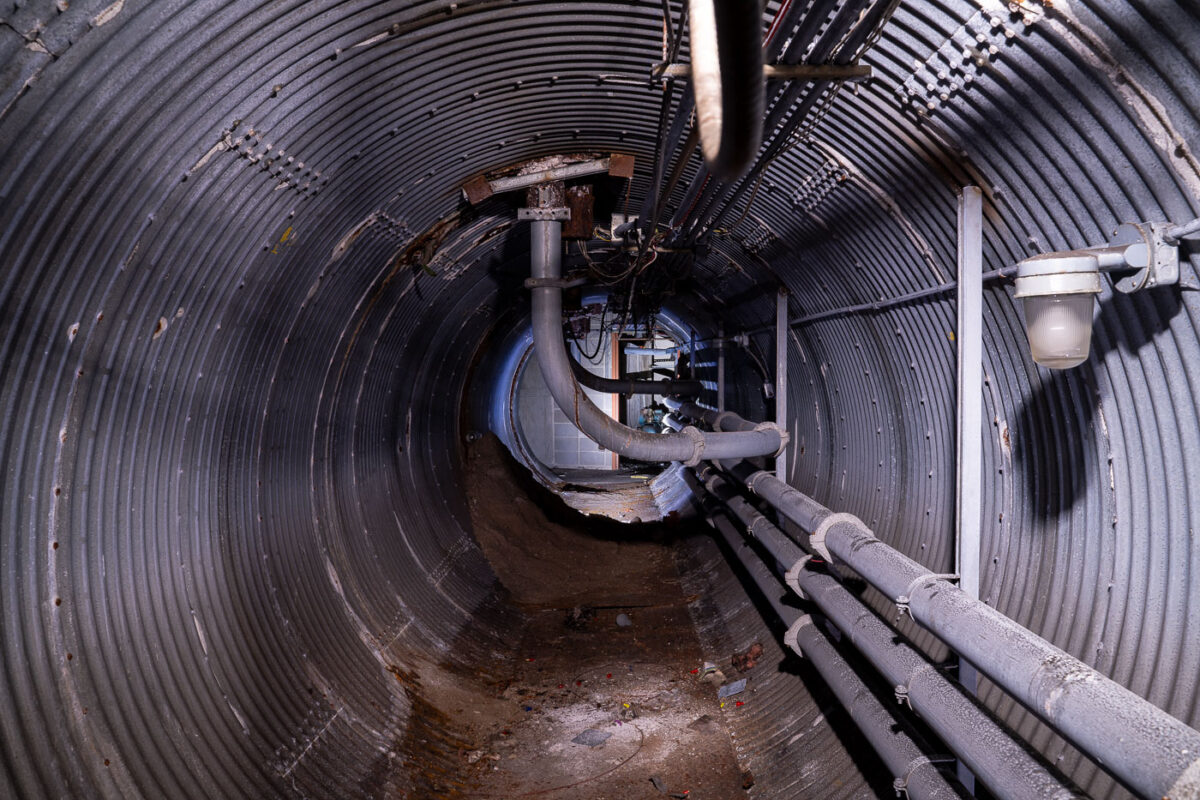
Wells Fargo Bank tunnel in burned building
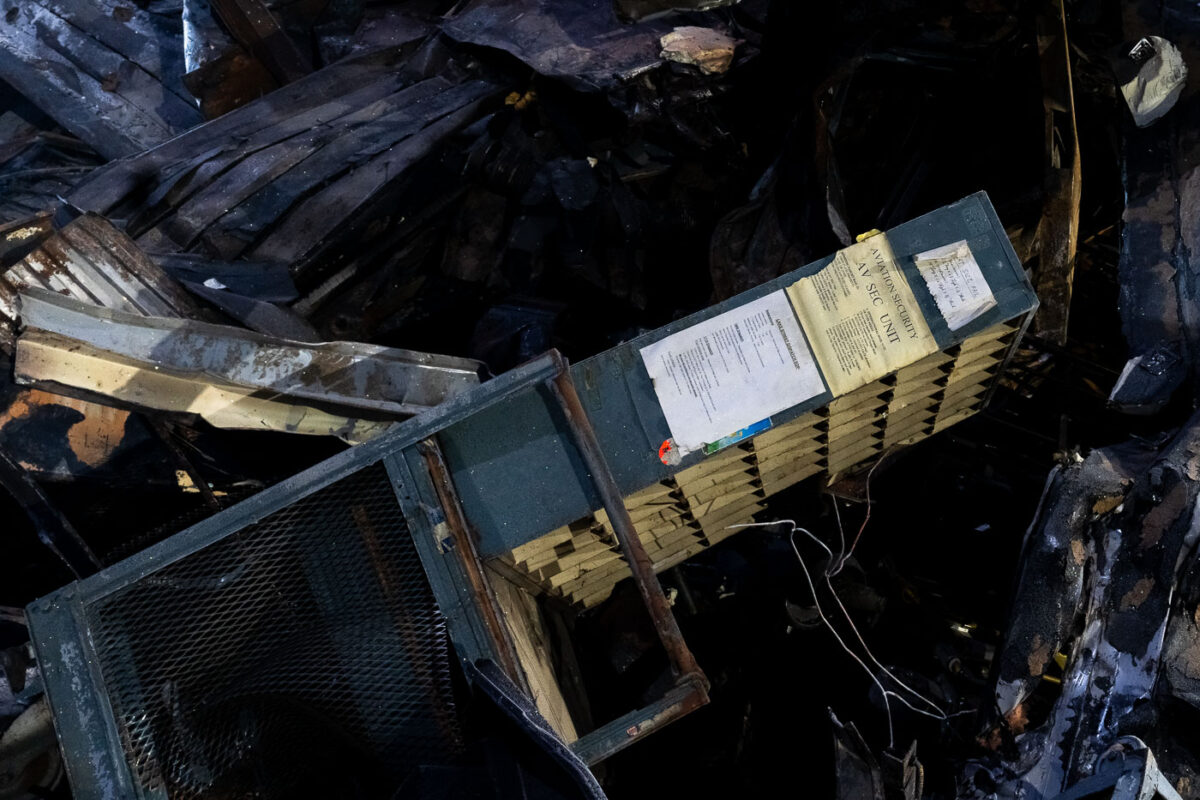
This corrugated metal tunnel is located beneath the former Wells Fargo drive-thru on Nicollet Avenue in Minneapolis. The bank building above was extensively damaged by arson on May 29, 2020, during the Minneapolis Uprising, across from the Minneapolis police 5th Precinct. Following the fire, the site remained secured for months to protect undamaged safety deposit boxes within the bank structure. The tunnel, likely part of the building's utility infrastructure, shows signs of disuse and debris, reflecting the aftermath of the events.

Tunnel Below Burned Wells Fargo Drive-Thru, Nicollet Ave

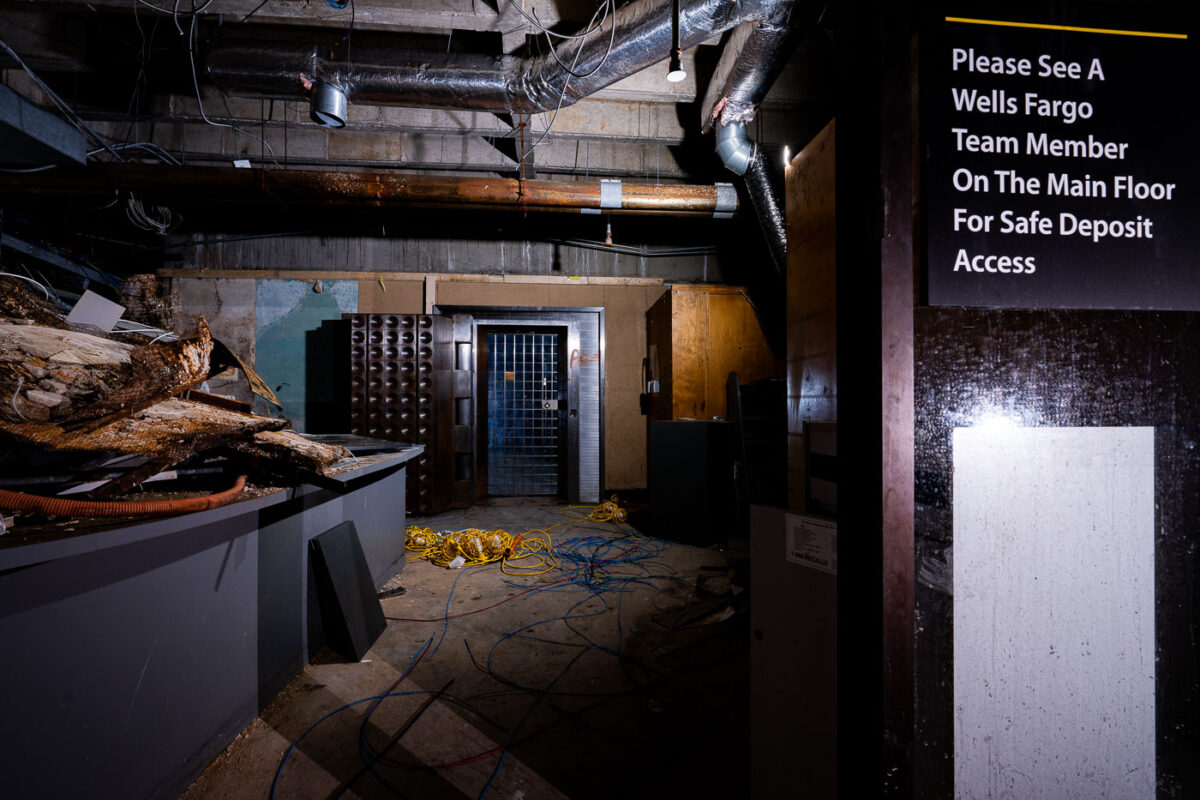
Inside the burned Wells Fargo Bank in Minneapolis
The interior of a Wells Fargo bank on Nicollet Avenue in Minneapolis, showing the aftermath of damage sustained during the Minneapolis Uprising on May 29, 2020. Despite the extensive fire damage throughout the building, the bank's vault, designed for secure storage, remained intact. The presence of undamaged safe deposit boxes within the vault necessitated the site's prolonged security for several months following the unrest.

Burned Wells Fargo Vault, Minneapolis

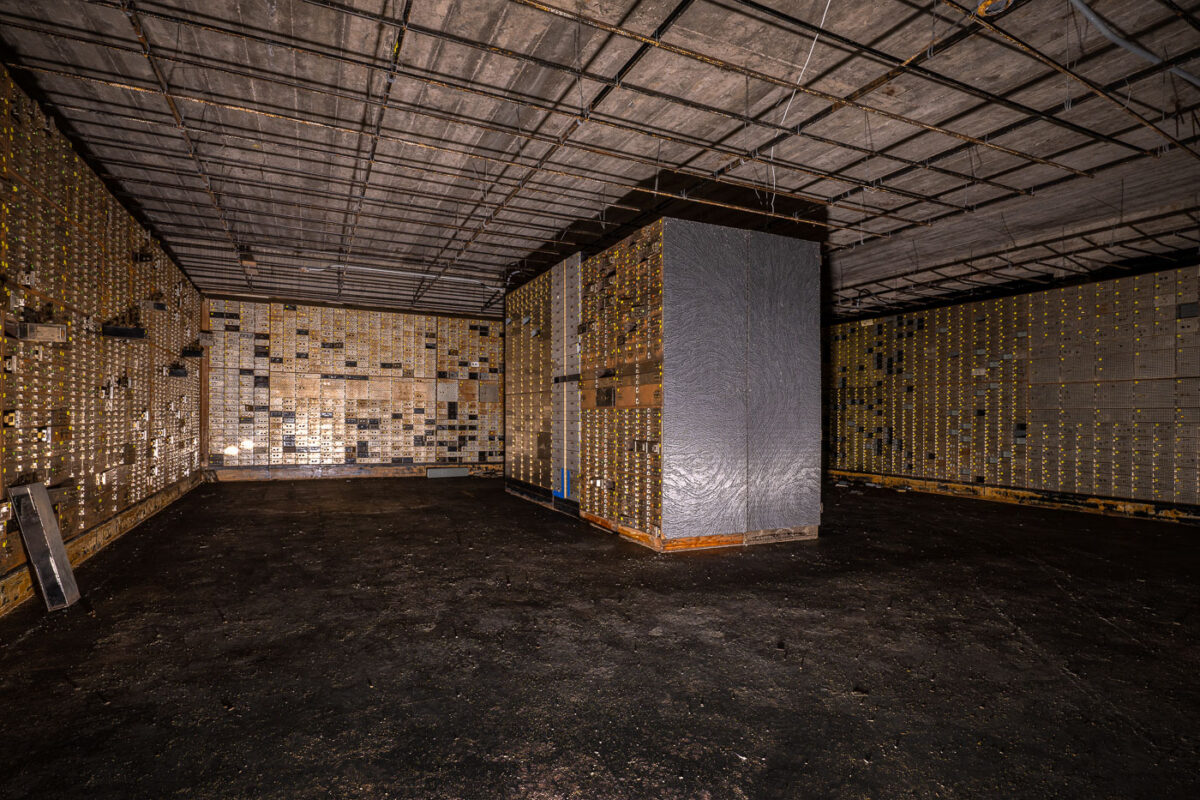
Safety deposit boxes inside the burned Wells Fargo bank
The interior of a safety deposit vault is visible within the burned Wells Fargo bank located on Nicollet Avenue in Minneapolis. This branch, situated across from the Minneapolis Police 5th Precinct, sustained significant fire damage on May 29, 2020, during the Minneapolis Uprising. Despite the extensive destruction to the rest of the building, the robust construction of the vault protected its contents, including numerous safety deposit boxes. For months following the fire, the site remained secured to ensure the integrity of these undamaged boxes and facilitate their eventual retrieval by customers.

Safety Deposit Vault, Burned Wells Fargo, Minneapolis

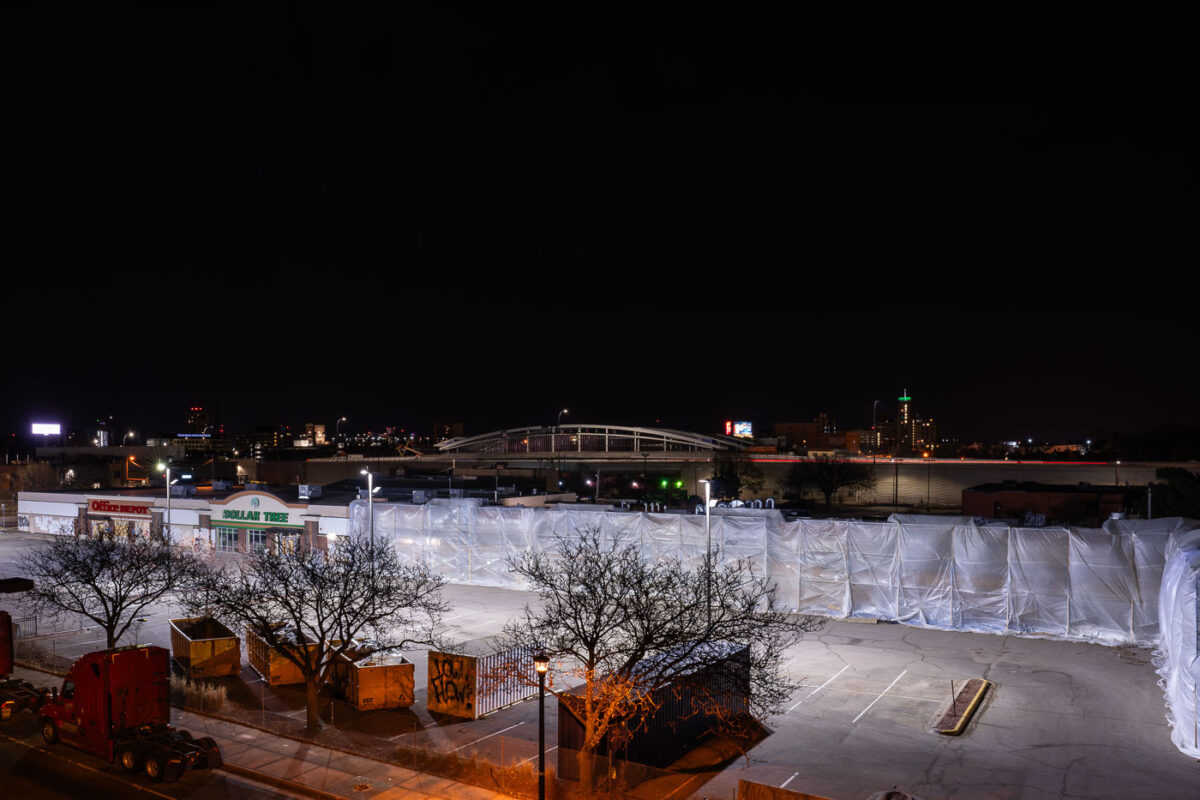
Strip mall being restored
This image presents a strip mall situated at Nicollet Avenue and Lake Street in Minneapolis, documented after sustaining damage during the civil unrest of May 2020. Retailers including Office Depot and Dollar Tree are visible, with some storefronts showing signs of repair or temporary boarding. The unrest followed the May 25, 2020 murder of George Floyd, resulting in widespread protests and property damage throughout the city. Temporary protective sheeting and construction containers occupy portions of the parking lot, reflecting ongoing recovery efforts for these commercial properties.

Nicollet/Lake Street Strip Mall Post-Uprising

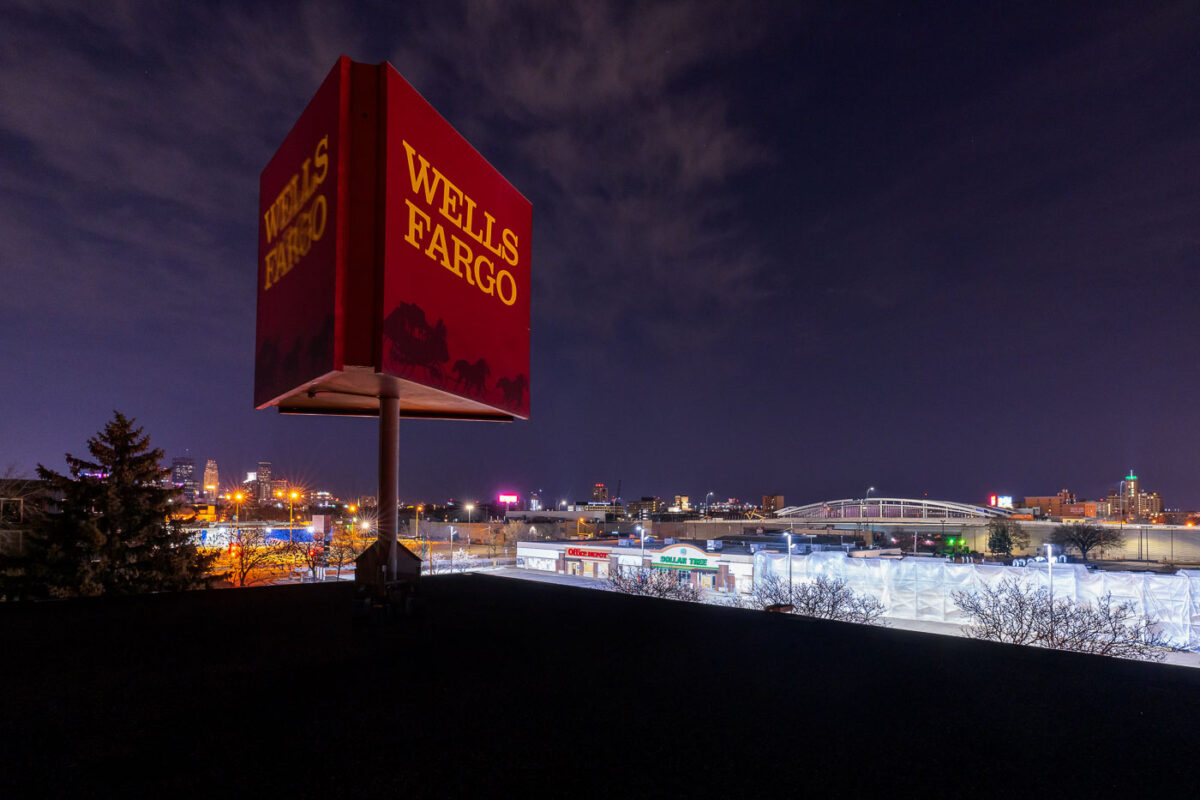
The roof of the burned Wells Fargo bank in Minneapolis
A Wells Fargo sign stands above a bank building on Nicollet Avenue in Minneapolis. The structure sustained fire damage during the civil unrest that followed the death of George Floyd on May 25, 2020. This image, taken from the bank's damaged roof, overlooks the Minneapolis skyline and surrounding commercial area. The bank is situated across from the Minneapolis Police 5th Precinct station, a significant location during the protests.

Wells Fargo Sign from Burned Minneapolis Bank Roof

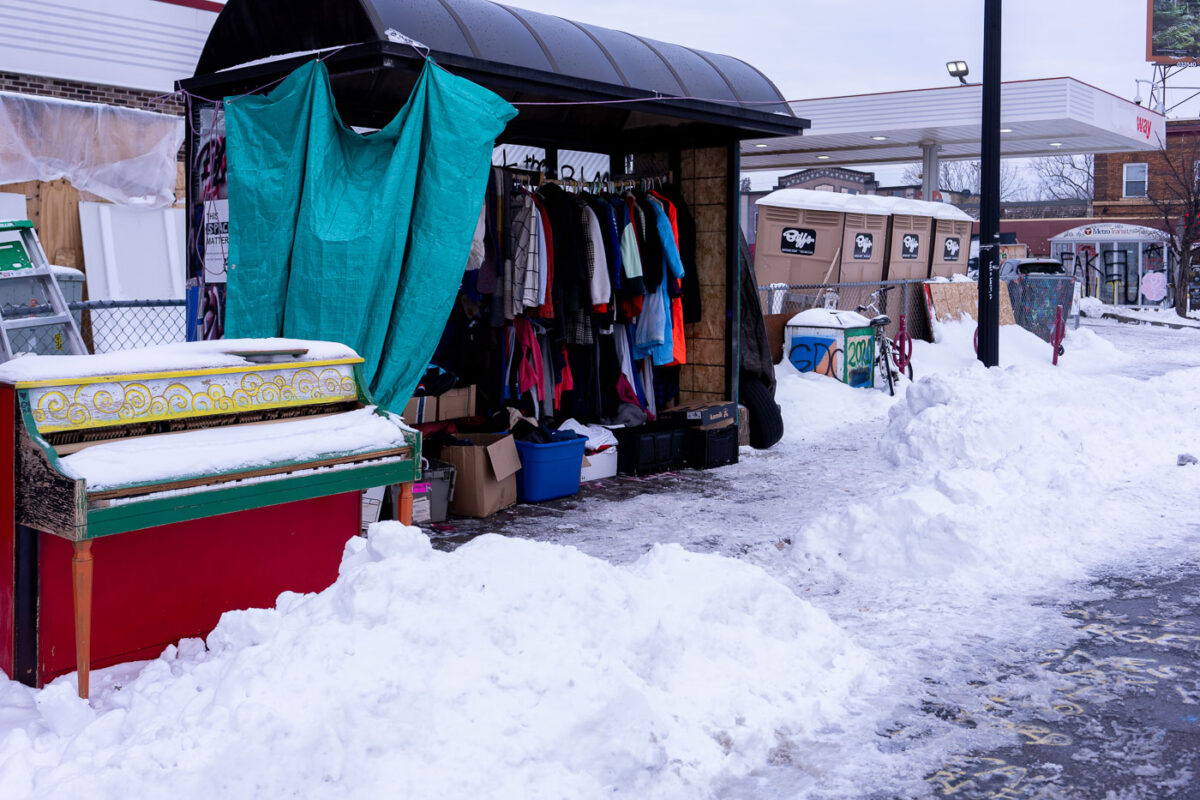
Peoples closet at George Floyd Square in December 2020
The People's Closet, a community clothing exchange, and a painted piano stand at George Floyd Square in Minneapolis. This area, located at E 38th Street and Chicago Avenue, transformed into a protest zone following the May 25, 2020, death of George Floyd. The People's Closet provides free clothing and resources, reflecting the mutual aid efforts that emerged within the protest space.

The People’s Closet & Piano, George Floyd Square, Minneapolis

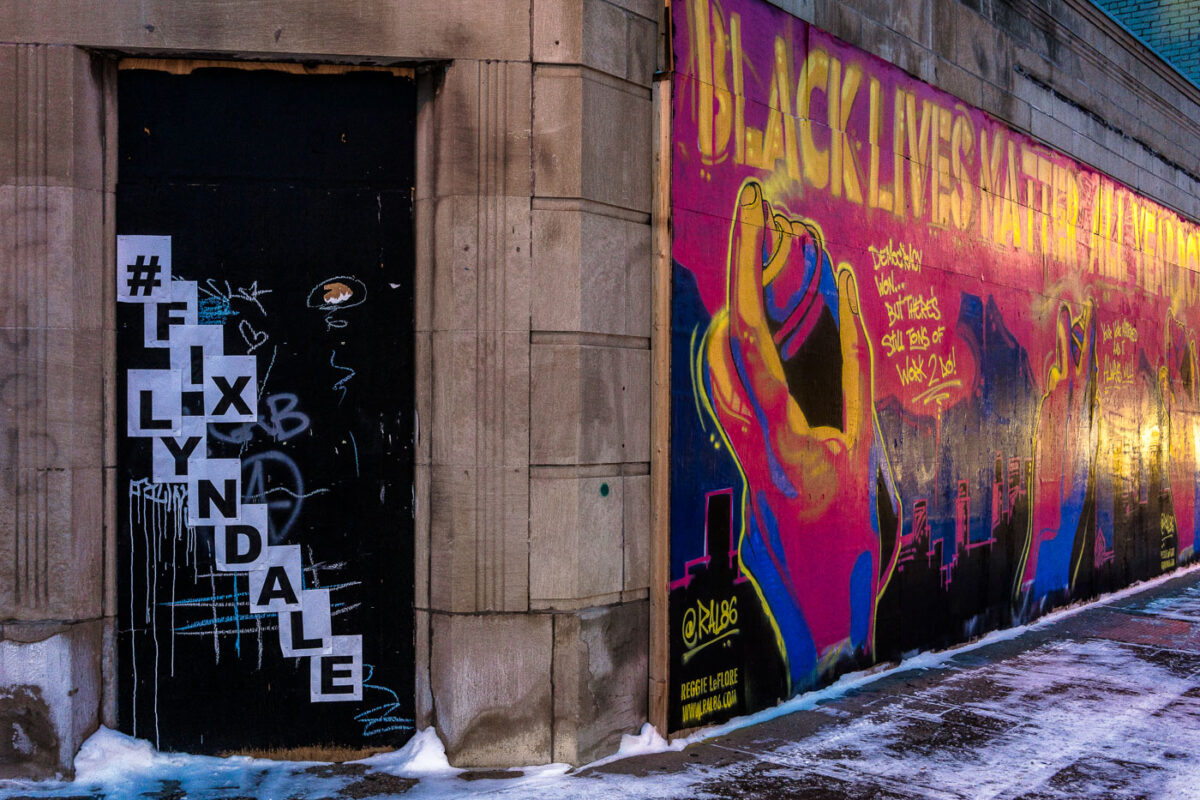
Fix Lyndale on a door on Lyndale Ave
A Black Lives Matter mural by Reggie LeFlore adorns boarded-up storefronts at the corner of Lyndale Avenue and Lake Street in Uptown Minneapolis. This artwork emerged in the aftermath of the 2020 Minneapolis Uprising, transforming damaged properties into public expressions of protest and solidarity. Adjacent to the mural, the #FixLyndale message advocates for the long-standing community effort to reconfigure Lyndale Avenue, a corridor known for high rates of vehicle and pedestrian accidents.

Fix Lyndale & Black Lives Matter Mural, Lyndale & Lake St

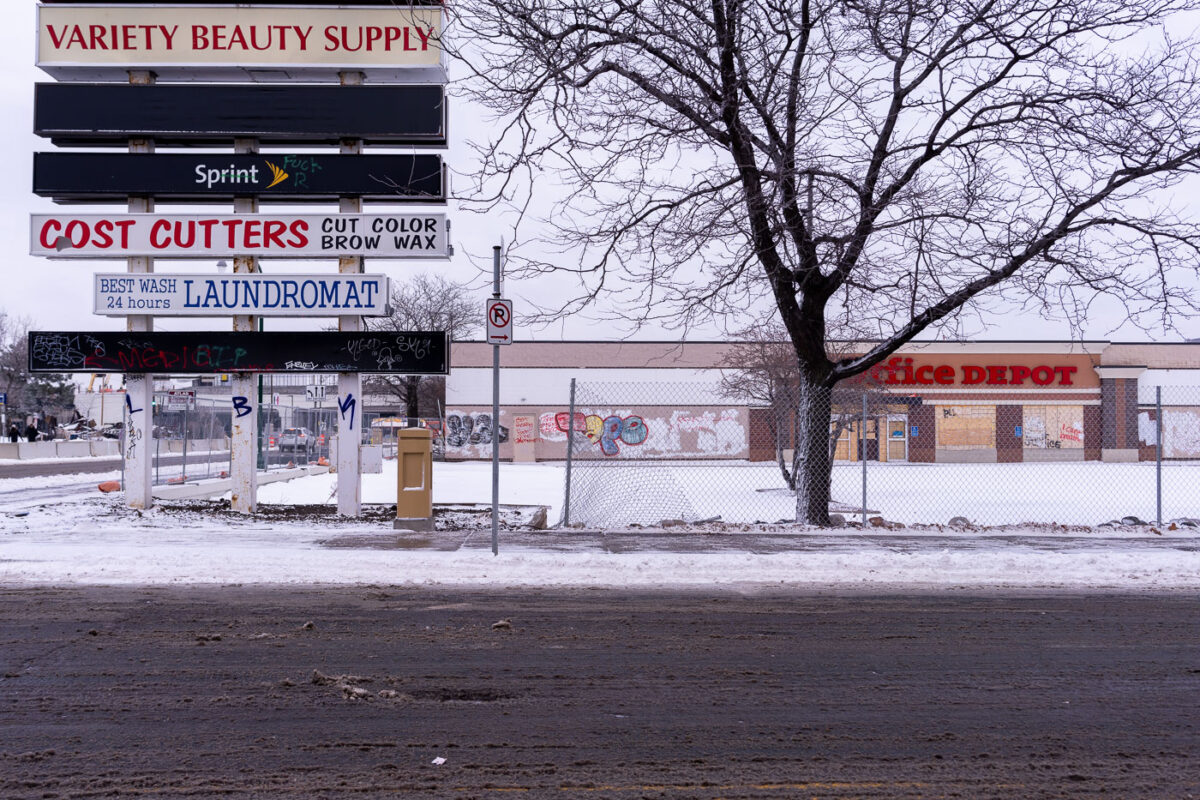
Riot damaged strip mall on Nicollet Ave
A strip mall at the corner of Nicollet Avenue and Lake Street in Minneapolis shows extensive damage. This retail complex, which housed businesses such as Office Depot, Cost Cutters, and a Laundromat, was heavily damaged following the May 25, 2020 death of George Floyd and the subsequent protests and unrest in the city. Boarded-up windows and graffiti cover the building, indicating the impact of the events.

Riot Damaged Strip Mall, Nicollet Ave & Lake St

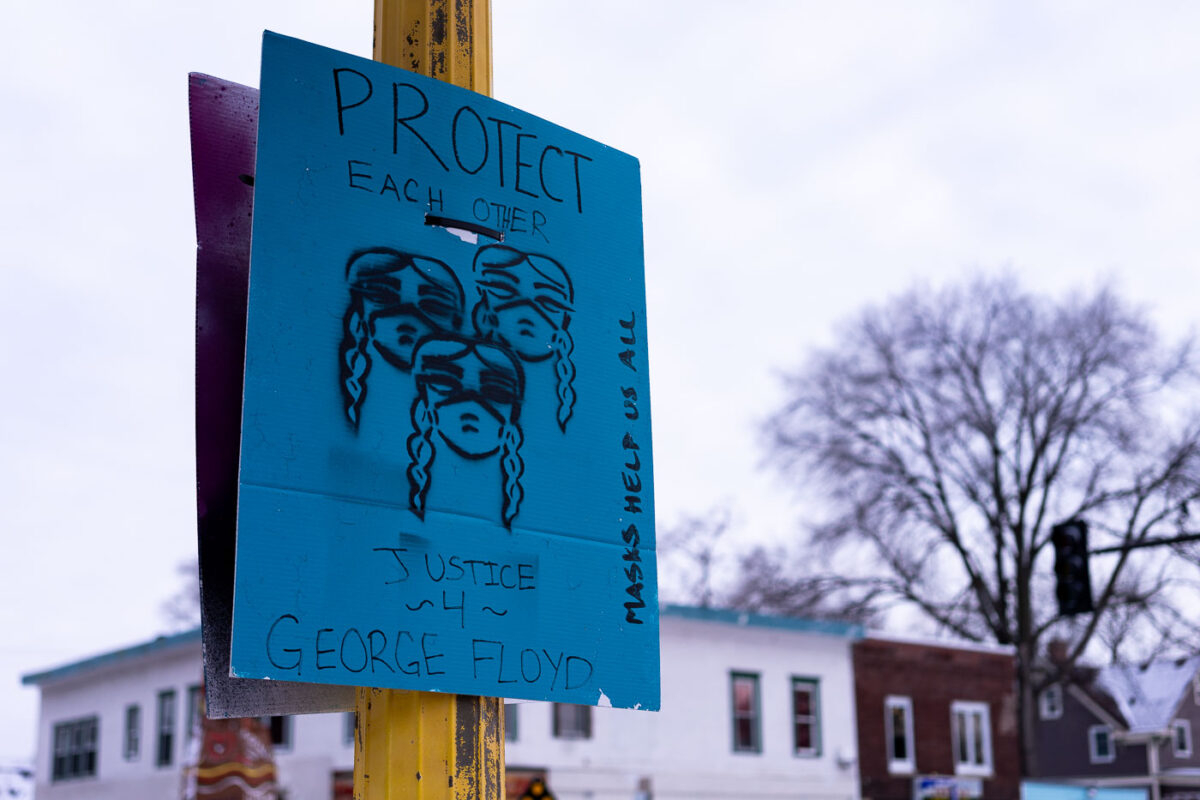
Protest Each Other sign at George Floyd Square
A protest sign is affixed to a pole at George Floyd Square, located at the intersection of Chicago Avenue and East 38th Street in Minneapolis. The sign, painted blue, features messages such as "Protect Each Other," "Justice 4 George Floyd," and "Masks Help Us All," alongside stencil art of masked faces. George Floyd Square became a memorial and protest site following the murder of George Floyd by Minneapolis police in May 2020.

George Floyd Square Protest Sign, Minneapolis

Kenoshi graffiti on buiolding boards
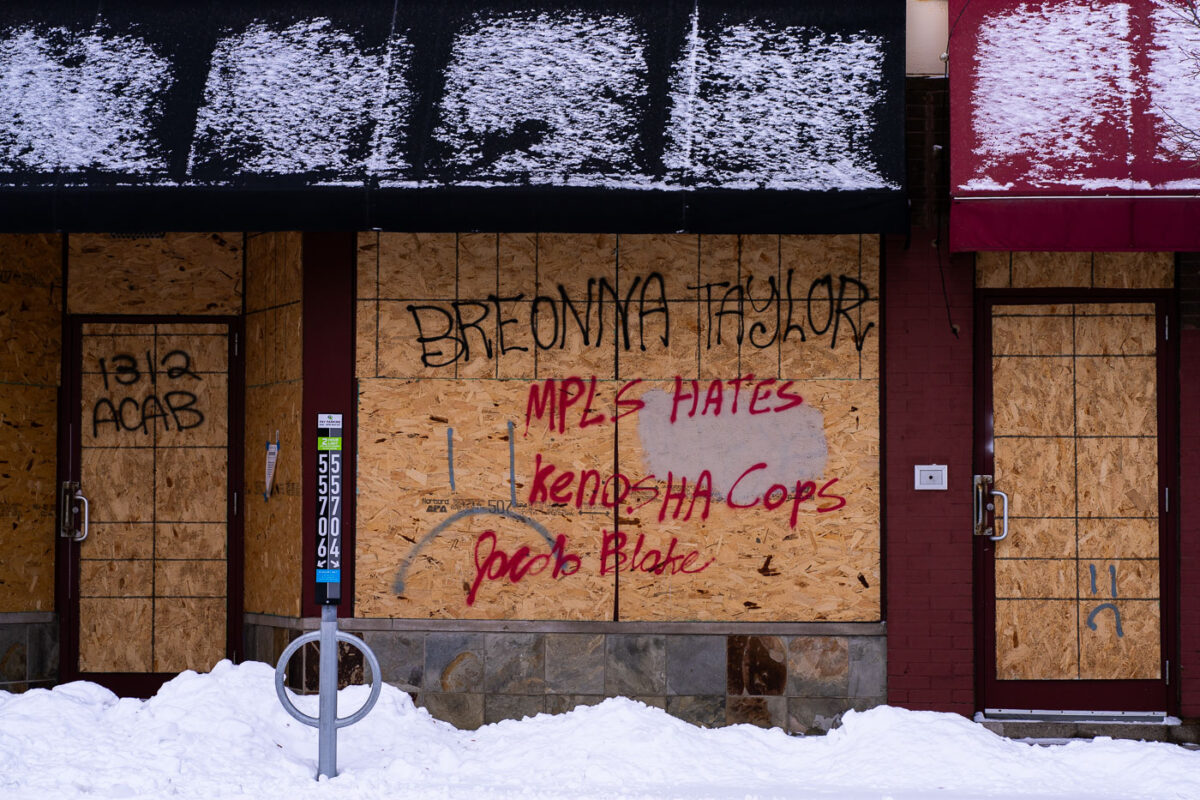
A boarded-up building stands in Minneapolis, near the site of the former Third Precinct of the Minneapolis Police Department. The plywood boards, installed as a protective measure during periods of civil unrest, are covered with protest messages. Graffiti includes names like "Breonna Taylor" and "Jacob Blake," alongside phrases such as "Mpls Hates Kenosha Cops," "1312," and "ACAB."

Minneapolis Boarded Building: ‘Mpls Hates Kenosha Cops’

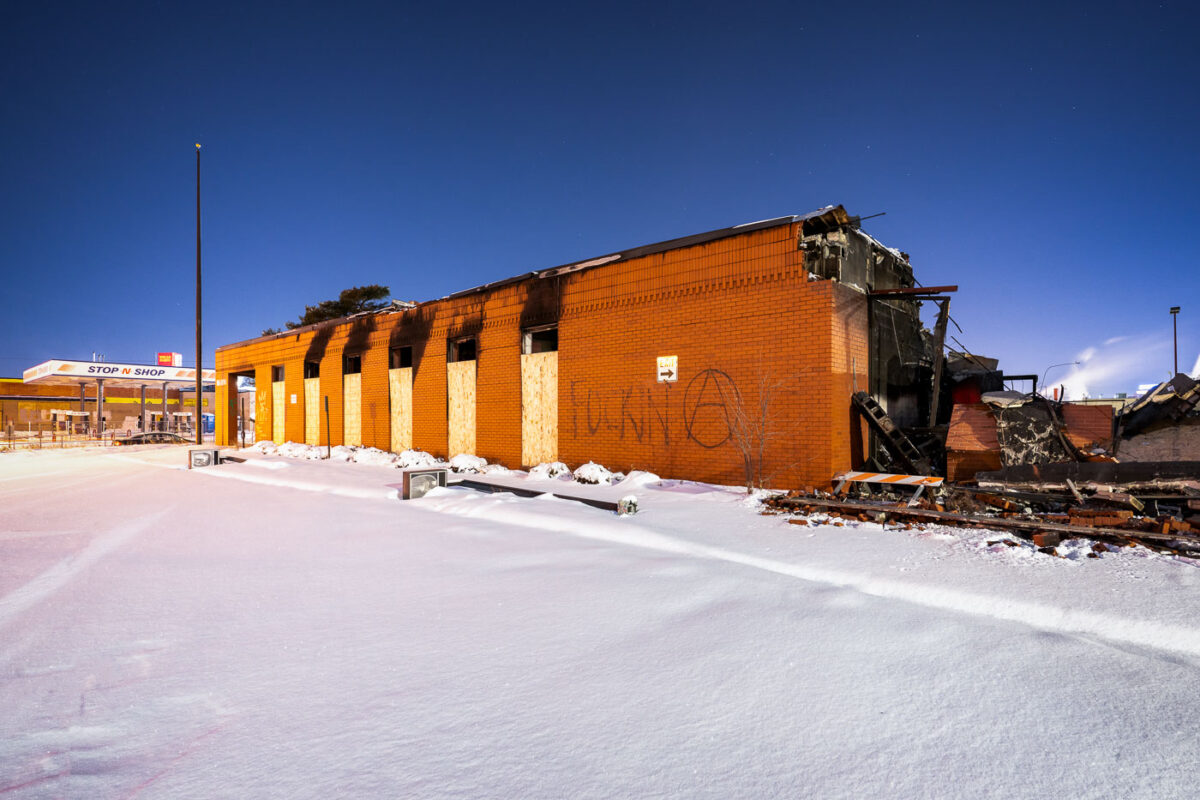
Burned Atlas Staffing building on Lake Street
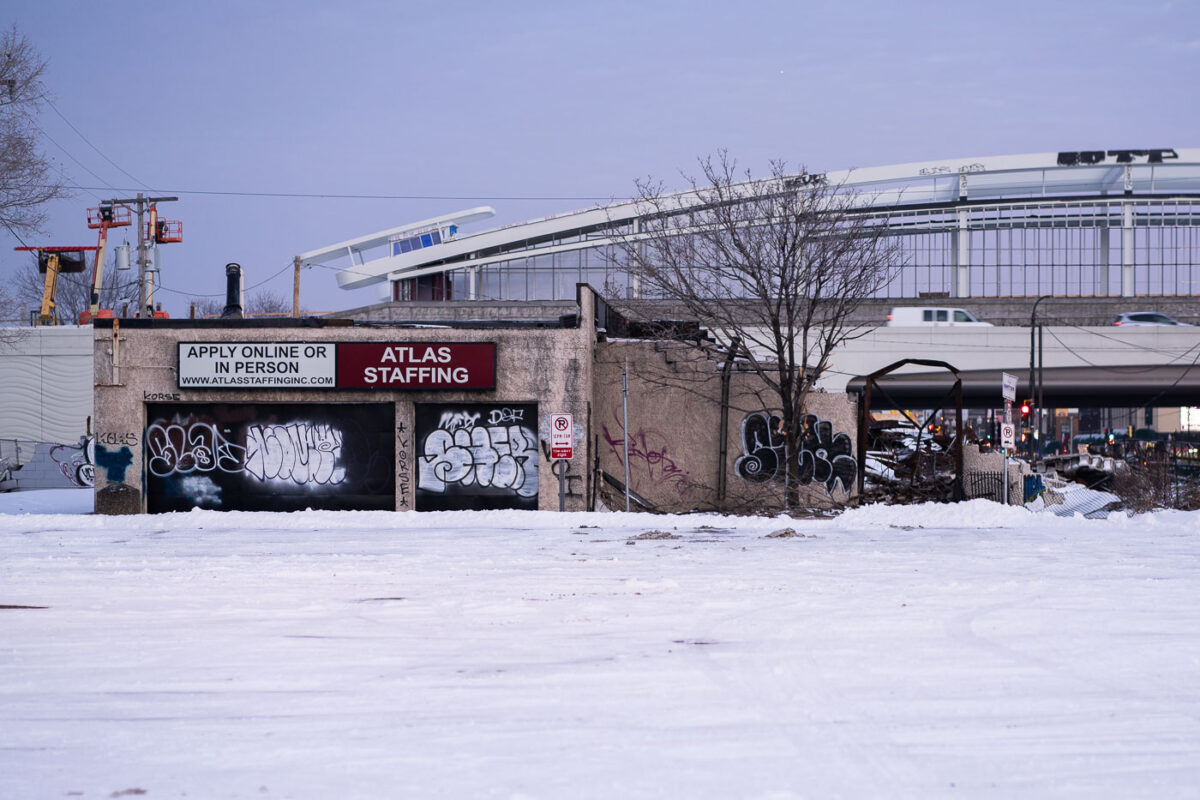
The remains of the Atlas Staffing building stand on Lake Street in Minneapolis, its exterior covered in graffiti. This structure was among many properties damaged or destroyed by fire during the civil unrest that followed the May 25, 2020 death of George Floyd.

Graffiti on Burned Atlas Staffing, Lake Street, Minneapolis

Demolition of a building in the snow
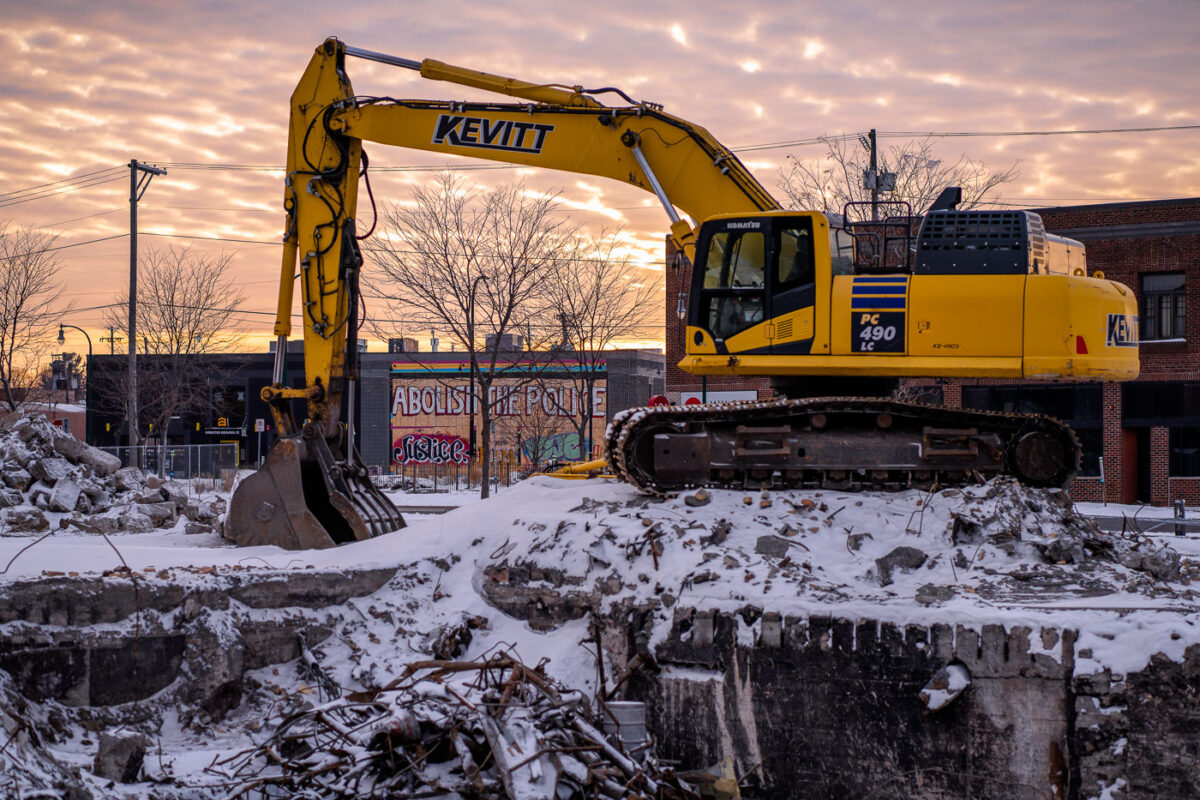
An excavator operates amidst snow-covered rubble at the demolition site of former businesses on Lake Street in Minneapolis. These structures, which included Minnehaha Liquors, a chiropractor’s office, and GM Tobacco, were destroyed during the widespread protests and civil unrest that followed the May 25, 2020 death of George Floyd.

Excavator at Minnehaha Liquors Demolition, Minneapolis

Black Joy at George Floyd Square
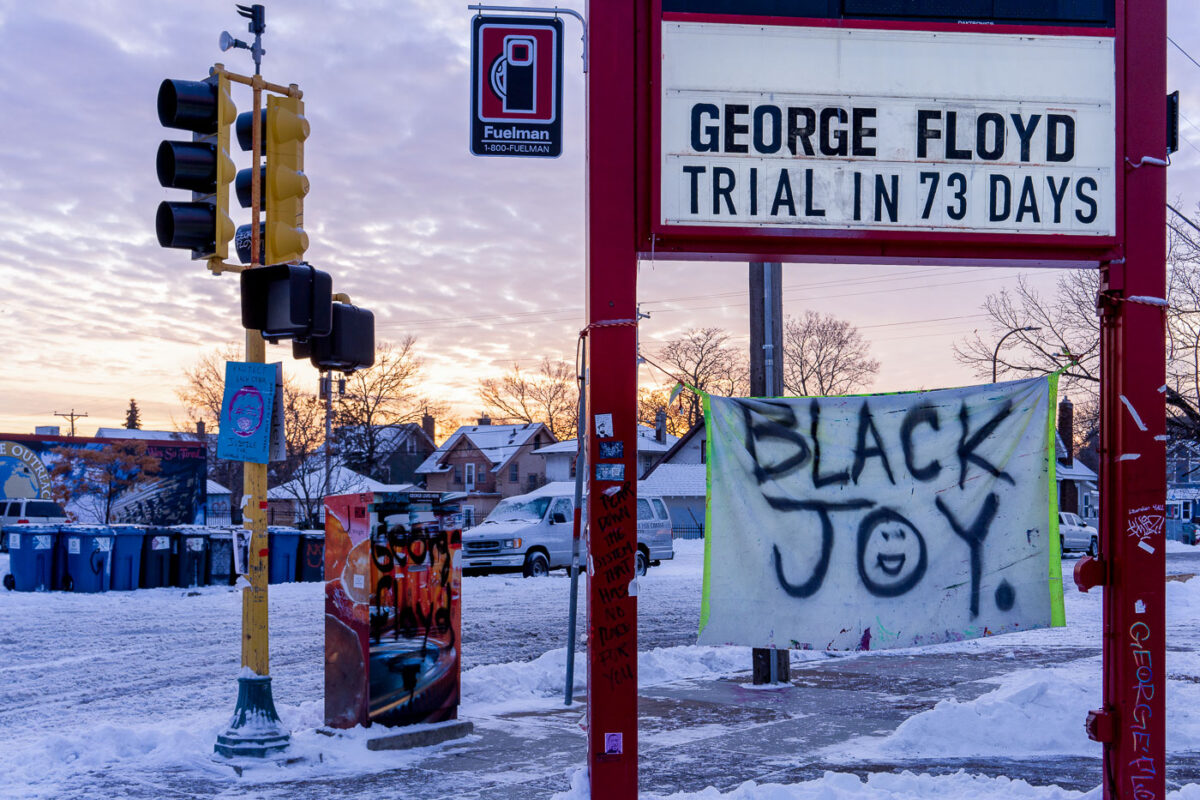
George Floyd Square in Minneapolis, located at Chicago Avenue and East 38th Street, serves as a protest zone and memorial site following the May 25, 2020 death of George Floyd. A former Speedway sign displays a countdown to the Derek Chauvin trial, indicating "GEORGE FLOYD TRIAL IN 73 DAYS."

George Floyd Square: Black Joy Banner, Trial Countdown Sign

Hennepin Ave protest boards in December 2020
Protest murals adorn boarded-up storefronts along Hennepin Avenue in Uptown Minneapolis. These artworks emerged in the aftermath of the Minneapolis Uprising in May 2020, which followed the murder of George Floyd.

Hennepin Ave Protest Murals, Uptown Minneapolis, Dec 2020

Large amount of police enter George Floyd Square
Minneapolis Police officers arrive at George Floyd Square, located at the intersection of E 38th Street and Elliot Avenue in South Minneapolis, following a shooting incident. Prior to their arrival, two victims had been transported to hospitals by community members present at the square. Residents at the square confronted the responding officers, subsequently offering to escort five of them to collect shell casings from the site. George Floyd Square emerged as a significant memorial and protest site after the murder of George Floyd in May 2020.

Minneapolis Police respond to George Floyd Square shooting

Police in front of George Floyd mural
Minneapolis Police officers investigate a shooting at George Floyd Square in South Minneapolis on December 27, 2020. This site, located at the intersection of E 38th Street and Chicago Avenue, transformed into a significant memorial and protest space following the murder of George Floyd in May 2020.

Minneapolis Police Investigate Shooting at George Floyd Square

Inside burned Lake Street Station US Post Office
The Lake Street Station Post Office at 110 E 31st Street in South Minneapolis stands in ruins following its destruction. The facility was burned on May 29, 2020, during the George Floyd uprising, an act of arson that severely disrupted local postal services. Both the Lake Street and Minnehaha postal stations subsequently relocated to a vacant K-Mart building on Lake Street to maintain operations. The United States Postal Service later rebuilt the Lake Street Station Post Office, reopening it three years after the original structure was destroyed.

Lake Street Station Post Office Fire Aftermath, Minneapolis

USPS Post office during demolition
The interior of the USPS Lake Street Station at 110 E 31st Street in South Minneapolis shows extensive fire damage. This postal facility was burned on May 29, 2020, during the protests that followed the murder of George Floyd. Following the destruction, postal services, including those from the Minnehaha Station, were temporarily relocated to a vacant K-Mart on Lake Street. The original post office building was eventually rebuilt and reopened to the community three years to the day after the fire.

Burned Interior: USPS Lake Street Station, 110 E 31st St

Anarchy symbol on the USPS post office
The burned United States Postal Service (USPS) Post Office at 110 E 31st Street in South Minneapolis stands as a historical marker of the George Floyd uprising. This facility, located directly across from the Minneapolis Police 5th Precinct, was extensively damaged by arson on May 29th. Following the destruction, postal services for the area, including the Minnehaha Station, were temporarily relocated to a vacant K-Mart on Lake Street. The original post office building was eventually rebuilt and reopened to the public exactly three years after the incident, restoring essential community services.

Burned USPS Post Office, 110 E 31st St, Minneapolis

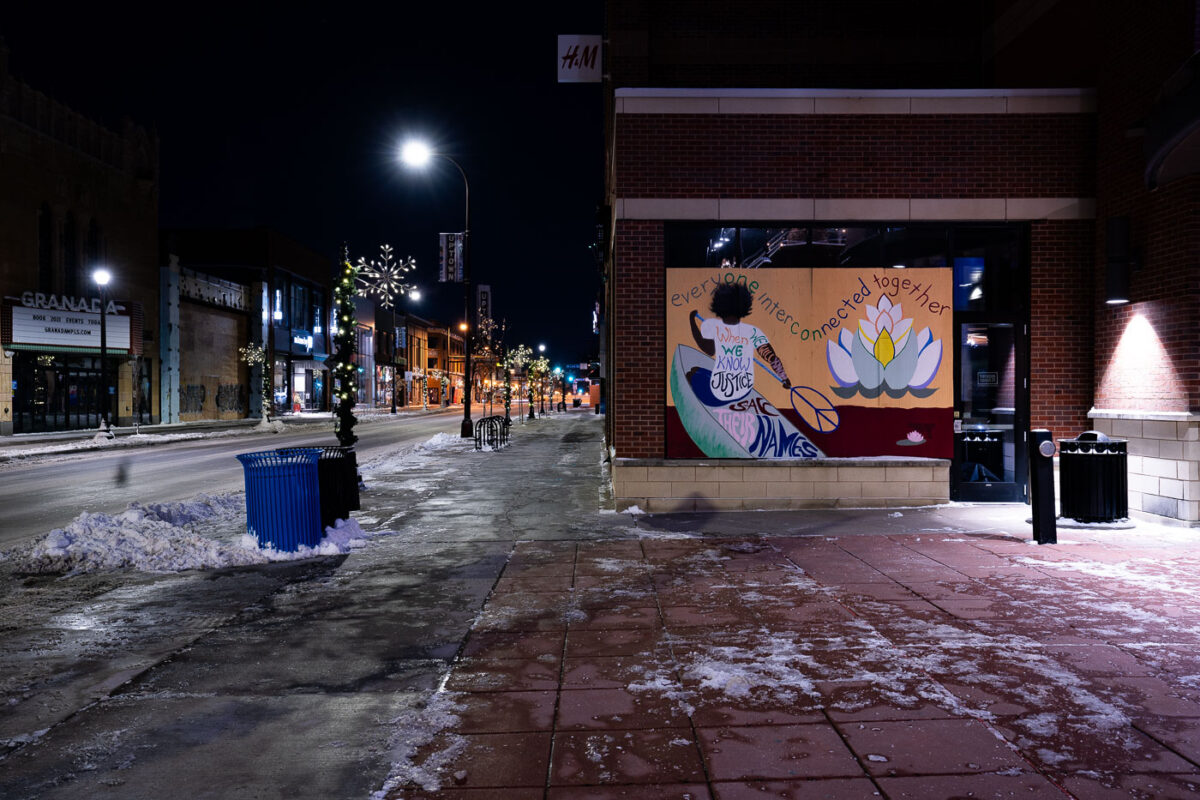
Everyone interconnected together mural on storefront
A mural adorns protective boards on an H&M retail store located on Hennepin Avenue in Uptown Minneapolis. This artwork emerged during the Minneapolis Uprising following the murder of George Floyd in May 2020, when many businesses boarded their windows for protection. The mural, featuring a figure in a canoe and a lotus flower, carries messages such as "When we know justice say their names" and "everyone interconnected together," reflecting themes of community and calls for justice.

Mural on H&M Boards, Hennepin Ave, Minneapolis Uprising

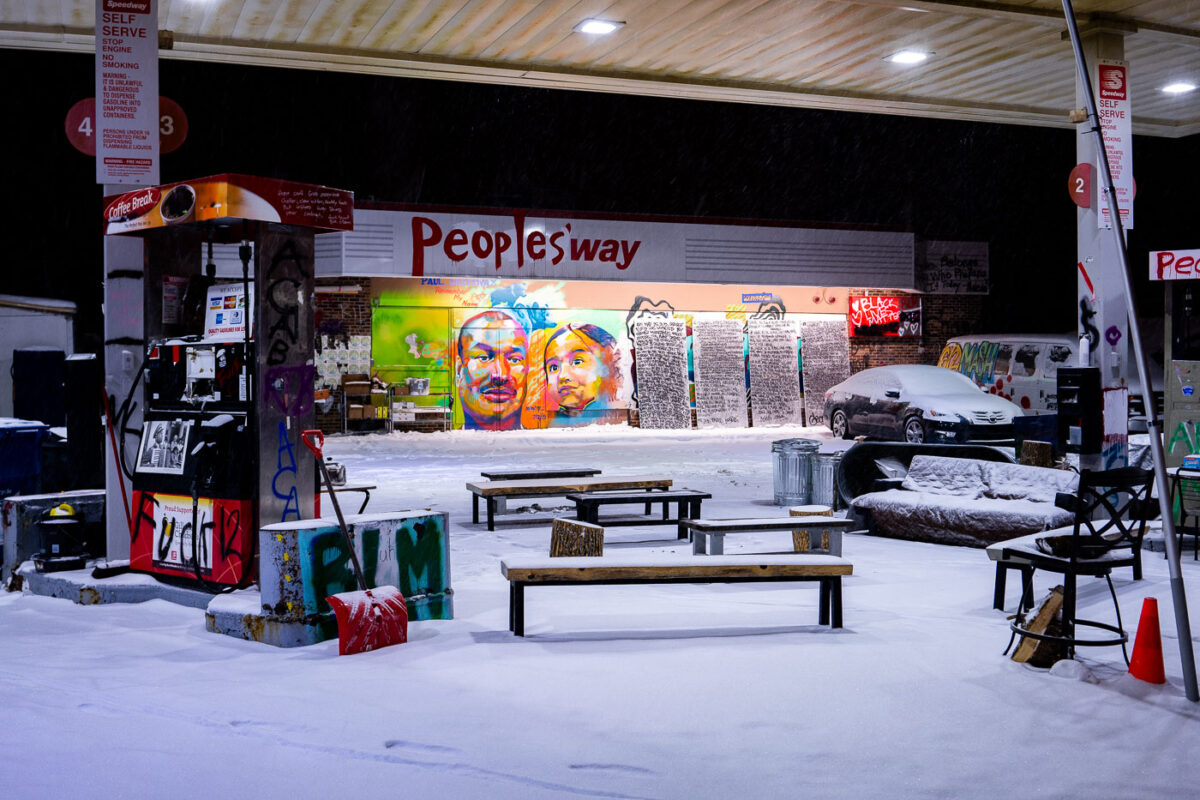
Peoples Way after a fresh snow fall
The People's Way, a former Speedway gas station at George Floyd Square in Minneapolis, is seen covered in snow. This site, located at the intersection of 38th Street and Chicago Avenue, transformed into a protest zone following the May 25, 2020 death of George Floyd. The area now functions as a community gathering space and memorial, featuring murals, graffiti, and various installations that reflect ongoing calls for justice and social change.

People’s Way, George Floyd Square, Minneapolis, covered in snow

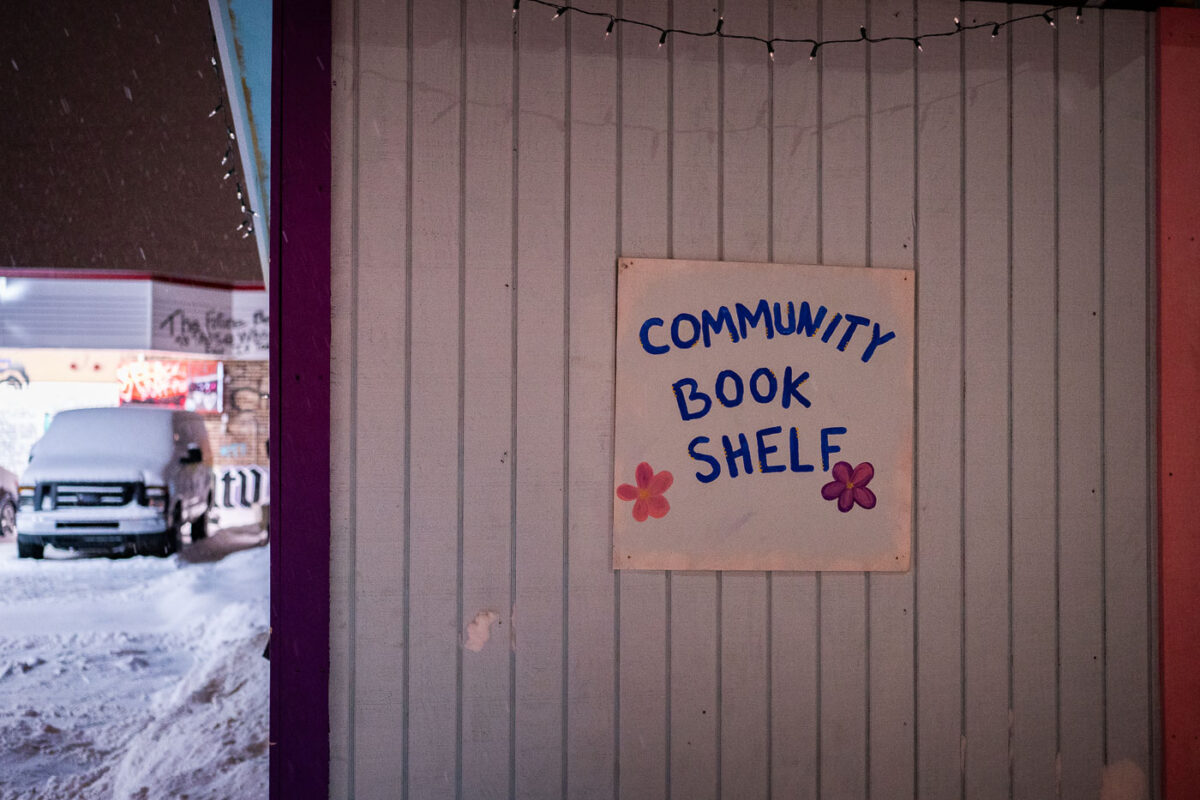
Community book shelf at George Floyd Square
The Community Book Shelf stands at George Floyd Square, located at the intersection of 38th Street and Chicago Avenue in Minneapolis. This community-driven initiative functions as a free exchange, allowing individuals to donate and borrow books. It emerged as part of the informal memorials and community infrastructure established in the wake of the 2020 Minneapolis Uprising and the murder of George Floyd.

Community Book Shelf at George Floyd Square, Minneapolis

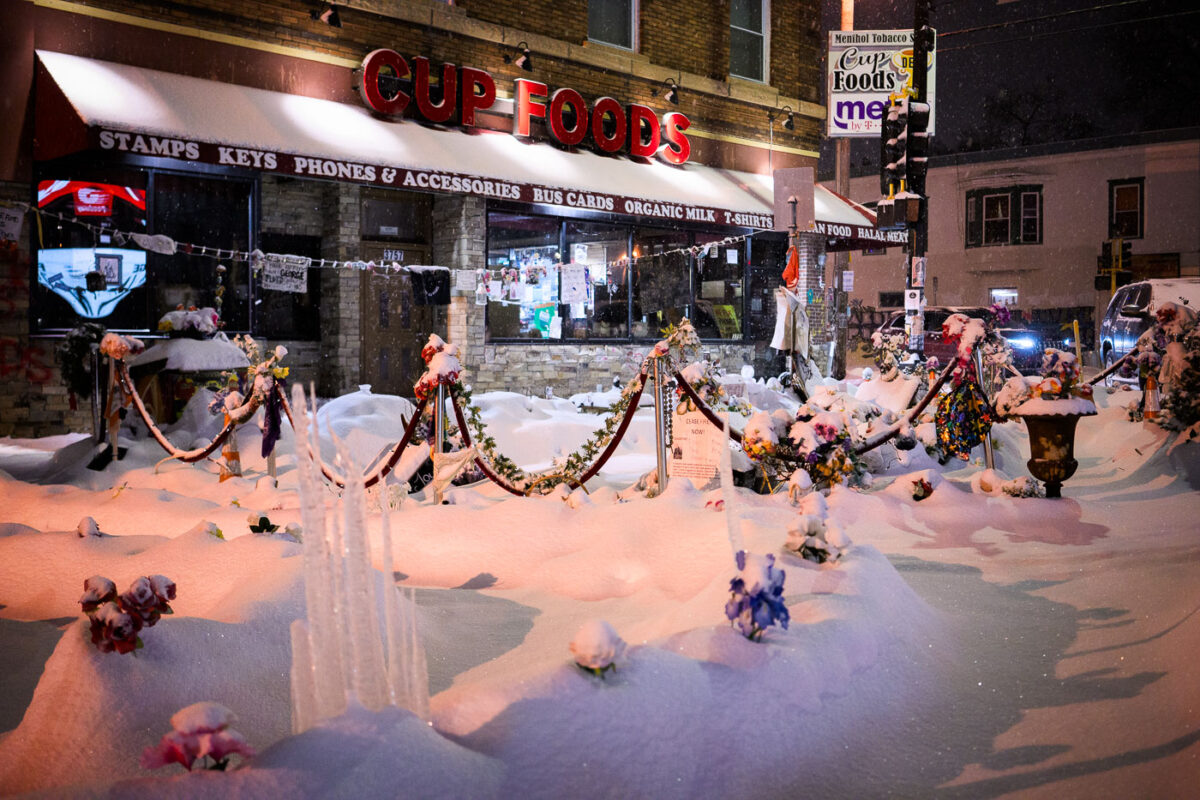
Fresh December snowfall at George Floyd Memorial
The George Floyd Memorial at George Floyd Square, located outside Cup Foods on Chicago Avenue in Minneapolis, is seen after a December snowfall. This site became an impromptu memorial following the murder of George Floyd by Minneapolis police on May 25, 2020, sparking widespread protests against racial injustice and police brutality. The memorial, which includes flowers, signs, and other tributes, serves as a permanent public space for remembrance and a symbol of the ongoing movement for civil rights. The area around Cup Foods, where Floyd was killed, was transformed into a community-managed space, reflecting its role as a focal point for activism and reflection.

George Floyd Square Memorial, Cup Foods, Minneapolis Snow

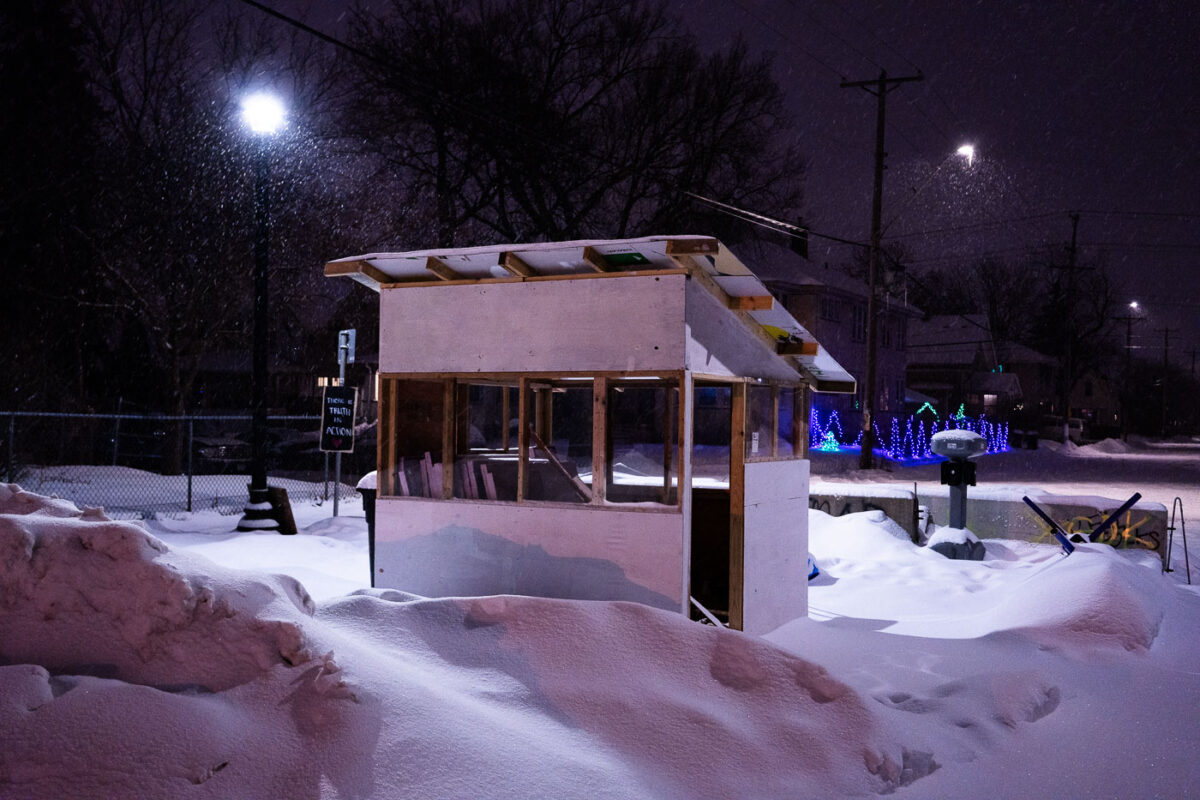
Warming huts at George Floyd Square
A winter warming hut stands amidst snow and barricades at George Floyd Square in Minneapolis. This site, located at the intersection of 38th Street and Chicago Avenue, became a protest zone and memorial following the murder of George Floyd on May 25, 2020. Community members constructed structures like this warming hut to provide shelter and support for those maintaining the memorial and protest presence, especially during the cold Minnesota winters.

George Floyd Square Winter Warming Hut

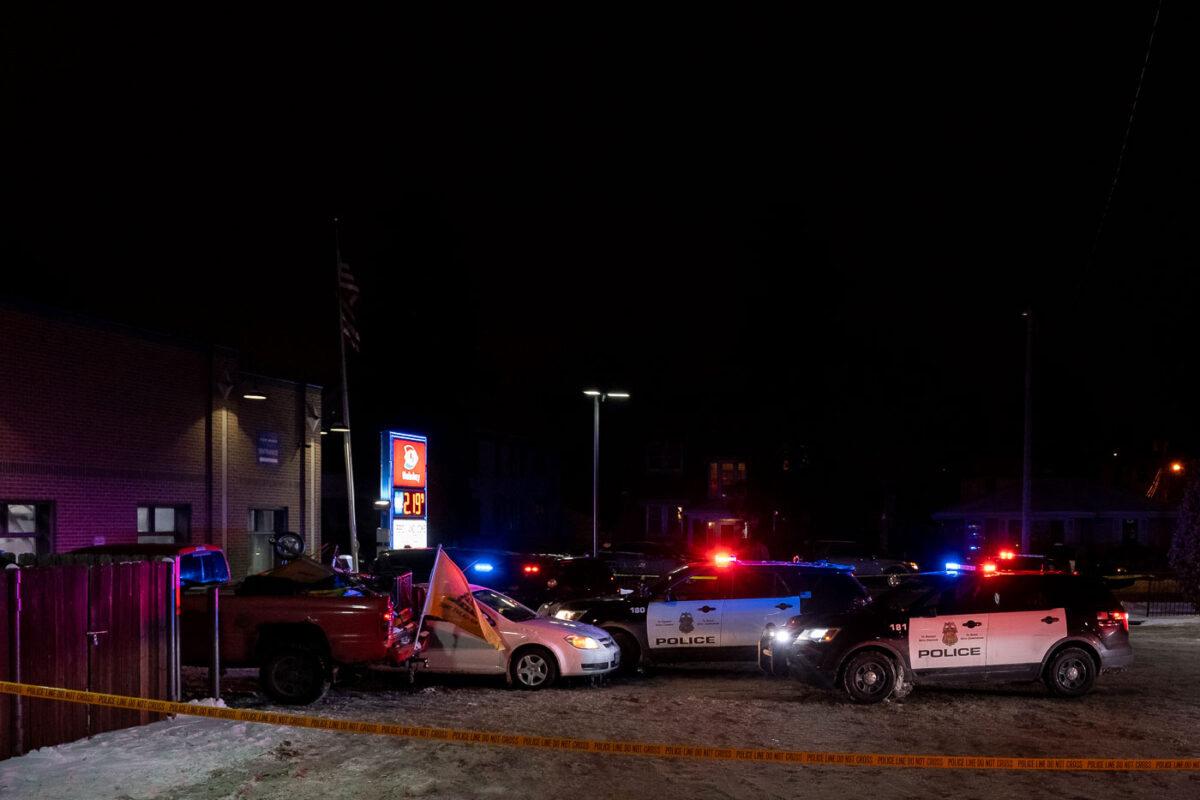
Minneapolis Police at 36th and Cedar
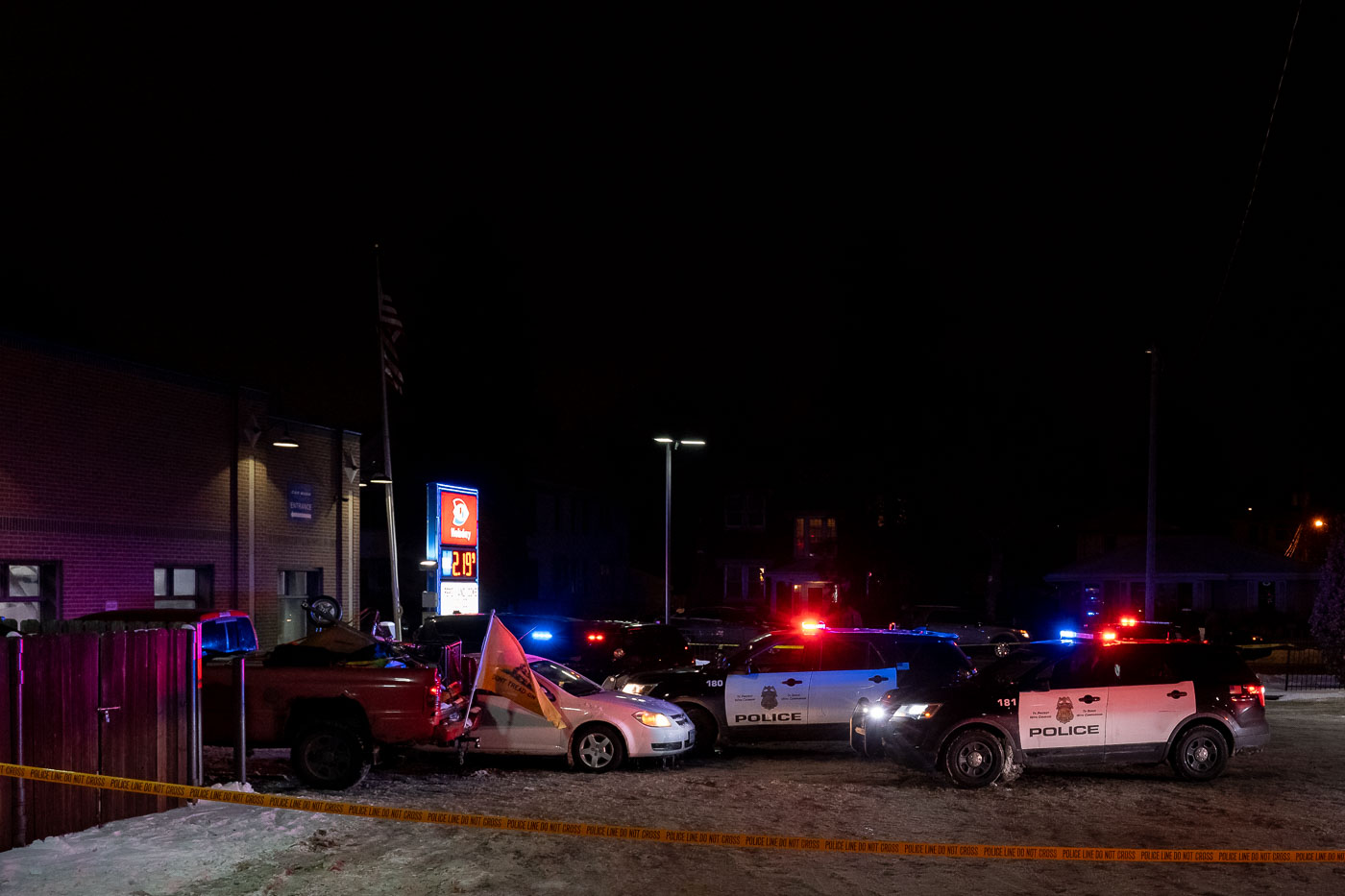
Minneapolis Police vehicles are parked at the Holiday gas station near the intersection of 36th Avenue and Cedar Avenue in Minneapolis, following the fatal shooting of Dolal Idd. The incident occurred on December 30, 2020, after a traffic stop, leading to a police investigation at the site. A 'Don't Tread On Me' flag is visible on one of the civilian vehicles within the secured perimeter. This event occurred during a period of heightened public scrutiny and protest regarding police conduct in Minneapolis.

Dolal Idd Killed by Minneapolis Police at 36th & Cedar

ATF and DEA at the Dolal Idd killing crime scene
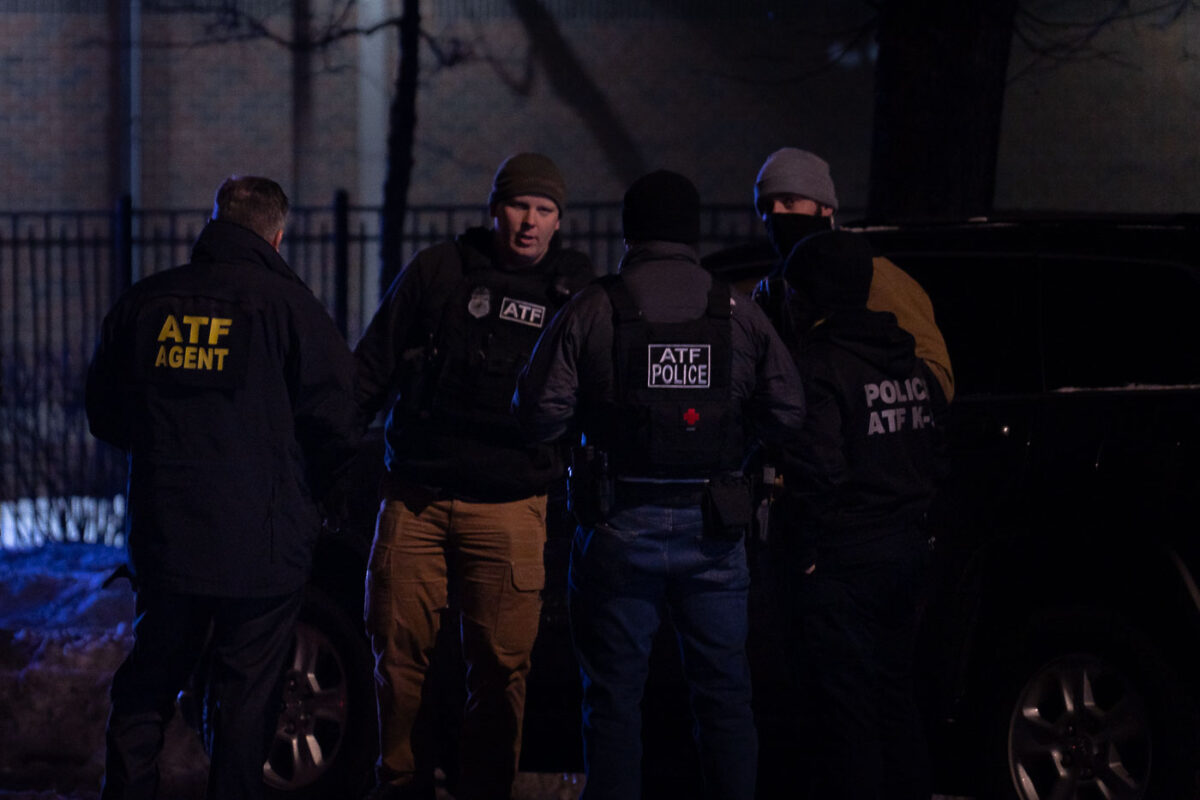
Federal agents from the Bureau of Alcohol, Tobacco, Firearms and Explosives (ATF) and the Drug Enforcement Administration (DEA) gather outside the Holiday Gas station in Minneapolis. This location, situated near 36th Avenue and Cedar Avenue, became a focal point following the fatal shooting of Dolal Idd by Minneapolis Police on December 31, 2020.

ATF and DEA Investigate Dolal Idd Killing, Holiday Gas

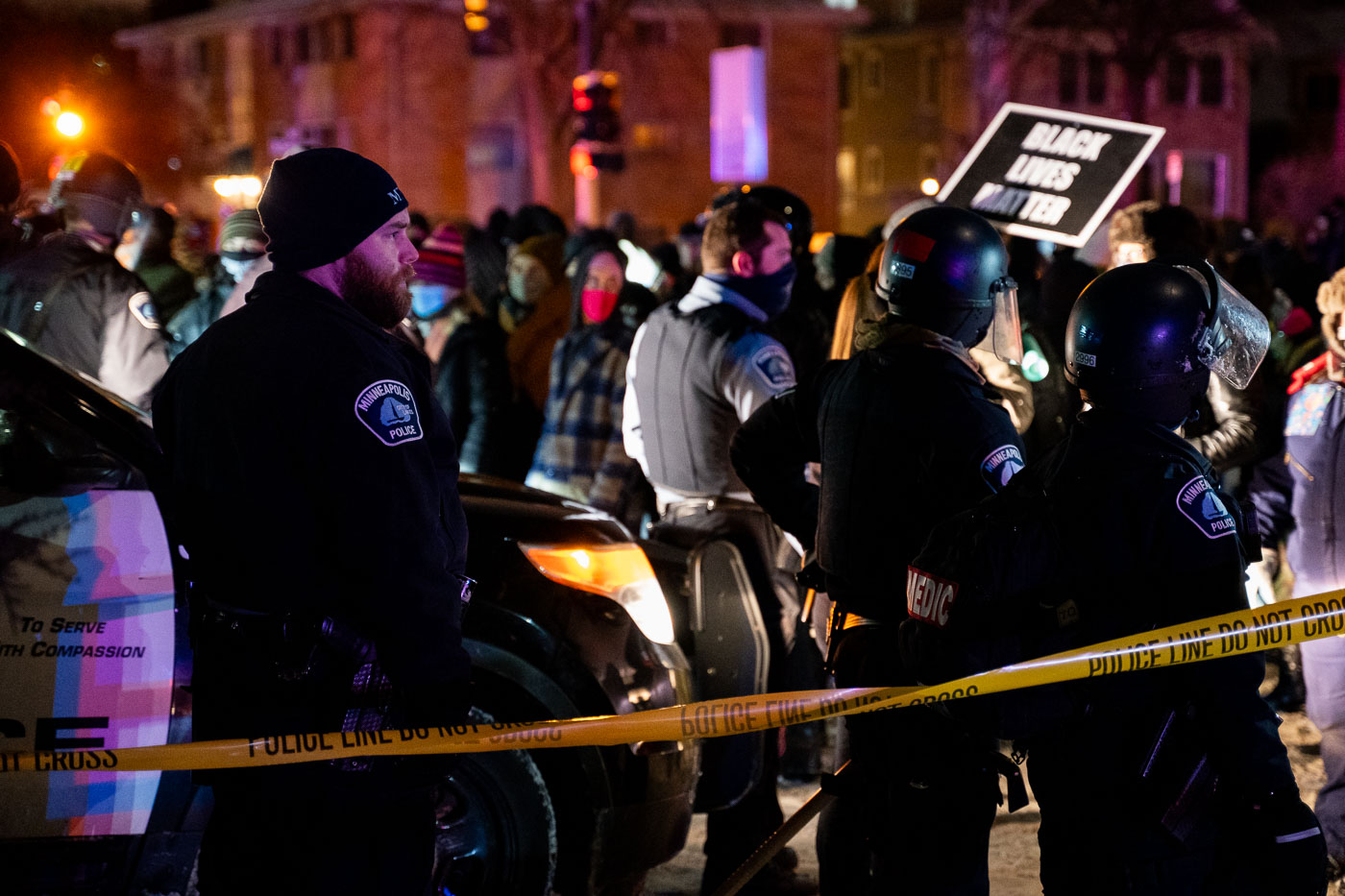
Protesters gather after Dolal Idd was killed by police
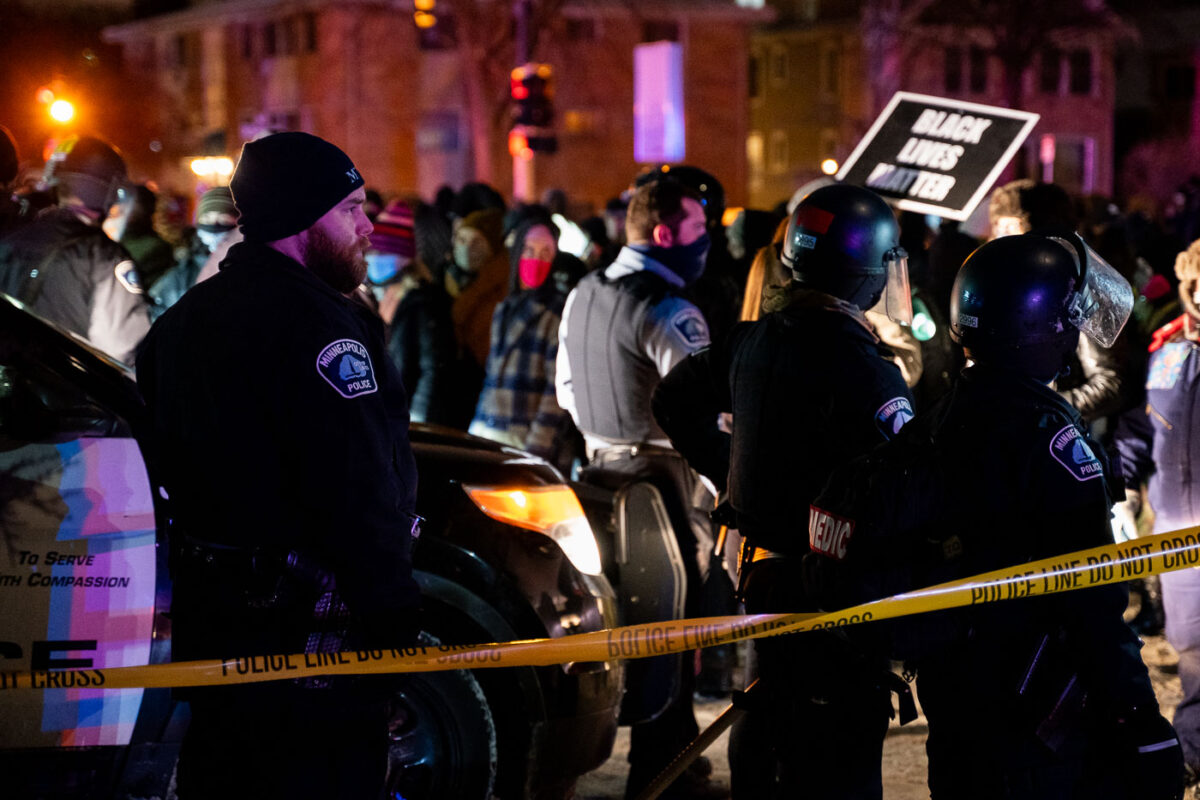
Minneapolis police officers stand guard at the Holiday Gas station located at 36th Avenue and Cedar Avenue in Minneapolis. This location became a focal point for protests following the fatal shooting of Dolal Idd by Minneapolis police. Protesters gathered to demand accountability and justice, with signs such as 'Black Lives Matter' visible among the crowd.

Minneapolis Police, Protesters at Holiday Gas, Dolal Idd Protest

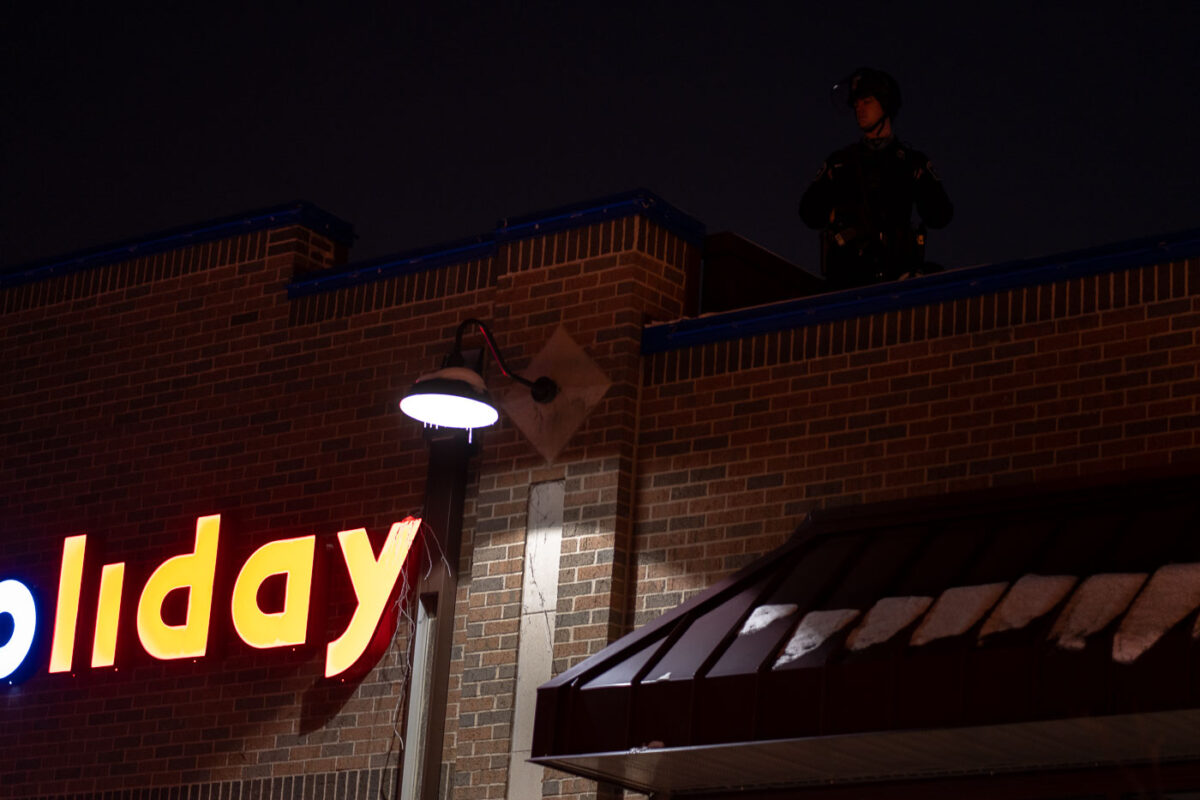
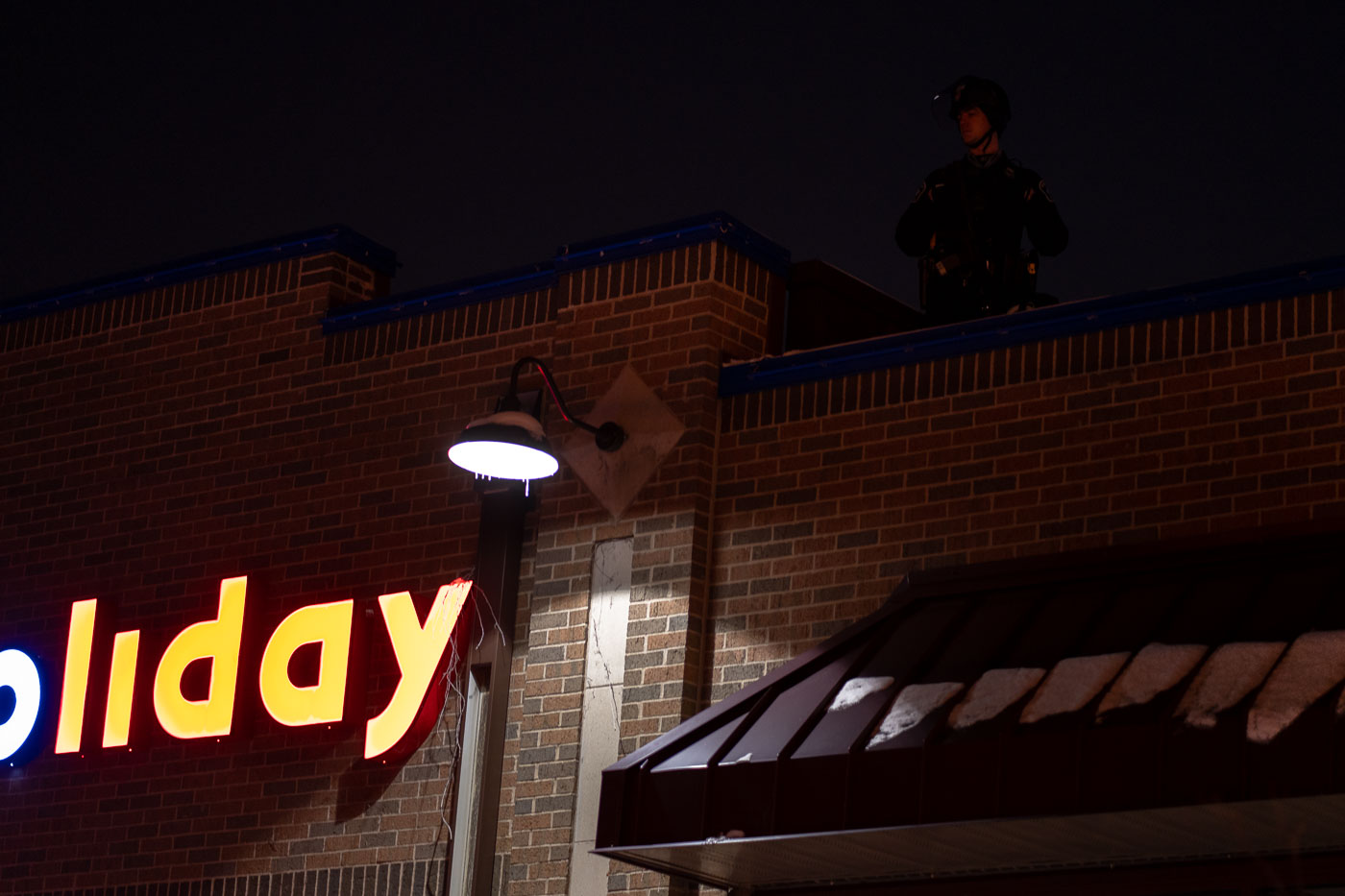
Minneapolis police on roof of Holiday Gas
Minneapolis Police Officer on Holiday Gas Station Roof during Protest. A Minneapolis Police officer stands on the roof of the Holiday gas station at 36th Avenue and Cedar Avenue. This deployment occurred during a protest outside the station, where community members gathered following the fatal shooting of Dolal Idd by Minneapolis police.

Minneapolis Police Officer on Holiday Gas Roof, 36th & Cedar

Helicopter over protesters outside 36th and Cedar Ave
A police helicopter's spotlight illuminates the night sky above 36th Street and Cedar Avenue in Minneapolis during a protest. This gathering took place outside the Holiday Gas station, the site where Dolal Idd was killed by Minneapolis Police on December 30, 2020.

Helicopter over Dolal Idd Protest, 36th & Cedar, Minneapolis

Police officer outside the Dolal Idd crime scene
A Minneapolis police officer stands during a protest following the fatal shooting of Dolal Idd. This protest took place near the intersection of 36th Avenue and Cedar Avenue in Minneapolis, outside the Holiday Gas station where Idd was killed by Minneapolis Police. Dolal Idd was shot by Minneapolis Police on December 30, 2020, leading to public protests regarding police use of force.

Minneapolis Police Officer at Dolal Idd Protest, 36th & Cedar

A vigil near where Dolal Idd was killed by Minneapolis police
A participant stands at a candlelight vigil for Dolal Idd at the intersection of 36th Avenue and Cedar Avenue in Minneapolis. This memorial event took place across from the Holiday Gas station where Idd was killed by Minneapolis Police on December 30, 2020.

Dolal Idd Candlelight Vigil, 36th & Cedar, Minneapolis

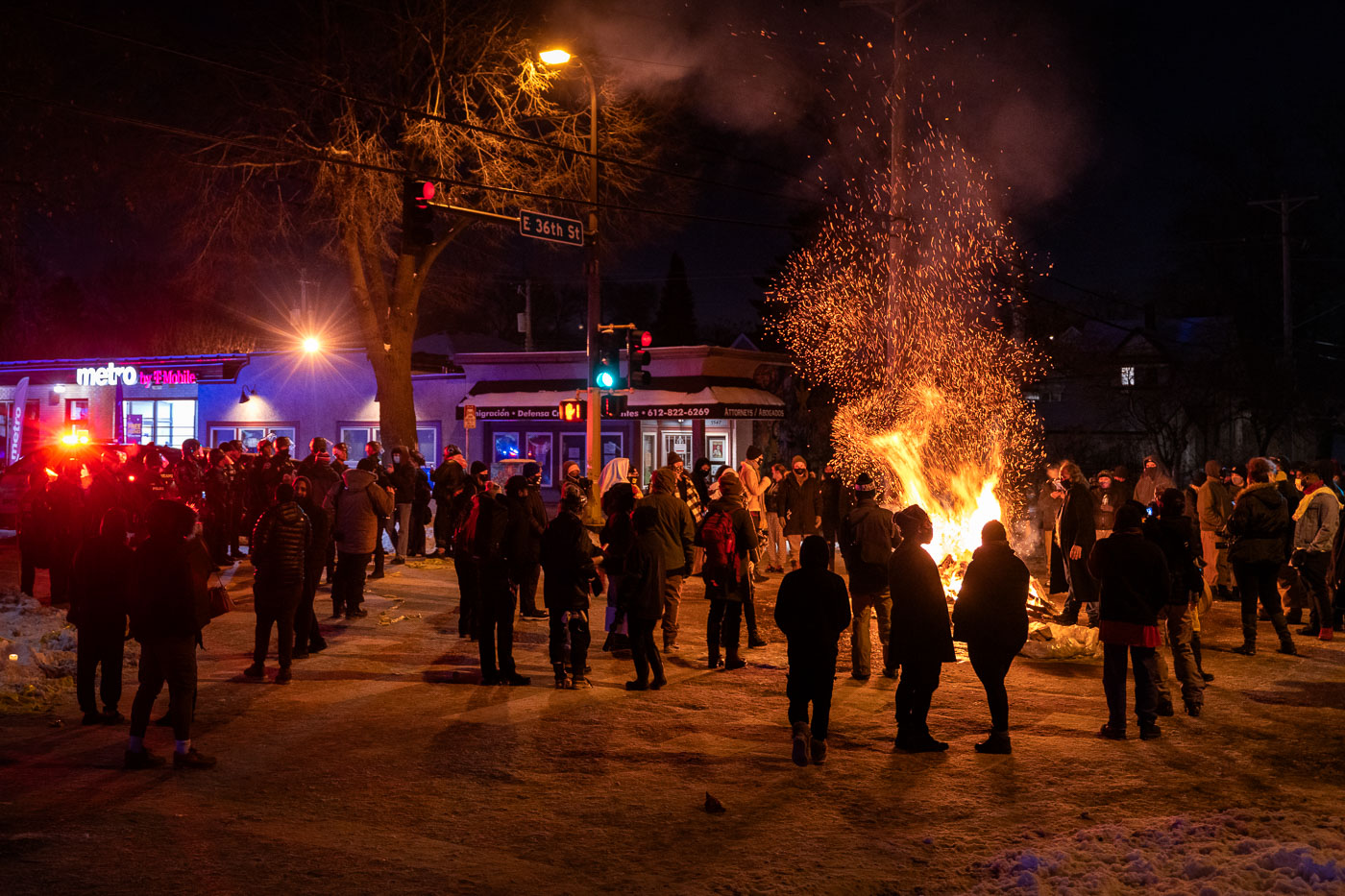
Protesters around a fire after Dolal Idd was killed
Protesters gathered at the intersection of 36th Avenue and Cedar Avenue in Minneapolis, following the fatal shooting of Dolal Idd by Minneapolis Police. This protest took place amidst ongoing public unrest and calls for police accountability, intensified by the killing of George Floyd by Minneapolis Police earlier in the year, approximately one mile from this location.

Protesters with bonfire at 36th & Cedar after Dolal Idd killing

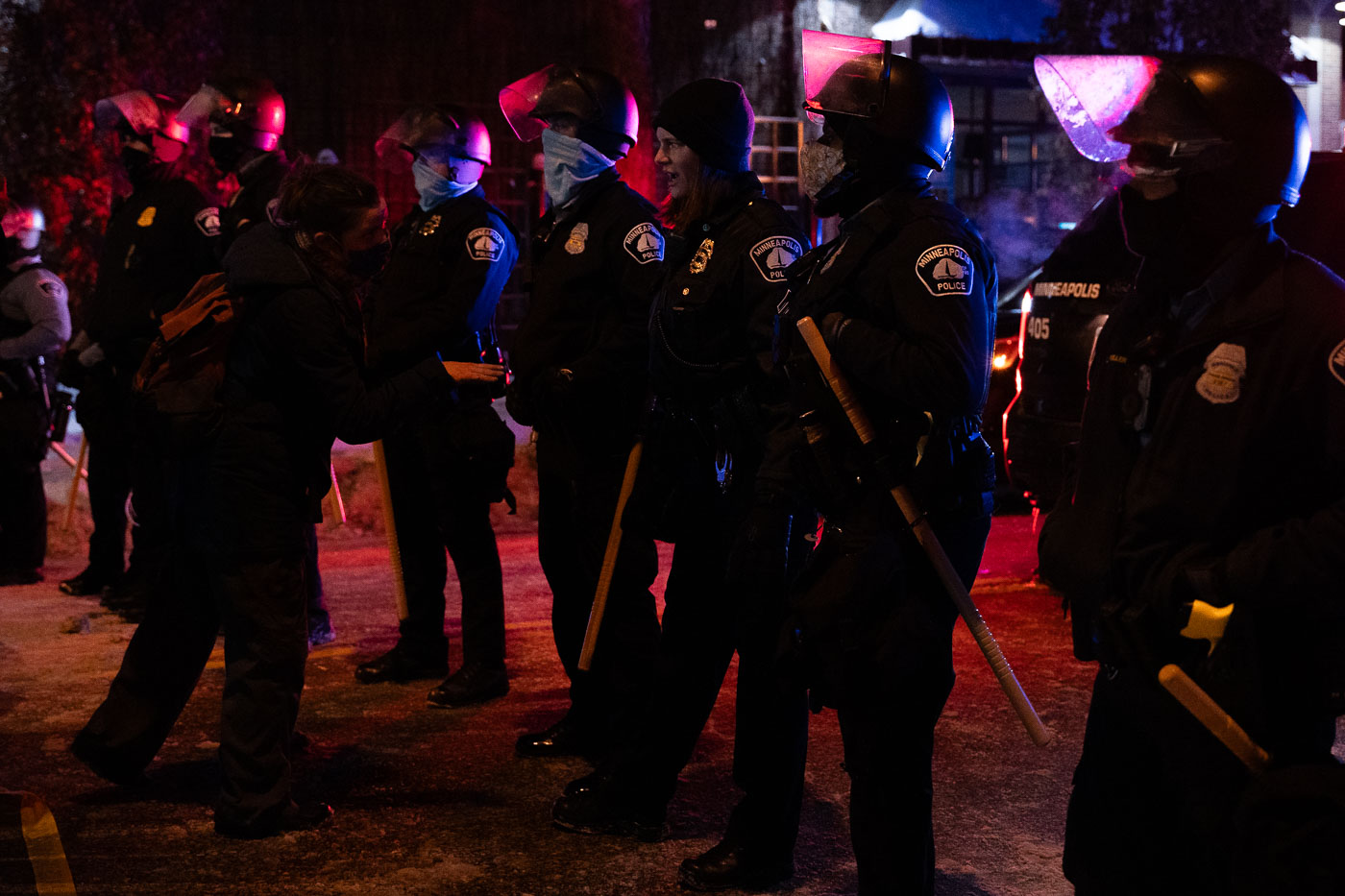
Protesters and police after Dolal Idd was killed
Minneapolis Police officers stand in formation during a protest at the Holiday Gas station located at 36th Avenue and Cedar Avenue in Minneapolis. The protest took place following the fatal shooting of Dolal Idd by Minneapolis Police earlier in the day.

Minneapolis Police at Dolal Idd Protest, Holiday Gas

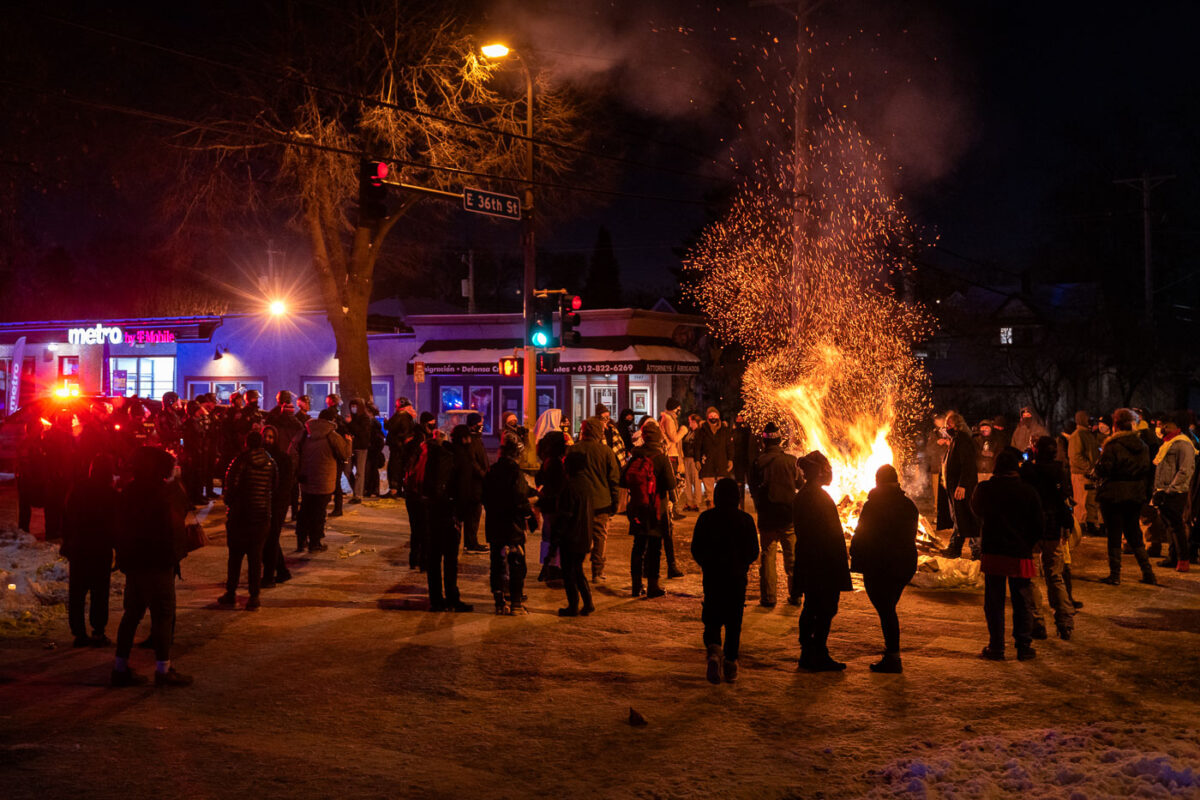
Protesters and large campfire on Cedar Ave in Minneapolis
Protesters gather on East 36th Street in Minneapolis, near the Holiday gas station where Dolal Idd was killed by Minneapolis police in December 2020. This protest occurred less than a year after George Floyd's killing by police approximately one mile away, fueling ongoing unrest against police violence in the city.

Protesters around a street fire on E 36th St, Minneapolis

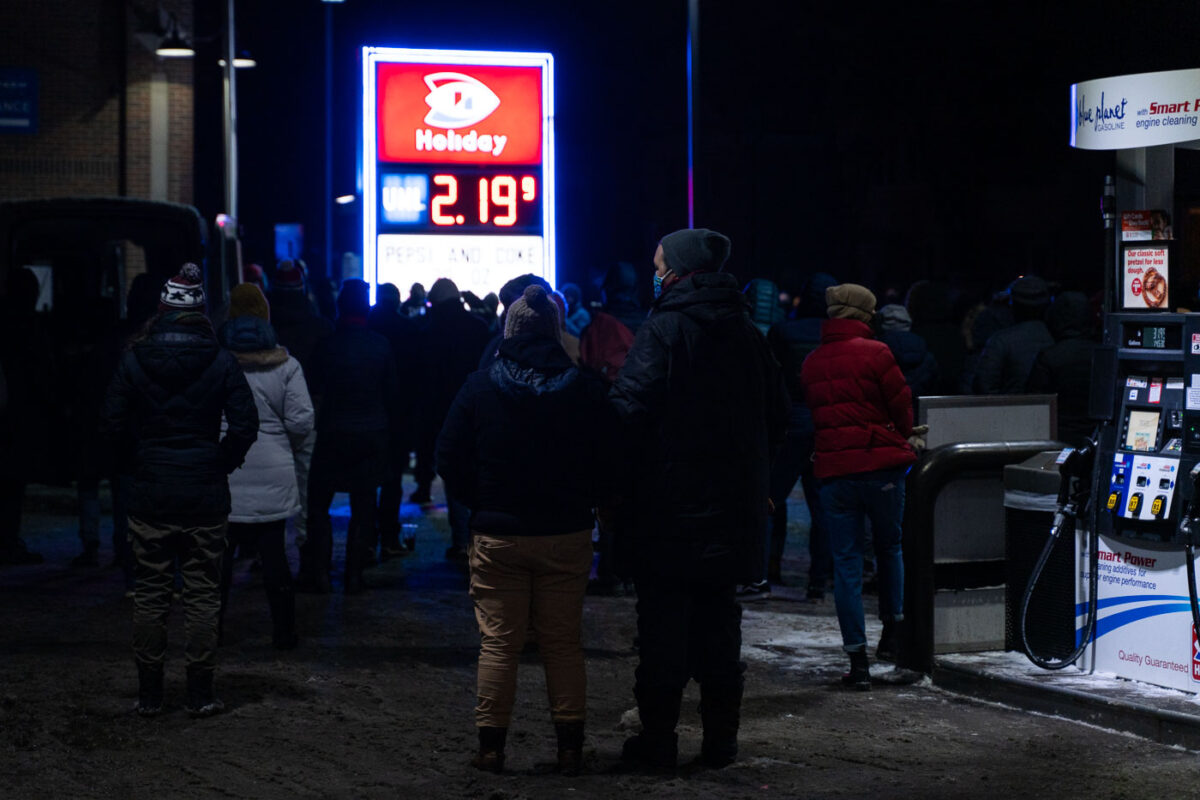
Protest the day after Dolal Idd was killed
Protesters gather at the Holiday Gas station located at 36th Avenue and Cedar Avenue in Minneapolis. This protest occurred on December 31, 2020, the day after Dolal Idd was shot and killed by Minneapolis police during a traffic stop.

Minneapolis Protest at Holiday Gas after Dolal Idd killing

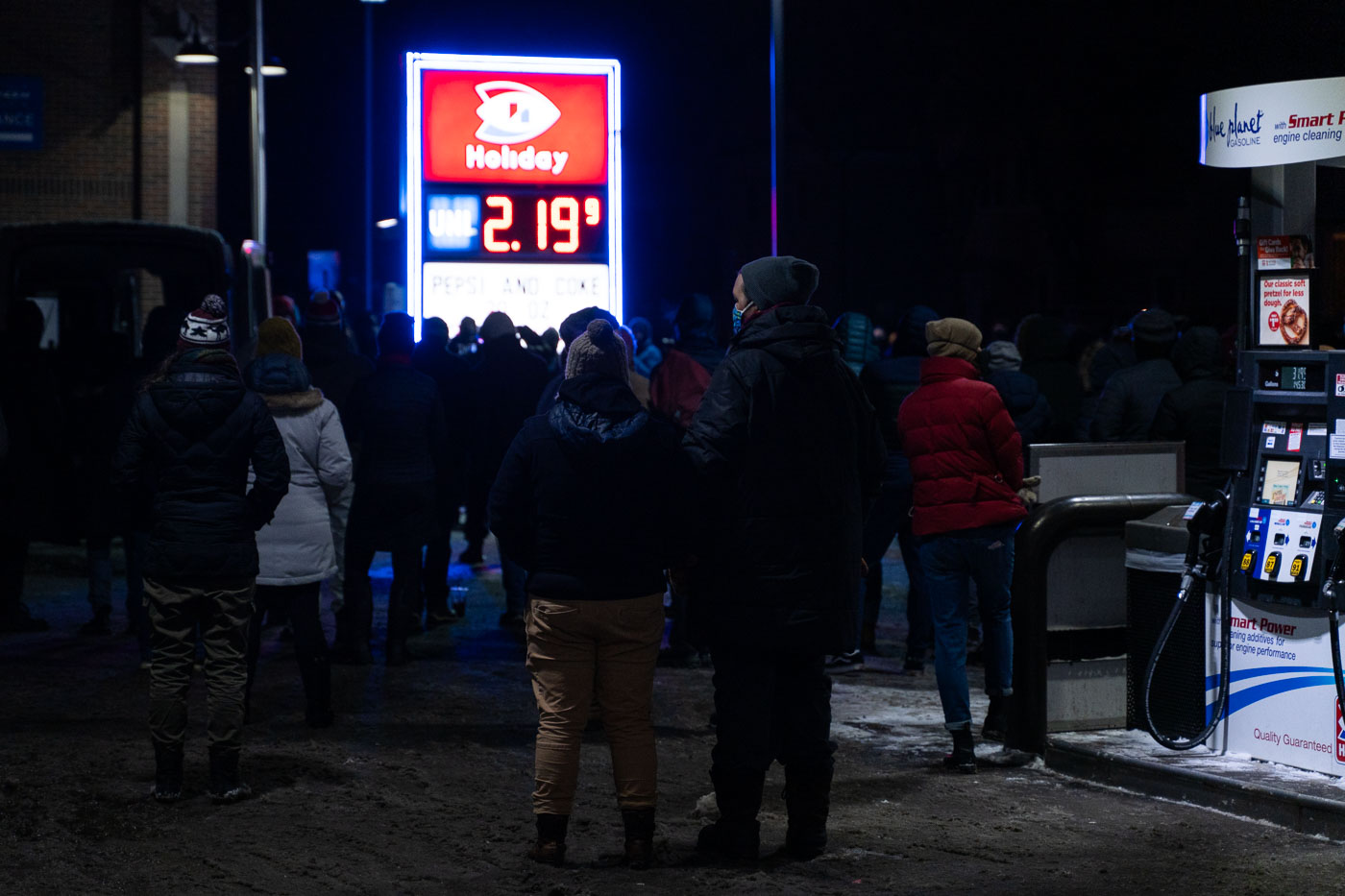
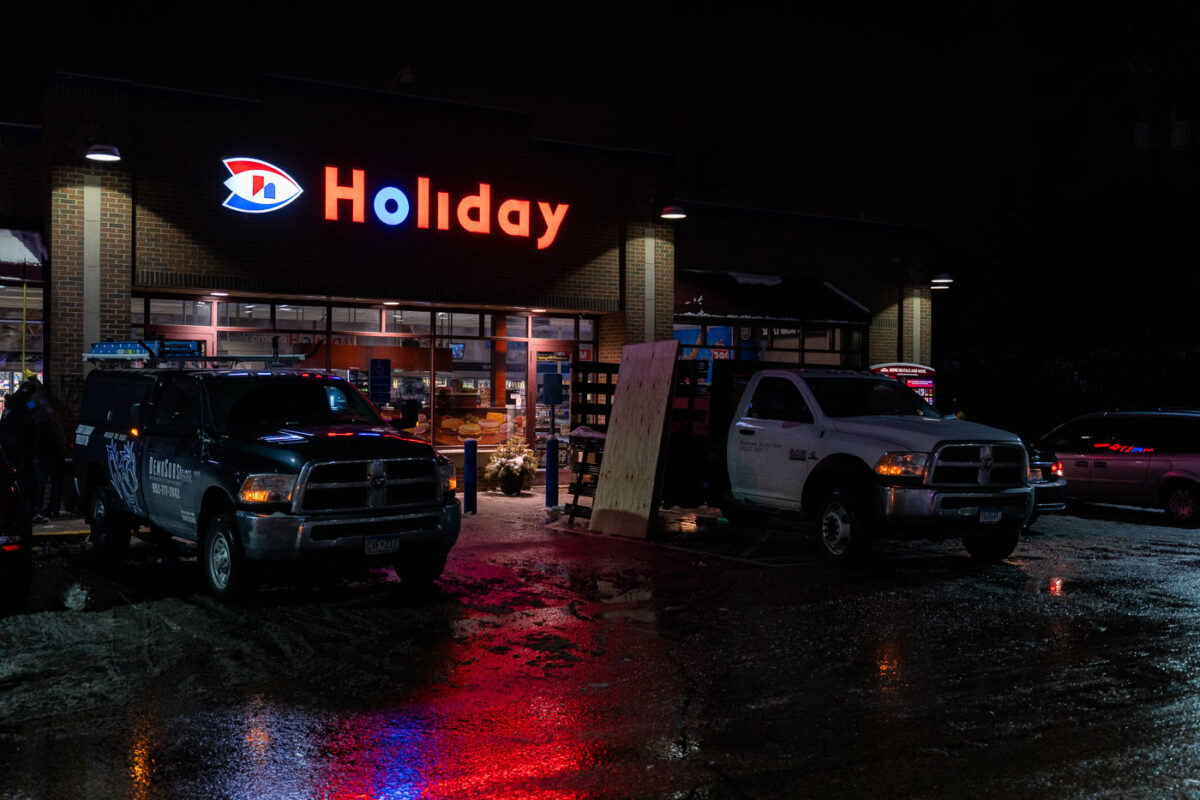
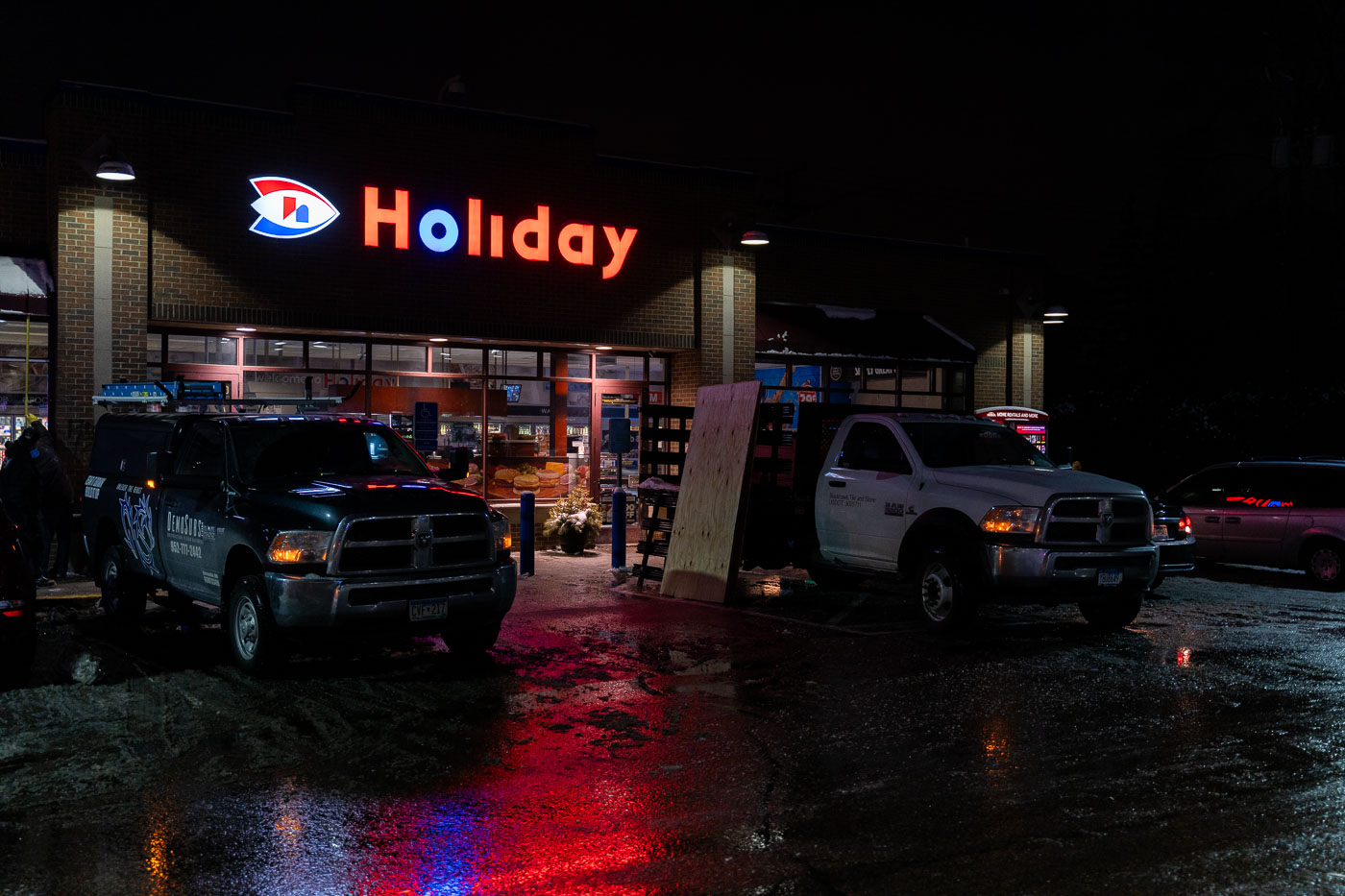
Boards going up at Holiday Gas after Dolal Idd shooting
Workers board up the windows of a Holiday Gas station on Cedar Avenue in South Minneapolis. This precautionary measure was taken in anticipation of potential unrest following the Minneapolis Police shooting of Dolal Idd on December 30, 2020. The incident occurred in a city that had experienced widespread protests and civil unrest earlier in 2020, particularly after the killing of George Floyd by Minneapolis police approximately one mile from this location.

Holiday Gas boarded on Cedar Ave after Dolal Idd killing

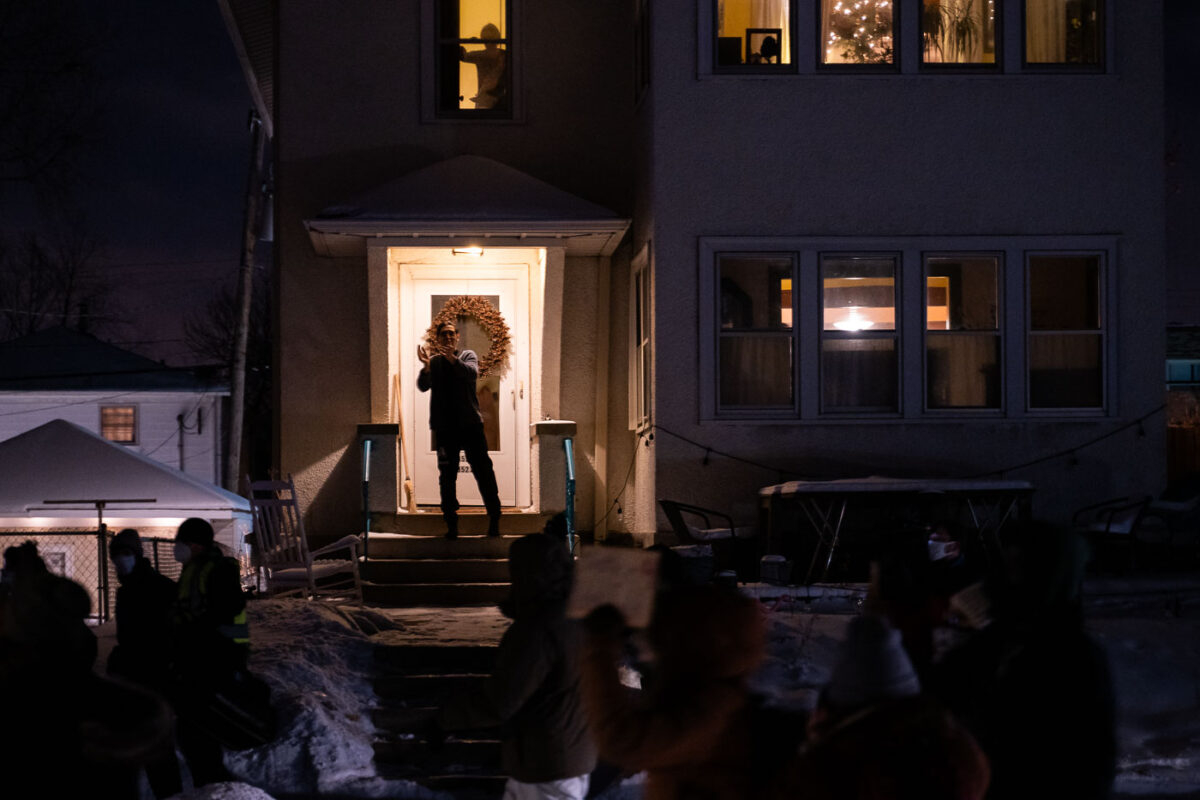
Neigbhor shows support for Dolal Idd protesters
A resident of 17th Avenue in Minneapolis applauds a march held in response to the killing of Dolal Idd by Minneapolis Police. The protest took place the night after Idd's death in December 2020, drawing participants through South Minneapolis.

Neighbor supports Dolal Idd march on 17th Ave, Minneapolis
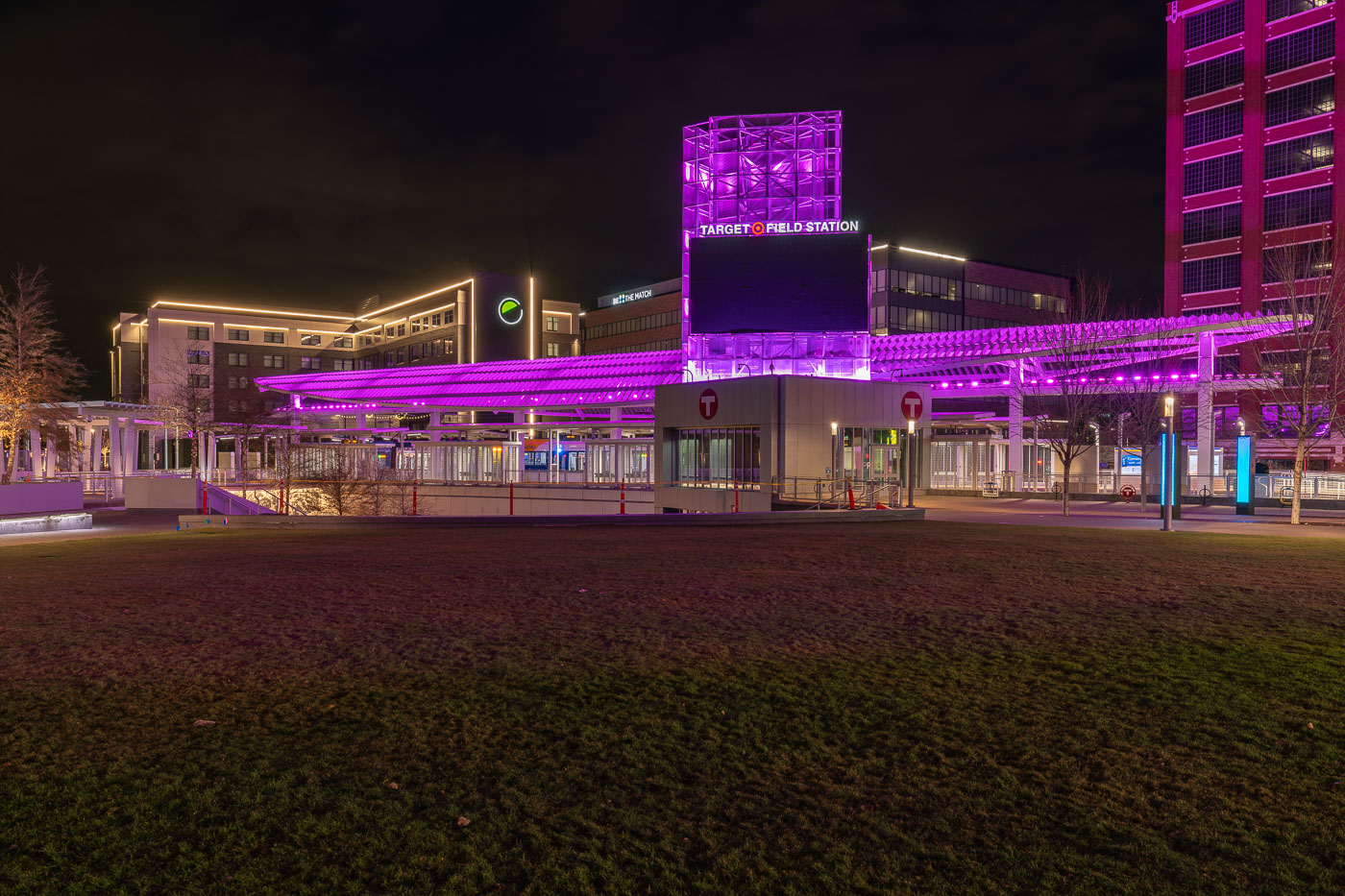
Dolal idd protesters march down Cedar Ave
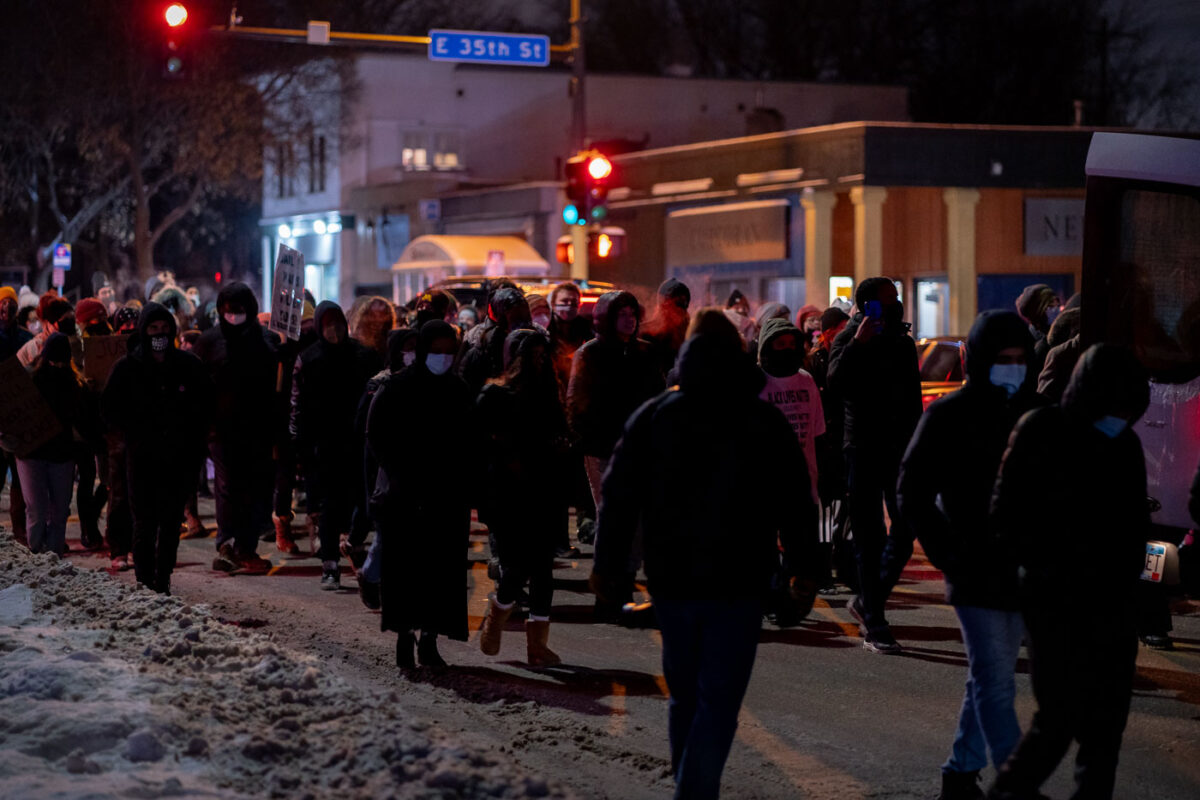
Protesters march on Cedar Avenue at East 35th Street in South Minneapolis, the night after Minneapolis police shot and killed Dolal Idd. The march addresses the police killing of Idd, which occurred during a firearm sting operation on December 30, 2020. Minneapolis Police released video footage, stating it showed Idd firing first from his vehicle.

Protesters March on Cedar Ave after Dolal Idd Killing

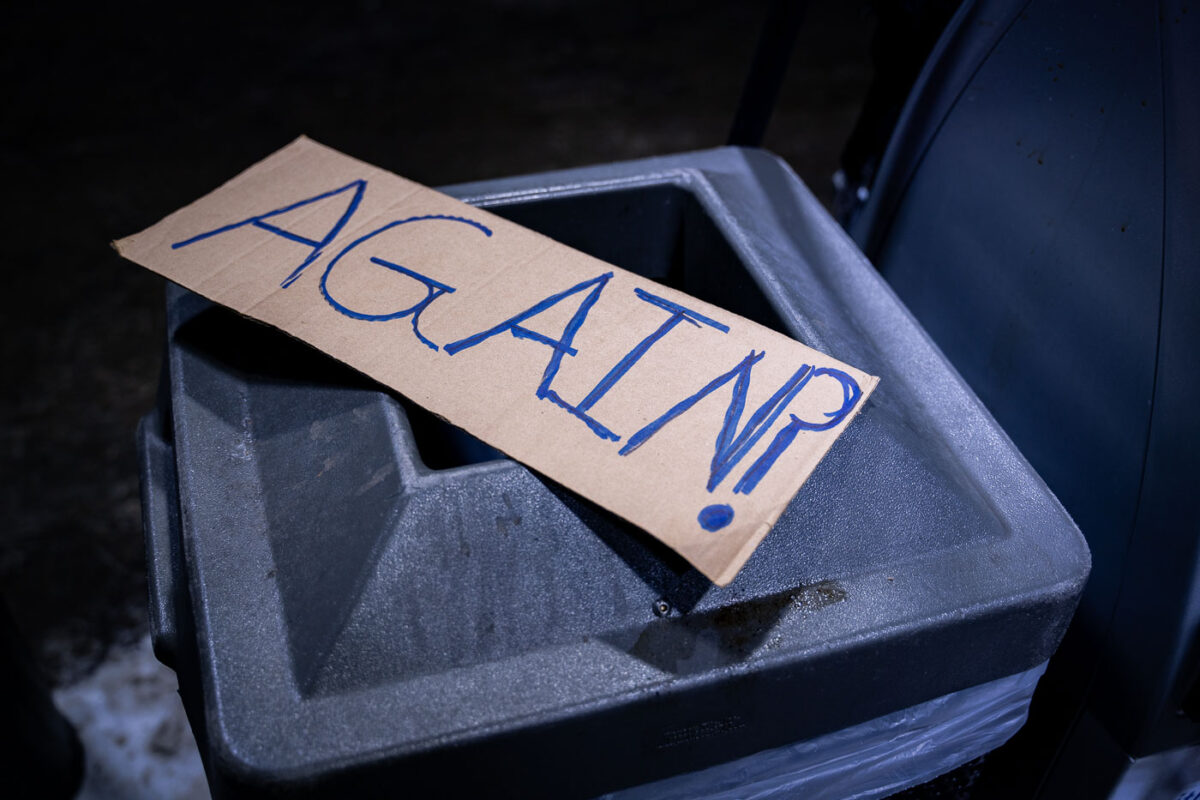
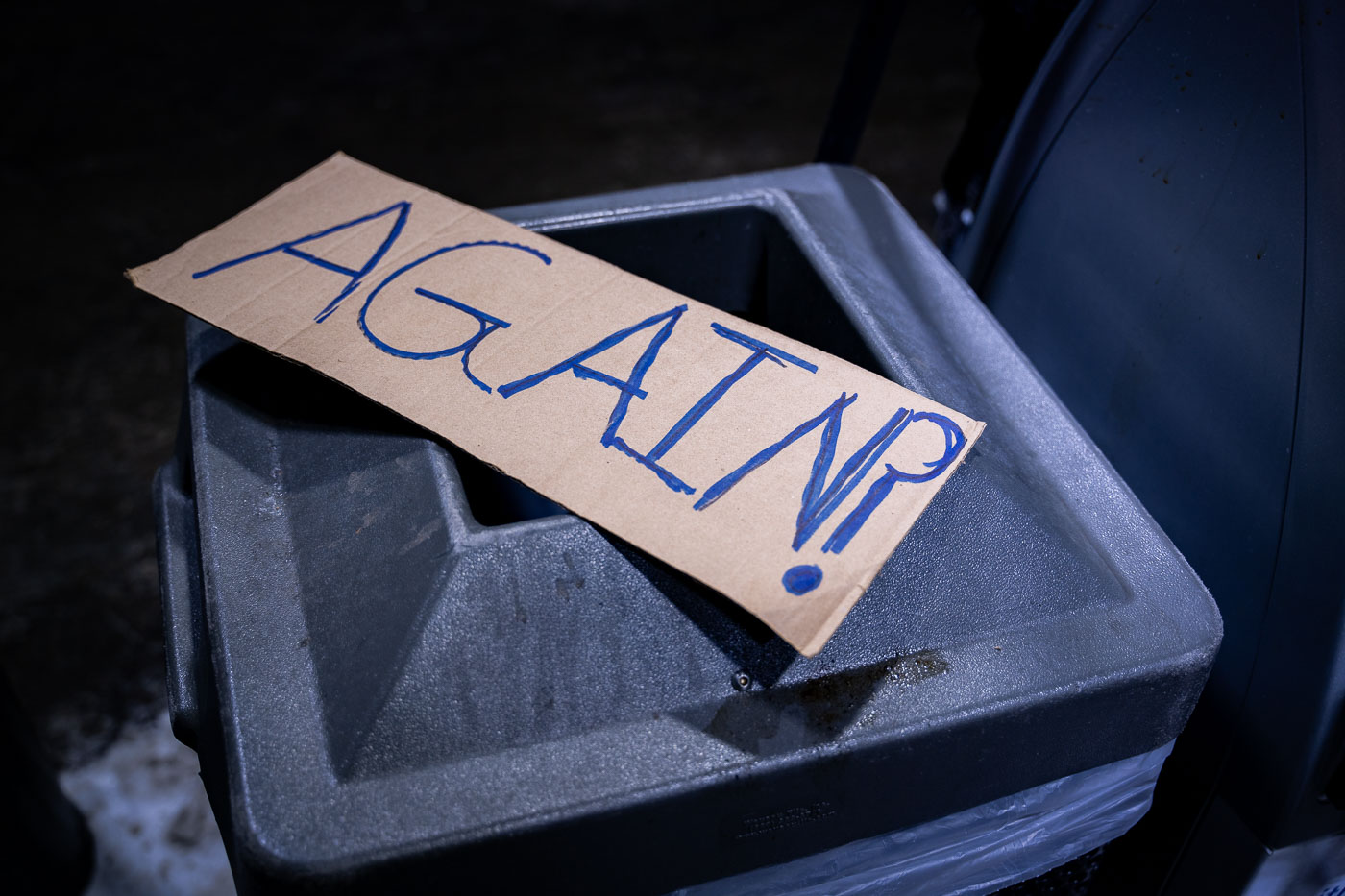
Protest sign that reads AGAIN
A protest sign reading "AGAIN?" rests on a public receptacle during a vigil for Dolal Idd on West 36th Street in Minneapolis. Dolal Idd was killed by Minneapolis Police on December 30, 2020, an event that prompted further public outcry. The question "AGAIN?" reflects community frustration and demands for accountability regarding police violence, connecting to the broader context of the Minneapolis Uprising.

AGAIN? Protest Sign, Dolal Idd Vigil, W 36th St, Minneapolis

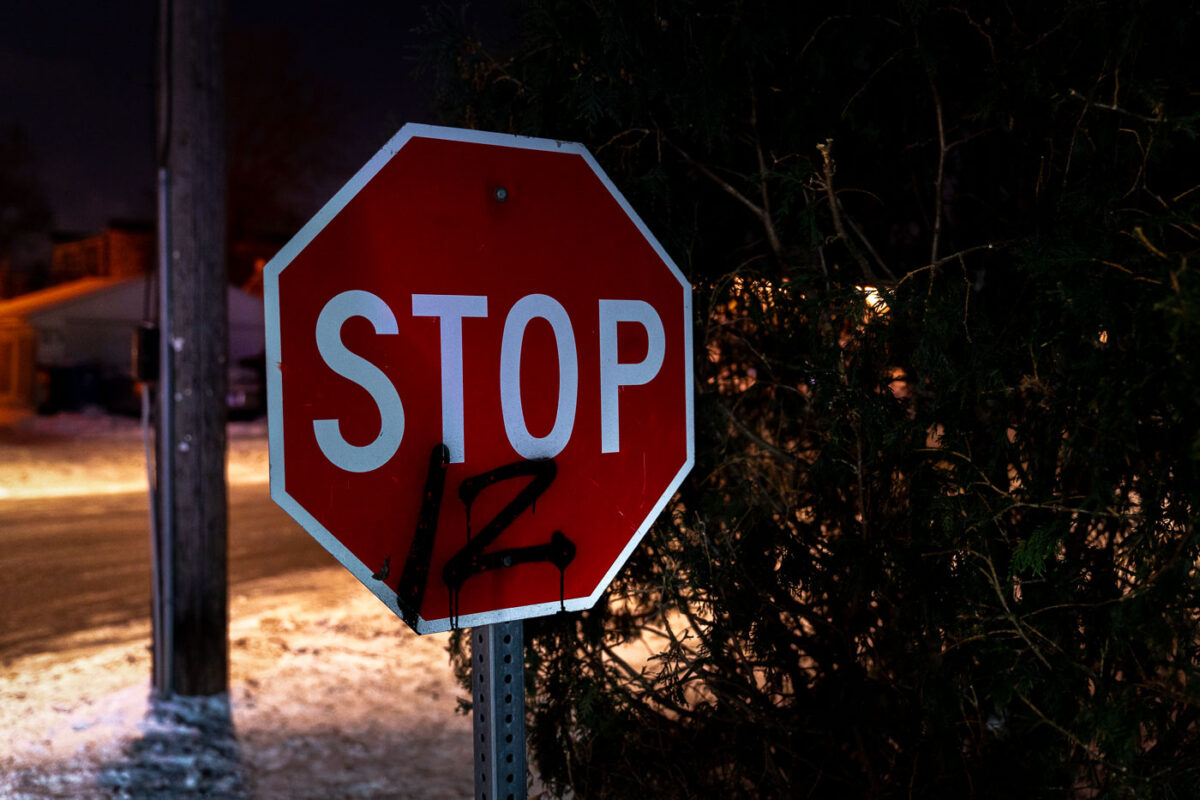
Stop 12 stop sign in South Minneapolis
The 'Stop 12' graffiti on this stop sign at Cedar Avenue in South Minneapolis emerged following the fatal shooting of Dolal Idd by Minneapolis Police on December 30, 2020. The incident occurred near a Holiday Gas station on Cedar Avenue, approximately one mile from the site where George Floyd was murdered. Minneapolis Police released video footage, stating it showed Idd firing first through his car window during a firearm sting operation.

Stop Sign with ‘Stop 12’ Graffiti, Cedar Ave, Minneapolis
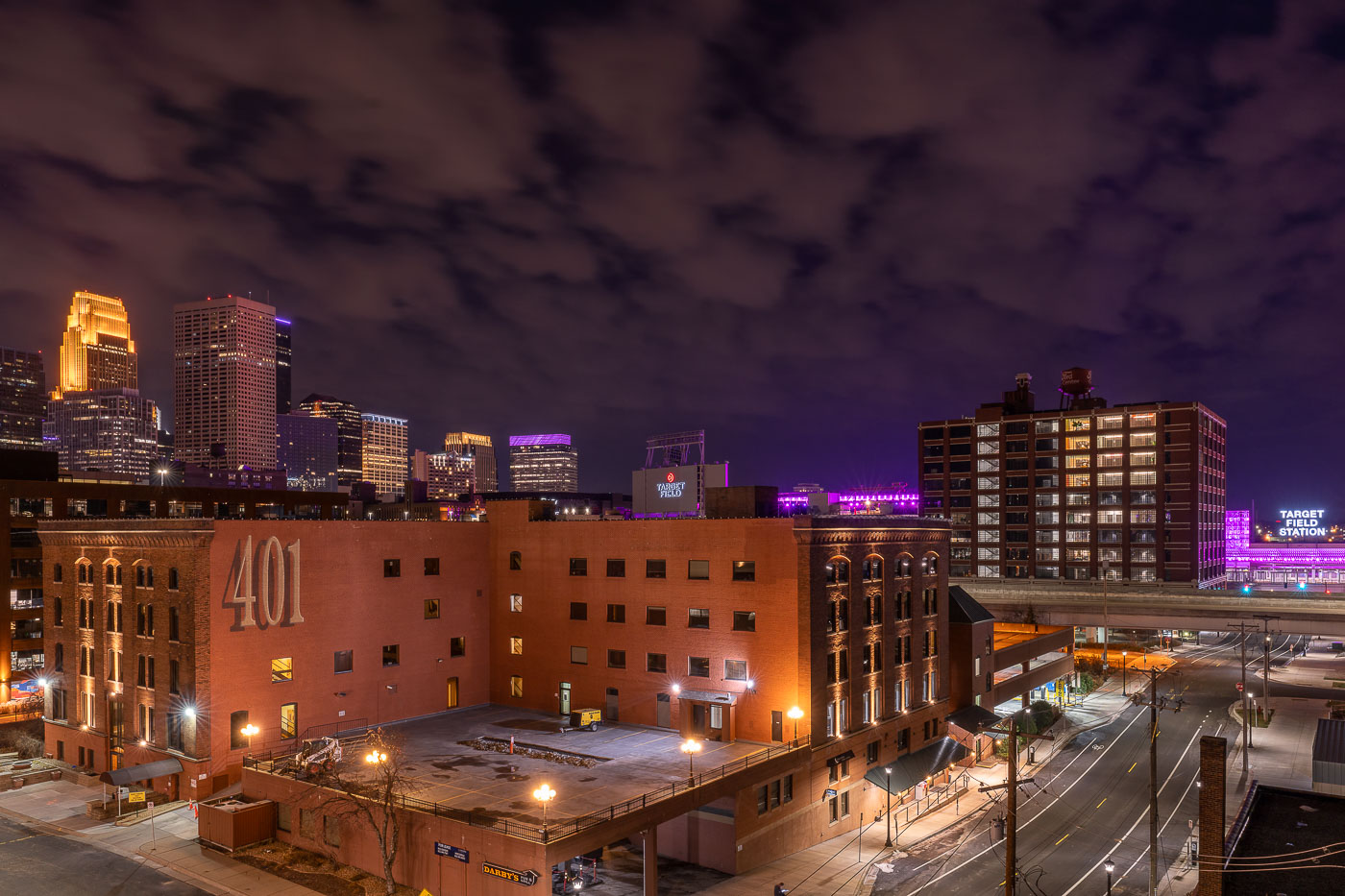
Noise demo protest in Minneapolis
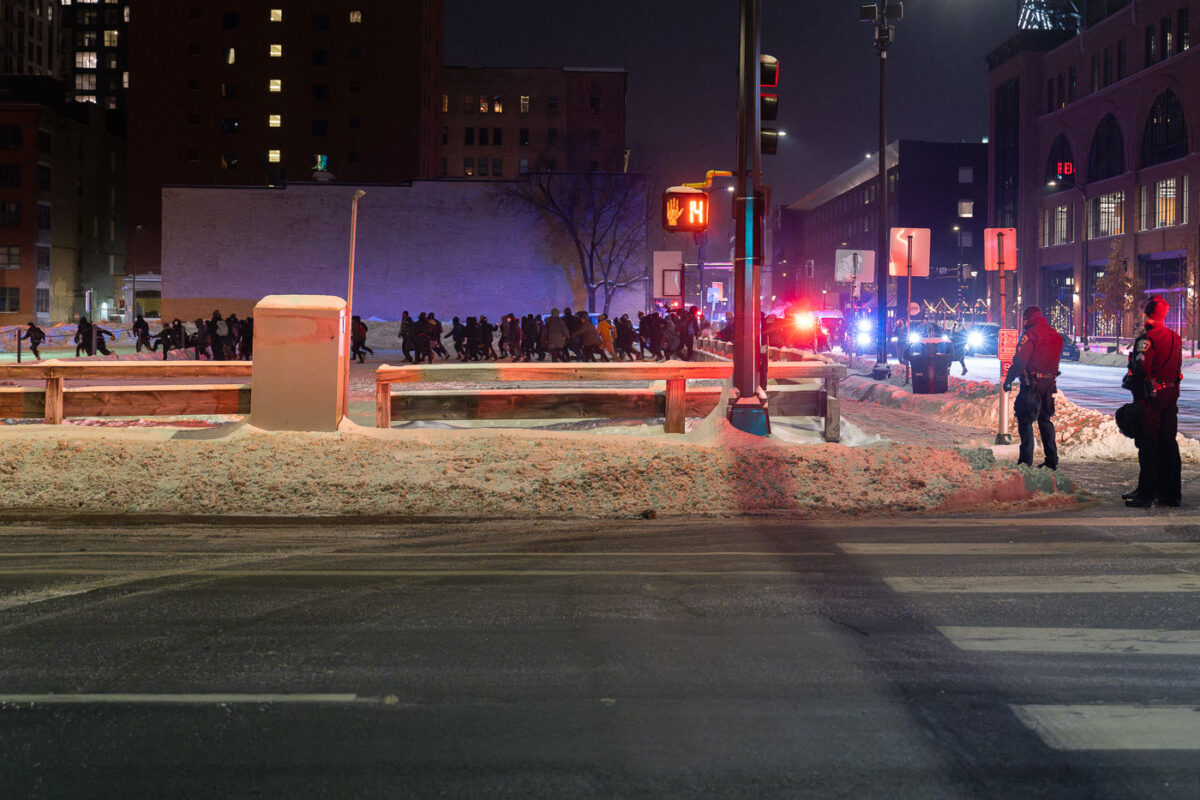
A New Year's Eve protest took place in Downtown Minneapolis, part of a nationwide call to support individuals imprisoned by the state. Approximately one hundred participants gathered in the urban environment. Law enforcement agencies, including the Minneapolis Police, State Patrol, Golden Valley PD, and Hennepin Sheriffs, responded to the event. Dozens of arrests were made after the Hennepin County Jail was spray-painted during the protest.

Downtown Minneapolis Protest, Police Response

Police at new years eve protest
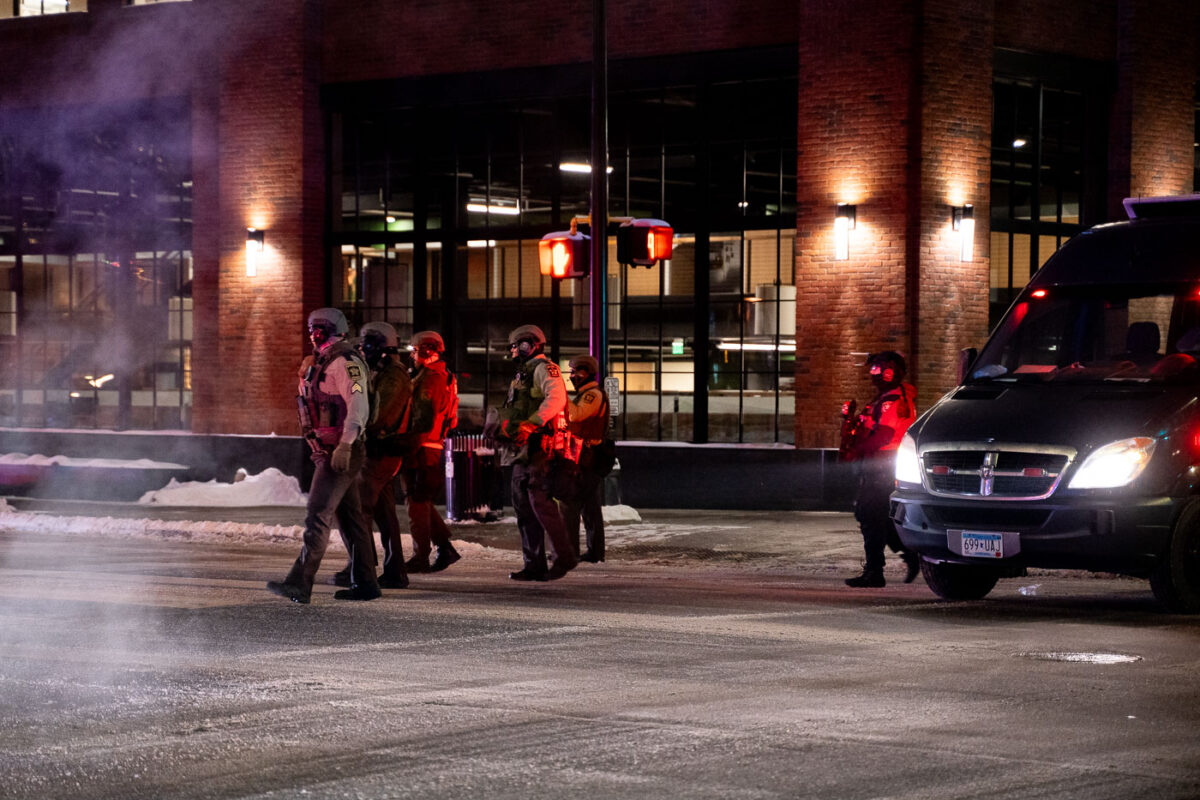
Hennepin County Sheriff's Department deputies are present in Downtown Minneapolis during a New Year's Eve protest. This event was part of an annual nationwide "Noise Protest" organized to call for the abolishing of prisons and to stand in solidarity with incarcerated individuals. The protest in Minneapolis led to approximately 40 arrests, reflecting ongoing public engagement with issues of criminal justice and incarceration.

Hennepin County Sheriff at Minneapolis New Year’s Eve Protest

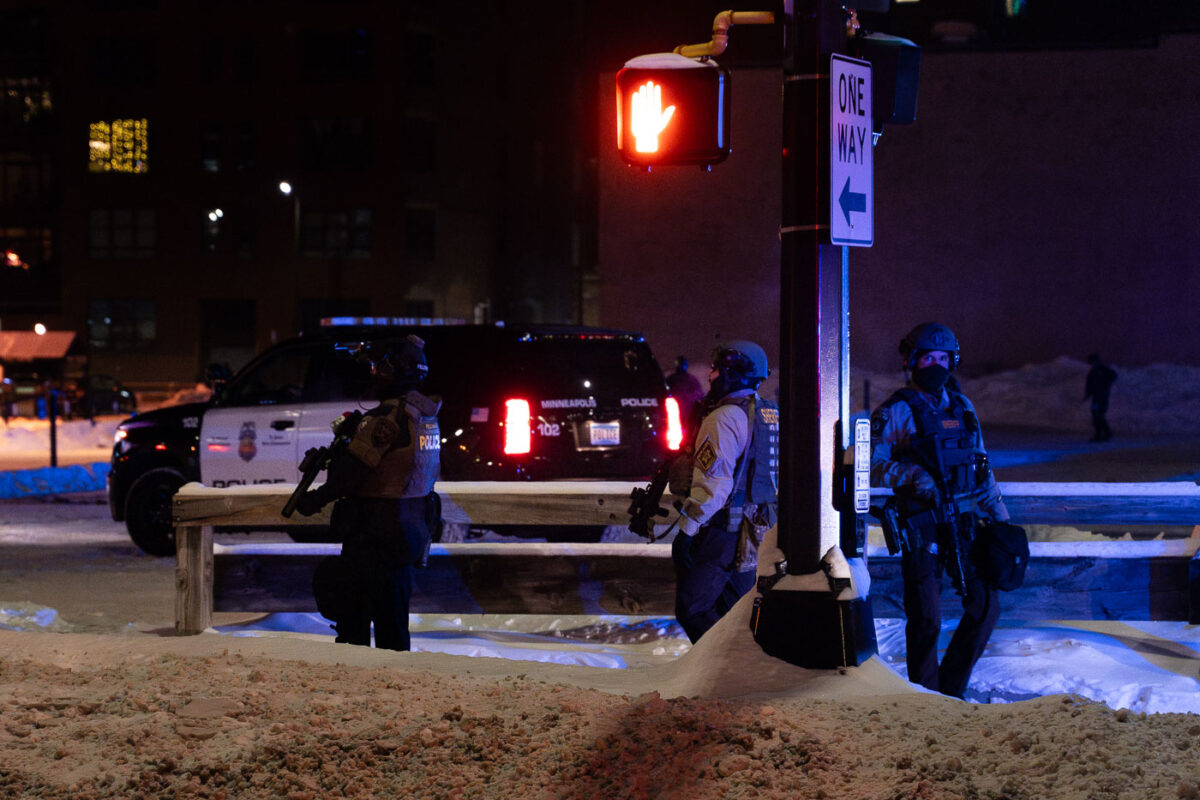
Police look for protesters on new years
On New Year's Eve, approximately 100 individuals gathered in Downtown Minneapolis for a nationwide protest supporting those imprisoned by the state. Following an incident where the Hennepin County Jail was spray-painted, multiple law enforcement agencies, including Minneapolis Police, State Patrol, Golden Valley Police Department, and Hennepin County Sheriffs, responded to the area. This coordinated response, which included state aerial surveillance, led to the arrest of dozens of participants.

Minneapolis Police & Hennepin Sheriff Respond to Noise Demo

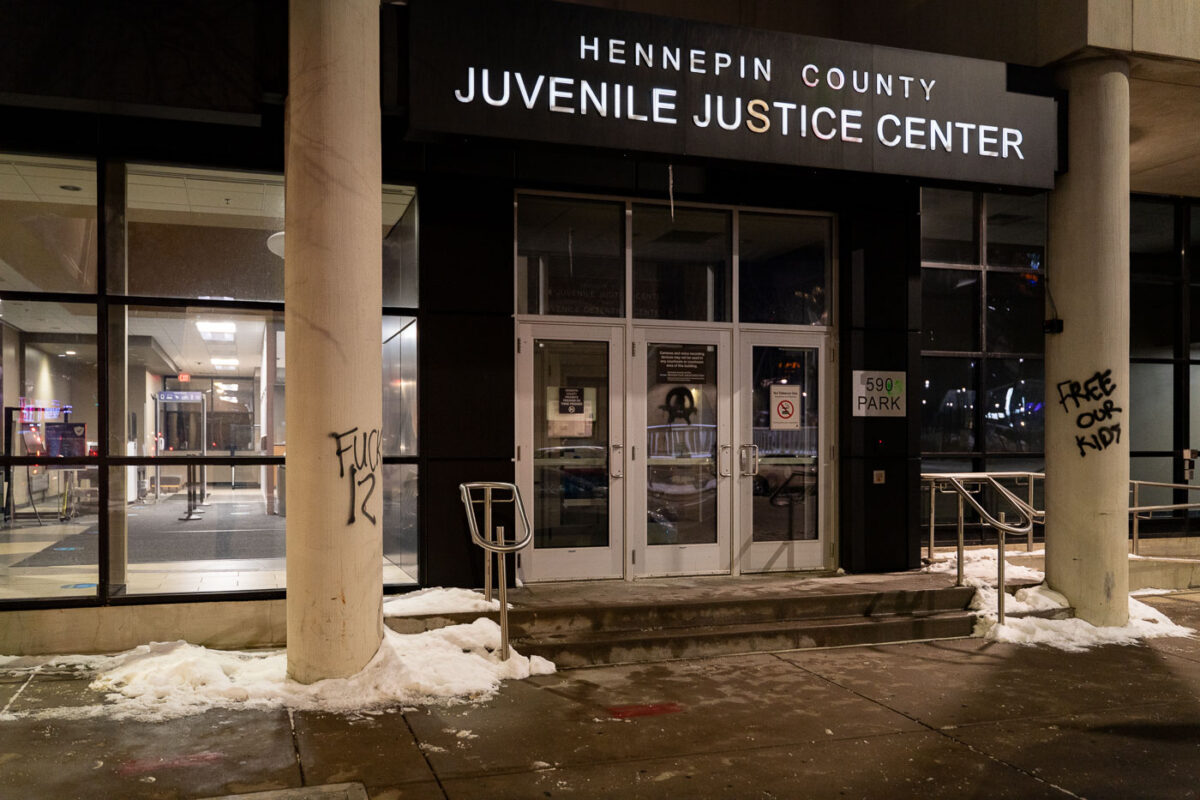
Anarchist Graffiti on Hennepin County Juvenile Justice center
On New Year's Eve, approximately one hundred individuals gathered for a nationwide call to protest in support of those incarcerated by the state. The Minneapolis Police Department, State Patrol, Golden Valley Police Department, and Hennepin County Sheriff's Office, along with aerial surveillance, responded to the Hennepin County Juvenile Justice Center. This response occurred after the building was spray-painted with graffiti, leading to the arrest of dozens of participants. The graffiti visible on the building's pillars includes the phrases "Fuck 12" and "Free Our Kids," reflecting anti-police sentiment and concern for youth in the justice system.

Minneapolis Juvenile Justice Center Graffiti and Protest Site

© 1996–2026 Chad Davis