Lake Street

644 photos · 2009–2026

644 photographs tagged Lake Street, 2009–2026.
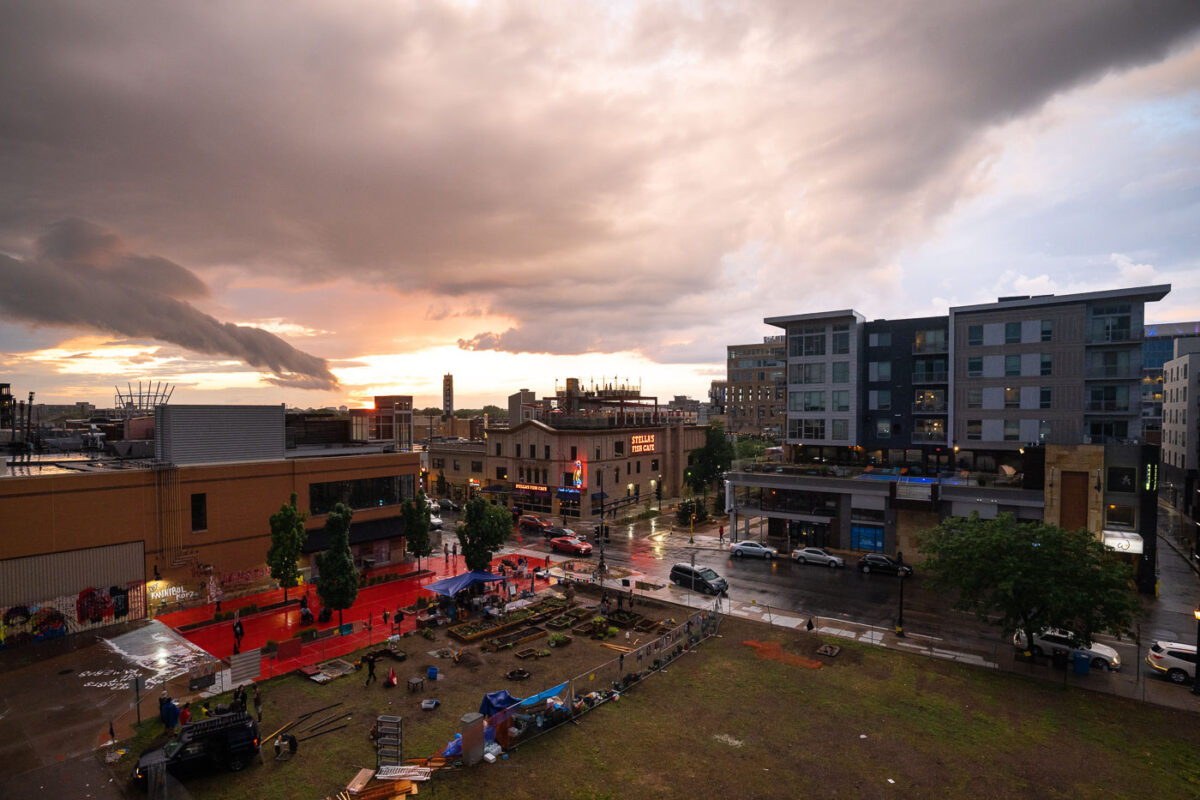
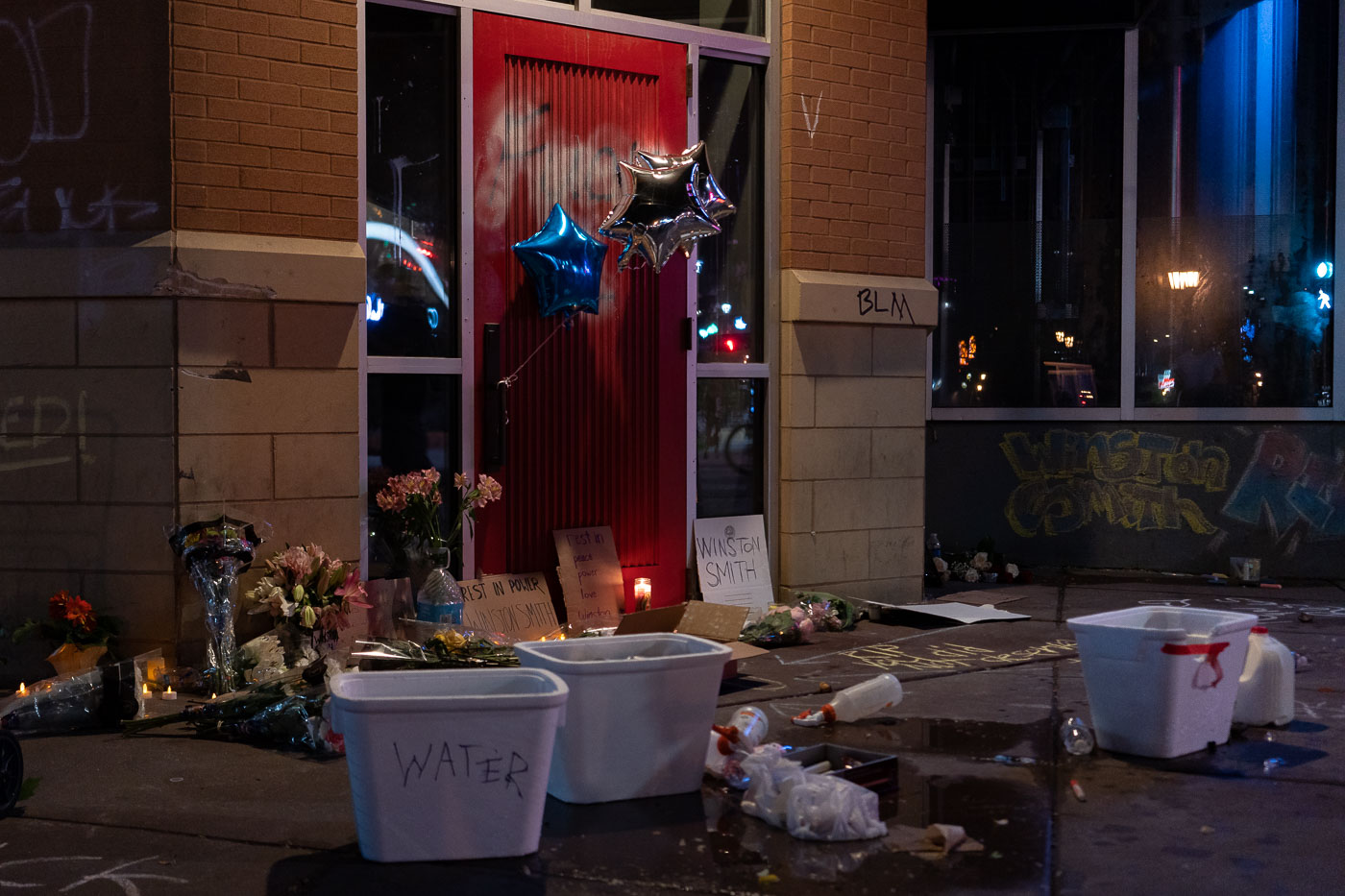
Winston Smith Protest Garden in Uptown Minneapolis at sunset after rain.
The Winston Smith Protest Garden in Uptown Minneapolis being established as a memorial following the deaths of Winston Smith and Deona Marie. On June 3, 2021, members of a U.S. Marshals Service fugitive task force fatally shot 32-year-old Winston “Boogie” Smith Jr. on the top level of a parking ramp in Minneapolis’ Uptown neighborhood while attempting to arrest him on a felony warrant. Authorities said Smith fired a handgun from inside his vehicle during the encounter, while family members and activists questioned the official account and demanded the release of additional evidence. The killing led to weeks of protests, street occupations, and confrontations with police in Uptown, becoming another major flashpoint in Minneapolis during the period following the murder of George Floyd. Earlier in the day Minneapolis city officials along with The Agape Movement coordinated to open the streets that had been closed at George Floyd Square since his murder. On June 13, 2021, 31-year-old Deona Marie Knajdek was killed when a driver accelerated into a group of demonstrators gathered in Minneapolis’ Uptown neighborhood during ongoing protests over the killing of Winston “Boogie” Smith Jr. Protesters had blocked the intersection of West Lake Street and Girard Avenue with vehicles and barricades when Nicholas Kraus drove a Jeep Cherokee into the crowd at high speed, killing Knajdek and injuring several others. Kraus was later charged with second-degree murder, two counts of second-degree assault with a dangerous weapon, and criminal vehicular operation. In 2023, he pleaded guilty to murder and assault charges and was sentenced to more than 20 years in prison for the attack.

Winston Smith Protest Garden, Uptown Minneapolis
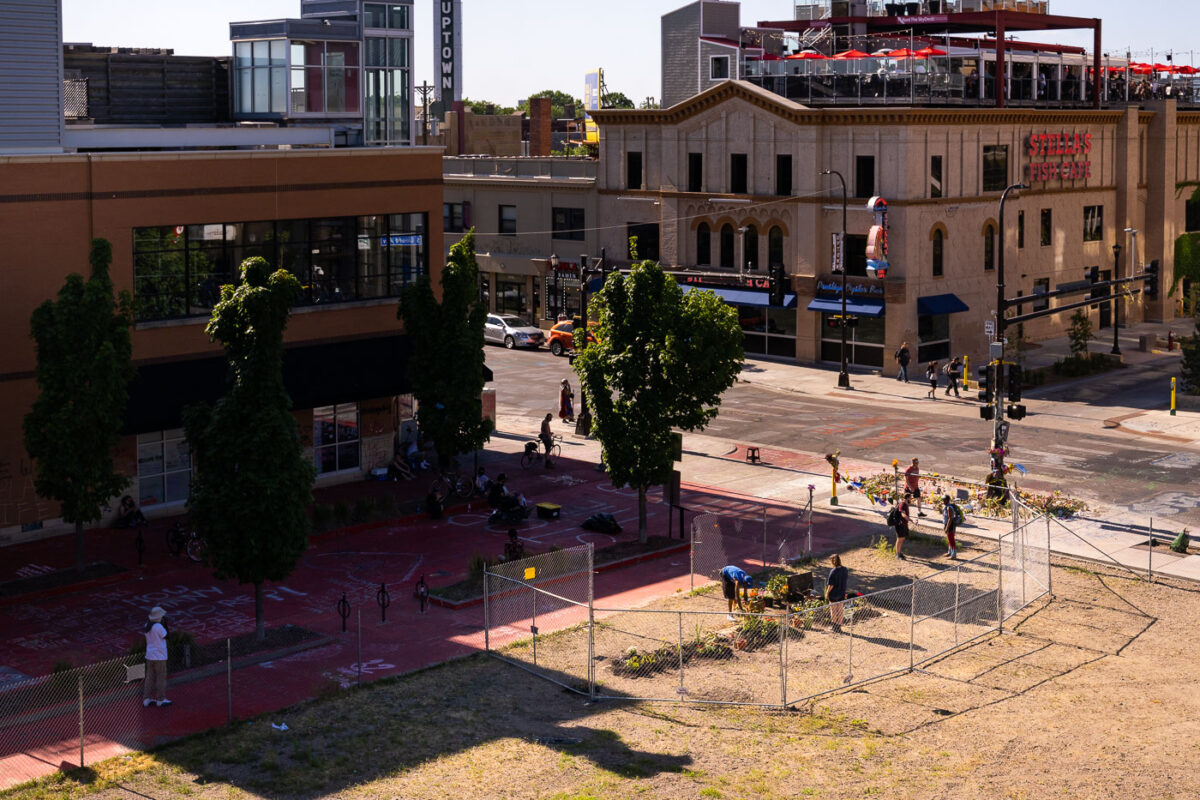
People tend a memorial garden at a fenced lot in Uptown Minneapolis near Lake Street.
A memorial garden being constructed on June 18, 2021 by protesters at the site where Winston Smith and Deona Marie were killed in Uptown Minneapolis. On June 3, 2021, members of a U.S. Marshals Service fugitive task force fatally shot 32-year-old Winston “Boogie” Smith Jr. on the top level of a parking ramp in Minneapolis’ Uptown neighborhood while attempting to arrest him on a felony warrant. Authorities said Smith fired a handgun from inside his vehicle during the encounter, while family members and activists questioned the official account and demanded the release of additional evidence. The killing led to weeks of protests, street occupations, and confrontations with police in Uptown, becoming another major flashpoint in Minneapolis during the period following the murder of George Floyd. Earlier in the day Minneapolis city officials along with The Agape Movement coordinated to open the streets that had been closed at George Floyd Square since his murder. On June 13, 2021, 31-year-old Deona Marie Knajdek was killed when a driver accelerated into a group of demonstrators gathered in Minneapolis’ Uptown neighborhood during ongoing protests over the killing of Winston “Boogie” Smith Jr. Protesters had blocked the intersection of West Lake Street and Girard Avenue with vehicles and barricades when Nicholas Kraus drove a Jeep Cherokee into the crowd at high speed, killing Knajdek and injuring several others. Kraus was later charged with second-degree murder, two counts of second-degree assault with a dangerous weapon, and criminal vehicular operation. In 2023, he pleaded guilty to murder and assault charges and was sentenced to more than 20 years in prison for the attack.

Winston Smith Protest Site Memorial Garden, Uptown Minneapolis
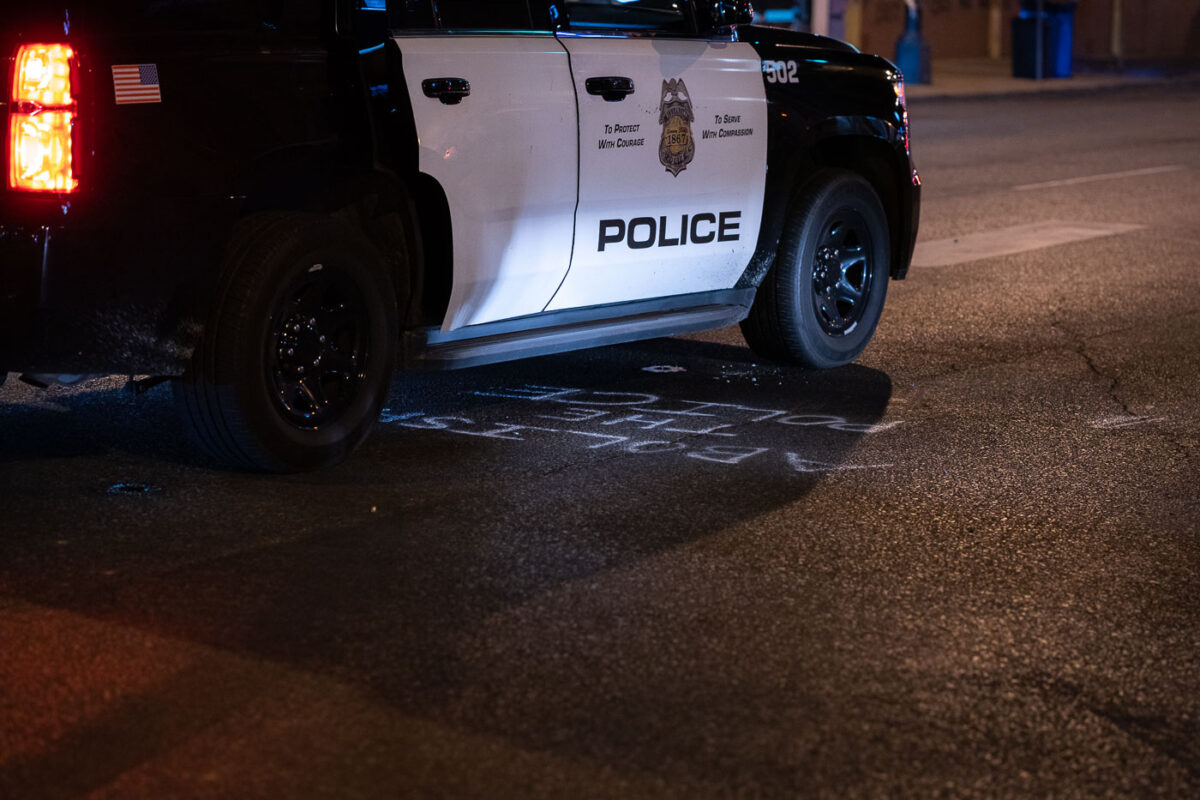
Minneapolis police SUV parked over graffiti on Lake Street in Minneapolis at night.
A Minneapolis Police squad car is positioned over "Abolish The Police" graffiti on Lake Street in Uptown Minneapolis. The image was take on June 16, 2021 during unrest following the killings of Deona Marie and Winston Smith. On June 3, 2021, members of a U.S. Marshals Service fugitive task force fatally shot 32-year-old Winston “Boogie” Smith Jr. on the top level of a parking ramp in Minneapolis’ Uptown neighborhood while attempting to arrest him on a felony warrant. Authorities said Smith fired a handgun from inside his vehicle during the encounter, while family members and activists questioned the official account and demanded the release of additional evidence. The killing led to weeks of protests, street occupations, and confrontations with police in Uptown, becoming another major flashpoint in Minneapolis during the period following the murder of George Floyd. Earlier in the day Minneapolis city officials along with The Agape Movement coordinated to open the streets that had been closed at George Floyd Square since his murder. On June 13, 2021, 31-year-old Deona Marie Knajdek was killed when a driver accelerated into a group of demonstrators gathered in Minneapolis’ Uptown neighborhood during ongoing protests over the killing of Winston “Boogie” Smith Jr. Protesters had blocked the intersection of West Lake Street and Girard Avenue with vehicles and barricades when Nicholas Kraus drove a Jeep Cherokee into the crowd at high speed, killing Knajdek and injuring several others. Kraus was later charged with second-degree murder, two counts of second-degree assault with a dangerous weapon, and criminal vehicular operation. In 2023, he pleaded guilty to murder and assault charges and was sentenced to more than 20 years in prison for the attack.

Minneapolis Police Car Over “Abolish The Police” Graffiti on Lake Street
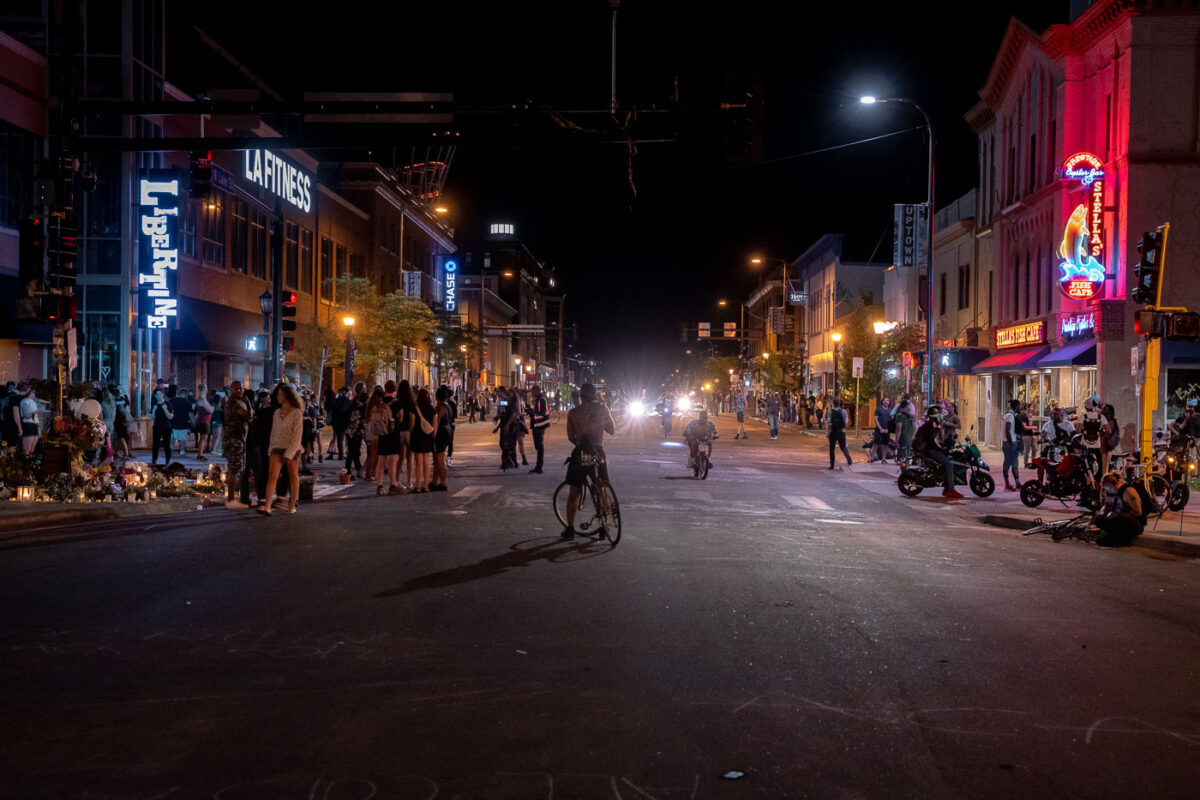
People gather around a memorial on Lake Street in Minneapolis at night.
A memorial for Deona Marie is set up on Lake Street in Minneapolis on what would have been her birthday. Marie was killed when Nicholas Kraus drove his vehicle into a crowd of protesters. On June 13, 2021, 31-year-old Deona Marie Knajdek was killed when a driver accelerated into a group of demonstrators gathered in Minneapolis’ Uptown neighborhood during ongoing protests over the killing of Winston “Boogie” Smith Jr. Protesters had blocked the intersection of West Lake Street and Girard Avenue with vehicles and barricades when Nicholas Kraus drove a Jeep Cherokee into the crowd at high speed, killing Knajdek and injuring several others. Kraus was later charged with second-degree murder, two counts of second-degree assault with a dangerous weapon, and criminal vehicular operation. In 2023, he pleaded guilty to murder and assault charges and was sentenced to more than 20 years in prison for the attack. On June 3, 2021, members of a U.S. Marshals Service fugitive task force fatally shot 32-year-old Winston “Boogie” Smith Jr. on the top level of a parking ramp in Minneapolis’ Uptown neighborhood while attempting to arrest him on a felony warrant. Authorities said Smith fired a handgun from inside his vehicle during the encounter, while family members and activists questioned the official account and demanded the release of additional evidence. The killing led to weeks of protests, street occupations, and confrontations with police in Uptown, becoming another major flashpoint in Minneapolis during the period following the murder of George Floyd. Earlier in the day Minneapolis city officials along with The Agape Movement coordinated to open the streets that had been closed at George Floyd Square since his murder.

Lake Street Memorial for Deona Marie in Minneapolis
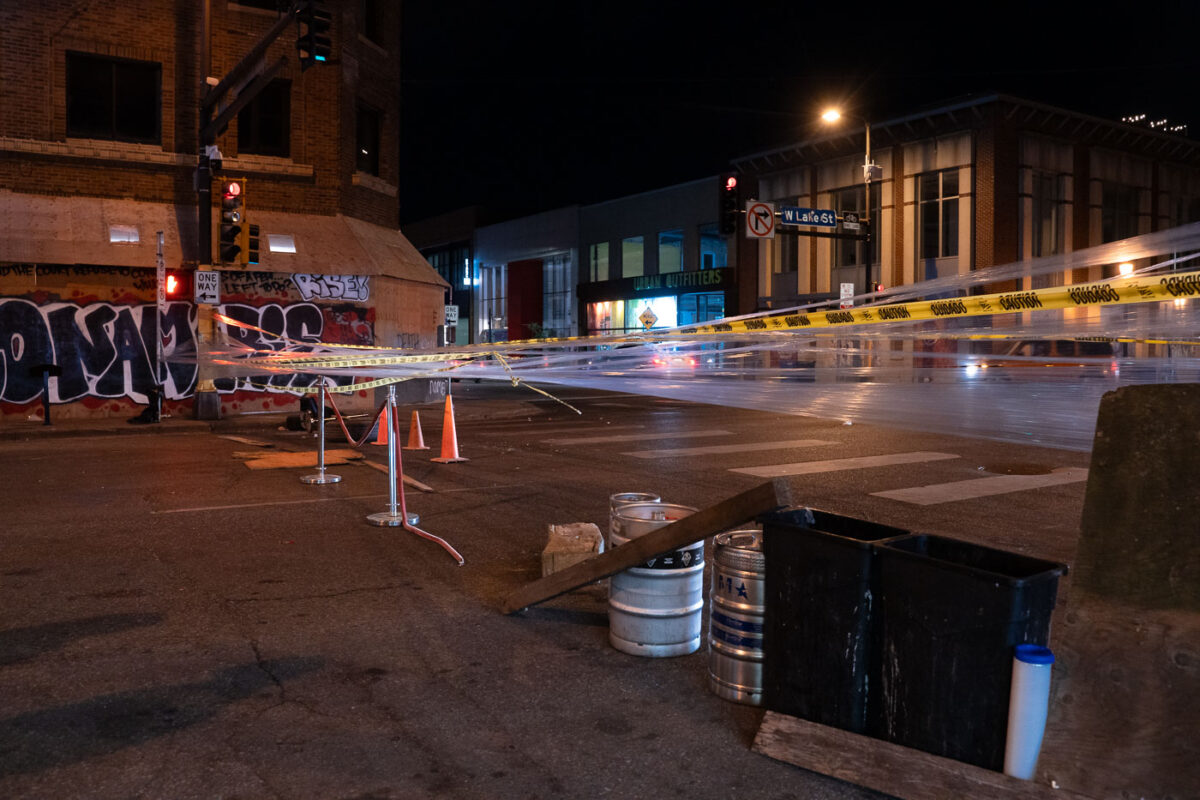
Barricades and caution tape block Lake Street at Hennepin Avenue in Minneapolis at night.
Street barricades are visible at the intersection of Hennepin Avenue and Lake Street in Minneapolis, following protests in August 2021. These protests were sparked by the deaths of Winston Smith and Deona Marie. On June 3, 2021, members of a U.S. Marshals Service fugitive task force fatally shot 32-year-old Winston “Boogie” Smith Jr. on the top level of a parking ramp in Minneapolis’ Uptown neighborhood while attempting to arrest him on a felony warrant. Authorities said Smith fired a handgun from inside his vehicle during the encounter, while family members and activists questioned the official account and demanded the release of additional evidence. The killing led to weeks of protests, street occupations, and confrontations with police in Uptown, becoming another major flashpoint in Minneapolis during the period following the murder of George Floyd. Earlier in the day Minneapolis city officials along with The Agape Movement coordinated to open the streets that had been closed at George Floyd Square since his murder. On June 13, 2021, 31-year-old Deona Marie Knajdek was killed when a driver accelerated into a group of demonstrators gathered in Minneapolis’ Uptown neighborhood during ongoing protests over the killing of Winston “Boogie” Smith Jr. Protesters had blocked the intersection of West Lake Street and Girard Avenue with vehicles and barricades when Nicholas Kraus drove a Jeep Cherokee into the crowd at high speed, killing Knajdek and injuring several others. Kraus was later charged with second-degree murder, two counts of second-degree assault with a dangerous weapon, and criminal vehicular operation. In 2023, he pleaded guilty to murder and assault charges and was sentenced to more than 20 years in prison for the attack.

Barricades on Lake Street, Minneapolis, During Protests
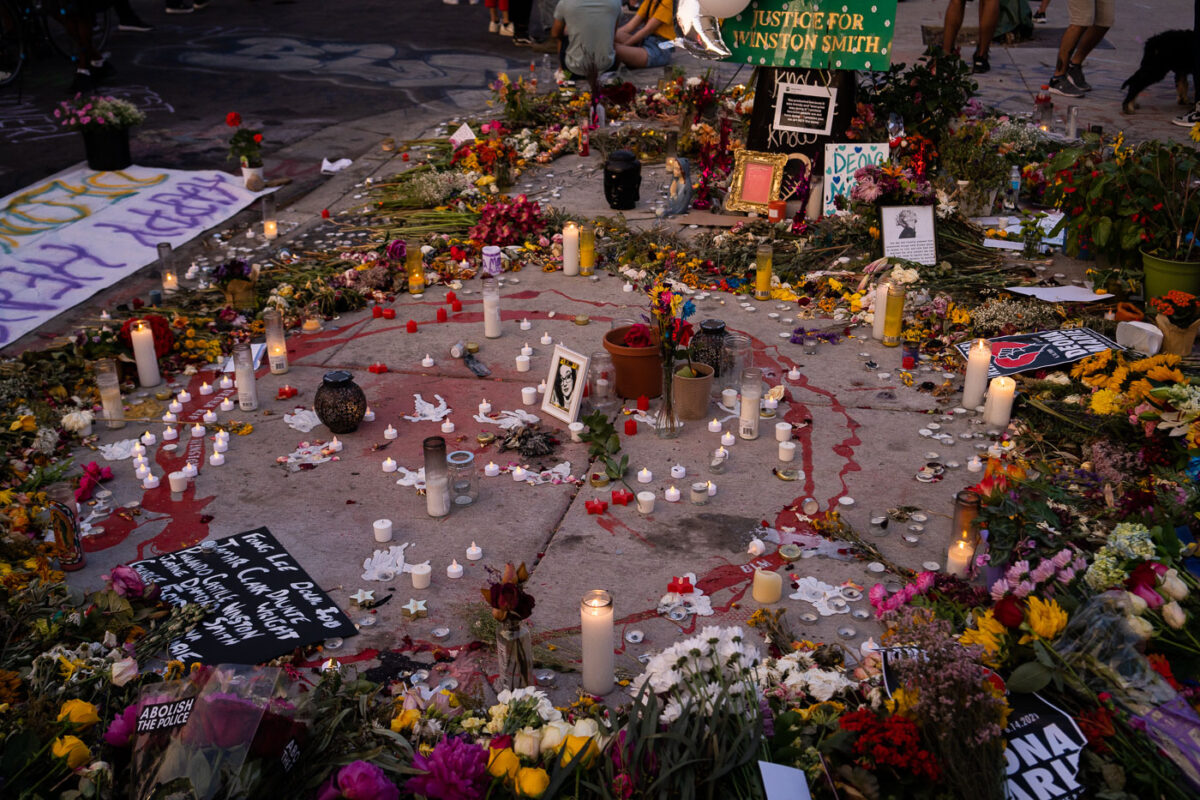
Memorial for Deona Marie on Lake Street in Minneapolis with candles, flowers and signs honoring Winston Smith
A memorial for Deona Marie, who was killed on June 13th, 2021, on Lake Street in Minneapolis. On June 13, 2021, 31-year-old Deona Marie Knajdek was killed when a driver accelerated into a group of demonstrators gathered in Minneapolis’ Uptown neighborhood during ongoing protests over the killing of Winston “Boogie” Smith Jr. Protesters had blocked the intersection of West Lake Street and Girard Avenue with vehicles and barricades when Nicholas Kraus drove a Jeep Cherokee into the crowd at high speed, killing Knajdek and injuring several others. Kraus was later charged with second-degree murder, two counts of second-degree assault with a dangerous weapon, and criminal vehicular operation. In 2023, he pleaded guilty to murder and assault charges and was sentenced to more than 20 years in prison for the attack. On June 3, 2021, members of a U.S. Marshals Service fugitive task force fatally shot 32-year-old Winston “Boogie” Smith Jr. on the top level of a parking ramp in Minneapolis’ Uptown neighborhood while attempting to arrest him on a felony warrant. Authorities said Smith fired a handgun from inside his vehicle during the encounter, while family members and activists questioned the official account and demanded the release of additional evidence. The killing led to weeks of protests, street occupations, and confrontations with police in Uptown, becoming another major flashpoint in Minneapolis during the period following the murder of George Floyd. Earlier in the day Minneapolis city officials along with The Agape Movement coordinated to open the streets that had been closed at George Floyd Square since his murder.

Deona Marie Memorial on Lake Street, Minneapolis
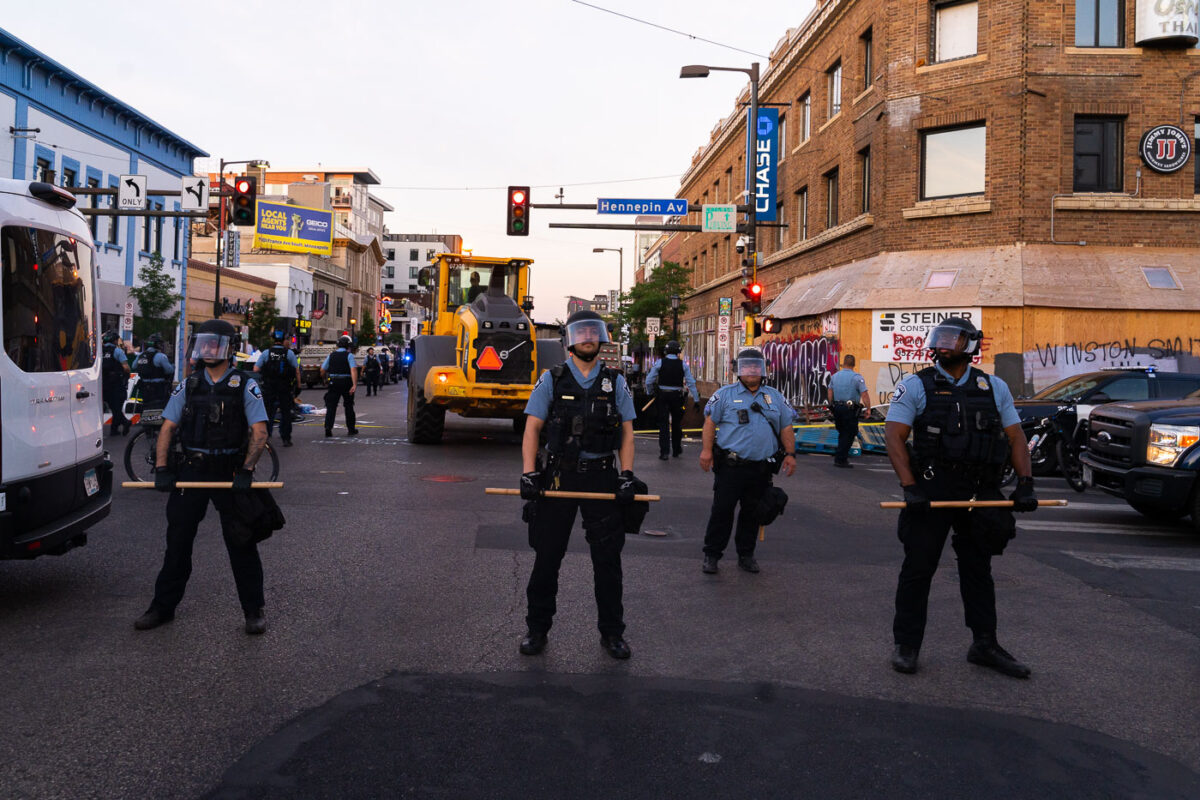
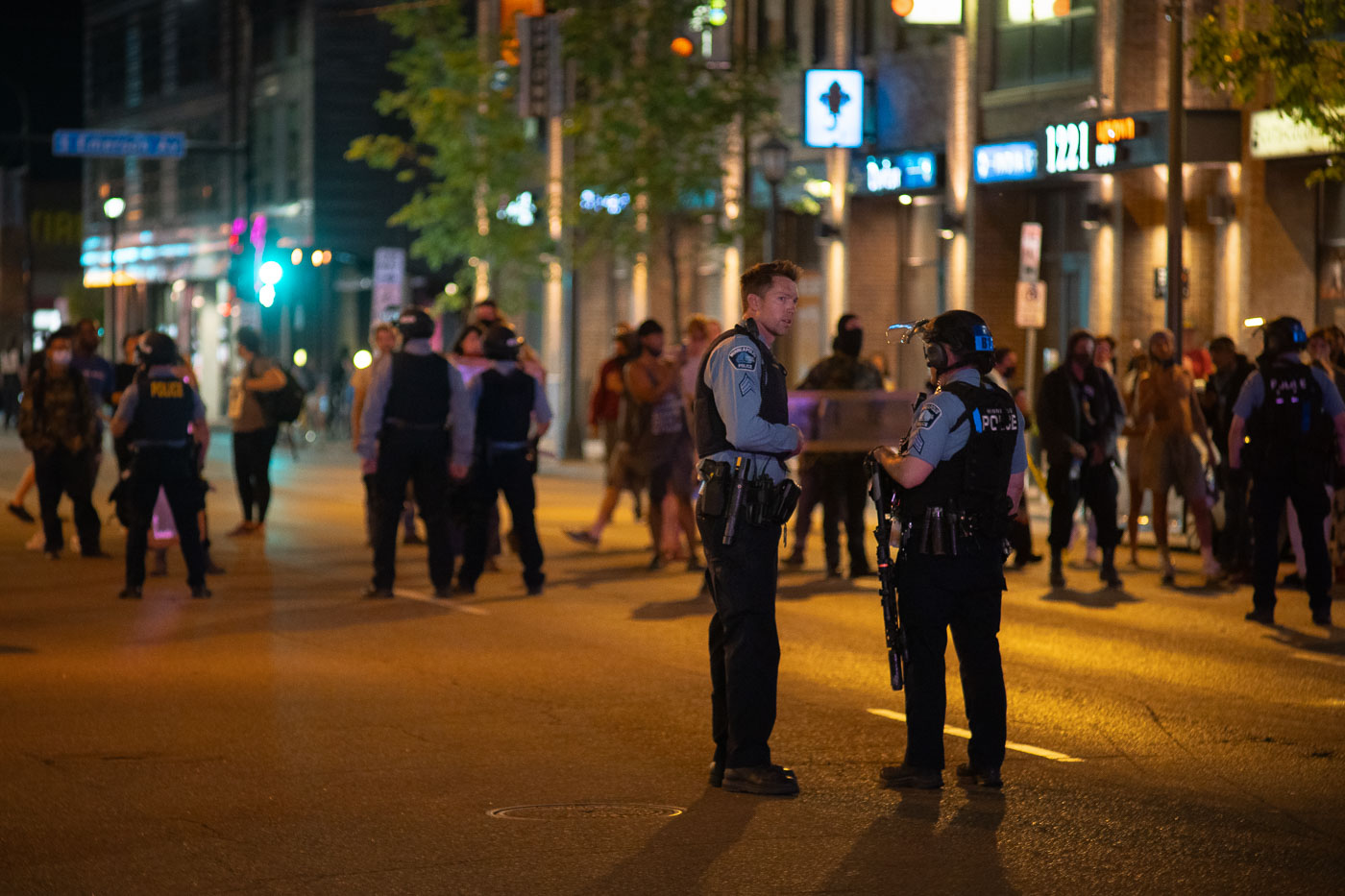
Minneapolis police officers stand in formation on Hennepin Avenue at Lake Street.
Minneapolis Police officers stand in formation on Hennepin Avenue at Lake Street in Uptown Minneapolis on June 15, 2021. This comes after protesters had been blocking the roads following the killings of Winston Smith and Deona Marie. On June 3, 2021, members of a U.S. Marshals Service fugitive task force fatally shot 32-year-old Winston “Boogie” Smith Jr. on the top level of a parking ramp in Minneapolis’ Uptown neighborhood while attempting to arrest him on a felony warrant. Authorities said Smith fired a handgun from inside his vehicle during the encounter, while family members and activists questioned the official account and demanded the release of additional evidence. The killing led to weeks of protests, street occupations, and confrontations with police in Uptown, becoming another major flashpoint in Minneapolis during the period following the murder of George Floyd. Earlier in the day Minneapolis city officials along with The Agape Movement coordinated to open the streets that had been closed at George Floyd Square since his murder. On June 13, 2021, 31-year-old Deona Marie Knajdek was killed when a driver accelerated into a group of demonstrators gathered in Minneapolis’ Uptown neighborhood during ongoing protests over the killing of Winston “Boogie” Smith Jr. Protesters had blocked the intersection of West Lake Street and Girard Avenue with vehicles and barricades when Nicholas Kraus drove a Jeep Cherokee into the crowd at high speed, killing Knajdek and injuring several others. Kraus was later charged with second-degree murder, two counts of second-degree assault with a dangerous weapon, and criminal vehicular operation. In 2023, he pleaded guilty to murder and assault charges and was sentenced to more than 20 years in prison for the attack.

Minneapolis Police at Hennepin Ave and Lake St Protest Zone
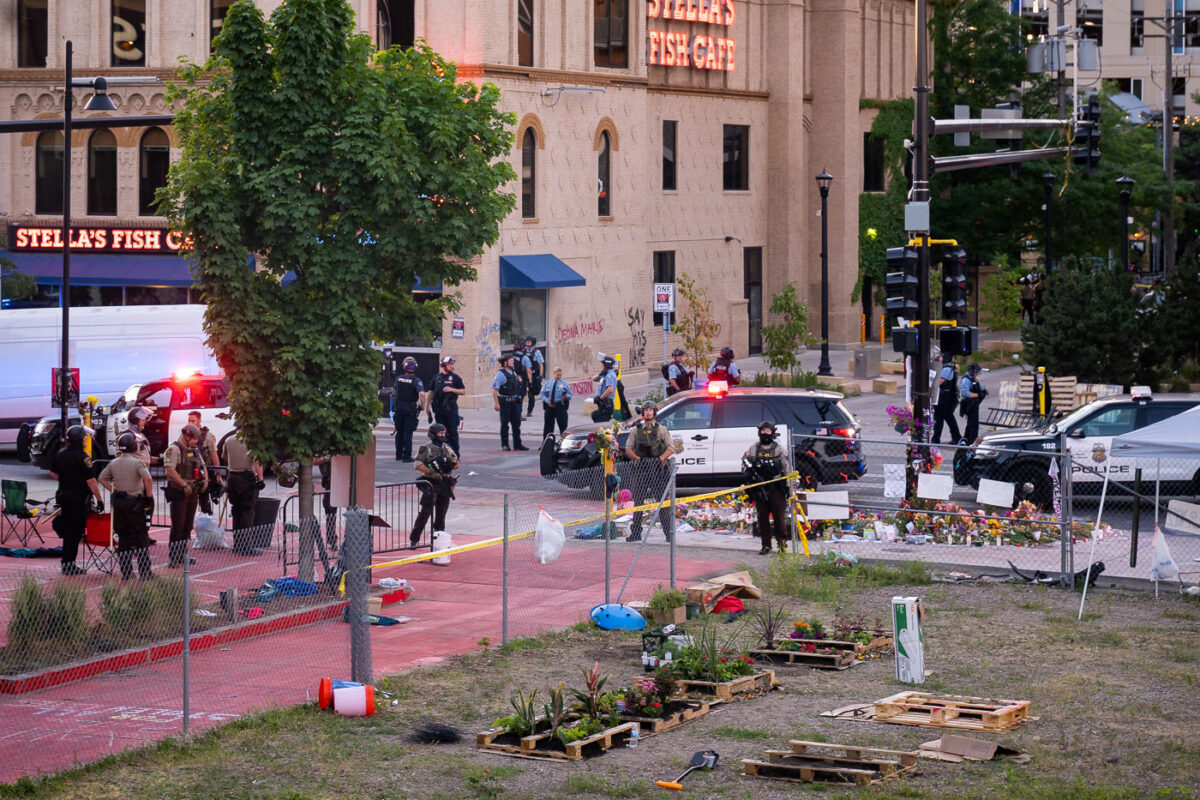
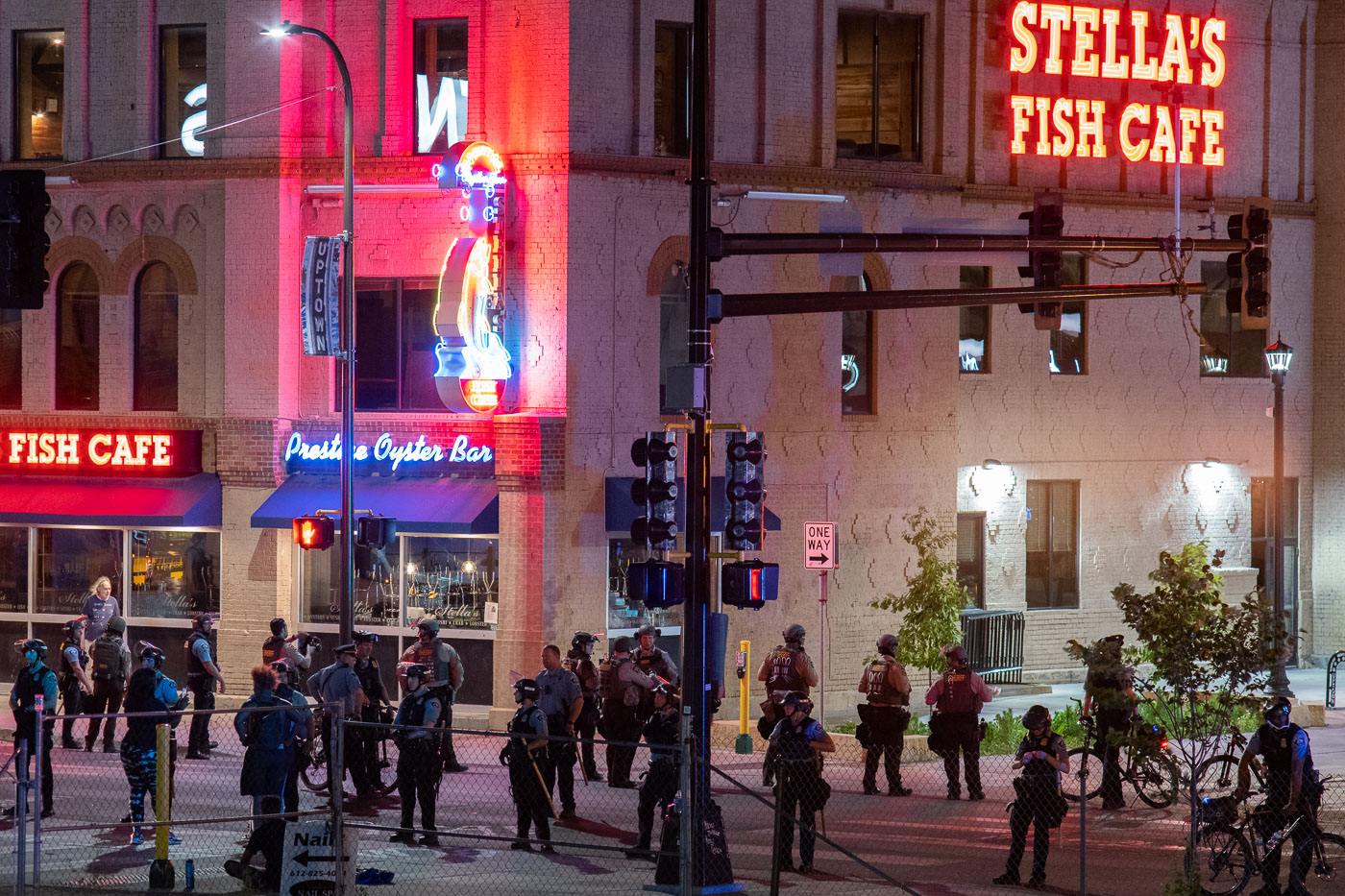
Police clear a memorial garden on Lake Street in Minneapolis near Stella’s Fish Cafe.
Law enforcement officers are present at a memorial garden on Lake Street in Minneapolis, established following the killing of Winston Smith on June 3rd by officers serving a warrant as part of a Federal Task Force. The memorial also honors Deona Marie, who was killed on June 13th when a driver struck protesters. On June 3, 2021, members of a U.S. Marshals Service fugitive task force fatally shot 32-year-old Winston “Boogie” Smith Jr. on the top level of a parking ramp in Minneapolis’ Uptown neighborhood while attempting to arrest him on a felony warrant. Authorities said Smith fired a handgun from inside his vehicle during the encounter, while family members and activists questioned the official account and demanded the release of additional evidence. The killing led to weeks of protests, street occupations, and confrontations with police in Uptown, becoming another major flashpoint in Minneapolis during the period following the murder of George Floyd. Earlier in the day Minneapolis city officials along with The Agape Movement coordinated to open the streets that had been closed at George Floyd Square since his murder. On June 13, 2021, 31-year-old Deona Marie Knajdek was killed when a driver accelerated into a group of demonstrators gathered in Minneapolis’ Uptown neighborhood during ongoing protests over the killing of Winston “Boogie” Smith Jr. Protesters had blocked the intersection of West Lake Street and Girard Avenue with vehicles and barricades when Nicholas Kraus drove a Jeep Cherokee into the crowd at high speed, killing Knajdek and injuring several others. Kraus was later charged with second-degree murder, two counts of second-degree assault with a dangerous weapon, and criminal vehicular operation. In 2023, he pleaded guilty to murder and assault charges and was sentenced to more than 20 years in prison for the attack.

Minneapolis Police Clear Winston Smith Memorial Garden on Lake Street
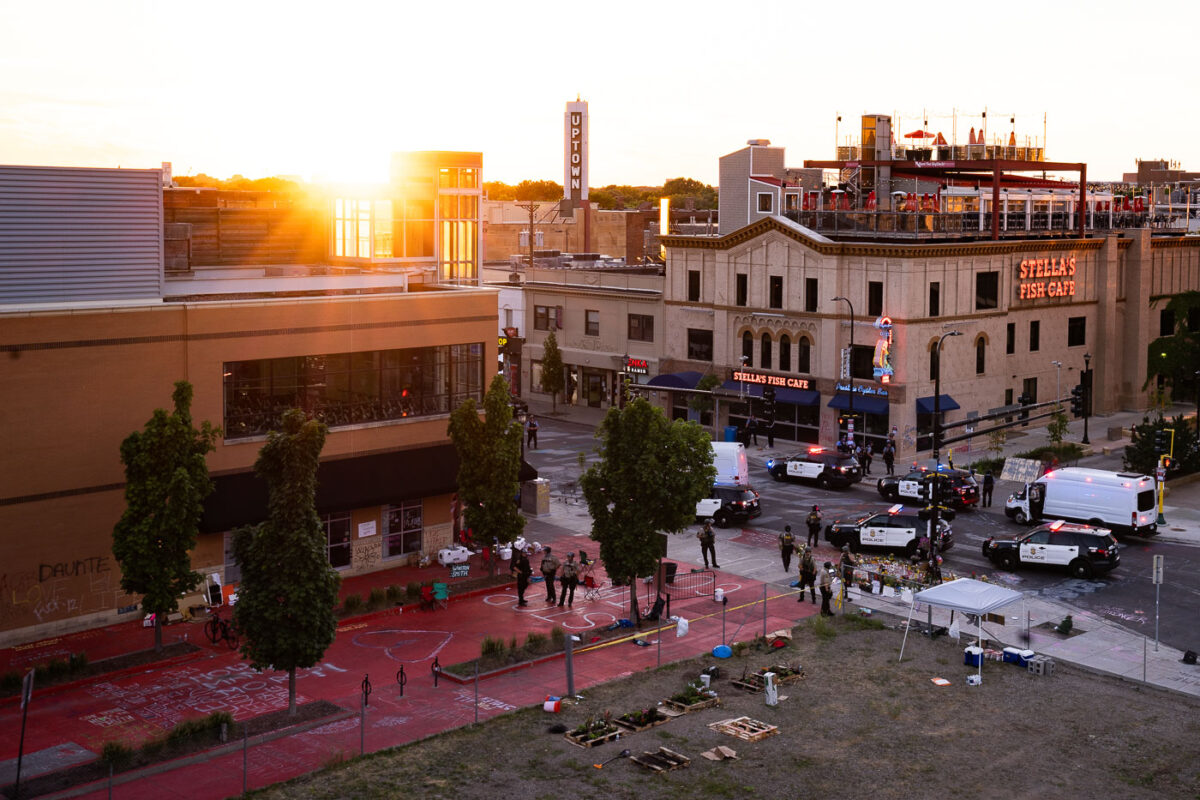
Police clear a memorial site outside Stella's Fish Cafe on Lake Street in Minneapolis at sunset.
Minneapolis Police cleared the Deona Marie Memorial site at sunset on July 10, 2020. Protesters had gathered at the site, located in the Uptown neighborhood, following the killings of Winston Smith on June 3 and Deona Marie on June 13. On June 3, 2021, members of a U.S. Marshals Service fugitive task force fatally shot 32-year-old Winston “Boogie” Smith Jr. on the top level of a parking ramp in Minneapolis’ Uptown neighborhood while attempting to arrest him on a felony warrant. Authorities said Smith fired a handgun from inside his vehicle during the encounter, while family members and activists questioned the official account and demanded the release of additional evidence. The killing led to weeks of protests, street occupations, and confrontations with police in Uptown, becoming another major flashpoint in Minneapolis during the period following the murder of George Floyd. Earlier in the day Minneapolis city officials along with The Agape Movement coordinated to open the streets that had been closed at George Floyd Square since his murder. On June 13, 2021, 31-year-old Deona Marie Knajdek was killed when a driver accelerated into a group of demonstrators gathered in Minneapolis’ Uptown neighborhood during ongoing protests over the killing of Winston “Boogie” Smith Jr. Protesters had blocked the intersection of West Lake Street and Girard Avenue with vehicles and barricades when Nicholas Kraus drove a Jeep Cherokee into the crowd at high speed, killing Knajdek and injuring several others. Kraus was later charged with second-degree murder, two counts of second-degree assault with a dangerous weapon, and criminal vehicular operation. In 2023, he pleaded guilty to murder and assault charges and was sentenced to more than 20 years in prison for the attack.

Minneapolis Police Clear Deona Marie Memorial Site at Sunset
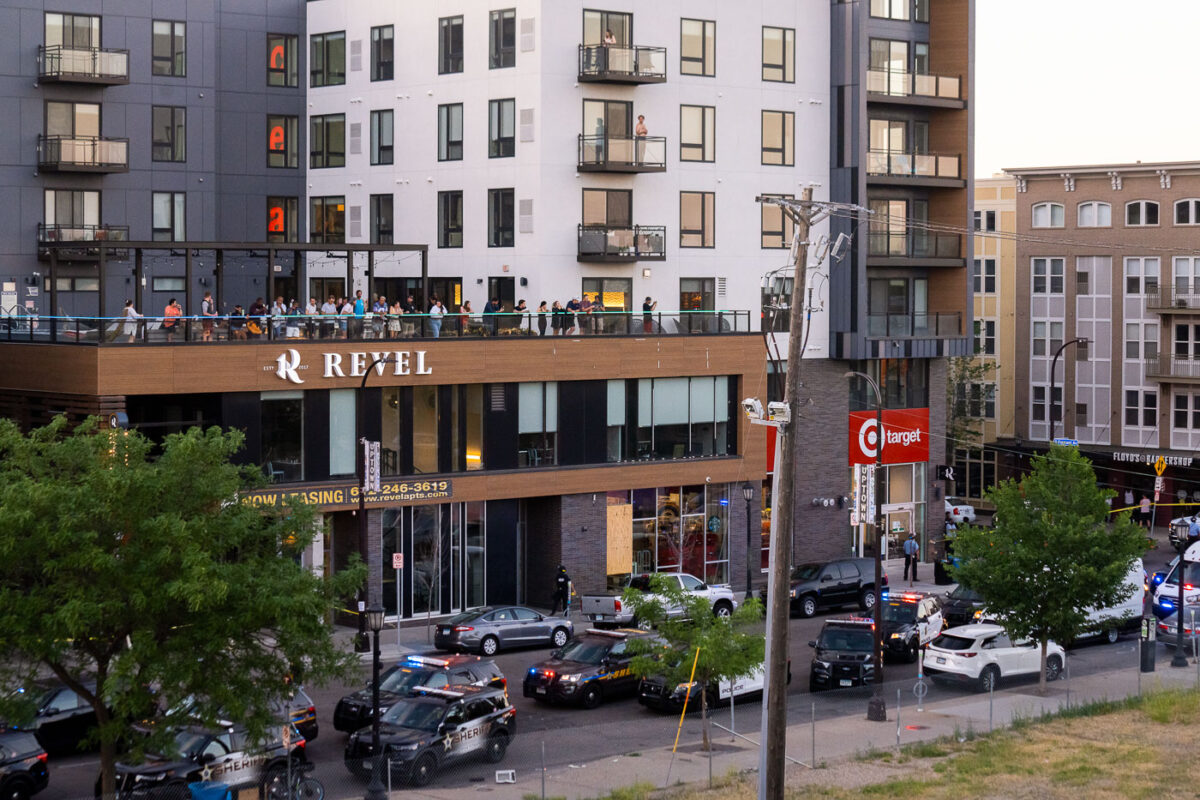
Sheriff vehicles outside the Revel apartment building on Lake Street in Minneapolis during a protest response
Law enforcement officers arrive on Lake Street in Minneapolis to clear a protest site. The protest was organized in response to the killings of Winston Smith and Deona Marie. On June 3, 2021, members of a U.S. Marshals Service fugitive task force fatally shot 32-year-old Winston “Boogie” Smith Jr. on the top level of a parking ramp in Minneapolis’ Uptown neighborhood while attempting to arrest him on a felony warrant. Authorities said Smith fired a handgun from inside his vehicle during the encounter, while family members and activists questioned the official account and demanded the release of additional evidence. The killing led to weeks of protests, street occupations, and confrontations with police in Uptown, becoming another major flashpoint in Minneapolis during the period following the murder of George Floyd. Earlier in the day Minneapolis city officials along with The Agape Movement coordinated to open the streets that had been closed at George Floyd Square since his murder. On June 13, 2021, 31-year-old Deona Marie Knajdek was killed when a driver accelerated into a group of demonstrators gathered in Minneapolis’ Uptown neighborhood during ongoing protests over the killing of Winston “Boogie” Smith Jr. Protesters had blocked the intersection of West Lake Street and Girard Avenue with vehicles and barricades when Nicholas Kraus drove a Jeep Cherokee into the crowd at high speed, killing Knajdek and injuring several others. Kraus was later charged with second-degree murder, two counts of second-degree assault with a dangerous weapon, and criminal vehicular operation. In 2023, he pleaded guilty to murder and assault charges and was sentenced to more than 20 years in prison for the attack.

Minneapolis: Law enforcement clears protest site on Lake Street
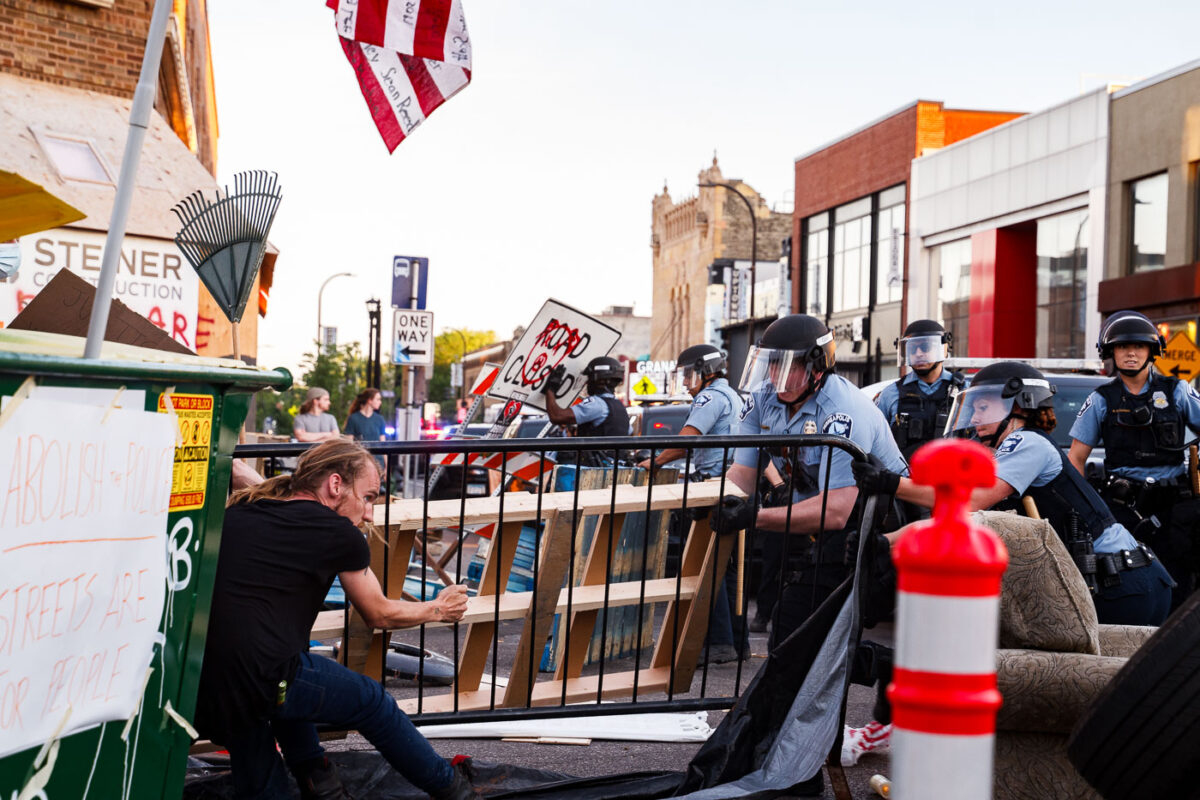
Minneapolis police clear barricades on Lake Street during protests.
Minneapolis Police officers clear street barricades at the intersection of Lake Street and Hennepin Avenue on June 15, 2021. Protesters had closed of the streets protesting the killings of Winston Smith and Deona Marie. On June 3, 2021, members of a U.S. Marshals Service fugitive task force fatally shot 32-year-old Winston “Boogie” Smith Jr. on the top level of a parking ramp in Minneapolis’ Uptown neighborhood while attempting to arrest him on a felony warrant. Authorities said Smith fired a handgun from inside his vehicle during the encounter, while family members and activists questioned the official account and demanded the release of additional evidence. The killing led to weeks of protests, street occupations, and confrontations with police in Uptown, becoming another major flashpoint in Minneapolis during the period following the murder of George Floyd. Earlier in the day Minneapolis city officials along with The Agape Movement coordinated to open the streets that had been closed at George Floyd Square since his murder. On June 13, 2021, 31-year-old Deona Marie Knajdek was killed when a driver accelerated into a group of demonstrators gathered in Minneapolis’ Uptown neighborhood during ongoing protests over the killing of Winston “Boogie” Smith Jr. Protesters had blocked the intersection of West Lake Street and Girard Avenue with vehicles and barricades when Nicholas Kraus drove a Jeep Cherokee into the crowd at high speed, killing Knajdek and injuring several others. Kraus was later charged with second-degree murder, two counts of second-degree assault with a dangerous weapon, and criminal vehicular operation. In 2023, he pleaded guilty to murder and assault charges and was sentenced to more than 20 years in prison for the attack.

Minneapolis Police Clear Barricades Amidst Winston Smith Protests
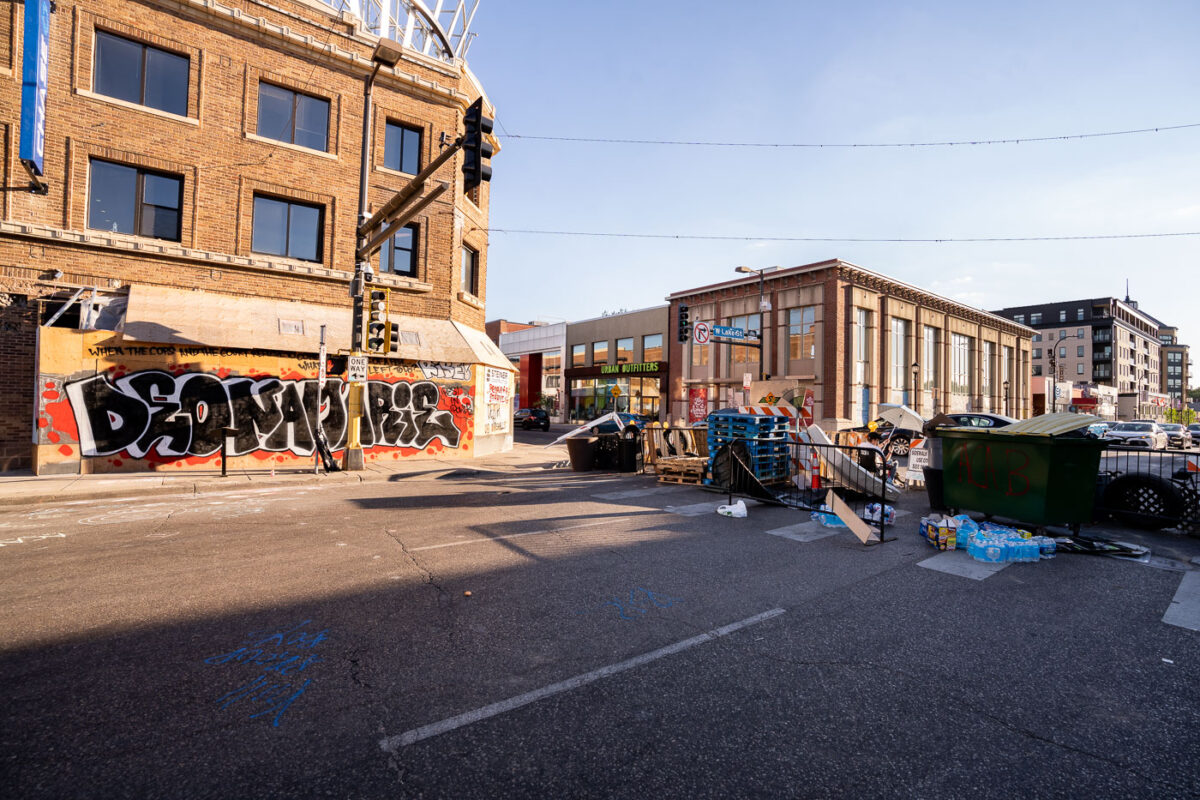
Graffiti-covered barricades at Hennepin Avenue and Lake Street in Minneapolis.
Street barricades are visible at the intersection of Hennepin Avenue and Lake Street in Minneapolis on June 15, 2021. These barricades were erected following significant unrest in the area following the killing of Winston Smith. On June 3, 2021, members of a U.S. Marshals Service fugitive task force fatally shot 32-year-old Winston “Boogie” Smith Jr. on the top level of a parking ramp in Minneapolis’ Uptown neighborhood while attempting to arrest him on a felony warrant. Authorities said Smith fired a handgun from inside his vehicle during the encounter, while family members and activists questioned the official account and demanded the release of additional evidence. The killing led to weeks of protests, street occupations, and confrontations with police in Uptown, becoming another major flashpoint in Minneapolis during the period following the murder of George Floyd. Earlier in the day Minneapolis city officials along with The Agape Movement coordinated to open the streets that had been closed at George Floyd Square since his murder. On June 13, 2021, 31-year-old Deona Marie Knajdek was killed when a driver accelerated into a group of demonstrators gathered in Minneapolis’ Uptown neighborhood during ongoing protests over the killing of Winston “Boogie” Smith Jr. Protesters had blocked the intersection of West Lake Street and Girard Avenue with vehicles and barricades when Nicholas Kraus drove a Jeep Cherokee into the crowd at high speed, killing Knajdek and injuring several others. Kraus was later charged with second-degree murder, two counts of second-degree assault with a dangerous weapon, and criminal vehicular operation. In 2023, he pleaded guilty to murder and assault charges and was sentenced to more than 20 years in prison for the attack.

Street Barricades at Hennepin Ave & Lake St, Minneapolis
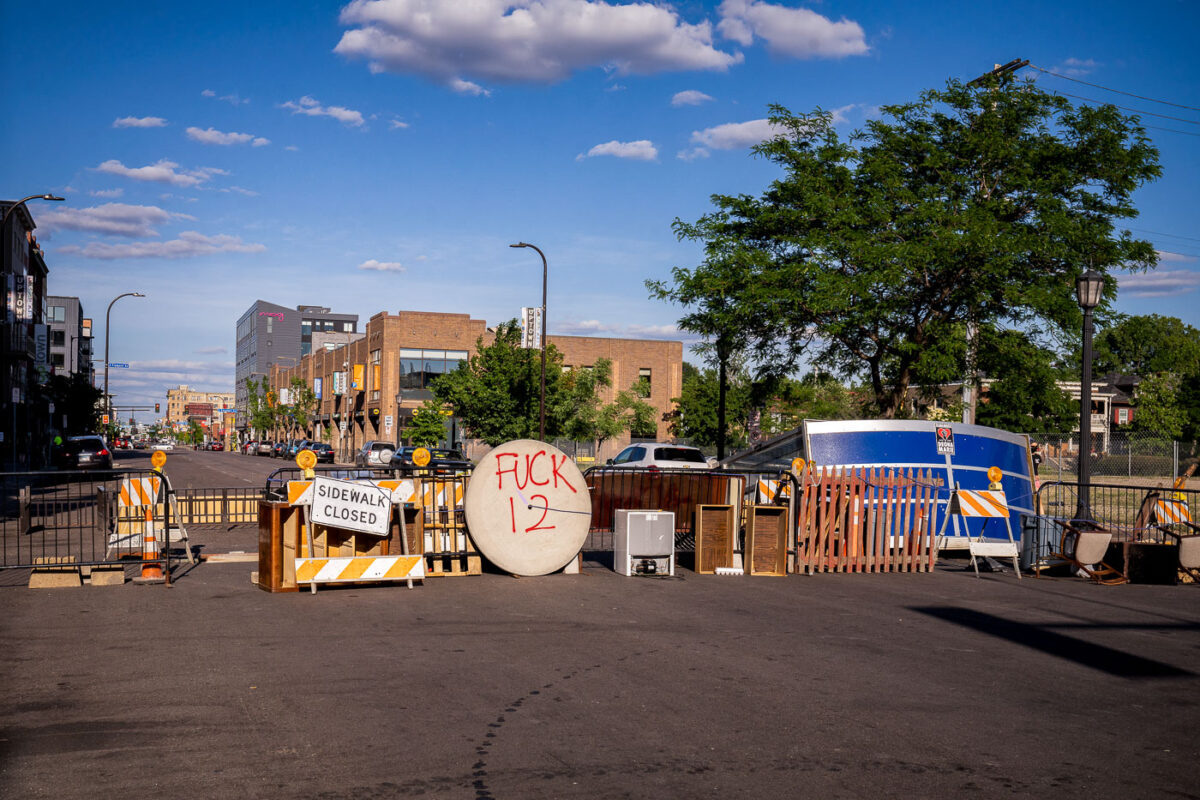
Barricades block Lake Street in Uptown Minneapolis, including a sign reading “FUCK 12.”
Barricades line Lake Street in Uptown Minneapolis, June 2020, during the protests following the murder of George Floyd. The barricades, some bearing messages like "FUCK 12," were erected by protesters to block off streets and create autonomous zones. Nearby, memorials for Winston Smith and Deona Marie Knajdek, both killed by law enforcement in early June 2020, were visible. On June 3, 2021, members of a U.S. Marshals Service fugitive task force fatally shot 32-year-old Winston “Boogie” Smith Jr. on the top level of a parking ramp in Minneapolis’ Uptown neighborhood while attempting to arrest him on a felony warrant. Authorities said Smith fired a handgun from inside his vehicle during the encounter, while family members and activists questioned the official account and demanded the release of additional evidence. The killing led to weeks of protests, street occupations, and confrontations with police in Uptown, becoming another major flashpoint in Minneapolis during the period following the murder of George Floyd. Earlier in the day Minneapolis city officials along with The Agape Movement coordinated to open the streets that had been closed at George Floyd Square since his murder. On June 13, 2021, 31-year-old Deona Marie Knajdek was killed when a driver accelerated into a group of demonstrators gathered in Minneapolis’ Uptown neighborhood during ongoing protests over the killing of Winston “Boogie” Smith Jr. Protesters had blocked the intersection of West Lake Street and Girard Avenue with vehicles and barricades when Nicholas Kraus drove a Jeep Cherokee into the crowd at high speed, killing Knajdek and injuring several others. Kraus was later charged with second-degree murder, two counts of second-degree assault with a dangerous weapon, and criminal vehicular operation. In 2023, he pleaded guilty to murder and assault charges and was sentenced to more than 20 years in prison for the attack.

Lake Street Barricades, Uptown Minneapolis, June 2020
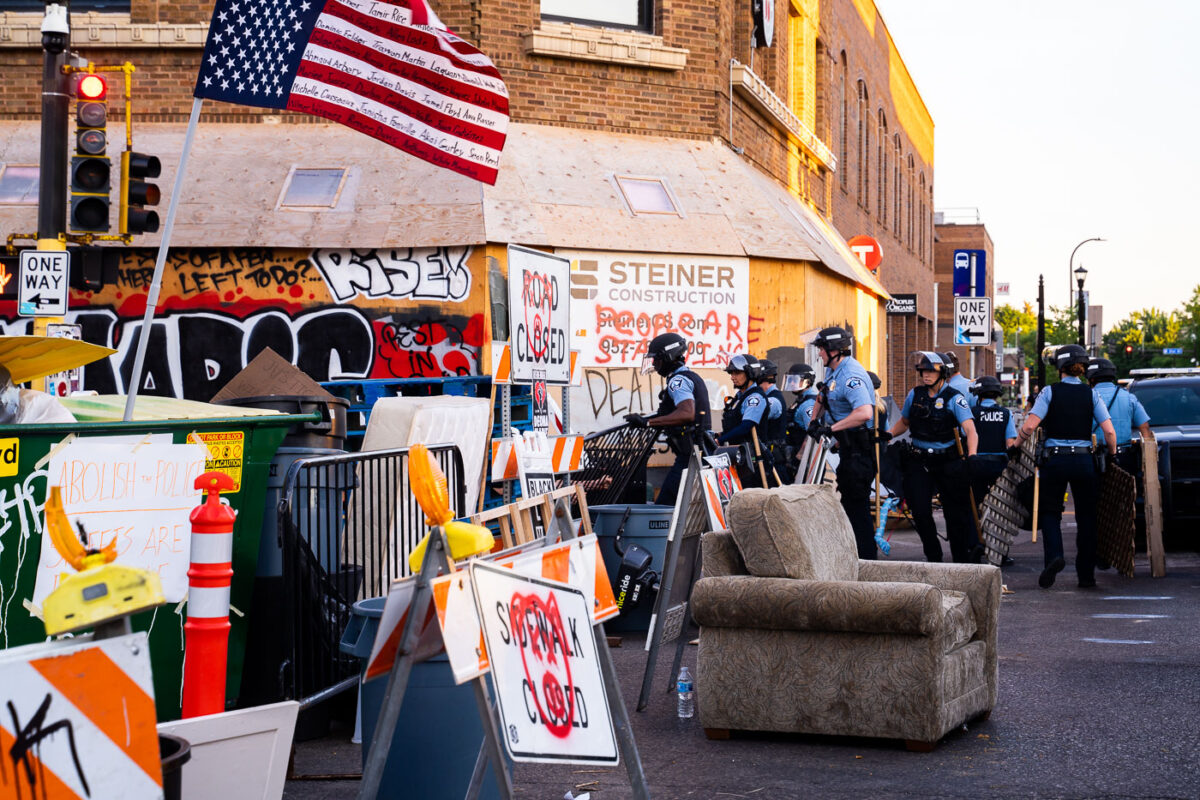
Police clear barricades on Lake Street in Minneapolis beside a boarded-up storefront and protest signs.
Minneapolis Police officers clear barricades on Lake Street on June 15, 2021. The barricades were erected in the aftermath of protests and unrest following the deaths of Winston Smith and Deona Marie. On June 3, 2021, members of a U.S. Marshals Service fugitive task force fatally shot 32-year-old Winston “Boogie” Smith Jr. on the top level of a parking ramp in Minneapolis’ Uptown neighborhood while attempting to arrest him on a felony warrant. Authorities said Smith fired a handgun from inside his vehicle during the encounter, while family members and activists questioned the official account and demanded the release of additional evidence. The killing led to weeks of protests, street occupations, and confrontations with police in Uptown, becoming another major flashpoint in Minneapolis during the period following the murder of George Floyd. Earlier in the day Minneapolis city officials along with The Agape Movement coordinated to open the streets that had been closed at George Floyd Square since his murder. On June 13, 2021, 31-year-old Deona Marie Knajdek was killed when a driver accelerated into a group of demonstrators gathered in Minneapolis’ Uptown neighborhood during ongoing protests over the killing of Winston “Boogie” Smith Jr. Protesters had blocked the intersection of West Lake Street and Girard Avenue with vehicles and barricades when Nicholas Kraus drove a Jeep Cherokee into the crowd at high speed, killing Knajdek and injuring several others. Kraus was later charged with second-degree murder, two counts of second-degree assault with a dangerous weapon, and criminal vehicular operation. In 2023, he pleaded guilty to murder and assault charges and was sentenced to more than 20 years in prison for the attack.

Police Clear Protest Barricades on Lake Street in Uptown
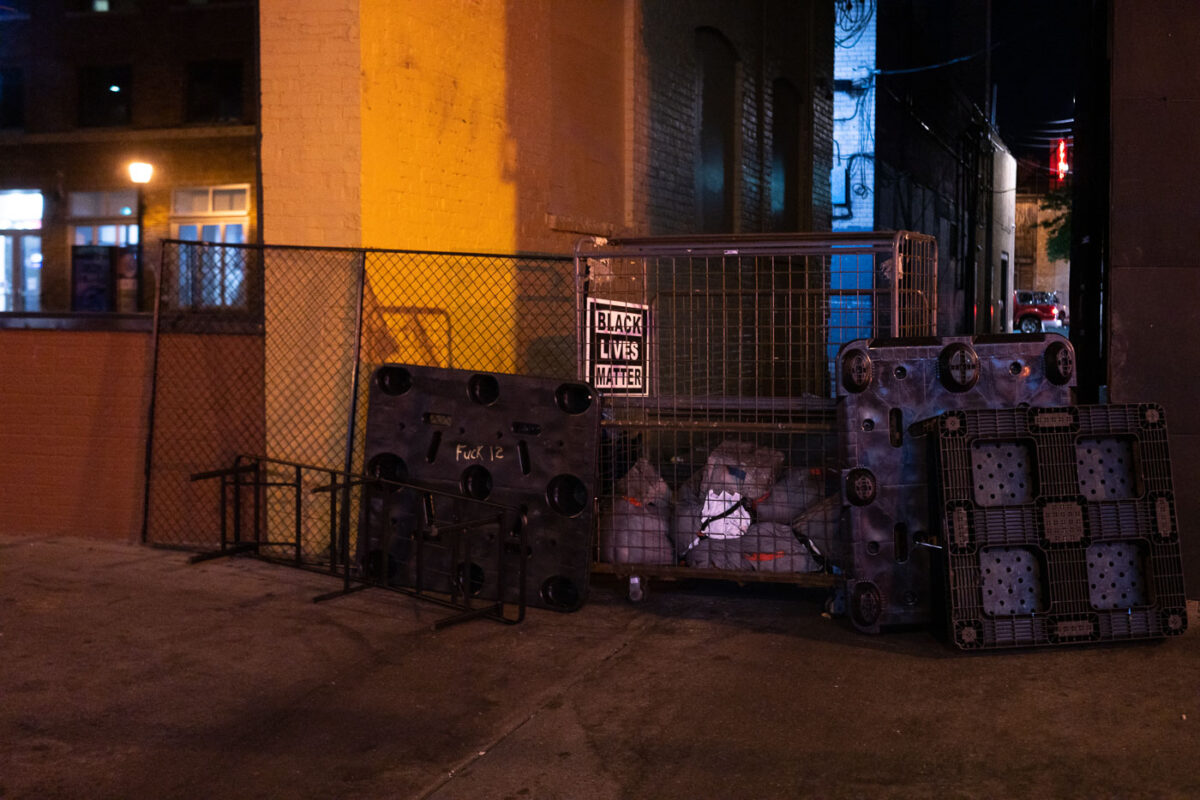
Barricades and a Black Lives Matter sign on Lake Street in Minneapolis at night.
Barricades and a "Black Lives Matter" sign are visible on Lake Street in Minneapolis, a location that became a site of protest following the death of Winston Smith. On June 3, 2021, members of a U.S. Marshals Service fugitive task force fatally shot 32-year-old Winston “Boogie” Smith Jr. on the top level of a parking ramp in Minneapolis’ Uptown neighborhood while attempting to arrest him on a felony warrant. Authorities said Smith fired a handgun from inside his vehicle during the encounter, while family members and activists questioned the official account and demanded the release of additional evidence. The killing led to weeks of protests, street occupations, and confrontations with police in Uptown, becoming another major flashpoint in Minneapolis during the period following the murder of George Floyd. Earlier in the day Minneapolis city officials along with The Agape Movement coordinated to open the streets that had been closed at George Floyd Square since his murder. On June 13, 2021, 31-year-old Deona Marie Knajdek was killed when a driver accelerated into a group of demonstrators gathered in Minneapolis’ Uptown neighborhood during ongoing protests over the killing of Winston “Boogie” Smith Jr. Protesters had blocked the intersection of West Lake Street and Girard Avenue with vehicles and barricades when Nicholas Kraus drove a Jeep Cherokee into the crowd at high speed, killing Knajdek and injuring several others. Kraus was later charged with second-degree murder, two counts of second-degree assault with a dangerous weapon, and criminal vehicular operation. In 2023, he pleaded guilty to murder and assault charges and was sentenced to more than 20 years in prison for the attack.

Barricades and “Black Lives Matter” sign on Lake Street, Minneapolis
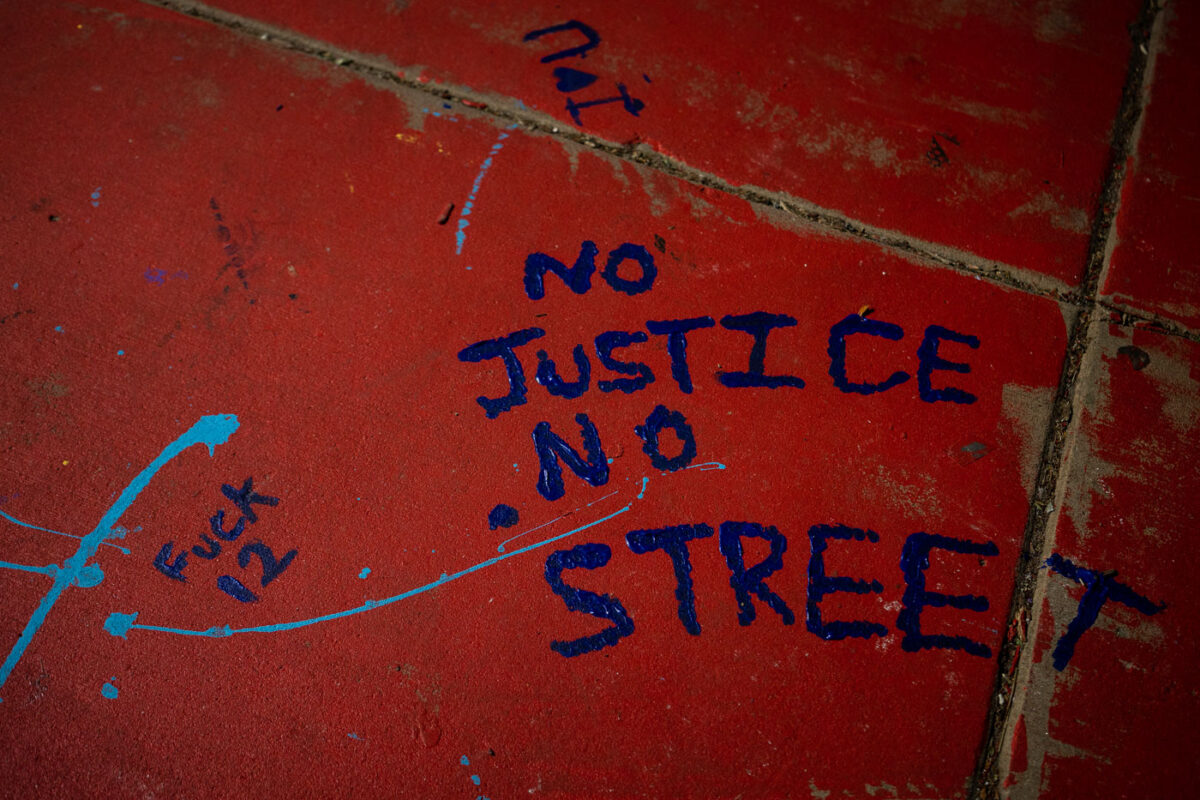
Blue “No Justice No Street” graffiti on red pavement in Minneapolis.
"No Justice No Street" graffiti on Lake Street in Minneapolis memorializes victims of police violence and the subsequent protests. The phrase appeared following the law enforcement killing of Winston Smith on June 3, 2021, and the death of Deona Marie on June 13, 2021. On June 3, 2021, members of a U.S. Marshals Service fugitive task force fatally shot 32-year-old Winston “Boogie” Smith Jr. on the top level of a parking ramp in Minneapolis’ Uptown neighborhood while attempting to arrest him on a felony warrant. Authorities said Smith fired a handgun from inside his vehicle during the encounter, while family members and activists questioned the official account and demanded the release of additional evidence. The killing led to weeks of protests, street occupations, and confrontations with police in Uptown, becoming another major flashpoint in Minneapolis during the period following the murder of George Floyd. Earlier in the day Minneapolis city officials along with The Agape Movement coordinated to open the streets that had been closed at George Floyd Square since his murder. On June 13, 2021, 31-year-old Deona Marie Knajdek was killed when a driver accelerated into a group of demonstrators gathered in Minneapolis’ Uptown neighborhood during ongoing protests over the killing of Winston “Boogie” Smith Jr. Protesters had blocked the intersection of West Lake Street and Girard Avenue with vehicles and barricades when Nicholas Kraus drove a Jeep Cherokee into the crowd at high speed, killing Knajdek and injuring several others. Kraus was later charged with second-degree murder, two counts of second-degree assault with a dangerous weapon, and criminal vehicular operation. In 2023, he pleaded guilty to murder and assault charges and was sentenced to more than 20 years in prison for the attack.

Minneapolis: “No Justice No Street” Graffiti on Lake Street
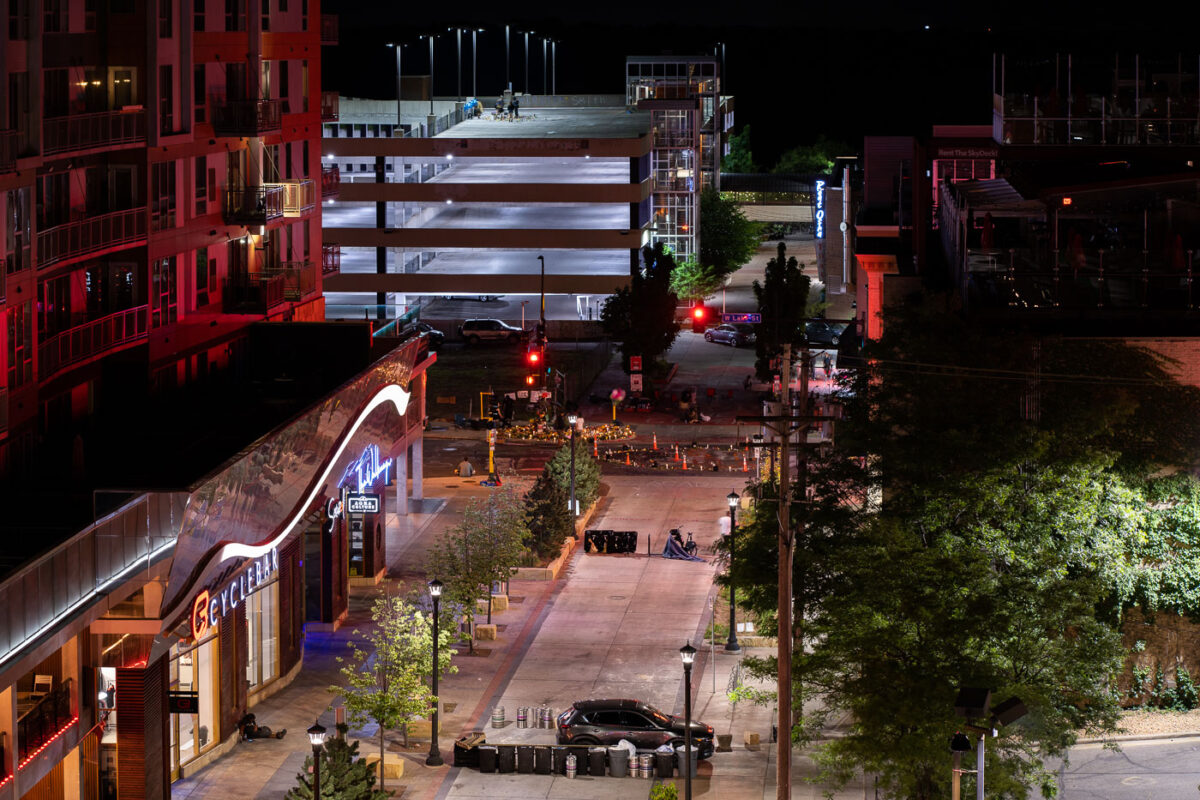
Memorial candles and barricades mark Lake Street and Girard Avenue in Minneapolis at night.
A memorial for Deona Marie is visible at the intersection of Lake Street and Girard Avenue in Minneapolis. Protesters have maintained a presence at this location since the law enforcement shooting death of Winston Smith on June 3, 2021, and the subsequent killing of Deona Marie on June 13, 2021, when Nicholas Kraus drove his vehicle into a crowd of demonstrators. On June 13, 2021, 31-year-old Deona Marie Knajdek was killed when a driver accelerated into a group of demonstrators gathered in Minneapolis’ Uptown neighborhood during ongoing protests over the killing of Winston “Boogie” Smith Jr. Protesters had blocked the intersection of West Lake Street and Girard Avenue with vehicles and barricades when Nicholas Kraus drove a Jeep Cherokee into the crowd at high speed, killing Knajdek and injuring several others. Kraus was later charged with second-degree murder, two counts of second-degree assault with a dangerous weapon, and criminal vehicular operation. In 2023, he pleaded guilty to murder and assault charges and was sentenced to more than 20 years in prison for the attack. On June 3, 2021, members of a U.S. Marshals Service fugitive task force fatally shot 32-year-old Winston “Boogie” Smith Jr. on the top level of a parking ramp in Minneapolis’ Uptown neighborhood while attempting to arrest him on a felony warrant. Authorities said Smith fired a handgun from inside his vehicle during the encounter, while family members and activists questioned the official account and demanded the release of additional evidence. The killing led to weeks of protests, street occupations, and confrontations with police in Uptown, becoming another major flashpoint in Minneapolis during the period following the murder of George Floyd. Earlier in the day Minneapolis city officials along with The Agape Movement coordinated to open the streets that had been closed at George Floyd Square since his murder.

Minneapolis Protest Site: Lake St & Girard Ave Night
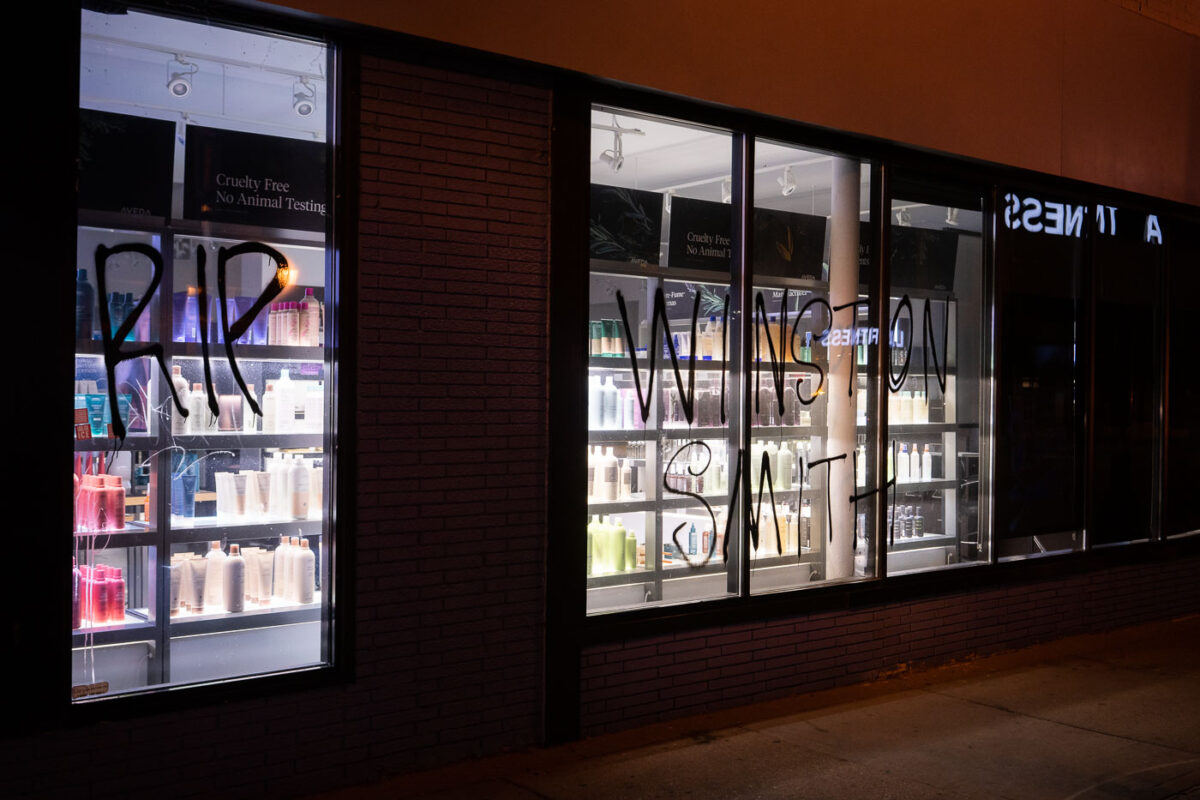
Graffiti reading RIP Winston Smith on Juut Salon storefront in Uptown Minneapolis.
Graffiti reading "RIP Winston Smith" is spray-painted on the storefront of the Juut Salon at the intersection of Lake Street and Hennepin Avenue in Uptown Minneapolis. On June 3, 2021, members of a U.S. Marshals Service fugitive task force fatally shot 32-year-old Winston “Boogie” Smith Jr. on the top level of a parking ramp in Minneapolis’ Uptown neighborhood while attempting to arrest him on a felony warrant. Authorities said Smith fired a handgun from inside his vehicle during the encounter, while family members and activists questioned the official account and demanded the release of additional evidence. The killing led to weeks of protests, street occupations, and confrontations with police in Uptown, becoming another major flashpoint in Minneapolis during the period following the murder of George Floyd. Earlier in the day Minneapolis city officials along with The Agape Movement coordinated to open the streets that had been closed at George Floyd Square since his murder. On June 13, 2021, 31-year-old Deona Marie Knajdek was killed when a driver accelerated into a group of demonstrators gathered in Minneapolis’ Uptown neighborhood during ongoing protests over the killing of Winston “Boogie” Smith Jr. Protesters had blocked the intersection of West Lake Street and Girard Avenue with vehicles and barricades when Nicholas Kraus drove a Jeep Cherokee into the crowd at high speed, killing Knajdek and injuring several others. Kraus was later charged with second-degree murder, two counts of second-degree assault with a dangerous weapon, and criminal vehicular operation. In 2023, he pleaded guilty to murder and assault charges and was sentenced to more than 20 years in prison for the attack.

RIP Winston Smith graffiti on Uptown Minneapolis storefront
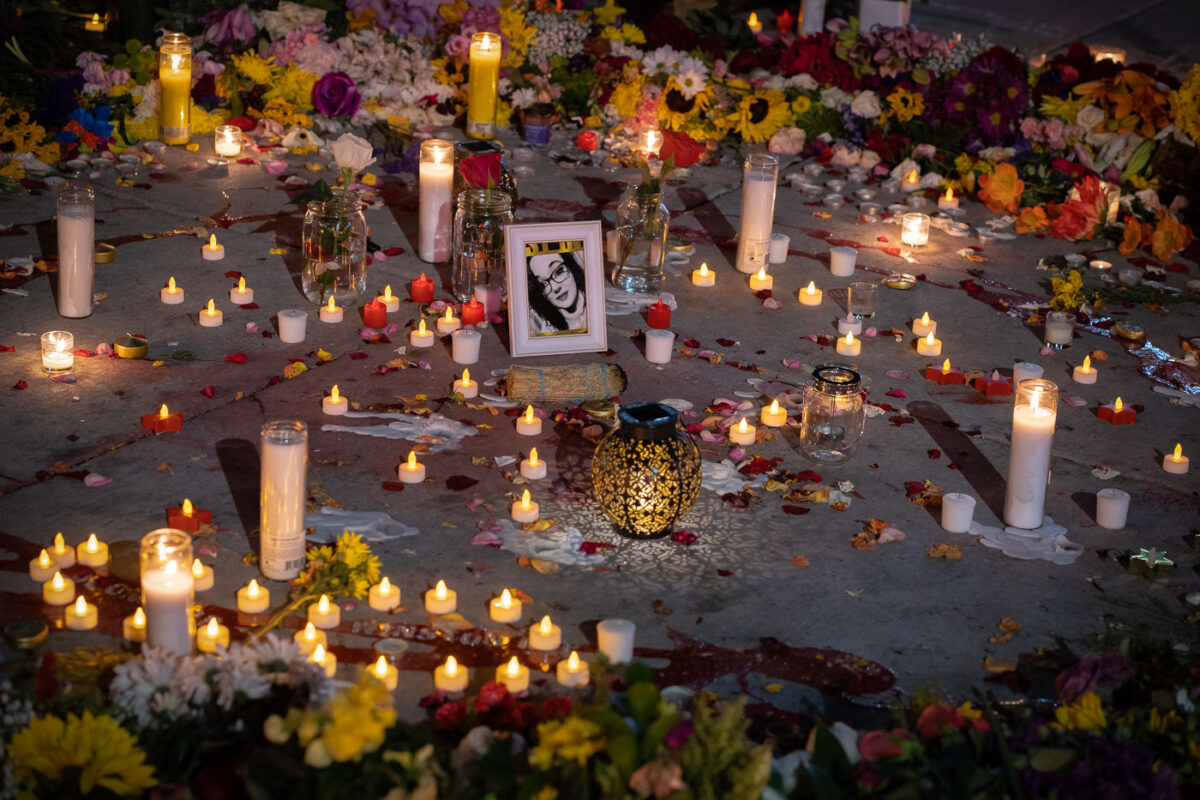
Candles, flowers, and a framed portrait mark a memorial vigil on Lake Street in Minneapolis.
A memorial vigil for Deona Marie was held at the intersection of Lake Street and Girard Avenue in Minneapolis. Marie was killed when a driver struck a group of protesters demonstrating against the Federal Task Force killing of Winston Smith ten days prior. The vigil, marked by numerous candles, flowers, and a portrait of Marie, serves as a somber remembrance of the lives lost and a testament to the ongoing community grief and activism in the wake of police violence. On June 13, 2021, 31-year-old Deona Marie Knajdek was killed when a driver accelerated into a group of demonstrators gathered in Minneapolis’ Uptown neighborhood during ongoing protests over the killing of Winston “Boogie” Smith Jr. Protesters had blocked the intersection of West Lake Street and Girard Avenue with vehicles and barricades when Nicholas Kraus drove a Jeep Cherokee into the crowd at high speed, killing Knajdek and injuring several others. Kraus was later charged with second-degree murder, two counts of second-degree assault with a dangerous weapon, and criminal vehicular operation. In 2023, he pleaded guilty to murder and assault charges and was sentenced to more than 20 years in prison for the attack. On June 3, 2021, members of a U.S. Marshals Service fugitive task force fatally shot 32-year-old Winston “Boogie” Smith Jr. on the top level of a parking ramp in Minneapolis’ Uptown neighborhood while attempting to arrest him on a felony warrant. Authorities said Smith fired a handgun from inside his vehicle during the encounter, while family members and activists questioned the official account and demanded the release of additional evidence. The killing led to weeks of protests, street occupations, and confrontations with police in Uptown, becoming another major flashpoint in Minneapolis during the period following the murder of George Floyd. Earlier in the day Minneapolis city officials along with The Agape Movement coordinated to open the streets that had been closed at Geo

Deona Marie Memorial Vigil, Lake Street, Minneapolis
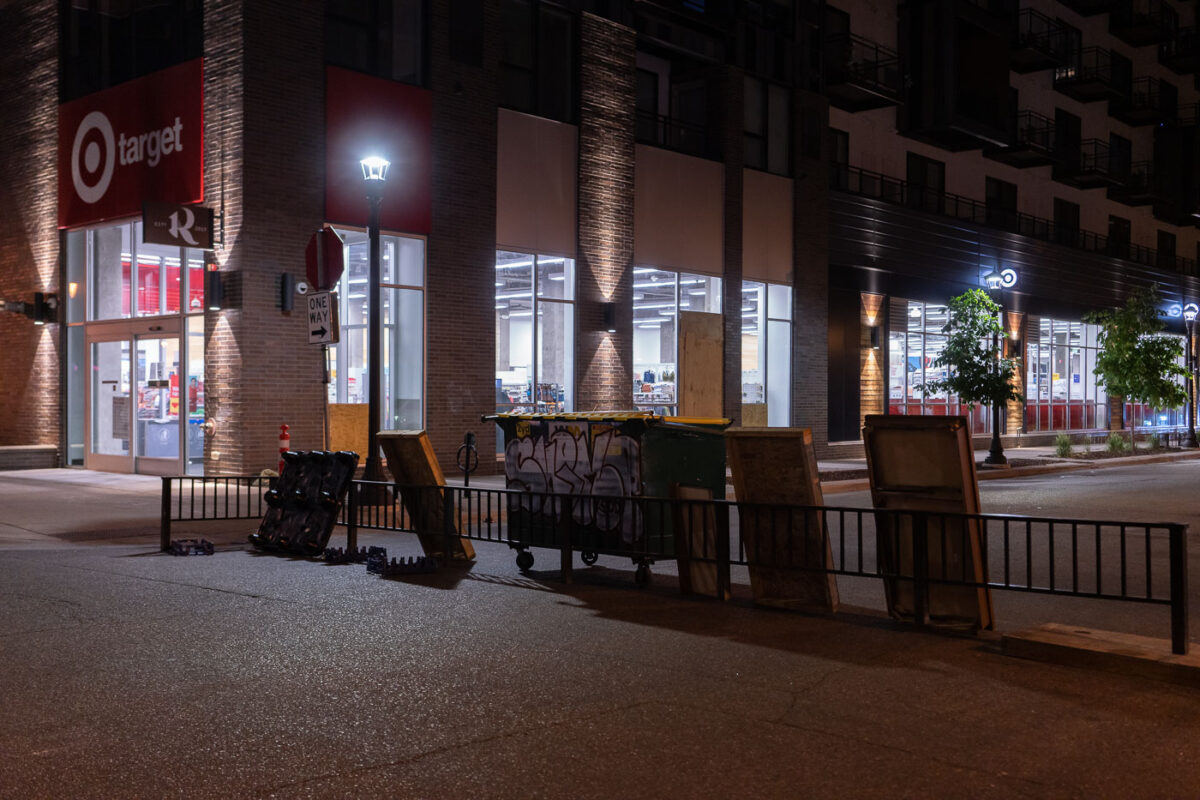
Barricades block a Target store on Lake Street in Minneapolis at night.
Barricades are placed in front of a Target store on Lake Street in Minneapolis. Protesters established these barricades to "hold space" following the death of Winston Smith on June 3rd. On June 3, 2021, members of a U.S. Marshals Service fugitive task force fatally shot 32-year-old Winston “Boogie” Smith Jr. on the top level of a parking ramp in Minneapolis’ Uptown neighborhood while attempting to arrest him on a felony warrant. Authorities said Smith fired a handgun from inside his vehicle during the encounter, while family members and activists questioned the official account and demanded the release of additional evidence. The killing led to weeks of protests, street occupations, and confrontations with police in Uptown, becoming another major flashpoint in Minneapolis during the period following the murder of George Floyd. Earlier in the day Minneapolis city officials along with The Agape Movement coordinated to open the streets that had been closed at George Floyd Square since his murder.

Barricades at Target on Lake Street, Minneapolis

Protesters hold Black Lives Matter signs on Lake Street in Minneapolis.
Protesters hold "Black Lives Matter" signs on Lake Street at Hennepin Avenue in Minneapolis. The protest was in response to the law enforcement killing of Winston Smith on June 3, 2021, and Deona Marie on June 13, 2021. On June 13, 2021, 31-year-old Deona Marie Knajdek was killed when a driver accelerated into a group of demonstrators gathered in Minneapolis’ Uptown neighborhood during ongoing protests over the killing of Winston “Boogie” Smith Jr. Protesters had blocked the intersection of West Lake Street and Girard Avenue with vehicles and barricades when Nicholas Kraus drove a Jeep Cherokee into the crowd at high speed, killing Knajdek and injuring several others. Kraus was later charged with second-degree murder, two counts of second-degree assault with a dangerous weapon, and criminal vehicular operation. In 2023, he pleaded guilty to murder and assault charges and was sentenced to more than 20 years in prison for the attack. On June 3, 2021, members of a U.S. Marshals Service fugitive task force fatally shot 32-year-old Winston “Boogie” Smith Jr. on the top level of a parking ramp in Minneapolis’ Uptown neighborhood while attempting to arrest him on a felony warrant. Authorities said Smith fired a handgun from inside his vehicle during the encounter, while family members and activists questioned the official account and demanded the release of additional evidence. The killing led to weeks of protests, street occupations, and confrontations with police in Uptown, becoming another major flashpoint in Minneapolis during the period following the murder of George Floyd. Earlier in the day Minneapolis city officials along with The Agape Movement coordinated to open the streets that had been closed at George Floyd Square since his murder.

Black Lives Matter Protest on Lake Street, Minneapolis

People stand on Lake Street in Minneapolis beside red-painted road text reading “STOP THE COVER UP.”
Protesters painted "Stop the cover up" in red on Lake Street in Minneapolis, near the Seven Points Mall parking ramp. This act of protest occurred after Winston Smith was killed by law enforcement on June 3rd. The message was painted for the second consecutive day, indicating a persistent demand for transparency and accountability following the incident. The location, a prominent urban thoroughfare, became a site for public expression of grief and dissent.

Protesters paint “Stop the cover up” on Lake Street, Minneapolis
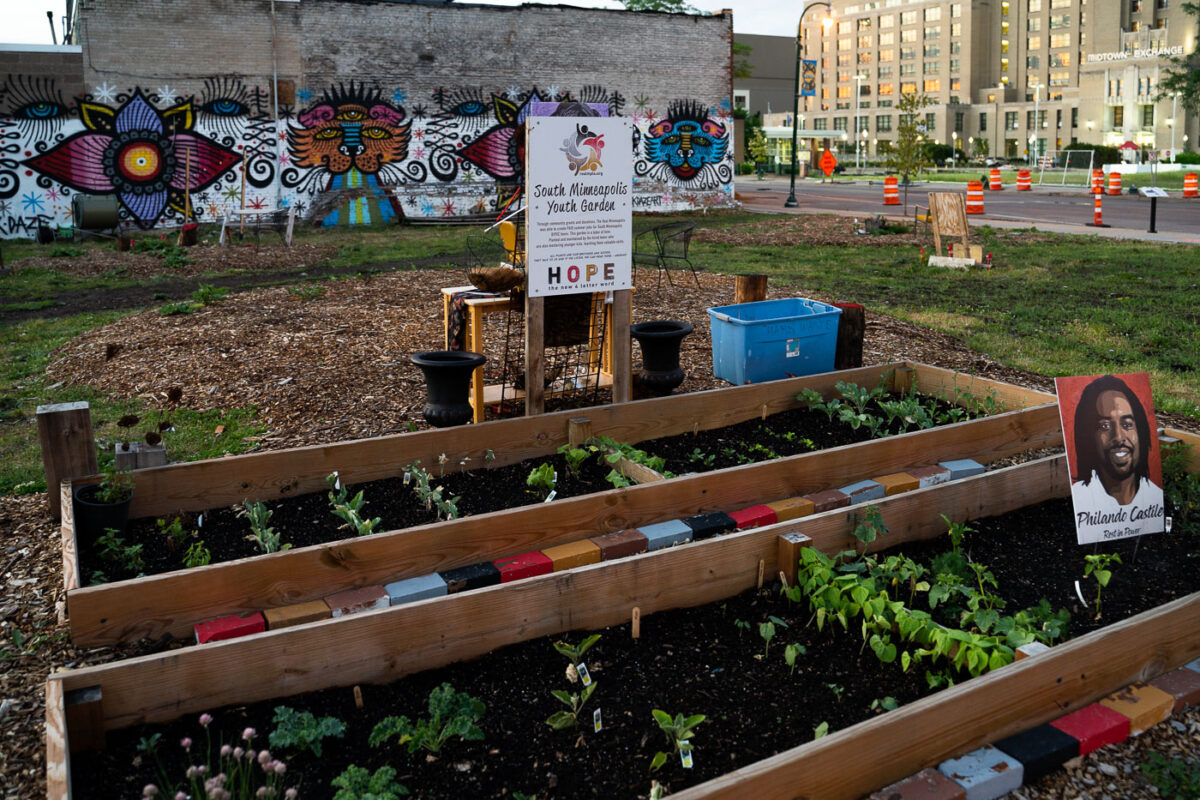
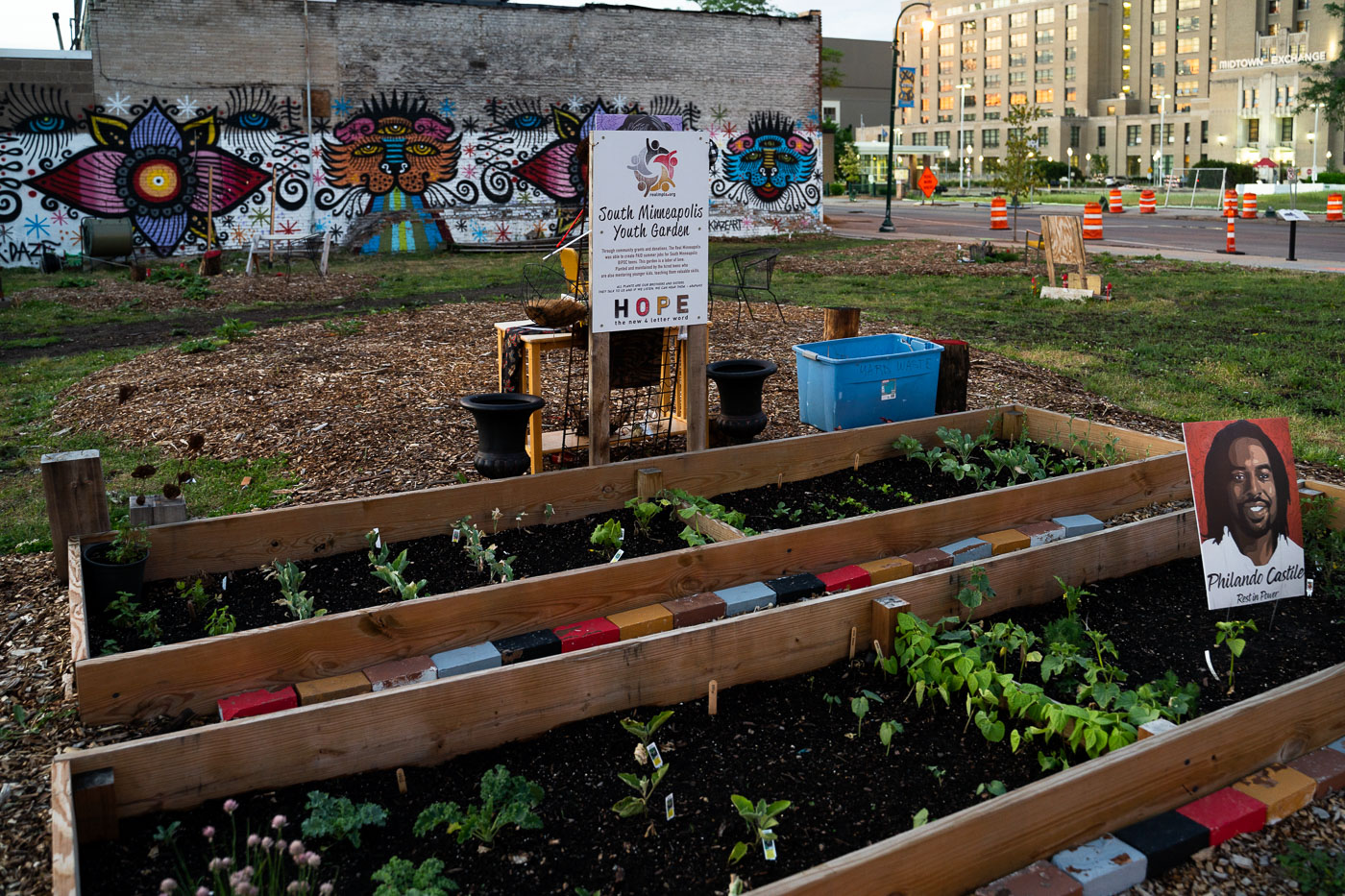
South Minneapolis Youth Garden at Lake Street and Chicago Avenue, with a Philando Castile memorial sign.
The South Minneapolis Youth Garden, located at the intersection of Chicago Avenue and Lake Street, was established as a community initiative. This garden serves as a space for young people to learn about agriculture and healthy eating, fostering a connection to nature within an urban environment. The presence of a memorial sign for Philando Castile indicates the garden's role in community healing and remembrance, particularly in the context of the Minneapolis Uprising.

South Minneapolis Youth Garden at Chicago Ave and Lake St
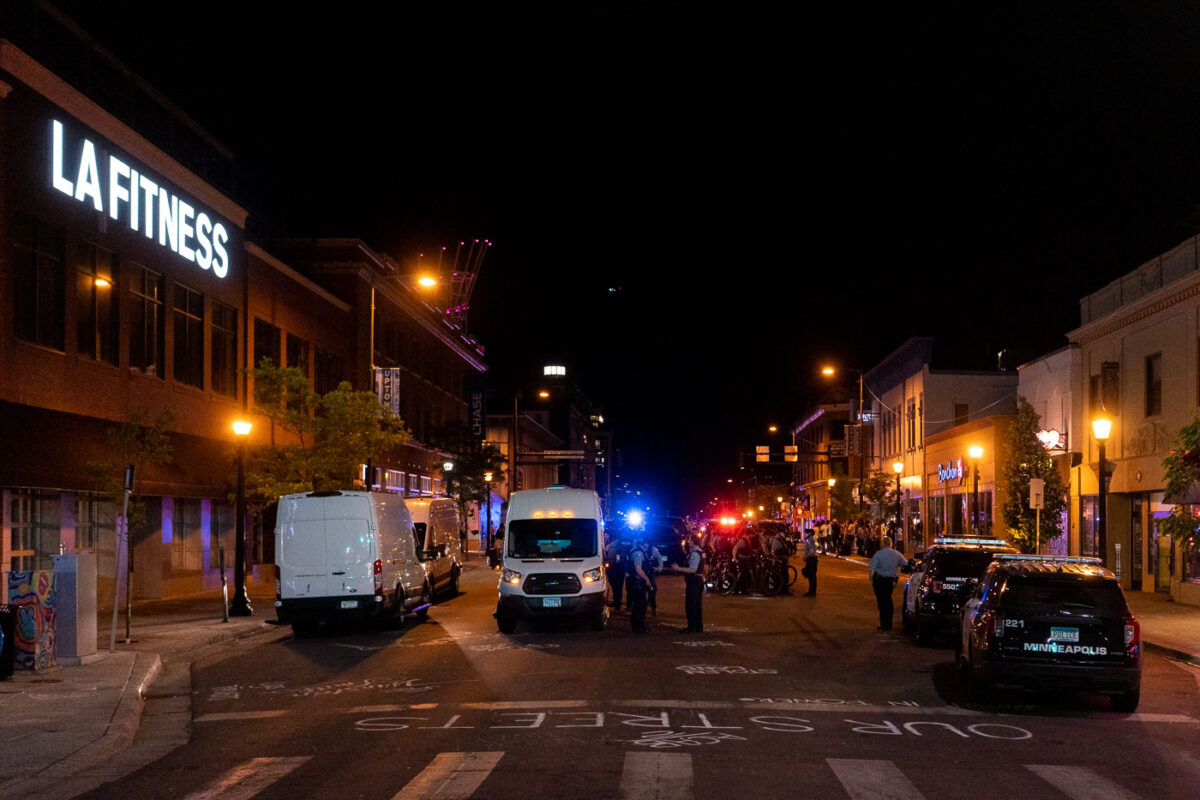
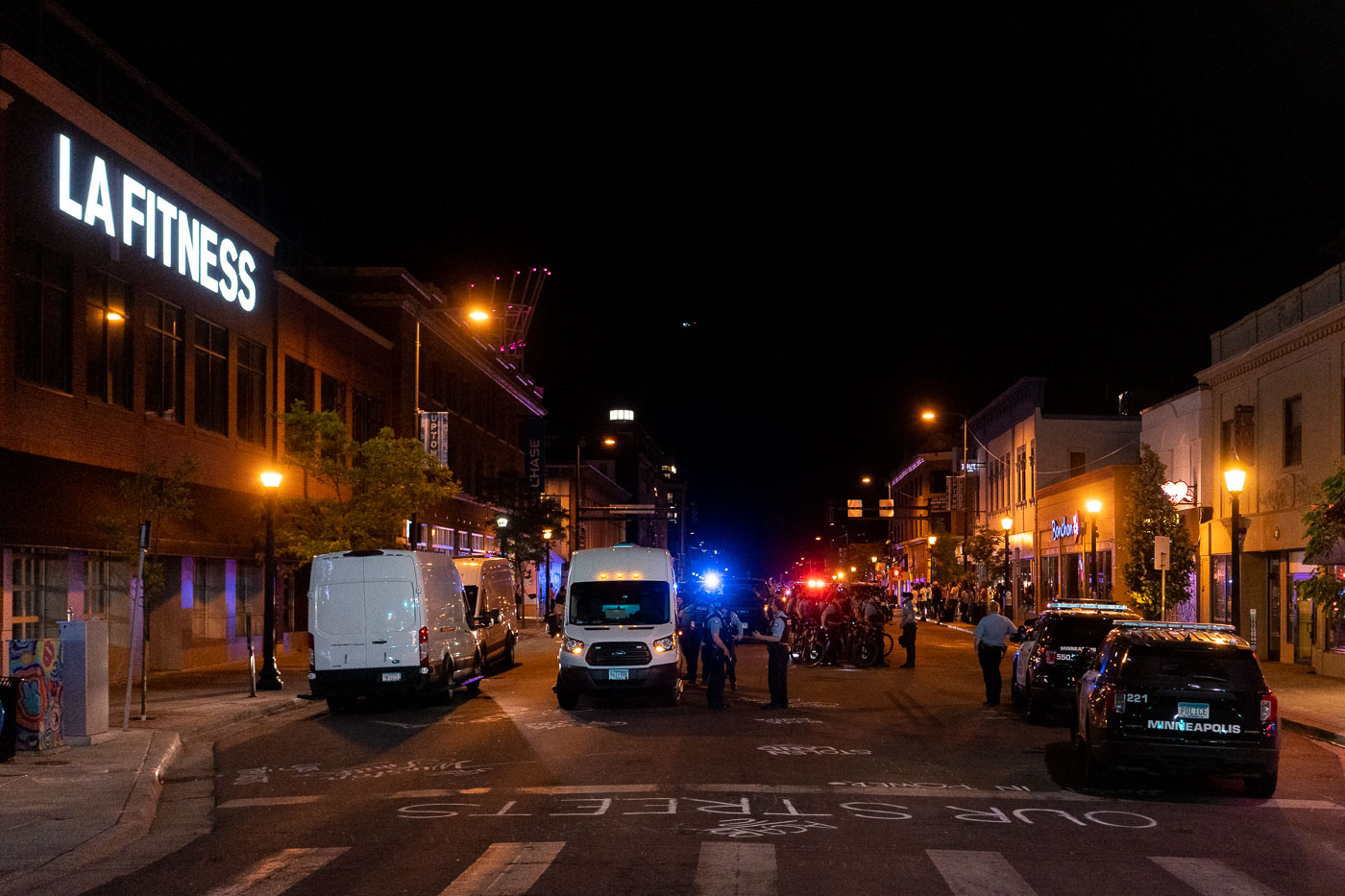
Police vans block Lake Street in Minneapolis outside LA Fitness at night.
Minneapolis Police officers are present on Lake Street in Uptown Minneapolis following the law enforcement shooting death of Winston Smith. Smith was killed by Federal Task Force members while they were serving a warrant. The incident sparked days of protests in the area, with "Our Streets" and "Stop Power" spray-painted on the road, indicating the public's response to the event. On June 3, 2021, members of a U.S. Marshals Service fugitive task force fatally shot 32-year-old Winston “Boogie” Smith Jr. on the top level of a parking ramp in Minneapolis’ Uptown neighborhood while attempting to arrest him on a felony warrant. Authorities said Smith fired a handgun from inside his vehicle during the encounter, while family members and activists questioned the official account and demanded the release of additional evidence. The killing led to weeks of protests, street occupations, and confrontations with police in Uptown, becoming another major flashpoint in Minneapolis during the period following the murder of George Floyd. Earlier in the day Minneapolis city officials along with The Agape Movement coordinated to open the streets that had been closed at George Floyd Square since his murder.

Minneapolis Police on Lake Street After Winston Smith Shooting
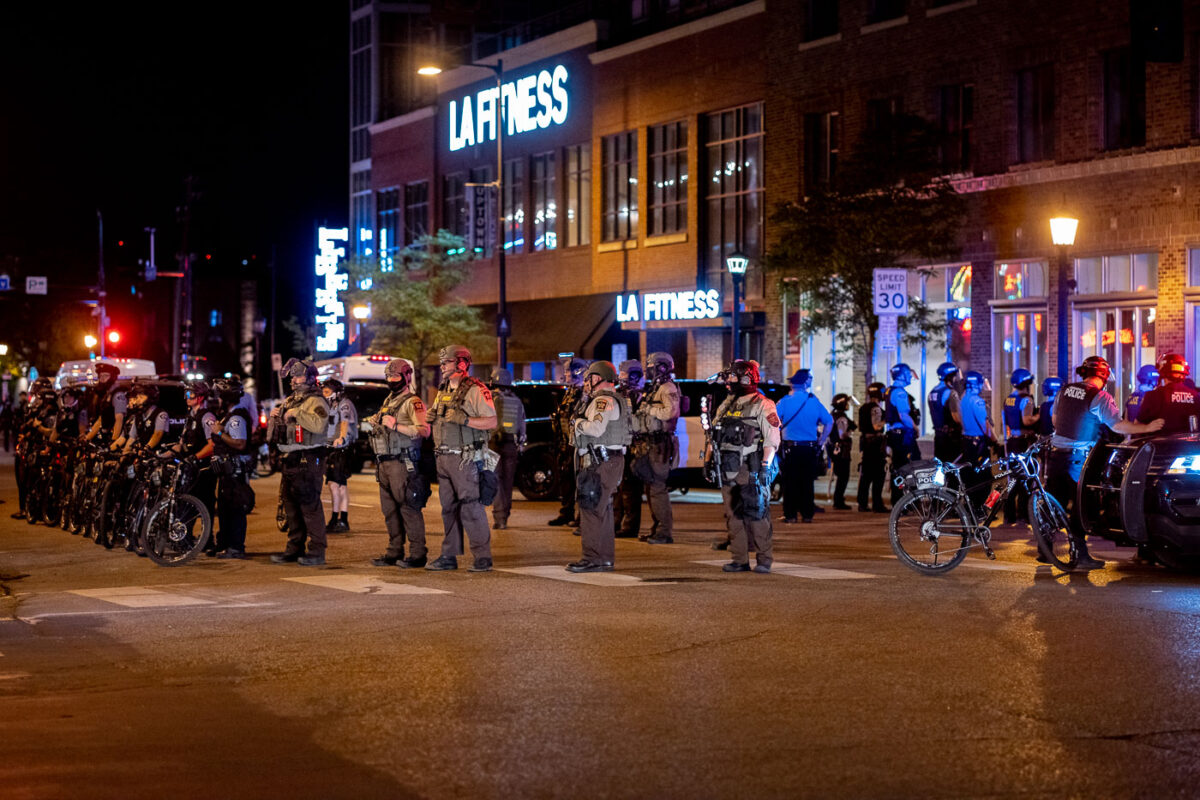
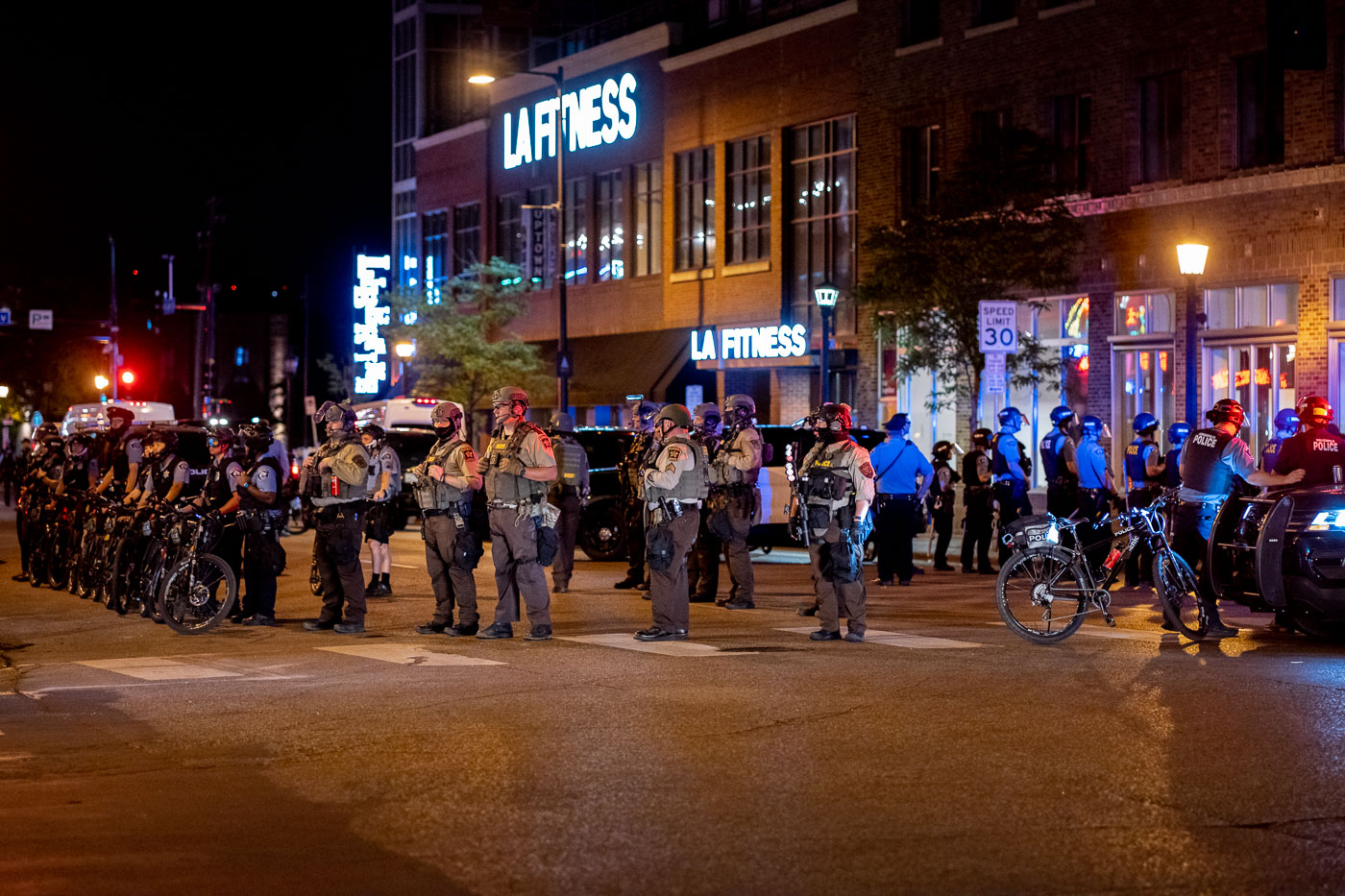
Police and sheriff's officers block Lake Street in Minneapolis outside LA Fitness at night.
Hennepin County Sheriff's Department and Minneapolis Police officers were deployed on Lake Street in Minneapolis on the night of September 2, 2021. They responded to protests that had been occurring for several days. These demonstrations followed the law enforcement shooting death of Winston Smith earlier that week at the Seven Points parking ramp. On June 3, 2021, members of a U.S. Marshals Service fugitive task force fatally shot 32-year-old Winston “Boogie” Smith Jr. on the top level of a parking ramp in Minneapolis’ Uptown neighborhood while attempting to arrest him on a felony warrant. Authorities said Smith fired a handgun from inside his vehicle during the encounter, while family members and activists questioned the official account and demanded the release of additional evidence. The killing led to weeks of protests, street occupations, and confrontations with police in Uptown, becoming another major flashpoint in Minneapolis during the period following the murder of George Floyd. Earlier in the day Minneapolis city officials along with The Agape Movement coordinated to open the streets that had been closed at George Floyd Square since his murder.

Hennepin County Sheriff and Minneapolis Police on Lake Street
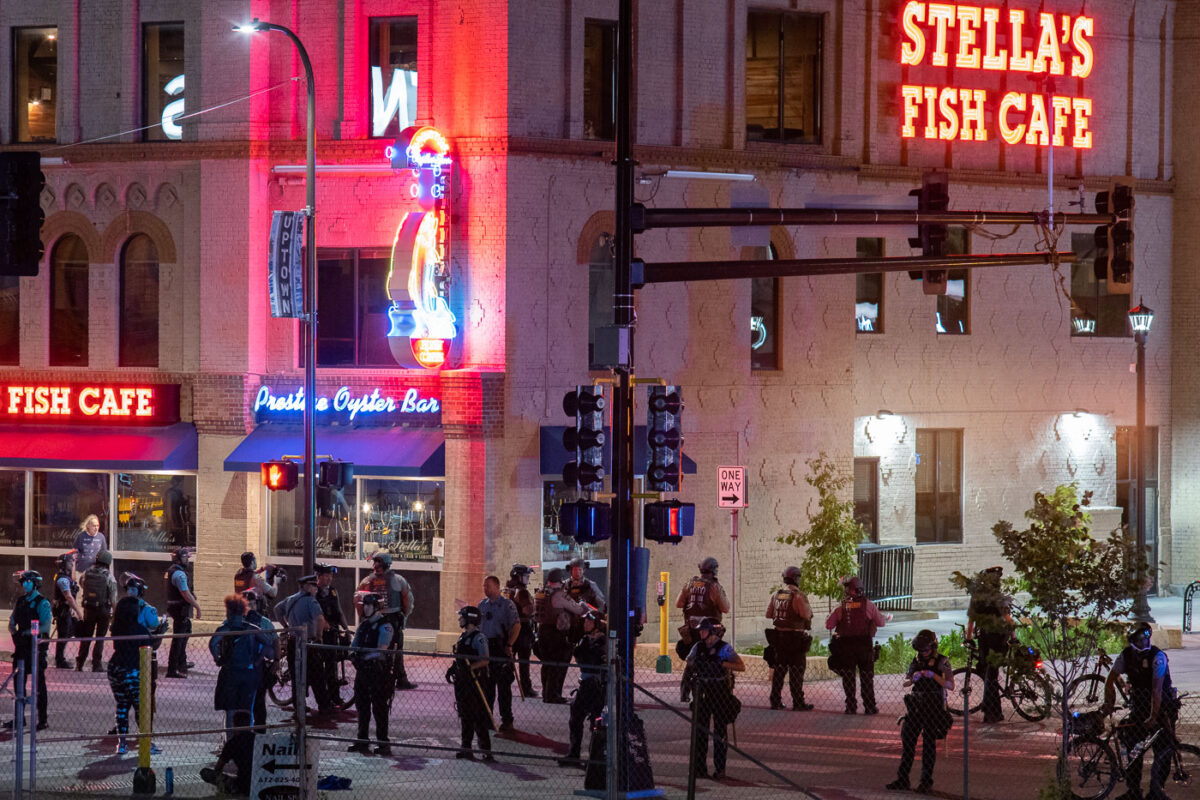
Police officers stand on Lake Street in Minneapolis's Uptown neighborhood during a protest following the death of Winston Smith.
Law enforcement officers are present on Lake Street in Minneapolis's Uptown neighborhood during a protest following the June 3rd shooting death of Winston Smith. On June 3, 2021, members of a U.S. Marshals Service fugitive task force fatally shot 32-year-old Winston “Boogie” Smith Jr. on the top level of a parking ramp in Minneapolis’ Uptown neighborhood while attempting to arrest him on a felony warrant. Authorities said Smith fired a handgun from inside his vehicle during the encounter, while family members and activists questioned the official account and demanded the release of additional evidence. The killing led to weeks of protests, street occupations, and confrontations with police in Uptown, becoming another major flashpoint in Minneapolis during the period following the murder of George Floyd. Earlier in the day Minneapolis city officials along with The Agape Movement coordinated to open the streets that had been closed at George Floyd Square since his murder.

Police on Lake Street during Winston Smith protest in Uptown
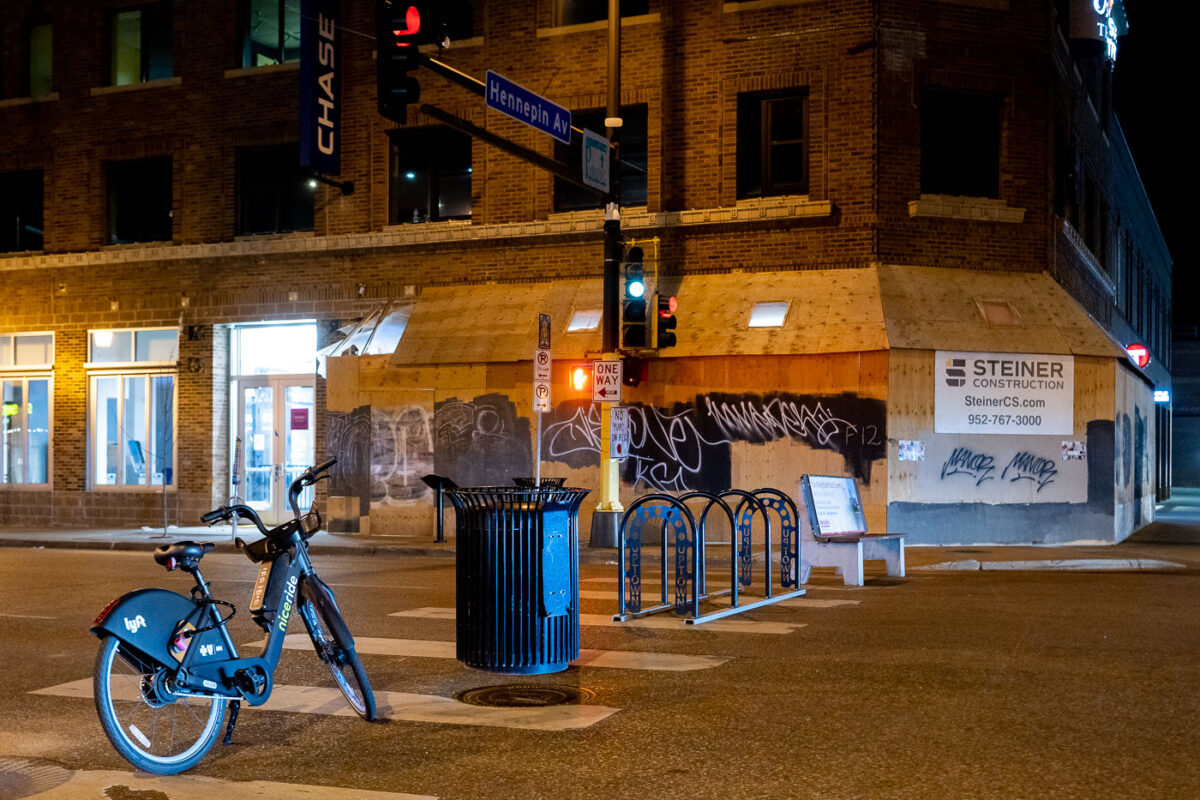
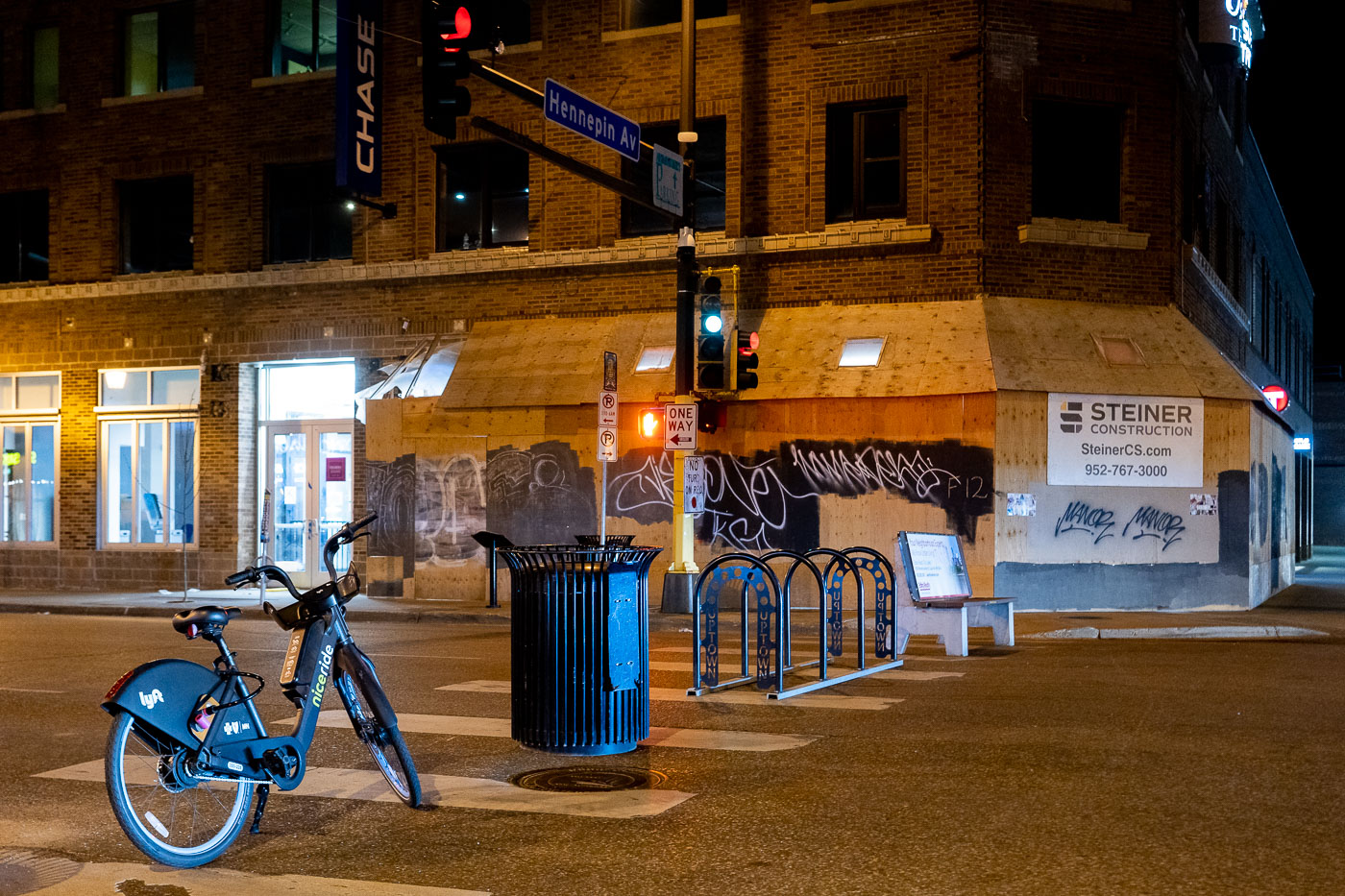
Makeshift barricades and a rental bike at Hennepin Avenue and Lake Street in Minneapolis at night
Makeshift barricades, including a bicycle, garbage can, and bike rack, were placed on Lake Street at Hennepin Avenue in Minneapolis. These barriers were erected during continuing protests following the law enforcement shooting death of Winston Smith on June 3rd. On June 3, 2021, members of a U.S. Marshals Service fugitive task force fatally shot 32-year-old Winston “Boogie” Smith Jr. on the top level of a parking ramp in Minneapolis’ Uptown neighborhood while attempting to arrest him on a felony warrant. Authorities said Smith fired a handgun from inside his vehicle during the encounter, while family members and activists questioned the official account and demanded the release of additional evidence. The killing led to weeks of protests, street occupations, and confrontations with police in Uptown, becoming another major flashpoint in Minneapolis during the period following the murder of George Floyd. Earlier in the day Minneapolis city officials along with The Agape Movement coordinated to open the streets that had been closed at George Floyd Square since his murder.

Makeshift Barricades on Lake Street, Minneapolis
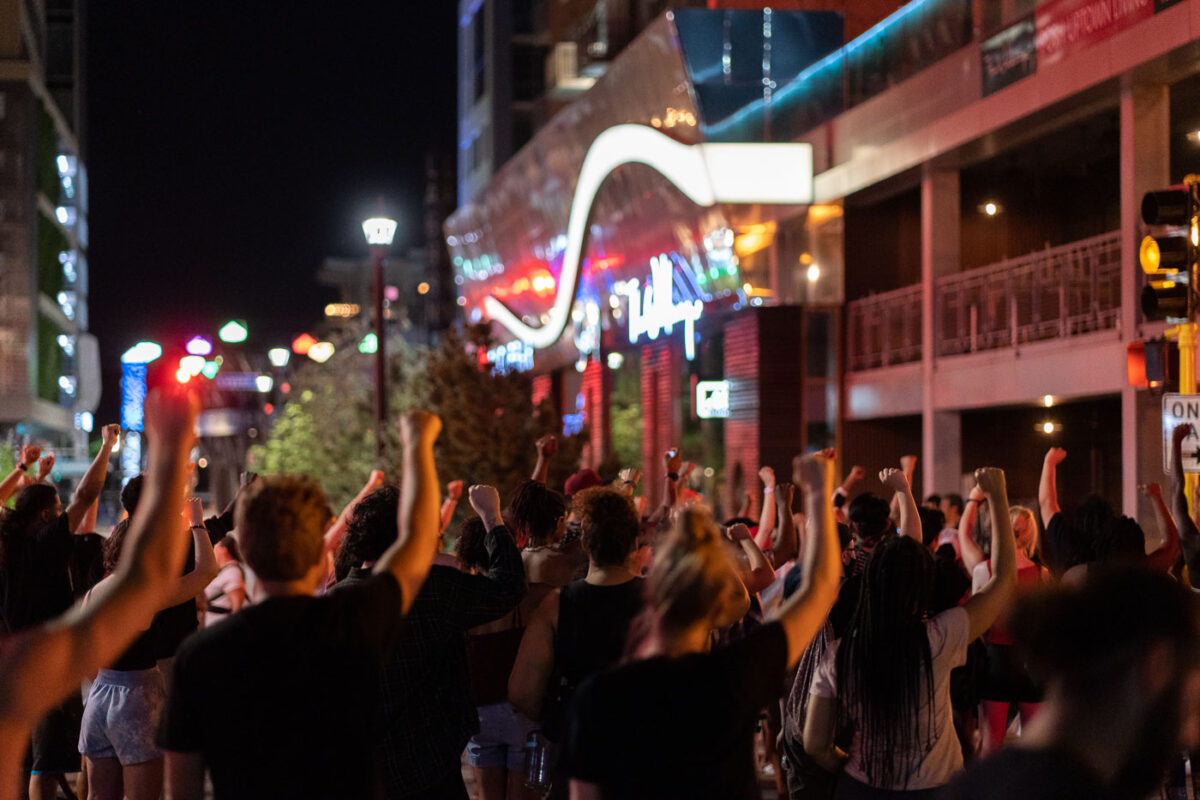
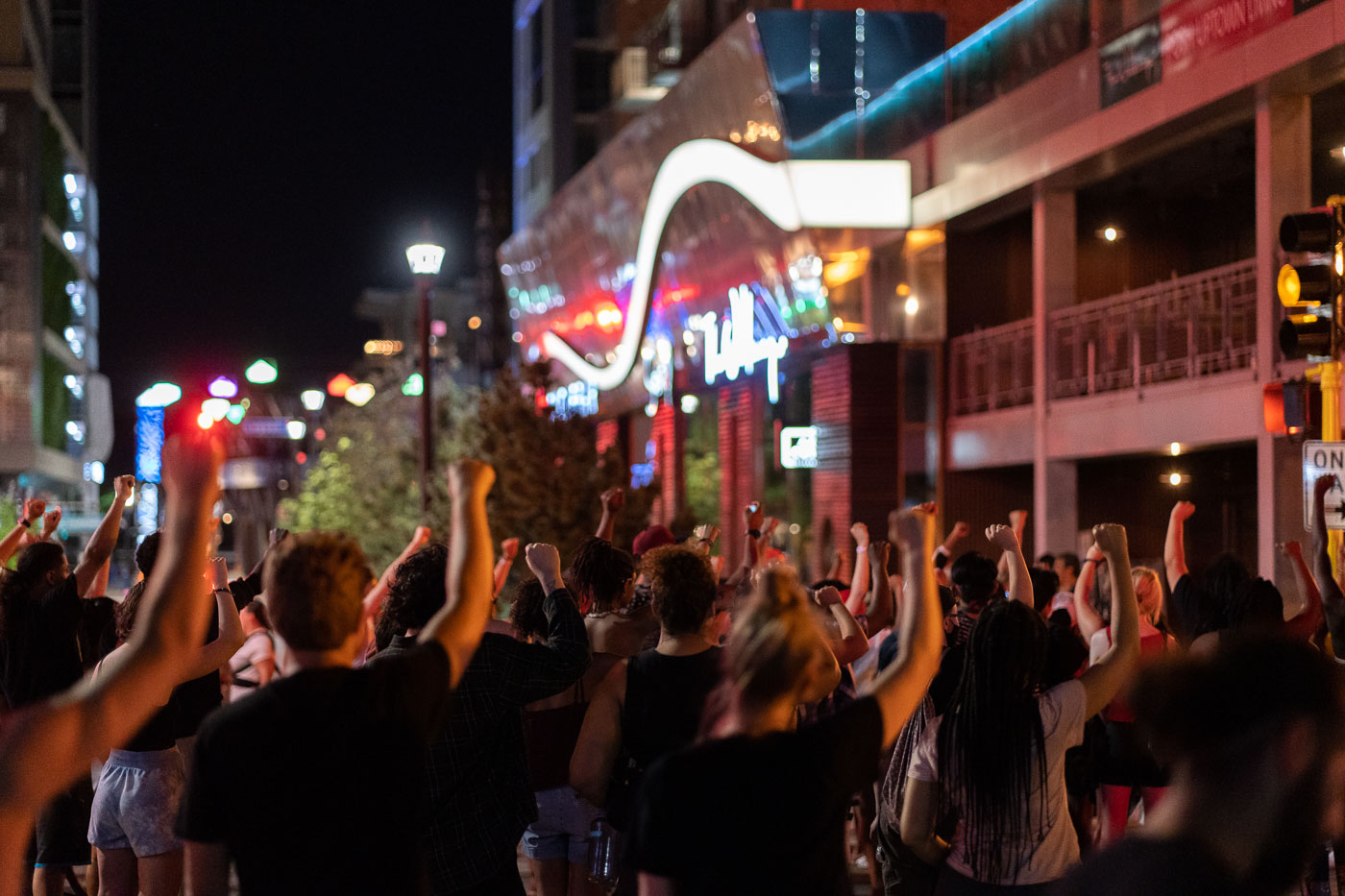
Protesters raise fists on Lake Street in Minneapolis at night
Protesters raise their fists in solidarity during a march in Uptown Minneapolis on June 5, 2021. This demonstration occurred on the third day of protests following the law enforcement shooting death of Winston Smith on June 3rd. On June 3, 2021, members of a U.S. Marshals Service fugitive task force fatally shot 32-year-old Winston “Boogie” Smith Jr. on the top level of a parking ramp in Minneapolis’ Uptown neighborhood while attempting to arrest him on a felony warrant. Authorities said Smith fired a handgun from inside his vehicle during the encounter, while family members and activists questioned the official account and demanded the release of additional evidence. The killing led to weeks of protests, street occupations, and confrontations with police in Uptown, becoming another major flashpoint in Minneapolis during the period following the murder of George Floyd. Earlier in the day Minneapolis city officials along with The Agape Movement coordinated to open the streets that had been closed at George Floyd Square since his murder.

Uptown Minneapolis Protestors Raise Fists for Winston Smith
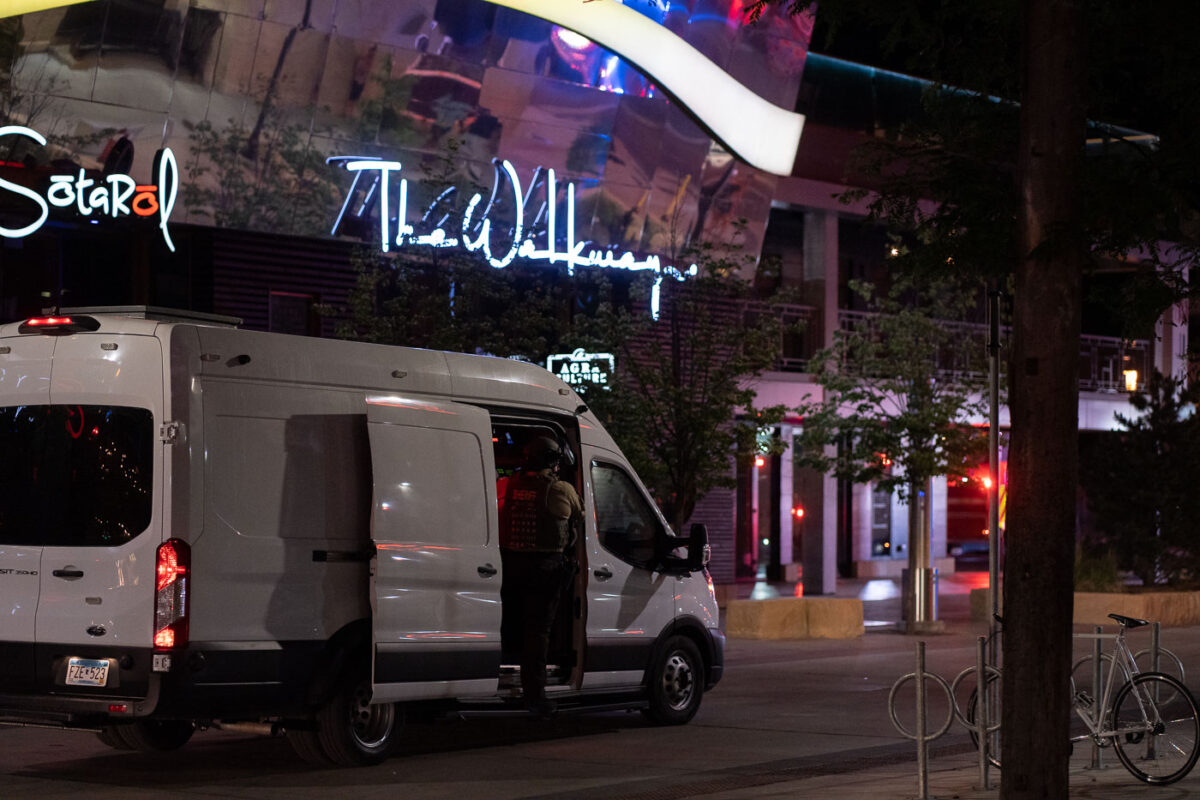
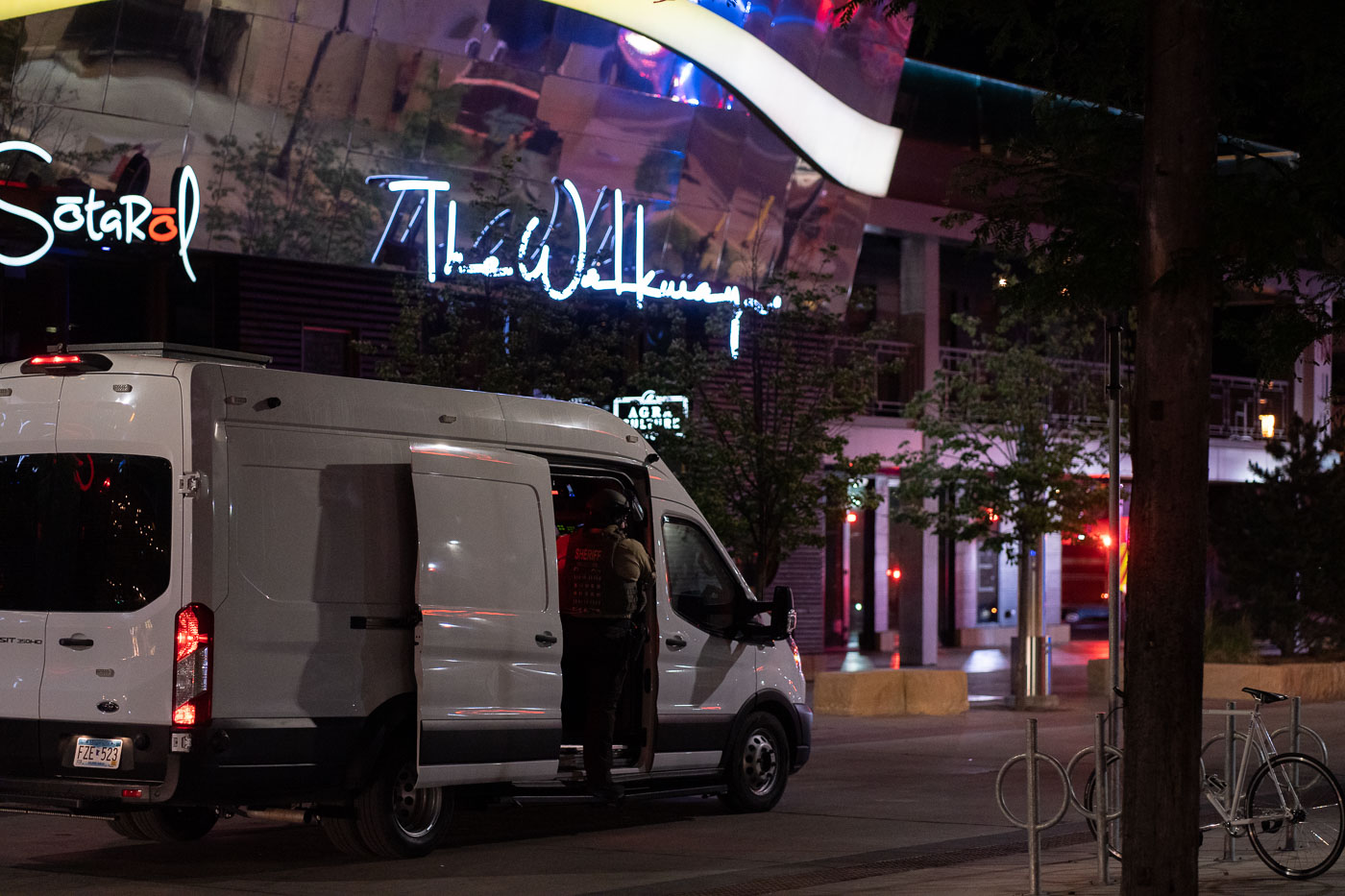
Hennepin County sheriff's van parked outside SōtaRōl in Minneapolis at night
A Hennepin County Sheriff's Department van is parked on Girard Avenue in Minneapolis during protests following the death of Winston Smith. On June 3, 2021, members of a U.S. Marshals Service fugitive task force fatally shot 32-year-old Winston “Boogie” Smith Jr. on the top level of a parking ramp in Minneapolis’ Uptown neighborhood while attempting to arrest him on a felony warrant. Authorities said Smith fired a handgun from inside his vehicle during the encounter, while family members and activists questioned the official account and demanded the release of additional evidence. The killing led to weeks of protests, street occupations, and confrontations with police in Uptown, becoming another major flashpoint in Minneapolis during the period following the murder of George Floyd. Earlier in the day Minneapolis city officials along with The Agape Movement coordinated to open the streets that had been closed at George Floyd Square since his murder.

Minneapolis Sheriff’s van on Girard Ave during Winston Smith protests
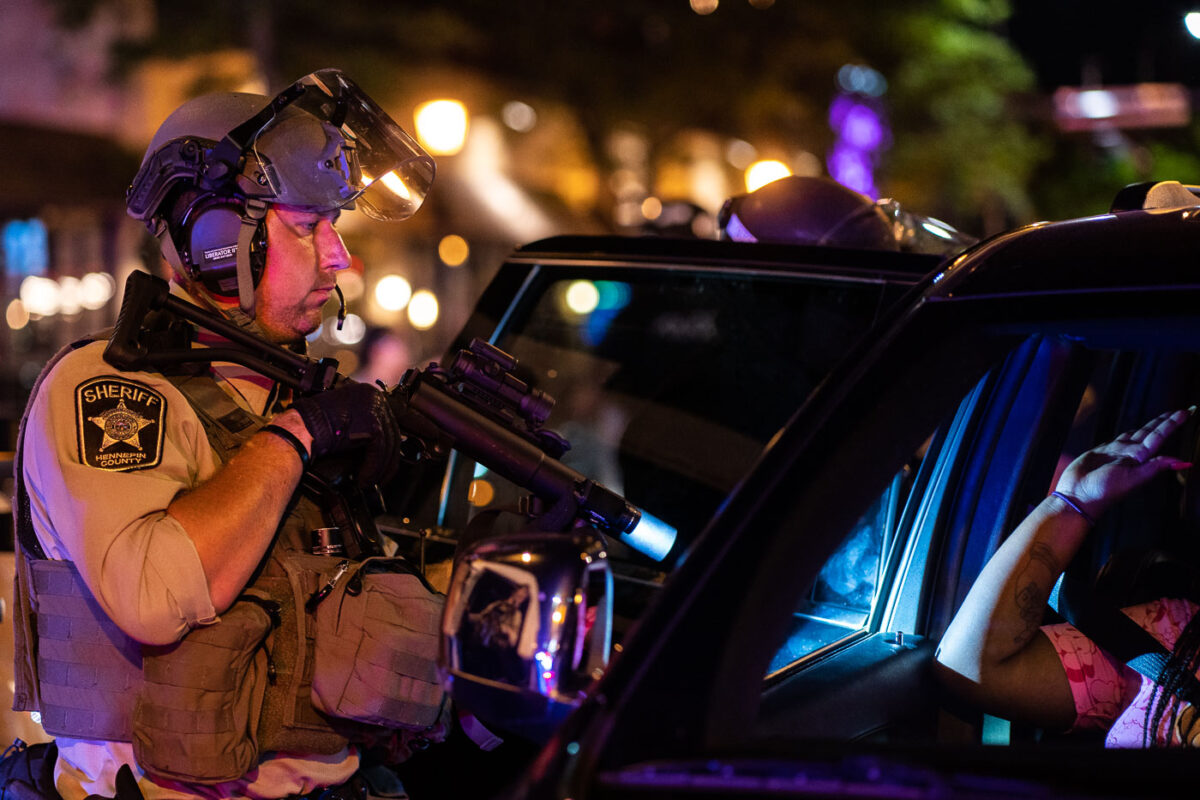
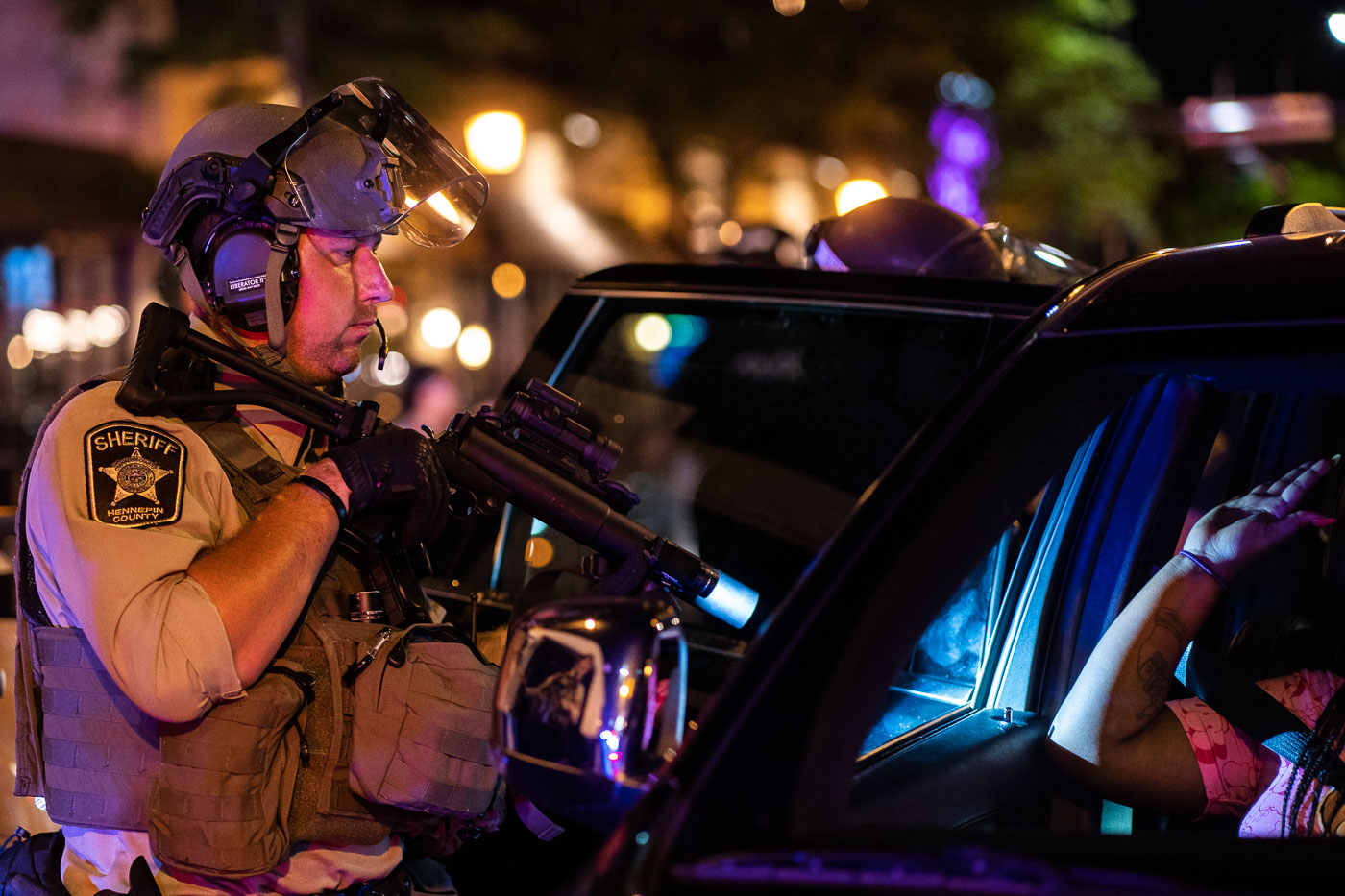
Hennepin County sheriff points a rifle at a driver during protests in Minneapolis.
A Hennepin County Sheriff's deputy points a firearm at a vehicle during protests in Minneapolis on June 5, 2021. On June 3, 2021, members of a U.S. Marshals Service fugitive task force fatally shot 32-year-old Winston “Boogie” Smith Jr. on the top level of a parking ramp in Minneapolis’ Uptown neighborhood while attempting to arrest him on a felony warrant. Authorities said Smith fired a handgun from inside his vehicle during the encounter, while family members and activists questioned the official account and demanded the release of additional evidence. The killing led to weeks of protests, street occupations, and confrontations with police in Uptown, becoming another major flashpoint in Minneapolis during the period following the murder of George Floyd. Earlier in the day Minneapolis city officials along with The Agape Movement coordinated to open the streets that had been closed at George Floyd Square since his murder.

Hennepin County Sheriff points gun at vehicle during protests
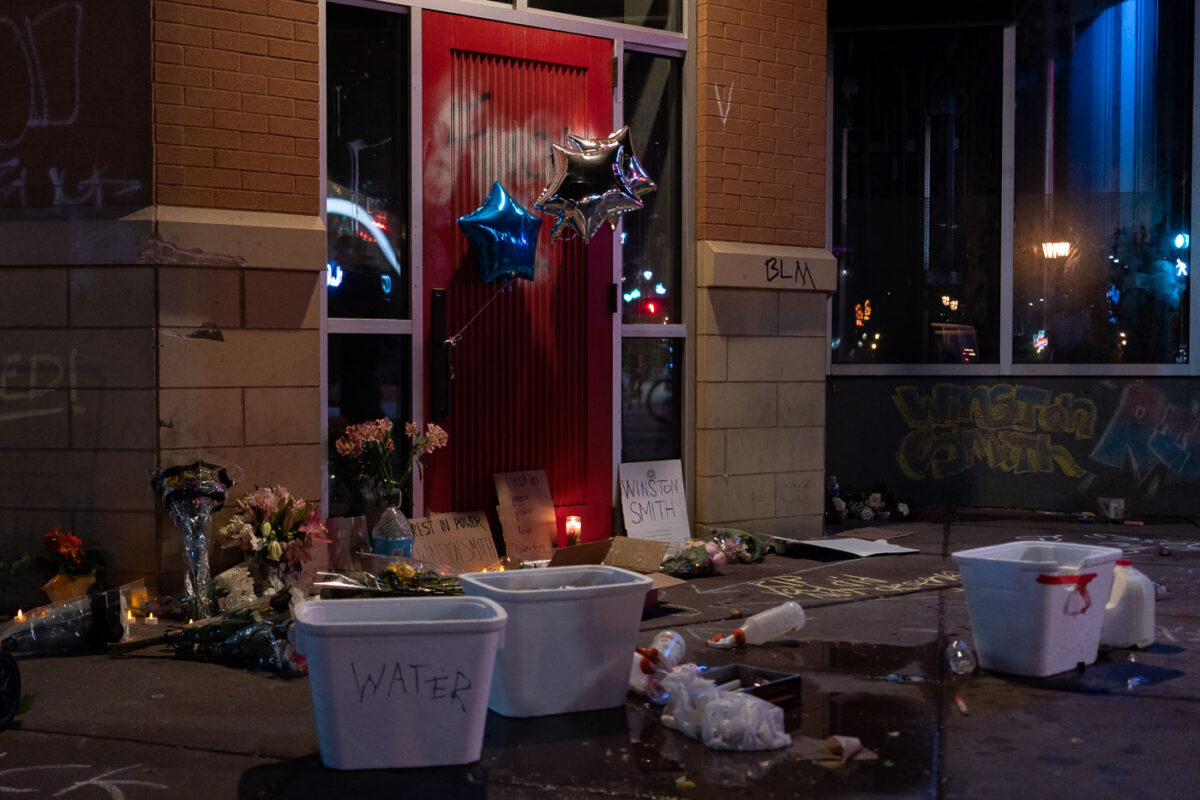
Winston Smith memorial with flowers and candles on Lake Street in Minneapolis at night.
A makeshift memorial for Winston Smith is seen on Lake Street in Minneapolis. On June 3, 2021, members of a U.S. Marshals Service fugitive task force fatally shot 32-year-old Winston “Boogie” Smith Jr. on the top level of a parking ramp in Minneapolis’ Uptown neighborhood while attempting to arrest him on a felony warrant. Authorities said Smith fired a handgun from inside his vehicle during the encounter, while family members and activists questioned the official account and demanded the release of additional evidence. The killing led to weeks of protests, street occupations, and confrontations with police in Uptown, becoming another major flashpoint in Minneapolis during the period following the murder of George Floyd. Earlier in the day Minneapolis city officials along with The Agape Movement coordinated to open the streets that had been closed at George Floyd Square since his murder.

Winston Smith Memorial on Lake Street, Minneapolis
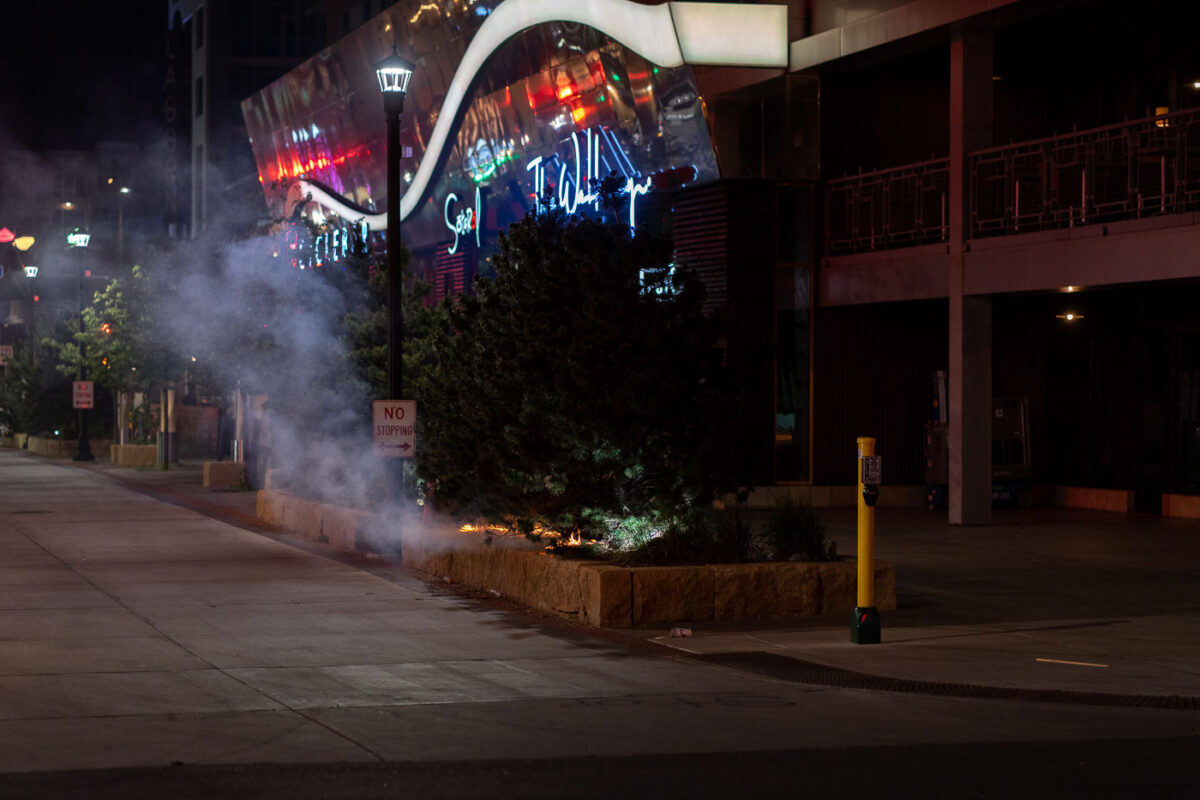
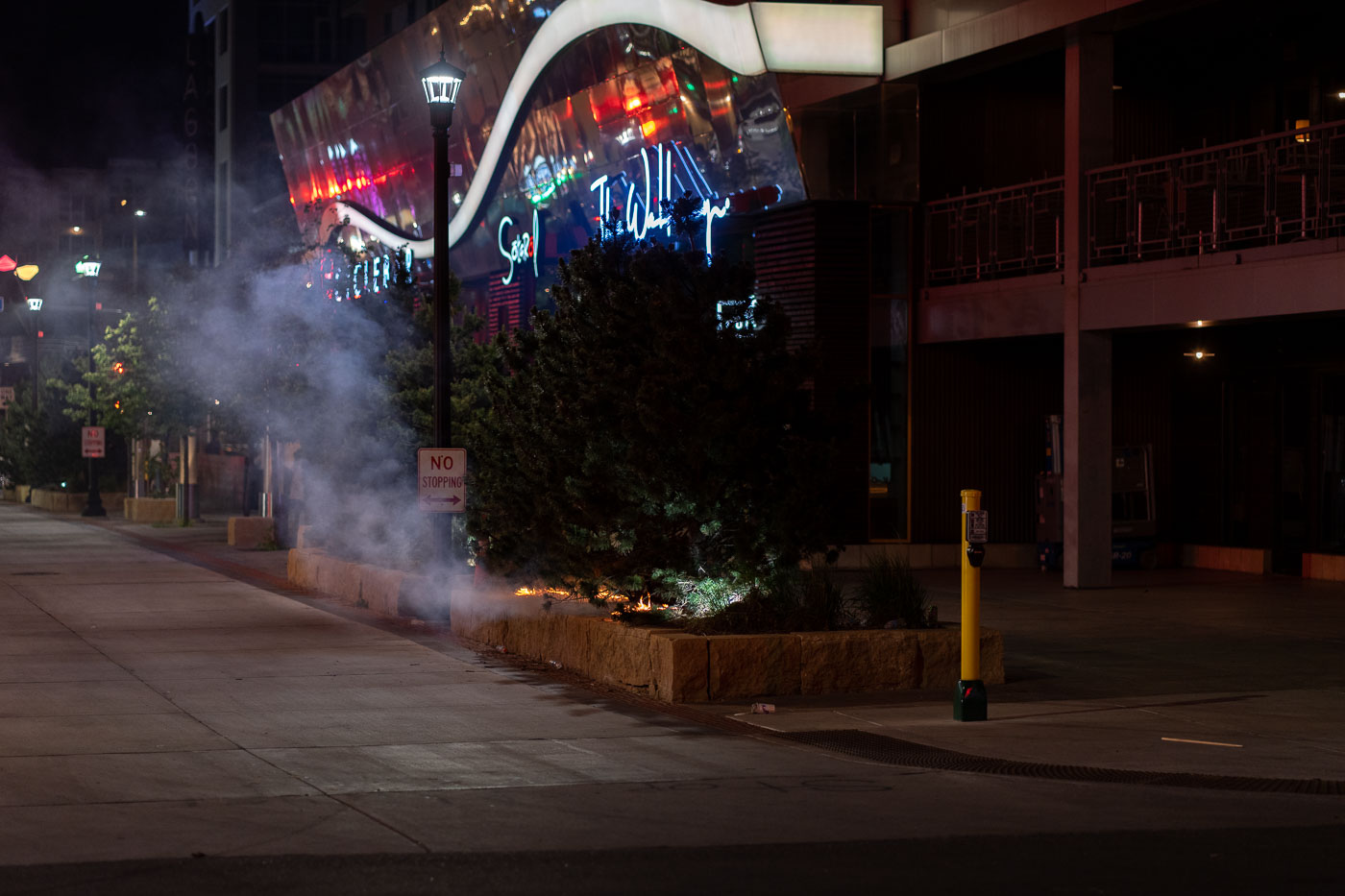
Small fire and smoke rise from bushes on Girard Ave in Minneapolis at night.
Bushes burn on Girard Avenue in Minneapolis during protests following the law enforcement shooting death of Winston Smith on June 3rd. On June 3, 2021, members of a U.S. Marshals Service fugitive task force fatally shot 32-year-old Winston “Boogie” Smith Jr. on the top level of a parking ramp in Minneapolis’ Uptown neighborhood while attempting to arrest him on a felony warrant. Authorities said Smith fired a handgun from inside his vehicle during the encounter, while family members and activists questioned the official account and demanded the release of additional evidence. The killing led to weeks of protests, street occupations, and confrontations with police in Uptown, becoming another major flashpoint in Minneapolis during the period following the murder of George Floyd. Earlier in the day Minneapolis city officials along with The Agape Movement coordinated to open the streets that had been closed at George Floyd Square since his murder.

Bushes burn on Girard Ave, Minneapolis during protests
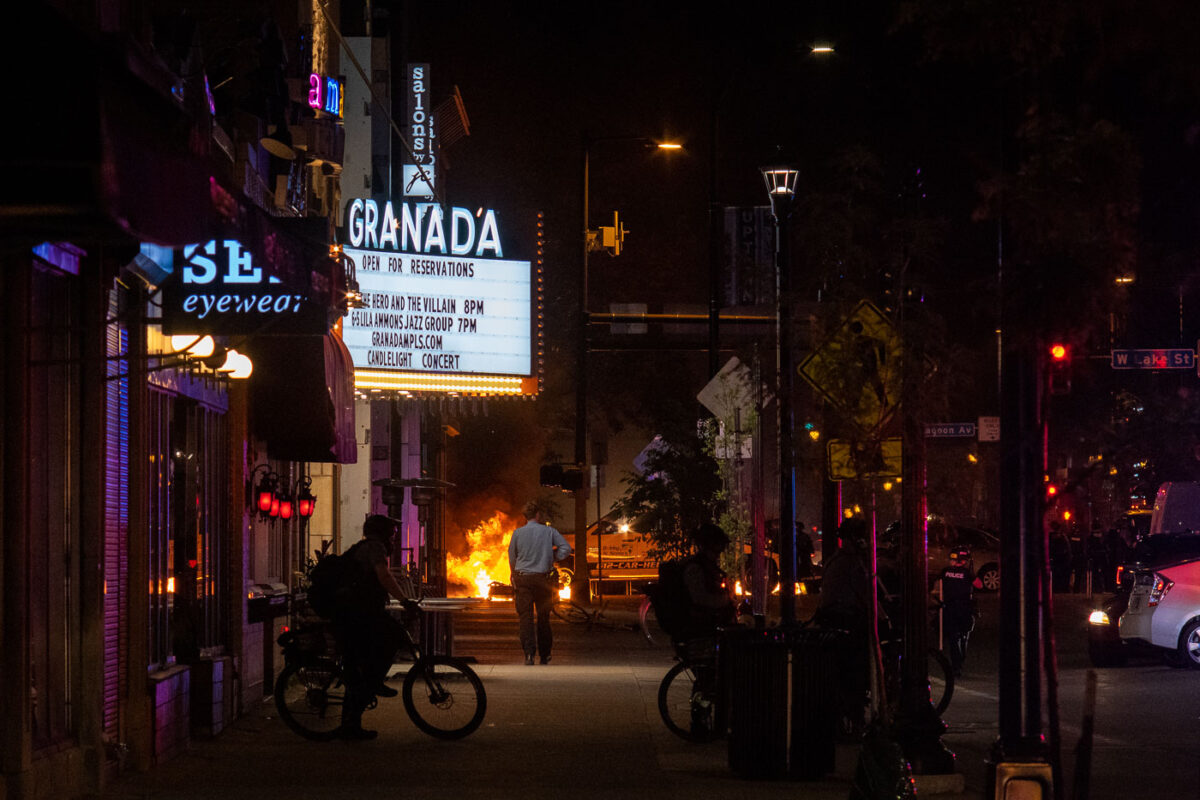
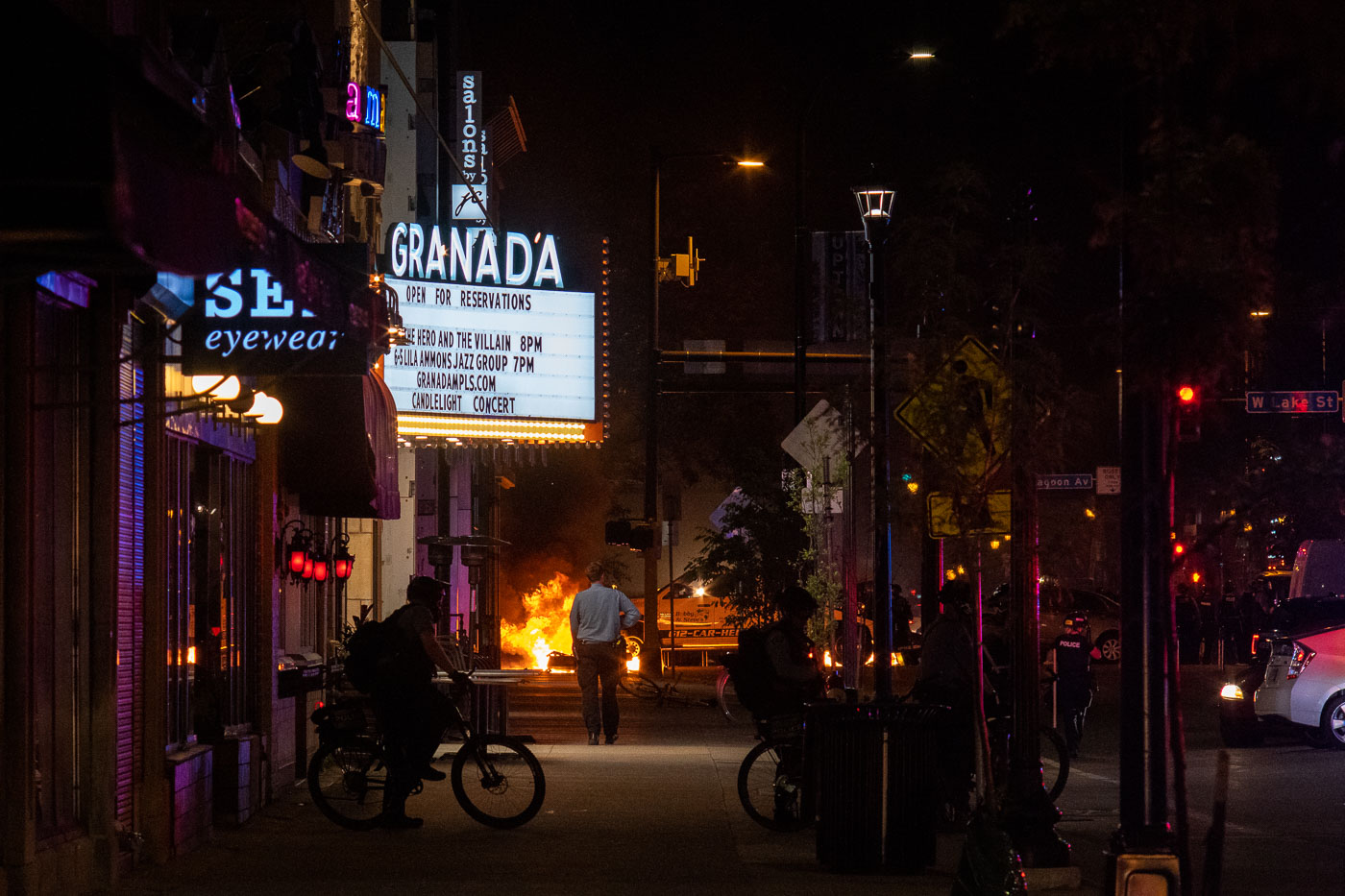
Fire burns on Hennepin Avenue by the Granada Theatre in Minneapolis at night.
Fires burn on Hennepin Avenue in Minneapolis on the night of June 3, 2021, following the shooting death of Winston Smith by federal law enforcement officers. Minneapolis Police are present as flames engulf vehicles and structures in the street near the Granada Theater. On June 3, 2021, members of a U.S. Marshals Service fugitive task force fatally shot 32-year-old Winston “Boogie” Smith Jr. on the top level of a parking ramp in Minneapolis’ Uptown neighborhood while attempting to arrest him on a felony warrant. Authorities said Smith fired a handgun from inside his vehicle during the encounter, while family members and activists questioned the official account and demanded the release of additional evidence. The killing led to weeks of protests, street occupations, and confrontations with police in Uptown, becoming another major flashpoint in Minneapolis during the period following the murder of George Floyd. Earlier in the day Minneapolis city officials along with The Agape Movement coordinated to open the streets that had been closed at George Floyd Square since his murder.

Minneapolis: Fire on Hennepin Ave near Granada Theatre
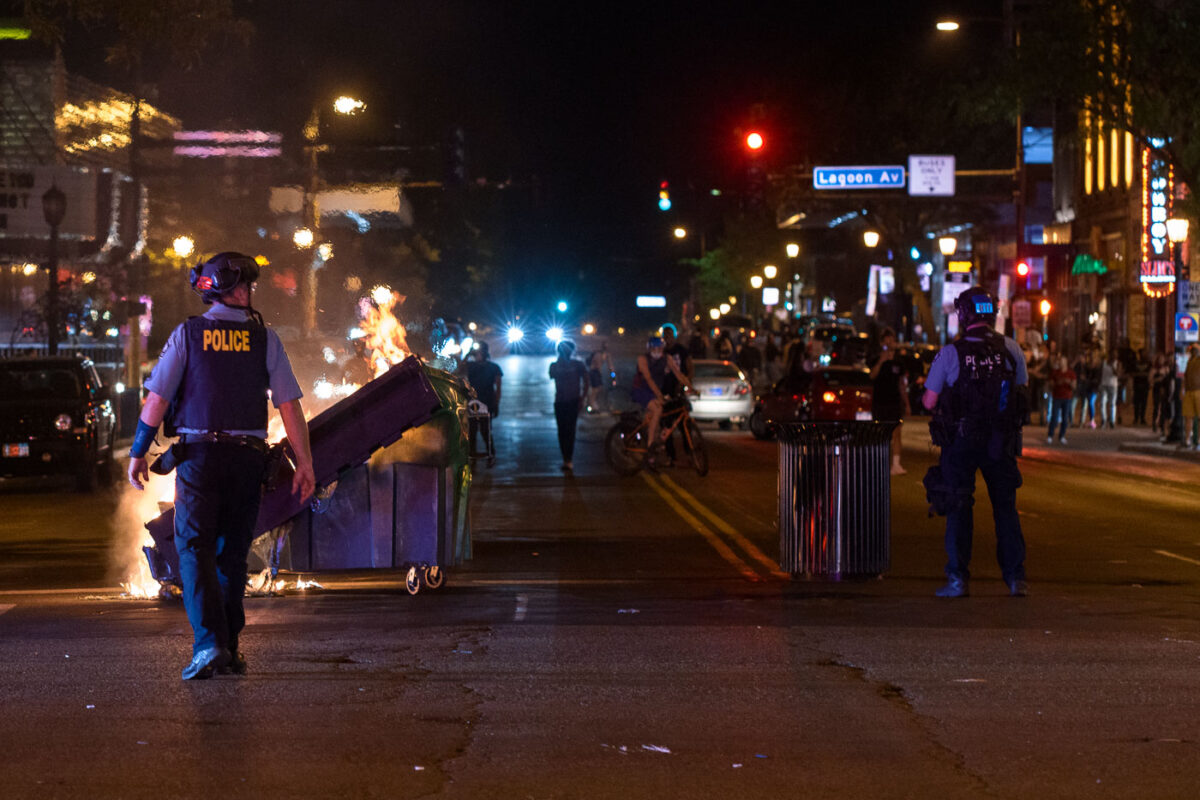
Police stand near a burning dumpster at Lake Street and Hennepin Avenue in Minneapolis at night during protests
Burning dumpsters are visible at the intersection of Hennepin Avenue and Lake Street in Minneapolis on June 5, 2021. This occurred during protests following the law enforcement shooting death of Winston Smith on June 3. The protests, which took place in the Uptown neighborhood, saw unrest and property damage, including fires set in public trash receptacles. On June 3, 2021, members of a U.S. Marshals Service fugitive task force fatally shot 32-year-old Winston “Boogie” Smith Jr. on the top level of a parking ramp in Minneapolis’ Uptown neighborhood while attempting to arrest him on a felony warrant. Authorities said Smith fired a handgun from inside his vehicle during the encounter, while family members and activists questioned the official account and demanded the release of additional evidence. The killing led to weeks of protests, street occupations, and confrontations with police in Uptown, becoming another major flashpoint in Minneapolis during the period following the murder of George Floyd. Earlier in the day Minneapolis city officials along with The Agape Movement coordinated to open the streets that had been closed at George Floyd Square since his murder.

Minneapolis: Burning dumpsters at Lake St & Hennepin Ave during protests
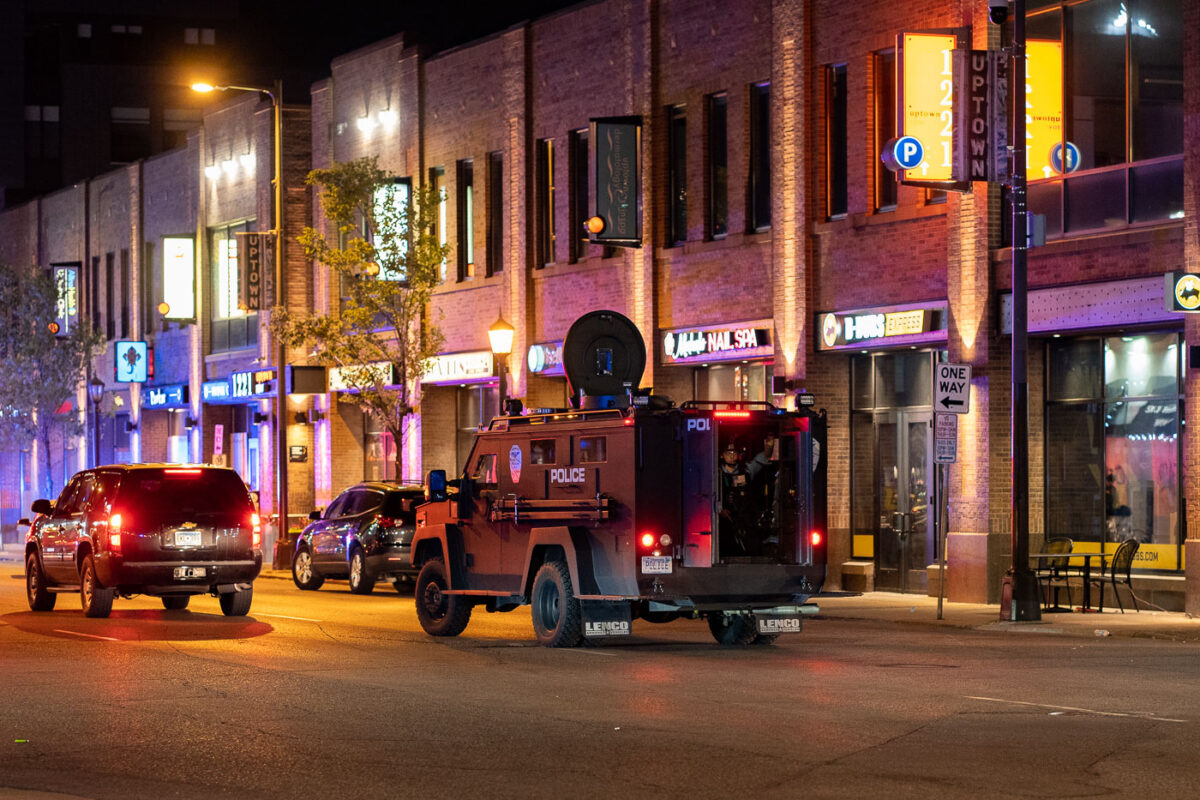
Minneapolis police Bearcat on Lake Street in Uptown at night during protests
Minneapolis police in the back of a bearcat vehicle driving down Lake Street in Uptown Minneapolis during protests over the shooting death of Winston Smith. On June 3, 2021, members of a U.S. Marshals Service fugitive task force fatally shot 32-year-old Winston “Boogie” Smith Jr. on the top level of a parking ramp in Minneapolis’ Uptown neighborhood while attempting to arrest him on a felony warrant. Authorities said Smith fired a handgun from inside his vehicle during the encounter, while family members and activists questioned the official account and demanded the release of additional evidence. The killing led to weeks of protests, street occupations, and confrontations with police in Uptown, becoming another major flashpoint in Minneapolis during the period following the murder of George Floyd. Earlier in the day Minneapolis city officials along with The Agape Movement coordinated to open the streets that had been closed at George Floyd Square since his murder.

Minneapolis Police Bearcat on Lake Street during Winston Smith protests
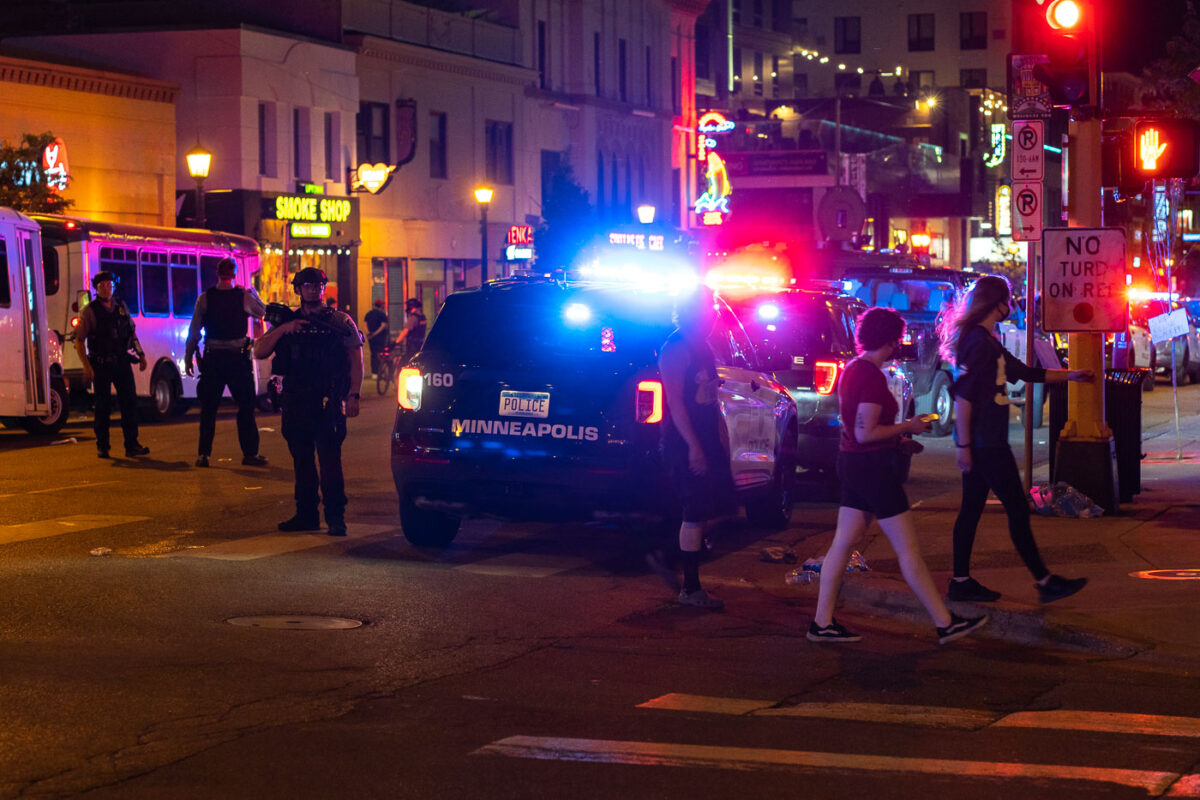
Minneapolis police vehicles and officers on Hennepin Avenue at night during protests.
Minneapolis Police officers were present on Hennepin Avenue during protests following the June 3rd shooting death of Winston Smith by a Federal task force. The protests, which occurred in the Uptown Minneapolis neighborhood, drew a significant police response. On June 3, 2021, members of a U.S. Marshals Service fugitive task force fatally shot 32-year-old Winston “Boogie” Smith Jr. on the top level of a parking ramp in Minneapolis’ Uptown neighborhood while attempting to arrest him on a felony warrant. Authorities said Smith fired a handgun from inside his vehicle during the encounter, while family members and activists questioned the official account and demanded the release of additional evidence. The killing led to weeks of protests, street occupations, and confrontations with police in Uptown, becoming another major flashpoint in Minneapolis during the period following the murder of George Floyd. Earlier in the day Minneapolis city officials along with The Agape Movement coordinated to open the streets that had been closed at George Floyd Square since his murder.

Minneapolis Police presence on Hennepin Ave during protests
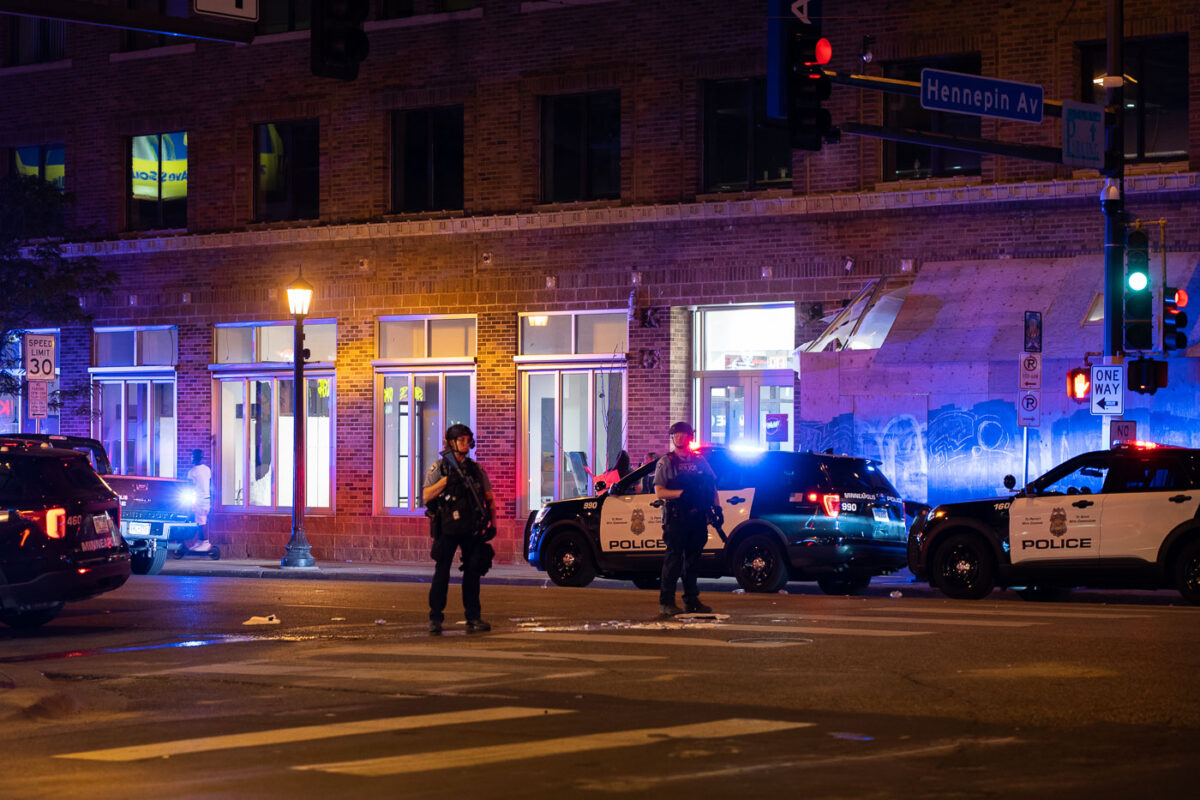
Police officers and squad cars at Hennepin Ave and Lake Street in Minneapolis at night.
Authorities move in to push out and make arrests of protesters after a dispersal order is given. On June 3, 2021, members of a U.S. Marshals Service fugitive task force fatally shot 32-year-old Winston “Boogie” Smith Jr. on the top level of a parking ramp in Minneapolis’ Uptown neighborhood while attempting to arrest him on a felony warrant. Authorities said Smith fired a handgun from inside his vehicle during the encounter, while family members and activists questioned the official account and demanded the release of additional evidence. The killing led to weeks of protests, street occupations, and confrontations with police in Uptown, becoming another major flashpoint in Minneapolis during the period following the murder of George Floyd. Earlier in the day Minneapolis city officials along with The Agape Movement coordinated to open the streets that had been closed at George Floyd Square since his murder.

Minneapolis Police at Hennepin Ave during Winston Smith protests
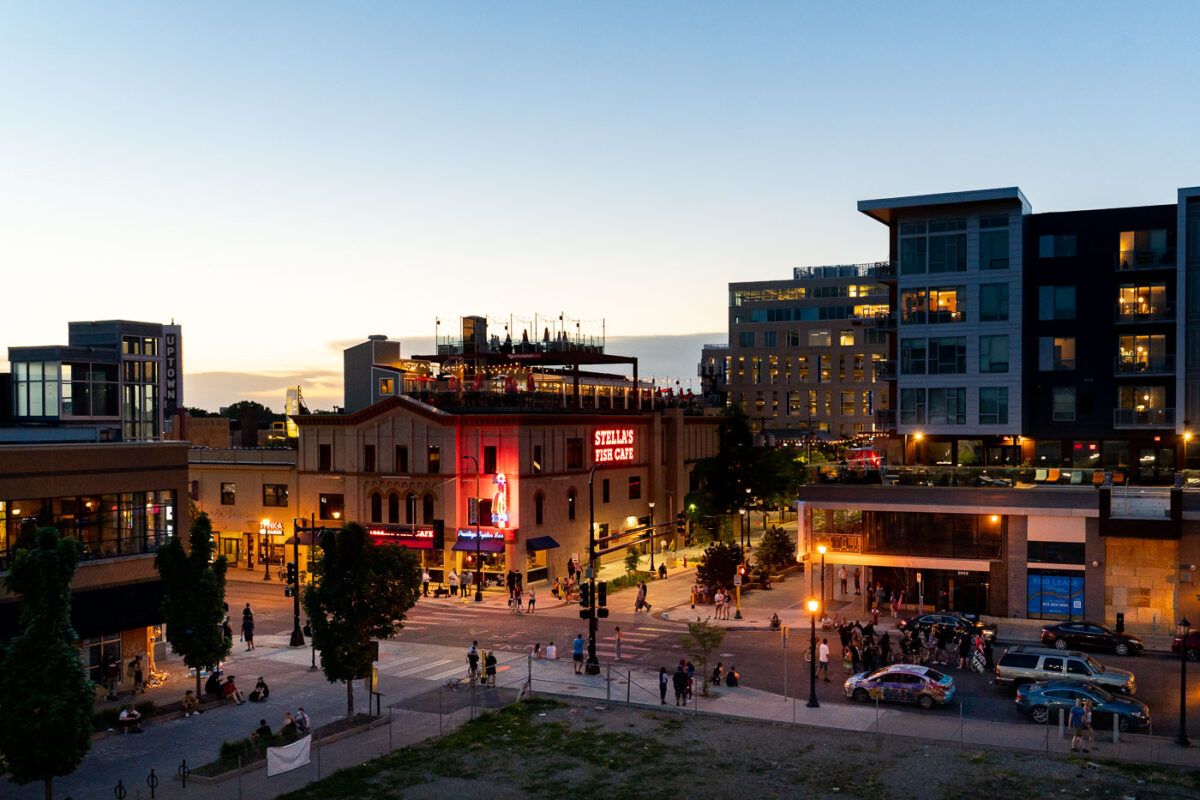
Protesters gather on Lake Street in Uptown Minneapolis at dusk.
Protesters march down Lake Street in Uptown Minneapolis the day after Winston Smith was killed by a federal law enforcement task force. On June 3, 2021, members of a U.S. Marshals Service fugitive task force fatally shot 32-year-old Winston “Boogie” Smith Jr. on the top level of a parking ramp in Minneapolis’ Uptown neighborhood while attempting to arrest him on a felony warrant. Authorities said Smith fired a handgun from inside his vehicle during the encounter, while family members and activists questioned the official account and demanded the release of additional evidence. The killing led to weeks of protests, street occupations, and confrontations with police in Uptown, becoming another major flashpoint in Minneapolis during the period following the murder of George Floyd. Earlier in the day Minneapolis city officials along with The Agape Movement coordinated to open the streets that had been closed at George Floyd Square since his murder.

Minneapolis Protest on Lake Street After Winston Smith Killing
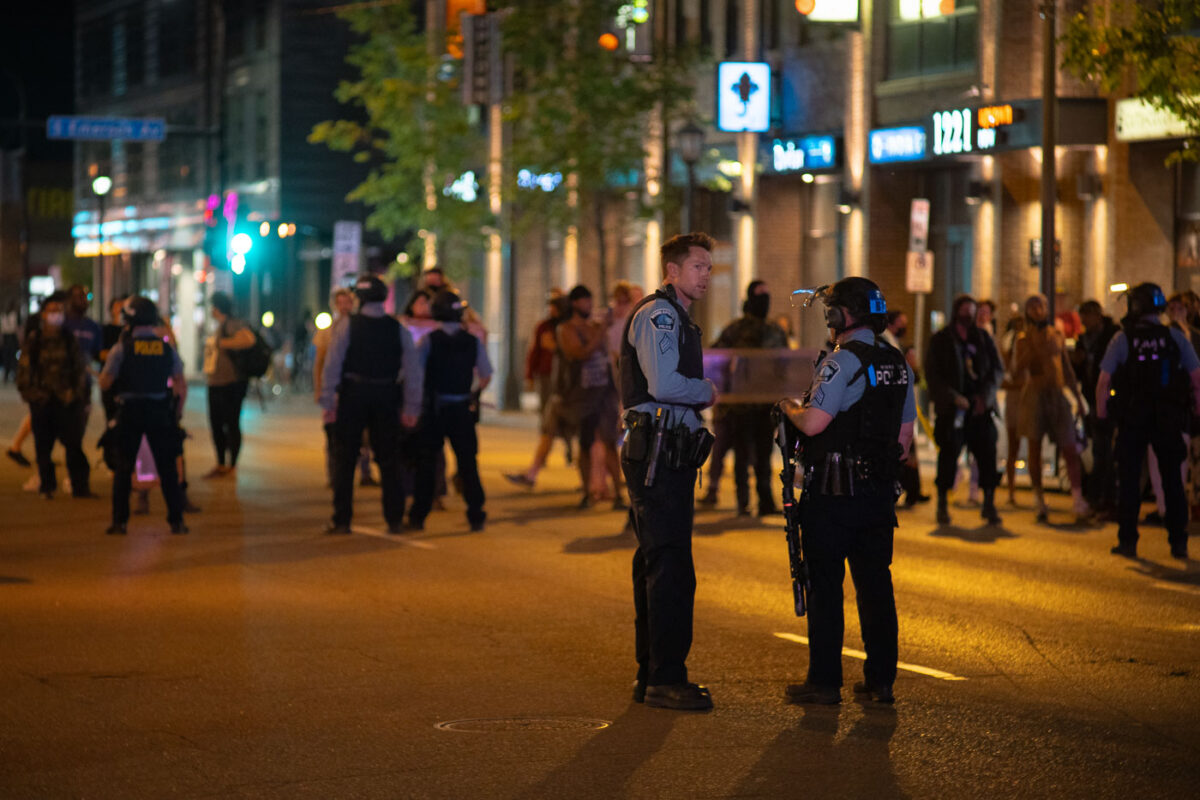
Minneapolis police officers stand on Lake Street near protesters at night
Minneapolis Police officers confront protesters on Lake Street in Minneapolis on June 3, 2021. The gathering occurred hours after Winston Smith Jr. was killed by police in a parking garage in the Uptown neighborhood. On June 3, 2021, members of a U.S. Marshals Service fugitive task force fatally shot 32-year-old Winston “Boogie” Smith Jr. on the top level of a parking ramp in Minneapolis’ Uptown neighborhood while attempting to arrest him on a felony warrant. Authorities said Smith fired a handgun from inside his vehicle during the encounter, while family members and activists questioned the official account and demanded the release of additional evidence. The killing led to weeks of protests, street occupations, and confrontations with police in Uptown, becoming another major flashpoint in Minneapolis during the period following the murder of George Floyd. Earlier in the day Minneapolis city officials along with The Agape Movement coordinated to open the streets that had been closed at George Floyd Square since his murder.

Minneapolis Police confront Winston Smith protesters on Lake Street
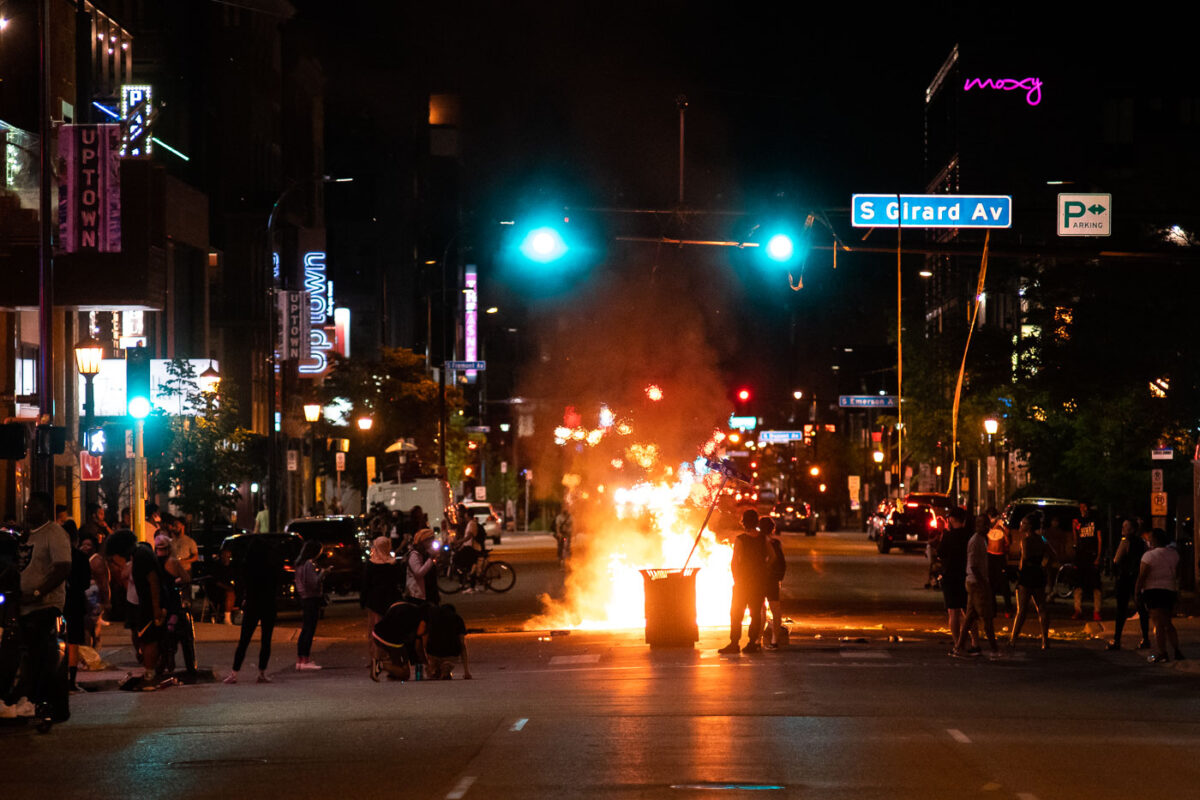
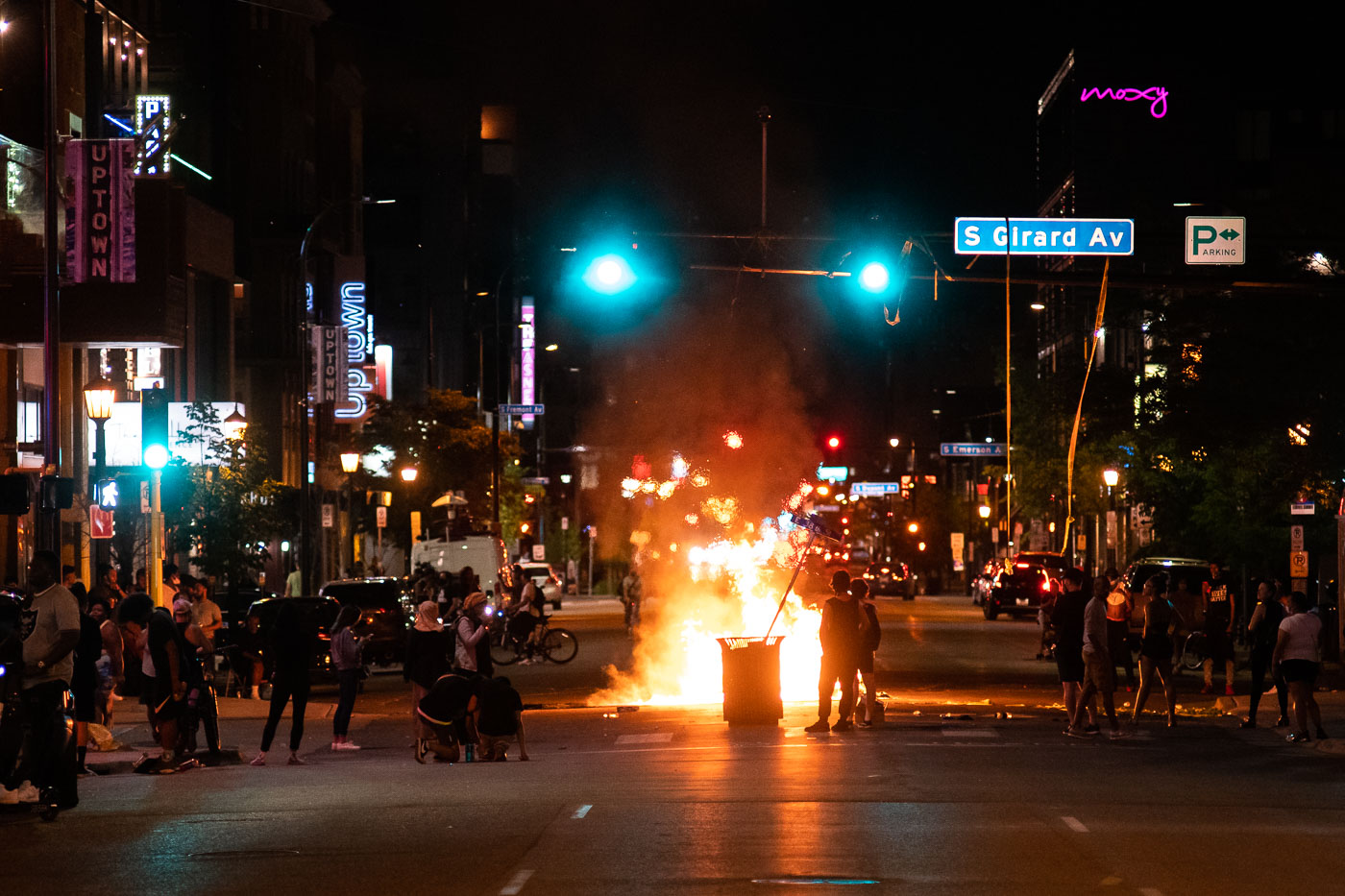
People gather around a burning trash can at Lake Street and S Girard Ave in Minneapolis at night.
Protesters gather at the intersection of Lake Street and South Girard Avenue in Uptown Minneapolis on June 23, 2021. On June 3, 2021, members of a U.S. Marshals Service fugitive task force fatally shot 32-year-old Winston “Boogie” Smith Jr. on the top level of a parking ramp in Minneapolis’ Uptown neighborhood while attempting to arrest him on a felony warrant. Authorities said Smith fired a handgun from inside his vehicle during the encounter, while family members and activists questioned the official account and demanded the release of additional evidence. The killing led to weeks of protests, street occupations, and confrontations with police in Uptown, becoming another major flashpoint in Minneapolis during the period following the murder of George Floyd. Earlier in the day Minneapolis city officials along with The Agape Movement coordinated to open the streets that had been closed at George Floyd Square since his murder.

Minneapolis: Fire at Lake St & S Girard Ave After Winston Smith Killing
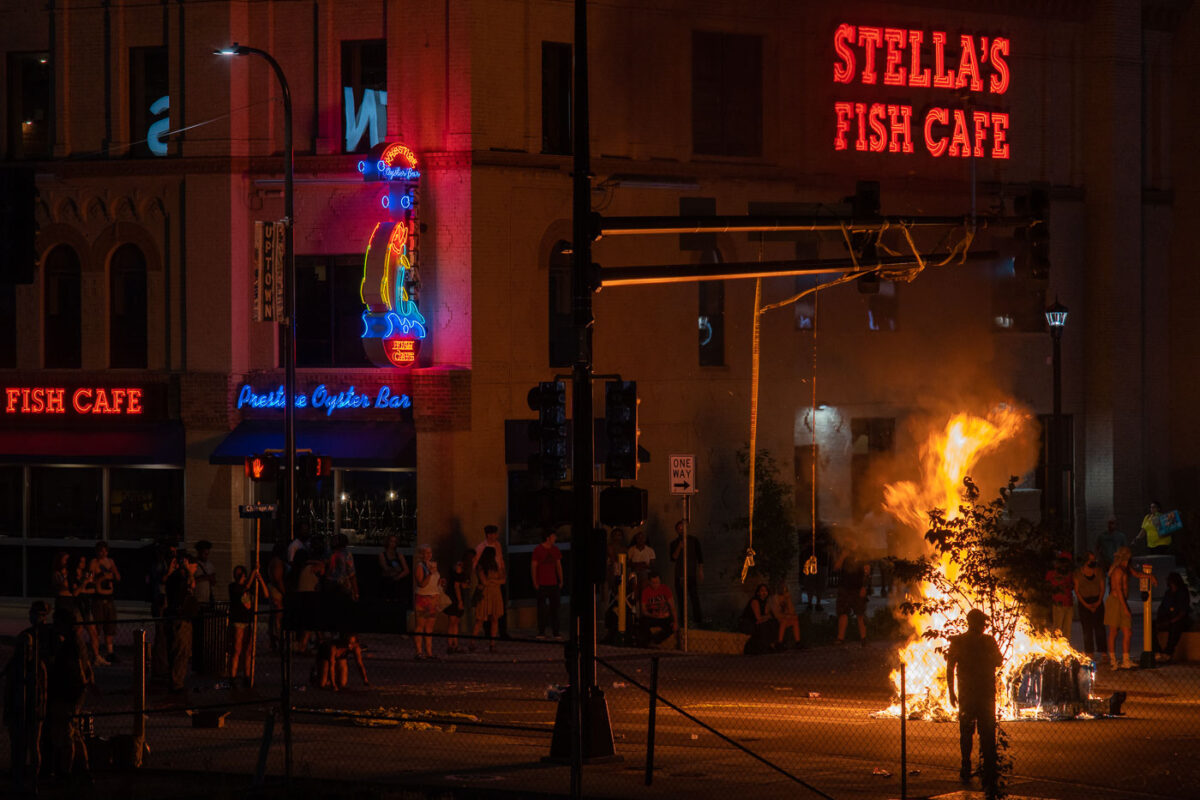
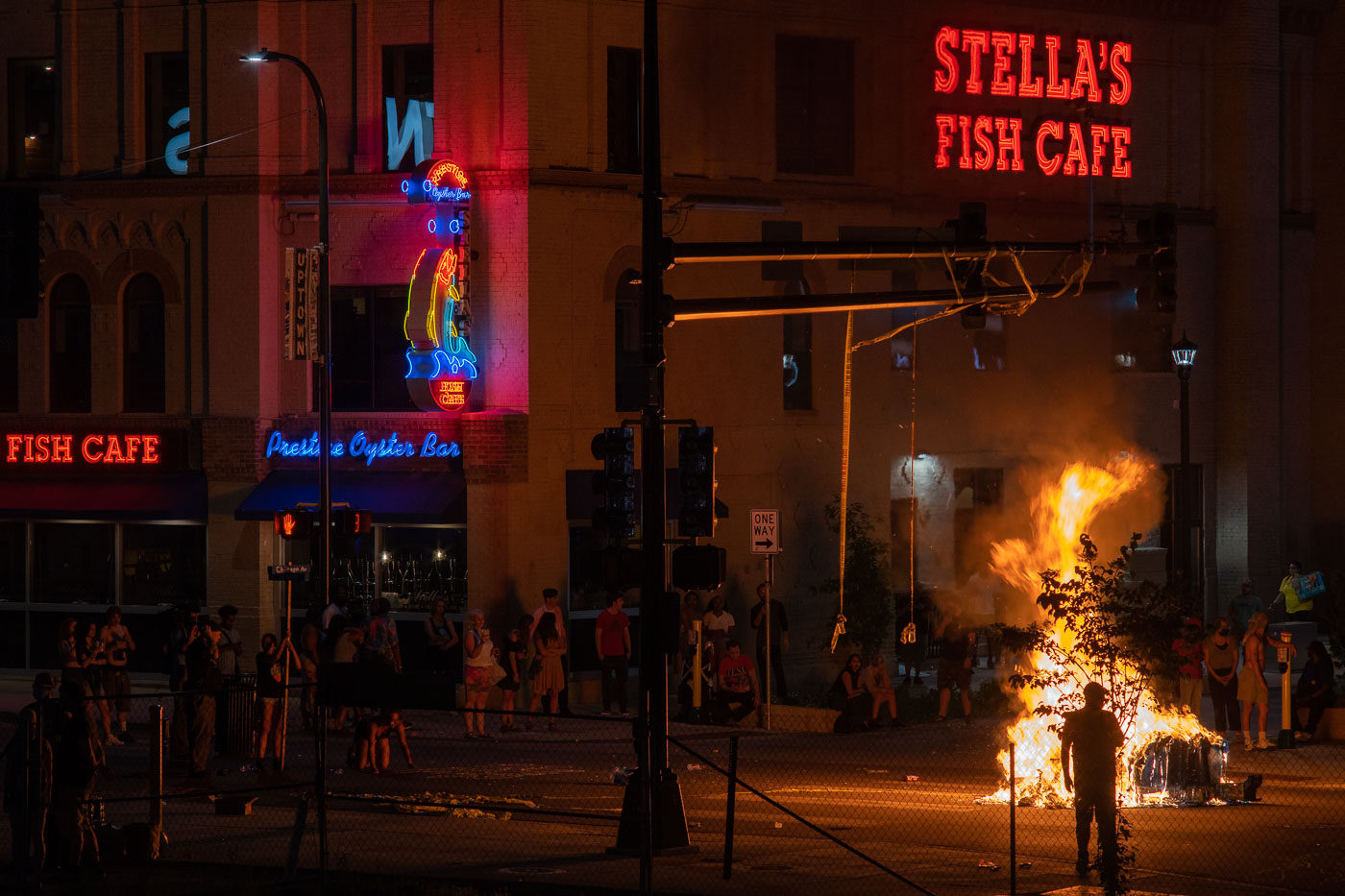
Fire burns in the street outside Stella's Fish Cafe on Lake Street in Minneapolis during unrest.
On the evening of June 3, 2020, protests erupted in Uptown Minneapolis following the killing of Winston Smith by law enforcement earlier that day. The unrest led to fires and property damage along Lake Street, a major commercial corridor. On June 3, 2021, members of a U.S. Marshals Service fugitive task force fatally shot 32-year-old Winston “Boogie” Smith Jr. on the top level of a parking ramp in Minneapolis’ Uptown neighborhood while attempting to arrest him on a felony warrant. Authorities said Smith fired a handgun from inside his vehicle during the encounter, while family members and activists questioned the official account and demanded the release of additional evidence. The killing led to weeks of protests, street occupations, and confrontations with police in Uptown, becoming another major flashpoint in Minneapolis during the period following the murder of George Floyd. Earlier in the day Minneapolis city officials along with The Agape Movement coordinated to open the streets that had been closed at George Floyd Square since his murder.

Minneapolis: Fire on Lake Street during Winston Smith protests
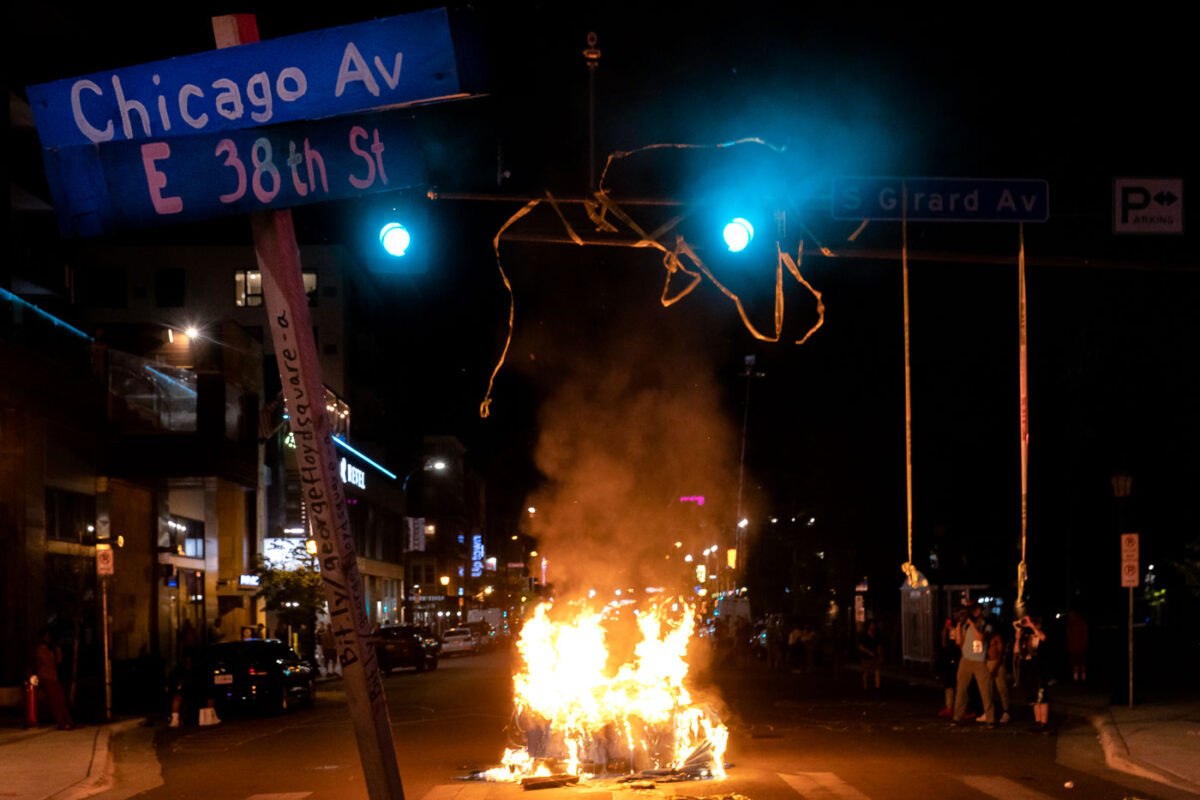
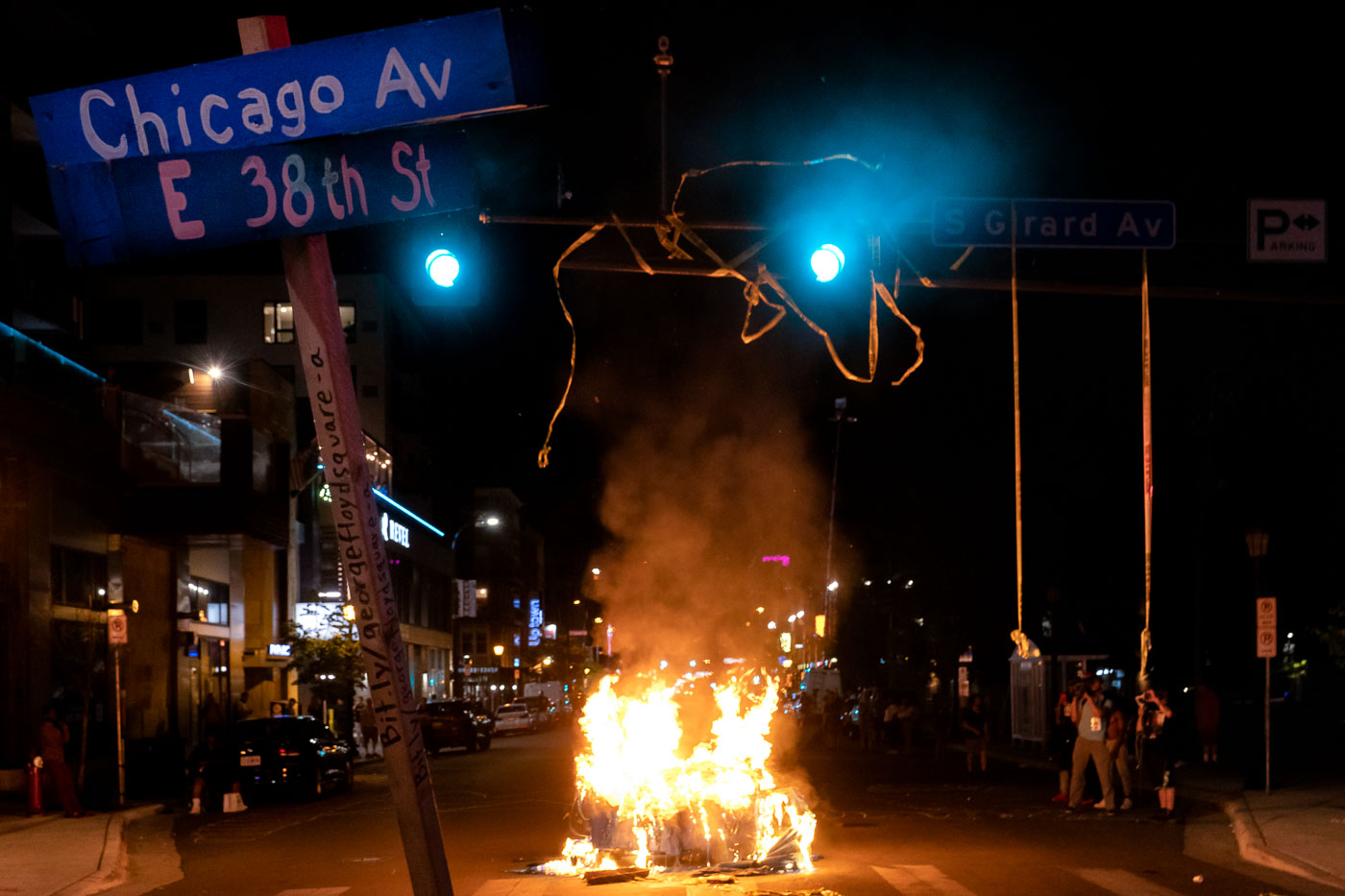
Fire burns in the street at Chicago Ave and S Girard Ave in Minneapolis at night.
Protesters burn a dumpster at Lake Street and Girard avenue in Uptown Minneapolis on June 3, 2021. On June 3, 2021, members of a U.S. Marshals Service fugitive task force fatally shot 32-year-old Winston “Boogie” Smith Jr. on the top level of a parking ramp in Minneapolis’ Uptown neighborhood while attempting to arrest him on a felony warrant. Authorities said Smith fired a handgun from inside his vehicle during the encounter, while family members and activists questioned the official account and demanded the release of additional evidence. The killing led to weeks of protests, street occupations, and confrontations with police in Uptown, becoming another major flashpoint in Minneapolis during the period following the murder of George Floyd. Earlier in the day Minneapolis city officials along with The Agape Movement coordinated to open the streets that had been closed at George Floyd Square since his murder.

Minneapolis: Fire at Chicago Ave and S Girard Ave during protest
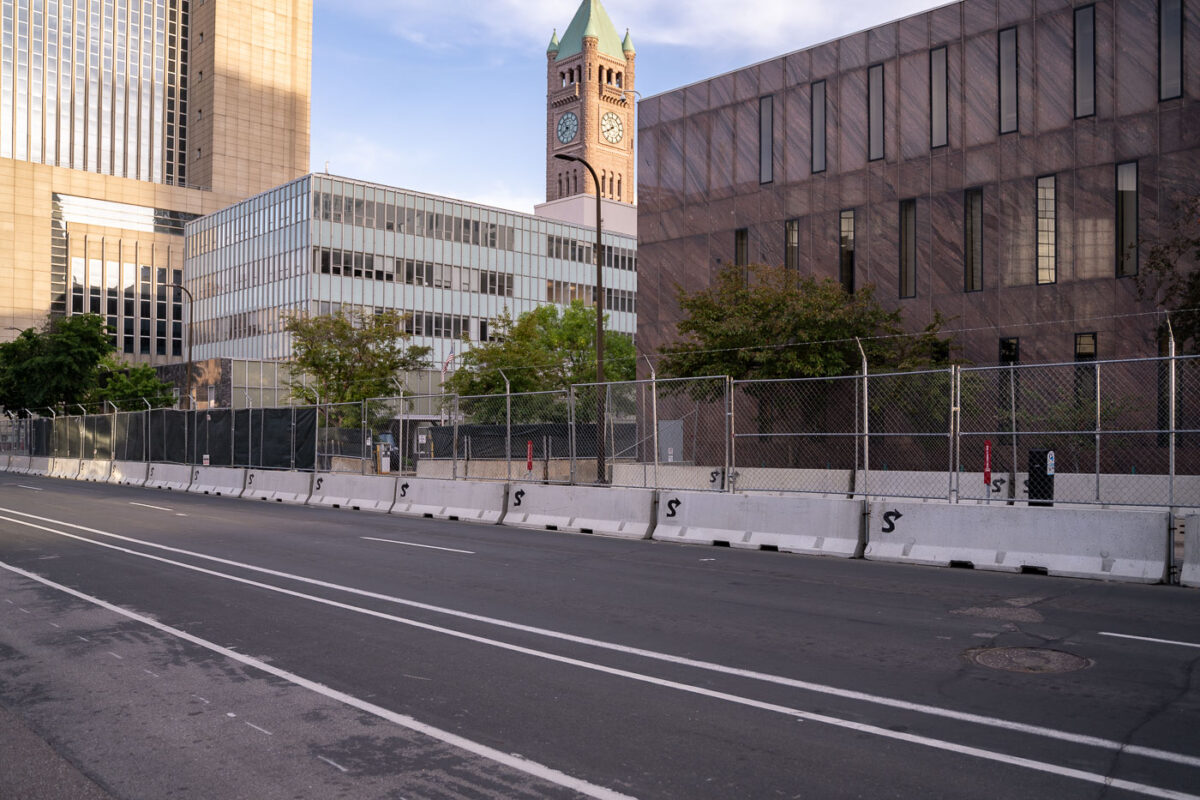
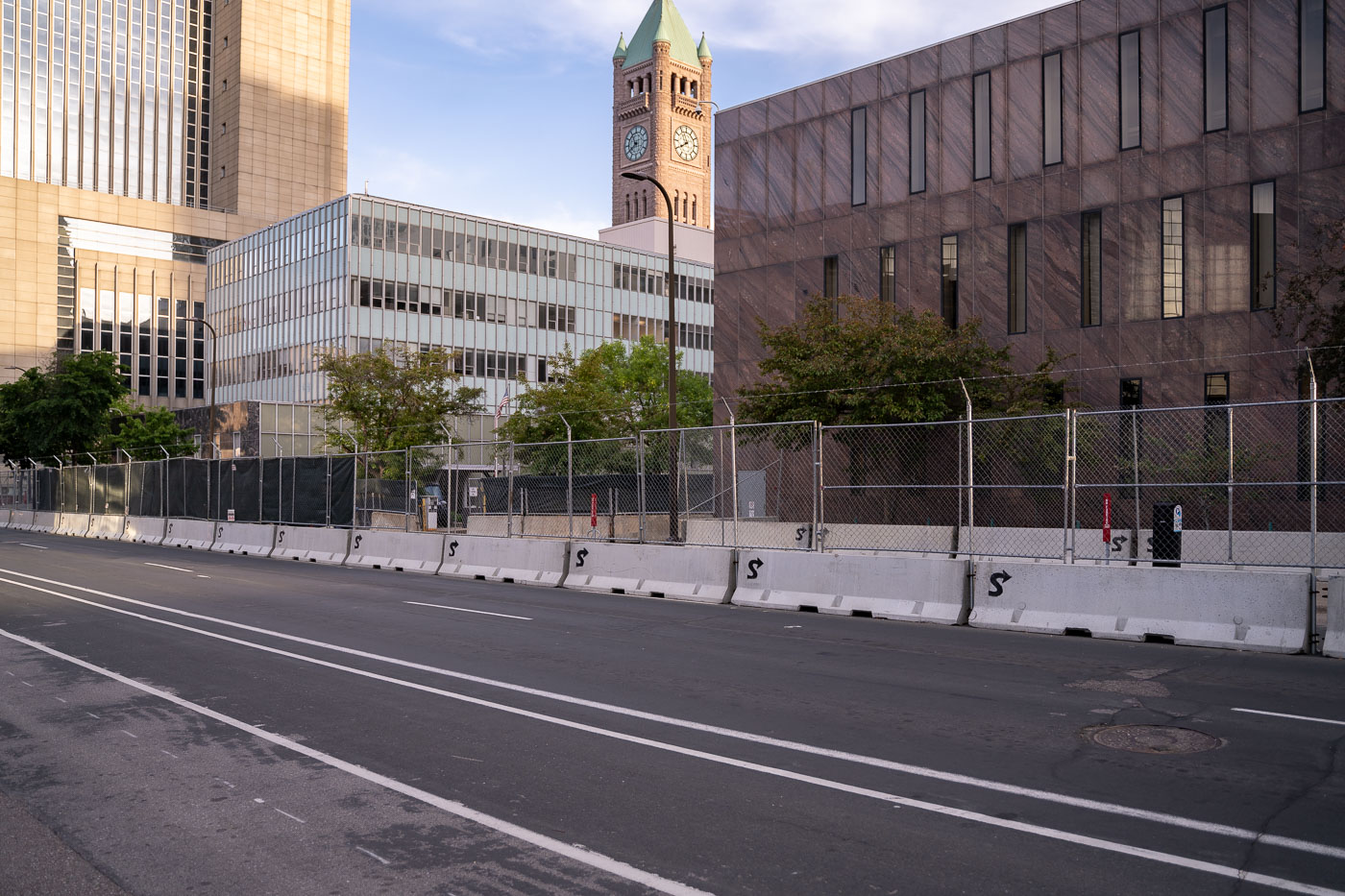
Temporary barricades line a downtown Minneapolis street near the Third Precinct and City Hall.
Temporary barricades surround the Minneapolis Police Department's Third Precinct station, which was relocated after the original building was destroyed by fire during the 2020 Minneapolis Uprising. On May 25, 2020, Minneapolis police officer Derek Chauvin murdered 46-year-old George Floyd during an arrest outside Cup Foods at the intersection of 38th Street and Chicago Avenue in south Minneapolis. Video recorded by bystanders showed Chauvin kneeling on Floyd’s neck for more than nine minutes while Floyd repeatedly said he could not breathe. Three other Minneapolis police officers - J. Alexander Kueng, Thomas Lane, and Tou Thao — were also present during the arrest and later faced criminal charges for their roles in Floyd’s death. Floyd’s murder sparked protests and civil unrest across Minneapolis and around the world, leading to widespread demonstrations against police violence, major policy debates on policing, and the conviction of Chauvin on murder and manslaughter charges in 2021.

Barricades at Temporary Minneapolis Police 3rd Precinct
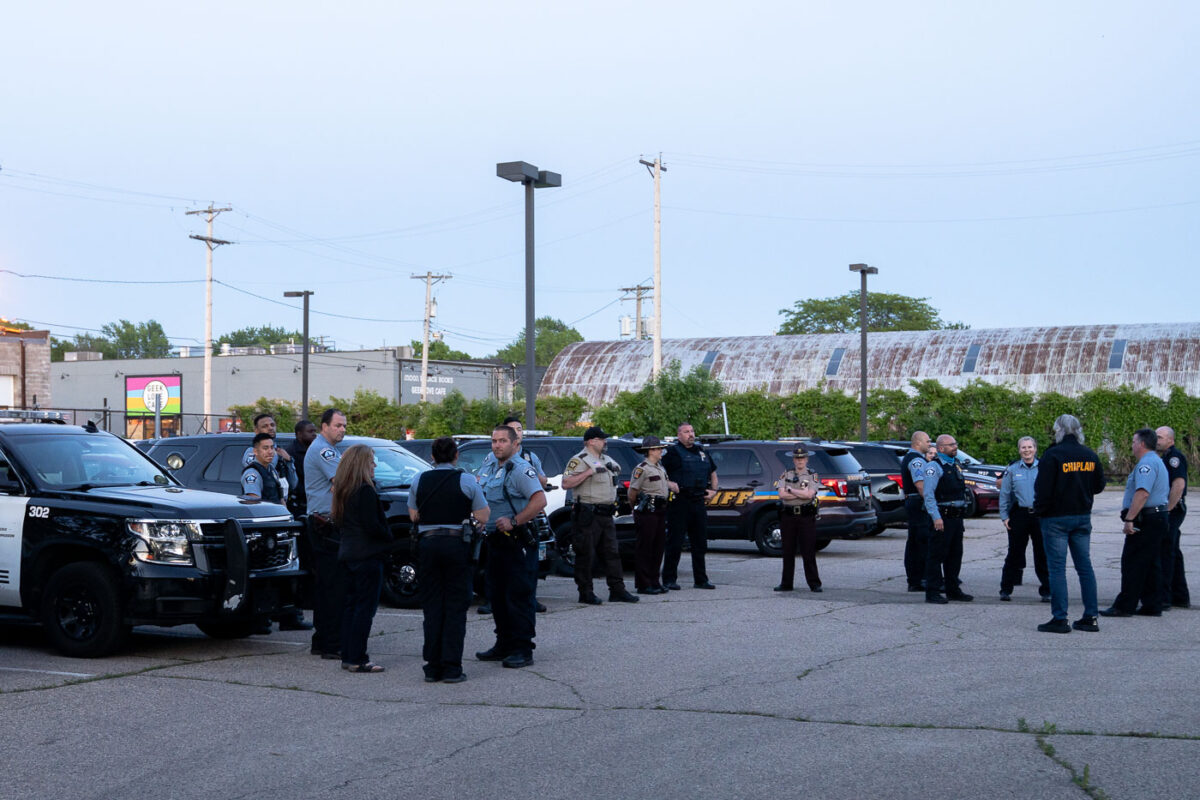
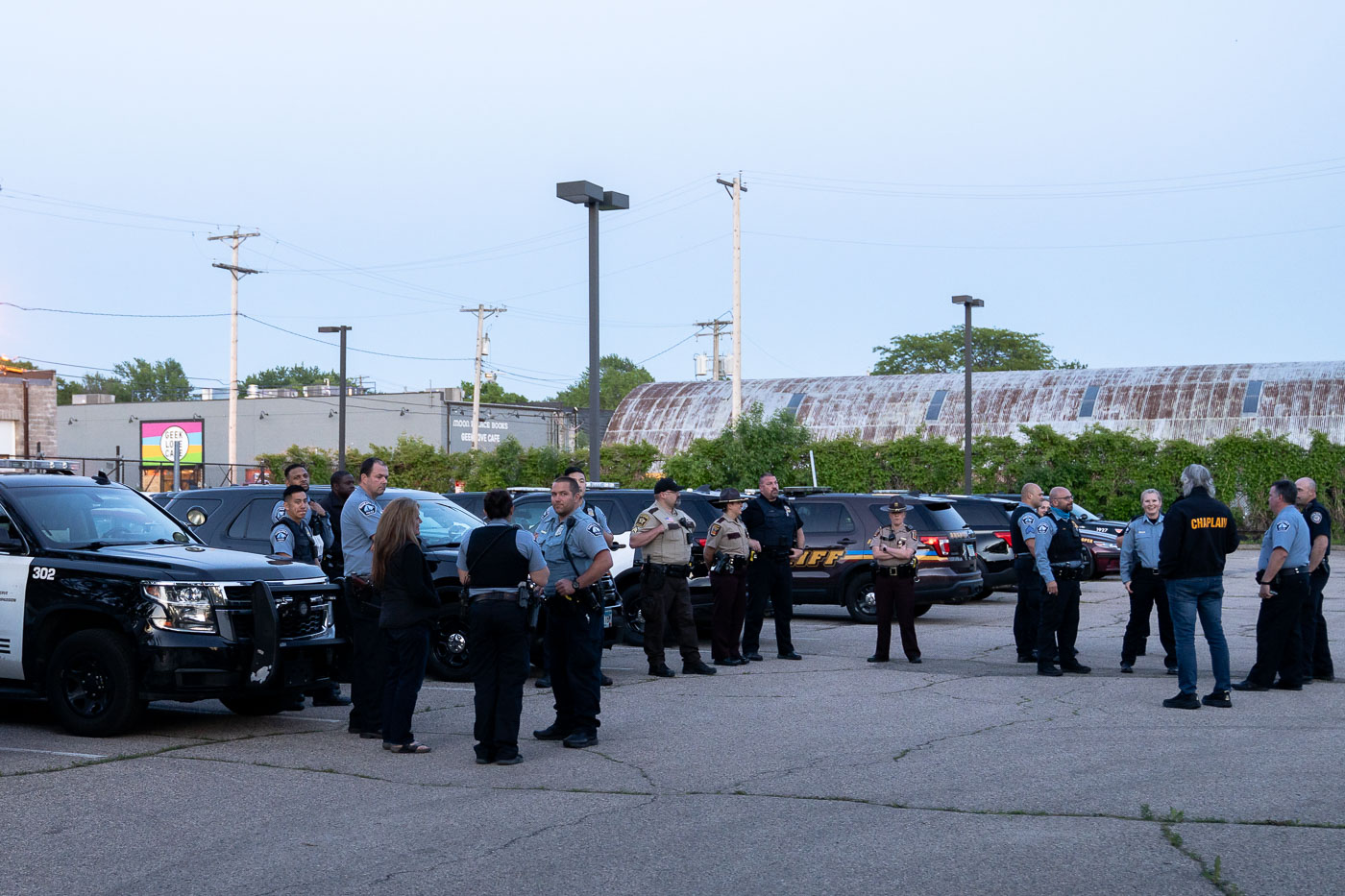
Minneapolis police gather 1 year after George Floyd's murder
Police officers and a chaplain gather at the Minneapolis Police Department's Third Precinct on May 28, 2021, the one-year anniversary of the precinct's burning during civil unrest. The precinct was compromised on May 28, 2020, following the murder of George Floyd.

Minneapolis Police gather at 3rd Precinct anniversary
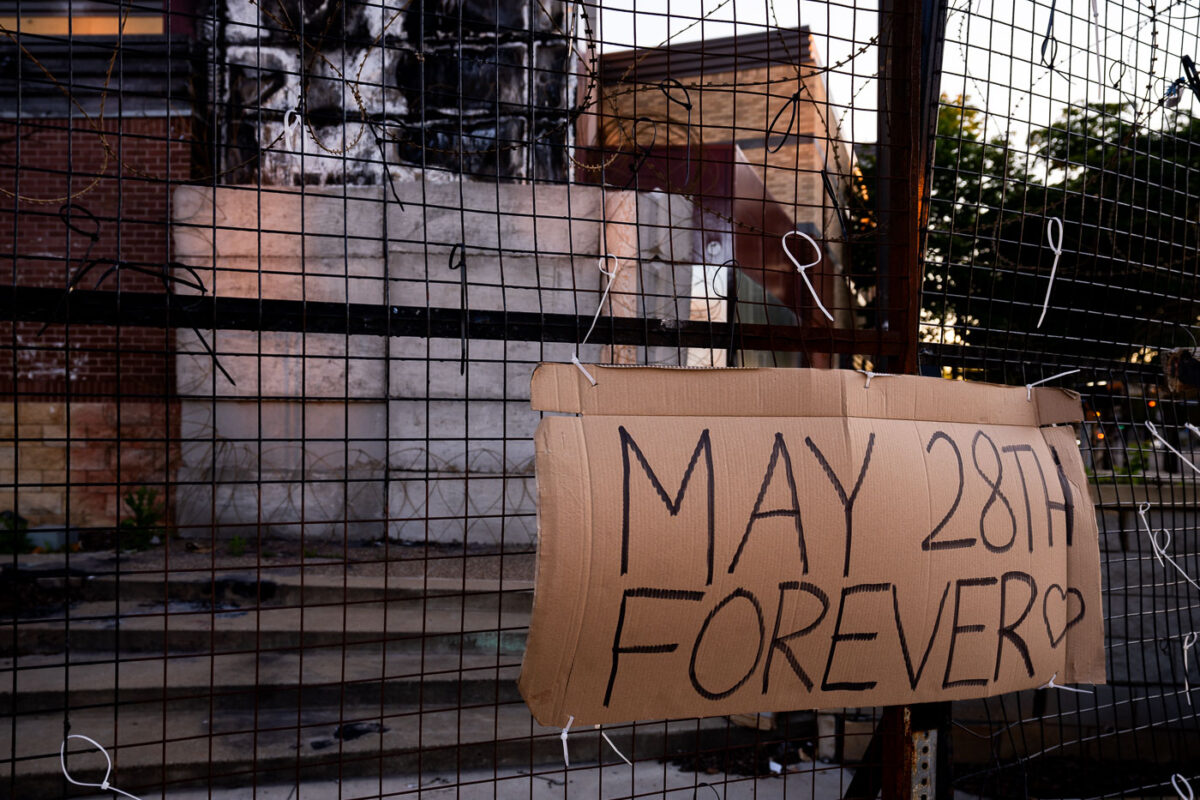
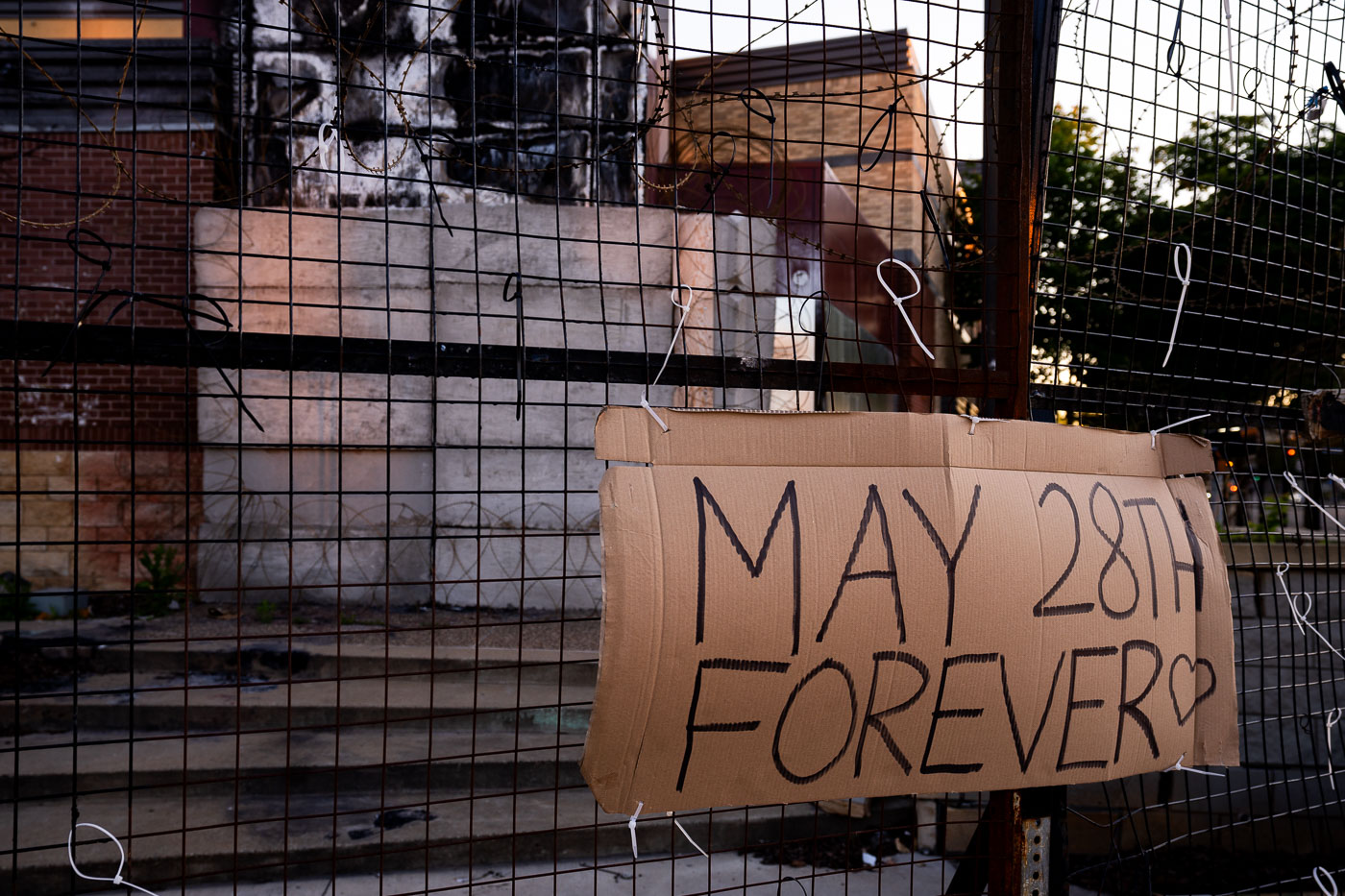
May 28 forever sign on Minneapolis police station
A sign reading "May 28th Forever" is affixed to the fence surrounding the Minneapolis Police Third Precinct. This date marks the one-year anniversary of the precinct being set ablaze during protests following the murder of George Floyd.

Minneapolis Police 3rd Precinct: “May 28th Forever” Sign
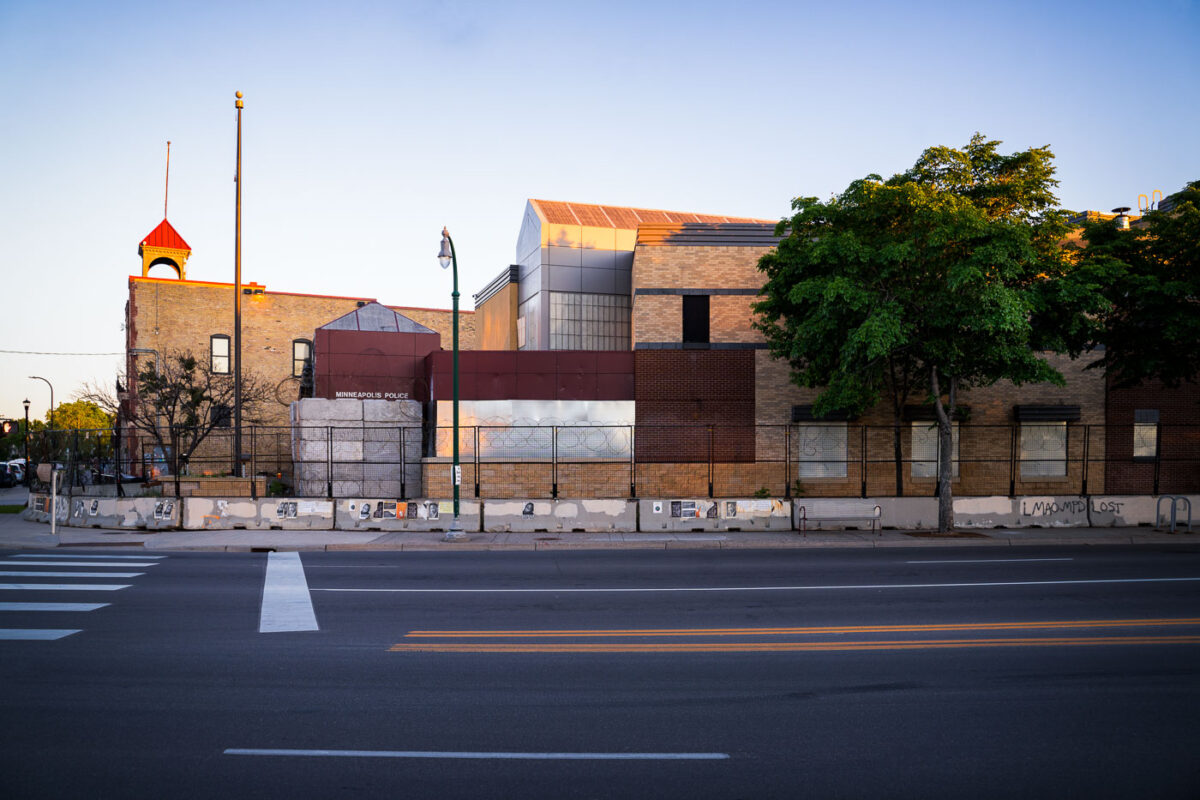
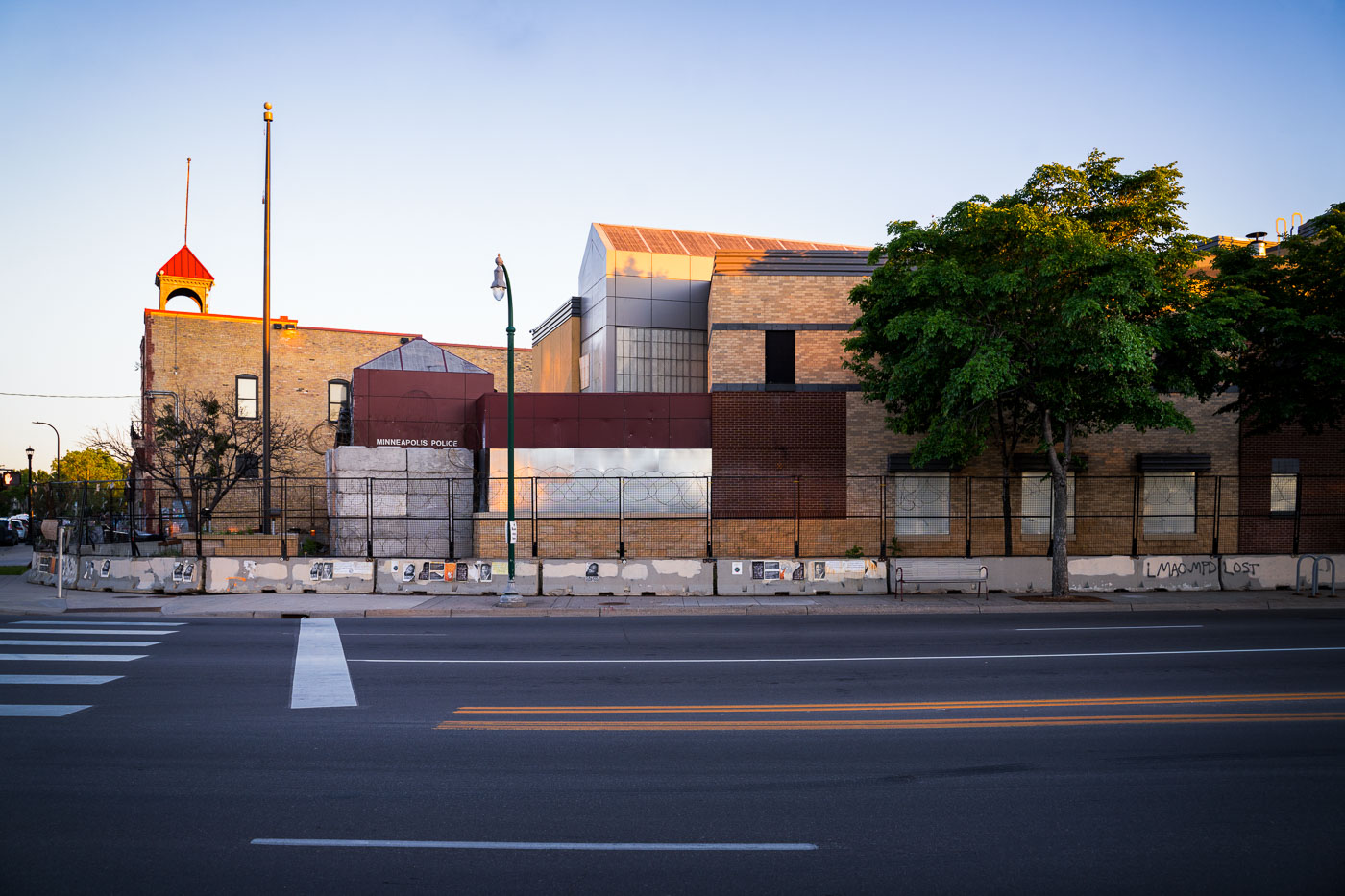
Minneapolis police station 1 year after it was burned
The Minneapolis Police Third Precinct stands fortified one year after it was set ablaze during protests following the murder of George Floyd. The building, a key law enforcement facility for the south Minneapolis area, sustained significant damage during the unrest in May 2020. The surrounding area has been secured with concrete barriers and fencing, reflecting the ongoing impact of the events and the community's response to police actions.

Minneapolis Police 3rd Precinct 1 Year After Unrest
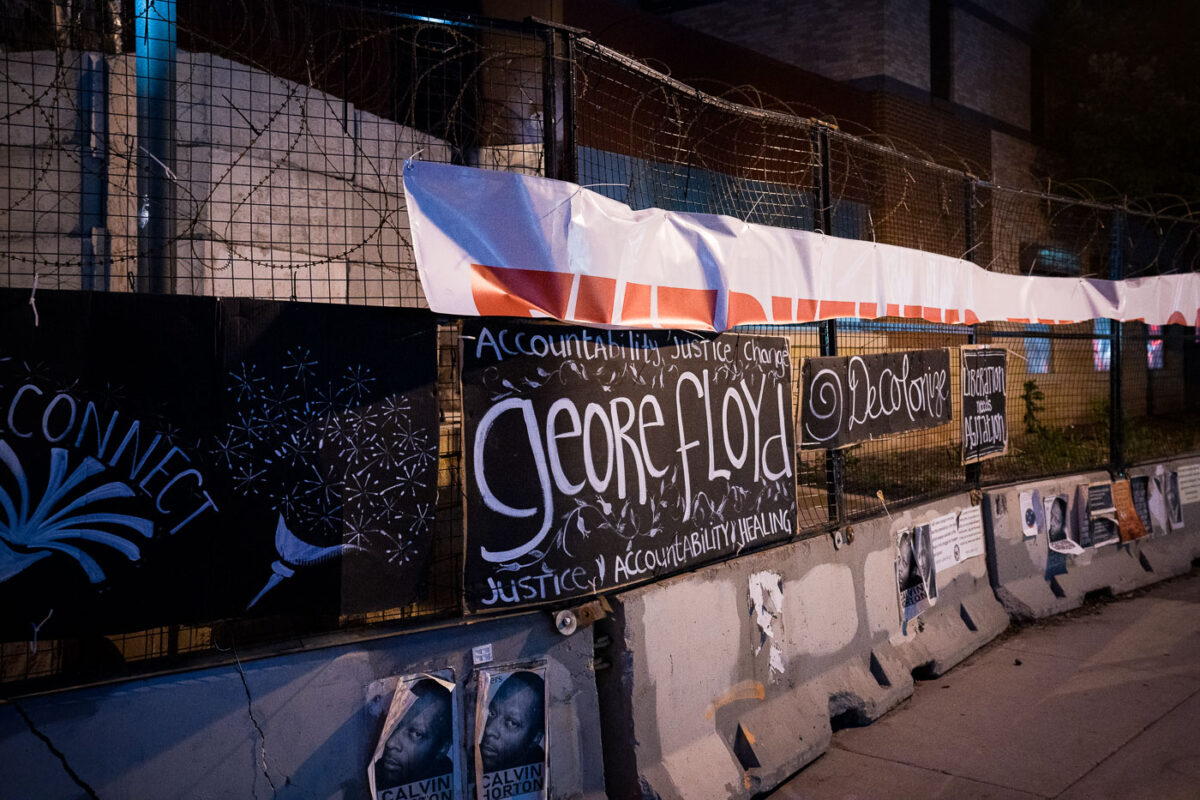
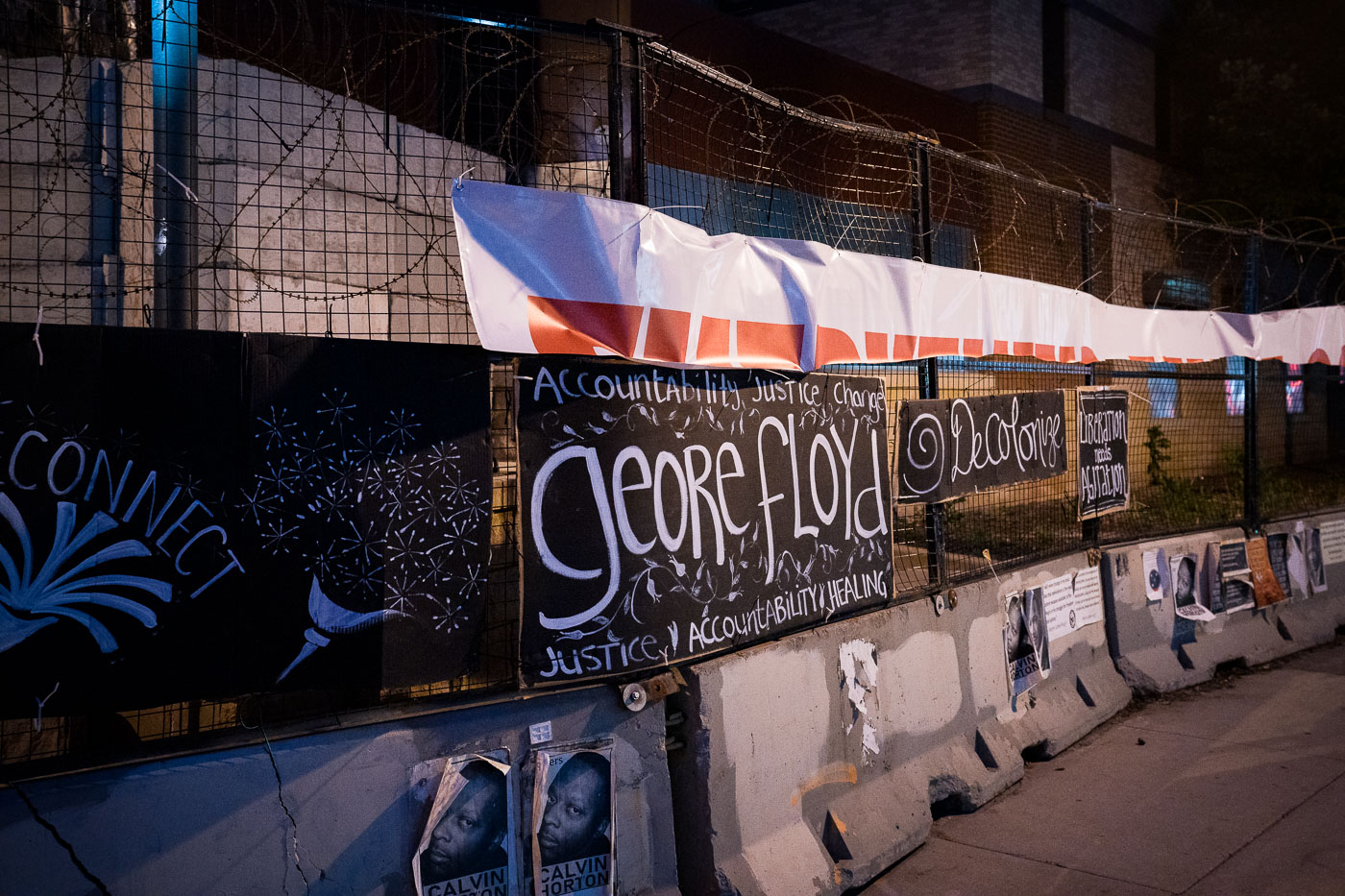
Minneapolis Police station 1 year after George Floyd's murder
Art and messages adorn the perimeter of the Minneapolis Police Third Precinct building, one year after the killing of George Floyd by Minneapolis police officers. The precinct was a focal point during the widespread protests and unrest that followed Floyd's death. The artwork and signage reflect calls for justice, accountability, and healing in the community.

Minneapolis Police 3rd Precinct: George Floyd Memorial Art
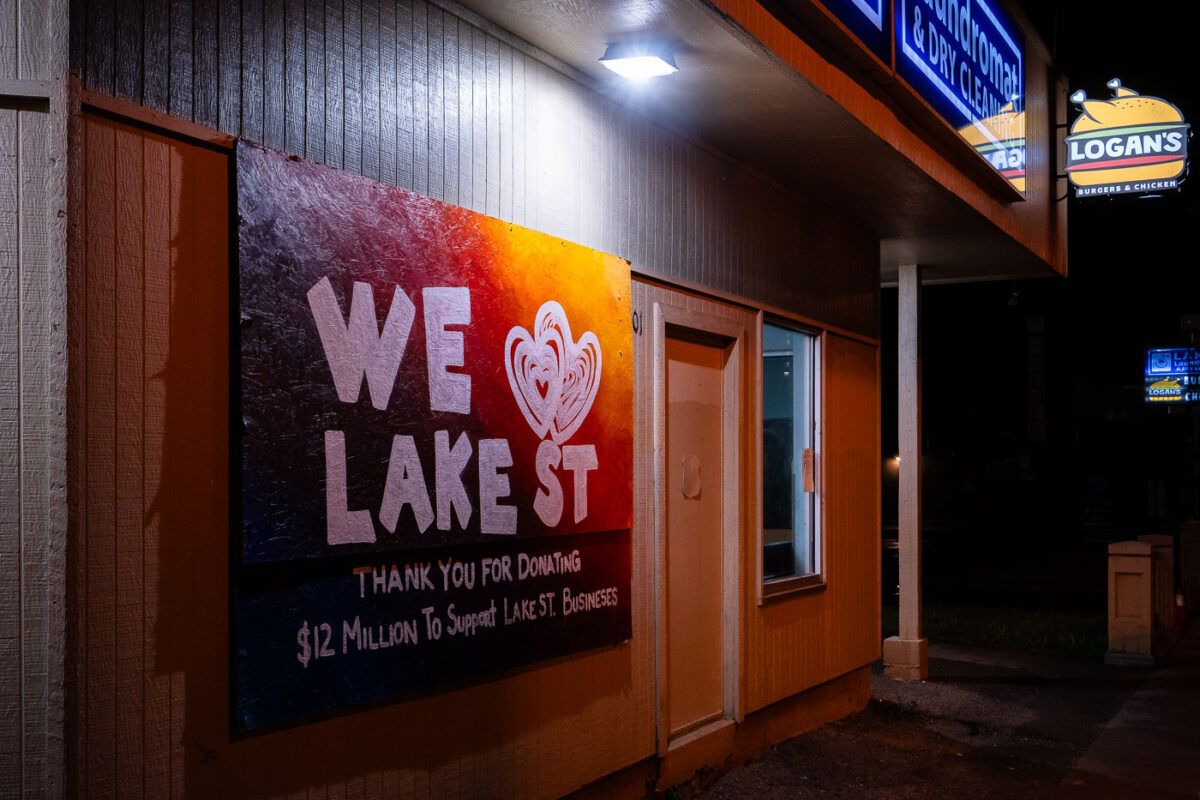
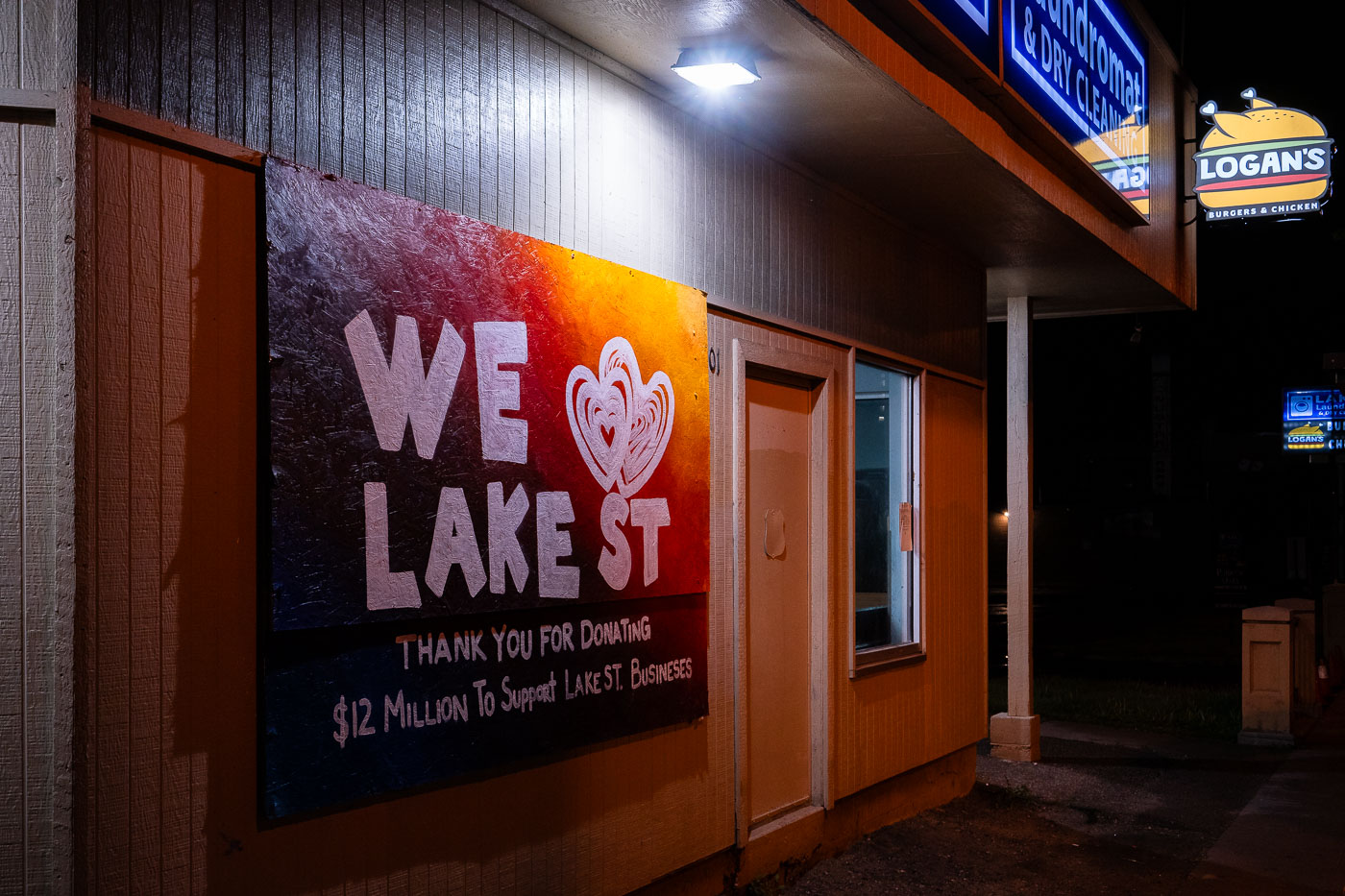
We Love Lake Street sign at the Laundromat
A sign on Lake Street in Minneapolis reads "WE LAKE ST THANK YOU FOR DONATING $12 MILLION TO SUPPORT LAKE ST BUSINESSES." This message reflects community support and financial aid efforts following the unrest and damage that occurred in Minneapolis in 2020. Lake Street, a major commercial corridor, was significantly impacted by the events, leading to widespread destruction of businesses.

Lake Street Sign: Thank You for Donating to Businesses

Daunte Wright mural on West Lake Street
A mural honoring Daunte Wright adorns the exterior of Minnesota Food Grocery on West Lake Street in Minneapolis. The mural appeared following the killing of Daunte Wright by police in nearby Brooklyn Center in April 2021, an event that sparked protests and unrest in the Twin Cities.

Daunte Wright Mural at Minnesota Food Grocery, West Lake Street

Everything Must Go sign on a Minneapolis police station
A banner reading "Everything Must Go!!!" is displayed on the fencing surrounding the Minneapolis Police Third Precinct building. The precinct was heavily damaged during protests following the murder of George Floyd in May 2020.

Minneapolis Police 3rd Precinct: “Everything Must Go” Banner
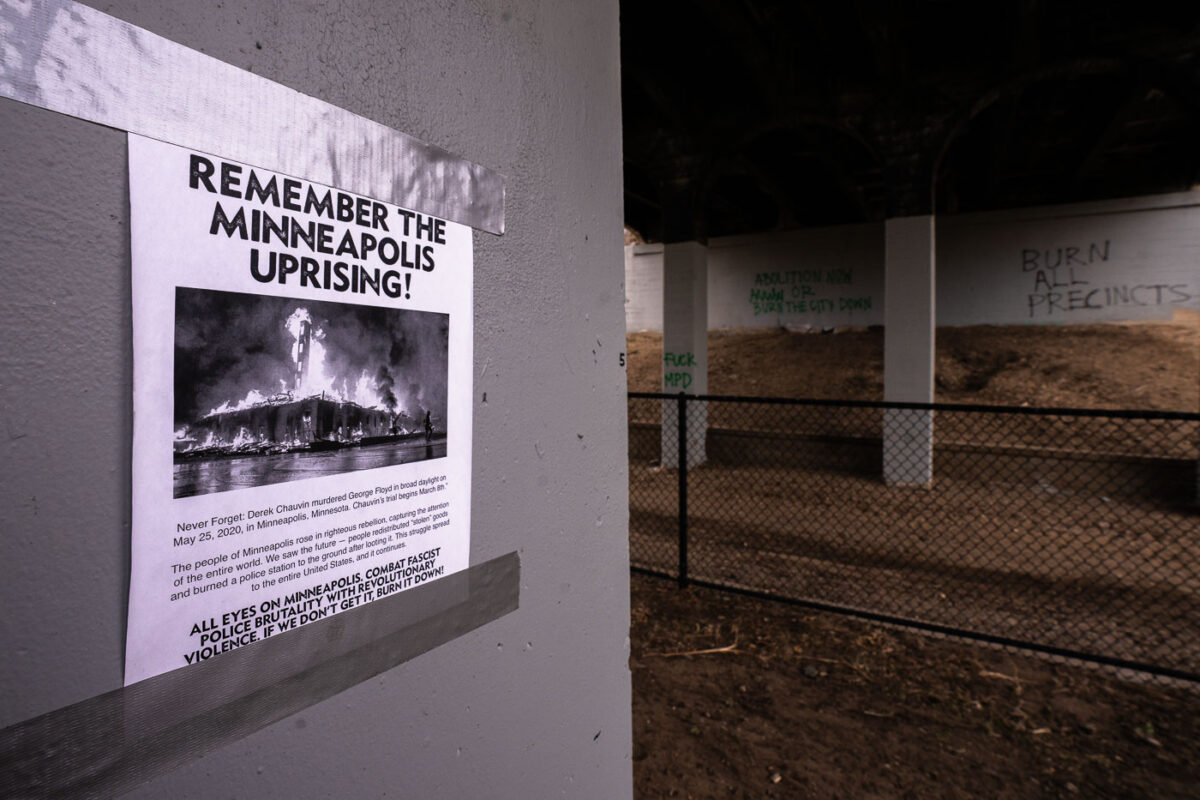
Flyer about the 2020 George Floyd protest on the Midtown Greenway in Minneapolis with anti-police graffiti nearby.
A flyer posted on the Minneapolis Midtown Greenway commemorates the "Minneapolis Uprising" that began on May 25, 2020, following the murder of George Floyd by Minneapolis police.

Minneapolis Uprising Flyer on Midtown Greenway
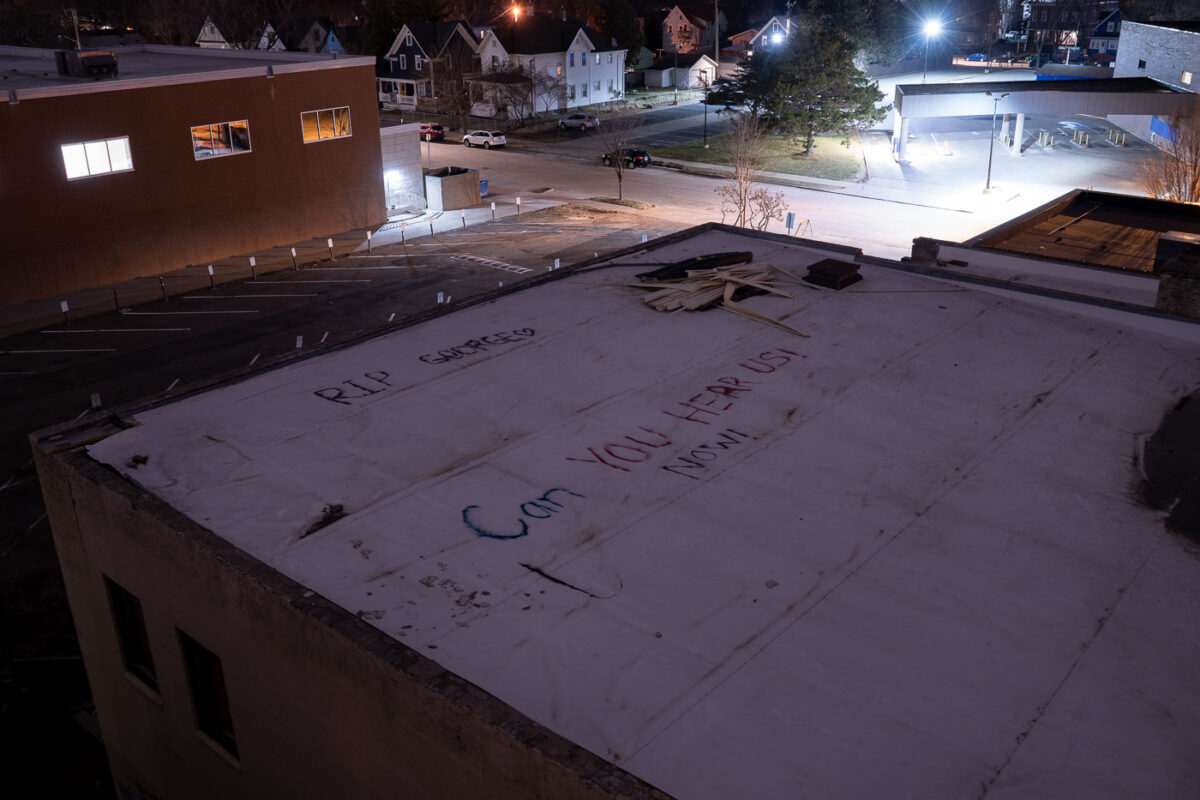
Can you hear us now written on roof
Messages reading "RIP George" and "Can you hear us now!" are spray-painted on the rooftop of a building across from the Minneapolis Police Third Precinct. The precinct building was set ablaze during civil unrest that followed the murder of George Floyd on May 25, 2020. The messages serve as a stark reminder of the public outcry and demands for accountability that characterized the Minneapolis Uprising.

Minneapolis Police Third Precinct Rooftop Message
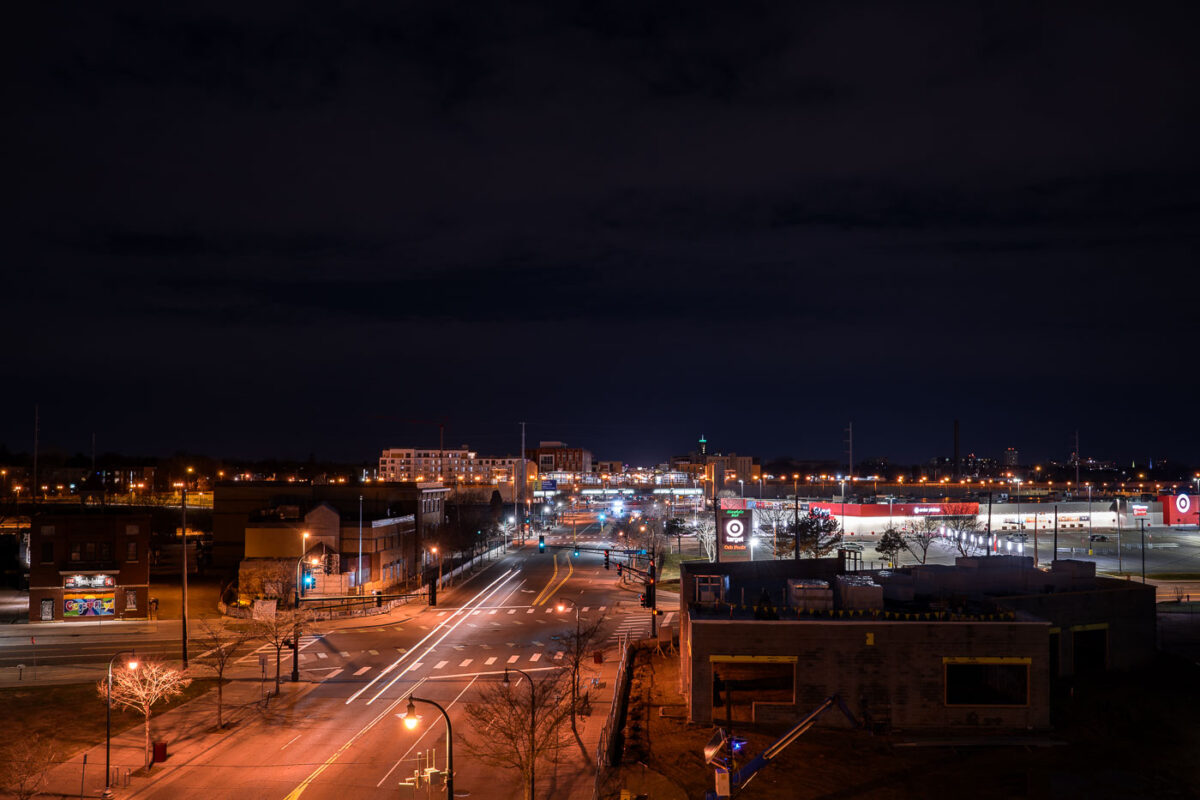
Minneapolis police station and Autozone in March 2021
The Minneapolis Police Third Precinct and an adjacent Autozone on East Lake Street are seen at night in March 2021. This area was a focal point during the civil unrest that followed the murder of George Floyd in May 2020. The Third Precinct building itself was heavily damaged and eventually abandoned by the Minneapolis Police Department. The surrounding commercial properties, including the Autozone and a nearby Target store, also sustained damage during the period of protests and unrest.

Minneapolis Police 3rd Precinct and Autozone, East Lake St, March 2021
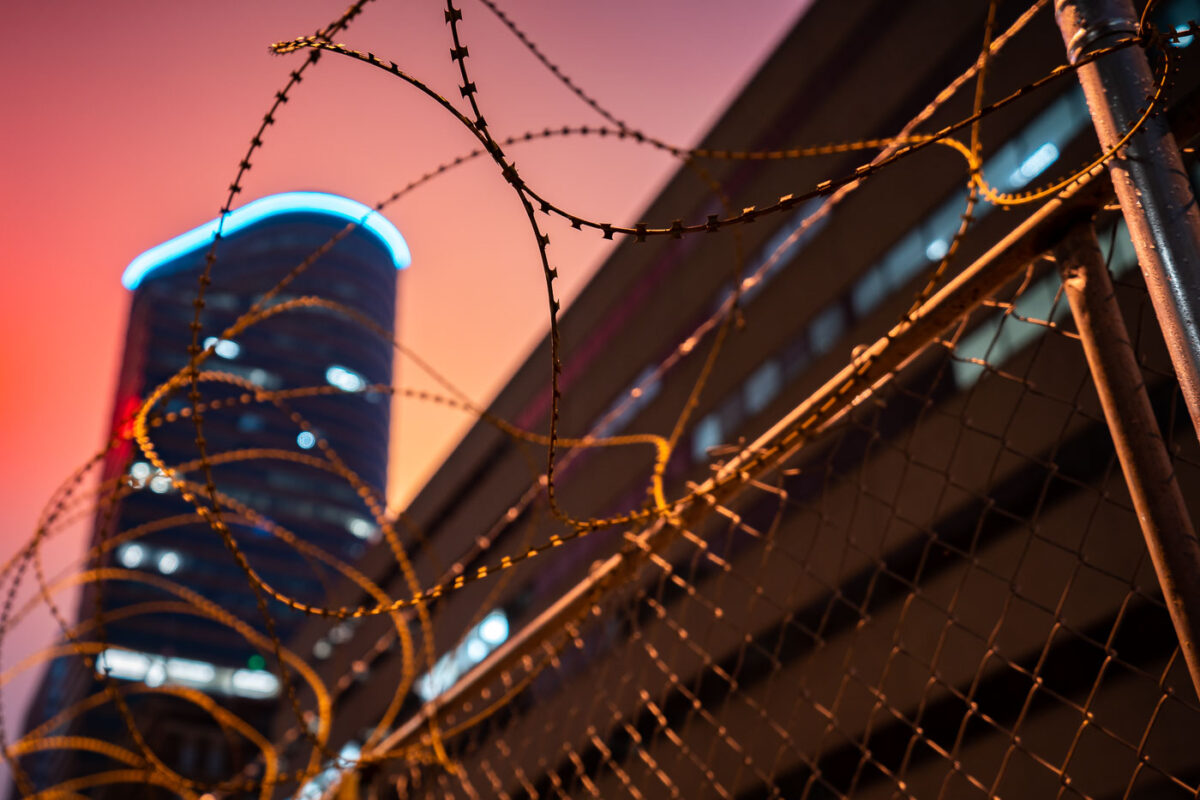
Razor wire around downtown Minneapolis police station
Razor wire surrounds the Minneapolis Police Third Precinct building in March 2021. This security measure was installed following protests and unrest that occurred in the city in the preceding year. The precinct, located in the Powderhorn neighborhood of Minneapolis, served as a focal point during periods of civil disturbance. The temporary fortification highlights the heightened security measures implemented to protect police facilities during times of social unrest.

Razor Wire at Minneapolis Police Third Precinct, March 2021

Signs on fencing around burned Minneapolis police station
Protest signs adorn the exterior of the former Minneapolis Police Third Precinct building, which was set ablaze during the unrest following the May 25th death of George Floyd. The signs, including messages such as "Justice for George Floyd," "Defund the Police," and "Black Lives are Sacred," reflect the sentiments of the community and the broader movement for racial justice. The precinct, a symbol of law enforcement in the neighborhood, became a focal point of protests and a site of significant destruction. The presence of these signs on the barricaded structure serves as a visual testament to the events of spring and summer 2020.

Minneapolis Police 3rd Precinct Fencing with Protest Signs

Save the Boards protest on Lake Street in Minneapolis
Protesters marched down Lake Street in Minneapolis on February 21, 2021, organized by Save The Boards to Memorialize the Movement and Visual Black Justice. The group demanded federal action to abolish the death penalty, reopen all police brutality cases, and defund or demilitarize police departments.

Save the Boards protest on Lake Street, Minneapolis

Shops Are Open sign on Lake Street February 2021
Shops on Lake Street in Minneapolis are shown with a OPEN sign on February 18, 2021 after significant damage sustained during civil unrest in the summer of 2020. The unrest followed the murder of George Floyd on May 25, 2020, and led to widespread protests and property destruction across the city. On May 25, 2020, Minneapolis police officer Derek Chauvin murdered 46-year-old George Floyd during an arrest outside Cup Foods at the intersection of 38th Street and Chicago Avenue in south Minneapolis. Video recorded by bystanders showed Chauvin kneeling on Floyd’s neck for more than nine minutes while Floyd repeatedly said he could not breathe. Three other Minneapolis police officers - J. Alexander Kueng, Thomas Lane, and Tou Thao — were also present during the arrest and later faced criminal charges for their roles in Floyd’s death. Floyd’s murder sparked protests and civil unrest across Minneapolis and around the world, leading to widespread demonstrations against police violence, major policy debates on policing, and the conviction of Chauvin on murder and manslaughter charges in 2021.

Lake Street Shops Reopen After Unrest, Minneapolis

Rebuilt AutoZone store on Lake Street in Minneapolis
The AutoZone on W. Lake Street in Minneapolis is shown under winter construction cover, signifying its rebuilding after damage sustained during the 2020 civil unrest. While another AutoZone location on East Lake Street was the first building to burn, this W. Lake Street store represents the initial complete reconstruction effort in the area. The rebuilding of businesses like this AutoZone is a key aspect of the ongoing redevelopment and recovery of the Lake Street corridor.

Rebuilt AutoZone on W. Lake Street, Minneapolis, Under Winter Cover

Riot damaged Walgreens on E Lake Street
The interior of a Walgreens store on E Lake Street in Minneapolis, showing extensive damage sustained during the civil unrest following the murder of George Floyd in May 2020. The unrest led to widespread protests and riots across the city, resulting in significant property destruction. This particular store became a symbol of the damage inflicted on local businesses and the community during that period. The image captures the aftermath, with debris and structural damage visible, contrasted by the illuminated street outside.

Walgreens on E Lake Street, Minneapolis, Post-Riot Damage

Well Burn This Bitch Again on Minneapolis Police Station
Graffiti on the exterior of the Minneapolis Police Department's Third Precinct reads "We'll Burn This Bitch Again" and "Fuck 12." The precinct building was abandoned by police and subsequently set ablaze by protesters on May 28, 2020, during the unrest following the murder of George Floyd. The building has remained vacant and unrepaired since the incident, serving as a visual reminder of the protests and the community's response to police actions. The graffiti reflects the anger and defiance expressed by some during the period of civil unrest.

Minneapolis Police 3rd Precinct Graffiti: “We’ll Burn This Bitch Again”

Fuck your Precinct at Minneapolis Police Station
Graffiti and messages are displayed on concrete barricades that surrounded the Minneapolis Police Department's 3rd Precinct. The precinct was a focal point during the 2020 Minneapolis uprising, following the murder of George Floyd. The messages reflect the complex sentiments expressed during the period of unrest, with one card offering a "Merry Christmas" to the MPD, while large red spray paint reads "Fuck Your Precinct." These markings serve as a visual record of the intense public reaction and protest directed at law enforcement during that time.

Graffiti on Minneapolis Police 3rd Precinct Barricades

The Police Are The Biggest Gang in America
A protester holds a sign reading "THE POLICE ARE THE BIGGEST GANG IN AMERICA" attributed to Tupac, during a march on Inauguration Day in Minneapolis. The march, which began at South High School and proceeded to the Minneapolis Police 3rd Precinct, was organized to advocate for community control of the police and for President Biden to reverse Trump-era environmental policies. This event occurred amidst ongoing national discussions about policing and environmental justice.

Minneapolis Protest: “Police Are The Biggest Gang” Sign

Protesters at 3rd Precinct on Inauguration Day
Protesters gathered outside the Minneapolis Police Third Precinct on Inauguration Day, January 20, 2021. The precinct had been a focal point of protests following the murder of George Floyd in May 2020 and was subsequently set ablaze. This demonstration occurred less than three weeks after Dolal Idd was killed by Minneapolis Police during a firearm sting, an incident that reignited tensions and calls for police reform.

Protesters at Minneapolis Police 3rd Precinct on Inauguration Day

Protesters outside Minneapolis police station on Inauguration Day
Protesters gathered outside the Minneapolis Police Third Precinct on Inauguration Day, January 20, 2021, to advocate for community control of the police. The precinct had been set ablaze during protests following the murder of George Floyd in May 2020 and was still under reconstruction. This demonstration occurred less than three weeks after the fatal police shooting of Dolal Idd, an event that further fueled tensions and calls for police reform in Minneapolis.

Minneapolis Police 3rd Precinct Protest on Inauguration Day

Protesters on Inauguration Day in Minneapolis
On Inauguration Day, January 20, 2021, approximately 100 protesters marched through Minneapolis. The march began at South High School and proceeded to the 3rd Precinct police station. Demonstrators voiced demands for President Biden to reverse Trump-era environmental policies and called for community control of the police. The march took place on Lake Street, a major thoroughfare in South Minneapolis that has been a site of significant activism and community organizing.

Minneapolis Protesters March on Inauguration Day
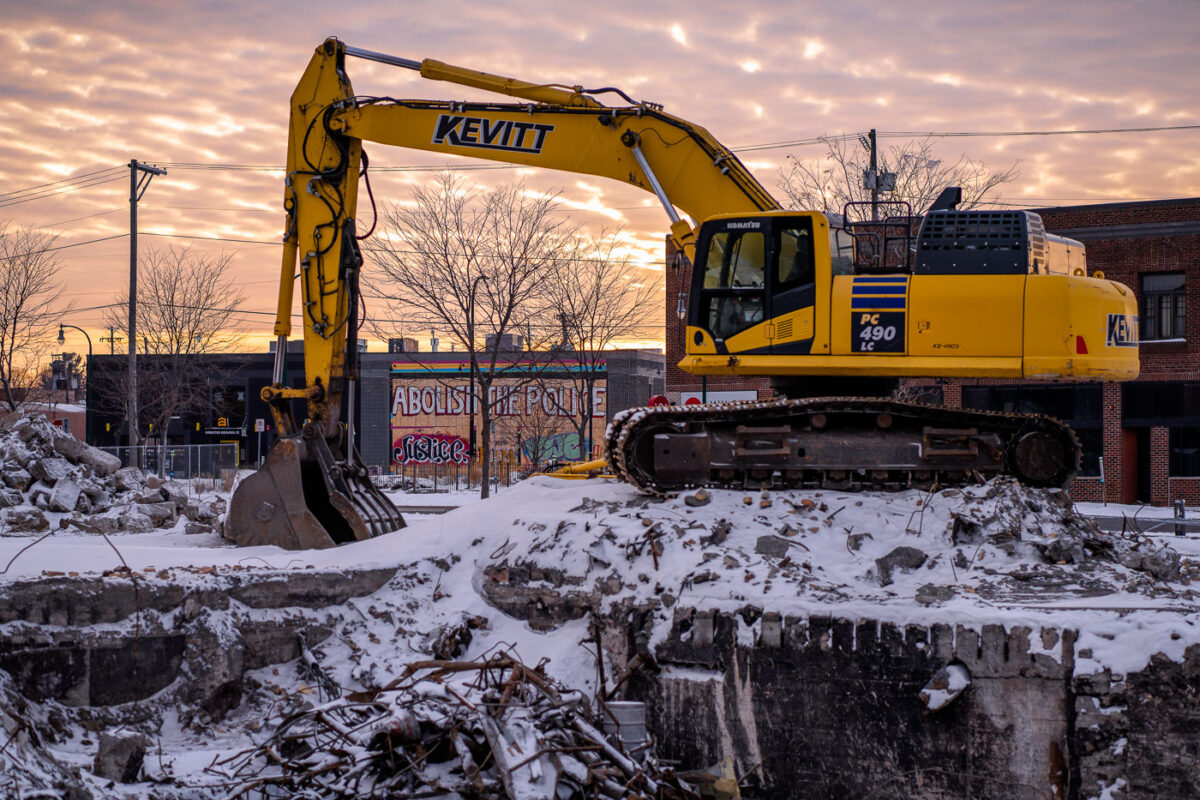
Demolition of a building in the snow
An excavator operates amidst snow-covered rubble at the demolition site of former businesses on Lake Street in Minneapolis. These structures, which included Minnehaha Liquors, a chiropractor’s office, and GM Tobacco, were destroyed during the widespread protests and civil unrest that followed the May 25, 2020 death of George Floyd.

Excavator at Minnehaha Liquors Demolition, Minneapolis
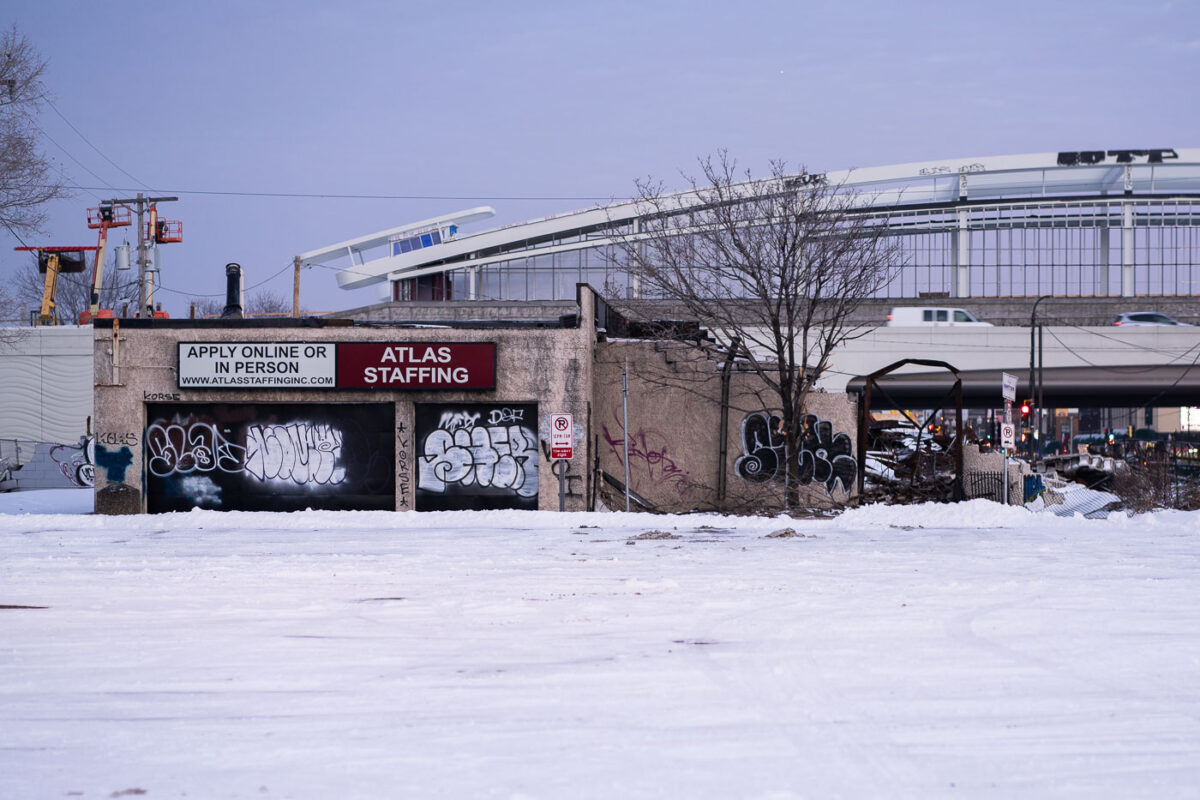
Burned Atlas Staffing building on Lake Street
The remains of the Atlas Staffing building stand on Lake Street in Minneapolis, its exterior covered in graffiti. This structure was among many properties damaged or destroyed by fire during the civil unrest that followed the May 25, 2020 death of George Floyd.

Graffiti on Burned Atlas Staffing, Lake Street, Minneapolis
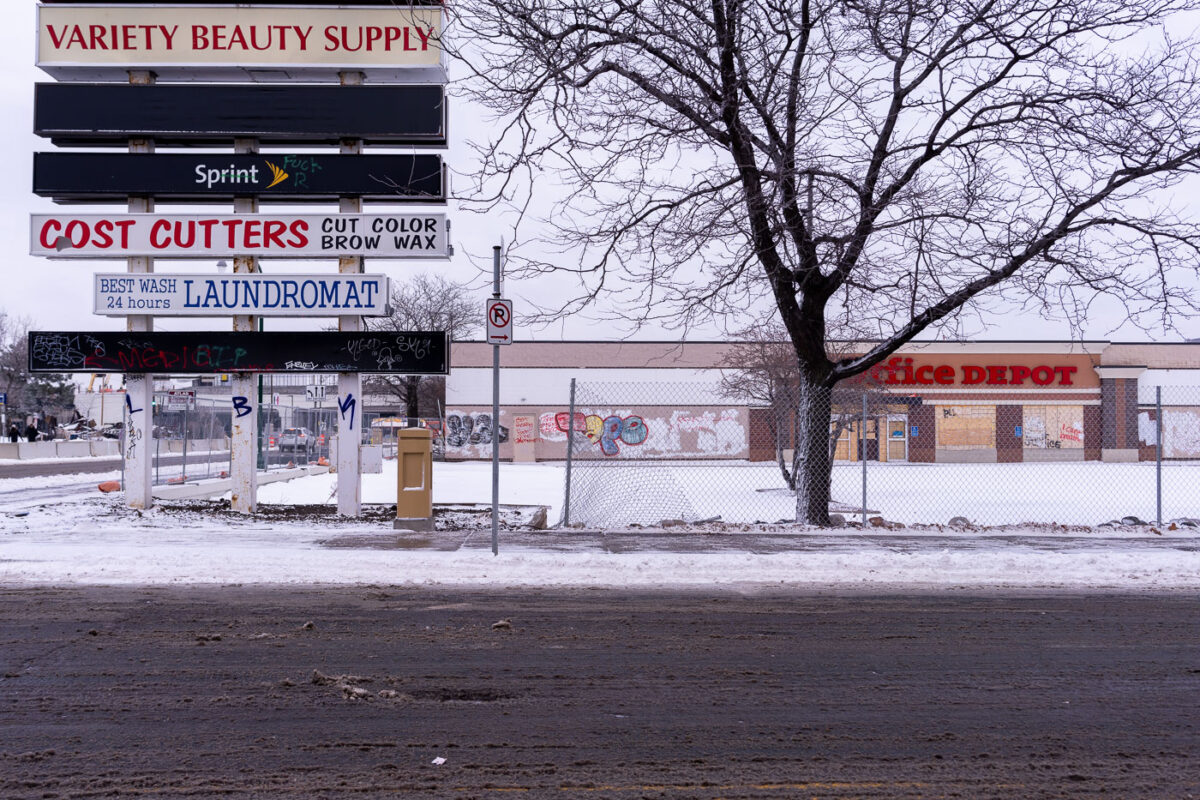
Riot damaged strip mall on Nicollet Ave
A strip mall at the corner of Nicollet Avenue and Lake Street in Minneapolis shows extensive damage. This retail complex, which housed businesses such as Office Depot, Cost Cutters, and a Laundromat, was heavily damaged following the May 25, 2020 death of George Floyd and the subsequent protests and unrest in the city. Boarded-up windows and graffiti cover the building, indicating the impact of the events.

Riot Damaged Strip Mall, Nicollet Ave & Lake St
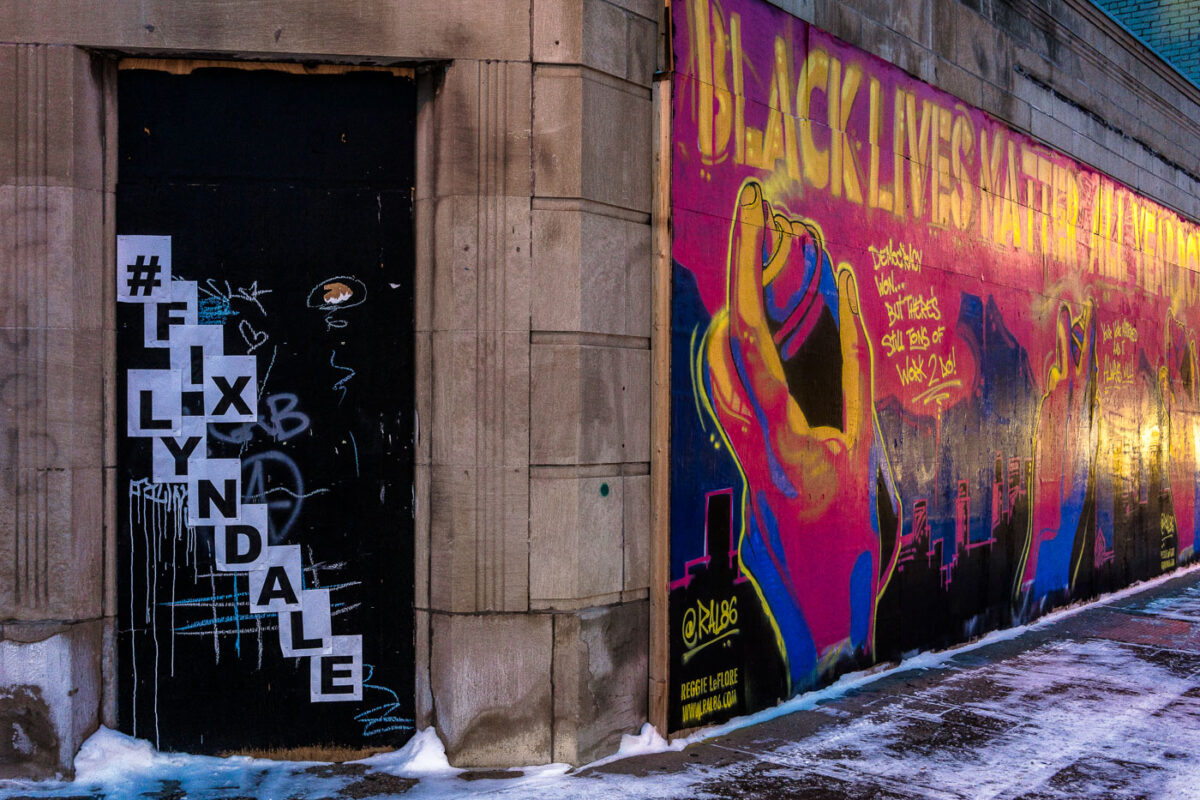
Fix Lyndale on a door on Lyndale Ave
A Black Lives Matter mural by Reggie LeFlore adorns boarded-up storefronts at the corner of Lyndale Avenue and Lake Street in Uptown Minneapolis. This artwork emerged in the aftermath of the 2020 Minneapolis Uprising, transforming damaged properties into public expressions of protest and solidarity. Adjacent to the mural, the #FixLyndale message advocates for the long-standing community effort to reconfigure Lyndale Avenue, a corridor known for high rates of vehicle and pedestrian accidents.

Fix Lyndale & Black Lives Matter Mural, Lyndale & Lake St
Strip mall being restored
This image presents a strip mall situated at Nicollet Avenue and Lake Street in Minneapolis, documented after sustaining damage during the civil unrest of May 2020. Retailers including Office Depot and Dollar Tree are visible, with some storefronts showing signs of repair or temporary boarding. The unrest followed the May 25, 2020 murder of George Floyd, resulting in widespread protests and property damage throughout the city. Temporary protective sheeting and construction containers occupy portions of the parking lot, reflecting ongoing recovery efforts for these commercial properties.

Nicollet/Lake Street Strip Mall Post-Uprising
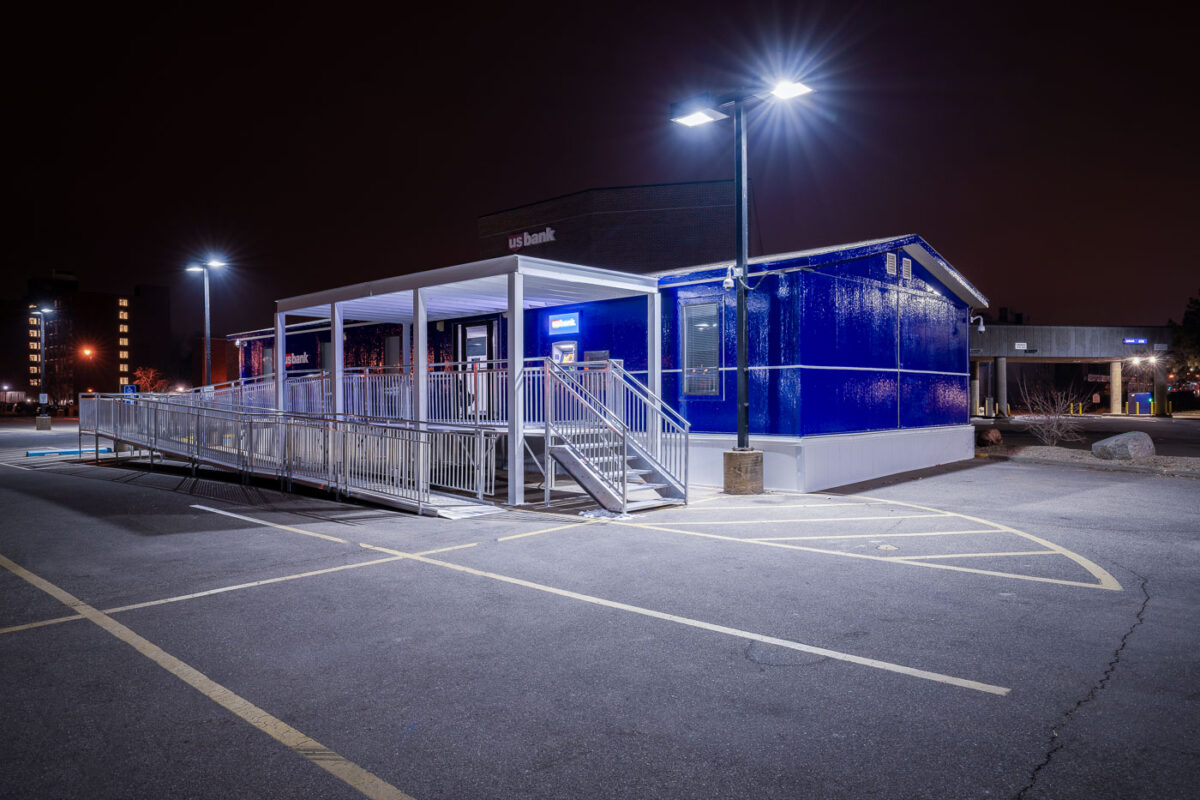
Temporary US Bank branch in Minneapolis
A temporary US Bank branch operates from a modular building in a parking lot on Lake Street in Minneapolis. This facility was established to provide banking services following widespread damage to businesses in the area during the May 2020 protests after the death of George Floyd.

Temporary US Bank branch, Lake Street parking lot, Minneapolis
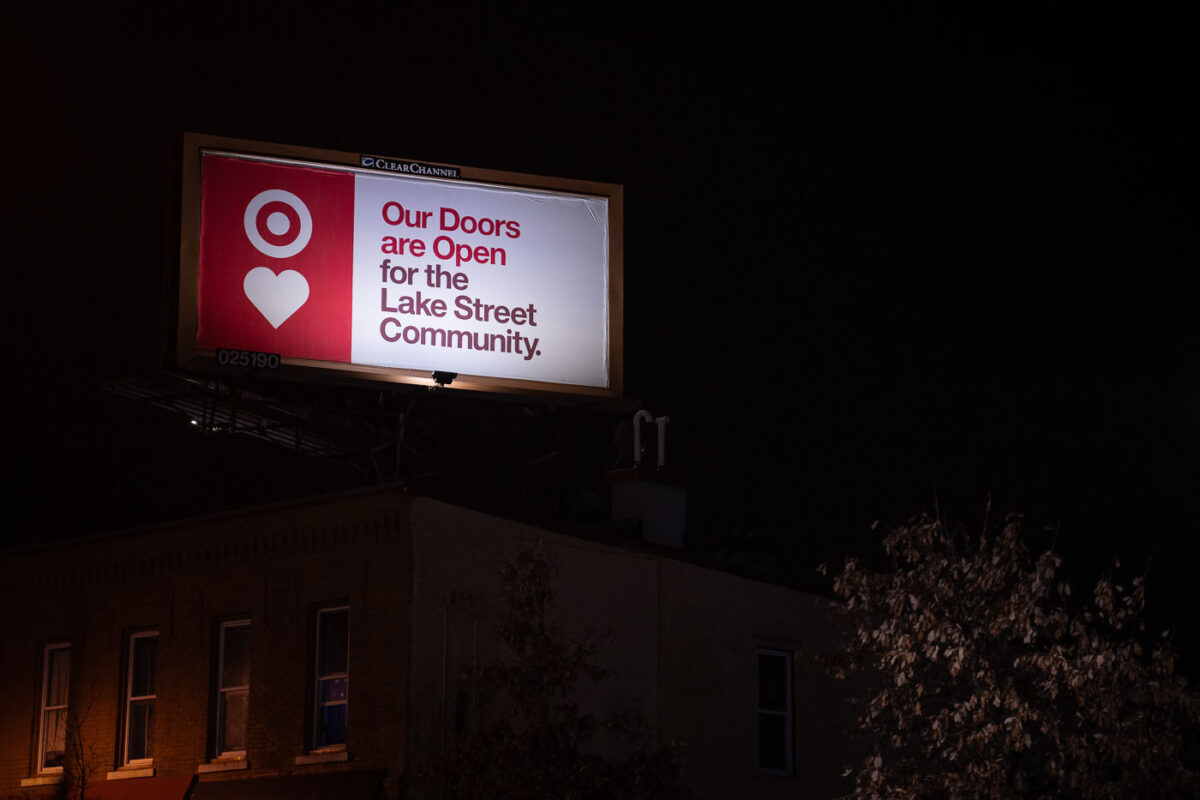
Target Billboard after the store reopens
An illuminated Target billboard on Lake Street in Minneapolis displays a message announcing, "Our Doors are Open for the Lake Street Community." This advertisement appeared after Target retail locations in the area sustained damage and temporarily closed following the civil unrest in May 2020, which occurred after the death of George Floyd. The billboard communicates the return of essential retail services to the Lake Street corridor, a vital commercial and residential area that experienced significant disruption. It signifies Target's commitment to the community during a period of recovery and rebuilding.

Target Re-opening Billboard on Lake Street, Minneapolis
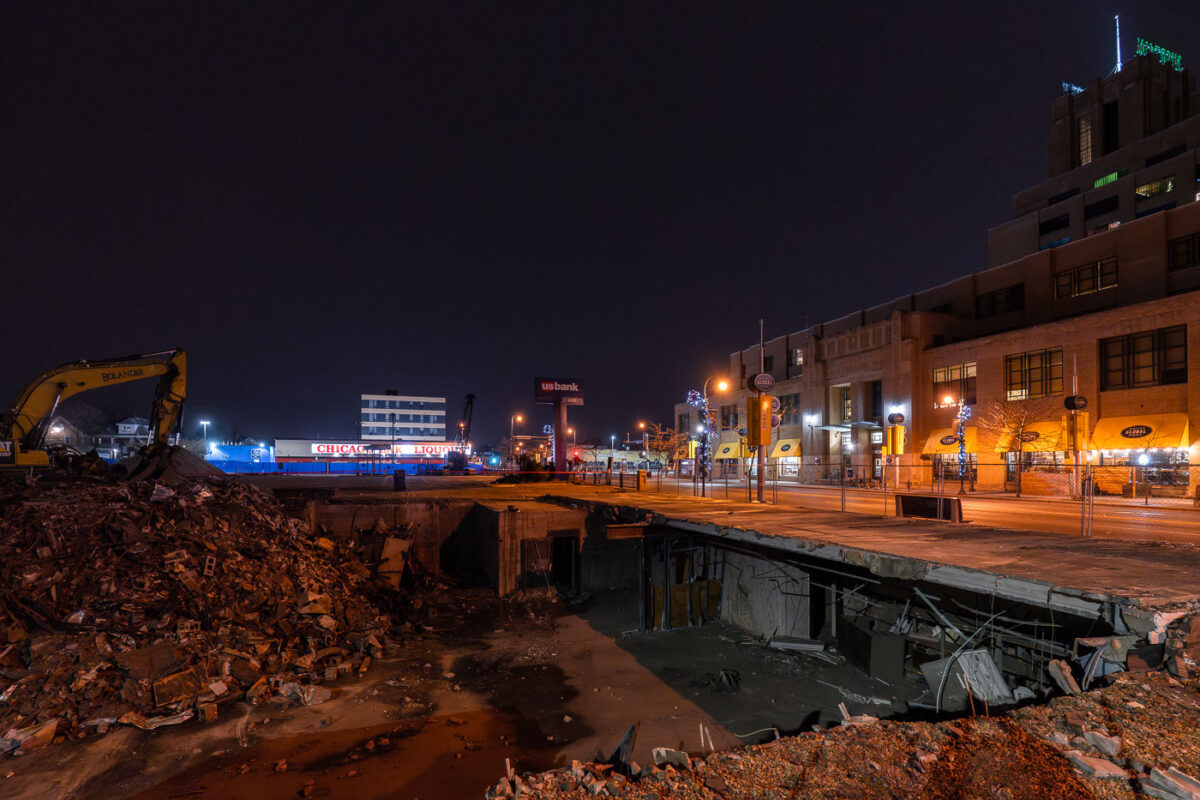
Demolition of US Bank on West Lake Street
The demolition of a US Bank branch on West Lake Street in Minneapolis is shown at night. This branch sustained damage during the Minneapolis Uprising, leading to its subsequent removal. The site was cleared for the construction of a new bank building, reflecting the broader redevelopment efforts in the area.

Night Demolition of US Bank, West Lake Street, Minneapolis
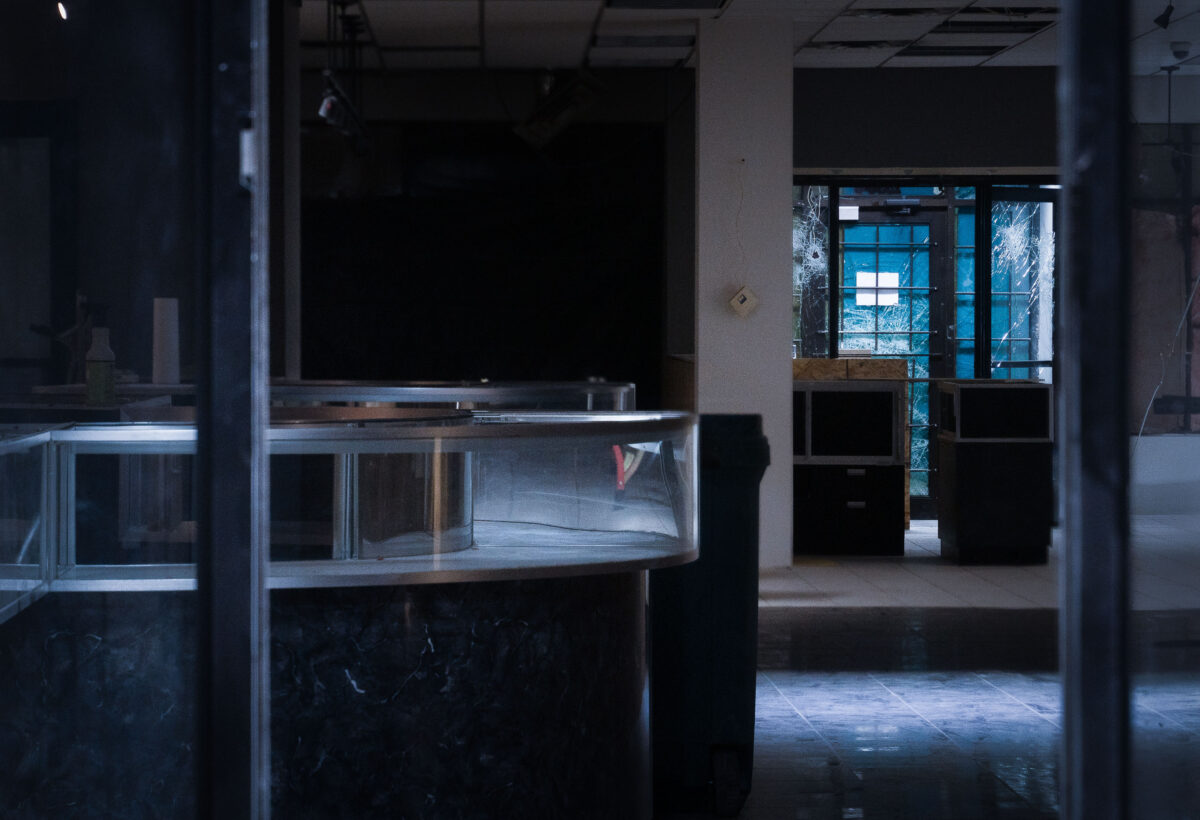
Inside the looted Cadillac Pawn store on Lake Street
The interior of Cadillac Pawn on West Lake Street in Minneapolis displays damage, including a shattered window visible in the background. This commercial establishment was among many businesses along the Lake Street corridor that sustained damage during the civil unrest following the killing of George Floyd in May 2020.

Cadillac Pawn Interior with Broken Window, Lake Street
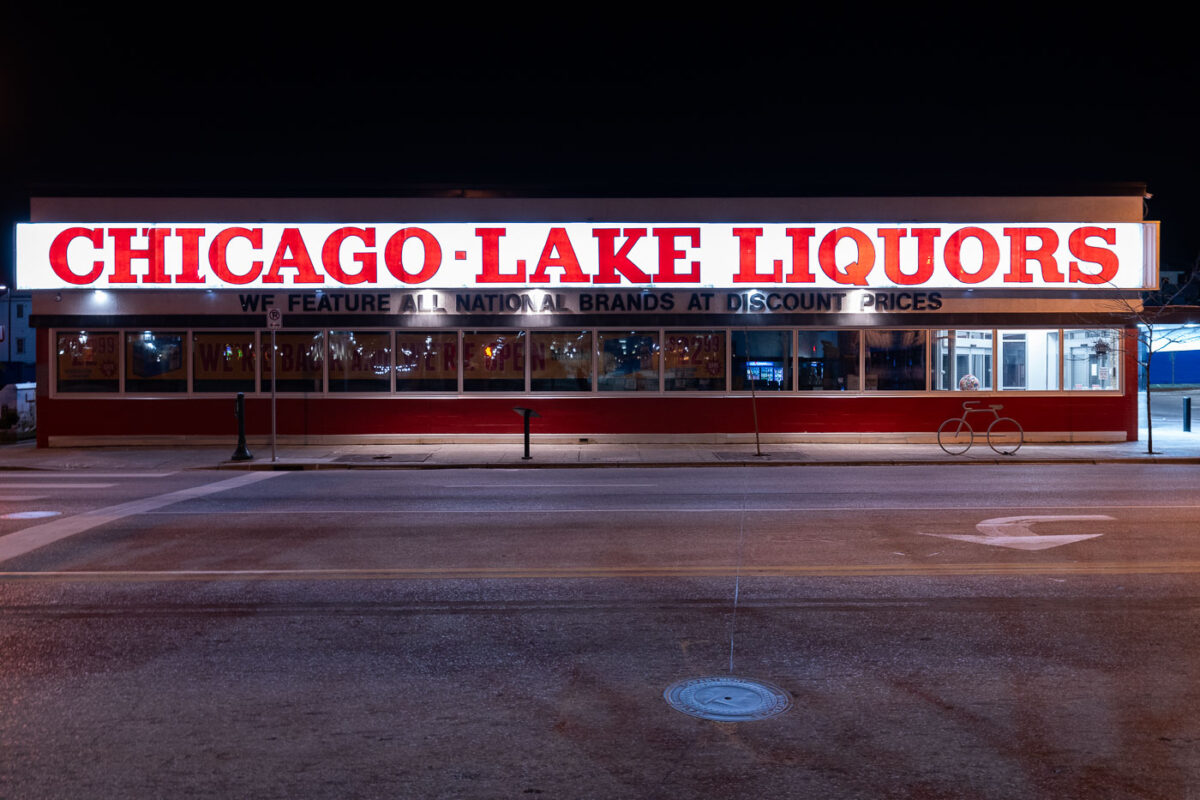
Chicago Lake Liquors after boards were removed
Chicago Lake Liquors, a retail store located on Lake Street in Minneapolis, is shown with its windows uncovered. The removal of protective boards from its storefront signifies a phase of recovery following the civil unrest that occurred in Minneapolis.

Chicago Lake Liquors on Lake Street, Minneapolis, boards removed
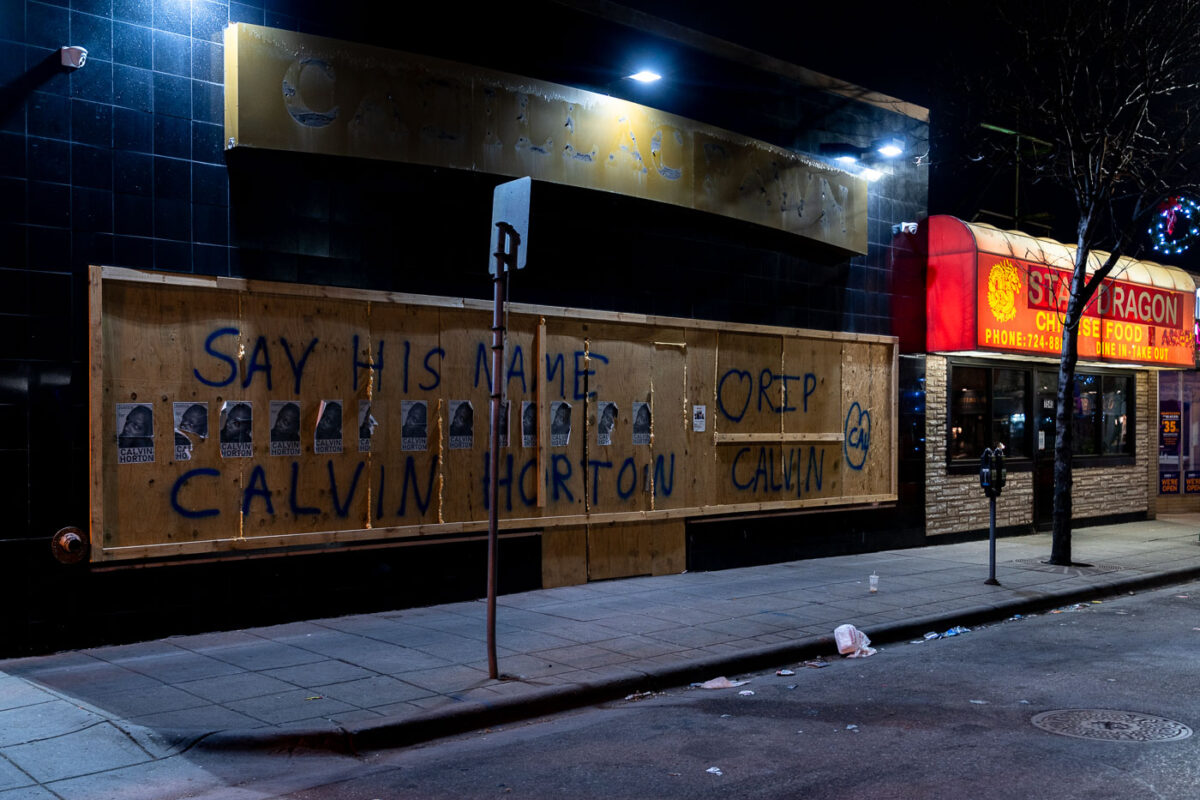
Say his name calvin horton
The former Cadillac Pawn building on East Lake Street in Minneapolis is shown boarded up. The plywood boards display graffiti and posters memorializing Calvin Horton, whose death was associated with the location during periods of unrest. Hennepin County authorities declined to prosecute the owner in connection with Horton's death, citing insufficient evidence.

Cadillac Pawn, E. Lake St., Minneapolis: Calvin Horton Graffiti
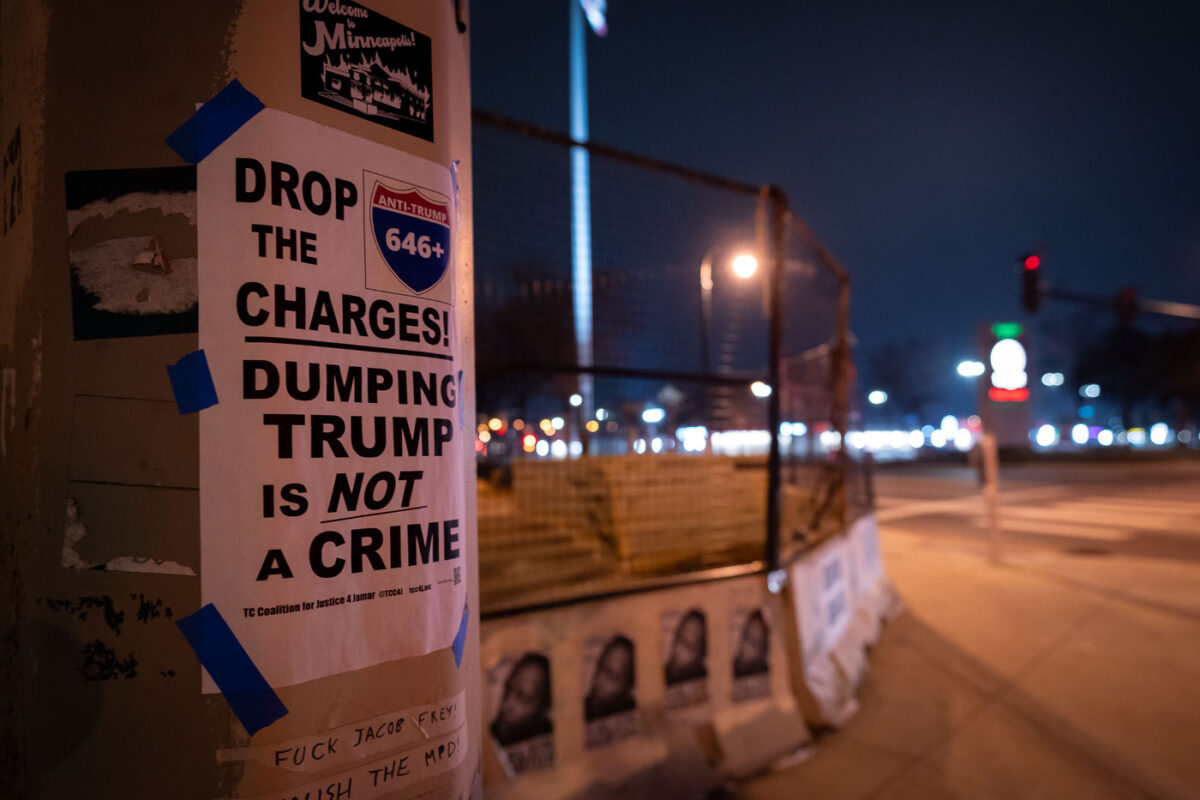
Dumping trump is a not a crime
Flyers are affixed to a pole outside the Minneapolis Third Precinct police station on Lake Street. This station was significantly damaged by fire during the Minneapolis Uprising in May 2020, following the murder of George Floyd. The prominent flyer demands "DROP THE CHARGES!" and states "DUMPING TRUMP IS NOT A CRIME." This call to "Drop the Charges" refers to the 646 individuals criminally charged during the largest mass arrest in Minnesota history, which occurred after a post-election march onto I-94. Other messages on the pole, including "ABOLISH THE MPD!", reflect ongoing demands for police reform and accountability in Minneapolis.

Dumping Trump Is Not a Crime Flyer, Minneapolis 3rd Precinct

Former K-Mart building on Lake Street in Minneapolis converted to a United States Post Office with community murals.
This post office on Lake Street occupies a building that once housed a K-Mart store. The U.S. Postal Service moved operations here after its Lake Street and Minnehaha Avenue branches were damaged during the unrest that followed George Floyd's killing in May 2020. Murals cover much of the building's exterior, added by local artists in the months after the damage.

Post Office Inside the Former K-Mart on Lake Street
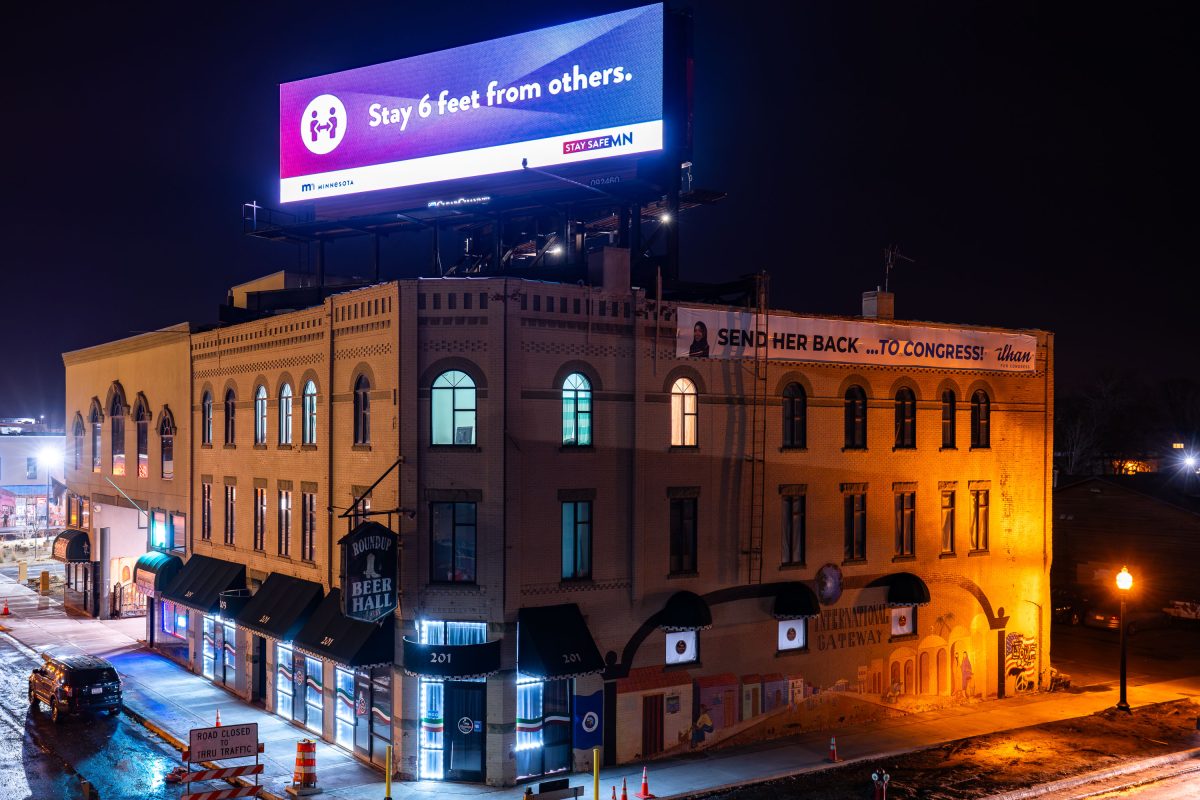
Ilhan Omar banner and COVID-19 Billboard
A billboard during COVID-19 pandemic that reads "Stay 6 feet from others". "Send Her Back... To Congress!" Ilhan Omar sign on the side of the building.

Ilhan Omar banner and COVID-19 Billboard

Assorted chairs lined up on the sidewalk outside the former SuperValu grocery store on West Lake Street in South Minneapolis.
This stretch of West Lake Street once held a SuperValu grocery store, part of a chain that has operated in Minnesota since the 1920s. The building sat empty after the store's closure, its blue-lit exterior a holdover from the retail signage era. Rows of mismatched chairs left along the sidewalk here have appeared intermittently since 2020, placed by passersby rather than any organized group.

Chairs Outside the Former SuperValu on West Lake Street at Night

Lake Street Minnehaha temporary post office housed in former K-Mart building with community murals.
This building on Lake Street served as the former K-Mart site before the US Postal Service converted it into a temporary station. USPS opened the location after the Lake Street and Minnehaha post office branches were destroyed during the unrest that followed George Floyd's killing in May 2020. The temporary station restored mail and package services to the surrounding Longfellow and Powderhorn neighborhoods while a permanent replacement was planned.

Temporary USPS Station at the Former K-Mart on Lake Street

Colorful murals reading "LET THE HEALING" adorn the facade of a temporary post office housed in a former K-Mart on Lake Street in
This building on Lake Street once housed a K-Mart before becoming the Lake-Street Minnehaha Temporary Station, a USPS facility set up after the neighborhood's original postal buildings were damaged during the unrest that followed George Floyd's death in May 2020. The station has continued to handle mail and package service for the surrounding Minneapolis community. Painted across the storefront, a mural reading "LET THE HEALING" was added afterward as part of a wave of public art that appeared on boarded and repurposed buildings along the corridor.

“Let the Healing” Mural at the Lake Street Minnehaha Postal Station

USPS delivery vehicles staged at temporary post office in former K-Mart building, Minneapolis.
The former Kmart at Lake Street and Nicollet Avenue closed in 2020 after decades of operation, and its parking lot was pressed into service as a staging ground for USPS delivery vans. The move came after the nearby Lake Street postal station was damaged during the unrest following George Floyd's death in May 2020, forcing carriers to work out of temporary sites while repairs were made. Rows of USPS vans parked here each morning for loading before drivers headed out on their routes. The high-rise towers visible behind the lot are part of the Whittier neighborhood's residential corridor along Nicollet Avenue.

USPS Delivery Vans at the Former Lake Street K-Mart

Boarded storefront on Lake Street in Minneapolis displays "George Floyd" text during snowfall.
Plywood covering a storefront on Lake Street carries the hand-painted name "George Floyd," one of many boarded windows along the corridor turned into memorials after his killing in police custody in May 2020. Businesses along Lake Street boarded their windows that spring after nights of fires and looting during the unrest that followed Floyd's death. Rather than being removed once the immediate unrest subsided, many of these boards remained in place for months, repainted by artists and volunteers with murals, names, and messages tied to the Black Lives Matter movement.

“George Floyd” Mural on Boarded Storefront, Lake Street Snowfall

Illuminated art installation by Juxtaposition Arts on Target store facade, Lake Street, Minneapolis, featuring "WE STAND TOGETHER
Juxtaposition Arts, a Minneapolis youth-focused art and design nonprofit based in North Minneapolis, created the mural covering the Target store's exterior wall on Lake Street. The panel reads "We Stand Together, We Build Together," spanning the length of the building in a series of connected murals. This Target location sits near the site of the Minneapolis Police Third Precinct, which was damaged during the unrest following George Floyd's death in May 2020. The store itself sustained damage in the same period and later reopened with the mural installed along its street-facing wall.

“We Stand Together” Mural at Target on Lake Street

Uptown Smoke Shop storefront on Lake Street with boarded windows displaying colorful "Help + Love each other" graffiti mural.
The mural reading "Help + Love Each Other" covers boarded-up windows at Uptown Smoke Shop, an e-cigarette retailer at 1408 Lake Street in Minneapolis's Uptown neighborhood. Plywood went up over storefronts along Lake Street after the unrest that followed George Floyd's killing in May 2020, and many of those boards became canvases for community-painted messages rather than being removed once repairs were made.

‘Help + Love Each Other’ Mural at Uptown Smoke Shop on Lake Street

Boarded Tires Plus storefront on Lake Street, Minneapolis, with graffiti including "Stop Line 3" and "No More Prez" messages
Tires Plus operates a tire and auto repair shop on Lake Street in Minneapolis's Uptown neighborhood. Plywood covering its windows carries the message "Stop Line 3," a reference to opposition against Enbridge's Line 3 oil pipeline expansion through northern Minnesota. Other markings reading "No More Prez" and "Riots 2020" were added amid the unrest that followed George Floyd's death in 2020.

Boarded-Up Tires Plus on Lake Street After 2020 Unrest

"Abolish The Police" Mural at Moon Palace Books
"Abolish The Police" mural on Moon Palace Books. Seen in November 2020.

“Abolish The Police” Mural at Moon Palace Books

Coliseum Building on Lake Street in Minneapolis with boarded storefronts decorated with community murals.
The Coliseum Building stands on Lake Street in Minneapolis, its ground-floor storefronts boarded with plywood after damage during the 2020 civil unrest. Built in 1917, the building originally housed a theater along with retail and commercial tenants serving the Longfellow neighborhood. Community members later painted the plywood panels with murals and messages, turning the boards into a temporary public canvas.

Murals Cover Boarded Windows at the Coliseum Building on Lake Street

Protesters carrying "Jews Against Fascism" and racial justice banners march along Lake Street in Minneapolis.
Marchers carry a "Jews Against Fascism" banner down Lake Street on November 7, 2020, the day major networks declared Joe Biden the winner of the presidential election. The route passed the former Minneapolis Police Third Precinct at Lake Street and Minnehaha Avenue, burned by protesters in May 2020 after the killing of George Floyd.

“Jews Against Fascism” Banner Leads a Lake Street March

Diverse marchers including Indigenous participants carry signs and decorative banners on Lake Street in Minneapolis during a 2020
Marchers moved along Lake Street near South 17th Avenue in Minneapolis after news broke of Joe Biden's win in the 2020 presidential election. Signs carried through the crowd read "Count Every Vote," "Land Back," and messages supporting workers' rights, tying the moment to causes beyond the election itself. Aztec danzantes in feathered headdresses marched among the crowd, a common presence at Lake Street demonstrations tied to the Twin Cities' Indigenous and Chicano communities. Lake Street itself runs through some of Minneapolis's most ethnically diverse neighborhoods, including the Latino commercial corridor around Midtown.

Post-Election March on Lake Street Near S 17th Avenue

Indigenous ceremonial performer wearing feathered headdress, beaded regalia, and face mask holds incense pot during Minneapolis
Aztec dance traditions, known as danza azteca or mexica, trace back to pre-Hispanic ceremonial practice and remain active today among Indigenous and Chicano communities across North America. The feathered headdress worn here, called a penacho, is typically built from pheasant or macaw feathers and signals rank or role within a dance troupe. The clay vessel held in this image is used to burn copal, a resin incense central to purification rites performed before and during ceremonial dances. Face coverings were required at outdoor public gatherings in 2020, the year this march took place along Lake Street in Minneapolis.

Aztec Dancer in Feathered Headdress on Lake Street

Protesters gather outside Minneapolis Police Third Precinct on Lake Street carrying signs for environmental justice and social
The Minneapolis Police Third Precinct sits on East Lake Street, rebuilt after the original station was burned during the unrest that followed George Floyd's killing in May 2020. This gathering came on the day Joe Biden was declared the winner of the 2020 presidential election, drawing marchers carrying "Green New Deal" signs and a "Rise" banner tied to environmental justice organizing.
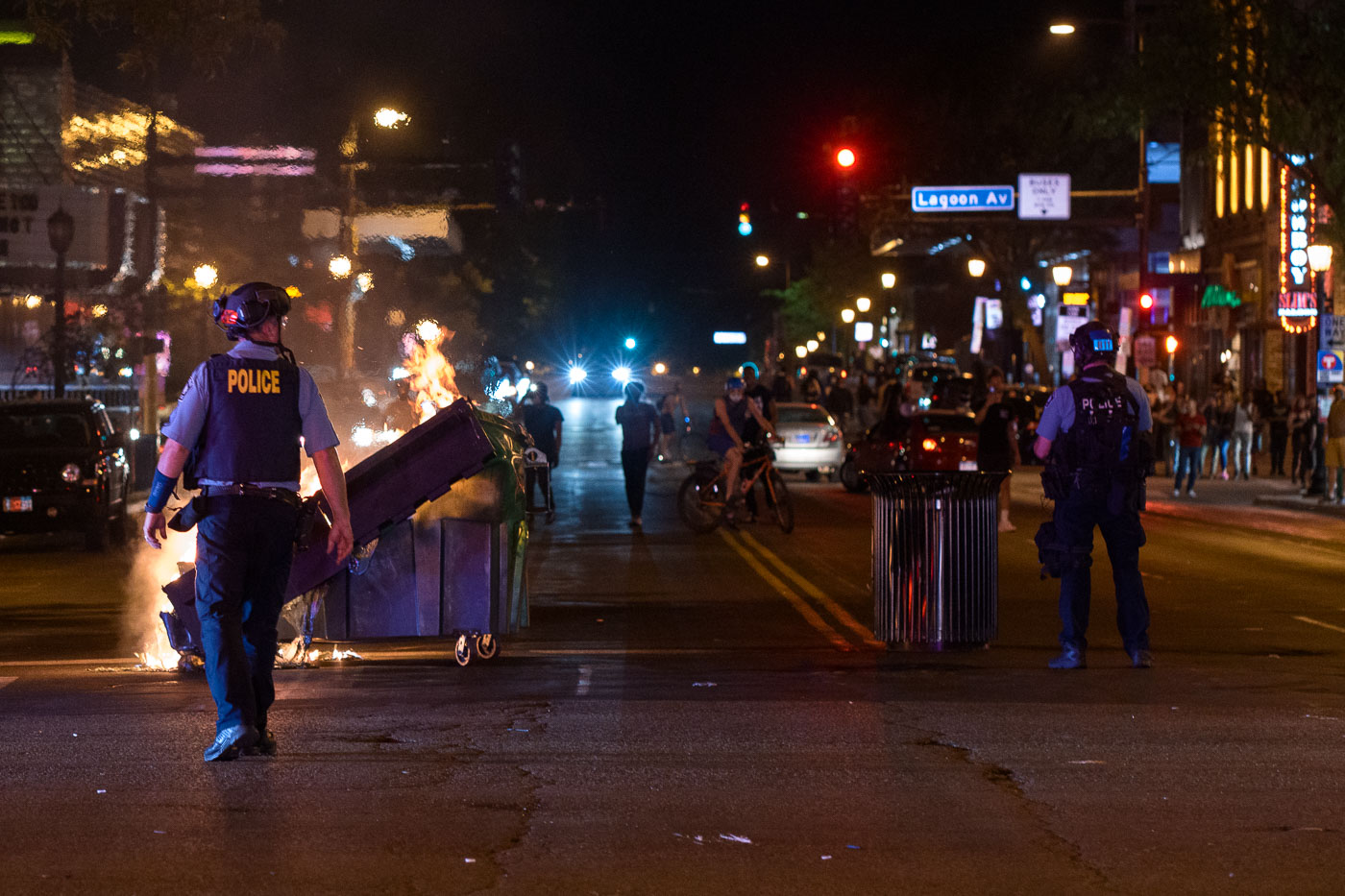
Climate Justice March Rebuilds Outside the Third Precinct

Protesters wearing orange "Democracy Defender" vests gather outside Minneapolis Police Third Precinct on Lake Street.
"Democracy Defender" vests mark volunteers from Nonviolent Peaceforce, a global nonprofit that trains civilians in unarmed protection work at protests and conflict zones. The group deployed monitors at marches across Minneapolis following the 2020 presidential election, positioning themselves between demonstrators and police to de-escalate potential confrontations. A "Green New Deal" sign carried nearby points to the range of causes represented in the crowd that day. The Third Precinct station had already become a of unrest in Minneapolis months earlier, drawing continued demonstrations through the fall.
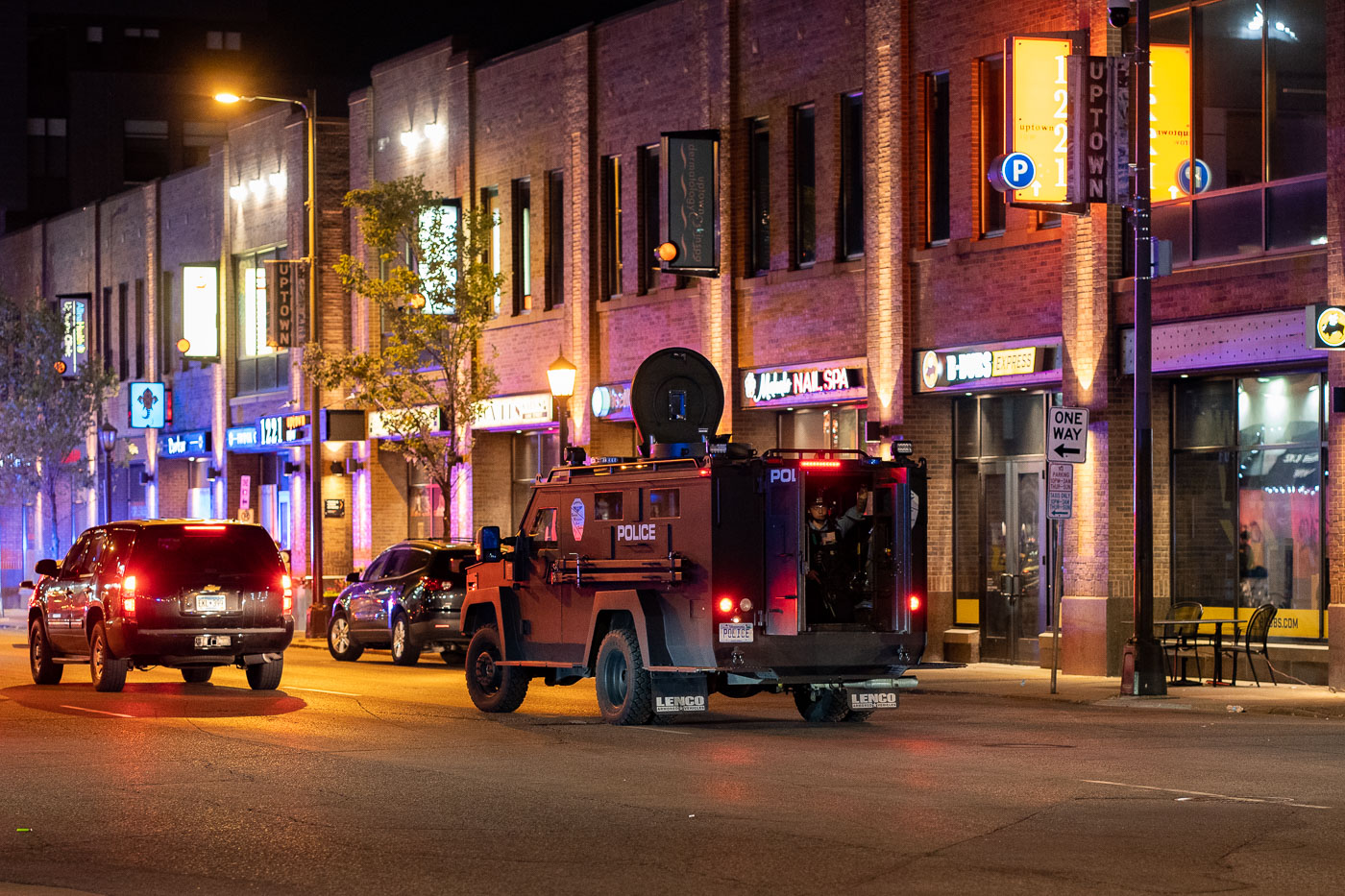
“Democracy Defenders” March Near Minneapolis Police 3rd Precinct

Protesters hold signs reading "No Burning Trash" and "Stop Environmental Racism" at a Minneapolis gathering in November 2020.
Marchers carried hand-painted signs reading "No Burning Trash" and "Stop Environmental Racism" through Minneapolis on November 7, 2020, the day major news outlets projected Joe Biden as the winner of the presidential race. The demonstration linked opposition to waste incineration and pollution in low-income neighborhoods with the broader wave of marches that followed the election call. Environmental justice organizing in the Twin Cities has long focused on facilities like the Hennepin Energy Recovery Center, a downtown trash-burning incinerator that critics have targeted for its emissions impact on nearby communities of color.

“Stop Environmental Racism” Signs at a Minneapolis March

Protesters gather outside Minneapolis Police Third Precinct holding a "No Coup" sign during a November 2020 demonstration.
The Minneapolis Police Third Precinct sits on Lake Street in South Minneapolis, and it was here that protesters gathered after Joe Biden was declared the winner of the 2020 presidential election. A demonstrator's hand-lettered "No Coup" sign spoke to fears that Donald Trump would refuse to concede the race. The precinct building had been burned during the unrest following George Floyd's death in May 2020, and by this gathering it remained fenced off and reinforced with concrete barriers as the department continued to operate out of temporary quarters elsewhere in the city.
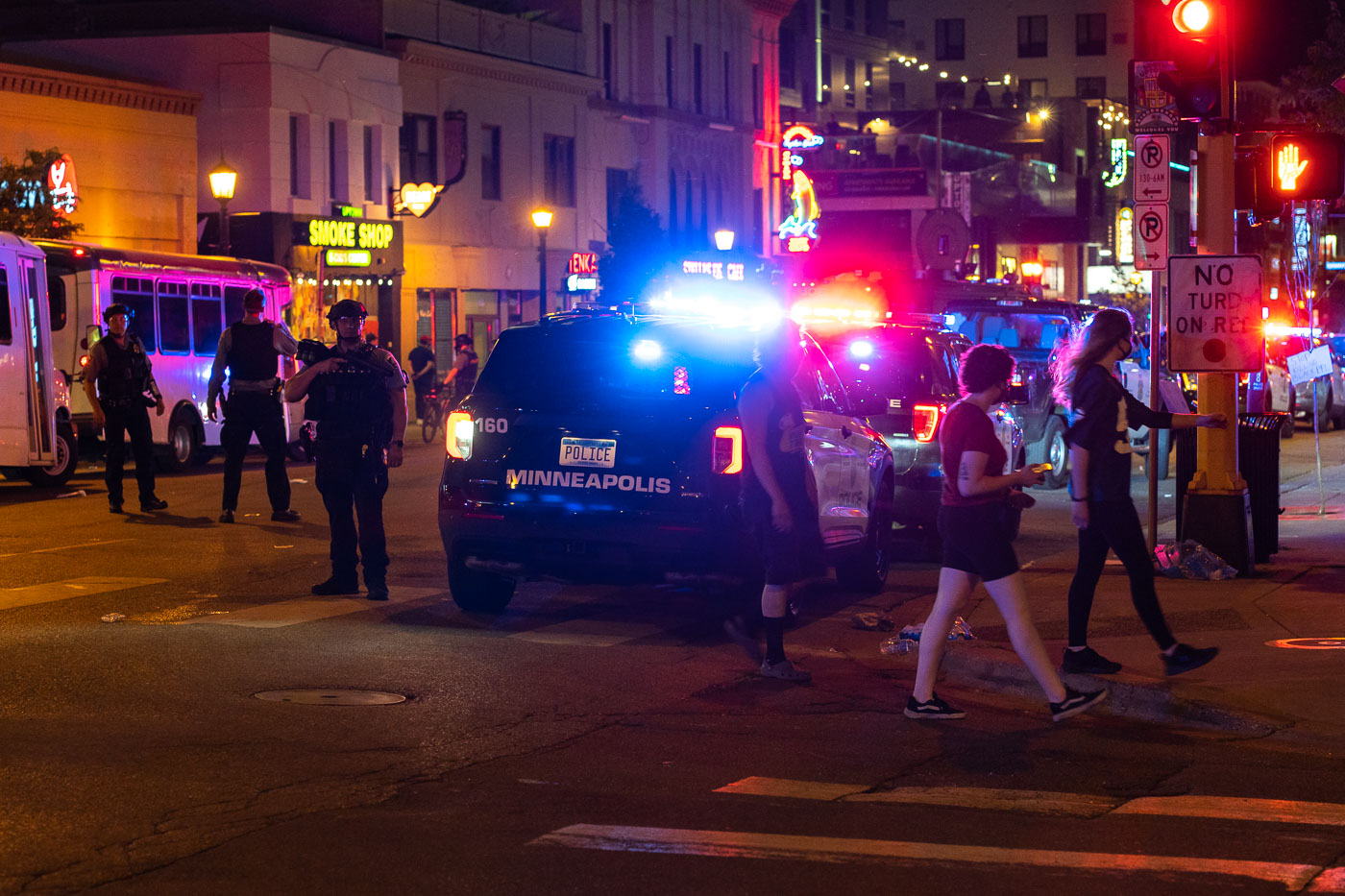
“No Coup” Sign Outside the Minneapolis Third Precinct

Protesters gather on Minnehaha Avenue outside Hook and Ladder theater in Minneapolis carrying "Rise" and "People Power" signs.
The Hook and Ladder Theater & Lounge sits on Minnehaha Avenue in Minneapolis's Longfellow neighborhood, inside a converted firehouse that now serves as home base for the Firehouse Performing Arts Center. The building stands a few blocks from the Minneapolis Police Third Precinct station, which was set ablaze during the unrest following George Floyd's killing in May 2020. Marchers carrying "Rise" and "People Power" flags passed the venue on November 7, 2020, the day major news networks projected Joe Biden as the winner of the presidential election.
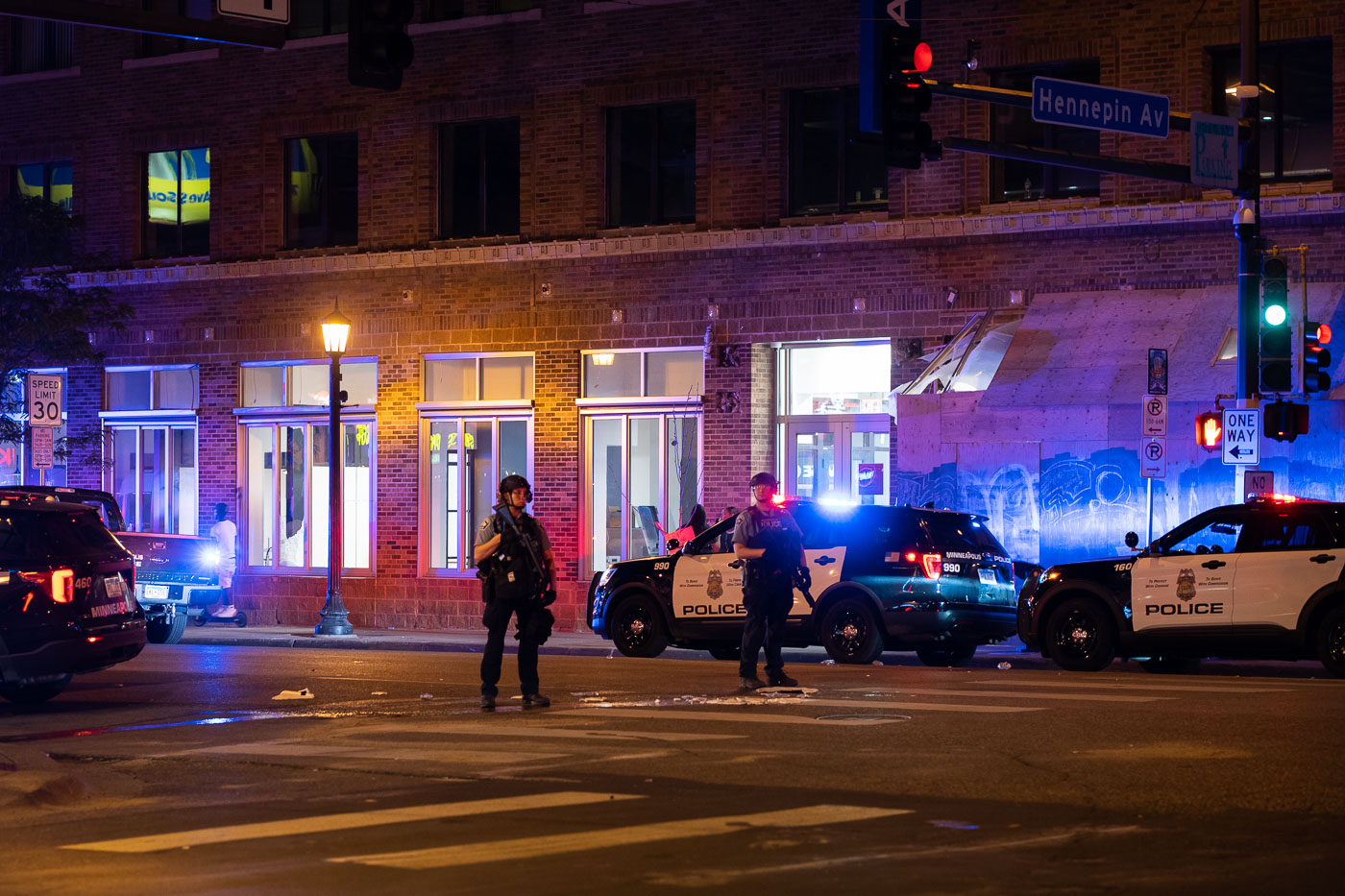
Post-Election March Passes the Hook and Ladder on Minnehaha Avenue

Target storefront in Uptown Minneapolis with graffiti reading "Stand Up Fight Back" and "Free Stuff" on its windows.
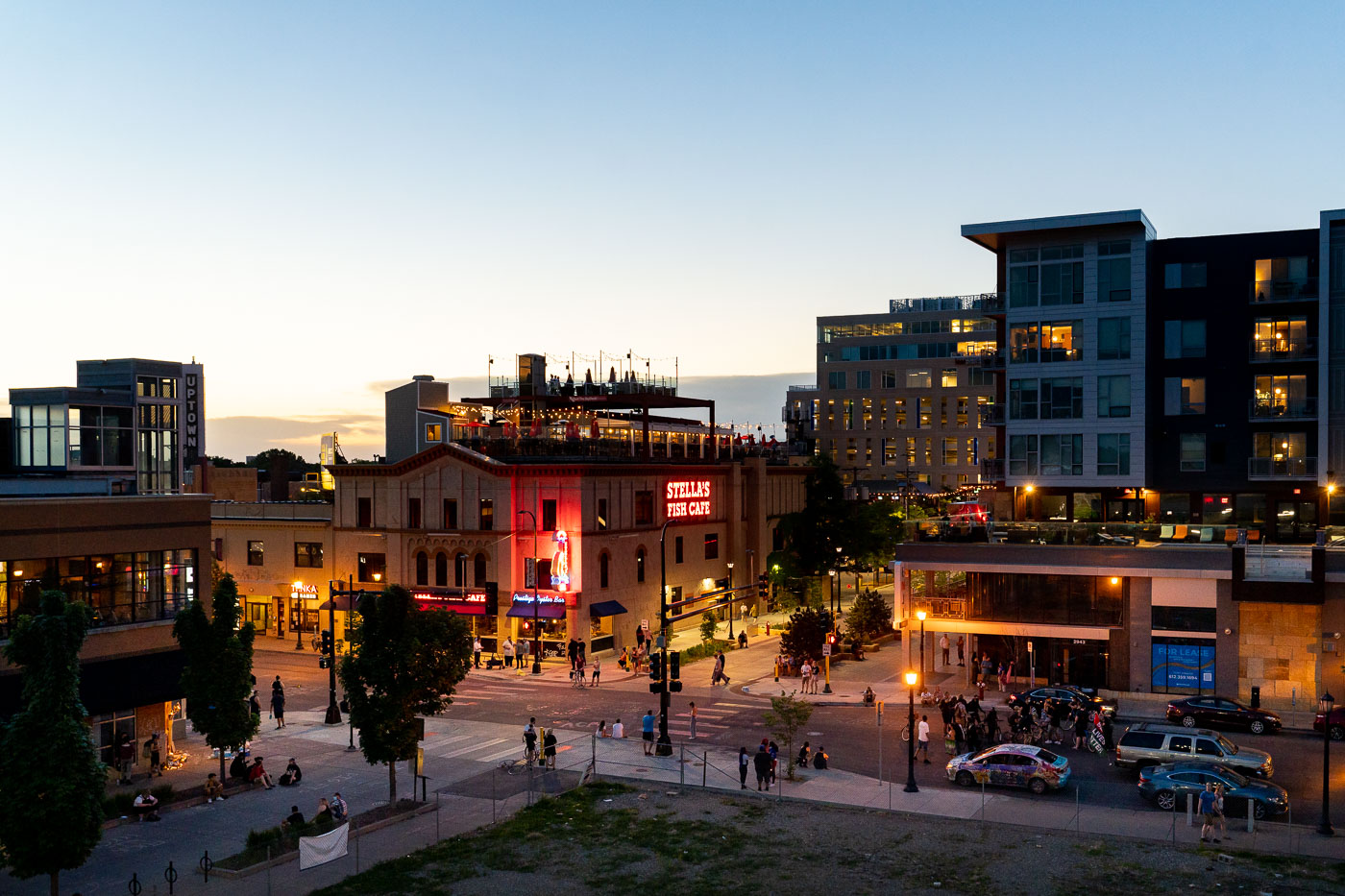
Target's Uptown Minneapolis store sits at 900 W Lake Street, a location that opened in 2018 as part of a mixed-use development along the Lake Street corridor. The entrance doors were tagged with "Stand Up Fight Back" and "Free Stuff!" after a night march down Lake Street. Target boarded and reinforced several Minneapolis-area stores that year following repeated break-ins and vandalism at its locations.

“Stand Up Fight Back” Spray-Painted on Uptown Target Doors

AT&T retail store on Lake Street in Uptown Minneapolis with boarded windows at night.
This AT&T store sits on Lake Street in Uptown Minneapolis, a commercial corridor that saw widespread property damage after the killing of George Floyd in May 2020. Many businesses along the strip boarded their windows in the aftermath and kept the plywood up for months afterward, some using it as makeshift signage during reconstruction. A "Now Open" banner on the boards here signals the store's return to business despite the unfinished repairs. Lake Street has long served as one of South Minneapolis's primary retail and transit corridors, connecting the Midtown Greenway to neighborhoods stretching from Uptown to the Mississippi River.

AT&T Store Reopens Behind Plywood on Lake Street

Hennepin and Lagoon Avenue intersection in Uptown Minneapolis at night with illuminated storefronts and traffic.
Hennepin Avenue crosses Lagoon Avenue at the center of Minneapolis's Uptown neighborhood, a commercial strip that grew up around the Lagoon Theater and streetcar lines running through the district in the early 20th century. Williams Uptown Pub & Cafe has operated near this corner for decades, part of a stretch of bars and restaurants that made Uptown a nightlife destination for the city. The intersection sits a few blocks from the Chain of Lakes, connecting the neighborhood's residential streets to its retail core along Hennepin and Lake Street.

Hennepin Avenue at Lagoon Avenue in Uptown Minneapolis

Burned out building on Lake Street
The remains of a commercial building on Lake Street in Minneapolis, which previously housed restaurants, stand damaged. This structure was affected during the civil unrest that occurred in May and June 2020. The unrest followed the murder of George Floyd and significantly impacted the commercial corridor around the Minneapolis Police Third Precinct.

Burned Restaurant Remains, Lake Street, Minneapolis

Protesters hold signs up after the killing of Walter Wallace
Protesters march on Lake Street in Minneapolis, holding signs advocating for an anti-racist future. This march, originating from South High School and heading towards the Minneapolis Third Precinct, was held in solidarity with Philadelphia following the killing of Walter Wallace Jr. Participants carried signs, including one stating 'A MAN WAS LYNCHED YESTERDAY,' reflecting ongoing calls for racial justice and accountability in the city and nationwide.

Minneapolis Protest: Anti-Racist Future Sign, Lake Street

Protesters again outside the 3rd precinct
Protesters march from South High School to the Minneapolis Third Precinct, expressing solidarity with Philadelphia following the killing of Walter Wallace Jr. in October 2020. The Minneapolis Third Precinct, which was a significant site during the 2020 protests for George Floyd, served as a symbolic location for this demonstration against police brutality. This march highlights the continued demands for police accountability and racial justice in Minneapolis and across the United States.

Minneapolis 3rd Precinct Protest for Walter Wallace Jr.

Protesters march down Lake Street in solidarity with Philadelphia
A march proceeds down Lake Street in Minneapolis, expressing solidarity with Philadelphia following the killing of Walter Wallace Jr. Participants carried signs, some advocating for "Black Lives Matter" and justice for victims of police violence, as they moved along the commercial thoroughfare. Lake Street.

Minneapolis Lake Street March for Walter Wallace Jr.

US Bank is closed sign
A notice posted on the boarded-up US Bank branch on Lake Street in South Minneapolis announces its closure due to damage sustained during the civil unrest of May 2020. This branch, a key retail banking establishment, was significantly impacted during the widespread protests and associated riots that followed the death of George Floyd.

US Bank Lake Street Closed After 2020 Minneapolis Riots

Cleared out AutoZone lot
The cleared site of the former AutoZone retail store stands on Lake Street at Minnehaha Avenue in Minneapolis. This commercial building was destroyed during the widespread protests and unrest that occurred in the city following the May 25, 2020 death of George Floyd.

Lake Street AutoZone Site After 2020 Riots

Live Laugh Loot
The phrase "Live Laugh Loot" is spray-painted on the sidewalk in front of a damaged US Bank branch located on Lake Street in Midtown Minneapolis.

“Live Laugh Loot” Graffiti on Damaged US Bank, Lake Street

Boarded storefront on Lake Street in Minneapolis displays murals including "Love Your Enemy" and "Justice for Floyd" messaging.
Murals and graffiti cover the exterior wall of the former K-Mart building on Lake Street in South Minneapolis. The painted boards include the large phrase “LOVE YOUR ENEMY,” an “MPLS” mural with the words “JUSTICE FOR FLOYD NOW,” and other artist panels installed across the boarded facade.

“Love Your Enemy” Mural on Former K-Mart on Lake Street

Boarded storefronts on Lake Street in Minneapolis display spray-painted messages "Do Not Burn" and "People Live Here" at night.
Boarded storefronts on Lake Street in Minneapolis are marked with spray-painted messages reading “Do Not Burn” and “People Live Here” in this nighttime view from September 2020. The plywood covers retail windows and doors along a commercial corridor that was heavily damaged after protests following the killing of George Floyd in May 2020.

“Do Not Burn, People Live Here” Spray-Painted on Lake Street Plywood

Boarded Popeyes Louisiana Kitchen storefront on Lake Street at night with graffiti markings.
Popeyes Louisiana Kitchen on Lake Street in Minneapolis stands boarded up at night, with plywood covering its windows and graffiti visible across the storefront.

Boarded-Up Popeyes on Lake Street at Night

Beauty Paradise Hair & Wigs storefront displays mannequin heads and a grand opening banner at 405 West Lake Street in Minneapolis.
Beauty Paradise Hair & Wigs at 405 West Lake Street in Uptown Minneapolis is pictured during its grand opening on September 26, 2020. A large banner reading “Grand Opening” hangs across the storefront.

Grand Opening at Beauty Paradise Hair & Wigs on Lake Street

Wooden protest sign reading "Block Party to Block the Precinct" at a Minneapolis gathering on September 16, 2020.
Block Party to Block the Precinct sign at a Minneapolis protest on September 16, 2020. The gathering opposed plans for a new lease for the Minneapolis Police Department's 3rd Precinct after the original station on Minnehaha Avenue was burned earlier that year following the killing of George Floyd.

“Block Party to Block the Precinct” Sign at Minneapolis Protest

Supporters gather at a recall petition table on Minnehaha Avenue in Minneapolis with a "Recall Mike Freeman" sign.
Supporters of the Recall Mike Freeman campaign gather on Minnehaha Avenue in Minneapolis at a street-side petition table. A volunteer holds a large “Recall Mike Freeman” sign while attendees line up to sign the recall petition.

“Recall Mike Freeman” Petition Table on Minnehaha Avenue
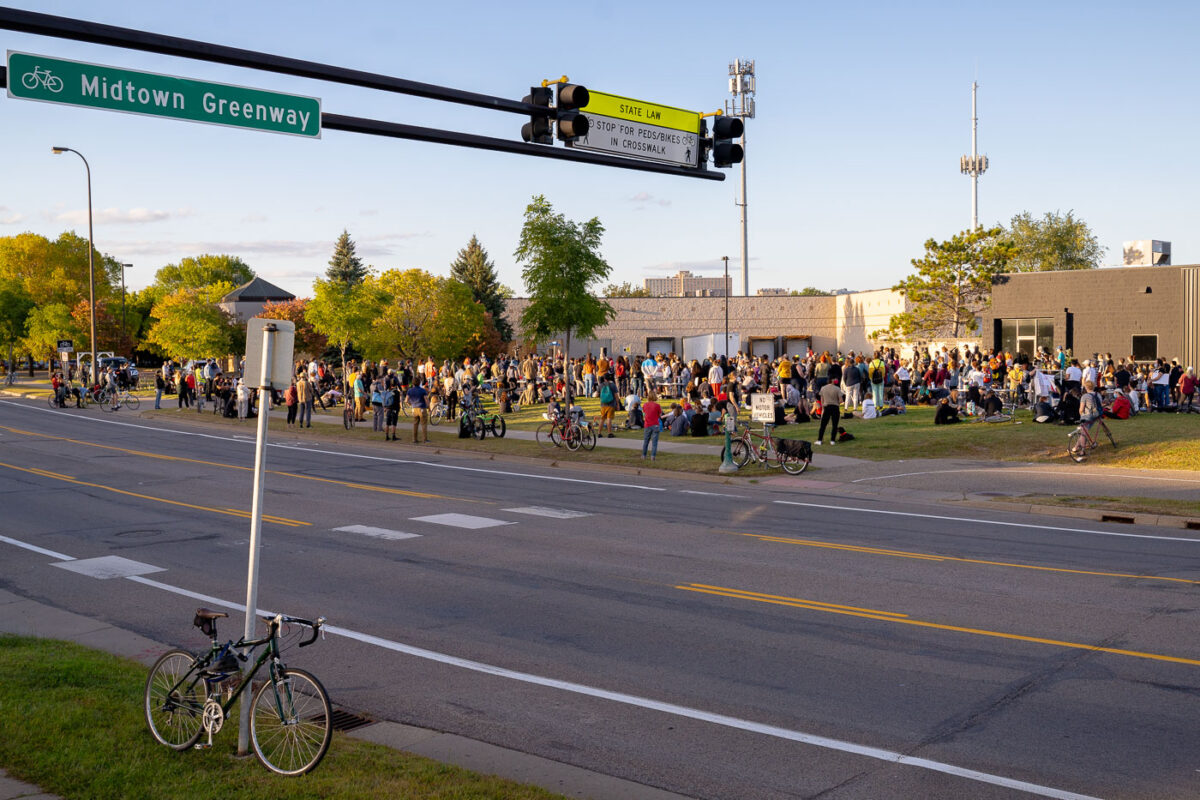
Protesters gather along the Midtown Greenway in Minneapolis during a September 2020 rally opposing a new police precinct site.
Protesters gather beside the Midtown Greenway in south Minneapolis on September 16, 2020, for a “Block Party to Block the Precinct” rally opposing plans for a new Minneapolis Police 3rd Precinct site. The protest came months after the original 3rd Precinct building was abandoned following damage during unrest after the killing of George Floyd.

Crowd Gathers Along the Midtown Greenway to Block a New 3rd Precinct

Former Kmart building on Lake Street in Minneapolis surrounded by chain-link fence displaying colorful murals and graffiti
The former Kmart building on Lake Street in Minneapolis is covered with murals and graffiti-style artwork. A chain-link fence now surrounds the property.

Murals Cover the Former Kmart on Lake Street at Night
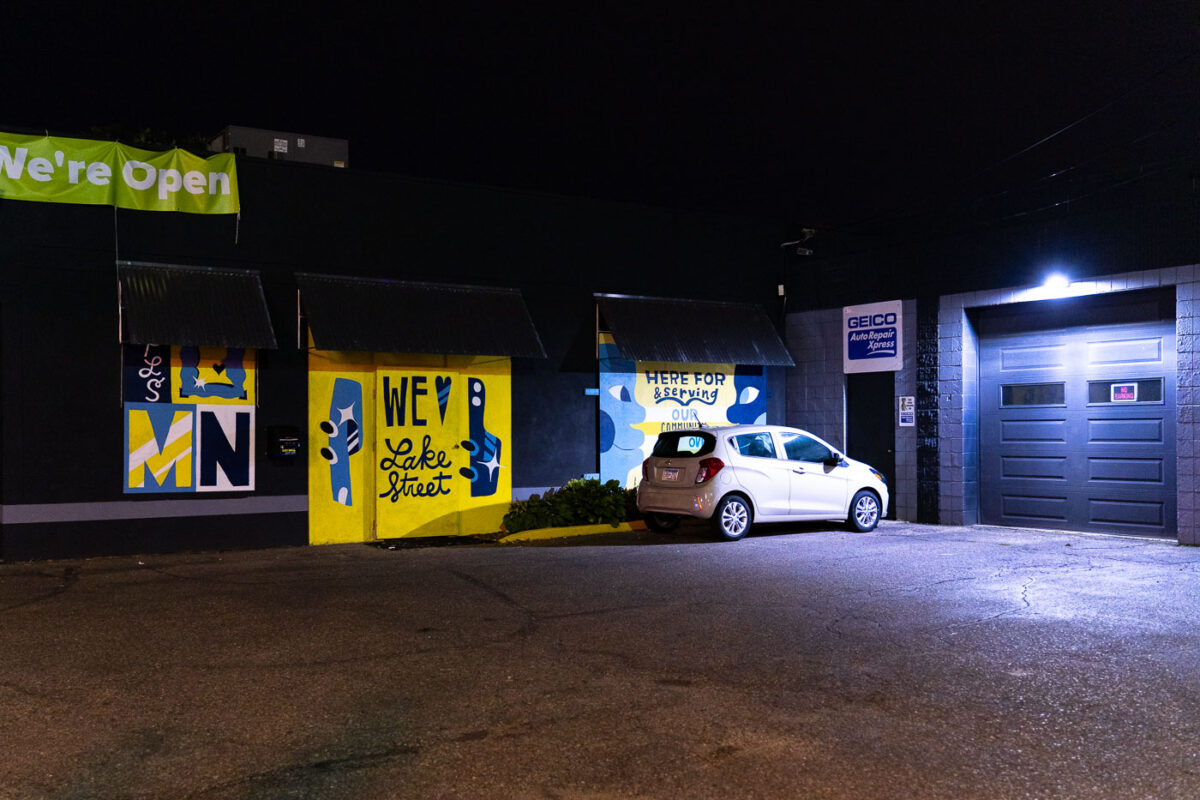
We love lake street graffiti on boards
The Master Collision auto repair shop on West Lake Street in Minneapolis features murals painted on its boarded windows. These artworks were created following the widespread unrest in May 2020, which occurred after the killing of George Floyd.

Murals on Boarded Windows, Master Collision, West Lake Street
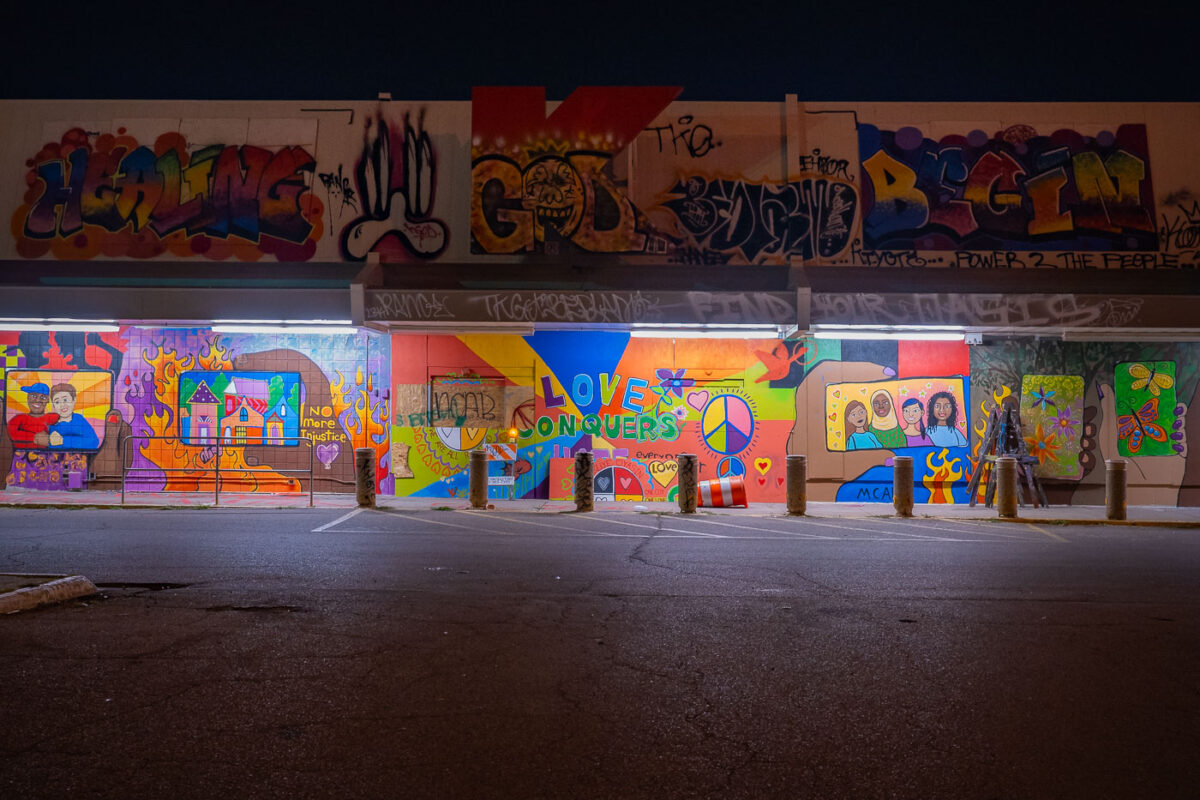
Former kmart store covered in graffiti
The former K-Mart building on Lake Street in Minneapolis was transformed into a public art installation following the murder of George Floyd in May 2020. Its boarded-up facade became a canvas for large-scale murals and graffiti. These artworks emerged during a period of widespread protest and rebuilding in the city. Subsequently, the building was repurposed to house a temporary Post Office, providing essential services after two nearby postal facilities were damaged.

K-Mart Murals & Graffiti, Lake Street, Minneapolis
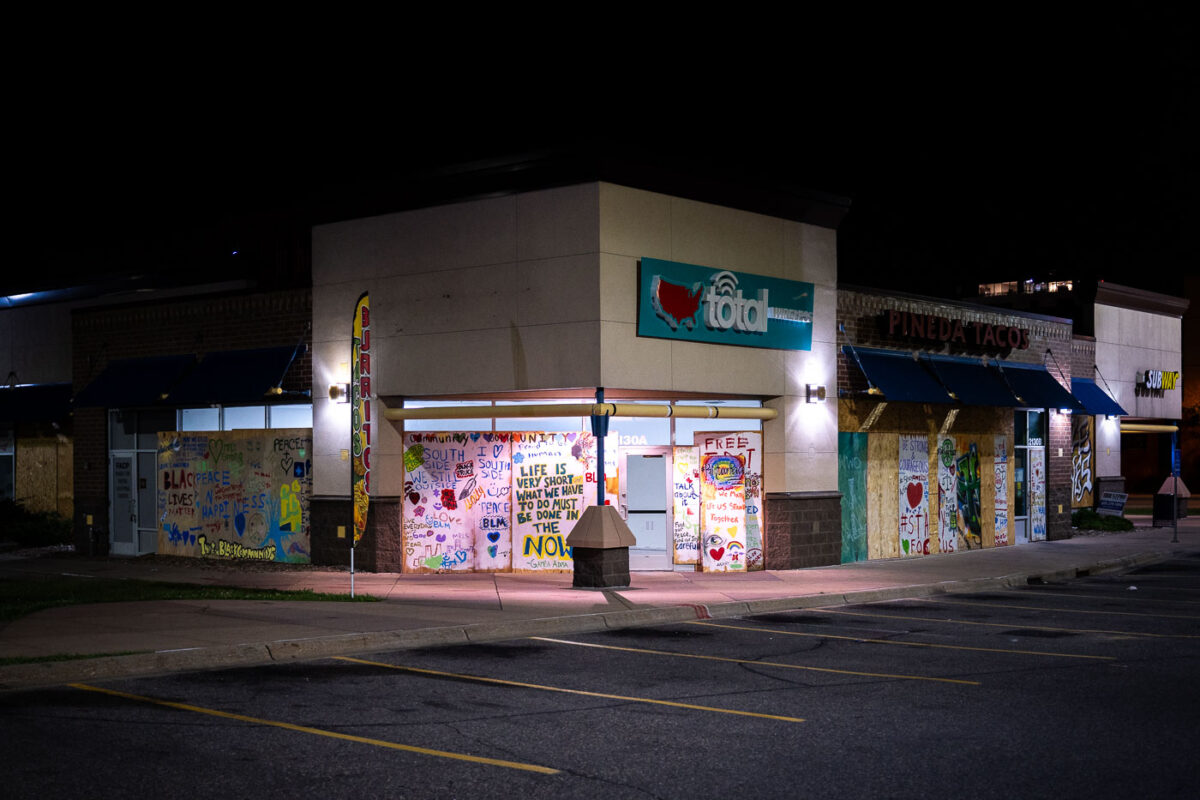
Boards on Total Wireless in South Minneapolis
Storefronts along Lake Street in Minneapolis display murals painted on protective boards. These boards were installed on businesses in August 2020, following widespread protests in Minneapolis after the May 25, 2020 death of George Floyd. The murals, created by community members and artists, transformed the temporary barriers into public canvases for messages of hope, unity, and social justice. Messages such as 'Black Lives Matter' and calls for community solidarity are visible on the boards covering businesses like Total Wireless, Pineda Tacos, and Subway.

Lake Street Storefront Murals, Minneapolis, August 2020
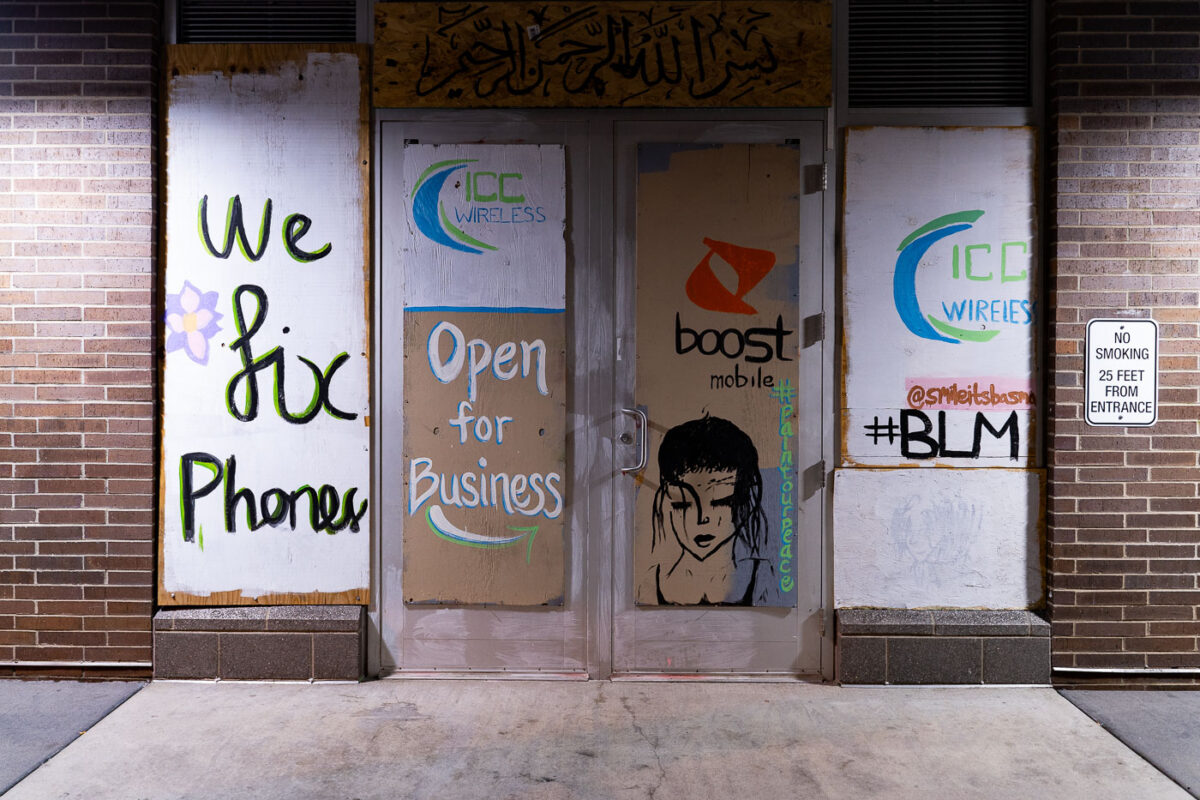
ICC Wireless open for business
The storefront of ICC Wireless Boost Mobile on Lake Street in Minneapolis is covered with plywood boards. These boards were installed for protection during the Minneapolis Uprising, a period of civil unrest following the murder of George Floyd in May 2020. Despite the protective barriers, the store declared itself "Open for Business" with painted signs, alongside other messages like "We fix Phones," and the company logos.

ICC Wireless Boost Mobile boarded storefront, Lake Street, Minneapolis
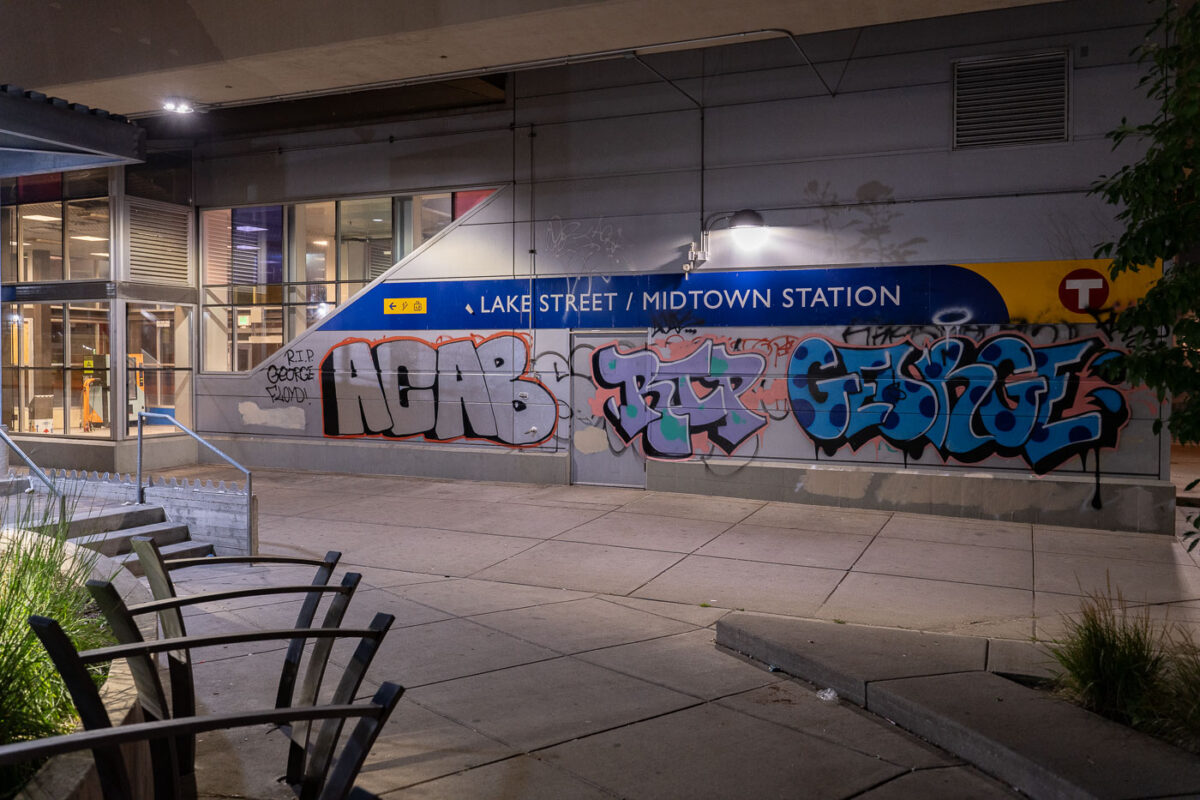
ACAB RIP GEORGE graffiti on Midtown Station
Graffiti expressing "R.I.P. George Floyd" and "ACAB" covers a wall at the Lake Street / Midtown Station in South Minneapolis.

ACAB RIP George Floyd Graffiti, Midtown Station, Minneapolis