George Floyd

925 photos · 2020–2026

925 photographs tagged George Floyd, 2020–2026.
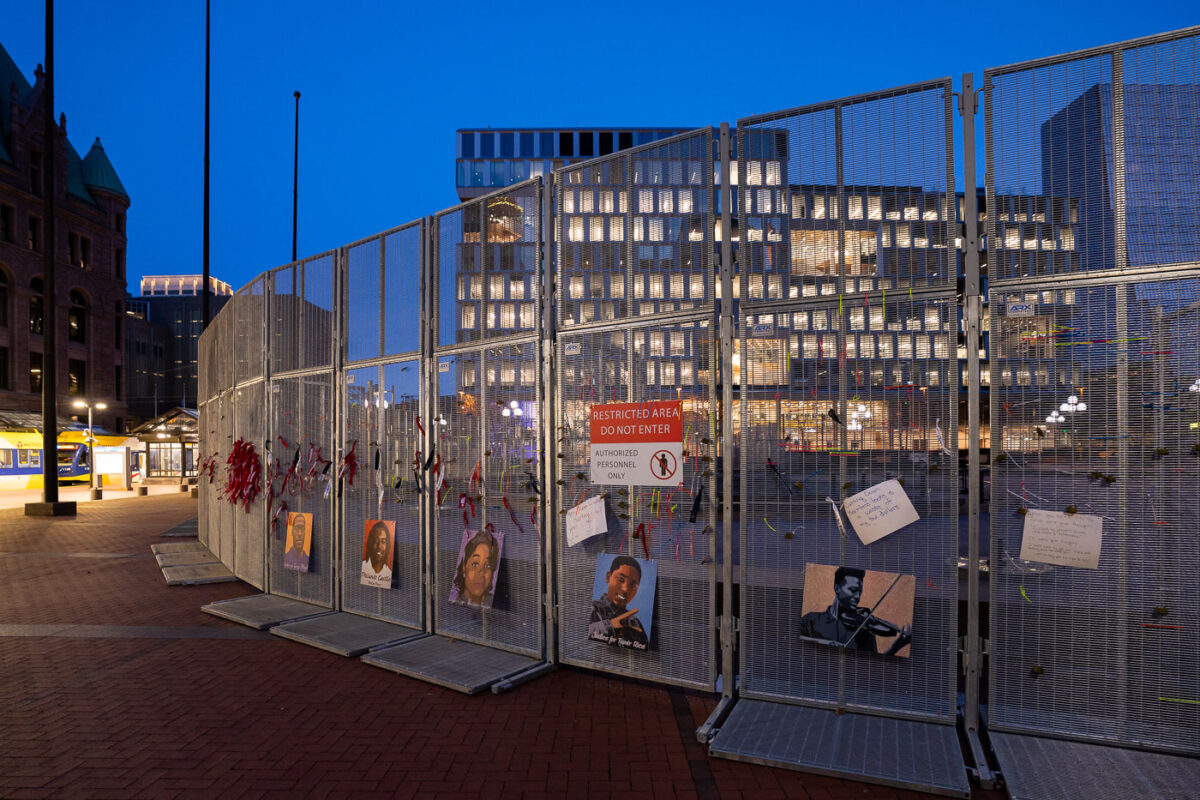
Security fencing with memorial portraits at Hennepin County Government Center in downtown Minneapolis.
Security fencing surrounds the Hennepin County Government Center in downtown Minneapolis, a site that became a focal point during the 2020 protests following the murder of George Floyd. The fencing, adorned with portraits of victims of police brutality and handwritten messages, serves as a memorial and a barrier. It reflects the heightened security measures and the community's response to racial injustice and police violence that characterized the period.

Hennepin County Government Center Fencing with Memorials
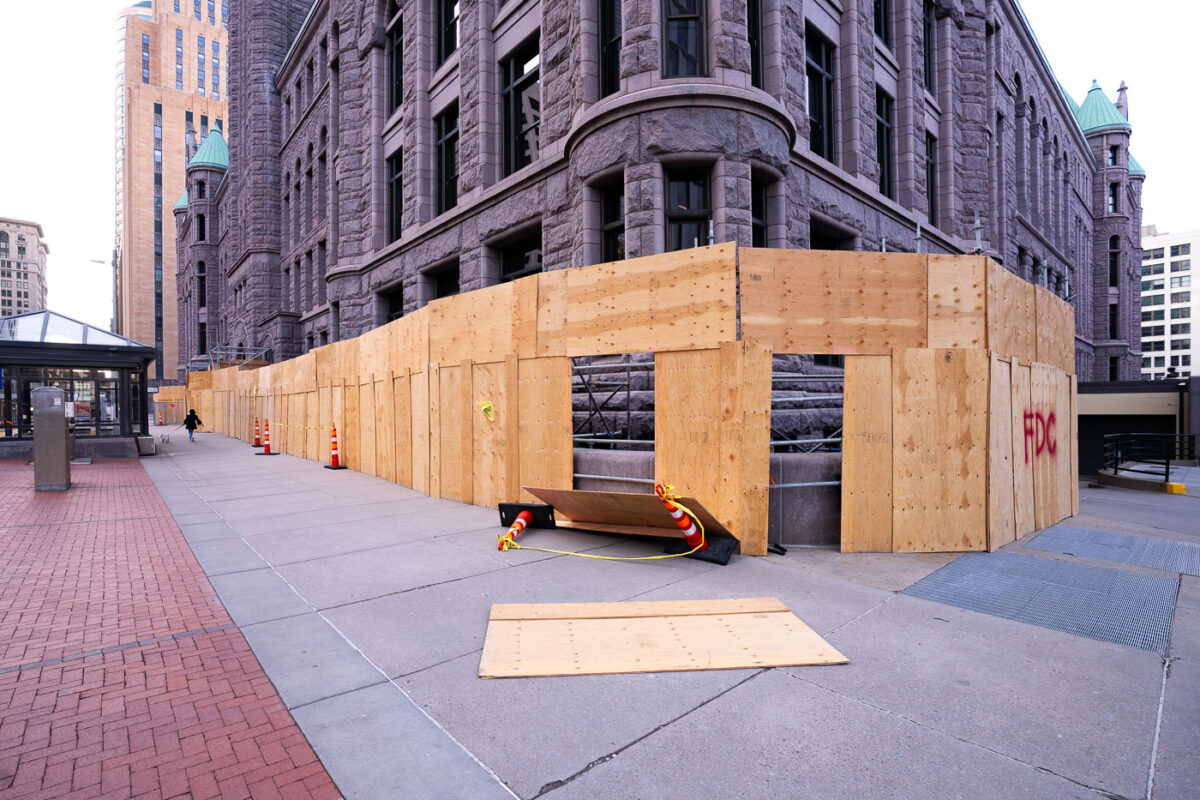
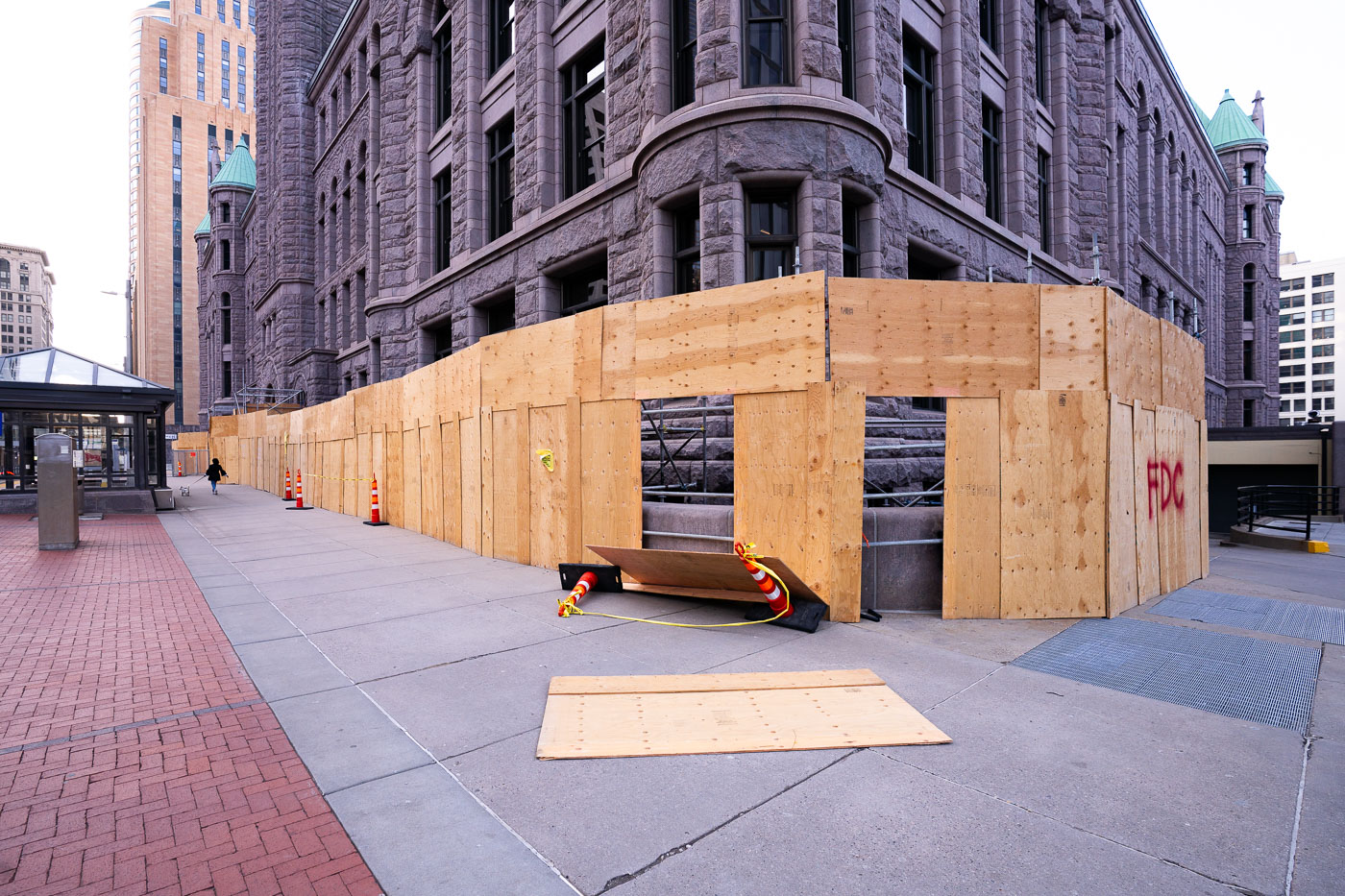
Plywood boarding surrounds Minneapolis City Hall's entrance following wind damage to the historic downtown building.
Minneapolis City Hall, a Beaux-Arts style building completed in 1909, is seen here boarded up following damage from heavy winds.

Plywood Barricades Surround Minneapolis City Hall
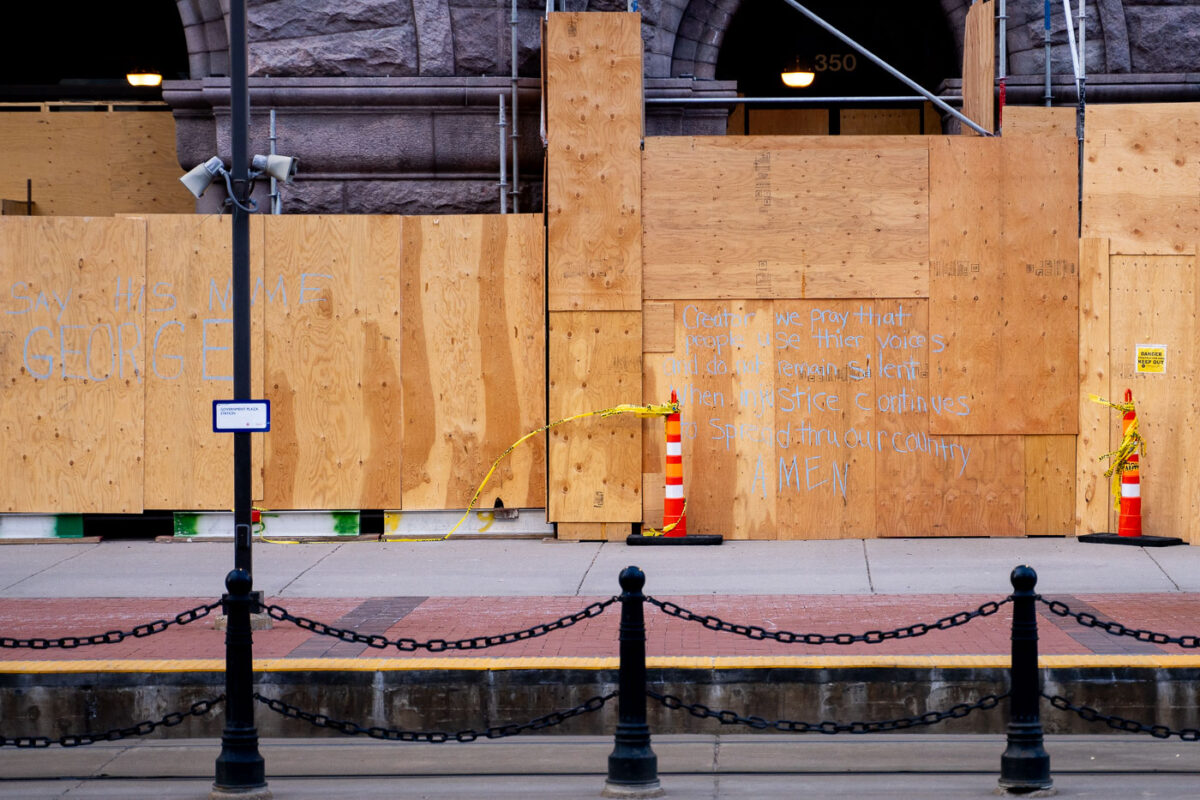
Boarded plywood covering Minneapolis City Hall's facade displays blue spray-painted text and messages during April 2021.
Minneapolis City Hall, a historic Beaux-Arts building completed in 1909, was boarded up during the 2021 murder trial of Derek Chauvin.

“Say His Name” Graffiti on Boarded Windows at Minneapolis City Hall
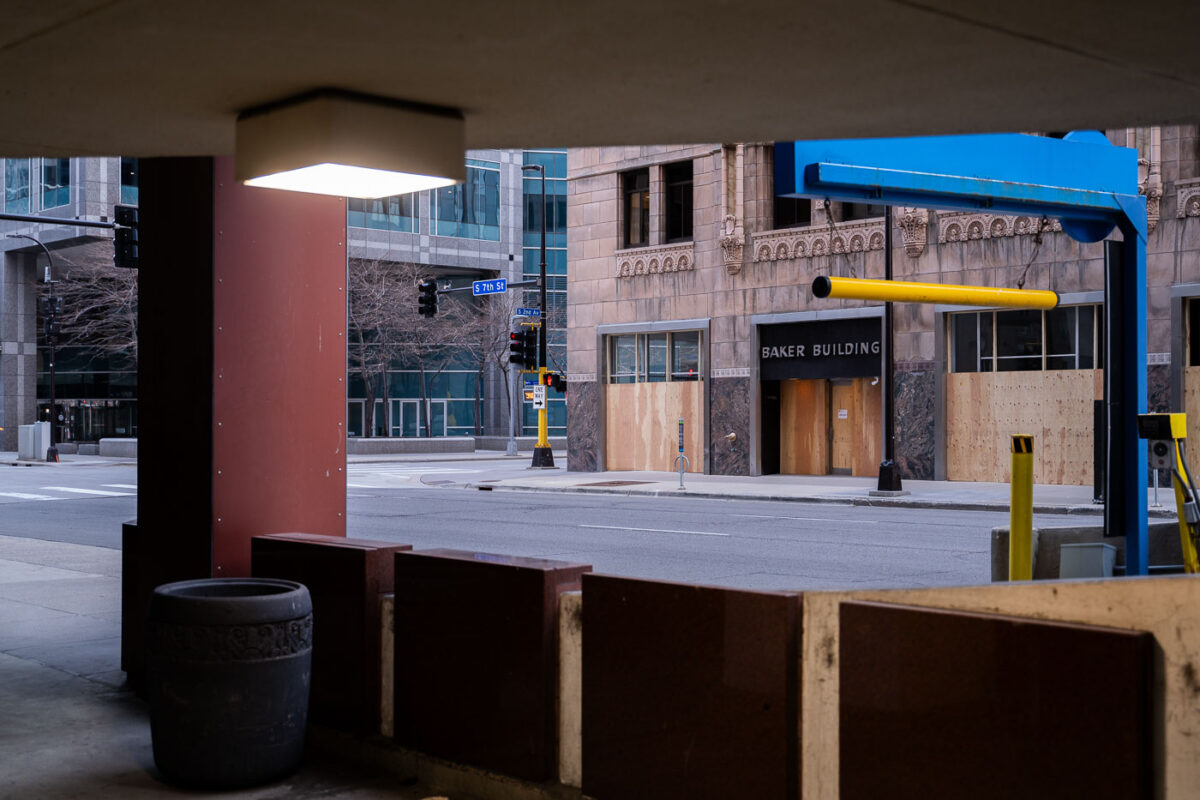
Baker Building in downtown Minneapolis with boarded-up entrances during Chauvin trial security preparations.
Baker Building, downtown Minneapolis. The building was boarded up during security preparations tied to the Derek Chauvin murder trial.

Baker Building Boarded Entrance, Minneapolis
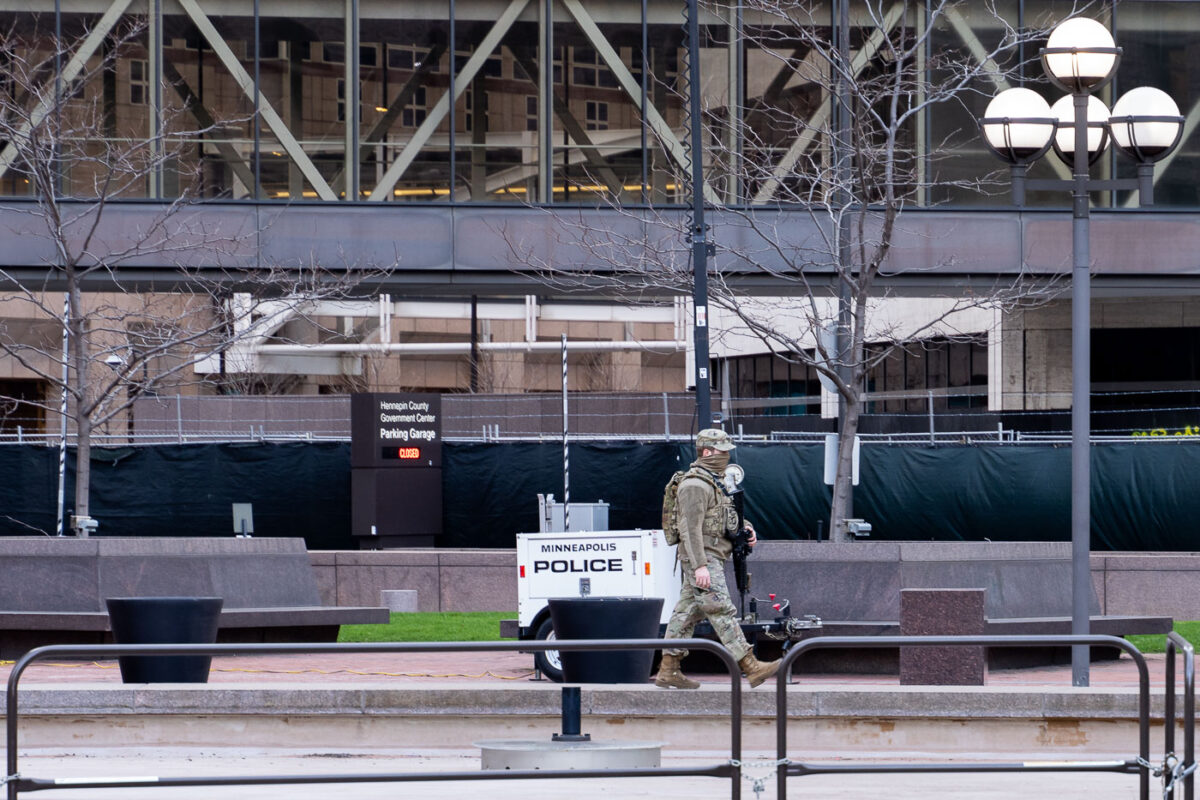
National Guard member outside Hennepin County Government Center in Minneapolis during the Chauvin trial.
Minnesota National Guard members were deployed to secure the Hennepin County Government Center in Minneapolis during the trial of Derek Chauvin for the murder of George Floyd in 2021. The courthouse complex, a significant civic structure in downtown Minneapolis, was surrounded by enhanced security measures, including fencing and visible patrols, to maintain order and prevent disruptions. This deployment underscored the heightened tensions and the national significance of the trial, which followed widespread protests against police brutality.

National Guard Patrols Outside Hennepin County Courthouse During Chauvin Trial
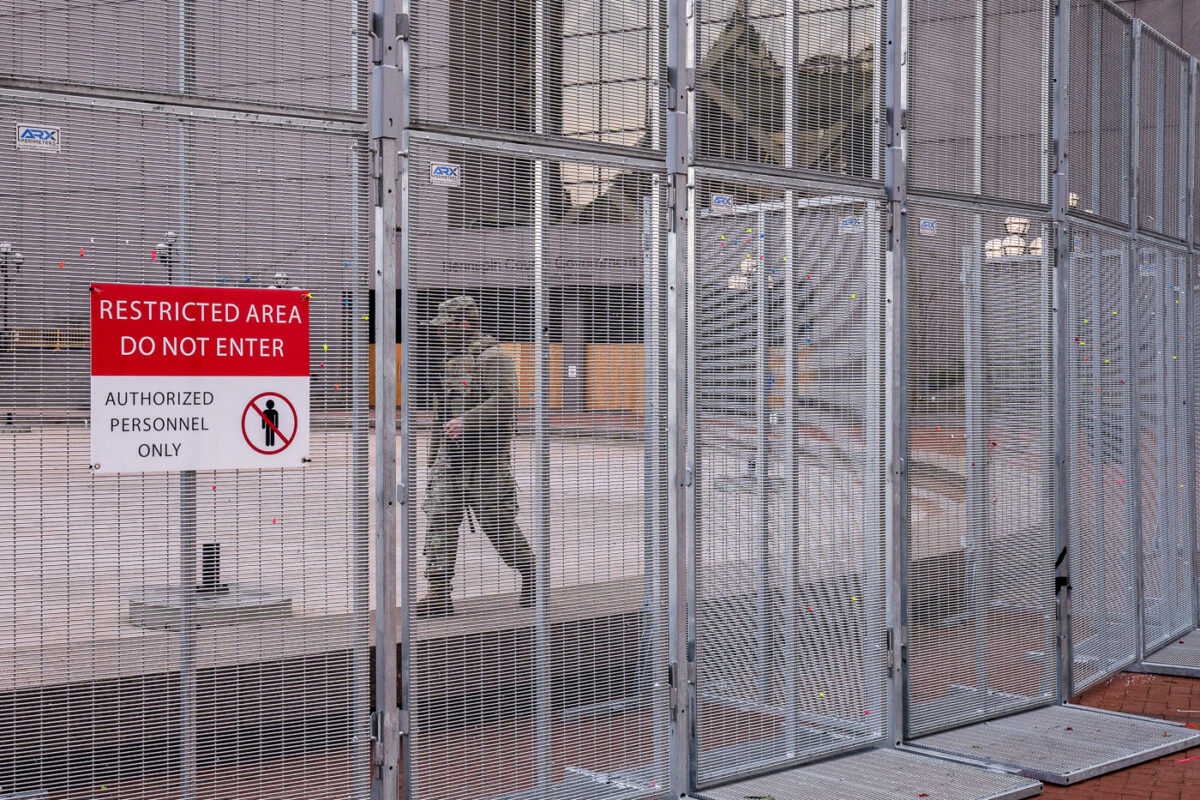
National Guard patrol behind security fencing at Hennepin County Government Center in Minneapolis.
National Guard members patrolled the perimeter of the Hennepin County Government Center in Minneapolis during the 2021 murder trial of Derek Chauvin. The trial, which followed the death of George Floyd, drew significant public attention and necessitated heightened security measures. Temporary fencing was erected around the government center to control access and ensure the safety of the building and its occupants. The presence of the National Guard underscored the tense atmosphere and the potential for civil unrest during this period.

National Guard patrols Hennepin County Government Center during Chauvin trial
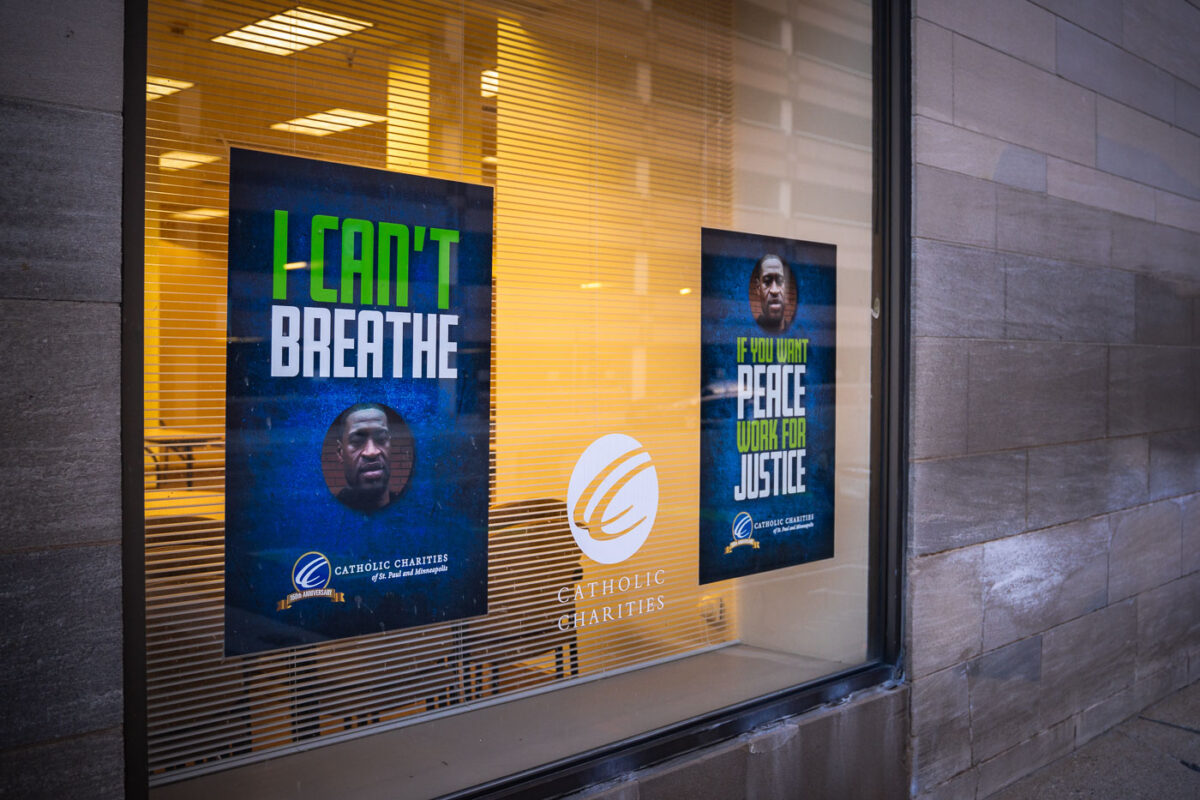
George Floyd posters in a Catholic Charities window in Minneapolis.
Posters displayed in the window of Catholic Charities of St. Paul and Minneapolis reflect the widespread sentiment following the murder of George Floyd. One poster reads "I CAN'T BREATHE," a direct reference to Floyd's final words and the circumstances of his death. Another poster states, "IF YOU WANT PEACE WORK FOR JUSTICE," urging action and systemic change. These signs appeared during the period of unrest in Minneapolis in 2020, a time of significant public outcry and protest against racial injustice and police brutality.

Catholic Charities Minneapolis: George Floyd Signs
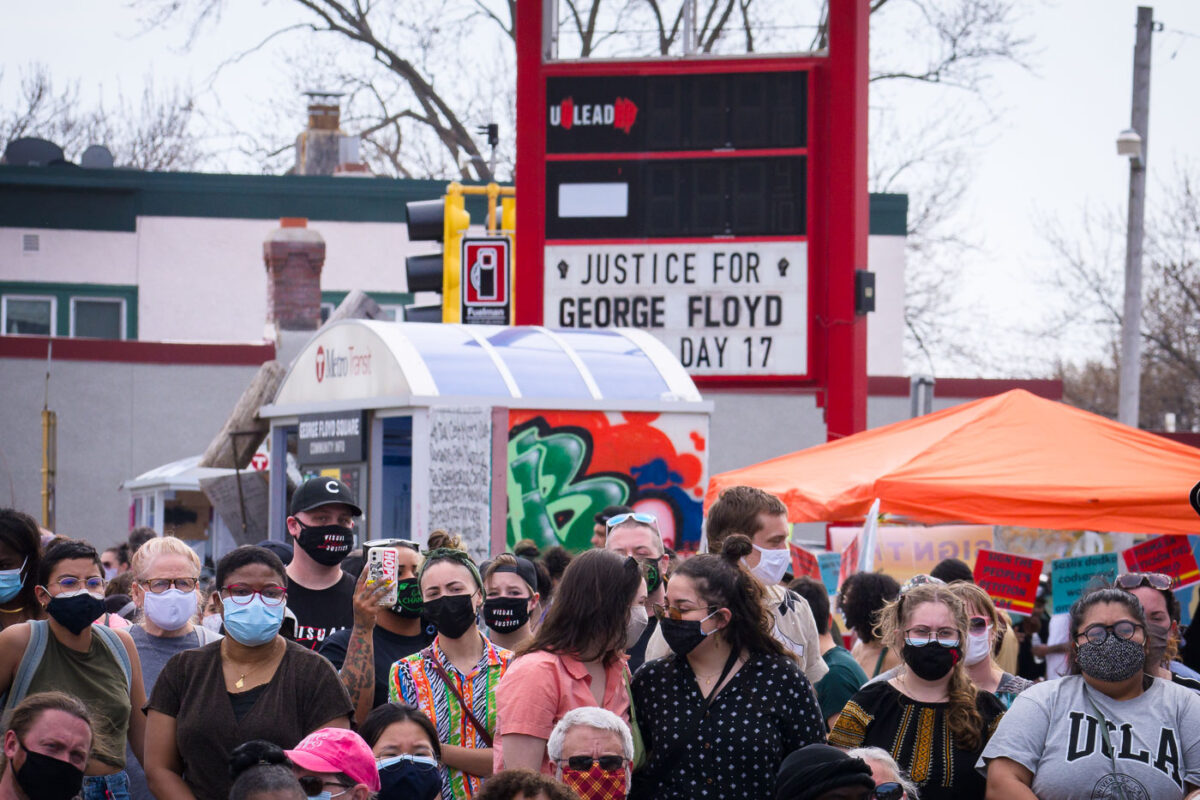
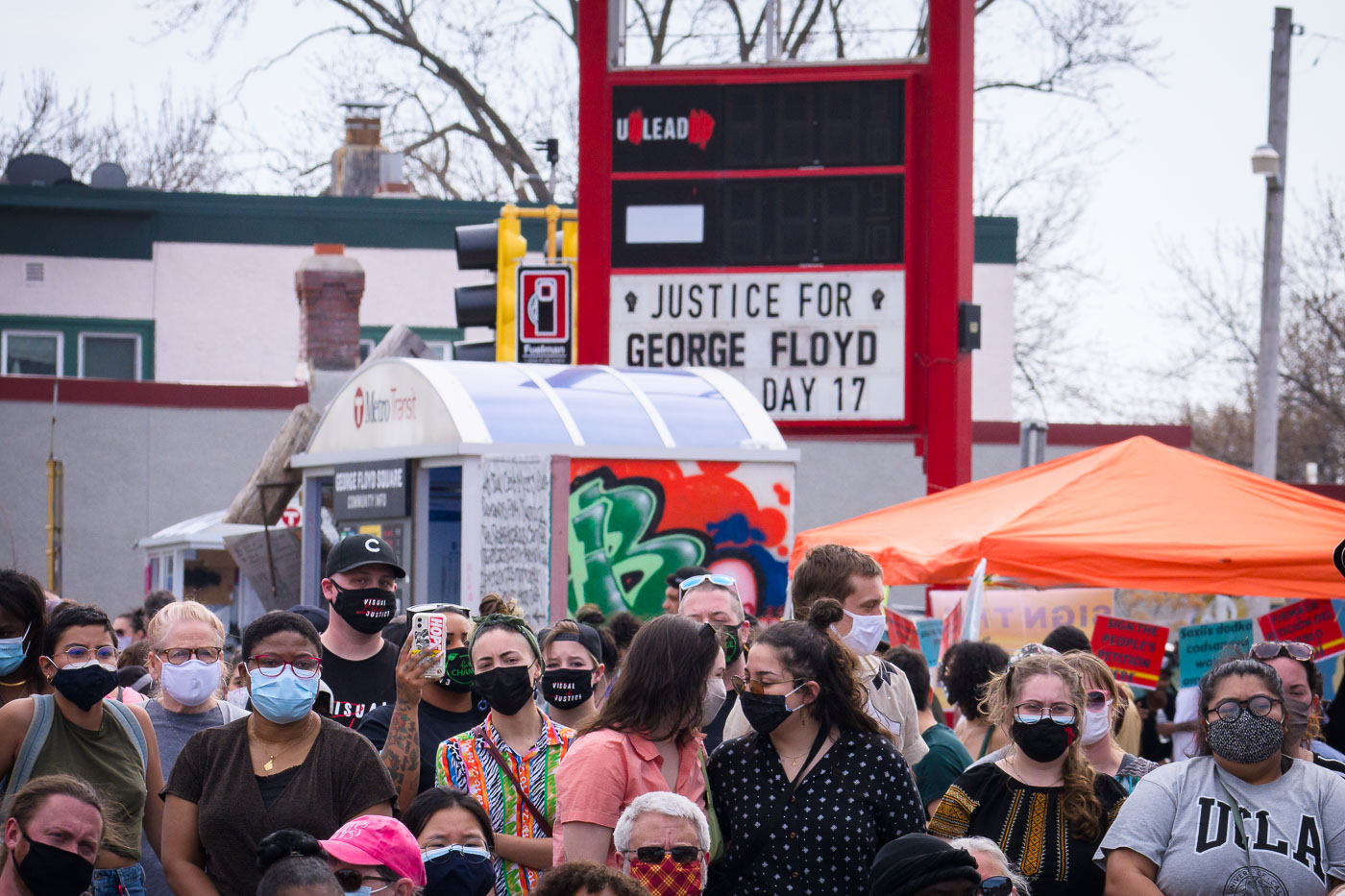
Protesters at George Floyd Square in Minneapolis beneath a Justice for George Floyd Day 17 sign.
Protesters gather at George Floyd Square in Minneapolis in April 2021, marking the 17th day of demonstrations following the murder of George Floyd. This intersection, formerly known as the intersection of 38th Street and Chicago Avenue, became a focal point for racial justice protests and a symbol of community resistance. The square was established by activists and residents in the days following Floyd's death on May 25, 2020, and remained a site of ongoing activism and community organizing.

George Floyd Square Protest, Minneapolis, April 2021
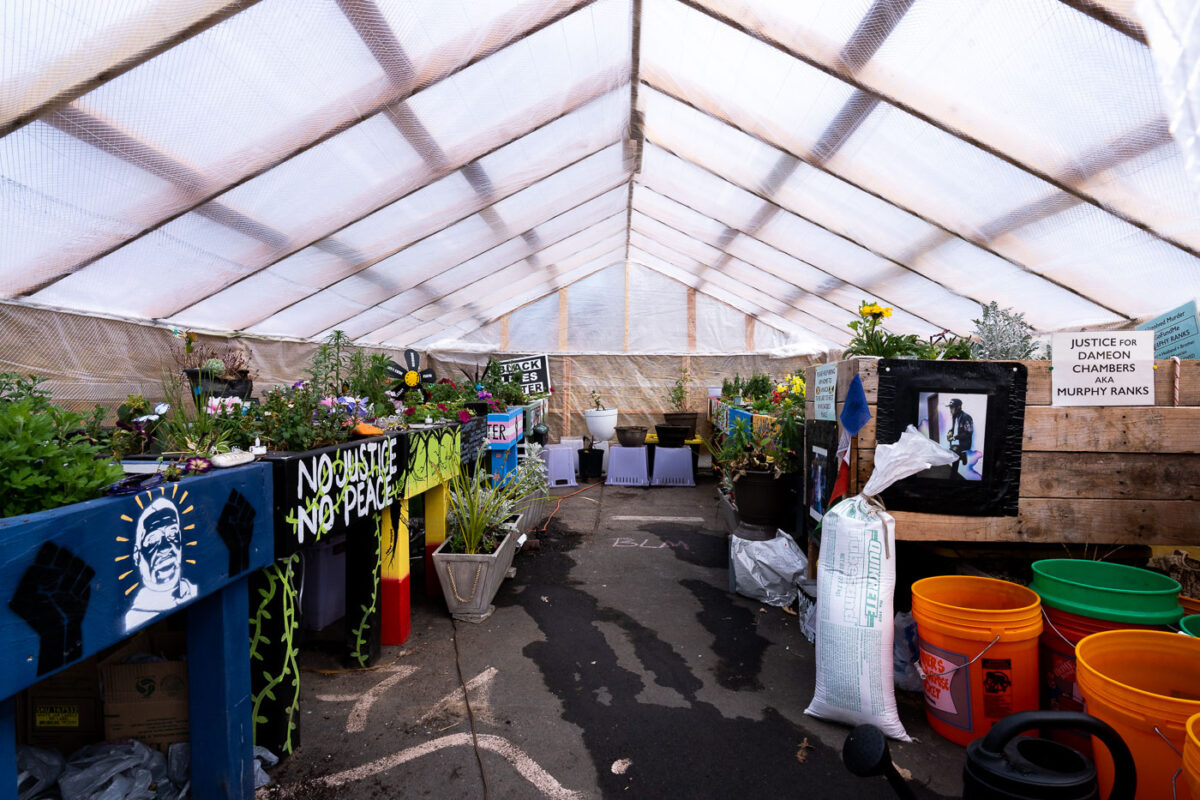
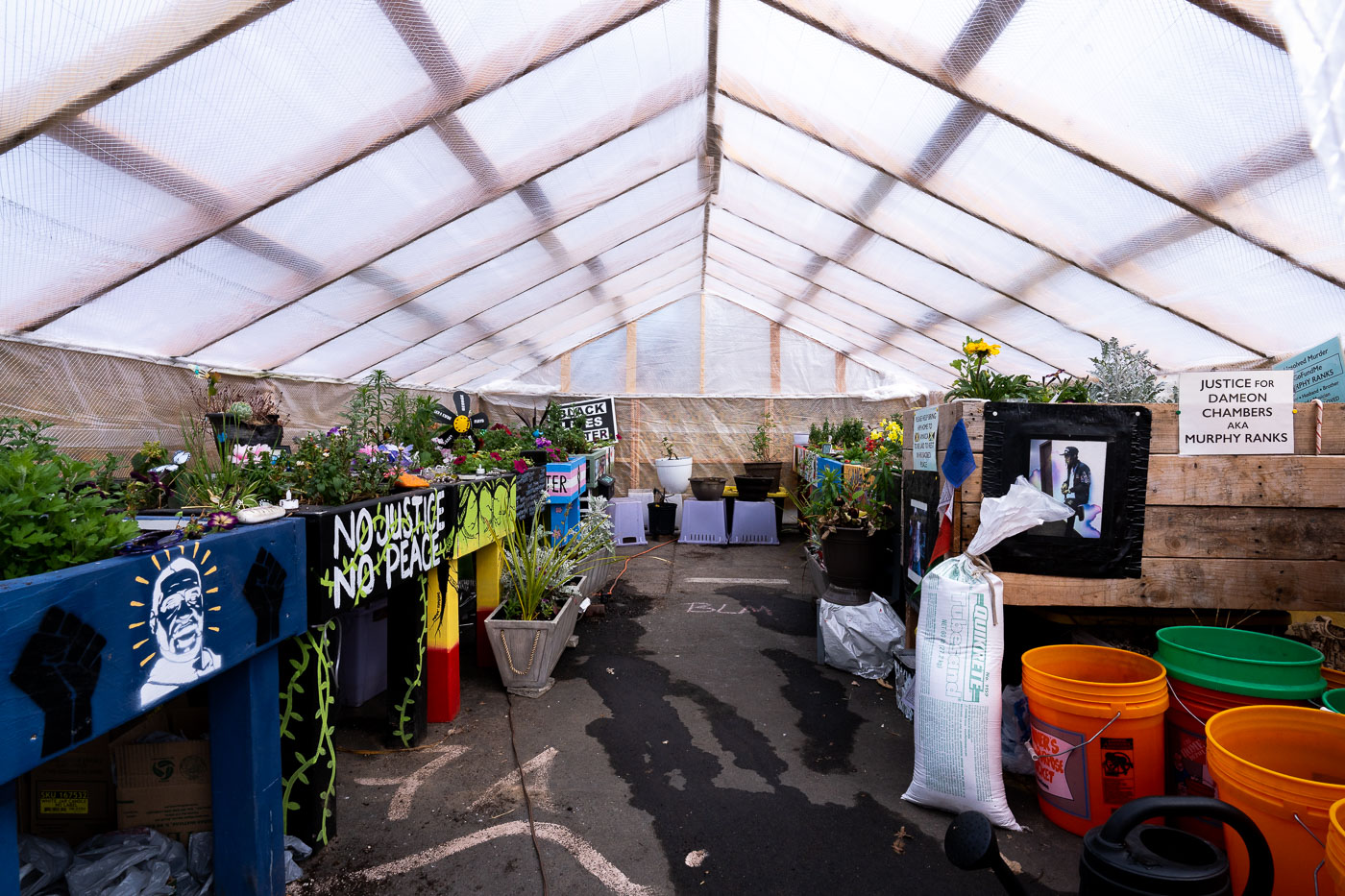
Greenhouse at George Floyd Square in Minneapolis with memorial signs and painted planters.
This greenhouse at George Floyd Square in Minneapolis served as a protected space for plants during the winter months, following the memorialization of George Floyd. The structure, adorned with tributes and artwork, including references to "No Justice No Peace" and "Black Lives Matter," reflects the ongoing significance of the square as a site of protest and remembrance. The plants, now brought back into the square, symbolize resilience and continued growth amidst the historical context of racial justice activism.

Greenhouse at George Floyd Square, Minneapolis
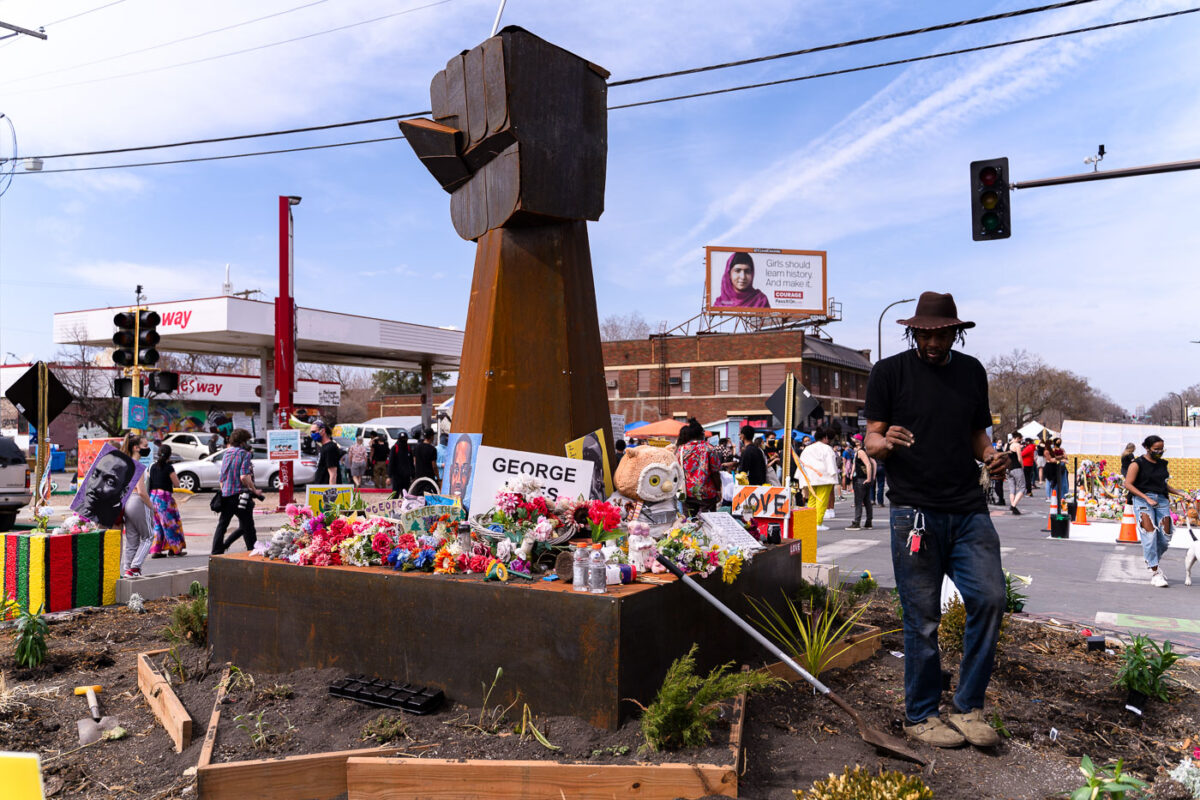
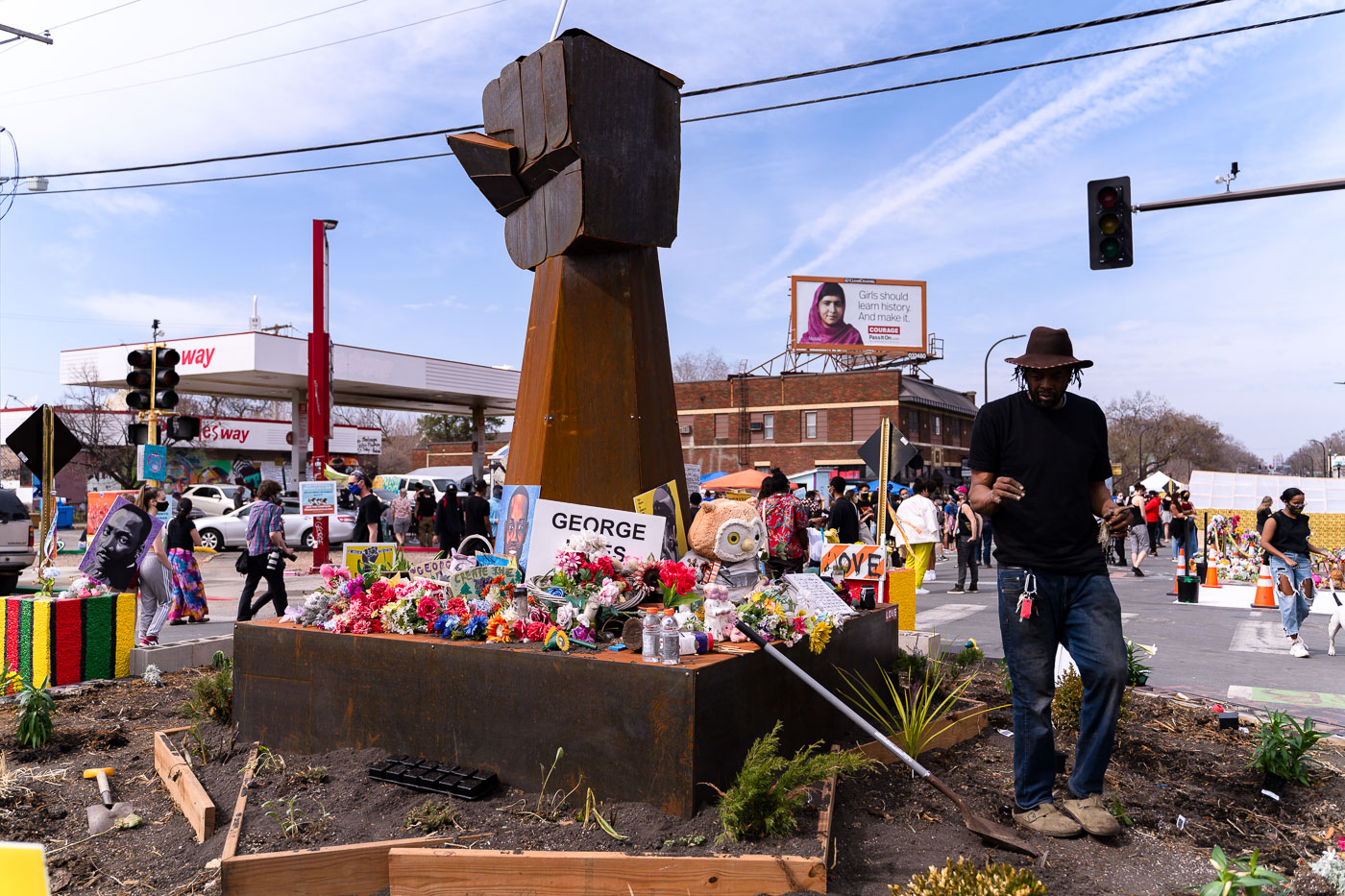
George Floyd memorial garden at George Floyd Square in Minneapolis with floral tributes and raised-fist sculpture.
The George Floyd Square Memorial Garden in Minneapolis is a space dedicated to the memory of George Floyd, who died in police custody in May 2020. The square, located at the intersection of 38th Street and Chicago Avenue, became a focal point for protests against racial injustice and police brutality following Floyd's murder. This memorial garden, with its central sculpture and surrounding floral tributes, serves as a place of remembrance, reflection, and ongoing community engagement. It represents the community's efforts to transform a site of tragedy into a space of healing and activism.

George Floyd Square Memorial Garden, Minneapolis
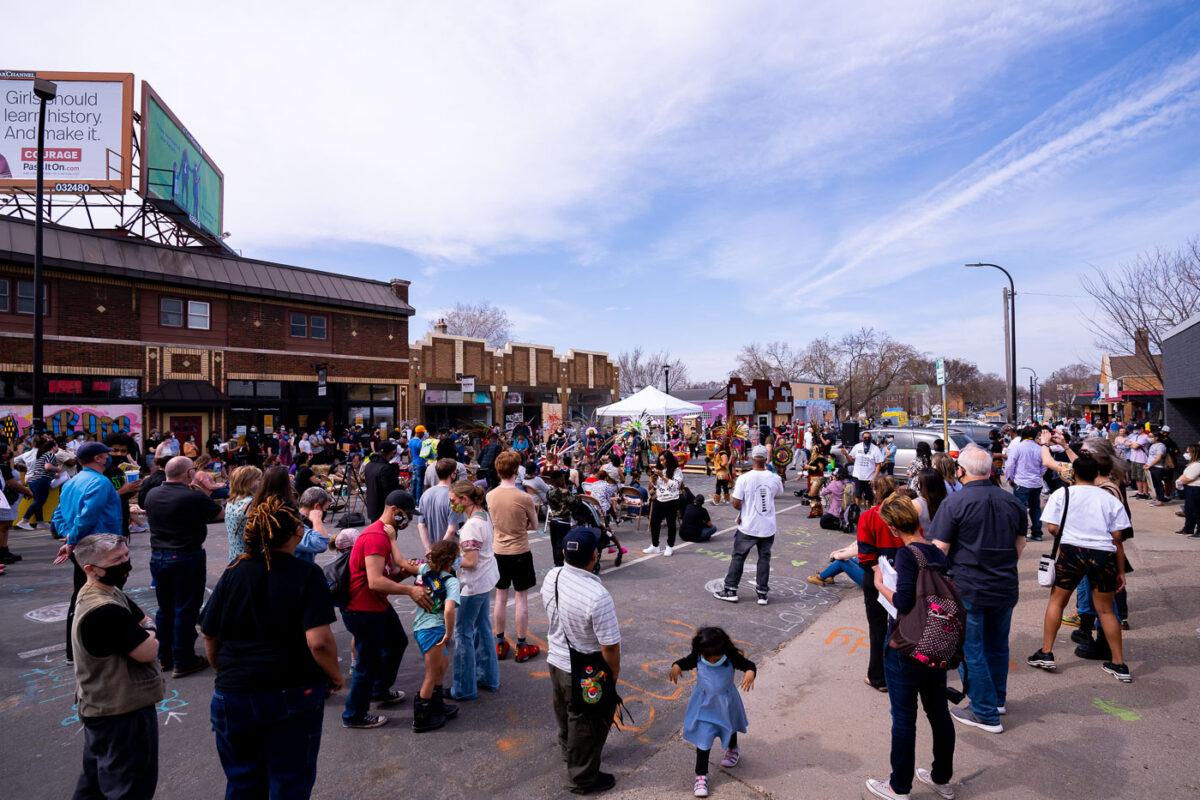
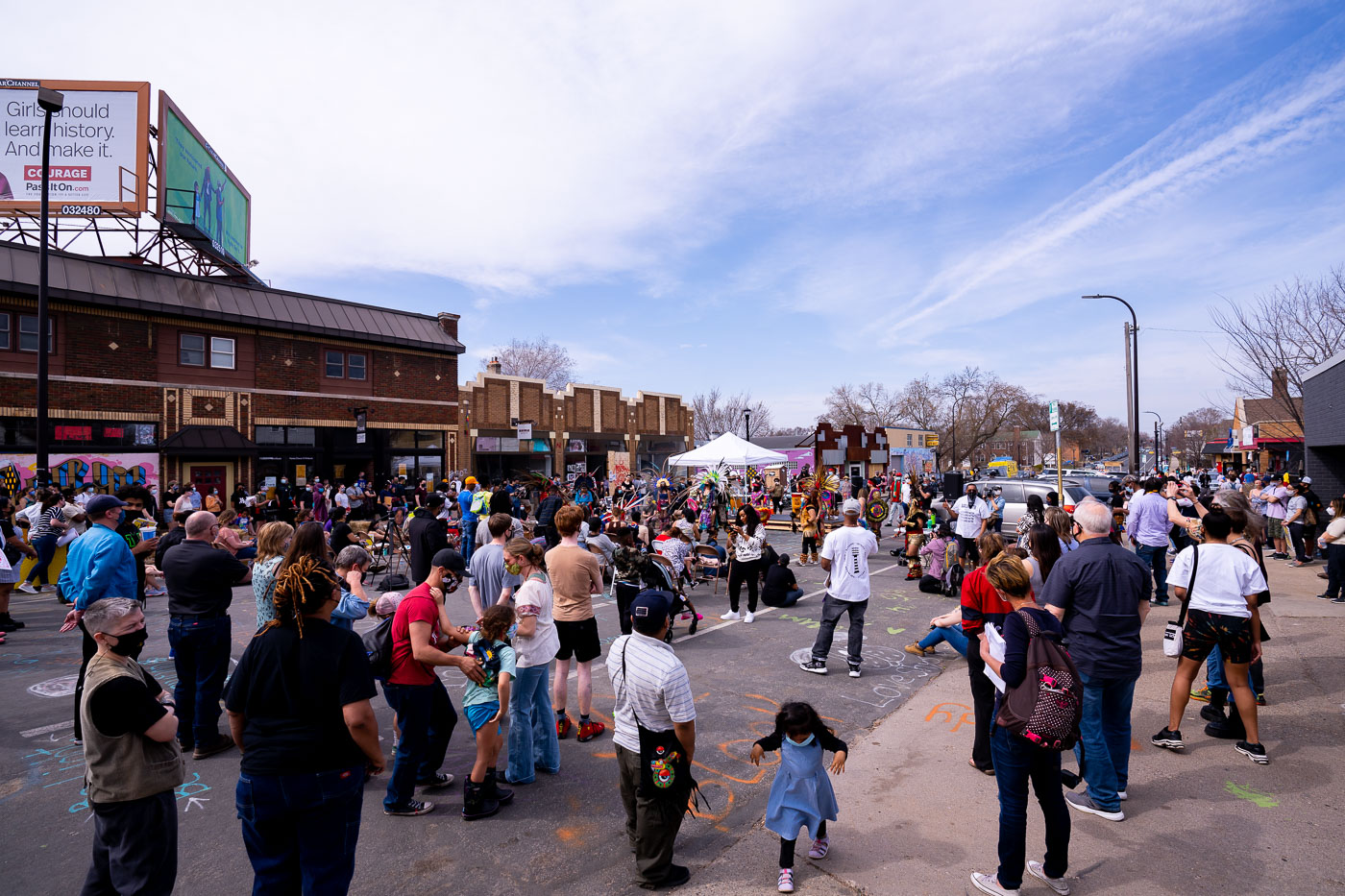
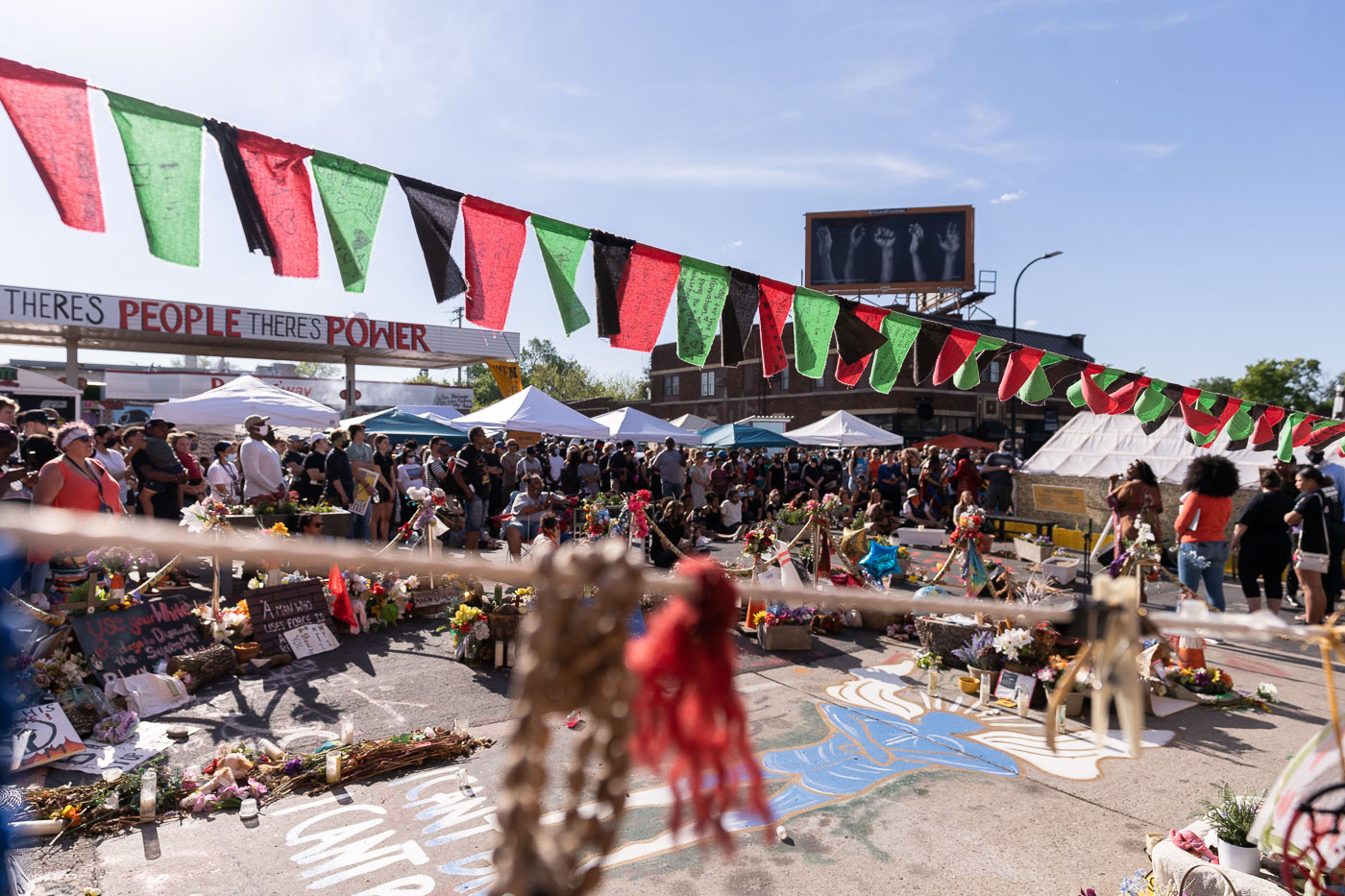
Crowd at George Floyd Square in Minneapolis during the Peoples Power Love Fest.
The Peoples Power Love Fest, a community gathering, took place at George Floyd Square in Minneapolis. This location, formerly known as the intersection of 38th Street and Chicago Avenue, became a focal point for protests and activism following the murder of George Floyd in May 2020. The square has since transformed into a space for remembrance, community organizing, and cultural expression, reflecting the ongoing impact of the uprising and calls for racial justice. The festival itself featured music, performances, and community engagement, underscoring the square's continued significance as a hub for social and political dialogue.

Peoples Power Love Fest at George Floyd Square, Minneapolis
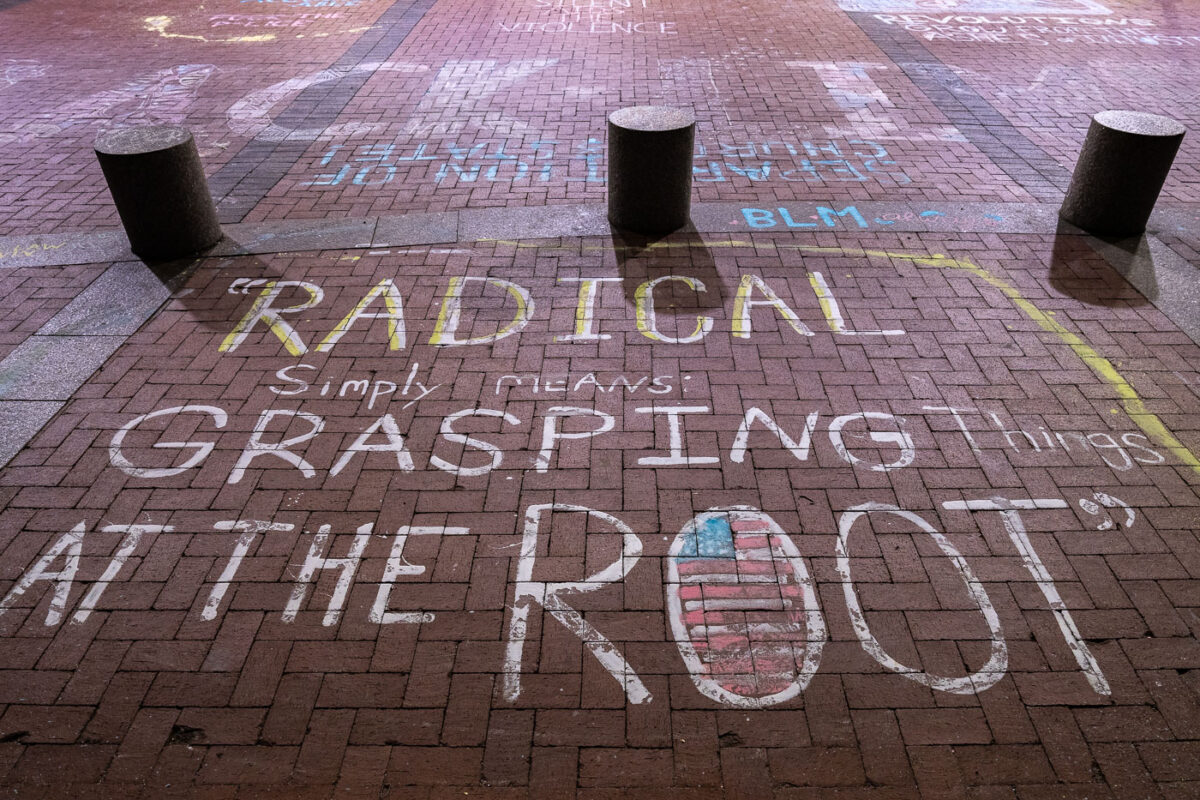
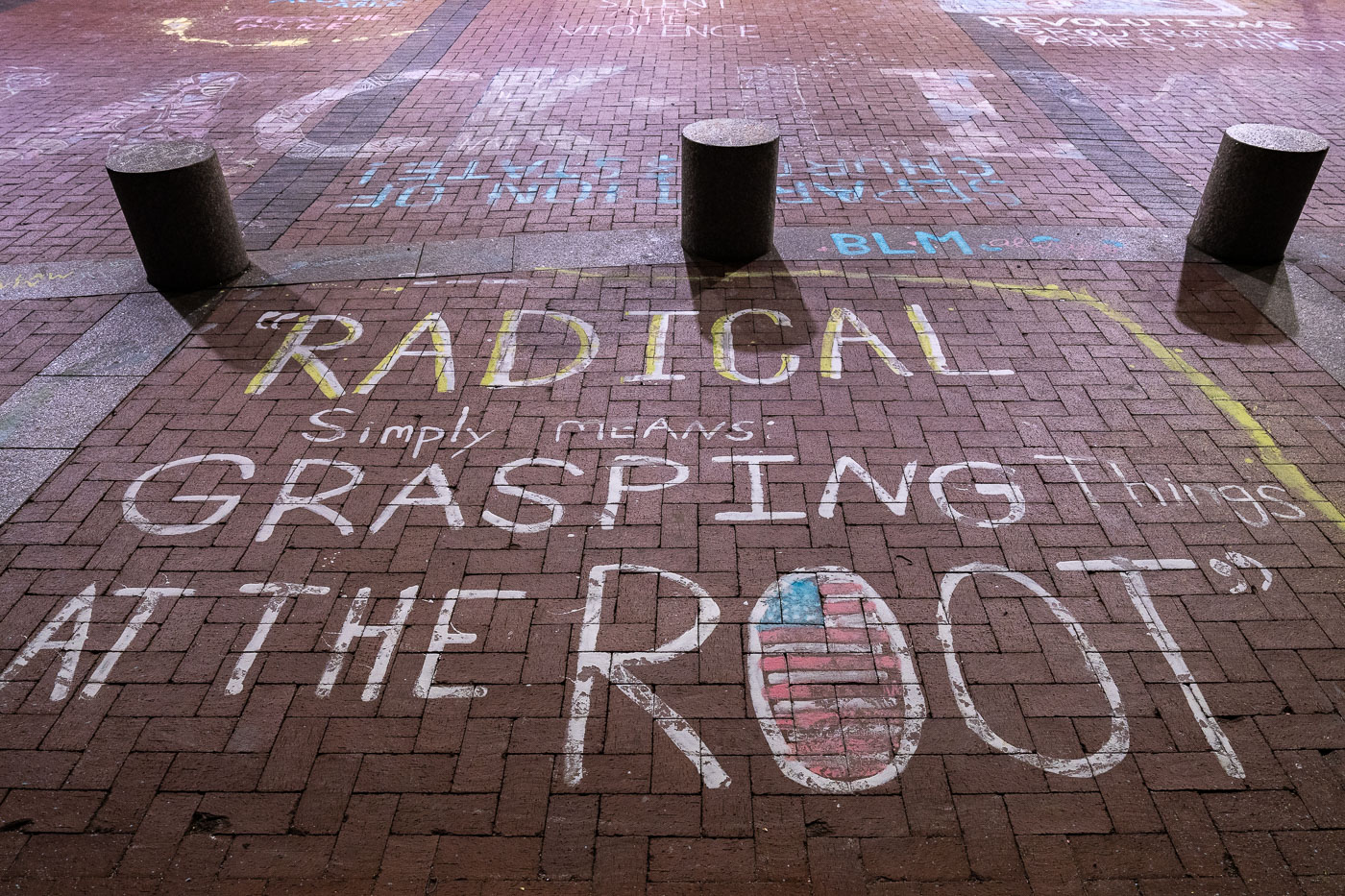
Chalk protest messages outside Hennepin County Government Center in Minneapolis, including “Radical” and “BLM.”
Chalk messages, including "RADICAL SIMPLY MEANS: GRASPING THINGS AT THE ROOT" and "BLM," adorn the plaza outside the Hennepin County Government Center in Minneapolis. This occurred during the period when the courthouse was the site of the Derek Chauvin murder trial. Chauvin was charged in the death of George Floyd on May 25, 2020, in South Minneapolis, an event that sparked widespread protests and a reckoning with racial injustice.

Chalk message outside Hennepin County Government Center, Minneapolis
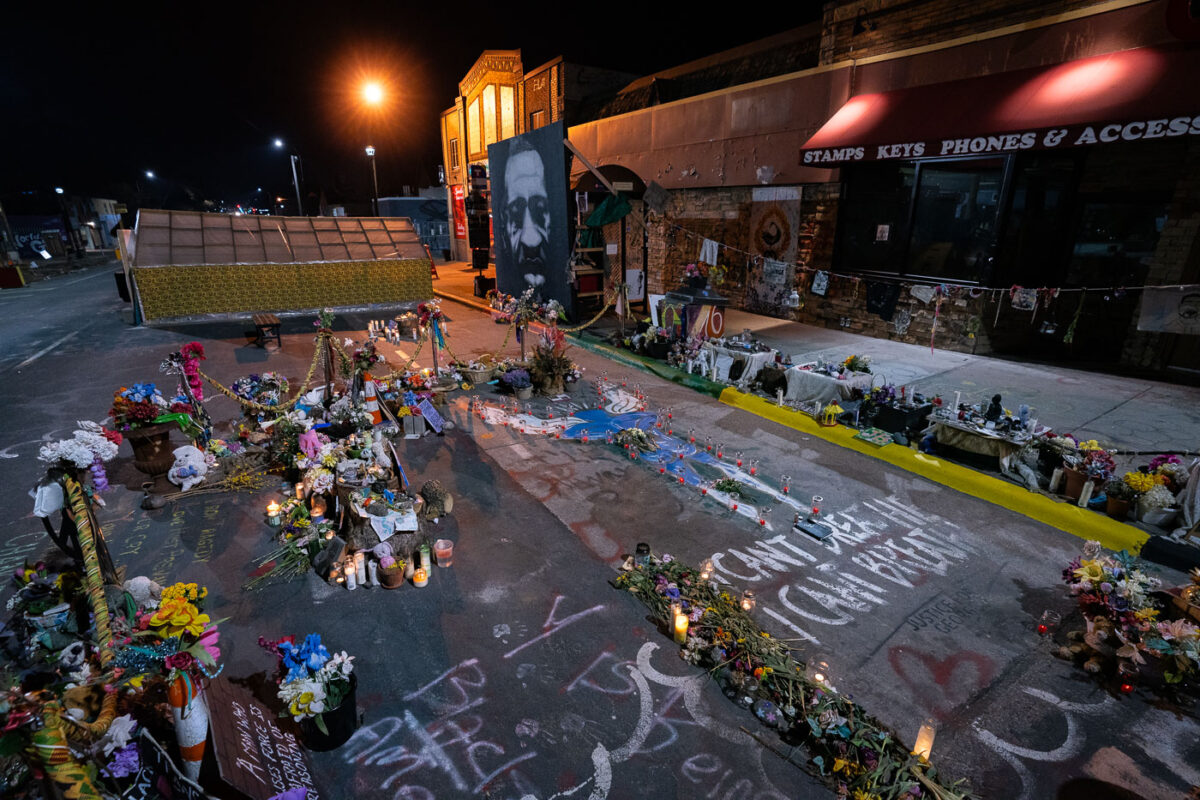
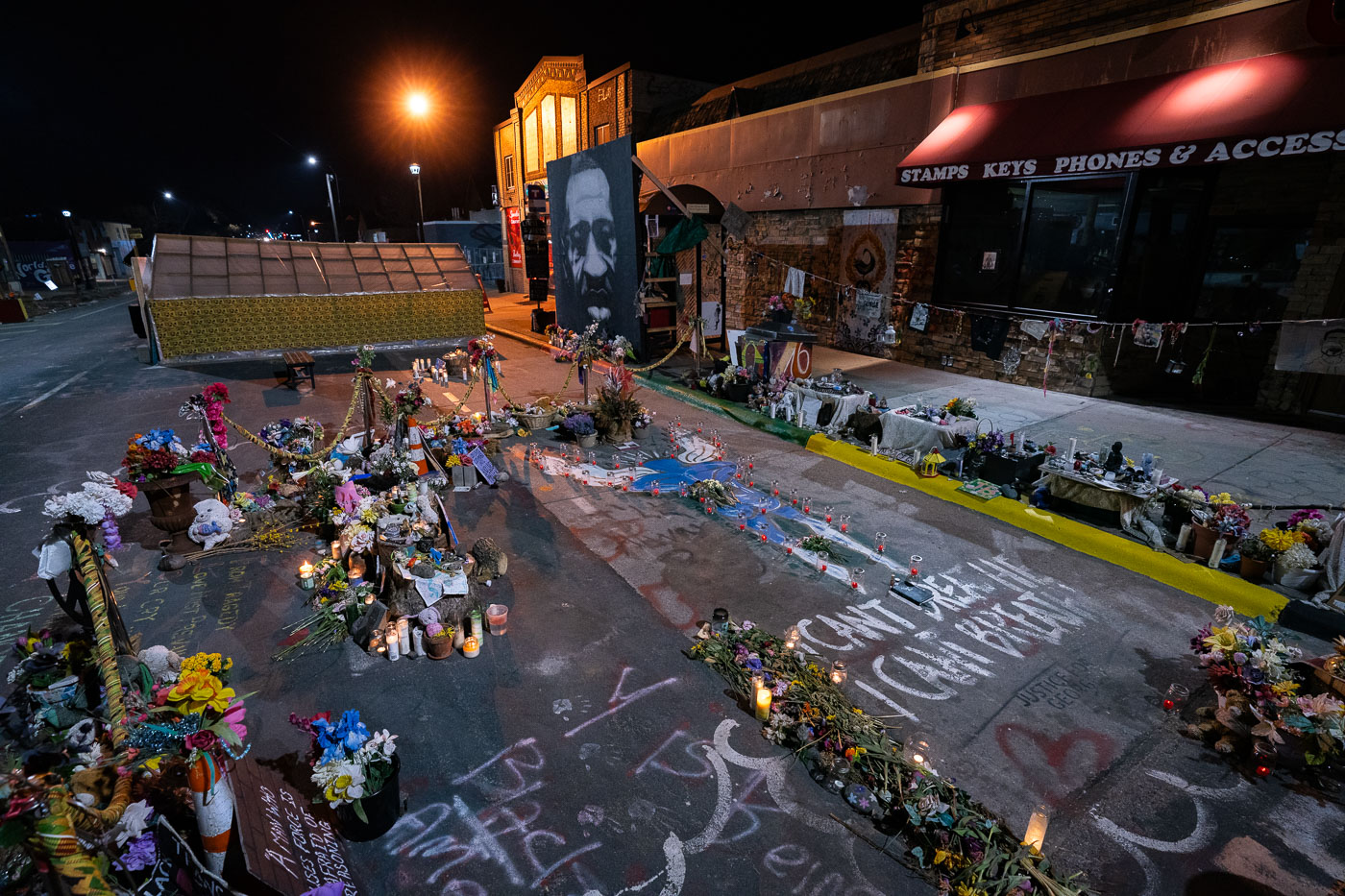
George Floyd Square memorial in Minneapolis with tributes and street messages at night.
George Floyd Square in Minneapolis, April 2021, is a memorial site established following the murder of George Floyd by police on May 25, 2020. The intersection, formerly known as the intersection of 38th Street and Chicago Avenue, became a focal point for protests against racial injustice and police brutality. The memorial features numerous tributes, including flowers, candles, artwork, and messages written on the pavement, such as "I Can't Breathe." This site served as a space for community remembrance and continued activism in the months following Floyd's death.

George Floyd Square Memorial, Minneapolis, April 2021
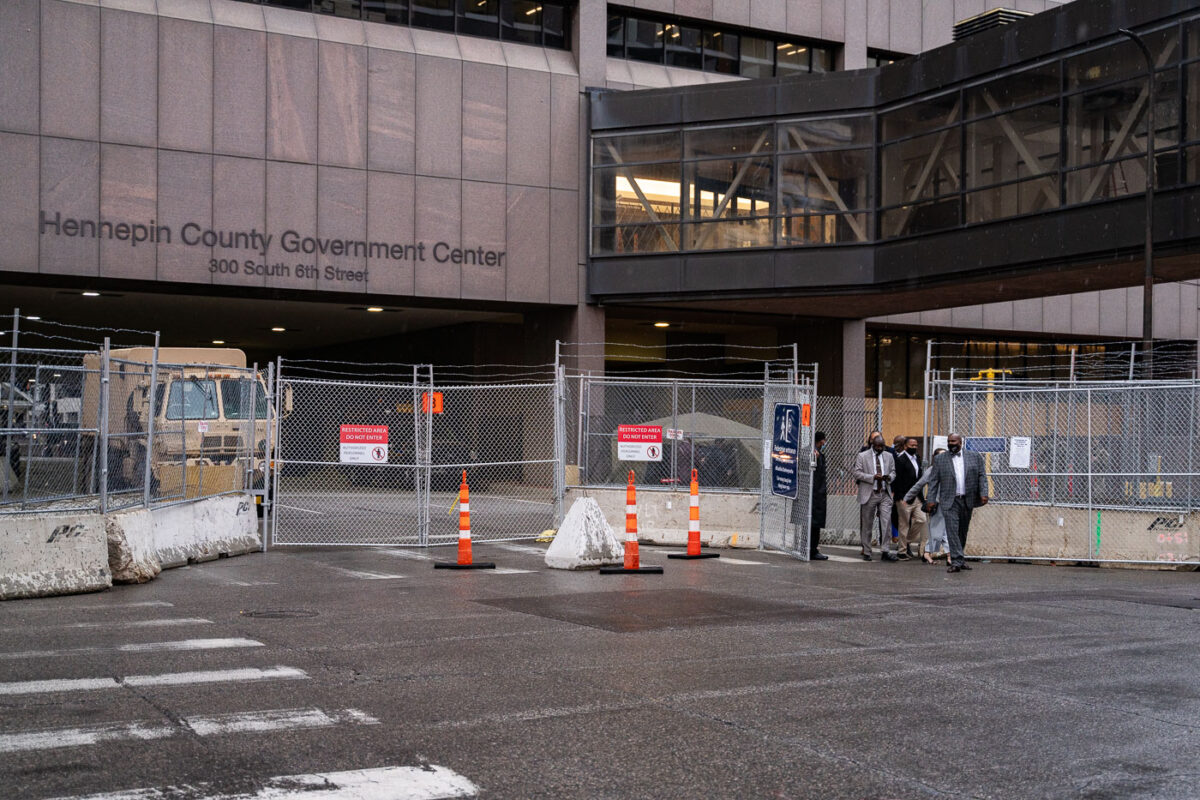
George Floyd's family leaving Hennepin County Government Center in Minneapolis past security fencing.
George Floyd's family departs the Hennepin County Government Center in downtown Minneapolis. The building, located at 300 South 6th Street, serves as a central hub for county administration and judicial proceedings. Its presence in the downtown core underscores its role in the civic life of Minneapolis. The security measures visible, including fencing and barricades, reflect the heightened tensions and public attention surrounding the Derek Chauvin trial, which was held within this government center.

George Floyd Family Departs Hennepin County Government Center
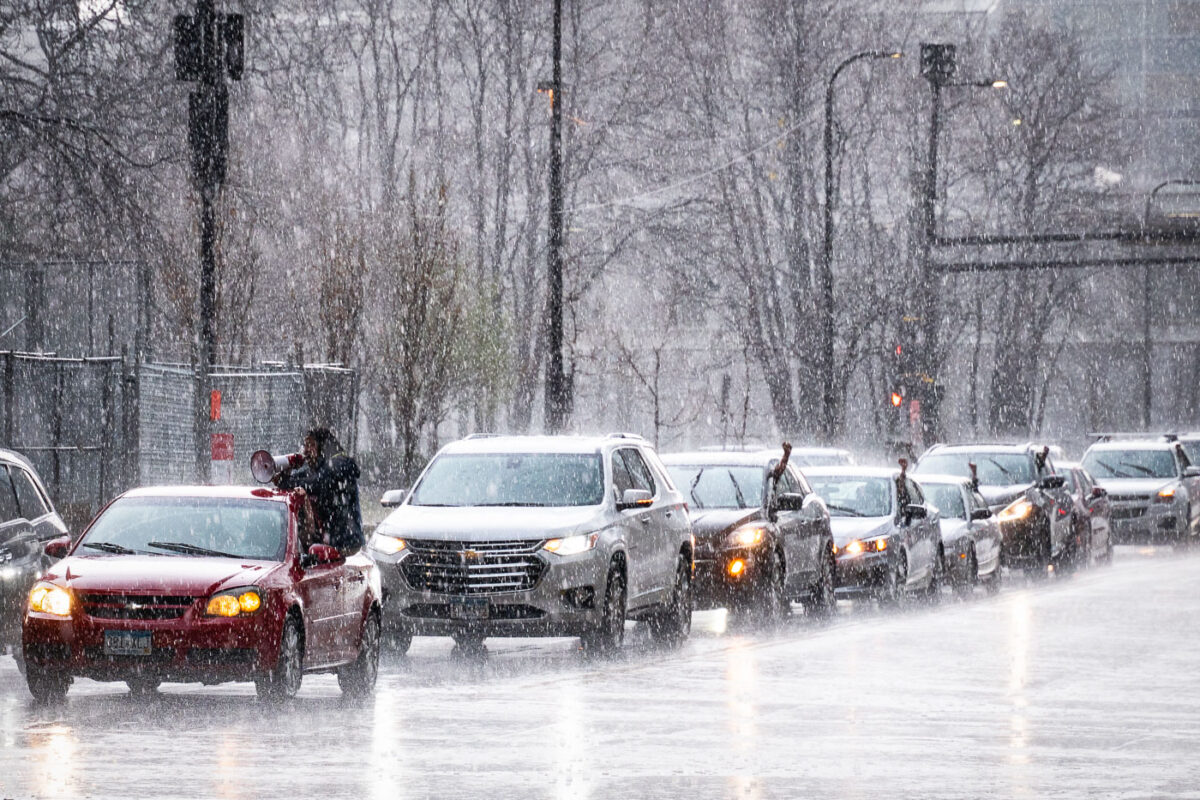
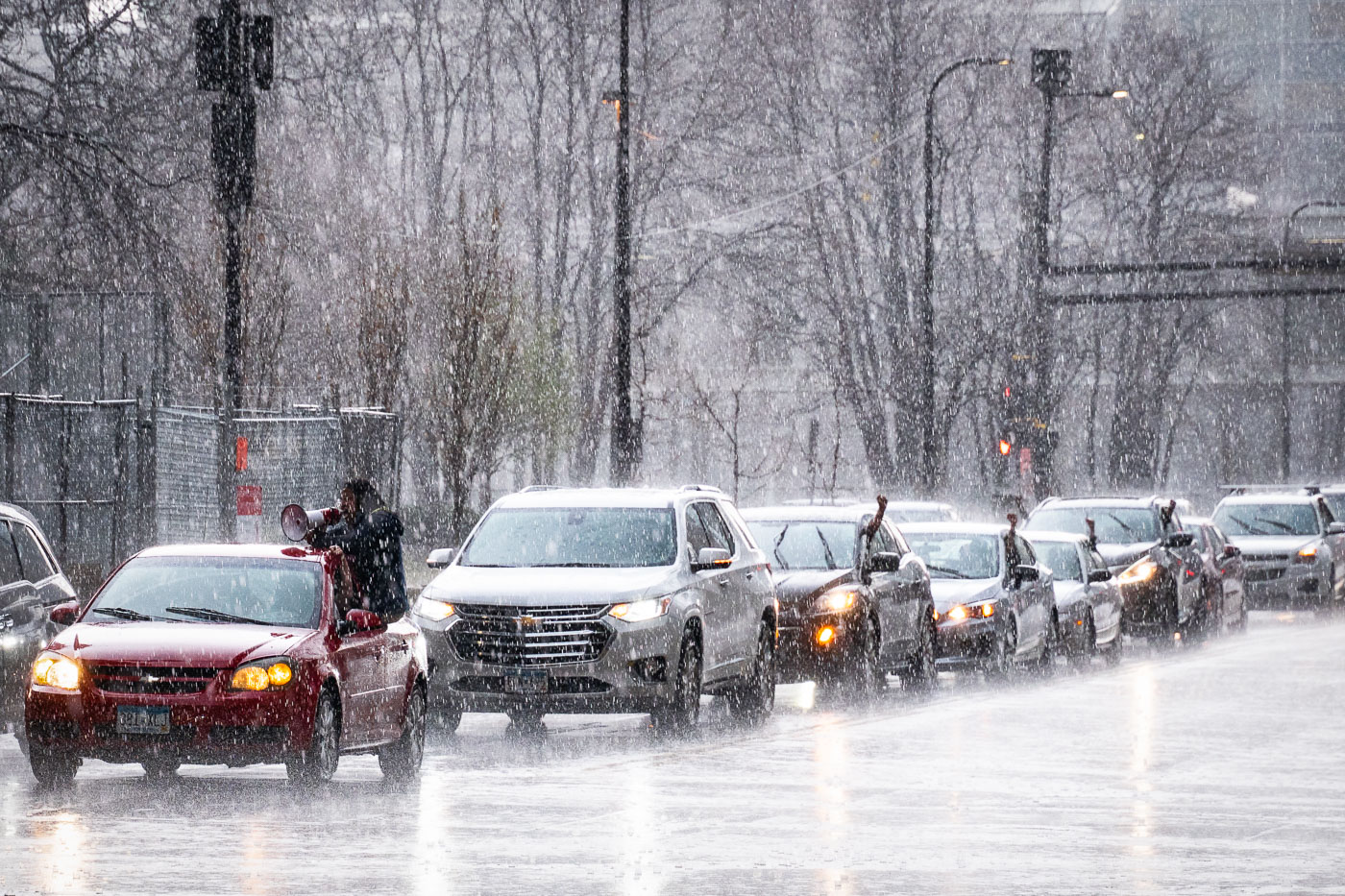
Protest caravan in downtown Minneapolis during heavy rain near the Hennepin County Government Center.
A protest caravan proceeds through downtown Minneapolis in heavy rain on April 19, 2021. The procession circled the Hennepin County Government Center, where the trial of former police officer Derek Chauvin was underway. Chauvin was on trial for the murder of George Floyd, an event that occurred on May 25, 2020, in South Minneapolis and sparked widespread protests. The caravan's route highlighted the courthouse's significance as the site of this nationally scrutinized legal proceeding.

Minneapolis Protest Caravan in Pouring Rain During Chauvin Trial
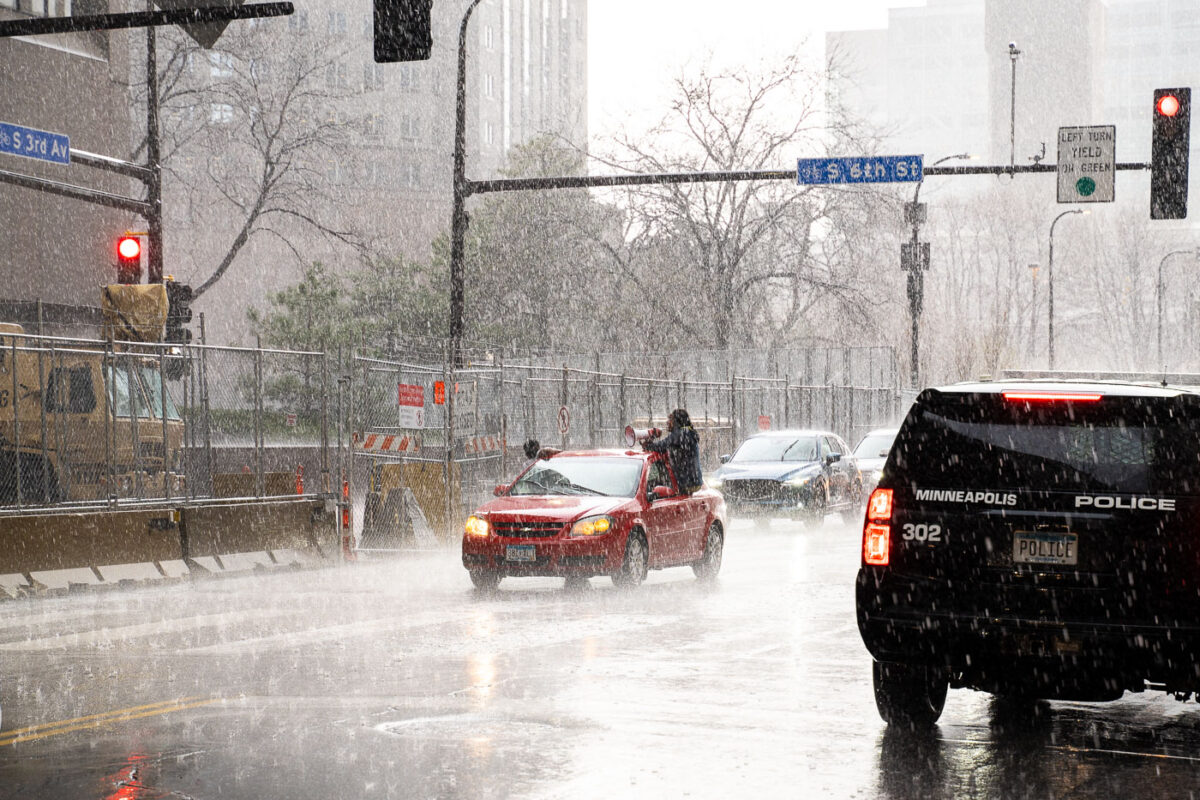
Protest caravan on South 5th Street in downtown Minneapolis during heavy rain.
A protest caravan navigates through heavy rain in downtown Minneapolis, approaching the Hennepin County Government Center. This event occurred during the trial of Derek Chauvin, the former Minneapolis police officer charged with the murder of George Floyd on May 25, 2020. The caravan's presence underscored the ongoing public attention and activism surrounding the trial and the broader issues of racial justice and police accountability.

Minneapolis protest caravan during Derek Chauvin trial in rain
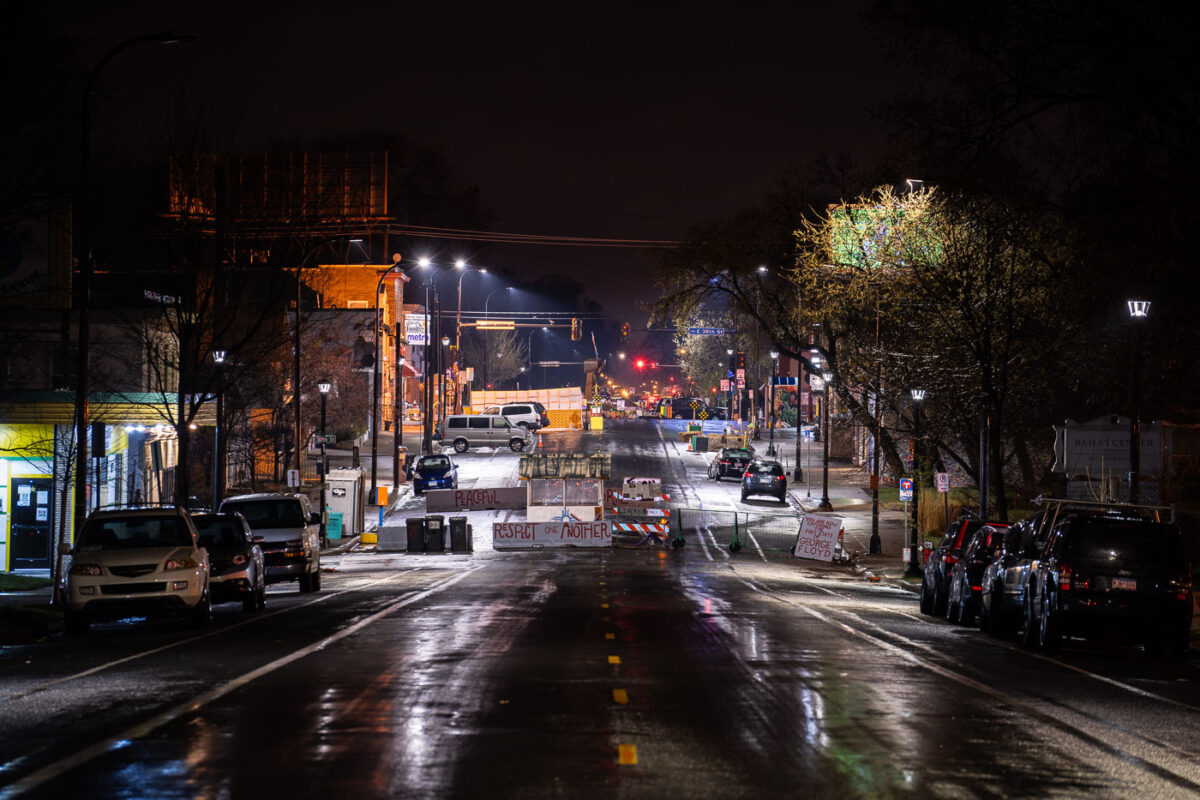
Barricades on Chicago Avenue at George Floyd Square in Minneapolis at night.
Barricades line Chicago Avenue in Minneapolis, marking the area known as George Floyd Square. This space was established by protesters following the murder of George Floyd in May 2020, serving as a site of remembrance and community organizing. The barricades, adorned with messages such as "Respect One Another," physically demarcated the zone and controlled access. The area became a focal point for activism and a symbol of the broader movement for racial justice.

George Floyd Square barricades on Chicago Ave, Minneapolis
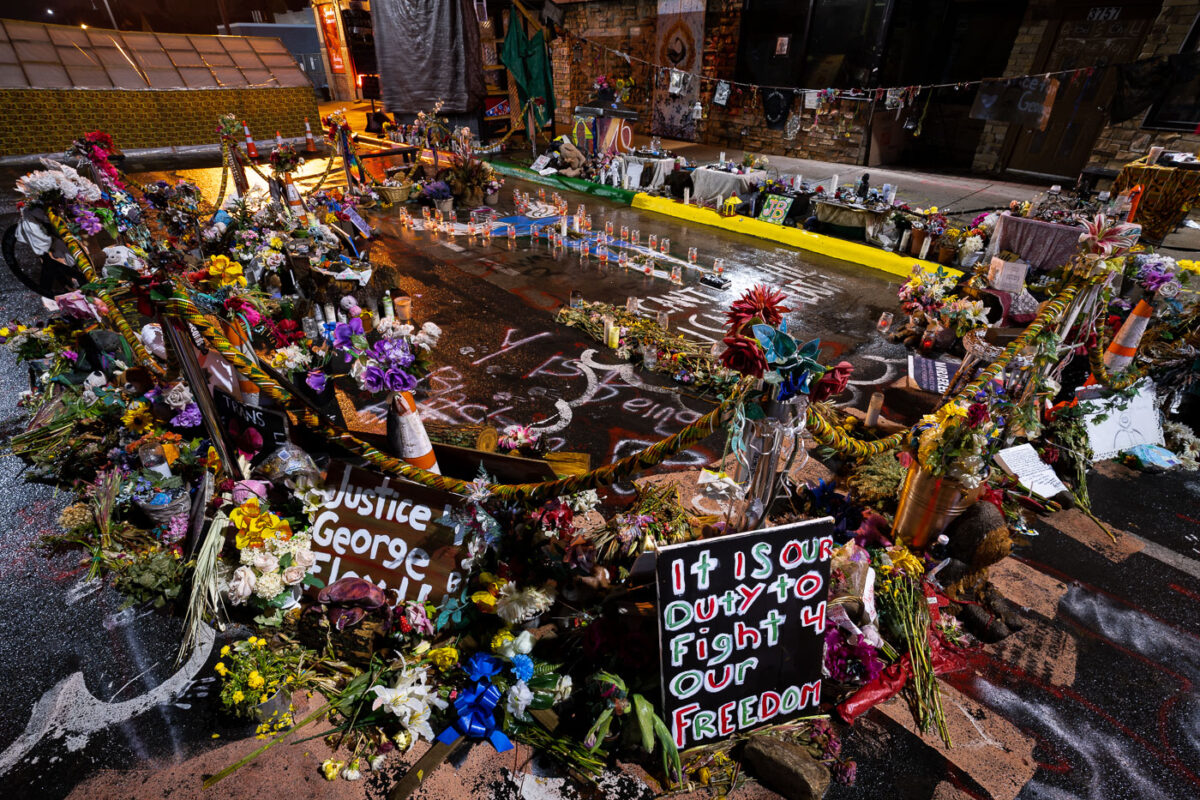
George Floyd memorial at George Floyd Square in Minneapolis, surrounded by flowers, candles, and protest signs.
The George Floyd Memorial at George Floyd Square in Minneapolis, Minnesota, on April 7, 2021. This site became a focal point for protests and activism following the murder of George Floyd in May 2020. The memorial, located at the intersection where Floyd was killed, features numerous tributes including flowers, candles, signs, and personal mementos. It serves as a space for remembrance, community gathering, and continued calls for racial justice and police reform.

George Floyd Square Memorial, Minneapolis, April 7 2021
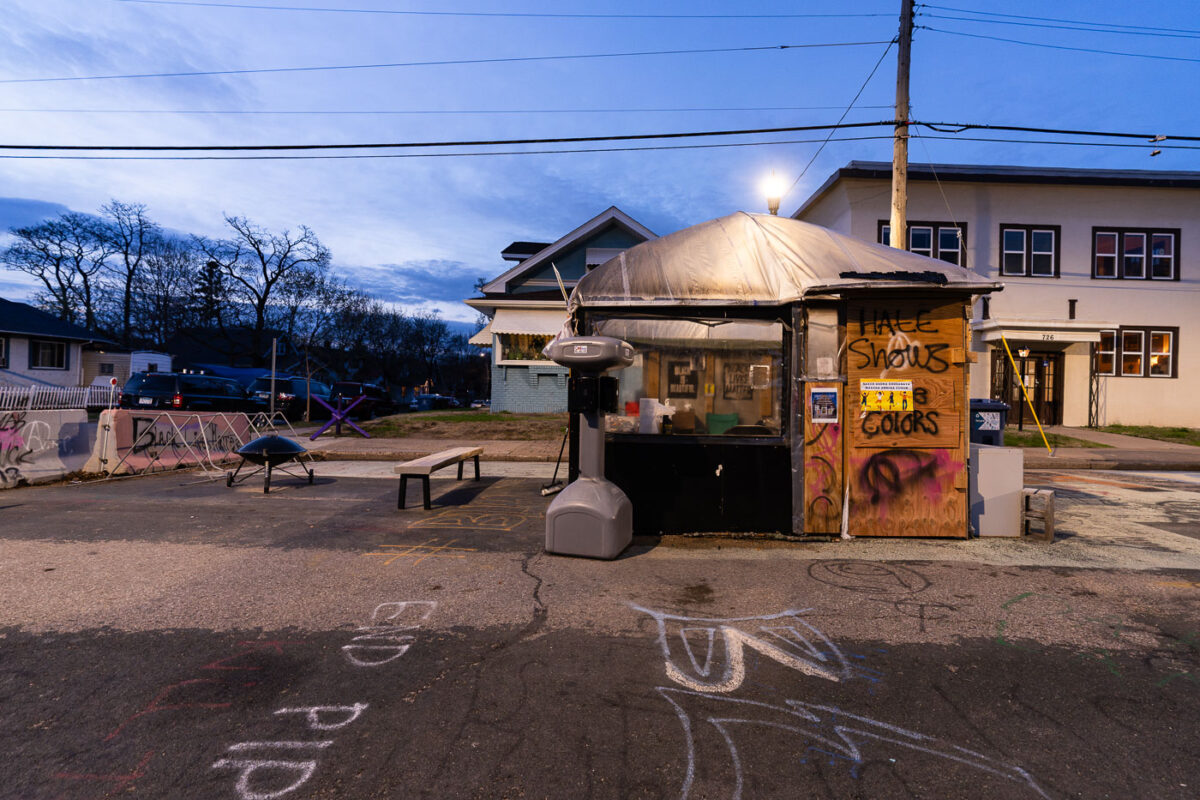
Warming station and barricades at George Floyd Square in Minneapolis.
George Floyd Square in Minneapolis was the site of a protest encampment following the murder of George Floyd in May 2020. This image from April 2021 shows a warming station and barricades that were erected by protesters to control access to the area. The square, located at the intersection of 38th Street and Chicago Avenue, became a symbol of the uprising and a space for community organizing and mutual aid. The warming station provided shelter and resources to those present, while the barricades served to protect the occupied space from external interference.

George Floyd Square Warming Station and Barricade, Minneapolis
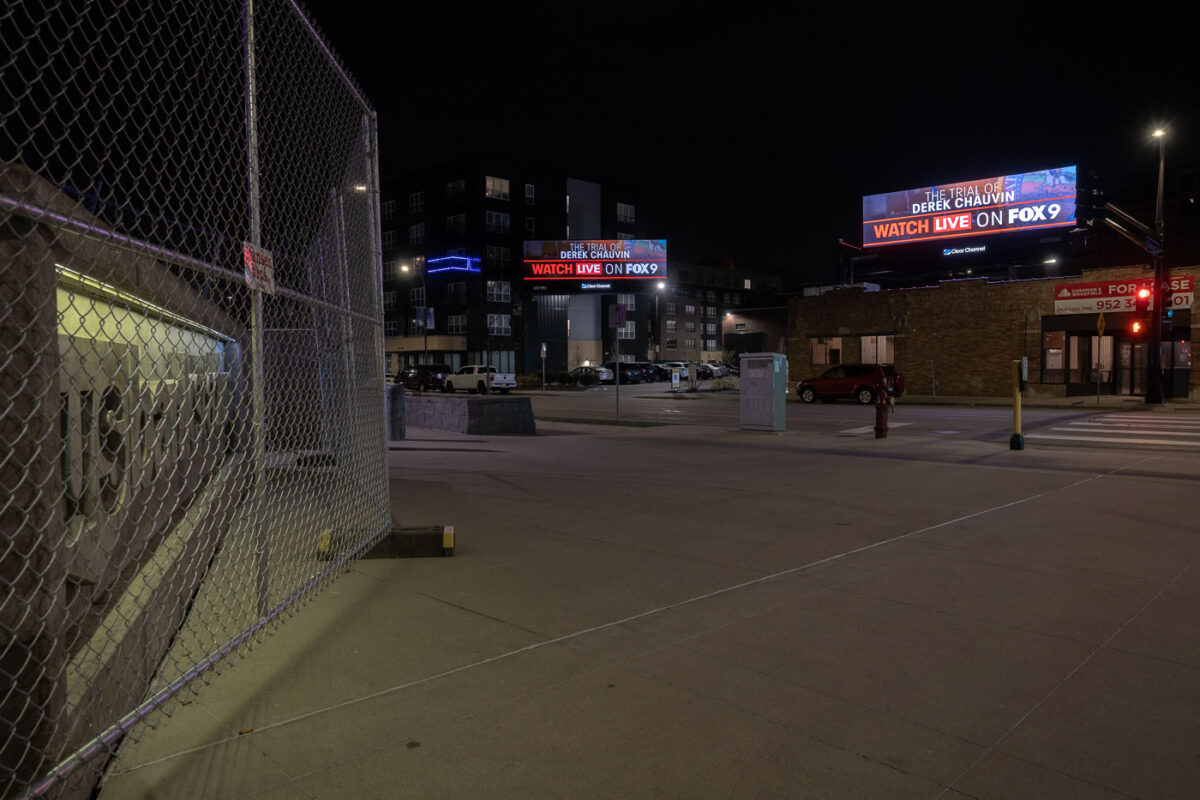
FOX9 billboards for the Derek Chauvin trial in downtown Minneapolis beside security fencing.
FOX9 billboards in downtown Minneapolis. US Bank Stadium to the left behind security fencing.

Minneapolis: FOX9 Billboards for Derek Chauvin Trial
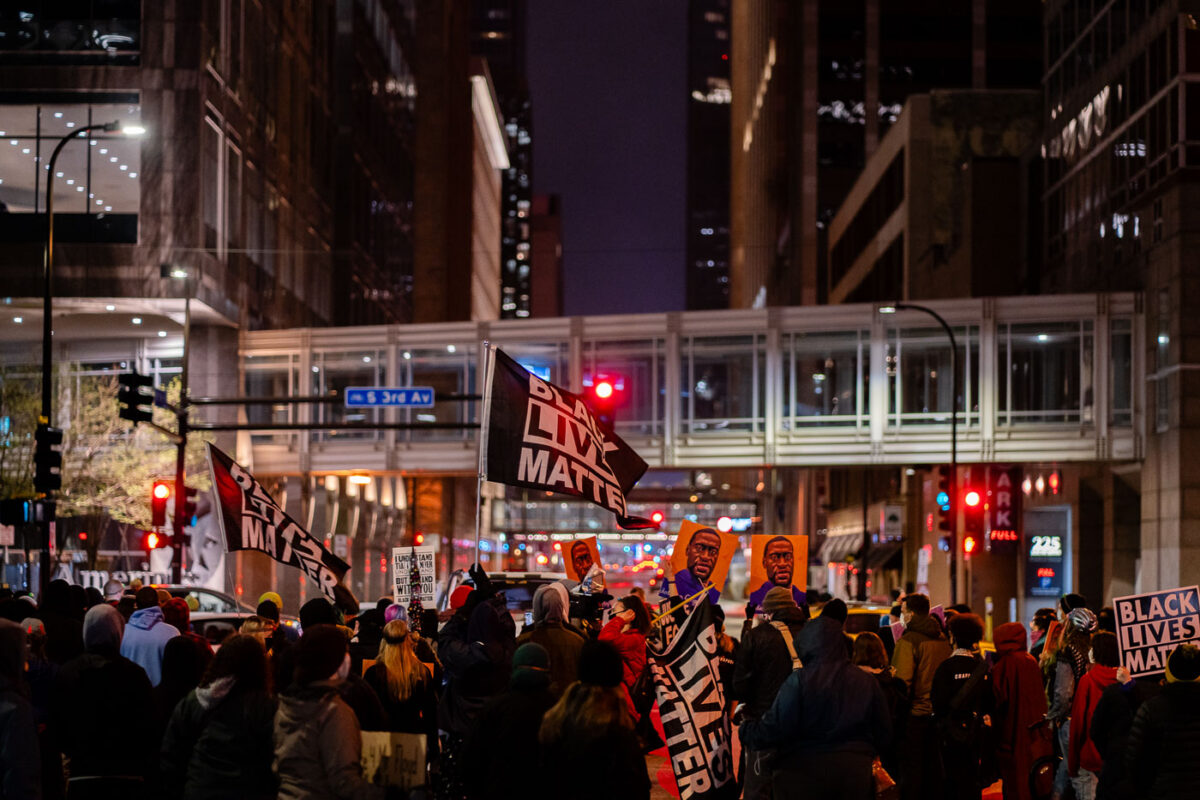
Protesters with Black Lives Matter flags on 3rd Avenue in downtown Minneapolis.
Protesters gathered in downtown Minneapolis outside the Hennepin County Government Center during the trial of Derek Chauvin, the former police officer charged in the murder of George Floyd. The "Black Lives Matter" flags and signs bearing Floyd's image reflect the broader movement for racial justice and police accountability that gained national attention following Floyd's death in May 2020. The courthouse, a significant civic building in Minneapolis, served as a focal point for demonstrations demanding justice and systemic change.

Minneapolis Protest for George Floyd Outside Hennepin County Courthouse
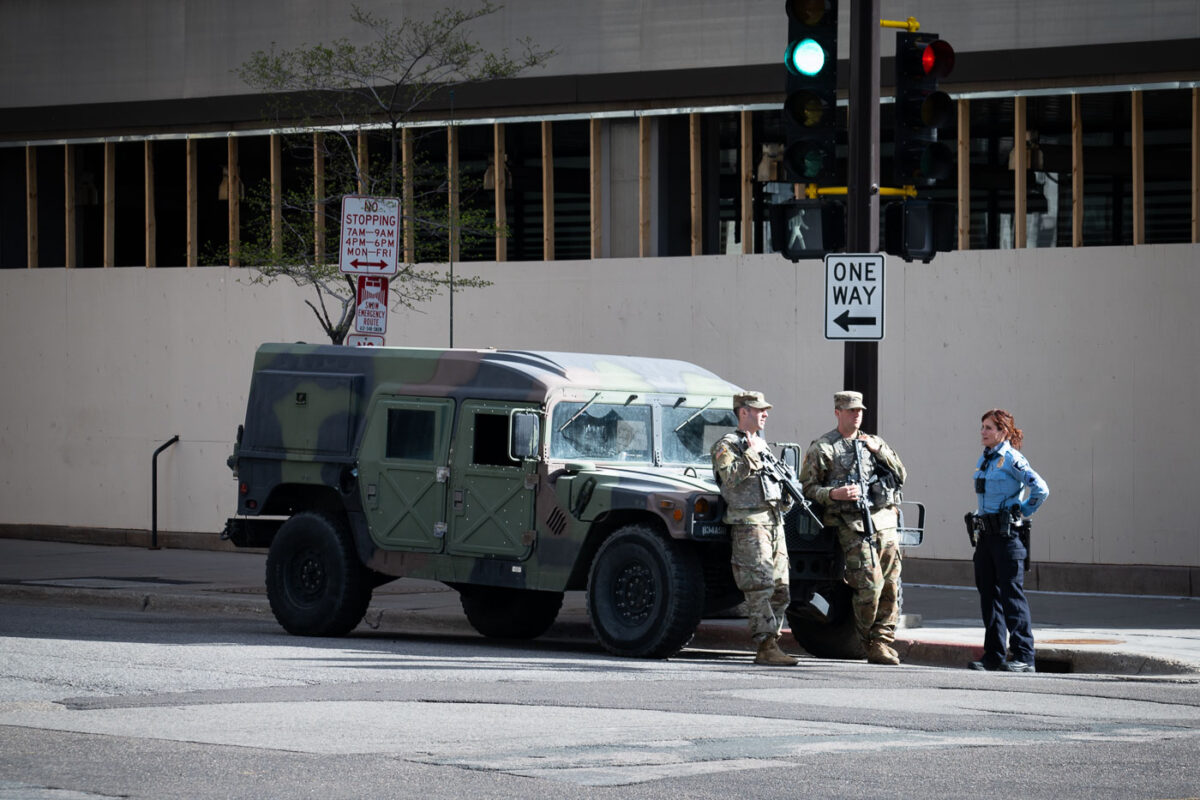
National Guard soldiers and a police officer beside a military vehicle in downtown Minneapolis.
National Guard and Minneapolis Police officers stand on duty near a military vehicle during the trial of Derek Chauvin in Minneapolis. The trial, which concluded in April 2021, stemmed from the May 25th, 2020, killing of George Floyd. The presence of law enforcement and military personnel underscored the heightened tensions in the city following Floyd's death and in anticipation of the trial's verdict.

Minneapolis National Guard and Police on Duty During Chauvin Trial
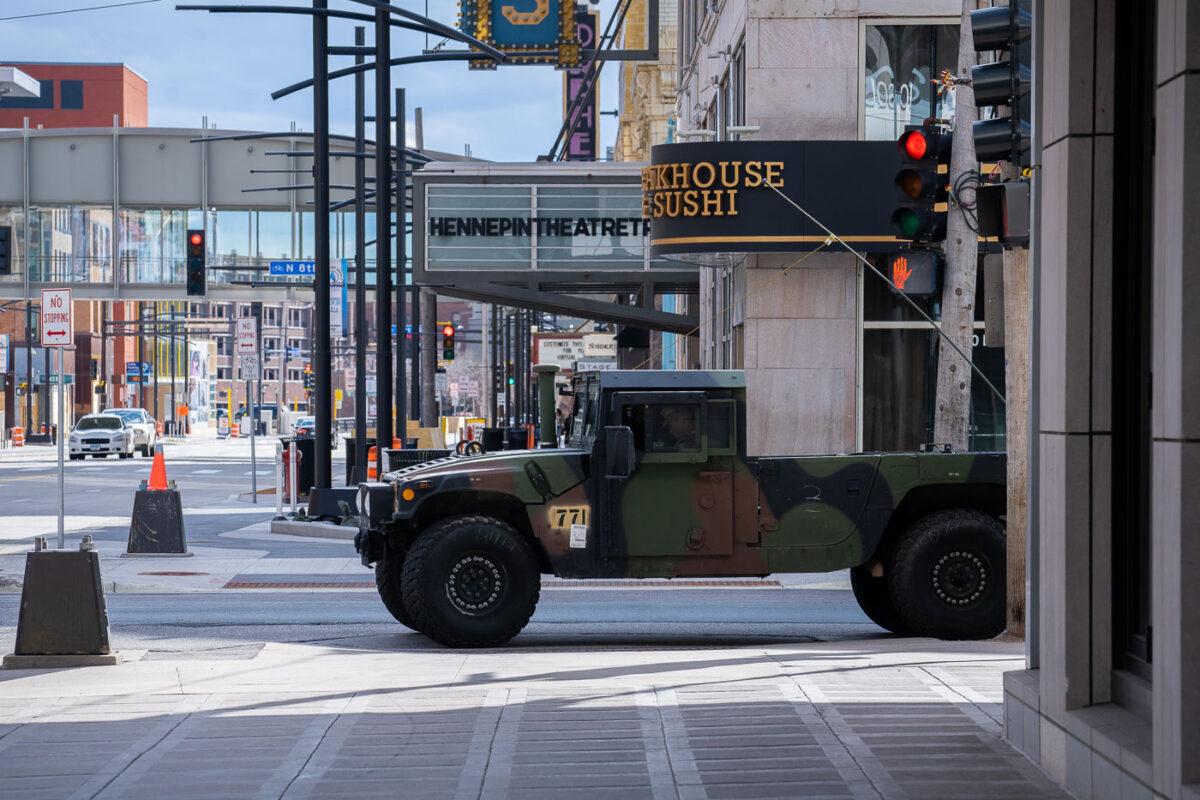
National Guard Humvee on Nicollet Mall in downtown Minneapolis near Hennepin Theatre Trust.
A Minnesota National Guard Humvee is parked on Nicollet Mall in Minneapolis. The presence of military vehicles on the downtown street reflects the heightened security and civil unrest that occurred in the city following the murder trial of Derek Chauvin for the death of George Floyd. Nicollet Mall, a pedestrian-oriented street, is a central commercial and cultural hub in Minneapolis, and its use by military vehicles underscores the extraordinary circumstances of the period.

National Guard Humvee on Nicollet Mall, Minneapolis
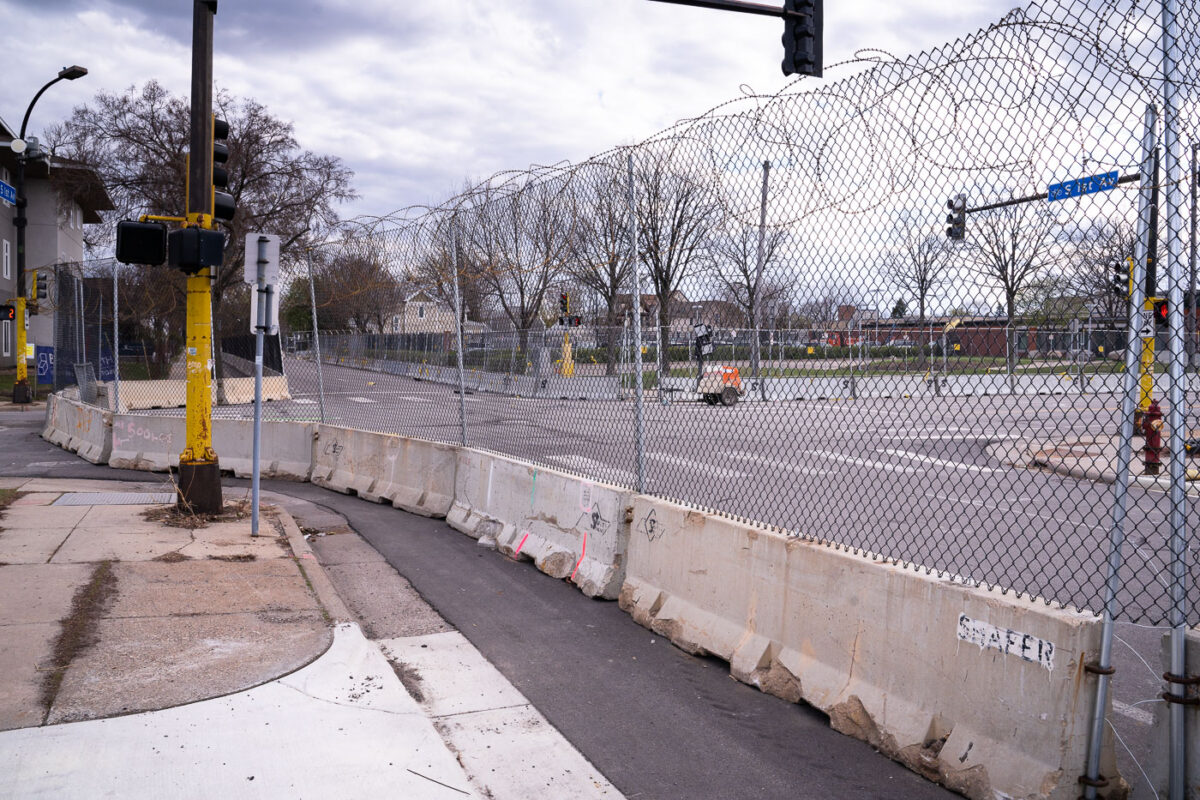
Barricades and razor wire around Minneapolis Police 5th Precinct in Minneapolis.
The Minneapolis Police Fifth Precinct is shown fortified with concrete barriers and razor wire. This security measure was implemented in response to protests and civil unrest that occurred in Minneapolis following the murder of George Floyd in May 2020 and the subsequent trial of Derek Chauvin. The precinct, located in the Powderhorn neighborhood, also experienced heightened security during the trial of Kim Potter for the killing of Daunte Wright in April 2021. The barriers are a physical manifestation of the increased tensions and security concerns surrounding law enforcement facilities during periods of public outcry.

Minneapolis Police 5th Precinct Fortified with Barricades and Razor Wire
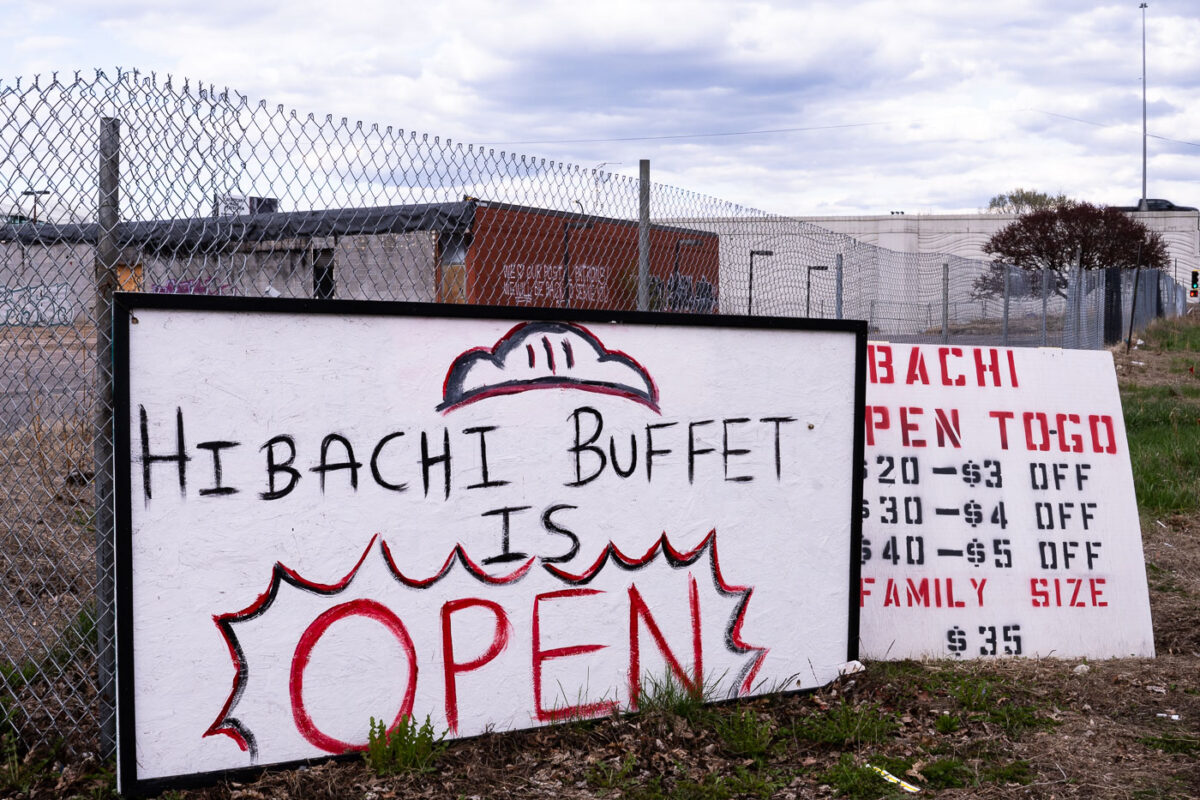
Hibachi Buffet open signs by the damaged Lake Street Station post office in Minneapolis.
A hand-painted sign announces that Hibachi Buffet is open for business, with additional signs detailing "Open Togo" specials. This sign is positioned in front of the burned remains of the Lake Street Station post office in Minneapolis. The post office building was damaged during the civil unrest that followed the murder of George Floyd in May 2020 and the subsequent trial of Derek Chauvin. The area has seen significant rebuilding efforts, but remnants of the unrest, like this temporary signage, remain visible.

Hibachi Buffet Open Sign, Minneapolis
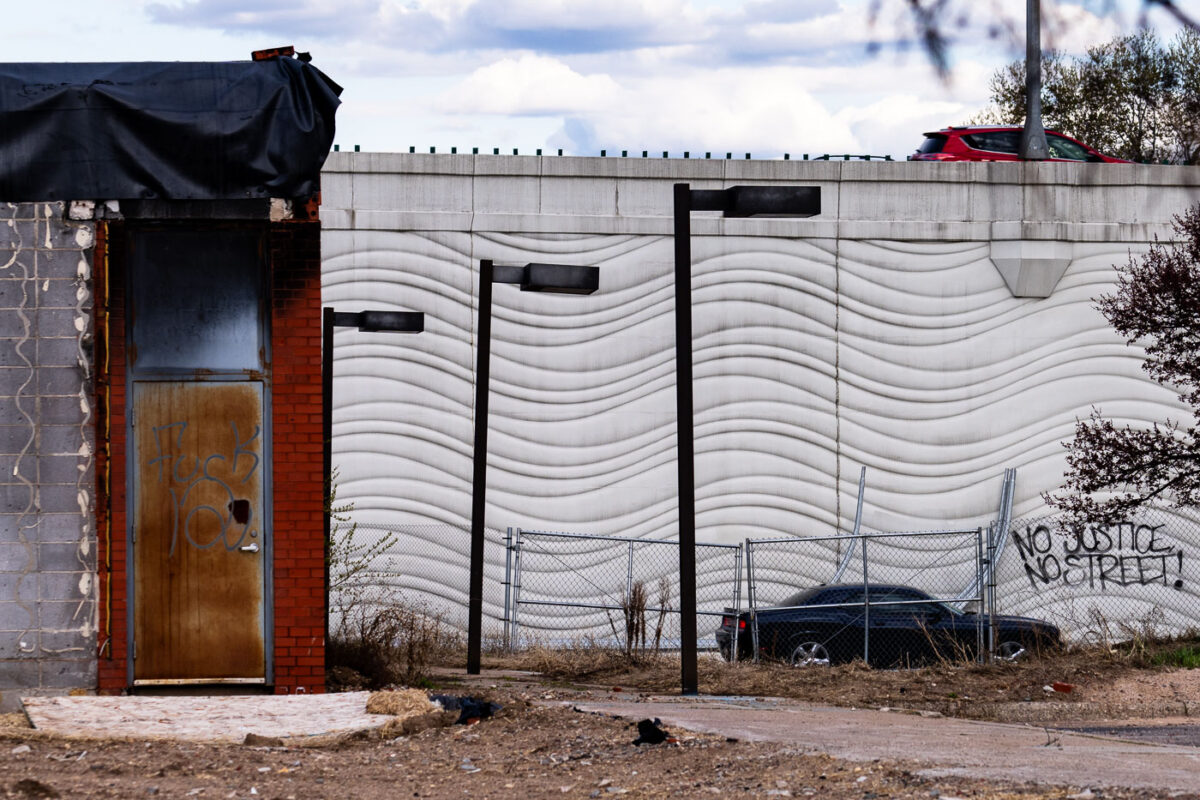
“No Justice No Street” graffiti beside Interstate 35W in Minneapolis.
Graffiti reading "No Justice, No Street!" is spray-painted on a white, wave-patterned wall adjacent to Interstate 35W in Minneapolis. This message emerged during the widespread protests and civil unrest that followed the murder of George Floyd in May 2020 and the subsequent trial of Derek Chauvin. The phrase reflects a sentiment of public anger and a demand for accountability and systemic change within the justice system. The location, near a former post office, and the prominent display on a major transportation artery underscore the public nature and urgency of these demands.

Minneapolis: “No Justice No Street” Graffiti on 35W
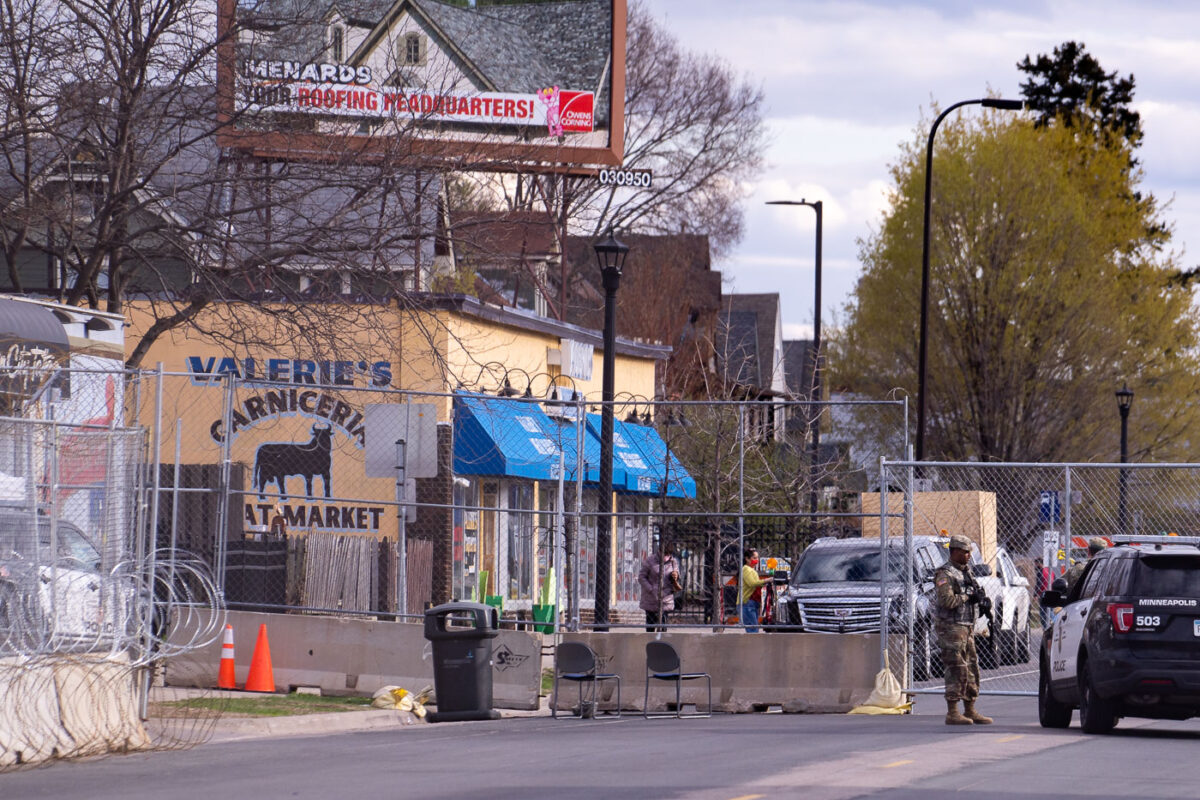
National Guard and police at Minneapolis Fifth Precinct behind fencing and razor wire.
National Guard soldiers and Minneapolis Police officers secure the perimeter of the Minneapolis Police Fifth Precinct in South Minneapolis. The precinct was fortified with concrete barriers and razor wire in response to widespread protests and civil unrest that followed the killing of George Floyd in May 2020 and the subsequent trial of Officer Derek Chauvin. The presence of the National Guard was a visible symbol of the state's response to maintain order during a period of intense public scrutiny and activism.

National Guard at Minneapolis Police Fifth Precinct

National Guard troops outside Minneapolis Police 5th Precinct behind security fencing in Minneapolis.
National Guard soldiers are stationed outside the Minneapolis Police Fifth Precinct, a location that became a focal point during the trial of Derek Chauvin. The precinct was heavily fortified with fencing and concrete barriers to prevent damage and maintain order amidst protests following the murder of George Floyd. This security measure was part of "Operation Safety Net," a coordinated effort by law enforcement and the National Guard to manage public safety during the high-profile trial.

National Guard at Minneapolis Police 5th Precinct During Chauvin Trial

Protesters with George Floyd and Daunte Wright signs outside Hennepin County Government Center in Minneapolis.
Protesters gather outside the Hennepin County Government Center in Minneapolis on April 20, 2021, the day before the verdict in the Derek Chauvin trial. The signs reference George Floyd and Daunte Wright, both Black men killed by police in Minneapolis. The protest occurred during a period of heightened tension and activism following Floyd's murder in May 2020 and Wright's death in April 2021. The signs also include messages about vaccination and mask-wearing, reflecting the ongoing COVID-19 pandemic.

Minneapolis Protest for George Floyd and Daunte Wright
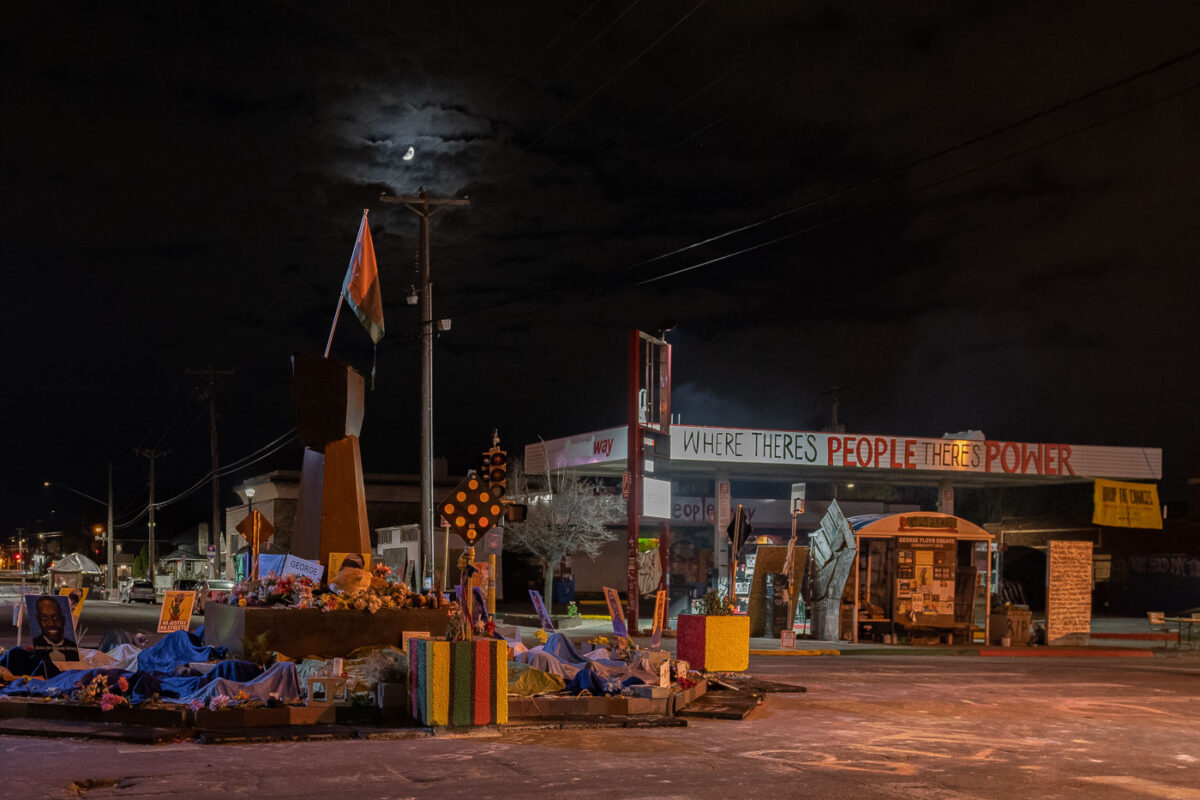
George Floyd Square memorial at 38th and Chicago in Minneapolis at night.
George Floyd Square, also known as "The People's Way," is a four-block area in Minneapolis that has been under community control since the murder of George Floyd on May 25, 2020. This memorial was photographed on the evening the jury began deliberations in the Derek Chauvin murder trial. The site serves as a memorial to George Floyd and other victims of racial injustice, and as a space for community organizing and expression.

George Floyd Square Memorial at Night, Minneapolis
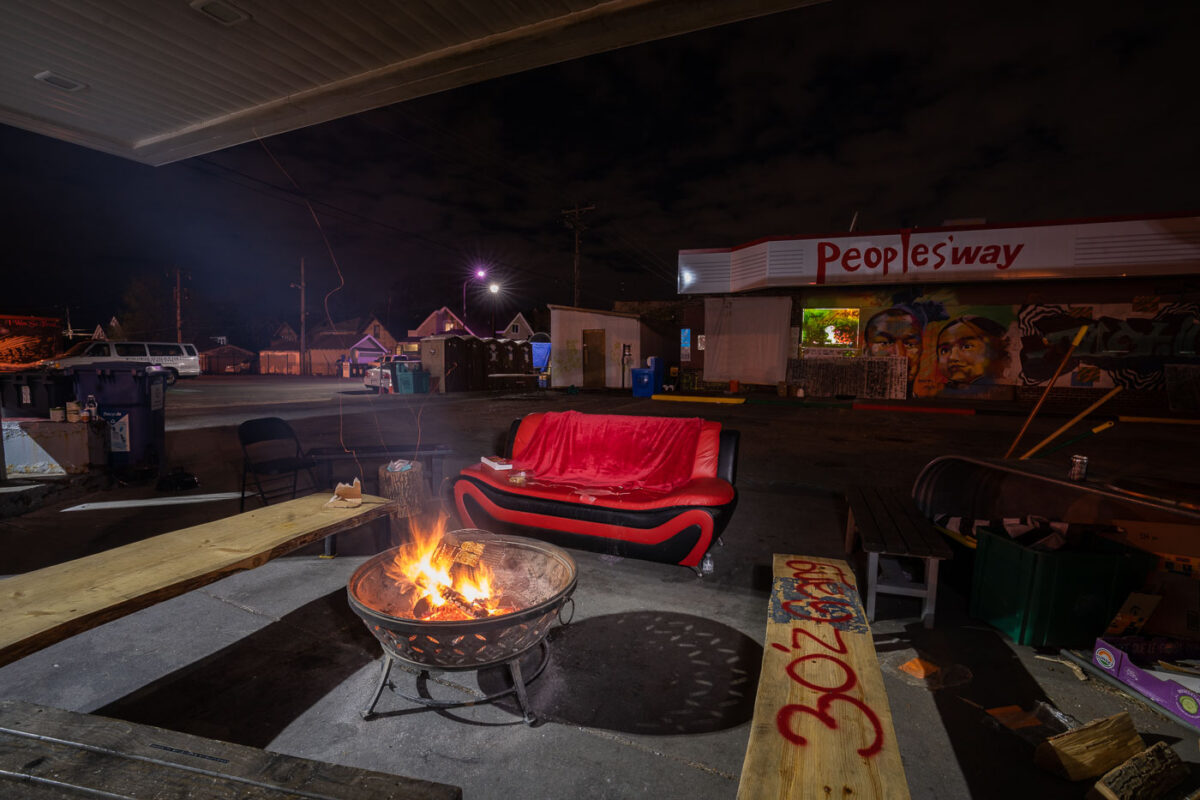
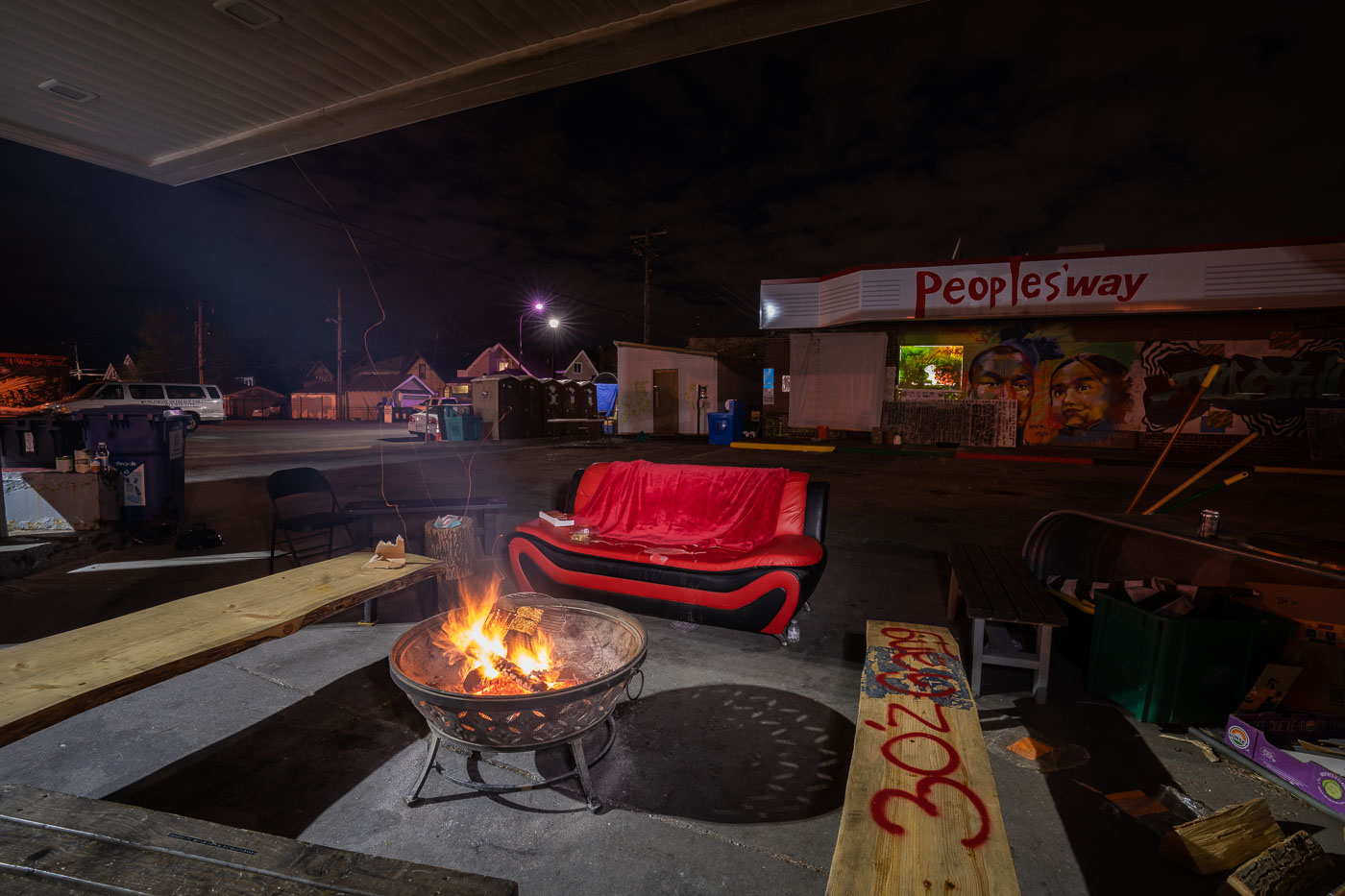
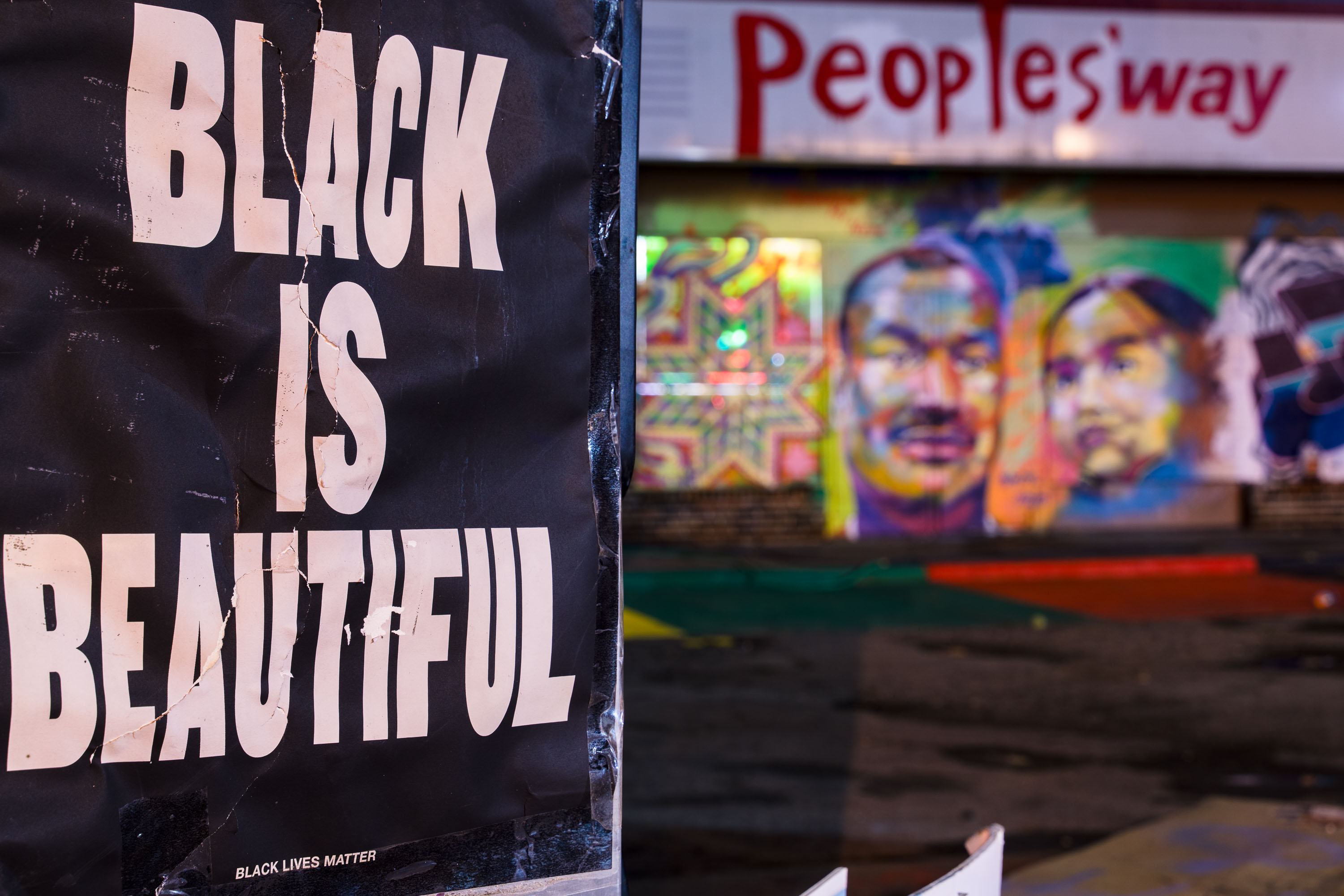
Campfire and seating at George Floyd Square in Minneapolis beneath Peoples Way signage.
A campfire burns at George Floyd Square in Minneapolis, April 2021. The site, located at the intersection of 38th Street and Chicago Avenue, became a focal point for protests following the murder of George Floyd in May 2020. The area was renamed "The People's Way" by activists and served as a space for community gatherings and continued demonstrations against racial injustice. The "Peoples Way" signage visible on the building in the background refers to this renaming.

George Floyd Square Campfire, Minneapolis, April 2011
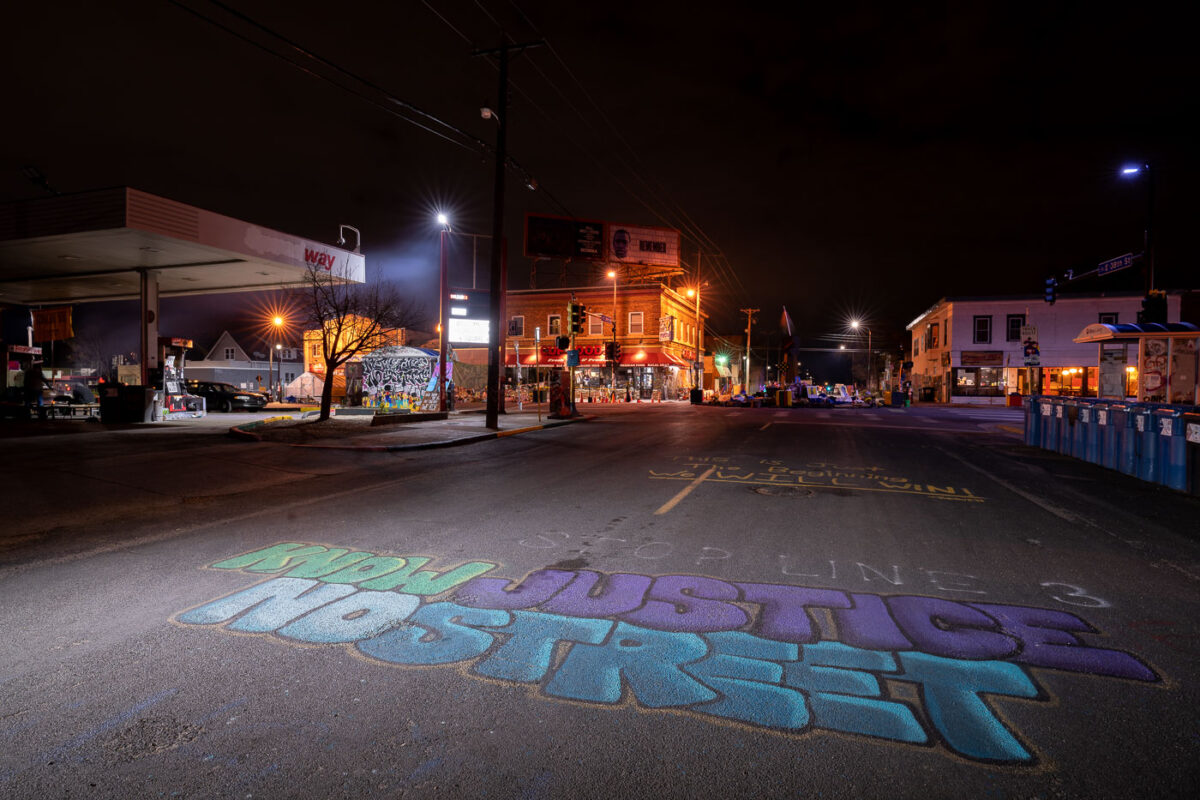
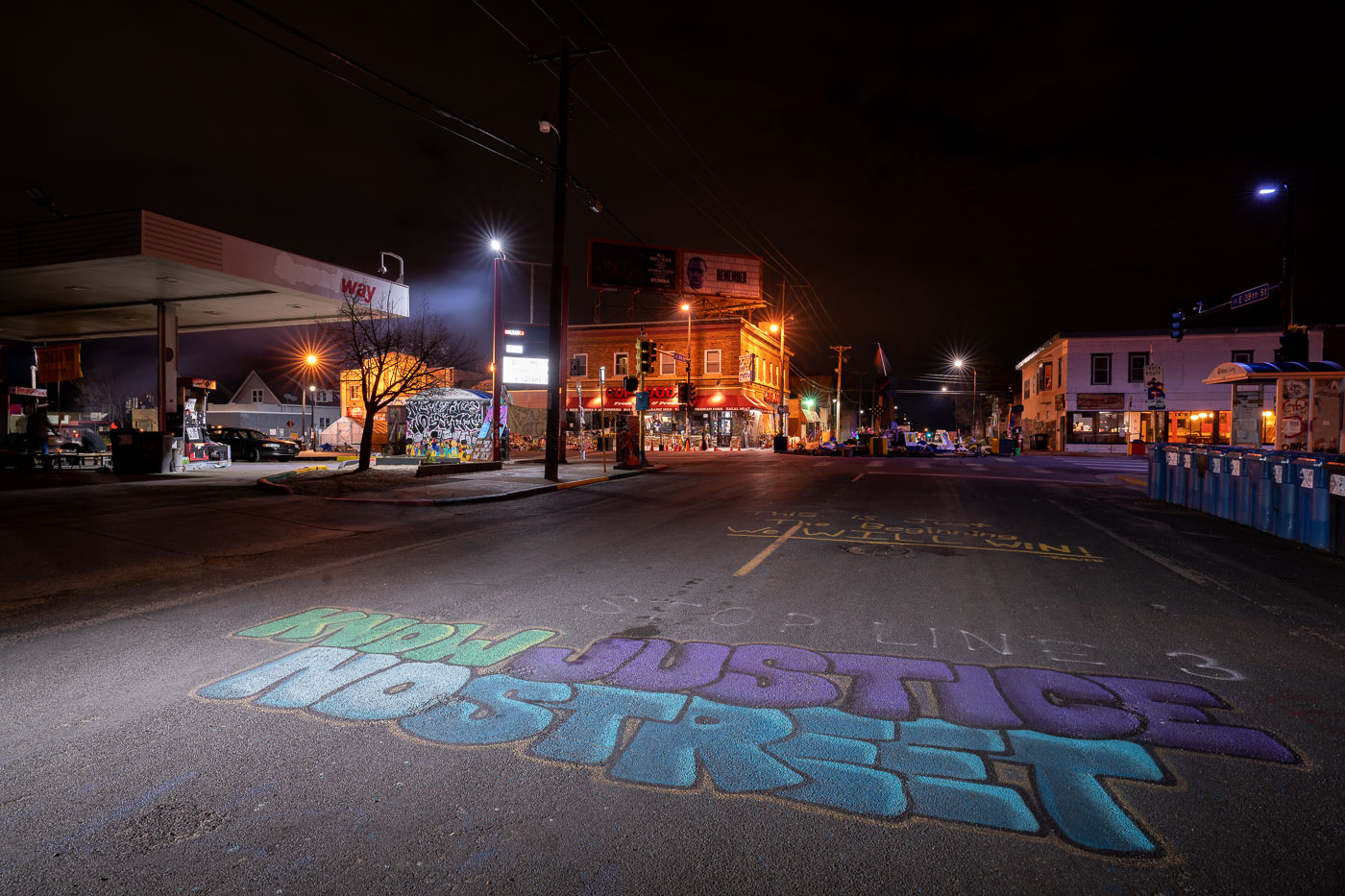
George Floyd Square at 38th Street and Chicago Avenue in Minneapolis with "No Justice No Street" painted on the road.
George Floyd Square, located at the intersection of 38th Street and Chicago Avenue in Minneapolis, became a focal point of protests following the murder of George Floyd in May 2020. The area was occupied by protesters for months, transforming it into a community space and a symbol of resistance. The phrase "No Justice No Street" painted on the asphalt reflects the protesters' demands for accountability and systemic change. The square has since become a significant site of remembrance and activism.

George Floyd Square, Minneapolis: “No Justice No Street”

Boarded-up Whole Foods Market in Minneapolis during the Derek Chauvin trial.
A Whole Foods Market in Minneapolis is boarded up with plywood in anticipation of potential unrest following the verdict in the Derek Chauvin murder trial. The trial, which began in March 2021, concerned the death of George Floyd, a Black man whose killing by Chauvin, a white police officer, sparked widespread protests in Minneapolis and across the nation. Businesses across the city took precautionary measures to protect property during this period of heightened tension.

Minneapolis Whole Foods Boarded Up During Derek Chauvin Trial

Marcia Howard speaks at George Floyd Square in Minneapolis after the Chauvin verdict.
Marcia Howard addresses a crowd at George Floyd Square in Minneapolis following the guilty verdict in the Derek Chauvin murder trial. The square, an area around the intersection of 38th Street and Chicago Avenue, became a focal point for protests against racial injustice and police brutality after George Floyd's death in May 2020. The verdict in Chauvin's trial, a former Minneapolis police officer, was seen as a significant moment in the ongoing movement for racial equity. Howard's speech at this location underscores the square's role as a space for community expression and remembrance.

Marcia Howard speaks at George Floyd Square after Chauvin verdict

Jesse Jackson arrives at Hennepin County Courthouse in Minneapolis as National Guard troops patrol.
Reverend Jesse Jackson, a prominent civil rights leader, arrived at the Hennepin County Courthouse in Minneapolis, Minnesota, during the trial of Derek Chauvin. Chauvin was charged in the death of George Floyd, which occurred on May 25, 2020, and sparked widespread protests. The courthouse, officially known as the Hennepin County Government Center, is a significant civic building in downtown Minneapolis. The presence of National Guard troops, as seen in the image, underscored the heightened security and tension surrounding the trial and its potential verdict.

Jesse Jackson arrives at Hennepin County Courthouse during Chauvin trial

Protesters outside Hennepin County Government Center in Minneapolis with signs during the Chauvin verdict.
A crowd gathers outside the Hennepin County Government Center in Minneapolis on April 20, 2021, awaiting the verdict in the trial of former police officer Derek Chauvin. Chauvin was charged in the death of George Floyd on May 25, 2020, an event that sparked widespread protests. The Hennepin County Government Center, located at 300 South 6th Street, serves as the administrative hub for Hennepin County government and houses courts and offices.

Minneapolis: Crowd Gathers at Hennepin County Government Center for Chauvin Verdict

Brandyn Tulloch speaks to a crowd at Hennepin County Government Center in Minneapolis.
Brandyn Tulloch addresses a crowd gathered outside the Hennepin County Government Center in Minneapolis on April 20, 2021. The gathering occurred as anticipation grew for the verdict in the trial of Derek Chauvin, who was charged in the May 25, 2020 death of George Floyd. The Hennepin County Government Center is a prominent courthouse and administrative building in downtown Minneapolis, serving as the seat of county government and a key location for legal proceedings in the region.

Brandyn Tulloch speaks at Hennepin County Government Center

Minnesota National Guard troops at Hennepin County Government Center in Minneapolis.
Members of the Minnesota National Guard were stationed outside the Hennepin County Government Center in Minneapolis on April 20, 2021. Their presence was in anticipation of the verdict in the trial of Derek Chauvin, a former Minneapolis police officer charged in the murder of George Floyd. The Hennepin County Government Center serves as a primary administrative and judicial hub for the county, and its security was heightened during this period of significant public attention and potential unrest.

National Guard at Hennepin County Government Center, Minneapolis

Man with Black Lives Matter flag at Hennepin County Government Center protest in Minneapolis.
On April 20, 2021, crowds gathered outside the Hennepin County Government Center in Minneapolis to mark the guilty verdict in the murder trial of Derek Chauvin. Chauvin, a former Minneapolis police officer, was found guilty on all three counts for the killing of George Floyd. The verdict was a significant moment in the ongoing national conversation about racial justice and police accountability, following widespread protests that began in Minneapolis in the summer of 2020.

Minneapolis: Black Lives Matter flag at Chauvin verdict protest

George Floyd's family leaves Hennepin County Government Center in Minneapolis after the Chauvin verdict.
The family of George Floyd departs the Hennepin County Government Center in Minneapolis on April 20, 2021, following the guilty verdict in the trial of Derek Chauvin. Chauvin, a former Minneapolis police officer, was convicted of second-degree unintentional murder, third-degree murder, and second-degree manslaughter in Floyd's death. The verdict was seen as a significant moment in the ongoing national reckoning with racial injustice and police brutality.

George Floyd Family Leaves Hennepin County Courthouse After Verdict

Roxie Washington leaves Hennepin County Government Center in Minneapolis after the Derek Chauvin verdict.
Roxie Washington, the mother of George Floyd’s daughter, leaves the Hennepin County Government Center in Minneapolis following the guilty verdict in the trial of Derek Chauvin. Chauvin, a former Minneapolis police officer, was convicted on April 20, 2021, of second-degree unintentional murder, third-degree murder, and second-degree manslaughter for his role in Floyd's death. The verdict was seen as a significant moment in the ongoing national conversation about racial justice and police accountability.

George Floyd’s family leaves Hennepin County Courthouse after verdict

People celebrate outside Hennepin County Government Center in Minneapolis after the Derek Chauvin verdict.
A crowd gathers outside the Hennepin County Government Center in Minneapolis to celebrate the guilty verdict in the murder trial of Derek Chauvin. Chauvin was found guilty on all three counts for the killing of George Floyd, an event that sparked widespread protests and a national reckoning on racial justice. The Hennepin County Government Center is a prominent civic building in downtown Minneapolis, serving as the courthouse for county legal proceedings. The verdict, delivered on April 20, 2021, marked a significant moment in the ongoing struggle for accountability and justice.

Minneapolis: Crowd Celebrates Derek Chauvin Verdict at Government Center

Man raising fist from a car outside Hennepin County Government Center in Minneapolis after Chauvin verdict.
A crowd gathered outside the Hennepin County Government Center in Minneapolis reacted to the verdict in the trial of Derek Chauvin. On April 20, 2021, Chauvin, a former Minneapolis police officer, was found guilty of second-degree unintentional murder, third-degree murder, and second-degree manslaughter in the death of George Floyd. The verdict was delivered after a highly publicized trial that drew national attention to issues of police brutality and racial injustice. The Hennepin County Government Center is a prominent civic building in downtown Minneapolis, serving as the seat of county government and a site for significant public events and gatherings.

Minneapolis: Fist raised after Chauvin conviction at Hennepin County Center

Crowd outside Hennepin County Government Center in Minneapolis after the Derek Chauvin verdict.
A crowd gathers outside the Hennepin County Government Center in Minneapolis on April 21, 2021, following the conviction of Derek Chauvin for the murder of George Floyd. The verdict in this high-profile trial, held in the same city where Floyd's death occurred, sparked widespread reactions and protests. The Hennepin County Government Center serves as a central hub for county administration and judicial proceedings, and its plaza has been a focal point for public gatherings and demonstrations.

Minneapolis Courthouse Crowd After Derek Chauvin Verdict
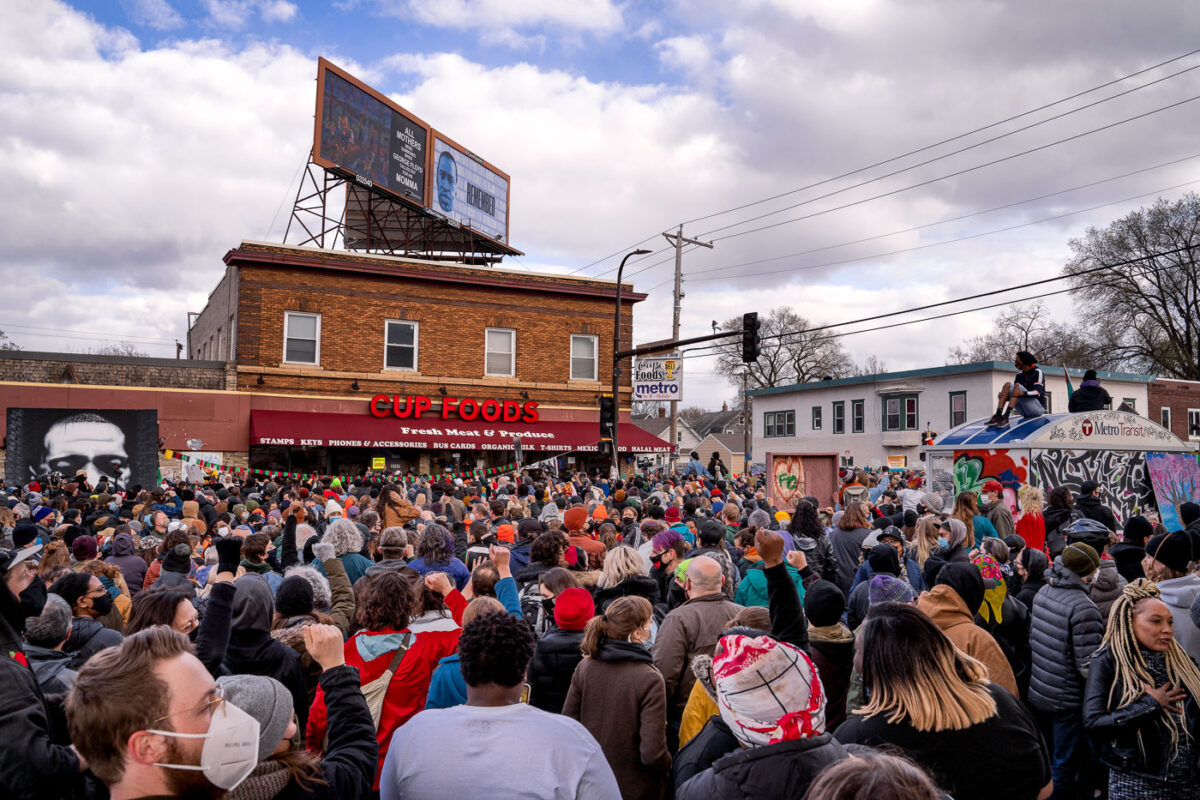
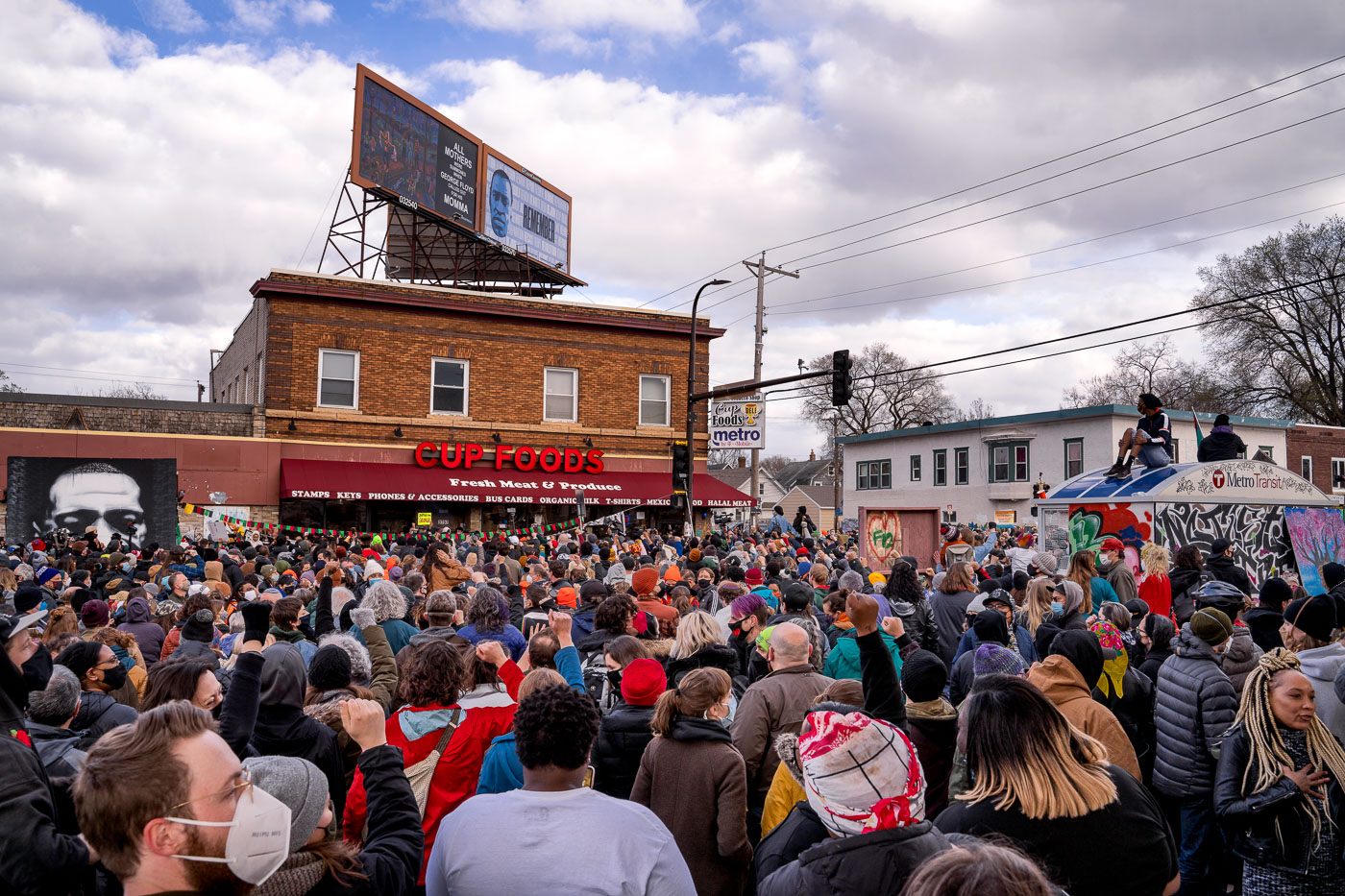
Crowd at George Floyd Square in Minneapolis after the Derek Chauvin verdict.
Crowds gather at George Floyd Square in Minneapolis following the conviction of Derek Chauvin for the murder of George Floyd. The square, located at the intersection of Chicago Avenue and 38th Street, became a focal point for protests and community organizing after Floyd's death in May 2020. The area has been transformed into a memorial and a space for ongoing activism, reflecting the community's demands for racial justice and police accountability. The billboards in the background display messages related to Floyd's death and the broader movement for justice.

Minneapolis: Crowds gather at George Floyd Square after Chauvin verdict
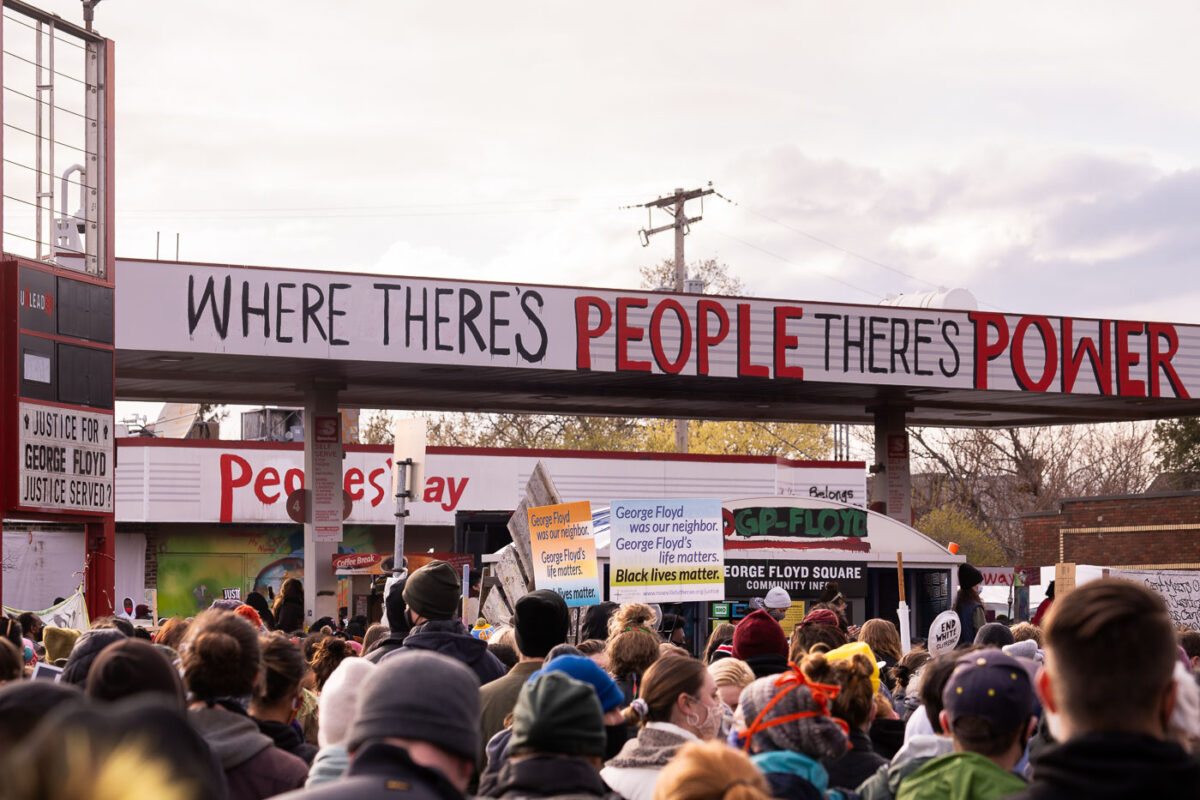
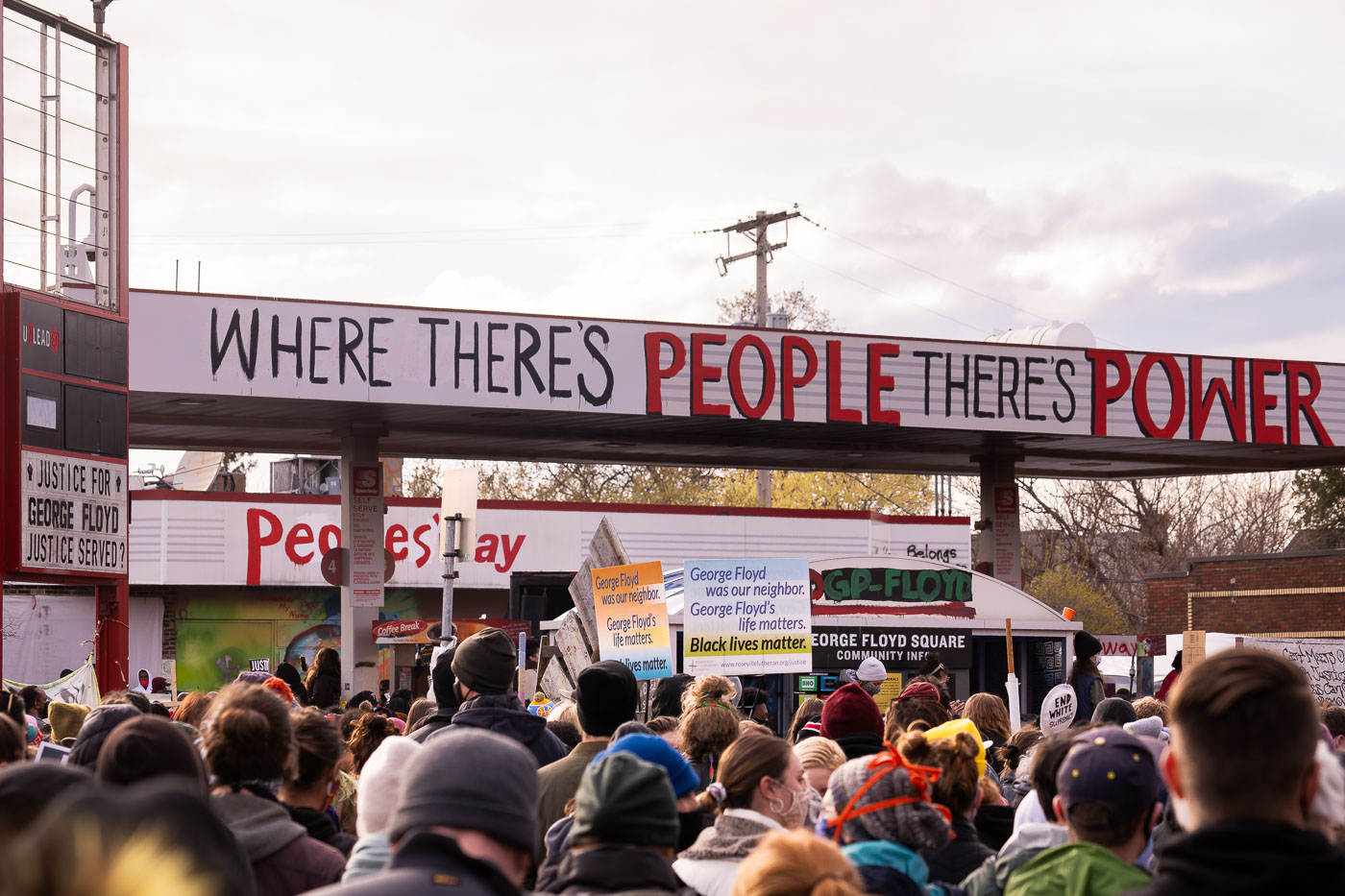
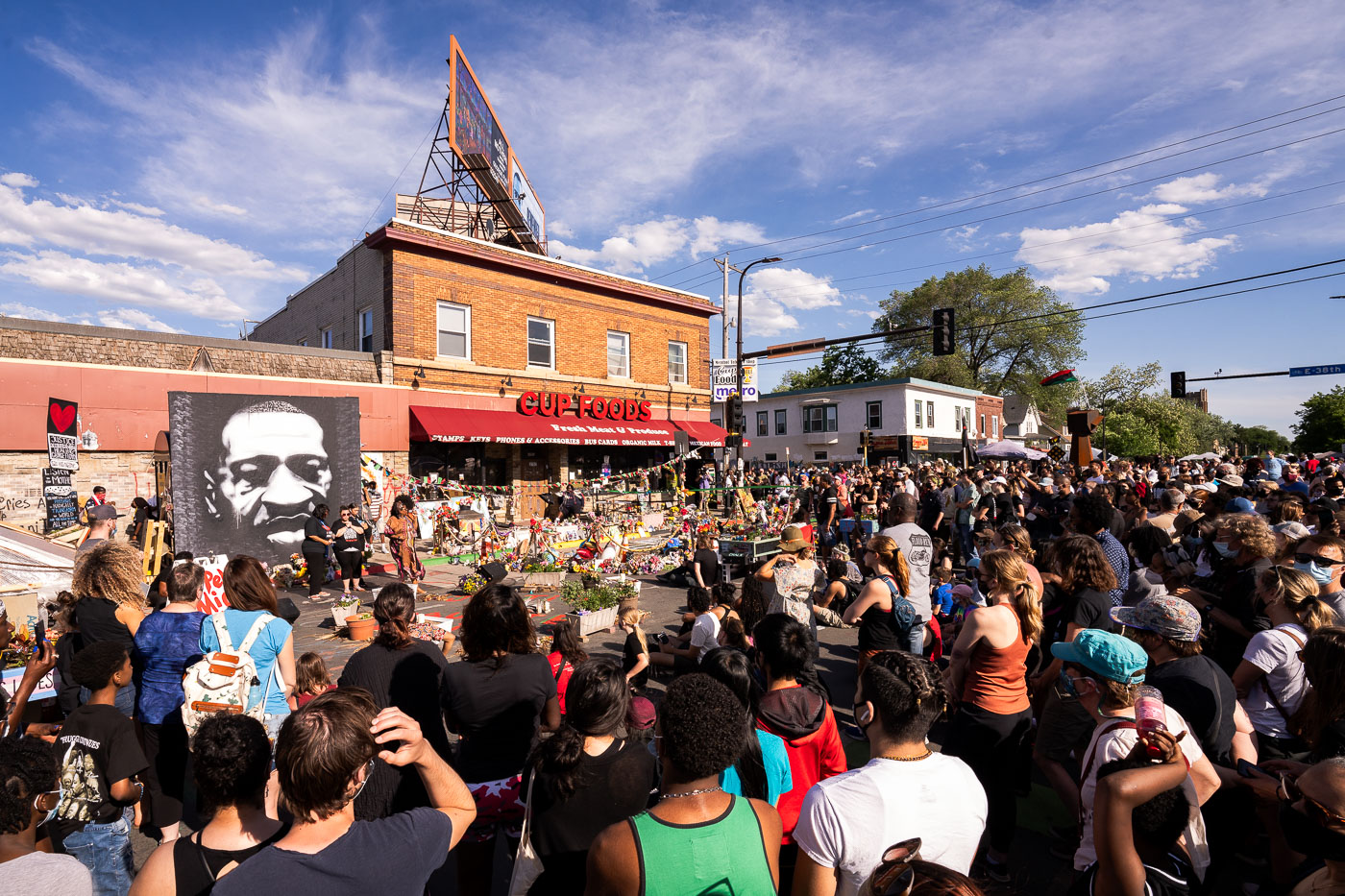
Crowd at George Floyd Square in Minneapolis beneath a "Where there's people there's power" sign.
A crowd gathers at George Floyd Square in Minneapolis following the guilty verdict in the trial of Derek Chauvin, the police officer charged with the murder of George Floyd. The intersection, formerly known as the intersection of 38th Street and Chicago Avenue, became a focal point for protests and activism after Floyd's death in May 2020. Signs and banners, including "WHERE THERE'S PEOPLE THERE'S POWER" and "George Floyd was our neighbor. George Floyd's life matters," reflect the community's ongoing engagement with issues of racial justice and police accountability.

George Floyd Square Gathering After Chauvin Verdict
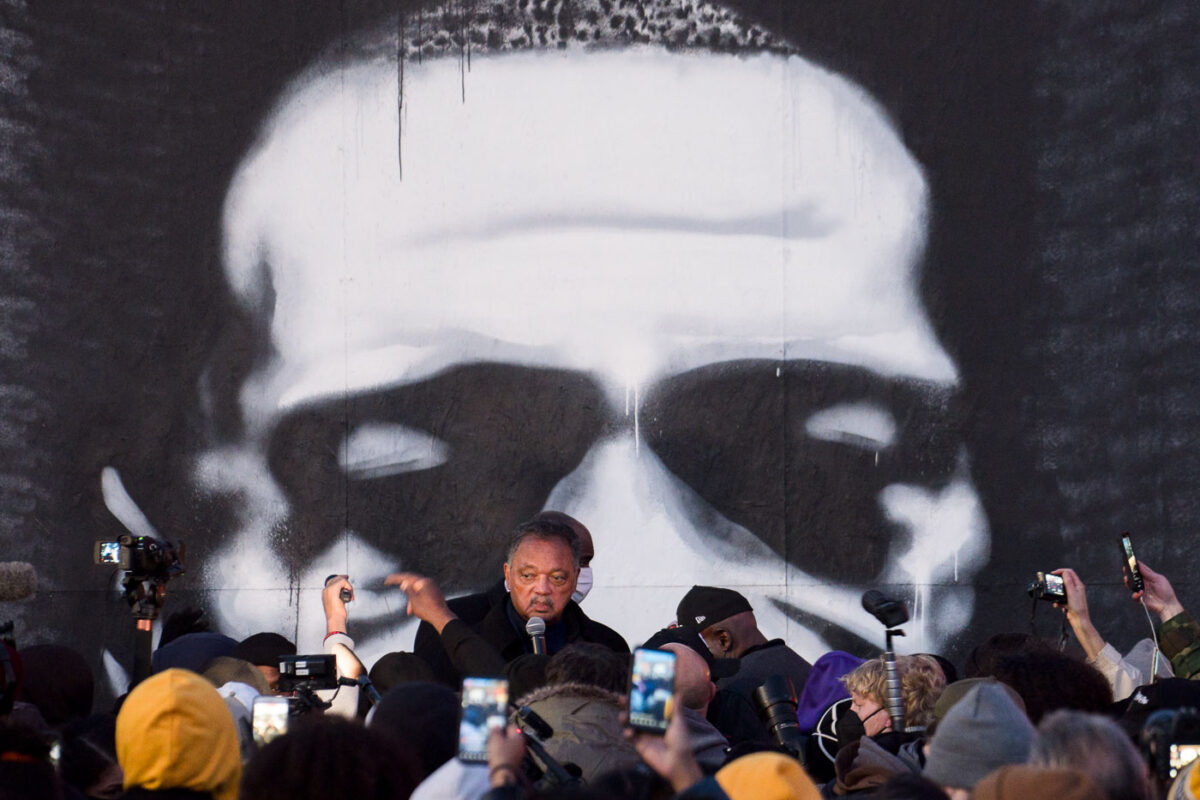
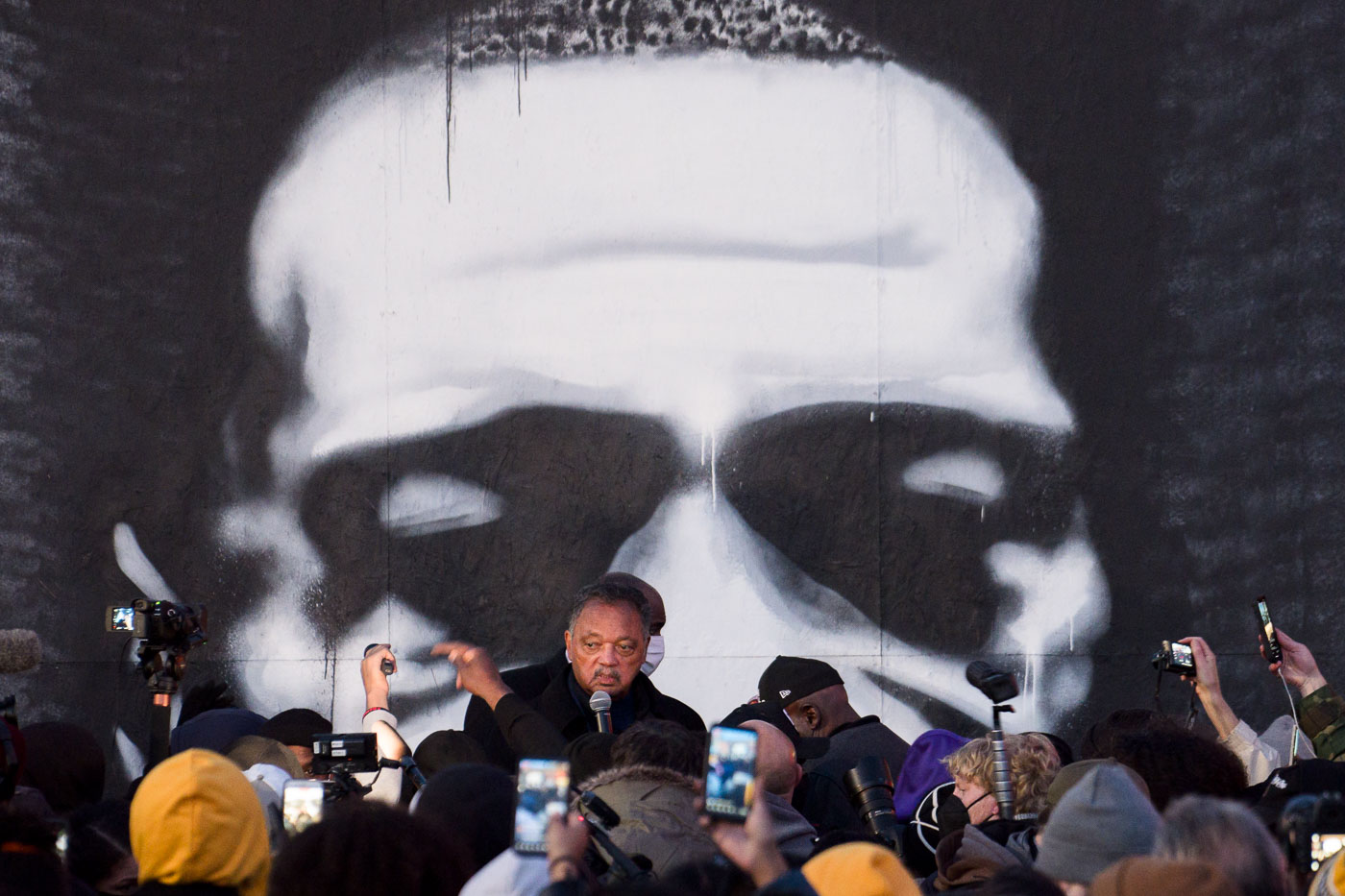
Jesse Jackson speaks at George Floyd Square in Minneapolis before a crowd and mural.
Civil rights leader Jesse Jackson addresses a crowd at George Floyd Square in Minneapolis. The square, located at the intersection of Chicago Avenue and 38th Street, became a focal point for protests following the May 25, 2020, killing of George Floyd by Minneapolis police officers. The area has since been transformed into a memorial and a site for ongoing activism and community gatherings.

Jesse Jackson speaks at George Floyd Square, Minneapolis
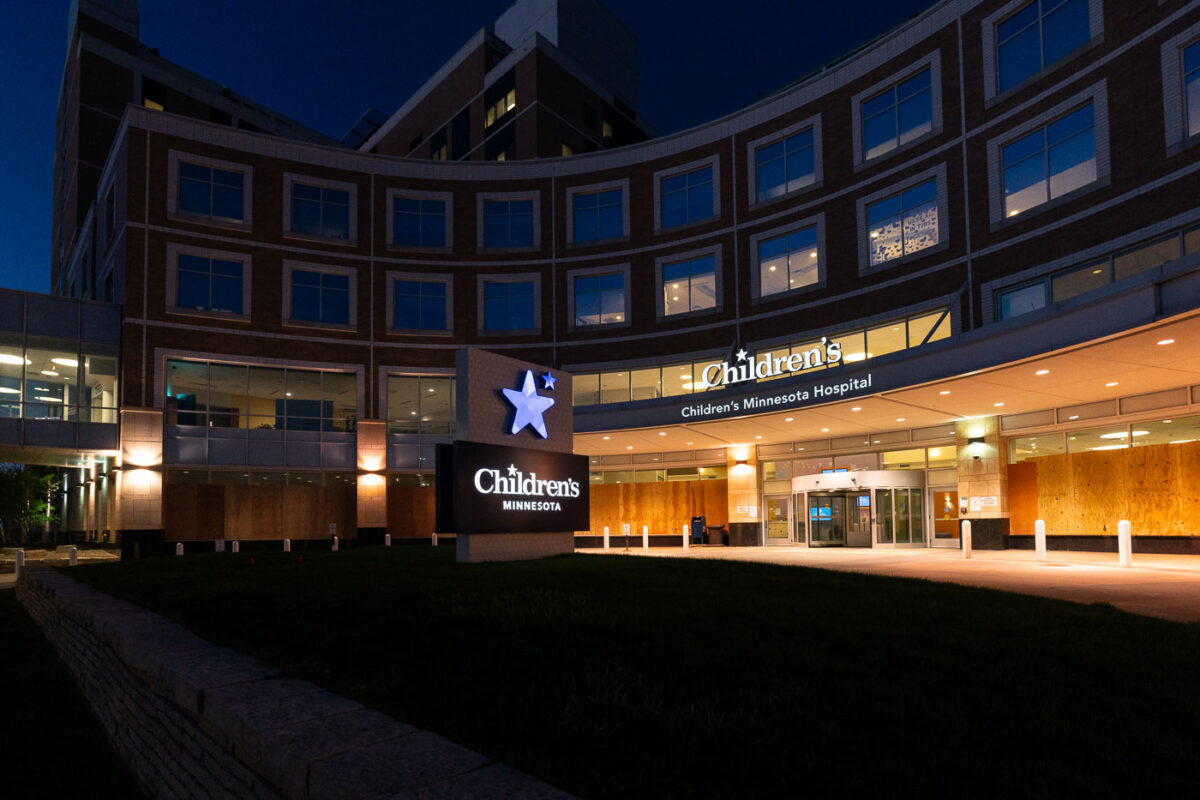
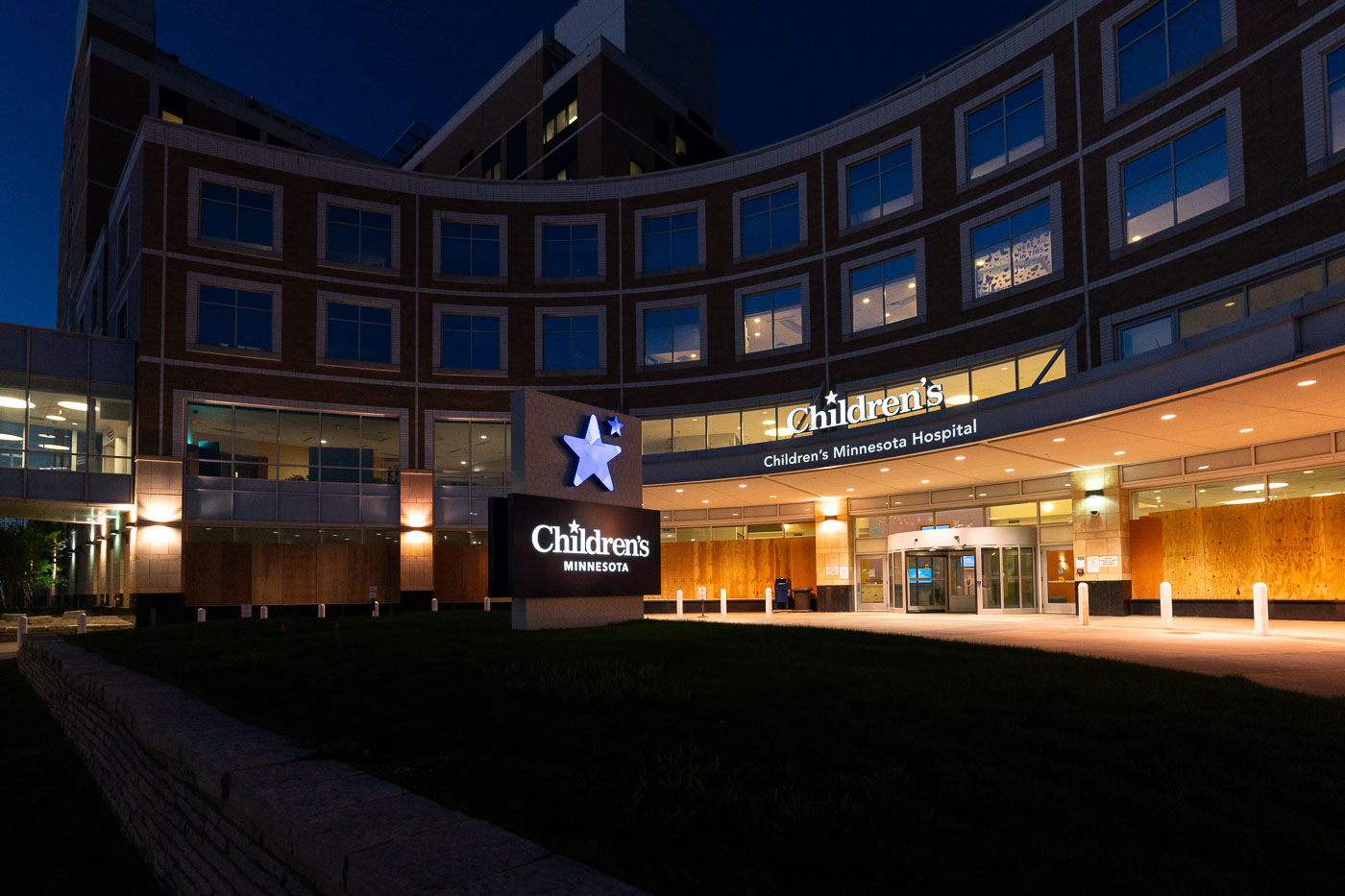
Children's Minnesota Hospital boarded up in Minneapolis during the Chauvin trial.
Children's Minnesota Hospital in South Minneapolis was boarded up in anticipation of potential unrest during the Derek Chauvin murder trial in April 2021. The trial, which followed the death of George Floyd, led to heightened security measures across the city. This hospital, a key medical facility for children in the region, was protected to ensure continued operations and the safety of patients and staff amidst the possibility of civil disturbance.

Children’s Minnesota Hospital Boarded Up for Chauvin Trial

Boarded storefronts at US Bank Plaza in downtown Minneapolis at night.
Buildings in downtown Minneapolis, including the US Bank Plaza, were boarded up in the aftermath of the Derek Chauvin murder trial. The plywood coverings, visible in this image, were a response to potential unrest following the verdict. Three days after Chauvin was found guilty of murder and manslaughter, the boarding began to be removed, signaling a return to normalcy in the city center. The trial, which stemmed from the death of George Floyd, had sparked widespread protests and a period of intense social and political focus on Minneapolis.

Minneapolis: US Bank Plaza boarded during Chauvin Trial aftermath
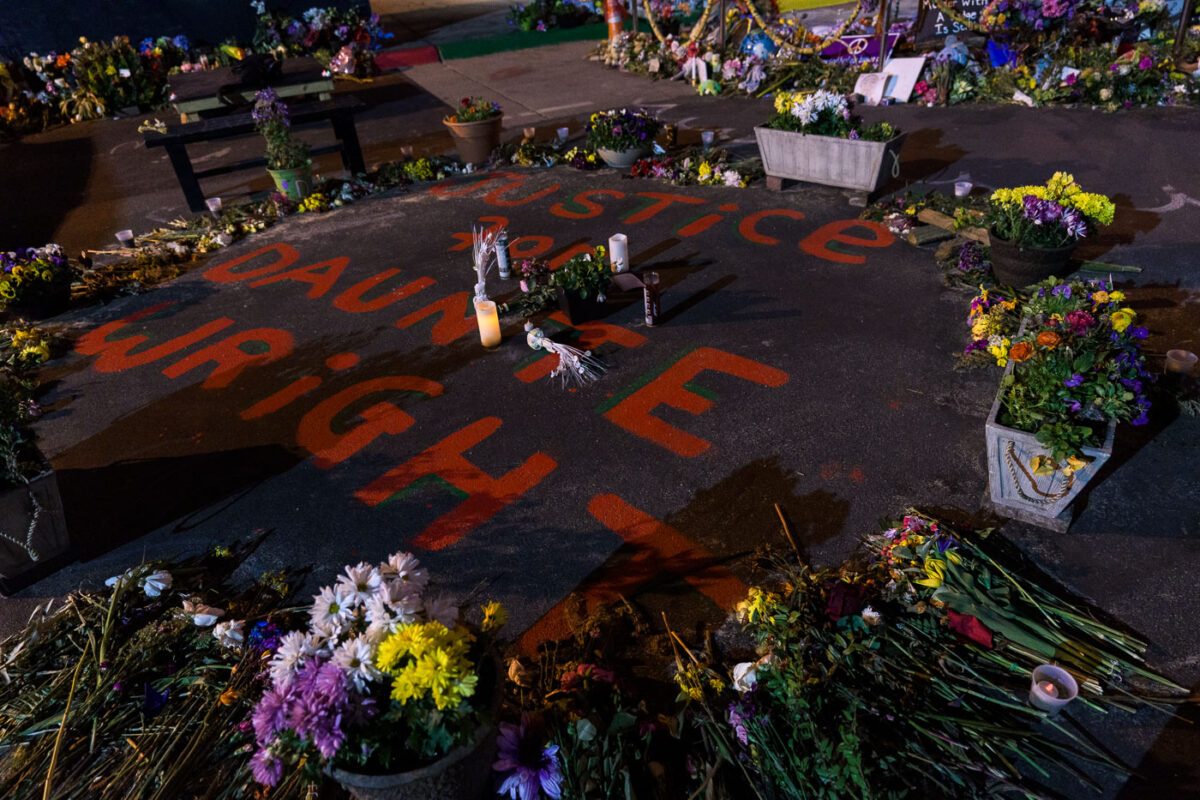
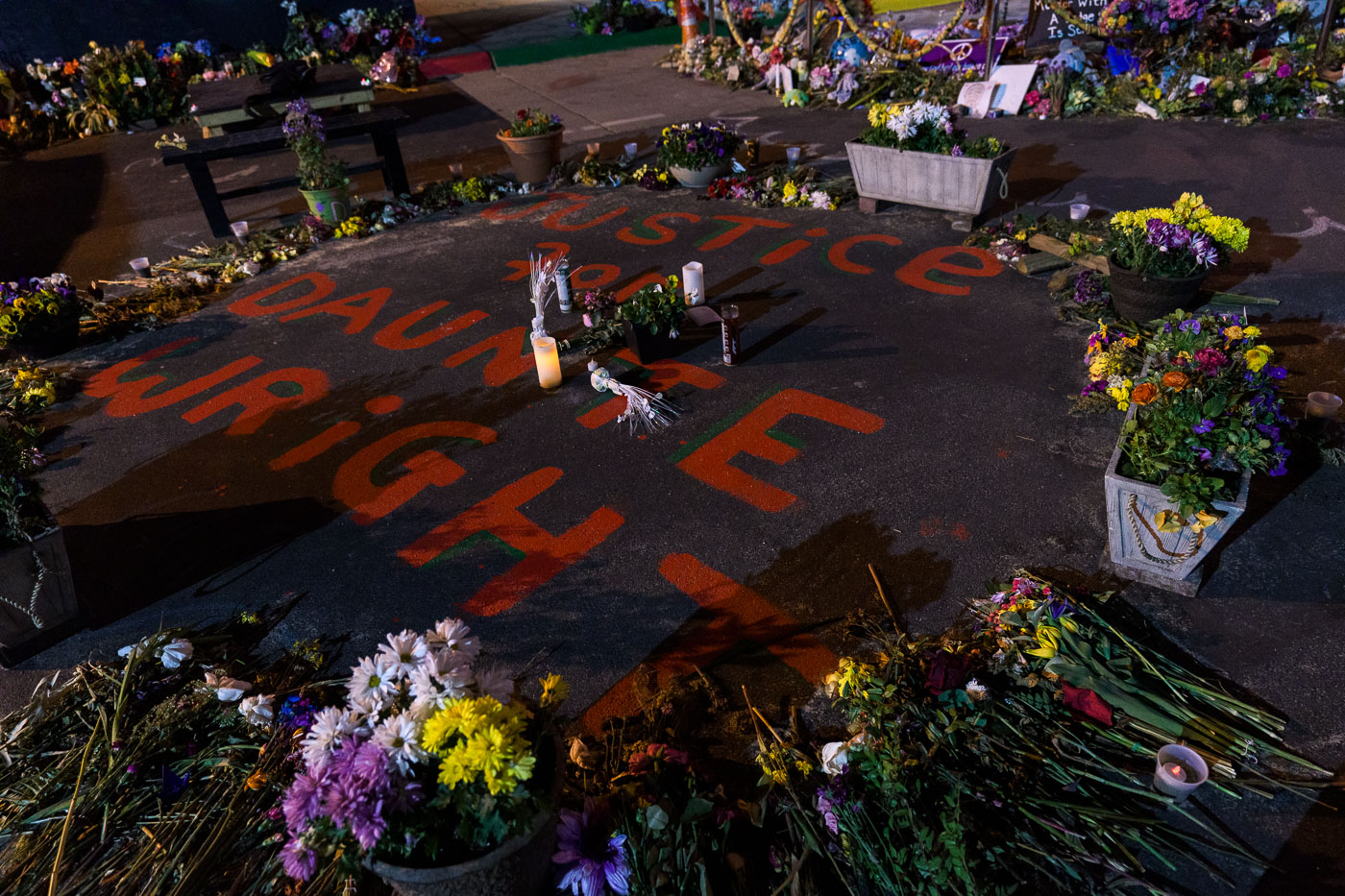
Daunte Wright memorial at George Floyd Square in Minneapolis, surrounded by flowers and candles.
A memorial for Daunte Wright is visible at George Floyd Square in Minneapolis. Wright, a Black man, was fatally shot by Brooklyn Center Police Officer Kim Potter on April 11, 2021, during a traffic stop in nearby Brooklyn Center. The incident sparked protests and unrest in the Minneapolis–Saint Paul metropolitan area. George Floyd Square, located in South Minneapolis, became a focal point for protests following the murder of George Floyd in May 2020.

Daunte Wright Memorial at George Floyd Square, Minneapolis
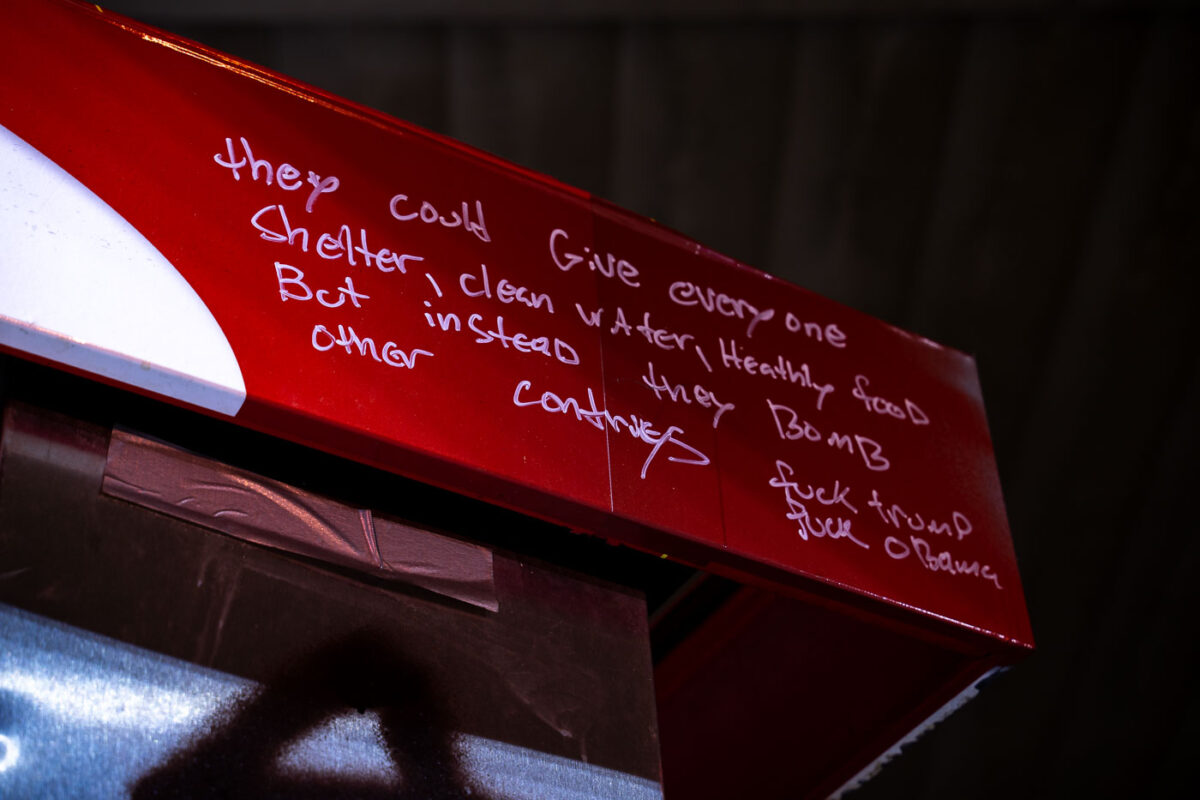
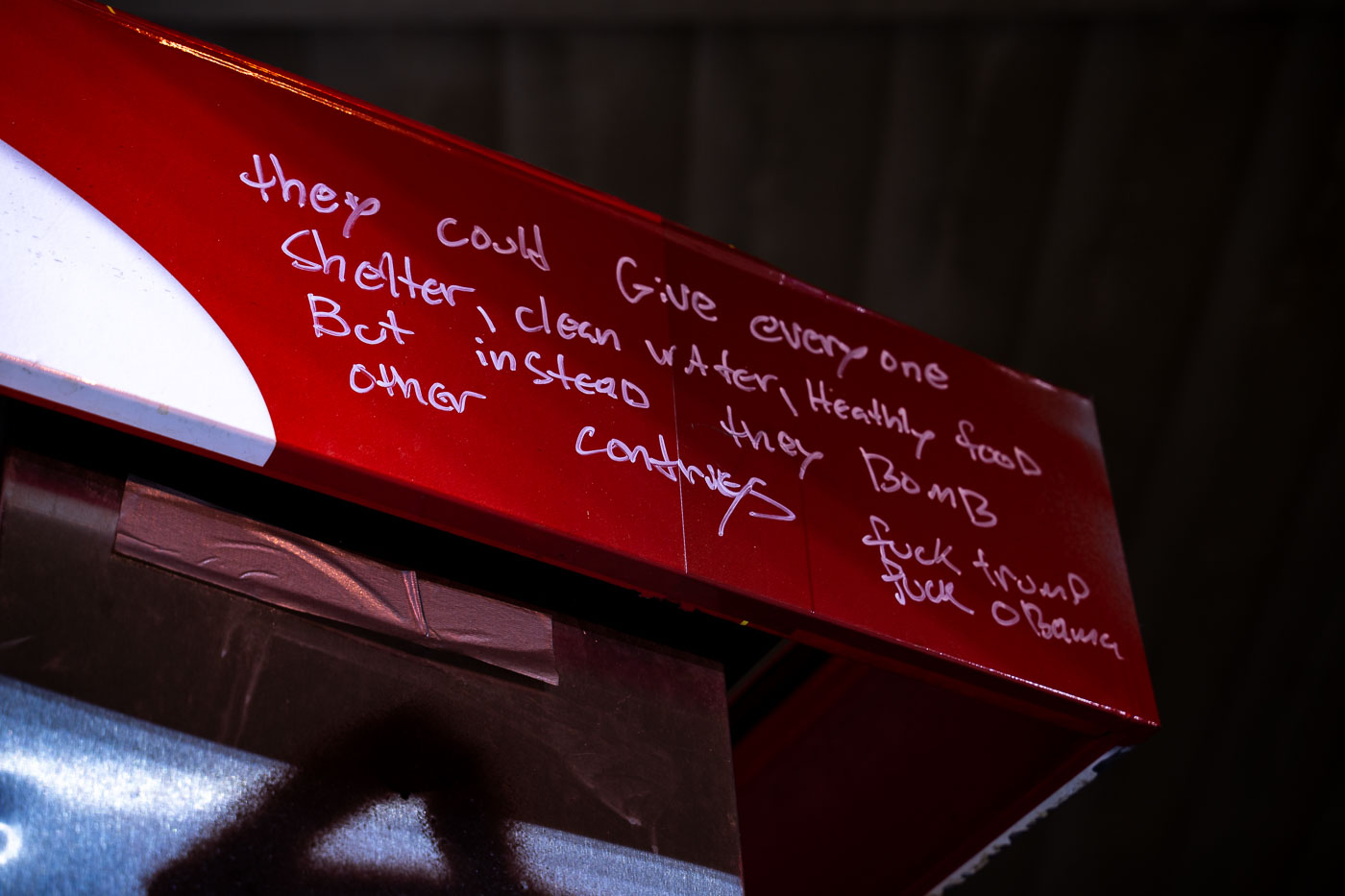
Graffiti on the former Speedway gas station at George Floyd Square in Minneapolis.
Graffiti on the former Speedway gas station at George Floyd Square in Minneapolis reads, "they could give everyone shelter, clean water, healthy food, but instead they bomb other countries. fuck trump fuck obama." This message reflects sentiments expressed during the period of unrest following the murder of George Floyd in May 2020, when the intersection was occupied and renamed by protesters. The Speedway station became a focal point within the autonomous zone, serving as a site for community gathering and artistic expression. The graffiti critiques perceived government priorities and foreign policy.

George Floyd Square Gas Station: “Fuck Trump Fuck Obama” Graffiti
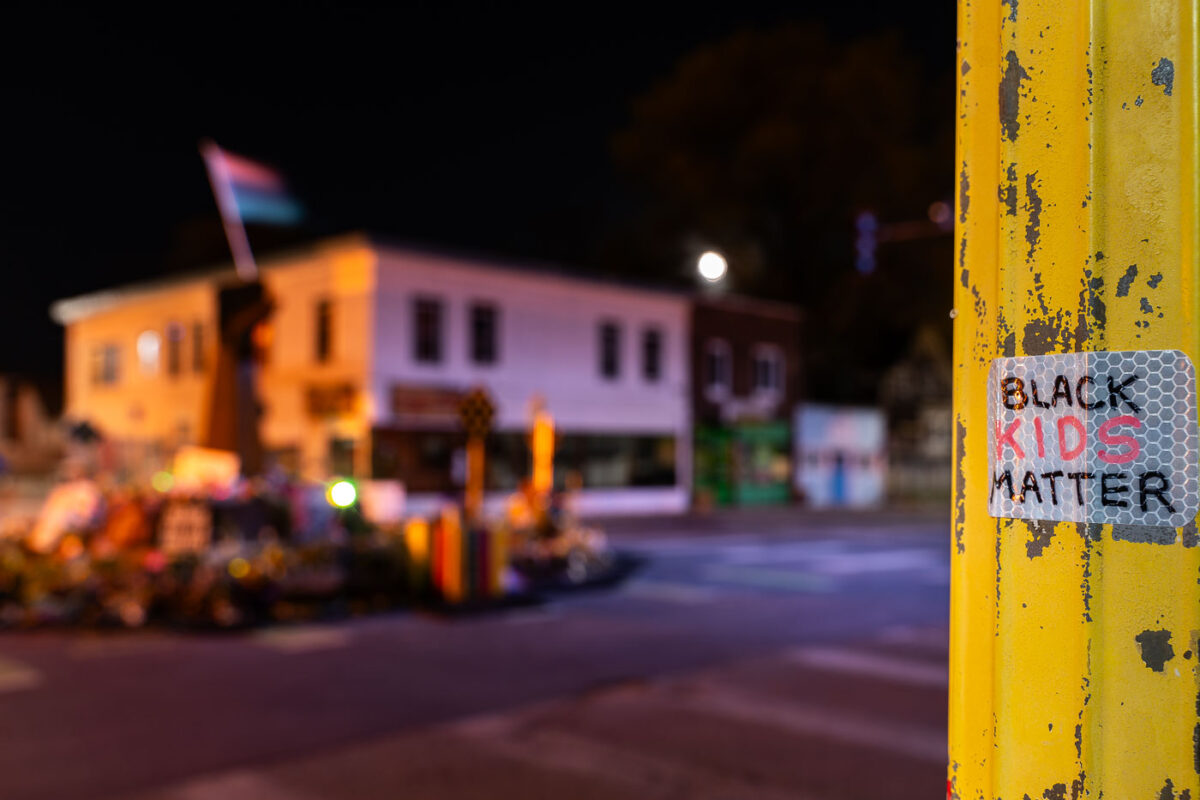
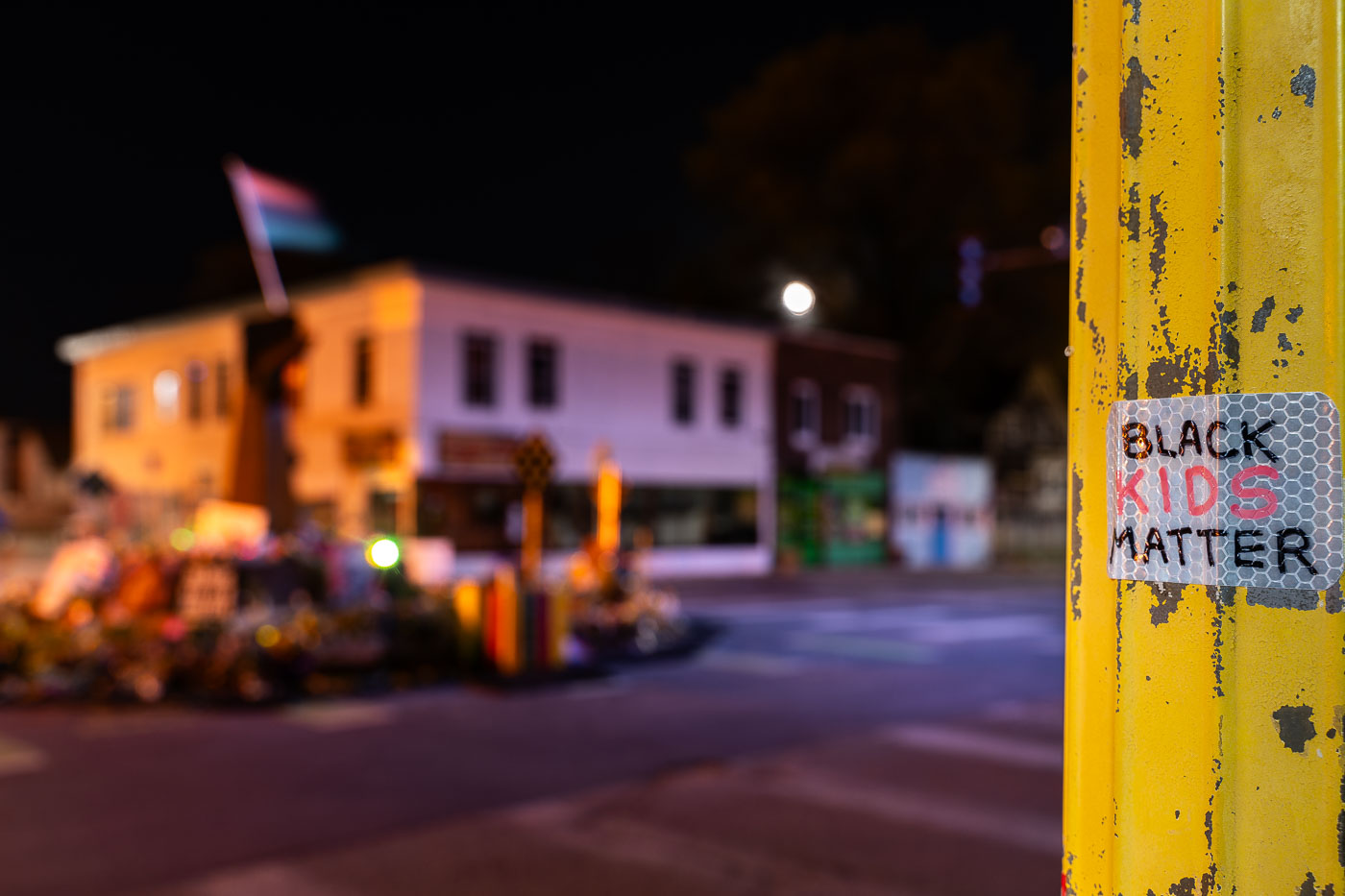
"Black Kids Matter" sticker on a light pole at George Floyd Square, Minneapolis.
A "Black Kids Matter" sticker is affixed to a weathered yellow light pole in George Floyd Square, located in South Minneapolis. This area became a focal point of protests and activism following the murder of George Floyd in May 2020. The square, established by protesters at the intersection of 38th Street and Chicago Avenue, served as a space for community organizing and remembrance. The sticker, a symbol of ongoing advocacy for Black youth, reflects the broader social justice movements that have taken root in this significant urban space.

George Floyd Square: “Black Kids Matter” Sticker on Light Pole
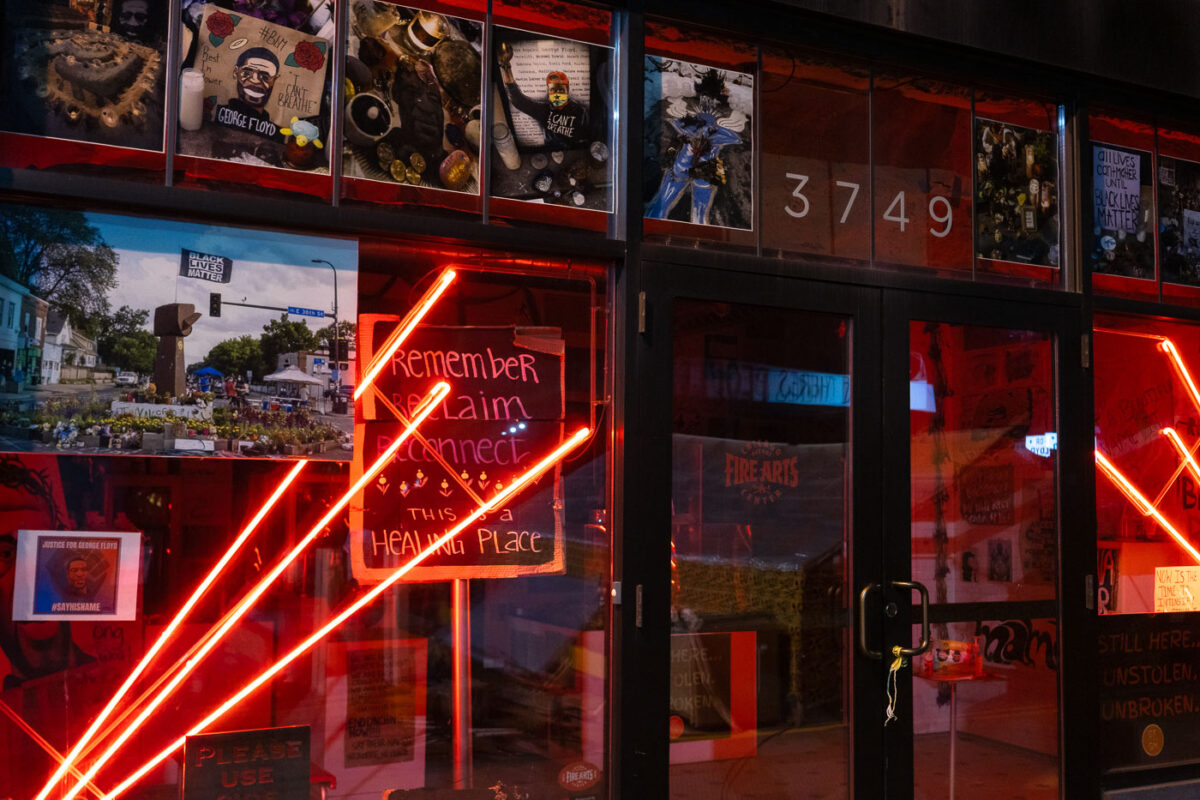
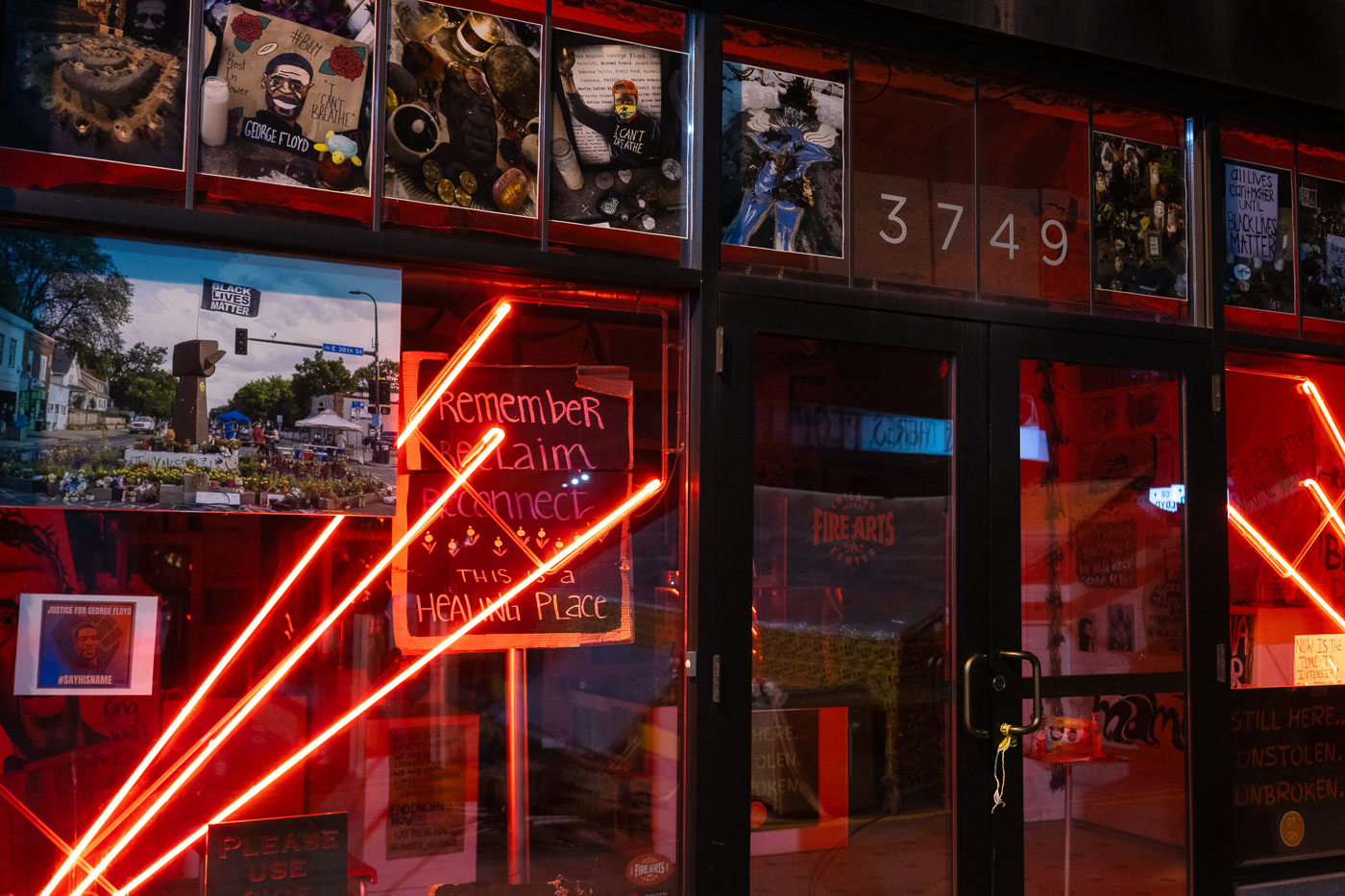
Fire Arts Center in George Floyd Square in May 2021
The Fire Arts Center, located at 3749 Chicago Avenue in South Minneapolis, became a focal point for community expression following the murder of George Floyd in 2020. The center's storefront displays tributes and messages related to the Black Lives Matter movement and the ongoing fight for justice. The surrounding area, known as George Floyd Square, transformed into a memorial and gathering space, reflecting the community's response to racial injustice and police brutality.

Fire Arts Center at George Floyd Square, Minneapolis
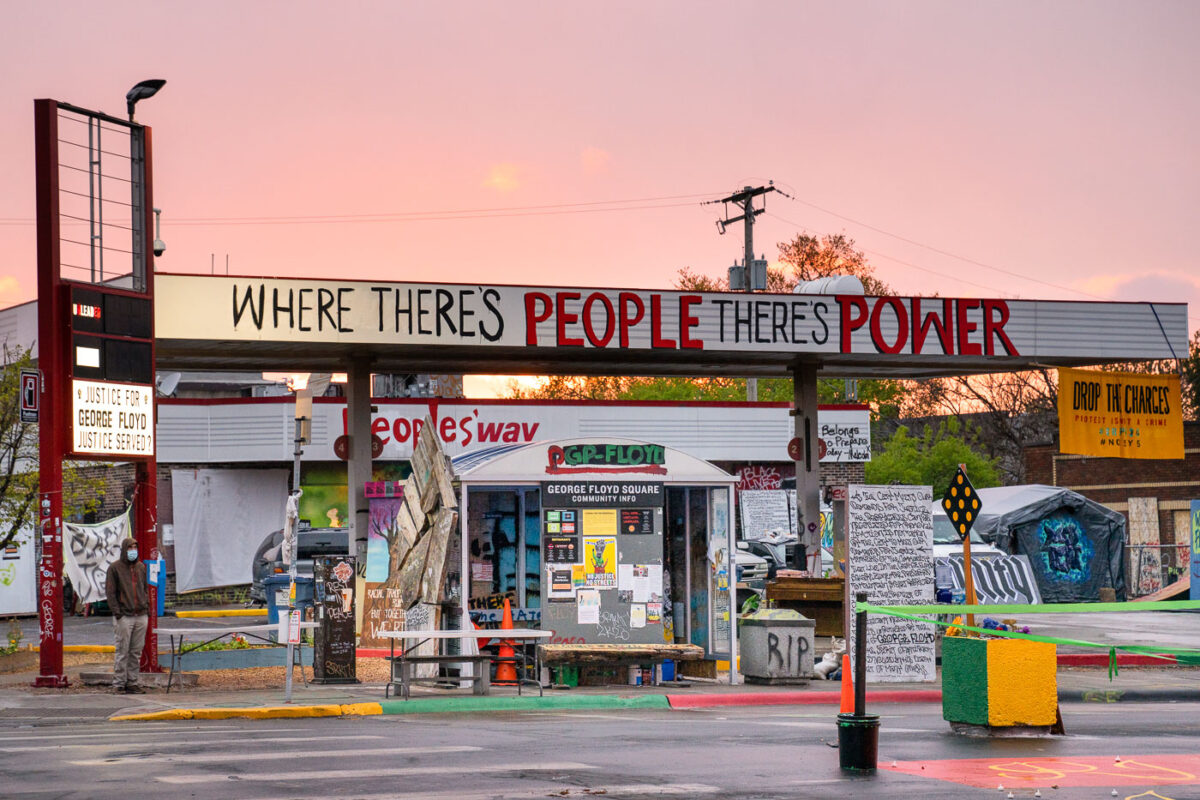
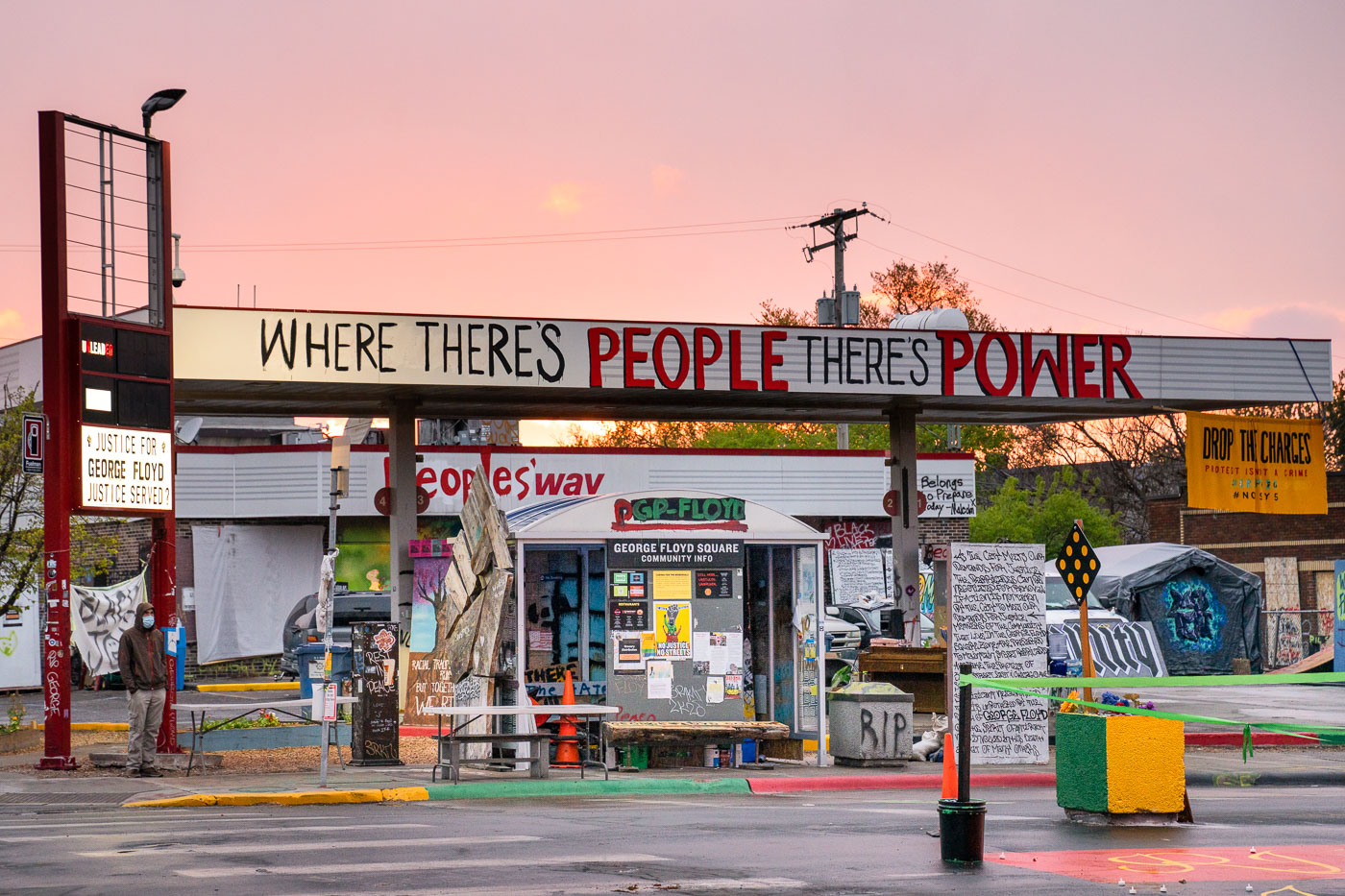
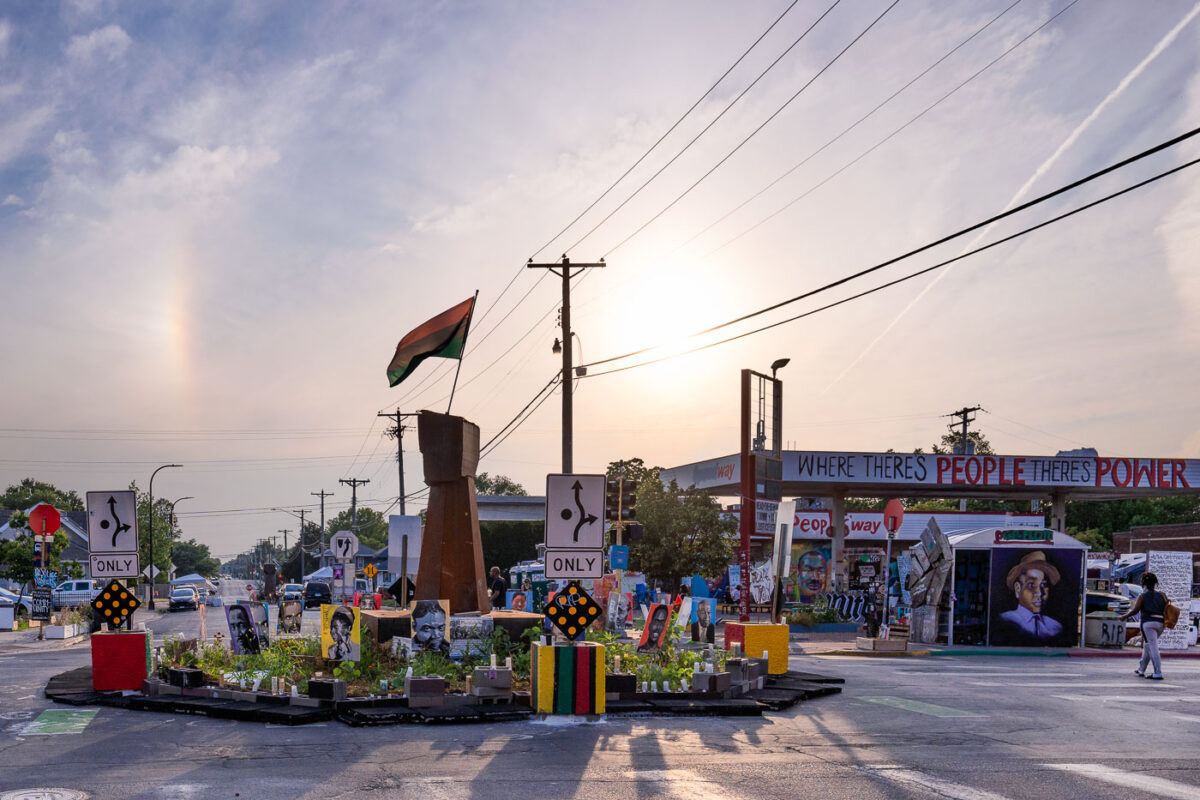
Sun sets behind The Peoples Way at George Floyd Square
The Peoples Way at George Floyd Square in Minneapolis. The area has been a place of protest since the May 2020 killing of George Floyd by Minneapolis Police officers.

George Floyd Square at Sunset, Minneapolis

Roller skating at George Floyd Square
The "Roll Skate Bounce" event took place at George Floyd Square in Minneapolis, a location that became a focal point for protests and community organizing following the murder of George Floyd in May 2020. The square, formerly known as the intersection of 38th Street and Chicago Avenue, was transformed into a space for remembrance, activism, and community gatherings.

Roll Skate Bounce event at George Floyd Square, Minneapolis
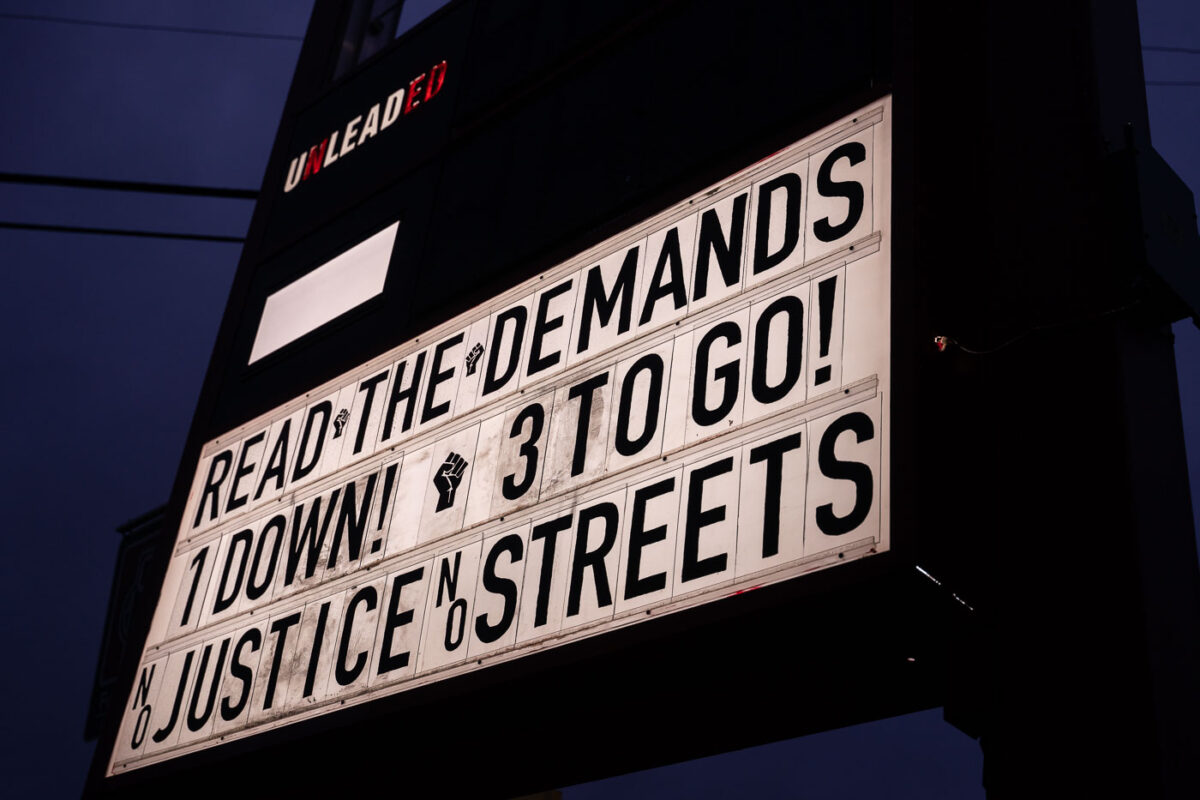
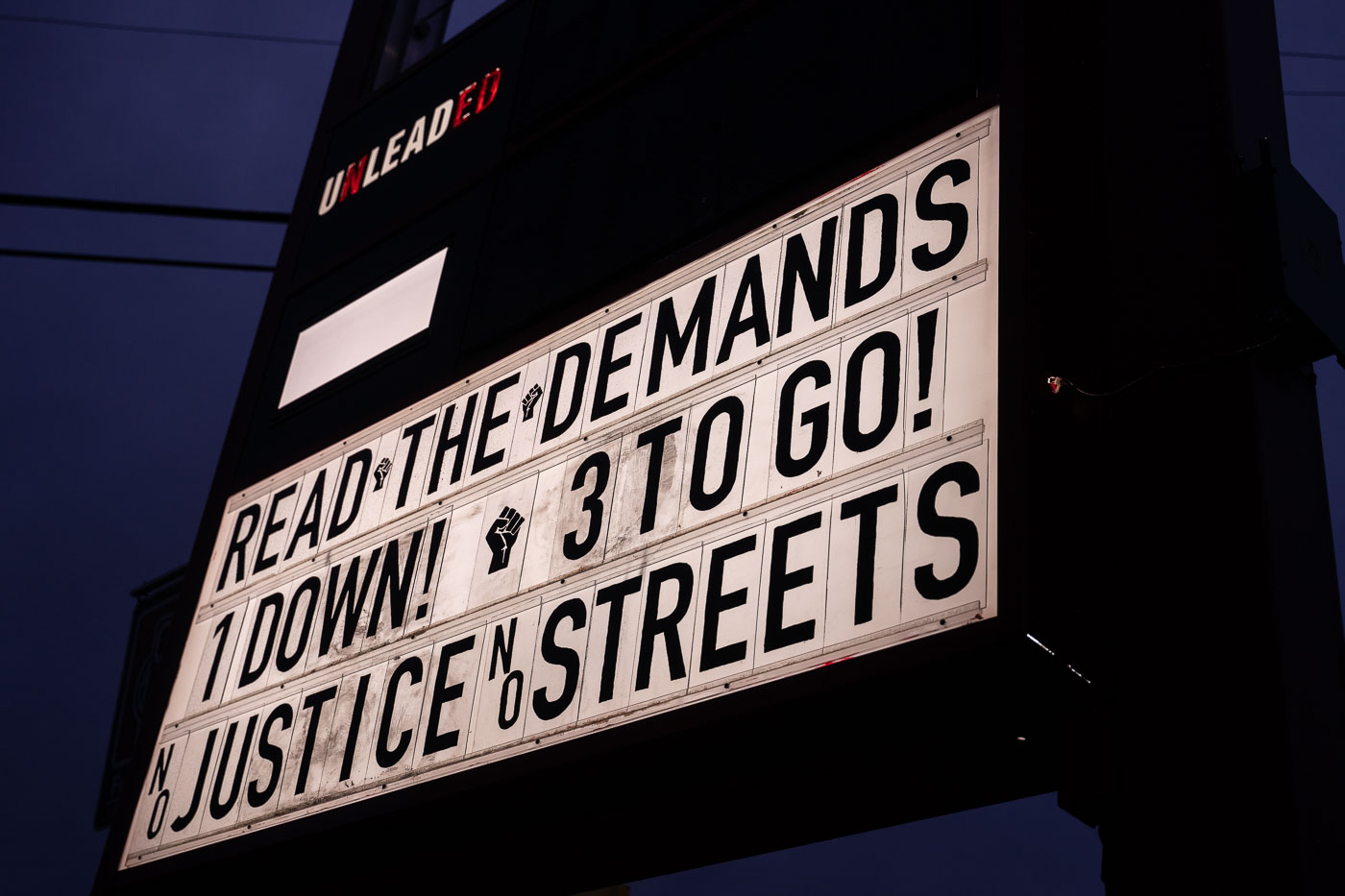
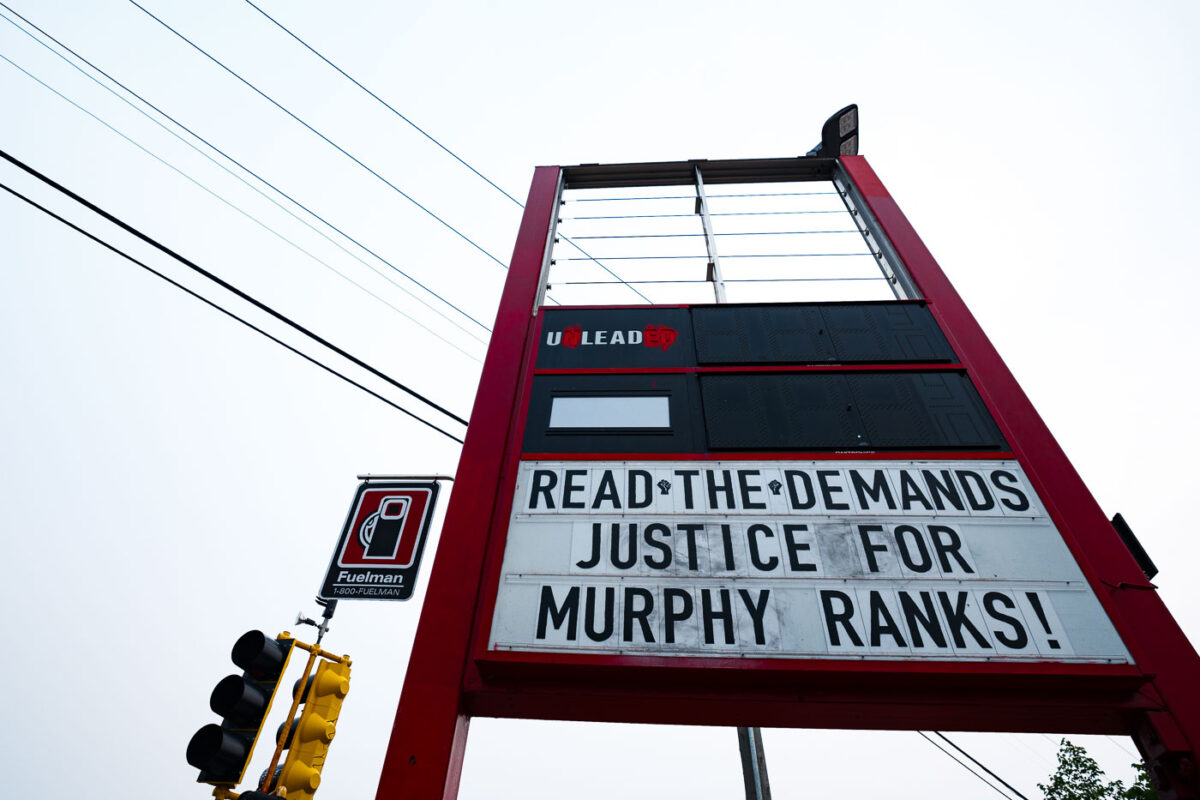
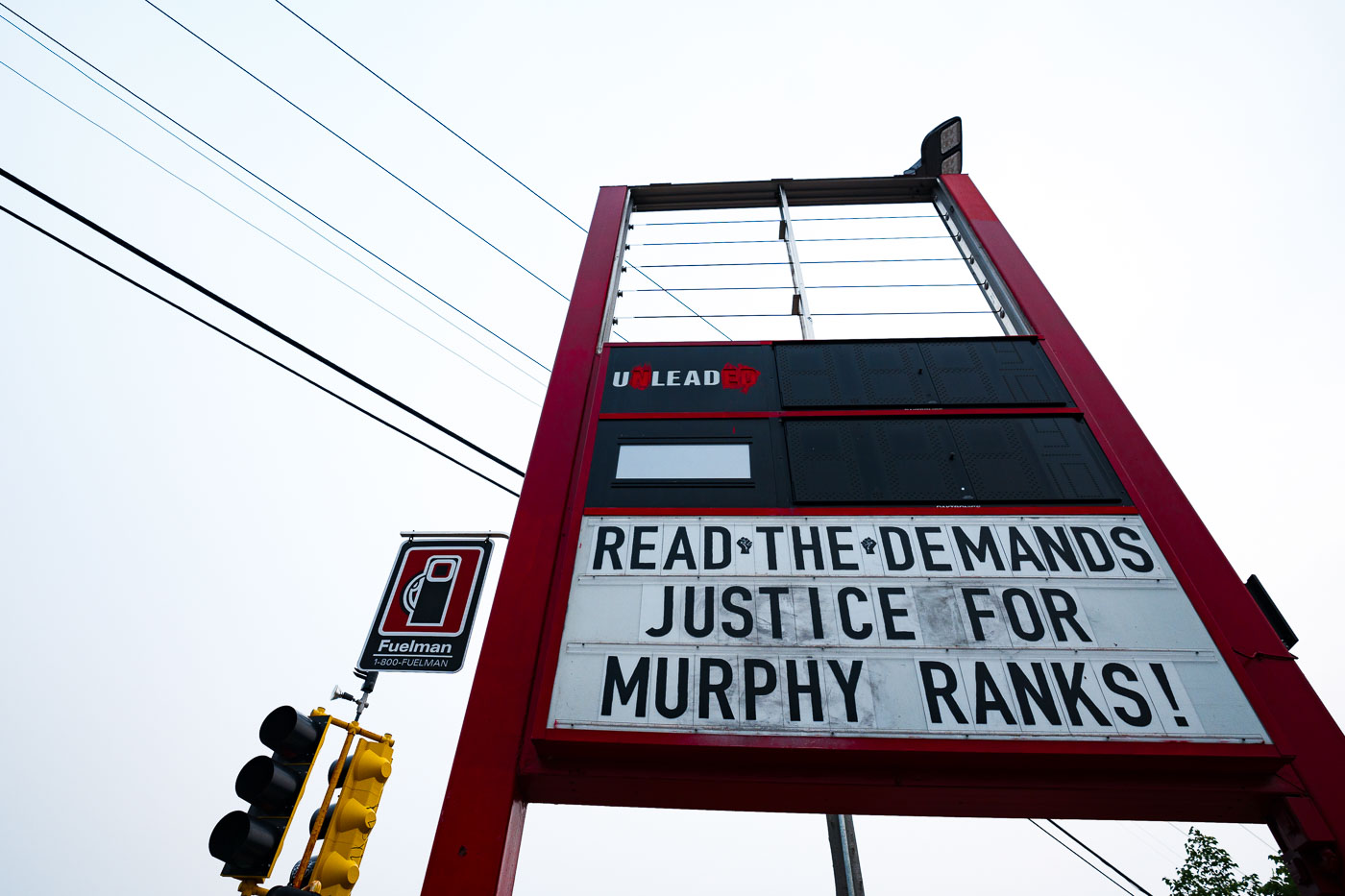
Read the Demands at George Floyd Square
A sign at George Floyd Square in Minneapolis reads "READ THE DEMANDS, 1 DOWN 3 TO GO! & JUSTICE 4 STREETS." This message reflects the ongoing activism and demands for justice following the murder of George Floyd in May 2020. The square, established in the summer of 2020, became a focal point for protests against racial injustice and police brutality.

George Floyd Square: “Read the Demands, 1 Down 3 to Go!”
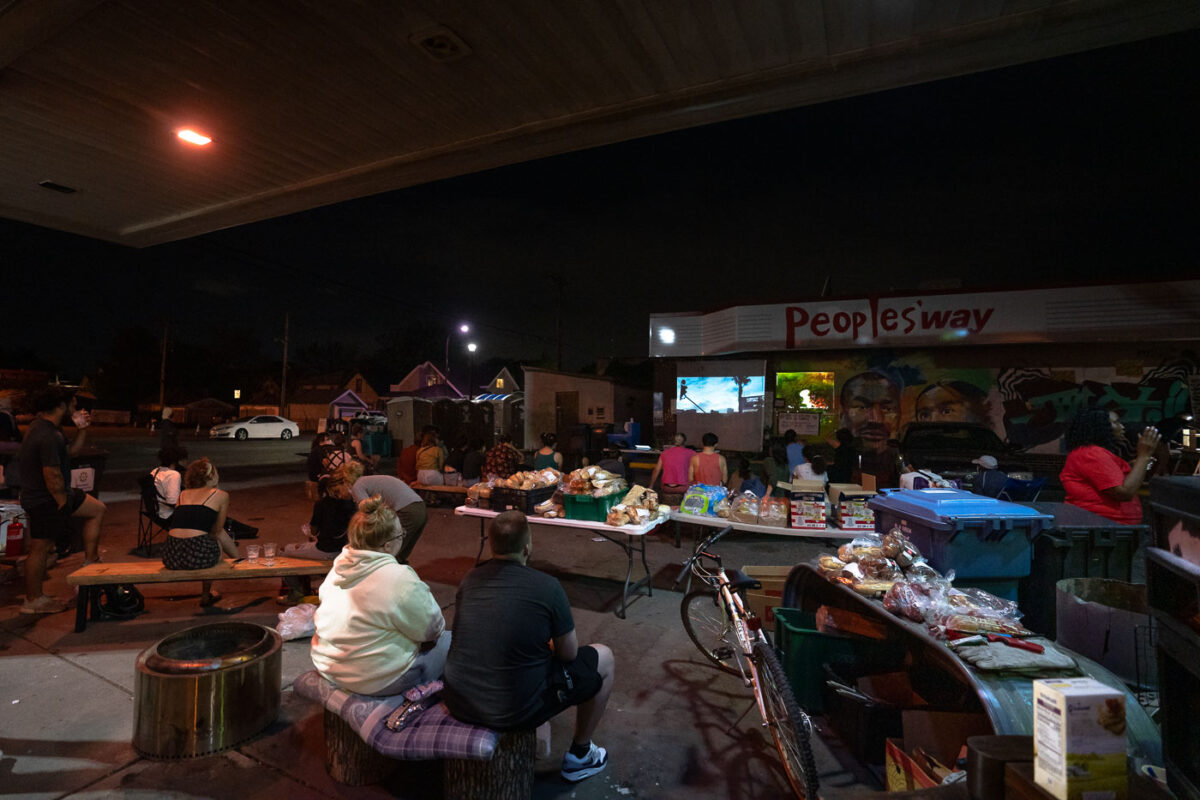
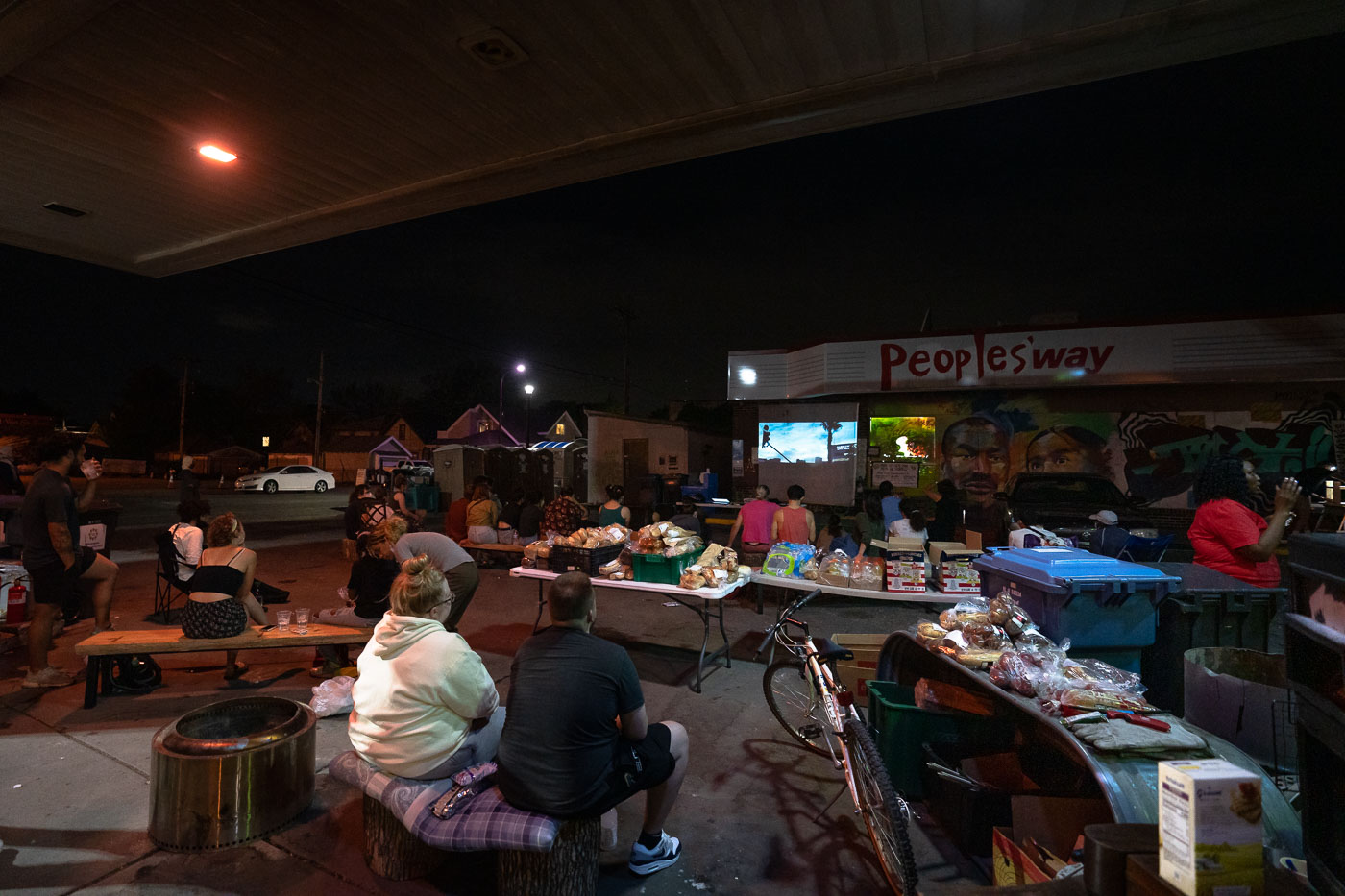
Movie screening at George Floyd Square People's Way
Community members gather at The People's Way in George Floyd Square, Minneapolis, for an outdoor screening of the documentary "Mayor." This gathering reflects the ongoing use of the space as a community hub and a site of cultural and political expression, following the murder of George Floyd in 2020. The area, formerly known as the intersection of 38th Street and Chicago Avenue, became a focal point for protests and a symbol of resistance. The People's Way itself is a testament to the community's efforts to reclaim and repurpose public space for collective use and dialogue.

Movie Screening at George Floyd Square’s People’s Way
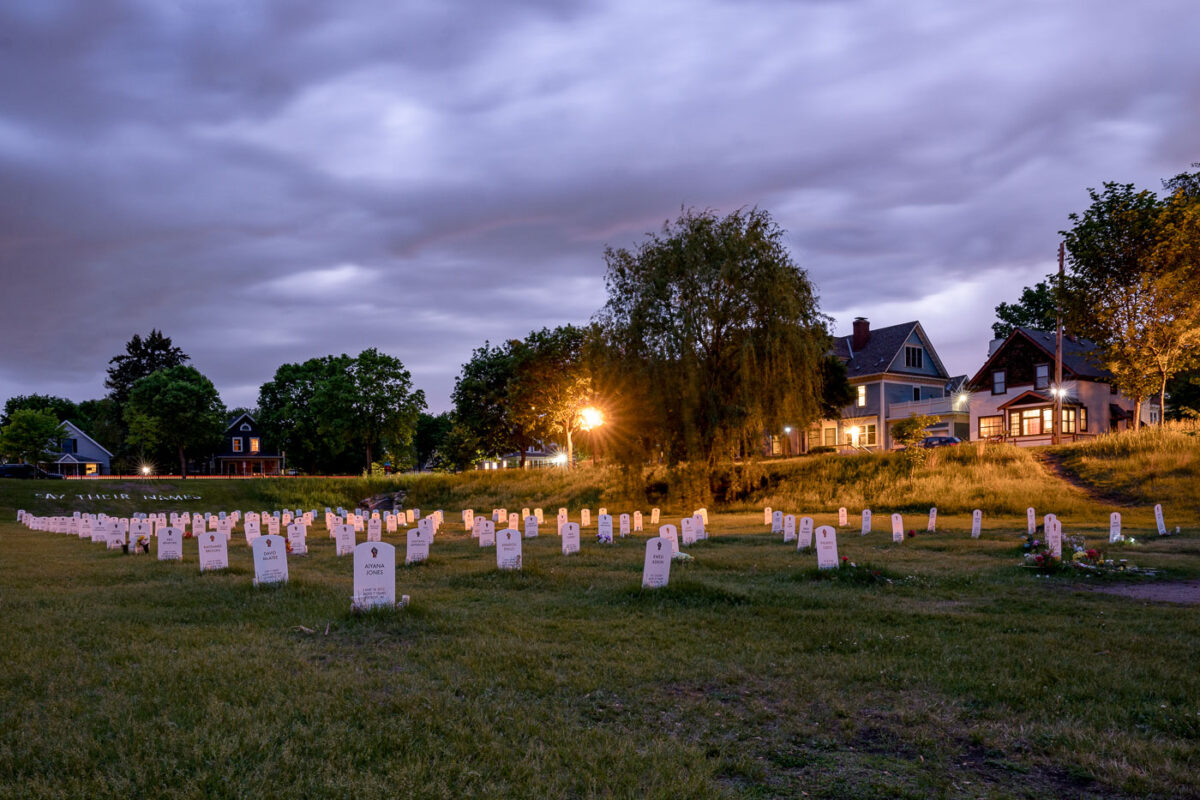
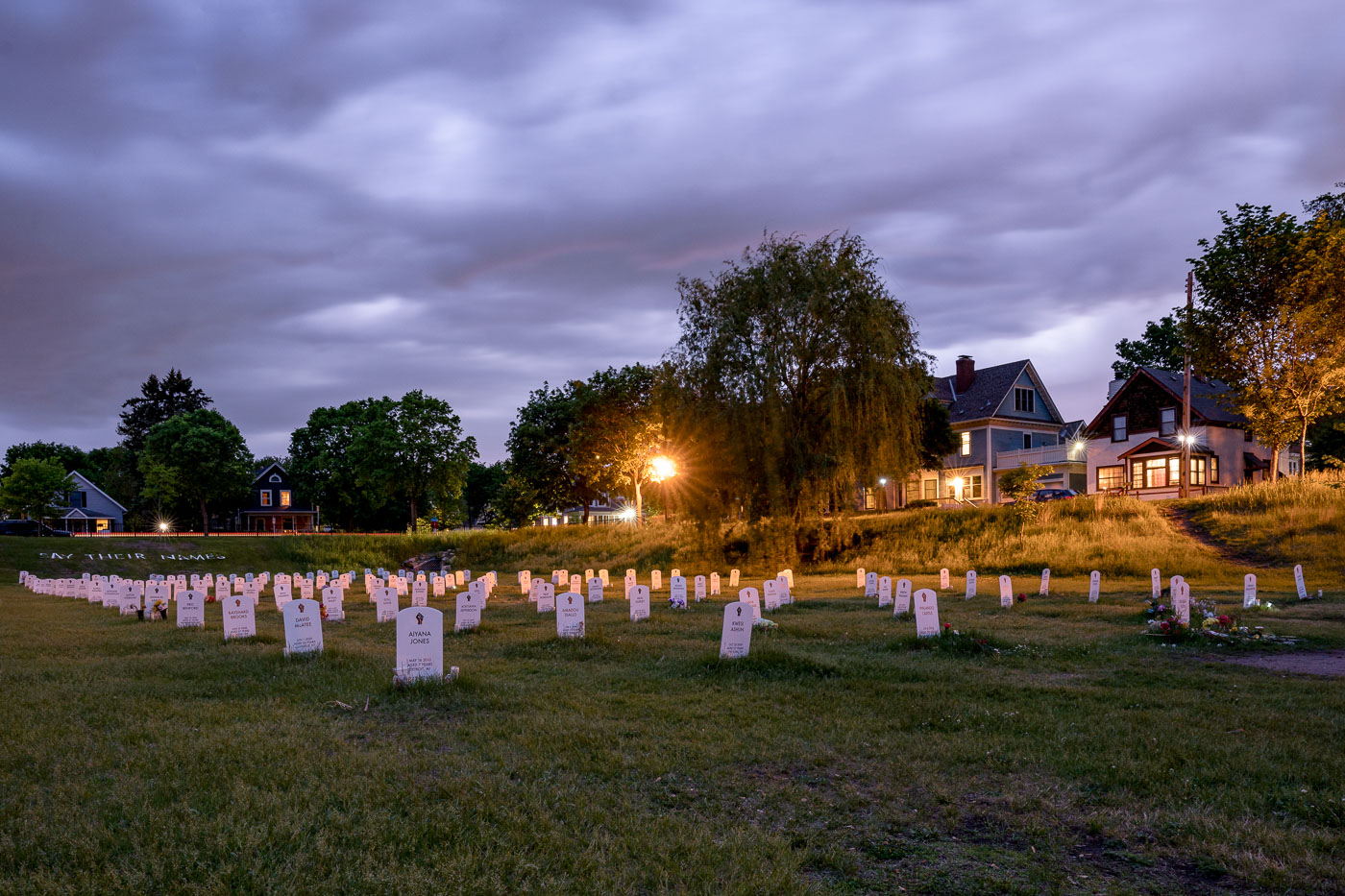
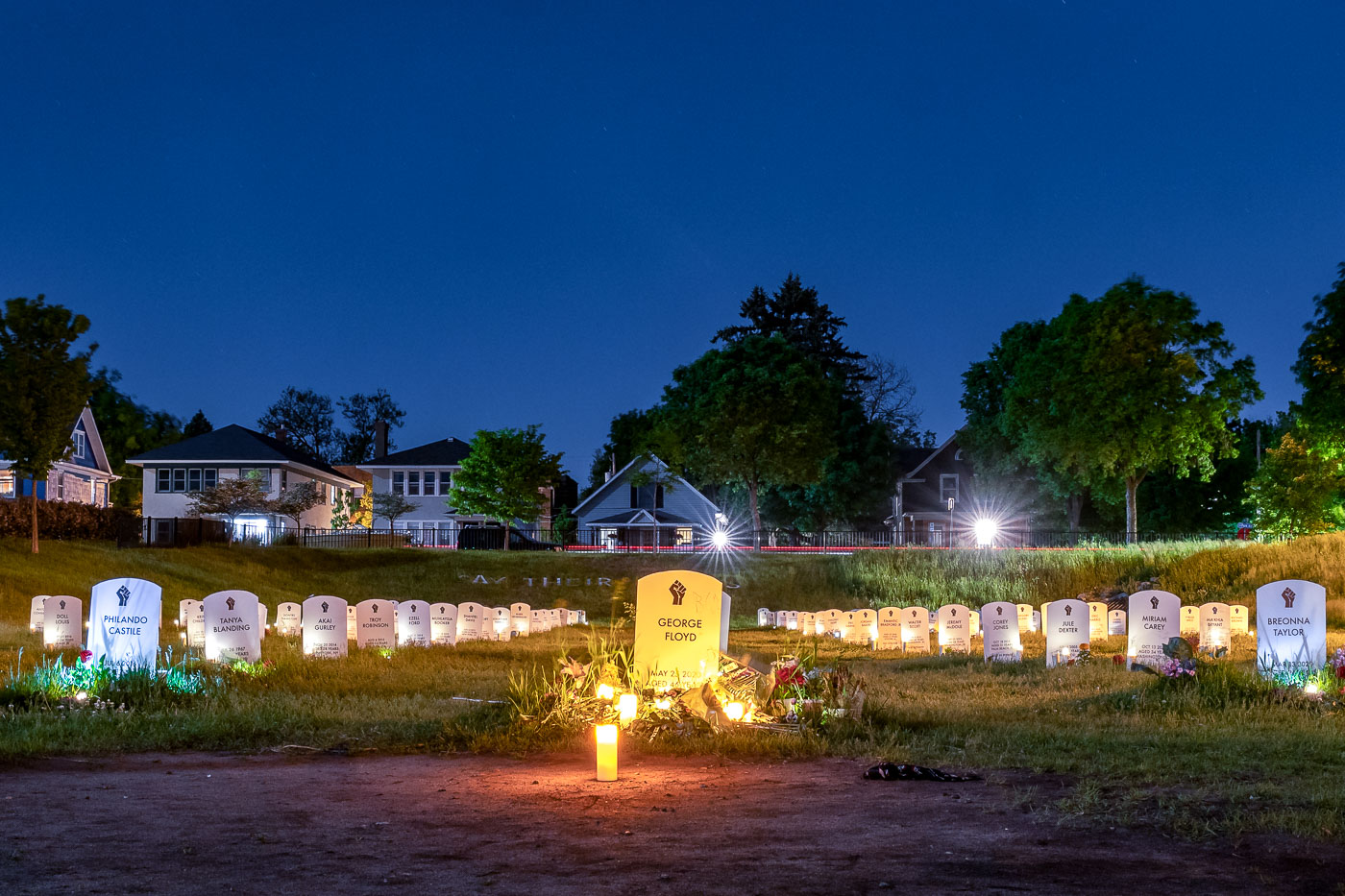
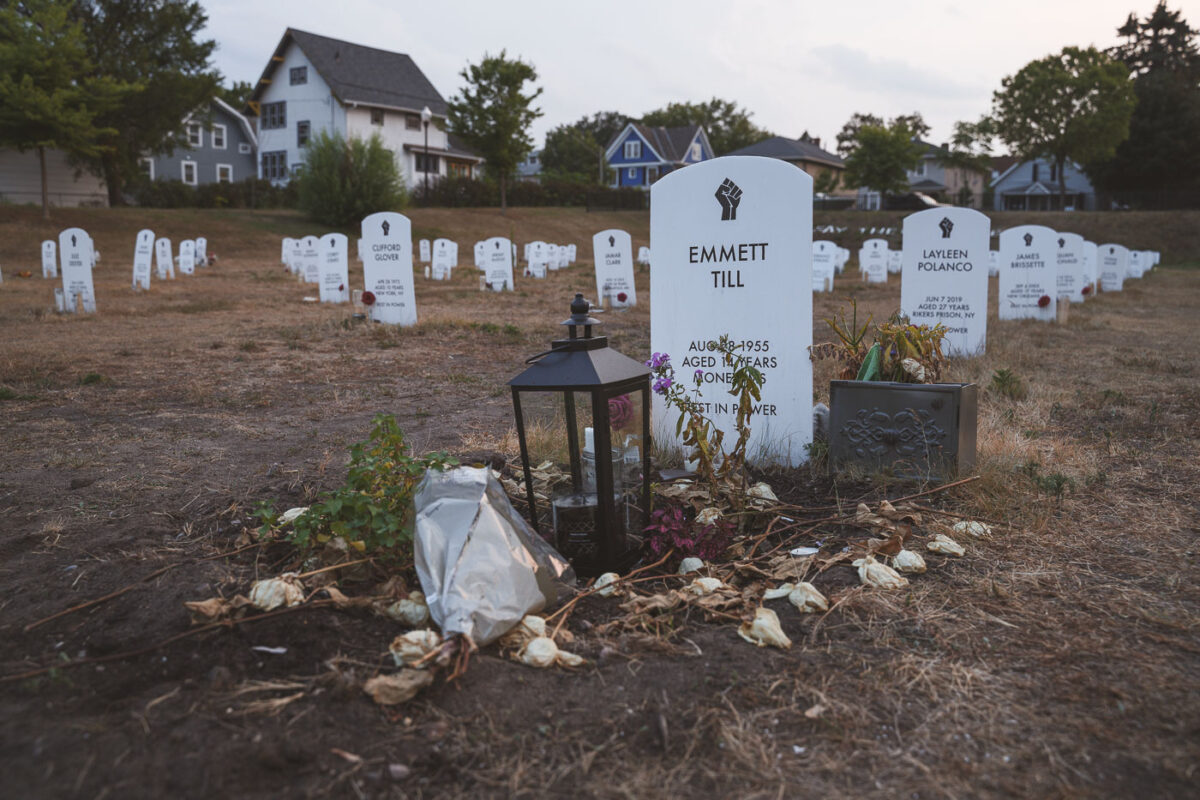
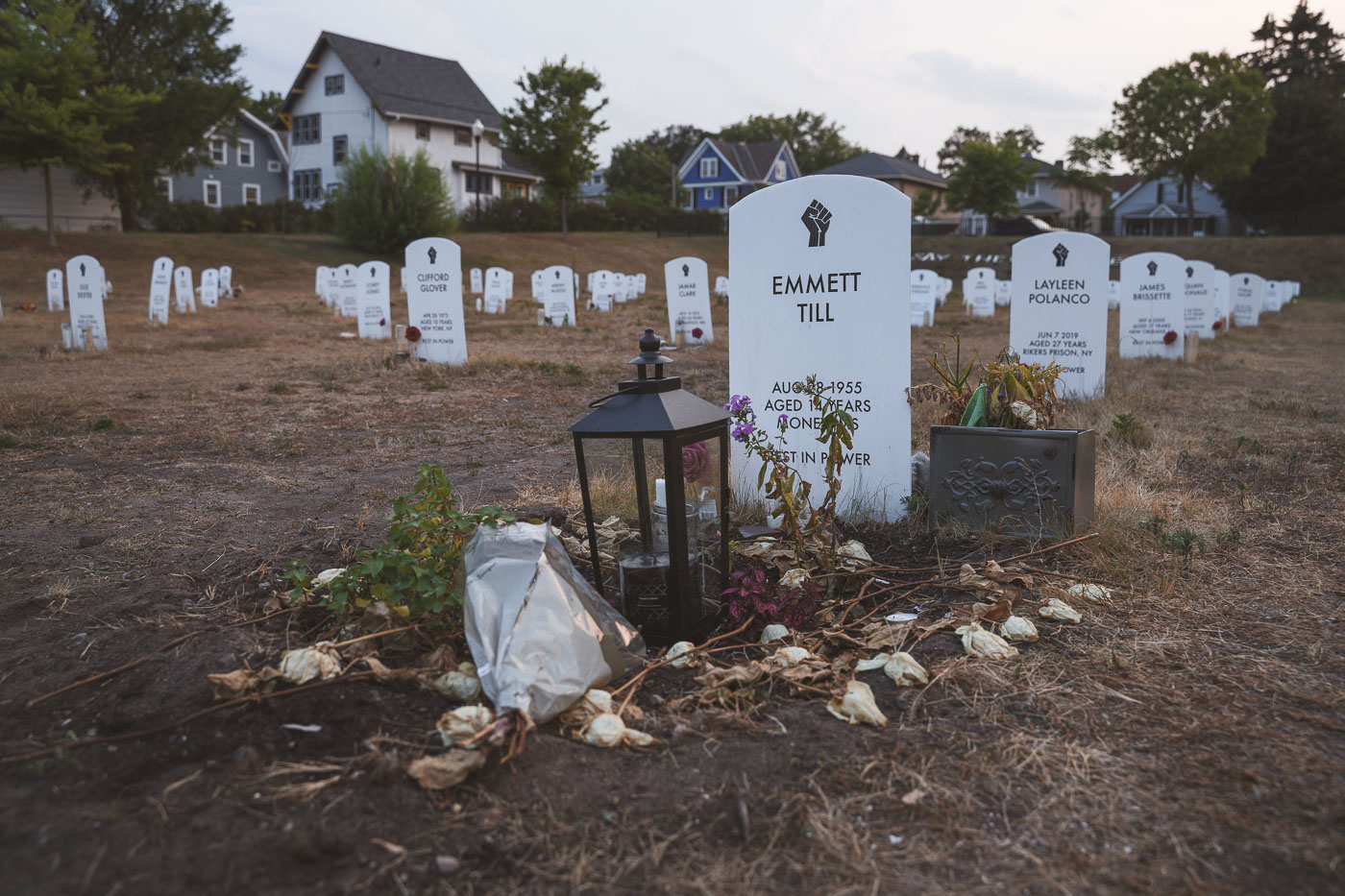
Say Their Names Cemetery in Minneapolis at dusk
The "Say Their Names Cemetery" in Minneapolis, established a block from George Floyd Square, honors victims of racial injustice and police brutality.

Say Their Names Cemetery, Minneapolis, at dusk
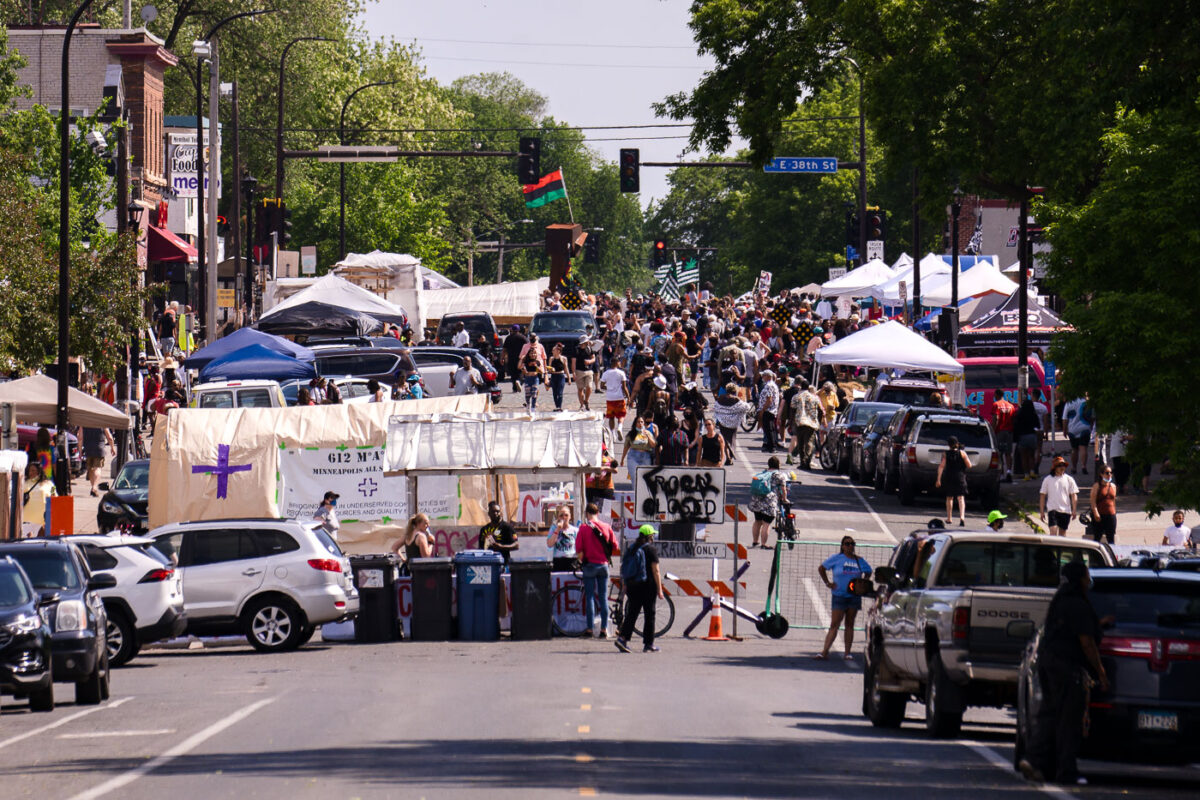
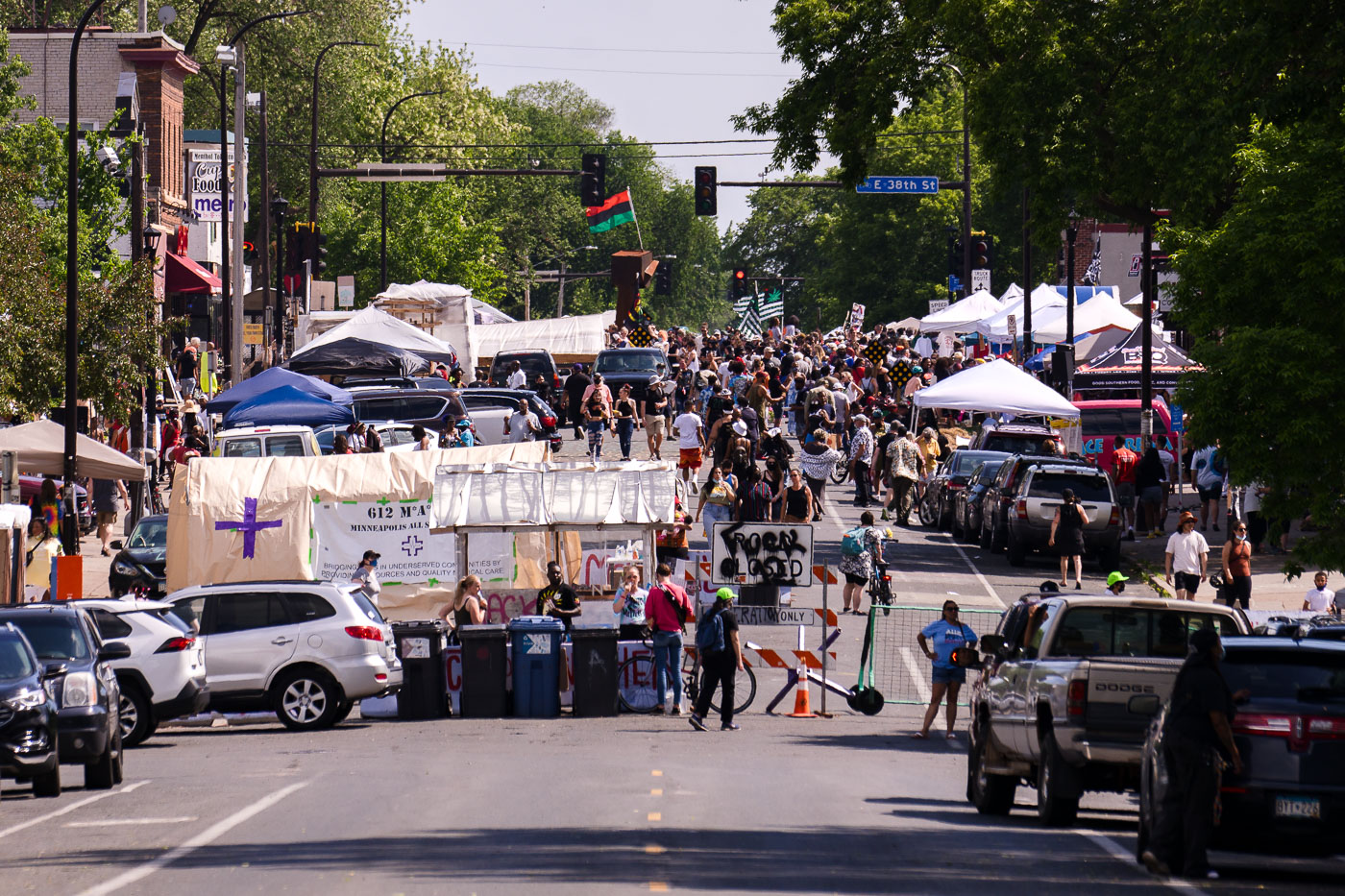
George Floyd Square on anniversary of Floyds murder
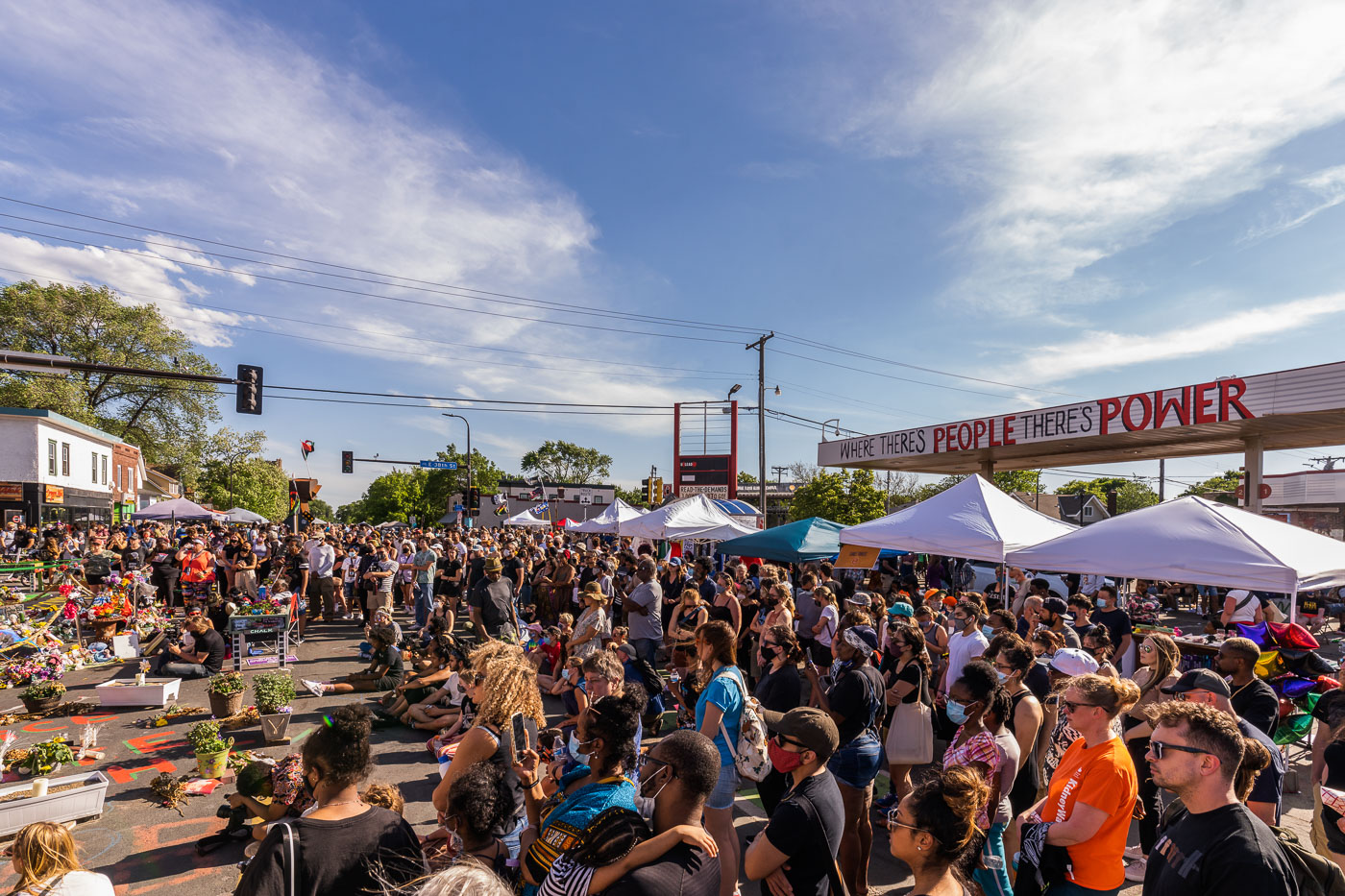
A large crowd gathers at George Floyd Square in Minneapolis on the one-year anniversary of George Floyd's murder. The intersection, located at 38th Street and Chicago Avenue, became a focal point for protests and community organizing following Floyd's death in May 2020. This gathering marks a year of continued activism and remembrance at the site, which has been transformed into a space for community expression and memorialization.

George Floyd Square Rise and Remember 2021
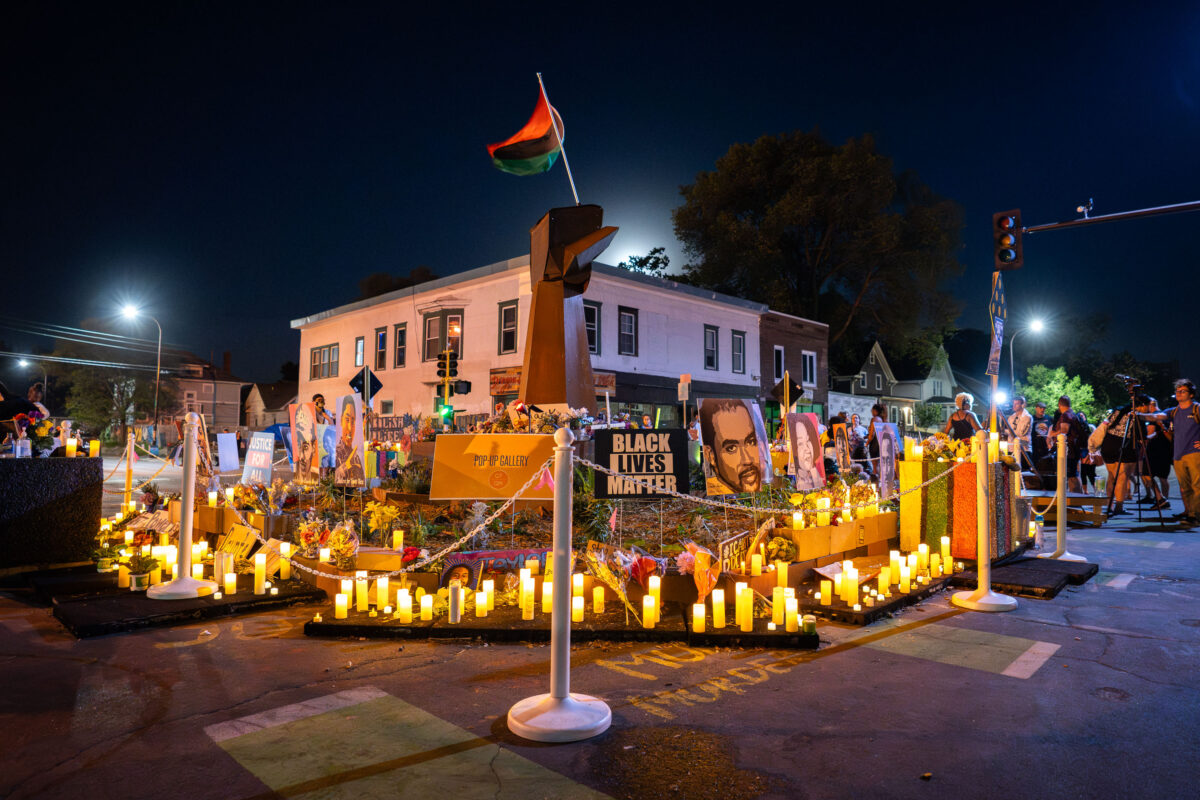
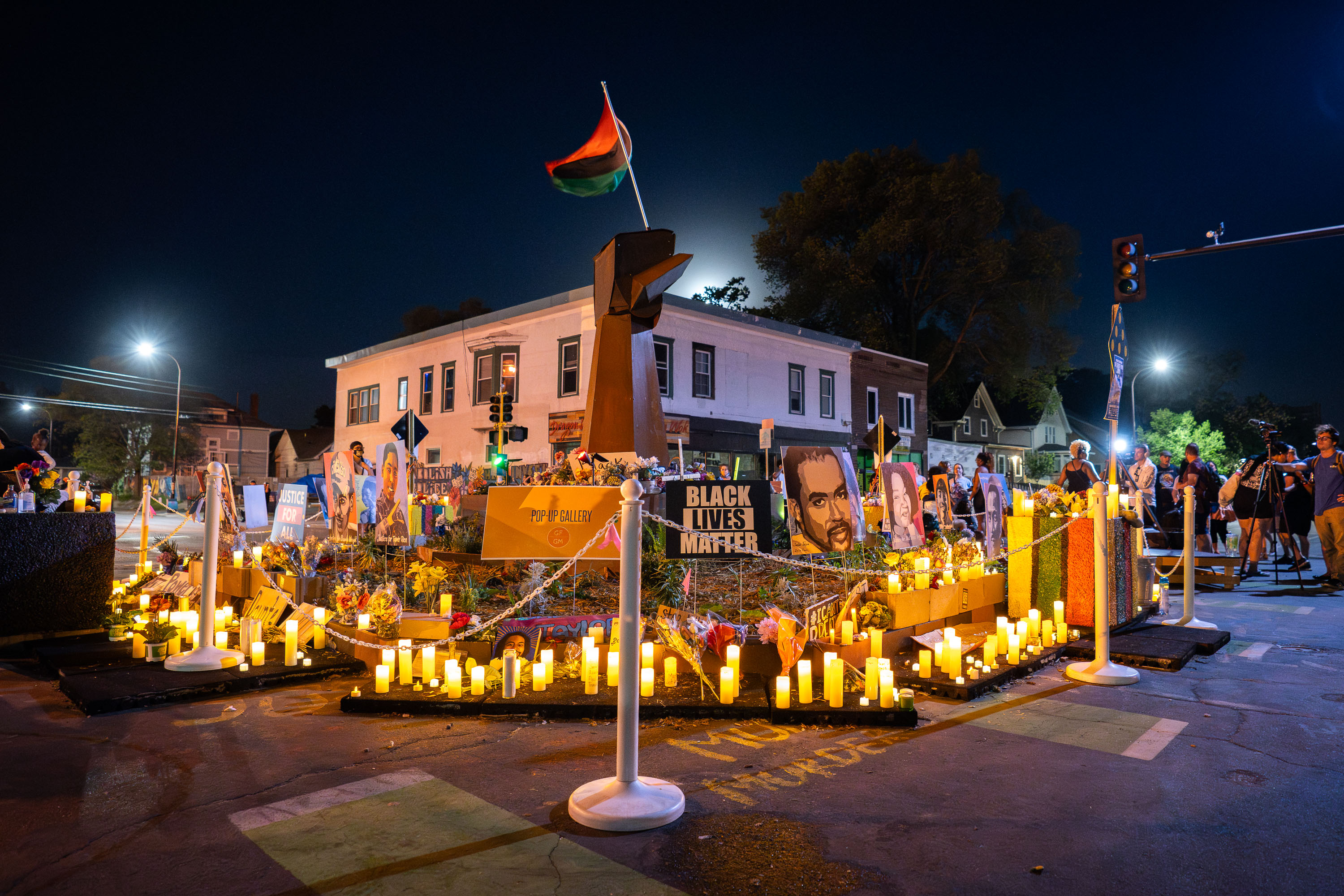
George Floyd Square Rise and Remember candles
Candles illuminate the memorial at George Floyd Square on May 25, 2021, during the Rise and Remember gathering at the intersection of 38th Street and Chicago Avenue in Minneapolis. The candlelit shrine, adorned with portraits, flowers, a Black Lives Matter banner, and a Pan-African flag, became a center of community remembrance and activism following Floyd's death.

Candles at George Floyd Square, Minneapolis
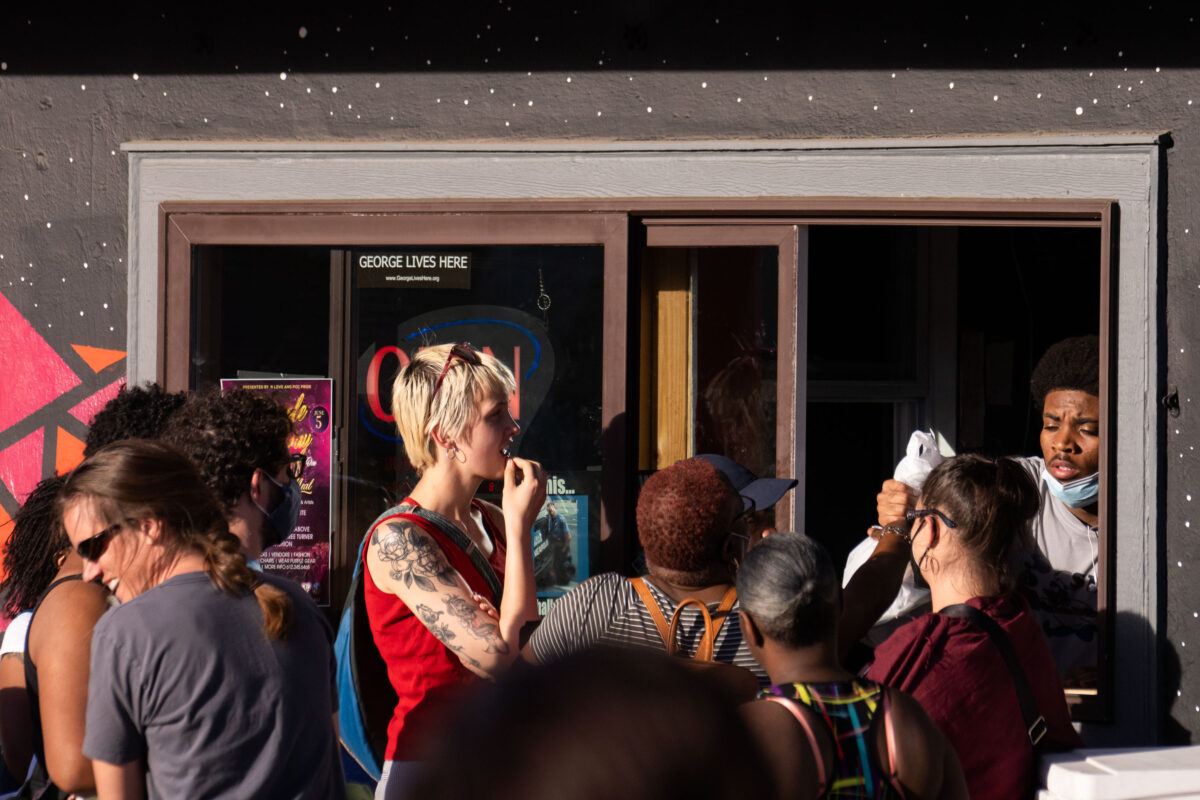
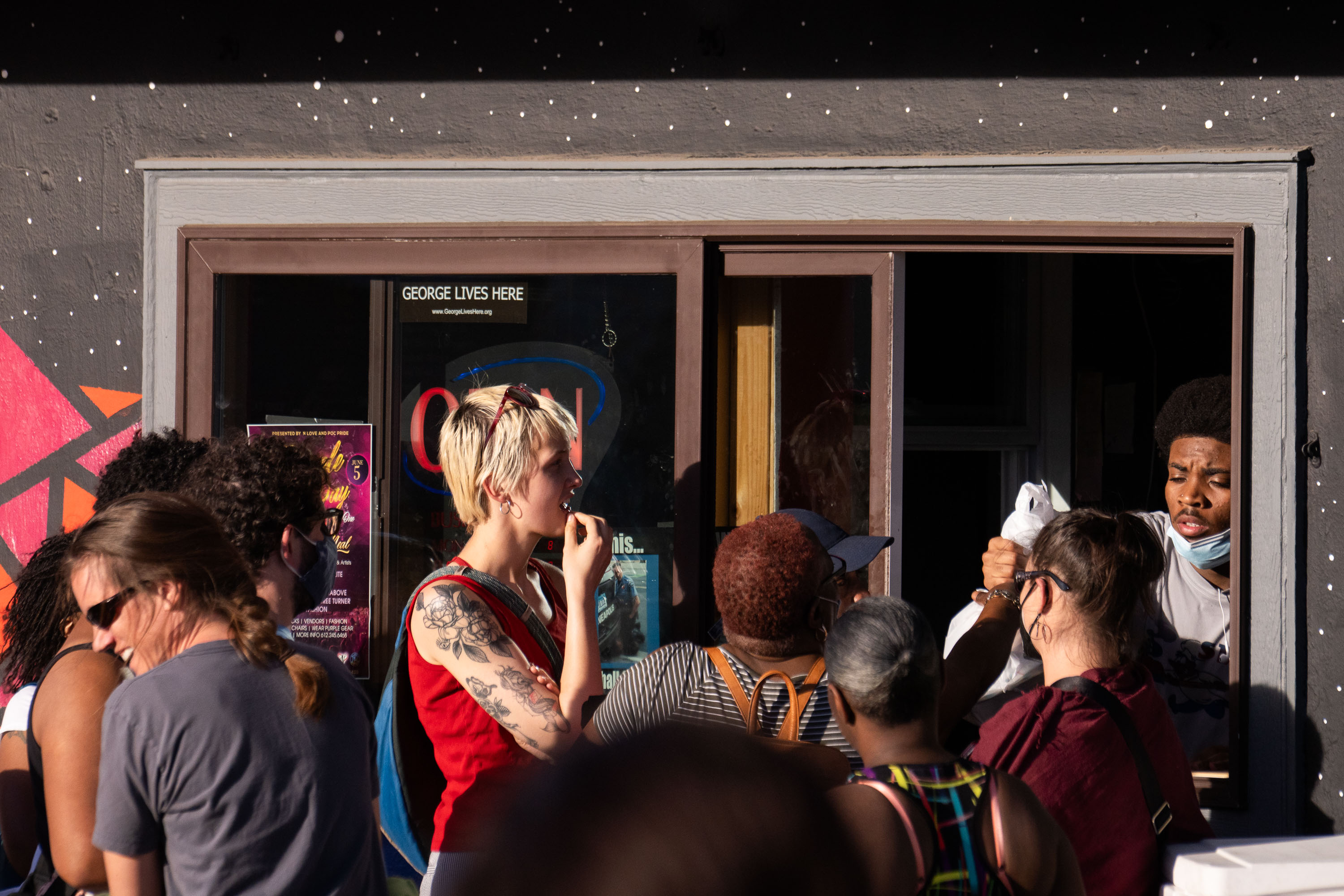
Just Turkey food line at George Floyd Square in Minneapolis with people waiting at a walk-up window.
Just Turkey at George Floyd Square in Minneapolis distributed food from a walk-up window during the Rise and Remember gathering on May 25, 2021. The gathering marked one year since George Floyd was killed at 38th Street and Chicago Avenue. The restaurant storefront was part of the public memorial area in South Minneapolis.

Just Turkey Food Line at George Floyd Square
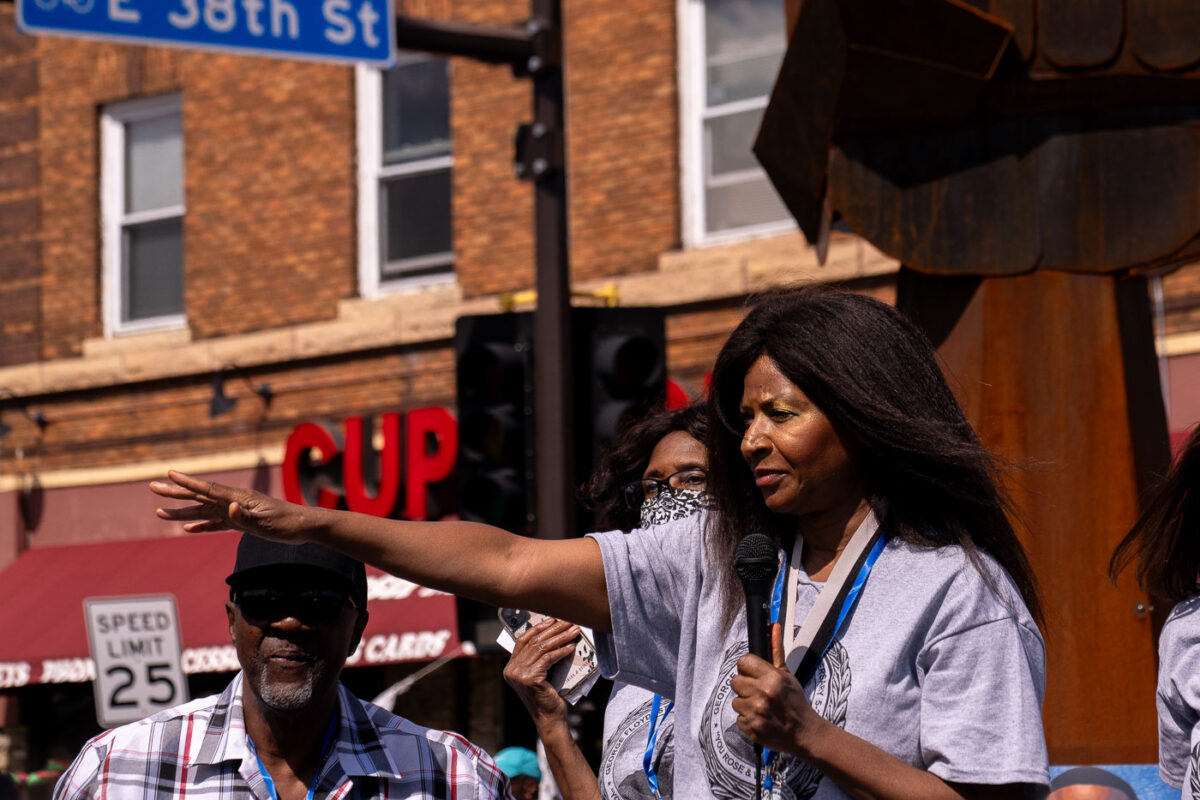
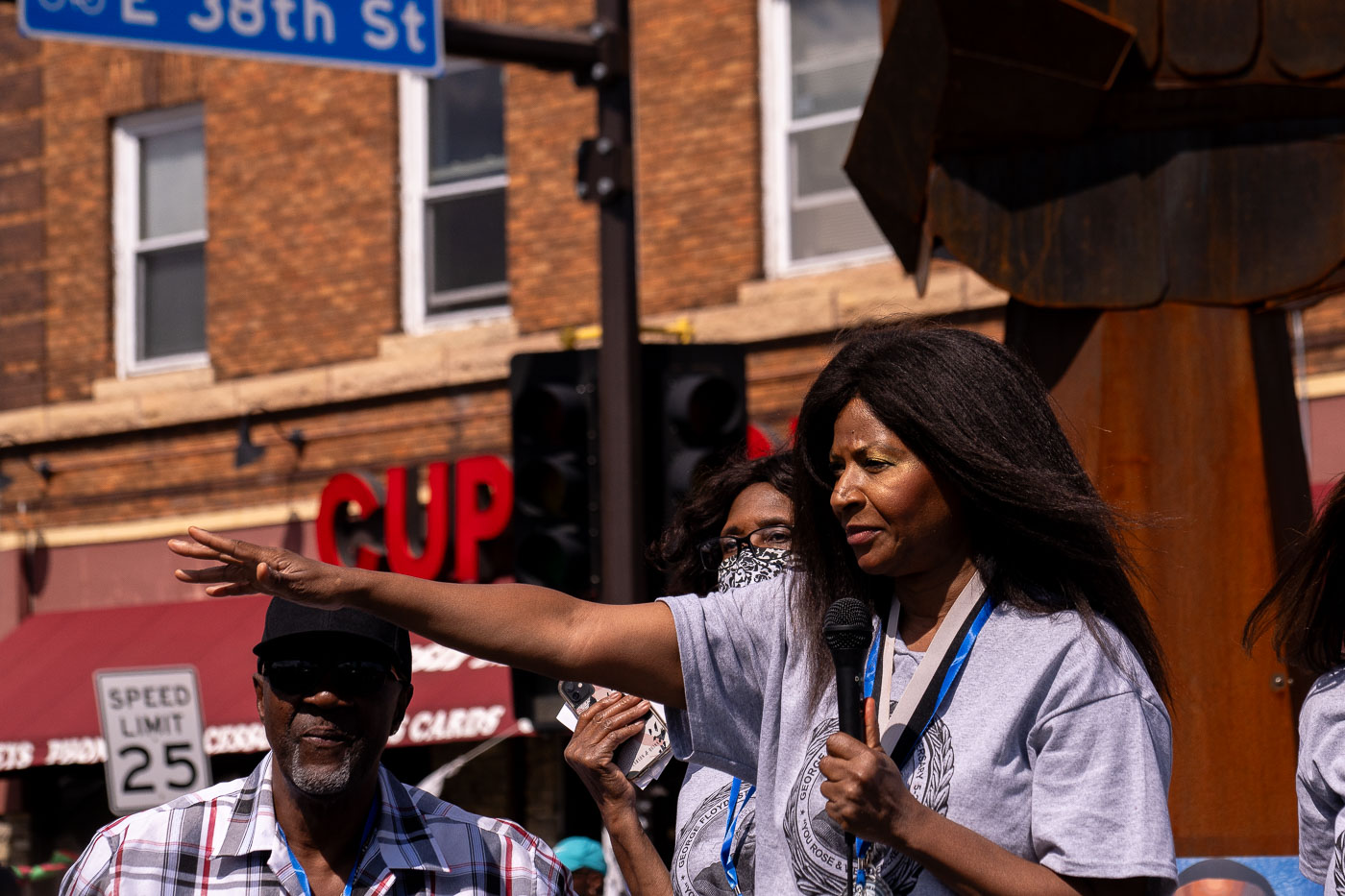
Angela Harrelson speaks at George Floyd Square in 2021
Angela Harrelson, aunt of George Floyd, addresses a crowd at George Floyd Square in Minneapolis on May 25, 2021. The gathering marked the one-year anniversary of Floyd's murder by a Minneapolis police officer. The intersection, located at 38th Street and Chicago Avenue, became a focal point for protests and a symbol of racial justice movements following Floyd's death.

Angela Harrelson speaks at George Floyd Square, Minneapolis, 2021
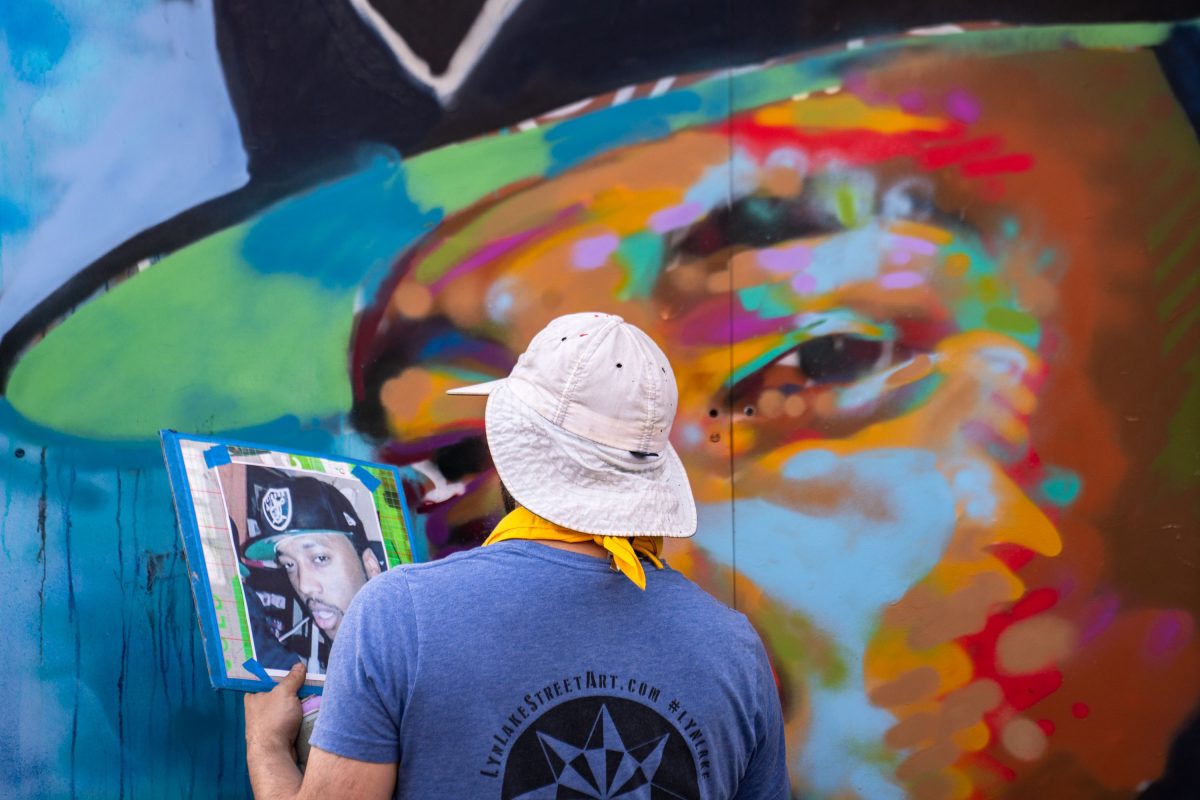
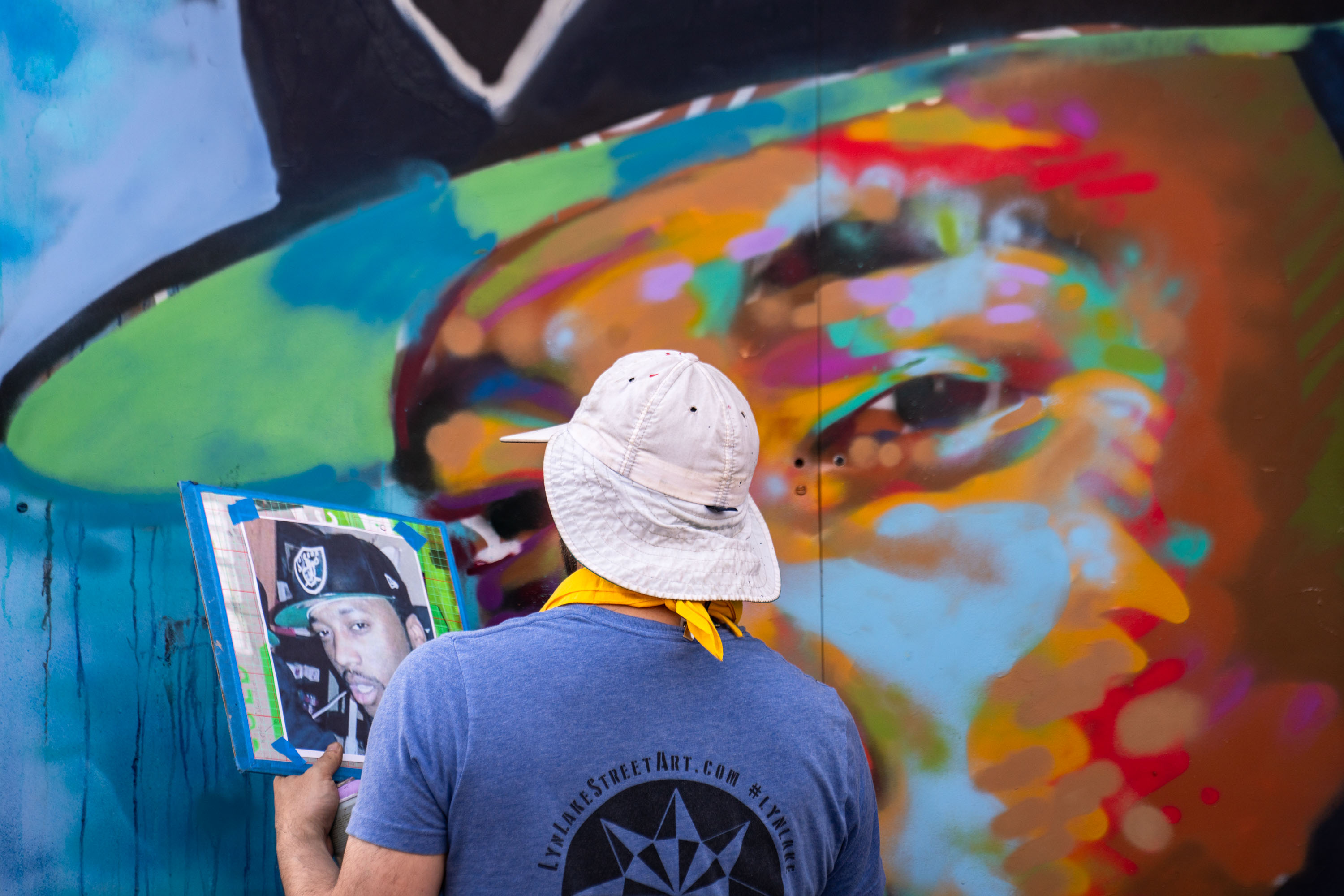
Mural painting at Geroge Floyd Square
A mural being painted at George Floyd Square in May 2021.

Mural painting at Geroge Floyd Square

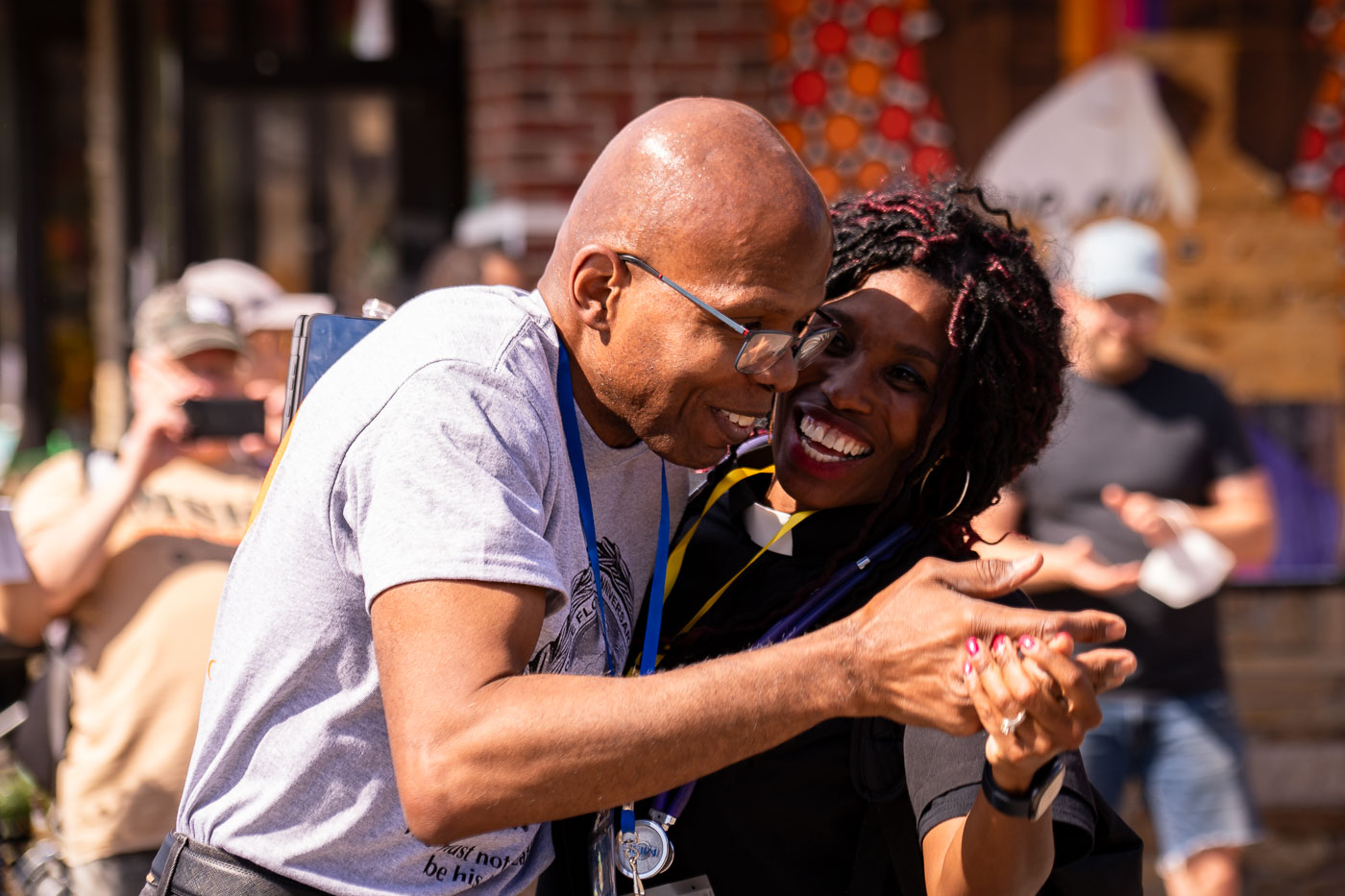
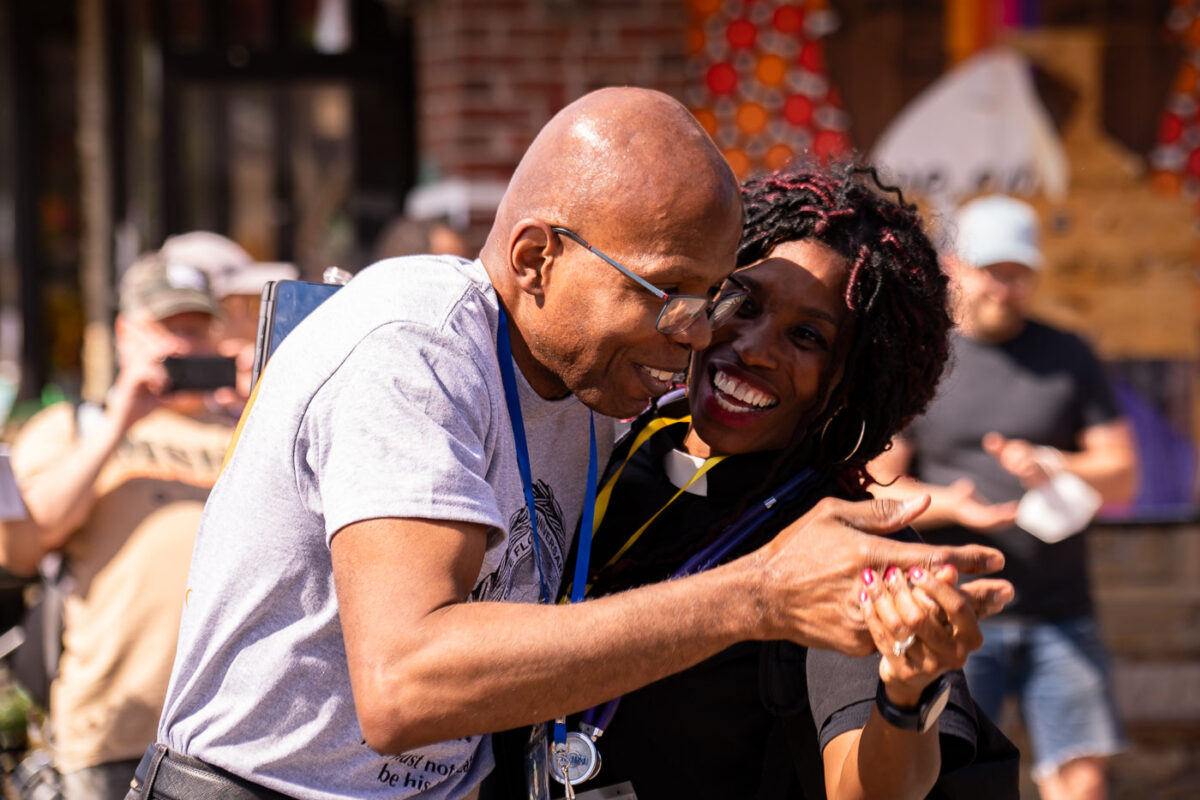
Dancing at George Floyd Square
A community medic dances at George Floyd Square in Minneapolis on the one-year anniversary of his murder. The square, located at the intersection of Chicago Avenue and 38th Street, became a focal point for protests and activism following Floyd's death in May 2020. It was occupied by activists for months, transforming into a space for community organizing and remembrance.

Minneapolis: Community medic dances with Floyd family member
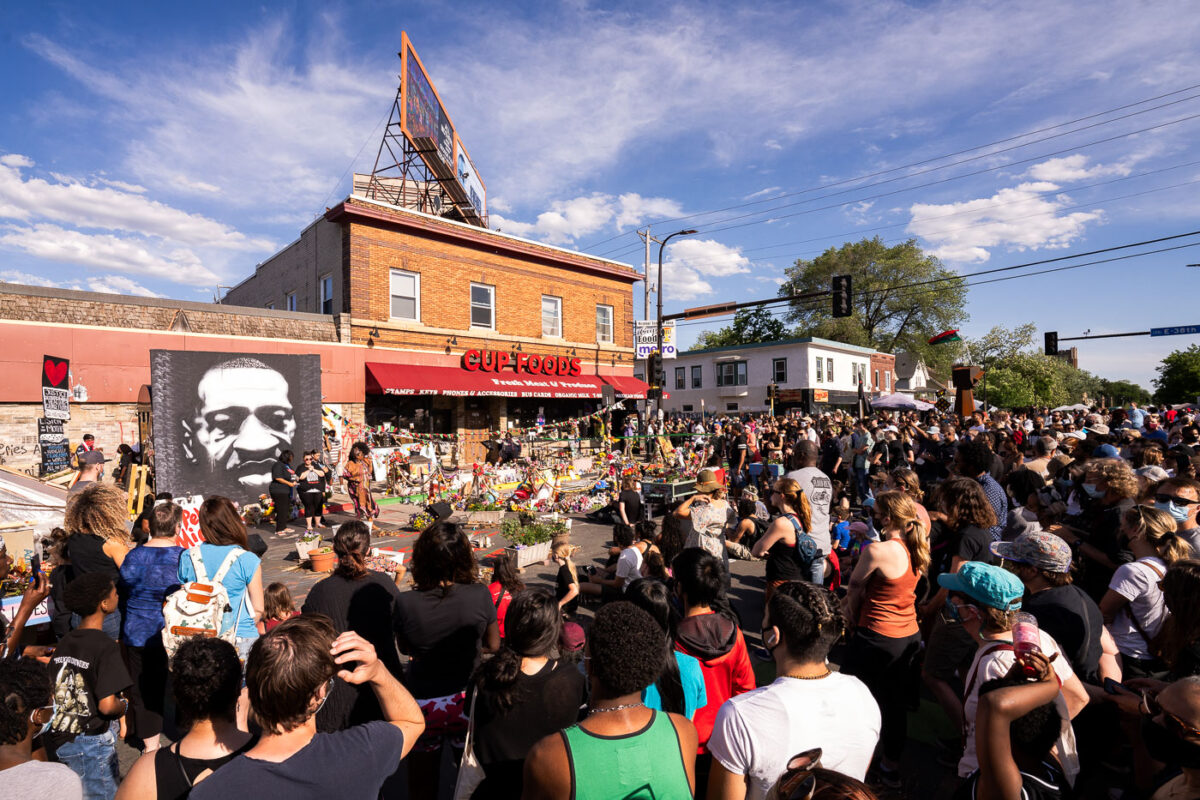
Community gathered at George Floyd Square 1 year later
A large crowd gathered at George Floyd Square in Minneapolis on the one-year anniversary of George Floyd's murder. The intersection, located at 38th Street and Chicago Avenue, became a focal point for protests and a memorial following Floyd's death in May 2020.

George Floyd Square Memorial Gathering, Minneapolis
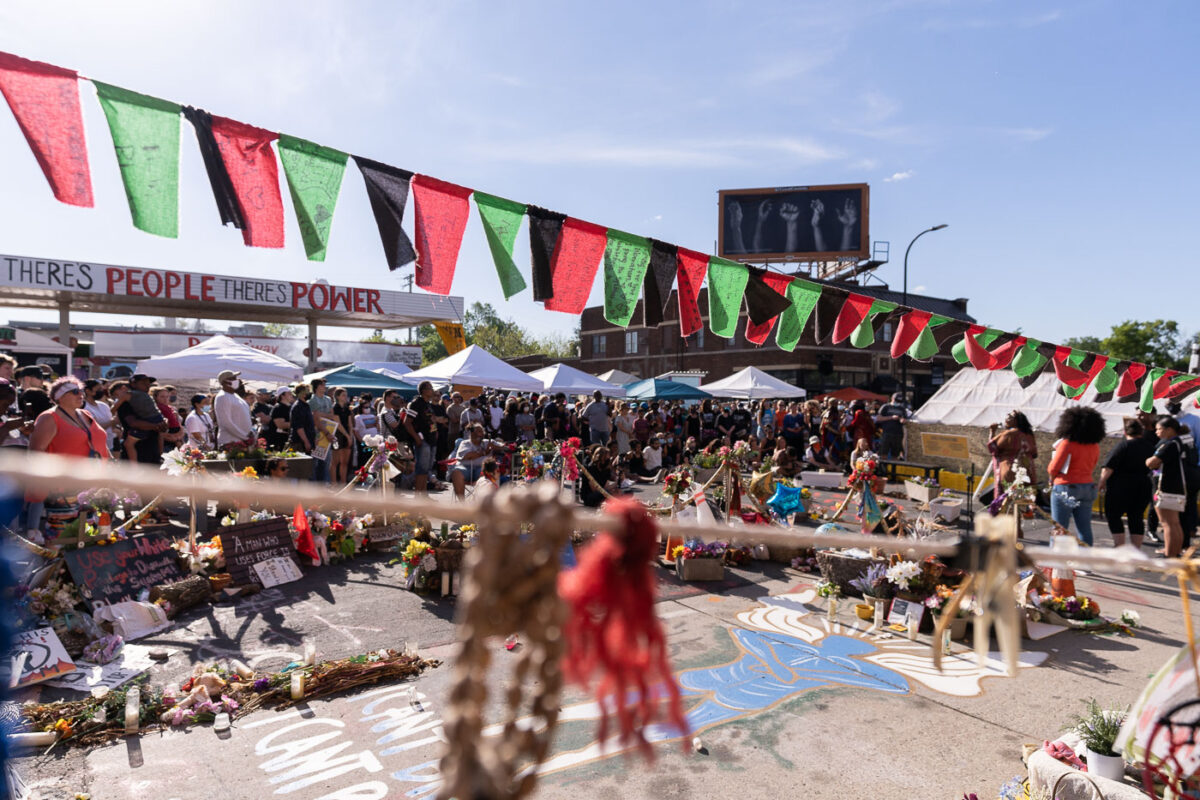
George Floyd memorial 1 year later
A gathering took place at George Floyd Square in Minneapolis on the one-year anniversary of George Floyd's murder. The intersection, which became a focal point for protests following Floyd's death in May 2020, was transformed into a community space and memorial. Attendees observed the anniversary with tributes, speeches, and communal reflection.

George Floyd Square Memorial: 1 Year Anniversary Gathering
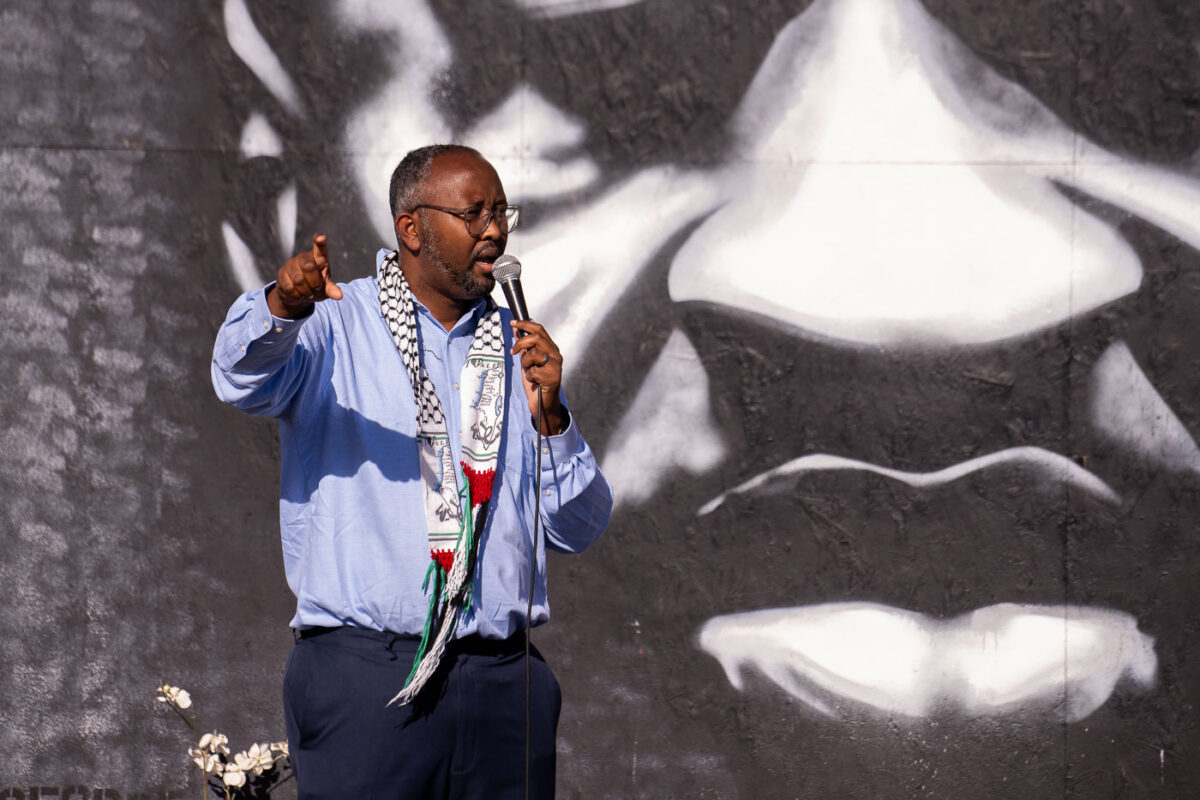
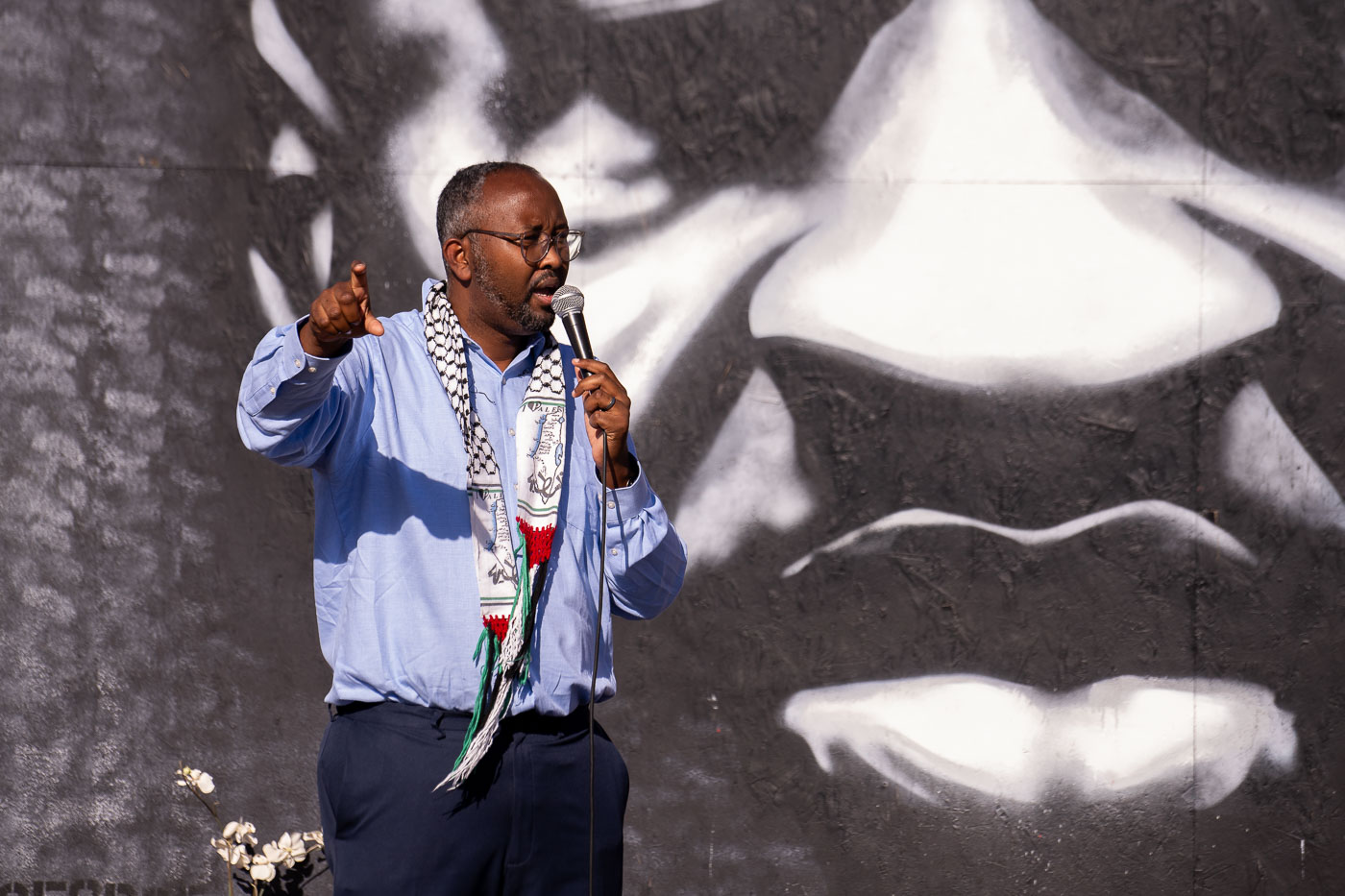
Jaylani Hussein speaks at George Floyd Square
Jaylani Hussein, representing the Council on American-Islamic Relations of Minnesota (CAIR-MN), speaks at George Floyd Square in Minneapolis on the one-year anniversary of George Floyd's murder. The square, located at the intersection of 38th Street and Chicago Avenue, became a focal point for protests and activism following Floyd's death in May 2020.

Jaylani Hussein speaks at George Floyd Square anniversary
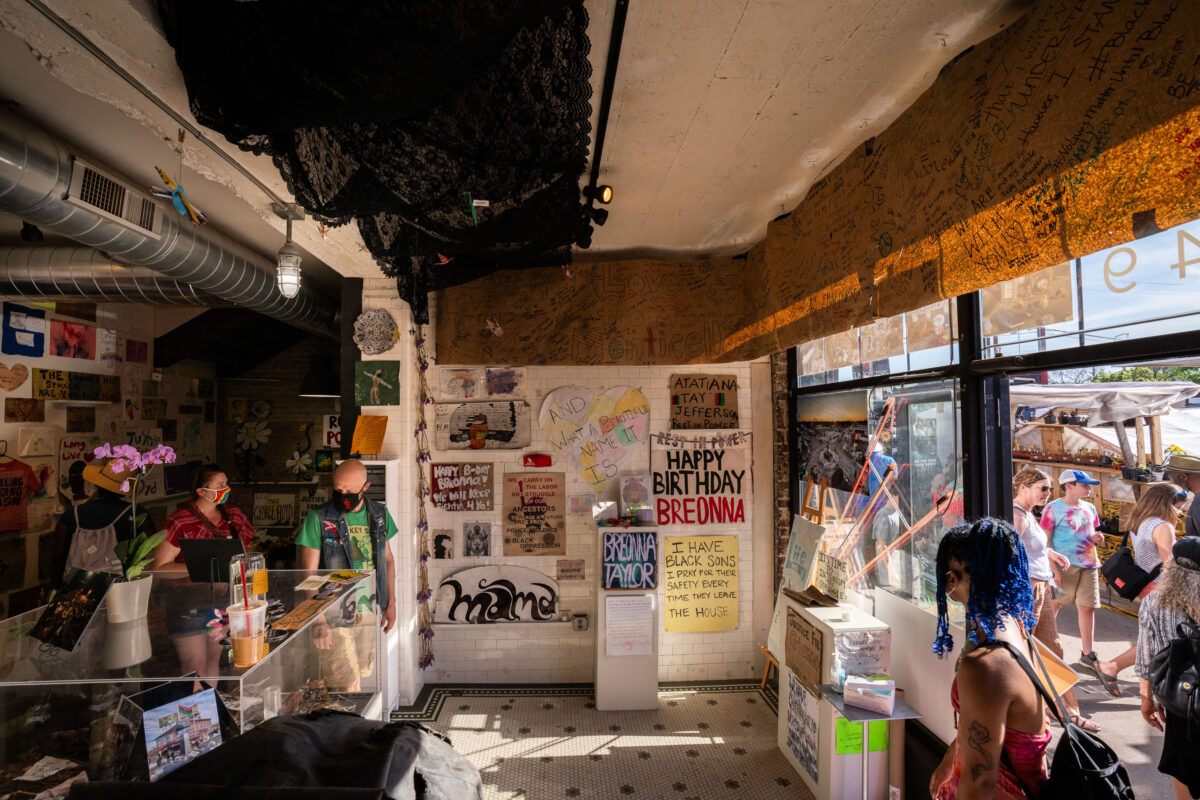
Museum of items left at George Floyd's Memorial
Items left behind at George Floyd's Memorial on display during Rise and Remember.

George Floyd Memorial Offerings On Display
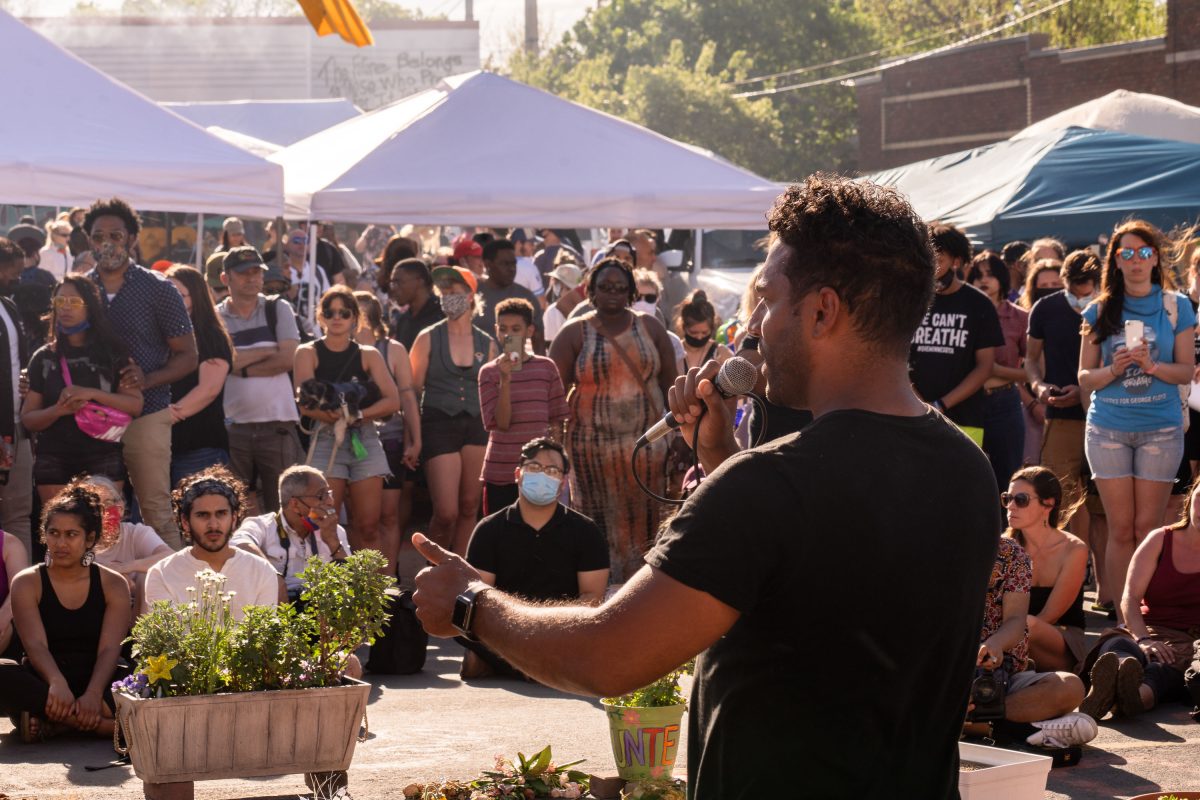
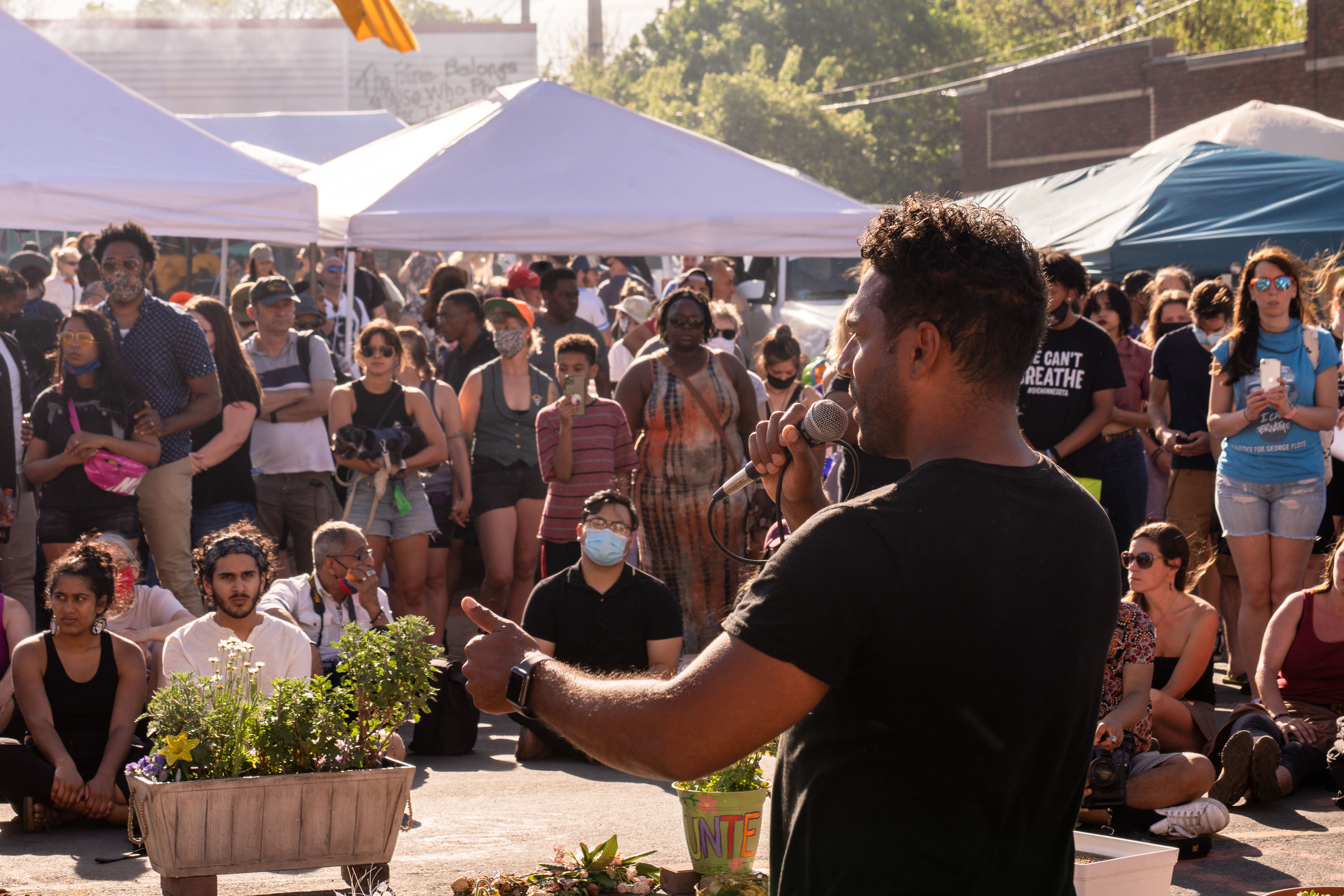
Toussaint Morrison speaks at Rise and Remember
Toussaint Morrison speaking to the crowd at Rise and Remember 2021 at George Floyd Square.

Toussaint Morrison at Rise and Remember
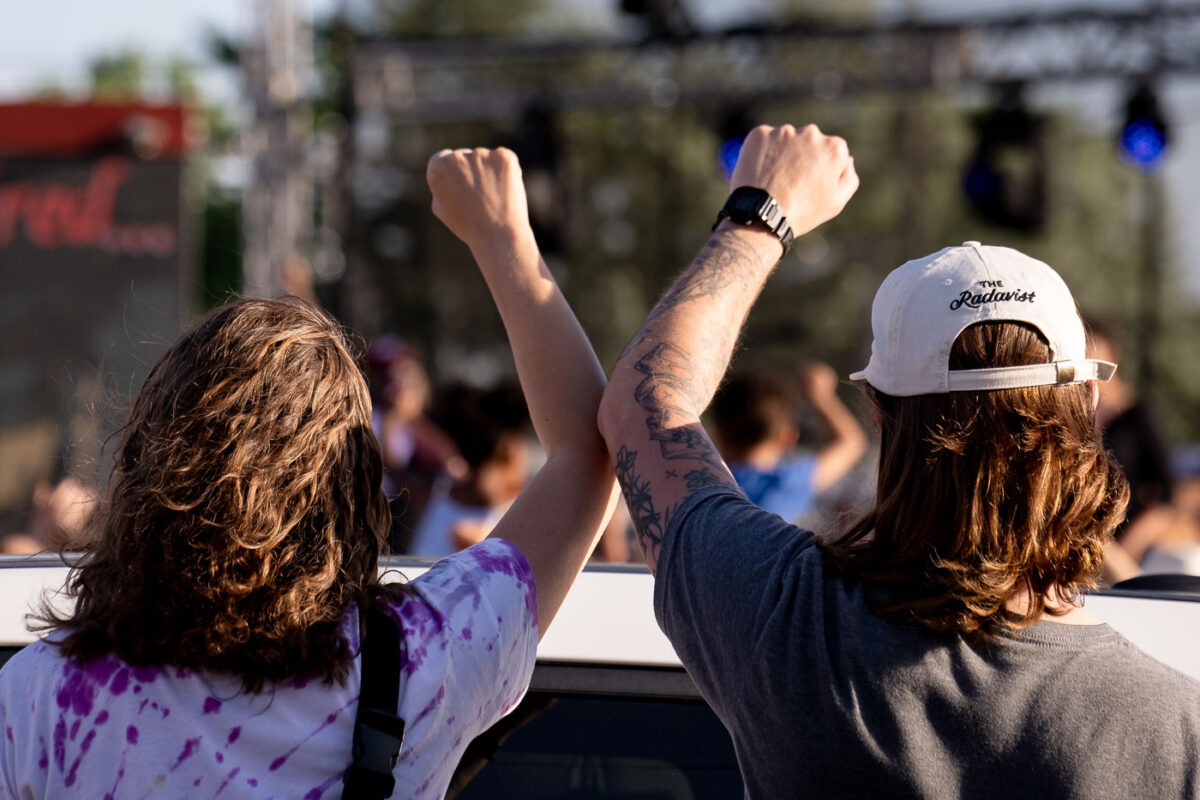
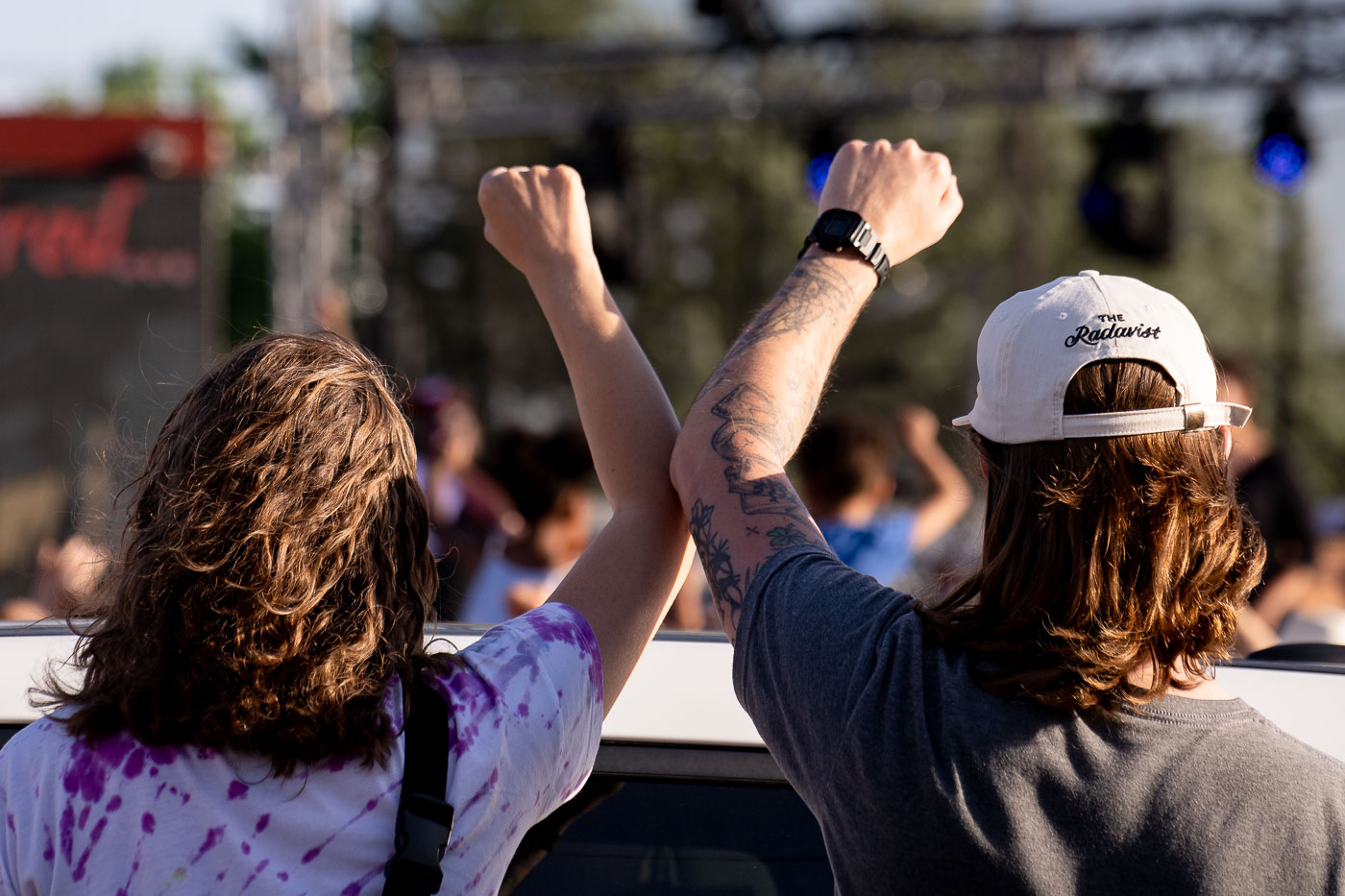
Couple raise fists at George Floyd Square
On the one-year anniversary of George Floyd's murder, community members gathered at the intersection of 38th Street and Chicago Avenue in Minneapolis, a site that became known as George Floyd Square. The gathering marked a year since Floyd's death, which occurred nearby and sparked widespread protests and a global movement for racial justice. The square became a focal point for activism and community organizing in the aftermath of the murder.

George Floyd Square Anniversary Protest, Minneapolis
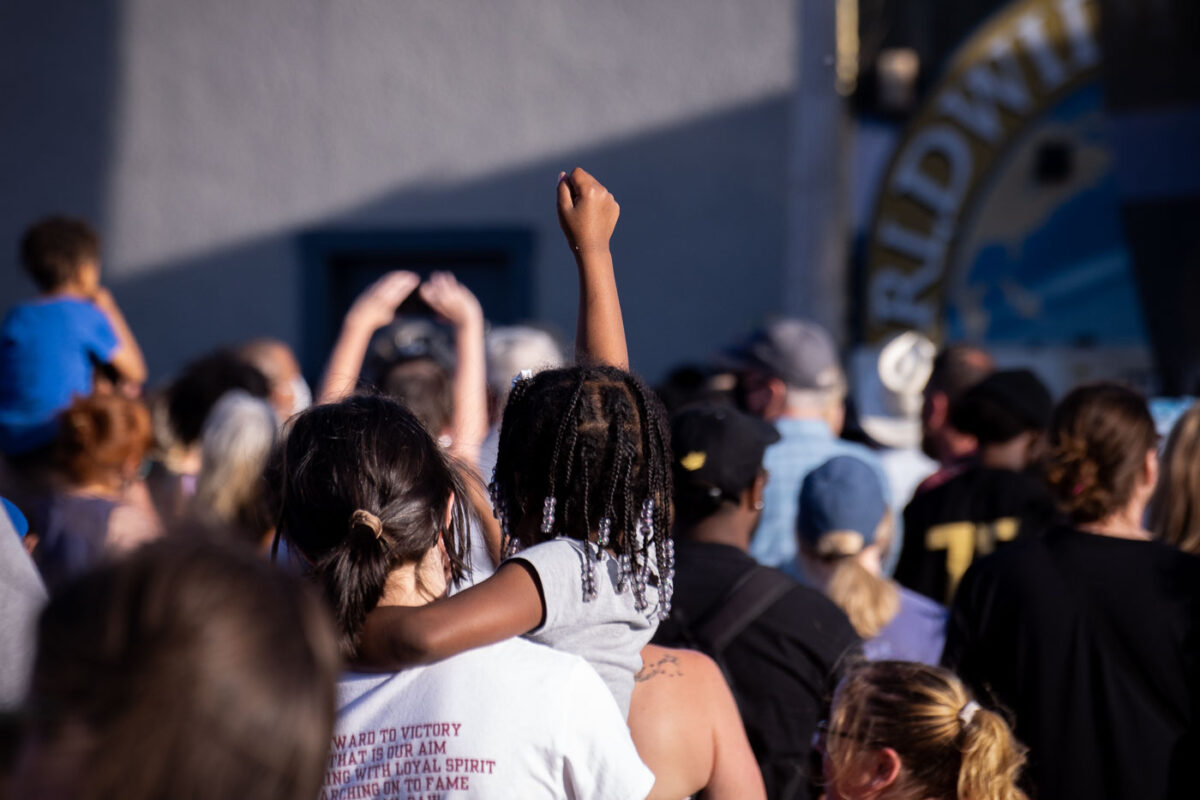
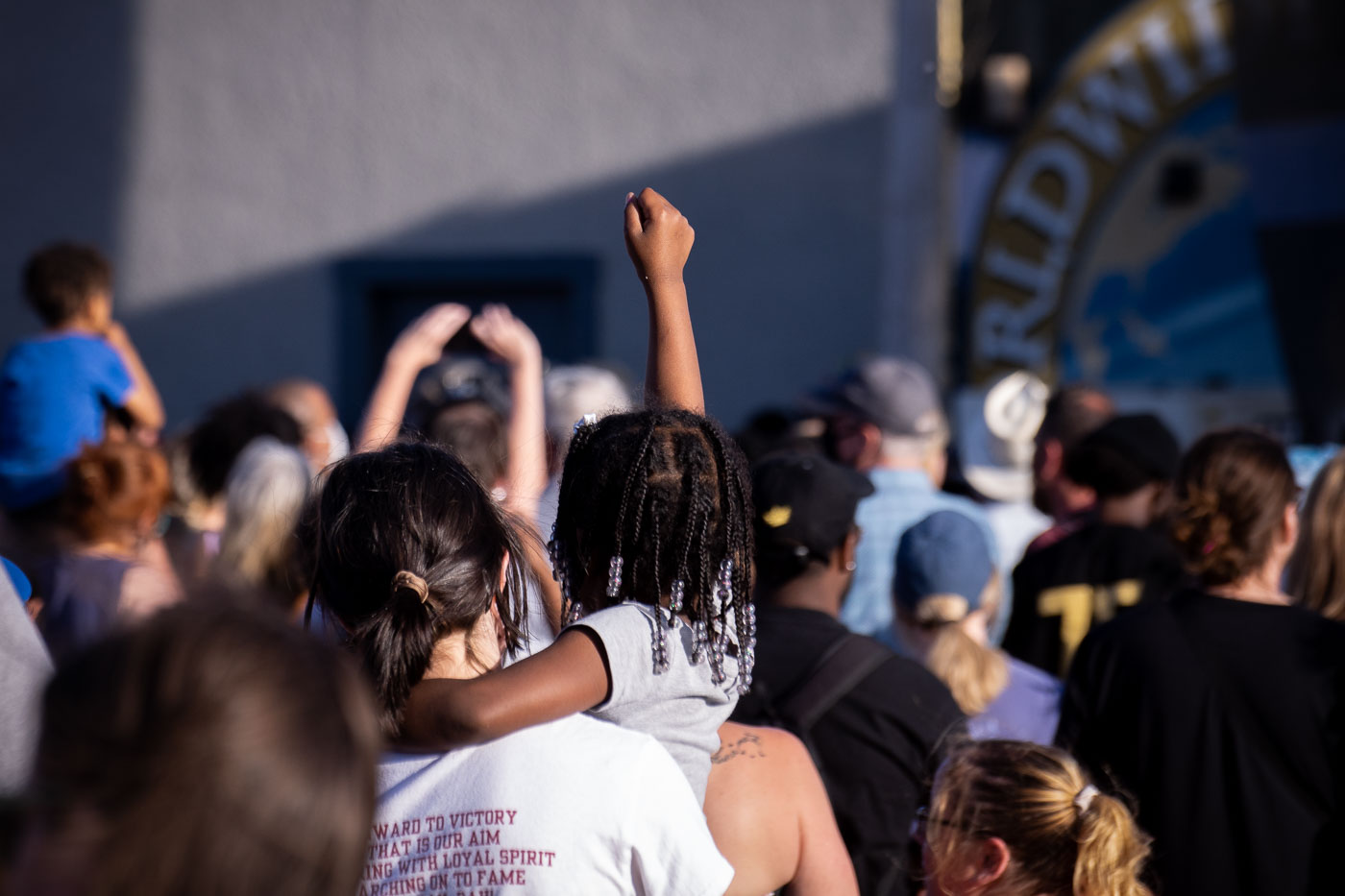
Young child raises her fist at George Floyd Square
A child raises a fist in solidarity at George Floyd Square in Minneapolis during the "Rise and Remember" event in 2021. This location became a focal point for protests and activism following the murder of George Floyd in May 2020. The "Rise and Remember" event commemorated the ongoing struggle for racial justice and remembrance of those lost to police brutality.

Child’s fist raised at George Floyd Square, Minneapolis
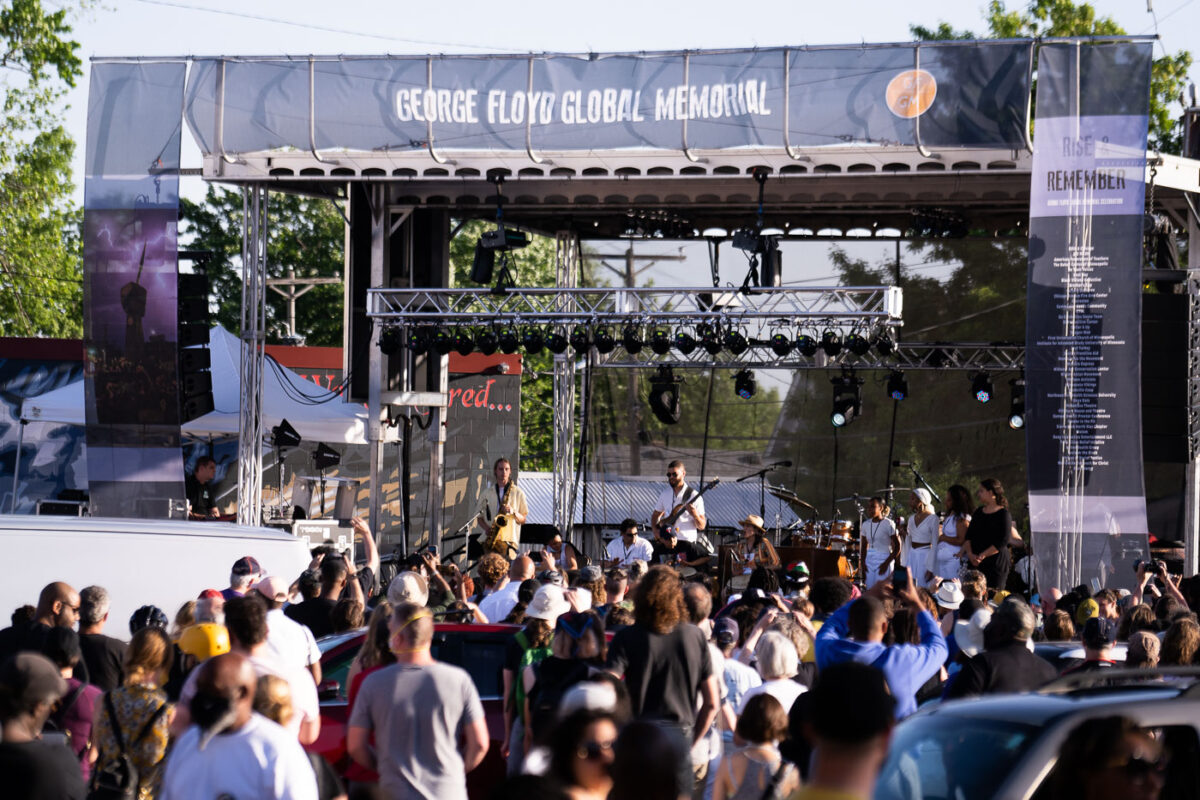
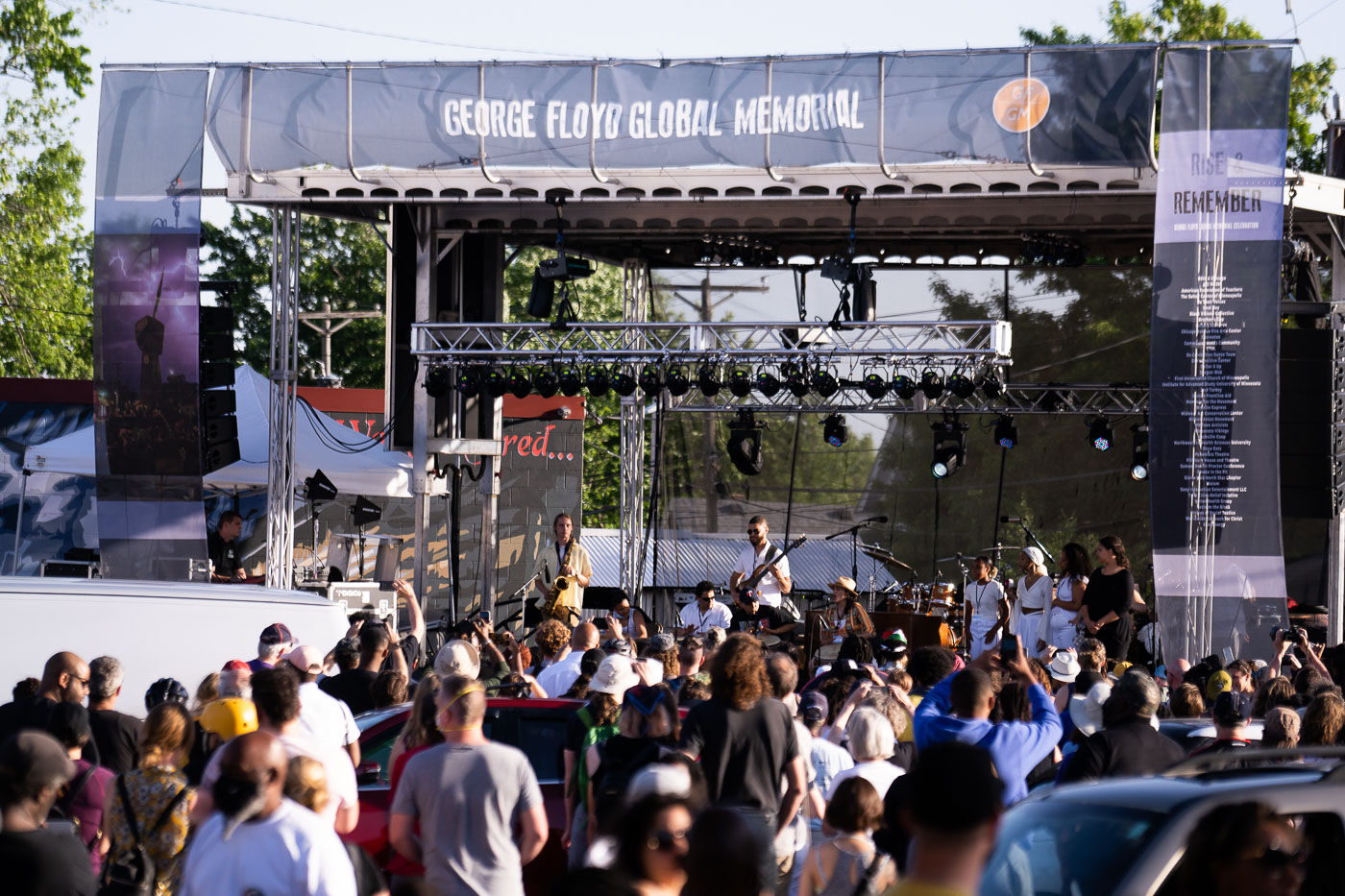
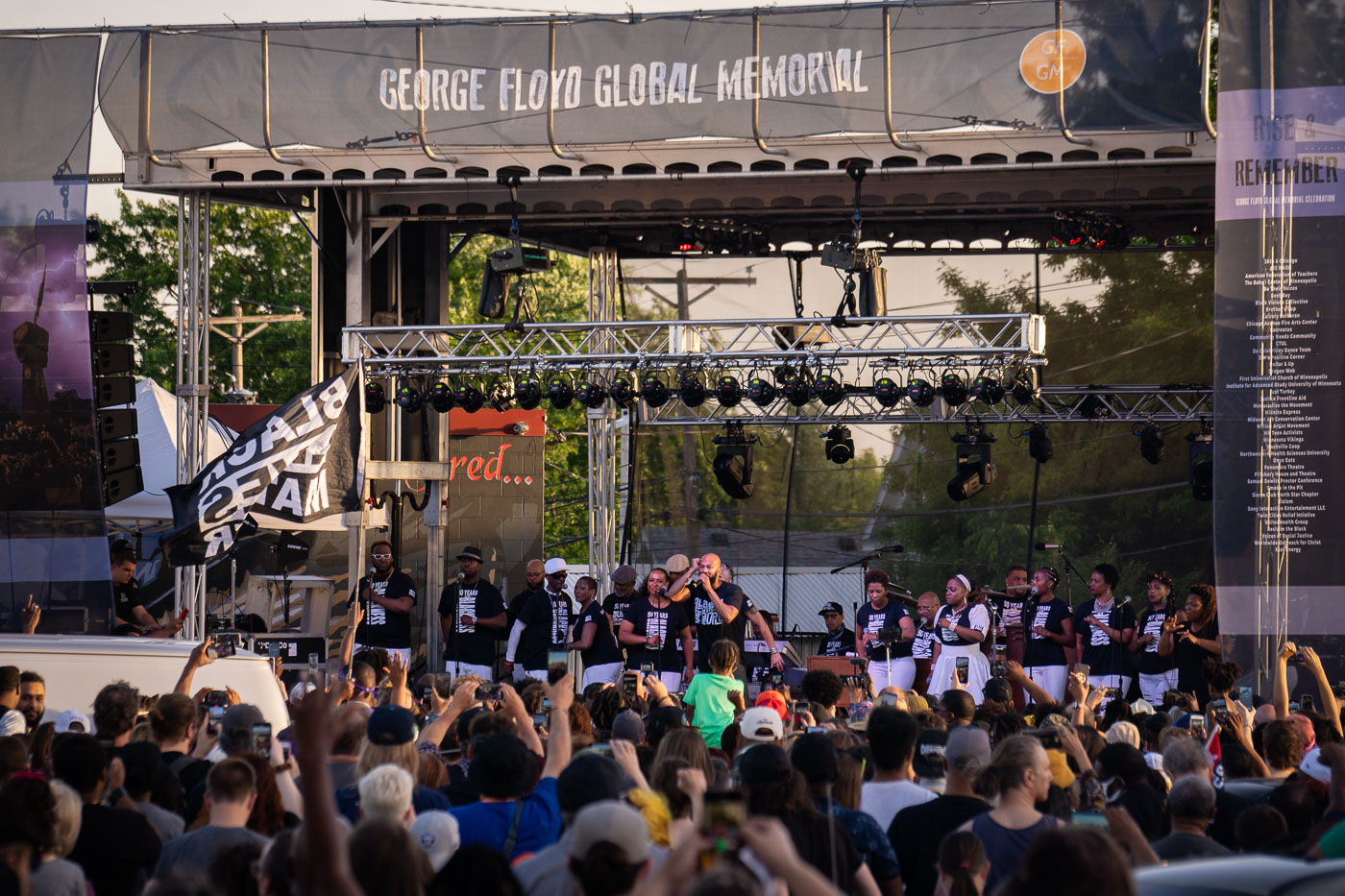
Rise and Remember stage at George Floyd Square
A stage is set up at George Floyd Square in Minneapolis for a "Rise & Remember" celebration marking the one-year anniversary of George Floyd's murder. The event featured musical performances and was organized by a coalition of community groups, including the George Floyd Global Memorial and the Chicago Avenue Fire Arts Center. This gathering served as a memorial and a call for continued action and remembrance in the wake of Floyd's death and the subsequent protests.

George Floyd Square Memorial Celebration Stage, Minneapolis
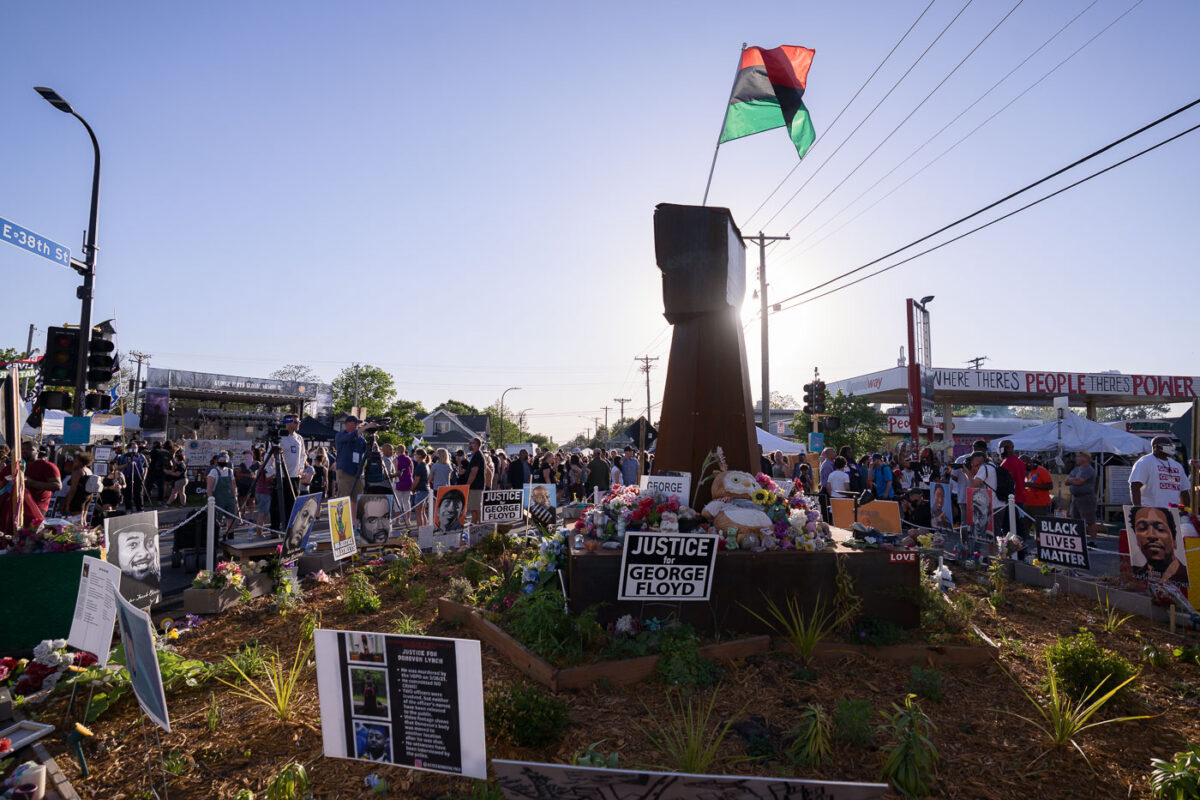
George Floyd Square Fist on 1 year anniversary May 21
A memorial stands at George Floyd Square in Minneapolis on the one-year anniversary of his murder. The square, located at the intersection of East 38th Street and Chicago Avenue, became a focal point for protests and activism following Floyd's death in May 2020. The memorial features portraits of Floyd and other victims of police brutality, flowers, stuffed animals, and signs demanding justice. The "Rise and Remember 2021" event marked a year of continued remembrance and advocacy for racial justice in the city and beyond.

George Floyd Square Memorial, Minneapolis, 1 Year Anniversary
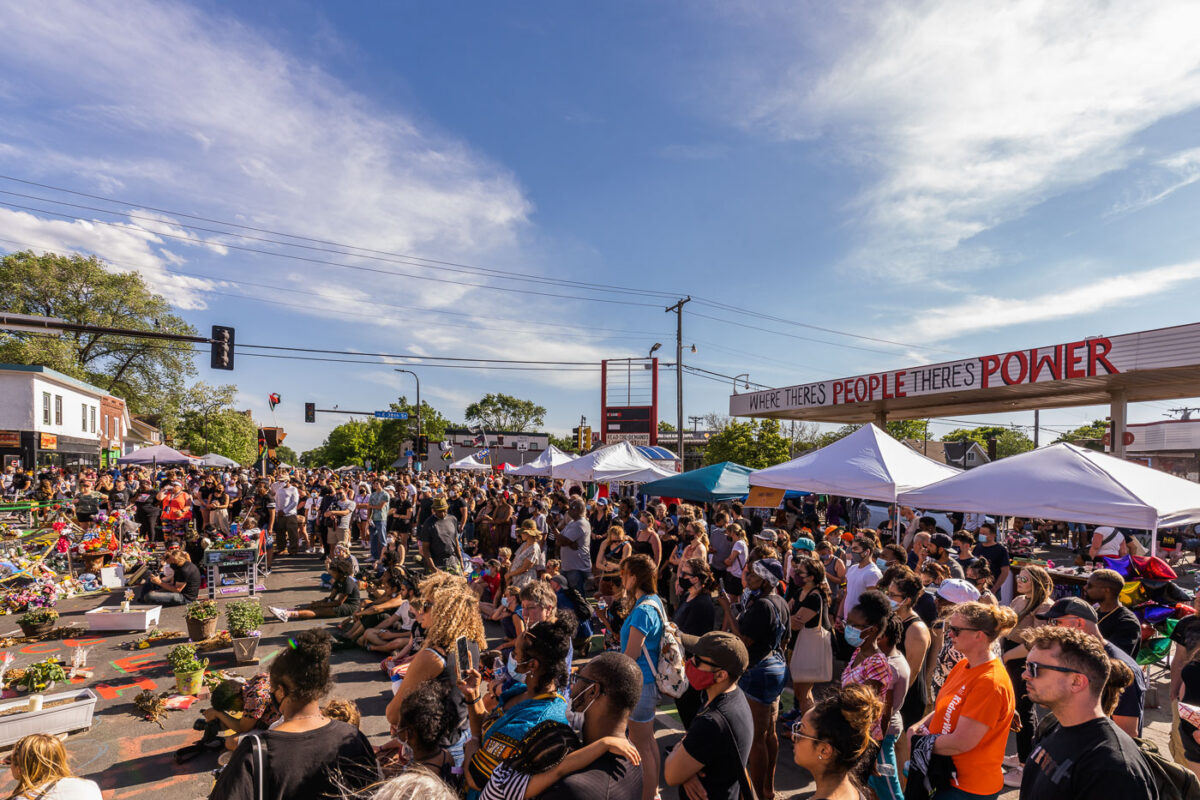
Large crowd at George Floyd Square 1 year later
On the one-year anniversary of George Floyd's murder, a large gathering took place at 38th Street and Chicago Avenue in Minneapolis, an area that became known as George Floyd Square.

George Floyd Square Anniversary Gathering, Minneapolis
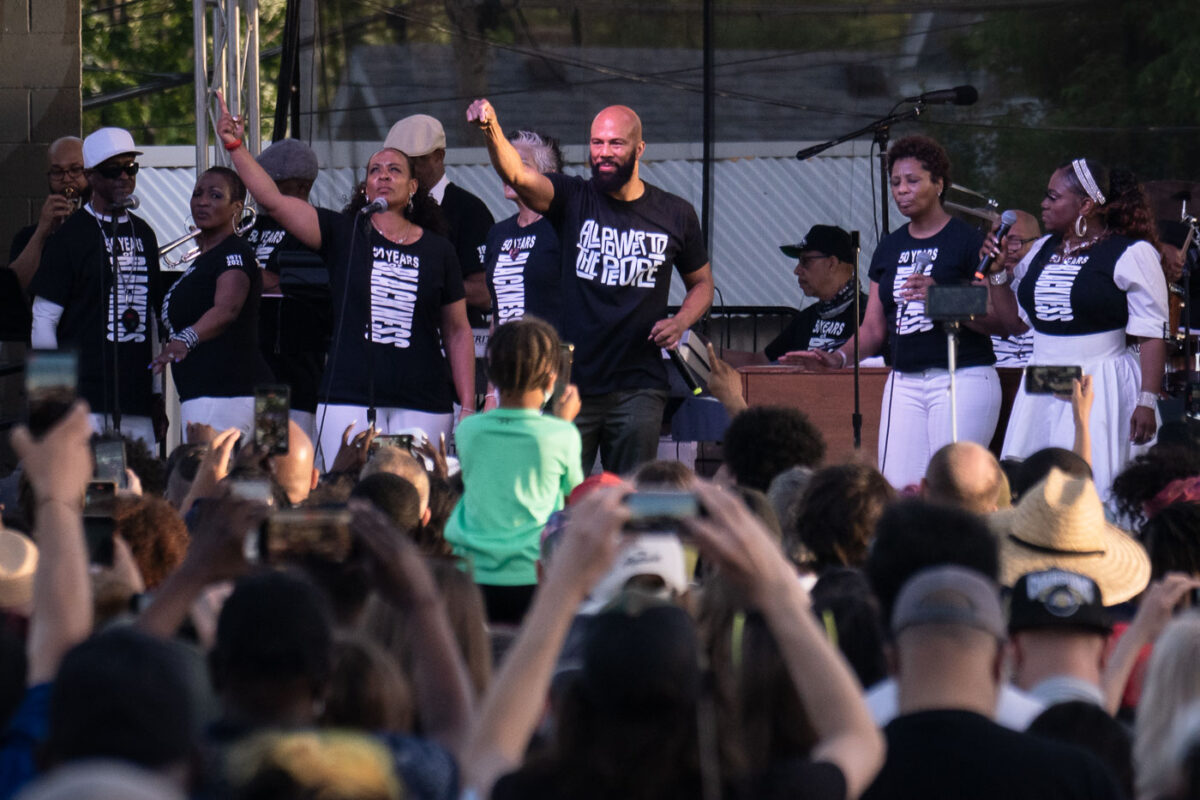
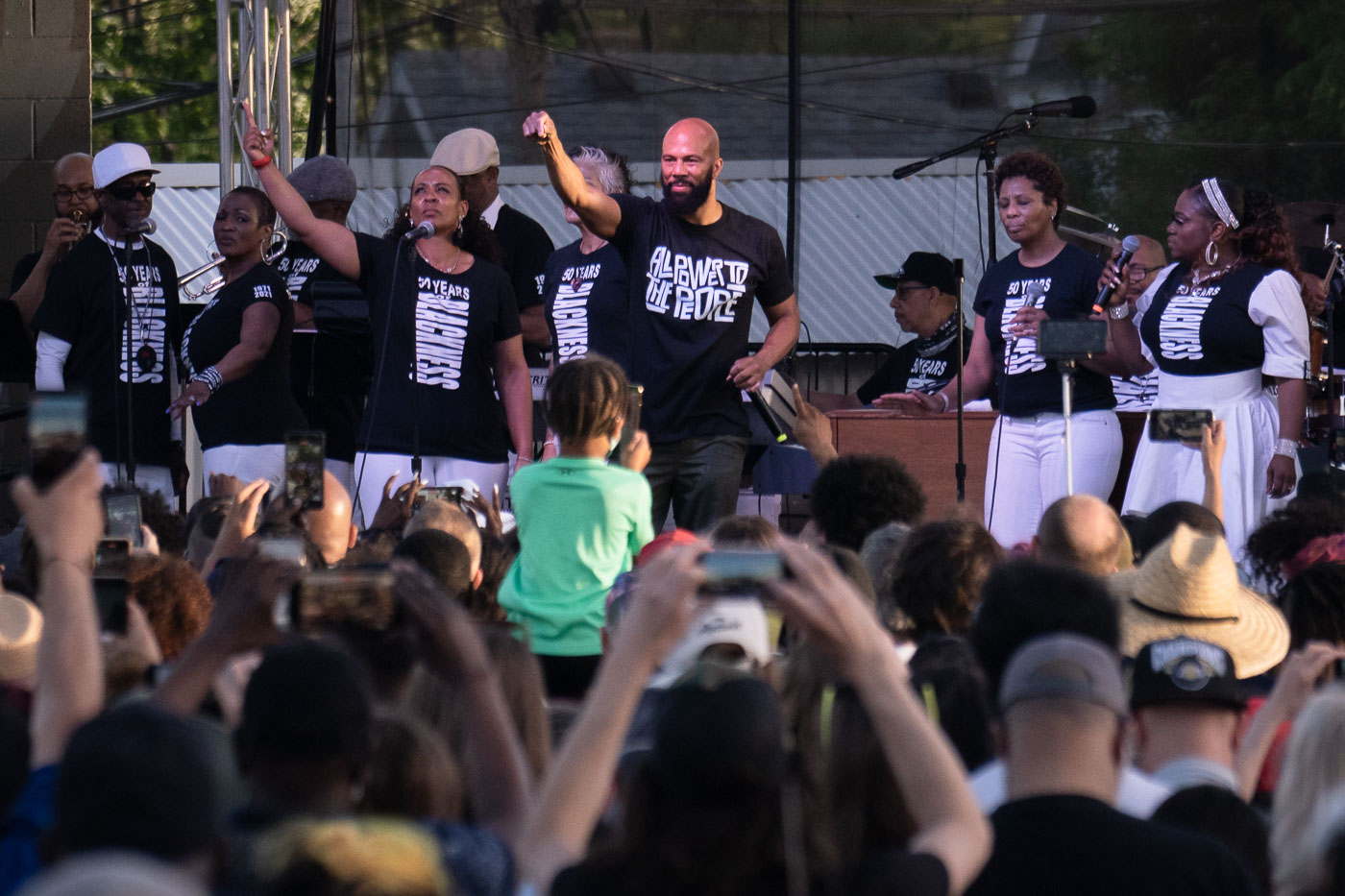
Common at George Floyd Square in May 2021
Rapper Common and the gospel group Sounds of Blackness performed at George Floyd Square in Minneapolis on May 25, 2021, marking the one-year anniversary of George Floyd's murder. The performance took place at the intersection, which had been occupied by protesters and transformed into a memorial and community space following Floyd's death.

Common and Sounds of Blackness at George Floyd Square, May 2021
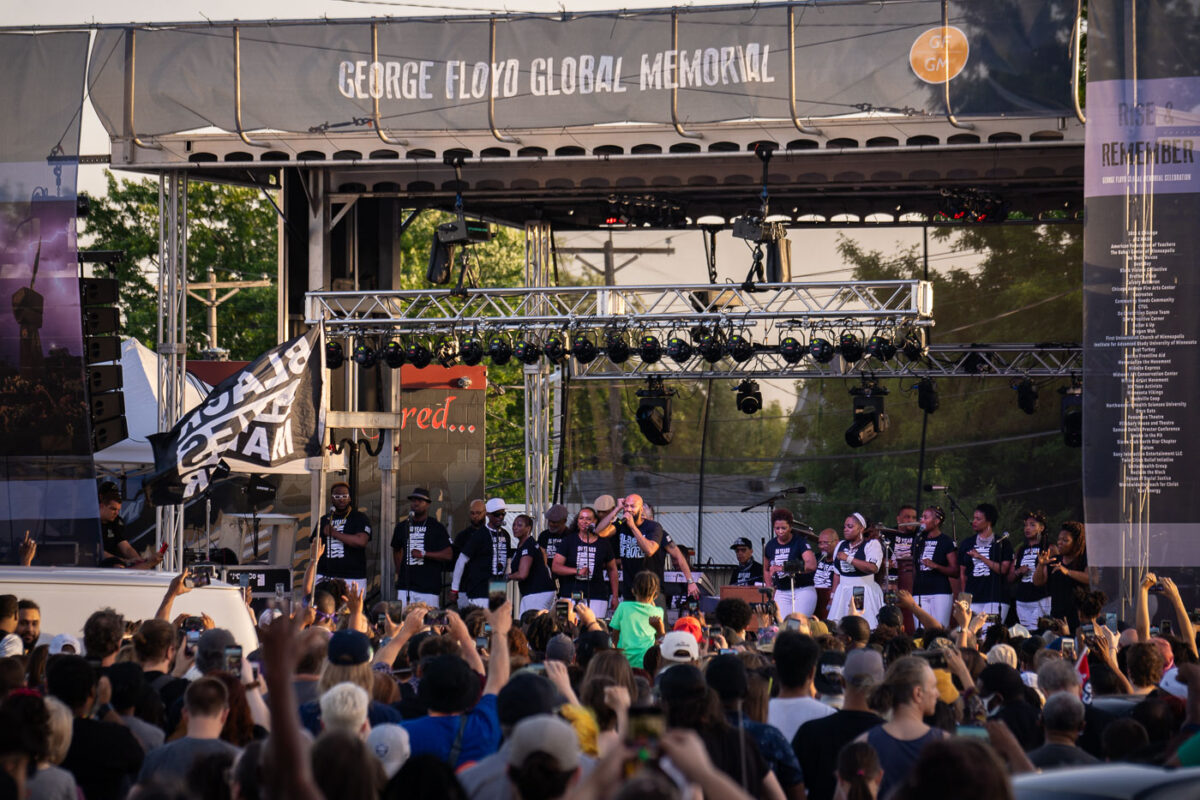
Common performing at George Floyd Square
Grammy award-winning artist Common performs at the George Floyd Global Memorial in Minneapolis on the one-year anniversary of George Floyd's murder. The memorial site, established at the intersection where Floyd was killed, serves as a space for remembrance and community gathering. The performance, featuring the song "Glory" with the Sound of Blackness, was part of a larger event to "Rise & Remember" the victims of police brutality and racial injustice.

Common Performs at George Floyd Global Memorial, Minneapolis
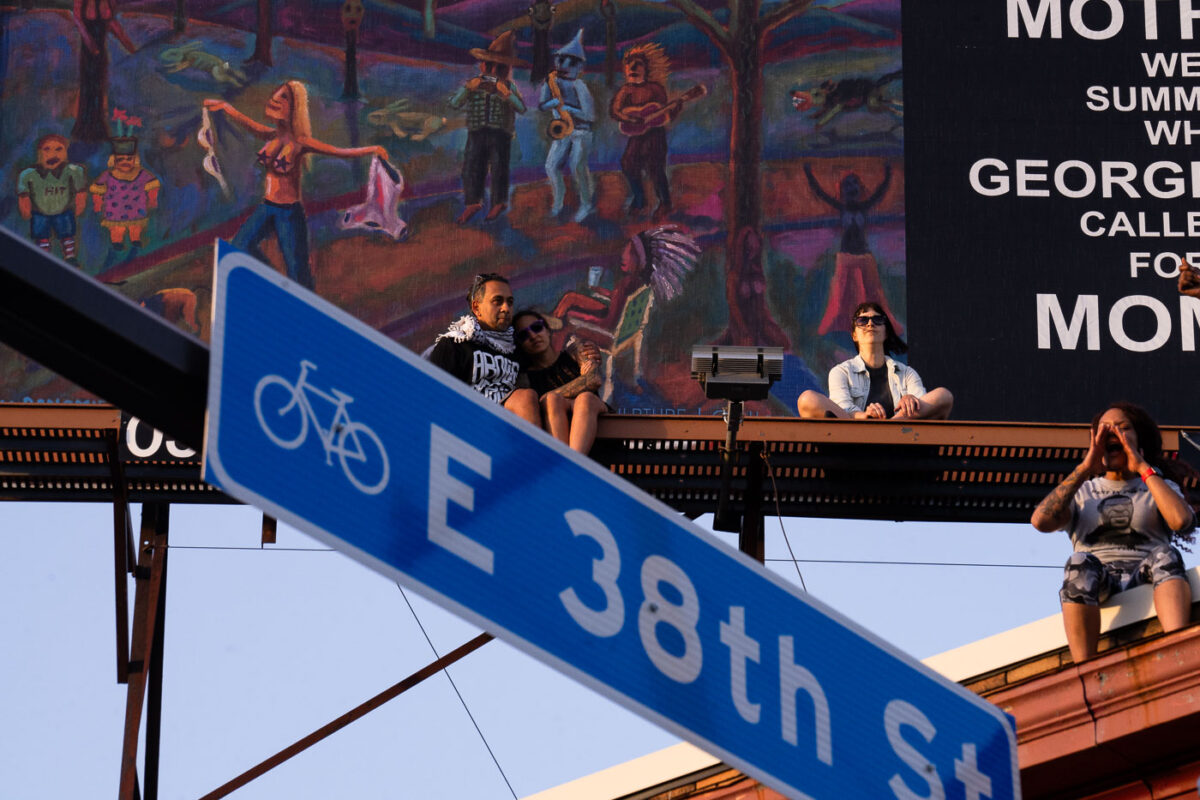
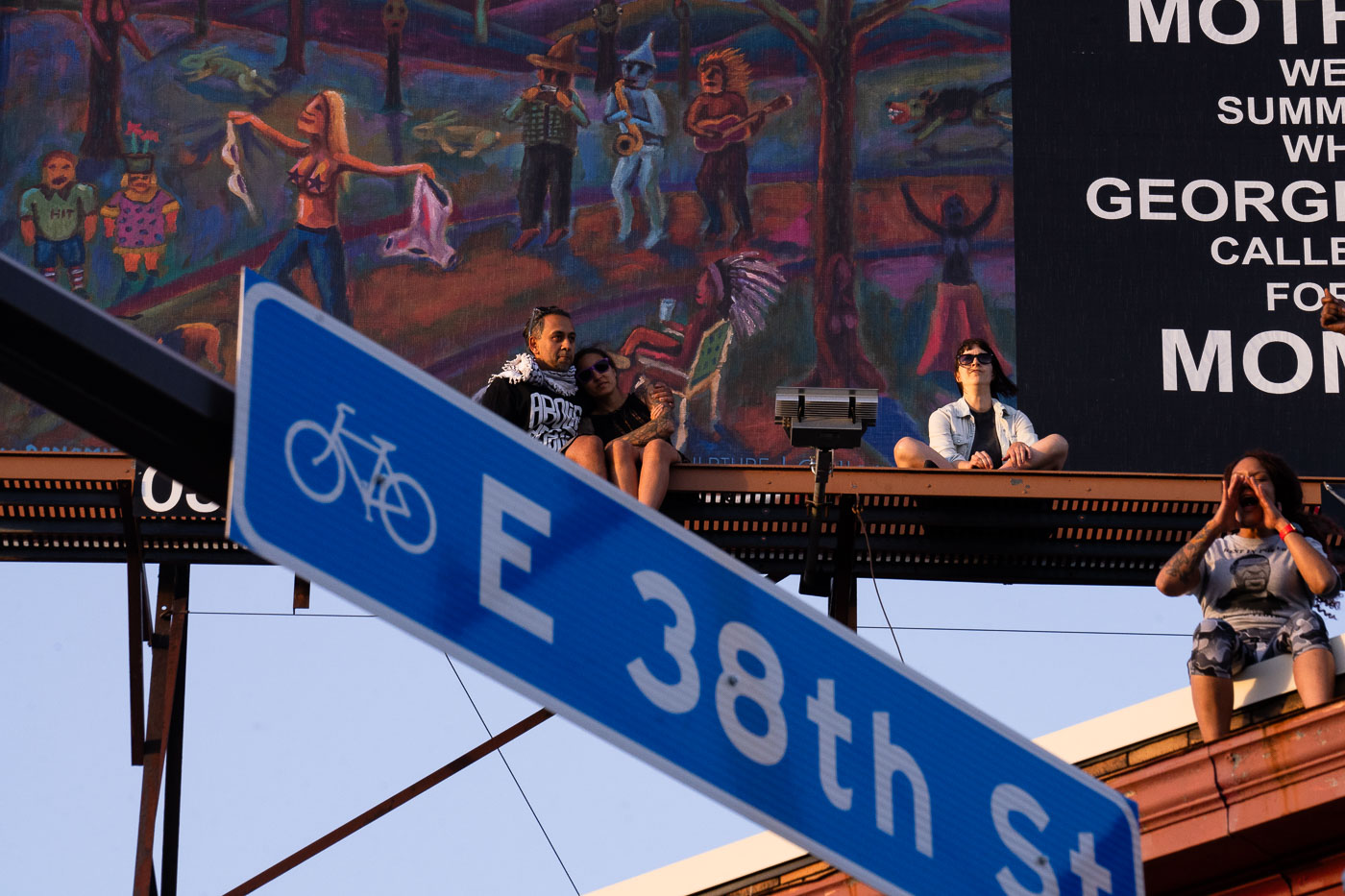
People on billboards at George Floyd Square
On the one-year anniversary of George Floyd's murder, community members gathered at George Floyd Square in Minneapolis. The square, located at the intersection of East 38th Street and Chicago Avenue, has been under community control since May 26, 2020. Attendees watched a performance by Common and The Sound of Blackness from atop rooftop billboards.

People on billboards at George Floyd Square, Minneapolis
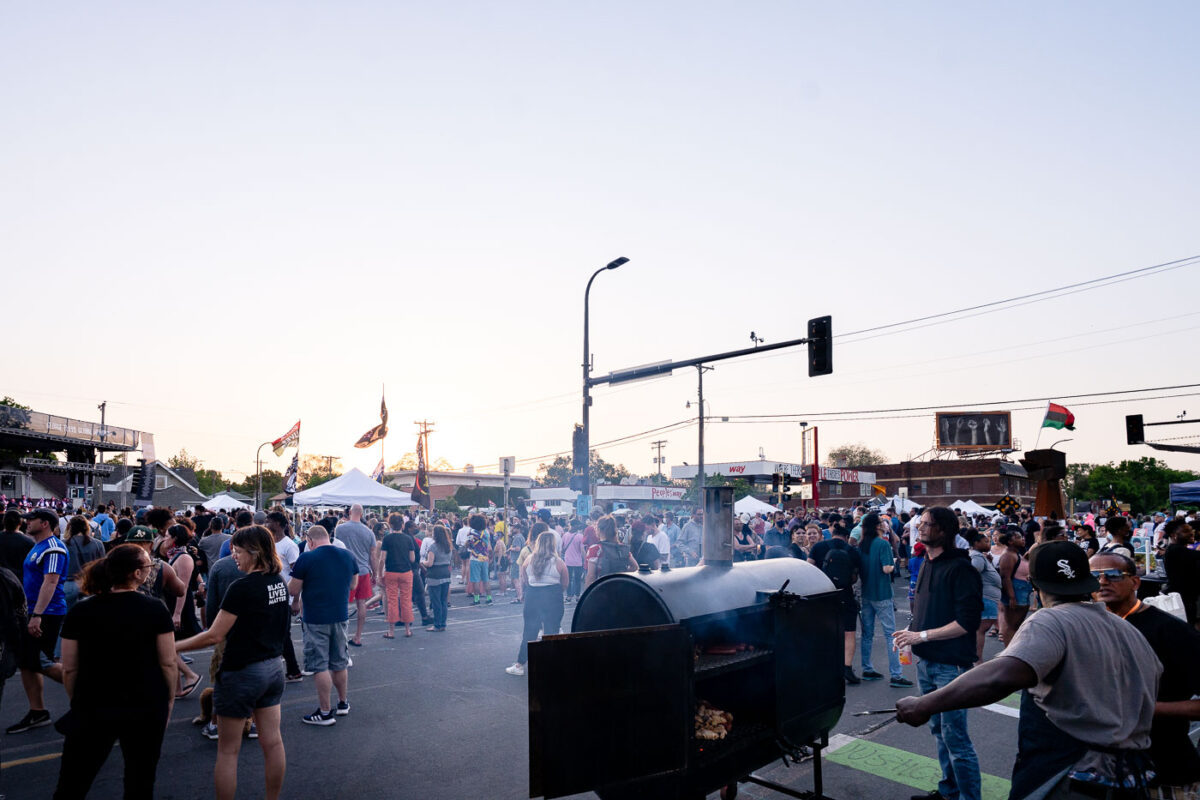
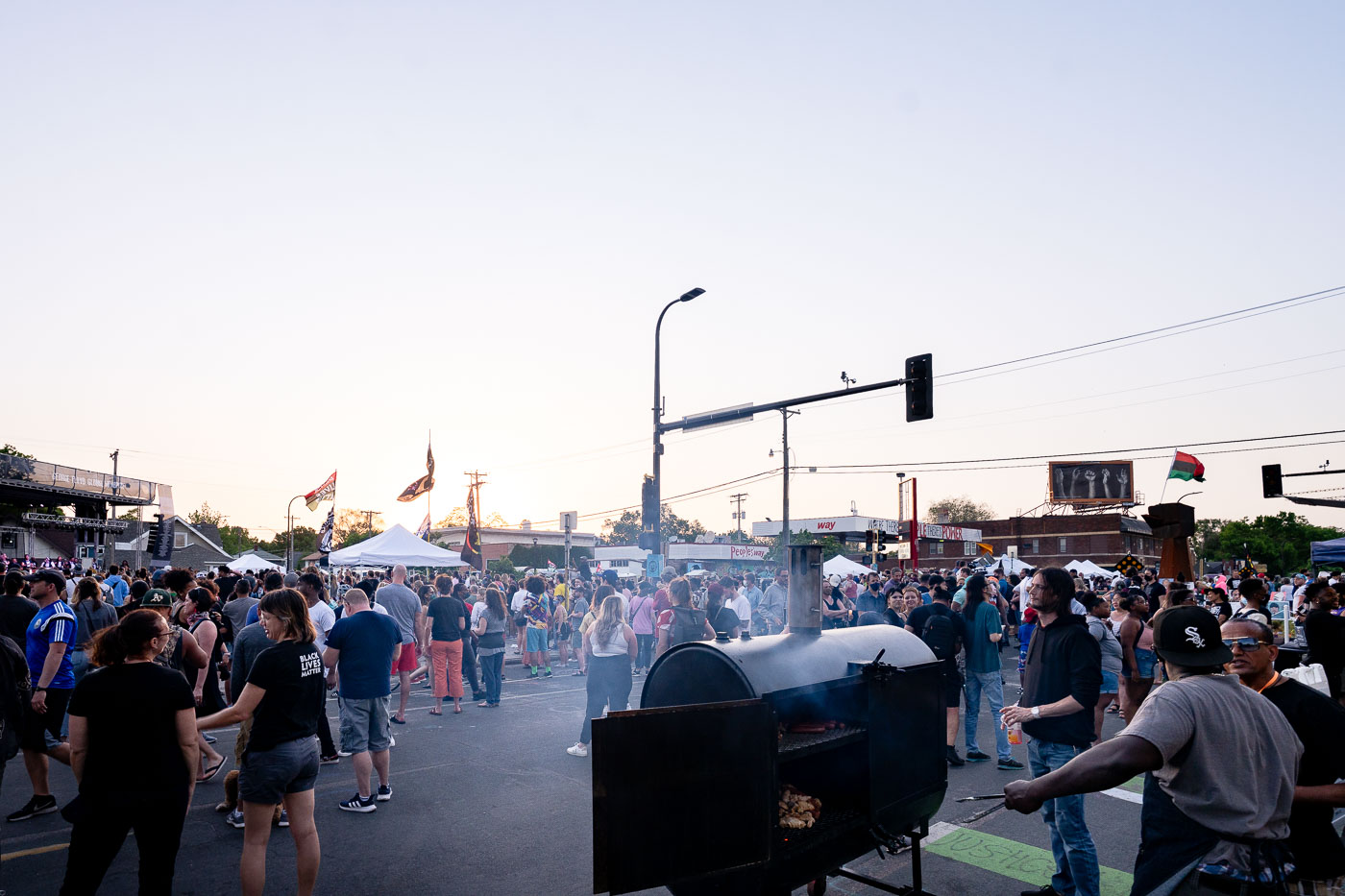
Grilling out at Rise and Remember 2021
A community barbecue, "Rise and Remember 2021," was held at George Floyd Square in Minneapolis on the anniversary of George Floyd's murder. The event brought together residents for a gathering that included food preparation, as seen with the large smoker in the foreground. George Floyd Square, formerly the intersection of 38th Street and Chicago Avenue, became a focal point for protests and community organizing following Floyd's death in May 2020.

George Floyd Square Community BBQ, Minneapolis
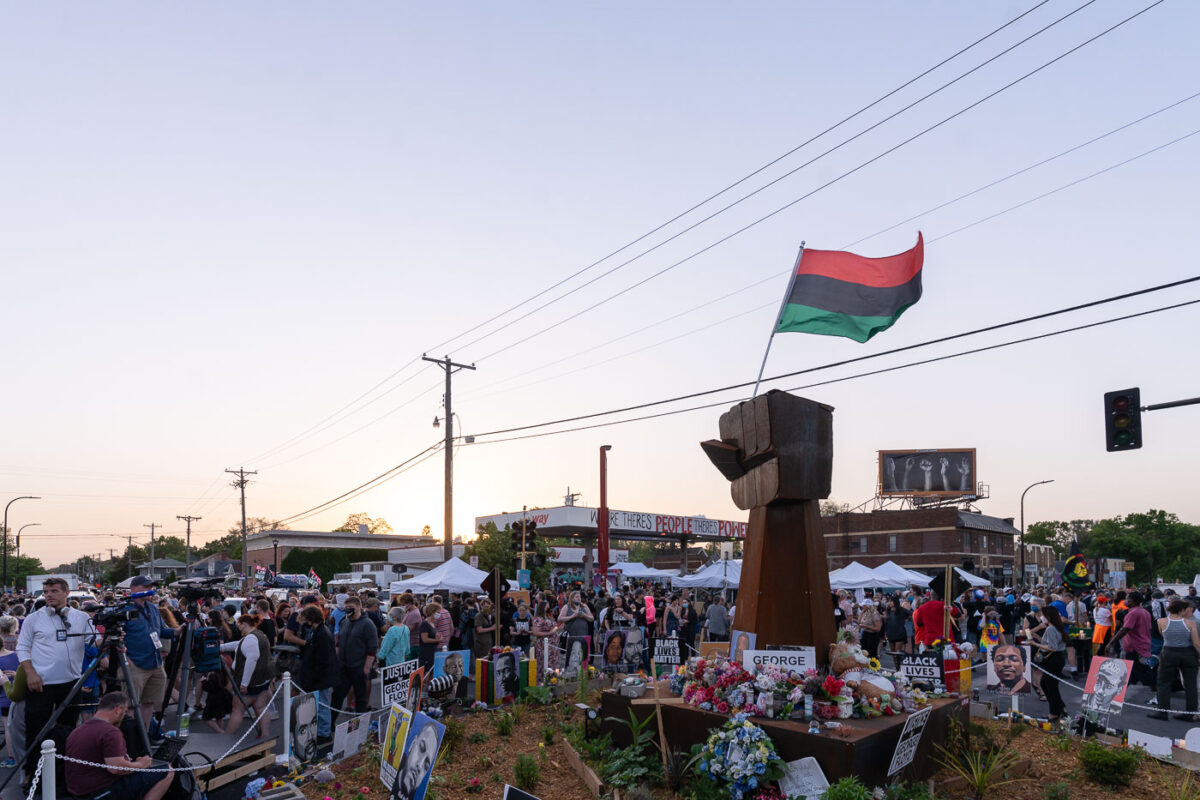
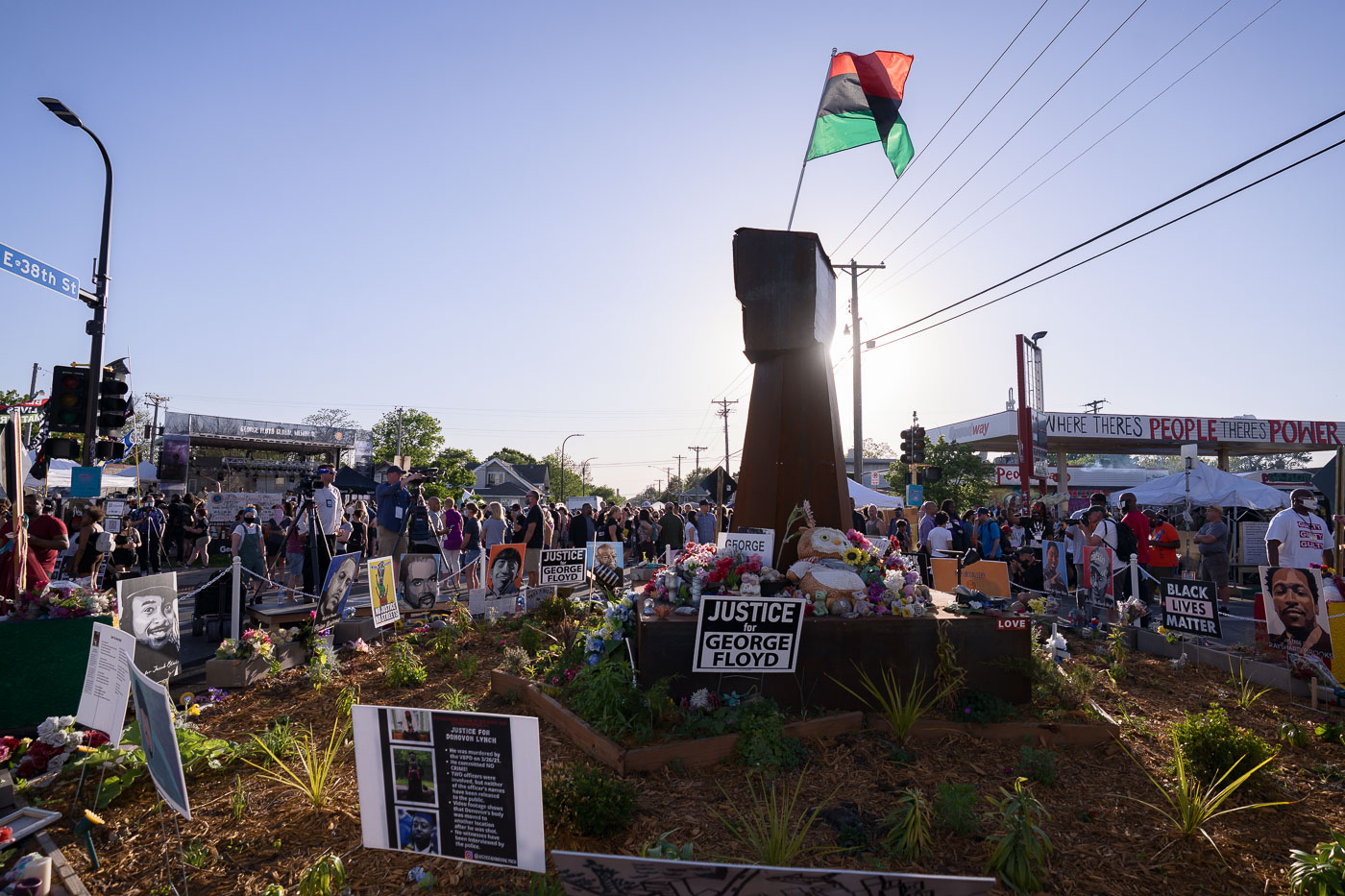
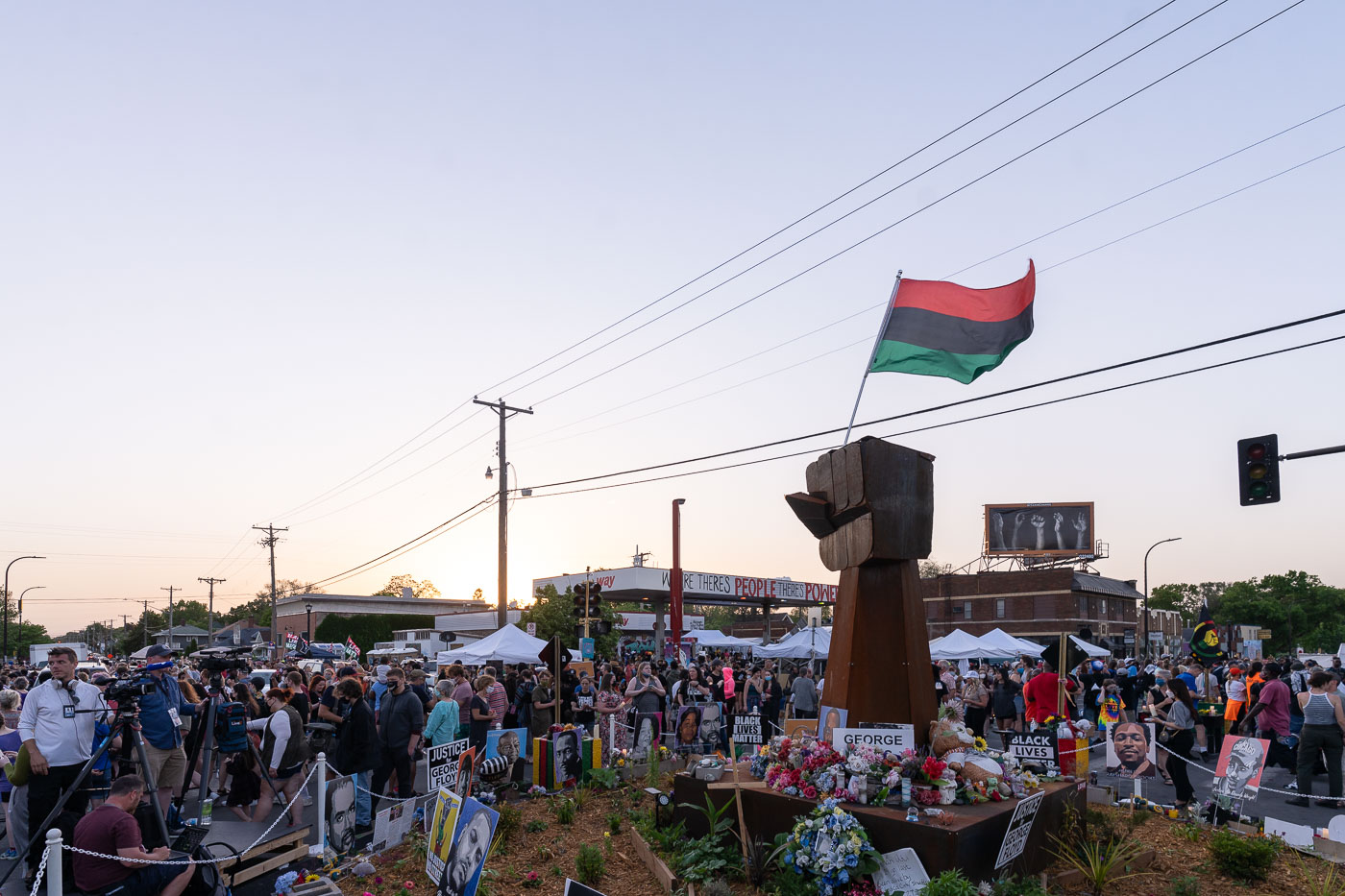
Rise and Remember Fist in May 2021
A crowd gathers at George Floyd Square in Minneapolis on May 25, 2021, marking the one-year anniversary of George Floyd's murder. The intersection, which became a focal point for protests following Floyd's death, was transformed into a memorial and community space. The gathering includes a large sculpture of a raised fist, adorned with flowers and tributes, and a Pan-African flag flying overhead. This site serves as a potent symbol of the ongoing movement for racial justice and a place of remembrance for Floyd and other victims of police brutality.

George Floyd Square Anniversary Gathering, Minneapolis, May 2021
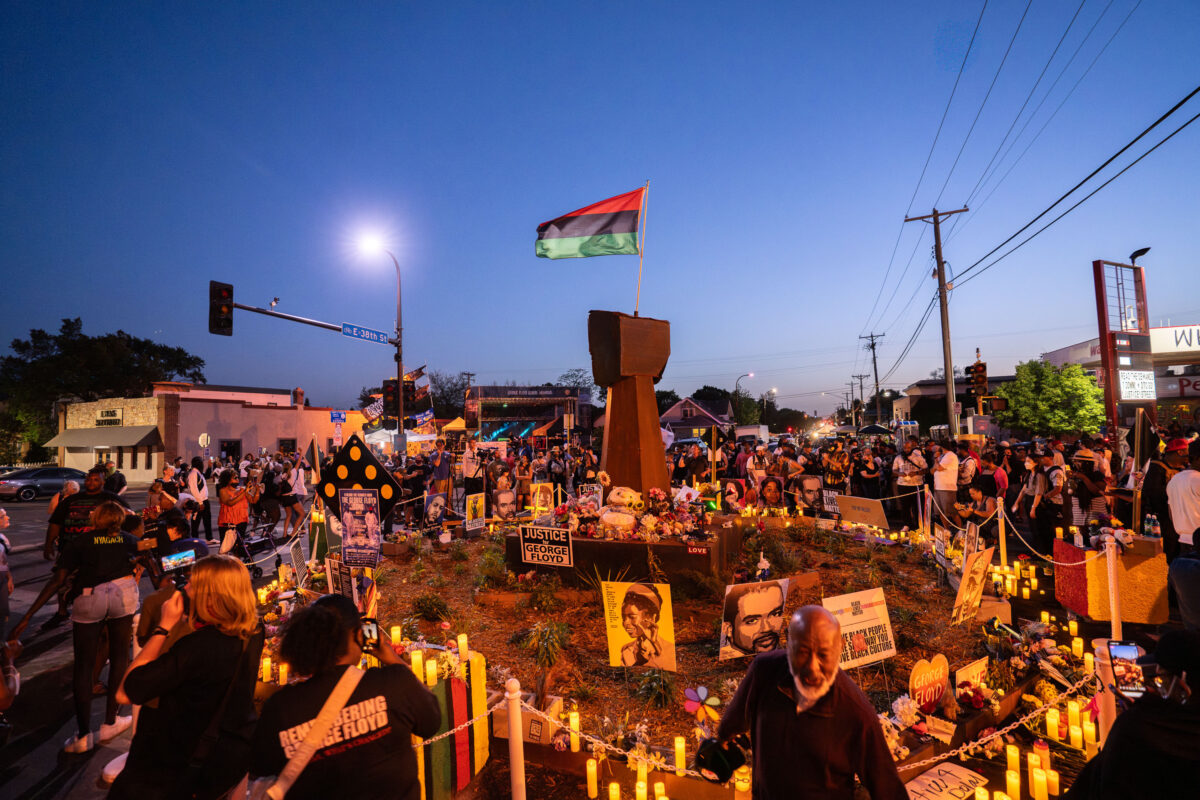
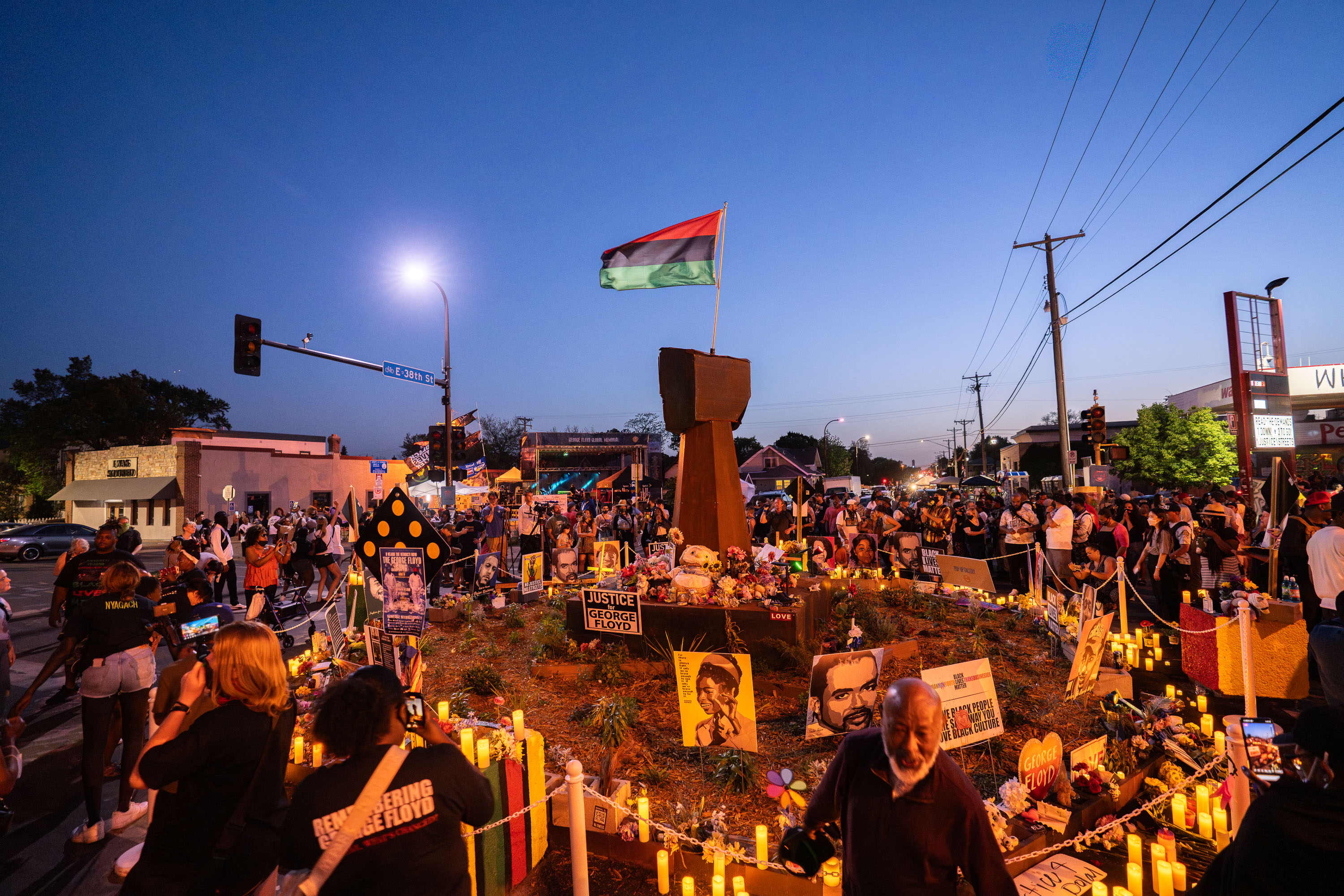
Candles around the fist at George Floyd Square
Candles, portraits of George Floyd, and memorial offerings surround the raised fist sculpture at George Floyd Square as community members gather at the intersection of 38th Street and Chicago Avenue in Minneapolis during the Rise and Remember event on May 25, 2021. The Pan-African flag flies above the memorial as dusk settles over the crowd marking one year since Floyd's murder at the site.

Candles around the fist at George Floyd Square

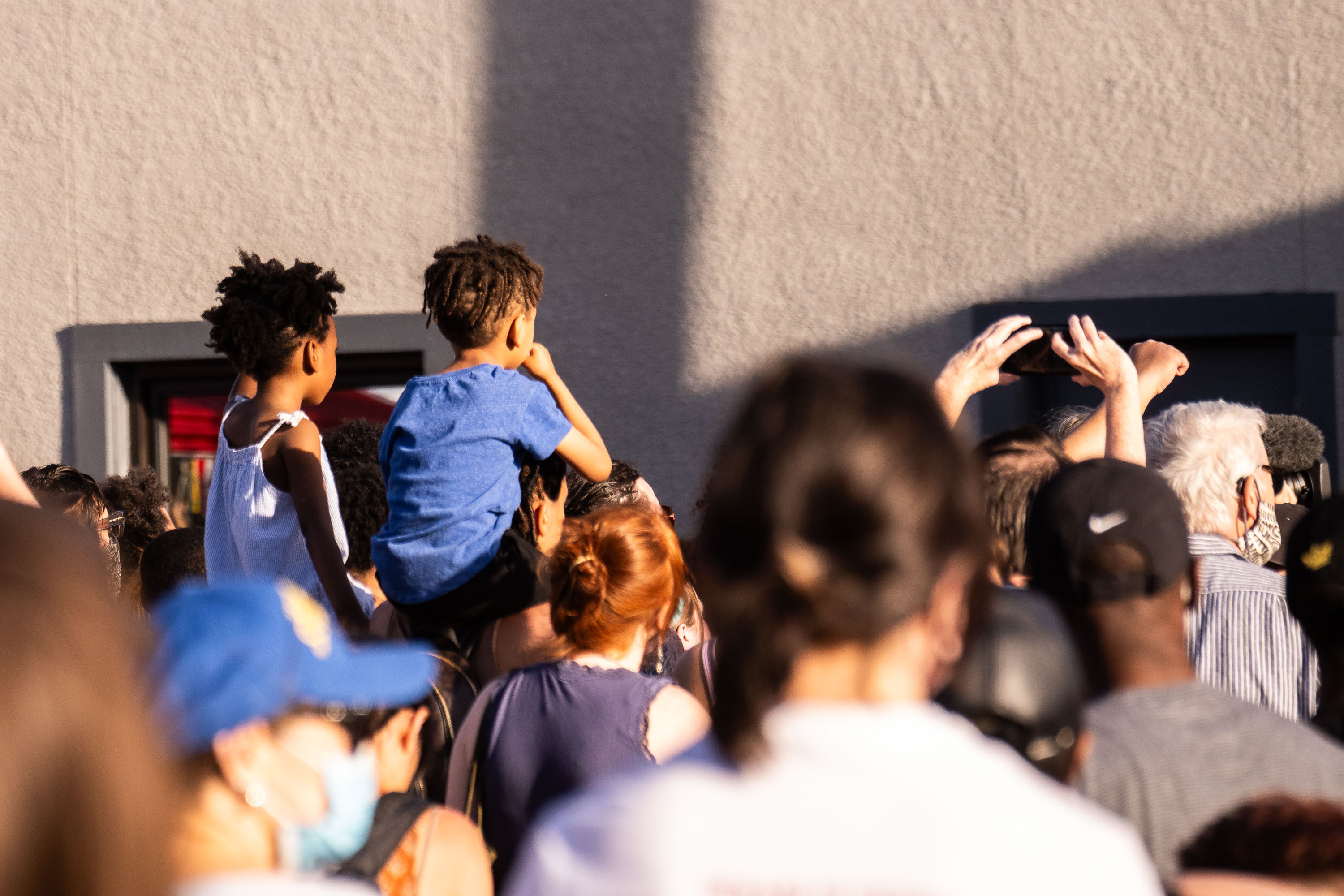
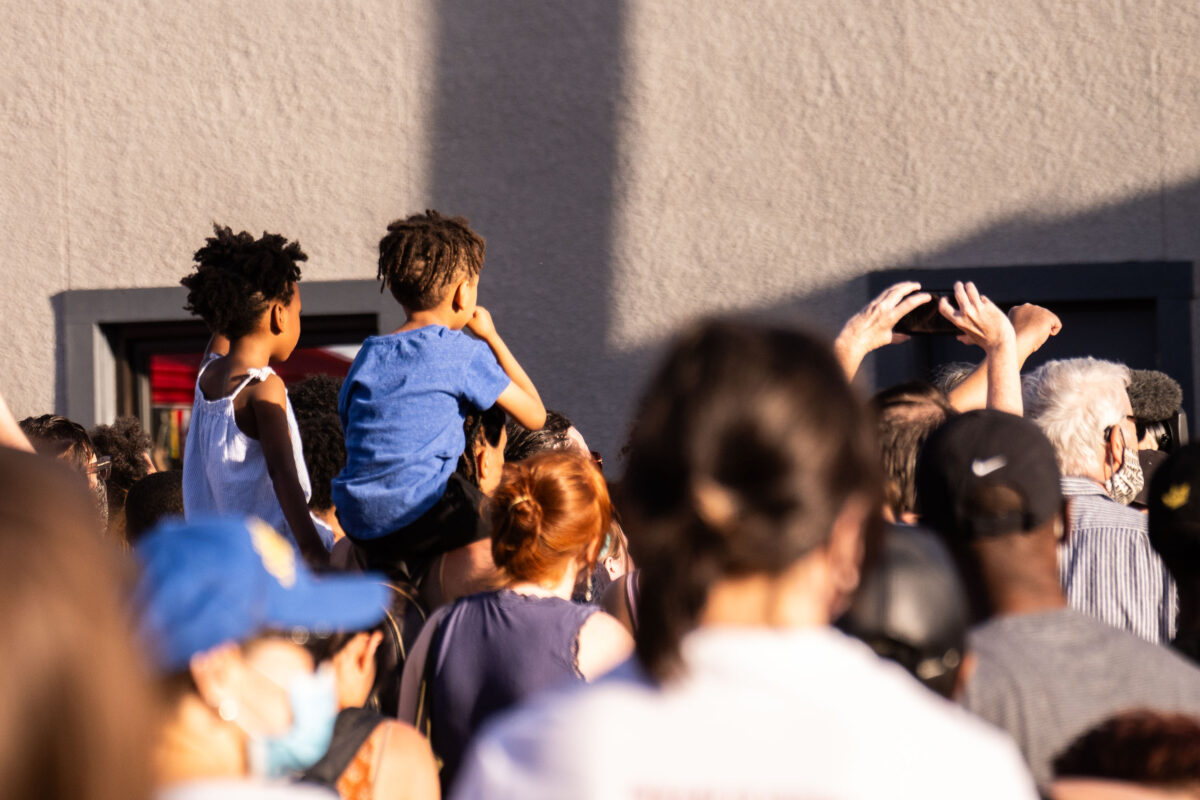
Kids at Rise and Remember Festival
Kids at Rise and Remember Festival at George Floyd Square in 2021.

Kids at Rise and Remember Festival

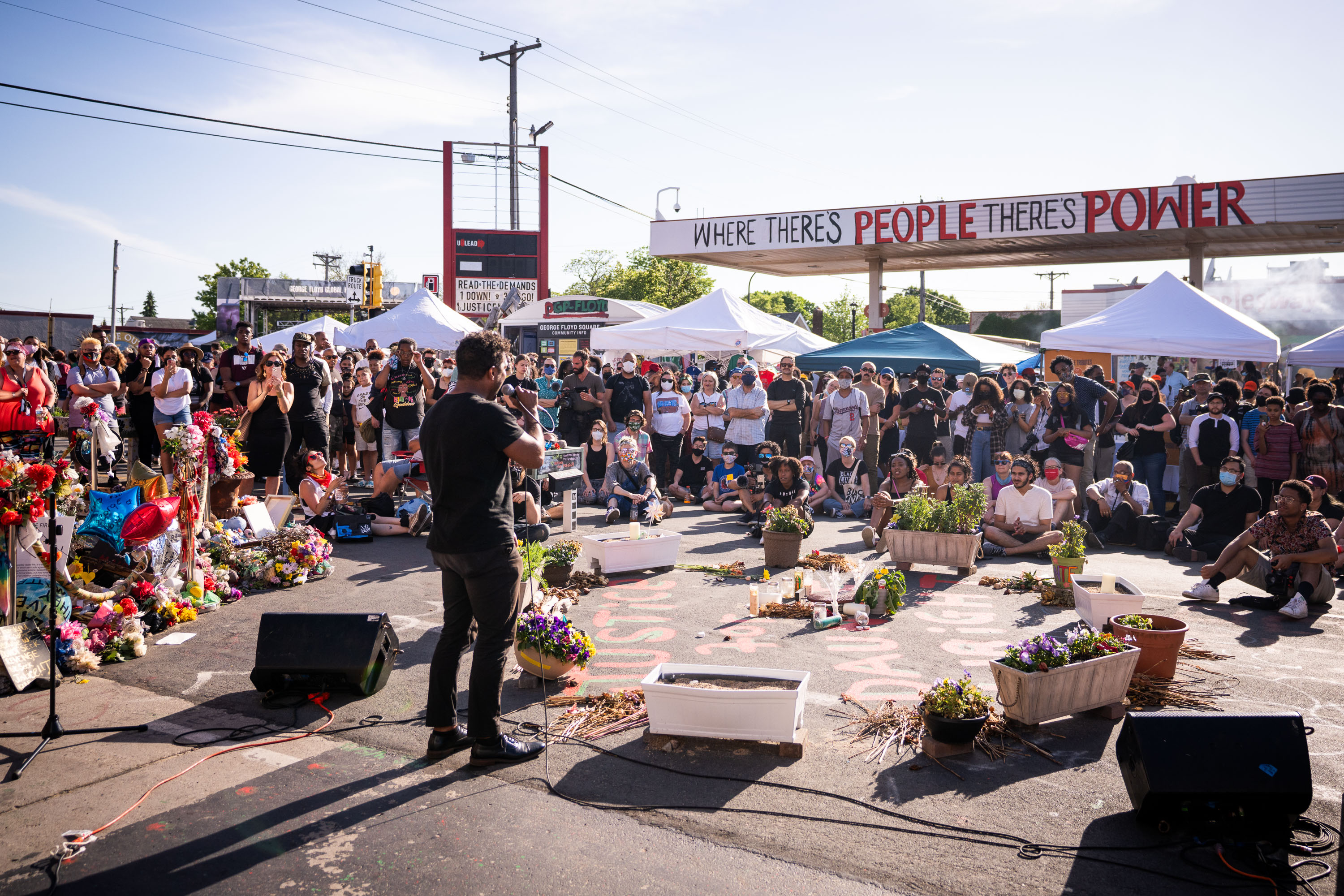
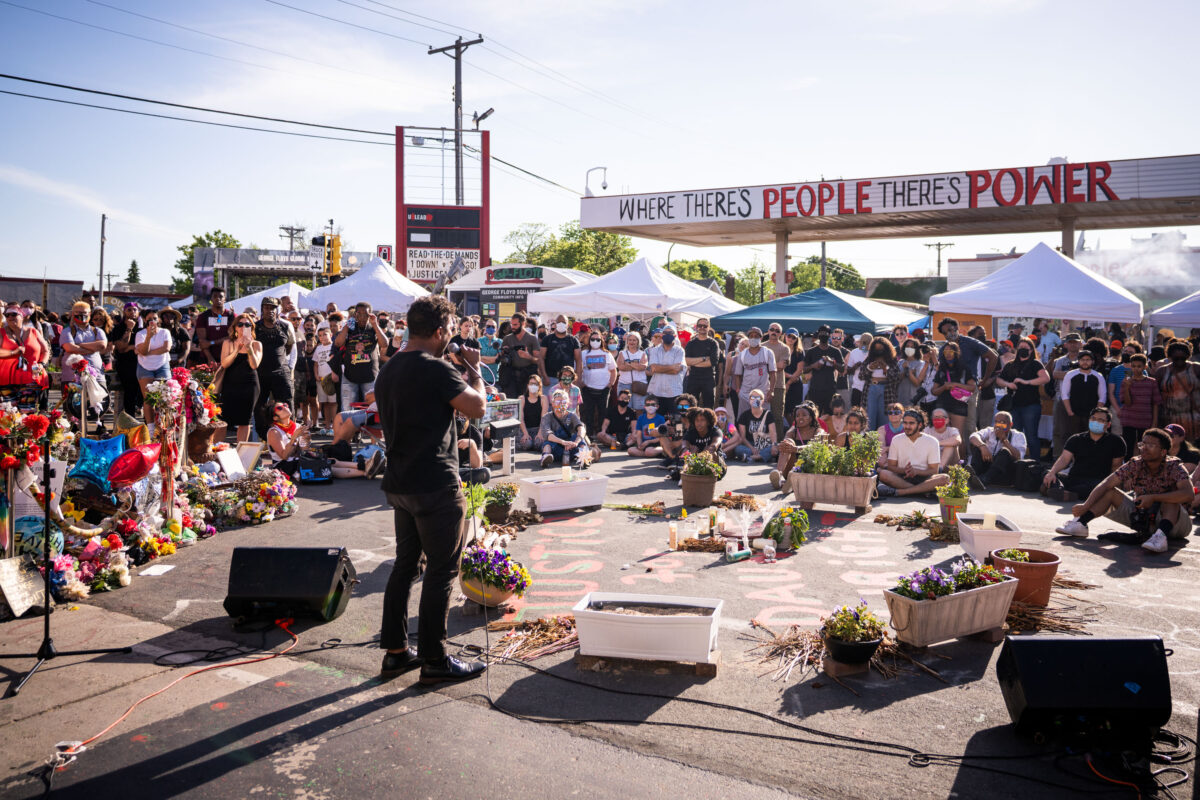
Toussaint Morrison and The People's Way
Toussaint Morrison speaks at Rise and Remember Festival at George Floyd Square.

Toussaint Morrison and The People’s Way
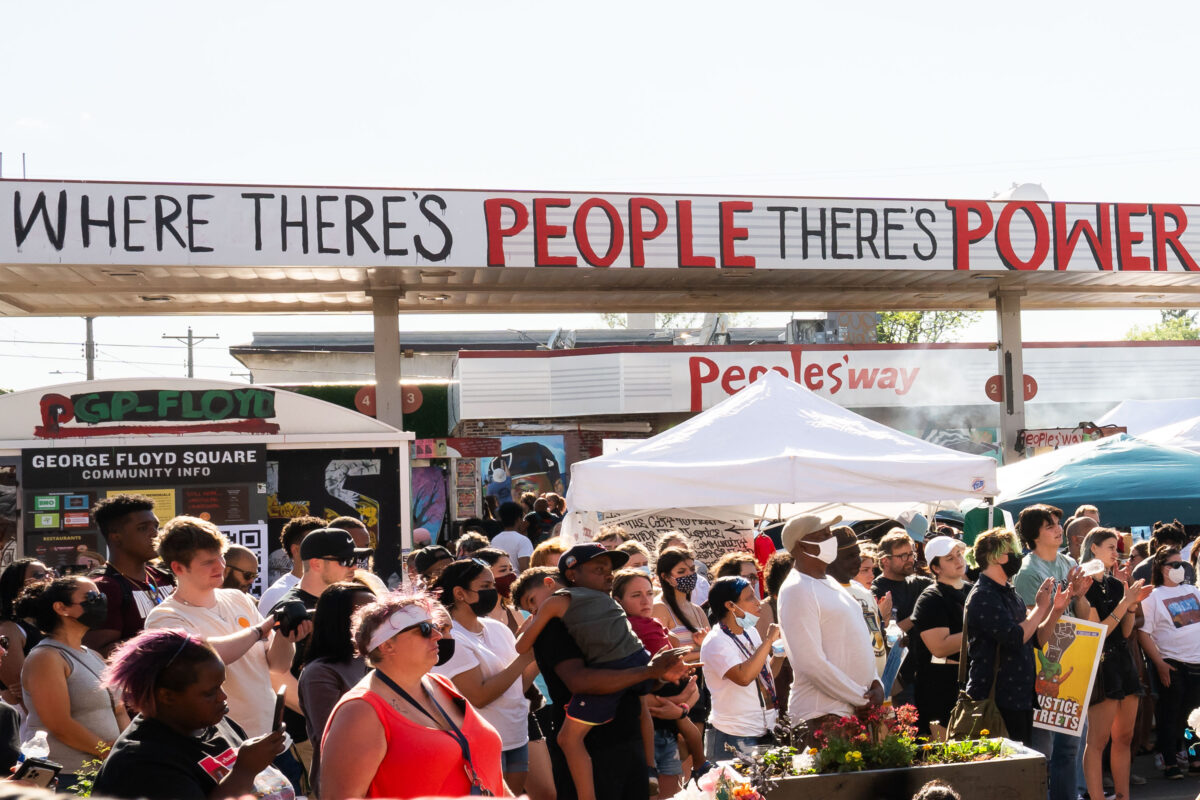
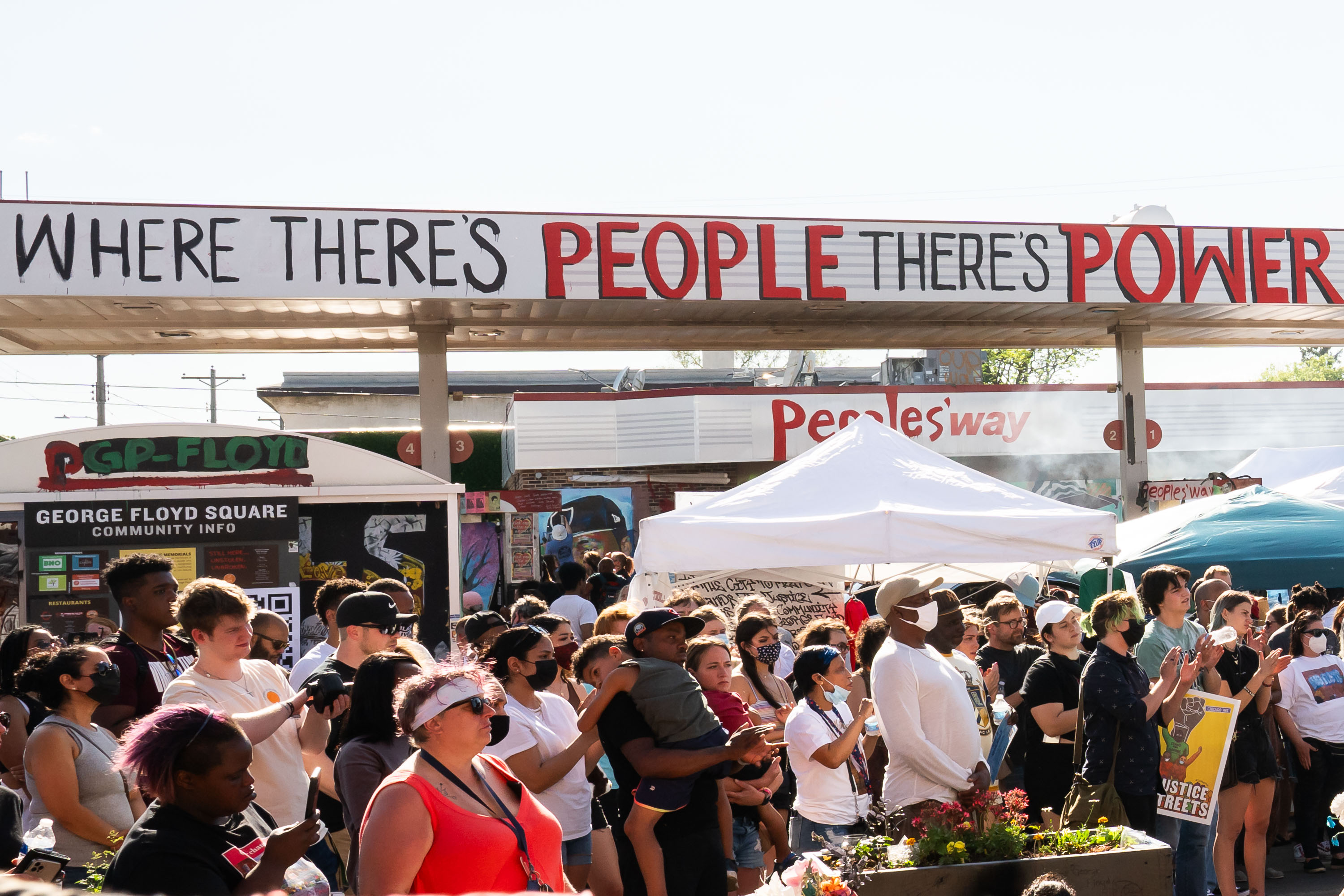
Rise and Remember 2021, Minneapolis
Community gathers at Rise and Remember 2021 at George Floyd Square.

Rise and Remember 2021, Minneapolis

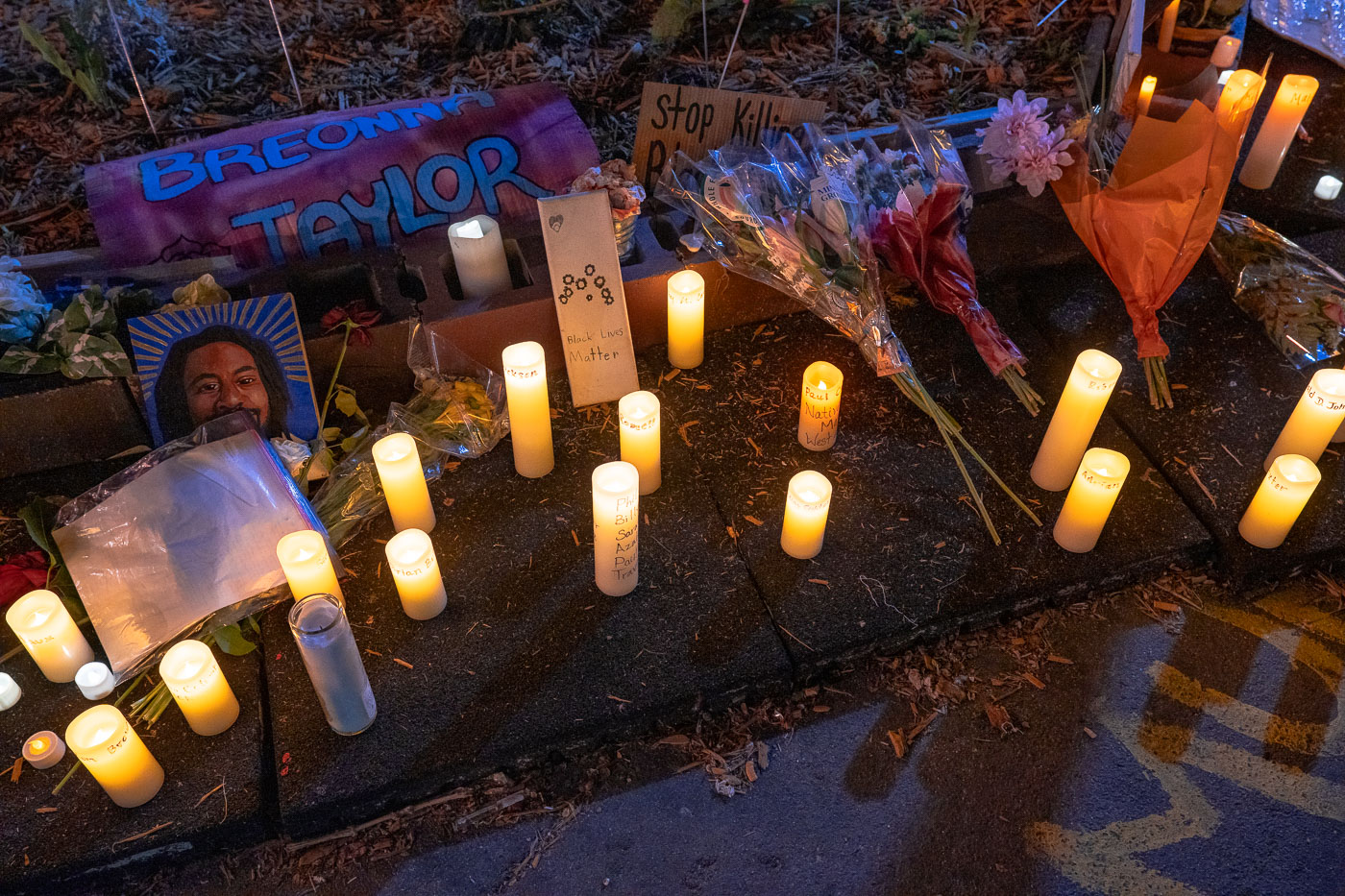
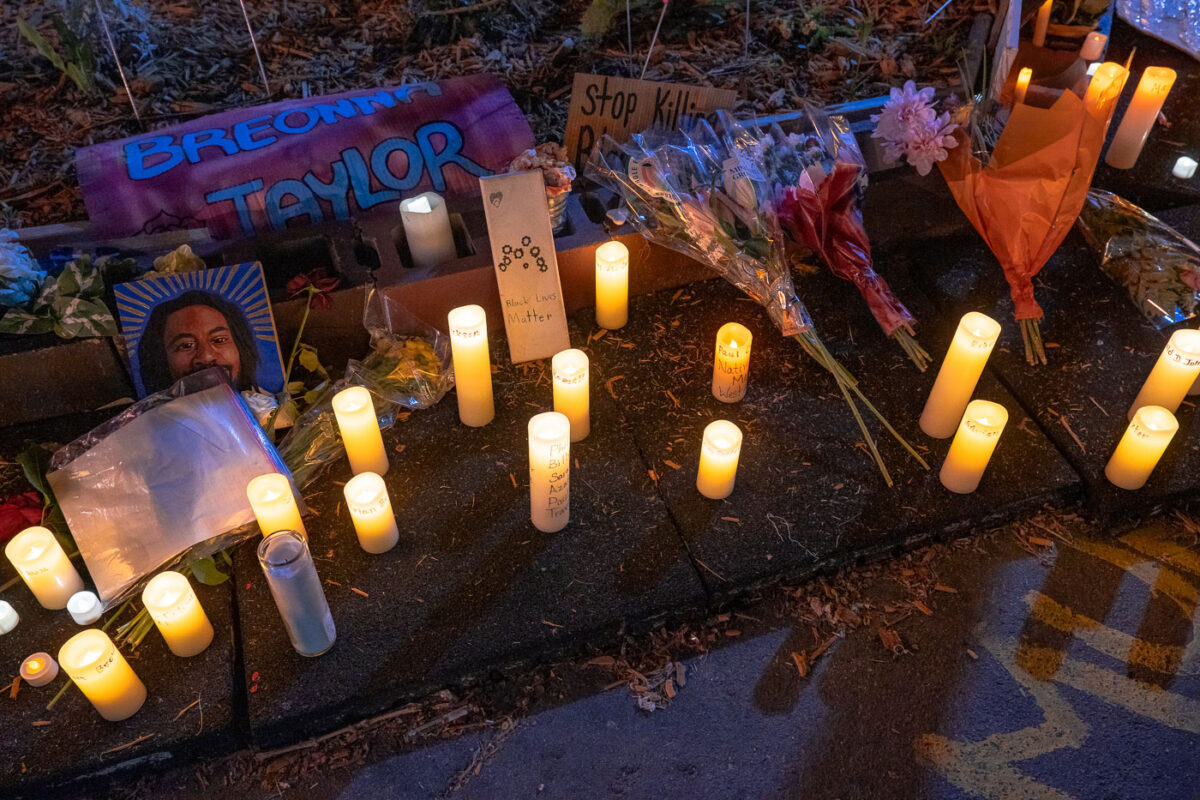
George Floyd 1 year anniversary candles
Candles bearing the names of victims of police violence are illuminated at George Floyd Square in Minneapolis. The memorial was established following the murder of George Floyd on May 25, 2020, and has since become a site of remembrance and protest. The names on the candles, such as Breonna Taylor and others, represent individuals whose lives were lost due to police brutality.

George Floyd Square Memorial: Victims’ Names on Candles
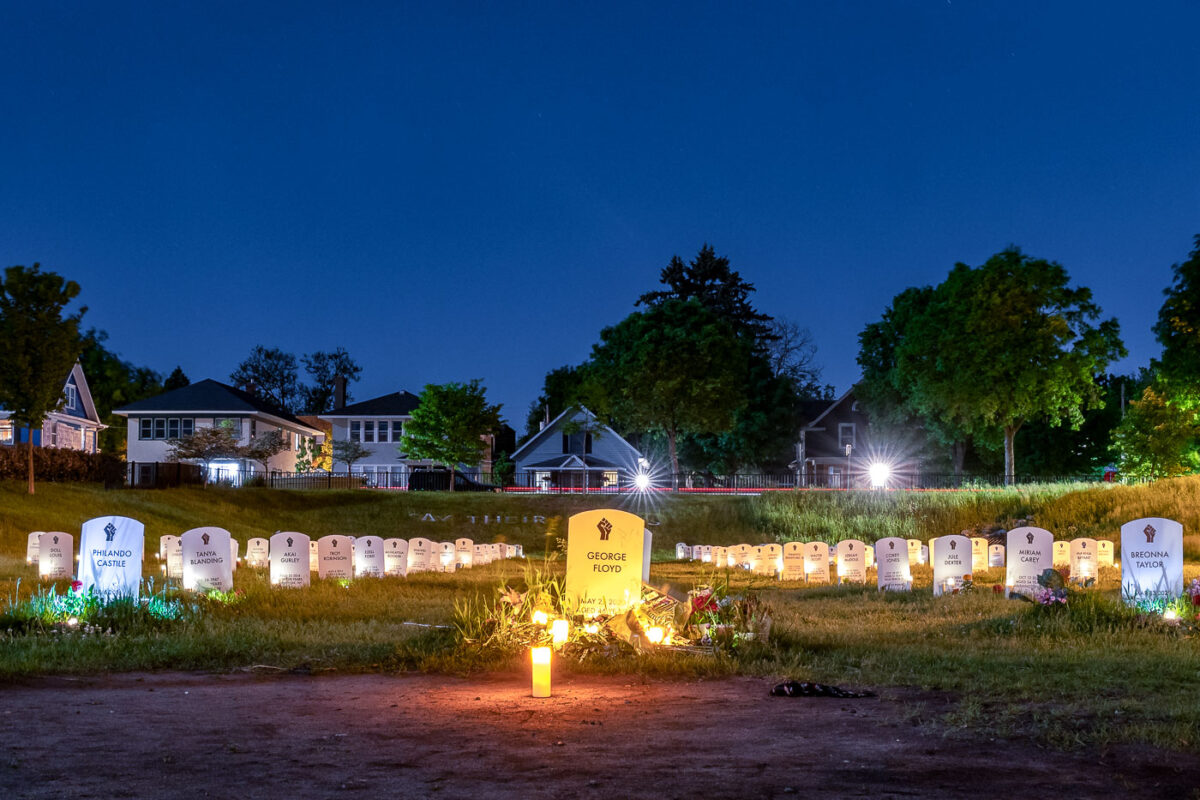
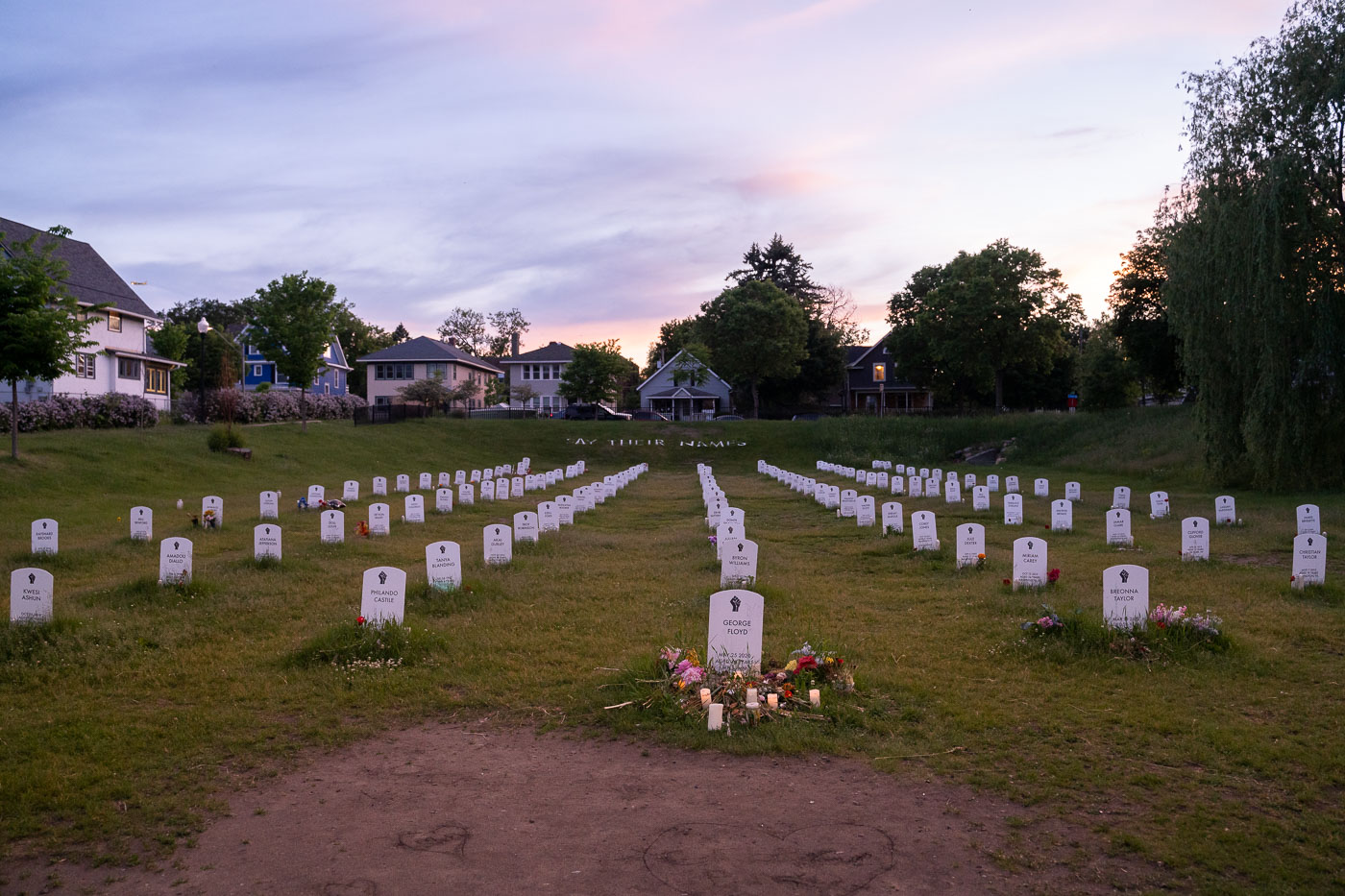
Say Their Names Cemetery on 1 year anniversary
The Say Their Names Cemetery in Minneapolis, established on the one-year anniversary of George Floyd's murder, serves as a memorial to victims of racial injustice and police brutality. The temporary installation features headstones bearing the names of individuals, including George Floyd, Breonna Taylor, Philando Castile, and others, alongside candles and floral tributes.

Say Their Names Cemetery, Minneapolis, 1 Year Anniversary
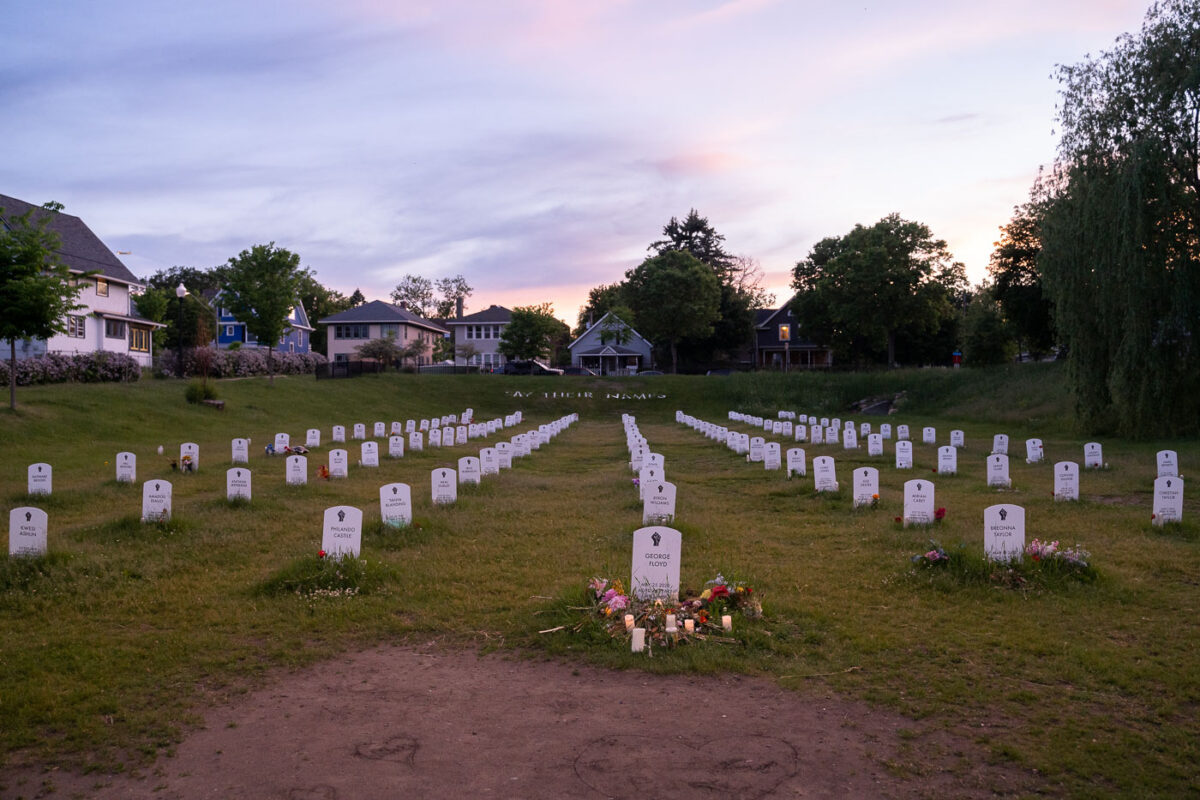
Say Their Names Cemetery memorial in Minneapolis at dusk with rows of headstones for victims of police violence.
The "Say Their Names Cemetery" is an outdoor memorial located in South Minneapolis, near George Floyd Square. Established in the wake of the murder of George Floyd and subsequent protests, the cemetery serves as a tribute to victims of police violence. Each headstone bears the name of an individual who died as a result of police brutality, with the central marker dedicated to George Floyd himself. The memorial aims to honor these lives and raise awareness about systemic injustice. On May 25, 2020, Minneapolis police officer Derek Chauvin murdered 46-year-old George Floyd during an arrest outside Cup Foods at the intersection of 38th Street and Chicago Avenue in south Minneapolis. Video recorded by bystanders showed Chauvin kneeling on Floyd’s neck for more than nine minutes while Floyd repeatedly said he could not breathe. Three other Minneapolis police officers - J. Alexander Kueng, Thomas Lane, and Tou Thao — were also present during the arrest and later faced criminal charges for their roles in Floyd’s death. Floyd’s murder sparked protests and civil unrest across Minneapolis and around the world, leading to widespread demonstrations against police violence, major policy debates on policing, and the conviction of Chauvin on murder and manslaughter charges in 2021.

Say Their Names Cemetery, Minneapolis
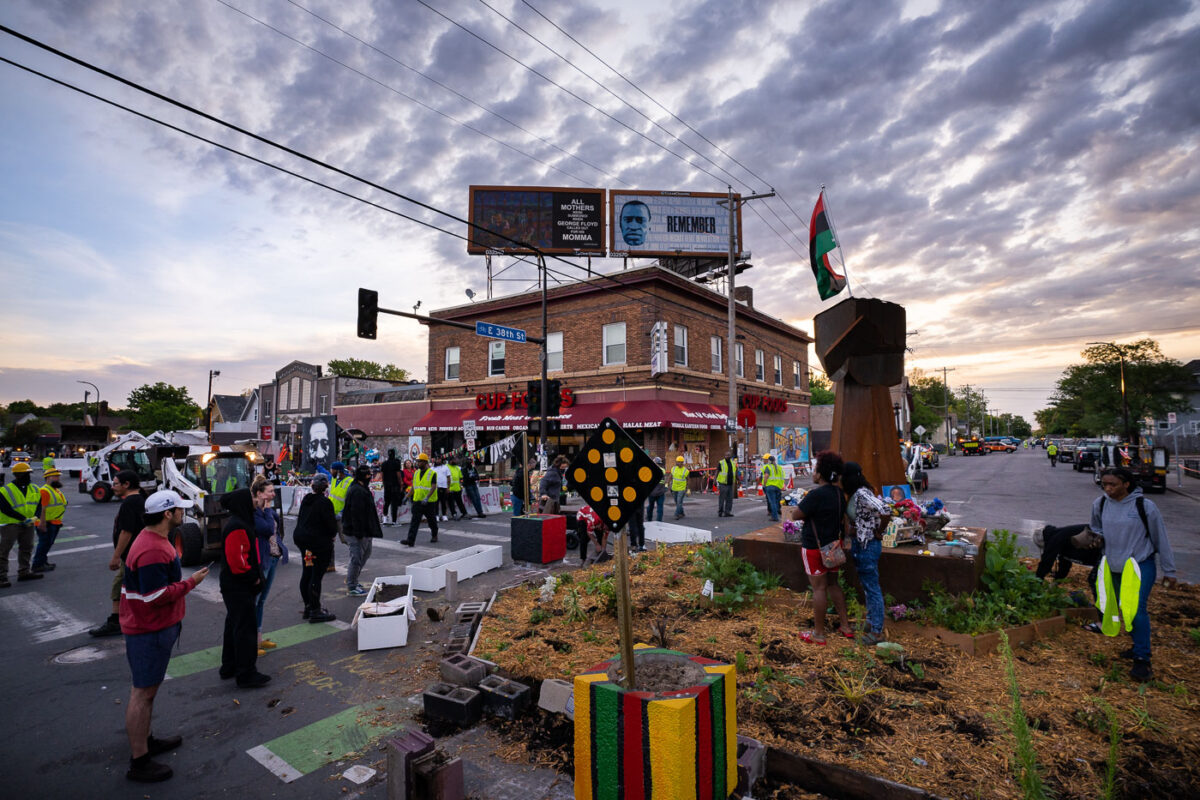
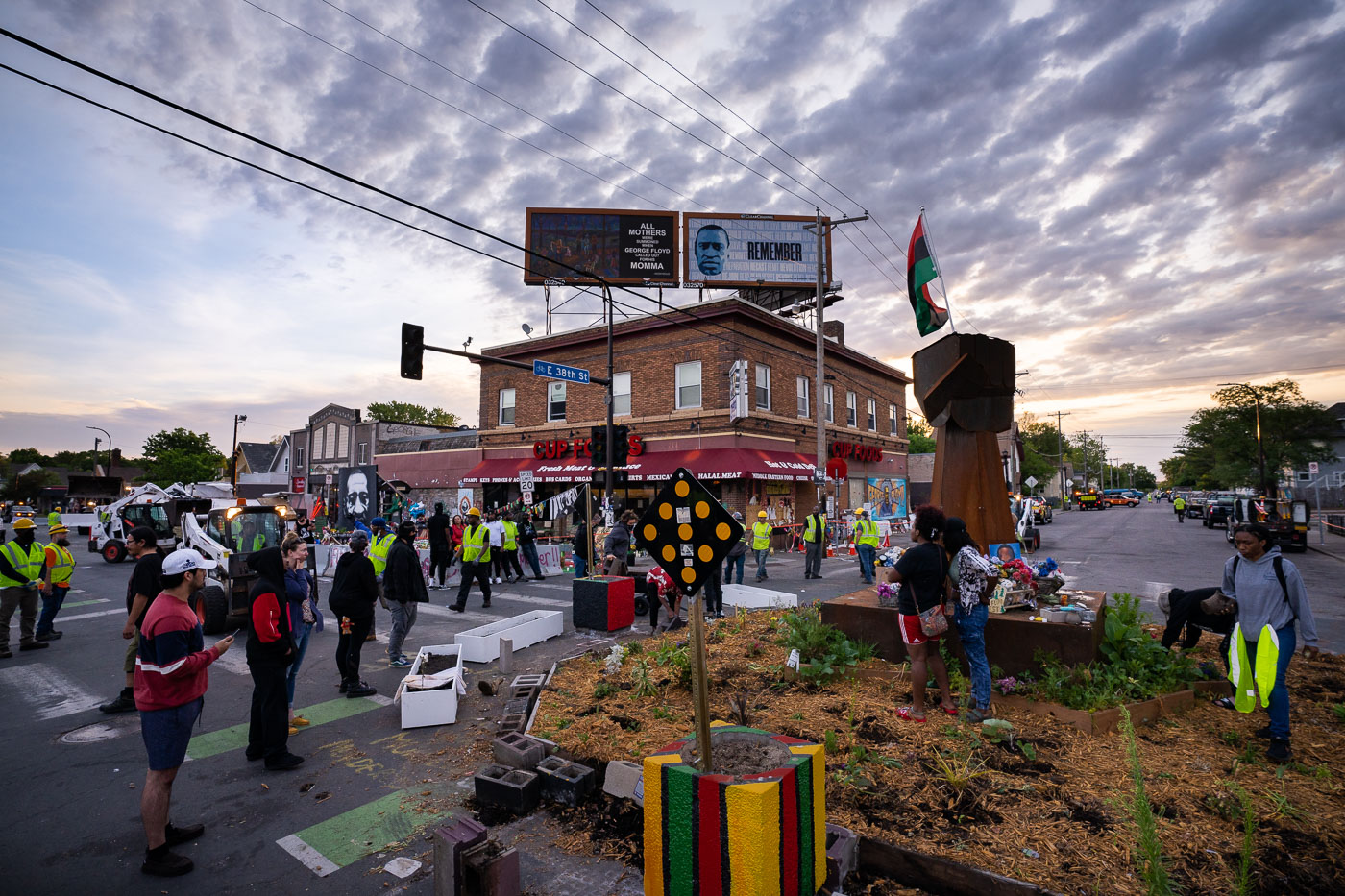
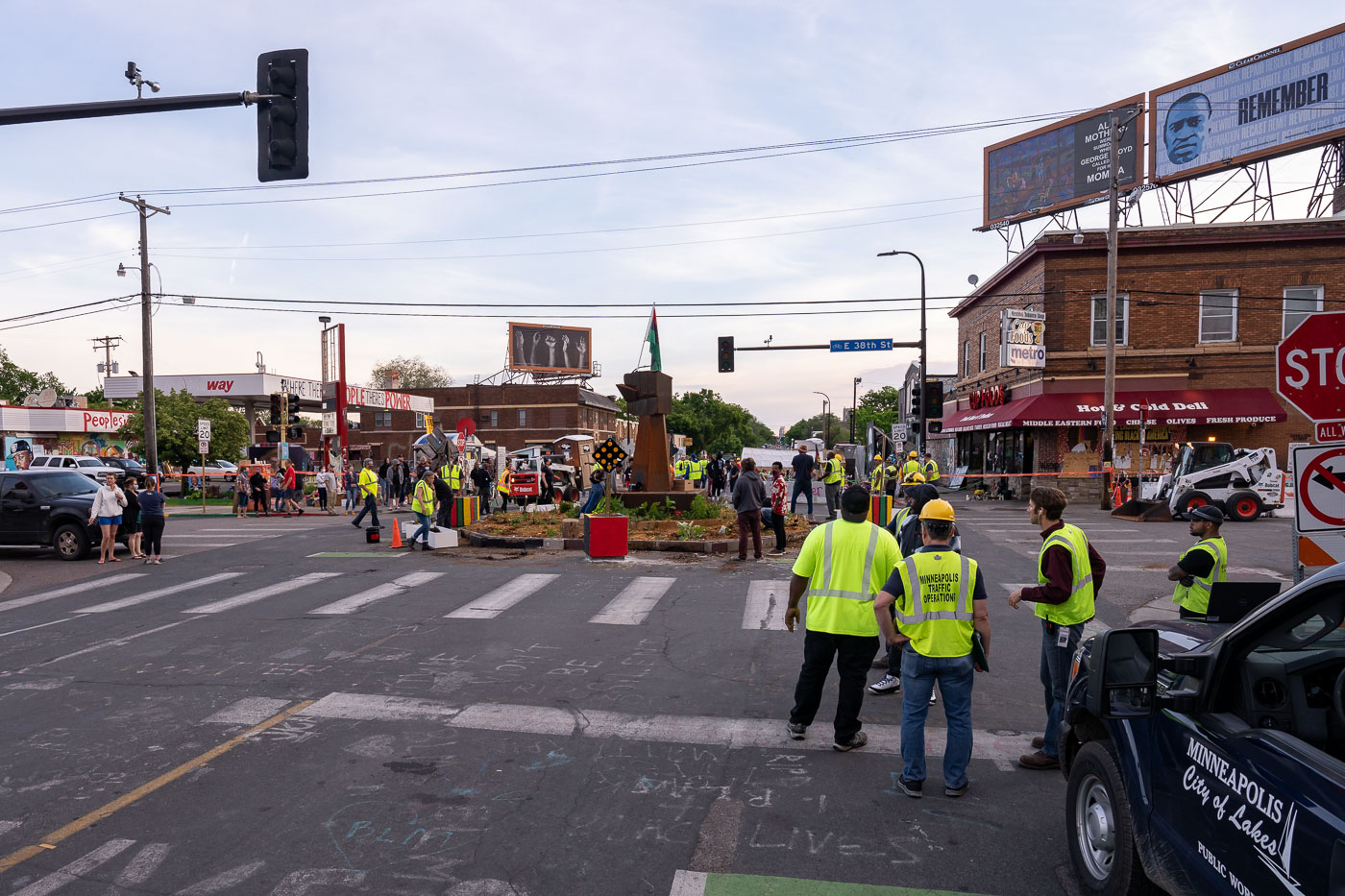
People gather at George Floyd Square in Minneapolis as workers reopen East 38th Street to traffic.
City employees began reopening George Floyd Square to vehicle traffic on June 3, 2021, nearly a year after the intersection was closed following the murder of George Floyd. The square, located at the intersection of East 38th Street and Chicago Avenue in Minneapolis, became a focal point for protests against racial injustice and police brutality. It was transformed into a community space with memorials, art, and gardens, serving as a symbol of resistance and a gathering place for activism. On May 25, 2020, Minneapolis police officer Derek Chauvin murdered 46-year-old George Floyd during an arrest outside Cup Foods at the intersection of 38th Street and Chicago Avenue in south Minneapolis. Video recorded by bystanders showed Chauvin kneeling on Floyd’s neck for more than nine minutes while Floyd repeatedly said he could not breathe. Three other Minneapolis police officers — J. Alexander Kueng, Thomas Lane, and Tou Thao — were also present during the arrest and later faced criminal charges for their roles in Floyd’s death. Floyd’s murder sparked protests and civil unrest across Minneapolis and around the world, leading to widespread demonstrations against police violence, major policy debates on policing, and the conviction of Chauvin on murder and manslaughter charges in 2021.

Minneapolis: George Floyd Square Reopened to Traffic
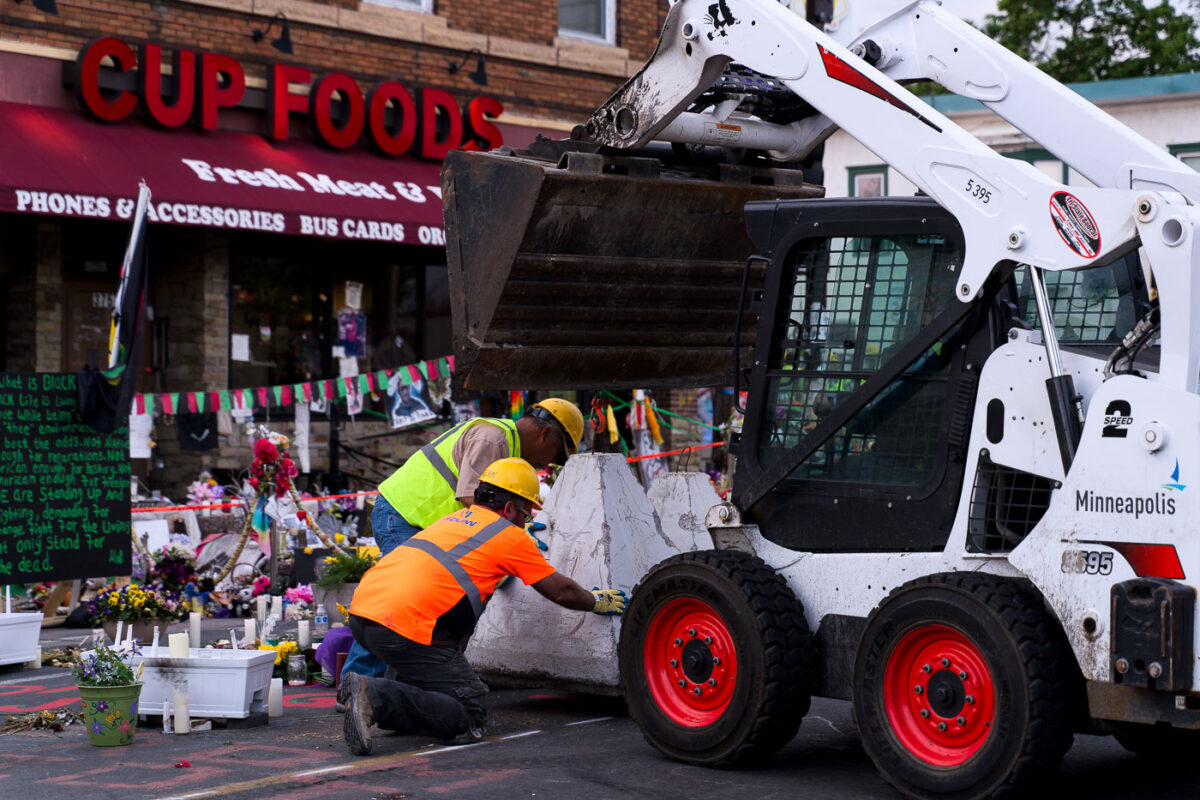
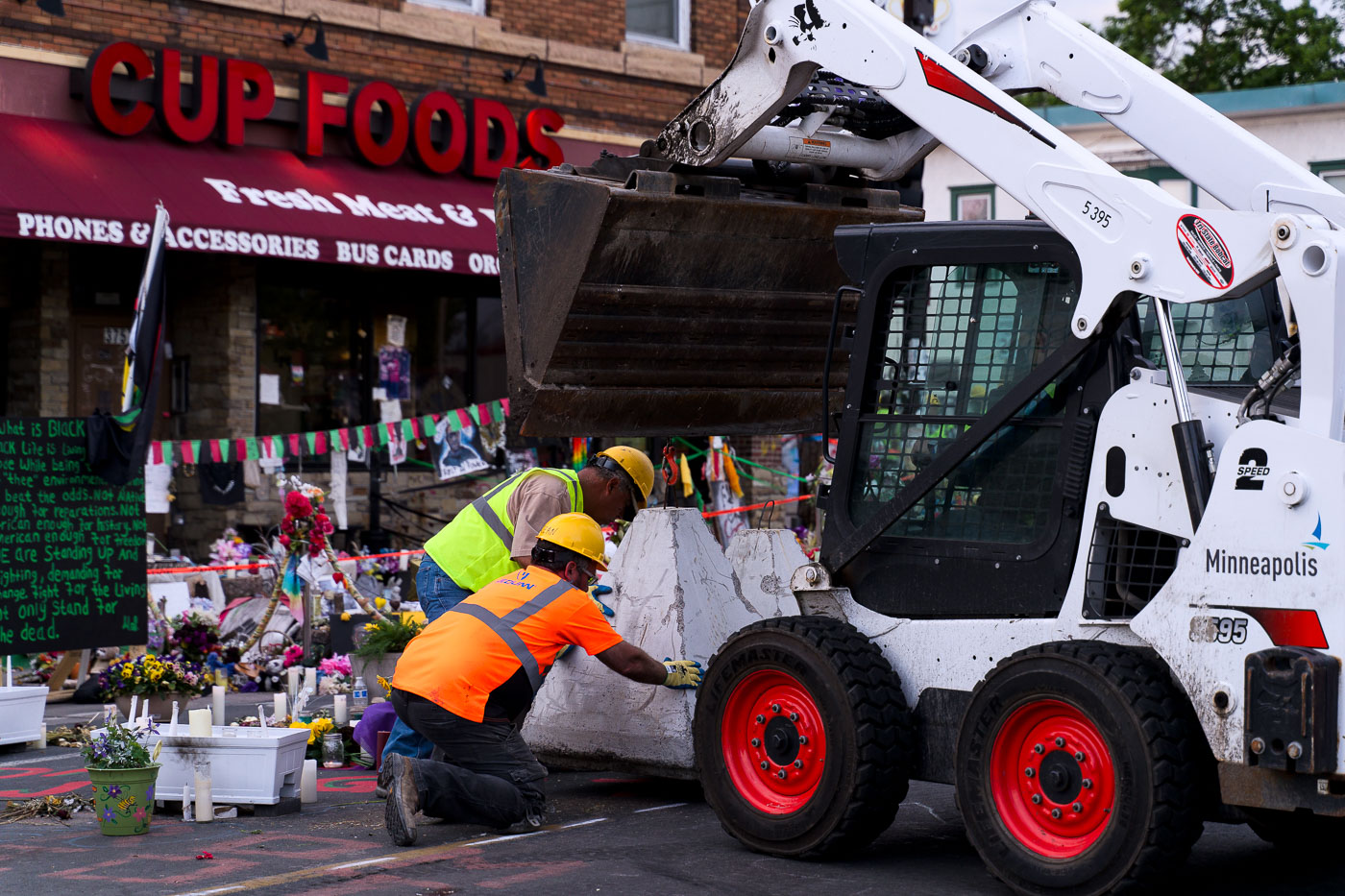
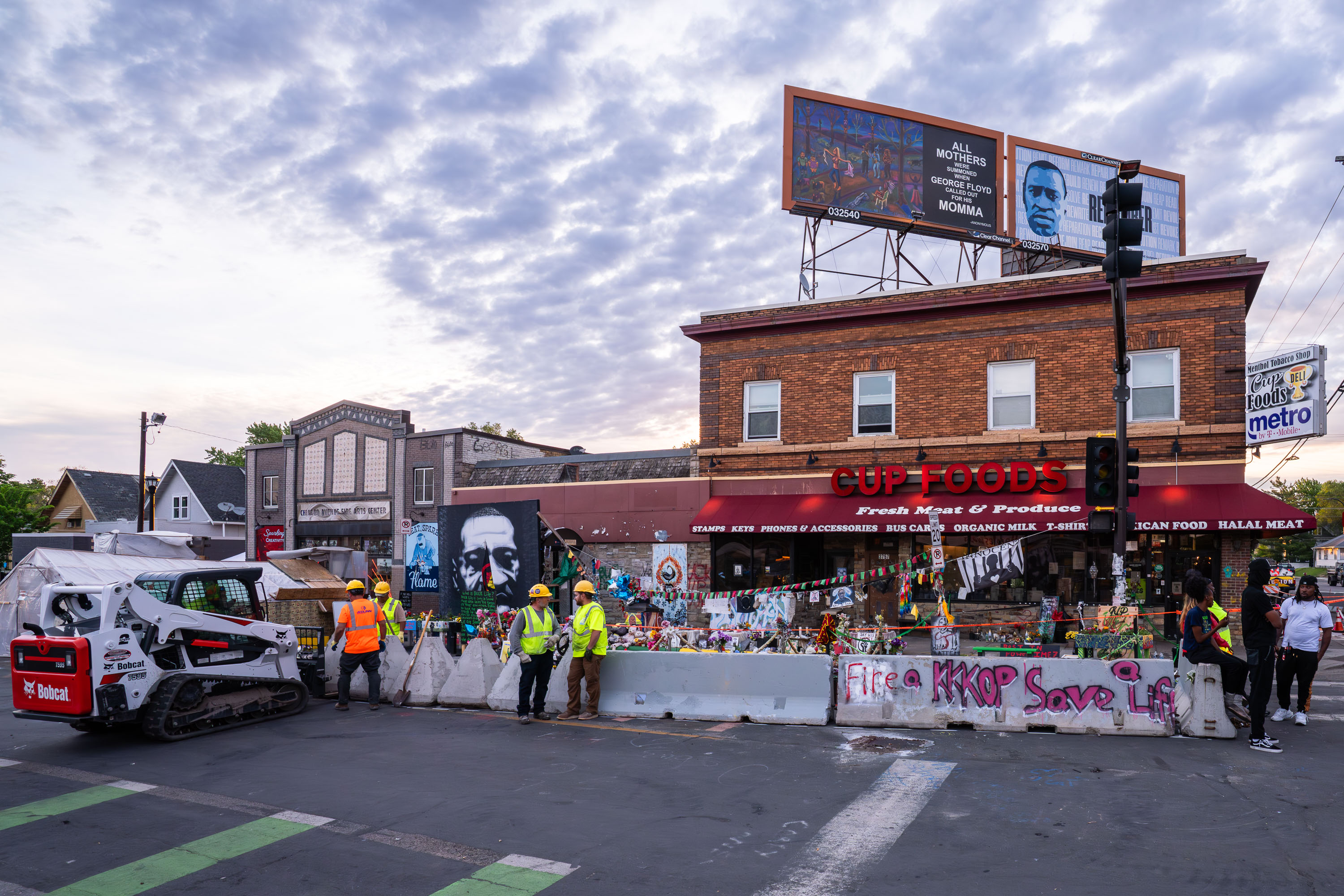
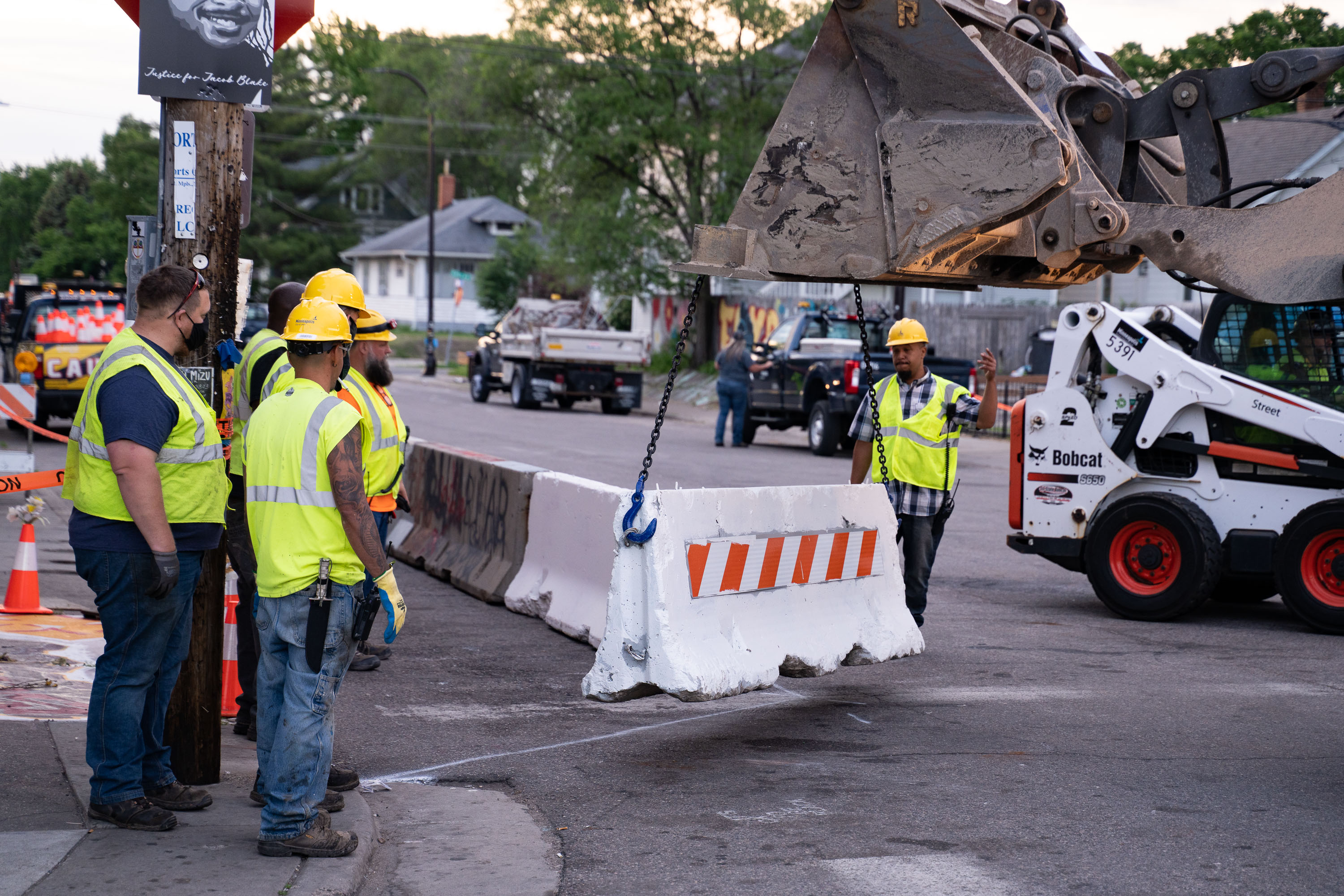
Minneapolis workers move concrete barricades at George Floyd Square outside Cup Foods.
Minneapolis Public Works employees place concrete barricades around George Floyd Square, a protest zone established after the murder of George Floyd by Minneapolis police. The square, located at the intersection of 38th Street and Chicago Avenue, became a focal point for demonstrations against racial injustice and police brutality. The area has been maintained by activists and community members as a memorial and a space for continued activism since May 2020. On the morning of June 3, 2021, city officials along with the Agape Movement coordinated to remove the street barricades and open the square to vehicular traffic. On May 25, 2020, Minneapolis police officer Derek Chauvin murdered 46-year-old George Floyd during an arrest outside Cup Foods at the intersection of 38th Street and Chicago Avenue in south Minneapolis. Video recorded by bystanders showed Chauvin kneeling on Floyd’s neck for more than nine minutes while Floyd repeatedly said he could not breathe. Three other Minneapolis police officers - J. Alexander Kueng, Thomas Lane, and Tou Thao — were also present during the arrest and later faced criminal charges for their roles in Floyd’s death. Floyd’s murder sparked protests and civil unrest across Minneapolis and around the world, leading to widespread demonstrations against police violence, major policy debates on policing, and the conviction of Chauvin on murder and manslaughter charges in 2021.

Minneapolis Public Works places barricades at George Floyd Square
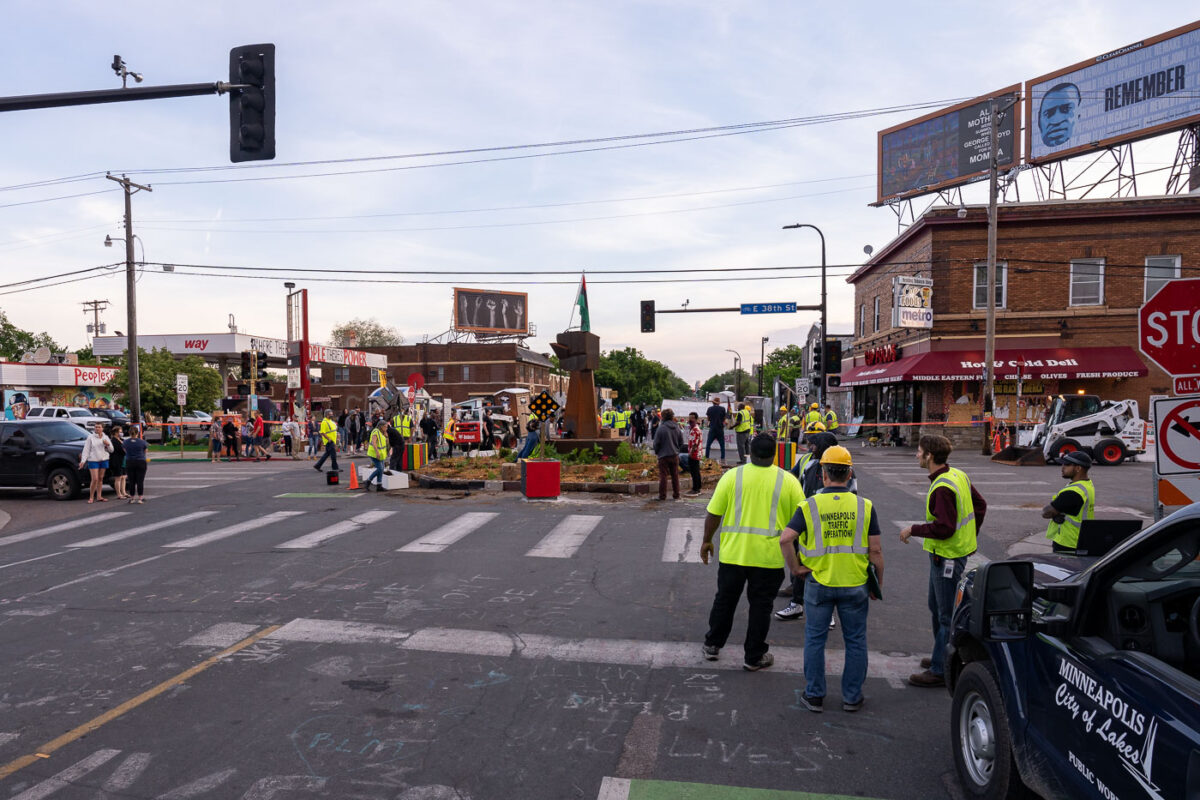
Minneapolis Public Works crews remove barricades at George Floyd Square in Minneapolis.
Minneapolis Public Works crews began dismantling barricades at George Floyd Square on June 3, 2021. The intersection of 38th Street and Chicago Avenue had been occupied by protesters and transformed into a community space since the murder of George Floyd by Minneapolis police on May 25, 2020. The "autonomous zone" became a focal point for racial justice protests and a memorial to Floyd, featuring art, gardens, and community gatherings. On May 25, 2020, Minneapolis police officer Derek Chauvin murdered 46-year-old George Floyd during an arrest outside Cup Foods at the intersection of 38th Street and Chicago Avenue in south Minneapolis. Video recorded by bystanders showed Chauvin kneeling on Floyd’s neck for more than nine minutes while Floyd repeatedly said he could not breathe. Three other Minneapolis police officers - J. Alexander Kueng, Thomas Lane, and Tou Thao — were also present during the arrest and later faced criminal charges for their roles in Floyd’s death. Floyd’s murder sparked protests and civil unrest across Minneapolis and around the world, leading to widespread demonstrations against police violence, major policy debates on policing, and the conviction of Chauvin on murder and manslaughter charges in 2021.

Minneapolis Public Works Remove Barricades at George Floyd Square
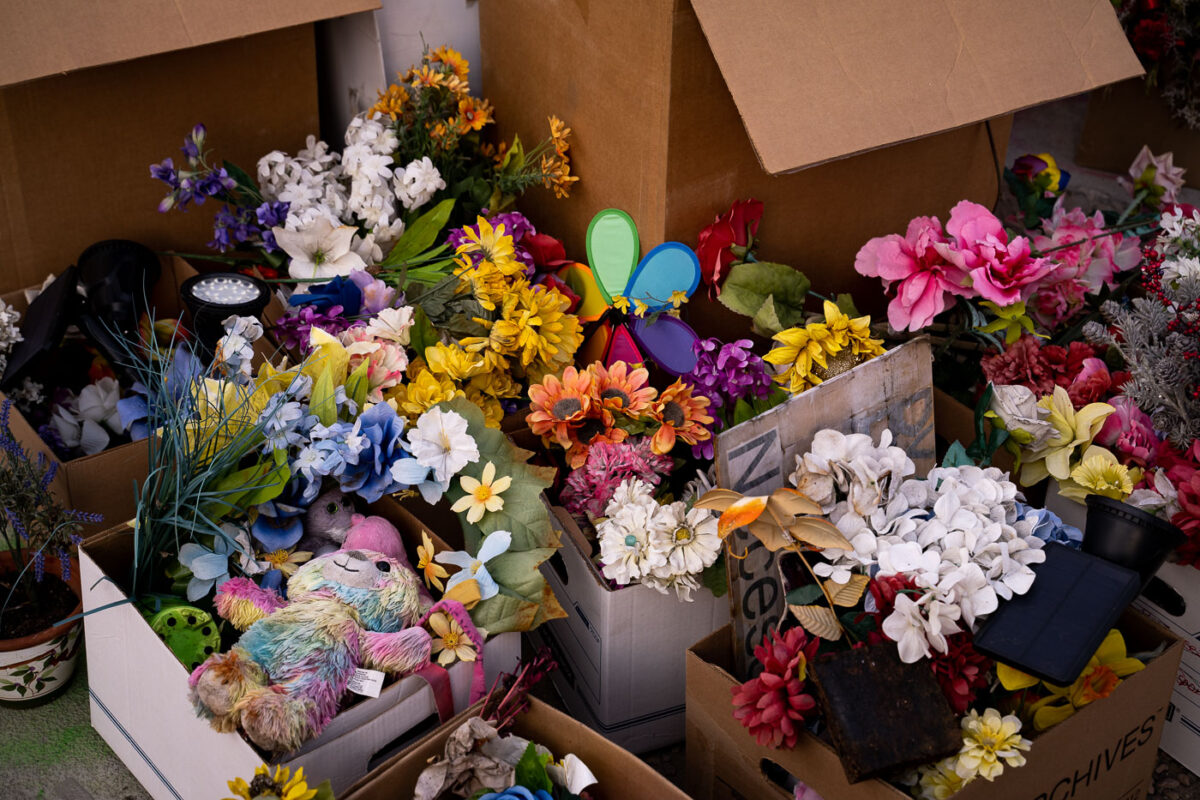
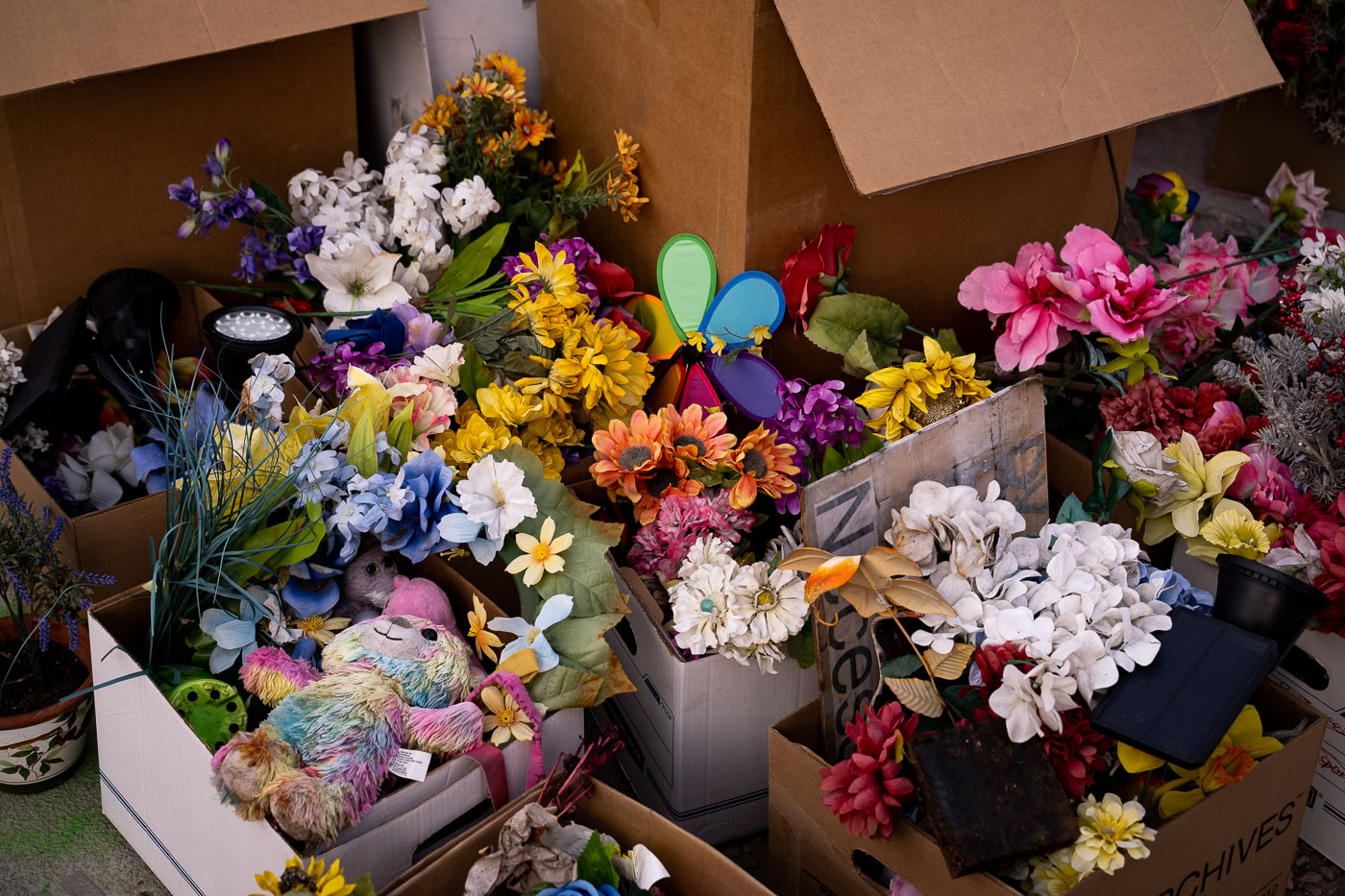
Flowers and memorial items packed in boxes at George Floyd Square in Minneapolis.
Flowers from the George Floyd Memorial in boxes as the city moves in to open up the streets. Seen on June 3, 2021. On May 25, 2020, Minneapolis police officer Derek Chauvin murdered 46-year-old George Floyd during an arrest outside Cup Foods at the intersection of 38th Street and Chicago Avenue in south Minneapolis. Video recorded by bystanders showed Chauvin kneeling on Floyd’s neck for more than nine minutes while Floyd repeatedly said he could not breathe. Three other Minneapolis police officers - J. Alexander Kueng, Thomas Lane, and Tou Thao — were also present during the arrest and later faced criminal charges for their roles in Floyd’s death. Floyd’s murder sparked protests and civil unrest across Minneapolis and around the world, leading to widespread demonstrations against police violence, major policy debates on policing, and the conviction of Chauvin on murder and manslaughter charges in 2021.

George Floyd Square Memorial Flowers Boxed in Minneapolis
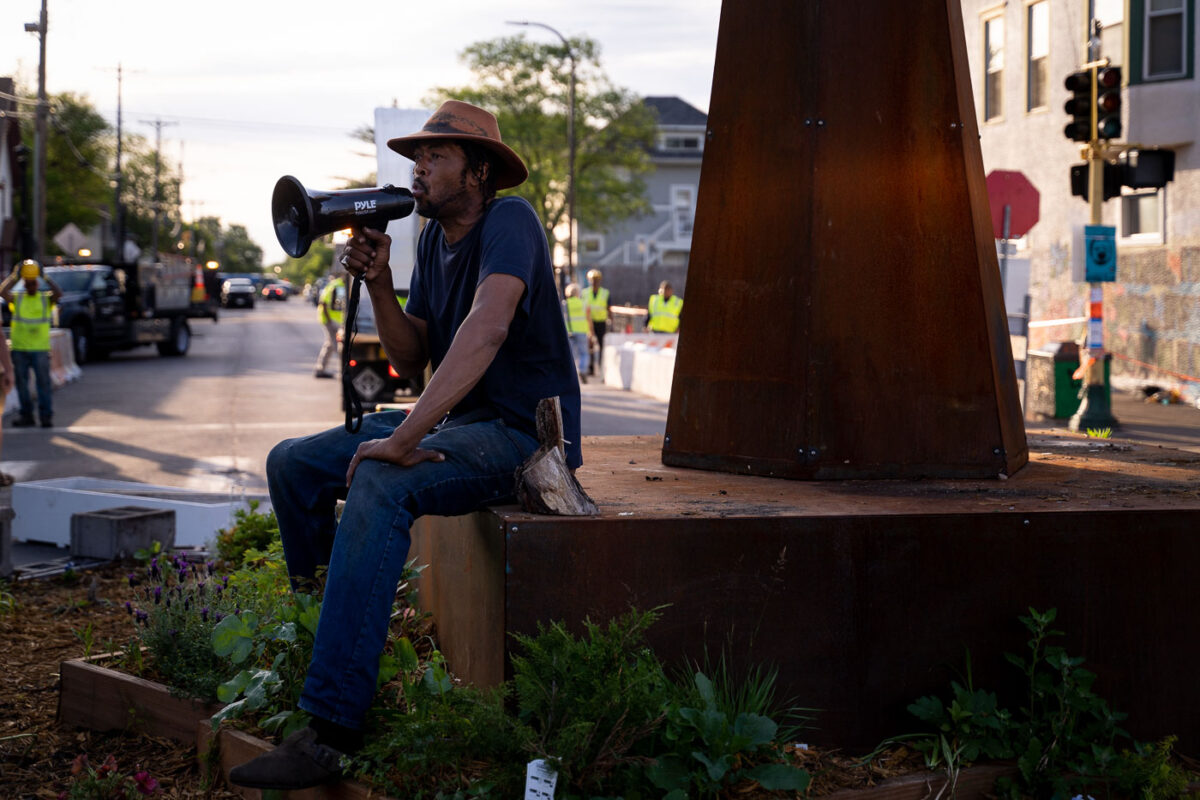
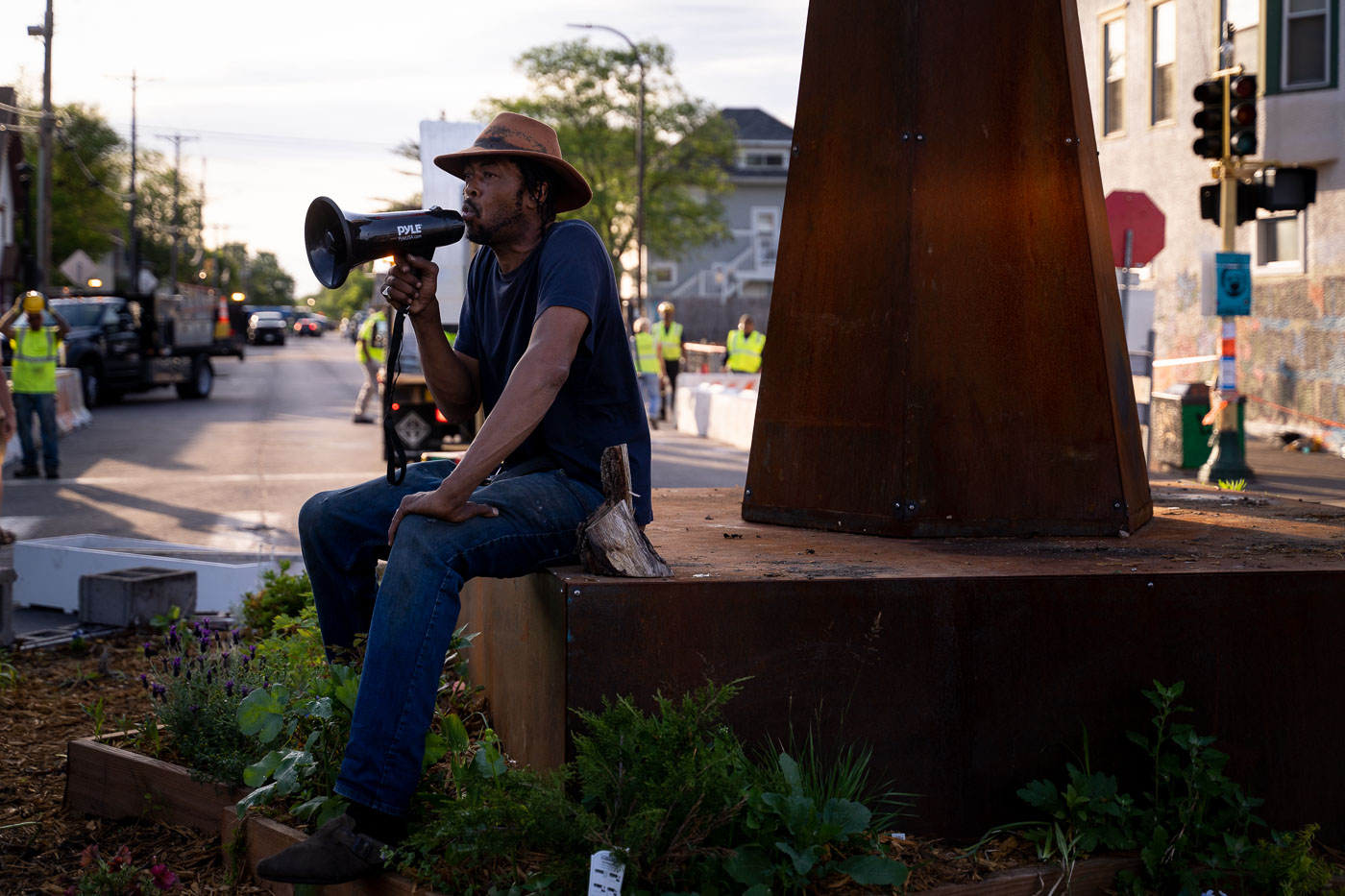
Jay Webb speaks into a megaphone at George Floyd Square in Minneapolis.
Jay Webb addresses a gathering at the George Floyd Square garden in Minneapolis. The square, a site of protest and remembrance following the murder of George Floyd in May 2020, was the subject of ongoing community efforts to transform the space. This image was taken as the city began to reopen the intersection to vehicle traffic, a move that sparked debate and community organizing. On May 25, 2020, Minneapolis police officer Derek Chauvin murdered 46-year-old George Floyd during an arrest outside Cup Foods at the intersection of 38th Street and Chicago Avenue in south Minneapolis. Video recorded by bystanders showed Chauvin kneeling on Floyd’s neck for more than nine minutes while Floyd repeatedly said he could not breathe. Three other Minneapolis police officers - J. Alexander Kueng, Thomas Lane, and Tou Thao — were also present during the arrest and later faced criminal charges for their roles in Floyd’s death. Floyd’s murder sparked protests and civil unrest across Minneapolis and around the world, leading to widespread demonstrations against police violence, major policy debates on policing, and the conviction of Chauvin on murder and manslaughter charges in 2021.

Jay Webb speaks at George Floyd Square garden, Minneapolis
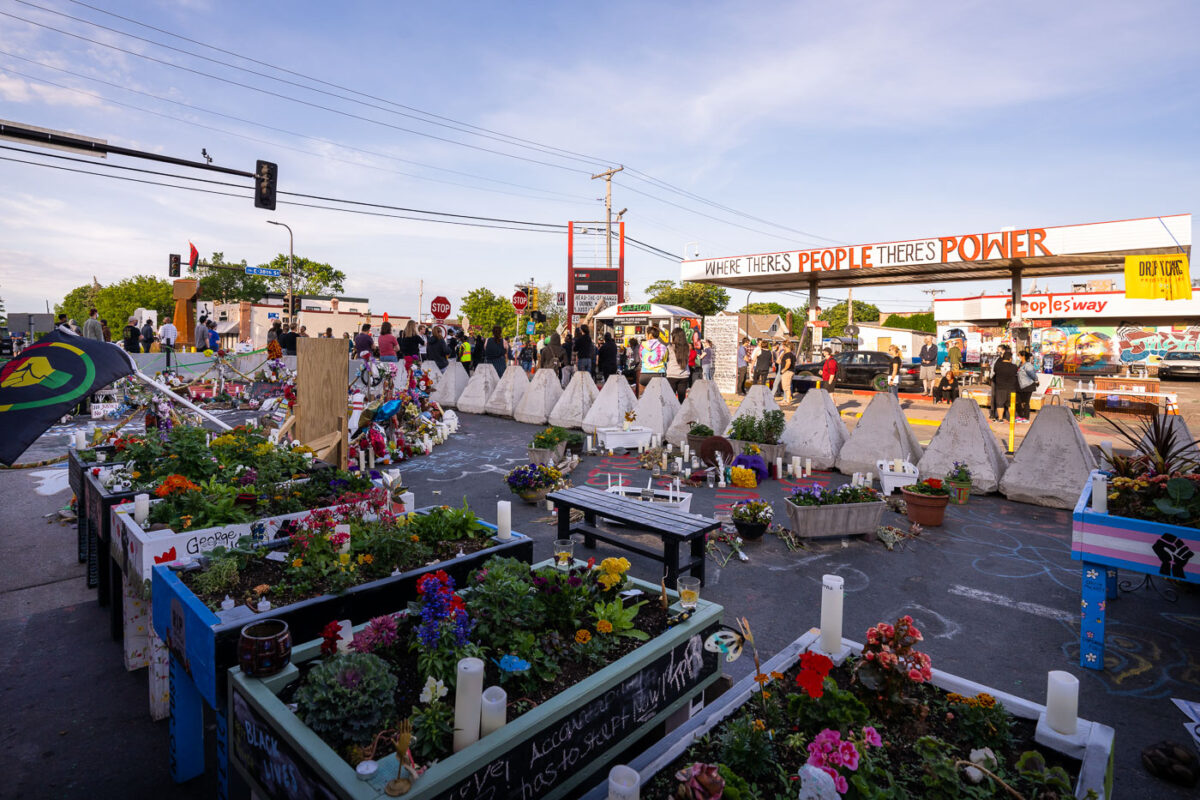
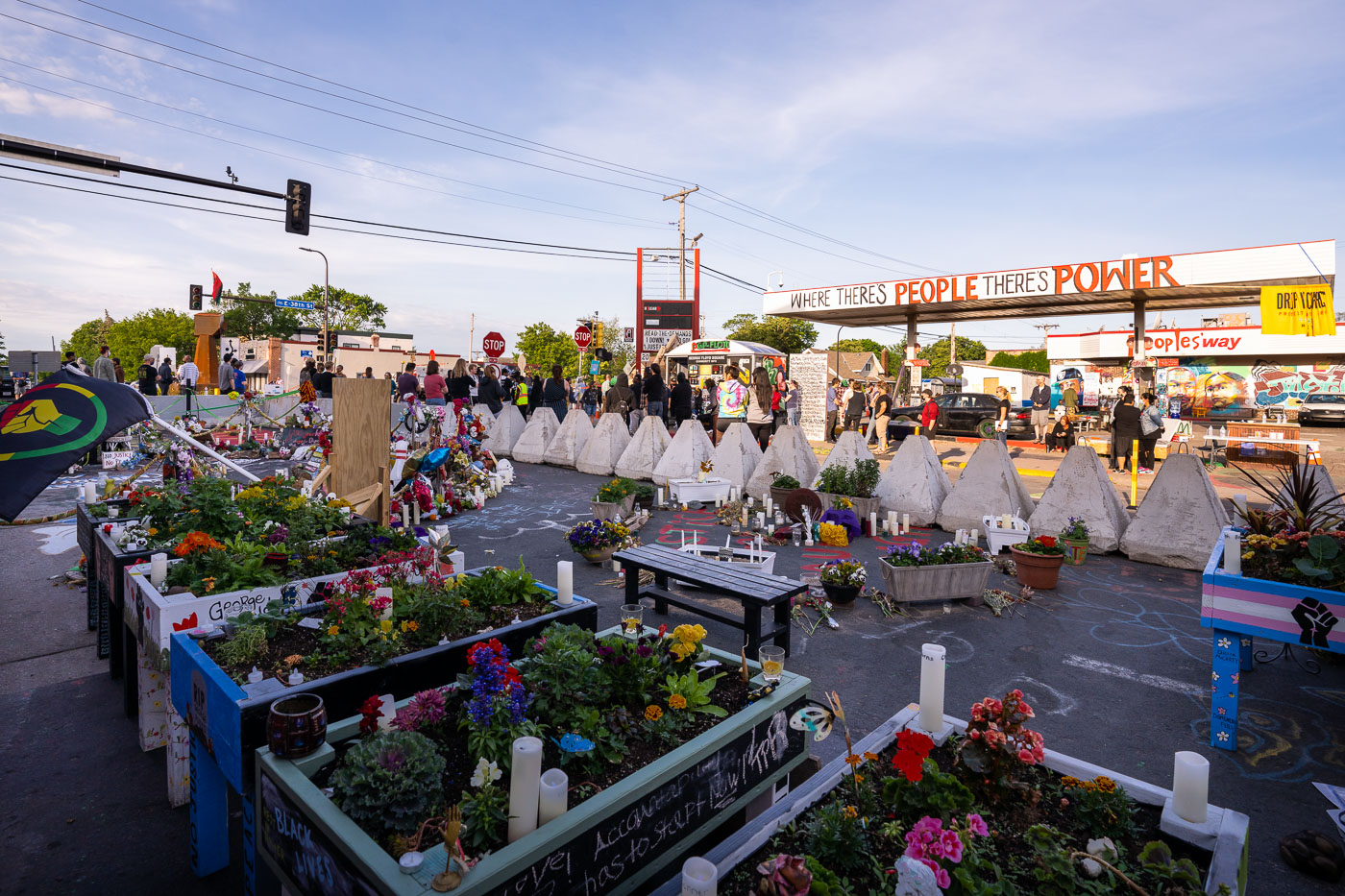
Memorials and barricades at George Floyd Square in Minneapolis, with people gathered nearby.
George Floyd Square, located at the intersection of East 38th Street and Chicago Avenue in Minneapolis, Minnesota, became a focal point for protests following the murder of George Floyd in May 2020. The area was occupied by activists and community members for over a year, transforming it into a space for remembrance, political expression, and community organizing. This photograph shows the square after city officials had removed initial barricades and subsequently erected new ones, alongside numerous community-created memorials, including planters, flowers, candles, and artwork. On May 25, 2020, Minneapolis police officer Derek Chauvin murdered 46-year-old George Floyd during an arrest outside Cup Foods at the intersection of 38th Street and Chicago Avenue in south Minneapolis. Video recorded by bystanders showed Chauvin kneeling on Floyd’s neck for more than nine minutes while Floyd repeatedly said he could not breathe. Three other Minneapolis police officers - J. Alexander Kueng, Thomas Lane, and Tou Thao — were also present during the arrest and later faced criminal charges for their roles in Floyd’s death. Floyd’s murder sparked protests and civil unrest across Minneapolis and around the world, leading to widespread demonstrations against police violence, major policy debates on policing, and the conviction of Chauvin on murder and manslaughter charges in 2021.

George Floyd Square: New barricades and community memorials
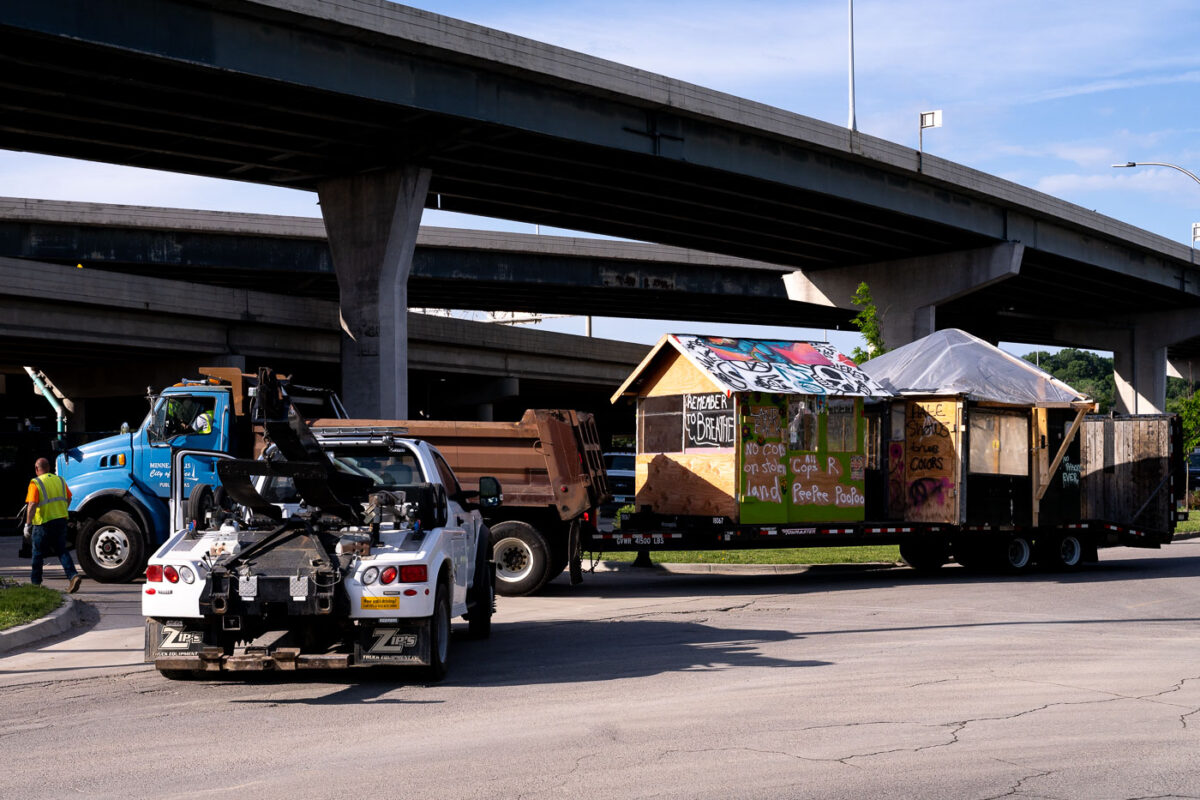
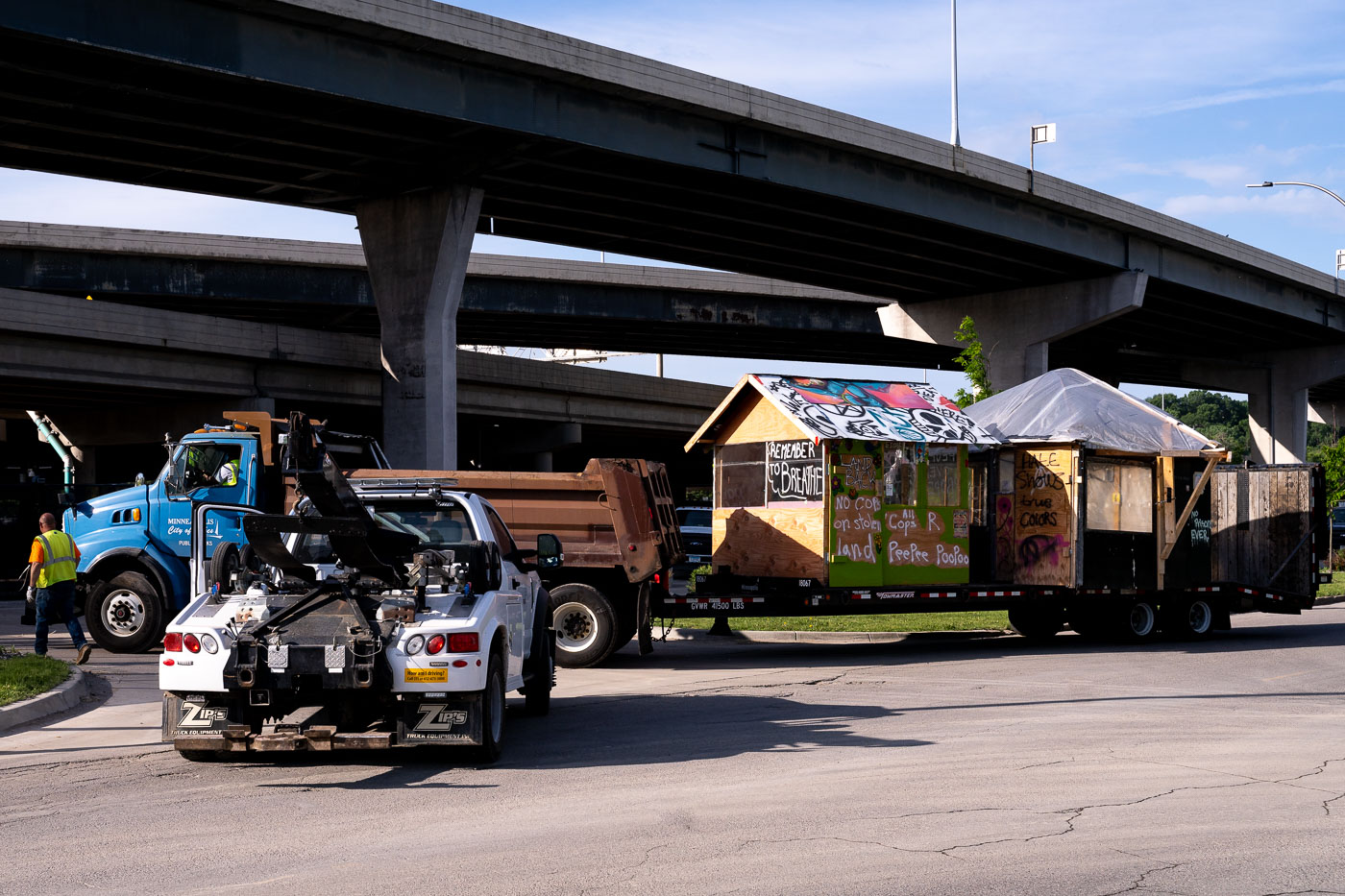
City workers haul graffiti-covered warming shelters on a trailer under Minneapolis highway overpasses.
Warming shelters, constructed by activists and used at George Floyd Square, are transported to a City of Minneapolis impound lot. The shelters were removed after the city reopened the intersection to vehicular traffic in June 2021. George Floyd Square became a focal point for protests and activism following the murder of George Floyd by Minneapolis police officers in May 2020. The area was occupied by protesters for over a year, during which time community-built structures like these shelters were erected. On May 25, 2020, Minneapolis police officer Derek Chauvin murdered 46-year-old George Floyd during an arrest outside Cup Foods at the intersection of 38th Street and Chicago Avenue in south Minneapolis. Video recorded by bystanders showed Chauvin kneeling on Floyd’s neck for more than nine minutes while Floyd repeatedly said he could not breathe. Three other Minneapolis police officers - J. Alexander Kueng, Thomas Lane, and Tou Thao — were also present during the arrest and later faced criminal charges for their roles in Floyd’s death. Floyd’s murder sparked protests and civil unrest across Minneapolis and around the world, leading to widespread demonstrations against police violence, major policy debates on policing, and the conviction of Chauvin on murder and manslaughter charges in 2021.

George Floyd Square warming shelters moved to impound lot
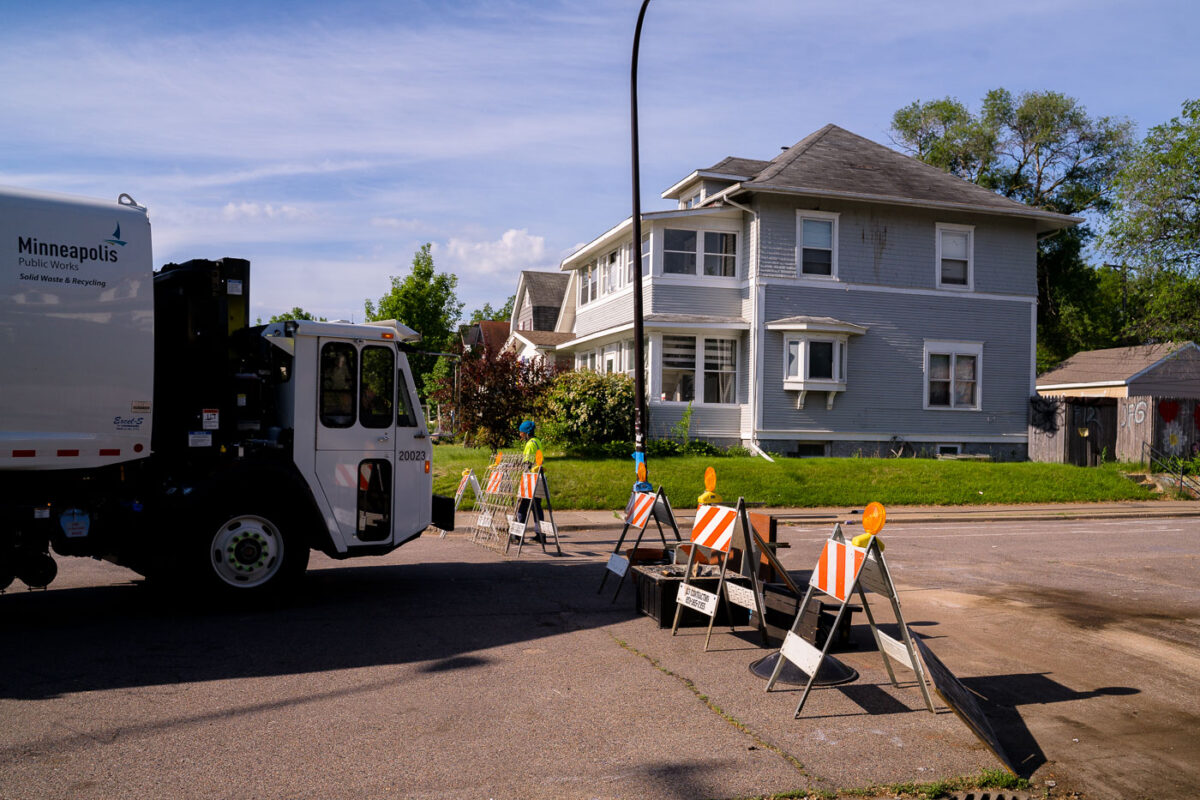
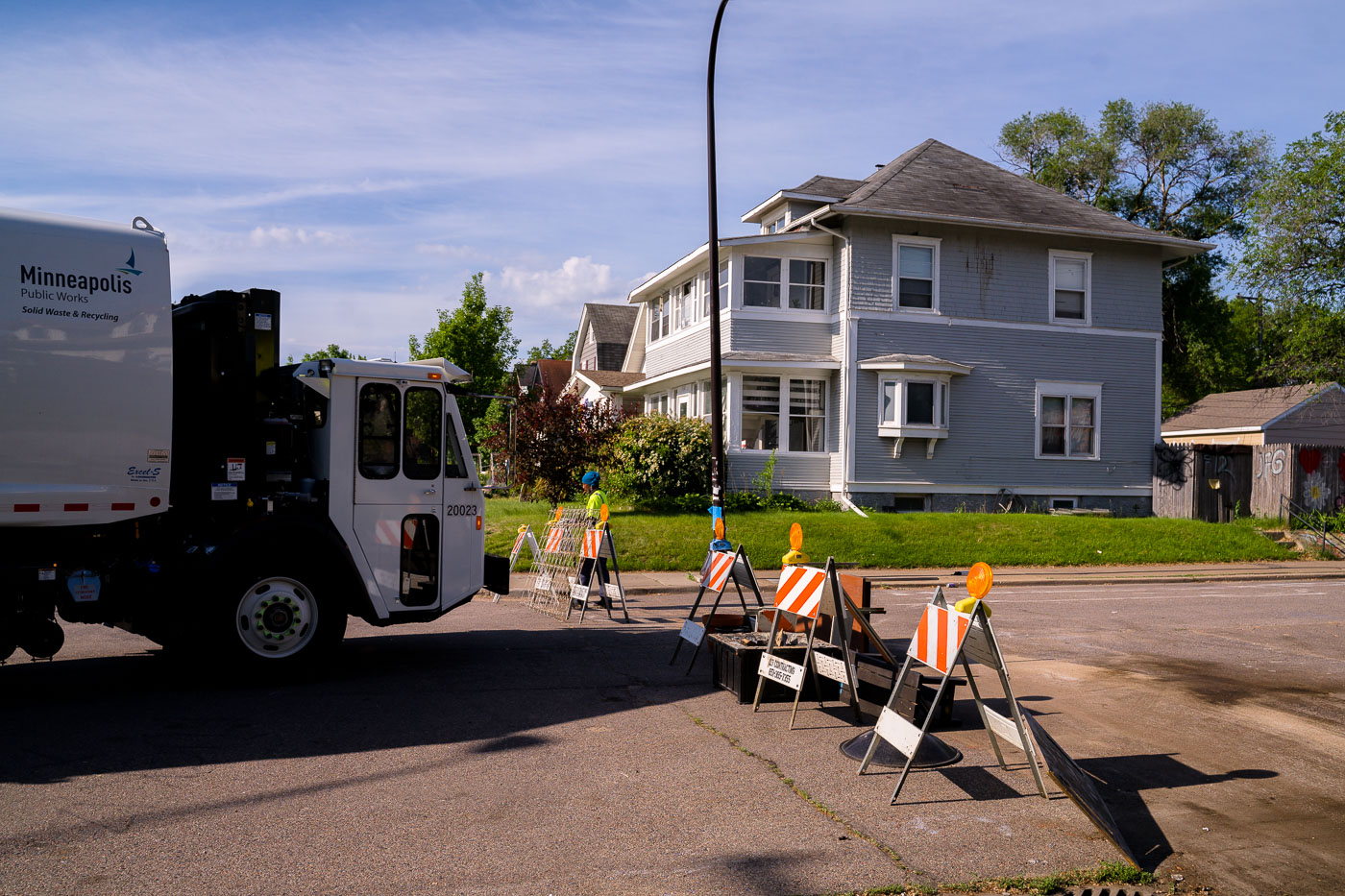
Minneapolis Public Works truck removes barricades at George Floyd Square in South Minneapolis.
Minneapolis Public Works crews remove barricades from George Floyd Square, also known as the intersection of 38th Street and Chicago Avenue in South Minneapolis on June 3, 2021. The square became a focal point for protests and community organizing following the murder of George Floyd in May 2020. For over two years, the intersection was largely controlled by protesters and community members, who established it as a space for remembrance and activism. The removal of these barricades by city officials marked a significant moment in the ongoing efforts to reclaim public space and restore traffic flow. On May 25, 2020, Minneapolis police officer Derek Chauvin murdered 46-year-old George Floyd during an arrest outside Cup Foods at the intersection of 38th Street and Chicago Avenue in south Minneapolis. Video recorded by bystanders showed Chauvin kneeling on Floyd’s neck for more than nine minutes while Floyd repeatedly said he could not breathe. Three other Minneapolis police officers - J. Alexander Kueng, Thomas Lane, and Tou Thao — were also present during the arrest and later faced criminal charges for their roles in Floyd’s death. Floyd’s murder sparked protests and civil unrest across Minneapolis and around the world, leading to widespread demonstrations against police violence, major policy debates on policing, and the conviction of Chauvin on murder and manslaughter charges in 2021.

Minneapolis Public Works removes barricades at George Floyd Square

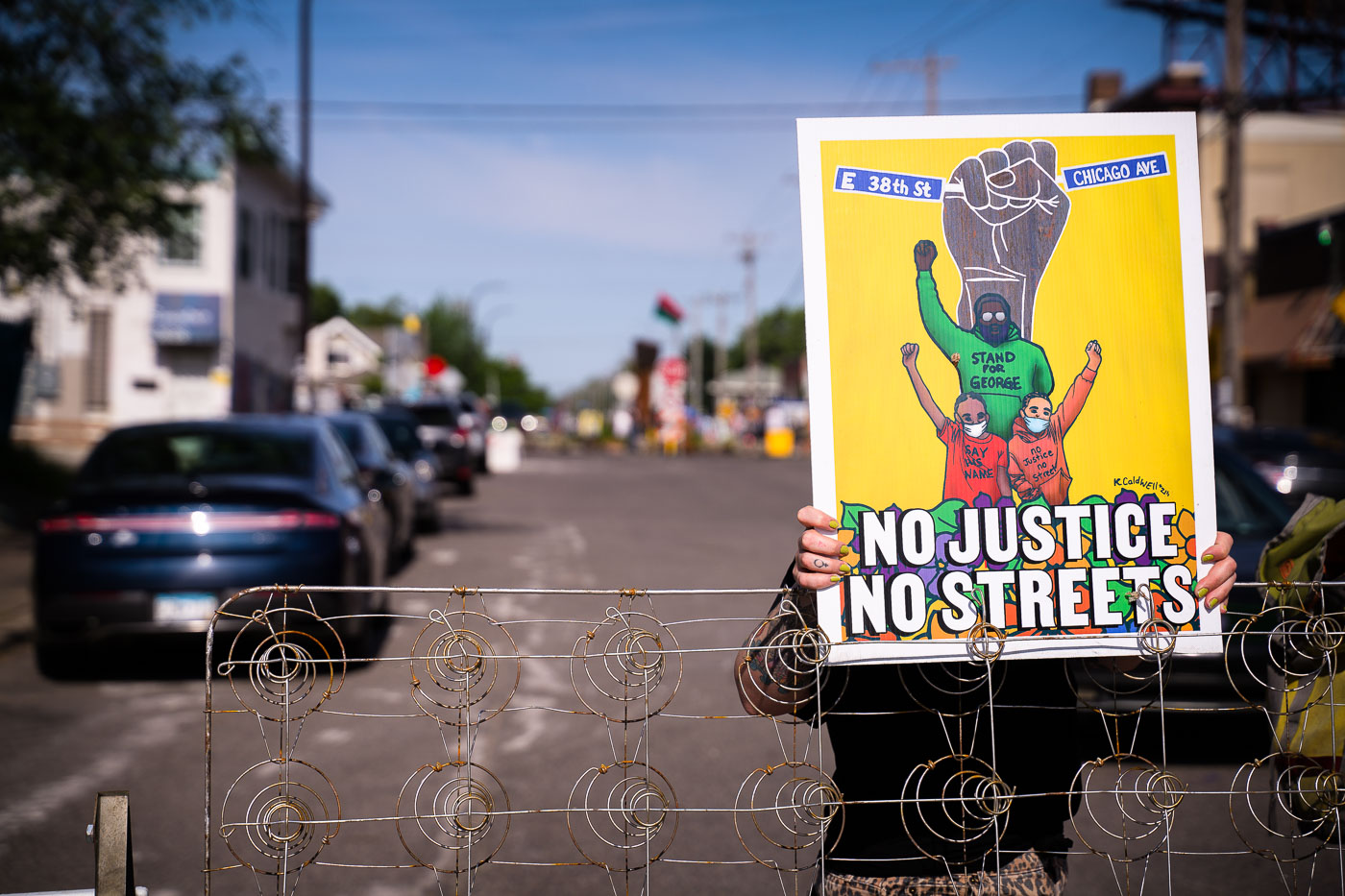
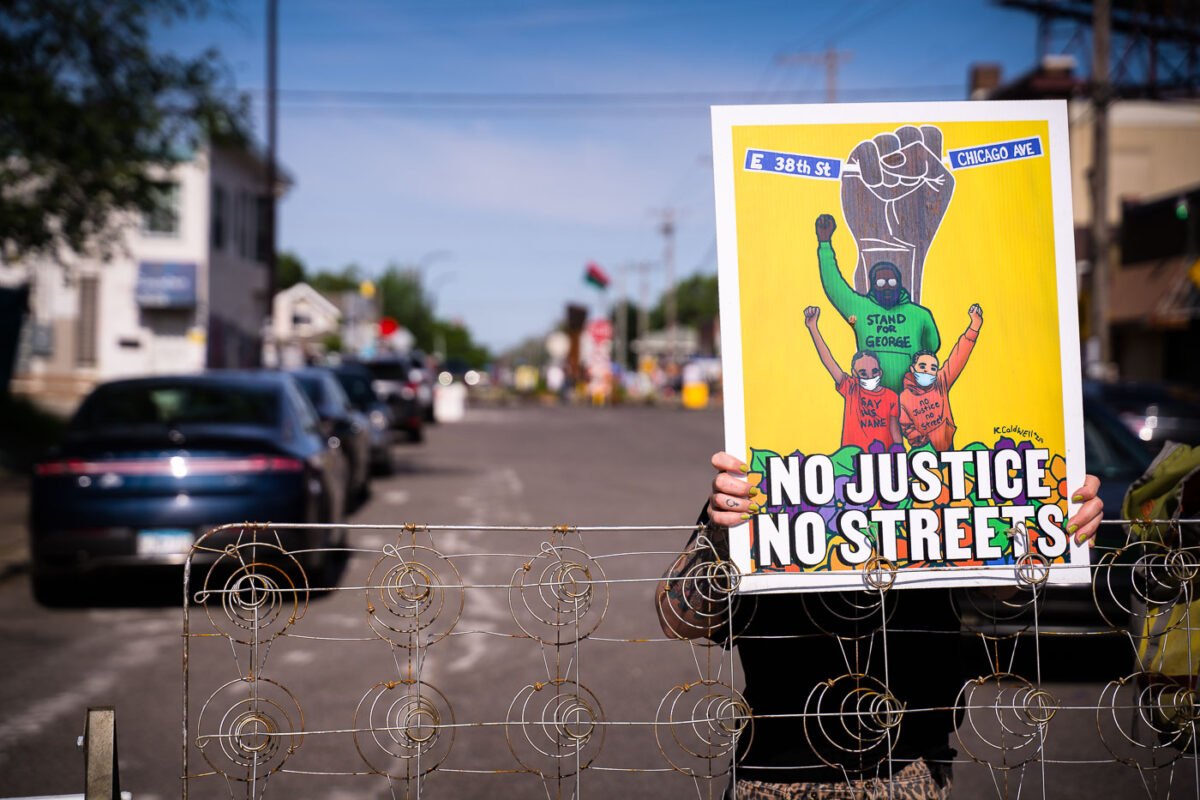
Person holds a “No Justice No Streets” sign at George Floyd Square in Minneapolis.
A protestor holds a "No Justice No Streets" sign at George Floyd Square in Minneapolis. The square, located at the intersection of East 38th Street and Chicago Avenue, became a focal point for protests following the murder of George Floyd in May 2020. For over a year, activists maintained barricades around the area, transforming it into a community space and a symbol of resistance. This image was taken on June 3, 2021, the day the city began efforts to dismantle the barricades and reopen the streets. On May 25, 2020, Minneapolis police officer Derek Chauvin murdered 46-year-old George Floyd during an arrest outside Cup Foods at the intersection of 38th Street and Chicago Avenue in south Minneapolis. Video recorded by bystanders showed Chauvin kneeling on Floyd’s neck for more than nine minutes while Floyd repeatedly said he could not breathe. Three other Minneapolis police officers - J. Alexander Kueng, Thomas Lane, and Tou Thao — were also present during the arrest and later faced criminal charges for their roles in Floyd’s death. Floyd’s murder sparked protests and civil unrest across Minneapolis and around the world, leading to widespread demonstrations against police violence, major policy debates on policing, and the conviction of Chauvin on murder and manslaughter charges in 2021.

George Floyd Square barricade protest sign
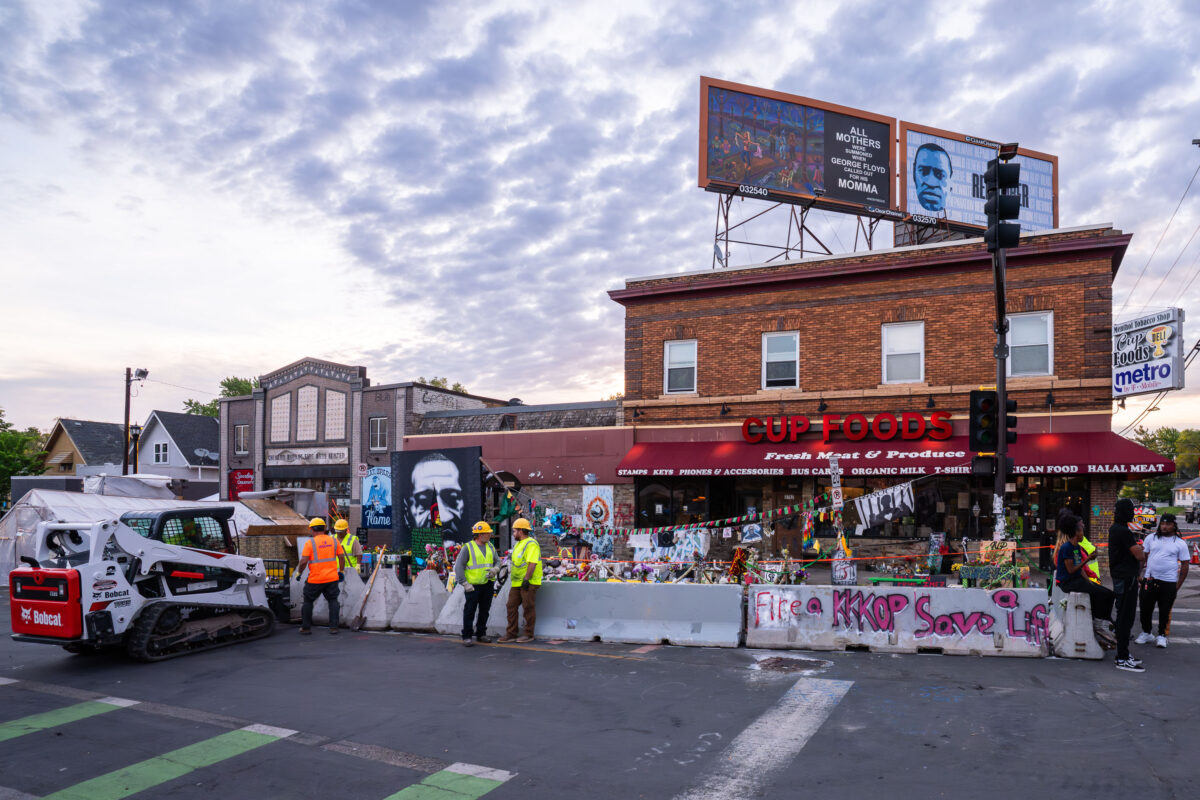
Agape at George Floyd Square June 2021
The Agape Movement working with Minneapolis Public Works to open up George Floyd Square on June 3, 2021.

Agape Movement and Public Works, George Floyd Square
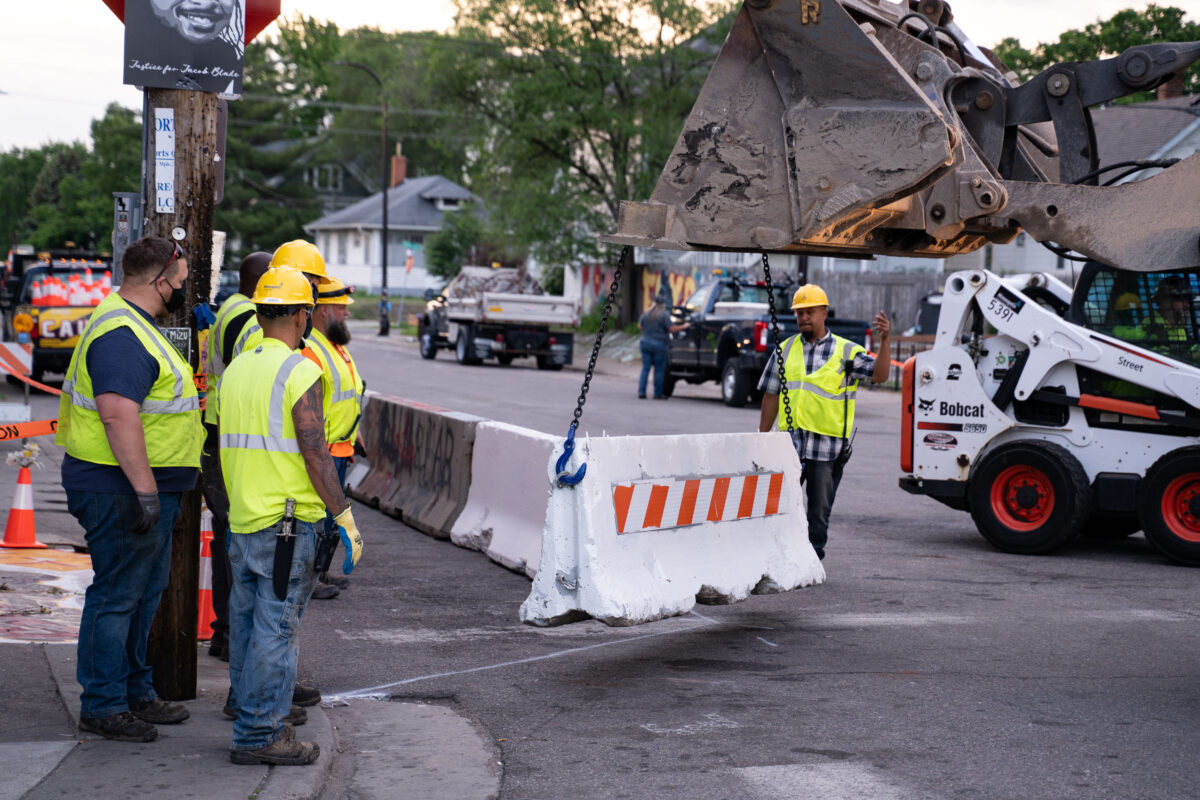
Public Works Place Barricades at George Floyd Square.
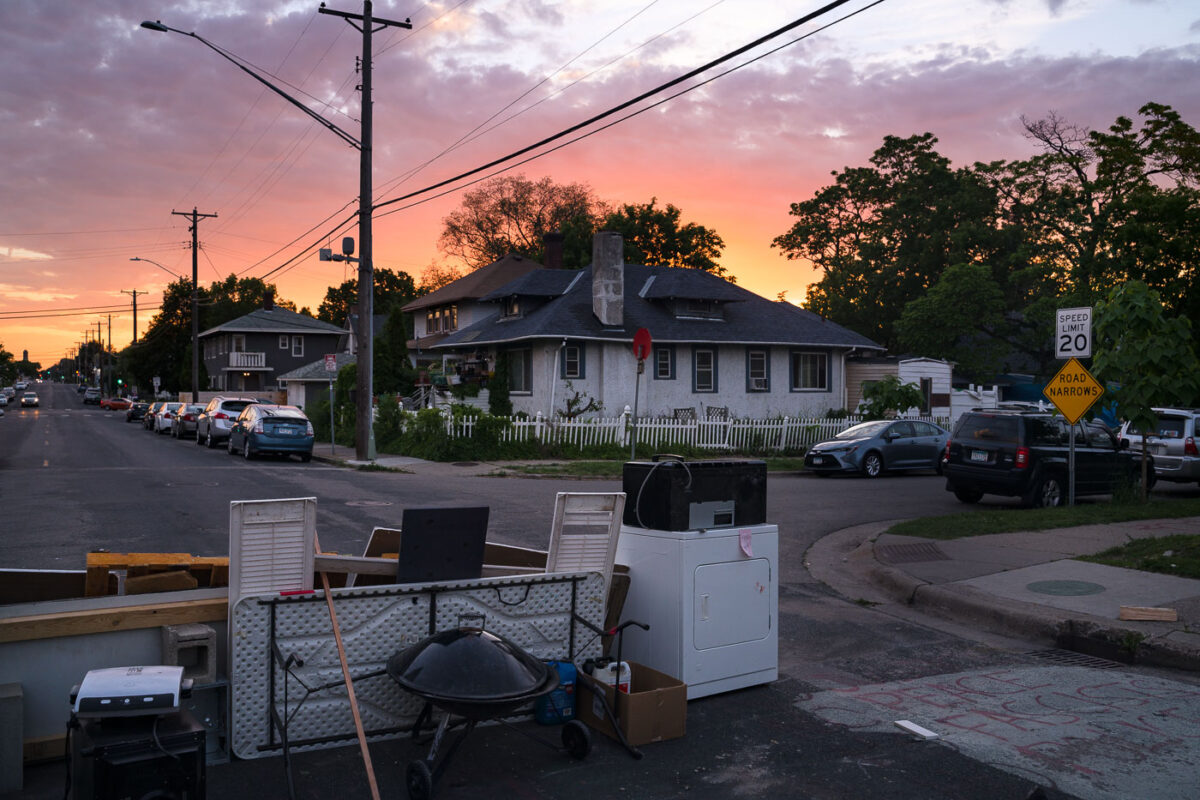
City employees move in to open George Floyd Square to vehicle traffic.

Public Works Place Barricades at George Floyd Square.

Barricades and household items block a Minneapolis street at sunset near George Floyd Square.
Barricades are re-established at George Floyd Square in Minneapolis at sunset on June 3, 2021, following an earlier clearing by the city. The square, located at the intersection of 38th Street and Chicago Avenue, became a focal point of protests and community organizing after the murder of George Floyd in May 2020. The community established autonomous zones and erected barricades to control access and create a space for remembrance and activism. On May 25, 2020, Minneapolis police officer Derek Chauvin murdered 46-year-old George Floyd during an arrest outside Cup Foods at the intersection of 38th Street and Chicago Avenue in south Minneapolis. Video recorded by bystanders showed Chauvin kneeling on Floyd’s neck for more than nine minutes while Floyd repeatedly said he could not breathe. Three other Minneapolis police officers - J. Alexander Kueng, Thomas Lane, and Tou Thao — were also present during the arrest and later faced criminal charges for their roles in Floyd’s death. Floyd’s murder sparked protests and civil unrest across Minneapolis and around the world, leading to widespread demonstrations against police violence, major policy debates on policing, and the conviction of Chauvin on murder and manslaughter charges in 2021.

George Floyd Square Barricades at Sunset, Minneapolis
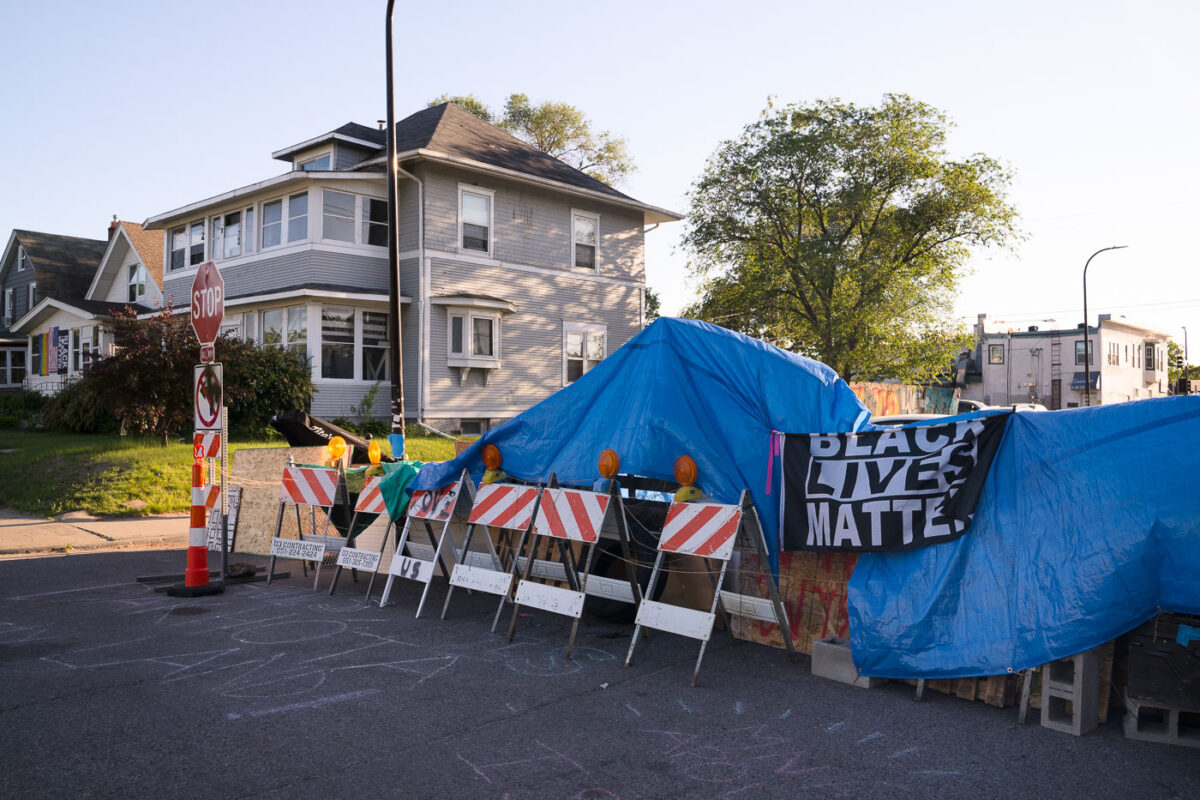
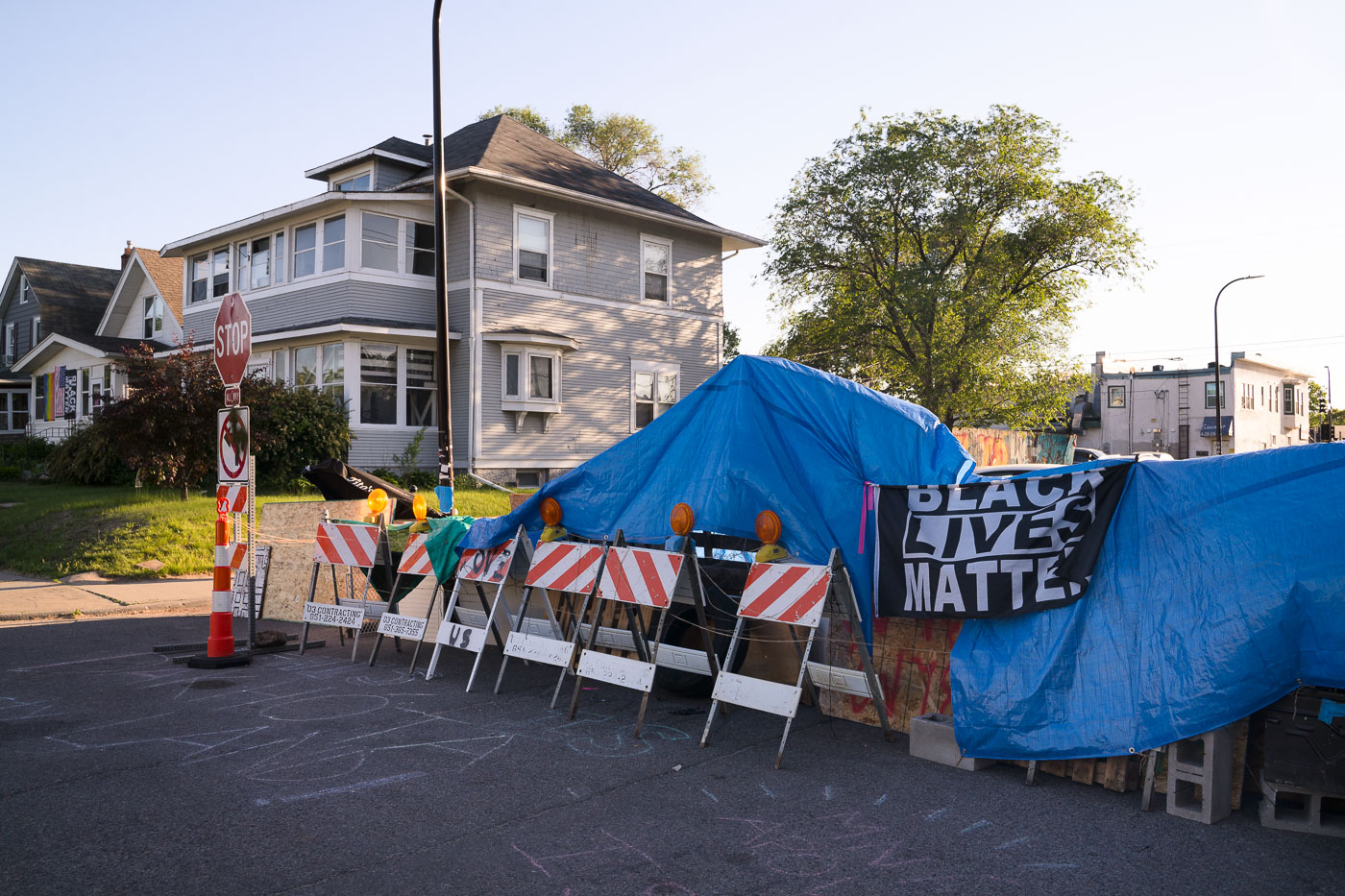
Barricades with a Black Lives Matter banner at George Floyd Square in Minneapolis
Barricades, including a Black Lives Matter banner, at George Floyd Square in Minneapolis. The square, located at the intersection of 38th Street and Elliott Avenue, was established as an autonomous zone following the murder of George Floyd in May 2020. City workers removed the barricades the day before this photograph was taken, marking a significant moment in the ongoing occupation and its eventual dismantling. On May 25, 2020, Minneapolis police officer Derek Chauvin murdered 46-year-old George Floyd during an arrest outside Cup Foods at the intersection of 38th Street and Chicago Avenue in south Minneapolis. Video recorded by bystanders showed Chauvin kneeling on Floyd’s neck for more than nine minutes while Floyd repeatedly said he could not breathe. Three other Minneapolis police officers - J. Alexander Kueng, Thomas Lane, and Tou Thao — were also present during the arrest and later faced criminal charges for their roles in Floyd’s death. Floyd’s murder sparked protests and civil unrest across Minneapolis and around the world, leading to widespread demonstrations against police violence, major policy debates on policing, and the conviction of Chauvin on murder and manslaughter charges in 2021.

George Floyd Square Barricades with BLM Banner, Minneapolis
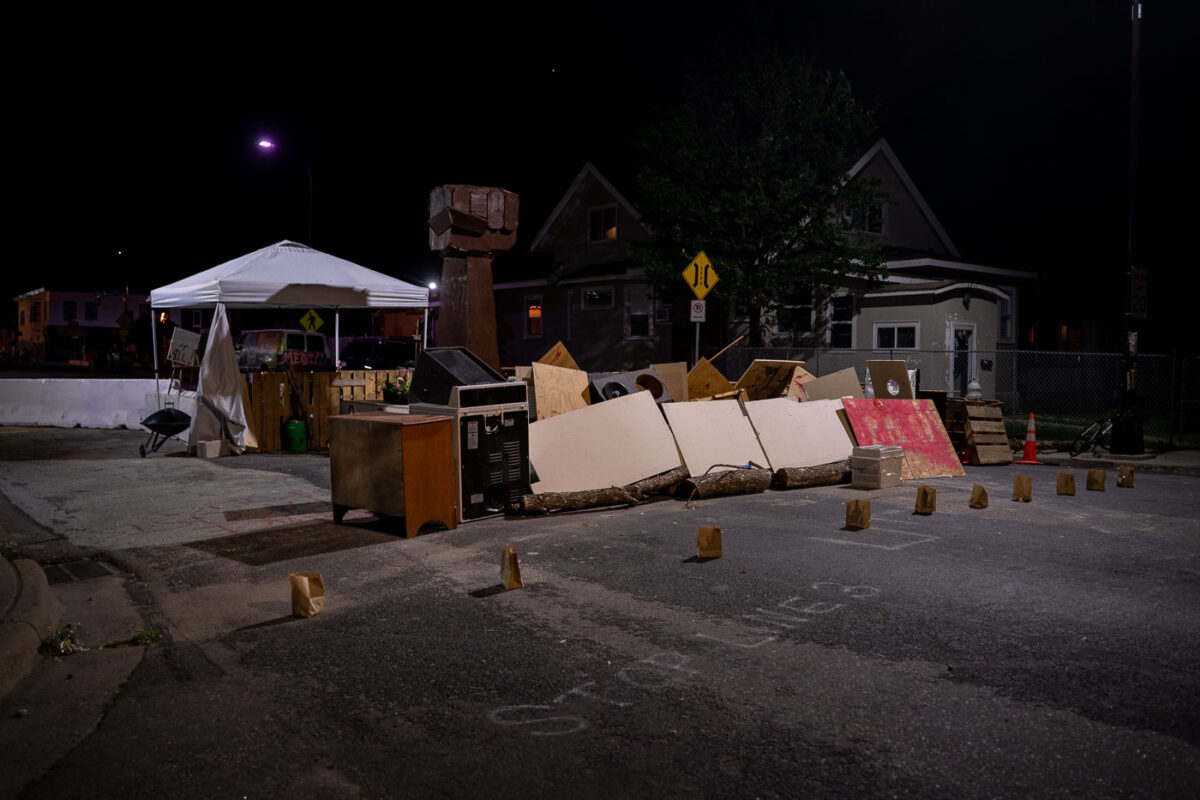
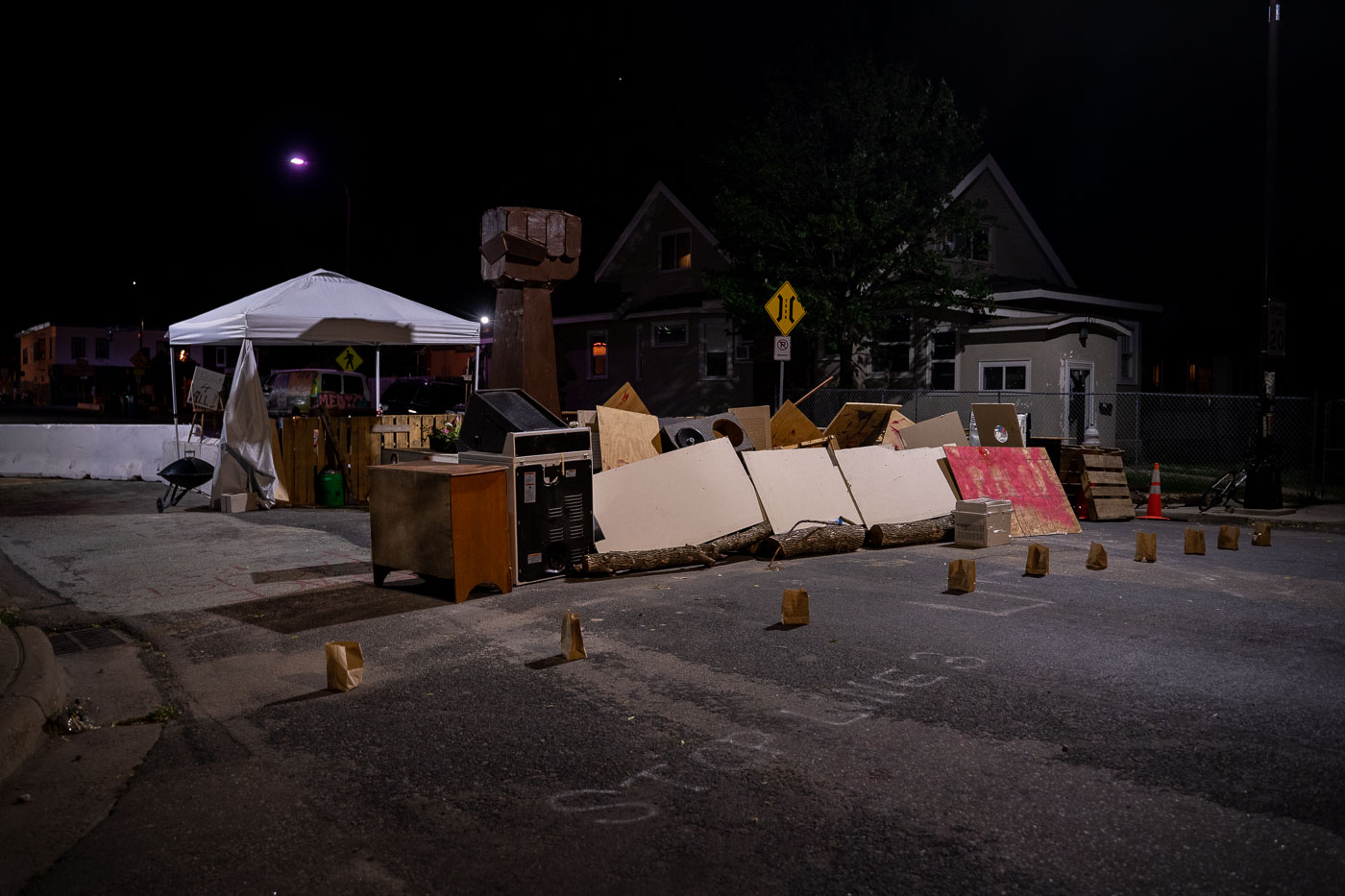
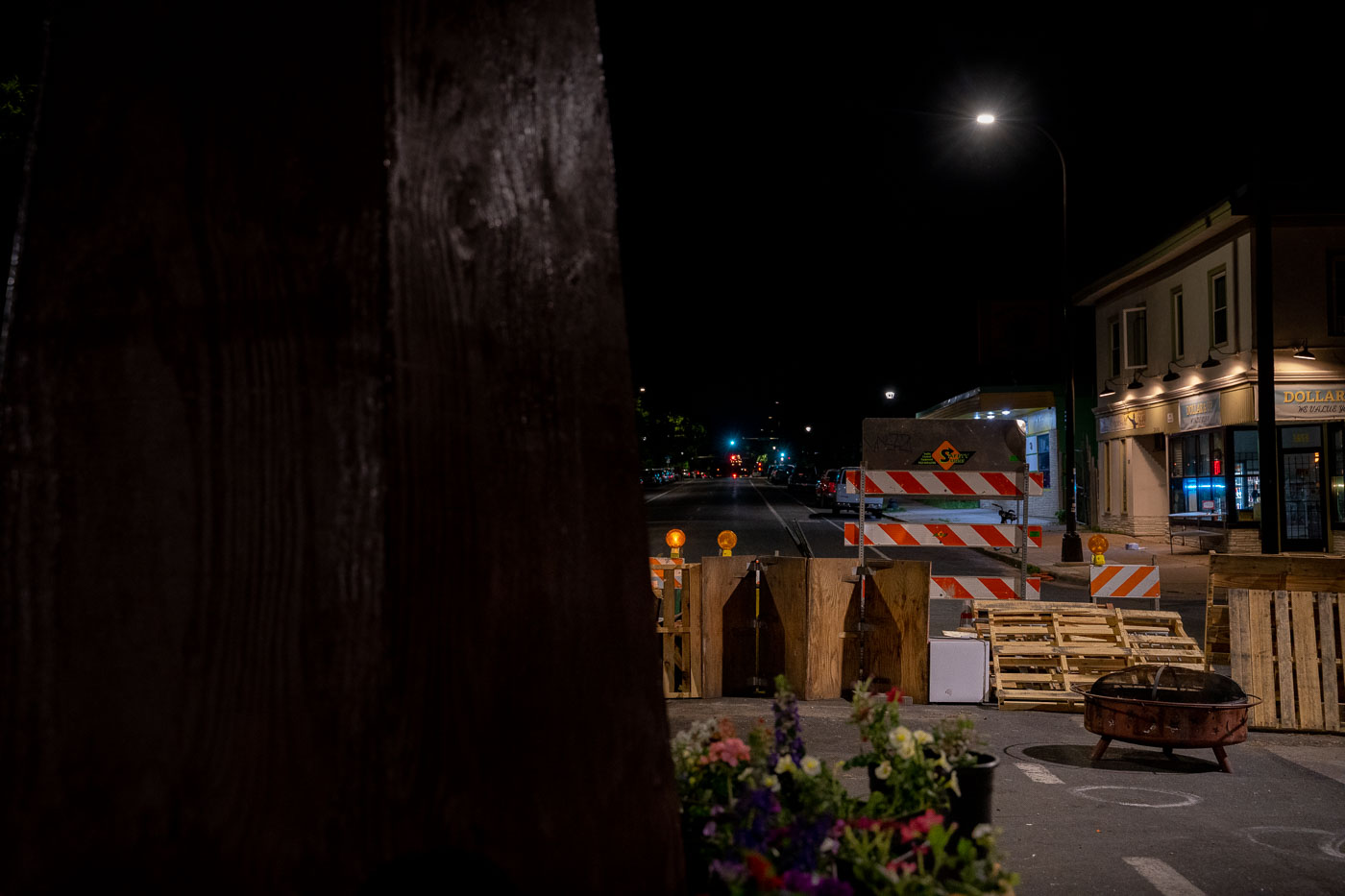
Barricades and a tent at George Floyd Square in Minneapolis at night.
Street barricades constructed from salvaged materials at the perimeter of George Floyd Square in South Minneapolis. The square, established in the wake of George Floyd's murder in May 2020, became a site of protest and community organizing. These barricades were erected after city officials removed earlier barriers, an attempt to reclaim the space for vehicular traffic that was met with renewed community resistance. On May 25, 2020, Minneapolis police officer Derek Chauvin murdered 46-year-old George Floyd during an arrest outside Cup Foods at the intersection of 38th Street and Chicago Avenue in south Minneapolis. Video recorded by bystanders showed Chauvin kneeling on Floyd’s neck for more than nine minutes while Floyd repeatedly said he could not breathe. Three other Minneapolis police officers - J. Alexander Kueng, Thomas Lane, and Tou Thao — were also present during the arrest and later faced criminal charges for their roles in Floyd’s death. Floyd’s murder sparked protests and civil unrest across Minneapolis and around the world, leading to widespread demonstrations against police violence, major policy debates on policing, and the conviction of Chauvin on murder and manslaughter charges in 2021.

George Floyd Square Barricades, South Minneapolis
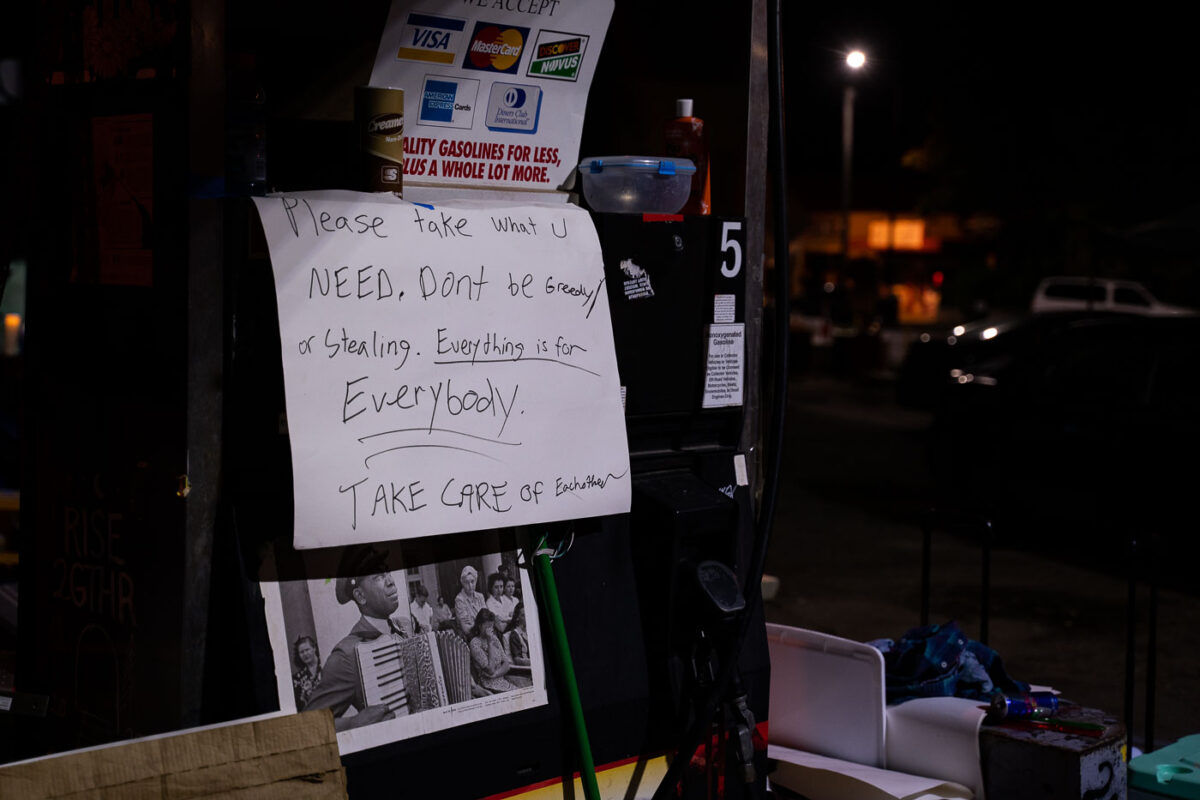
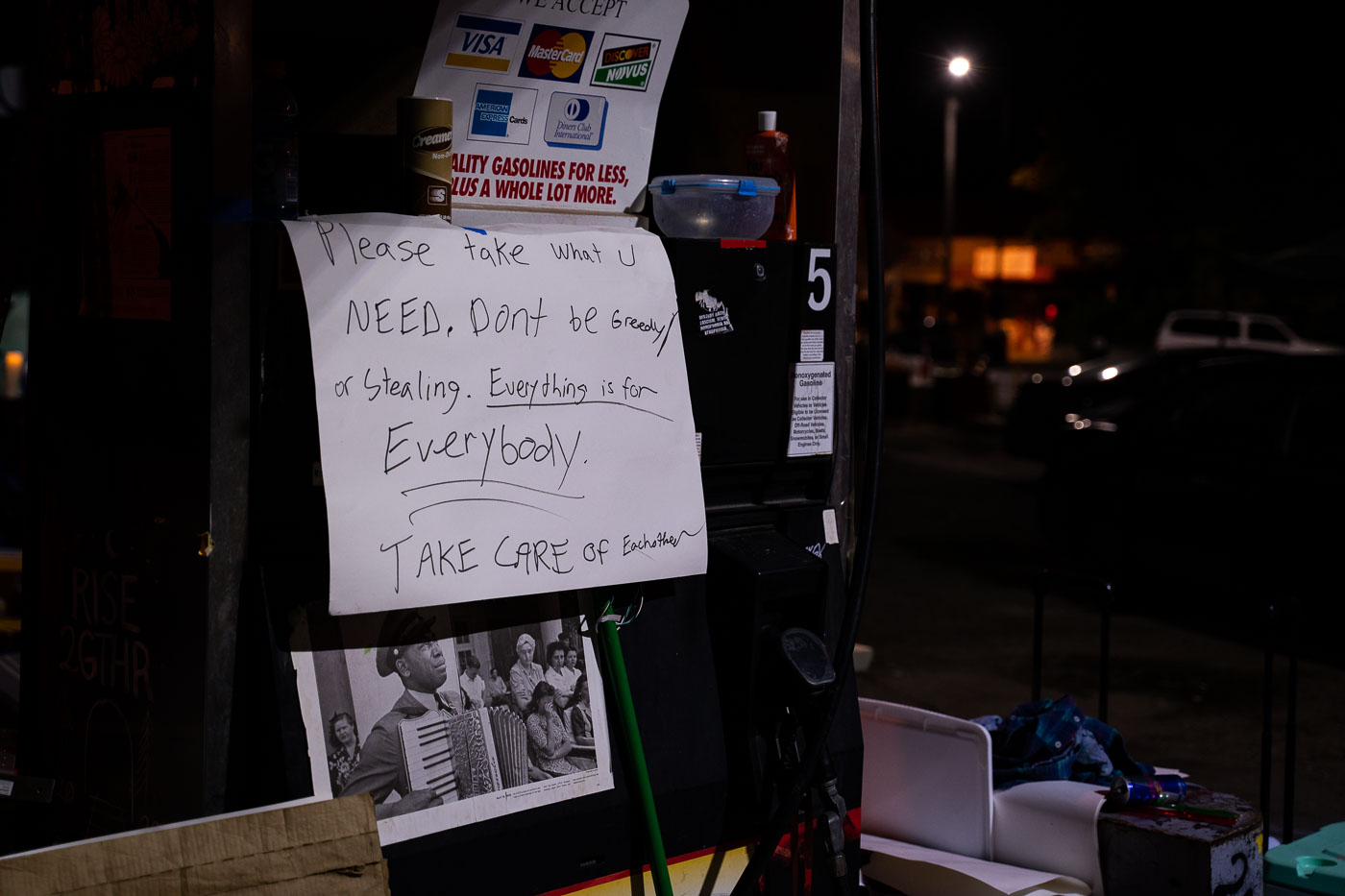
Handwritten mutual-aid sign on a gas pump at George Floyd Square in Minneapolis at night
A handwritten sign at George Floyd Square in Minneapolis reads, "Please take what u NEED, Don’ be Greedy or Stealing. Everything is for Everybody. TAKE CARE of Each other." This message reflects the community's ethos of mutual aid and shared resources that emerged during the occupation of the square following the murder of George Floyd in May 2020. The area became a focal point for protests against racial injustice and police brutality. On May 25, 2020, Minneapolis police officer Derek Chauvin murdered 46-year-old George Floyd during an arrest outside Cup Foods at the intersection of 38th Street and Chicago Avenue in south Minneapolis. Video recorded by bystanders showed Chauvin kneeling on Floyd’s neck for more than nine minutes while Floyd repeatedly said he could not breathe. Three other Minneapolis police officers - J. Alexander Kueng, Thomas Lane, and Tou Thao — were also present during the arrest and later faced criminal charges for their roles in Floyd’s death. Floyd’s murder sparked protests and civil unrest across Minneapolis and around the world, leading to widespread demonstrations against police violence, major policy debates on policing, and the conviction of Chauvin on murder and manslaughter charges in 2021.

George Floyd Square: “Please Take What You Need” Sign
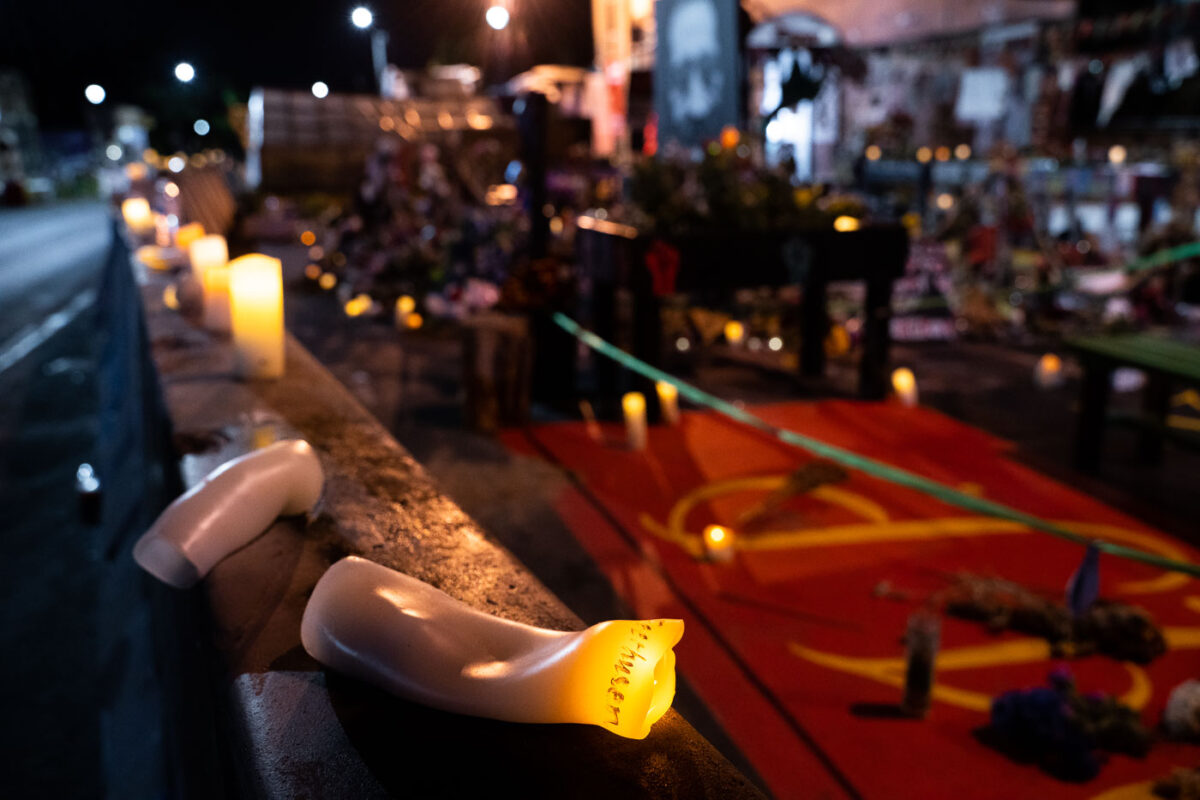
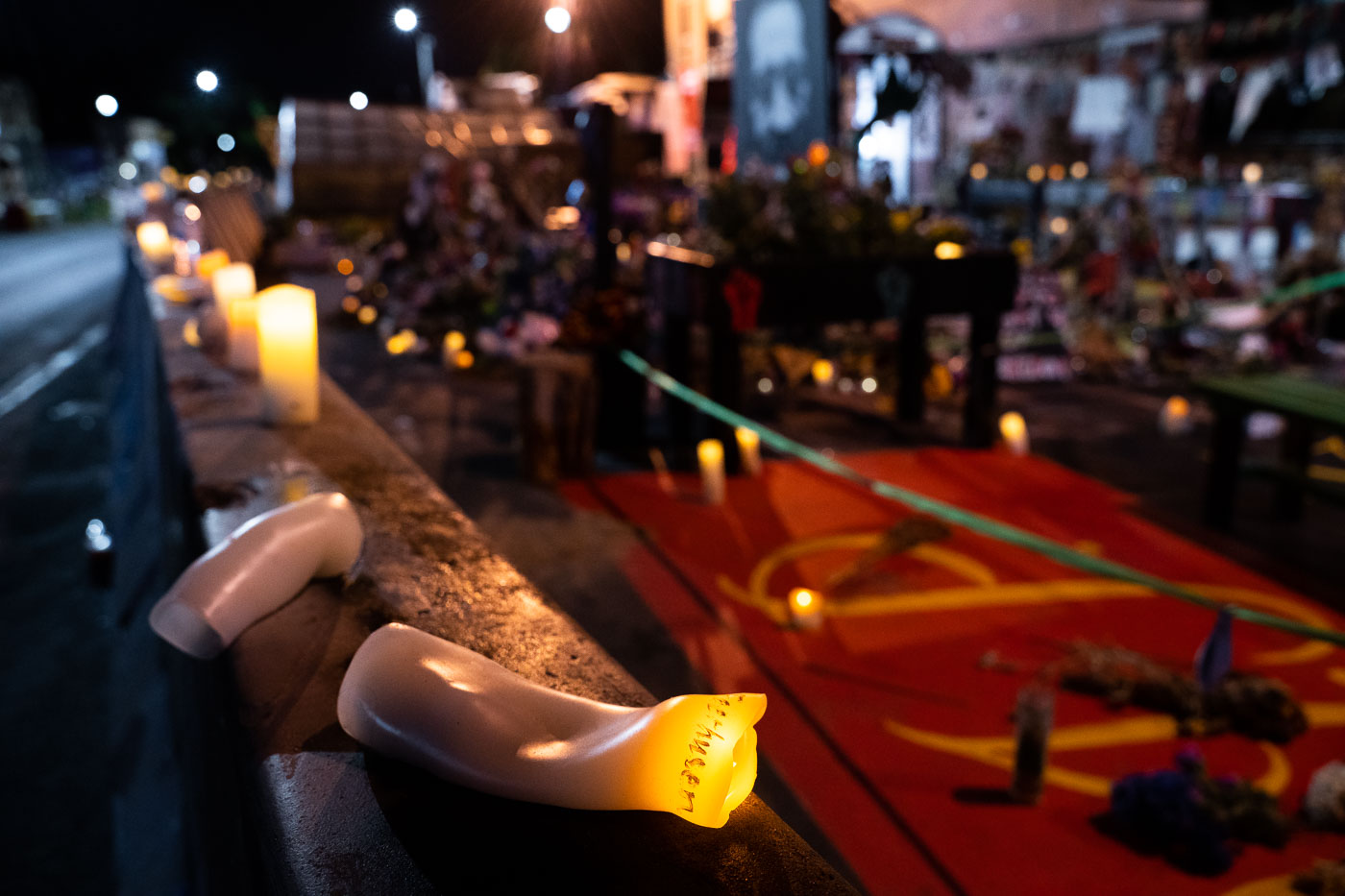
Melted candles at George Floyd Square memorial in Minneapolis at night.
Plastic candles, some bearing handwritten messages, melt in the summer heat at the George Floyd Memorial in George Floyd Square, Minneapolis. This site became a focal point for protests and activism following the murder of George Floyd in May 2020. The memorial, located at the intersection where Floyd was killed, serves as a space for remembrance, community gathering, and continued calls for racial justice and police reform. On May 25, 2020, Minneapolis police officer Derek Chauvin murdered 46-year-old George Floyd during an arrest outside Cup Foods at the intersection of 38th Street and Chicago Avenue in south Minneapolis. Video recorded by bystanders showed Chauvin kneeling on Floyd’s neck for more than nine minutes while Floyd repeatedly said he could not breathe. Three other Minneapolis police officers - J. Alexander Kueng, Thomas Lane, and Tou Thao — were also present during the arrest and later faced criminal charges for their roles in Floyd’s death. Floyd’s murder sparked protests and civil unrest across Minneapolis and around the world, leading to widespread demonstrations against police violence, major policy debates on policing, and the conviction of Chauvin on murder and manslaughter charges in 2021.

Melting Candles at George Floyd Square Memorial, Minneapolis
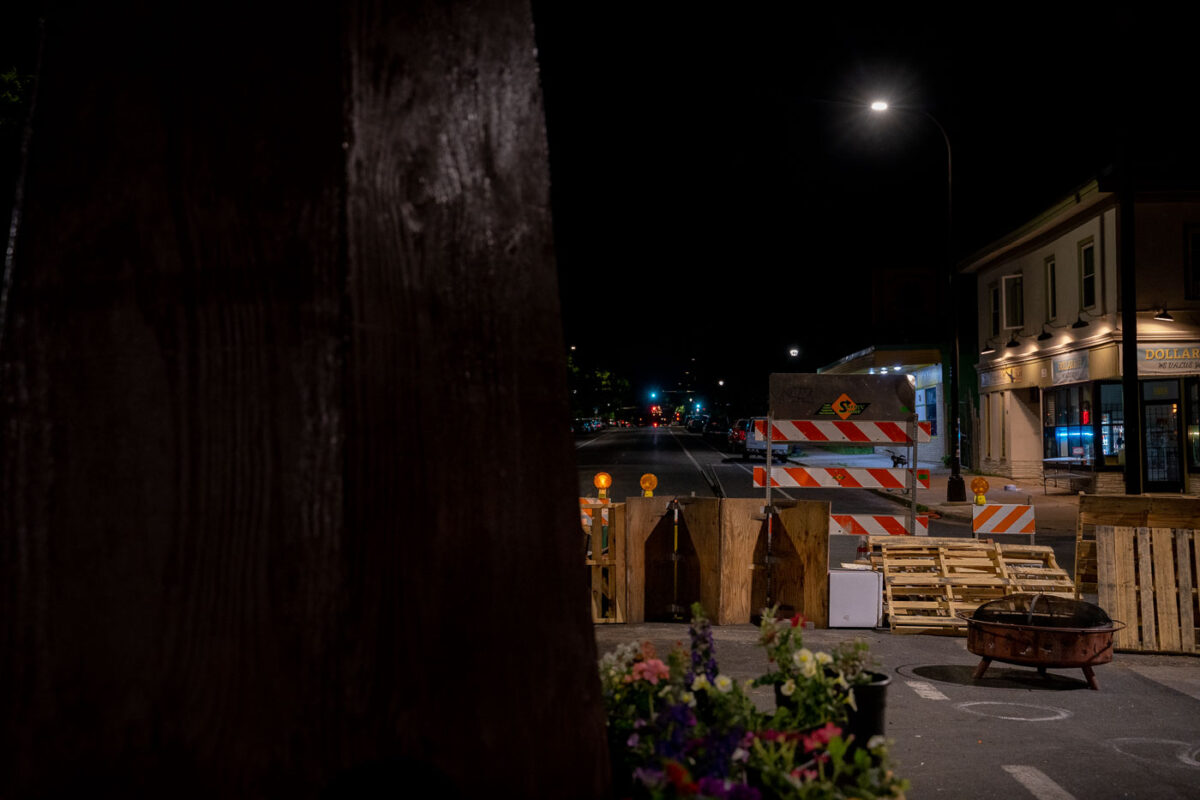
Barricades at 37th Street and Chicago Avenue in Minneapolis at night
Barricades at the intersection of 37th Street and Chicago Avenue in Minneapolis, a site that became known as George Floyd Square. These barriers were erected by protesters following the murder of George Floyd in May 2020, transforming the area into a space for community gathering and protest. The city's attempts to remove the barricades to reopen the street to traffic were met with resistance, leading to the reinstallation of these temporary structures. On May 25, 2020, Minneapolis police officer Derek Chauvin murdered 46-year-old George Floyd during an arrest outside Cup Foods at the intersection of 38th Street and Chicago Avenue in south Minneapolis. Video recorded by bystanders showed Chauvin kneeling on Floyd’s neck for more than nine minutes while Floyd repeatedly said he could not breathe. Three other Minneapolis police officers - J. Alexander Kueng, Thomas Lane, and Tou Thao — were also present during the arrest and later faced criminal charges for their roles in Floyd’s death. Floyd’s murder sparked protests and civil unrest across Minneapolis and around the world, leading to widespread demonstrations against police violence, major policy debates on policing, and the conviction of Chauvin on murder and manslaughter charges in 2021.

George Floyd Square barricades at 37th and Chicago Ave
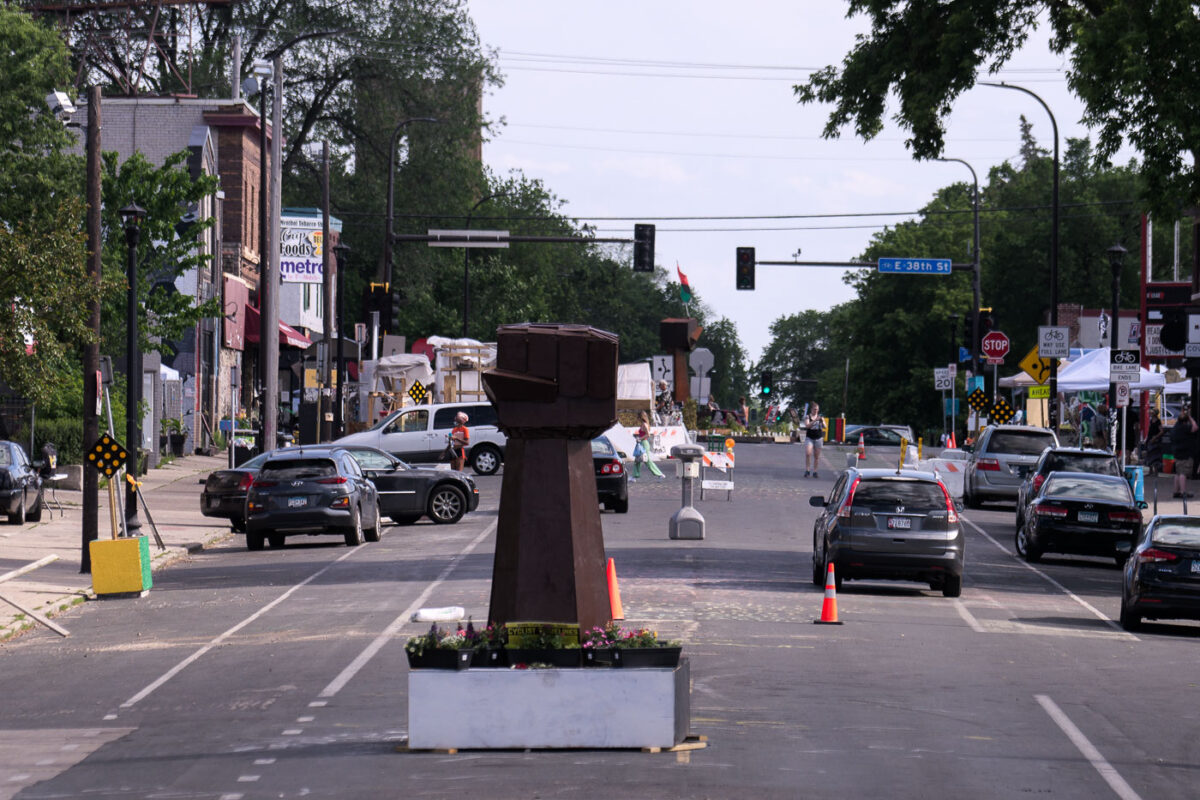
Traffic resumes at George Floyd Square on East 38th Street in Minneapolis.
Vehicles navigate through George Floyd Square in Minneapolis, June 2021, three days after city officials removed barricades. The square, located at the intersection of Chicago Avenue and East 38th Street, had been occupied by protesters and activists for over a year following the murder of George Floyd nearby in May 2020. The reopening to traffic marked a significant moment in the ongoing efforts to reclaim public space and address the community's demands for justice and accountability. On May 25, 2020, Minneapolis police officer Derek Chauvin murdered 46-year-old George Floyd during an arrest outside Cup Foods at the intersection of 38th Street and Chicago Avenue in south Minneapolis. Video recorded by bystanders showed Chauvin kneeling on Floyd’s neck for more than nine minutes while Floyd repeatedly said he could not breathe. Three other Minneapolis police officers - J. Alexander Kueng, Thomas Lane, and Tou Thao — were also present during the arrest and later faced criminal charges for their roles in Floyd’s death. Floyd’s murder sparked protests and civil unrest across Minneapolis and around the world, leading to widespread demonstrations against police violence, major policy debates on policing, and the conviction of Chauvin on murder and manslaughter charges in 2021.

George Floyd Square Reopens to Traffic in Minneapolis, June 2021
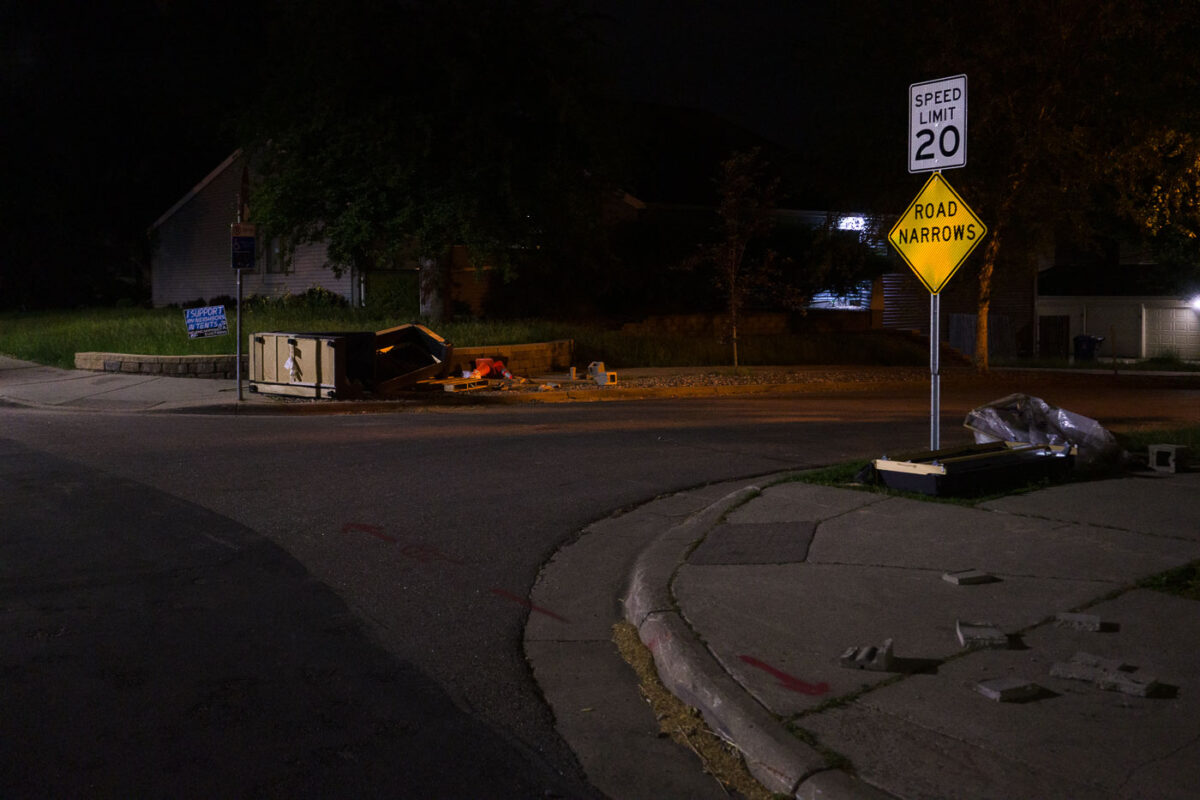
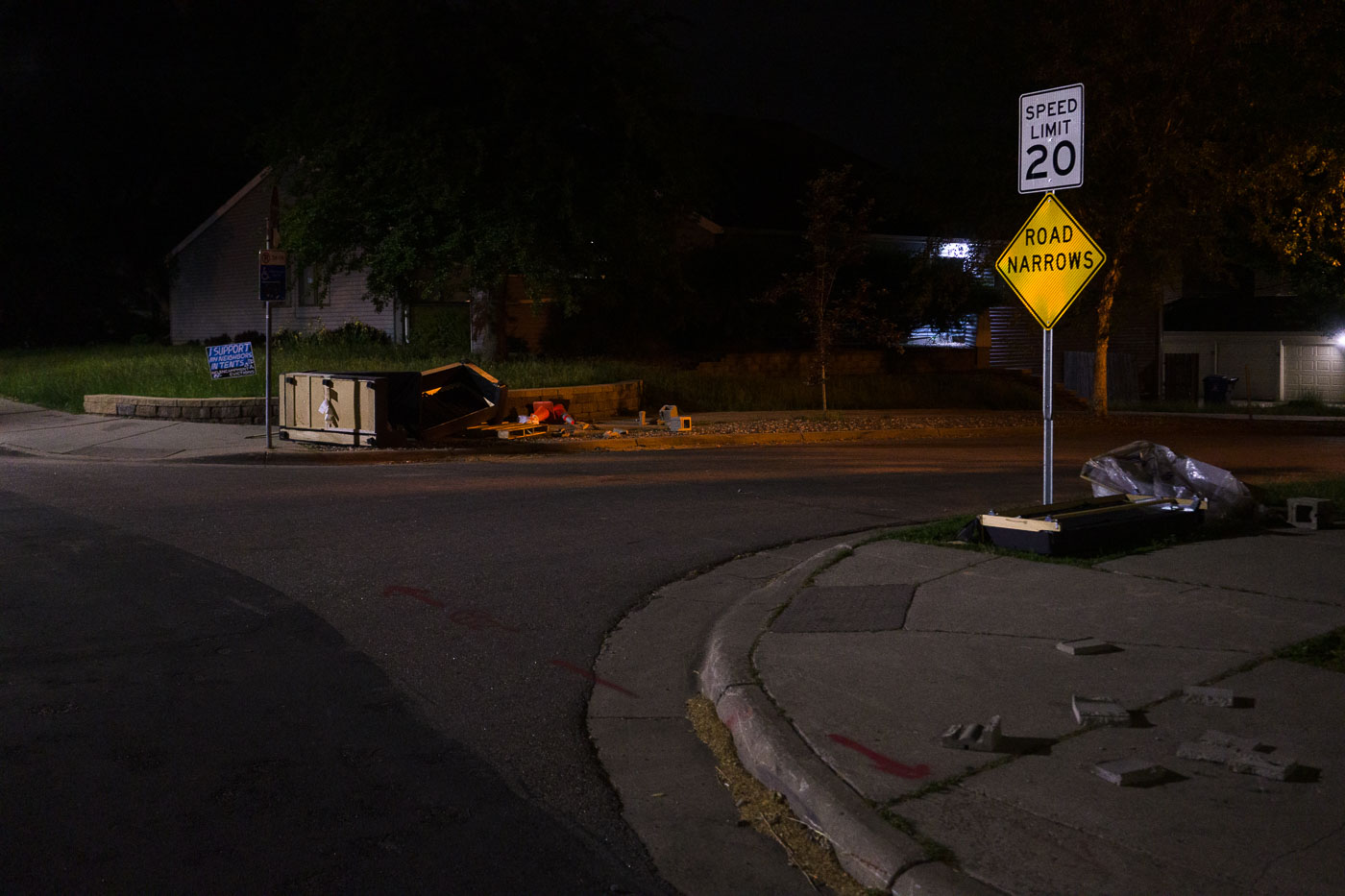
Debris and road signs at George Floyd Square in Minneapolis at night after barricades were removed.
Debris litters the intersection of East 37th Street and Chicago Avenue in Minneapolis, known as George Floyd Square. The city had recently removed concrete barricades that had been in place for over a year, reopening the street to vehicular traffic. The square became a focal point for protests and community organizing following the murder of George Floyd in May 2020. A sign visible in the background reads "I SUPPORT MY NEIGHBORS IN TENTS. NO ENCAMPMENT. NO EVICTIONS." On May 25, 2020, Minneapolis police officer Derek Chauvin murdered 46-year-old George Floyd during an arrest outside Cup Foods at the intersection of 38th Street and Chicago Avenue in south Minneapolis. Video recorded by bystanders showed Chauvin kneeling on Floyd’s neck for more than nine minutes while Floyd repeatedly said he could not breathe. Three other Minneapolis police officers - J. Alexander Kueng, Thomas Lane, and Tou Thao — were also present during the arrest and later faced criminal charges for their roles in Floyd’s death. Floyd’s murder sparked protests and civil unrest across Minneapolis and around the world, leading to widespread demonstrations against police violence, major policy debates on policing, and the conviction of Chauvin on murder and manslaughter charges in 2021.

George Floyd Square: Barricades Removed, Debris Remains
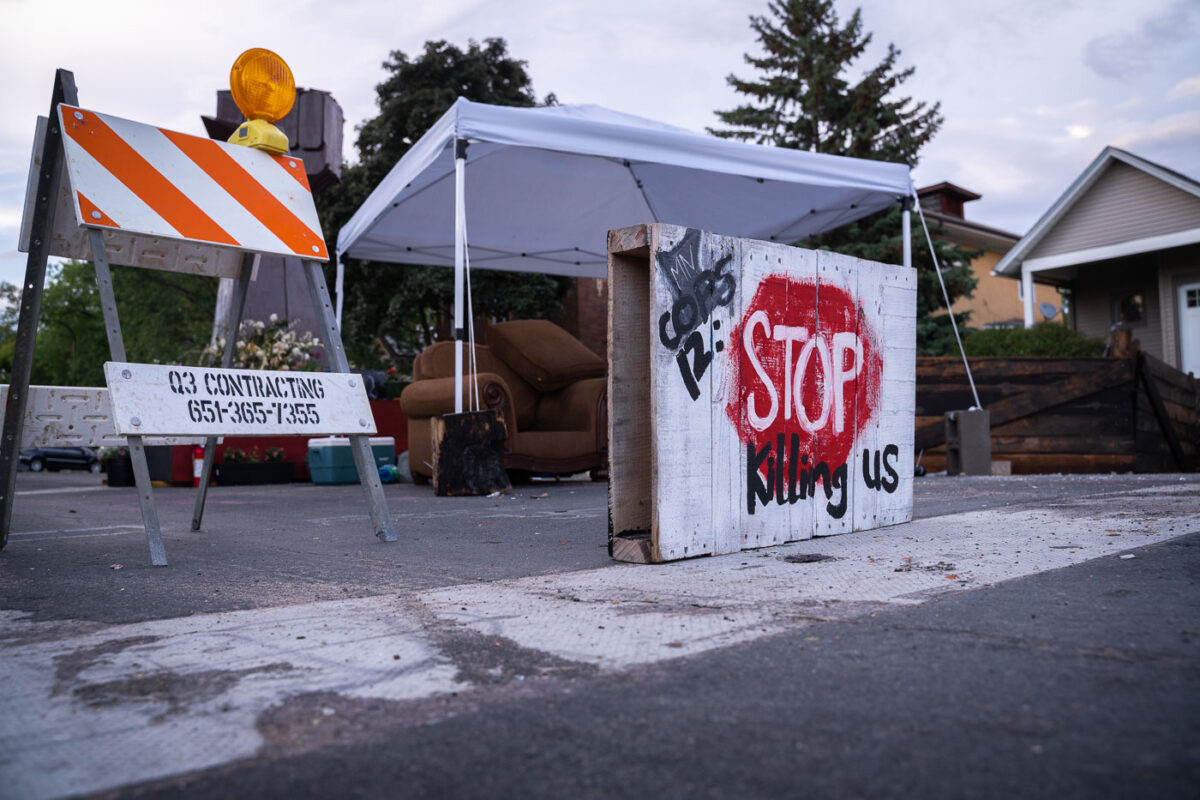
Barricade with "Stop Killing Us" sign at George Floyd Square in Minneapolis.
Barricades, including a hand-painted sign reading "STOP Killing Us," have been erected at George Floyd Square in Minneapolis. These barriers appeared after the city cleared earlier barricades on June 3rd, following the murder of George Floyd. On May 25, 2020, Minneapolis police officer Derek Chauvin murdered 46-year-old George Floyd during an arrest outside Cup Foods at the intersection of 38th Street and Chicago Avenue in south Minneapolis. Video recorded by bystanders showed Chauvin kneeling on Floyd’s neck for more than nine minutes while Floyd repeatedly said he could not breathe. Three other Minneapolis police officers - J. Alexander Kueng, Thomas Lane, and Tou Thao — were also present during the arrest and later faced criminal charges for their roles in Floyd’s death. Floyd’s murder sparked protests and civil unrest across Minneapolis and around the world, leading to widespread demonstrations against police violence, major policy debates on policing, and the conviction of Chauvin on murder and manslaughter charges in 2021.

George Floyd Square Barricade: Stop Killing Us
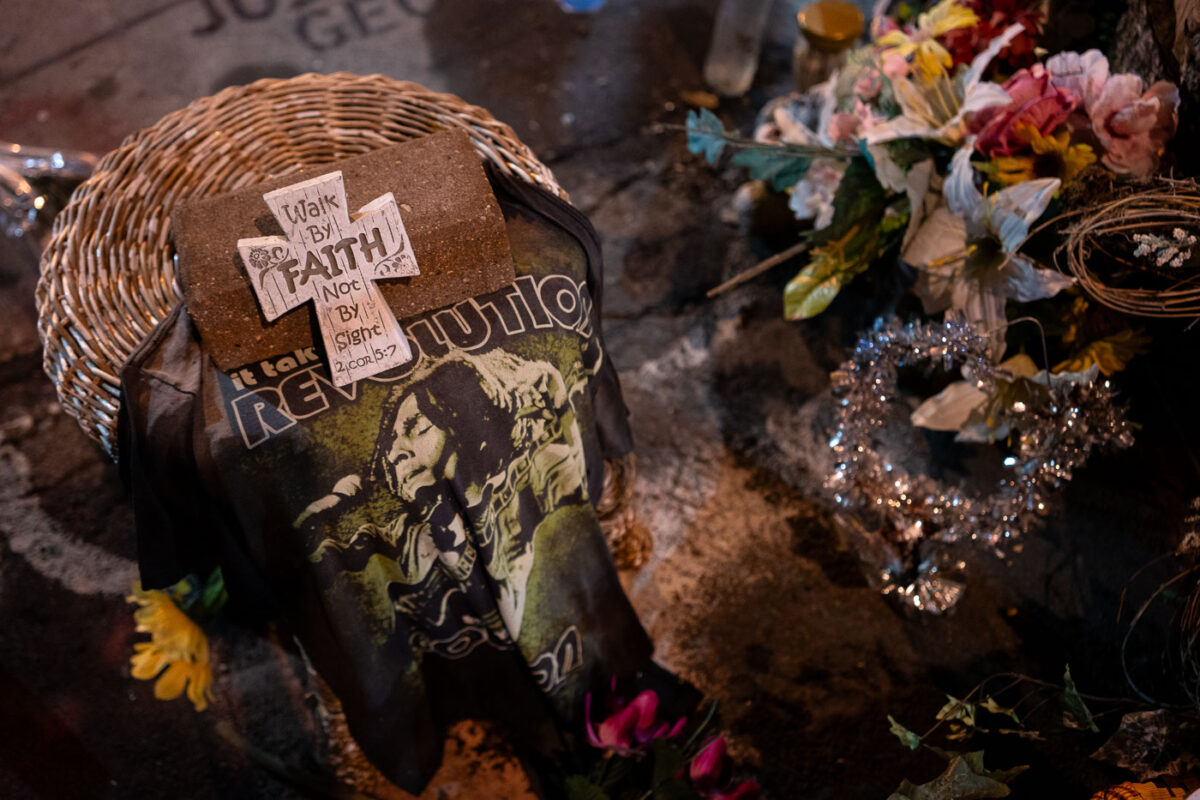
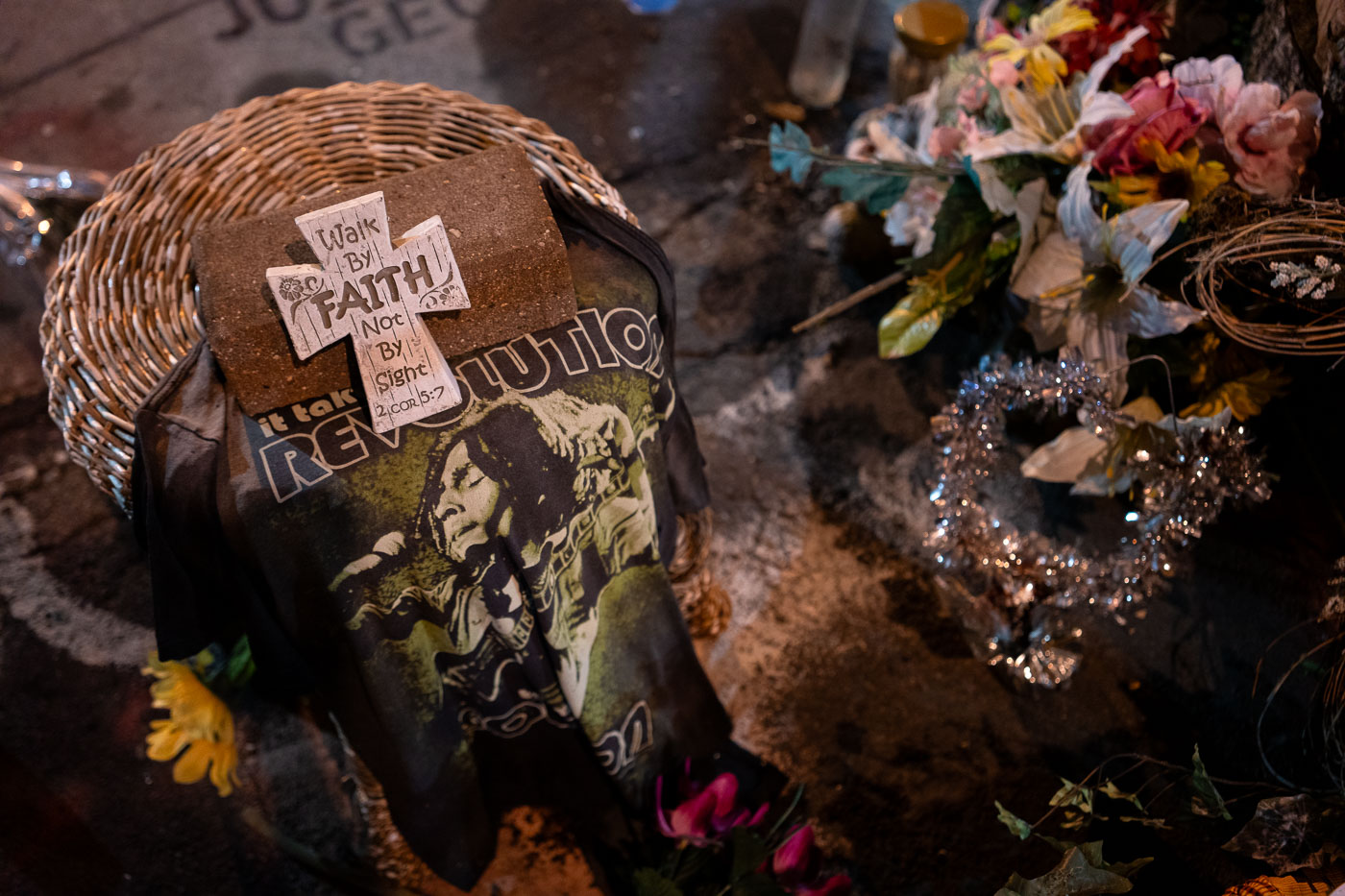
T-shirt and cross at George Floyd Square memorial in Minneapolis among flowers and tributes.
A t-shirt bearing the slogan "It Takes a Revolution" and an image of Bob Marley is displayed at the George Floyd Memorial in Minneapolis. The memorial was established at the intersection of 38th Street and Chicago Avenue, the site where George Floyd died in police custody on May 25, 2020. This location became a focal point for protests against racial injustice and police brutality following Floyd's death. The t-shirt and accompanying cross, inscribed with "Walk By Faith Not By Sight," are among the many tributes left by visitors to the memorial. On May 25, 2020, Minneapolis police officer Derek Chauvin murdered 46-year-old George Floyd during an arrest outside Cup Foods at the intersection of 38th Street and Chicago Avenue in south Minneapolis. Video recorded by bystanders showed Chauvin kneeling on Floyd’s neck for more than nine minutes while Floyd repeatedly said he could not breathe. Three other Minneapolis police officers - J. Alexander Kueng, Thomas Lane, and Tou Thao — were also present during the arrest and later faced criminal charges for their roles in Floyd’s death. Floyd’s murder sparked protests and civil unrest across Minneapolis and around the world, leading to widespread demonstrations against police violence, major policy debates on policing, and the conviction of Chauvin on murder and manslaughter charges in 2021.

George Floyd Square Memorial: “It Takes a Revolution” T-shirt
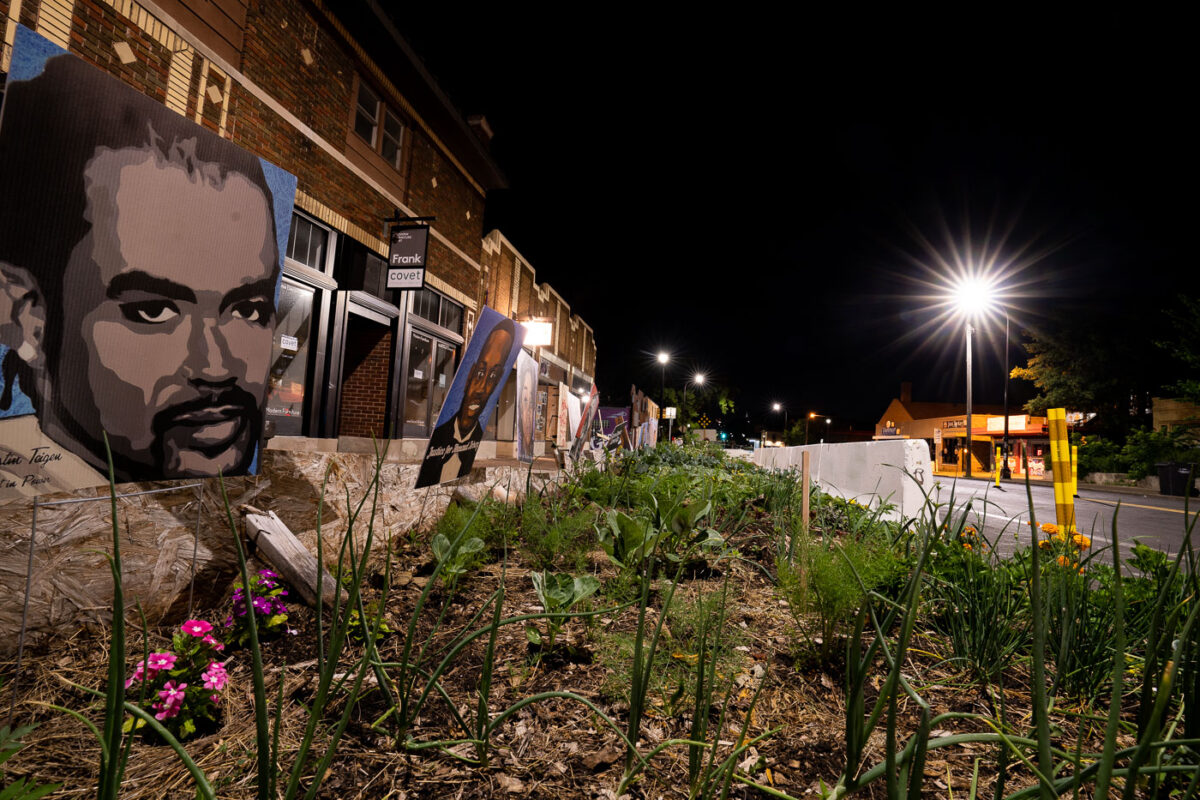
George Floyd murals and garden at George Floyd Square in Minneapolis at night.
George Floyd Square Garden, located on Chicago Avenue in Minneapolis, was established in the aftermath of the murder of George Floyd in June 2020. This space, which became a focal point for protests and community organizing, transformed a section of the intersection into a garden and memorial. The garden serves as a living tribute to Floyd and a symbol of community resilience and ongoing activism in South Minneapolis. On May 25, 2020, Minneapolis police officer Derek Chauvin murdered 46-year-old George Floyd during an arrest outside Cup Foods at the intersection of 38th Street and Chicago Avenue in south Minneapolis. Video recorded by bystanders showed Chauvin kneeling on Floyd’s neck for more than nine minutes while Floyd repeatedly said he could not breathe. Three other Minneapolis police officers - J. Alexander Kueng, Thomas Lane, and Tou Thao — were also present during the arrest and later faced criminal charges for their roles in Floyd’s death. Floyd’s murder sparked protests and civil unrest across Minneapolis and around the world, leading to widespread demonstrations against police violence, major policy debates on policing, and the conviction of Chauvin on murder and manslaughter charges in 2021.

George Floyd Square Garden, Minneapolis, June 2021
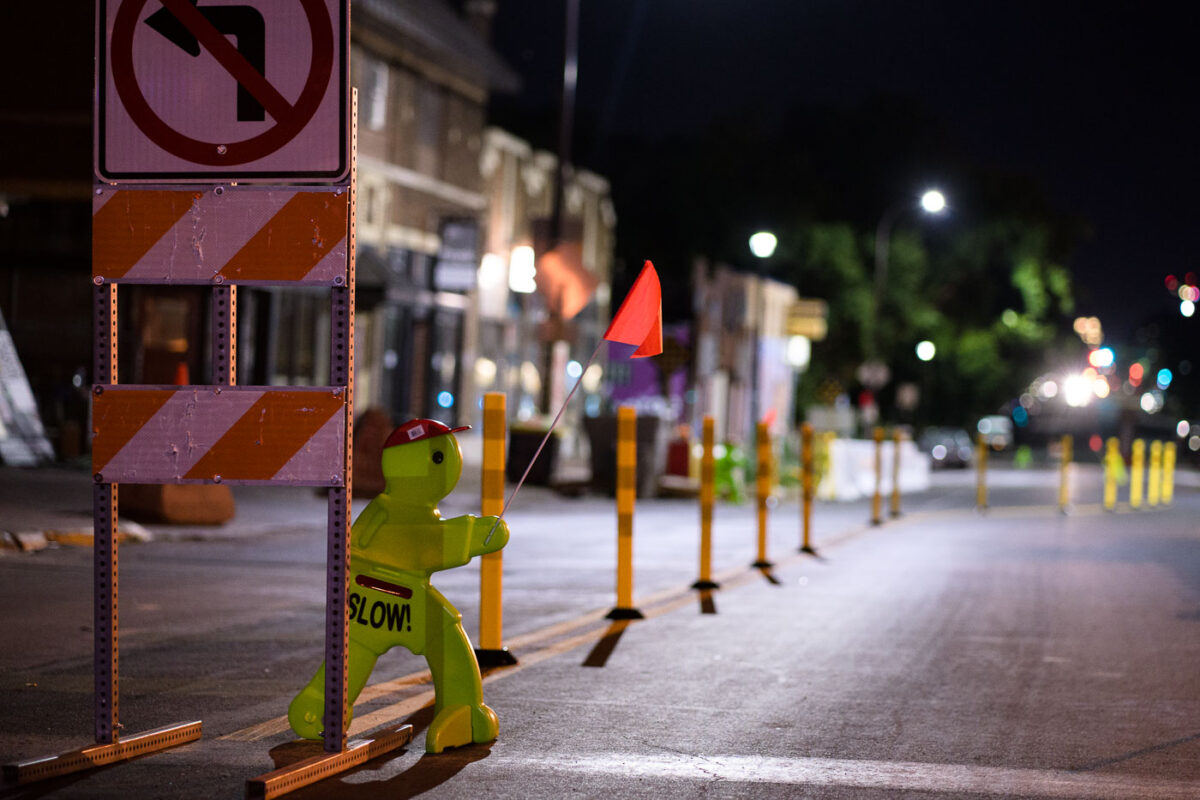
Traffic control barriers and a SLOW sign at George Floyd Square in Minneapolis at night
Traffic control measures are in place at George Floyd Square in Minneapolis, approximately two weeks after city public works removed street barricades. This area has been under community control since the murder of George Floyd in May 2020. The temporary barriers and signage, including a "SLOW!" figure, indicate ongoing efforts to manage traffic flow and maintain the space's autonomous status. On May 25, 2020, Minneapolis police officer Derek Chauvin murdered 46-year-old George Floyd during an arrest outside Cup Foods at the intersection of 38th Street and Chicago Avenue in south Minneapolis. Video recorded by bystanders showed Chauvin kneeling on Floyd’s neck for more than nine minutes while Floyd repeatedly said he could not breathe. Three other Minneapolis police officers - J. Alexander Kueng, Thomas Lane, and Tou Thao — were also present during the arrest and later faced criminal charges for their roles in Floyd’s death. Floyd’s murder sparked protests and civil unrest across Minneapolis and around the world, leading to widespread demonstrations against police violence, major policy debates on policing, and the conviction of Chauvin on murder and manslaughter charges in 2021.

George Floyd Square: Traffic control measures at night
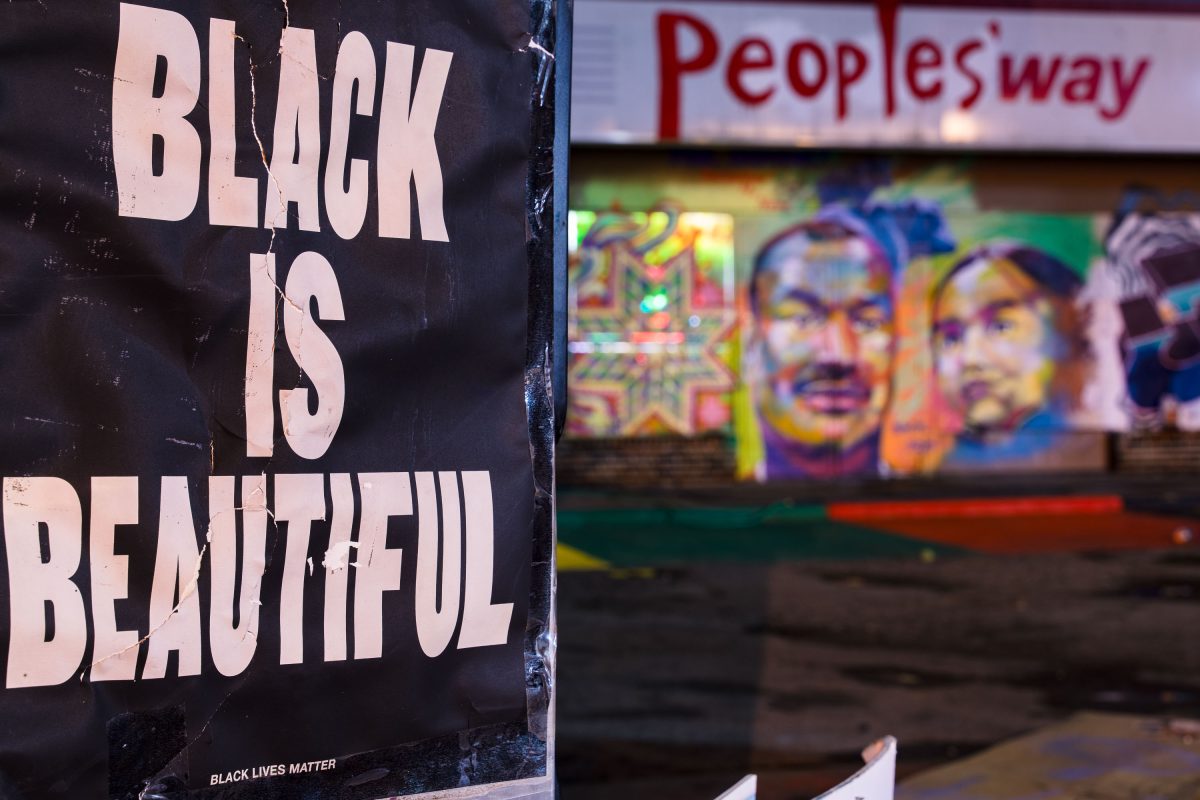
A "Black Is Beautiful" sign at George Floyd Square in Minneapolis, with colorful mural and "People's Way" signage visible behind.
A "Black Is Beautiful" poster hangs near The People's Way mural at George Floyd Square, the memorial that formed at 38th Street and Chicago Avenue in Minneapolis after George Floyd's killing in May 2020.

“Black Is Beautiful” Poster Near The People’s Way at George Floyd Square
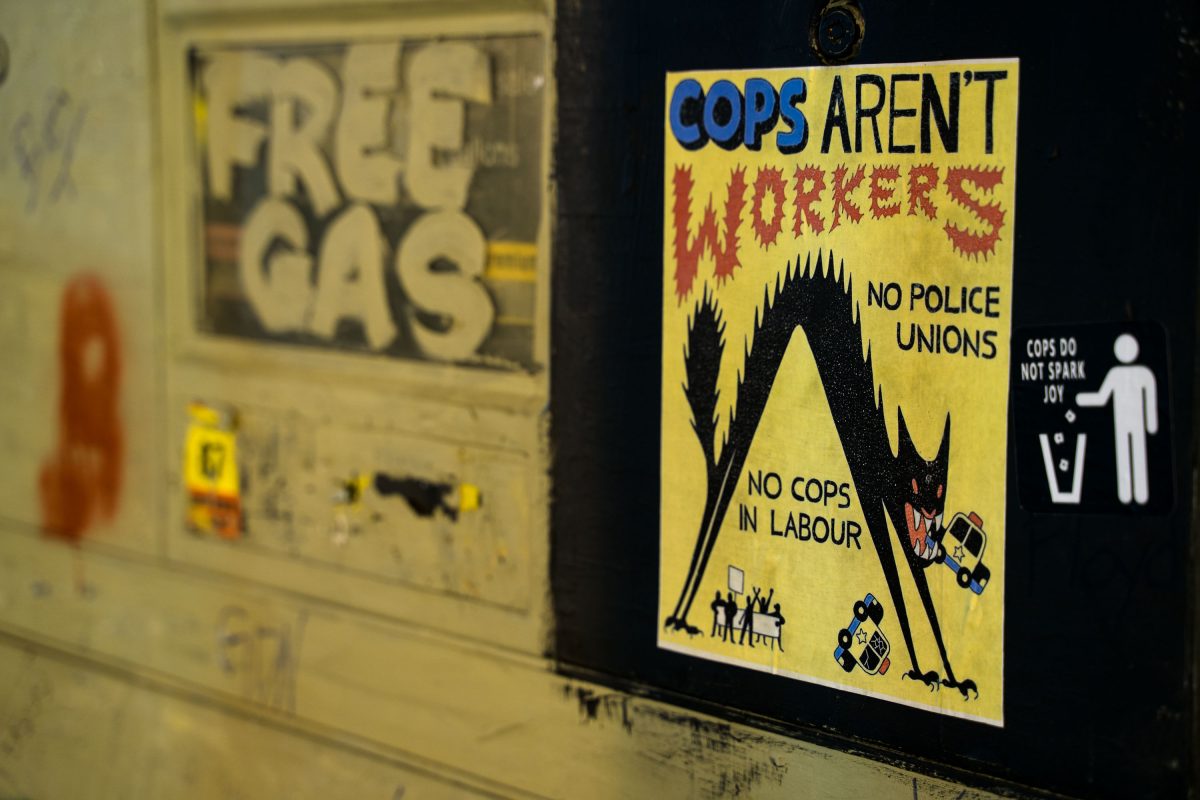
A yellow protest poster reading "Cops Aren't Workers" with anti-police messaging attached to a gas pump in George Floyd Square, Minneapolis.
A "Cops Aren't Workers" poster is stuck to a gas pump at George Floyd Square, the intersection at 38th Street and Chicago Avenue in Minneapolis where George Floyd was killed in May 2020. The pump stands at the former Speedway station, renamed "The People's Way".

“Cops Aren’t Workers” Poster on a Gas Pump at George Floyd Square
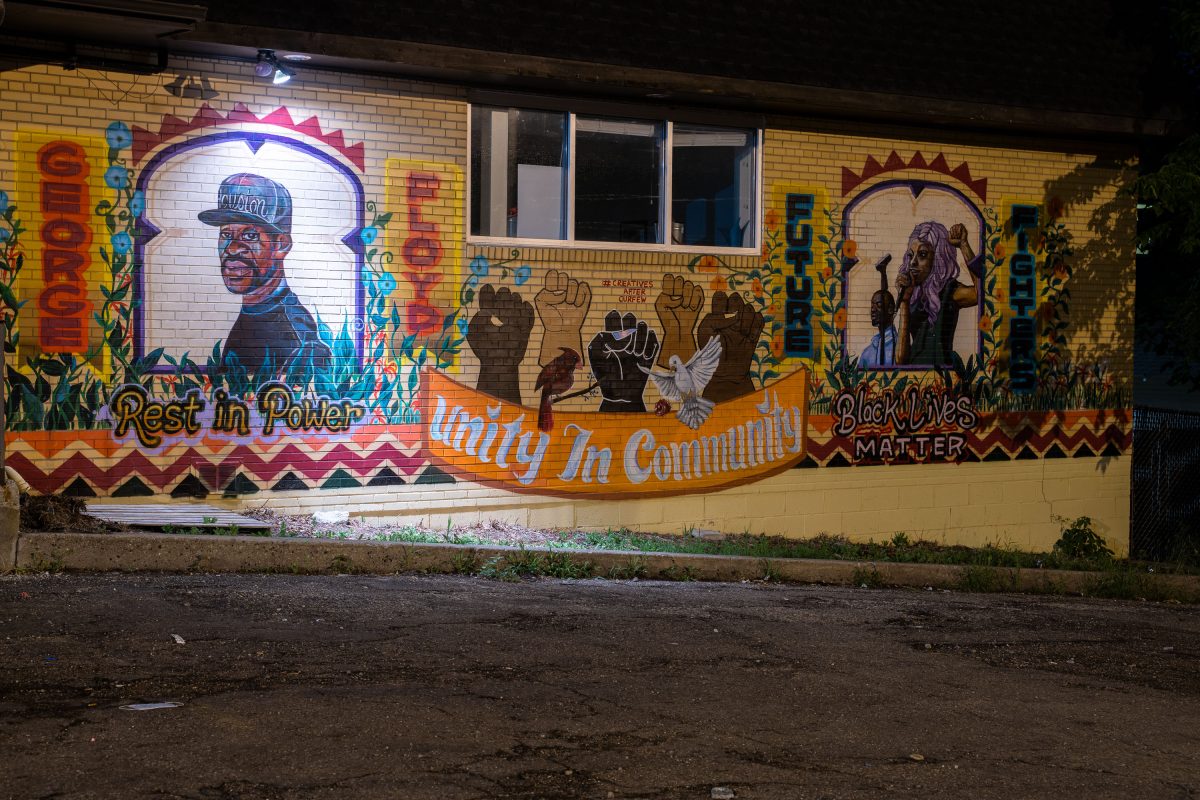
Unity In Community Mural at George Floyd Square
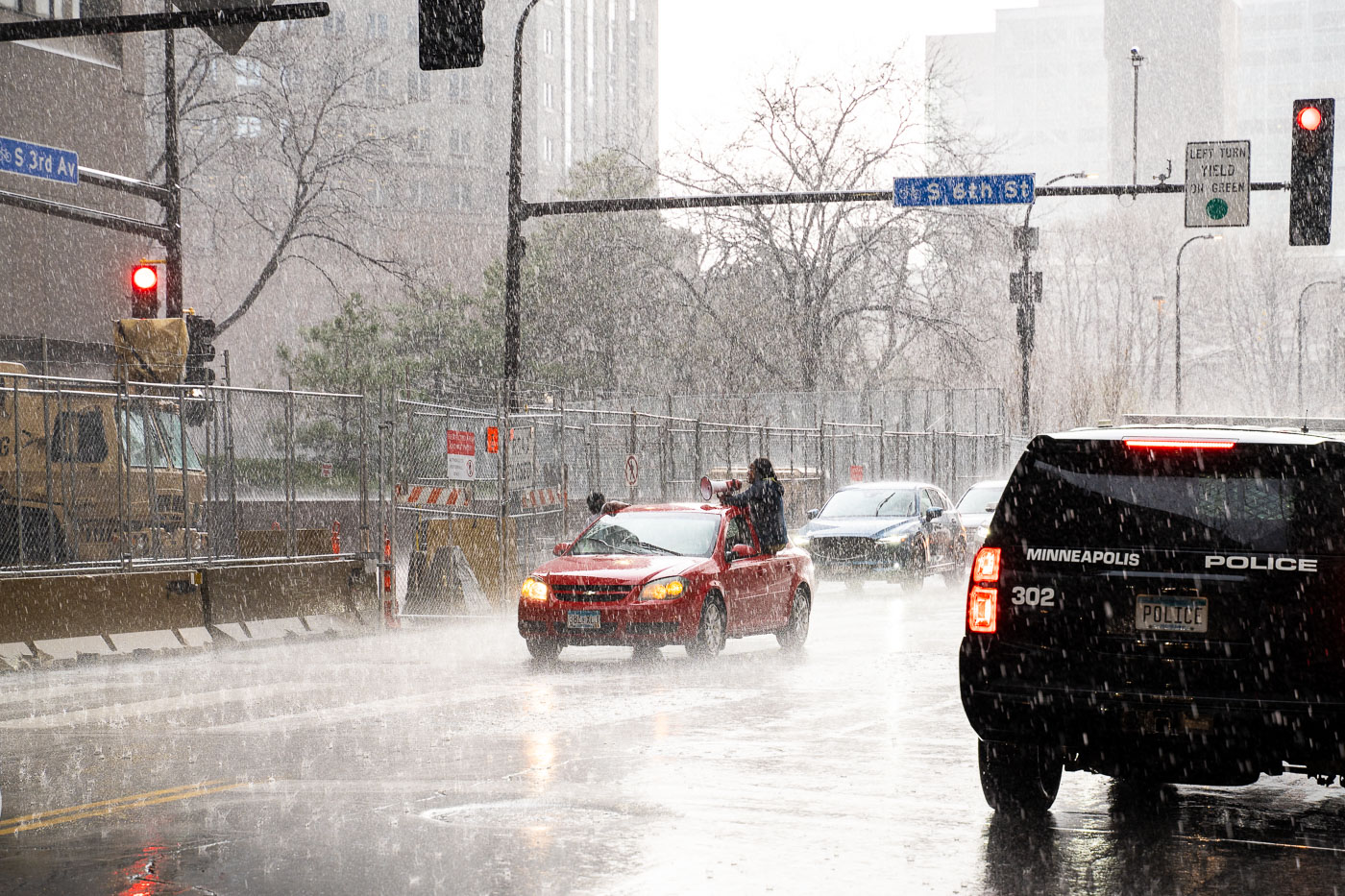
A mural at George Floyd Square on Chicago Avenue in Minneapolis.

Unity In Community Mural at George Floyd Square
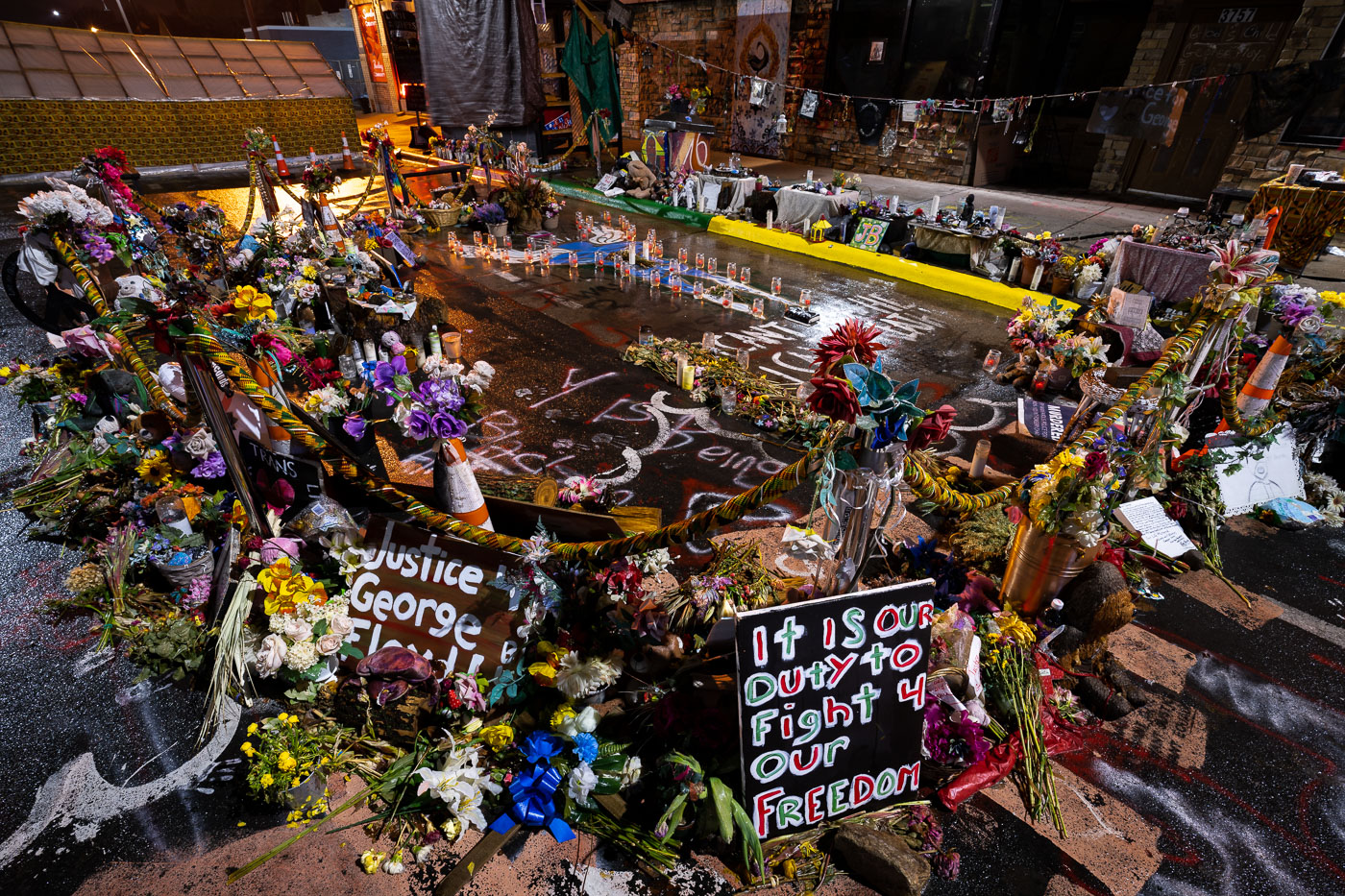
Sun Dog at George Floyd Square
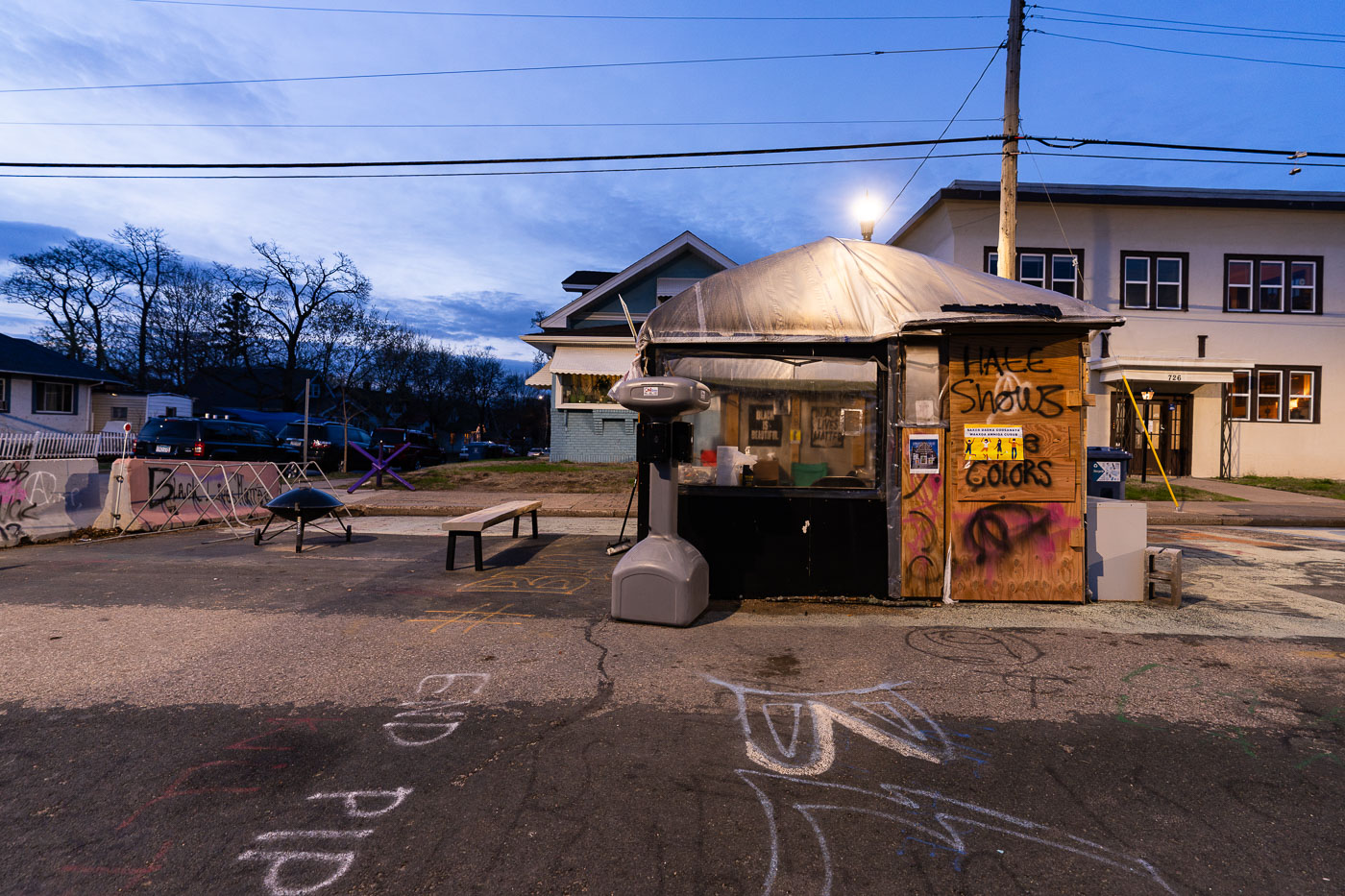
A sun dog, an atmospheric optical phenomenon, is visible above George Floyd Square in Minneapolis. This intersection became a focal point for protests and activism following the murder of George Floyd in May 2020. The memorial at the square serves as a space for remembrance, community gathering, and continued calls for racial justice. The "Where There's People There's Power" mural on the nearby gas station reflects the spirit of the ongoing movement.
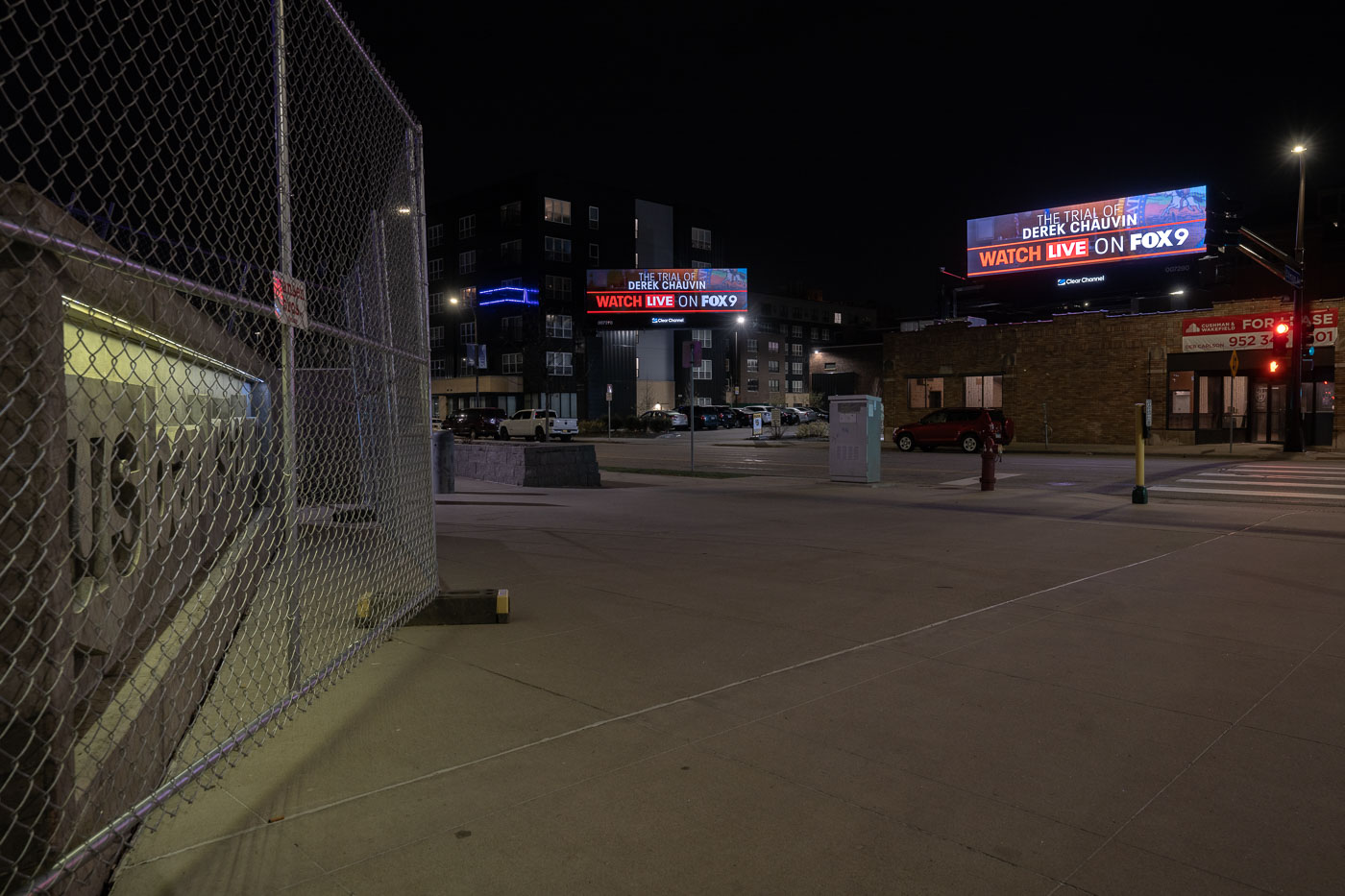
Sun Dog Over George Floyd Square Memorial, Minneapolis
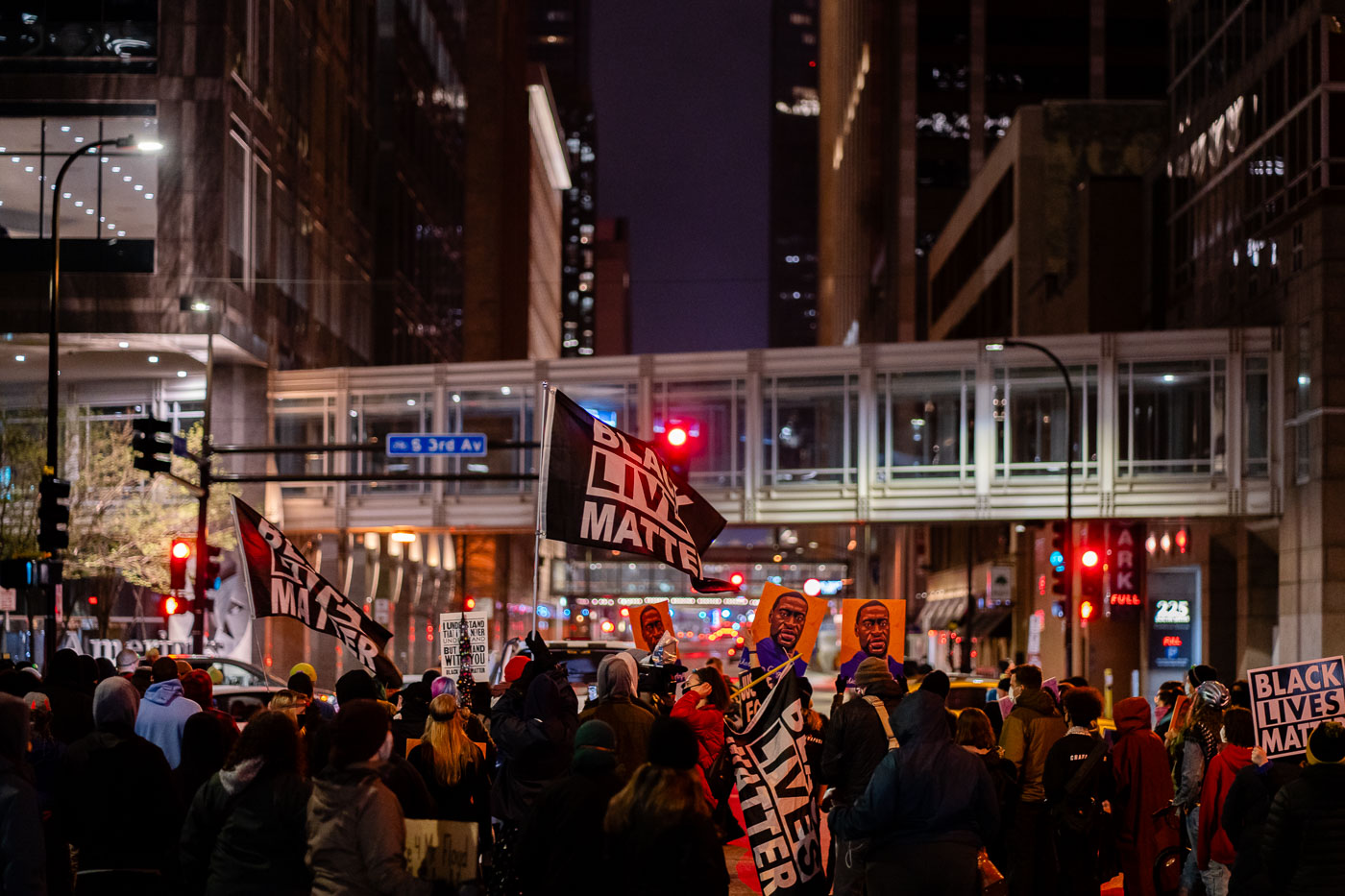
No Racists Allowed at George Floyd Square
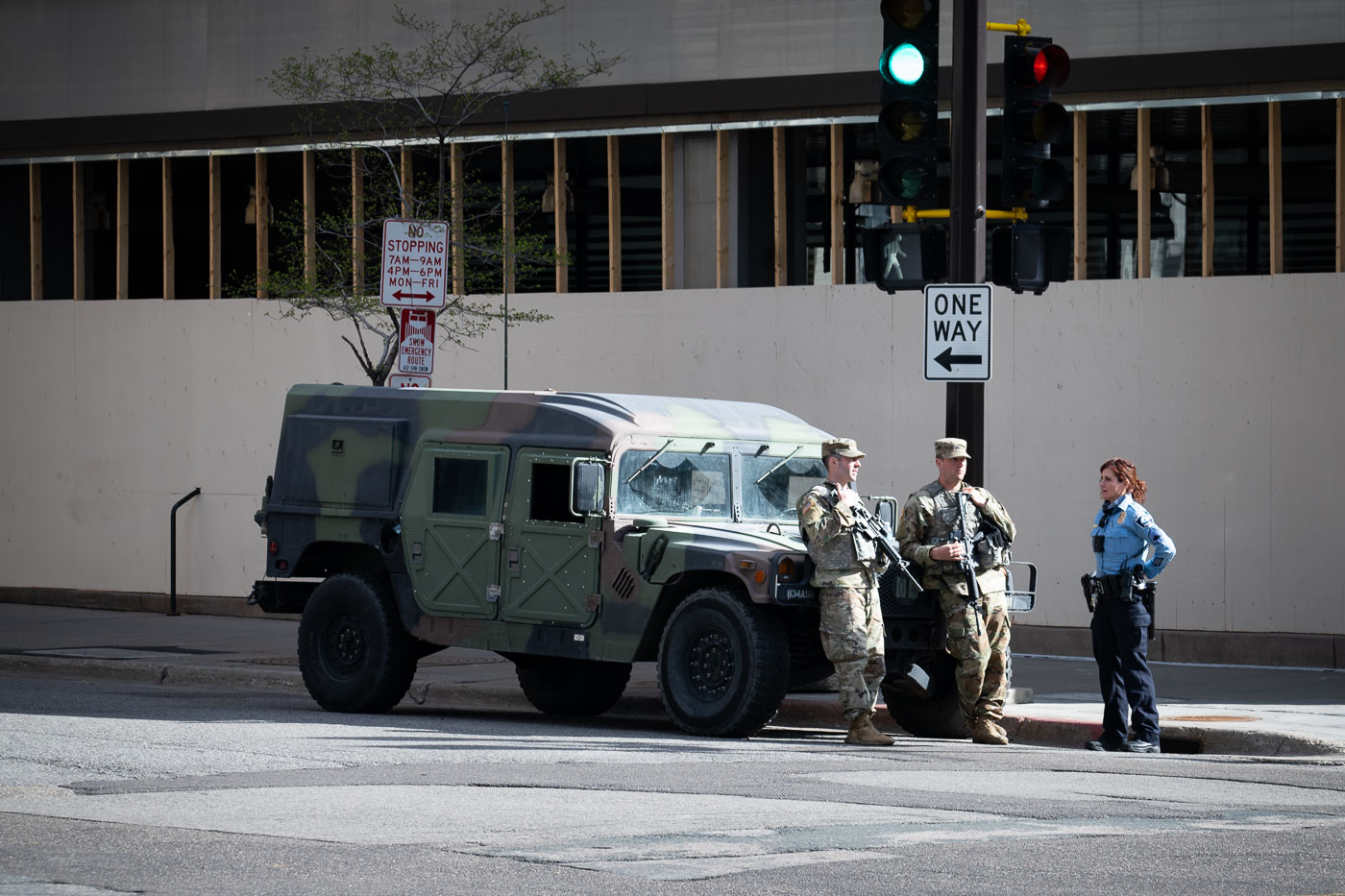
Signs mark the entrance to the "Free State of George Floyd" in Minneapolis on a rainy night. This area known as George Floyd Square was established in the wake of George Floyd's murder in May 2020.
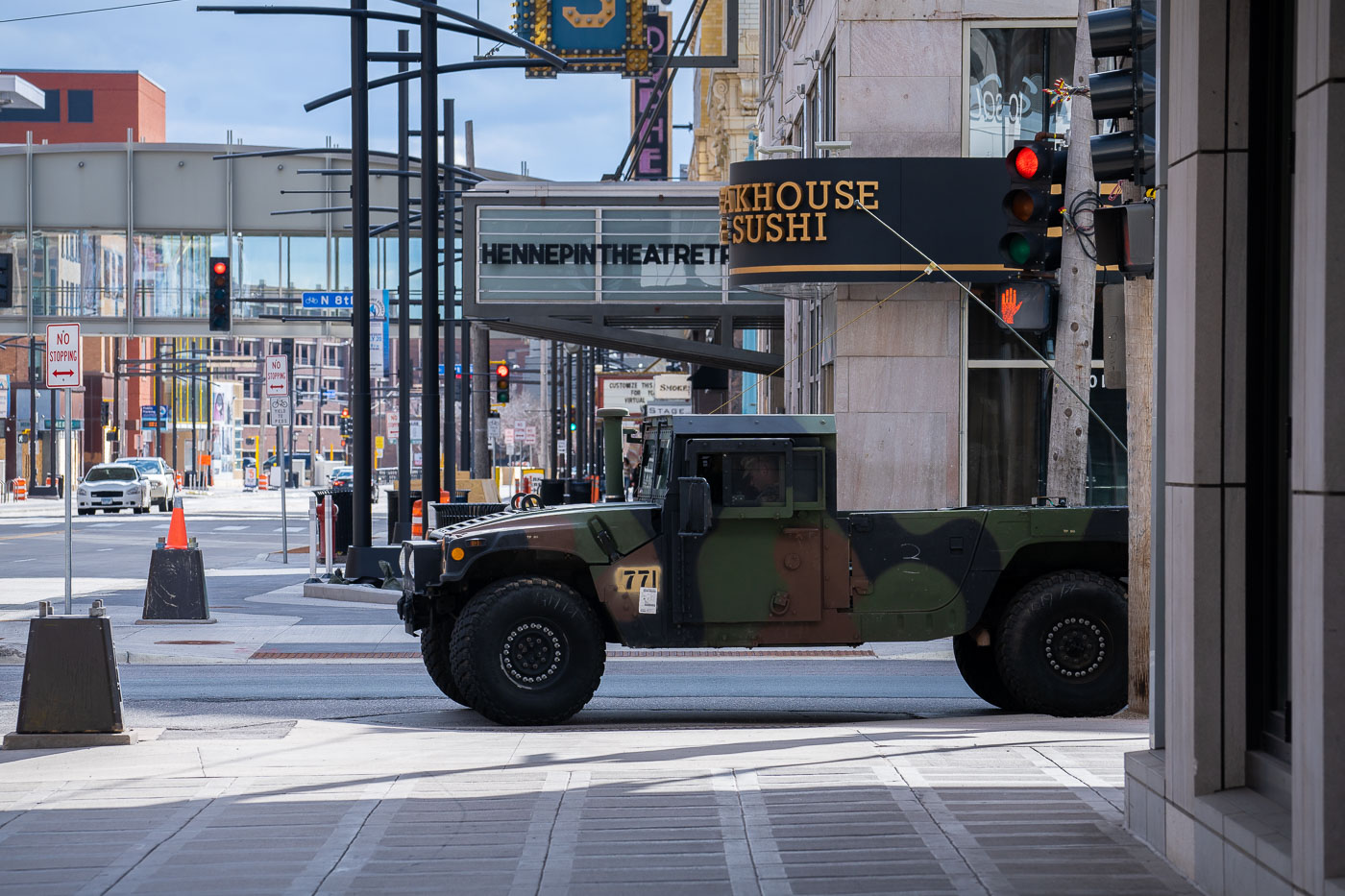
George Floyd Square, Minneapolis: “No Racists Allowed” Sign

George Floyd Square and bad air quality
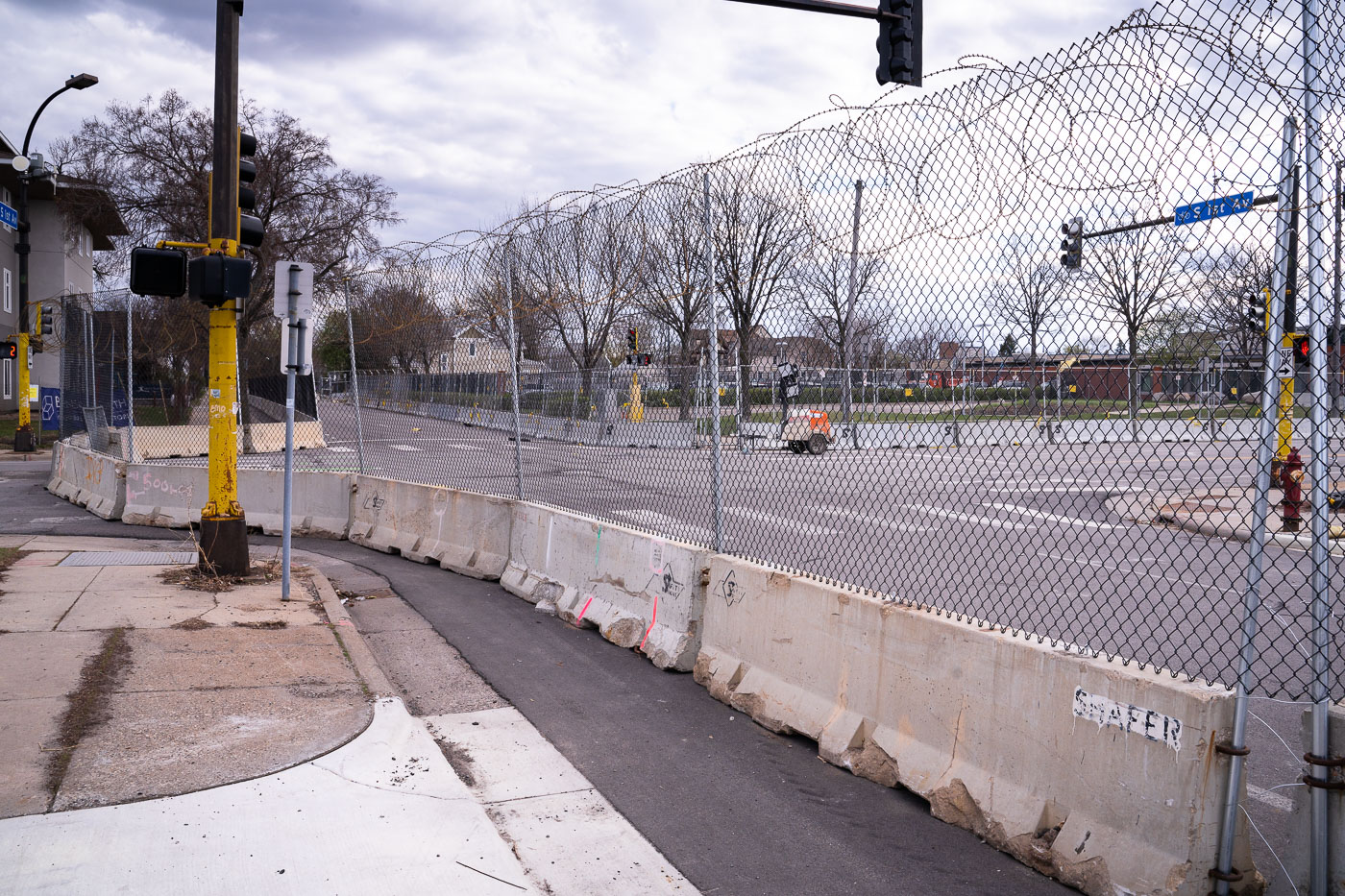
Chicago Avenue in Minneapolis, known as George Floyd Square, is seen under a hazy sky caused by smoke from Canadian wildfires. This area became a focal point for protests and activism following the murder of George Floyd in May 2020. The "Free State of George Floyd" sign and barricades signify the community's assertion of autonomy and a memorial to Floyd.

George Floyd Square Hazy Evening, Minneapolis
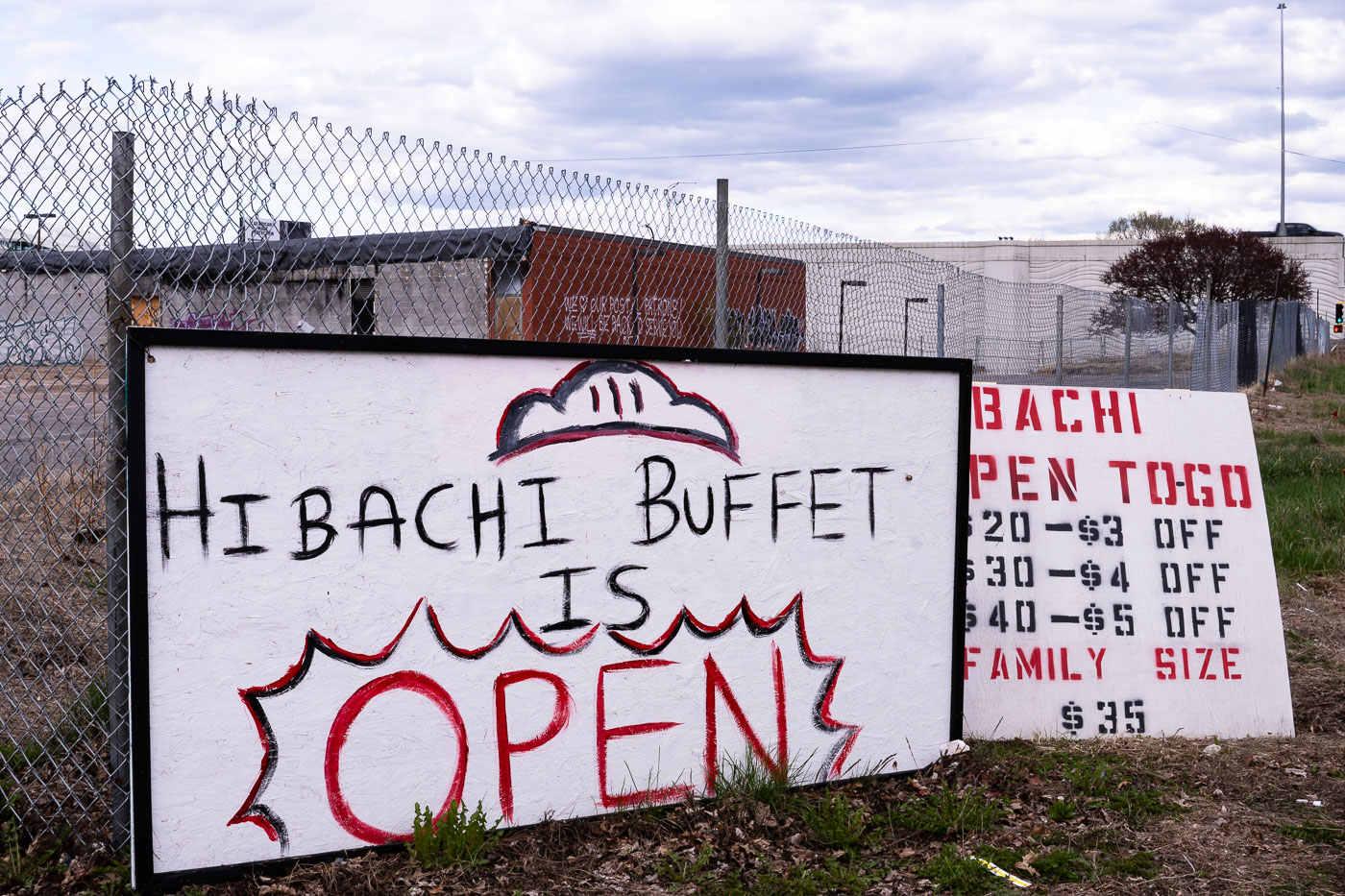
Read the demands Justice For Murphy Ranks
A sign at George Floyd Square in Minneapolis reads "READ THE DEMANDS JUSTICE FOR MURPHY RANKS!" This message was displayed on July 29, 2021, amidst ongoing protests and activism following the murder of George Floyd. The square, established as a site of protest and community organizing, became a focal point for demands for racial justice and police accountability.
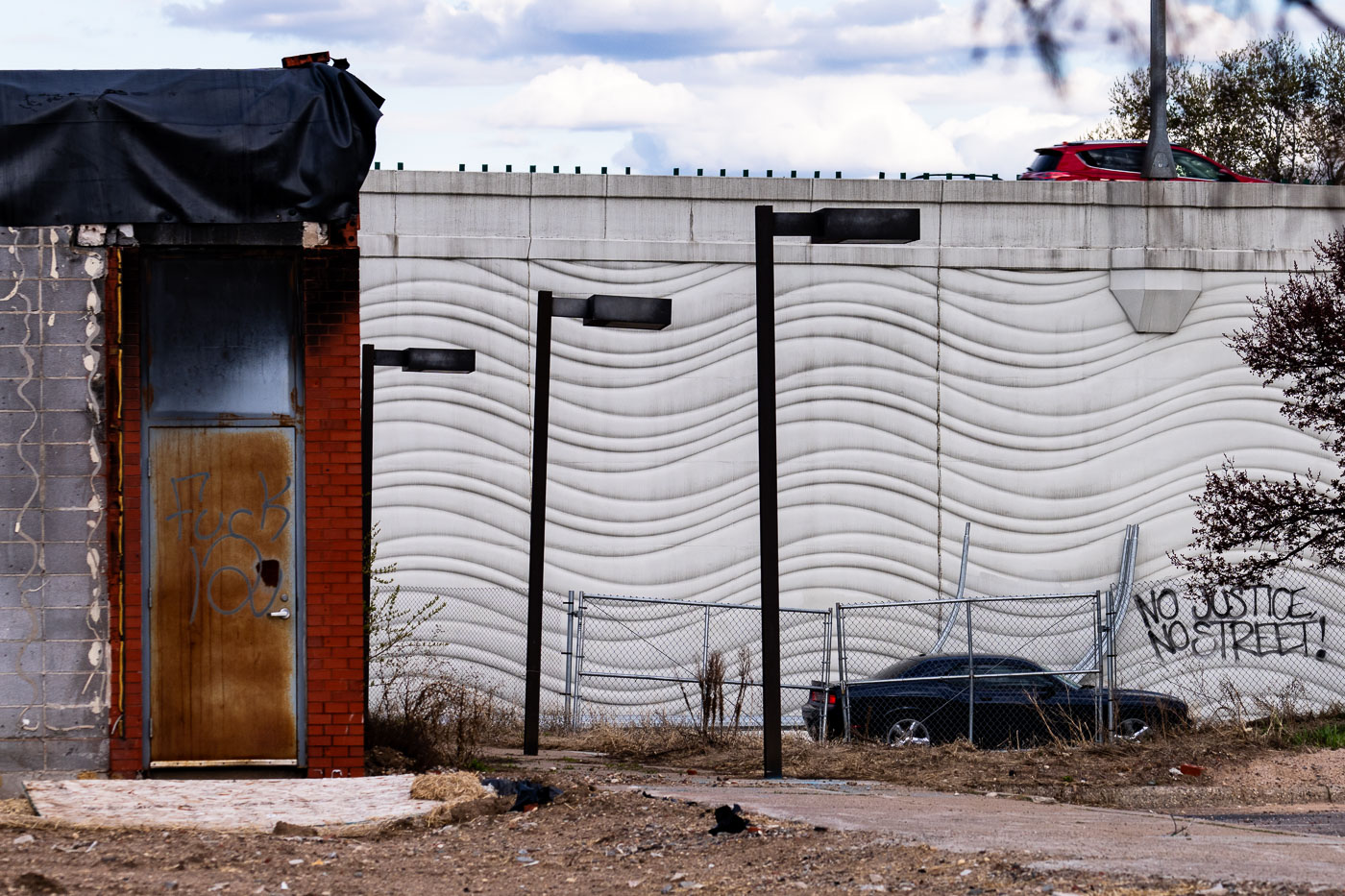
George Floyd Square: “Justice for Murphy Ranks” Sign

Cup Foods and George Floyd Memorial July 2021
George Floyd Square in Minneapolis is seen under a haze of smoke from Canadian wildfires, which caused record-breaking air quality issues in Minnesota.
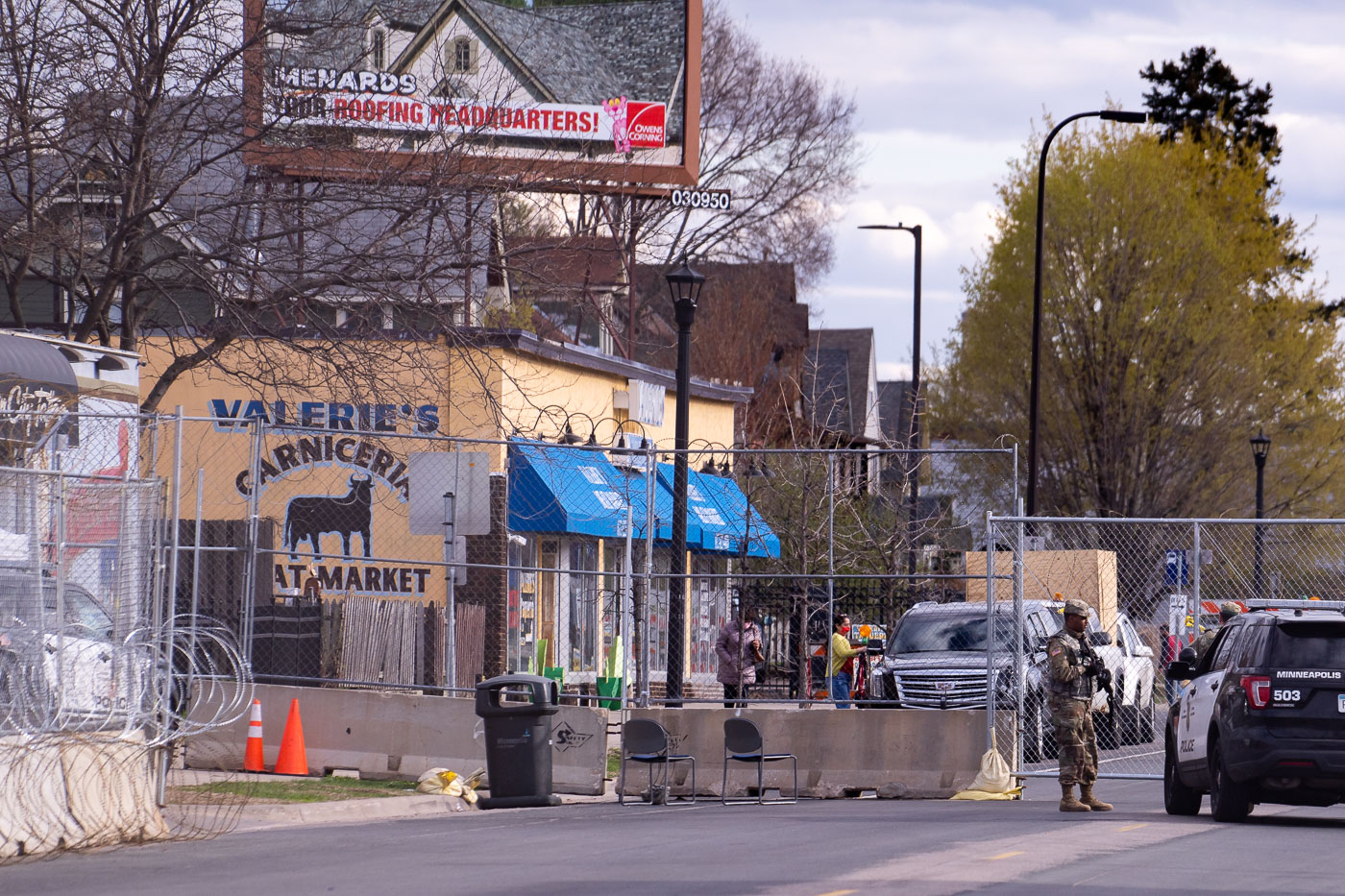
George Floyd Square Memorial Under Wildfire Haze, Minneapolis

Emmett Till Memorial in Minneapolis
The Say Their Names Memorial in Minneapolis features temporary markers honoring victims of racial injustice, including Emmett Till. Till, a 14-year-old Black boy from Chicago, was brutally murdered in Mississippi in 1955 after allegedly whistling at a white woman. His death and the subsequent acquittal of his murderers by an all-white jury galvanized the Civil Rights Movement. The memorial, located near George Floyd Square, serves as a space for remembrance and reflection on the ongoing struggle for racial equality.

Emmett Till Memorial at Say Their Names Memorial, Minneapolis

Leneesha Columbus memorial in Minneapolis
A makeshift memorial stands at George Floyd Square in Minneapolis, honoring Leneesha Columbus. Columbus was killed on July 5, 2020, near the site that became a focal point for protests following the murder of George Floyd. The square, an area occupied by protesters for months after Floyd's death, has become a space for community remembrance and activism.

Leneesha Columbus Memorial at George Floyd Square, Minneapolis

Days without answers in Winston Smith case
A sign reading "Days Without Answers" and "Justice for Winston Smith" is displayed at George Floyd Square in Minneapolis. This location became a focal point for protests following the murder of George Floyd in May 2020. Winston Smith was killed by a federal task force in June 2021 in Uptown Minneapolis.
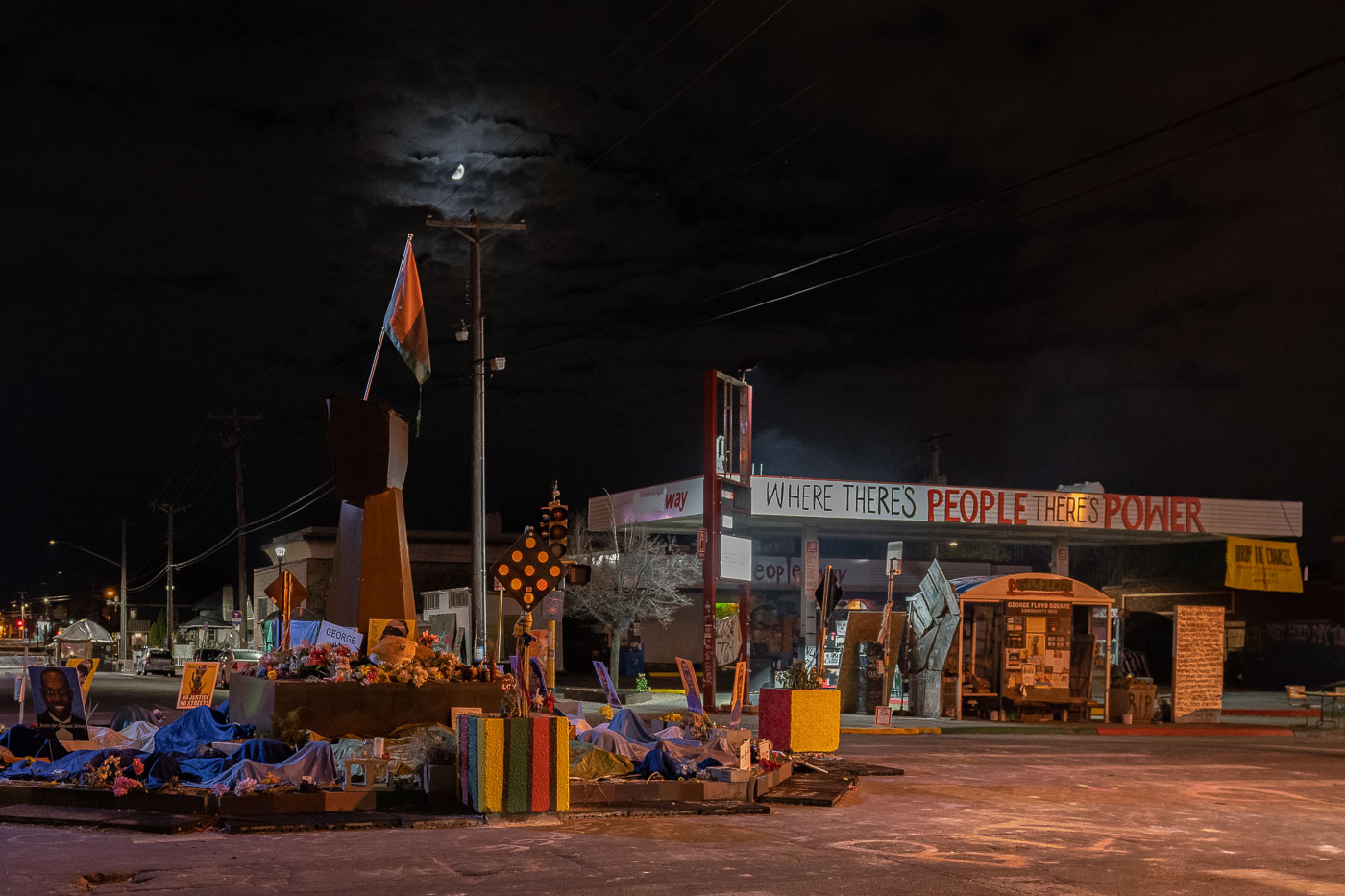
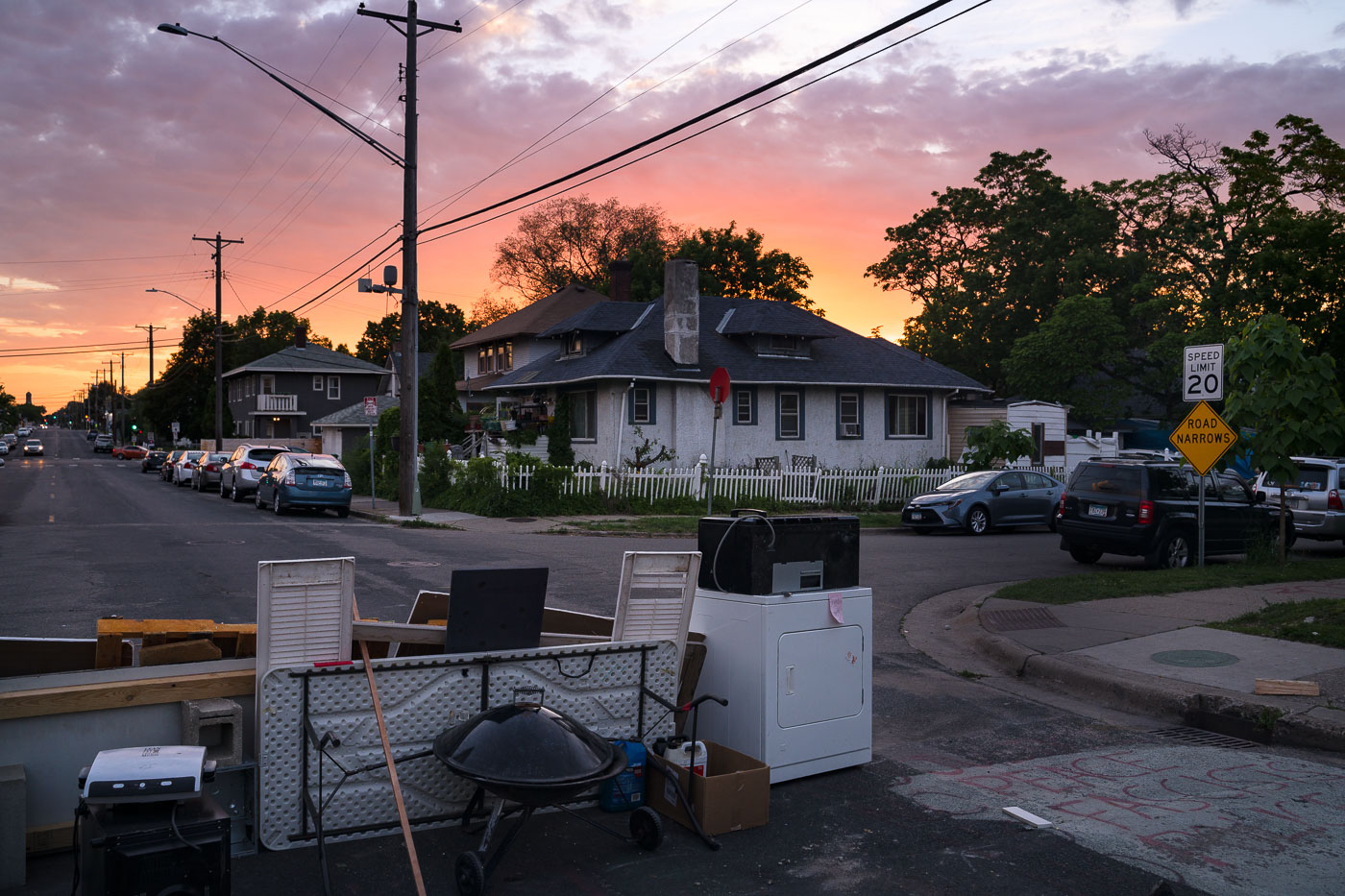
George Floyd Square: Justice for Winston Smith Sign

© 1996–2026 Chad Davis