March

424 photos · 2020–2026

424 photographs tagged March, 2020–2026.

I Kneel To Stand For protest sign
Protesters gathered outside the Minnesota Governor's Residence in St. Paul, holding signs that expressed solidarity with various marginalized groups. The rally occurred during the trial of Derek Chauvin, a former Minneapolis police officer whose murder conviction stemmed from the killing of George Floyd. The signs reflect broader concerns about police violence and systemic injustices, advocating for the rights of Black and Brown individuals, veterans, Native Americans, immigrants, and victims of domestic violence, among others. The "I Kneel to Stand For" message highlights a commitment to social justice and equality.

Protester Holds Sign at Minnesota Governor’s Residence Rally

St Paul Justice 4 George march protest signs
Protesters gathered in St. Paul, Minnesota, to demand justice for George Floyd. The "Justice 4 George" sign reflects the widespread outrage and calls for accountability following Floyd's murder by Minneapolis police officer Derek Chauvin. This event was part of a larger movement protesting police brutality and racial injustice across the United States.

St. Paul Protest for George Floyd Justice

Thousands march at the start of Derek Chauvin trial
Thousands marched in downtown Minneapolis on March 7, 2021, the day before jury selection began in the trial of Derek Chauvin. The former Minneapolis police officer was charged with the murder of George Floyd, who died on May 25, 2020, sparking widespread protests against police brutality and racial injustice. The marchers carried signs and a casket adorned with flowers, symbolizing their grief and demand for accountability.

Minneapolis Protest for George Floyd, Trial Begins

Protesters sit during a march at start of Chauvin trial
Protesters gathered in downtown Minneapolis during the trial of Derek Chauvin, the police officer accused in the murder of George Floyd. The march and subsequent sit-in occurred in April 2021, reflecting ongoing activism and demands for justice following Floyd's death in May 2020. The event highlighted the community's continued engagement with issues of racial inequality and police accountability.

Protesters sit during Chauvin trial march in Minneapolis

Defund White Supremacy protest sign
Protesters gather outside the Hennepin County Government Center in downtown Minneapolis on March 7, 2021, during a march and rally held the day before jury selection began in the trial of former Minneapolis police officer Derek Chauvin for the murder of George Floyd. Demonstrators carry signs calling for justice for Floyd and denouncing white supremacy, while many participants wear masks during the ongoing COVID-19 pandemic. The Government Center was a regular assembly point for demonstrations tied to Floyd’s killing on May 25, 2020, and to court proceedings in the Chauvin case.

Minneapolis Protest: Defund White Supremacy Sign

Protesters in downtown Minneapolis in March 2021
A protest march took place in downtown Minneapolis on March 7, 2021, the day before Derek Chauvin's trial for the murder of George Floyd began. Participants carried a scroll listing over 470 names of individuals killed by Minnesota police officers. Organizers highlighted that Chauvin was involved in five of those cases, underscoring the broader issue of police brutality. The march proceeded from the Hennepin County Government Center down Hennepin Avenue, drawing attention to systemic issues of racial injustice and police accountability.

Minneapolis Protest for George Floyd Victims March 2021

Thousands march at start of Chauvin trial
Thousands of protestors marched near the Hennepin County Government Center in Minneapolis on March 7, 2021. The march occurred the day before the start of jury selection in the trial of former Minneapolis police officer Derek Chauvin, who was charged with the murder of George Floyd on May 25, 2020. The event was part of ongoing protests against police brutality and racial injustice that followed Floyd's death.

Protestors march near Hennepin County Government Center, Minneapolis

Police are tools of white supremacy
Thousands marched in downtown Minneapolis the day before jury selection began in the trial of former police officer Derek Chauvin. Chauvin was charged with the murder of George Floyd on May 25, 2020, an event that sparked widespread protests against police brutality and racial injustice. The marchers carried signs with messages such as "Police = Tools of White Supremacy" and "Dismantle White Supremacy," reflecting the broader movement for Black Lives Matter. The protests highlighted deep-seated issues of systemic racism and police accountability in the United States.

Minneapolis Protest: “Police = Tools of White Supremacy” Sign

Dismantle White Supremacy protest
Thousands marched in Downtown Minneapolis on March 7, 2021, the day before the start of jury selection in the trial of former Minneapolis Police officer Derek Chauvin. Chauvin was charged with the murder of George Floyd on May 25, 2020, an event that sparked widespread protests against police brutality and white supremacy. The marchers carried signs with messages such as "Dismantle White Supremacy" and "We Need Justice," reflecting the ongoing calls for racial equity and accountability.

Minneapolis Protest: Dismantle White Supremacy, March for Justice

Protesters enter a secured area around Chauvin trial
Protesters approach the Hennepin County Government Center in Minneapolis, Minnesota, during the trial of Derek Chauvin. The "Cage," a temporary security perimeter constructed with chain-link fencing, plywood, and barbed wire, was erected around the courthouse to manage crowds and ensure safety. This measure was implemented in response to widespread protests against police brutality and racial injustice that followed the murder of George Floyd in May 2020. The "Justice for All" signs carried by some individuals reflect the broader movement's demands for accountability and systemic change.

Protesters enter security perimeter at Hennepin County Government Center

Protesters put hands up outside courthouse during Chauvin trial
Protesters gather outside the Hennepin County Government Center in Minneapolis on March 7, 2021. The demonstration occurred the day before the start of jury selection in the trial of Derek Chauvin, the former Minneapolis police officer charged with the murder of George Floyd on May 25, 2020. The government center is a prominent civic building in downtown Minneapolis, serving as the seat of county government and a site for significant public events and protests.

Protesters raise fists outside Hennepin County Government Center, Minneapolis

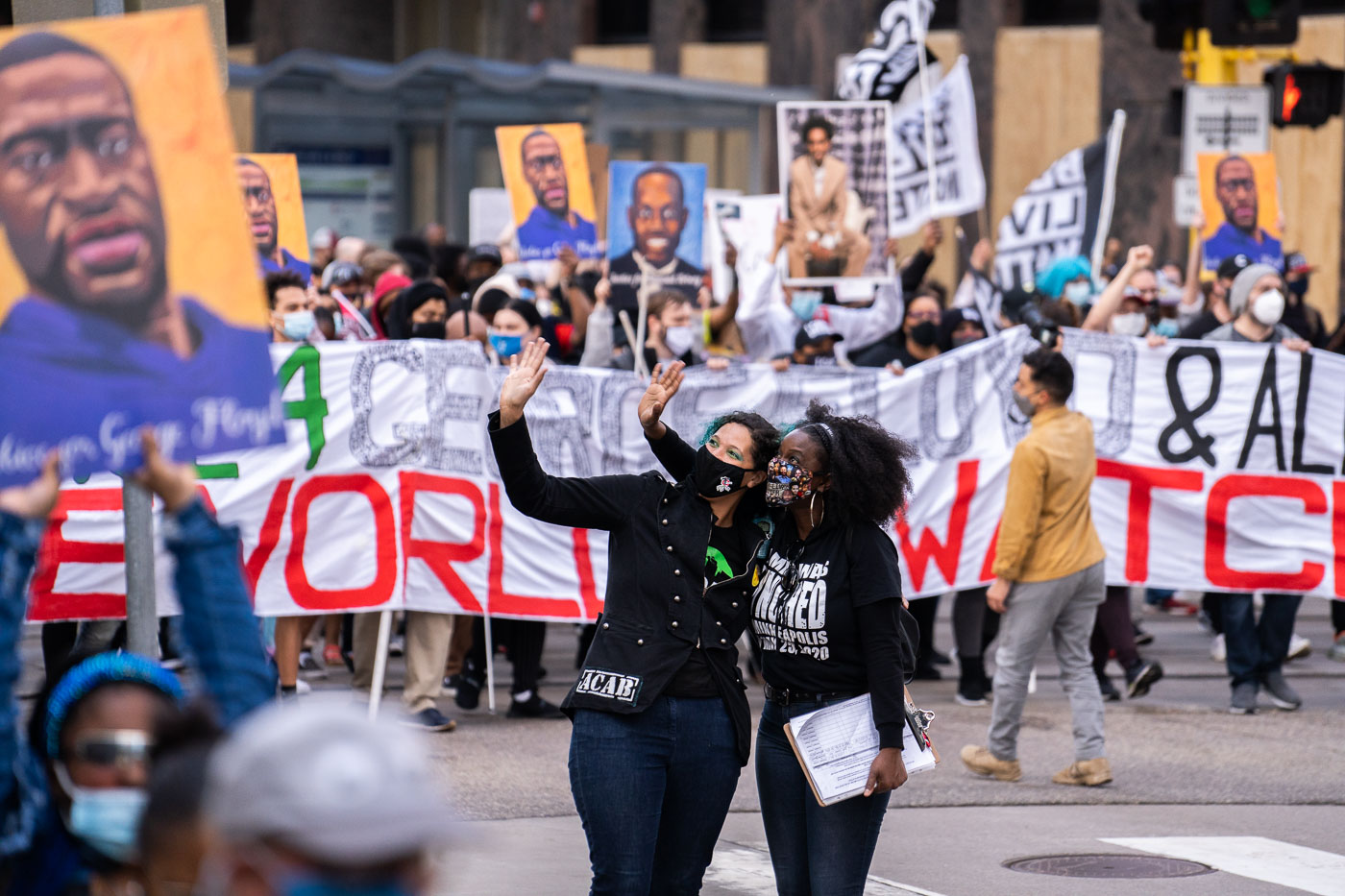
The World Is Watching protest in Minneapolis
Protesters gathered outside the Hennepin County Government Center in Minneapolis on March 8, 2021, the morning of the Derek Chauvin trial. Chauvin, a former Minneapolis police officer, was charged with the murder of George Floyd on May 25, 2020. The banner reads "Justice 4 George Floyd & All Stolen Lives. The World Is Watching." This event highlights the broader Black Lives Matter movement and calls for accountability in cases of police brutality.

Minneapolis Protest for George Floyd Outside Hennepin County Government Center

Abolish Police and Prisons protest sign
Protesters gathered outside the Hennepin County Government Center in Minneapolis on March 8, 2021, ahead of the Derek Chauvin trial. Chauvin, a former Minneapolis police officer, was charged in the murder of George Floyd on May 25, 2020. The sign "Abolish Police + Prisons" reflects a central demand of the Black Lives Matter movement, which gained widespread attention following Floyd's death and has continued to advocate for systemic reform of law enforcement and the justice system.

Minneapolis Protest: Abolish Police and Prisons Sign

Large protest in Minneapolis at start of Chauvin trial
Protesters gathered outside the Hennepin County Government Center in Minneapolis on March 8, 2021, awaiting the start of the trial for former police officer Derek Chauvin. Chauvin was charged with murder and manslaughter in the death of George Floyd on May 25, 2020, an event that sparked widespread protests against police brutality and racial injustice. The Hennepin County Government Center serves as a key administrative and judicial hub for the county, and its proximity to the site of Floyd's murder made it a focal point for demonstrations.

Minneapolis Protest Outside Hennepin County Government Center

Protesters behind security fencing at Chauvin trial
Protesters gathered outside the Hennepin County Government Center in Minneapolis during the trial of Derek Chauvin. The courthouse was surrounded by security fencing, a measure implemented due to the high-profile nature of the trial and concerns about potential unrest. The trial, which began in March 2021, stemmed from the murder of George Floyd by Minneapolis police officer Derek Chauvin in May 2020. Protests against police brutality and racial injustice, often under the banner of Black Lives Matter, had been ongoing in Minneapolis and across the nation since Floyd's death.

Protesters at Hennepin County Government Center during Chauvin Trial

Protester writes with chaulk at Chauvin trial
During the trial of Derek Chauvin, a protester writes messages in chalk outside the Hennepin County Courthouse in Minneapolis. The trial, which began in March 2021, centered on the murder of George Floyd, a Black man who died in police custody. The courthouse and surrounding areas became a focal point for protests and demonstrations related to police brutality and racial justice. The chalk messages serve as a form of public expression and a visual record of the community's response to the ongoing legal proceedings and broader social issues.

Chalk message at Hennepin County Courthouse during Chauvin trial

Minneapolis is under military occupation
Protesters gathered outside the Hennepin County Government Center in Minneapolis on March 8, 2021, the day the Derek Chauvin murder trial began. The sign, held by a protester, reads "Minneapolis is under military occupation," reflecting the sentiment of many during the widespread protests against police brutality that followed George Floyd's murder. The trial itself was a focal point for ongoing activism and calls for justice and accountability within the Minneapolis community and beyond.

Minneapolis Protest Sign: “Minneapolis is under military occupation”

George Floyd pins being sold outside courthouse
Pins commemorating George Floyd and bearing the slogan "I Can't Breathe" are displayed for sale outside the Hennepin County Courthouse in Minneapolis. This location was the site of the trial of Derek Chauvin, the former Minneapolis police officer convicted of Floyd's murder in April 2021. The sale of such merchandise reflects the broader cultural and political impact of Floyd's death and the subsequent Black Lives Matter movement, which gained significant momentum following the incident in May 2020. The courthouse itself is a significant civic building in downtown Minneapolis, serving as a central hub for legal proceedings in the county.

George Floyd Pins Sold Outside Hennepin County Courthouse

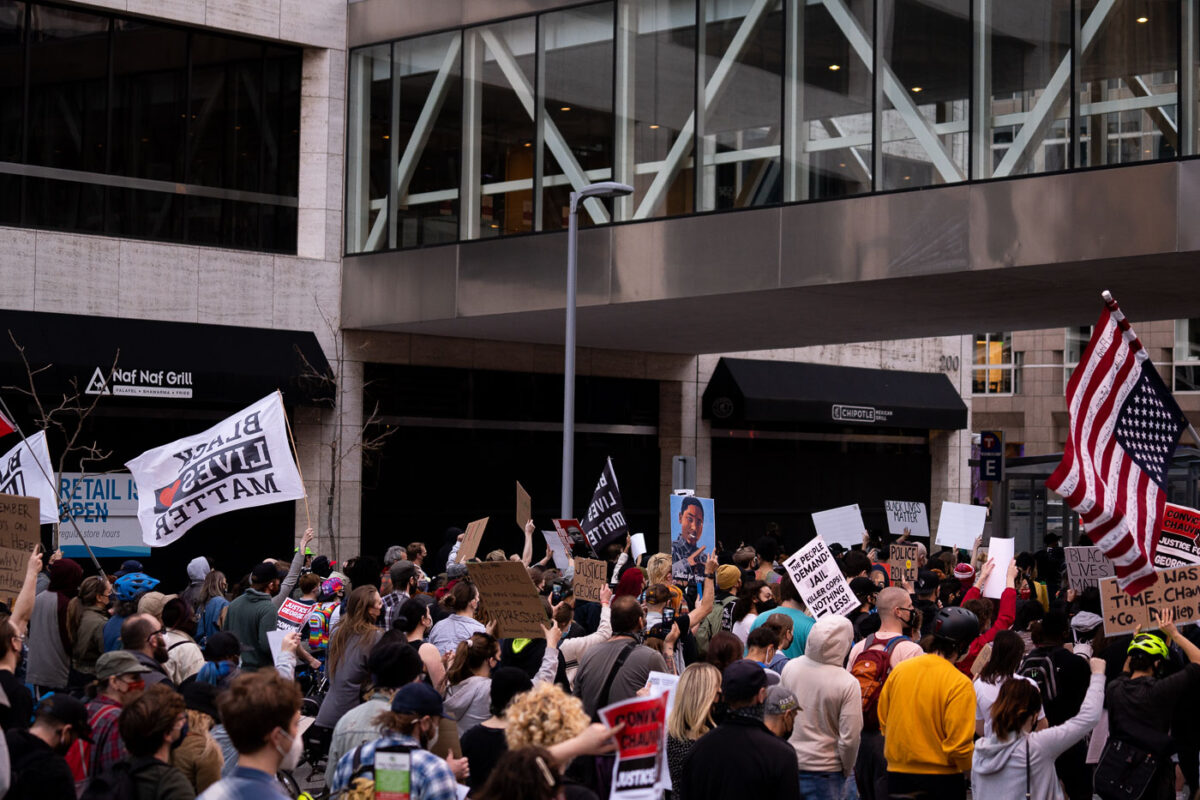
Protesters march through downtown at start of Chauvin trial
A large crowd gathered in downtown Minneapolis for a protest related to the trial of Derek Chauvin, the former Minneapolis Police Officer charged in the murder of George Floyd on May 25, 2020. The protest took place outside the Hennepin County Government Center prior to the start of the trial. Many carried signs with messages such as "Justice for George Floyd," "Convict Killer Cops," and "Black Lives Matter," reflecting the broader movement against police brutality and racial injustice.

Protesters march downtown Minneapolis for Derek Chauvin trial

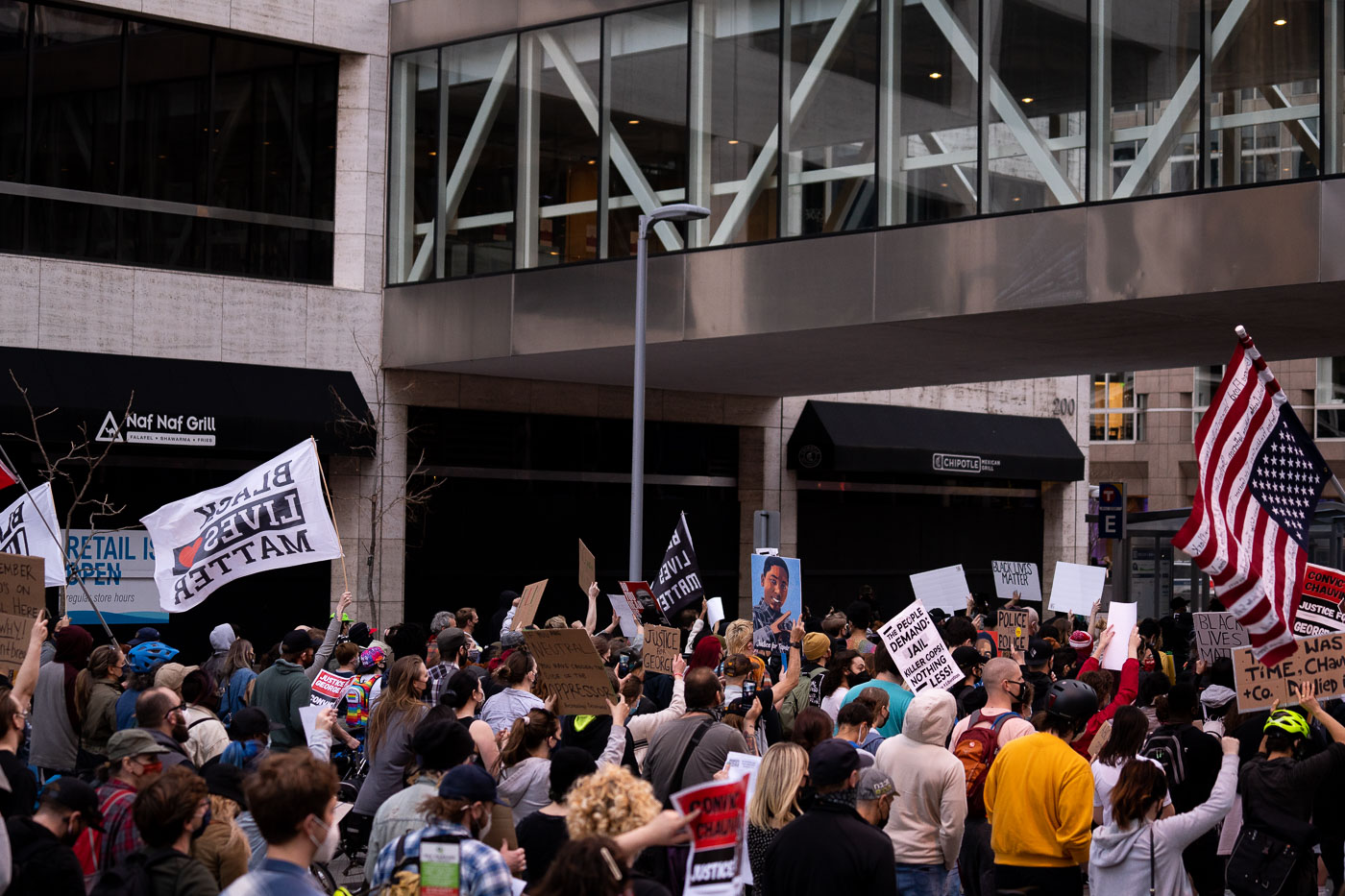
Justice 4 George Floyd and All Stolen Lives in Minneapolis
A large crowd gathered in downtown Minneapolis on March 8, 2021, to protest the murder of George Floyd and demand justice. The protest occurred outside the Hennepin County Government Center on the morning of the first day of the trial for former Minneapolis police officer Derek Chauvin. Chauvin was charged with second-degree murder and manslaughter in connection with Floyd's death on May 25, 2020. The "Black Lives Matter" movement gained significant momentum following Floyd's death, highlighting issues of police brutality and racial injustice.

Minneapolis Protest for George Floyd and Stolen Lives

Minnesota National Guard outside Hennepin Courthouse
A member of the Minnesota National Guard stands in front of a military vehicle outside the Hennepin County Government Center in Minneapolis. This deployment occurred during a period of heightened tension and unrest in the city, following the murder of George Floyd and the subsequent trial of Derek Chauvin. The National Guard was activated to support local law enforcement and maintain order amidst widespread protests against police brutality. The Hennepin County Government Center, a prominent civic building in downtown Minneapolis, served as a focal point during these events.

Minnesota National Guard at Hennepin County Government Center

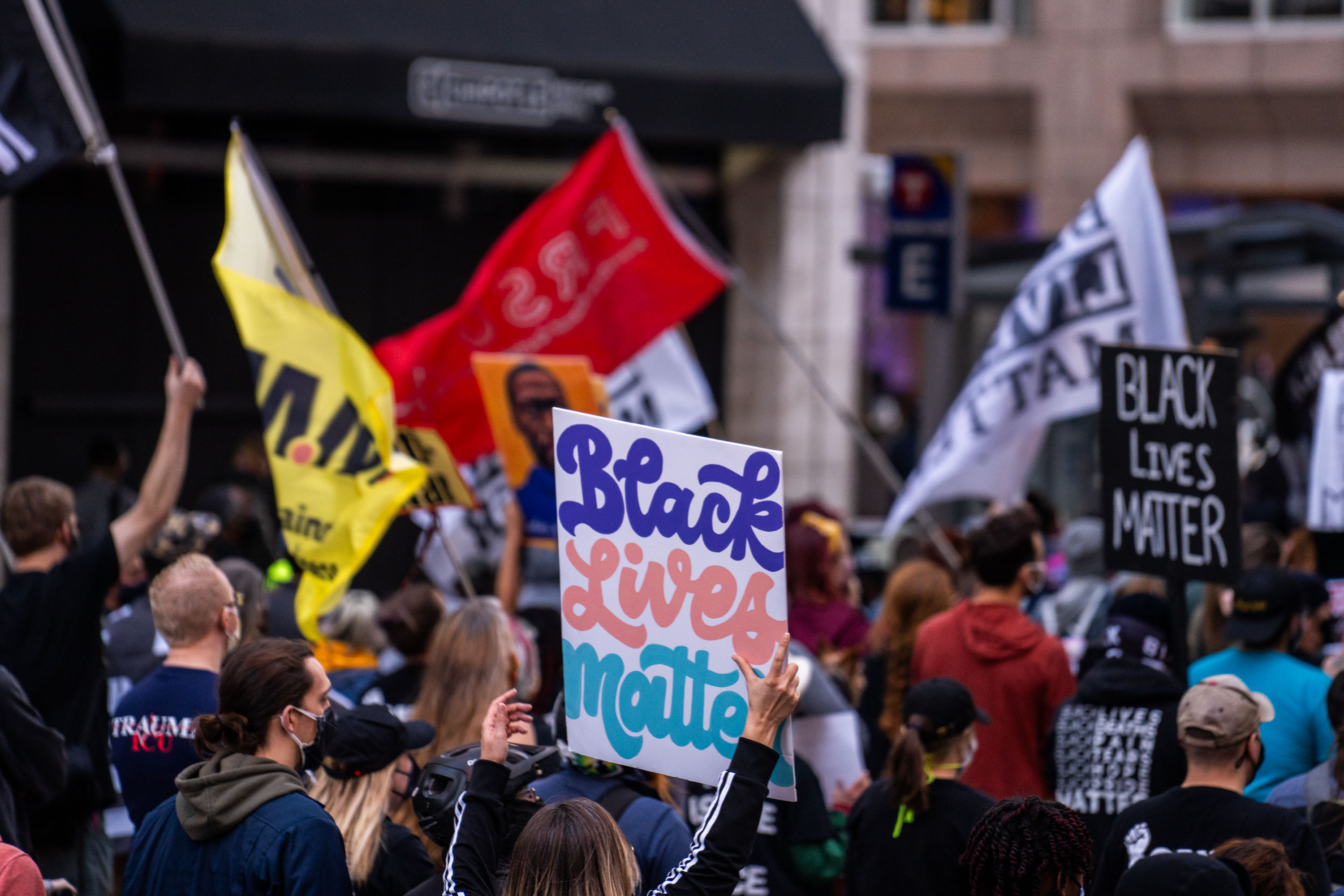
Black Lives Matter chalk on black boards
Messages of protest and solidarity are chalked onto boarded-up windows of a building near the Hennepin County Government Center in Minneapolis. The messages, including "Justice for George Floyd," "Stop Killing Us," and "Black Lives Matter," were created in the context of the trial of former Minneapolis Police Officer Derek Chauvin. Chauvin was charged with murder in the death of George Floyd on May 25, 2020, an event that sparked widespread protests against police brutality and racial injustice.

Minneapolis: BLM messages on boarded-up building near Chauvin trial

Bringing In the National Guard flyer
A sign posted on a chain-link fence surrounding the Hennepin County Government Center in Minneapolis reads "Bringing in the National Guard. What Could Possibly Go Wrong?" The poster includes a photograph from the Kent State shootings on May 4, 1970, where the Ohio National Guard fired on unarmed students during a protest. This juxtaposition of historical imagery with the contemporary presence of the National Guard in Minneapolis, likely during the protests following the murder of George Floyd, serves as a pointed commentary on the potential for state-sanctioned violence. The inclusion of flowers suggests a memorial or a somber reflection on the events.

Hennepin County Government Center: National Guard Sign

Protesters with mirrors and flowers outside Chauvin trial
Flowers and mirrors are placed on the street outside the Hennepin County Government Center in Minneapolis, Minnesota. This display occurred during the period of protests and unrest following the murder of George Floyd in May 2020 and the subsequent trial of Derek Chauvin. The mirrors, some bearing red paint, likely symbolize reflection and accountability, while the flowers serve as a memorial to victims of police brutality. The Hennepin County Government Center was a focal point for many demonstrations during this time.

Flowers and mirrors outside Hennepin County Government Center

Reflect art installation outside Chauvin trial
An art installation reading "REFLECT" stands outside the Hennepin County Government Center in Minneapolis. The installation was present during the trial of Derek Chauvin, a former Minneapolis police officer charged with the murder of George Floyd on May 25, 2020. The trial, which began on March 8, 2021, drew significant public attention and protests related to police brutality and racial justice. The "REFLECT" installation, along with scattered roses and protest signs, served as a visual reminder of the ongoing discourse surrounding Floyd's death and its broader implications.

Reflect art installation outside Hennepin County Government Center

Roses in blood art installation at Chauvin trial
Roses, some appearing to be stained with red paint to resemble blood, were placed in a puddle outside the Hennepin County Government Center in Minneapolis. This installation occurred during the trial of Derek Chauvin, a former Minneapolis police officer charged with the murder of George Floyd. The trial, held in April 2021, drew significant national attention to issues of police brutality and racial justice.

Roses in paint outside Hennepin County Government Center during Chauvin trial
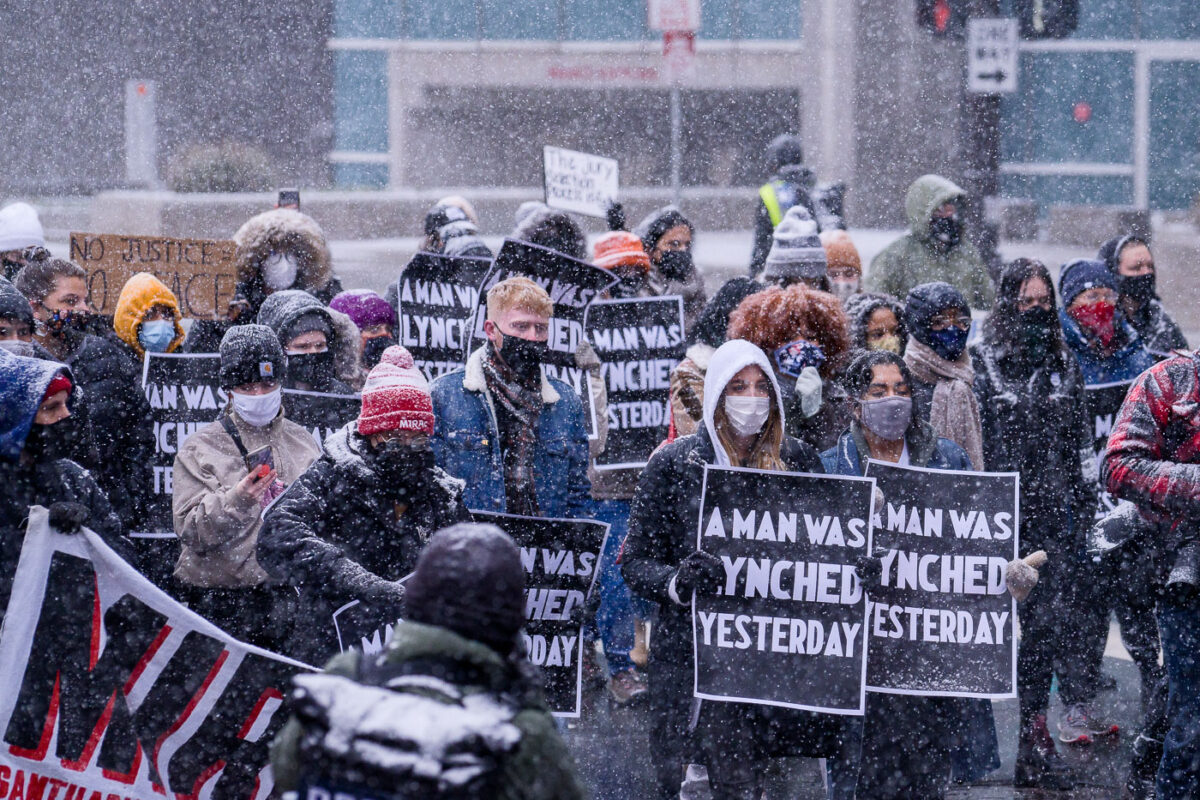
A Man Was Lynched Yesterday Protest Signs
Protesters gathered outside the Hennepin County Government Center in Minneapolis during a snowstorm. The courthouse was the site of the Derek Chauvin murder trial, who was charged in the death of George Floyd. Signs carried by the protesters read "A Man Was Lynched Yesterday," referencing the ongoing racial injustice and police brutality protests that followed Floyd's murder on May 25, 2020.

Minneapolis Protest: “A Man Was Lynched Yesterday” Signs
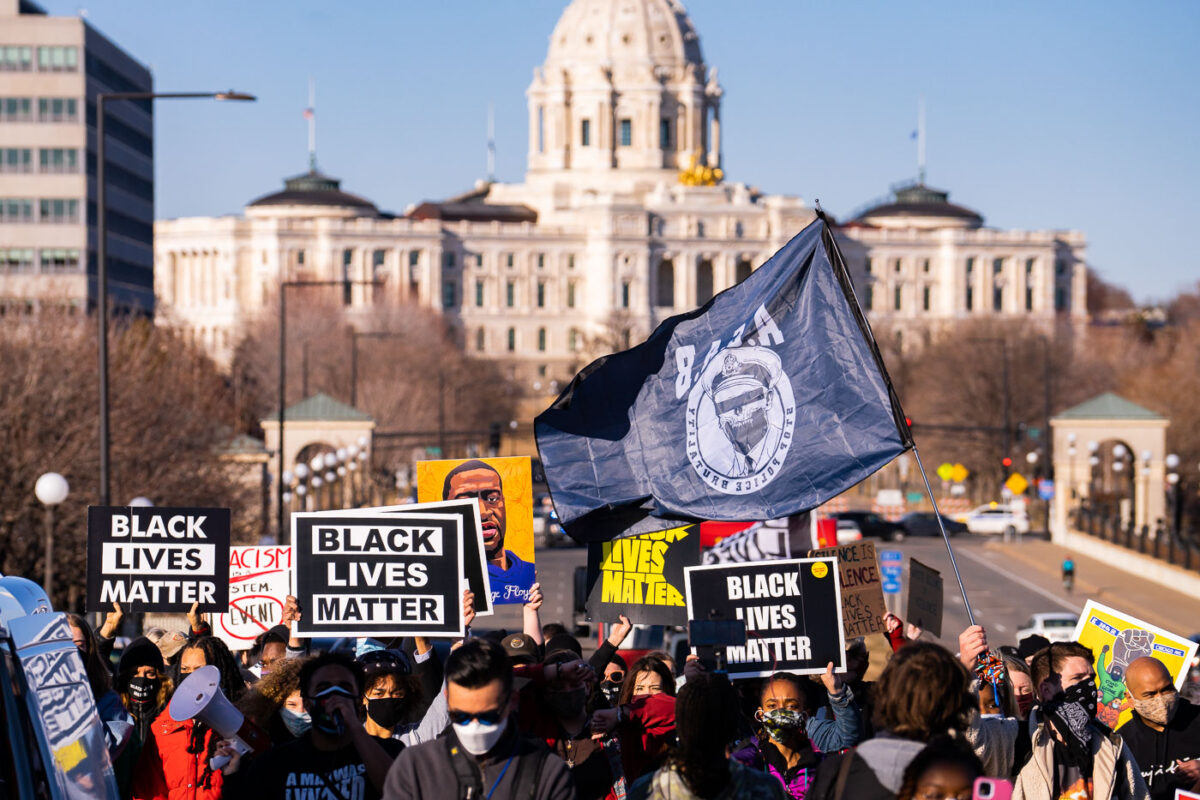
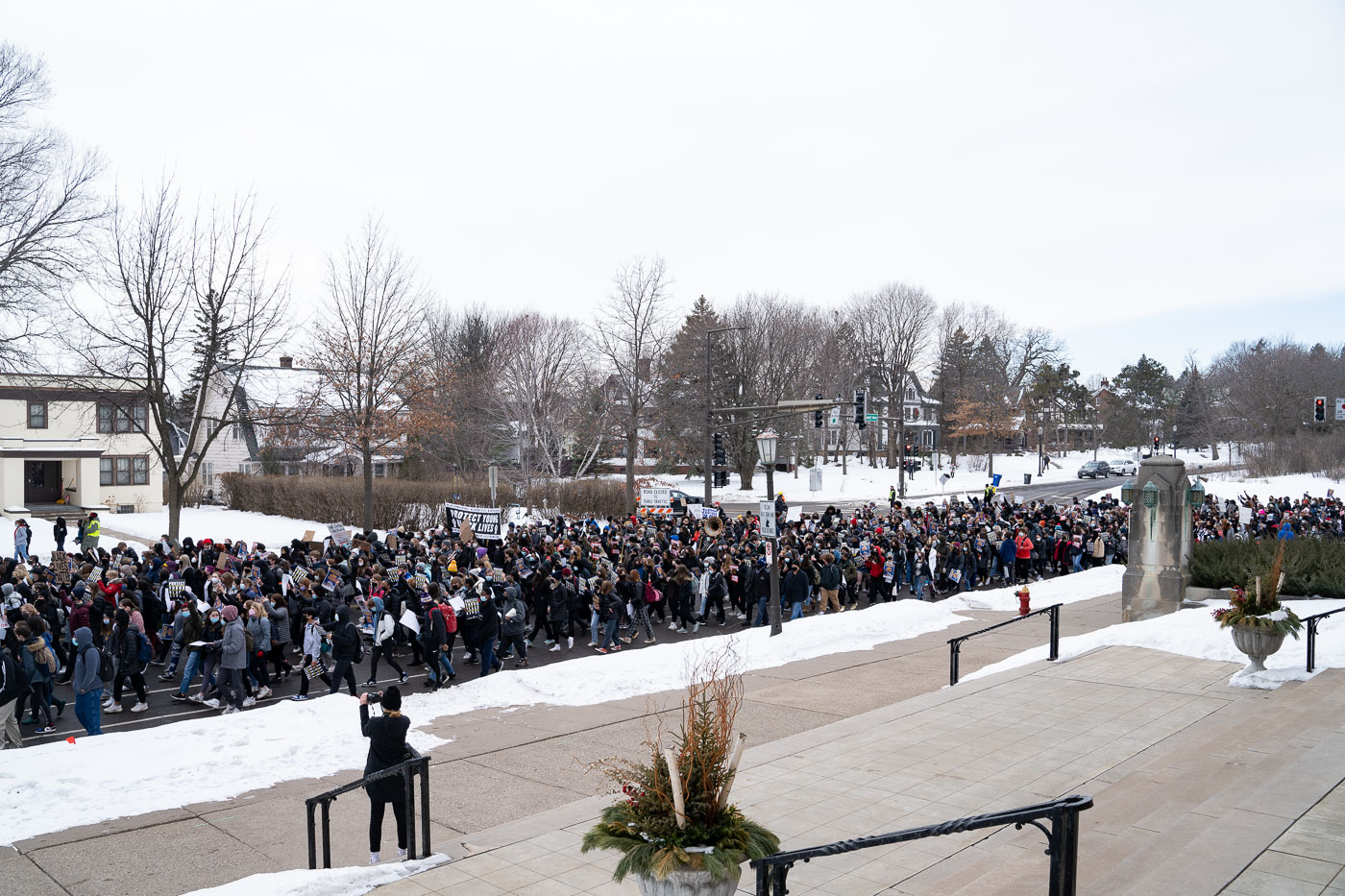
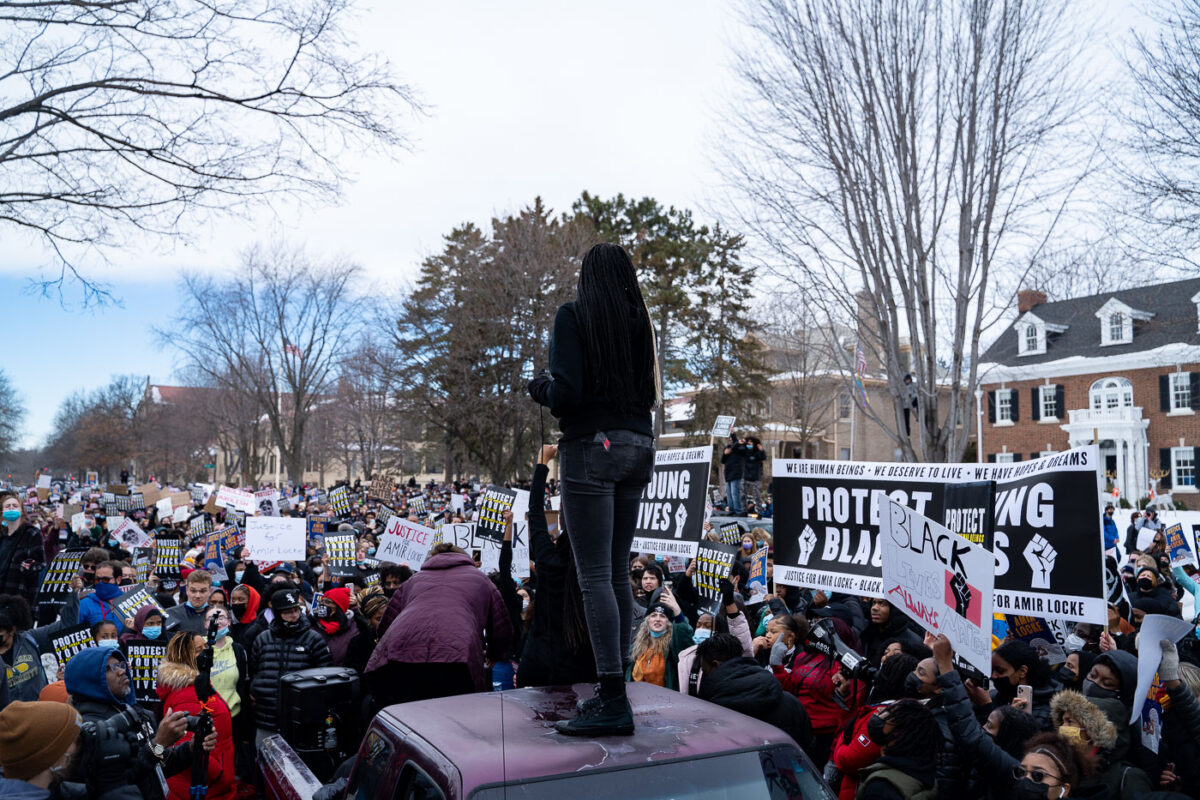
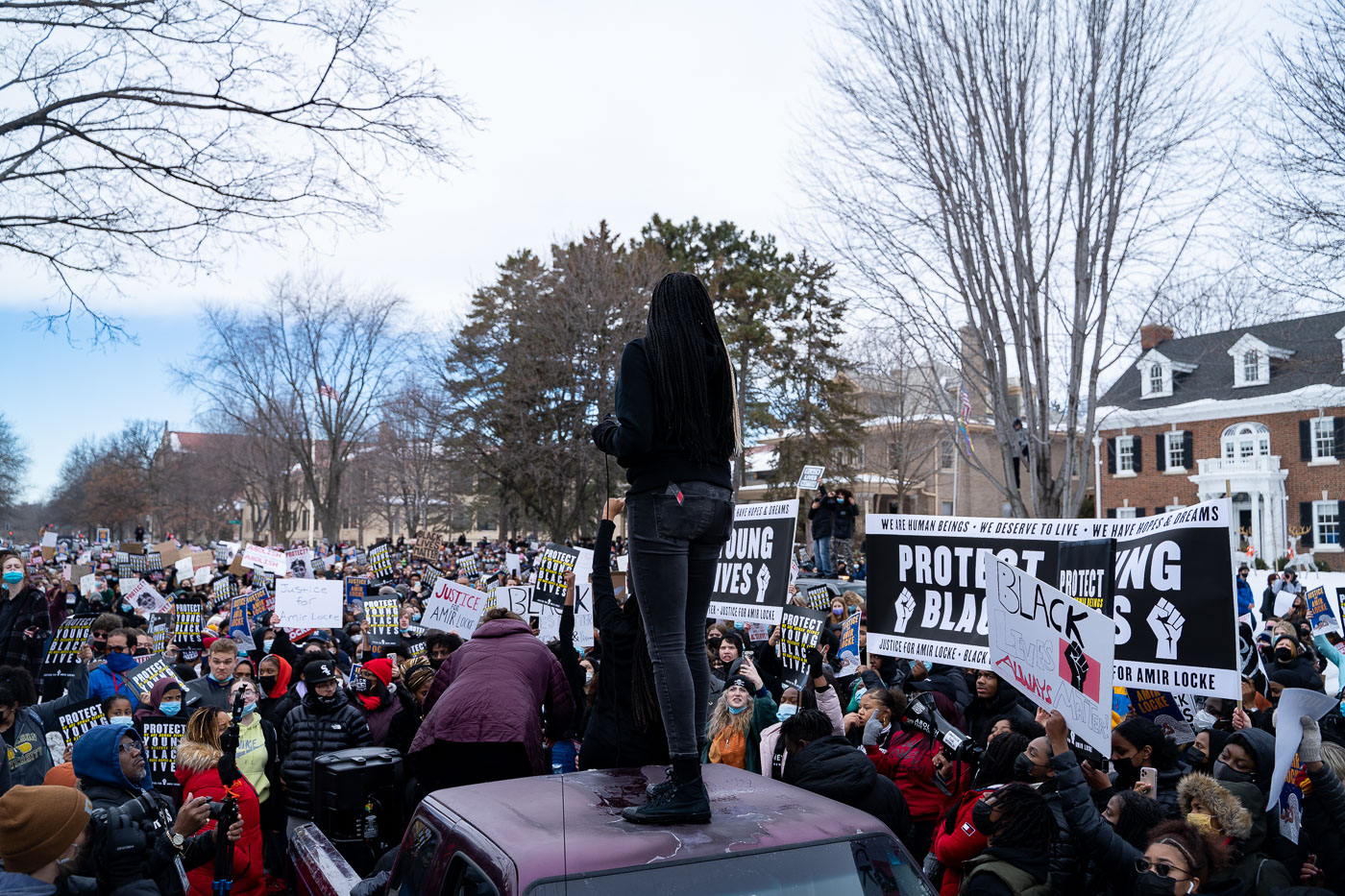
Protesters march at Minnesota State Capitol March 2021
Protesters gathered at the Minnesota State Capitol in St. Paul in March 2021 to demand justice for George Floyd and an end to police brutality. The demonstration occurred nearly a year after Floyd's murder by Minneapolis police, an event that sparked widespread protests across the nation and globally. The Minnesota State Capitol building, completed in 1905, serves as the seat of government for the state and is a prominent landmark in the Twin Cities.

Black Lives Matter Protest at Minnesota State Capitol, March 2021
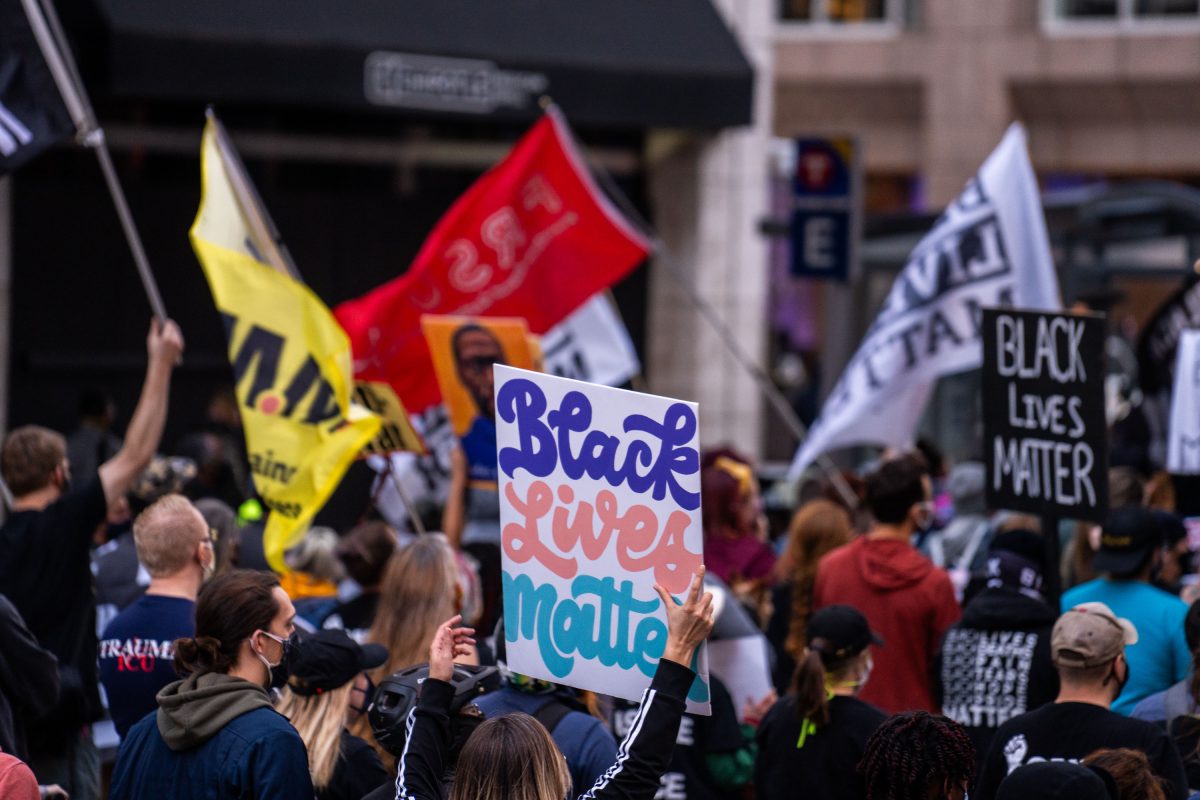
Chauvin Trial Opening Statements Protest and March, Minneapolis
Protesters gathered in downtown Minneapolis on March 29, 2021, the day opening statements began in the trial of Derek Chauvin, the former Minneapolis police officer charged in the killing of George Floyd. Floyd died on May 25, 2020, after Chauvin knelt on his neck during an arrest, an incident that sparked demonstrations across the country. The trial was held at the Hennepin County Government Center, just blocks from where marchers carried signs and flags through the city's downtown streets. Chauvin was later convicted on charges of second-degree unintentional murder, third-degree murder, and second-degree manslaughter.

Chauvin Trial Opening Statements Protest and March, Minneapolis

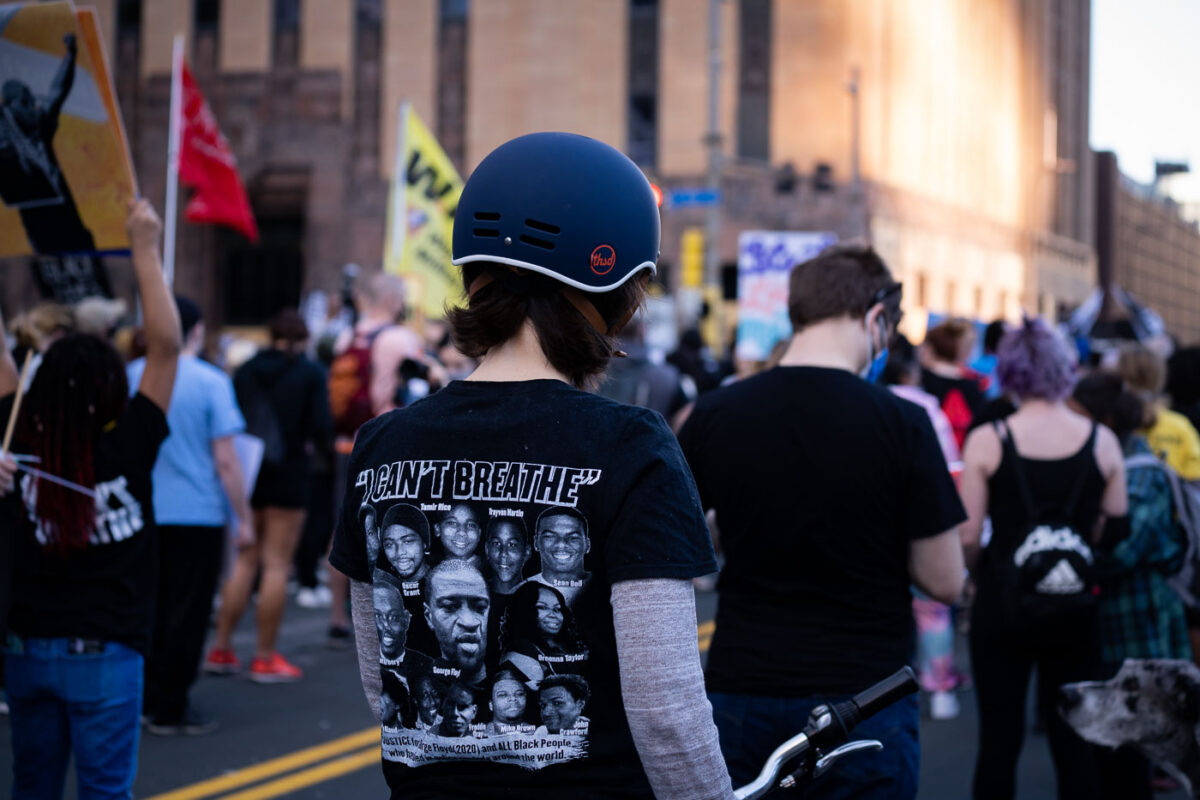
Protester with I Cant Breathe shirt on at start of George Floyd trial
Protesters gathered in Downtown Minneapolis on March 8, 2021, the day opening statements began in the trial of Derek Chauvin, the former police officer accused of murdering George Floyd on May 25, 2020. The shirt worn by the individual in the foreground displays "I Can't Breathe" along with portraits of Floyd and other Black individuals who died in encounters with law enforcement. This protest was part of a broader movement demanding justice for Floyd and accountability for police brutality.

Minneapolis Protest for George Floyd Trial
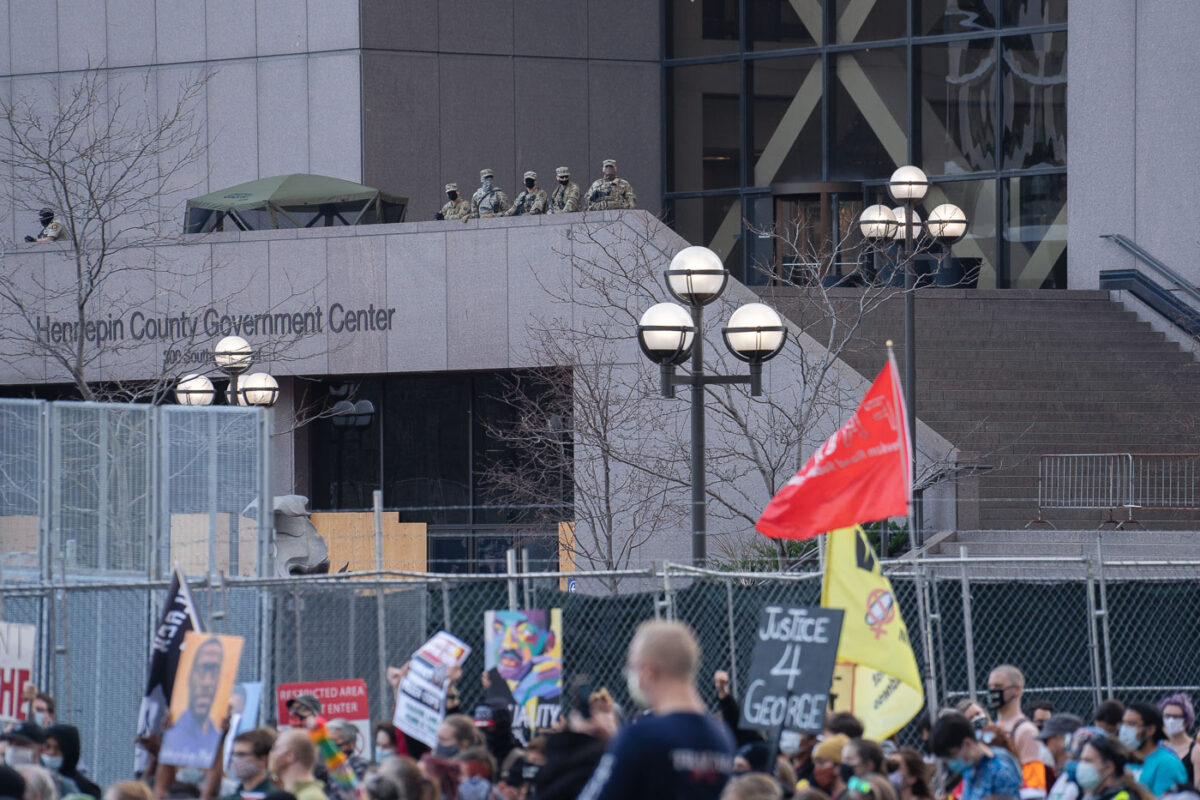
Hennepin County police look down on protesters at Chauvin trial
On March 8, 2021, protesters gathered outside the Hennepin County Government Center in Minneapolis to rally and march on the day opening statements began in the trial of Derek Chauvin. Chauvin, a former Minneapolis police officer, was accused of murdering George Floyd on May 25, 2020. The building, located at 300 South Sixth Street, serves as the seat of county government and houses courtrooms and administrative offices. Security forces, including National Guard members, were visible on the building's upper levels, and barricades were erected around the perimeter.

Hennepin County Government Center: Police observe Chauvin trial protest

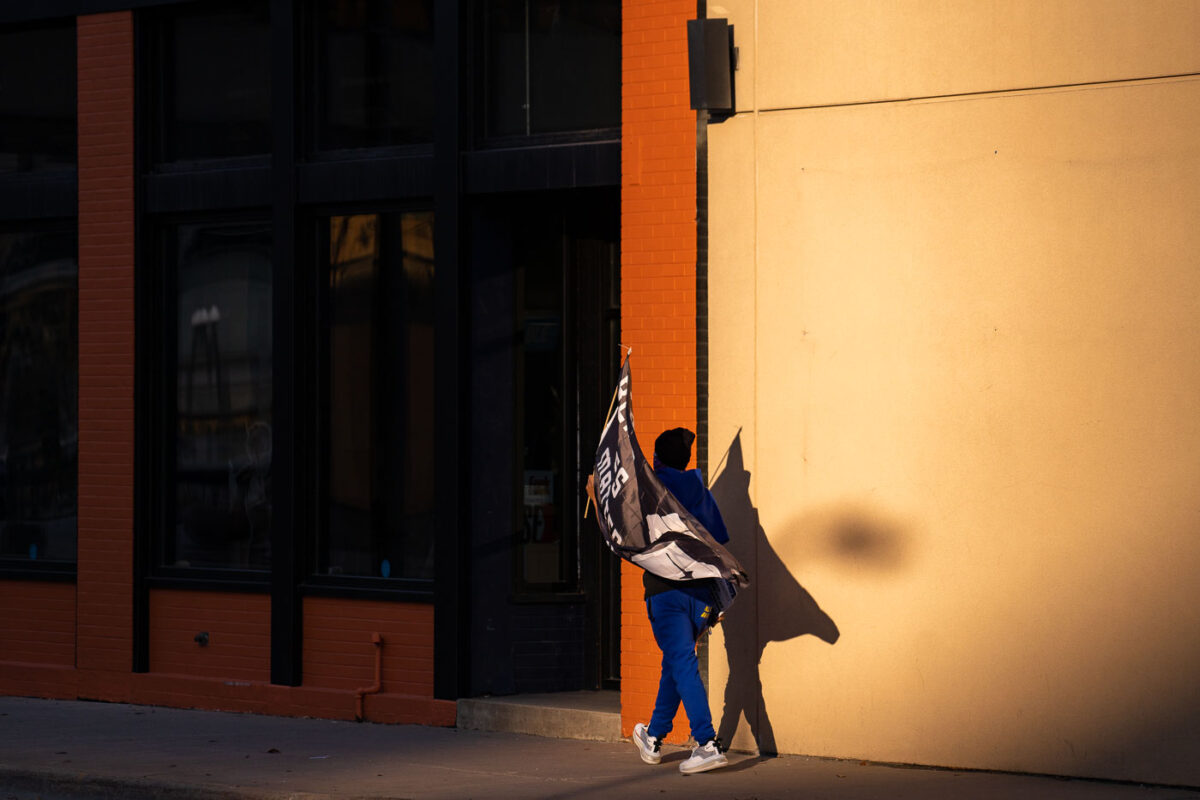
Man with a Black Lives Matter flag in downtown Minneapolis
A protestor carries a Black Lives Matter flag through Downtown Minneapolis on March 8, 2021, the day opening statements began in the trial of Derek Chauvin. Chauvin, a former Minneapolis police officer, was accused of murdering George Floyd on May 25, 2020, an event that sparked widespread protests against police brutality and racial injustice. The trial took place in Hennepin County District Court, with significant public attention and ongoing demonstrations in the city.

Minneapolis: BLM protestor walks during Chauvin trial opening statements

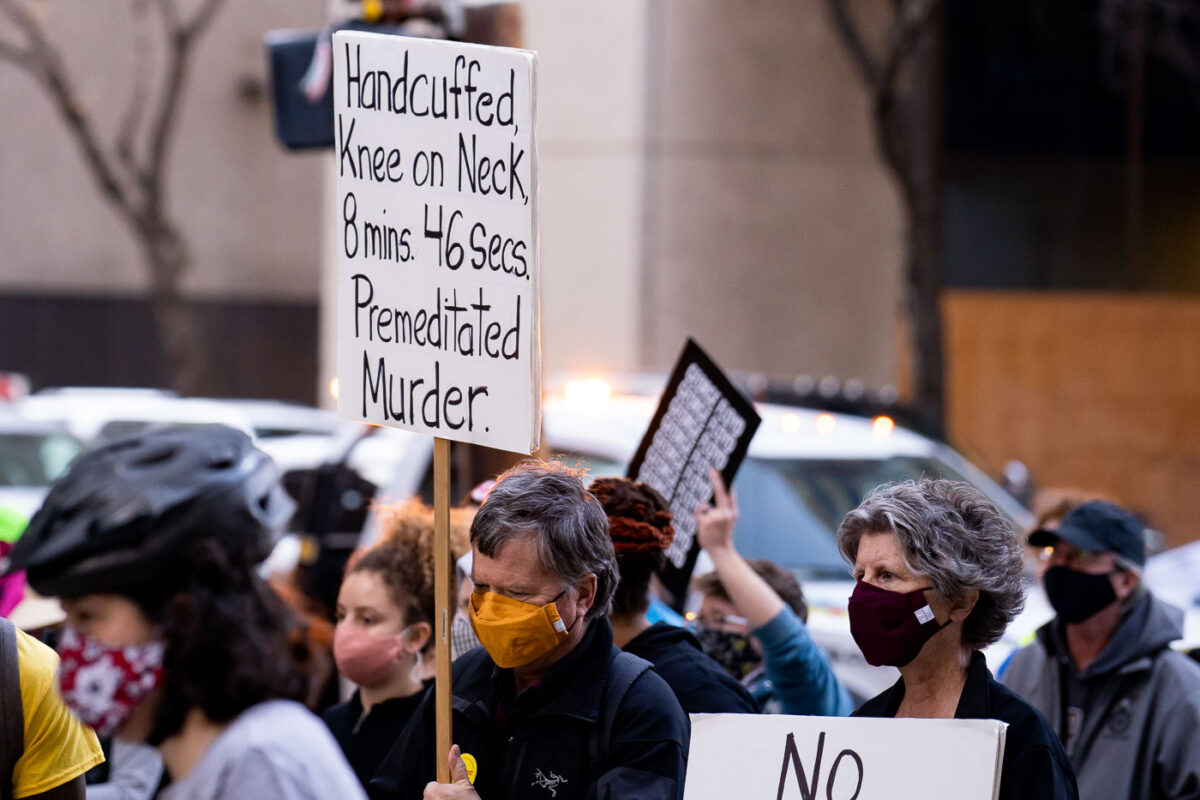
Handcuffed Knee on Neck 8 Minutes 46 Secs Premeditated Murder
Protesters gathered in Downtown Minneapolis on March 29, 2021, the day opening statements began in the murder trial of former police officer Derek Chauvin. Chauvin was accused of killing George Floyd on May 25, 2020, after a video showed him kneeling on Floyd's neck for over eight minutes. The protest highlighted the duration of the restraint and the circumstances surrounding Floyd's death, which sparked widespread demonstrations against police brutality and racial injustice.

Minneapolis Protest: Chauvin Trial Begins, Signs Detail Floyd Murder

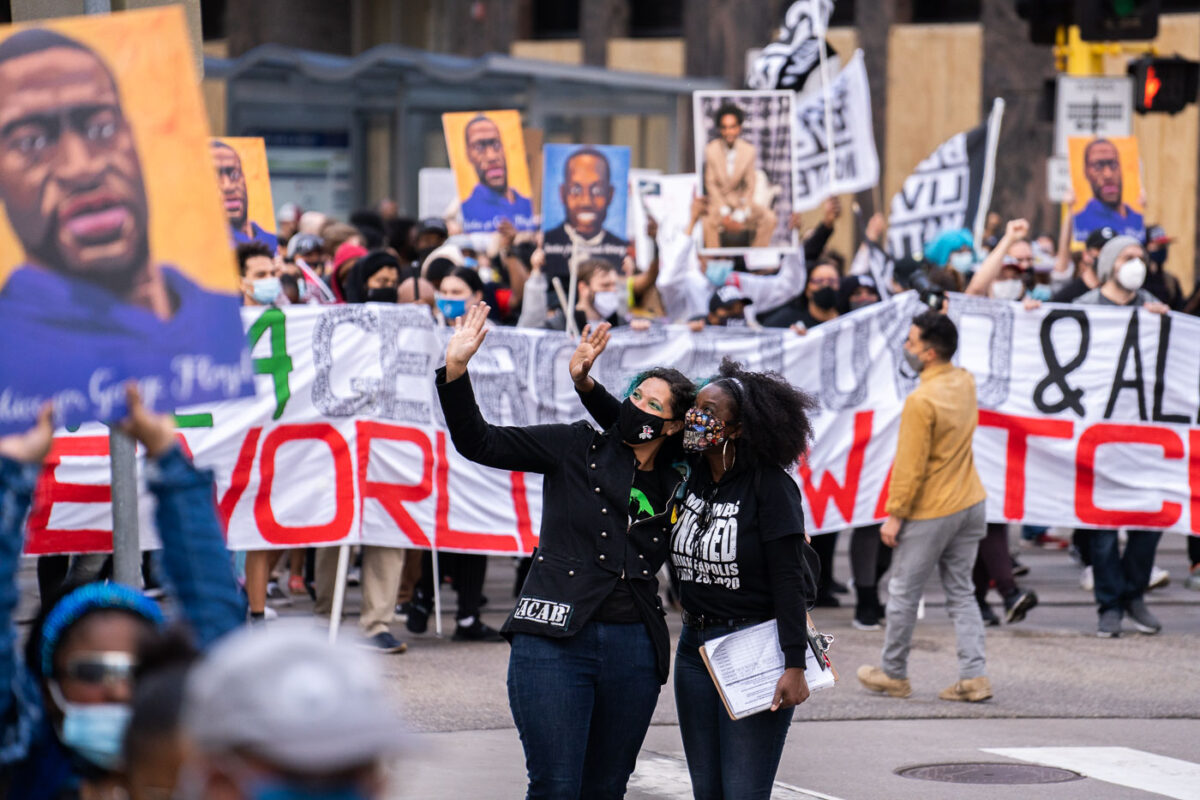
Protester with ACAB patch during Chauvin march
On the opening day of the Derek Chauvin trial, protesters gathered in Downtown Minneapolis to march and rally. Chauvin, a former Minneapolis police officer, was accused of murdering George Floyd on May 25, 2020. The protest signifies the ongoing public response to Floyd's death and the subsequent calls for justice and police reform.

Minneapolis Protest for George Floyd, Chauvin Trial Opening

Protesters rally in downtown Minneapolis during George Floyd opening statements
Protesters gathered in Downtown Minneapolis on March 29, 2021, the day opening statements began in the trial of former police officer Derek Chauvin. Chauvin was accused of murdering George Floyd on May 25, 2020, an event that sparked widespread protests against racial injustice and police brutality. The signs carried by the crowd reflect the ongoing calls for accountability and justice for Floyd and other victims of police violence.

Minneapolis Protest for George Floyd Trial Opening Statements
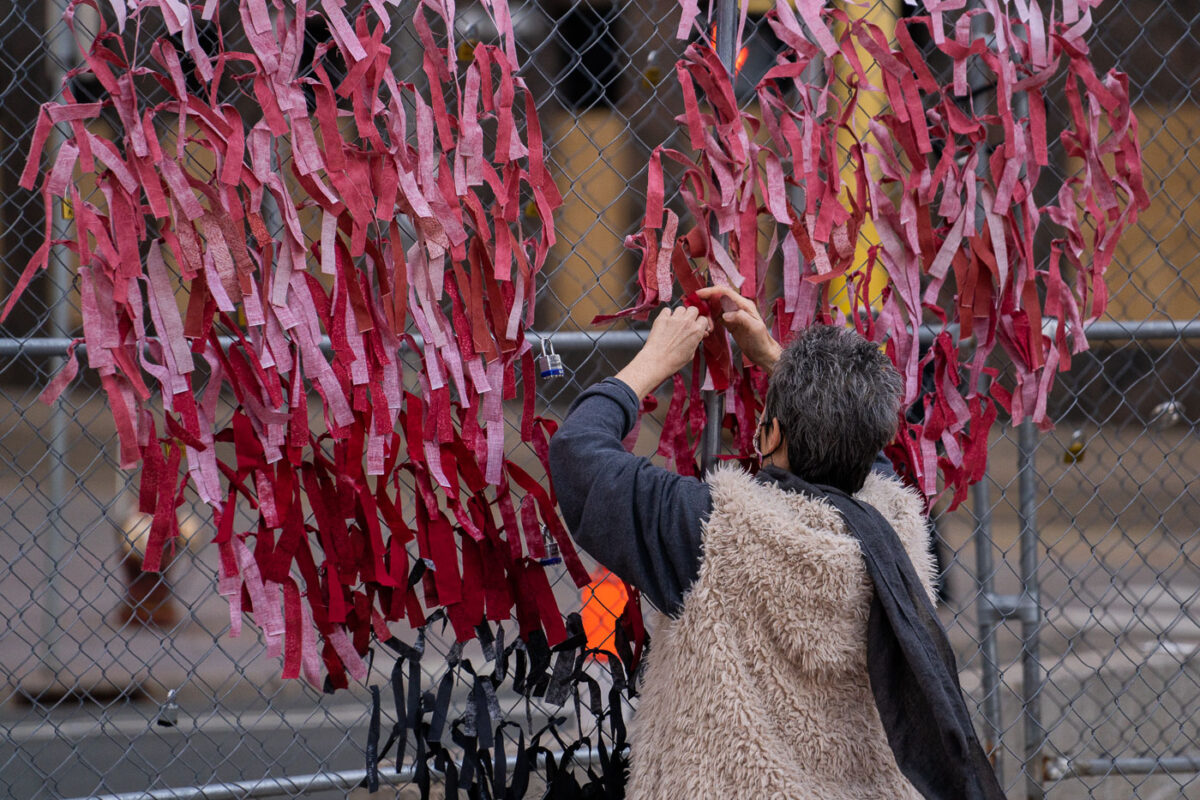
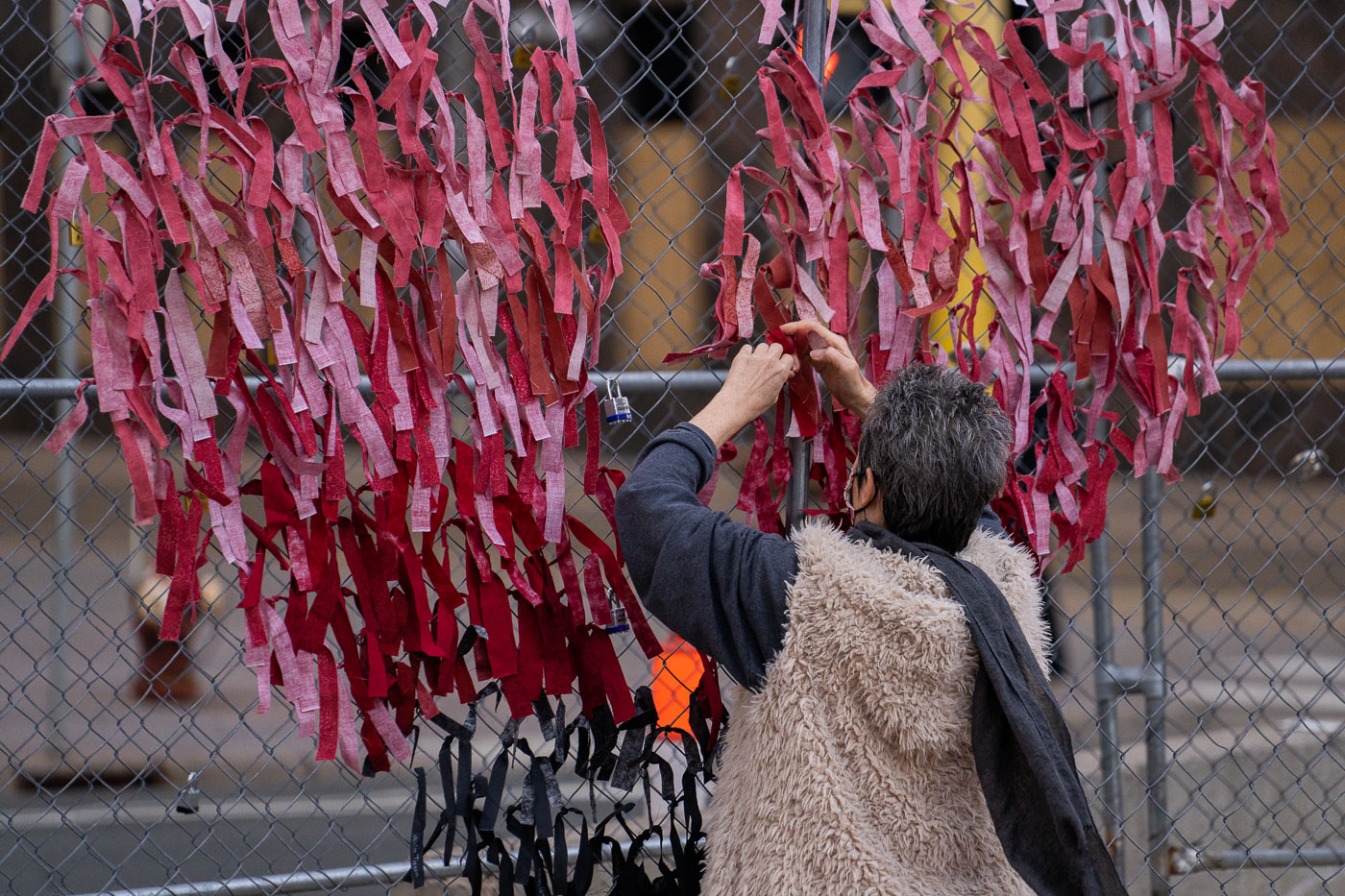
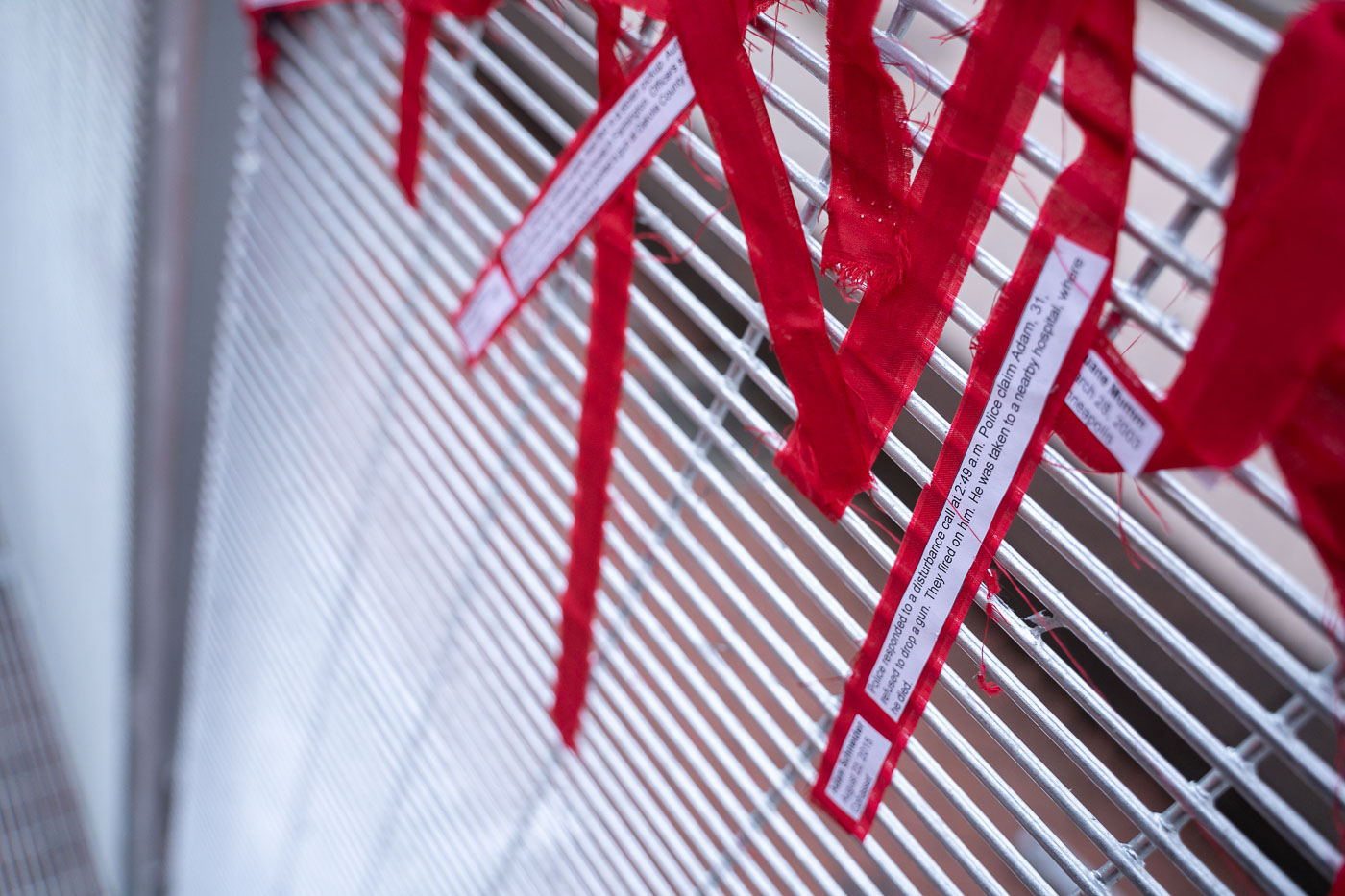
Art being put up on fence outside Chauvin trial
On March 29, 2021, the first day of opening statements in the trial of Derek Chauvin, a former Minneapolis police officer accused of murdering George Floyd, a woman tied red ribbons to security fencing surrounding the Hennepin County Government Center. The ribbons, arranged in the shape of a heart, served as a public memorial and a symbol of solidarity. The security measures were put in place due to anticipated protests and unrest following the trial, which was a focal point for national conversations about racial justice and police brutality.

Minneapolis: Ribbons on Chauvin Trial Security Fence
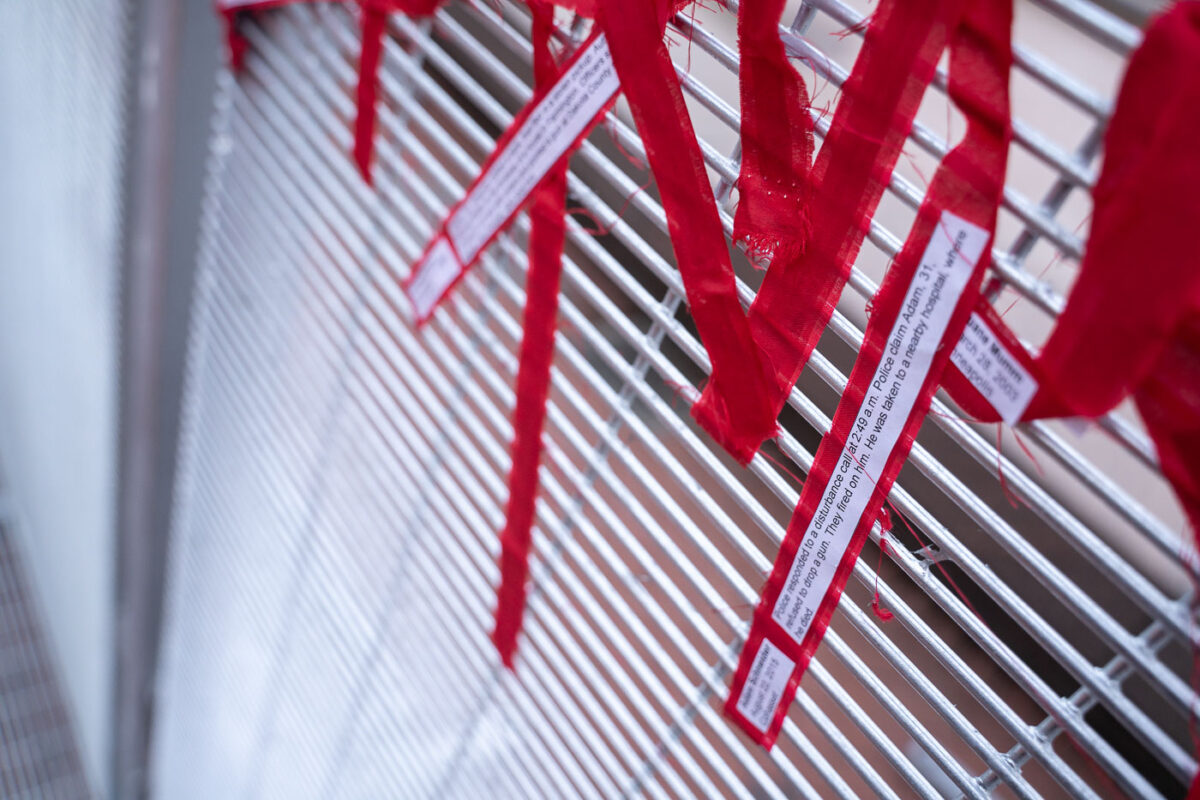
Art installation outside Hennepin County Courthouse
Red ribbons bearing the names and brief accounts of victims of police brutality are affixed to the security fencing surrounding the Hennepin County Government Center in Minneapolis. This display was visible on the day opening statements began in the trial of Derek Chauvin, who was accused of murdering George Floyd on May 25, 2020. The ribbons serve as a memorial and a protest, highlighting broader issues of police violence that have been a focus of public attention and activism.

Red ribbons with names of victims of police brutality on fence at Hennepin County Courthouse
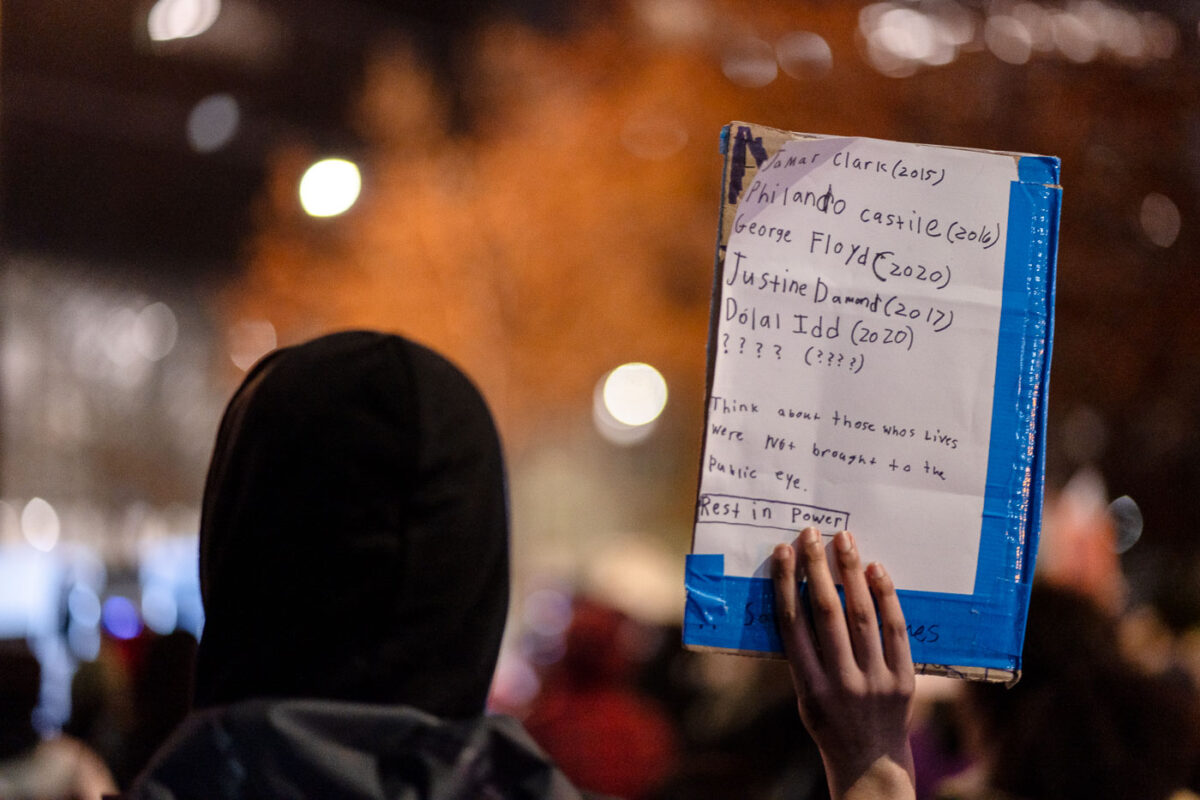
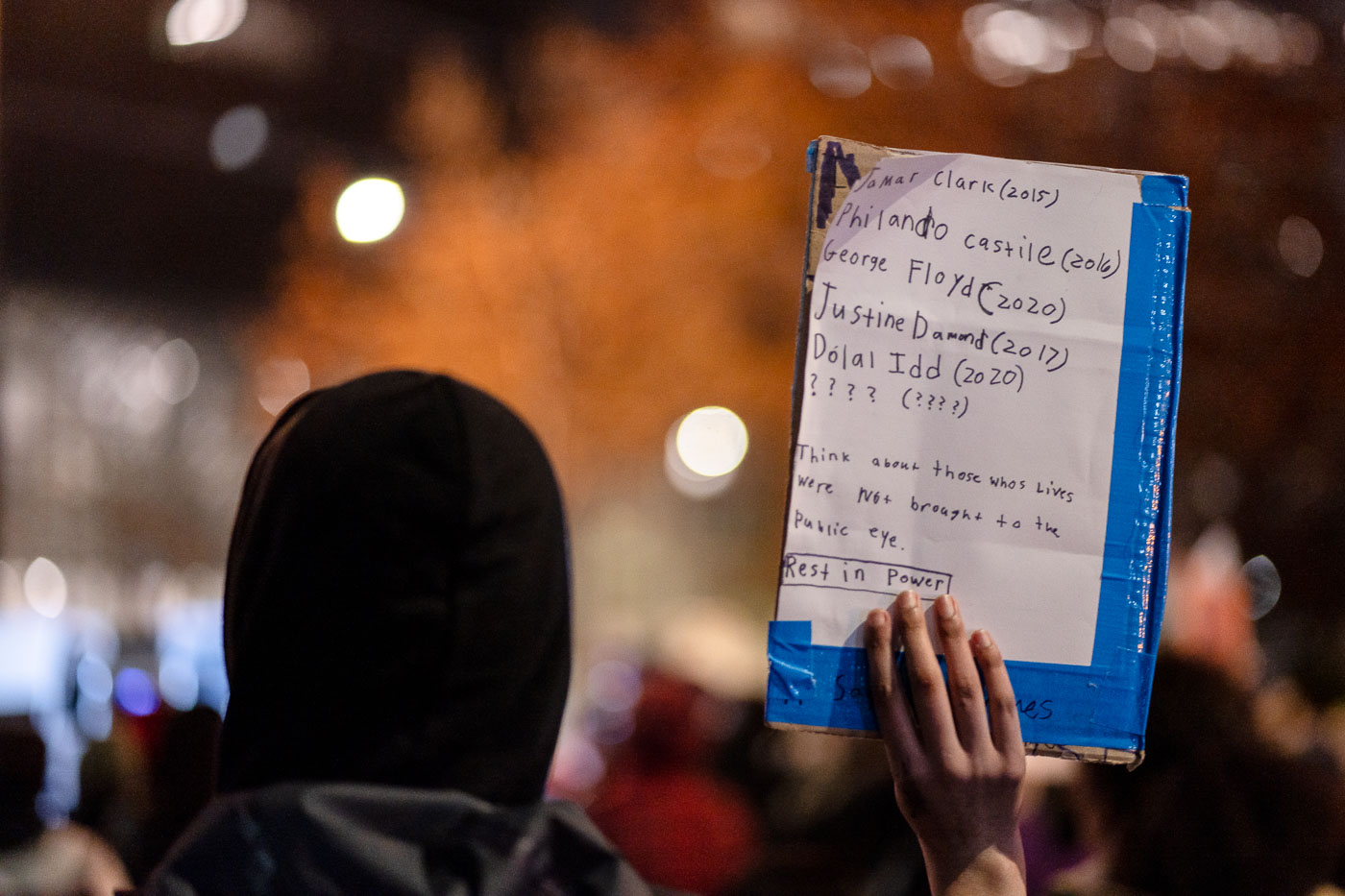
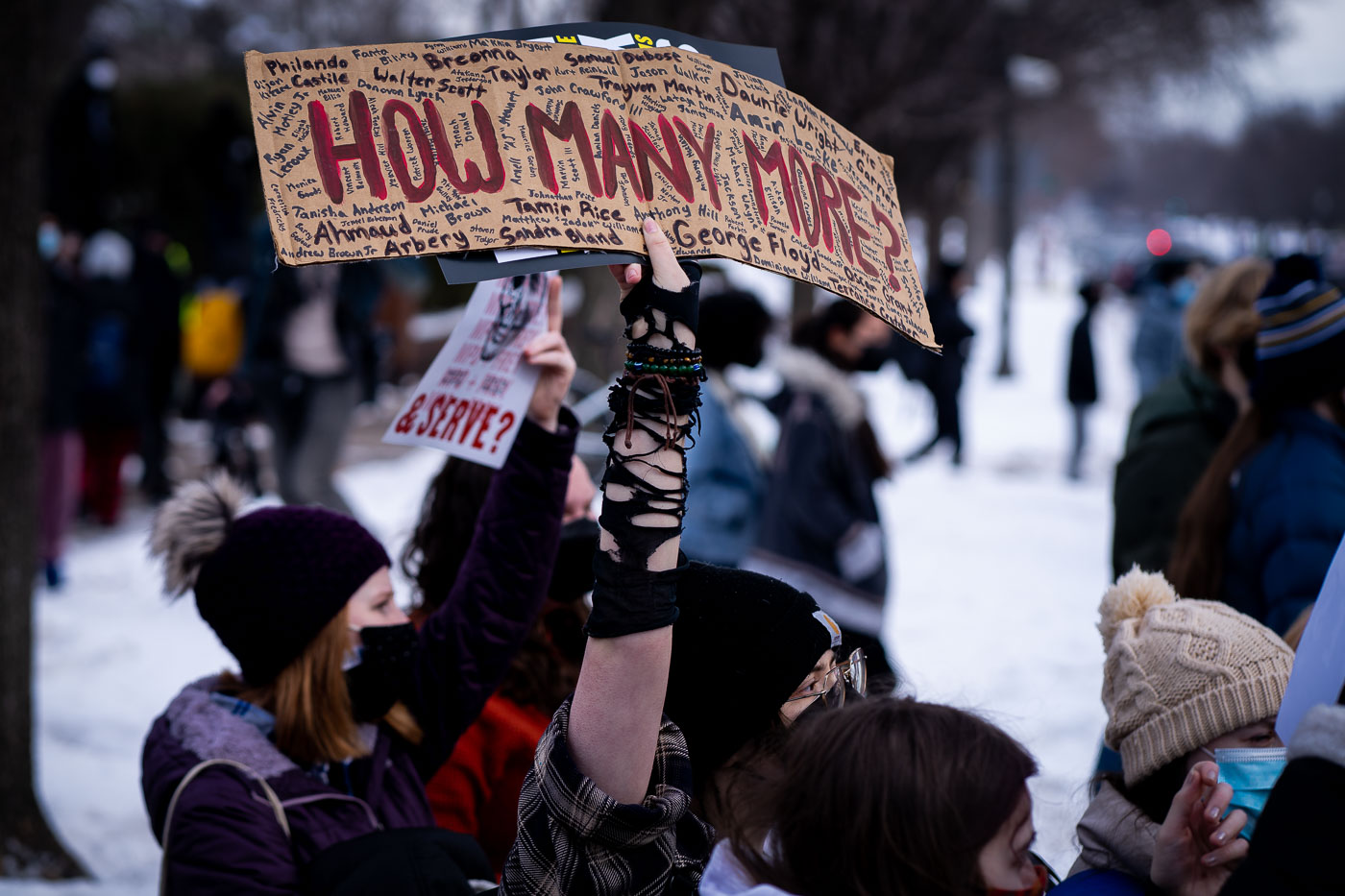
Protester in downtown Minneapolis holds a sign naming George Floyd and other people killed by police.
Protesters marched through downtown Minneapolis during the trial of Derek Chauvin, the former police officer accused in the murder of George Floyd. The sign held by a demonstrator lists names of individuals, including Floyd, Philando Castile, and Tamir Rice, who died in encounters with law enforcement. The list serves as a memorial to victims of police brutality and a call for accountability. The protest occurred amidst widespread national attention on racial injustice and police conduct.

Minneapolis Protest During Derek Chauvin Trial
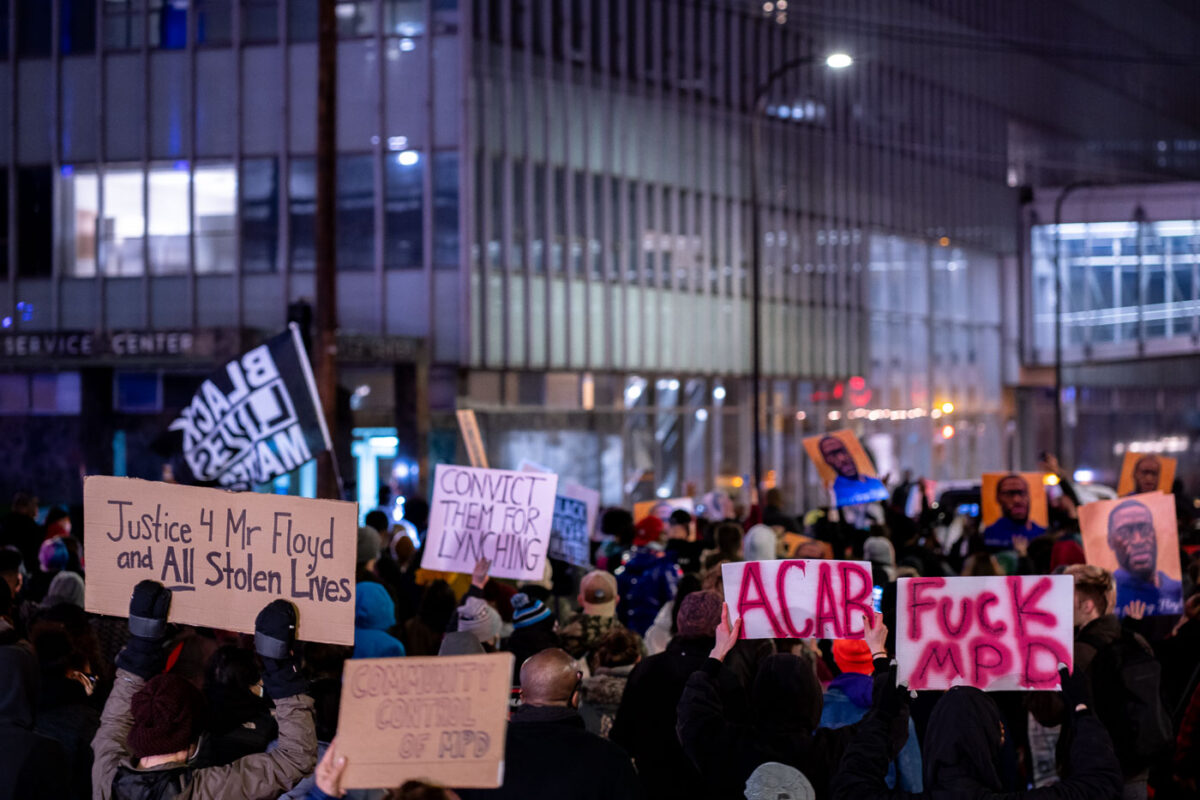
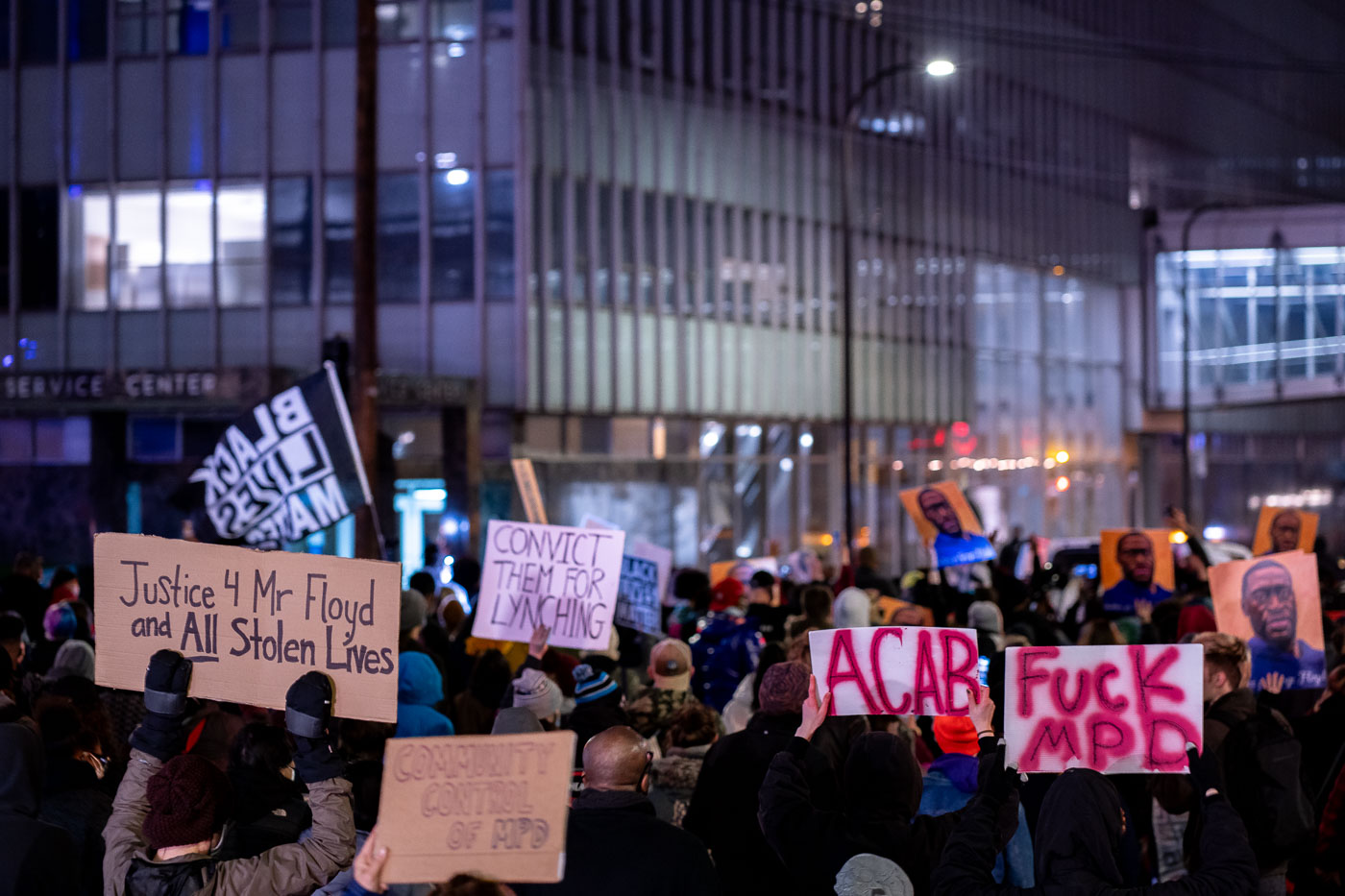
Protesters in downtown Minneapolis during the Derek Chauvin trial hold signs for George Floyd and against police.
Protesters gathered in downtown Minneapolis during the trial of Derek Chauvin, the police officer accused of murdering George Floyd. The demonstrations, which occurred in the spring of 2021, were part of a broader movement demanding justice for Floyd and other victims of police brutality. Signs held by participants called for accountability for Floyd's death and systemic changes within law enforcement. The protests highlighted ongoing tensions between the community and the Minneapolis Police Department.

Minneapolis Protest: Justice for George Floyd and All Stolen Lives
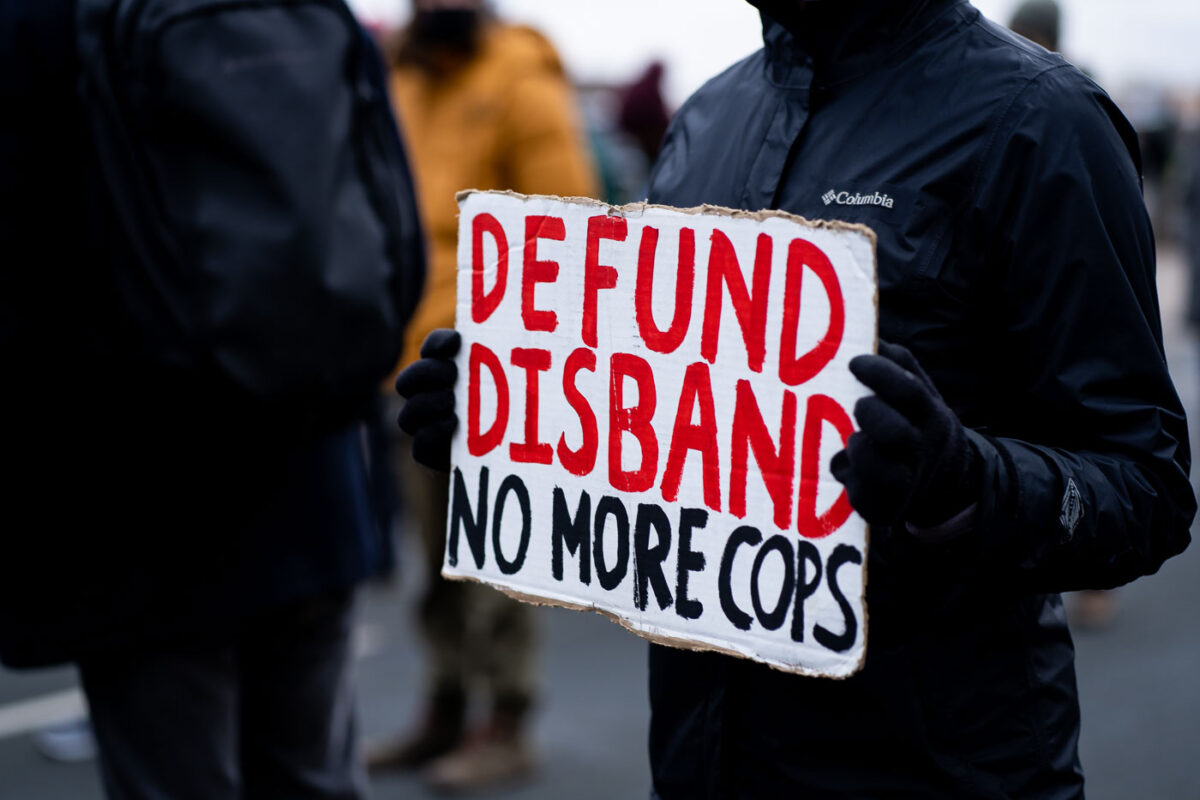
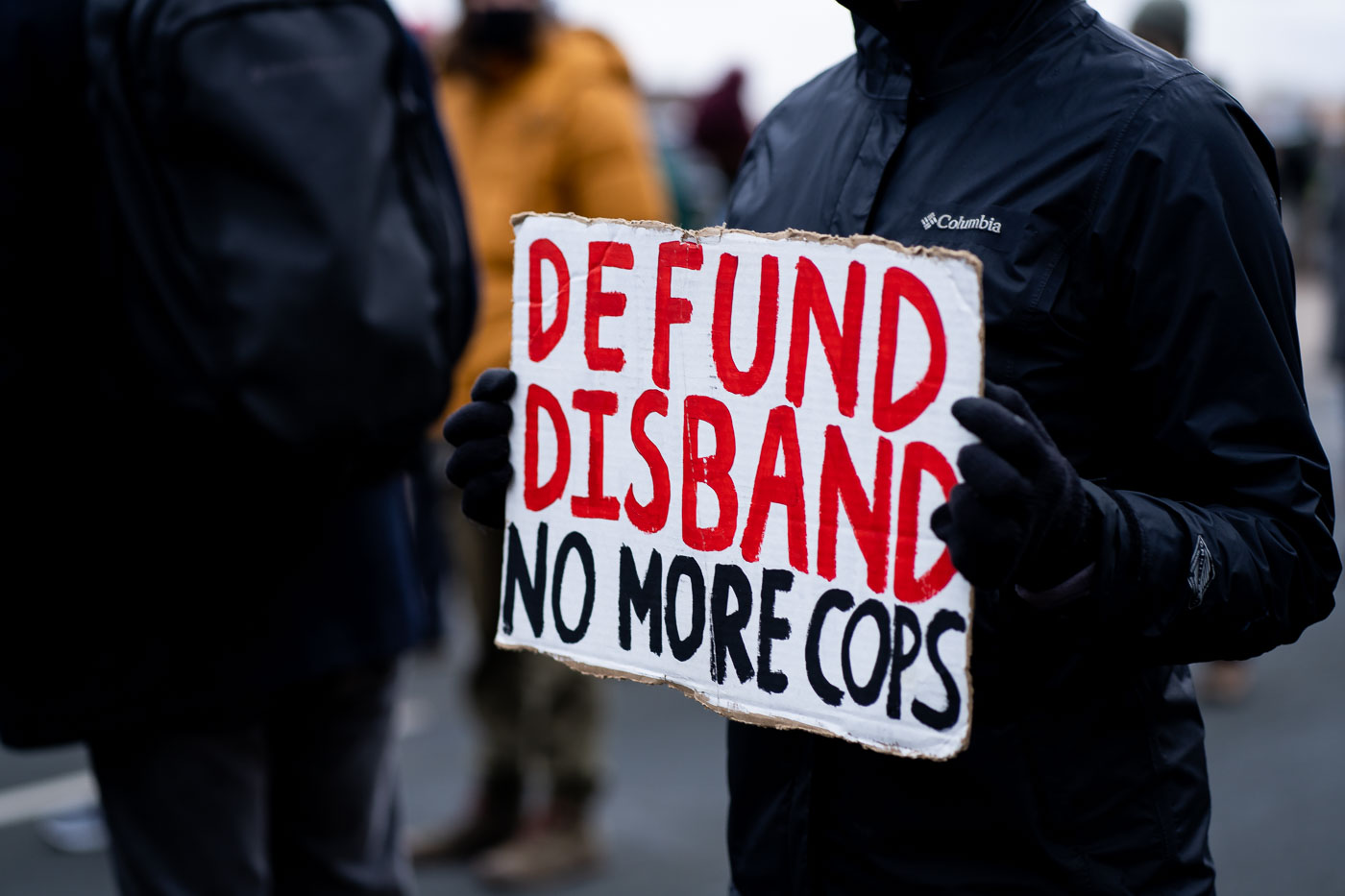
Protester holding "Defund Disband No More Cops" sign in Brooklyn Center, Minnesota.
A protester holds a sign reading "Defund Disband No More Cops" outside the Brooklyn Center Police Department. This protest occurred in the wake of the killing of Daunte Wright by police officer Kim Potter in April 2021. The incident sparked widespread demonstrations and calls for police reform and accountability in Minneapolis and across the United States. The movement to "defund the police" advocates for reallocating funds from law enforcement to community services and social programs.

Brooklyn Center Protest: Sign Demands Defund, Disband Police
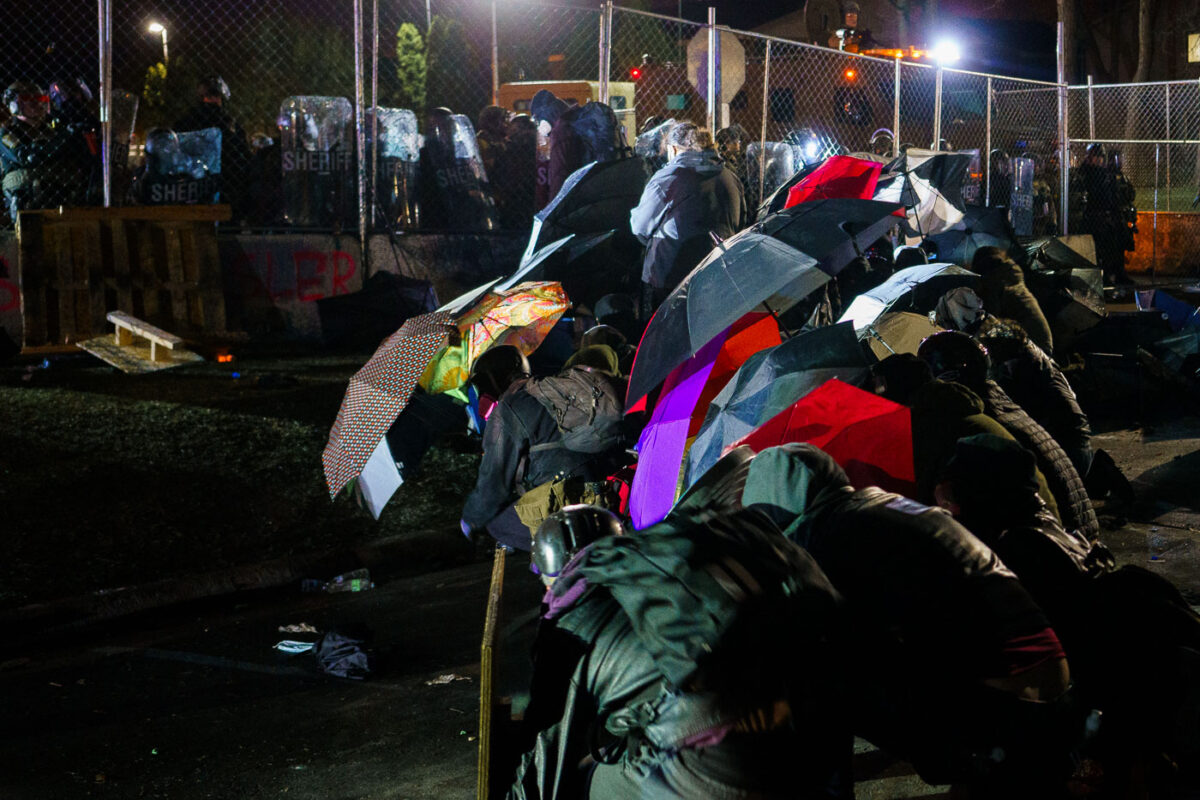
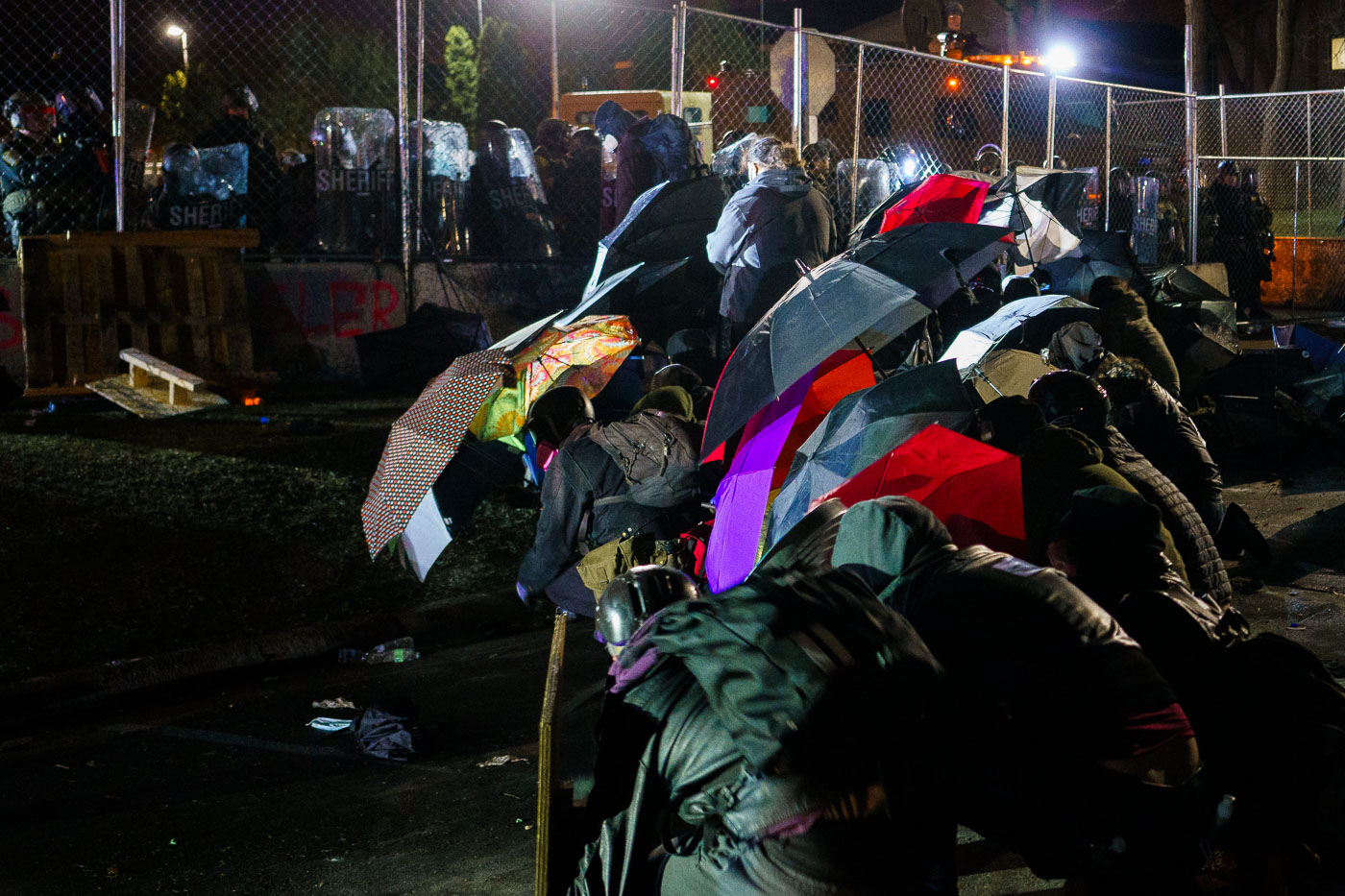
Protesters with umbrellas face sheriff's deputies outside Brooklyn Center Police Department, Minnesota.
Protesters gathered outside the Brooklyn Center Police Department in Brooklyn Center, Minnesota, on April 12, 2021. The protest was in response to the fatal shooting of Daunte Wright by a police officer the previous day. The Brooklyn Center Police Department is a municipal law enforcement agency serving the city of Brooklyn Center. The events of April 2021 marked a period of significant unrest and public outcry regarding police brutality and racial injustice in the Minneapolis–Saint Paul metropolitan area.

Protesters with umbrellas outside Brooklyn Center Police Department
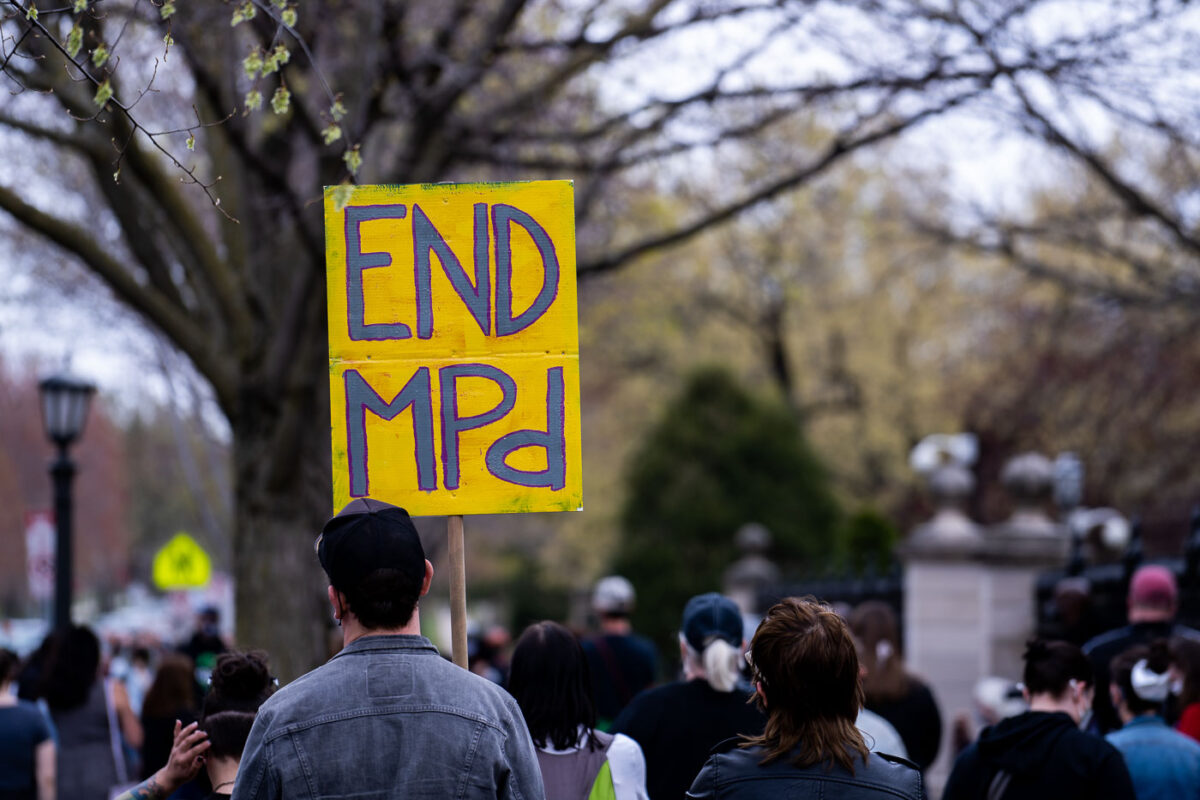
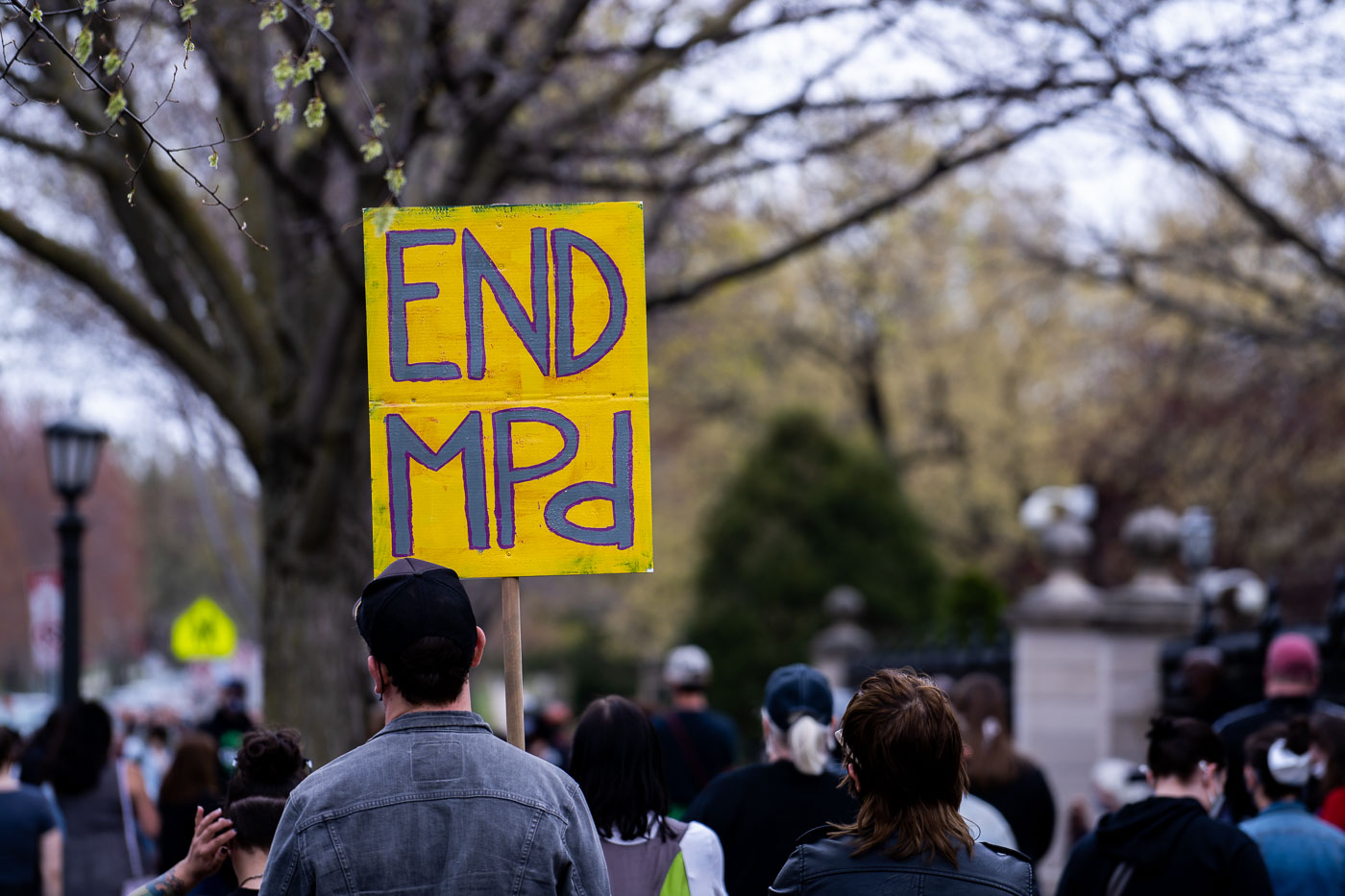
Protester with END MPD sign outside the Minnesota Governor's Residence in St. Paul.
Protesters gathered outside the Minnesota Governor's Residence in Saint Paul, Minnesota, holding signs that read "END MPD." This protest occurred in the context of broader demonstrations and unrest following the killing of Daunte Wright by police in nearby Minneapolis. The "END MPD" slogan calls for the dissolution of the Minneapolis Police Department, reflecting deep-seated concerns about police conduct and accountability that have been amplified by recent events.

Protester holds END MPD sign at Minnesota Governor’s Residence
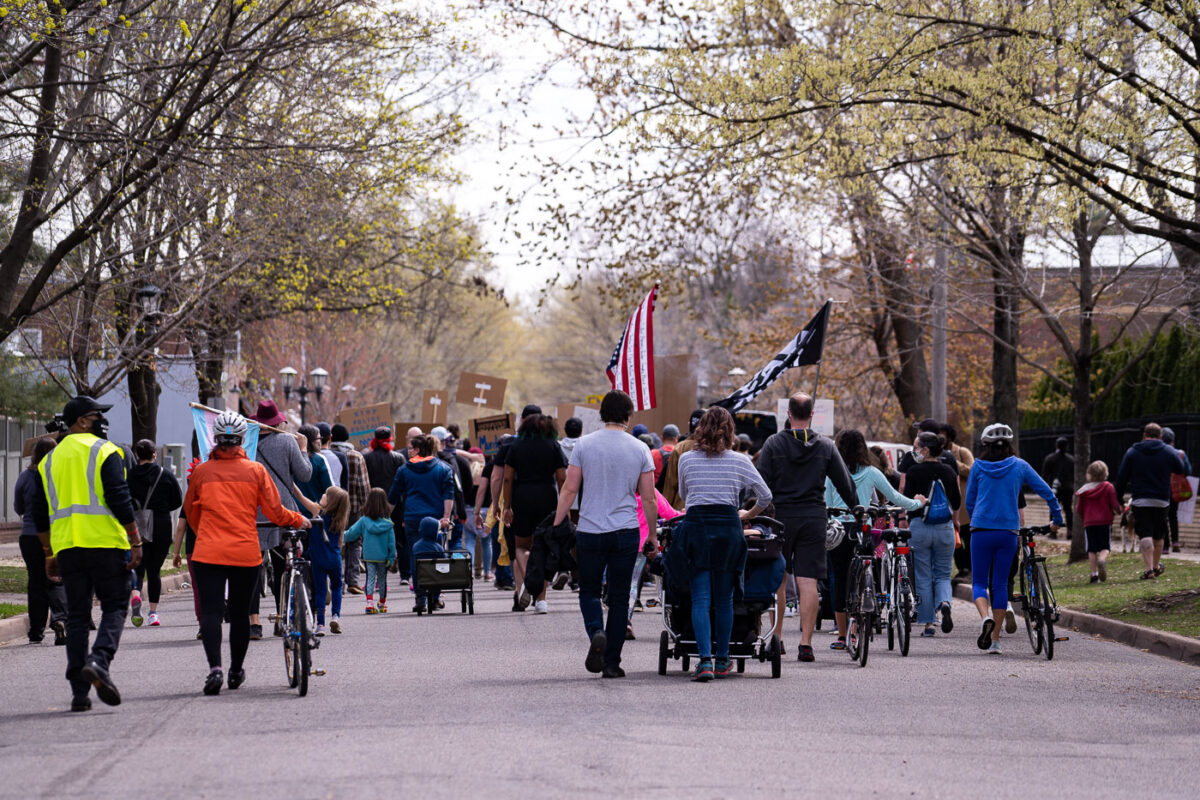
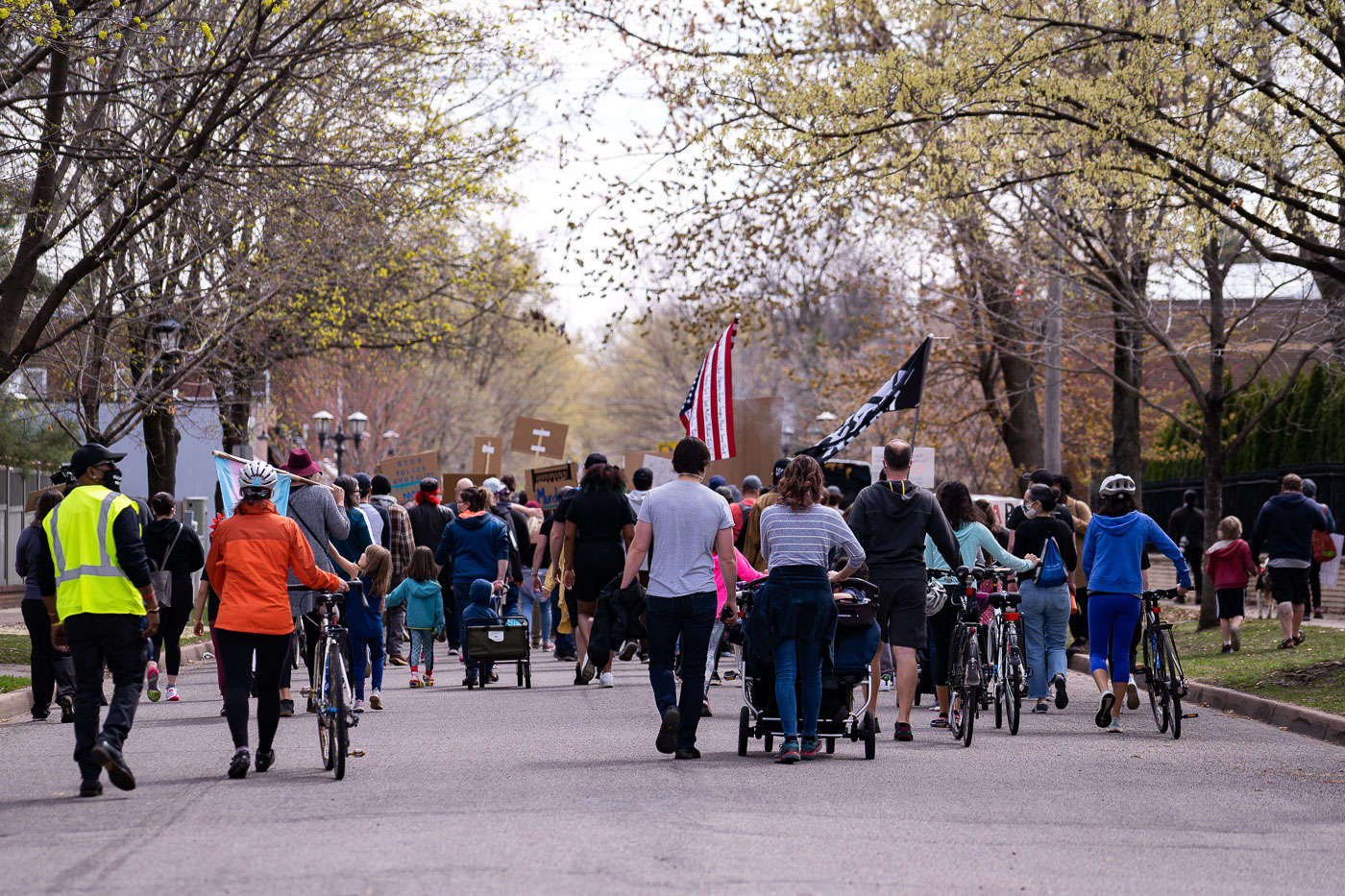
Protesters march toward the Minnesota Governor's Residence in St. Paul with signs, bicycles, and flags.
Protesters marched towards the Minnesota Governor's Residence in St. Paul to voice their concerns regarding the treatment of demonstrators in the preceding week. The march occurred in the context of ongoing protests related to the killing of Daunte Wright in nearby Minneapolis. This event highlights the intersection of public dissent and governmental response, as citizens gathered to express grievances directly to the state's chief executive.

Protesters March at Governor’s Residence in St. Paul
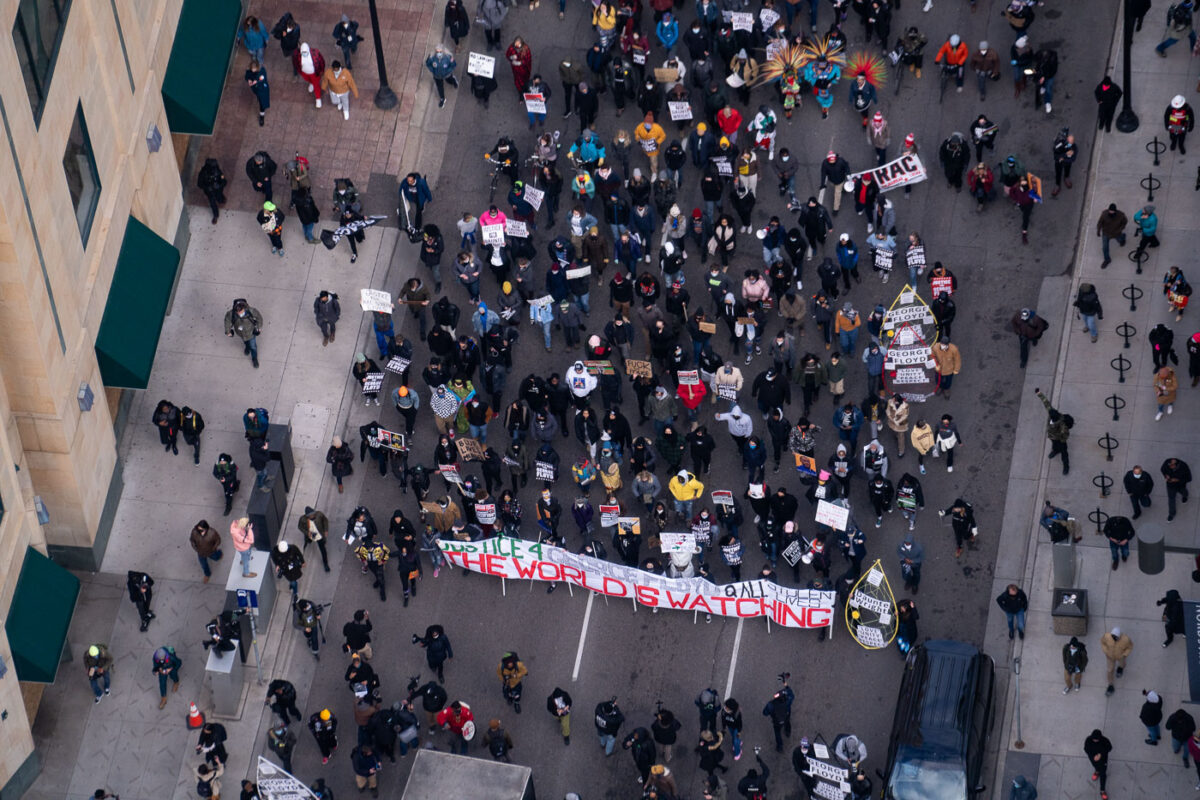
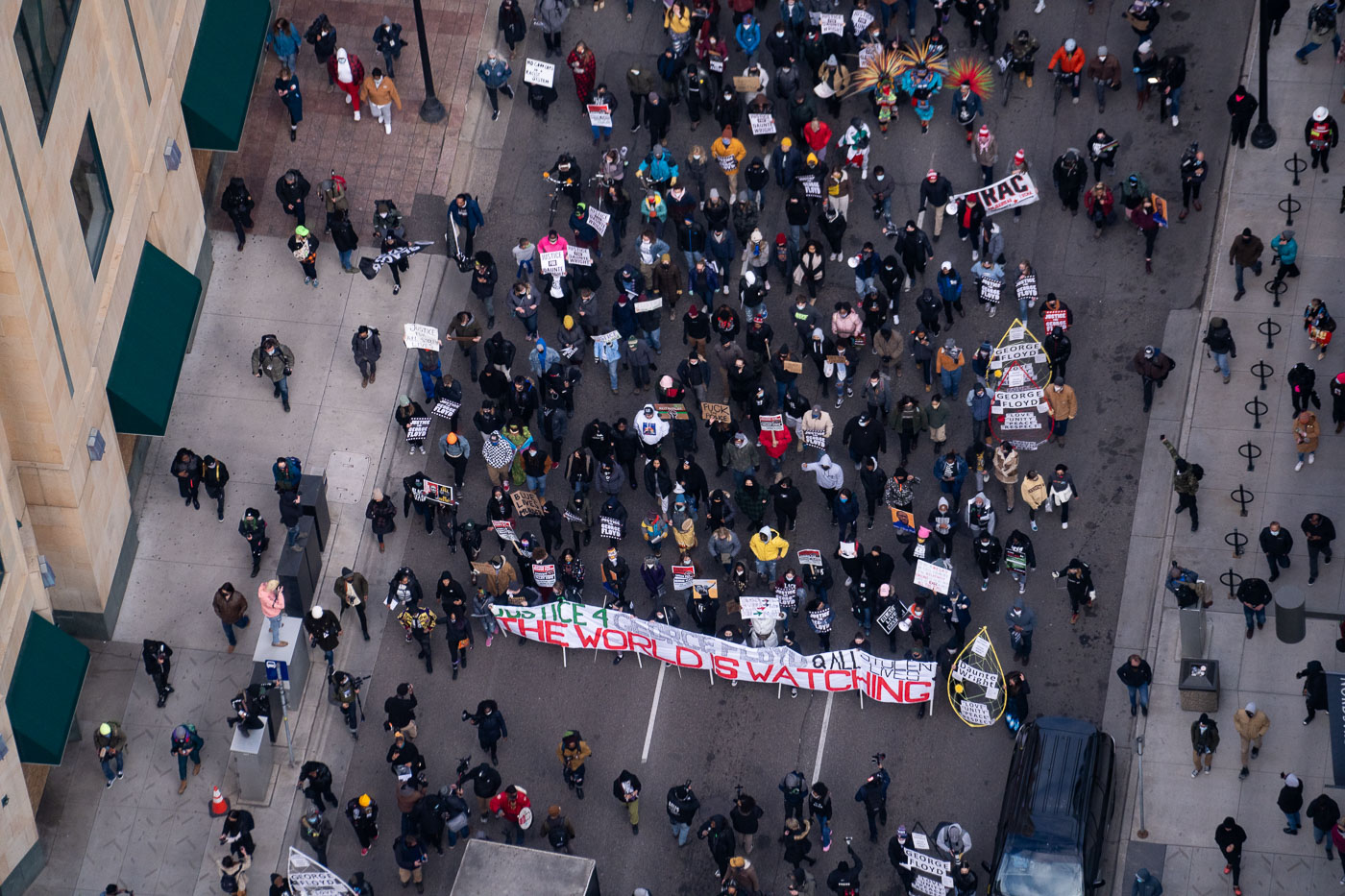
Protesters marching in downtown Minneapolis with a justice banner during the Derek Chauvin trial.
On April 19, 2021, hundreds marched through downtown Minneapolis as the jury began deliberations in the murder trial of Derek Chauvin. This protest was part of ongoing demonstrations that had occurred for nearly a year following the death of George Floyd. The marchers carried signs demanding justice and accountability, reflecting the broader movement for racial equality and police reform that gained national attention in 2020. The event highlighted the continued public engagement with issues of systemic racism and police brutality in the city and across the nation.

Minneapolis Protest for Justice on Chauvin Trial Jury Day
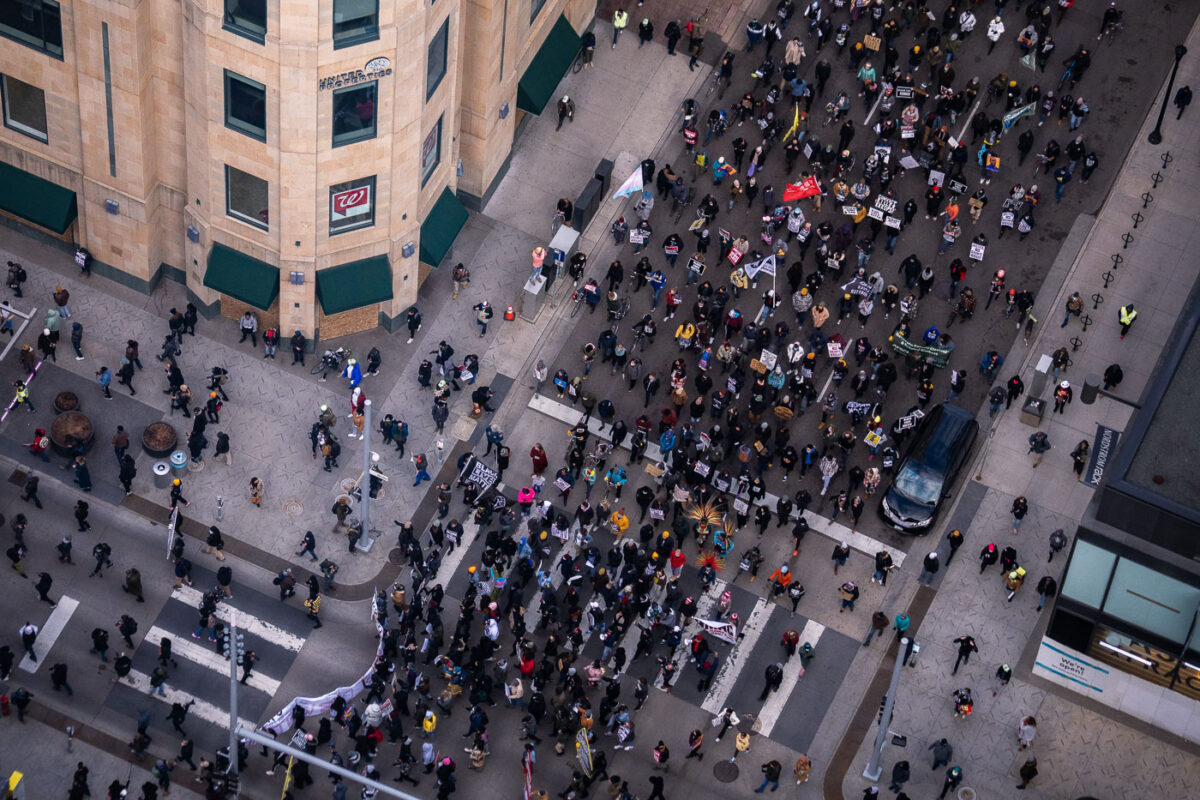
Protest marchers in downtown Minneapolis during jury deliberations in the Derek Chauvin trial.
On April 19, 2021, hundreds marched through downtown Minneapolis as the jury began deliberations in the murder trial of former police officer Derek Chauvin. The protest, which continued the year-long demonstrations for racial justice and police accountability, took place on the anniversary of George Floyd's murder. Protesters carried signs with messages such as "Justice for Daunte Wright" and "Black Lives Matter," reflecting broader concerns about police brutality and systemic racism in the United States. The march occurred in the same city where George Floyd's death in police custody sparked widespread unrest and calls for reform.

Minneapolis Protest for Justice as Chauvin Trial Jury Deliberates
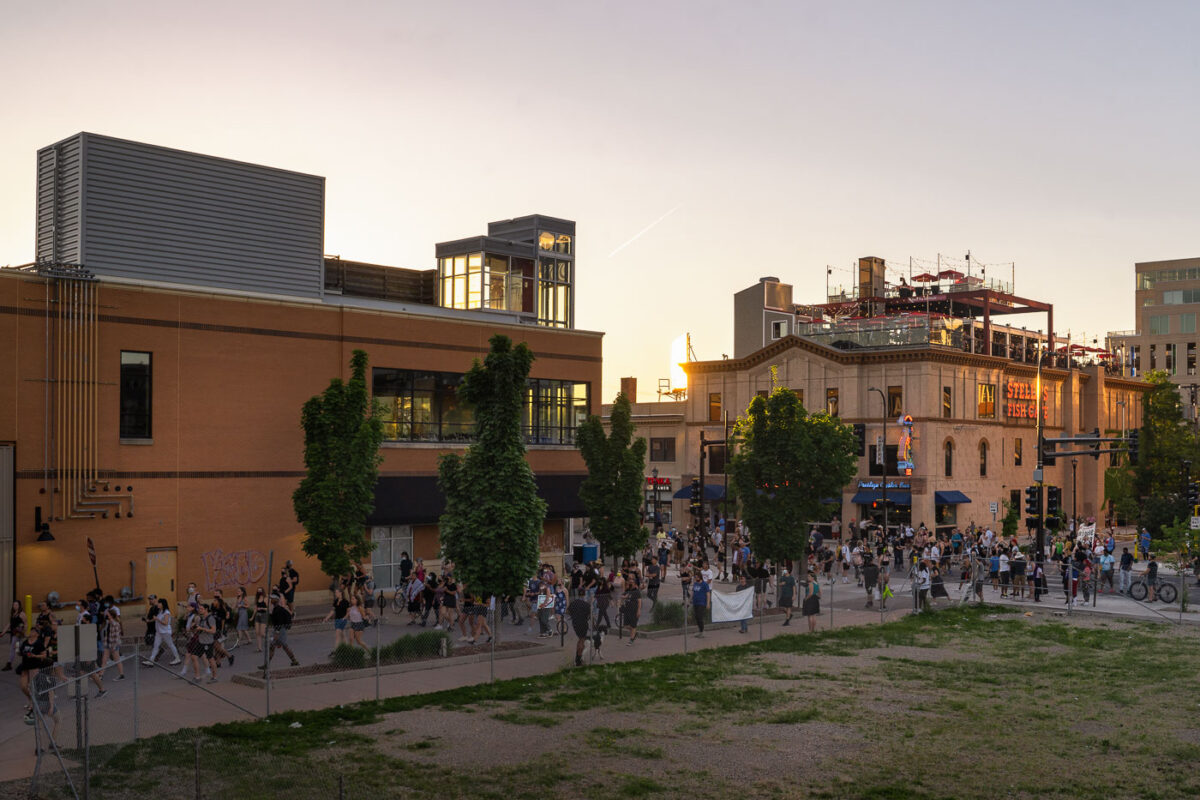
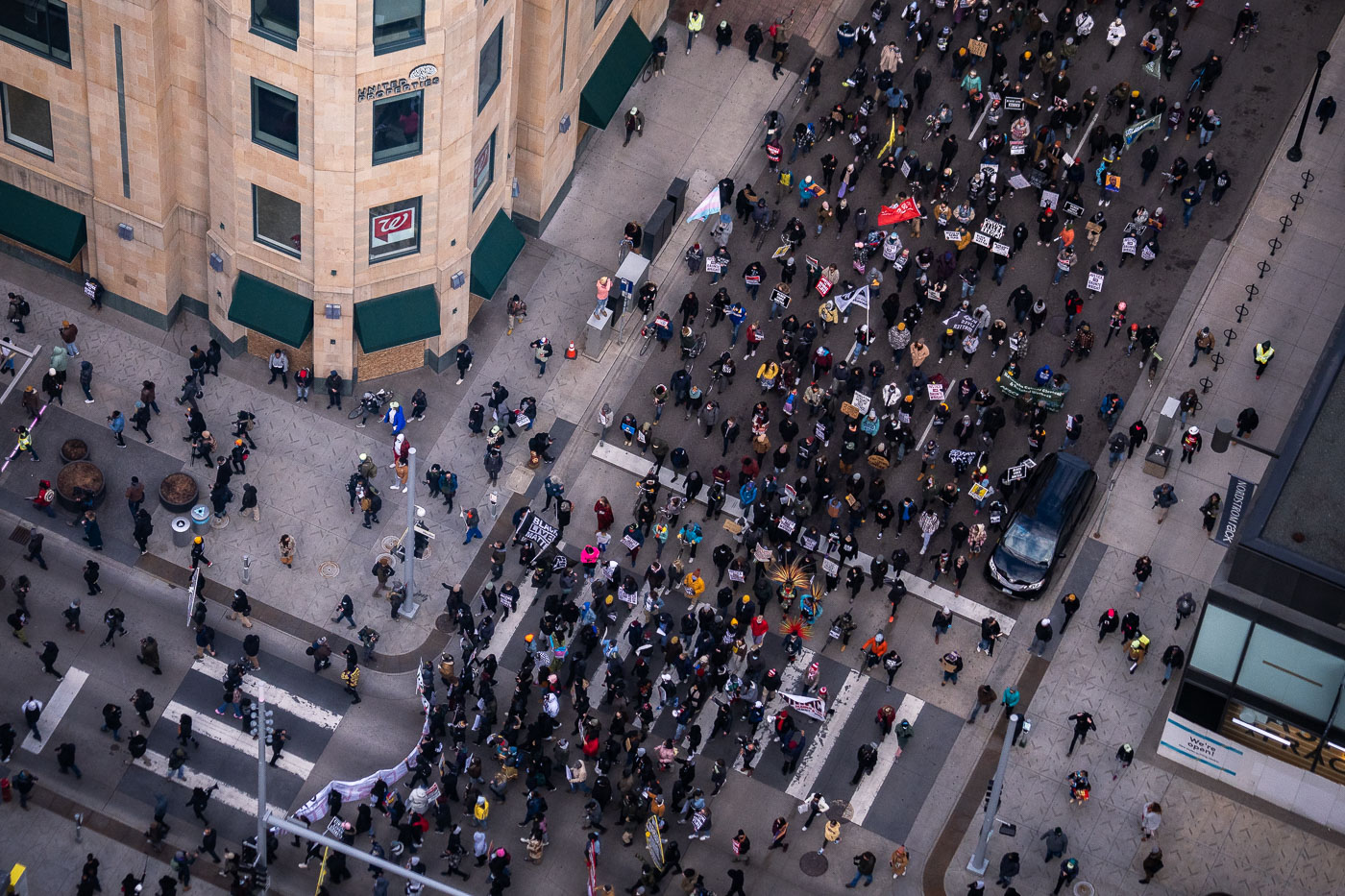
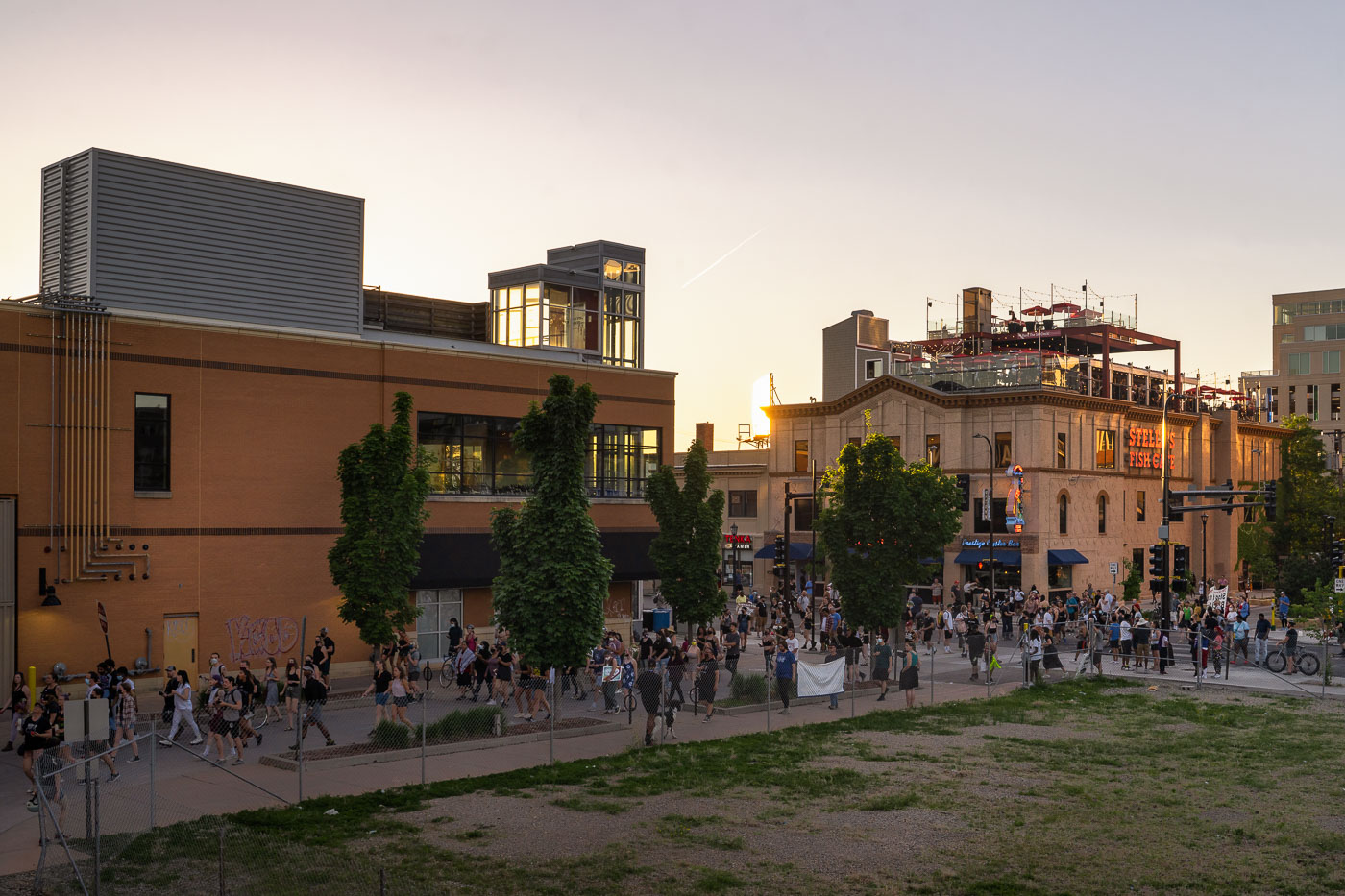
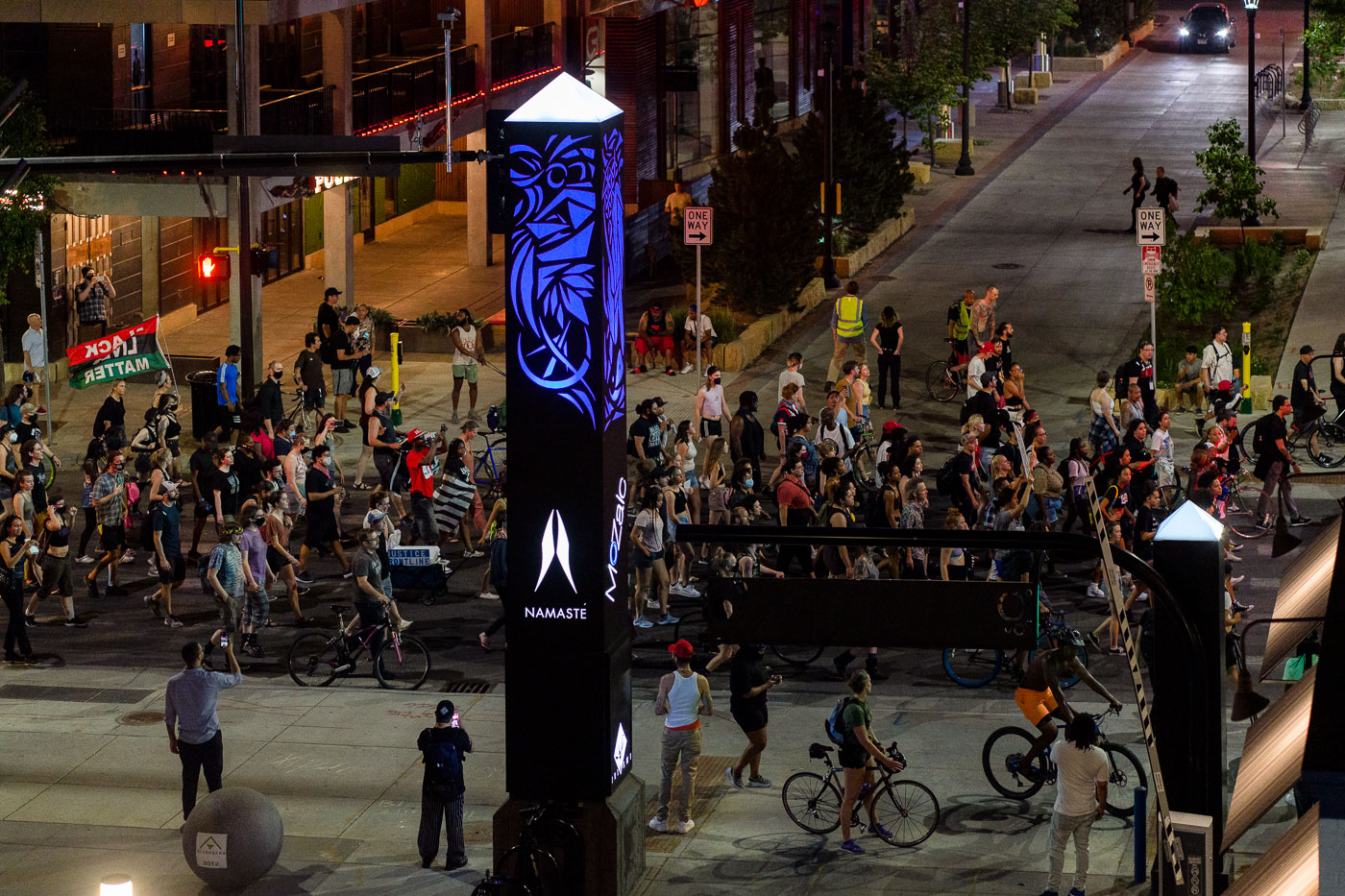
Protesters march along Hennepin Avenue in Uptown Minneapolis at sunset
Protesters march through Uptown Minneapolis on June 24, 2021, following the killing of Winston Smith. On June 3, 2021, members of a U.S. Marshals Service fugitive task force fatally shot 32-year-old Winston “Boogie” Smith Jr. on the top level of a parking ramp in Minneapolis’ Uptown neighborhood while attempting to arrest him on a felony warrant. Authorities said Smith fired a handgun from inside his vehicle during the encounter, while family members and activists questioned the official account and demanded the release of additional evidence. The killing led to weeks of protests, street occupations, and confrontations with police in Uptown, becoming another major flashpoint in Minneapolis during the period following the murder of George Floyd. Earlier in the day Minneapolis city officials along with The Agape Movement coordinated to open the streets that had been closed at George Floyd Square since his murder.

Protesters March in Uptown Minneapolis After Winston Smith Killing
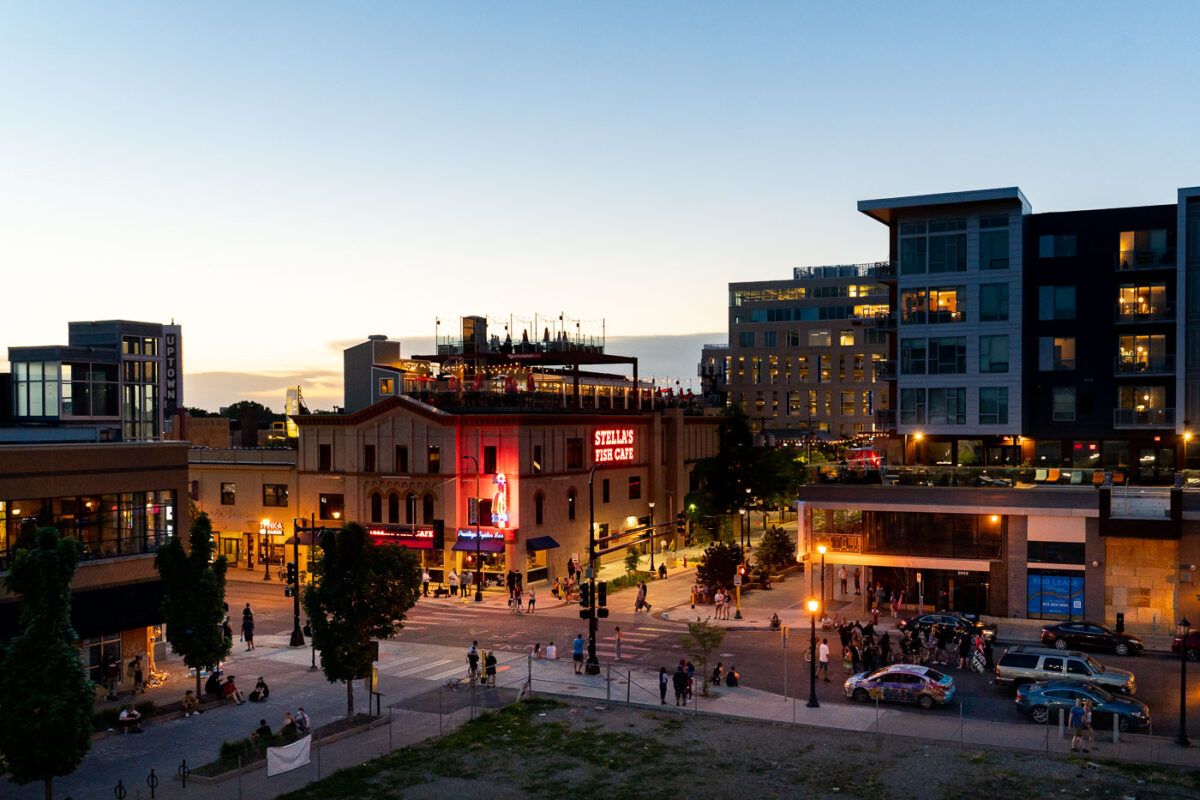
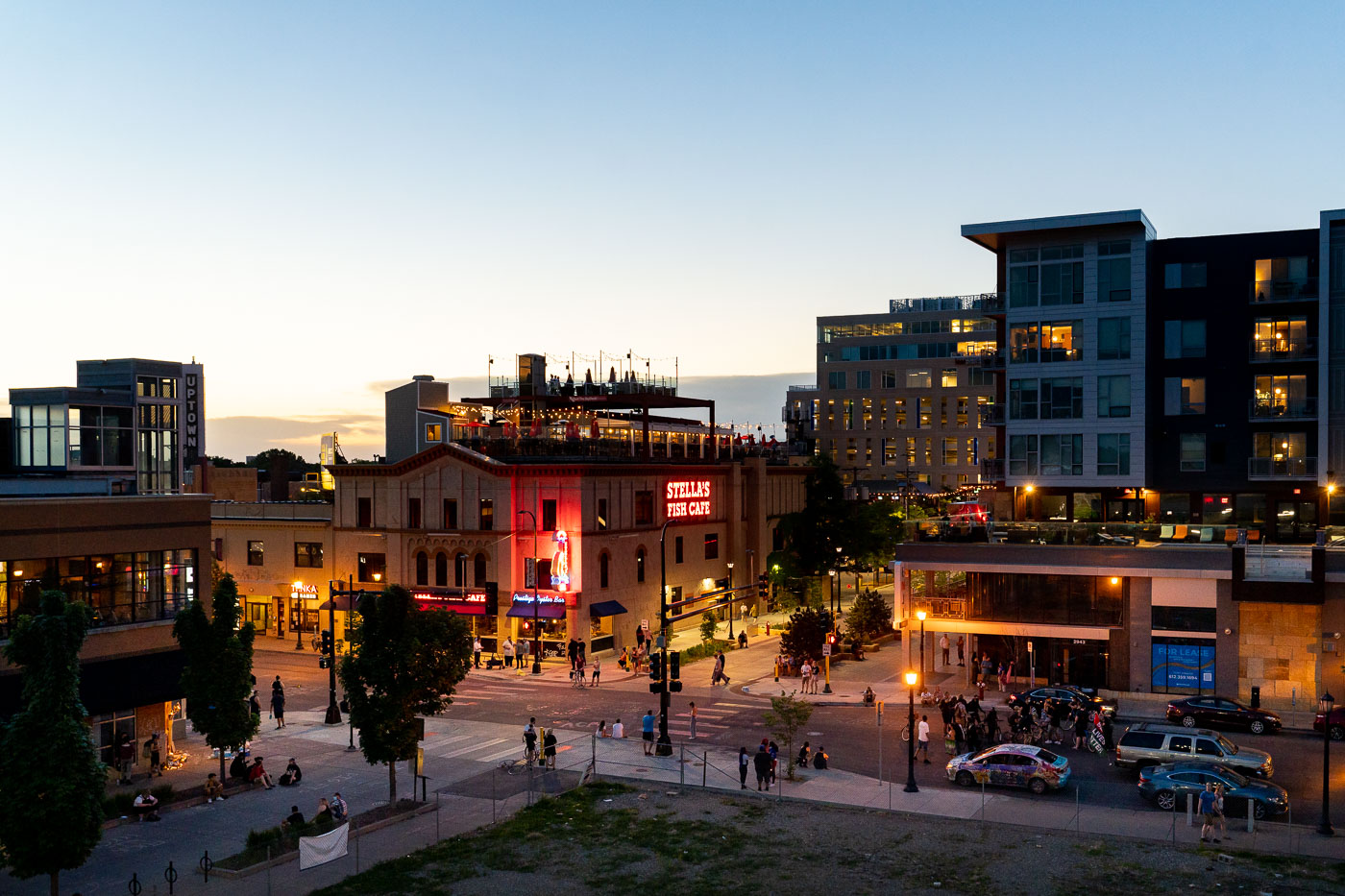
Protesters gather on Lake Street in Uptown Minneapolis at dusk.
Protesters march down Lake Street in Uptown Minneapolis the day after Winston Smith was killed by a federal law enforcement task force. On June 3, 2021, members of a U.S. Marshals Service fugitive task force fatally shot 32-year-old Winston “Boogie” Smith Jr. on the top level of a parking ramp in Minneapolis’ Uptown neighborhood while attempting to arrest him on a felony warrant. Authorities said Smith fired a handgun from inside his vehicle during the encounter, while family members and activists questioned the official account and demanded the release of additional evidence. The killing led to weeks of protests, street occupations, and confrontations with police in Uptown, becoming another major flashpoint in Minneapolis during the period following the murder of George Floyd. Earlier in the day Minneapolis city officials along with The Agape Movement coordinated to open the streets that had been closed at George Floyd Square since his murder.

Minneapolis Protest on Lake Street After Winston Smith Killing
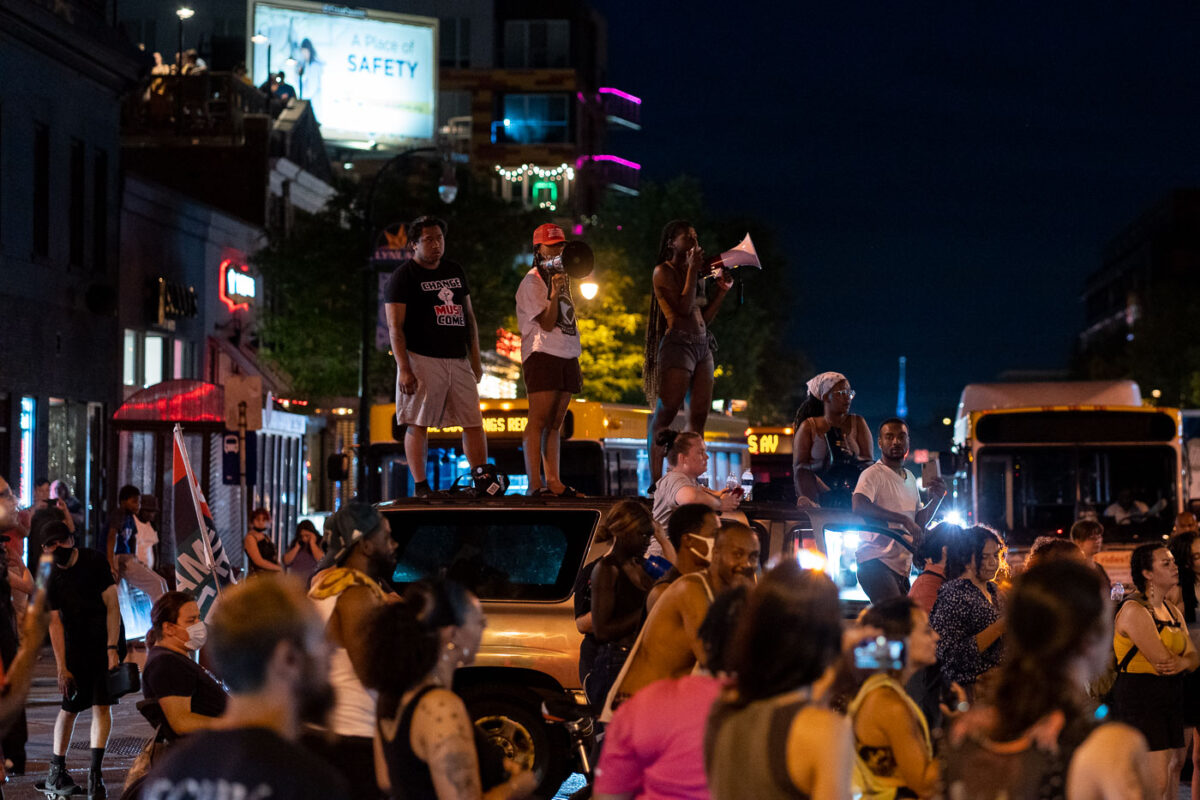
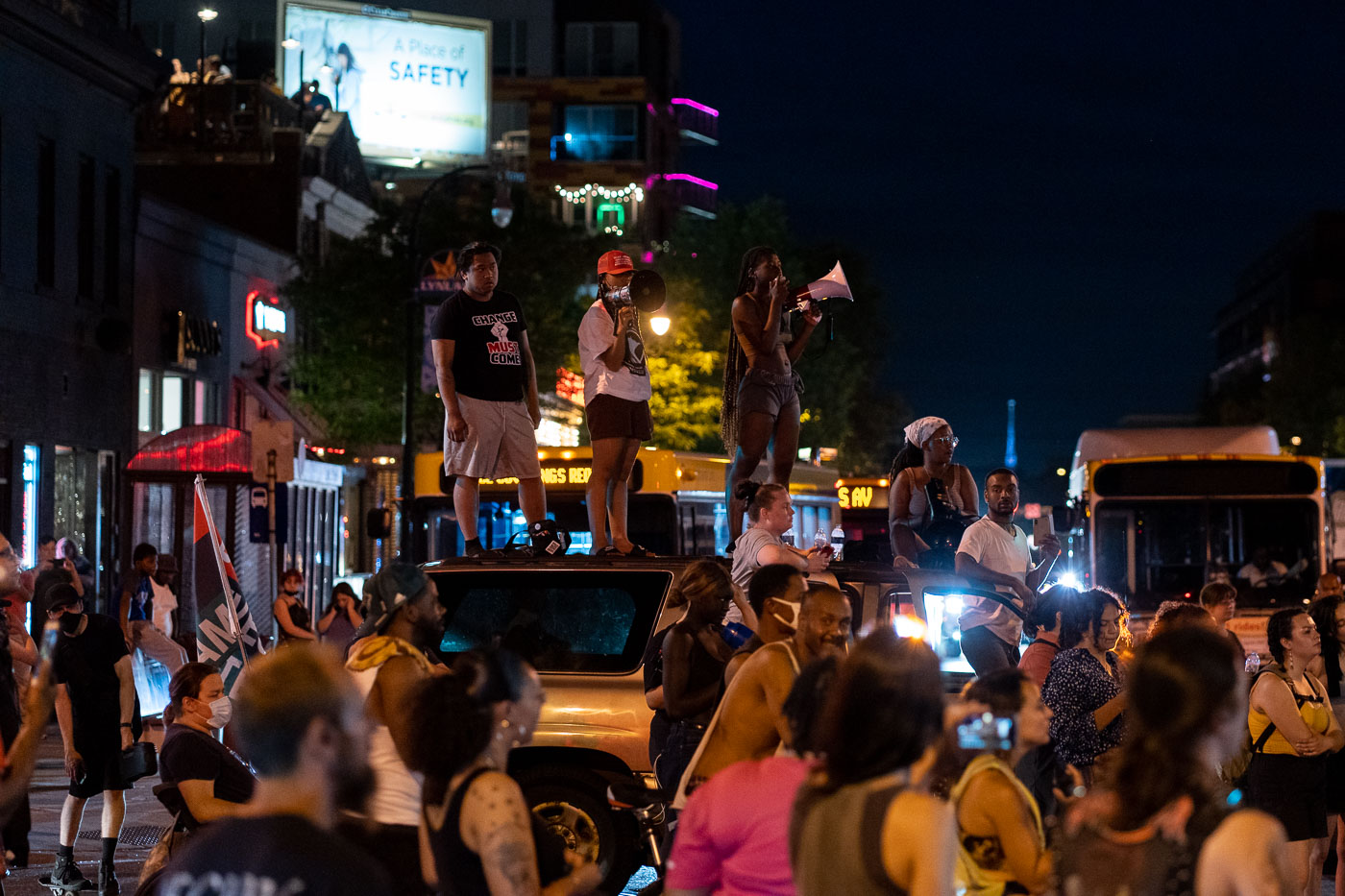
Protesters stand on a vehicle at Lyndale and Lake Street in Minneapolis at night.
Protesters gathered on the third night of demonstrations following the law enforcement shooting death of Winston Smith on June 3rd in Minneapolis. Officials stated that officers from Hennepin and Ramsey County, operating as part of a Federal Task Force, discharged their weapons while attempting to serve a warrant. The protests occurred at the intersection of Lyndale Avenue and Lake Street, a significant commercial and transit hub in the Uptown neighborhood. On June 3, 2021, members of a U.S. Marshals Service fugitive task force fatally shot 32-year-old Winston “Boogie” Smith Jr. on the top level of a parking ramp in Minneapolis’ Uptown neighborhood while attempting to arrest him on a felony warrant. Authorities said Smith fired a handgun from inside his vehicle during the encounter, while family members and activists questioned the official account and demanded the release of additional evidence. The killing led to weeks of protests, street occupations, and confrontations with police in Uptown, becoming another major flashpoint in Minneapolis during the period following the murder of George Floyd. Earlier in the day Minneapolis city officials along with The Agape Movement coordinated to open the streets that had been closed at George Floyd Square since his murder.

Protesters on Cars at Lyndale and Lake Street, Minneapolis
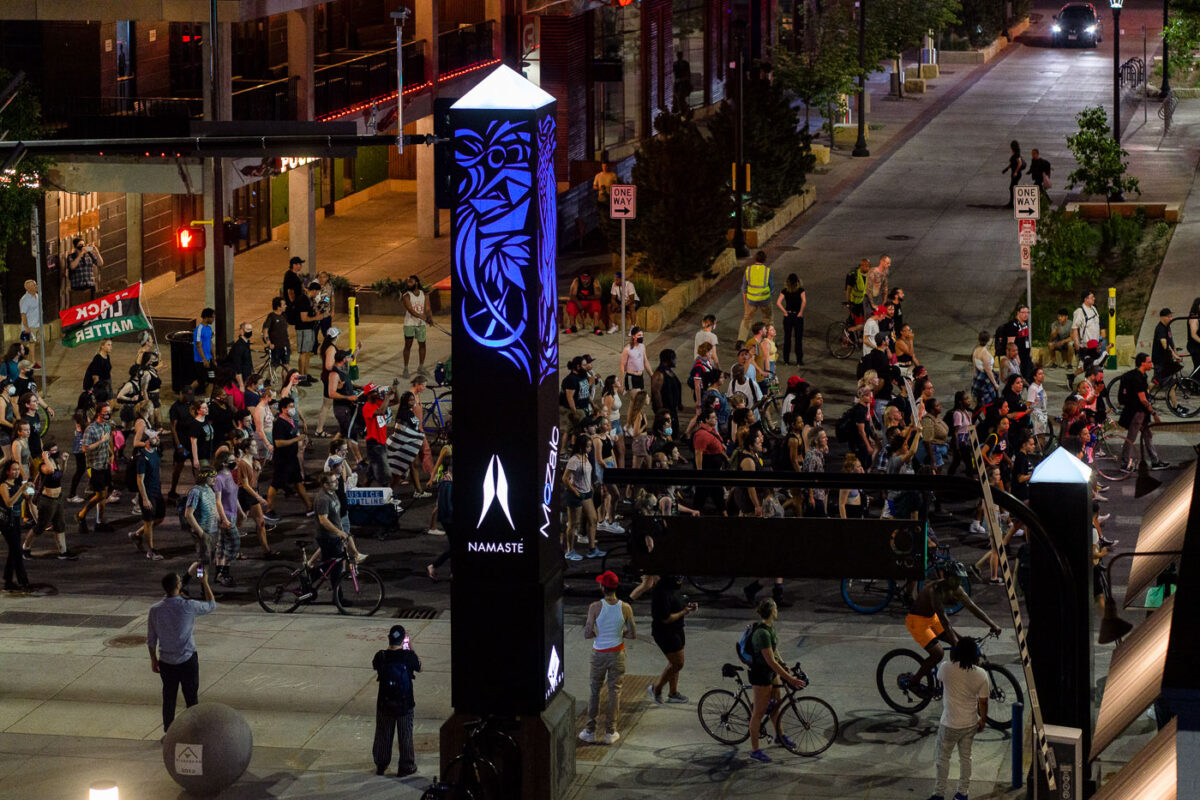
Protesters march on Lagoon Avenue in Minneapolis at night.
Protesters march down Lagoon Avenue in Minneapolis on the third night of demonstrations following the shooting death of Winston Smith. On June 3, 2021, members of a U.S. Marshals Service fugitive task force fatally shot 32-year-old Winston “Boogie” Smith Jr. on the top level of a parking ramp in Minneapolis’ Uptown neighborhood while attempting to arrest him on a felony warrant. Authorities said Smith fired a handgun from inside his vehicle during the encounter, while family members and activists questioned the official account and demanded the release of additional evidence. The killing led to weeks of protests, street occupations, and confrontations with police in Uptown, becoming another major flashpoint in Minneapolis during the period following the murder of George Floyd. Earlier in the day Minneapolis city officials along with The Agape Movement coordinated to open the streets that had been closed at George Floyd Square since his murder.

Protesters March on Lagoon Avenue in Minneapolis After Winston Smith Death
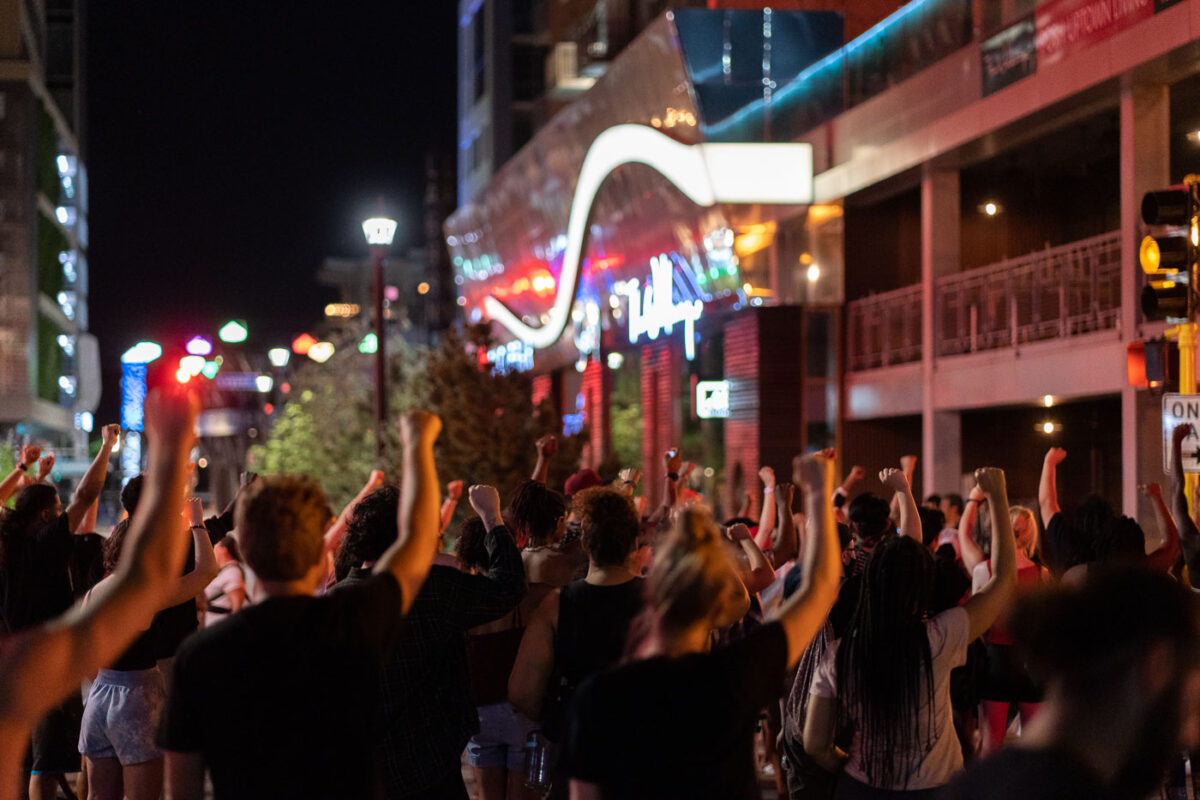
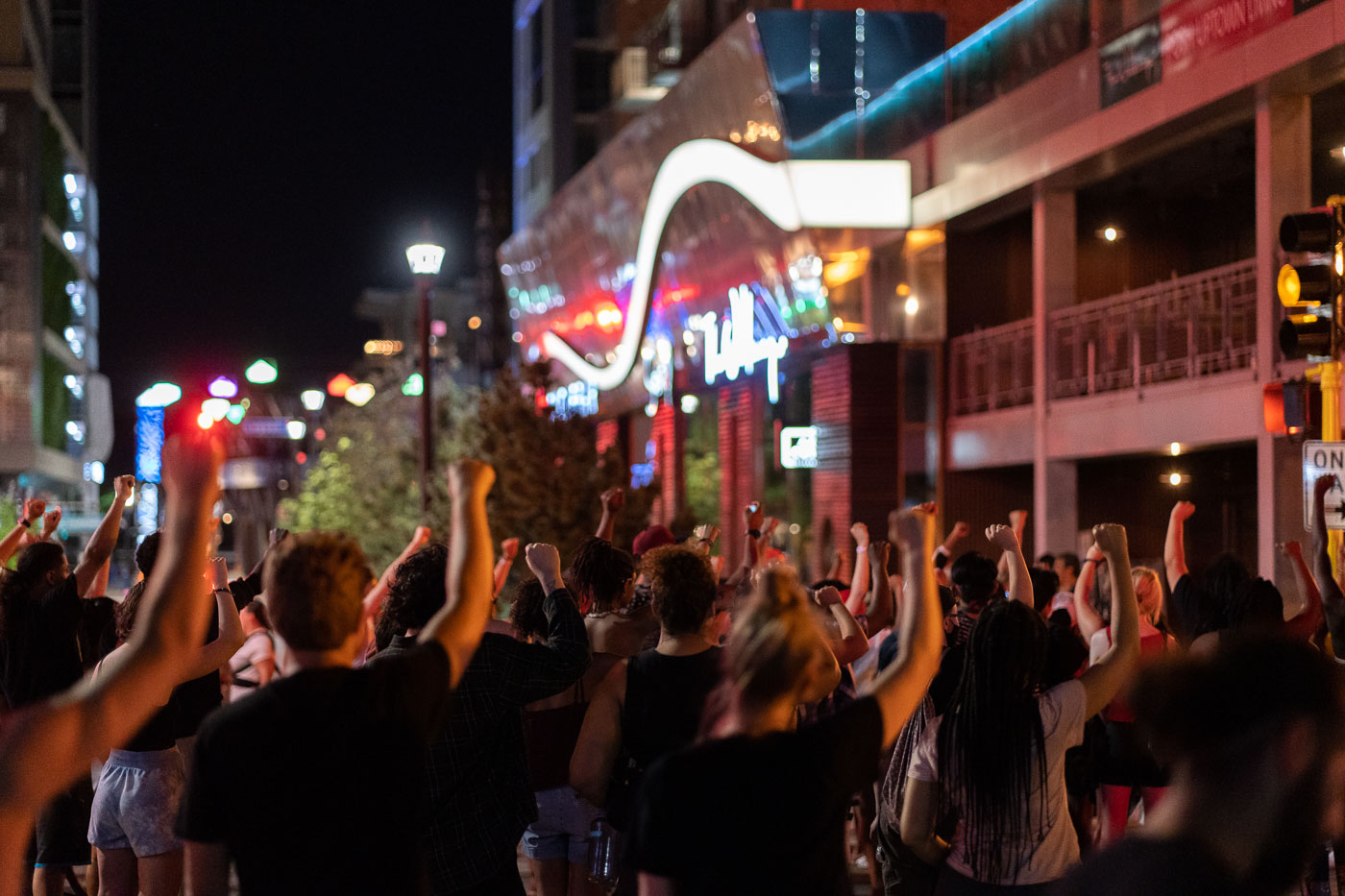
Protesters raise fists on Lake Street in Minneapolis at night
Protesters raise their fists in solidarity during a march in Uptown Minneapolis on June 5, 2021. This demonstration occurred on the third day of protests following the law enforcement shooting death of Winston Smith on June 3rd. On June 3, 2021, members of a U.S. Marshals Service fugitive task force fatally shot 32-year-old Winston “Boogie” Smith Jr. on the top level of a parking ramp in Minneapolis’ Uptown neighborhood while attempting to arrest him on a felony warrant. Authorities said Smith fired a handgun from inside his vehicle during the encounter, while family members and activists questioned the official account and demanded the release of additional evidence. The killing led to weeks of protests, street occupations, and confrontations with police in Uptown, becoming another major flashpoint in Minneapolis during the period following the murder of George Floyd. Earlier in the day Minneapolis city officials along with The Agape Movement coordinated to open the streets that had been closed at George Floyd Square since his murder.

Uptown Minneapolis Protestors Raise Fists for Winston Smith
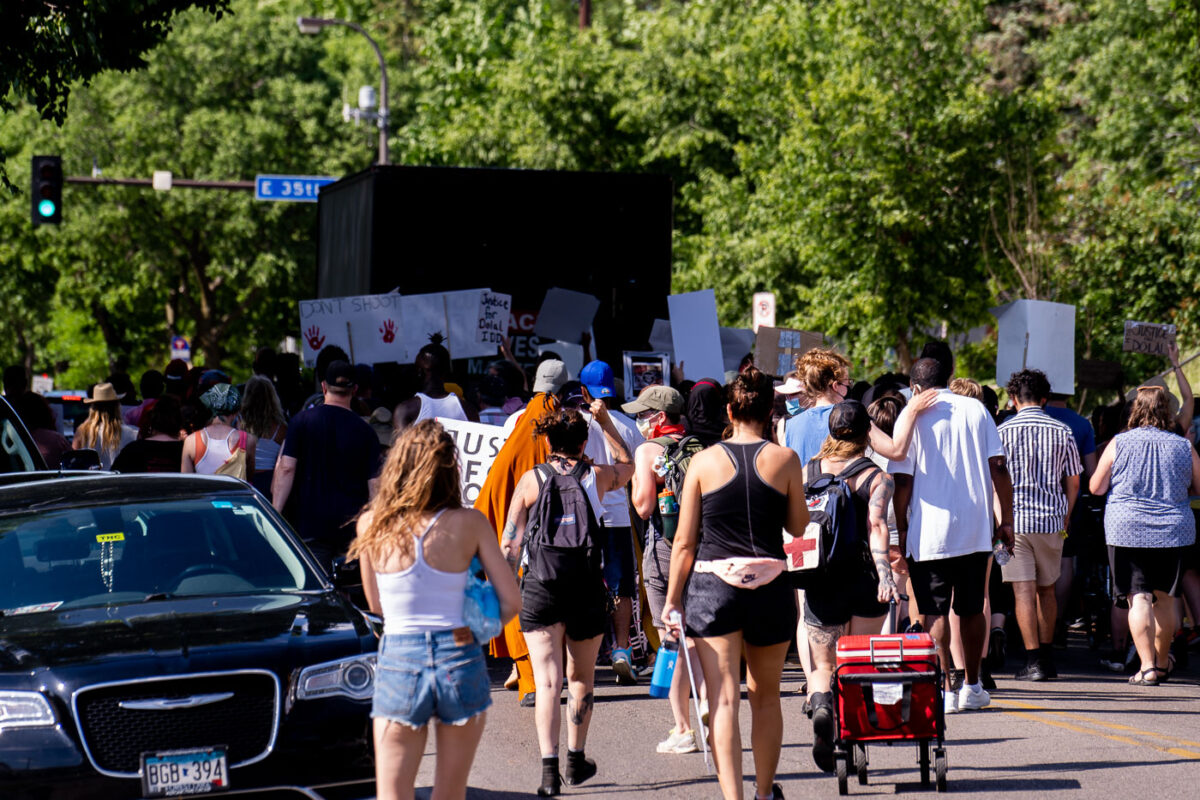
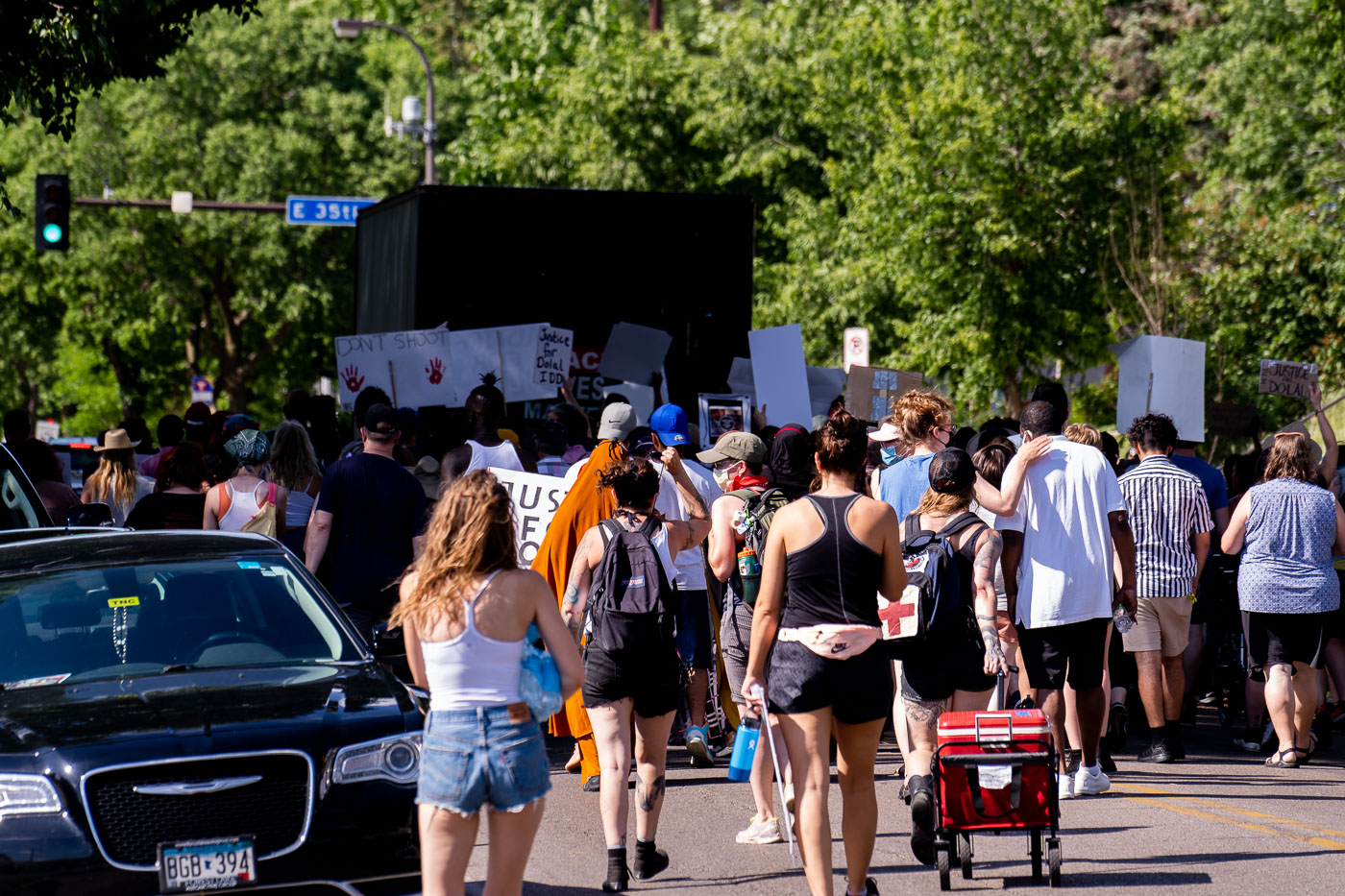
Protesters march on Cedar Ave in Minneapolis holding signs for Dolal Idd
Protesters march down Cedar Avenue in Minneapolis 6 months after Dolal Idd was killed. On December 30, 2020, Minneapolis police officers fatally shot 23-year-old Dolal Idd during a traffic stop on Cedar Avenue. Authorities said officers were attempting to arrest Idd in connection with a felony weapons investigation when shots were fired. The killing marked the first fatal shooting by Minneapolis police since the murder of George Floyd earlier in the year on May 25th. The killing took place about a mile from where Floyd was killed.

Protesters March on Cedar Ave in Minneapolis for Dolal Idd
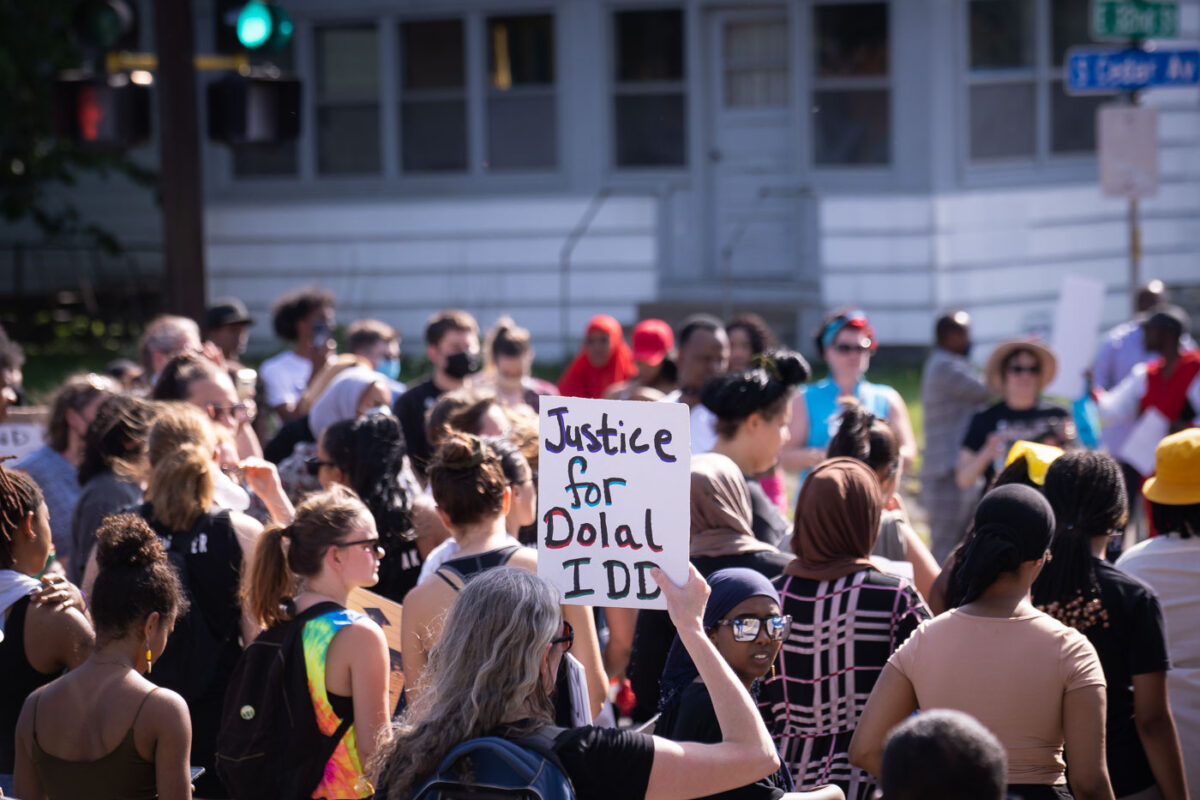
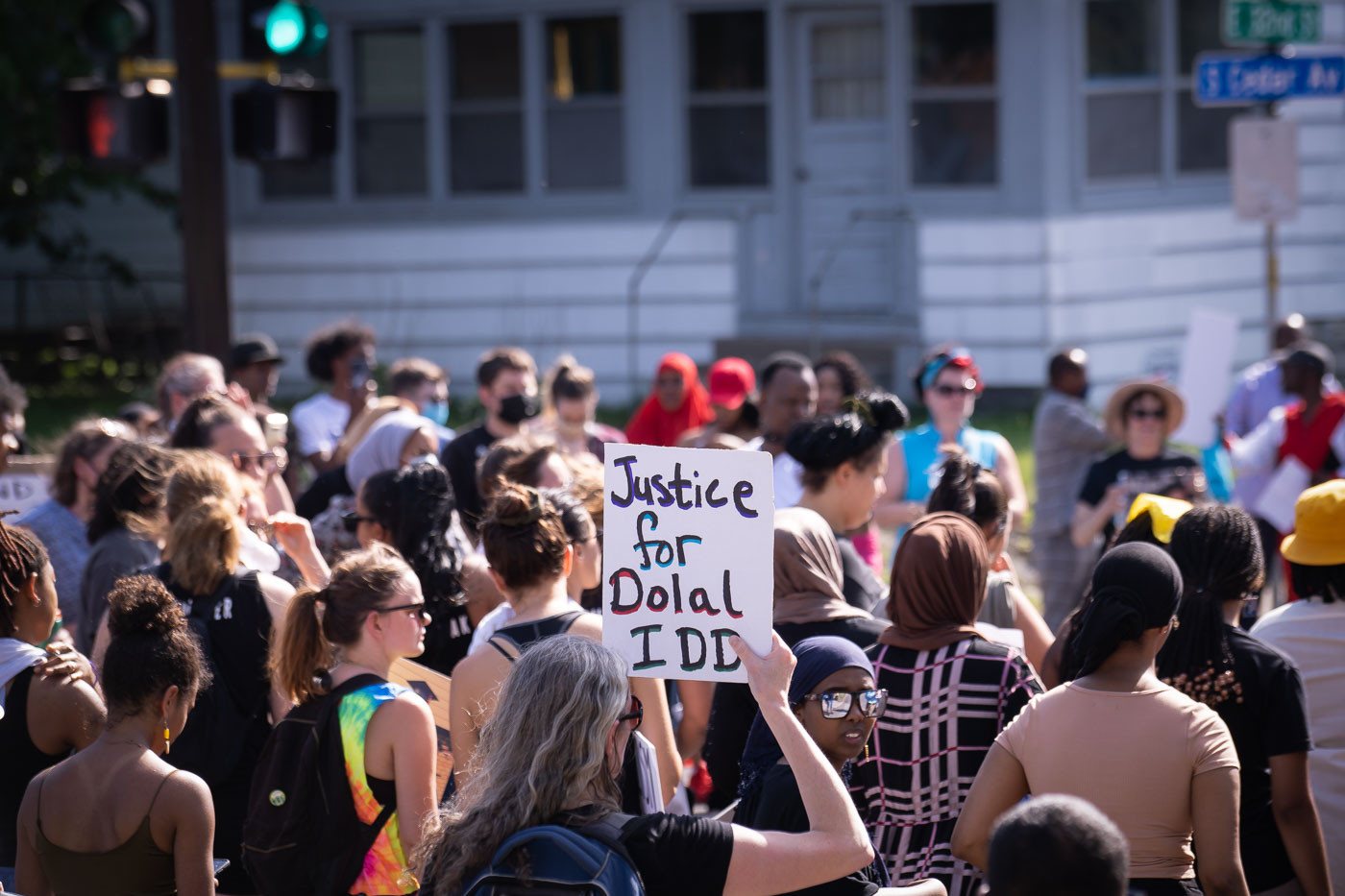
Protesters in Minneapolis hold a Justice for Dolal Idd sign during a march.
Protesters gathered in Minneapolis in June 2021 to demand justice for Dolal Idd. This march occurred in South Minneapolis, near the location where the fatal shooting took place. On December 30, 2020, Minneapolis police officers fatally shot 23-year-old Dolal Idd during a traffic stop on Cedar Avenue. Authorities said officers were attempting to arrest Idd in connection with a felony weapons investigation when shots were fired. The killing marked the first fatal shooting by Minneapolis police since the murder of George Floyd earlier in the year on May 25th. The killing took place about a mile from where Floyd was killed.

Minneapolis Protest for Dolal Idd, June 2021
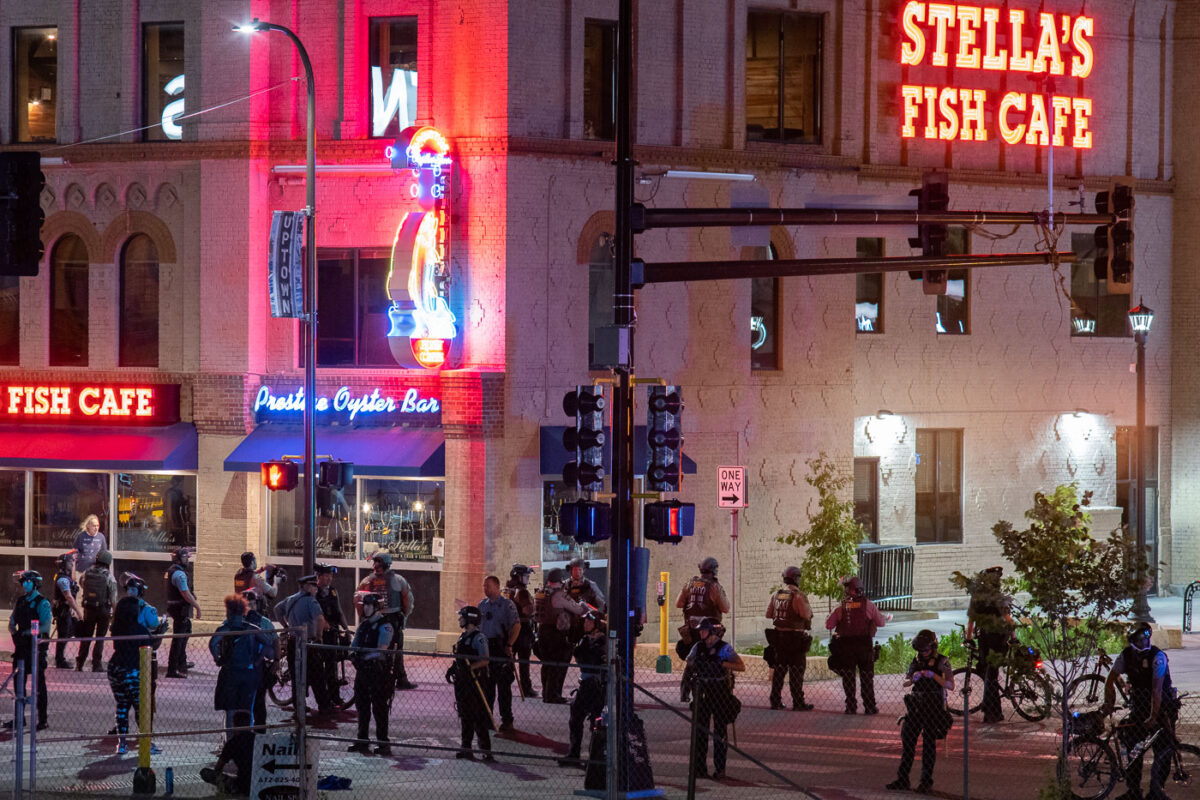
Police officers stand on Lake Street in Minneapolis's Uptown neighborhood during a protest following the death of Winston Smith.
Law enforcement officers are present on Lake Street in Minneapolis's Uptown neighborhood during a protest following the June 3rd shooting death of Winston Smith. On June 3, 2021, members of a U.S. Marshals Service fugitive task force fatally shot 32-year-old Winston “Boogie” Smith Jr. on the top level of a parking ramp in Minneapolis’ Uptown neighborhood while attempting to arrest him on a felony warrant. Authorities said Smith fired a handgun from inside his vehicle during the encounter, while family members and activists questioned the official account and demanded the release of additional evidence. The killing led to weeks of protests, street occupations, and confrontations with police in Uptown, becoming another major flashpoint in Minneapolis during the period following the murder of George Floyd. Earlier in the day Minneapolis city officials along with The Agape Movement coordinated to open the streets that had been closed at George Floyd Square since his murder.

Police on Lake Street during Winston Smith protest in Uptown
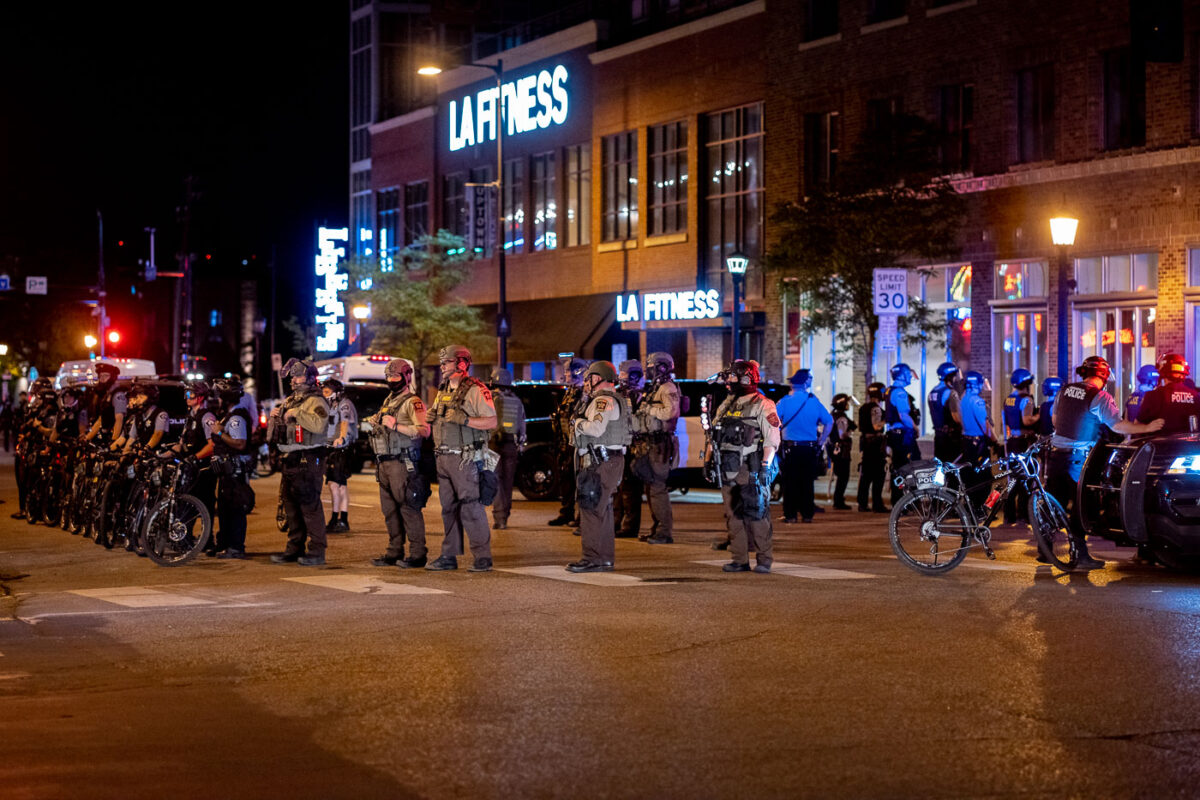
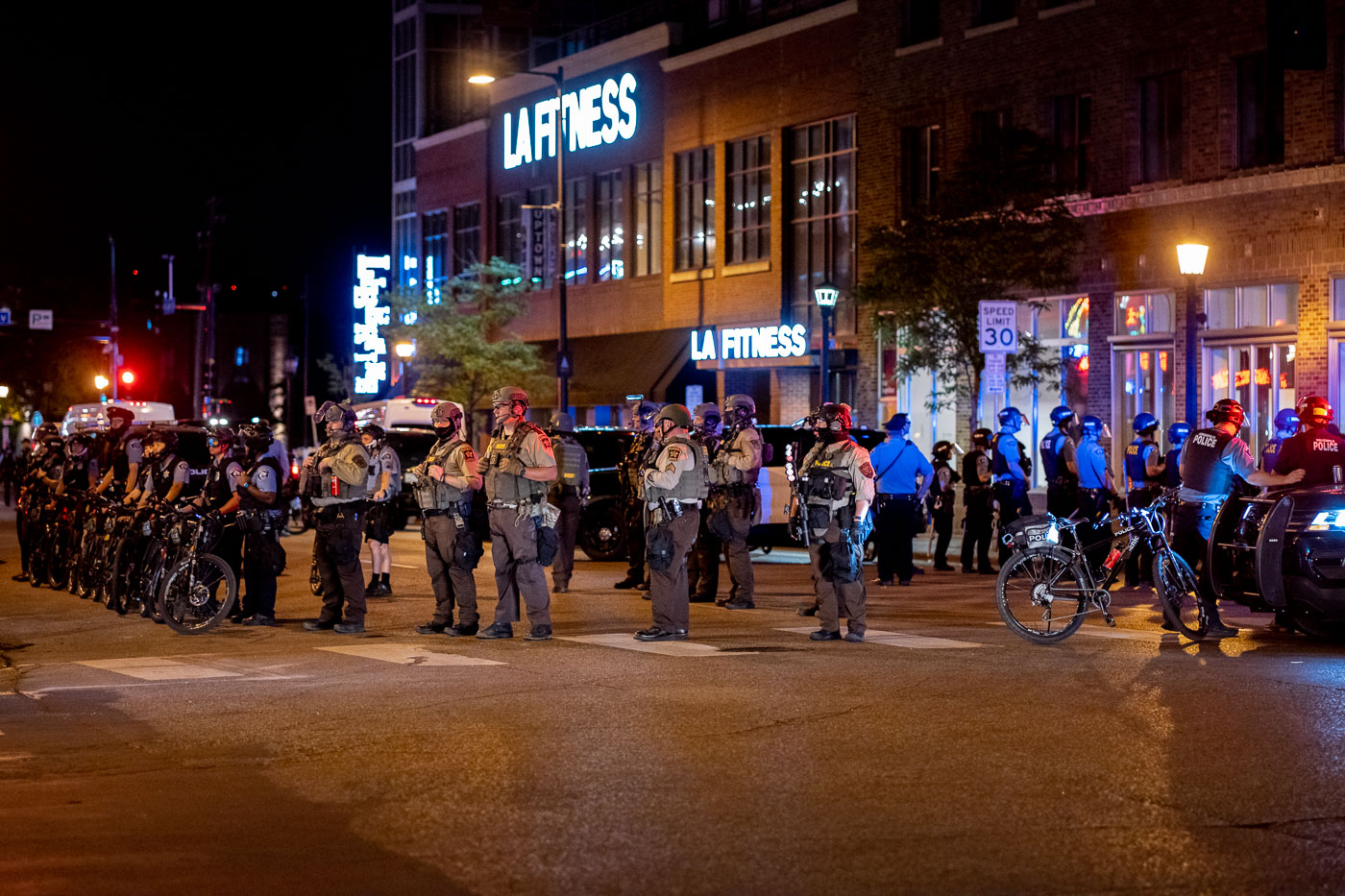
Police and sheriff's officers block Lake Street in Minneapolis outside LA Fitness at night.
Hennepin County Sheriff's Department and Minneapolis Police officers were deployed on Lake Street in Minneapolis on the night of September 2, 2021. They responded to protests that had been occurring for several days. These demonstrations followed the law enforcement shooting death of Winston Smith earlier that week at the Seven Points parking ramp. On June 3, 2021, members of a U.S. Marshals Service fugitive task force fatally shot 32-year-old Winston “Boogie” Smith Jr. on the top level of a parking ramp in Minneapolis’ Uptown neighborhood while attempting to arrest him on a felony warrant. Authorities said Smith fired a handgun from inside his vehicle during the encounter, while family members and activists questioned the official account and demanded the release of additional evidence. The killing led to weeks of protests, street occupations, and confrontations with police in Uptown, becoming another major flashpoint in Minneapolis during the period following the murder of George Floyd. Earlier in the day Minneapolis city officials along with The Agape Movement coordinated to open the streets that had been closed at George Floyd Square since his murder.

Hennepin County Sheriff and Minneapolis Police on Lake Street
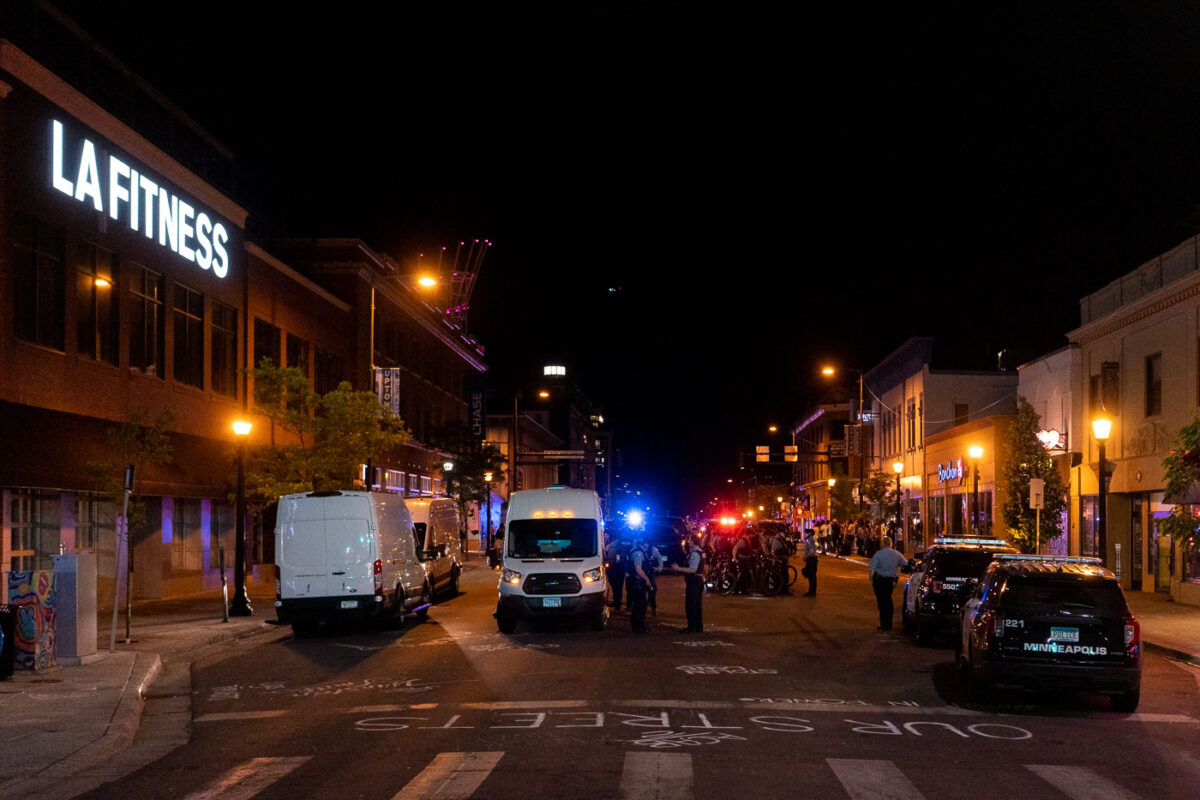
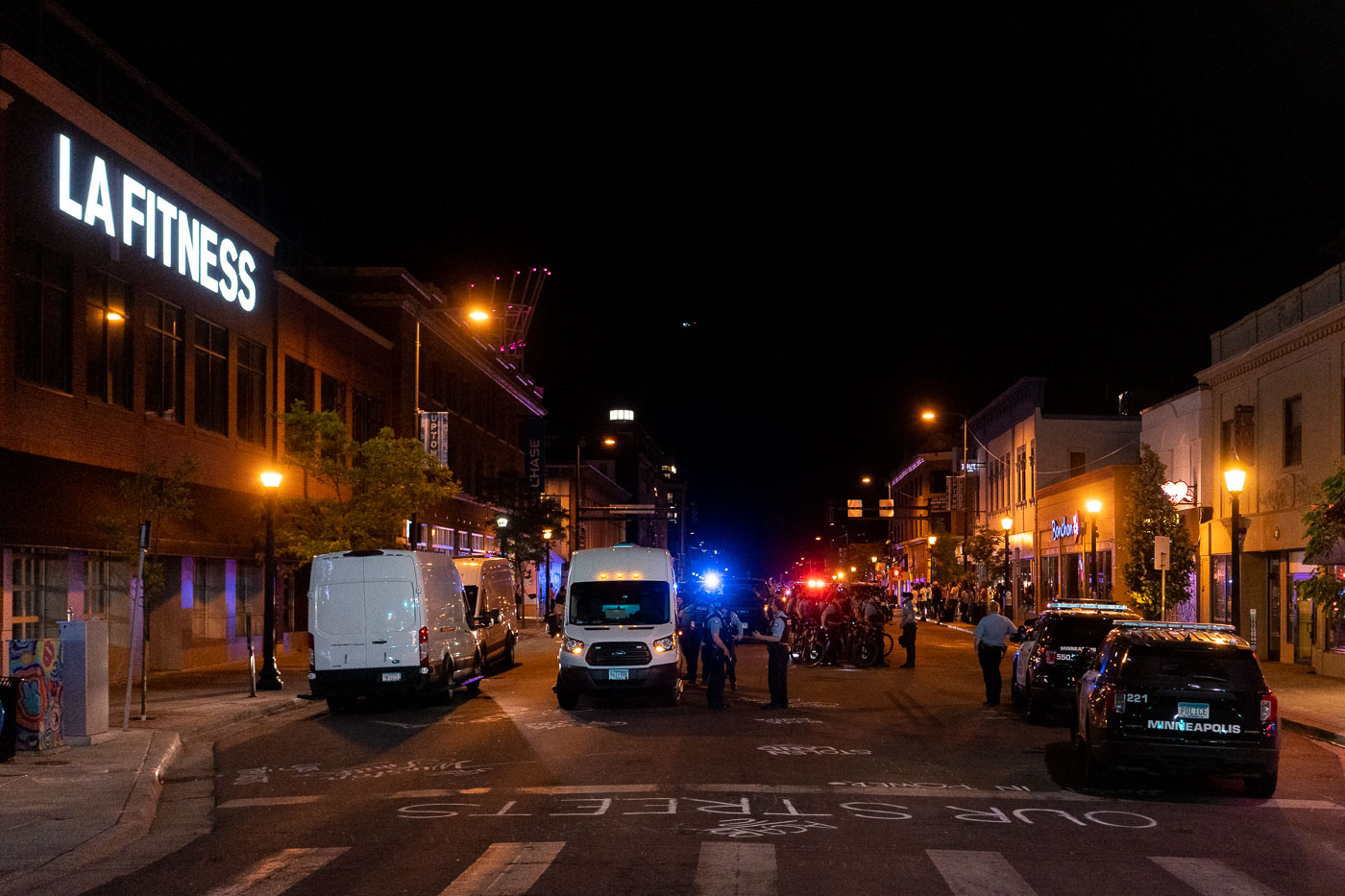
Police vans block Lake Street in Minneapolis outside LA Fitness at night.
Minneapolis Police officers are present on Lake Street in Uptown Minneapolis following the law enforcement shooting death of Winston Smith. Smith was killed by Federal Task Force members while they were serving a warrant. The incident sparked days of protests in the area, with "Our Streets" and "Stop Power" spray-painted on the road, indicating the public's response to the event. On June 3, 2021, members of a U.S. Marshals Service fugitive task force fatally shot 32-year-old Winston “Boogie” Smith Jr. on the top level of a parking ramp in Minneapolis’ Uptown neighborhood while attempting to arrest him on a felony warrant. Authorities said Smith fired a handgun from inside his vehicle during the encounter, while family members and activists questioned the official account and demanded the release of additional evidence. The killing led to weeks of protests, street occupations, and confrontations with police in Uptown, becoming another major flashpoint in Minneapolis during the period following the murder of George Floyd. Earlier in the day Minneapolis city officials along with The Agape Movement coordinated to open the streets that had been closed at George Floyd Square since his murder.

Minneapolis Police on Lake Street After Winston Smith Shooting

Crowd gathers at Lake Street and Girard Avenue in Minneapolis during a vigil for Deona Marie and Winston Smith.
A crowd of approximately one thousand people marched through Uptown Minneapolis, carrying signs for Winston Smith and Deona Marie. The march concluded with a candlelight vigil on Lake Street and Girard Avenue, the site where Deona Marie was killed by a vehicle driven into protesters. On June 3, 2021, members of a U.S. Marshals Service fugitive task force fatally shot 32-year-old Winston “Boogie” Smith Jr. on the top level of a parking ramp in Minneapolis’ Uptown neighborhood while attempting to arrest him on a felony warrant. Authorities said Smith fired a handgun from inside his vehicle during the encounter, while family members and activists questioned the official account and demanded the release of additional evidence. The killing led to weeks of protests, street occupations, and confrontations with police in Uptown, becoming another major flashpoint in Minneapolis during the period following the murder of George Floyd. Earlier in the day Minneapolis city officials along with The Agape Movement coordinated to open the streets that had been closed at George Floyd Square since his murder. On June 13, 2021, 31-year-old Deona Marie Knajdek was killed when a driver accelerated into a group of demonstrators gathered in Minneapolis’ Uptown neighborhood during ongoing protests over the killing of Winston “Boogie” Smith Jr. Protesters had blocked the intersection of West Lake Street and Girard Avenue with vehicles and barricades when Nicholas Kraus drove a Jeep Cherokee into the crowd at high speed, killing Knajdek and injuring several others. Kraus was later charged with second-degree murder, two counts of second-degree assault with a dangerous weapon, and criminal vehicular operation. In 2023, he pleaded guilty to murder and assault charges and was sentenced to more than 20 years in prison for the attack.

Minneapolis Protest March for Deona Marie and Winston Smith

Sticker reading WinstonSmithWasAssassinated.com on a rusted metal railing in Uptown Minneapolis.
A sticker reading "WinstonSmithWasAssassinated.com" is affixed to a rusted metal surface in Uptown Minneapolis. This sticker references Winston Smith, who was killed by law enforcement on June 3, 2021. On June 3, 2021, members of a U.S. Marshals Service fugitive task force fatally shot 32-year-old Winston “Boogie” Smith Jr. on the top level of a parking ramp in Minneapolis’ Uptown neighborhood while attempting to arrest him on a felony warrant. Authorities said Smith fired a handgun from inside his vehicle during the encounter, while family members and activists questioned the official account and demanded the release of additional evidence. The killing led to weeks of protests, street occupations, and confrontations with police in Uptown, becoming another major flashpoint in Minneapolis during the period following the murder of George Floyd. Earlier in the day Minneapolis city officials along with The Agape Movement coordinated to open the streets that had been closed at George Floyd Square since his murder.

Winston Smith Assassinated Sticker in Uptown Minneapolis

Protesters gather at Seven Points parking ramp in Minneapolis, with messages painted on the red pavement.
Protesters gathered at the Seven Points parking ramp in Uptown Minneapolis on August 31, 2021, to protest the law enforcement shooting death of Winston Smith ten days prior. The protest also honored Deona Marie Knajdek, who was killed the previous day when Nicholas Kraus drove his vehicle into a crowd of demonstrators. The red pavement of the ramp was covered in messages such as "FREE AMERICA," "POLICE BRUTALITY," and "HOW MANY MORE," reflecting the ongoing activism and public outcry following Smith's death and other instances of police violence. On June 3, 2021, members of a U.S. Marshals Service fugitive task force fatally shot 32-year-old Winston “Boogie” Smith Jr. on the top level of a parking ramp in Minneapolis’ Uptown neighborhood while attempting to arrest him on a felony warrant. Authorities said Smith fired a handgun from inside his vehicle during the encounter, while family members and activists questioned the official account and demanded the release of additional evidence. The killing led to weeks of protests, street occupations, and confrontations with police in Uptown, becoming another major flashpoint in Minneapolis during the period following the murder of George Floyd. Earlier in the day Minneapolis city officials along with The Agape Movement coordinated to open the streets that had been closed at George Floyd Square since his murder. On June 13, 2021, 31-year-old Deona Marie Knajdek was killed when a driver accelerated into a group of demonstrators gathered in Minneapolis’ Uptown neighborhood during ongoing protests over the killing of Winston “Boogie” Smith Jr. Protesters had blocked the intersection of West Lake Street and Girard Avenue with vehicles and barricades when Nicholas Kraus drove a Jeep Cherokee into the crowd at high speed, killing Knajdek and injuring several others. Kraus was later charged with second-degree murder, two counts of second-degree assault with a dangerous weapon, and criminal vehicular operation. In 2023

Minneapolis Protest for Winston Smith and Deona Marie

Protesters in Uptown Minneapolis hold signs for Winston Smith and Deona Marie during a march.
A march for justice took place in Uptown Minneapolis, honoring Deona Marie and Winston Smith. The crowd, estimated at around a thousand people, carried signs with portraits of Marie and Smith. The march concluded with a candlelight vigil at Lake and Girard, the site where Deona Marie was killed. On June 13, 2021, 31-year-old Deona Marie Knajdek was killed when a driver accelerated into a group of demonstrators gathered in Minneapolis’ Uptown neighborhood during ongoing protests over the killing of Winston “Boogie” Smith Jr. Protesters had blocked the intersection of West Lake Street and Girard Avenue with vehicles and barricades when Nicholas Kraus drove a Jeep Cherokee into the crowd at high speed, killing Knajdek and injuring several others. Kraus was later charged with second-degree murder, two counts of second-degree assault with a dangerous weapon, and criminal vehicular operation. In 2023, he pleaded guilty to murder and assault charges and was sentenced to more than 20 years in prison for the attack.

Visual Justice March for Deona Marie & Winston Smith in Uptown Minneapolis

Protesters in Minneapolis carry a banner reading “Stop the War on Black America!”
Protesters marched through Uptown Minneapolis carrying signs that read "This is a Revolt Against Racism! Stop the War on Black America!" and "Remember Deona Marie." The marches occurred following the law enforcement shooting death of Winston Smith on June 3, 2021, and the subsequent killing of protester Deona Marie on June 13, 2021, when Nicholas Kraus drove his vehicle into a crowd of demonstrators. The "Revolt Against Racism" banner and "Remember Deona Marie" signs reflect the ongoing activism and demands for justice within the community. On June 3, 2021, members of a U.S. Marshals Service fugitive task force fatally shot 32-year-old Winston “Boogie” Smith Jr. on the top level of a parking ramp in Minneapolis’ Uptown neighborhood while attempting to arrest him on a felony warrant. Authorities said Smith fired a handgun from inside his vehicle during the encounter, while family members and activists questioned the official account and demanded the release of additional evidence. The killing led to weeks of protests, street occupations, and confrontations with police in Uptown, becoming another major flashpoint in Minneapolis during the period following the murder of George Floyd. Earlier in the day Minneapolis city officials along with The Agape Movement coordinated to open the streets that had been closed at George Floyd Square since his murder. On June 13, 2021, 31-year-old Deona Marie Knajdek was killed when a driver accelerated into a group of demonstrators gathered in Minneapolis’ Uptown neighborhood during ongoing protests over the killing of Winston “Boogie” Smith Jr. Protesters had blocked the intersection of West Lake Street and Girard Avenue with vehicles and barricades when Nicholas Kraus drove a Jeep Cherokee into the crowd at high speed, killing Knajdek and injuring several others. Kraus was later charged with second-degree murder, two counts of second-degree assault with a dangerous weapon, and criminal vehicular operation. In 2023, he p

Minneapolis Protest: “Revolt Against Racism” Sign

Candles and flowers at the Deona Marie memorial in Uptown Minneapolis
Candles for a vigil for Deona Marie who was killed on June 13th after Nicholas Kraus drove his vehicle into those protesting the June 3rd law enforcement killing of Winston Smith. On June 3, 2021, members of a U.S. Marshals Service fugitive task force fatally shot 32-year-old Winston “Boogie” Smith Jr. on the top level of a parking ramp in Minneapolis’ Uptown neighborhood while attempting to arrest him on a felony warrant. Authorities said Smith fired a handgun from inside his vehicle during the encounter, while family members and activists questioned the official account and demanded the release of additional evidence. The killing led to weeks of protests, street occupations, and confrontations with police in Uptown, becoming another major flashpoint in Minneapolis during the period following the murder of George Floyd. Earlier in the day Minneapolis city officials along with The Agape Movement coordinated to open the streets that had been closed at George Floyd Square since his murder. On June 13, 2021, 31-year-old Deona Marie Knajdek was killed when a driver accelerated into a group of demonstrators gathered in Minneapolis’ Uptown neighborhood during ongoing protests over the killing of Winston “Boogie” Smith Jr. Protesters had blocked the intersection of West Lake Street and Girard Avenue with vehicles and barricades when Nicholas Kraus drove a Jeep Cherokee into the crowd at high speed, killing Knajdek and injuring several others. Kraus was later charged with second-degree murder, two counts of second-degree assault with a dangerous weapon, and criminal vehicular operation. In 2023, he pleaded guilty to murder and assault charges and was sentenced to more than 20 years in prison for the attack.

Candles at Deona Marie Memorial, Uptown Minneapolis

Artist sketches a chalk portrait on Lake Street in Minneapolis.
On Lake Street in Minneapolis, an artist creates a chalk portrait of Deona Marie. Marie was a participant in protests following the June 3rd law enforcement shooting death of Winston Smith. On June 3, 2021, members of a U.S. Marshals Service fugitive task force fatally shot 32-year-old Winston “Boogie” Smith Jr. on the top level of a parking ramp in Minneapolis’ Uptown neighborhood while attempting to arrest him on a felony warrant. Authorities said Smith fired a handgun from inside his vehicle during the encounter, while family members and activists questioned the official account and demanded the release of additional evidence. The killing led to weeks of protests, street occupations, and confrontations with police in Uptown, becoming another major flashpoint in Minneapolis during the period following the murder of George Floyd. Earlier in the day Minneapolis city officials along with The Agape Movement coordinated to open the streets that had been closed at George Floyd Square since his murder. On June 13, 2021, 31-year-old Deona Marie Knajdek was killed when a driver accelerated into a group of demonstrators gathered in Minneapolis’ Uptown neighborhood during ongoing protests over the killing of Winston “Boogie” Smith Jr. Protesters had blocked the intersection of West Lake Street and Girard Avenue with vehicles and barricades when Nicholas Kraus drove a Jeep Cherokee into the crowd at high speed, killing Knajdek and injuring several others. Kraus was later charged with second-degree murder, two counts of second-degree assault with a dangerous weapon, and criminal vehicular operation. In 2023, he pleaded guilty to murder and assault charges and was sentenced to more than 20 years in prison for the attack.

Chalk portrait of Deona Marie on Lake Street, Minneapolis

People tend a flower-and-candle memorial for Winston Smith in Uptown Minneapolis.
A memorial for Deona Marie, who was killed on June 13th, is adorned with flowers and candles in Minneapolis. On June 13, 2021, 31-year-old Deona Marie Knajdek was killed when a driver accelerated into a group of demonstrators gathered in Minneapolis’ Uptown neighborhood during ongoing protests over the killing of Winston “Boogie” Smith Jr. Protesters had blocked the intersection of West Lake Street and Girard Avenue with vehicles and barricades when Nicholas Kraus drove a Jeep Cherokee into the crowd at high speed, killing Knajdek and injuring several others. Kraus was later charged with second-degree murder, two counts of second-degree assault with a dangerous weapon, and criminal vehicular operation. In 2023, he pleaded guilty to murder and assault charges and was sentenced to more than 20 years in prison for the attack. On June 3, 2021, members of a U.S. Marshals Service fugitive task force fatally shot 32-year-old Winston “Boogie” Smith Jr. on the top level of a parking ramp in Minneapolis’ Uptown neighborhood while attempting to arrest him on a felony warrant. Authorities said Smith fired a handgun from inside his vehicle during the encounter, while family members and activists questioned the official account and demanded the release of additional evidence. The killing led to weeks of protests, street occupations, and confrontations with police in Uptown, becoming another major flashpoint in Minneapolis during the period following the murder of George Floyd. Earlier in the day Minneapolis city officials along with The Agape Movement coordinated to open the streets that had been closed at George Floyd Square since his murder.

Deona Marie Memorial with Flowers and Candles in Minneapolis

Protesters hold Black Lives Matter signs on Lake Street in Minneapolis.
Protesters hold "Black Lives Matter" signs on Lake Street at Hennepin Avenue in Minneapolis. The protest was in response to the law enforcement killing of Winston Smith on June 3, 2021, and Deona Marie on June 13, 2021. On June 13, 2021, 31-year-old Deona Marie Knajdek was killed when a driver accelerated into a group of demonstrators gathered in Minneapolis’ Uptown neighborhood during ongoing protests over the killing of Winston “Boogie” Smith Jr. Protesters had blocked the intersection of West Lake Street and Girard Avenue with vehicles and barricades when Nicholas Kraus drove a Jeep Cherokee into the crowd at high speed, killing Knajdek and injuring several others. Kraus was later charged with second-degree murder, two counts of second-degree assault with a dangerous weapon, and criminal vehicular operation. In 2023, he pleaded guilty to murder and assault charges and was sentenced to more than 20 years in prison for the attack. On June 3, 2021, members of a U.S. Marshals Service fugitive task force fatally shot 32-year-old Winston “Boogie” Smith Jr. on the top level of a parking ramp in Minneapolis’ Uptown neighborhood while attempting to arrest him on a felony warrant. Authorities said Smith fired a handgun from inside his vehicle during the encounter, while family members and activists questioned the official account and demanded the release of additional evidence. The killing led to weeks of protests, street occupations, and confrontations with police in Uptown, becoming another major flashpoint in Minneapolis during the period following the murder of George Floyd. Earlier in the day Minneapolis city officials along with The Agape Movement coordinated to open the streets that had been closed at George Floyd Square since his murder.

Black Lives Matter Protest on Lake Street, Minneapolis

Protesters hug outside Seven Points in Minneapolis after a march.
Protesters gather outside the Seven Points complex in Minneapolis following the killing of Deona Marie. On June 13, 2021, 31-year-old Deona Marie Knajdek was killed when a driver accelerated into a group of demonstrators gathered in Minneapolis’ Uptown neighborhood during ongoing protests over the killing of Winston “Boogie” Smith Jr. Protesters had blocked the intersection of West Lake Street and Girard Avenue with vehicles and barricades when Nicholas Kraus drove a Jeep Cherokee into the crowd at high speed, killing Knajdek and injuring several others. Kraus was later charged with second-degree murder, two counts of second-degree assault with a dangerous weapon, and criminal vehicular operation. In 2023, he pleaded guilty to murder and assault charges and was sentenced to more than 20 years in prison for the attack. On June 3, 2021, members of a U.S. Marshals Service fugitive task force fatally shot 32-year-old Winston “Boogie” Smith Jr. on the top level of a parking ramp in Minneapolis’ Uptown neighborhood while attempting to arrest him on a felony warrant. Authorities said Smith fired a handgun from inside his vehicle during the encounter, while family members and activists questioned the official account and demanded the release of additional evidence. The killing led to weeks of protests, street occupations, and confrontations with police in Uptown, becoming another major flashpoint in Minneapolis during the period following the murder of George Floyd. Earlier in the day Minneapolis city officials along with The Agape Movement coordinated to open the streets that had been closed at George Floyd Square since his murder.

Protesters embrace after Deona Marie protest, Minneapolis

Protesters gather at a Minneapolis intersection beneath a red traffic light and Deona Marie posters.
Protesters gather at the intersection of Lake Street and Girard in Minneapolis on June 14, 2021. The protest was held in response to the killing of Winston Smith by a federal task force on June 3, 2021, and the subsequent death of Deona Marie on June 13, 2021. On June 3, 2021, members of a U.S. Marshals Service fugitive task force fatally shot 32-year-old Winston “Boogie” Smith Jr. on the top level of a parking ramp in Minneapolis’ Uptown neighborhood while attempting to arrest him on a felony warrant. Authorities said Smith fired a handgun from inside his vehicle during the encounter, while family members and activists questioned the official account and demanded the release of additional evidence. The killing led to weeks of protests, street occupations, and confrontations with police in Uptown, becoming another major flashpoint in Minneapolis during the period following the murder of George Floyd. Earlier in the day Minneapolis city officials along with The Agape Movement coordinated to open the streets that had been closed at George Floyd Square since his murder. On June 13, 2021, 31-year-old Deona Marie Knajdek was killed when a driver accelerated into a group of demonstrators gathered in Minneapolis’ Uptown neighborhood during ongoing protests over the killing of Winston “Boogie” Smith Jr. Protesters had blocked the intersection of West Lake Street and Girard Avenue with vehicles and barricades when Nicholas Kraus drove a Jeep Cherokee into the crowd at high speed, killing Knajdek and injuring several others. Kraus was later charged with second-degree murder, two counts of second-degree assault with a dangerous weapon, and criminal vehicular operation. In 2023, he pleaded guilty to murder and assault charges and was sentenced to more than 20 years in prison for the attack.

Minneapolis Protest for Deona Marie and Winston Smith

Protesters gather at Lake Street and Girard Avenue in Minneapolis, with signs for Winston Smith and Deona Marie.
Protesters gather at the intersection of Lake Street and Girard Avenue in Minneapolis on June 5, 2021. The protest was held in response to the killing of Winston Smith and Deona Marie. On June 13, 2021, 31-year-old Deona Marie Knajdek was killed when a driver accelerated into a group of demonstrators gathered in Minneapolis’ Uptown neighborhood during ongoing protests over the killing of Winston “Boogie” Smith Jr. Protesters had blocked the intersection of West Lake Street and Girard Avenue with vehicles and barricades when Nicholas Kraus drove a Jeep Cherokee into the crowd at high speed, killing Knajdek and injuring several others. Kraus was later charged with second-degree murder, two counts of second-degree assault with a dangerous weapon, and criminal vehicular operation. In 2023, he pleaded guilty to murder and assault charges and was sentenced to more than 20 years in prison for the attack. On June 3, 2021, members of a U.S. Marshals Service fugitive task force fatally shot 32-year-old Winston “Boogie” Smith Jr. on the top level of a parking ramp in Minneapolis’ Uptown neighborhood while attempting to arrest him on a felony warrant. Authorities said Smith fired a handgun from inside his vehicle during the encounter, while family members and activists questioned the official account and demanded the release of additional evidence. The killing led to weeks of protests, street occupations, and confrontations with police in Uptown, becoming another major flashpoint in Minneapolis during the period following the murder of George Floyd. Earlier in the day Minneapolis city officials along with The Agape Movement coordinated to open the streets that had been closed at George Floyd Square since his murder.

Protest at Lake and Girard, Minneapolis, after Winston Smith’s death

Protester holds a Justice for Winston Smith sign during a march in Uptown Minneapolis.
A protester holds a sign reading "Justice for Winston Smith" during a march in Uptown Minneapolis. The protest occurred in the aftermath of the June 3rd law enforcement killing of Winston Smith and the subsequent death of Deona Marie. On June 13, 2021, 31-year-old Deona Marie Knajdek was killed when a driver accelerated into a group of demonstrators gathered in Minneapolis’ Uptown neighborhood during ongoing protests over the killing of Winston “Boogie” Smith Jr. Protesters had blocked the intersection of West Lake Street and Girard Avenue with vehicles and barricades when Nicholas Kraus drove a Jeep Cherokee into the crowd at high speed, killing Knajdek and injuring several others. Kraus was later charged with second-degree murder, two counts of second-degree assault with a dangerous weapon, and criminal vehicular operation. In 2023, he pleaded guilty to murder and assault charges and was sentenced to more than 20 years in prison for the attack. On June 3, 2021, members of a U.S. Marshals Service fugitive task force fatally shot 32-year-old Winston “Boogie” Smith Jr. on the top level of a parking ramp in Minneapolis’ Uptown neighborhood while attempting to arrest him on a felony warrant. Authorities said Smith fired a handgun from inside his vehicle during the encounter, while family members and activists questioned the official account and demanded the release of additional evidence. The killing led to weeks of protests, street occupations, and confrontations with police in Uptown, becoming another major flashpoint in Minneapolis during the period following the murder of George Floyd. Earlier in the day Minneapolis city officials along with The Agape Movement coordinated to open the streets that had been closed at George Floyd Square since his murder.

Minneapolis Protest: Justice for Winston Smith Sign

Protester holds a Justice for Winston Smith sign during a Minneapolis march on Lake Street.
A protester holds a sign reading "Justice for Winston Smith" on Lake Street in Minneapolis. This protest occurred following the June 3rd killing of Winston Smith by a Federal Task Force. The following day, Deona Marie was killed when a driver intentionally struck protesters demonstrating against Smith's death. On June 3, 2021, members of a U.S. Marshals Service fugitive task force fatally shot 32-year-old Winston “Boogie” Smith Jr. on the top level of a parking ramp in Minneapolis’ Uptown neighborhood while attempting to arrest him on a felony warrant. Authorities said Smith fired a handgun from inside his vehicle during the encounter, while family members and activists questioned the official account and demanded the release of additional evidence. The killing led to weeks of protests, street occupations, and confrontations with police in Uptown, becoming another major flashpoint in Minneapolis during the period following the murder of George Floyd. Earlier in the day Minneapolis city officials along with The Agape Movement coordinated to open the streets that had been closed at George Floyd Square since his murder. On June 13, 2021, 31-year-old Deona Marie Knajdek was killed when a driver accelerated into a group of demonstrators gathered in Minneapolis’ Uptown neighborhood during ongoing protests over the killing of Winston “Boogie” Smith Jr. Protesters had blocked the intersection of West Lake Street and Girard Avenue with vehicles and barricades when Nicholas Kraus drove a Jeep Cherokee into the crowd at high speed, killing Knajdek and injuring several others. Kraus was later charged with second-degree murder, two counts of second-degree assault with a dangerous weapon, and criminal vehicular operation. In 2023, he pleaded guilty to murder and assault charges and was sentenced to more than 20 years in prison for the attack.

Minneapolis Protest: Justice for Winston Smith Sign on Lake Street
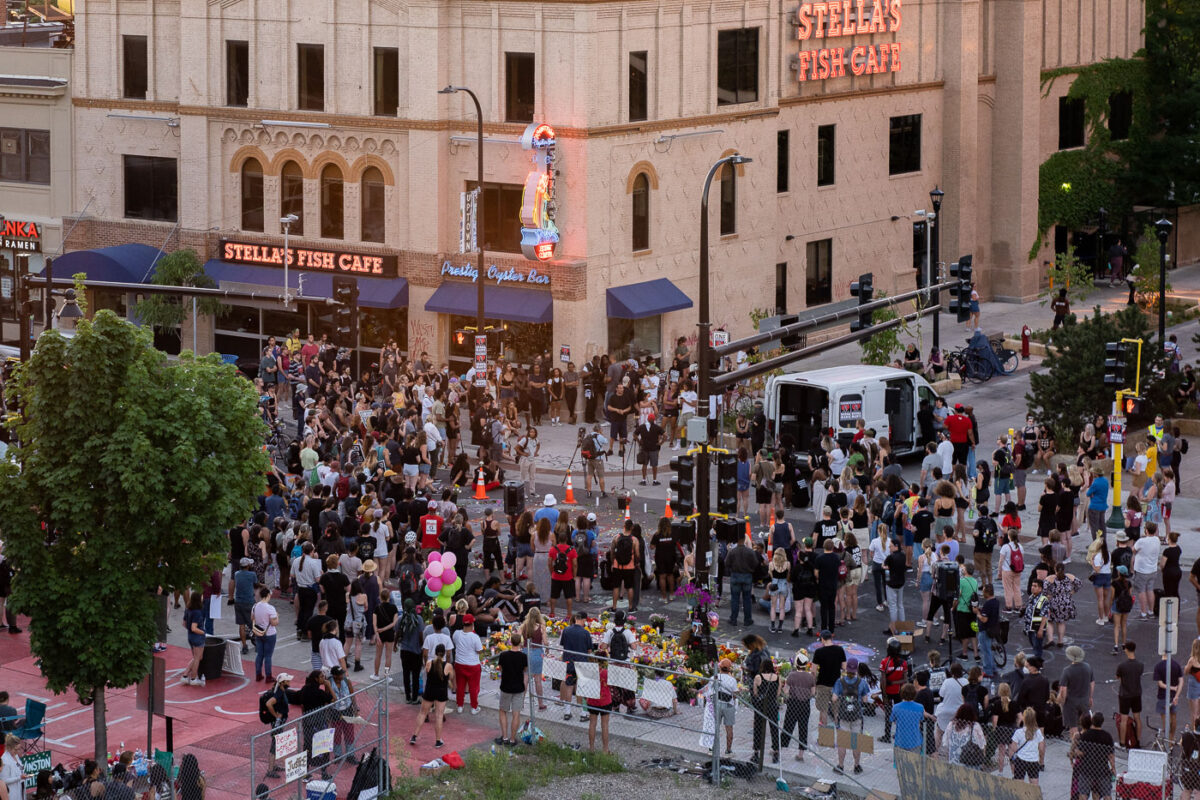
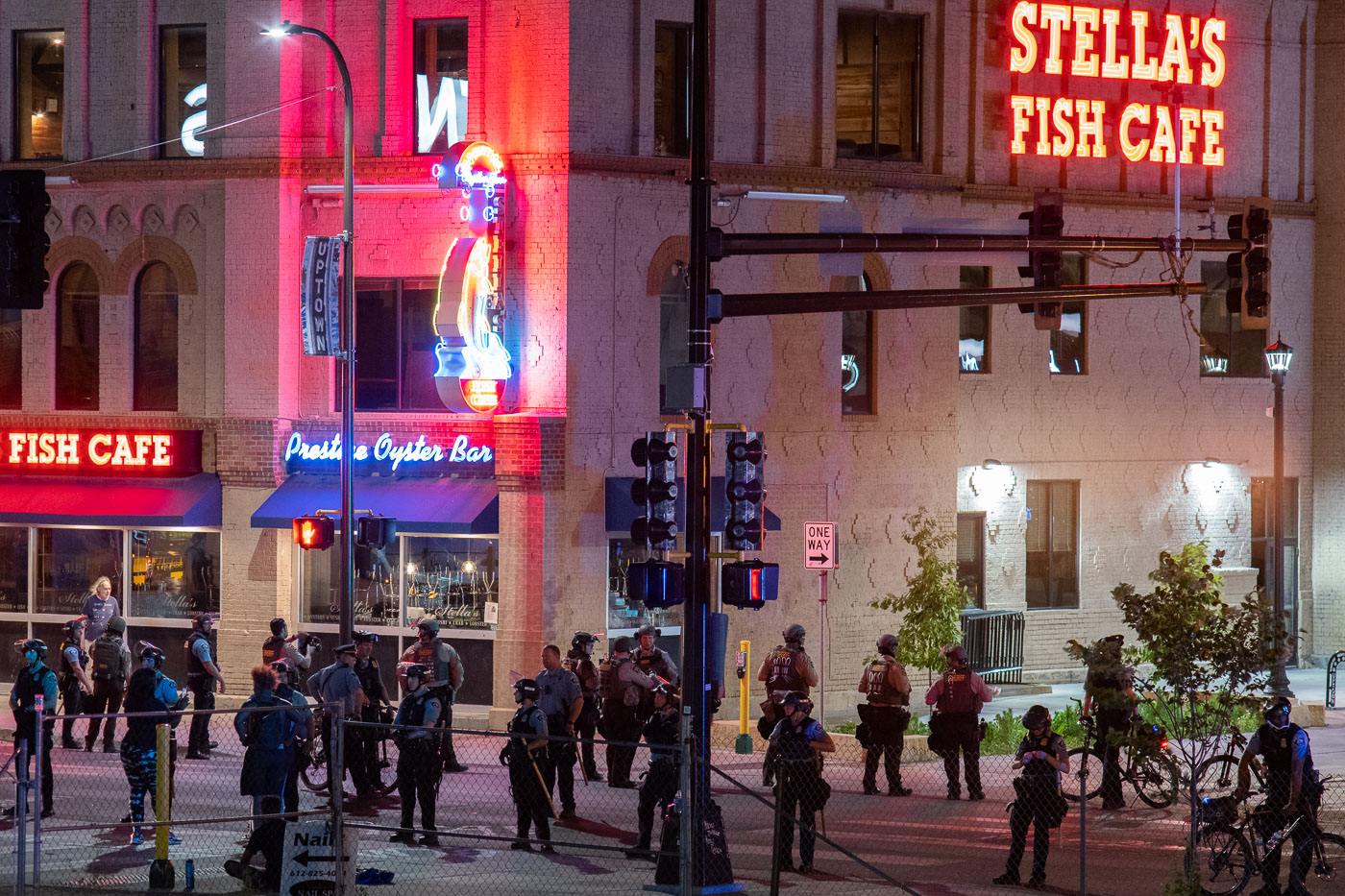
Crowd gathers at Lake and Girard in Minneapolis outside Stella's Fish Cafe during a protest.
A large crowd gathered at the intersection of Lake Street and Girard Avenue in Uptown Minneapolis on June 5, 2021. The protest was held in response to the fatal shooting of Winston Smith by a federal task force on June 3, 2021. On June 3, 2021, members of a U.S. Marshals Service fugitive task force fatally shot 32-year-old Winston “Boogie” Smith Jr. on the top level of a parking ramp in Minneapolis’ Uptown neighborhood while attempting to arrest him on a felony warrant. Authorities said Smith fired a handgun from inside his vehicle during the encounter, while family members and activists questioned the official account and demanded the release of additional evidence. The killing led to weeks of protests, street occupations, and confrontations with police in Uptown, becoming another major flashpoint in Minneapolis during the period following the murder of George Floyd. Earlier in the day Minneapolis city officials along with The Agape Movement coordinated to open the streets that had been closed at George Floyd Square since his murder.

Protest at Lake and Girard, Uptown Minneapolis
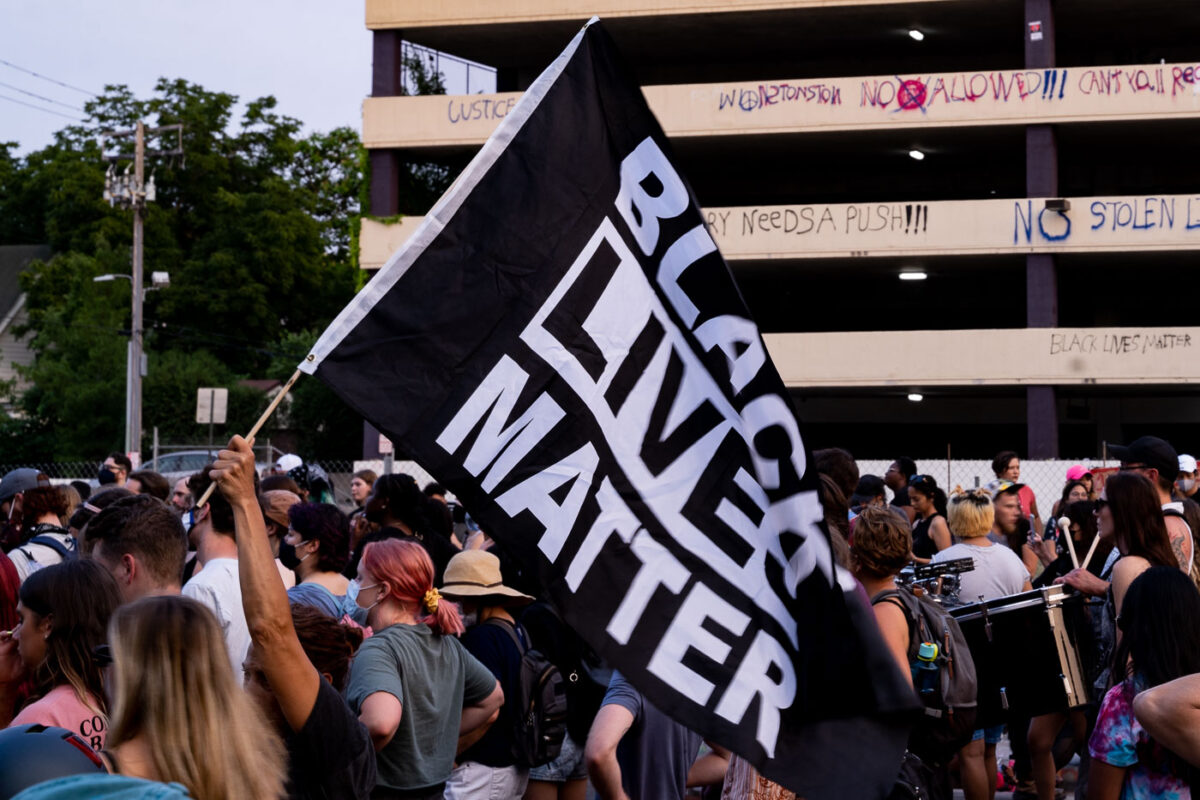
Black Lives Matter Flag, Lake Street Protest
Protesters gather on what would have been Deona Marie's birthday. Deona was killed on June 13th when a man drove his vehicle through barricades while she was protesting the police killing of Winston Smith.

Black Lives Matter Flag, Lake Street Protest

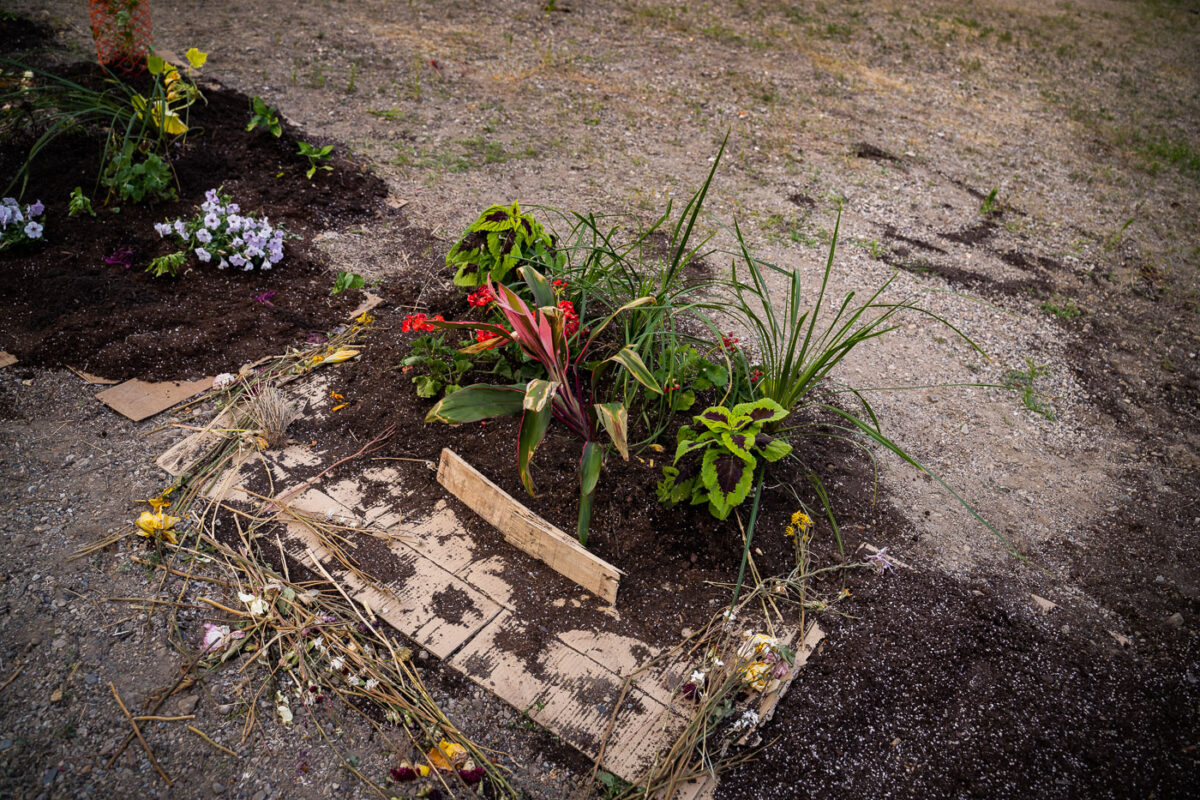
Memorial garden in an empty lot in Uptown Minneapolis with flowers and young plants.
A community garden was planted in an empty lot in Uptown Minneapolis, adjacent to the parking garage where Winston Smith was killed on June 3rd, and near the road where Deona Marie was killed on June 13th. On June 3, 2021, members of a U.S. Marshals Service fugitive task force fatally shot 32-year-old Winston “Boogie” Smith Jr. on the top level of a parking ramp in Minneapolis’ Uptown neighborhood while attempting to arrest him on a felony warrant. Authorities said Smith fired a handgun from inside his vehicle during the encounter, while family members and activists questioned the official account and demanded the release of additional evidence. The killing led to weeks of protests, street occupations, and confrontations with police in Uptown, becoming another major flashpoint in Minneapolis during the period following the murder of George Floyd. Earlier in the day Minneapolis city officials along with The Agape Movement coordinated to open the streets that had been closed at George Floyd Square since his murder. On June 13, 2021, 31-year-old Deona Marie Knajdek was killed when a driver accelerated into a group of demonstrators gathered in Minneapolis’ Uptown neighborhood during ongoing protests over the killing of Winston “Boogie” Smith Jr. Protesters had blocked the intersection of West Lake Street and Girard Avenue with vehicles and barricades when Nicholas Kraus drove a Jeep Cherokee into the crowd at high speed, killing Knajdek and injuring several others. Kraus was later charged with second-degree murder, two counts of second-degree assault with a dangerous weapon, and criminal vehicular operation. In 2023, he pleaded guilty to murder and assault charges and was sentenced to more than 20 years in prison for the attack.

Minneapolis Protest Garden for Deona Marie and Winston Smith
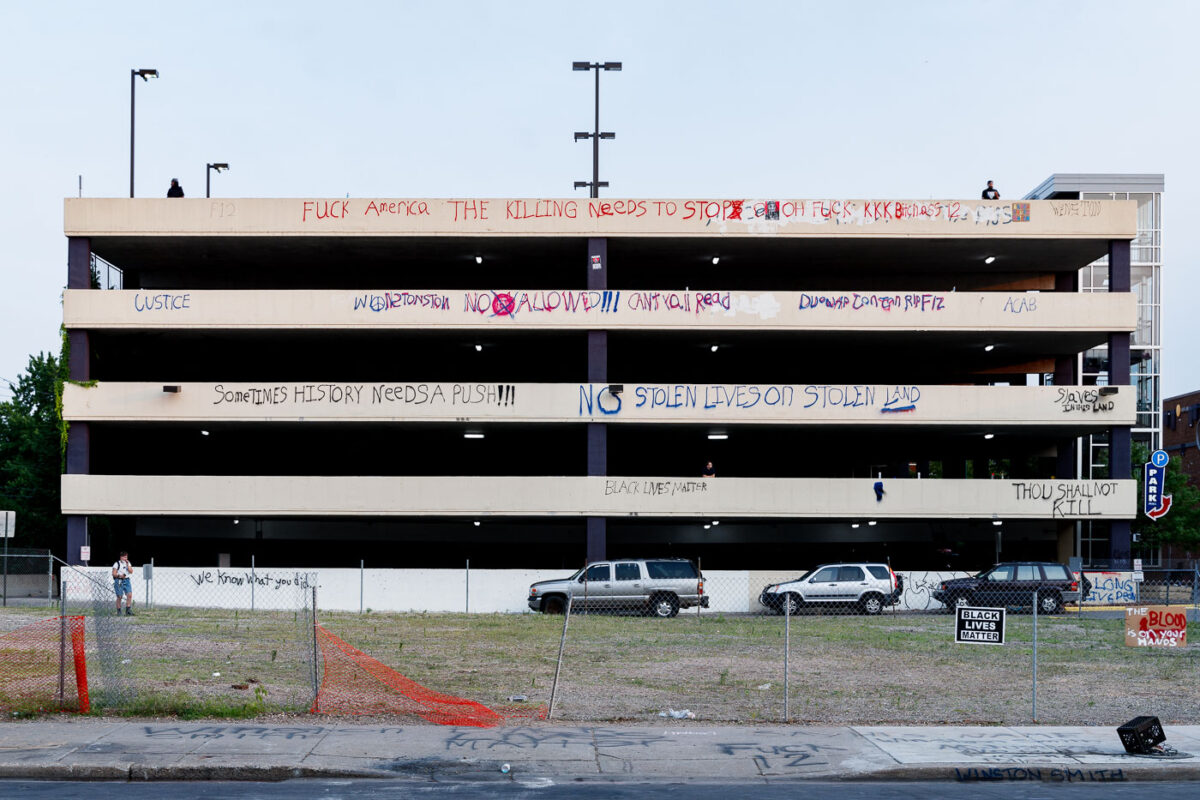
Graffiti covers a Minneapolis parking ramp after Winston Smith’s killing.
Graffiti covers the exterior of a parking ramp in Uptown Minneapolis, the site where Winston Smith was killed by law enforcement on June 3rd. The messages, including "FUCK AMERICA THE KILLING NEEDS TO STOP" and "STOLEN LIVES ON STOLEN LAND," reflect the anger and grief following Smith's death. On June 3, 2021, members of a U.S. Marshals Service fugitive task force fatally shot 32-year-old Winston “Boogie” Smith Jr. on the top level of a parking ramp in Minneapolis’ Uptown neighborhood while attempting to arrest him on a felony warrant. Authorities said Smith fired a handgun from inside his vehicle during the encounter, while family members and activists questioned the official account and demanded the release of additional evidence. The killing led to weeks of protests, street occupations, and confrontations with police in Uptown, becoming another major flashpoint in Minneapolis during the period following the murder of George Floyd. Earlier in the day Minneapolis city officials along with The Agape Movement coordinated to open the streets that had been closed at George Floyd Square since his murder.

Graffiti on Uptown Minneapolis Parking Ramp After Winston Smith Killing
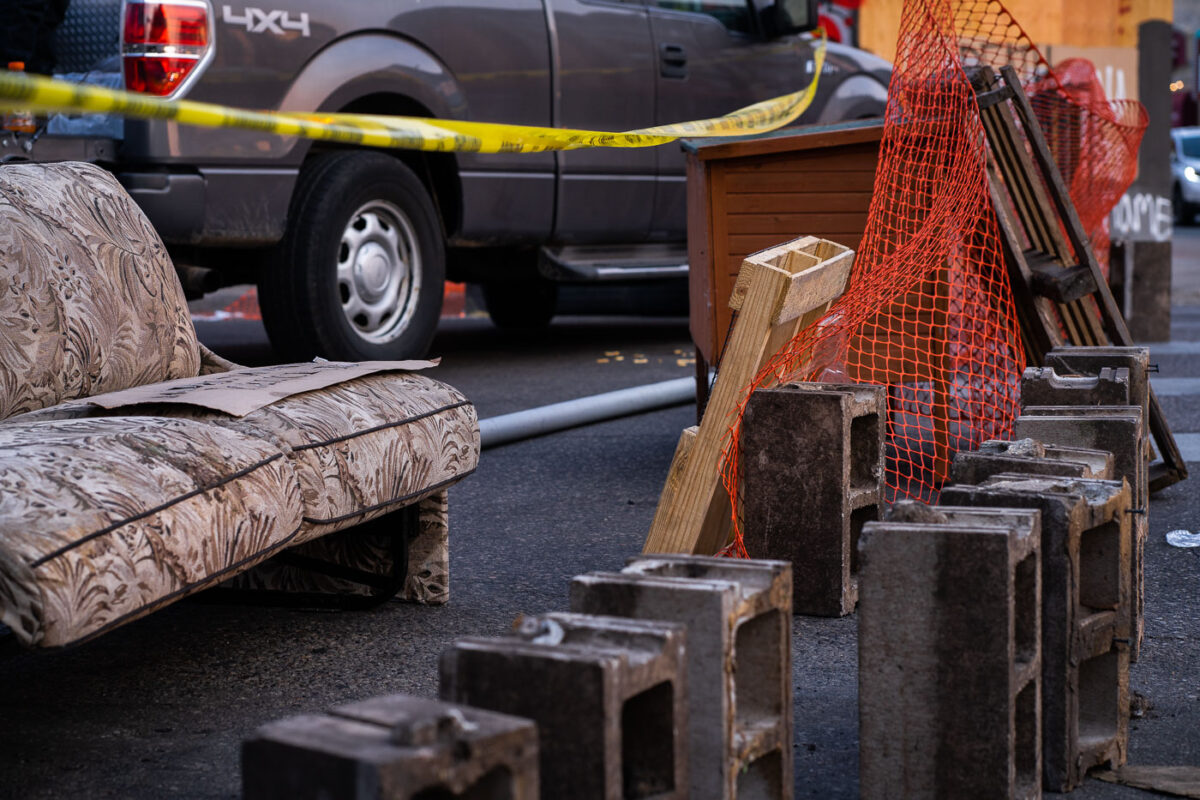
Concrete blocks, furniture and caution tape form a barricade on a street in Minneapolis.
Barricades constructed from concrete blocks, furniture, and construction materials are visible on Lake Street in Uptown Minneapolis on June 16, 2021. These barriers were erected by protesters following the June 3rd killing of Winston Smith by law enforcement and the killing of Deona Marie. On June 3, 2021, members of a U.S. Marshals Service fugitive task force fatally shot 32-year-old Winston “Boogie” Smith Jr. on the top level of a parking ramp in Minneapolis’ Uptown neighborhood while attempting to arrest him on a felony warrant. Authorities said Smith fired a handgun from inside his vehicle during the encounter, while family members and activists questioned the official account and demanded the release of additional evidence. The killing led to weeks of protests, street occupations, and confrontations with police in Uptown, becoming another major flashpoint in Minneapolis during the period following the murder of George Floyd. Earlier in the day Minneapolis city officials along with The Agape Movement coordinated to open the streets that had been closed at George Floyd Square since his murder. On June 13, 2021, 31-year-old Deona Marie Knajdek was killed when a driver accelerated into a group of demonstrators gathered in Minneapolis’ Uptown neighborhood during ongoing protests over the killing of Winston “Boogie” Smith Jr. Protesters had blocked the intersection of West Lake Street and Girard Avenue with vehicles and barricades when Nicholas Kraus drove a Jeep Cherokee into the crowd at high speed, killing Knajdek and injuring several others. Kraus was later charged with second-degree murder, two counts of second-degree assault with a dangerous weapon, and criminal vehicular operation. In 2023, he pleaded guilty to murder and assault charges and was sentenced to more than 20 years in prison for the attack.

Uptown Minneapolis: Barricades on Lake Street
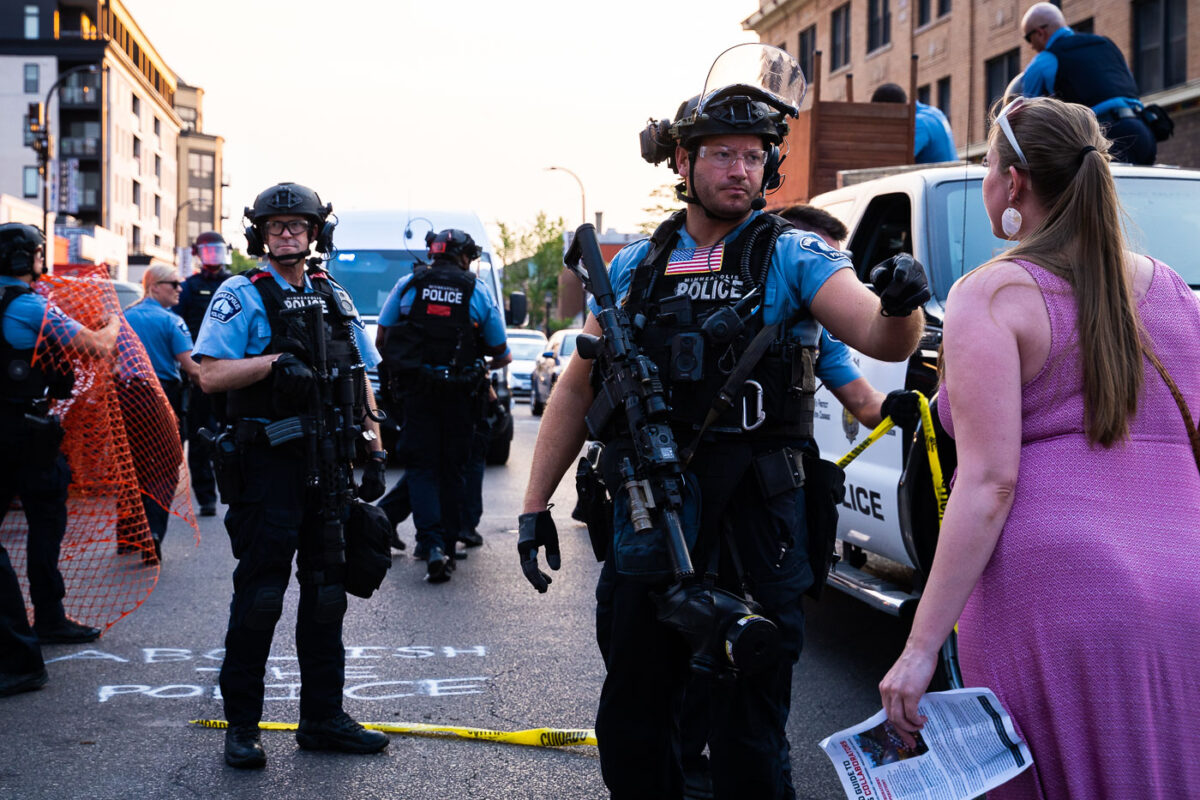
Minneapolis police officers clear protesters and barricades at Lake Street and Hennepin Avenue.
Minneapolis Police officers clear protesters and barricades from the intersection of Lake Street and Hennepin Avenue. The protests began following the deaths of Winston Smith on June 3rd and Deona Marie on June 13th. On June 3, 2021, members of a U.S. Marshals Service fugitive task force fatally shot 32-year-old Winston “Boogie” Smith Jr. on the top level of a parking ramp in Minneapolis’ Uptown neighborhood while attempting to arrest him on a felony warrant. Authorities said Smith fired a handgun from inside his vehicle during the encounter, while family members and activists questioned the official account and demanded the release of additional evidence. The killing led to weeks of protests, street occupations, and confrontations with police in Uptown, becoming another major flashpoint in Minneapolis during the period following the murder of George Floyd. Earlier in the day Minneapolis city officials along with The Agape Movement coordinated to open the streets that had been closed at George Floyd Square since his murder. On June 13, 2021, 31-year-old Deona Marie Knajdek was killed when a driver accelerated into a group of demonstrators gathered in Minneapolis’ Uptown neighborhood during ongoing protests over the killing of Winston “Boogie” Smith Jr. Protesters had blocked the intersection of West Lake Street and Girard Avenue with vehicles and barricades when Nicholas Kraus drove a Jeep Cherokee into the crowd at high speed, killing Knajdek and injuring several others. Kraus was later charged with second-degree murder, two counts of second-degree assault with a dangerous weapon, and criminal vehicular operation. In 2023, he pleaded guilty to murder and assault charges and was sentenced to more than 20 years in prison for the attack.

Minneapolis Police Clear Protest Site at Lake and Hennepin
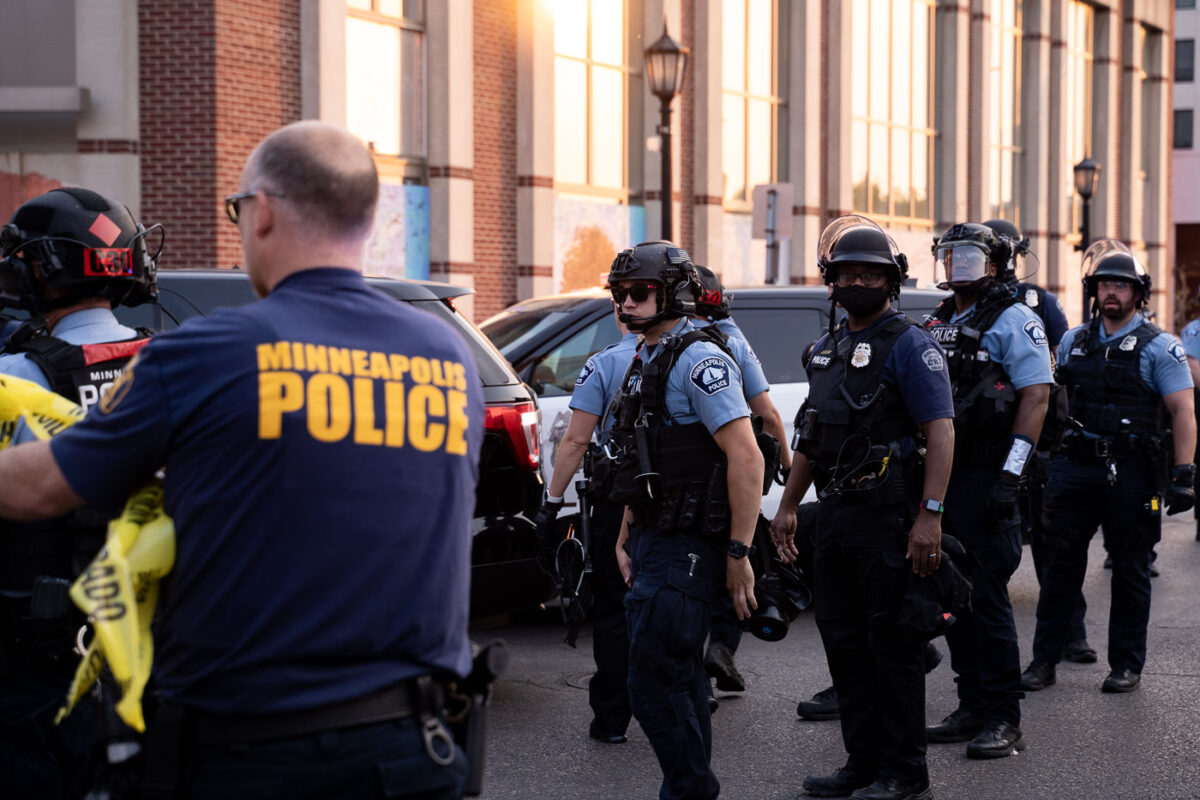
Minneapolis police officers stand near barricades on Lake Street in Uptown Minneapolis.
Minneapolis Police officers clear street barricades on Lake Street in Uptown Minneapolis. These barricades were erected following the killings of Winston Smith and Deona Marie in June 2021. On June 3, 2021, members of a U.S. Marshals Service fugitive task force fatally shot 32-year-old Winston “Boogie” Smith Jr. on the top level of a parking ramp in Minneapolis’ Uptown neighborhood while attempting to arrest him on a felony warrant. Authorities said Smith fired a handgun from inside his vehicle during the encounter, while family members and activists questioned the official account and demanded the release of additional evidence. The killing led to weeks of protests, street occupations, and confrontations with police in Uptown, becoming another major flashpoint in Minneapolis during the period following the murder of George Floyd. Earlier in the day Minneapolis city officials along with The Agape Movement coordinated to open the streets that had been closed at George Floyd Square since his murder. On June 13, 2021, 31-year-old Deona Marie Knajdek was killed when a driver accelerated into a group of demonstrators gathered in Minneapolis’ Uptown neighborhood during ongoing protests over the killing of Winston “Boogie” Smith Jr. Protesters had blocked the intersection of West Lake Street and Girard Avenue with vehicles and barricades when Nicholas Kraus drove a Jeep Cherokee into the crowd at high speed, killing Knajdek and injuring several others. Kraus was later charged with second-degree murder, two counts of second-degree assault with a dangerous weapon, and criminal vehicular operation. In 2023, he pleaded guilty to murder and assault charges and was sentenced to more than 20 years in prison for the attack.

Minneapolis Police Clear Barricades on Lake Street
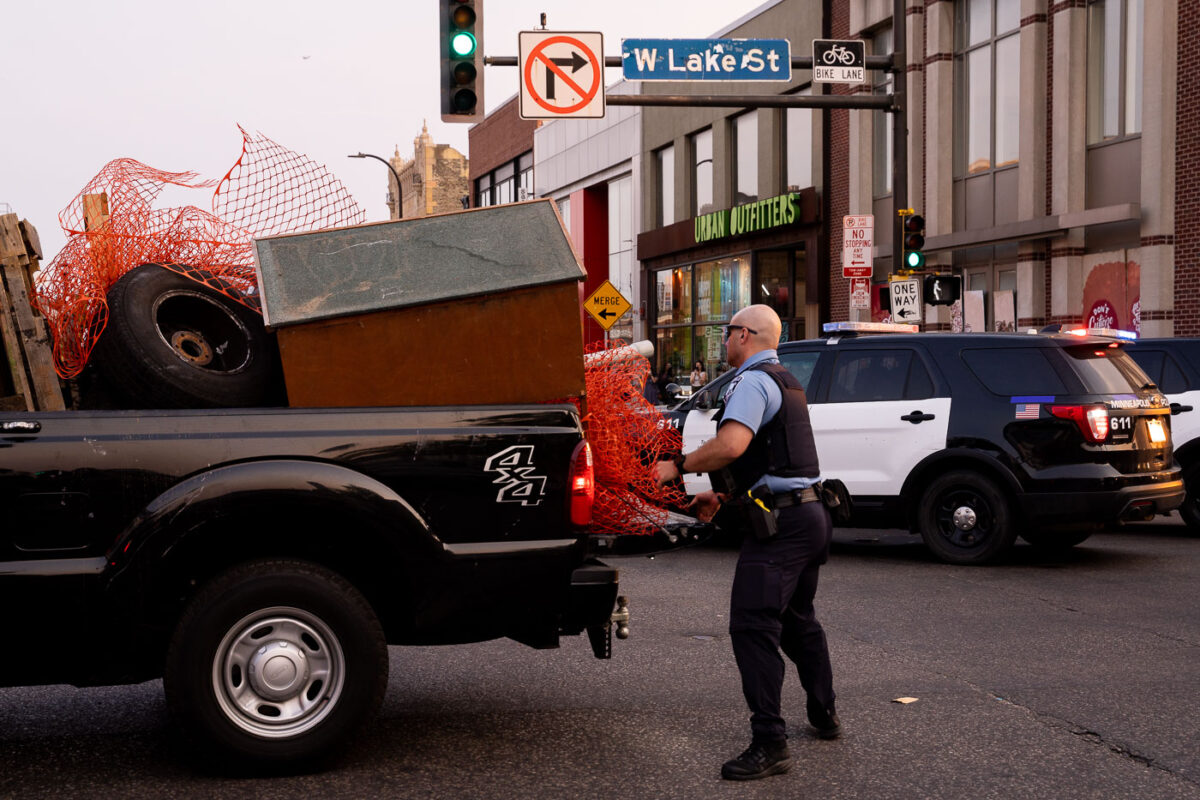
Minneapolis police officer removes barricade materials from a pickup on W Lake St in Minneapolis
Minneapolis police officers remove materials used by protesters to construct barricades on West Lake Street. The protests followed the deaths of Winston Smith on June 3rd and Deona Marie on June 13th. On June 3, 2021, members of a U.S. Marshals Service fugitive task force fatally shot 32-year-old Winston “Boogie” Smith Jr. on the top level of a parking ramp in Minneapolis’ Uptown neighborhood while attempting to arrest him on a felony warrant. Authorities said Smith fired a handgun from inside his vehicle during the encounter, while family members and activists questioned the official account and demanded the release of additional evidence. The killing led to weeks of protests, street occupations, and confrontations with police in Uptown, becoming another major flashpoint in Minneapolis during the period following the murder of George Floyd. Earlier in the day Minneapolis city officials along with The Agape Movement coordinated to open the streets that had been closed at George Floyd Square since his murder. On June 13, 2021, 31-year-old Deona Marie Knajdek was killed when a driver accelerated into a group of demonstrators gathered in Minneapolis’ Uptown neighborhood during ongoing protests over the killing of Winston “Boogie” Smith Jr. Protesters had blocked the intersection of West Lake Street and Girard Avenue with vehicles and barricades when Nicholas Kraus drove a Jeep Cherokee into the crowd at high speed, killing Knajdek and injuring several others. Kraus was later charged with second-degree murder, two counts of second-degree assault with a dangerous weapon, and criminal vehicular operation. In 2023, he pleaded guilty to murder and assault charges and was sentenced to more than 20 years in prison for the attack.

Minneapolis Police Remove Protest Barricade Materials on W Lake St
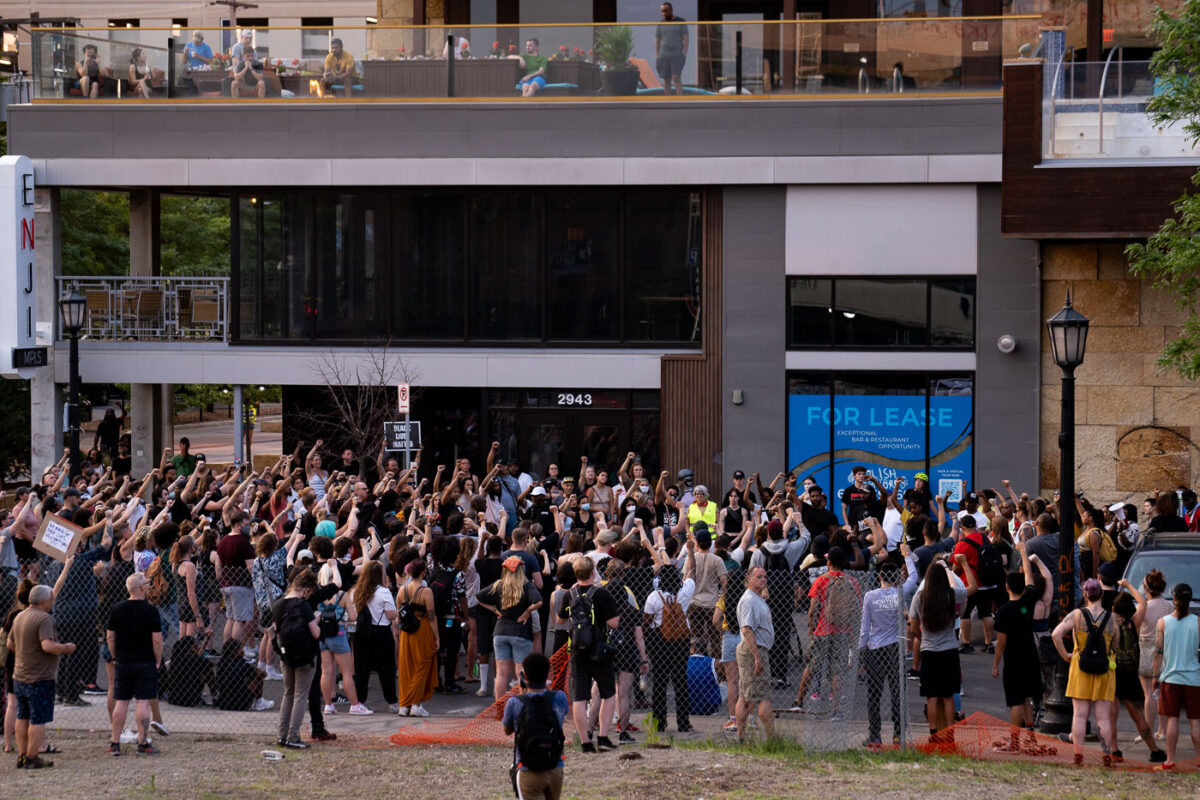
Protesters raise fists outside a building on Lake Street in Minneapolis.
Protesters raise their fists on Lake Street in Uptown Minneapolis on what would have been Deona Marie's birthday. Marie was killed on June 13th when a vehicle drove through barricades during a protest for Winston Smith, who had been killed by law enforcement days earlier. On June 3, 2021, members of a U.S. Marshals Service fugitive task force fatally shot 32-year-old Winston “Boogie” Smith Jr. on the top level of a parking ramp in Minneapolis’ Uptown neighborhood while attempting to arrest him on a felony warrant. Authorities said Smith fired a handgun from inside his vehicle during the encounter, while family members and activists questioned the official account and demanded the release of additional evidence. The killing led to weeks of protests, street occupations, and confrontations with police in Uptown, becoming another major flashpoint in Minneapolis during the period following the murder of George Floyd. Earlier in the day Minneapolis city officials along with The Agape Movement coordinated to open the streets that had been closed at George Floyd Square since his murder. On June 13, 2021, 31-year-old Deona Marie Knajdek was killed when a driver accelerated into a group of demonstrators gathered in Minneapolis’ Uptown neighborhood during ongoing protests over the killing of Winston “Boogie” Smith Jr. Protesters had blocked the intersection of West Lake Street and Girard Avenue with vehicles and barricades when Nicholas Kraus drove a Jeep Cherokee into the crowd at high speed, killing Knajdek and injuring several others. Kraus was later charged with second-degree murder, two counts of second-degree assault with a dangerous weapon, and criminal vehicular operation. In 2023, he pleaded guilty to murder and assault charges and was sentenced to more than 20 years in prison for the attack.

Protesters raise fists on Lake Street, Uptown Minneapolis
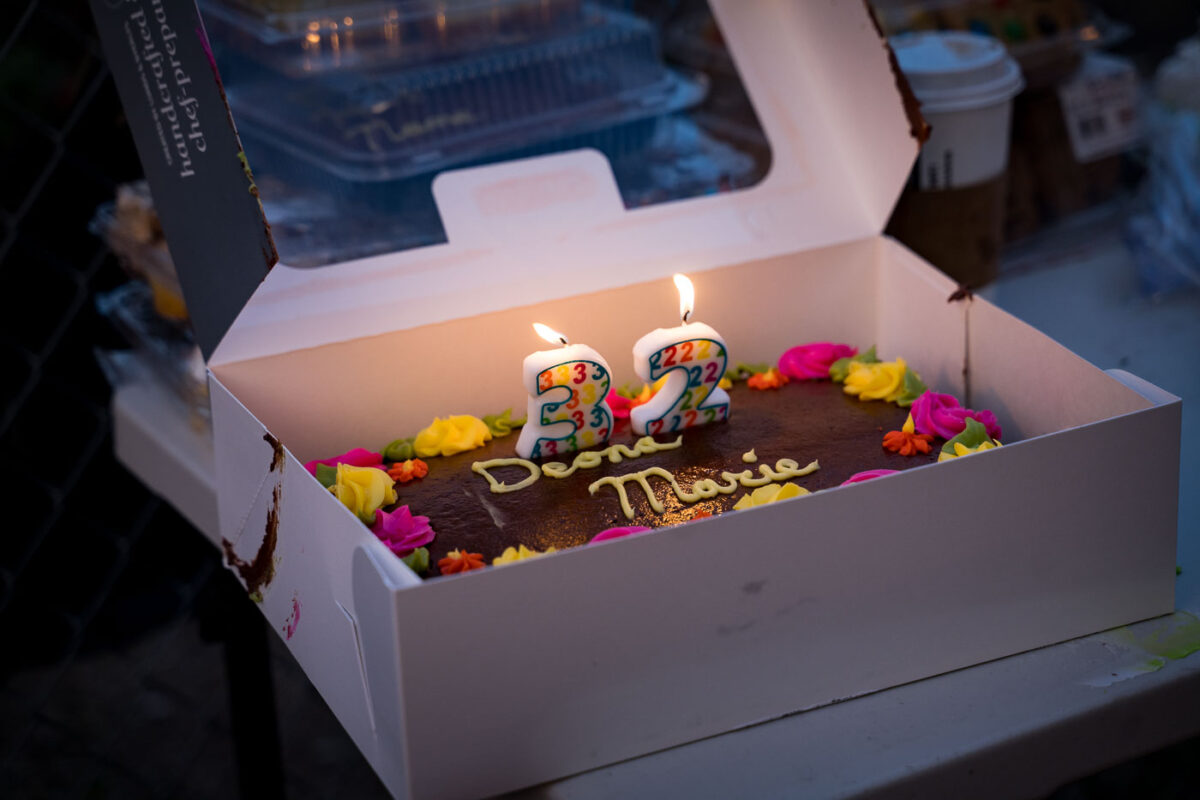
Lit 32 birthday cake memorial for Deona Marie in Minneapolis
A birthday cake with lit candles marks what would have been Deona Marie's 32nd birthday. Marie was killed on June 13th in Minneapolis when a vehicle drove through barricades during a protest. On June 3, 2021, members of a U.S. Marshals Service fugitive task force fatally shot 32-year-old Winston “Boogie” Smith Jr. on the top level of a parking ramp in Minneapolis’ Uptown neighborhood while attempting to arrest him on a felony warrant. Authorities said Smith fired a handgun from inside his vehicle during the encounter, while family members and activists questioned the official account and demanded the release of additional evidence. The killing led to weeks of protests, street occupations, and confrontations with police in Uptown, becoming another major flashpoint in Minneapolis during the period following the murder of George Floyd. Earlier in the day Minneapolis city officials along with The Agape Movement coordinated to open the streets that had been closed at George Floyd Square since his murder. On June 13, 2021, 31-year-old Deona Marie Knajdek was killed when a driver accelerated into a group of demonstrators gathered in Minneapolis’ Uptown neighborhood during ongoing protests over the killing of Winston “Boogie” Smith Jr. Protesters had blocked the intersection of West Lake Street and Girard Avenue with vehicles and barricades when Nicholas Kraus drove a Jeep Cherokee into the crowd at high speed, killing Knajdek and injuring several others. Kraus was later charged with second-degree murder, two counts of second-degree assault with a dangerous weapon, and criminal vehicular operation. In 2023, he pleaded guilty to murder and assault charges and was sentenced to more than 20 years in prison for the attack.

Deona Marie’s 32nd Birthday Cake Memorial in Minneapolis
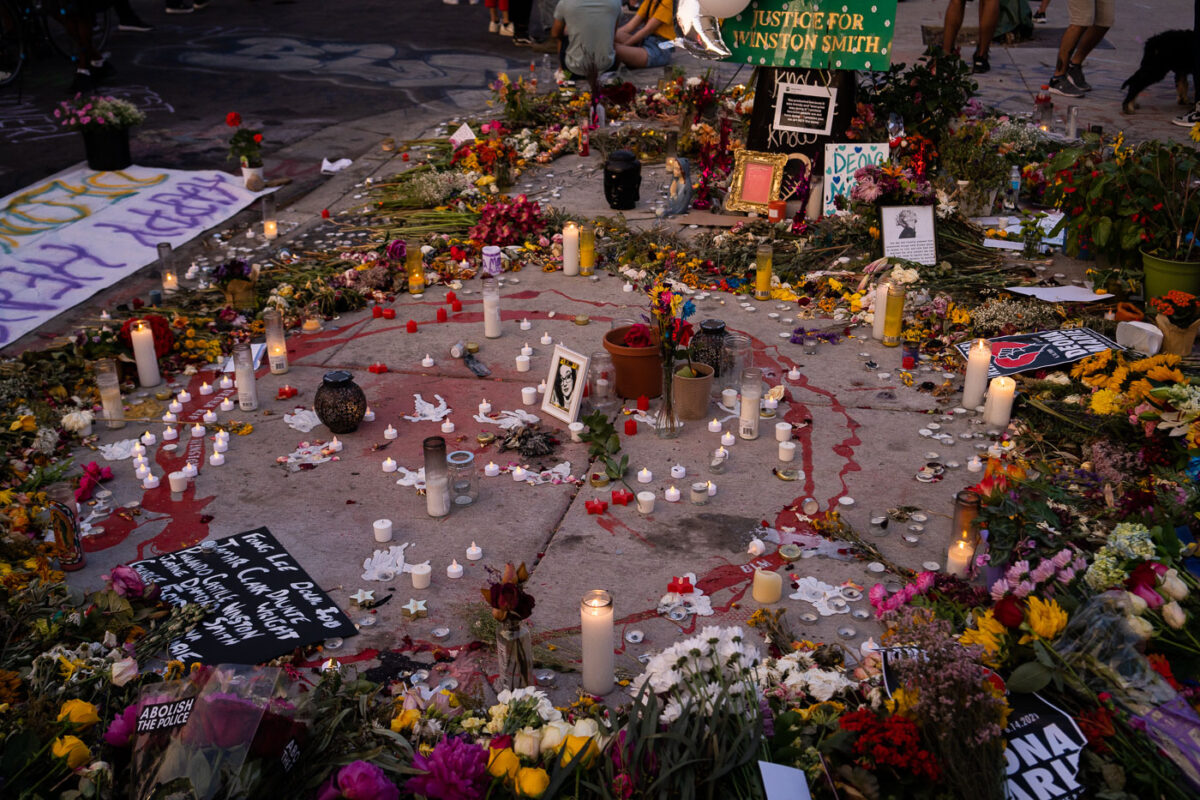
Memorial for Deona Marie on Lake Street in Minneapolis with candles, flowers and signs honoring Winston Smith
A memorial for Deona Marie, who was killed on June 13th, 2021, on Lake Street in Minneapolis. On June 13, 2021, 31-year-old Deona Marie Knajdek was killed when a driver accelerated into a group of demonstrators gathered in Minneapolis’ Uptown neighborhood during ongoing protests over the killing of Winston “Boogie” Smith Jr. Protesters had blocked the intersection of West Lake Street and Girard Avenue with vehicles and barricades when Nicholas Kraus drove a Jeep Cherokee into the crowd at high speed, killing Knajdek and injuring several others. Kraus was later charged with second-degree murder, two counts of second-degree assault with a dangerous weapon, and criminal vehicular operation. In 2023, he pleaded guilty to murder and assault charges and was sentenced to more than 20 years in prison for the attack. On June 3, 2021, members of a U.S. Marshals Service fugitive task force fatally shot 32-year-old Winston “Boogie” Smith Jr. on the top level of a parking ramp in Minneapolis’ Uptown neighborhood while attempting to arrest him on a felony warrant. Authorities said Smith fired a handgun from inside his vehicle during the encounter, while family members and activists questioned the official account and demanded the release of additional evidence. The killing led to weeks of protests, street occupations, and confrontations with police in Uptown, becoming another major flashpoint in Minneapolis during the period following the murder of George Floyd. Earlier in the day Minneapolis city officials along with The Agape Movement coordinated to open the streets that had been closed at George Floyd Square since his murder.

Deona Marie Memorial on Lake Street, Minneapolis
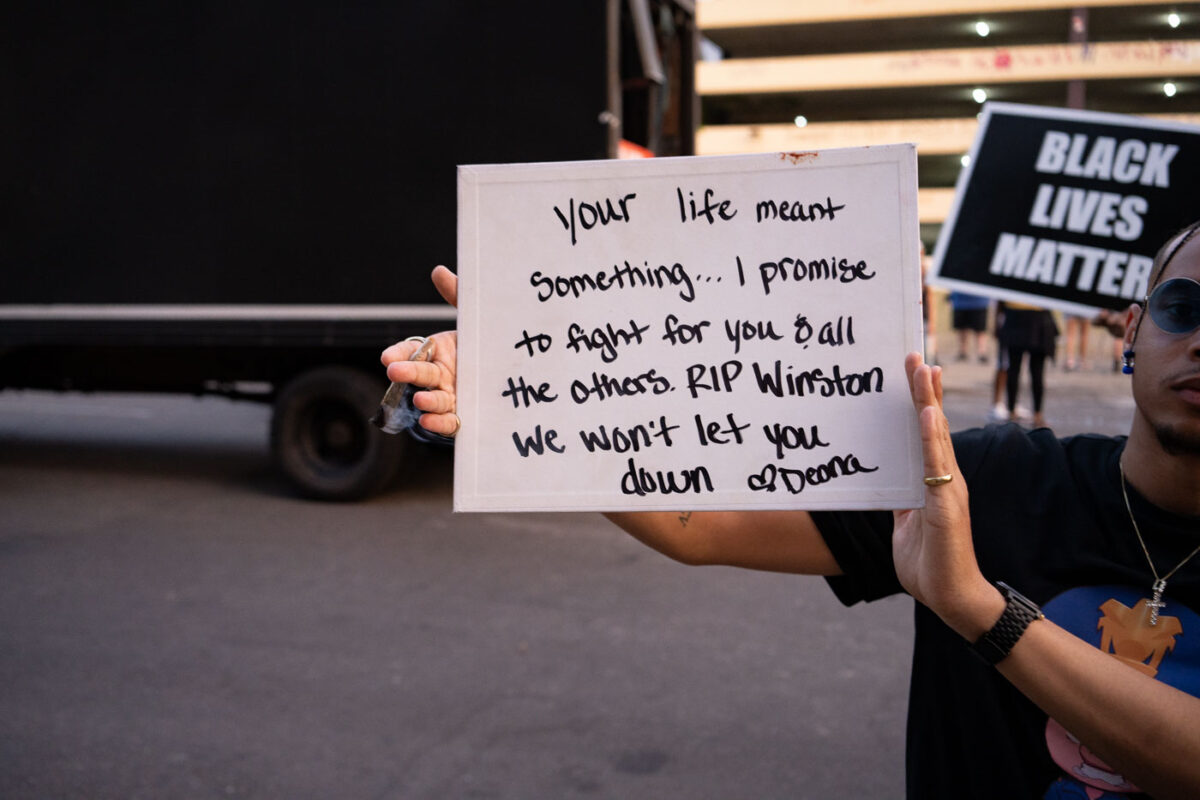
Protester holds a memorial sign for Winston Smith and Deona Marie in Minneapolis.
A protester holds a sign reading "Your life meant something... I promise to fight for you & all the others. RIP Winston we won't let you down Deona" during a protest in Minneapolis. The sign honors Deona Marie Knajdek and Winston Smith, both of whom died in separate incidents in June 2021. On June 3, 2021, members of a U.S. Marshals Service fugitive task force fatally shot 32-year-old Winston “Boogie” Smith Jr. on the top level of a parking ramp in Minneapolis’ Uptown neighborhood while attempting to arrest him on a felony warrant. Authorities said Smith fired a handgun from inside his vehicle during the encounter, while family members and activists questioned the official account and demanded the release of additional evidence. The killing led to weeks of protests, street occupations, and confrontations with police in Uptown, becoming another major flashpoint in Minneapolis during the period following the murder of George Floyd. Earlier in the day Minneapolis city officials along with The Agape Movement coordinated to open the streets that had been closed at George Floyd Square since his murder. On June 13, 2021, 31-year-old Deona Marie Knajdek was killed when a driver accelerated into a group of demonstrators gathered in Minneapolis’ Uptown neighborhood during ongoing protests over the killing of Winston “Boogie” Smith Jr. Protesters had blocked the intersection of West Lake Street and Girard Avenue with vehicles and barricades when Nicholas Kraus drove a Jeep Cherokee into the crowd at high speed, killing Knajdek and injuring several others. Kraus was later charged with second-degree murder, two counts of second-degree assault with a dangerous weapon, and criminal vehicular operation. In 2023, he pleaded guilty to murder and assault charges and was sentenced to more than 20 years in prison for the attack.

Minneapolis Protest Sign for Deona Marie and Winston Smith
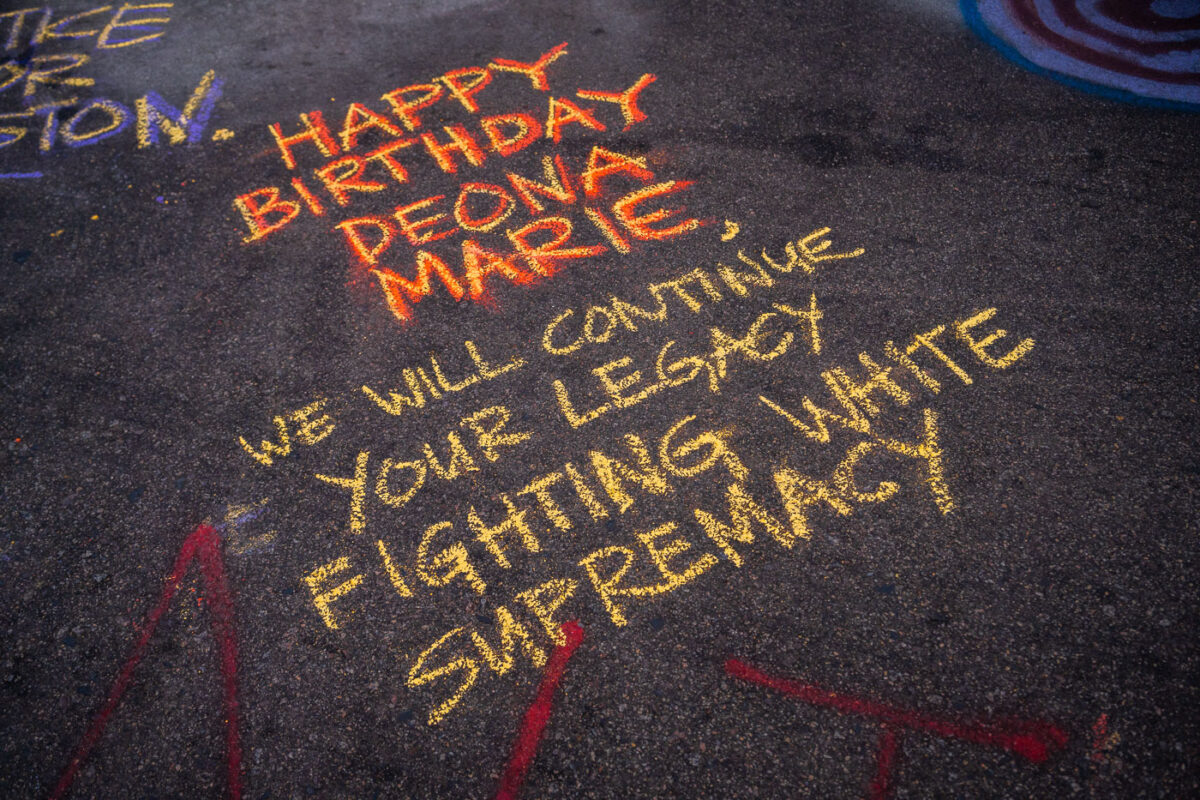
Chalk messages on Lake Street in Minneapolis honor Deona Marie Knajdek and call for white supremacy to end.
Chalk art on Lake Street in Minneapolis commemorates Deona Marie, who was killed on June 13th while protesting the law enforcement shooting death of Winston Smith on June 3rd. On June 13, 2021, 31-year-old Deona Marie Knajdek was killed when a driver accelerated into a group of demonstrators gathered in Minneapolis’ Uptown neighborhood during ongoing protests over the killing of Winston “Boogie” Smith Jr. Protesters had blocked the intersection of West Lake Street and Girard Avenue with vehicles and barricades when Nicholas Kraus drove a Jeep Cherokee into the crowd at high speed, killing Knajdek and injuring several others. Kraus was later charged with second-degree murder, two counts of second-degree assault with a dangerous weapon, and criminal vehicular operation. In 2023, he pleaded guilty to murder and assault charges and was sentenced to more than 20 years in prison for the attack. On June 3, 2021, members of a U.S. Marshals Service fugitive task force fatally shot 32-year-old Winston “Boogie” Smith Jr. on the top level of a parking ramp in Minneapolis’ Uptown neighborhood while attempting to arrest him on a felony warrant. Authorities said Smith fired a handgun from inside his vehicle during the encounter, while family members and activists questioned the official account and demanded the release of additional evidence. The killing led to weeks of protests, street occupations, and confrontations with police in Uptown, becoming another major flashpoint in Minneapolis during the period following the murder of George Floyd. Earlier in the day Minneapolis city officials along with The Agape Movement coordinated to open the streets that had been closed at George Floyd Square since his murder.

Minneapolis Chalk Art: Happy Birthday Deona Marie
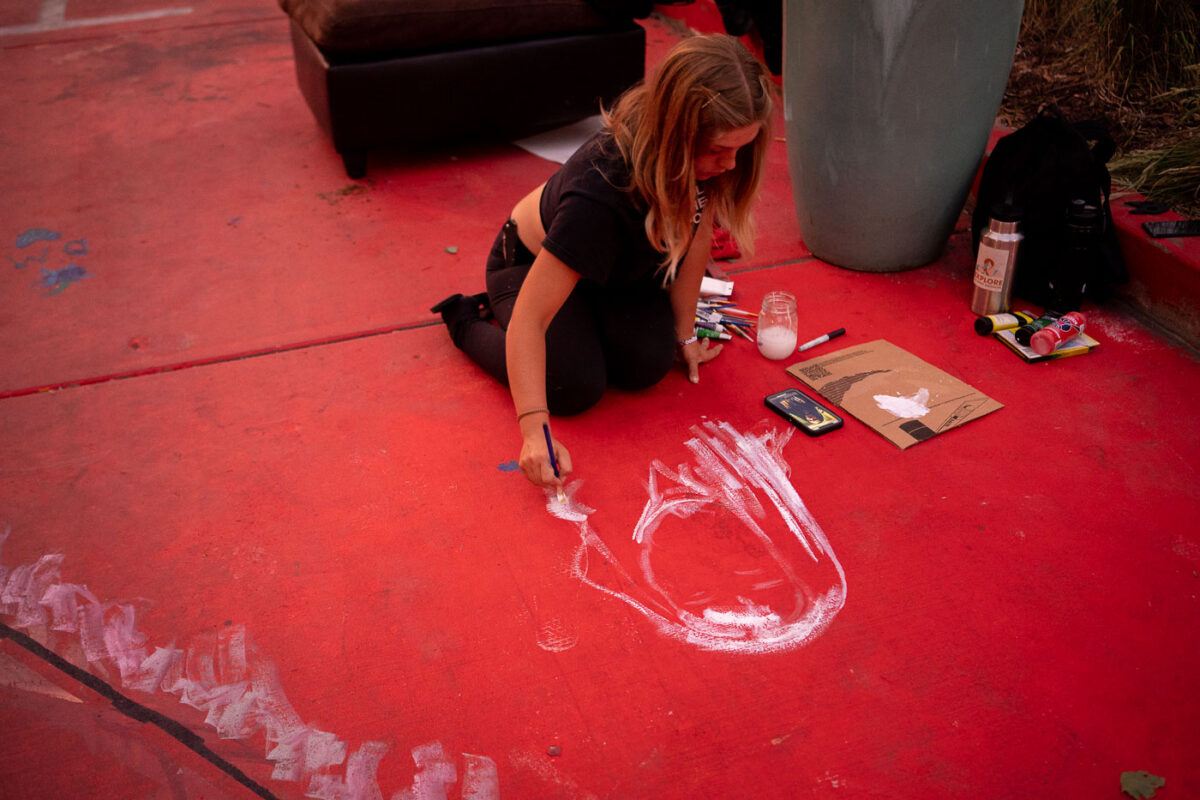
Artist draws a memorial on red pavement in Minneapolis.
An artist creates a memorial drawing on the pavement outside the parking garage where Winston Smith died on June 3rd. The drawing is a tribute to Smith, who was killed by law enforcement officers. On June 13, 2021, 31-year-old Deona Marie Knajdek was killed when a driver accelerated into a group of demonstrators gathered in Minneapolis’ Uptown neighborhood during ongoing protests over the killing of Winston “Boogie” Smith Jr. Protesters had blocked the intersection of West Lake Street and Girard Avenue with vehicles and barricades when Nicholas Kraus drove a Jeep Cherokee into the crowd at high speed, killing Knajdek and injuring several others. Kraus was later charged with second-degree murder, two counts of second-degree assault with a dangerous weapon, and criminal vehicular operation. In 2023, he pleaded guilty to murder and assault charges and was sentenced to more than 20 years in prison for the attack. On June 3, 2021, members of a U.S. Marshals Service fugitive task force fatally shot 32-year-old Winston “Boogie” Smith Jr. on the top level of a parking ramp in Minneapolis’ Uptown neighborhood while attempting to arrest him on a felony warrant. Authorities said Smith fired a handgun from inside his vehicle during the encounter, while family members and activists questioned the official account and demanded the release of additional evidence. The killing led to weeks of protests, street occupations, and confrontations with police in Uptown, becoming another major flashpoint in Minneapolis during the period following the murder of George Floyd. Earlier in the day Minneapolis city officials along with The Agape Movement coordinated to open the streets that had been closed at George Floyd Square since his murder.

Artist draws Winston Smith memorial on Minneapolis pavement
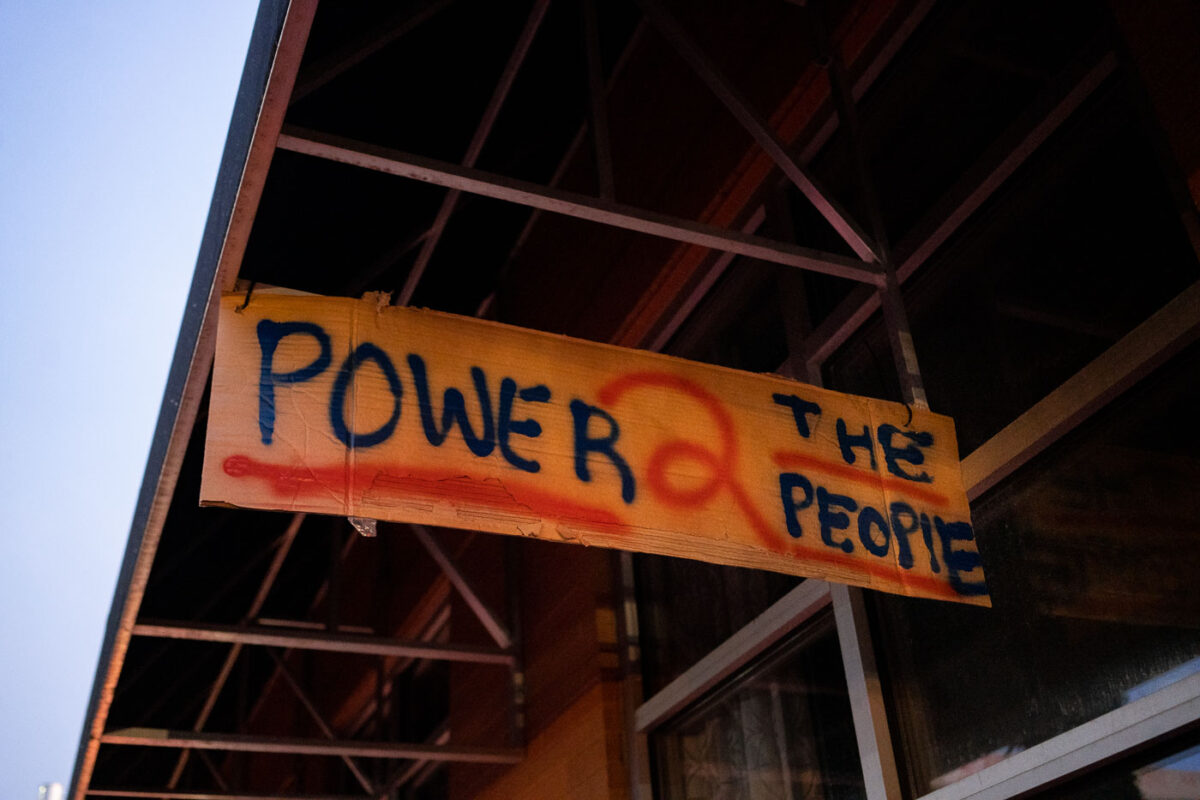
Power 2 the People sign hangs at Seven Points Mall in Minneapolis during protests.
A handmade sign reading "Power 2 the People" is displayed at Seven Points Mall in Minneapolis. This sign appeared in the context of protests and unrest following the killing of Winston Smith by a federal task force in June 2021. On June 3, 2021, members of a U.S. Marshals Service fugitive task force fatally shot 32-year-old Winston “Boogie” Smith Jr. on the top level of a parking ramp in Minneapolis’ Uptown neighborhood while attempting to arrest him on a felony warrant. Authorities said Smith fired a handgun from inside his vehicle during the encounter, while family members and activists questioned the official account and demanded the release of additional evidence. The killing led to weeks of protests, street occupations, and confrontations with police in Uptown, becoming another major flashpoint in Minneapolis during the period following the murder of George Floyd. Earlier in the day Minneapolis city officials along with The Agape Movement coordinated to open the streets that had been closed at George Floyd Square since his murder.

Power 2 the People sign at Seven Points Mall, Minneapolis
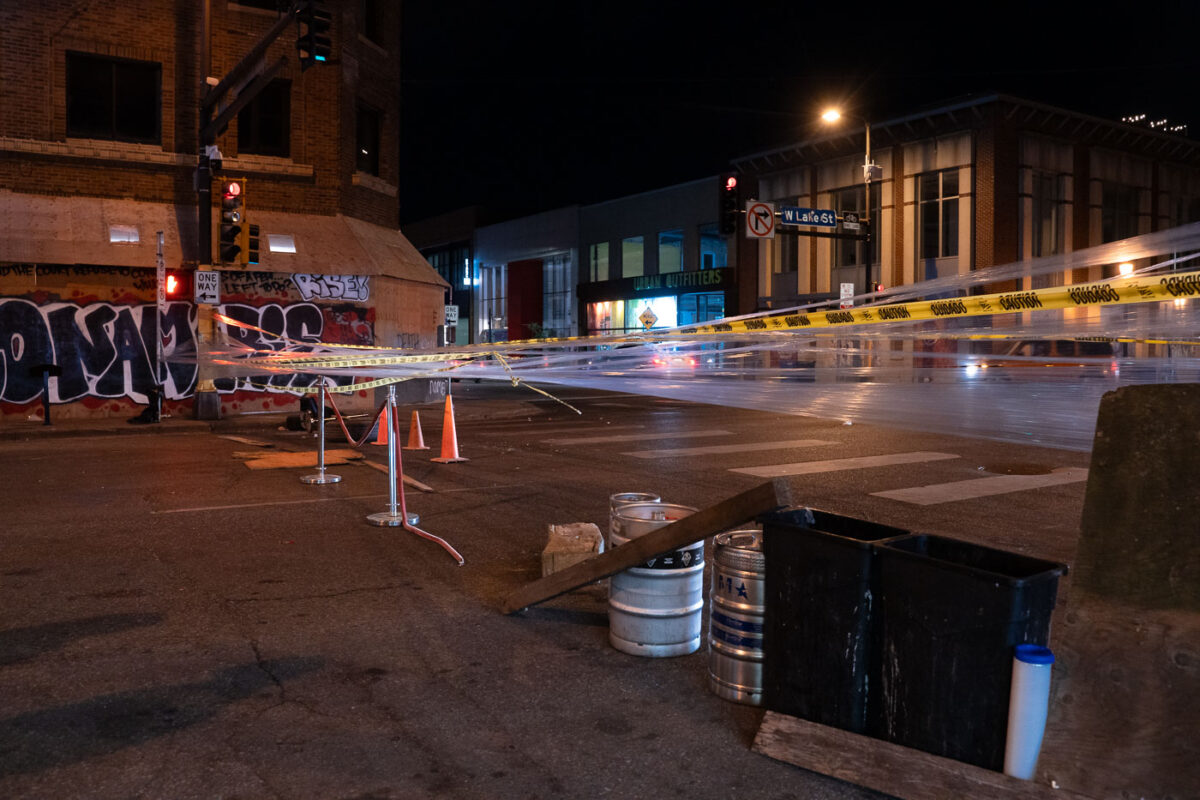
Barricades and caution tape block Lake Street at Hennepin Avenue in Minneapolis at night.
Street barricades are visible at the intersection of Hennepin Avenue and Lake Street in Minneapolis, following protests in August 2021. These protests were sparked by the deaths of Winston Smith and Deona Marie. On June 3, 2021, members of a U.S. Marshals Service fugitive task force fatally shot 32-year-old Winston “Boogie” Smith Jr. on the top level of a parking ramp in Minneapolis’ Uptown neighborhood while attempting to arrest him on a felony warrant. Authorities said Smith fired a handgun from inside his vehicle during the encounter, while family members and activists questioned the official account and demanded the release of additional evidence. The killing led to weeks of protests, street occupations, and confrontations with police in Uptown, becoming another major flashpoint in Minneapolis during the period following the murder of George Floyd. Earlier in the day Minneapolis city officials along with The Agape Movement coordinated to open the streets that had been closed at George Floyd Square since his murder. On June 13, 2021, 31-year-old Deona Marie Knajdek was killed when a driver accelerated into a group of demonstrators gathered in Minneapolis’ Uptown neighborhood during ongoing protests over the killing of Winston “Boogie” Smith Jr. Protesters had blocked the intersection of West Lake Street and Girard Avenue with vehicles and barricades when Nicholas Kraus drove a Jeep Cherokee into the crowd at high speed, killing Knajdek and injuring several others. Kraus was later charged with second-degree murder, two counts of second-degree assault with a dangerous weapon, and criminal vehicular operation. In 2023, he pleaded guilty to murder and assault charges and was sentenced to more than 20 years in prison for the attack.

Barricades on Lake Street, Minneapolis, During Protests
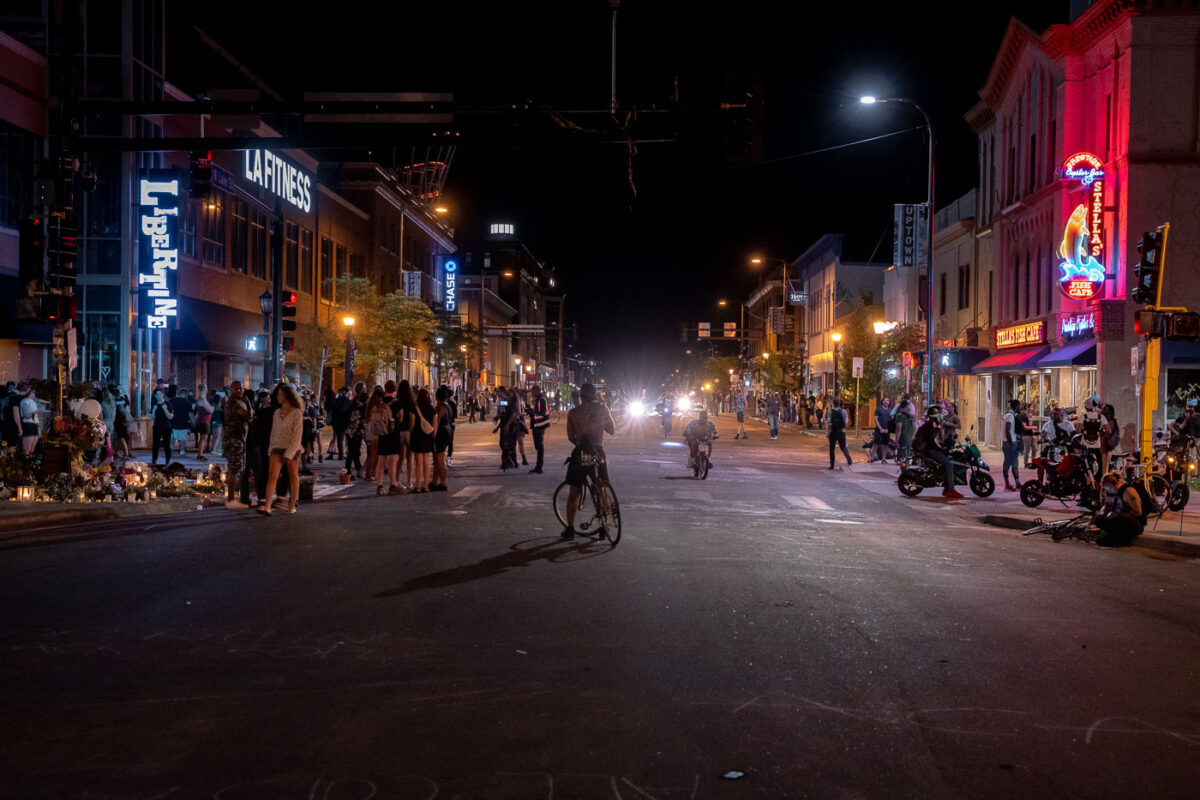
People gather around a memorial on Lake Street in Minneapolis at night.
A memorial for Deona Marie is set up on Lake Street in Minneapolis on what would have been her birthday. Marie was killed when Nicholas Kraus drove his vehicle into a crowd of protesters. On June 13, 2021, 31-year-old Deona Marie Knajdek was killed when a driver accelerated into a group of demonstrators gathered in Minneapolis’ Uptown neighborhood during ongoing protests over the killing of Winston “Boogie” Smith Jr. Protesters had blocked the intersection of West Lake Street and Girard Avenue with vehicles and barricades when Nicholas Kraus drove a Jeep Cherokee into the crowd at high speed, killing Knajdek and injuring several others. Kraus was later charged with second-degree murder, two counts of second-degree assault with a dangerous weapon, and criminal vehicular operation. In 2023, he pleaded guilty to murder and assault charges and was sentenced to more than 20 years in prison for the attack. On June 3, 2021, members of a U.S. Marshals Service fugitive task force fatally shot 32-year-old Winston “Boogie” Smith Jr. on the top level of a parking ramp in Minneapolis’ Uptown neighborhood while attempting to arrest him on a felony warrant. Authorities said Smith fired a handgun from inside his vehicle during the encounter, while family members and activists questioned the official account and demanded the release of additional evidence. The killing led to weeks of protests, street occupations, and confrontations with police in Uptown, becoming another major flashpoint in Minneapolis during the period following the murder of George Floyd. Earlier in the day Minneapolis city officials along with The Agape Movement coordinated to open the streets that had been closed at George Floyd Square since his murder.

Lake Street Memorial for Deona Marie in Minneapolis
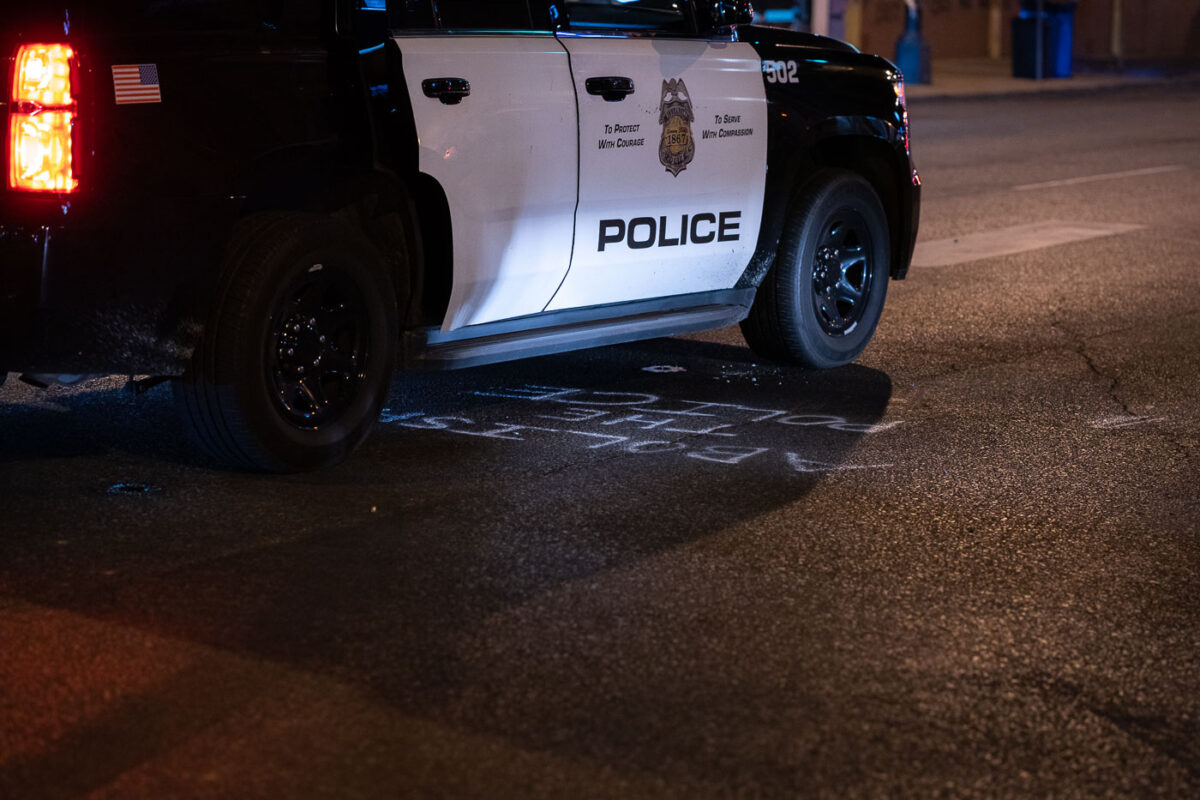
Minneapolis police SUV parked over graffiti on Lake Street in Minneapolis at night.
A Minneapolis Police squad car is positioned over "Abolish The Police" graffiti on Lake Street in Uptown Minneapolis. The image was take on June 16, 2021 during unrest following the killings of Deona Marie and Winston Smith. On June 3, 2021, members of a U.S. Marshals Service fugitive task force fatally shot 32-year-old Winston “Boogie” Smith Jr. on the top level of a parking ramp in Minneapolis’ Uptown neighborhood while attempting to arrest him on a felony warrant. Authorities said Smith fired a handgun from inside his vehicle during the encounter, while family members and activists questioned the official account and demanded the release of additional evidence. The killing led to weeks of protests, street occupations, and confrontations with police in Uptown, becoming another major flashpoint in Minneapolis during the period following the murder of George Floyd. Earlier in the day Minneapolis city officials along with The Agape Movement coordinated to open the streets that had been closed at George Floyd Square since his murder. On June 13, 2021, 31-year-old Deona Marie Knajdek was killed when a driver accelerated into a group of demonstrators gathered in Minneapolis’ Uptown neighborhood during ongoing protests over the killing of Winston “Boogie” Smith Jr. Protesters had blocked the intersection of West Lake Street and Girard Avenue with vehicles and barricades when Nicholas Kraus drove a Jeep Cherokee into the crowd at high speed, killing Knajdek and injuring several others. Kraus was later charged with second-degree murder, two counts of second-degree assault with a dangerous weapon, and criminal vehicular operation. In 2023, he pleaded guilty to murder and assault charges and was sentenced to more than 20 years in prison for the attack.

Minneapolis Police Car Over “Abolish The Police” Graffiti on Lake Street
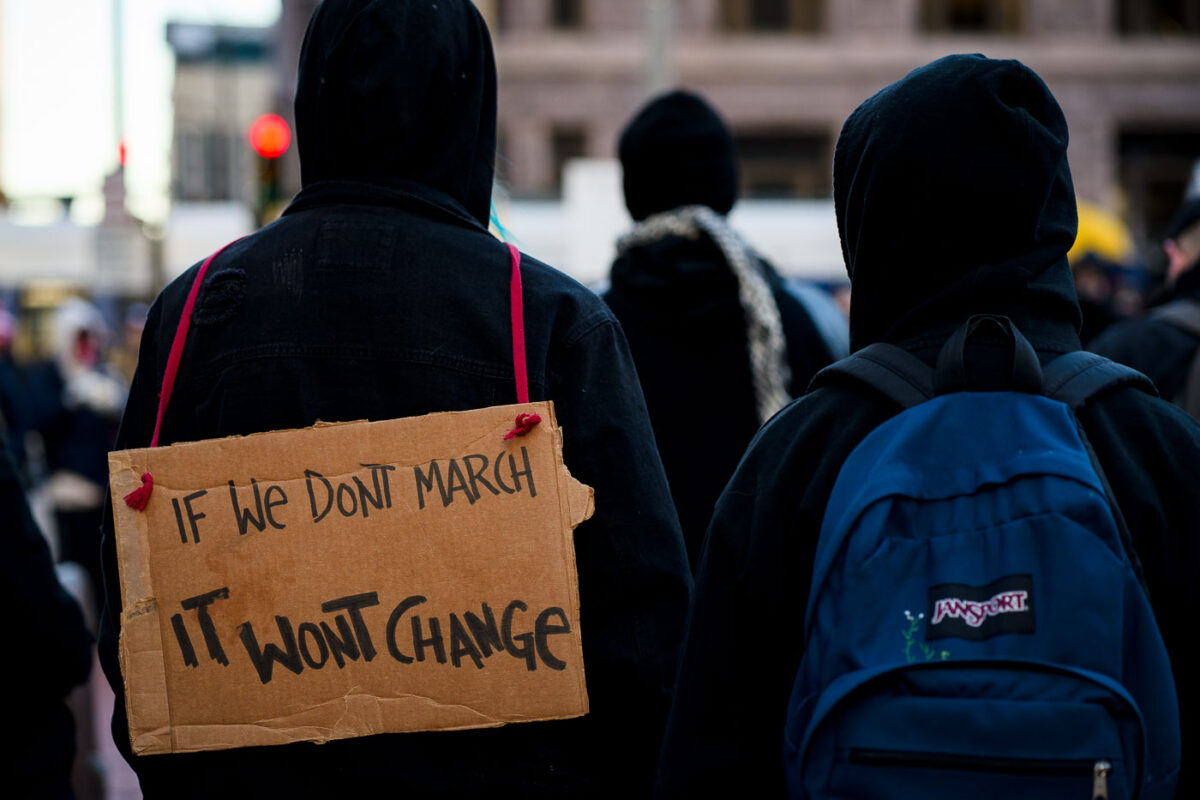
Kyle Rittenhouse protest in Downtown Minneapolis
Protesters gathered in downtown Minneapolis on November 20, 2021, following the acquittal of Kyle Rittenhouse. The march took place the day after the verdict was delivered in Kenosha, where Rittenhouse was found not guilty of all charges related to the fatal shootings during protests in August 2020.

Minneapolis Protest After Rittenhouse Verdict
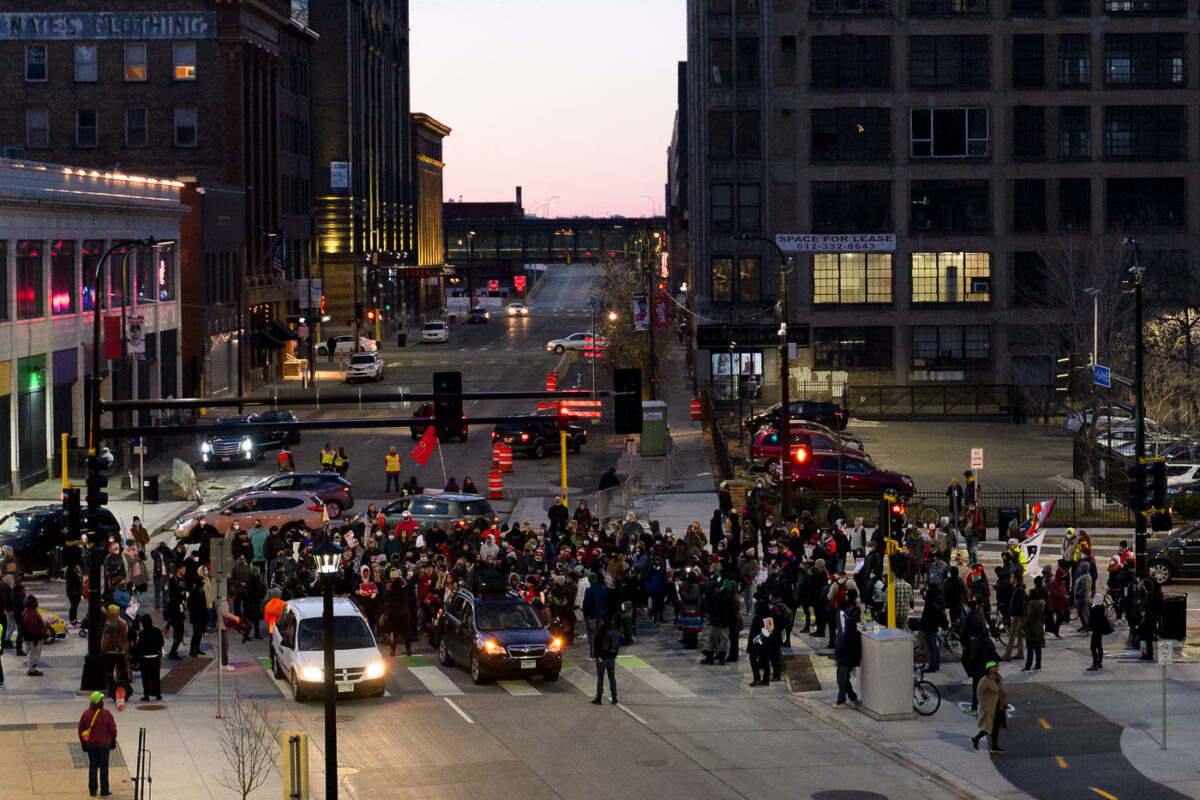
Kyle Rittenhouse protesters march in Downtown Minneapolis
Protesters gathered in downtown Minneapolis on November 20, 2021, following the acquittal of Kyle Rittenhouse. The march took place the day after the verdict was delivered in Kenosha, where Rittenhouse was found not guilty of all charges related to the fatal shootings during protests in August 2020.

Downtown Minneapolis Protest After Rittenhouse Verdict

Welcome to Minneapolis patch on protesters backpack
Protesters gathered in downtown Minneapolis on November 20, 2021, following the acquittal of Kyle Rittenhouse. The march took place the day after the verdict was delivered in Kenosha, where Rittenhouse was found not guilty of all charges related to the fatal shootings during protests in August 2020.

Minneapolis 3rd Precinct Patch on Protester Backpack
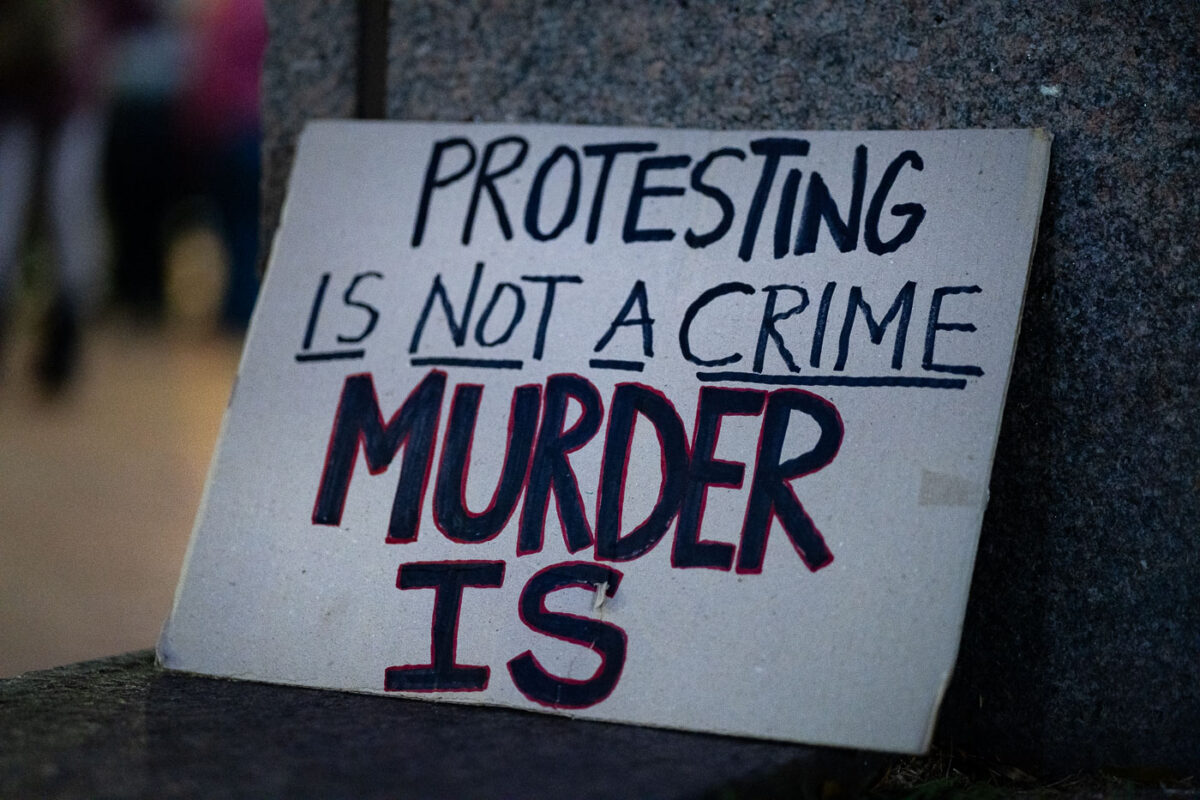
Protesting is not a crime protest sign
Protesters gathered in downtown Minneapolis on November 20, 2021, following the acquittal of Kyle Rittenhouse. The march took place the day after the verdict was delivered in Kenosha, where Rittenhouse was found not guilty of all charges related to the fatal shootings during protests in August 2020.

Minneapolis Protest Sign: Protesting is Not a Crime, Murder Is
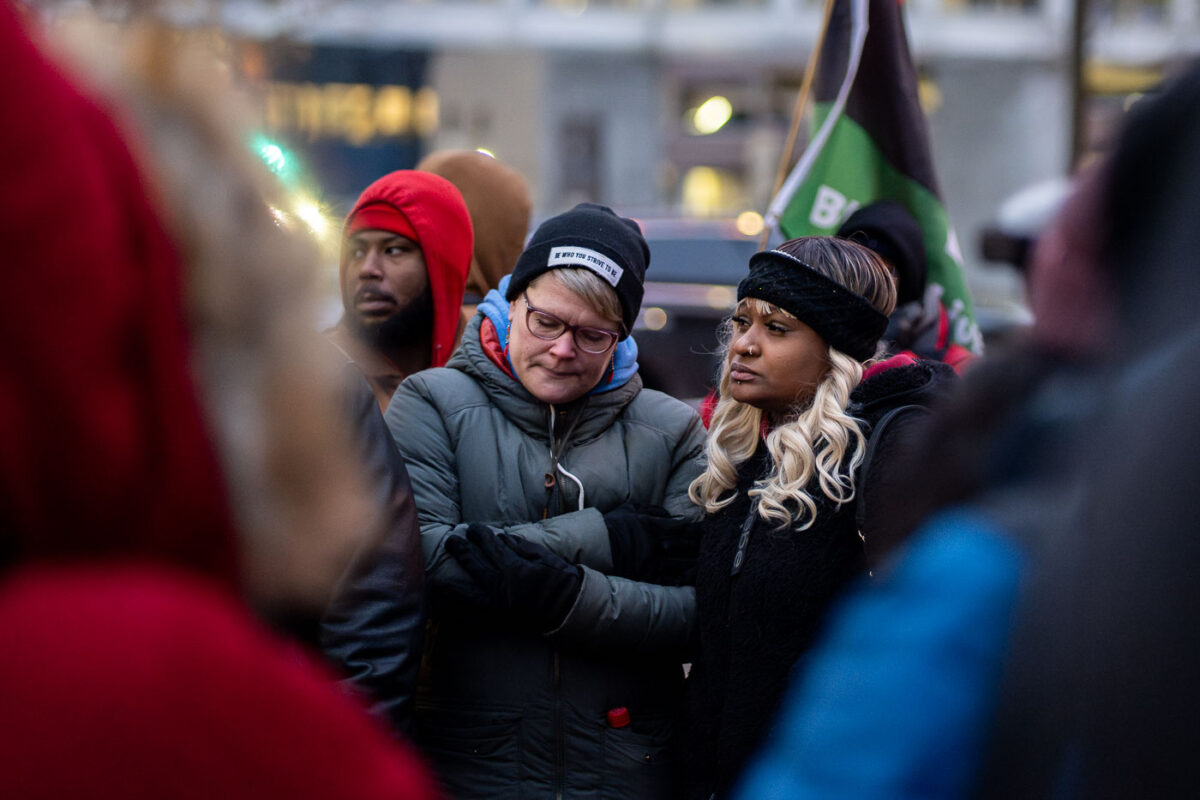
Courteney Ross and Toshira Garraway speak outside courthouse
Courteney Ross and Toshira Garraway are among protesters in downtown Minneapolis following the first day of the Kim Potter manslaughter trial. Potter was on trial for the April 11, 2021, shooting death of Daunte Wright, a 20-year-old man, in Brooklyn Center, Minnesota.

Courteney Ross and Toshira Garraway at Daunte Wright protest, Minneapolis
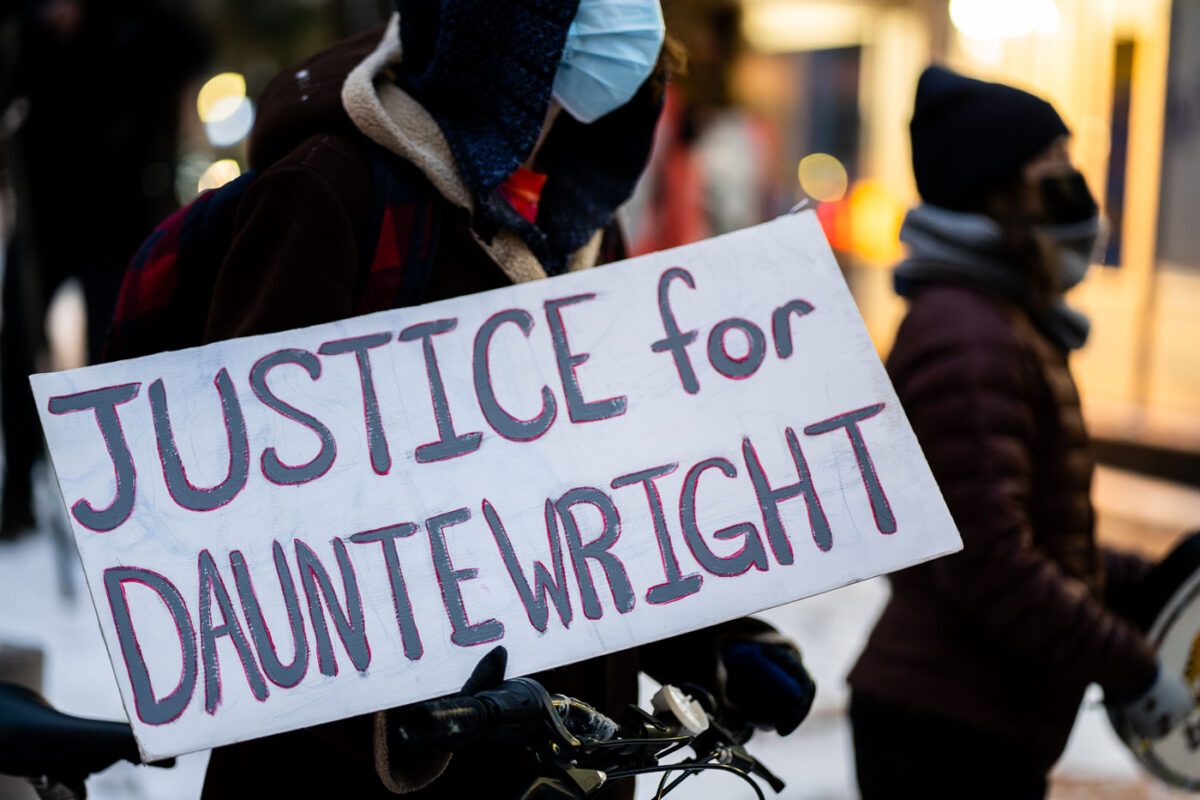
Justice for Daunte Wright sign during a march
Protesters gathered in downtown Minneapolis on November 17, 2021, holding signs demanding justice for Daunte Wright. This march occurred on the first day of the Kim Potter manslaughter trial. Potter was on trial for the April 11, 2021, shooting death of 20-year-old Daunte Wright in Brooklyn Center, Minnesota, an incident that sparked widespread protests and calls for accountability.

Minneapolis Protest: Justice for Daunte Wright Sign
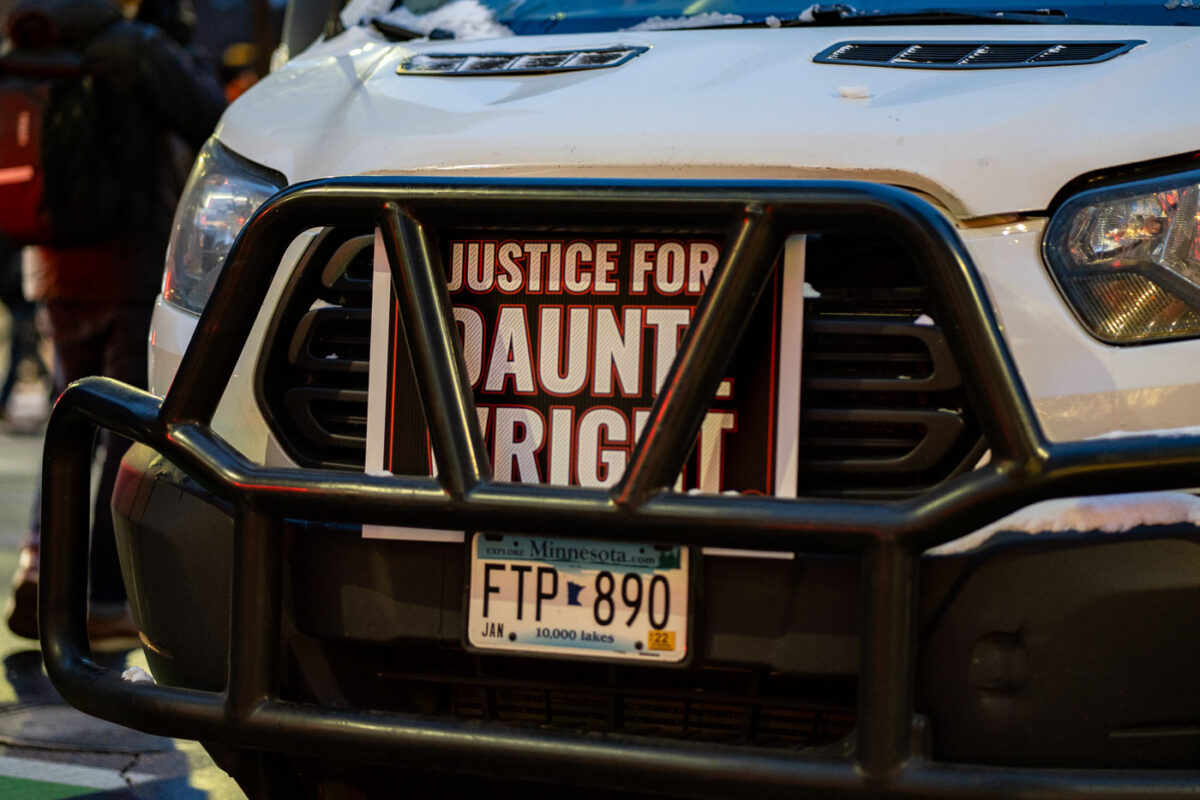
Justice for Daunte Wright sign on a truck
A sign reading "Justice for Daunte Wright" is displayed on a truck during a protest in downtown Minneapolis on November 16, 2021. This protest coincided with the first day of the manslaughter trial for former Brooklyn Center police officer Kim Potter, who was charged in the April 11, 2021, shooting death of Daunte Wright. The trial and related protests brought renewed attention to issues of police brutality and racial justice in the Minneapolis area.

Minneapolis Protest: Justice for Daunte Wright Sign on Truck
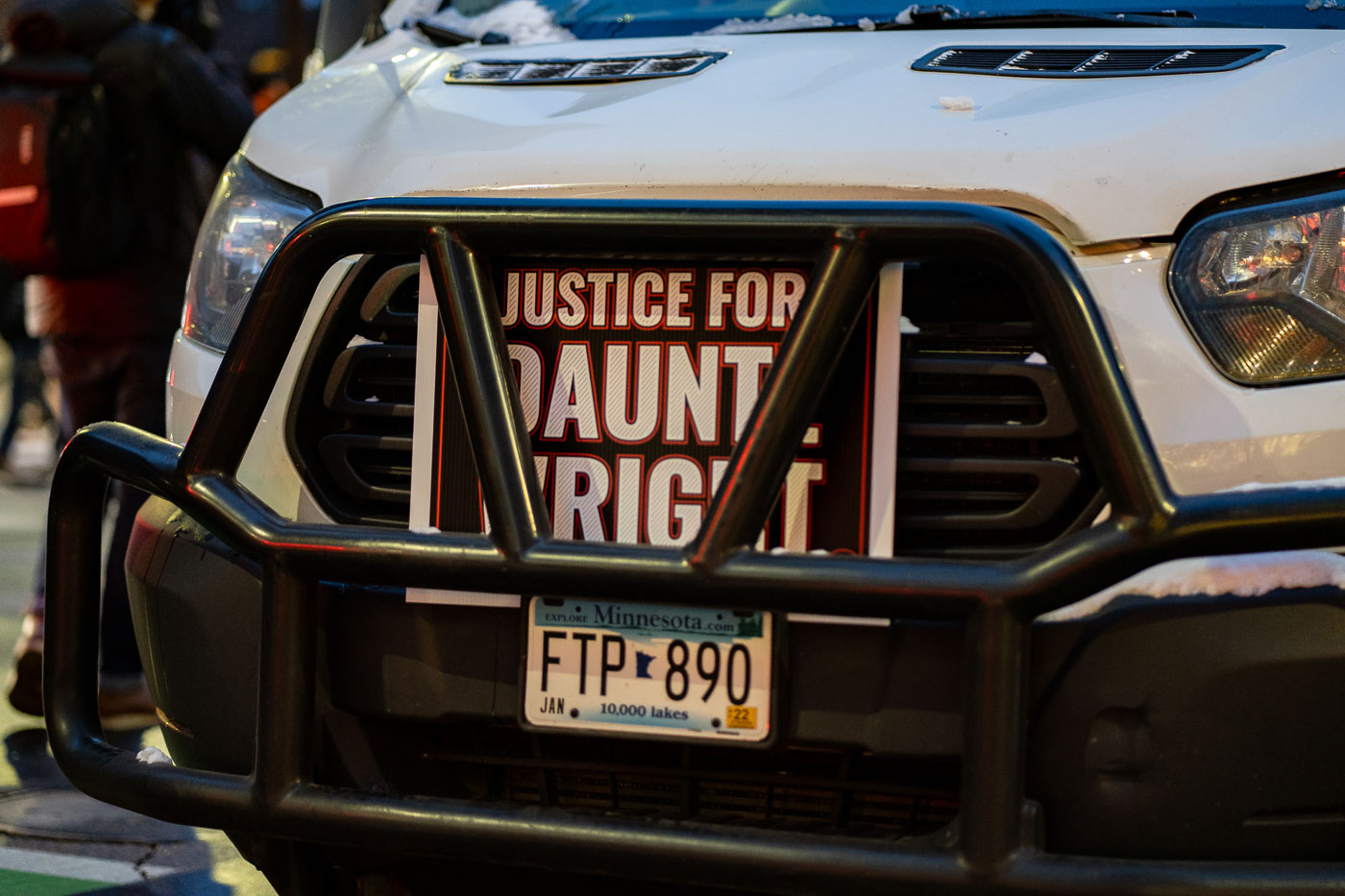
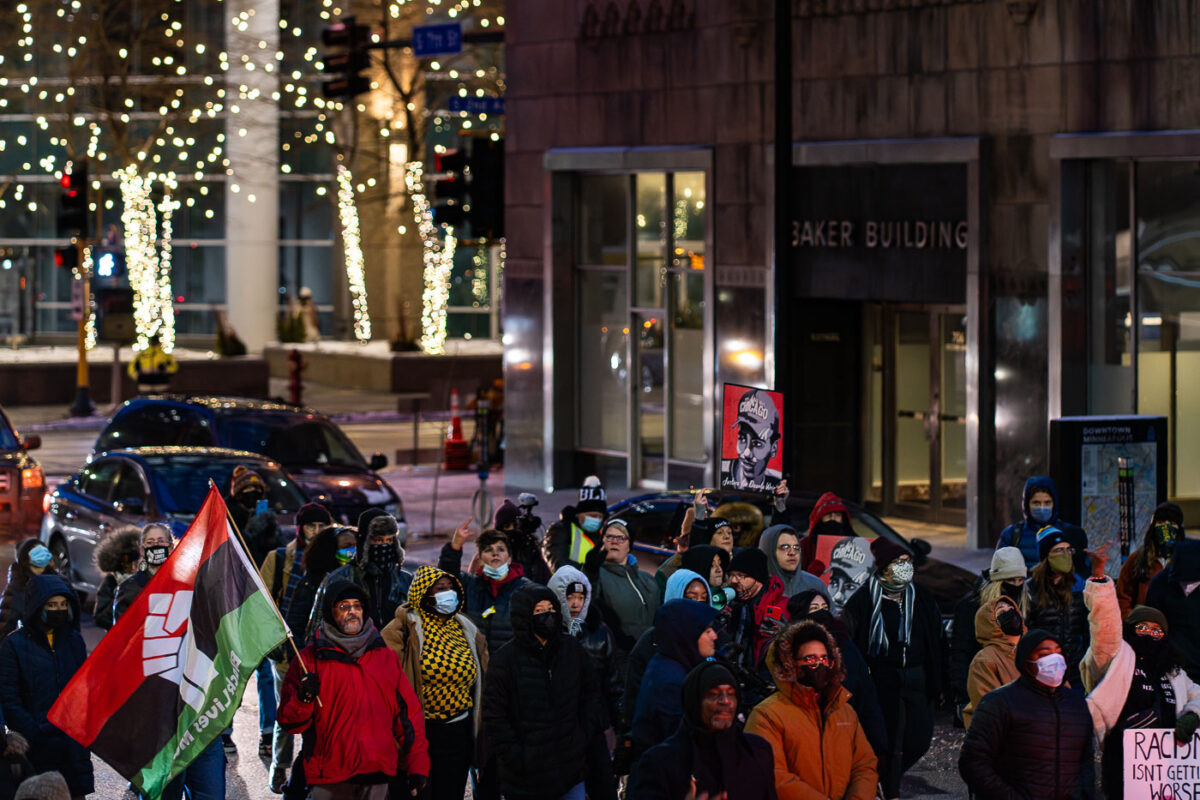
Daunte Wright protest through downtown Minneapolis
Protesters marched through downtown Minneapolis on November 17, 2021, coinciding with the first day of the Kim Potter manslaughter trial. The trial stemmed from the April 11, 2021, shooting death of Daunte Wright, a 20-year-old man, in Brooklyn Center, Minnesota. This march occurred as Minneapolis continued to confront the aftermath of Wright's death and broader issues of racial justice and police accountability.

Daunte Wright Protest March Downtown Minneapolis Nov 17 2021
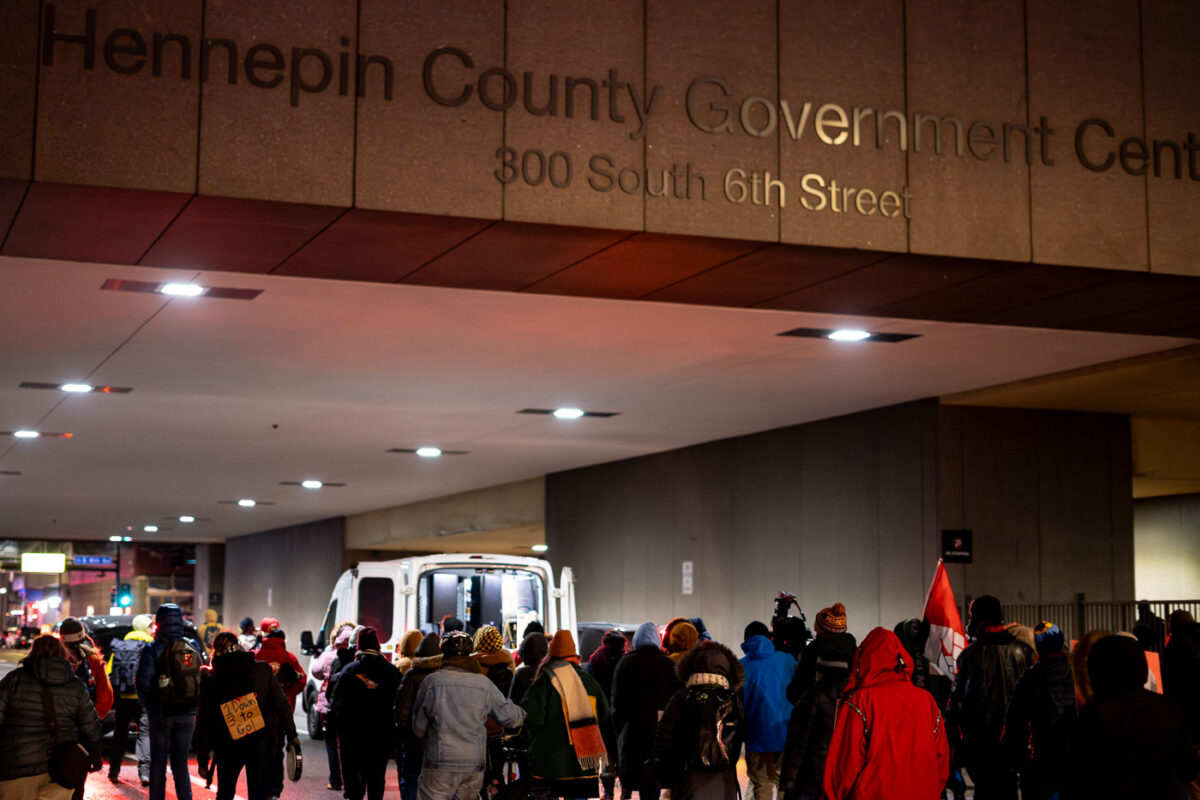
Daunte Wright march on first day of Kim Potter trial
Protesters gathered outside the Hennepin County Government Center in downtown Minneapolis on November 15, 2021, coinciding with the first day of the Kim Potter manslaughter trial. Potter was accused of fatally shooting Daunte Wright, a 20-year-old Black man, in Brooklyn Center, Minnesota, on April 11, 2021. This event and the ongoing trial underscored the persistent issues of police brutality and racial injustice within the city.

Protest at Hennepin County Government Center for Daunte Wright
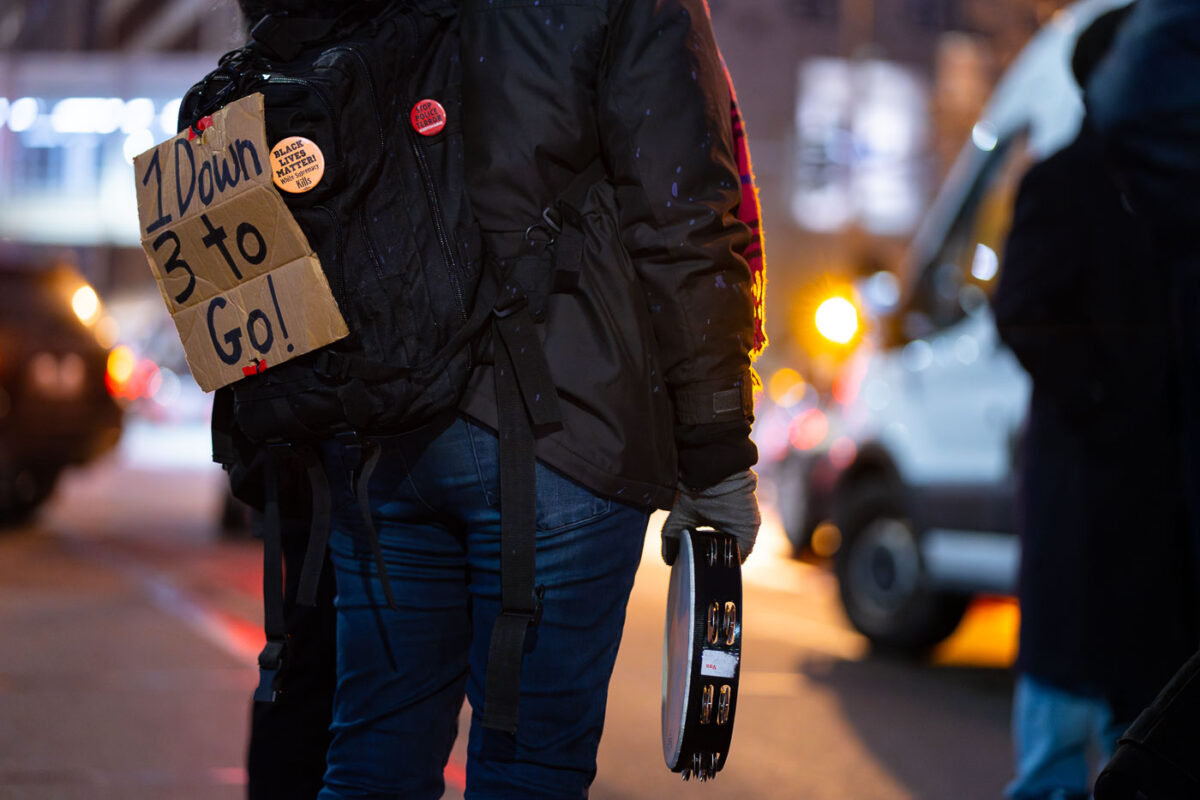
1 down 3 to go protest sign as Kim Potter goes on trial
Protesters march through downtown Minneapolis on December 15, 2021, the first day of the Kim Potter manslaughter trial. Potter is accused of shooting Daunte Wright, a 20-year-old Black man, on April 11, 2021, in Brooklyn Center, Minnesota. The sign held by a protester reads "1 Down 3 to Go!" and "Black Lives Matter," reflecting a demand for accountability and justice for Wright and other victims of police violence.

Minneapolis Protest: Kim Potter Trial Sign ‘1 Down 3 to Go’
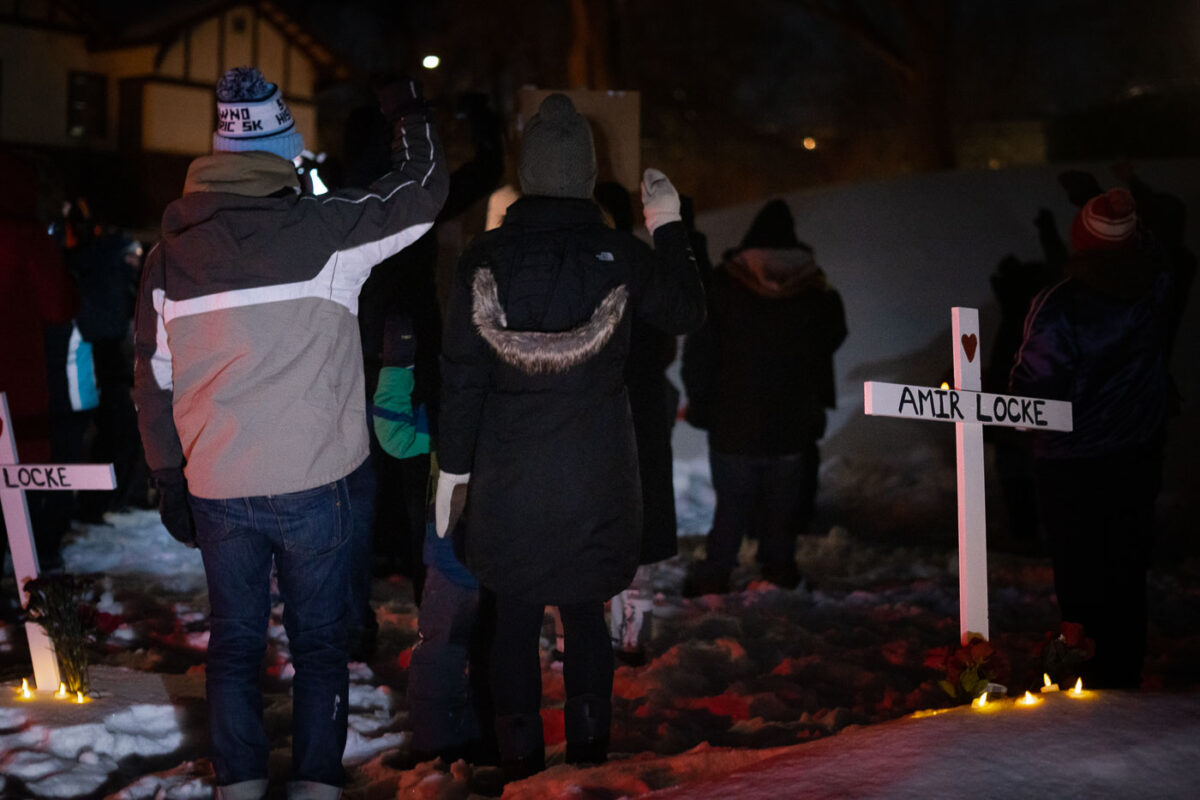
Protesters beside Amir Locke memorial crosses outside a Minneapolis home at night.
On February 4, 2022, protesters gathered outside the Minneapolis home of Police Chief Amelia Huffman to protest the killing of Amir Locke by the Minneapolis Police Department. The demonstration occurred in sub-zero temperatures and featured chants and the placement of memorial crosses bearing Locke's name. Amir Locke was killed on February 2, 2022 by Minneapolis Police officers during a no knock warrant at a Downtown Minneapolis apartment building.

Minneapolis Protest for Amir Locke at Police Chief’s Home
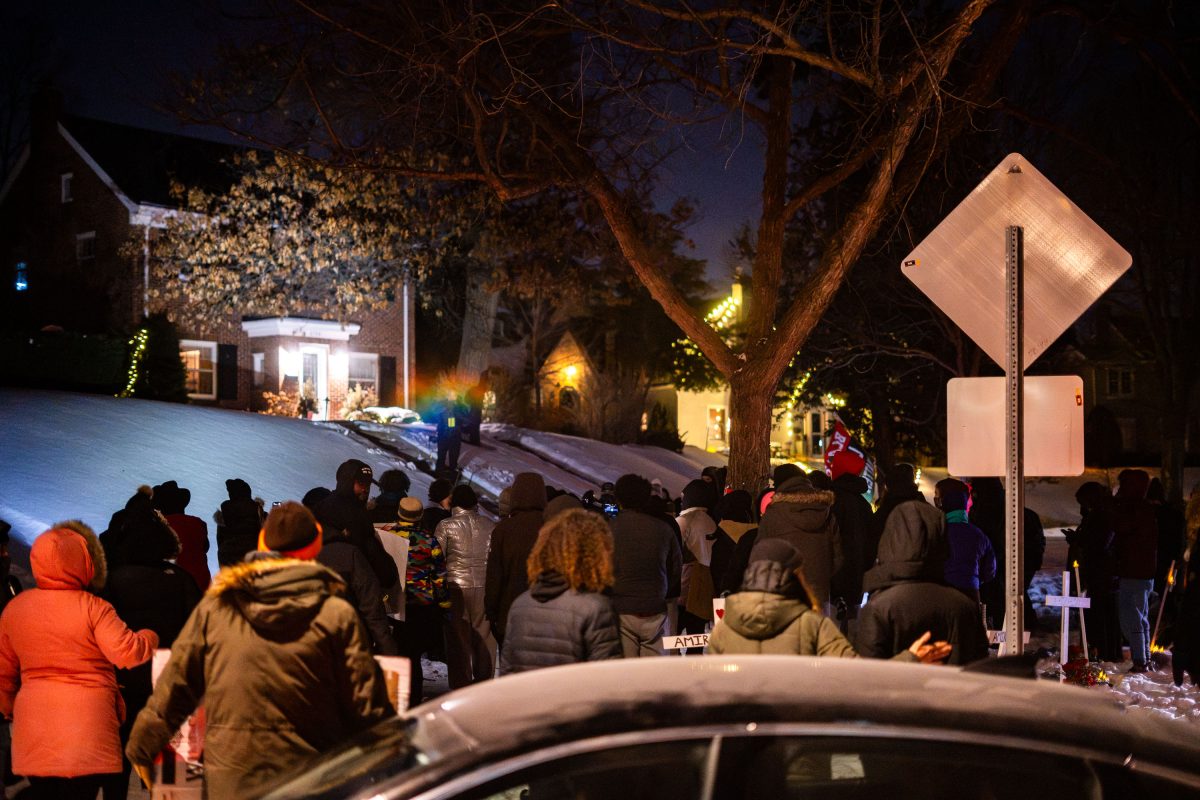
Amir Locke protests at police chief's home
Activists spoke and led chants outside the home of Minneapolis Police Chief Huffman following last weeks killing of Amir Locke by MPD. To neighbors: “Come down here & hold your murderous cop neighbor accountable!" “Hey hey! ho ho! amelia huffman has got to go!” Windchill: -7°F

Amir Locke protests at police chief’s home

Amir Locke memorial crosses outside the Minneapolis police chief's home in Minneapolis, Minnesota.
A makeshift memorial for Amir Locke, who was killed by Minneapolis Police, is seen outside the home of the interim Minneapolis Police Chief in Minneapolis, Minnesota. The memorial was put in place during a protest outside the Chief's home after the execution of the no knock warrant. Amir Locke was killed on February 2, 2022 by Minneapolis Police officers during a no knock warrant at a Downtown Minneapolis apartment building.

Minneapolis Protest Memorial for Amir Locke at Police Chief’s Home
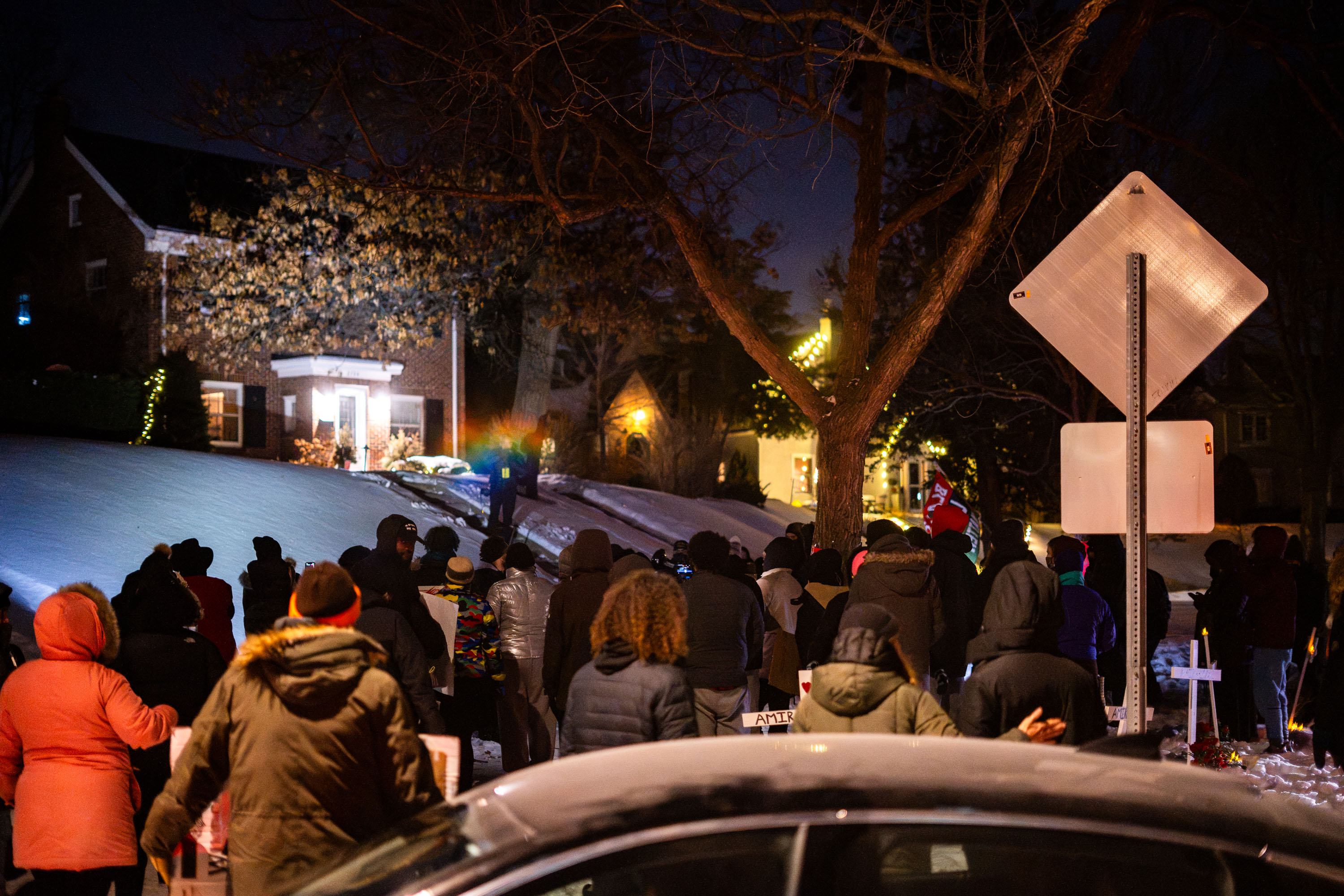
Amir Locke memorial crosses in snow outside Minneapolis police chief's home.
A memorial for Amir Locke, who was killed by Minneapolis police on February 2, 2022, is seen in the snow outside the home of the Minneapolis Police Chief. White crosses bearing Locke's name, along with flowers and candles, mark the site. This memorial was established following protests and community outcry over Locke's death, highlighting ongoing concerns about police accountability. Calls for the interim police chief to step down following the no-knock warrant. Amir Locke was killed on February 2, 2022 by Minneapolis Police officers during a no knock warrant at a Downtown Minneapolis apartment building.

Minneapolis Memorial for Amir Locke Outside Police Chief’s Home
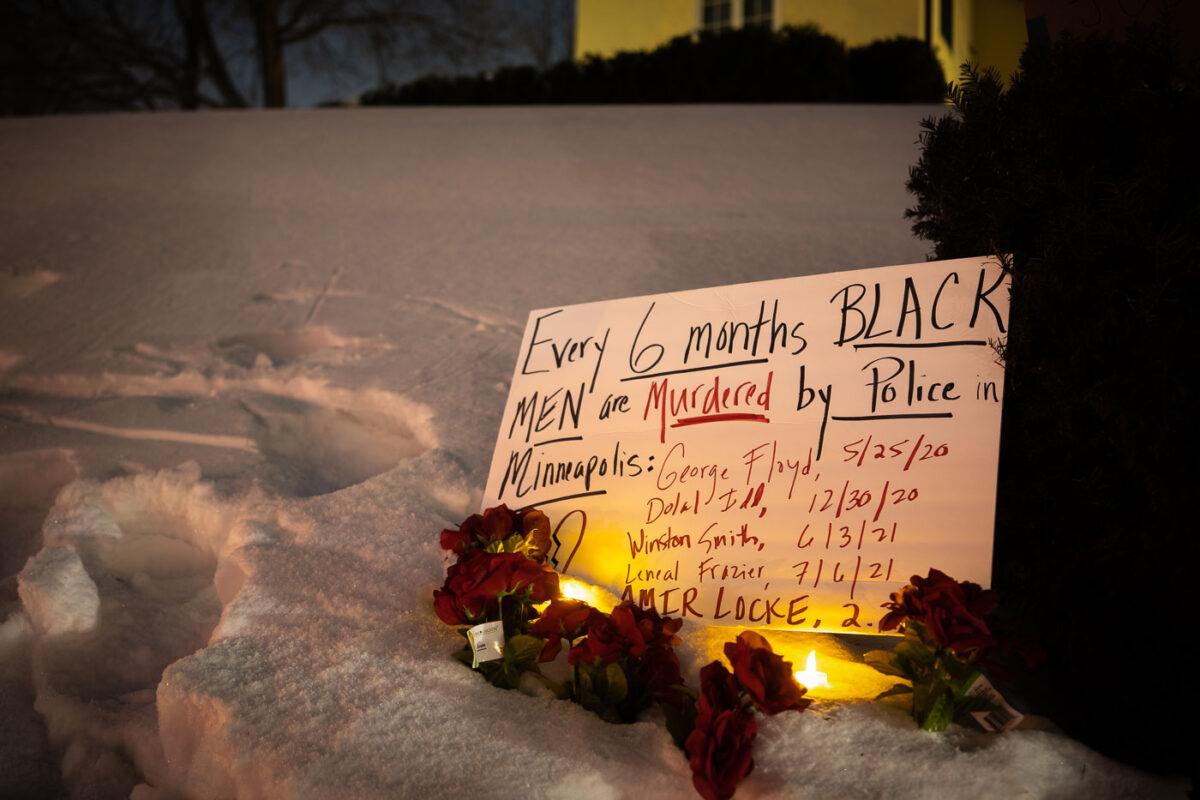
Memorial sign for Amir Locke and other Black men killed by police in Minneapolis, with candles and roses in snow.
A memorial in Minneapolis honors Black men reportedly killed by police, including George Floyd, Dolal Idd, Winston Smith, Leneal Frazier, and Amir Locke. The sign, displayed during a protest outside the home of Minneapolis Police Chief Amelia Huffman, lists their names and dates of death. Amir Locke was killed on February 2, 2022 by Minneapolis Police officers during a no knock warrant at a Downtown Minneapolis apartment building.

Minneapolis Memorial for Amir Locke and Police Violence Victims
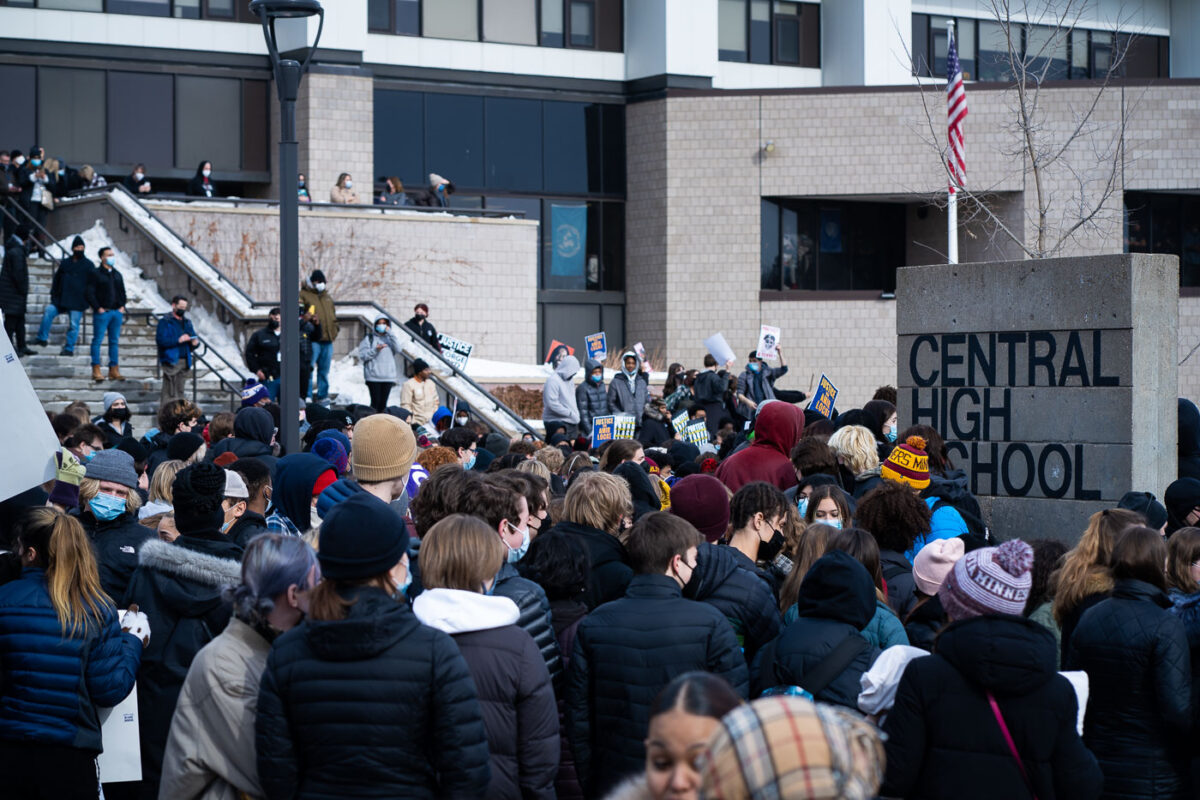
Students gather outside Central High School in St. Paul during a march for justice for Amir Locke.
Students from Central High School in St. Paul, Minnesota, participated in a noon walkout to march to the Minnesota Governor's Mansion. The protest was organized to demand justice for Amir Locke and to call for the resignation of interim Minneapolis Police Chief Amelia Huffman and Minneapolis Mayor Jacob Frey. Amir Locke was killed earlier in the month by Minneapolis Police officers during a no knock warrant at a Downtown Minneapolis apartment building.

Central High School Students March for Justice for Amir Locke
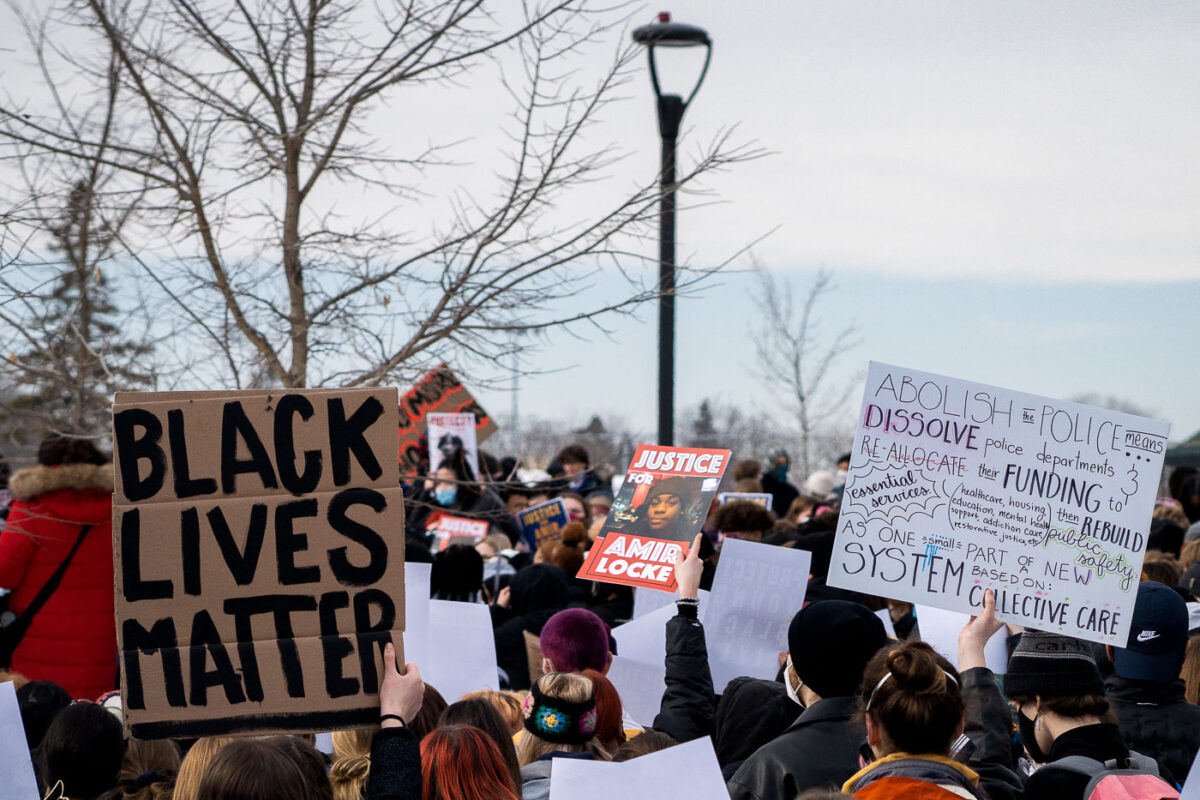
Students protest in St. Paul with signs reading Black Lives Matter and Justice for Amir Locke.
Students in St. Paul protested the abolition of the police and demanded justice for Amir Locke, who was killed by Minneapolis police in February 2022. The protest, which began at noon, saw participants calling for the resignation of interim Minneapolis Police Chief Amelia Huffman and Mayor Jacob Frey. Signs held by the students articulated their vision for "abolishing the police." Amir Locke was killed earlier in the month by Minneapolis Police officers during a no knock warrant at a Downtown Minneapolis apartment building.

St. Paul Students Protest Abolishing Police, Justice for Amir Locke

Students march past the Minnesota Governor's Residence in St. Paul to protest the killing of Amir Locke.
High school students marched from St. Paul to the Minnesota Governor's Mansion to demand justice for Amir Locke, a resident killed by Minneapolis police in February 2022. The protest also called for the resignation of interim Minneapolis Police Chief Amelia Huffman and Mayor Jacob Frey Amir Locke was killed earlier in the month by Minneapolis Police officers during a no knock warrant at a Downtown Minneapolis apartment building.

St. Paul Students March for Justice for Amir Locke
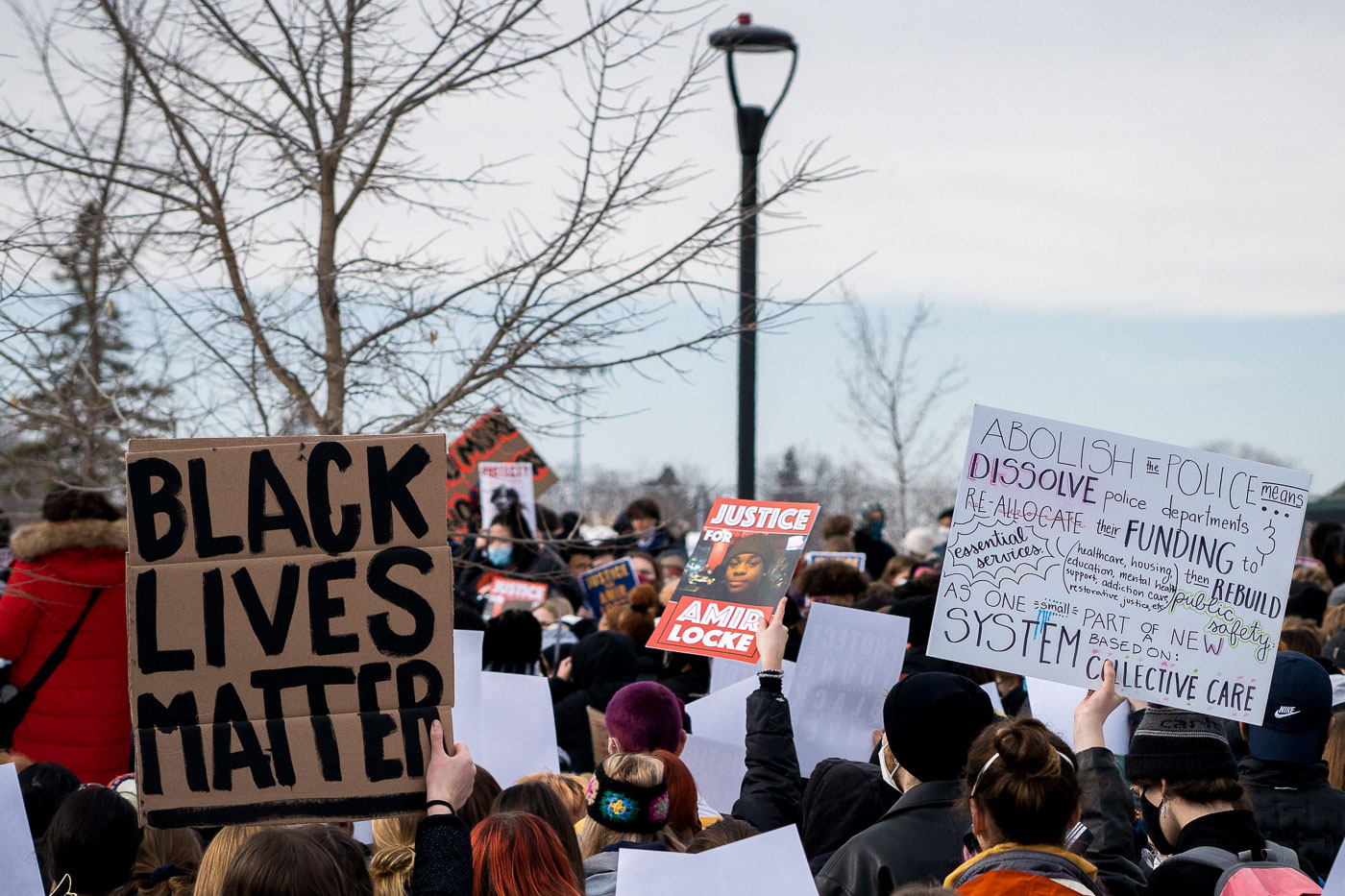
Students protest for Amir Locke outside the Governor's Residence in St. Paul.
Students gathered outside the Minnesota Governor's Mansion in St. Paul to protest the killing of Amir Locke. Locke, a Black man, was killed by Minneapolis police during a no-knock warrant raid in February 2022. The protest also demanded the resignation of Minneapolis officials, including the interim police chief and the mayor. Amir Locke was killed earlier in the month by Minneapolis Police officers during a no knock warrant at a Downtown Minneapolis apartment building.

St. Paul Students Protest for Amir Locke Justice
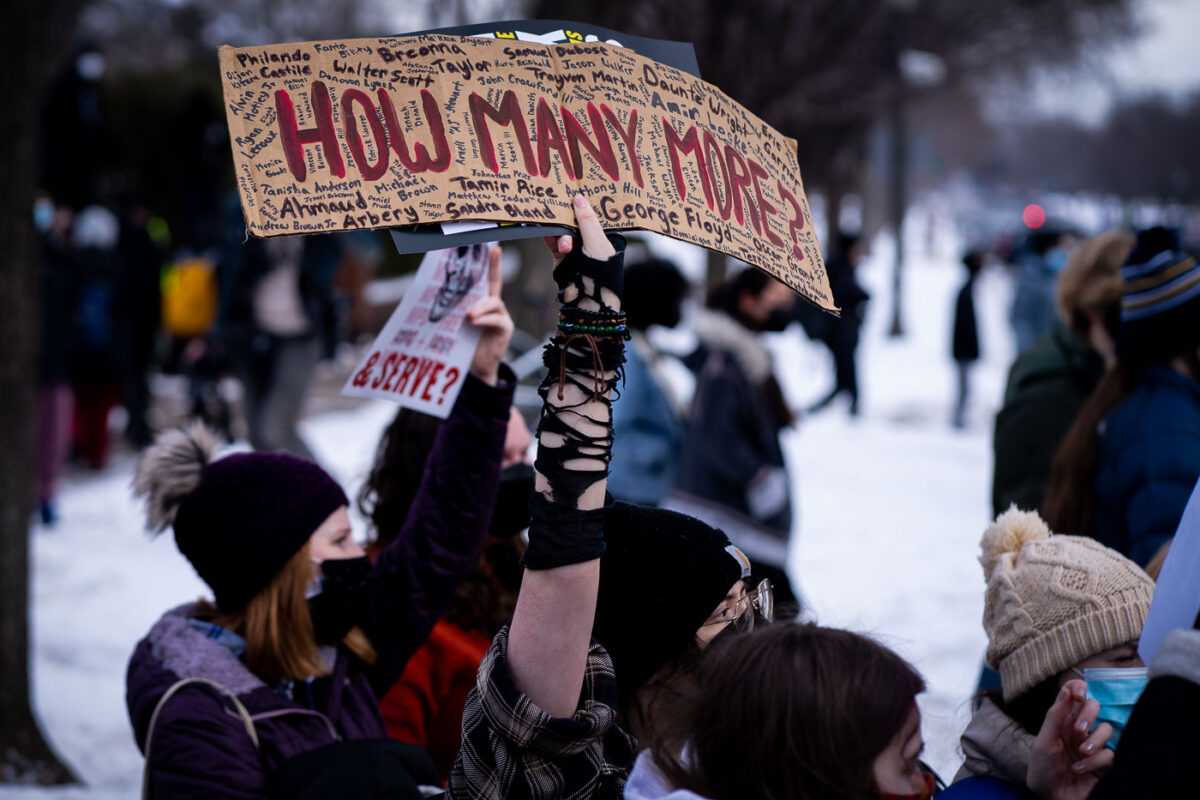
Protester holds a "How Many More?" sign at an Amir Locke protest in St. Paul, Minnesota.
Students and activists gathered in St. Paul, Minnesota, to protest the killing of Amir Locke. Locke, a 22-year-old Black man, was killed by Minneapolis police during a no-knock warrant raid in February 2022. The protest, held near the Minnesota Governor's Residence, demanded justice for Locke and accountability from law enforcement. Signs carried by participants listed the names of individuals who have died in police encounters, questioning "How Many More?"

St. Paul Students Protest Amir Locke Killing, Demand Justice
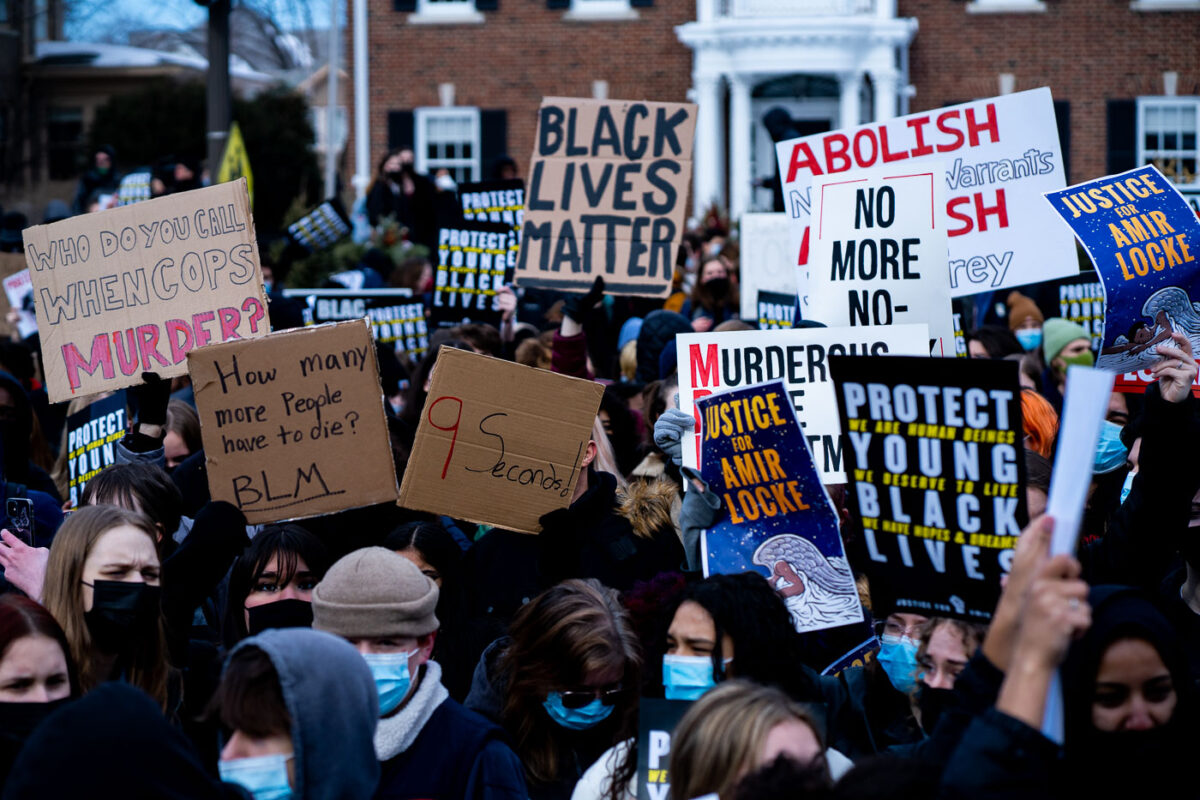
Protesters outside the Minnesota Governor's Mansion in St. Paul with signs demanding justice for Amir Locke.
Students at St. Paul schools walked out and marched to the Minnesota Governor's Mansion in St. Paul to demand justice for Amir Locke, who was killed by Minneapolis police. The protest also called for the resignation of Minneapolis Police Chief Amelia Huffman and Mayor Jacob Frey. Signs displayed messages such as "Black Lives Matter," "Abolish No More Warrants," and "9 Seconds," referencing the circumstances of Locke's death. Amir Locke was killed earlier in the month by Minneapolis Police officers during a no knock warrant at a Downtown Minneapolis apartment building.

St. Paul Protest Demands Justice for Amir Locke
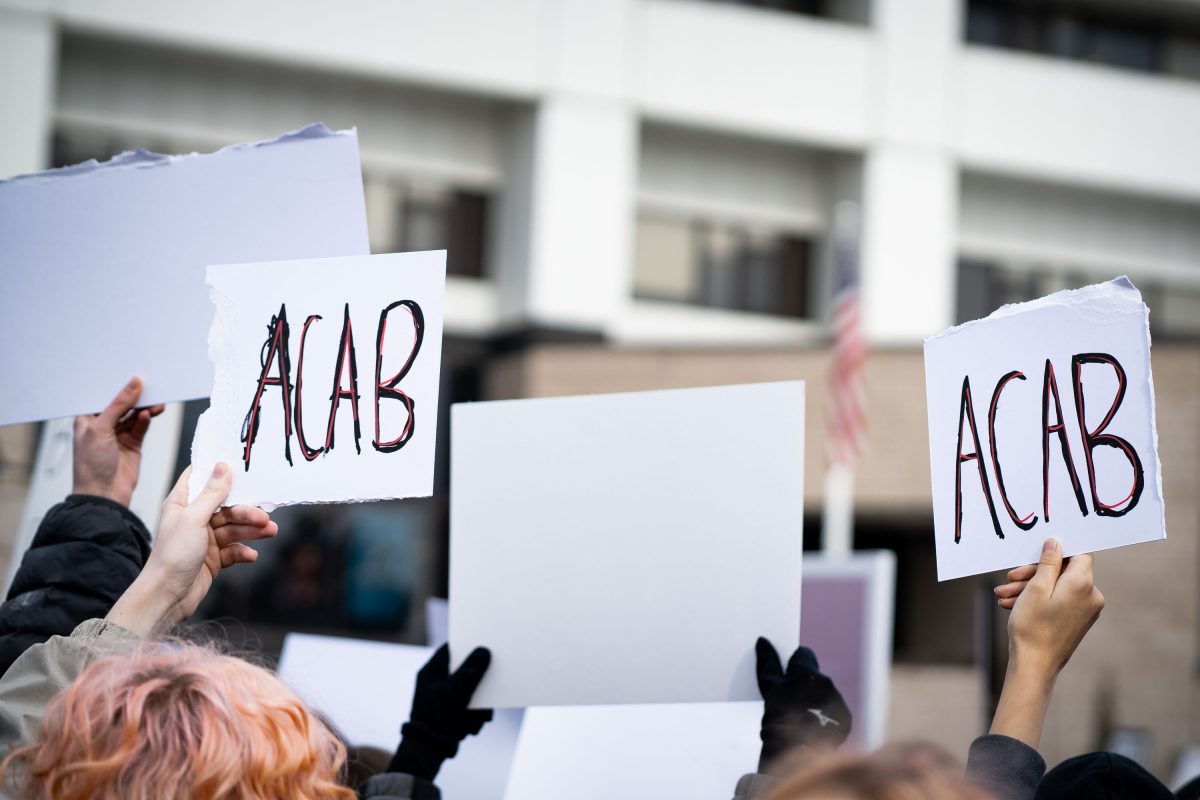
Amir Lock Student March, ACAB Protest Signs
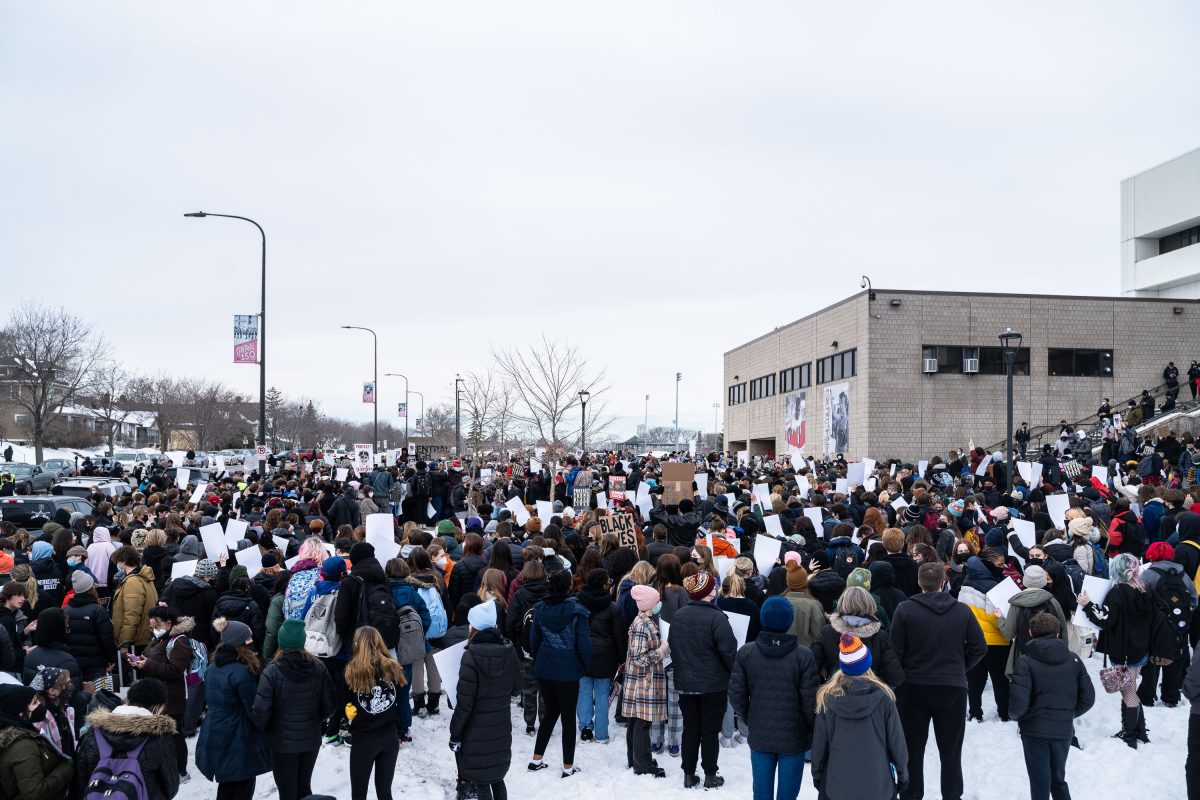
High school students from around the area march to the Minnesota Governor's Mansion demanding justice for Amir Locke.

Amir Lock Student March, ACAB Protest Signs
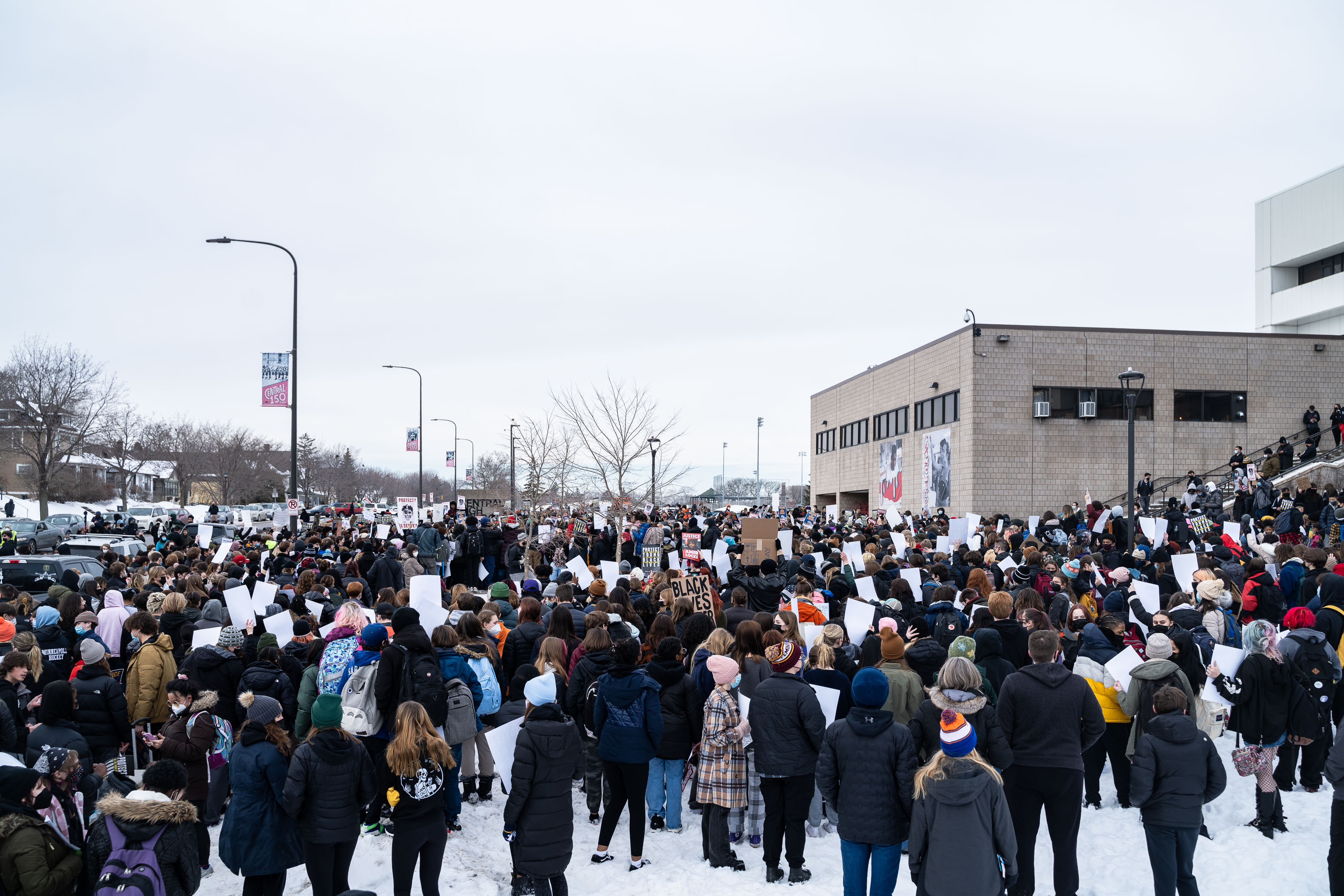
Thousands of students march after Amir Locke is killed
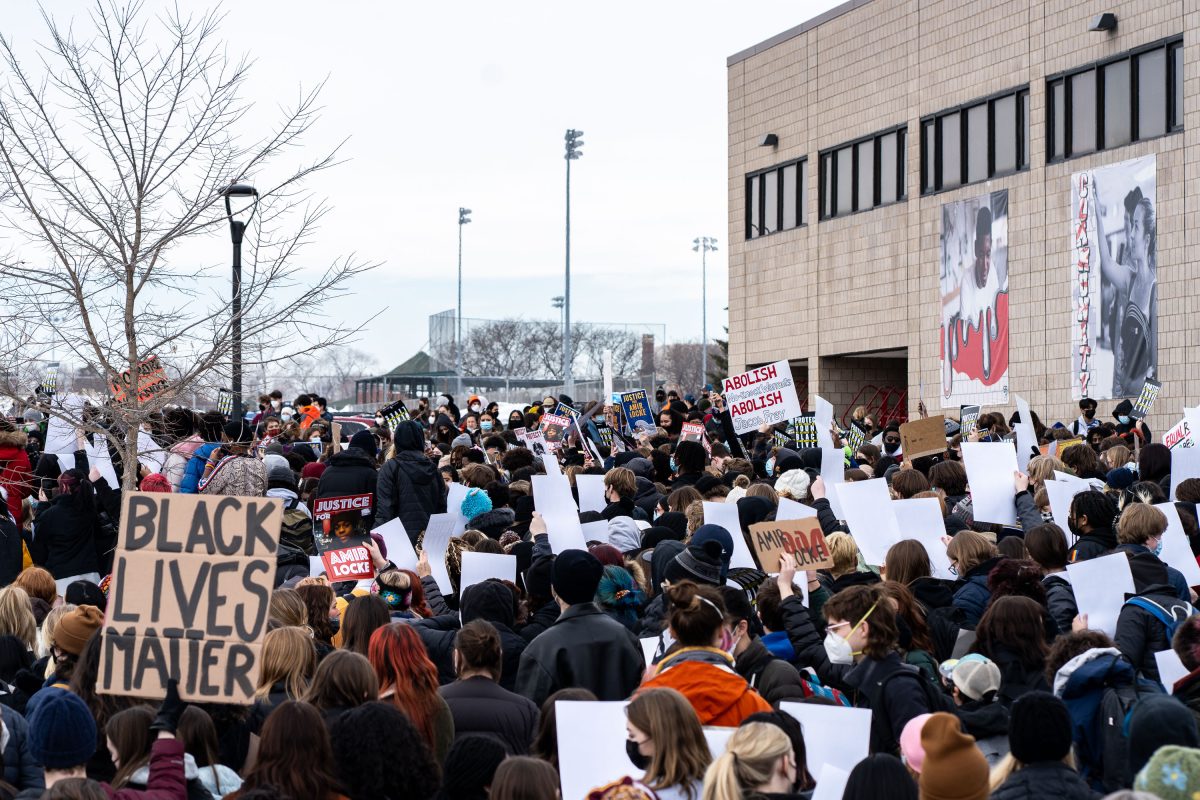
High school students from around the area march to the Minnesota Governor's Mansion demanding justice for Amir Locke.

Thousands of students march after Amir Locke is killed
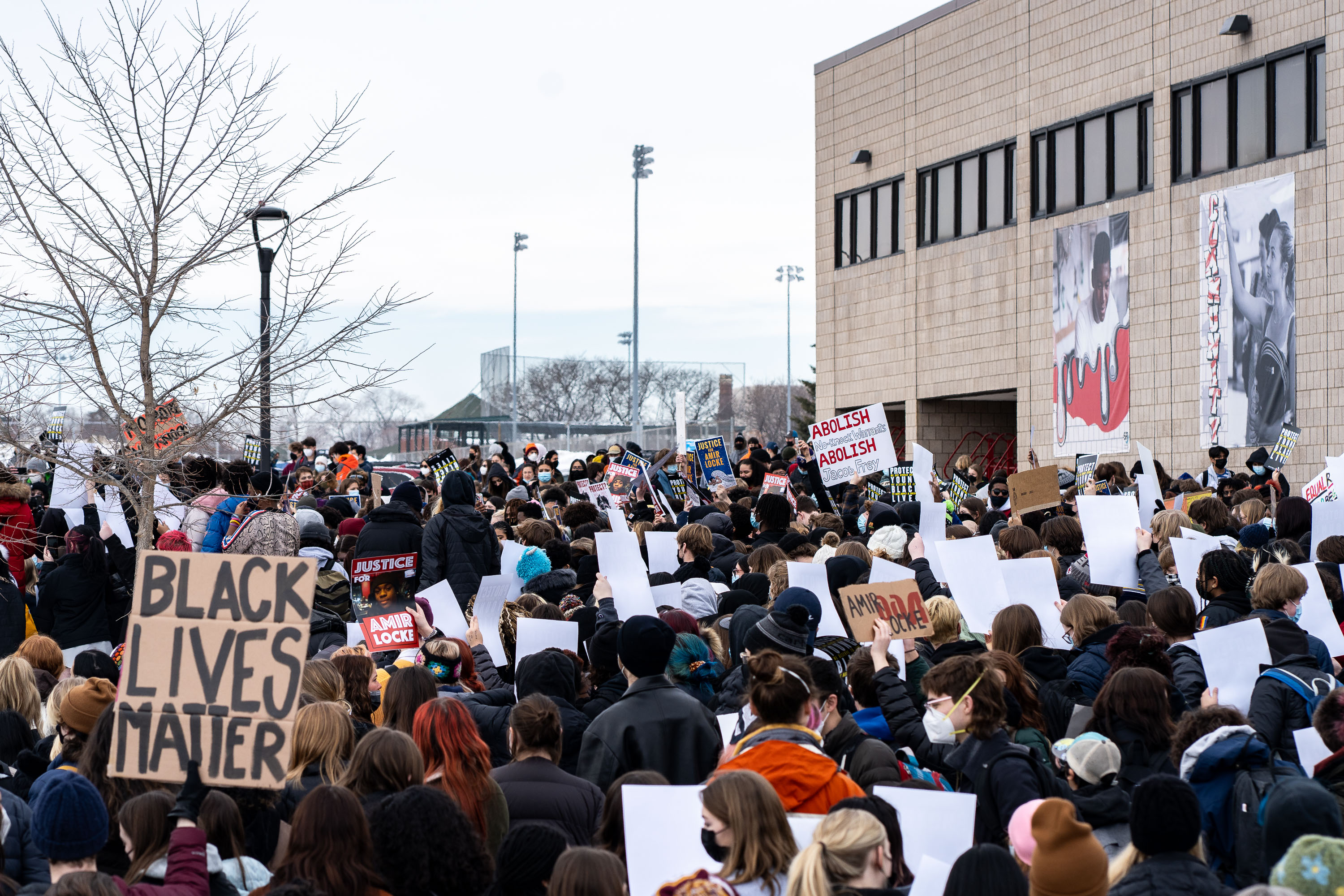
Students demand justice for Amir Locke in St. Paul
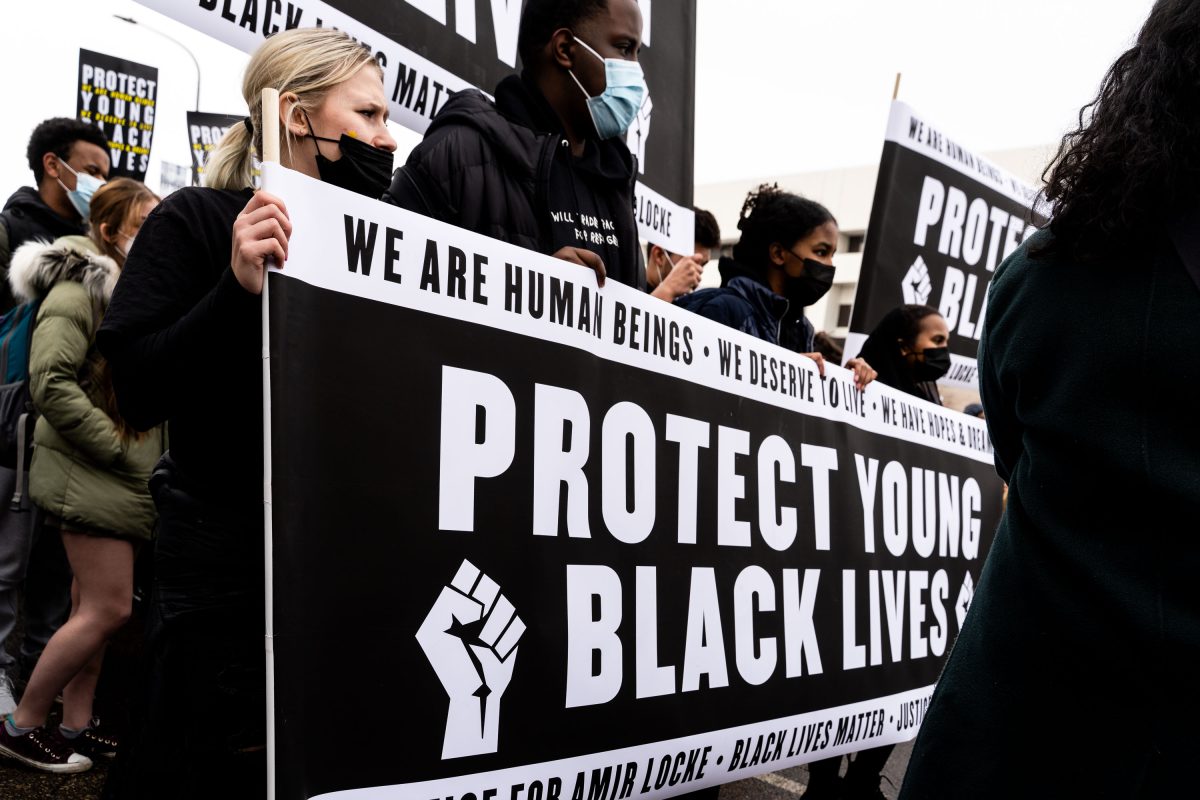
High school students from around the area march to the Minnesota Governor's Mansion demanding justice for Amir Locke.

Students demand justice for Amir Locke in St. Paul
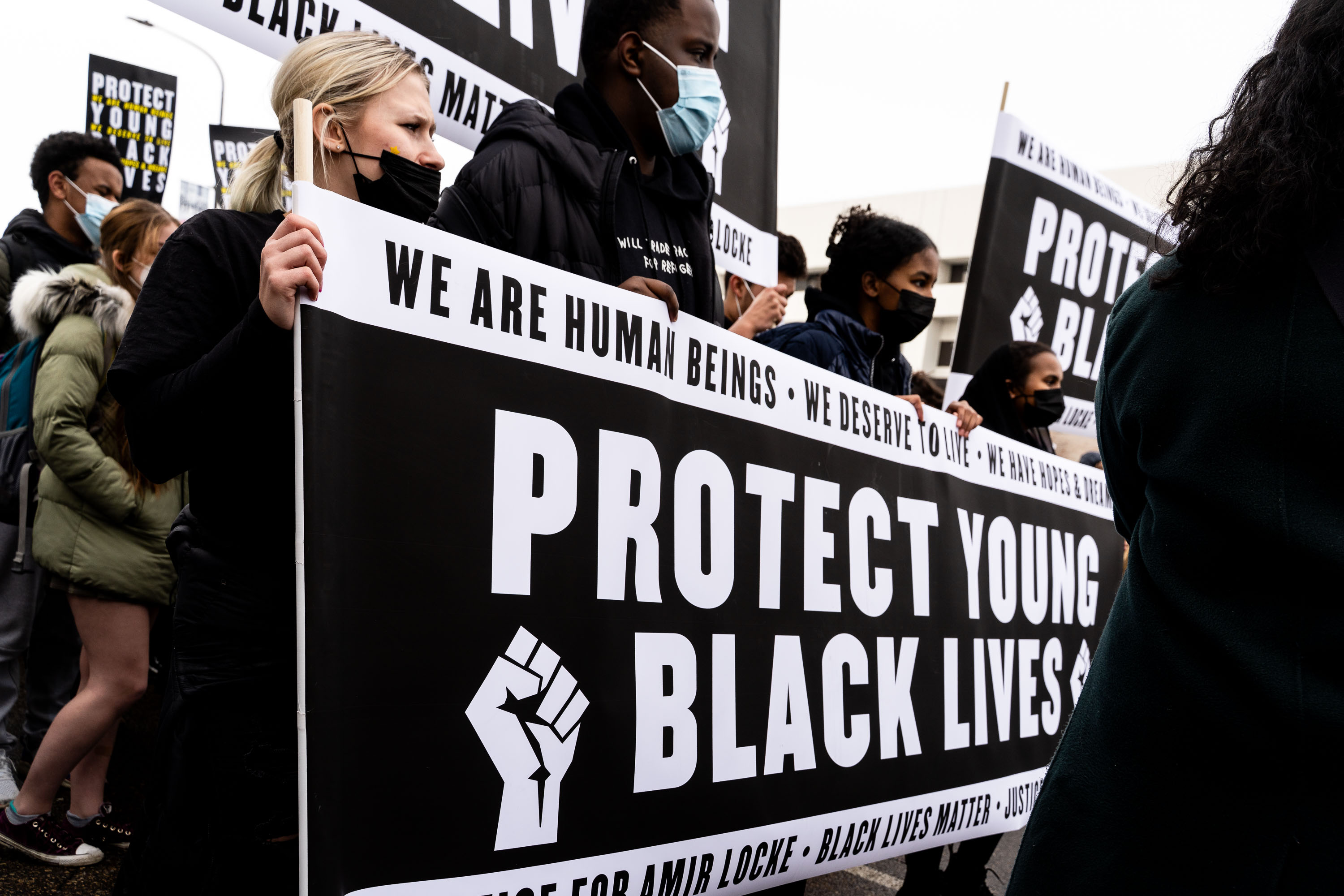
Amir Lock Student March in St. Paul
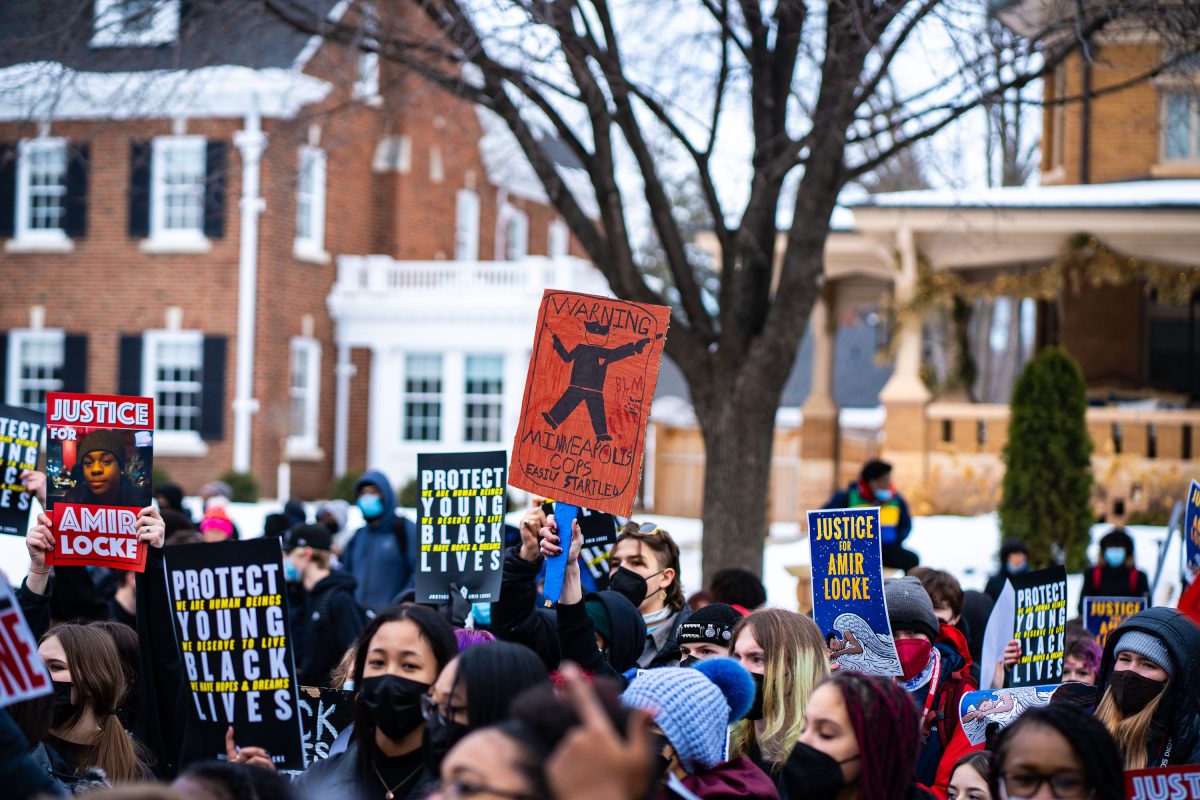
High school students from aroudn the area march to the Minnesota Governor's Mansion demanding justice for Amir Locke.

Amir Lock Student March in St. Paul
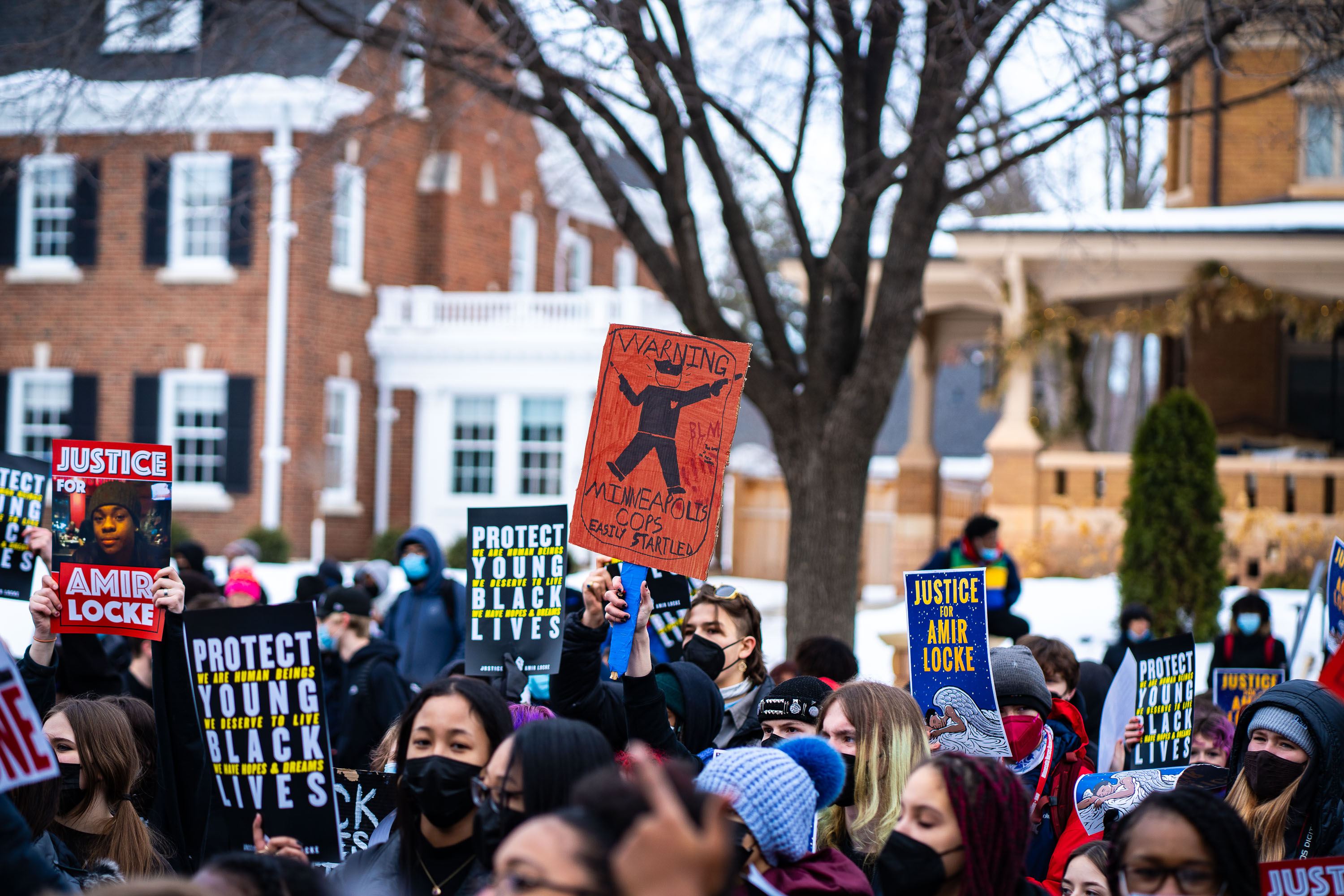
Warning Minneapolis Cops Easily Startled Sign at Protest
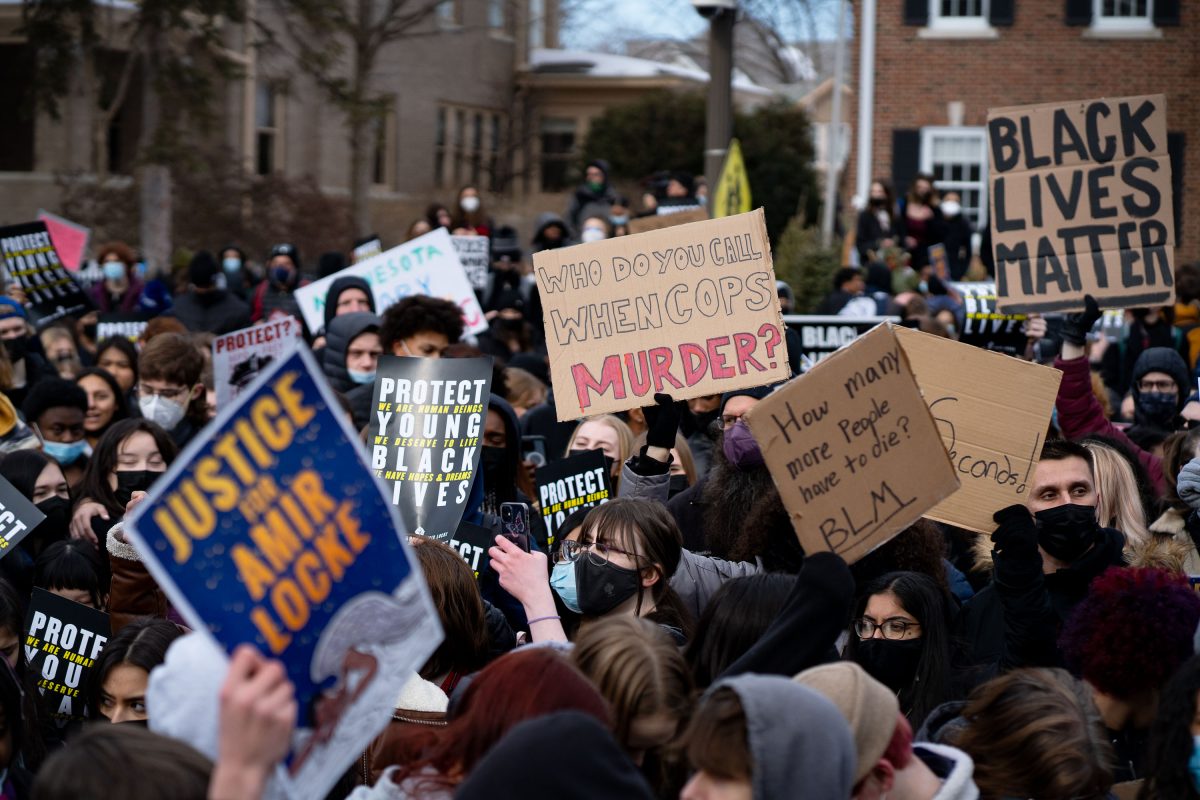
High school students from around the area march to the Minnesota Governor's Mansion demanding justice for Amir Locke.

Warning Minneapolis Cops Easily Startled Sign at Protest
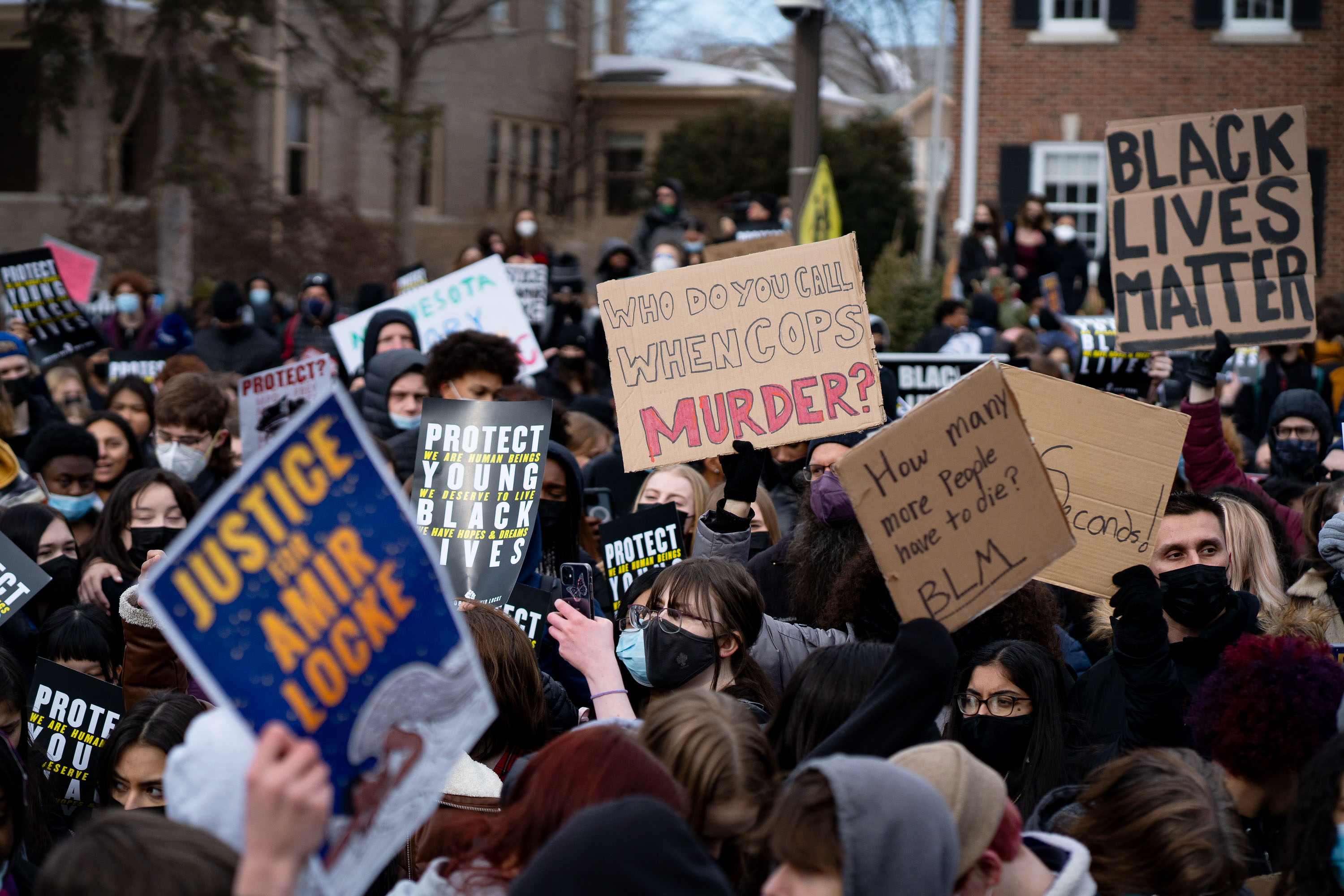
Justice for Amir Locke outside of Governor's Mansion
High school students from around the area march to the Minnesota Governor's Mansion demanding justice for Amir Locke.

Justice for Amir Locke outside of Governor’s Mansion
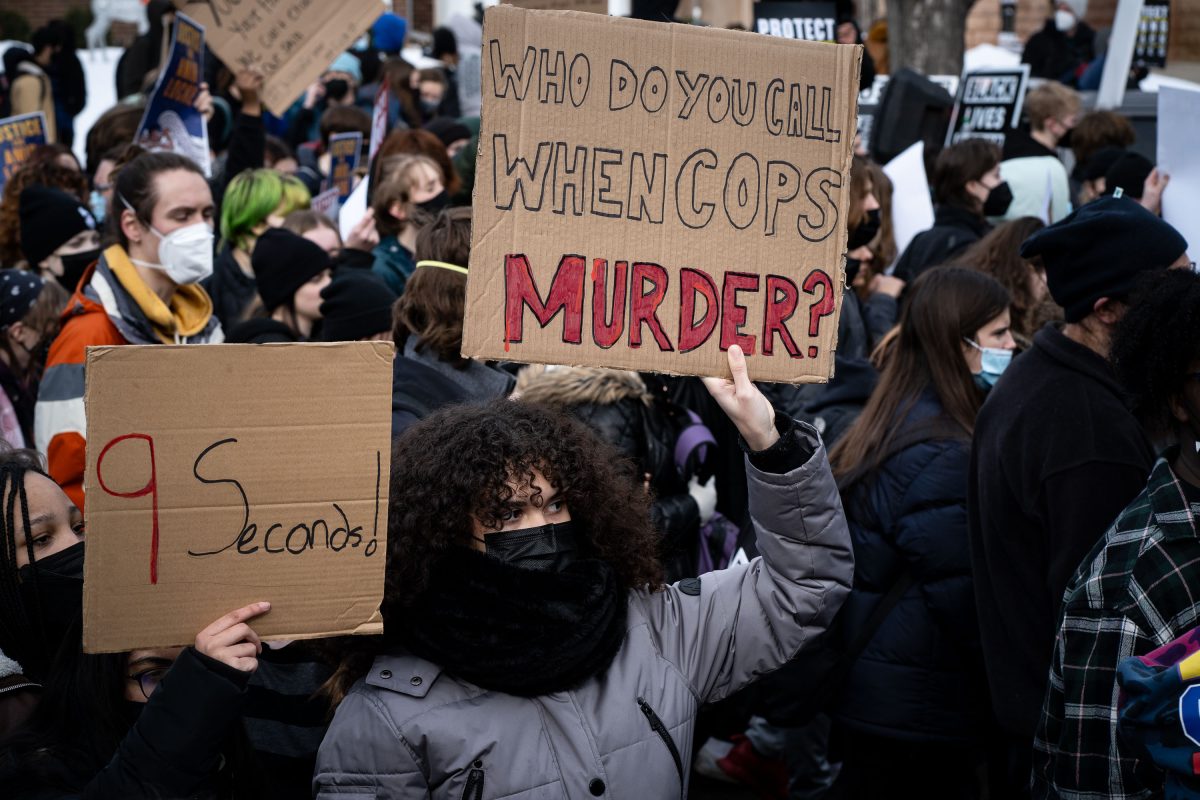
Who do you call when cops murder protest sign, Amir Locke
High school students from around the area walked out at noon to march to the Minnesota Governor's Mansion. They are demanding justice for Amir Locke as well as the resignation of interim Minneapolis Police Chief Amelia Huffman and Minneapolis Mayor Jacob Frey.

Students hold protest signs after Amir Locke killing
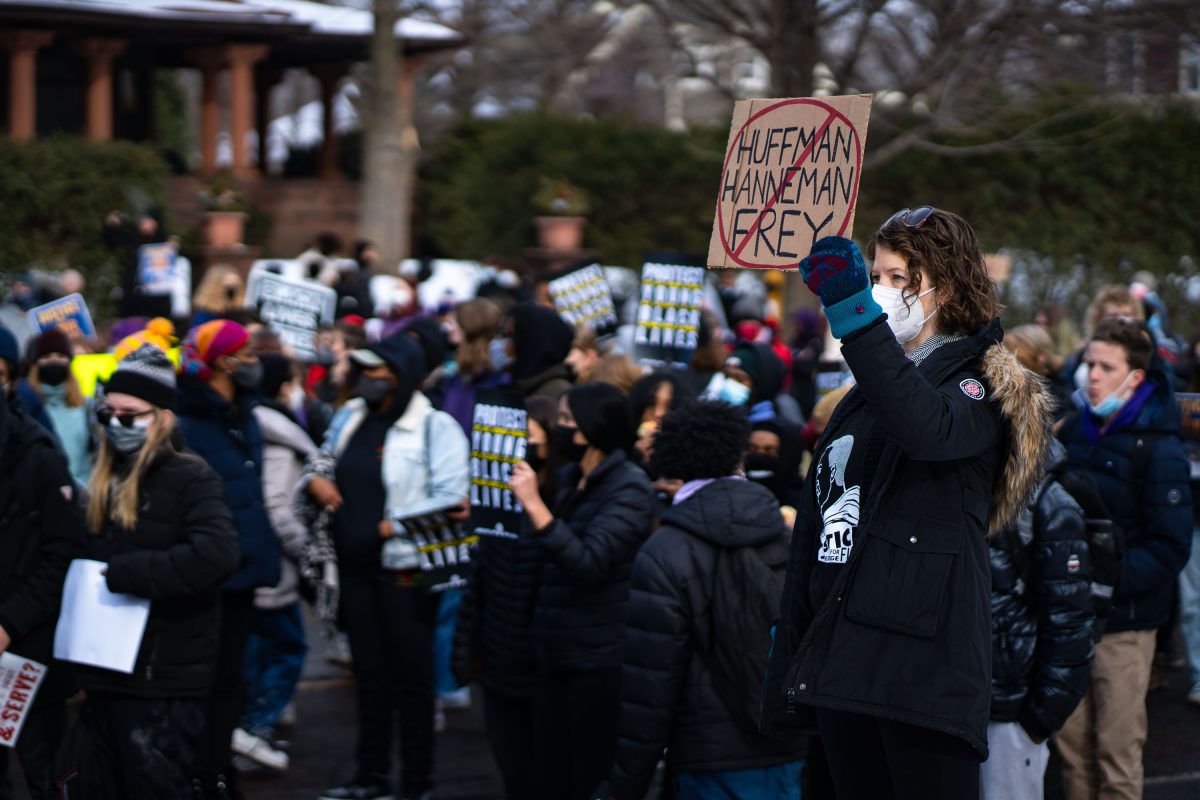
Huffman Hanneman Frey protest sign, Amir Locke Protest
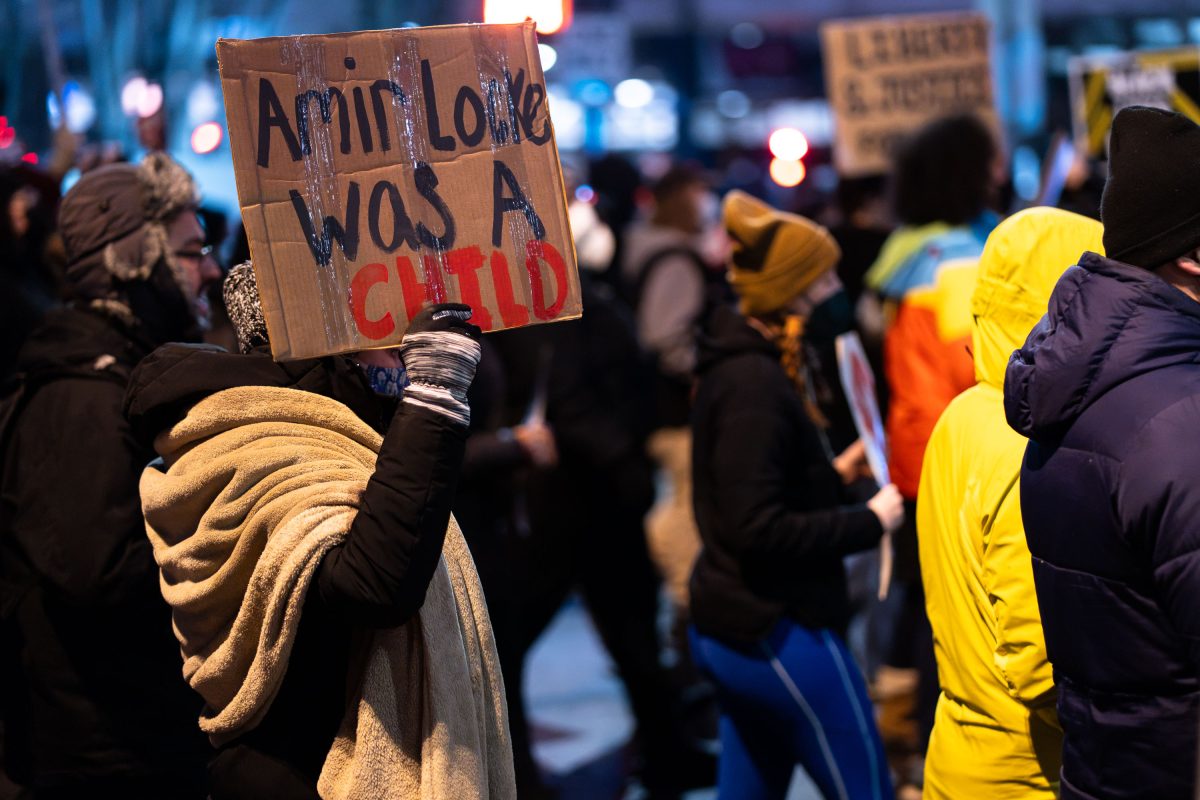
High school students from around the area march to the Minnesota Governor's Mansion demanding justice for Amir Locke.

Huffman Hanneman Frey protest sign, Amir Locke Protest
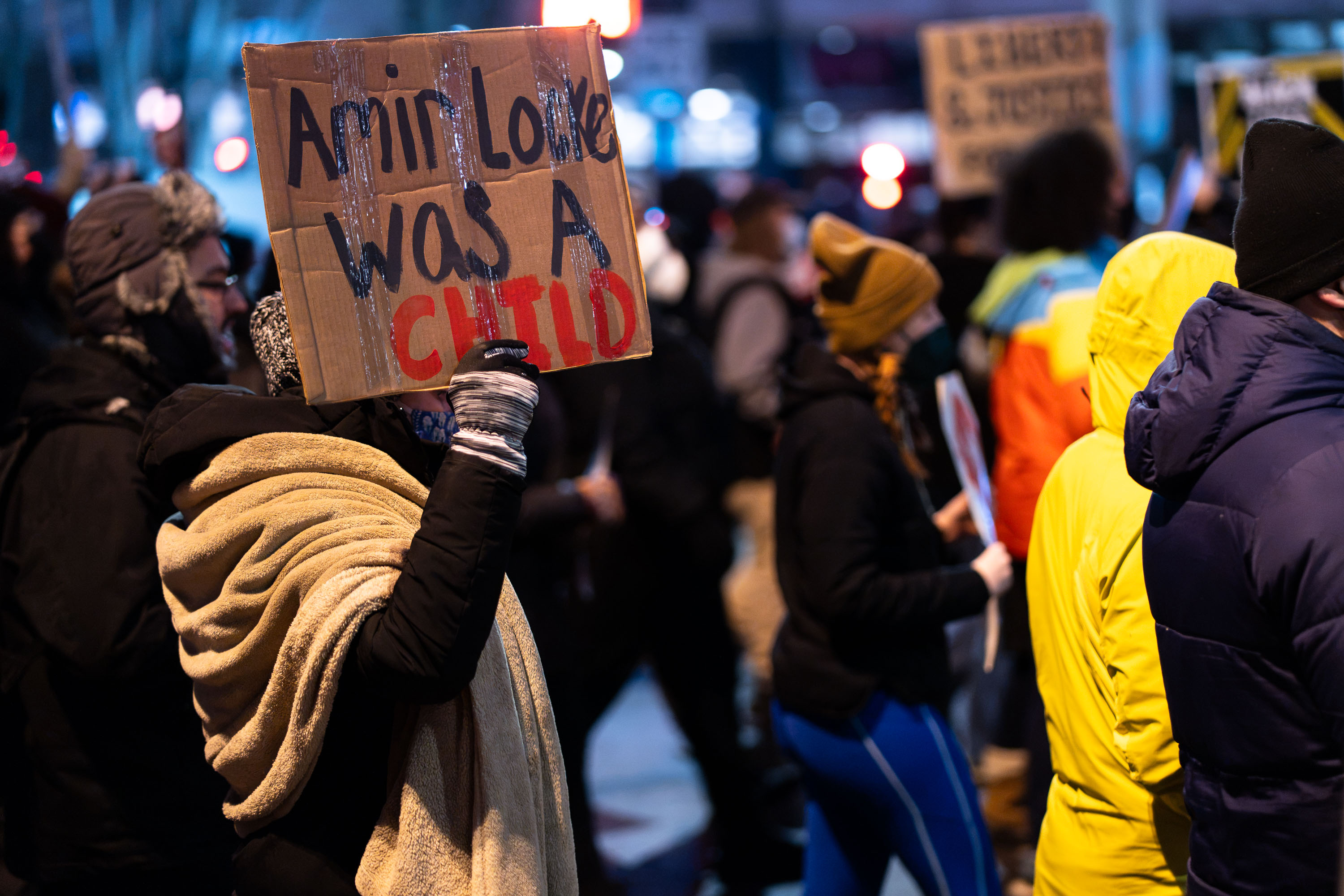
Protesters march after Amir Locke was killed by police
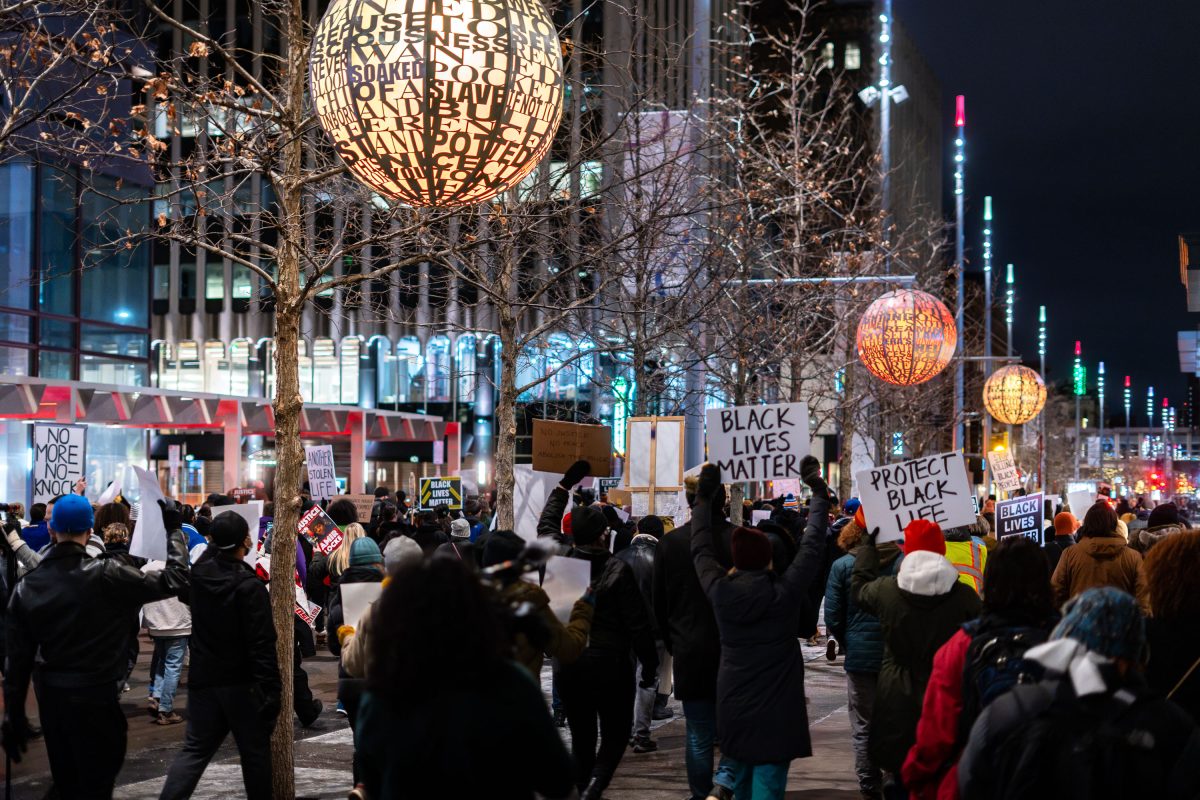
Protesters march through Downtown Minneapolis after demanding the Mayor resign following the Minneapolis Police shooting death of Amir Locke during a no-knock search warrant.

Protesters march after Amir Locke was killed by police
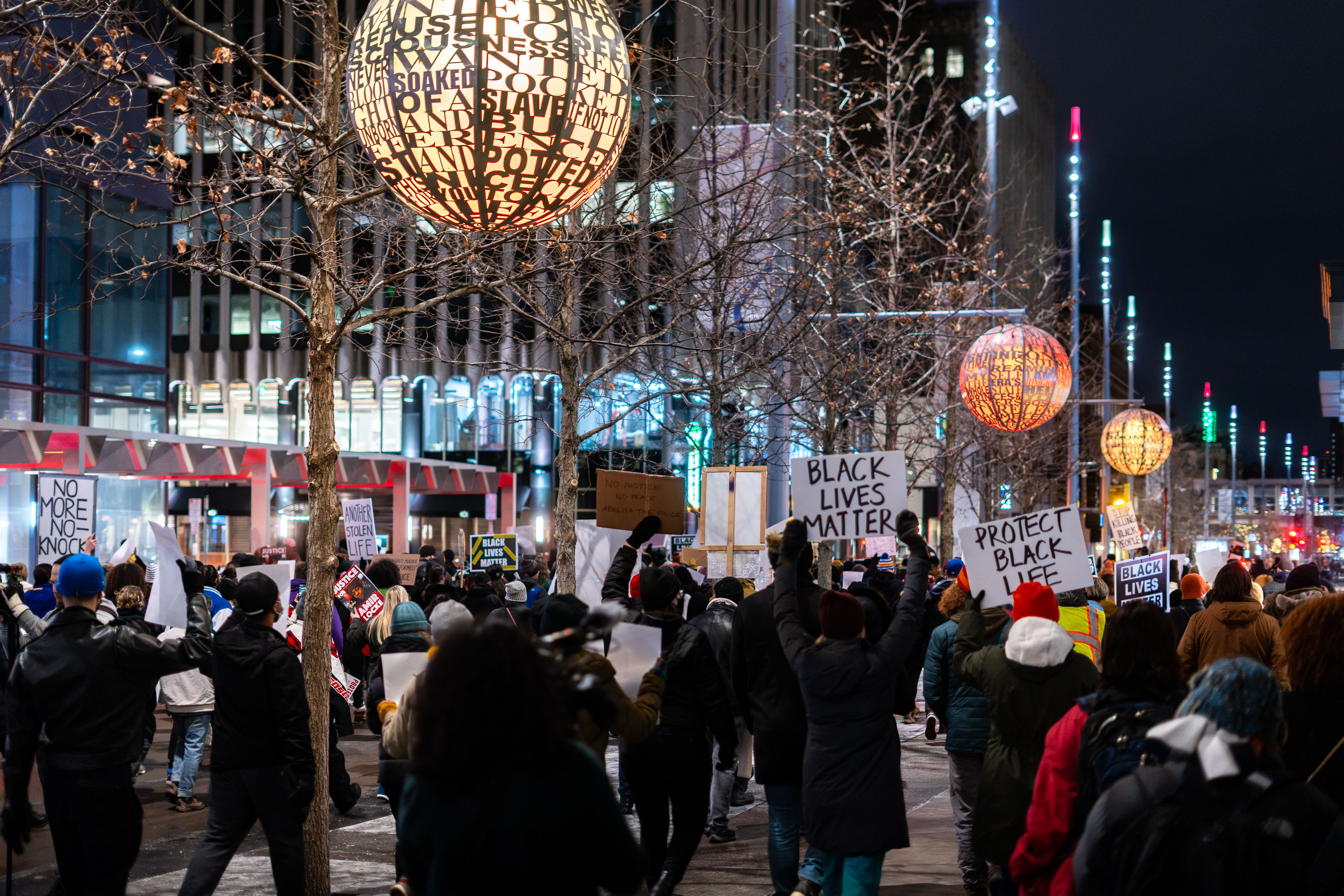
Protesters march on February 8, 2022 after Amir Locke is killed
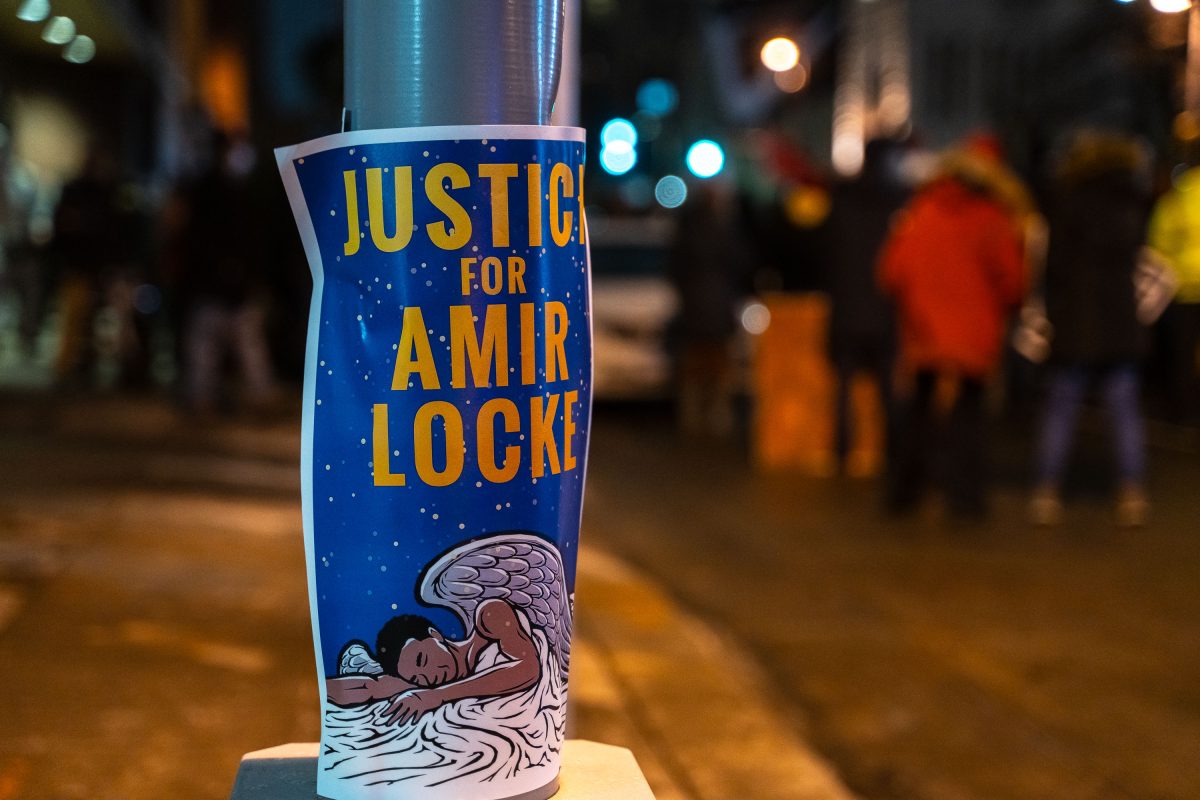
Protesters march through Downtown Minneapolis after demanding the Mayor resign following the Minneapolis Police shooting death of Amir Locke during a no-knock search warrant.

Protesters march on February 8, 2022 after Amir Locke is killed
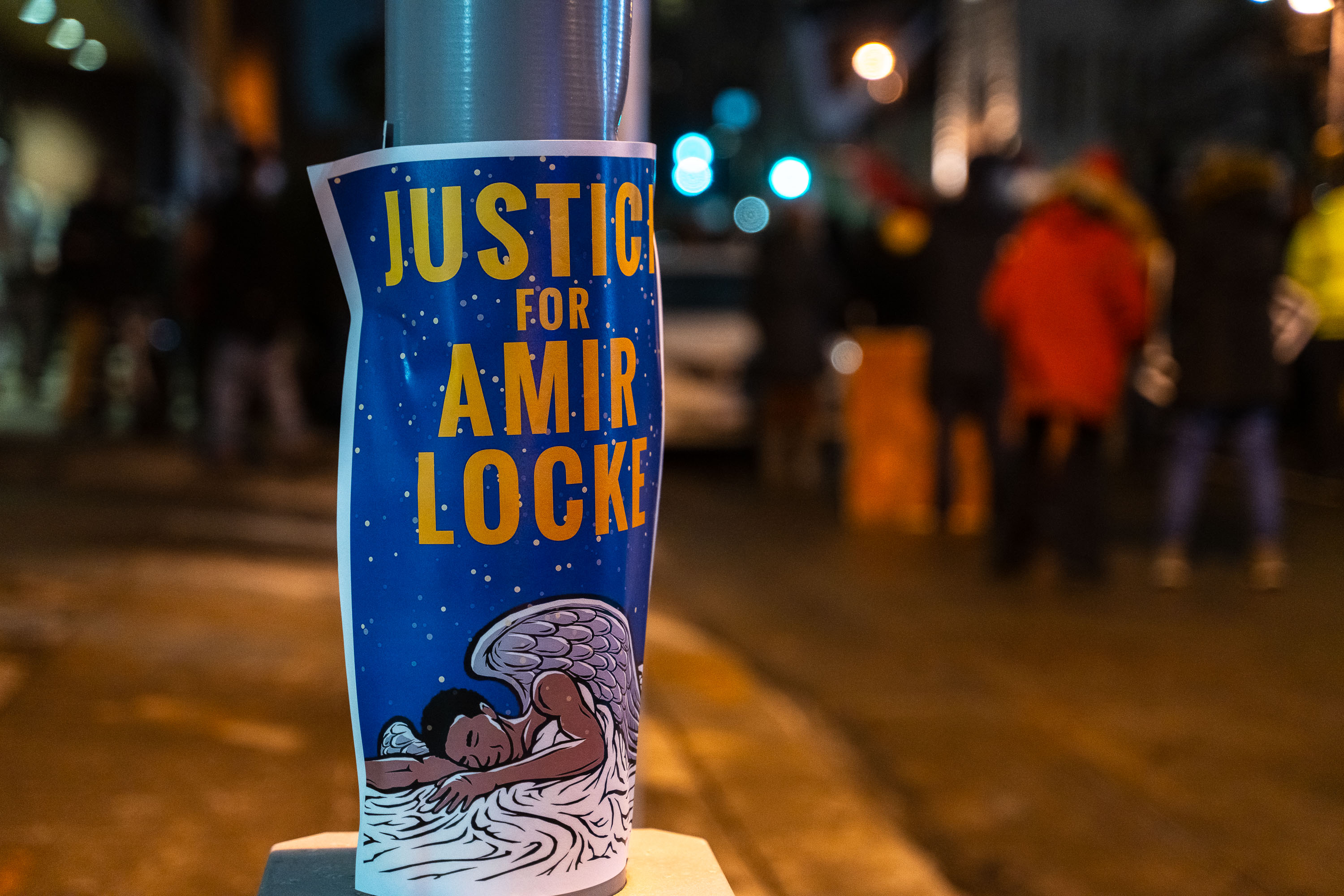
Justice For Amir Locke sign at the scene of his killing
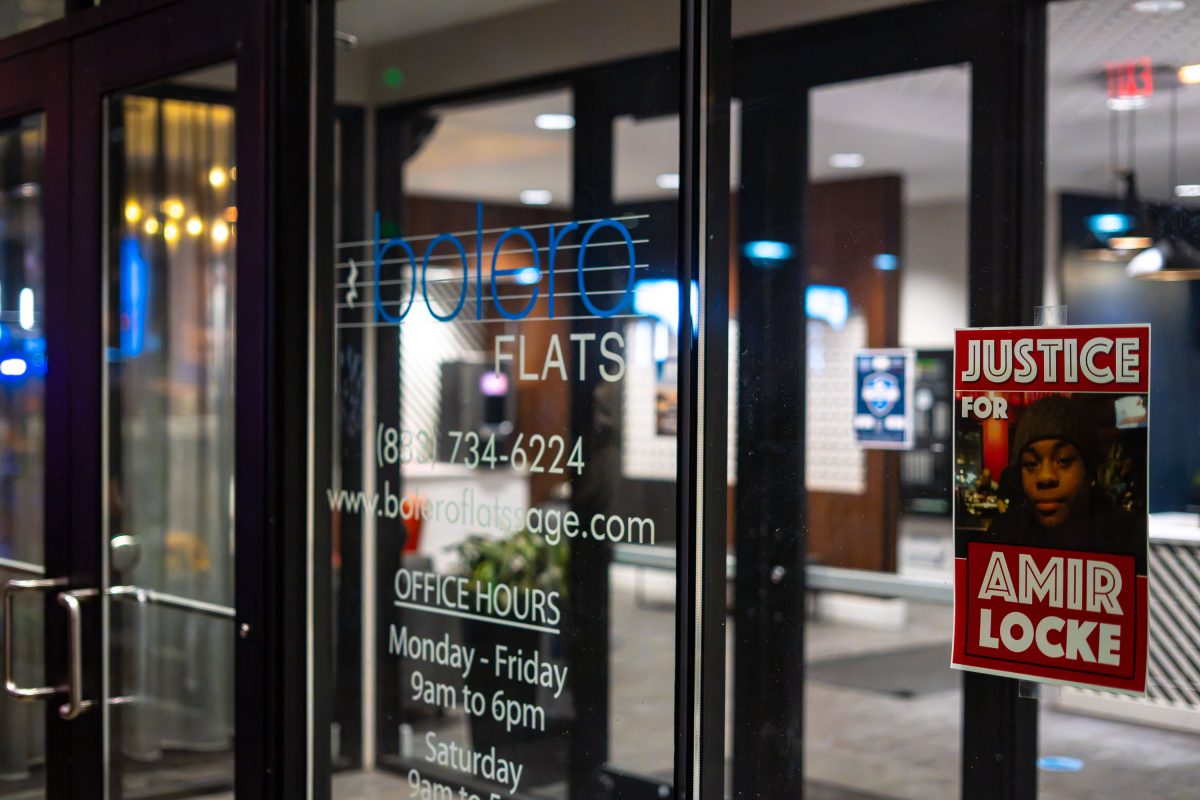
Protesters march through Downtown Minneapolis after demanding the Mayor resign following the Minneapolis Police shooting death of Amir Locke during a no-knock search warrant.

Justice For Amir Locke sign at the scene of his killing
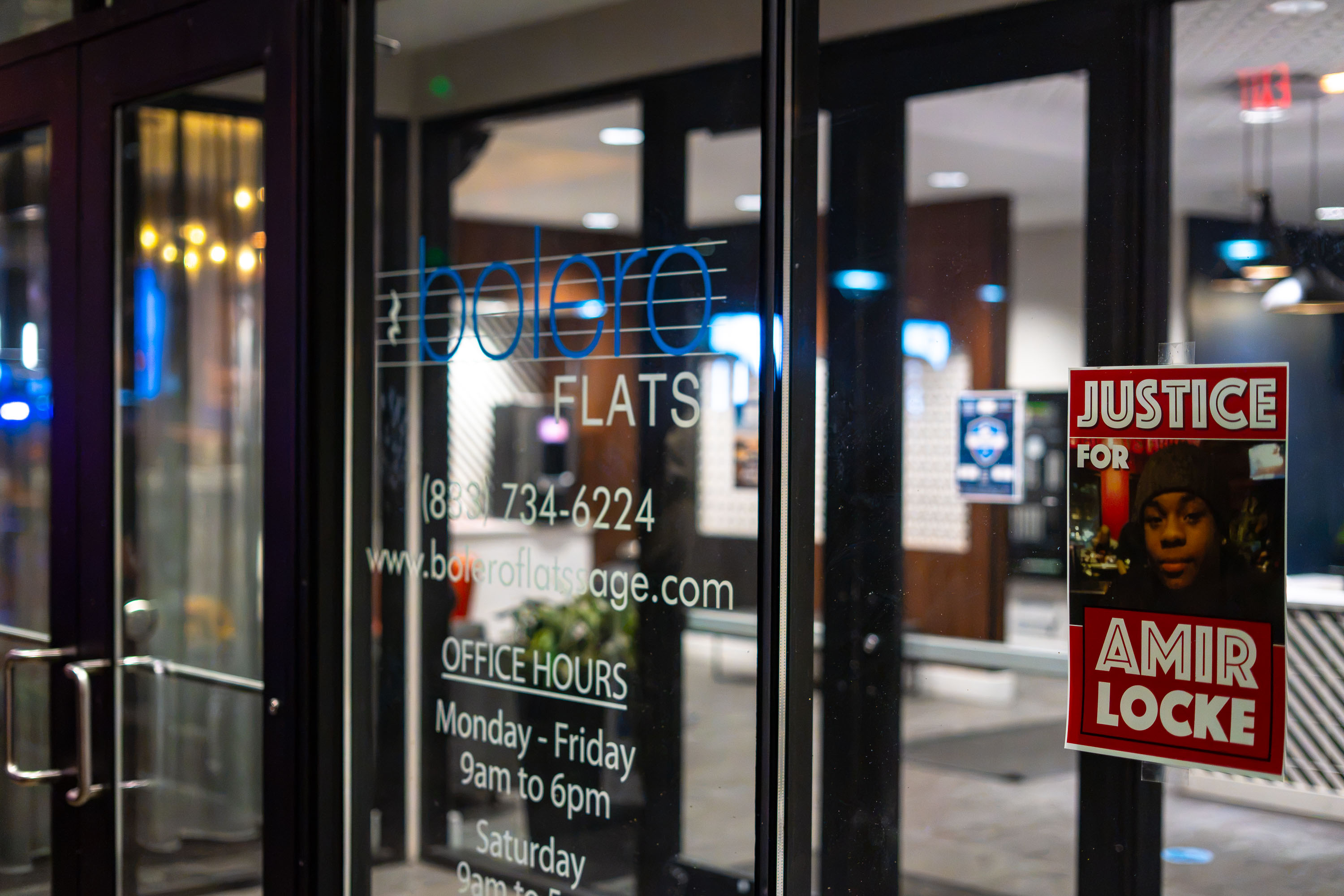
Justice for Amir Locke sign on Bolero Flats door
Protesters march through Downtown Minneapolis after demanding the Mayor resign following the Minneapolis Police shooting death of Amir Locke during a no-knock search warrant.

Justice for Amir Locke sign on Bolero Flats door

© 1996–2026 Chad Davis