Police Officer

119 photos · 2019–2026

119 photographs tagged Police Officer, 2019–2026.

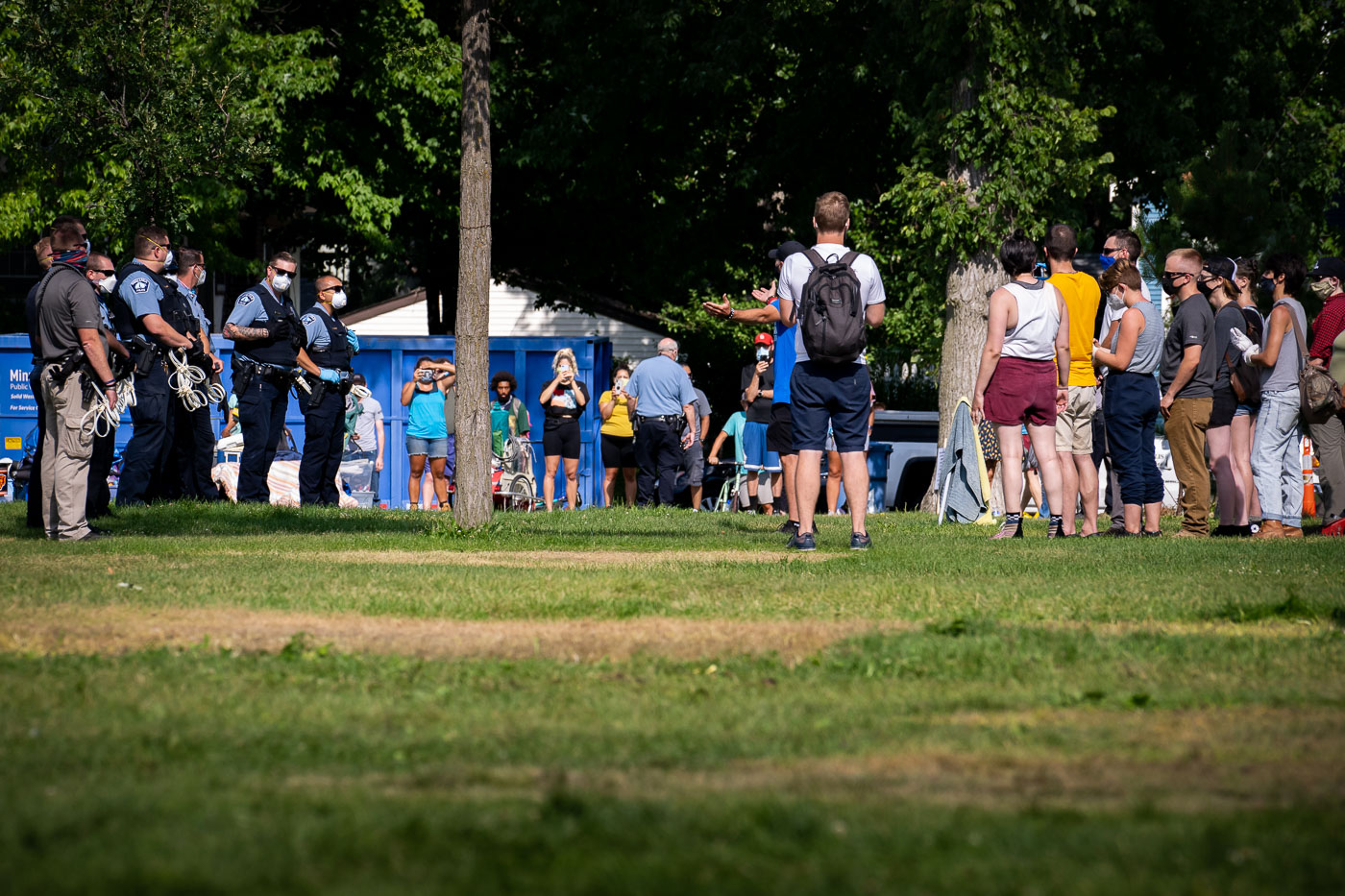
Minneapolis Police Chief Brian O'Hara stands with officers at Renee Good Memorial on Portland Avenue.
Minneapolis Police Chief Brian O'Hara stands with officers near the Renee Good Memorial on Portland Avenue.

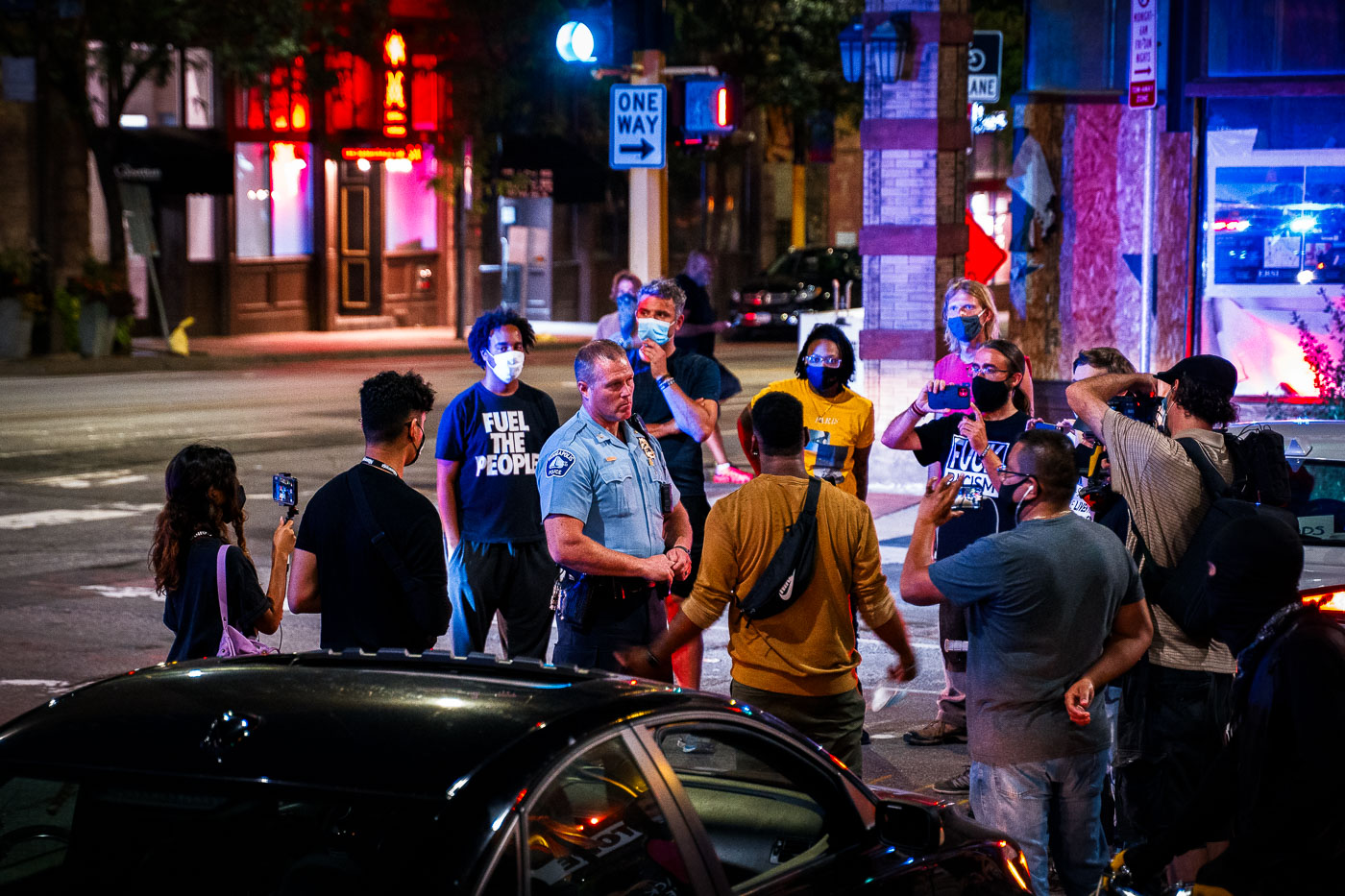
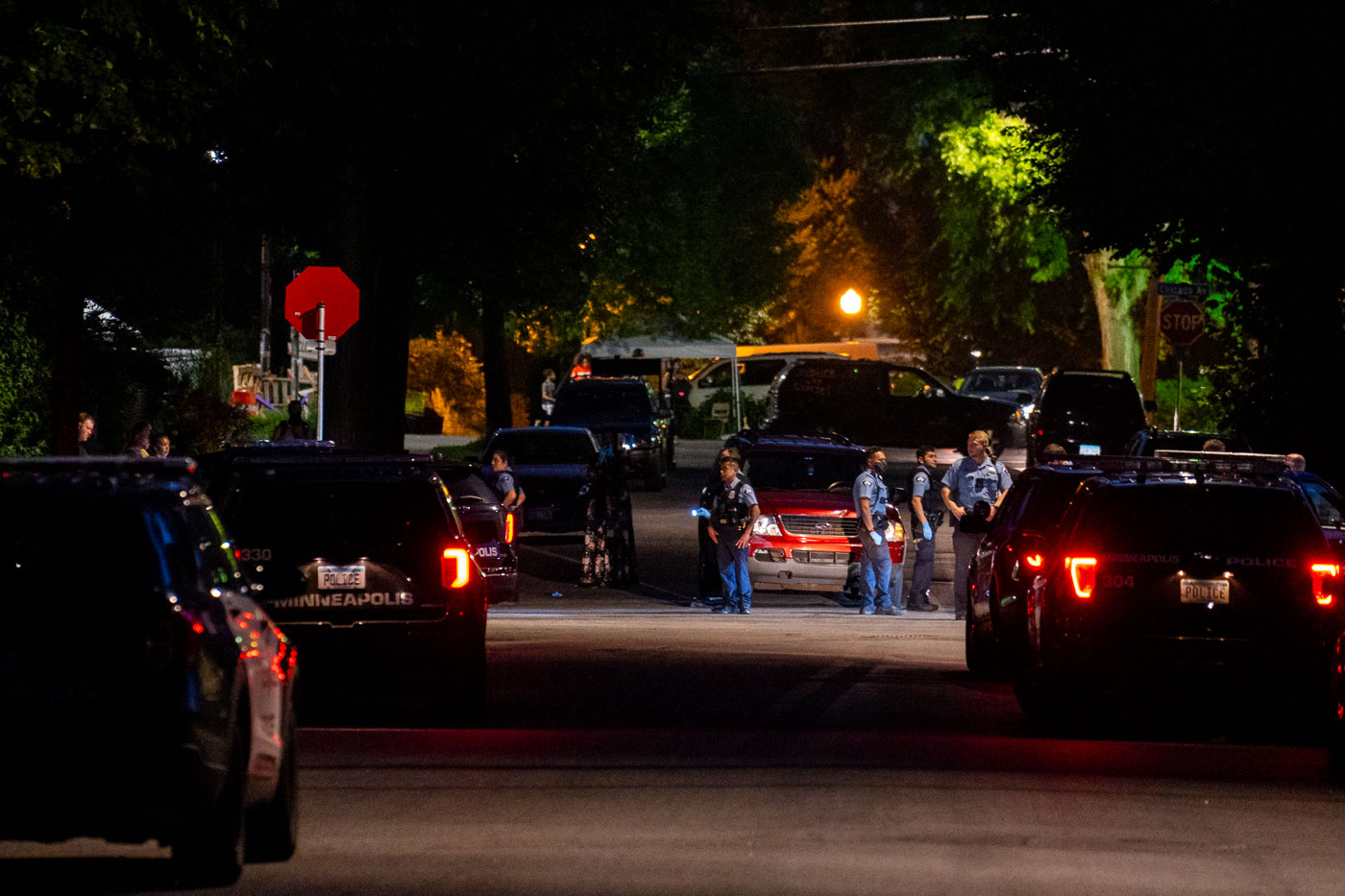
Minneapolis Police Chief Brian O’Hara Briefs Officers at Night

Milwaukee Police on bikes during 2024 RNC
Milwaukee Police officers on bicycles patrol during the 2024 Republican National Convention. Bicycle patrols are often utilized by law enforcement for crowd control, community engagement, and navigating dense urban environments where larger vehicles may be less effective. The presence of bike units can provide a more accessible and visible police presence during large public events like the RNC. This deployment highlights the logistical and security measures undertaken by the city to manage the significant influx of attendees and potential disruptions.

Milwaukee Police Bicycle Patrol at 2024 RNC

2024 RNC Police behind secure fencing
Police officers are stationed behind secure fencing during the 2024 Republican National Convention in Milwaukee. The convention, a quadrennial event for the Republican Party, selects its presidential nominee and sets the party's platform. Such large-scale political gatherings often necessitate extensive security measures, including temporary barriers, to manage crowds and ensure the safety of attendees and participants. The presence of law enforcement behind these barriers highlights the security protocols implemented to maintain order during the event.

Milwaukee RNC: Police behind secure fencing

Secret Service talks to local law enforcement at 2024 RNC
Secret Service and local law enforcement officers maintain security at the perimeter of the 2024 Republican National Convention in Milwaukee. The convention, a significant quadrennial event for the Republican Party, brings together delegates and party members to nominate their presidential candidate. Security operations for such large-scale political gatherings involve extensive coordination between federal agencies like the Secret Service and various local and state police departments to ensure public safety and protect attendees. The presence of these officers underscores the importance of securing major political events.

Secret Service and Local Police at 2024 RNC Milwaukee Perimeter

Metropolitan Police Department at the 2024 RNC with a cigar
A federal law enforcement officer is stationed near the Fiserv Forum in Milwaukee during the 2024 Republican National Convention. The officer, identified as A.M. Mohsin of the Metropolitan Police Department, is equipped with a communication device and is overseeing a checkpoint. Security operations for the convention involved a coordinated effort among multiple agencies, including the Secret Service, Capitol Police, and DHS task forces, to manage interior and exterior perimeters. Federal command and the city's Emergency Operations Center provided coordinated radio networks for security staff.

Federal Officer at 2024 RNC Checkpoint, Fiserv Forum, Milwaukee
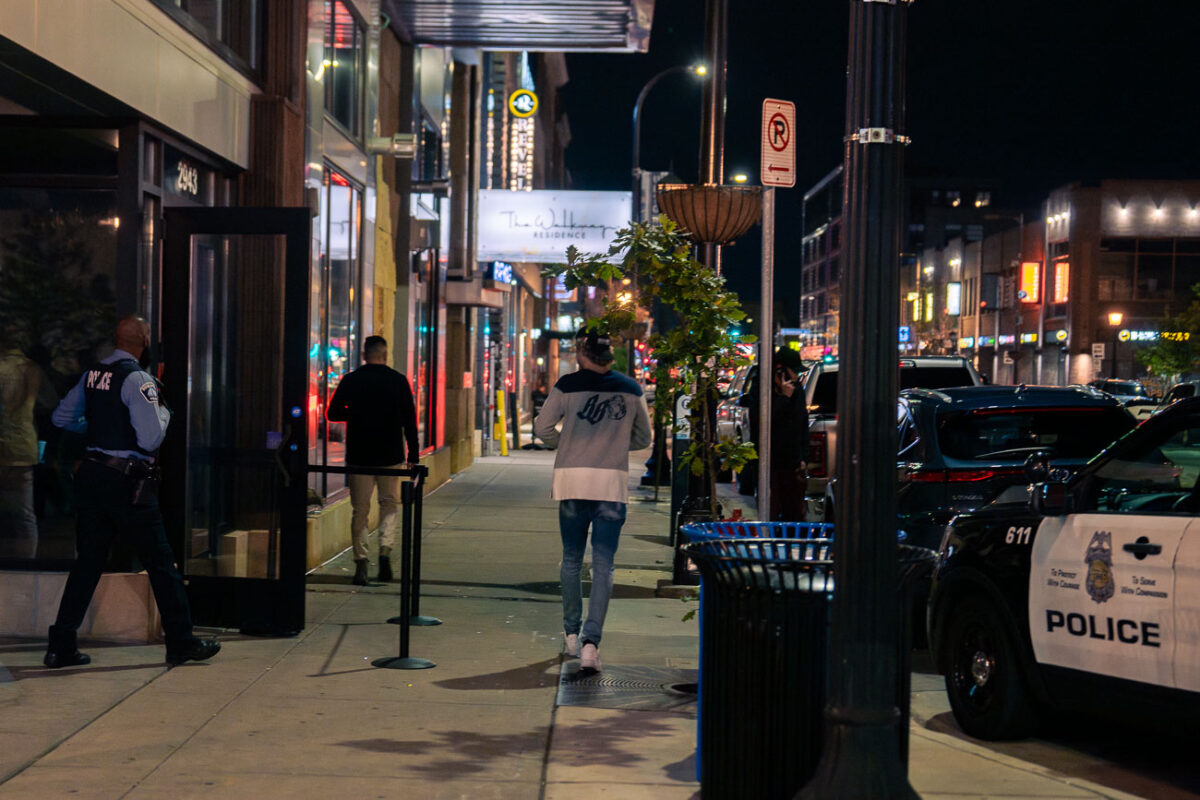
Off-duty police and pedestrians outside a nightclub on Lake Street in Minneapolis at night.
An off-duty Minneapolis Police officer stands outside Rumba Nightclub on Lake Street in Uptown Minneapolis in October 2023.

Police Patrol Outside Rumba Nightclub on Hennepin Avenue

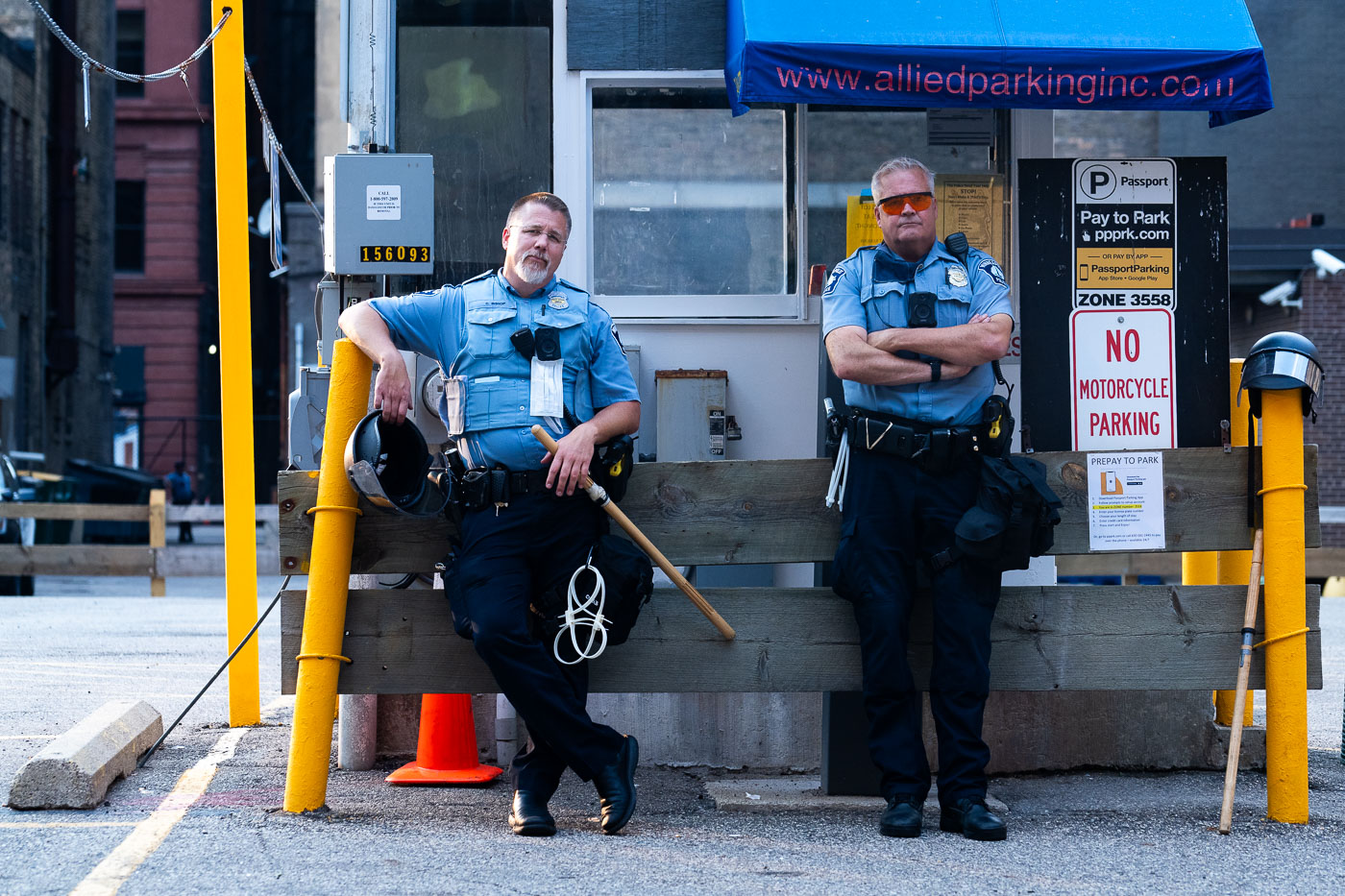
Reserve officers standing together downtown
Minneapolis Police Reserves in downtown Minneapolis standing on Nicollet Mall on August 3, 2023.

Minneapolis Police Reserves on Nicollet Mall
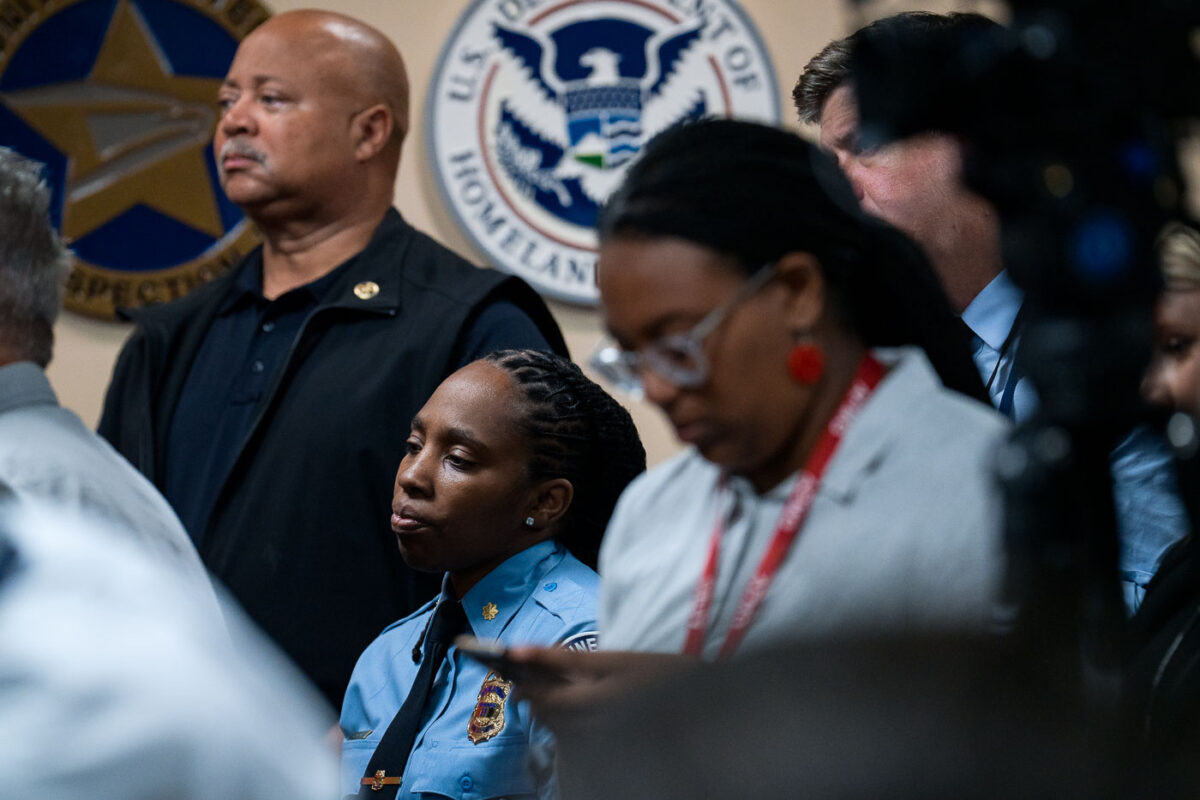
Minneapolis police officer watches AG Merrick Garland
A Minneapolis police officer attends a press conference where the Department of Justice announced the findings of its investigation into the Minneapolis Police Department. The investigation was prompted by concerns over the department's practices, particularly following the murder of George Floyd in May 2020. The DOJ's findings, released in June 2023, concluded that the department engaged in a pattern or practice of unconstitutional conduct. This event marked a significant moment in the ongoing efforts to reform policing in Minneapolis and address systemic issues.

Minneapolis Police Officer at DOJ Investigation Announcement
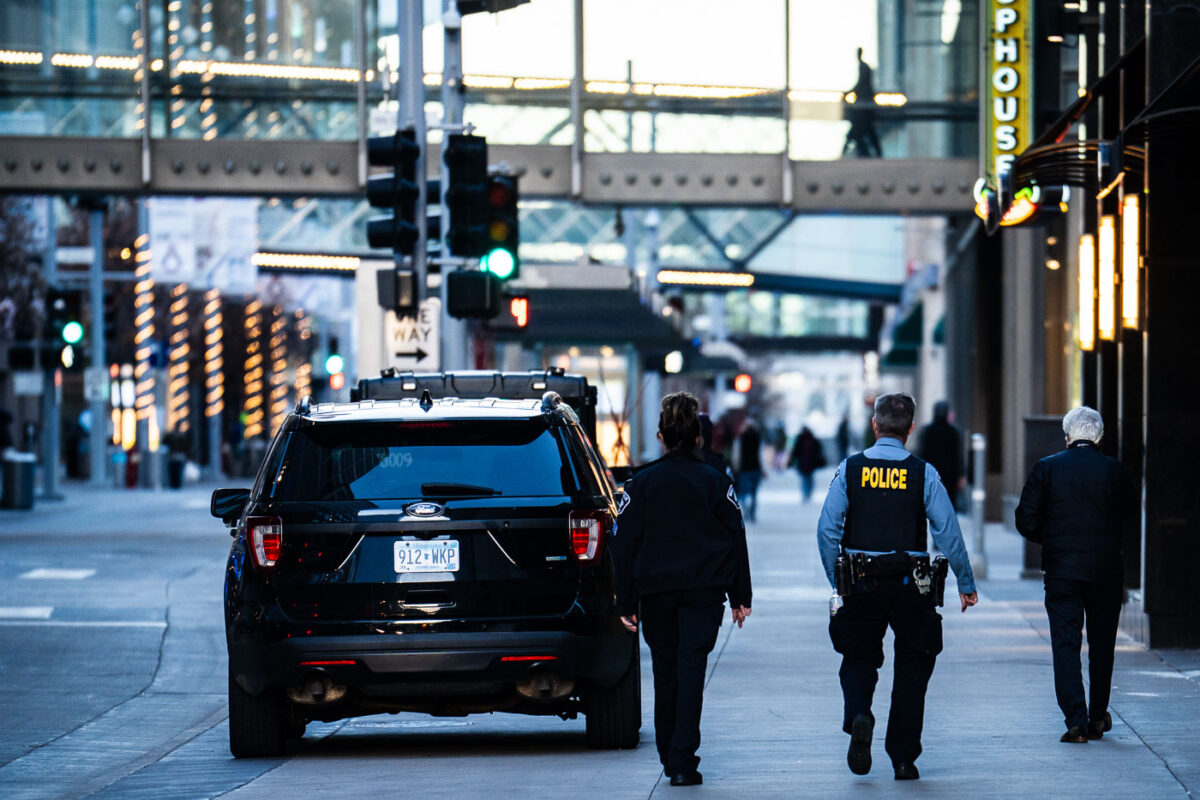
Minneapolis Police walk in Downtown Minneapolis part of Operation Endeavor
Minneapolis Police officers patrol downtown Minneapolis during "Operation Endeavor."

Minneapolis Police Patrol Downtown During Operation Endeavor
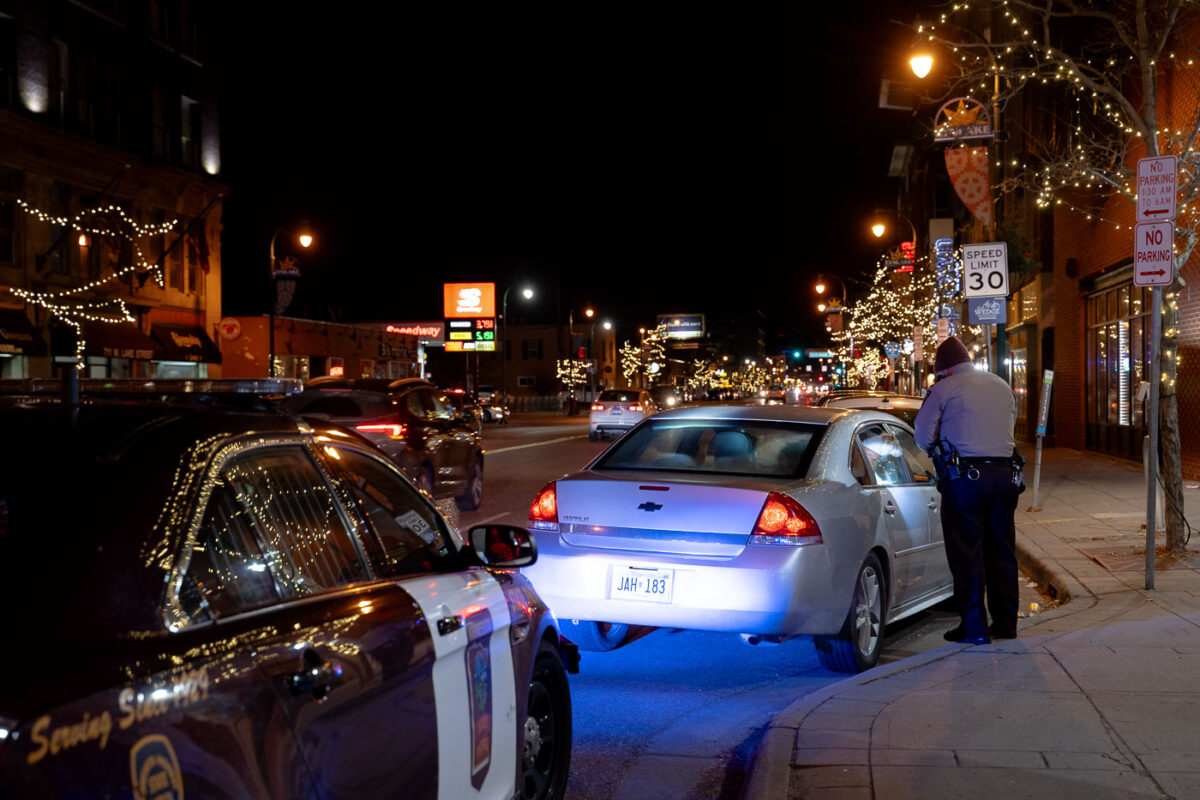
Minnesota State Patrol pulling over a vehicle on Hennepin Avenue
Minnesota State Patrol officers assisted Minneapolis Police on Lake Street doing traffic stops shown here on Lake Street and Lyndale.

Minnesota State Patrol assists Minneapolis Police on Lake Street
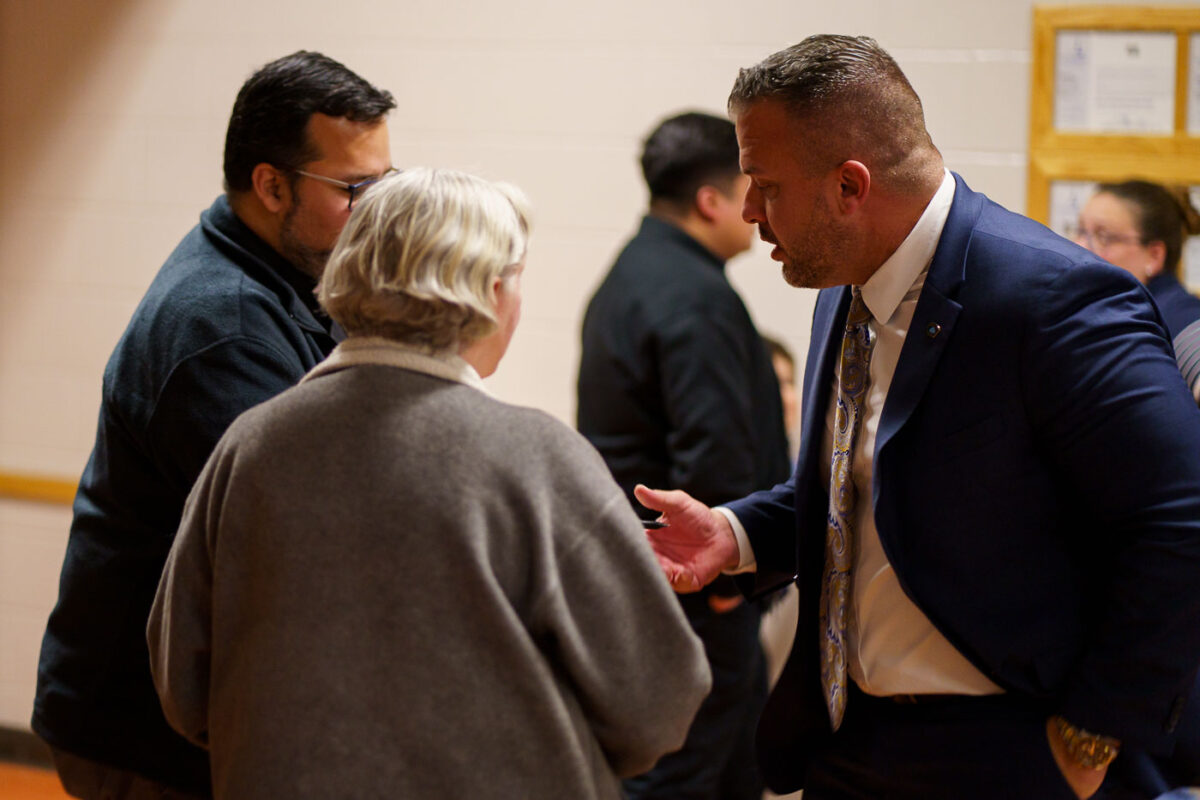
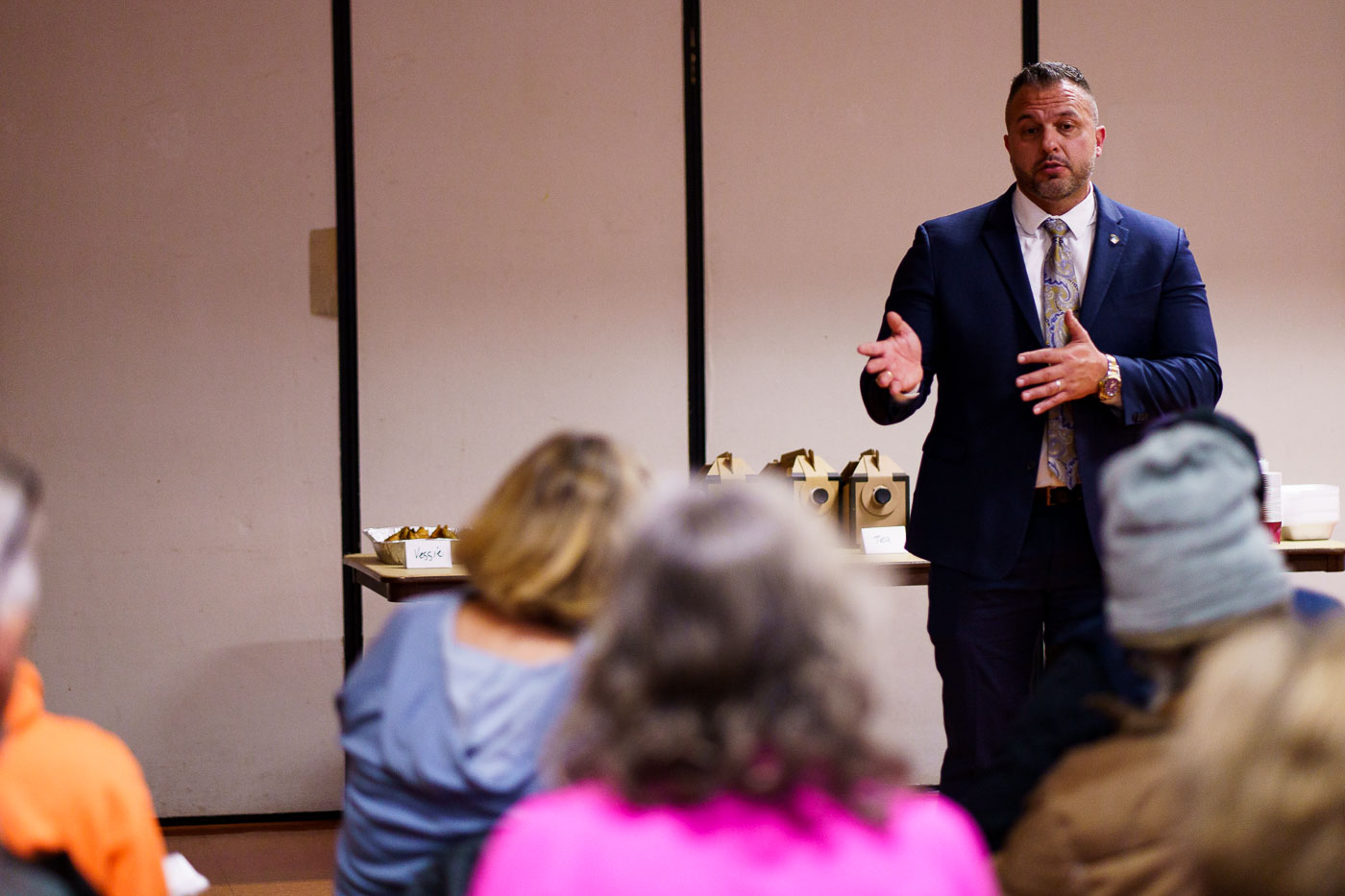
Brian Ohara speaks to the community
Minneapolis police chief nominee Brian O’Hara engaged with community members at Stewart Park. The meet and greet provided a forum for residents to discuss public safety concerns and the potential impact of a consent decree, a process O'Hara had experience with in Newark.

Brian O’Hara speaks to Minneapolis community at Stewart Park
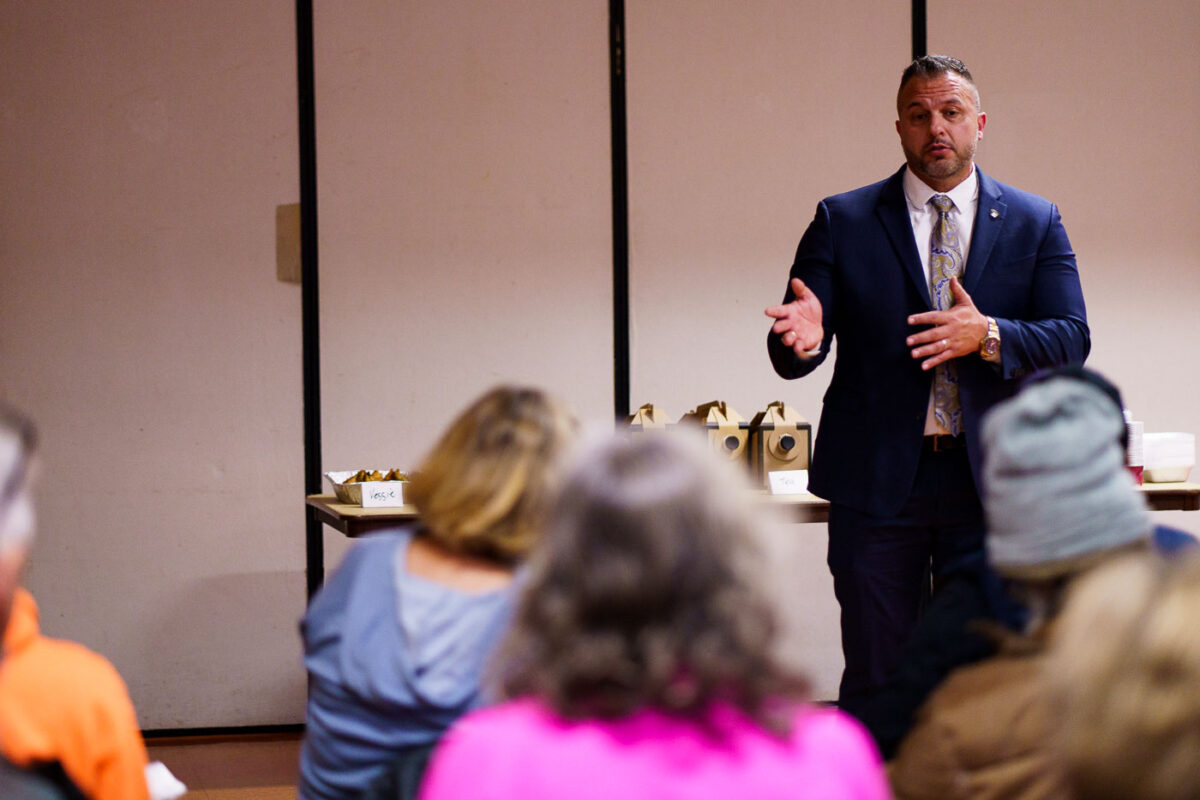
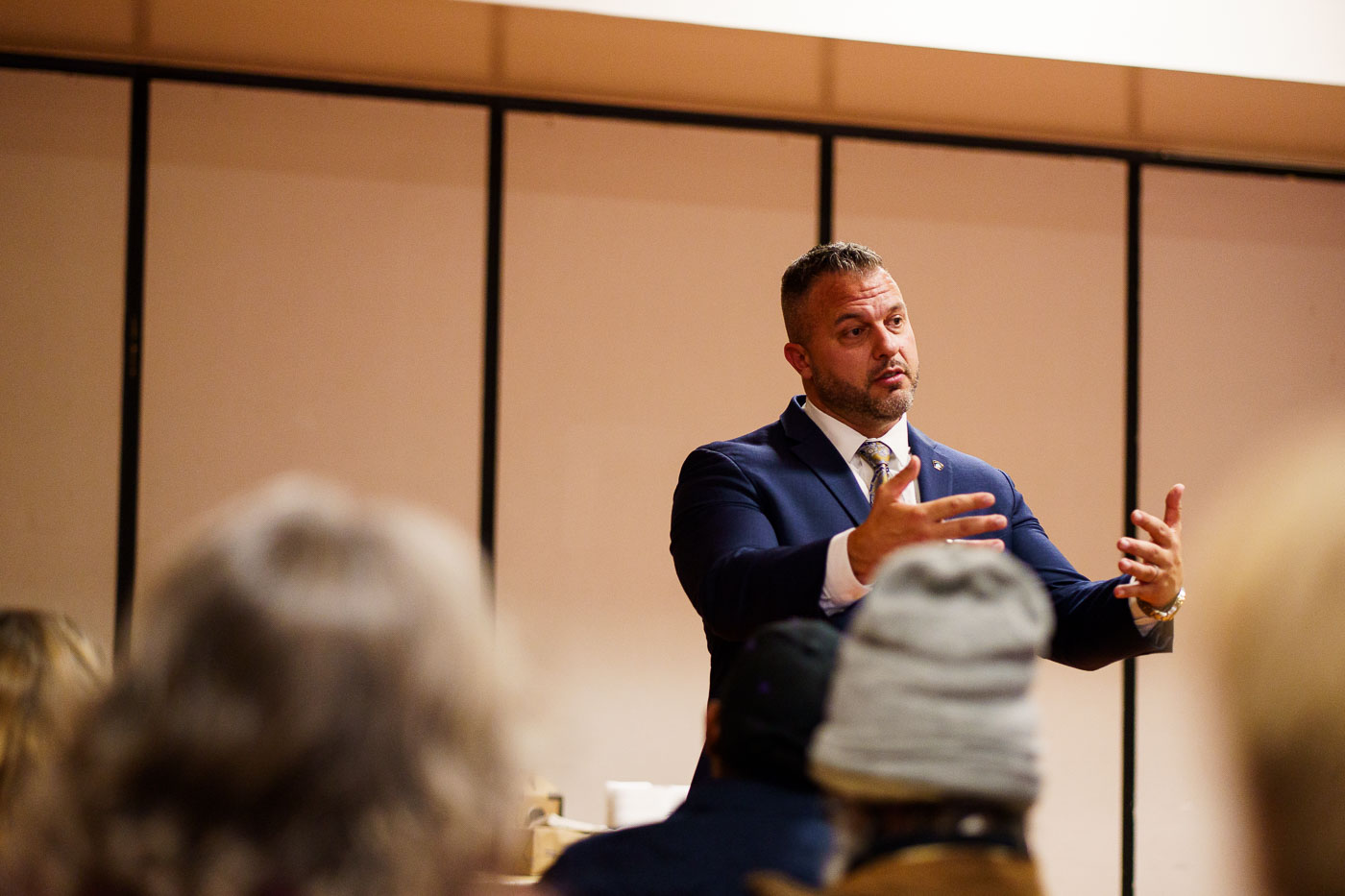
Minneapolis Police Chief Brian OHara at Community Meeting
Minneapolis Police Chief nominee Brian O’Hara addresses community members at Stewart Park in South Minneapolis. The meeting provided a forum for residents to discuss public safety and O'Hara's proposed leadership. During the gathering, O'Hara shared insights from his experience with a consent decree process in Newark, New Jersey, drawing comparisons to the unique challenges and context of Minneapolis.

Minneapolis Police Chief Brian O’Hara at Stewart Park Community Meeting
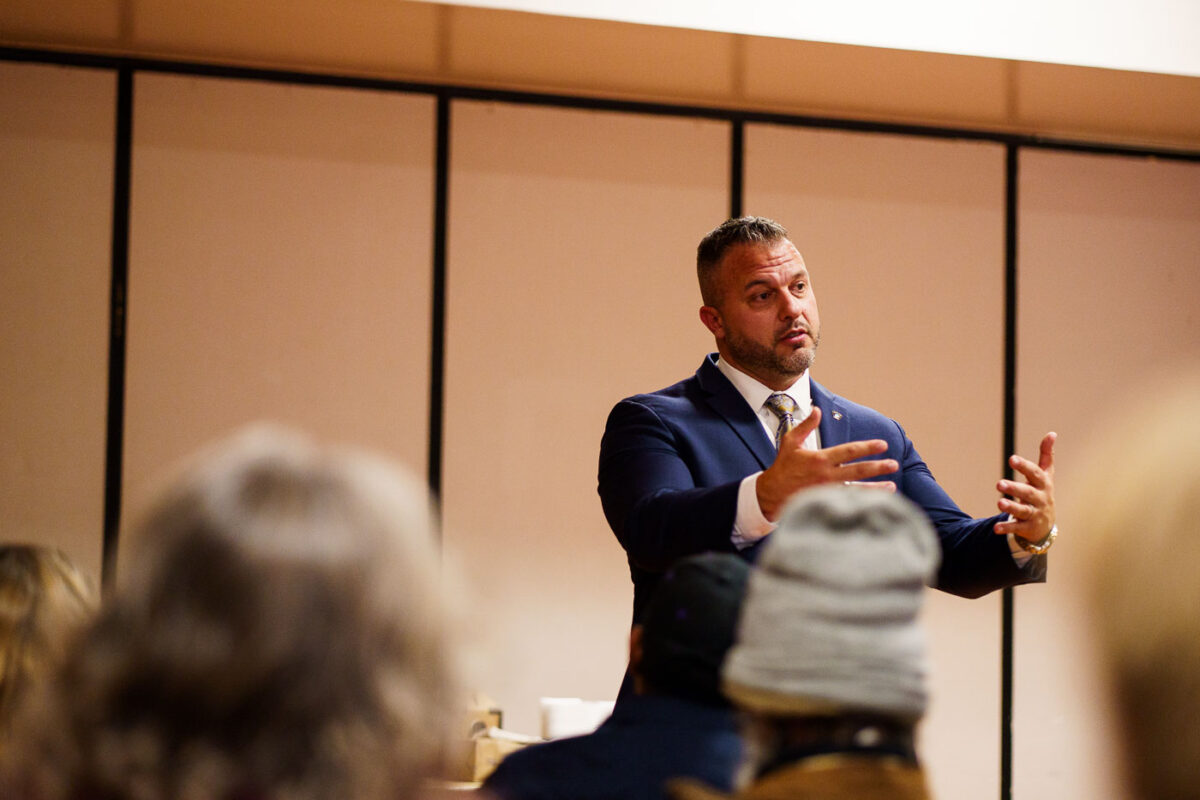
Brian OHara speaks in South Minneapolis
Minneapolis police chief nominee Brian O’Hara addresses community members at Stewart Park. O'Hara, who previously served in Newark, discussed the consent decree process that city underwent and drew comparisons to the situation in Minneapolis. This meet and greet provided residents an opportunity to engage with a candidate for a significant leadership position within the city's police department.

Brian O’Hara speaks to South Minneapolis community
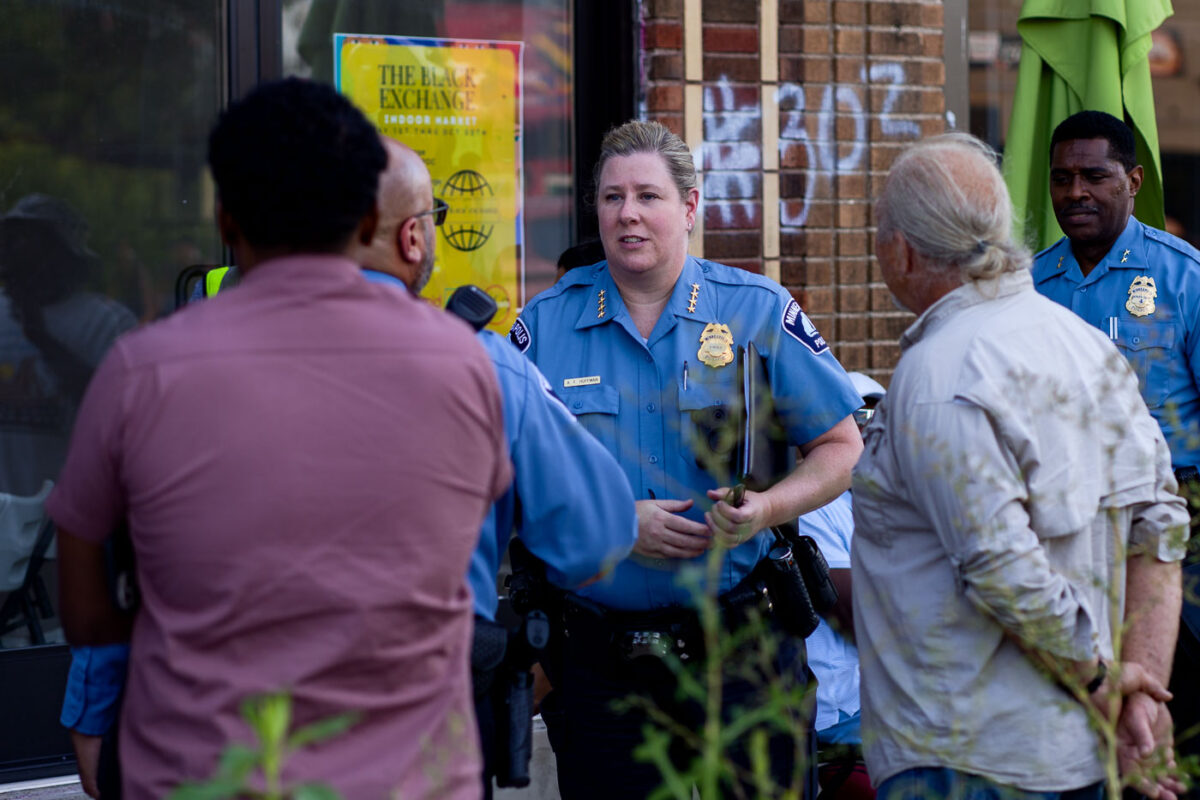
Interim Minneapolis Police Chief Amelia Huffman at George Floyd Square
Interim Minneapolis Police Chief Amelia Huffman attended a "Community Conversation" on public safety at George Floyd Square. The forum, held in the area that became a focal point for protests following the murder of George Floyd in May 2020, also included candidates for Hennepin County Attorney. This event aimed to foster dialogue between law enforcement and the community amidst ongoing discussions about public safety and policing in Minneapolis.

Interim Police Chief Huffman at George Floyd Square

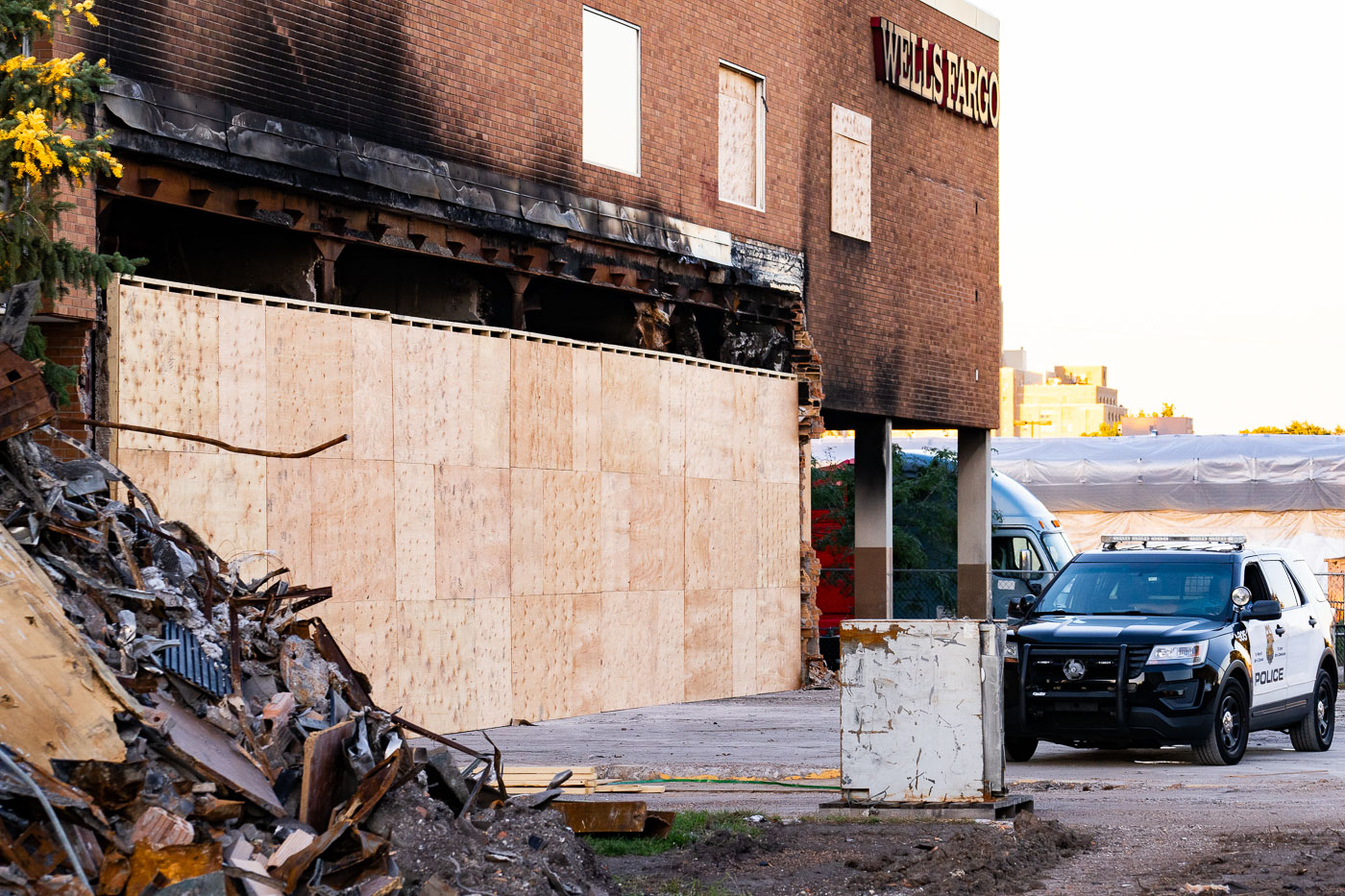
Boarded-up Flanders Cycle on Lyndale Avenue in Minneapolis as a police SUV passes at night.
Flanders Cycle, a bicycle shop established in 1973, is boarded up with plywood on Lyndale Avenue in Minneapolis. The plywood covering is a common measure taken by businesses during periods of civil unrest. A Minneapolis Police Department vehicle passes the storefront at night, reflecting the heightened tensions in the city following the murder of George Floyd in May 2020. The "BLM" graffiti visible on the plywood further signifies the context of the Minneapolis Uprising.

Flanders Cycle boarded up, Minneapolis Police car passes

Minneapolis police SUV at East Lake Street and Bloomington Avenue beside protest graffiti in Minneapolis.
A Minneapolis Police Department vehicle seen near Lake Street with "Destroy MPD" graffiti on a concrete barricade in front. The city skyline visible in the distance. The graffiti comes after a march that occured about a week after Amir Locke was killed by Minneapolis police during a no-knock warrant.

Minneapolis Police Car at E Lake St Amidst Protest Graffiti
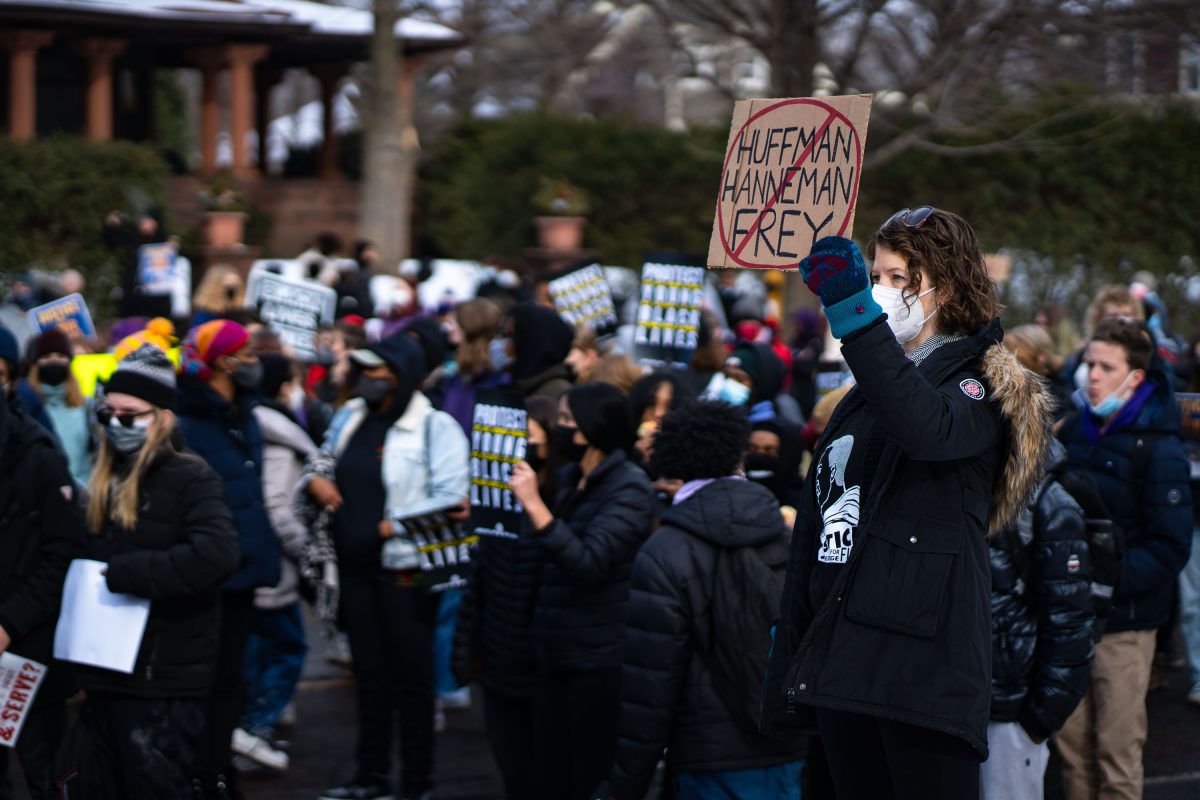
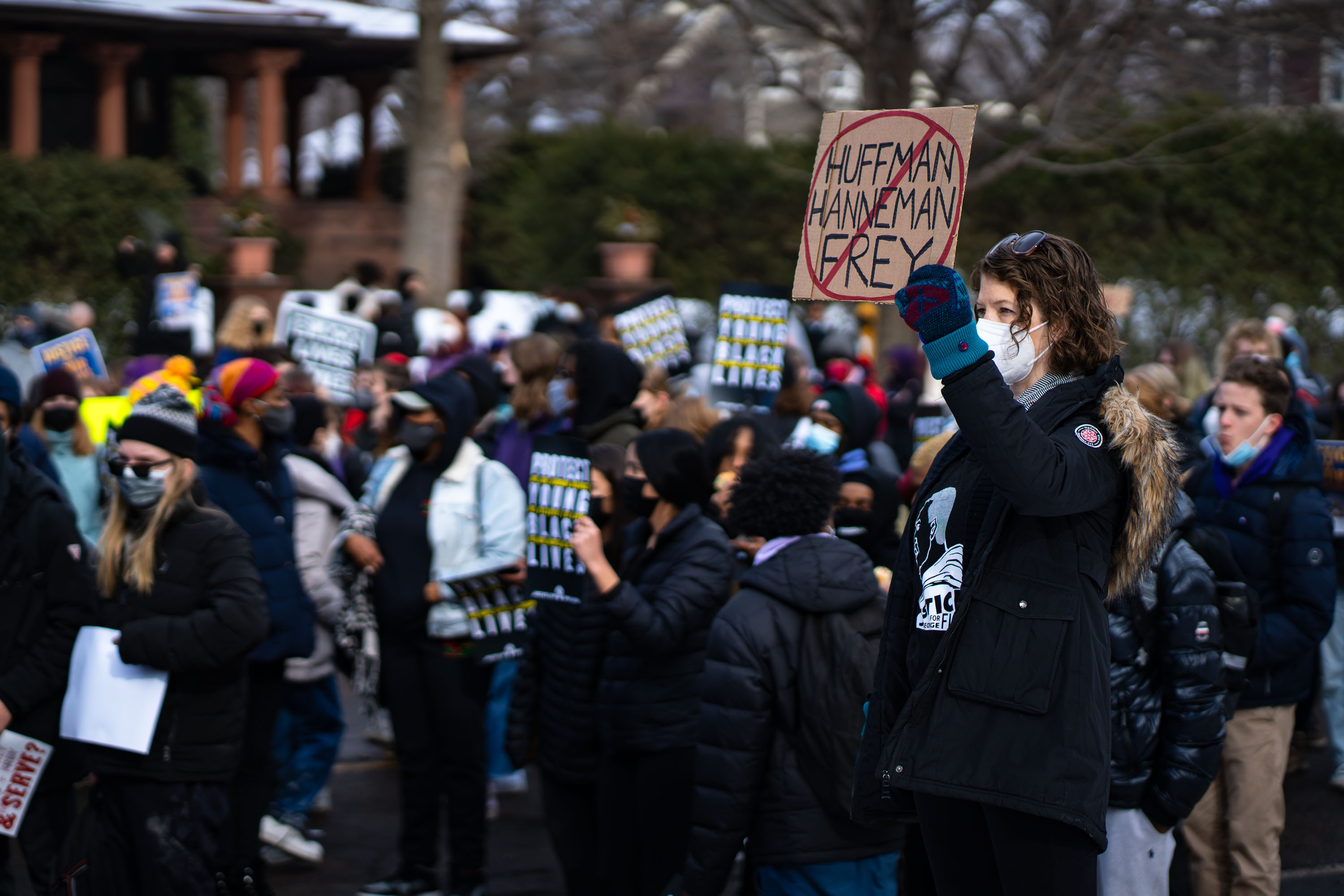
Huffman Hanneman Frey protest sign, Amir Locke Protest
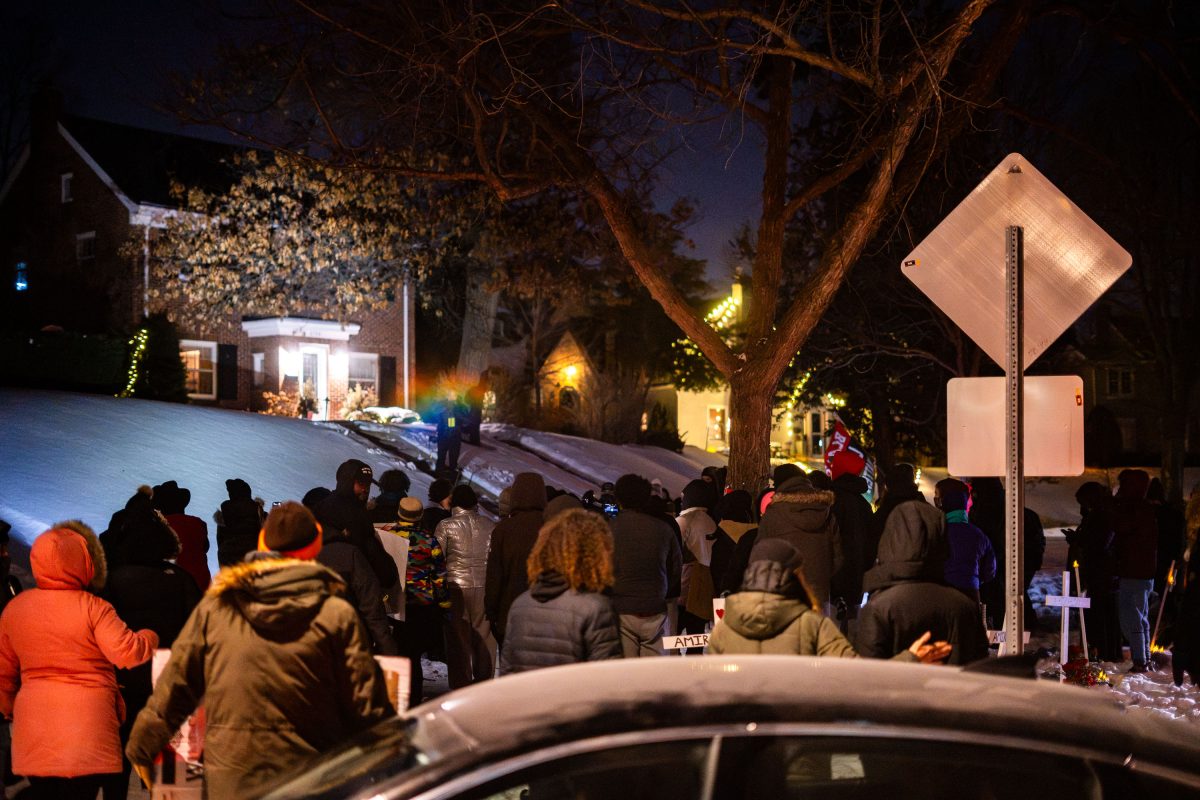
High school students from around the area march to the Minnesota Governor's Mansion demanding justice for Amir Locke.

Huffman Hanneman Frey protest sign, Amir Locke Protest
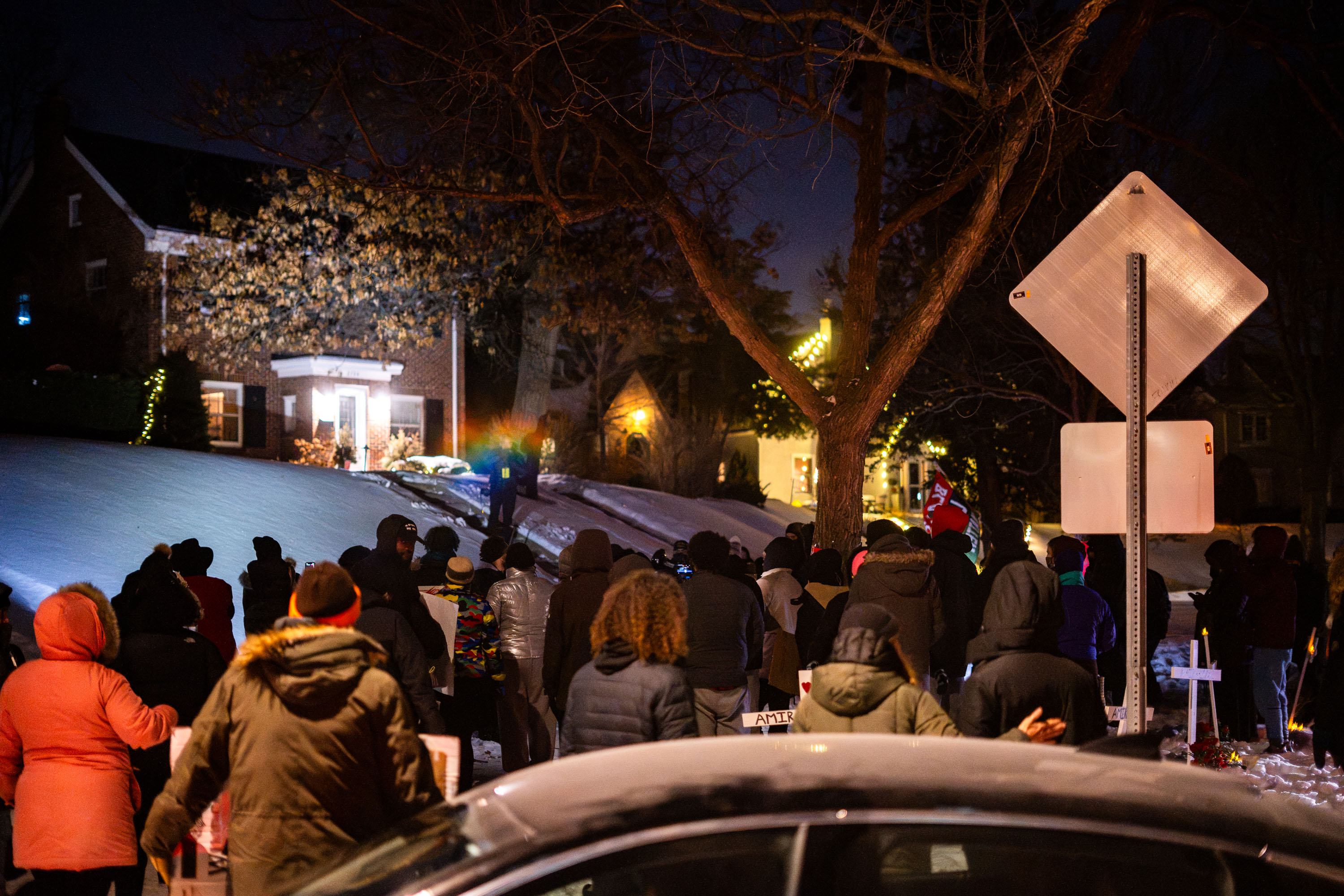
Amir Locke protests at police chief's home
Activists spoke and led chants outside the home of Minneapolis Police Chief Huffman following last weeks killing of Amir Locke by MPD. To neighbors: “Come down here & hold your murderous cop neighbor accountable!" “Hey hey! ho ho! amelia huffman has got to go!” Windchill: -7°F

Amir Locke protests at police chief’s home

Police SUV and BCA truck outside Bolero Flats in downtown Minneapolis behind police tape.
Police vehicles and a Bureau of Criminal Apprehension (BCA) truck are present outside Bolero Flats on Marquette Avenue in Downtown Minneapolis following an officer-involved shooting. The incident occurred on the 7th floor of the apartment building, where an officer reportedly shot and killed a man who was holding a gun.

Bolero Flats, Minneapolis: Police Respond to Officer-Involved Shooting

Police tape and BCA vehicle on Marquette Avenue in downtown Minneapolis after an officer-involved shooting.
Yellow police tape cordons off Marquette Avenue in downtown Minneapolis following an officer-involved shooting. The incident occurred at Bolero Flats, where an officer reportedly shot a man holding a gun on the seventh floor of the apartment building. The Bureau of Criminal Apprehension (BCA) was called to investigate the shooting, a common procedure for officer-involved deaths in Minnesota.

BCA Investigates Officer-Involved Shooting on Marquette Ave, Minneapolis

BCA crime team truck and Minneapolis police outside Bolero Flats in downtown Minneapolis.
Law enforcement vehicles and a Minnesota Bureau of Criminal Apprehension (BCA) Crime Scene Team truck are present outside the Bolero Flats apartment building on Marquette Avenue in downtown Minneapolis. This location was the site of an officer-involved shooting on December 29, 2021. According to interim Minneapolis Police Chief Amelia Huffman, an officer discharged their weapon nine seconds after entering an apartment on the seventh floor, where the victim was reportedly holding a gun.

Bolero Flats, Minneapolis: BCA Crime Scene Investigation
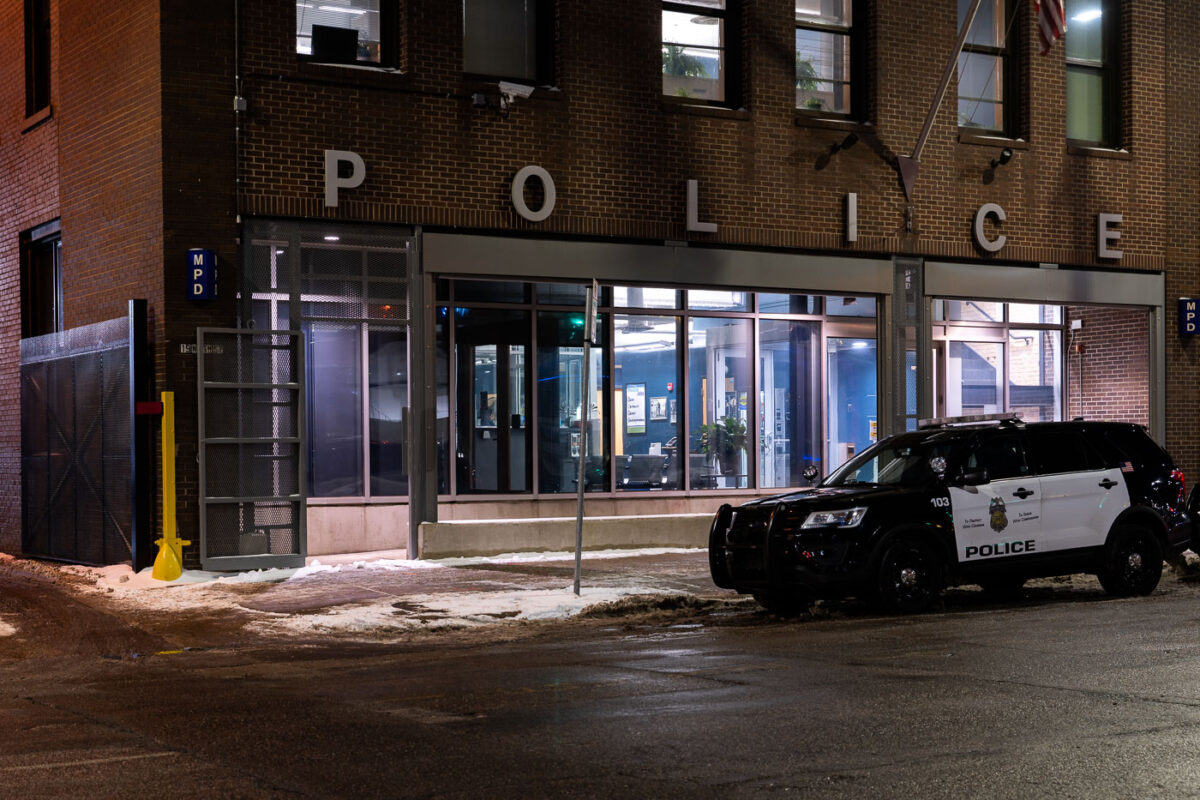
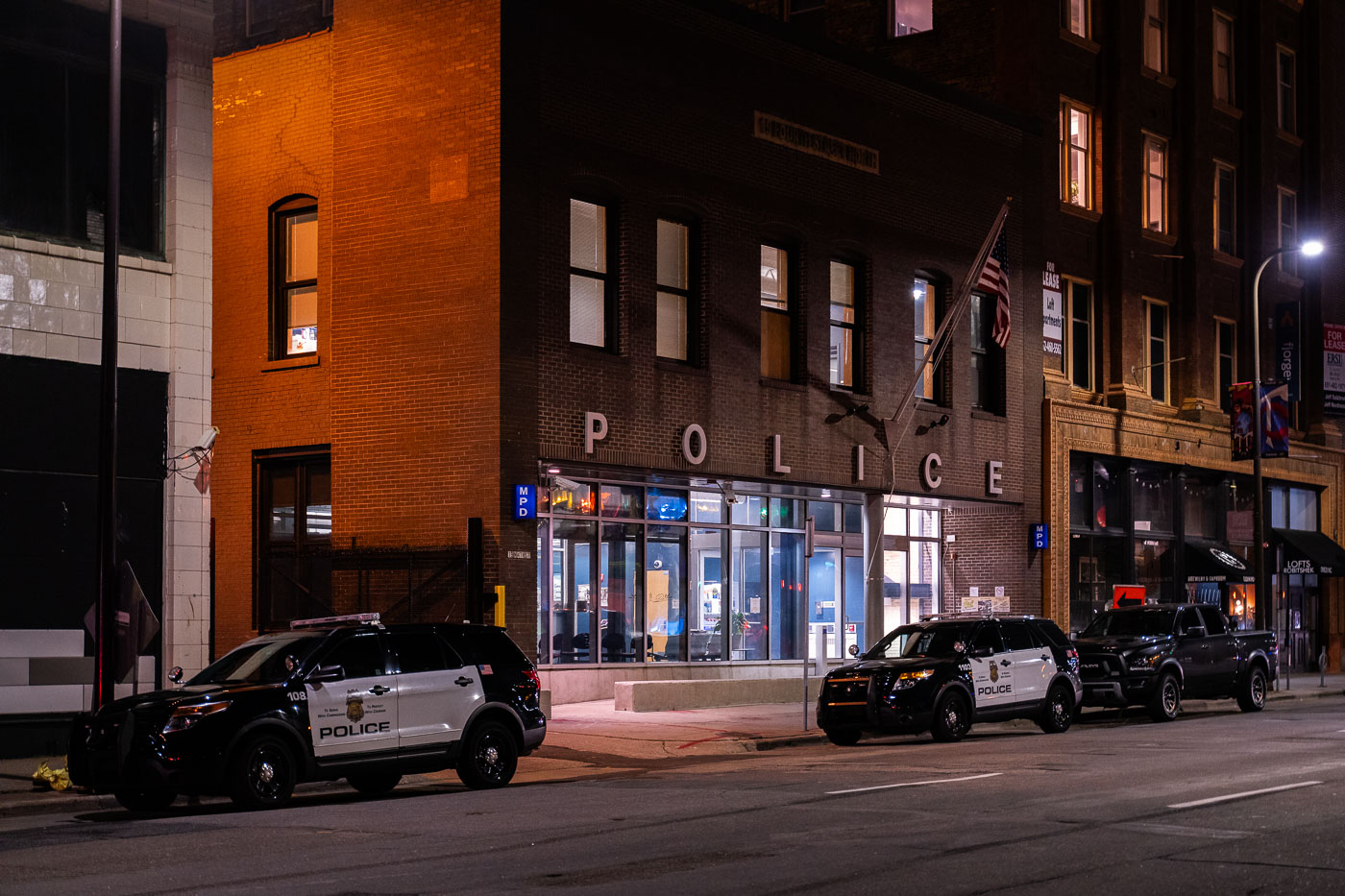
Minneapolis Police Downtown Police Station
Minneapolis police squad car outside the Minneapolis Police Department's 1st Precinct station in Downtown Minneapolis.

Minneapolis Police 1st Precinct Downtown

Minneapolis Police Squad Car and Abolish The Police
A Minneapolis Police Department squad car passes a mural on Minnehaha Avenue that reads "Abolish The Police." The mural, painted on plywood covering a building, appeared in the context of widespread protests and calls for police reform following the murder of George Floyd in Minneapolis in May 2020. The "Open Streets" event, which temporarily closes streets to vehicles for community use, was concluding as the police vehicle drove by.

Minneapolis Police Car Passes “Abolish The Police” Mural
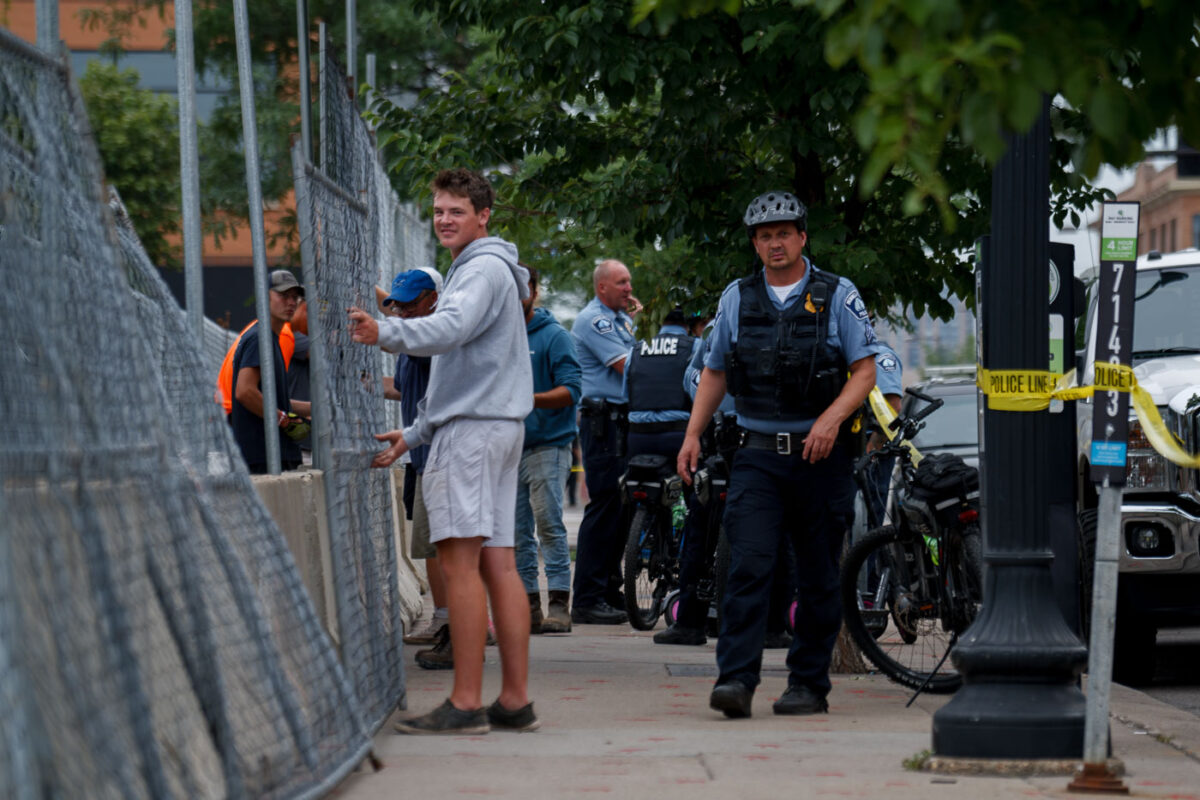
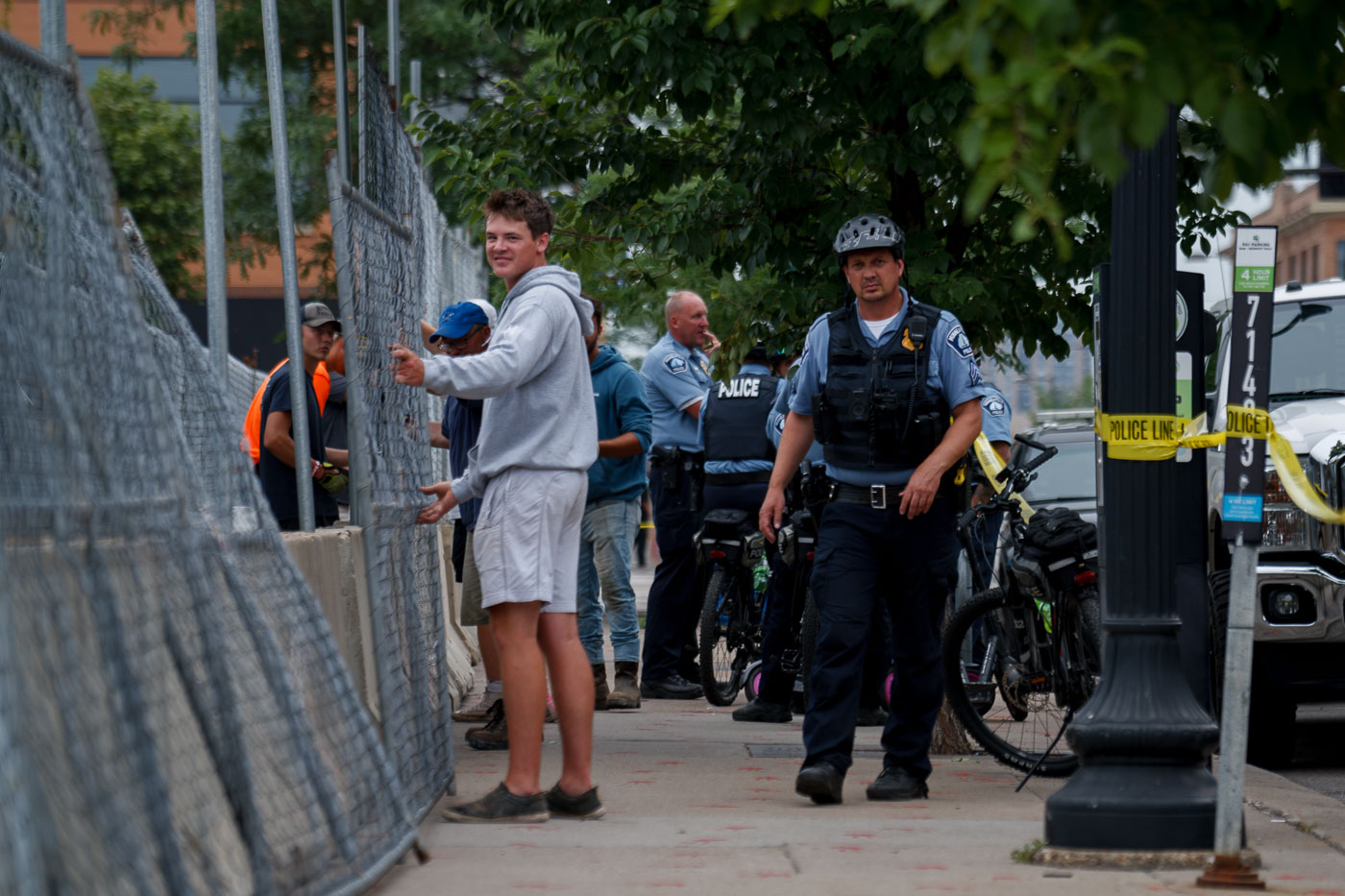
Fencing goes up at Winston Smith protest site
Minneapolis Police and private security cleared the lot at the former Wince Marie Memorial Garden on July 17, 2021, and erected fencing. This action followed a protest related to Winston Smith, whose death in June 2021 sparked demonstrations in the city. The site had been occupied by activists who established a "guerrilla garden" in memory of Smith.

Fencing goes up at Winston Smith protest site

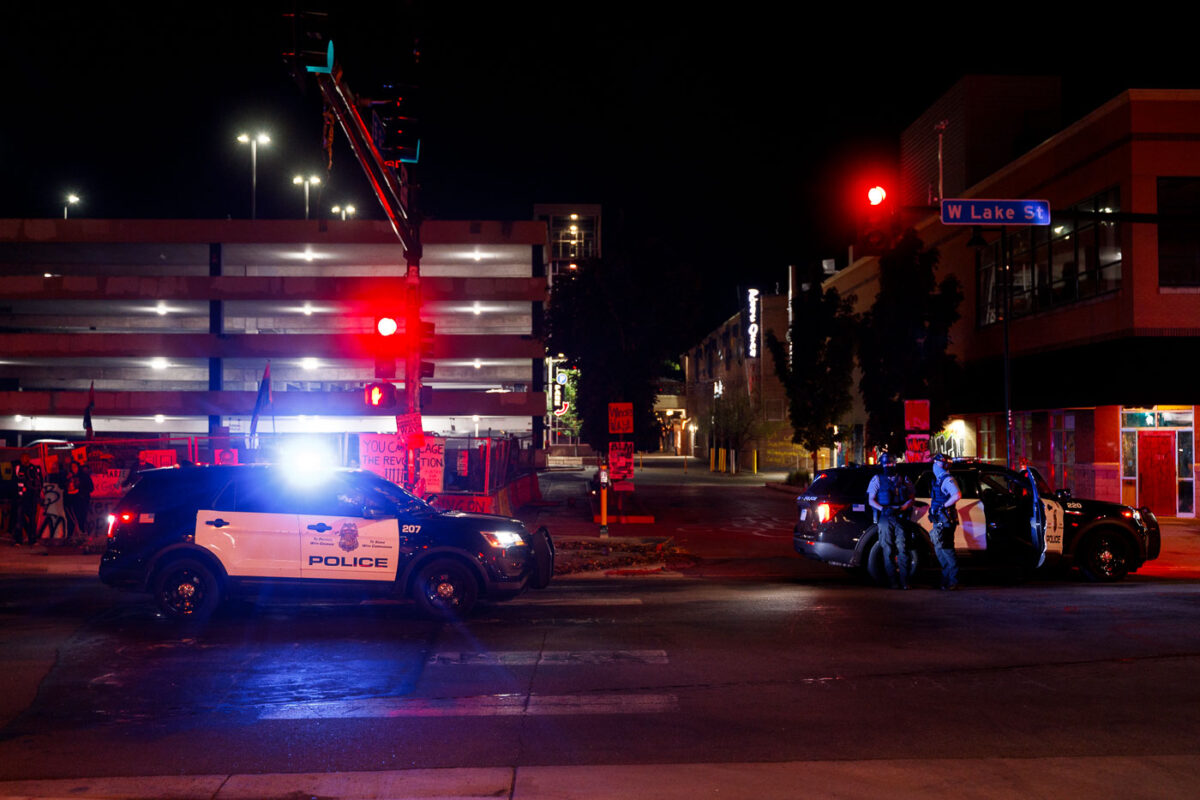
Minneapolis Police and Winston Smith protesters
Police vehicles are present on W Lake Street in Uptown Minneapolis during a protest related to Winston Smith. Protesters had previously shut down streets in the area, and police declared an unlawful assembly.

Minneapolis Police and Winston Smith protesters

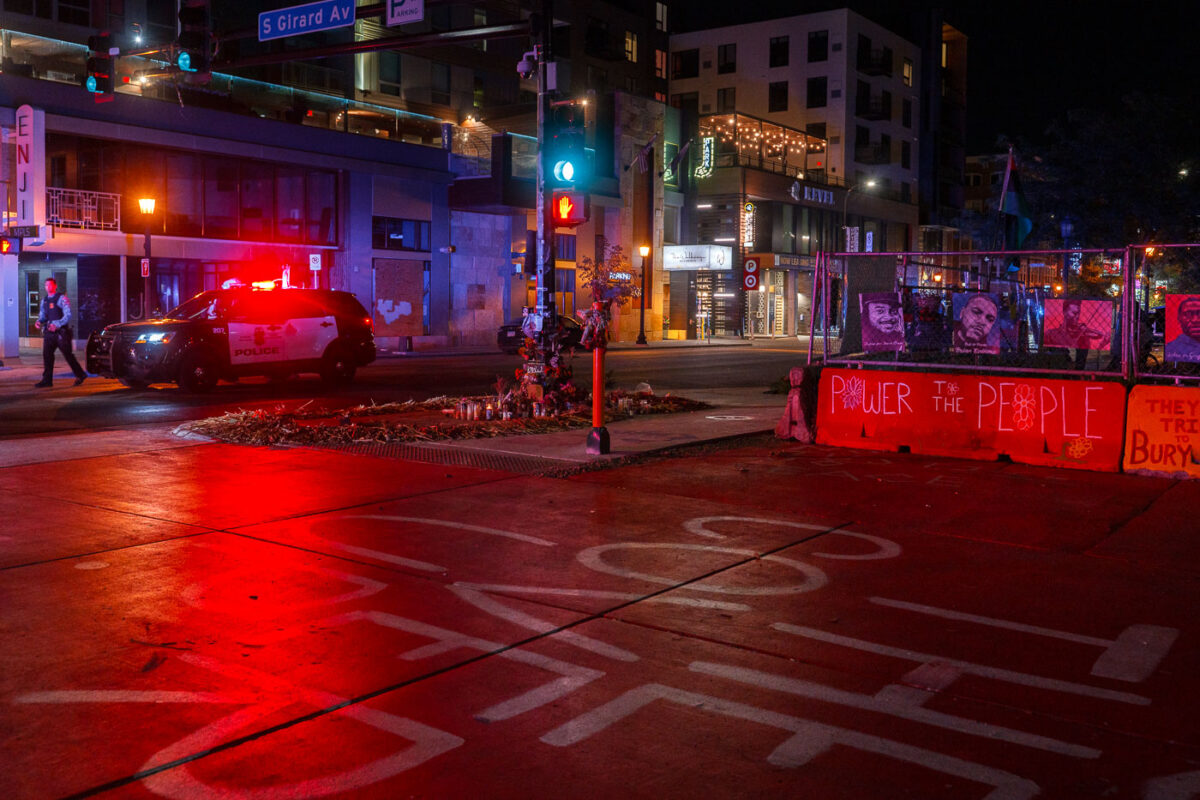
Power to the People in Uptown Minneapolis
Minneapolis Police officers are present near a memorial for Winston Smith Jr. in the Uptown neighborhood on July 14, 2021. The memorial, known as the "Wince Marie Peace Garden," was established following Smith's death earlier that month. Smith, a Black man, was killed by sheriff's deputies and federal marshals, sparking protests and unrest in Minneapolis.

Minneapolis Police at Uptown Protest Memorial for Winston Smith Jr.
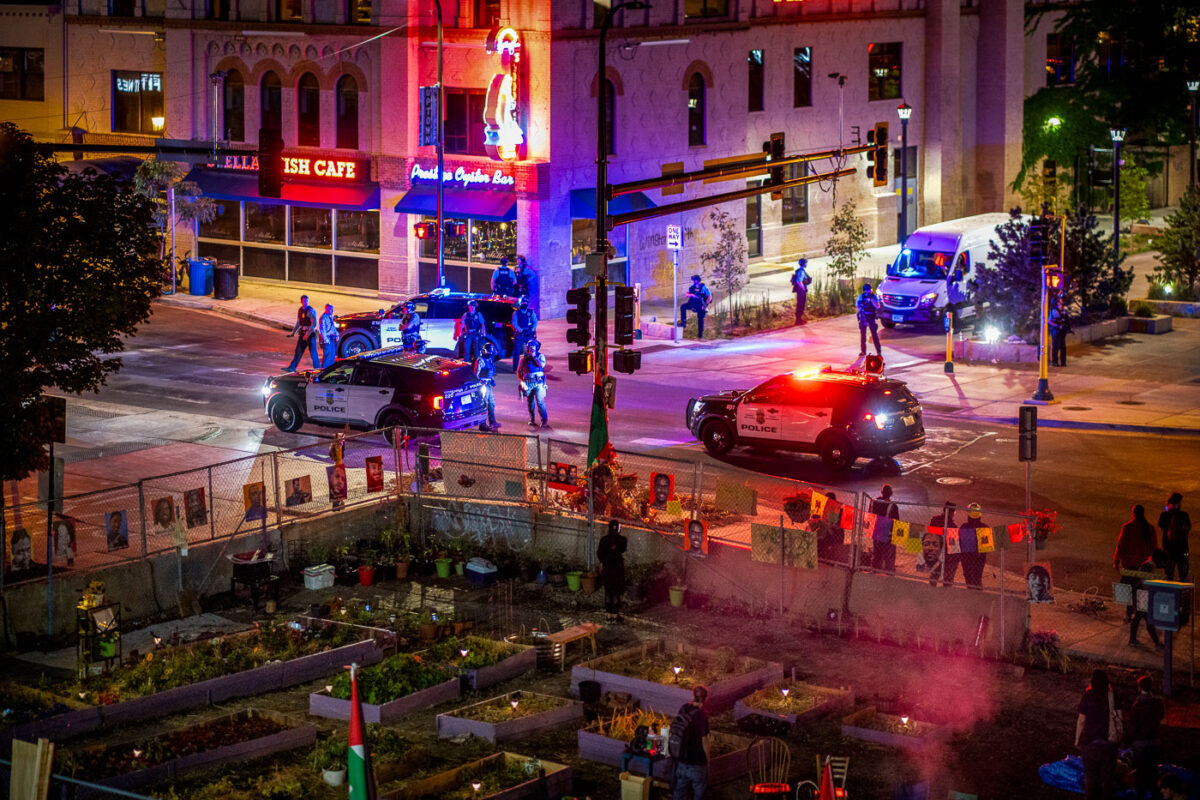
Minneapolis police at Winston Smith peace garden
Minneapolis Police officers are present at the Winston Smith Peace Garden in Uptown Minneapolis. The garden was established on a site where Winston Smith, a Black man, was killed by law enforcement in 2021.

Minneapolis police at Winston Smith peace garden

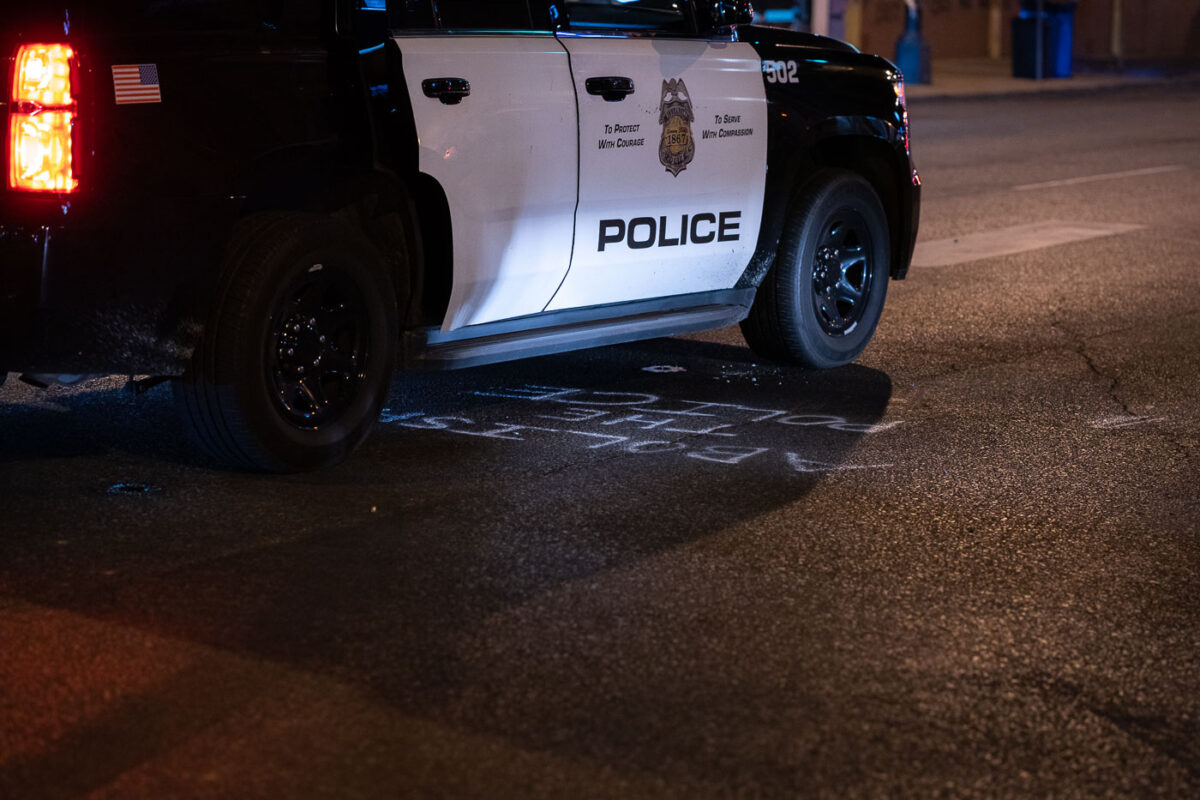
Minneapolis police SUV parked over graffiti on Lake Street in Minneapolis at night.
A Minneapolis Police squad car is positioned over "Abolish The Police" graffiti on Lake Street in Uptown Minneapolis. The image was take on June 16, 2021 during unrest following the killings of Deona Marie and Winston Smith. On June 3, 2021, members of a U.S. Marshals Service fugitive task force fatally shot 32-year-old Winston “Boogie” Smith Jr. on the top level of a parking ramp in Minneapolis’ Uptown neighborhood while attempting to arrest him on a felony warrant. Authorities said Smith fired a handgun from inside his vehicle during the encounter, while family members and activists questioned the official account and demanded the release of additional evidence. The killing led to weeks of protests, street occupations, and confrontations with police in Uptown, becoming another major flashpoint in Minneapolis during the period following the murder of George Floyd. Earlier in the day Minneapolis city officials along with The Agape Movement coordinated to open the streets that had been closed at George Floyd Square since his murder. On June 13, 2021, 31-year-old Deona Marie Knajdek was killed when a driver accelerated into a group of demonstrators gathered in Minneapolis’ Uptown neighborhood during ongoing protests over the killing of Winston “Boogie” Smith Jr. Protesters had blocked the intersection of West Lake Street and Girard Avenue with vehicles and barricades when Nicholas Kraus drove a Jeep Cherokee into the crowd at high speed, killing Knajdek and injuring several others. Kraus was later charged with second-degree murder, two counts of second-degree assault with a dangerous weapon, and criminal vehicular operation. In 2023, he pleaded guilty to murder and assault charges and was sentenced to more than 20 years in prison for the attack.

Minneapolis Police Car Over “Abolish The Police” Graffiti on Lake Street
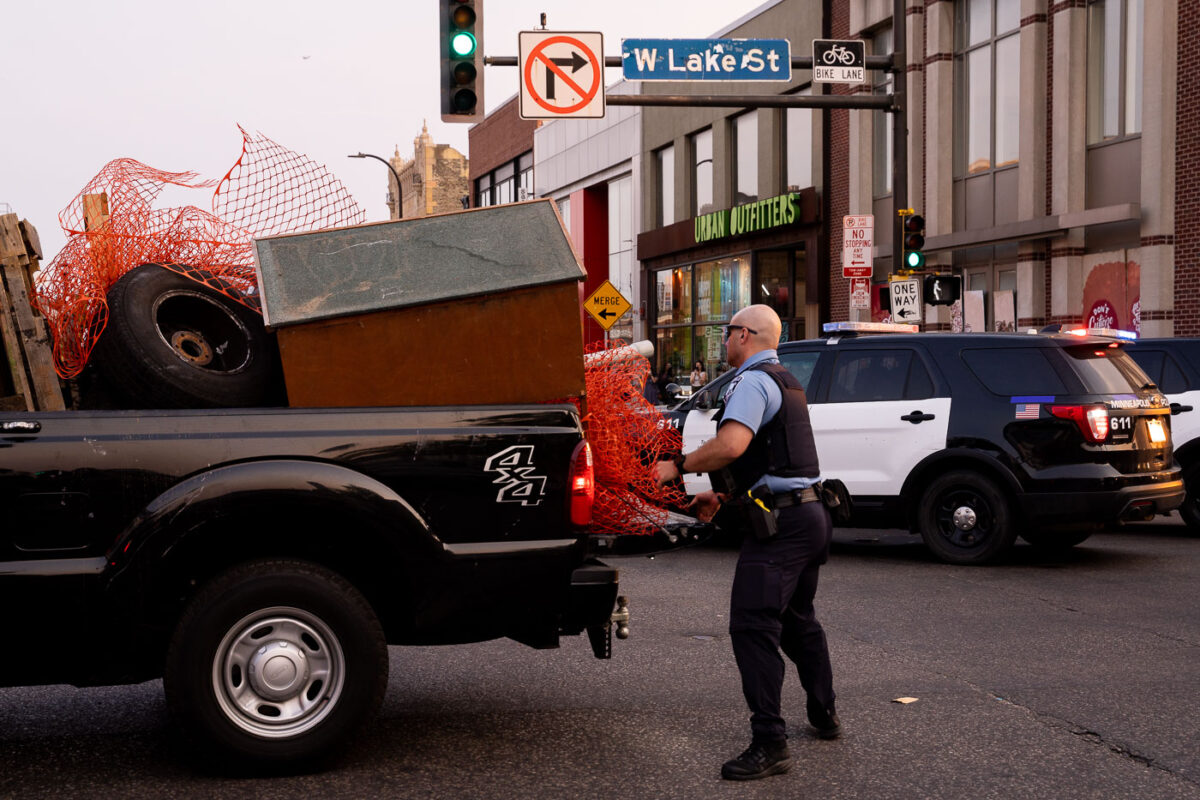
Minneapolis police officer removes barricade materials from a pickup on W Lake St in Minneapolis
Minneapolis police officers remove materials used by protesters to construct barricades on West Lake Street. The protests followed the deaths of Winston Smith on June 3rd and Deona Marie on June 13th. On June 3, 2021, members of a U.S. Marshals Service fugitive task force fatally shot 32-year-old Winston “Boogie” Smith Jr. on the top level of a parking ramp in Minneapolis’ Uptown neighborhood while attempting to arrest him on a felony warrant. Authorities said Smith fired a handgun from inside his vehicle during the encounter, while family members and activists questioned the official account and demanded the release of additional evidence. The killing led to weeks of protests, street occupations, and confrontations with police in Uptown, becoming another major flashpoint in Minneapolis during the period following the murder of George Floyd. Earlier in the day Minneapolis city officials along with The Agape Movement coordinated to open the streets that had been closed at George Floyd Square since his murder. On June 13, 2021, 31-year-old Deona Marie Knajdek was killed when a driver accelerated into a group of demonstrators gathered in Minneapolis’ Uptown neighborhood during ongoing protests over the killing of Winston “Boogie” Smith Jr. Protesters had blocked the intersection of West Lake Street and Girard Avenue with vehicles and barricades when Nicholas Kraus drove a Jeep Cherokee into the crowd at high speed, killing Knajdek and injuring several others. Kraus was later charged with second-degree murder, two counts of second-degree assault with a dangerous weapon, and criminal vehicular operation. In 2023, he pleaded guilty to murder and assault charges and was sentenced to more than 20 years in prison for the attack.

Minneapolis Police Remove Protest Barricade Materials on W Lake St
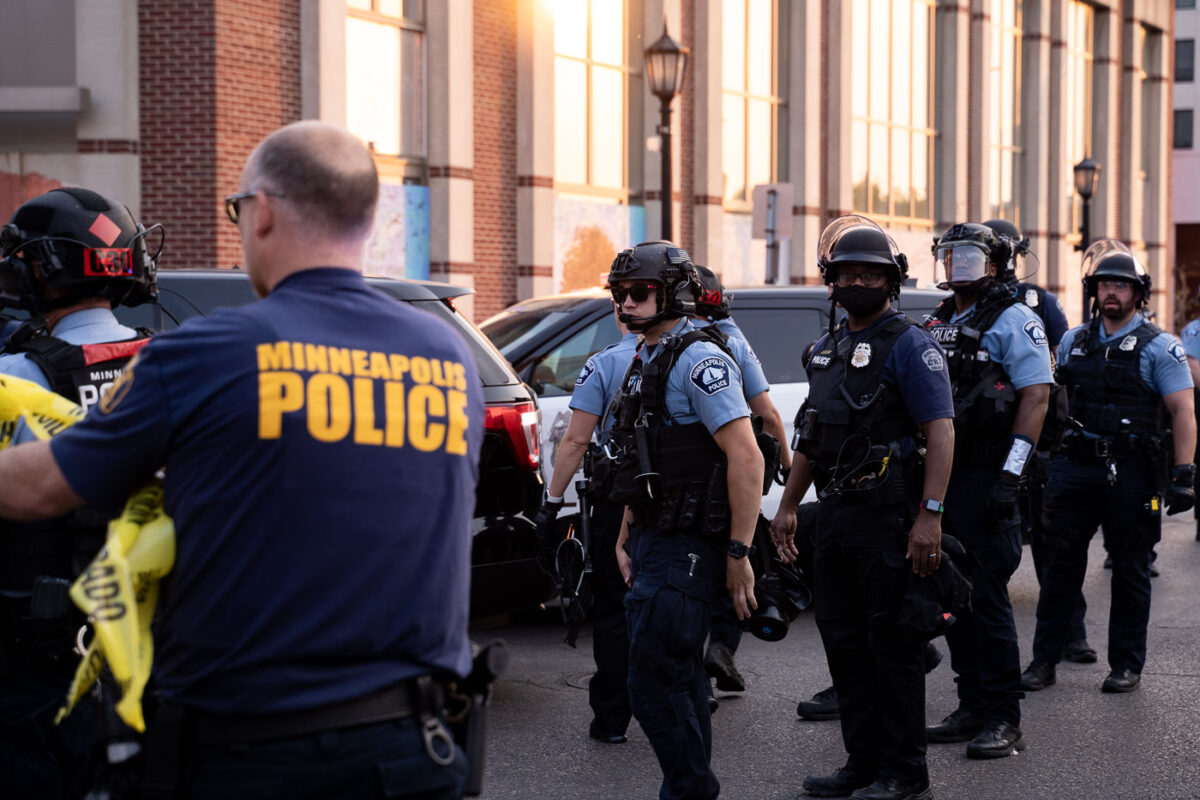
Minneapolis police officers stand near barricades on Lake Street in Uptown Minneapolis.
Minneapolis Police officers clear street barricades on Lake Street in Uptown Minneapolis. These barricades were erected following the killings of Winston Smith and Deona Marie in June 2021. On June 3, 2021, members of a U.S. Marshals Service fugitive task force fatally shot 32-year-old Winston “Boogie” Smith Jr. on the top level of a parking ramp in Minneapolis’ Uptown neighborhood while attempting to arrest him on a felony warrant. Authorities said Smith fired a handgun from inside his vehicle during the encounter, while family members and activists questioned the official account and demanded the release of additional evidence. The killing led to weeks of protests, street occupations, and confrontations with police in Uptown, becoming another major flashpoint in Minneapolis during the period following the murder of George Floyd. Earlier in the day Minneapolis city officials along with The Agape Movement coordinated to open the streets that had been closed at George Floyd Square since his murder. On June 13, 2021, 31-year-old Deona Marie Knajdek was killed when a driver accelerated into a group of demonstrators gathered in Minneapolis’ Uptown neighborhood during ongoing protests over the killing of Winston “Boogie” Smith Jr. Protesters had blocked the intersection of West Lake Street and Girard Avenue with vehicles and barricades when Nicholas Kraus drove a Jeep Cherokee into the crowd at high speed, killing Knajdek and injuring several others. Kraus was later charged with second-degree murder, two counts of second-degree assault with a dangerous weapon, and criminal vehicular operation. In 2023, he pleaded guilty to murder and assault charges and was sentenced to more than 20 years in prison for the attack.

Minneapolis Police Clear Barricades on Lake Street
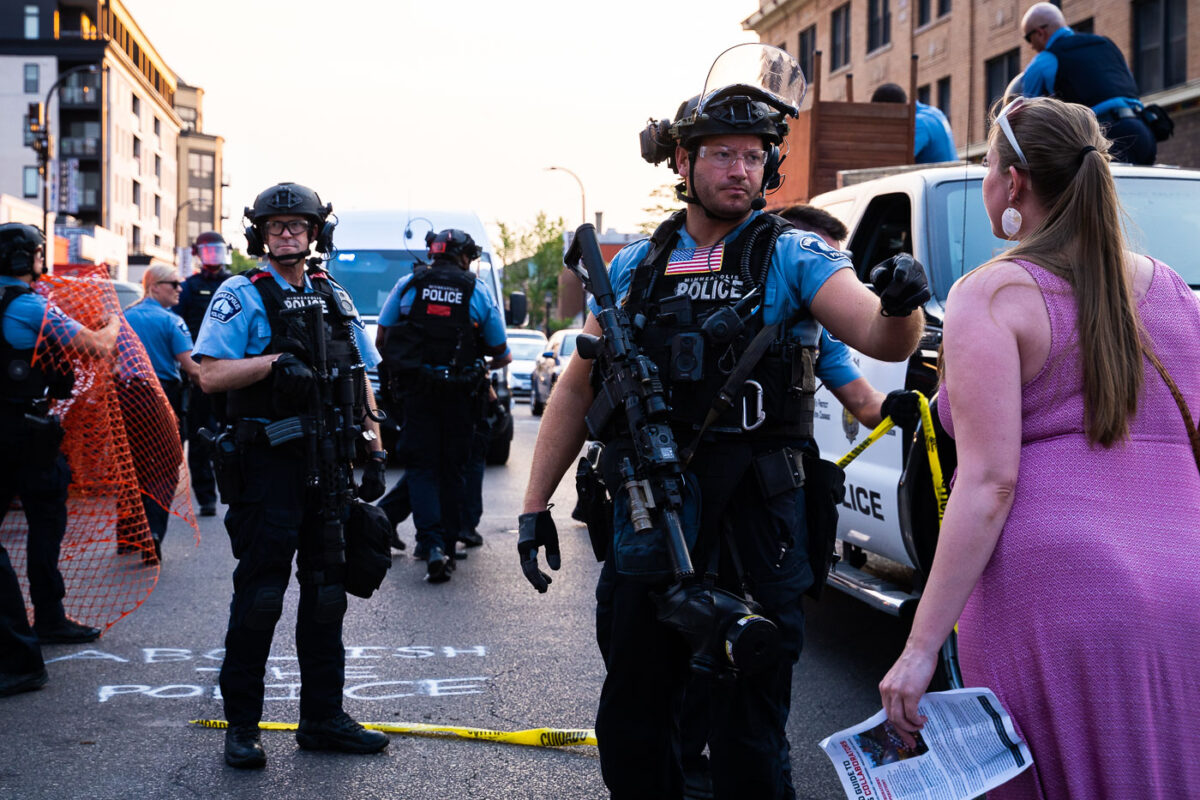
Minneapolis police officers clear protesters and barricades at Lake Street and Hennepin Avenue.
Minneapolis Police officers clear protesters and barricades from the intersection of Lake Street and Hennepin Avenue. The protests began following the deaths of Winston Smith on June 3rd and Deona Marie on June 13th. On June 3, 2021, members of a U.S. Marshals Service fugitive task force fatally shot 32-year-old Winston “Boogie” Smith Jr. on the top level of a parking ramp in Minneapolis’ Uptown neighborhood while attempting to arrest him on a felony warrant. Authorities said Smith fired a handgun from inside his vehicle during the encounter, while family members and activists questioned the official account and demanded the release of additional evidence. The killing led to weeks of protests, street occupations, and confrontations with police in Uptown, becoming another major flashpoint in Minneapolis during the period following the murder of George Floyd. Earlier in the day Minneapolis city officials along with The Agape Movement coordinated to open the streets that had been closed at George Floyd Square since his murder. On June 13, 2021, 31-year-old Deona Marie Knajdek was killed when a driver accelerated into a group of demonstrators gathered in Minneapolis’ Uptown neighborhood during ongoing protests over the killing of Winston “Boogie” Smith Jr. Protesters had blocked the intersection of West Lake Street and Girard Avenue with vehicles and barricades when Nicholas Kraus drove a Jeep Cherokee into the crowd at high speed, killing Knajdek and injuring several others. Kraus was later charged with second-degree murder, two counts of second-degree assault with a dangerous weapon, and criminal vehicular operation. In 2023, he pleaded guilty to murder and assault charges and was sentenced to more than 20 years in prison for the attack.

Minneapolis Police Clear Protest Site at Lake and Hennepin
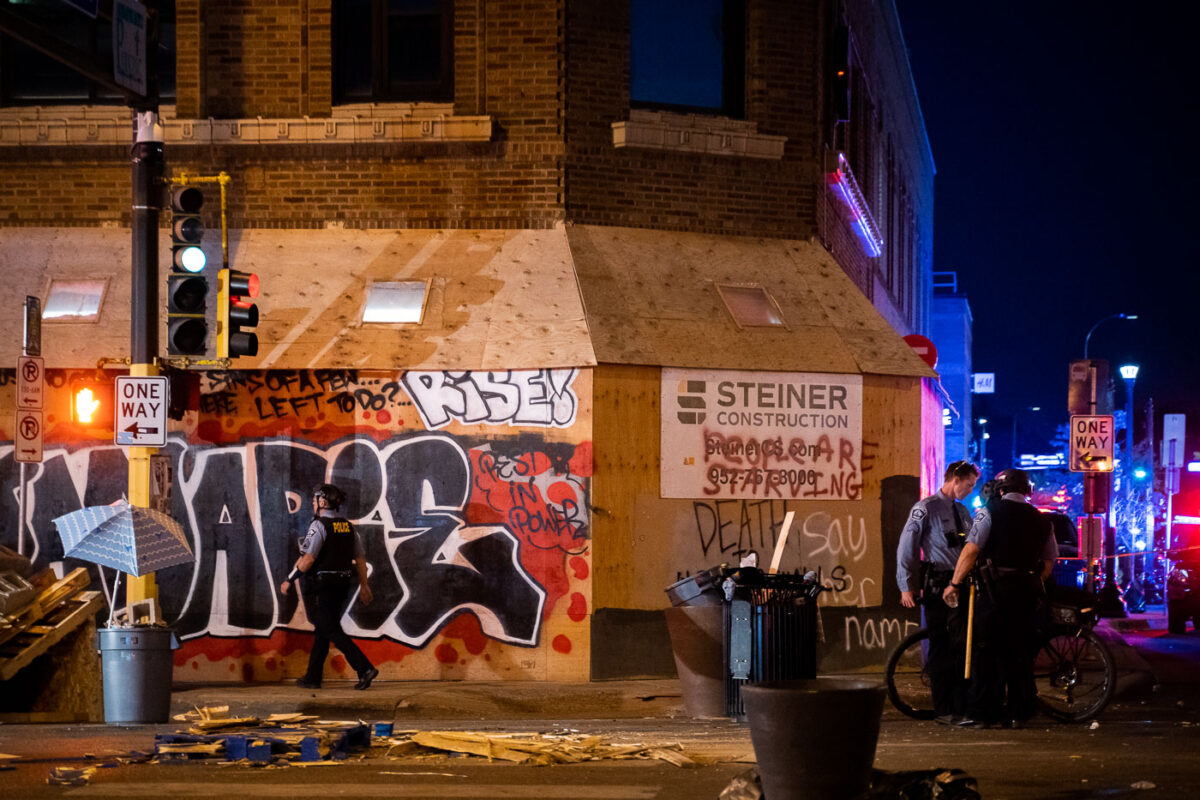
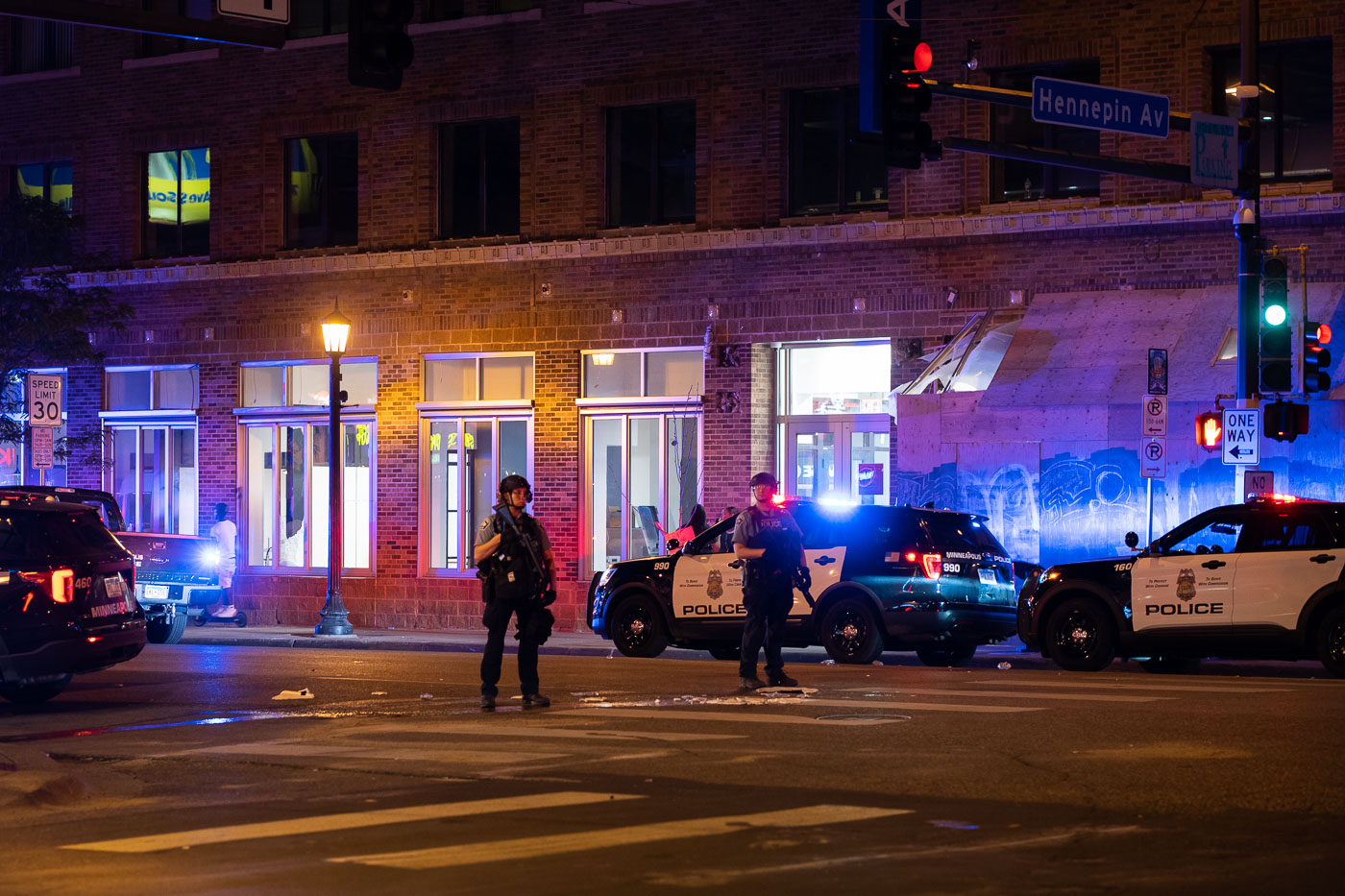
Minneapolis police officers stand by a boarded-up, graffiti-covered building at Lake Street and Hennepin Avenue at night.
Minneapolis Police officers clear barricades at the intersection of Lake Street and Hennepin Avenue. This area was the site of protests that began on June 3rd, following the killings of Winston Smith and Deona Marie. On June 3, 2021, members of a U.S. Marshals Service fugitive task force fatally shot 32-year-old Winston “Boogie” Smith Jr. on the top level of a parking ramp in Minneapolis’ Uptown neighborhood while attempting to arrest him on a felony warrant. Authorities said Smith fired a handgun from inside his vehicle during the encounter, while family members and activists questioned the official account and demanded the release of additional evidence. The killing led to weeks of protests, street occupations, and confrontations with police in Uptown, becoming another major flashpoint in Minneapolis during the period following the murder of George Floyd. Earlier in the day Minneapolis city officials along with The Agape Movement coordinated to open the streets that had been closed at George Floyd Square since his murder. On June 13, 2021, 31-year-old Deona Marie Knajdek was killed when a driver accelerated into a group of demonstrators gathered in Minneapolis’ Uptown neighborhood during ongoing protests over the killing of Winston “Boogie” Smith Jr. Protesters had blocked the intersection of West Lake Street and Girard Avenue with vehicles and barricades when Nicholas Kraus drove a Jeep Cherokee into the crowd at high speed, killing Knajdek and injuring several others. Kraus was later charged with second-degree murder, two counts of second-degree assault with a dangerous weapon, and criminal vehicular operation. In 2023, he pleaded guilty to murder and assault charges and was sentenced to more than 20 years in prison for the attack.

Minneapolis Police Clear Barricades at Lake Street and Hennepin Avenue
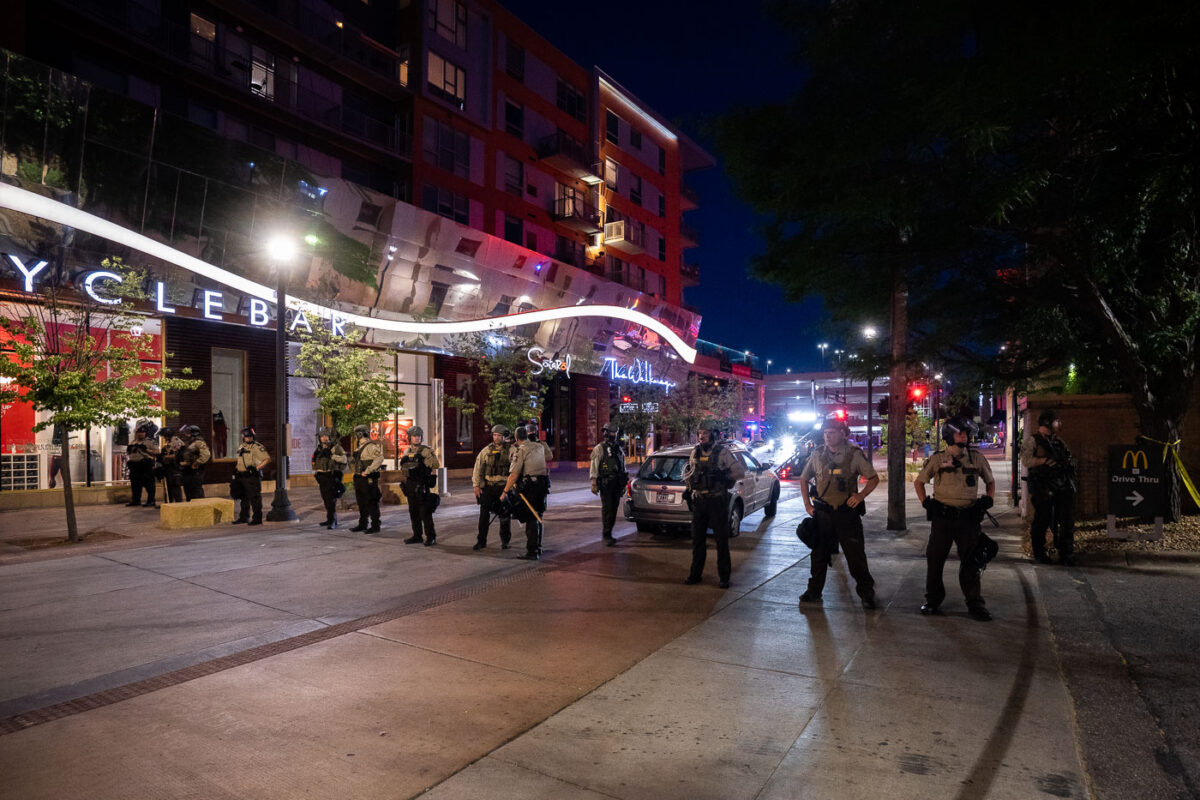
Hennepin County sheriff’s officers stand on Girard Avenue in Minneapolis outside a bar at night.
Hennepin County Sheriff's officers stand on Girard Avenue in Minneapolis during a protest. The demonstrations began following the June 3rd and June 13th killings of Winston Smith and Deona Marie, respectively. On June 3, 2021, members of a U.S. Marshals Service fugitive task force fatally shot 32-year-old Winston “Boogie” Smith Jr. on the top level of a parking ramp in Minneapolis’ Uptown neighborhood while attempting to arrest him on a felony warrant. Authorities said Smith fired a handgun from inside his vehicle during the encounter, while family members and activists questioned the official account and demanded the release of additional evidence. The killing led to weeks of protests, street occupations, and confrontations with police in Uptown, becoming another major flashpoint in Minneapolis during the period following the murder of George Floyd. Earlier in the day Minneapolis city officials along with The Agape Movement coordinated to open the streets that had been closed at George Floyd Square since his murder. On June 13, 2021, 31-year-old Deona Marie Knajdek was killed when a driver accelerated into a group of demonstrators gathered in Minneapolis’ Uptown neighborhood during ongoing protests over the killing of Winston “Boogie” Smith Jr. Protesters had blocked the intersection of West Lake Street and Girard Avenue with vehicles and barricades when Nicholas Kraus drove a Jeep Cherokee into the crowd at high speed, killing Knajdek and injuring several others. Kraus was later charged with second-degree murder, two counts of second-degree assault with a dangerous weapon, and criminal vehicular operation. In 2023, he pleaded guilty to murder and assault charges and was sentenced to more than 20 years in prison for the attack.

Hennepin Sheriff Officers on Girard Ave, Minneapolis
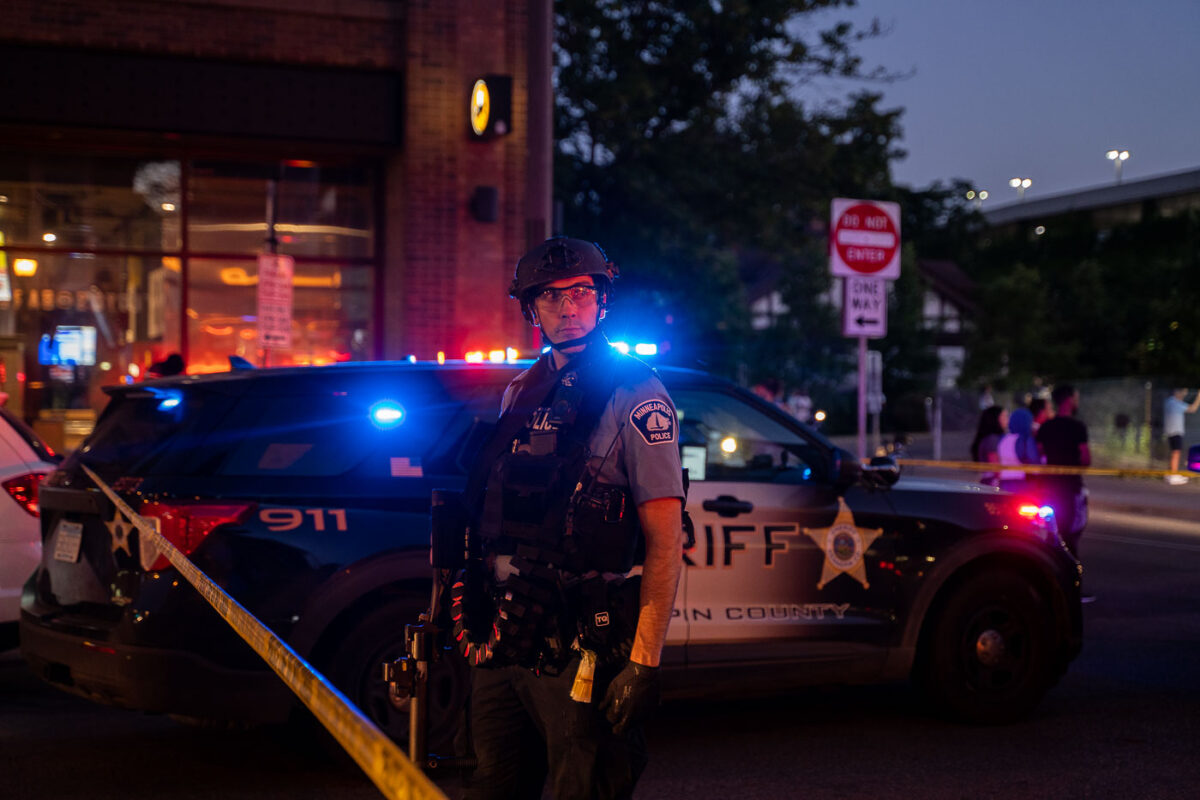
Minneapolis police officer stands beside a Hennepin County sheriff SUV on Hennepin Avenue during protests.
A Minneapolis Police officer stands on Hennepin Avenue during protests that followed the killings of Winston Smith and Deona Marie in June 2021. On June 3, 2021, members of a U.S. Marshals Service fugitive task force fatally shot 32-year-old Winston “Boogie” Smith Jr. on the top level of a parking ramp in Minneapolis’ Uptown neighborhood while attempting to arrest him on a felony warrant. Authorities said Smith fired a handgun from inside his vehicle during the encounter, while family members and activists questioned the official account and demanded the release of additional evidence. The killing led to weeks of protests, street occupations, and confrontations with police in Uptown, becoming another major flashpoint in Minneapolis during the period following the murder of George Floyd. Earlier in the day Minneapolis city officials along with The Agape Movement coordinated to open the streets that had been closed at George Floyd Square since his murder. On June 13, 2021, 31-year-old Deona Marie Knajdek was killed when a driver accelerated into a group of demonstrators gathered in Minneapolis’ Uptown neighborhood during ongoing protests over the killing of Winston “Boogie” Smith Jr. Protesters had blocked the intersection of West Lake Street and Girard Avenue with vehicles and barricades when Nicholas Kraus drove a Jeep Cherokee into the crowd at high speed, killing Knajdek and injuring several others. Kraus was later charged with second-degree murder, two counts of second-degree assault with a dangerous weapon, and criminal vehicular operation. In 2023, he pleaded guilty to murder and assault charges and was sentenced to more than 20 years in prison for the attack.

Minneapolis Police Officer on Hennepin Avenue During Protests
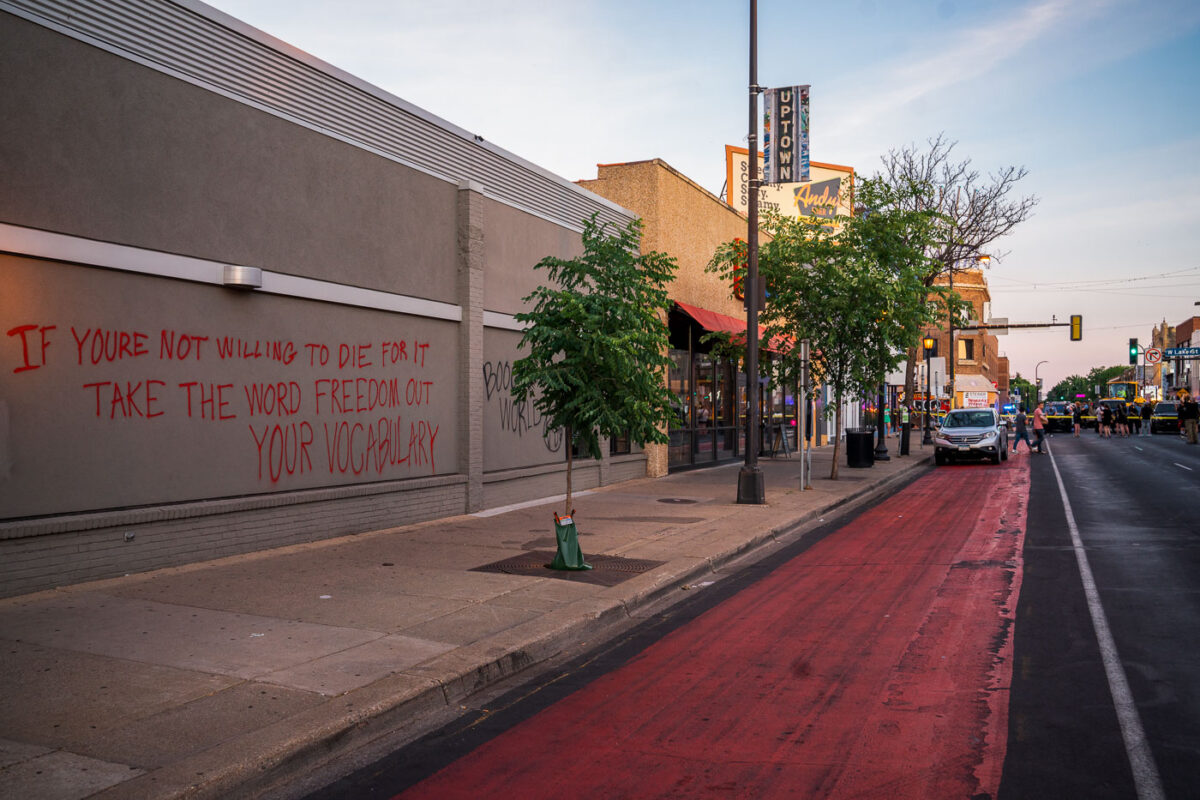
Graffiti on a McDonald's wall on Hennepin Avenue in Minneapolis during protests.
Graffiti reading "IF YOU'RE NOT WILLING TO DIE FOR IT TAKE THE WORD FREEDOM OUT YOUR VOCABULARY" is spray-painted on the side of a McDonald's on Hennepin Avenue in Minneapolis on June 15, 2021/ This message appeared during protests following the deaths of Winston Smith and Deona Marie. On June 3, 2021, members of a U.S. Marshals Service fugitive task force fatally shot 32-year-old Winston “Boogie” Smith Jr. on the top level of a parking ramp in Minneapolis’ Uptown neighborhood while attempting to arrest him on a felony warrant. Authorities said Smith fired a handgun from inside his vehicle during the encounter, while family members and activists questioned the official account and demanded the release of additional evidence. The killing led to weeks of protests, street occupations, and confrontations with police in Uptown, becoming another major flashpoint in Minneapolis during the period following the murder of George Floyd. Earlier in the day Minneapolis city officials along with The Agape Movement coordinated to open the streets that had been closed at George Floyd Square since his murder. On June 13, 2021, 31-year-old Deona Marie Knajdek was killed when a driver accelerated into a group of demonstrators gathered in Minneapolis’ Uptown neighborhood during ongoing protests over the killing of Winston “Boogie” Smith Jr. Protesters had blocked the intersection of West Lake Street and Girard Avenue with vehicles and barricades when Nicholas Kraus drove a Jeep Cherokee into the crowd at high speed, killing Knajdek and injuring several others. Kraus was later charged with second-degree murder, two counts of second-degree assault with a dangerous weapon, and criminal vehicular operation. In 2023, he pleaded guilty to murder and assault charges and was sentenced to more than 20 years in prison for the attack.

Graffiti on Hennepin Ave McDonald’s During Protests
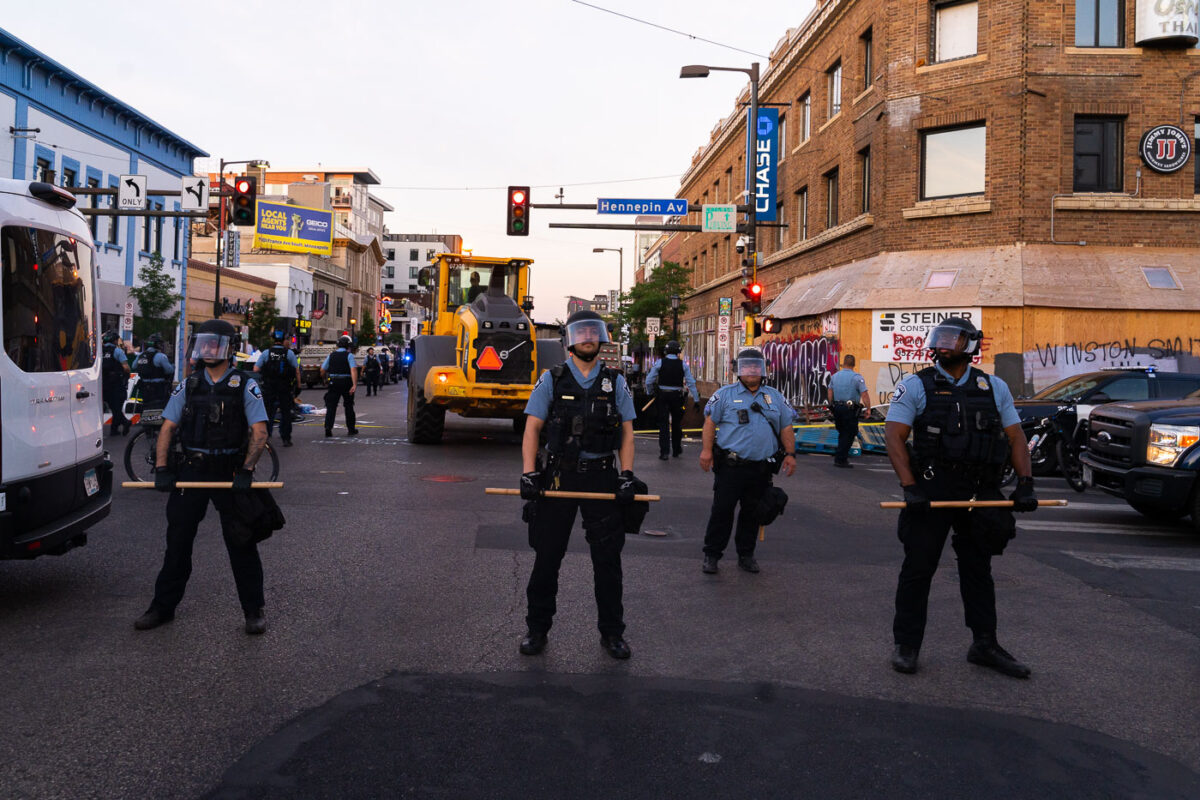
Minneapolis police officers stand in formation on Hennepin Avenue at Lake Street.
Minneapolis Police officers stand in formation on Hennepin Avenue at Lake Street in Uptown Minneapolis on June 15, 2021. This comes after protesters had been blocking the roads following the killings of Winston Smith and Deona Marie. On June 3, 2021, members of a U.S. Marshals Service fugitive task force fatally shot 32-year-old Winston “Boogie” Smith Jr. on the top level of a parking ramp in Minneapolis’ Uptown neighborhood while attempting to arrest him on a felony warrant. Authorities said Smith fired a handgun from inside his vehicle during the encounter, while family members and activists questioned the official account and demanded the release of additional evidence. The killing led to weeks of protests, street occupations, and confrontations with police in Uptown, becoming another major flashpoint in Minneapolis during the period following the murder of George Floyd. Earlier in the day Minneapolis city officials along with The Agape Movement coordinated to open the streets that had been closed at George Floyd Square since his murder. On June 13, 2021, 31-year-old Deona Marie Knajdek was killed when a driver accelerated into a group of demonstrators gathered in Minneapolis’ Uptown neighborhood during ongoing protests over the killing of Winston “Boogie” Smith Jr. Protesters had blocked the intersection of West Lake Street and Girard Avenue with vehicles and barricades when Nicholas Kraus drove a Jeep Cherokee into the crowd at high speed, killing Knajdek and injuring several others. Kraus was later charged with second-degree murder, two counts of second-degree assault with a dangerous weapon, and criminal vehicular operation. In 2023, he pleaded guilty to murder and assault charges and was sentenced to more than 20 years in prison for the attack.

Minneapolis Police at Hennepin Ave and Lake St Protest Zone
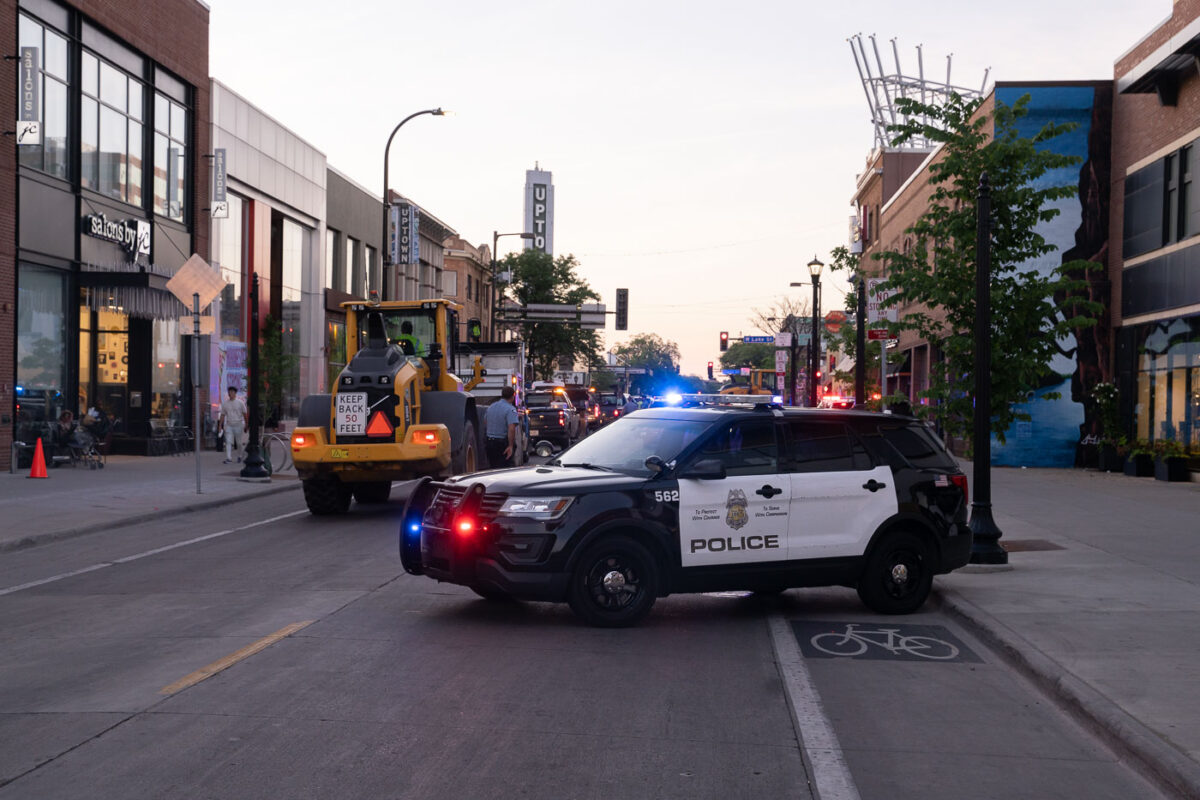
Police SUV and loader block Hennepin Avenue in Minneapolis as crews clear barricades.
Minneapolis Public Works and Police cleared barricades from Hennepin Avenue on June 23, 2021. The barricades had been erected by protesters following the law enforcement shooting death of Winston Smith on June 3, 2021. The clearing operation involved a front-end loader and police vehicles, indicating a significant effort to reopen the street. On June 3, 2021, members of a U.S. Marshals Service fugitive task force fatally shot 32-year-old Winston “Boogie” Smith Jr. on the top level of a parking ramp in Minneapolis’ Uptown neighborhood while attempting to arrest him on a felony warrant. Authorities said Smith fired a handgun from inside his vehicle during the encounter, while family members and activists questioned the official account and demanded the release of additional evidence. The killing led to weeks of protests, street occupations, and confrontations with police in Uptown, becoming another major flashpoint in Minneapolis during the period following the murder of George Floyd. Earlier in the day Minneapolis city officials along with The Agape Movement coordinated to open the streets that had been closed at George Floyd Square since his murder. On June 13, 2021, 31-year-old Deona Marie Knajdek was killed when a driver accelerated into a group of demonstrators gathered in Minneapolis’ Uptown neighborhood during ongoing protests over the killing of Winston “Boogie” Smith Jr. Protesters had blocked the intersection of West Lake Street and Girard Avenue with vehicles and barricades when Nicholas Kraus drove a Jeep Cherokee into the crowd at high speed, killing Knajdek and injuring several others. Kraus was later charged with second-degree murder, two counts of second-degree assault with a dangerous weapon, and criminal vehicular operation. In 2023, he pleaded guilty to murder and assault charges and was sentenced to more than 20 years in prison for the attack.

Minneapolis Public Works and Police Clear Hennepin Ave Barricades
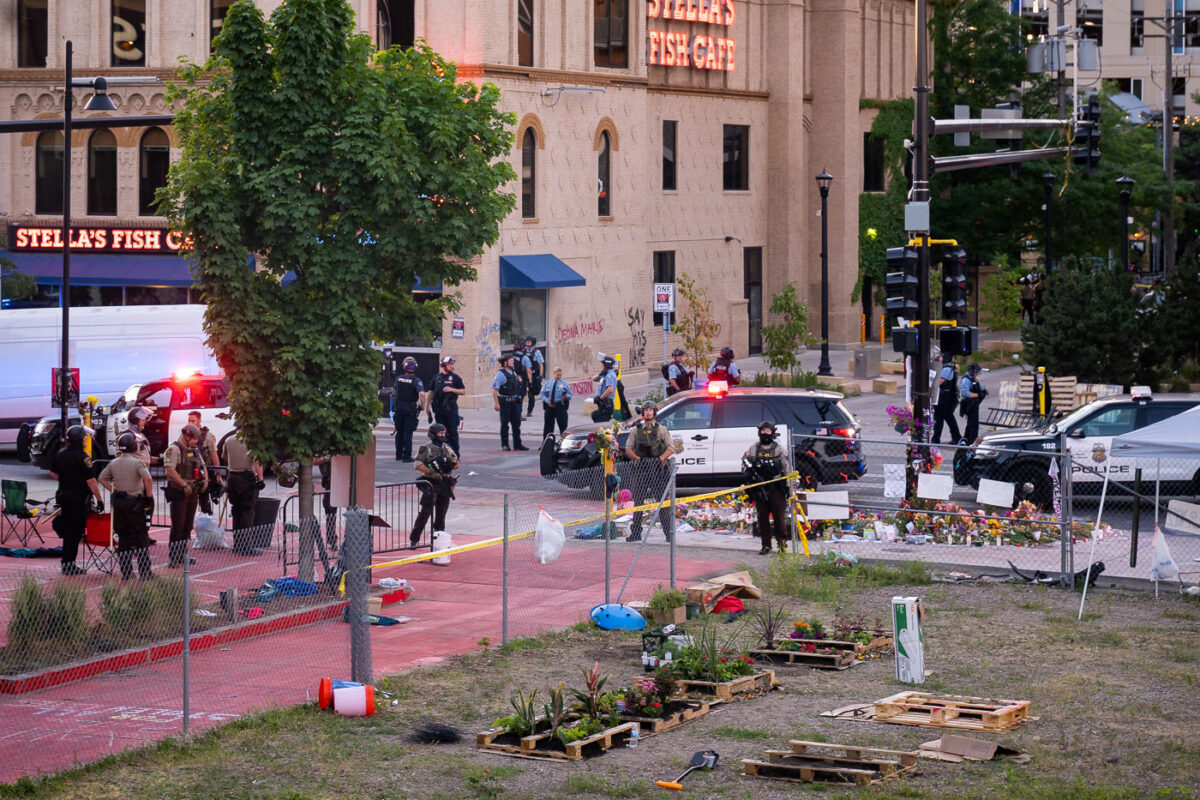
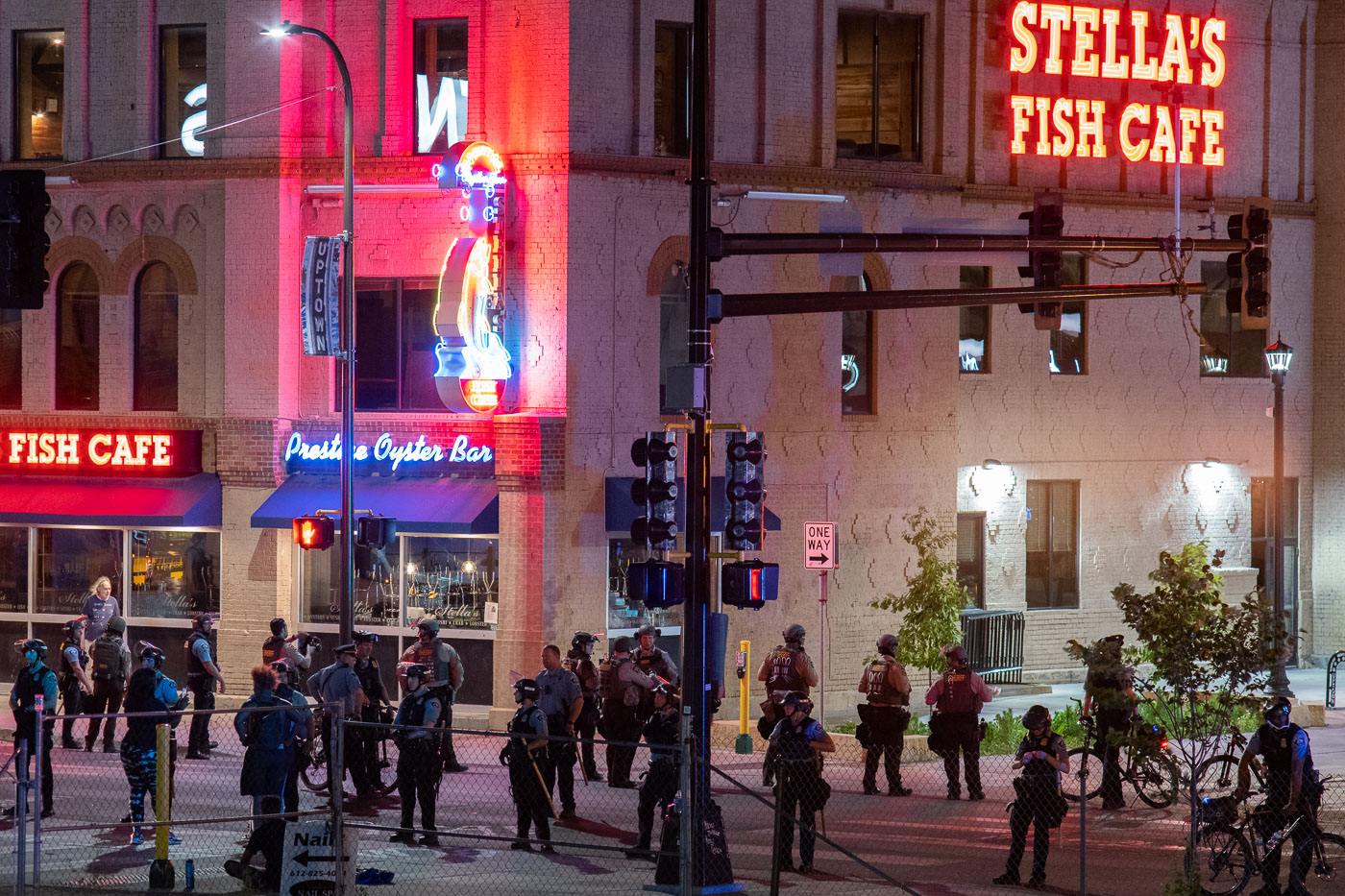
Police clear a memorial garden on Lake Street in Minneapolis near Stella’s Fish Cafe.
Law enforcement officers are present at a memorial garden on Lake Street in Minneapolis, established following the killing of Winston Smith on June 3rd by officers serving a warrant as part of a Federal Task Force. The memorial also honors Deona Marie, who was killed on June 13th when a driver struck protesters. On June 3, 2021, members of a U.S. Marshals Service fugitive task force fatally shot 32-year-old Winston “Boogie” Smith Jr. on the top level of a parking ramp in Minneapolis’ Uptown neighborhood while attempting to arrest him on a felony warrant. Authorities said Smith fired a handgun from inside his vehicle during the encounter, while family members and activists questioned the official account and demanded the release of additional evidence. The killing led to weeks of protests, street occupations, and confrontations with police in Uptown, becoming another major flashpoint in Minneapolis during the period following the murder of George Floyd. Earlier in the day Minneapolis city officials along with The Agape Movement coordinated to open the streets that had been closed at George Floyd Square since his murder. On June 13, 2021, 31-year-old Deona Marie Knajdek was killed when a driver accelerated into a group of demonstrators gathered in Minneapolis’ Uptown neighborhood during ongoing protests over the killing of Winston “Boogie” Smith Jr. Protesters had blocked the intersection of West Lake Street and Girard Avenue with vehicles and barricades when Nicholas Kraus drove a Jeep Cherokee into the crowd at high speed, killing Knajdek and injuring several others. Kraus was later charged with second-degree murder, two counts of second-degree assault with a dangerous weapon, and criminal vehicular operation. In 2023, he pleaded guilty to murder and assault charges and was sentenced to more than 20 years in prison for the attack.

Minneapolis Police Clear Winston Smith Memorial Garden on Lake Street
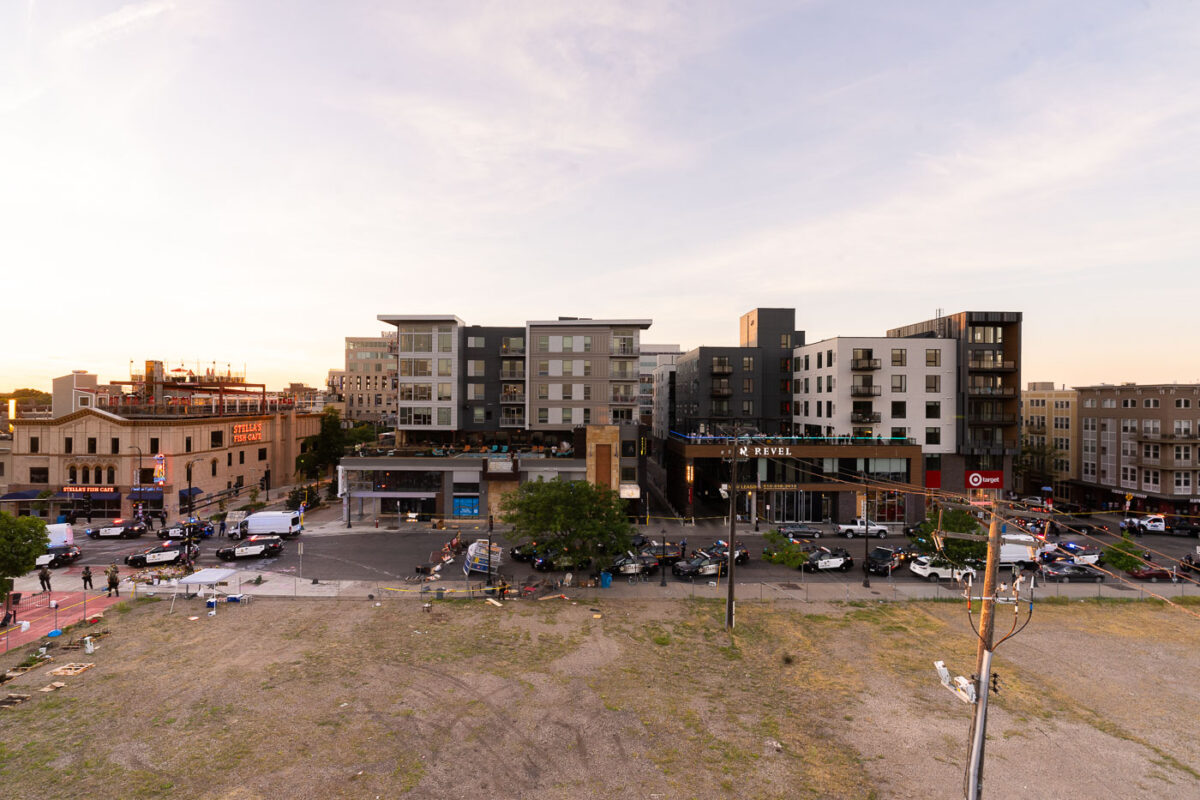
Police cars line Lake Street in Uptown Minneapolis near barricades and memorials at dusk.
Police vehicles are present on Lake Street in Uptown Minneapolis, near the site of protests that followed the killings of Winston Smith and Deona Marie in June 2021. On June 3, 2021, members of a U.S. Marshals Service fugitive task force fatally shot 32-year-old Winston “Boogie” Smith Jr. on the top level of a parking ramp in Minneapolis’ Uptown neighborhood while attempting to arrest him on a felony warrant. Authorities said Smith fired a handgun from inside his vehicle during the encounter, while family members and activists questioned the official account and demanded the release of additional evidence. The killing led to weeks of protests, street occupations, and confrontations with police in Uptown, becoming another major flashpoint in Minneapolis during the period following the murder of George Floyd. Earlier in the day Minneapolis city officials along with The Agape Movement coordinated to open the streets that had been closed at George Floyd Square since his murder. On June 13, 2021, 31-year-old Deona Marie Knajdek was killed when a driver accelerated into a group of demonstrators gathered in Minneapolis’ Uptown neighborhood during ongoing protests over the killing of Winston “Boogie” Smith Jr. Protesters had blocked the intersection of West Lake Street and Girard Avenue with vehicles and barricades when Nicholas Kraus drove a Jeep Cherokee into the crowd at high speed, killing Knajdek and injuring several others. Kraus was later charged with second-degree murder, two counts of second-degree assault with a dangerous weapon, and criminal vehicular operation. In 2023, he pleaded guilty to murder and assault charges and was sentenced to more than 20 years in prison for the attack.

Police presence at Uptown Minneapolis protest zone, Lake Street
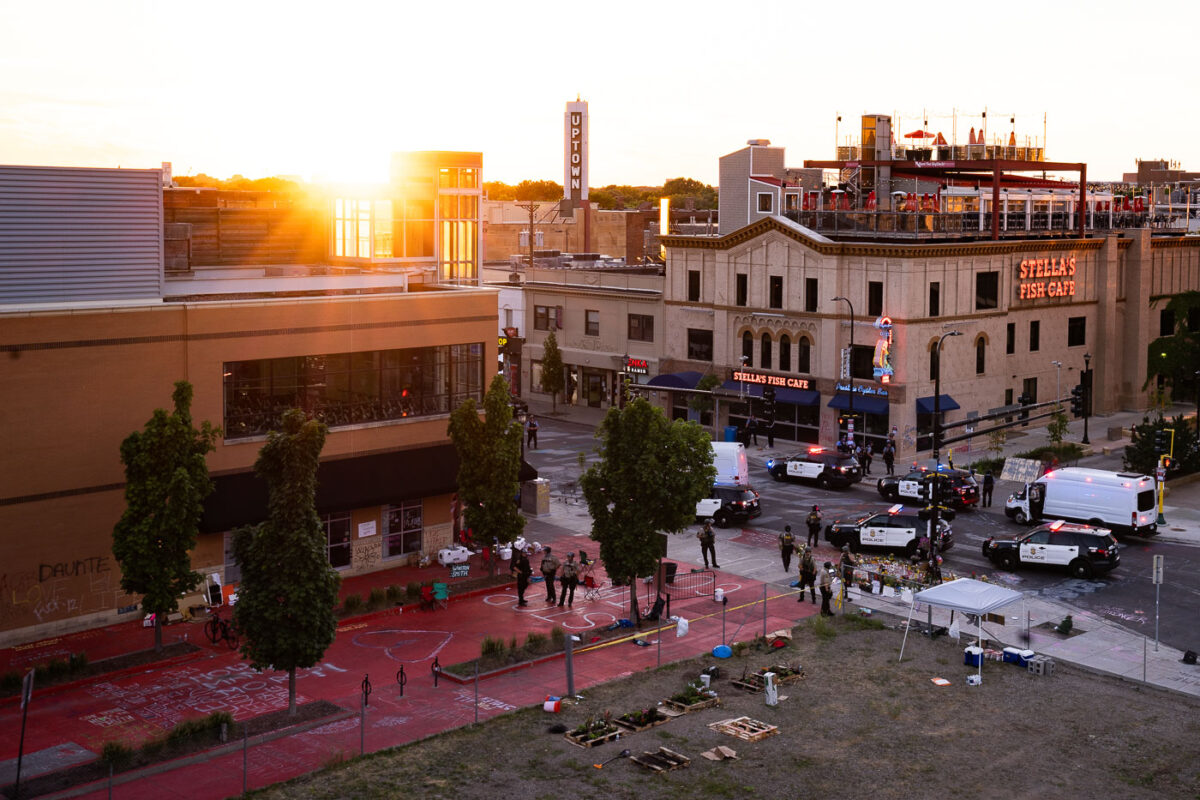
Police clear a memorial site outside Stella's Fish Cafe on Lake Street in Minneapolis at sunset.
Minneapolis Police cleared the Deona Marie Memorial site at sunset on July 10, 2020. Protesters had gathered at the site, located in the Uptown neighborhood, following the killings of Winston Smith on June 3 and Deona Marie on June 13. On June 3, 2021, members of a U.S. Marshals Service fugitive task force fatally shot 32-year-old Winston “Boogie” Smith Jr. on the top level of a parking ramp in Minneapolis’ Uptown neighborhood while attempting to arrest him on a felony warrant. Authorities said Smith fired a handgun from inside his vehicle during the encounter, while family members and activists questioned the official account and demanded the release of additional evidence. The killing led to weeks of protests, street occupations, and confrontations with police in Uptown, becoming another major flashpoint in Minneapolis during the period following the murder of George Floyd. Earlier in the day Minneapolis city officials along with The Agape Movement coordinated to open the streets that had been closed at George Floyd Square since his murder. On June 13, 2021, 31-year-old Deona Marie Knajdek was killed when a driver accelerated into a group of demonstrators gathered in Minneapolis’ Uptown neighborhood during ongoing protests over the killing of Winston “Boogie” Smith Jr. Protesters had blocked the intersection of West Lake Street and Girard Avenue with vehicles and barricades when Nicholas Kraus drove a Jeep Cherokee into the crowd at high speed, killing Knajdek and injuring several others. Kraus was later charged with second-degree murder, two counts of second-degree assault with a dangerous weapon, and criminal vehicular operation. In 2023, he pleaded guilty to murder and assault charges and was sentenced to more than 20 years in prison for the attack.

Minneapolis Police Clear Deona Marie Memorial Site at Sunset
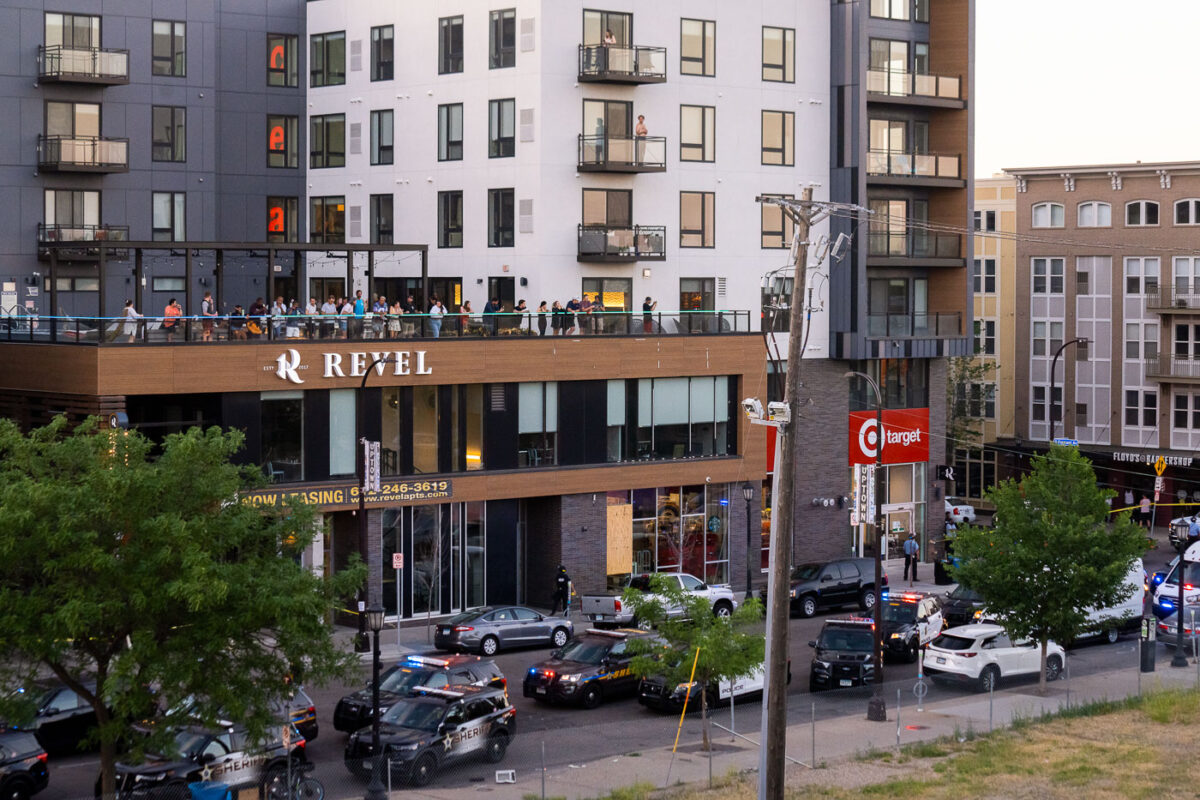
Sheriff vehicles outside the Revel apartment building on Lake Street in Minneapolis during a protest response
Law enforcement officers arrive on Lake Street in Minneapolis to clear a protest site. The protest was organized in response to the killings of Winston Smith and Deona Marie. On June 3, 2021, members of a U.S. Marshals Service fugitive task force fatally shot 32-year-old Winston “Boogie” Smith Jr. on the top level of a parking ramp in Minneapolis’ Uptown neighborhood while attempting to arrest him on a felony warrant. Authorities said Smith fired a handgun from inside his vehicle during the encounter, while family members and activists questioned the official account and demanded the release of additional evidence. The killing led to weeks of protests, street occupations, and confrontations with police in Uptown, becoming another major flashpoint in Minneapolis during the period following the murder of George Floyd. Earlier in the day Minneapolis city officials along with The Agape Movement coordinated to open the streets that had been closed at George Floyd Square since his murder. On June 13, 2021, 31-year-old Deona Marie Knajdek was killed when a driver accelerated into a group of demonstrators gathered in Minneapolis’ Uptown neighborhood during ongoing protests over the killing of Winston “Boogie” Smith Jr. Protesters had blocked the intersection of West Lake Street and Girard Avenue with vehicles and barricades when Nicholas Kraus drove a Jeep Cherokee into the crowd at high speed, killing Knajdek and injuring several others. Kraus was later charged with second-degree murder, two counts of second-degree assault with a dangerous weapon, and criminal vehicular operation. In 2023, he pleaded guilty to murder and assault charges and was sentenced to more than 20 years in prison for the attack.

Minneapolis: Law enforcement clears protest site on Lake Street
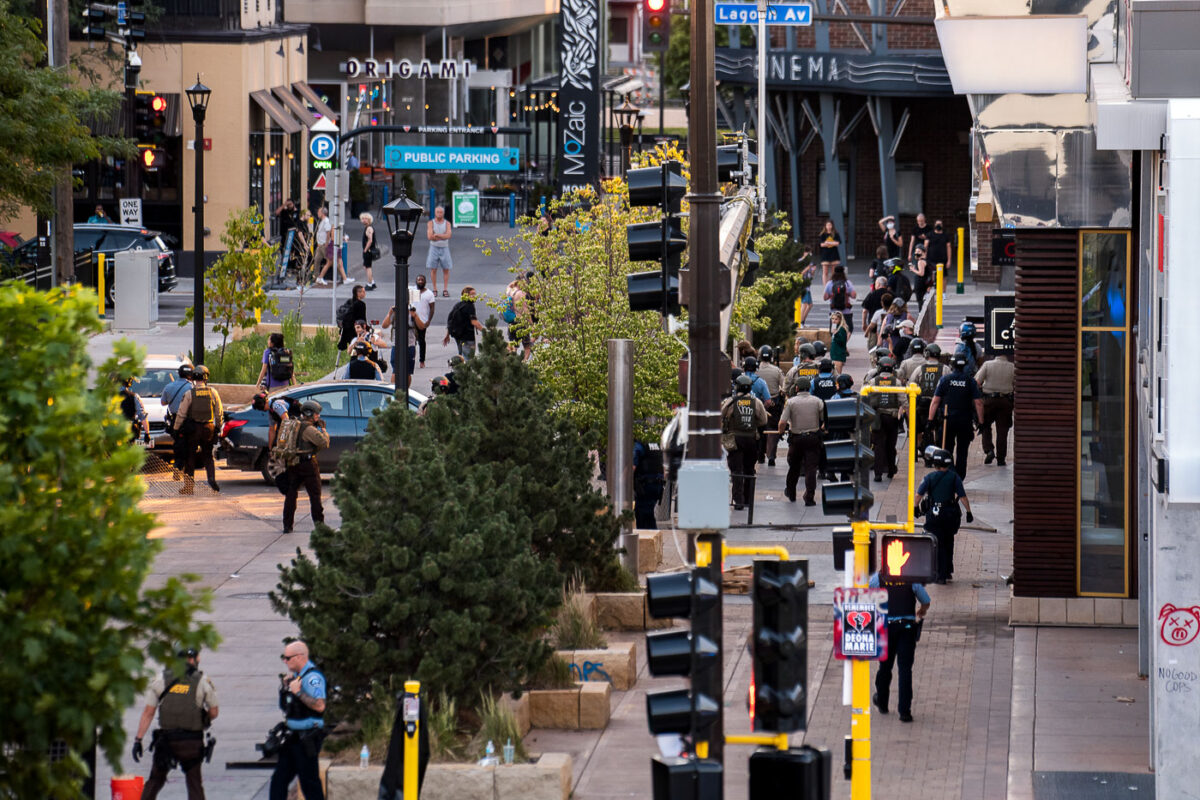
Police and protesters on Lagoon Avenue in Minneapolis during unrest after Deona Marie's death
Law enforcement officers from multiple agencies respond to protests in Uptown Minneapolis on June 13, 2021. The protests were held in response to the deaths of Winston Smith and Deona Marie. On June 3, 2021, members of a U.S. Marshals Service fugitive task force fatally shot 32-year-old Winston “Boogie” Smith Jr. on the top level of a parking ramp in Minneapolis’ Uptown neighborhood while attempting to arrest him on a felony warrant. Authorities said Smith fired a handgun from inside his vehicle during the encounter, while family members and activists questioned the official account and demanded the release of additional evidence. The killing led to weeks of protests, street occupations, and confrontations with police in Uptown, becoming another major flashpoint in Minneapolis during the period following the murder of George Floyd. Earlier in the day Minneapolis city officials along with The Agape Movement coordinated to open the streets that had been closed at George Floyd Square since his murder. On June 13, 2021, 31-year-old Deona Marie Knajdek was killed when a driver accelerated into a group of demonstrators gathered in Minneapolis’ Uptown neighborhood during ongoing protests over the killing of Winston “Boogie” Smith Jr. Protesters had blocked the intersection of West Lake Street and Girard Avenue with vehicles and barricades when Nicholas Kraus drove a Jeep Cherokee into the crowd at high speed, killing Knajdek and injuring several others. Kraus was later charged with second-degree murder, two counts of second-degree assault with a dangerous weapon, and criminal vehicular operation. In 2023, he pleaded guilty to murder and assault charges and was sentenced to more than 20 years in prison for the attack.

Law Enforcement Responds to Protests in Uptown Minneapolis
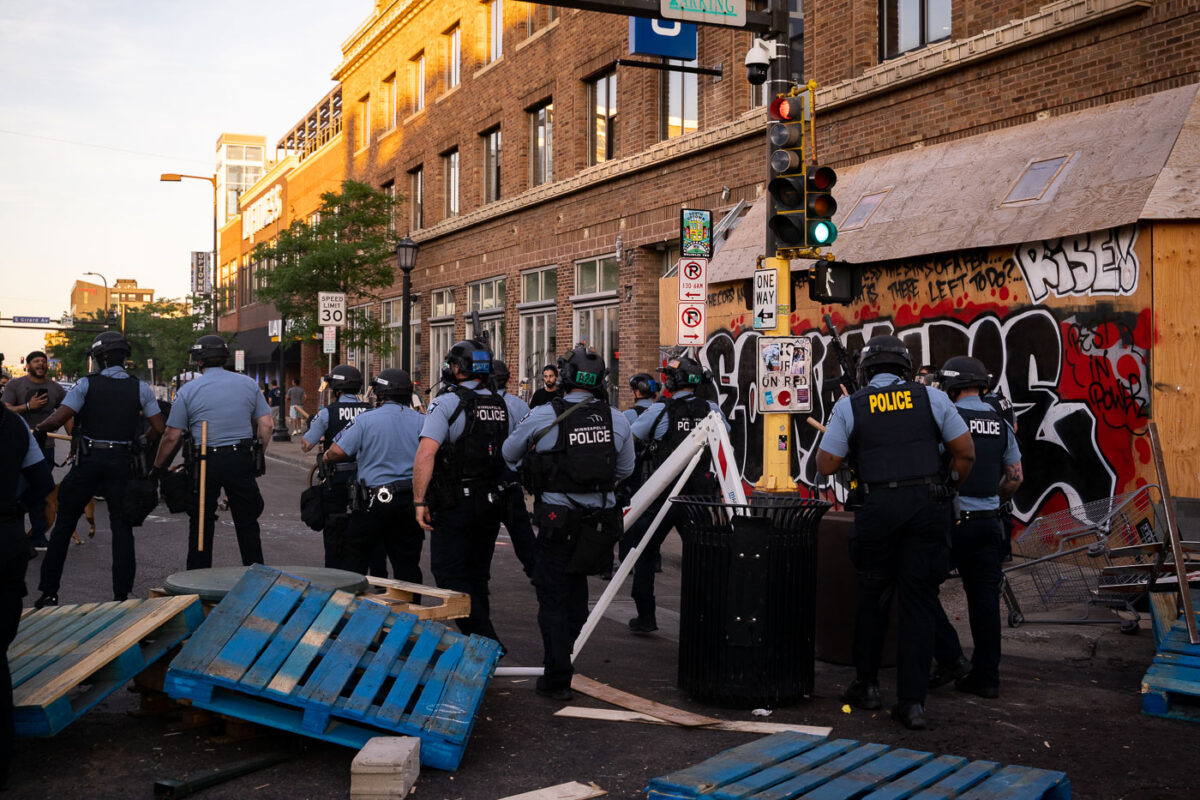
Minneapolis police officers stand by dismantled barricades in Uptown during a protest.
Minneapolis Police officers dismantle barricades in the Uptown neighborhood on July 14, 2021. The dismantling occurred during protests following the deaths of Winston Smith on June 3 and Deona Marie on June 13. On June 3, 2021, members of a U.S. Marshals Service fugitive task force fatally shot 32-year-old Winston “Boogie” Smith Jr. on the top level of a parking ramp in Minneapolis’ Uptown neighborhood while attempting to arrest him on a felony warrant. Authorities said Smith fired a handgun from inside his vehicle during the encounter, while family members and activists questioned the official account and demanded the release of additional evidence. The killing led to weeks of protests, street occupations, and confrontations with police in Uptown, becoming another major flashpoint in Minneapolis during the period following the murder of George Floyd. Earlier in the day Minneapolis city officials along with The Agape Movement coordinated to open the streets that had been closed at George Floyd Square since his murder. On June 13, 2021, 31-year-old Deona Marie Knajdek was killed when a driver accelerated into a group of demonstrators gathered in Minneapolis’ Uptown neighborhood during ongoing protests over the killing of Winston “Boogie” Smith Jr. Protesters had blocked the intersection of West Lake Street and Girard Avenue with vehicles and barricades when Nicholas Kraus drove a Jeep Cherokee into the crowd at high speed, killing Knajdek and injuring several others. Kraus was later charged with second-degree murder, two counts of second-degree assault with a dangerous weapon, and criminal vehicular operation. In 2023, he pleaded guilty to murder and assault charges and was sentenced to more than 20 years in prison for the attack.

Minneapolis Police clear protest barricades in Uptown
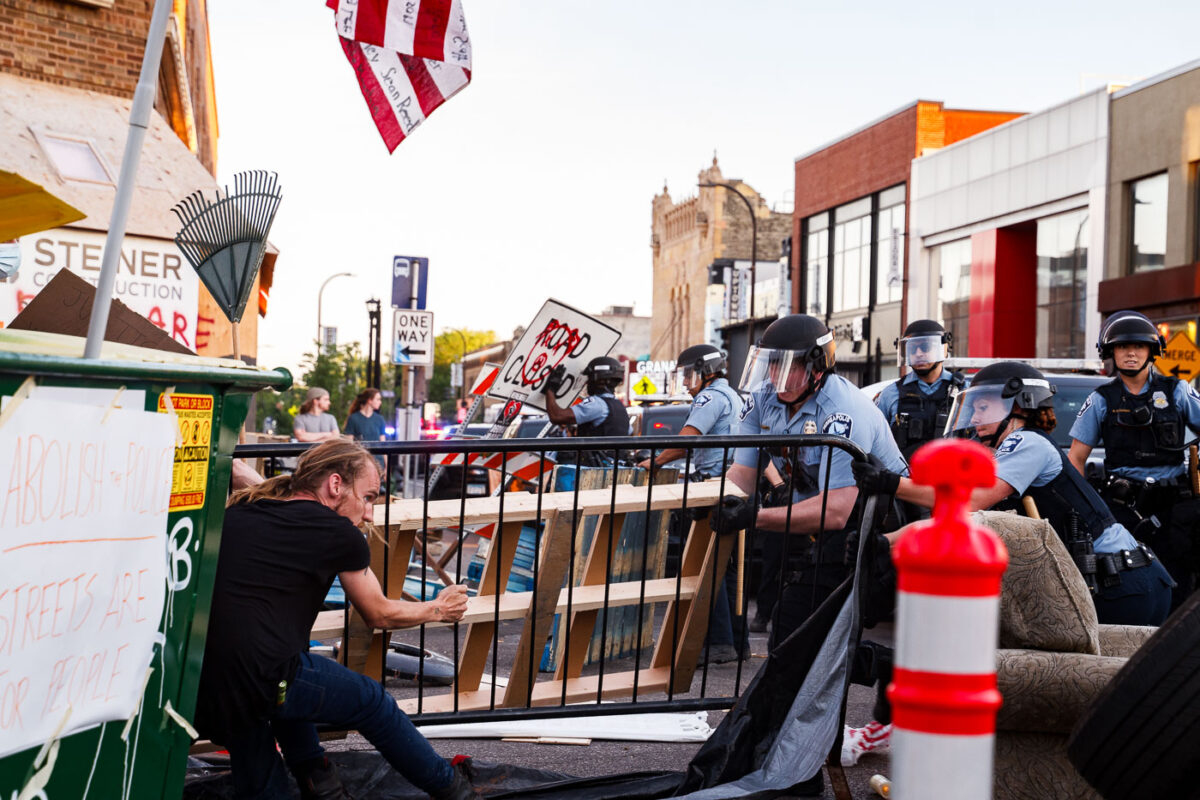
Minneapolis police clear barricades on Lake Street during protests.
Minneapolis Police officers clear street barricades at the intersection of Lake Street and Hennepin Avenue on June 15, 2021. Protesters had closed of the streets protesting the killings of Winston Smith and Deona Marie. On June 3, 2021, members of a U.S. Marshals Service fugitive task force fatally shot 32-year-old Winston “Boogie” Smith Jr. on the top level of a parking ramp in Minneapolis’ Uptown neighborhood while attempting to arrest him on a felony warrant. Authorities said Smith fired a handgun from inside his vehicle during the encounter, while family members and activists questioned the official account and demanded the release of additional evidence. The killing led to weeks of protests, street occupations, and confrontations with police in Uptown, becoming another major flashpoint in Minneapolis during the period following the murder of George Floyd. Earlier in the day Minneapolis city officials along with The Agape Movement coordinated to open the streets that had been closed at George Floyd Square since his murder. On June 13, 2021, 31-year-old Deona Marie Knajdek was killed when a driver accelerated into a group of demonstrators gathered in Minneapolis’ Uptown neighborhood during ongoing protests over the killing of Winston “Boogie” Smith Jr. Protesters had blocked the intersection of West Lake Street and Girard Avenue with vehicles and barricades when Nicholas Kraus drove a Jeep Cherokee into the crowd at high speed, killing Knajdek and injuring several others. Kraus was later charged with second-degree murder, two counts of second-degree assault with a dangerous weapon, and criminal vehicular operation. In 2023, he pleaded guilty to murder and assault charges and was sentenced to more than 20 years in prison for the attack.

Minneapolis Police Clear Barricades Amidst Winston Smith Protests
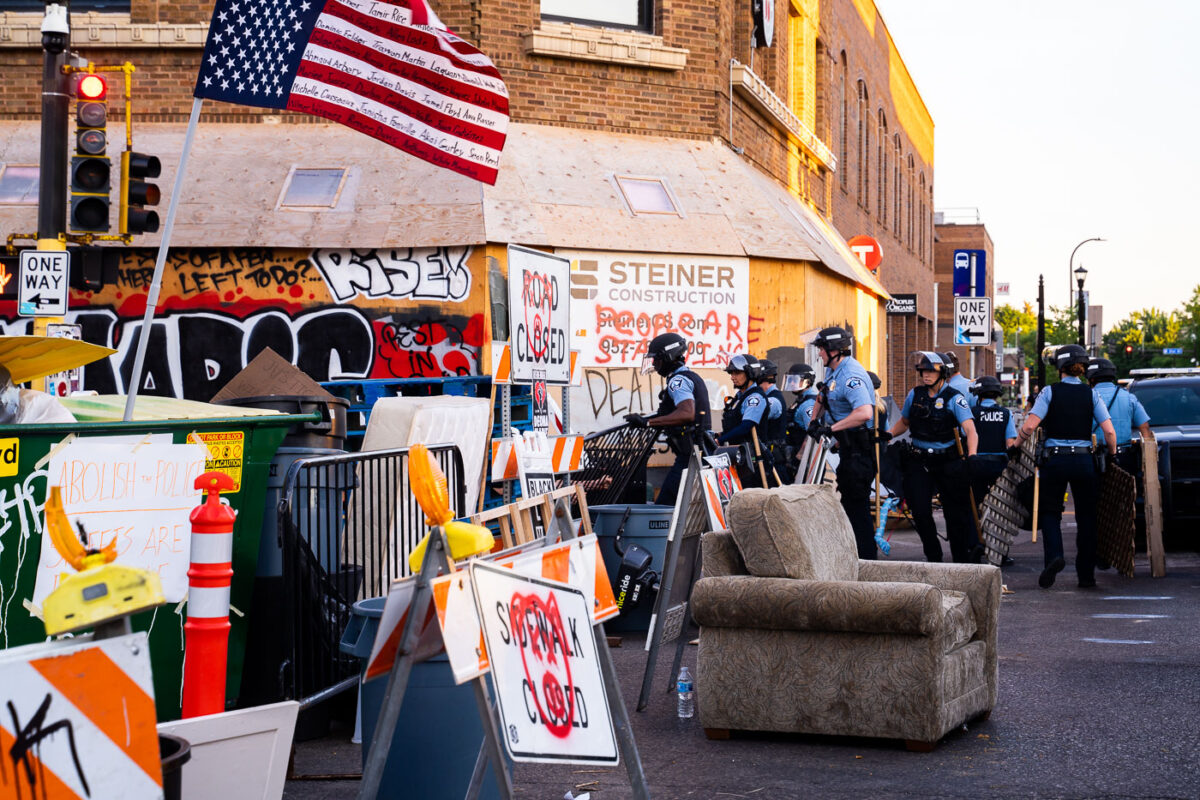
Police clear barricades on Lake Street in Minneapolis beside a boarded-up storefront and protest signs.
Minneapolis Police officers clear barricades on Lake Street on June 15, 2021. The barricades were erected in the aftermath of protests and unrest following the deaths of Winston Smith and Deona Marie. On June 3, 2021, members of a U.S. Marshals Service fugitive task force fatally shot 32-year-old Winston “Boogie” Smith Jr. on the top level of a parking ramp in Minneapolis’ Uptown neighborhood while attempting to arrest him on a felony warrant. Authorities said Smith fired a handgun from inside his vehicle during the encounter, while family members and activists questioned the official account and demanded the release of additional evidence. The killing led to weeks of protests, street occupations, and confrontations with police in Uptown, becoming another major flashpoint in Minneapolis during the period following the murder of George Floyd. Earlier in the day Minneapolis city officials along with The Agape Movement coordinated to open the streets that had been closed at George Floyd Square since his murder. On June 13, 2021, 31-year-old Deona Marie Knajdek was killed when a driver accelerated into a group of demonstrators gathered in Minneapolis’ Uptown neighborhood during ongoing protests over the killing of Winston “Boogie” Smith Jr. Protesters had blocked the intersection of West Lake Street and Girard Avenue with vehicles and barricades when Nicholas Kraus drove a Jeep Cherokee into the crowd at high speed, killing Knajdek and injuring several others. Kraus was later charged with second-degree murder, two counts of second-degree assault with a dangerous weapon, and criminal vehicular operation. In 2023, he pleaded guilty to murder and assault charges and was sentenced to more than 20 years in prison for the attack.

Police Clear Protest Barricades on Lake Street in Uptown

Police vehicles and barricades at a cordoned Minneapolis intersection after a protest-related crash.
Minneapolis, MN. On August 30, 2021, Nicholas Kraus drove his vehicle into a barricade of cars during a protest. The protest was held ten days after the law enforcement shooting death of Winston Smith. Law enforcement vehicles are present at the location, which has been cordoned off with police tape. The sidewalk displays chalked messages related to the protest, including "FREE AMERICA," "ABOLISH THE POLICE," and "HOW MANY MORE?"

Minneapolis: Nicholas Kraus vehicle strikes protest barricade

Damaged vehicles and police outside Stella’s Fish Cafe in Minneapolis after a car hit protest barricades.
In Minneapolis, Nicholas Kraus drove his vehicle into barricades set up by protesters near Stella's Fish Cafe. The protest occurred 10 days after the law enforcement shooting death of Winston Smith. The image shows the damaged vehicles and police presence at the site of the incident. This event took place in the Uptown neighborhood of Minneapolis.

Minneapolis: Car crashes into protest barricade near Stella’s Fish Cafe

Minneapolis police vehicles line Girard Ave. near a graffiti memorial for Winston Smith in Uptown.
Graffiti on a trash bin in Uptown Minneapolis reads "Winston Smith was murdered," memorializing the man whose killing by law enforcement had been the subject of ongoing protests. The incident occurred after a vehicle drove through protesters and their barricades, resulting in one fatality and three injuries. The driver was apprehended by protesters and subsequently arrested by Minneapolis Police. The graffiti serves as a stark reminder of the tensions and activism surrounding the case in the city.

Minneapolis: Graffiti memorializes Winston Smith after protest vehicle incident
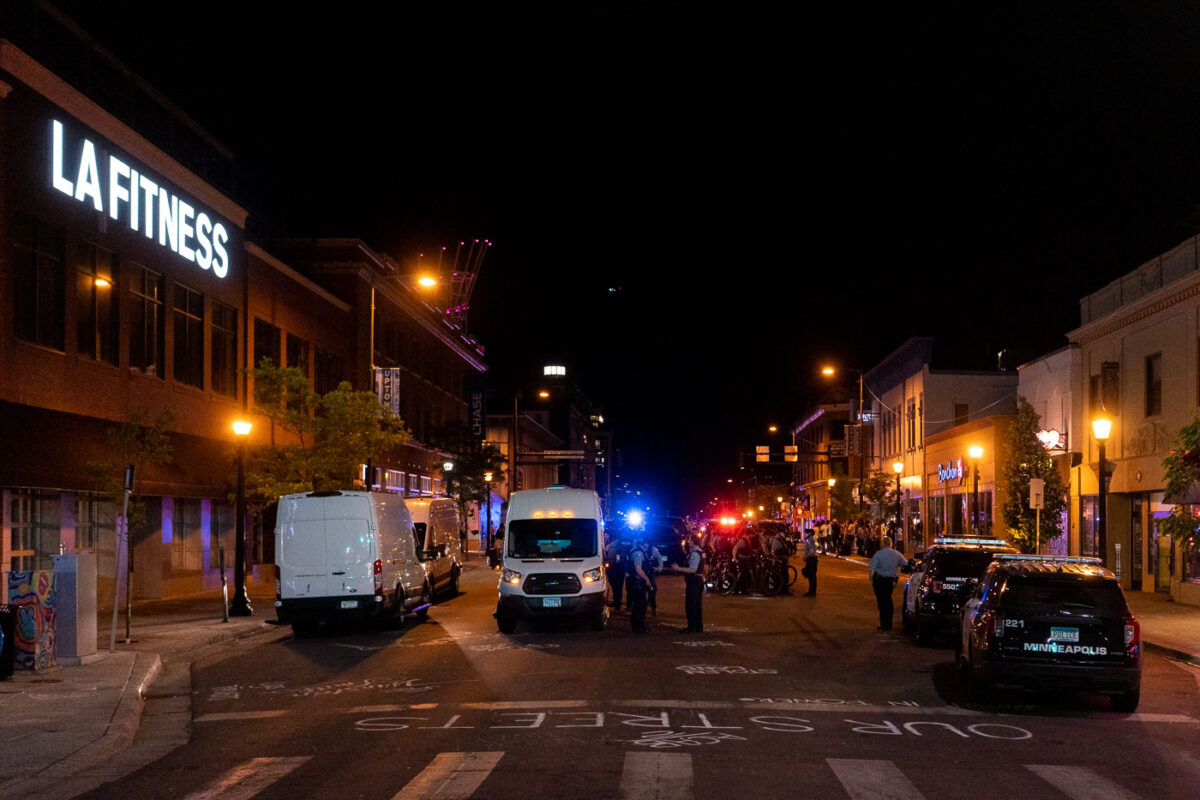
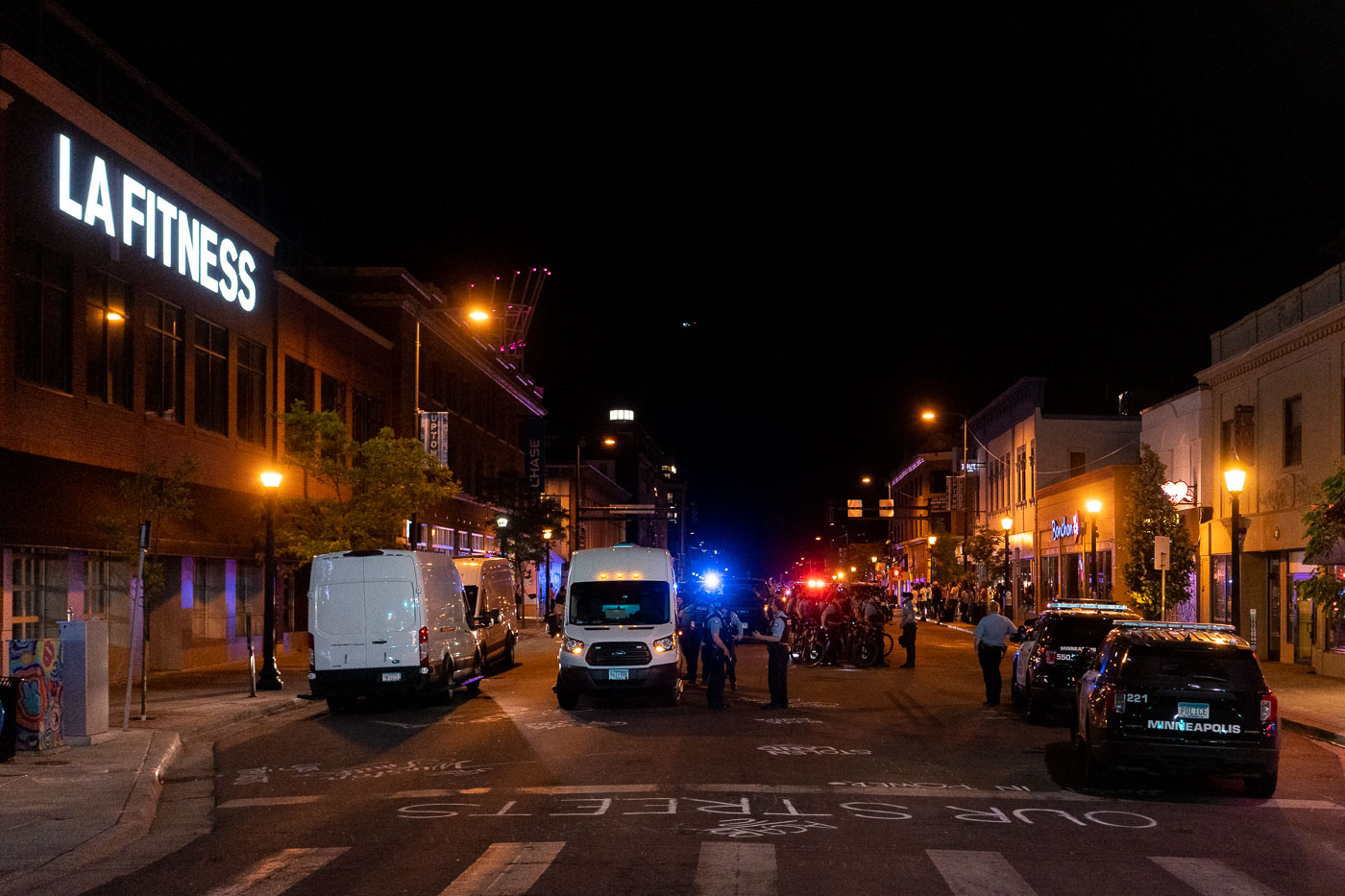
Police vans block Lake Street in Minneapolis outside LA Fitness at night.
Minneapolis Police officers are present on Lake Street in Uptown Minneapolis following the law enforcement shooting death of Winston Smith. Smith was killed by Federal Task Force members while they were serving a warrant. The incident sparked days of protests in the area, with "Our Streets" and "Stop Power" spray-painted on the road, indicating the public's response to the event. On June 3, 2021, members of a U.S. Marshals Service fugitive task force fatally shot 32-year-old Winston “Boogie” Smith Jr. on the top level of a parking ramp in Minneapolis’ Uptown neighborhood while attempting to arrest him on a felony warrant. Authorities said Smith fired a handgun from inside his vehicle during the encounter, while family members and activists questioned the official account and demanded the release of additional evidence. The killing led to weeks of protests, street occupations, and confrontations with police in Uptown, becoming another major flashpoint in Minneapolis during the period following the murder of George Floyd. Earlier in the day Minneapolis city officials along with The Agape Movement coordinated to open the streets that had been closed at George Floyd Square since his murder.

Minneapolis Police on Lake Street After Winston Smith Shooting
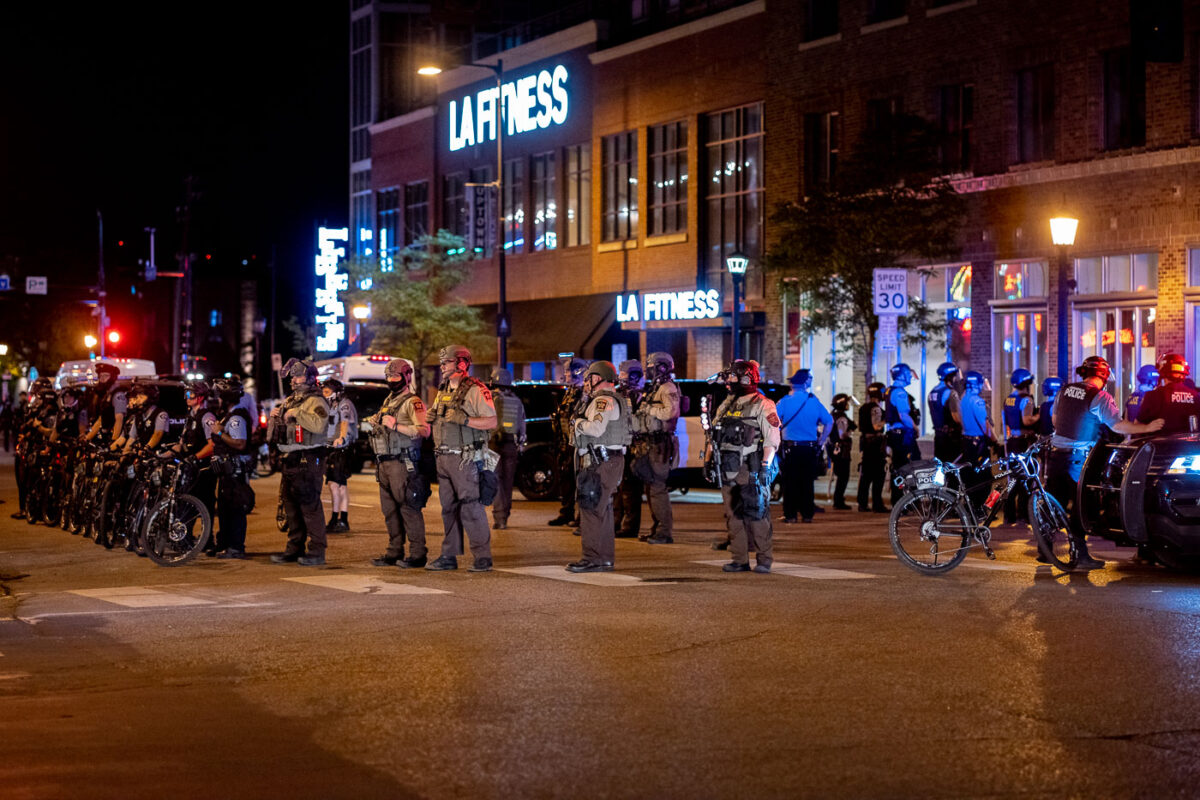
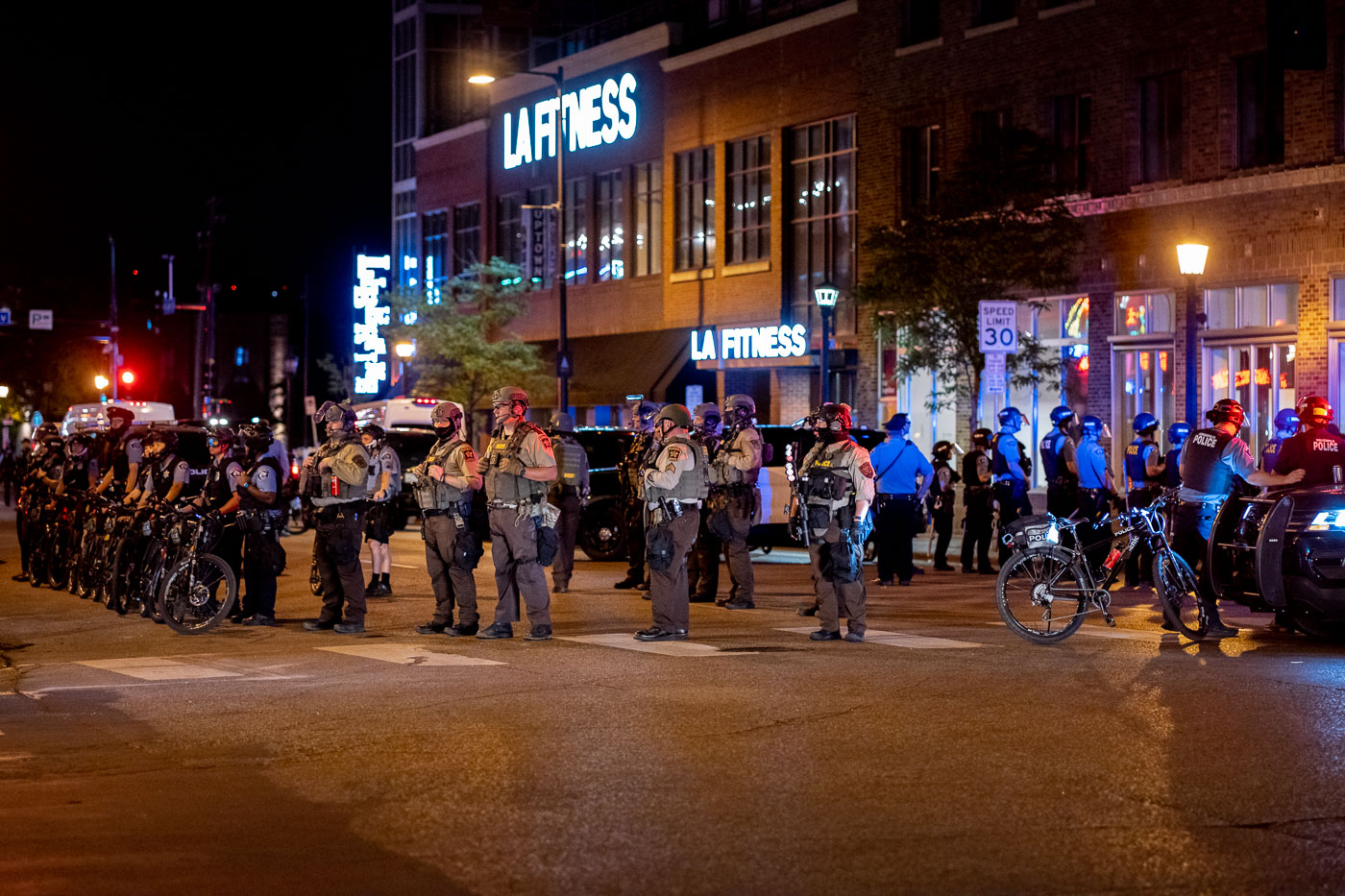
Police and sheriff's officers block Lake Street in Minneapolis outside LA Fitness at night.
Hennepin County Sheriff's Department and Minneapolis Police officers were deployed on Lake Street in Minneapolis on the night of September 2, 2021. They responded to protests that had been occurring for several days. These demonstrations followed the law enforcement shooting death of Winston Smith earlier that week at the Seven Points parking ramp. On June 3, 2021, members of a U.S. Marshals Service fugitive task force fatally shot 32-year-old Winston “Boogie” Smith Jr. on the top level of a parking ramp in Minneapolis’ Uptown neighborhood while attempting to arrest him on a felony warrant. Authorities said Smith fired a handgun from inside his vehicle during the encounter, while family members and activists questioned the official account and demanded the release of additional evidence. The killing led to weeks of protests, street occupations, and confrontations with police in Uptown, becoming another major flashpoint in Minneapolis during the period following the murder of George Floyd. Earlier in the day Minneapolis city officials along with The Agape Movement coordinated to open the streets that had been closed at George Floyd Square since his murder.

Hennepin County Sheriff and Minneapolis Police on Lake Street
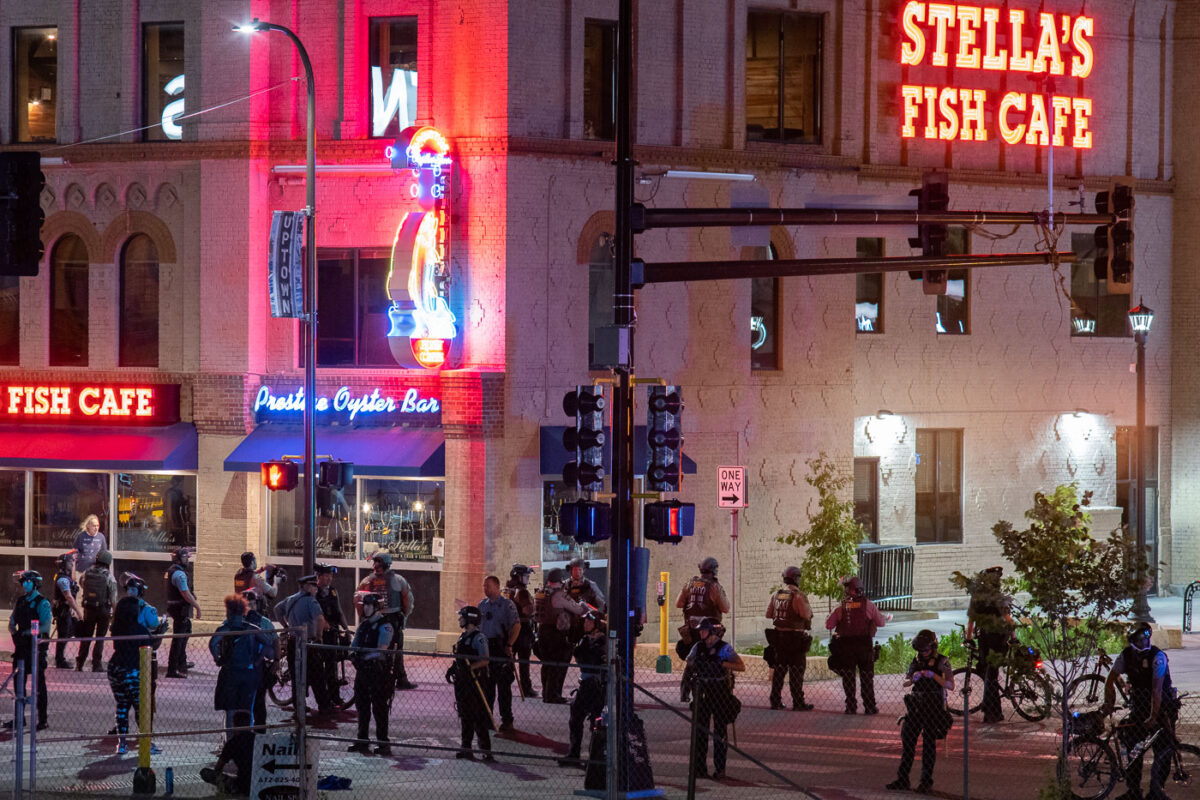
Police officers stand on Lake Street in Minneapolis's Uptown neighborhood during a protest following the death of Winston Smith.
Law enforcement officers are present on Lake Street in Minneapolis's Uptown neighborhood during a protest following the June 3rd shooting death of Winston Smith. On June 3, 2021, members of a U.S. Marshals Service fugitive task force fatally shot 32-year-old Winston “Boogie” Smith Jr. on the top level of a parking ramp in Minneapolis’ Uptown neighborhood while attempting to arrest him on a felony warrant. Authorities said Smith fired a handgun from inside his vehicle during the encounter, while family members and activists questioned the official account and demanded the release of additional evidence. The killing led to weeks of protests, street occupations, and confrontations with police in Uptown, becoming another major flashpoint in Minneapolis during the period following the murder of George Floyd. Earlier in the day Minneapolis city officials along with The Agape Movement coordinated to open the streets that had been closed at George Floyd Square since his murder.

Police on Lake Street during Winston Smith protest in Uptown
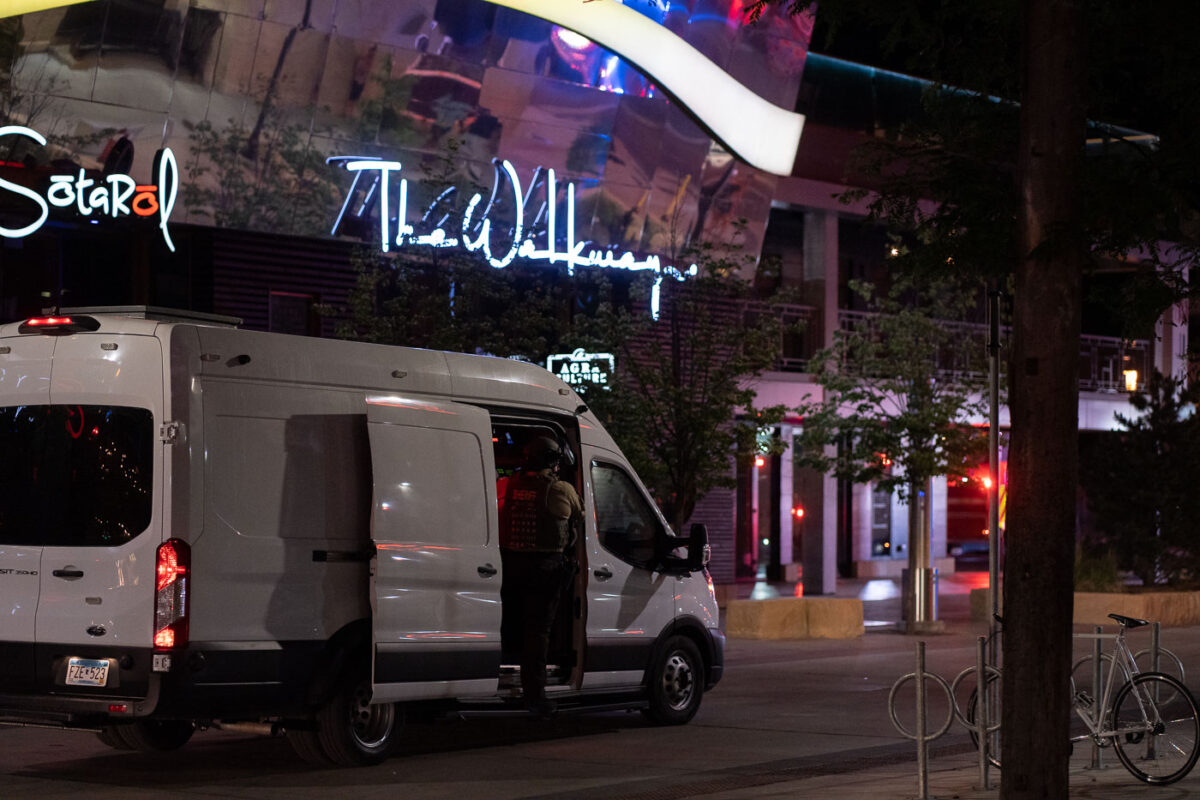
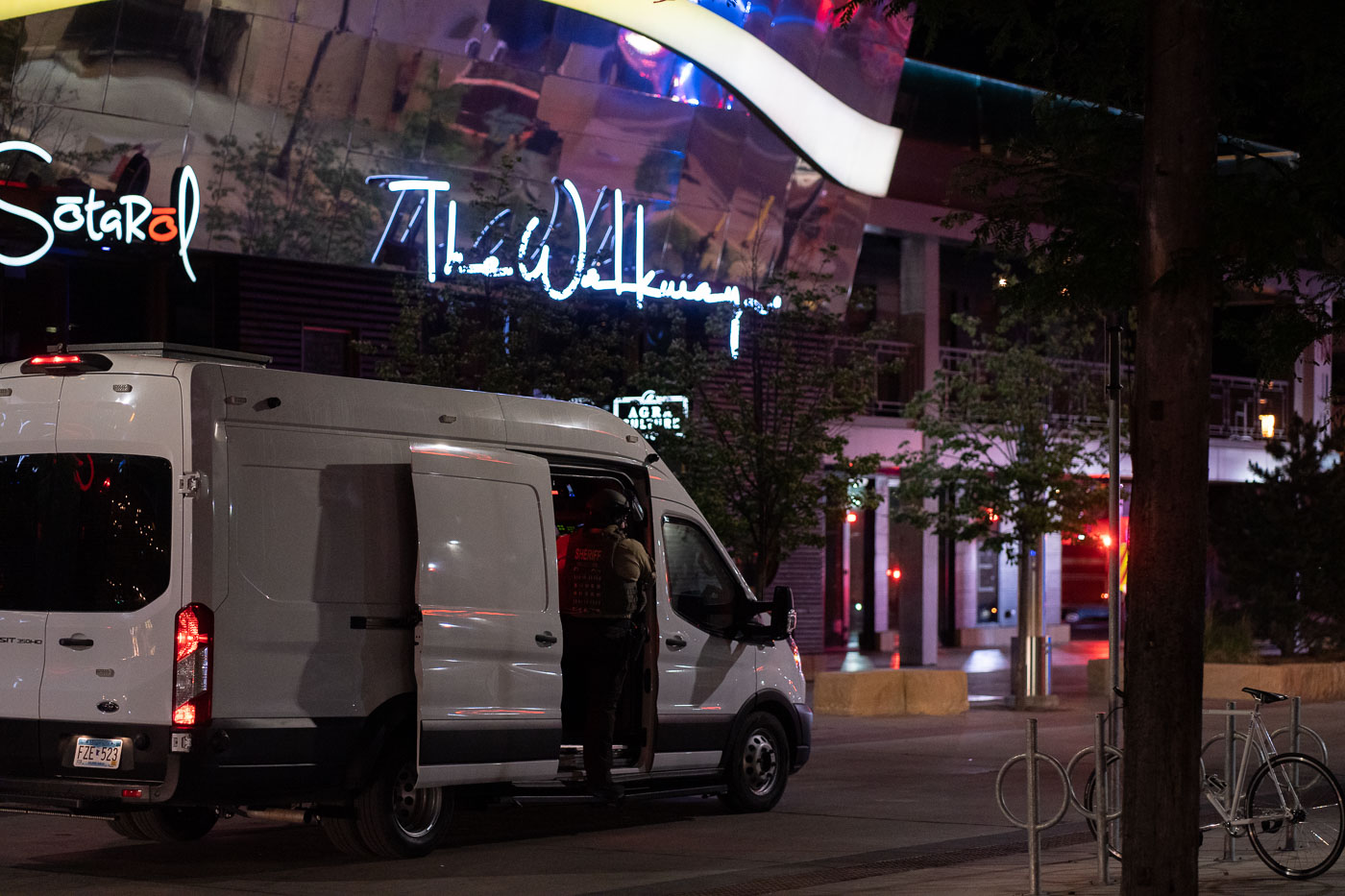
Hennepin County sheriff's van parked outside SōtaRōl in Minneapolis at night
A Hennepin County Sheriff's Department van is parked on Girard Avenue in Minneapolis during protests following the death of Winston Smith. On June 3, 2021, members of a U.S. Marshals Service fugitive task force fatally shot 32-year-old Winston “Boogie” Smith Jr. on the top level of a parking ramp in Minneapolis’ Uptown neighborhood while attempting to arrest him on a felony warrant. Authorities said Smith fired a handgun from inside his vehicle during the encounter, while family members and activists questioned the official account and demanded the release of additional evidence. The killing led to weeks of protests, street occupations, and confrontations with police in Uptown, becoming another major flashpoint in Minneapolis during the period following the murder of George Floyd. Earlier in the day Minneapolis city officials along with The Agape Movement coordinated to open the streets that had been closed at George Floyd Square since his murder.

Minneapolis Sheriff’s van on Girard Ave during Winston Smith protests
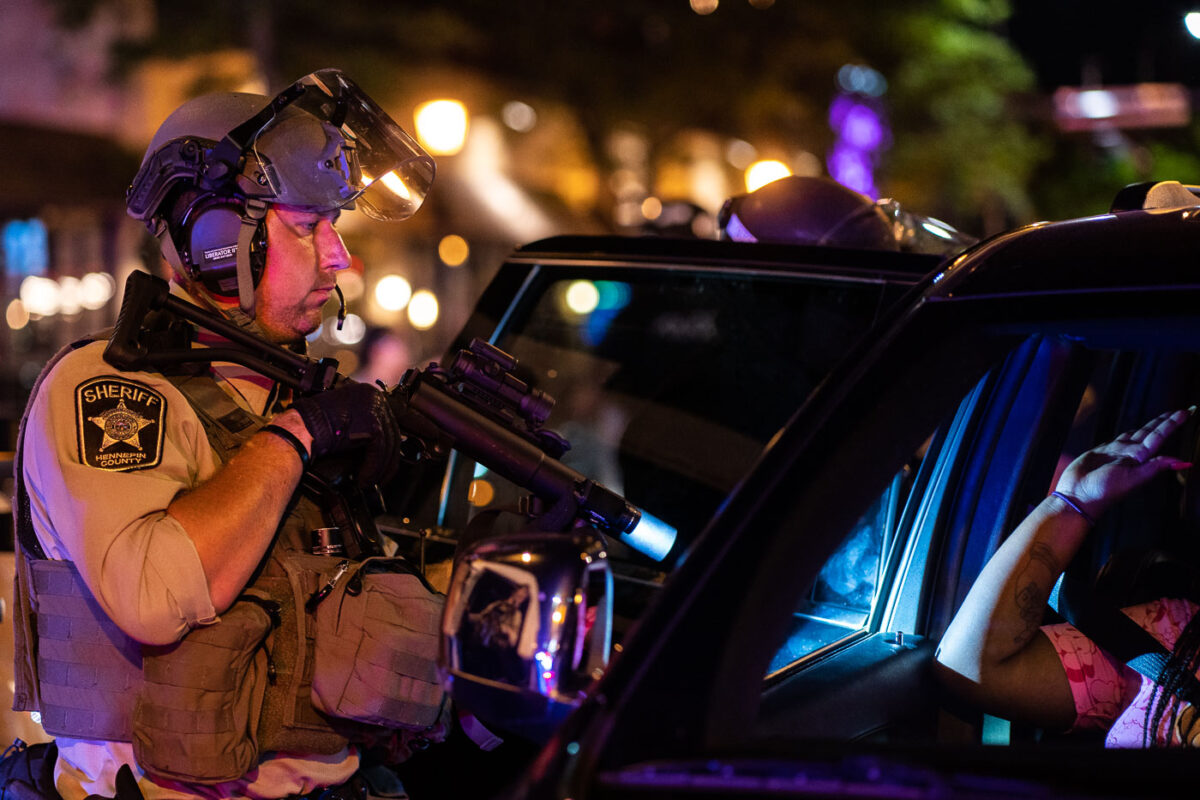
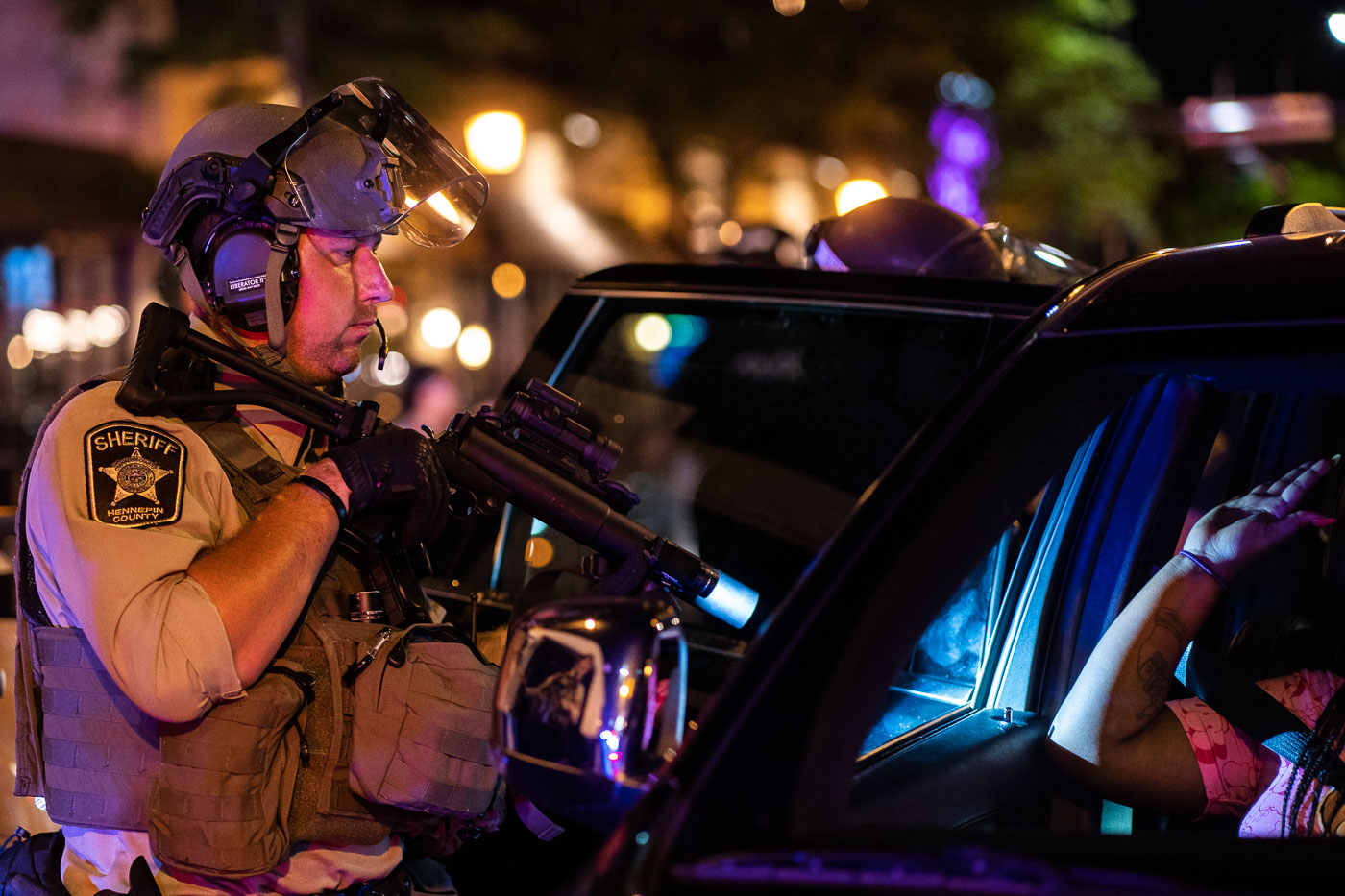
Hennepin County sheriff points a rifle at a driver during protests in Minneapolis.
A Hennepin County Sheriff's deputy points a firearm at a vehicle during protests in Minneapolis on June 5, 2021. On June 3, 2021, members of a U.S. Marshals Service fugitive task force fatally shot 32-year-old Winston “Boogie” Smith Jr. on the top level of a parking ramp in Minneapolis’ Uptown neighborhood while attempting to arrest him on a felony warrant. Authorities said Smith fired a handgun from inside his vehicle during the encounter, while family members and activists questioned the official account and demanded the release of additional evidence. The killing led to weeks of protests, street occupations, and confrontations with police in Uptown, becoming another major flashpoint in Minneapolis during the period following the murder of George Floyd. Earlier in the day Minneapolis city officials along with The Agape Movement coordinated to open the streets that had been closed at George Floyd Square since his murder.

Hennepin County Sheriff points gun at vehicle during protests
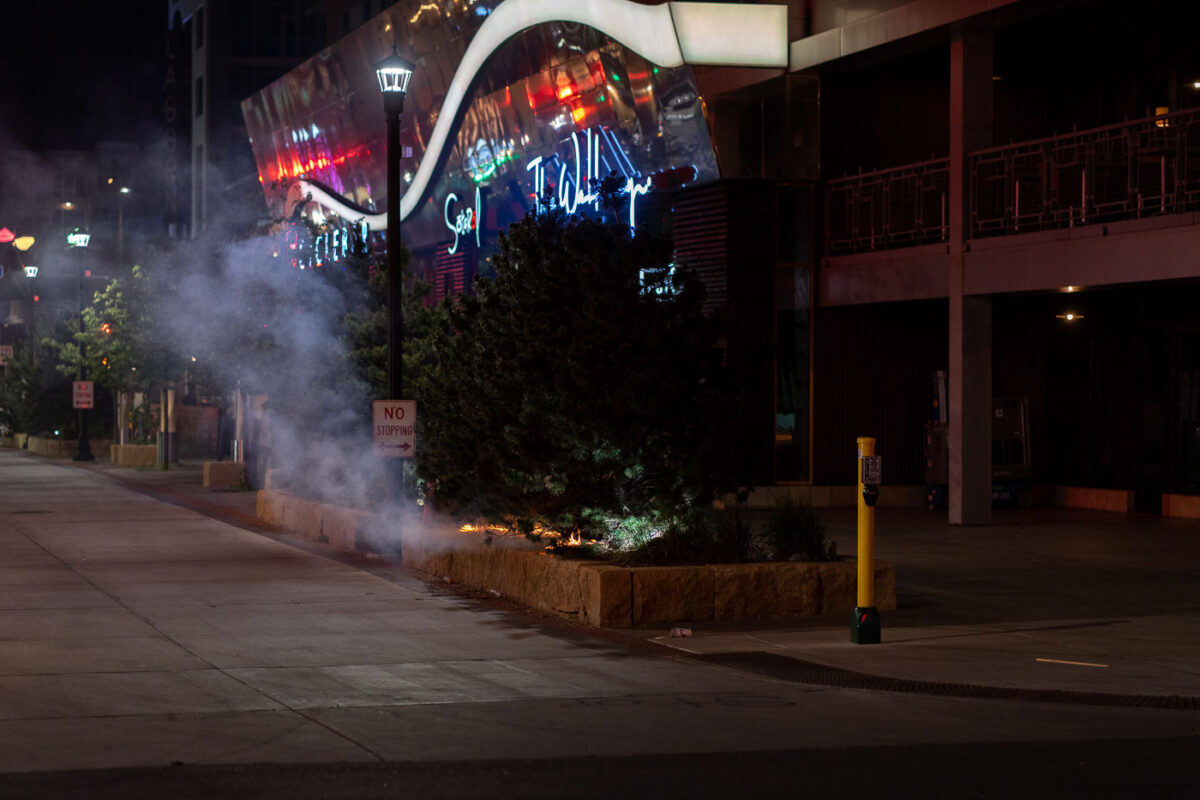
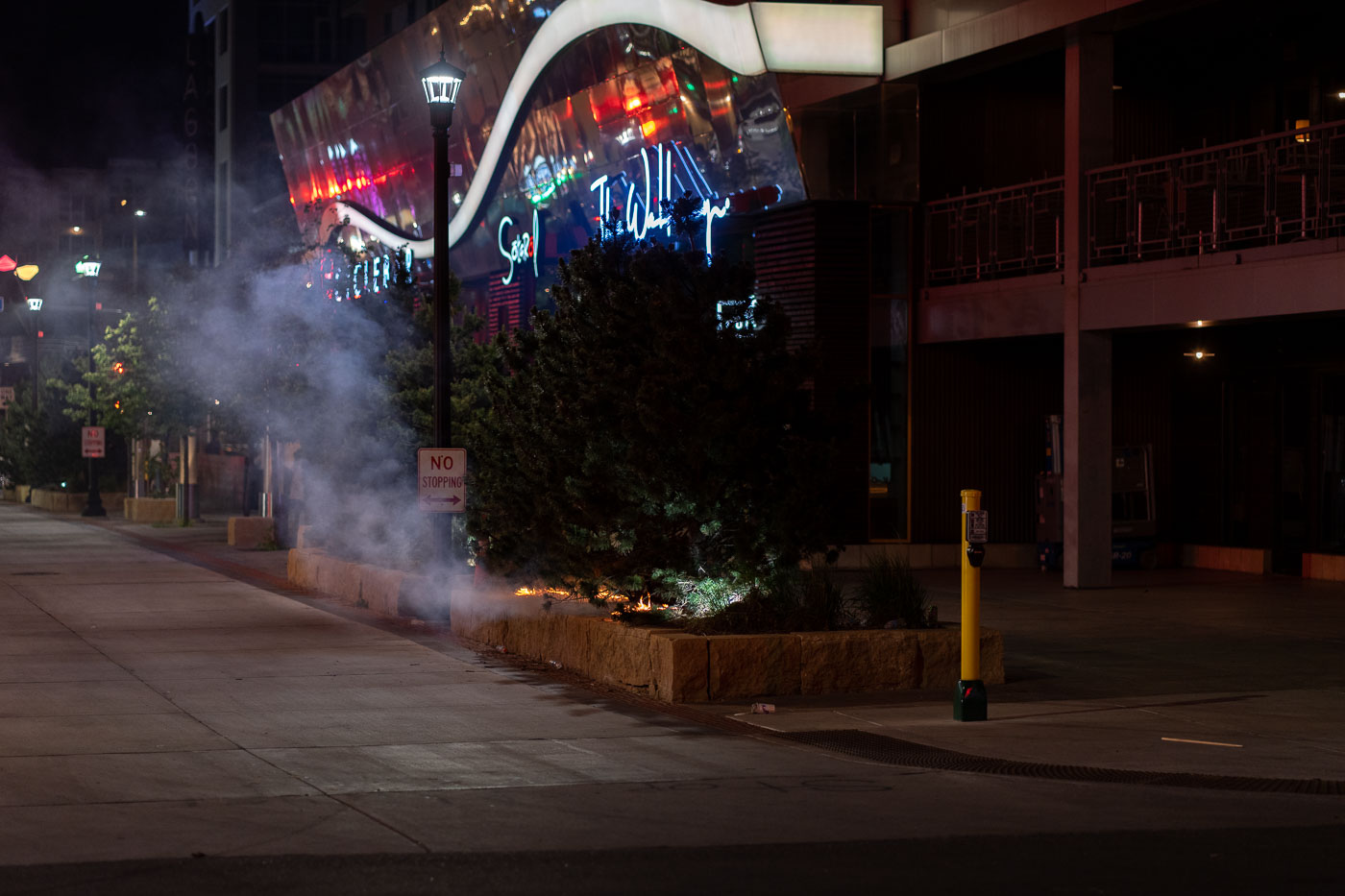
Small fire and smoke rise from bushes on Girard Ave in Minneapolis at night.
Bushes burn on Girard Avenue in Minneapolis during protests following the law enforcement shooting death of Winston Smith on June 3rd. On June 3, 2021, members of a U.S. Marshals Service fugitive task force fatally shot 32-year-old Winston “Boogie” Smith Jr. on the top level of a parking ramp in Minneapolis’ Uptown neighborhood while attempting to arrest him on a felony warrant. Authorities said Smith fired a handgun from inside his vehicle during the encounter, while family members and activists questioned the official account and demanded the release of additional evidence. The killing led to weeks of protests, street occupations, and confrontations with police in Uptown, becoming another major flashpoint in Minneapolis during the period following the murder of George Floyd. Earlier in the day Minneapolis city officials along with The Agape Movement coordinated to open the streets that had been closed at George Floyd Square since his murder.

Bushes burn on Girard Ave, Minneapolis during protests
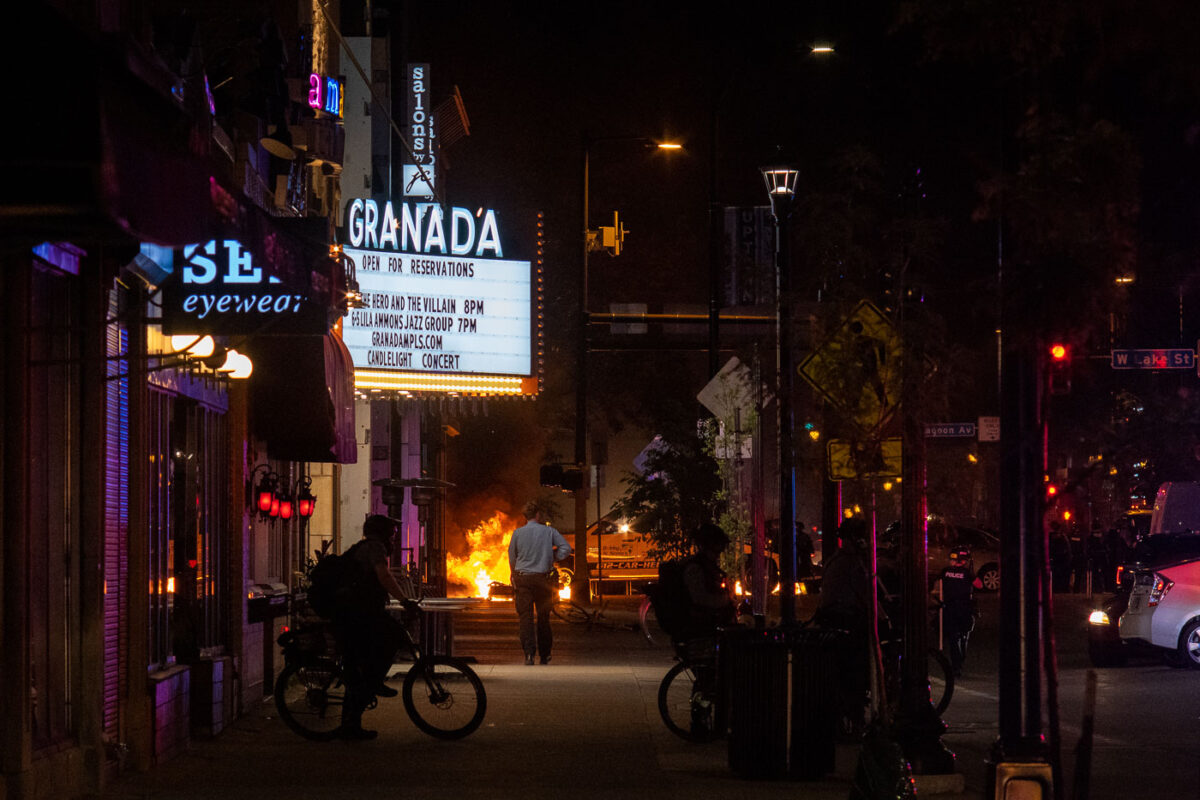
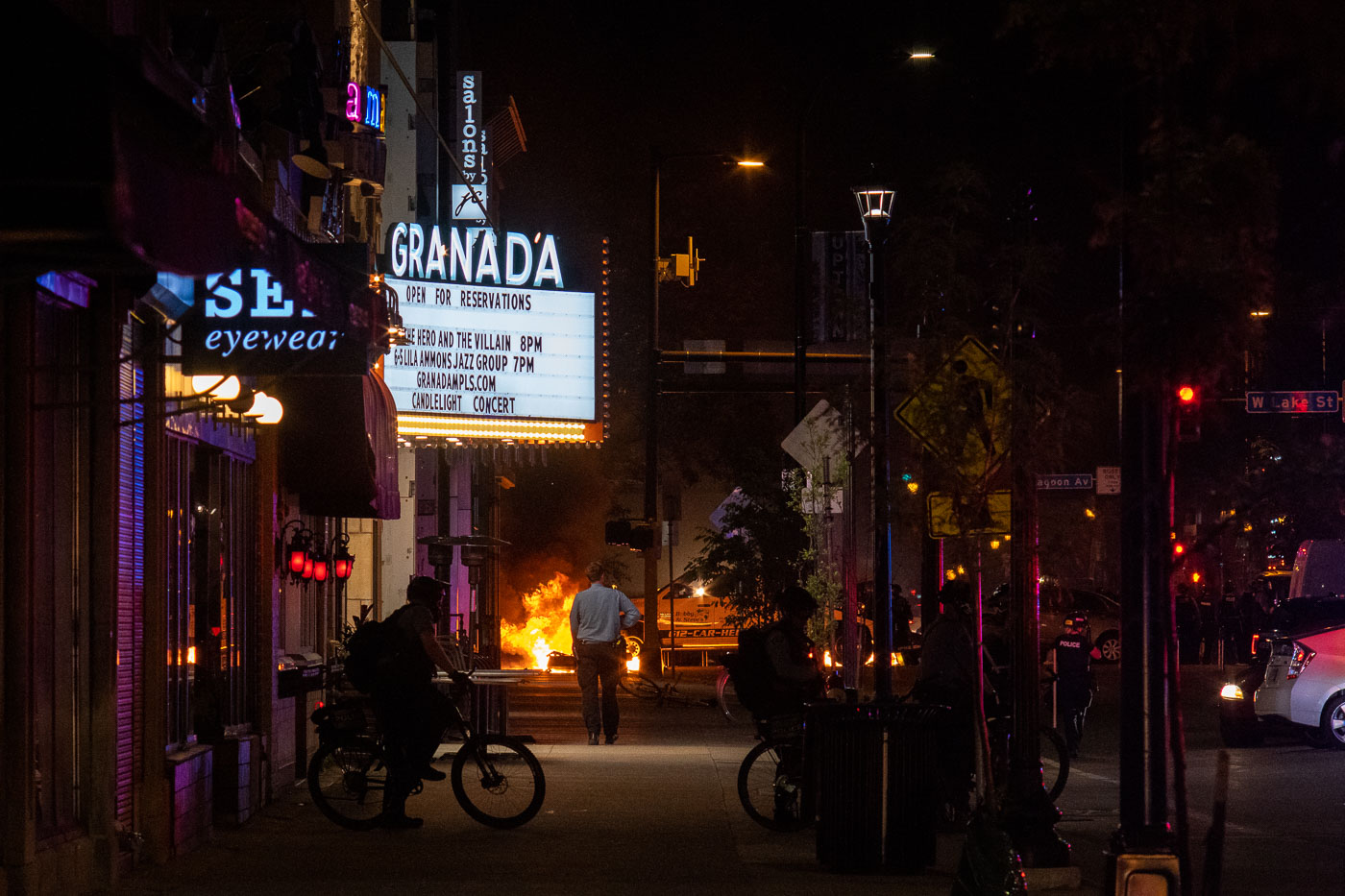
Fire burns on Hennepin Avenue by the Granada Theatre in Minneapolis at night.
Fires burn on Hennepin Avenue in Minneapolis on the night of June 3, 2021, following the shooting death of Winston Smith by federal law enforcement officers. Minneapolis Police are present as flames engulf vehicles and structures in the street near the Granada Theater. On June 3, 2021, members of a U.S. Marshals Service fugitive task force fatally shot 32-year-old Winston “Boogie” Smith Jr. on the top level of a parking ramp in Minneapolis’ Uptown neighborhood while attempting to arrest him on a felony warrant. Authorities said Smith fired a handgun from inside his vehicle during the encounter, while family members and activists questioned the official account and demanded the release of additional evidence. The killing led to weeks of protests, street occupations, and confrontations with police in Uptown, becoming another major flashpoint in Minneapolis during the period following the murder of George Floyd. Earlier in the day Minneapolis city officials along with The Agape Movement coordinated to open the streets that had been closed at George Floyd Square since his murder.

Minneapolis: Fire on Hennepin Ave near Granada Theatre
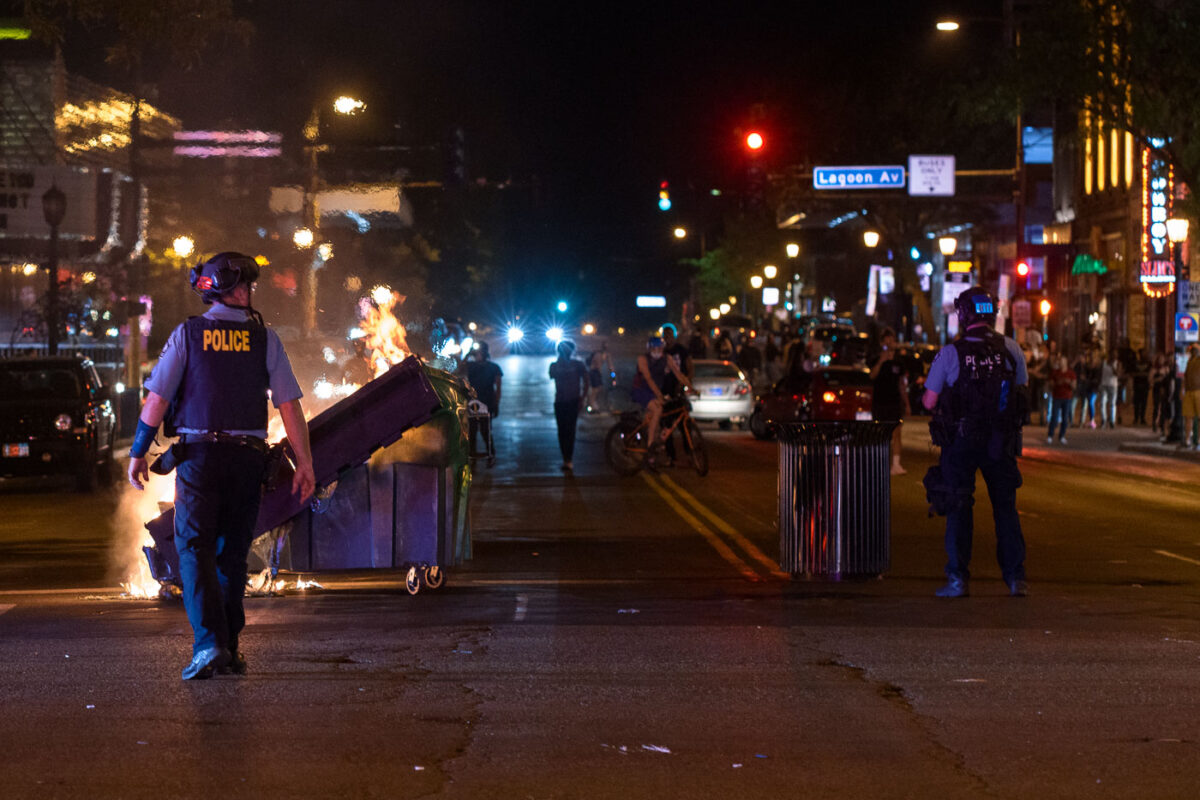
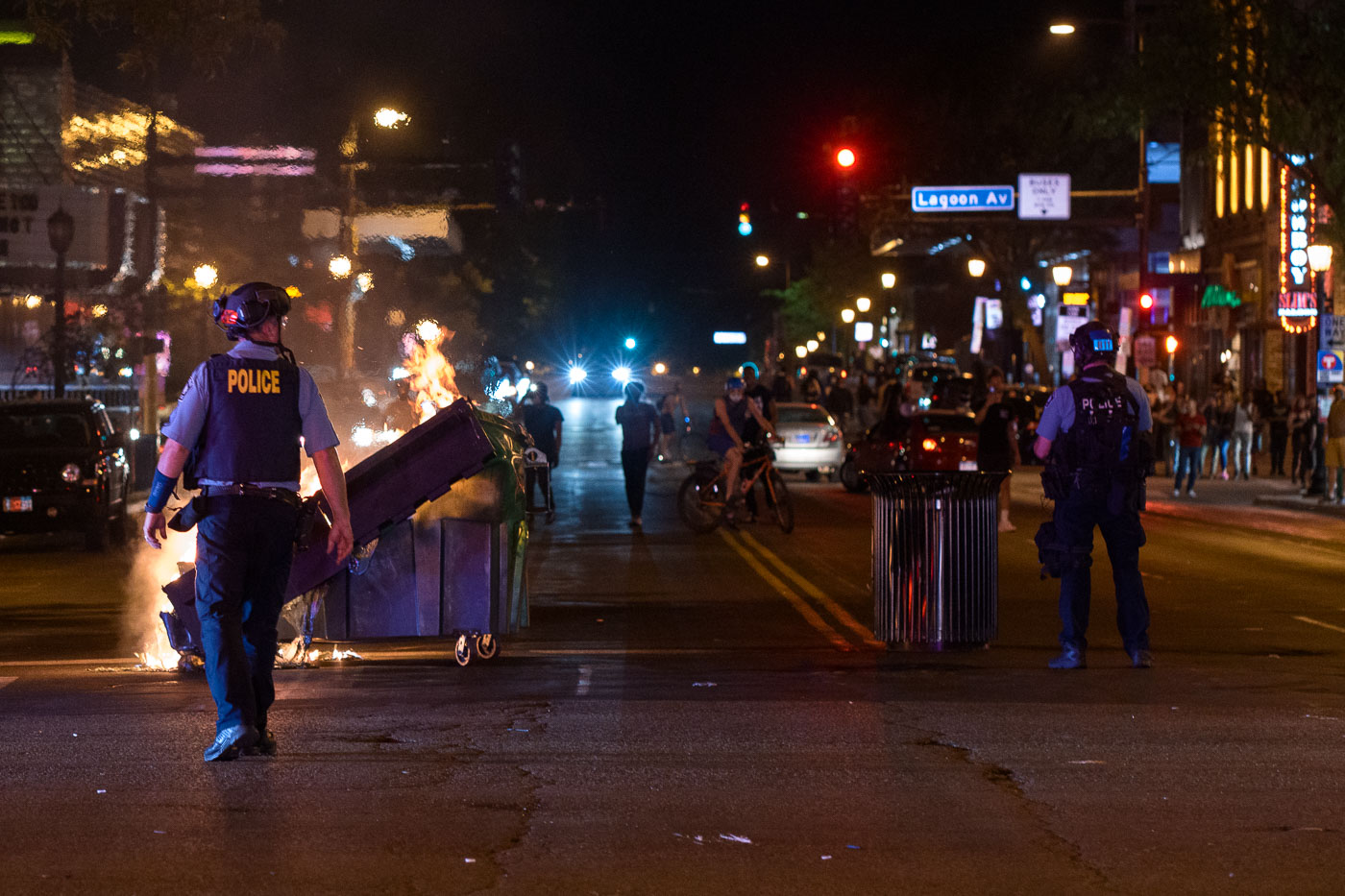
Police stand near a burning dumpster at Lake Street and Hennepin Avenue in Minneapolis at night during protests
Burning dumpsters are visible at the intersection of Hennepin Avenue and Lake Street in Minneapolis on June 5, 2021. This occurred during protests following the law enforcement shooting death of Winston Smith on June 3. The protests, which took place in the Uptown neighborhood, saw unrest and property damage, including fires set in public trash receptacles. On June 3, 2021, members of a U.S. Marshals Service fugitive task force fatally shot 32-year-old Winston “Boogie” Smith Jr. on the top level of a parking ramp in Minneapolis’ Uptown neighborhood while attempting to arrest him on a felony warrant. Authorities said Smith fired a handgun from inside his vehicle during the encounter, while family members and activists questioned the official account and demanded the release of additional evidence. The killing led to weeks of protests, street occupations, and confrontations with police in Uptown, becoming another major flashpoint in Minneapolis during the period following the murder of George Floyd. Earlier in the day Minneapolis city officials along with The Agape Movement coordinated to open the streets that had been closed at George Floyd Square since his murder.

Minneapolis: Burning dumpsters at Lake St & Hennepin Ave during protests
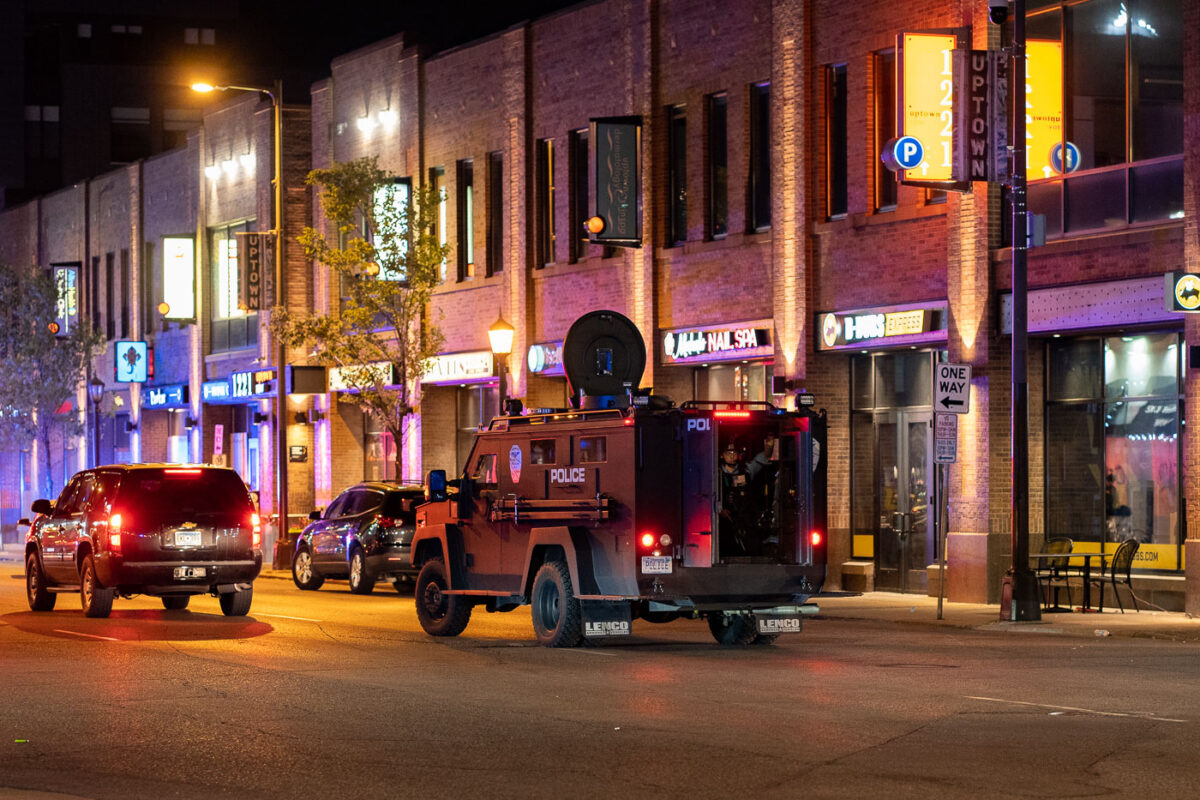
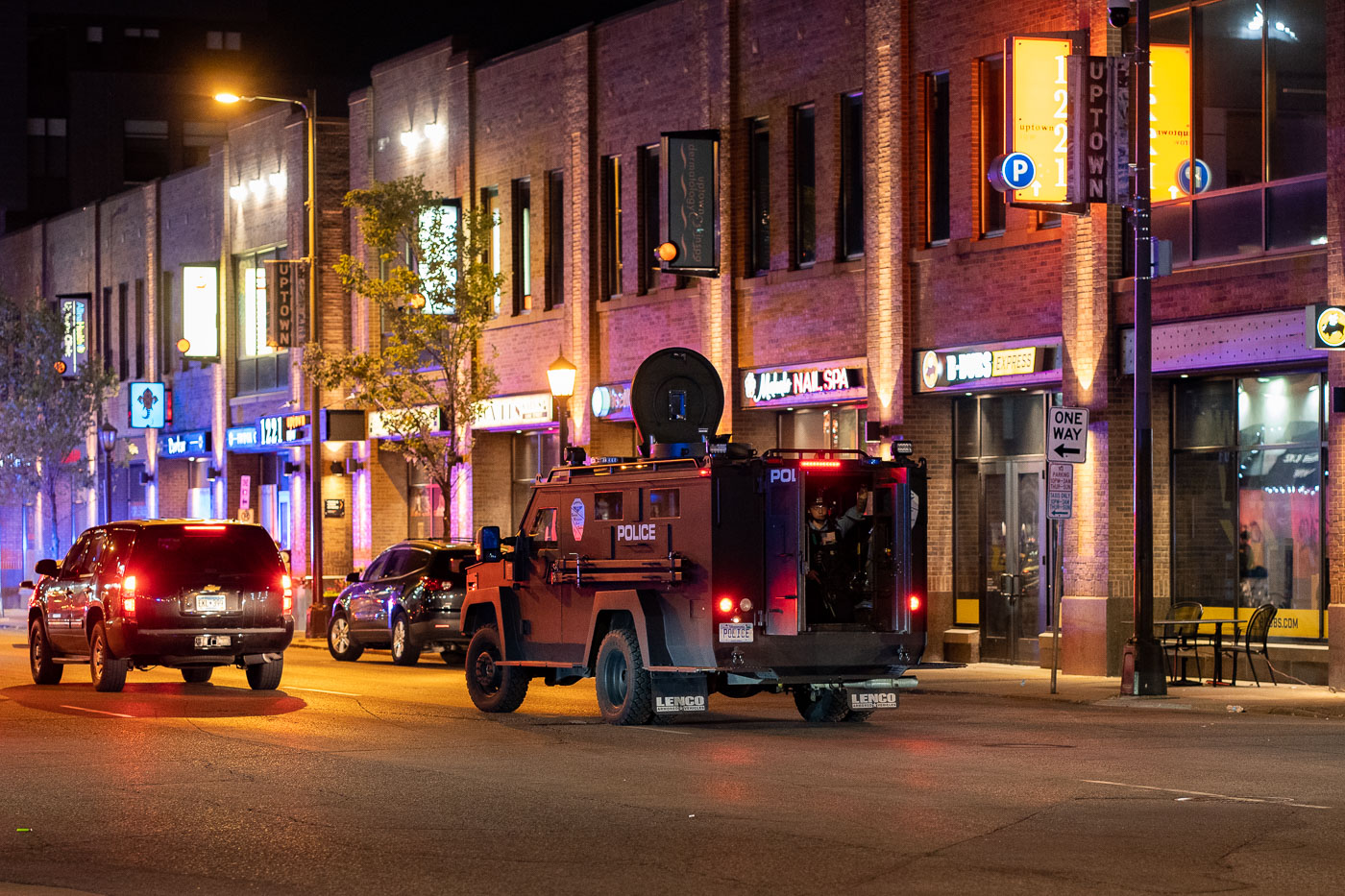
Minneapolis police Bearcat on Lake Street in Uptown at night during protests
Minneapolis police in the back of a bearcat vehicle driving down Lake Street in Uptown Minneapolis during protests over the shooting death of Winston Smith. On June 3, 2021, members of a U.S. Marshals Service fugitive task force fatally shot 32-year-old Winston “Boogie” Smith Jr. on the top level of a parking ramp in Minneapolis’ Uptown neighborhood while attempting to arrest him on a felony warrant. Authorities said Smith fired a handgun from inside his vehicle during the encounter, while family members and activists questioned the official account and demanded the release of additional evidence. The killing led to weeks of protests, street occupations, and confrontations with police in Uptown, becoming another major flashpoint in Minneapolis during the period following the murder of George Floyd. Earlier in the day Minneapolis city officials along with The Agape Movement coordinated to open the streets that had been closed at George Floyd Square since his murder.

Minneapolis Police Bearcat on Lake Street during Winston Smith protests
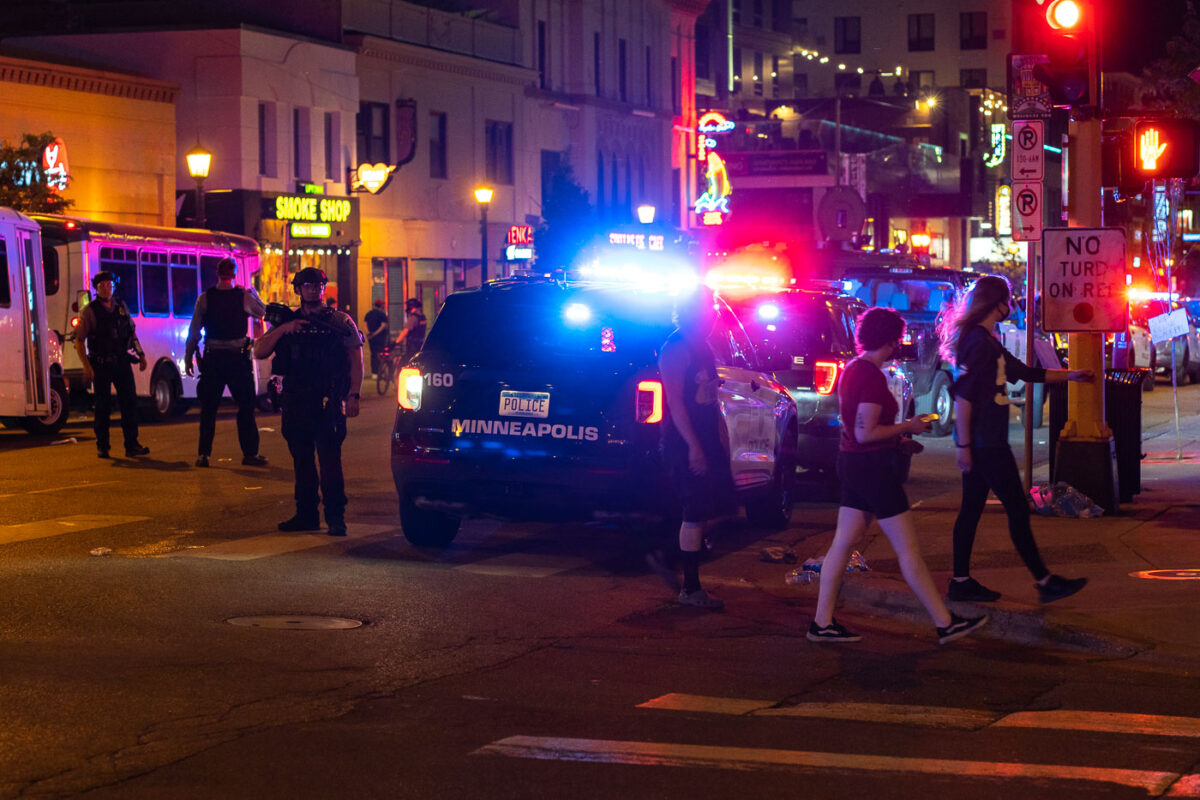
Minneapolis police vehicles and officers on Hennepin Avenue at night during protests.
Minneapolis Police officers were present on Hennepin Avenue during protests following the June 3rd shooting death of Winston Smith by a Federal task force. The protests, which occurred in the Uptown Minneapolis neighborhood, drew a significant police response. On June 3, 2021, members of a U.S. Marshals Service fugitive task force fatally shot 32-year-old Winston “Boogie” Smith Jr. on the top level of a parking ramp in Minneapolis’ Uptown neighborhood while attempting to arrest him on a felony warrant. Authorities said Smith fired a handgun from inside his vehicle during the encounter, while family members and activists questioned the official account and demanded the release of additional evidence. The killing led to weeks of protests, street occupations, and confrontations with police in Uptown, becoming another major flashpoint in Minneapolis during the period following the murder of George Floyd. Earlier in the day Minneapolis city officials along with The Agape Movement coordinated to open the streets that had been closed at George Floyd Square since his murder.

Minneapolis Police presence on Hennepin Ave during protests
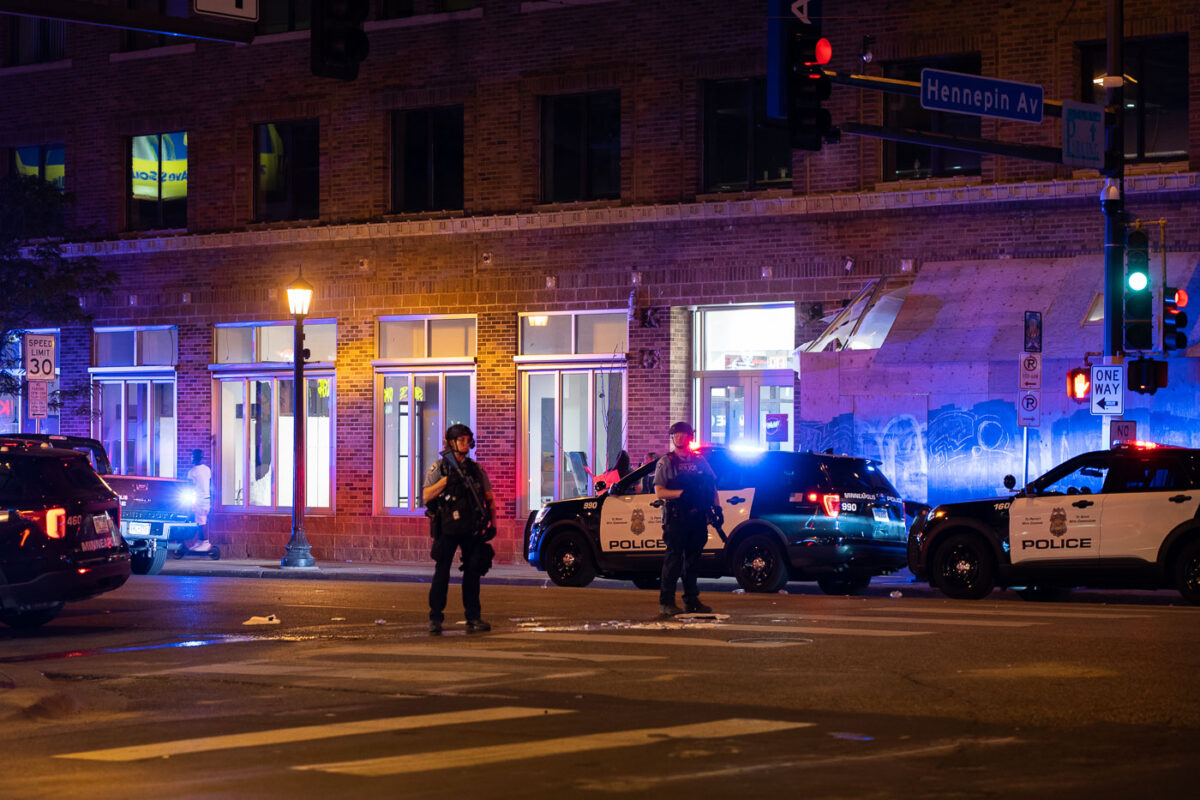
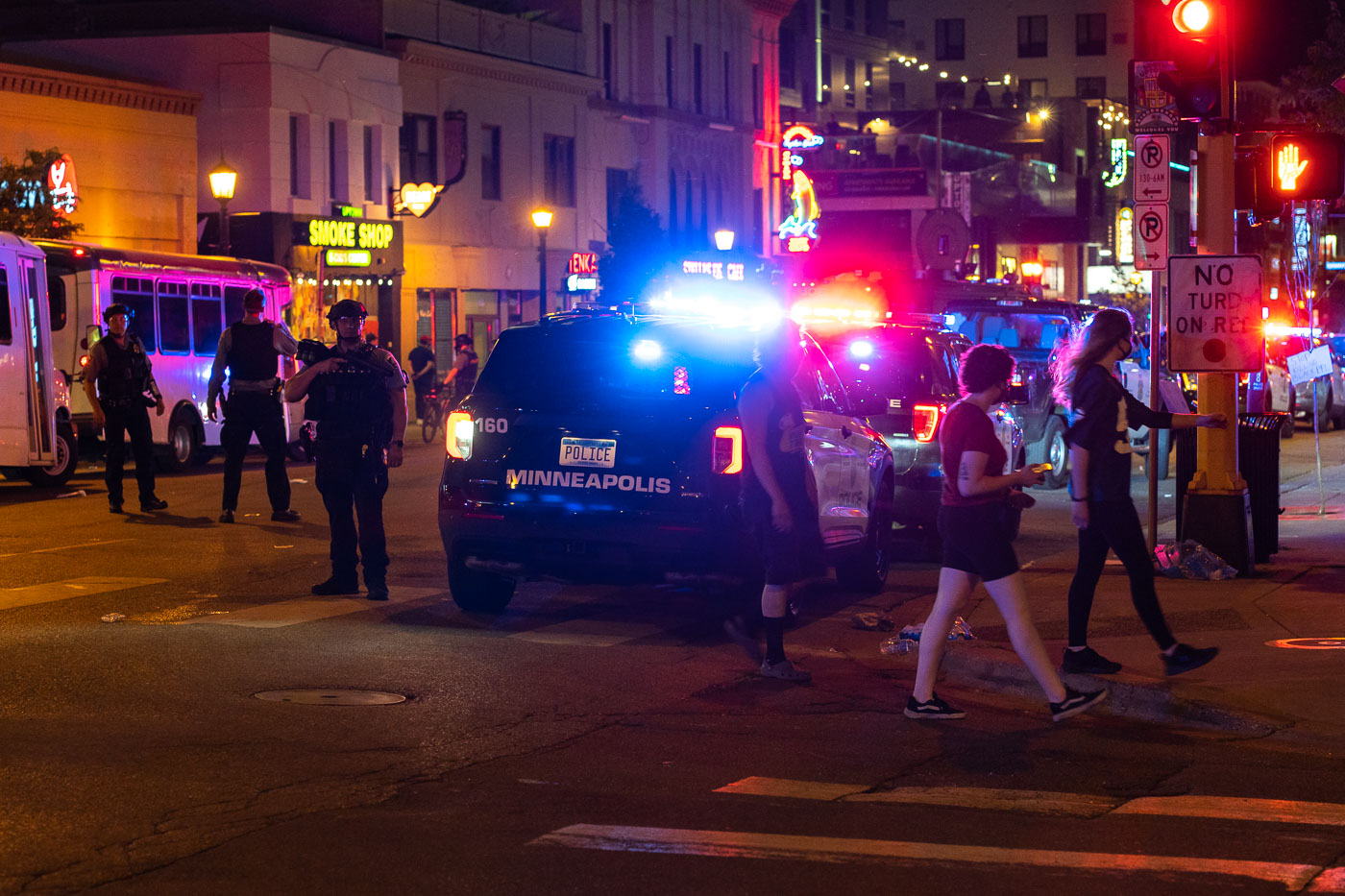
Police officers and squad cars at Hennepin Ave and Lake Street in Minneapolis at night.
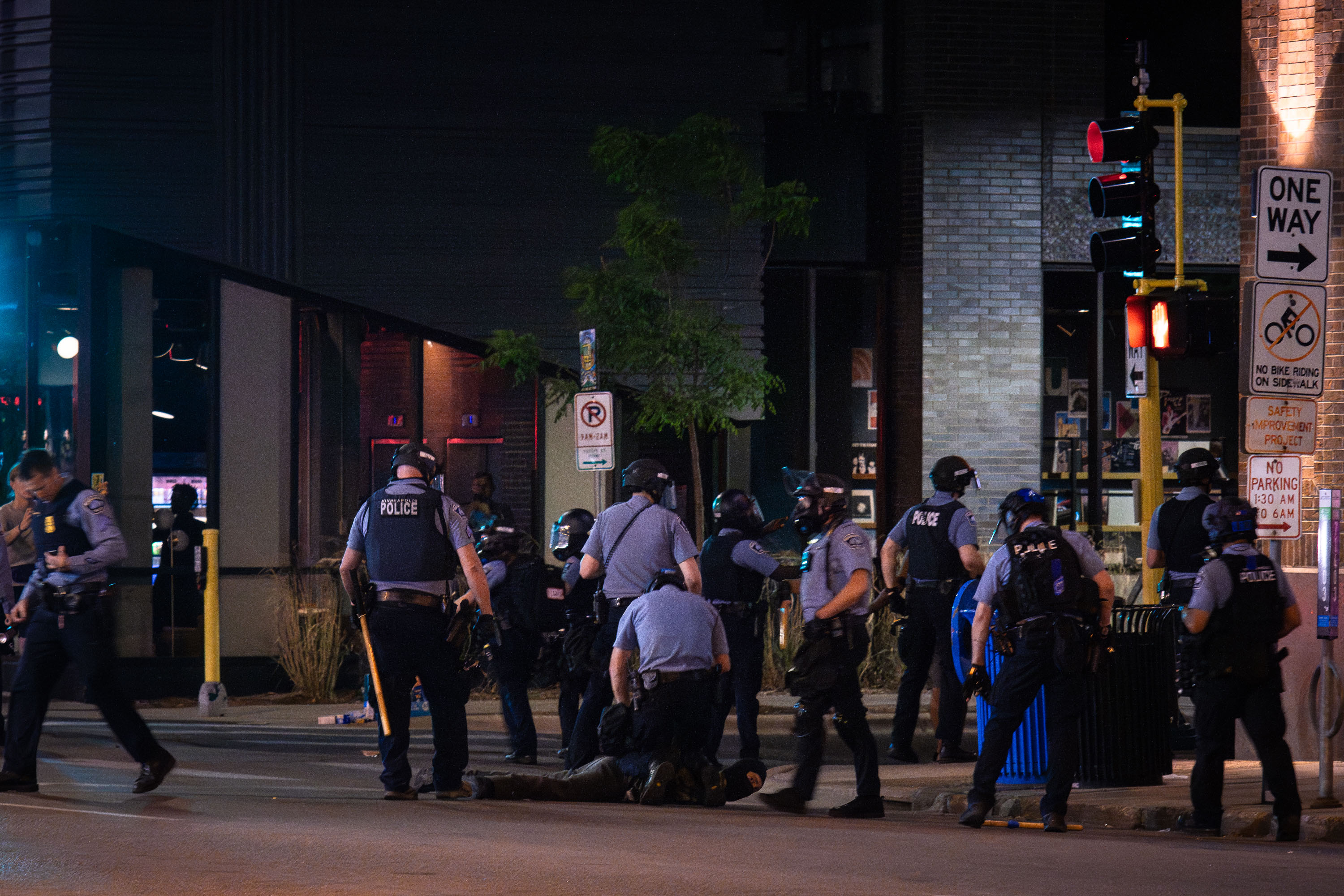
Authorities move in to push out and make arrests of protesters after a dispersal order is given. On June 3, 2021, members of a U.S. Marshals Service fugitive task force fatally shot 32-year-old Winston “Boogie” Smith Jr. on the top level of a parking ramp in Minneapolis’ Uptown neighborhood while attempting to arrest him on a felony warrant. Authorities said Smith fired a handgun from inside his vehicle during the encounter, while family members and activists questioned the official account and demanded the release of additional evidence. The killing led to weeks of protests, street occupations, and confrontations with police in Uptown, becoming another major flashpoint in Minneapolis during the period following the murder of George Floyd. Earlier in the day Minneapolis city officials along with The Agape Movement coordinated to open the streets that had been closed at George Floyd Square since his murder.

Minneapolis Police at Hennepin Ave during Winston Smith protests
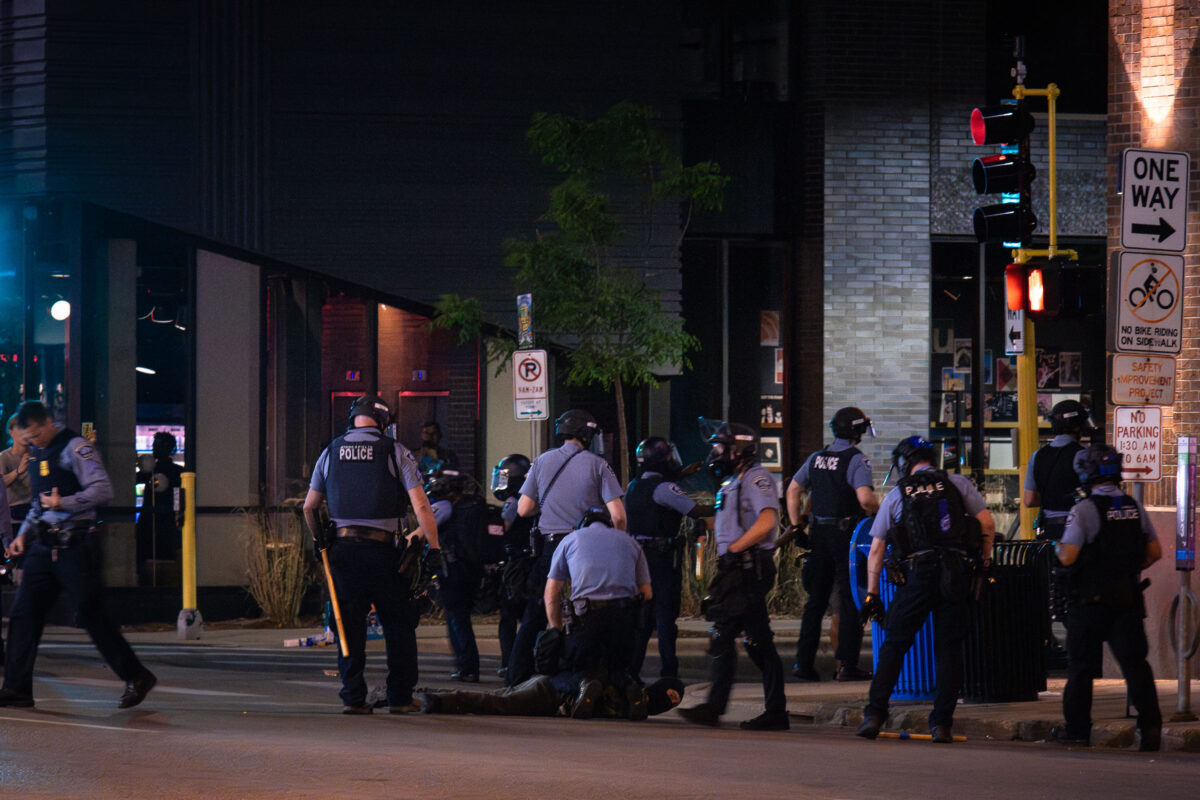
Minneapolis Police Arrest Winston Smith  Protesters
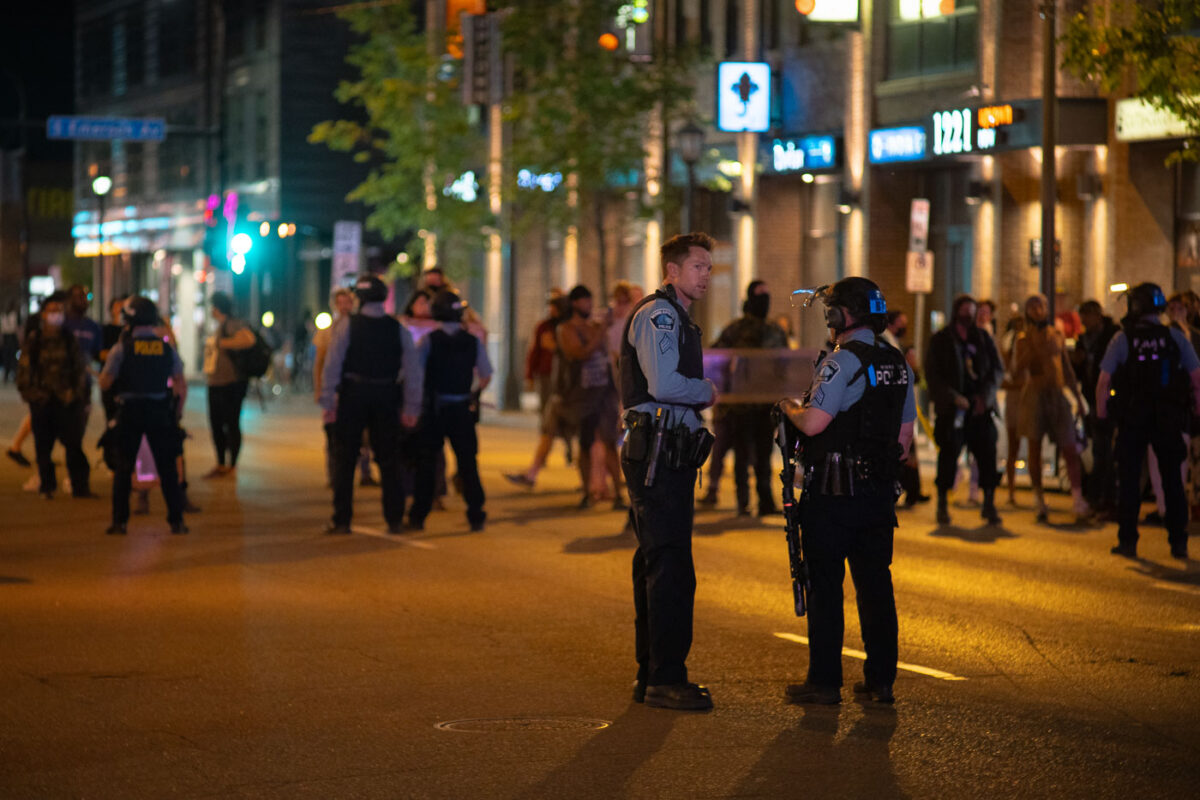
Protesters who had been protesting the killing of Winston Smith earlier in the day are arrested on Lake Street in Uptown Minneapolis.

Minneapolis Police Arrest Winston Smith Protesters
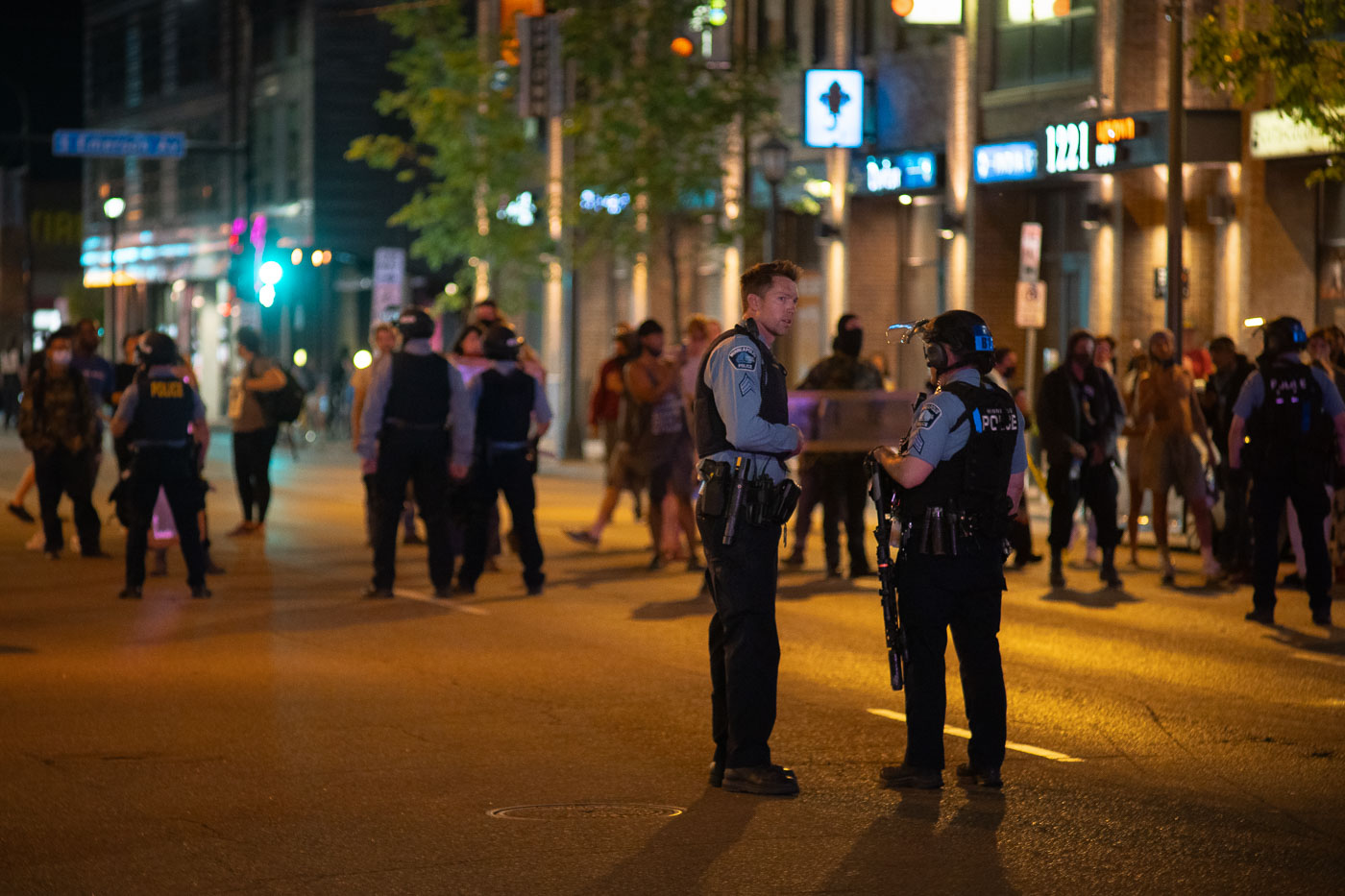
Minneapolis police officers stand on Lake Street near protesters at night
Minneapolis Police officers confront protesters on Lake Street in Minneapolis on June 3, 2021. The gathering occurred hours after Winston Smith Jr. was killed by police in a parking garage in the Uptown neighborhood. On June 3, 2021, members of a U.S. Marshals Service fugitive task force fatally shot 32-year-old Winston “Boogie” Smith Jr. on the top level of a parking ramp in Minneapolis’ Uptown neighborhood while attempting to arrest him on a felony warrant. Authorities said Smith fired a handgun from inside his vehicle during the encounter, while family members and activists questioned the official account and demanded the release of additional evidence. The killing led to weeks of protests, street occupations, and confrontations with police in Uptown, becoming another major flashpoint in Minneapolis during the period following the murder of George Floyd. Earlier in the day Minneapolis city officials along with The Agape Movement coordinated to open the streets that had been closed at George Floyd Square since his murder.

Minneapolis Police confront Winston Smith protesters on Lake Street
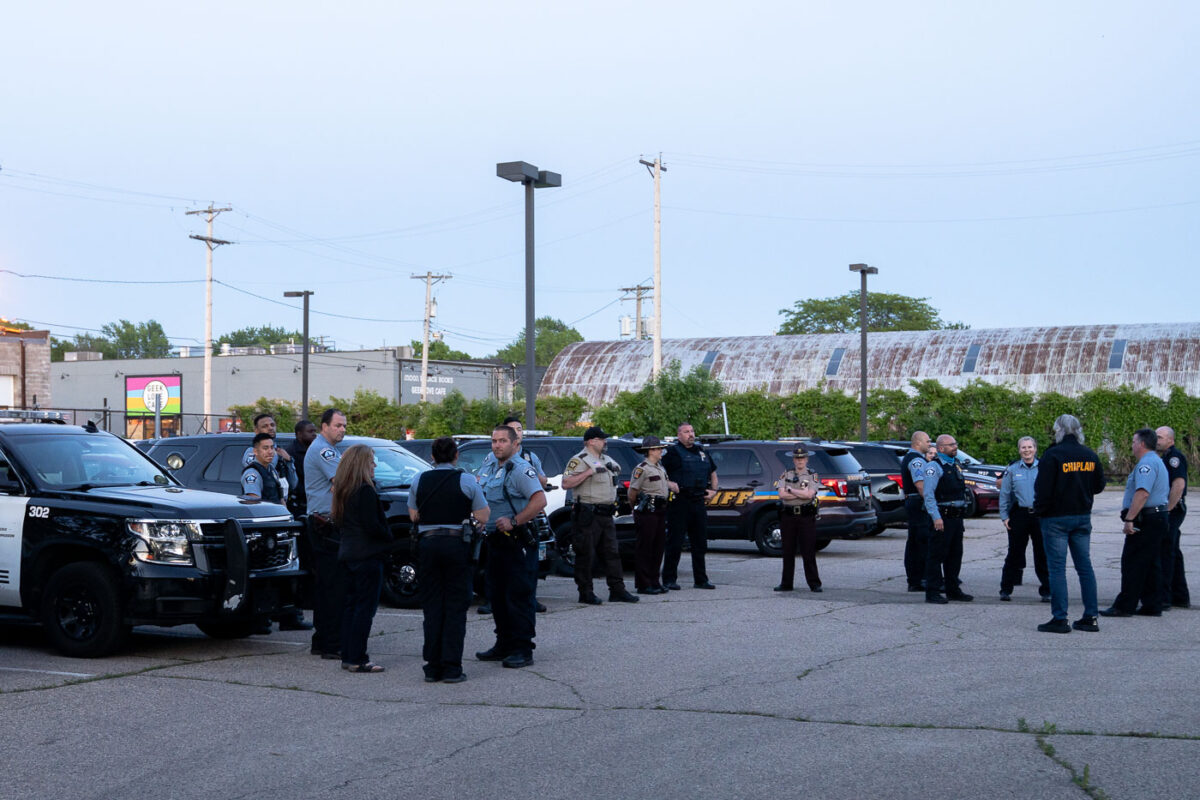
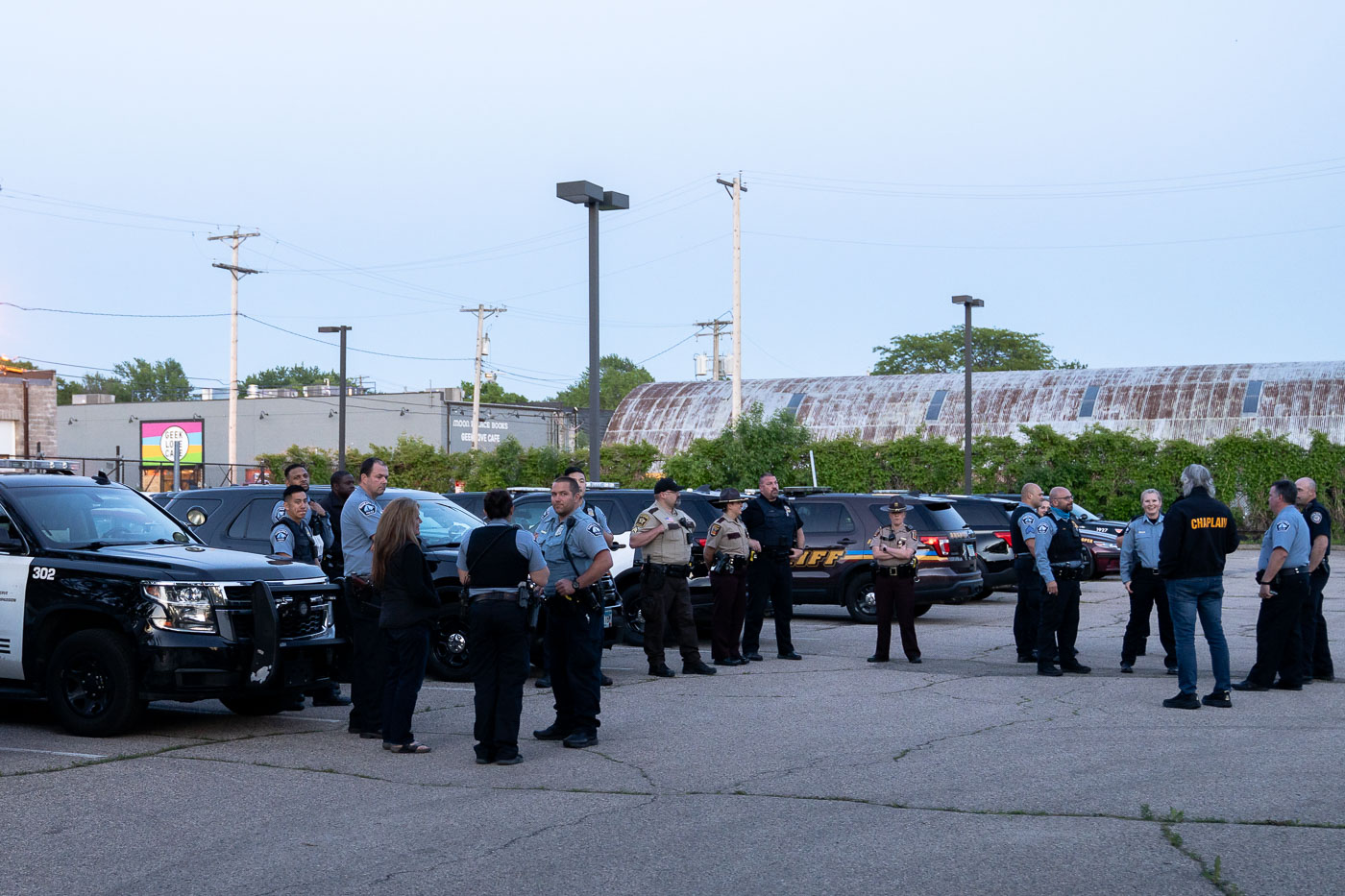
Minneapolis police gather 1 year after George Floyd's murder
Police officers and a chaplain gather at the Minneapolis Police Department's Third Precinct on May 28, 2021, the one-year anniversary of the precinct's burning during civil unrest. The precinct was compromised on May 28, 2020, following the murder of George Floyd.

Minneapolis Police gather at 3rd Precinct anniversary
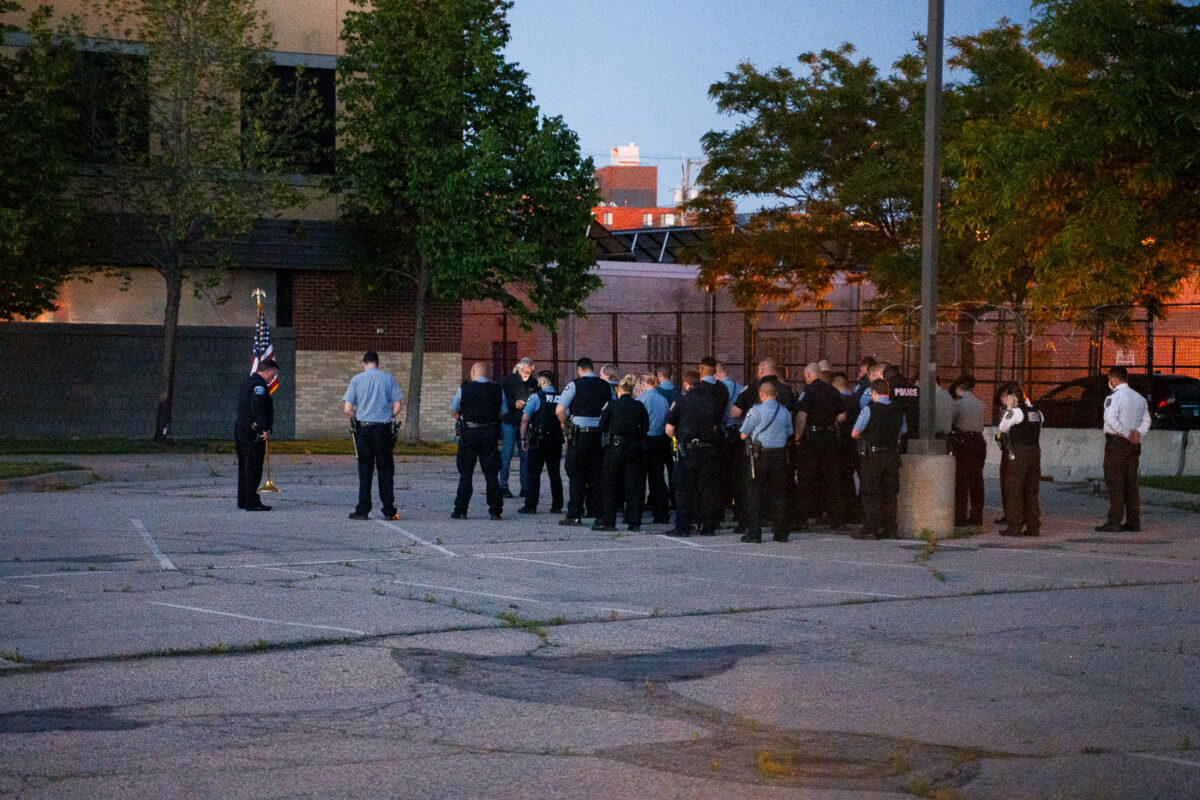
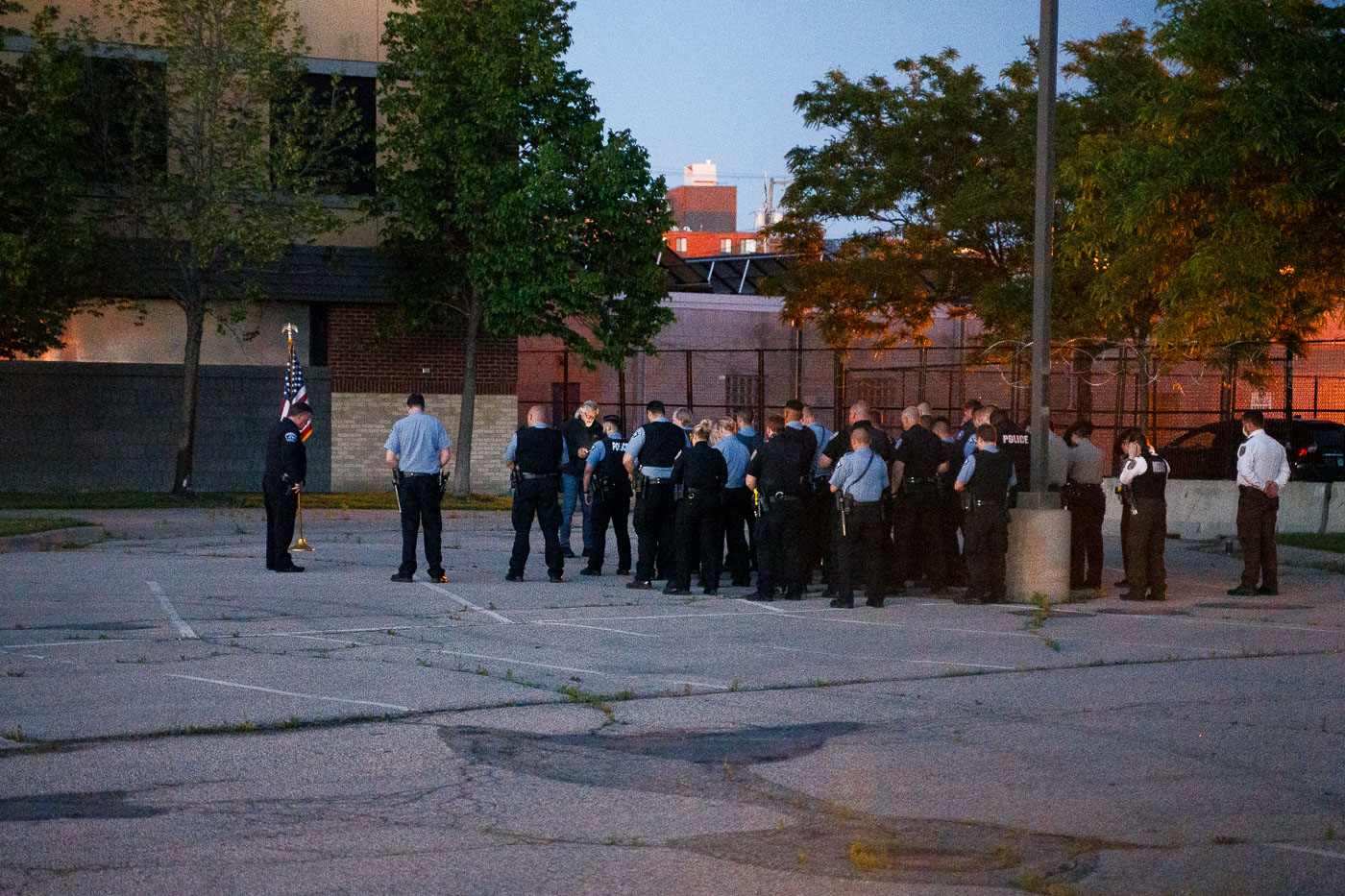
Minneapolis police hold religious ceromony 1 year after Floyds death
Minneapolis Police officers gather at the Third Precinct on May 28, 2021 to hold some time of religious ceremony. It was the one-year anniversary of the precinct being burned during protests that followed the murder of George Floyd.

Minneapolis Police gather at Third Precinct anniversary
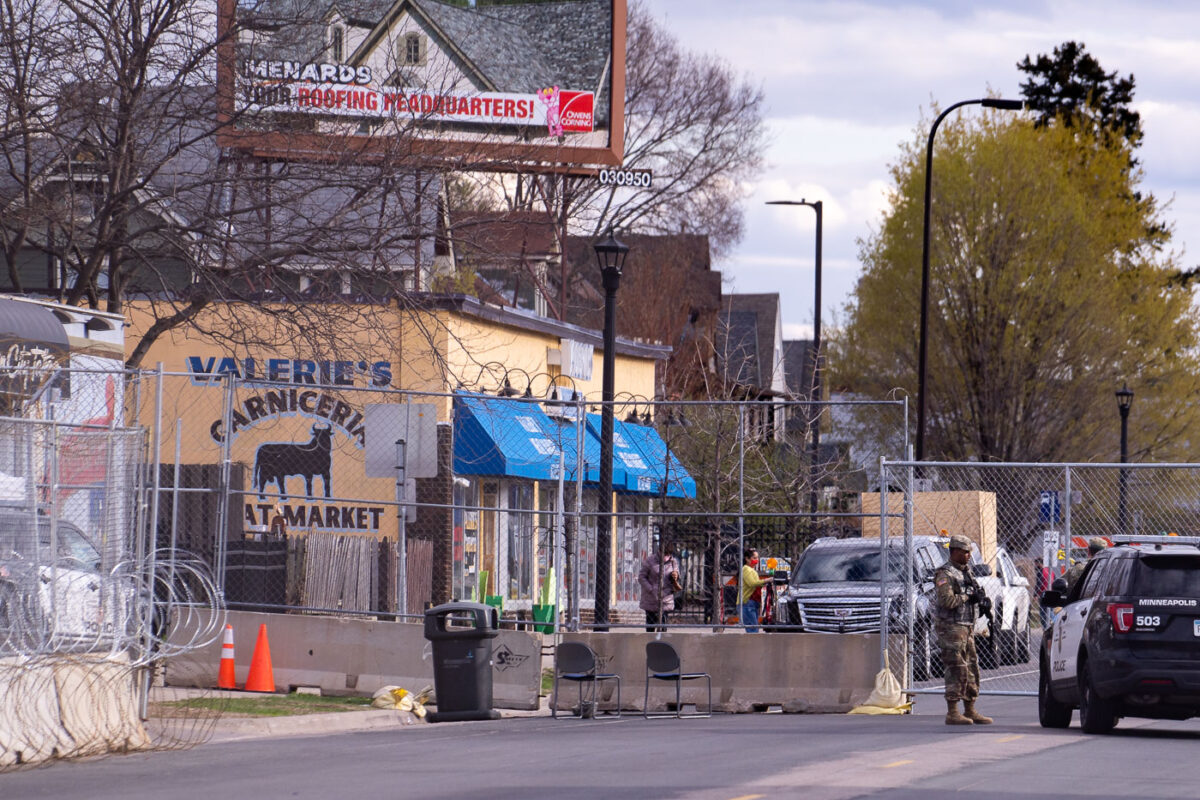
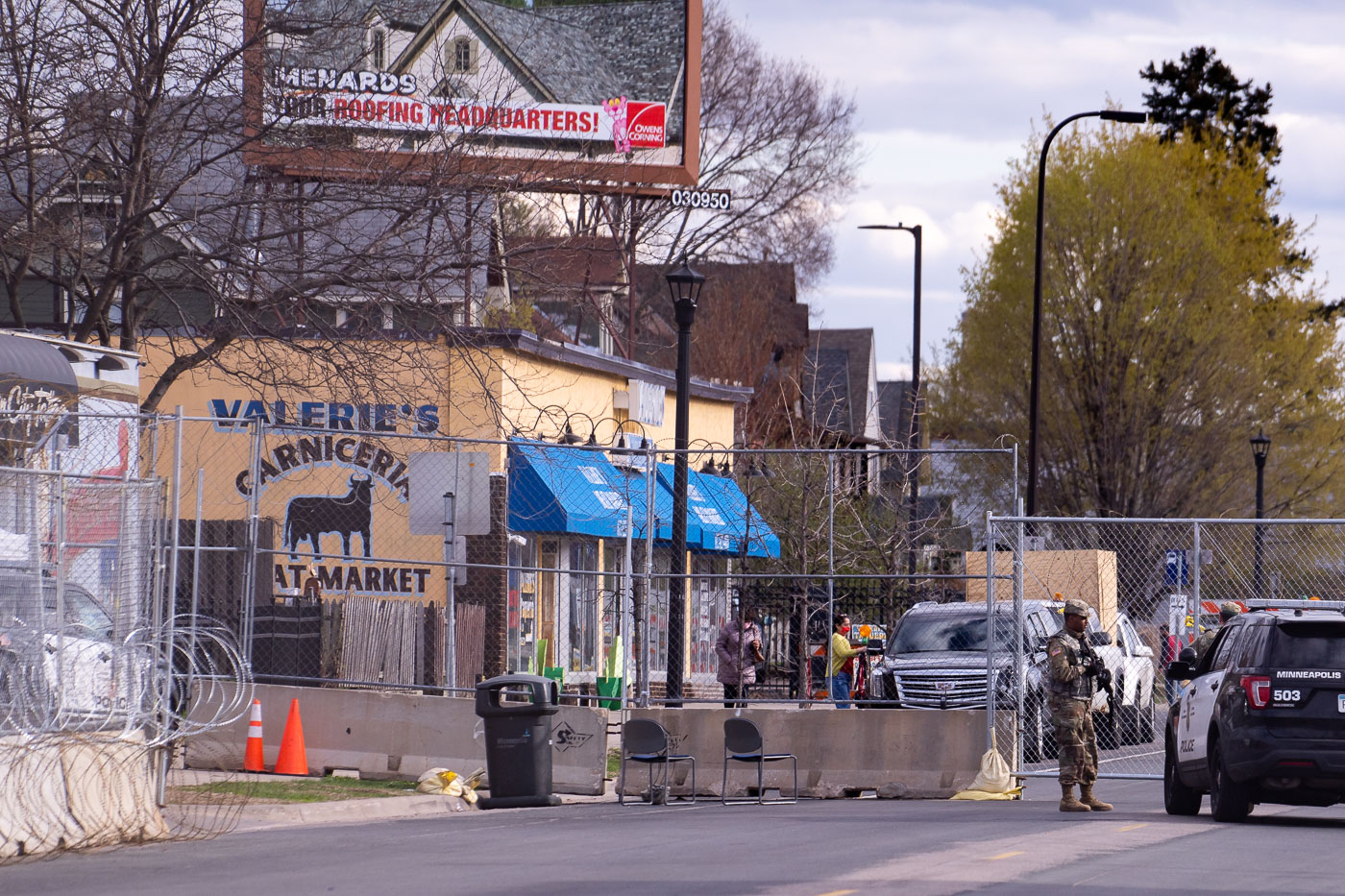
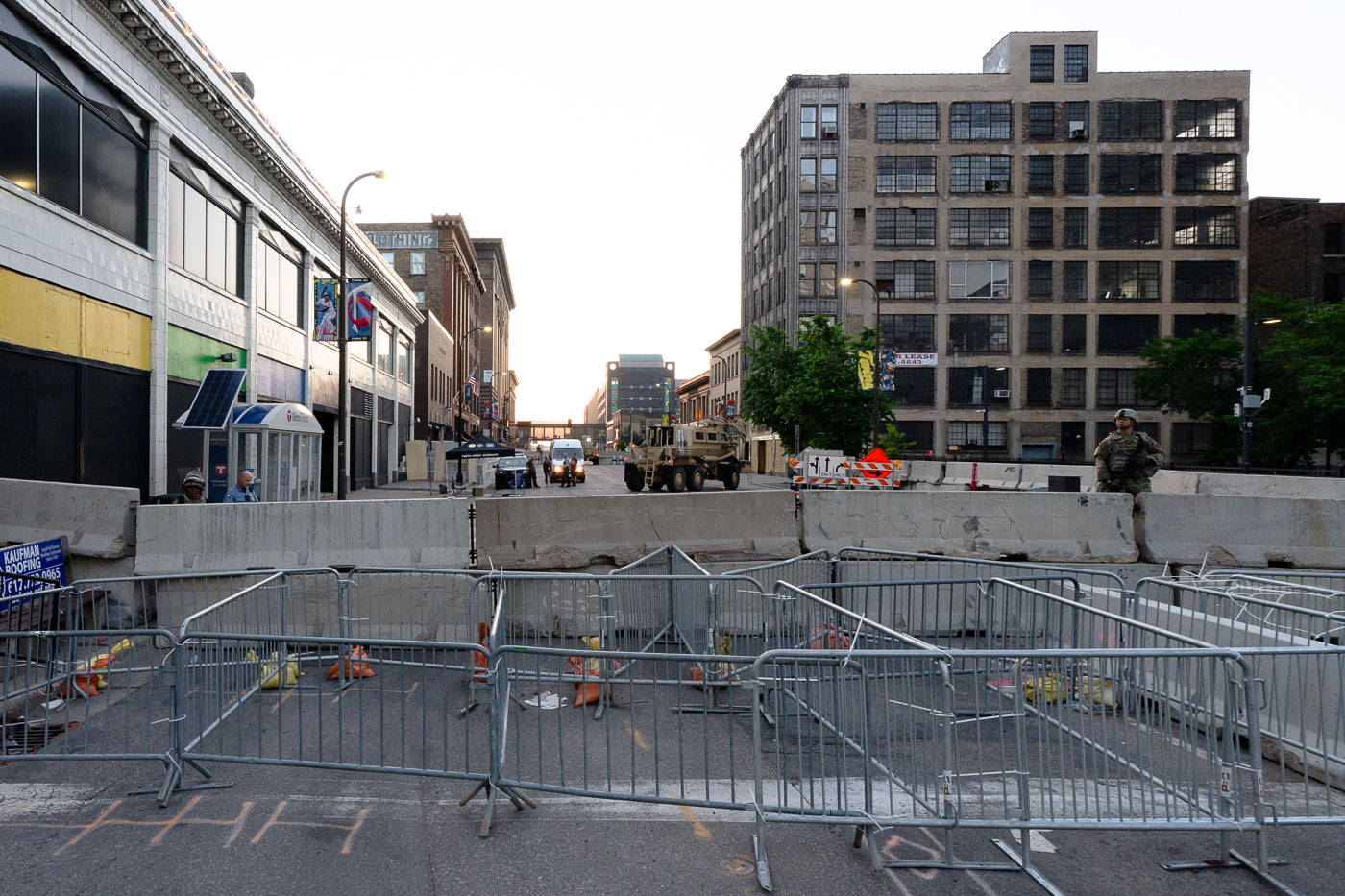
National Guard and police at Minneapolis Fifth Precinct behind fencing and razor wire.
National Guard soldiers and Minneapolis Police officers secure the perimeter of the Minneapolis Police Fifth Precinct in South Minneapolis. The precinct was fortified with concrete barriers and razor wire in response to widespread protests and civil unrest that followed the killing of George Floyd in May 2020 and the subsequent trial of Officer Derek Chauvin. The presence of the National Guard was a visible symbol of the state's response to maintain order during a period of intense public scrutiny and activism.

National Guard at Minneapolis Police Fifth Precinct

Police officer lifting a broken Walgreens window cover in Minneapolis after unrest.
A Minneapolis Police officer is seen holding open a broken window at a Walgreens store on April 11, 2021. This incident occurred in the aftermath of the killing of Daunte Wright by a police officer in nearby Brooklyn Center earlier that day. The events in Minneapolis were part of a period of unrest and protests following the death of George Floyd in 2020 and the subsequent killing of Wright. The Walgreens store, a common retail fixture in urban environments, became a focal point for some of the disturbances.

Minneapolis Police hold window open for looters at Walgreens

Minneapolis police officer near Chicago-Lake Liquors in Uptown Minneapolis at night.
Minneapolis police officers patrol near Chicago-Lake Liquors in Uptown Minneapolis on April 12, 2021. The patrol occurred in the aftermath of the killing of Daunte Wright by a police officer in nearby Brooklyn Center, Minnesota, which led to widespread protests and unrest. Chicago-Lake Liquors is a long-standing retail establishment in the Uptown neighborhood, a commercial and cultural hub of the city.

Minneapolis Police Patrol Near Chicago-Lake Liquors After Daunte Wright Killing

Minneapolis police tactical officers exit a van in Uptown at night.
Minneapolis Police Department tactical officers emerge from a van in the Uptown neighborhood on the night of April 11, 2021. This deployment occurred in response to reports of looting following the fatal shooting of Daunte Wright by a police officer in nearby Brooklyn Center earlier that day. The events in Uptown were part of a broader period of unrest and protest in Minneapolis following Wright's death, which sparked widespread public attention and calls for police reform. The presence of tactical teams reflects the heightened security measures and police response during periods of civil disturbance.

Minneapolis Police tactical team exits van in Uptown
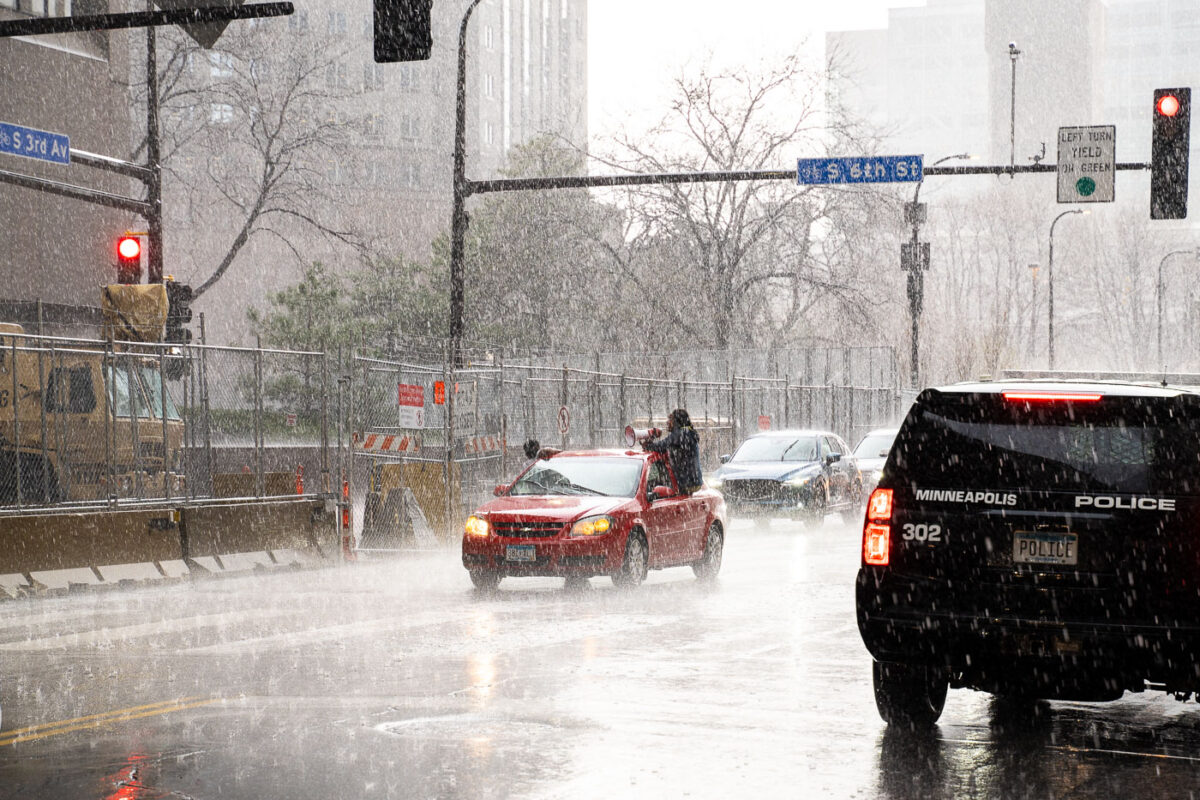
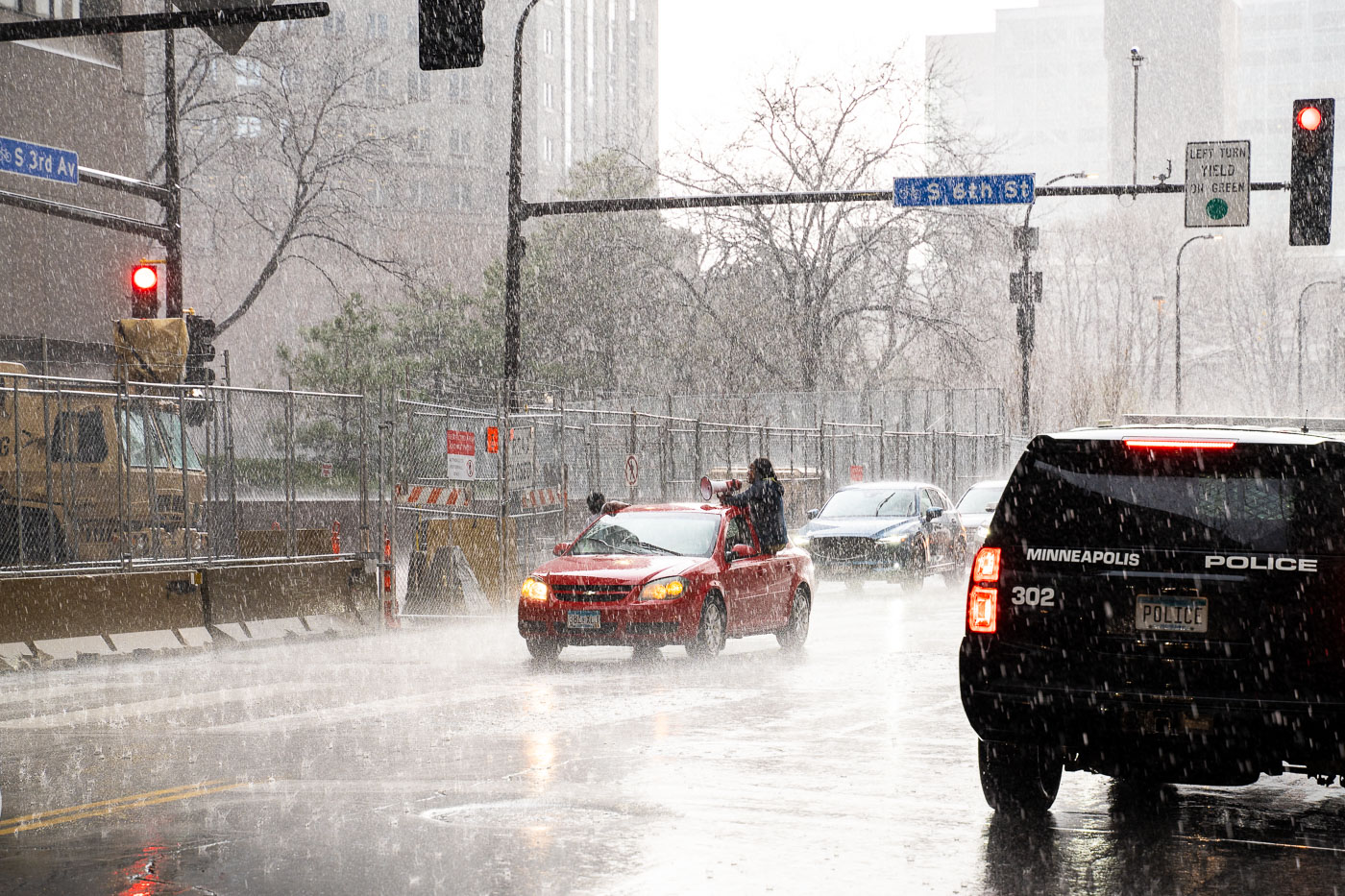
Protest caravan on South 5th Street in downtown Minneapolis during heavy rain.
A protest caravan navigates through heavy rain in downtown Minneapolis, approaching the Hennepin County Government Center. This event occurred during the trial of Derek Chauvin, the former Minneapolis police officer charged with the murder of George Floyd on May 25, 2020. The caravan's presence underscored the ongoing public attention and activism surrounding the trial and the broader issues of racial justice and police accountability.

Minneapolis protest caravan during Derek Chauvin trial in rain
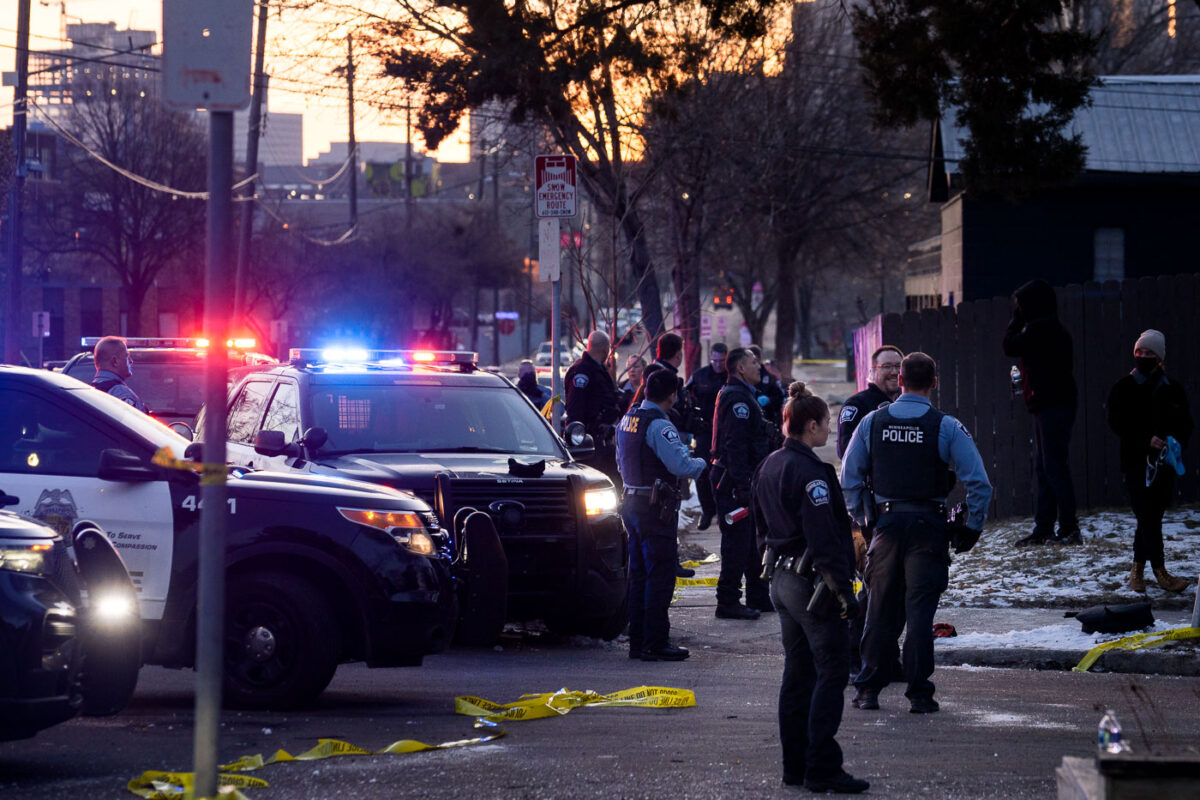
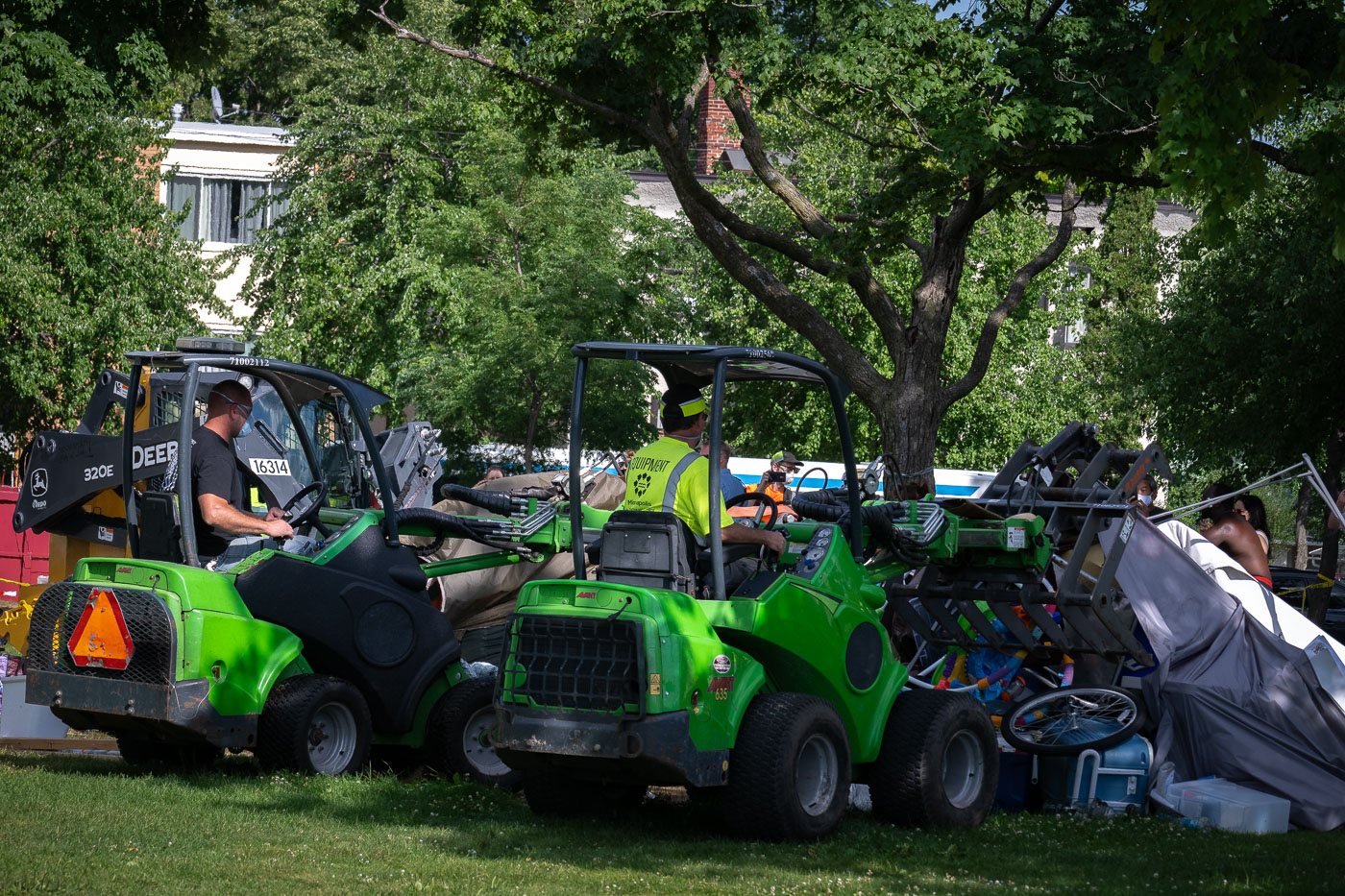
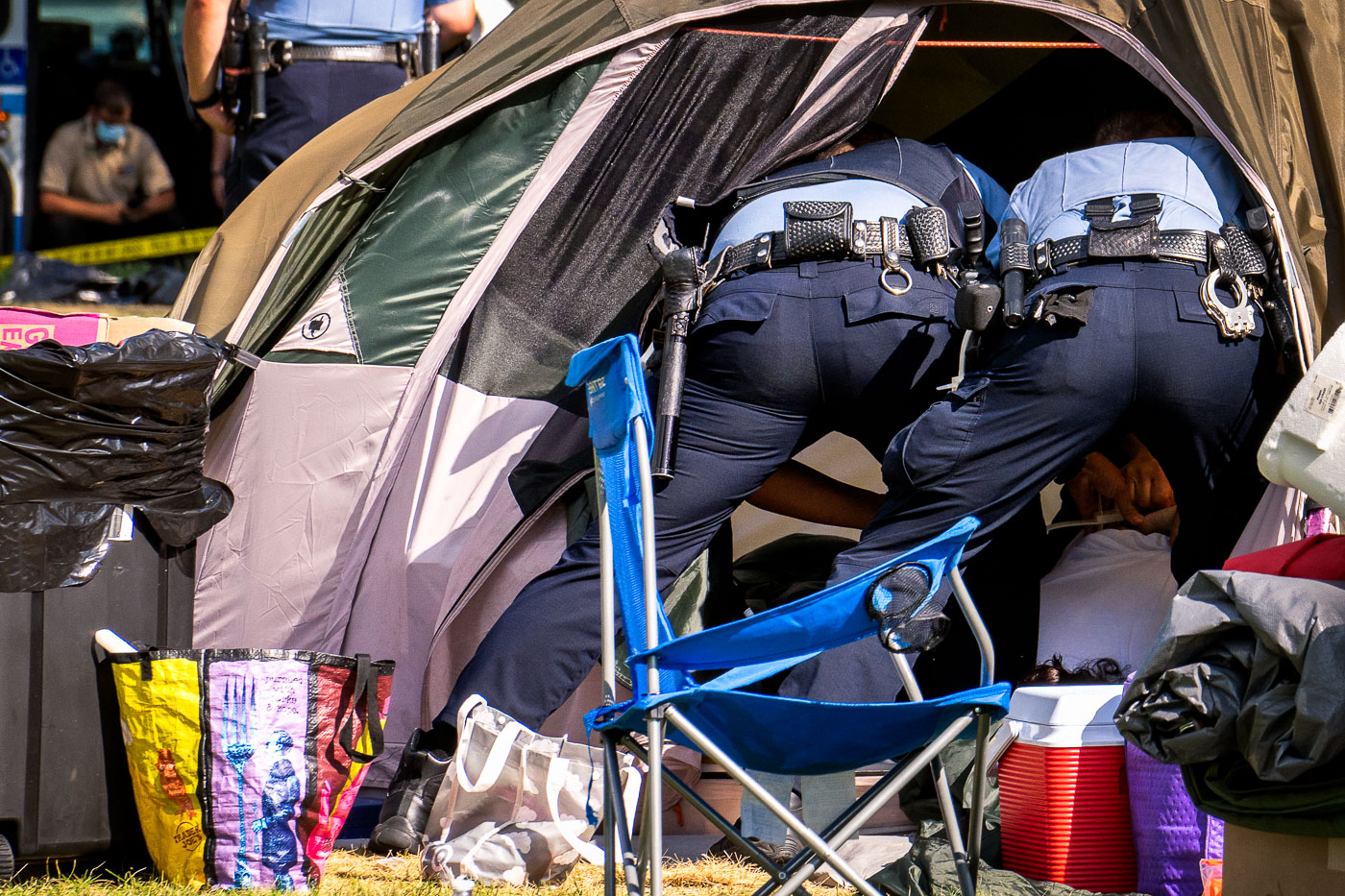
Police at Near North encampment clearing in Minneapolis
Minneapolis Police officers responded to a homeless encampment on the Near North side of the city. The presence of law enforcement indicates a planned clearing of the encampment, which had been established by individuals experiencing homelessness. Camp protectors were present, suggesting a confrontation or protest against the city's action. This event highlights the ongoing challenges of homelessness and the city's approach to managing encampments.

Minneapolis Police at Near North encampment clearing

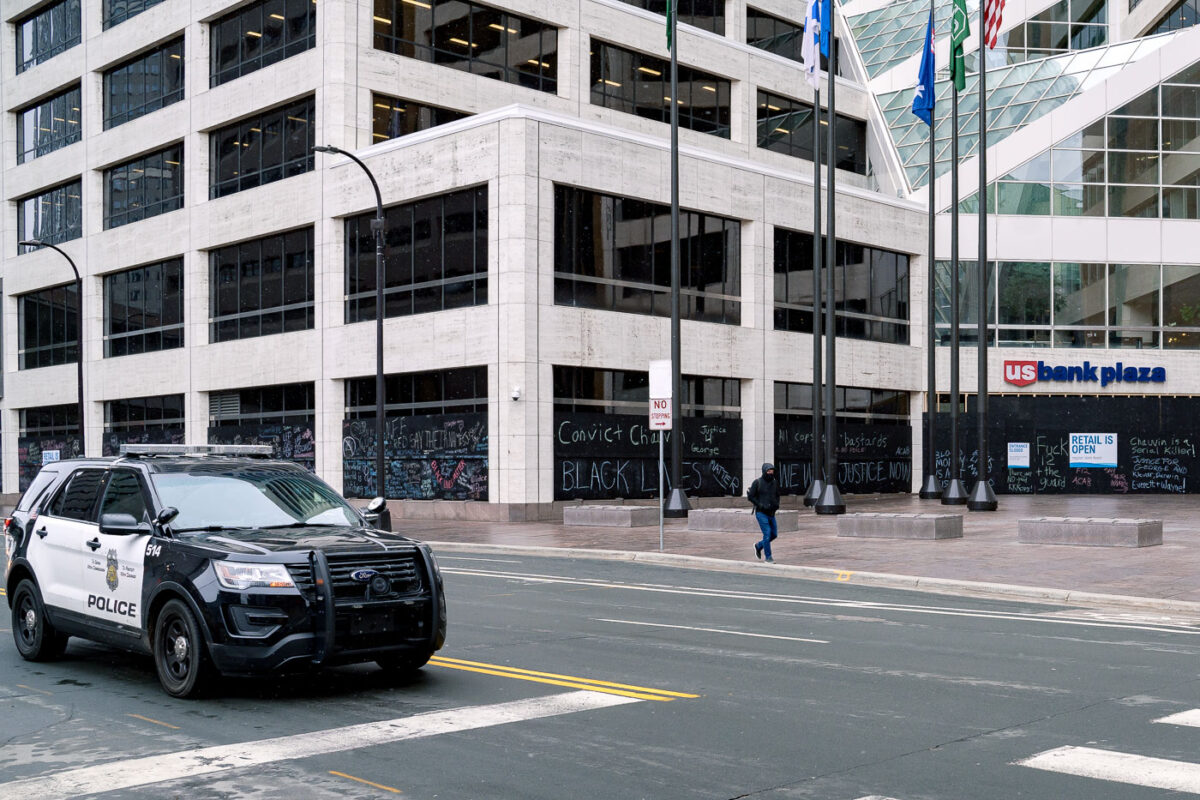
Minneapolis Police officer drives by US Bank Plaza
A Minneapolis Police vehicle is parked on 3rd Avenue in Downtown Minneapolis, adjacent to the US Bank Plaza. The plaza's windows and ground-level facade have been boarded up and covered with graffiti, including messages related to the Black Lives Matter movement and the Derek Chauvin trial. This scene reflects the heightened tensions and public response in Minneapolis following the murder of George Floyd in May 2020. The presence of the police car and the boarded-up buildings indicate the city's efforts to manage and respond to the widespread protests and civil unrest that occurred during that period.

Minneapolis Police car at boarded US Bank Plaza

Minneapolis police 1st precinct security door
The Minneapolis Police Department's 1st Precinct building, located in Downtown Minneapolis, is shown with a newly installed security door. This retractable barrier is designed to slide down and cover the building's windows, enhancing security. The installation of such measures reflects the heightened security concerns and the department's response to events such as the Minneapolis Uprising, which significantly impacted the city and its public institutions.

Minneapolis Police 1st Precinct Security Door Installation
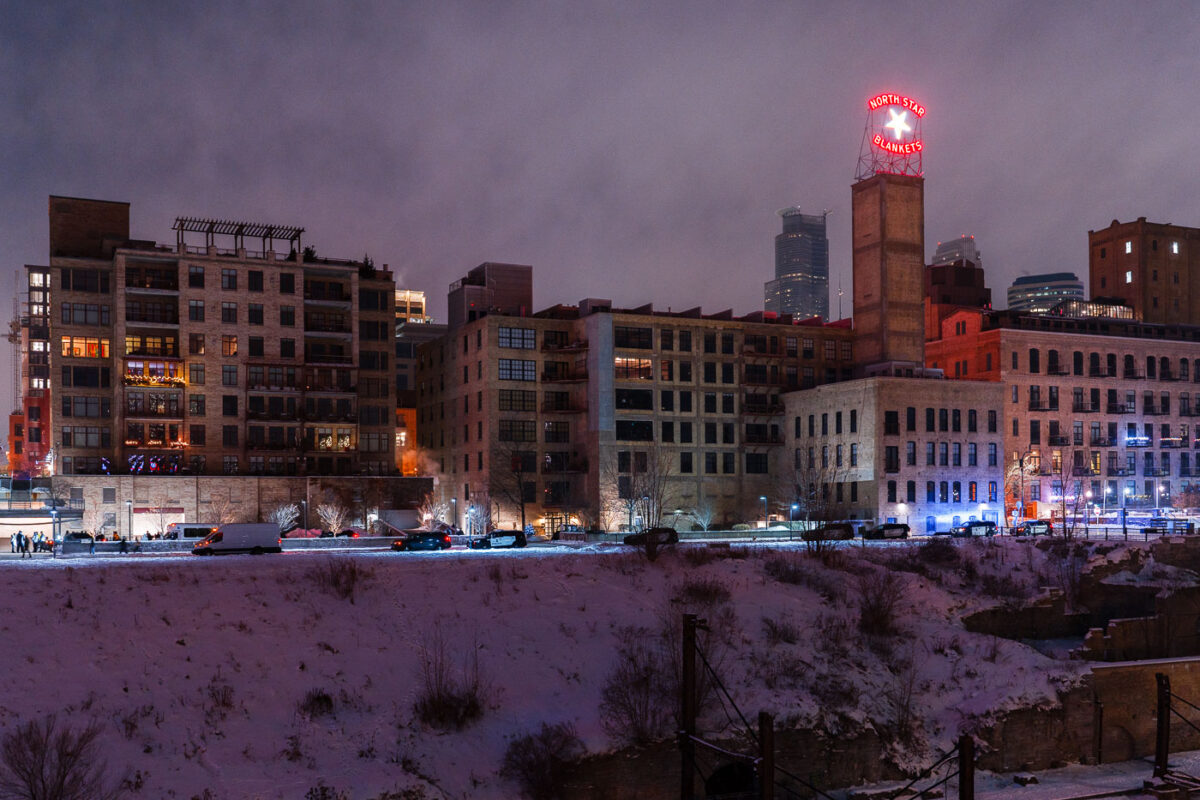
Minneapolis Police arrest 40 at New Years Eve protest
On New Year's Eve, Minneapolis Police arrested approximately 40 individuals at Mill Ruins Park during a "Noise Demonstration." This annual protest calls for the abolition of prisons and expresses solidarity with incarcerated people. The Mill Ruins Park area, located in downtown Minneapolis, is a historic site that was once the heart of the city's flour milling industry, with remnants of its industrial past visible in the ruins and repurposed brick buildings that now house residences and businesses.

Minneapolis Police Arrest 40 at New Year’s Eve Protest
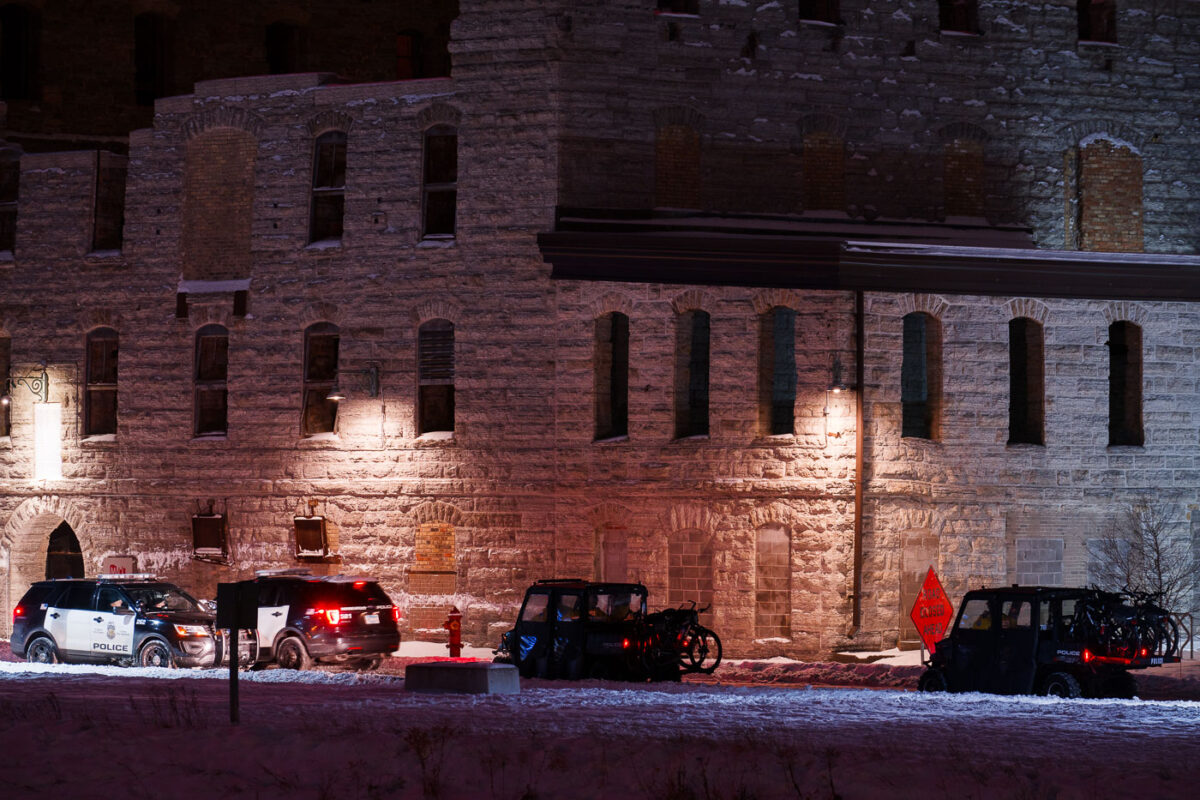
Mnneapolis police make arrest at Noise Demo protest
Police vehicles are present at Mill Ruins Park in Minneapolis on New Year's Eve, following a protest. Approximately 100 individuals gathered in response to a nationwide call to protest the imprisonment of state inmates. The protest escalated when the jail was spray-painted, leading to a significant police response involving Minneapolis Police, State Patrol, Golden Valley PD, and Hennepin Sheriffs, resulting in numerous arrests. Mill Ruins Park, located on the Mississippi River, is a historic site that was once the heart of Minneapolis's flour milling industry.

Minneapolis Police Arrests at Noise Demo Protest, Mill Ruins Park
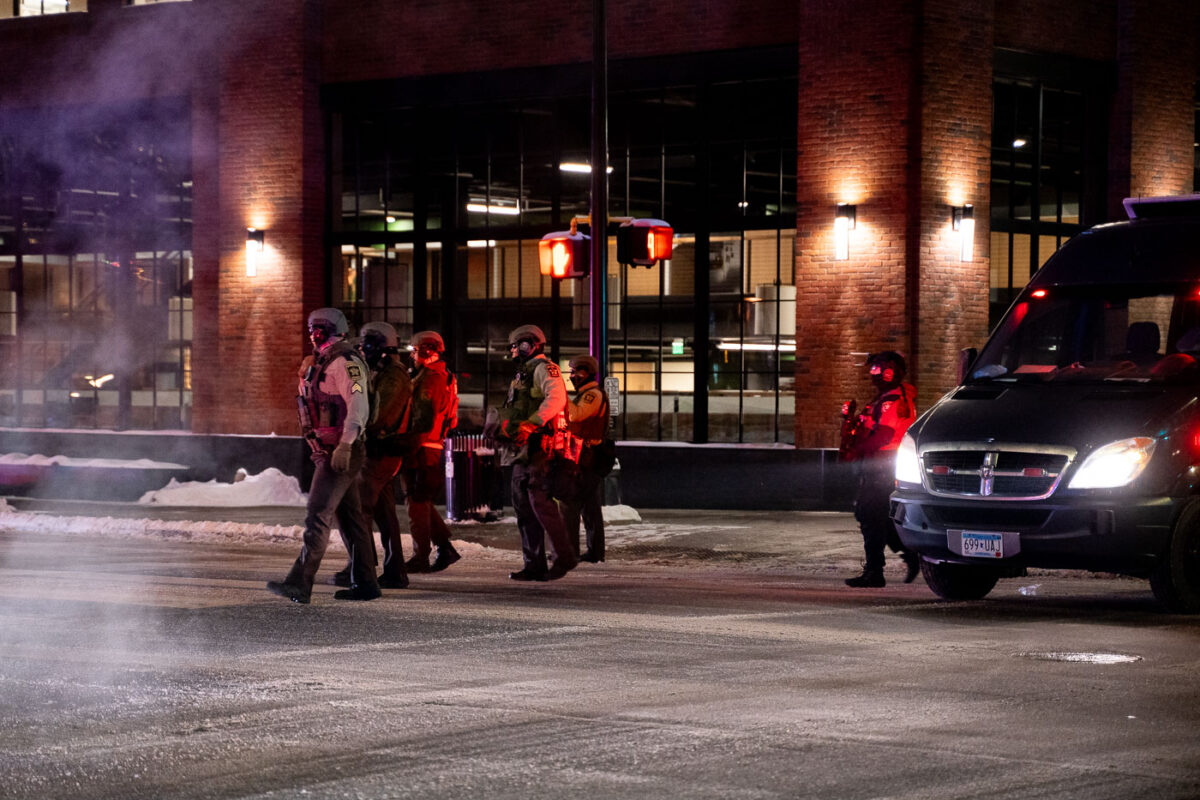
Police at new years eve protest
Hennepin County Sheriff's Department deputies are present in Downtown Minneapolis during a New Year's Eve protest. This event was part of an annual nationwide "Noise Protest" organized to call for the abolishing of prisons and to stand in solidarity with incarcerated individuals. The protest in Minneapolis led to approximately 40 arrests, reflecting ongoing public engagement with issues of criminal justice and incarceration.

Hennepin County Sheriff at Minneapolis New Year’s Eve Protest
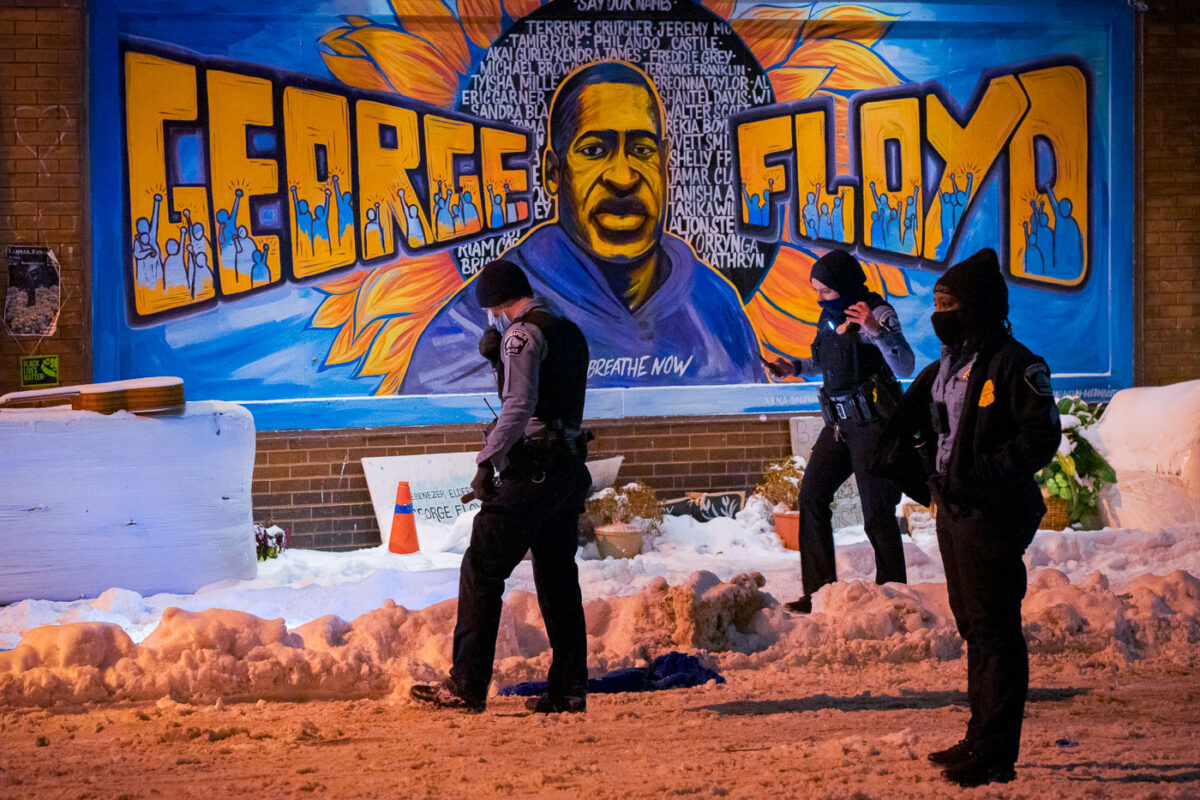
Police in front of George Floyd mural
Minneapolis Police officers investigate a shooting at George Floyd Square in South Minneapolis on December 27, 2020. This site, located at the intersection of E 38th Street and Chicago Avenue, transformed into a significant memorial and protest space following the murder of George Floyd in May 2020.

Minneapolis Police Investigate Shooting at George Floyd Square
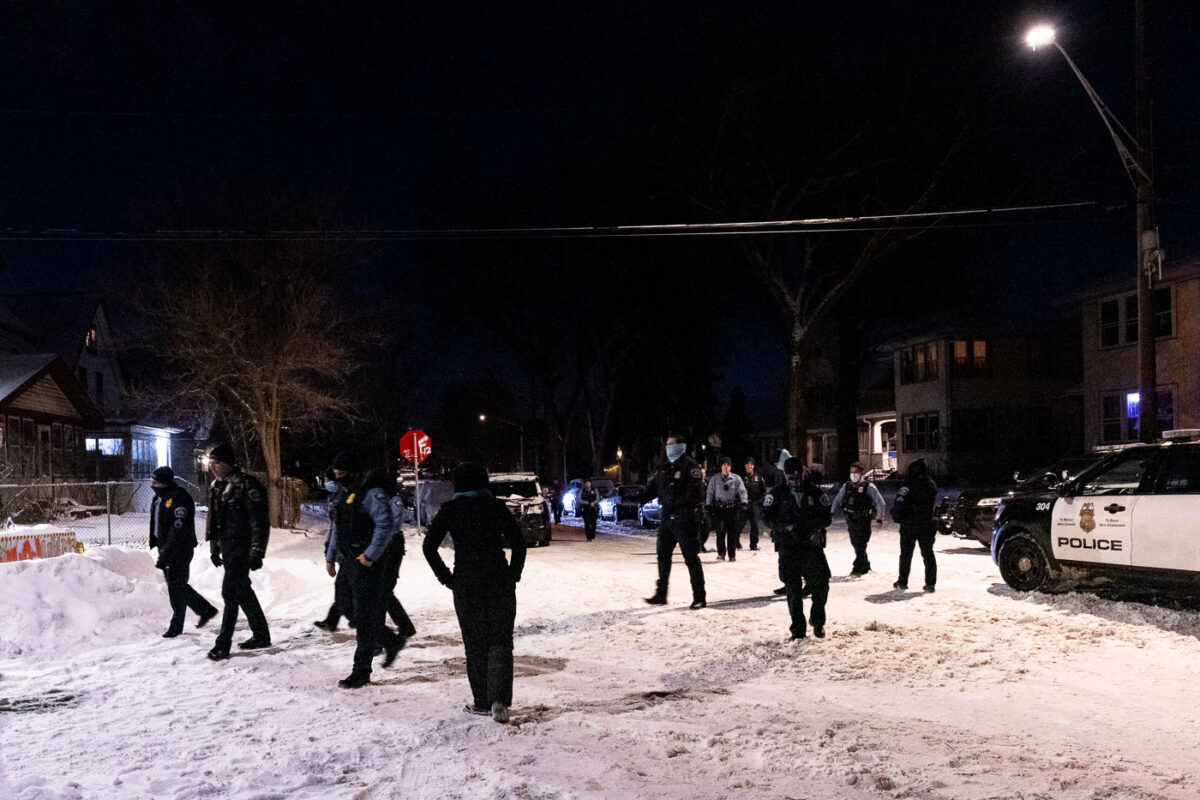
Large amount of police enter George Floyd Square
Minneapolis Police officers arrive at George Floyd Square, located at the intersection of E 38th Street and Elliot Avenue in South Minneapolis, following a shooting incident. Prior to their arrival, two victims had been transported to hospitals by community members present at the square. Residents at the square confronted the responding officers, subsequently offering to escort five of them to collect shell casings from the site. George Floyd Square emerged as a significant memorial and protest site after the murder of George Floyd in May 2020.

Minneapolis Police respond to George Floyd Square shooting

Minneapolis police officer stands guard near Interstate 94 during a November 4, 2020 protest, with "FLOYD" graffiti visible on
Interstate 94 cuts through central Minneapolis, connecting downtown to the University of Minnesota area and beyond. On the night of November 4, 2020, demonstrators marched onto the freeway following the presidential election, part of a wave of protests that had continued in the city since George Floyd's killing that May. State troopers and Minneapolis police shut down the highway and moved in to clear it, ultimately arresting roughly 646 people—the largest single mass arrest in Minnesota history. Graffiti reading "FLOYD" marks the concrete retaining wall beneath the overpass, one of many such markings left across the city during that period.

Police Officer Near “FLOYD” Graffiti Along I-94 in Minneapolis

Police officers and Minnesota State Patrol conduct mass arrests of protesters on Interstate 94 in Minneapolis on November 4, 2020.
Interstate 94 in Minneapolis was the site of a mass arrest on November 4, 2020, the day after Election Day, when Minnesota State Patrol troopers and Minneapolis police stopped a march that had moved onto the freeway's eastbound lanes near downtown. Officers detained 646 people that night, one of the largest mass arrests in Minnesota history, loading protesters onto transit buses brought in for the operation. The march followed the national call of the presidential race for Joe Biden and was one of several demonstrations moving through downtown Minneapolis that week.

Armored State Patrol Vehicle on I-94 During Minneapolis Mass Arrest

Minneapolis police officers monitor protesters marching on Interstate 94 during a November 2020 demonstration.
Officers from the Minneapolis Police Department hold a pedestrian overpass above Interstate 94 as protesters fill the freeway below. The demonstration followed the November 2020 election, when marchers moved from downtown Minneapolis toward Cedar-Riverside to protest the presidential race outcome. Minnesota State Patrol and Minneapolis Police later blocked both ends of the freeway and detained roughly 646 people, one of the largest mass arrests in the state's history. Interstate 94 links Minneapolis and St. Paul and has been a repeated site of demonstrations shutting down traffic in both cities.

Police Line an I-94 Overpass During Minneapolis Protest

Minnesota State Patrol officers form a line across Interstate 94 in Minneapolis during a November 2020 nighttime protest march.
Interstate 94 runs through the heart of Minneapolis, connecting downtown to St. Paul and serving as a major route for commuters and freight alike. On the night of November 4, 2020, following the presidential election, Minnesota State Patrol troopers formed a line across the freeway's lanes to stop a march that had moved onto the highway from surrounding streets. State Patrol, rather than Minneapolis police, holds jurisdiction over incidents on the interstate system within city limits. That night's march ended with 646 arrests, one of the largest mass detentions in Minnesota history, after demonstrators were held on the freeway for several hours before being processed and released.

State Patrol Blocks I-94 During Post-Election Protest March

Minneapolis Police officer stands in street during election night protest in Uptown Minneapolis.
A Minneapolis police officer stands watch beside a squad car during an election night protest in Uptown Minneapolis on November 3, 2020. Officers deployed in tactical gear and rifles that night as marches moved through the neighborhood toward Bryant Square Park, where police made several arrests. The response came amid a broader wave of unrest that had gripped Minneapolis for months following George Floyd's killing that May, with departments across the city on heightened alert for potential Election Day disturbances.

Armed Officer Stands Guard During Uptown Election Night Protest

Minneapolis Police officers conduct arrests at Bryant Square Park in Uptown Minneapolis on election night.
Bryant Square Park sits in the Uptown neighborhood of Minneapolis, at the corner of Bryant Avenue South and 33rd Street. The park has served as a gathering point for marches and demonstrations in the years since George Floyd's death in police custody in May 2020. On the night of November 3, 2020, Minneapolis Police officers and members of the press assembled near the park as a march moved through the area, part of a wider pattern of protest activity that continued across the city into the fall election season.

Police Gather Outside Bryant Square Park on Election Night

Law enforcement officers conduct arrests at Bryant Square Park in Minneapolis on Election Night.
Bryant Square Park sits at Bryant Avenue South and West 31st Street in the Uptown neighborhood of Minneapolis, a few blocks from the corridor where a march passed earlier that night. Officers from the Minneapolis Police Department, Minneapolis Park Police, and Hennepin County Sheriff's Office converged on the park following the demonstration, making a series of arrests. The operation came on Election Night 2020, months after the killing of George Floyd had drawn sustained protest activity to Minneapolis streets and parks.

Police Move Through Bryant Square Park After Election Night March

Police arrest protesters at Bryant Square Park in Minneapolis on election night, November 3, 2020.
Bryant Square Park, a public park in the Uptown neighborhood of Minneapolis, was the site of arrests following a protest march on the night of November 3, 2020. Officers from the Minneapolis Police Department, Minneapolis Park Police, and Hennepin County Sheriff's Office took part in detaining marchers after the group arrived at the park. That night's demonstration was one of several held across the city as results from the 2020 presidential election came in.

Police Detain Protesters at Bryant Square Park on Election Night

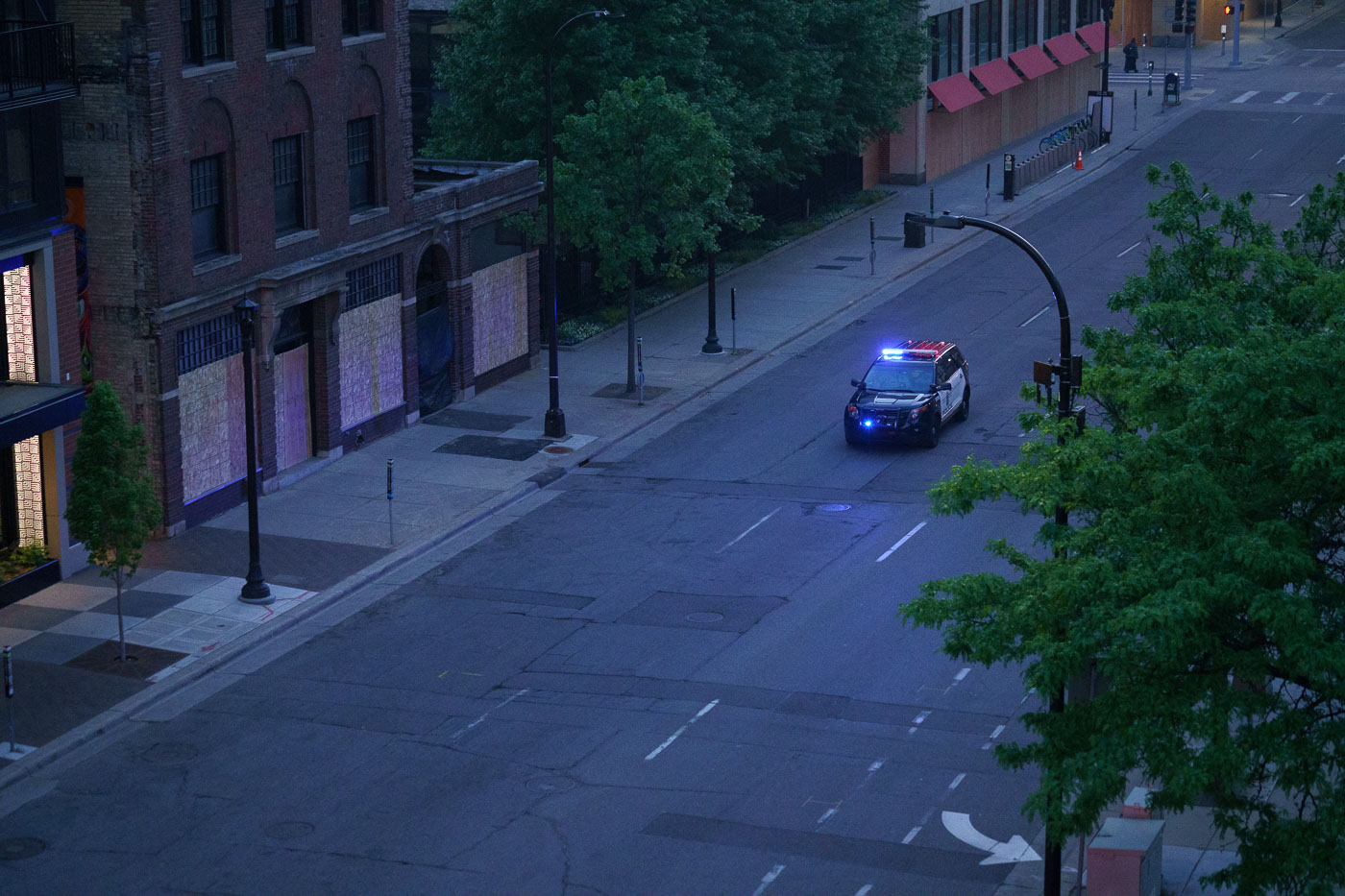
Minneapolis police at convention center
Following the destruction of the Minneapolis Third Precinct in May 2020, the Minneapolis Police Department relocated its operations to the Minneapolis Convention Center in Downtown Minneapolis.

Minneapolis Police Station at Convention Center Night

Minneapolis Police along with State Patrol Conservation Officers arrive to the 5th Precinct with a large amount of tactical gear to clear out and arrest 51 people protesting after Derek Chauvin is released on bail.

Officers in riot gear after Derek Chauvin makes bail

Mounted Minneapolis police officers patrol Nicollet Mall downtown with a Metro Transit bus approaching.
Mounted Minneapolis police officers patrol Nicollet Mall in downtown Minneapolis as a Metro Transit bus approaches along the transit corridor.

Mounted Police Officers Head Down Nicollet Mall at Dusk

Walgreens store on fire in South Minneapolis
A Minneapolis Fire Department truck responds to an arson fire at the Walgreens Drug Store located at 4323 Chicago Avenue in South Minneapolis. This incident occurred during civil unrest on the morning of August 27th, 2020, resulting in damage to the retail establishment.

Walgreens Arson Fire, 4323 Chicago Avenue, Minneapolis
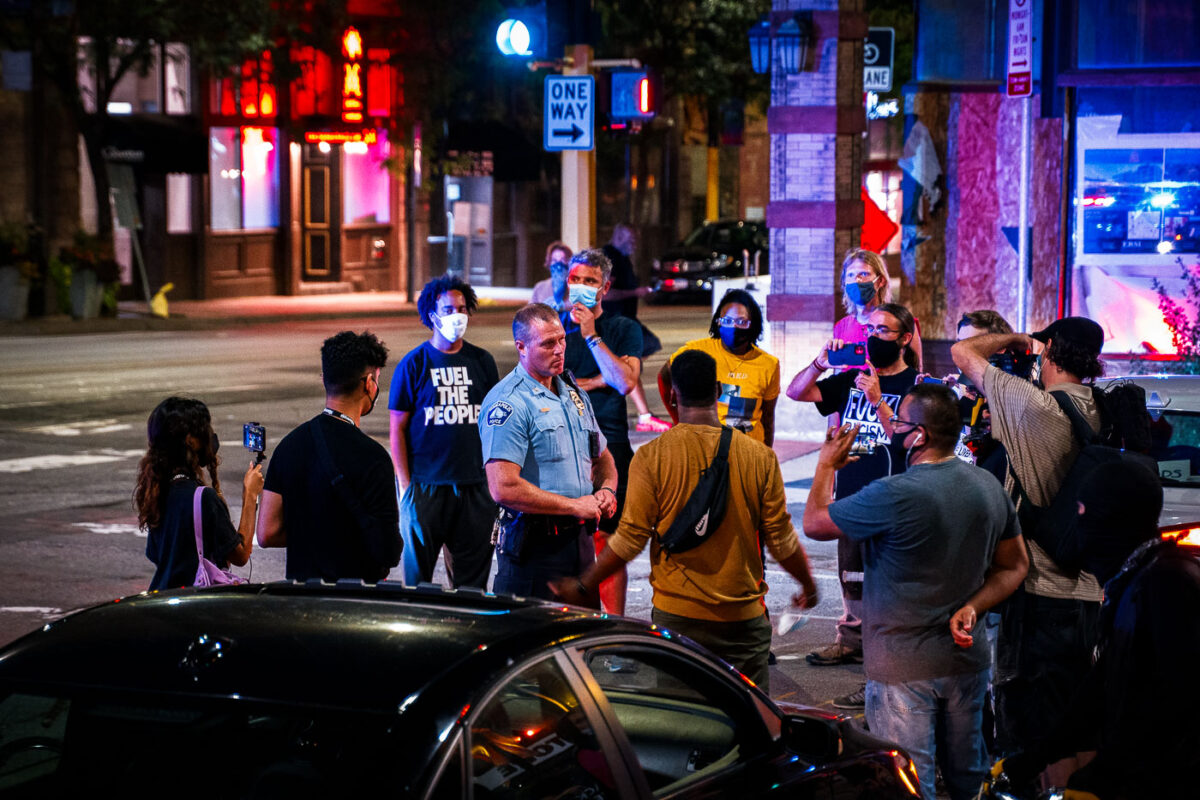
Minneapolis Police officer Bill Peterson speaks with protesters
Minneapolis Police 1st Precinct Inspector Bill Peterson engages with protesters in Downtown Minneapolis following a march that led to arrests.

Minneapolis 1st Precinct Inspector Peterson with protesters
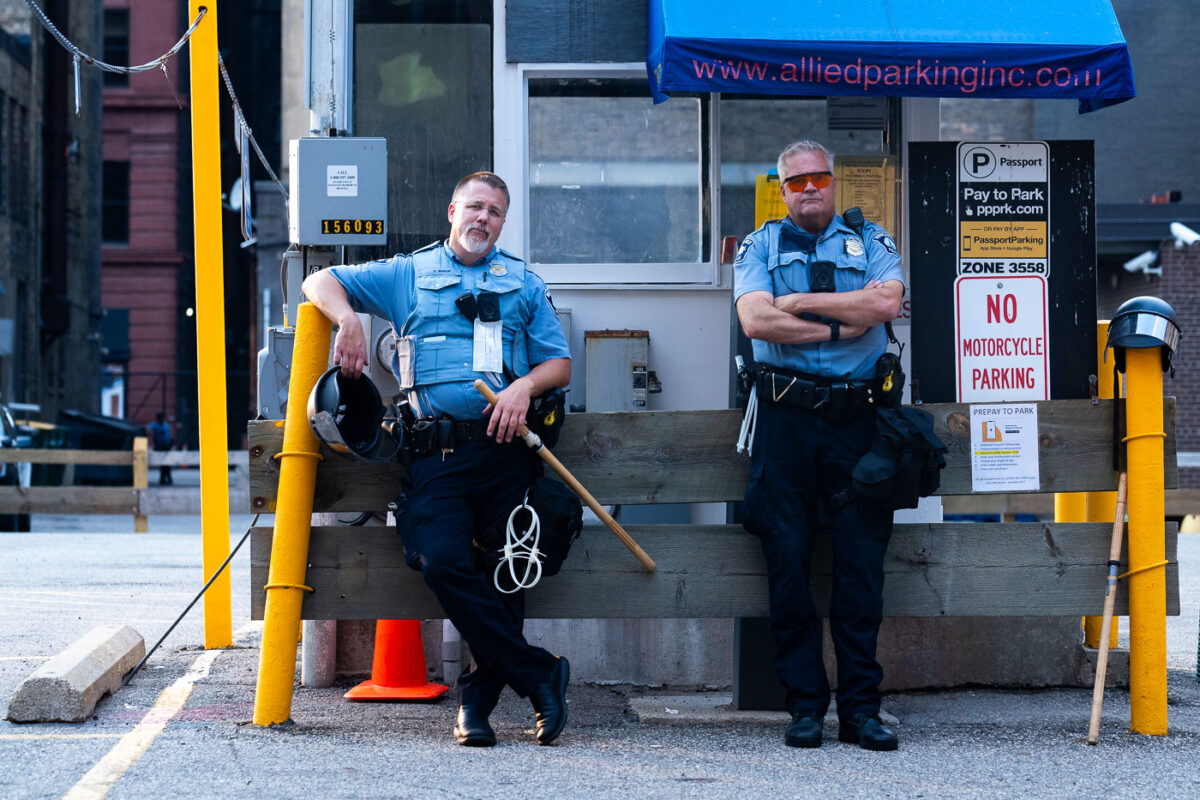
Minneapolis Police stand near the 1st precicnt police station
Two Minneapolis Police officers stand near the 1st Precinct police station in Downtown Minneapolis equipped with zip ties and batons.

Minneapolis Police Officers with Zip Ties, 1st Precinct
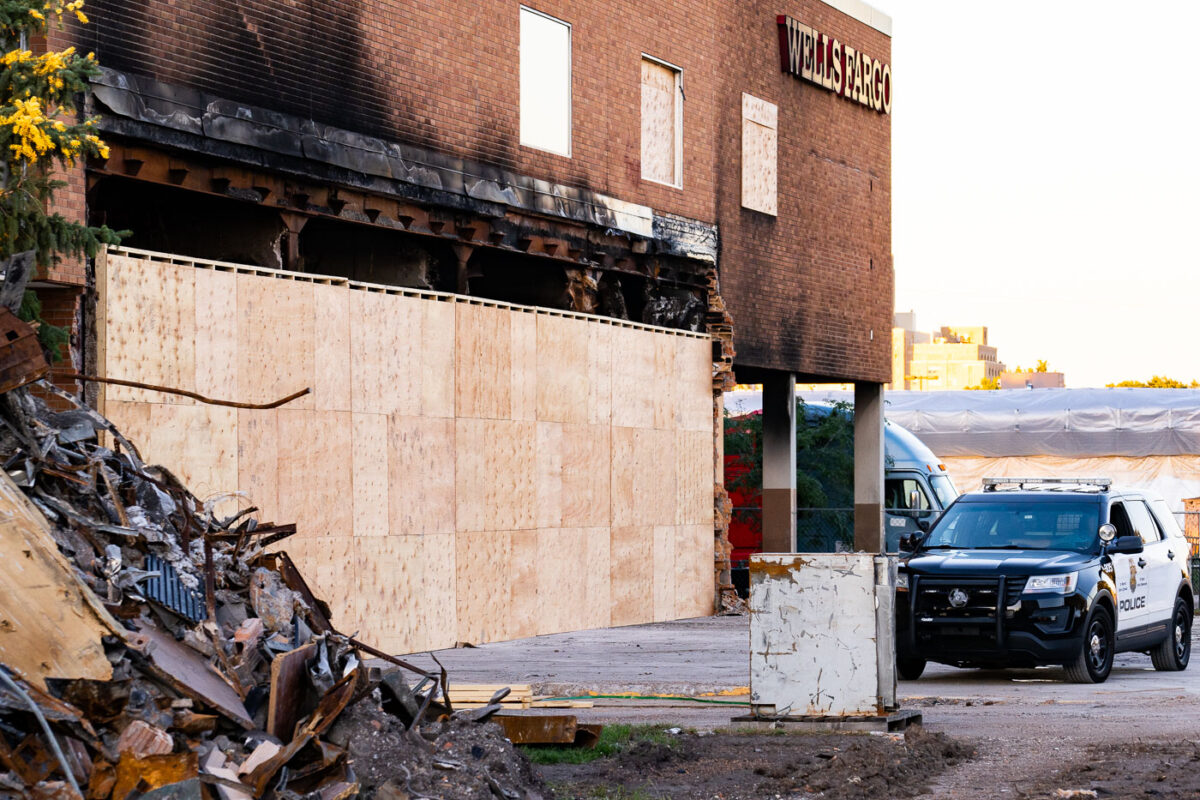
Riot damaged Wells Fargo bank guarded by Minneapolis Police
A Wells Fargo bank branch on Nicollet Avenue in Minneapolis displays extensive fire damage, boarded up following protests in May 2020. The building was burned during civil unrest that occurred after the death of George Floyd on May 25, 2020. A Minneapolis Police squad car is stationed nearby. This security was maintained around the clock to facilitate the safe retrieval of items from safety deposit boxes by bank customers.

Burned Wells Fargo Bank, Nicollet Ave, Police Squad Car
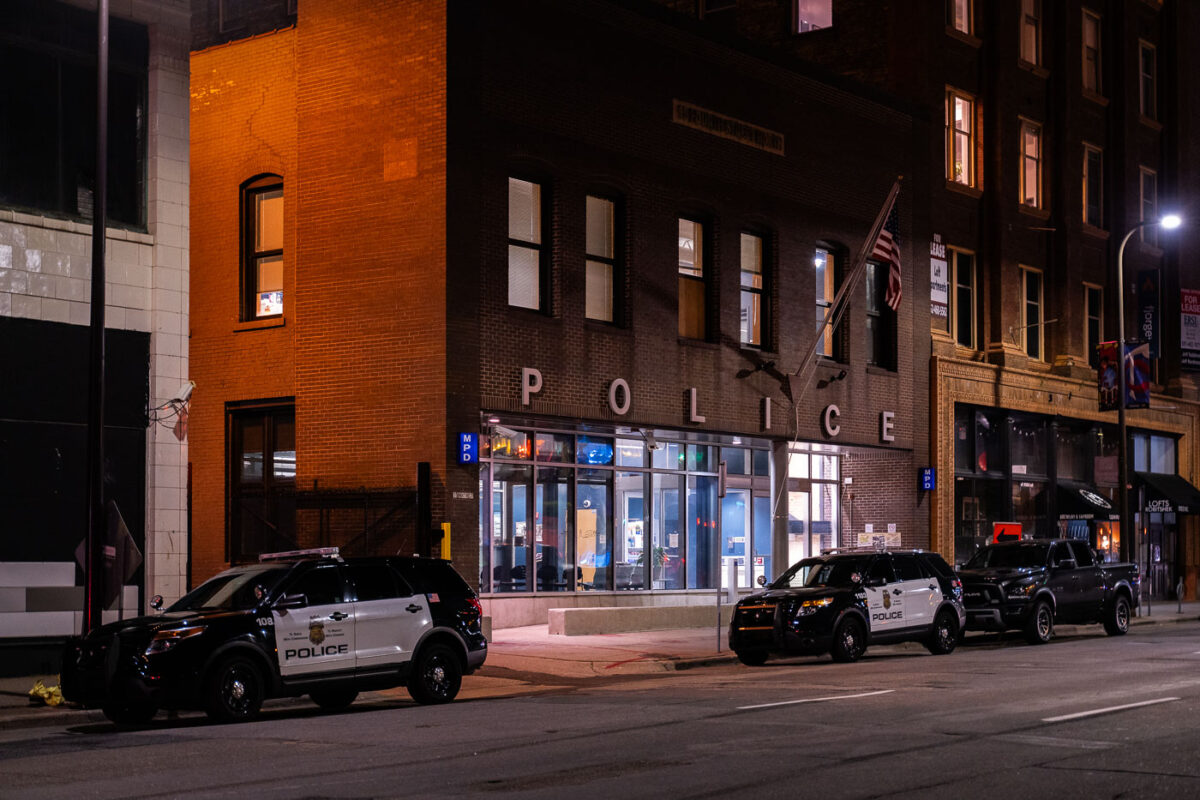
Squad cars parked outside a Minneapolis police station
The Minneapolis Police 1st Precinct police station is located at 19 N 4th Street in downtown Minneapolis.

Squad cars at Minneapolis Police 1st Precinct, 19 N 4th St
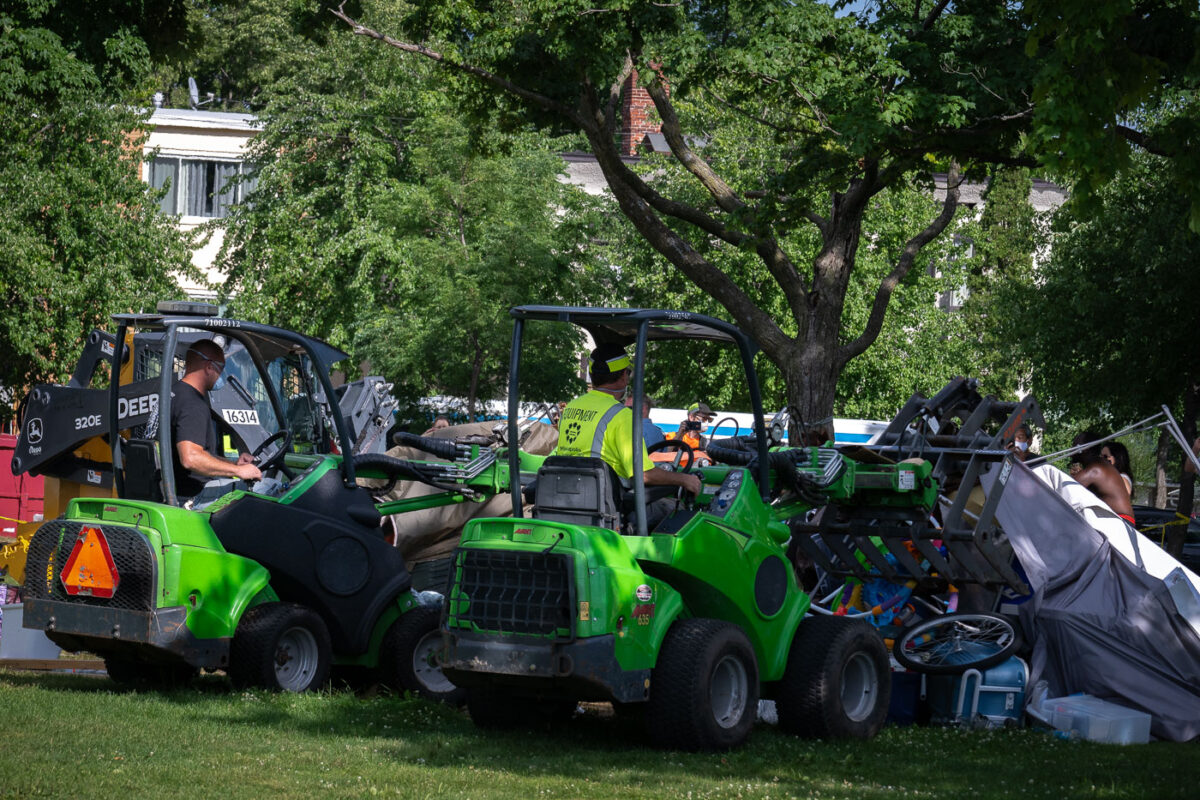
Police bulldoze over tents left behind in Minneapolis park
Minneapolis Park Police personnel clear tents and belongings from an encampment at Powderhorn Park in July 2020. This action followed the establishment of a large homeless encampment in the park, which grew significantly in the wake of the Minneapolis Uprising and broader discussions around housing insecurity. Powderhorn Park, a prominent urban green space in South Minneapolis, is historically designated for public recreation and community events. The clearing operation underscored the complex challenges of homelessness and the management of public spaces within the city.

Minneapolis Park Police bulldoze tents, Powderhorn Park
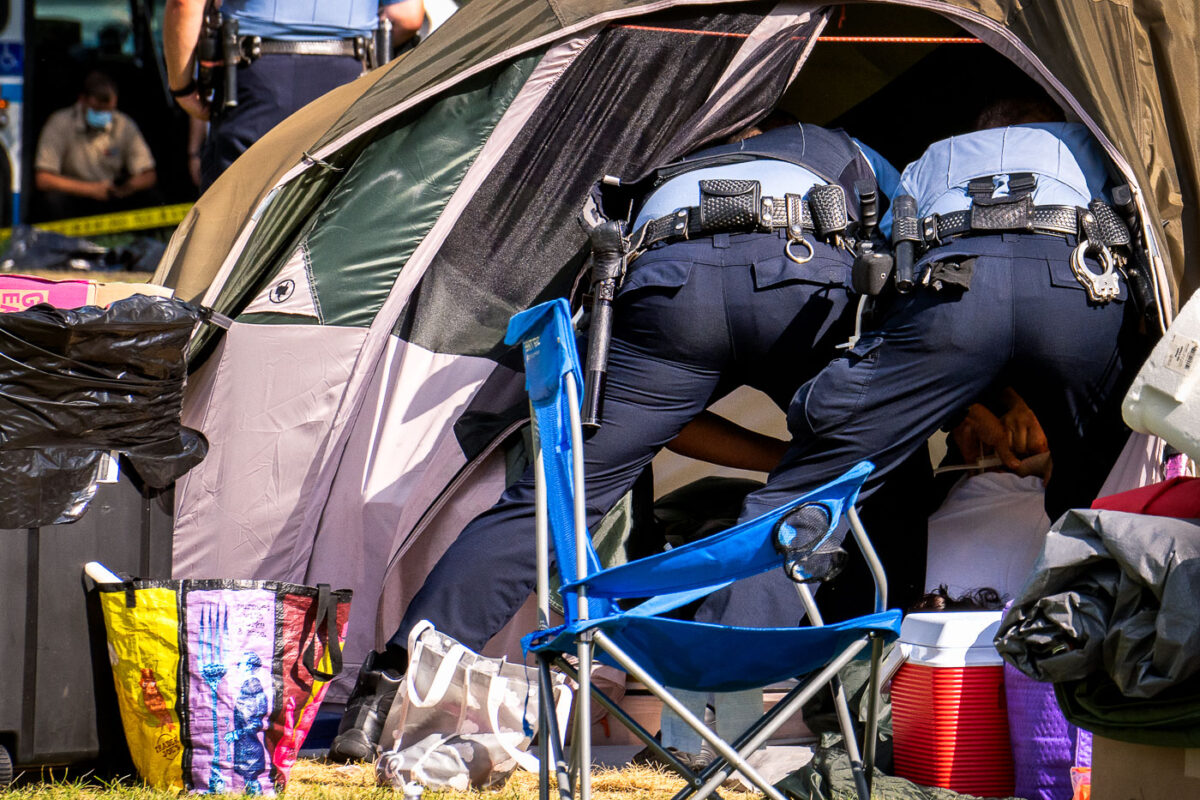
Police officers handcuffing people living in tents in Minneapolis
Minneapolis Park Police officers clear a homeless encampment at Powderhorn Park in South Minneapolis on July 20, 2020. This action addressed the growing number of unsheltered individuals residing in public parks, a situation exacerbated by the social and economic disruptions experienced in Minneapolis during that year. Powderhorn Park, a significant green space in South Minneapolis, became one of several locations where temporary shelters emerged, highlighting the city's challenges with housing insecurity. The clearing operations by park authorities aimed to manage these encampments and public health concerns.

Minneapolis Park Police clear homeless encampment, Powderhorn Park
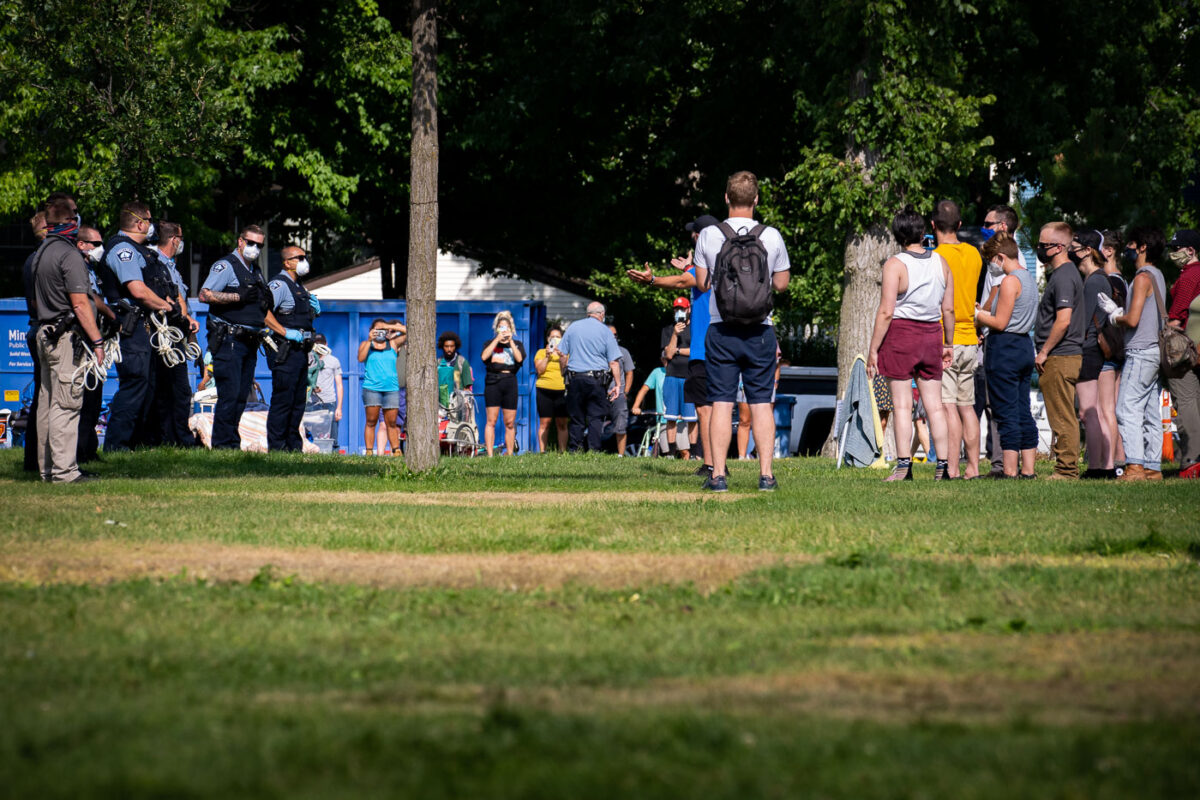
Minneapolis Park police at Powderhorn Park
Minneapolis Park Police officers conducted an eviction of a homeless encampment at Powderhorn Park in South Minneapolis on July 20, 2020. This action occurred during a period of heightened public attention to homelessness and social justice issues in the city, following the civil unrest of the Minneapolis Uprising. Powderhorn Park, a prominent public green space, had become a temporary shelter for many individuals experiencing homelessness throughout the summer. The police operation to remove tents and temporary structures highlighted the ongoing challenges faced by urban communities in addressing housing insecurity and providing adequate support for vulnerable populations.

Minneapolis Park Police Eviction at Powderhorn Park
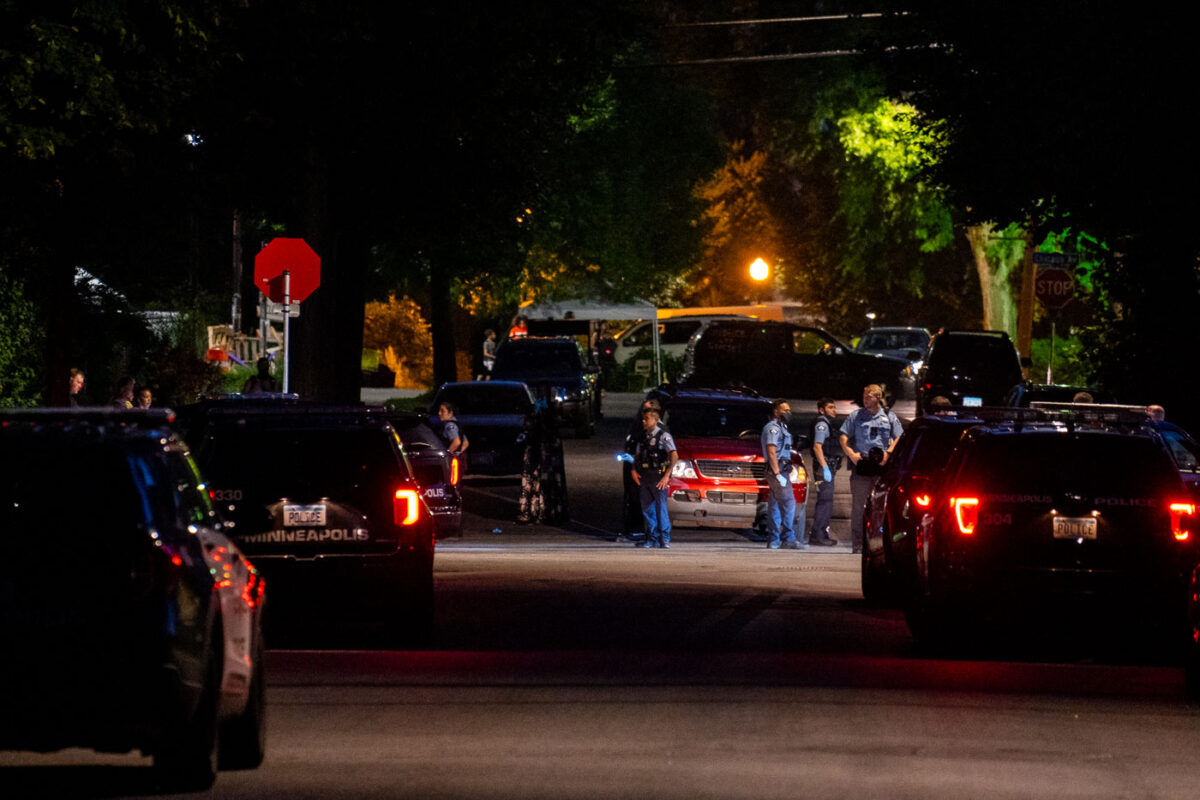
Minneapolis Police officers and squad cars investigate the killing of Leneesha Columbus in South Minneapolis at night.
Minneapolis Police investigate the killing of Leneesha Columbus in South Minneapolis on July 5, 2020. The response includes multiple officers and squad cars on a residential street near George Floyd Square.

Minneapolis Police Investigation after Leneesha Columbus Killing
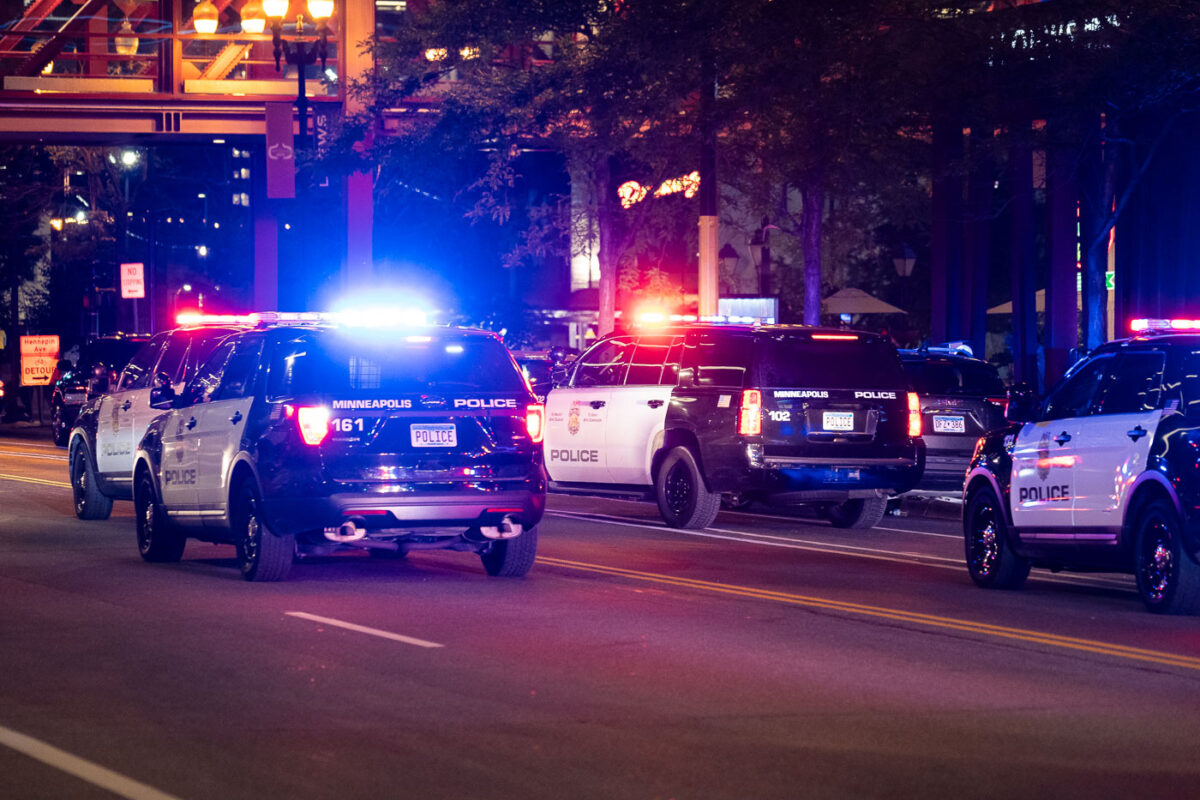
Minneapolis Police vehicles patrol 1st Avenue in Downtown Minneapolis, dispersing hot rodders.
Minneapolis Police vehicles patrol 1st Avenue in Downtown Minneapolis. A caravan of squad cars was deployed to disperse groups of 'hot rodders' who had gathered in the area. These individuals were reportedly performing 'donuts' and other maneuvers in city intersections, disrupting traffic.

Minneapolis Police dispersing hot rodders on 1st Avenue
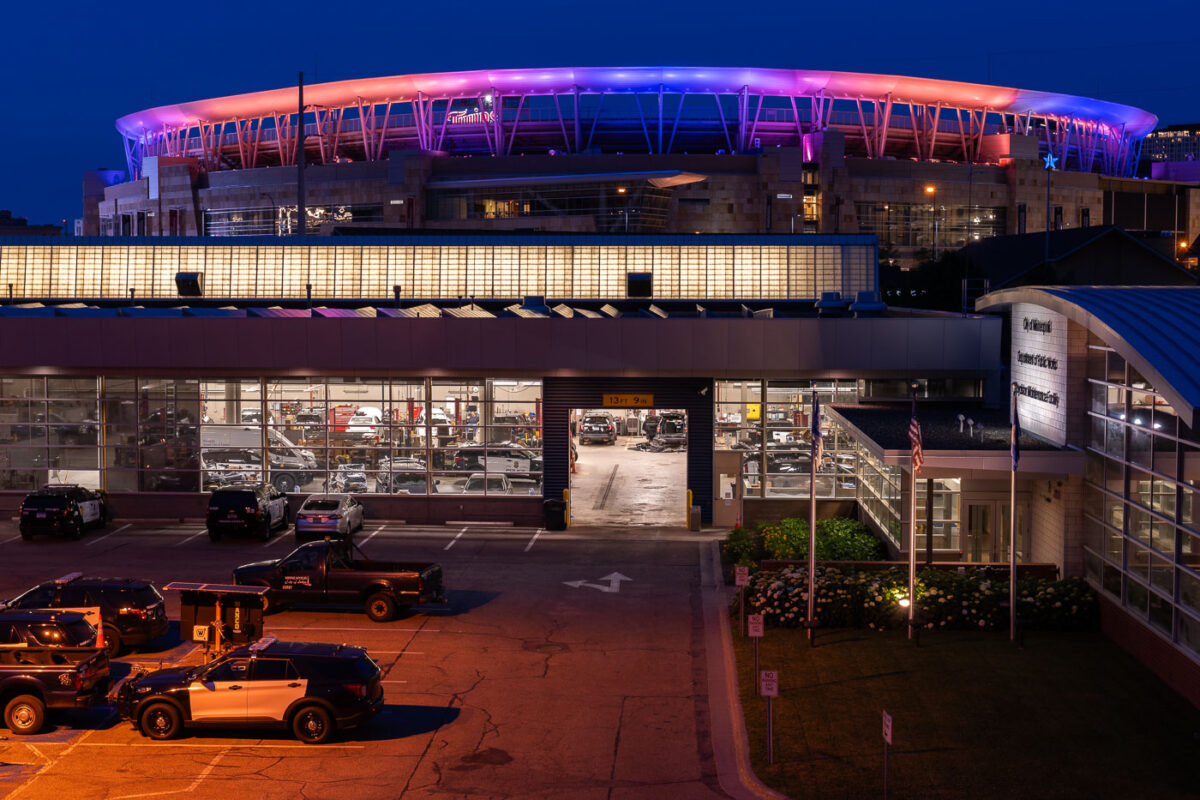
Minneapolis Police Department vehicles parked outside the Public Works Maintenance Facility beside U.S.
This city fleet maintenance garage sits downtown next to Target Field, its service bays holding municipal vehicles for repair work. Minneapolis Police squad cars are parked outside the building and inside the open bay, among the vehicles serviced at the facility.

City Fleet Garage Beside Target Field at Night
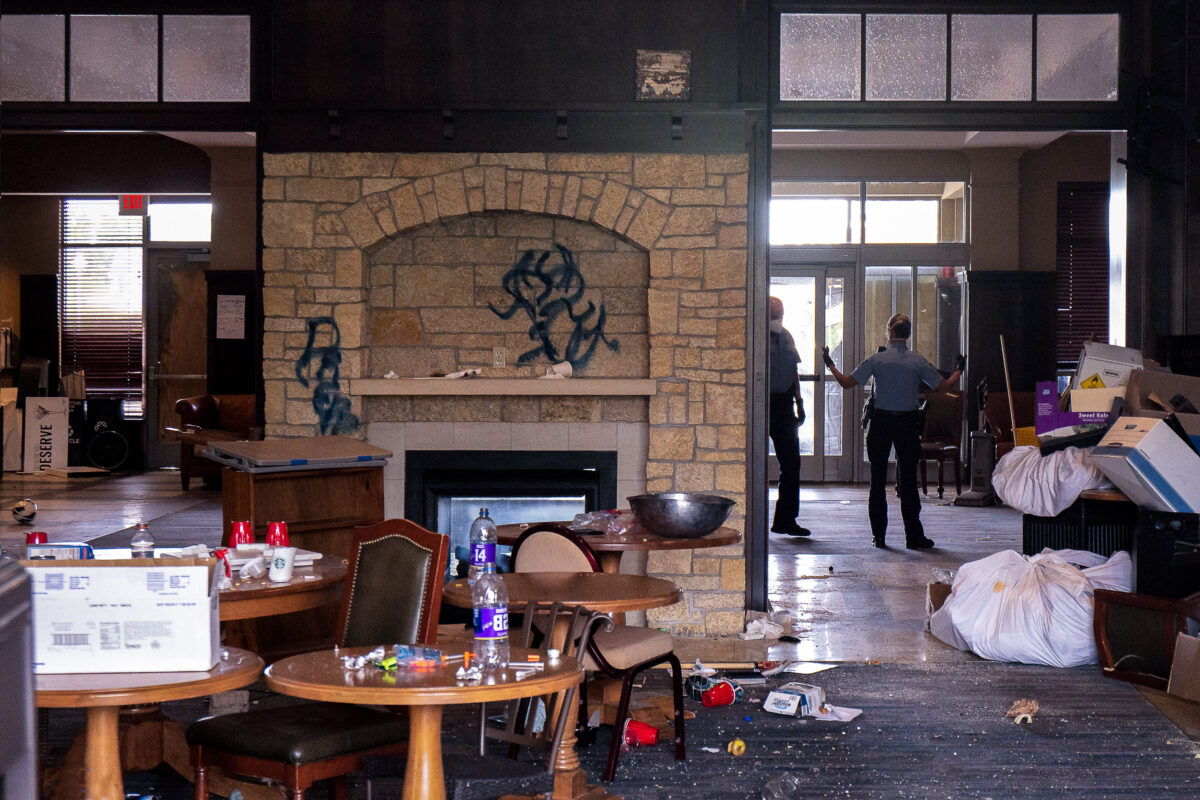
Minneapolis police clear the lobby of the abandoned Midtown Sheraton Hotel on June 15, 2020.
Minneapolis Police Department officers clear the lobby of the abandoned Midtown Sheraton Hotel in Minneapolis on June 15, 2020. The former hotel had been vacated by its owner and was being secured after weeks of unrest following the murder of George Floyd. The hotel was unofficially referred to as "The Sanctuary Hotel" where homeless was using it for shelter following the murder of George Floyd.

Inside Minneapolis Sheraton Hotel Police Clearing
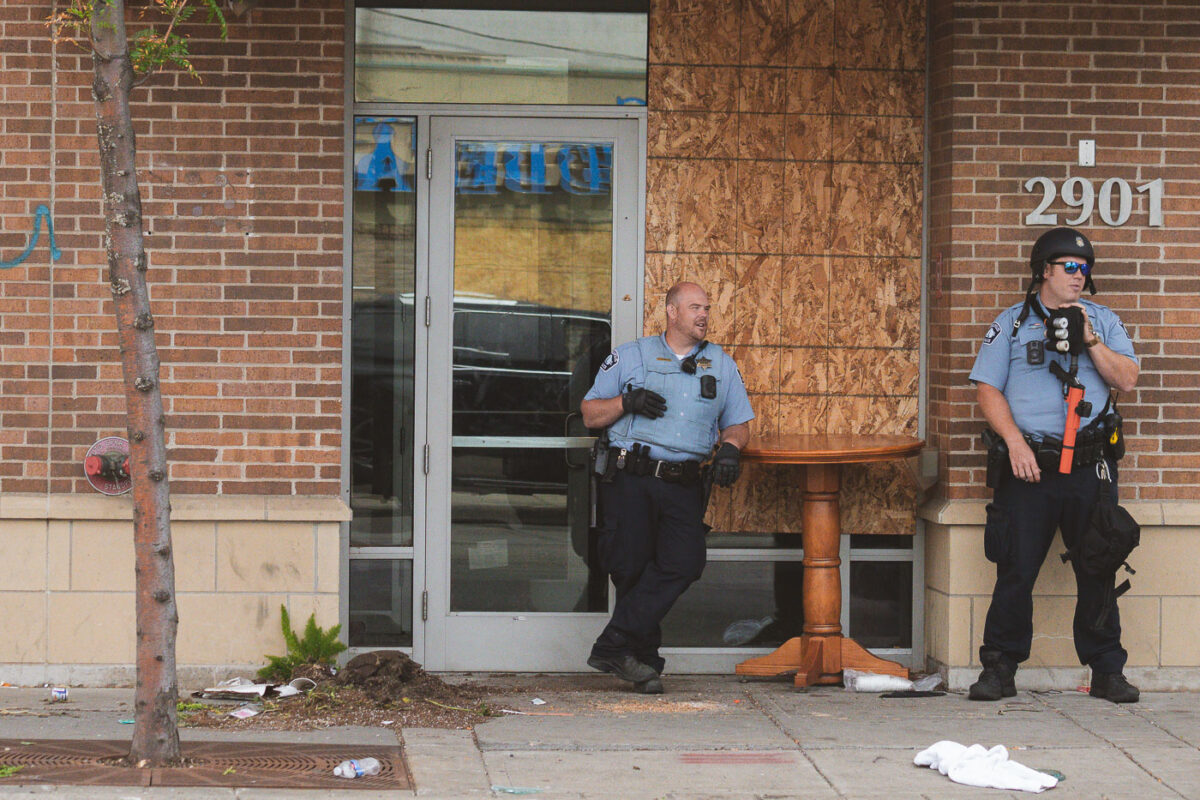
Minneapolis police outside the boarded Sheraton Hotel at 2901 Chicago Avenue in Minneapolis, June 2020.
Minneapolis police officers stand outside the Sheraton Hotel at 2901 Chicago Avenue in Minneapolis while the former Sheraton hotel was being cleared of squatters.

Minneapolis Police at boarded Sheraton Hotel, Midtown
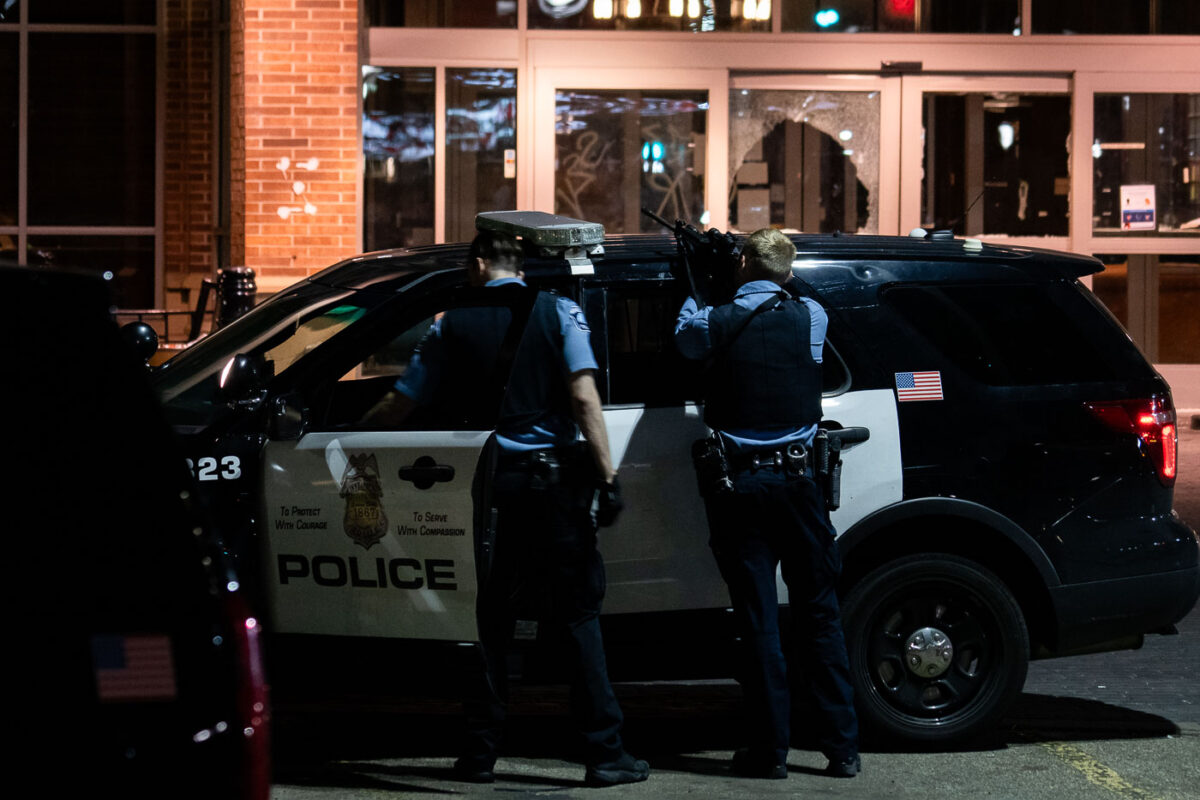
Minneapolis police outside the Sheraton Hotel in Midtown Minneapolis as an officer aims toward broken windows.
Minneapolis police officers take cover behind a squad SUV outside the Sheraton Hotel in Midtown Minneapolis early on June 14, 2020. One officer points a rifle toward broken hotel windows as police respond to reports of a fire at the building. The hotel had been occupied by squatters in the weeks after the murder of George Floyd, and visible damage to the entrance and windows reflects the unrest affecting the property at that time.

Minneapolis Police aim guns at Sheraton Hotel during squatters fire
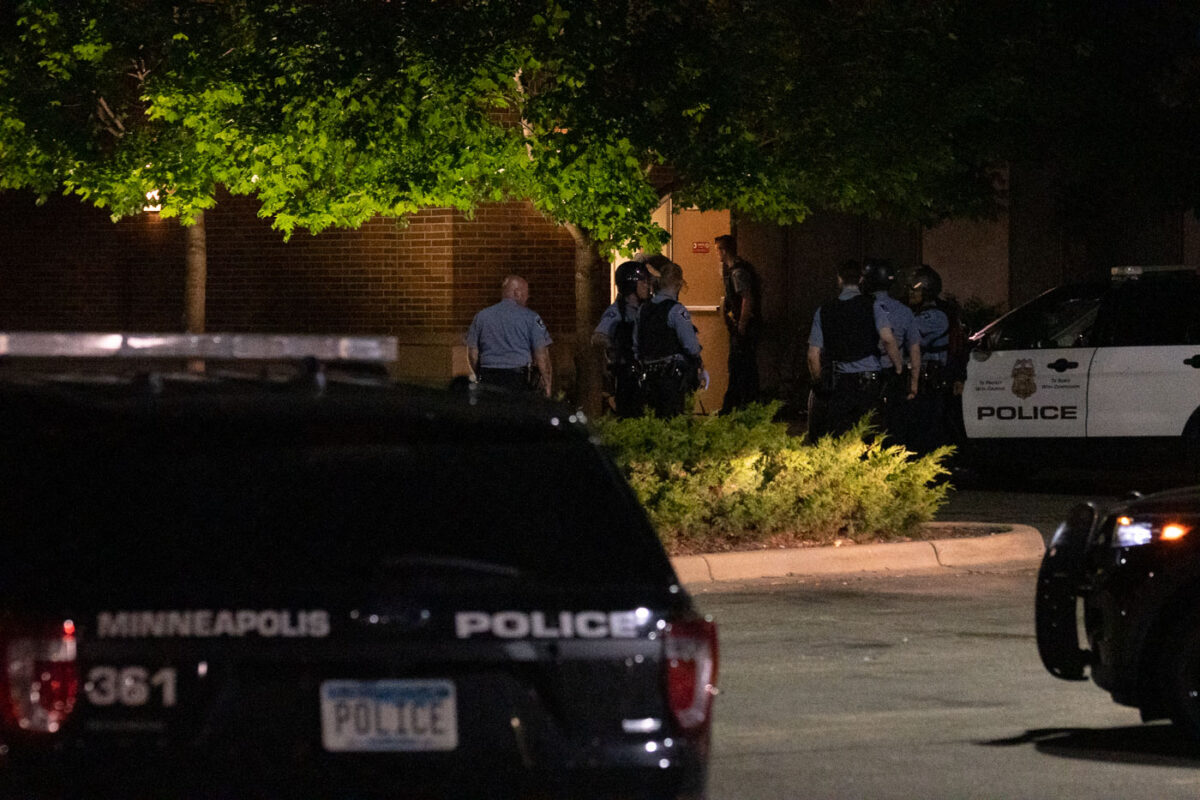
Minneapolis police outside the Sheraton Hotel in Midtown Minneapolis during an overnight response in June 2020.
Minneapolis police officers gather outside the Sheraton Hotel in Midtown Minneapolis during an overnight response in June 2020. Several squad cars are parked near a side entrance as officers confer beside the building. The response took place during the period of unrest in Minneapolis following the murder of George Floyd, when police and fire crews were repeatedly dispatched to commercial properties across the city.

Minneapolis Police respond to fire at Midtown Sheraton Hotel
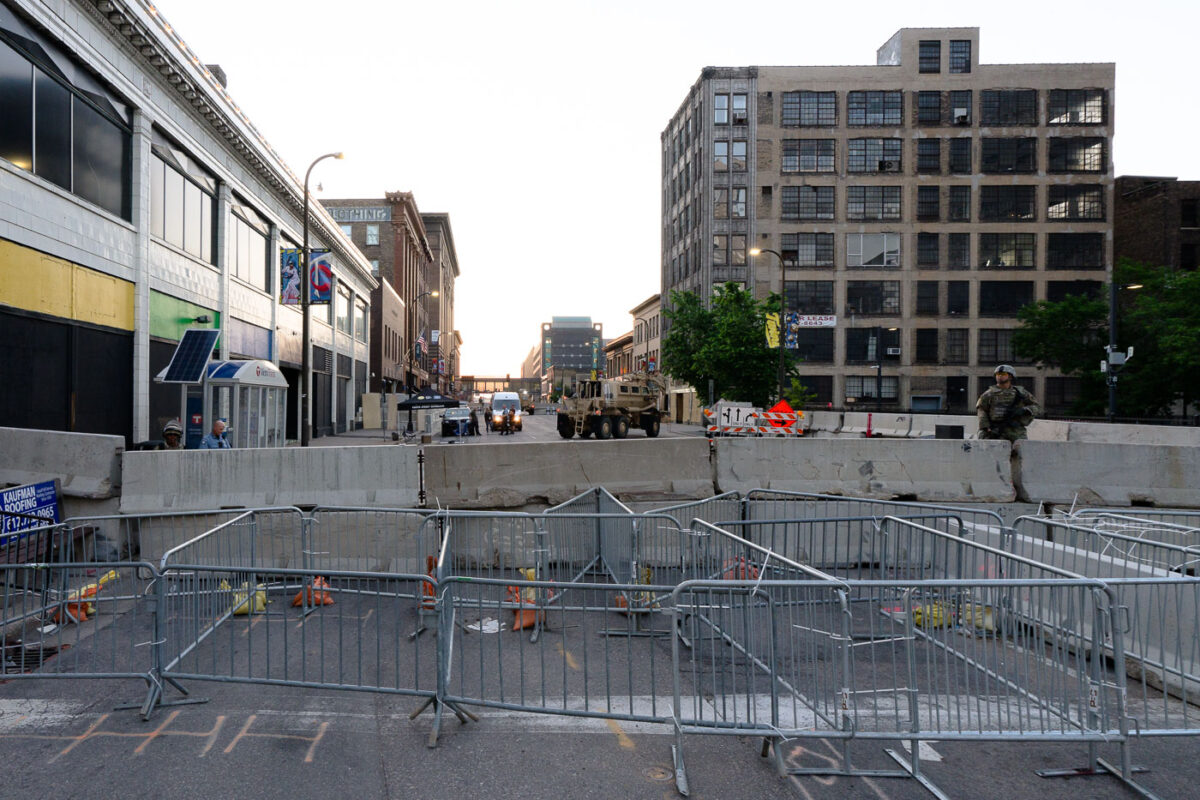
National Guard and concrete barricades outside Minneapolis Police 1st Precinct in downtown Minneapolis, June 2020.
National Guard troops and layered concrete and metal barricades block a street outside the Minneapolis Police 1st Precinct in downtown Minneapolis on June 1, 2020. The image shows a heavily restricted perimeter with military vehicles, fencing, and traffic-control barriers positioned around the station. These security measures were put in place during the unrest and protests that followed the killing of George Floyd on May 25, 2020.

National Guard and Barricades at Minneapolis Police 1st Precinct

Police Chief Medaria Arradondo at George Floyd Square in Minneapolis amid a masked crowd.
Minneapolis Police Chief Medaria Arradondo stands in a crowd at George Floyd Square in Minneapolis on May 31, 2020. George Floyd Square, at Chicago Avenue and East 38th Street, became a gathering place for memorials and protests after George Floyd was killed by Minneapolis police on May 25, 2020. Arradondo appears wearing a face mask during the COVID-19 pandemic as residents, activists, and media remained gathered at the site in the days after Floyd’s death.

Police Chief Arradondo at George Floyd Square

Police Chief Medaria Arradondo speaks with residents at George Floyd Square in Minneapolis.
Minneapolis Police Chief Medaria Arradondo speaks with residents and demonstrators at George Floyd Square in Minneapolis on May 31, 2020. The gathering took place at the intersection of Chicago Avenue and East 38th Street, where protests and memorial activity followed the killing of George Floyd days earlier. Arradondo’s visit, seen here with other uniformed officers and members of the public, came during a period of sustained scrutiny of the Minneapolis Police Department and demands for reform.

Police Chief Arradondo at George Floyd Square

Firefighters battle a blaze on East Lake Street at Columbus Avenue in Minneapolis as a National Guard soldier stands nearby.
Firefighters battle a blaze on East Lake Street at Columbus Avenue in South Minneapolis as a Minnesota National Guard soldier and Minneapolis police vehicles stand nearby. The image shows heavy smoke, water streams, and collapsed brick debris from a badly damaged commercial building. Photographed on May 30, 2020, the fire occurred during the unrest following the killing of George Floyd, when parts of the Lake Street corridor sustained extensive damage.

Firefighters battle blaze on Lake Street, Minneapolis
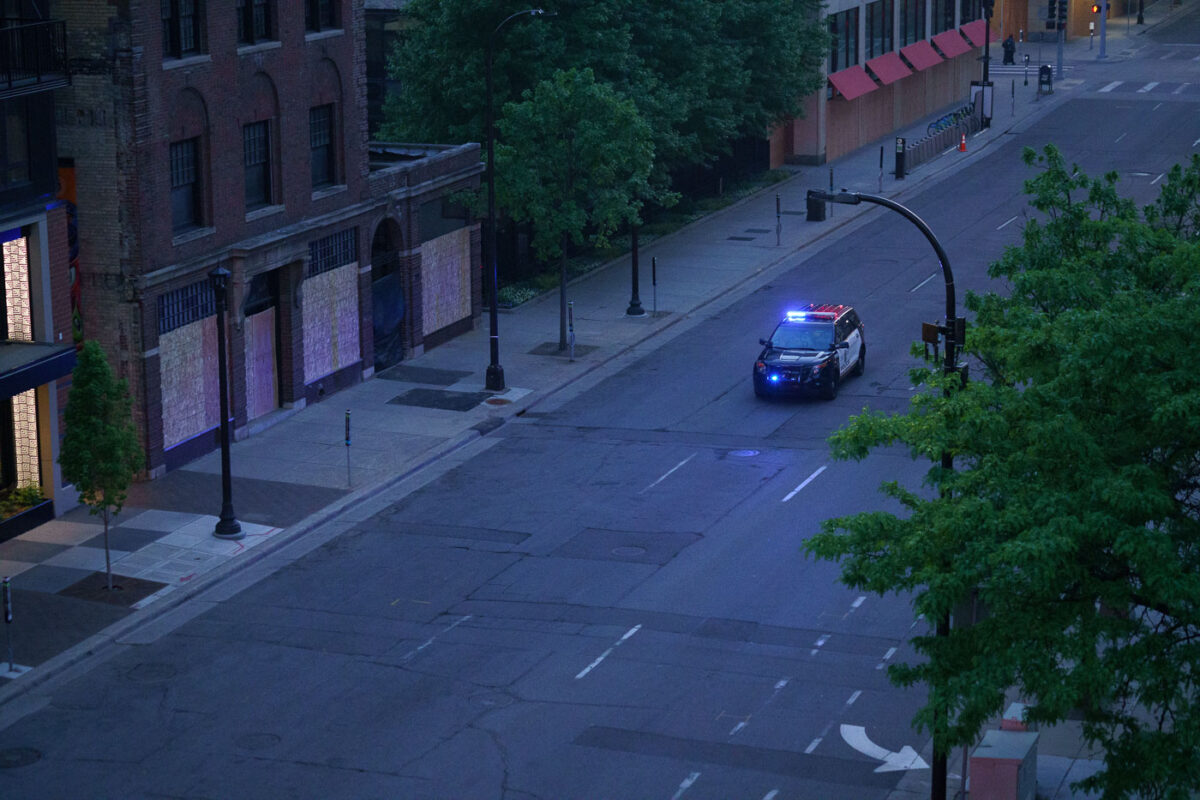
Minneapolis police SUV on South 10th Street beside boarded storefronts in downtown Minneapolis.
A Minneapolis Police squad car patrols South 10th Street in downtown Minneapolis on May 29, 2020, passing commercial buildings with plywood covering their ground-floor windows. The boarded storefronts document security measures taken by businesses during the unrest that followed the killing of George Floyd.

Police Car and Boarded Businesses, Minneapolis
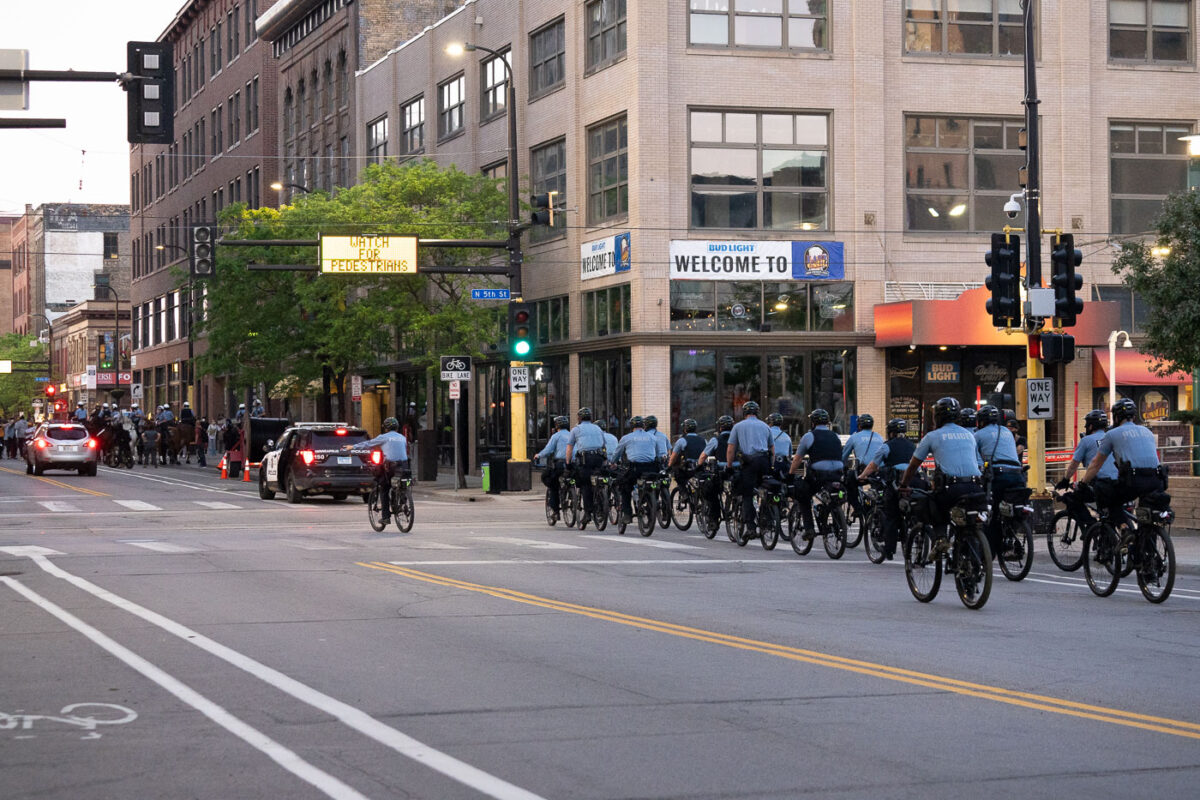
Minneapolis police bicycle patrol officers ride in formation along North 5th Street during May 28, 2020 protests.
Minneapolis Police bicycle patrol officers ride along North 5th Street in downtown Minneapolis on May 28, 2020, during protests following the death of George Floyd. A group of mounted officers is visible farther up the street as police units moved through the downtown area for crowd-control operations.

Police Bike Patrol Heads Down North 5th Street in Minneapolis

Minneapolis police officers with less-lethal weapons stand on a downtown street during the May 28, 2020 protest following George Floyd's death.
Minneapolis Police officers prepare less-lethal weapons on a downtown Minneapolis street on May 28, 2020, three days after George Floyd was killed.

Minneapolis Police Officers Gear Up Near Coyote Ugly Downtown

Minneapolis police SUV in front of a burning commercial building during George Floyd protest fires.
A Minneapolis Police squad car is parked in front of burning commercial buildings in Minneapolis in the early hours of May 28, 2020. Visible signage and context identify the businesses as an AutoZone and a Wendy’s, both engulfed in flames during unrest that followed the killing of George Floyd.

Minneapolis Police car at George Floyd protest fires

Minneapolis police watch a burning building on Lake Street in Minneapolis during protests.
Minneapolis police officers stand on Lake Street in Minneapolis as a commercial building burns during overnight unrest on May 28, 2020. The fire occurred during the protests and property destruction that followed the murder of George Floyd by a Minneapolis police officer.

Building Fire on Lake Street, Minneapolis

Minneapolis police officer by patrol SUVs as an AutoZone burns in Minneapolis on May 28, 2020.
A Minneapolis police officer stands beside patrol vehicles as the AutoZone store burns in Minneapolis early on May 28, 2020. The fire was photographed during the second night of unrest following the killing of George Floyd, when businesses and other properties in the city were damaged or destroyed.

Minneapolis Police Officer at Burning AutoZone

Minneapolis police on the 3rd Precinct roof in south Minneapolis during protests.
Minneapolis Police officers stand on the roof of the department’s 3rd Precinct station in south Minneapolis on May 27, 2020. Several officers are equipped with helmets, shields, and less-lethal launchers as the building became a flashpoint during protests that followed the killing of George Floyd two days earlier.

Minneapolis Police 3rd Precinct Rooftop

Minneapolis Police officer during a protest
Minneapolis police officers in riot gear stand outside the Third Precinct station on Minnehaha Avenue in Minneapolis on May 27, 2020. The photograph was made on the second day of protests after the killing of George Floyd, when the precinct had become a central location for demonstrations against police violence and racial injustice.

Minneapolis Police Officer at 3rd Precinct

Man yells at police guarding the 3rd Precinct station
A man on a motorcycle confronts Minneapolis Police officers stationed outside the 3rd Precinct during protests in May 2020. These protests began on May 26, 2020, following the death of George Floyd while in police custody. On the second day of protests, a crowd gathered near the precinct, which served as a focal point for public outcry against police brutality. Officers, protected by metal barriers, maintained a perimeter as protesters voiced their grievances.

Minneapolis 3rd Precinct Protests, Man on Motorcycle

Police officers on bikes as buildings burn behind them
Minneapolis Police officers stand outside a burning AutoZone store in Minneapolis on May 28, 2020, the second day of protests following the death of George Floyd. The AutoZone, located at 3030 Nicollet Avenue, was among the first businesses to sustain significant damage during the widespread civil unrest.

Minneapolis Police Outside Burning AutoZone, George Floyd Protests

Police officer reloads his less lethal weapon
A Minneapolis Police officer in gas mask, helmet, and tactical gear reloads a less-lethal launcher outside the Minneapolis Police 3rd Precinct in Minneapolis on May 27, 2020. The photograph was made during the protests that followed the killing of George Floyd, when the precinct became a central location for clashes between demonstrators and law enforcement.

Officer Reloads Less Lethal Weapon at Minneapolis 3rd Precinct
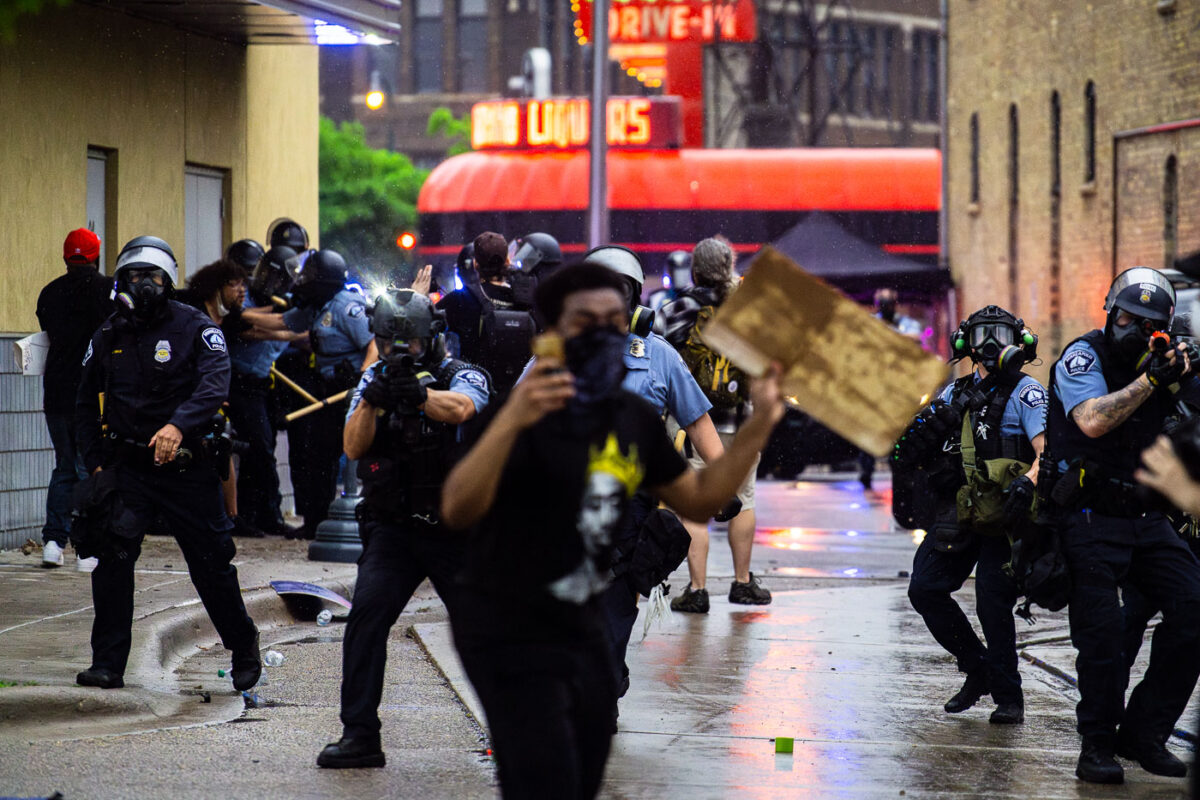
Minneapolis police fire less-lethal munitions near the 3rd Precinct as a protester runs past.
Minneapolis Police officers fire less-lethal munitions on a street near the 3rd Precinct station in Minneapolis on May 26, 2020, as a protester runs through the foreground holding a sign. The officers are wearing helmets and gas masks during demonstrations that followed the killing of George Floyd and intensified around the precinct.

Police Deploy Less-Lethal Weapons at Minneapolis Protest

Helmeted Minneapolis police officer wearing goggles at a Trump rally.
A Minneapolis Police officer, equipped with protective gear including a helmet and goggles, stands on duty during a Donald Trump rally held in Minneapolis on October 10, 2019. Such events often require a significant police presence to manage crowds and ensure public safety. The presence of law enforcement in riot gear highlights the potential for civil unrest or the need for crowd control during politically charged gatherings.

Minneapolis Police Officer at Trump Rally, October 10, 2019