Minneapolis

5,036 photos · 2008–2026

5,036 photographs tagged Minneapolis, 2008–2026.

AT&T retail store on Lake Street in Uptown Minneapolis with boarded windows at night.
This AT&T store sits on Lake Street in Uptown Minneapolis, a commercial corridor that saw widespread property damage after the killing of George Floyd in May 2020. Many businesses along the strip boarded their windows in the aftermath and kept the plywood up for months afterward, some using it as makeshift signage during reconstruction. A "Now Open" banner on the boards here signals the store's return to business despite the unfinished repairs. Lake Street has long served as one of South Minneapolis's primary retail and transit corridors, connecting the Midtown Greenway to neighborhoods stretching from Uptown to the Mississippi River.

AT&T Store Reopens Behind Plywood on Lake Street

Law enforcement officers conduct arrests at Bryant Square Park in Minneapolis on Election Night.
Bryant Square Park sits at Bryant Avenue South and West 31st Street in the Uptown neighborhood of Minneapolis, a few blocks from the corridor where a march passed earlier that night. Officers from the Minneapolis Police Department, Minneapolis Park Police, and Hennepin County Sheriff's Office converged on the park following the demonstration, making a series of arrests. The operation came on Election Night 2020, months after the killing of George Floyd had drawn sustained protest activity to Minneapolis streets and parks.

Police Move Through Bryant Square Park After Election Night March

Minneapolis Police officers conduct arrests at Bryant Square Park in Uptown Minneapolis on election night.
Bryant Square Park sits in the Uptown neighborhood of Minneapolis, at the corner of Bryant Avenue South and 33rd Street. The park has served as a gathering point for marches and demonstrations in the years since George Floyd's death in police custody in May 2020. On the night of November 3, 2020, Minneapolis Police officers and members of the press assembled near the park as a march moved through the area, part of a wider pattern of protest activity that continued across the city into the fall election season.

Police Gather Outside Bryant Square Park on Election Night

Minneapolis Police officer stands in street during election night protest in Uptown Minneapolis.
A Minneapolis police officer stands watch beside a squad car during an election night protest in Uptown Minneapolis on November 3, 2020. Officers deployed in tactical gear and rifles that night as marches moved through the neighborhood toward Bryant Square Park, where police made several arrests. The response came amid a broader wave of unrest that had gripped Minneapolis for months following George Floyd's killing that May, with departments across the city on heightened alert for potential Election Day disturbances.

Armed Officer Stands Guard During Uptown Election Night Protest

Target storefront in Uptown Minneapolis with graffiti reading "Stand Up Fight Back" and "Free Stuff" on its windows.
Target's Uptown Minneapolis store sits at 900 W Lake Street, a location that opened in 2018 as part of a mixed-use development along the Lake Street corridor. The entrance doors were tagged with "Stand Up Fight Back" and "Free Stuff!" after a night march down Lake Street. Target boarded and reinforced several Minneapolis-area stores that year following repeated break-ins and vandalism at its locations.

“Stand Up Fight Back” Spray-Painted on Uptown Target Doors
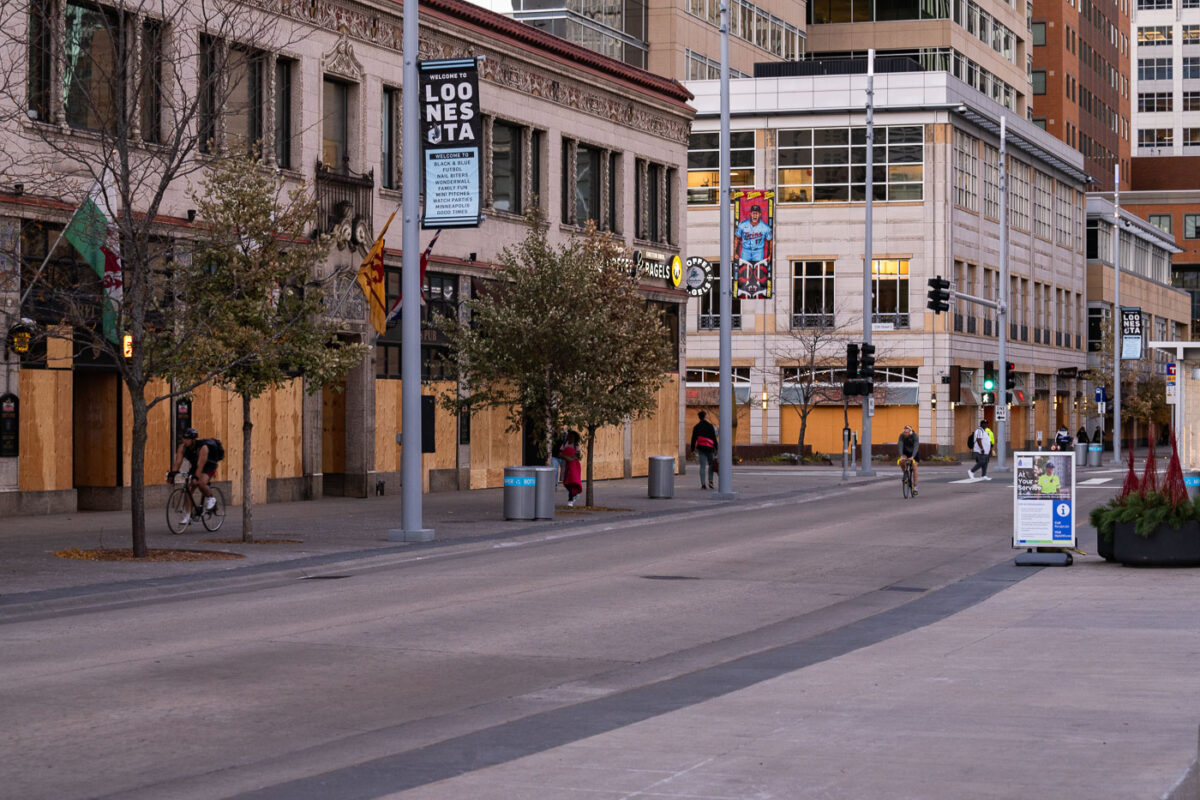
Cyclists and pedestrians move through downtown Minneapolis's Nicollet Mall, where plywood boards cover ground-floor storefronts.
Nicollet Mall in downtown Minneapolis with plywood covers on many ground-floor storefronts in the months after the unrest that followed George Floyd's killing in May 2020.

Boarded Storefronts Along Nicollet Mall

Graffiti art covers protective boards on the John Fluevog store at Hennepin and Lagoon Avenues in Uptown Minneapolis.
The plywood covering John Fluevog's storefront on Hennepin Avenue became a canvas for hand-lettered messages and drawings, including references to James Baldwin, Grace Jones, and the phrase "Love Is Not Dead." The shoe retailer, known for its avant-garde designs since founding in Vancouver in 1970, operates a location here in Uptown Minneapolis near the corner of Lagoon Avenue. Business owners across the city boarded up storefronts for protection following the unrest that spread after George Floyd's killing in May 2020, and many of those boards were later turned into sites for murals and text-based artwork by local artists.

“Love Is Not Dead” Mural on the John Fluevog Storefront

Saks Off 5th Avenue storefront in Downtown Minneapolis displays boarded windows with civic unity signs.
The Saks Off 5th storefront on Nicollet Mall in downtown Minneapolis stands boarded in plywood, with two posters reading "100% In For Democracy" and "Stronger Together, Better Together, Always Together." Both bear the logo of the Civic Alliance, a nonpartisan coalition of U.S. companies formed in 2020 to encourage voter participation and support election integrity. Saks Off 5th, the discount division of Saks Fifth Avenue, joined dozens of national retailers that boarded storefronts ahead of the 2020 presidential election, anticipating possible unrest tied to the vote count. The image was captured on Election Day, November 4, 2020.

“100% In for Democracy” Signs on Boarded Saks Off 5th Storefront

News helicopter flying over Minneapolis City Hall's spires against a blue sky.
Minneapolis City Hall, completed in 1906, houses the seat of government for both the city and Hennepin County under one Romanesque Revival roof. Its clock tower rises 345 feet, making it one of the taller landmarks on the downtown skyline. The building was designed by Long and Kees and remains listed on the National Register of Historic Places.

Helicopter Circles Minneapolis City Hall’s Clock Tower

Protesters hold a banner reading "No Killer Cops Ice Raids US Wars Black Native Stolen Lives Matter" during a Minneapolis march.
The banner reading "No Killer Cops, ICE Raids, US Wars, Black Native Stolen Lives Matter" appeared during a nighttime march along Cedar Avenue in Minneapolis's West Bank neighborhood on November 4, 2020, the night after the presidential election. The route passed the storefront of Midwest Mountaineering, a longtime outdoor-gear retailer at 309 Cedar Avenue South. The demonstration linked opposition to police killings with calls against immigration raids and foreign wars, continuing demands raised during the protests that followed George Floyd's killing by Minneapolis police in May 2020.

“No Killer Cops” Banner at a Minneapolis Protest March

Night protest march on Interstate 94 in Minneapolis with participants carrying signs and banners for social justice.
This march moved onto Interstate 94 near downtown Minneapolis, shutting down a stretch of the freeway that links the city's core to neighborhoods on its edges. Demonstrators carried signs and a banner reading "All Power to the People," part of a wave of protests that followed the 2020 election. Minnesota State Patrol and Minneapolis police later closed in on marchers on the freeway, leading to roughly 646 arrests and citations — one of the largest mass detentions in the state's history.

Protesters March Onto Interstate 94 at Night in Minneapolis

Nighttime protest on Interstate 94 in Minneapolis with hundreds of demonstrators holding signs and banners advocating for police
Interstate 94 cuts through downtown Minneapolis, linking the Twin Cities and carrying tens of thousands of vehicles daily under normal conditions. Marchers shut the freeway down as they moved through carrying banners reading "No Killer Cops" and "The Whole Damn System Is Guilty as Hell." Protesters occupying the interstate led Minnesota State Patrol and Minneapolis police to close lanes and, on several nights that fall, make mass arrests of demonstrators for blocking the roadway. Banners referencing Black, Native, and immigrant communities point to organizing coalitions that linked police violence with ICE raids and broader demands for systemic change.

Banners and Marchers Fill Interstate 94 at Night

Minnesota State Patrol officers form a line across Interstate 94 in Minneapolis during a November 2020 nighttime protest march.
Interstate 94 runs through the heart of Minneapolis, connecting downtown to St. Paul and serving as a major route for commuters and freight alike. On the night of November 4, 2020, following the presidential election, Minnesota State Patrol troopers formed a line across the freeway's lanes to stop a march that had moved onto the highway from surrounding streets. State Patrol, rather than Minneapolis police, holds jurisdiction over incidents on the interstate system within city limits. That night's march ended with 646 arrests, one of the largest mass detentions in Minnesota history, after demonstrators were held on the freeway for several hours before being processed and released.

State Patrol Blocks I-94 During Post-Election Protest March

Minneapolis police officers monitor protesters marching on Interstate 94 during a November 2020 demonstration.
Officers from the Minneapolis Police Department hold a pedestrian overpass above Interstate 94 as protesters fill the freeway below. The demonstration followed the November 2020 election, when marchers moved from downtown Minneapolis toward Cedar-Riverside to protest the presidential race outcome. Minnesota State Patrol and Minneapolis Police later blocked both ends of the freeway and detained roughly 646 people, one of the largest mass arrests in the state's history. Interstate 94 links Minneapolis and St. Paul and has been a repeated site of demonstrations shutting down traffic in both cities.

Police Line an I-94 Overpass During Minneapolis Protest

Minneapolis Police mounted officers on horseback at night during post-election march crowd management.
Minneapolis Police Department's mounted patrol unit responded to a march that followed the 2020 presidential election, when demonstrators moved onto Interstate 94. That night's march ended with roughly 646 arrests, one of the largest mass detentions in Minneapolis history.

Mounted Police Await Orders During Minneapolis Post-Election March

Police officers confront protesters on Interstate 94 in Minneapolis on November 4, 2020, during post-election demonstrations.
Minnesota State Patrol troopers moved in on Interstate 94 near downtown Minneapolis after marchers left city streets and walked onto the highway on the night of November 4, 2020, hours after Election Day. Officers blocked both directions of traffic and held the group on the roadway before arresting 646 people, one of the largest mass arrests in Minnesota history. Most of those detained were released without formal charges in the days that followed.

State Patrol Detains Protesters on I-94 After Election Night March

Police officers and Minnesota State Patrol conduct mass arrests of protesters on Interstate 94 in Minneapolis on November 4, 2020.
Interstate 94 in Minneapolis was the site of a mass arrest on November 4, 2020, the day after Election Day, when Minnesota State Patrol troopers and Minneapolis police stopped a march that had moved onto the freeway's eastbound lanes near downtown. Officers detained 646 people that night, one of the largest mass arrests in Minnesota history, loading protesters onto transit buses brought in for the operation. The march followed the national call of the presidential race for Joe Biden and was one of several demonstrations moving through downtown Minneapolis that week.

Armored State Patrol Vehicle on I-94 During Minneapolis Mass Arrest

Minneapolis police officer stands guard near Interstate 94 during a November 4, 2020 protest, with "FLOYD" graffiti visible on
Interstate 94 cuts through central Minneapolis, connecting downtown to the University of Minnesota area and beyond. On the night of November 4, 2020, demonstrators marched onto the freeway following the presidential election, part of a wave of protests that had continued in the city since George Floyd's killing that May. State troopers and Minneapolis police shut down the highway and moved in to clear it, ultimately arresting roughly 646 people—the largest single mass arrest in Minnesota history. Graffiti reading "FLOYD" marks the concrete retaining wall beneath the overpass, one of many such markings left across the city during that period.

Police Officer Near “FLOYD” Graffiti Along I-94 in Minneapolis

Minneapolis Police officers stand on Interstate 94 during a November 2020 nighttime protest against Trump's election challenges.
Minneapolis police officers stand along a fence on the I-94 overpass, monitoring a crowd gathered on the highway after the November 2020 presidential election. Protesters had marched onto the interstate to oppose President Trump's attempts to challenge the election results. Law enforcement closed the highway and arrested 646 people that night, the largest mass arrest in Minnesota history. Many demonstrators carried signs calling for community control of police and denouncing voter suppression.

Minneapolis Police Watch Over I-94 Protesters After the 2020 Election
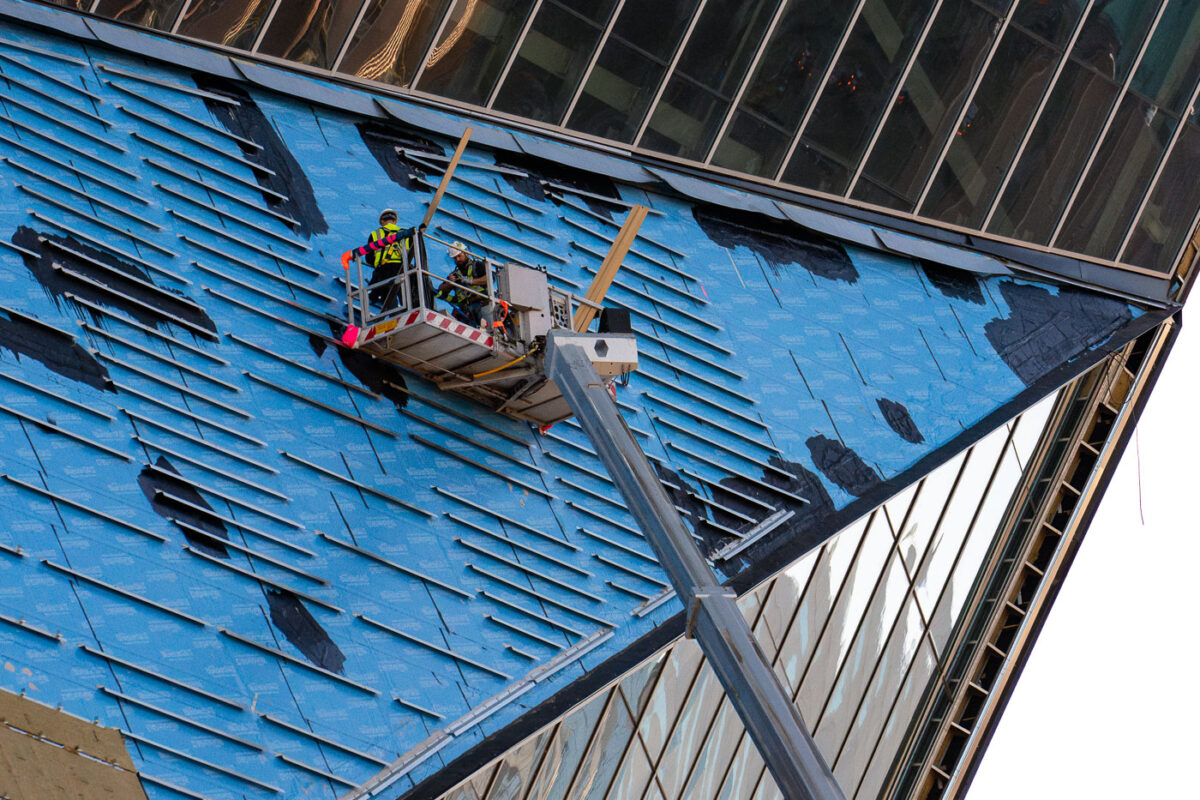
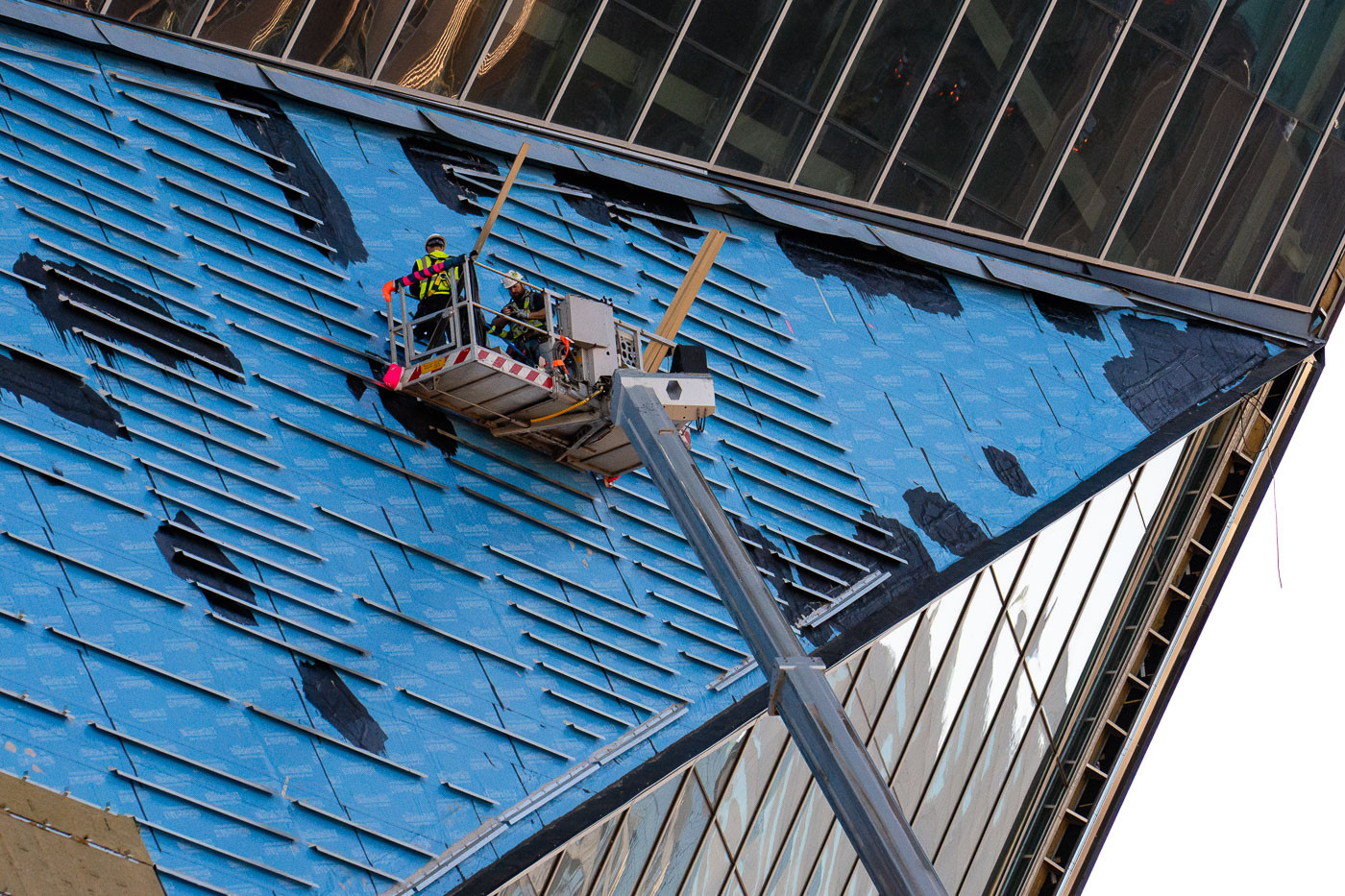
US Bank Stadium exterior repair work in downtown Minneapolis with workers in a lift.
US Bank Stadium in downtown Minneapolis underwent exterior repair work in November 2020. Workers in a lift were repairing damaged sections of the stadium’s angular outer facade.

US Bank Stadium Exterior Repair, Minneapolis

Stop Trump voter suppression sign at a Minneapolis protest on November 4, 2020.
A protest sign reading “Stop Trump racist voter suppression” is carried during a march in Minneapolis on November 4, 2020. The sign also identifies the Party for Socialism and Liberation. The gathering took place the day after the 2020 presidential election.

Stop Trump Voter Suppression Sign, Minneapolis

A protester holds a Freedom Road Socialist Organization sign reading "The Whole Damn System Is Guilty as Hell."
Freedom Road Socialist Organization is a Marxist-Leninist group founded in the 1980s that organizes around anti-capitalist and anti-police causes in cities including Minneapolis. The phrase "the whole damn system is guilty as hell" has circulated in leftist protest movements since the 1970s, often invoked after police killings to argue that reform efforts fall short of addressing root causes.

FRSO Sign Reads “The Whole Damn System Is Guilty as Hell”

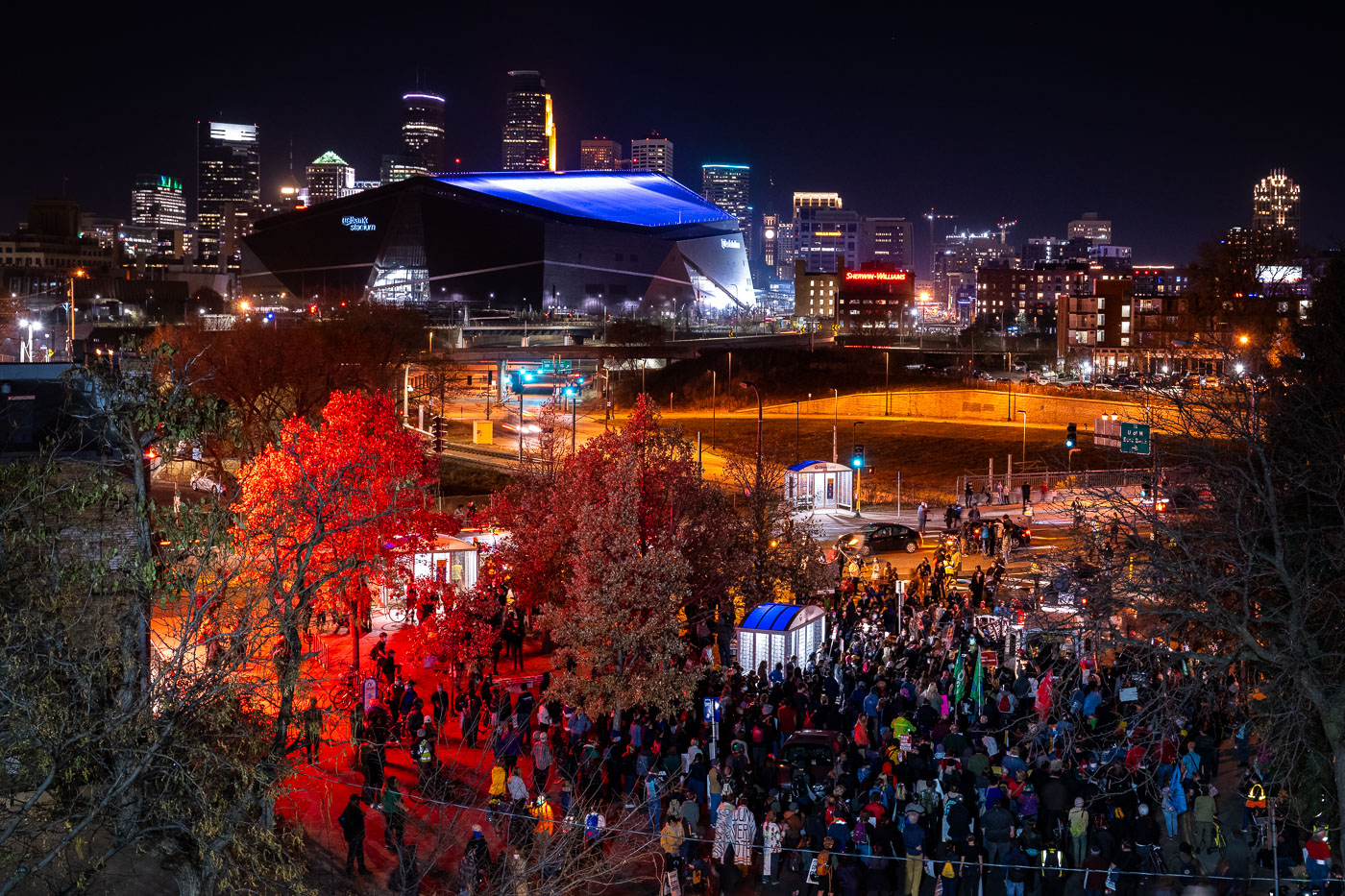
Crowd of protesters gathers in downtown Minneapolis at night near U.S. Bank Stadium during November 2020 march.
Crowds gathered near U.S. Bank Stadium on the night of November 4, 2020, the evening after Election Day, before marching toward Interstate 94. Minnesota State Patrol and Minneapolis police later arrested 646 people for occupying the highway, the largest mass arrest in state history.

Post-Election Protest March Near U.S. Bank Stadium

US Bank Plaza entrance in downtown Minneapolis with boarded plywood windows during November 2020.
US Bank Plaza rises 40 stories at 200 South 6th Street, one of downtown Minneapolis's taller office towers since its completion in 1981. The building takes its name from its anchor tenant, U.S. Bank, though it houses numerous other business tenants across its floors. Plywood paneling over its ground-floor entrances as a precaution many downtown property owners took to guard against window damage during periods of unrest in the city.

Plywood Covers the Entrance at US Bank Plaza

Minnesota State Patrol vehicles and arrestee transport buses parked at Minneapolis Convention Center temporary precinct at night.
The Minneapolis Convention Center, at 1301 Second Avenue South, became a temporary precinct for Minneapolis police after the Third Precinct building on Lake Street burned during the unrest following George Floyd's killing in May 2020. Minnesota State Patrol vehicles and prisoner transport buses staged at the center's loading docks, marked D East and C West, during subsequent demonstrations in the city. The convention center, which normally hosts trade shows and public events, sits blocks from the Nicollet Mall skyway system and downtown high-rises visible along the skyline behind it.

Prisoner Transport Buses at the Minneapolis Convention Center

Minnesota State Patrol LRAD and arrest buses parked at Minneapolis Convention Center at night.
The Minneapolis Convention Center became a temporary base for Minneapolis Police's Third Precinct after the original station on Lake Street burned during the unrest following George Floyd's murder in May 2020. Minnesota State Patrol units, including LRAD (Long Range Acoustic Device) vehicles and transport buses, staged at the center's loading docks during subsequent protests in the city. The Third Precinct's relocation to the Convention Center kept a police presence in downtown Minneapolis while officials debated whether and where to rebuild the burned station.

State Patrol Bus Staged at Minneapolis Convention Center Loading Dock

Protesters gather on Minnehaha Avenue outside Hook and Ladder theater in Minneapolis carrying "Rise" and "People Power" signs.
The Hook and Ladder Theater & Lounge sits on Minnehaha Avenue in Minneapolis's Longfellow neighborhood, inside a converted firehouse that now serves as home base for the Firehouse Performing Arts Center. The building stands a few blocks from the Minneapolis Police Third Precinct station, which was set ablaze during the unrest following George Floyd's killing in May 2020. Marchers carrying "Rise" and "People Power" flags passed the venue on November 7, 2020, the day major news networks projected Joe Biden as the winner of the presidential election.

Post-Election March Passes the Hook and Ladder on Minnehaha Avenue

Protesters gather outside Minneapolis Police Third Precinct holding a "No Coup" sign during a November 2020 demonstration.
The Minneapolis Police Third Precinct sits on Lake Street in South Minneapolis, and it was here that protesters gathered after Joe Biden was declared the winner of the 2020 presidential election. A demonstrator's hand-lettered "No Coup" sign spoke to fears that Donald Trump would refuse to concede the race. The precinct building had been burned during the unrest following George Floyd's death in May 2020, and by this gathering it remained fenced off and reinforced with concrete barriers as the department continued to operate out of temporary quarters elsewhere in the city.

“No Coup” Sign Outside the Minneapolis Third Precinct

Protesters hold signs reading "No Burning Trash" and "Stop Environmental Racism" at a Minneapolis gathering in November 2020.
Marchers carried hand-painted signs reading "No Burning Trash" and "Stop Environmental Racism" through Minneapolis on November 7, 2020, the day major news outlets projected Joe Biden as the winner of the presidential race. The demonstration linked opposition to waste incineration and pollution in low-income neighborhoods with the broader wave of marches that followed the election call. Environmental justice organizing in the Twin Cities has long focused on facilities like the Hennepin Energy Recovery Center, a downtown trash-burning incinerator that critics have targeted for its emissions impact on nearby communities of color.

“Stop Environmental Racism” Signs at a Minneapolis March

Protesters wearing orange "Democracy Defender" vests gather outside Minneapolis Police Third Precinct on Lake Street.
"Democracy Defender" vests mark volunteers from Nonviolent Peaceforce, a global nonprofit that trains civilians in unarmed protection work at protests and conflict zones. The group deployed monitors at marches across Minneapolis following the 2020 presidential election, positioning themselves between demonstrators and police to de-escalate potential confrontations. A "Green New Deal" sign carried nearby points to the range of causes represented in the crowd that day. The Third Precinct station had already become a of unrest in Minneapolis months earlier, drawing continued demonstrations through the fall.

“Democracy Defenders” March Near Minneapolis Police 3rd Precinct

Protesters gather outside Minneapolis Police Third Precinct on Lake Street carrying signs for environmental justice and social
The Minneapolis Police Third Precinct sits on East Lake Street, rebuilt after the original station was burned during the unrest that followed George Floyd's killing in May 2020. This gathering came on the day Joe Biden was declared the winner of the 2020 presidential election, drawing marchers carrying "Green New Deal" signs and a "Rise" banner tied to environmental justice organizing. The precinct has remained a recurring gathering point for demonstrators addressing policing and broader calls for political change in the years since 2020.

Climate Justice March Rebuilds Outside the Third Precinct

Indigenous ceremonial performer wearing feathered headdress, beaded regalia, and face mask holds incense pot during Minneapolis
Aztec dance traditions, known as danza azteca or mexica, trace back to pre-Hispanic ceremonial practice and remain active today among Indigenous and Chicano communities across North America. The feathered headdress worn here, called a penacho, is typically built from pheasant or macaw feathers and signals rank or role within a dance troupe. The clay vessel held in this image is used to burn copal, a resin incense central to purification rites performed before and during ceremonial dances. Face coverings were required at outdoor public gatherings in 2020, the year this march took place along Lake Street in Minneapolis.

Aztec Dancer in Feathered Headdress on Lake Street

Diverse marchers including Indigenous participants carry signs and decorative banners on Lake Street in Minneapolis during a 2020
Marchers moved along Lake Street near South 17th Avenue in Minneapolis after news broke of Joe Biden's win in the 2020 presidential election. Signs carried through the crowd read "Count Every Vote," "Land Back," and messages supporting workers' rights, tying the moment to causes beyond the election itself. Aztec danzantes in feathered headdresses marched among the crowd, a common presence at Lake Street demonstrations tied to the Twin Cities' Indigenous and Chicano communities. Lake Street itself runs through some of Minneapolis's most ethnically diverse neighborhoods, including the Latino commercial corridor around Midtown.

Post-Election March on Lake Street Near S 17th Avenue

Person wearing blue shirt with "Defund the Police" graphic at Minneapolis protest.
"Defund the police" became a national rallying cry after George Floyd was killed by Minneapolis police in May 2020, with activists calling for cities to shift funding from police departments toward housing, mental health, and community-based safety programs. In Minneapolis, the phrase appeared on signs, murals, and clothing throughout that year's protests. This march took place on November 7, 2020, the day major news networks called the presidential race for Joe Biden, when demonstrators in the city combined election reactions with continued demands for police reform.

“Defund the Police” T-Shirt at a Minneapolis March
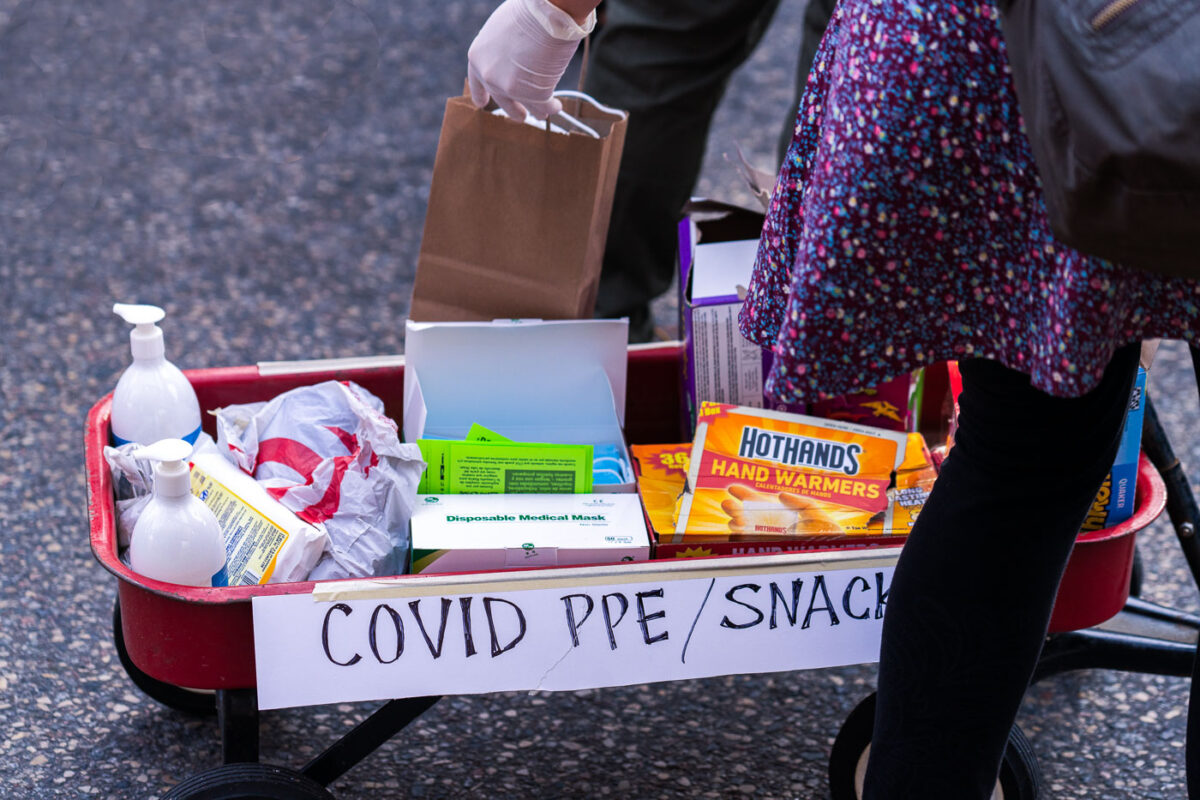
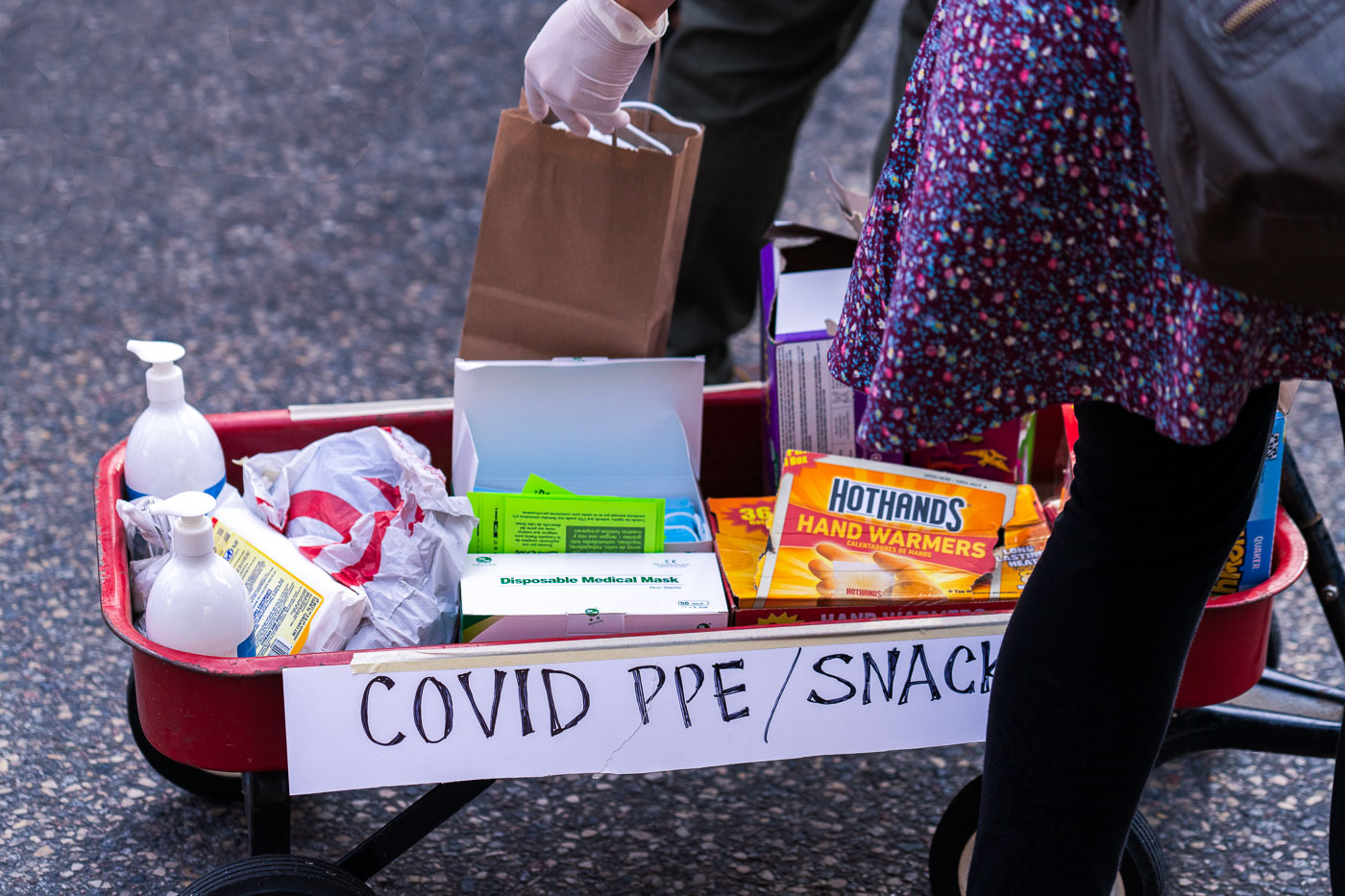
Red wagon stocked with COVID-19 PPE, hand warmers, and snacks for protest participants in Minneapolis.
A hand-lettered sign reading "COVID PPE / Snacks" identifies this wagon as a mutual aid station, stocked with hand sanitizer, disposable medical masks, hand warmers, and packaged snacks. Volunteers organizing such stations typically distribute supplies free of charge to marchers, a practice that became common at Minneapolis demonstrations during the COVID-19 pandemic. The mix of protective gear and warmers the practical needs of participants marching outdoors in November, when the city's temperatures often fall near freezing.

A Mutual Aid Wagon Marked “COVID PPE / Snacks”

Protester wearing denim vest with Hitler-Trump patch at Minneapolis post-election march.
Powderhorn Park, on Minneapolis's south side, was a gathering point for marches following the November 2020 presidential election. Marchers moved from the park through nearby streets, with signs and patches expressing opposition to Donald Trump, including imagery comparing him to Adolf Hitler. The neighborhood had already served as a staging ground for demonstrations earlier that year following the killing of George Floyd, making it a familiar assembly point for organizers by the time of the election.

“Hitler” Trump Patch on a Denim Jacket at Powderhorn Park March

Protesters carrying "Jews Against Fascism" and racial justice banners march along Lake Street in Minneapolis.
Marchers carry a "Jews Against Fascism" banner down Lake Street on November 7, 2020, the day major networks declared Joe Biden the winner of the presidential election. The route passed the former Minneapolis Police Third Precinct at Lake Street and Minnehaha Avenue, burned by protesters in May 2020 after the killing of George Floyd and later demolished by the city. Other banners and signs in the crowd called for racial justice, a "just transition," and police abolition.

“Jews Against Fascism” Banner Leads a Lake Street March

"Abolish The Police" mural on boarded windows of Hook and Ladder Theater on Minnehaha Avenue in Minneapolis with pedestrians
The Hook and Ladder Theater & Lounge sits on Minnehaha Avenue in Minneapolis's Longfellow neighborhood, a live-music venue that had its plywood window coverings turned into protest art after the killing of George Floyd in 2020. The "Abolish the Police" mural, along with the "Justice" and "Love" lettering beside it, remained on the boards well after the unrest that summer, turning the building into an ongoing outdoor gallery. People gathered outside the venue in November 2020, in the days following the announcement of the presidential election results, as debates over policing and public safety continued in the city.

“Abolish The Police” Mural on the Hook and Ladder in Minneapolis

Crowd of protesters with signs and flags marches past colorful mural on Lake Street in Minneapolis.
The mural above the marchers depicts a farmworker and desert plants, one of many large-scale works commissioned along Lake Street after the corridor sustained heavy damage following George Floyd's killing in May 2020. Lake Street is a major east-west commercial corridor through South Minneapolis and has long served as a hub for the city's Latino and immigrant-owned businesses. The march passing beneath it took place on November 7, 2020, the day media outlets projected Joe Biden as the winner of the presidential race. Demonstrators carried signs addressing policing and housing as they moved along the street.

Post-Election March Passes a Mural on Lake Street

Coliseum Building on Lake Street in Minneapolis with boarded storefronts decorated with community murals.
The Coliseum Building stands on Lake Street in Minneapolis, its ground-floor storefronts boarded with plywood after damage during the 2020 civil unrest. Built in 1917, the building originally housed a theater along with retail and commercial tenants serving the Longfellow neighborhood. Community members later painted the plywood panels with murals and messages, turning the boards into a temporary public canvas.

Murals Cover Boarded Windows at the Coliseum Building on Lake Street

Artist paints Black Lives Matter mural on boarded storefront along Lyndale Avenue in Uptown Minneapolis.
The mural reading "Black Lives Matter, All Year Round" covers boarded-up storefronts on Lyndale Avenue in Uptown Minneapolis. Plywood panels like these went up over windows and doors across the city after unrest broke out in the wake of George Floyd's killing in May 2020, and many were later painted by local artists rather than removed. Months after the initial unrest, murals such as this one remained in place, turning storm boards into lasting public artwork.

“Black Lives Matter, All Year Round” Mural on Lyndale Avenue

Boarded Tires Plus storefront on Lake Street, Minneapolis, with graffiti including "Stop Line 3" and "No More Prez" messages
Tires Plus operates a tire and auto repair shop on Lake Street in Minneapolis's Uptown neighborhood. Plywood covering its windows carries the message "Stop Line 3," a reference to opposition against Enbridge's Line 3 oil pipeline expansion through northern Minnesota. Other markings reading "No More Prez" and "Riots 2020" were added amid the unrest that followed George Floyd's death in 2020.

Boarded-Up Tires Plus on Lake Street After 2020 Unrest

Uptown Smoke Shop storefront on Lake Street with boarded windows displaying colorful "Help + Love each other" graffiti mural.
The mural reading "Help + Love Each Other" covers boarded-up windows at Uptown Smoke Shop, an e-cigarette retailer at 1408 Lake Street in Minneapolis's Uptown neighborhood. Plywood went up over storefronts along Lake Street after the unrest that followed George Floyd's killing in May 2020, and many of those boards became canvases for community-painted messages rather than being removed once repairs were made.

‘Help + Love Each Other’ Mural at Uptown Smoke Shop on Lake Street

Illuminated art installation by Juxtaposition Arts on Target store facade, Lake Street, Minneapolis, featuring "WE STAND TOGETHER
Juxtaposition Arts, a Minneapolis youth-focused art and design nonprofit based in North Minneapolis, created the mural covering the Target store's exterior wall on Lake Street. The panel reads "We Stand Together, We Build Together," spanning the length of the building in a series of connected murals. This Target location sits near the site of the Minneapolis Police Third Precinct, which was damaged during the unrest following George Floyd's death in May 2020. The store itself sustained damage in the same period and later reopened with the mural installed along its street-facing wall.

“We Stand Together” Mural at Target on Lake Street

Damaged building at Minnehaha Avenue and East 28th Street in Minneapolis during snowfall, November 2020.
This building at Minnehaha Avenue and East 28th Street in South Minneapolis sustained fire and structural damage during the unrest that followed George Floyd's killing in May 2020. The corner sits within the Longfellow neighborhood, a stretch of Minnehaha Avenue where several storefronts burned or were looted that week. Months later, by November 2020, the structure remained partially collapsed, its ruins boarded and marked with graffiti through the winter.

Collapsed Building at Minnehaha Avenue and East 28th Street

Worker operating snow blower on downtown Minneapolis sidewalk during heavy snowfall, November 2020.
A worker clears fresh snow from a downtown Minneapolis sidewalk with a walk-behind snow blower, working past a U.S. Bank branch. Minnesota's first significant snowfall of the 2020-21 season arrived in mid-November, catching the Twin Cities before many businesses had switched from fall to winter maintenance routines. Downtown property managers and city crews typically have a matter of hours to clear walkways after a storm, since Minneapolis code requires adjacent property owners to keep public sidewalks passable.

Clearing Snow Outside a U.S. Bank Branch in Downtown Minneapolis

Maruso Bar's neon sign glows on Hennepin Avenue in downtown Minneapolis during heavy November snowfall.
Maruso Bar sits on Hennepin Avenue in downtown Minneapolis, a stretch of the street long associated with the city's nightlife and entertainment district near First Avenue and the Hennepin Theatre District.

Snowfall Outside Maruso Bar on Hennepin Avenue

State Theatre marquee in downtown Minneapolis displays art installation and Martin Luther King Jr. quote during snowstorm.
The State Theatre opened in 1921 on Hennepin Avenue as a movie palace, part of downtown Minneapolis's early 20th-century theater district. Architect J.R. Davidson designed the building in the Renaissance Revival style typical of the era's movie palaces. After decades as a cinema, the theater was restored as a live performance venue and now operates under Hennepin Theatre Trust, alongside the nearby Orpheum and Pantages theaters. Its marquee has displayed "The Overseer: Divinity and Humanity," an installation by artist Reggie Leflore, paired with a quote from Martin Luther King Jr.

The State Theatre Marquee During a Hennepin Avenue Snowstorm

Hop Wong Chinese Restaurant storefront on Chicago Avenue in Minneapolis during heavy snowfall.
Hop Wong is a Chinese restaurant on Chicago Avenue in the Midtown neighborhood of Minneapolis. Its boarded-up windows and door date to the unrest that followed George Floyd's death in May 2020, when many businesses along the Lake Street and Chicago Avenue corridors sustained damage. A hand-lettered "Hop Wong Now Open" sign and a lit "Open" placard mark its return to business behind the plywood.

Hop Wong Chinese Restaurant Reopens on Chicago Avenue After Boarding

Boarded UnBank branch on Hennepin Avenue displays "Open" banner despite plywood-covered windows during Minneapolis November 2020.
The UnBank Company operates check-cashing and short-term loan storefronts, marketed as an alternative to traditional banks for customers without conventional accounts. This branch sits on Hennepin Avenue in downtown Minneapolis, its windows and doors covered in plywood while a banner reading "Yes, We Are OPEN For You!" hangs across the boards. Neon signs for "Cash Loans" and "Checks Cashed" remain part of the storefront, advertising the same services the plywood was meant to protect. Metal barricades stand along the sidewalk in front of the entrance.

Boarded UnBank Branch on Hennepin Avenue, “Yes, We Are Open”

Boarded storefront on Lake Street in Minneapolis displays "George Floyd" text during snowfall.
Plywood covering a storefront on Lake Street carries the hand-painted name "George Floyd," one of many boarded windows along the corridor turned into memorials after his killing in police custody in May 2020. Businesses along Lake Street boarded their windows that spring after nights of fires and looting during the unrest that followed Floyd's death. Rather than being removed once the immediate unrest subsided, many of these boards remained in place for months, repainted by artists and volunteers with murals, names, and messages tied to the Black Lives Matter movement.

“George Floyd” Mural on Boarded Storefront, Lake Street Snowfall

Black Lives Matter mural on Lyndale Avenue in Minneapolis displays "All Year Round" message during snowfall.
The mural reads "Black Lives Matter All Year Round," painted across plywood boards on a building along Lyndale Avenue in Minneapolis's Uptown neighborhood. The piece is one of many murals painted on boarded storefronts across Minneapolis following the unrest that followed George Floyd's killing in May 2020, when businesses across the city covered their windows and local artists turned the boards into canvases. Many of these murals remained in place for months afterward, becoming a lasting public record of that period even as boards came down elsewhere.

“Black Lives Matter All Year Round” Mural on Lyndale Avenue

USPS delivery vehicles staged at temporary post office in former K-Mart building, Minneapolis.
The former Kmart at Lake Street and Nicollet Avenue closed in 2020 after decades of operation, and its parking lot was pressed into service as a staging ground for USPS delivery vans. The move came after the nearby Lake Street postal station was damaged during the unrest following George Floyd's death in May 2020, forcing carriers to work out of temporary sites while repairs were made. Rows of USPS vans parked here each morning for loading before drivers headed out on their routes. The high-rise towers visible behind the lot are part of the Whittier neighborhood's residential corridor along Nicollet Avenue.

USPS Delivery Vans at the Former Lake Street K-Mart

Colorful murals reading "LET THE HEALING" adorn the facade of a temporary post office housed in a former K-Mart on Lake Street in
This building on Lake Street once housed a K-Mart before becoming the Lake-Street Minnehaha Temporary Station, a USPS facility set up after the neighborhood's original postal buildings were damaged during the unrest that followed George Floyd's death in May 2020. The station has continued to handle mail and package service for the surrounding Minneapolis community. Painted across the storefront, a mural reading "LET THE HEALING" was added afterward as part of a wave of public art that appeared on boarded and repurposed buildings along the corridor.

“Let the Healing” Mural at the Lake Street Minnehaha Postal Station

Lake Street Minnehaha temporary post office housed in former K-Mart building with community murals.
This building on Lake Street served as the former K-Mart site before the US Postal Service converted it into a temporary station. USPS opened the location after the Lake Street and Minnehaha post office branches were destroyed during the unrest that followed George Floyd's killing in May 2020. The temporary station restored mail and package services to the surrounding Longfellow and Powderhorn neighborhoods while a permanent replacement was planned.

Temporary USPS Station at the Former K-Mart on Lake Street

Assorted chairs lined up on the sidewalk outside the former SuperValu grocery store on West Lake Street in South Minneapolis.
This stretch of West Lake Street once held a SuperValu grocery store, part of a chain that has operated in Minnesota since the 1920s. The building sat empty after the store's closure, its blue-lit exterior a holdover from the retail signage era. Rows of mismatched chairs left along the sidewalk here have appeared intermittently since 2020, placed by passersby rather than any organized group.

Chairs Outside the Former SuperValu on West Lake Street at Night
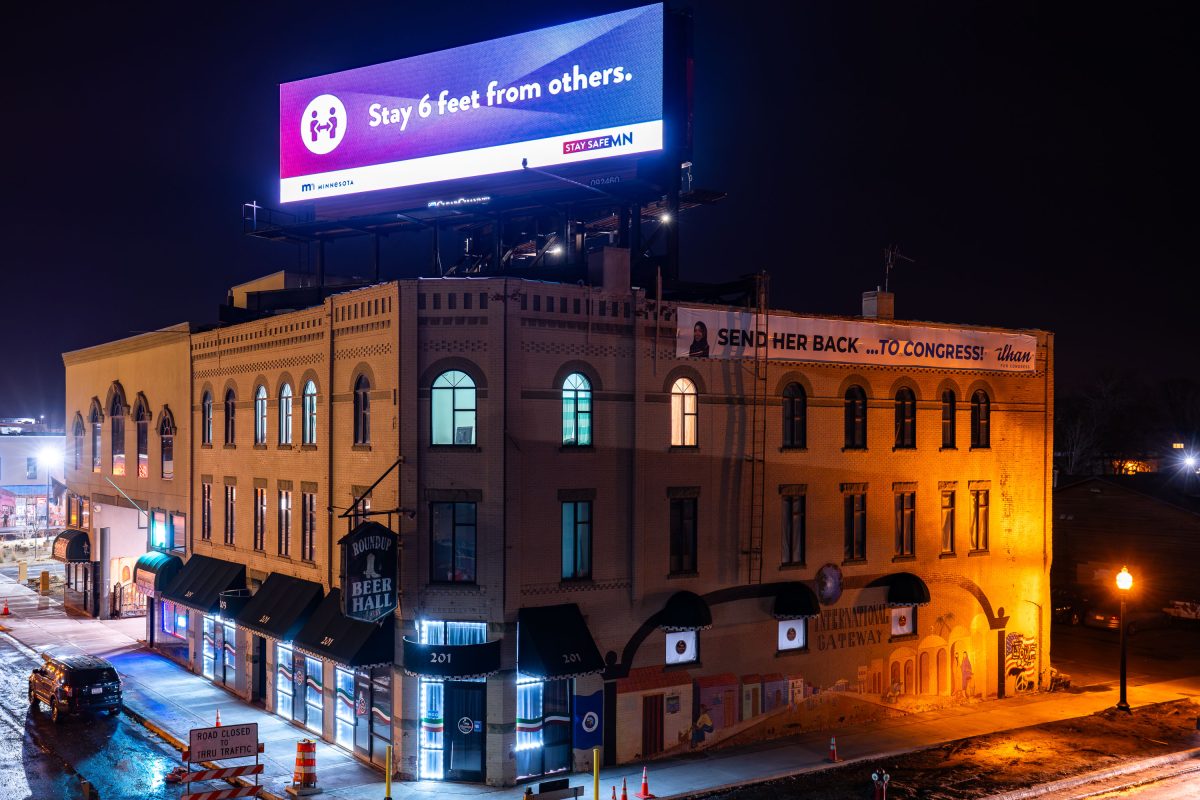
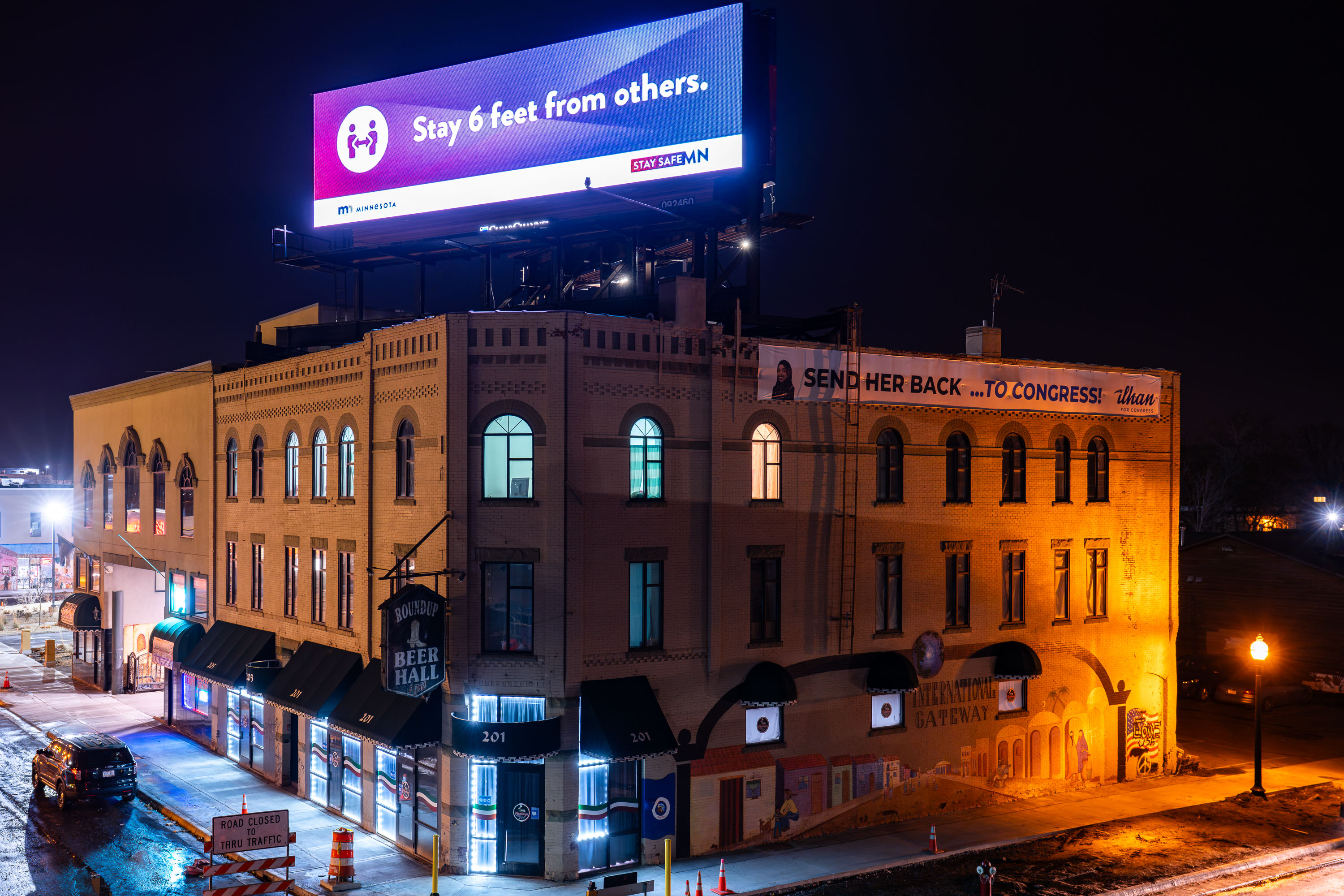
Ilhan Omar banner and COVID-19 Billboard
A billboard during COVID-19 pandemic that reads "Stay 6 feet from others". "Send Her Back... To Congress!" Ilhan Omar sign on the side of the building.

Ilhan Omar banner and COVID-19 Billboard

Former K-Mart building on Lake Street in Minneapolis converted to a United States Post Office with community murals.
This post office on Lake Street occupies a building that once housed a K-Mart store. The U.S. Postal Service moved operations here after its Lake Street and Minnehaha Avenue branches were damaged during the unrest that followed George Floyd's killing in May 2020. Murals cover much of the building's exterior, added by local artists in the months after the damage.

Post Office Inside the Former K-Mart on Lake Street

Speedway gas station under remodeling on Hennepin Avenue in Uptown Minneapolis at night.
This Speedway station sits along Hennepin Avenue in Uptown Minneapolis, a commercial strip lined with bars, restaurants, and retail storefronts. The location sustained damage during the unrest that swept through Minneapolis in late May 2020, when fires and looting hit numerous businesses along Lake Street and Hennepin Avenue.

Speedway Gas Station at Night on Hennepin Avenue in Uptown
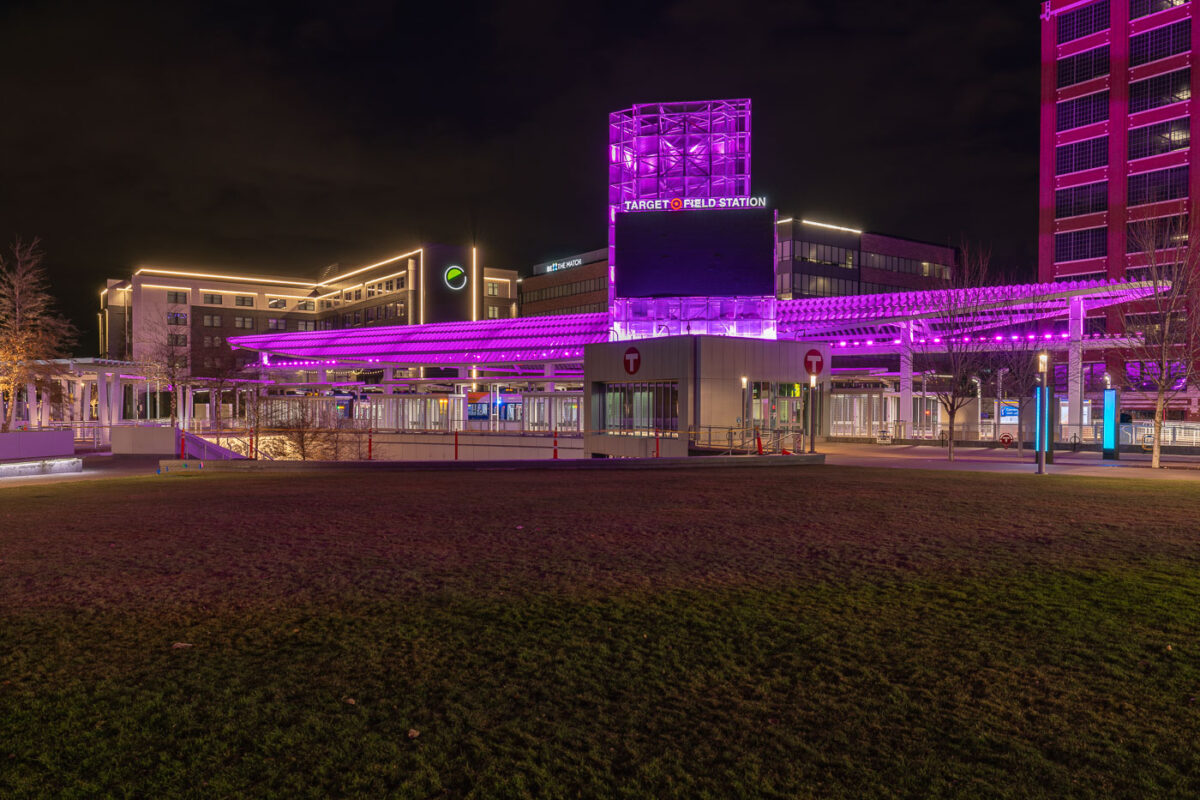
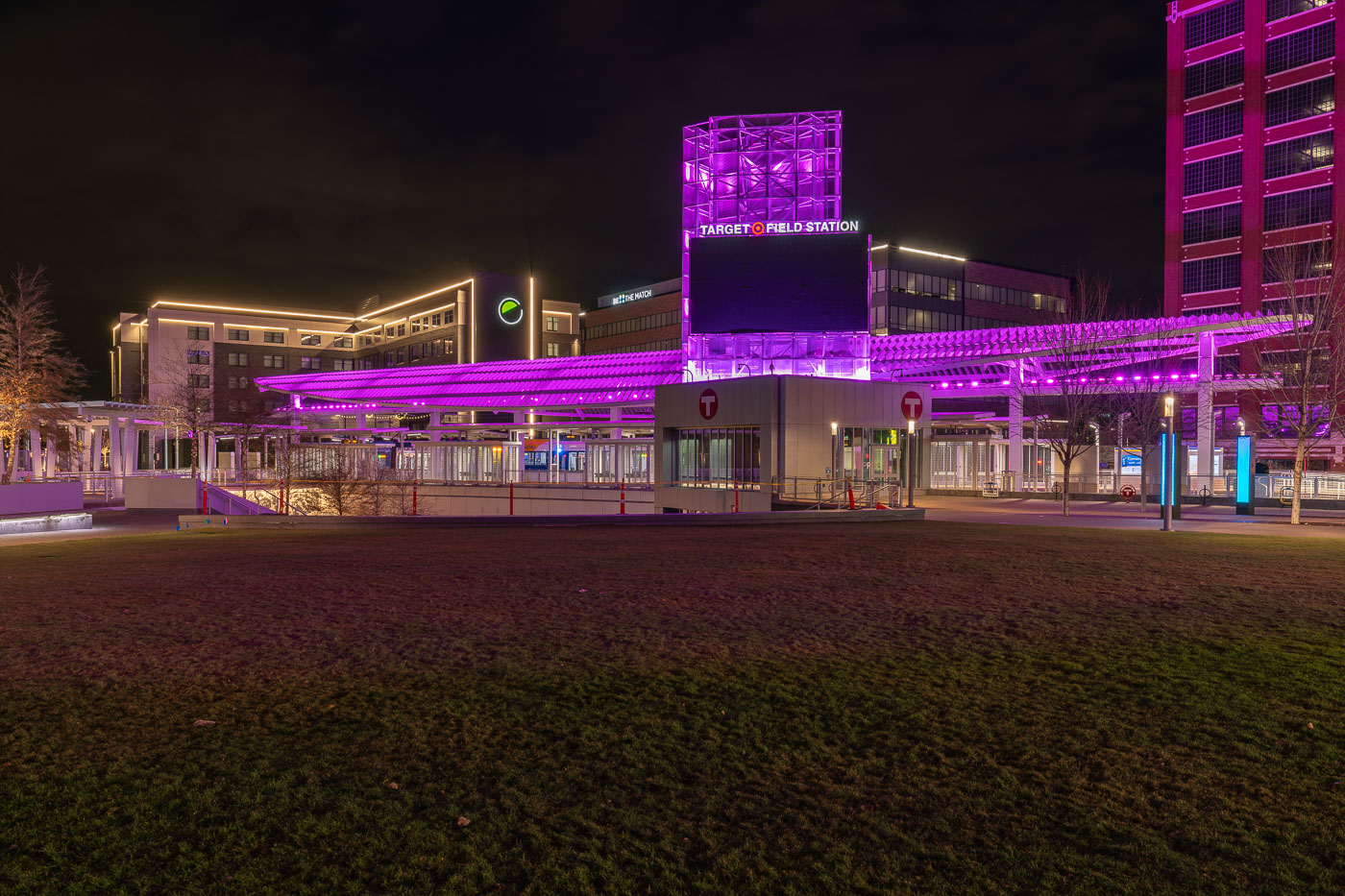
Target Field Station light rail transit hub glows with purple lighting at night in downtown Minneapolis.
Target Field Station opened in 2014 as the transit hub serving Target Field and the North Loop. It's a stop on both the METRO Green Line and Blue Line, connecting downtown Minneapolis to St. Paul, the airport, and Mall of America. A public plaza next to the station hosts pregame gatherings before Twins games.

Target Field Station in Downtown Minneapolis
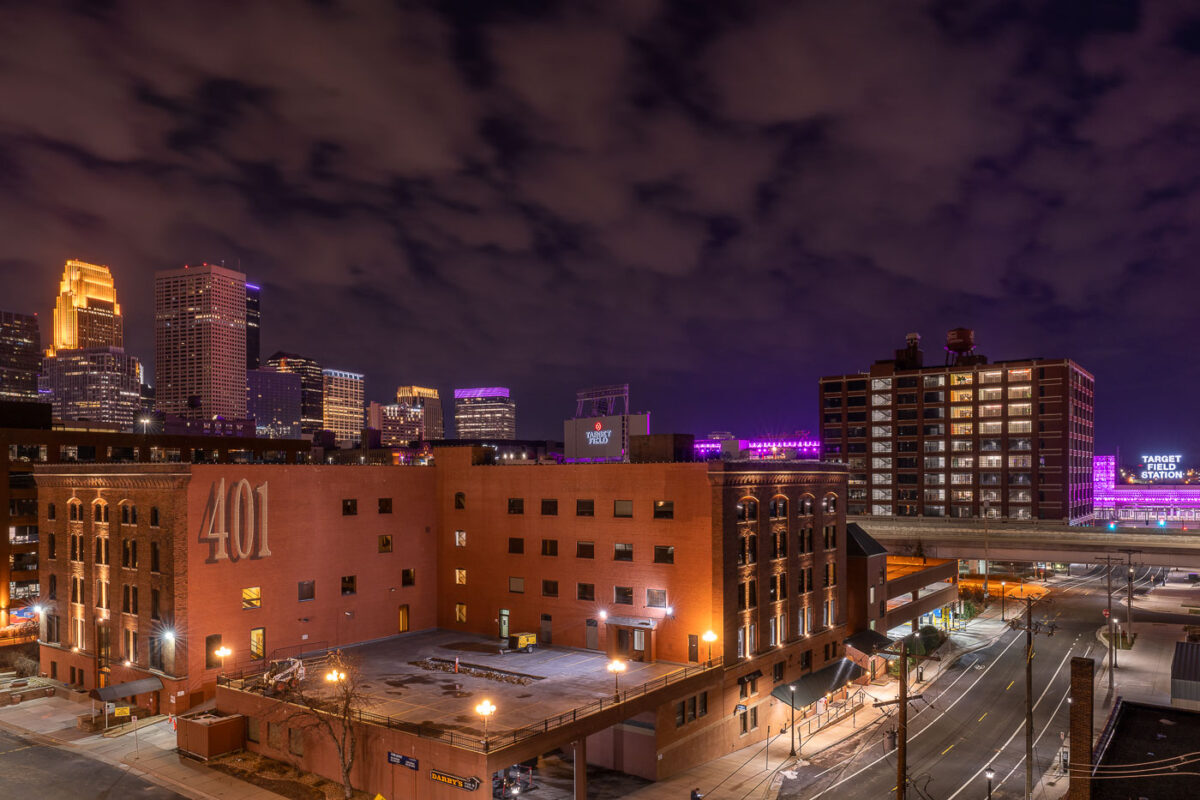
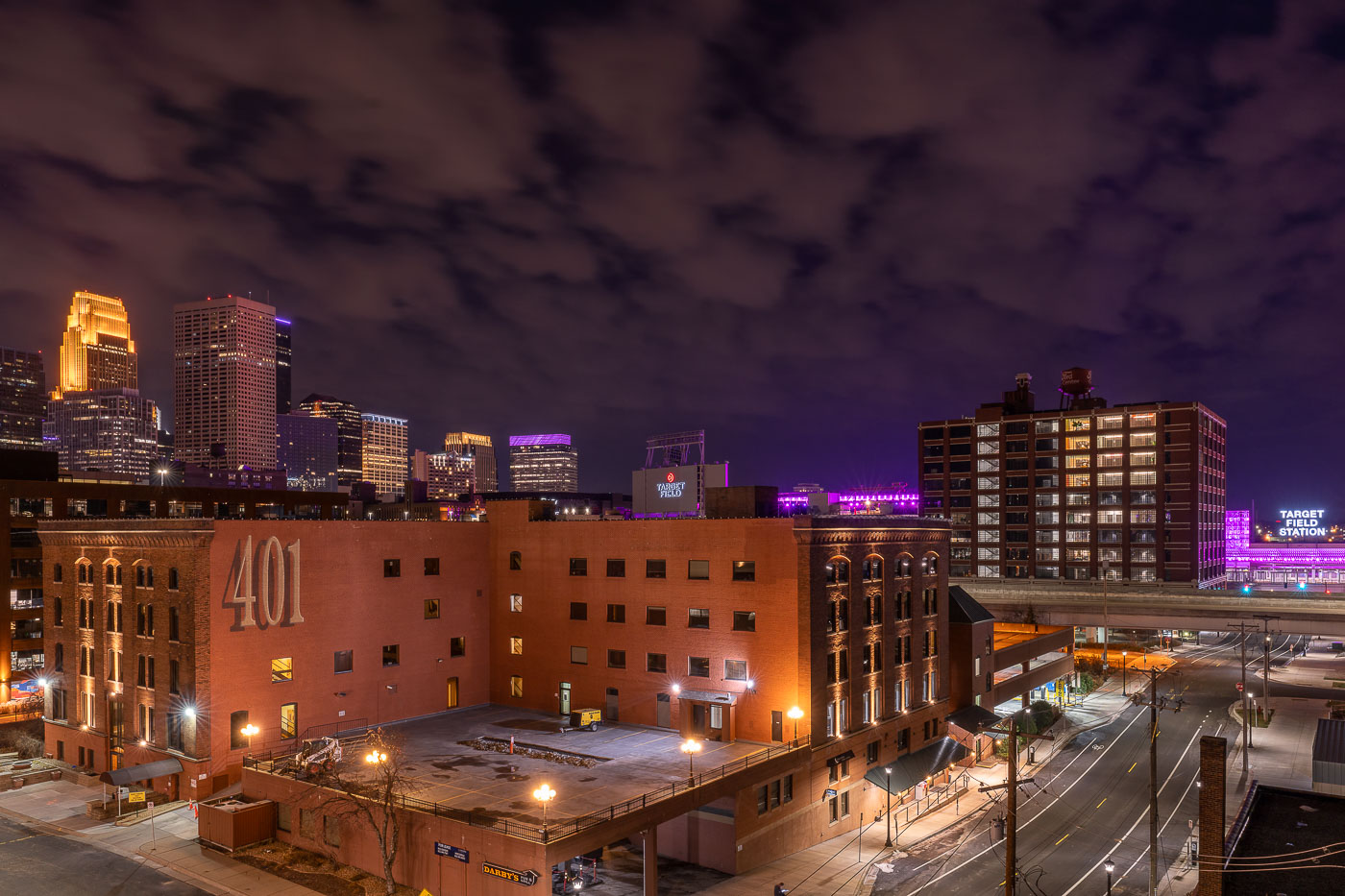
The 401 Building, a converted warehouse with residential units, anchors North Loop with downtown Minneapolis skyline beyond at
The 401 Building at 401 North Third Street began as a warehouse in the North Loop's old warehouse district, part of the milling and shipping infrastructure that once served the riverfront. Like many of its neighbors, it's since been converted to loft-style condominiums and commercial space, a common path for the district's brick-and-timber buildings since the 1980s. Target Field Station, visible to the east, opened in 2014 as a transit hub serving Northstar Commuter Rail, light rail, and bus routes, along with a public plaza used for Minnesota Twins game-day events. Downtown Minneapolis rises beyond both, its cluster of high-rises anchored by the IDS Center and Wells Fargo Center towers.

The 401 Building and Minneapolis Skyline From North Loop

Hilton Garden Inn hotel illuminated at night in downtown Minneapolis surrounded by office buildings.
The Hilton Garden Inn Minneapolis Downtown sits at 1101 Nicollet Mall, within a few blocks of the Minneapolis Convention Center and Orchestra Hall. It's part of the wave of hotel construction that filled in downtown Minneapolis blocks in the 2000s to serve convention and business travel near Nicollet Mall.

Hilton Garden Inn on Nicollet Mall, Minneapolis

Neighborhood Watch banner displayed on residential street in South Minneapolis with traffic control signs and yellow bollards.
A "Residents or Guest Only, No Trespassing" banner from the Neighbor Watch program hangs on a chain-link fence along a South Minneapolis residential block. Yellow traffic bollards and posted "One Way," "Do Not Enter," and "No Parking" signs restrict vehicle movement on the street. Neighborhood watch groups in Minneapolis are typically organized by residents in coordination with local police precincts to monitor and report suspicious activity on their blocks.

Neighbor Watch Banner and Traffic Barriers in South Minneapolis

George Floyd Memorial at Cup Foods, 38th Street and Chicago Avenue, Minneapolis.
George Floyd was killed by Minneapolis police officer Derek Chauvin on May 25, 2020, on the sidewalk outside Cup Foods at the corner of 38th Street and Chicago Avenue. Within days, the intersection filled with flowers, signs, and artwork, and residents began calling it George Floyd Square. A wrought-iron gate and a wall of flowers now mark the spot where Floyd died, tended by volunteers who've kept the memorial going through changes of season for months at a time.

George Floyd Square Memorial Outside Cup Foods

Via's Vintage storefront at 2408 Hennepin Avenue in Uptown Minneapolis displays vintage clothing and holiday decorations.
Via's Vintage sits at 2408 Hennepin Avenue in the Uptown neighborhood, selling secondhand and vintage clothing and accessories. The shop keeps regular retail hours seven days a week, including Sunday afternoons, a schedule posted at its entrance along with its phone number and website.

Via’s Vintage on Hennepin Avenue in Uptown

George Floyd Square memorial at 38th Street and Chicago Avenue in Minneapolis with chalk art and flower tributes.
George Floyd Square sits at the intersection of 38th Street and Chicago Avenue in Minneapolis, outside Cup Foods, where George Floyd died on May 25, 2020. The words "I can't breathe" — spoken by Floyd during his arrest and later echoed by Eric Garner in 2014 — are painted directly on the street alongside a large mural of angel wings. Flowers, handwritten signs, and personal offerings surround the artwork, left and maintained by visitors and neighborhood volunteers. For more than a year after Floyd's death, the intersection remained closed to through traffic and was informally managed by community members as a memorial and gathering space.

‘I Can’t Breathe’ Pavement Art at George Floyd Square

Boarded storefront at Fifth Element on Hennepin Avenue in Uptown Minneapolis with George Floyd portrait mural and "Black Lives
Fifth Element is a hip-hop and skateboard shop on Hennepin Avenue in Uptown Minneapolis, known for its role in the city's skate and street culture . After the store's windows were boarded up during the unrest following George Floyd's death in police custody in May 2020, local artists painted the plywood with a portrait of Floyd alongside the phrases "Black Lives Matter" and "Black Is Beautiful." The mural was one of hundreds that appeared on boarded storefronts throughout Minneapolis that year, part of a broader effort by artists to turn plywood barricades into public memorials and protest art.

George Floyd Mural on Fifth Element’s Boarded Windows, Uptown Minneapolis

Boarded storefront at 2741 Hennepin Avenue in Uptown Minneapolis with "Justice 4 George Floyd" painted on plywood, May 2020.
Plywood covering the storefront at 2741 Hennepin Avenue reads "Justice 4 George Floyd," painted with a red heart on either side of the word "4." The building sits in Uptown Minneapolis, a commercial stretch of Hennepin Avenue lined with retail shops and restaurants. Following George Floyd's death in police custody in May 2020, many Minneapolis businesses boarded their windows against anticipated damage, and those plywood panels became surfaces for murals, memorials, and protest messages across the city.

“Justice 4 George Floyd” Boards on Hennepin Avenue

Liquor Lyle's Bar Sign, Minneapolis
The Liquor Lyle's sign on Hennepin Avenue in Uptown Minneapolis. November 2020.

Liquor Lyle’s Bar Sign, Minneapolis

The Pioneers Statue in Northeast Minneapolis vandalized with red paint and protest messages at night.
The Pioneers Monument was sculpted by John K. Daniels and dedicated in 1936 to honor early European settlers in Minnesota. Vandals covered the granite base in red paint, writing "Decolonize," "Land Back," and "All Colonizers Are Bastards" across the statue and its steps. The monument depicts pioneer figures in bronze atop a stone pedestal and has drawn criticism in recent years from Indigenous activists who argue it glorifies colonization. Similar defacement has targeted other Minneapolis monuments tied to settler history amid broader calls to reconsider public memorials.

“Land Back” Graffiti Sprayed on the Pioneers Monument in Minneapolis

Toppled George Washington statue vandalized with red and yellow paint in Washburn Fair Oaks, Minneapolis.
The bronze George Washington statue in Washburn Fair Oaks Park was pulled from its base and left splashed with red and yellow paint, with "LAND BACK!" written across its side. The statue was dedicated in 1897, a gift to the city from the Daughters of the American R. It depicted Washington on horseback and had stood in the park for over a century before it was toppled.

George Washington Statue Toppled in Washburn Fair Oaks Park
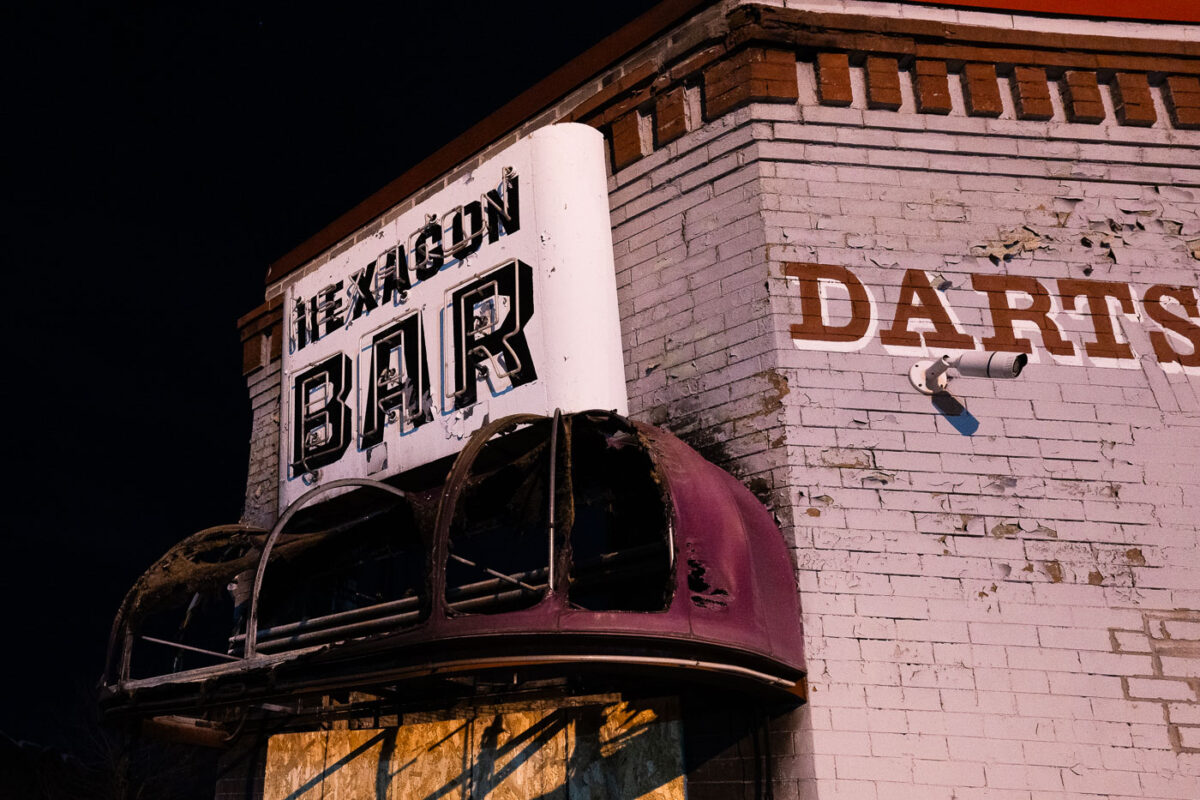
Hexagon Bar's damaged storefront and signage in South Minneapolis at night.
The Hexagon Bar sits at Lake Street and 26th Avenue South in Minneapolis's Longfellow neighborhood, a live-music dive bar known for punk and metal shows. The building burned during the unrest that followed George Floyd's murder in May 2020.

Fire Damage at the Hexagon Bar in South Minneapolis
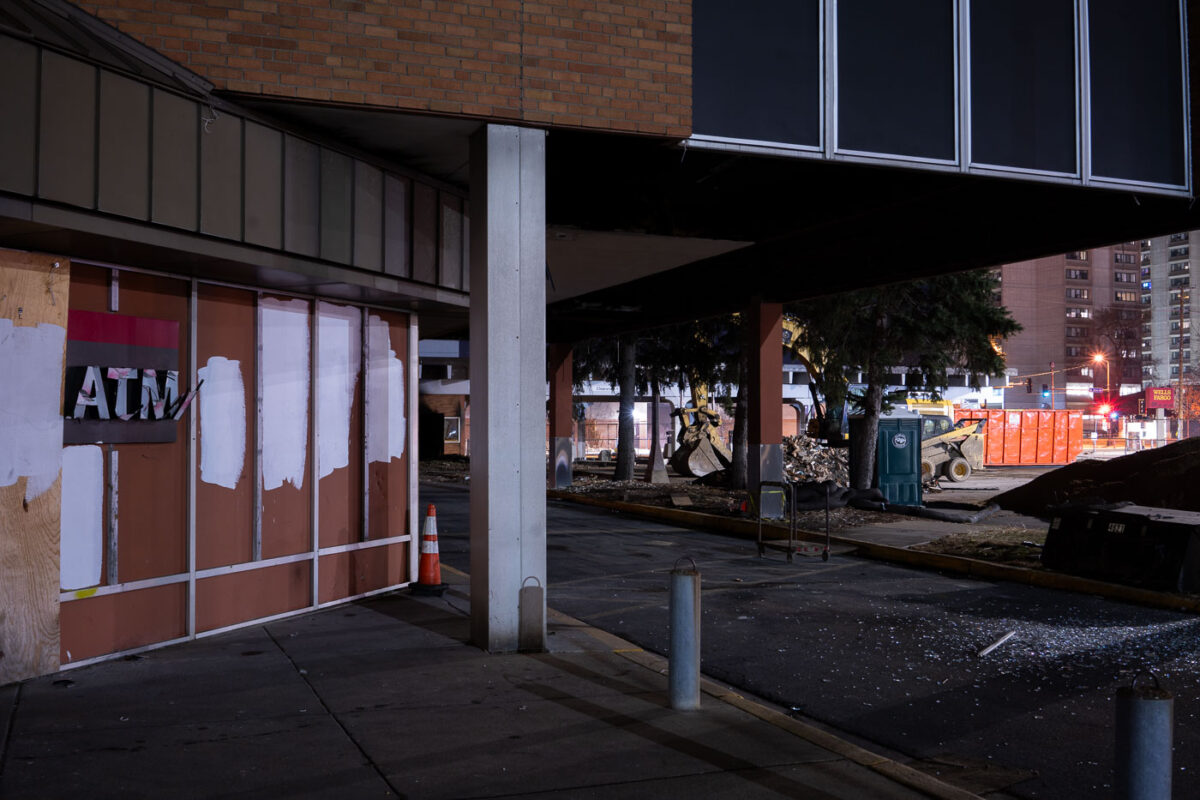
Burned out Wells Fargo building with ATM sign
The remains of a Wells Fargo bank branch stand on Nicollet Avenue in Minneapolis, following its destruction during the civil unrest of May 2020. This building, located across from the Minneapolis Police Fifth Precinct station, was burned during the uprising that followed the May 25, 2020 death of George Floyd.

Burned Wells Fargo ATM, Nicollet Ave, Minneapolis
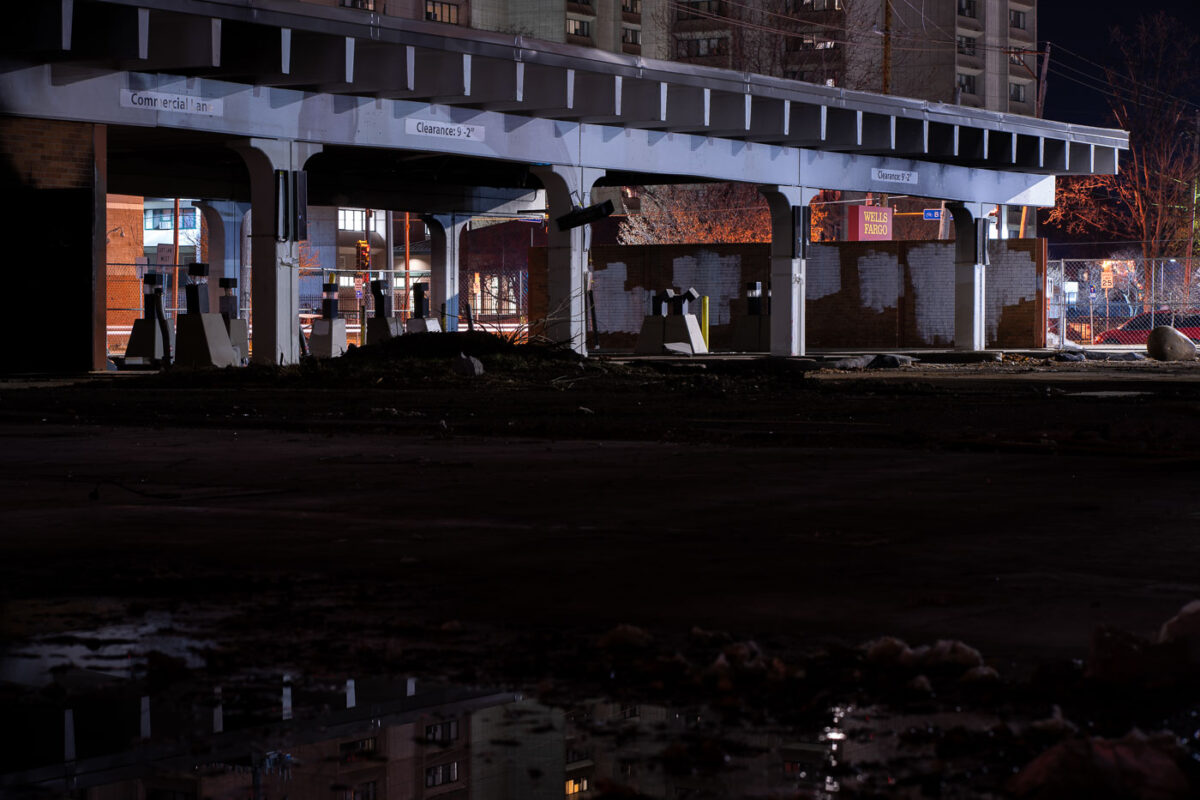
Remains of the burned Wells Fargo Bank
The remains of the Wells Fargo Bank on Nicollet Avenue in Minneapolis are visible at night. This retail financial institution was destroyed by arson following the May 25, 2020 death of George Floyd, during a period of widespread protest in the city. The bank was located directly across the street from the Minneapolis Police Department's Fifth Precinct station.

Wells Fargo Bank Arson Remains, Nicollet Ave, Minneapolis
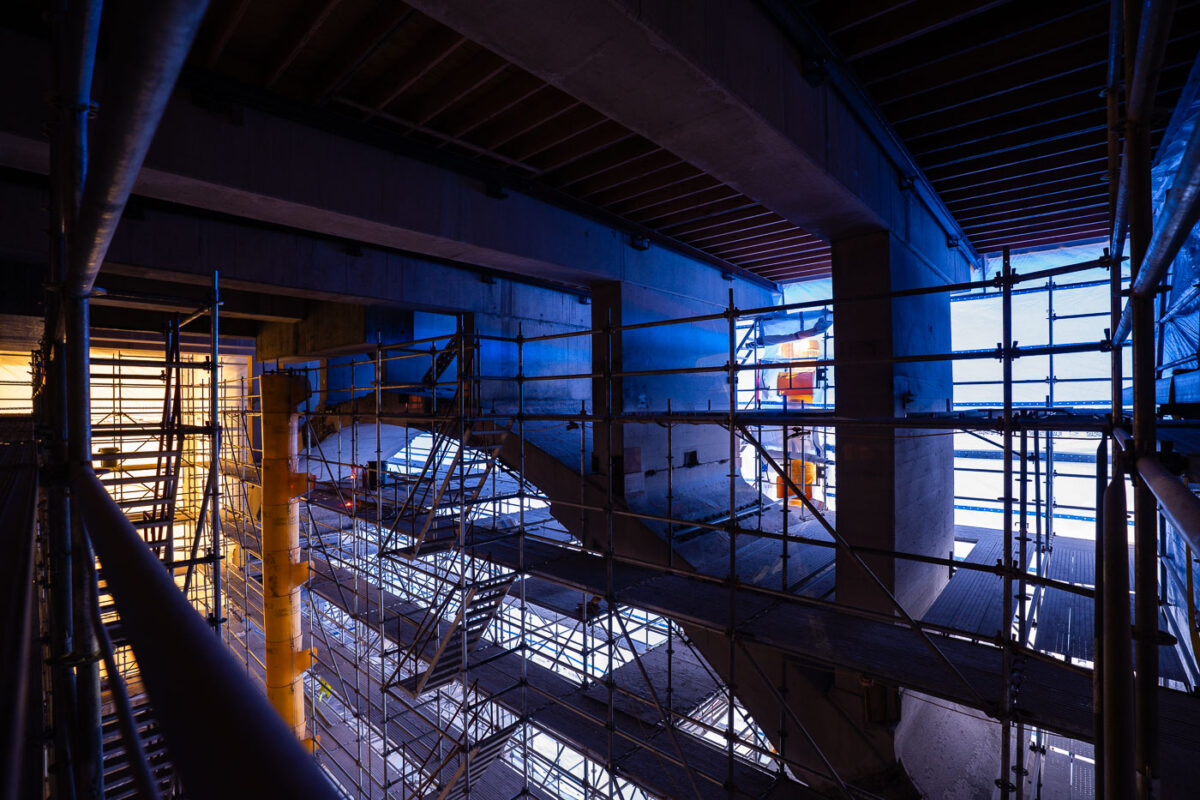
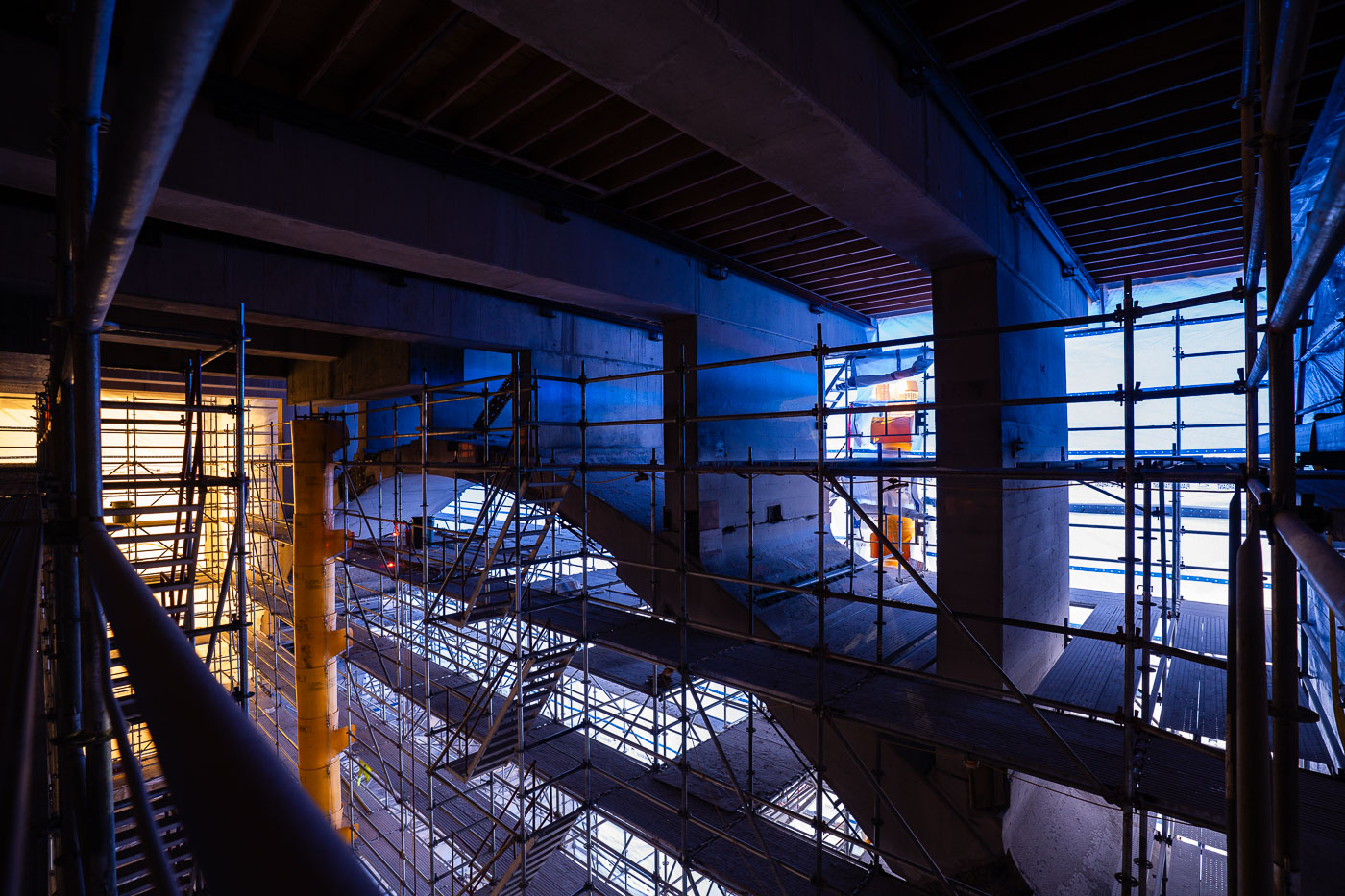
10th Avenue Bridge rehabilitation scaffolding beneath the bridge in downtown Minneapolis.
10th Avenue Bridge rehabilitation scaffolding in downtown Minneapolis. The temporary platform system surrounds the underside of the Mississippi River crossing during a major bridge rehab project. The structure provided worker access to bridge components during construction and maintenance work.

10th Avenue Bridge Rehabilitation Scaffolding, Minneapolis
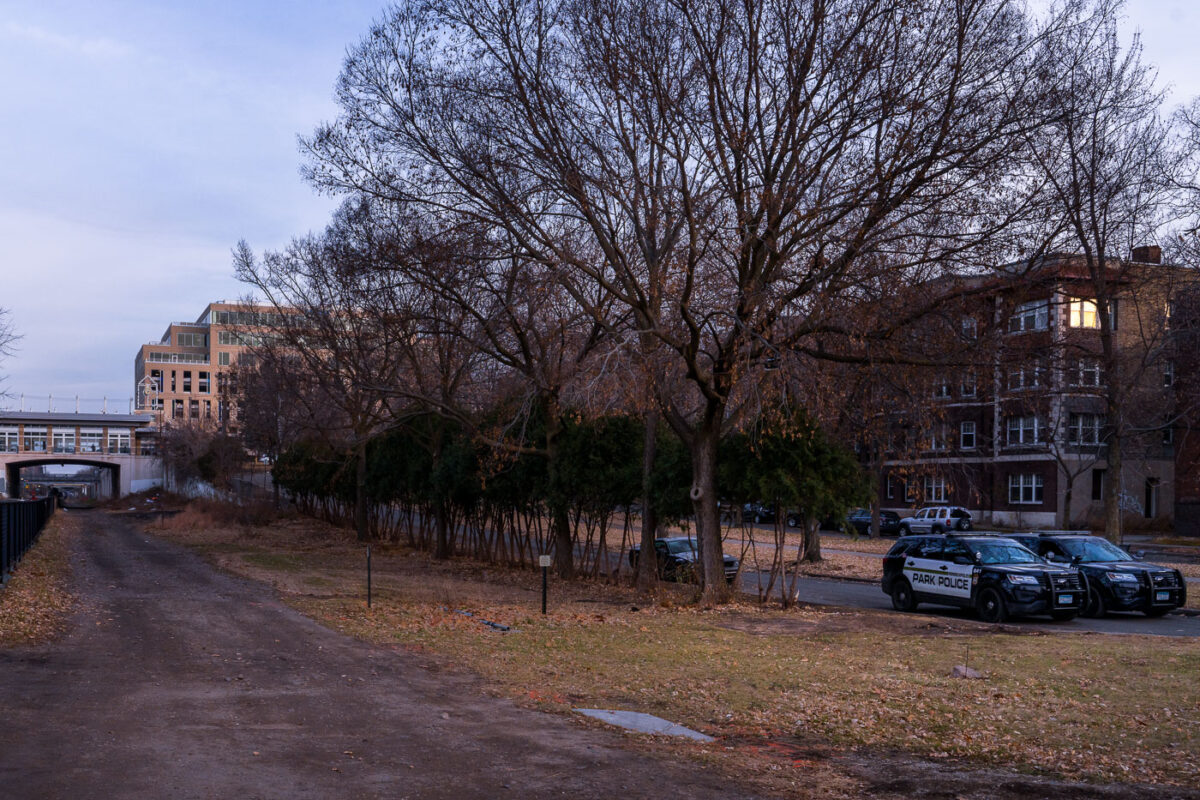
Minneapolis Park Police on The Mall in Uptown
Minneapolis Park Police vehicles are stationed in Uptown Minneapolis, adjacent to The Mall Park.

Minneapolis Park Police Squad Cars, Cleared Encampment Site, Uptown

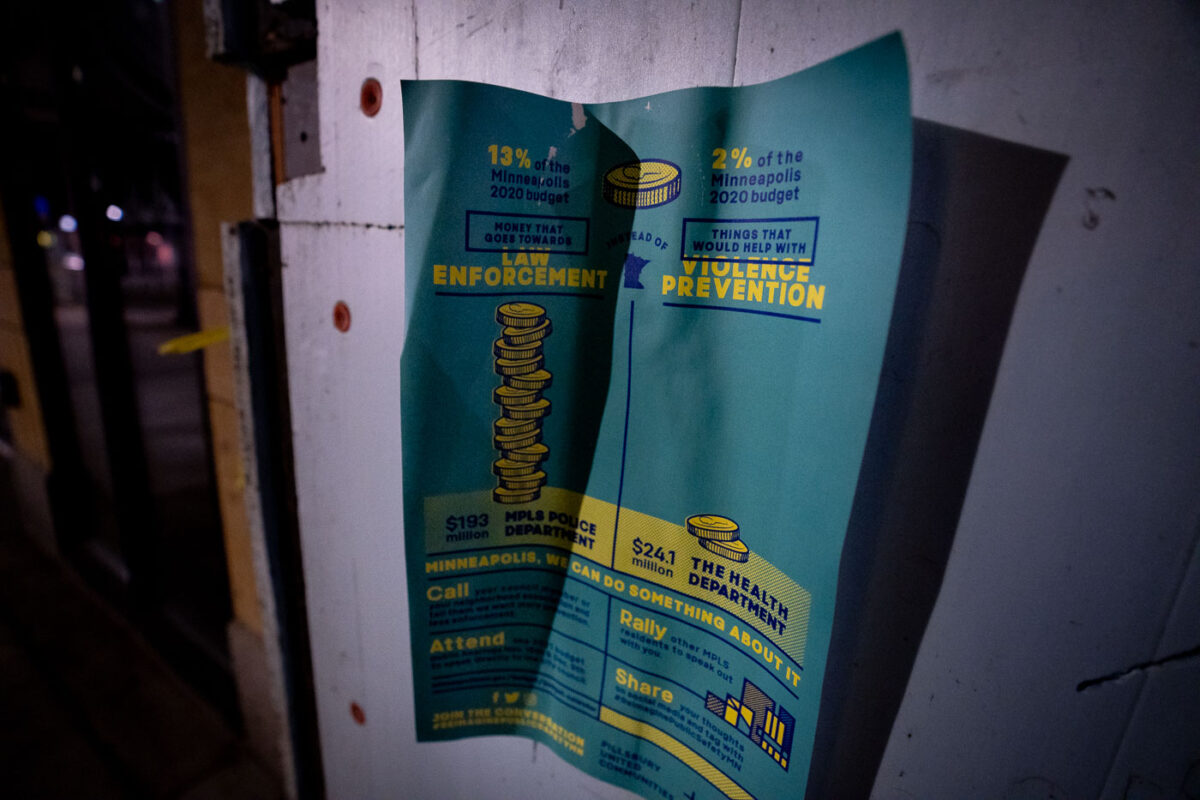
A flyer in Uptown Minneapolis regarding police funding
A flyer about Minneapolis 2020 budget priorities is posted on a building in Uptown Minneapolis. The poster compares funding for law enforcement and violence prevention, stating that 13 percent of the city budget, or $193 million, went to the Minneapolis Police Department while 2 percent, or $24.1 million, went to the Health Department for violence prevention. The flyer was produced by Pillsbury United Communities and calls attention to spending choices during a period of debate over public safety in Minneapolis.

Uptown Minneapolis Police Funding vs. Violence Prevention Flyer

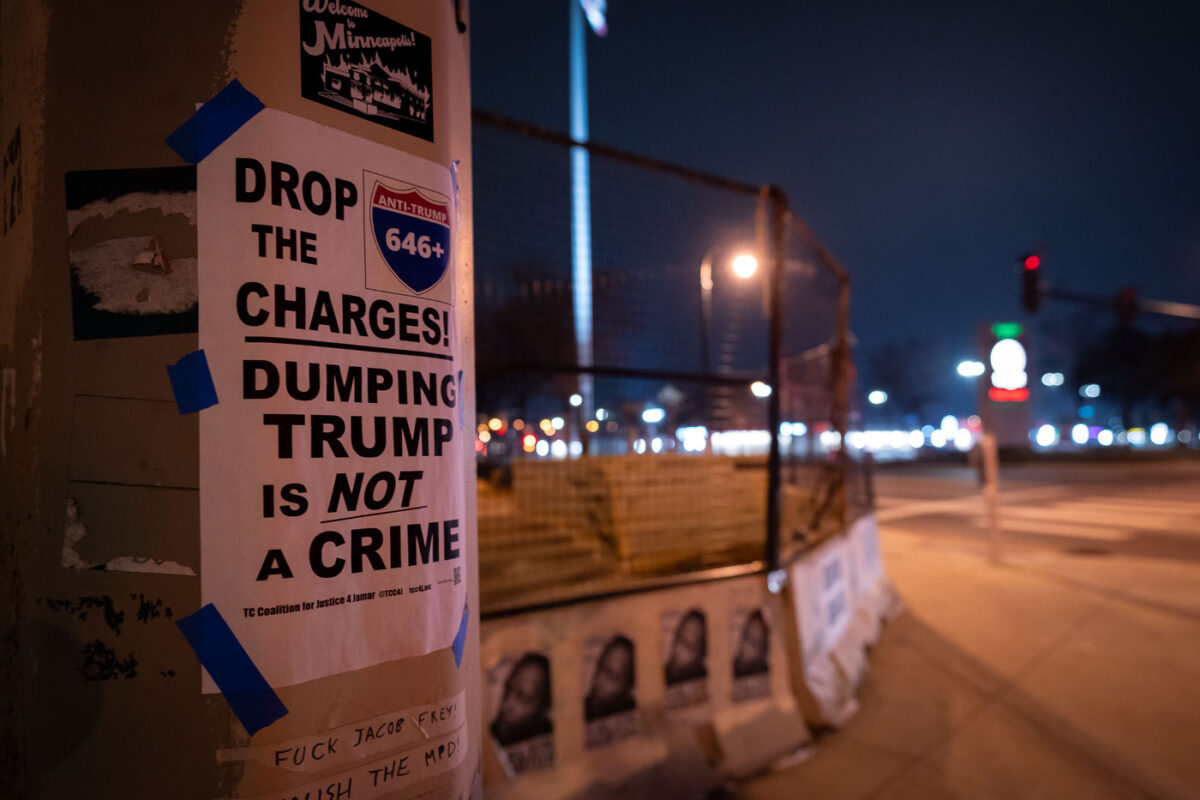
Dumping trump is a not a crime
Flyers are affixed to a pole outside the Minneapolis Third Precinct police station on Lake Street. This station was significantly damaged by fire during the Minneapolis Uprising in May 2020, following the murder of George Floyd. The prominent flyer demands "DROP THE CHARGES!" and states "DUMPING TRUMP IS NOT A CRIME." This call to "Drop the Charges" refers to the 646 individuals criminally charged during the largest mass arrest in Minnesota history, which occurred after a post-election march onto I-94. Other messages on the pole, including "ABOLISH THE MPD!", reflect ongoing demands for police reform and accountability in Minneapolis.

Dumping Trump Is Not a Crime Flyer, Minneapolis 3rd Precinct

Protest boards coming off windows
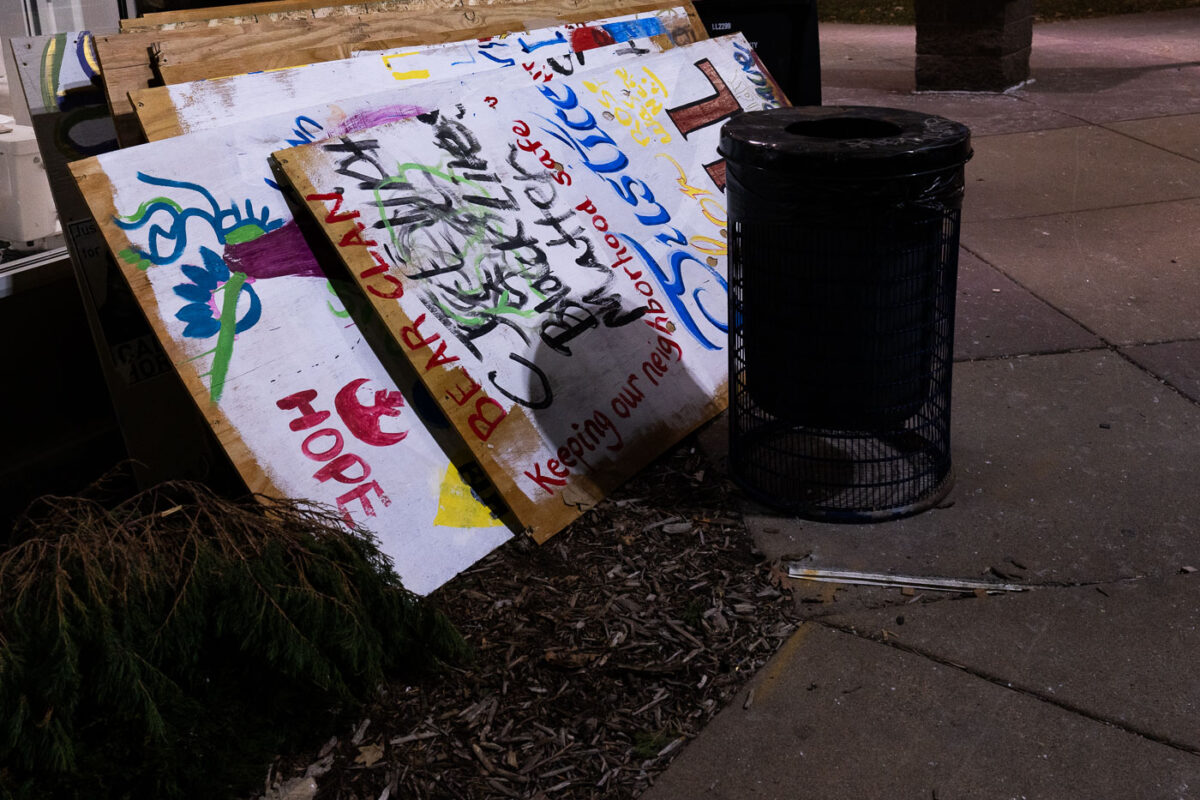
Boards bearing protest art are being systematically removed from storefronts along Lake Street in South Minneapolis. These temporary installations emerged following the widespread protests and civil unrest in late May 2020, sparked by the murder of George Floyd. A dedicated commission is actively collecting and preserving this art, which served as a powerful visual record of community sentiment and resilience during that summer.

Protest art boards from Lake Street, Minneapolis

Say his name calvin horton
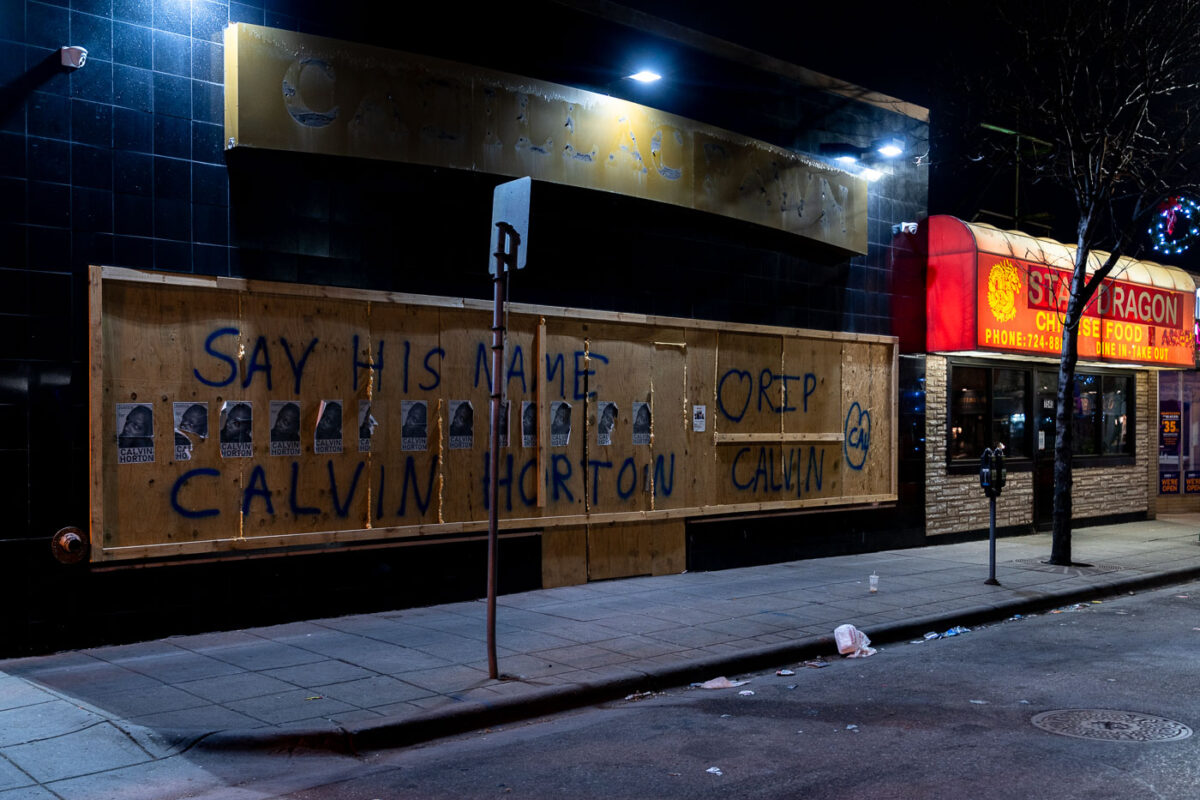
The former Cadillac Pawn building on East Lake Street in Minneapolis is shown boarded up. The plywood boards display graffiti and posters memorializing Calvin Horton, whose death was associated with the location during periods of unrest. Hennepin County authorities declined to prosecute the owner in connection with Horton's death, citing insufficient evidence.

Cadillac Pawn, E. Lake St., Minneapolis: Calvin Horton Graffiti

Chicago Lake Liquors after boards were removed
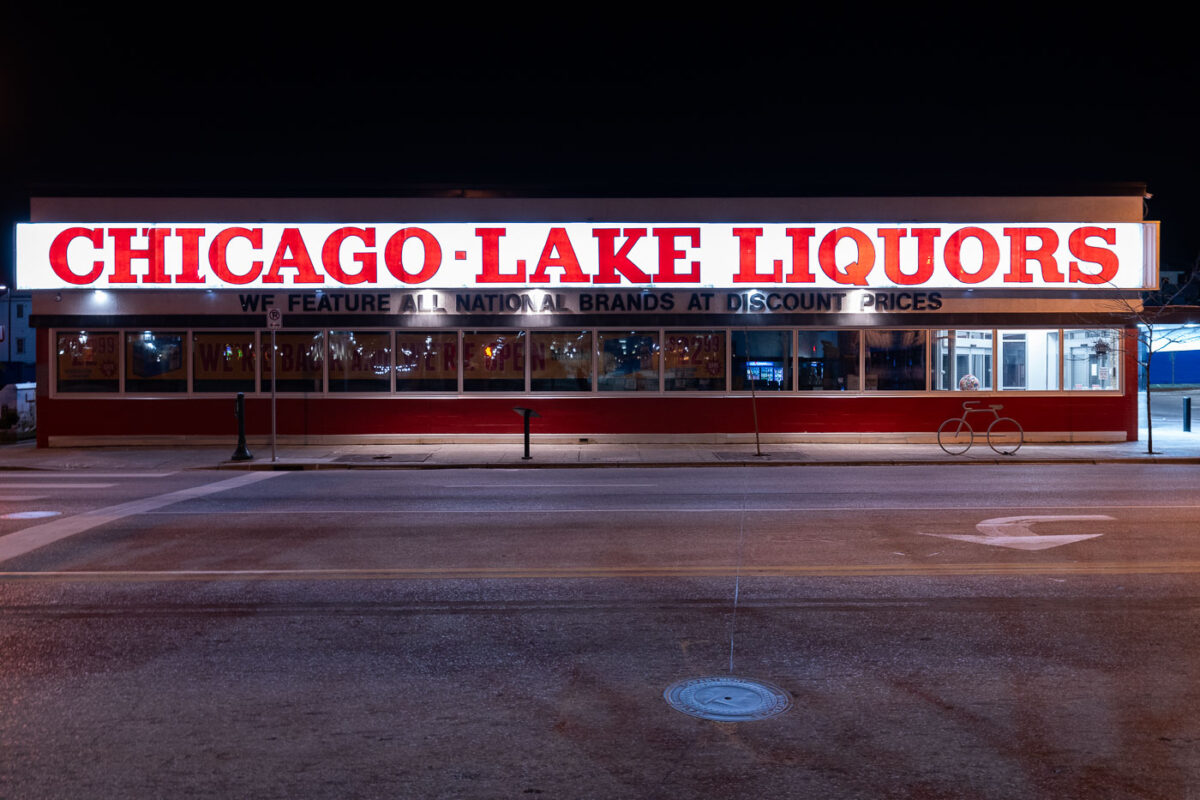
Chicago Lake Liquors, a retail store located on Lake Street in Minneapolis, is shown with its windows uncovered. The removal of protective boards from its storefront signifies a phase of recovery following the civil unrest that occurred in Minneapolis.

Chicago Lake Liquors on Lake Street, Minneapolis, boards removed

Inside the looted Cadillac Pawn store on Lake Street
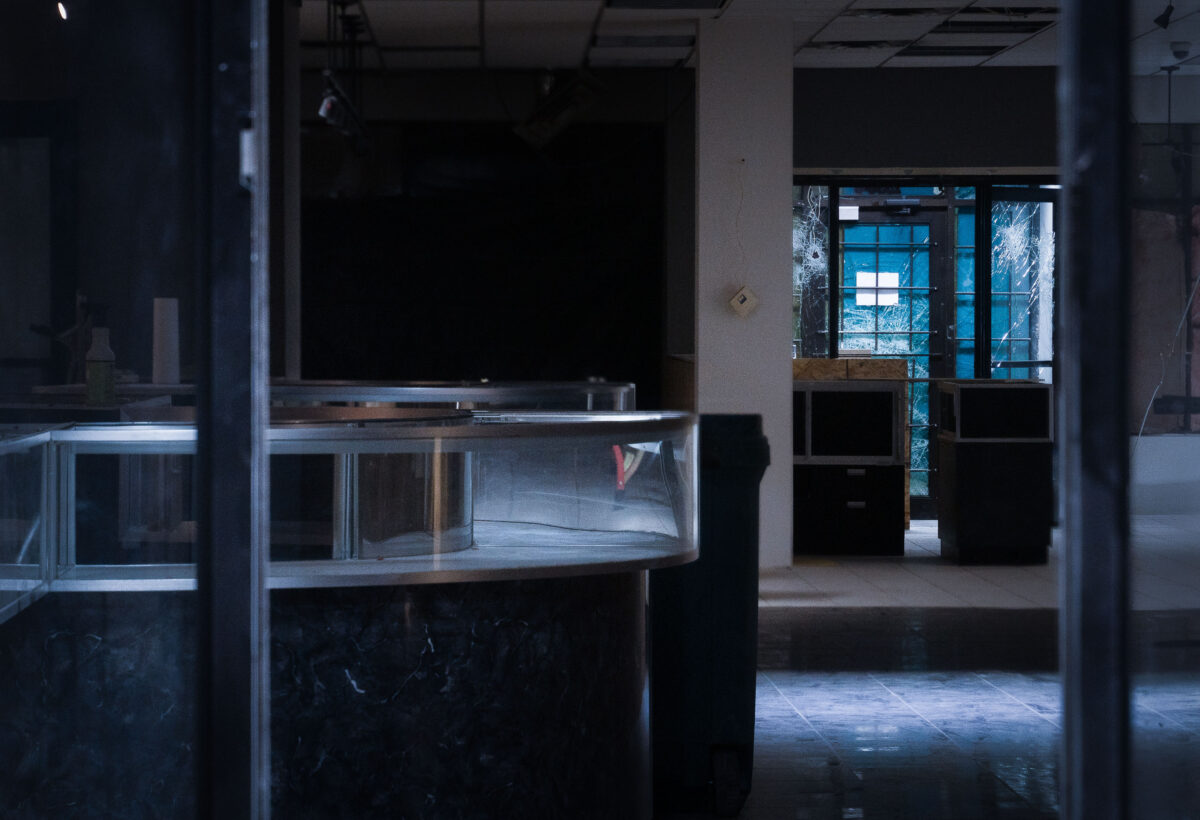
The interior of Cadillac Pawn on West Lake Street in Minneapolis displays damage, including a shattered window visible in the background. This commercial establishment was among many businesses along the Lake Street corridor that sustained damage during the civil unrest following the killing of George Floyd in May 2020.

Cadillac Pawn Interior with Broken Window, Lake Street

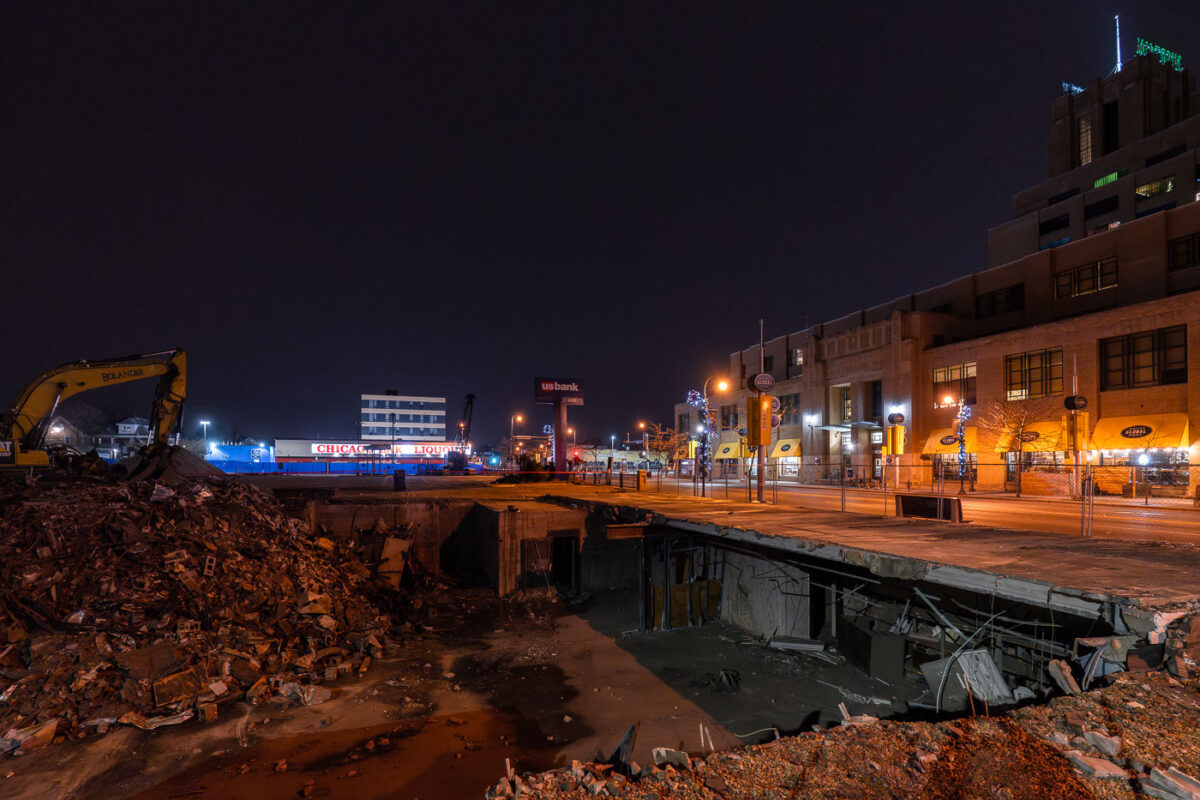
Demolition of US Bank on West Lake Street
The demolition of a US Bank branch on West Lake Street in Minneapolis is shown at night. This branch sustained damage during the Minneapolis Uprising, leading to its subsequent removal. The site was cleared for the construction of a new bank building, reflecting the broader redevelopment efforts in the area.

Night Demolition of US Bank, West Lake Street, Minneapolis

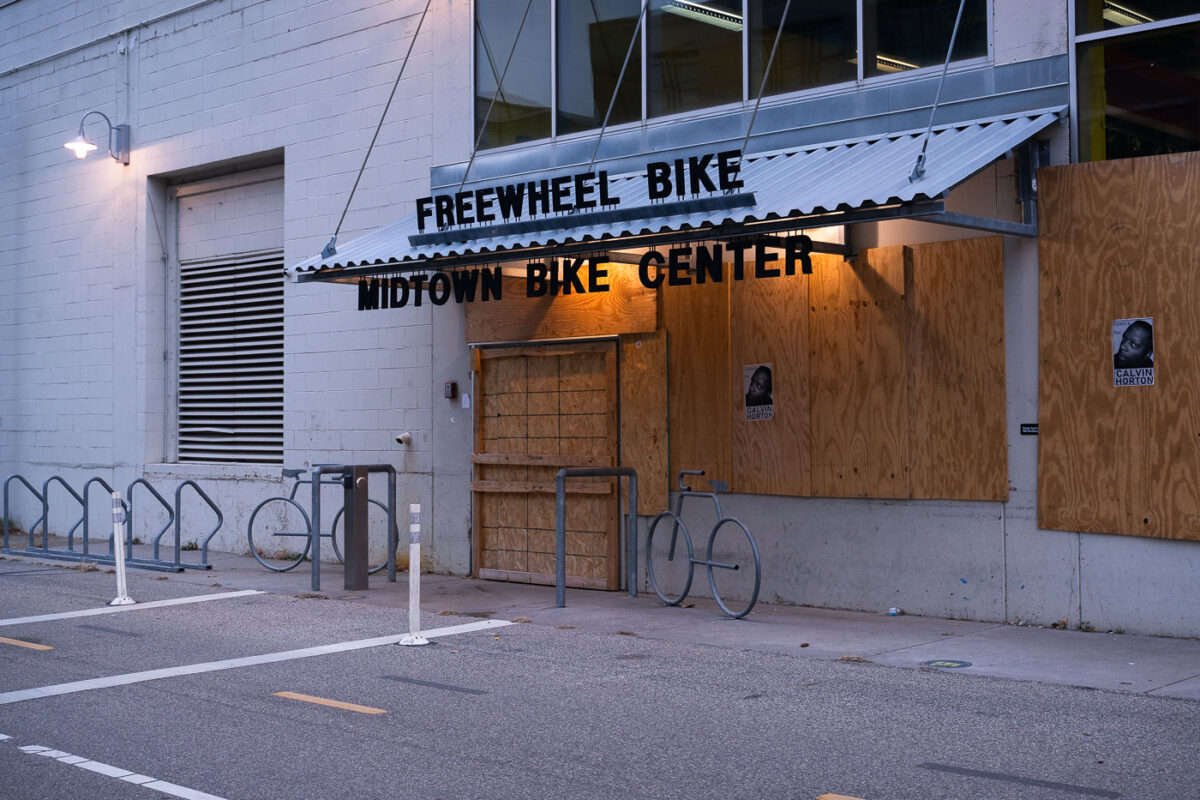
Freewheel Bike Center with boards
The Freewheel Bike Center, a bicycle shop located on the Midtown Greenway in Minneapolis, stands boarded up. This measure was taken during the widespread protests and civil unrest that followed the murder of George Floyd in May 2020. Posters calling for 'Justice for Calvin Horton' are affixed to the plywood, referencing a man allegedly killed by a pawn shop owner during the same period of unrest. Hennepin County later announced it would not prosecute the case due to a stated lack of evidence, a decision that fueled further calls for accountability.

Freewheel Bike Center, Midtown Greenway, boarded with Calvin Horton flyers

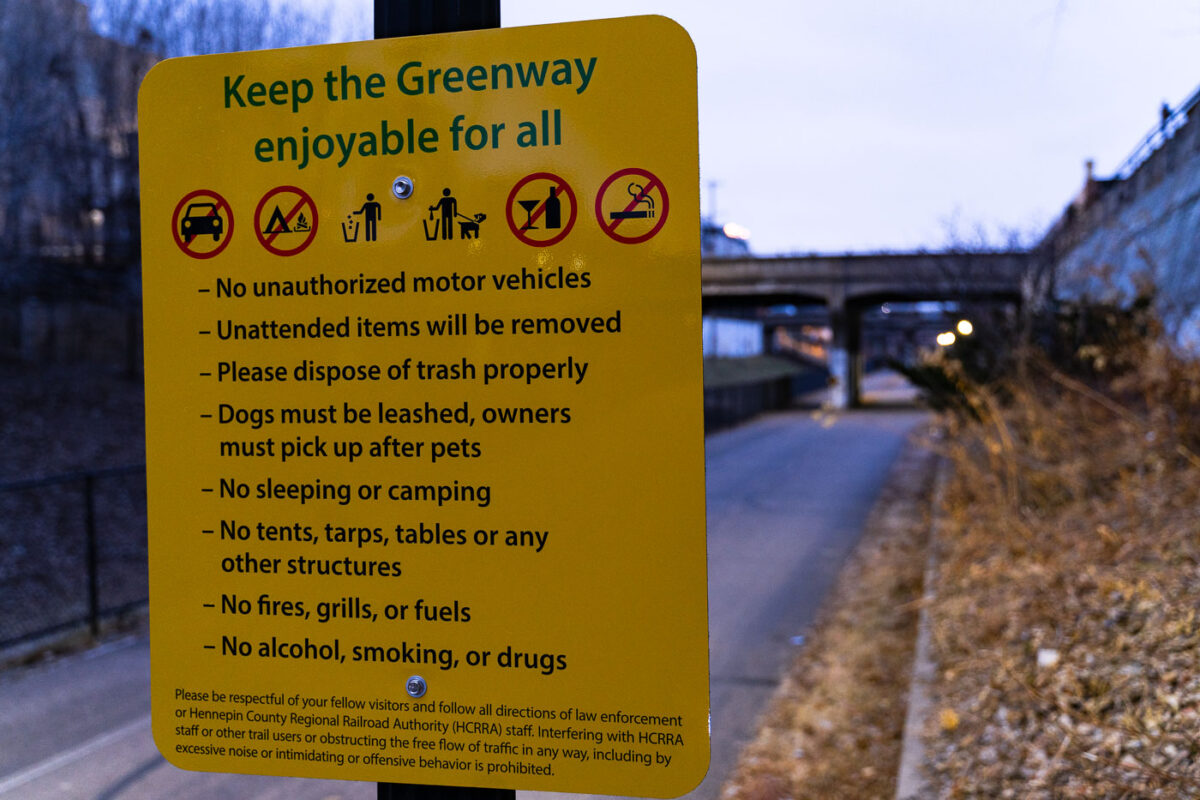
Keep the greenway enjoyable for all sign
A new regulatory sign stands on the Minneapolis Midtown Greenway, a 5.5-mile-long rail-to-trail urban corridor in Minneapolis, Minnesota, dedicated to pedestrians and cyclists. The sign lists rules including prohibitions against sleeping, camping, and erecting structures like tents or tarps. Its installation followed the eviction of a large homeless encampment from the greenway on December 17th and 18th.

Minneapolis Midtown Greenway Rules Sign After Eviction

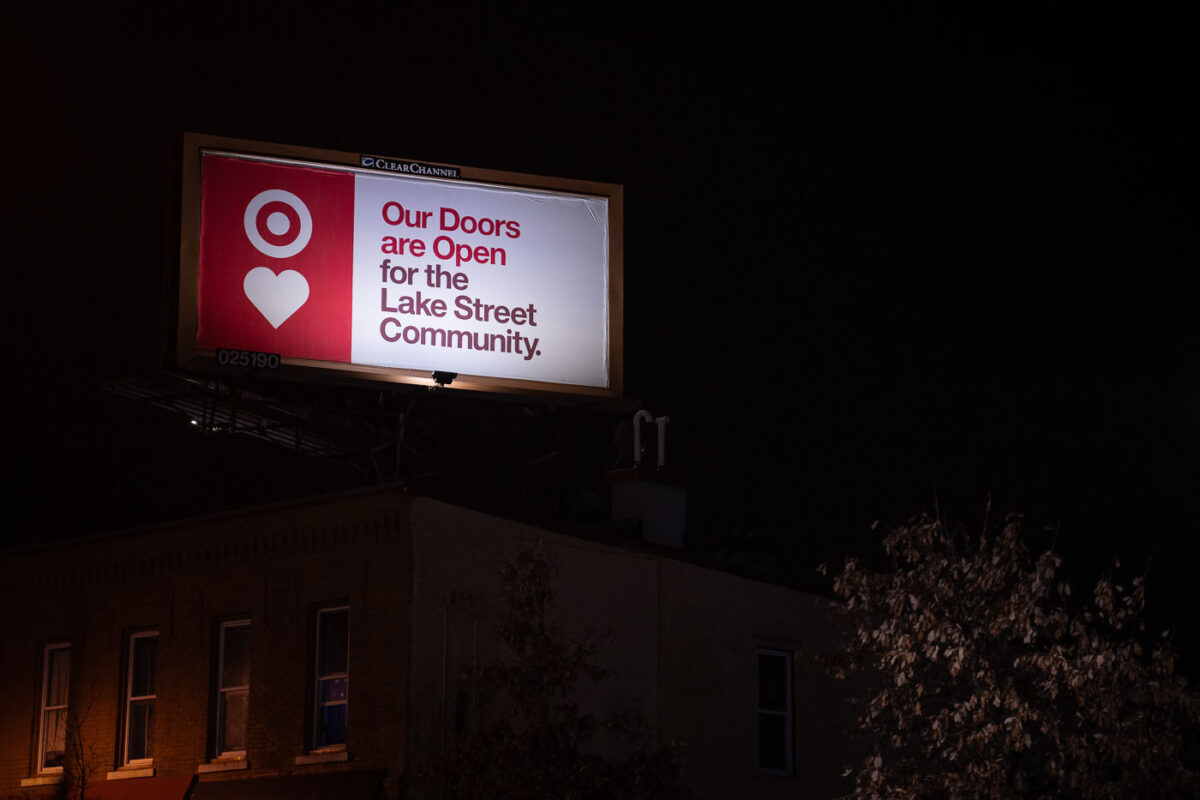
Target Billboard after the store reopens
An illuminated Target billboard on Lake Street in Minneapolis displays a message announcing, "Our Doors are Open for the Lake Street Community." This advertisement appeared after Target retail locations in the area sustained damage and temporarily closed following the civil unrest in May 2020, which occurred after the death of George Floyd. The billboard communicates the return of essential retail services to the Lake Street corridor, a vital commercial and residential area that experienced significant disruption. It signifies Target's commitment to the community during a period of recovery and rebuilding.
Target Re-opening Billboard on Lake Street, Minneapolis

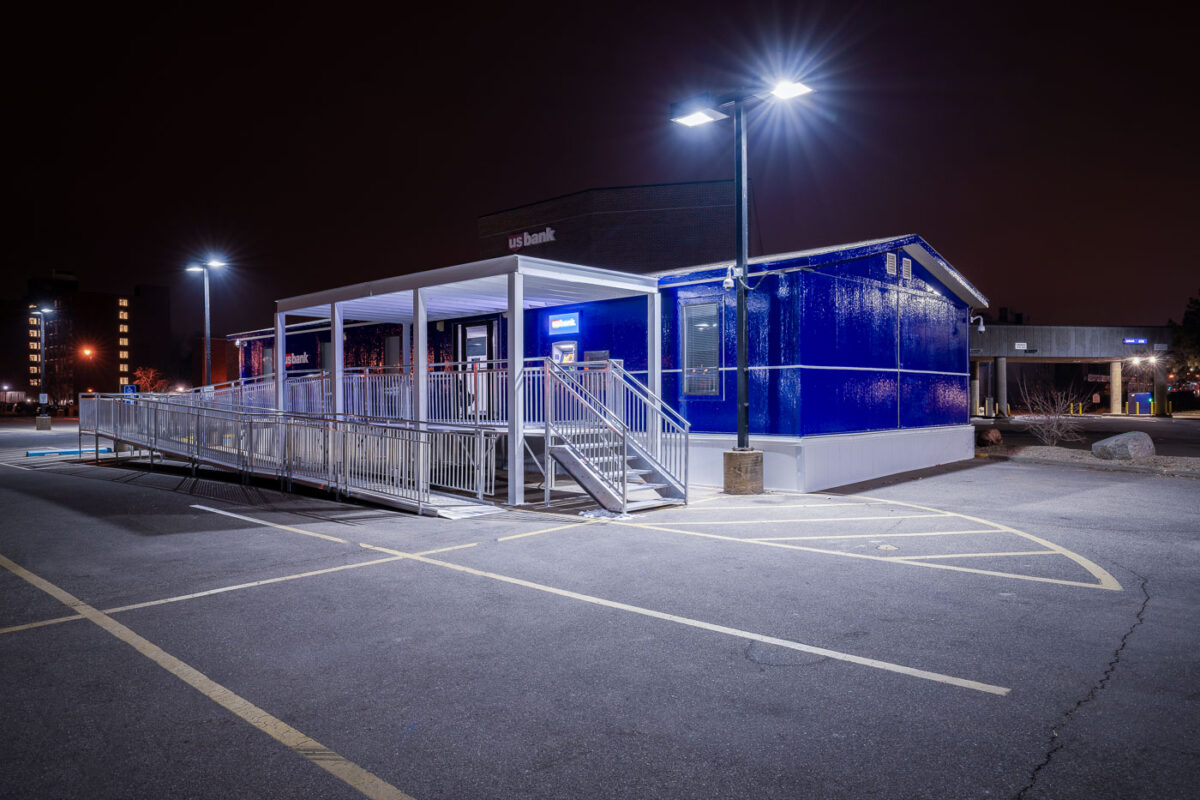
Temporary US Bank branch in Minneapolis
A temporary US Bank branch operates from a modular building in a parking lot on Lake Street in Minneapolis. This facility was established to provide banking services following widespread damage to businesses in the area during the May 2020 protests after the death of George Floyd.

Temporary US Bank branch, Lake Street parking lot, Minneapolis
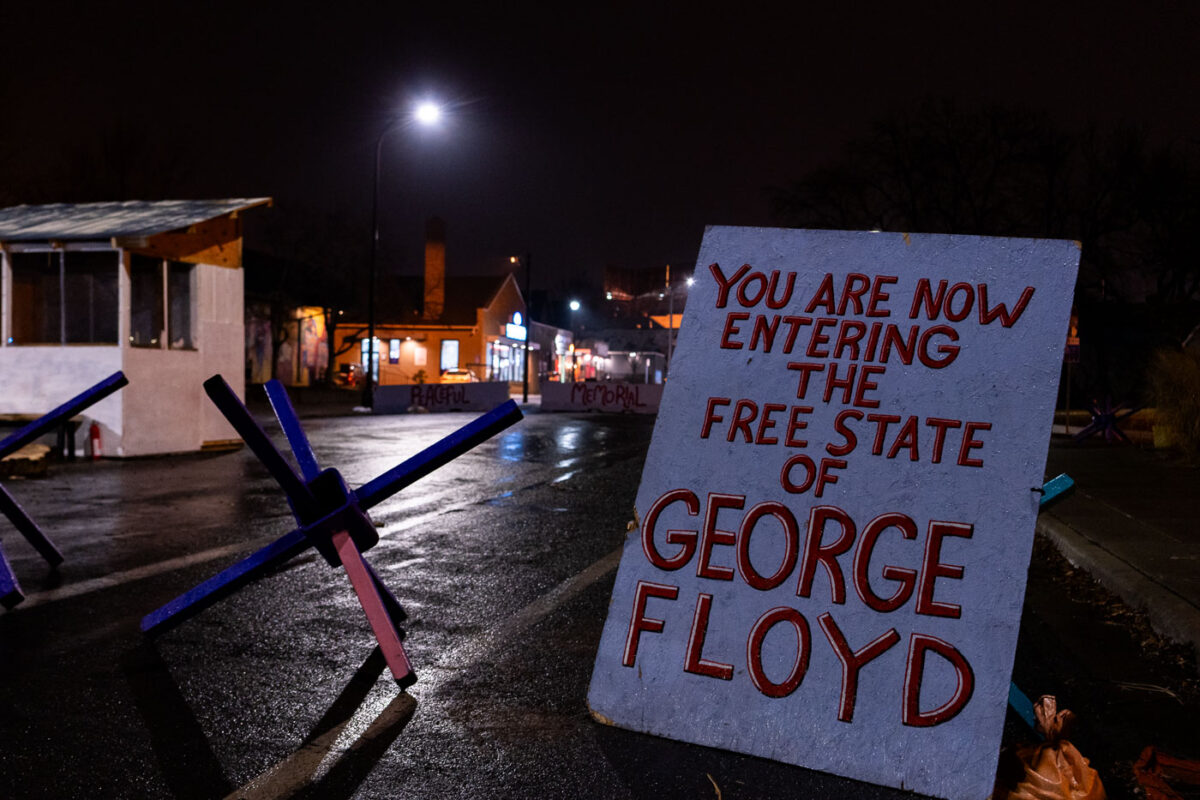
Free state of George Floyd
A sign declares "You are now entering the free state of George Floyd" at George Floyd Square in Minneapolis. This area, located at the intersection of 38th Street and Chicago Avenue, transformed into a protest zone following the May 25, 2020 death of George Floyd. The square has since served as a memorial and a site for ongoing activism, marked by various installations and community-maintained barricades. It represents a sustained public protest and a demand for justice.

George Floyd Square: ‘Free State of George Floyd’ Sign
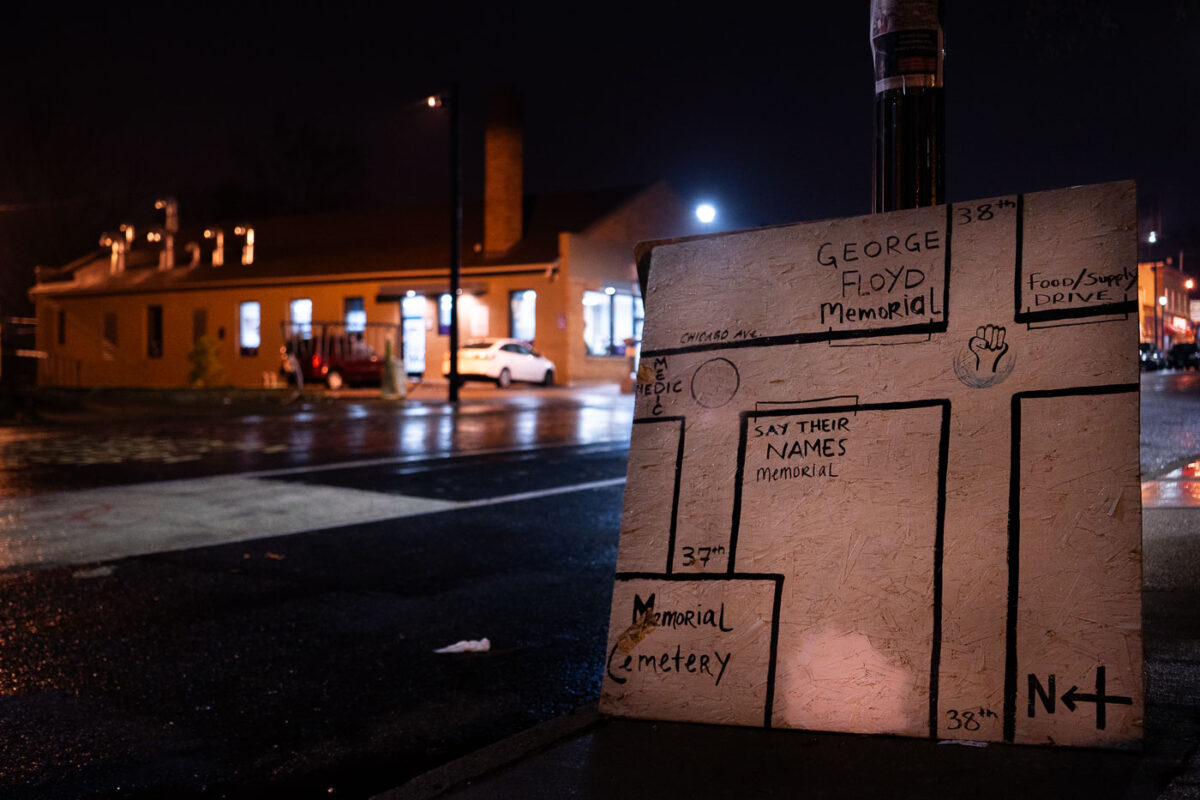
George Floyd Square map on a board
A handmade map, positioned at George Floyd Square in Minneapolis, guides visitors through the memorial site. The map outlines significant areas including the George Floyd Memorial, the Say Their Names Memorial, and a Memorial Cemetery, along with a designated Food/Supply Drive. Located at the intersection of Chicago Avenue and 38th Street, this area transformed into a protest zone and community hub following George Floyd's death on May 25, 2020.

George Floyd Square Memorial Map, Chicago Ave, Minneapolis
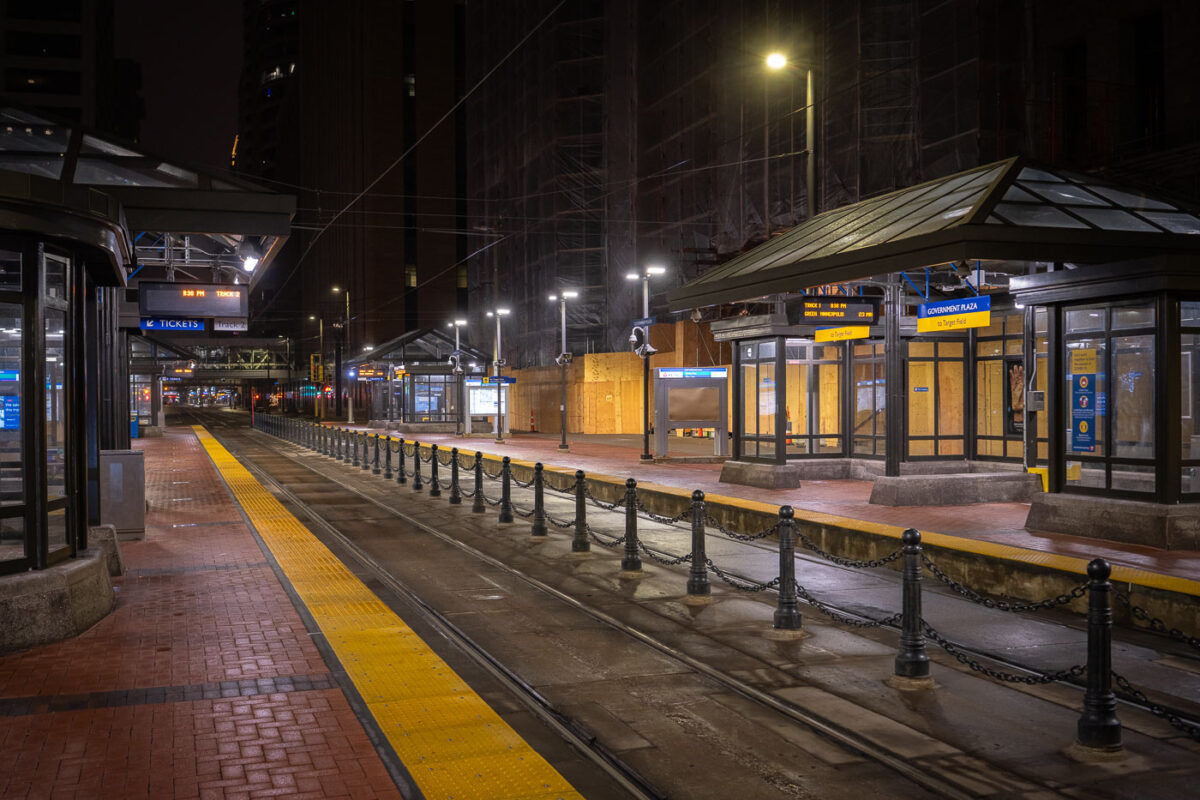
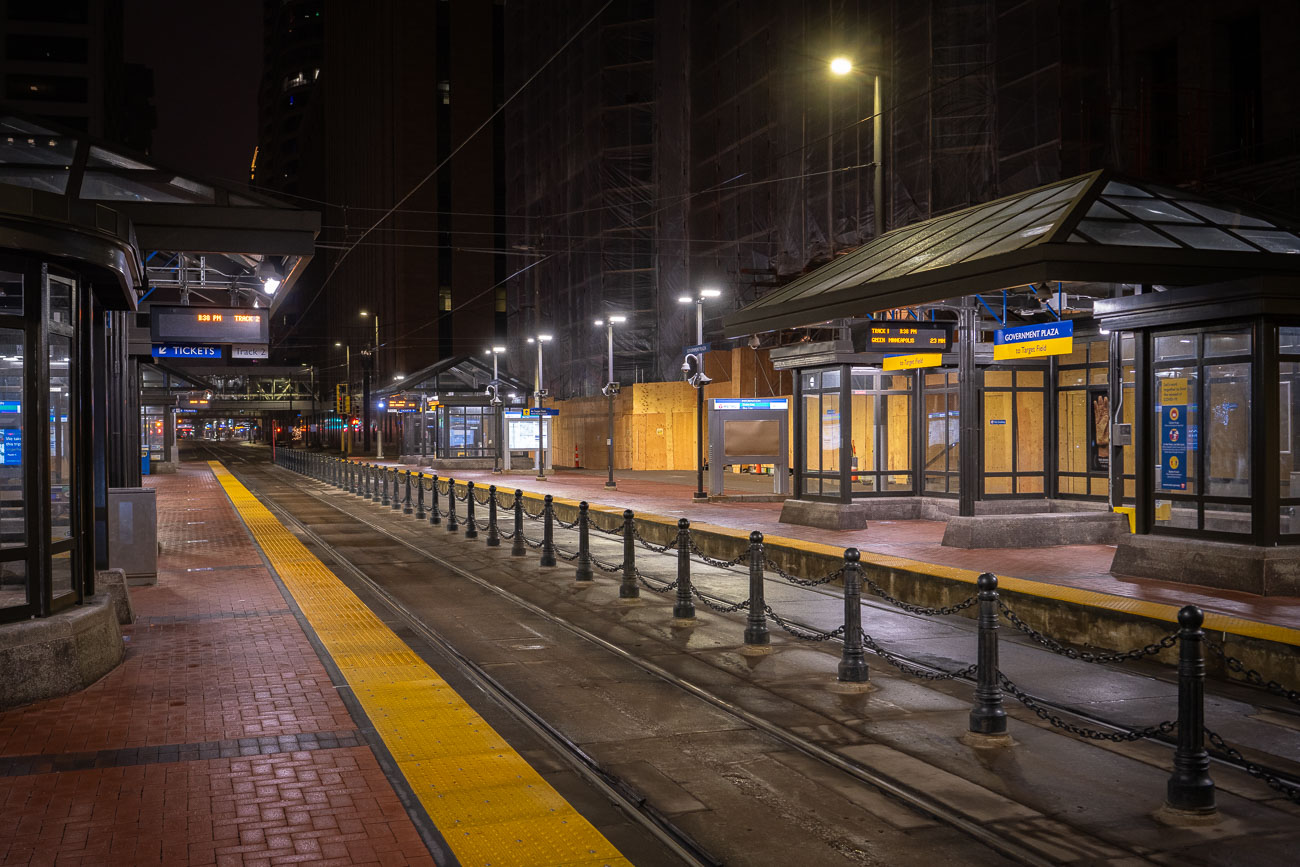
City Hall train station in Minneapolis
Government Plaza station serves as a key transit hub for the Green Line and Blue Line light rail services in downtown Minneapolis. Opened in 2004, the station is situated beneath the plaza of the same name, connecting commuters and visitors to the heart of the city's business and government district. Pictured here during COVID-19 shutdowns.

Government Plaza LRT Station, Downtown Minneapolis
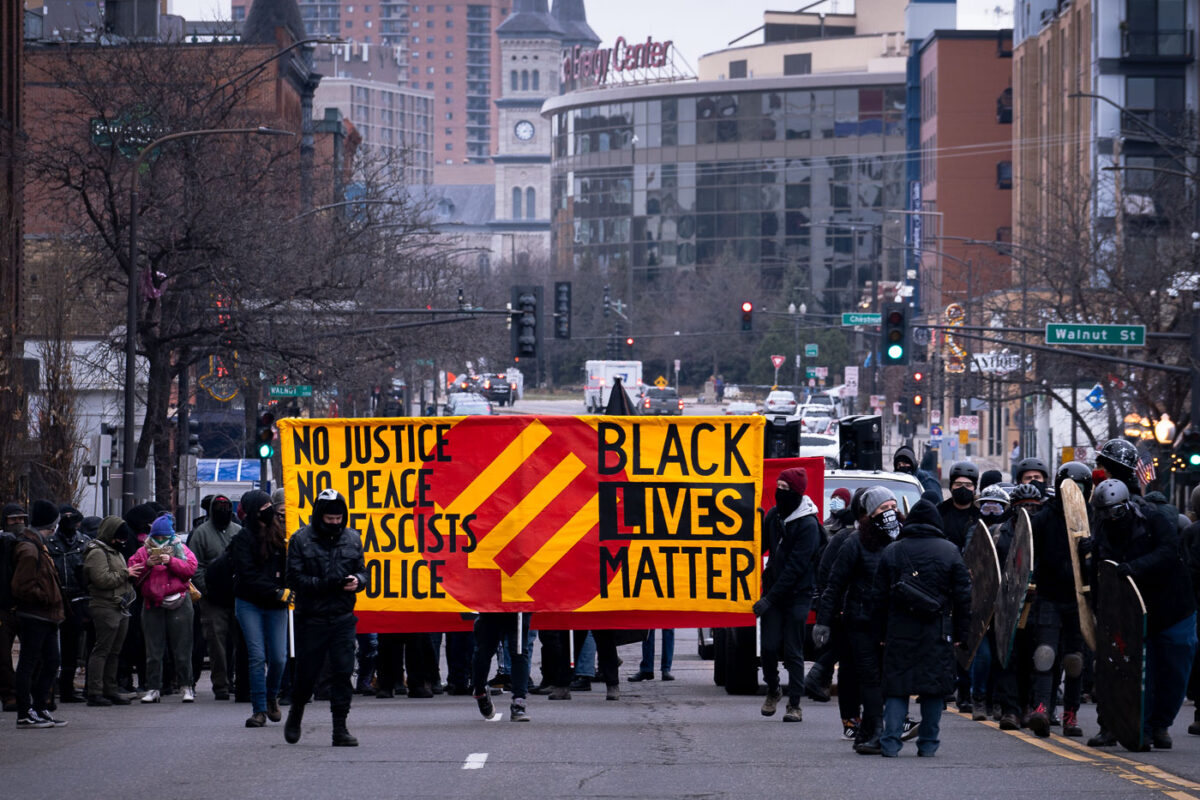
No Justice No peave No Fascists No Police
Protesters participate in a Black Lives Matter anti-fascist march in downtown St. Paul. The marchers carried a large banner proclaiming "NO JUSTICE NO PEACE NO FASCISTS NO POLICE" and "BLACK LIVES MATTER," reflecting the movement's core demands. The protest moved through the city streets, including the intersection of Walnut Street and Chestnut Street, as part of broader demonstrations addressing racial injustice and police accountability that gained prominence in the Twin Cities and nationwide.

Black Lives Matter Anti-Fascist March, St. Paul
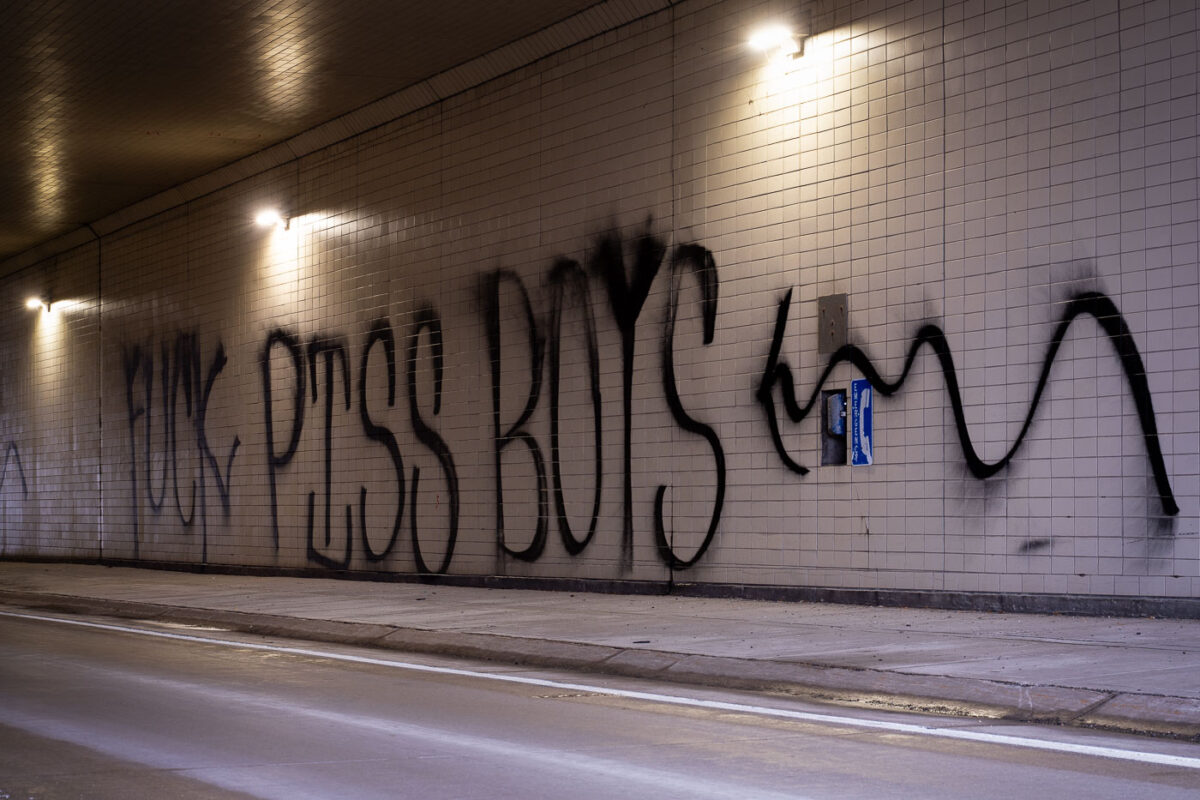
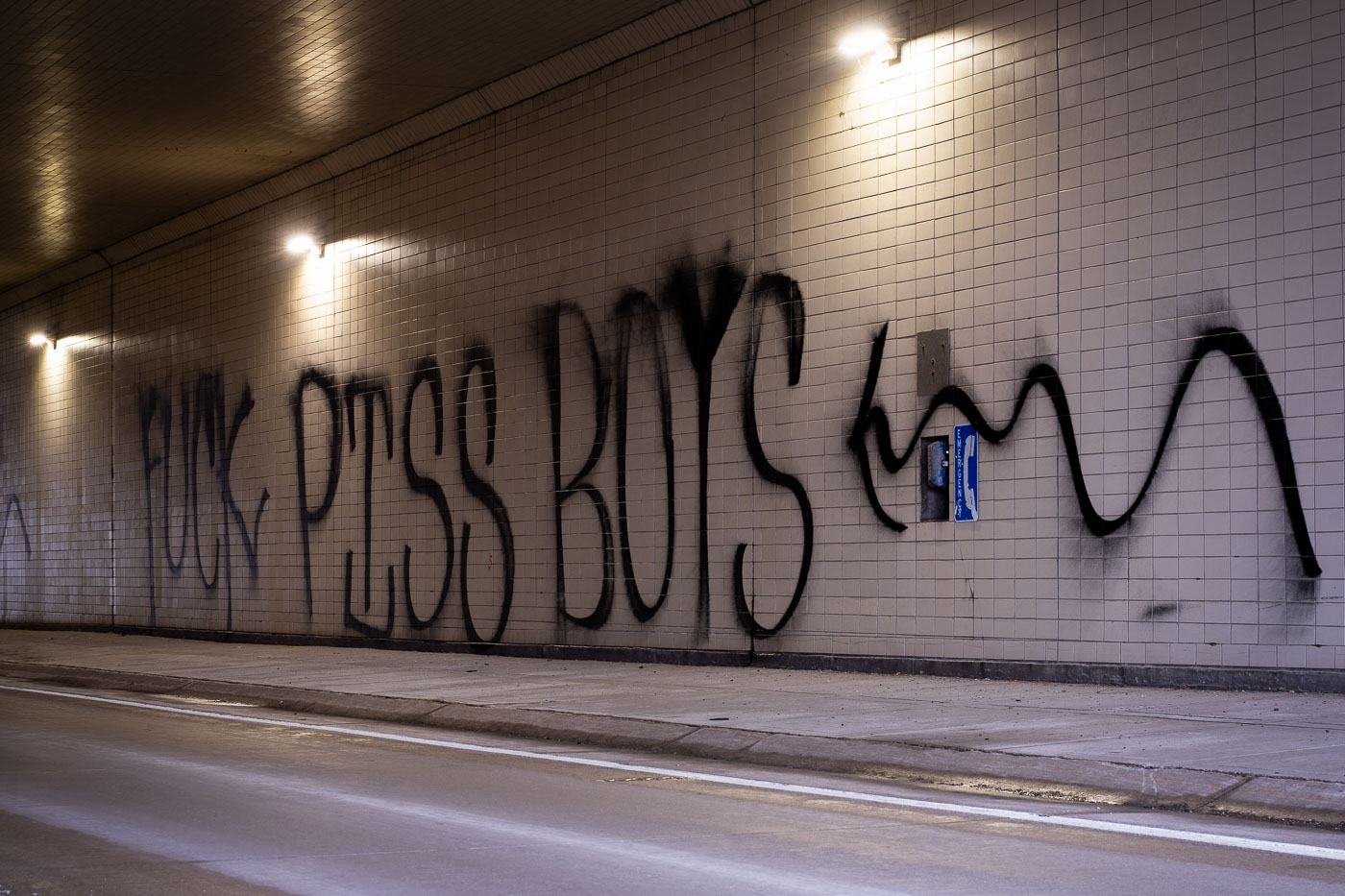
Fuck Piss Boys graffiti
The phrase "Fuck Piss Boys" is spray-painted on the tiled wall of a highway tunnel in St. Paul. This graffiti emerged around December 19, 2020, a date that coincided with a "Stop The Steal" rally organized by the Proud Boys in the Minneapolis-St. Paul metropolitan area.

Graffiti ‘Fuck Piss Boys’ St. Paul Highway Tunnel
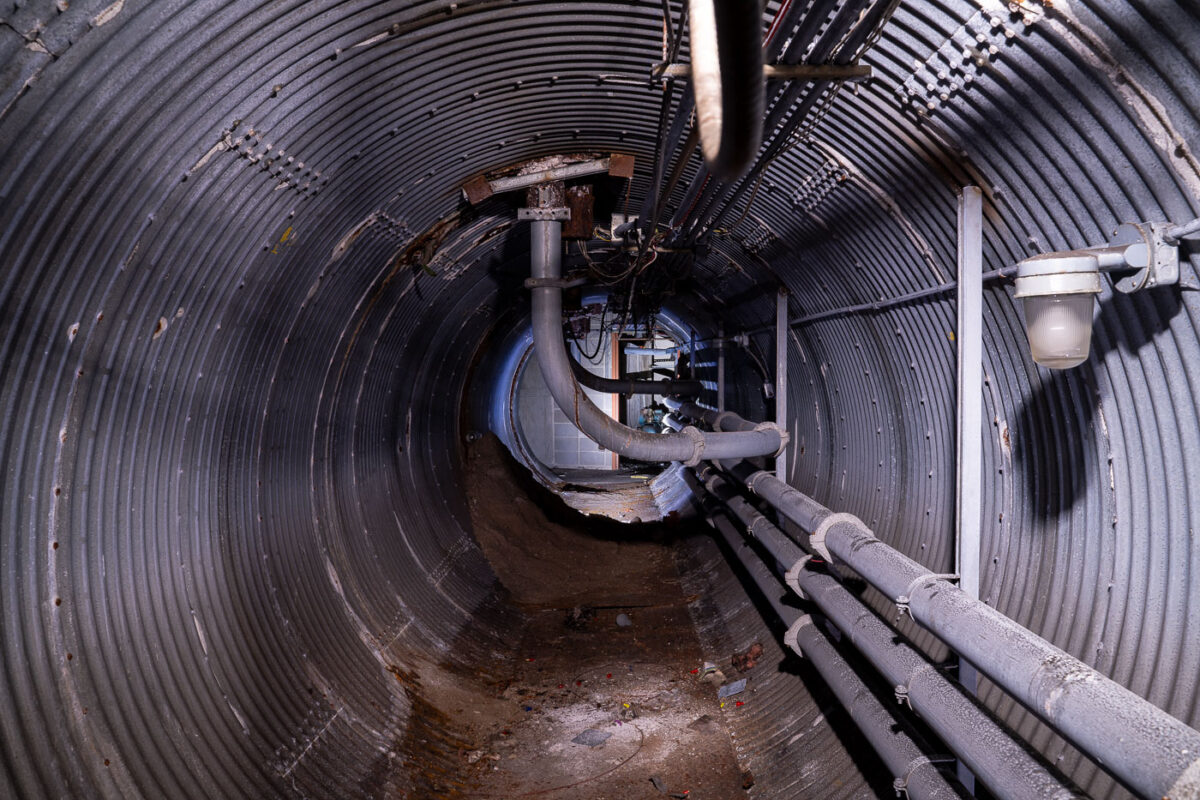
Wells Fargo Bank tunnel in burned building
This corrugated metal tunnel is located beneath the former Wells Fargo drive-thru on Nicollet Avenue in Minneapolis. The bank building above was extensively damaged by arson on May 29, 2020, during the Minneapolis Uprising, across from the Minneapolis police 5th Precinct. Following the fire, the site remained secured for months to protect undamaged safety deposit boxes within the bank structure. The tunnel, likely part of the building's utility infrastructure, shows signs of disuse and debris, reflecting the aftermath of the events.

Tunnel Below Burned Wells Fargo Drive-Thru, Nicollet Ave
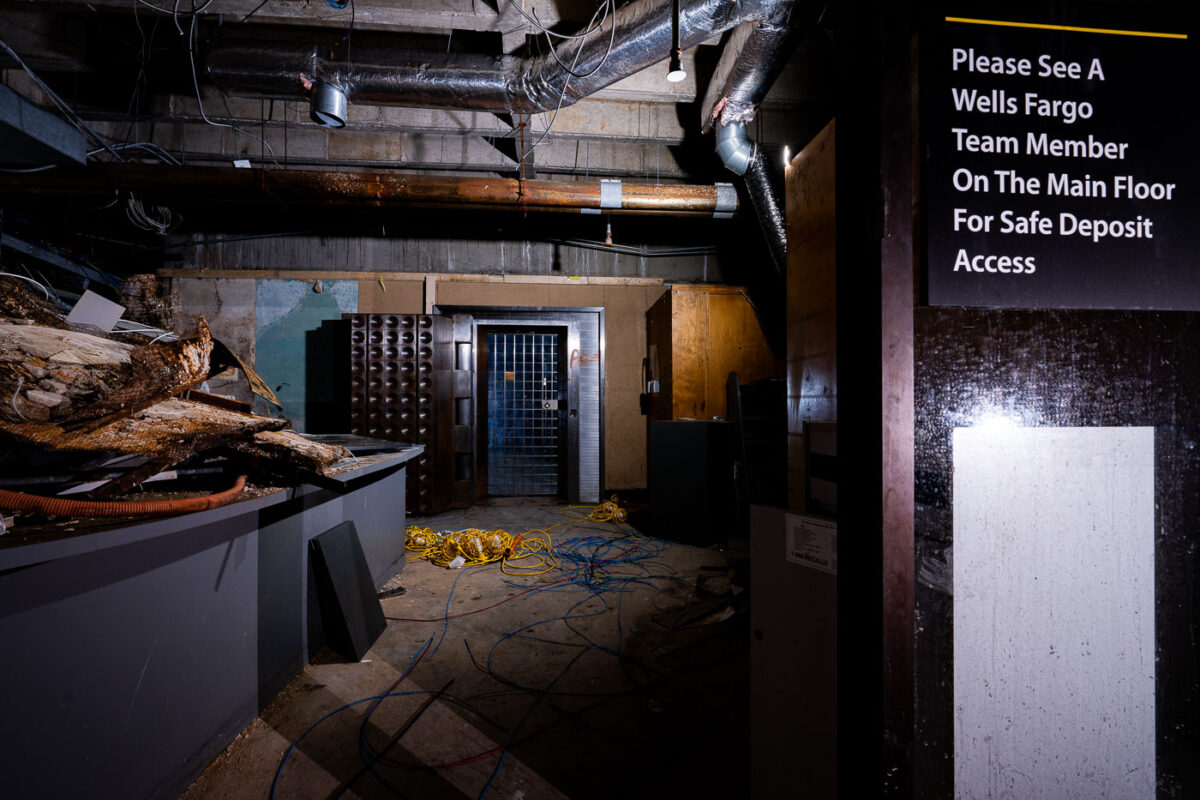
Inside the burned Wells Fargo Bank in Minneapolis
The interior of a Wells Fargo bank on Nicollet Avenue in Minneapolis, showing the aftermath of damage sustained during the Minneapolis Uprising on May 29, 2020. Despite the extensive fire damage throughout the building, the bank's vault, designed for secure storage, remained intact. The presence of undamaged safe deposit boxes within the vault necessitated the site's prolonged security for several months following the unrest.

Burned Wells Fargo Vault, Minneapolis
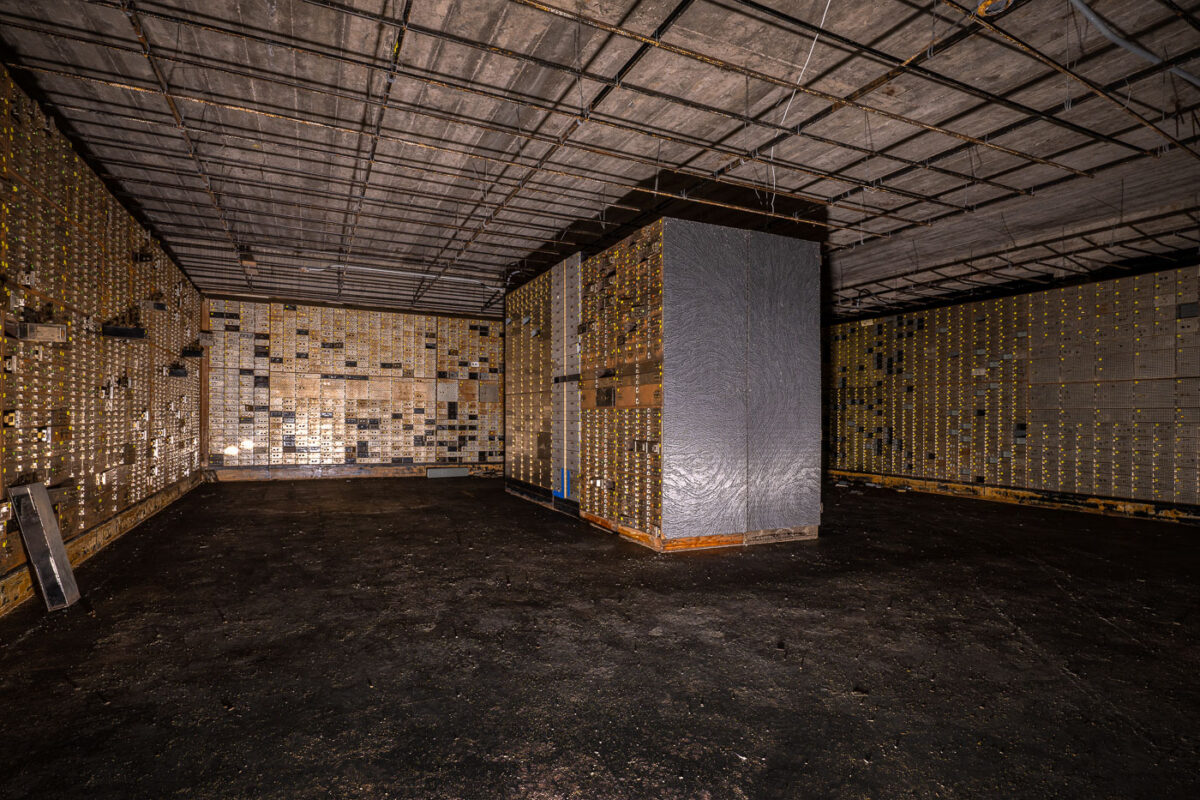
Safety deposit boxes inside the burned Wells Fargo bank
The interior of a safety deposit vault is visible within the burned Wells Fargo bank located on Nicollet Avenue in Minneapolis. This branch, situated across from the Minneapolis Police 5th Precinct, sustained significant fire damage on May 29, 2020, during the Minneapolis Uprising. Despite the extensive destruction to the rest of the building, the robust construction of the vault protected its contents, including numerous safety deposit boxes. For months following the fire, the site remained secured to ensure the integrity of these undamaged boxes and facilitate their eventual retrieval by customers.

Safety Deposit Vault, Burned Wells Fargo, Minneapolis
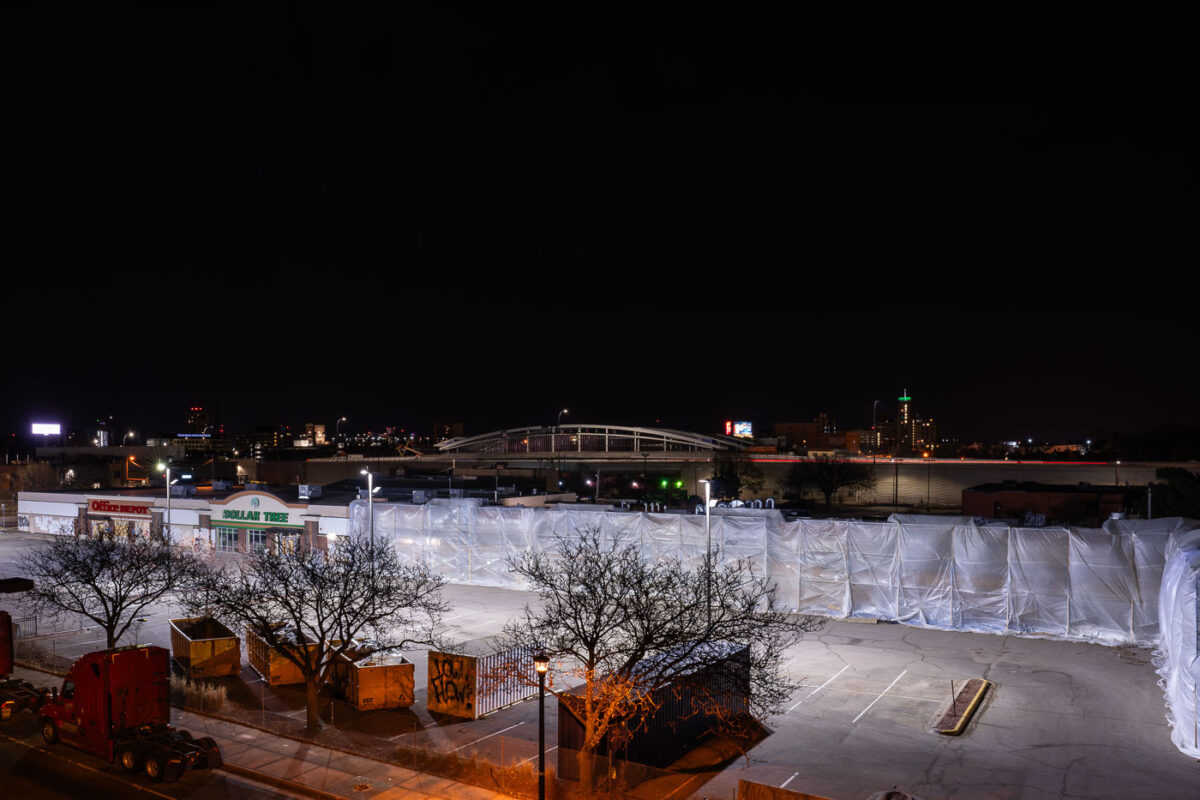
Strip mall being restored
This image presents a strip mall situated at Nicollet Avenue and Lake Street in Minneapolis, documented after sustaining damage during the civil unrest of May 2020. Retailers including Office Depot and Dollar Tree are visible, with some storefronts showing signs of repair or temporary boarding. The unrest followed the May 25, 2020 murder of George Floyd, resulting in widespread protests and property damage throughout the city. Temporary protective sheeting and construction containers occupy portions of the parking lot, reflecting ongoing recovery efforts for these commercial properties.

Nicollet/Lake Street Strip Mall Post-Uprising
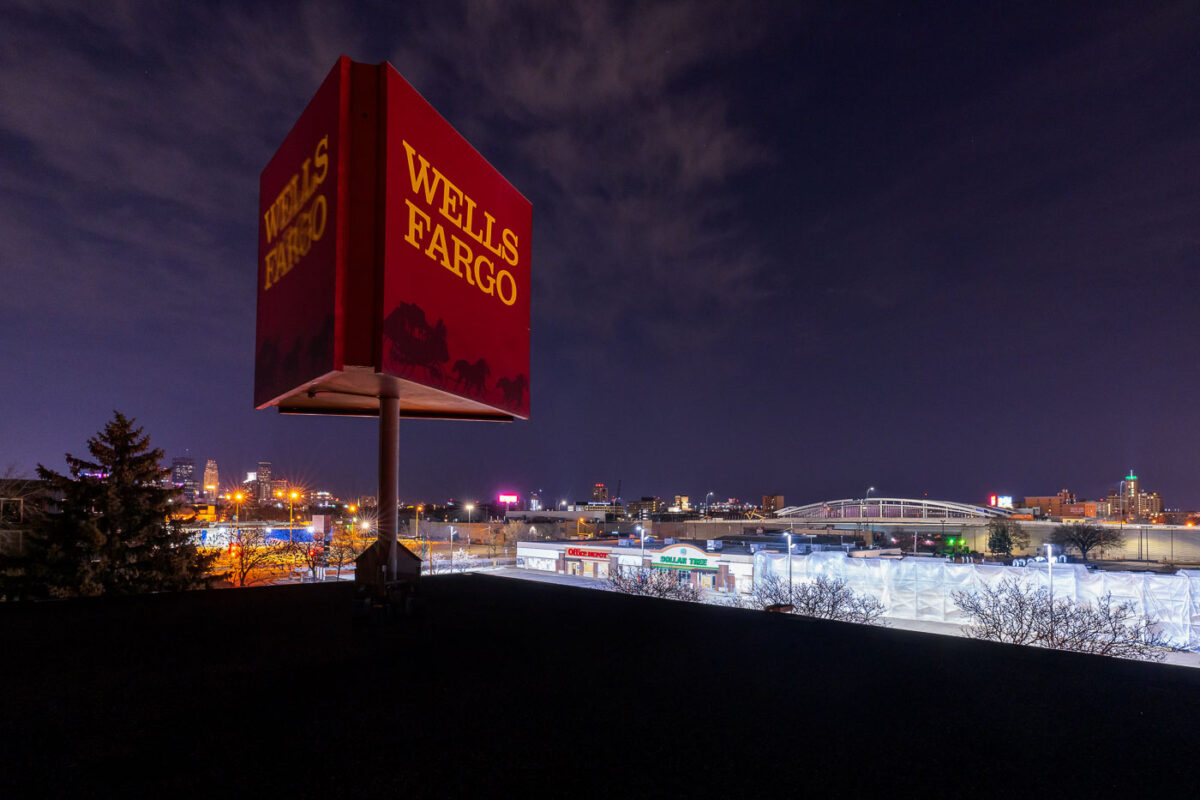
The roof of the burned Wells Fargo bank in Minneapolis
A Wells Fargo sign stands above a bank building on Nicollet Avenue in Minneapolis. The structure sustained fire damage during the civil unrest that followed the death of George Floyd on May 25, 2020. This image, taken from the bank's damaged roof, overlooks the Minneapolis skyline and surrounding commercial area. The bank is situated across from the Minneapolis Police 5th Precinct station, a significant location during the protests.

Wells Fargo Sign from Burned Minneapolis Bank Roof
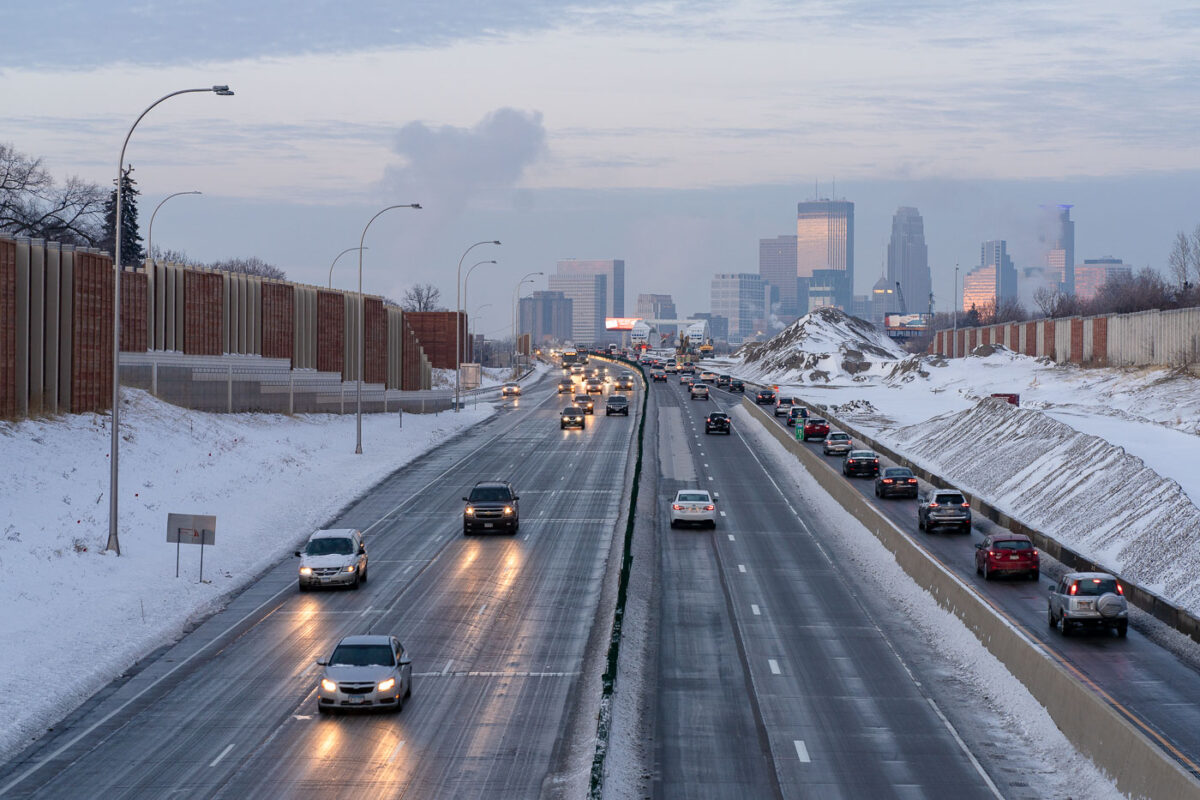
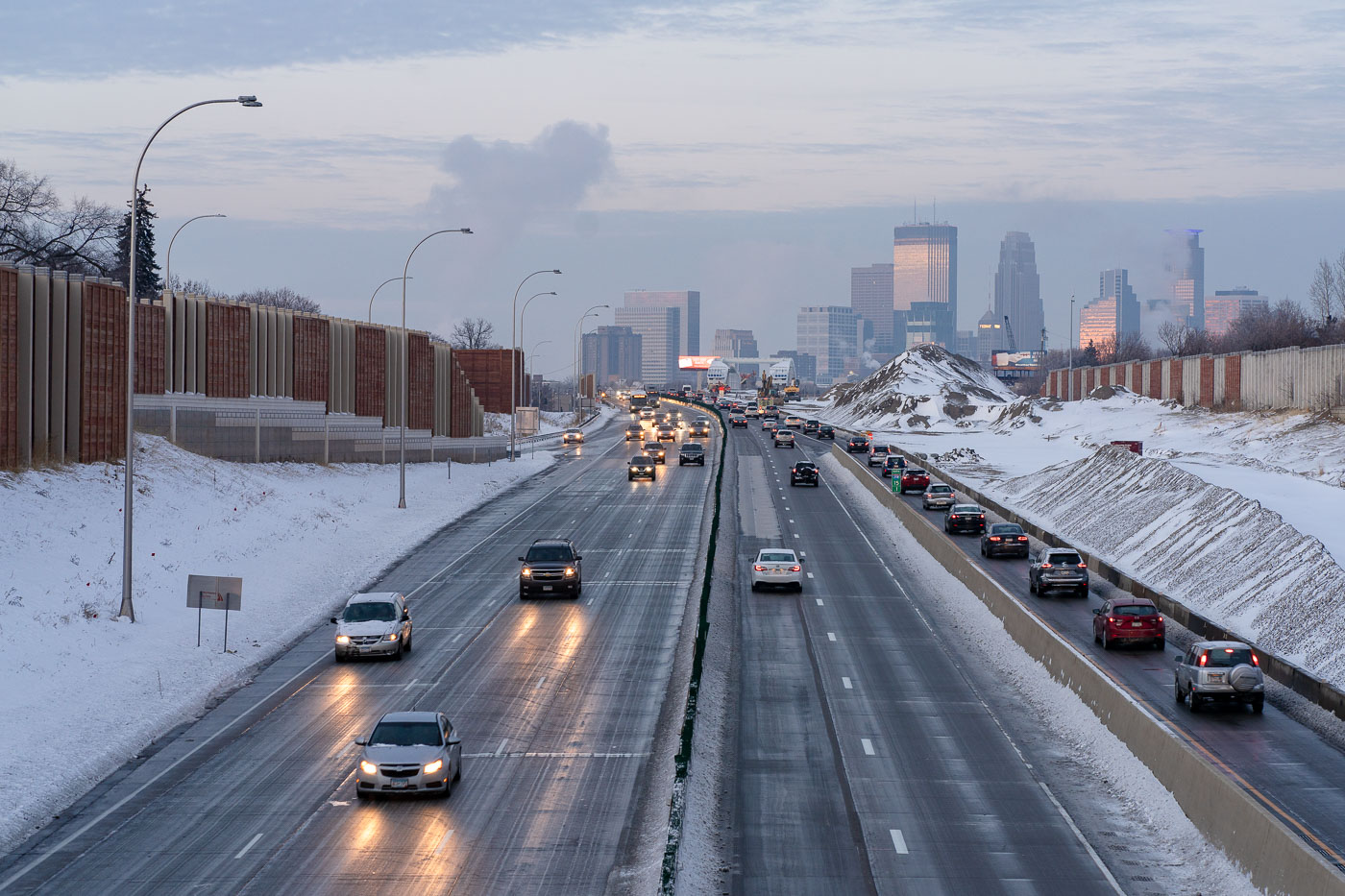
Interstate 35W in South Minneapolis with winter traffic and downtown Minneapolis beyond.
Interstate 35W runs through South Minneapolis with downtown Minneapolis in the distance. Snowbanks, sound walls, and winter traffic line this stretch of the freeway corridor. The route is one of the Twin Cities' main north-south highways, linking South Minneapolis with downtown and the wider regional interstate system.

Interstate 35W in South Minneapolis

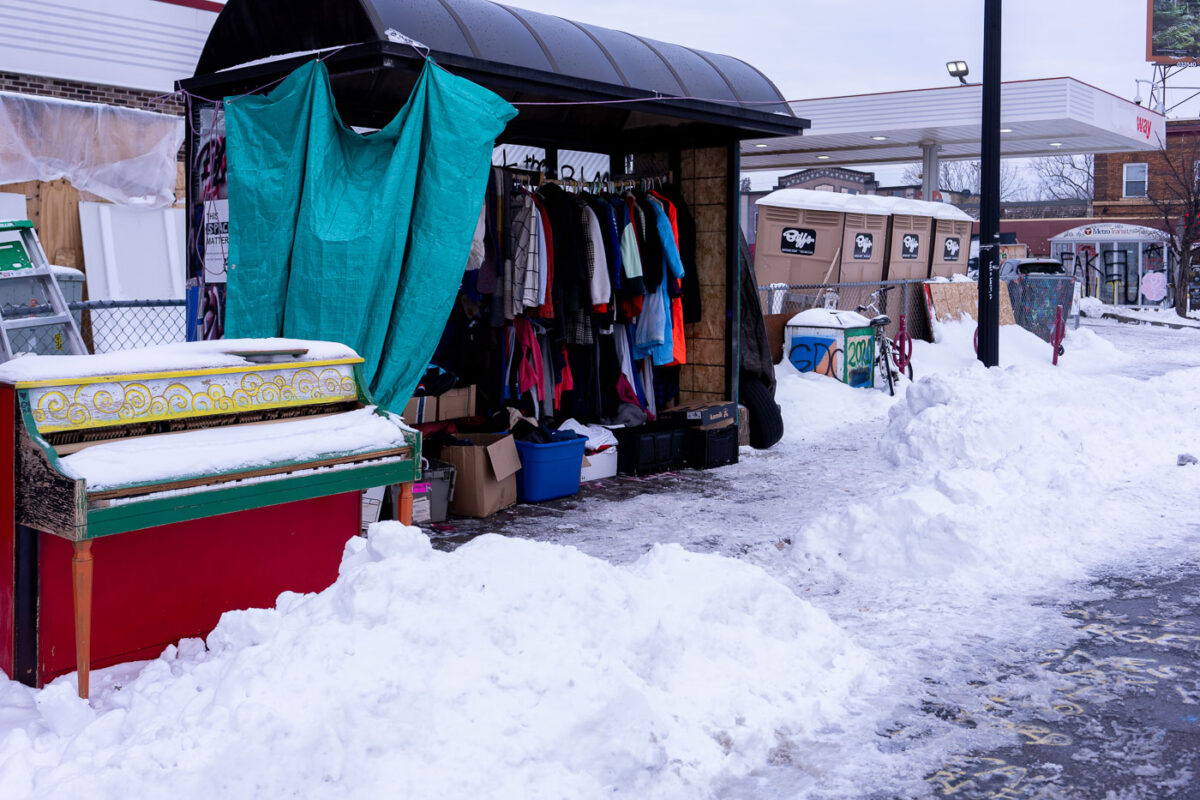
Peoples closet at George Floyd Square in December 2020
The People's Closet, a community clothing exchange, and a painted piano stand at George Floyd Square in Minneapolis. This area, located at E 38th Street and Chicago Avenue, transformed into a protest zone following the May 25, 2020, death of George Floyd. The People's Closet provides free clothing and resources, reflecting the mutual aid efforts that emerged within the protest space.

The People’s Closet & Piano, George Floyd Square, Minneapolis
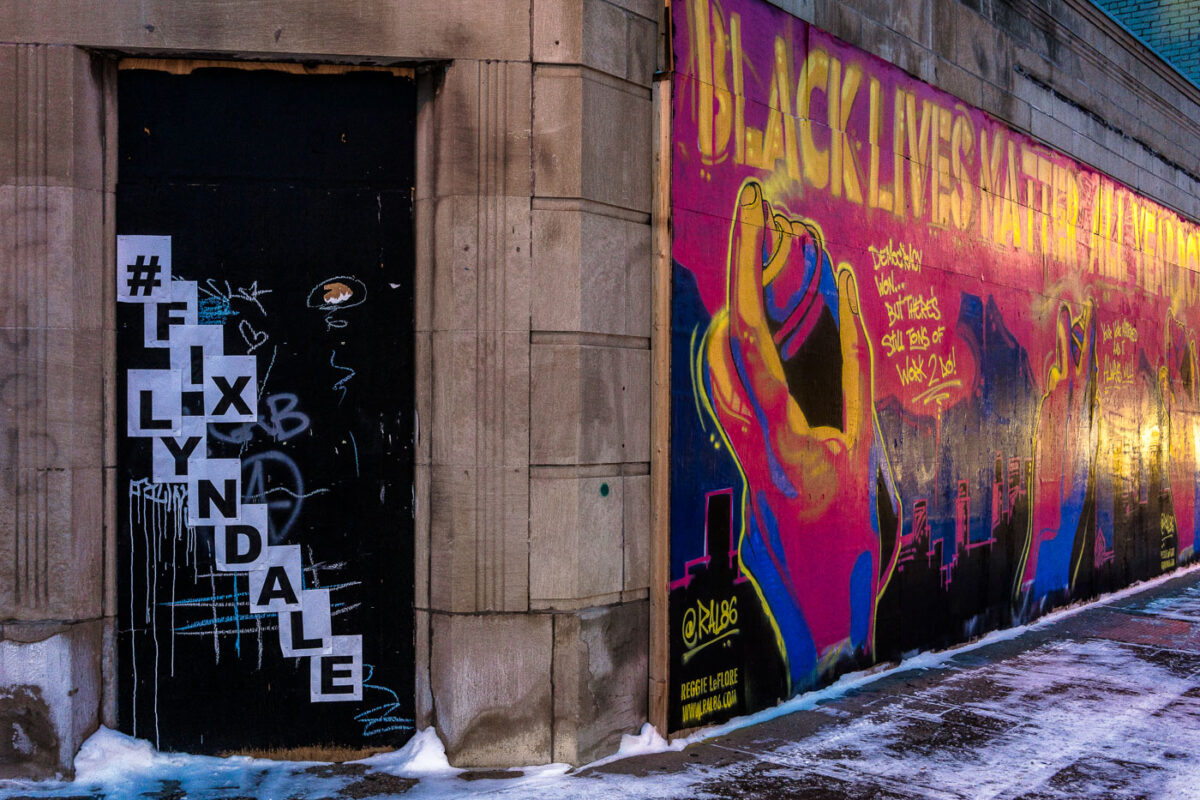
Fix Lyndale on a door on Lyndale Ave
A Black Lives Matter mural by Reggie LeFlore adorns boarded-up storefronts at the corner of Lyndale Avenue and Lake Street in Uptown Minneapolis. This artwork emerged in the aftermath of the 2020 Minneapolis Uprising, transforming damaged properties into public expressions of protest and solidarity. Adjacent to the mural, the #FixLyndale message advocates for the long-standing community effort to reconfigure Lyndale Avenue, a corridor known for high rates of vehicle and pedestrian accidents.

Fix Lyndale & Black Lives Matter Mural, Lyndale & Lake St
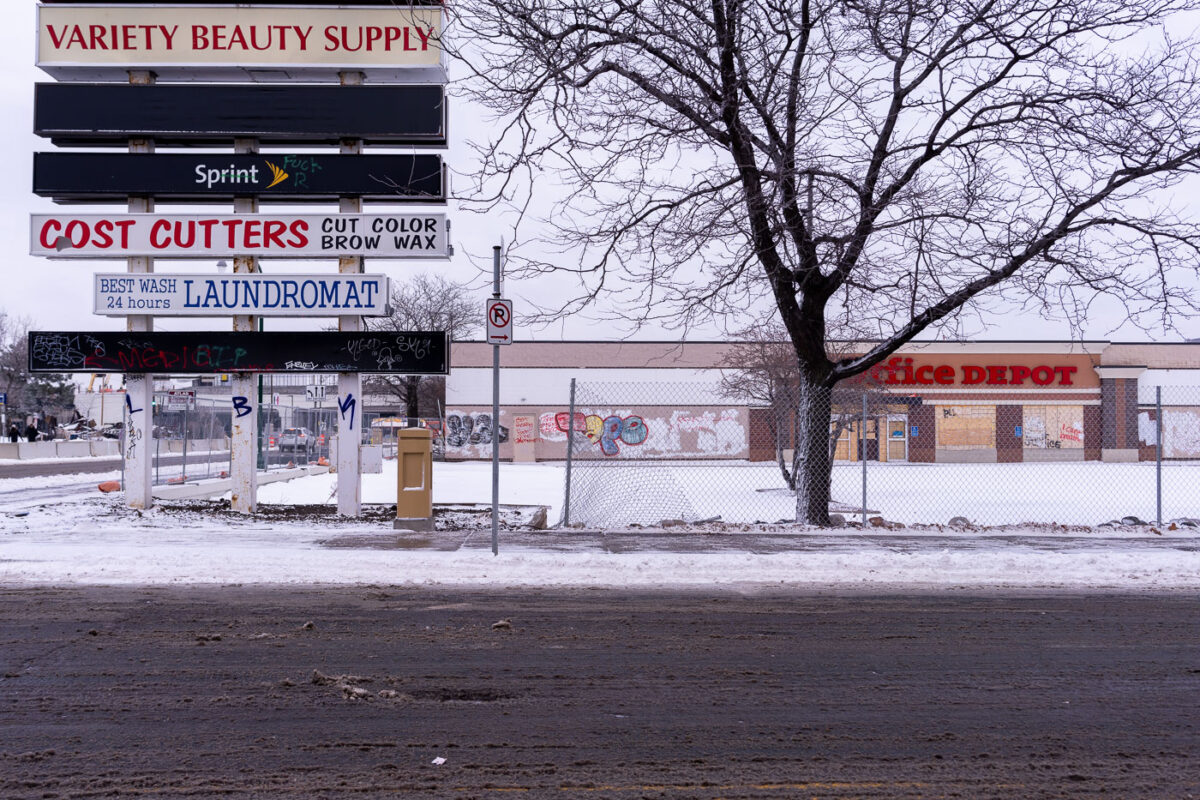
Riot damaged strip mall on Nicollet Ave
A strip mall at the corner of Nicollet Avenue and Lake Street in Minneapolis shows extensive damage. This retail complex, which housed businesses such as Office Depot, Cost Cutters, and a Laundromat, was heavily damaged following the May 25, 2020 death of George Floyd and the subsequent protests and unrest in the city. Boarded-up windows and graffiti cover the building, indicating the impact of the events.

Riot Damaged Strip Mall, Nicollet Ave & Lake St
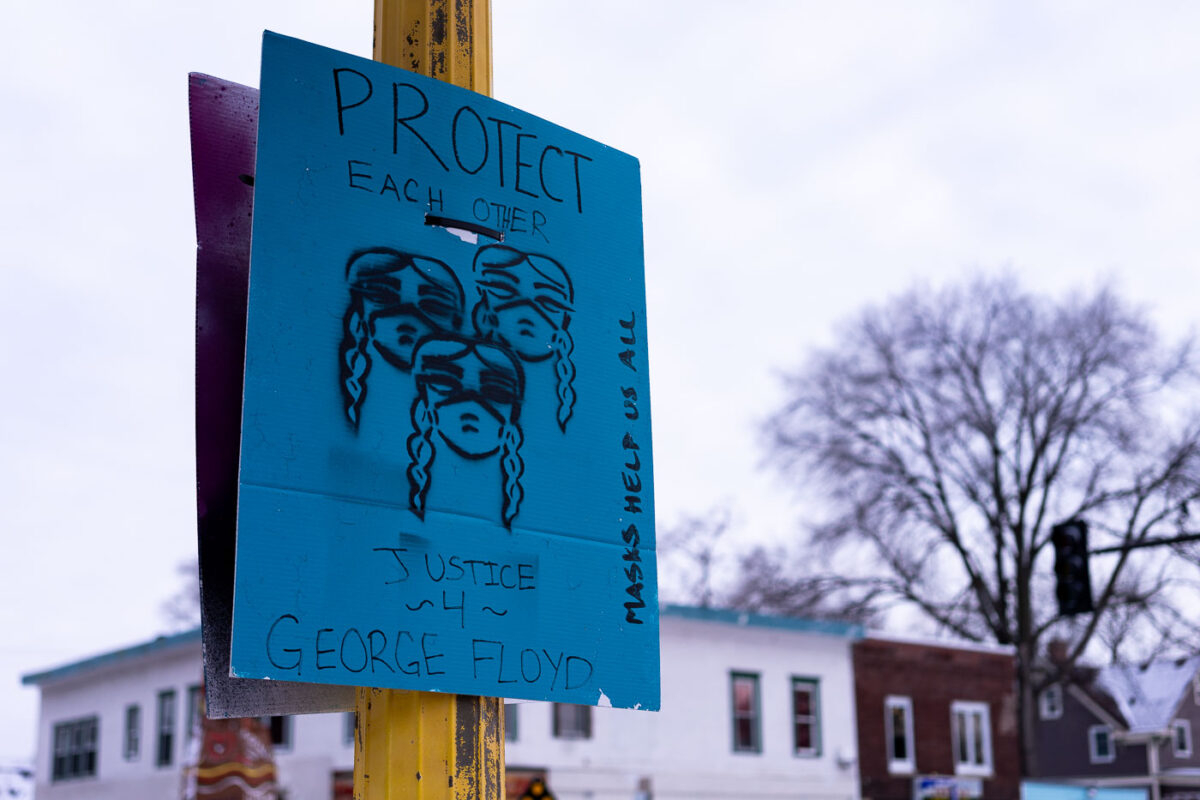
Protest Each Other sign at George Floyd Square
A protest sign is affixed to a pole at George Floyd Square, located at the intersection of Chicago Avenue and East 38th Street in Minneapolis. The sign, painted blue, features messages such as "Protect Each Other," "Justice 4 George Floyd," and "Masks Help Us All," alongside stencil art of masked faces. George Floyd Square became a memorial and protest site following the murder of George Floyd by Minneapolis police in May 2020.

George Floyd Square Protest Sign, Minneapolis
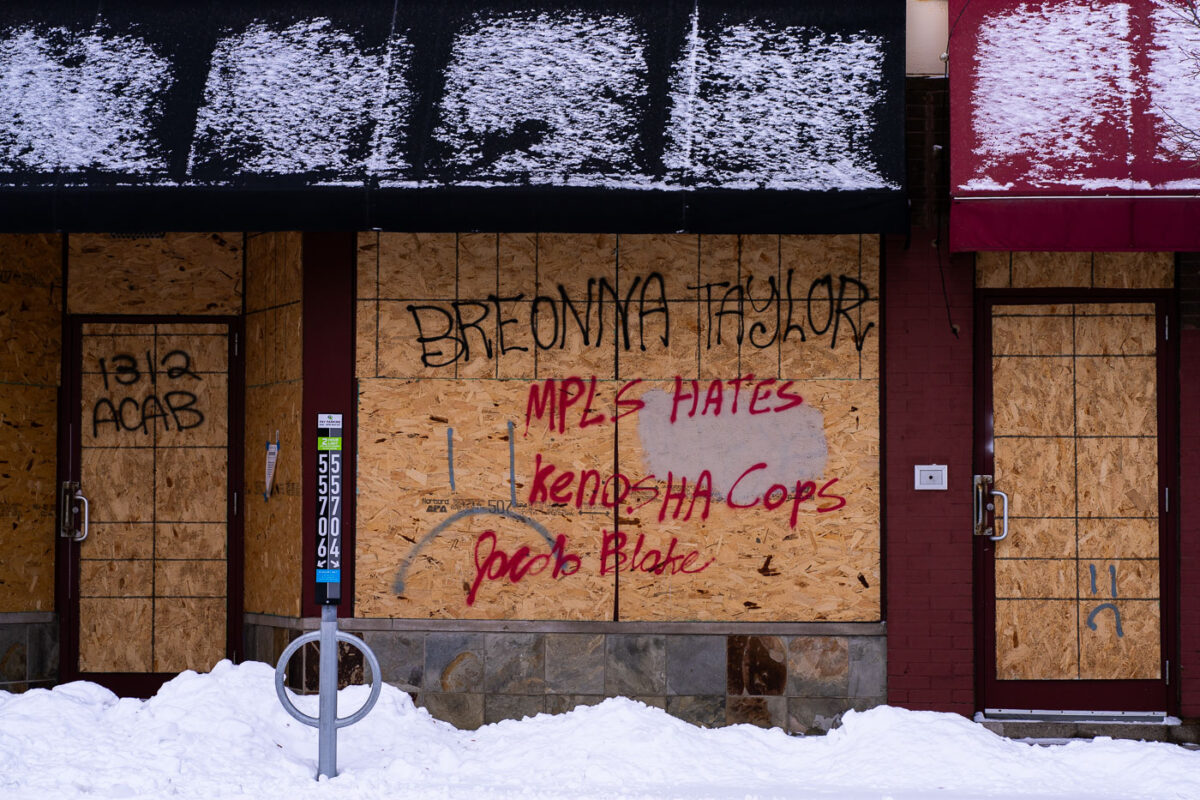
Kenoshi graffiti on buiolding boards
A boarded-up building stands in Minneapolis, near the site of the former Third Precinct of the Minneapolis Police Department. The plywood boards, installed as a protective measure during periods of civil unrest, are covered with protest messages. Graffiti includes names like "Breonna Taylor" and "Jacob Blake," alongside phrases such as "Mpls Hates Kenosha Cops," "1312," and "ACAB."

Minneapolis Boarded Building: ‘Mpls Hates Kenosha Cops’
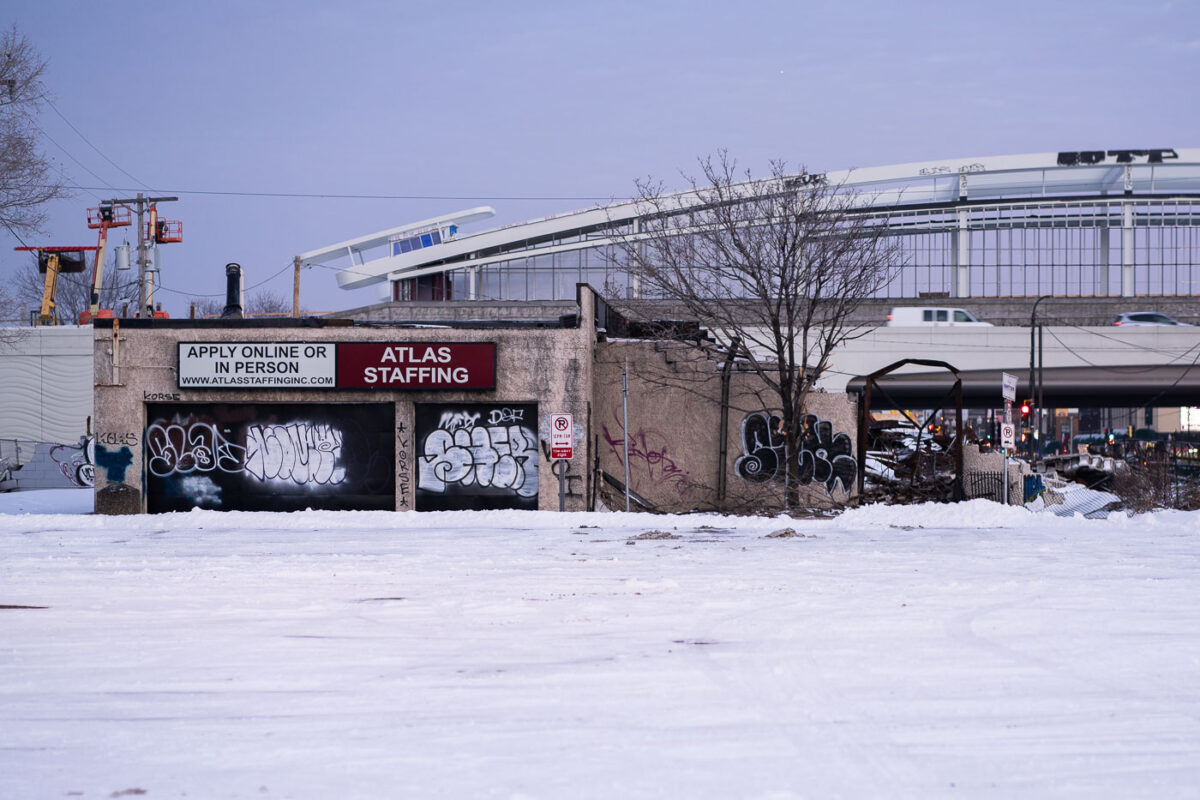
Burned Atlas Staffing building on Lake Street
The remains of the Atlas Staffing building stand on Lake Street in Minneapolis, its exterior covered in graffiti. This structure was among many properties damaged or destroyed by fire during the civil unrest that followed the May 25, 2020 death of George Floyd.

Graffiti on Burned Atlas Staffing, Lake Street, Minneapolis
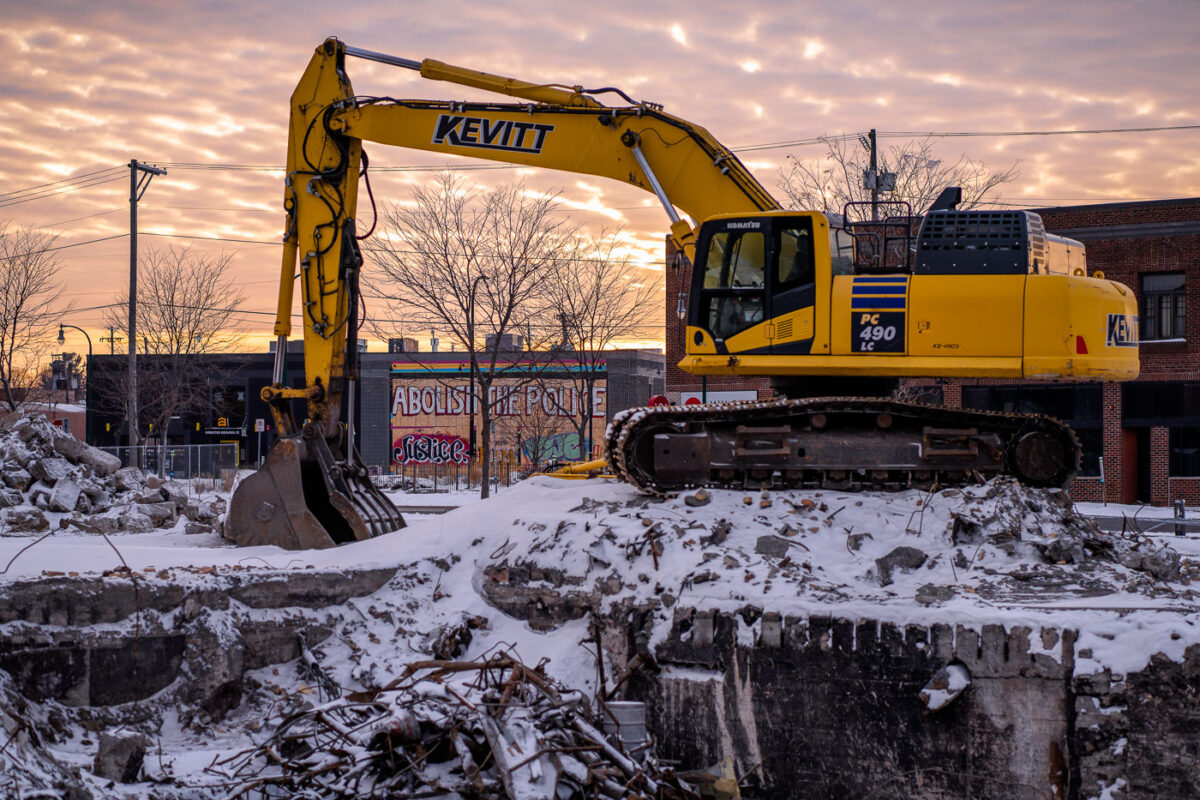
Demolition of a building in the snow
An excavator operates amidst snow-covered rubble at the demolition site of former businesses on Lake Street in Minneapolis. These structures, which included Minnehaha Liquors, a chiropractor’s office, and GM Tobacco, were destroyed during the widespread protests and civil unrest that followed the May 25, 2020 death of George Floyd.

Excavator at Minnehaha Liquors Demolition, Minneapolis
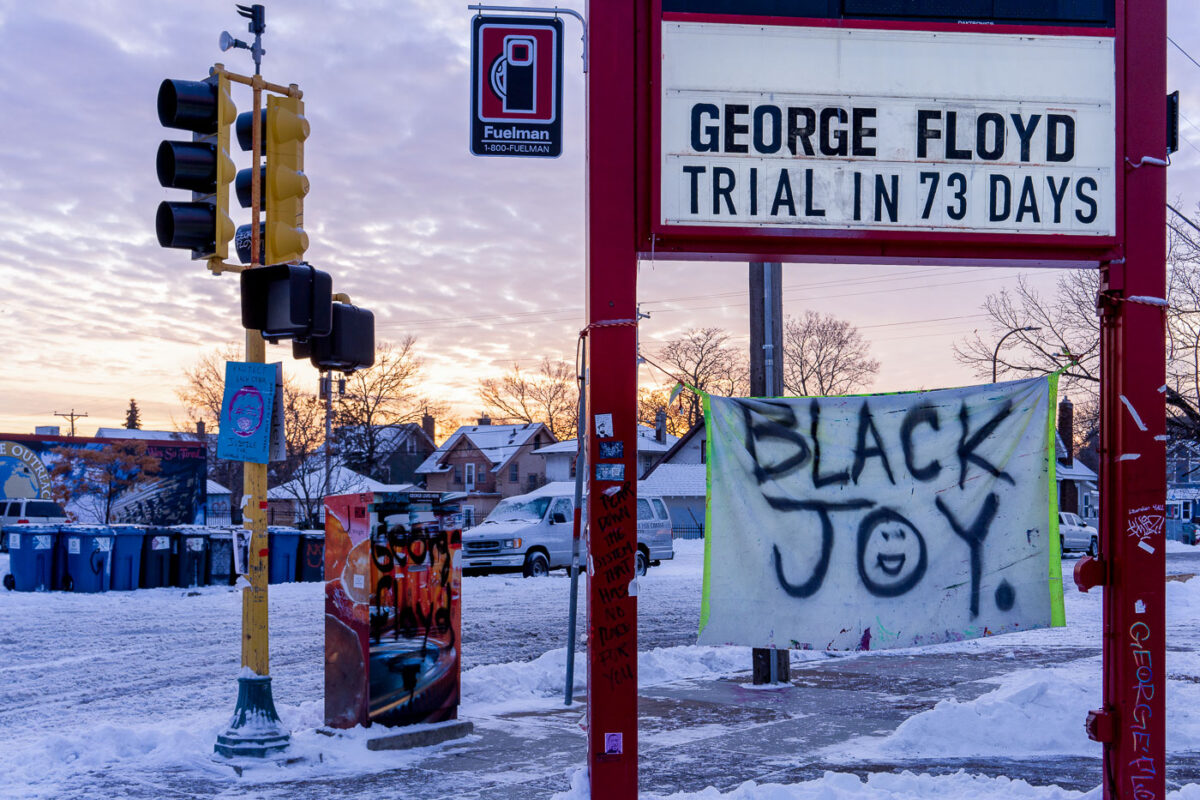
Black Joy at George Floyd Square
George Floyd Square in Minneapolis, located at Chicago Avenue and East 38th Street, serves as a protest zone and memorial site following the May 25, 2020 death of George Floyd. A former Speedway sign displays a countdown to the Derek Chauvin trial, indicating "GEORGE FLOYD TRIAL IN 73 DAYS."

George Floyd Square: Black Joy Banner, Trial Countdown Sign
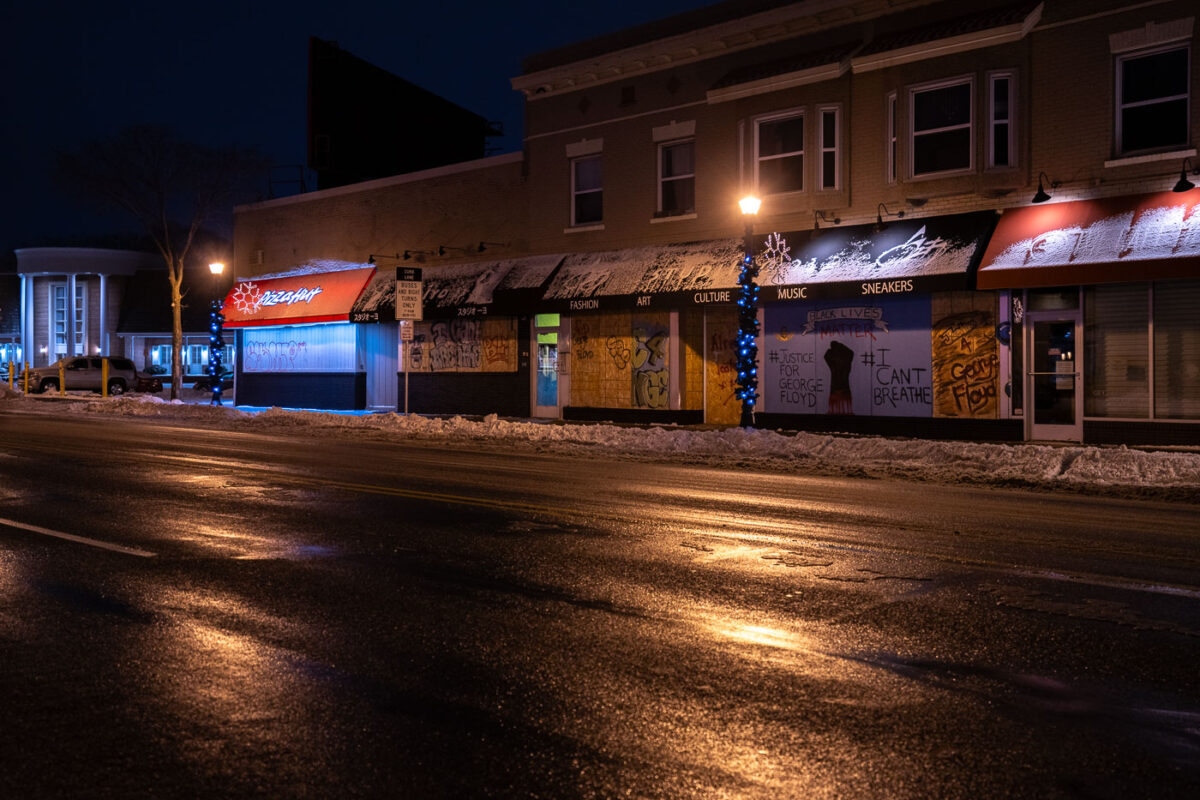
Hennepin Ave protest boards in December 2020
Protest murals adorn boarded-up storefronts along Hennepin Avenue in Uptown Minneapolis. These artworks emerged in the aftermath of the Minneapolis Uprising in May 2020, which followed the murder of George Floyd.

Hennepin Ave Protest Murals, Uptown Minneapolis, Dec 2020
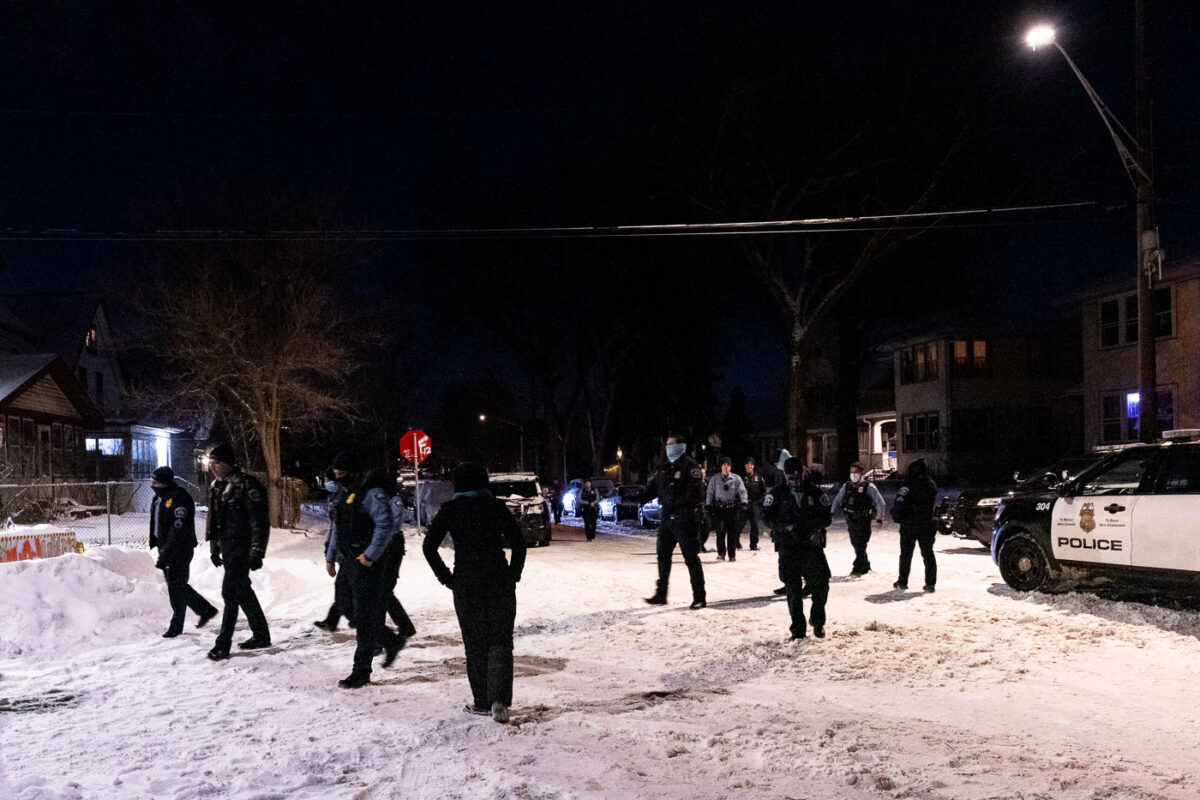
Large amount of police enter George Floyd Square
Minneapolis Police officers arrive at George Floyd Square, located at the intersection of E 38th Street and Elliot Avenue in South Minneapolis, following a shooting incident. Prior to their arrival, two victims had been transported to hospitals by community members present at the square. Residents at the square confronted the responding officers, subsequently offering to escort five of them to collect shell casings from the site. George Floyd Square emerged as a significant memorial and protest site after the murder of George Floyd in May 2020.

Minneapolis Police respond to George Floyd Square shooting
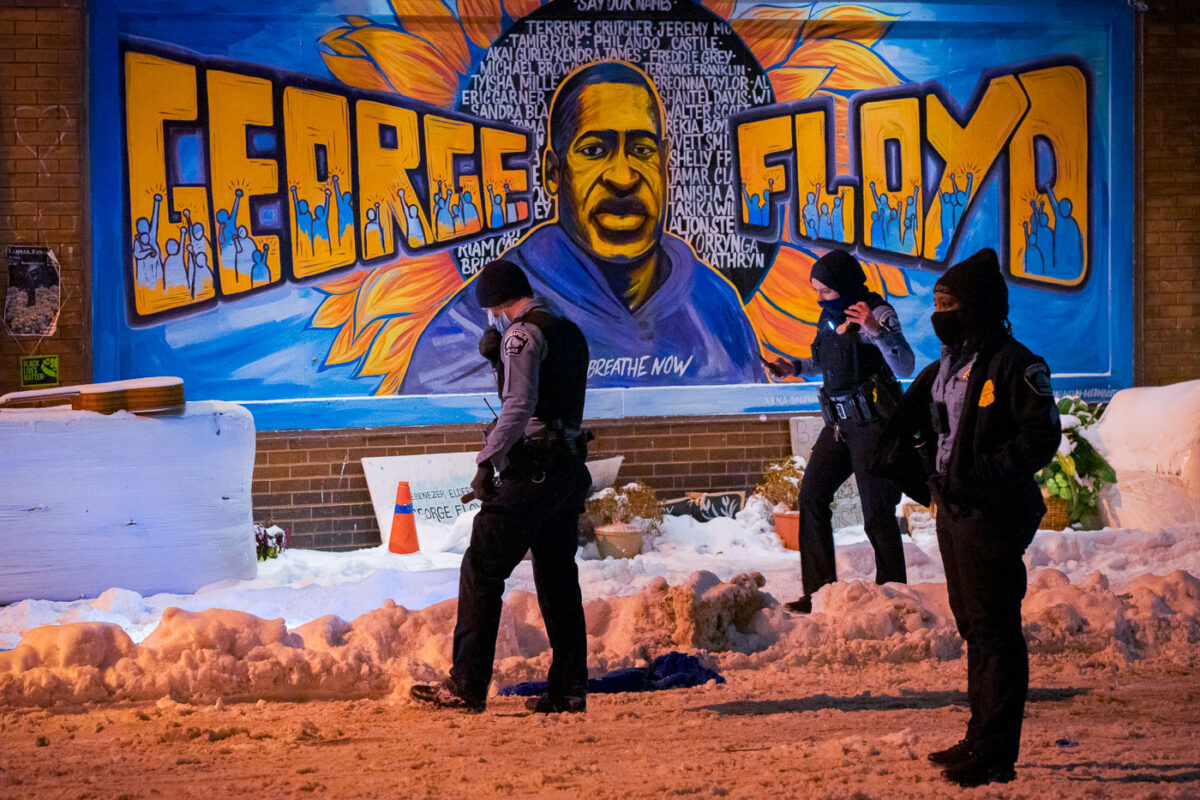
Police in front of George Floyd mural
Minneapolis Police officers investigate a shooting at George Floyd Square in South Minneapolis on December 27, 2020. This site, located at the intersection of E 38th Street and Chicago Avenue, transformed into a significant memorial and protest space following the murder of George Floyd in May 2020.

Minneapolis Police Investigate Shooting at George Floyd Square
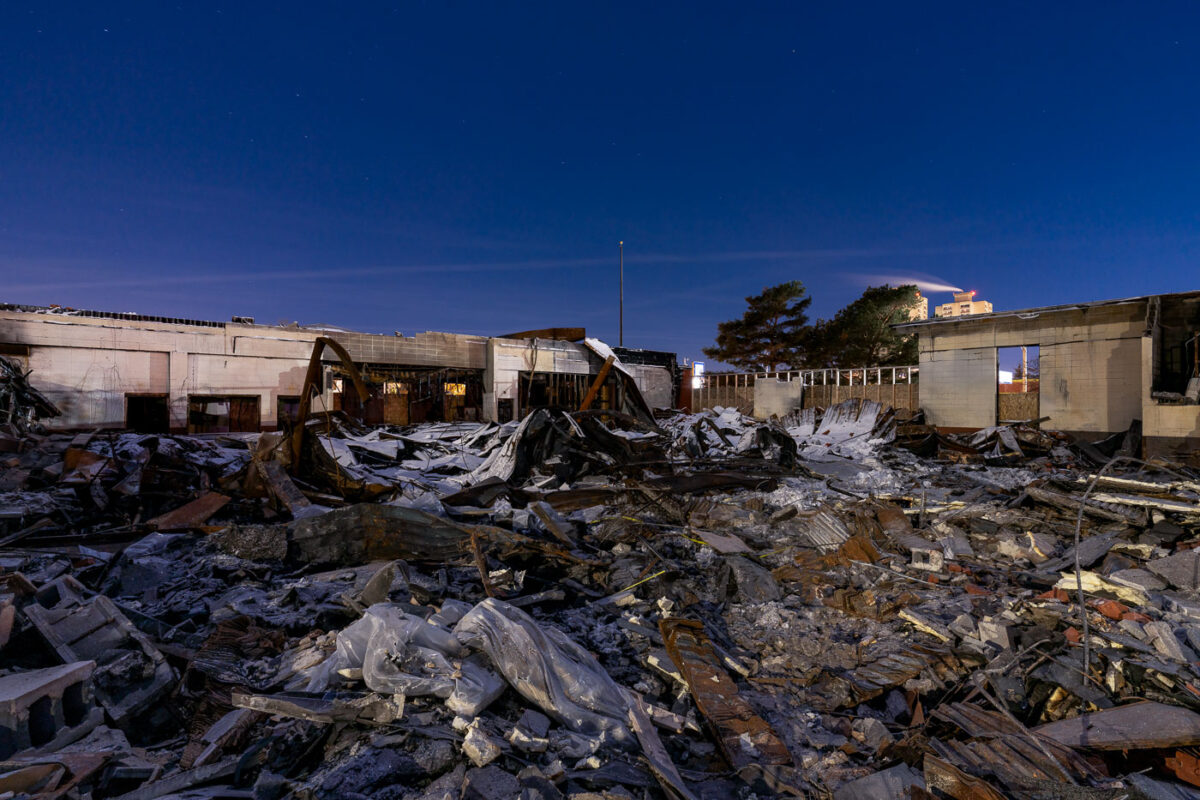
Inside burned Lake Street Station US Post Office
The Lake Street Station Post Office at 110 E 31st Street in South Minneapolis stands in ruins following its destruction. The facility was burned on May 29, 2020, during the George Floyd uprising, an act of arson that severely disrupted local postal services. Both the Lake Street and Minnehaha postal stations subsequently relocated to a vacant K-Mart building on Lake Street to maintain operations. The United States Postal Service later rebuilt the Lake Street Station Post Office, reopening it three years after the original structure was destroyed.

Lake Street Station Post Office Fire Aftermath, Minneapolis
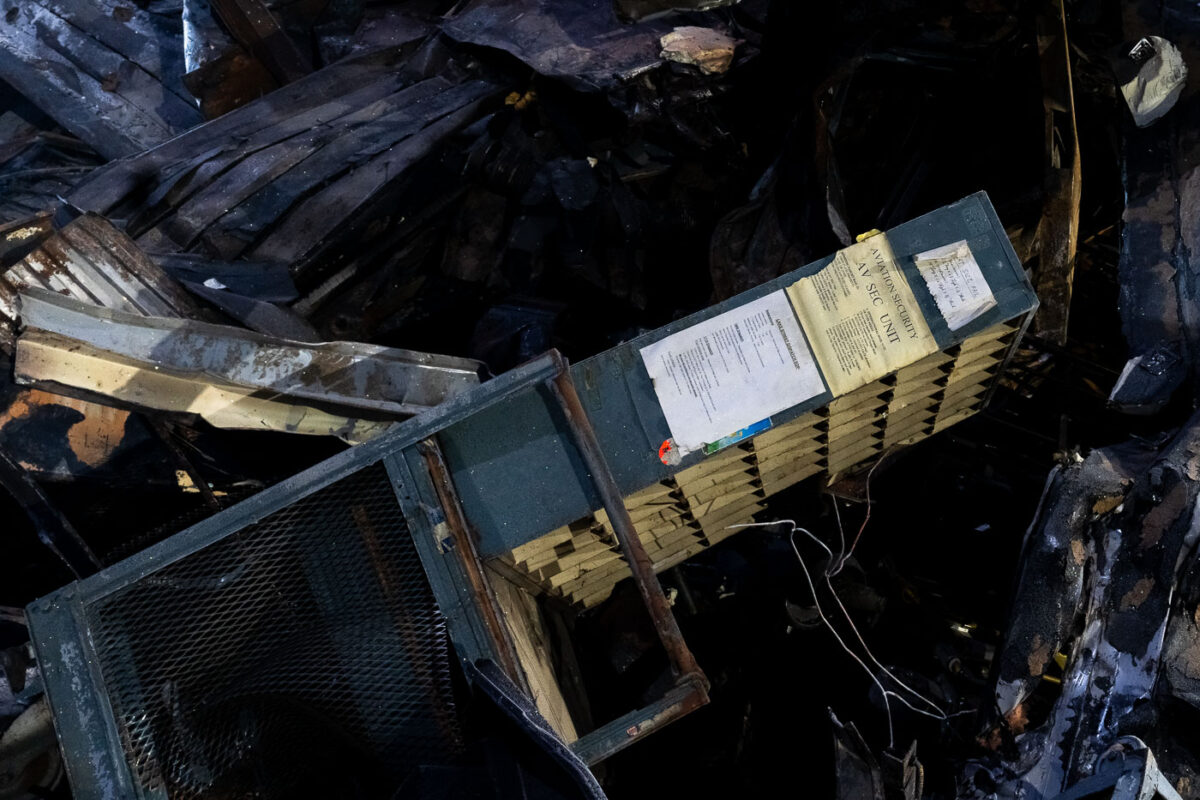
USPS Post office during demolition
The interior of the USPS Lake Street Station at 110 E 31st Street in South Minneapolis shows extensive fire damage. This postal facility was burned on May 29, 2020, during the protests that followed the murder of George Floyd. Following the destruction, postal services, including those from the Minnehaha Station, were temporarily relocated to a vacant K-Mart on Lake Street. The original post office building was eventually rebuilt and reopened to the community three years to the day after the fire.

Burned Interior: USPS Lake Street Station, 110 E 31st St
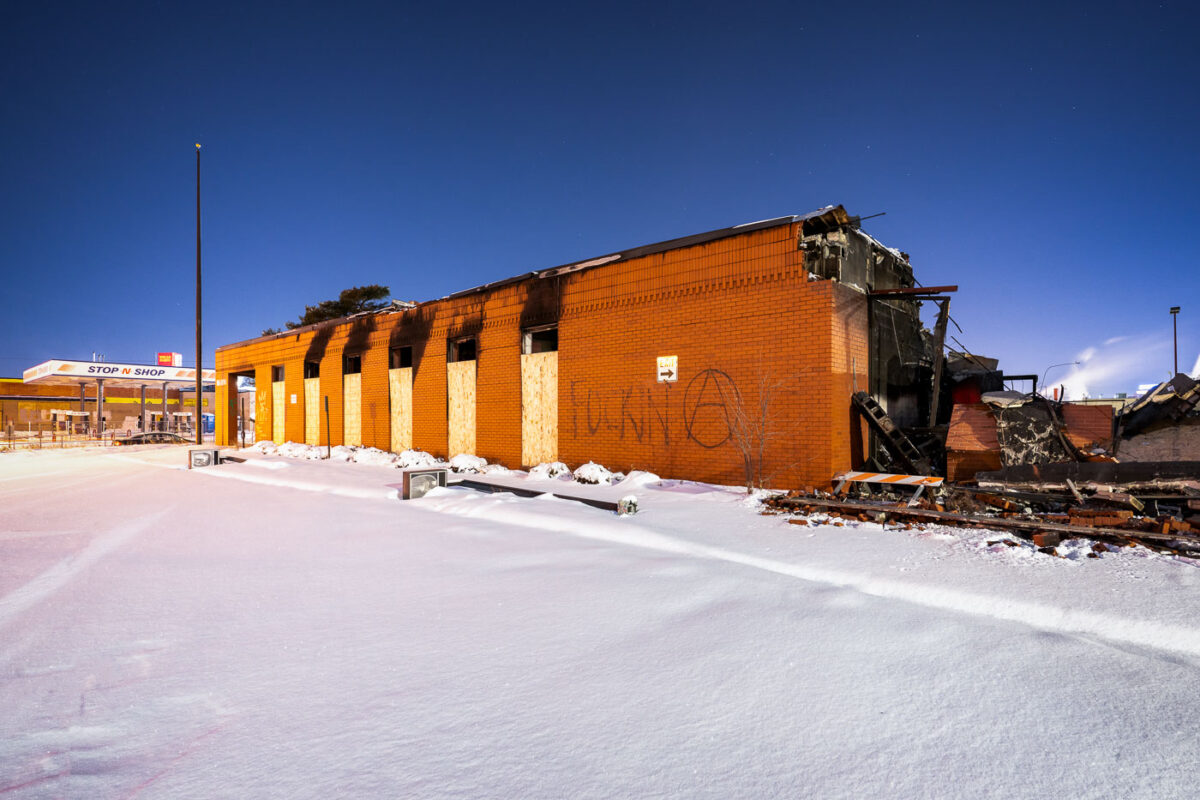
Anarchy symbol on the USPS post office
The burned United States Postal Service (USPS) Post Office at 110 E 31st Street in South Minneapolis stands as a historical marker of the George Floyd uprising. This facility, located directly across from the Minneapolis Police 5th Precinct, was extensively damaged by arson on May 29th. Following the destruction, postal services for the area, including the Minnehaha Station, were temporarily relocated to a vacant K-Mart on Lake Street. The original post office building was eventually rebuilt and reopened to the public exactly three years after the incident, restoring essential community services.

Burned USPS Post Office, 110 E 31st St, Minneapolis
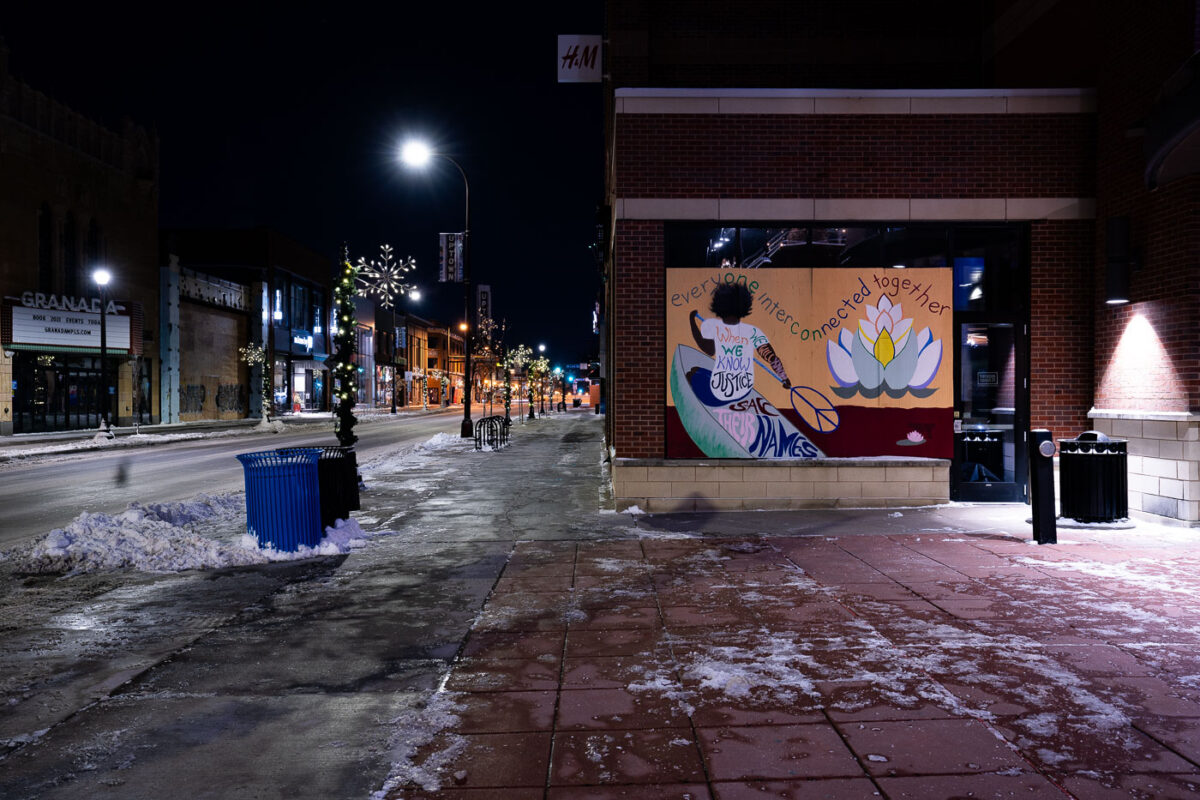
Everyone interconnected together mural on storefront
A mural adorns protective boards on an H&M retail store located on Hennepin Avenue in Uptown Minneapolis. This artwork emerged during the Minneapolis Uprising following the murder of George Floyd in May 2020, when many businesses boarded their windows for protection. The mural, featuring a figure in a canoe and a lotus flower, carries messages such as "When we know justice say their names" and "everyone interconnected together," reflecting themes of community and calls for justice.

Mural on H&M Boards, Hennepin Ave, Minneapolis Uprising
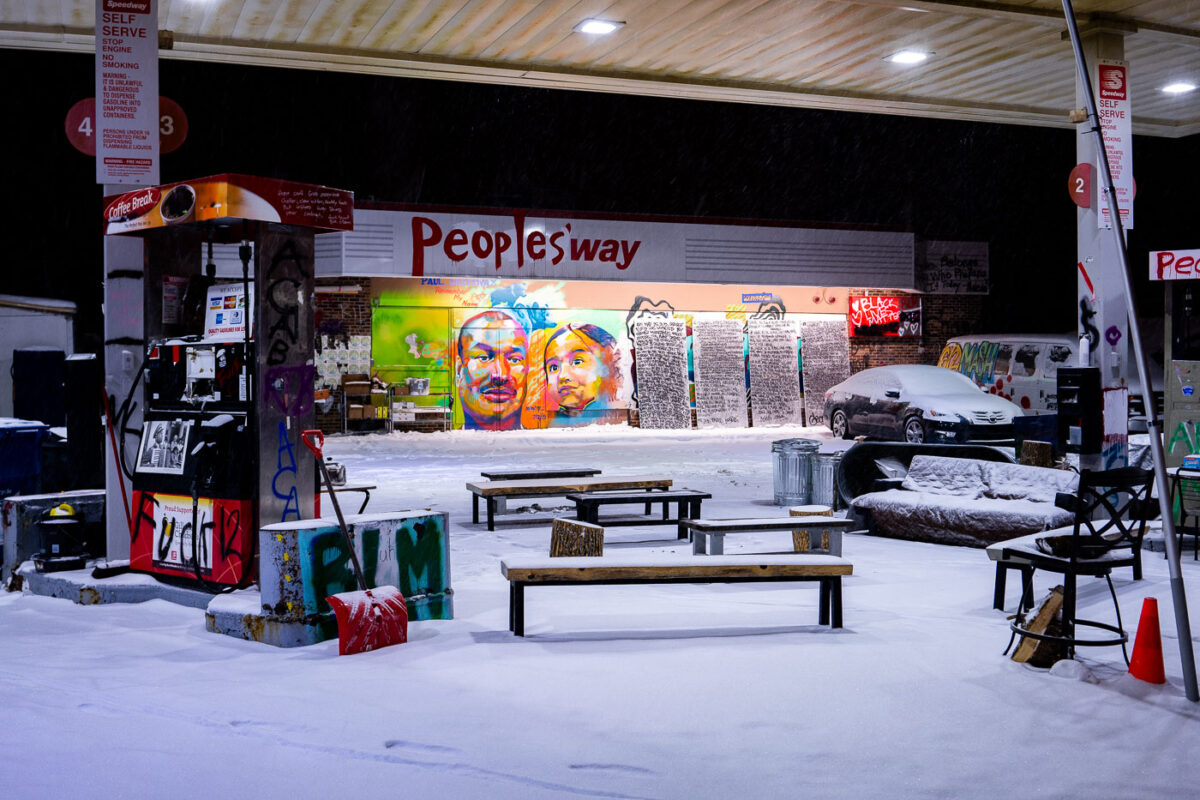
Peoples Way after a fresh snow fall
The People's Way, a former Speedway gas station at George Floyd Square in Minneapolis, is seen covered in snow. This site, located at the intersection of 38th Street and Chicago Avenue, transformed into a protest zone following the May 25, 2020 death of George Floyd. The area now functions as a community gathering space and memorial, featuring murals, graffiti, and various installations that reflect ongoing calls for justice and social change.

People’s Way, George Floyd Square, Minneapolis, covered in snow
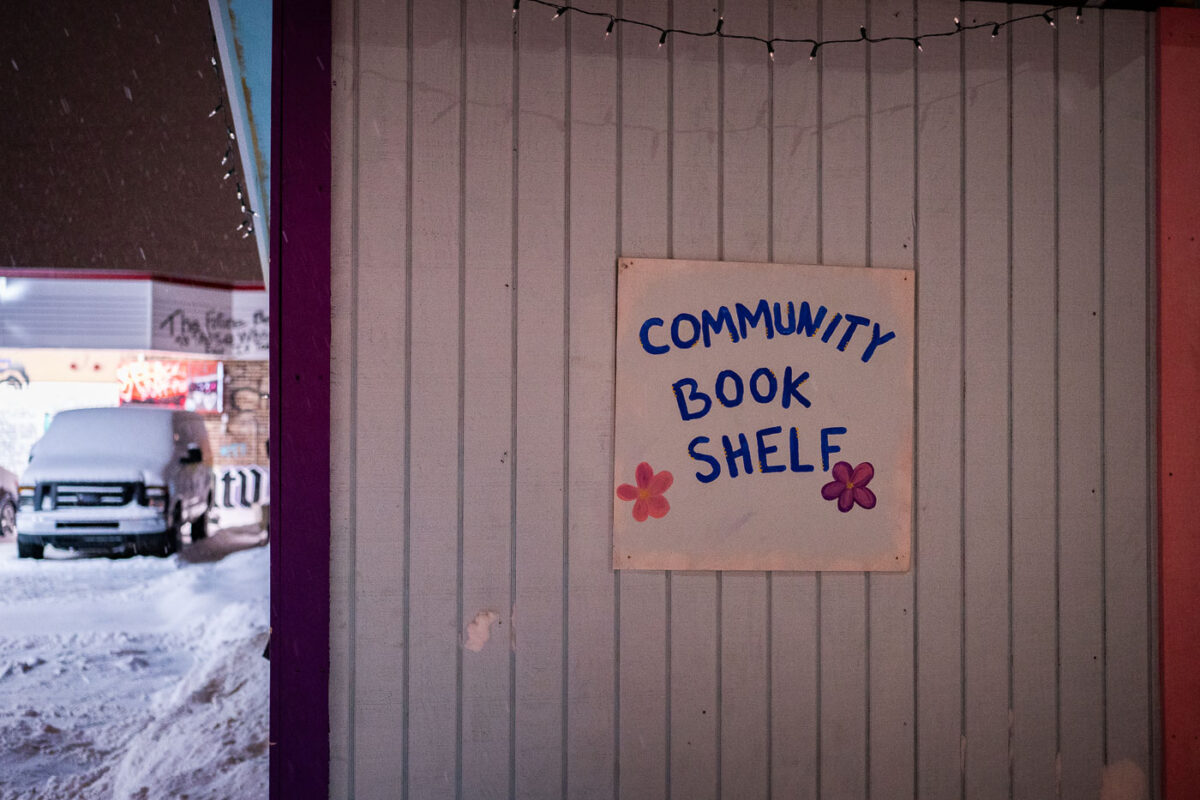
Community book shelf at George Floyd Square
The Community Book Shelf stands at George Floyd Square, located at the intersection of 38th Street and Chicago Avenue in Minneapolis. This community-driven initiative functions as a free exchange, allowing individuals to donate and borrow books. It emerged as part of the informal memorials and community infrastructure established in the wake of the 2020 Minneapolis Uprising and the murder of George Floyd.

Community Book Shelf at George Floyd Square, Minneapolis
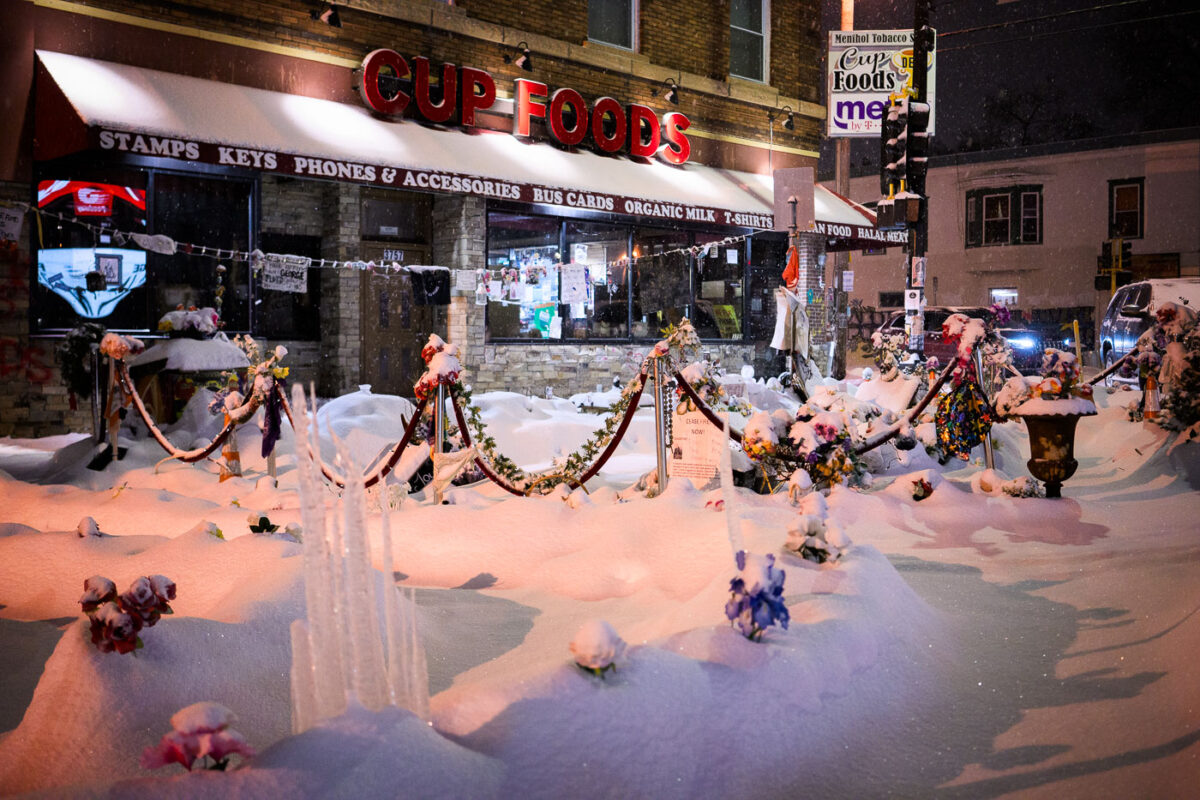
Fresh December snowfall at George Floyd Memorial
The George Floyd Memorial at George Floyd Square, located outside Cup Foods on Chicago Avenue in Minneapolis, is seen after a December snowfall. This site became an impromptu memorial following the murder of George Floyd by Minneapolis police on May 25, 2020, sparking widespread protests against racial injustice and police brutality. The memorial, which includes flowers, signs, and other tributes, serves as a permanent public space for remembrance and a symbol of the ongoing movement for civil rights. The area around Cup Foods, where Floyd was killed, was transformed into a community-managed space, reflecting its role as a focal point for activism and reflection.

George Floyd Square Memorial, Cup Foods, Minneapolis Snow
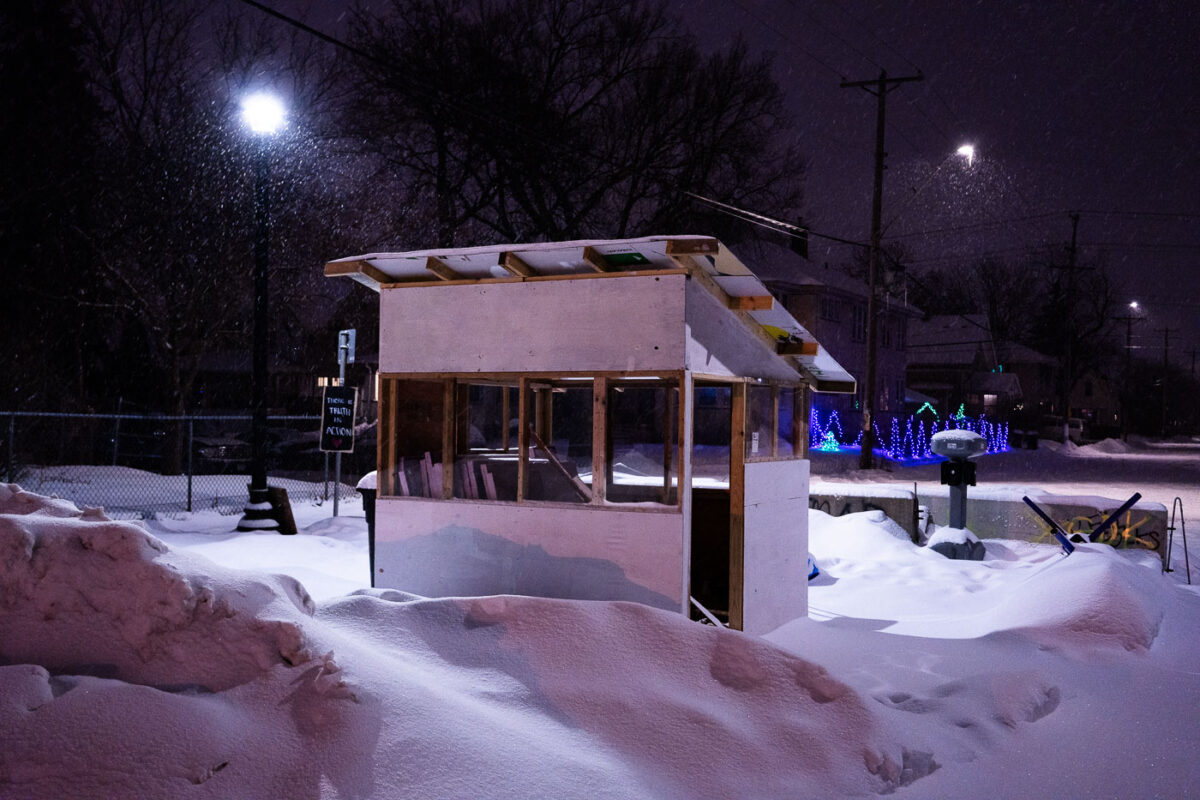
Warming huts at George Floyd Square
A winter warming hut stands amidst snow and barricades at George Floyd Square in Minneapolis. This site, located at the intersection of 38th Street and Chicago Avenue, became a protest zone and memorial following the murder of George Floyd on May 25, 2020. Community members constructed structures like this warming hut to provide shelter and support for those maintaining the memorial and protest presence, especially during the cold Minnesota winters.

George Floyd Square Winter Warming Hut
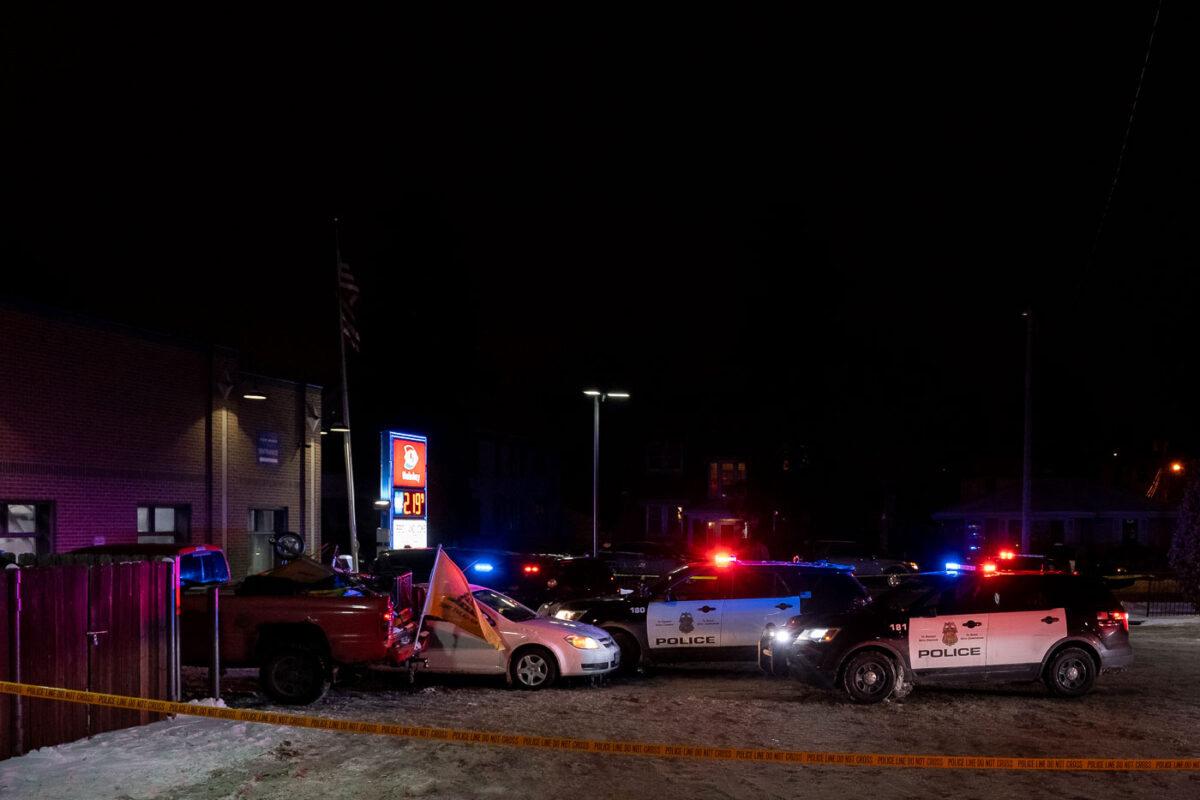
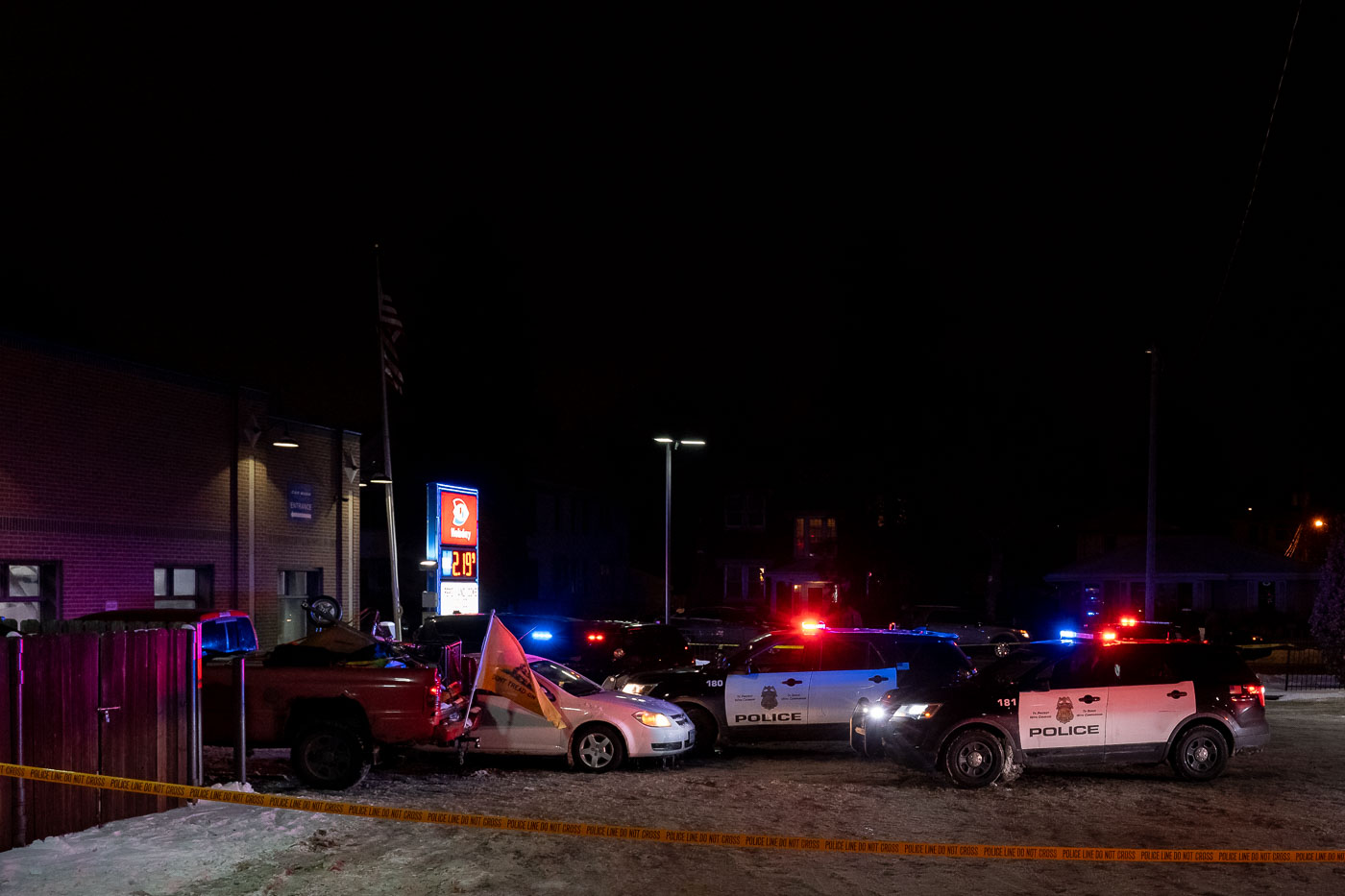
Minneapolis Police at 36th and Cedar
Minneapolis Police vehicles are parked at the Holiday gas station near the intersection of 36th Avenue and Cedar Avenue in Minneapolis, following the fatal shooting of Dolal Idd. The incident occurred on December 30, 2020, after a traffic stop, leading to a police investigation at the site. A 'Don't Tread On Me' flag is visible on one of the civilian vehicles within the secured perimeter. This event occurred during a period of heightened public scrutiny and protest regarding police conduct in Minneapolis.

Dolal Idd Killed by Minneapolis Police at 36th & Cedar
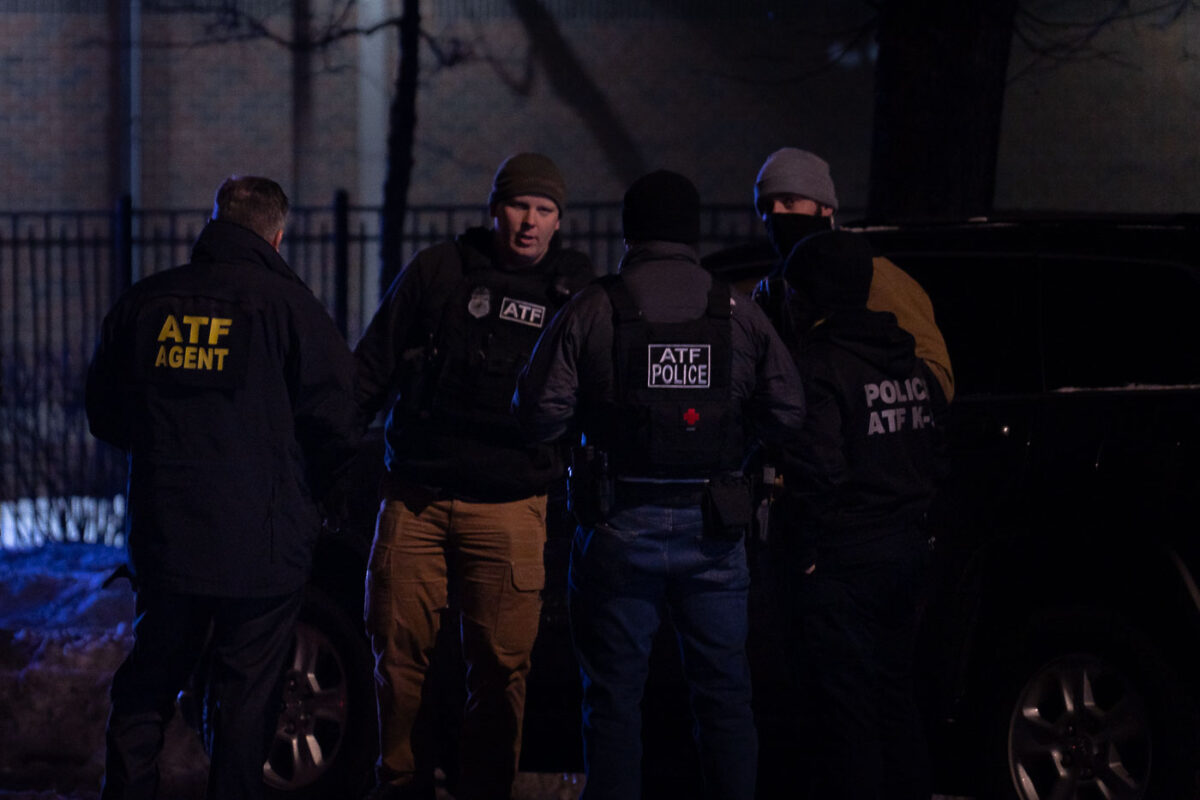
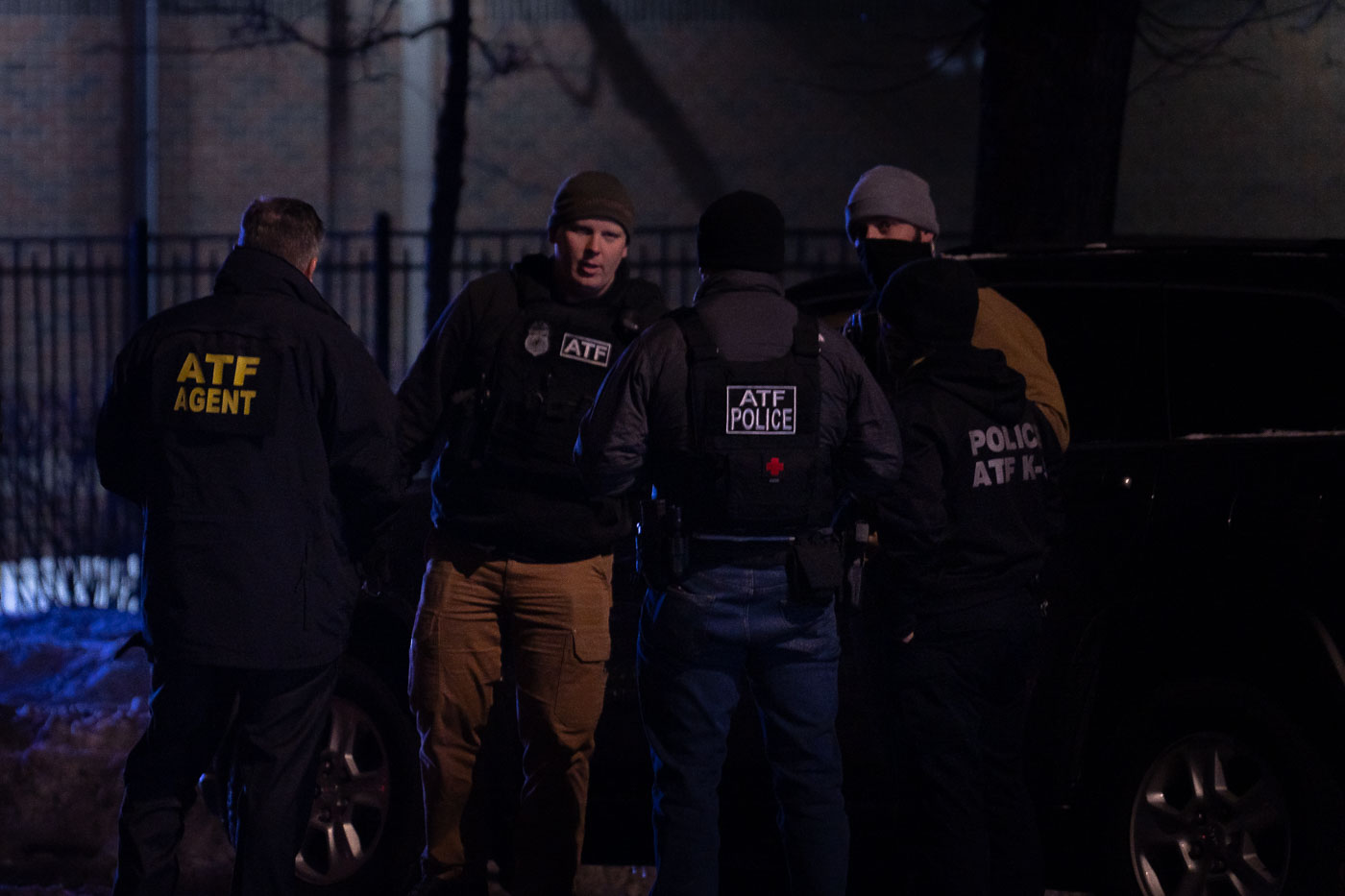
ATF and DEA at the Dolal Idd killing crime scene
Federal agents from the Bureau of Alcohol, Tobacco, Firearms and Explosives (ATF) and the Drug Enforcement Administration (DEA) gather outside the Holiday Gas station in Minneapolis. This location, situated near 36th Avenue and Cedar Avenue, became a focal point following the fatal shooting of Dolal Idd by Minneapolis Police on December 31, 2020.

ATF and DEA Investigate Dolal Idd Killing, Holiday Gas
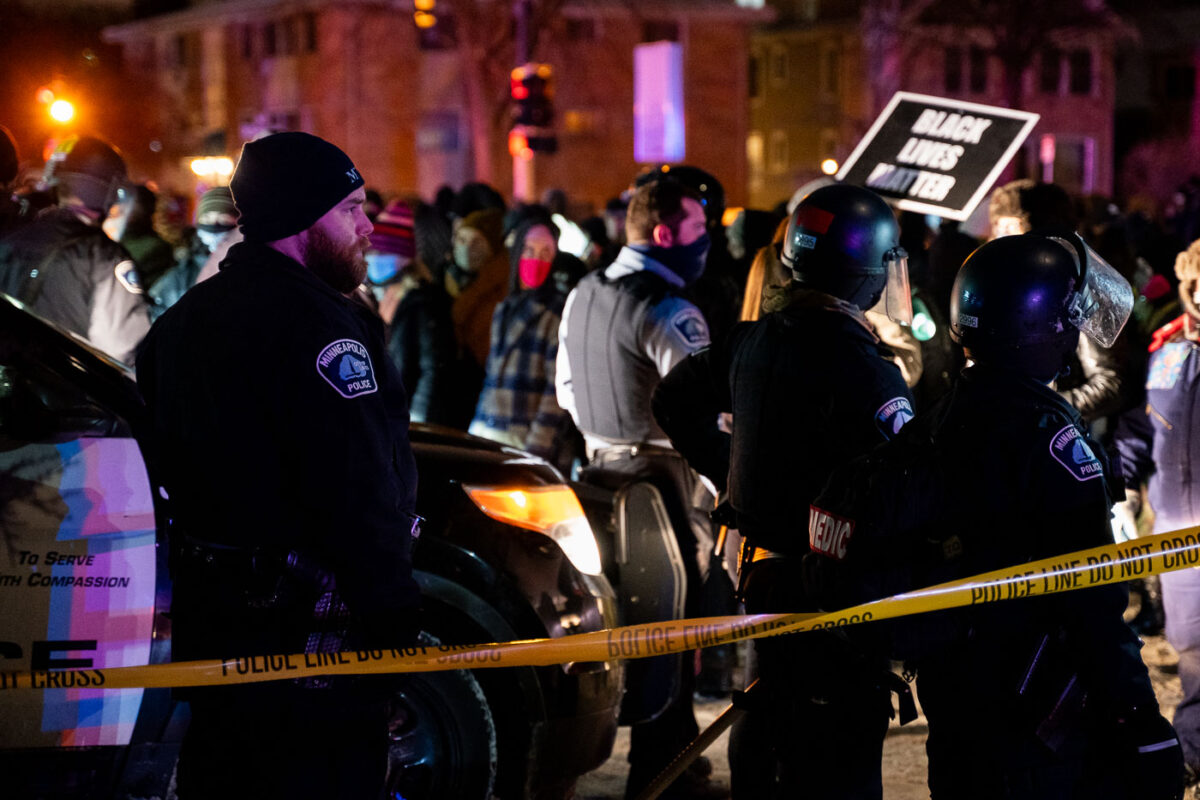
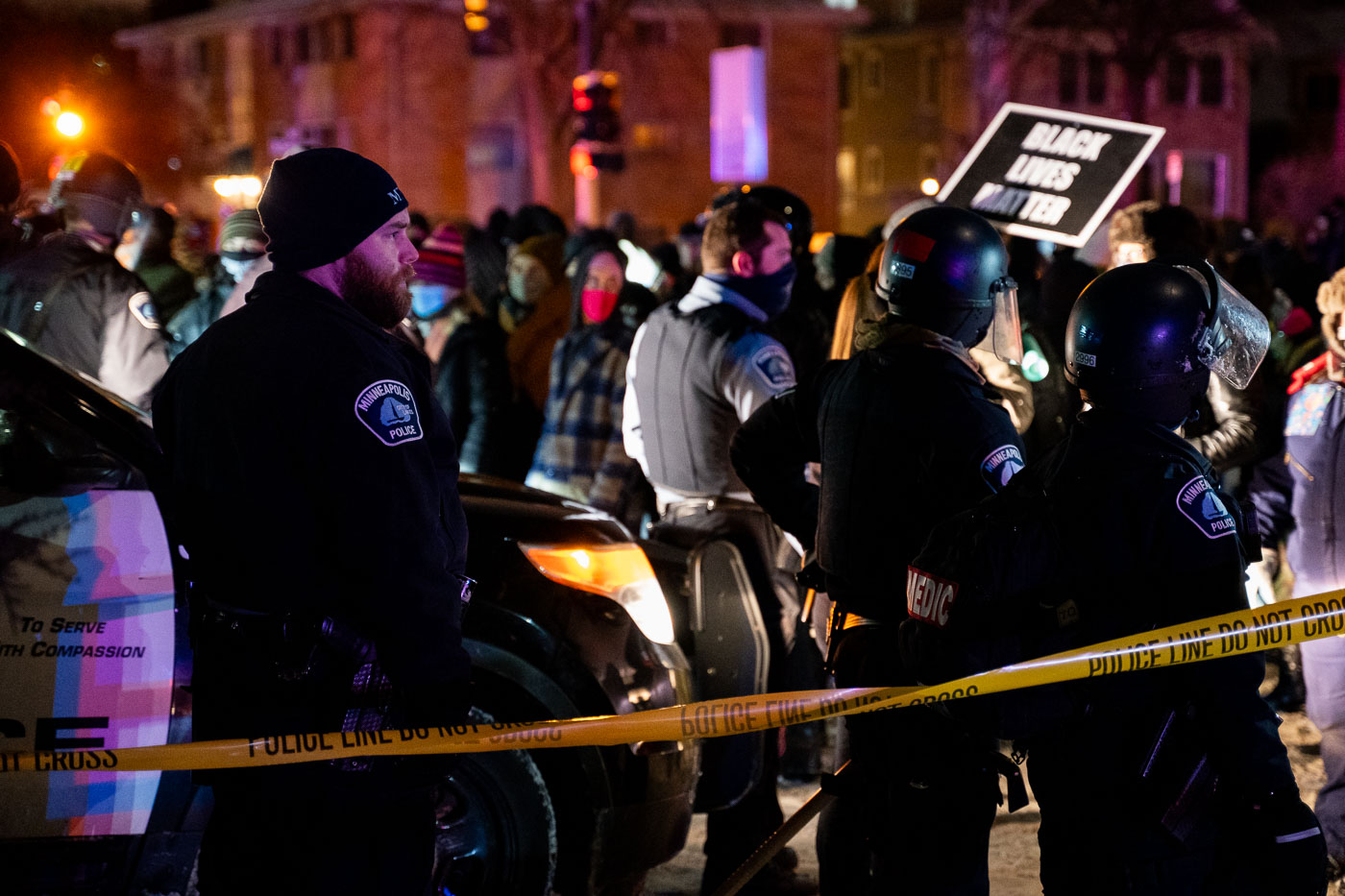
Protesters gather after Dolal Idd was killed by police
Minneapolis police officers stand guard at the Holiday Gas station located at 36th Avenue and Cedar Avenue in Minneapolis. This location became a focal point for protests following the fatal shooting of Dolal Idd by Minneapolis police. Protesters gathered to demand accountability and justice, with signs such as 'Black Lives Matter' visible among the crowd.

Minneapolis Police, Protesters at Holiday Gas, Dolal Idd Protest