Minneapolis

5,036 photos · 2008–2026

5,036 photographs tagged Minneapolis, 2008–2026.
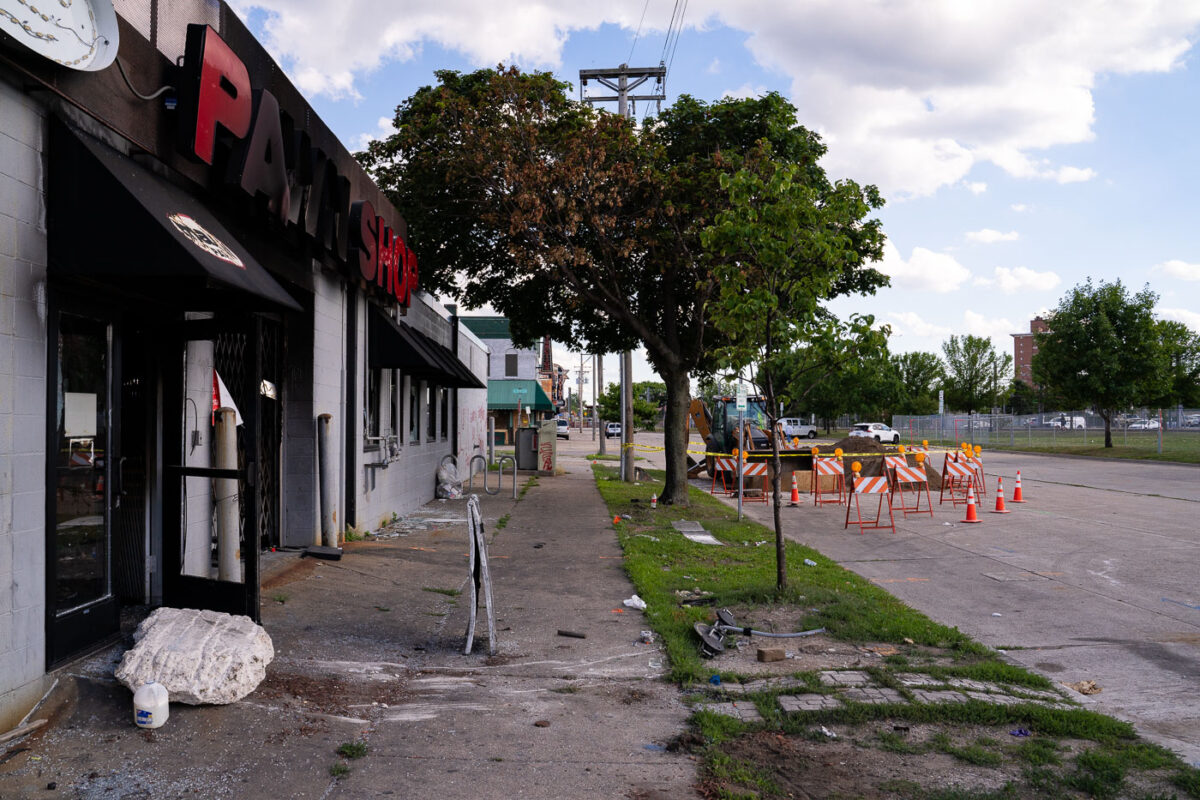
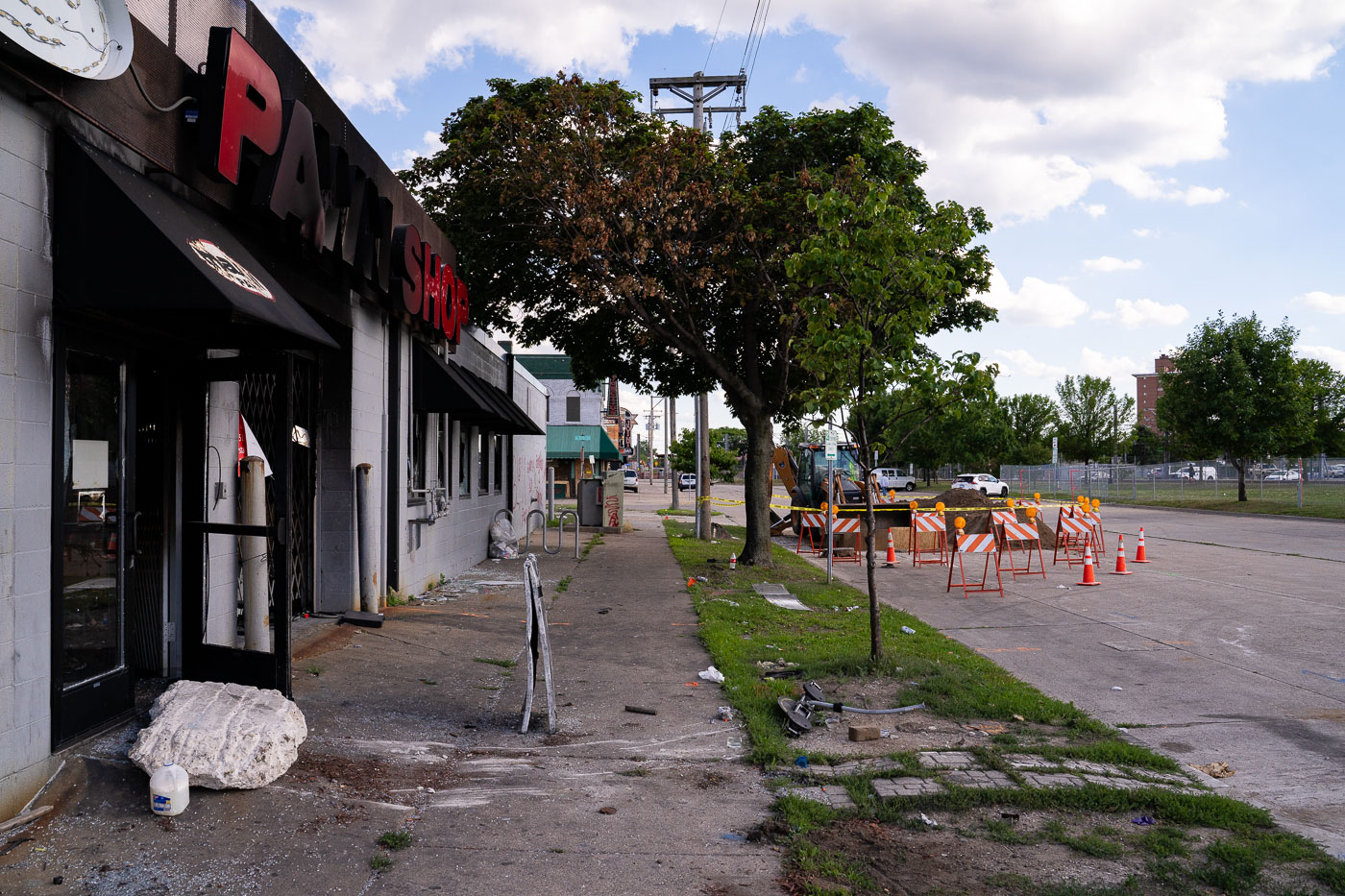
Outside the Max It Pawn that was destroyed by fire
The Max It Pawn shop on Cedar Avenue in Minneapolis sustained significant damage. This retail building was destroyed by fires that occurred in the aftermath of the May 25th, 2020 death of George Floyd. The storefront, with its broken windows and charred interior, reflects the widespread property damage experienced by businesses in the urban core during the period of civil unrest. Debris and construction barriers on the sidewalk indicate ongoing cleanup and the lasting impact on the commercial district. This site serves as a historical marker of the events that unfolded in Minneapolis.

Max It Pawn Shop Burned Storefront, Cedar Ave, Minneapolis
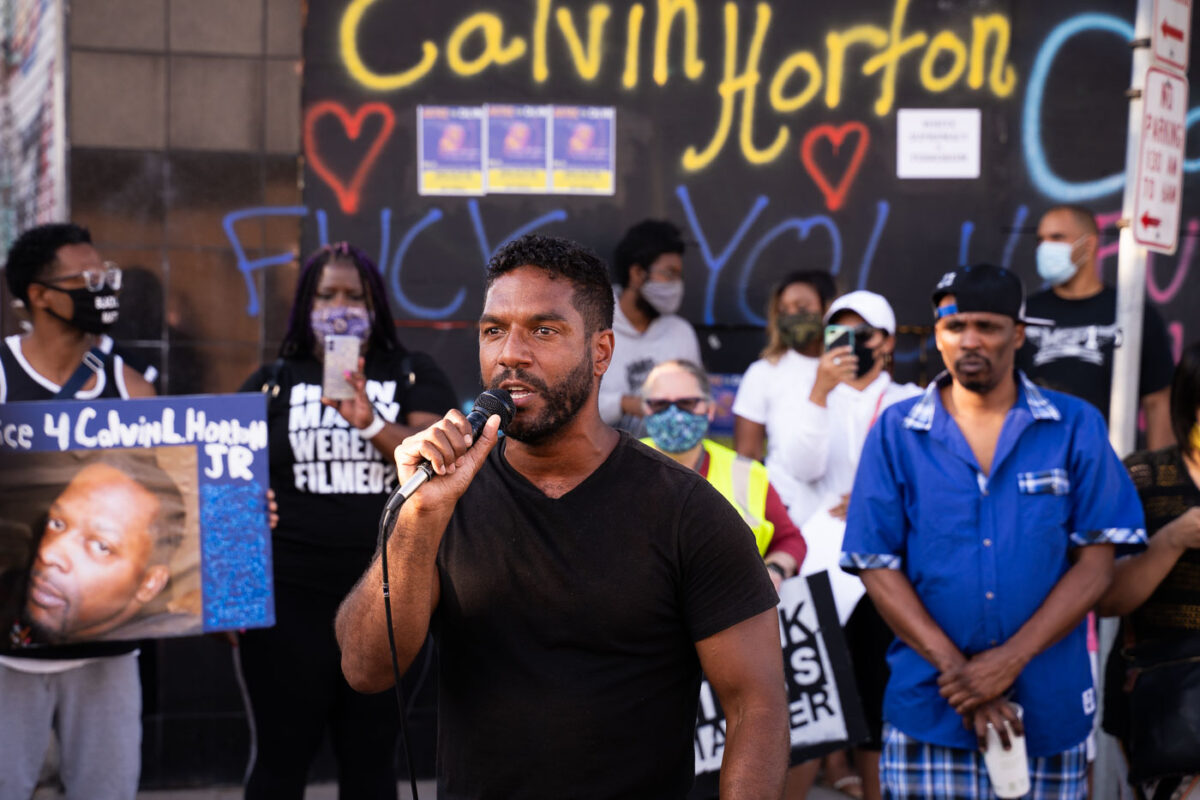
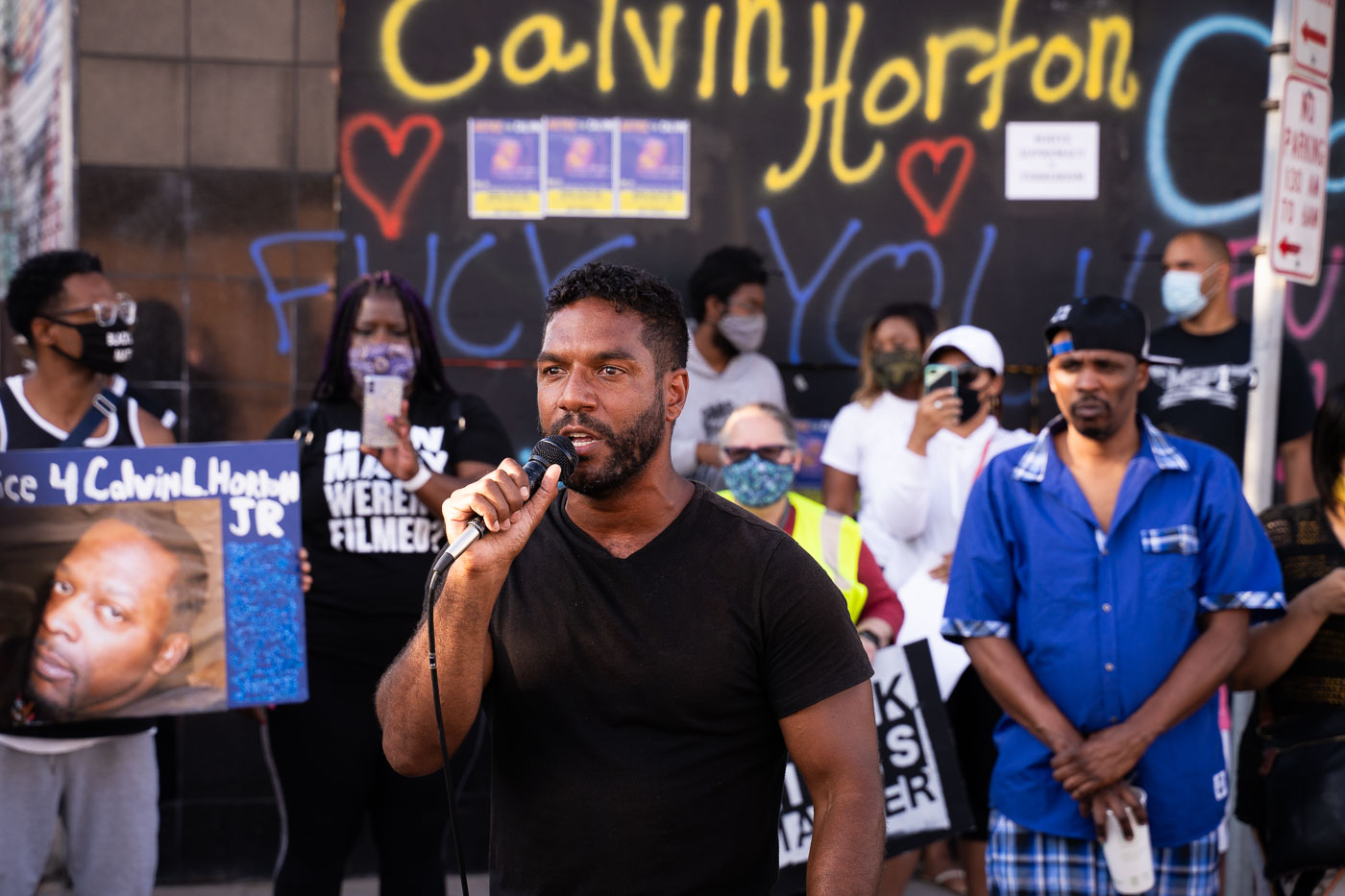
Toussaint Morrison speaks at a protest for Calvin Horton Jr. outside Cadillac Pawn on Lake Street in Minneapolis.
Toussaint Morrison addresses a protest for Calvin Horton Jr. outside Cadillac Pawn on Lake Street in Minneapolis. This gathering took place amidst widespread protests in Minneapolis following the murder of George Floyd, with participants demanding charges in the death of Calvin Horton Jr.

Toussaint Morrison Addresses Crowd at Calvin Horton Jr. Vigil
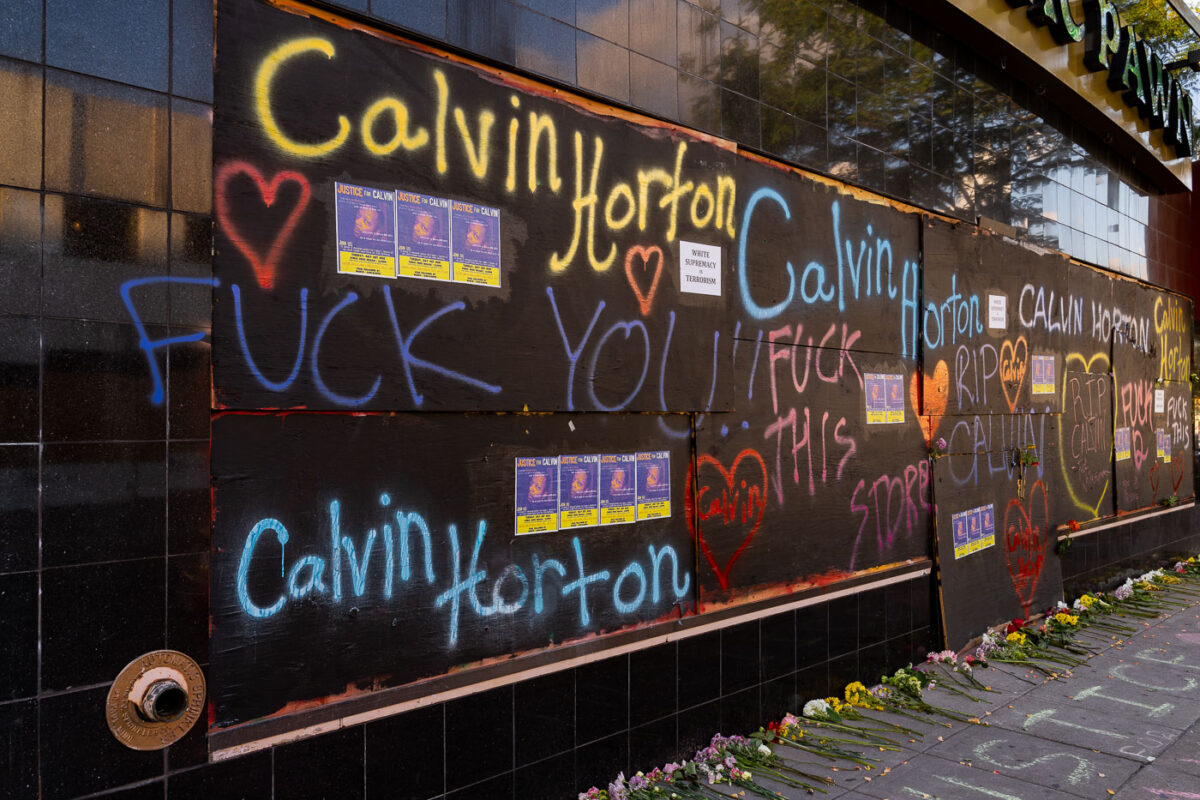
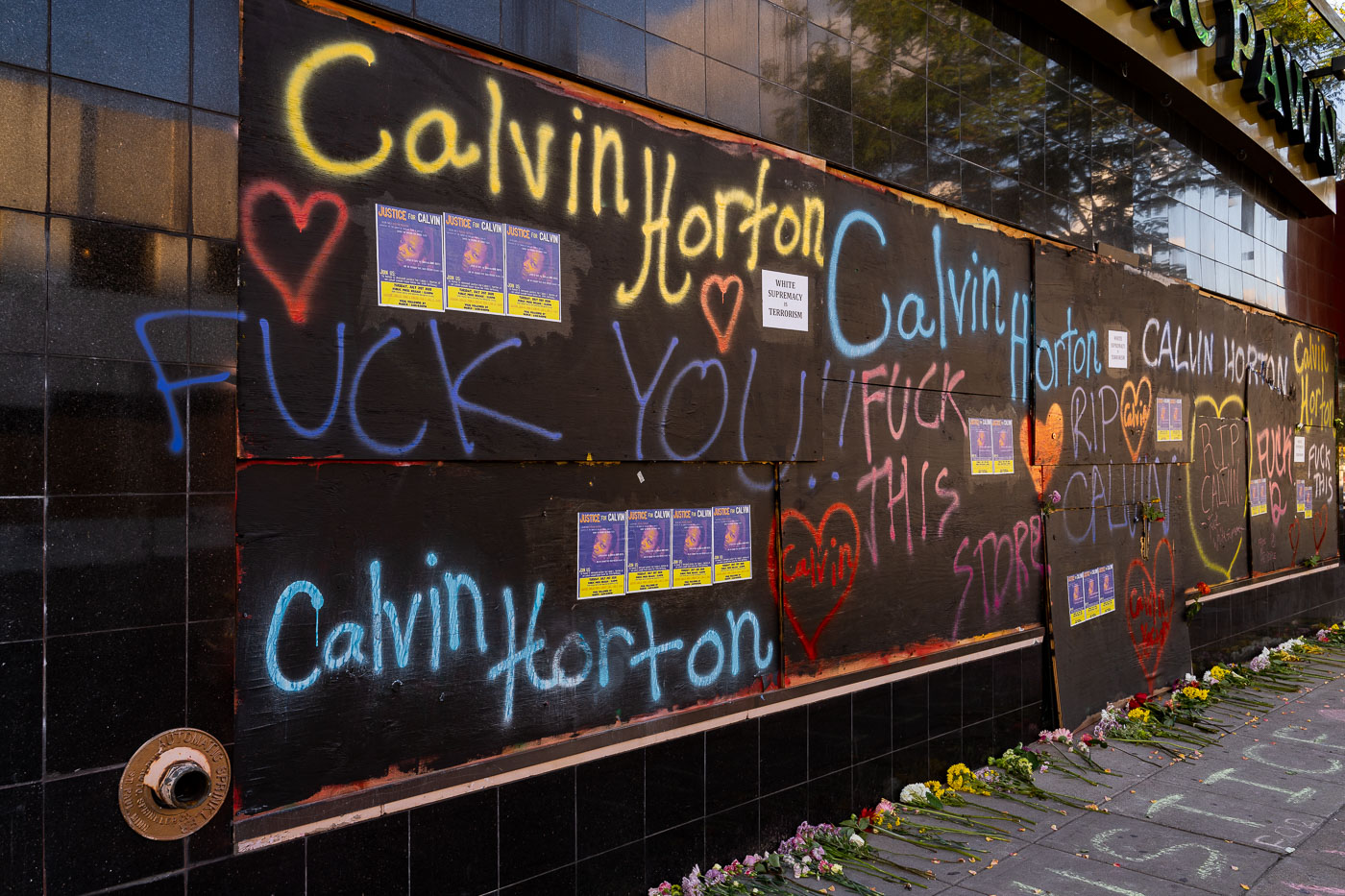
Boarded storefront of Cadillac Pawn on Minneapolis's Lake Street displays colorful graffiti and memorial messages honoring Calvin Horton Jr.
A boarded-up storefront of Cadillac Pawn on Lake Street in Minneapolis displays graffiti and memorial messages for Calvin Horton Jr. Horton Jr. was killed by the owner of the pawn shop on May 27, 2020, during the civil unrest that followed the murder of George Floyd.

“Fuck You” Graffiti and Memorials for Calvin Horton Jr. on Lake Street
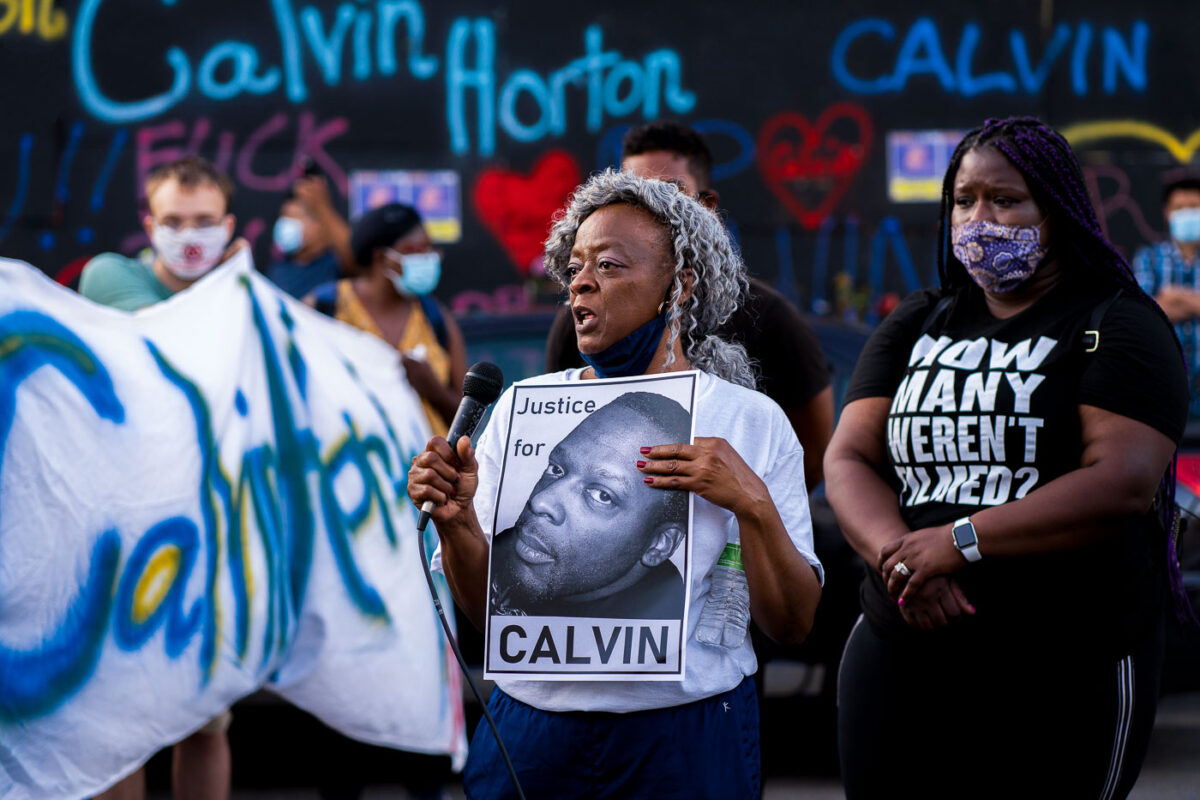
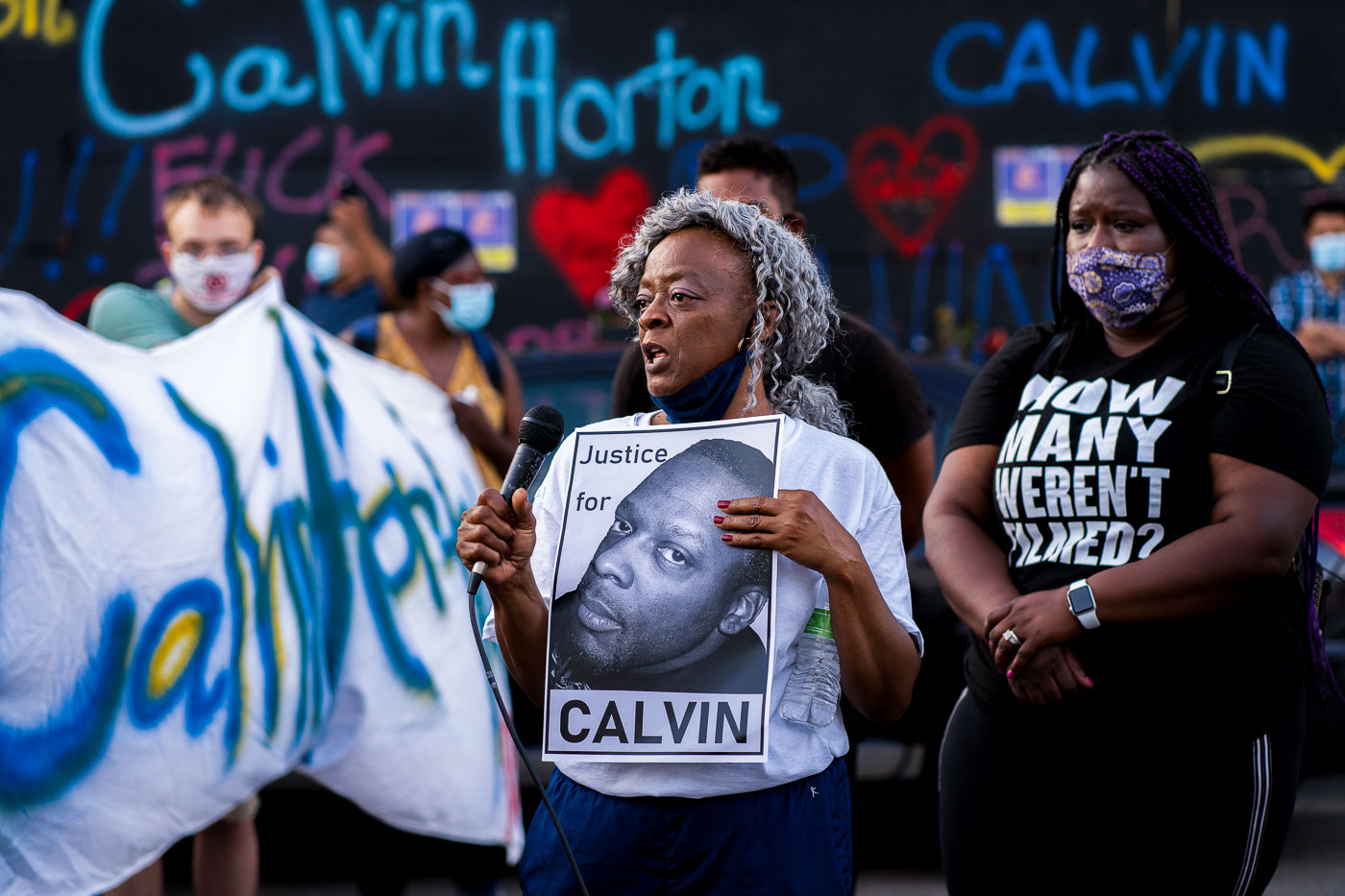
Mae Roberts speaks at a vigil for her son Calvin Horton outside Cadillac Pawn on Lake Street in Minneapolis.
Mae Roberts, mother of Calvin Horton Jr., addresses attendees at a vigil held outside Cadillac Pawn on Lake Street in Minneapolis. The gathering commemorated what would have been her son's 44th birthday. Calvin Horton Jr. was killed on May 27th by the owner of the pawn shop during the unrest that occurred in Minneapolis following the death of George Floyd.

Mae Roberts Speaks on Calvin Horton Jr.’s Birthday at Cadillac Pawn
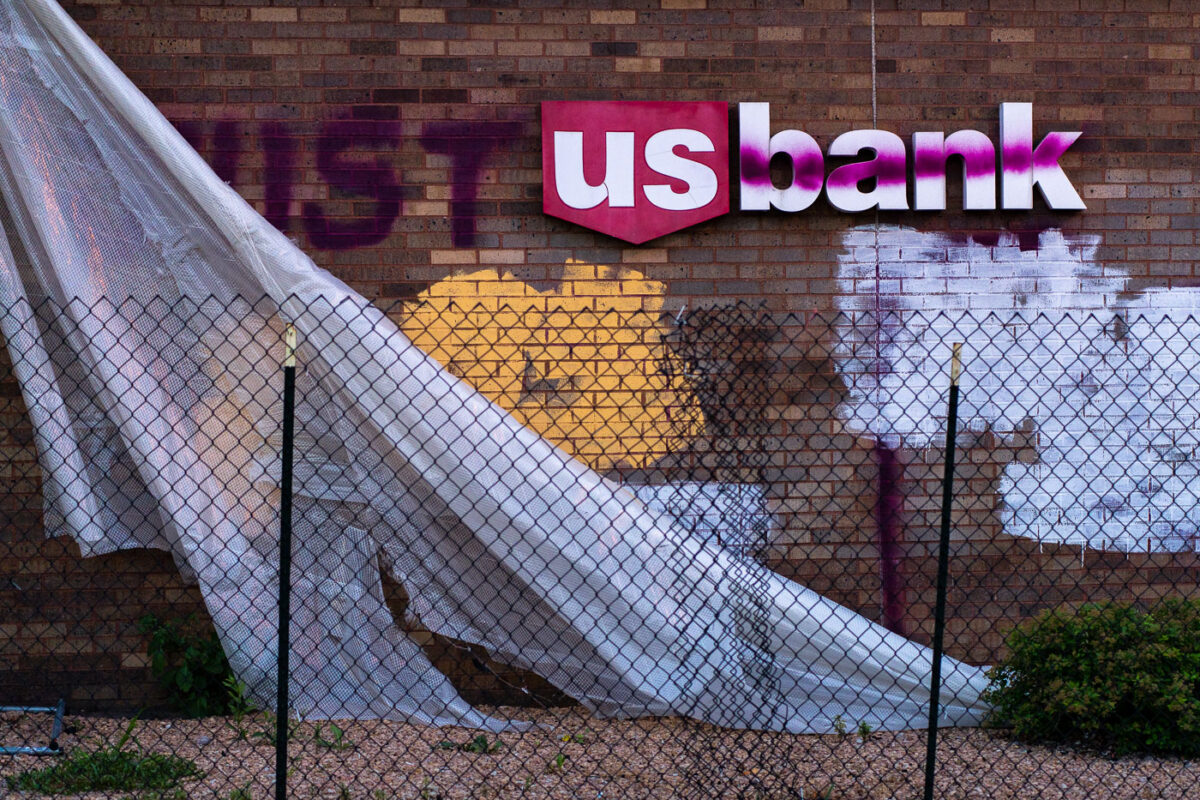
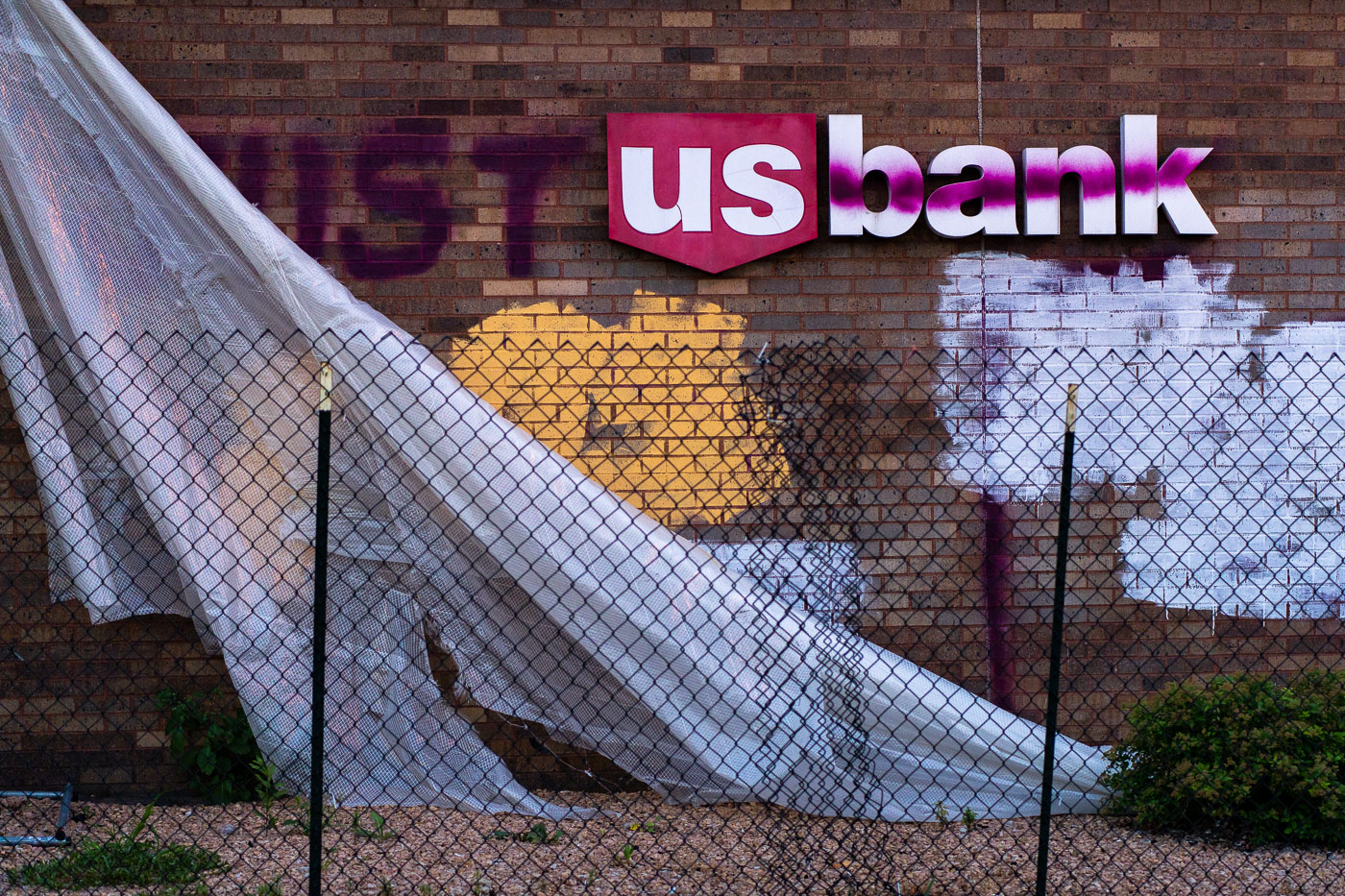
US Bank branch on Lake Street in Minneapolis with graffiti and boarded windows during 2020 civil unrest.
Graffiti covers the exterior of a US Bank branch on Lake Street in Minneapolis. This damage occurred during the widespread protests and civil unrest that followed the May 25, 2020 death of George Floyd.

Chain-Link Fence and Tarp Outside a US Bank Branch on Lake Street
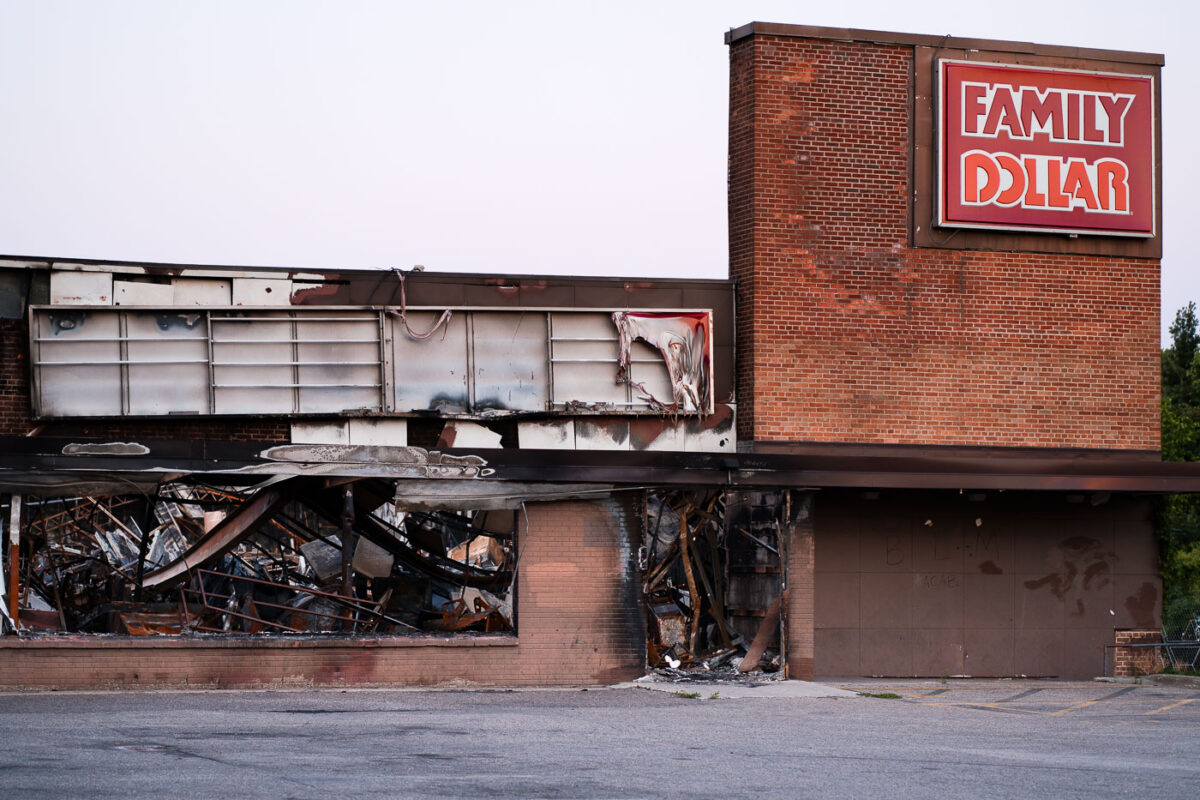
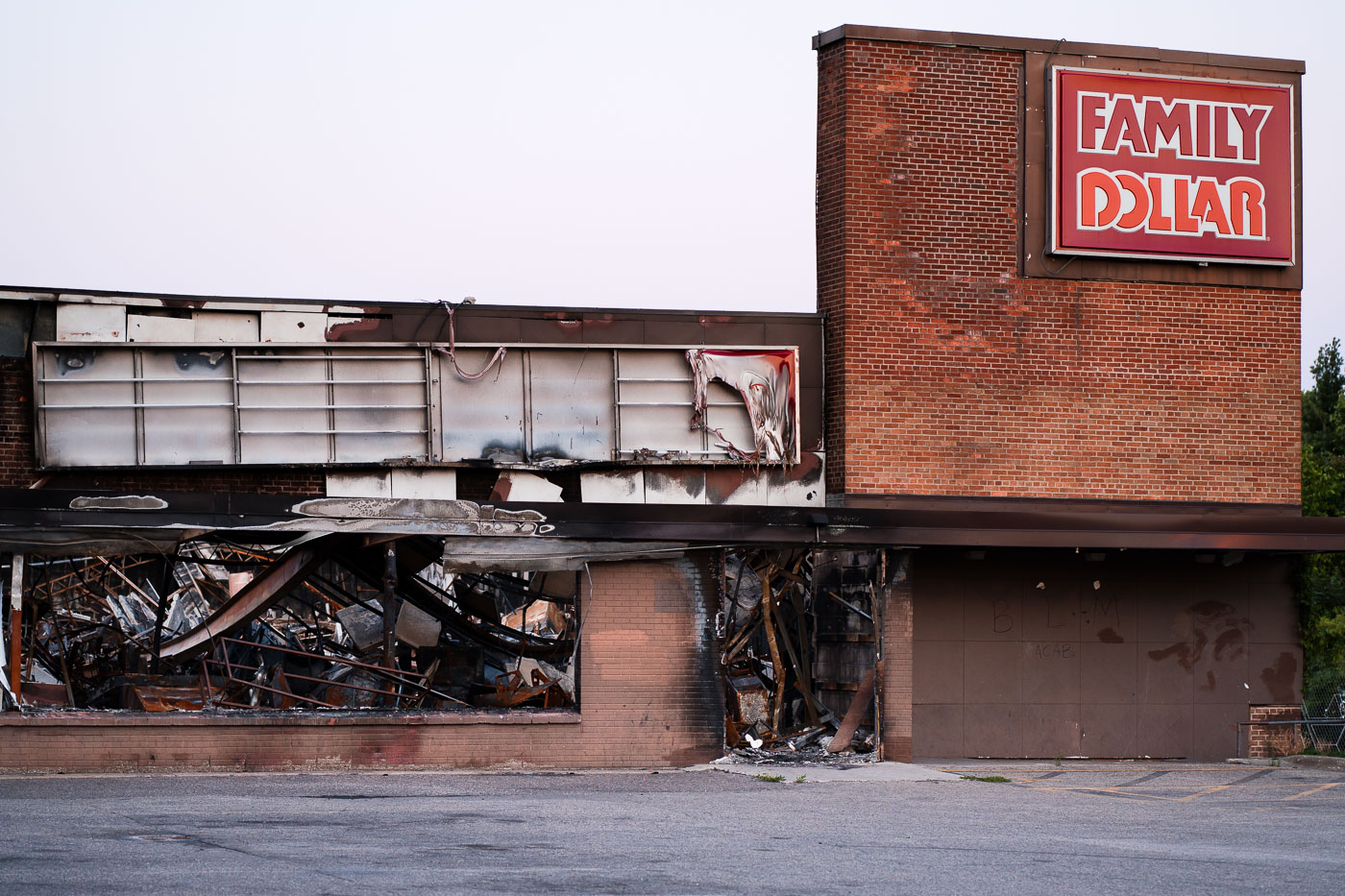
A burned-out Family Dollar store with boarded windows and charred interior visible on Lake Street in Minneapolis.
The Family Dollar store on Lake Street in Minneapolis sustained severe fire damage. This destruction occurred during the widespread protests and civil unrest that followed the May 25, 2020 death of George Floyd.

Burned-Out Family Dollar on Lake Street After Unrest
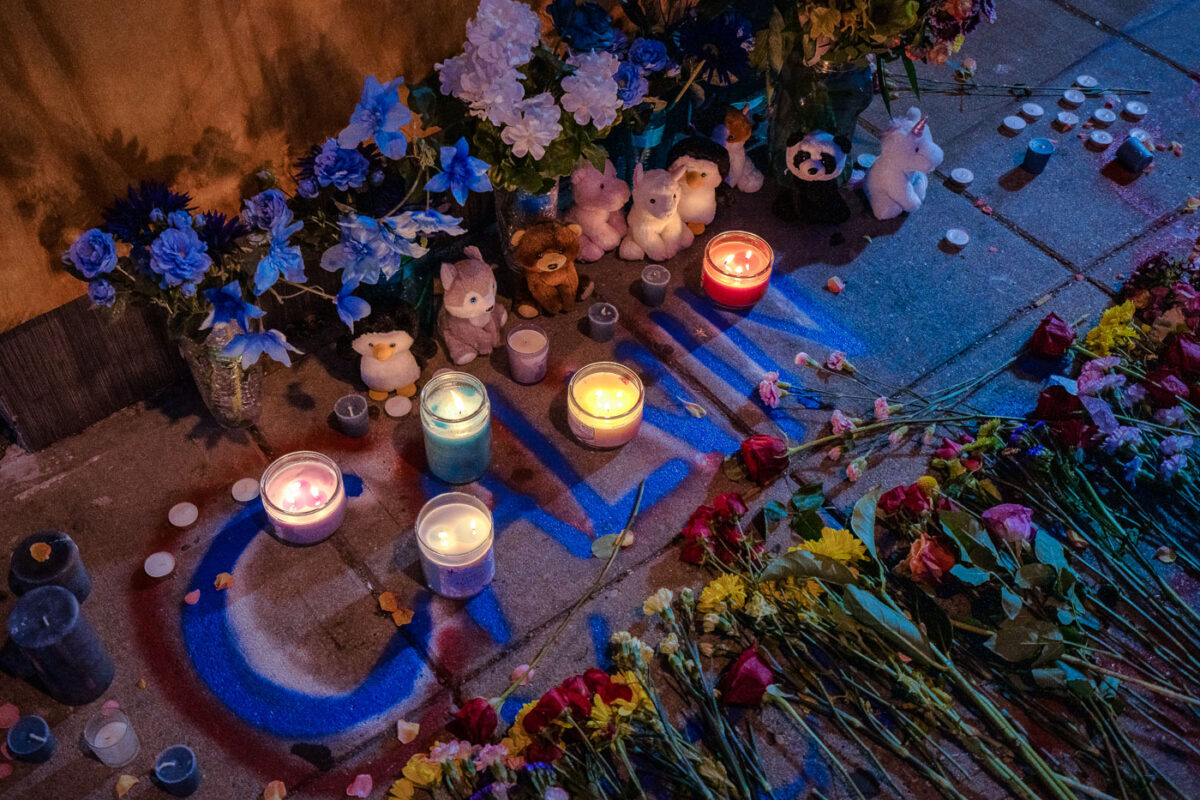
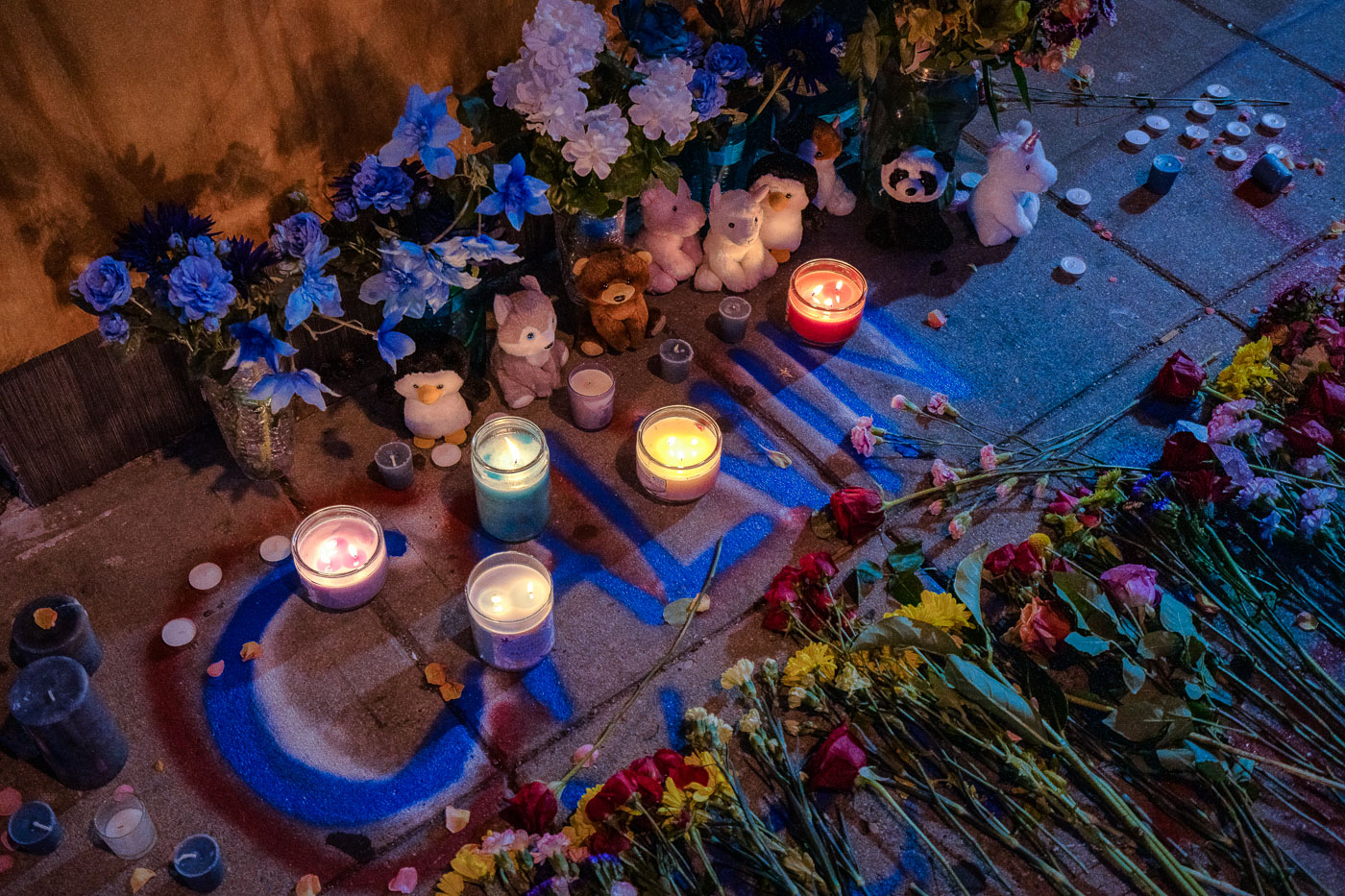
A memorial arranged on Lake Street pavement outside Cadillac Pawn in Minneapolis honors Calvin Horton Jr.
A memorial for Calvin Horton Jr. is arranged on the pavement outside Cadillac Pawn on Lake Street in Minneapolis. This vigil marks what would have been his 44th birthday. Horton was fatally shot by the owner of Cadillac Pawn on May 27, 2020, amidst the widespread protests and civil unrest that followed the May 25, 2020, death of George Floyd in the city.

Candles and Stuffed Animals at Calvin Horton Jr. Memorial on Lake Street
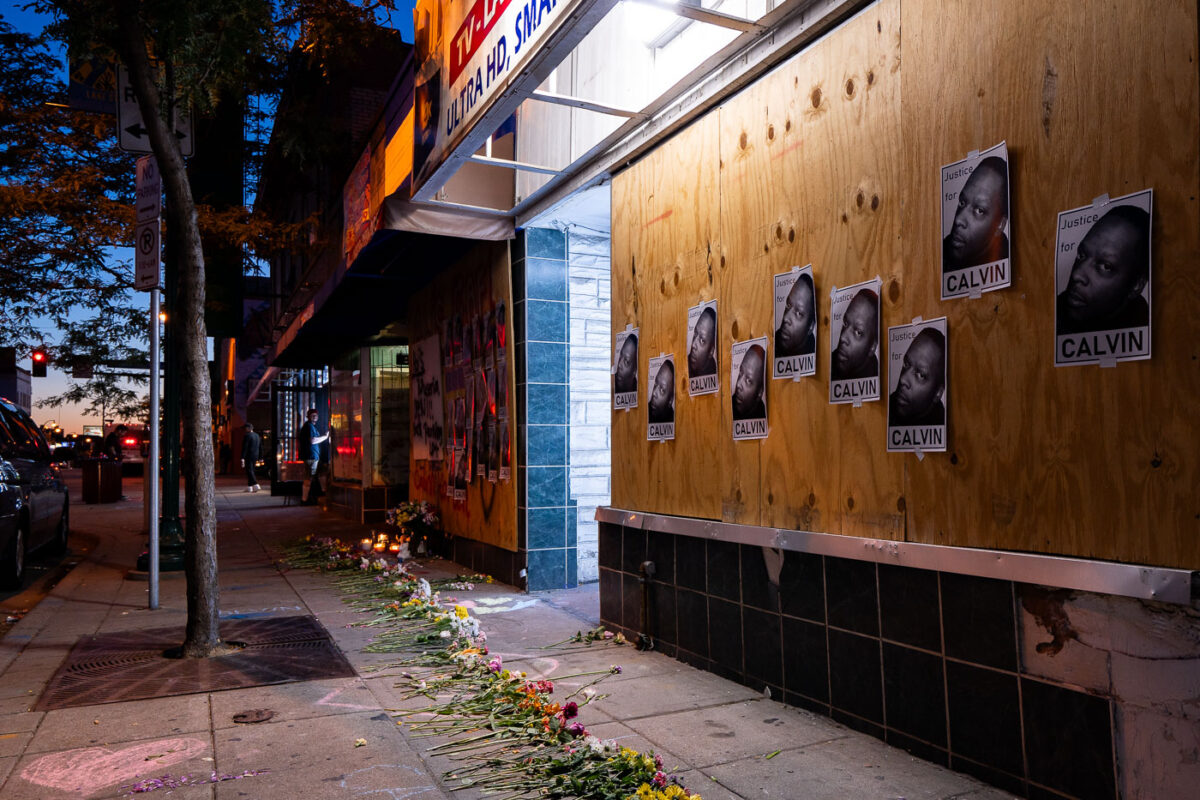
Memorial photographs of Calvin Horton Jr. affixed to boarded storefront of Cadillac Pawn on Minneapolis Lake Street at dusk.
A memorial for Calvin Horton Jr. stands outside Cadillac Pawn on Lake Street in Minneapolis. Horton Jr. was shot and killed on May 27, 2020, during the civil unrest that followed the death of George Floyd in Minneapolis. The memorial features posters bearing Horton Jr.'s image and calls for justice, affixed to the plywood boards protecting the storefront, alongside flowers and candles placed on the sidewalk.

Flowers and “Justice for Calvin” Posters Outside Cadillac Pawn
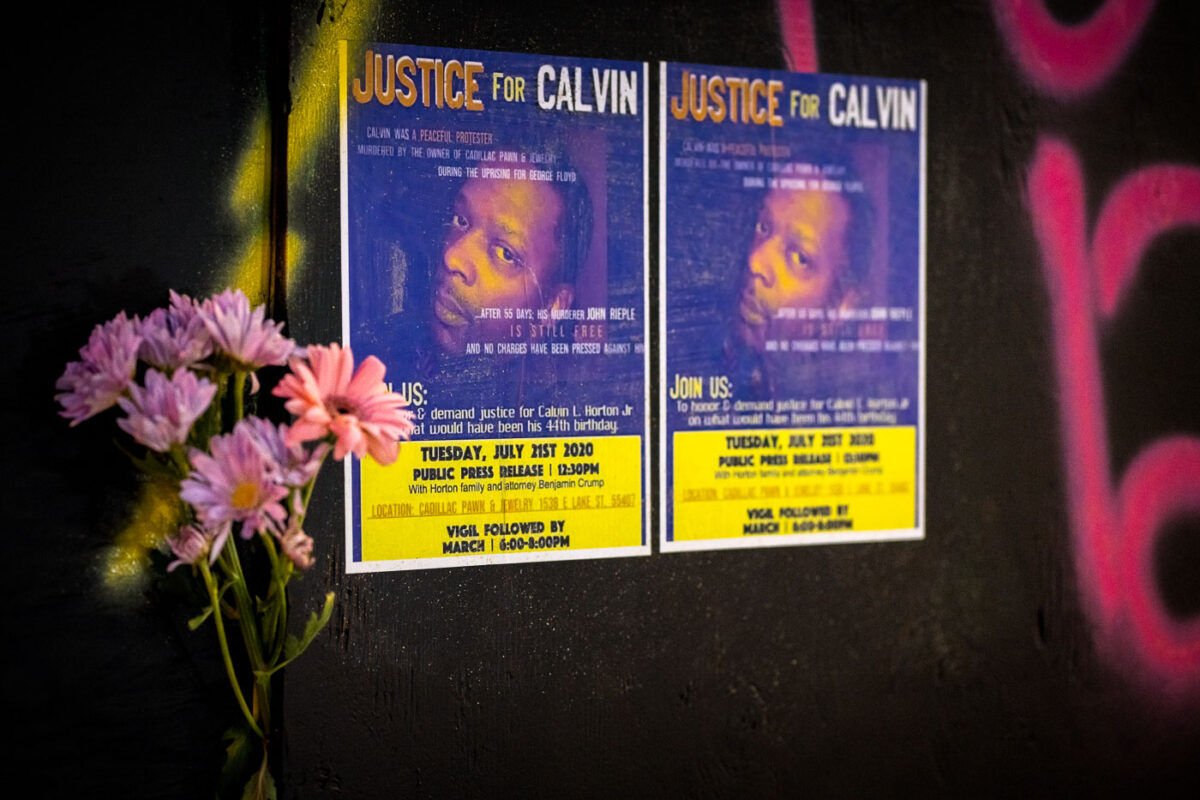
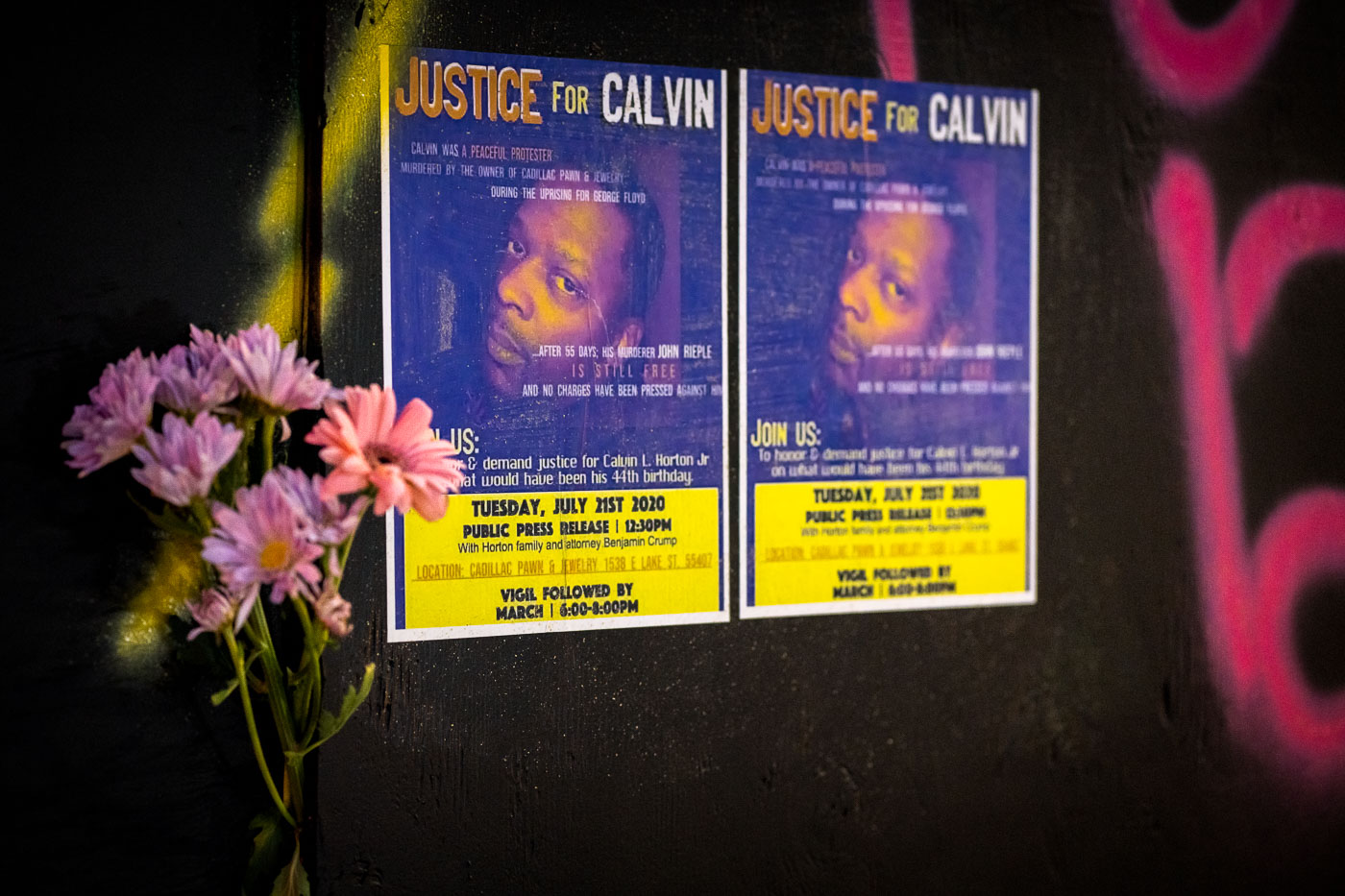
Justice for Calvin posters and flowers memorializing Calvin Horton Jr. at Cadillac Pawn on Minneapolis Lake Street.
Posters and flowers adorn the boarded-up Cadillac Pawn & Jewelry on Lake Street in Minneapolis, serving as a memorial for Calvin Horton Jr. Horton was shot and killed by the store's owner, John Rieple, on May 27, 2020, during the widespread unrest in Minneapolis following the death of George Floyd. The flyers announce a public press release and a vigil followed by a march on July 21, 2020, demanding justice and highlighting that no charges had been filed against Rieple 55 days after the incident.

“Justice for Calvin” Posters and Flowers on Lake Street
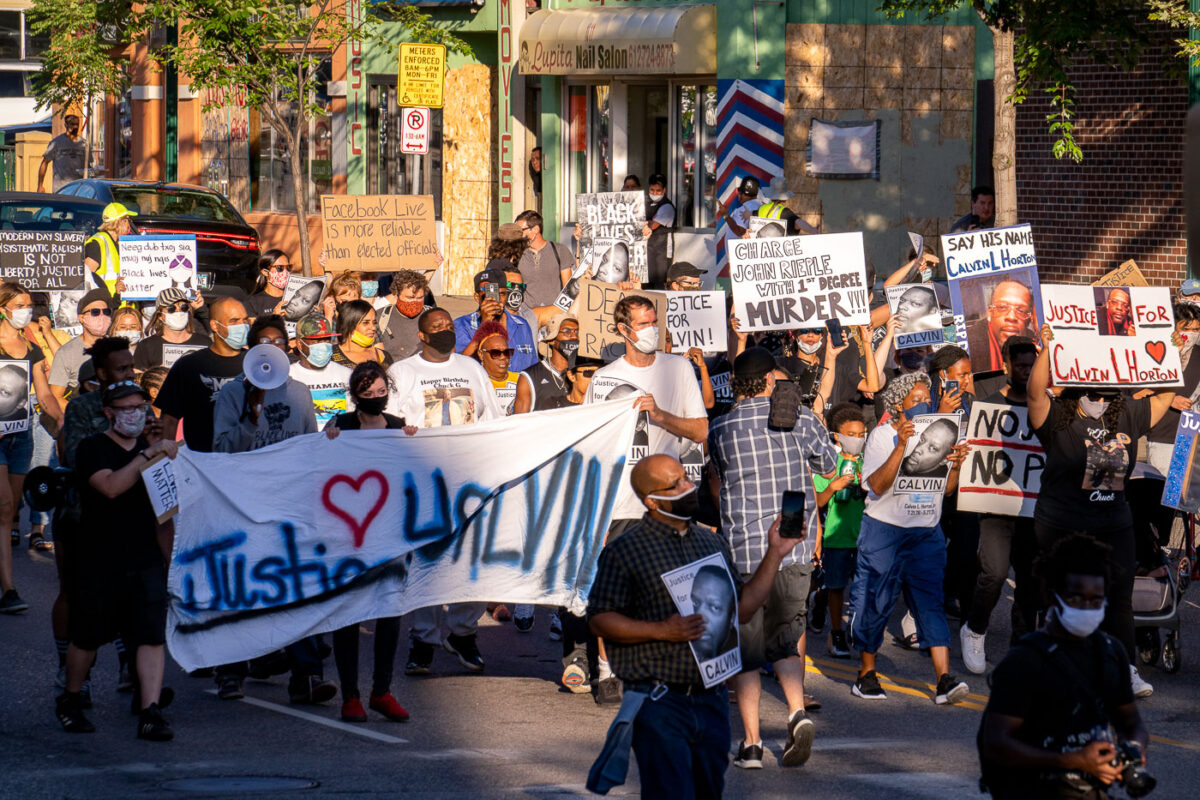
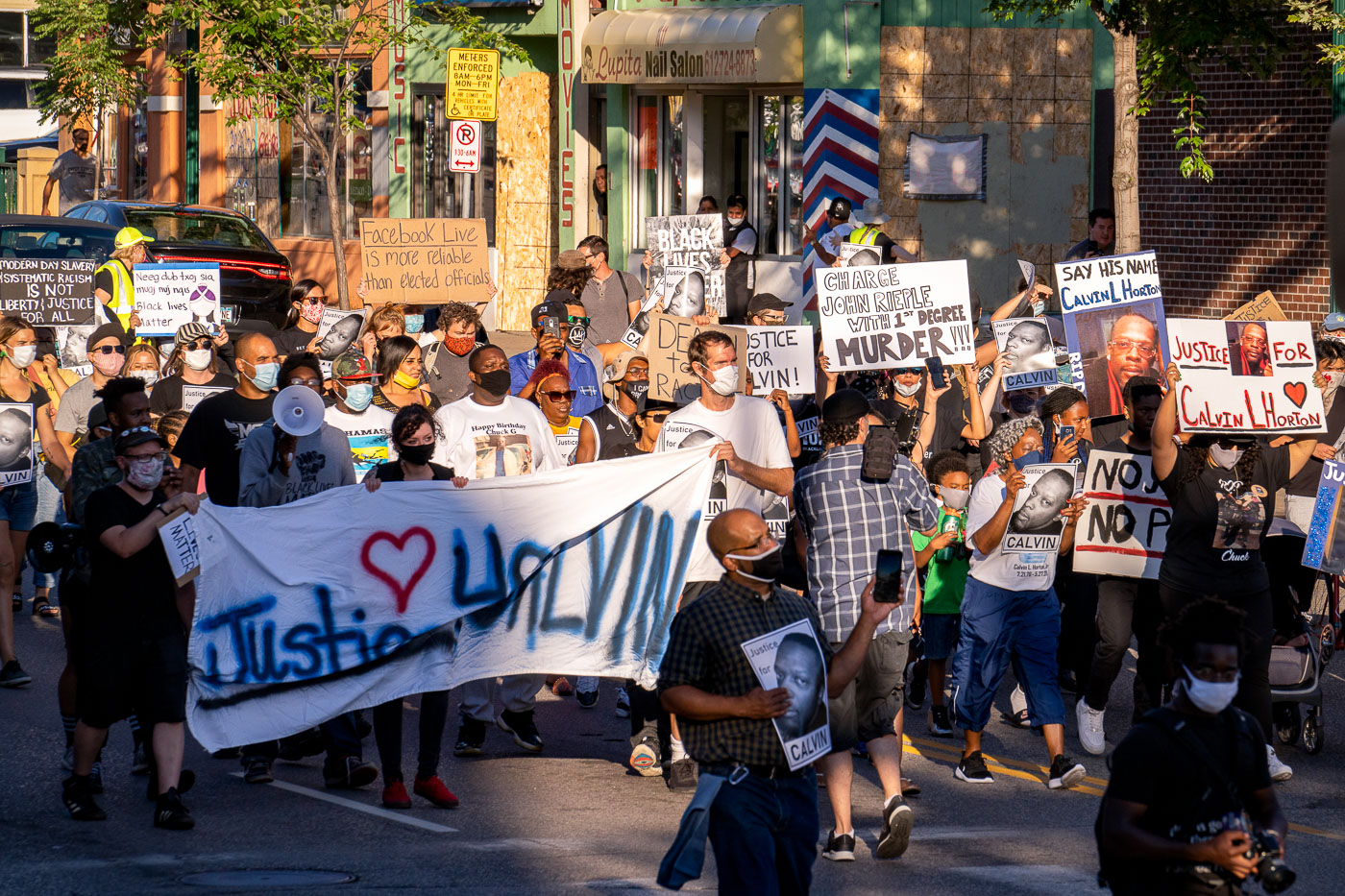
Protesters march on Lake Street in Minneapolis holding signs demanding justice for Calvin Horton, who was killed during civil unrest on May 27, 2020.
Protesters march on Lake Street in Minneapolis, demanding justice for Calvin Horton on what would have been his 44th birthday. The march was directed towards the home of Minneapolis City Council member Alondra Cano. Calvin Horton was shot and killed on May 27th by John Rieple, the owner of Cadillac Pawn, during the widespread unrest that followed the May 25th death of George Floyd. Participants carried signs calling for Rieple to be charged with murder.

“Charge John Rieple” March for Calvin Horton on Lake Street
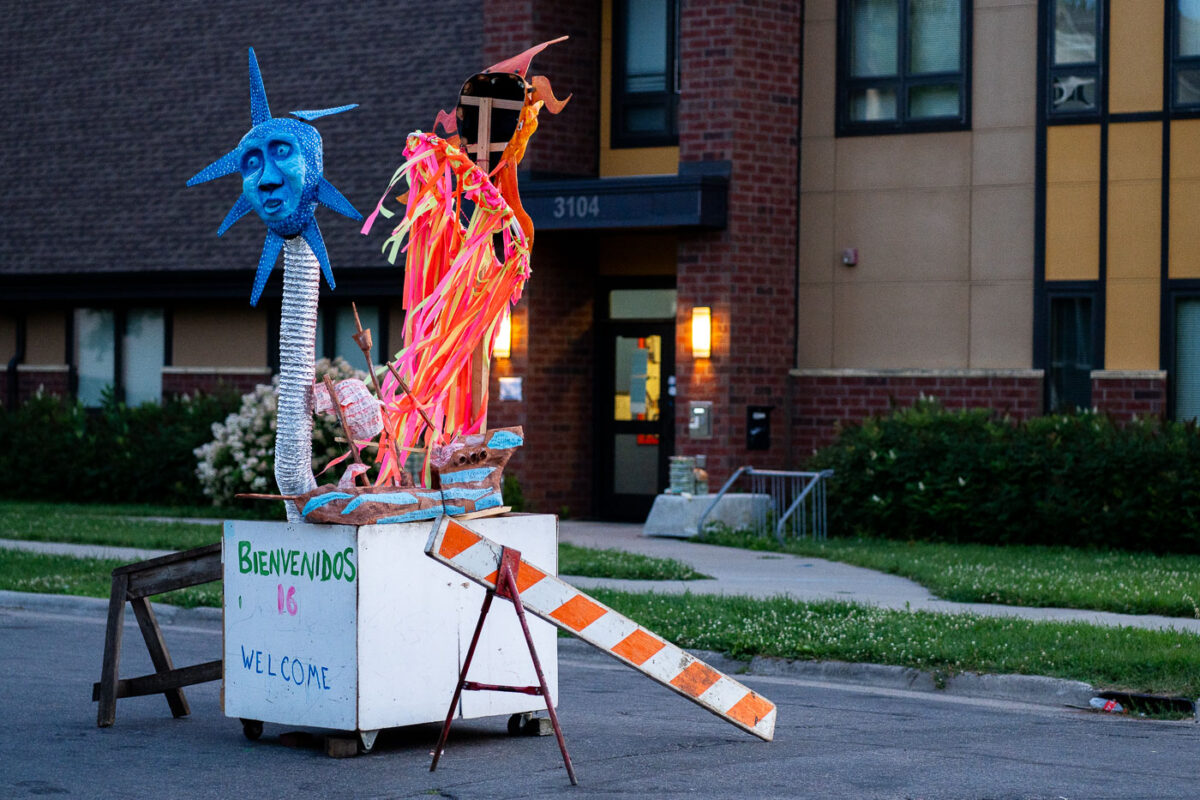
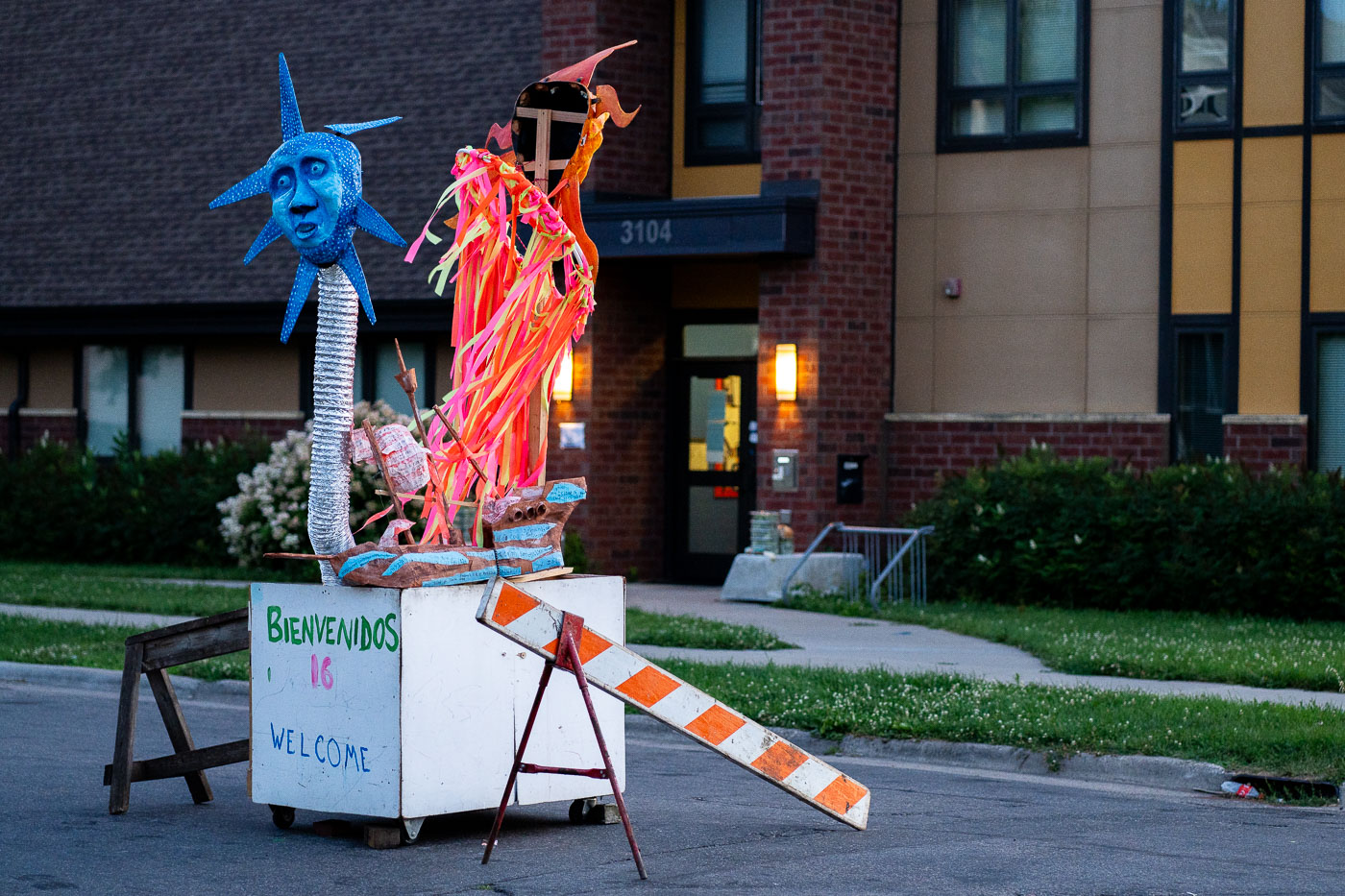
A traffic calming device in South Minneapolis
Community-created art installations function as traffic calming measures on 16th Avenue South and East 31st Street in South Minneapolis. These artistic barriers are part of local efforts to manage vehicle speed and enhance pedestrian safety in residential areas. Following the 2020 Minneapolis Uprising, many neighborhoods implemented community-led initiatives to reclaim public spaces and address local concerns, including traffic safety. The installations, featuring figures and a sign reading 'BIENVENIDOS / WELCOME,' reflect community engagement and a desire for safer, more welcoming streets.

Community Art Traffic Calming, 16th Ave S, Minneapolis
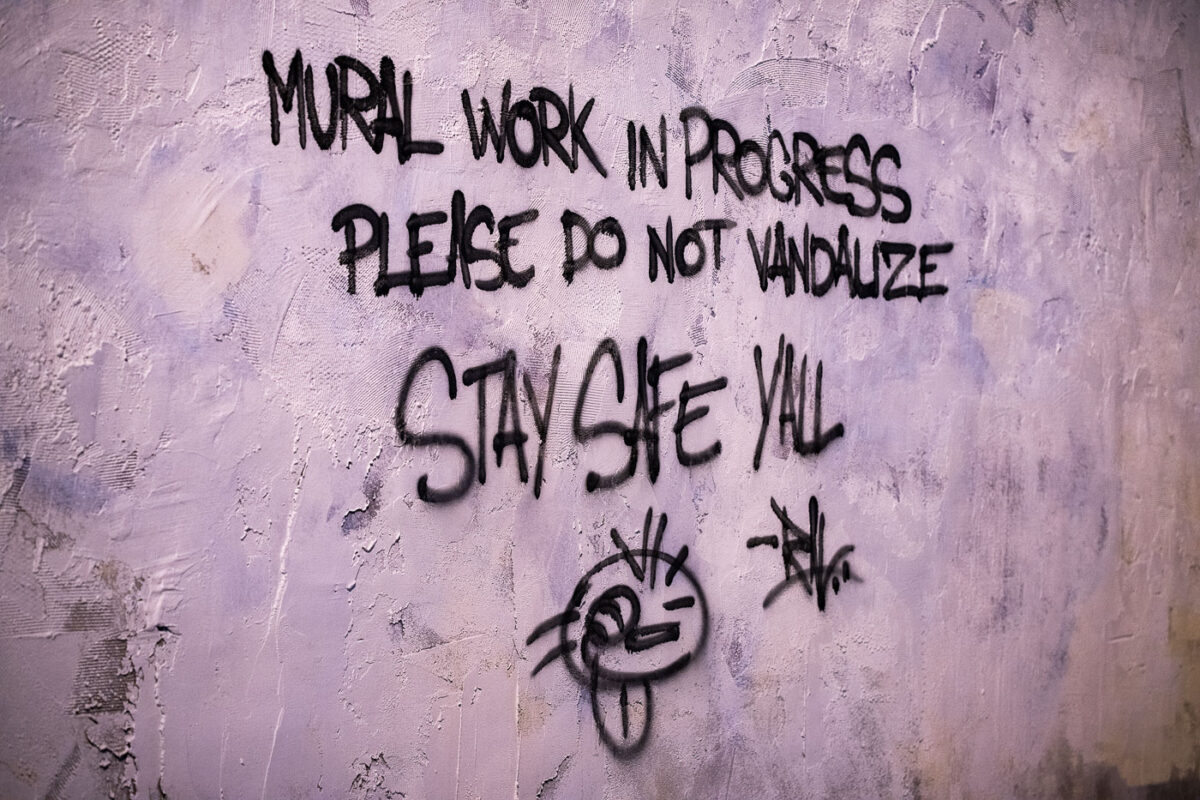
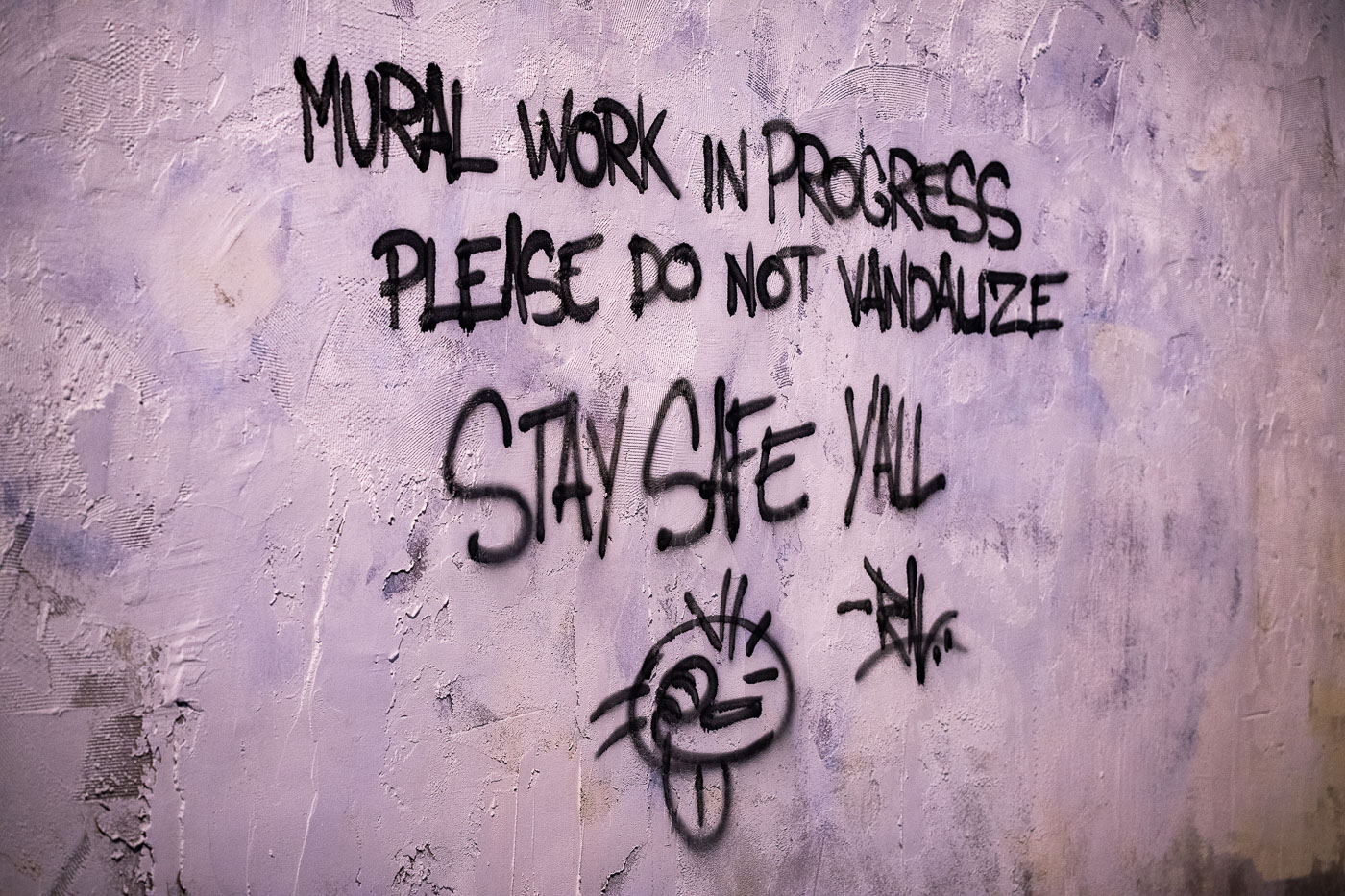
Moral work in progress
A temporary notice spray-painted on a wall along Lake Street in Minneapolis indicates ongoing mural work. This message, reading 'MURAL WORK IN PROGRESS PLEASE DO NOT VANDALIZE STAY SAFE YALL,' reflects community efforts to create public art in the aftermath of the 2020 Minneapolis Uprising. Following widespread protests and property damage, many businesses and community spaces along Lake Street became canvases for murals, transforming affected areas into sites of remembrance, resilience, and artistic expression. Such temporary signage served to protect these nascent artworks and foster a sense of collective ownership and respect for the rebuilding process.

Lake Street Mural Progress Notice, Minneapolis
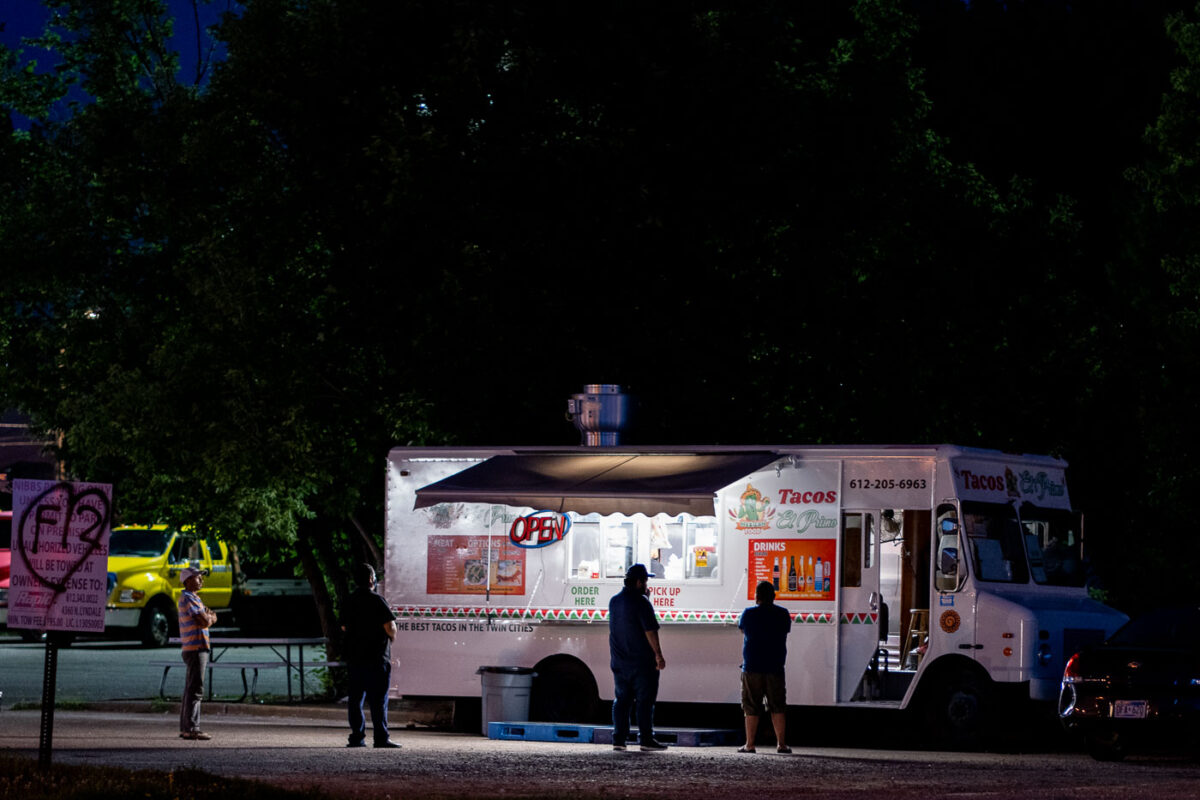
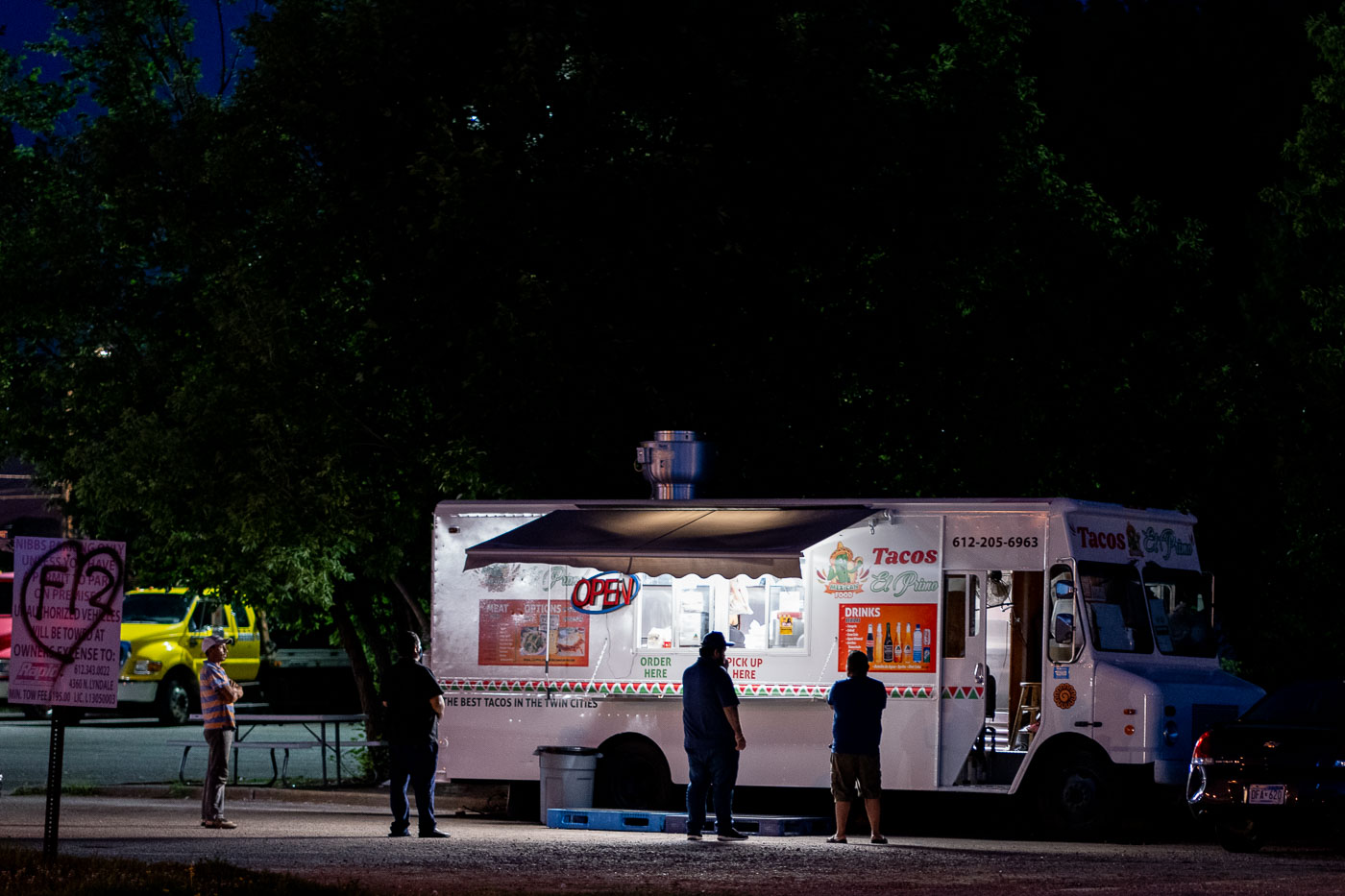
People in line at a food truck at night
Customers maintain social distance while waiting in line at the Tacos El Primo food truck on Lake Street in Minneapolis. This practice became widespread during the COVID-19 pandemic, influencing how businesses like mobile eateries operated. Lake Street, a significant commercial corridor in South Minneapolis, hosts a variety of local businesses that adapted to serve the community during challenging times. Food trucks provided accessible dining options and continued to be a part of the urban landscape, offering essential services to residents.

Social Distancing at Tacos El Primo, Lake Street
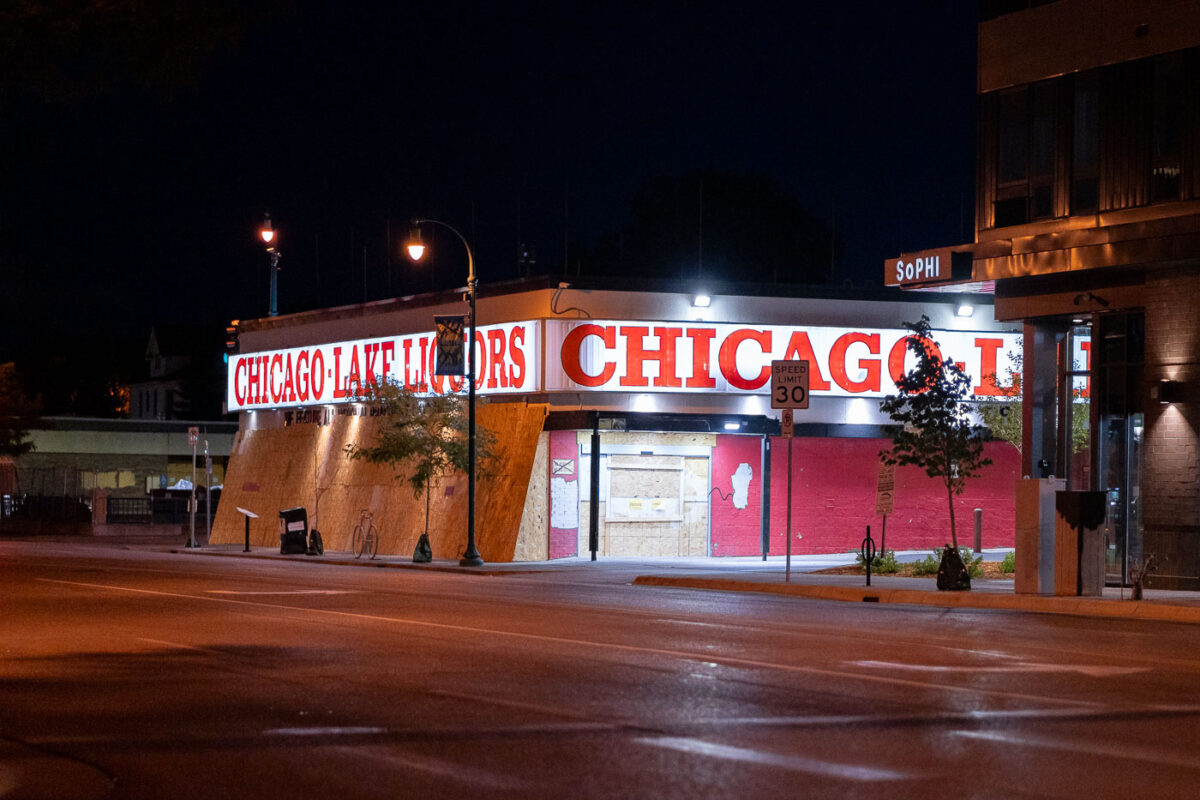
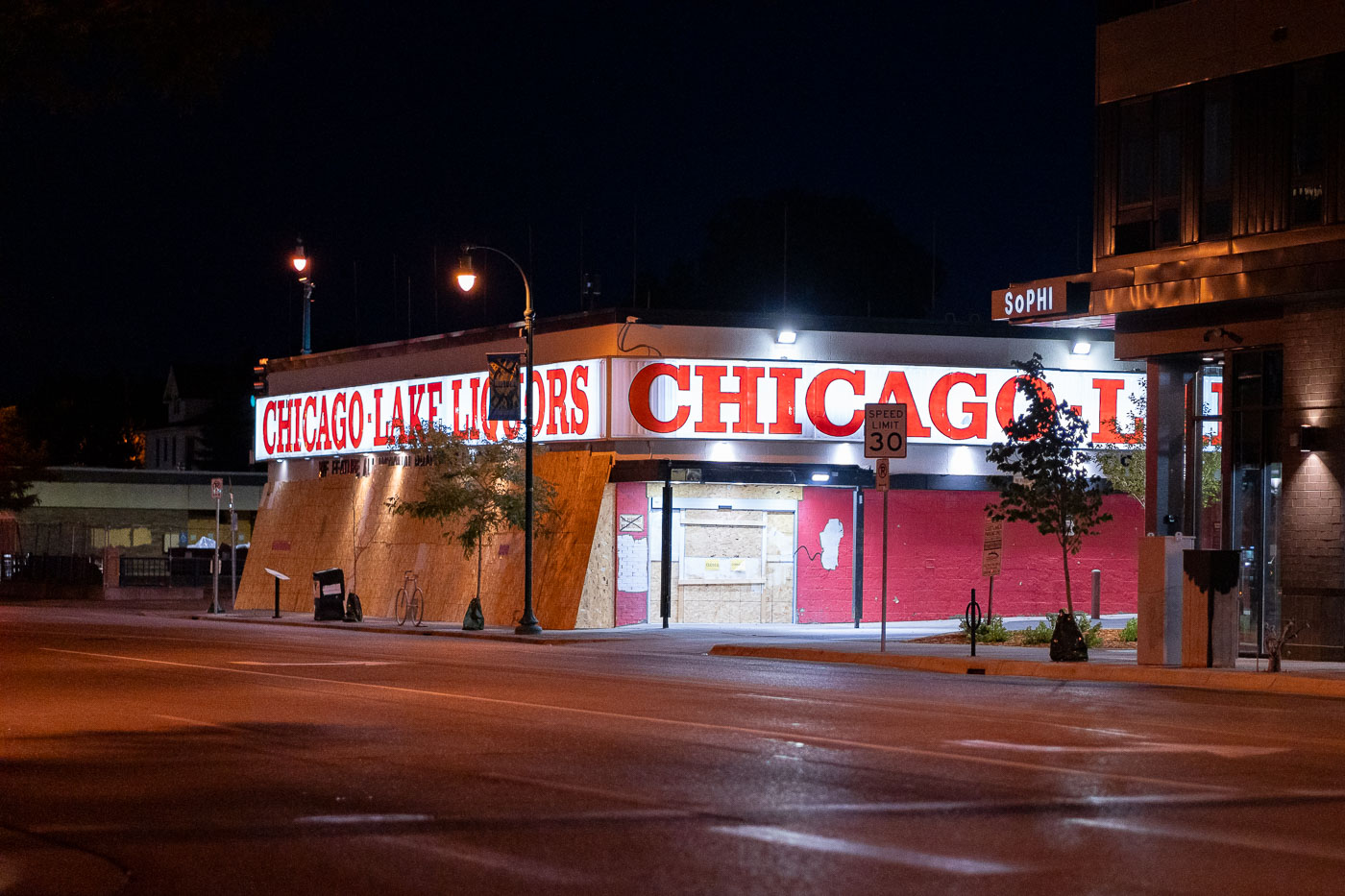
Chicago Lake Liquor store with boards over windows
Chicago Lake Liquors, a retail establishment located on Lake Street in Minneapolis, is shown with its storefront windows boarded up. This protective measure was implemented in response to the civil unrest that occurred in Minneapolis following the killing of George Floyd in May 2020. Boarding up businesses became a common practice across the city during this period to prevent damage and looting. Lake Street, a major commercial corridor, experienced significant damage and disruption during the uprising, with many businesses like Chicago Lake Liquors taking precautions or facing rebuilding efforts.

Chicago Lake Liquors, Lake Street, Boarded Storefront
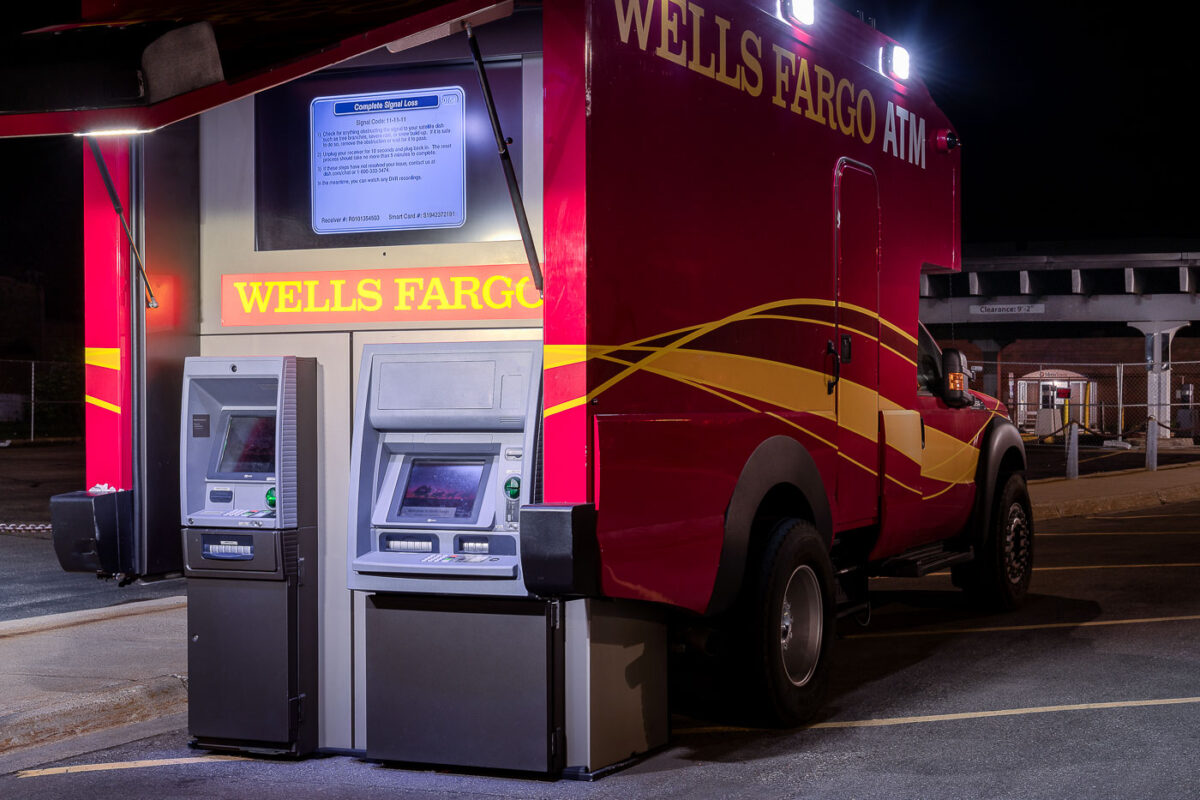
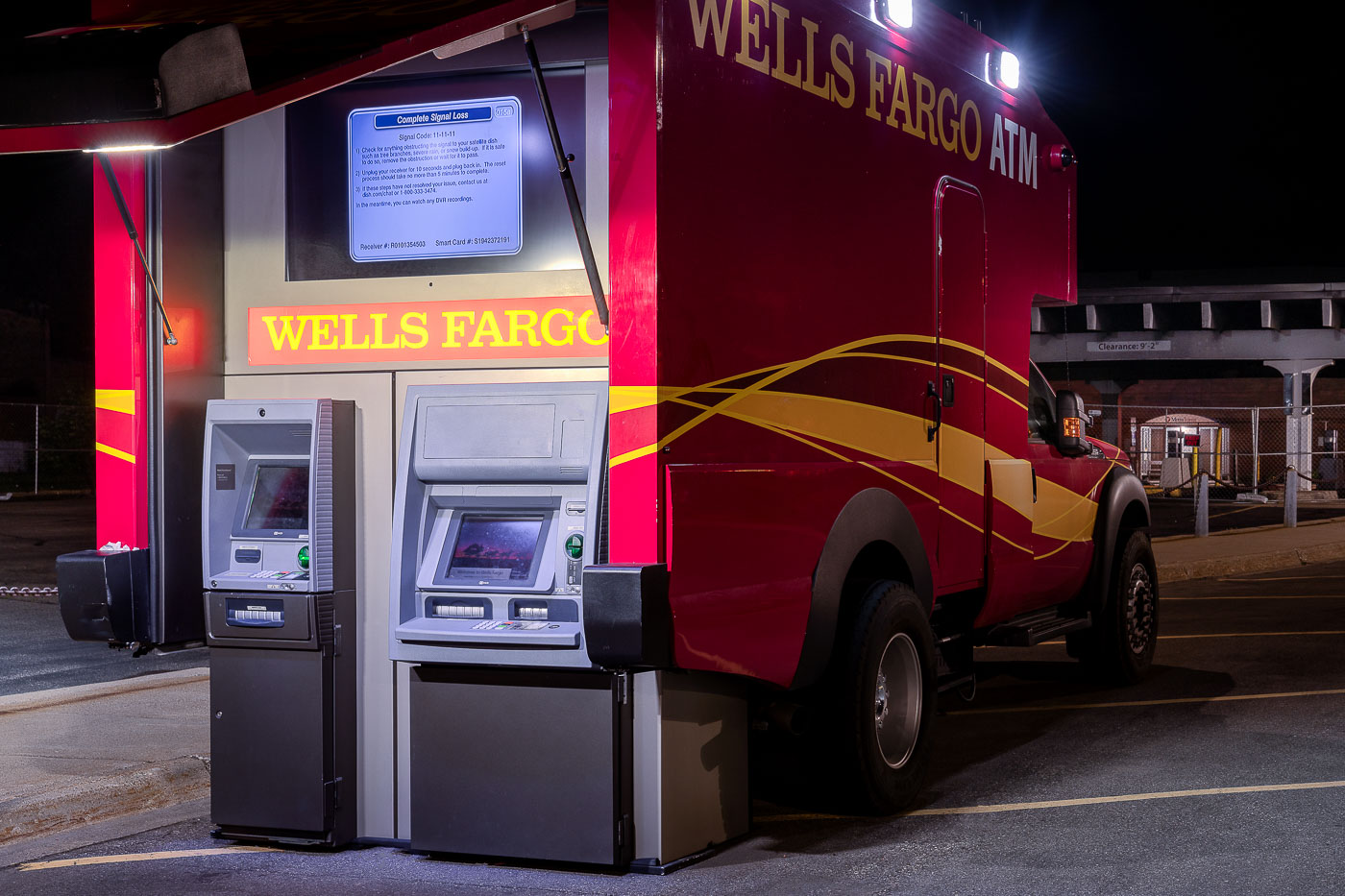
A mobile ATM setup in a bank parking lot
A Wells Fargo Mobile ATM truck is positioned in the parking lot of the former Wells Fargo Bank at 3030 Nicollet in South Minneapolis. This temporary financial service was deployed after the original bank branch was destroyed during the civil unrest following the May 25th, 2020 death of George Floyd. Its presence aimed to restore essential banking access for residents and businesses in the affected Lake Street corridor. The mobile unit served as a critical piece of infrastructure, providing continuity of service in an area experiencing significant disruption.

Wells Fargo Mobile ATM at Burned Bank, 3030 Nicollet
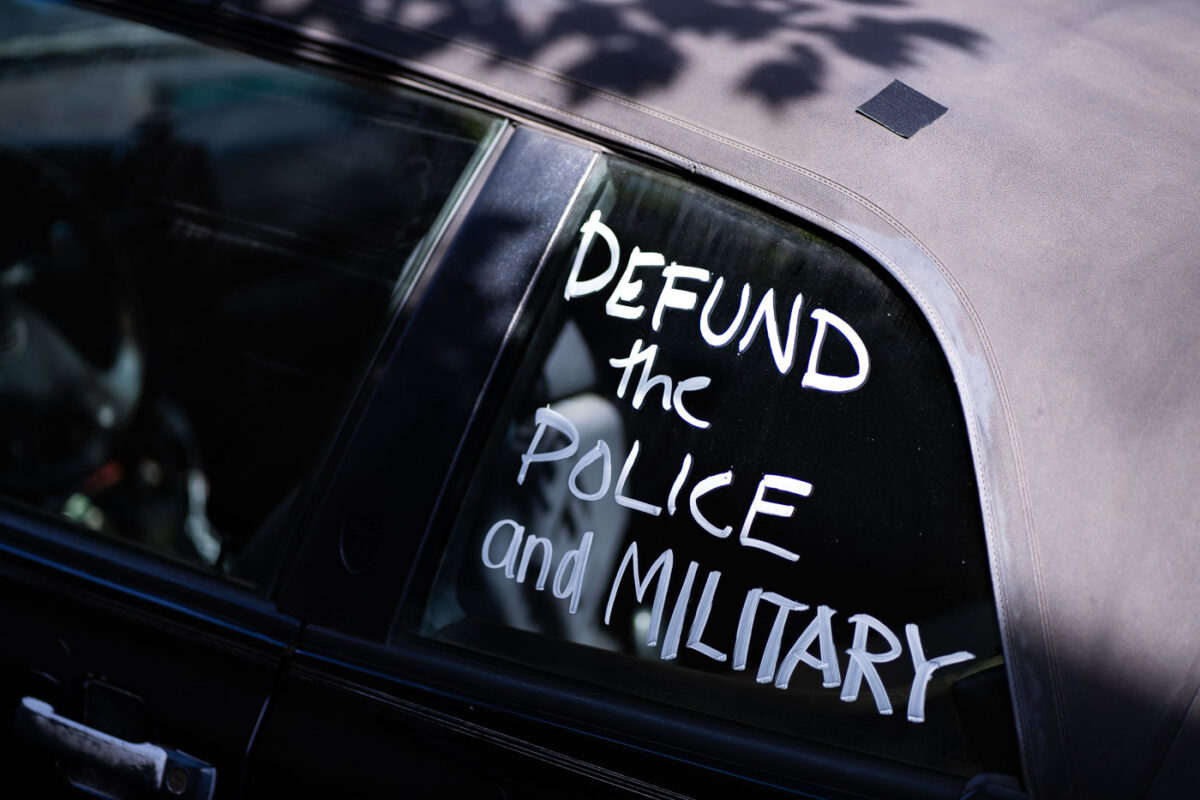
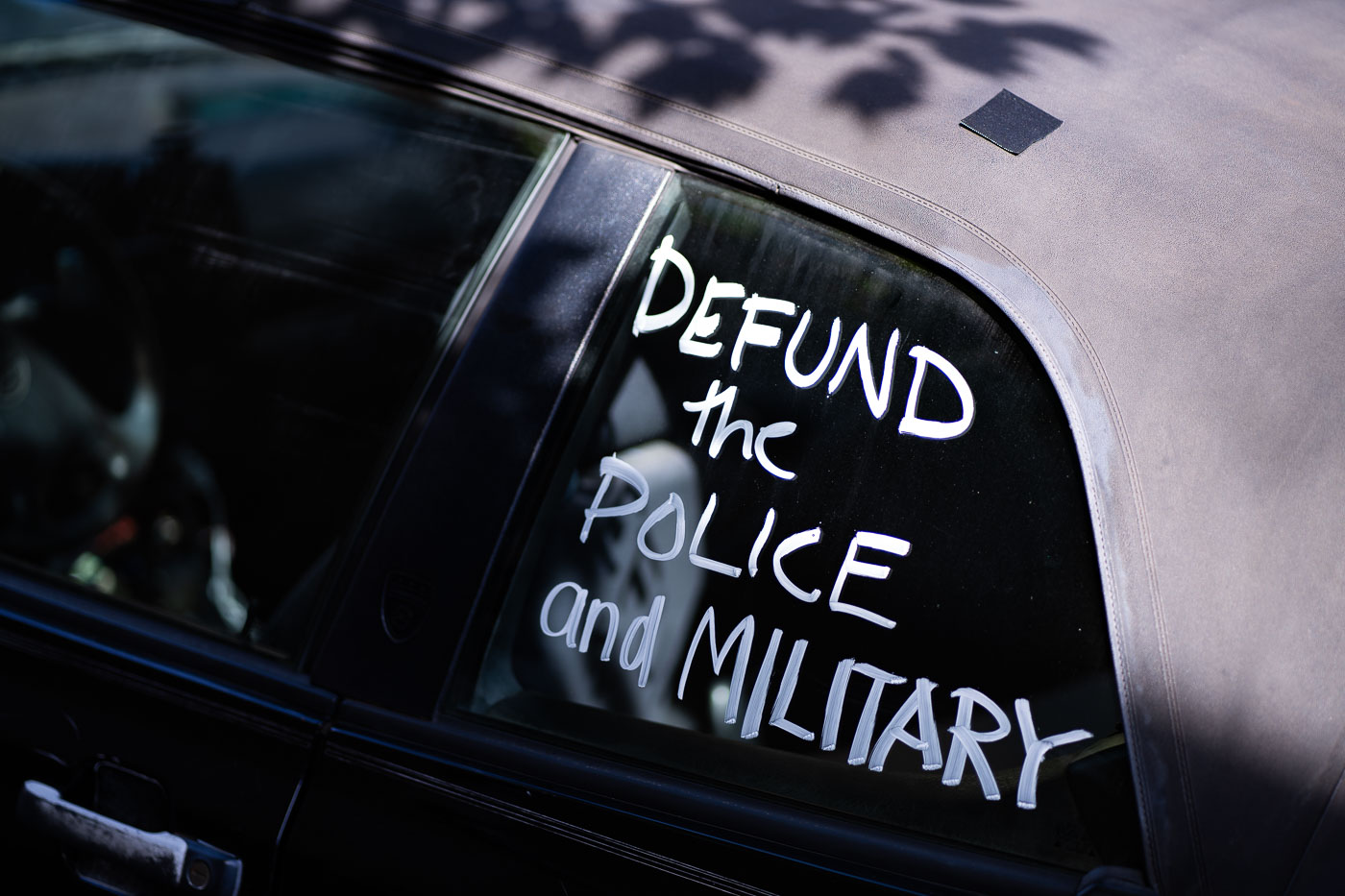
Defund the police and military on window
A car in Downtown Minneapolis displays the message 'Defund the Police and Military' written on its window. This message reflects a key demand of the social justice protests that gained prominence in Minneapolis and across the United States following the murder of George Floyd in May 2020. The call to 'defund' advocates for reallocating police budgets to community services and alternative public safety models. Such expressions on private vehicles became a common form of public discourse and protest during this period, particularly in urban environments like Minneapolis.

Downtown Minneapolis: ‘Defund Police and Military’ on Car Window
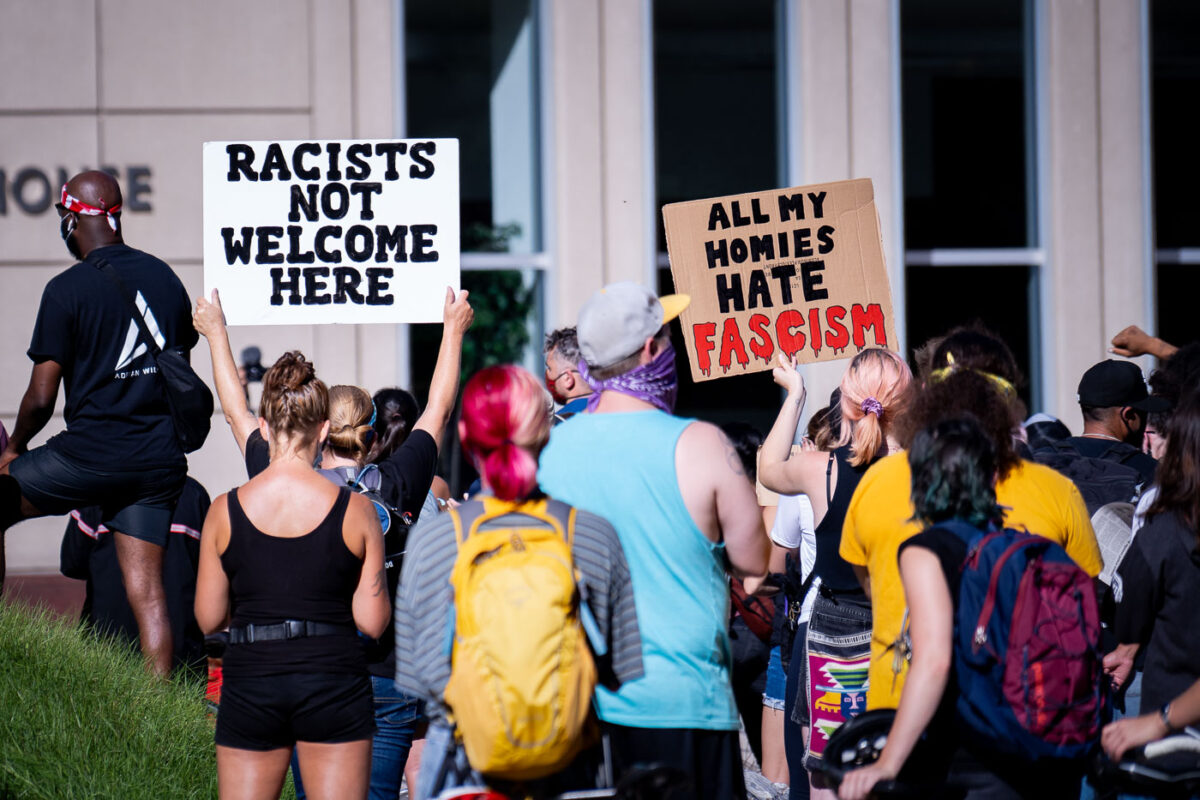
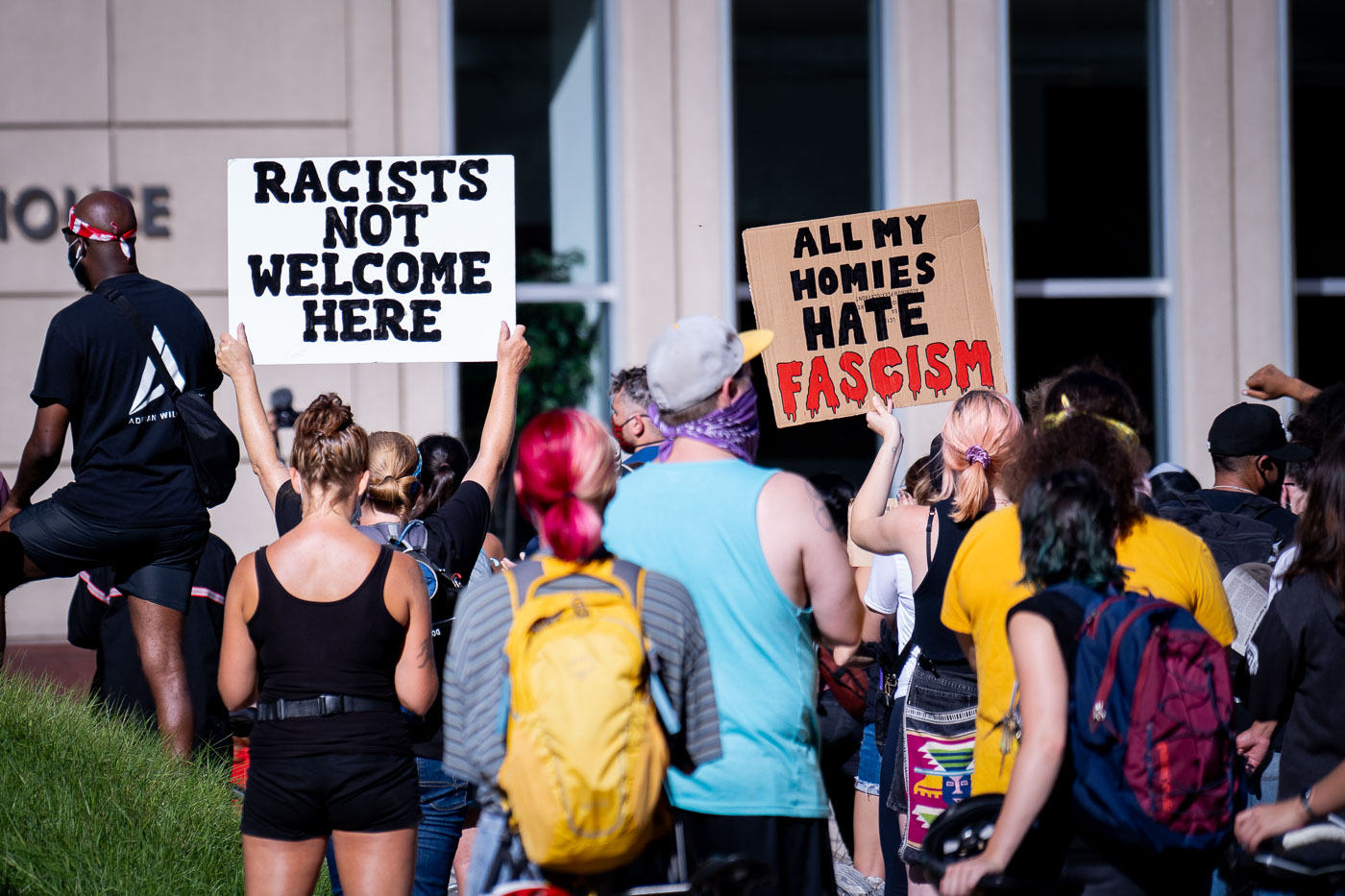
All My Homes Hate Fascism
Protesters hold up signs outside the Federal Courthouse in downtown Minneapolis. “All My Homes Hate Fascism”. The protest and rally was regarding Federal officers being deployed to other cities during protests.

Racists Not Welcome Here

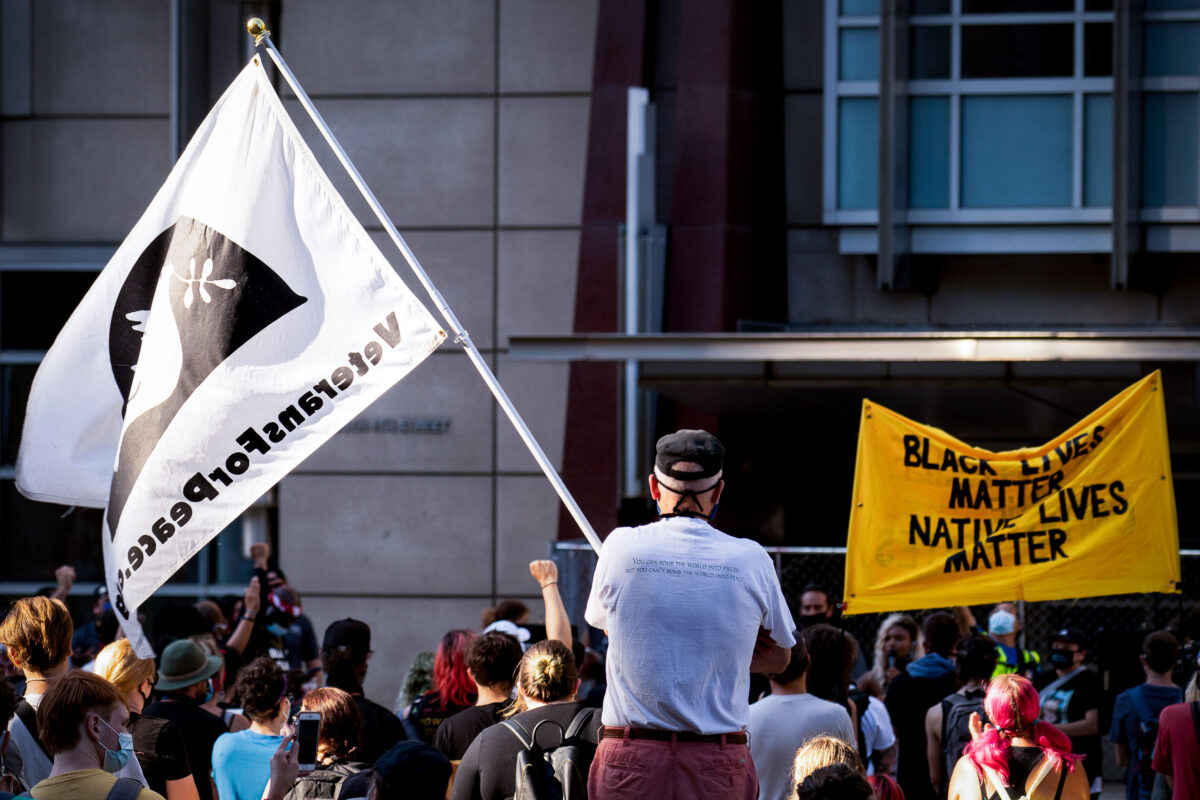
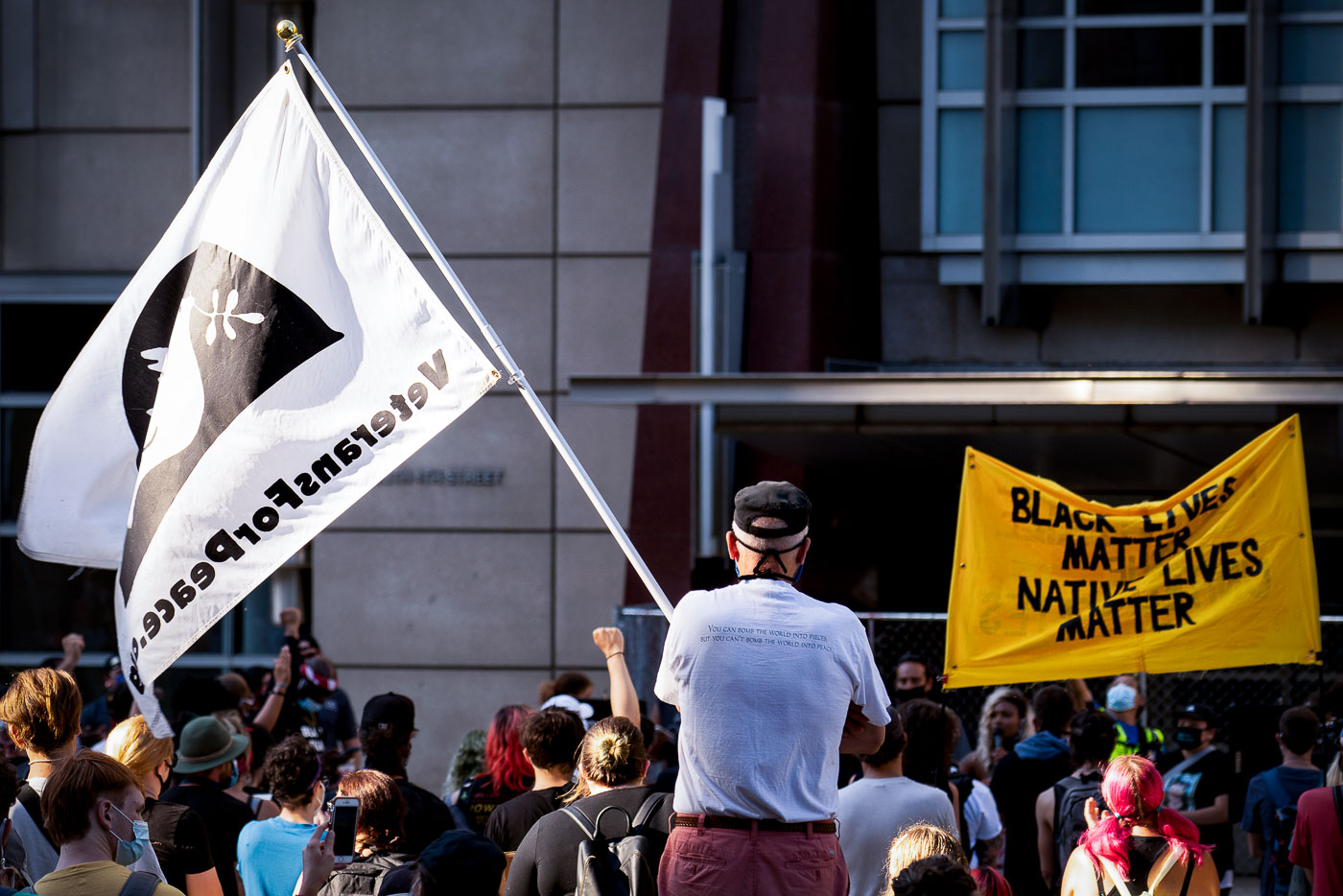
Veterans for Peace flag held up by a man
A protest occurred outside the Federal Courthouse in downtown Minneapolis on July 23rd, 2020. Participants gathered to oppose the deployment of federal officers to cities across the country, a contentious issue during the broader Black Lives Matter movement. A veteran held a Veterans For Peace flag, while a banner in the background proclaimed "Black Lives Matter Native Lives Matter," reflecting the diverse concerns of the attendees. The Federal Courthouse, a significant government building, served as a focal point for civic expression during this period of heightened social unrest.

Veterans For Peace Flag at Minneapolis Federal Courthouse Protest
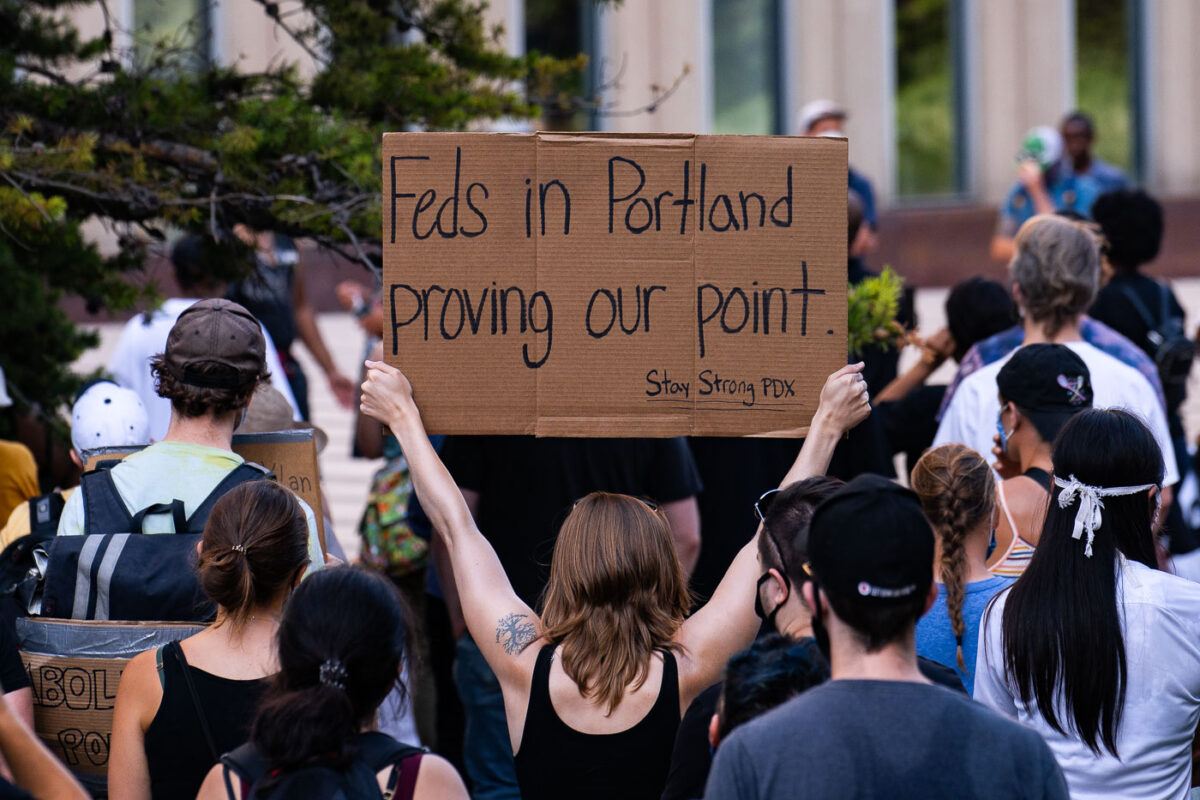
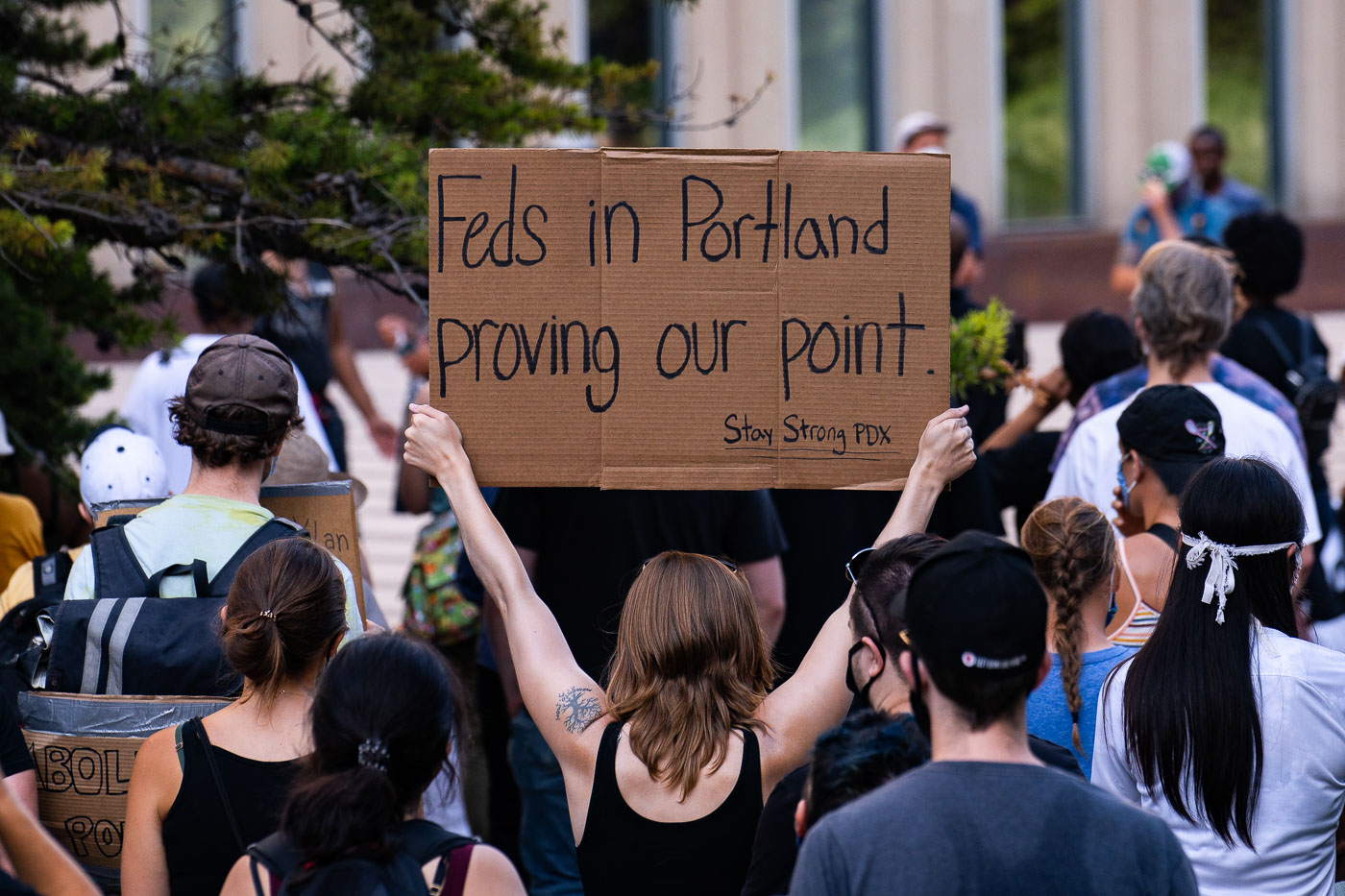
Protester holding up sign Stay Strong PDX
A protester holds a sign reading "Feds in Portland proving our point. Stay Strong PDX" outside the Federal Courthouse in downtown Minneapolis. This protest, held on July 23rd, 2020, was part of a nationwide movement against the deployment of federal officers to various U.S. cities. The Federal Courthouse serves as a significant government building in Minneapolis, housing federal courts and related offices. The protest highlighted concerns about federal intervention in local affairs and civil liberties during a period of widespread social unrest.

Minneapolis Federal Courthouse Protest Sign: Feds in Portland
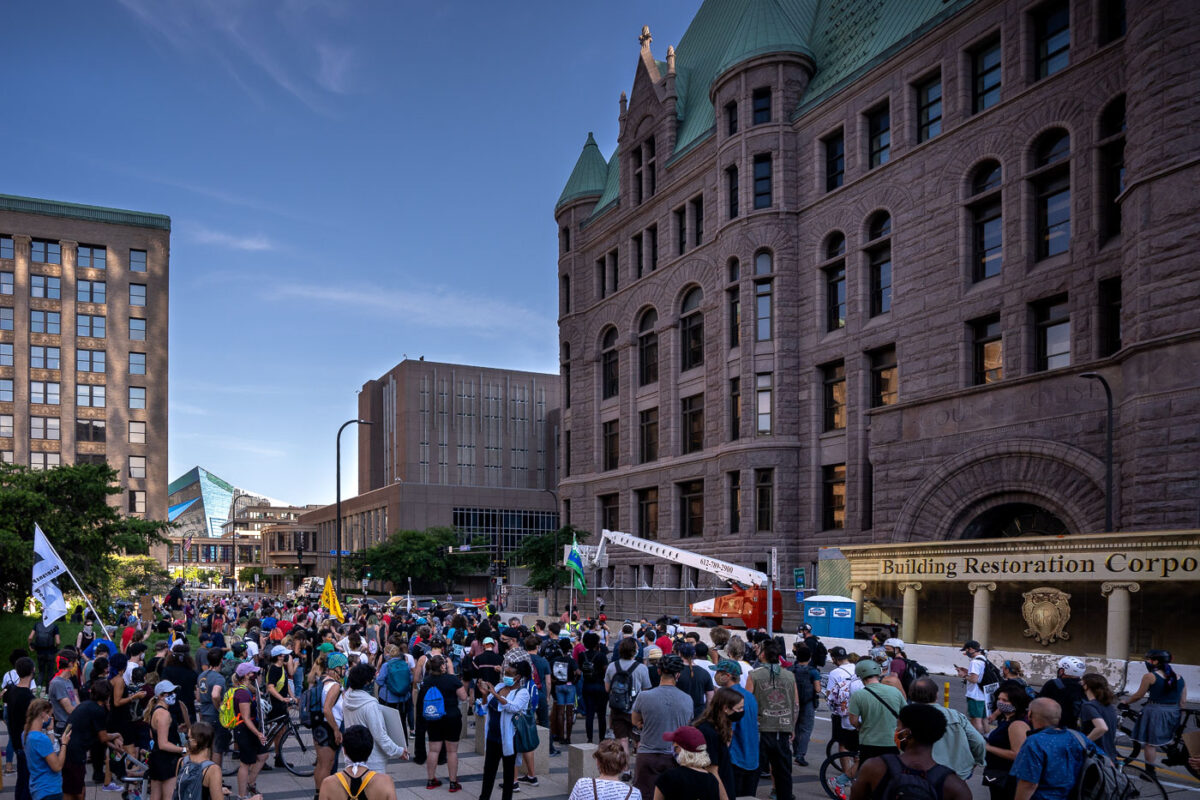
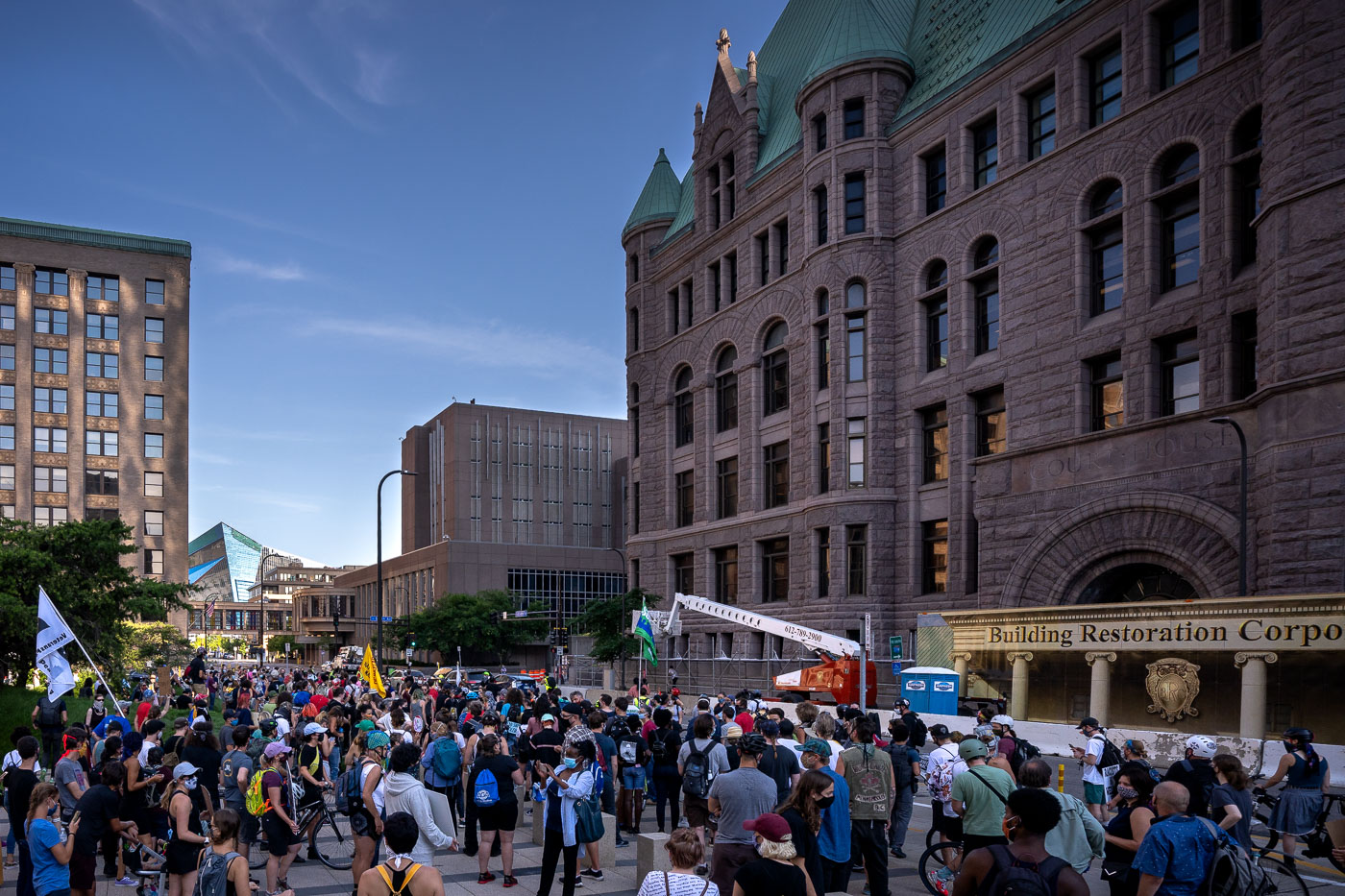
Protesters gather near City Hall and Federal Courthouse
Protesters gathered outside the Warren E. Burger Federal Building and U.S. Courthouse in downtown Minneapolis on July 23, 2020. The protest addressed the deployment of federal officers to cities across the United States, a contentious issue during the broader period of civil unrest following the murder of George Floyd. Completed in 1897, the Warren E. Burger Federal Building is a significant example of Romanesque Revival architecture, housing federal courts and administrative offices. Its prominence as a site of federal authority makes it a frequent location for public protests concerning national policies and justice.

Protest at Federal Courthouse, Minneapolis, July 23, 2020
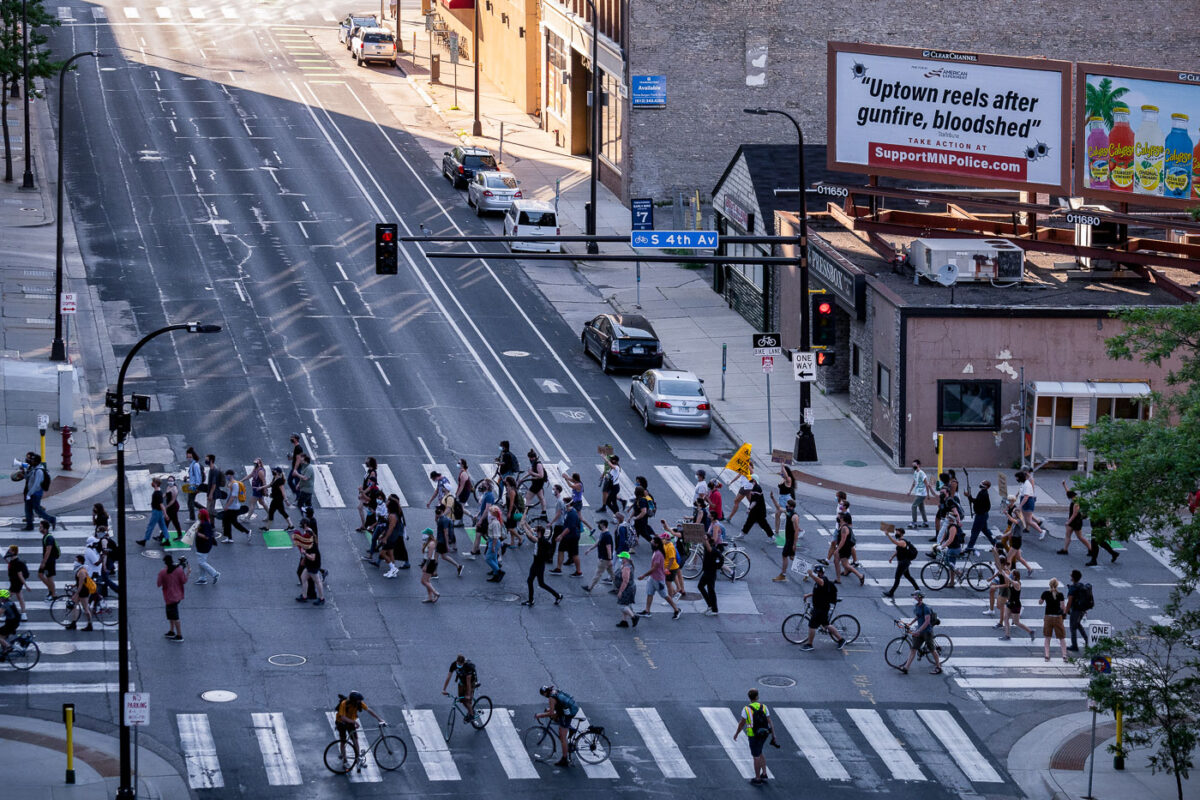
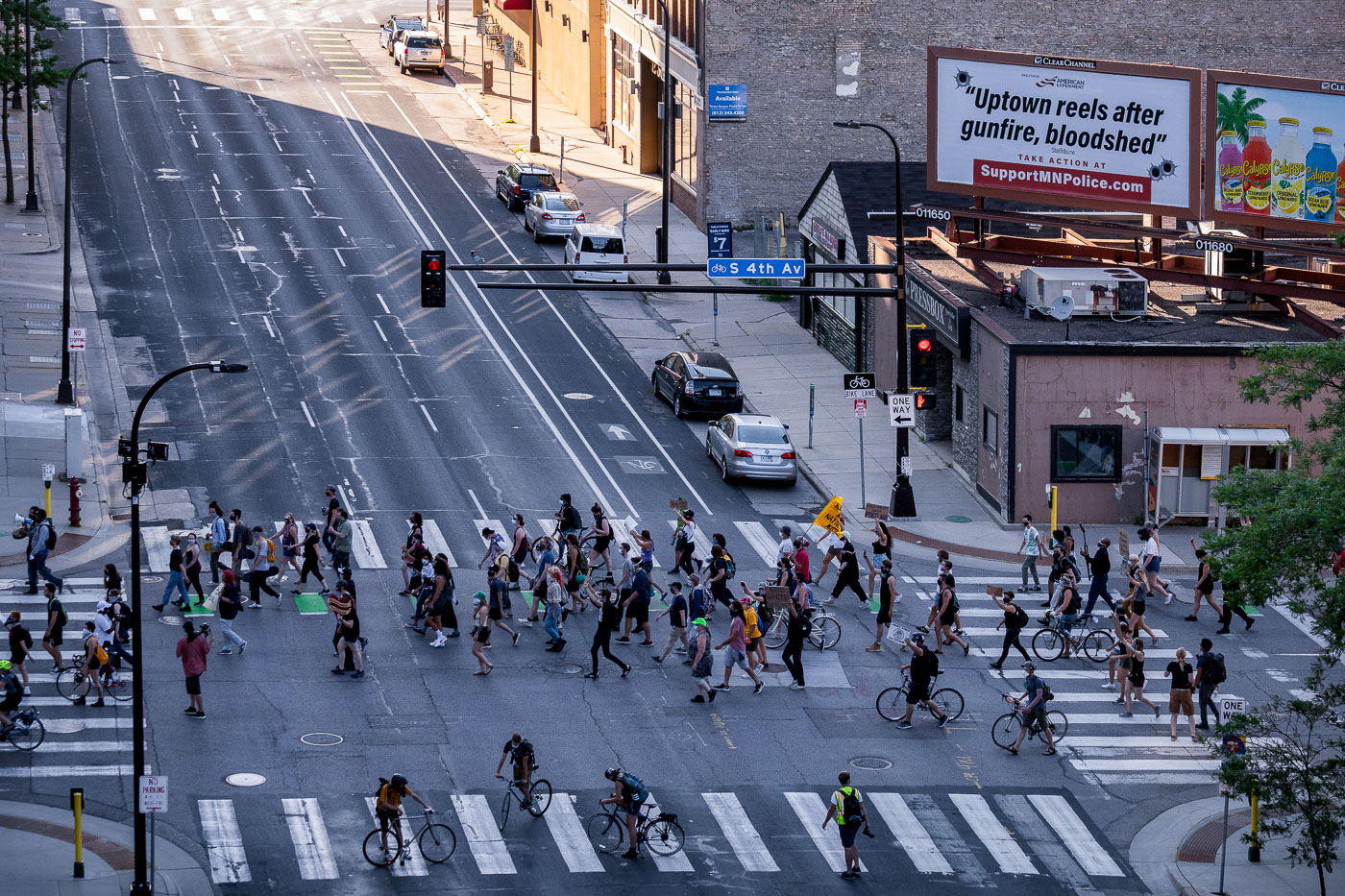
Billboard that reads Uptown Reels after Gunfire and Bloodshed
A protest march proceeds along S 4th Avenue in downtown Minneapolis on July 23, 2020. Participants gathered to protest the deployment of federal officers to cities nationwide, with the march route often passing the Federal Courthouse. Above the street, a billboard displays the message 'Uptown reels after gunfire, bloodshed,' reflecting local concerns amidst the broader Minneapolis Uprising.

Minneapolis Protest on S 4th Ave, ‘Uptown Reels’ Billboard
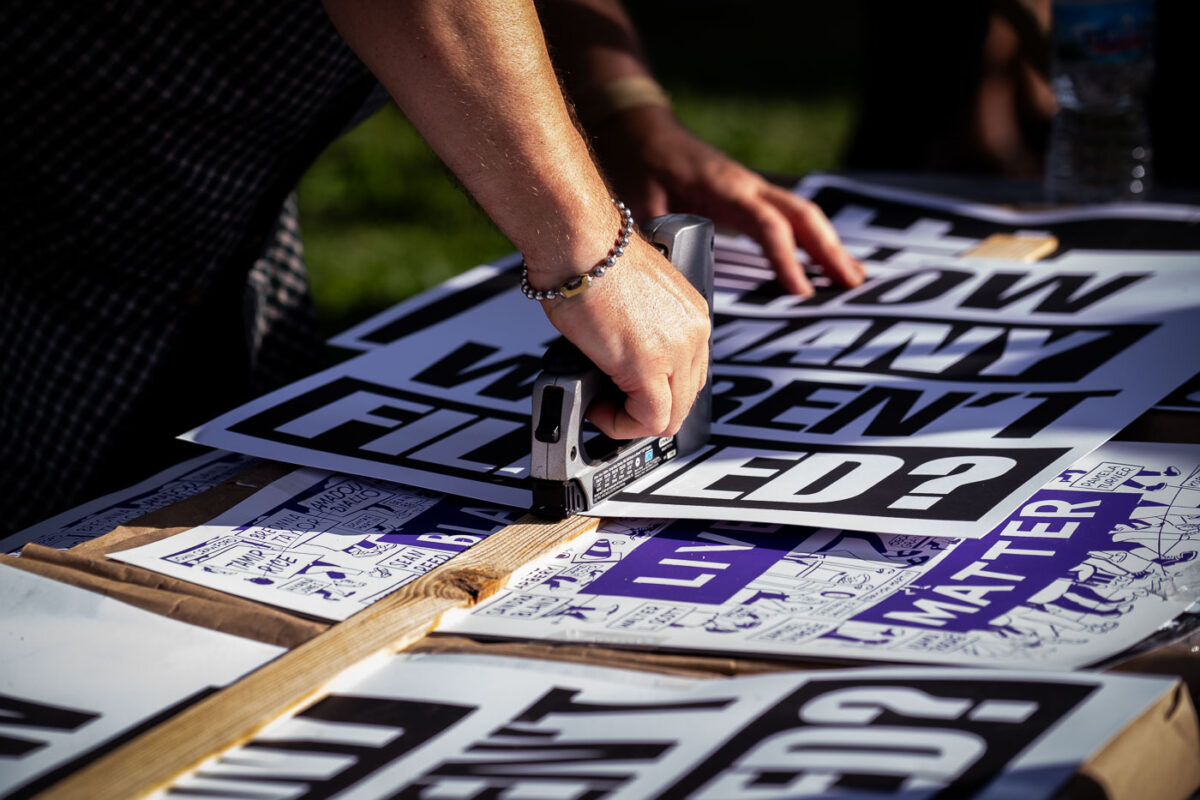
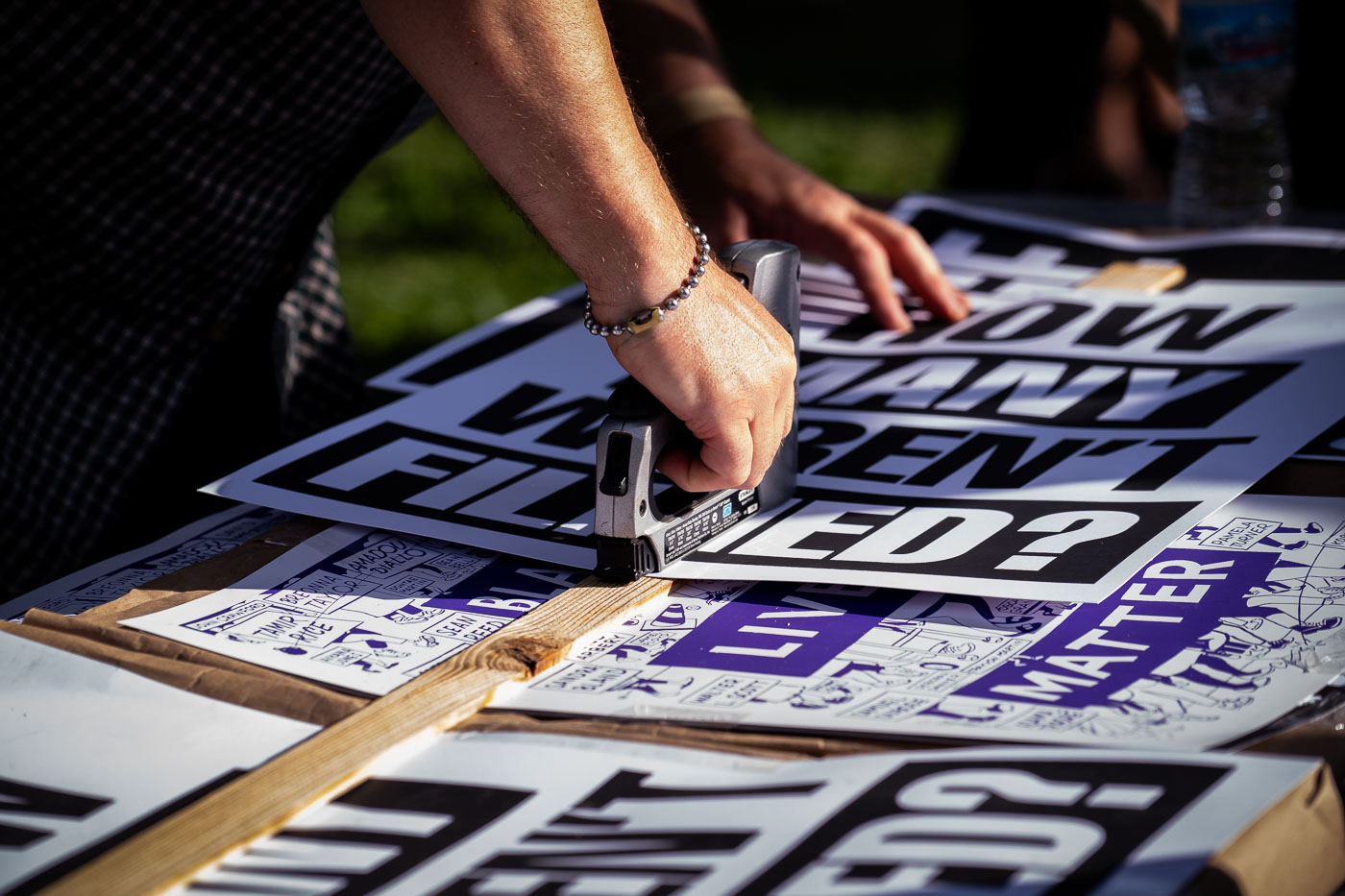
A protester staples signs bearing names of people killed by police in preparation for the "How many weren't filmed?" march in Uptown Minneapolis.
A protester fastens signs together in preparation for the 'How many weren’t filmed?' March in Uptown Minneapolis. This march called for accountability regarding police violence. Signs prepared for the event featured names of individuals like Breonna Taylor, Tamir Rice, and Sandra Bland, who were killed by police or in police custody.

Stapling “How Many Weren’t Filmed?” Protest Signs to Wood Stakes
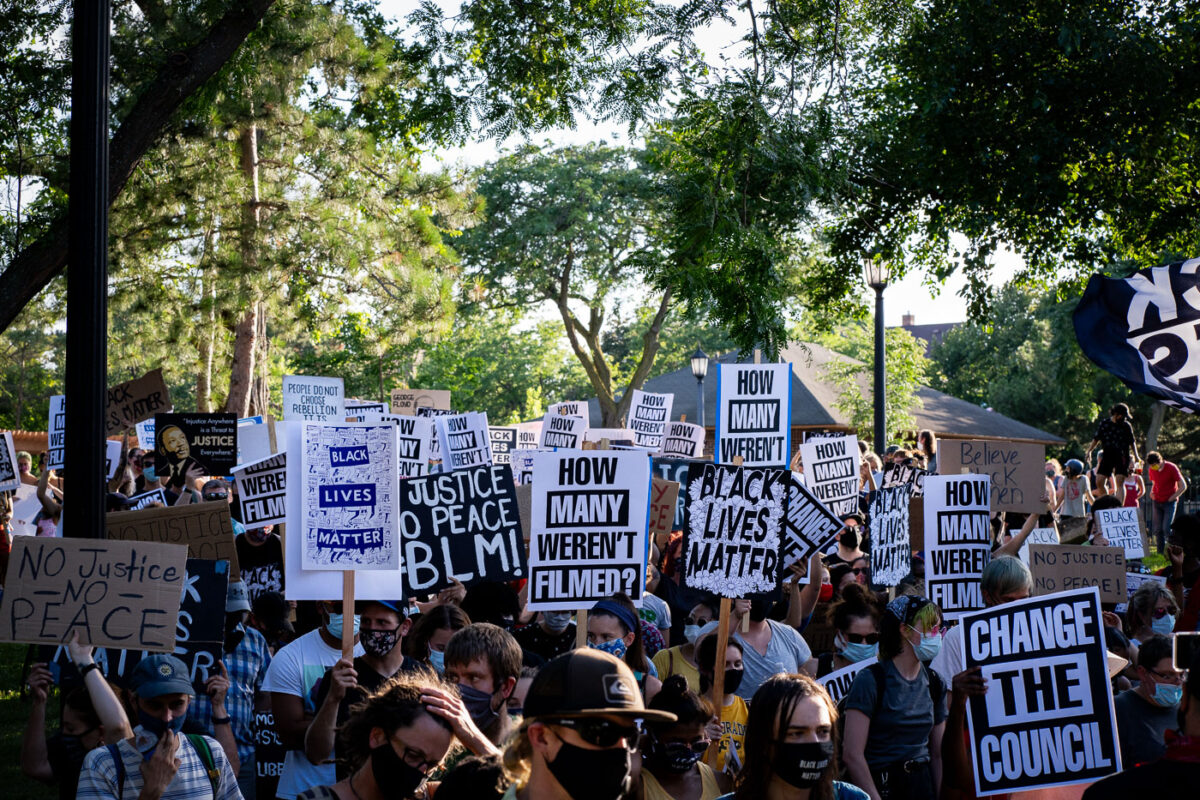
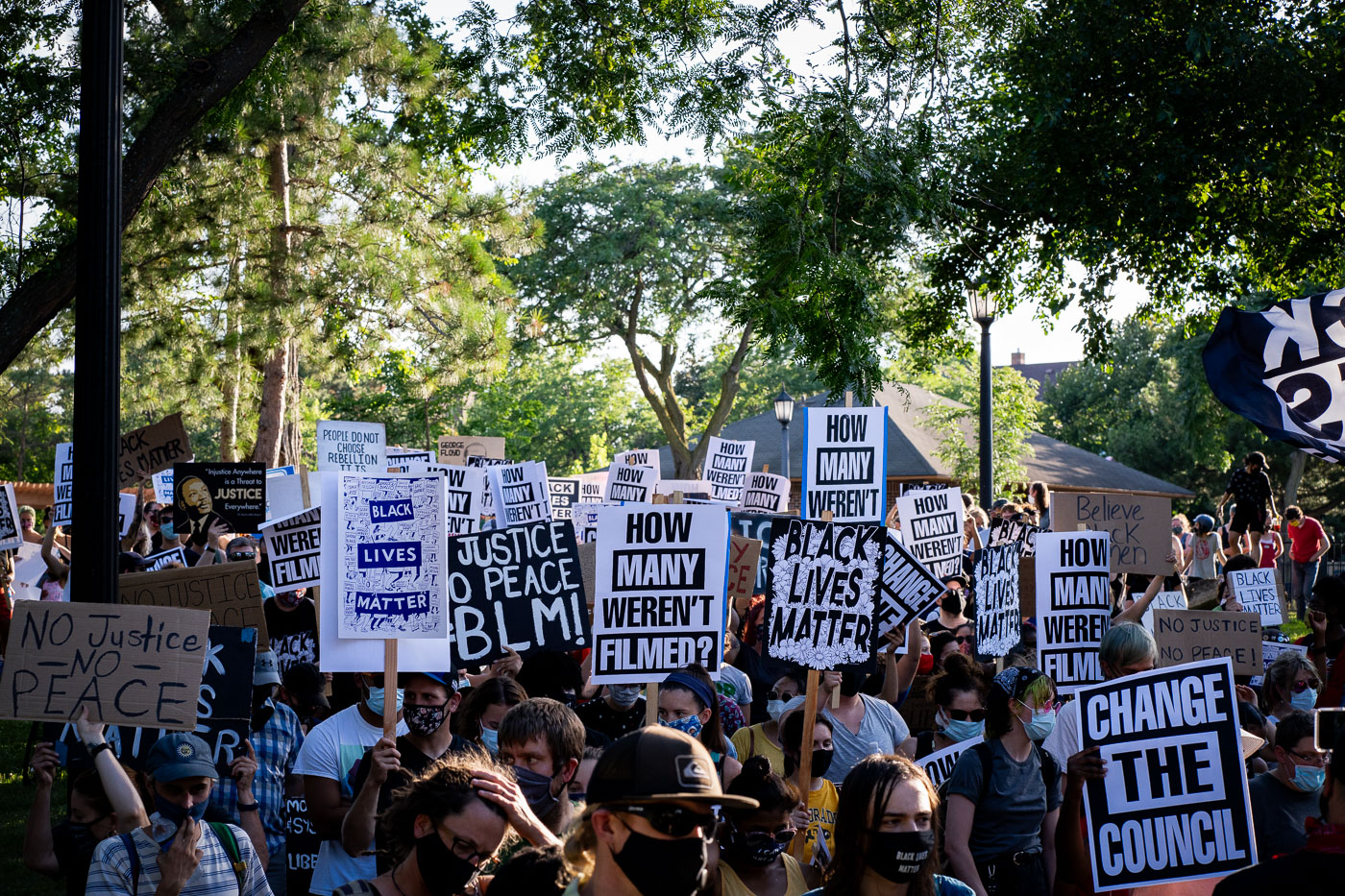
Protesters hold signs demanding justice and police accountability at the "How Many Weren't Filmed?" march in Uptown Minneapolis.
Protesters gathered for the "How Many Weren't Filmed?" march in Uptown Minneapolis. This march advocated for racial justice and police accountability, with participants carrying signs that included messages such as "Black Lives Matter" and "No Justice No Peace."

Crowd Carries ‘Black Lives Matter’ Signs in Uptown Minneapolis
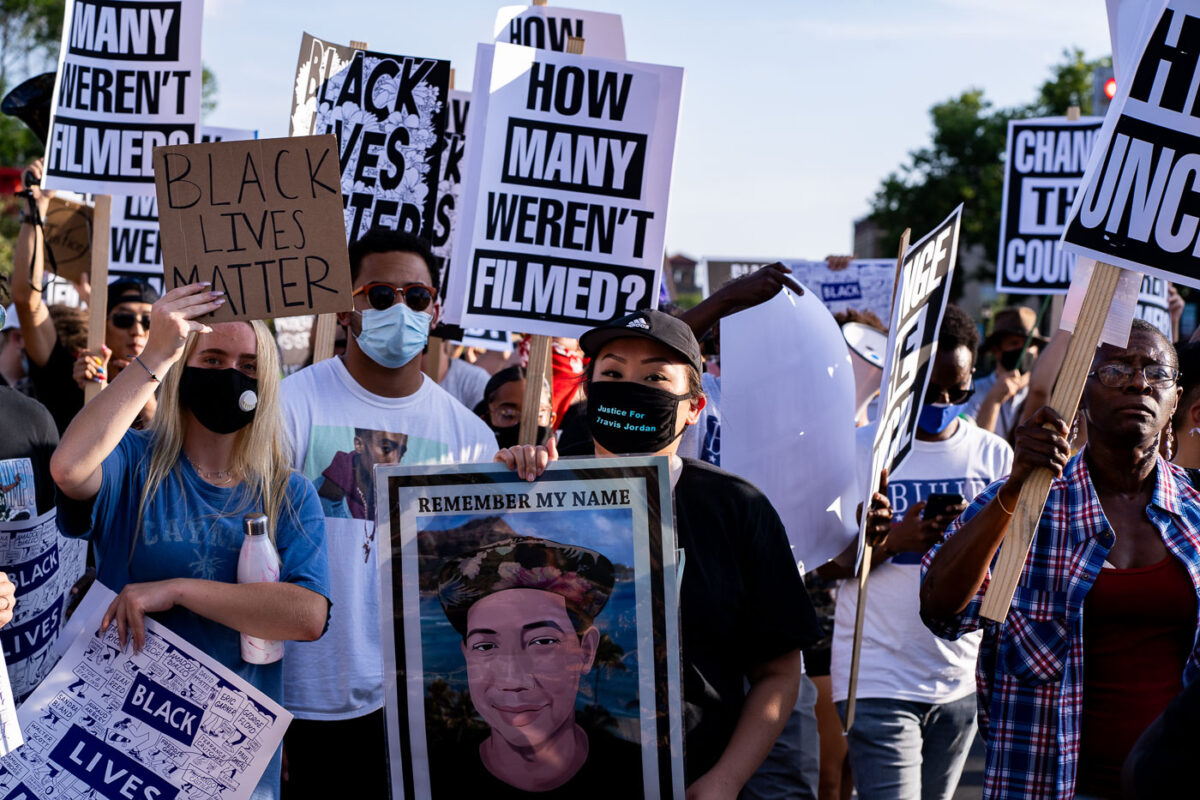
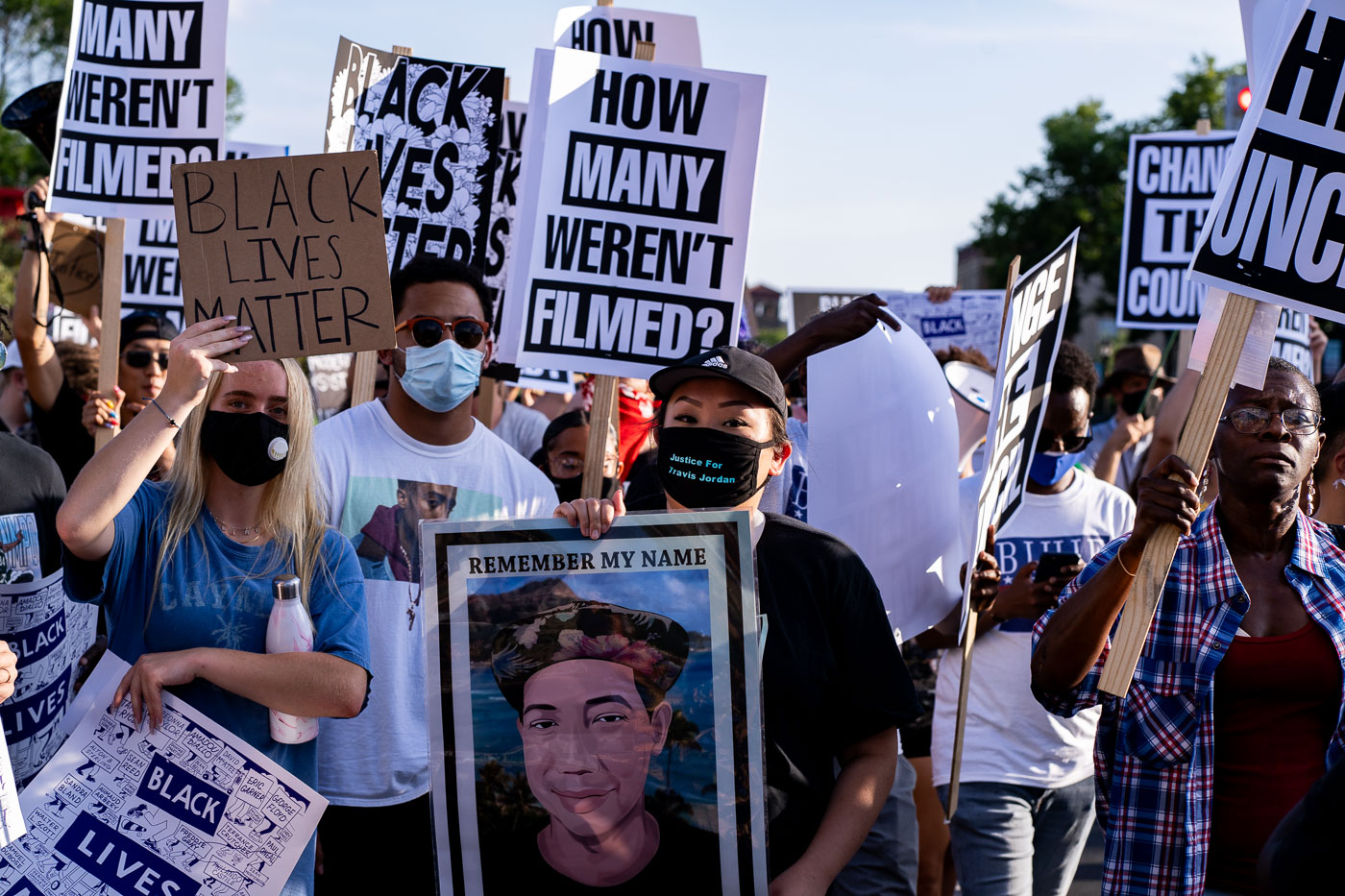
Protesters march through Uptown Minneapolis carrying signs demanding justice and police accountability during a July 2020 demonstration.
Protesters marched through Uptown Minneapolis on July 24, 2020, carrying signs that questioned police accountability and demanded justice.

“Remember My Name” Sign for Travis Jordan at Uptown March
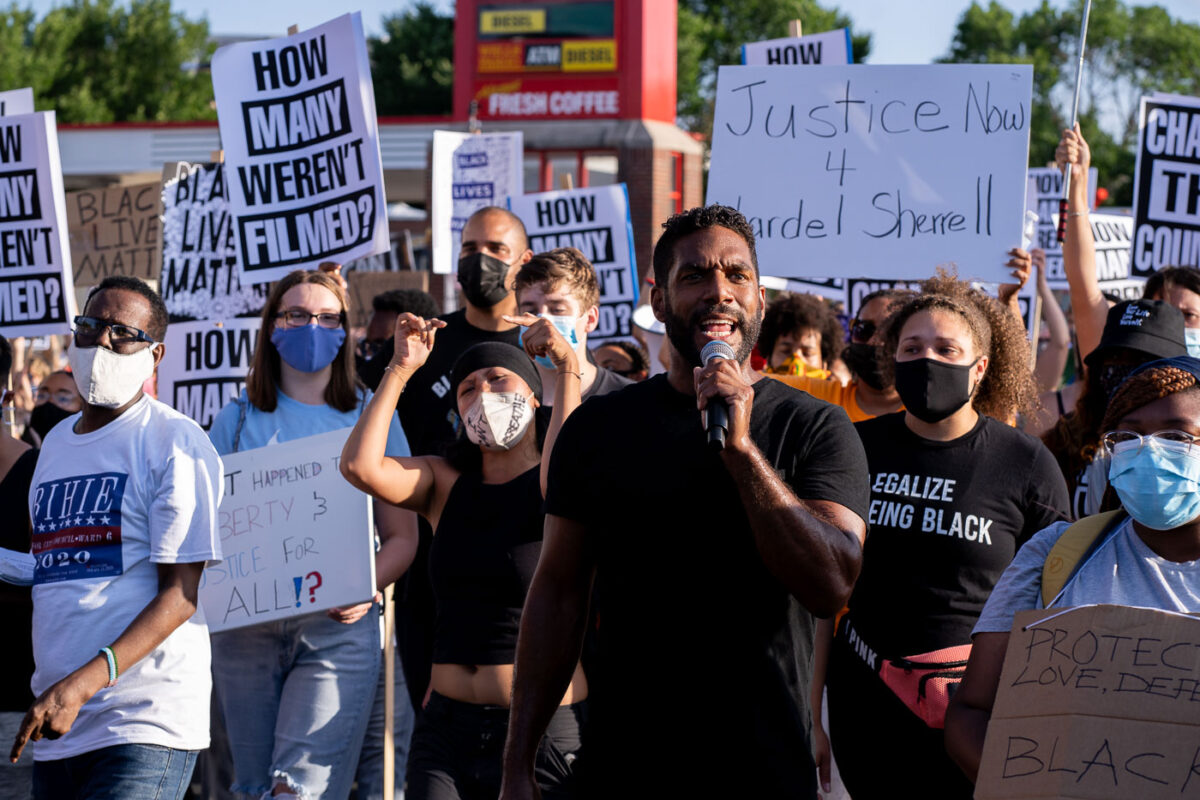
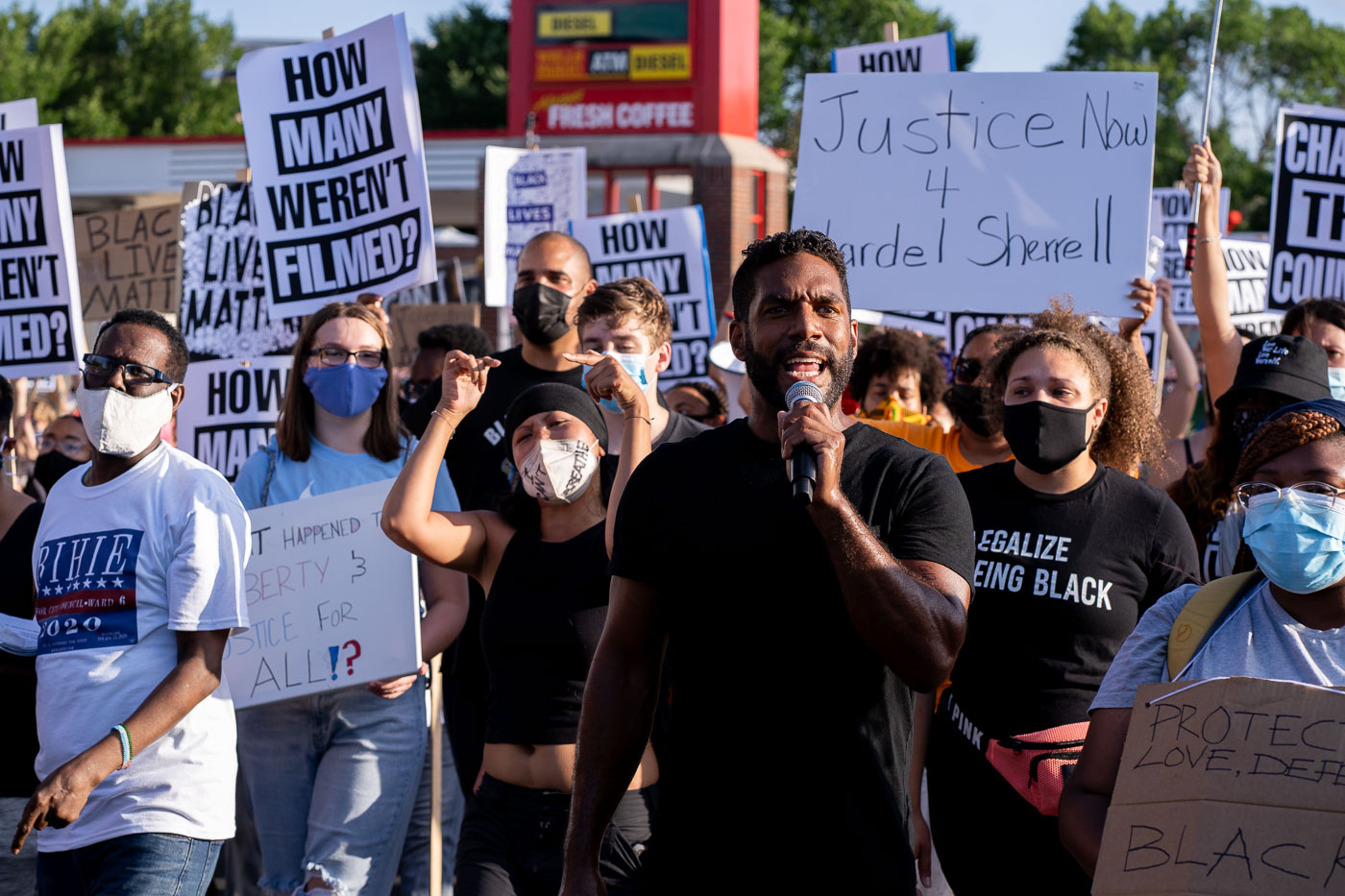
Activist Toussaint Morrison speaks at the "How many weren't filmed?" march in Uptown Minneapolis.
Toussaint Morrison leads the “How many weren’t filmed?” March down Hennepin Avenue in Uptown Minneapolis.

Toussaint Morrison Speaks During “How Many Weren’t Filmed?” March in Uptown
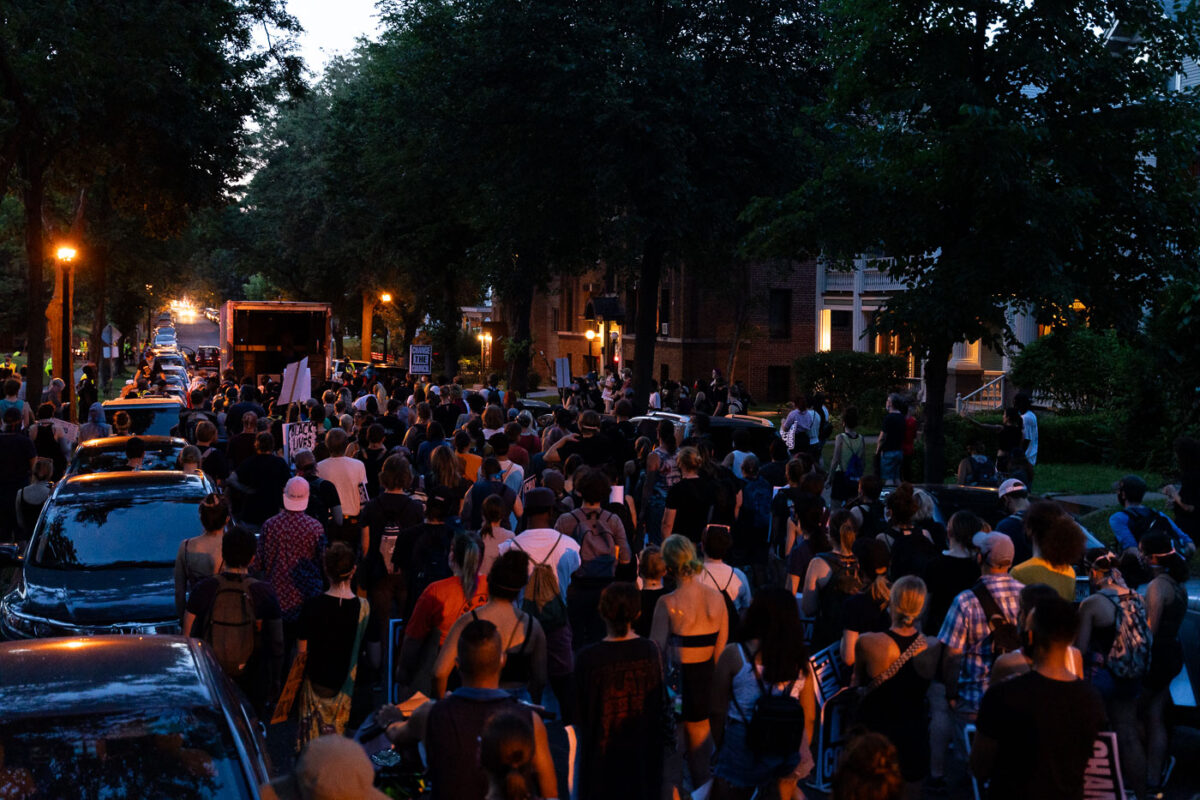
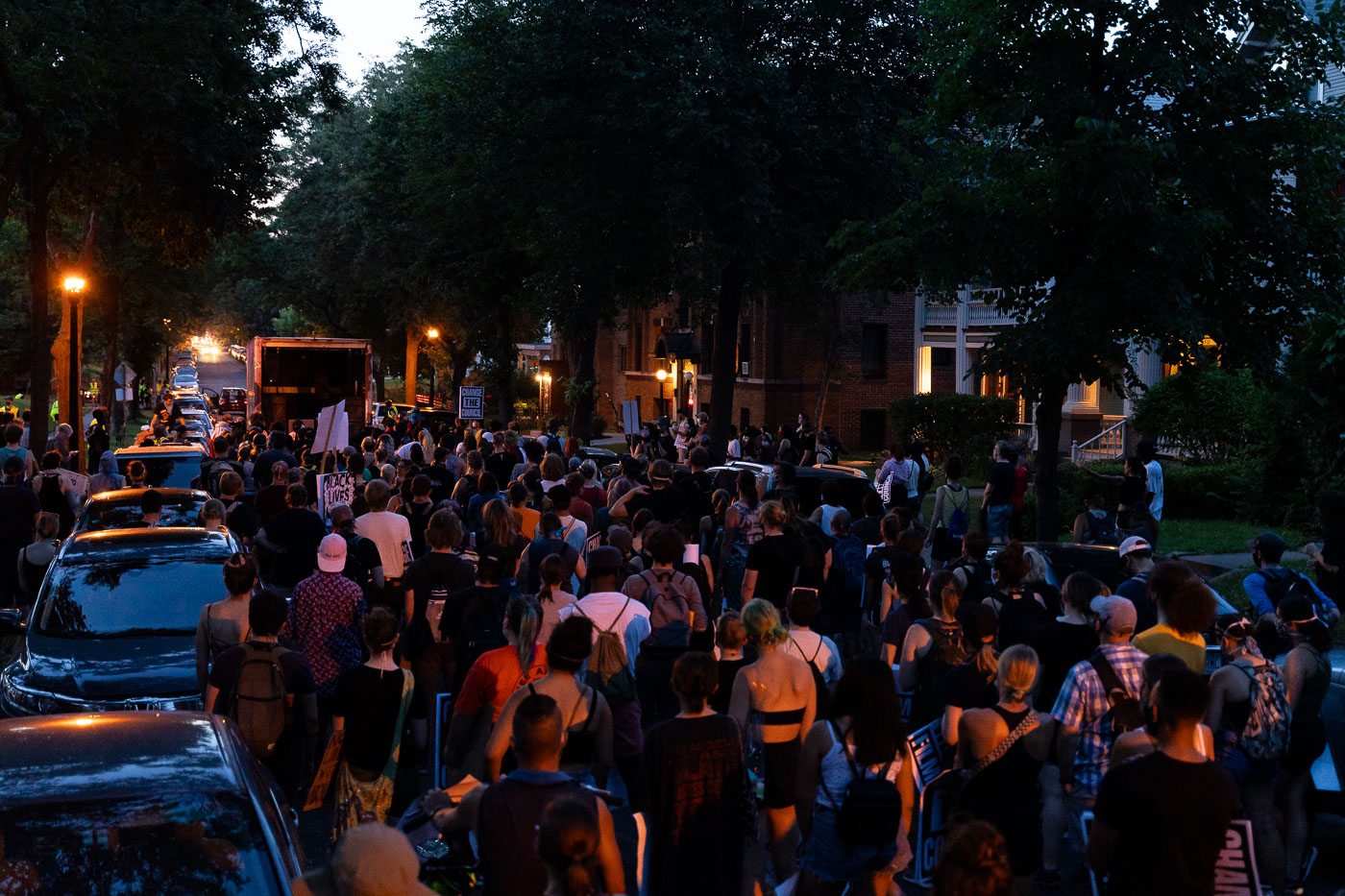
Large crowd of protesters gathers on a tree-lined street in Uptown Minneapolis during an evening demonstration on July 24, 2020.
A large group of protesters marches through Uptown Minneapolis as part of a 'March for those who weren't filmed'. This event occurred during a period of widespread protests in Minneapolis following the killing of George Floyd.

Marchers Fill a Tree-Lined Street at Dusk in Uptown Minneapolis
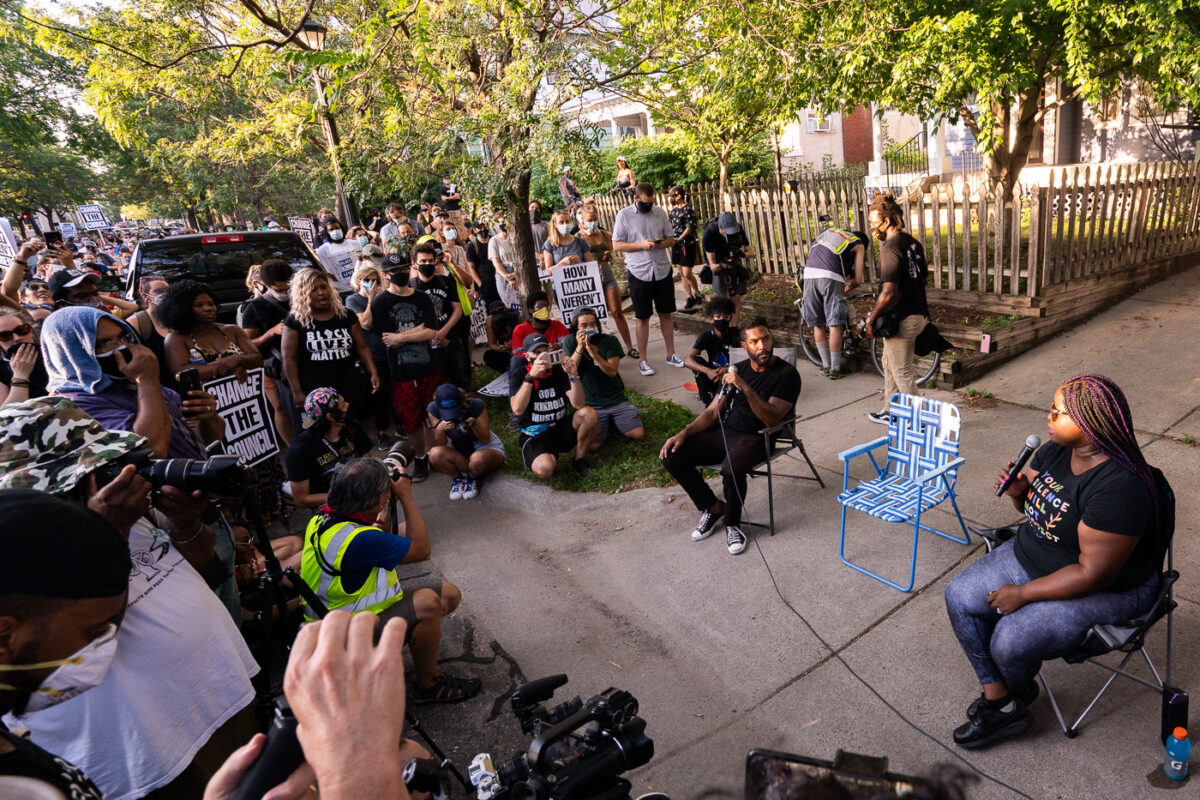
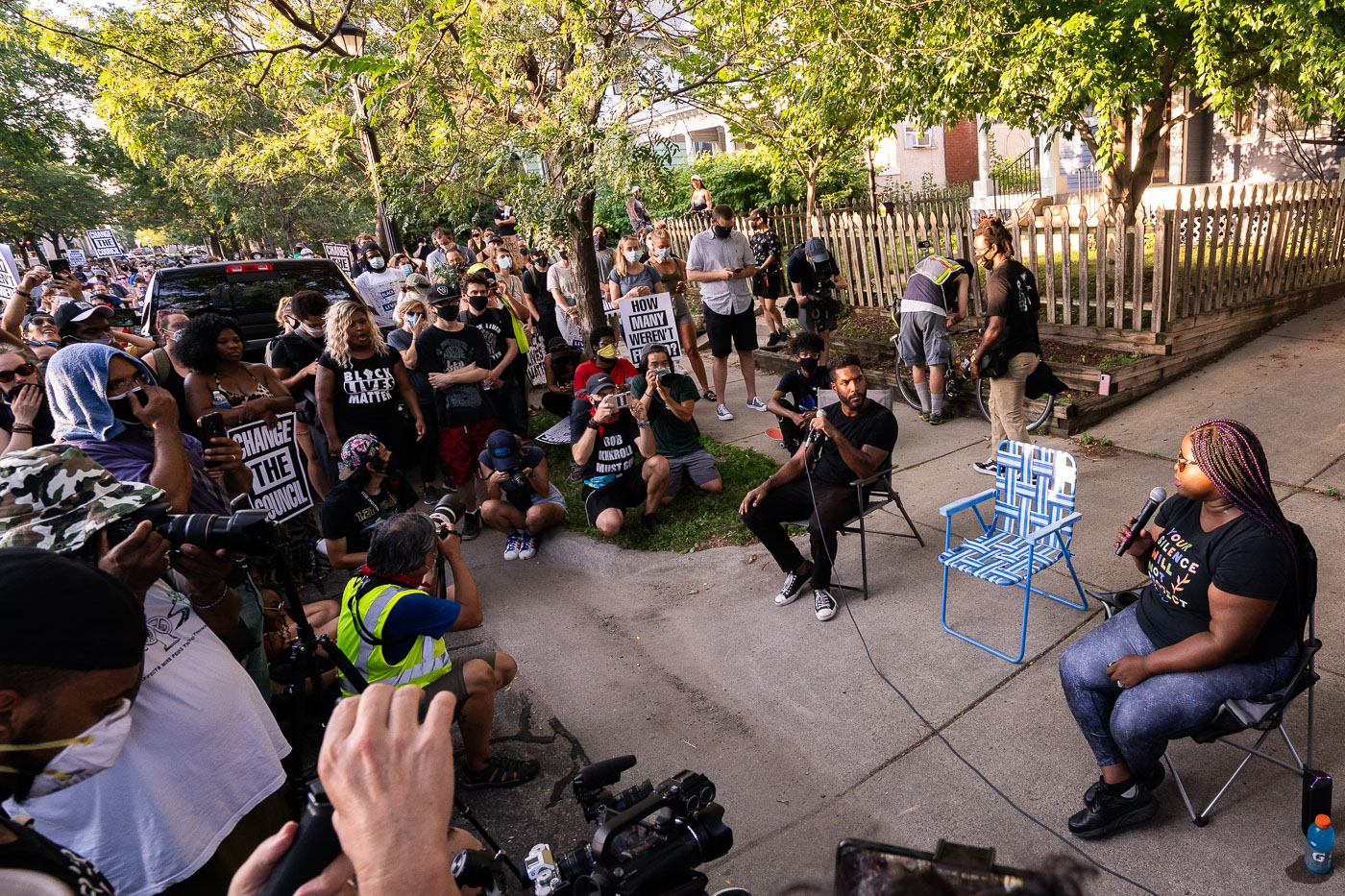
Toussaint Morrison and Nekima Levy Armstrong address a crowd during a protest outside a home in Uptown Minneapolis on July 24, 2020.
Toussaint Morrison and Nekima Levy Armstrong address a crowd during a protest in Uptown Minneapolis on July 24, 2020. The gathering took place outside a city council member's home, following a march through the Uptown neighborhood. This event was part of the ongoing protests in Minneapolis, which gained momentum after the murder of George Floyd.

Crowd Gathers Outside Council Member’s Home in Uptown Minneapolis
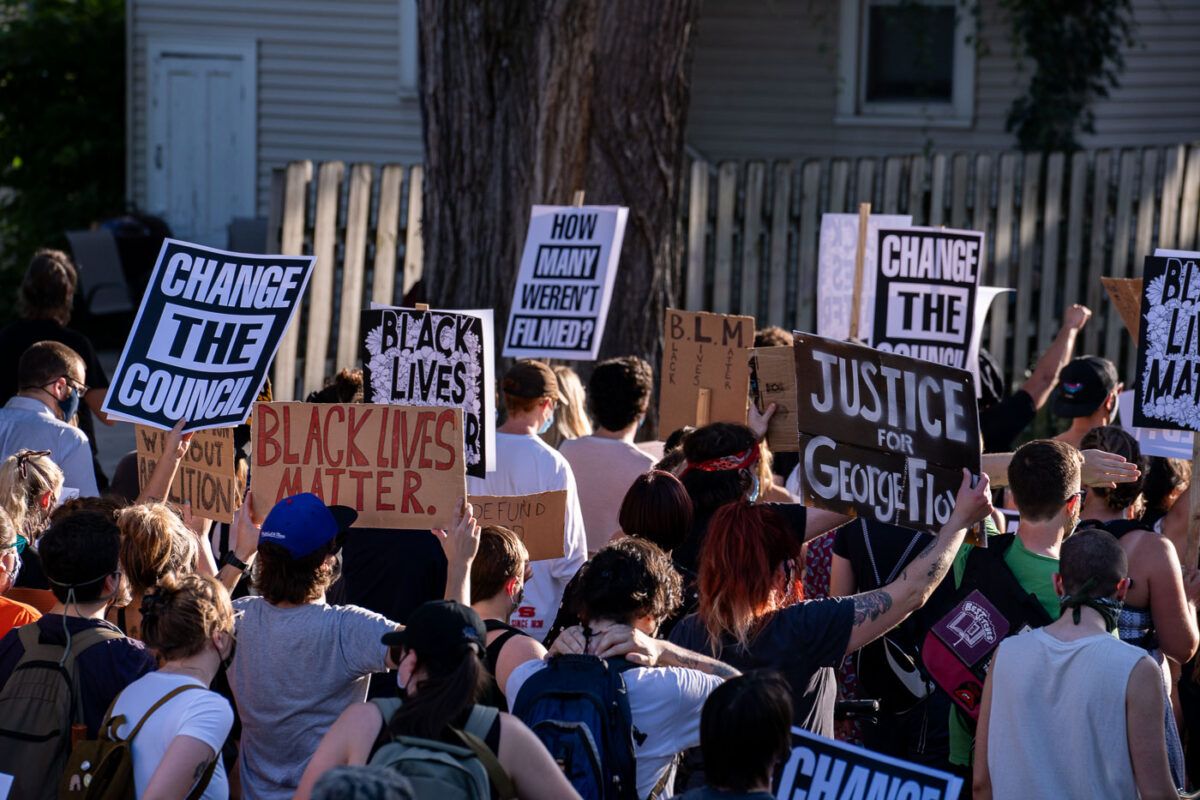
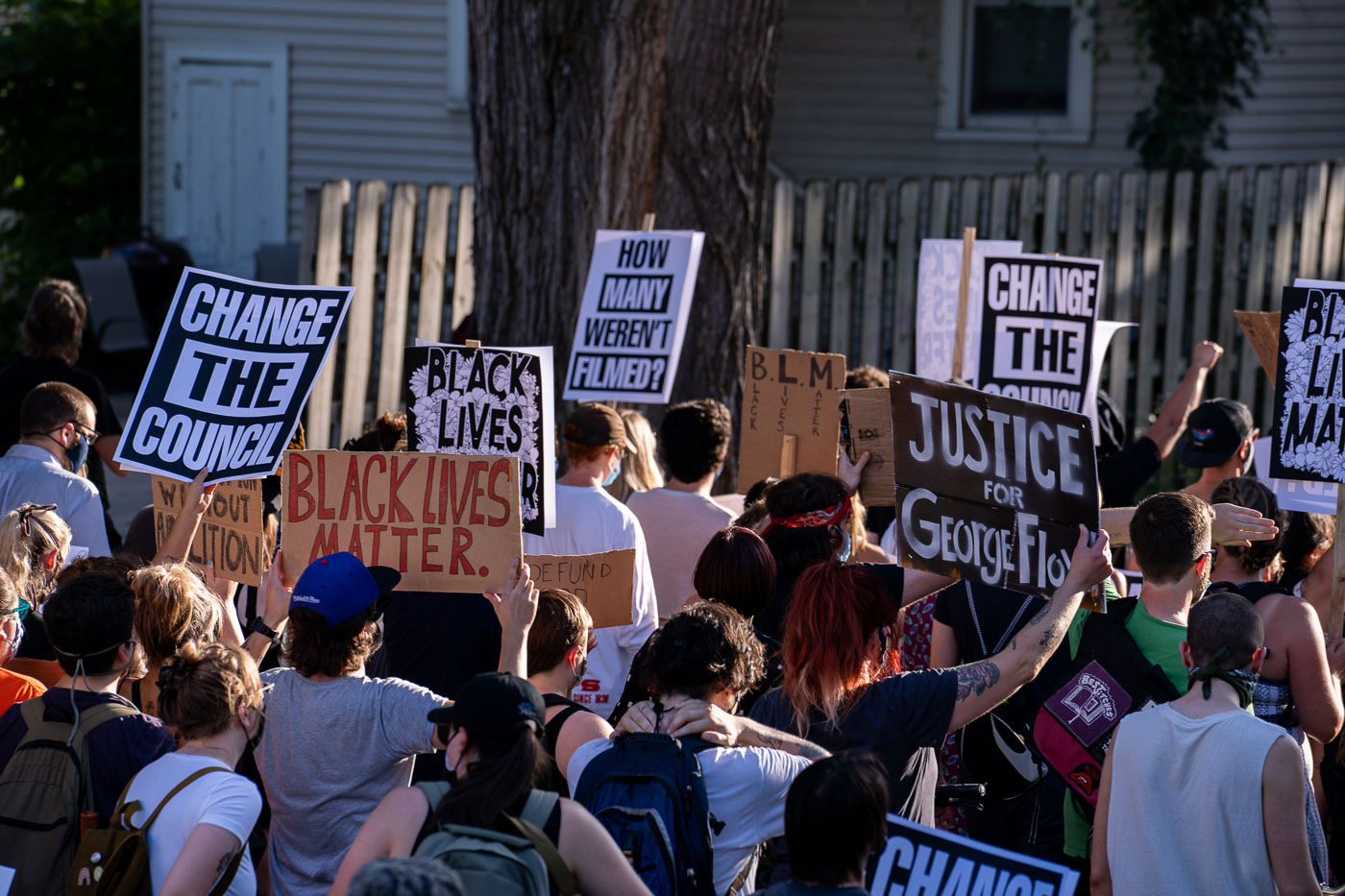
Protesters holding signs reading "Change the Council," "Black Lives Matter," and "Justice for George Floyd" march in Uptown Minneapolis.
Protesters march in Uptown Minneapolis carrying signs calling for change, Black Lives Matter, and justice for George Floyd. The demonstration was part of the July 2020 protests in Minneapolis following George Floyd’s killing.

“Justice for George Floyd” Signs at Uptown Minneapolis March
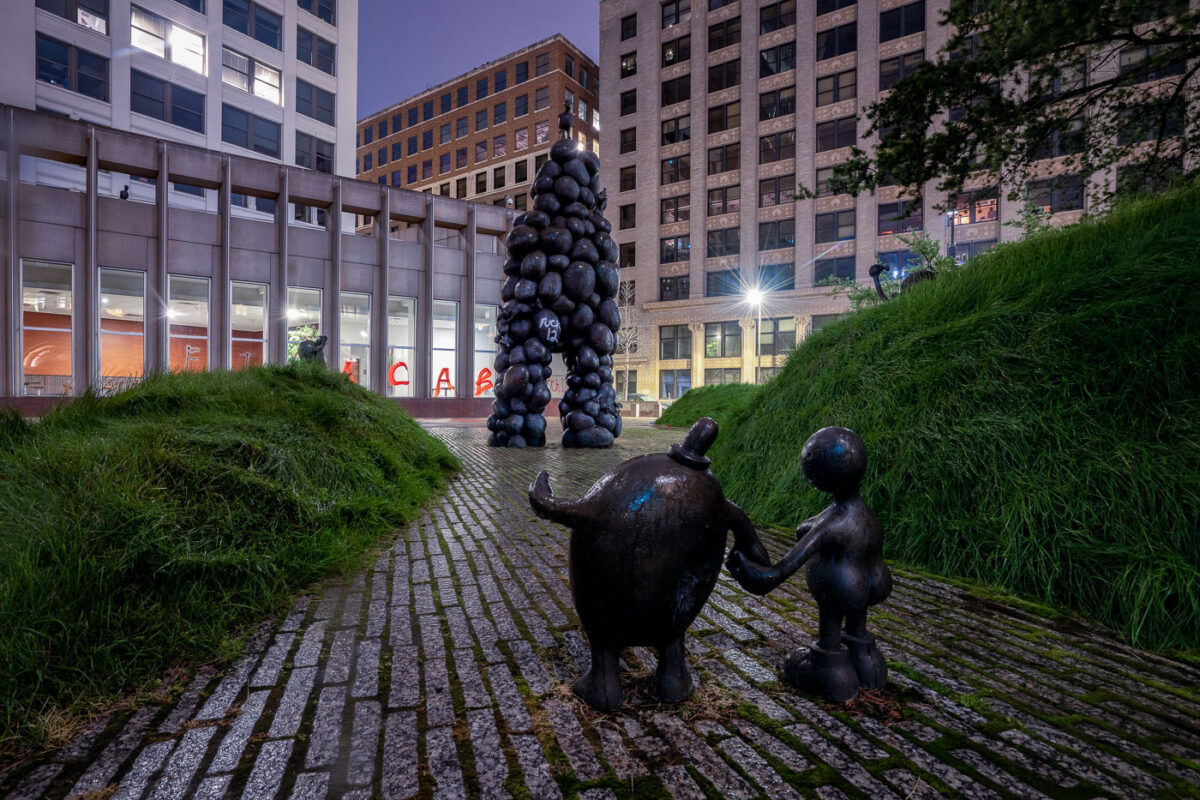
ACAB graffiti on Federal Courthouse at night
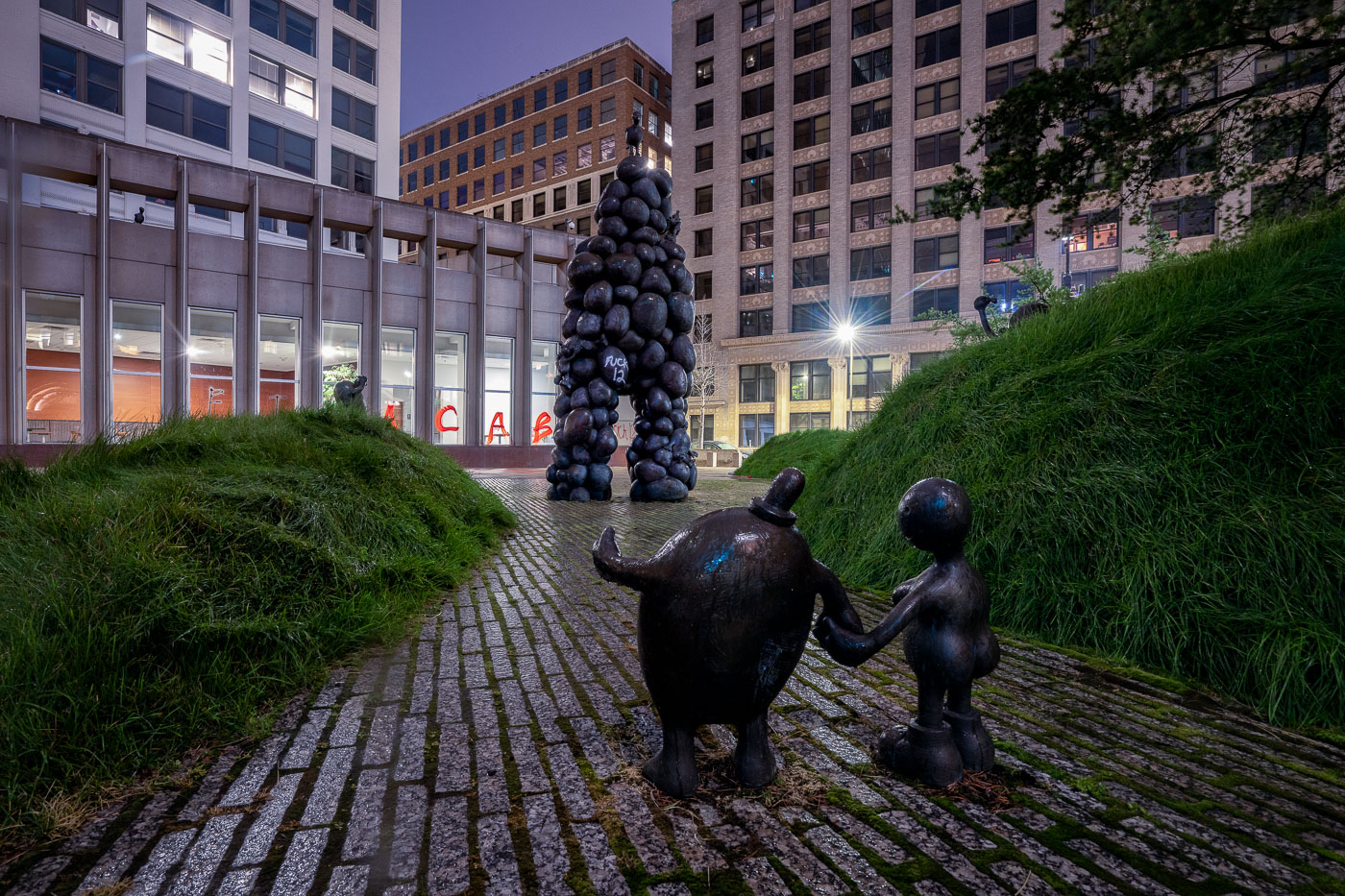
The Federal Courthouse in downtown Minneapolis, a key site for federal judicial proceedings, displays "ACAB" graffiti through its windows. This public expression emerged during the widespread protests and civil unrest that occurred in Minneapolis following the murder of George Floyd in May 2020. The building's prominent location made it a focal point for public sentiment during this period of social upheaval. In the foreground, sculptures from Tom Otterness's "The Goose Lake Cycle" series, installed on the courthouse grounds, also bear protest-related markings, reflecting the broader impact of the Minneapolis Uprising on the urban environment.

ACAB Graffiti, Minneapolis Federal Courthouse & Sculpture
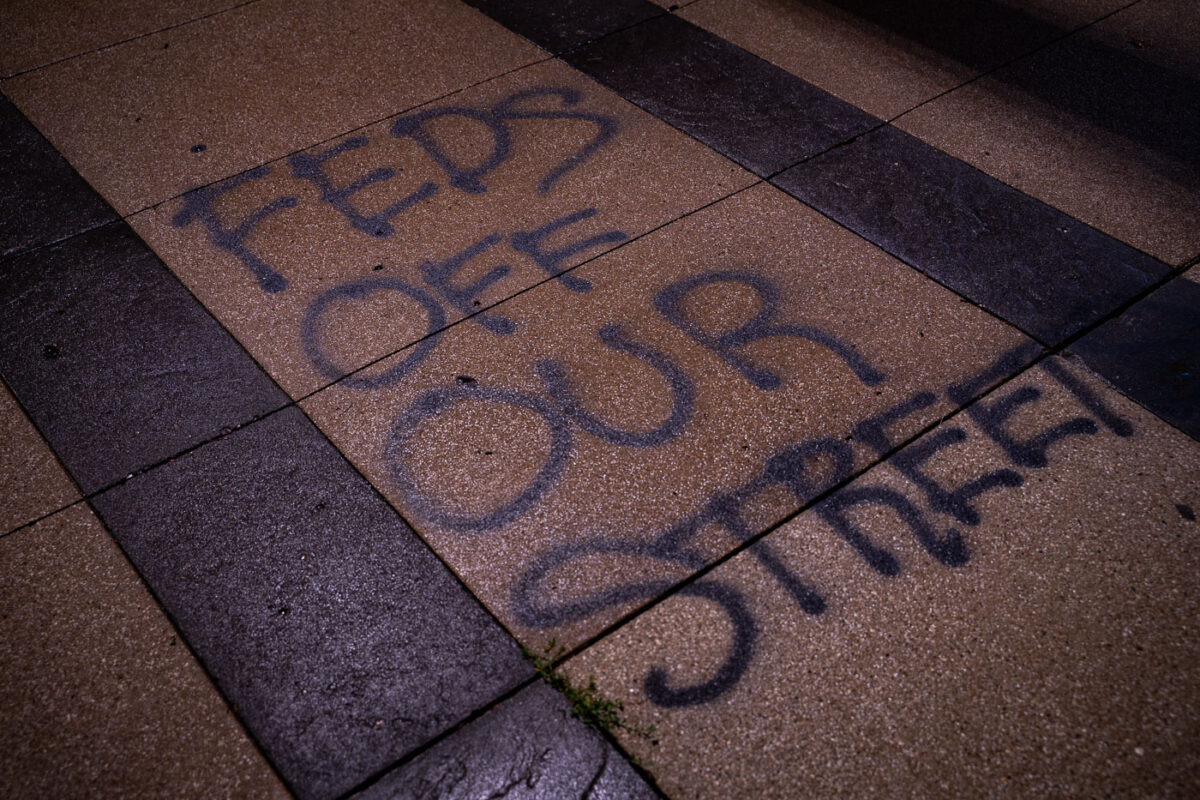
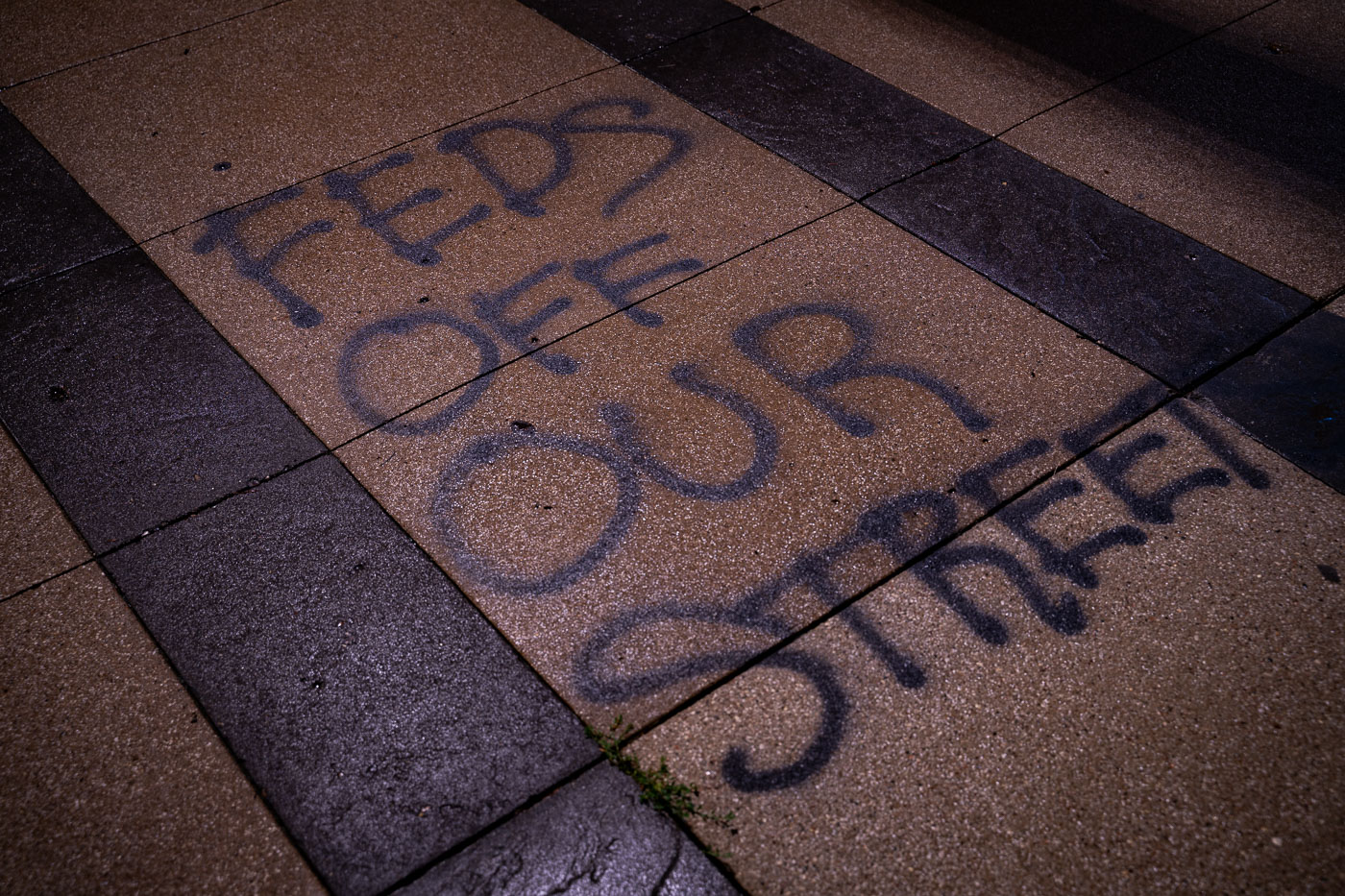
FEDS OFF OUR STREET graffiti
Graffiti reading "FEDS OFF OUR STREET" is visible on the pavement outside the US Federal Courthouse in Downtown Minneapolis. This message emerged during the Minneapolis Uprising, a period of widespread protests and civil unrest in 2020. The federal courthouse, a symbol of federal authority, became a focal point for expressions of dissent against government presence and actions during this time. Such markings reflect public sentiment and the charged atmosphere surrounding the events in Minneapolis.

“Feds Off Our Street” Graffiti, Minneapolis Federal Courthouse
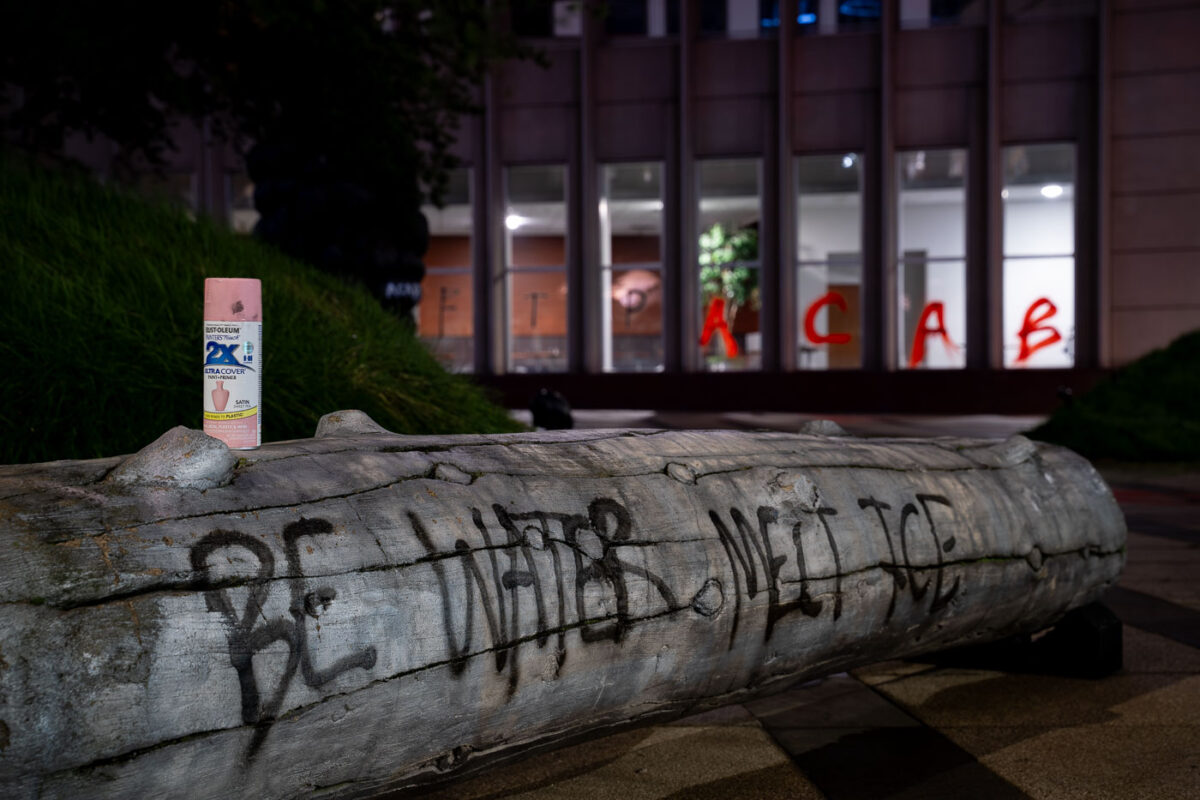
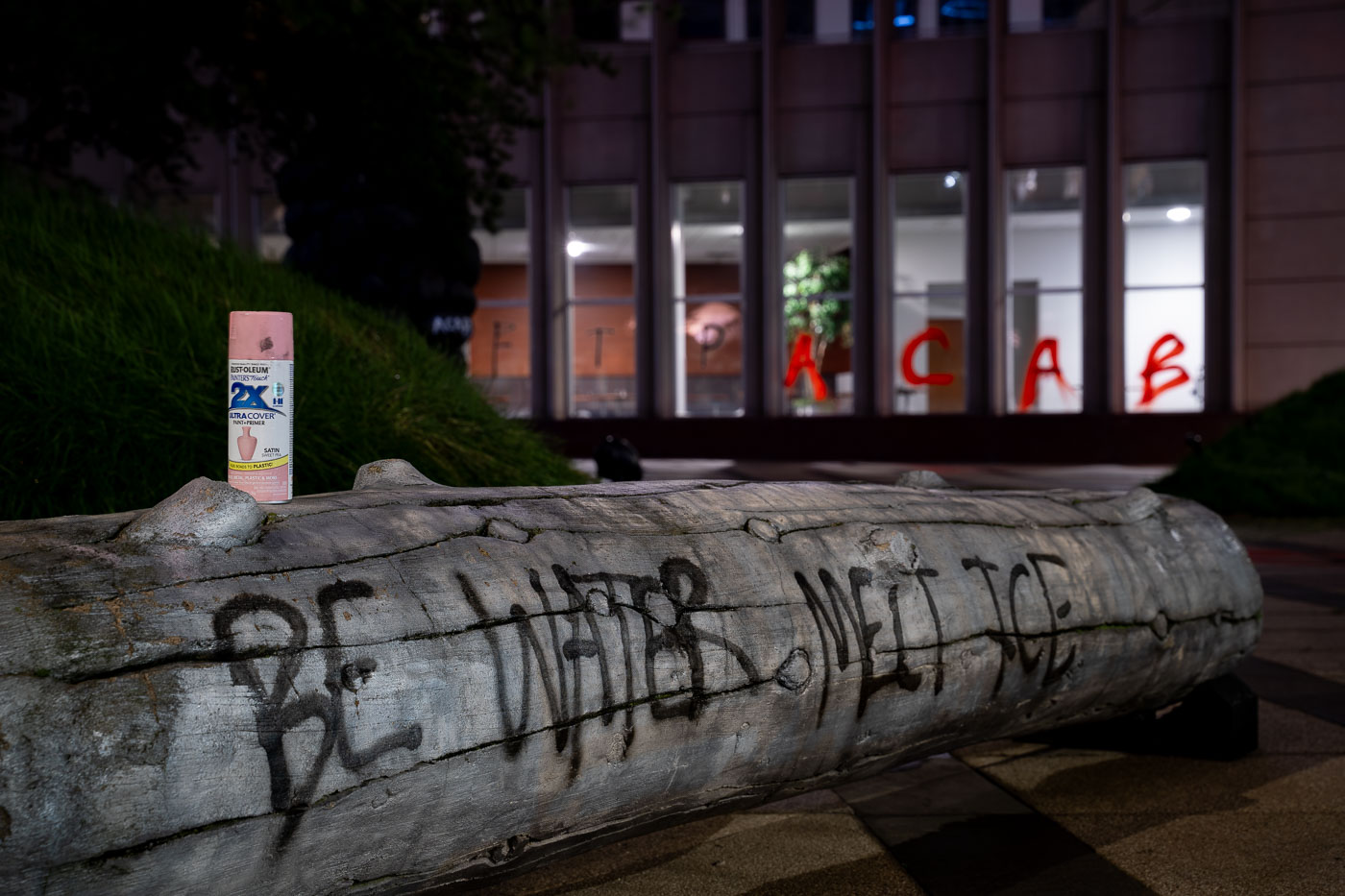
Be Water Melt Ice
Graffiti covers a large log and the windows of the Warren E. Burger Federal Building and U.S. Courthouse in downtown Minneapolis. The messages, including 'ACAB' on the courthouse windows and 'BE WATER MY FRIEND' on the log, emerged as expressions of dissent during the Minneapolis Uprising. This federal judicial center, completed in 1966, became a significant site for public protest in May and June 2020. The spray paint can resting on the log further highlights the direct and immediate nature of these statements made within the urban environment.

Graffiti on Log and Courthouse Windows, Minneapolis
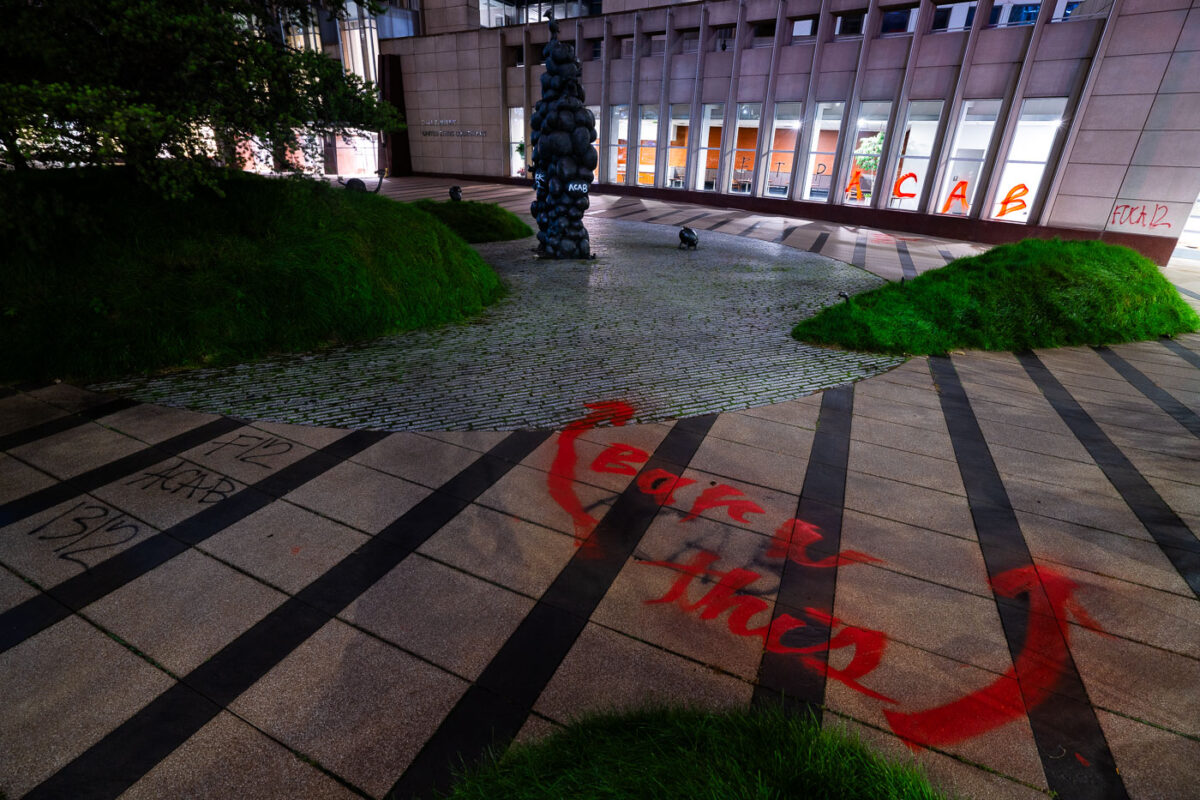
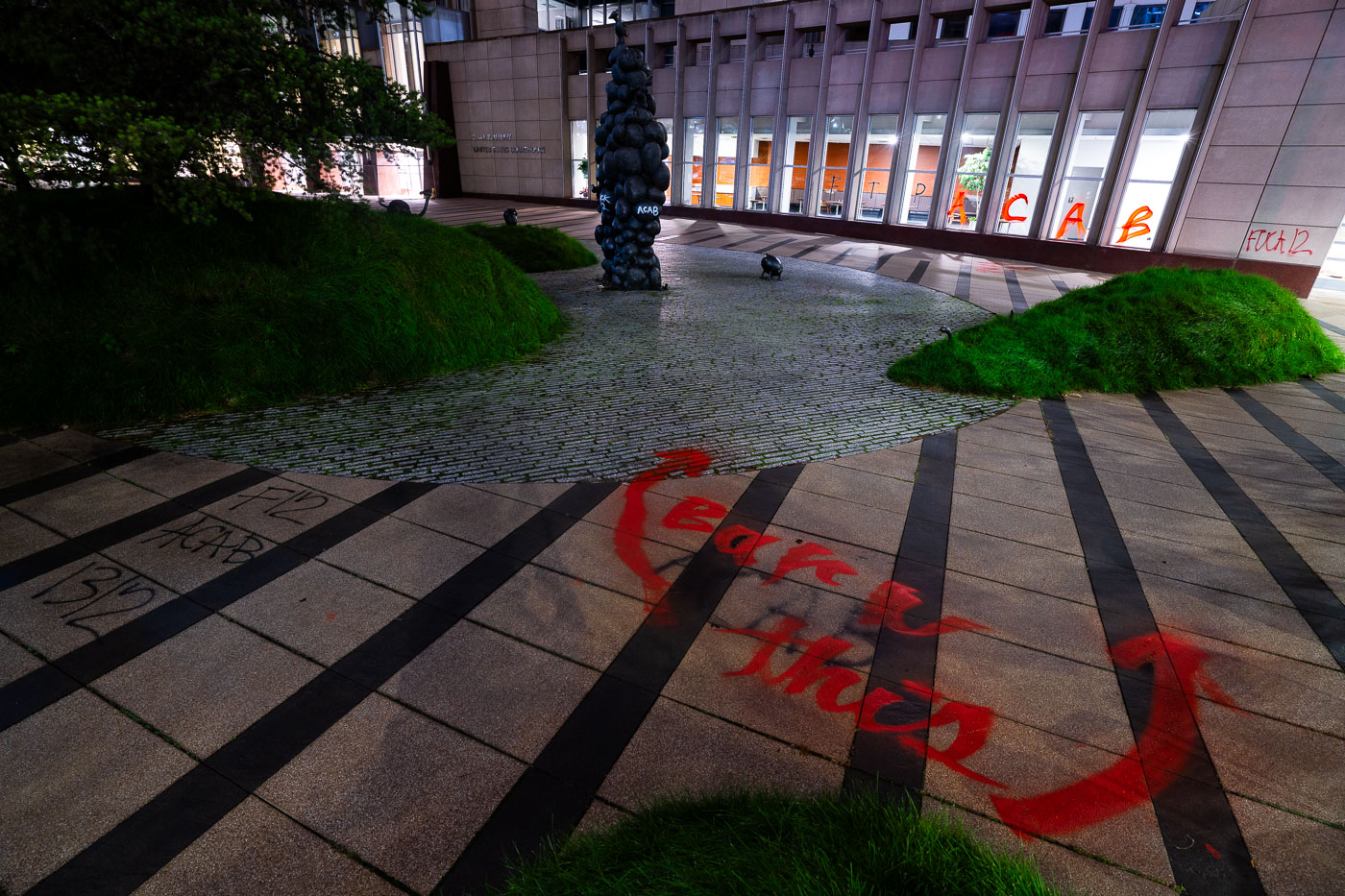
Burn this written on grounds of Federal Courthouse
Graffiti reading "Burn This", "ACAB", and "FUCK 12" is visible on the grounds and windows of the Diana E. Murphy United States Courthouse in downtown Minneapolis. This federal judicial building, completed in 1996, serves as a central location for federal legal proceedings in the district. The messages reflect the intense public sentiment and unrest that characterized the Minneapolis Uprising, a period of significant social protest following the killing of George Floyd. The graffiti on this government building underscores the anti-establishment and anti-police sentiments prevalent during this historical period.

ACAB Graffiti on Diana E. Murphy US Courthouse, Minneapolis
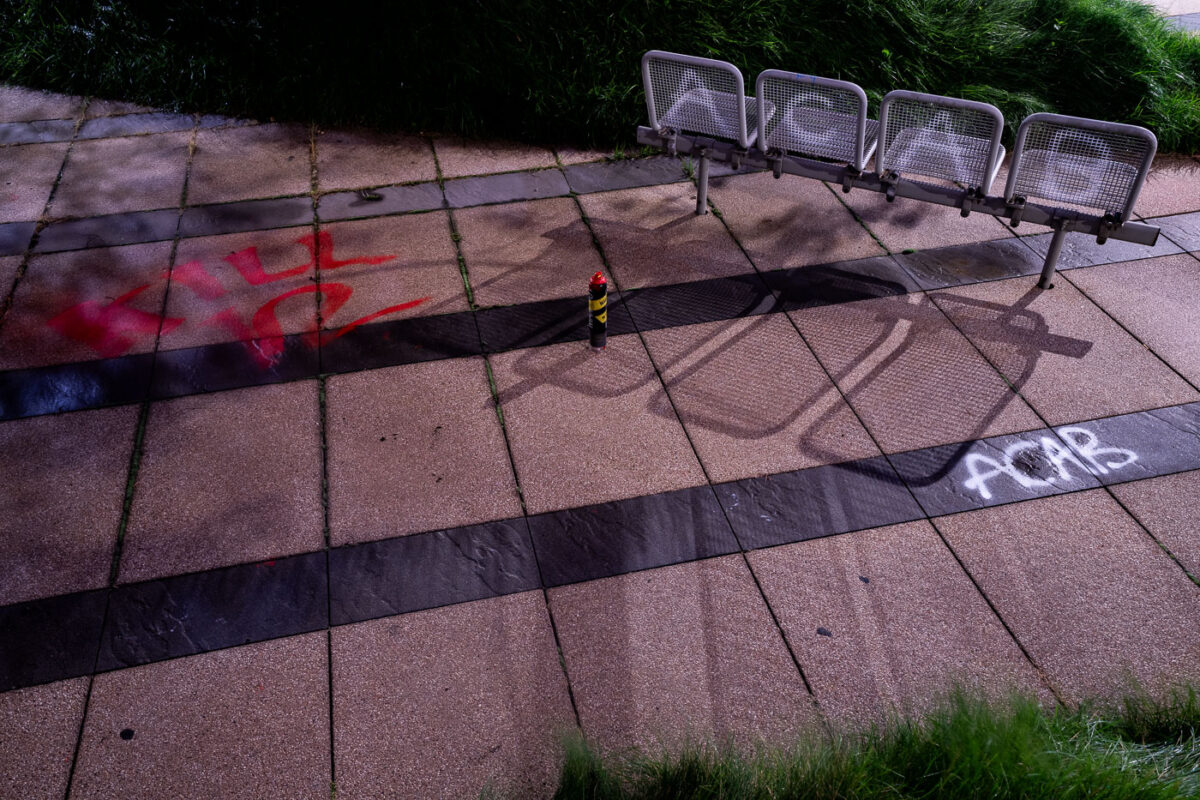
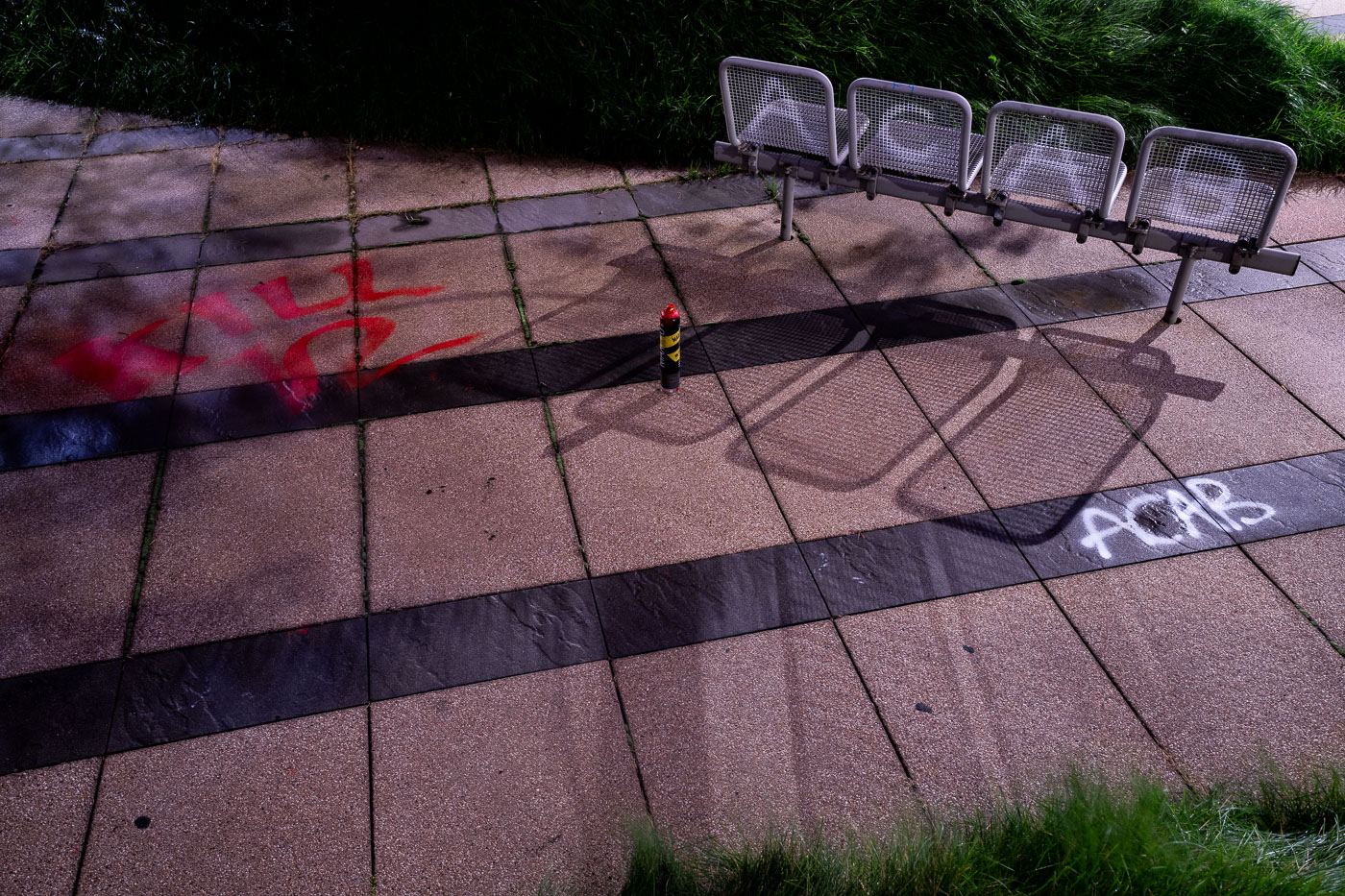
ACAB written on Federal Courthouse benches
Graffiti reading 'ACAB' and 'FUCK 12' is visible on the pavement outside the Federal Courthouse in downtown Minneapolis. This graffiti emerged during a period of widespread protests and civil unrest in Minneapolis, particularly following the murder of George Floyd in May 2020. Federal courthouses, as symbols of the justice system, often become focal points for public expression during protests concerning legal and social issues. The phrases 'ACAB' (All Cops Are Bastards) and 'FUCK 12' are anti-police slogans commonly used in protests against police brutality and systemic injustice.

Federal Courthouse ‘ACAB’ Graffiti, Minneapolis
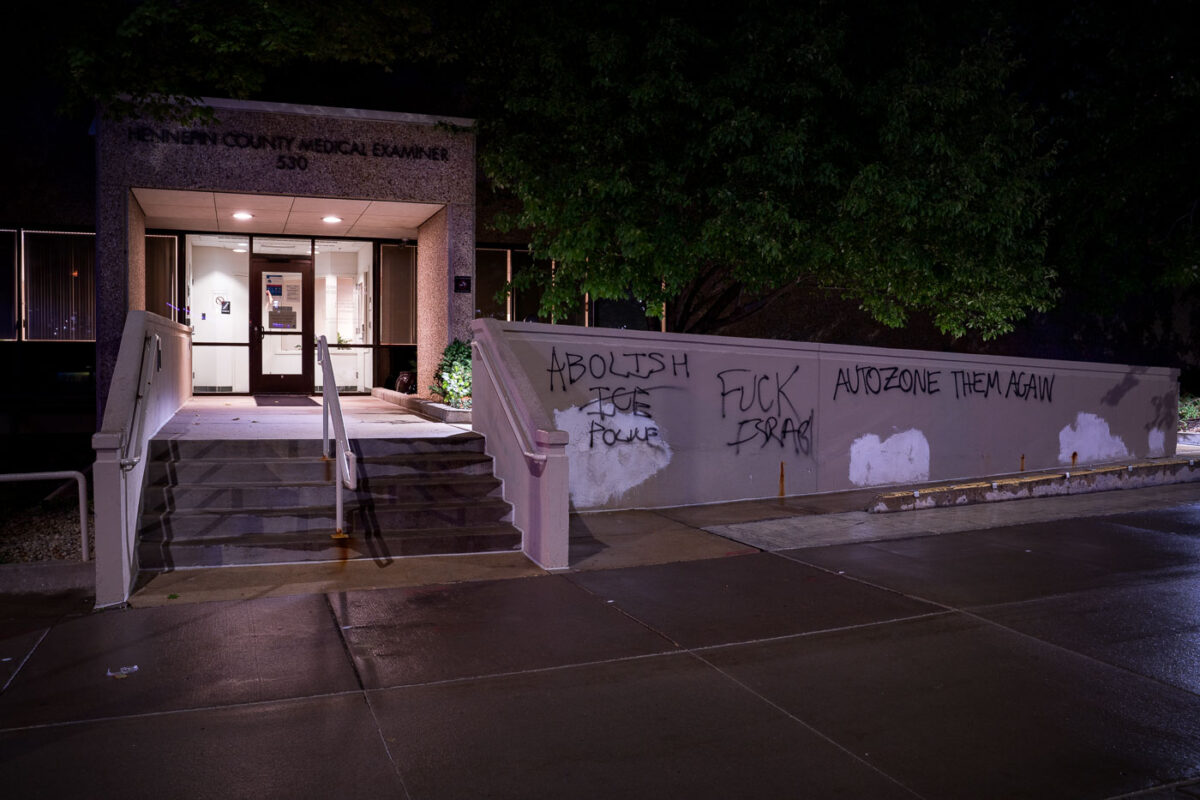
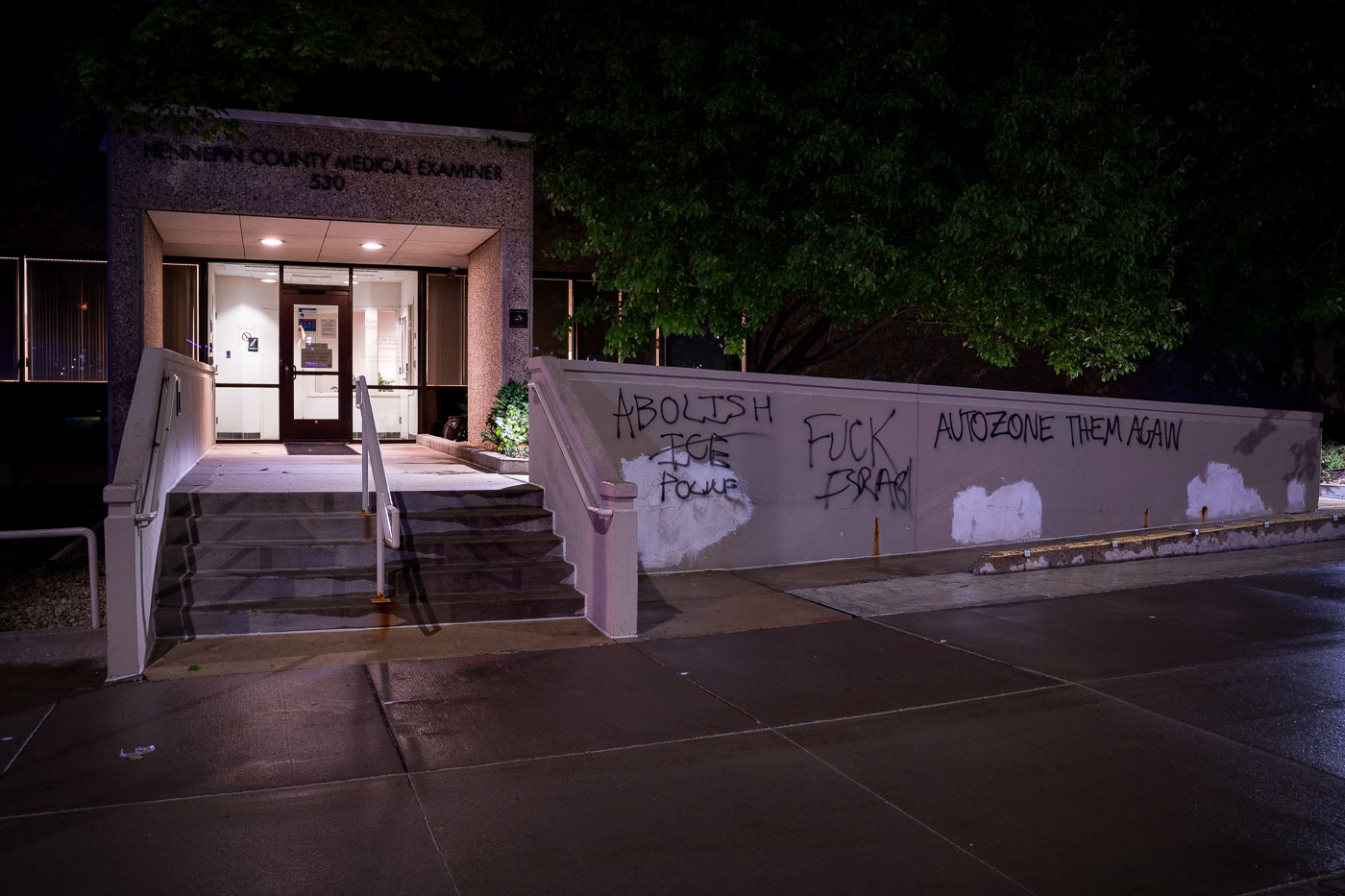
Abolish the police and autozone them again graffiti
Graffiti covers a wall of the Hennepin County Medical Examiner building in downtown Minneapolis. The spray-painted messages include "Abolish the police" and "AutoZone them again," referencing the burning of the AutoZone building during the 2020 Minneapolis Uprising. The AutoZone fire was one of the first major acts of property destruction during the widespread protests and civil unrest that followed the murder of George Floyd. As the official body responsible for investigating deaths in Hennepin County, including those involving law enforcement, the Medical Examiner's office became a site for expressions of public dissent and calls for systemic change.

Hennepin County Medical Examiner: Abolish Police, Autozone Graffiti
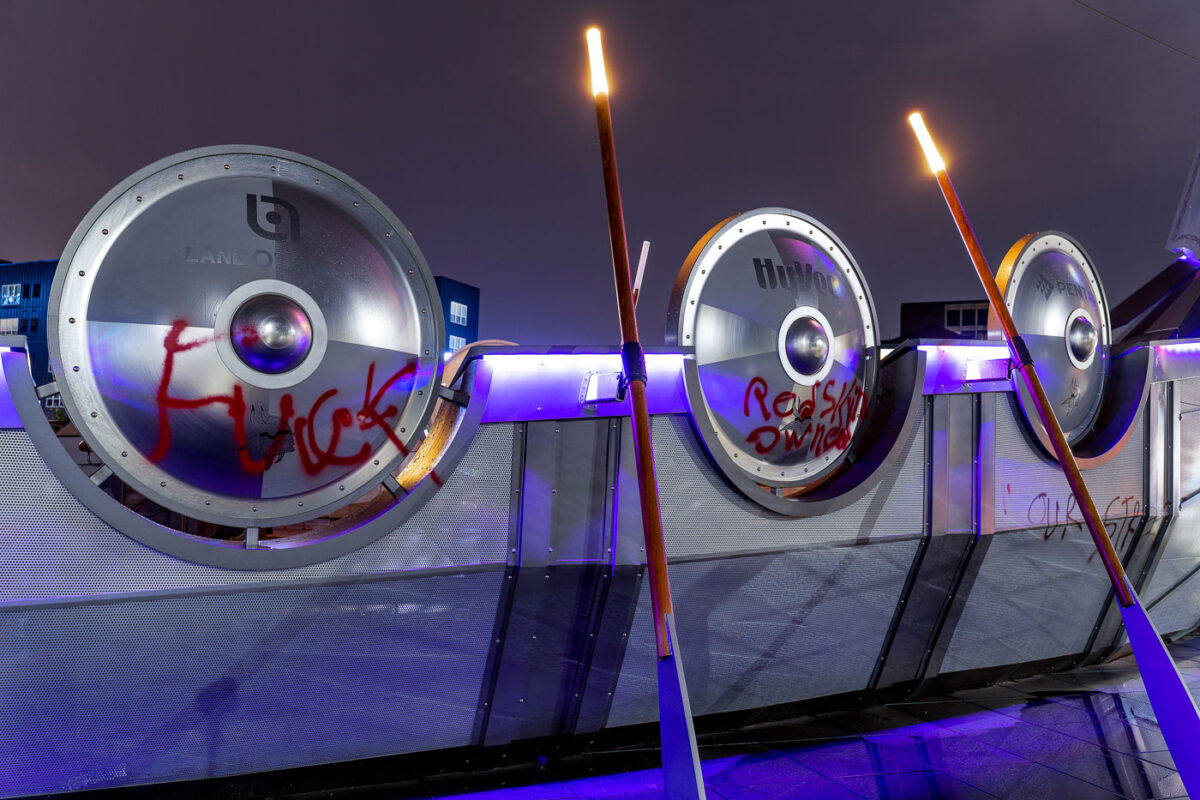
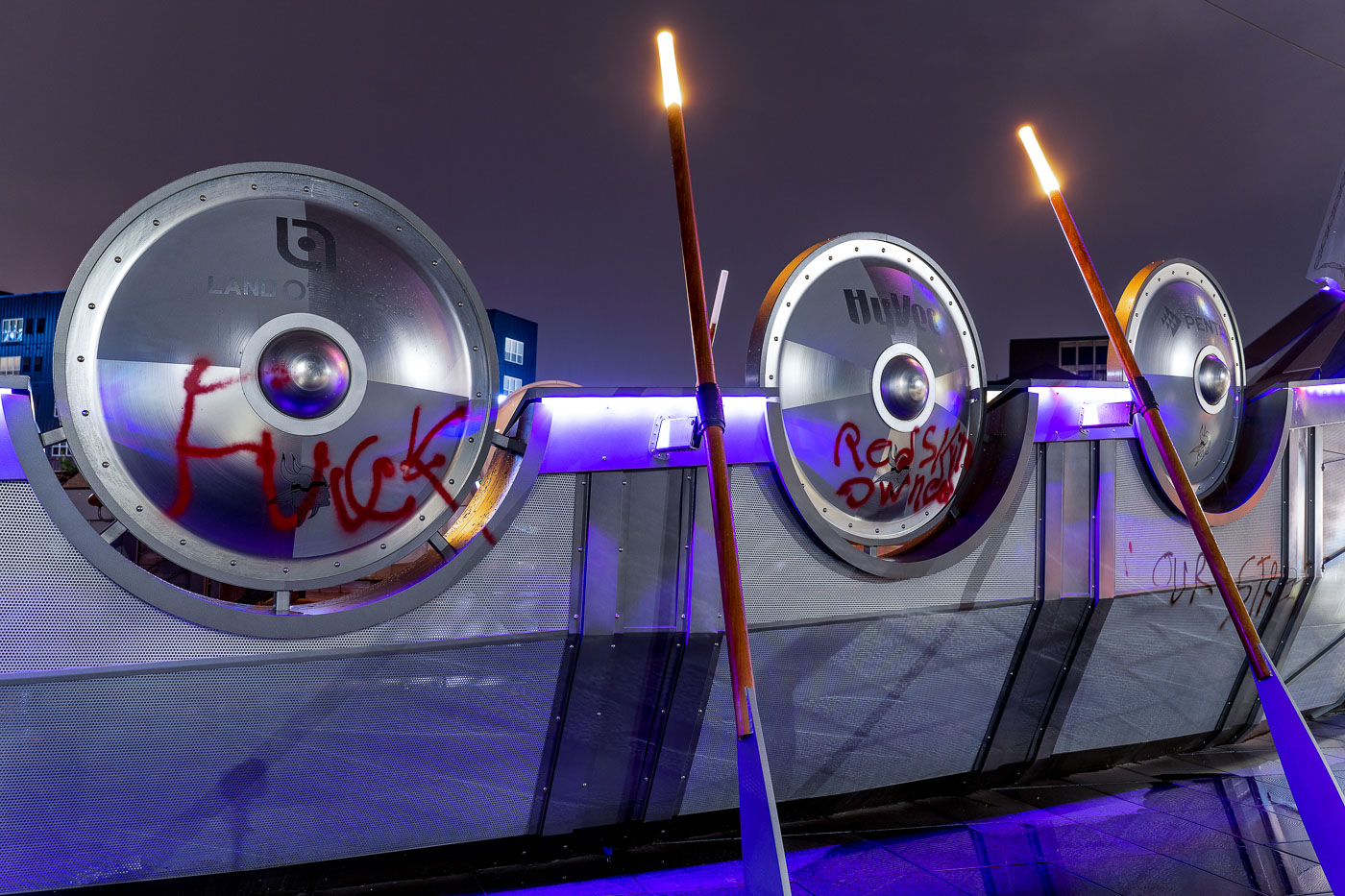
Graffiti on Vikings ship in Downtown Minneapolis.
Graffiti reading 'Fuck Redskins Owner' is visible on the Minnesota Vikings ship sculpture outside US Bank Stadium in Downtown Minneapolis. This act of vandalism occurred prior to a game between the Minnesota Vikings and the Washington Redskins, drawing attention to the long-standing controversy surrounding the Washington NFL team's name. The ship sculpture is a distinctive architectural feature of US Bank Stadium, which opened in 2016. Located in Downtown Minneapolis, the stadium serves as the home of the Minnesota Vikings and a major venue for sports and entertainment events.

Graffiti: ‘Fuck Redskins Owner’ on Vikings Ship, US Bank Stadium
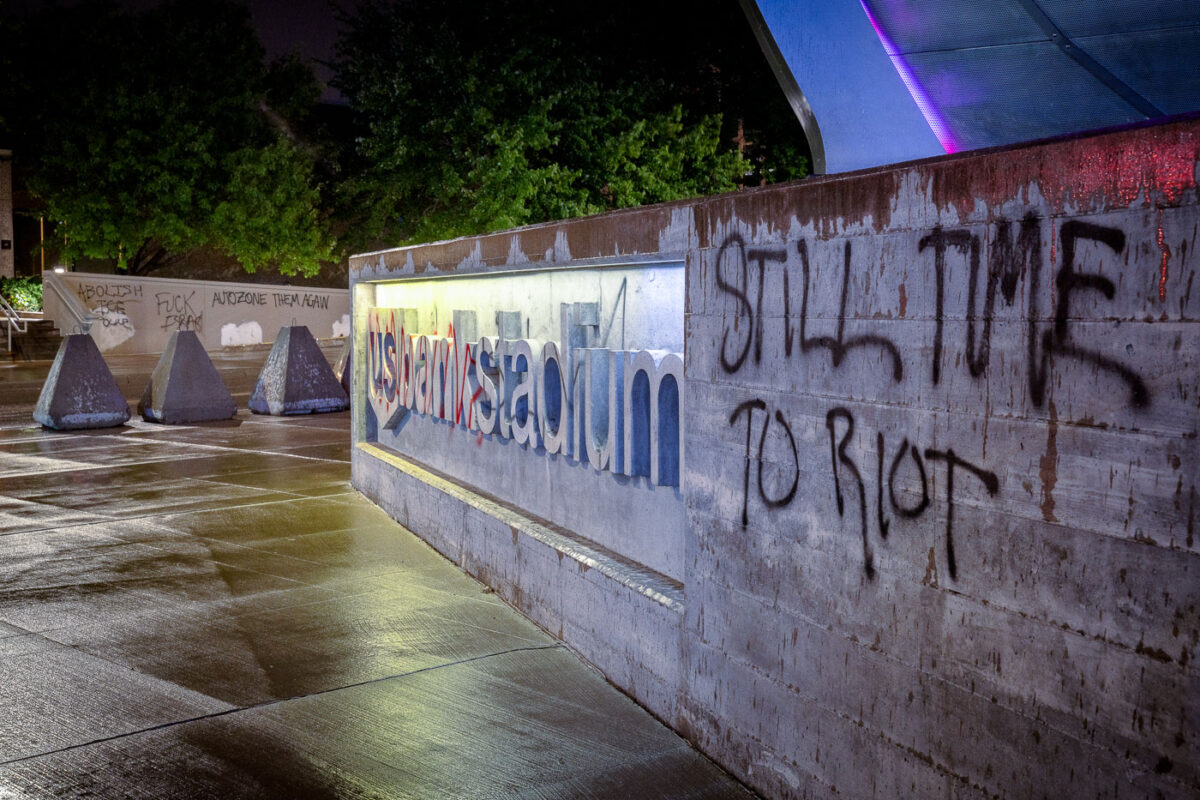
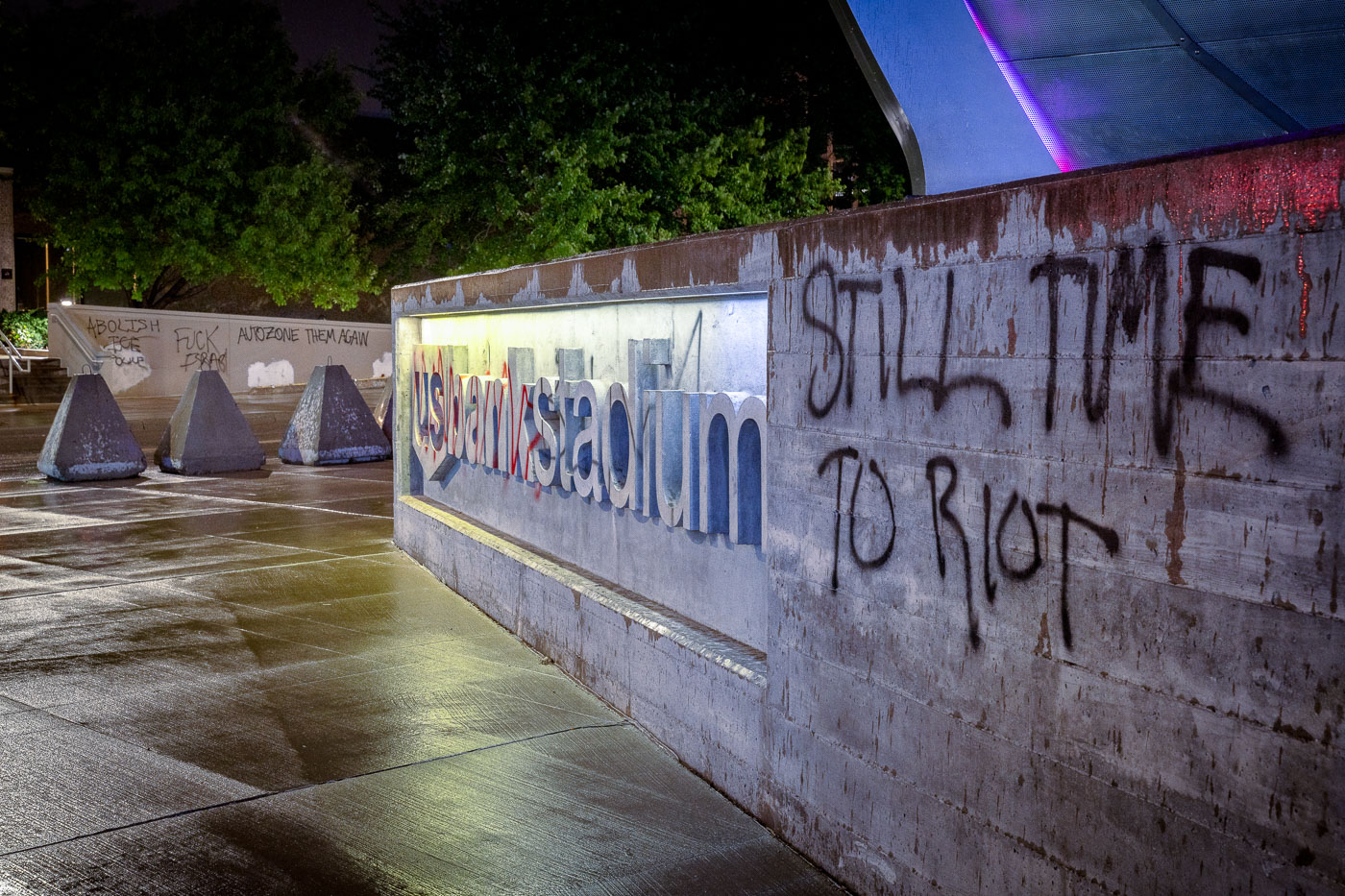
Still time to riot at US Bank Stadium
Graffiti reading 'Still time to riot' marks a concrete wall at US Bank Stadium in Downtown Minneapolis. This message, along with other protest-related inscriptions visible nearby, emerged during the Minneapolis Uprising of 2020. The multi-purpose stadium, completed in 2016, is the home of the Minnesota Vikings and a significant venue for major events in the city. The presence of such messages on public infrastructure underscores the period of intense social and political unrest that impacted Minneapolis.

US Bank Stadium Graffiti: ‘Still Time To Riot’, Minneapolis
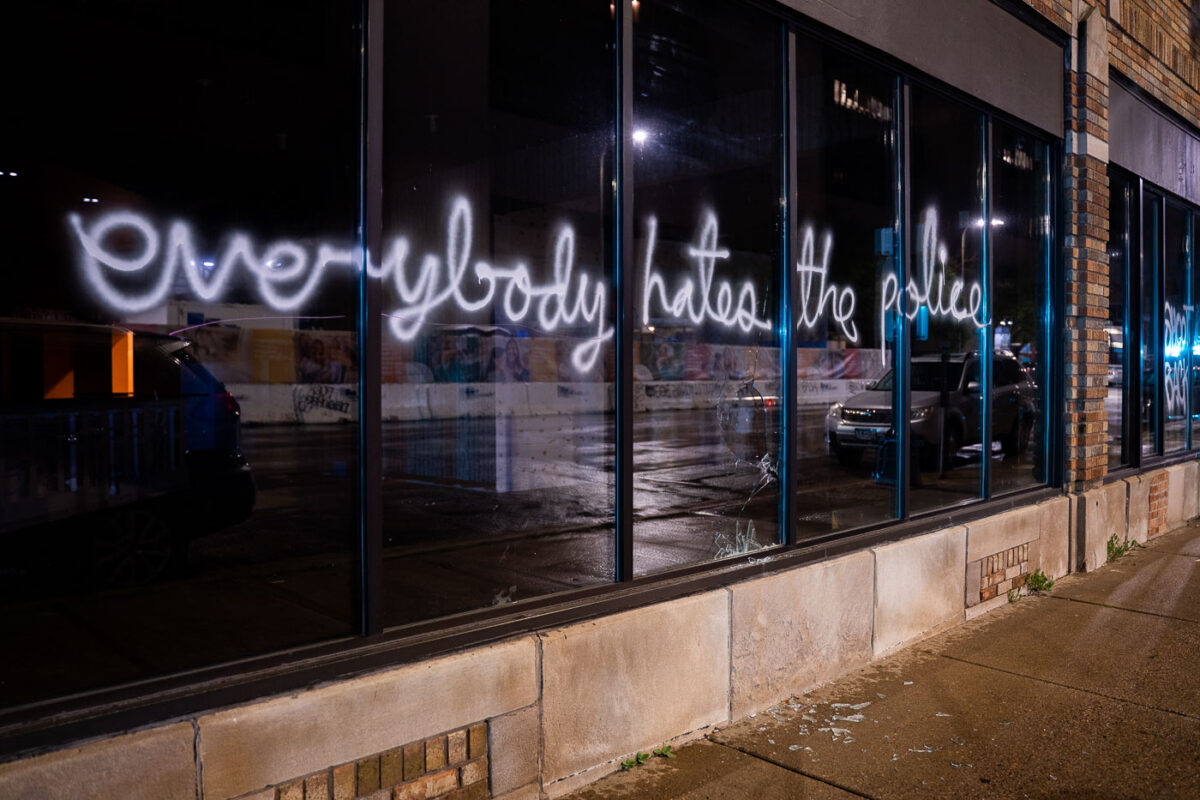
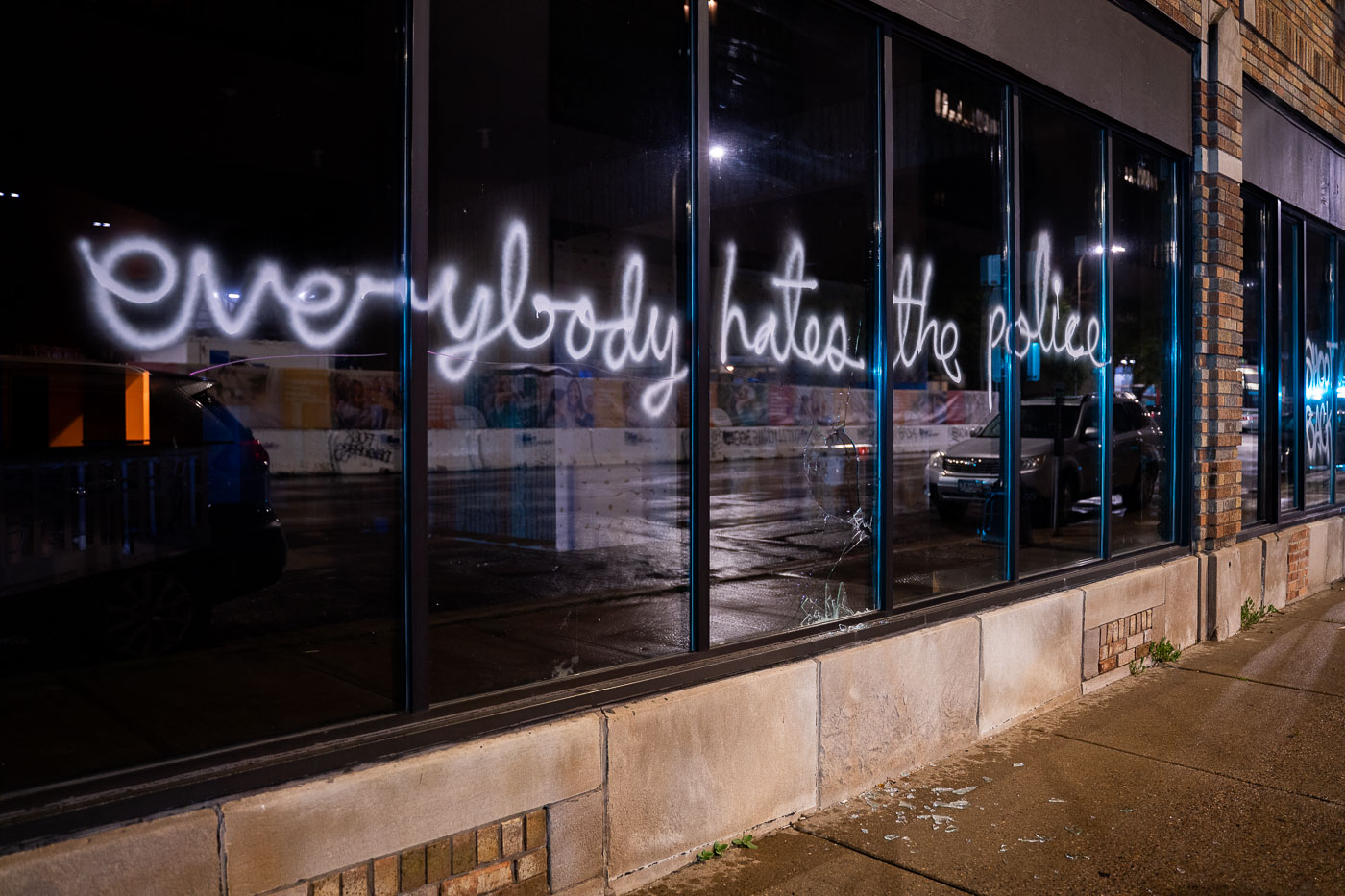
Everybody hates the police graffiti
Graffiti reading “Everybody Hates the Police” is visible on the windows of a building in downtown Minneapolis. This message emerged during the Minneapolis Uprising, a period of widespread protests and civil unrest that followed the killing of George Floyd in May 2020. The shattered window pane and concrete barriers in the background indicate the damage and security measures present in the area during this historically significant time. Such graffiti served as a direct expression of public sentiment and a visual record of the social and political climate in the city. It reflects the intense public discourse and community response to events that reshaped the urban landscape and social consciousness of Minneapolis.

“Everybody Hates the Police” Graffiti, Downtown Minneapolis
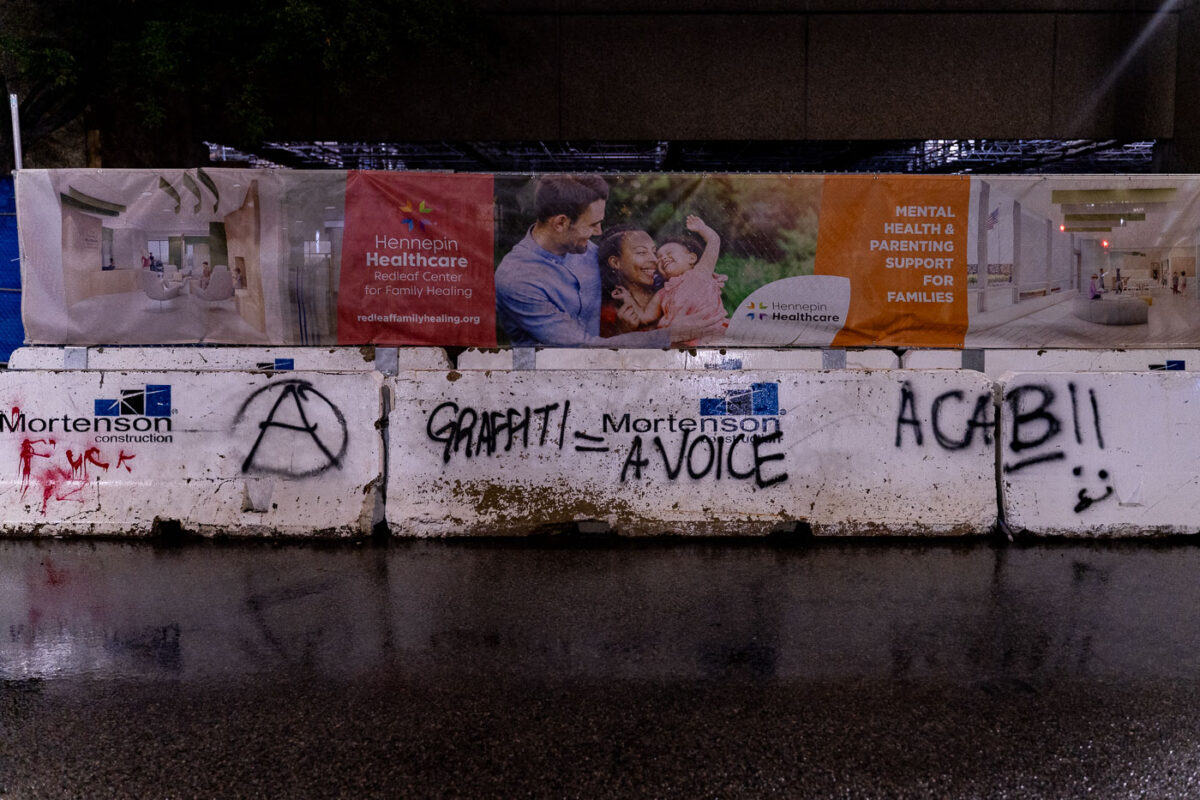
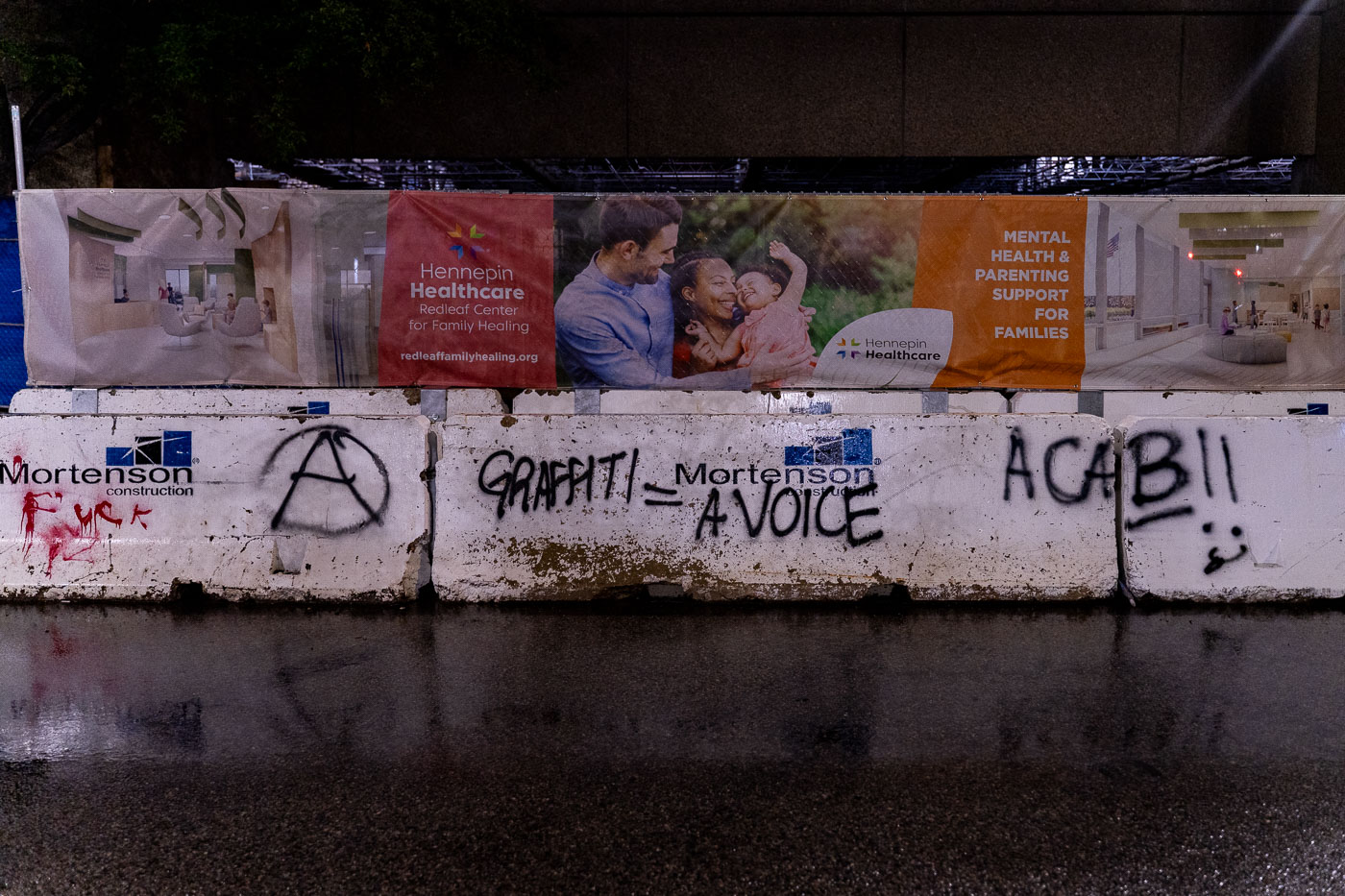
Graffiti equals a voice and ACAB graffiti
Concrete barricades in Downtown Minneapolis display graffiti, including the phrase 'Graffiti = A Voice,' alongside construction banners for Hennepin Healthcare. These barricades, often used for security or to delineate construction zones, became a canvas for public expression during the Minneapolis Uprising, reflecting a period of civil unrest and protest. Messages such as 'ACAB' and an anarchy symbol, alongside the statement 'Graffiti = A Voice,' underscore the role of street art as a form of dissent and communication in urban environments. The presence of Mortenson Construction branding on the barricades and Hennepin Healthcare banners above suggests an active construction site where temporary infrastructure intersected with public discourse.

“Graffiti = A Voice” on Downtown Minneapolis Barricades
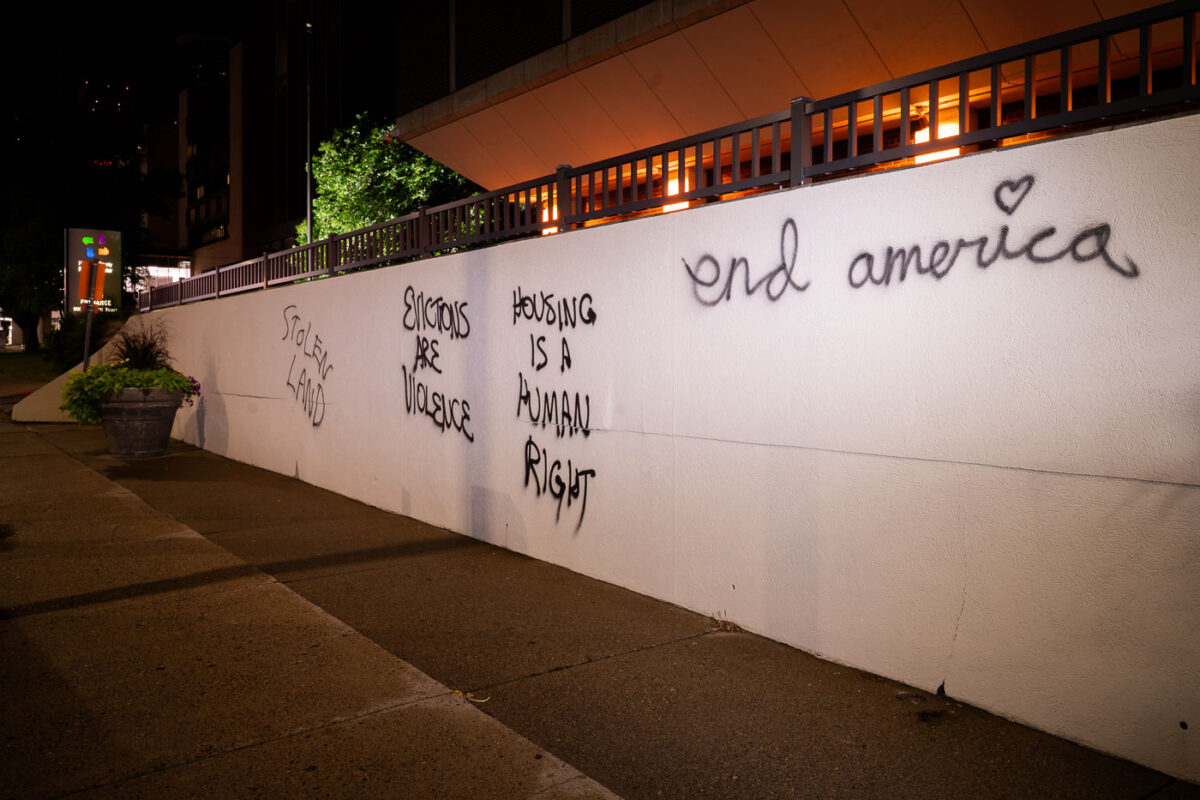
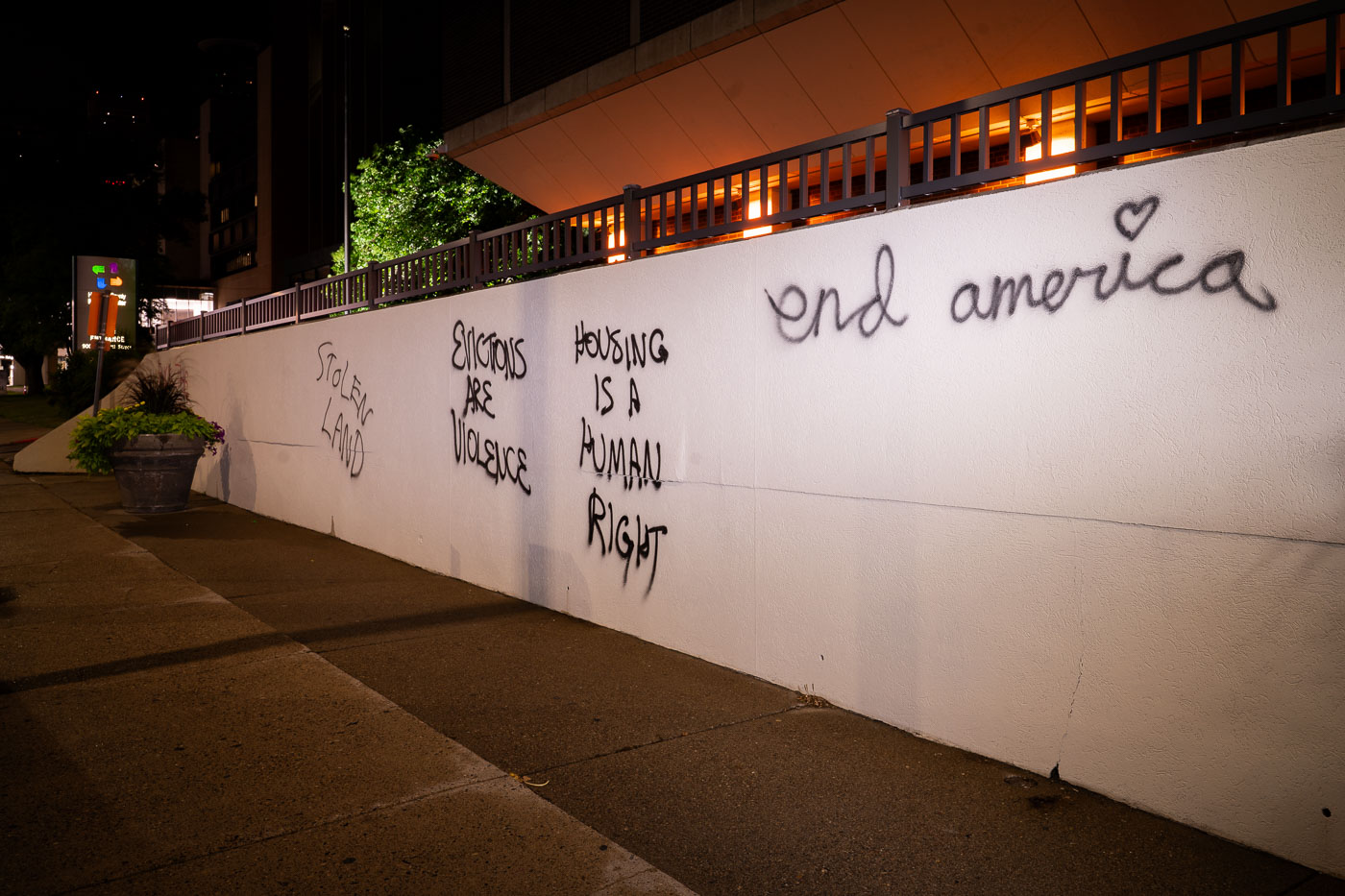
Housing is a human right graffiti on a building
Graffiti expressing messages such as "Stolen Land," "Evictions Are Violence," and "Housing Is A Human Right" is visible on a wall of the Hennepin County Medical Center in Downtown Minneapolis. These messages reflect themes of housing insecurity and social justice that gained prominence during the Minneapolis Uprising and subsequent protests in the city. As a major public hospital, Hennepin County Medical Center serves a diverse population in Minneapolis, making its exterior a visible site for public commentary on social issues. The phrases highlight ongoing discussions about land ownership, the right to housing, and systemic inequalities within urban environments.

Hennepin County Medical Center Graffiti: Housing is a Human Right
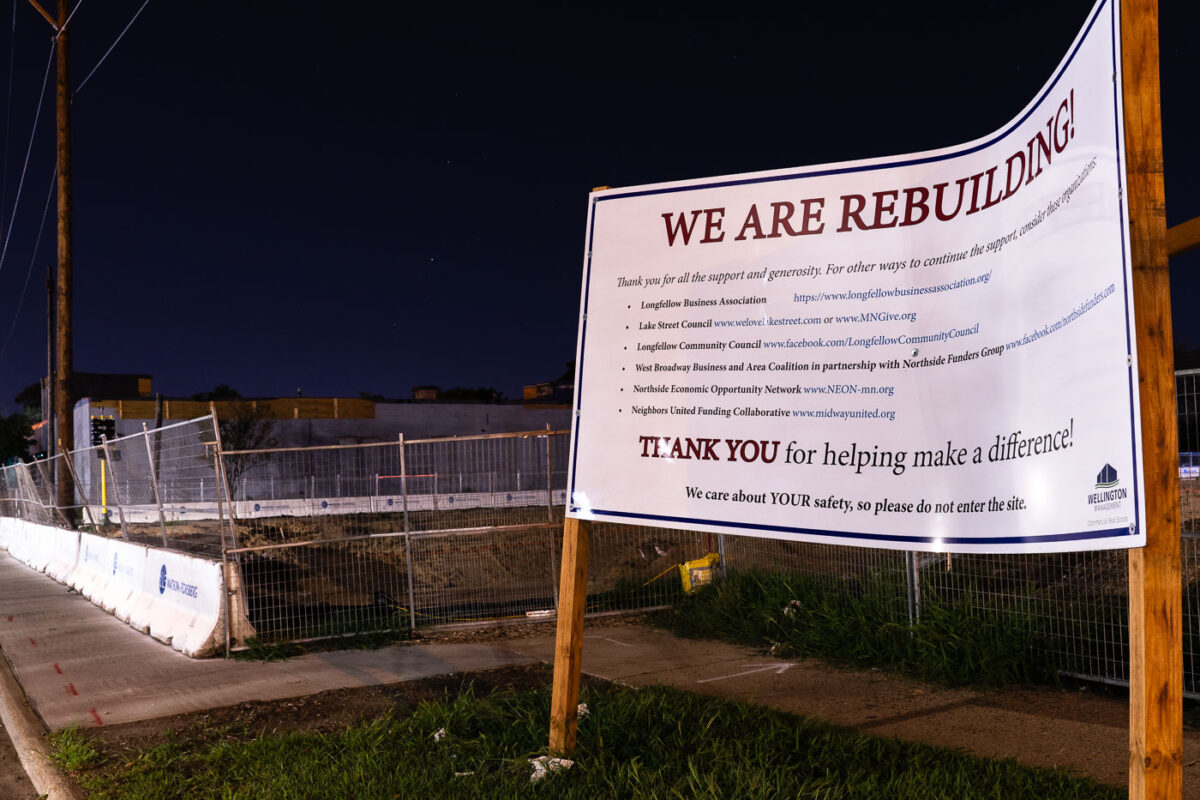
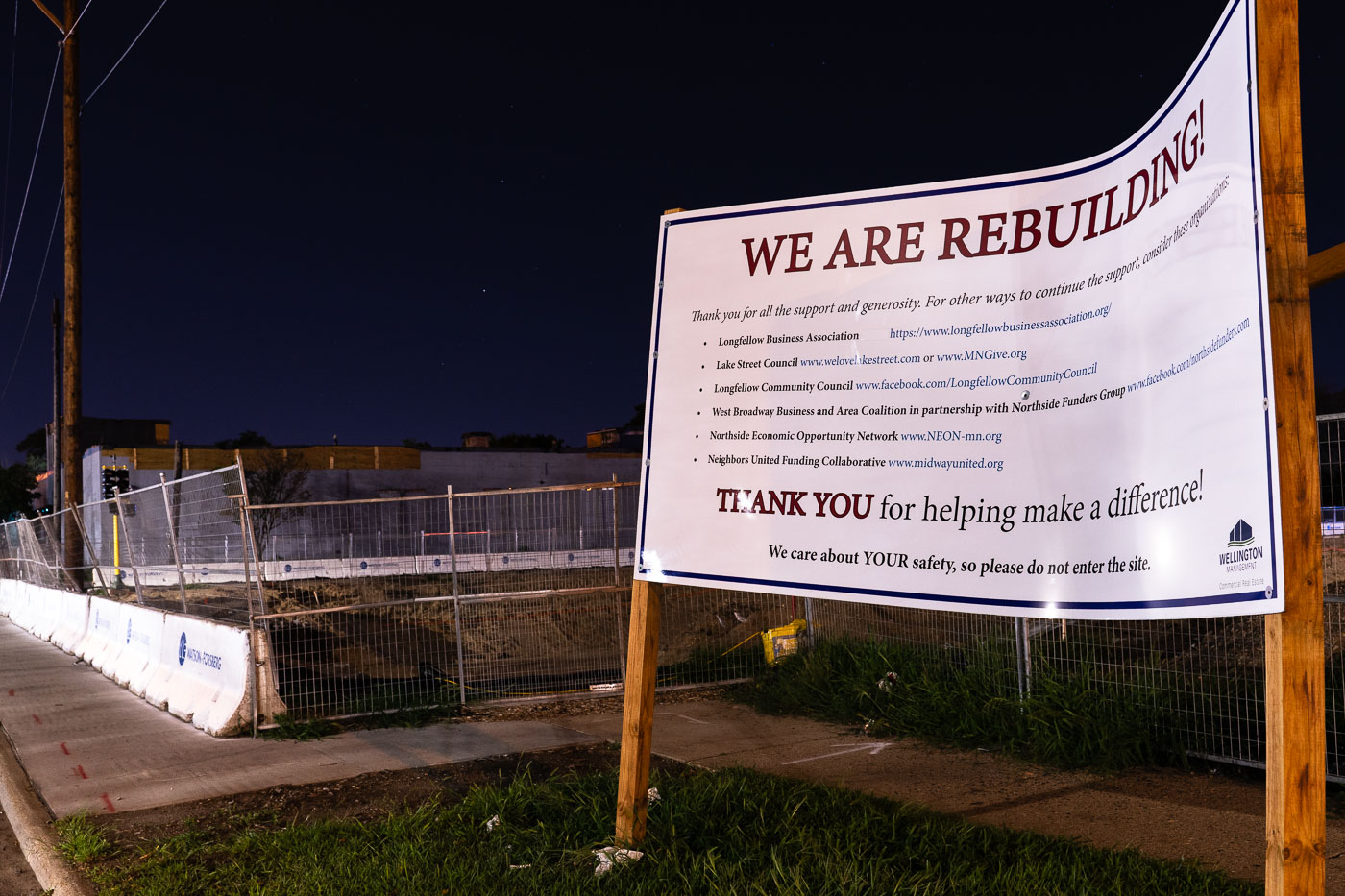
We are rebuilding sign
Rebuilding efforts are underway on Minnehaha Avenue in Minneapolis, as indicated by a sign from Wellington Management. This particular block suffered substantial arson damage during the civil unrest that occurred in the city. The sign thanks various community organizations, including the Longfellow Business Association and Lake Street Council, for their support and generosity in the redevelopment process. This initiative reflects a collaborative commitment to restoring and revitalizing the urban environment following the historical events.

Wellington Management Rebuilding Minnehaha Ave, Minneapolis
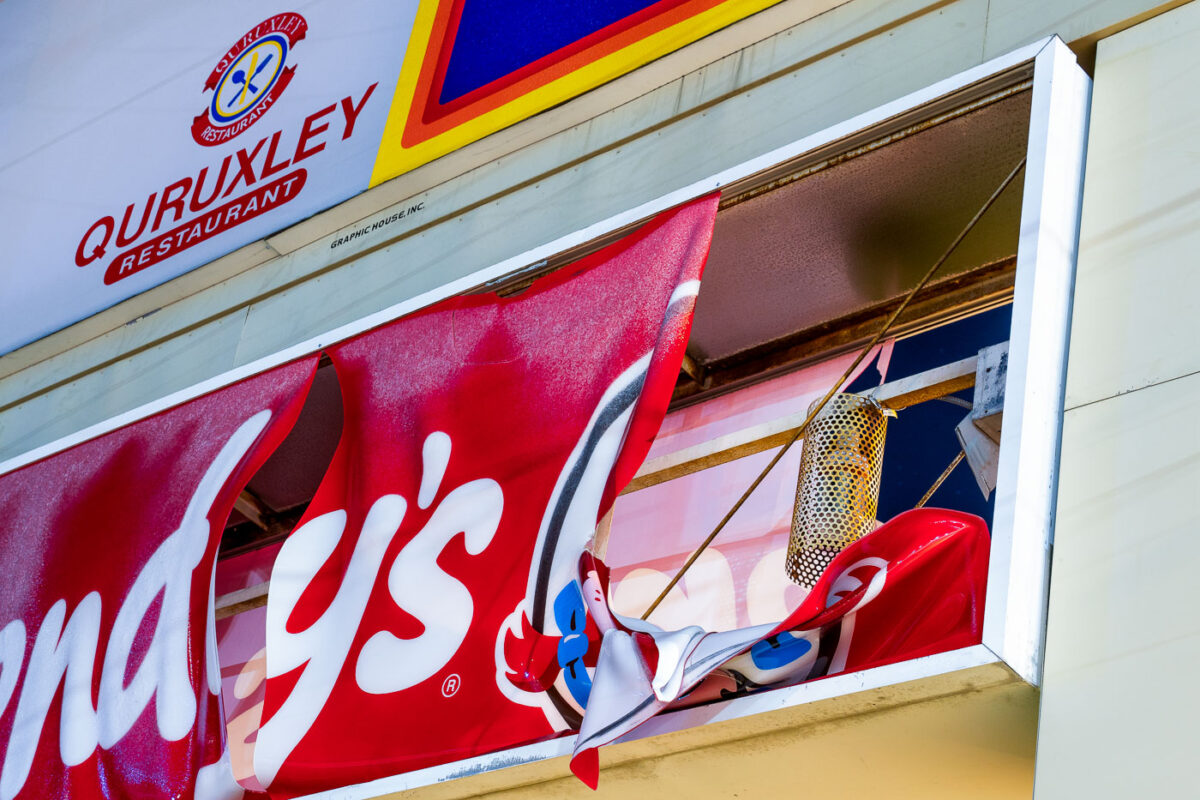
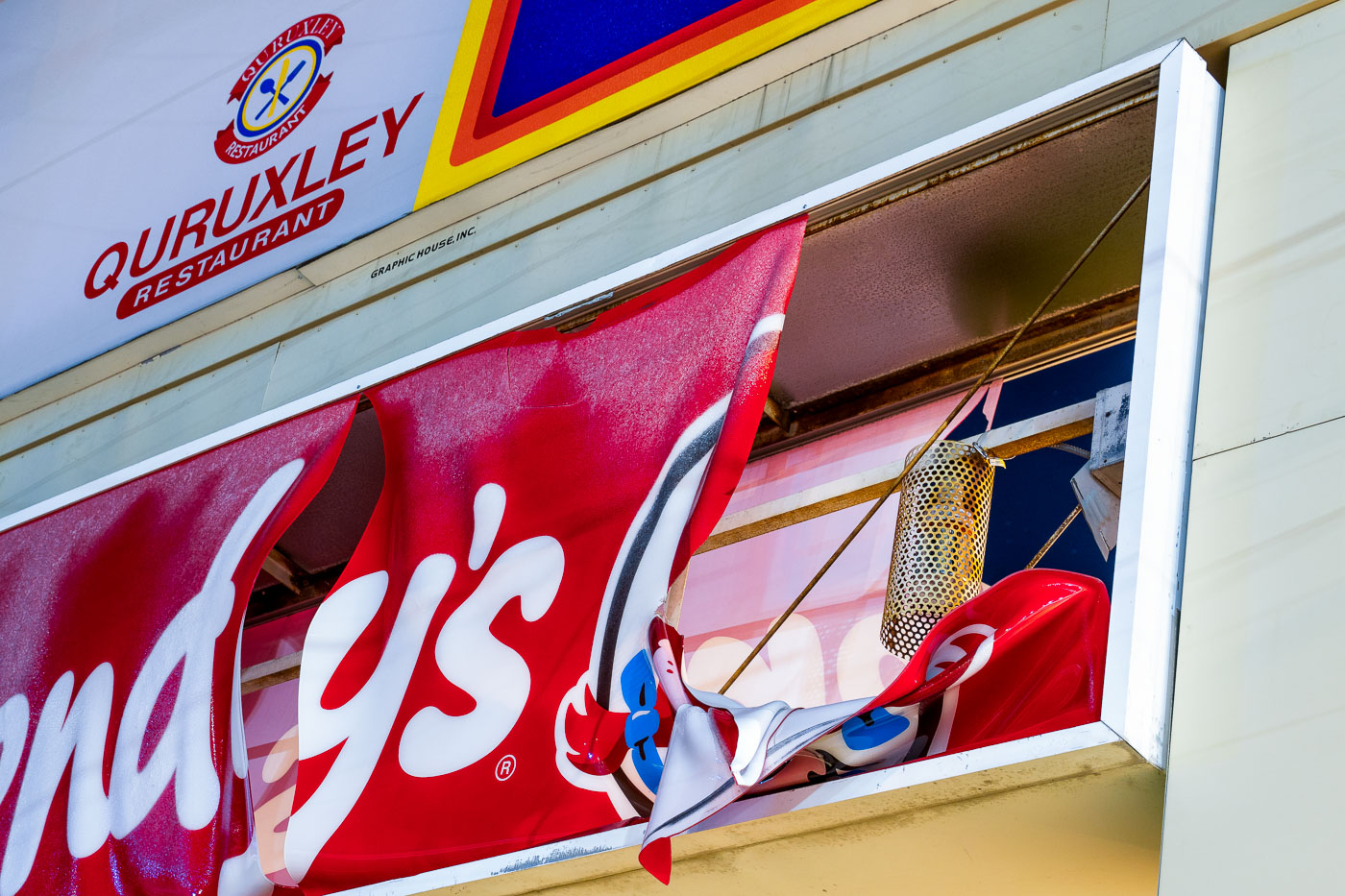
Melted wendy’s sign after Minneapolis riots
The melted and torn sign of a Wendy's restaurant stands on Minnehaha Avenue in South Minneapolis. This damage resulted from arson during the widespread protests and civil unrest that followed the May 25, 2020, death of George Floyd. The restaurant was among numerous businesses in the area that sustained significant damage or were destroyed during this period. Above the damaged Wendy's sign, a new sign for 'Quruxley Restaurant' is visible, indicating a change in tenancy or rebuilding efforts at the site.

Arson-Damaged Wendy’s Sign, South Minneapolis
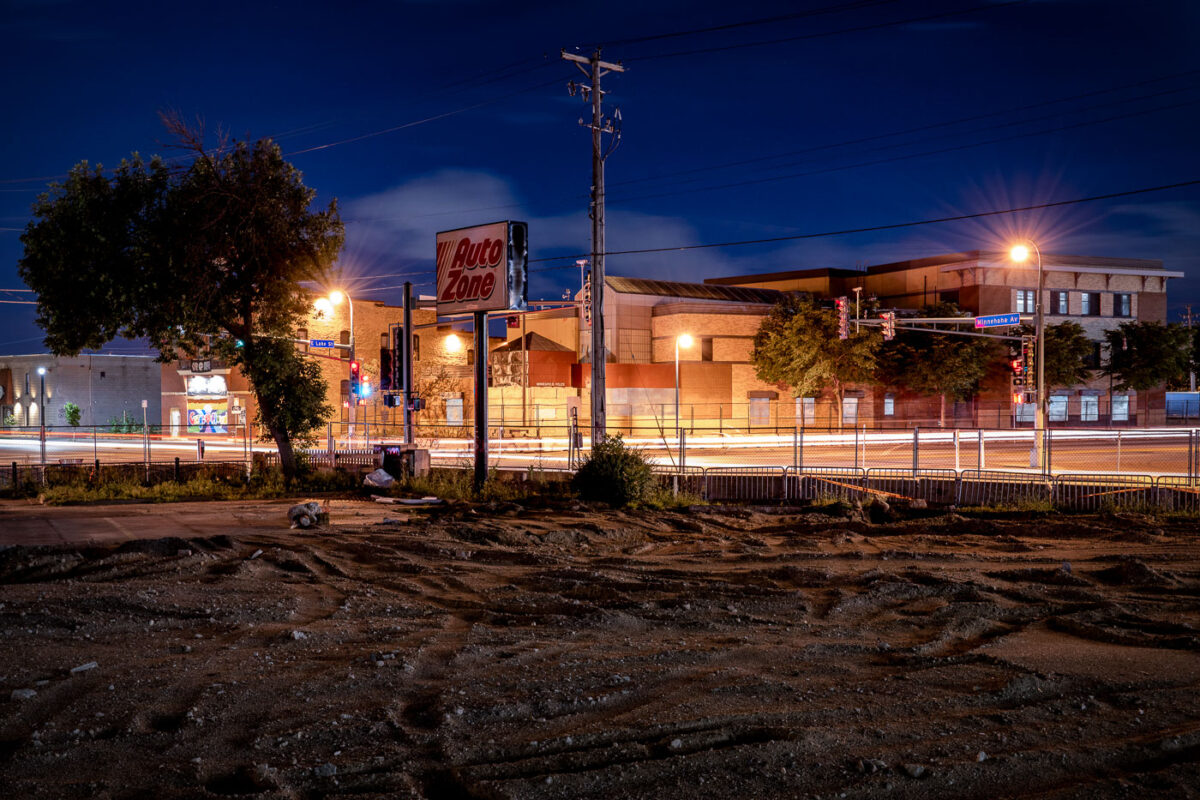
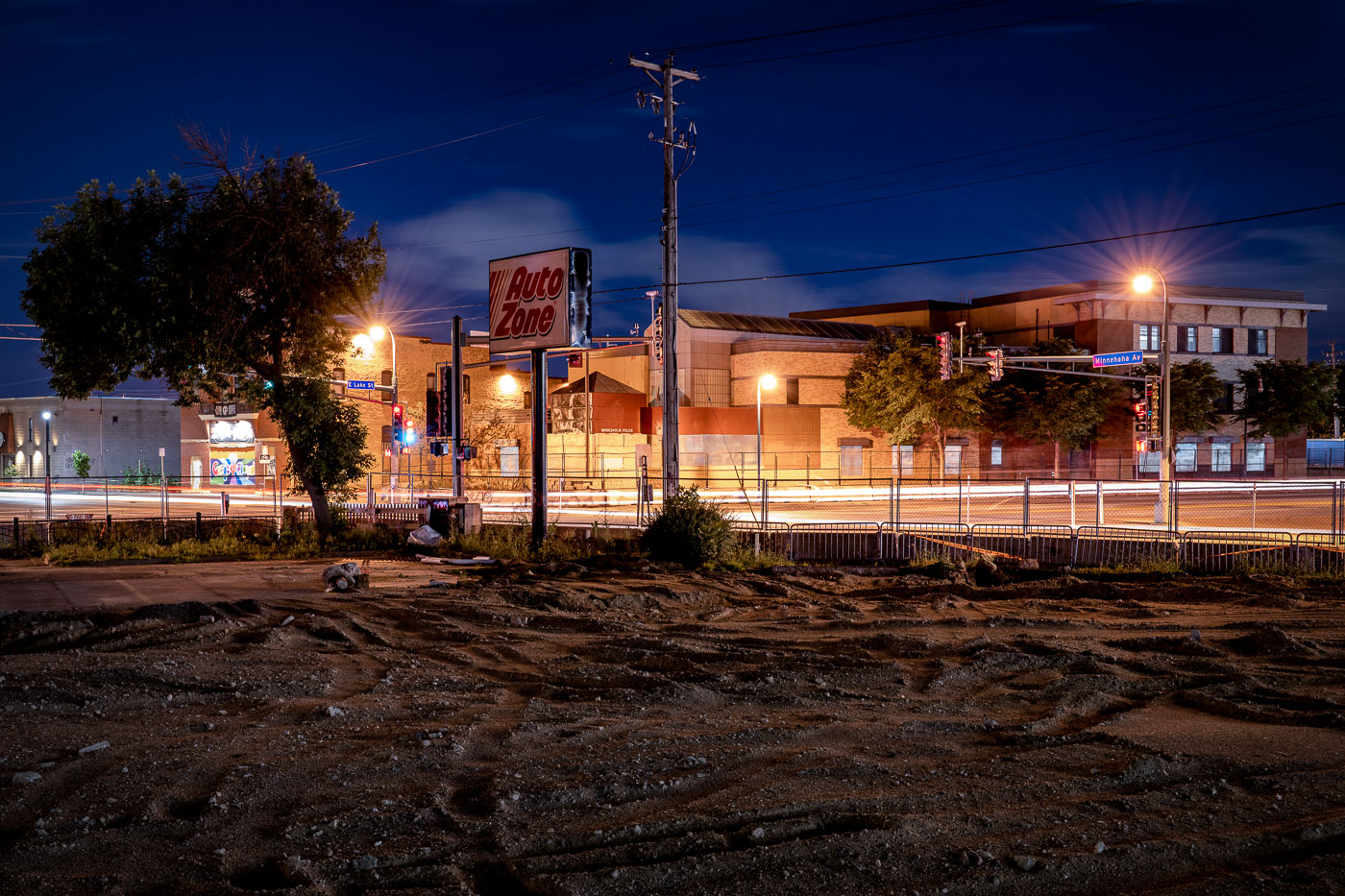
AutoZone building lot cleared
The AutoZone sign stands over a cleared lot at the intersection of East Lake Street and Minnehaha Avenue in Minneapolis. This site was formerly home to the AutoZone store, which was the first building to burn during the civil unrest that followed the May 25, 2020 death of George Floyd. The cleared ground marks a significant location in the events that unfolded across the city, particularly near the Minneapolis Police 3rd Precinct. The remaining sign serves as a stark reminder of the widespread damage and subsequent rebuilding efforts in the area.

AutoZone Sign, Cleared Lot, East Lake Street, Minneapolis
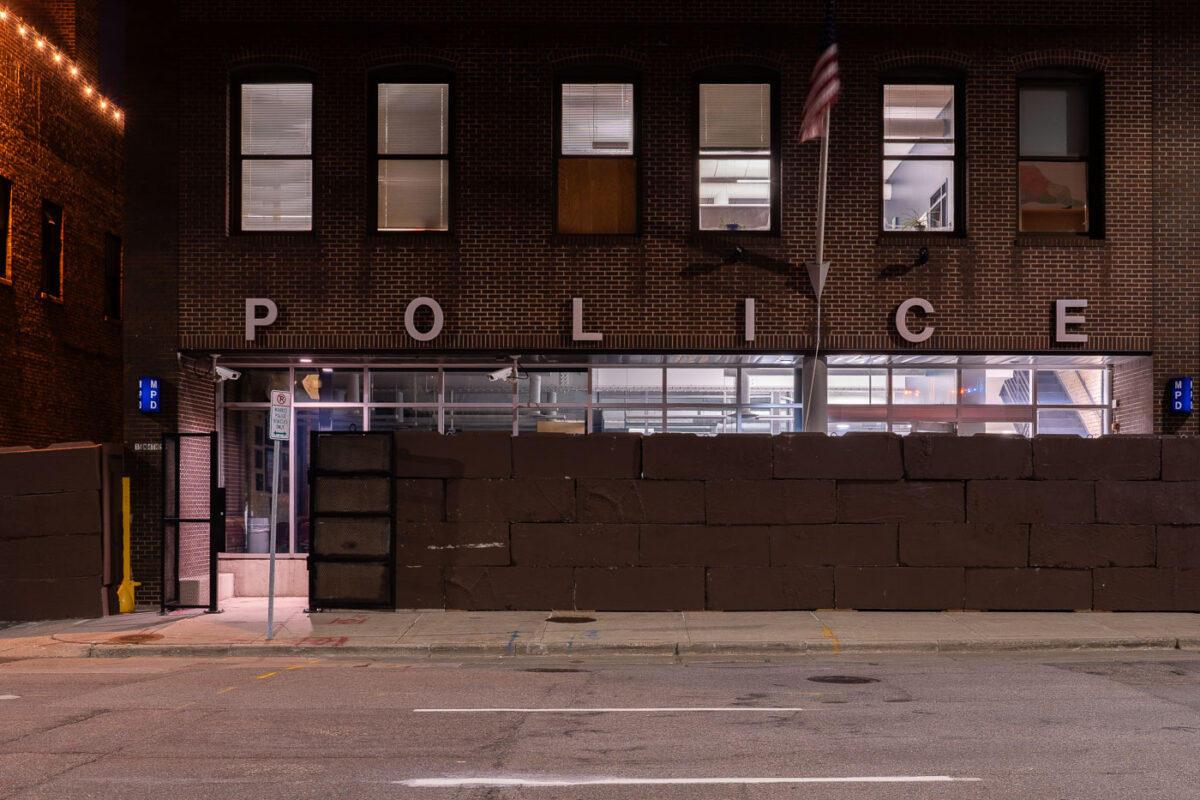
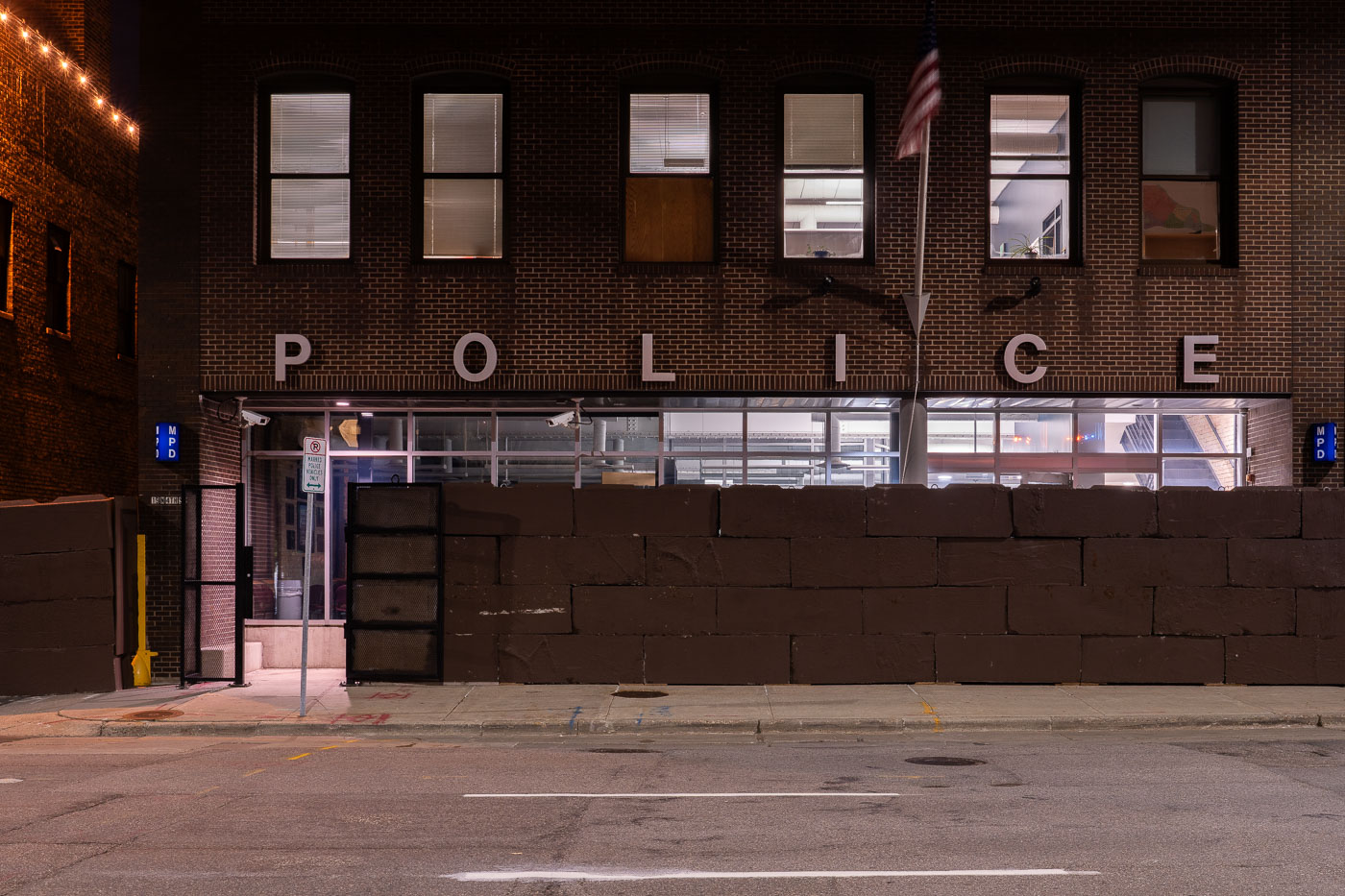
1st Precinct Police Station with painted concrete barricades
The Minneapolis Police First Precinct police station in downtown Minneapolis is fortified with concrete blocks. These security measures were implemented following the widespread protests and civil unrest that occurred in Minneapolis in May 2020, sparked by the murder of George Floyd. The concrete blocks serve as a protective barrier for the station, which is a critical piece of civic infrastructure responsible for law enforcement operations in the city's central district. The presence of these barricades reflects a period of heightened security and ongoing community tensions in the urban environment.

Minneapolis Police First Precinct, Barricaded with Blocks
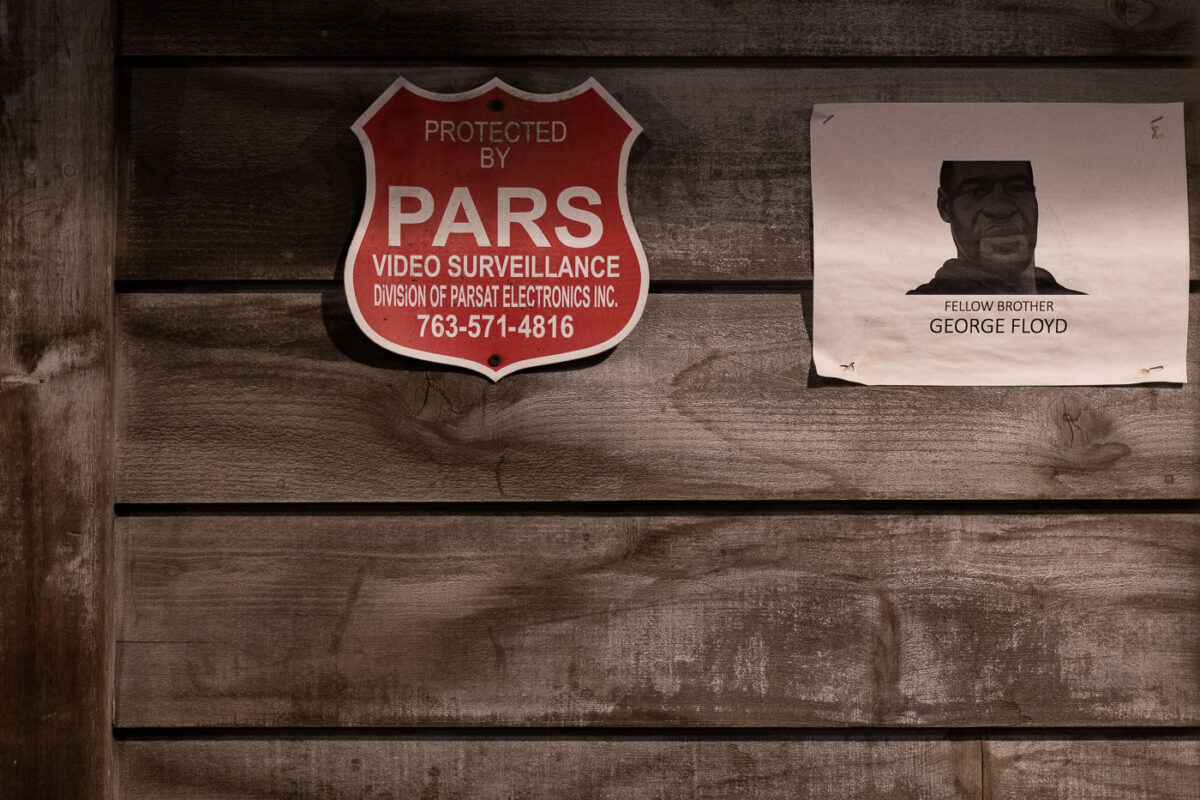
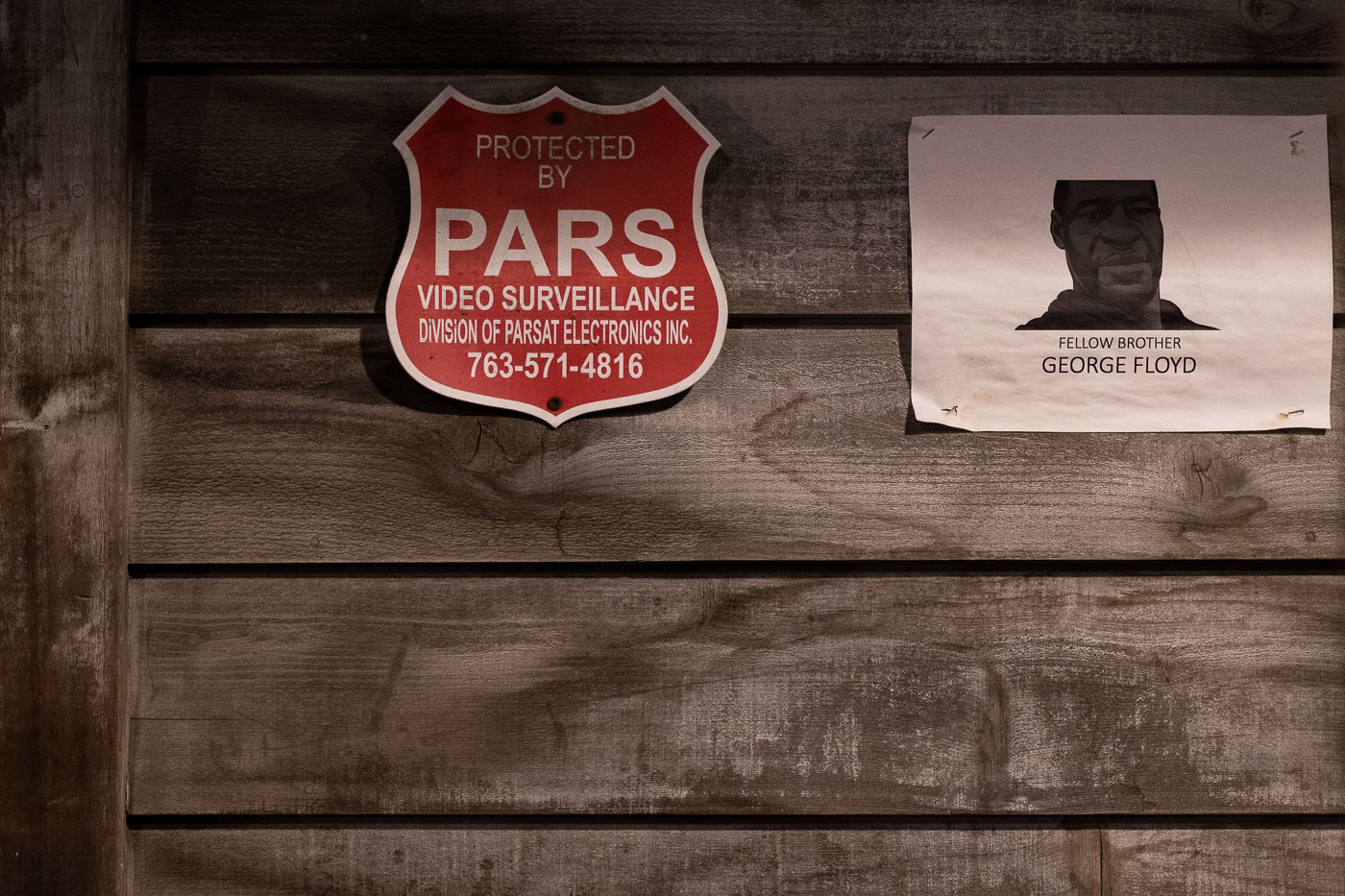
Fellow Brother George Floyd
A paper sign bearing an image of George Floyd and the text 'FELLOW BROTHER GEORGE FLOYD' is affixed to the wooden facade of a business in Minneapolis. This memorial emerged in the aftermath of Floyd's killing in May 2020, becoming a widespread form of public expression during the subsequent protests and the Minneapolis Uprising. Such signs served to honor Floyd and articulate demands for justice within the urban landscape. Positioned alongside a video surveillance warning, the sign reflects the charged atmosphere and community responses in the city during this significant historical period.

Fellow Brother George Floyd Sign, Minneapolis
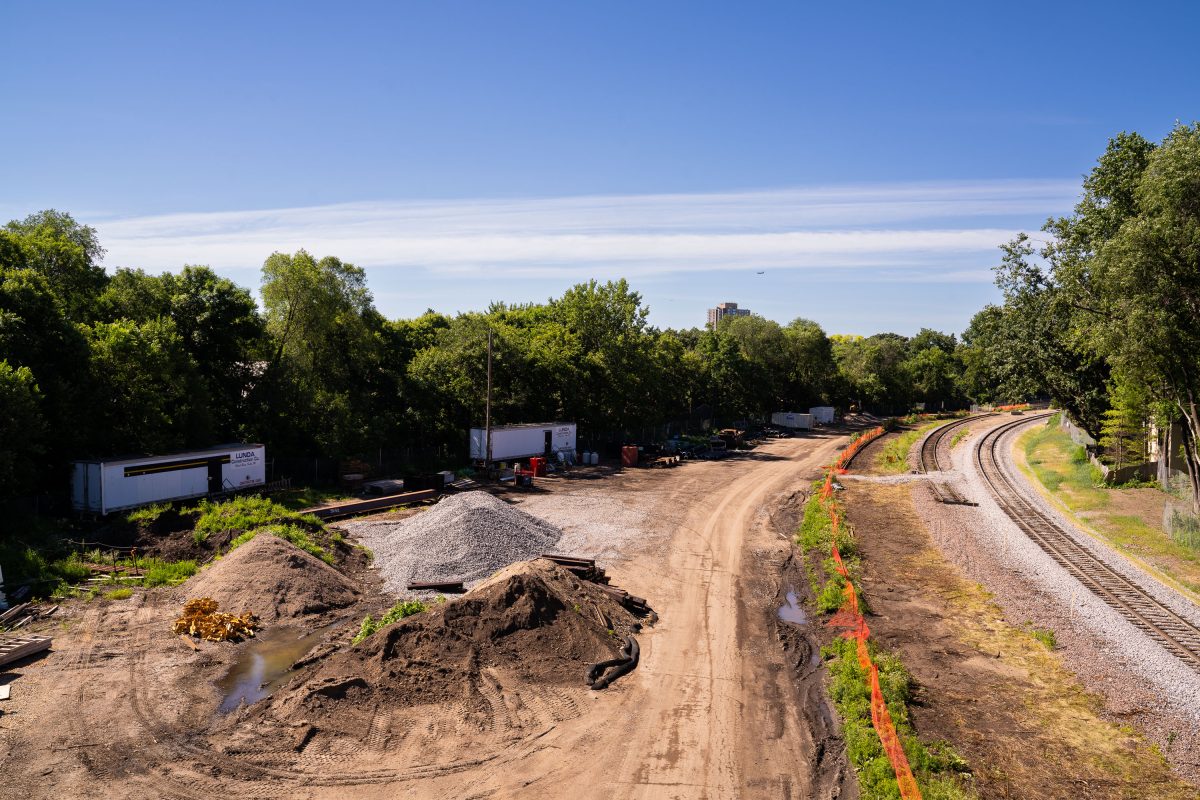
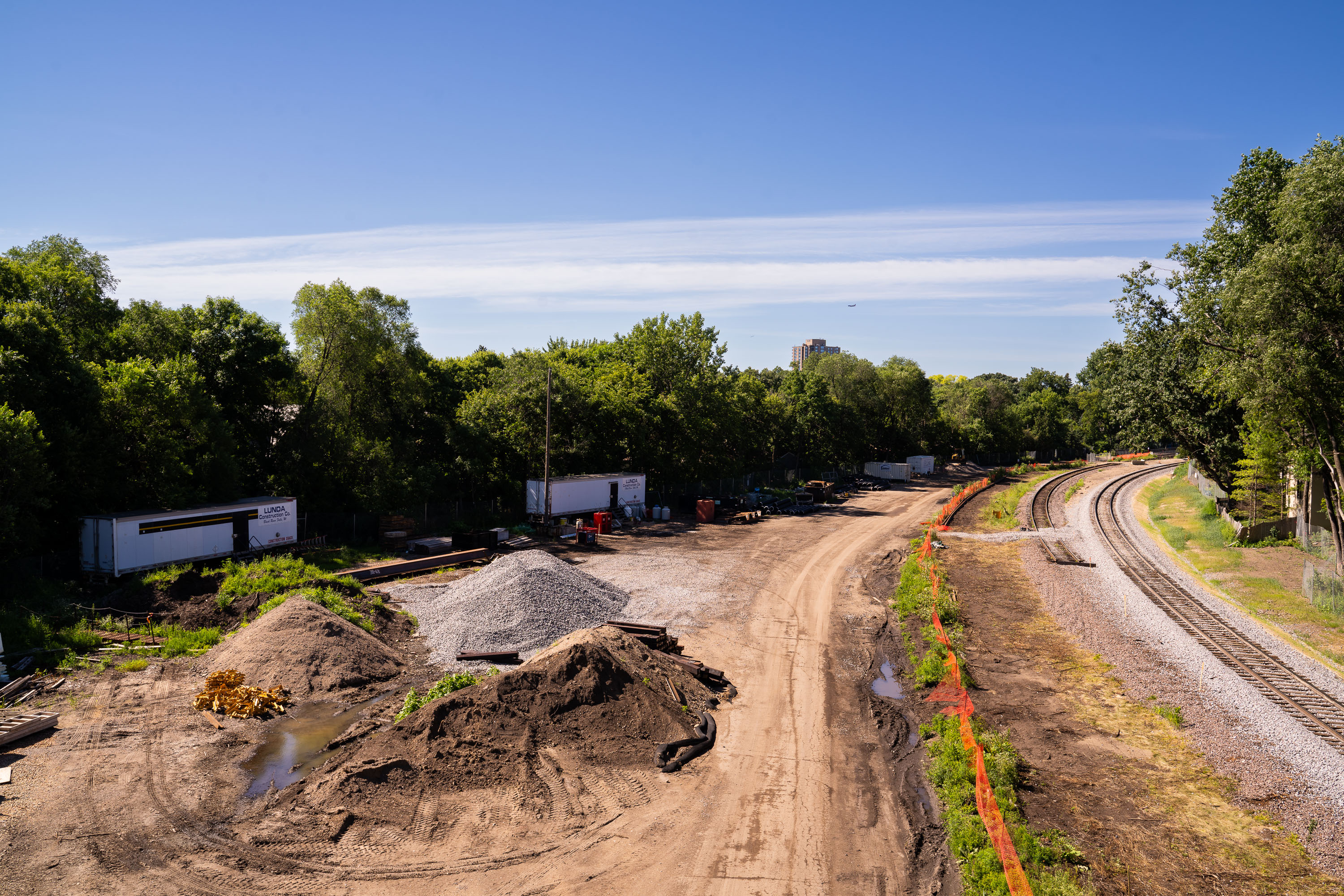
Southwest LRT construction site along Kenilworth Trail in Minneapolis with excavated earth and railroad tracks.
The Kenilworth Corridor carries freight rail, the Kenilworth bike and walking trail, and now the Southwest Light Rail Transit extension through a narrow strip of land between the Chain of Lakes and the Cedar Isles neighborhoods. The Metropolitan Council's Southwest LRT project, known as the Green Line Extension, runs nearly 14.5 miles from Minneapolis to Eden Prairie and adds 16 new stations. The trail recently cleared and being used for construction staging.

Metro Green Line Extension Construction Staging Along the Kenilworth Corridor
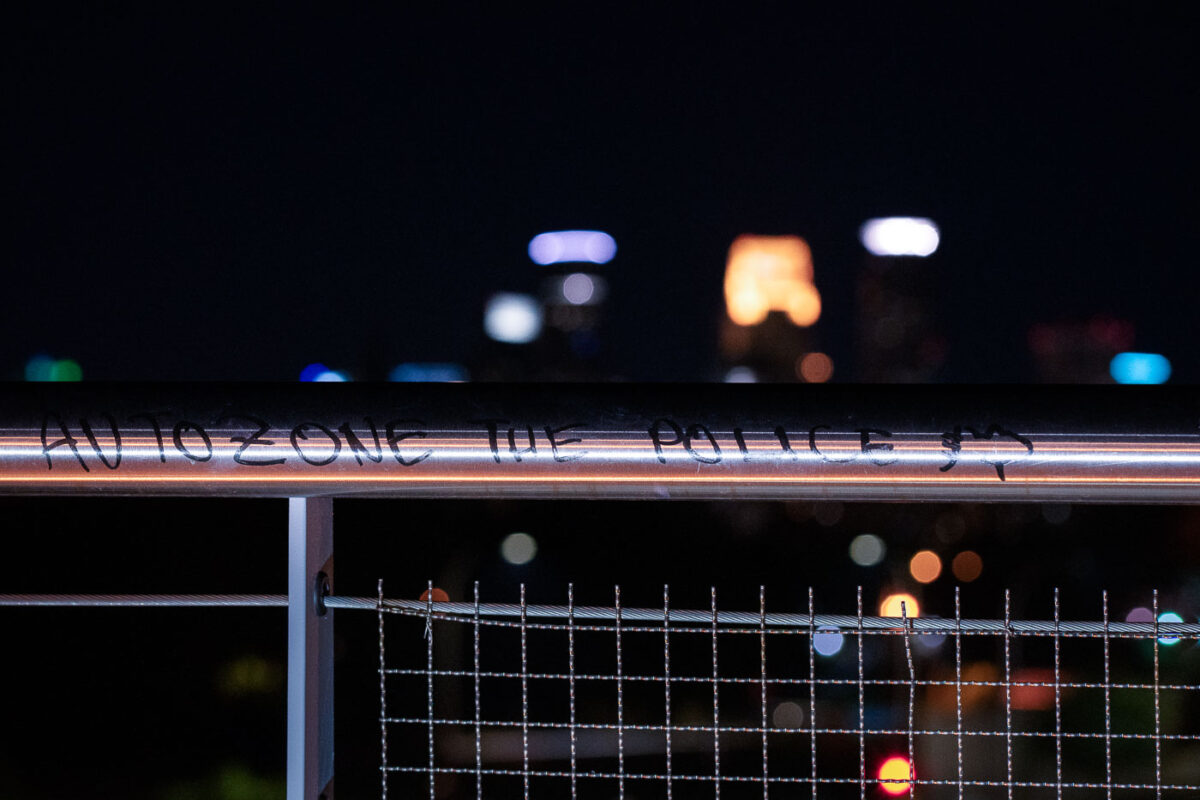
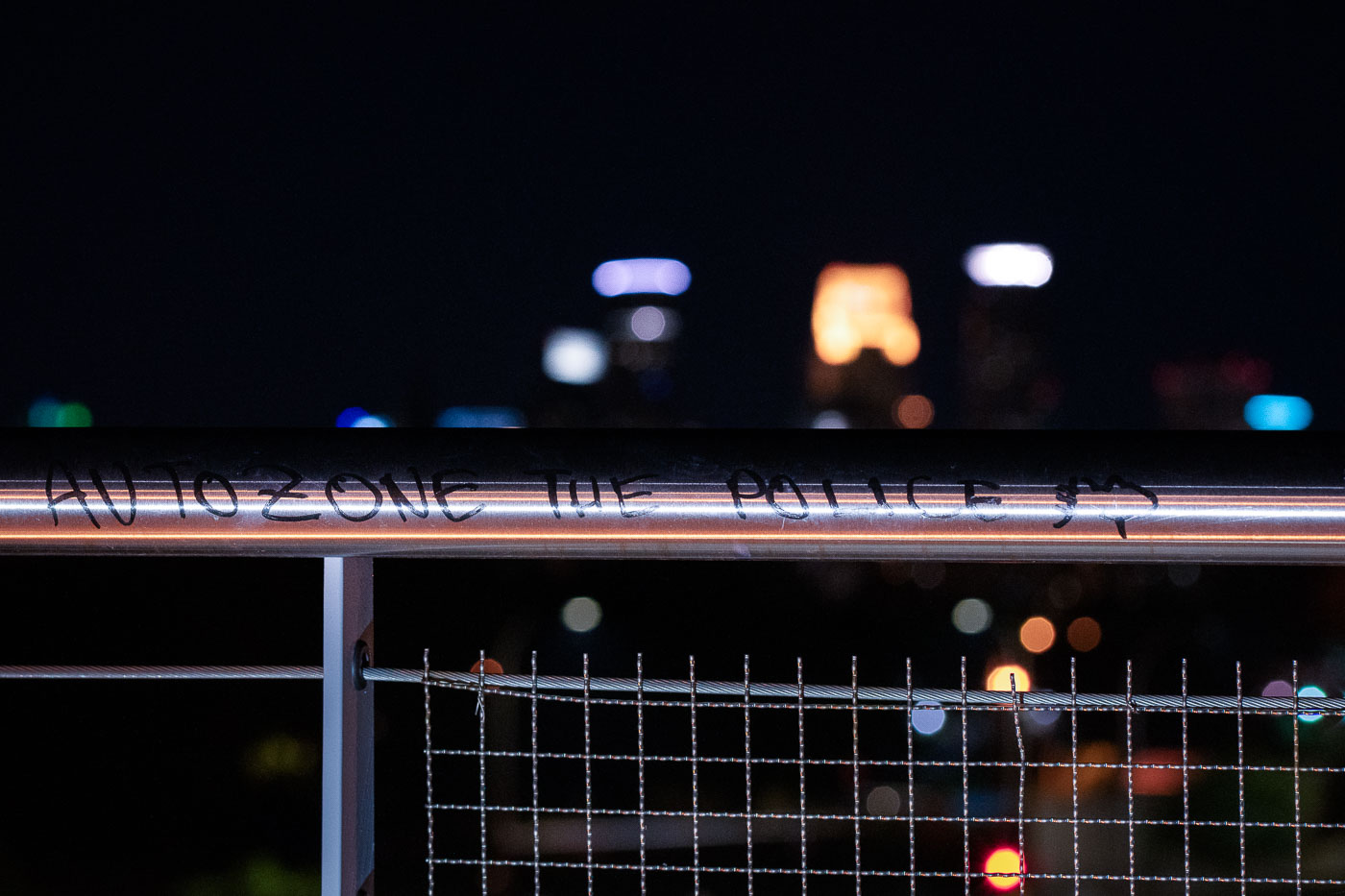
Graffiti reading "Autozone the police" on the Martin Olav Sabo Bridge railing in Minneapolis.
The Martin Olav Sabo Bridge carries the Midtown Greenway bike and pedestrian trail over Hiawatha Avenue and the METRO Blue Line tracks in Minneapolis. Built in 2007 and named for the longtime Minnesota congressman, the bridge links the Greenway to Minnehaha Avenue near the Midtown Farmers Market. The phrase "Autozone the police," written on its railing, refers to the AutoZone store on Lake Street that became the first building burned during the unrest following George Floyd's murder.

‘Autozone the Police’ Graffiti on the Martin Olav Sabo Bridge
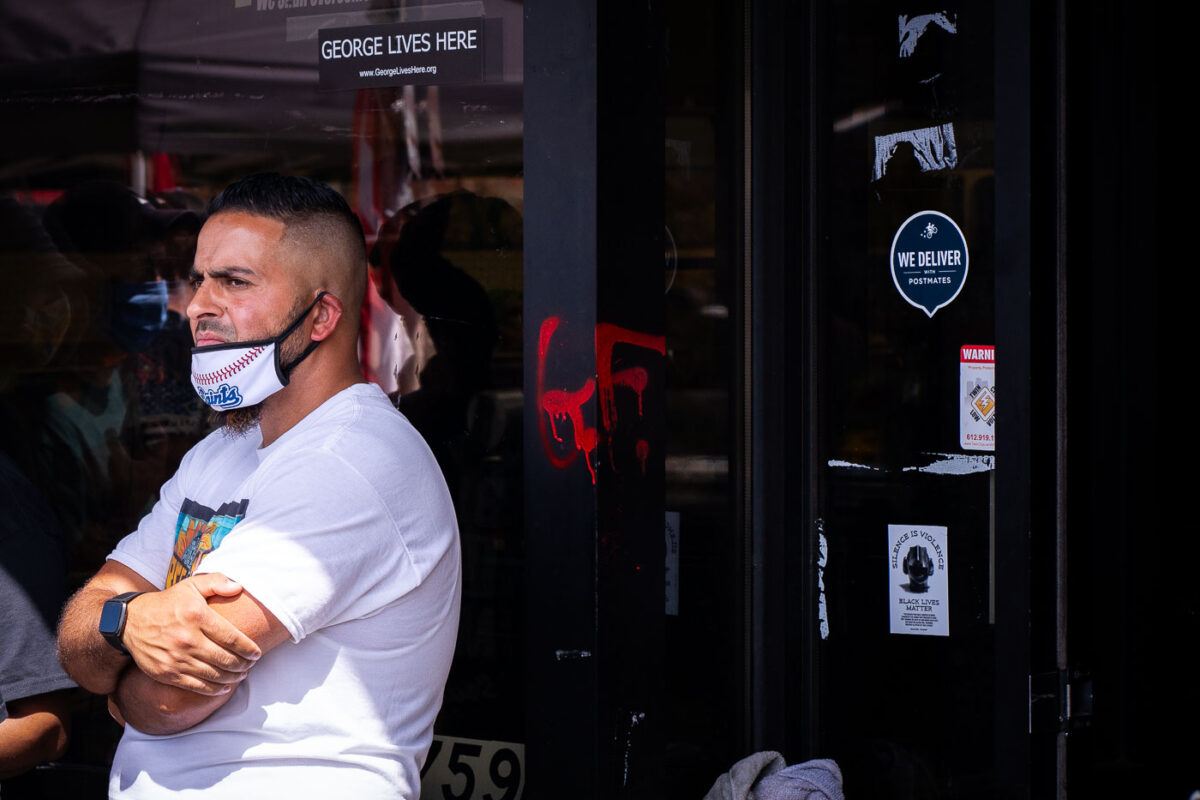
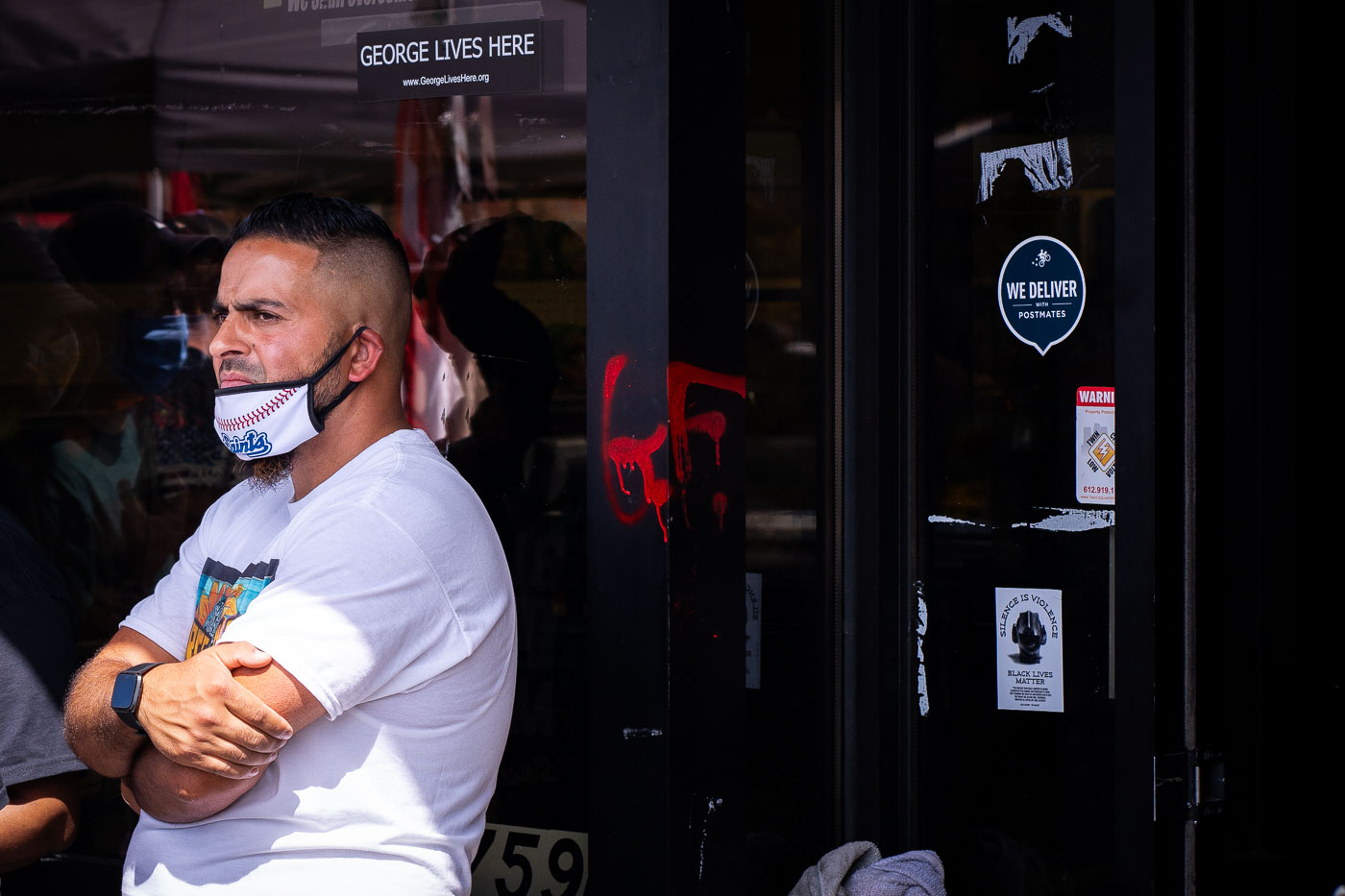
Mahmoud Abumayyaleh, owner of Cup Foods, stands outside his store at George Floyd Square in Minneapolis.
Cup Foods sits at the corner of East 38th Street and Chicago Avenue, the site where George Floyd was killed on May 25, 2020. Mahmoud Abumayyaleh, whose family has owned the store since 1990, closed the business in the aftermath and reopened it weeks later amid the memorial that grew around the intersection. The area has since been known as George Floyd Square.

Mahmoud Abumayyaleh at Cup Foods After Its Reopening
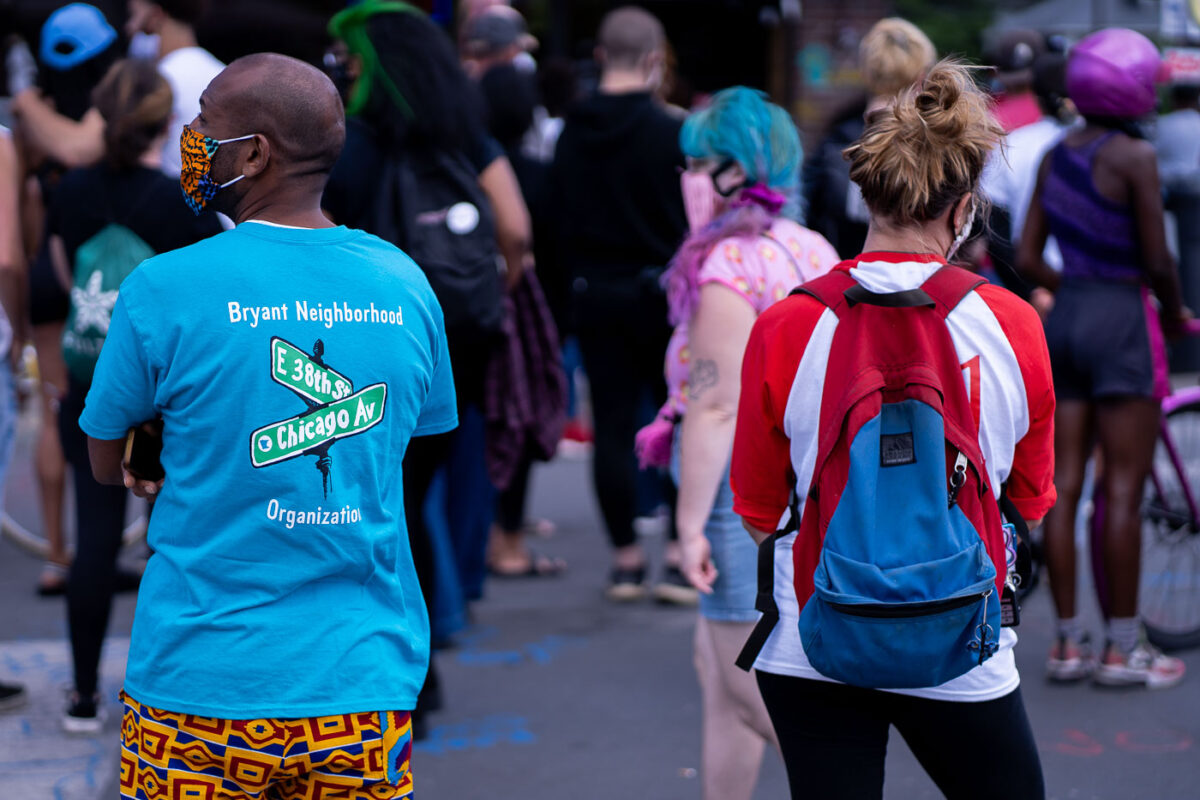
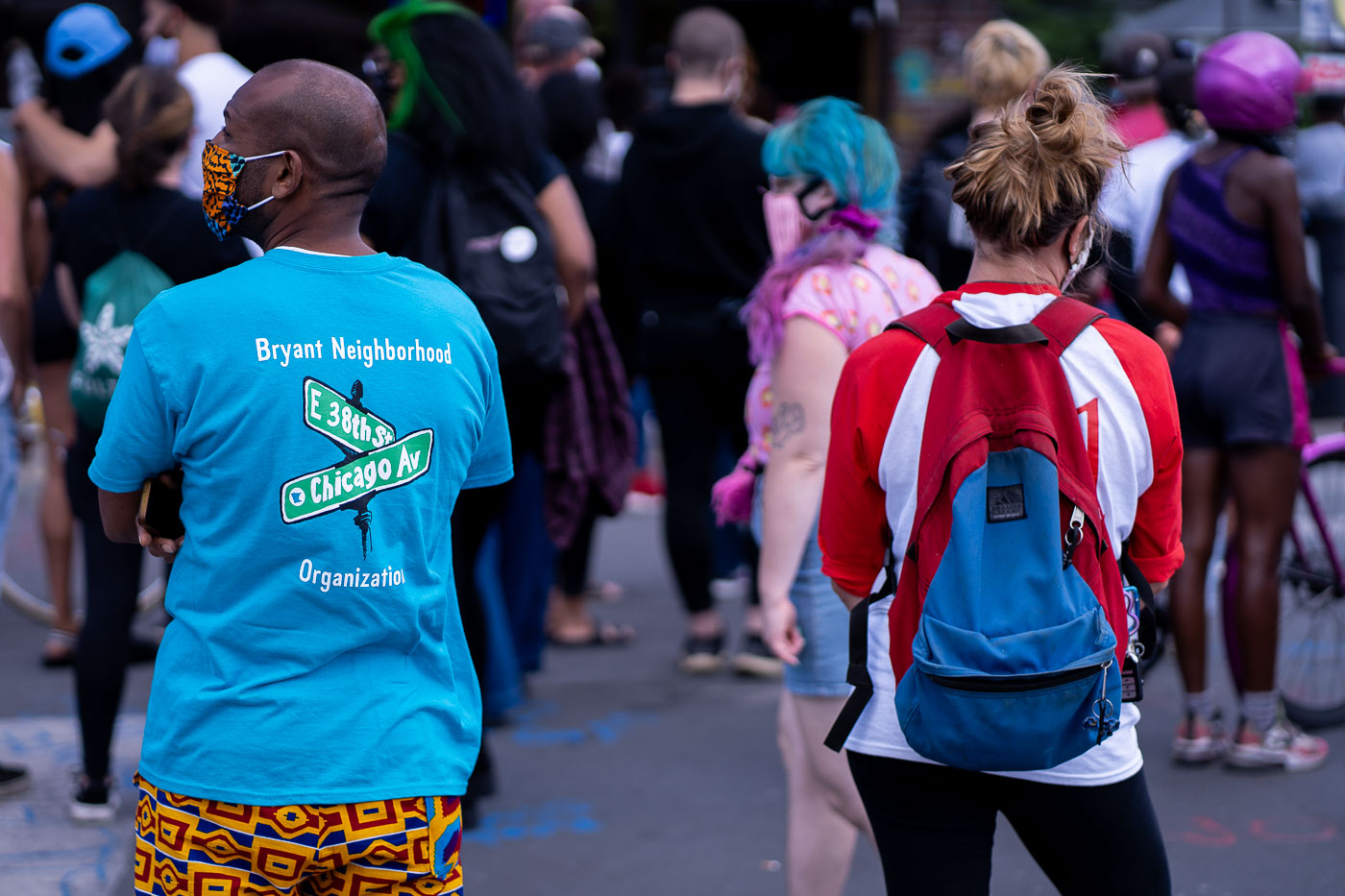
Man wearing Bryant Neighborhood Organization shirt at George Floyd Square, Minneapolis, August 2020.
George Floyd Square sits at the intersection of East 38th Street and Chicago Avenue in Minneapolis, marked by a t-shirt reading "Bryant Neighborhood Organization, E 38th St & Chicago Av." The intersection became the site of a memorial and gathering place after George Floyd's death there in May 2020.

Bryant Neighborhood Organization Shirt at George Floyd Square
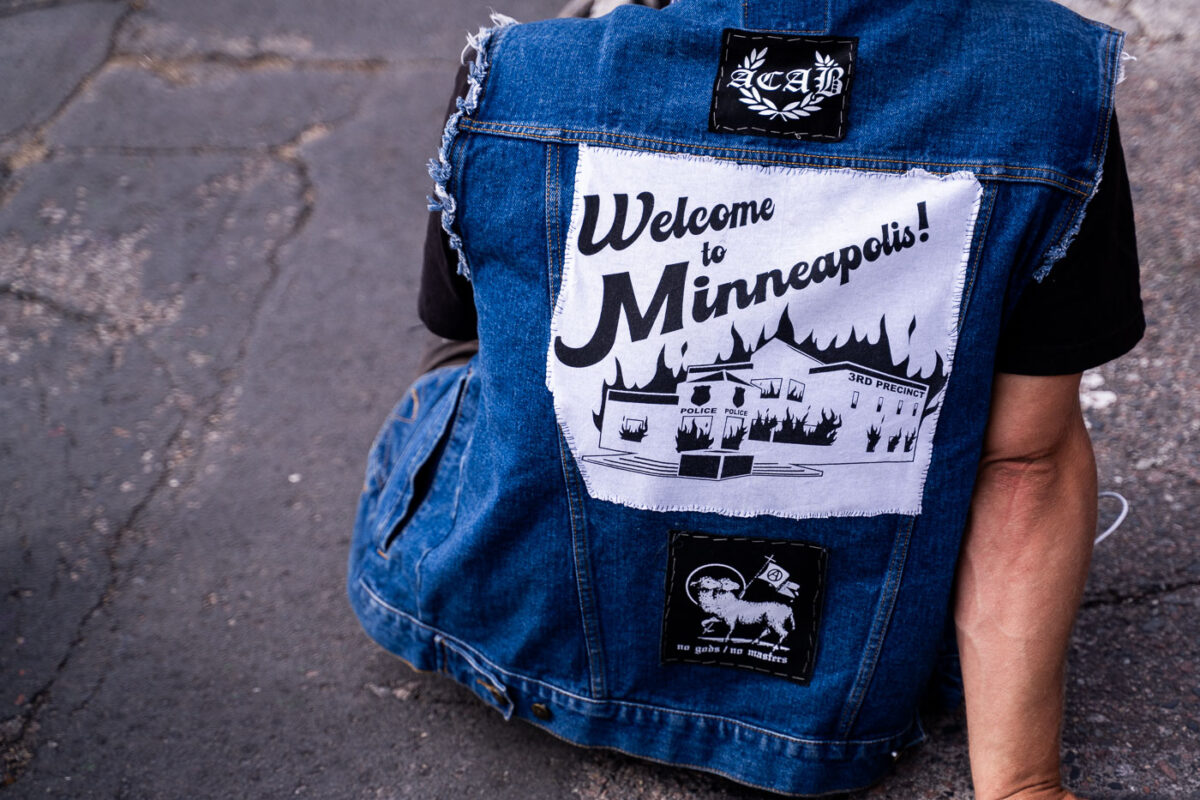
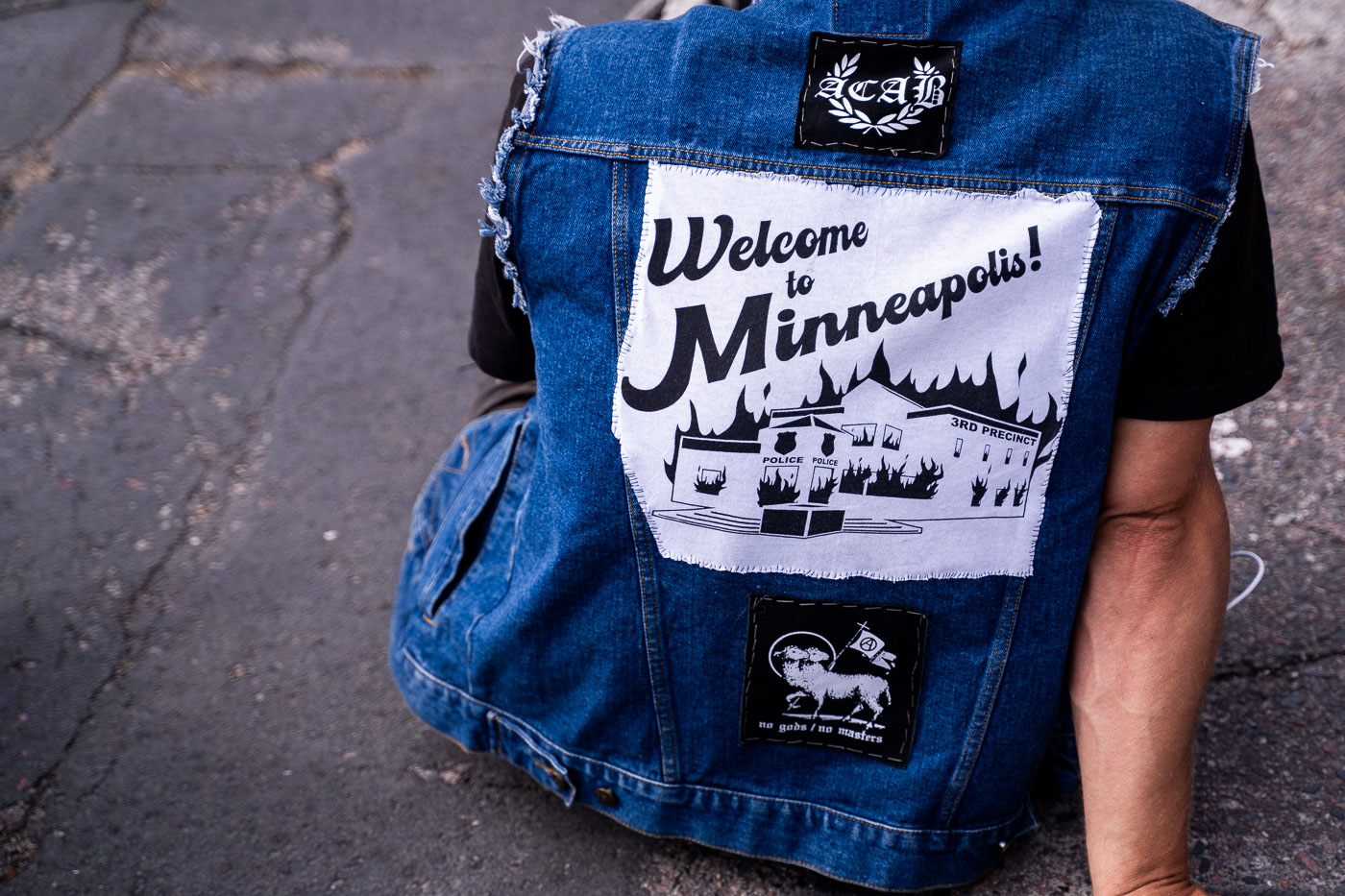
Person wearing denim jacket with patches depicting the Minneapolis Police 3rd Precinct building on fire and "Welcome to
The patch on this denim jacket depicts the Minneapolis Police Department's 3rd Precinct headquarters on fire, captioned "Welcome to Minneapolis!" Protesters overran and burned the building on May 28, 2020, four days after George Floyd was killed by 4 Minneapolis police officers a few miles away at 38th Street and Chicago Avenue.

“Welcome to Minneapolis!” Patch on a Denim Jacket
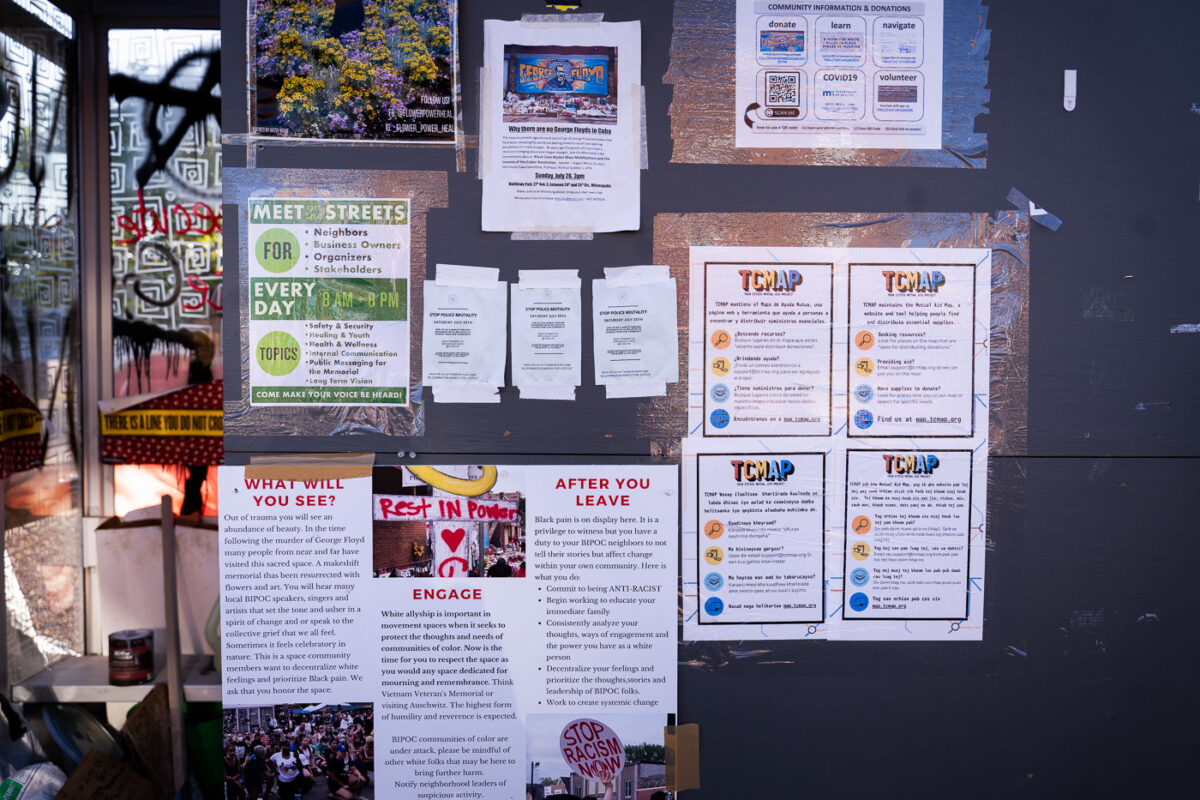
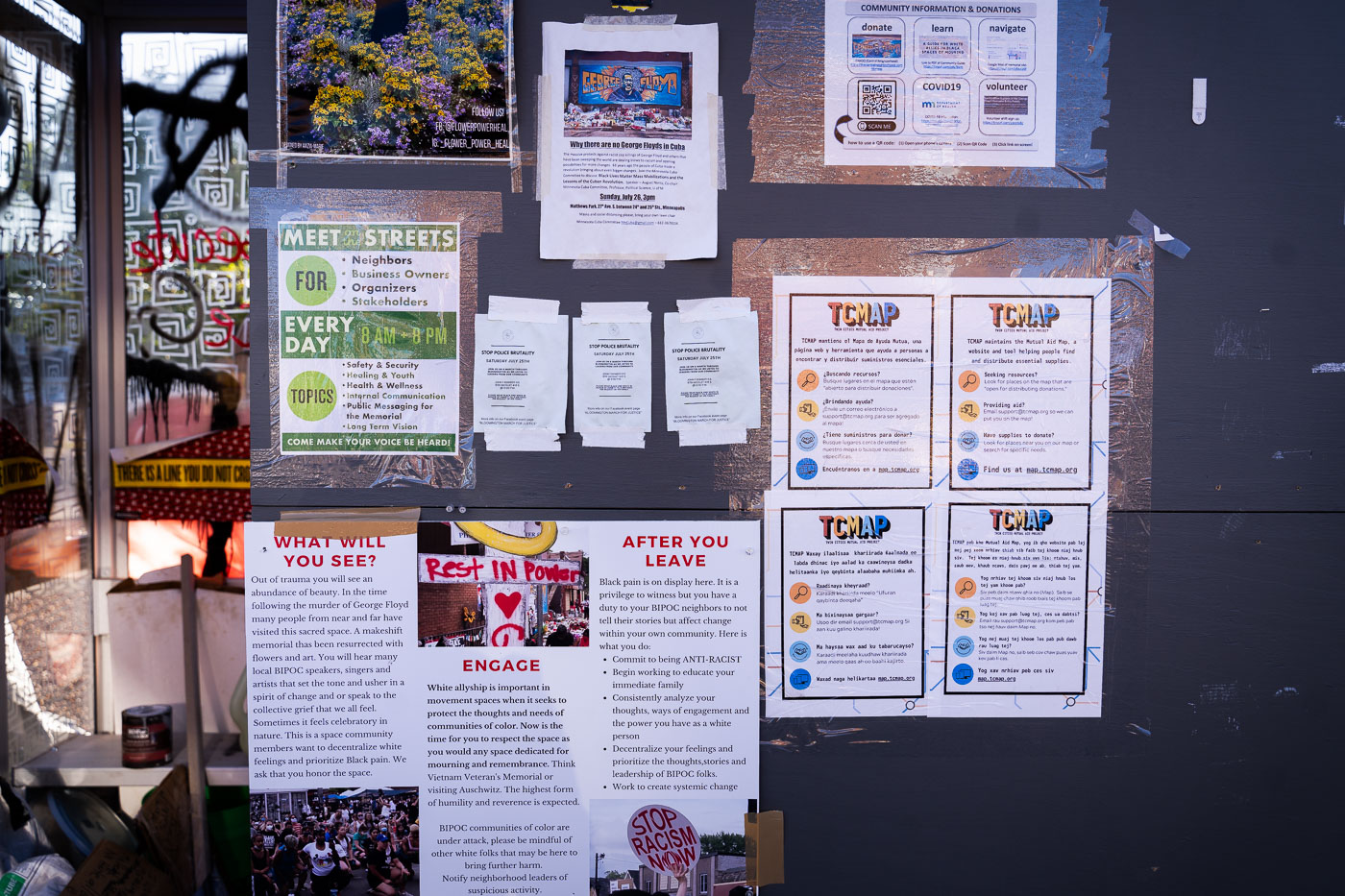
Flyers and mutual aid notices posted on plywood fencing at George Floyd Square in Minneapolis.
George Floyd Square sits at the intersection of 38th Street and Chicago Avenue, the corner where George Floyd was killed by Minneapolis police on May 25, 2020. The Twin Cities Mutual Aid Project, known locally as TCMAP, posts resource guides there covering food, supplies, and COVID-19 assistance for people in need.

TCMAP Mutual Aid Flyers at George Floyd Square
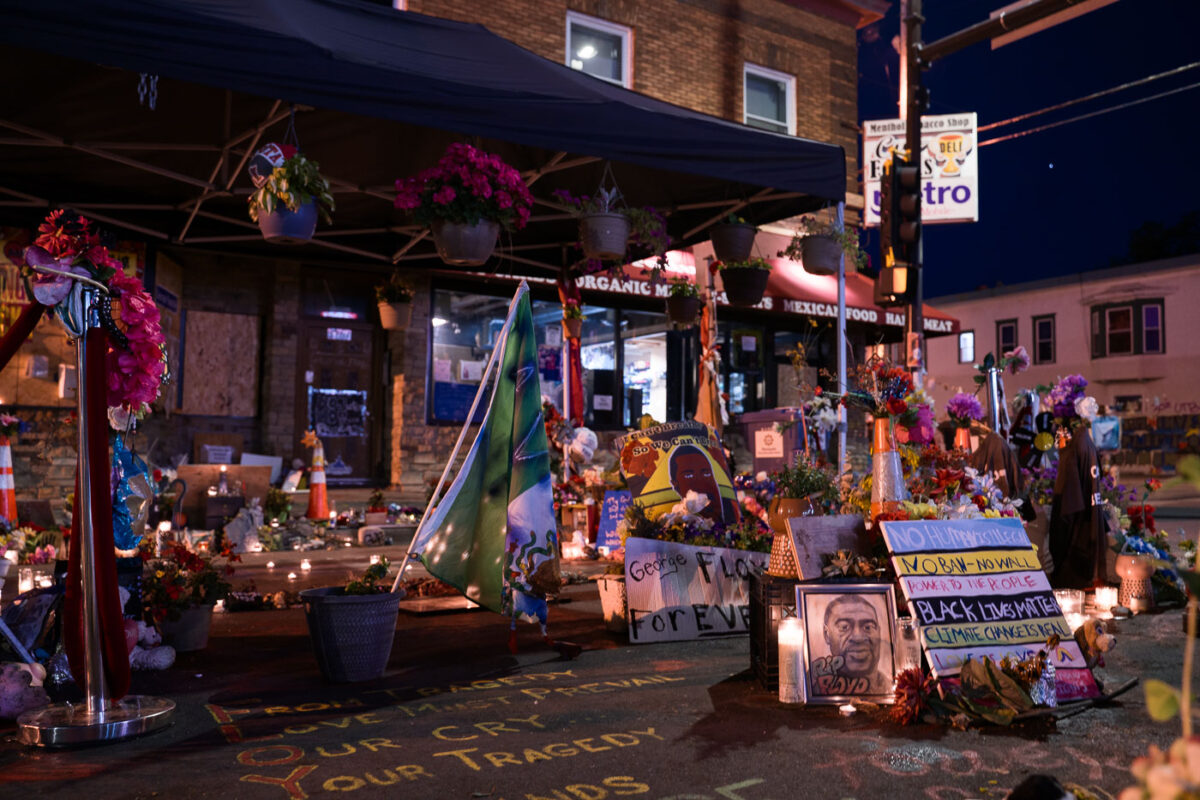
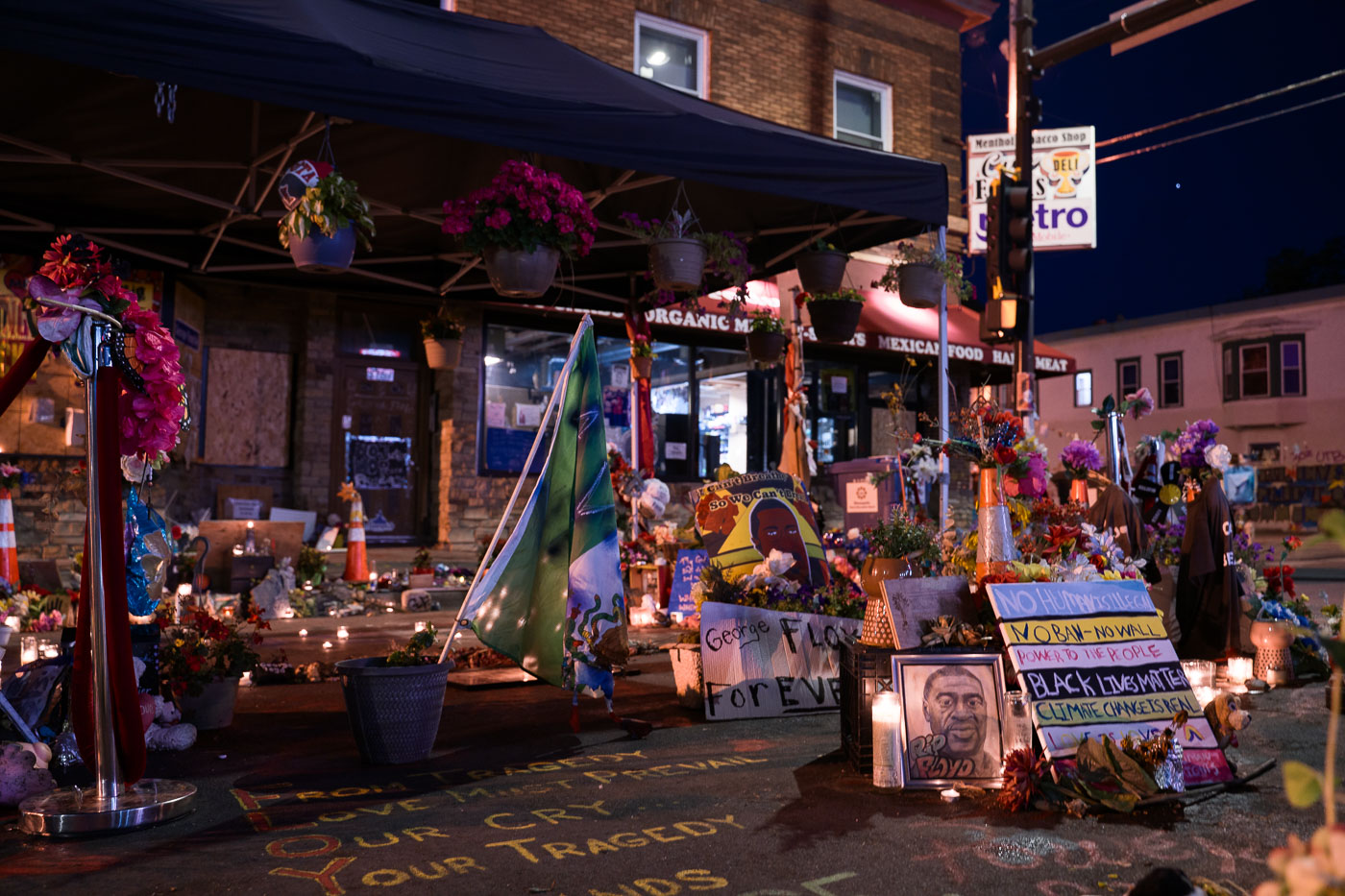
George Floyd Memorial at 38th Street and Chicago Avenue in Minneapolis lit with candles and flowers at night.
A night photo of the George Floyd Memorial in August 2020.

Nighttime Memorial at 38th and Chicago
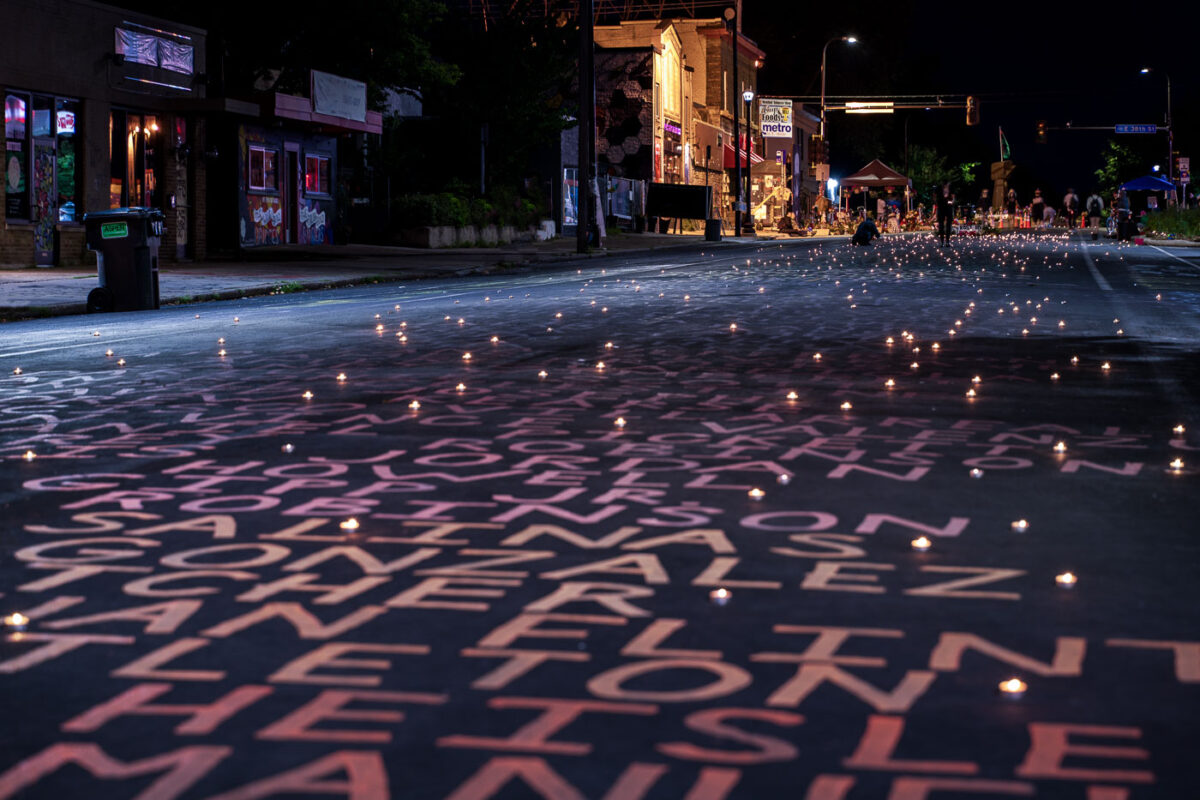
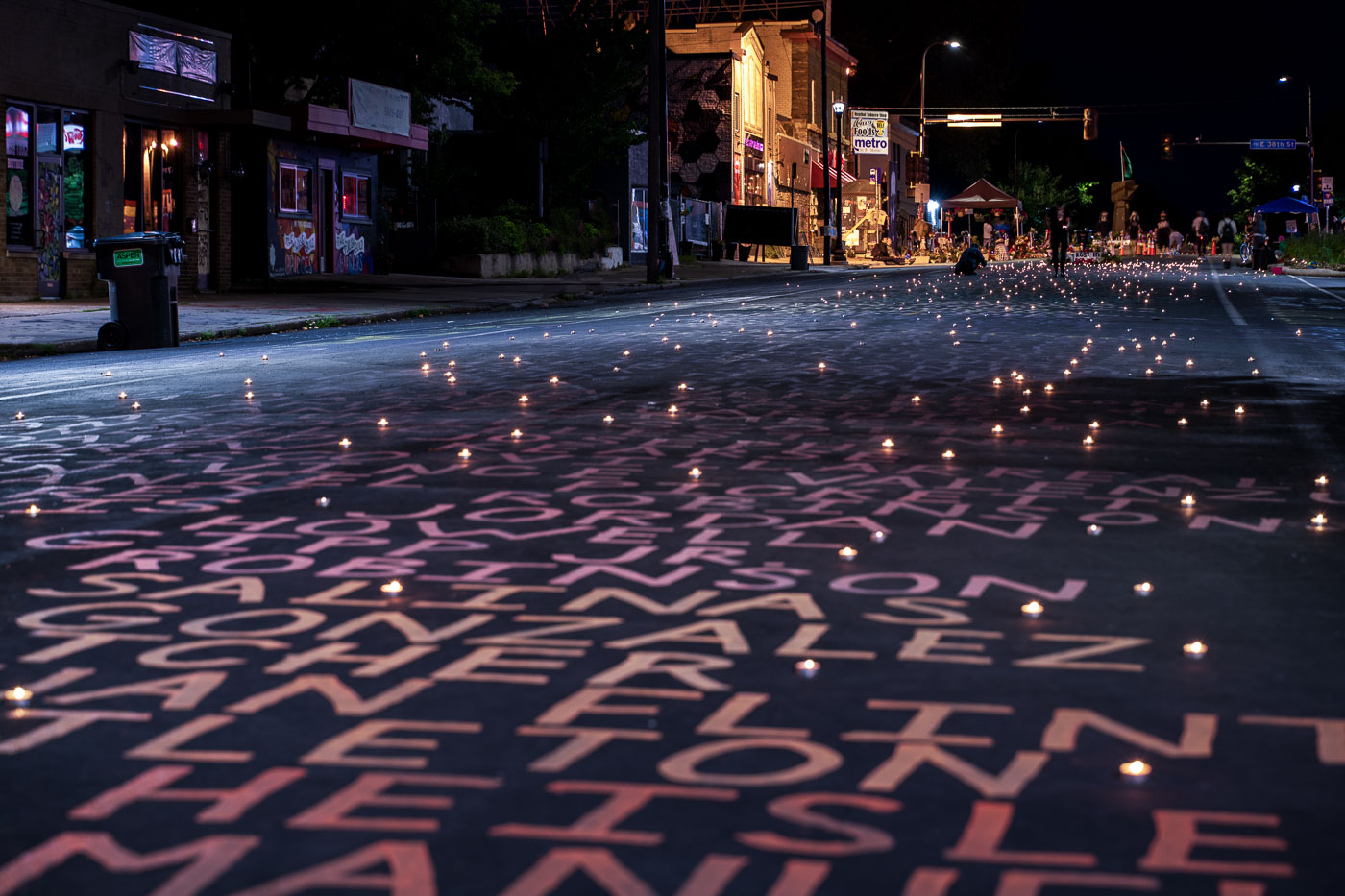
Candles illuminating names of police violence victims painted on the street at George Floyd Square in Minneapolis.
George Floyd Square sits at the intersection of Chicago Avenue and East 38th Street, the site where George Floyd was killed by Minneapolis police on May 25, 2020. In the weeks and months that followed, the intersection was closed to traffic and taken over by residents and organizers, who filled it with memorials, artwork, and a list of names of other people killed by police around the country. The names painted across the pavement became one of the square's recurring memorial elements, repainted and added to as the site evolved from protest ground into a semi-permanent gathering place. The city did not fully reopen the intersection to vehicle traffic until June 2021.

Names of Police Violence Victims Painted on Chicago Avenue
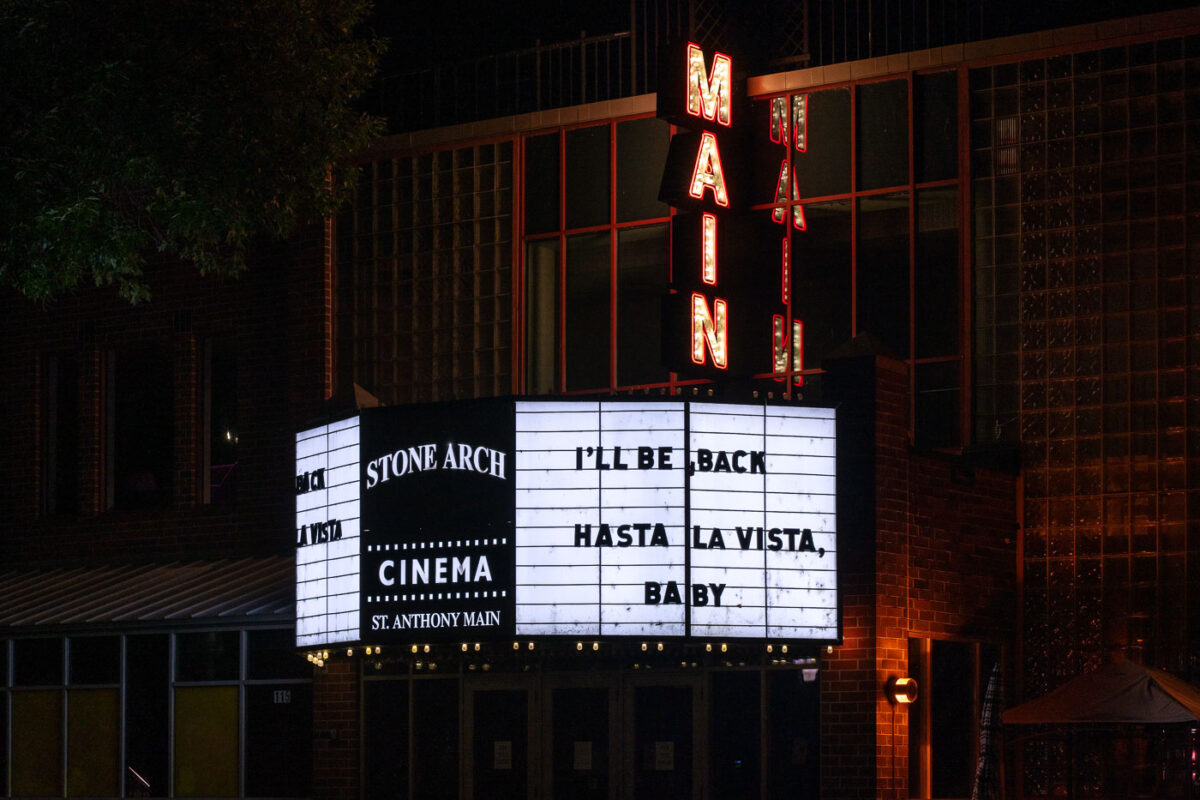
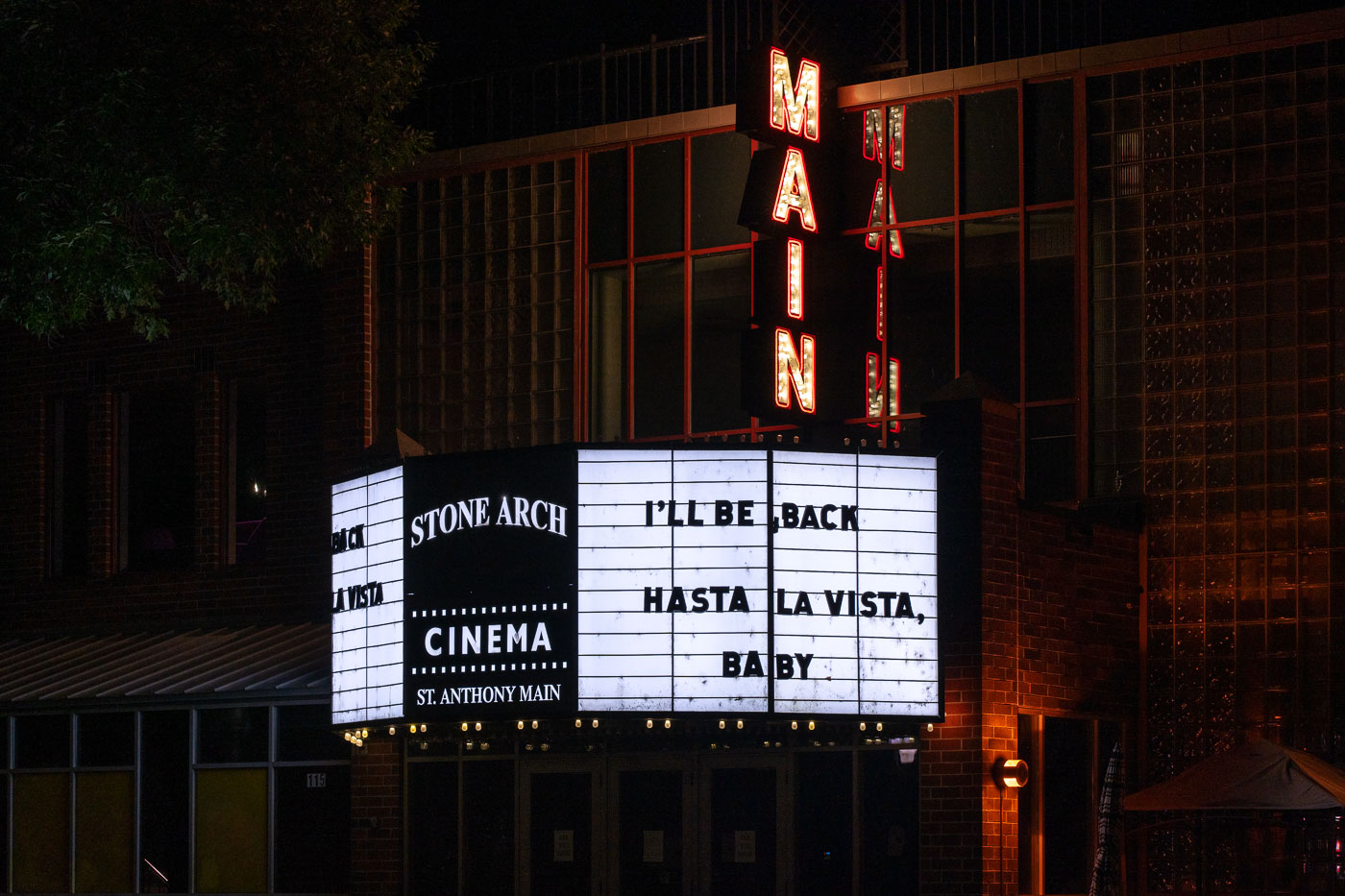
Stone Arch Cinema marquee displays "I'll Be Back, Hasta La Vista, Baby" message during 2020 closure.
Stone Arch Cinema operates at 117 SE Main Street in Minneapolis's St. Anthony Main district, along the east bank of the Mississippi River near the historic Stone Arch Bridge. The marquee's message — "I'll Be Back, Hasta La Vista, Baby" — quotes Arnold Schwarzenegger's line from "Terminator 2: Judgment Day." Theaters across Minnesota closed to in-person moviegoing in 2020 under statewide COVID-19 restrictions, and many independent cinemas used their marquees to post messages to passersby during the shutdown.

“I’ll Be Back” on the Stone Arch Cinema Marquee in St. Anthony Main
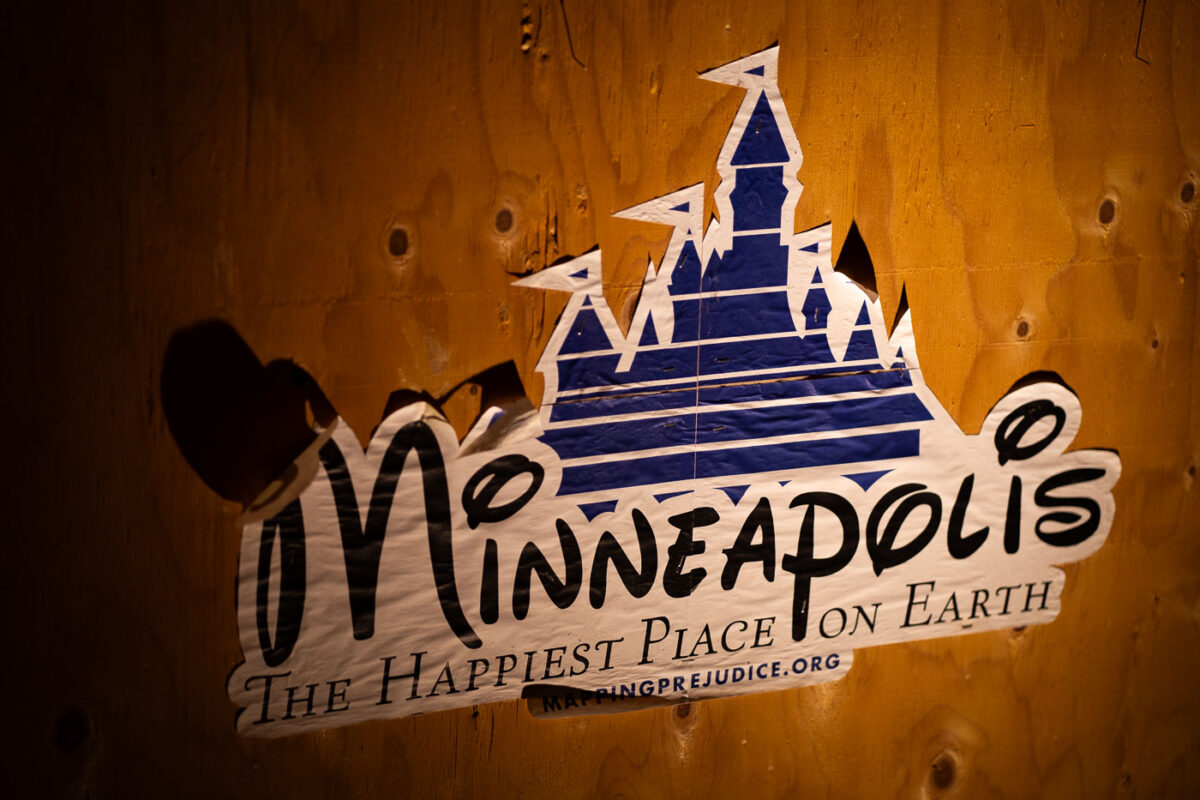
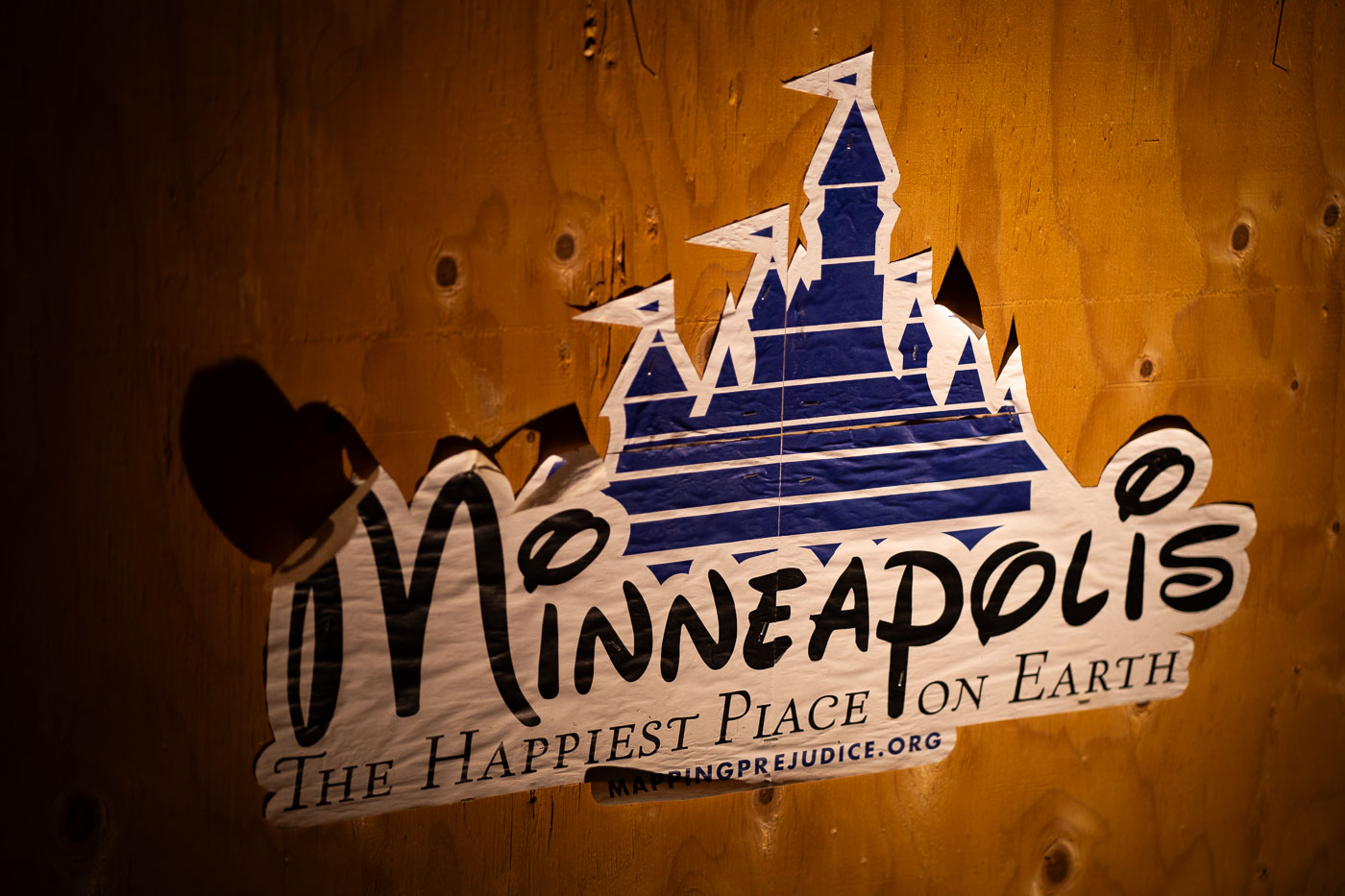
"Mapping Prejudice" sticker on wood board in Uptown Minneapolis featuring castle silhouette and "The Happiest Place on Earth
Mapping Prejudice is a University of Minnesota research project that maps racial covenants — clauses once written into property deeds barring non-white residents from owning or occupying homes — across Hennepin County. The project has identified thousands of these covenants, many dating to the early 20th century, and made its findings public through an online map at mappingprejudice.org. This sticker, styled after the Disney castle logo and reading "Minneapolis: The Happiest Place on Earth," uses that branding to point to the gap between the city's reputation and its documented history of housing discrimination.

‘The Happiest Place on Earth’ Sticker on Plywood in Uptown
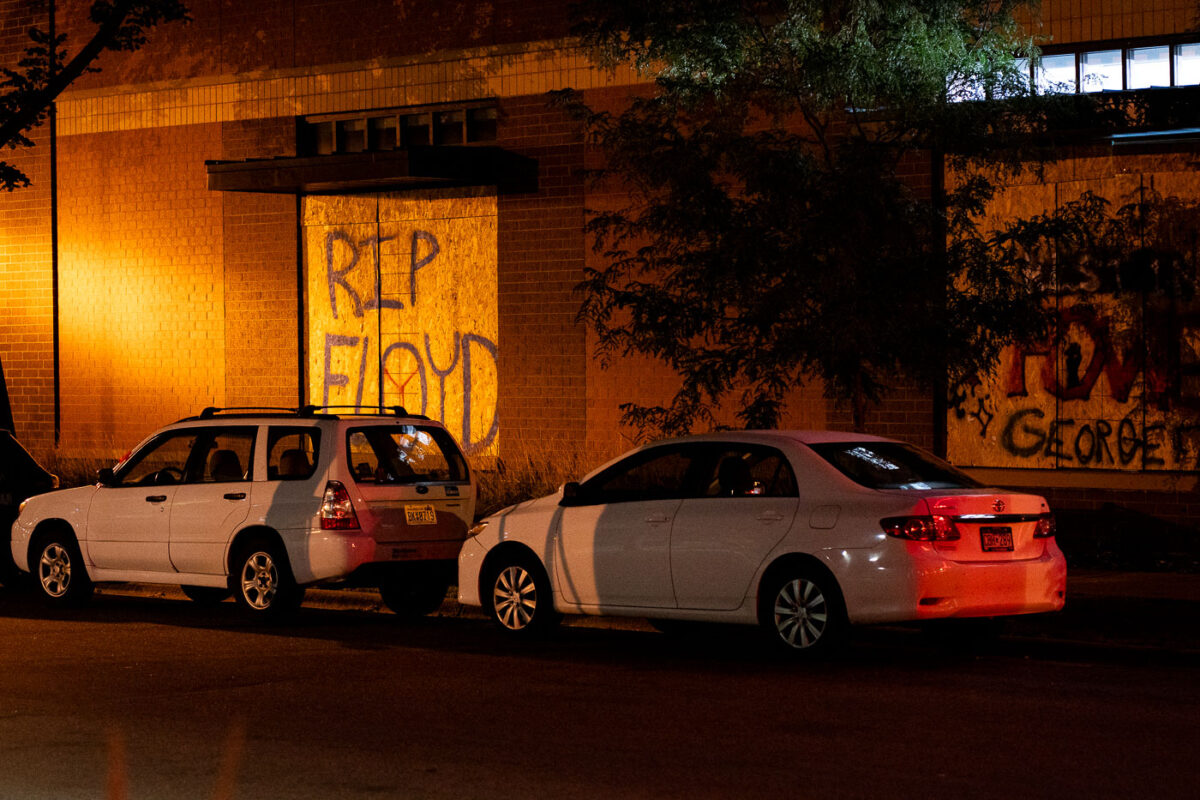
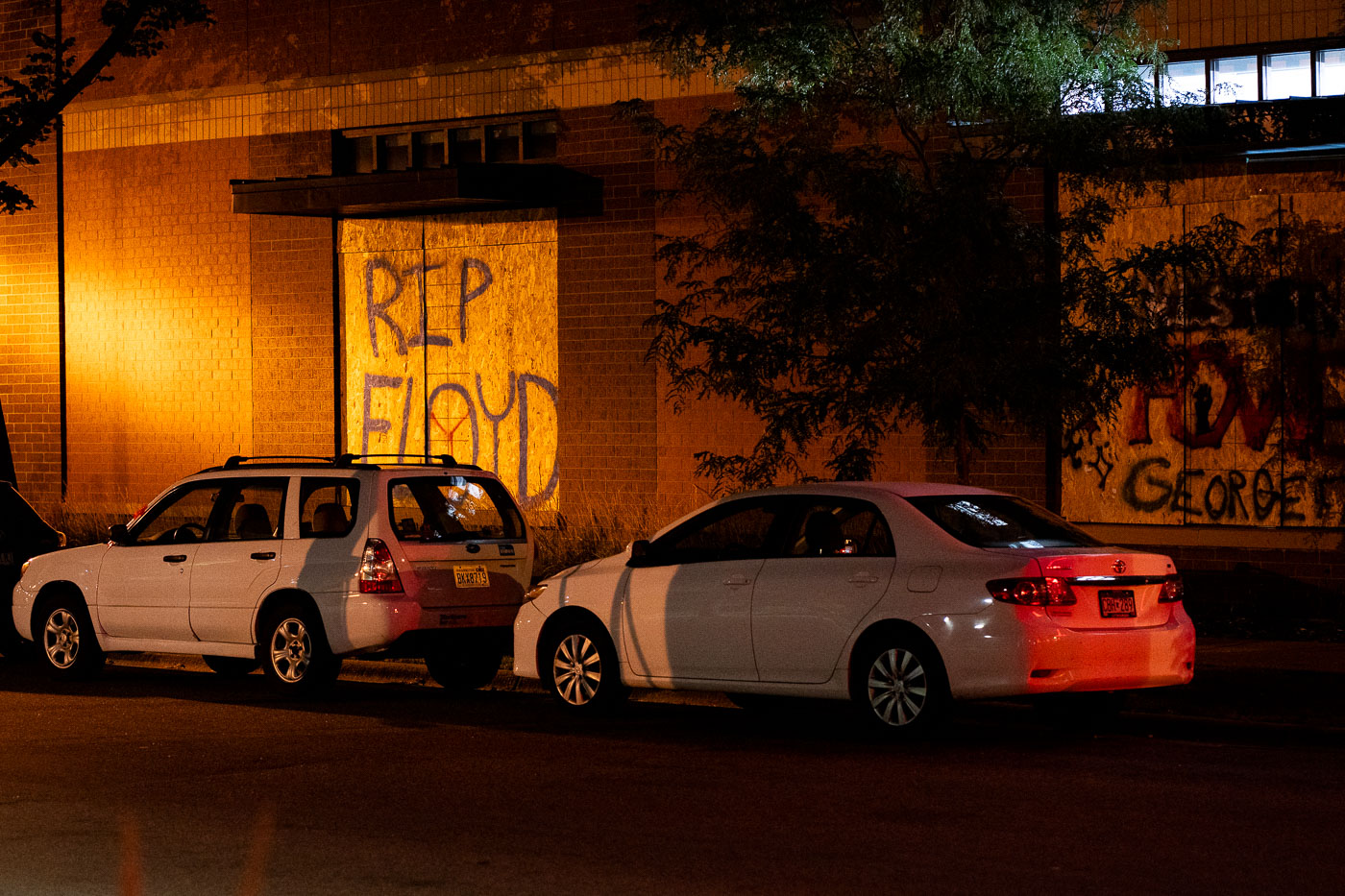
Graffiti reading "RIP FLOYD" and "LOVE GEORGE" on boarded Walgreens storefront, Hennepin Avenue, Minneapolis, August 2020.
Plywood covered this Walgreens on Hennepin Avenue after windows were broken during the unrest following George Floyd's death in police custody on May 25, 2020. Business owners across Minneapolis boarded up storefronts in the days that followed, and many of those panels turned into makeshift memorials and message boards. Here, someone spray-painted "RIP FLOYD" alongside a raised fist and the words "LOVE GEORGE," part of a wave of street tributes that spread through the city's commercial corridors that summer.

‘RIP Floyd’ Graffiti on a Boarded-Up Hennepin Avenue Walgreens
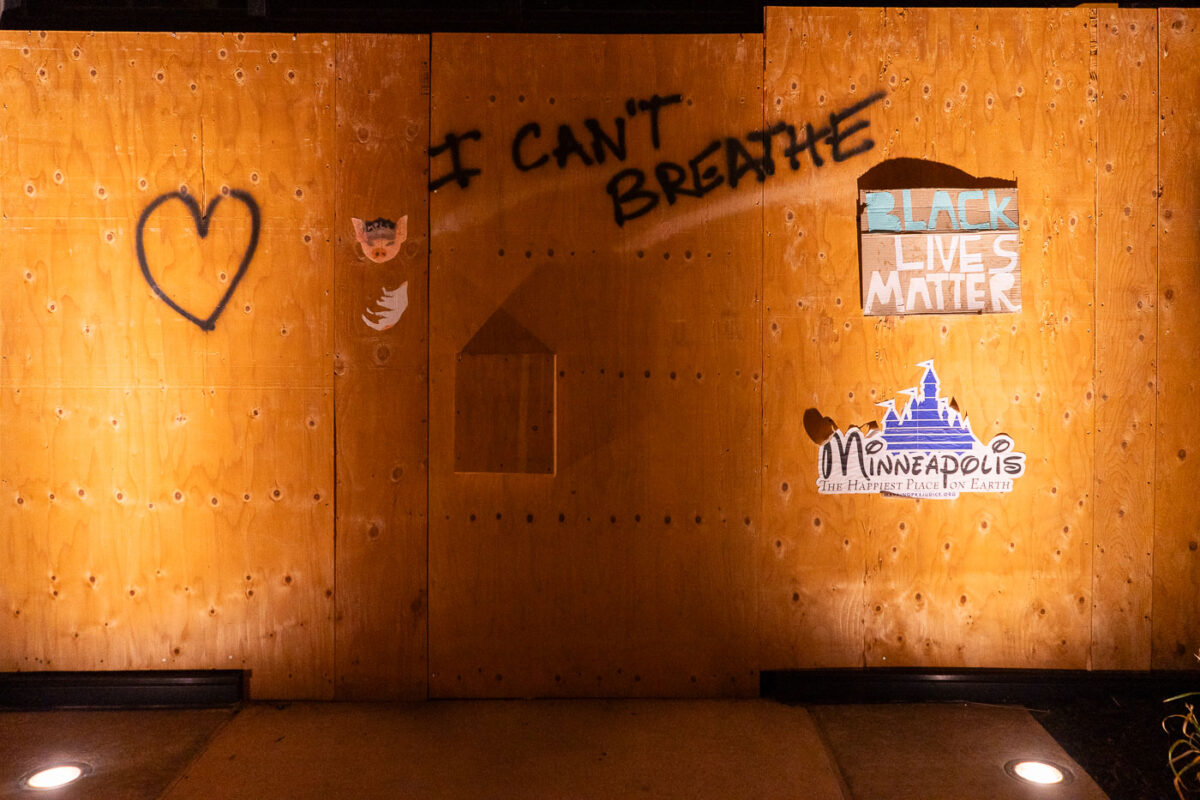
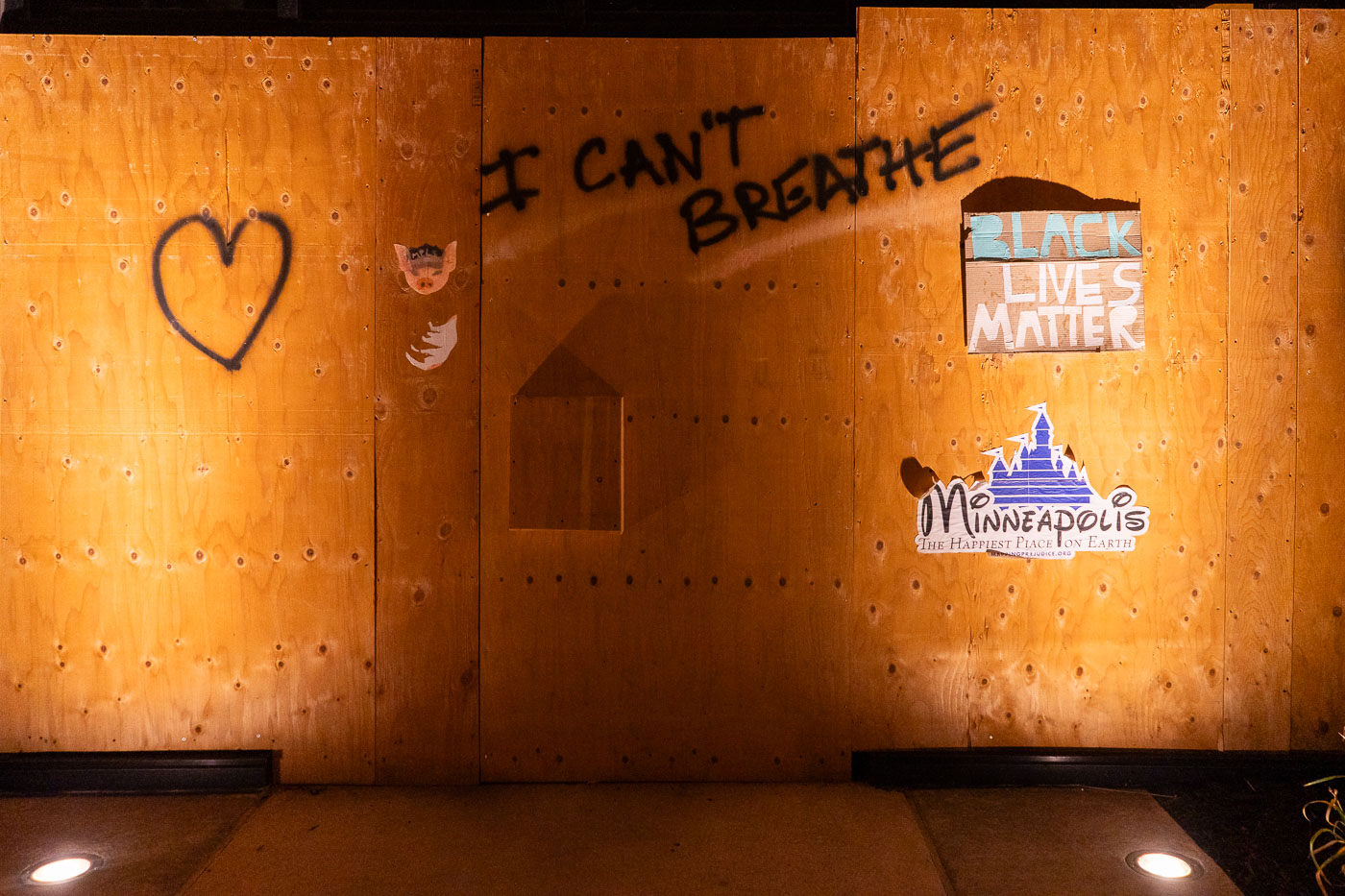
Plywood-boarded storefront on Hennepin Avenue displays "I CAN'T BREATHE," Black Lives Matter, and Minneapolis stickers.
"I Can't Breathe" became a rallying cry after Eric Garner's 2014 death in police custody and resurfaced nationally following George Floyd's killing in Minneapolis in May 2020. Business owners along Hennepin Avenue boarded up storefronts during the unrest that followed, and many of those panels became surfaces for spray-painted messages and stickers. Black Lives Matter, founded in 2013 by Alicia Garza, Patrisse Cullors, and Opal Tometi, is referenced directly on one board. The "Minneapolis: The Happiest Place on Earth" sticker ties to the Mapping Prejudice project at the University of Minnesota, which maps historic racial covenants that once barred Black residents from owning property in parts of the city.

“I Can’t Breathe” and BLM Messages on Hennepin Avenue Plywood
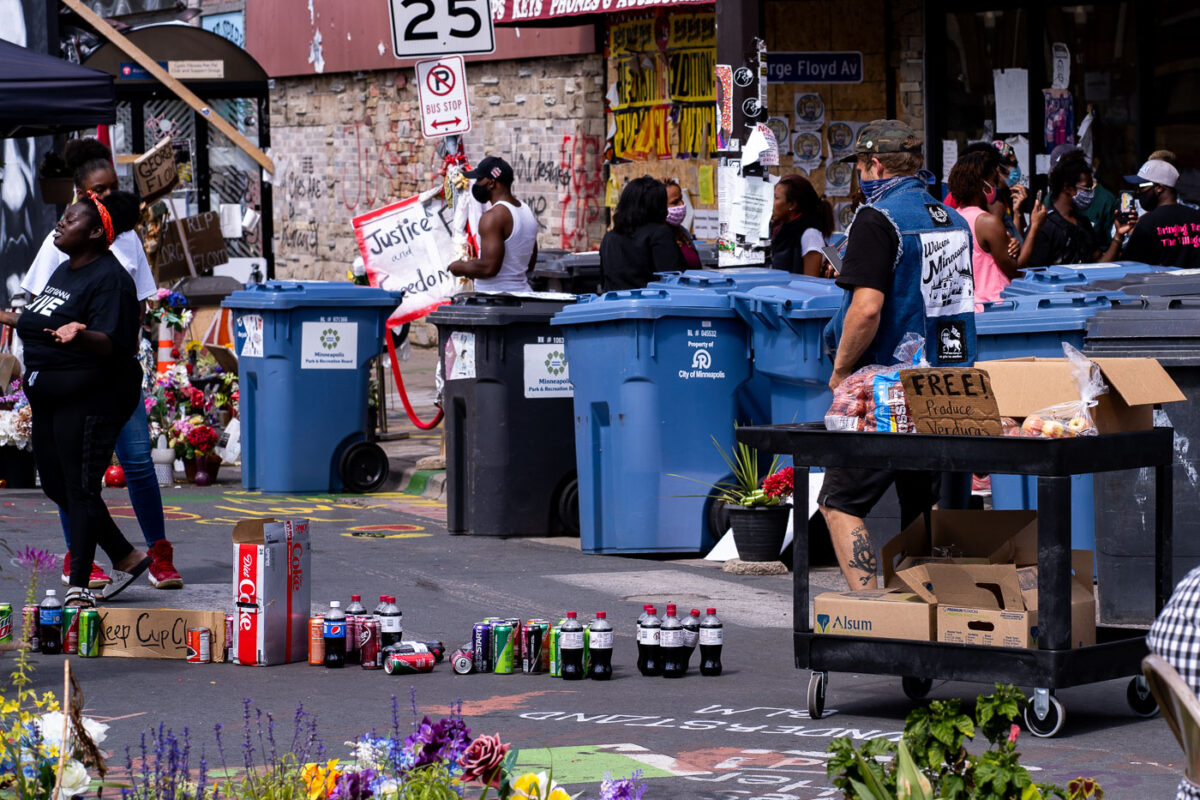
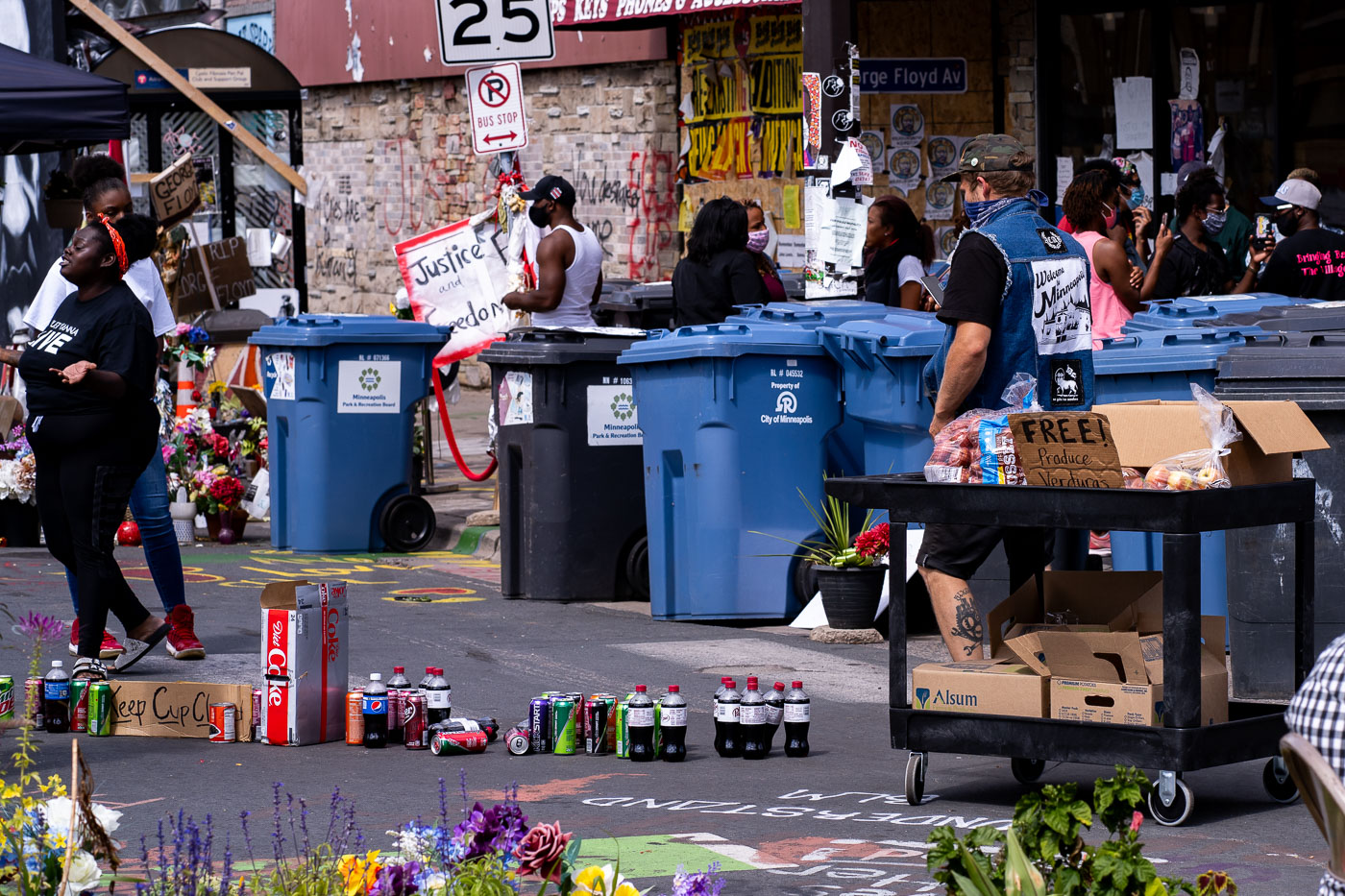
Community members distribute free produce and drinks outside Cup Foods on Chicago Avenue in Minneapolis.
George Floyd Square formed at the intersection of 38th Street and Chicago Avenue after George Floyd was killed on May 25, 2020, prompting the city to barricade the area to vehicle traffic. Cup Foods, the corner store where the fatal police encounter began, sits at the center of the site. A "Keep Cup Closed" sign a push by some community members to keep the store shuttered rather than let it reopen for business. Volunteers have used the square to distribute free food and other supplies to residents throughout the ongoing occupation.

Free Produce Cart at George Floyd Square
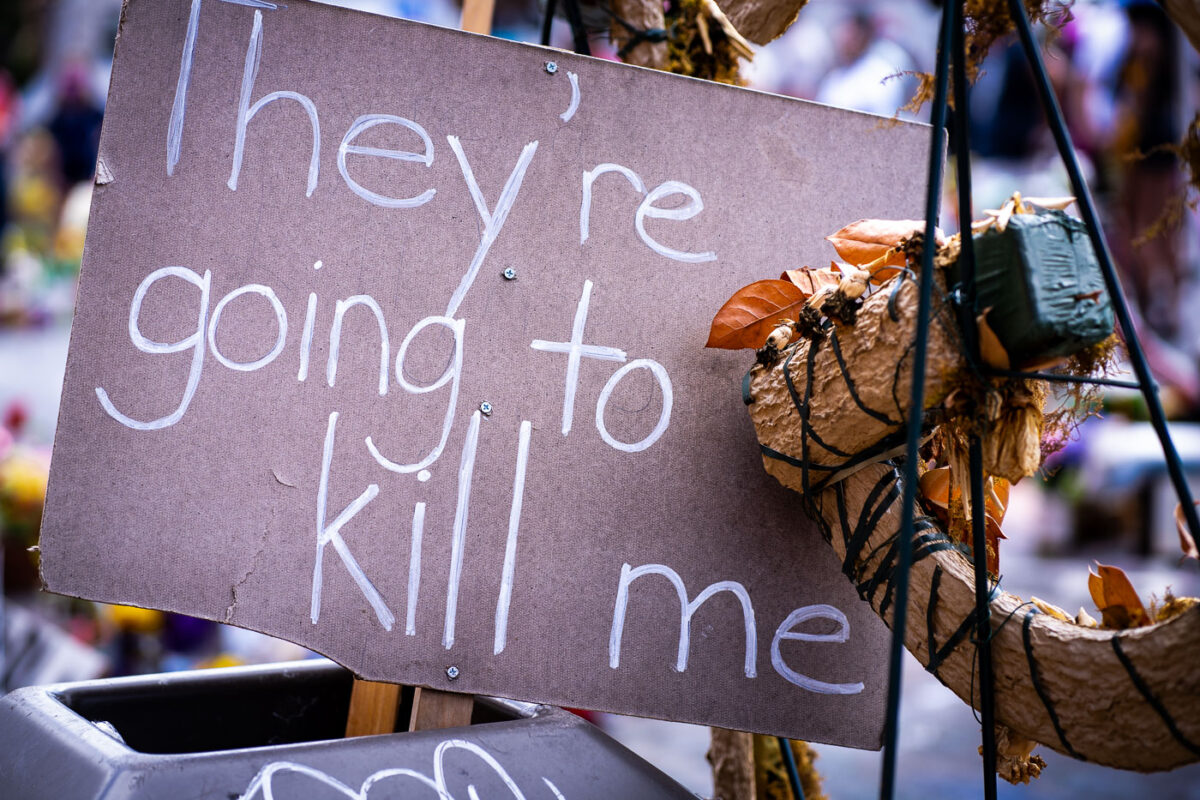
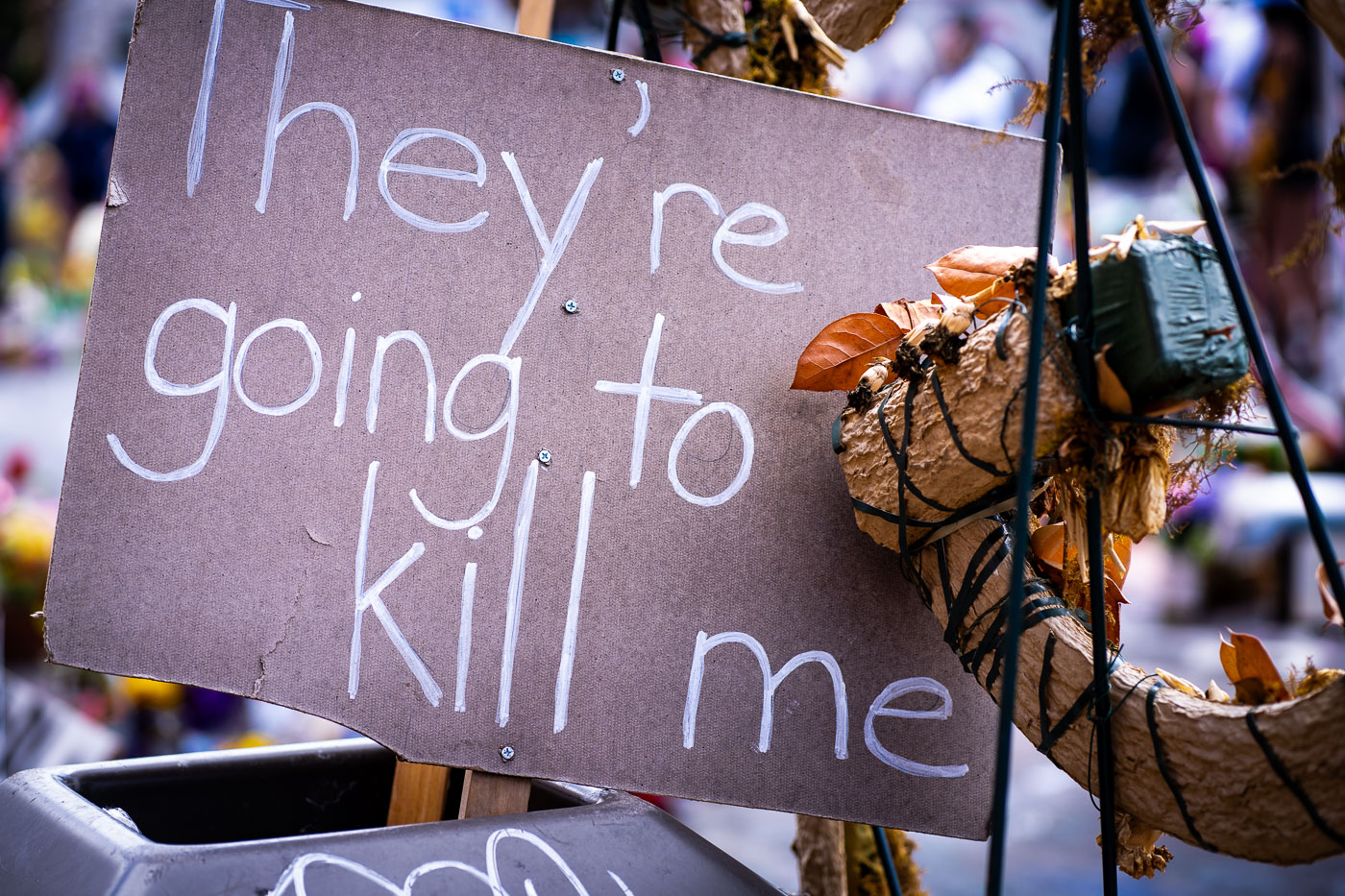
Protest sign reading "They're going to kill me" at George Floyd Square, Minneapolis.
George Floyd Square sits at the intersection of 38th Street and Chicago Avenue in South Minneapolis, where police officer Derek Chauvin killed George Floyd on May 25, 2020. Community members barricaded the intersection in the weeks that followed, and it remained closed to through traffic for more than a year as it evolved into a memorial and gathering space.

‘They’re Going to Kill Me’ Sign at George Floyd Square
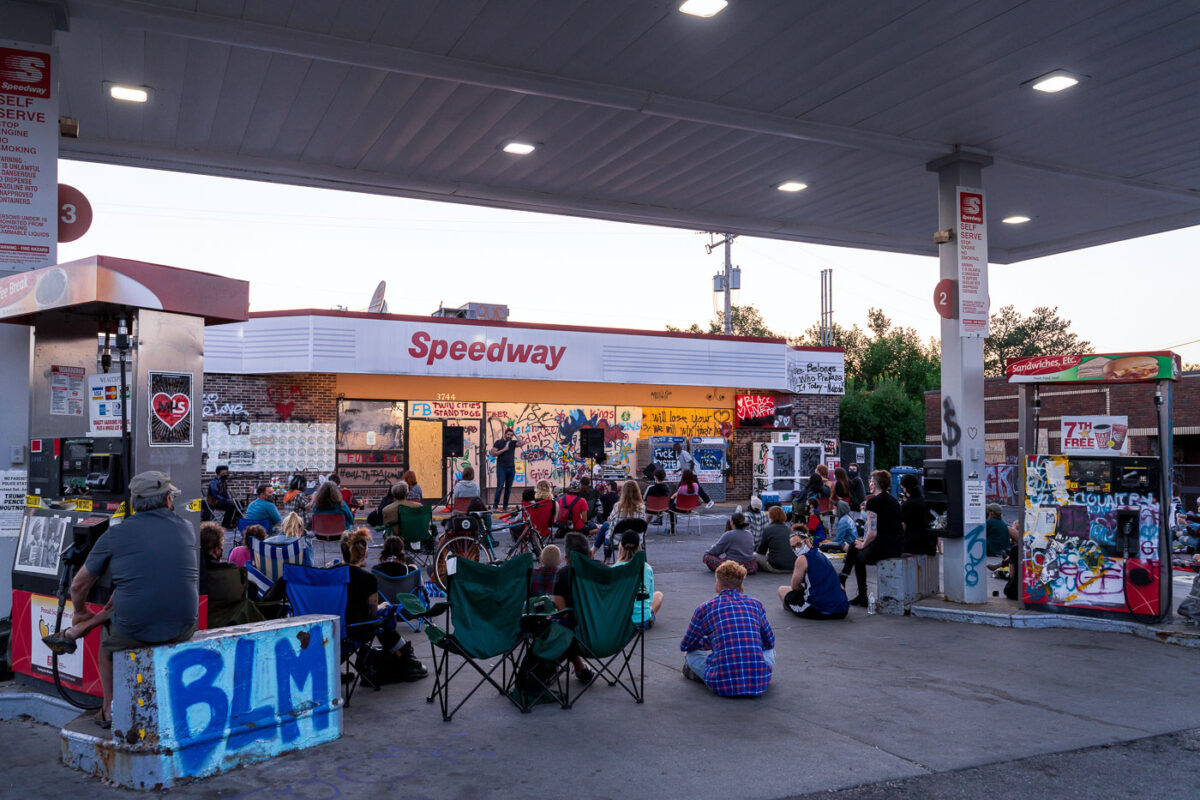
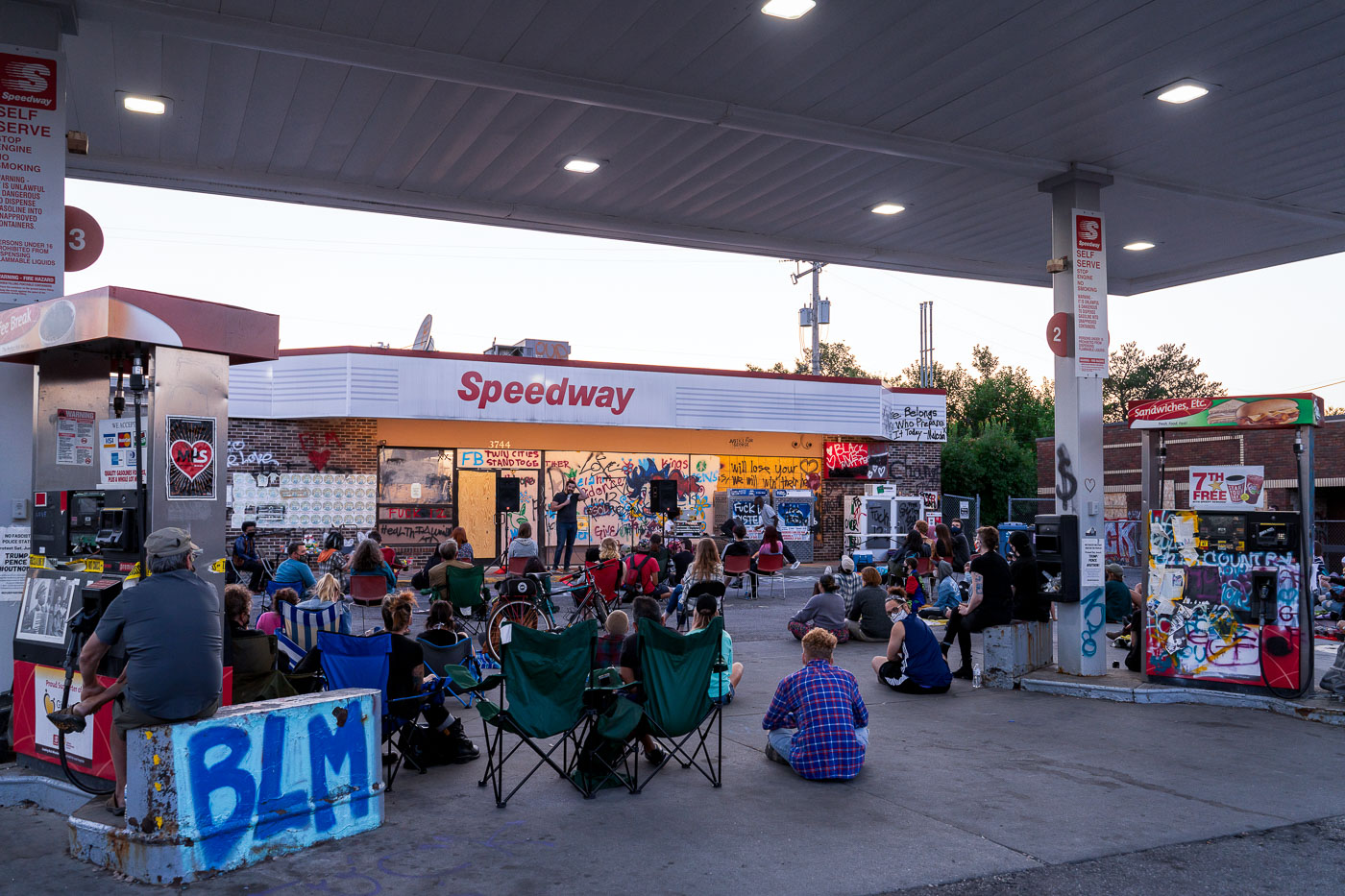
Community members gather for a comedy show at a Speedway gas station in George Floyd Square, Minneapolis.
A comedy show put on at the Speedway gas station at 38th Street and Chicago Avenue. The gas station is now known as The People's Way and has been a gathering place inside George Floyd Square since Floyd's May 2020 murder.

Evening Comedy Show at the Speedway Station in George Floyd Square
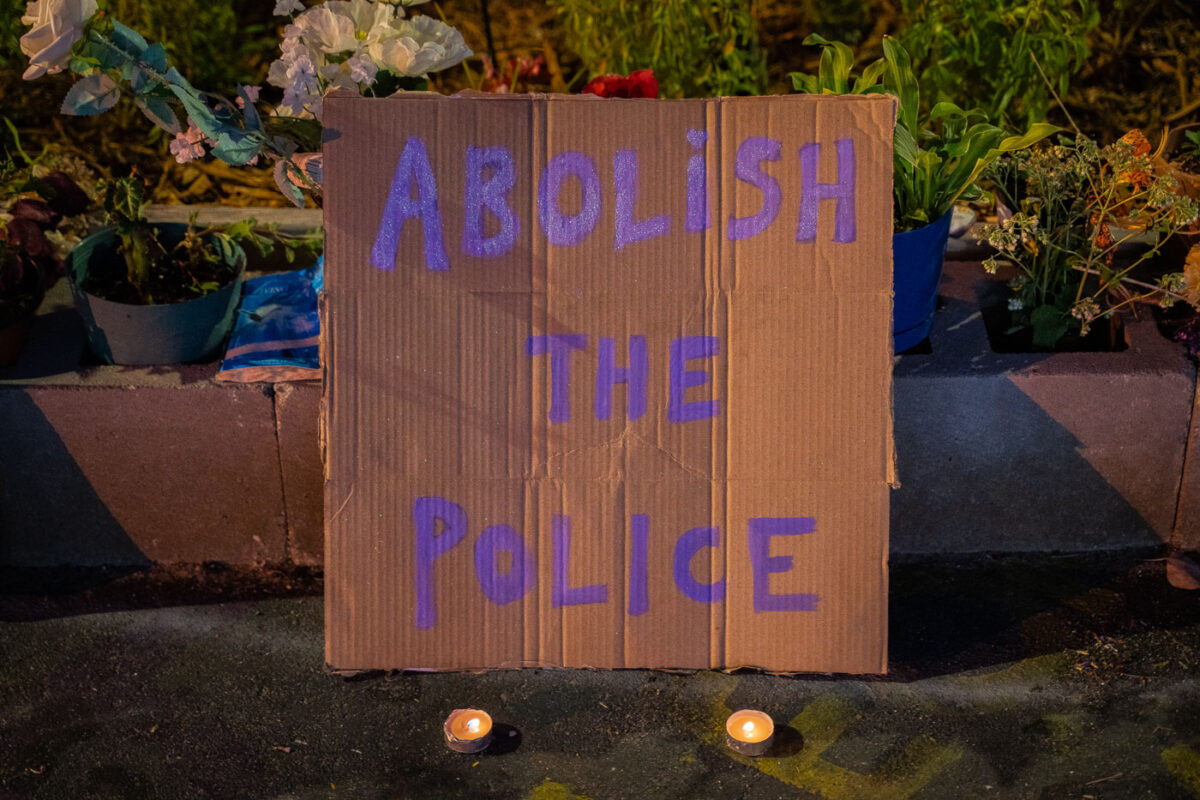
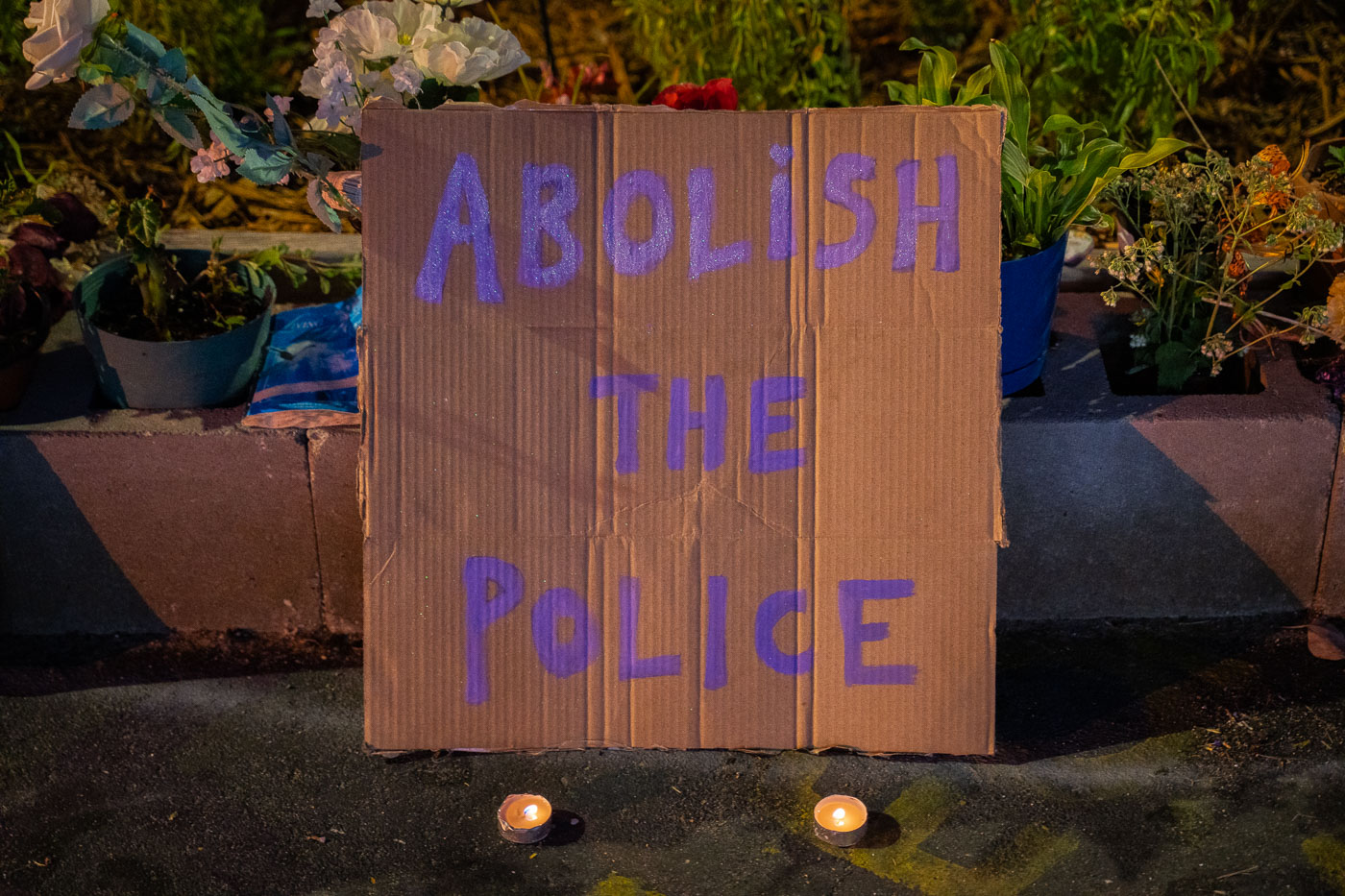
Protest sign reading "Abolish the Police" with lit candles at George Floyd Square in Minneapolis.
An "Abolish The Police" sign at George Floyd Square months after Floyd was killed by the Minneapolis Police.

“Abolish the Police” Sign Among Candles at George Floyd Square
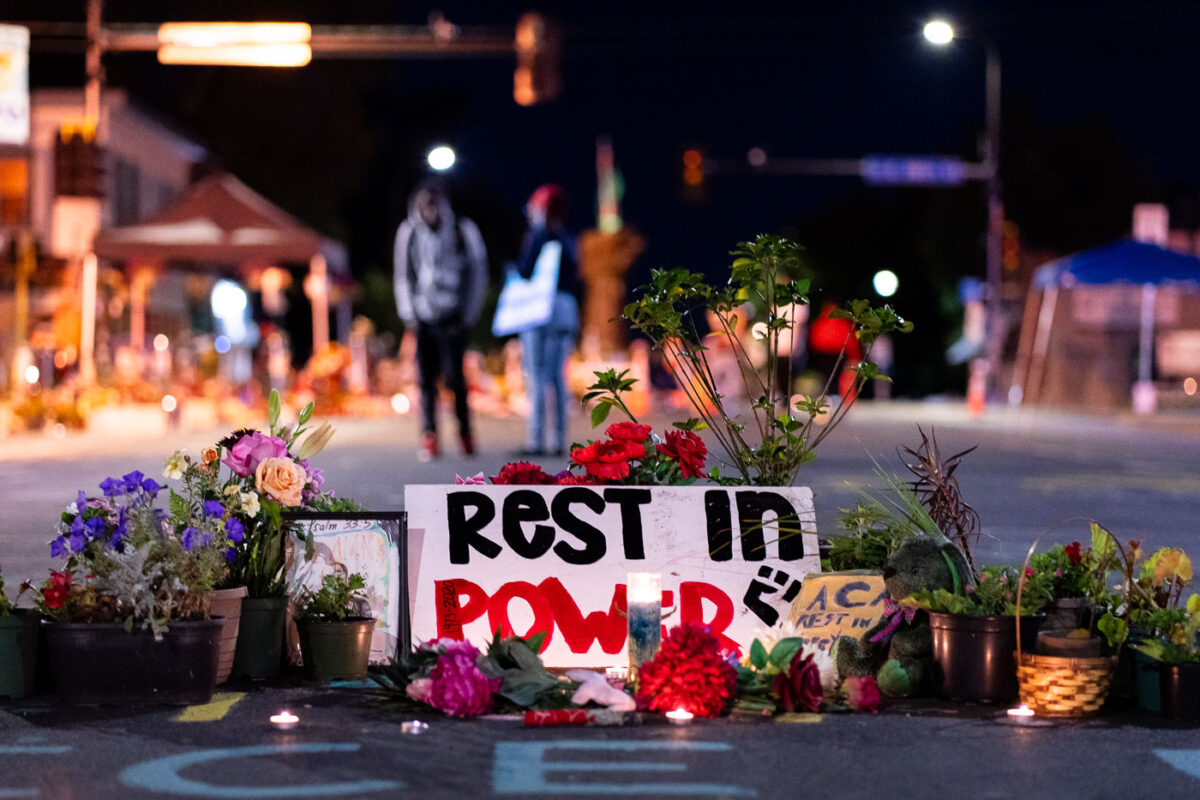
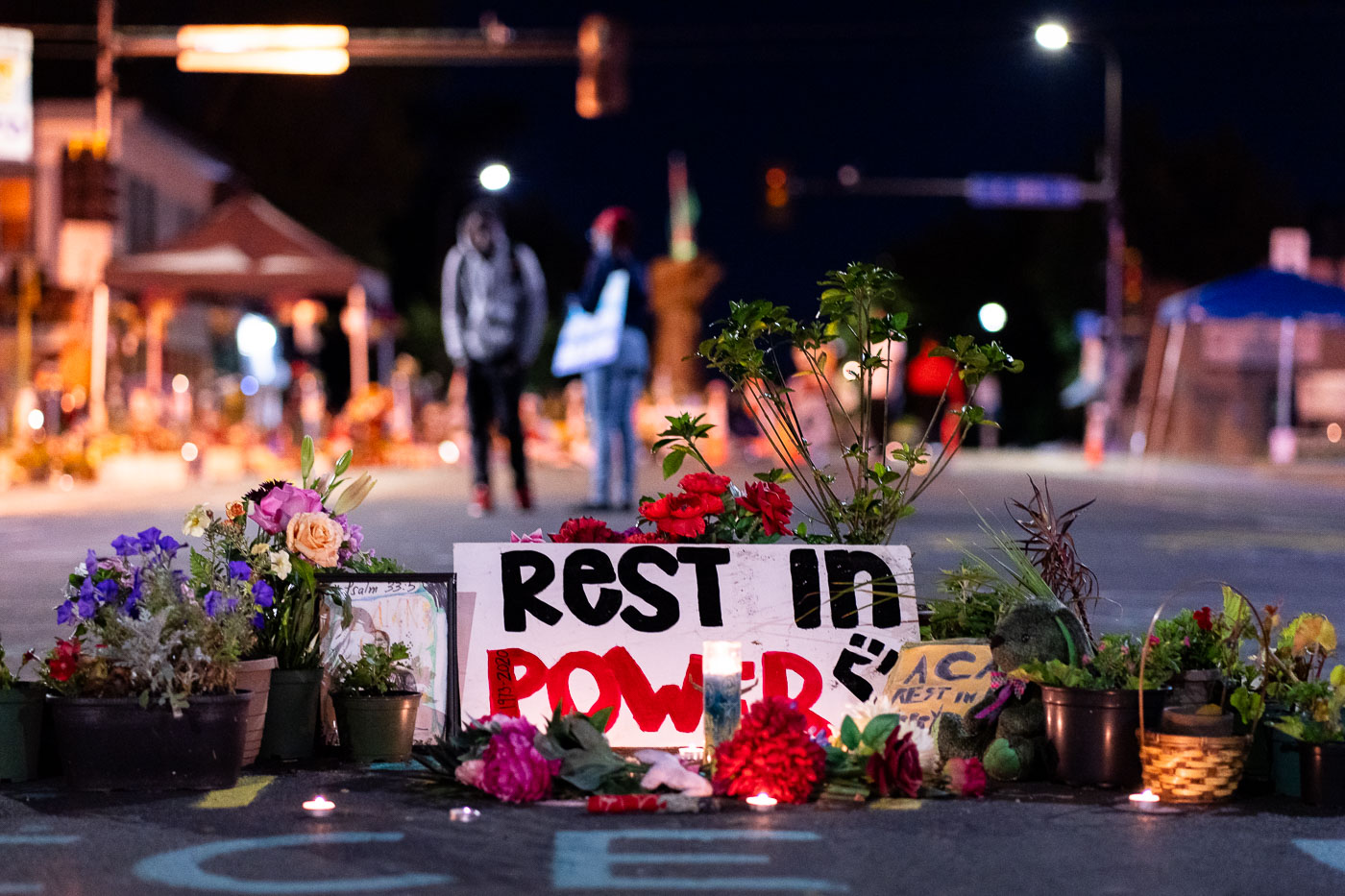
Memorial flowers and candles surround a "Rest In Power" sign at George Floyd Square in Minneapolis.
George Floyd Square sits at the intersection of 38th Street and Chicago Avenue, where George Floyd died on May 25, 2020, after being pinned by police officer Derek Chauvin. In the aftermath, community members closed the intersection to traffic and built a memorial of flowers, candles, and hand-painted signs that has been continuously maintained and expanded since. The area was informally renamed George Floyd Square, and Minneapolis city crews did not fully reopen it to vehicle traffic until June 2021. A raised fist sculpture and a rotating collection of memorial art remain fixtures at the site.

‘Rest in Power’ Memorial at George Floyd Square
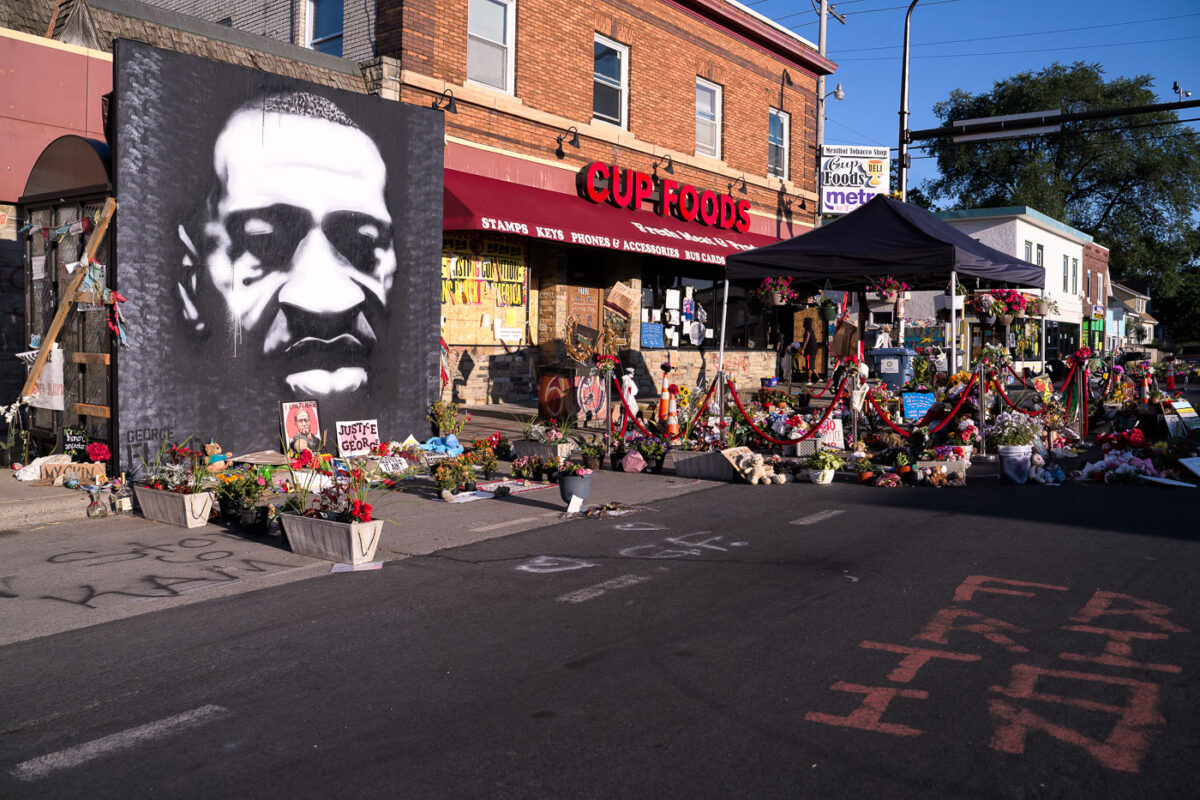
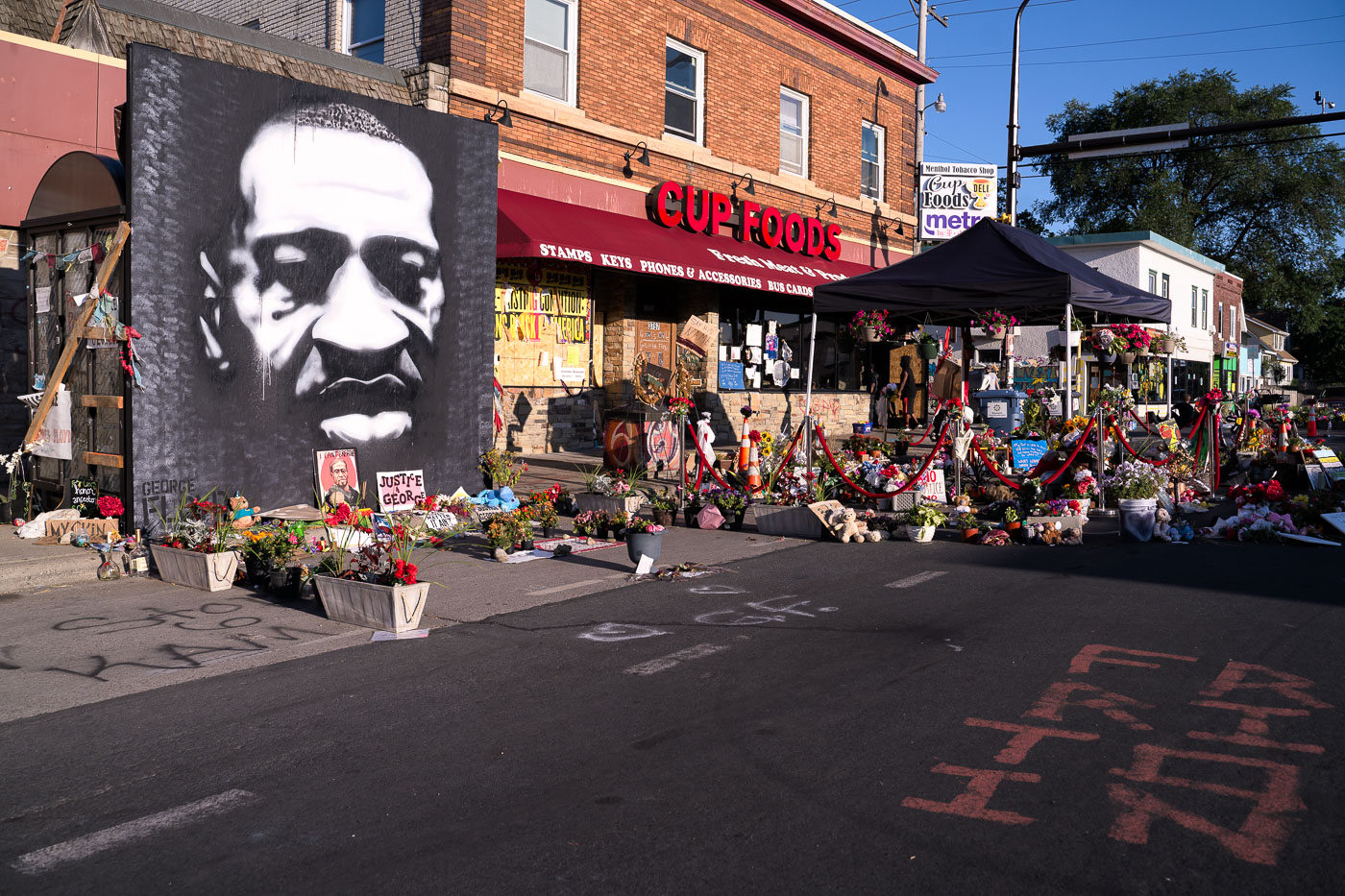
George Floyd mural and memorial flowers at George Floyd Square, Minneapolis.
George Floyd Square formed at the intersection of 38th Street and Chicago Avenue South, where Floyd was killed by Minneapolis police on May 25, 2020.

Memorial at George Floyd Square Outside Cup Foods
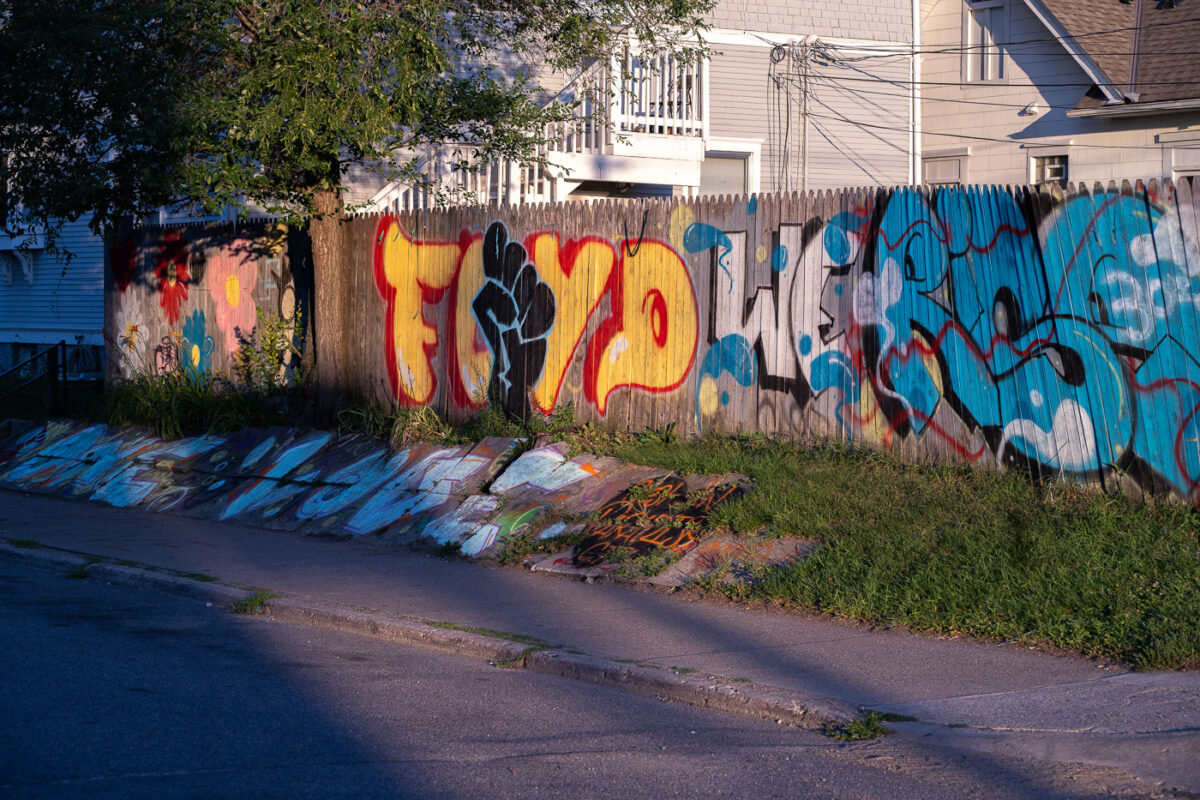
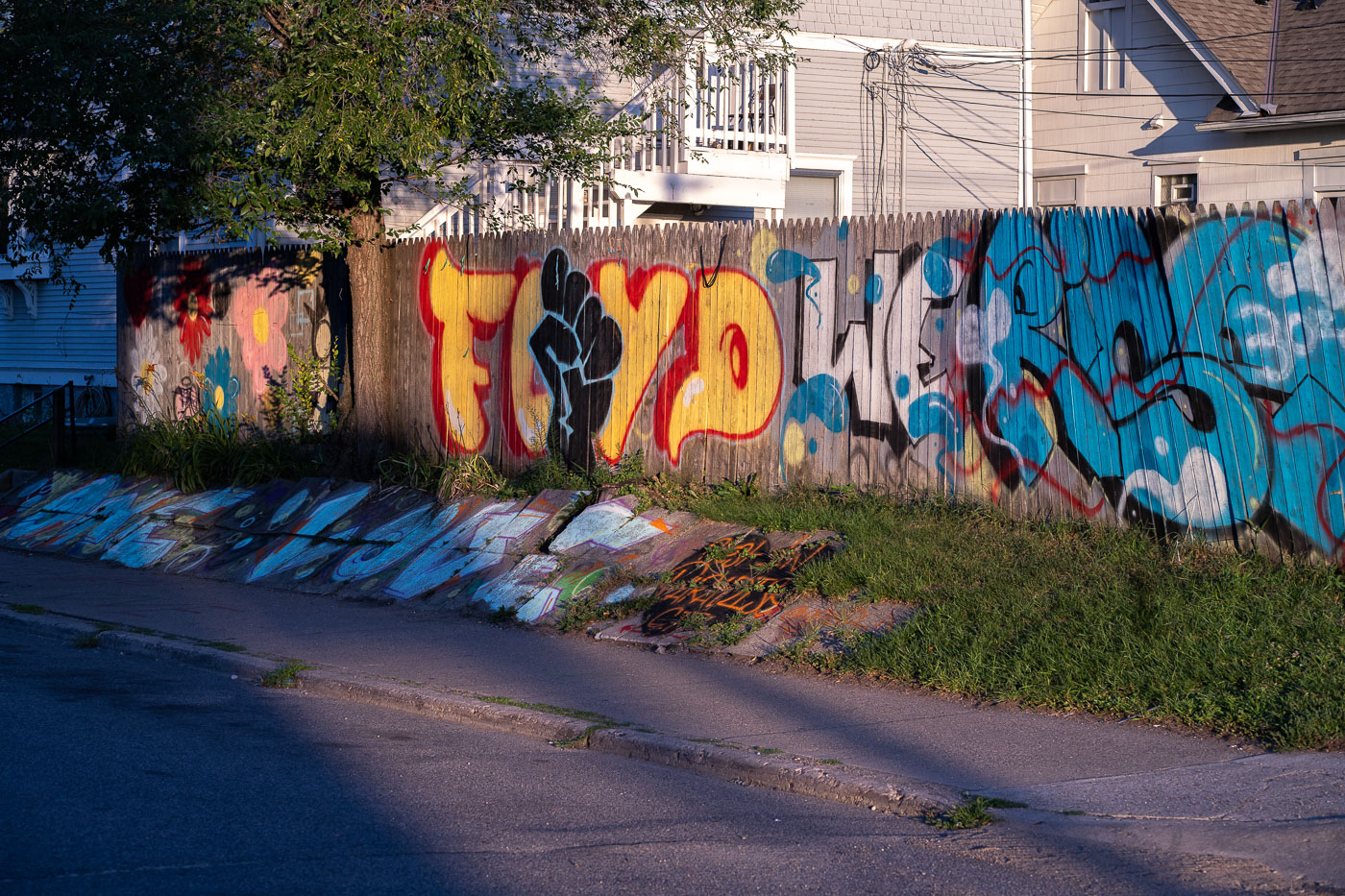
Graffiti mural with "FLOYD" text and raised fist on wooden fence at George Floyd Square, Minneapolis.
A George Floyd mural on a fence near near George Floyd Square. "ONE LOVE" written in the grass.

“FLOYD” Fence Mural Near George Floyd Square
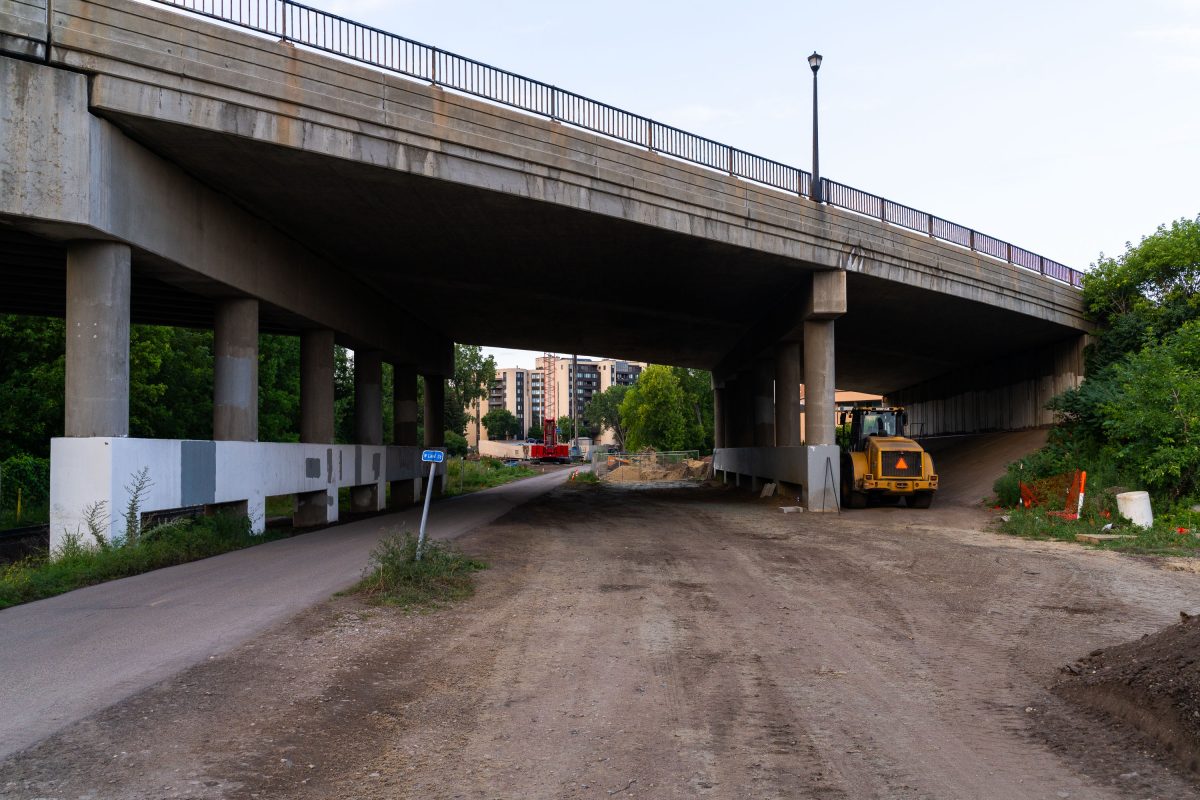
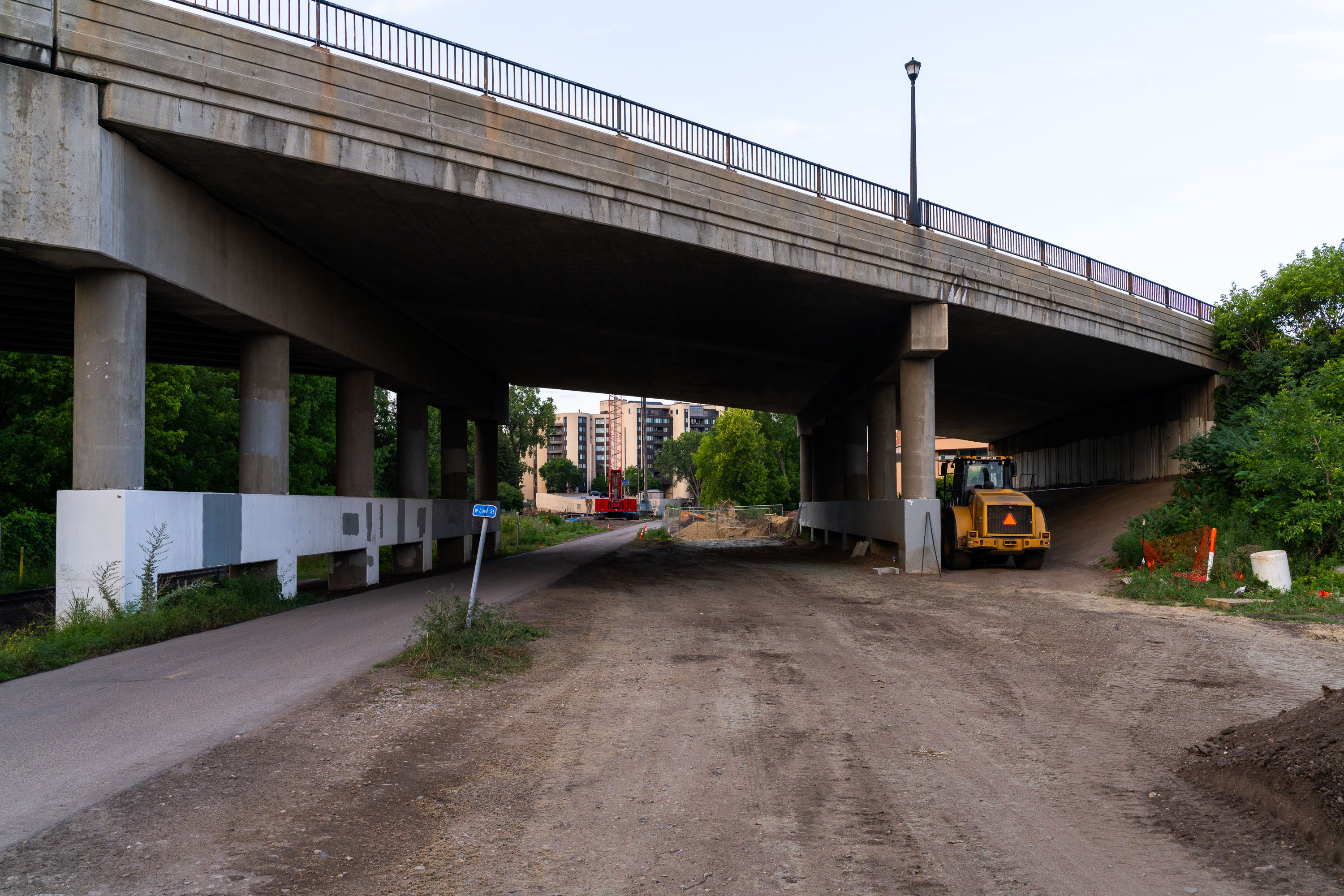
Construction site under highway overpass for Minneapolis Metro Green Line West Lake Street station.
The Midtown Greenway runs along a former Milwaukee Road rail corridor that was converted into a pedestrian and bicycle trail beginning in 2000, stretching roughly 5.5 miles through south Minneapolis between the Mississippi River and Chowen Avenue. Lake Street crosses the Greenway on a concrete overpass that also marks the site of the planned West Lake Street Station for the METRO Green Line Extension, part of the Southwest LRT project linking downtown Minneapolis to Eden Prairie. The extension, overseen by the Metropolitan Council, adds roughly 14.5 miles of new light rail track and 16 stations to the regional transit system. Work at this site has involved excavation and grading beneath the bridge to prepare the below-grade station area, consistent with the project's design of routing trains through a trench along this section of the corridor.

Construction at the Lake Street Bridge Over the Midtown Greenway
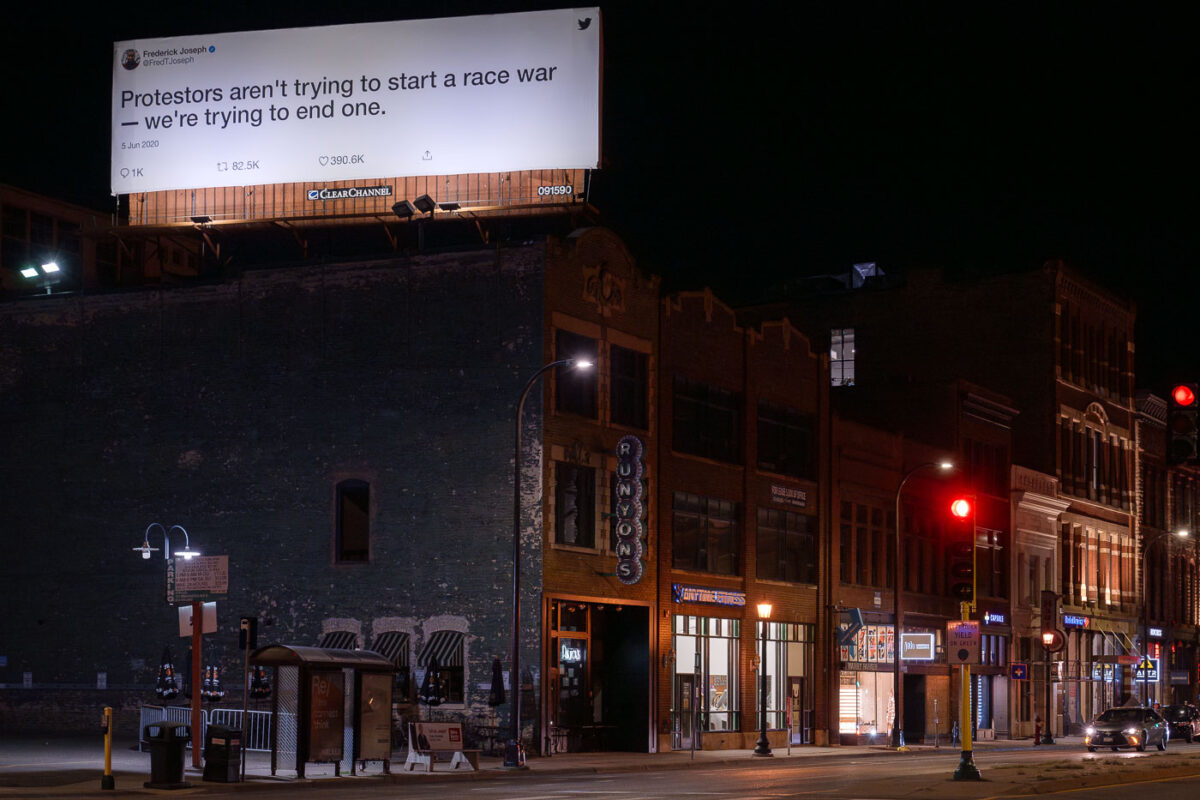
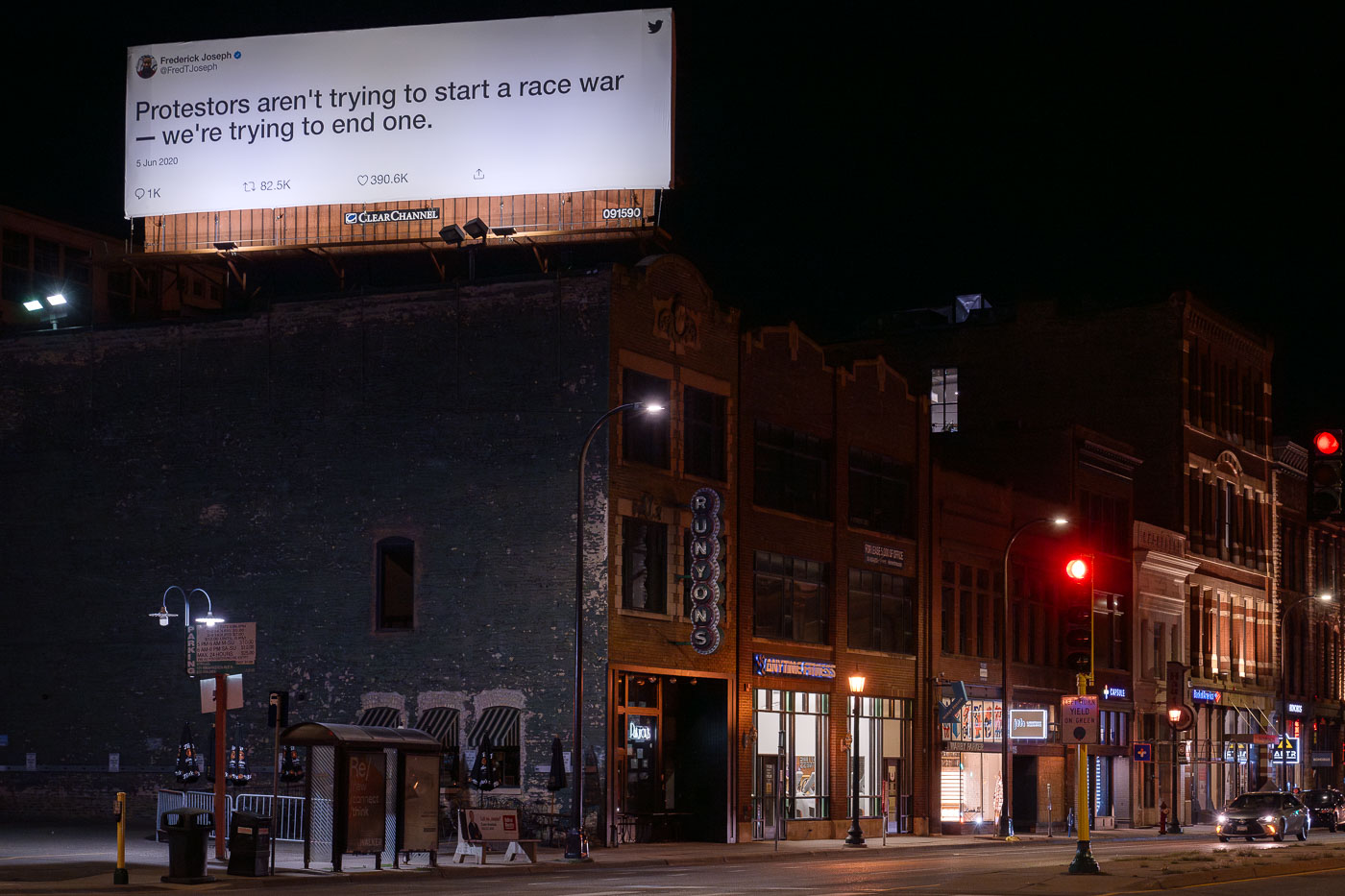
Frederick Joseph tweet on Clear Channel billboard in Minneapolis North Loop reads "Protestors aren't trying to start a race
The billboard stands above a Clear Channel advertising space in the North Loop, on a brick warehouse building along Washington Avenue North. It displays a tweet from writer Frederick Joseph, posted June 5, 2020, reading: "Protestors aren't trying to start a race war — we're trying to end one." The message appeared during the weeks of demonstrations that followed the killing of George Floyd by Minneapolis police in May 2020. Clear Channel Outdoor operates numerous digital and static billboards throughout the Twin Cities, and this one sat above Runyon's, a longtime bar and restaurant on the same block.

“We’re Trying to End One” Billboard in Minneapolis’s North Loop
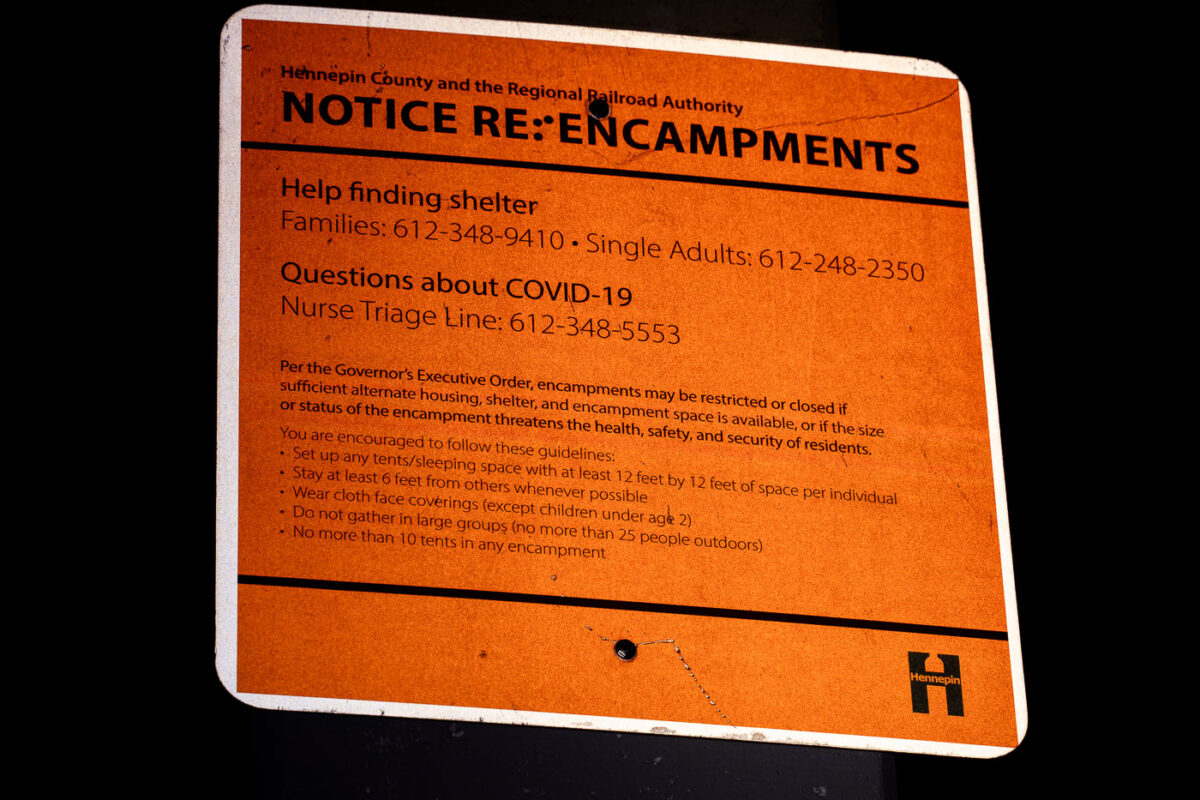
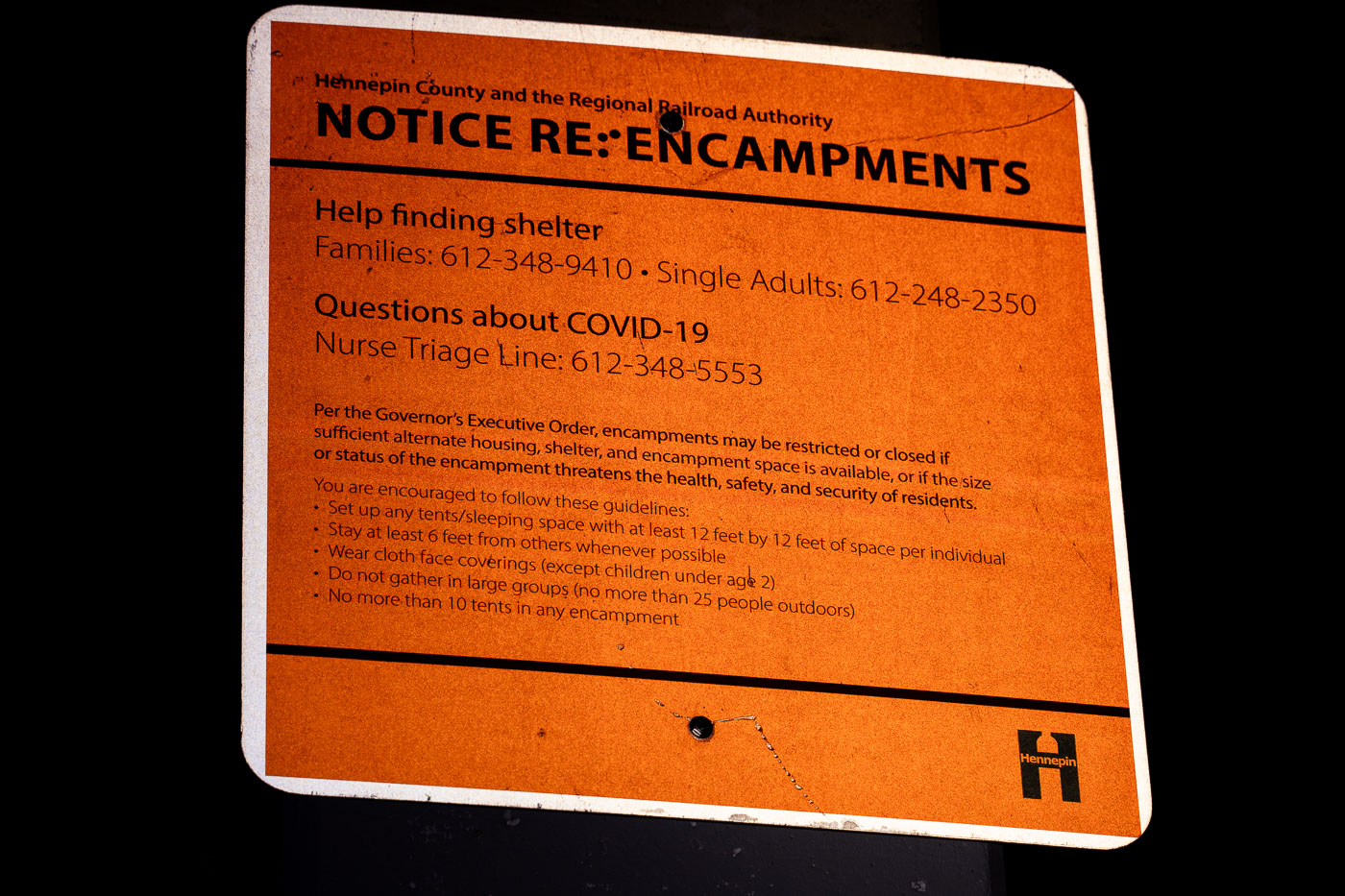
Orange notice from Hennepin County regarding encampment restrictions and COVID-19 resources posted on the Midtown Greenway in
Hennepin County and the Metropolitan Council's Regional Railroad Authority posted this notice along the Midtown Greenway during the summer of 2020, directing people living in encampments to shelter hotlines — 612-348-9410 for families, 612-248-2350 for single adults — and a COVID-19 nurse triage line at 612-348-5553. The notice cited Governor Tim Walz's executive order allowing counties to restrict or close encampments if adequate housing or shelter space became available, or if an encampment's size threatened residents' health and safety. It also listed pandemic guidelines: tents spaced at least 12 by 12 feet apart, six feet of distance between people, cloth face coverings for anyone over age two, outdoor gatherings capped at 25 people, and no more than 10 tents per encampment. The Midtown Greenway runs roughly five and a half miles through south Minneapolis along a former Milwaukee Road rail corridor, now used as a bicycle and pedestrian trail beneath street level.

Hennepin County Notice on Encampments Along the Midtown Greenway
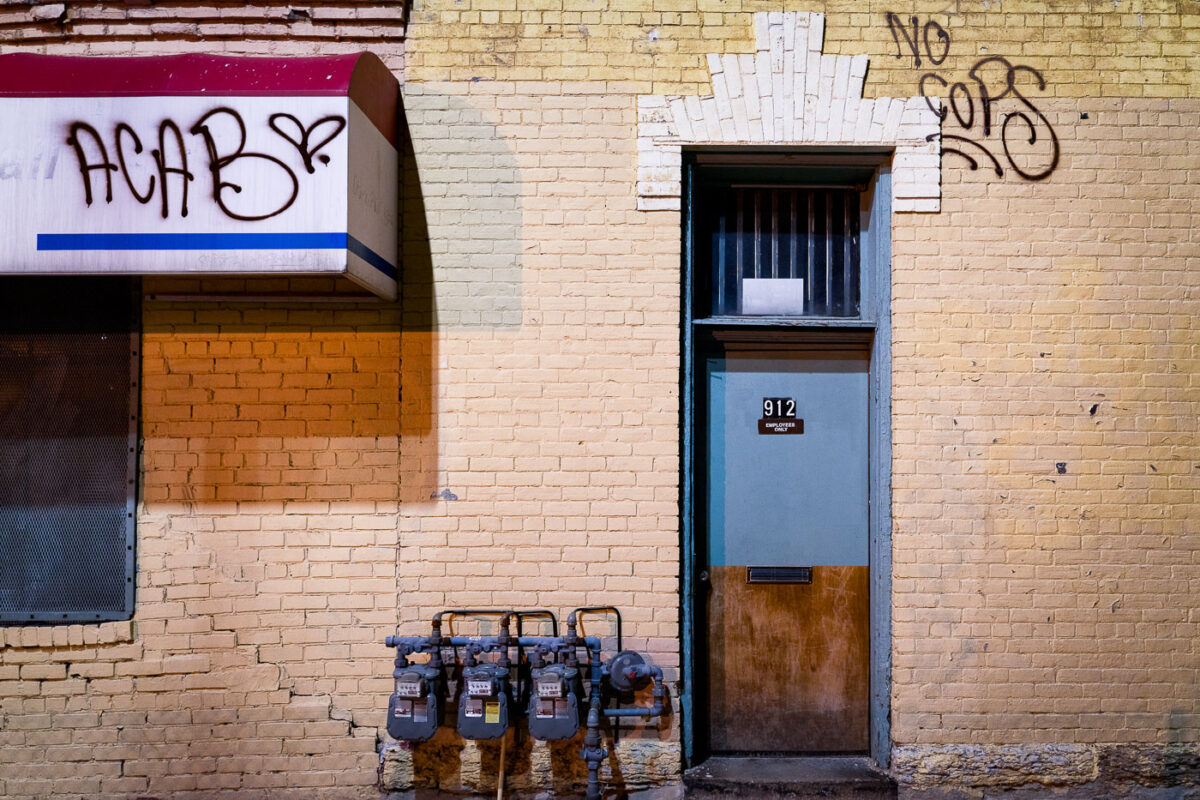
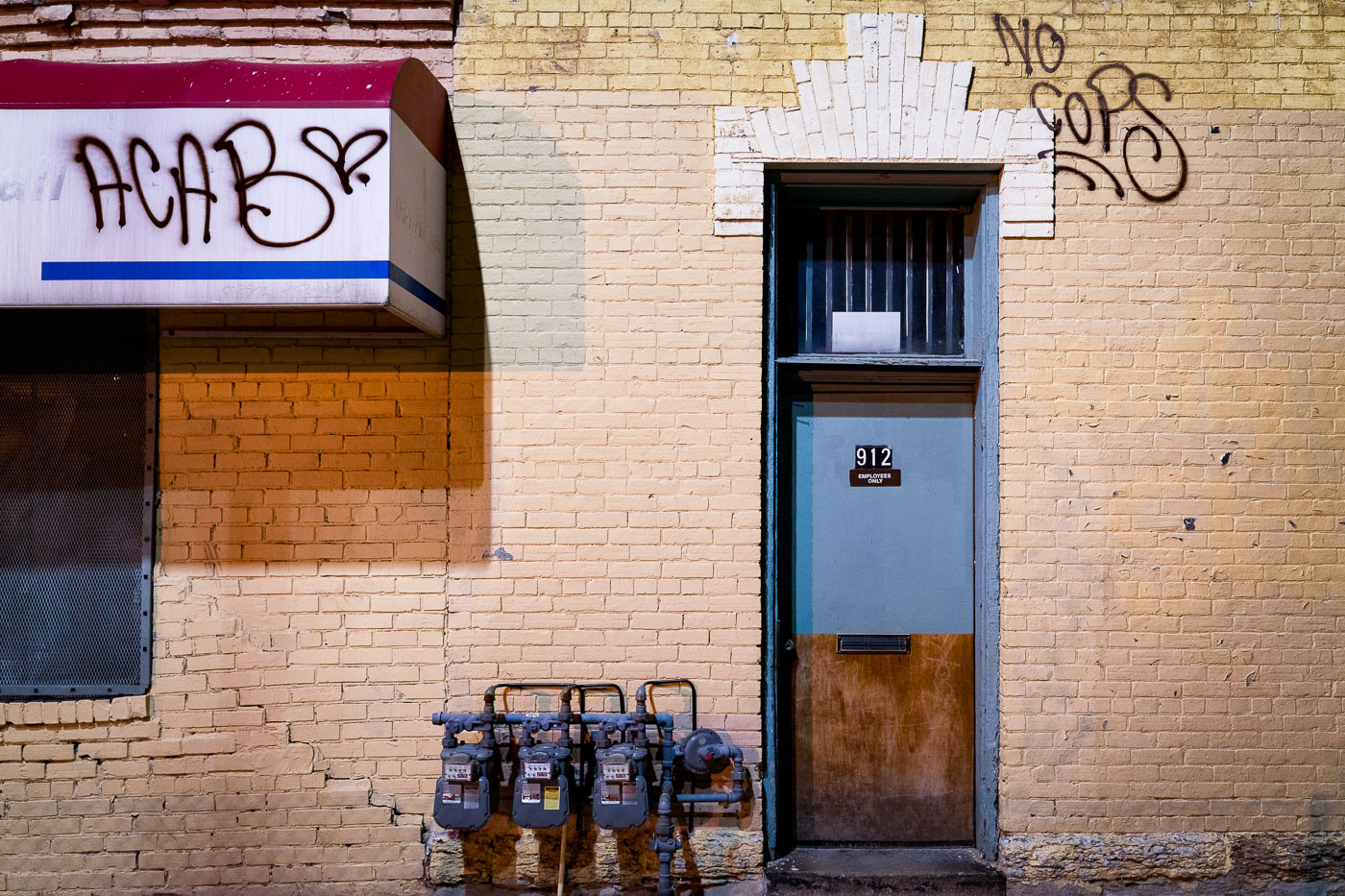
ACAB and No Cops graffiti on downtown Minneapolis building
Graffiti reading "ACAB" and "NO COPS" marks a brick building in downtown Minneapolis.

ACAB and NO COPS Graffiti on Downtown Minneapolis Building

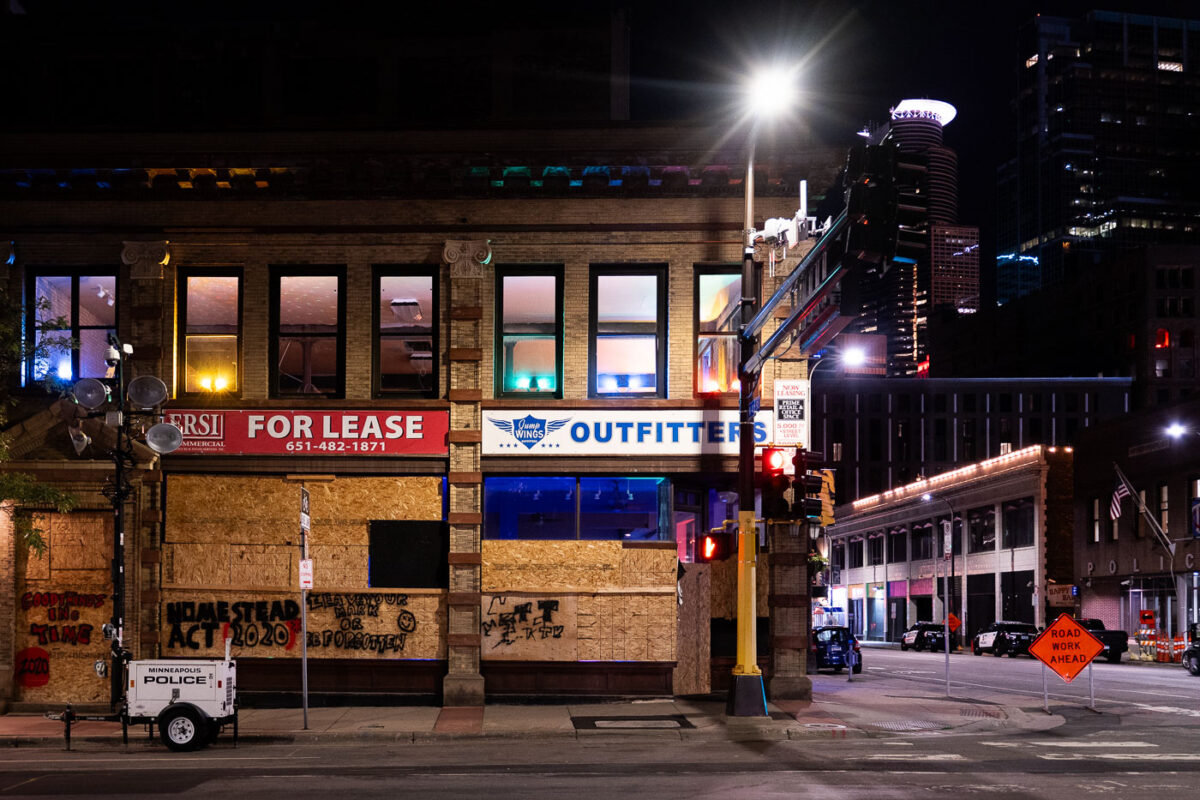
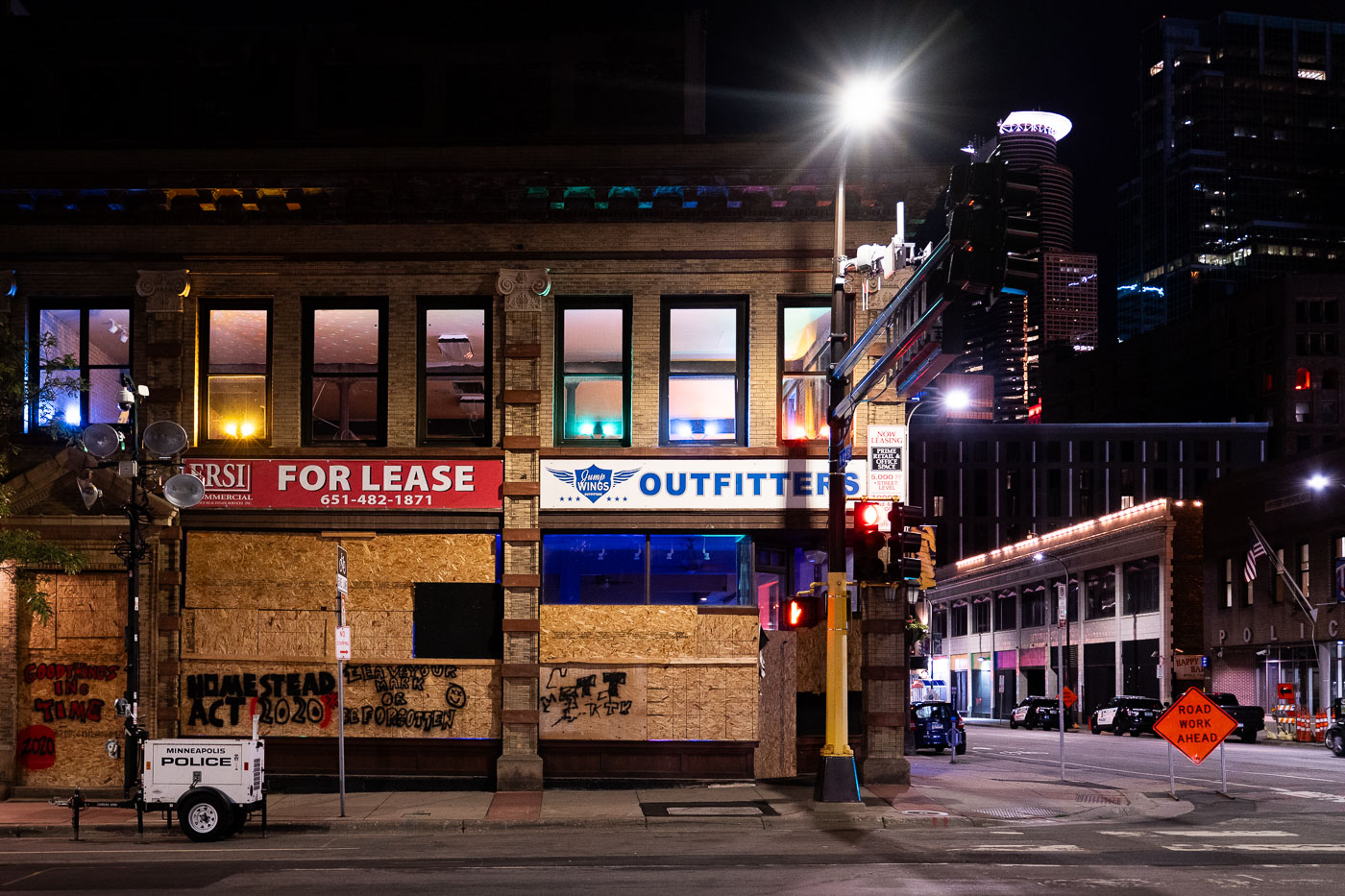
Minneapolis police surveillance camera in downtown Minneapolis
Boarded-up commercial buildings line a street in Downtown Minneapolis in August 2020. A Minneapolis Police mobile surveillance camera is positioned in the foreground, providing additional security monitoring near the boarded storefronts, which are located around the corner from the Minneapolis Police First Precinct station.

Downtown Minneapolis Boarded Buildings, Police Camera, Aug 2020

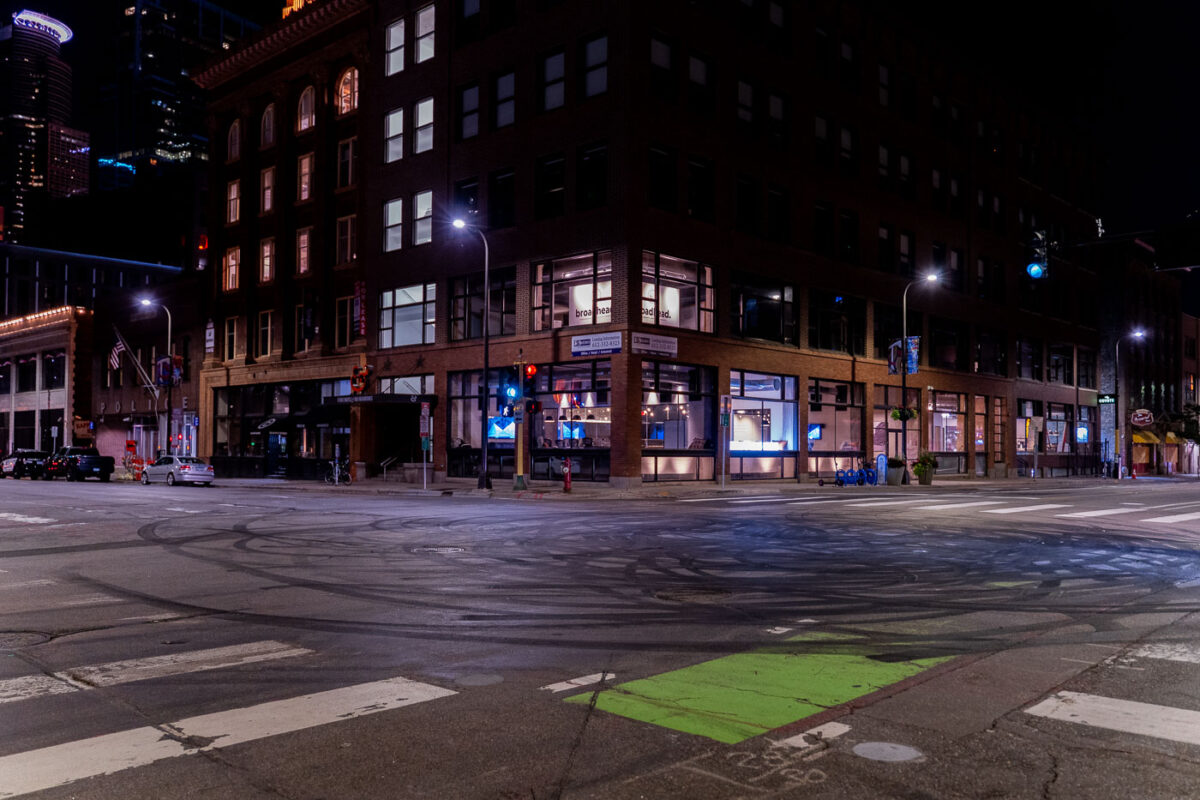
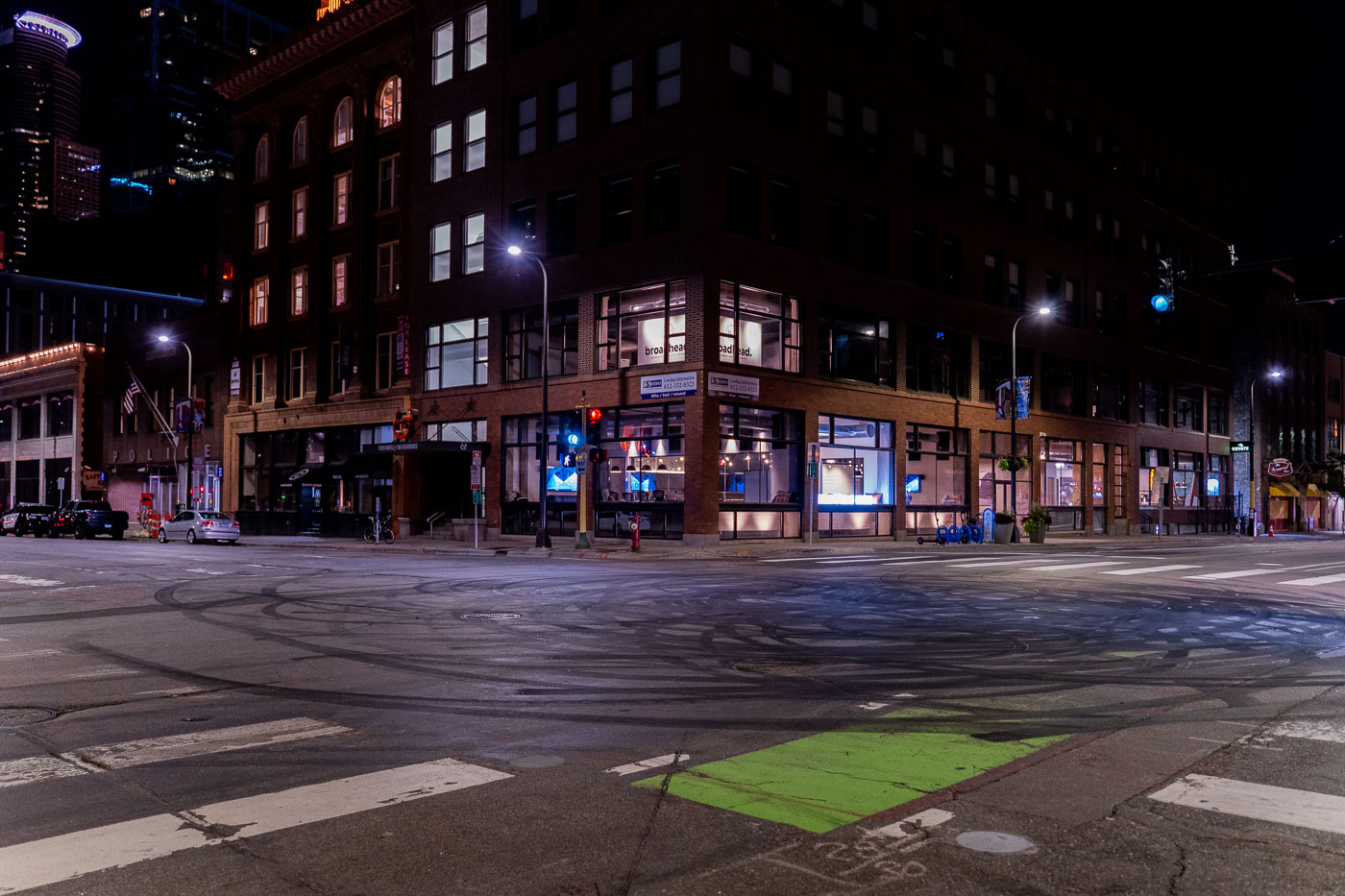
Burn out marks in Downtown Minneapolis
Burnout marks scar the asphalt outside the Minneapolis Police 1st Precinct in Downtown Minneapolis. These tire marks are remnants of "Hot Rodders" gatherings, which frequently occurred at various city intersections throughout the summer.

Burnout Marks at Minneapolis Police 1st Precinct

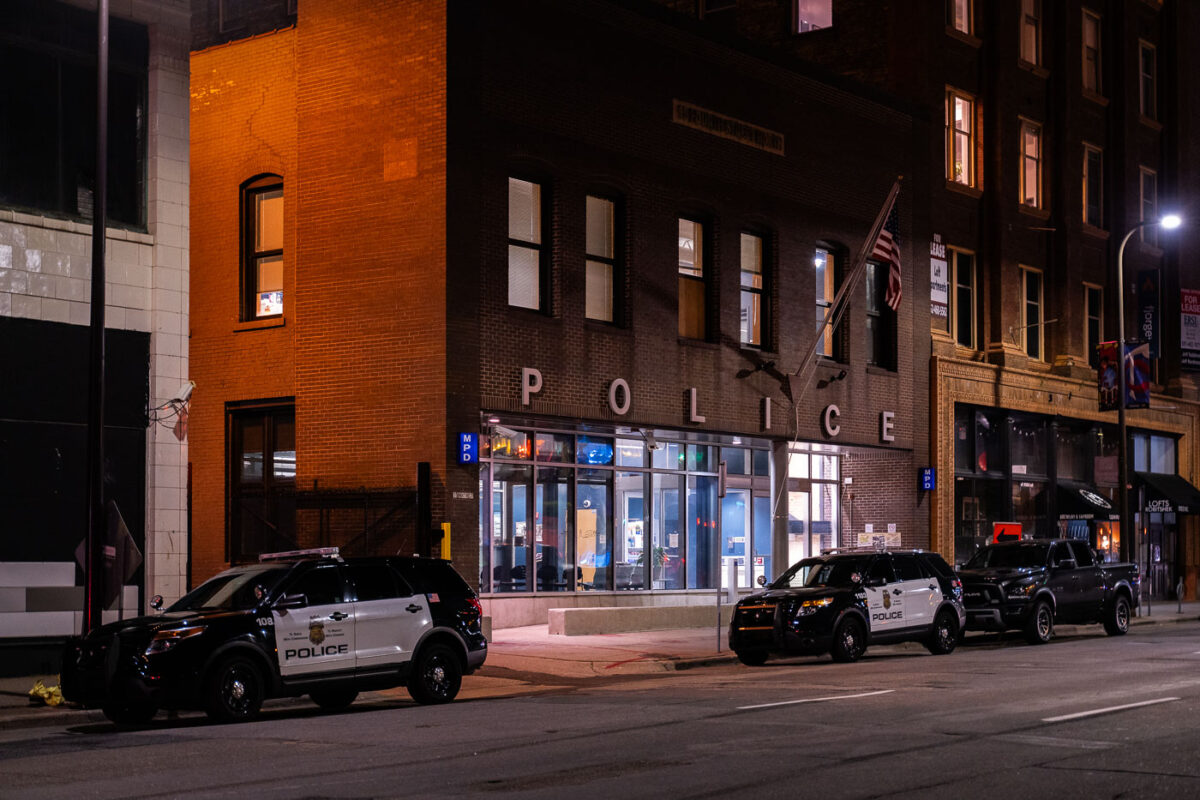
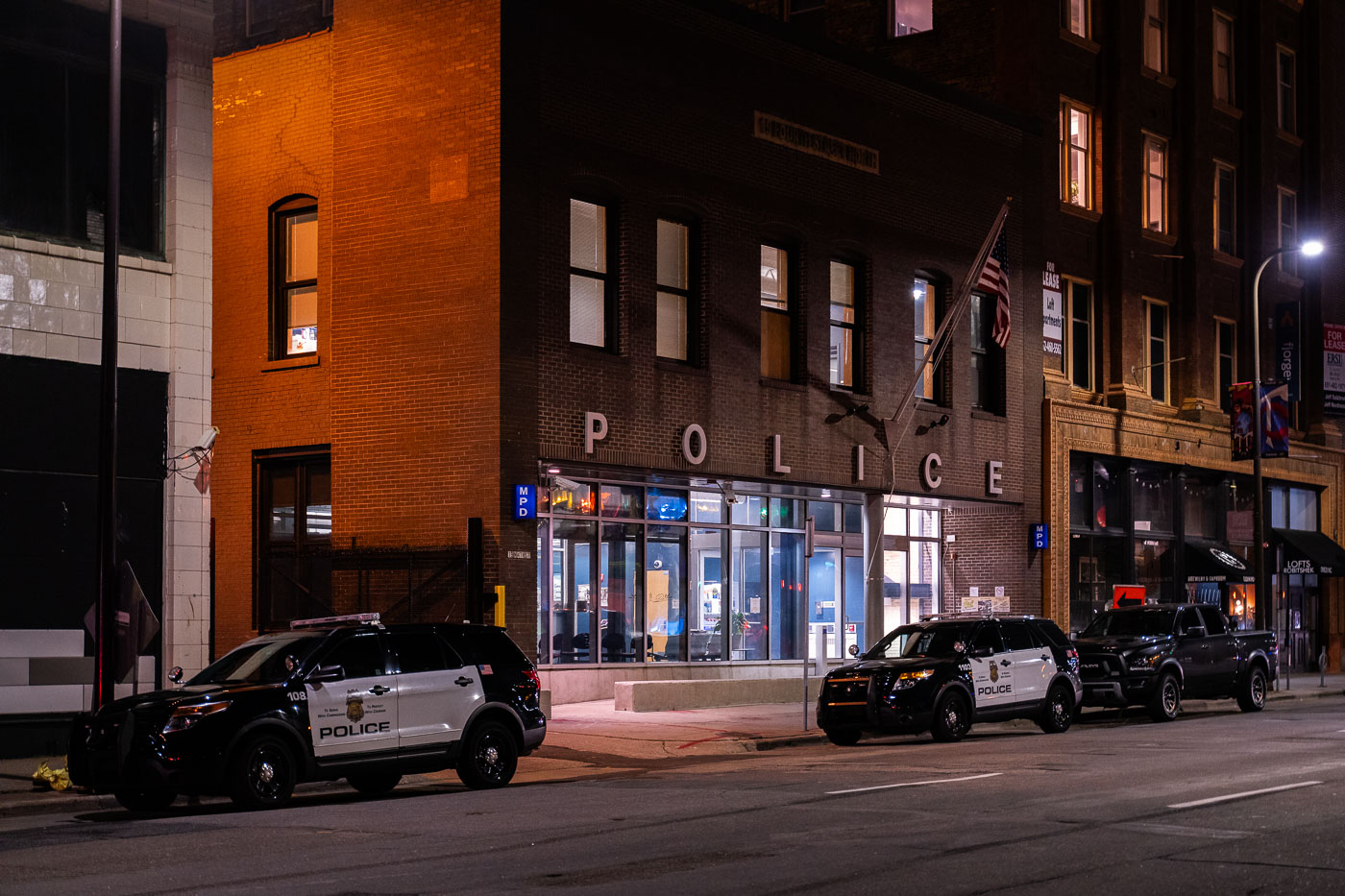
Squad cars parked outside a Minneapolis police station
The Minneapolis Police 1st Precinct police station is located at 19 N 4th Street in downtown Minneapolis.

Squad cars at Minneapolis Police 1st Precinct, 19 N 4th St

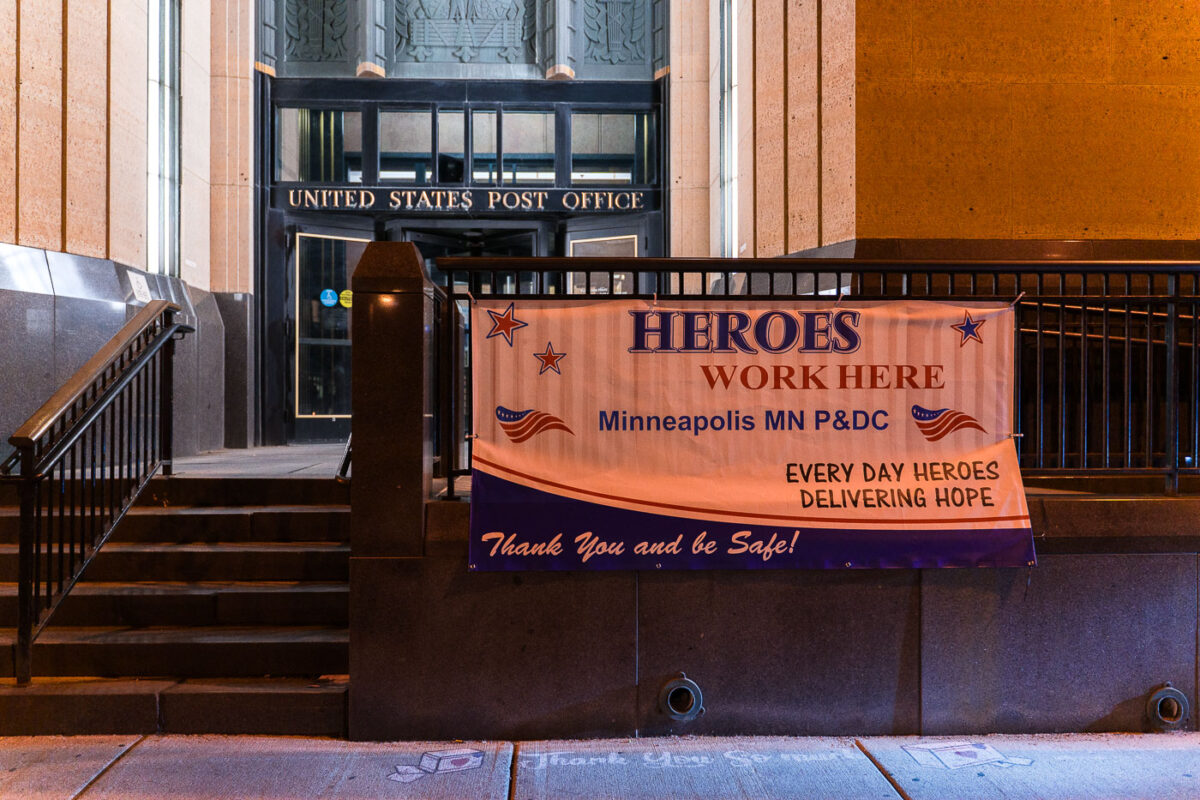
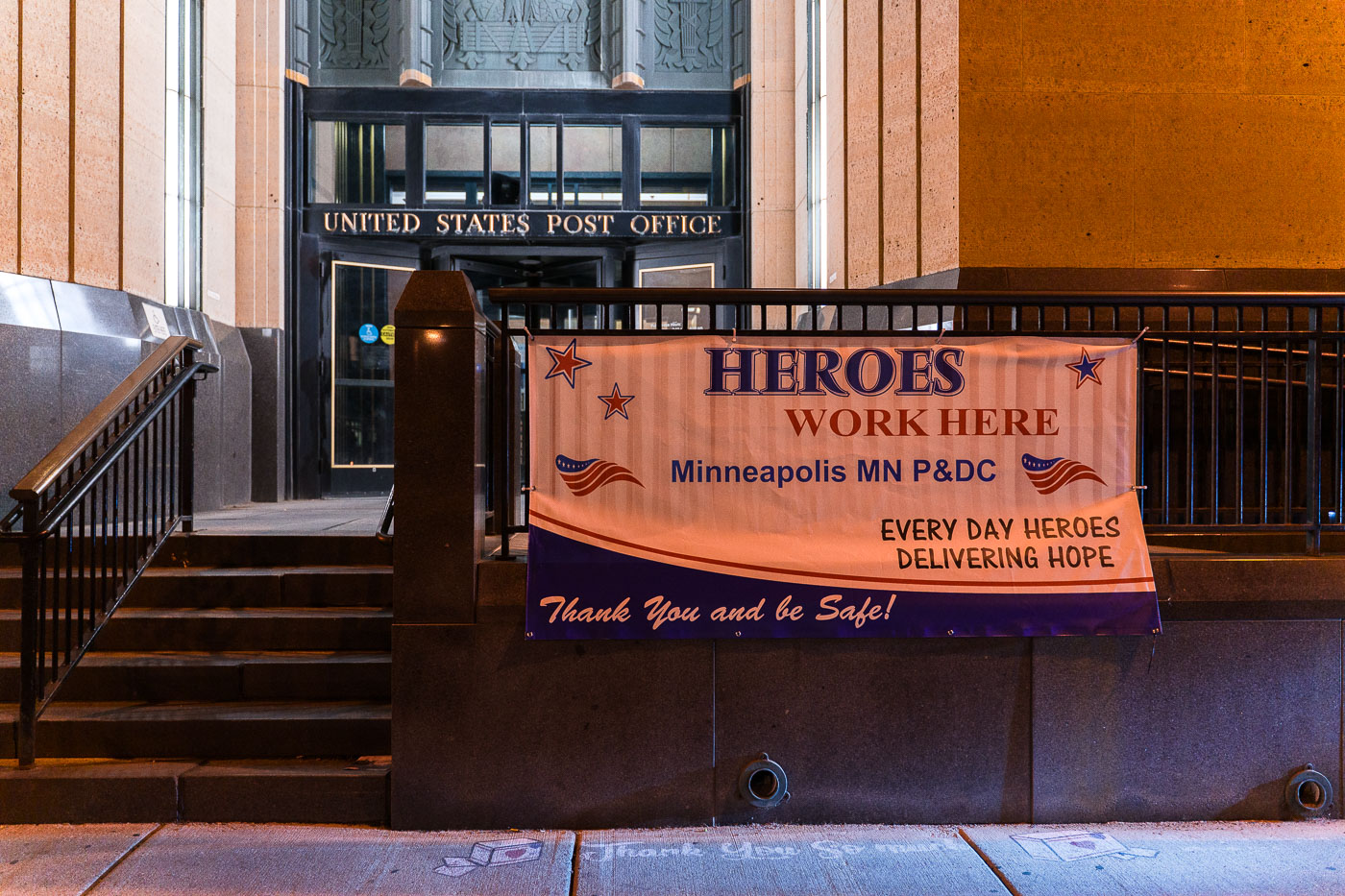
Heros work here sign at the main post office in Minneapolis
A "Heroes Work Here" banner is displayed outside the United States Post Office in Downtown Minneapolis. The banner, which reads "Minneapolis MN P&DC" and "Every Day Heroes Delivering Hope," recognizes the essential role of postal workers. This facility serves as a vital hub for mail processing and distribution for Minneapolis and the surrounding region.

Heroes Work Here Banner, Downtown Minneapolis Post Office

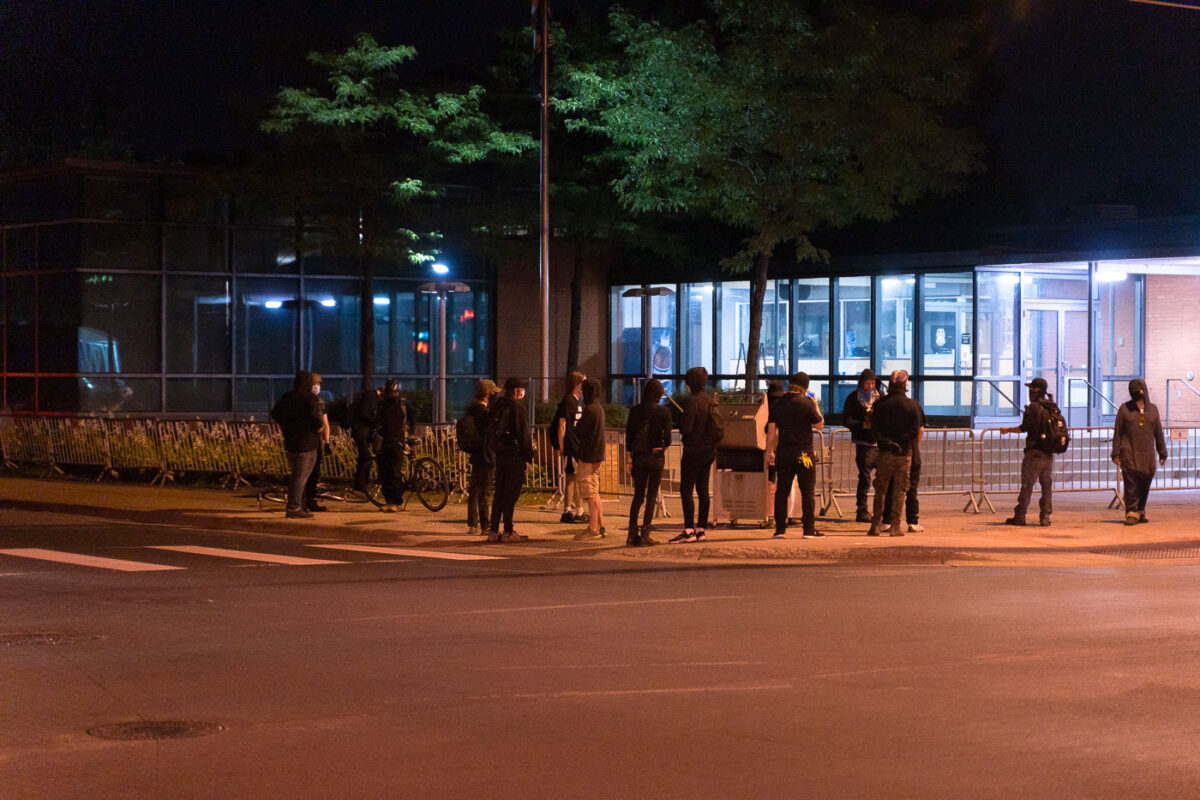
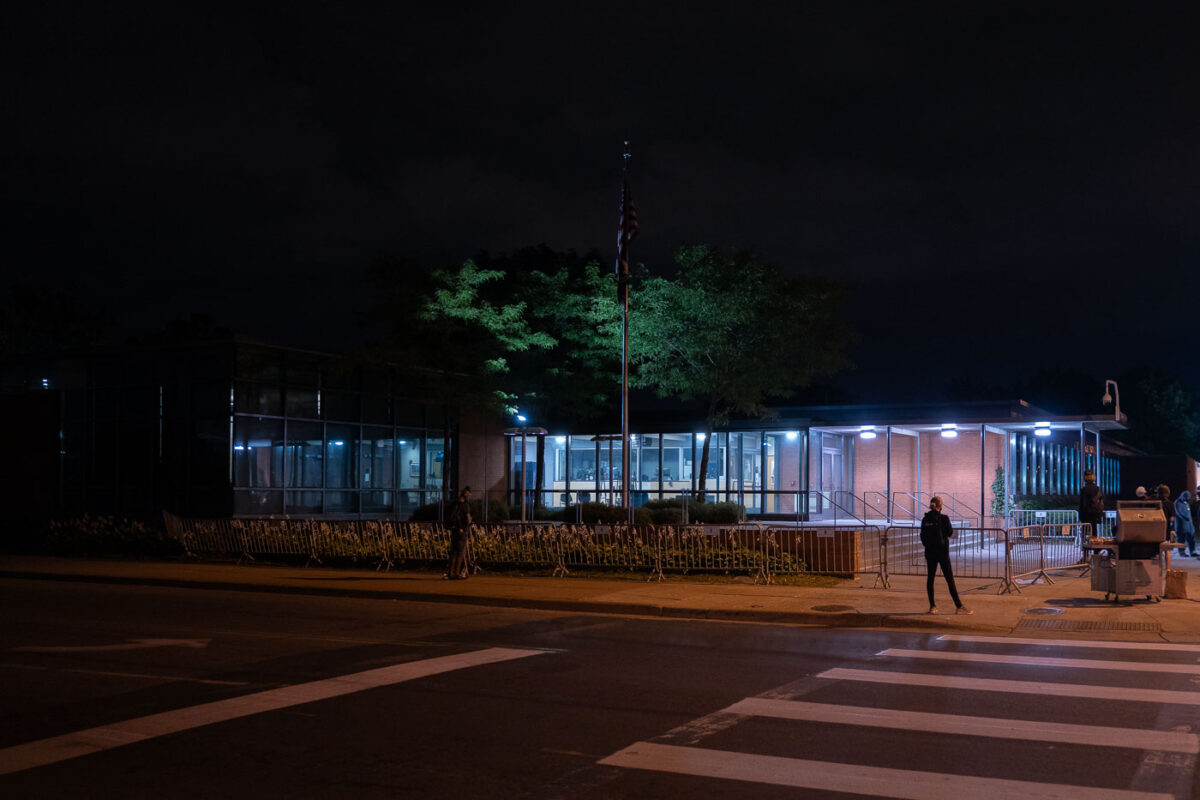
Protesters grill hot dogs outside 5th precinct station
Protesters gathered outside the Minneapolis Police Fifth Precinct on Nicollet Avenue on August 16, 2020.

Protesters grill hot dogs at MPD 5th Precinct, Nicollet Ave

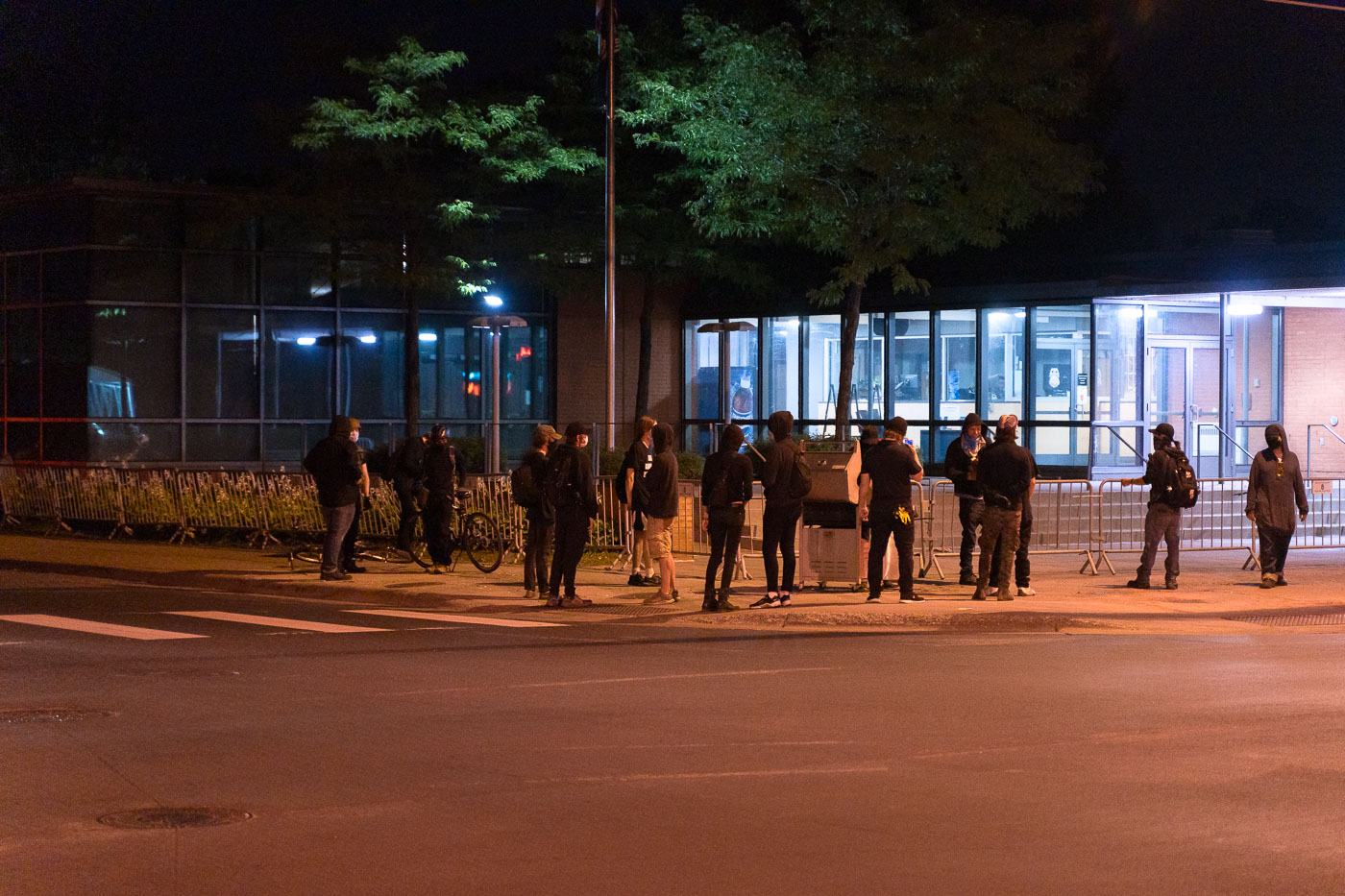
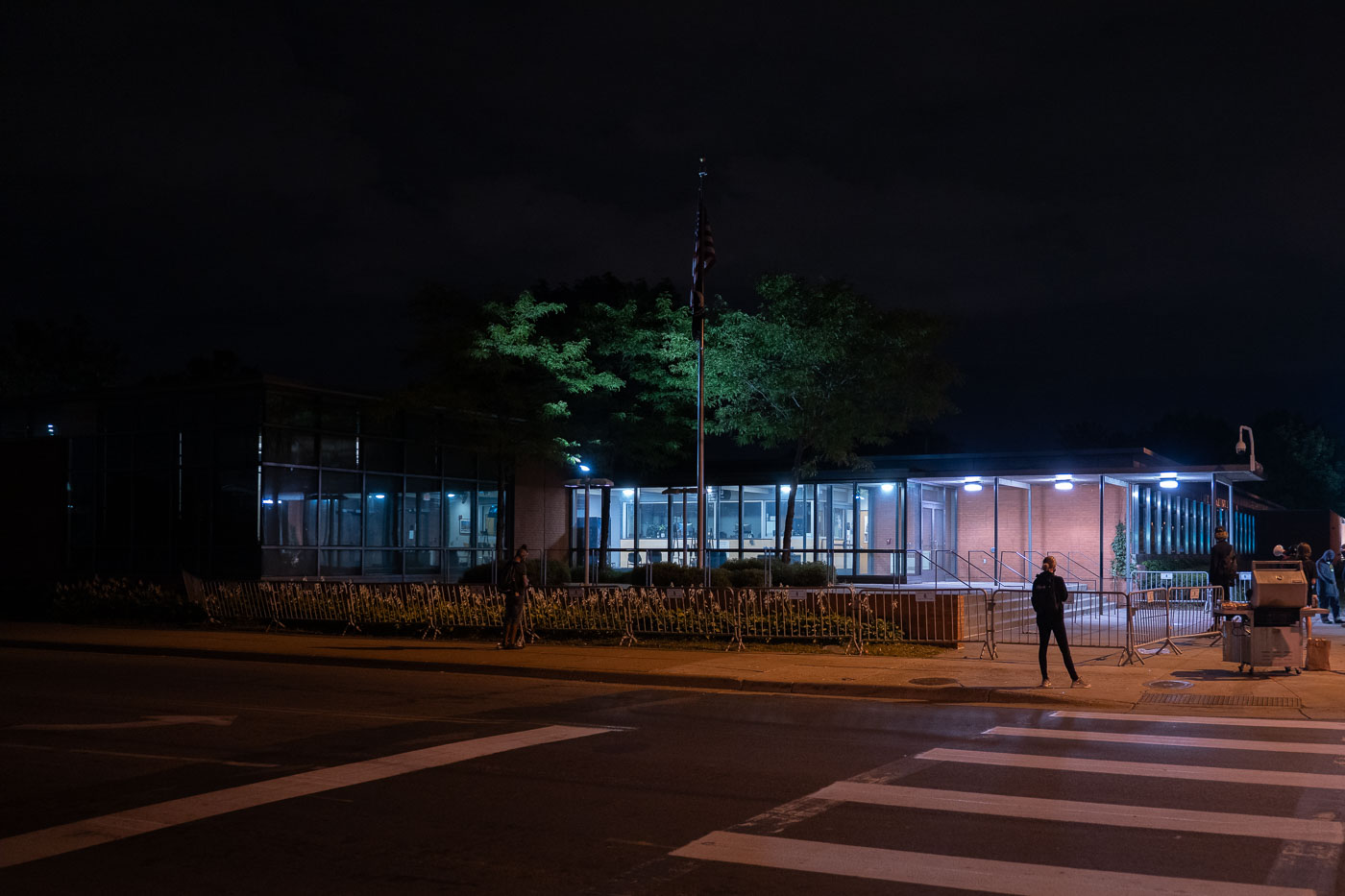
Minneapolis protesters grill hot dogs outside police station
Protesters gather outside the Minneapolis Police Fifth Precinct on Nicollet Avenue on August 16, 2020. The group is seen grilling hot dogs.

Protesters grill hot dogs at Minneapolis 5th Precinct, Nicollet Ave

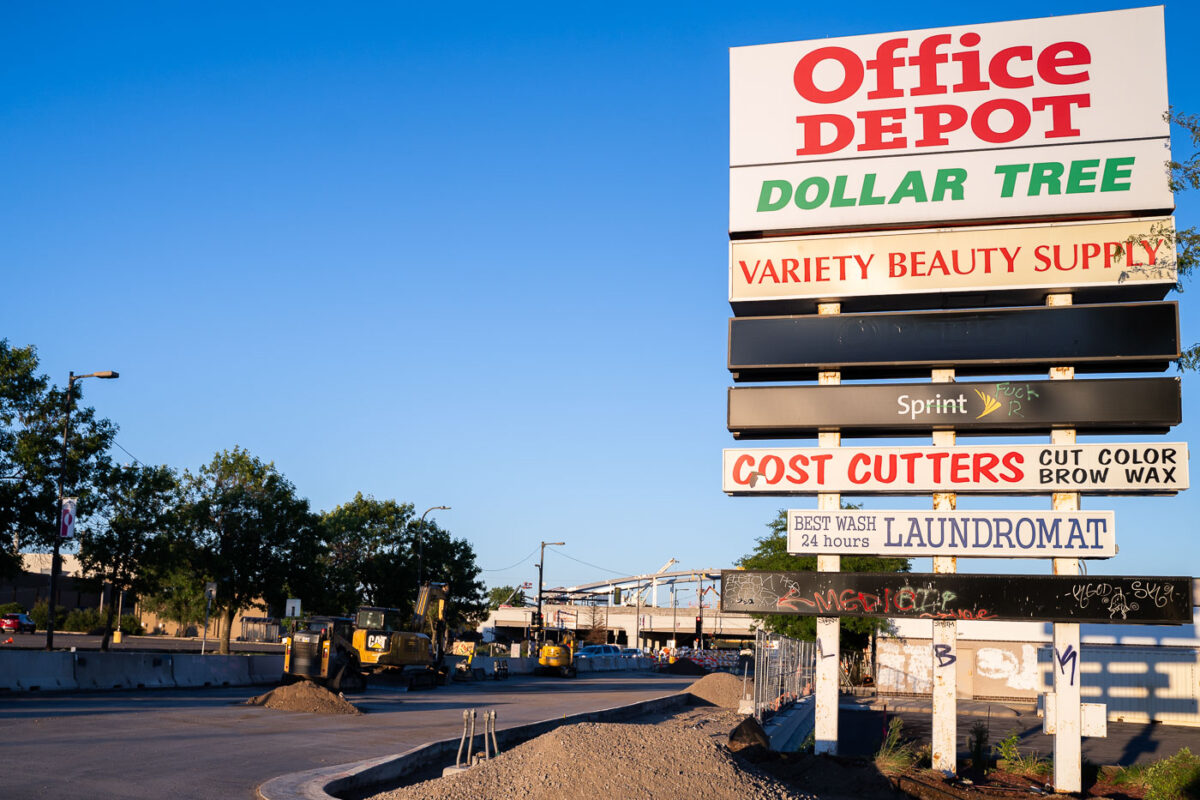
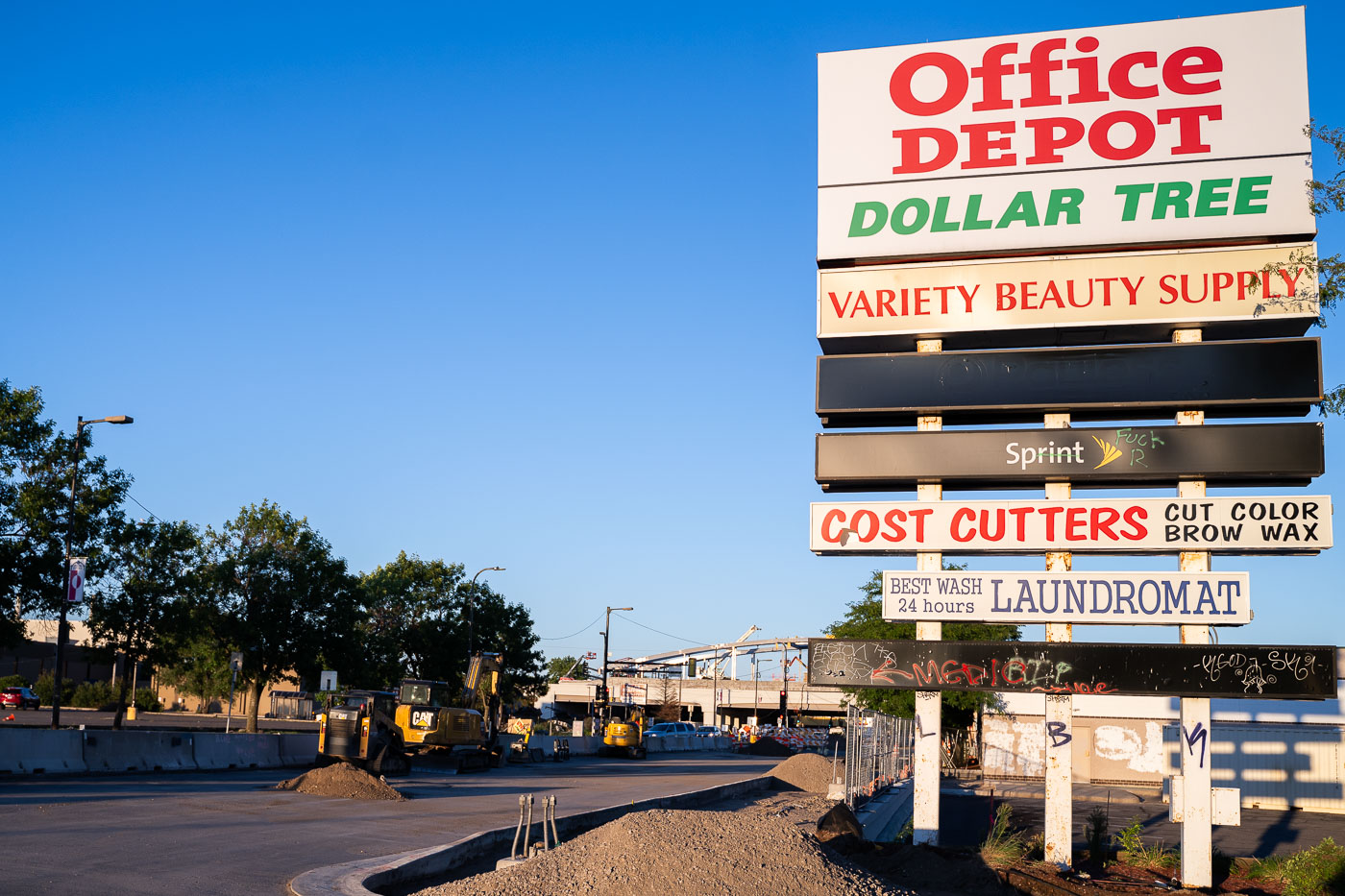
Office depot dollar tree cost cutters in Minneapolis
A strip mall sign on Lake Street in Minneapolis, featuring businesses such as Office Depot and Dollar Tree, stands amidst ongoing construction in August 2020. The sign displays graffiti, including the word "Medic", signifying the location of a medic during the protests that followed the May 25, 2020 death of George Floyd. This commercial corridor on Lake Street sustained significant damage during the unrest.

Lake Street Strip Mall Sign & Construction, Minneapolis, August 2020

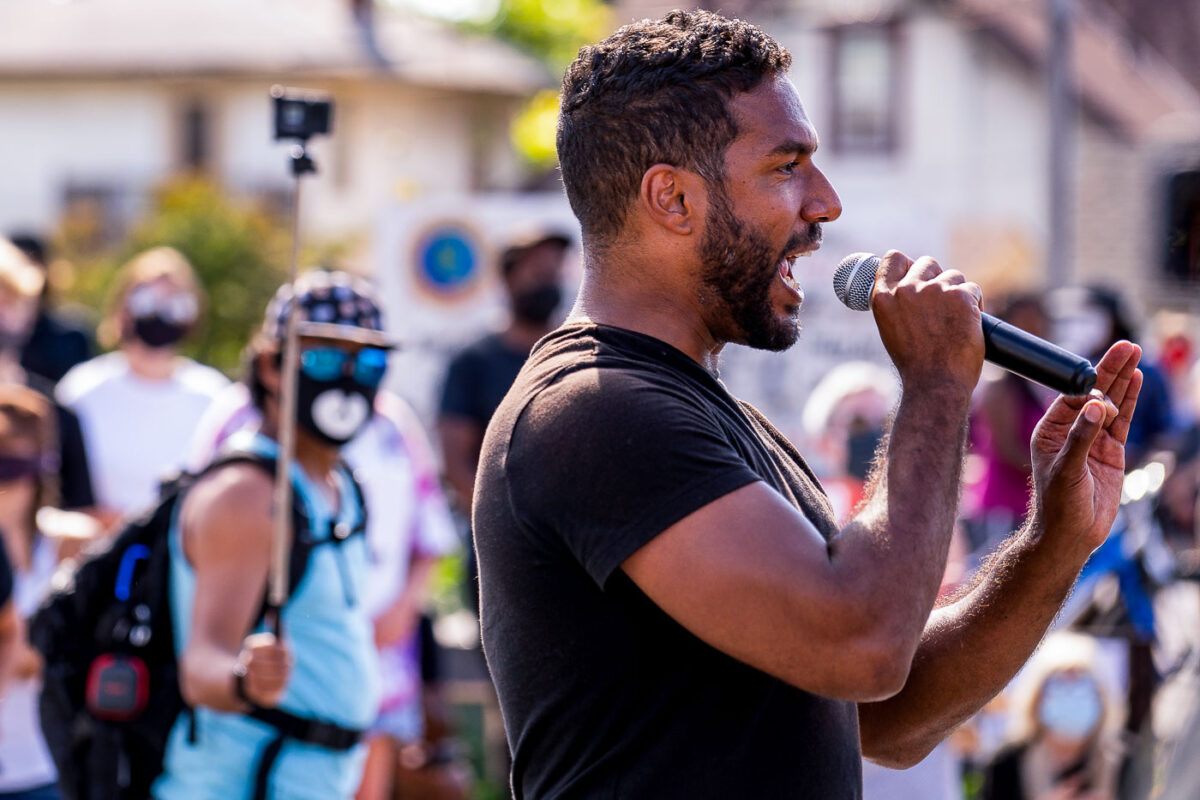
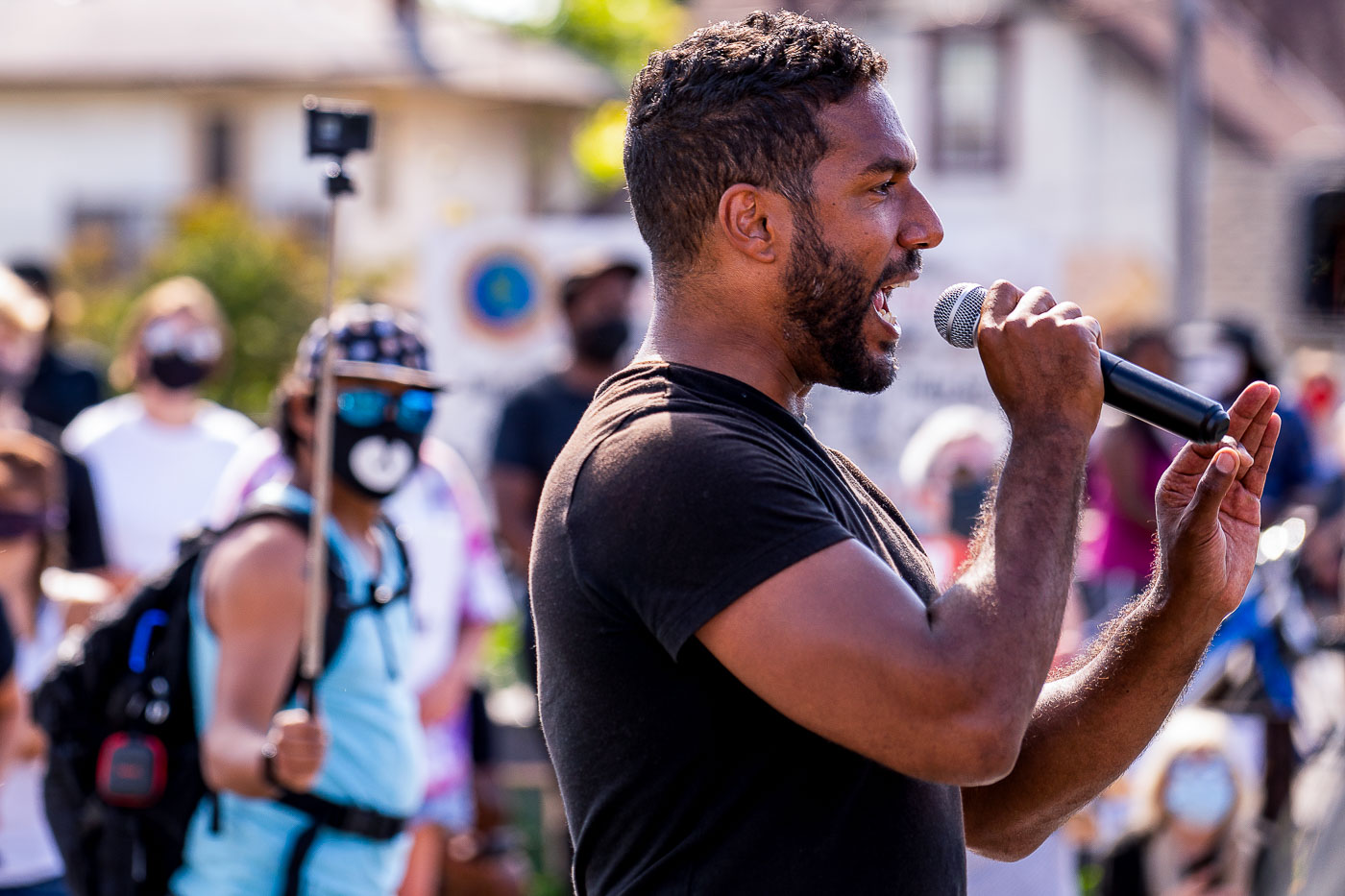
Toussaint Morrison speaks at George Floyd Square in August 2020
Toussaint Morrison addresses a rally at George Floyd Square in Minneapolis in August 2020. This protest took place on the same day President Trump visited Minneapolis, adding a layer of political significance to the gathering. George Floyd Square, situated at the intersection of Chicago Avenue and East 38th Street, emerged as a significant memorial and site for ongoing protests following George Floyd's murder in May 2020.

Toussaint Morrison at George Floyd Square Rally, August 2020

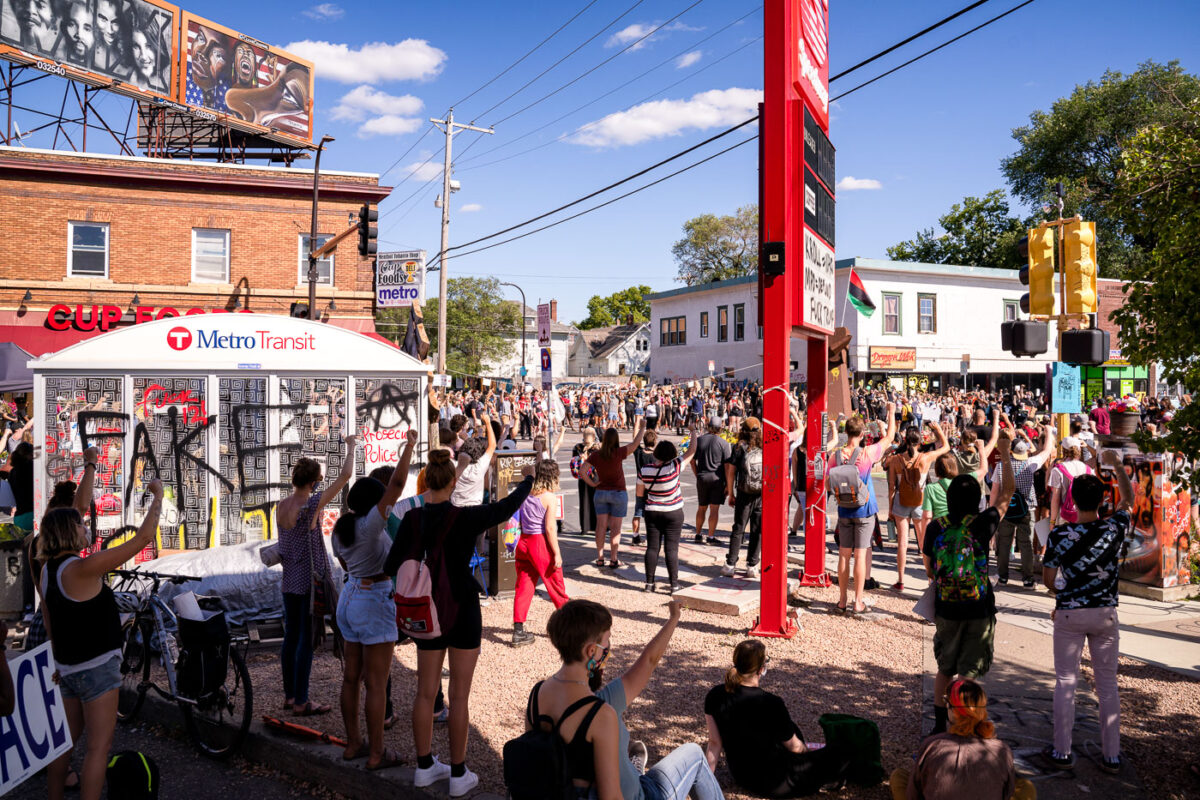
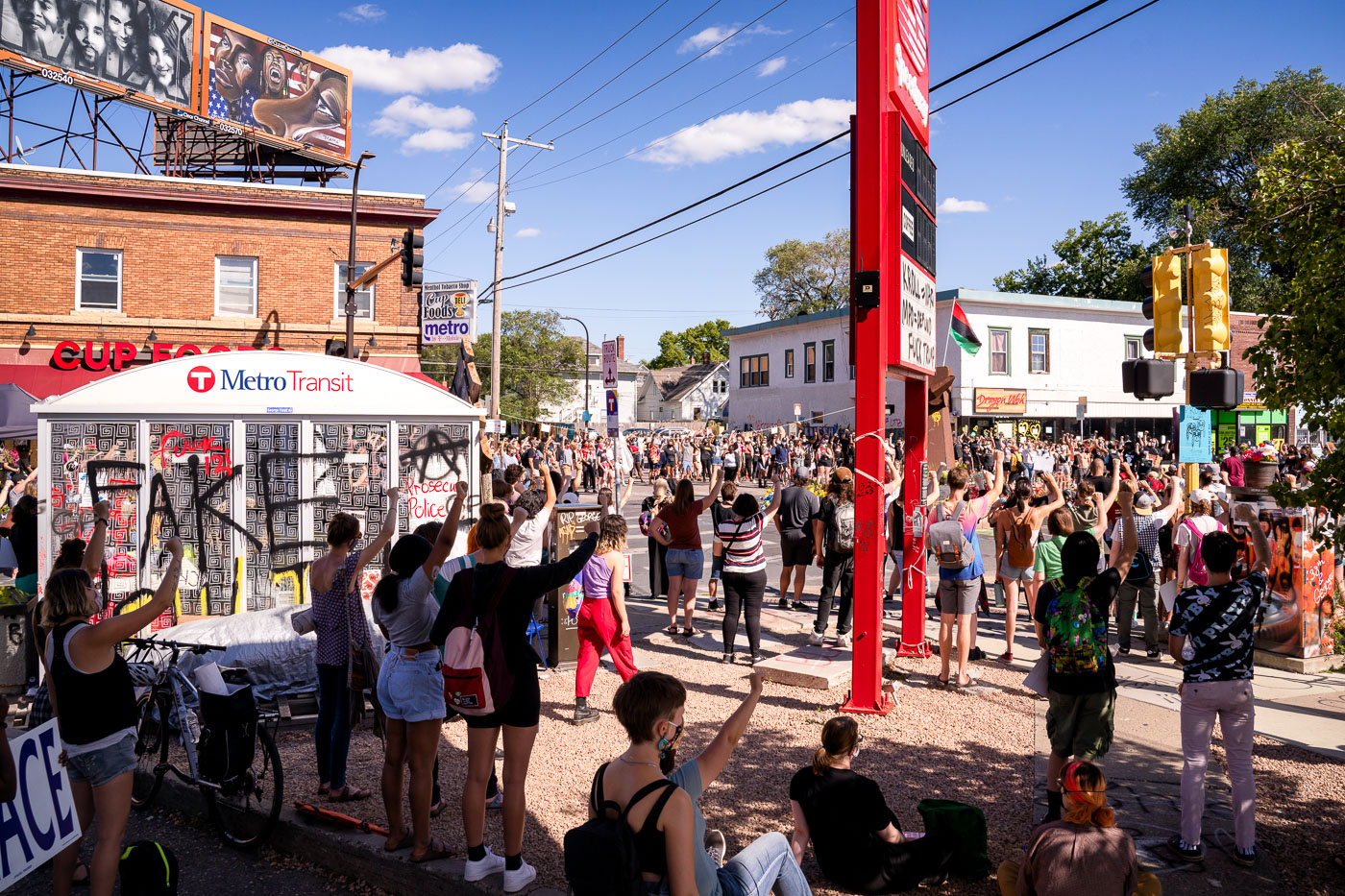
Rally at George Floyd Square during Trump visit to Minneapolis
Protesters raise their fists at George Floyd Square in Minneapolis during a rally held on the same day President Trump visited the city. This site, located at the intersection of Chicago Avenue and East 38th Street, became a community-maintained memorial and protest hub following the murder of George Floyd by Minneapolis police in May 2020. The area around Cup Foods, where Floyd was killed, was transformed into a space for collective mourning and calls for justice.

George Floyd Square Protest During Trump Visit, Minneapolis

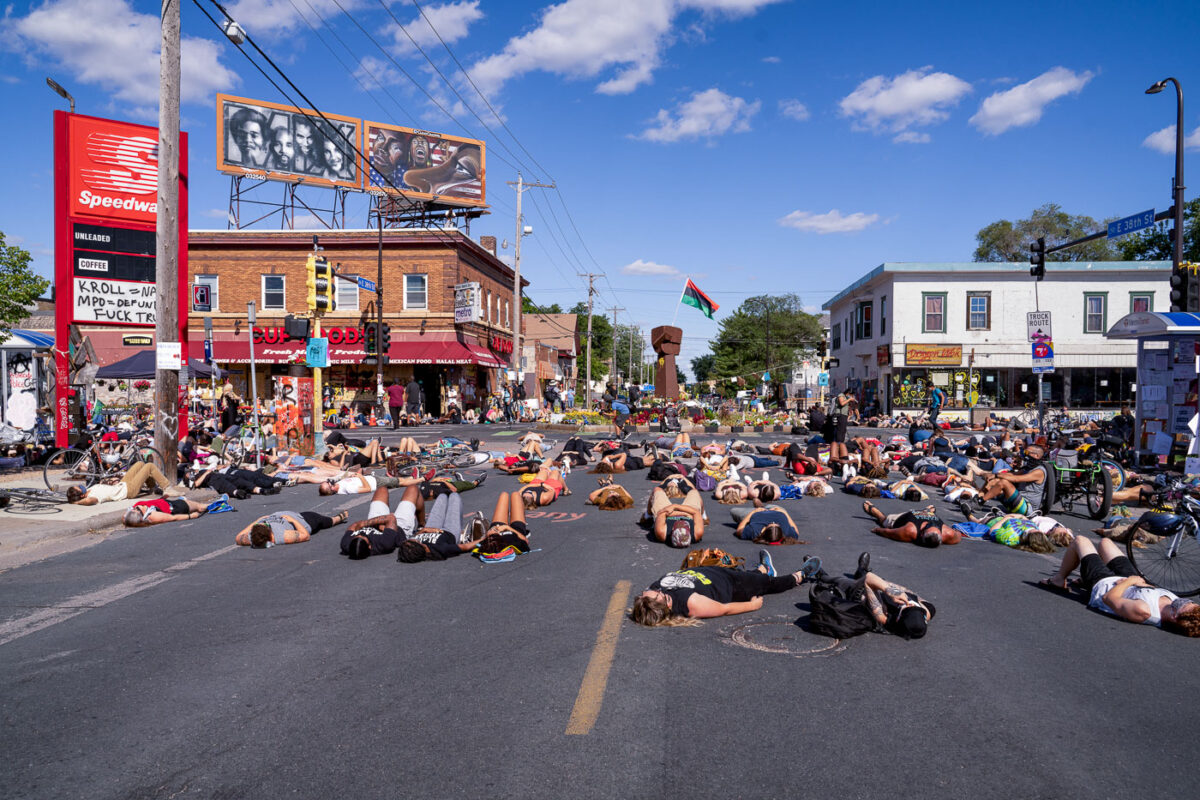
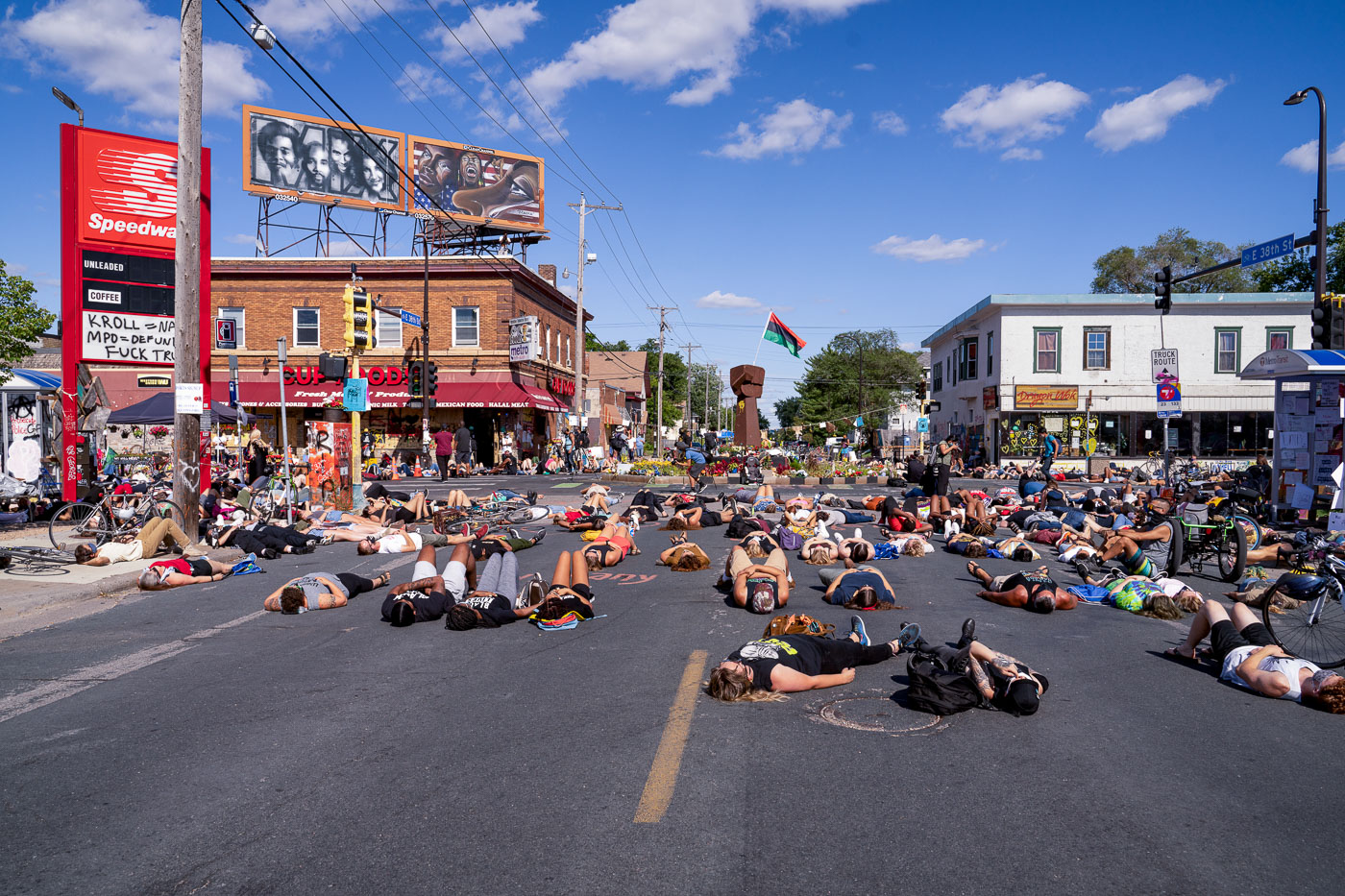
A lay in staged at George Floyd Square in August 2020
Protesters participate in an 8-minute and 46-second 'lay-in' at George Floyd Square in Minneapolis during August 2020. This protest action symbolizes the duration a Minneapolis Police officer knelt on George Floyd's neck, resulting in his death. George Floyd Square, situated at the intersection of Chicago Avenue and East 38th Street, transformed into a memorial and community space following Floyd's murder in May 2020. The square continues to function as a site for remembrance, community gathering, and ongoing advocacy for racial justice and police accountability.

George Floyd Square 8:46 Minute Lay-In Protest, August 2020

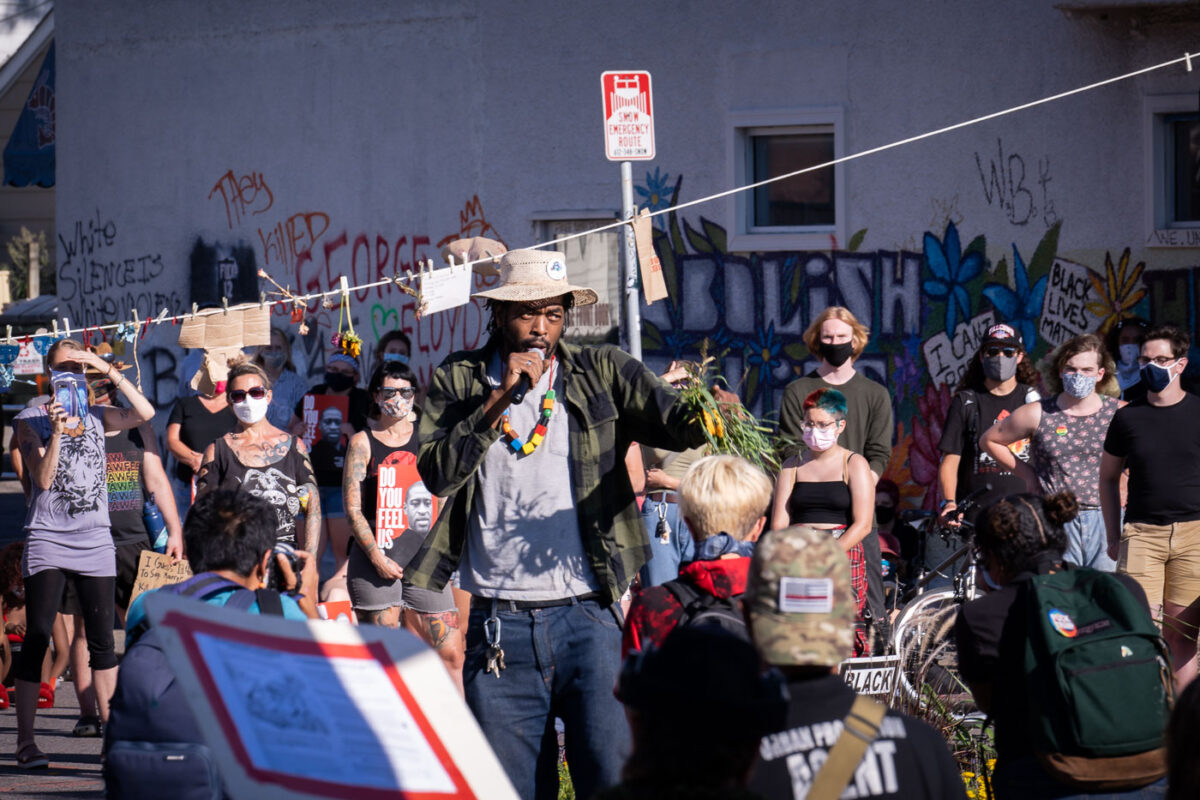
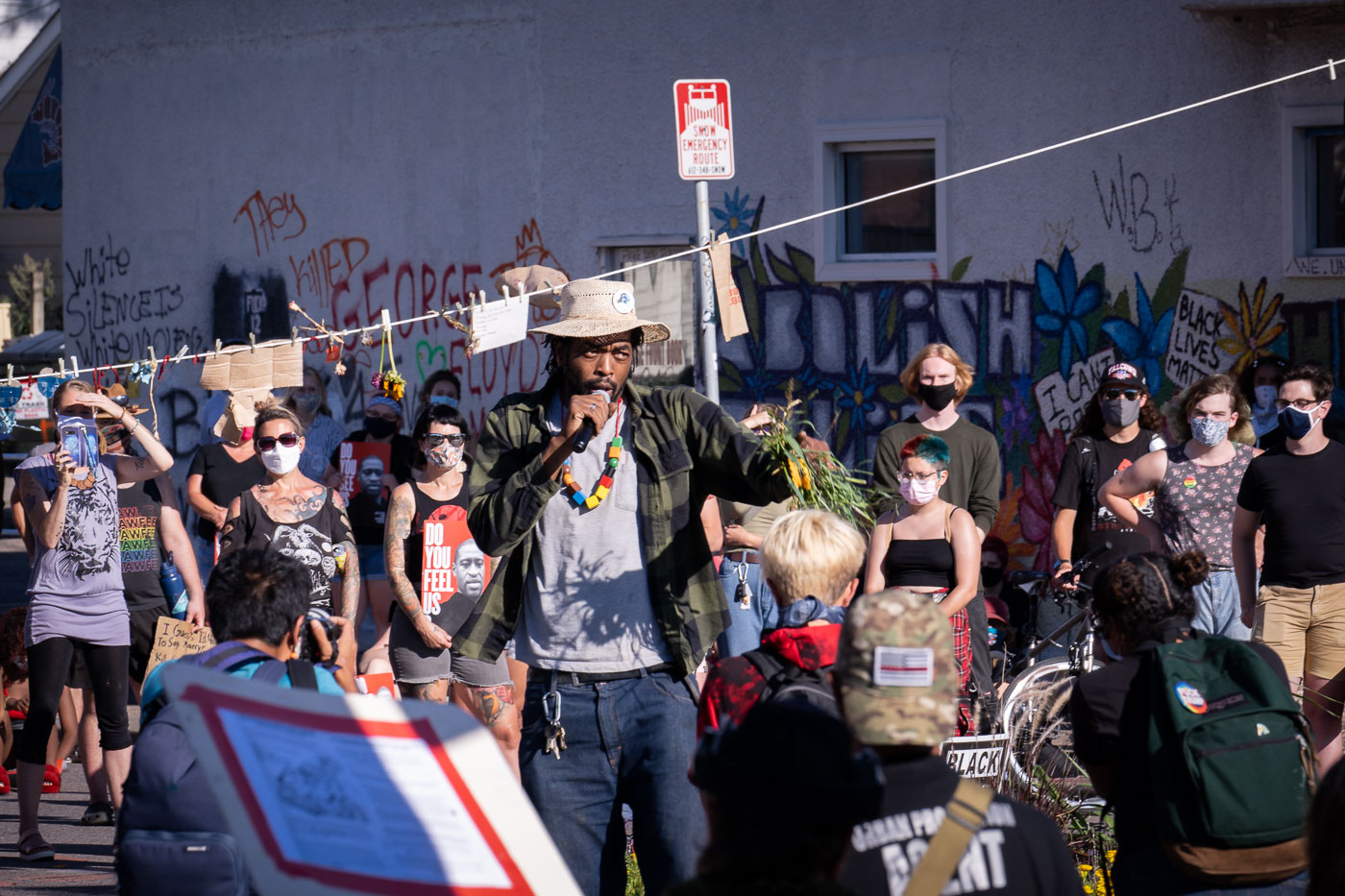
George Floyd Square garden caretaker Jay Webb
Jay Webb, caretaker of the George Floyd Square garden, addresses a gathering at a protest in Minneapolis. The rally took place at George Floyd Square, located at the intersection of Chicago Avenue and East 38th Street, a site that became a permanent memorial and protest space after the murder of George Floyd in May 2020. This particular protest occurred on a day when President Trump was visiting the city, adding to the local activism. The surrounding walls feature protest graffiti, including phrases like "Black Lives Matter" and "Abolish," reflecting the ongoing calls for justice and systemic change.

George Floyd Square Caretaker Jay Webb at Minneapolis Rally

Haiwatha exit sign with graffiti
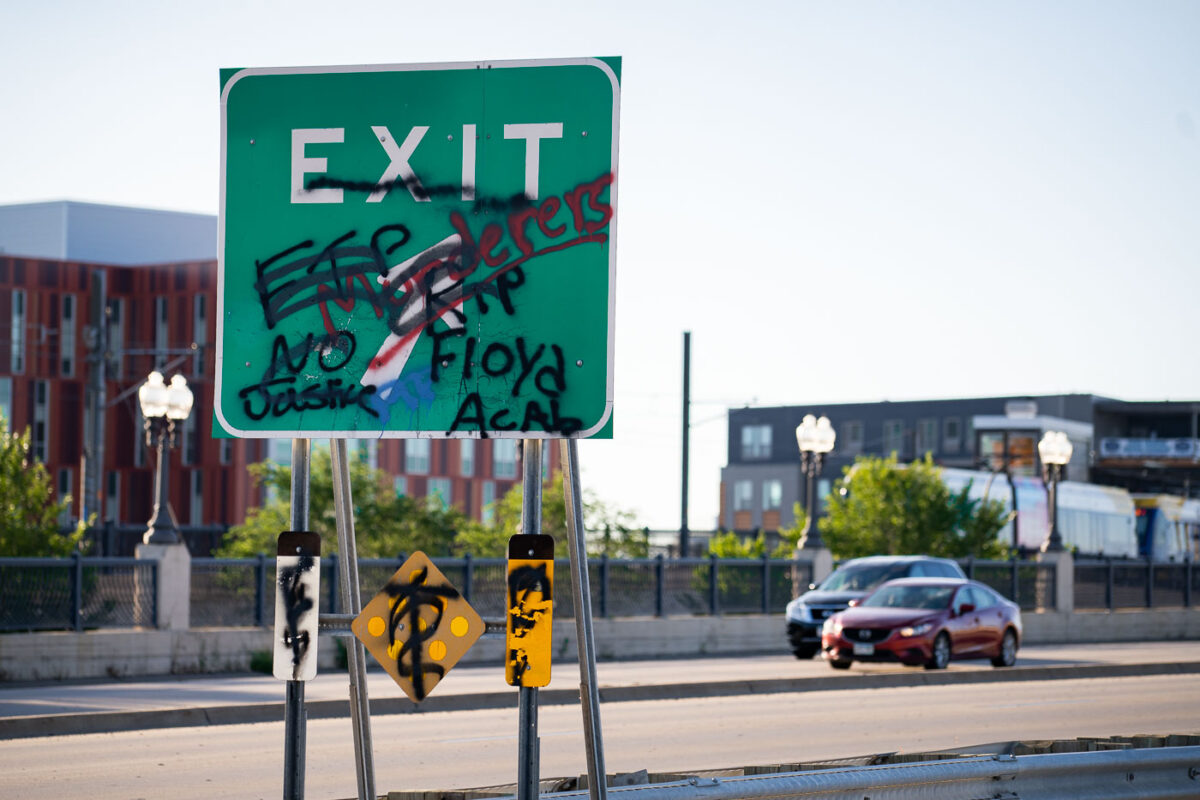
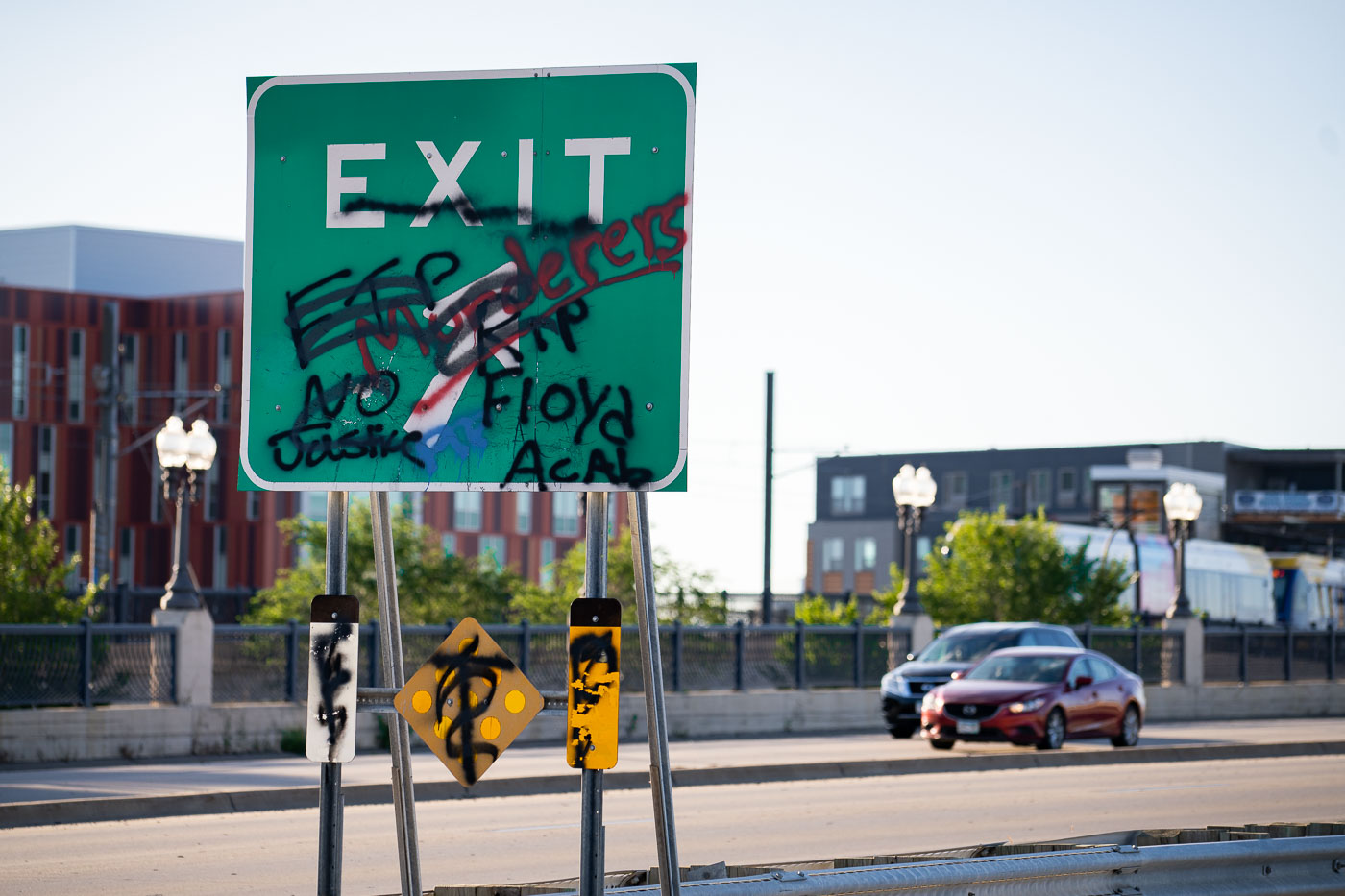
Graffiti covers an exit sign on Haiwatha Avenue in Minneapolis. This act of protest art, documented on August 17, 2020, emerged during the Minneapolis Uprising following the murder of George Floyd. Messages such as "Floyd" and "ACAB" reflect the widespread public outcry and calls for police accountability that characterized the period.

Haiwatha Avenue Exit Sign Graffiti, August 17, 2020

George Floyd Memorial with sunburst
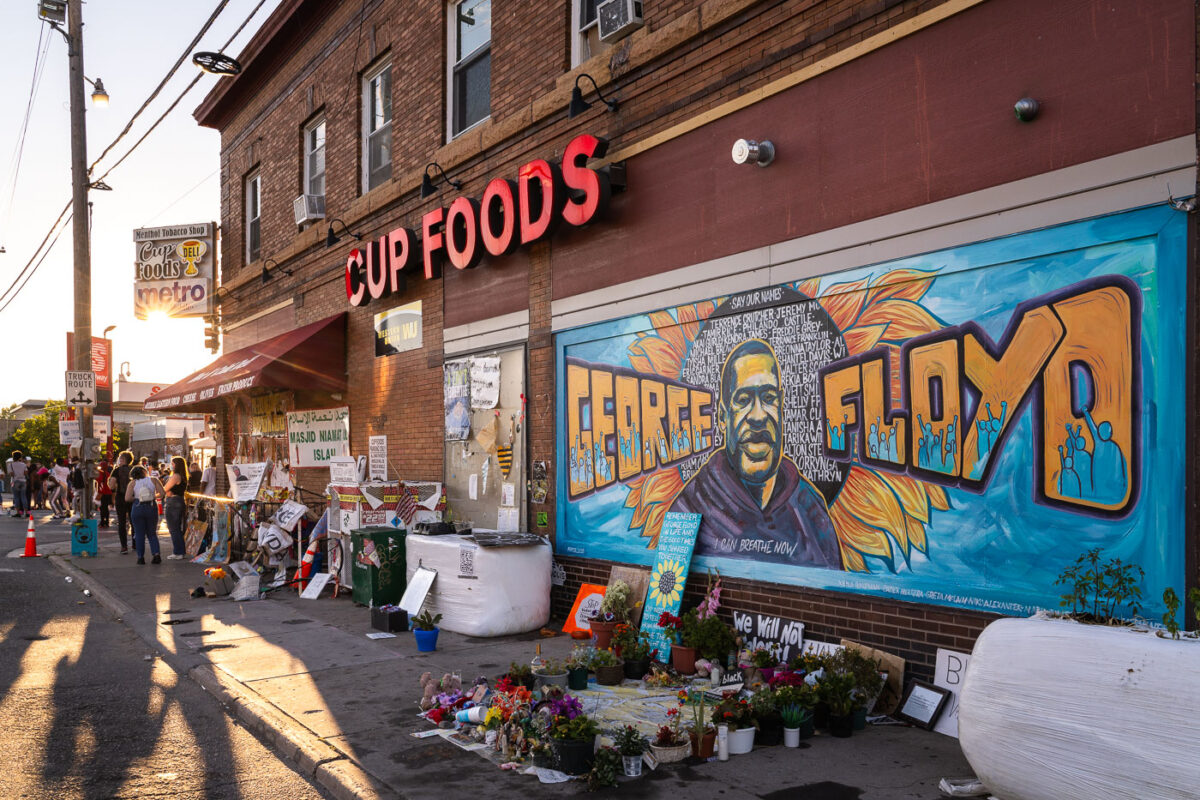
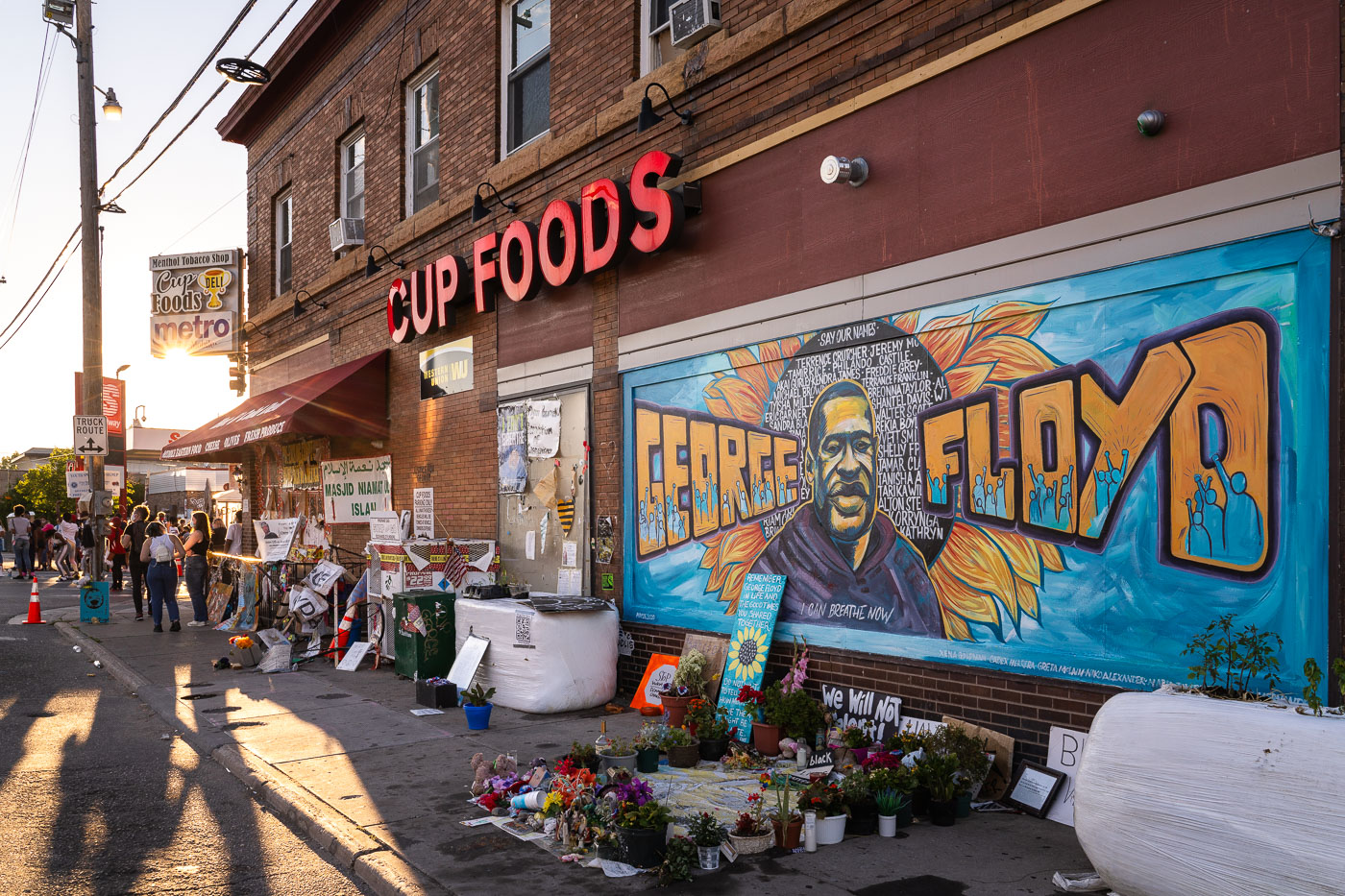
The George Floyd mural at Cup Foods on East 38th Street in Minneapolis located near where George Floyd was murdered by police on May 25, 2020. This location, known as George Floyd Square, became an autonomous zone and a significant memorial site following his death, drawing visitors and activists from around the world. The photograph, taken on August 17, 2020, shows the mural adorned with numerous flowers and other tributes, reflecting its ongoing use as a place of remembrance and protest.

George Floyd Square, Cup Foods Mural and Memorial Flowers at Sunset

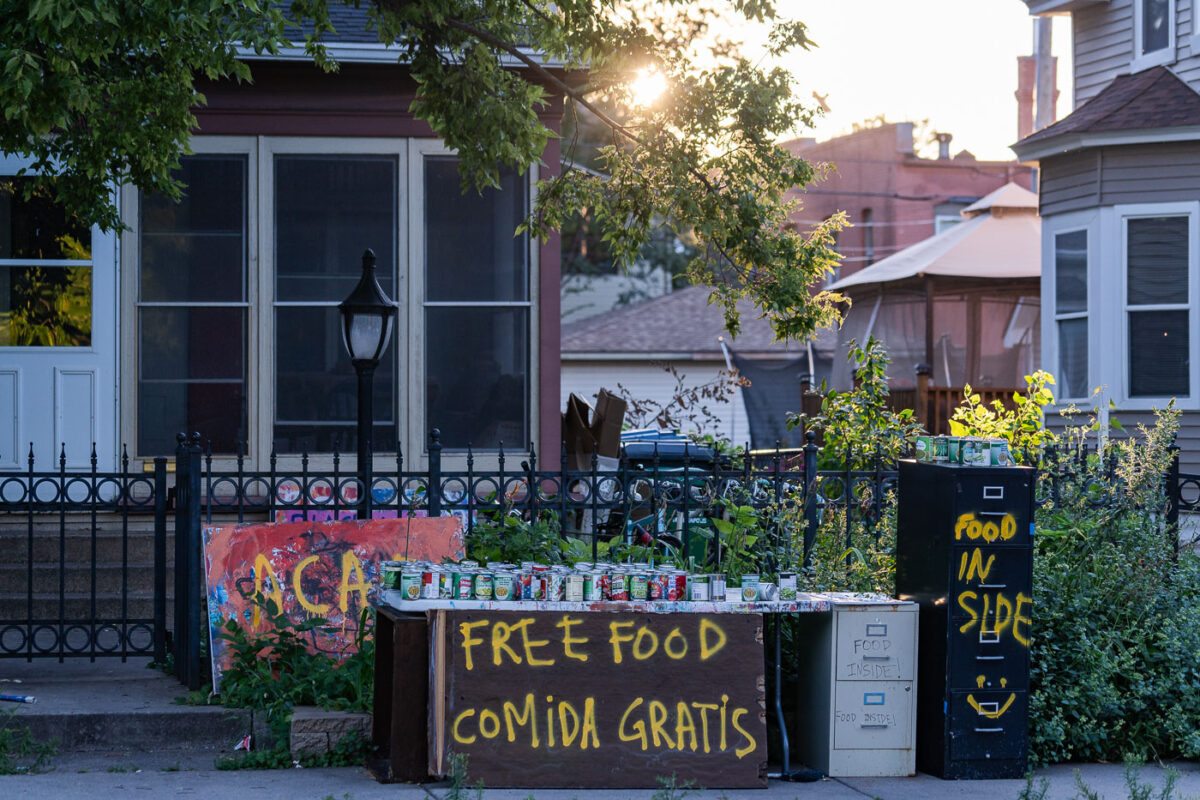
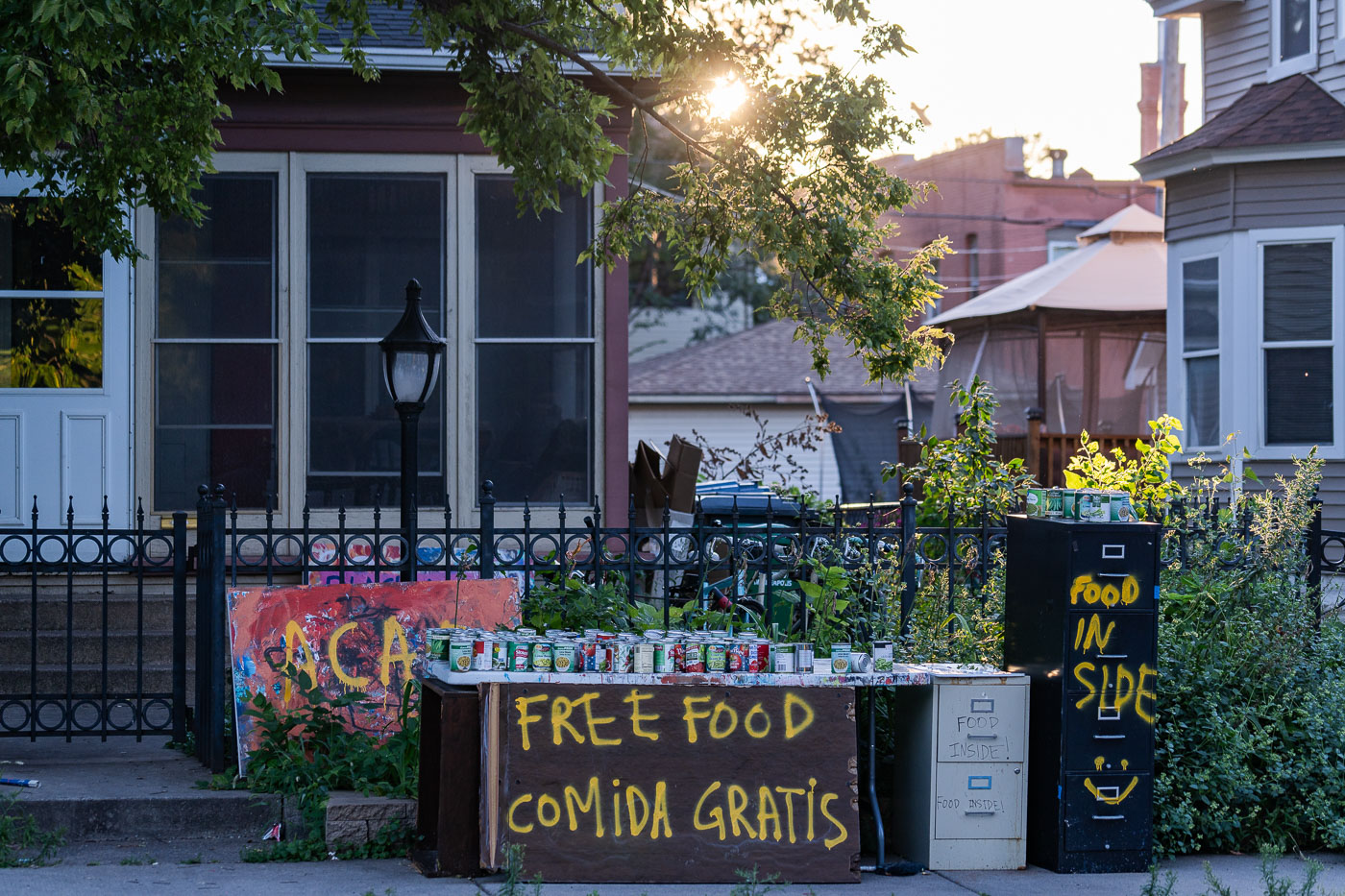
Free food comida gratis in South Minneapolis
A community food shelf operates on a sidewalk in a South Minneapolis neighborhood on August 17, 2020. This mutual aid initiative provides free food, indicated by the "FREE FOOD COMIDA GRATIS" signage, to residents. addressing immediate needs.

South Minneapolis Community Food Shelf

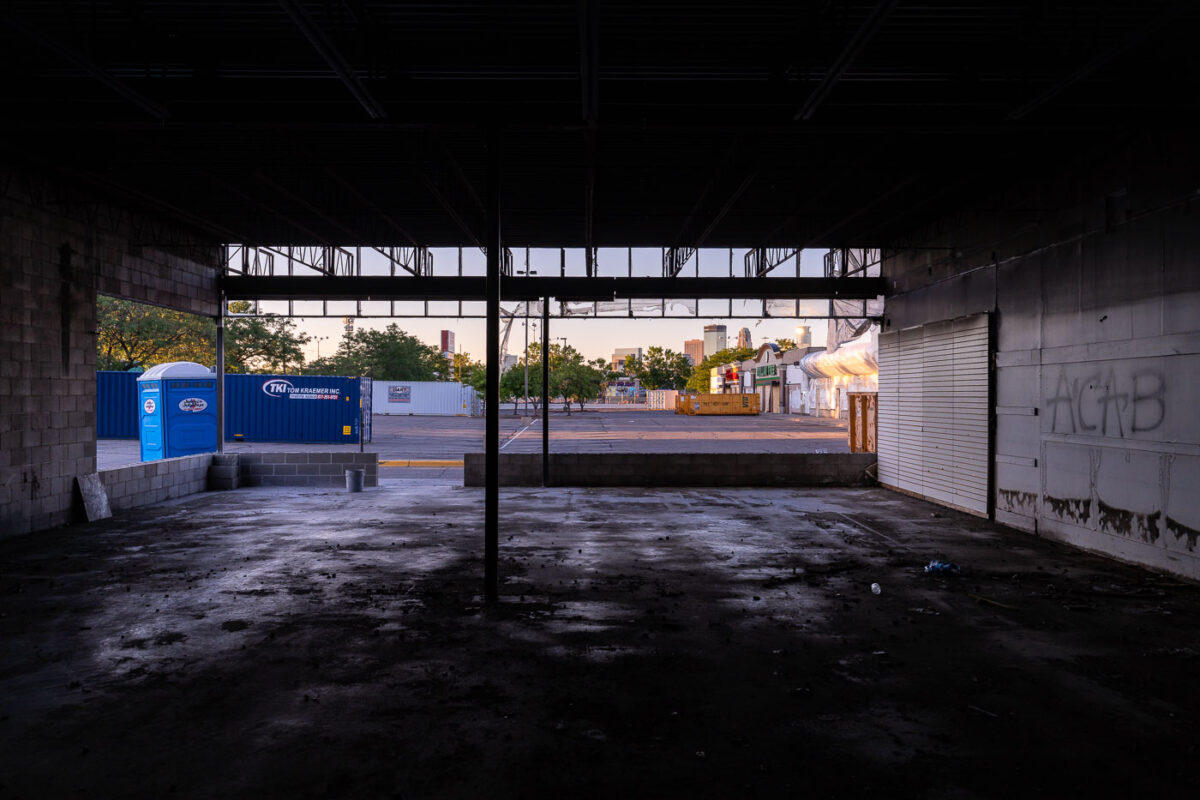
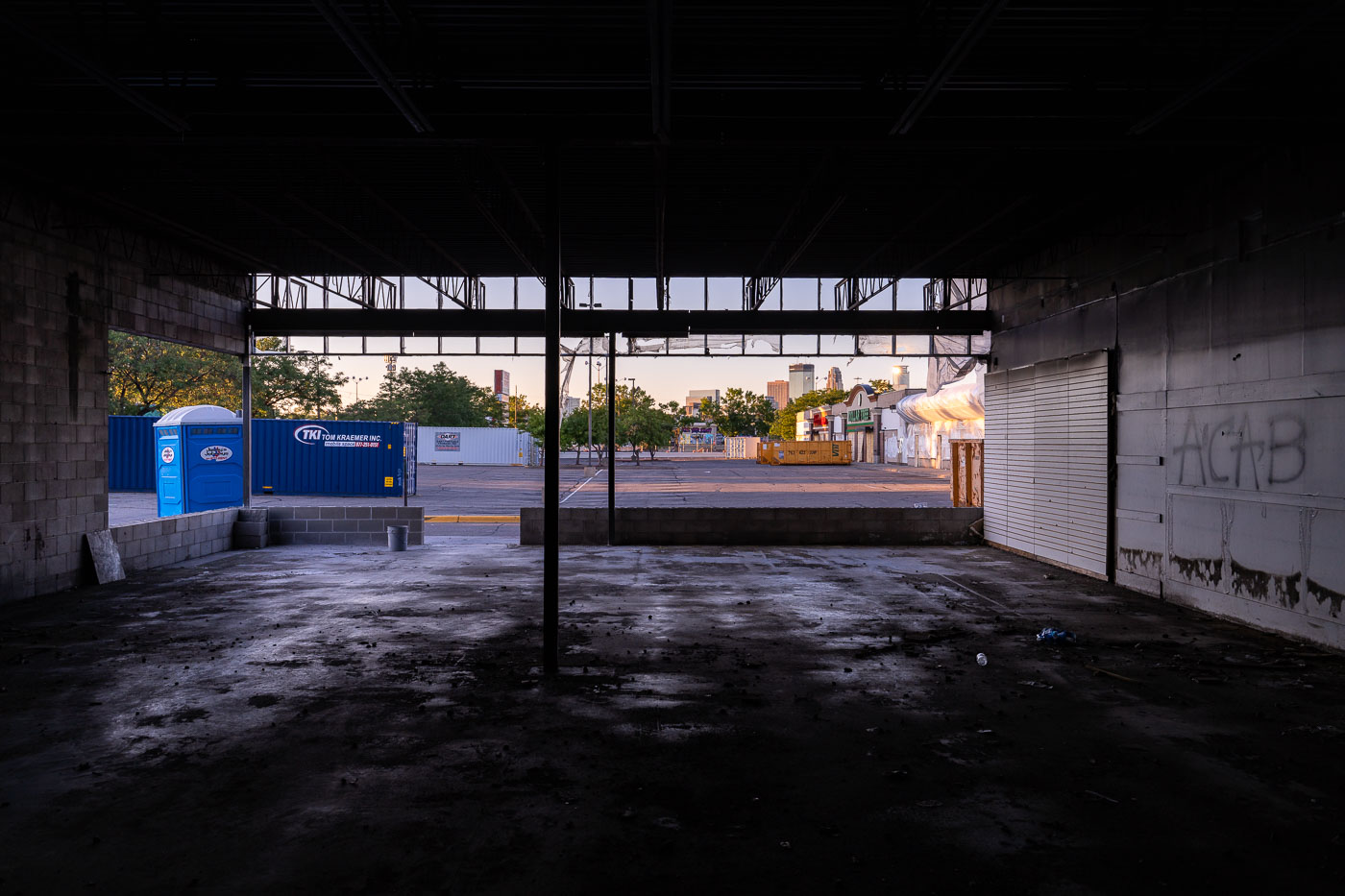
Inside riot damaged strip mall in August 2020
The interior of a strip mall undergoing renovation in South Minneapolis, located across from the Minneapolis 5th Police Precinct. This commercial property sustained significant damage during the protests that occurred in May 2020, following the death of George Floyd.

Minneapolis Burned Strip Mall Renovation Post-2020 Protests

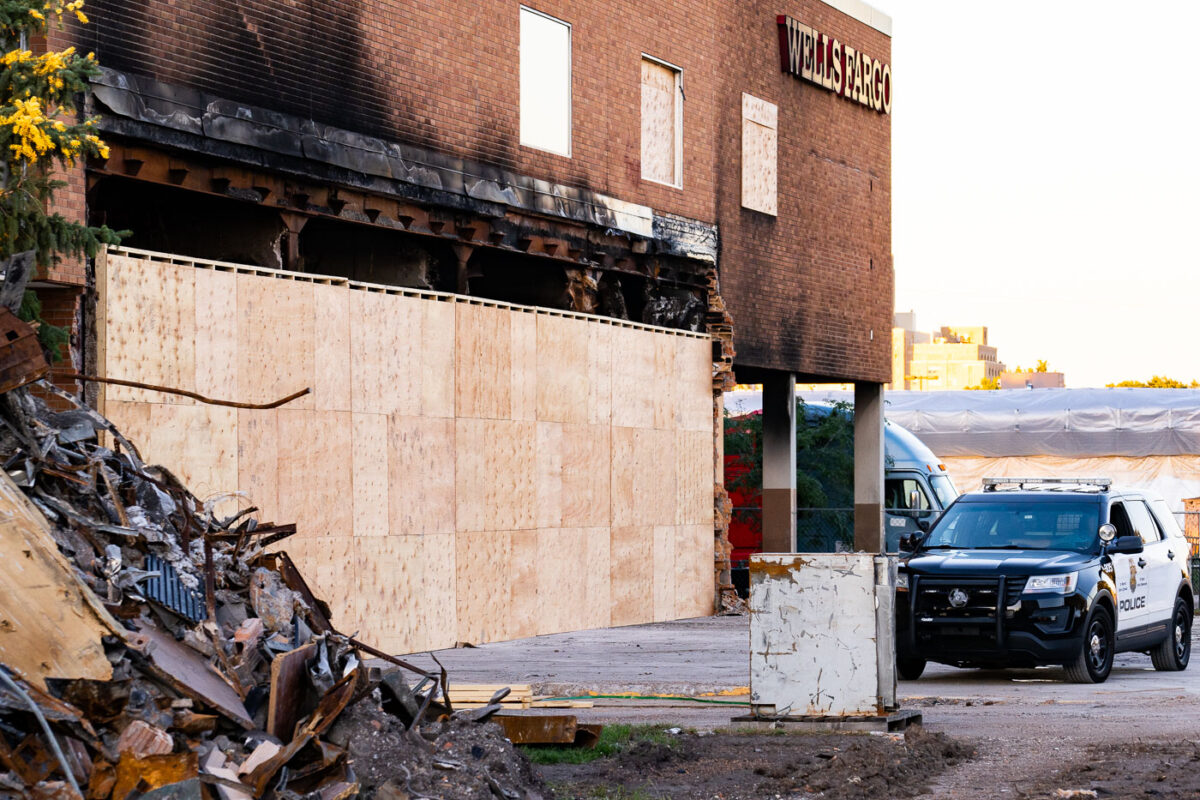
Riot damaged Wells Fargo bank guarded by Minneapolis Police
A Wells Fargo bank branch on Nicollet Avenue in Minneapolis displays extensive fire damage, boarded up following protests in May 2020. The building was burned during civil unrest that occurred after the death of George Floyd on May 25, 2020. A Minneapolis Police squad car is stationed nearby. This security was maintained around the clock to facilitate the safe retrieval of items from safety deposit boxes by bank customers.

Burned Wells Fargo Bank, Nicollet Ave, Police Squad Car

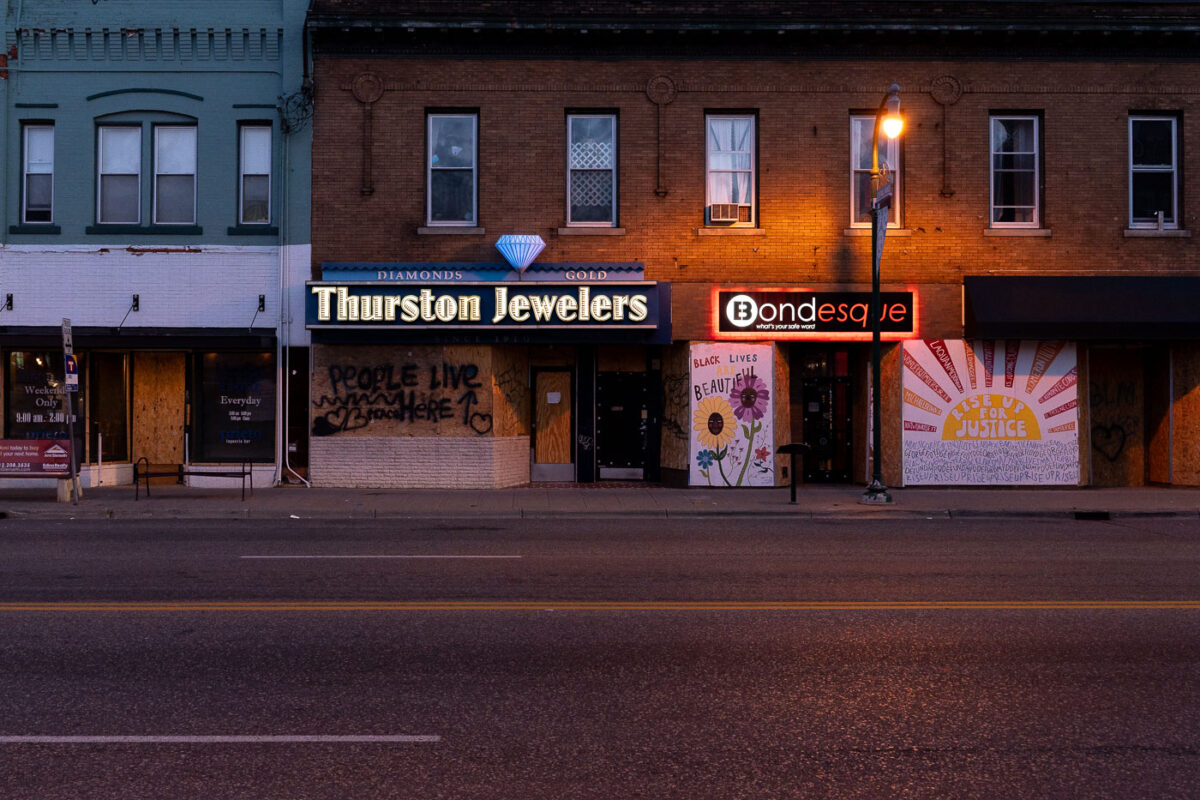
Thurston Jewelers and Bondesque in Uptown Minneapolis
Thurston Jewelers and Bondesque, located on Lake Street in Uptown Minneapolis, are depicted with their storefronts boarded. These boards feature various protest art and messages, including calls for justice and affirmations like 'Black Lives Are Beautiful'. The boarding and artwork emerged during the 2020 protests in Minneapolis, following the murder of George Floyd, which led to widespread civil unrest and calls for systemic change.

Thurston Jewelers & Bondesque, Lake St, Minneapolis, boarded with protest art

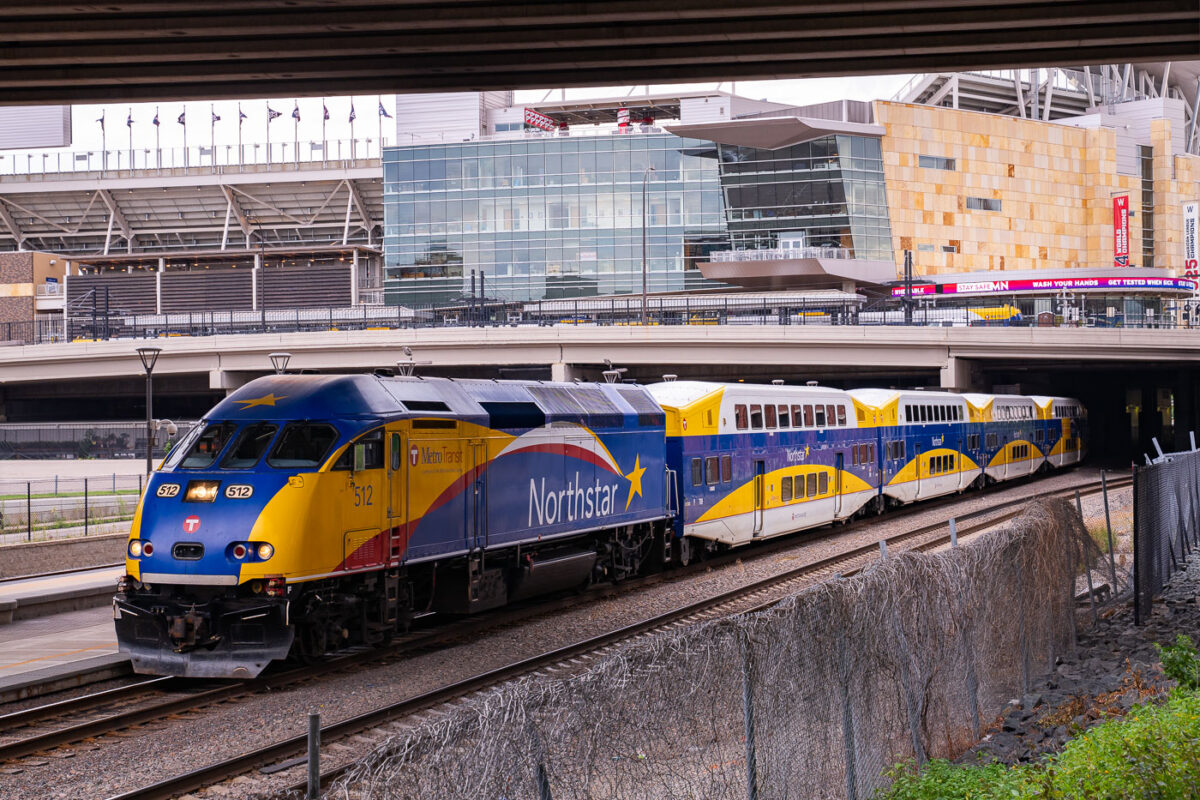
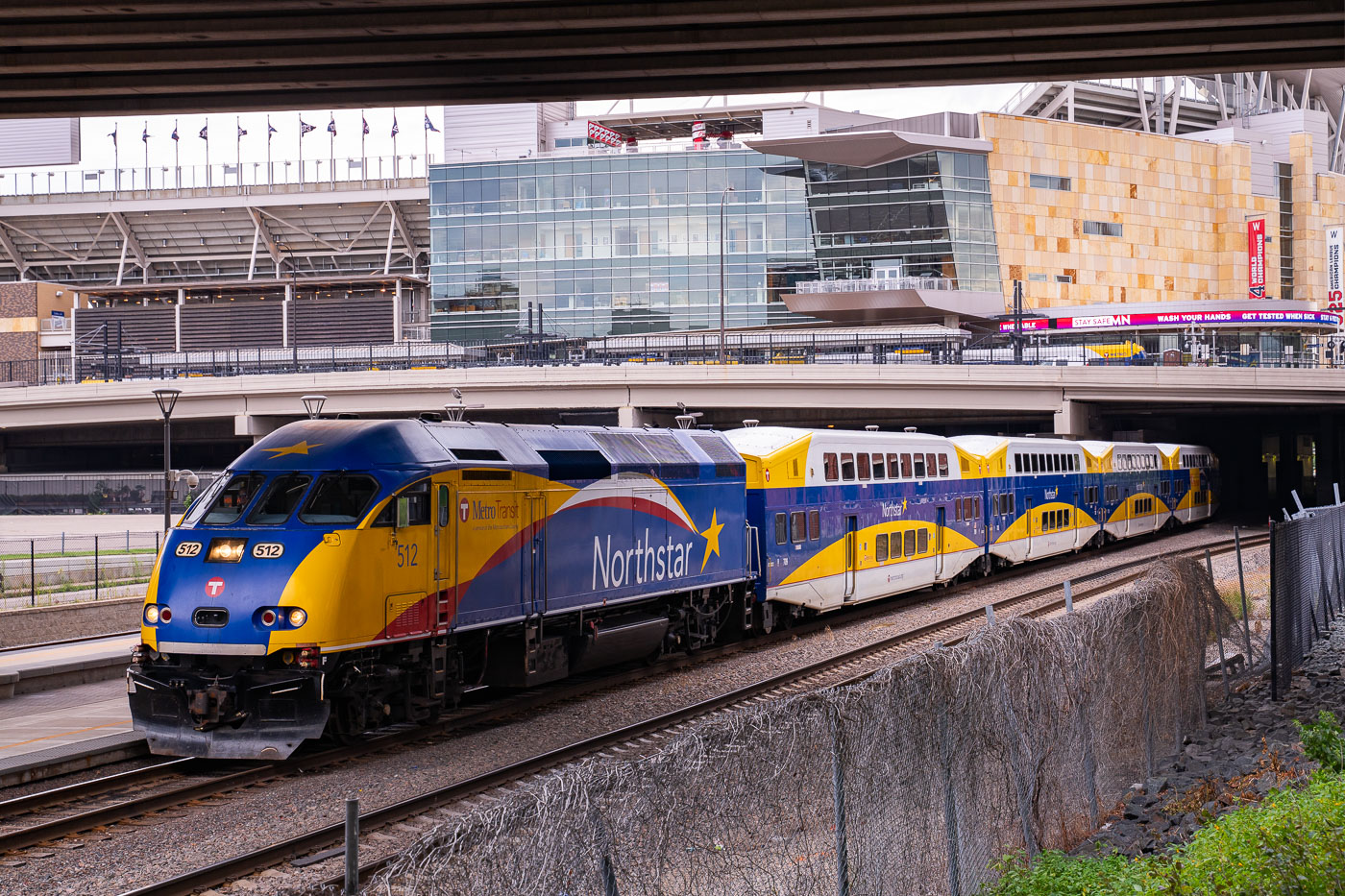
Northstar commuter train at Target Field Station in downtown Minneapolis, Minnesota.
The Northstar Line is a commuter rail route running between Big Lake and downtown Minneapolis, with this train passing Target Field Station near the ballpark. Metro Transit operates the line, which opened in 2009 and covers about 40 miles along existing freight tracks owned by BNSF Railway.

Northstar Train Passes Target Field in Minneapolis

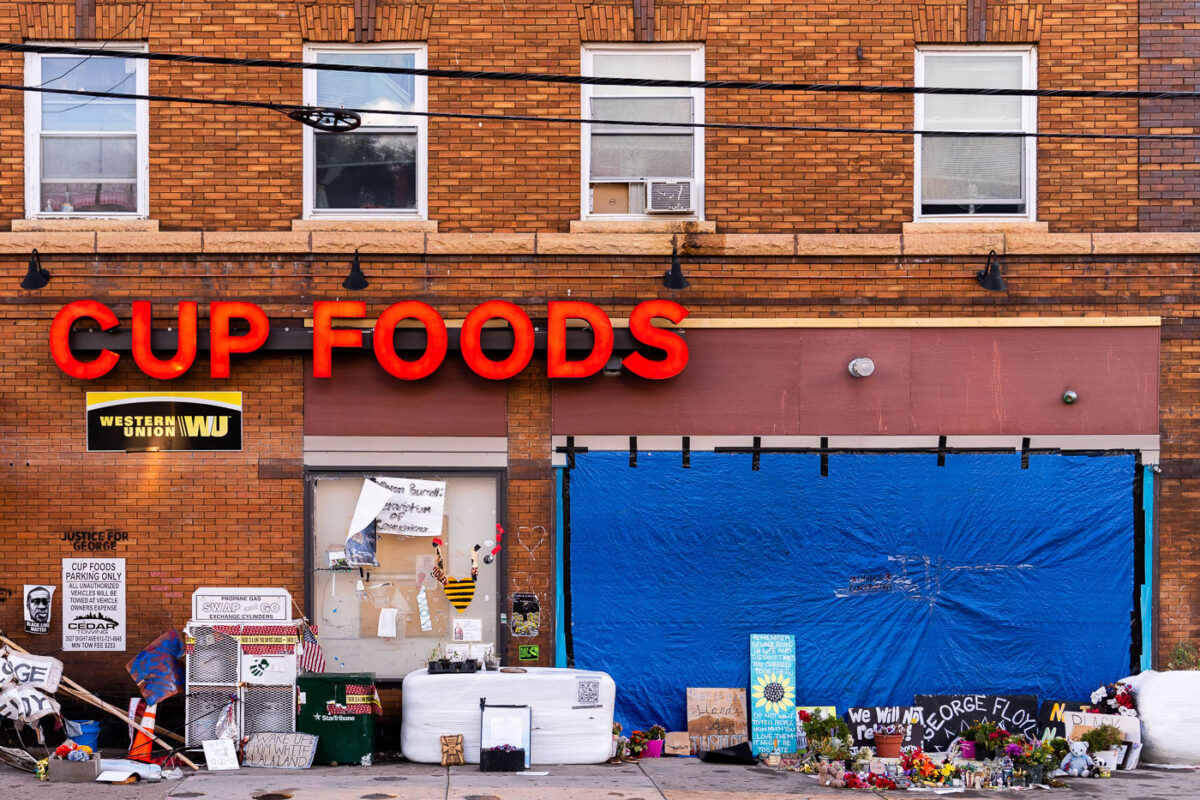
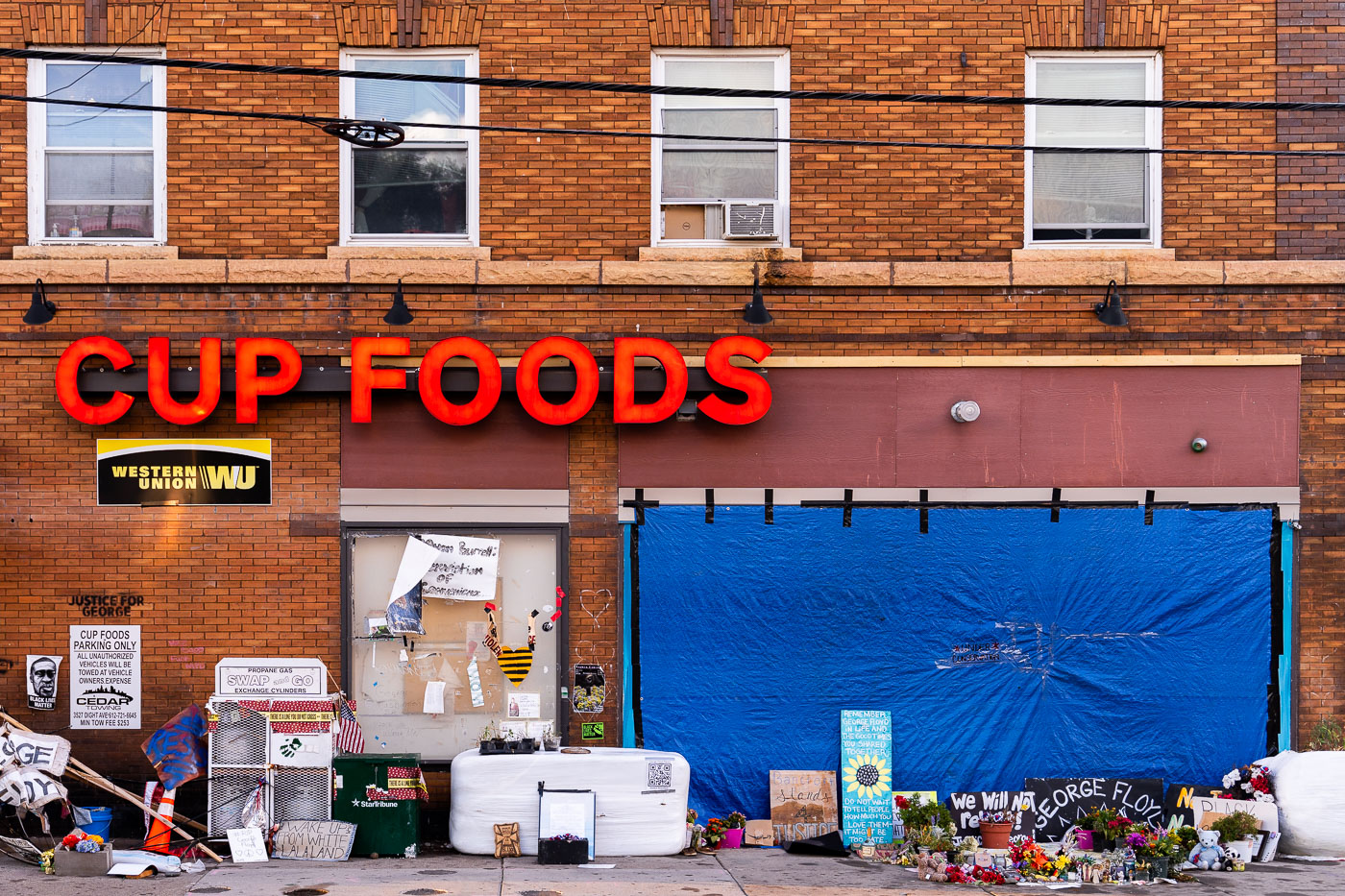
George Floyd mural covered up after vandalism
The George Floyd mural on the exterior of Cup Foods, located at E 38th Street in Minneapolis, is covered by a blue tarp. This action followed an act of vandalism against the artwork, which is a prominent feature of the George Floyd Memorial at George Floyd Square. The site gained profound historical significance as the location where George Floyd was killed in May 2020, leading to global protests against racial injustice.

George Floyd mural at Cup Foods covered after vandalism

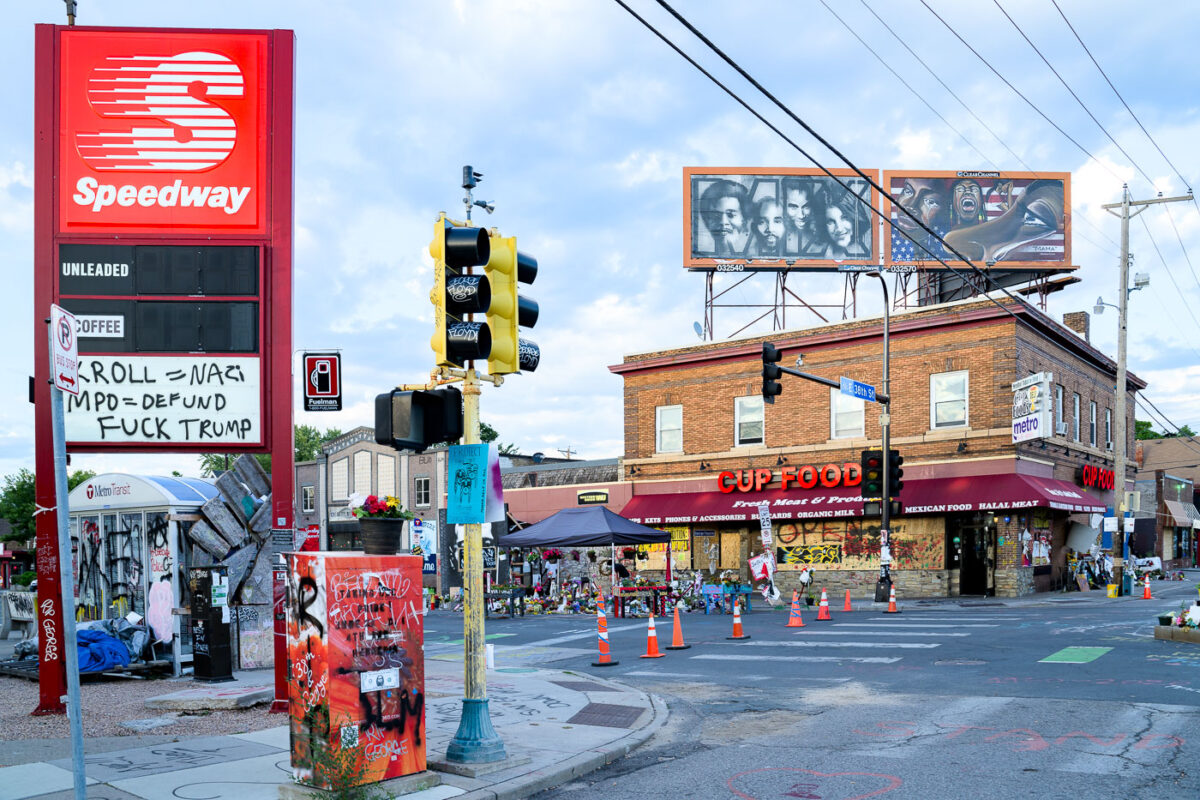
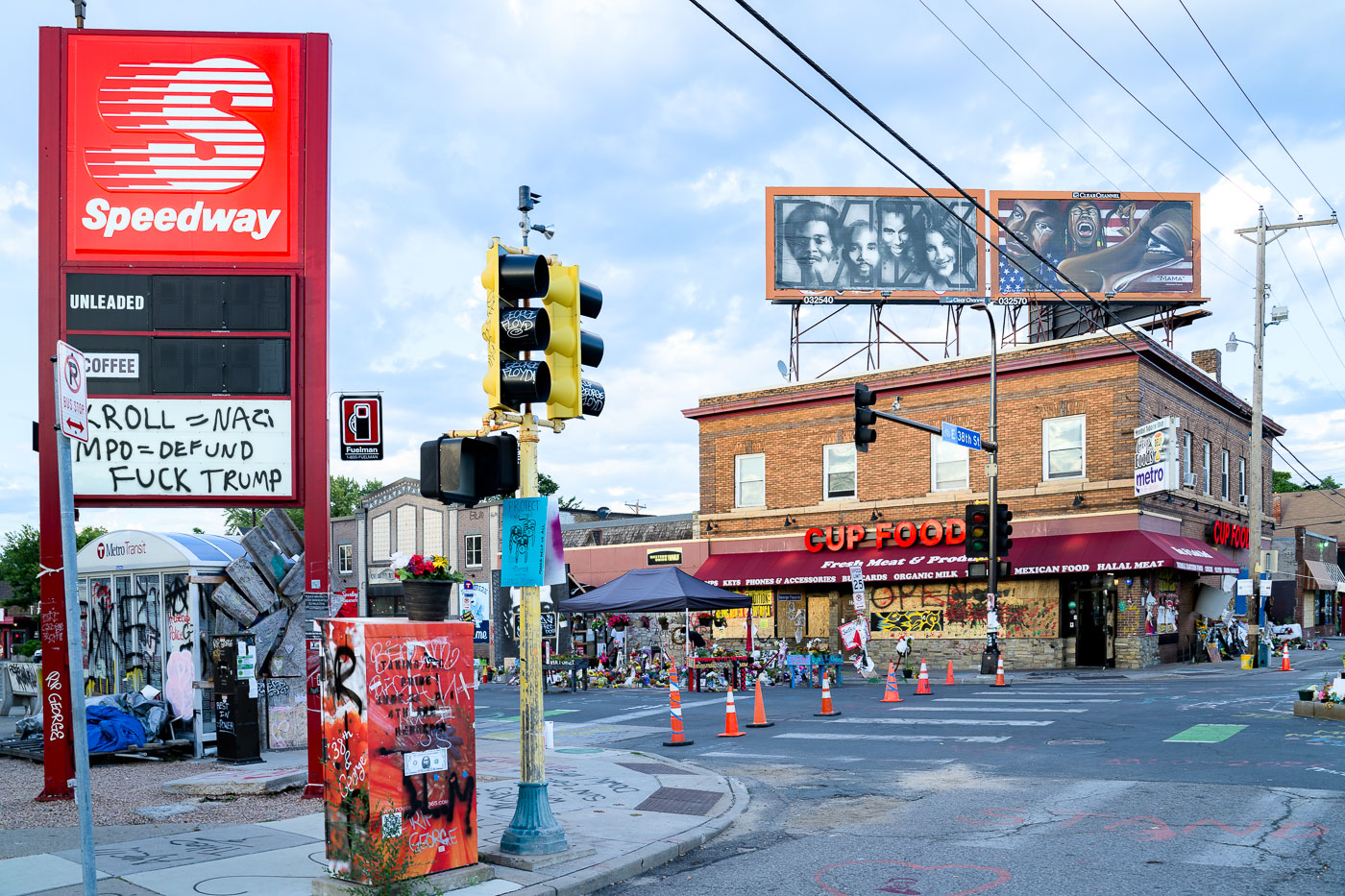
MPD defund fuck trump at George Floyd Square
George Floyd Square, located at the intersection of Chicago Avenue and East 38th Street in Minneapolis, is shown on August 19, 2020. This site became a community-maintained memorial and protest zone following the murder of George Floyd by Minneapolis police on May 25, 2020, outside the adjacent Cup Foods. The Speedway gas station sign displays protest messages such as "MPD = DEFUND" and "FUCK TRUMP," while the surrounding area features numerous tributes, graffiti, and art installations. The square functioned as an autonomous zone for a period, serving as a gathering place for activism, remembrance, and community support.

George Floyd Square: Defund MPD, Fuck Trump on Speedway Sign

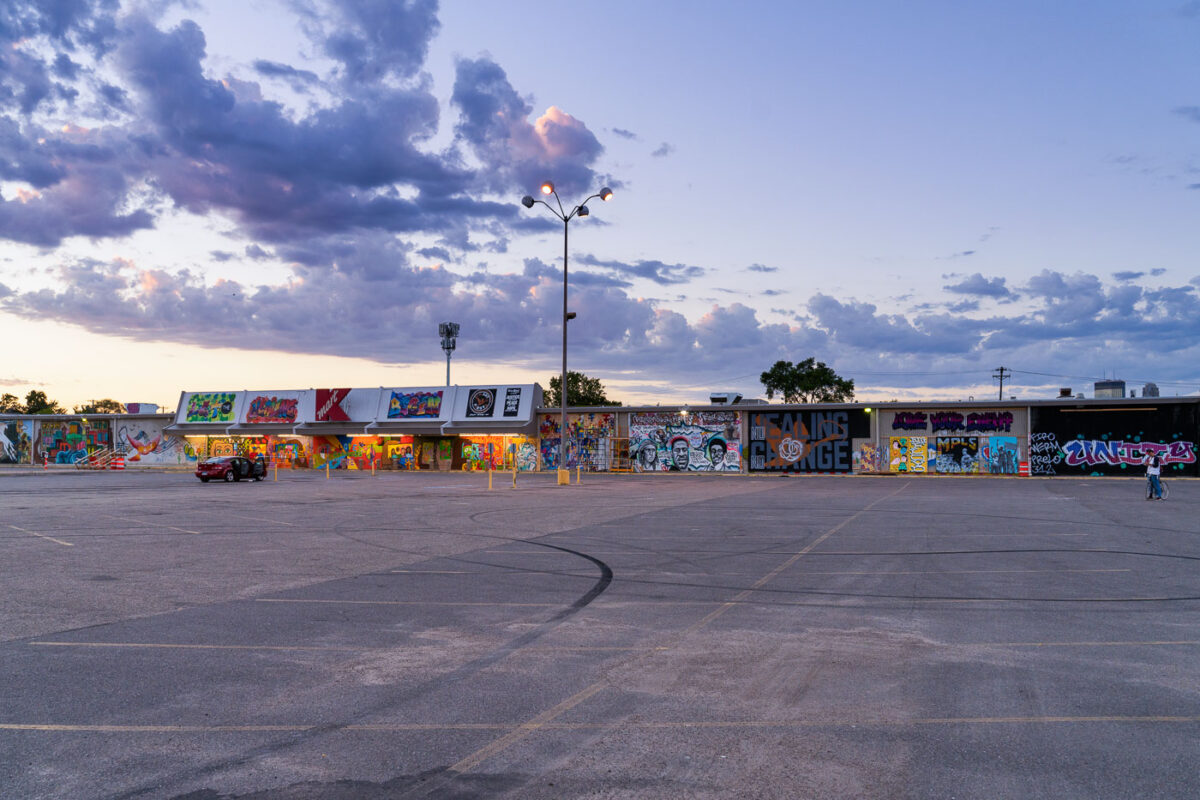
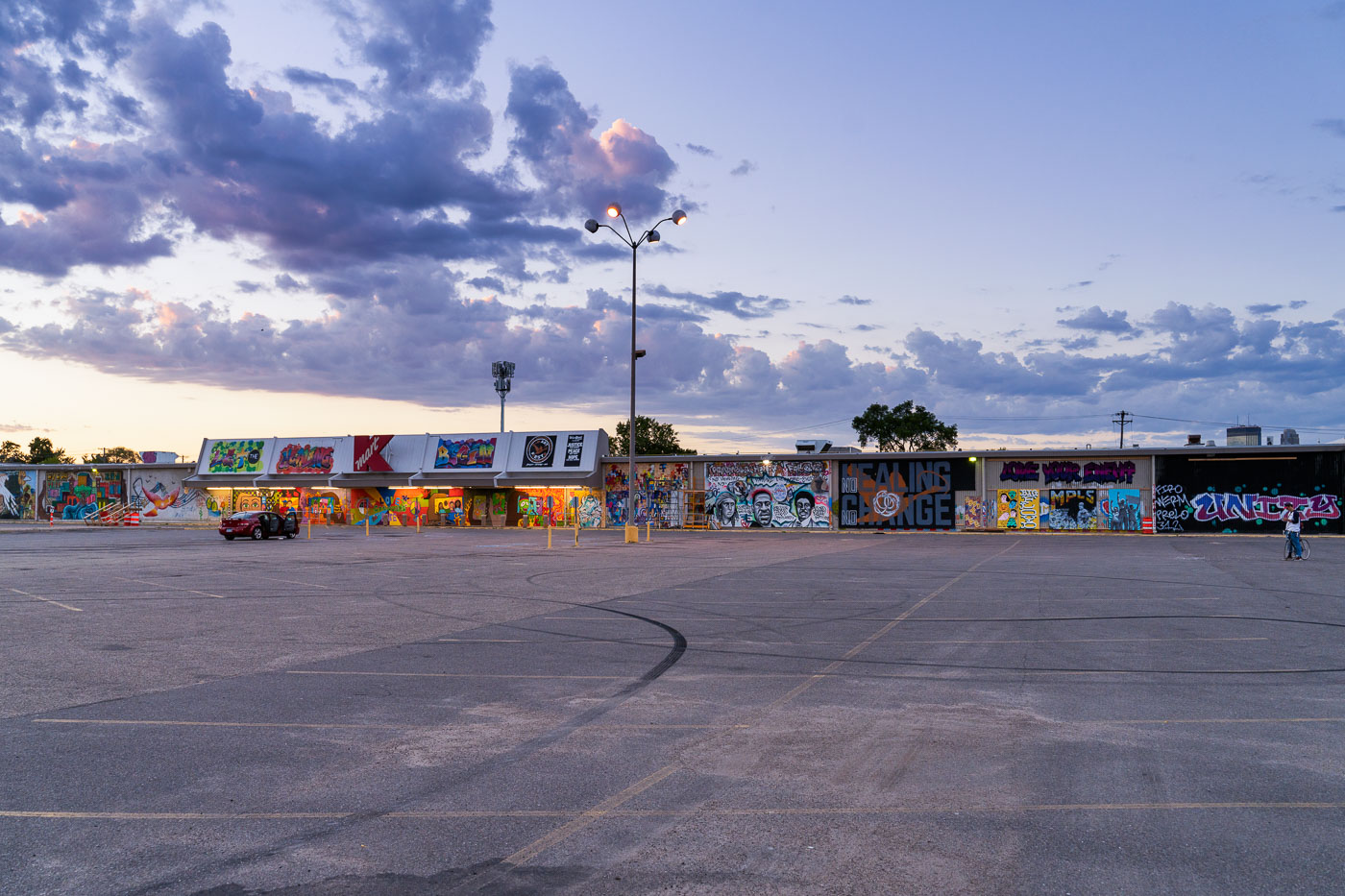
Kmart covered in art boards in August 2020
The former K-Mart store on West Lake Street in Minneapolis displays extensive murals created in the aftermath of the 2020 protests. These artworks, some depicting portraits and messages related to the Minneapolis Uprising, transformed the building's exterior into a public canvas. The retail store has since been repurposed as a United States Post Office, providing essential services after two local post offices were destroyed by fire during the protests.

Former K-Mart Murals, West Lake Street, Minneapolis

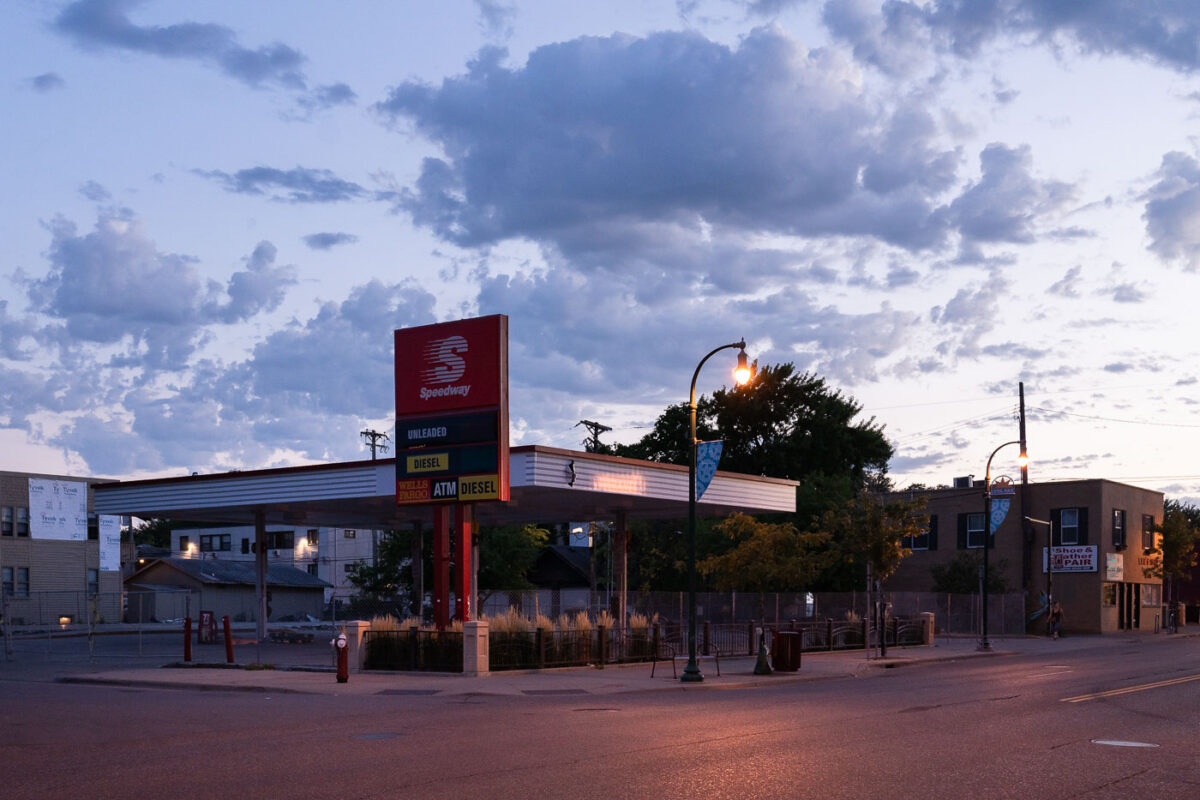
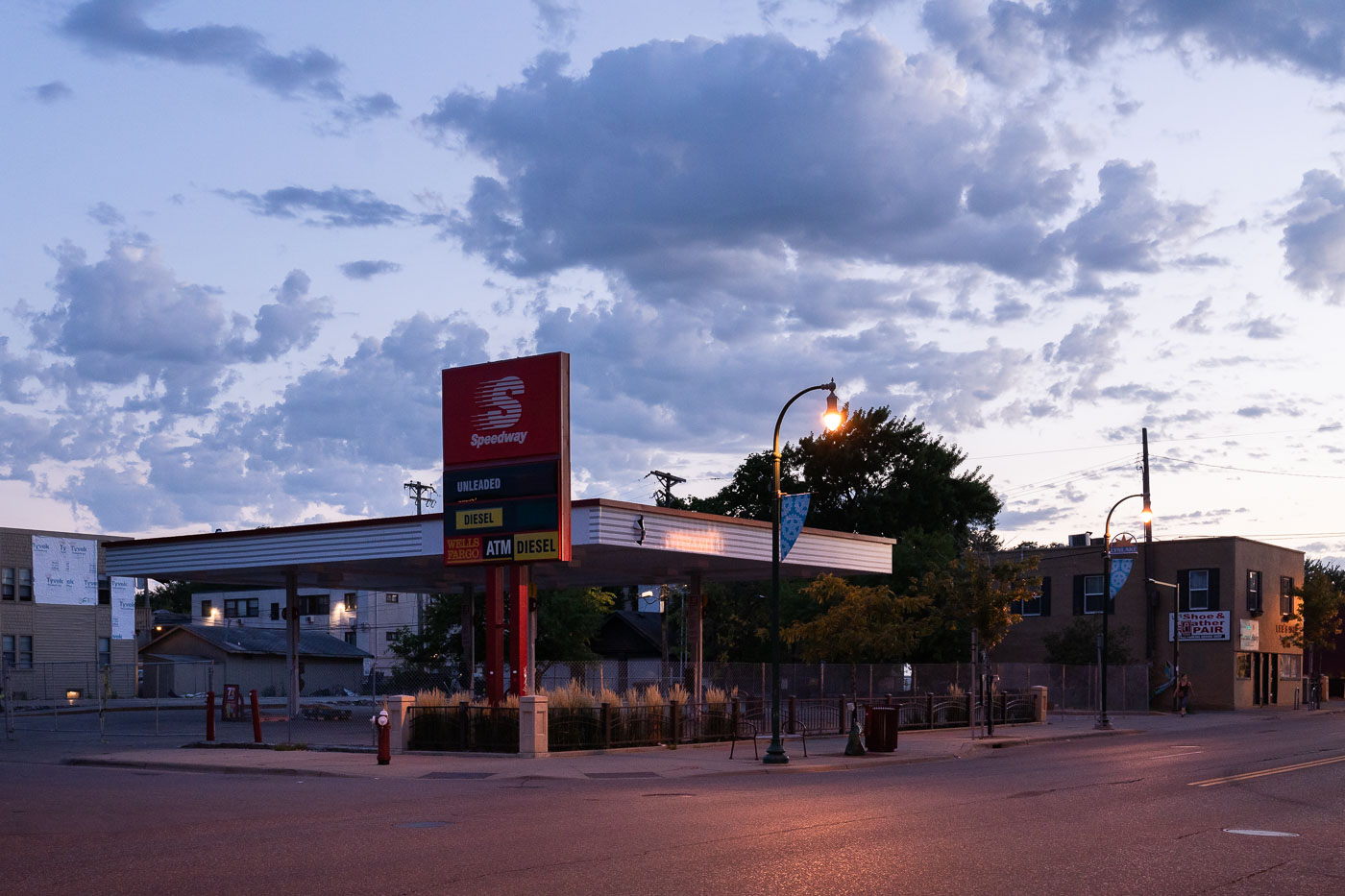
Speedway Gas after damage from riots in August 2020
The Speedway gas station on West Lake Street in the Lynlake neighborhood of Minneapolis stands under a twilight sky. This site was among many businesses affected by arson during the protests that followed the murder of George Floyd in May 2020. While the original gas station building was destroyed and subsequently cleared, the fuel canopy and signage are still visible.

Speedway Gas Station, LynLake, Minneapolis

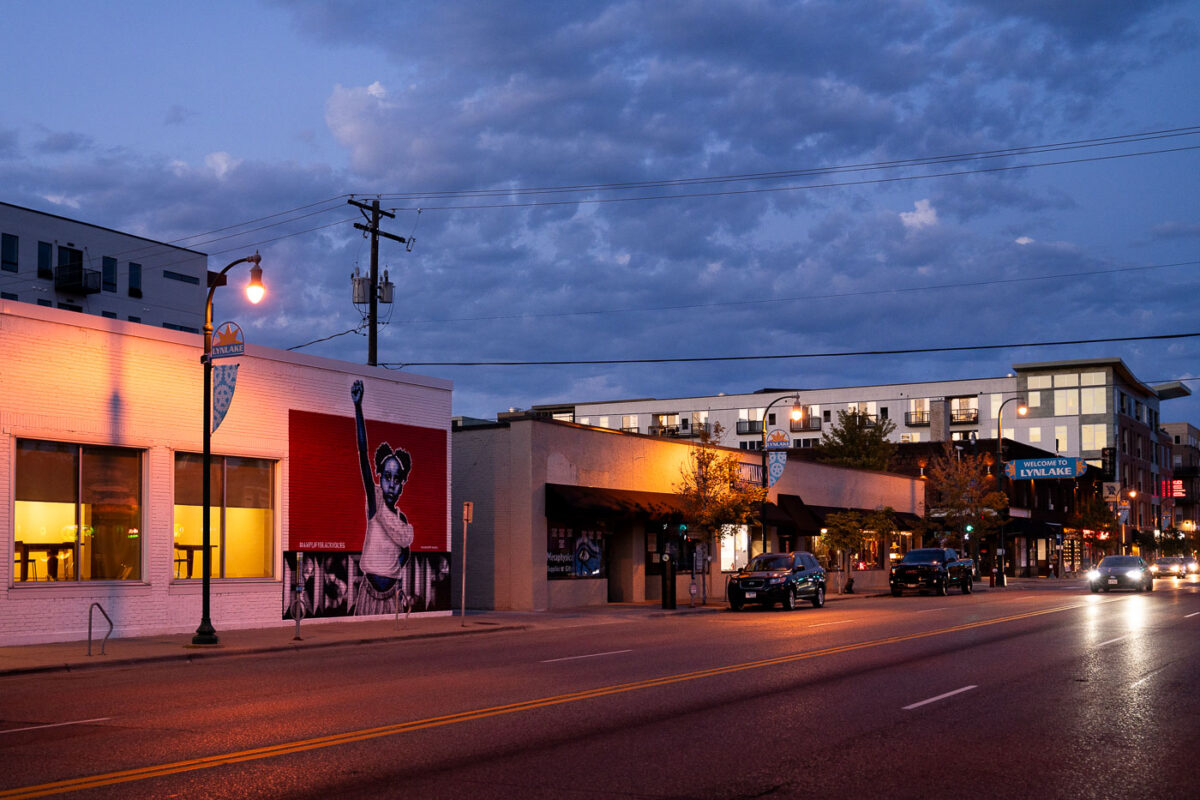
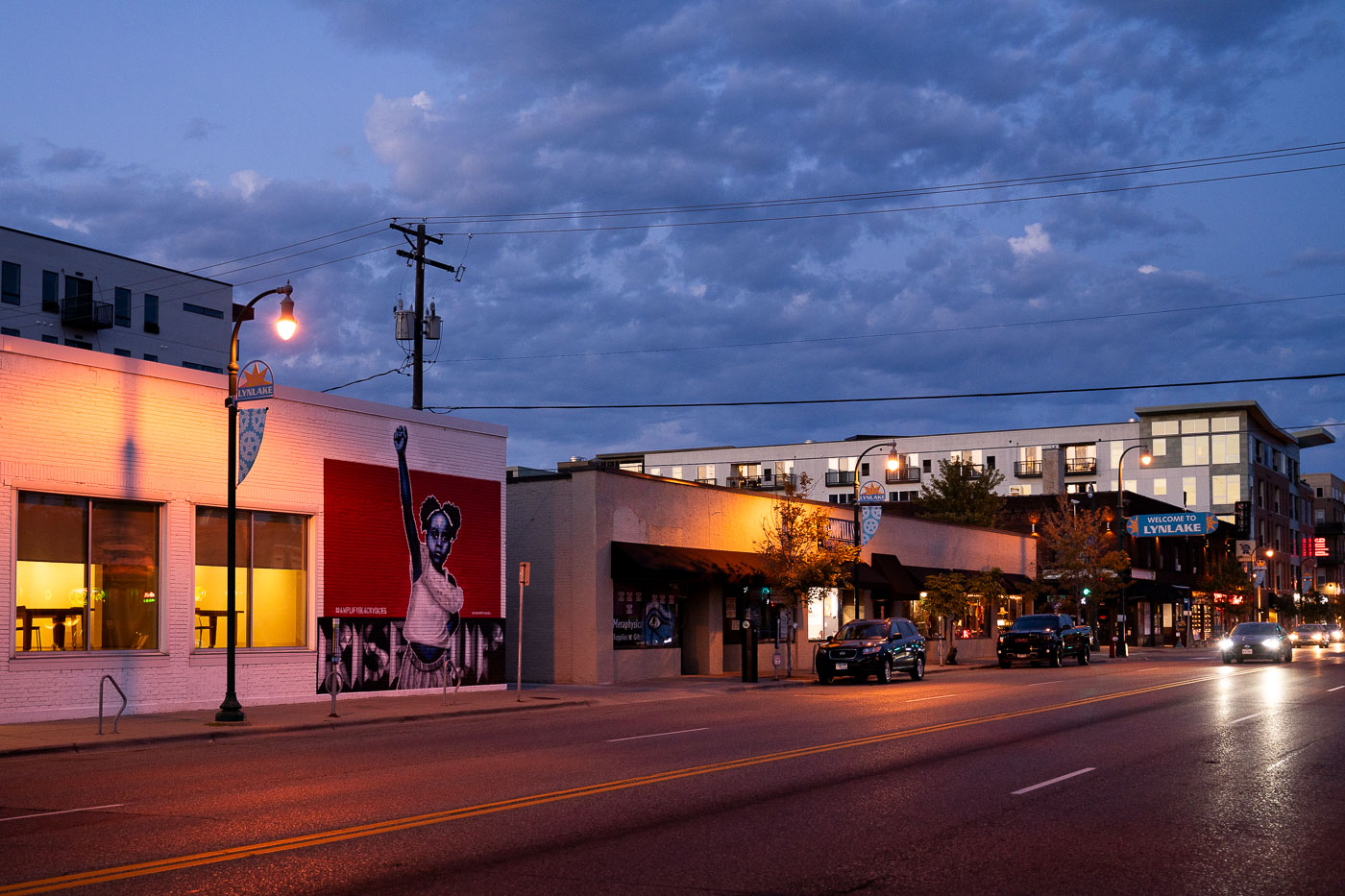
A mural on Lake Street in August 2020
A mural depicting a young Black girl with a raised fist is prominently displayed on West Lake Street in Uptown Minneapolis. This artwork, seen on August 19, 2020, emerged as part of the widespread artistic responses following the murder of George Floyd in May 2020. The mural includes the hashtag #AMPLIFYBLACKVOICES.

George Floyd Protest Mural, West Lake Street, Minneapolis

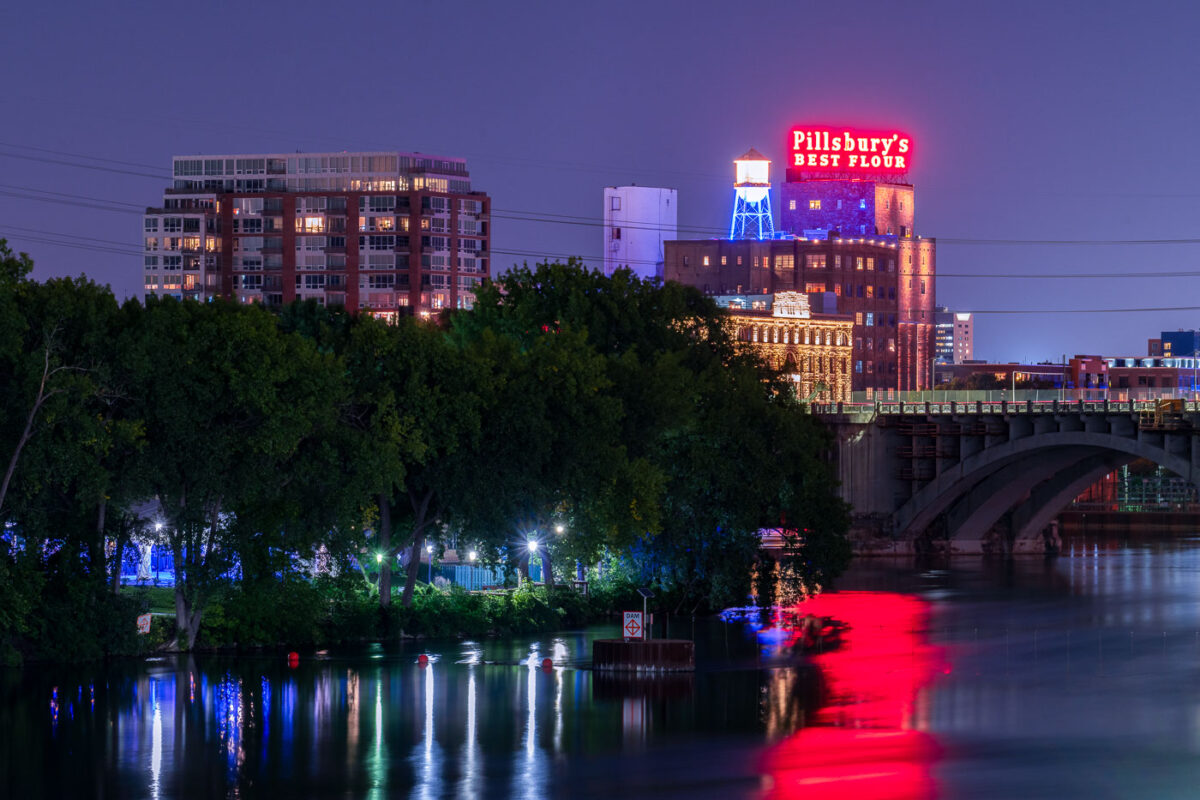
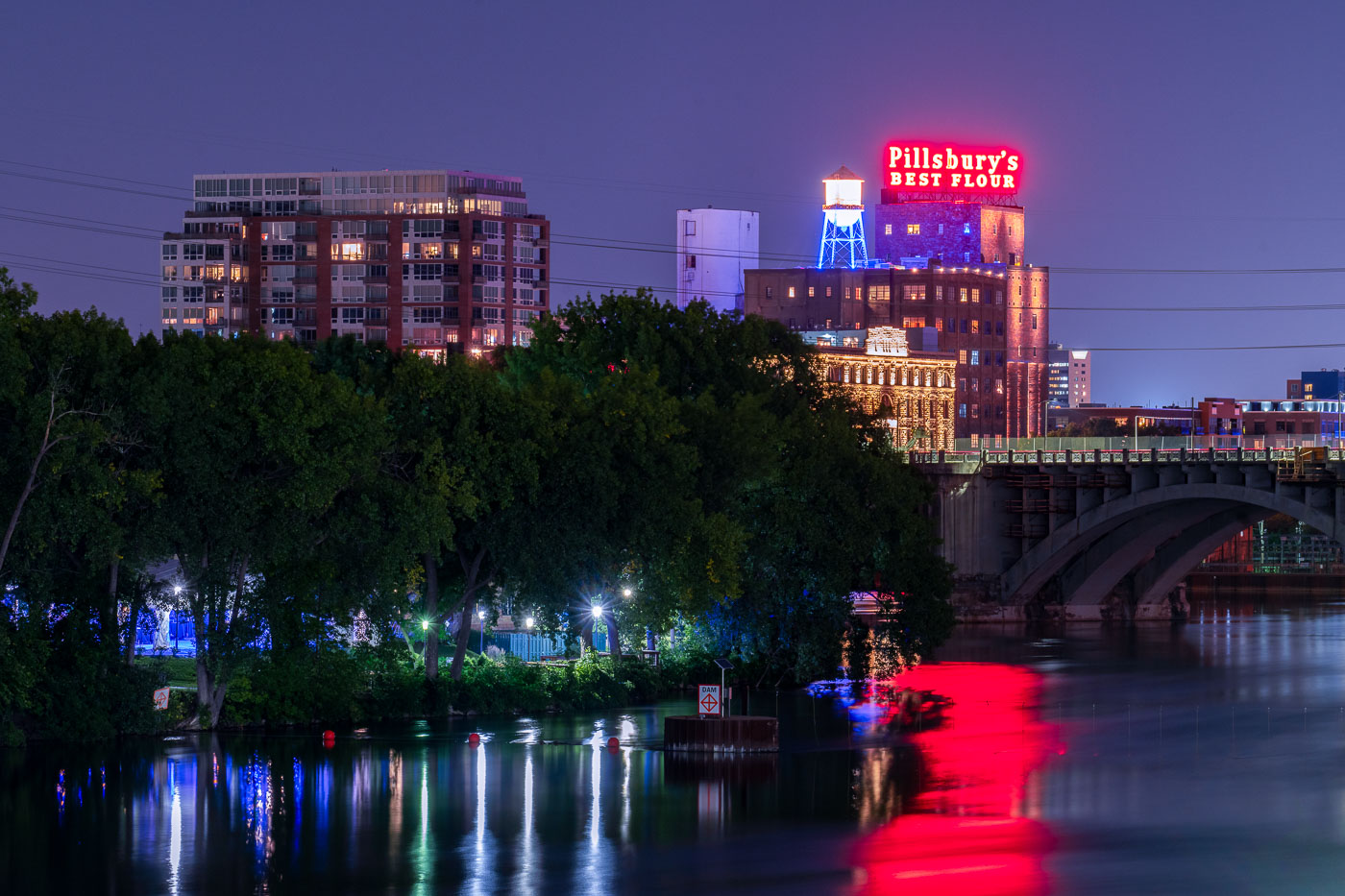
Pillsbury A Mill's illuminated neon sign glows red above the Mississippi River at night in Minneapolis.
The historic Pillsbury A Mill stands illuminated on the Mississippi River near downtown Minneapolis. Once the world's largest flour mill, this National Historic Landmark played a crucial role in Minneapolis's development as a milling center.

Pillsbury’s Best Flour Sign Above the Mississippi River at Night

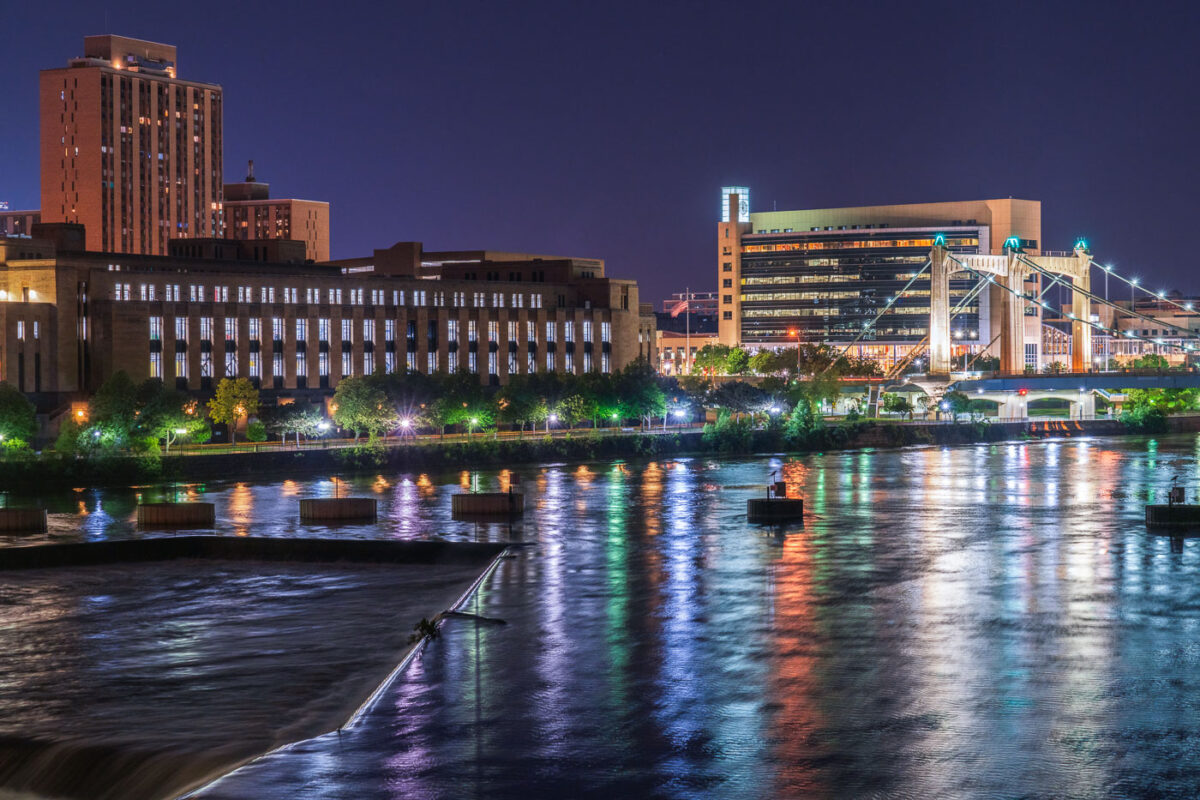
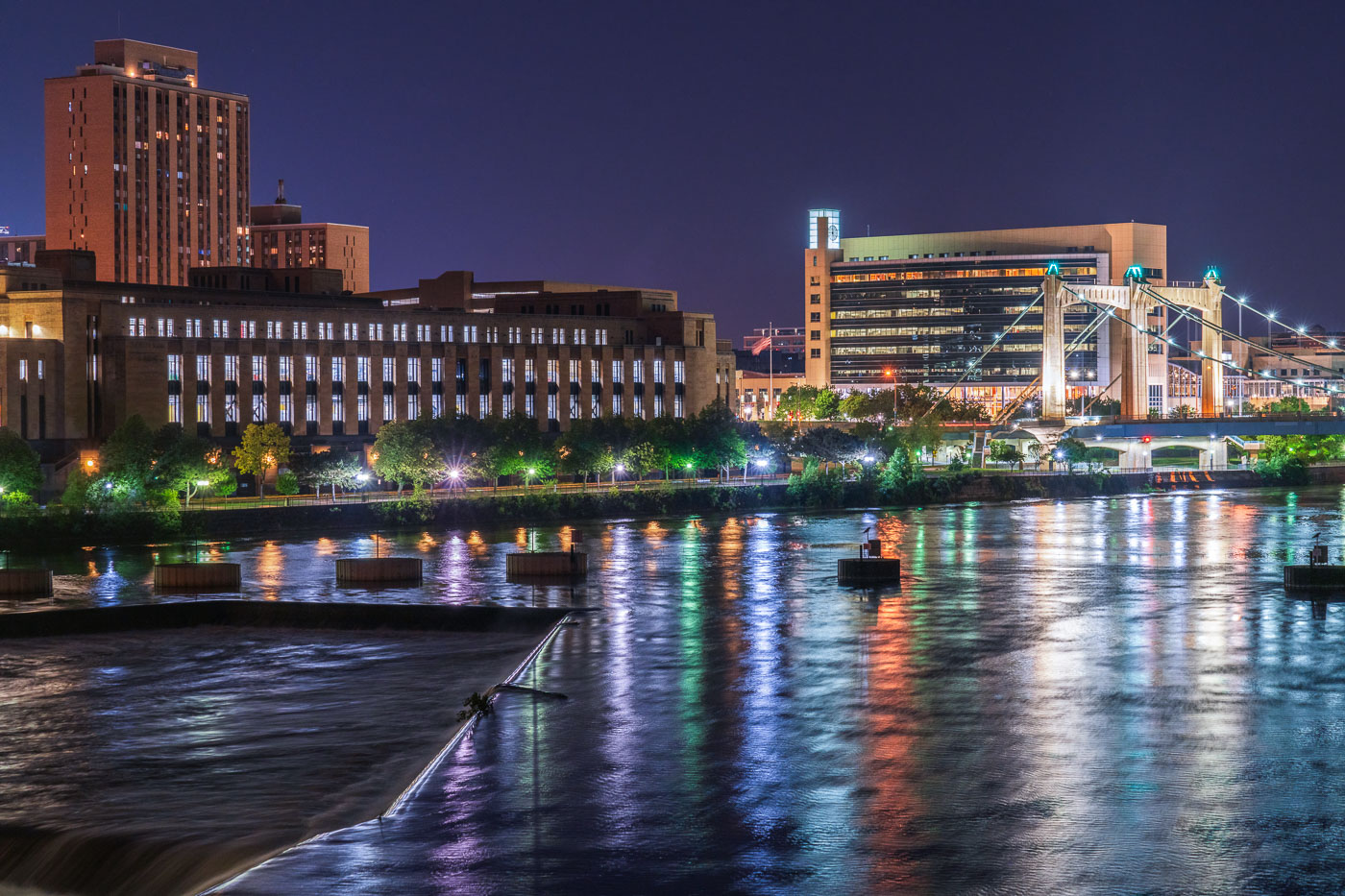
Mississippi River and Hennepin bridge August 2020
The Mississippi River flows through downtown Minneapolis at night, featuring the illuminated Hennepin Avenue Bridge. This historic suspension bridge, originally built in 1855 and rebuilt multiple times, connects the east and west banks of the city, serving as a vital transportation artery. Along the riverfront, the United States Post Office and the Federal Reserve Bank of Minneapolis stand as prominent structures, contributing to the city's commercial and governmental functions.

Minneapolis: Mississippi River, Hennepin Bridge, US Post Office 2020

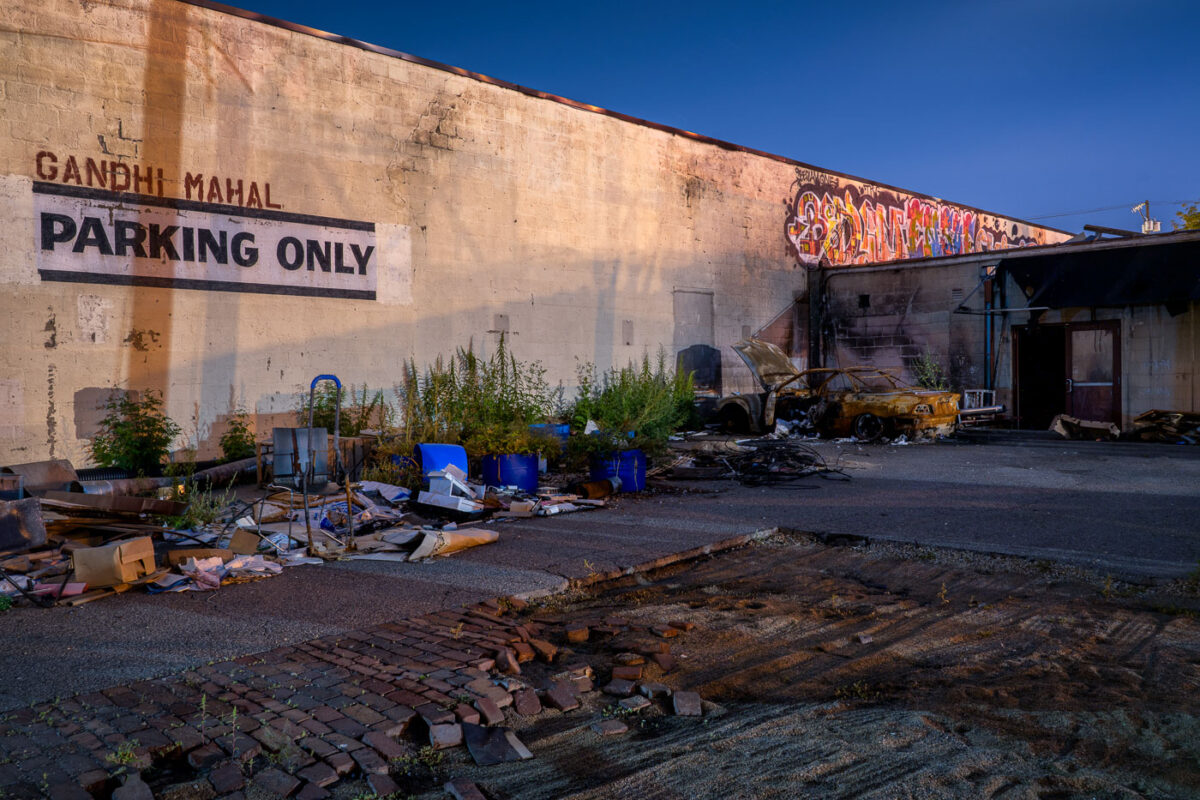
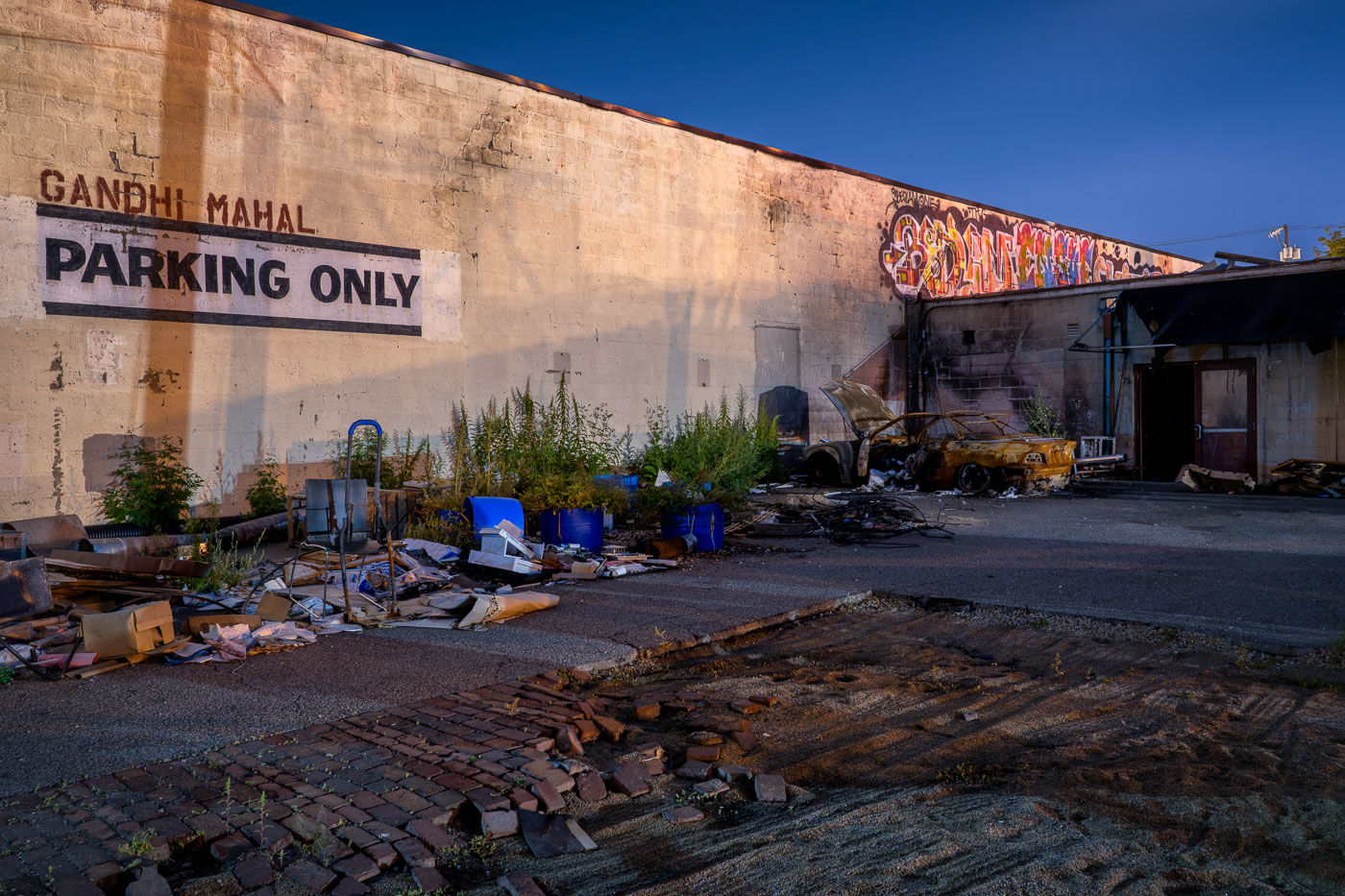
Burned out car in back of Gandhi Mahal
The parking lot of Gandhi Mahal restaurant on Lake Street in South Minneapolis shows a burned-out car and scattered debris. This site was significantly impacted during the civil unrest that occurred in Minneapolis following the May 25, 2020, death of George Floyd. Gandhi Mahal, a community-oriented establishment, was among numerous businesses on Lake Street that sustained damage.

Burned Car & Debris, Gandhi Mahal Parking Lot, South Minneapolis

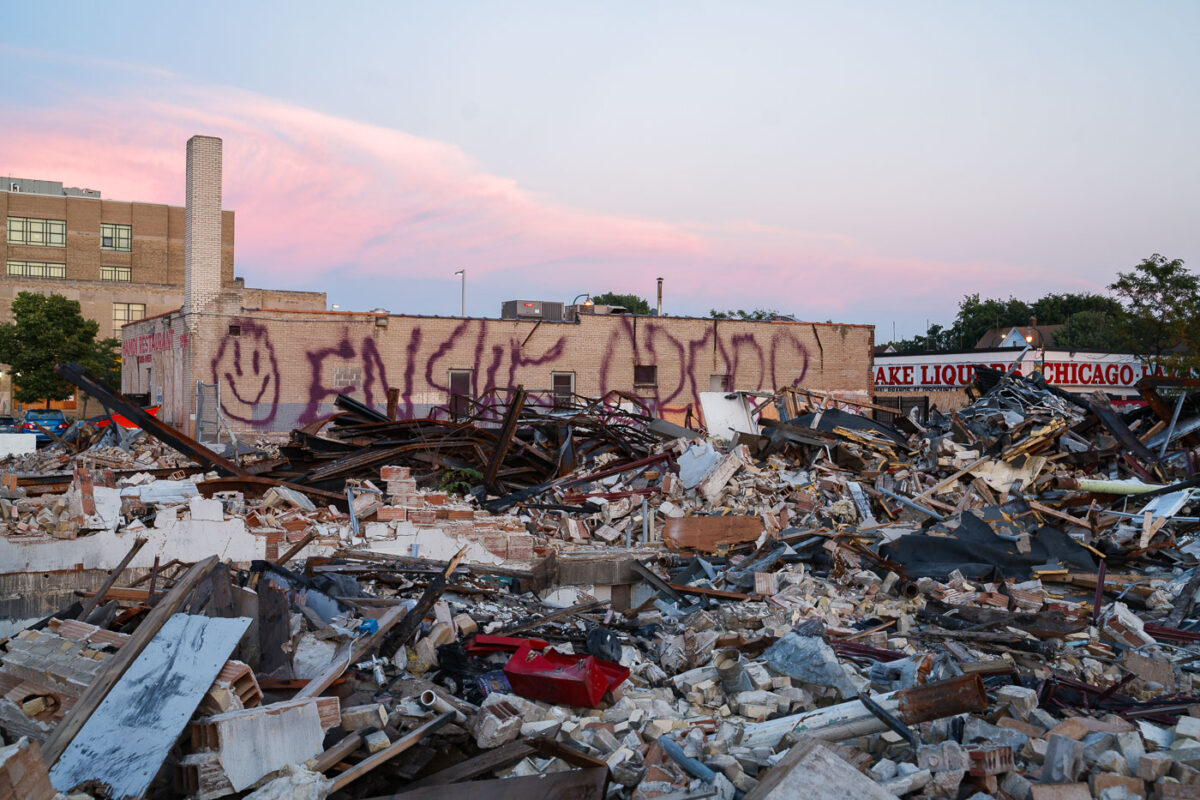
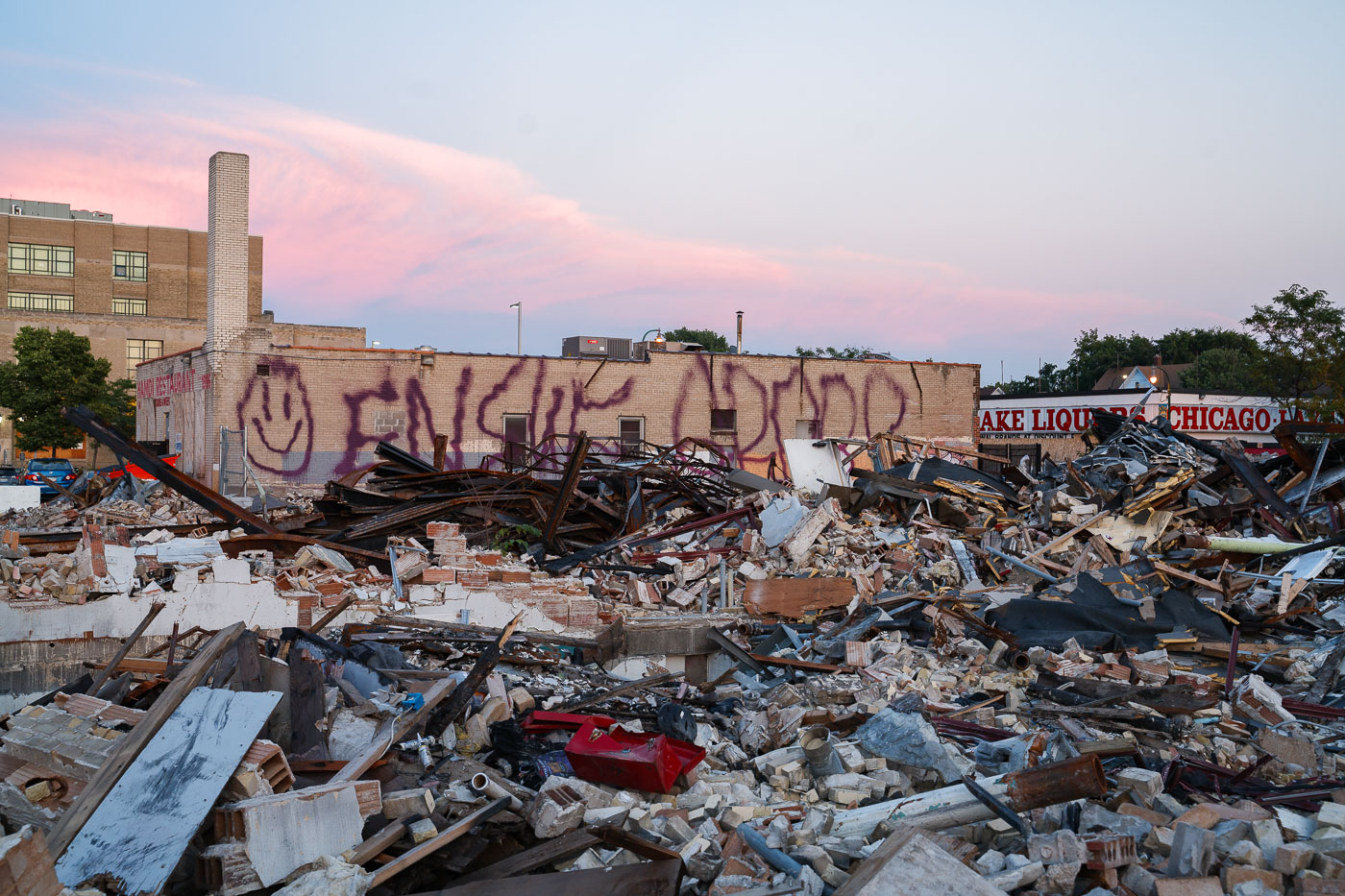
Chicago Lake Liquors behind riot damaged buildings
The rubble of a former furniture store stands on Chicago Avenue in Minneapolis. This site was among many businesses damaged or destroyed during the Minneapolis Uprising in May 2020.

Burned Furniture Store, Chicago Ave, Minneapolis Uprising

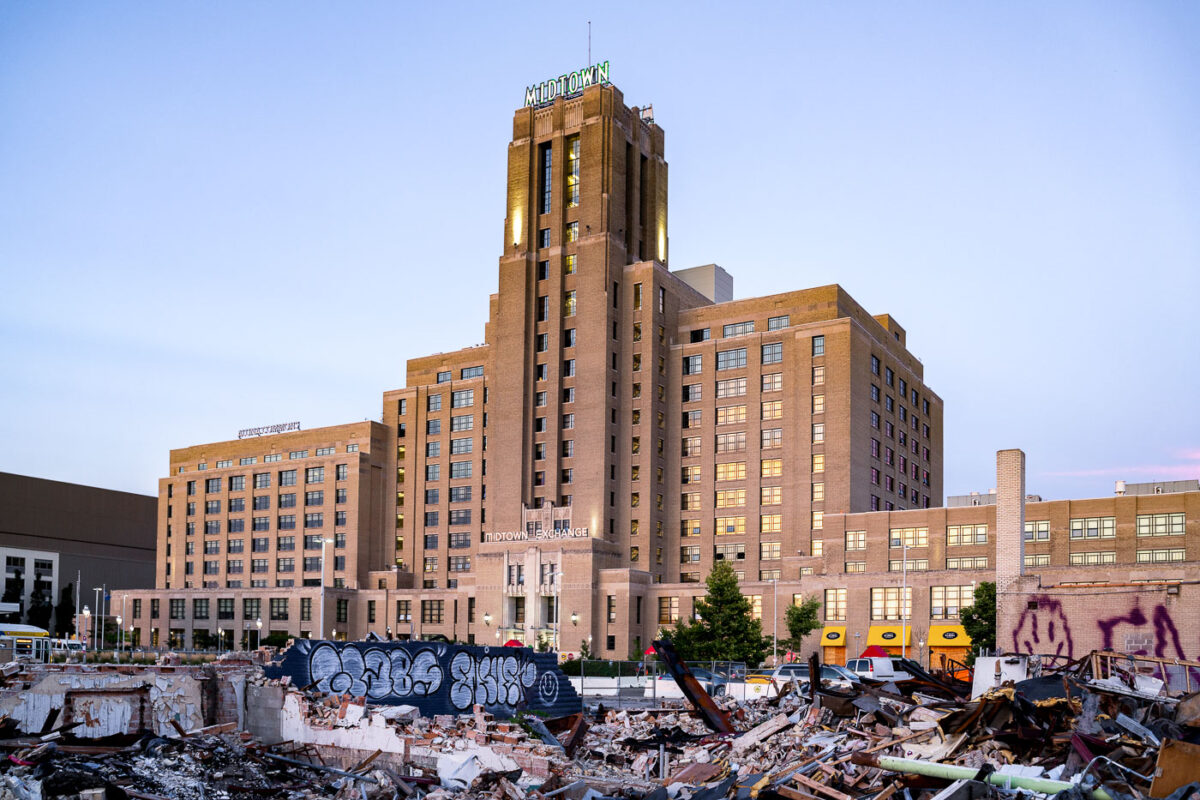
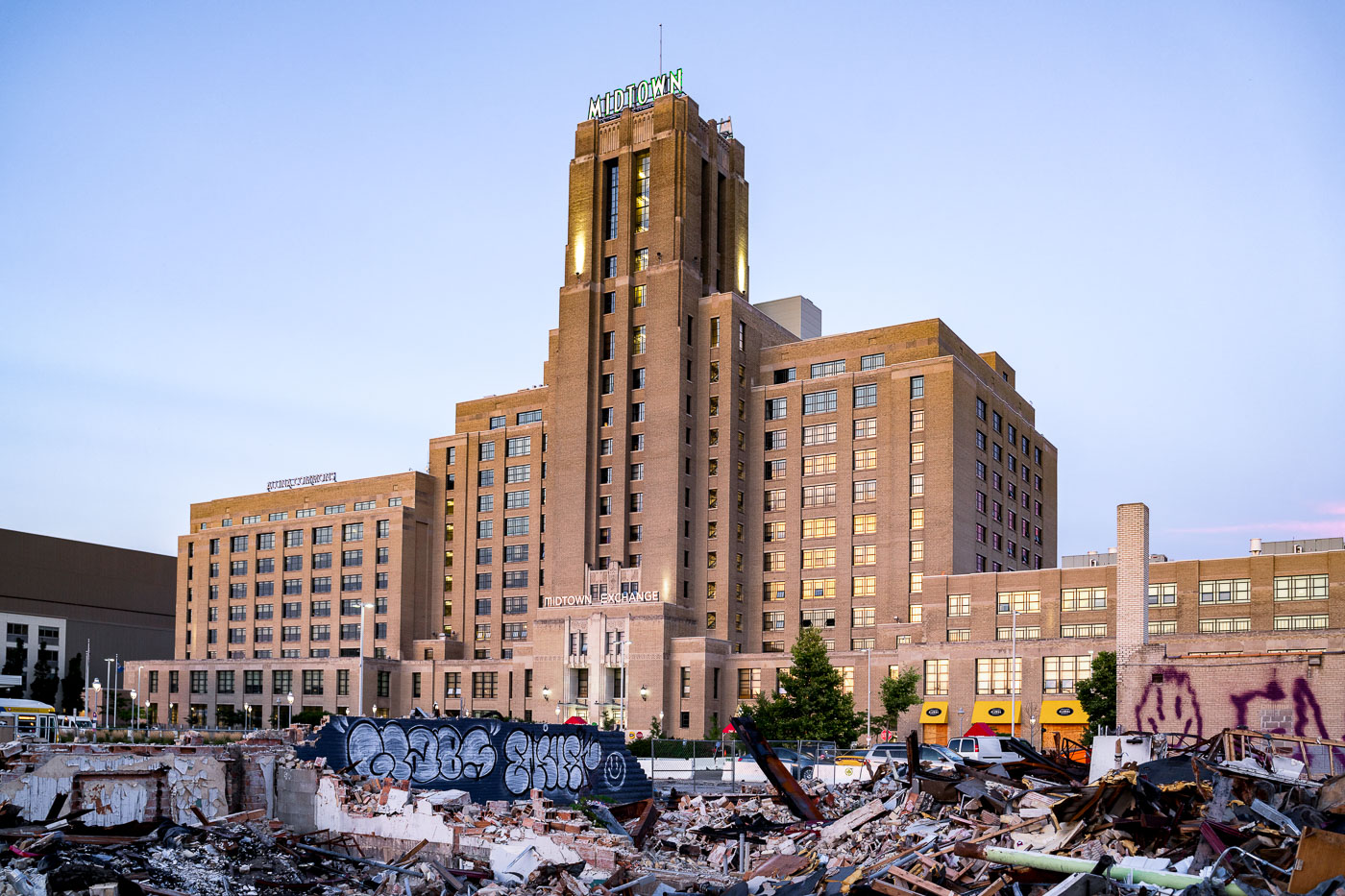
Midtown Exchange with riot damaged buildings in front
The Midtown Exchange building at 2929 Chicago Avenue in Minneapolis stands behind the debris of structures damaged by fires. These fires occurred during the civil unrest that followed the May 25, 2020 death of George Floyd, impacting the South Minneapolis neighborhood. Originally constructed in 1928 as a Sears, Roebuck and Company catalog distribution center, the Midtown Exchange now functions as a prominent mixed-use complex, housing businesses, residences, and a public market.

Midtown Exchange, Minneapolis: Uprising Fire Damage

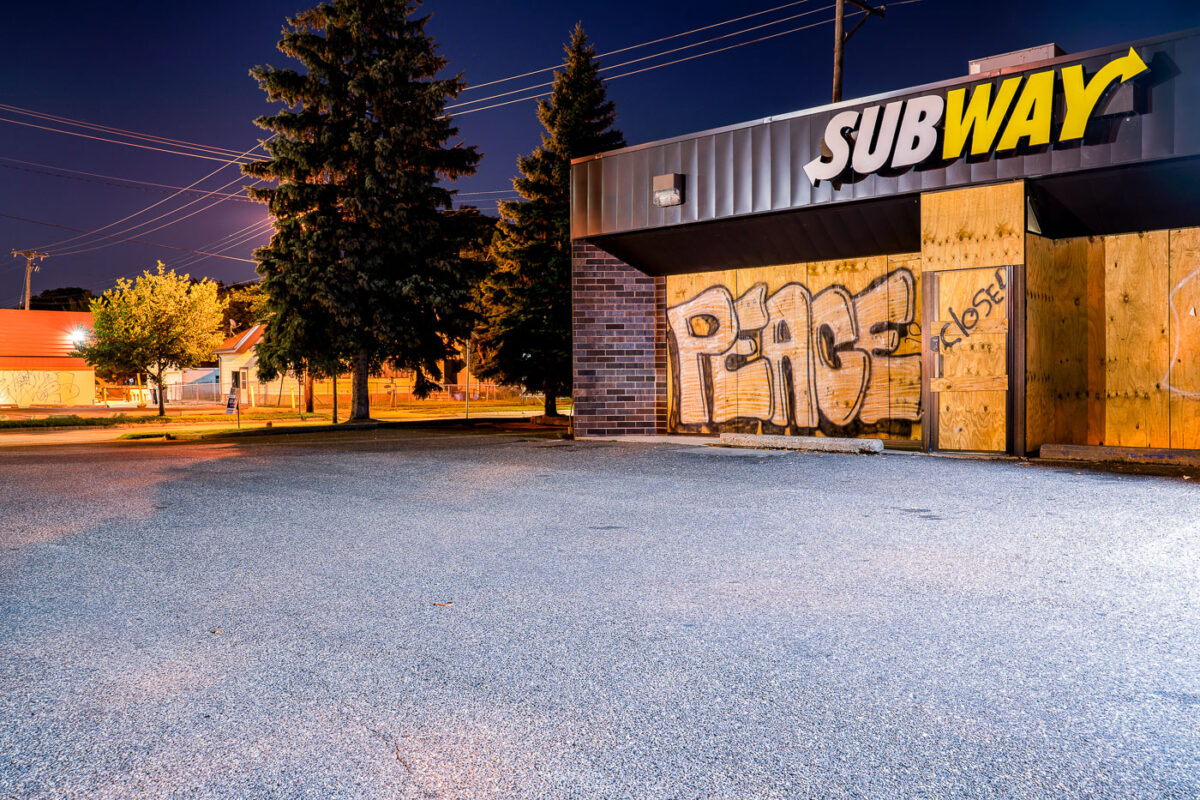
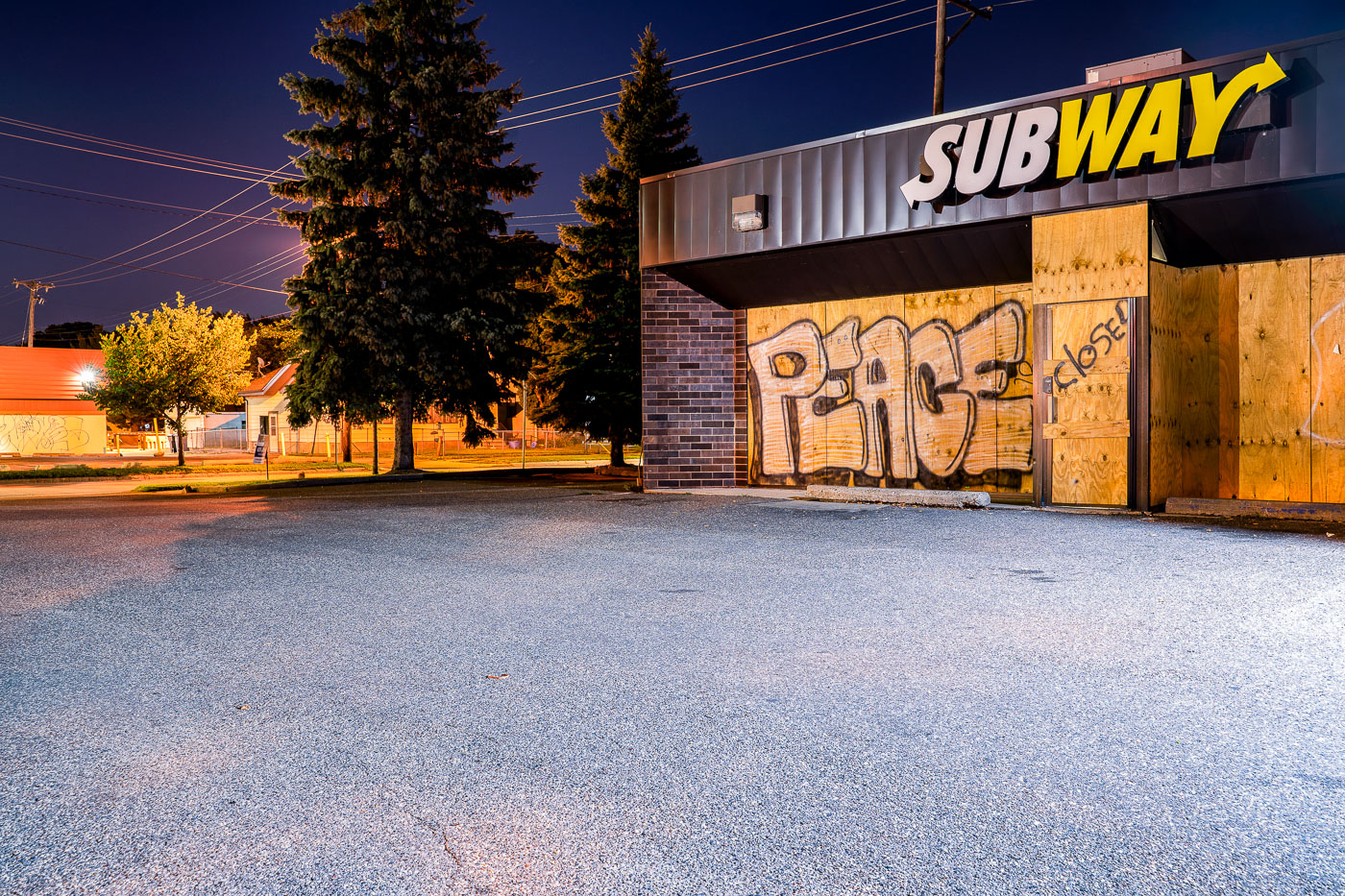
PEACE written on boards covering a Subway restaurant
A Subway restaurant on East Lake Street in South Minneapolis displays "PEACE" graffiti across its boarded windows and entrance. The plywood panels were installed following widespread protests that occurred in Minneapolis after the death of George Floyd on May 25, 2020.

PEACE on boarded windows of Subway, East Lake Street, Minneapolis

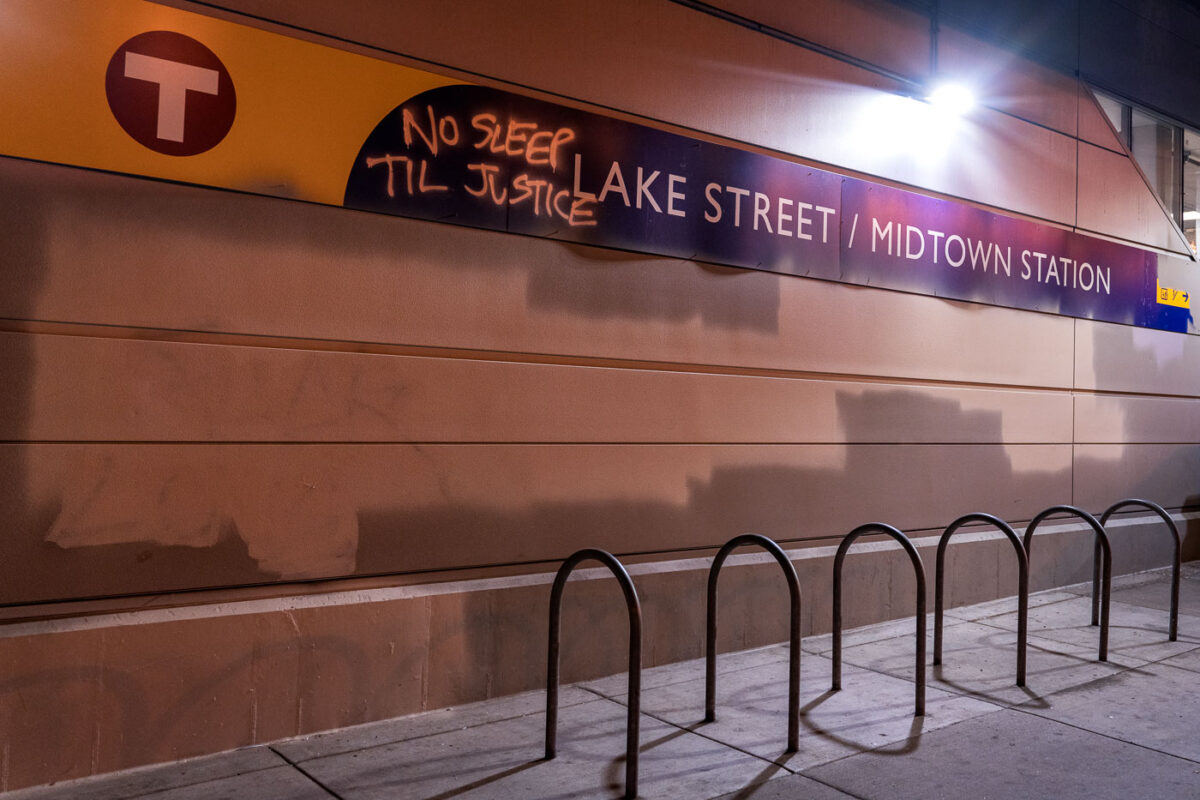
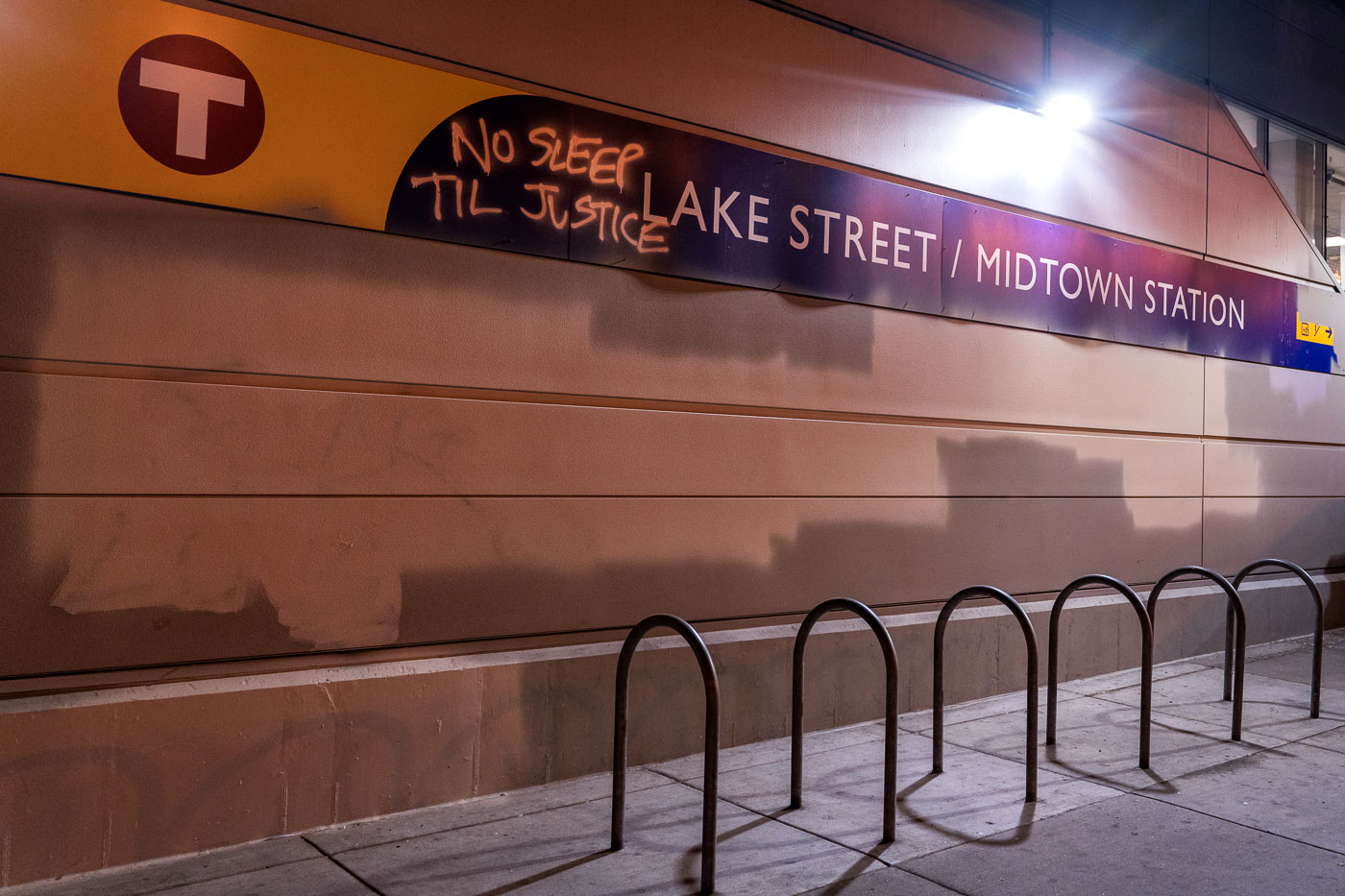
No Sleep Til Justice at Midtown Station
Graffiti reading "No Sleep Til Justice" is visible on the signage of the Lake Street/Midtown Station in South Minneapolis.

No Sleep Till Justice Graffiti at Lake Street/Midtown Station

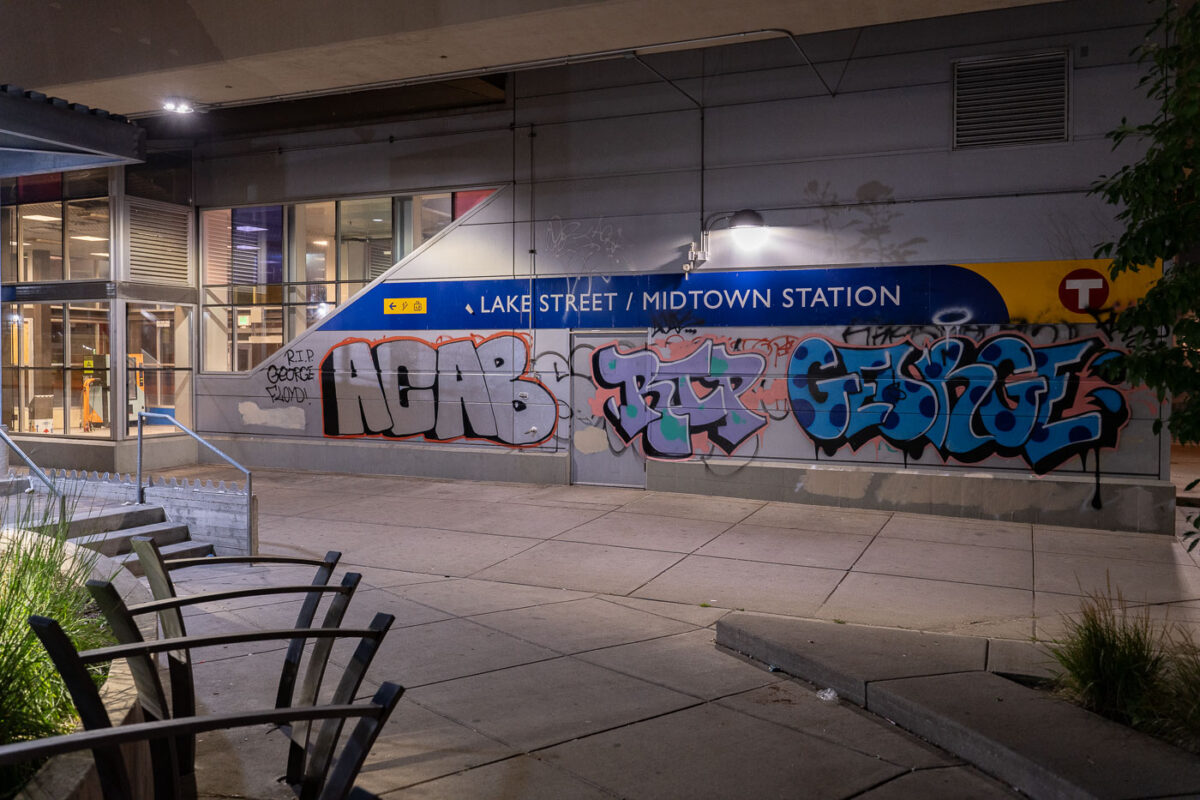
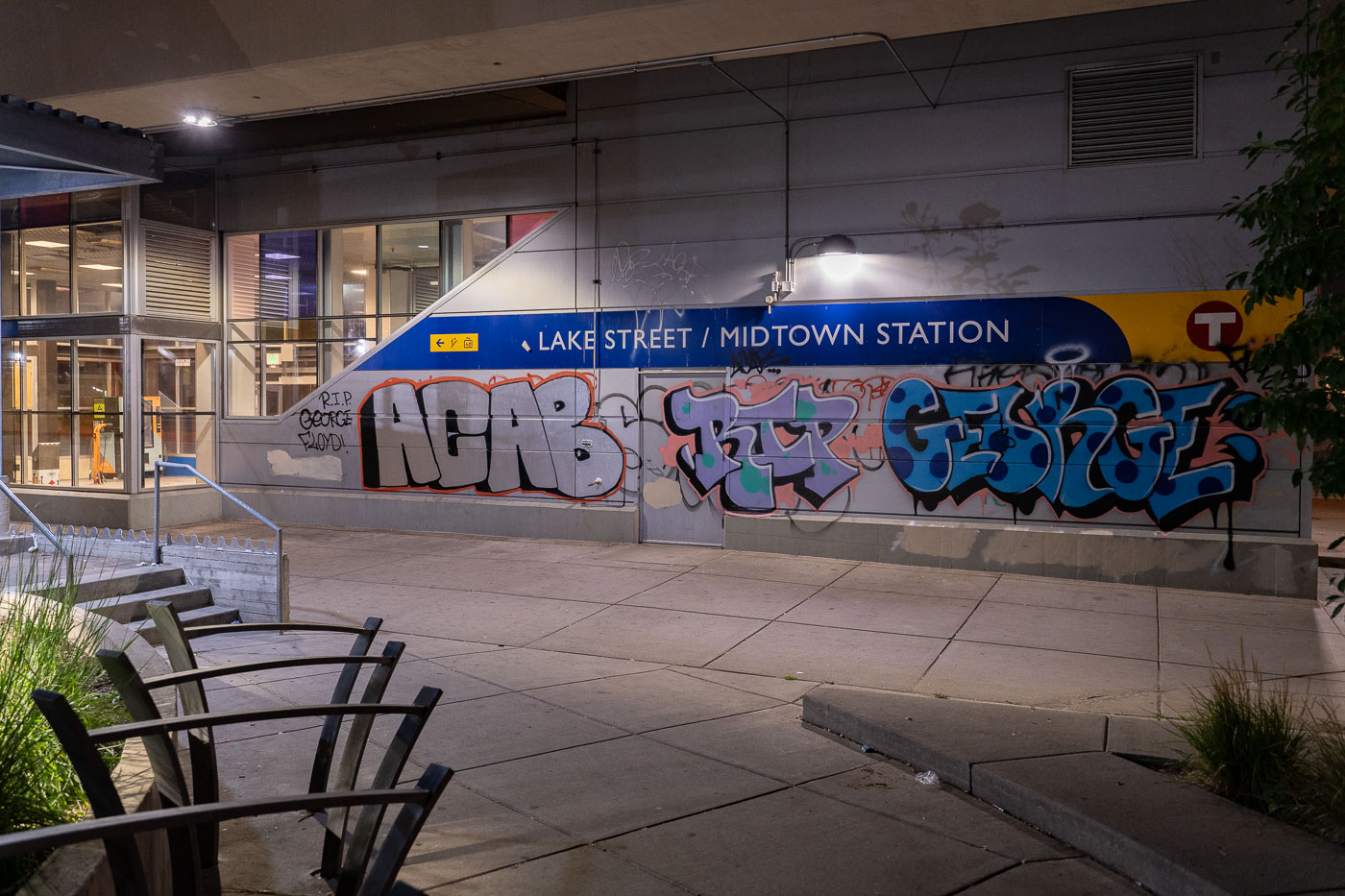
ACAB RIP GEORGE graffiti on Midtown Station
Graffiti expressing "R.I.P. George Floyd" and "ACAB" covers a wall at the Lake Street / Midtown Station in South Minneapolis.

ACAB RIP George Floyd Graffiti, Midtown Station, Minneapolis

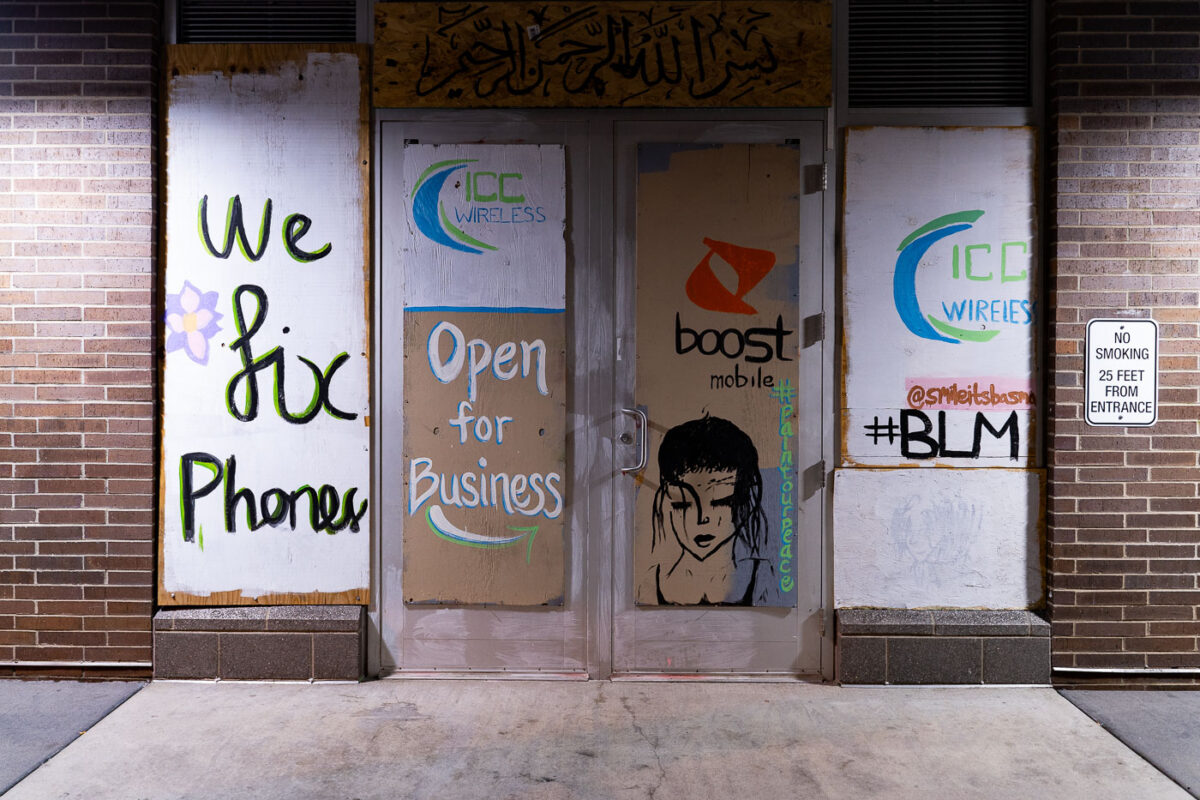
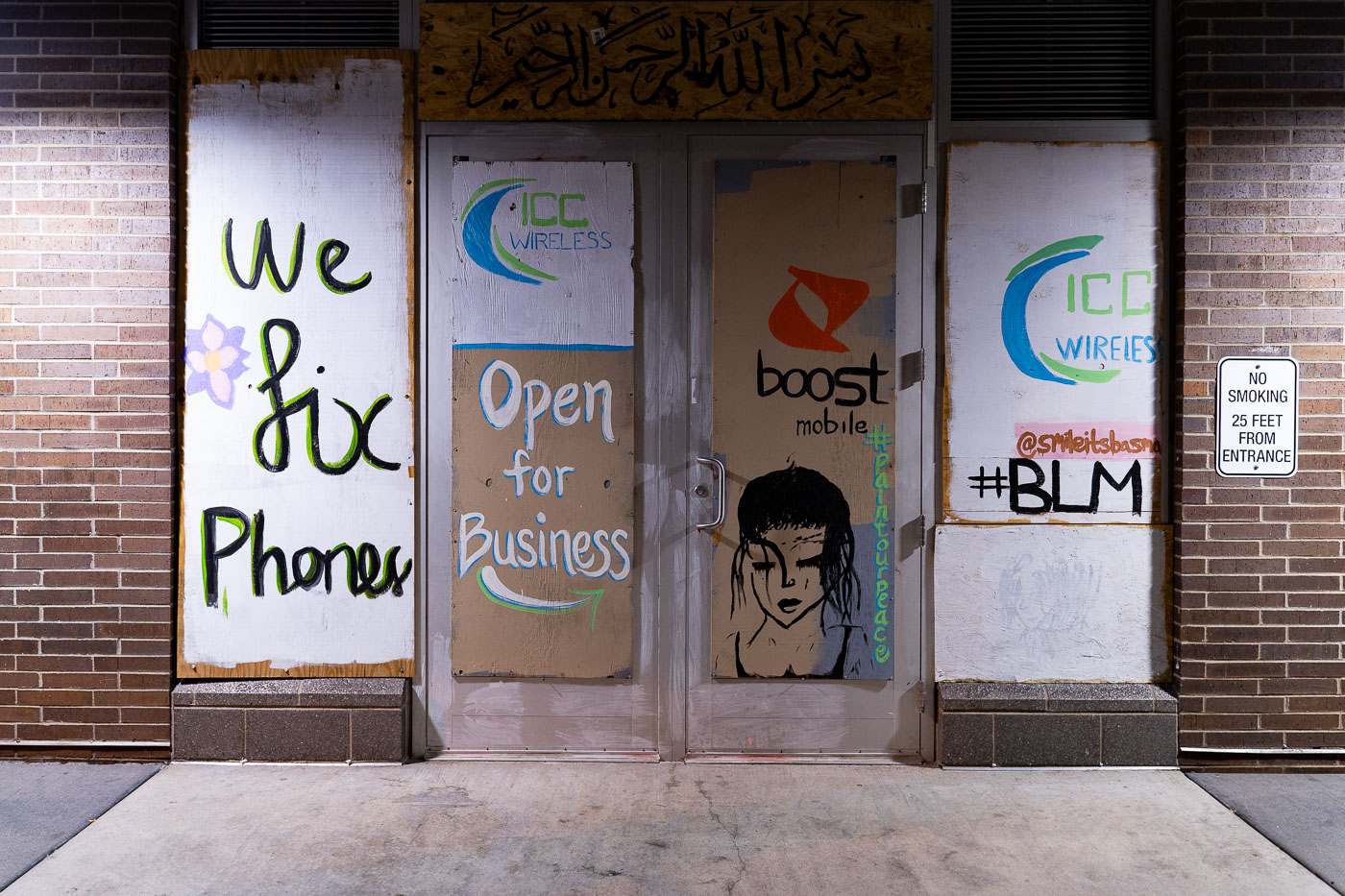
ICC Wireless open for business
The storefront of ICC Wireless Boost Mobile on Lake Street in Minneapolis is covered with plywood boards. These boards were installed for protection during the Minneapolis Uprising, a period of civil unrest following the murder of George Floyd in May 2020. Despite the protective barriers, the store declared itself "Open for Business" with painted signs, alongside other messages like "We fix Phones," and the company logos.

ICC Wireless Boost Mobile boarded storefront, Lake Street, Minneapolis

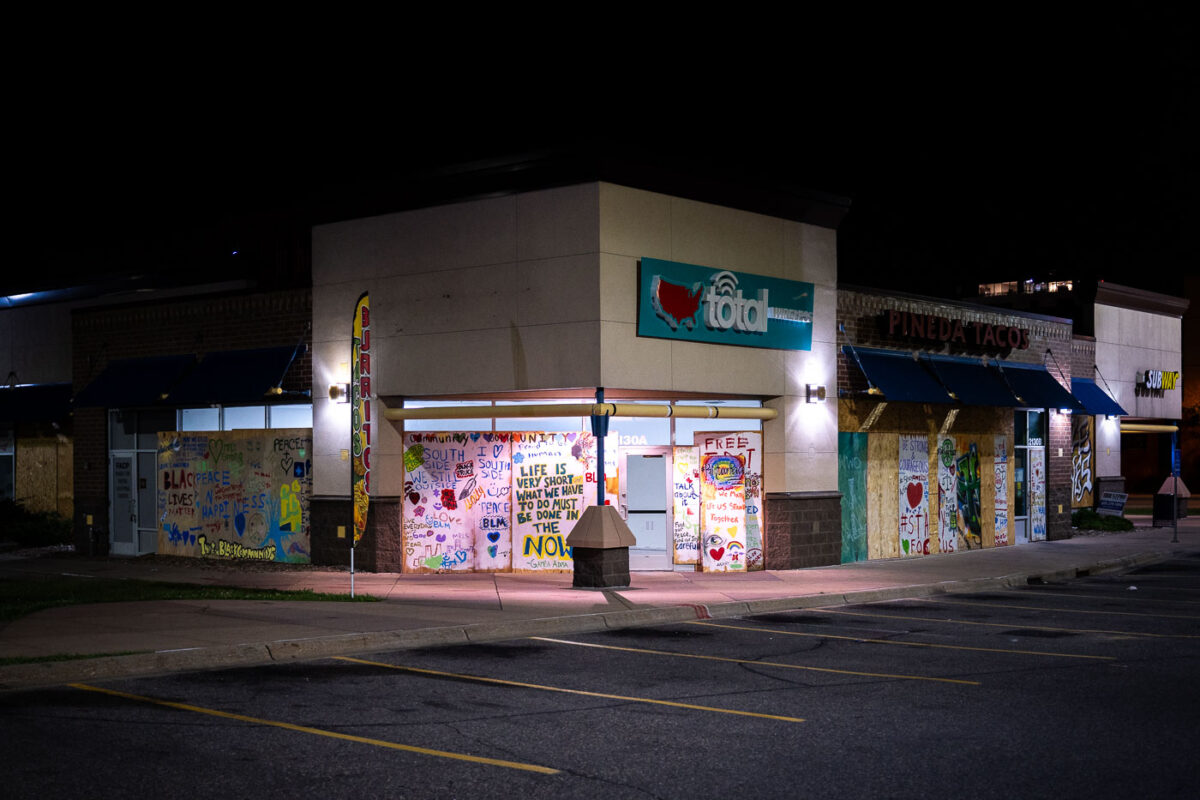
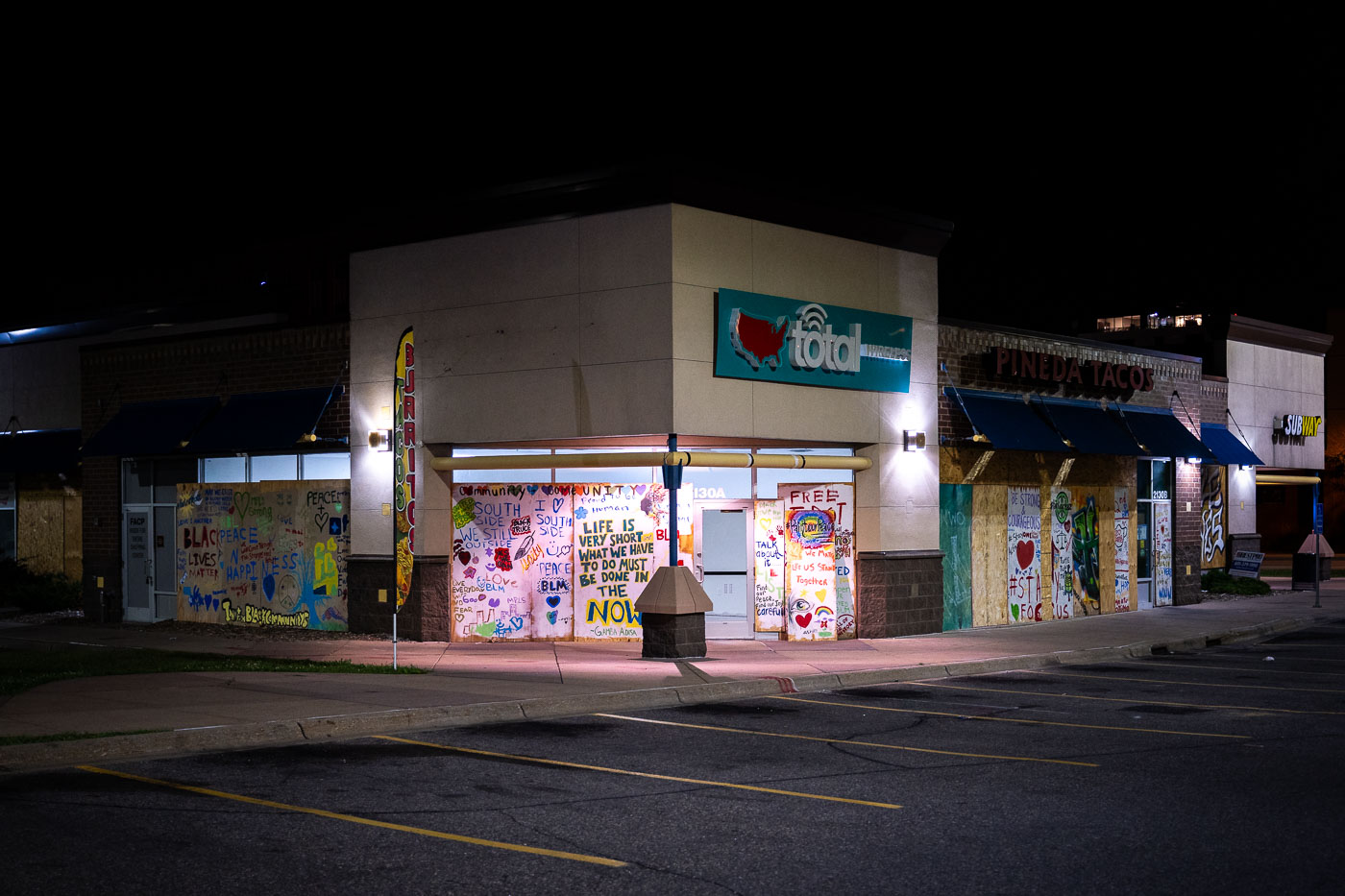
Boards on Total Wireless in South Minneapolis
Storefronts along Lake Street in Minneapolis display murals painted on protective boards. These boards were installed on businesses in August 2020, following widespread protests in Minneapolis after the May 25, 2020 death of George Floyd. The murals, created by community members and artists, transformed the temporary barriers into public canvases for messages of hope, unity, and social justice. Messages such as 'Black Lives Matter' and calls for community solidarity are visible on the boards covering businesses like Total Wireless, Pineda Tacos, and Subway.

Lake Street Storefront Murals, Minneapolis, August 2020

Really big GEORGE FLOYD graffiti on Midtown Greenway
Graffiti commemorating George Floyd is visible on a retaining wall along the Midtown Greenway in Minneapolis, photographed on August 22, 2020. This artwork emerged in the aftermath of the widespread protests and civil unrest that followed Floyd's murder in May 2020. The Midtown Greenway is a 5.5-mile-long rail-to-trail path, converted from a former railway corridor, that serves as a vital transportation and recreational corridor through South Minneapolis.
George Floyd Graffiti, Midtown Greenway, Minneapolis at Night

Former kmart store covered in graffiti
The former K-Mart building on Lake Street in Minneapolis was transformed into a public art installation following the murder of George Floyd in May 2020. Its boarded-up facade became a canvas for large-scale murals and graffiti. These artworks emerged during a period of widespread protest and rebuilding in the city. Subsequently, the building was repurposed to house a temporary Post Office, providing essential services after two nearby postal facilities were damaged.
K-Mart Murals & Graffiti, Lake Street, Minneapolis
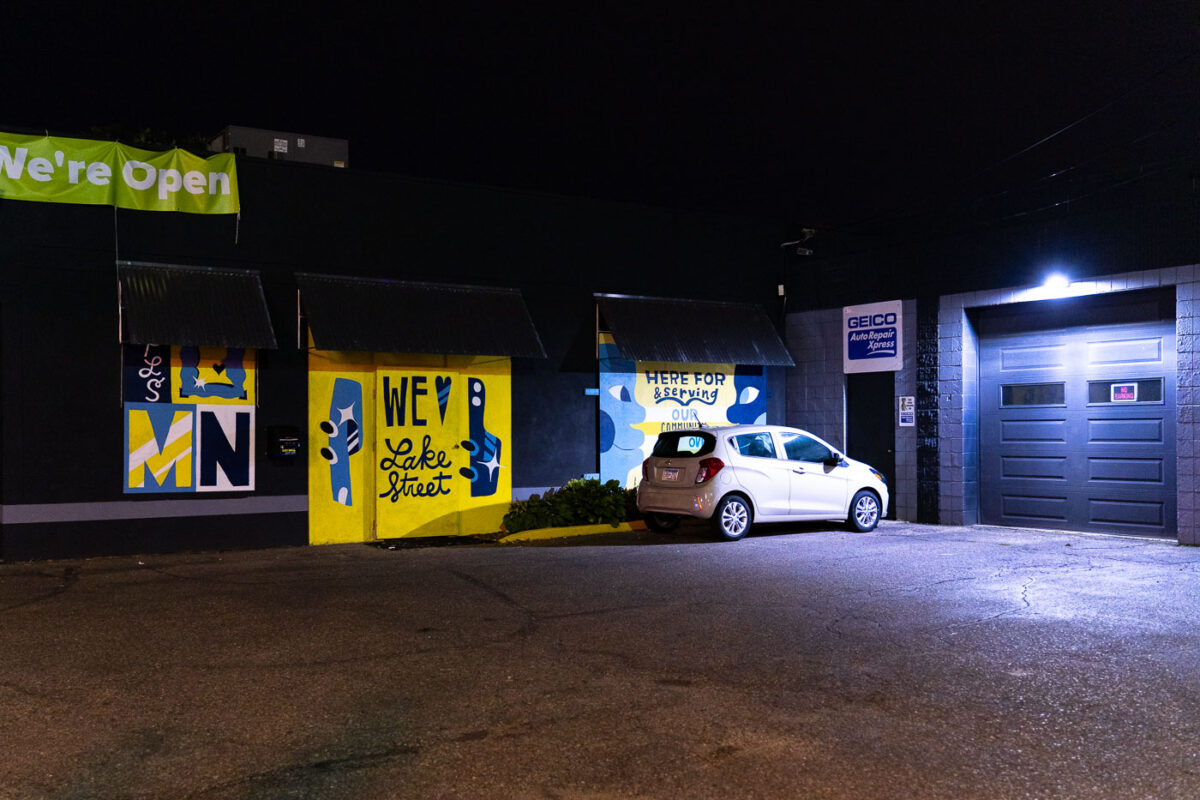
We love lake street graffiti on boards
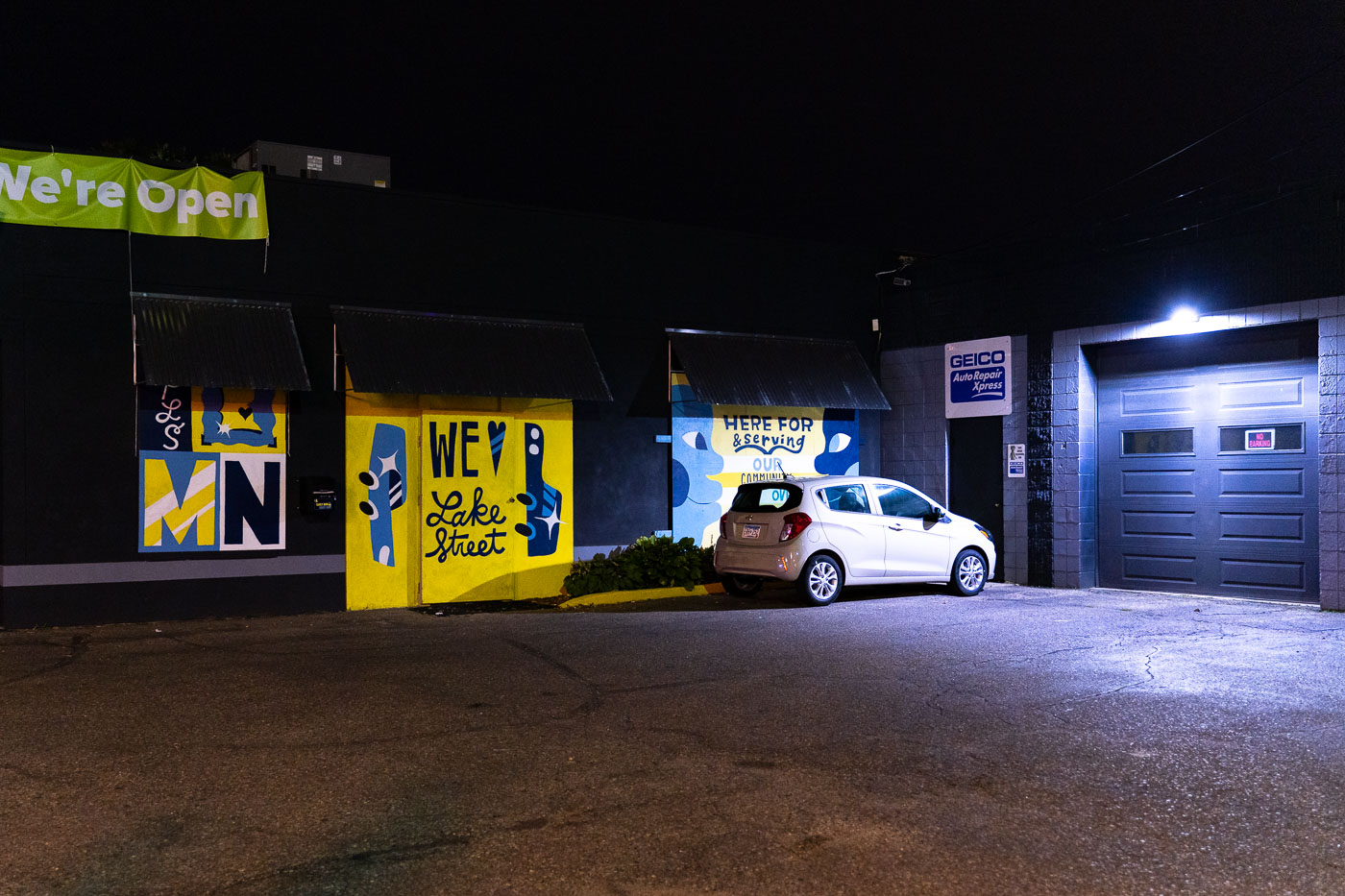
The Master Collision auto repair shop on West Lake Street in Minneapolis features murals painted on its boarded windows. These artworks were created following the widespread unrest in May 2020, which occurred after the killing of George Floyd.

Murals on Boarded Windows, Master Collision, West Lake Street
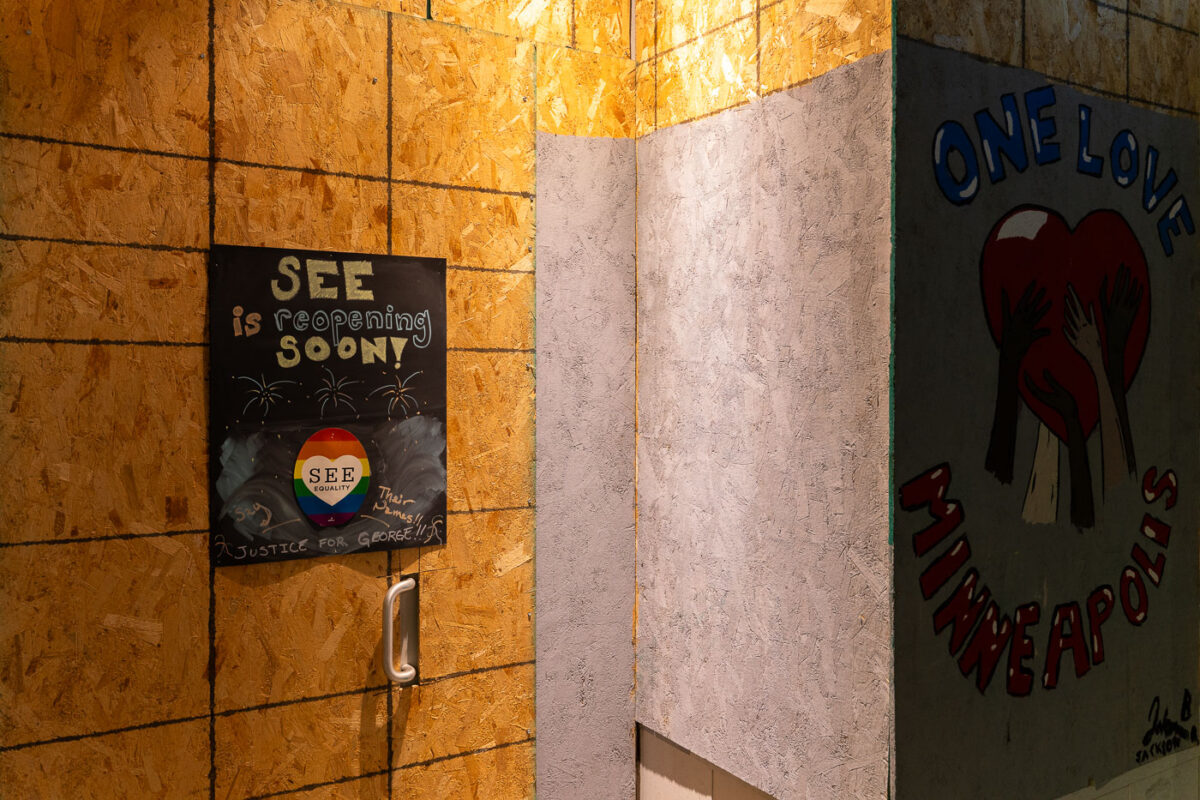
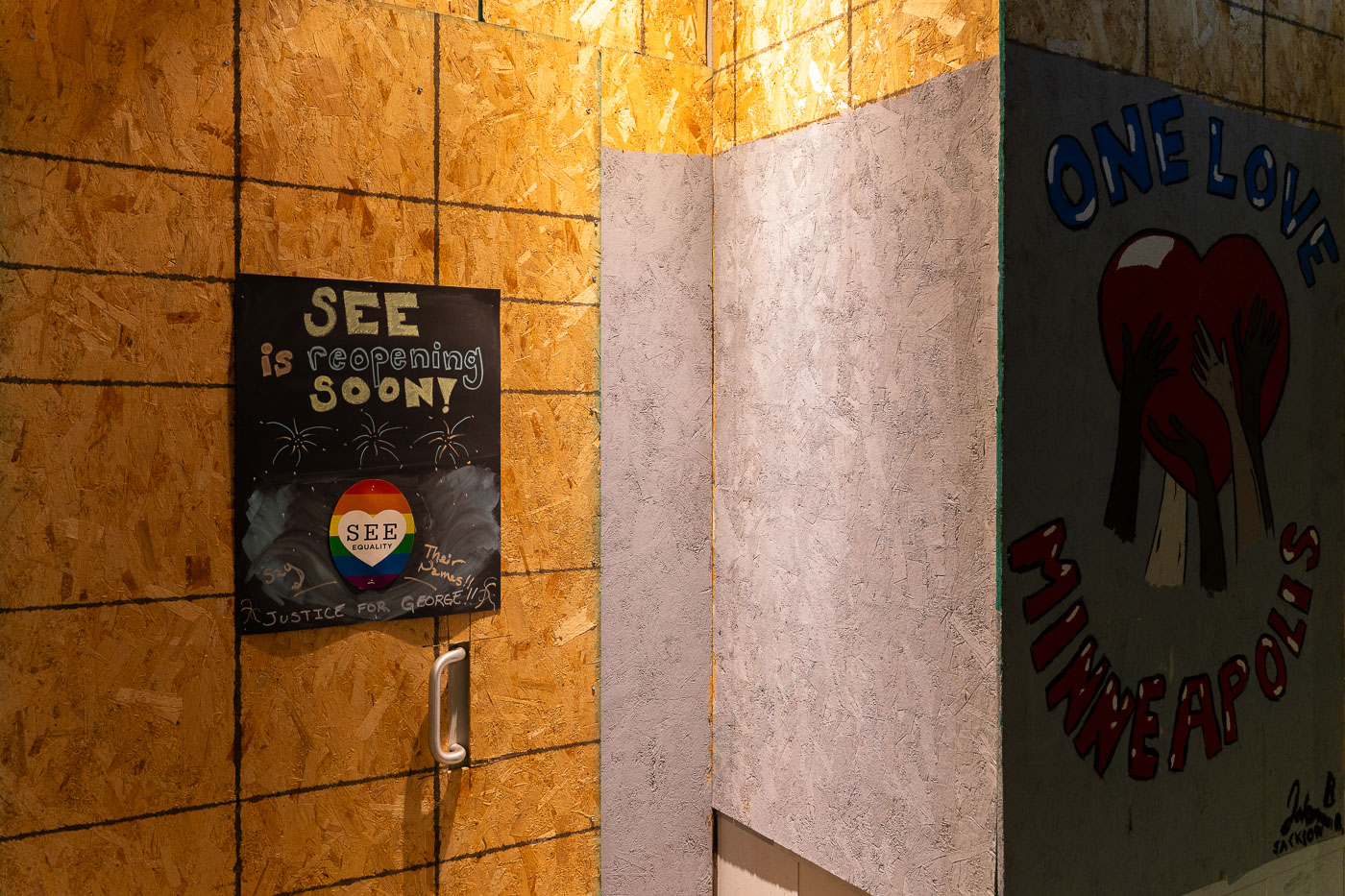
SEE is reopening soon sign
The SEE retail store on Hennepin Avenue in Uptown Minneapolis displays a reopening sign and a mural on its boarded-up facade. The boarding and artwork reflect the aftermath of the Minneapolis Uprising in May 2020, which led many businesses to secure their premises. A sign announces the store's reopening on August 24, 2020, alongside a message for "JUSTICE FOR GEORGE!!" and a "SEE EQUALITY" logo, indicating solidarity with social justice movements. Adjacent to the reopening notice, a mural featuring the phrase "ONE LOVE MINNEAPOLIS" and hands reaching for a heart conveys a message of community and resilience.

SEE Retail Store Reopening, August 24, 2020, Minneapolis
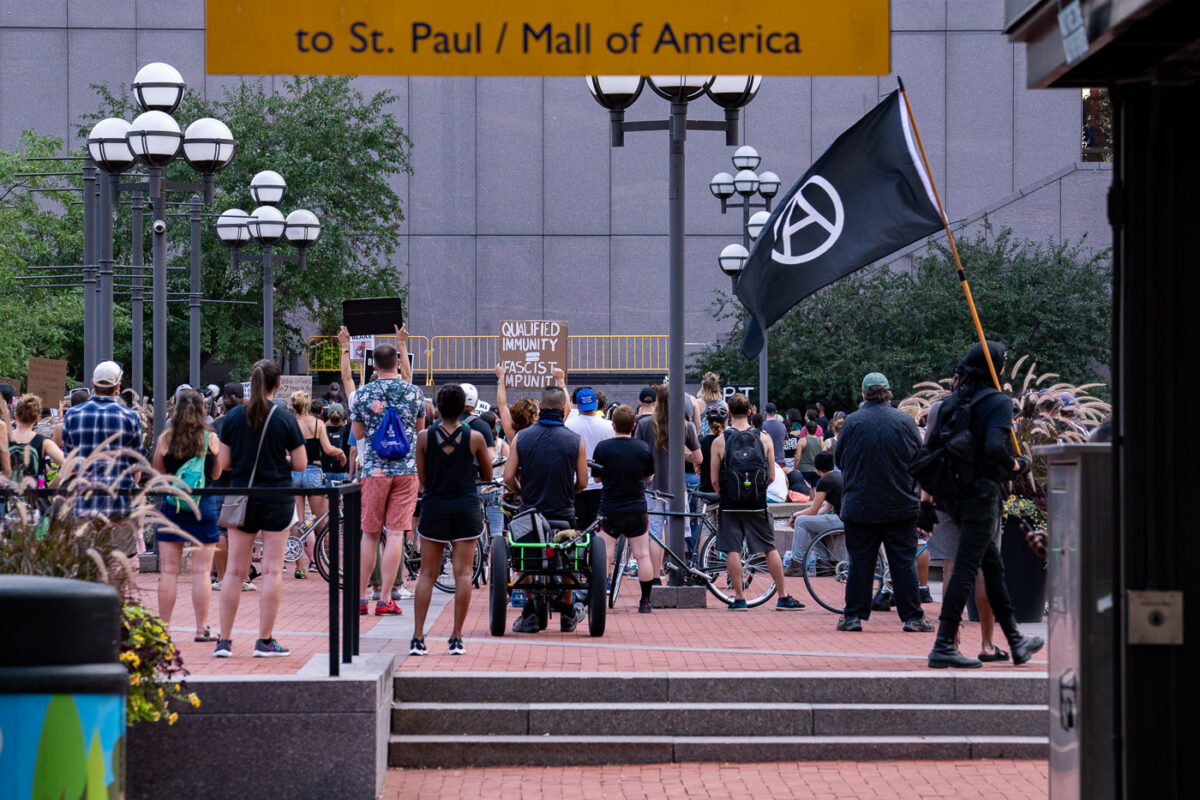
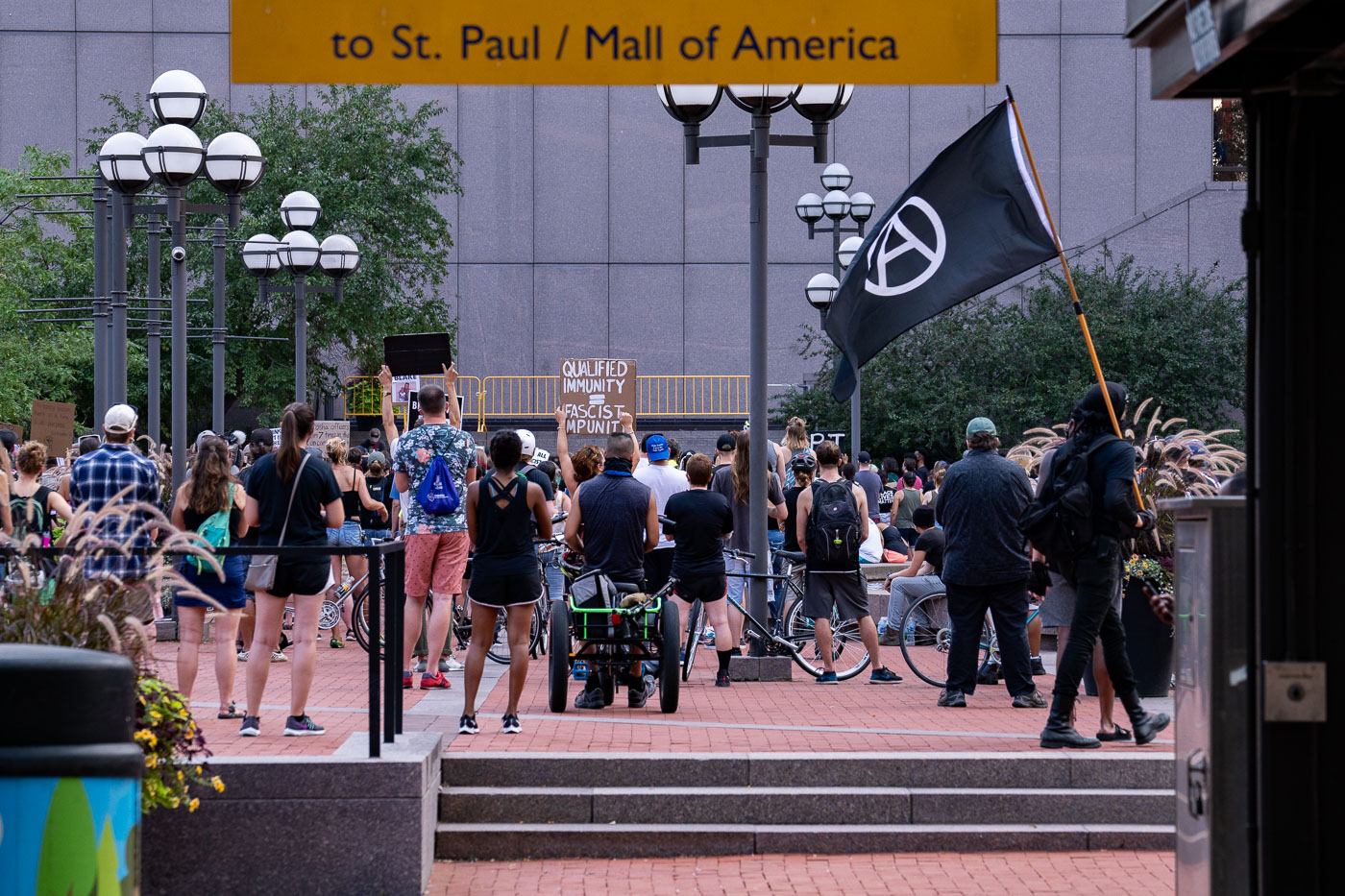
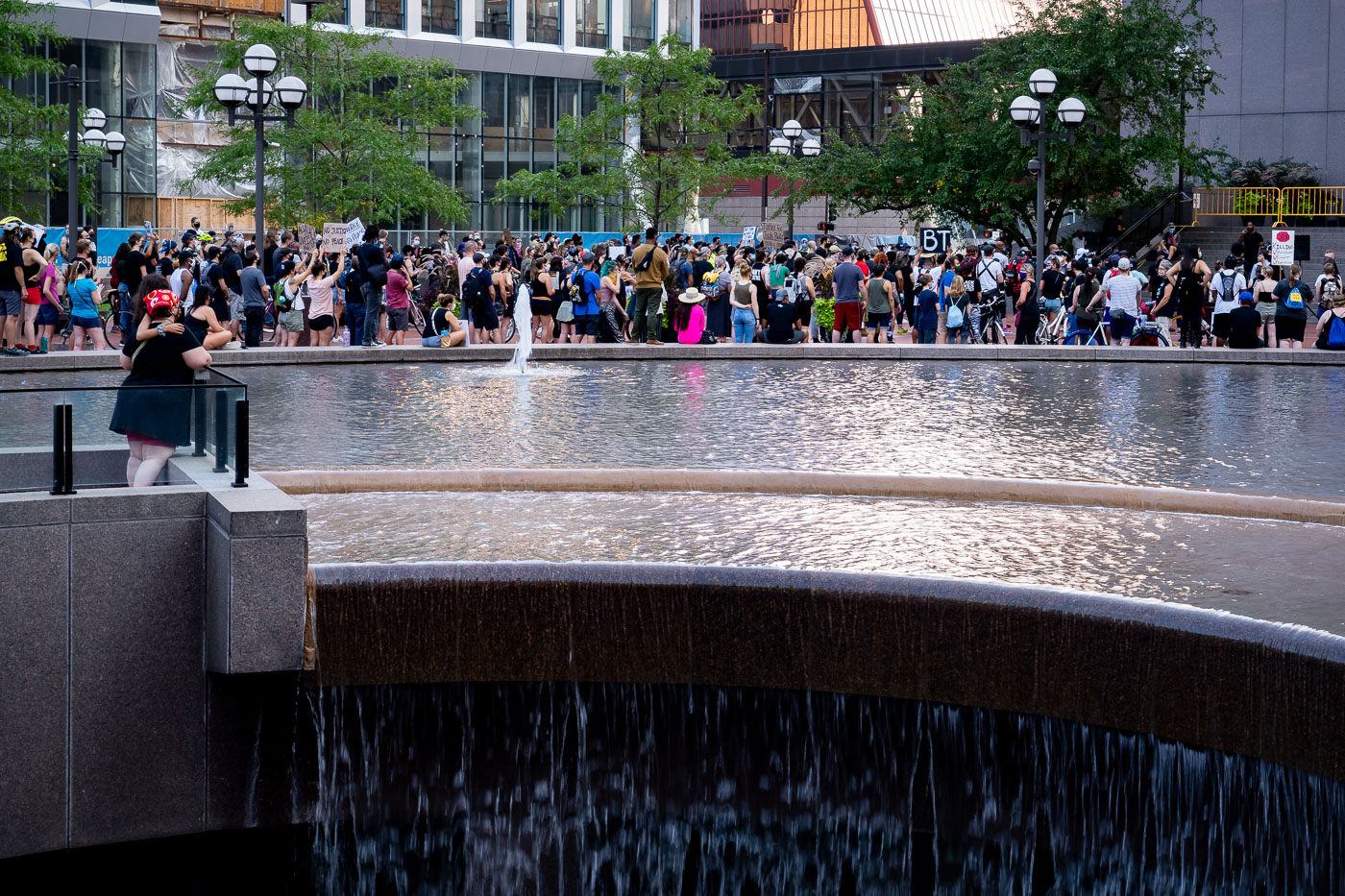
Jacob Blake rally in Downtown Minneapolis August 2020
A protest and rally gathered outside the Hennepin County Government Center in Downtown Minneapolis in solidarity with Jacob Blake after he was shot by police in Kenosha, Wisconsin, on August 24, 2020. This event was part of broader social justice movements in Minneapolis and across the nation, advocating for police accountability and an end to qualified immunity.

Jacob Blake Protest & Rally, Anarchy Flag, Downtown Minneapolis
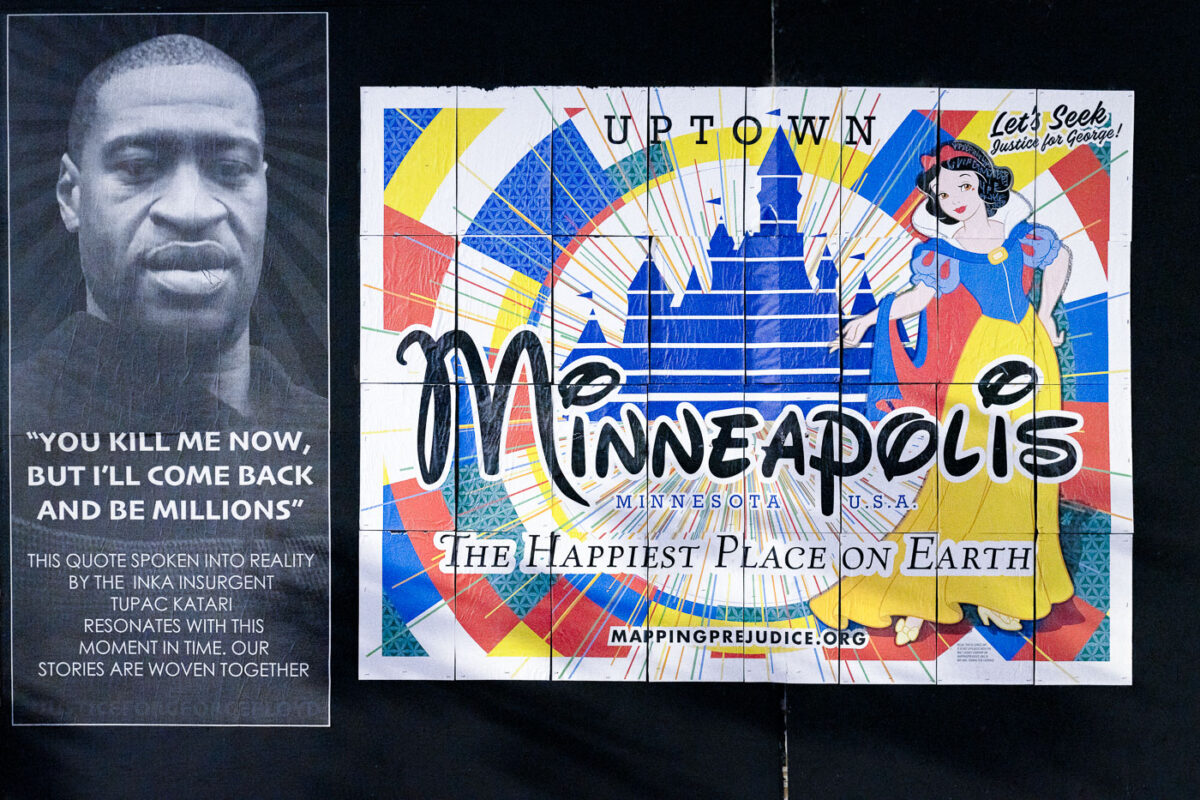
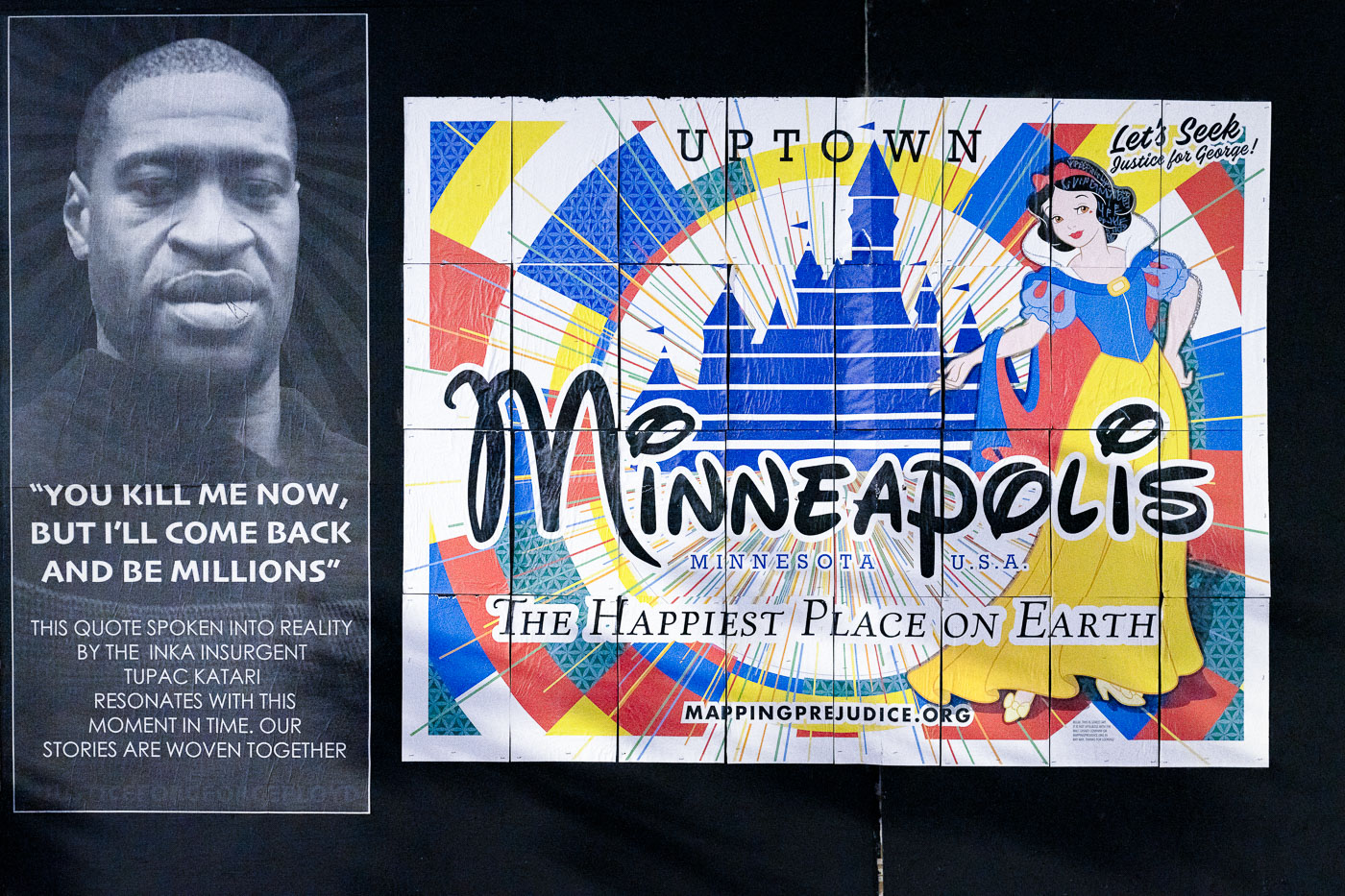
Mapping Prejudice Happiest Place on Earth Mural
Wheat paste art featuring George Floyd and a poster from Mapping Prejudice is displayed on Hennepin Avenue in Uptown Minneapolis. The colorful poster, designed by Mapping Prejudice, subverts the phrase "Minneapolis The Happiest Place on Earth" with a character resembling Snow White stating "Let's Seek Justice for George!", drawing attention to the city's history of racial covenants. These public art installations emerged during the Minneapolis Uprising, serving as a visual protest against racial injustice and a call for accountability following George Floyd's murder.

George Floyd & Mapping Prejudice Wheat Paste, Uptown Mpls
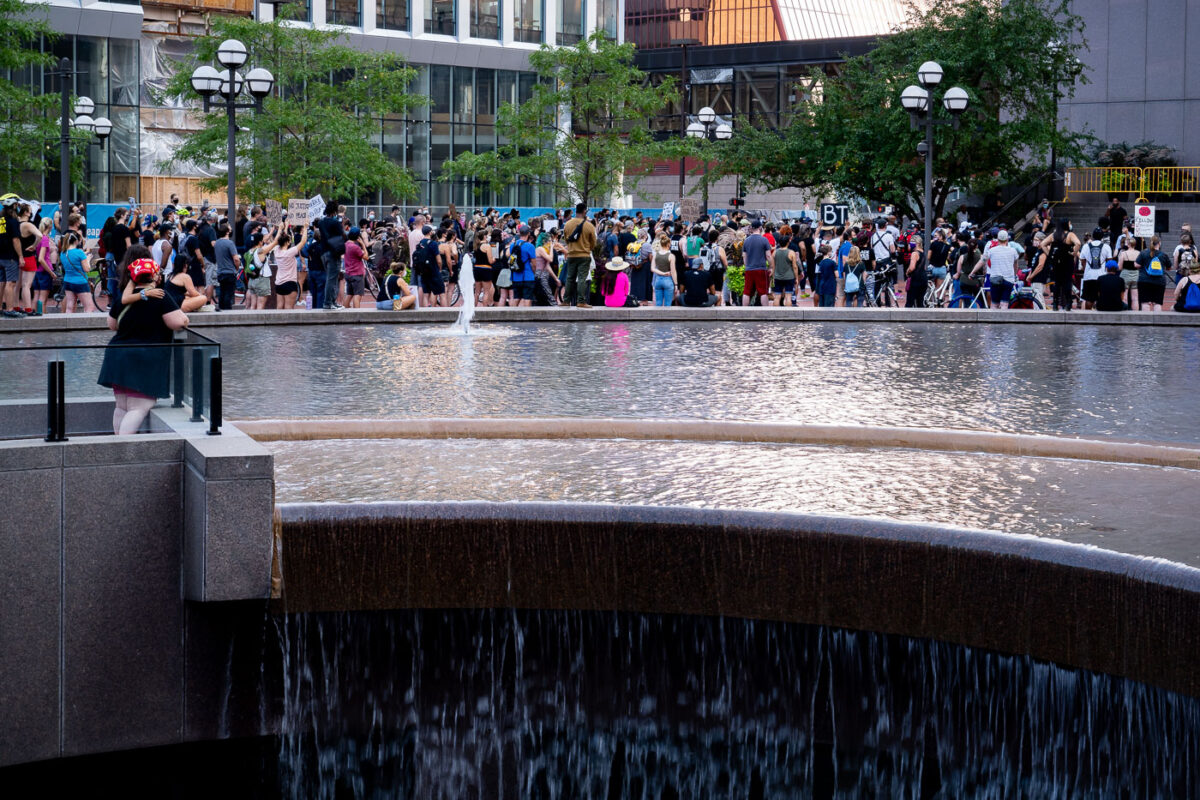
Jacob Blake rally at Hennepin County Government Center
A protest gathered outside the Hennepin County Government Center in Downtown Minneapolis in solidarity with Jacob Blake. This rally occurred after Jacob Blake was shot by police in Kenosha, Wisconsin, in August 2020, sparking widespread protests against police violence.

Downtown Minneapolis Jacob Blake Solidarity Rally
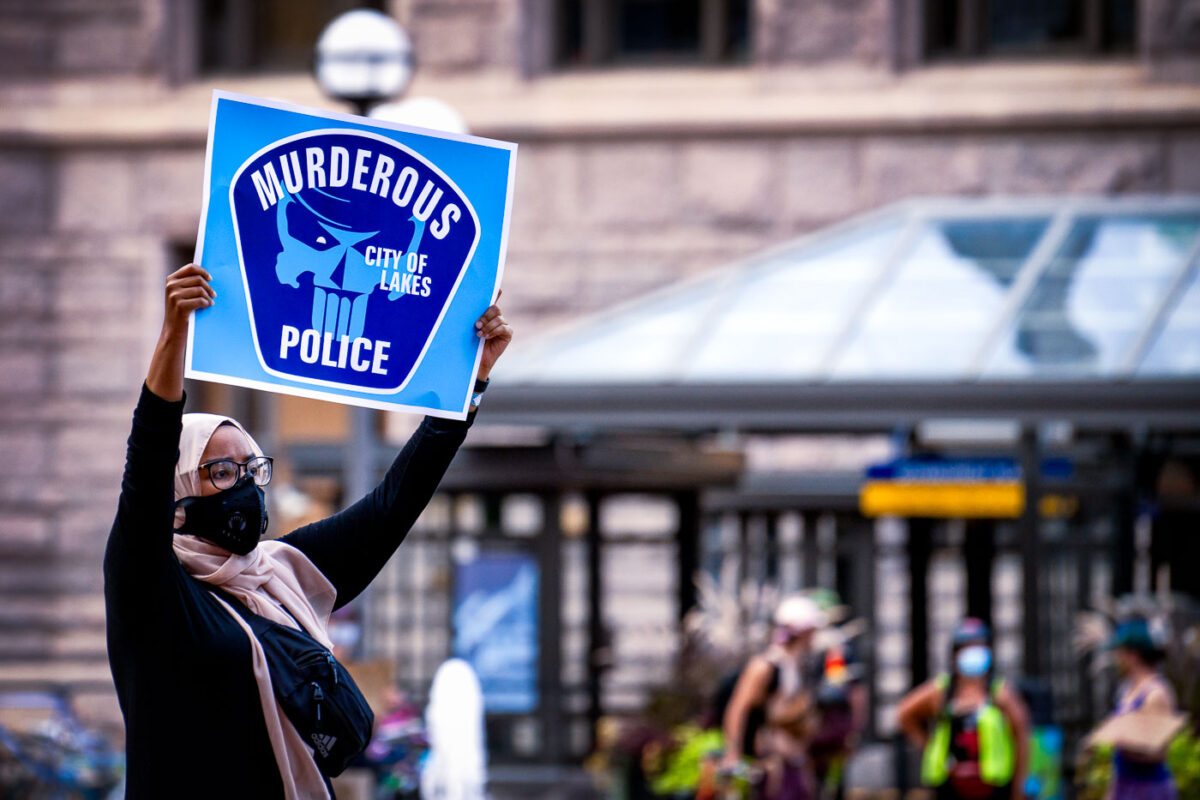
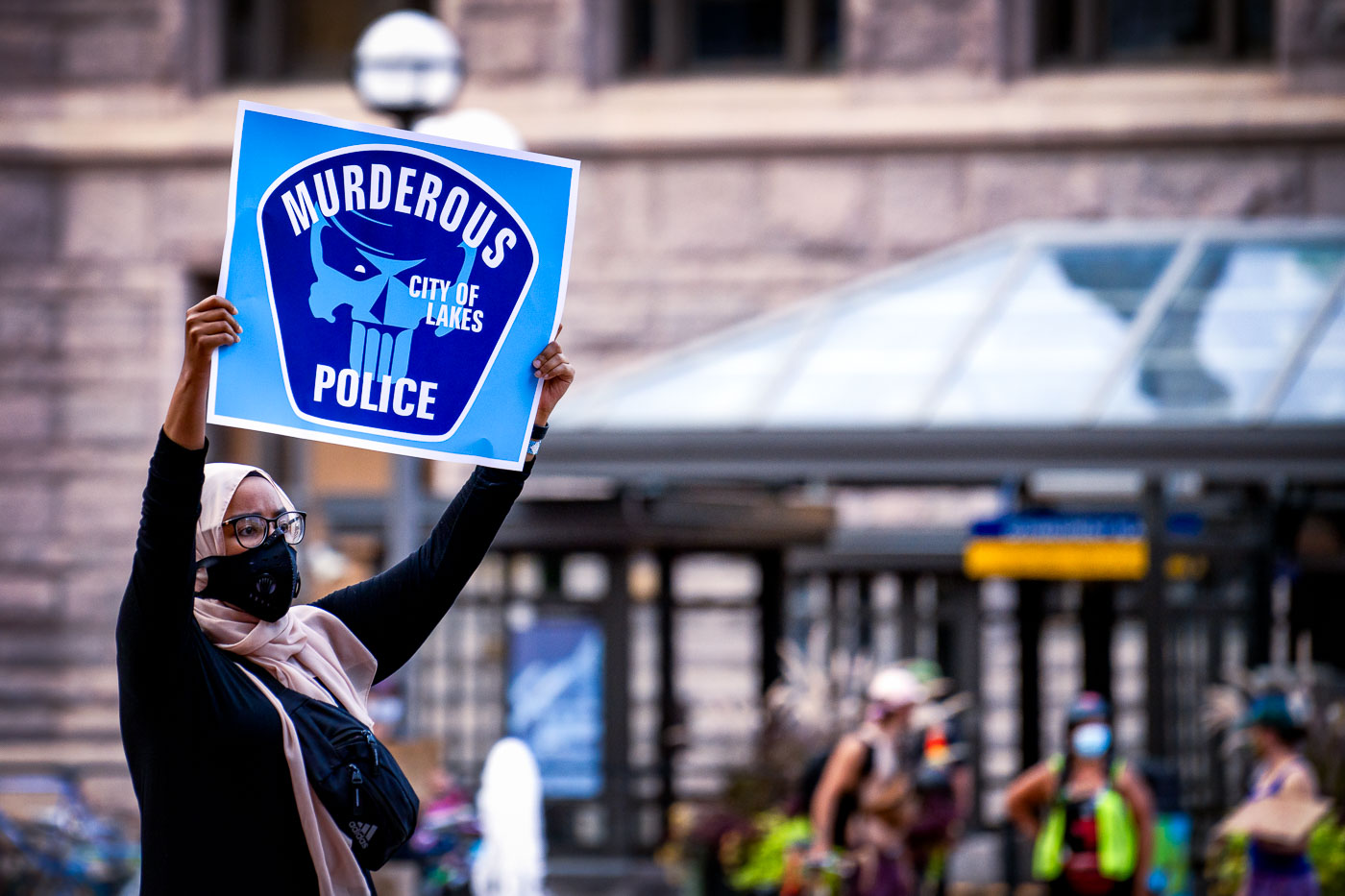
City of Lakes Murderous Police sign
A protester holds a sign during a march in downtown Minneapolis, outside the Hennepin County Government Center. This protest was held in solidarity with Jacob Blake, whose shooting by police in Kenosha, Wisconsin, in August 2020, sparked widespread demonstrations against police brutality and racial injustice. The sign, which reads "Murderous Police City Of Lakes" refers to the Minneapolis Police Department.

Minneapolis Jacob Blake protest: ‘Murderous Police’ sign
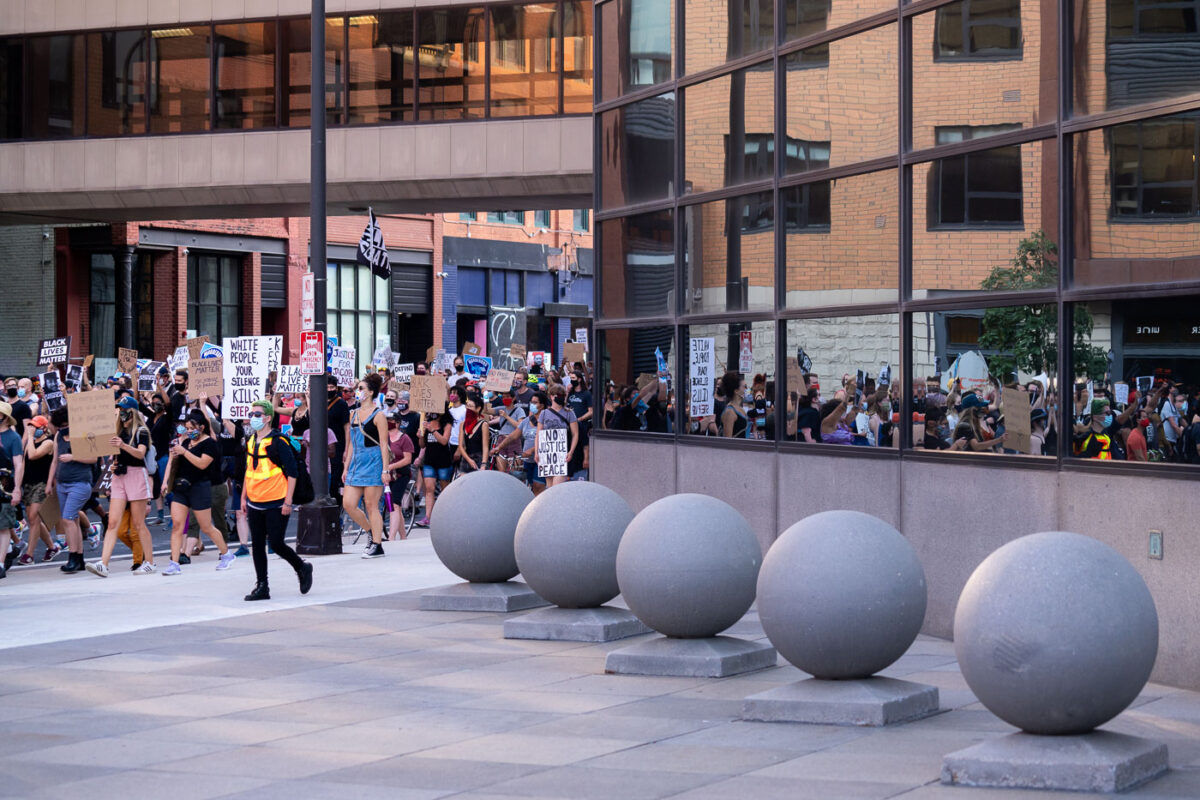
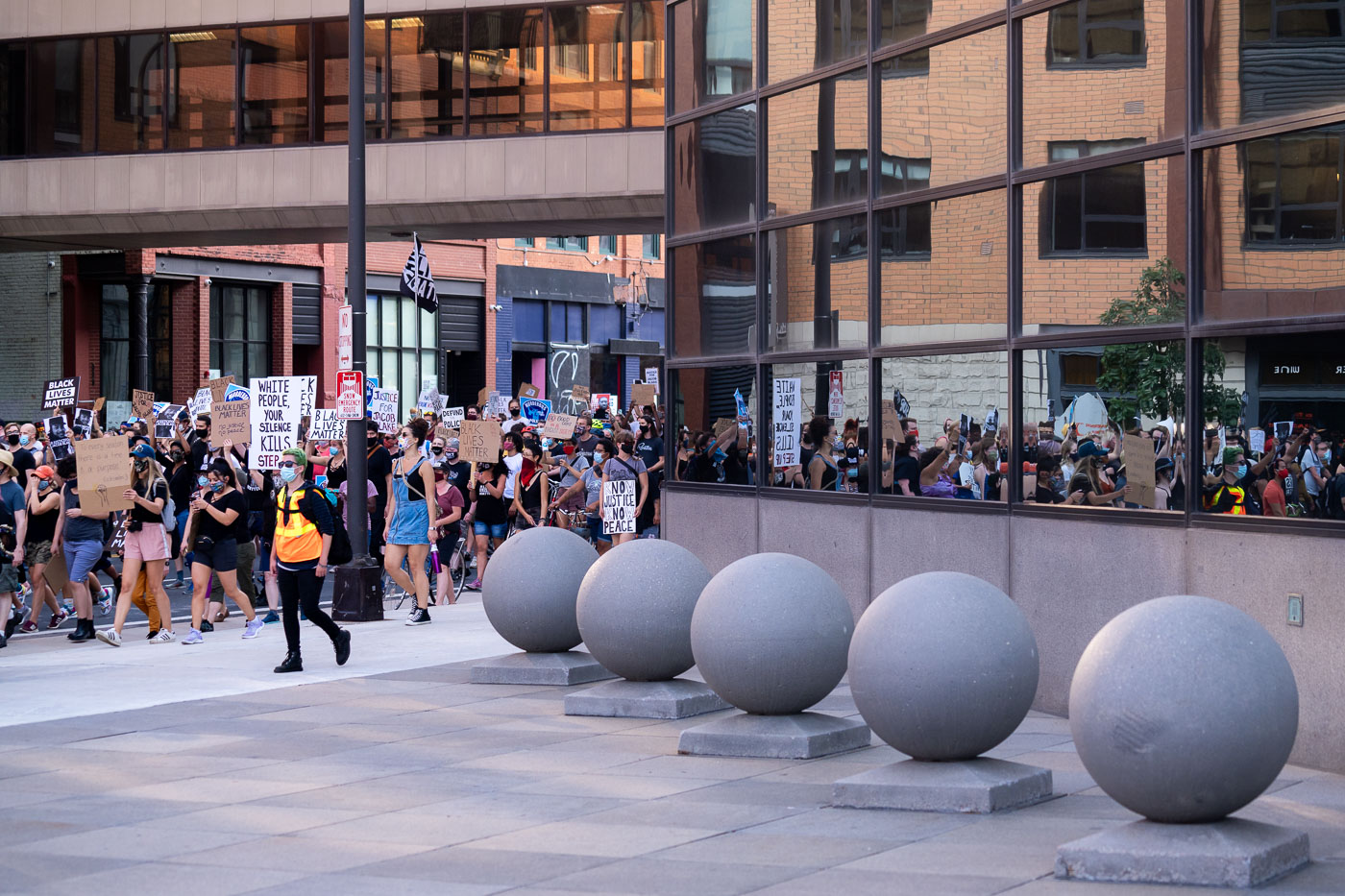
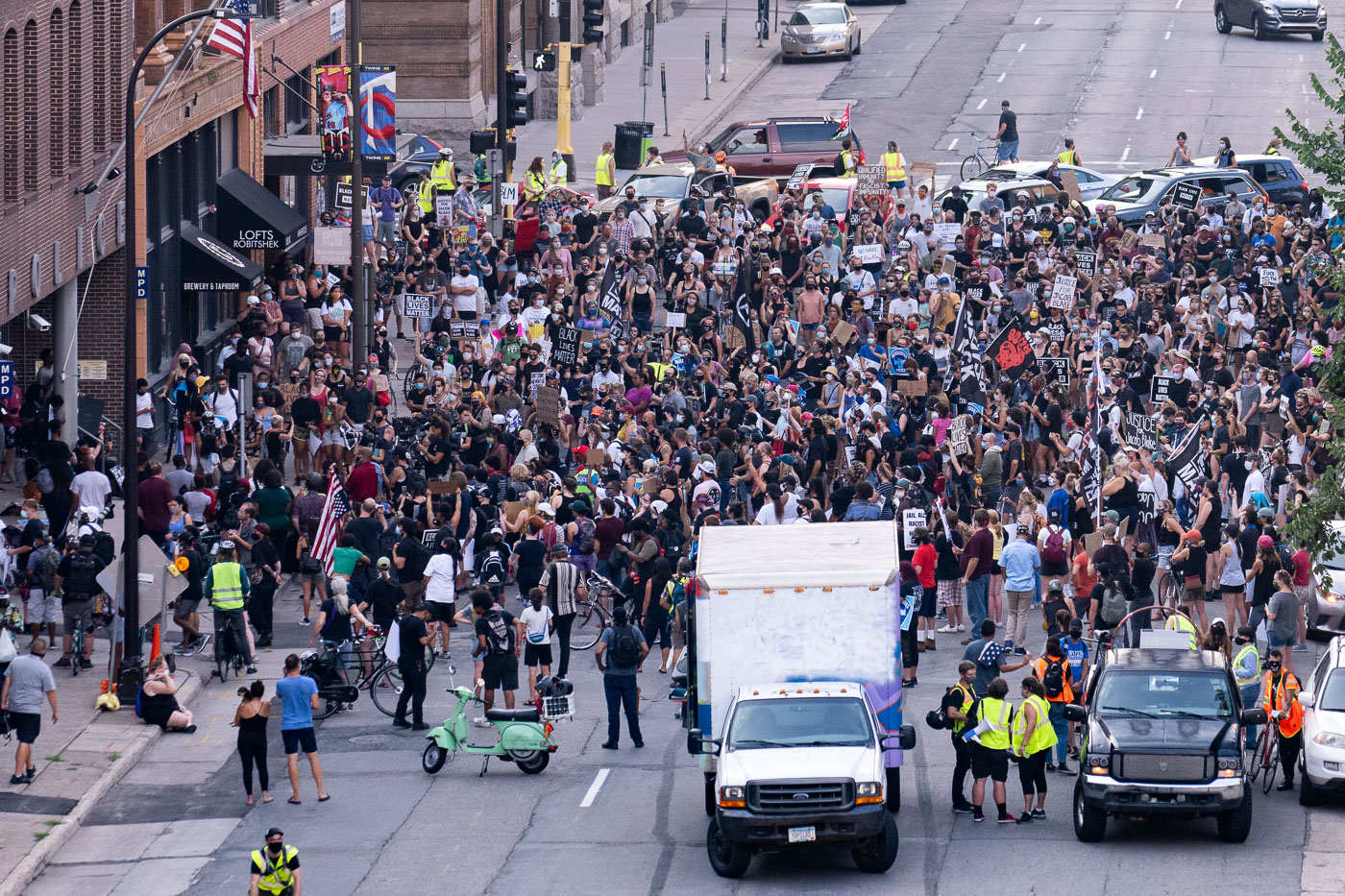
Jacob Blake solidarity march and rally in Downtown Minneapolis
Protesters marched through downtown Minneapolis in August 2020 in solidarity with Jacob Blake, who was shot by Kenosha police. This event was part of a broader national movement advocating for racial justice and police accountability. Participants carried signs bearing messages such as 'Black Lives Matter' and 'Justice for Jacob Blake,' reflecting the core demands of the protest.

Jacob Blake Protest March in Downtown Minneapolis
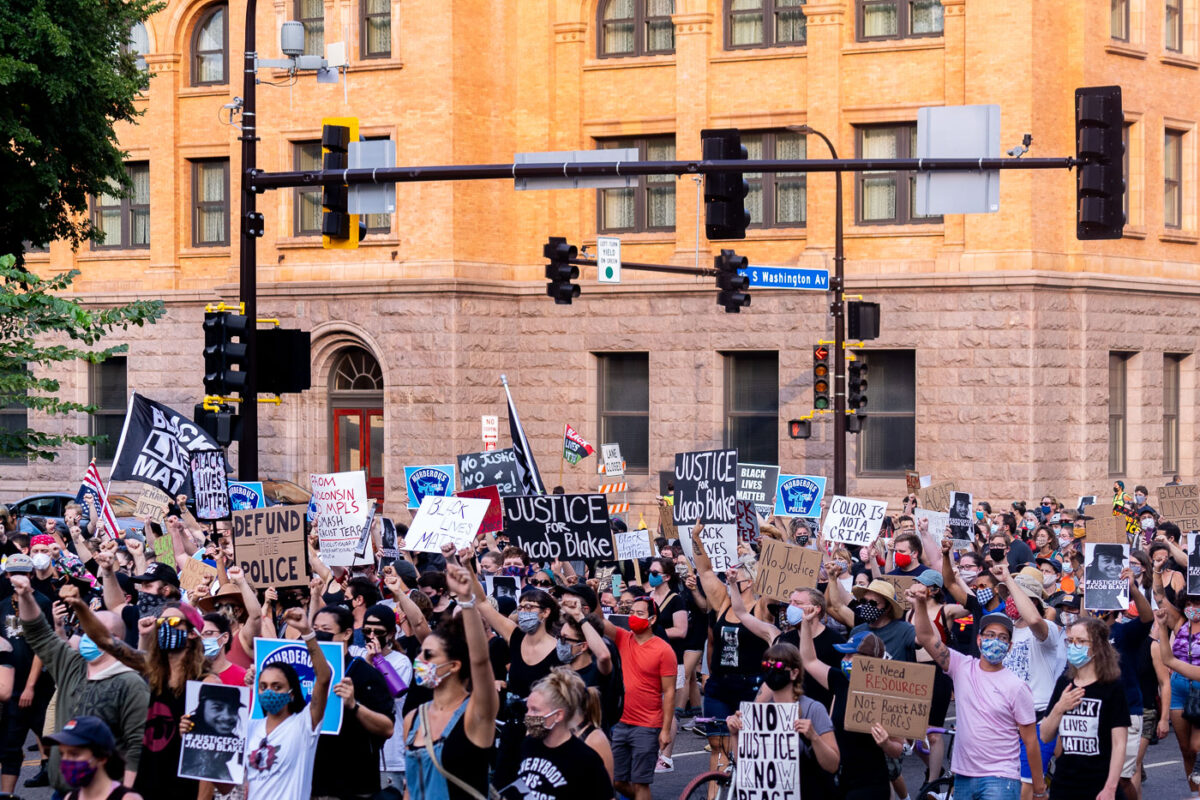
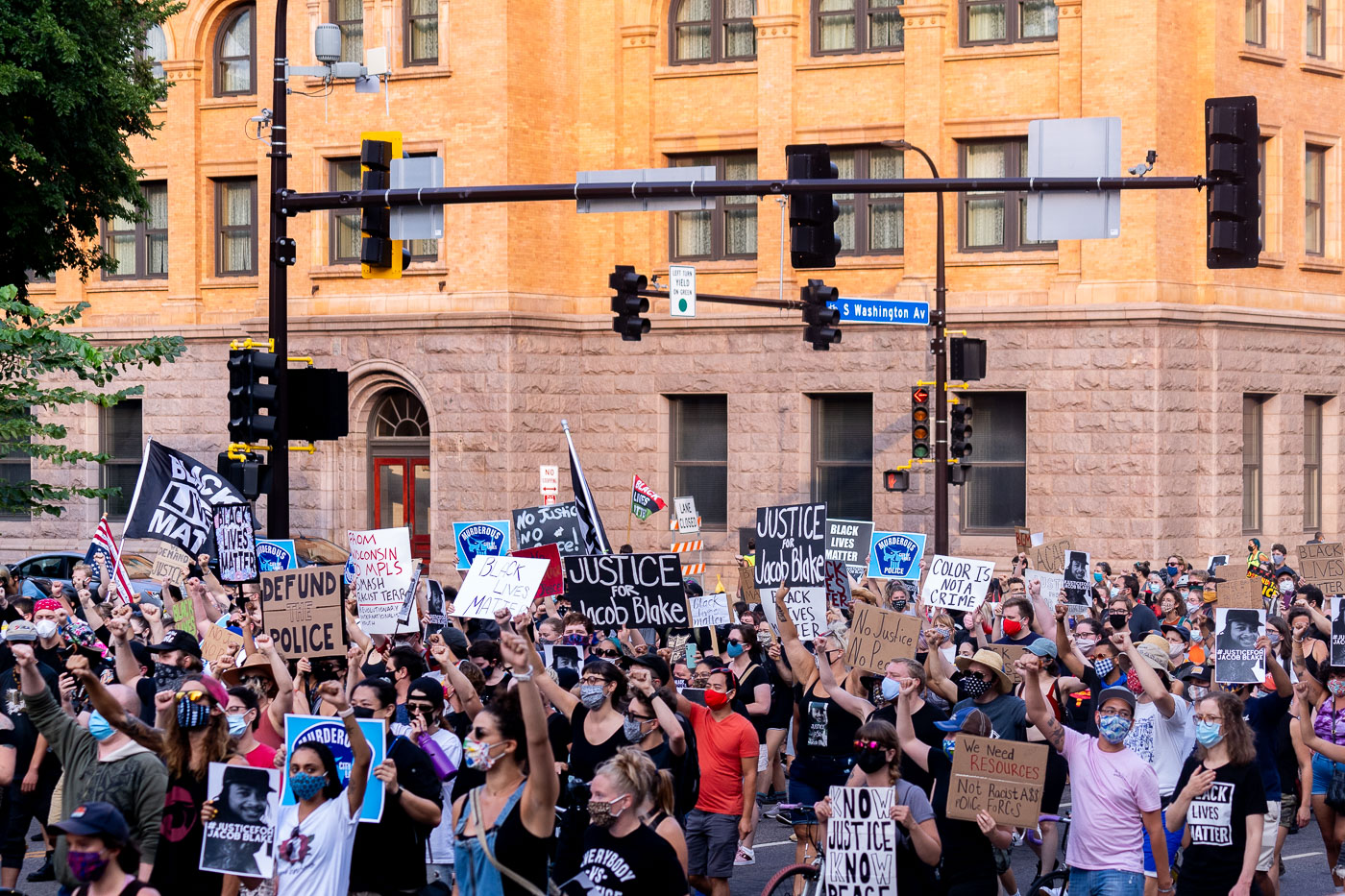
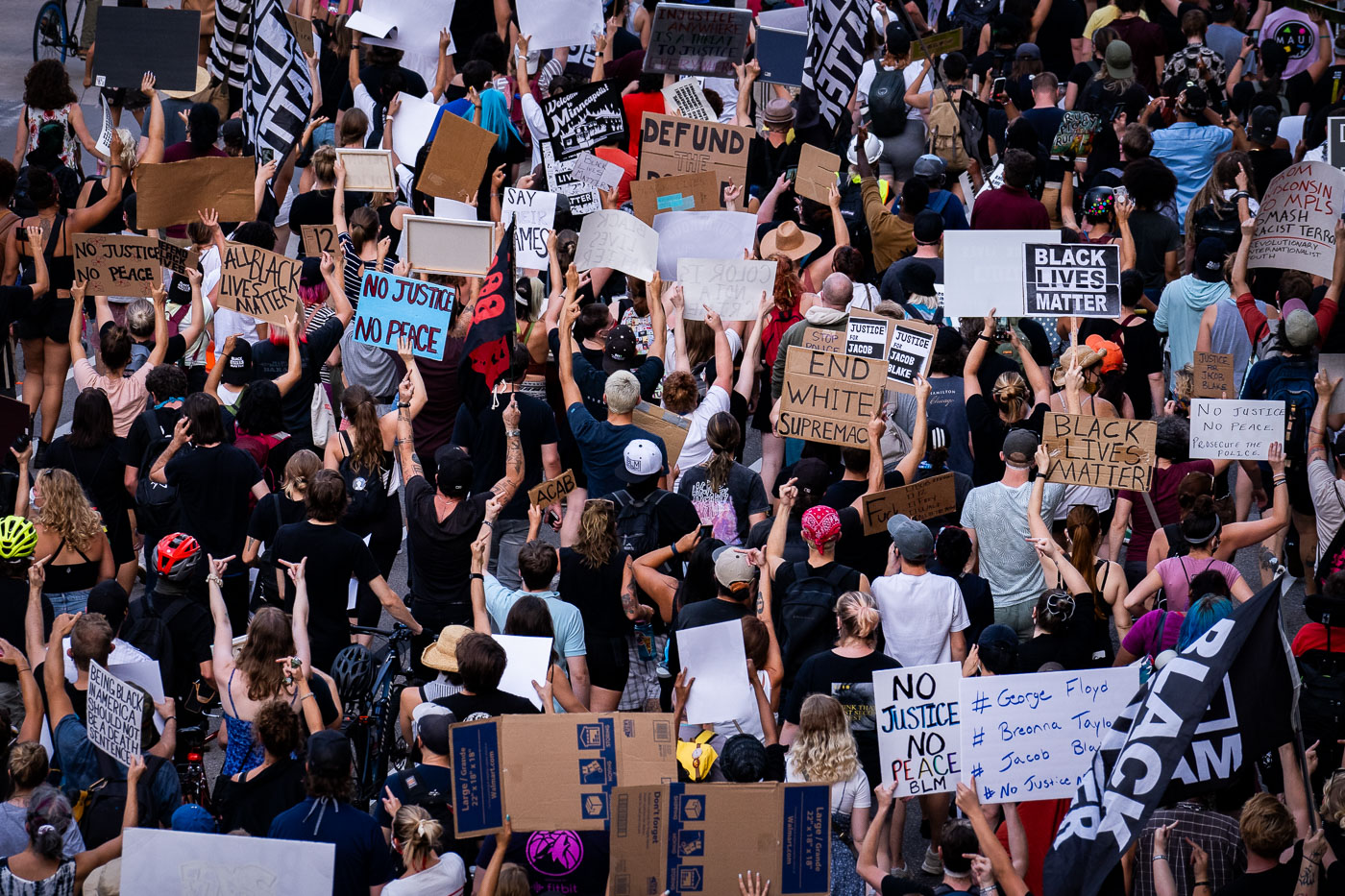
Jacob Blake protest march in Minneapolis
A protest march for Jacob Blake proceeds along S Washington Avenue in downtown Minneapolis. Participants carried signs expressing solidarity with Jacob Blake, who was shot by Kenosha police, and advocating for "Black Lives Matter" and "Defund the Police." This event in 2020 was part of a series of widespread protests across the United States addressing police brutality and racial injustice.

Jacob Blake Protest March on S Washington Ave, Minneapolis
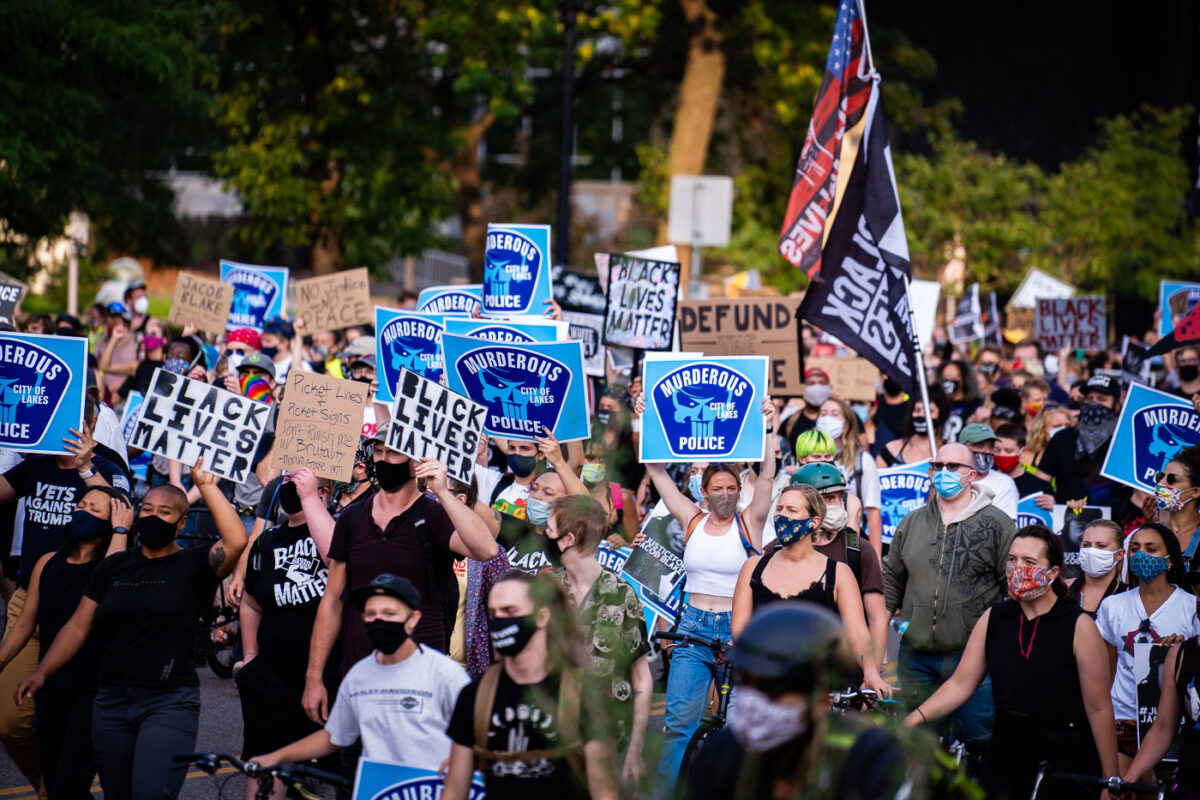
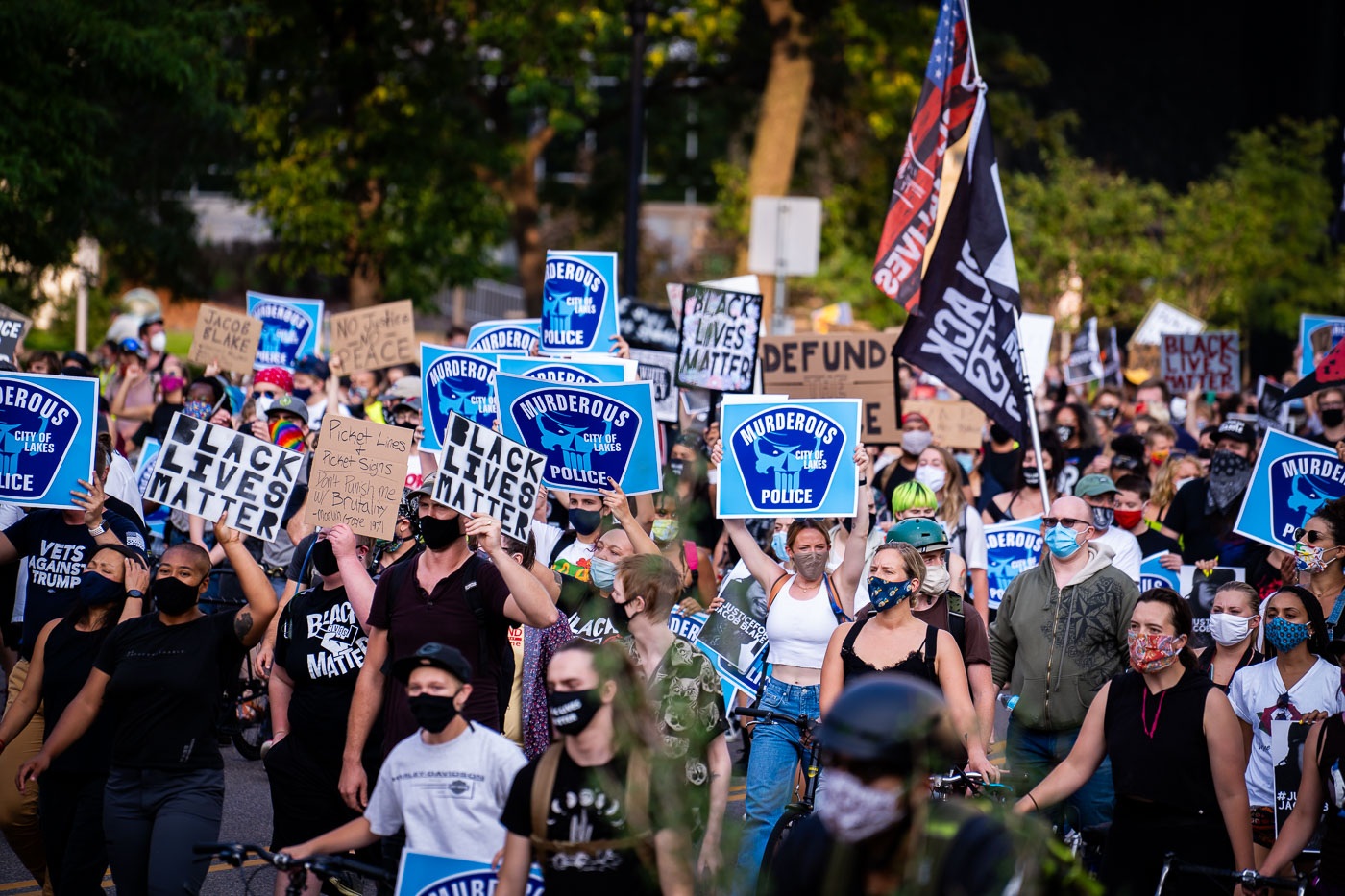
Protesters hold up Murderous Police signs in Minneapolis
Protesters march through downtown Minneapolis, Minnesota, holding signs in solidarity with Jacob Blake following his shooting by Kenosha police in August 2020. Participants carried signs with messages such as "Black Lives Matter" and "Murderous City of Lakes Police," directly referencing the Minneapolis Police Department.

Downtown Minneapolis March: Murderous Police Signs
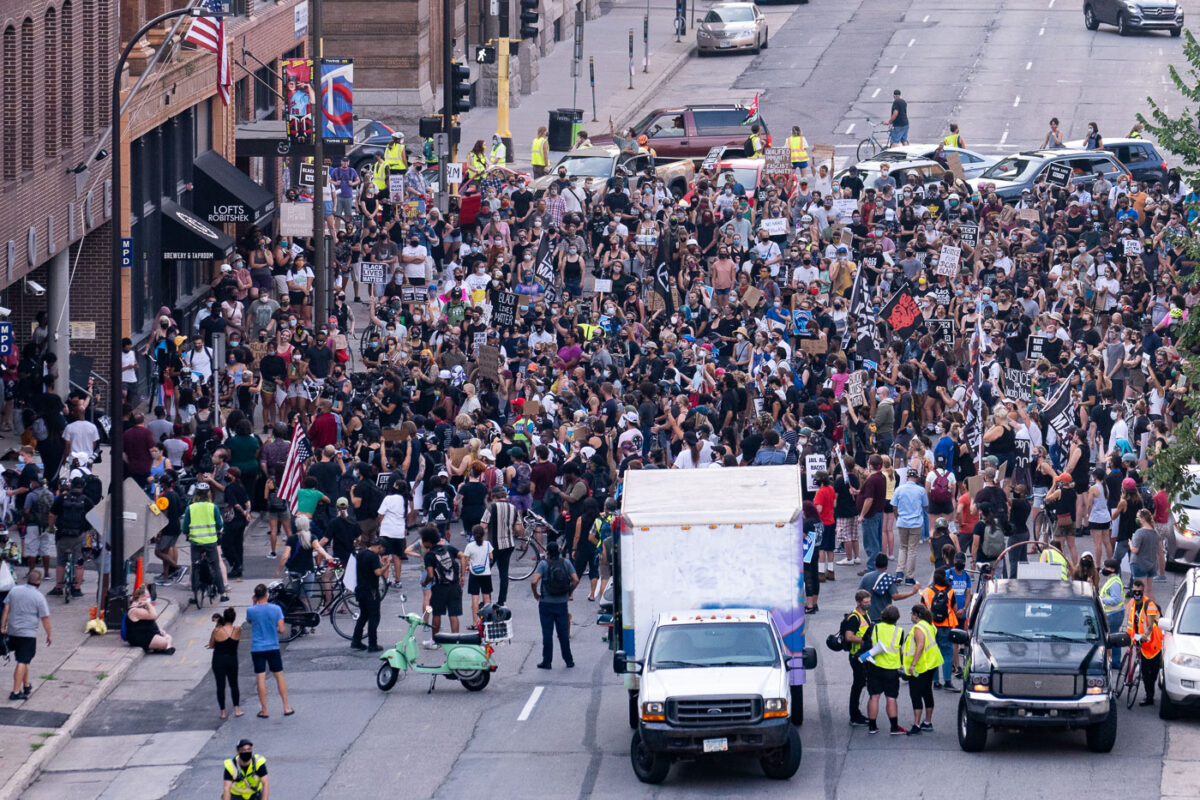
Protesters outside Minneapolis police station Jacob Blake rally
A protest march for Jacob Blake proceeds through downtown Minneapolis, passing the Minneapolis Police 1st Precinct station. The march demanded justice for Jacob Blake, who was shot by Kenosha Police in August 2020, sparking widespread protests against police brutality and racial injustice across the United States. Participants carried signs advocating for Black Lives Matter and police accountability.

Jacob Blake Protest March, Downtown Minneapolis 1st Precinct
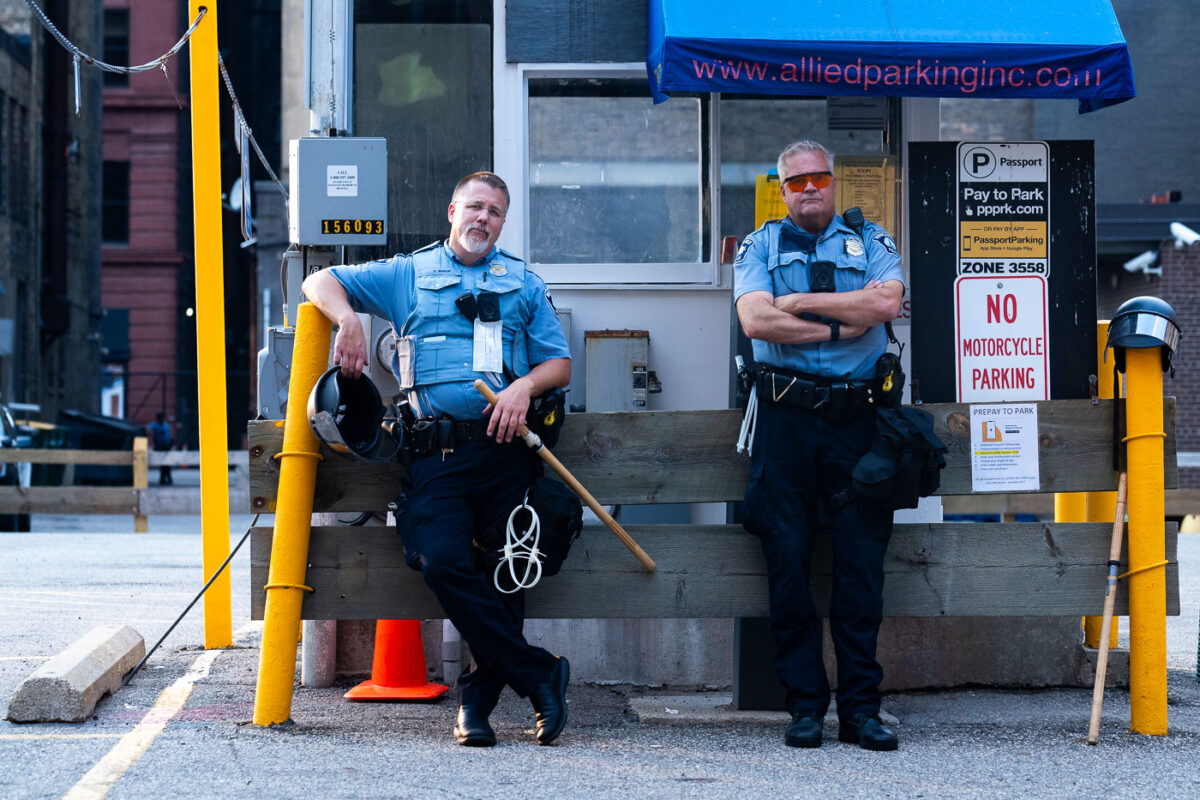
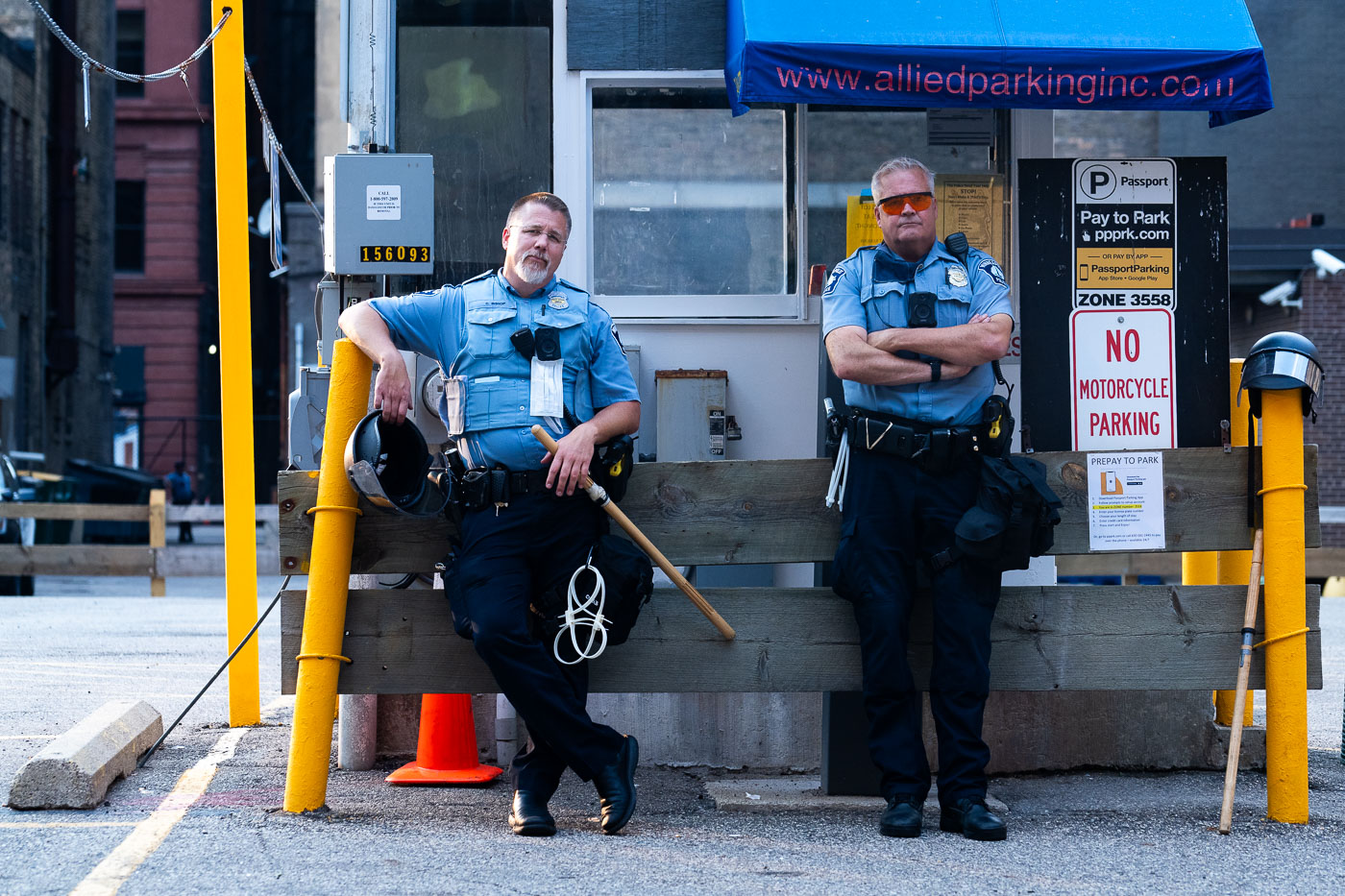
Minneapolis Police stand near the 1st precicnt police station
Two Minneapolis Police officers stand near the 1st Precinct police station in Downtown Minneapolis equipped with zip ties and batons.

Minneapolis Police Officers with Zip Ties, 1st Precinct
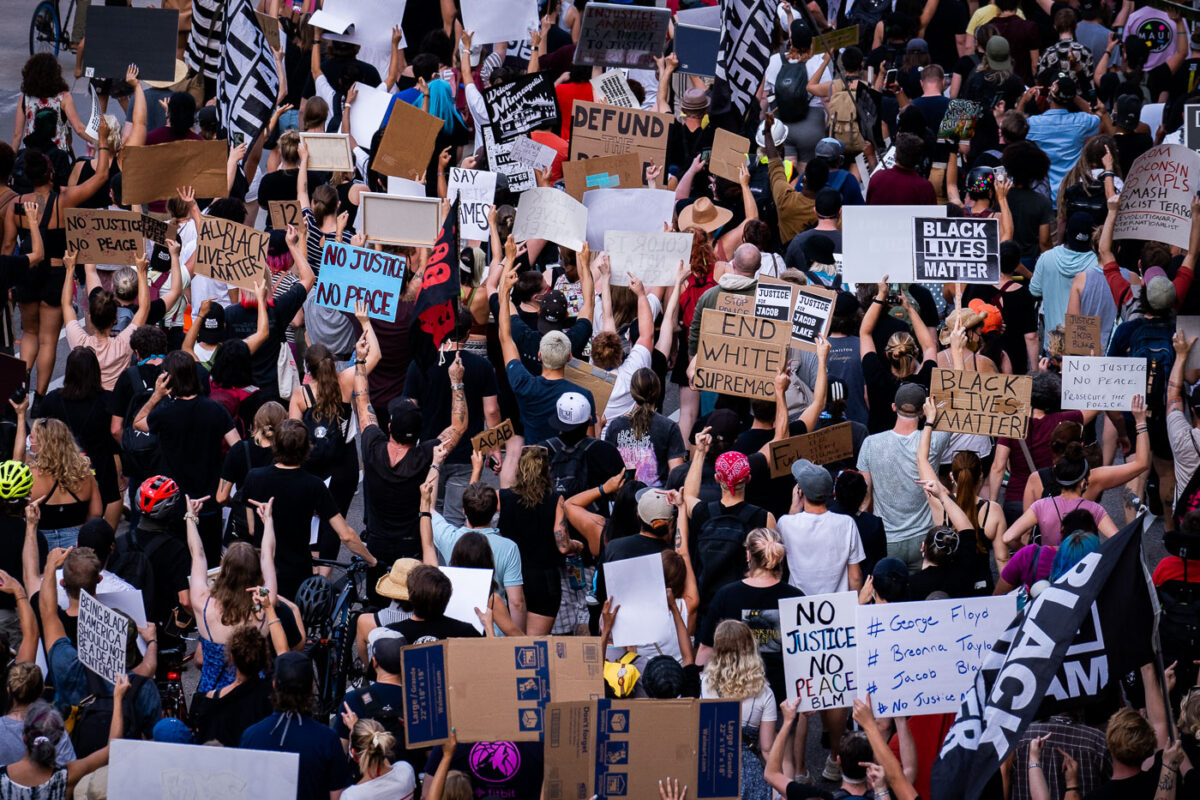
Protesters march through Downtown Minneapolis jacob blake rally
A march for justice for Jacob Blake took place outside the Minneapolis Police 1st Precinct in Downtown Minneapolis. Participants gathered in solidarity, demanding accountability following the shooting of Jacob Blake by Kenosha Police in August 2020. This protest reflects ongoing public calls for police reform and racial justice, echoing sentiments from the Minneapolis Uprising earlier that year. Protesters carried signs with messages such as 'Black Lives Matter,' 'No Justice No Peace,' and 'Defund the Police,' advocating for systemic change.

Protesters for Jacob Blake, Downtown Minneapolis 1st Precinct
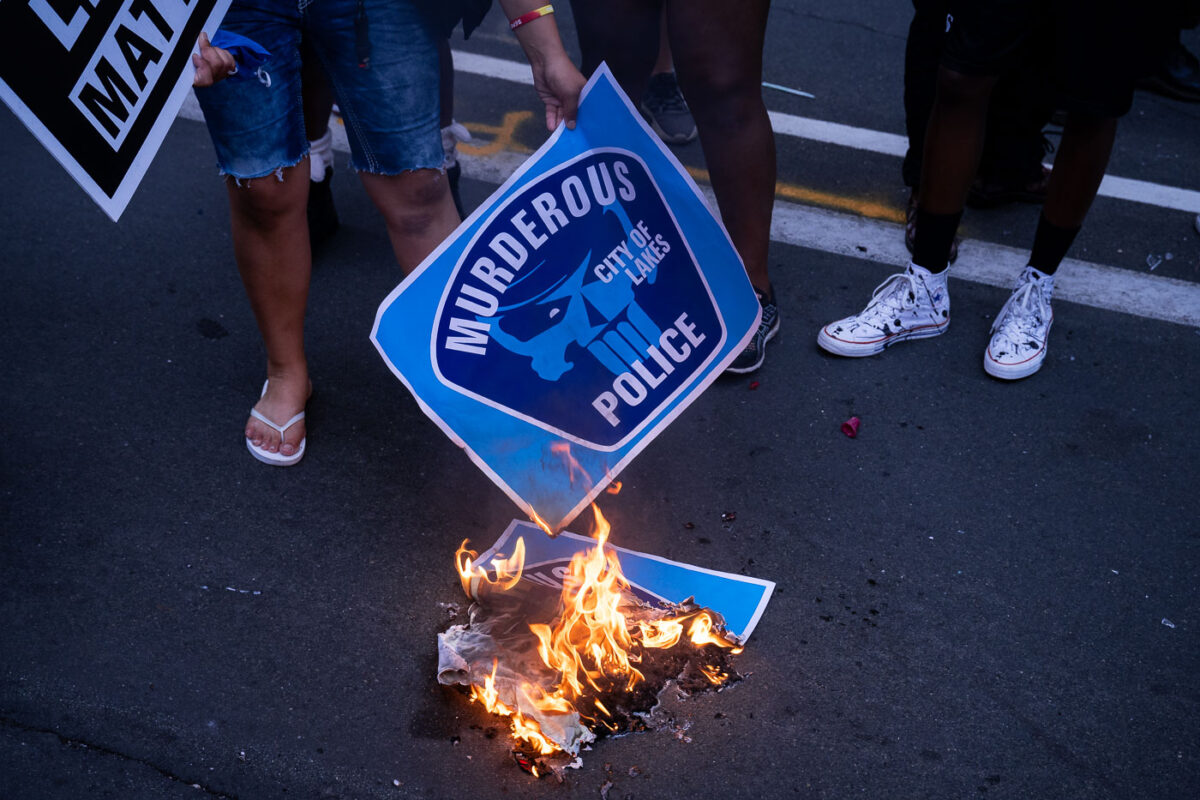
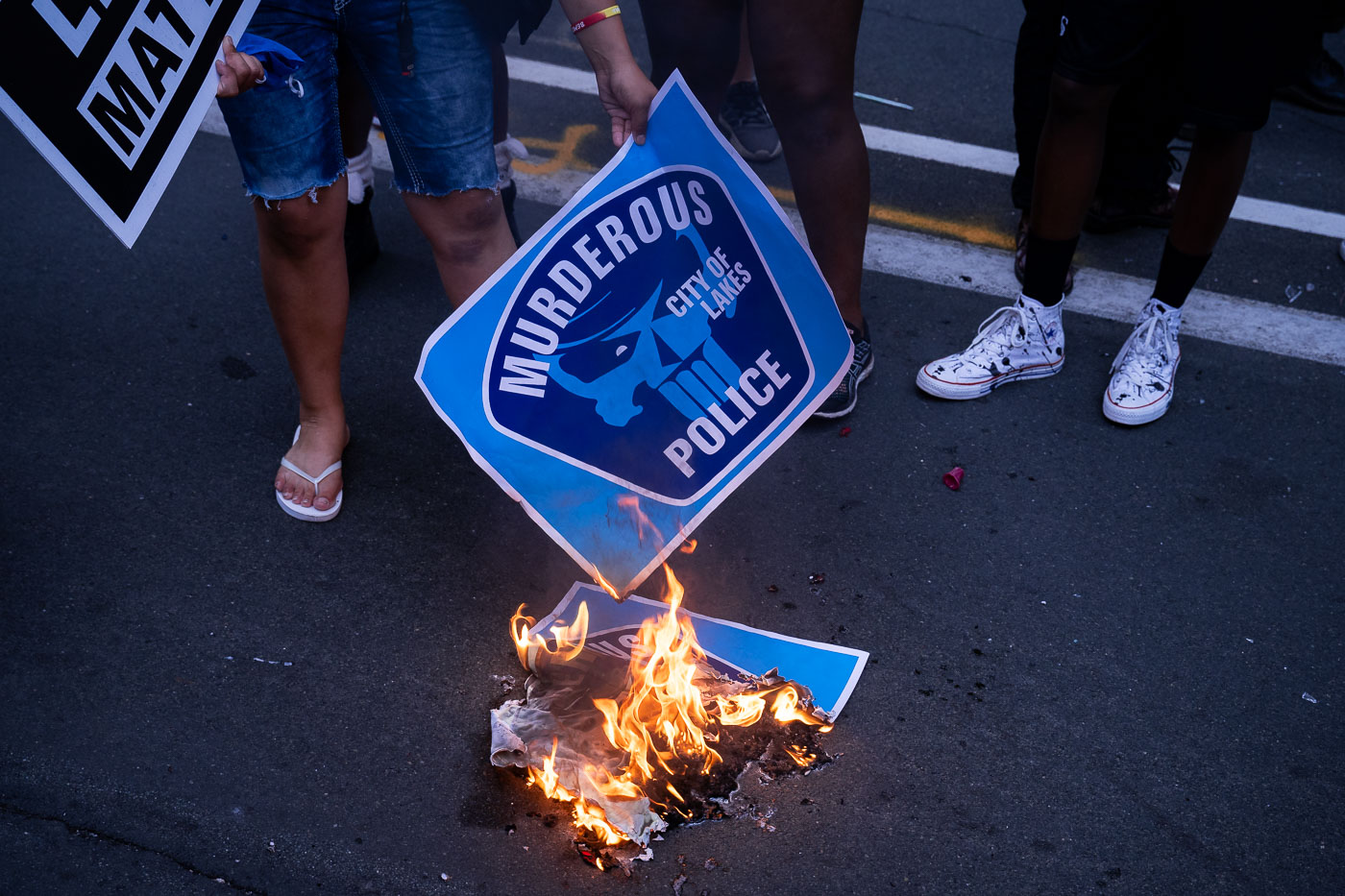
Protesters burn murderous police signs in Downtown Minneapolis
Protesters burn a sign displaying 'Murderous City of Lakes Police' in Downtown Minneapolis. This act took place during a protest march held the evening after Jacob Blake was shot by Kenosha Police in Wisconsin. The protest in Minneapolis was part of a wider series of demonstrations against police brutality and racial injustice that intensified across the United States.

Protesters burn ‘Murderous Police’ sign in Downtown Minneapolis
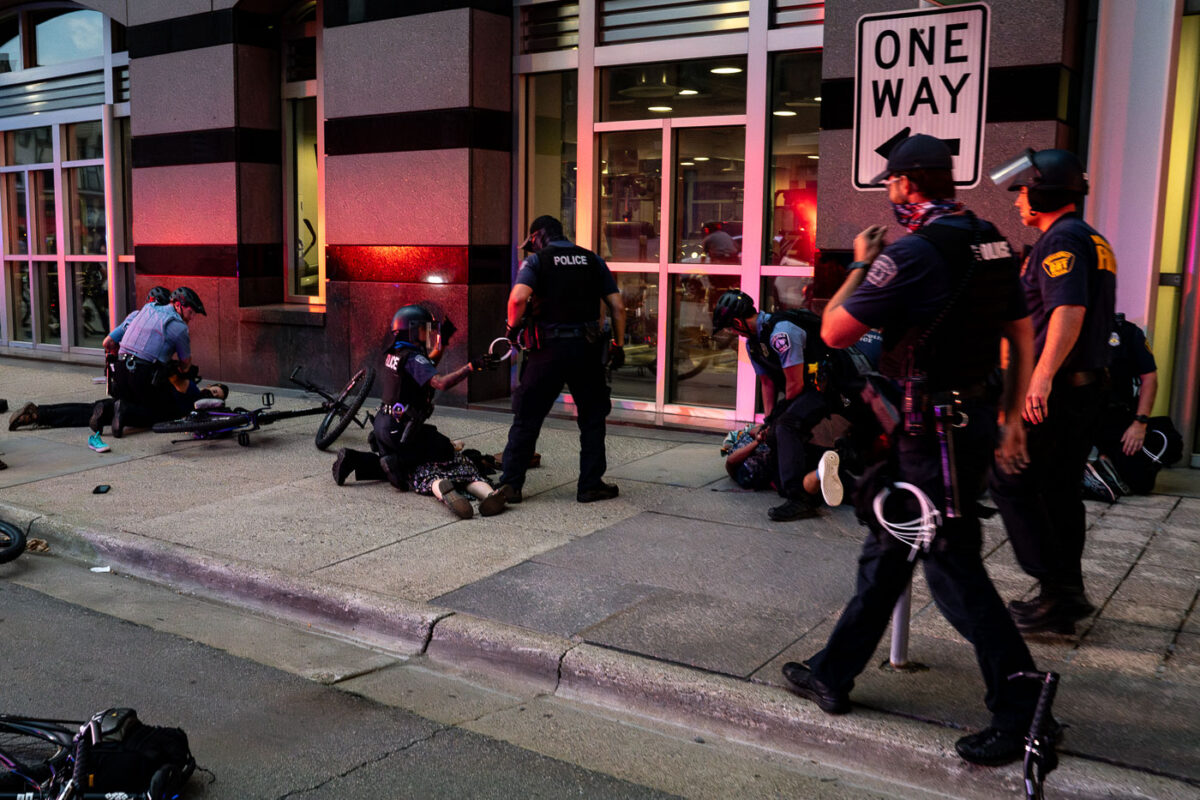
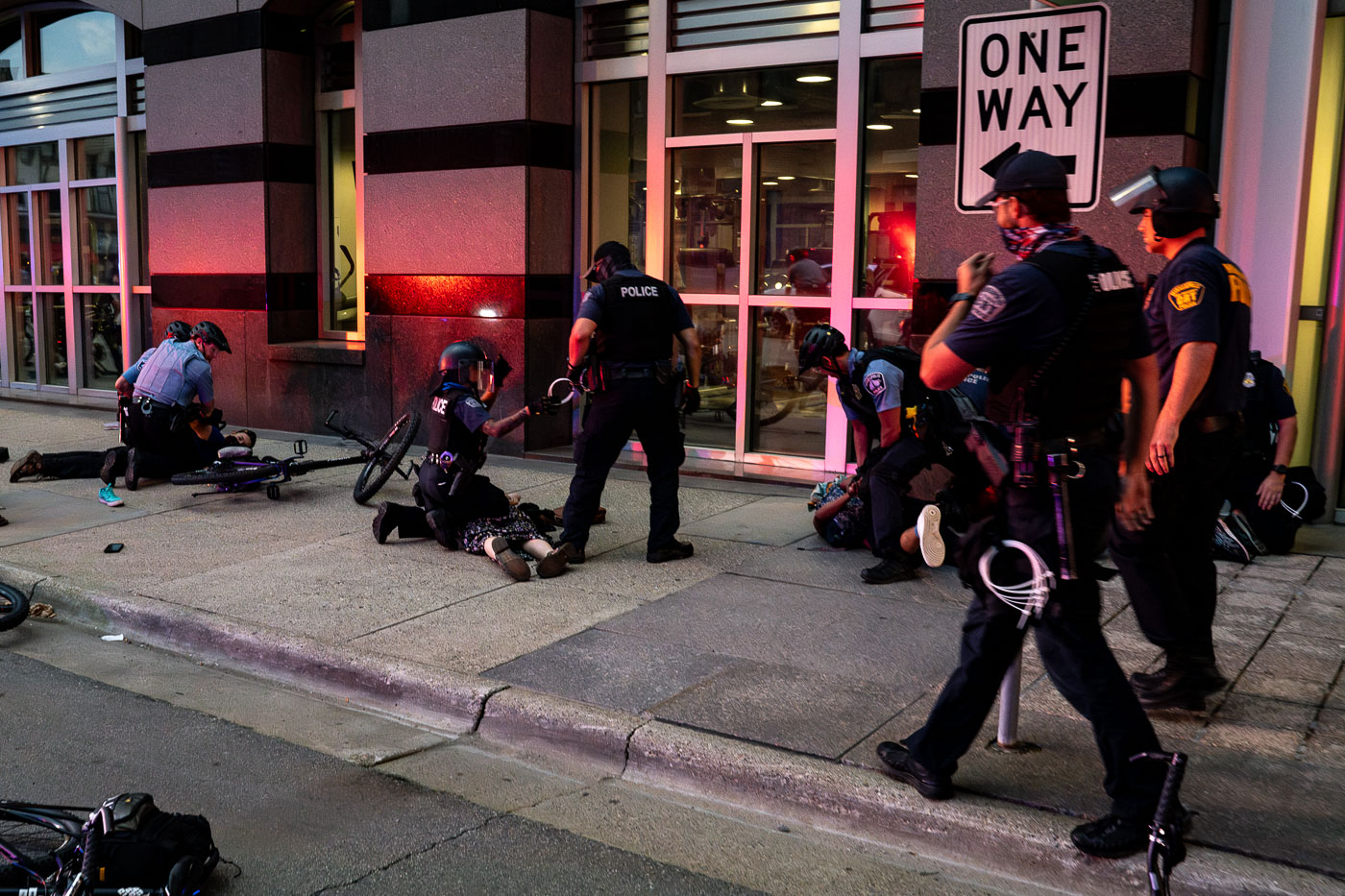
Minneapolis Police arrest protesters following Jacob Blake march 2020
Minneapolis Police officers conducted arrests following a march in downtown Minneapolis, where protesters sought justice for Jacob Blake. The protest was part of a series of public demonstrations that occurred across the United States in August 2020, following the police shooting of Jacob Blake in Kenosha, Wisconsin.

Minneapolis Police arrest Jacob Blake protesters, Minneapolis
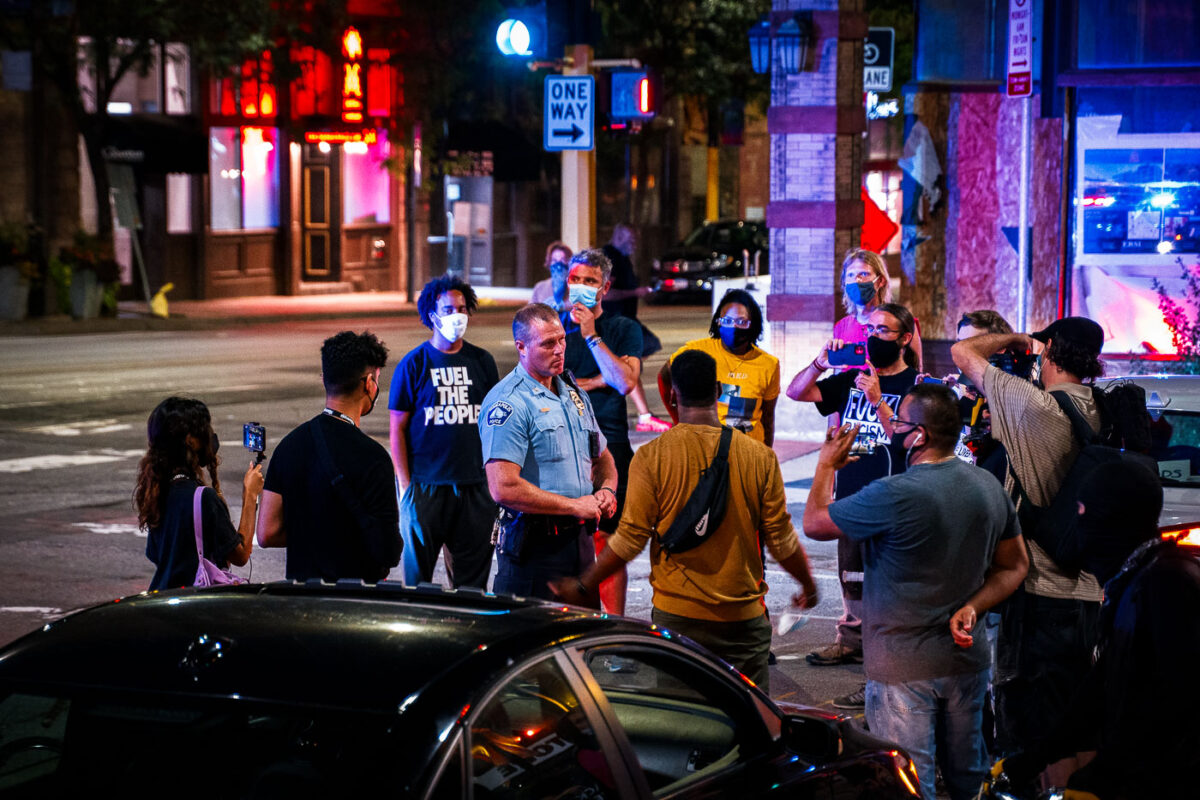
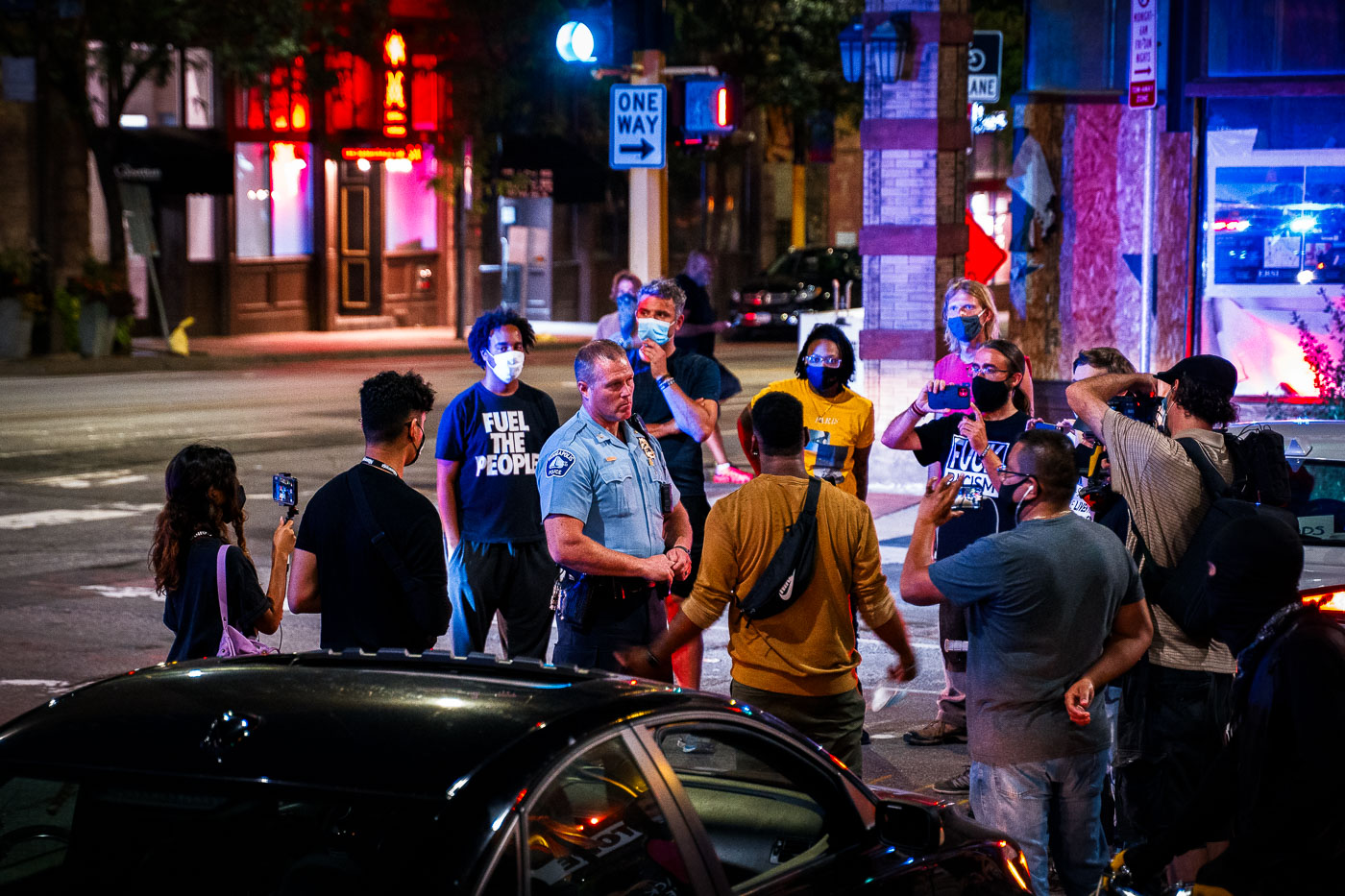
Minneapolis Police officer Bill Peterson speaks with protesters
Minneapolis Police 1st Precinct Inspector Bill Peterson engages with protesters in Downtown Minneapolis following a march that led to arrests.

Minneapolis 1st Precinct Inspector Peterson with protesters
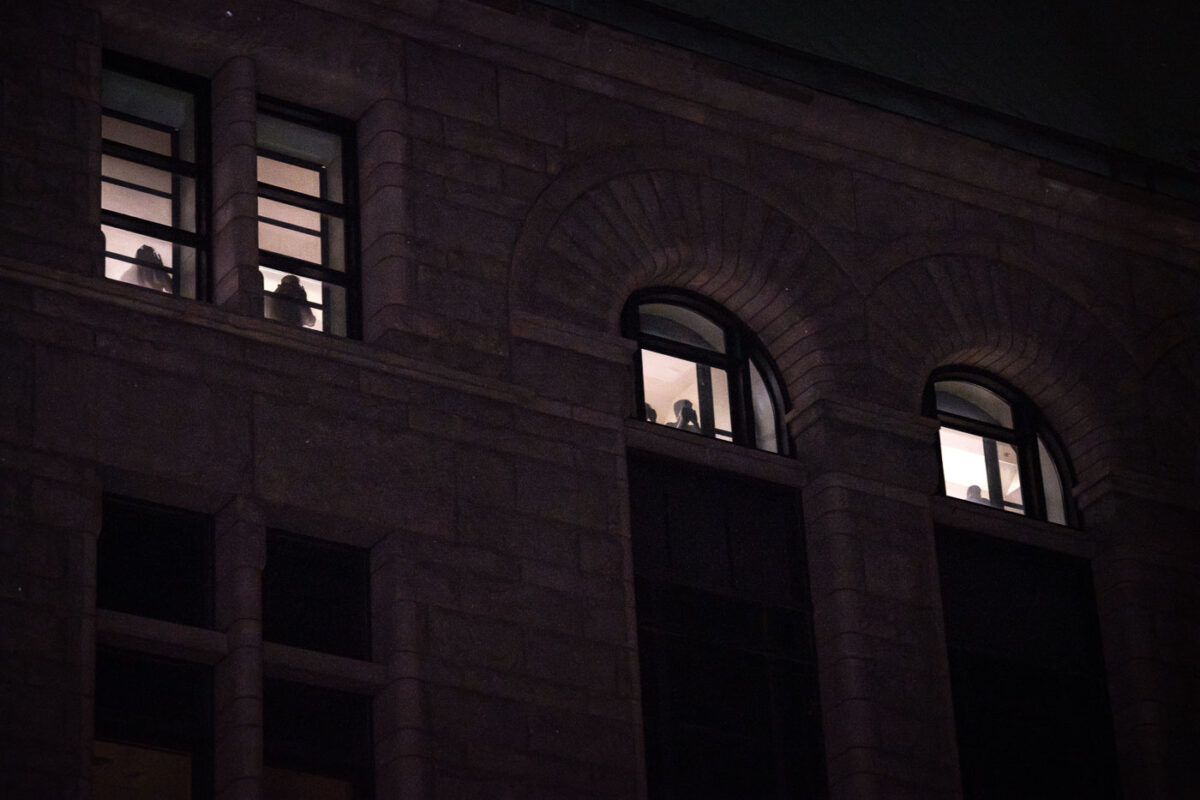
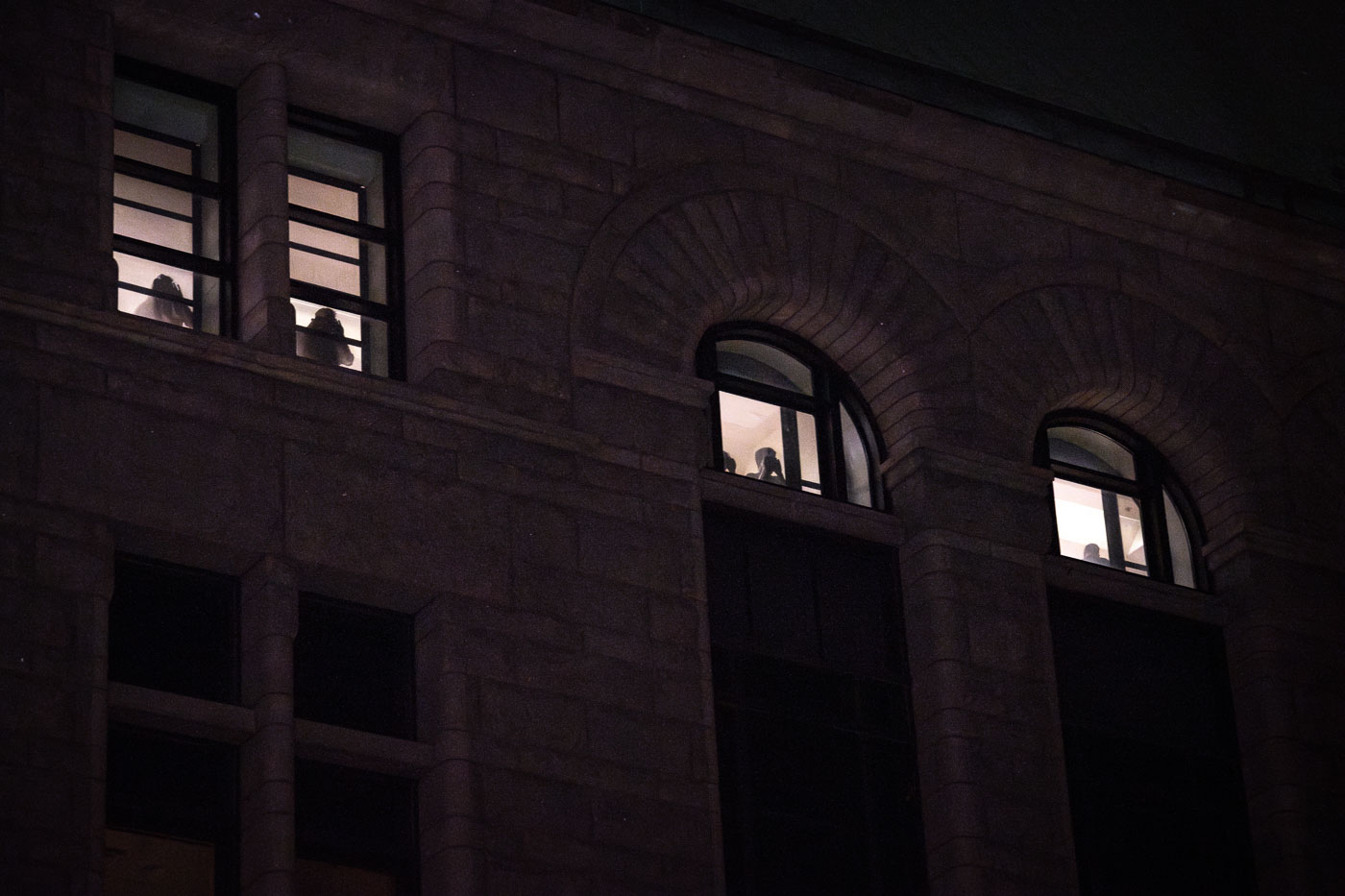
Inmates in windows of Downtown Minneapolis county jail
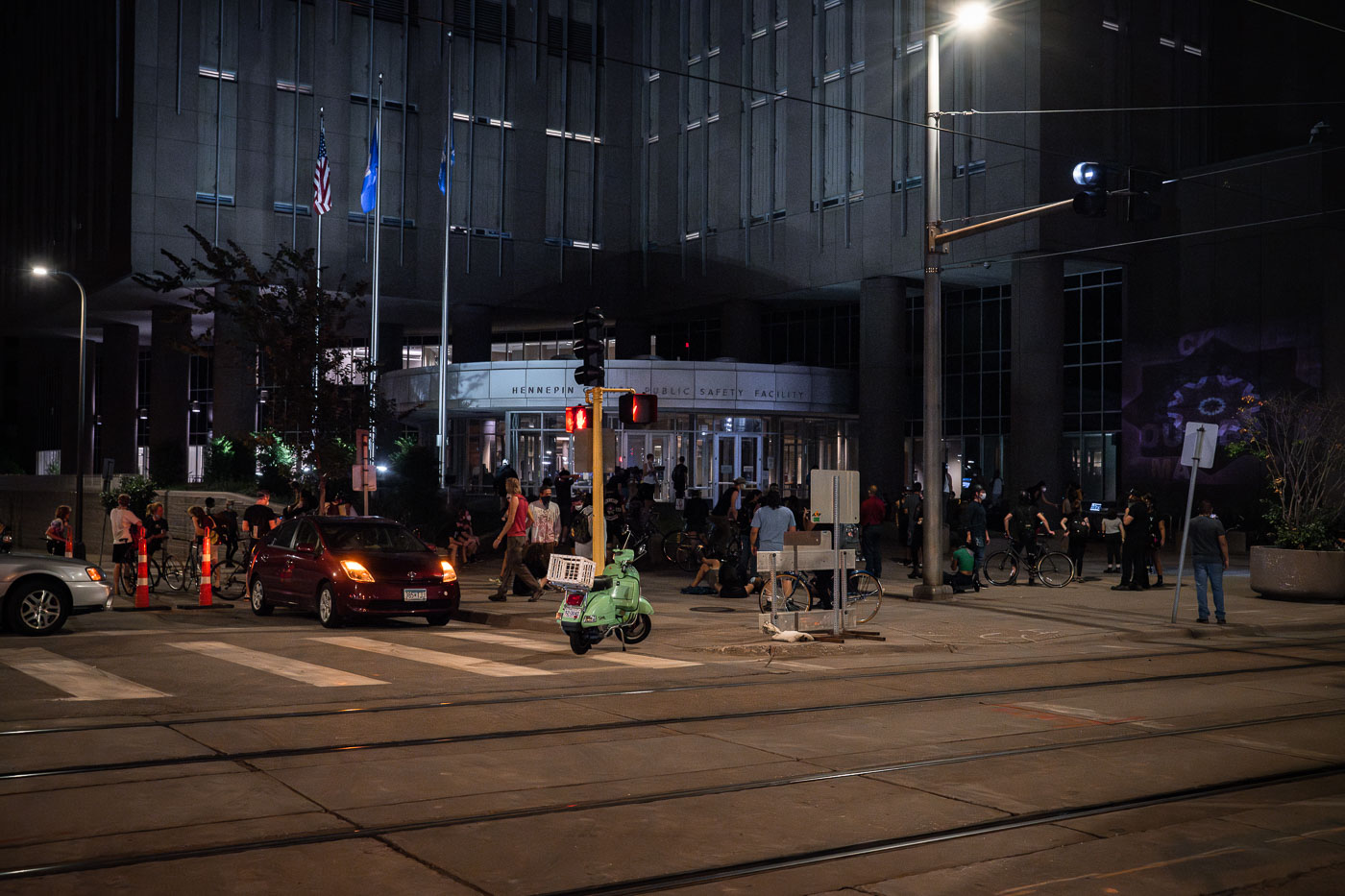
Inmates inside the Hennepin County Public Safety Facility, also known as the Hennepin County Jail, look down on a protest occurring below in Downtown Minneapolis. This facility, which serves as the primary detention center for Hennepin County, is situated adjacent to the historic Minneapolis City Hall. During the protest, individuals gathered outside, playing music and advocating for the release of those incarcerated.

Hennepin County Jail Inmates Listen to Protesters Below
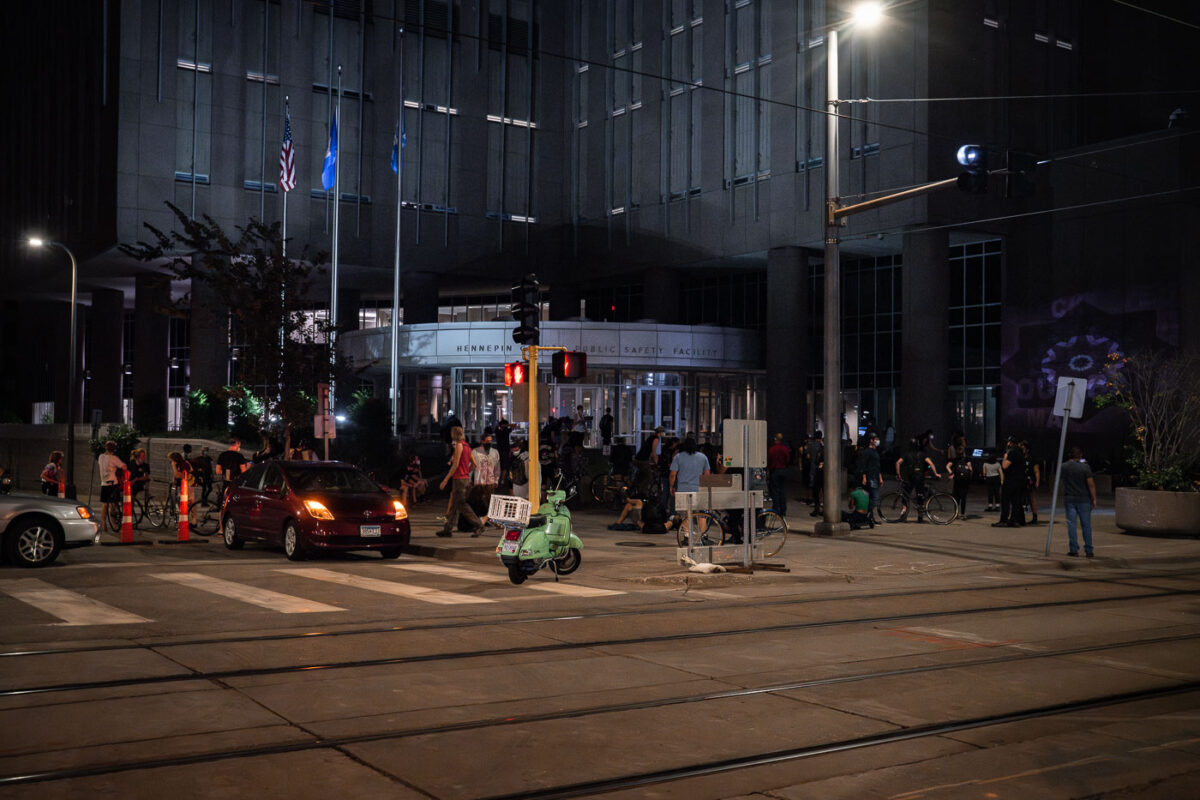
Protesters demand release of other protesters
Protesters gather outside the Hennepin County Public Safety Facility in Downtown Minneapolis. The gathering seeks the release of individuals arrested during a downtown Minneapolis march earlier in the evening. Completed in 1982, the facility houses the Hennepin County Jail and serves as a central hub for public safety operations in the county.

Minneapolis Protesters at Hennepin County Jail after arrests
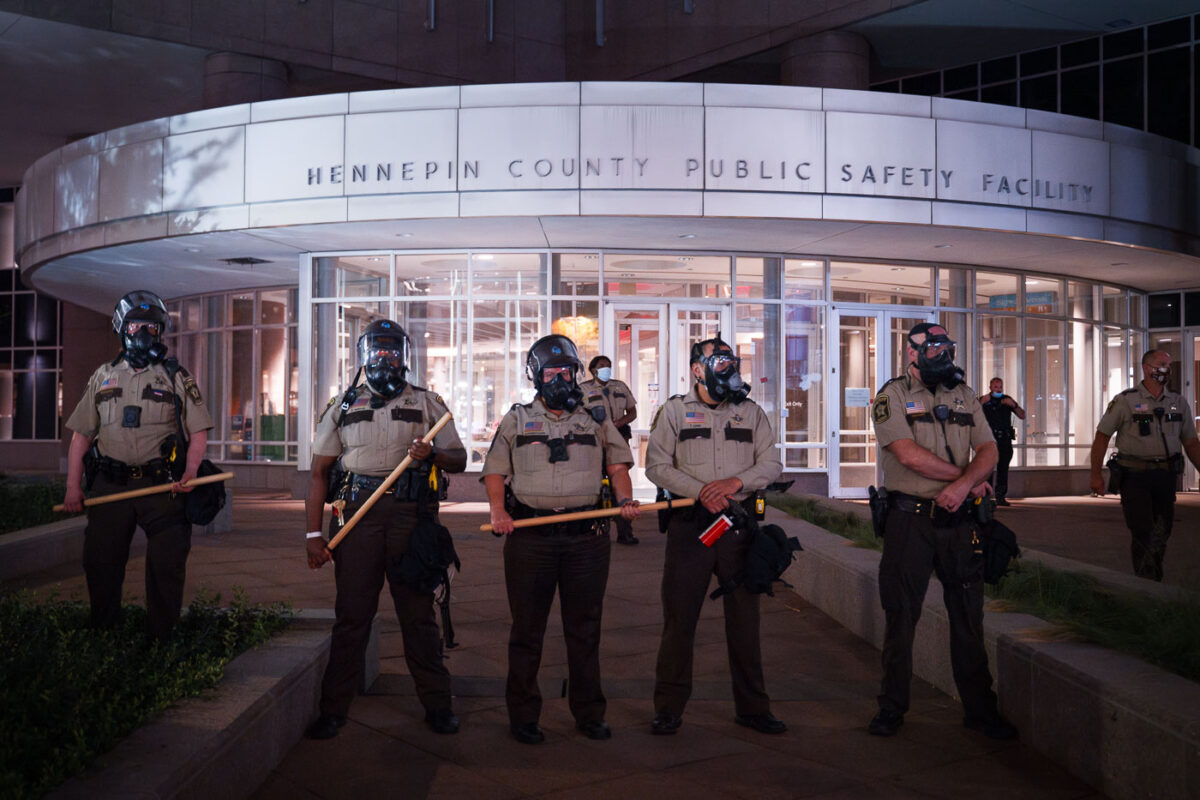
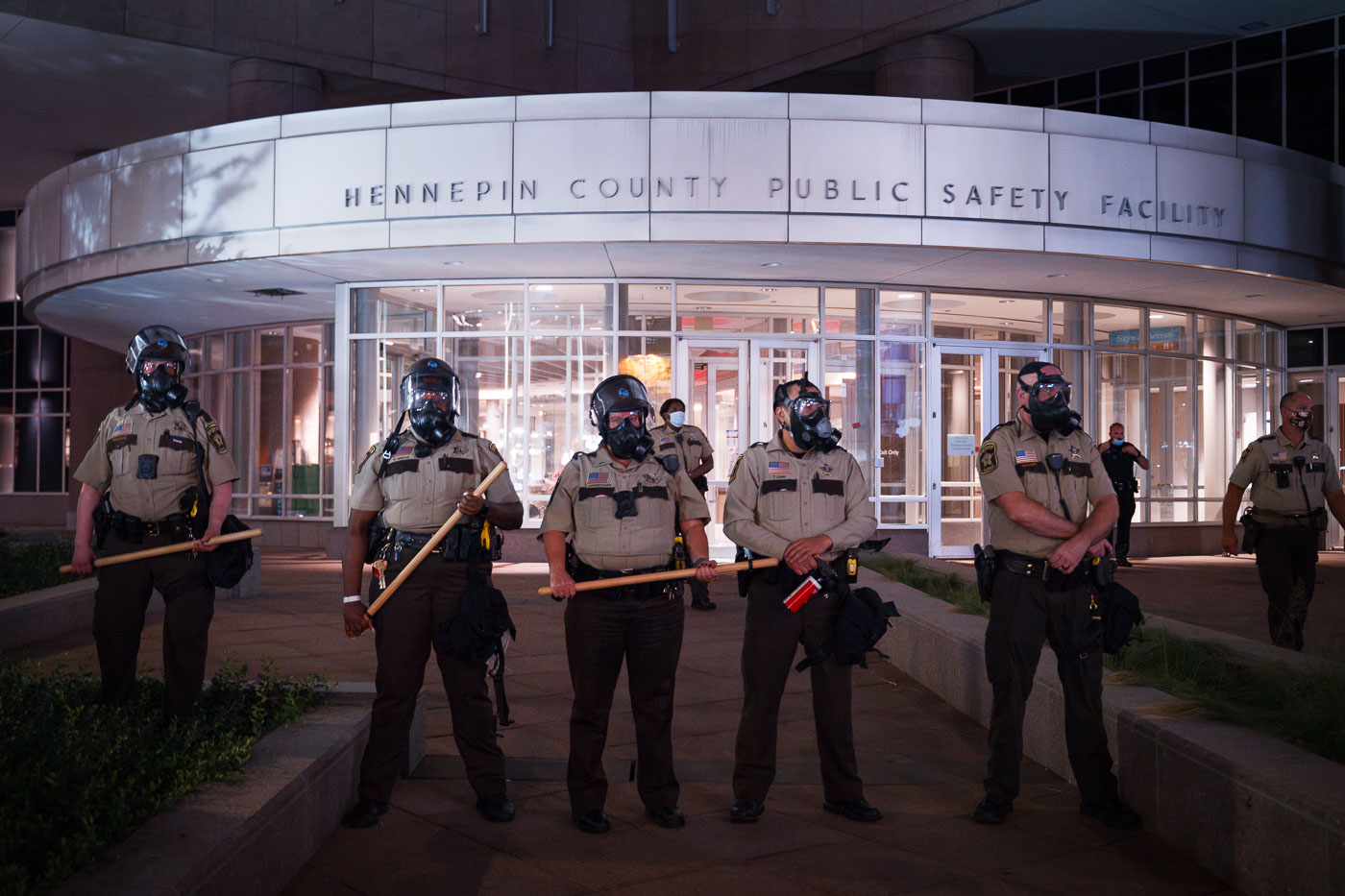
Hennepin County Sheriff Officers Outside County Jail
Hennepin County Sheriff's Officers stand guard outside the Hennepin County Public Safety Facility in downtown Minneapolis. This complex houses the Hennepin County Jail and other public safety operations, serving as a central point for the county's justice system. Officers were deployed as protesters gathered following arrests made during a march in solidarity with Jacob Blake.

Hennepin County Sheriff’s Officers Guarding Public Safety Facility