Minneapolis

5,036 photos · 2008–2026

5,036 photographs tagged Minneapolis, 2008–2026.
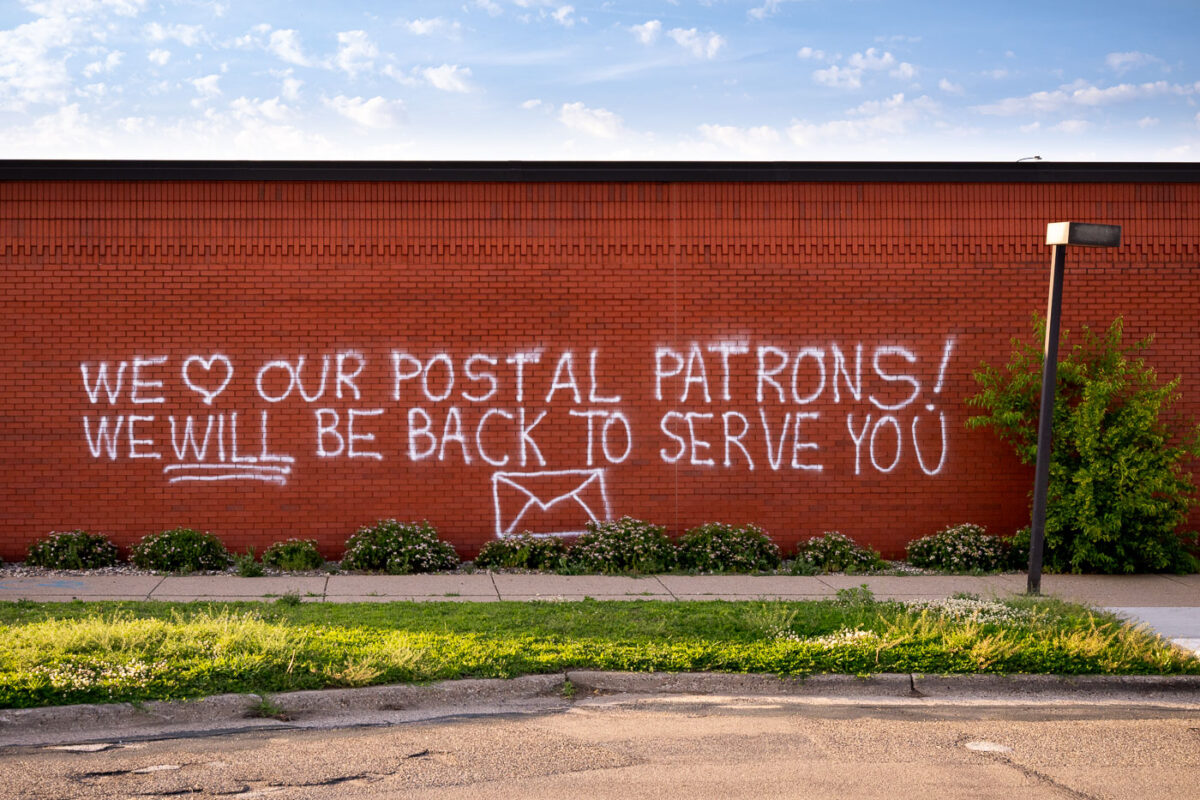
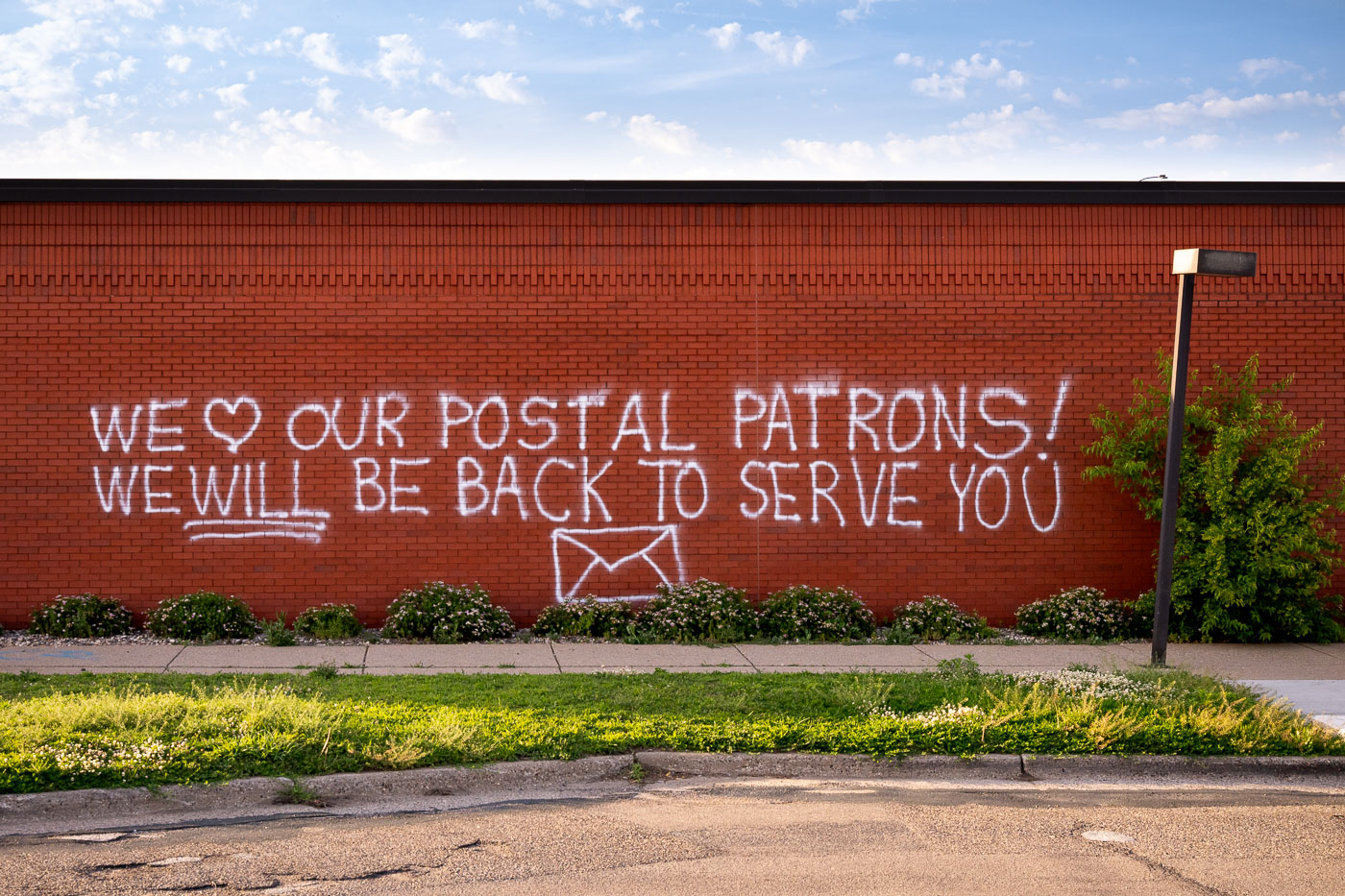
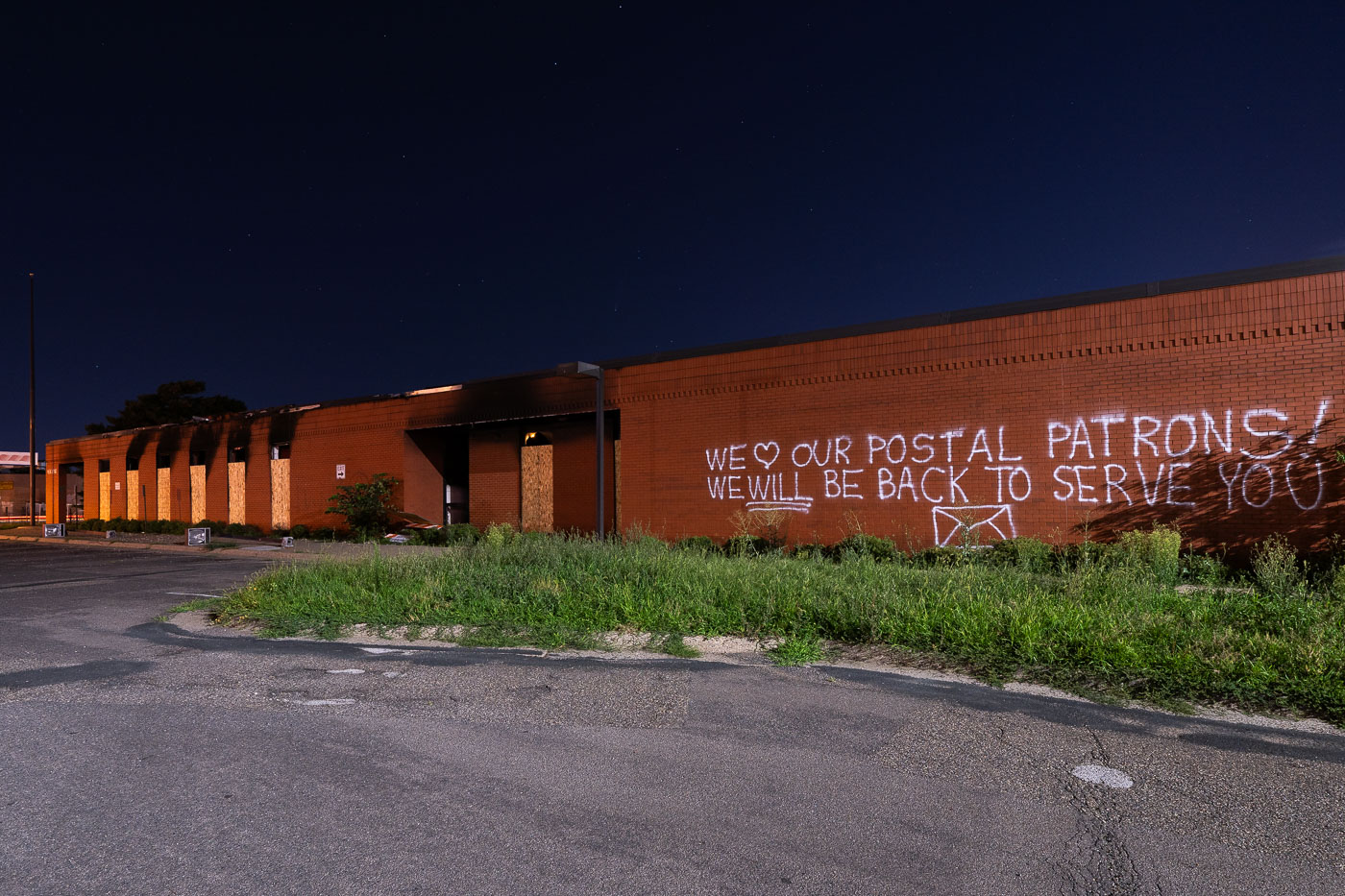
Graffiti on the former USPS post office on E 31st Street in Minneapolis promises a return to service.
Graffiti on the former USPS post office on East 31st Street in Minneapolis reads, “WE LOVE OUR POSTAL PATRONS! WE WILL BE BACK TO SERVE YOU.” The message covers a long brick exterior wall of the damaged postal facility, which was burned during the unrest that followed the murder of George Floyd in May 2020. Photographed in June 2020, the building remained closed as the handwritten message addressed customers and the anticipated return of mail service.

Graffiti on Burned USPS Post Office, E 31st St, Minneapolis
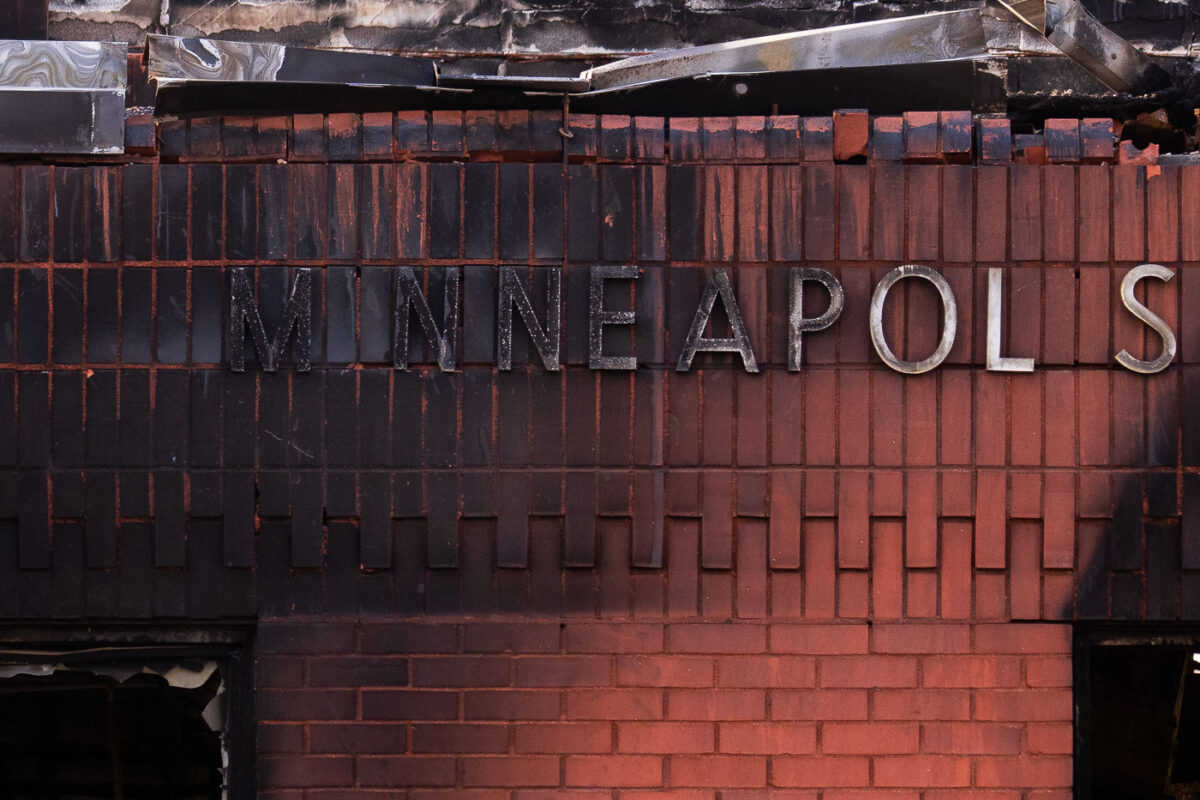
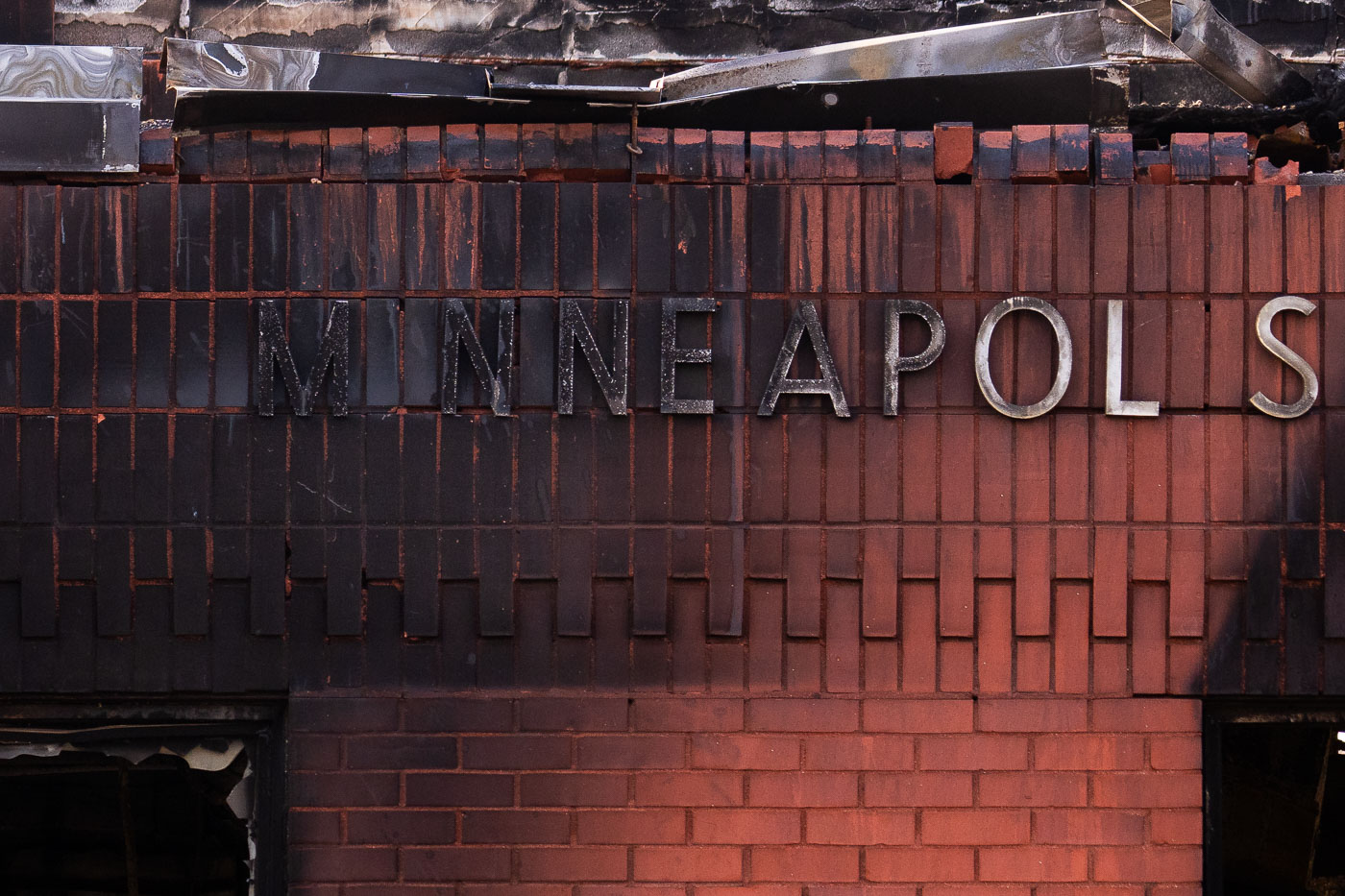
Burned Lake Street Station post office facade in Minneapolis, with charred brick and partial Minneapolis lettering.
The fire-damaged Lake Street Station post office in Minneapolis fills the frame, with soot-stained brickwork and the partially intact “MINNEAPOLIS” lettering visible on the facade. This United States Postal Service building on the Lake Street corridor was burned during the unrest that followed the murder of George Floyd in May 2020.

Burned Lake Street Station Post Office, Minneapolis
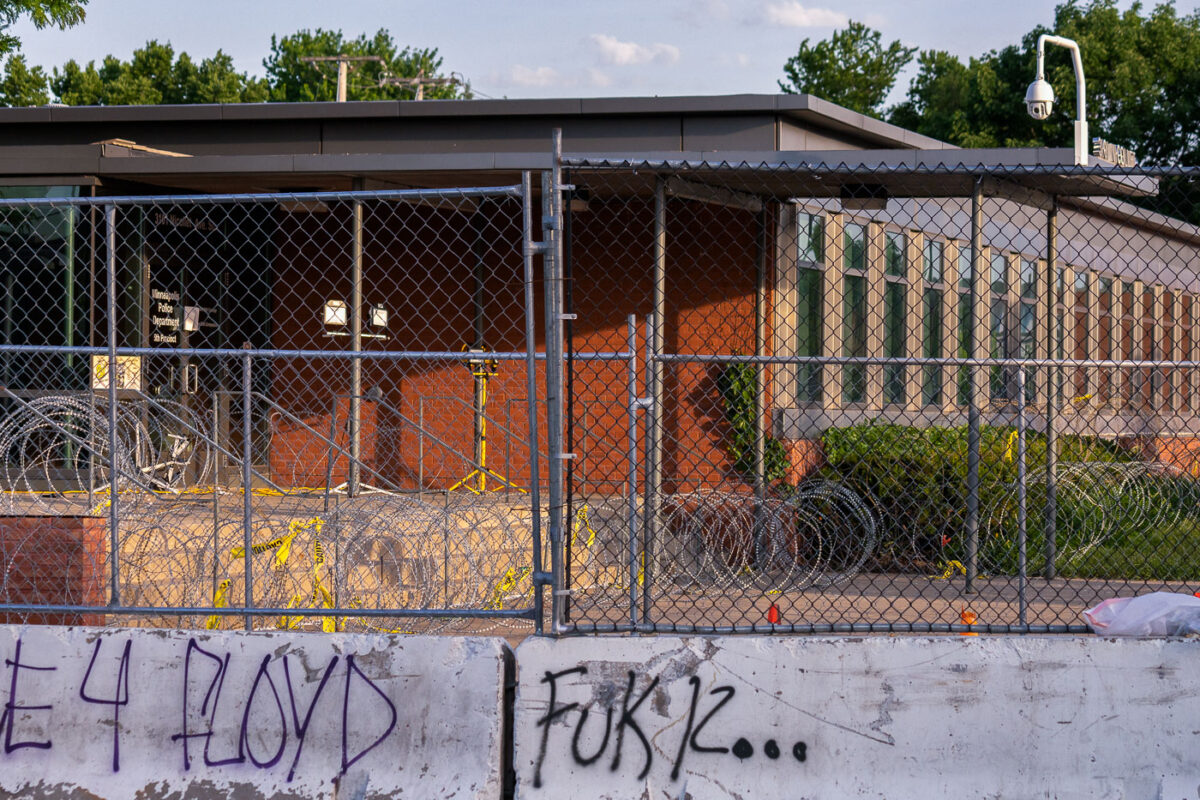
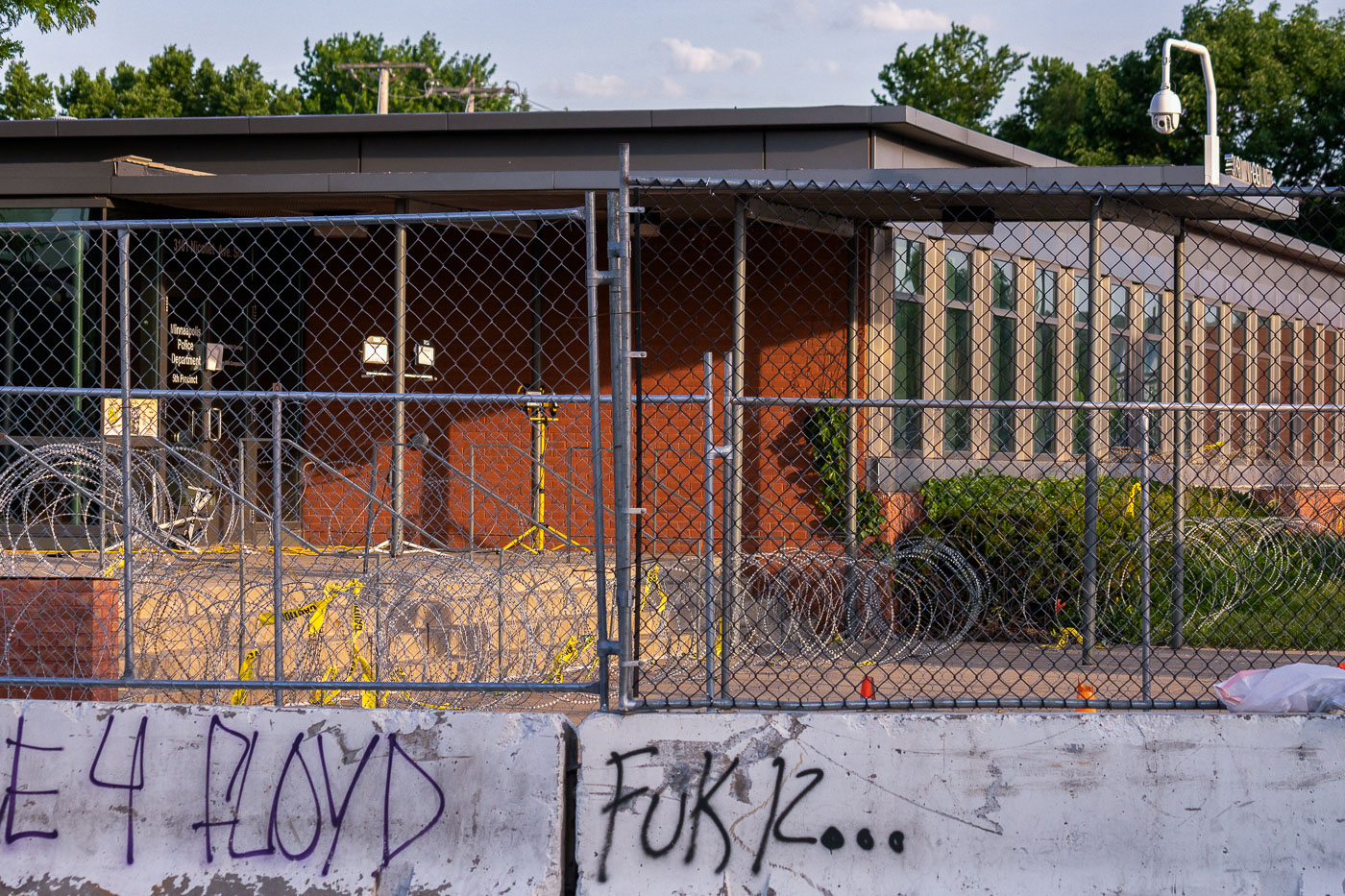
Minneapolis Police 5th Precinct on Nicollet Avenue behind fencing, razor wire, and graffiti-covered barriers.
The Minneapolis Police Department’s 5th Precinct station at 3101 Nicollet Avenue South in Minneapolis is surrounded by chain-link fencing, razor wire, and concrete barriers marked with graffiti. The image was made in June 2020, weeks after protests followed the killing of George Floyd and prompted added security at police facilities across the city.

Minneapolis Police 5th Precinct: Razor Wire & Graffiti
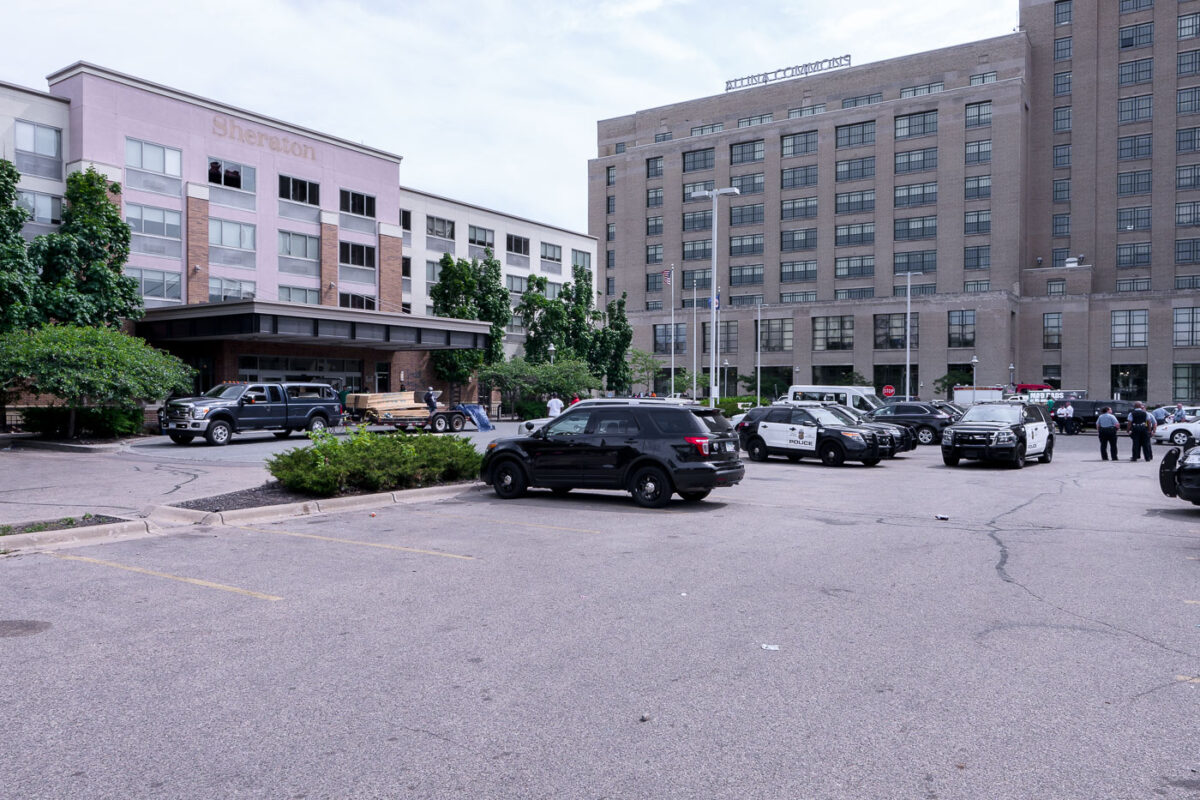
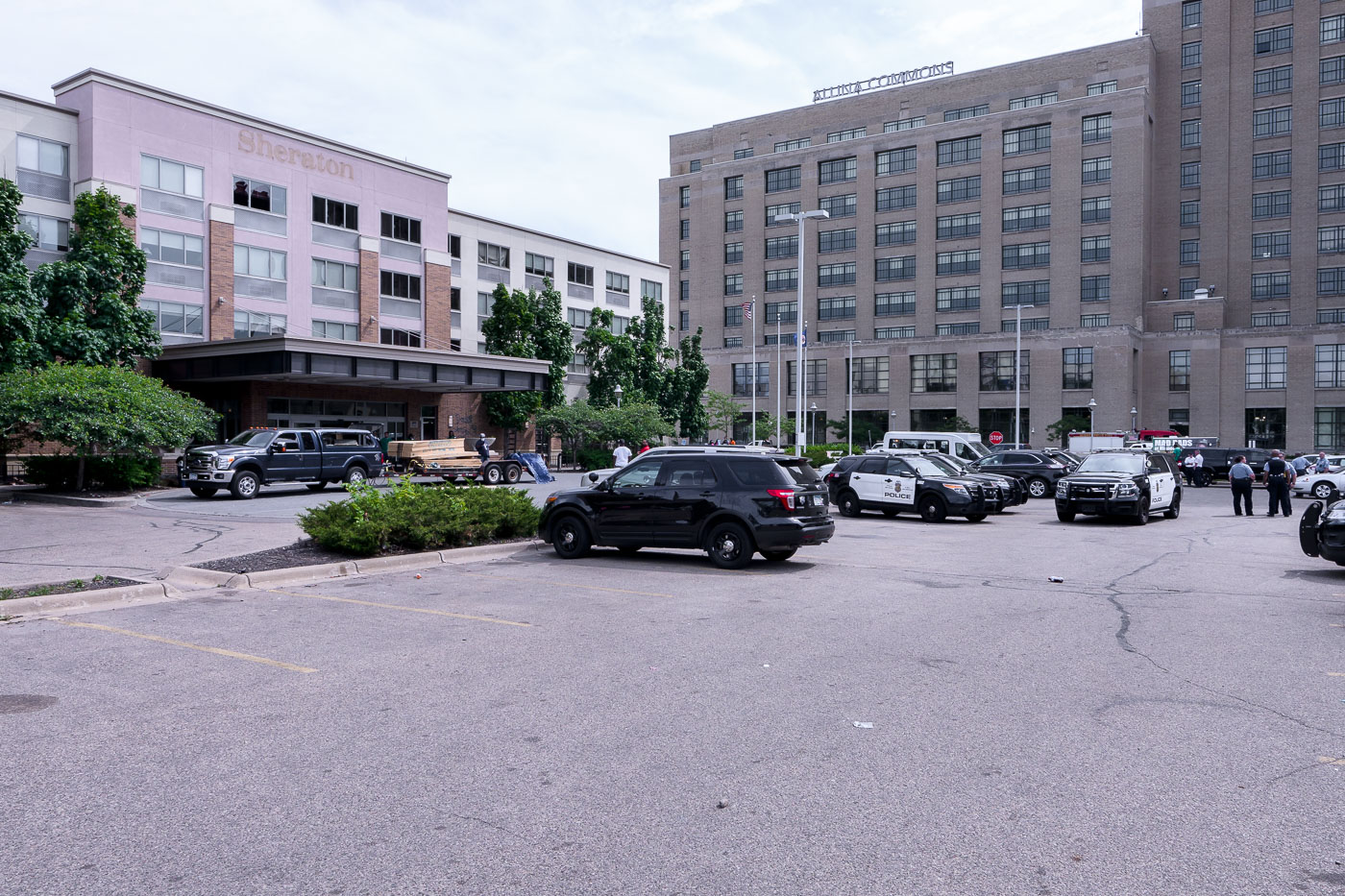
Minneapolis police and MAD DADS at the Sheraton hotel in downtown Minneapolis with lumber for boarding up.
The Sheraton hotel in downtown Minneapolis is shown as Minneapolis police officers and members of MAD DADS gather in the parking area on June 15, 2020. They arrived to remove those that had been squatting inside the closed Sheraton hotel building.

Minneapolis Police, MAD DADs Board Up Sheraton Hotel
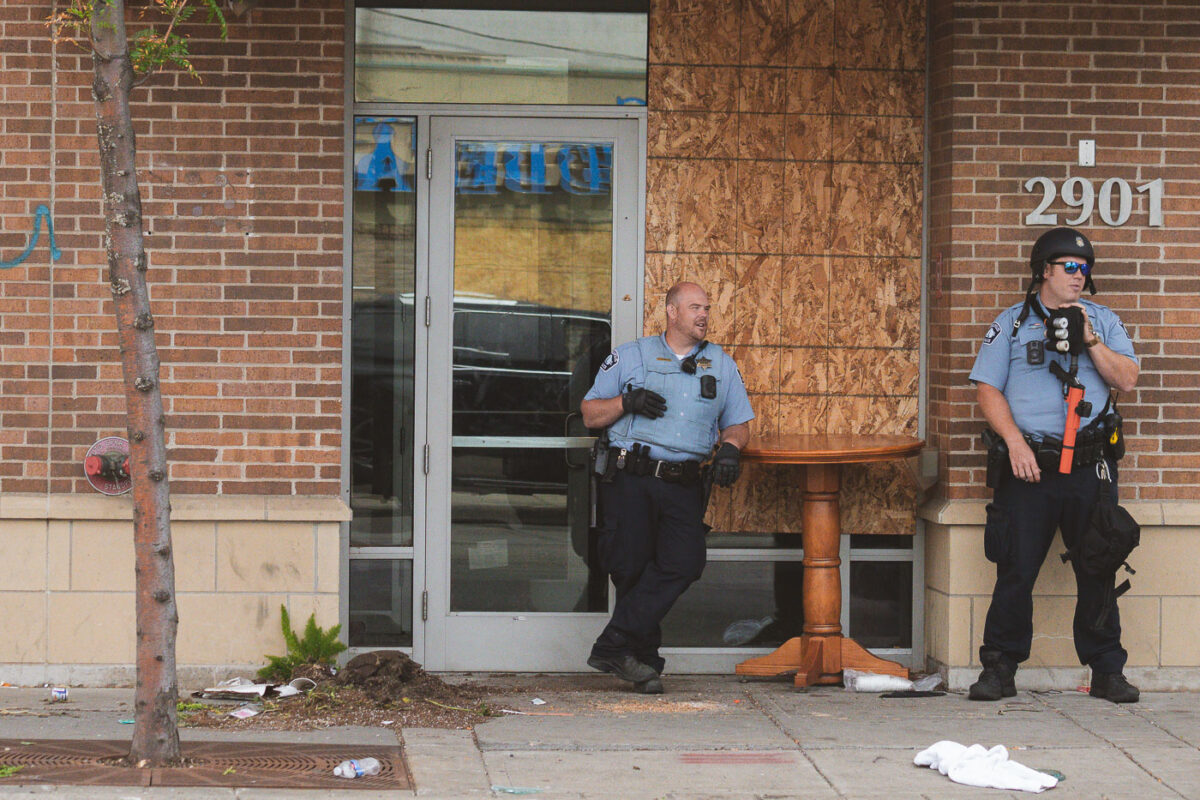
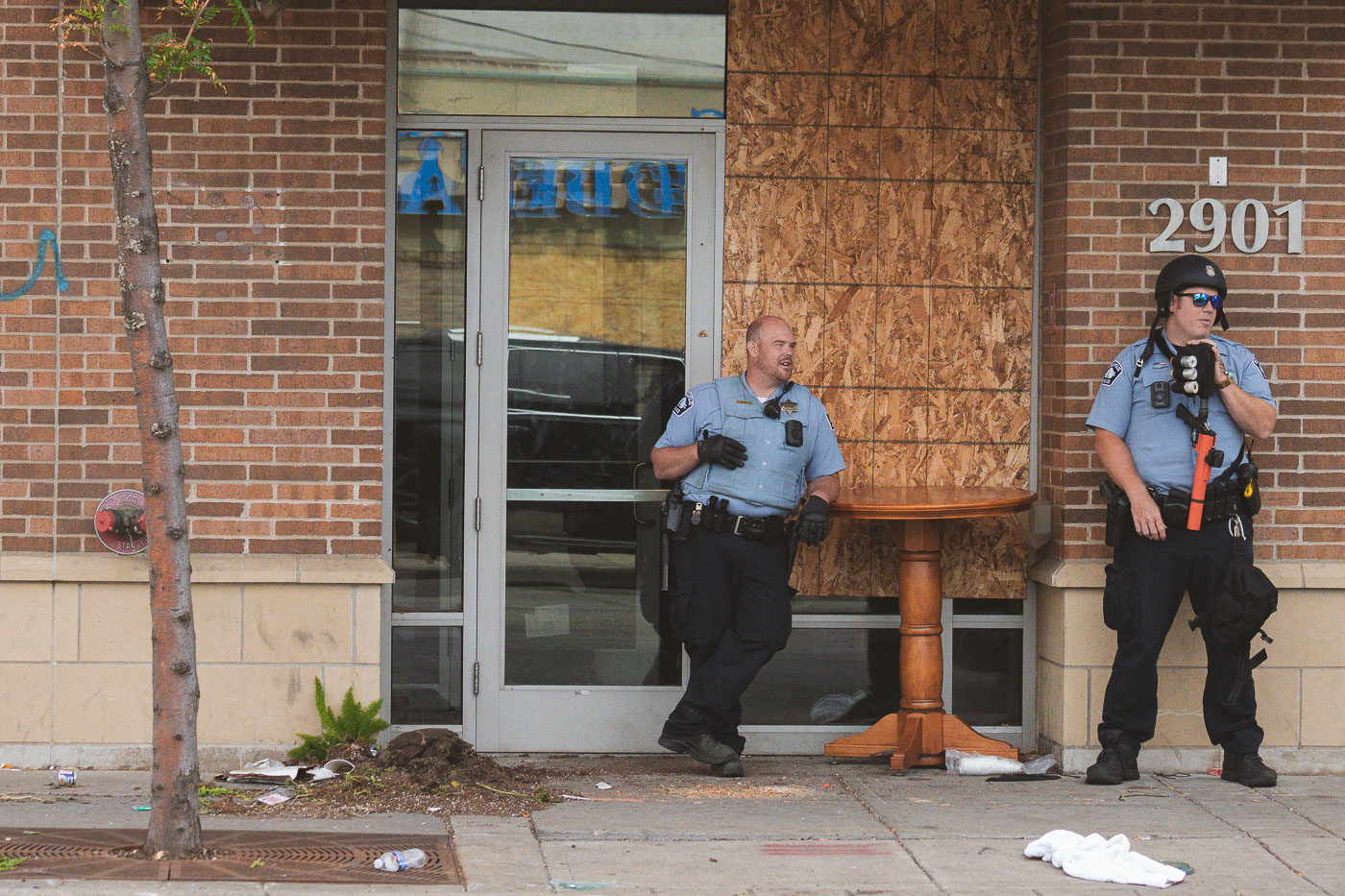
Minneapolis police outside the boarded Sheraton Hotel at 2901 Chicago Avenue in Minneapolis, June 2020.
Minneapolis police officers stand outside the Sheraton Hotel at 2901 Chicago Avenue in Minneapolis while the former Sheraton hotel was being cleared of squatters.

Minneapolis Police at boarded Sheraton Hotel, Midtown
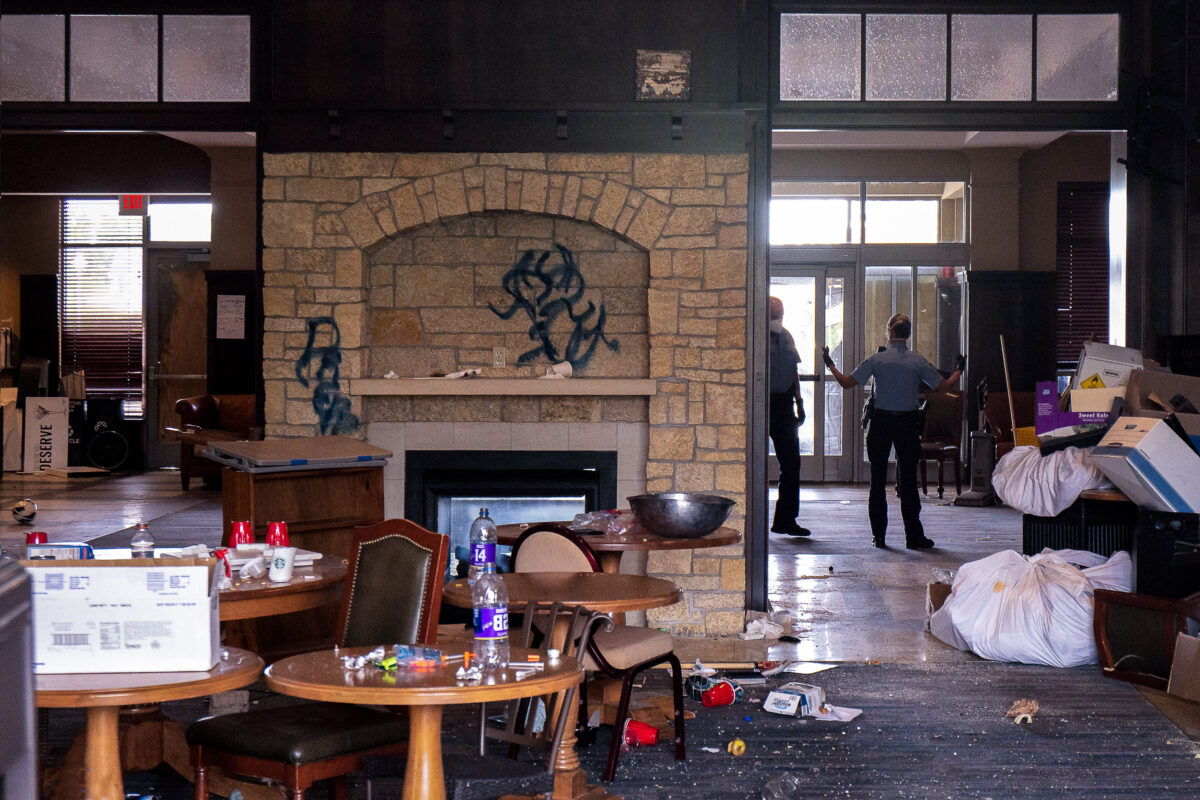
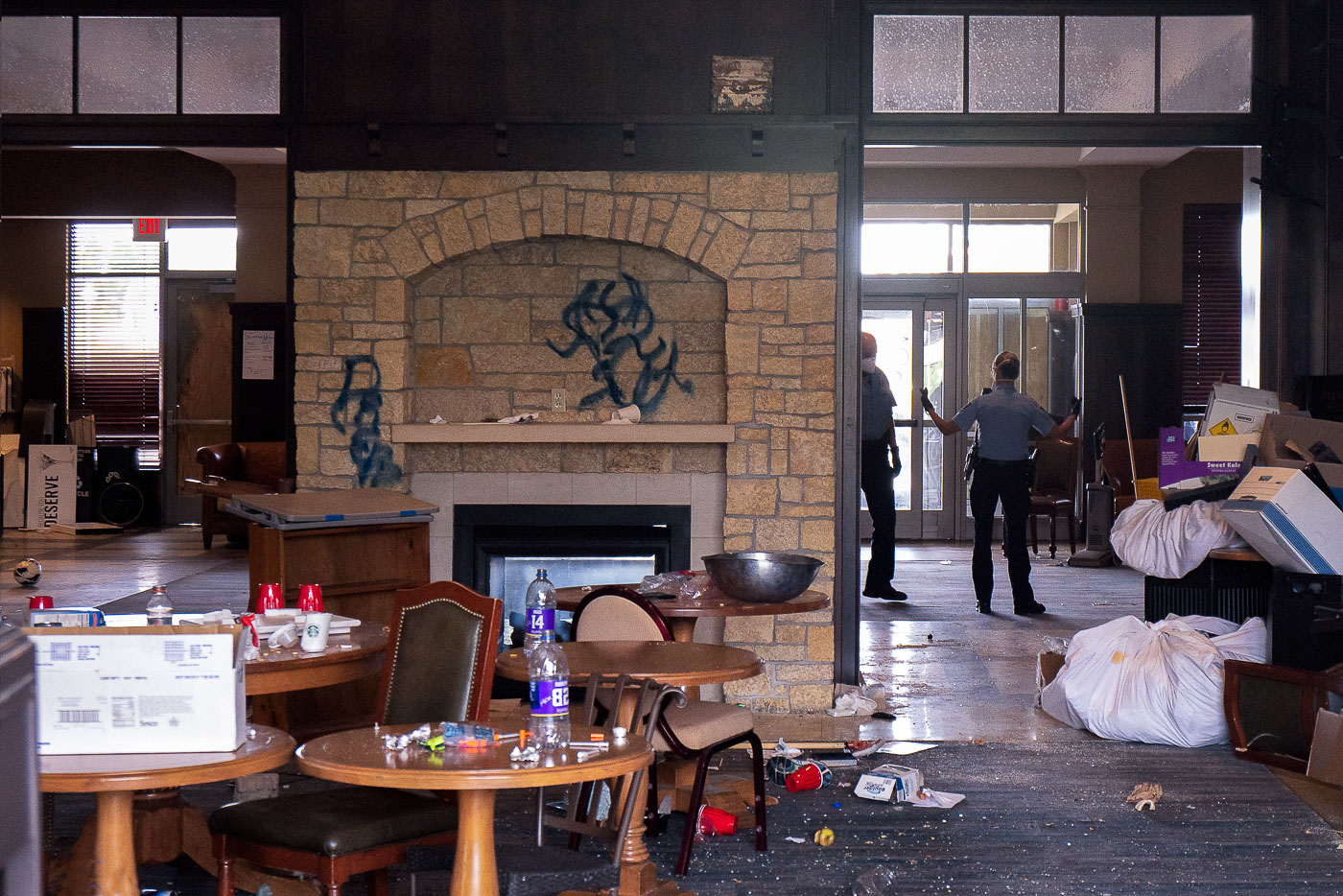
Minneapolis police clear the lobby of the abandoned Midtown Sheraton Hotel on June 15, 2020.
Minneapolis Police Department officers clear the lobby of the abandoned Midtown Sheraton Hotel in Minneapolis on June 15, 2020. The former hotel had been vacated by its owner and was being secured after weeks of unrest following the murder of George Floyd. The hotel was unofficially referred to as "The Sanctuary Hotel" where homeless was using it for shelter following the murder of George Floyd.

Inside Minneapolis Sheraton Hotel Police Clearing
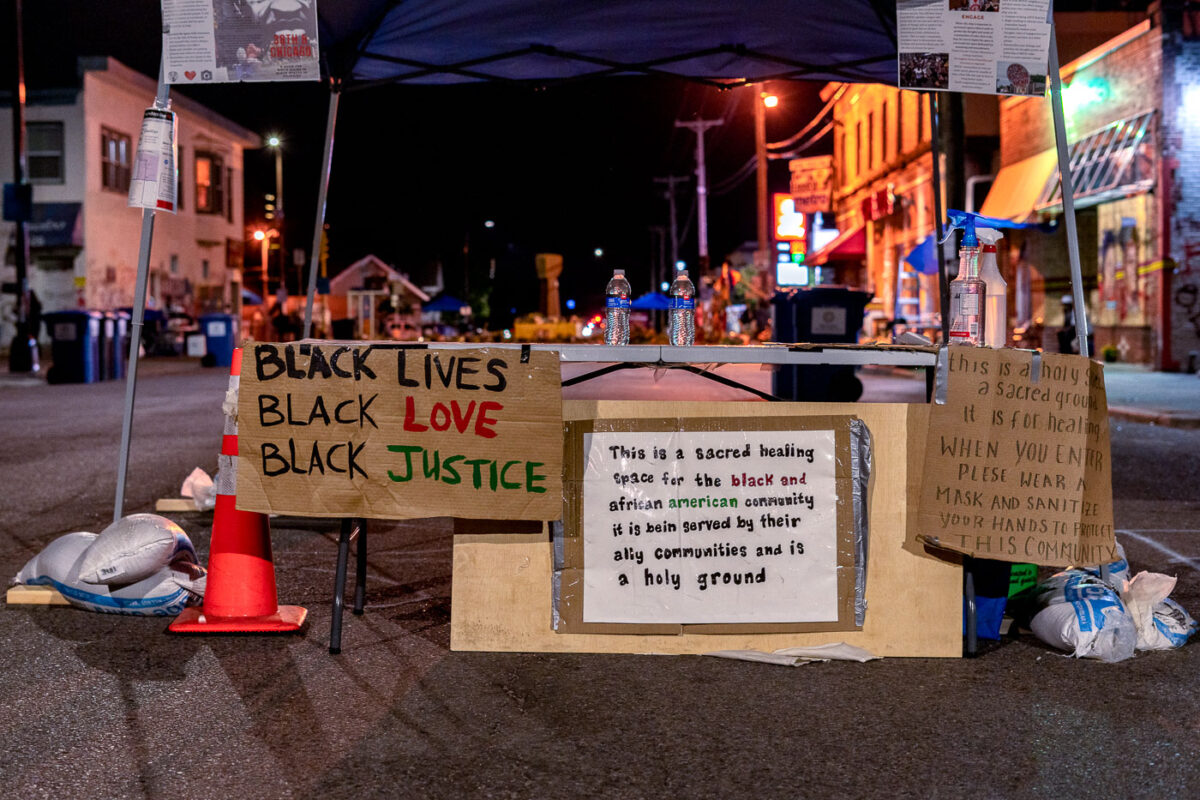
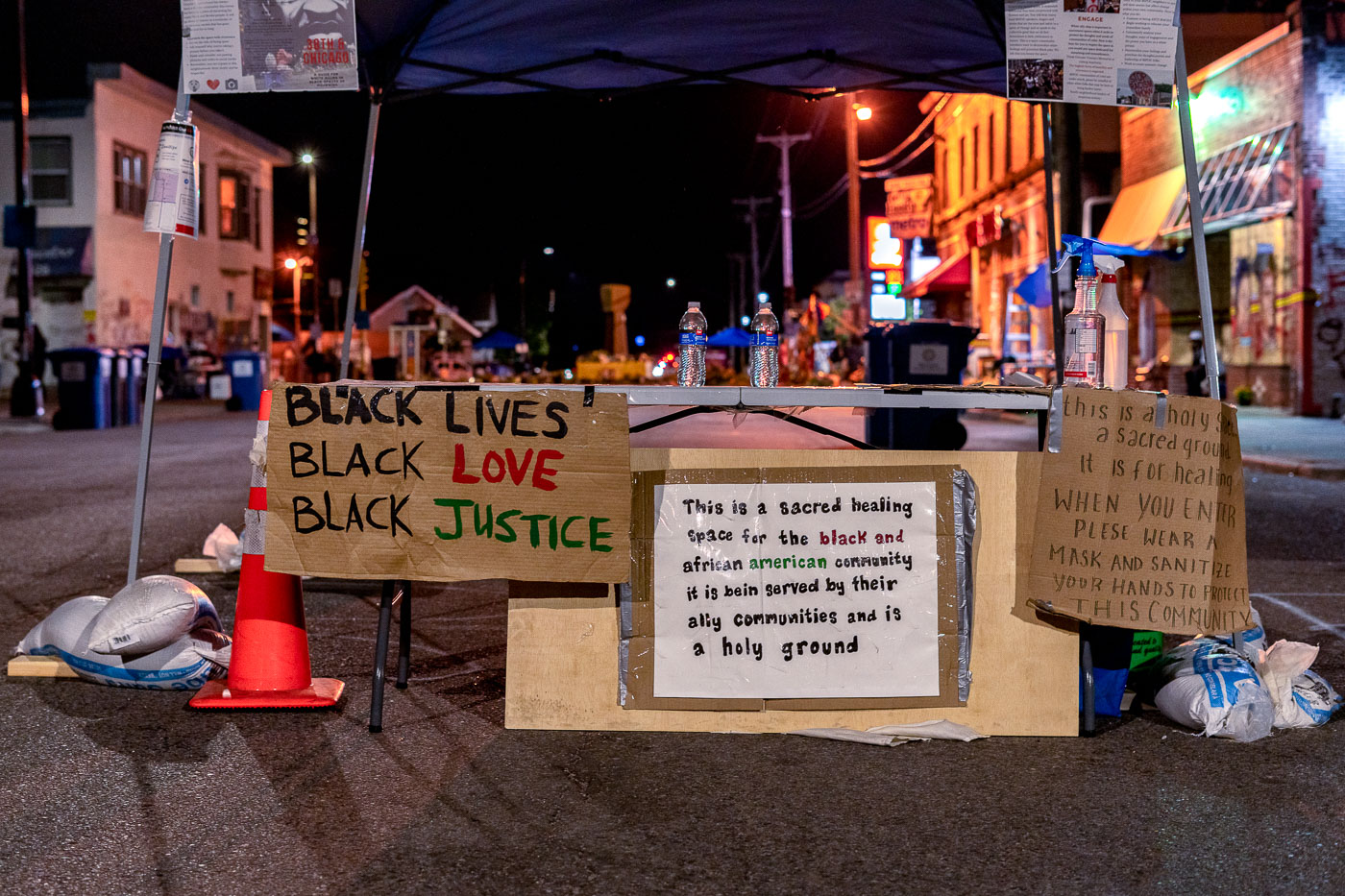
Welcome table at George Floyd Square in Minneapolis with signs reading “Black Lives, Black Love, Black Justice.”
A welcome table at George Floyd Square in Minneapolis stands at the crossroads of East 38th Street and Chicago Avenue, where a memorial and community healing space formed after George Floyd was killed by police in May 2020. Hand-lettered signs on the table read “Black Lives, Black Love, Black Justice” and describe the area as sacred ground for the Black and African American community and their allies.

George Floyd Square Welcome Table, Healing Space
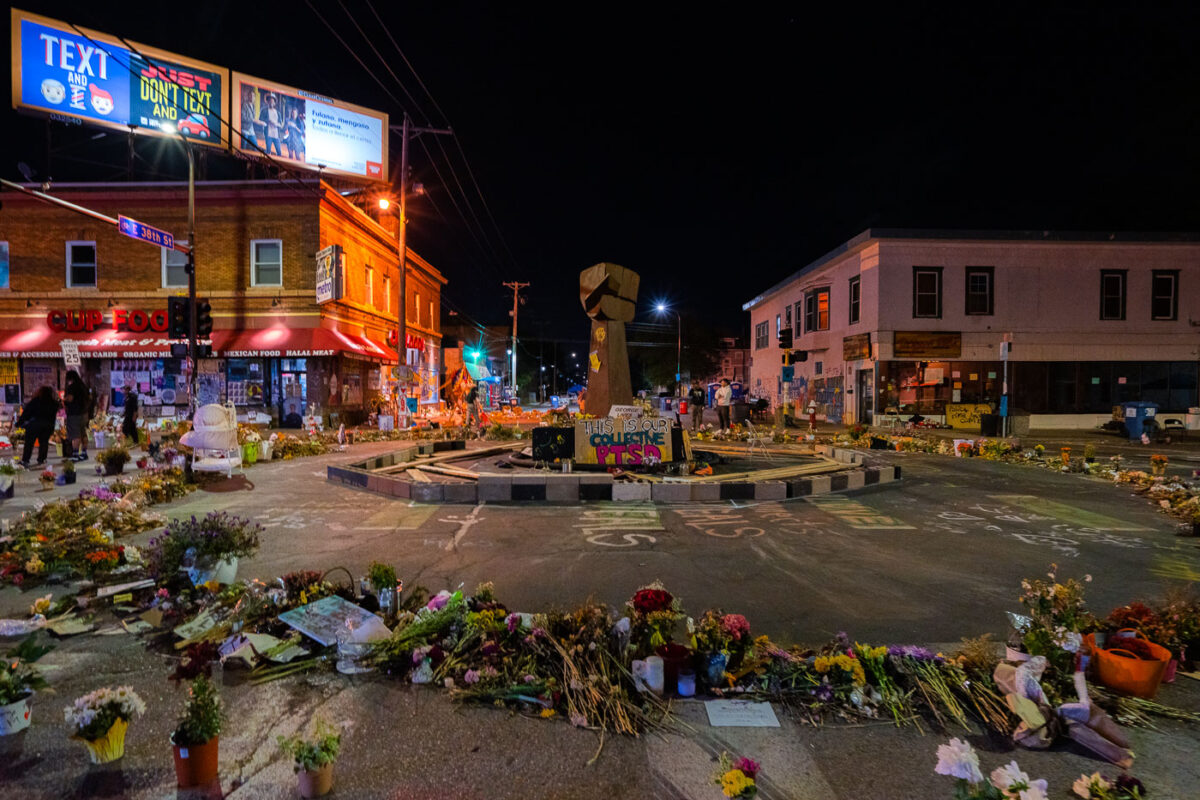
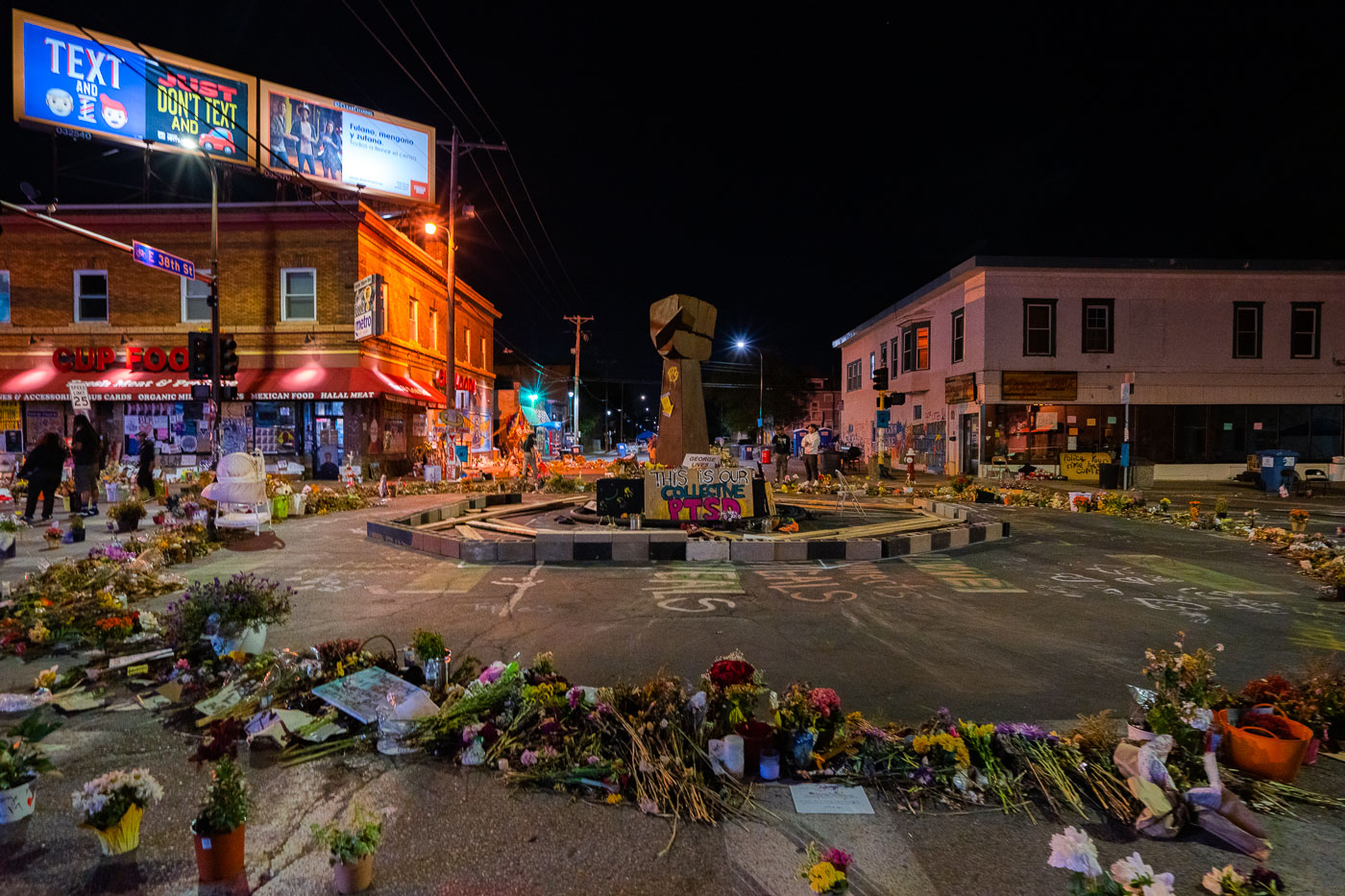
Raised Fist Memorial at George Floyd Square in Minneapolis, surrounded by flowers and tributes in June 2020.
The Raised Fist Memorial at George Floyd Square in Minneapolis stands at the junction of Chicago Avenue and East 38th Street, surrounded by flowers, candles, signs, and other tributes in June 2020. The memorial was established after George Floyd was killed by a Minneapolis police officer on May 25, 2020, and the intersection became a community-maintained protest and remembrance site. At the center of the square, the large clenched-fist sculpture anchors a traffic circle filled with offerings and messages left during the first weeks of protests over Floyd’s death.

George Floyd Square Raised Fist Memorial, June 2020
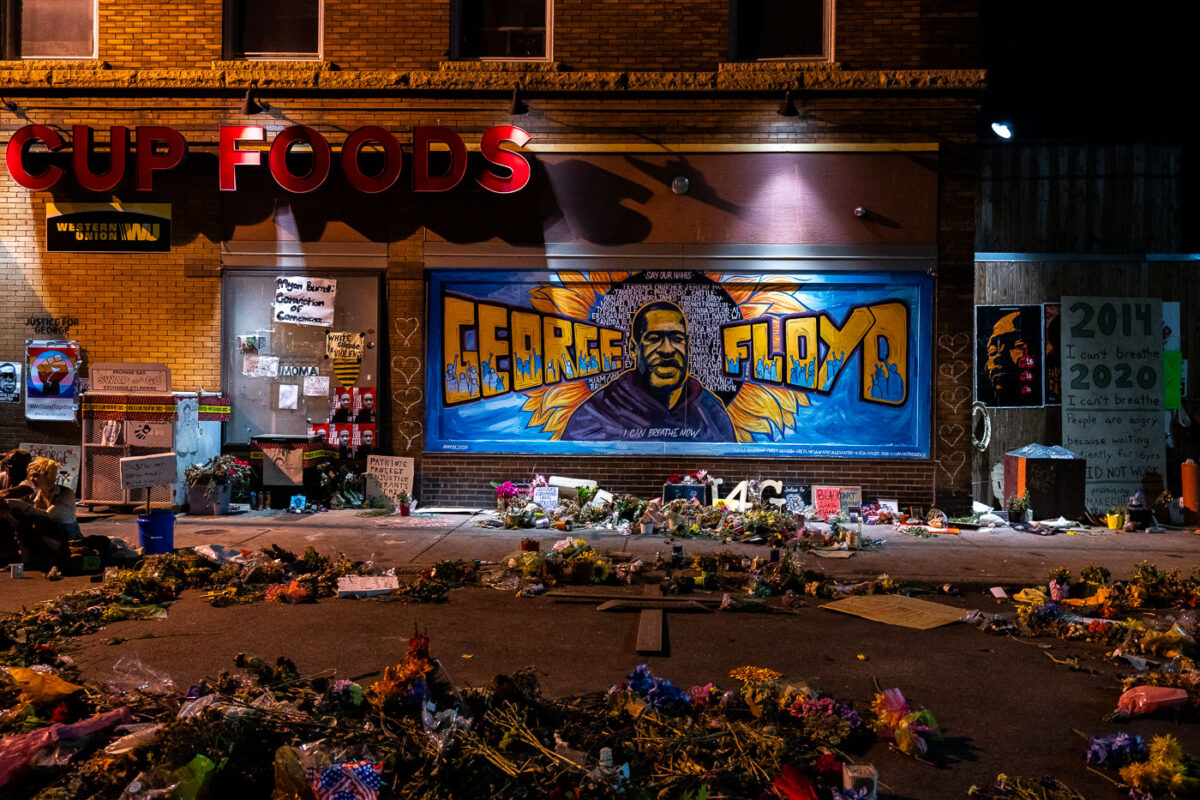
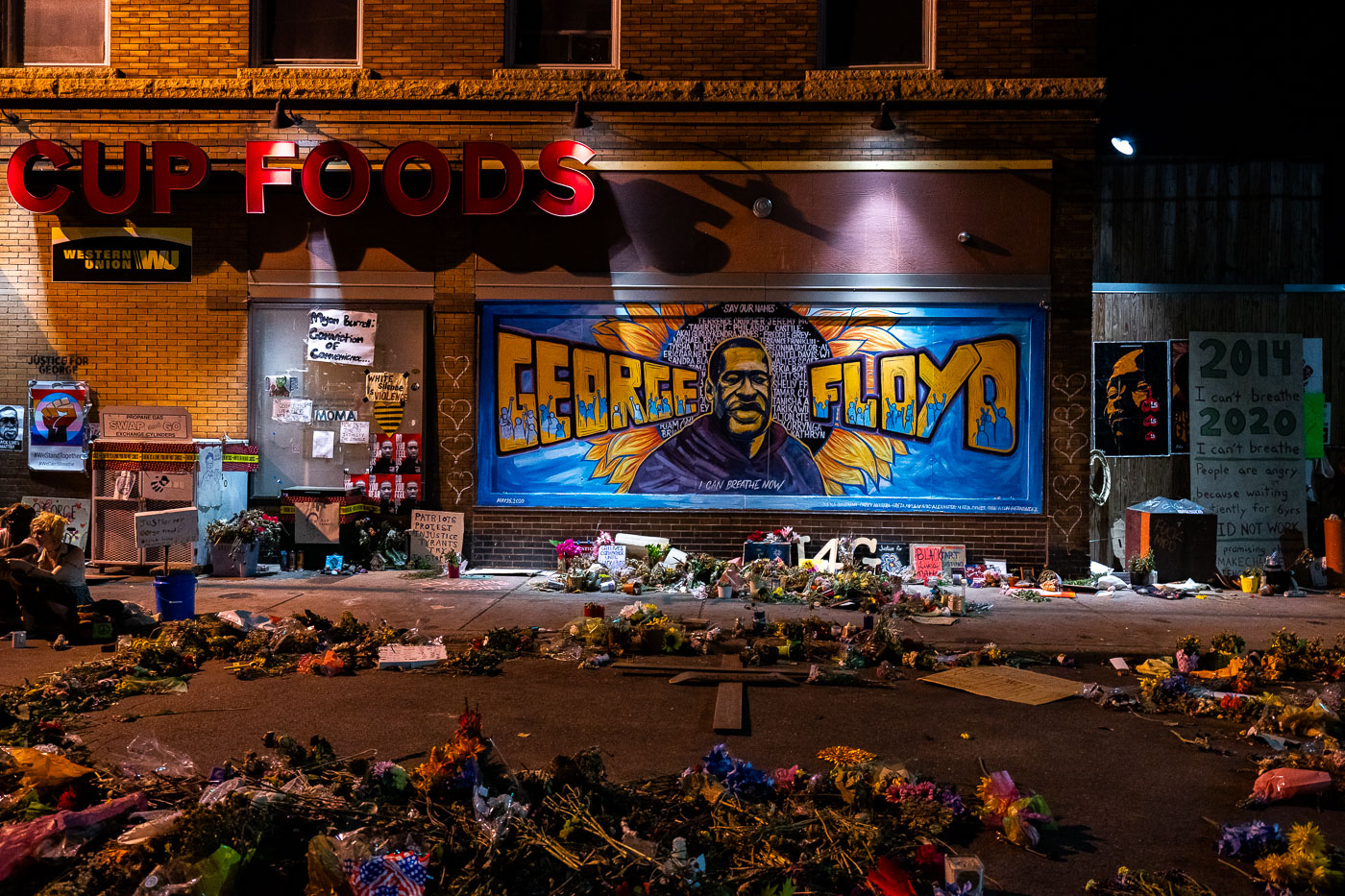
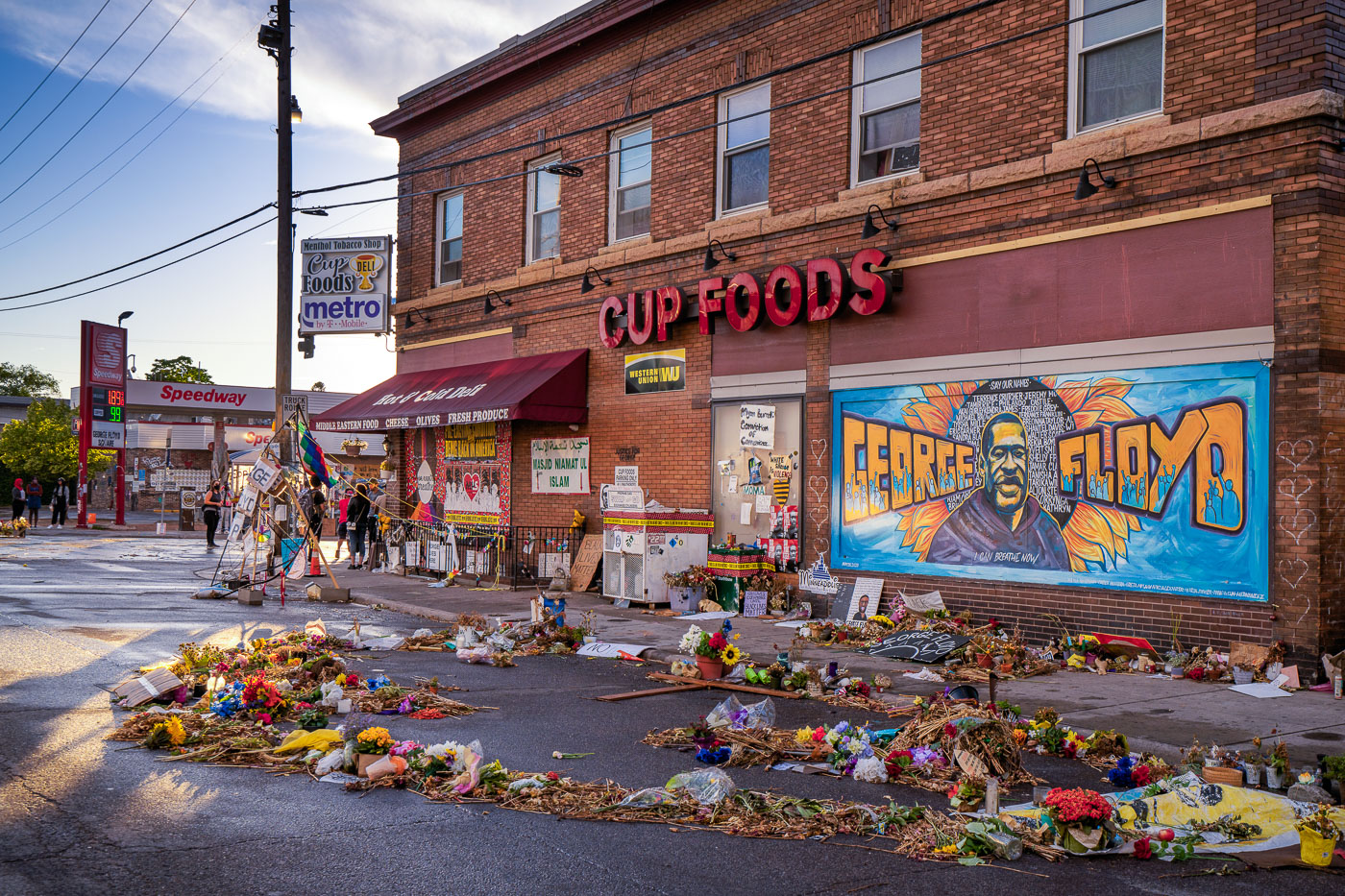
George Floyd mural and memorial flowers at Cup Foods in Minneapolis, June 2020.
Cup Foods at East 38th Street and Chicago Avenue in Minneapolis is covered with memorial tributes beneath a mural of George Floyd. Photographed at night in June 2020, the storefront at what became known as George Floyd Square is lined with flowers, signs, candles, and other offerings left after Floyd was killed by Minneapolis police on May 25, 2020.

George Floyd Mural, Flowers, Cup Foods, George Floyd Square
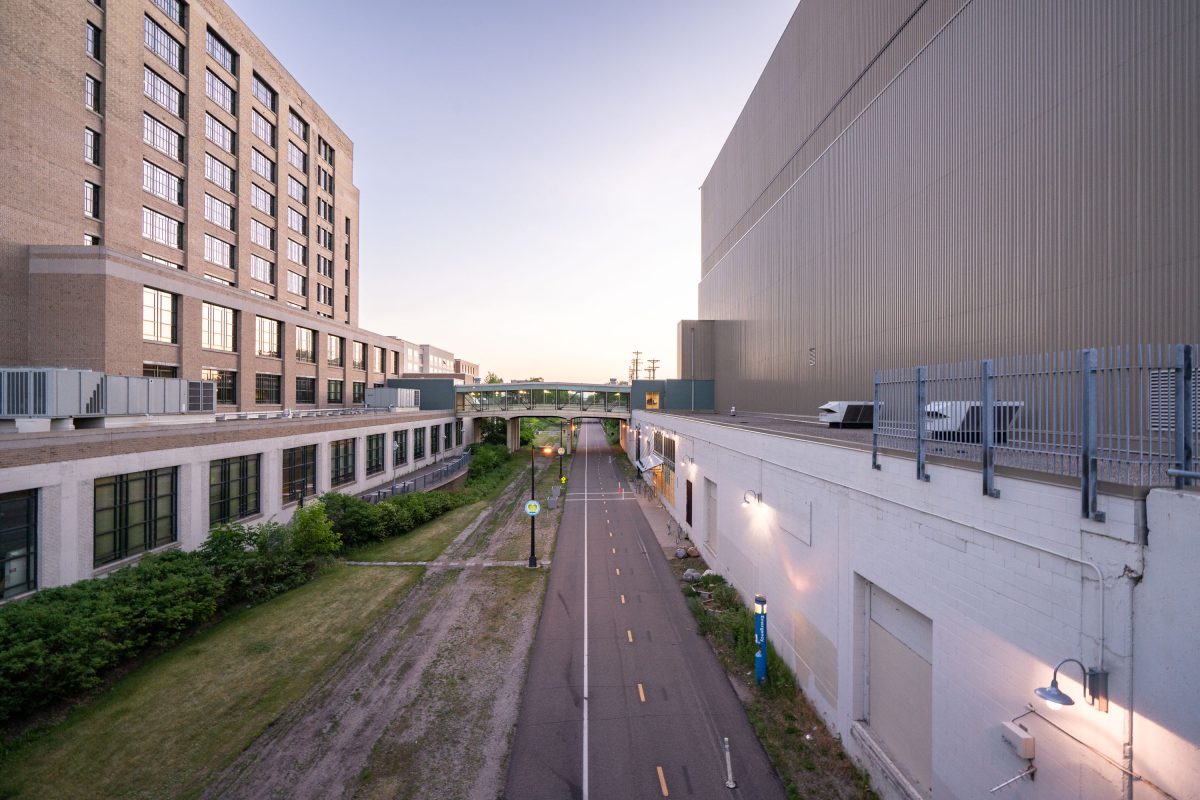
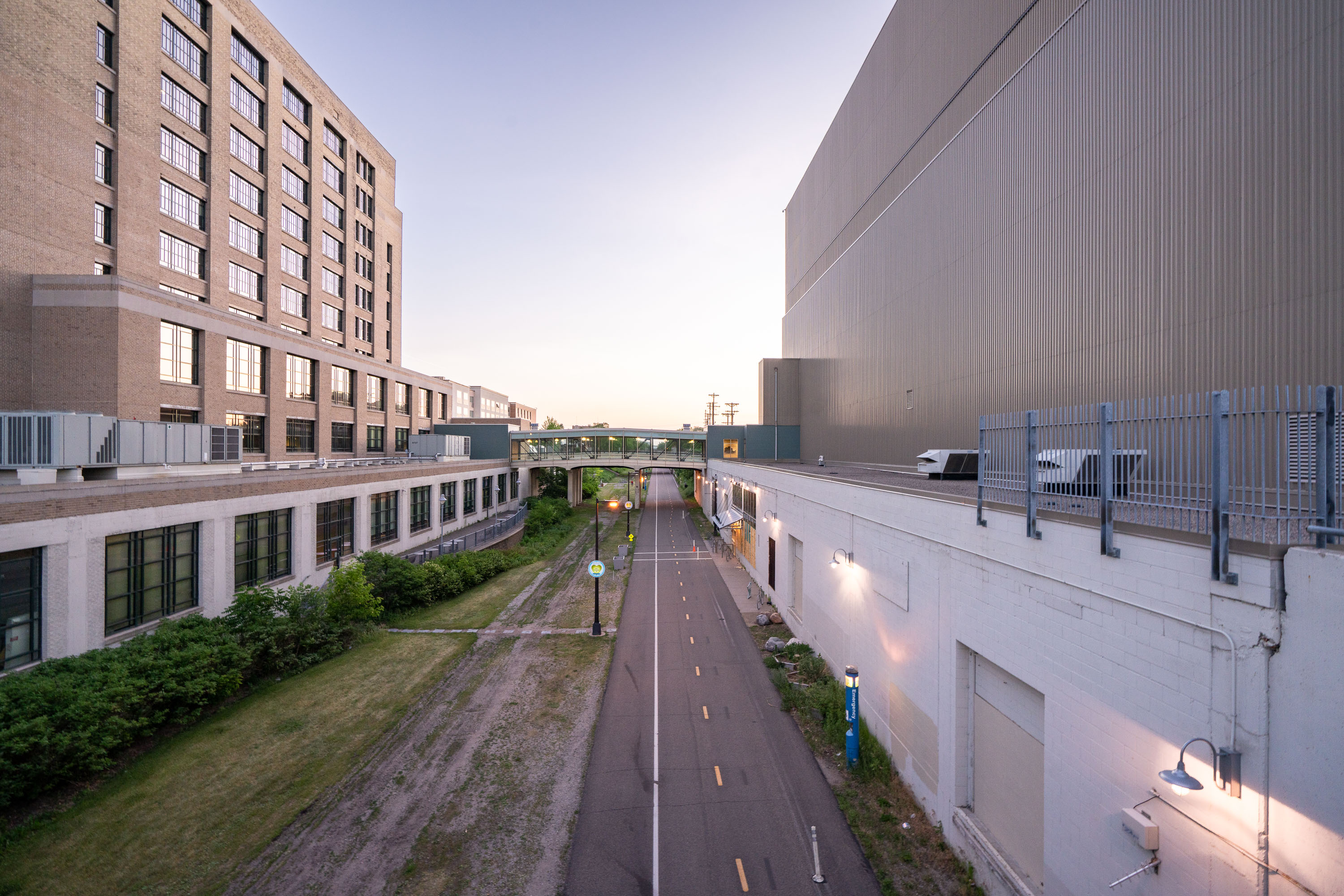
Midtown Greenway and Midtown Sheraton, Minneapolis
The Midtown Greenway in Minneapolis. To the left is the Midtown Sheraton, which was used as a homeless shelter during unrest.

Midtown Greenway and Midtown Sheraton, Minneapolis

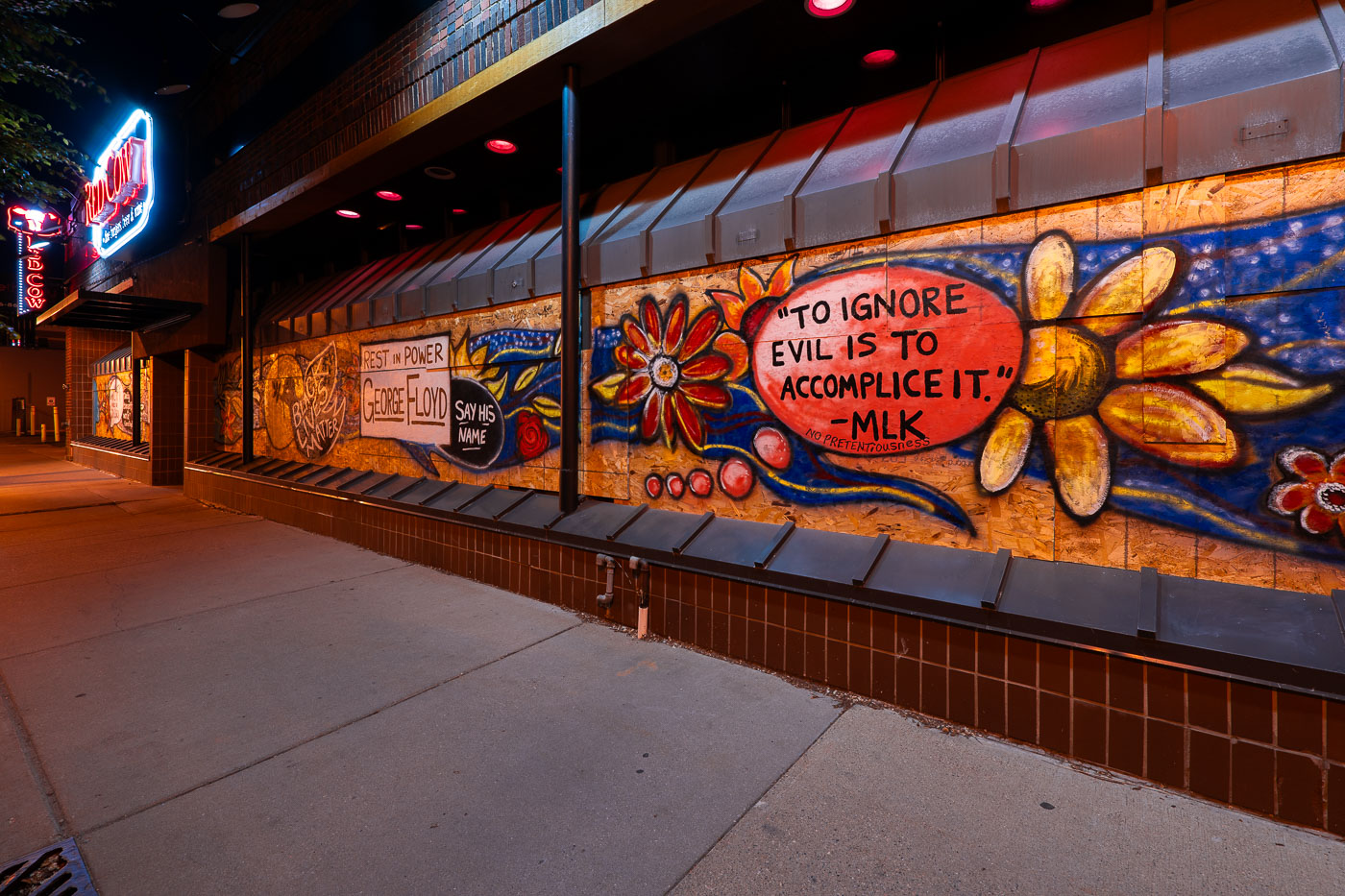
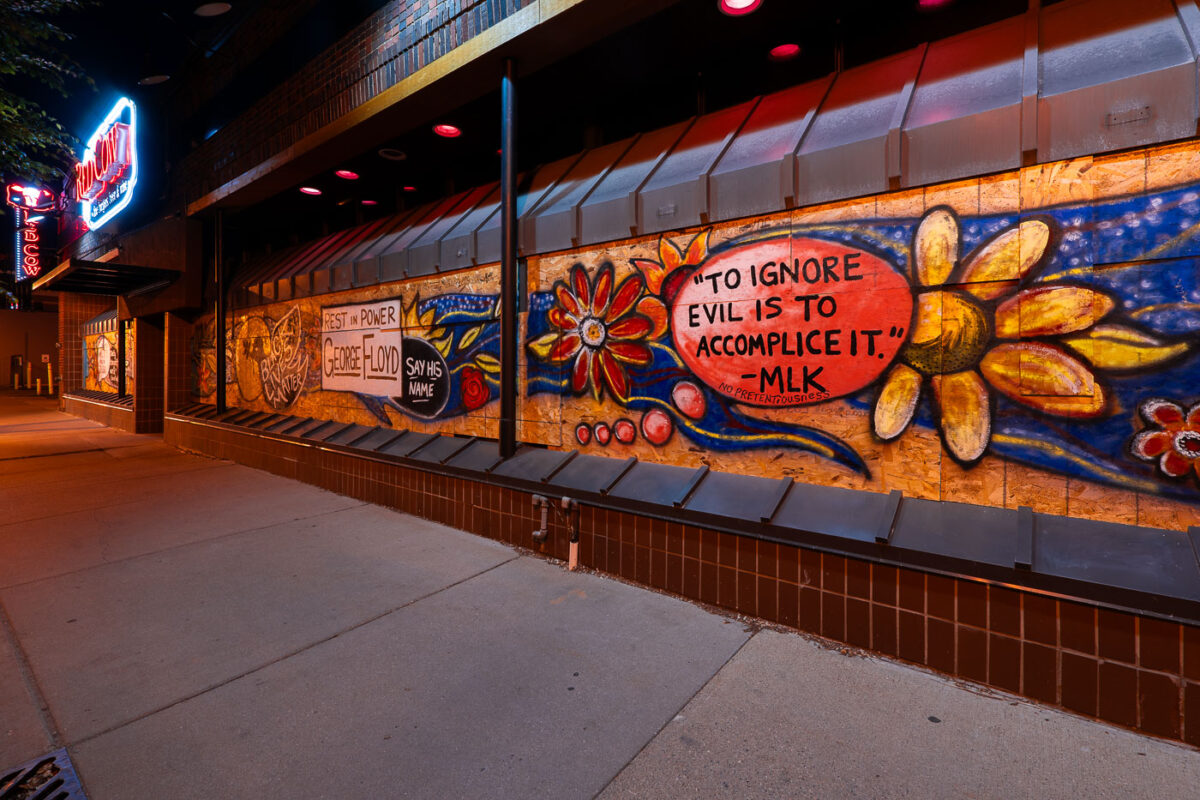
George Floyd and MLK mural on boarded Red Cow windows on Hennepin Avenue in Uptown Minneapolis.
A mural on the boarded windows of the Red Cow restaurant on Hennepin Avenue in Uptown Minneapolis honors George Floyd and Martin Luther King Jr. Painted after Floyd’s killing in 2020, the temporary storefront artwork includes the words “Rest in Power George Floyd Say His Name” and a quotation attributed to King. The boards turned the closed restaurant frontage into a memorial and protest surface during a period of unrest and mourning in Minneapolis.

MLK & George Floyd Mural, Red Cow, Uptown Minneapolis
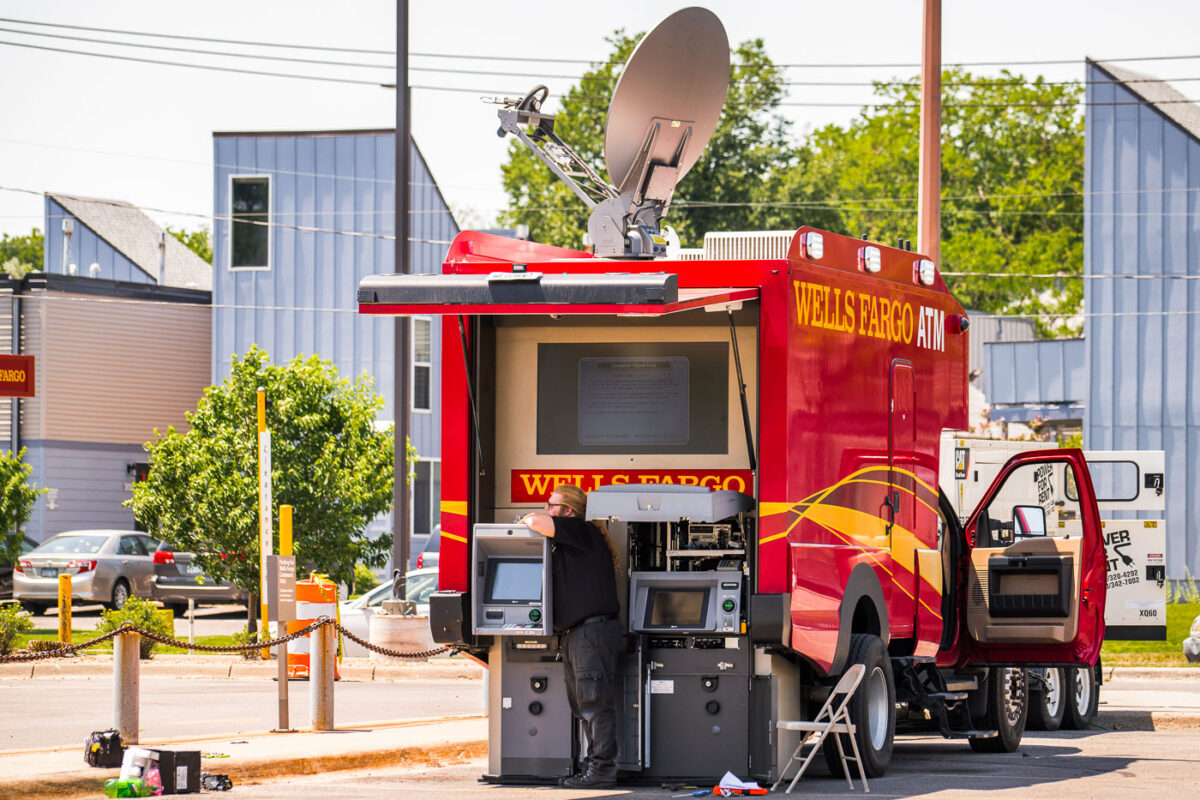
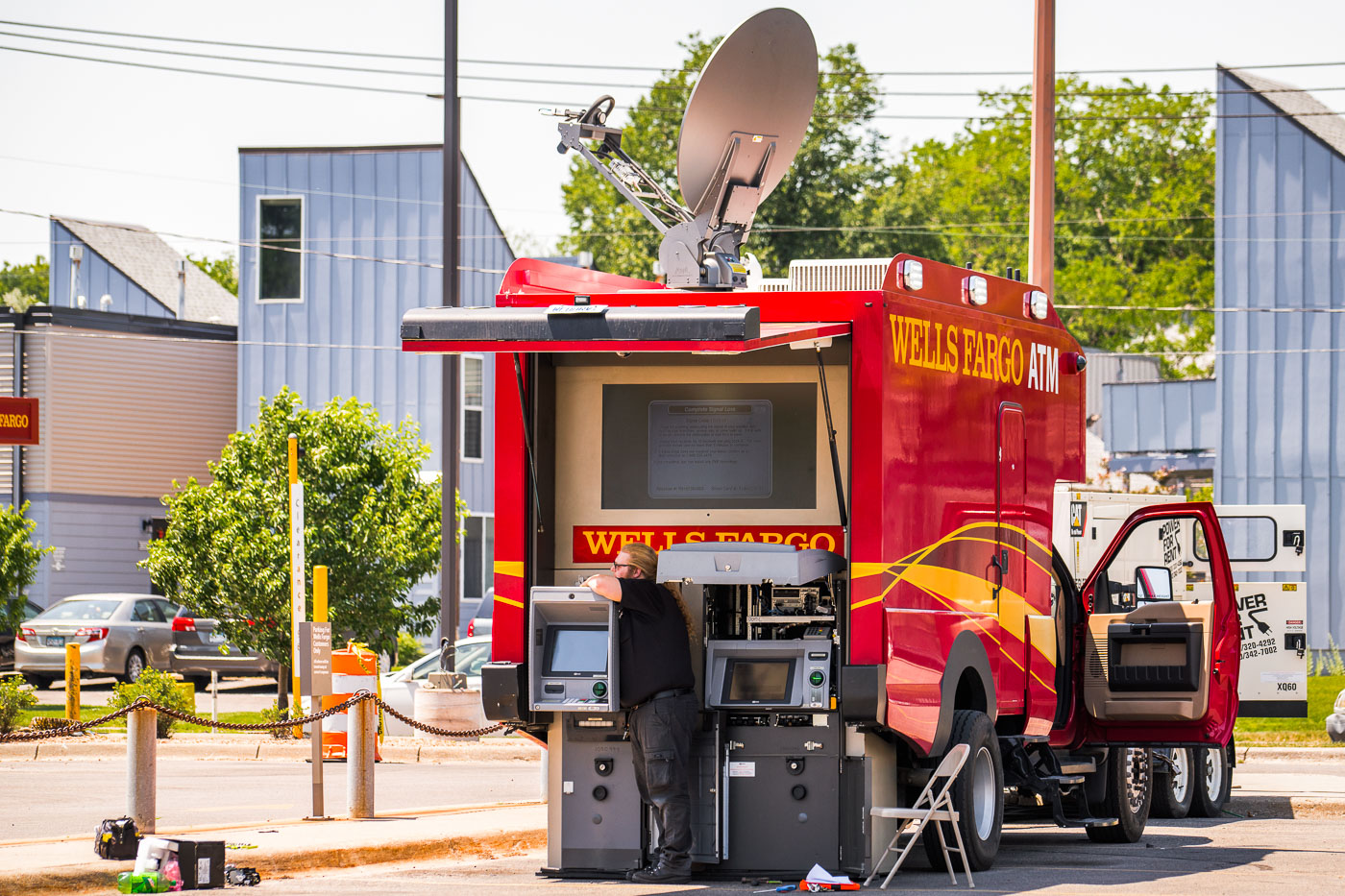
Wells Fargo mobile ATM truck being serviced in Minneapolis after a local bank branch was destroyed by fire.
A Wells Fargo mobile ATM truck is serviced in Minneapolis in June 2020. The temporary banking unit, equipped with a satellite dish and onboard teller machines, was deployed after a nearby Wells Fargo branch was destroyed by fire. Parked along a commercial street, the vehicle provided cash access and basic banking transactions while regular branch service was disrupted.

Wells Fargo Mobile ATM Serviced in Minneapolis
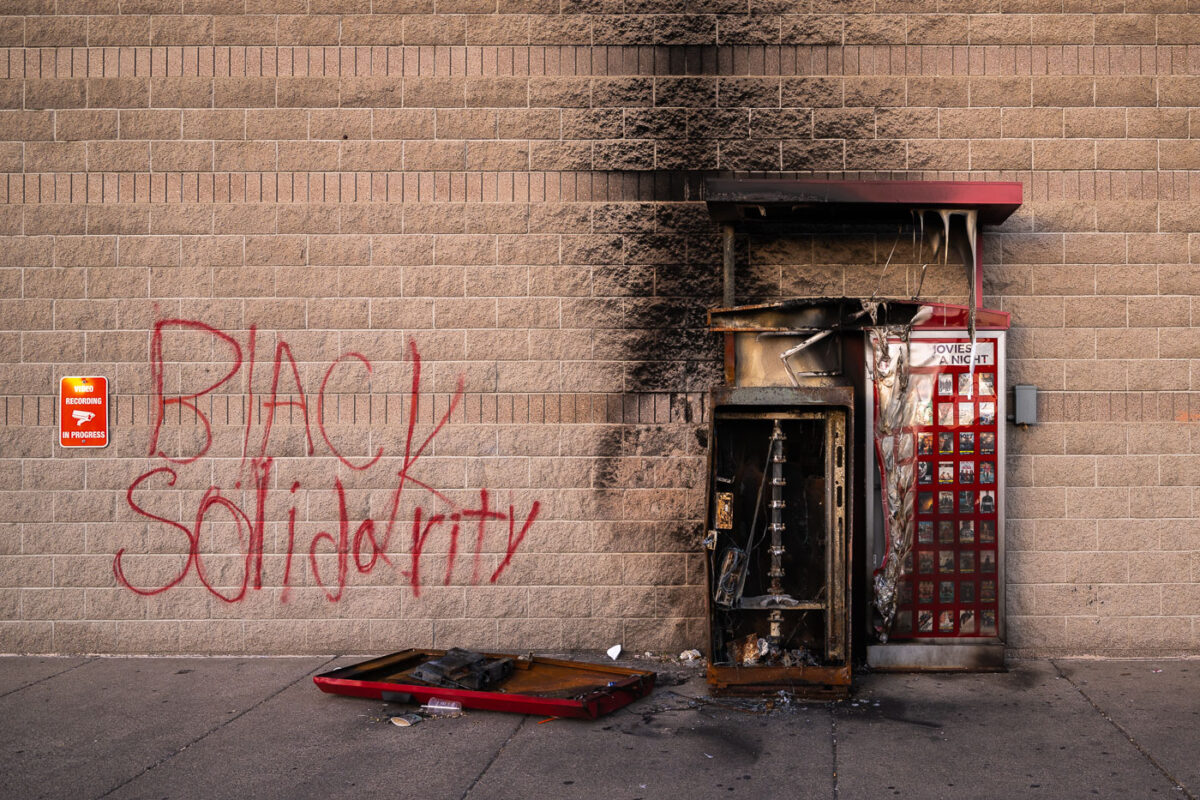
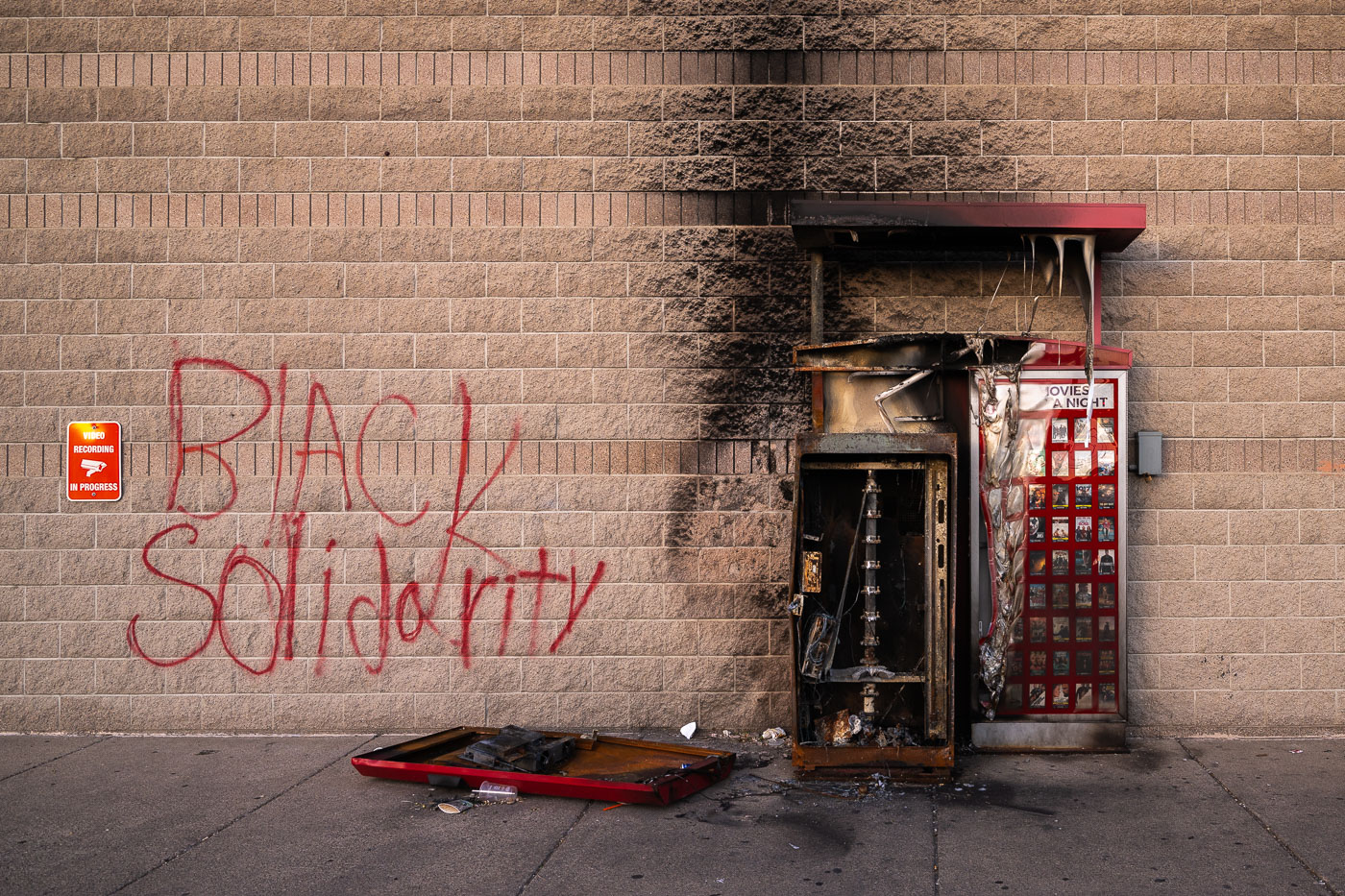
Burned Redbox kiosk outside a former Walgreens on Lake Street in Minneapolis, with “BLACK Solidarity” graffiti.
A burned Redbox kiosk stands outside a former Walgreens on Lake Street in Minneapolis. Black smoke stains mark the brick wall behind the kiosk, and red graffiti reading “BLACK Solidarity” is painted beside it. The photograph was made on June 16, 2020, weeks after the store was damaged during protests following the May 25 killing of George Floyd.

Black Solidarity Graffiti, Burned Red Box, Lake Street, Minneapolis
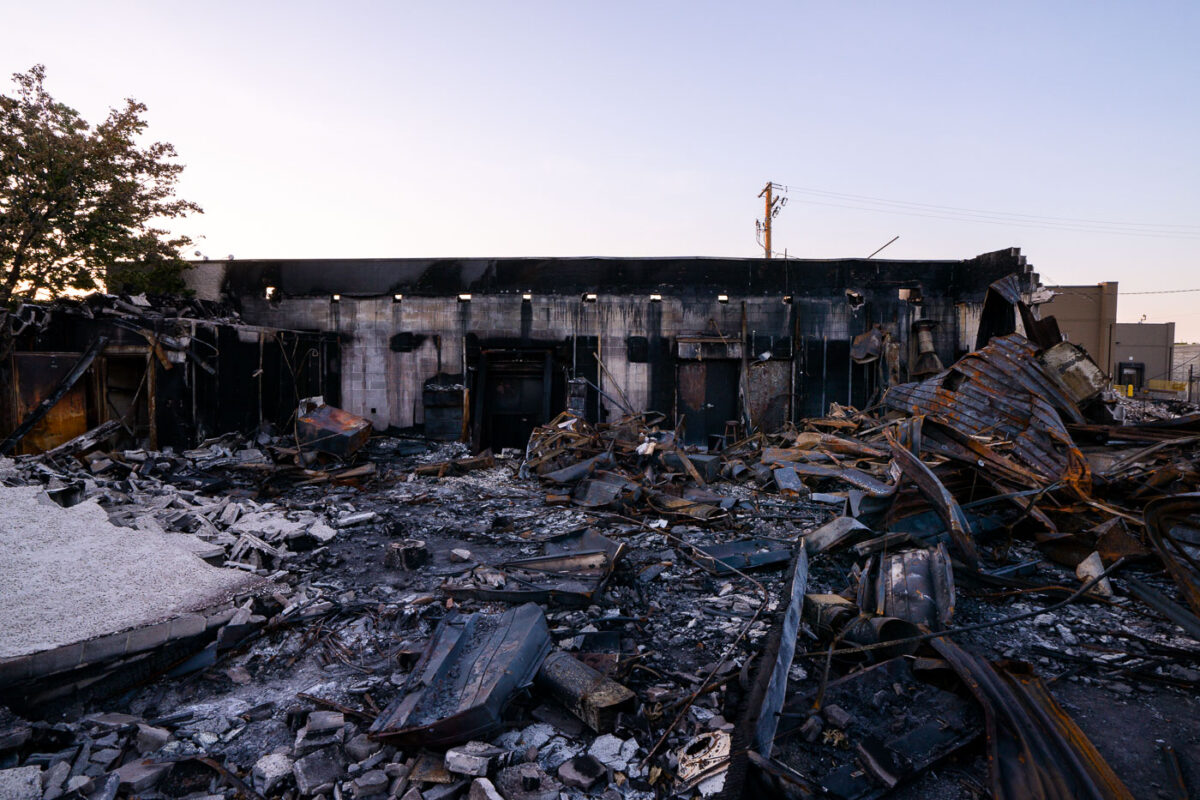
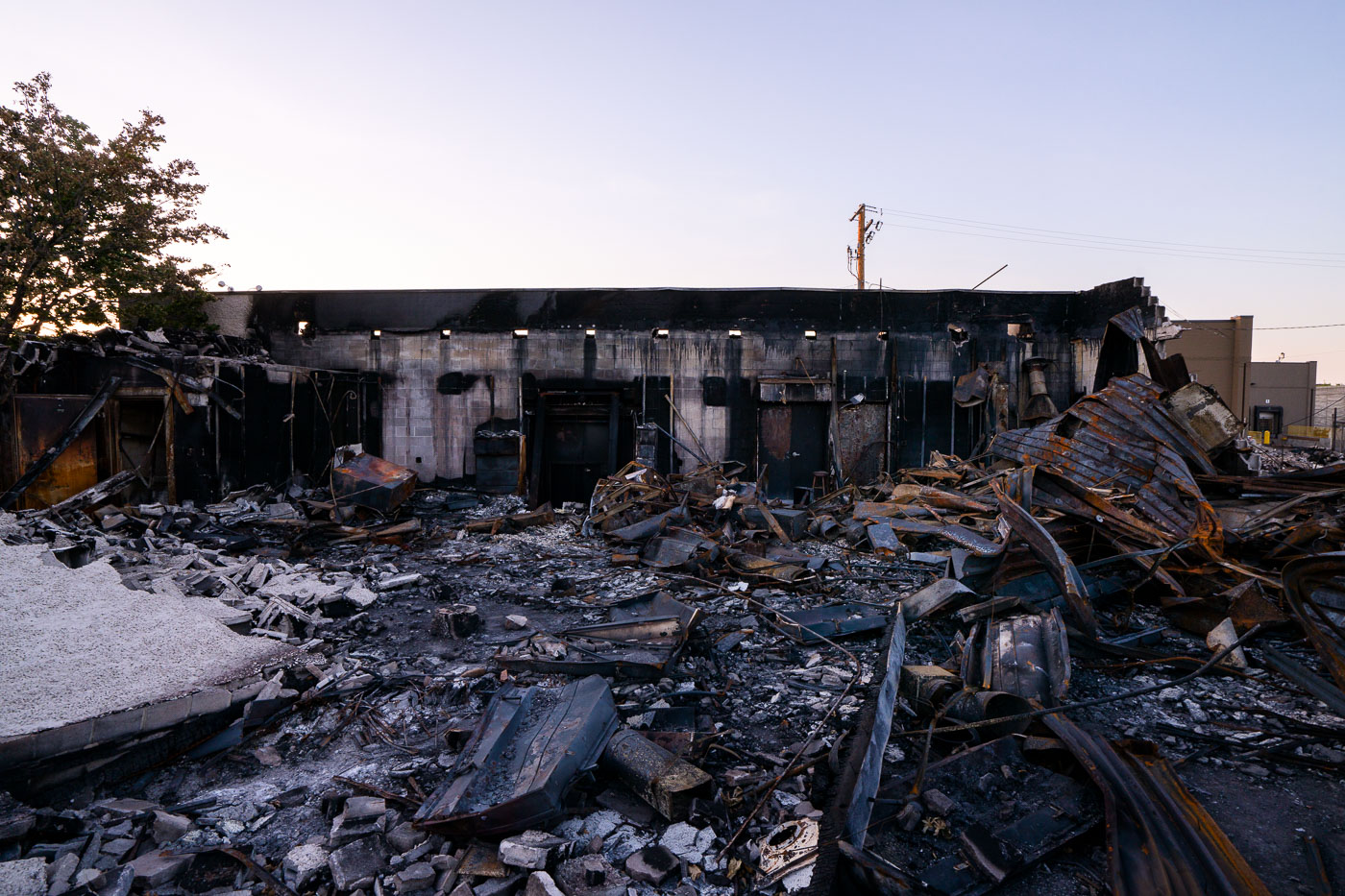
Fire-damaged Atlas Staffing building in Minneapolis, with rubble and charred walls after the May 2020 unrest.
The fire-damaged remains of the Atlas Staffing building in Minneapolis fill the frame, with collapsed roofing, twisted metal, and charred block walls still standing. The employment agency’s premises were destroyed in May 2020 during the unrest that followed the killing of George Floyd. Photographed about three weeks later, the site shows the extent of damage left to commercial properties in the area.

Atlas Staffing Building Rubble, Minneapolis Uprising
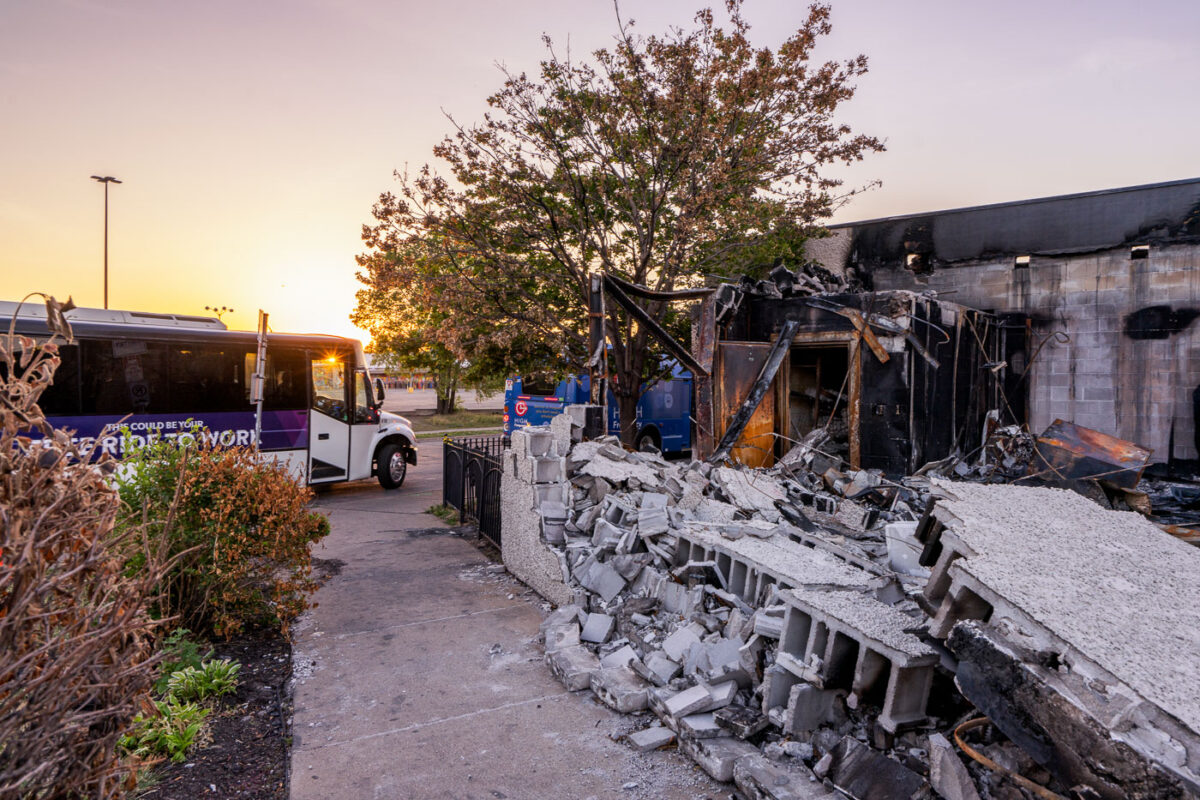
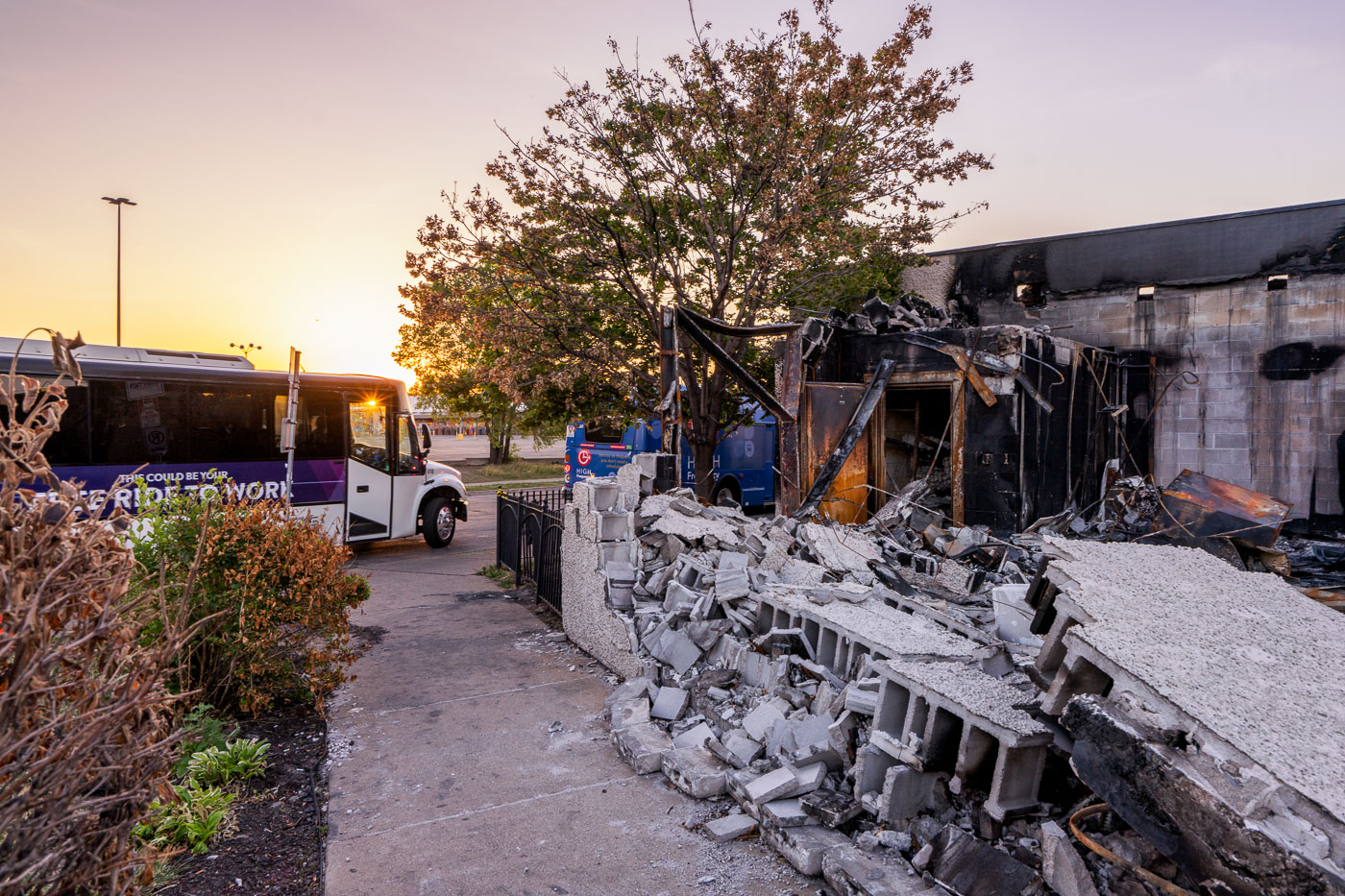
Metro Transit bus passing the burned Atlas Staffing building on East Lake Street in Minneapolis, June 2020.
A Metro Transit bus passes the burned Atlas Staffing building on East Lake Street in Minneapolis on June 16, 2020. The commercial structure shows heavy fire damage, with collapsed cinder-block walls and a charred facade visible along the sidewalk. The building was among numerous Lake Street properties damaged during the unrest that followed the killing of George Floyd in late May 2020. The image contrasts ongoing bus service on the corridor with the destruction still visible several weeks later.

Metro Transit Bus at Burned Atlas Staffing, E Lake St, Mpls
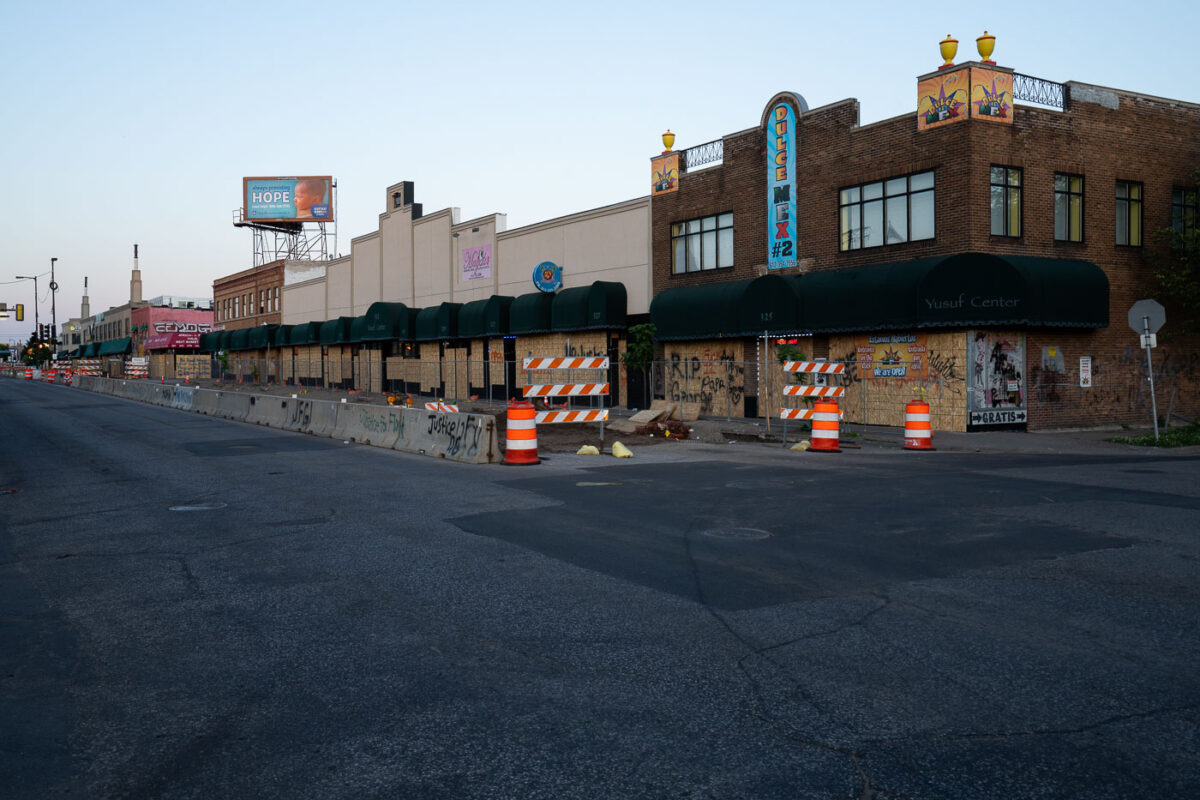
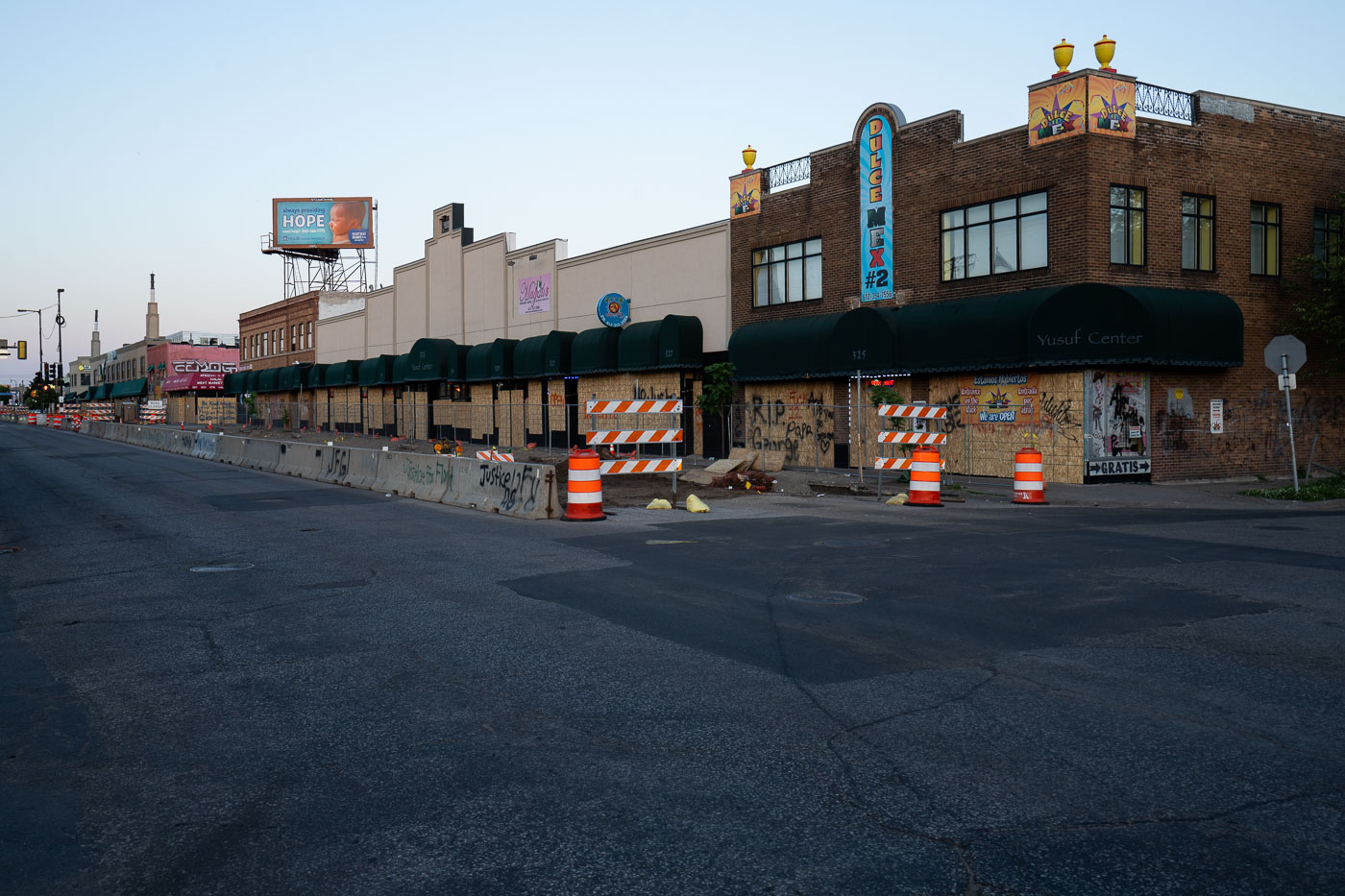
Boarded businesses on Lake Street in Minneapolis after George Floyd protests, June 2020.
Boarded storefronts along Lake Street in Minneapolis, including the Yusuf Center and Dulce Mex #2, are shown on June 16, 2020. Plywood covers the ground-floor windows and doors, with graffiti and memorial messages such as “RIP George” and “Justice for Floyd” visible on the barriers and concrete traffic dividers. The businesses were protected after the protests and unrest that followed the killing of George Floyd in Minneapolis in May 2020.

Lake Street Boarded Businesses After George Floyd Protests
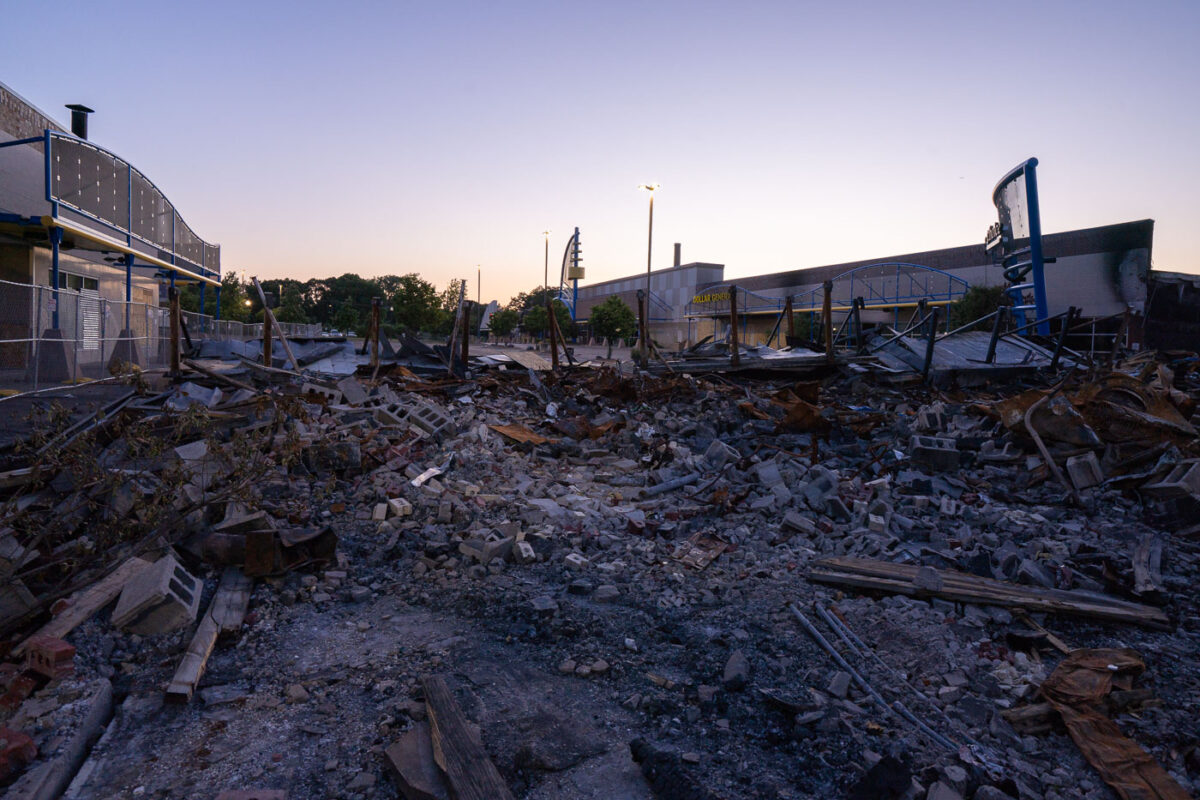
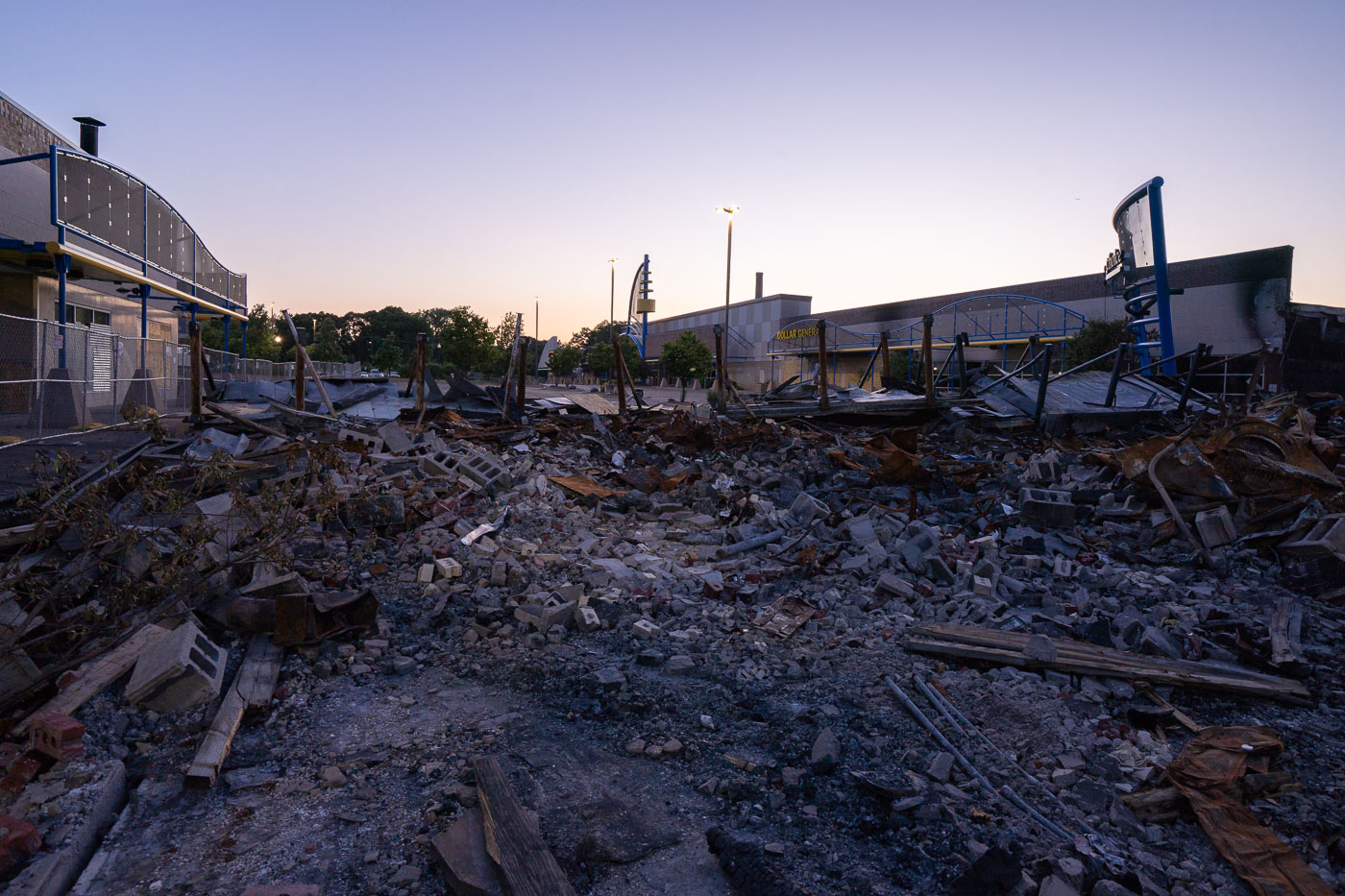
Burned strip mall rubble on Lake Street in Minneapolis after fires during the May 2020 unrest.
The burned remains of a strip mall on Lake Street in Minneapolis fill the foreground, with piles of brick, twisted metal, and collapsed roofing left after a fire. A Dollar General sign is still visible on one surviving section of the commercial building behind the rubble. The damage dates to the unrest and protests that followed the killing of George Floyd in May 2020, when multiple businesses along the Lake Street corridor were burned or destroyed.

Burned Strip Mall Rubble, Lake Street, Minneapolis
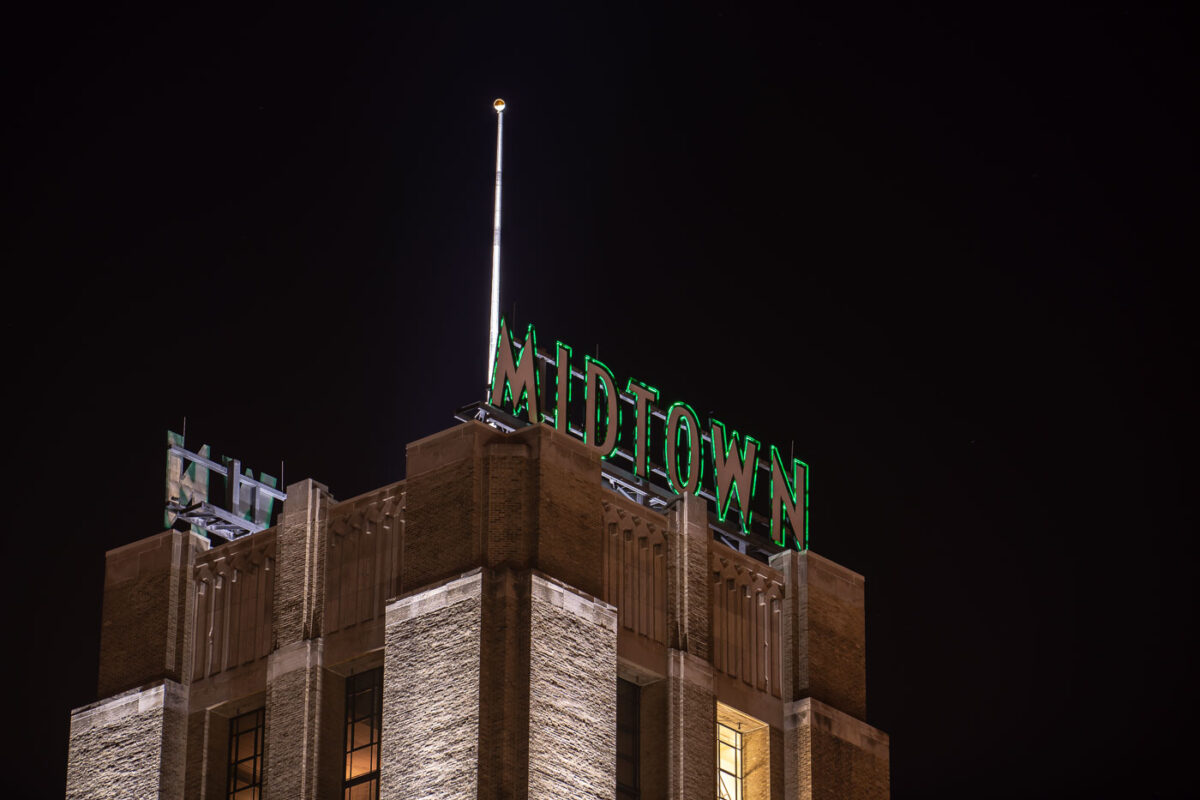
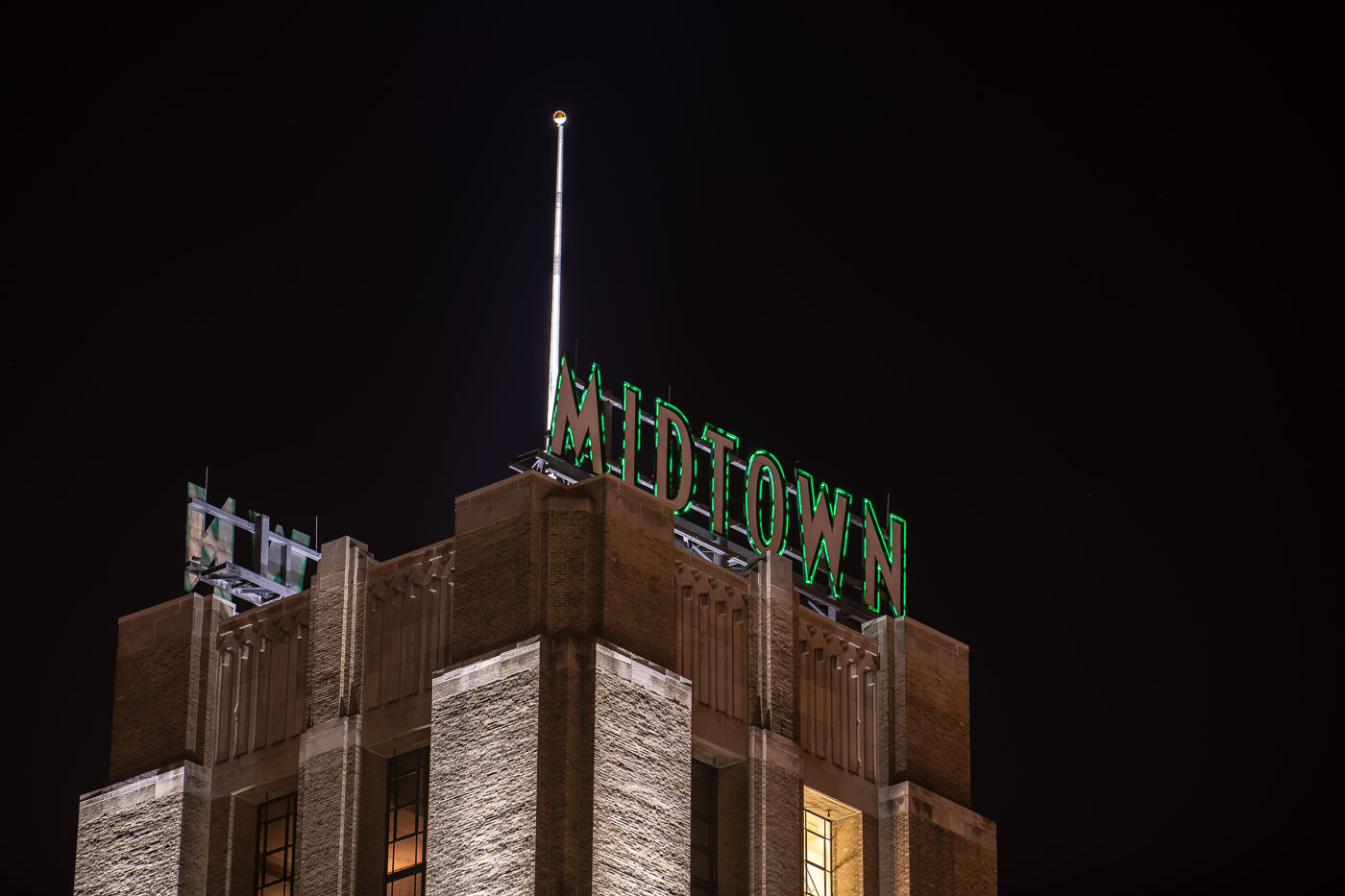
Illuminated green neon Midtown Exchange sign atop a brick building at night in Minneapolis.
Midtown Exchange is a historic building in the Midtown neighborhood of Minneapolis. Originally constructed as a Sears warehouse, the structure has been redeveloped as a mixed-use facility housing retail, office, and residential spaces. The building's illuminated neon sign has become a recognizable landmark in the area.

Midtown Exchange neon sign at night, Minneapolis
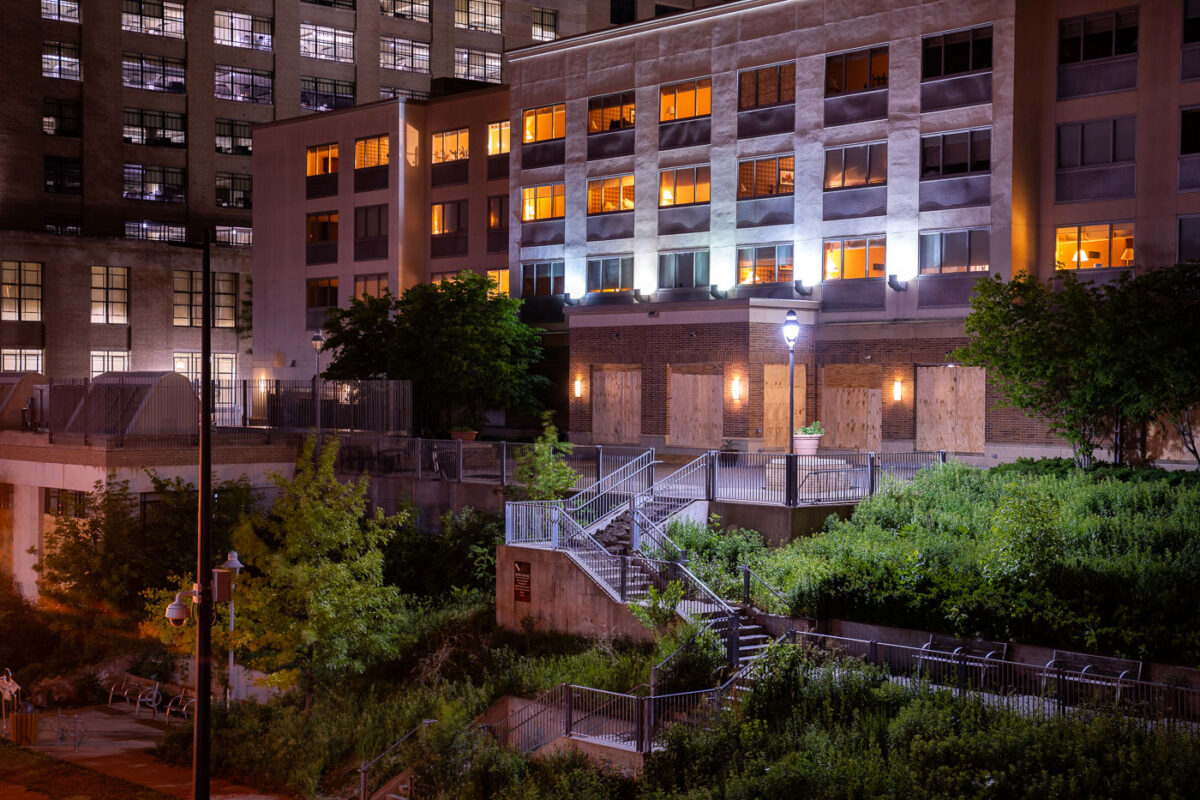
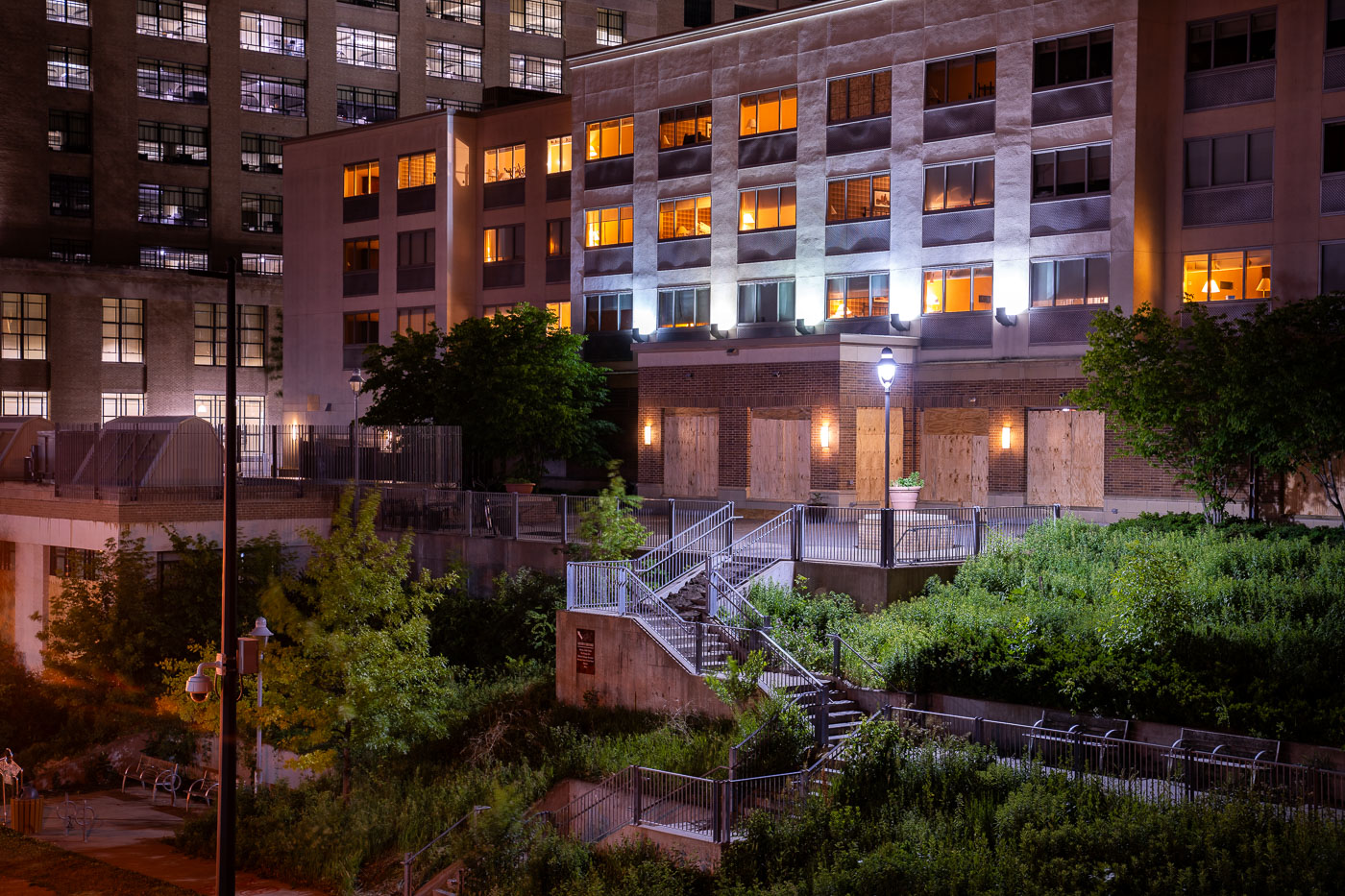
Sheraton Hotel in Minneapolis with boarded ground-floor openings beside the Midtown Greenway at night.
The Sheraton Hotel in Minneapolis is seen at night from the Midtown Greenway, with plywood covering multiple ground-level doors and windows. The boarding was in place in mid-June 2020, after Minneapolis Police cleared and closed the hotel during the unrest that followed the murder of George Floyd. Stairways, fencing, and landscaping along the Greenway are visible in the foreground, placing the hotel directly beside the pedestrian and bicycle corridor.

Sheraton Hotel, Minneapolis, boarded at night from Greenway
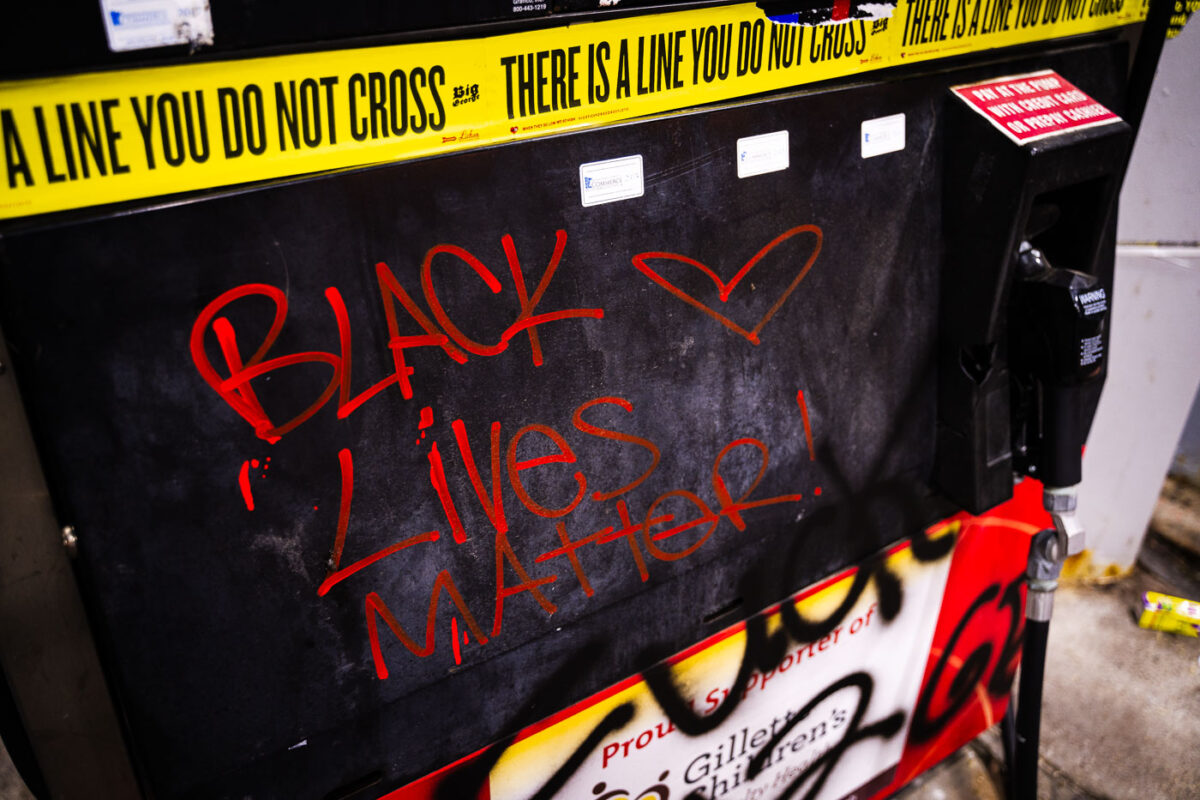
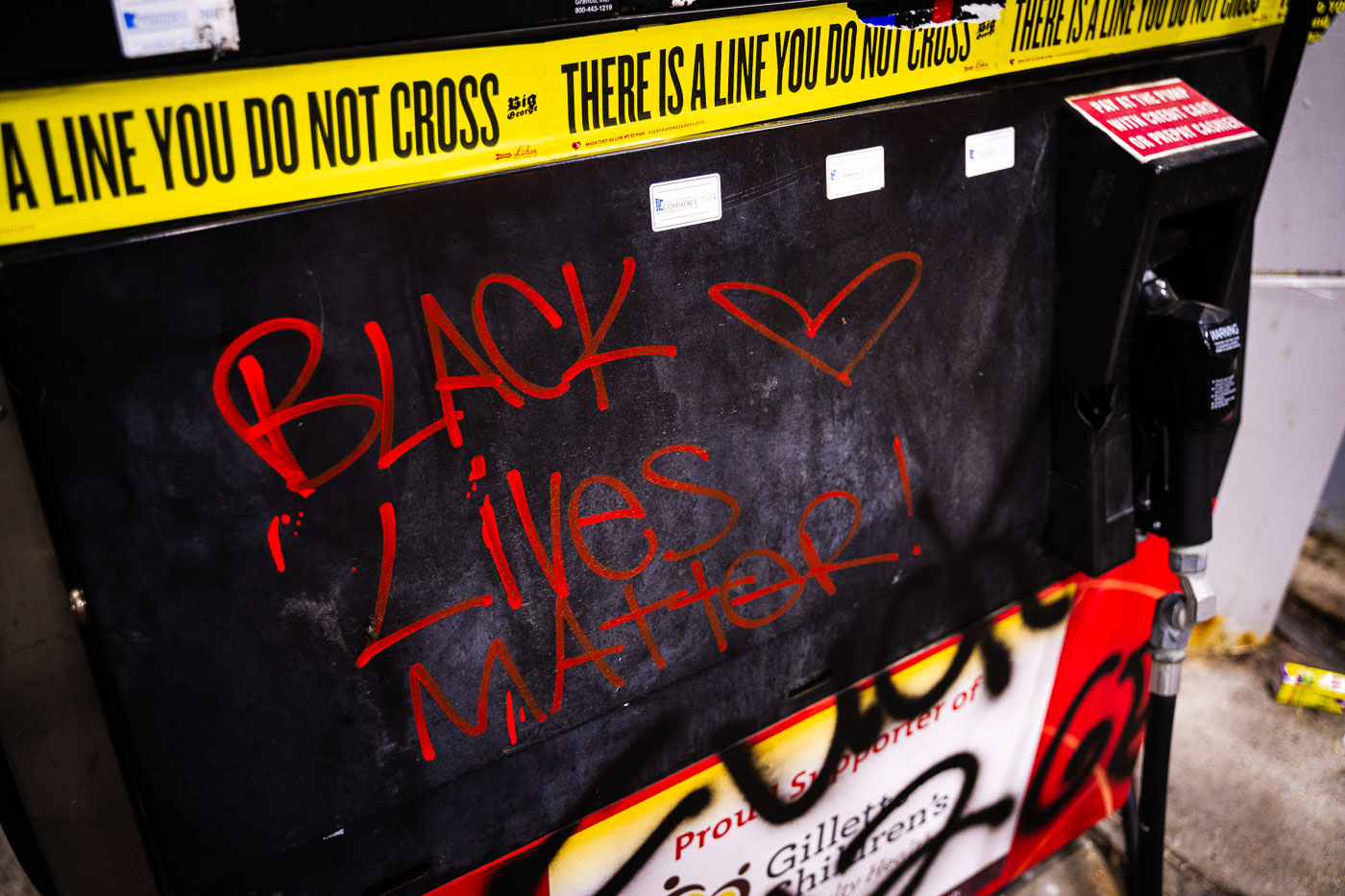
Black Lives Matter graffiti on a Speedway gas pump at George Floyd Square in Minneapolis.
A gas pump at the Speedway station in George Floyd Square, Minneapolis, is marked with red “Black Lives Matter” graffiti. The station stands across from the intersection where George Floyd was killed by Minneapolis police on May 25, 2020.

“Black Lives Matter” on Gas Pump, George Floyd Square, Minneapolis
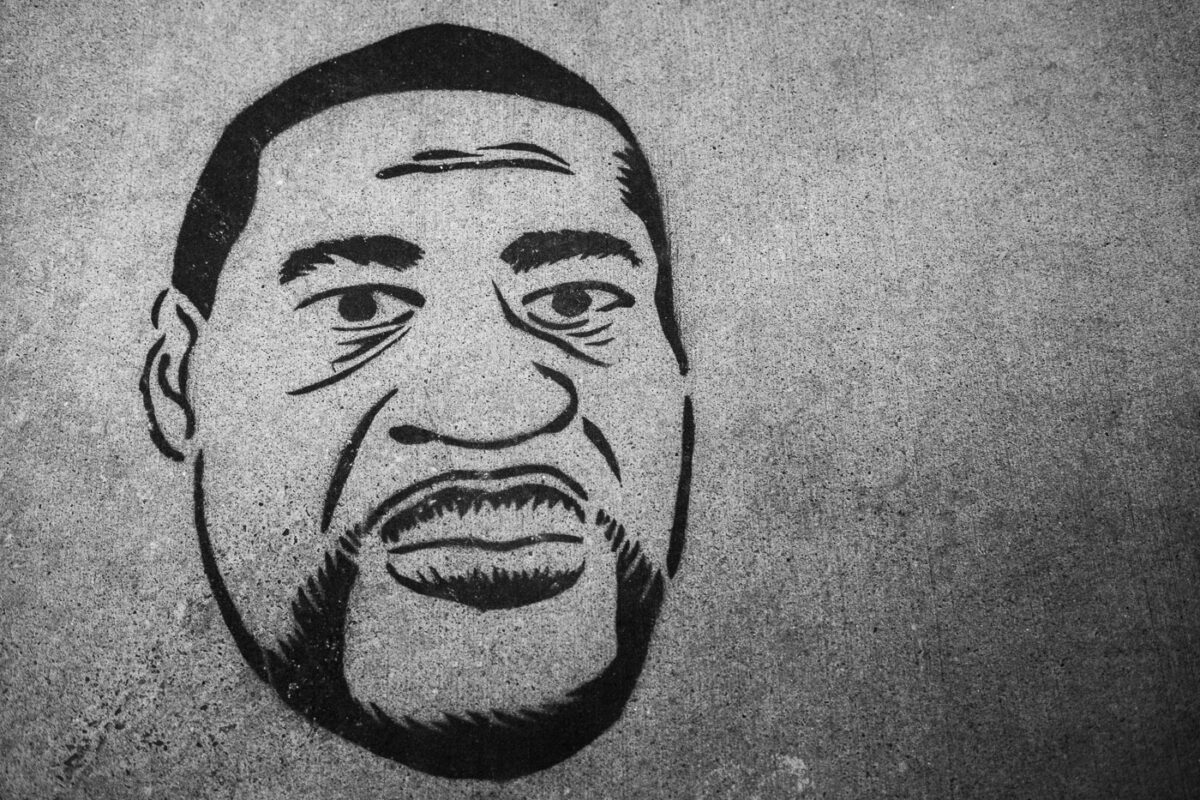
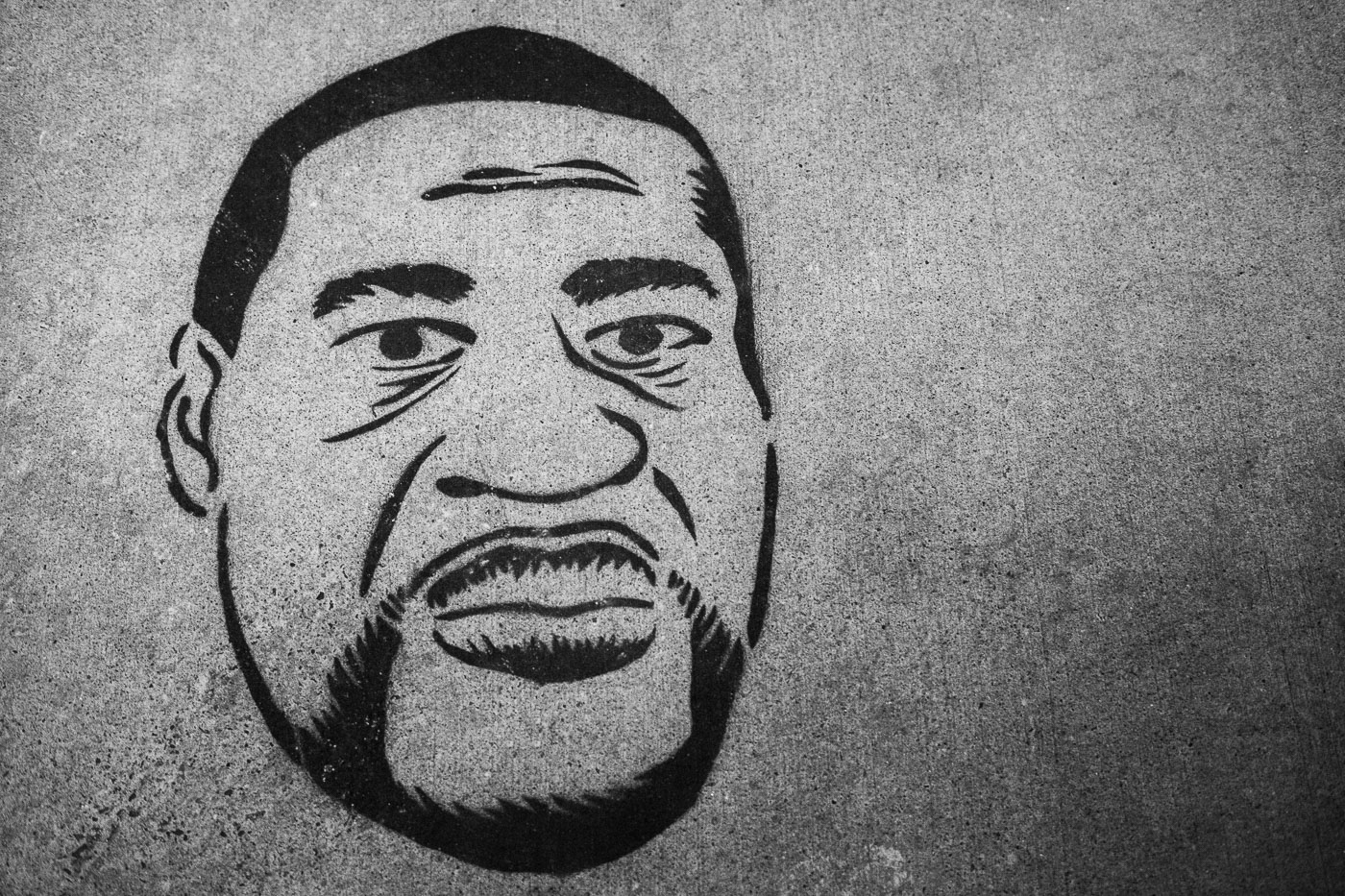
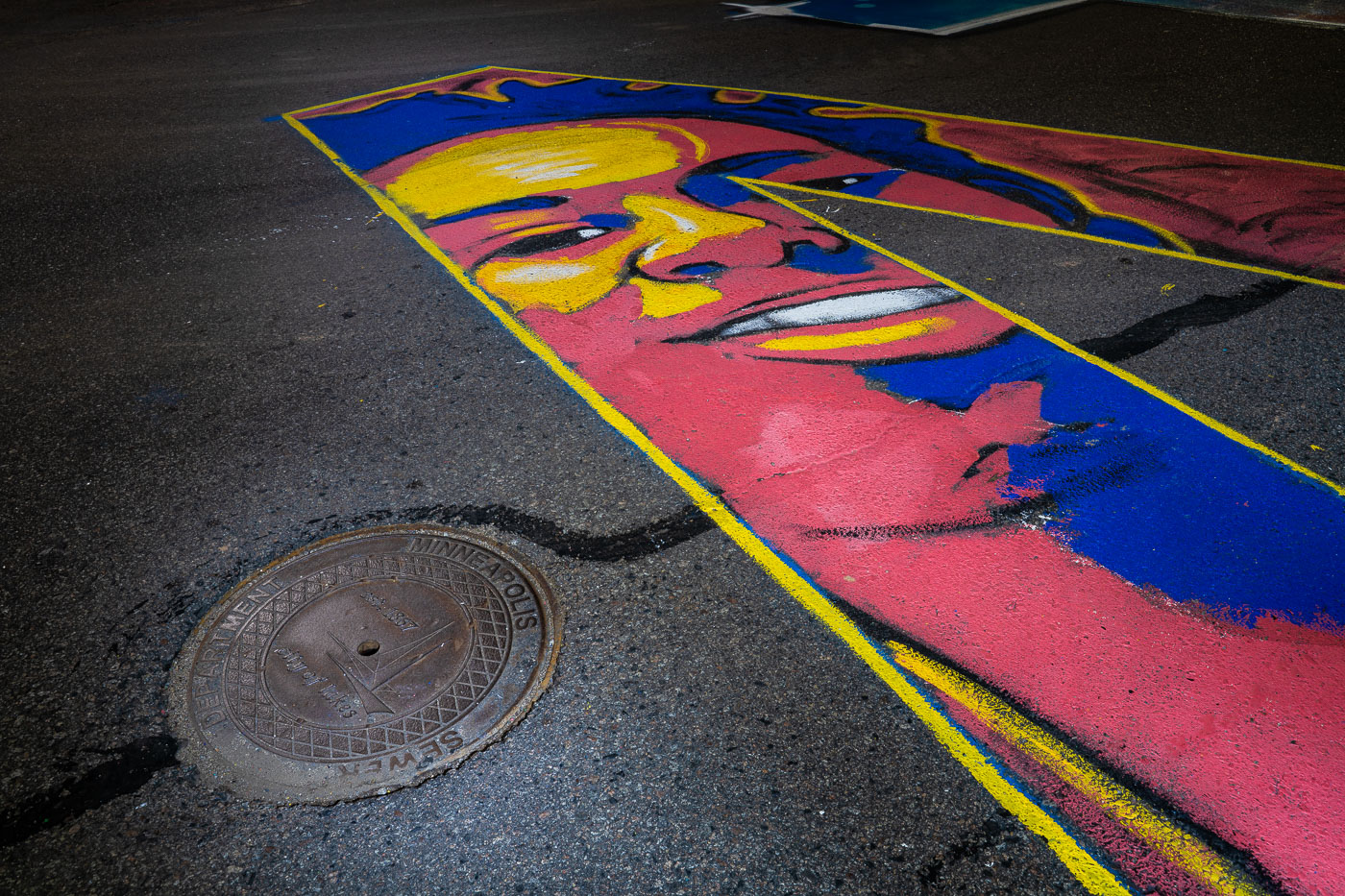
George Floyd stencil portrait on a Chicago Avenue sidewalk in Minneapolis.
A stencil portrait of George Floyd on a sidewalk along Chicago Avenue in Minneapolis is shown in close view. The work appeared in the area after Floyd was killed by Minneapolis police in May 2020, when streets around the corridor filled with memorials, murals, and protest art. Painted directly on the pavement, the portrait reflects how public space was used for remembrance and demands for racial justice during that period.

George Floyd stencil art, Chicago Avenue, Minneapolis
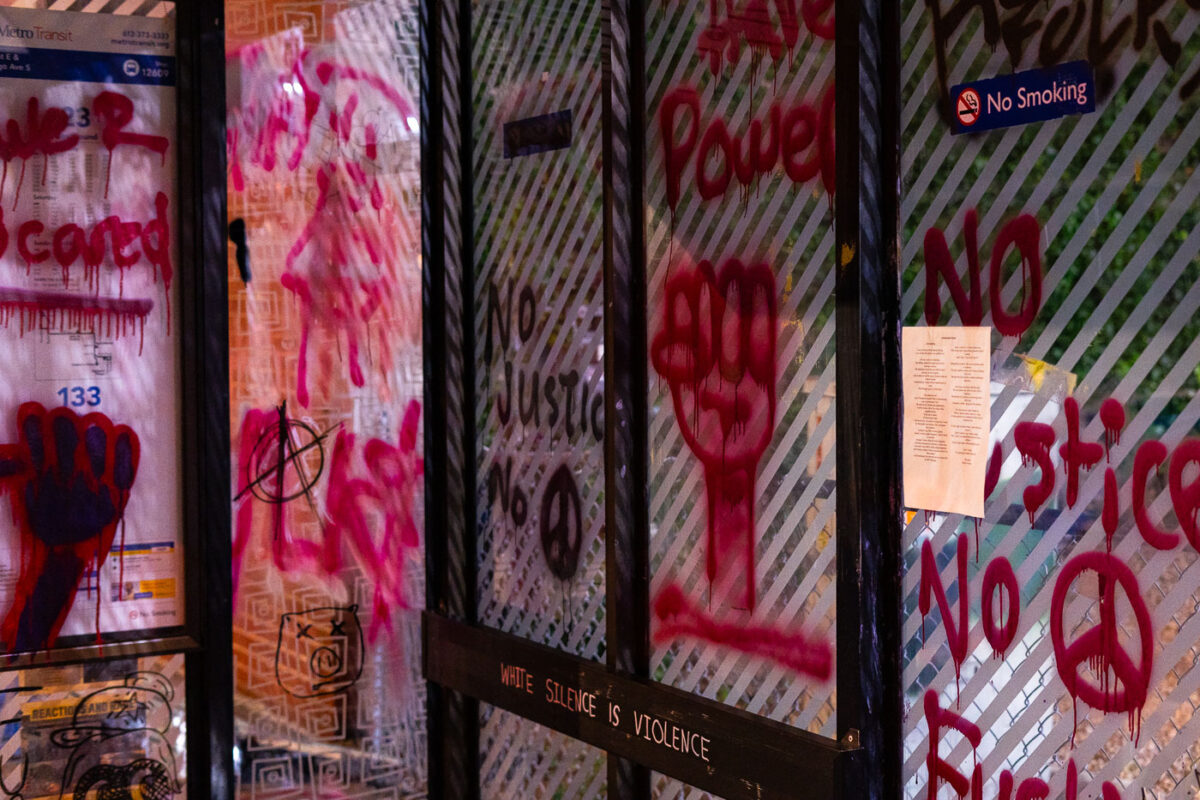
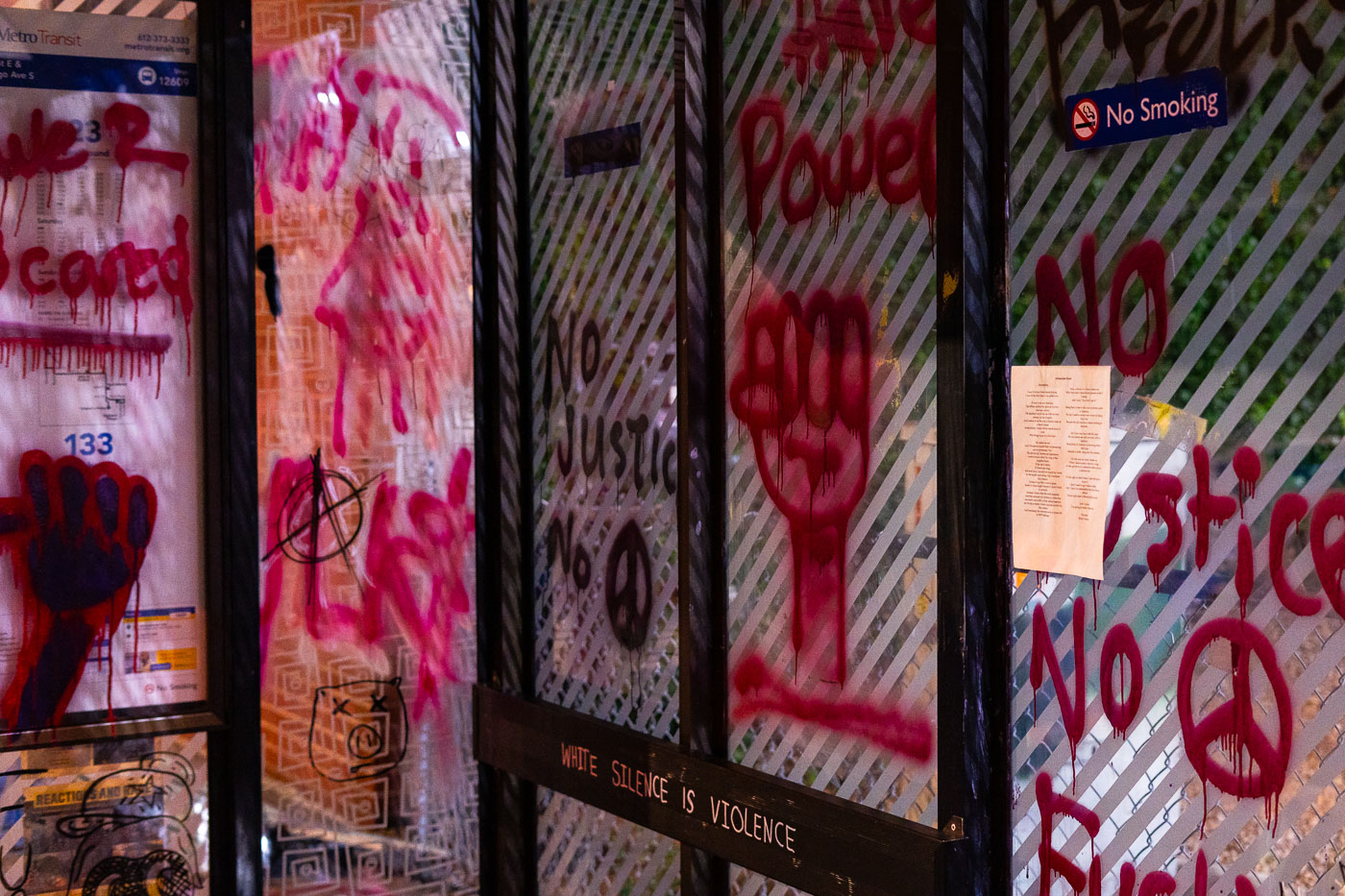
Protest graffiti on a former Metro Transit bus shelter at George Floyd Square in Minneapolis.
A former Metro Transit bus shelter at George Floyd Square in Minneapolis is covered with protest messages and symbols at the intersection of 38th Street and Chicago Avenue. The glass panels bear hand-painted phrases including “Power,” “No Justice No Peace,” and “White Silence Is Violence,” along with raised-fist imagery and other markings. After the murder of George Floyd in May 2020, the intersection became a community-maintained memorial and protest site, and transit structures there were repurposed as surfaces for mourning and political expression.

George Floyd Square Bus Shelter, Minneapolis: Protest Slogans
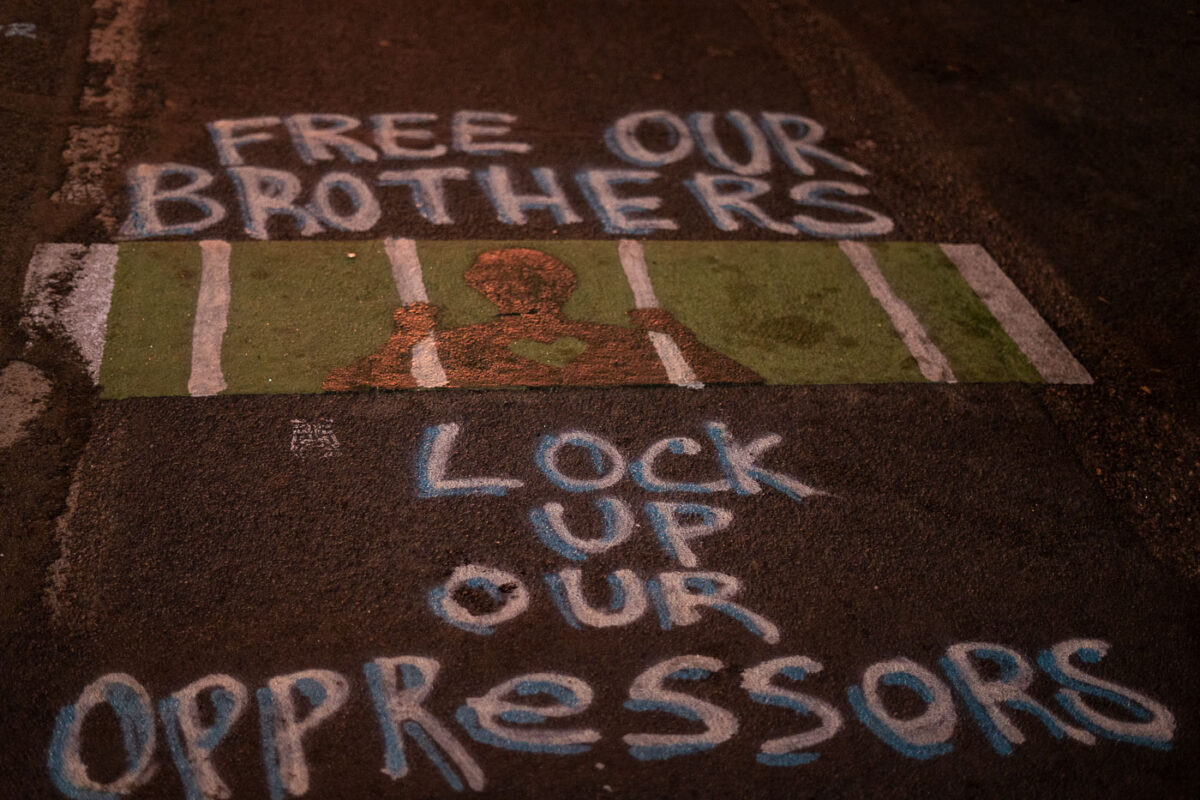
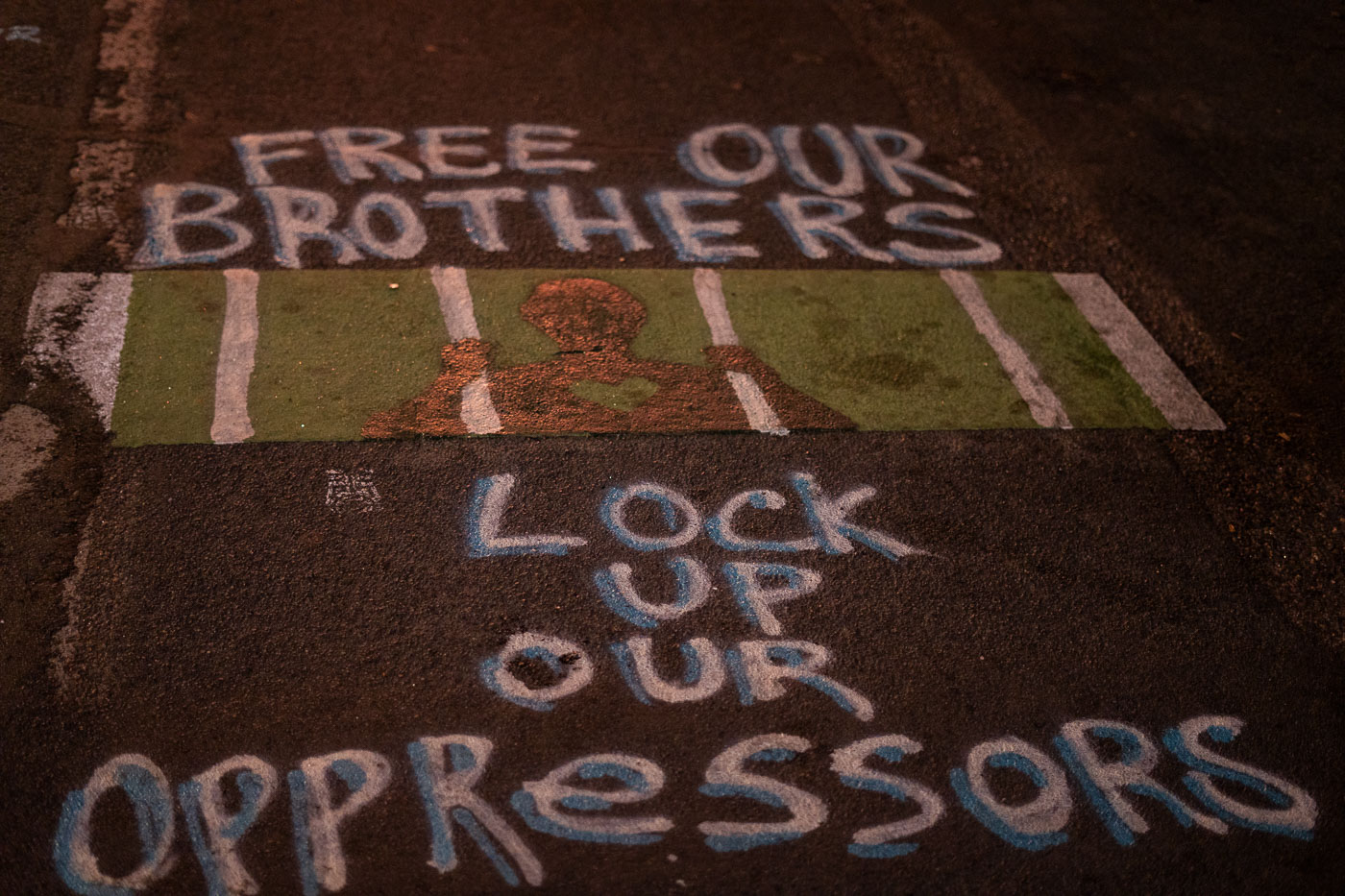
Chalk art on Chicago Avenue at George Floyd Square in Minneapolis reads “Free Our Brothers” and “Lock Up Our Oppressors.”
Chalk art on Chicago Avenue at George Floyd Square in Minneapolis reads “Free Our Brothers” and “Lock Up Our Oppressors.” Painted across the street with the image of a figure behind bars, the message was part of the protest memorials and street art that appeared at the site in June 2020 after the murder of George Floyd. George Floyd Square became a focal point for mourning, calls for police accountability, and community-led occupation of the intersection.

George Floyd Square Chalk Art: Free Our Brothers, Lock Up Our Oppressors
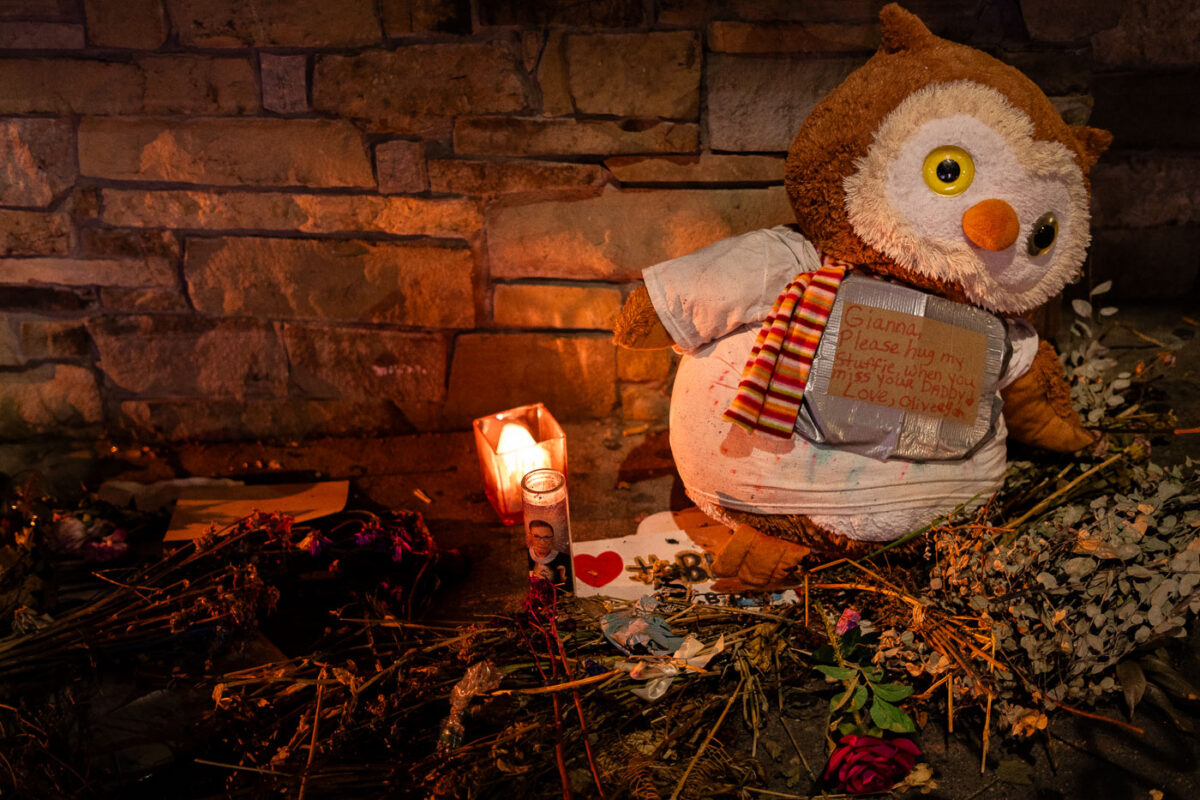
Stuffed owl with note to Gianna Floyd at George Floyd Square memorial in Minneapolis.
A stuffed owl with a handwritten note to Gianna Floyd sits among candles, flowers, and other memorial items at George Floyd Square in Minneapolis. The memorial is located at 38th Street and Chicago Avenue, where public tributes accumulated after George Floyd was killed by Minneapolis police on May 25, 2020. The note asks Gianna, Floyd’s daughter, to hug the toy when she misses her father, placing a personal message of grief within the larger memorial at the site.

Stuffed Owl with Note for Gianna, George Floyd Square
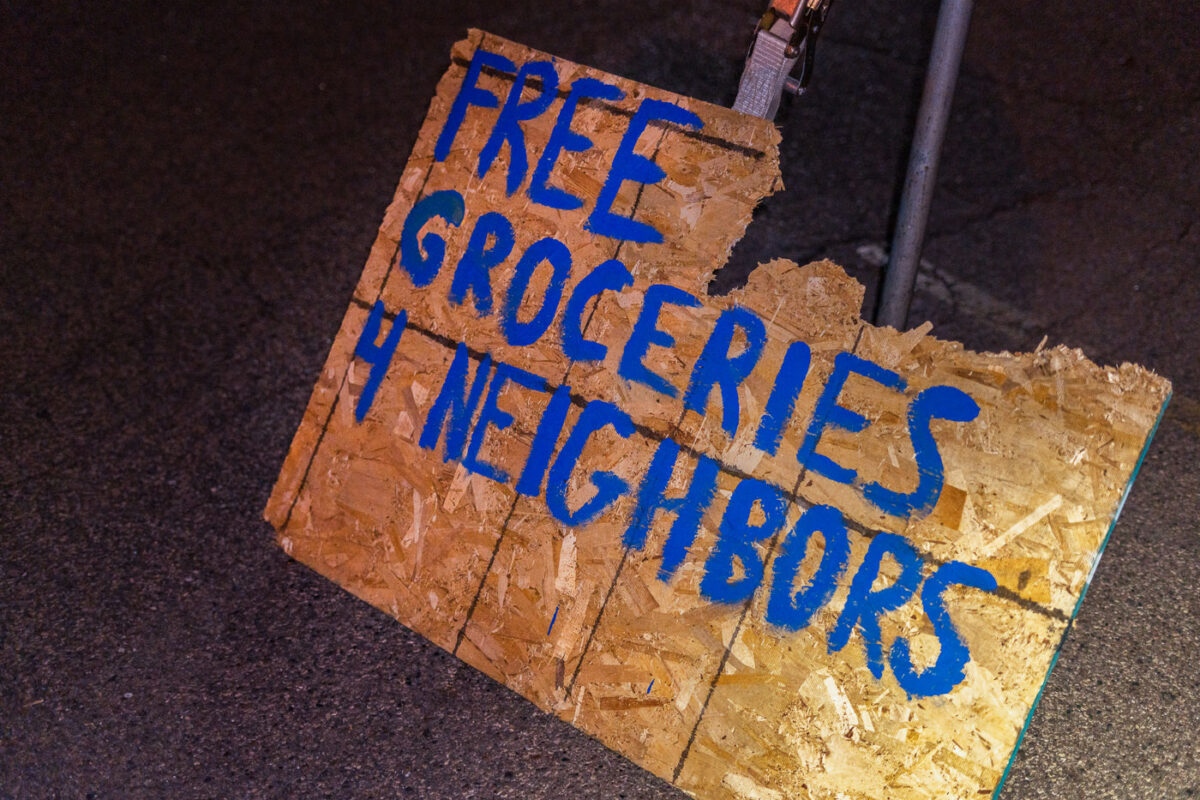
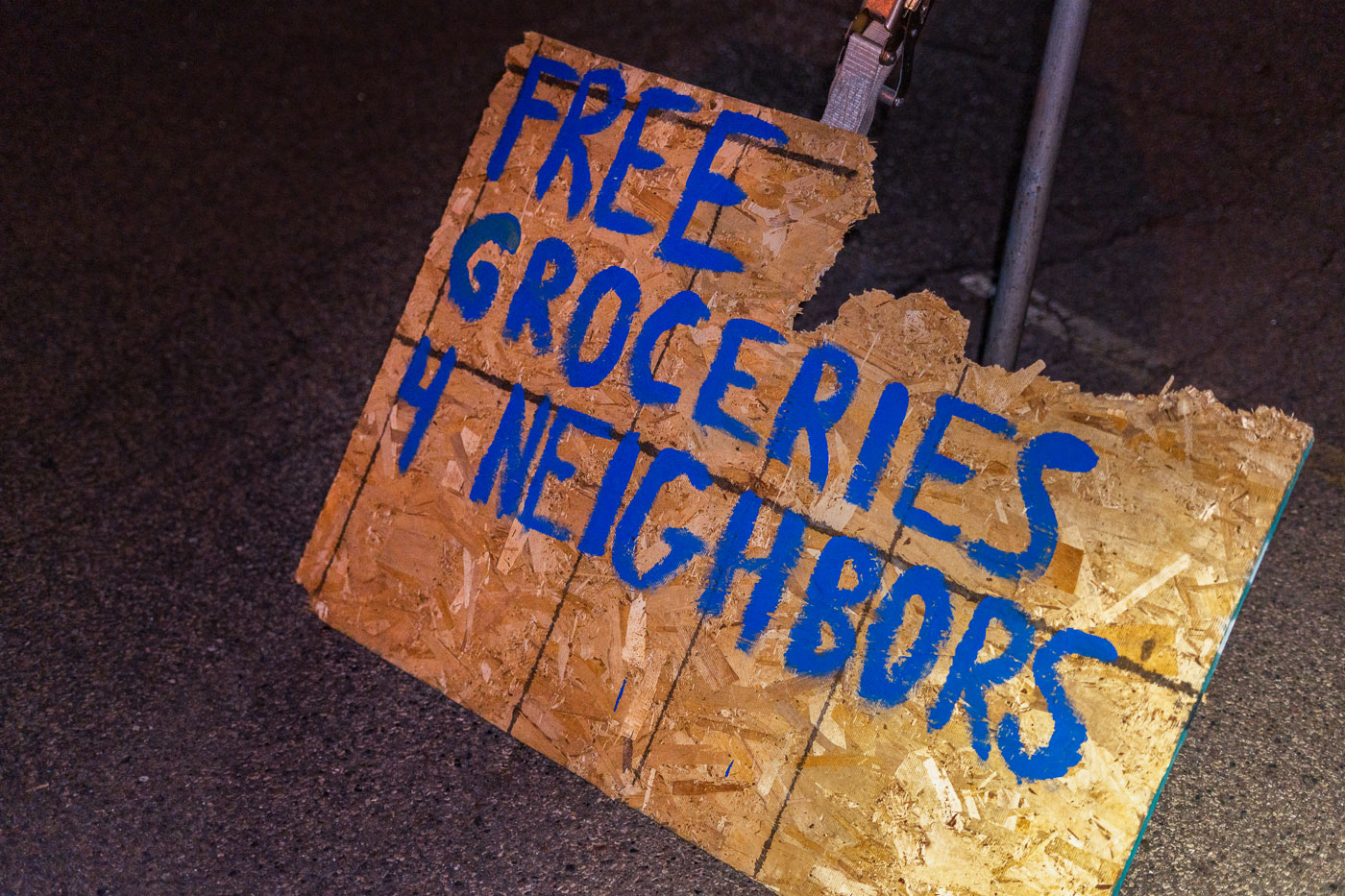
Handmade “Free Groceries 4 Neighbors” sign on a Minneapolis street during mutual-aid efforts in June 2020.
A handmade “FREE GROCERIES 4 NEIGHBORS” sign rests on a Minneapolis street in June 2020. Made from a rough sheet of wood and painted in blue letters, the sign points to neighborhood mutual-aid efforts that distributed food and other basic supplies after the police killing of George Floyd and the disruption of nearby businesses and services. Informal signs like this appeared across the city as residents organized local relief for their communities.

Minneapolis Free Groceries for Neighbors Sign
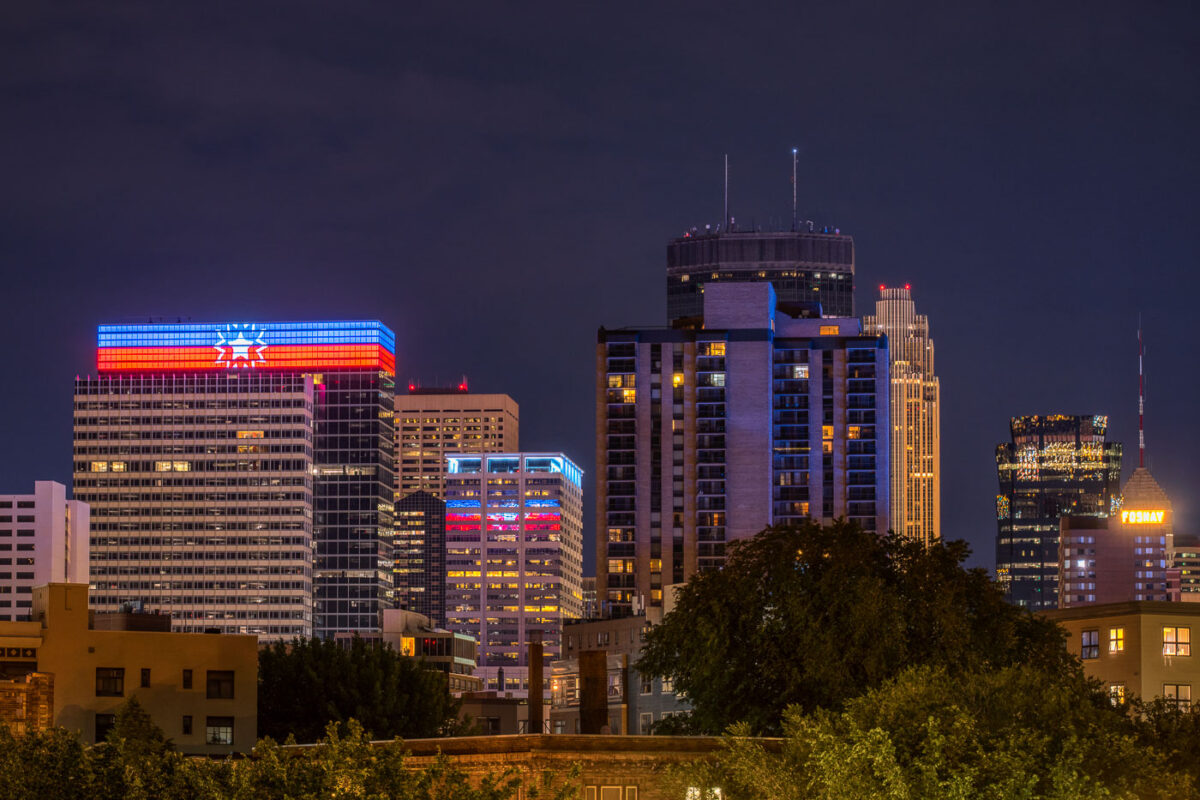
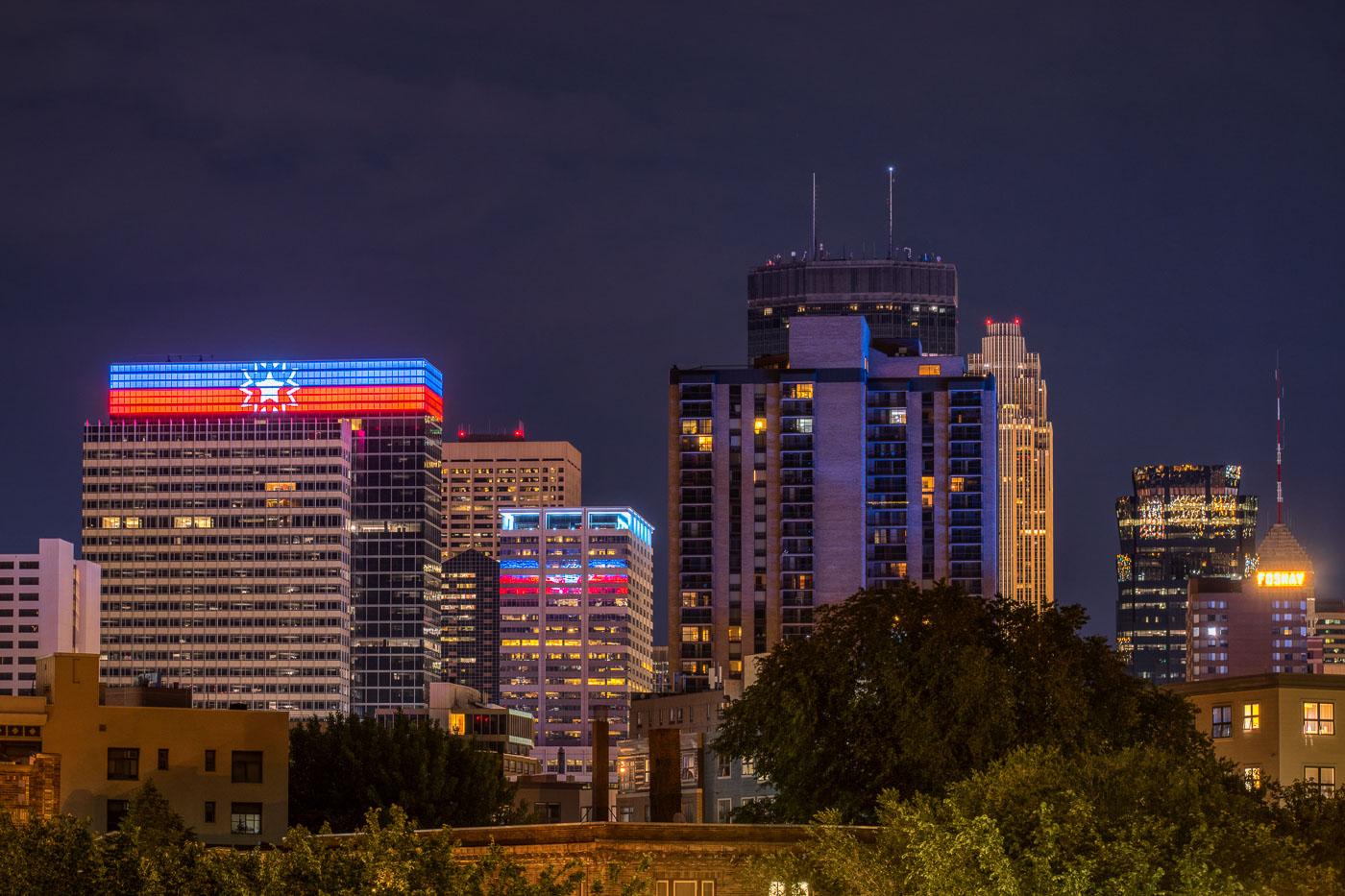
Target Headquarters in downtown Minneapolis displaying the Juneteenth flag on its rooftop LED facade at night.
Target Corporate Headquarters in downtown Minneapolis is illuminated with the Juneteenth flag on its rooftop LED display. Photographed on June 20, 2020, the installation marked Juneteenth, the annual commemoration of June 19, 1865, when enslaved people in Texas were informed of their freedom. The building’s programmable facade, a prominent feature of the city center, was used here for a public observance of the holiday.

Juneteenth Flag on Target HQ LEDs, Downtown Minneapolis
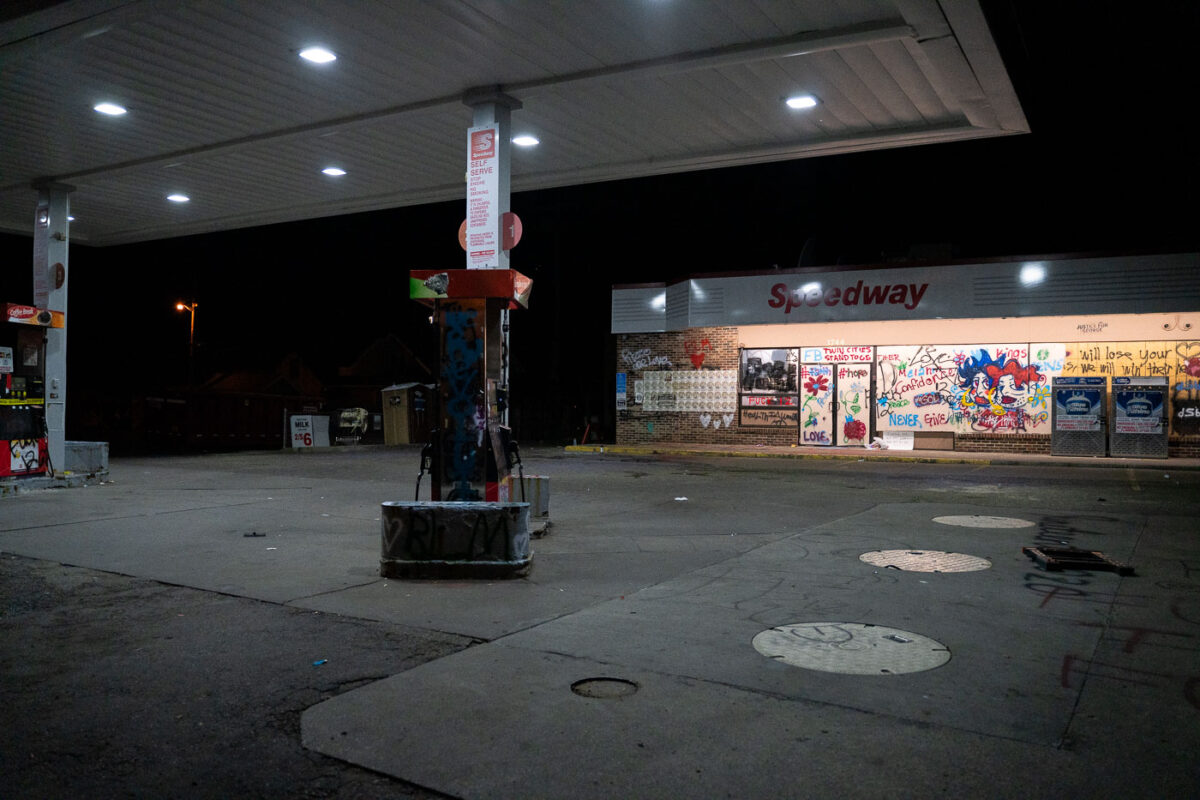
Graffiti-covered Speedway gas station at 38th Street and Chicago Avenue in Minneapolis, June 2020.
The Speedway gas station at East 38th Street and Chicago Avenue in Minneapolis is shown covered with graffiti and boarded storefront panels in June 2020. The station stood within George Floyd Square, the intersection where George Floyd was killed by Minneapolis police on May 25, 2020. In the weeks after his murder, the property became part of a memorial and protest site, with messages painted across the pumps, walls, and doors.

Speedway Gas Station with Graffiti, 38th & Chicago, Minneapolis
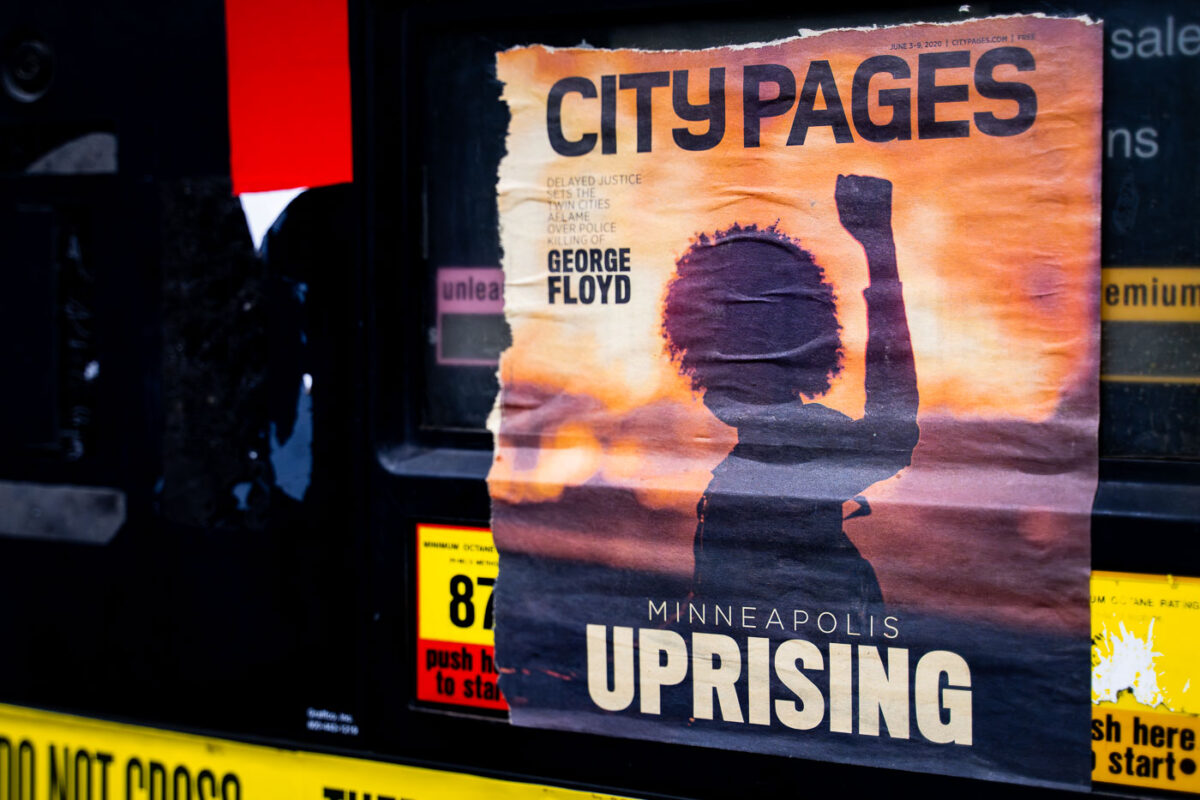
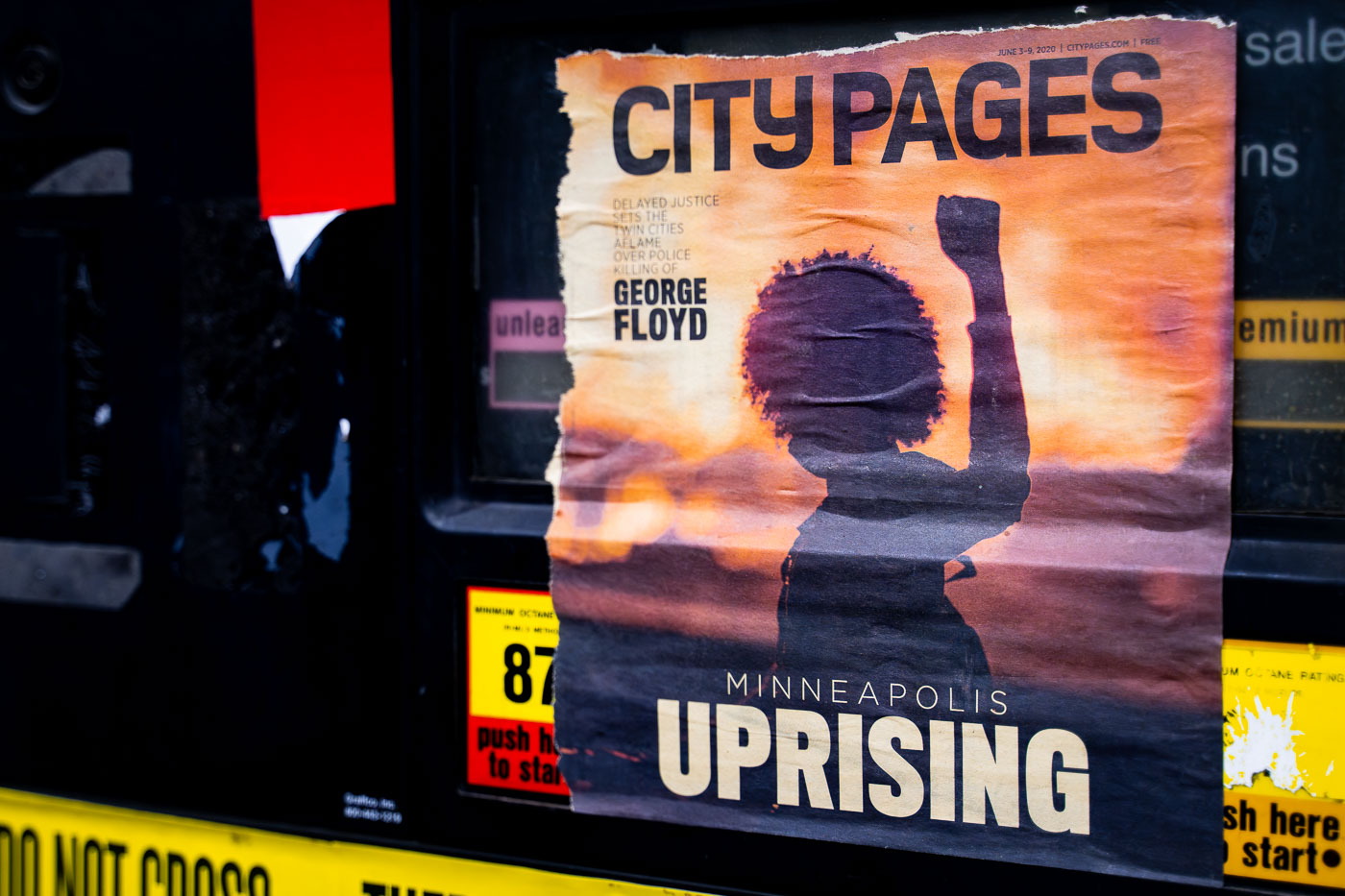
City Pages poster on a Speedway gas pump in George Floyd Square, Minneapolis, June 2020.
A City Pages newspaper poster is taped to a gas pump at the Speedway station in George Floyd Square, South Minneapolis. The June 3-9, 2020 cover features the words “George Floyd” and a raised fist above the headline at the bottom, linking the site to the protests and memorial activity that followed Floyd’s killing. The gas station at East 38th Street and Chicago Avenue became part of the occupied public space and neighborhood memorial during June 2020.

City Pages Uprising Poster at George Floyd Memorial

Shattered glass and shoes in a storefront at Hennepin and Lagoon in Uptown Minneapolis, June 21, 2020.
A shattered storefront display filled with women's shoes is shown at Hennepin Avenue and Lagoon Avenue in Uptown Minneapolis on June 21, 2020. Broken glass covers the display platform and nearby floor inside the retail shop. The damage was photographed following a mass shooting that left 14 injured.

Shattered Glass in Retail Display, Hennepin & Lagoon
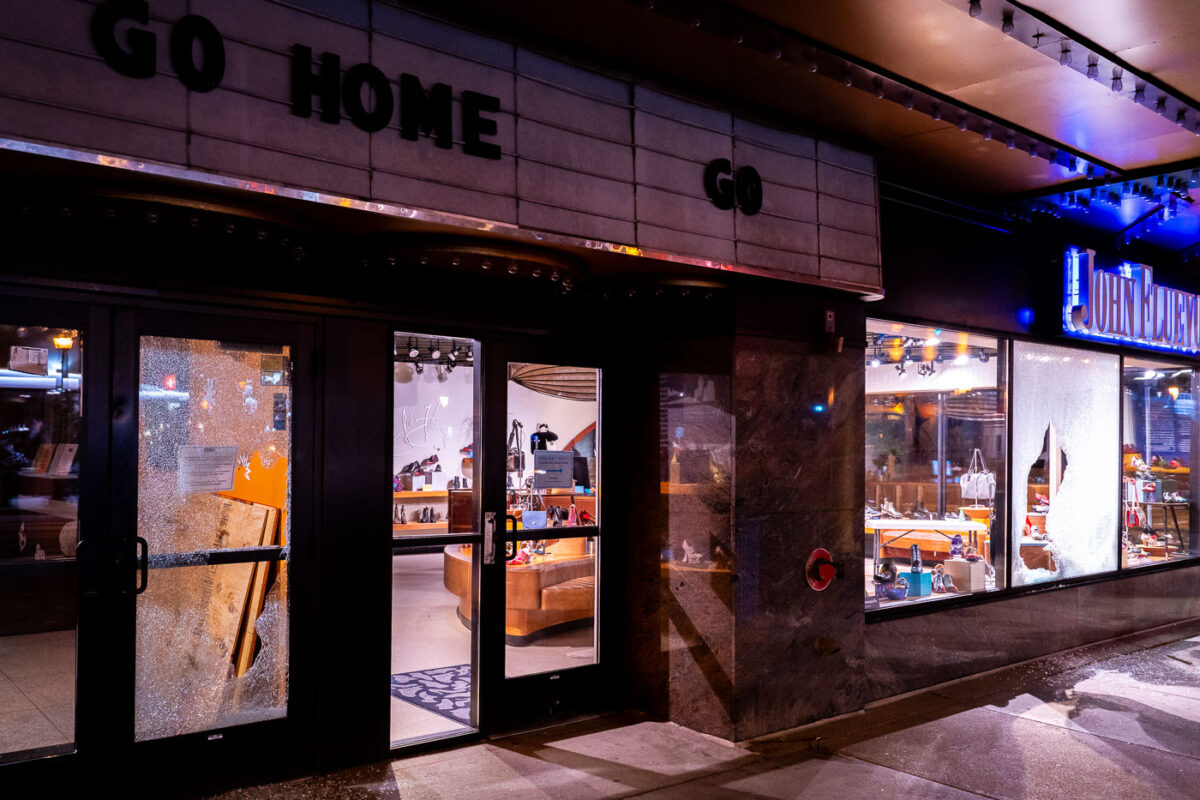
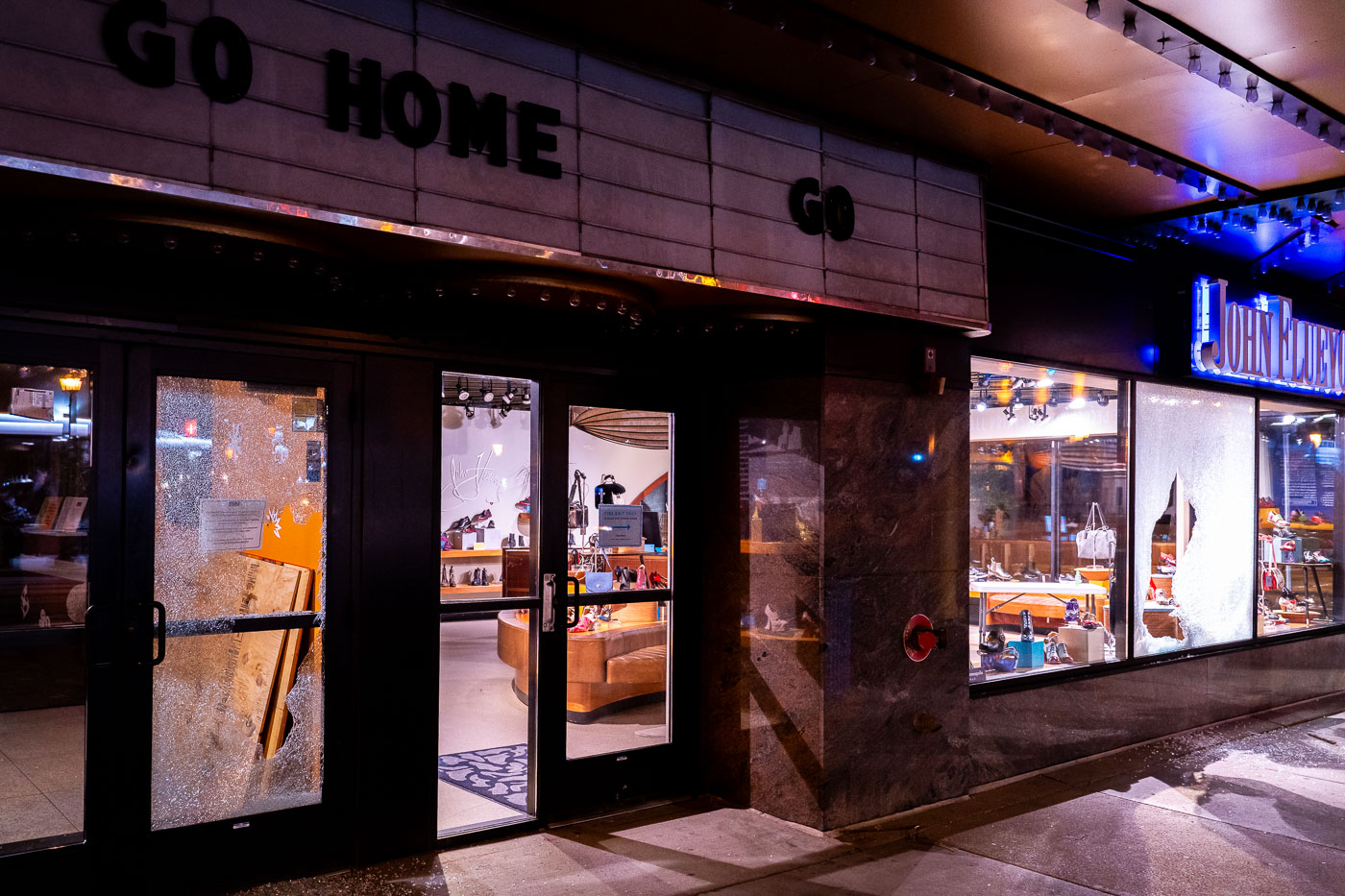
Broken windows at the Uptown Theater in Uptown Minneapolis on June 21, 2020.
The Uptown Theater at Hennepin Avenue and Lagoon Avenue in Uptown Minneapolis with shattered glass windows. The windows were broken during a mass shooting that wounded 11.

Broken windows at the Uptown Theater

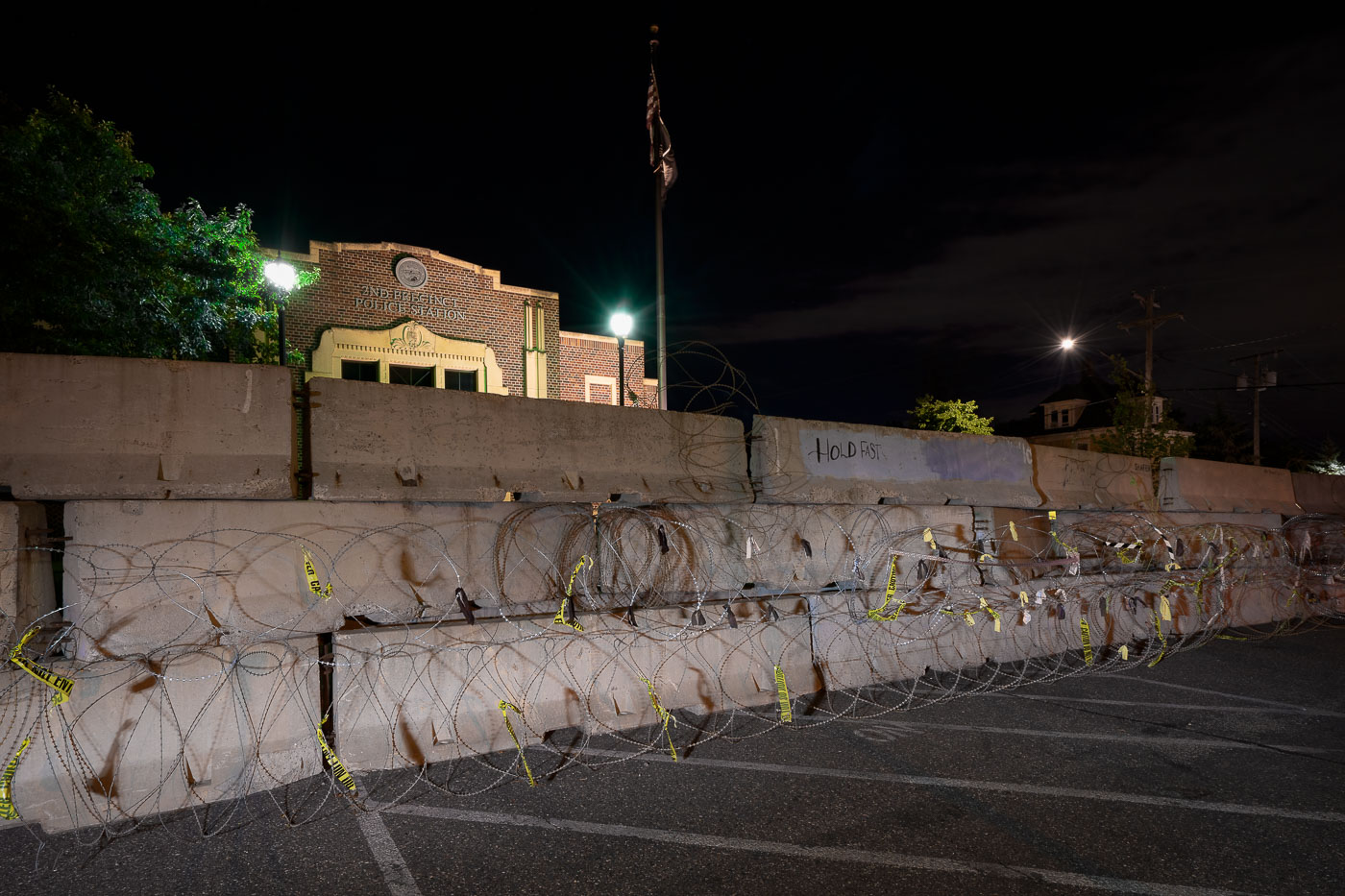
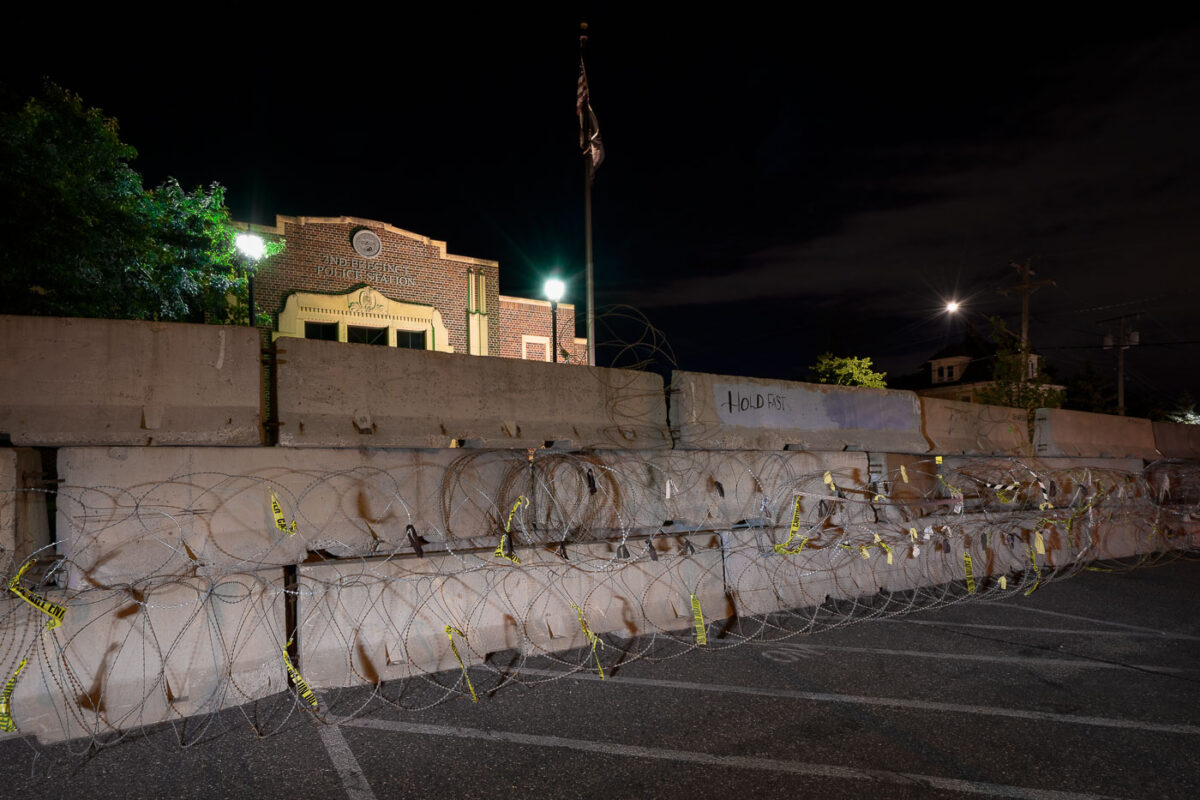
Minneapolis Police 2nd Precinct in Northeast Minneapolis behind concrete barricades and razor wire, June 2020.
The Minneapolis Police Department Second Precinct station in Northeast Minneapolis is shown behind stacked concrete barricades and coils of razor wire on June 23, 2020. The security perimeter was erected after protests and unrest following the murder of George Floyd in May 2020. Graffiti reading “Hold Fast” is visible on one of the barriers in front of the station.

Minneapolis Police 2nd Precinct with Razor Wire & Barricades
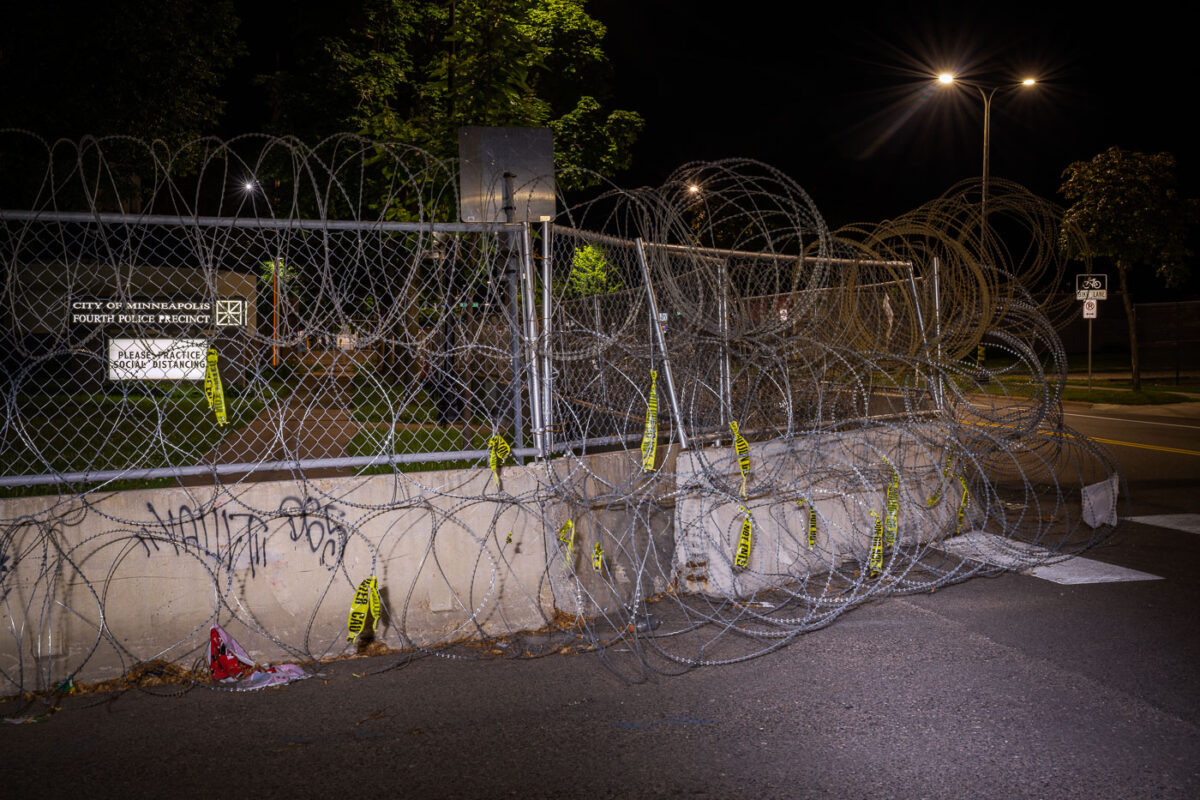
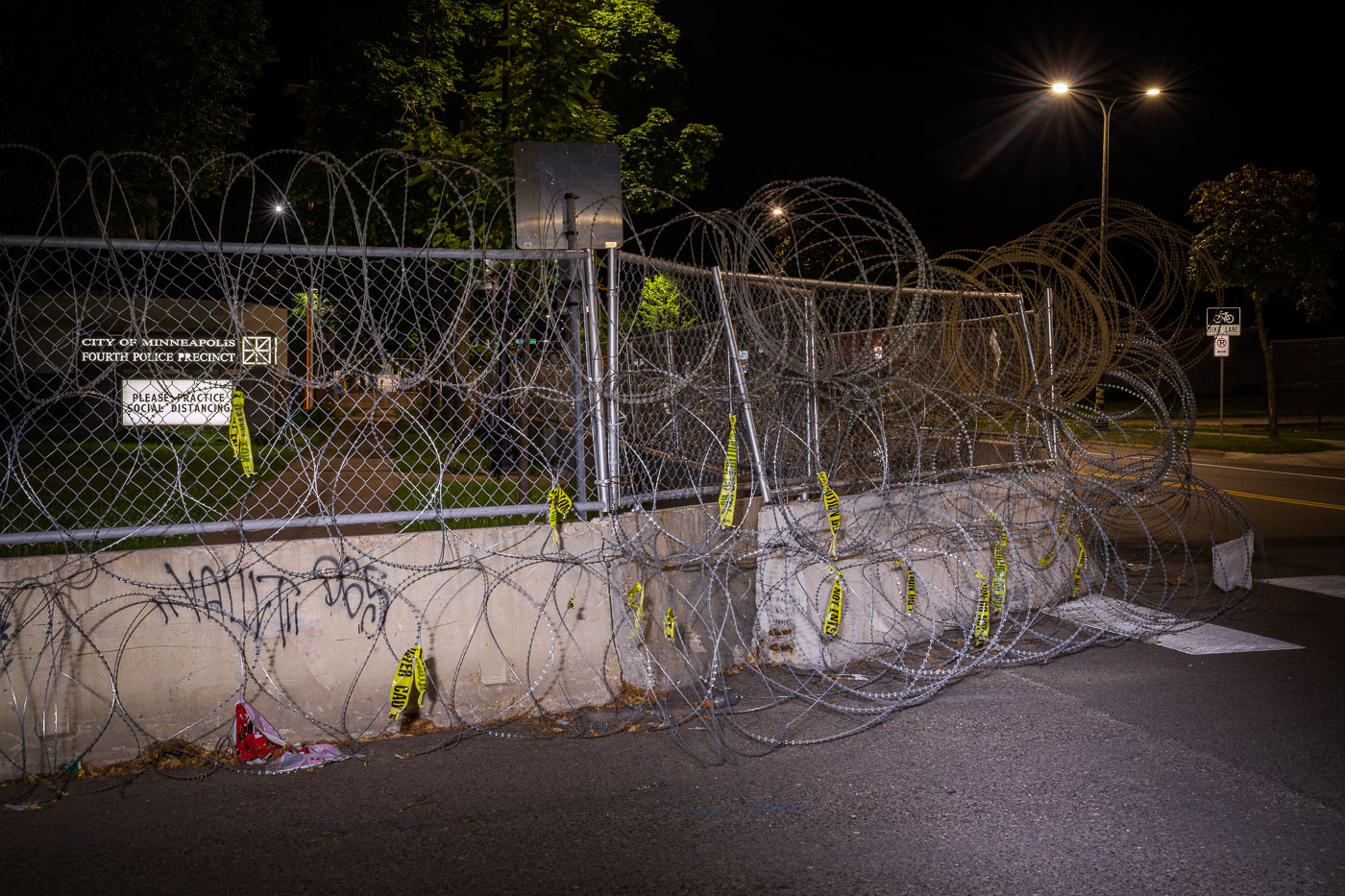
Razor wire and concrete barricades outside Minneapolis Police Fourth Precinct in North Minneapolis at night.
The Minneapolis Police Department’s Fourth Precinct in North Minneapolis is shown behind chain-link fencing, concrete barricades, and extensive coils of razor wire on June 23, 2020. The added security surrounded the police station in the weeks after the murder of George Floyd and the protests that followed across Minneapolis. A sign on the fence reading “PLEASE PRACTICE SOCIAL DISTANCING” places the fortifications within the concurrent COVID-19 pandemic.

Minneapolis Police 4th Precinct Razor Wire & Barricades
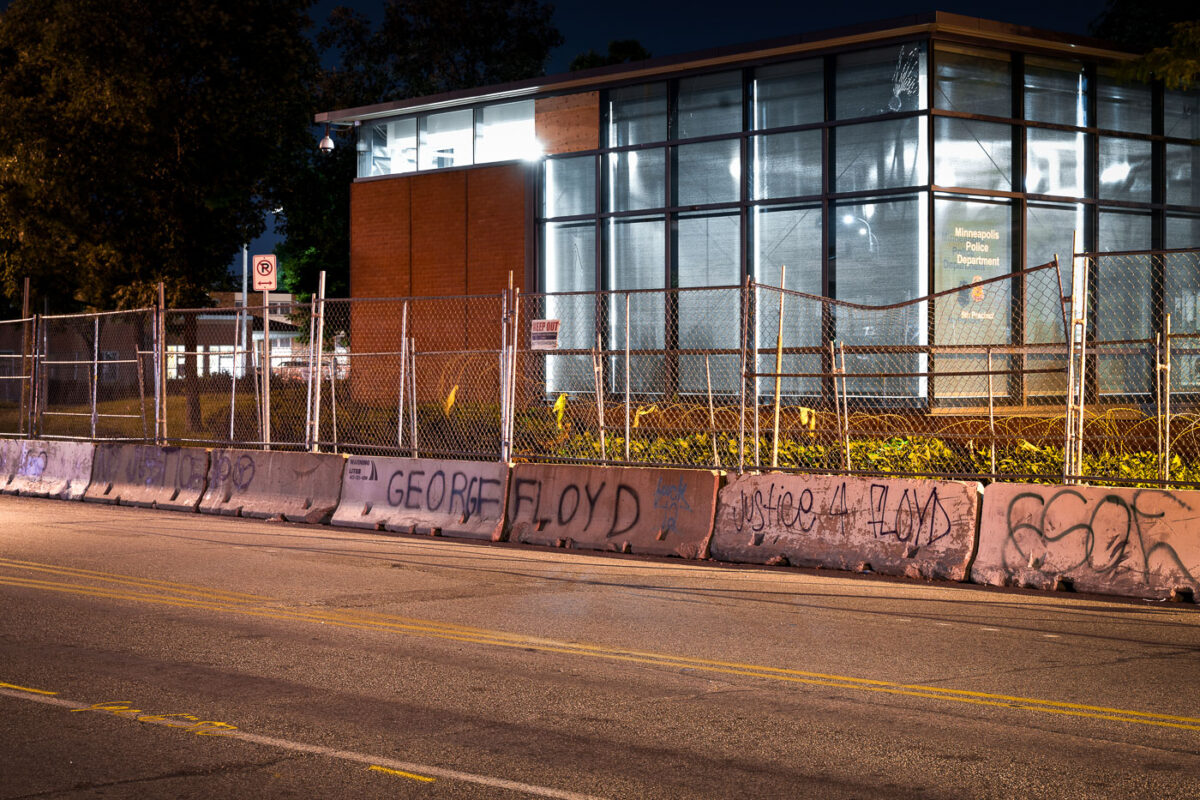
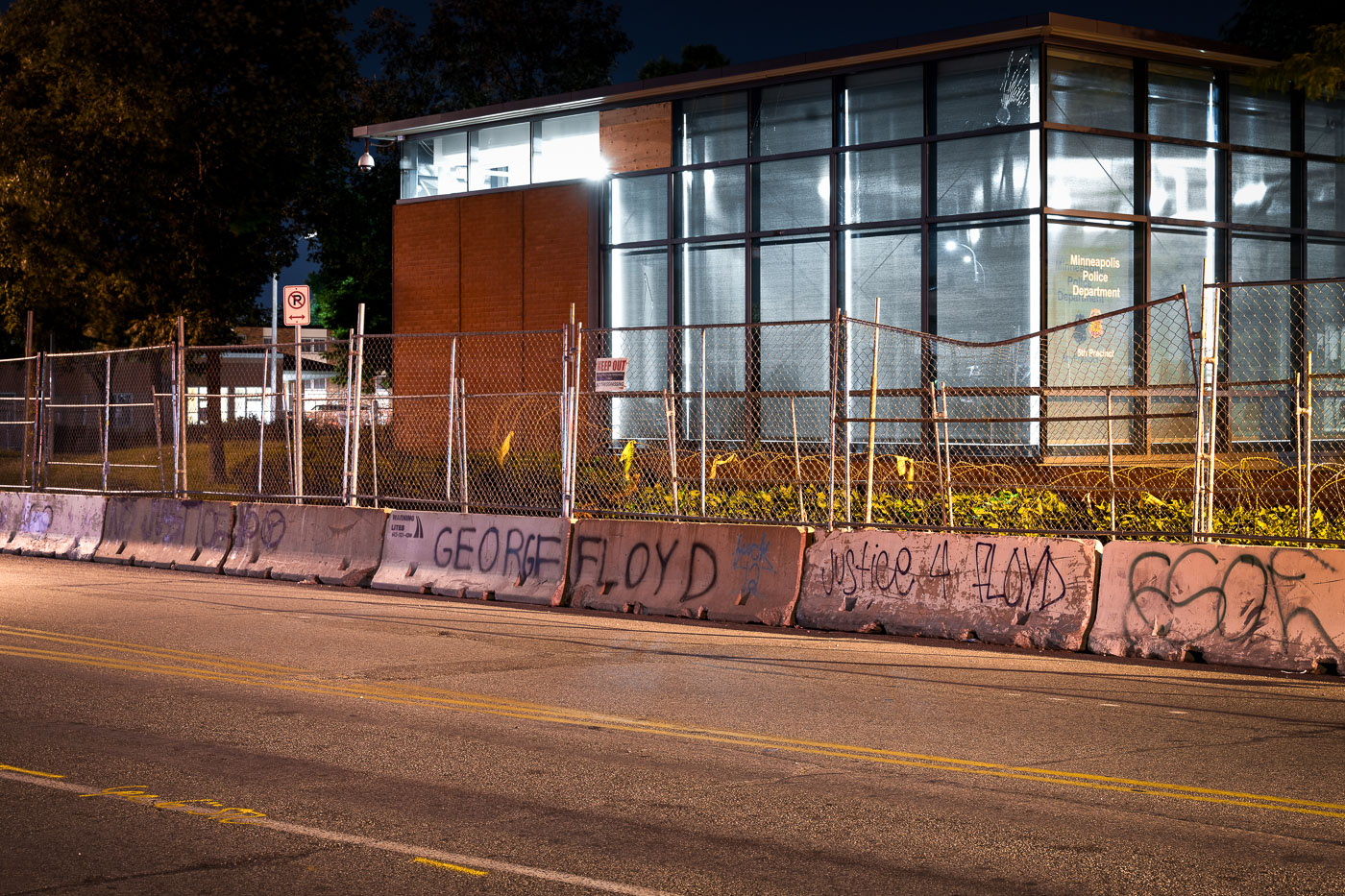
Minneapolis Police 5th Precinct behind barricades and razor wire in south Minneapolis, June 2020.
The Minneapolis Police Department’s 5th Precinct in south Minneapolis is shown behind concrete barricades, chain-link fencing, and razor wire in June 2020. Graffiti on the barriers includes “GEORGE FLOYD” and “Justice 4 Floyd,” linking the fortifications to the unrest that followed Floyd’s murder by Minneapolis police. The temporary security perimeter turned the station and the street in front of it into a heavily controlled area during that period.

Minneapolis Police 5th Precinct, George Floyd Barricades
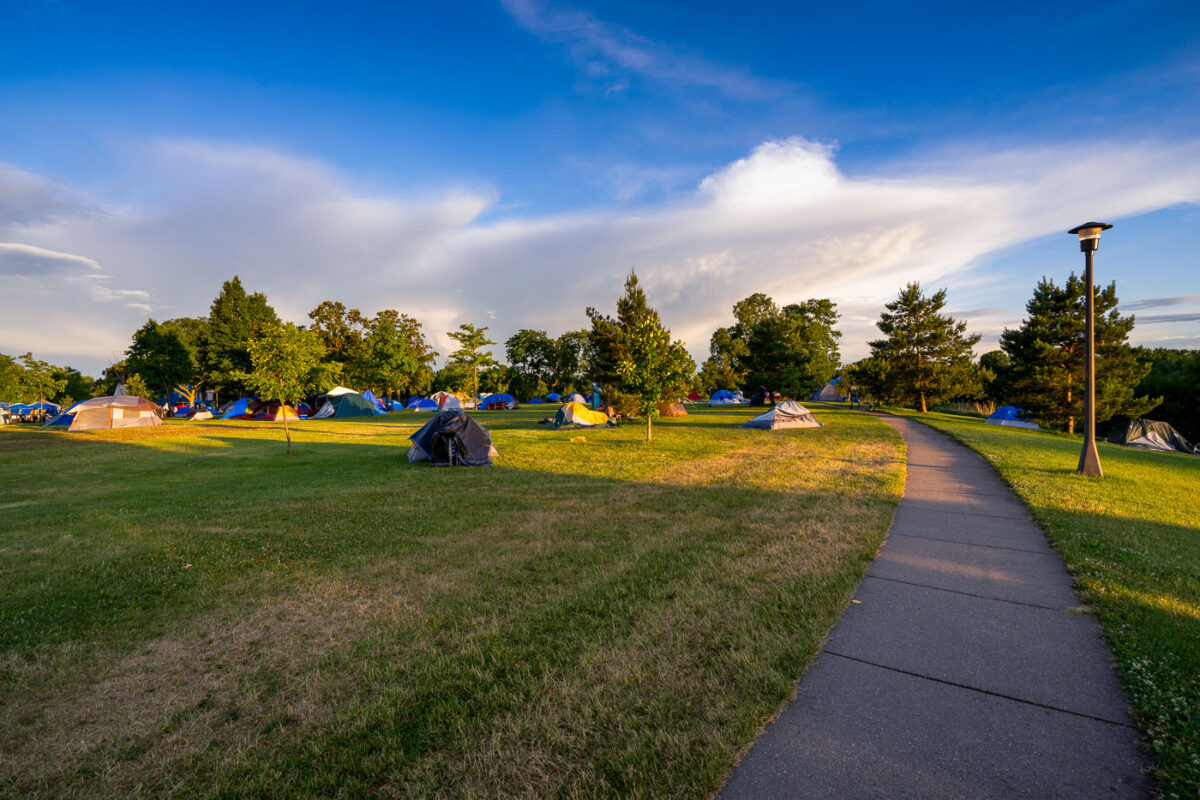
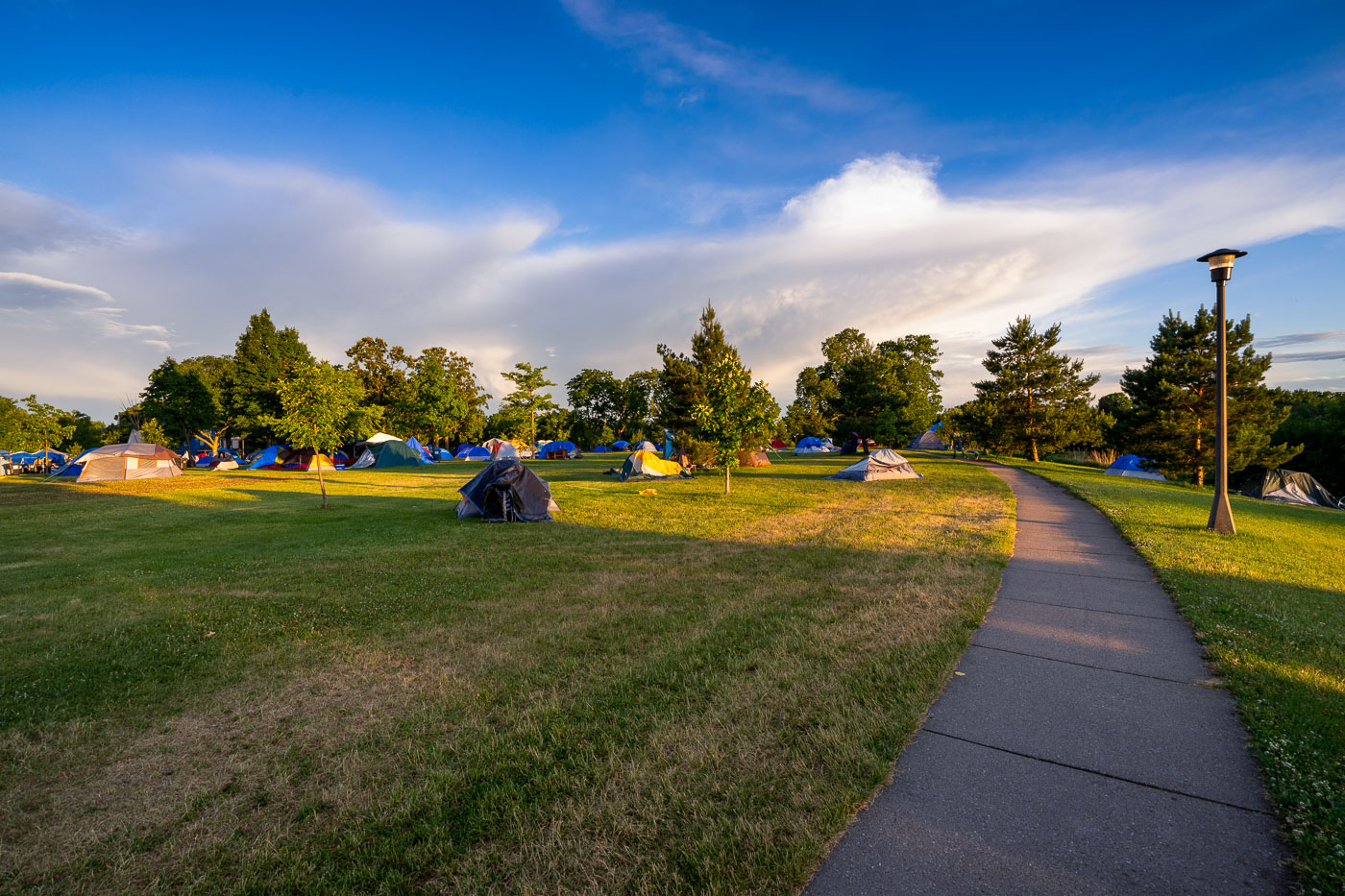
Tent encampment at Powderhorn Park in Minneapolis after residents were displaced from the Sheraton shelter.
A large tent encampment covers part of Powderhorn Park in Minneapolis in June 2020. The camp formed after many unhoused residents were displaced from “The Sanctuary” at the Sheraton Minneapolis Midtown Hotel and moved to the park.

Powderhorn Park Eviction Encampment, Minneapolis
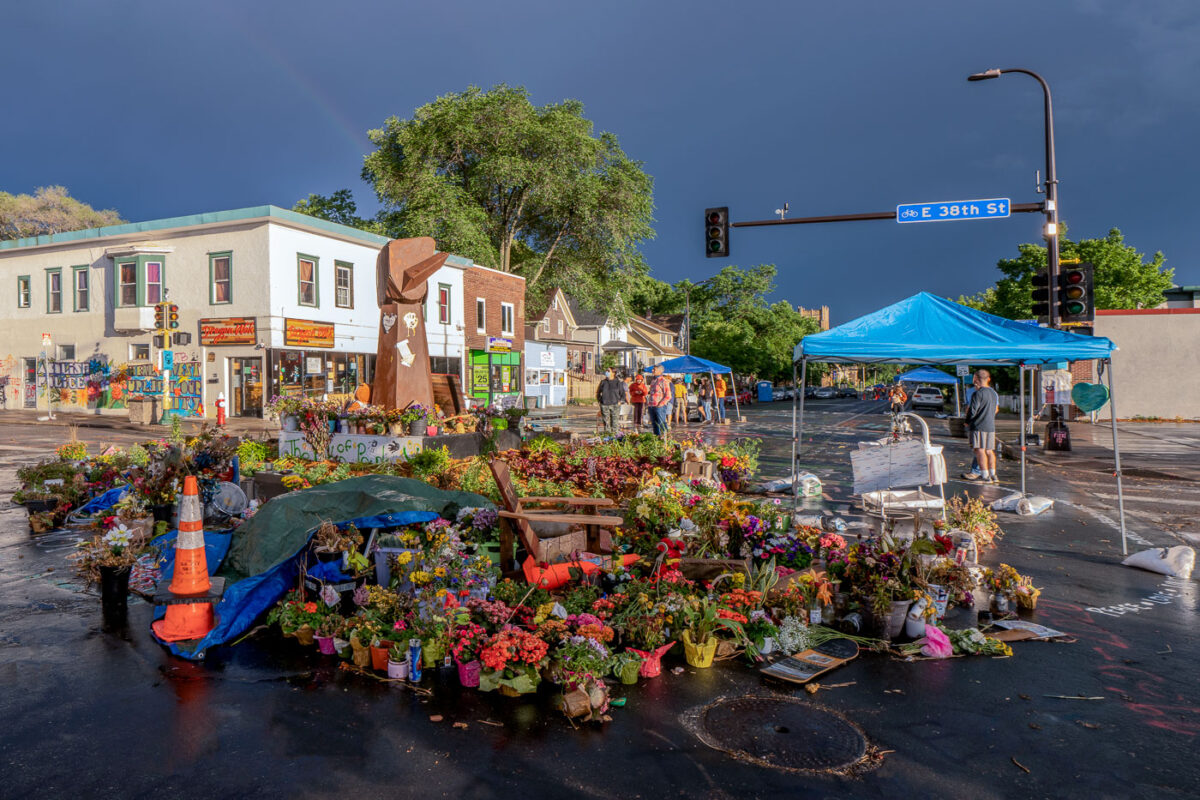
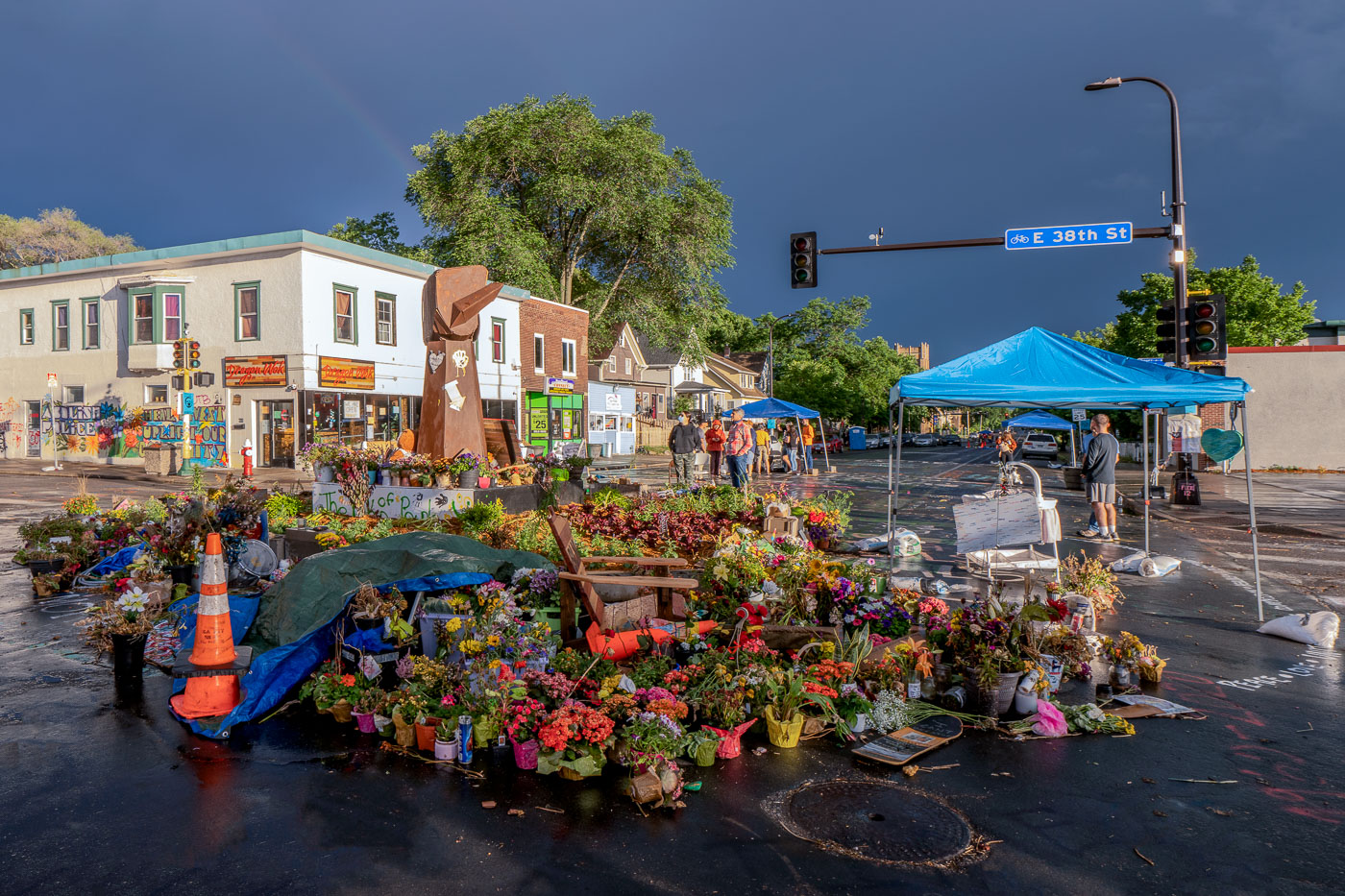
George Floyd Square memorial at Chicago Avenue and East 38th Street in Minneapolis after a storm, with a rainbow.
George Floyd Square at Chicago Avenue and East 38th Street in Minneapolis is shown on June 23, 2020, with floral tributes surrounding the raised fist sculpture and a rainbow visible after a storm. The intersection became a memorial after George Floyd was murdered by police here on May 25, 2020.

George Floyd Square Memorial, Minneapolis Storm with Rainbow
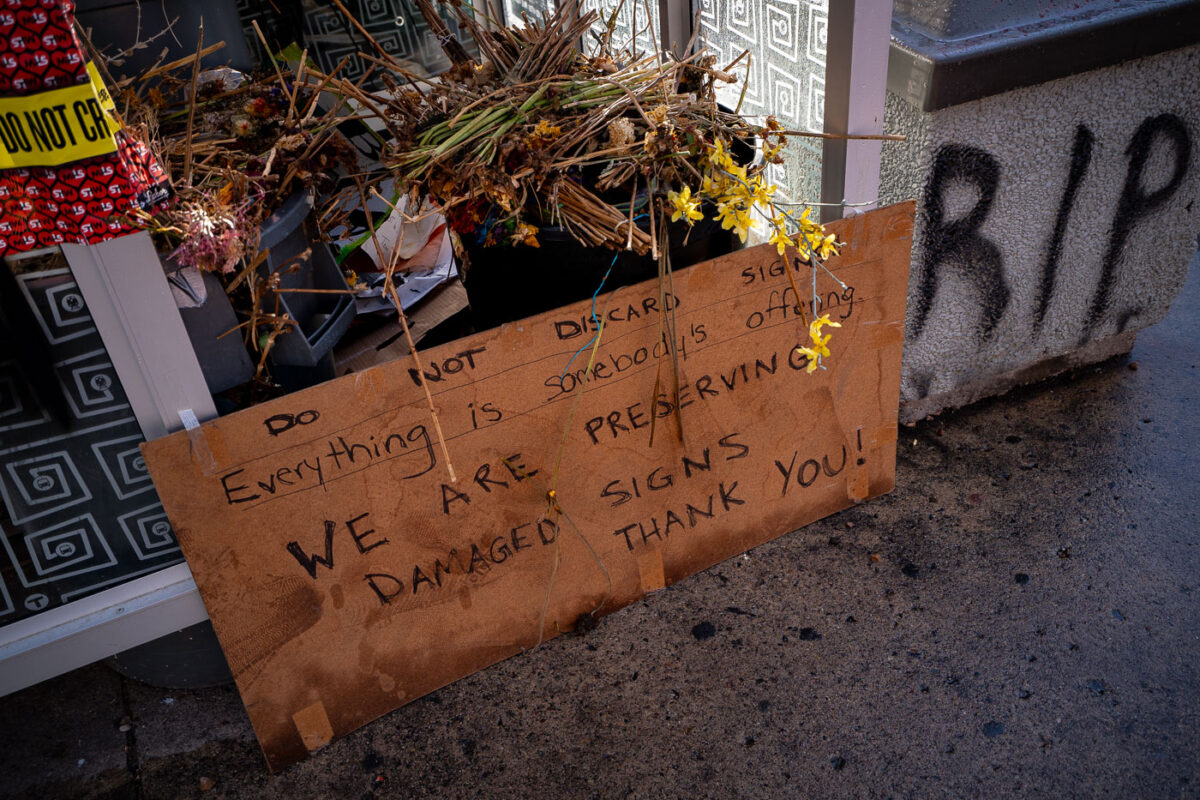
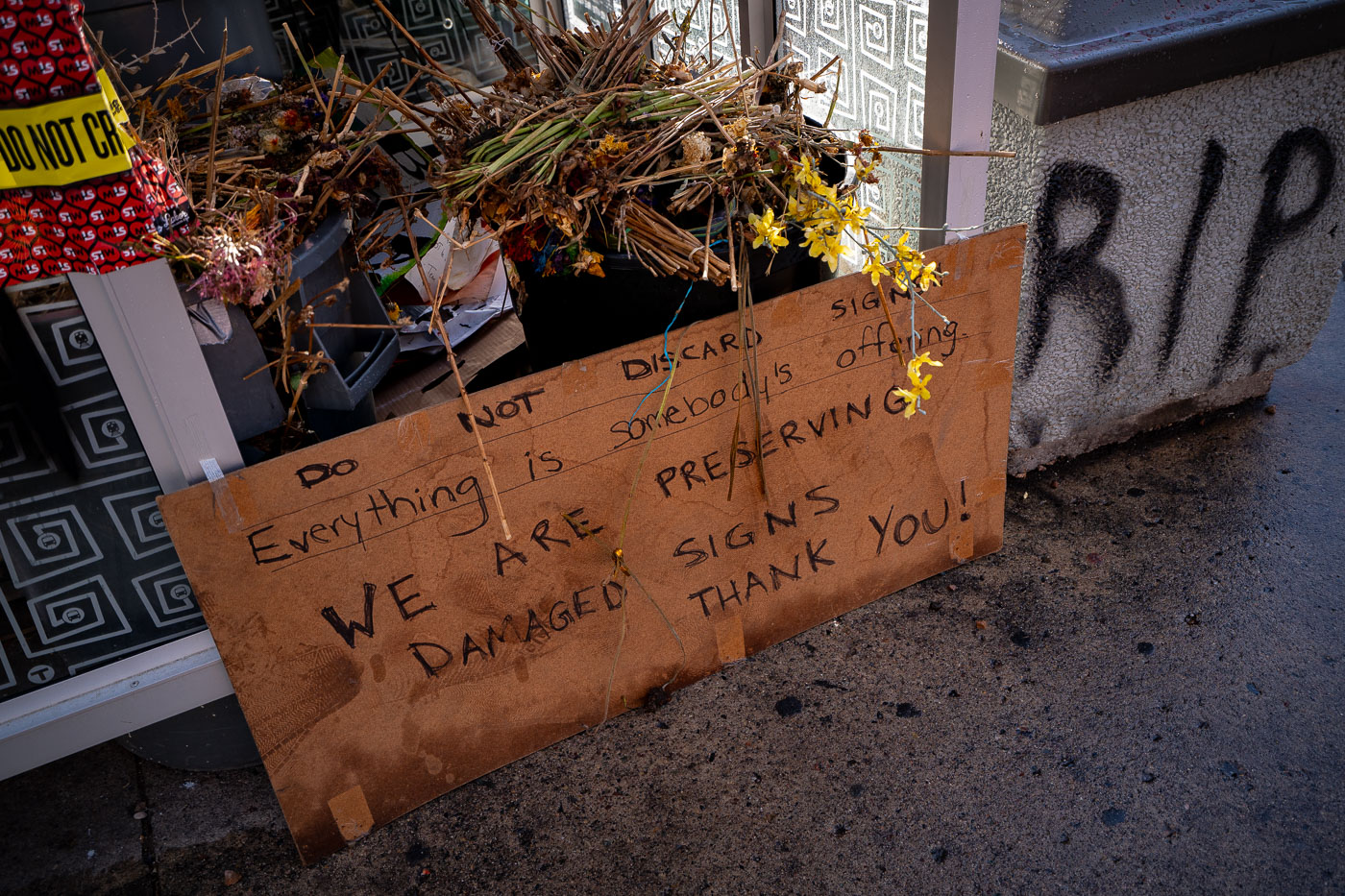
Handwritten sign at George Floyd Square in Minneapolis asks visitors not to discard memorial offerings.
A handwritten sign at George Floyd Square in Minneapolis asks visitors not to discard offerings left at the memorial at Chicago Avenue and East 38th Street. The sign is placed beside containers filled with wilted flowers and other tributes, underscoring efforts to preserve materials left in the days after George Floyd was killed in May 2020. George Floyd Square became both a memorial site and a protest space, where notes, signs, and offerings were treated as part of the public remembrance.

George Floyd Square: Do Not Discard Offerings Sign
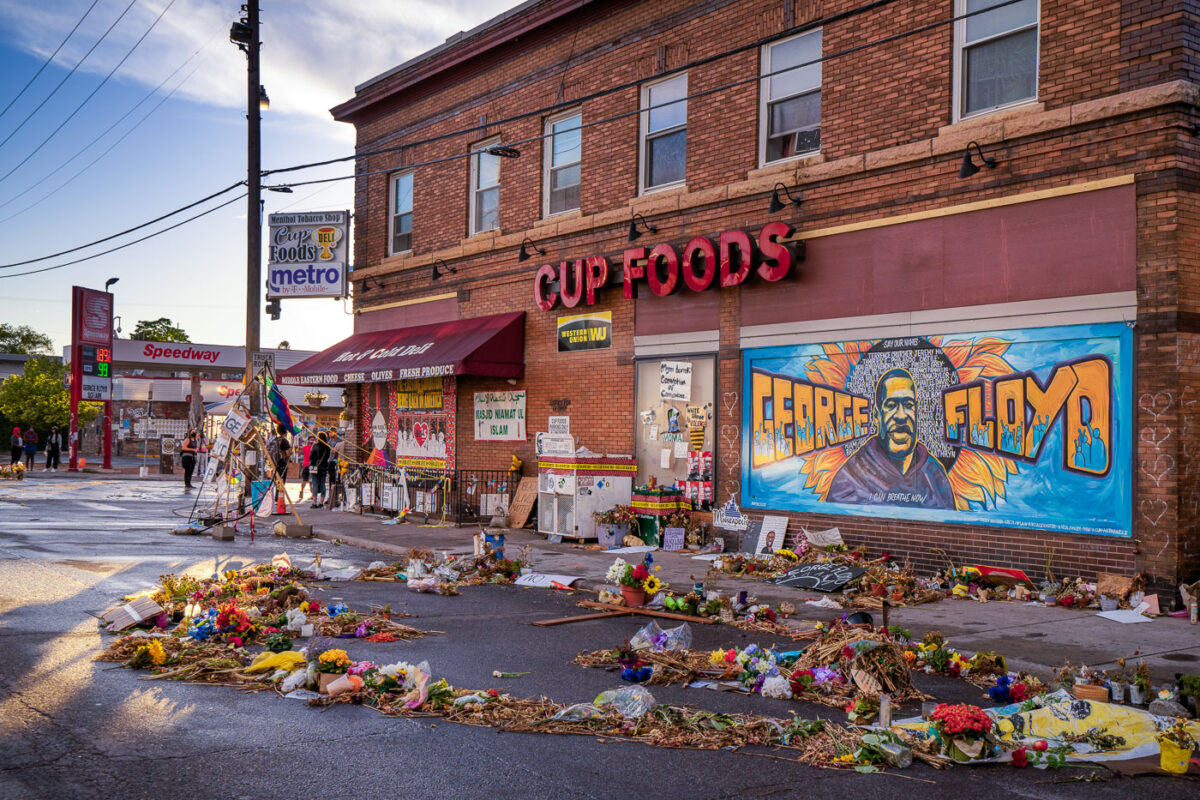
Flowers and George Floyd memorial outside Cup Foods at George Floyd Square in Minneapolis after rain.
George Floyd Square at Chicago Avenue and East 38th Street in Minneapolis is pictured outside Cup Foods on June 23, 2020. Flowers and memorial offerings cover the wet street after rain near the storefront where George Floyd was killed by Minneapolis police a month earlier. A large mural on the building and handwritten signs mark the site as a place of mourning, remembrance, and protest.

George Floyd Square, Cup Foods, Flowers after Summer Rain
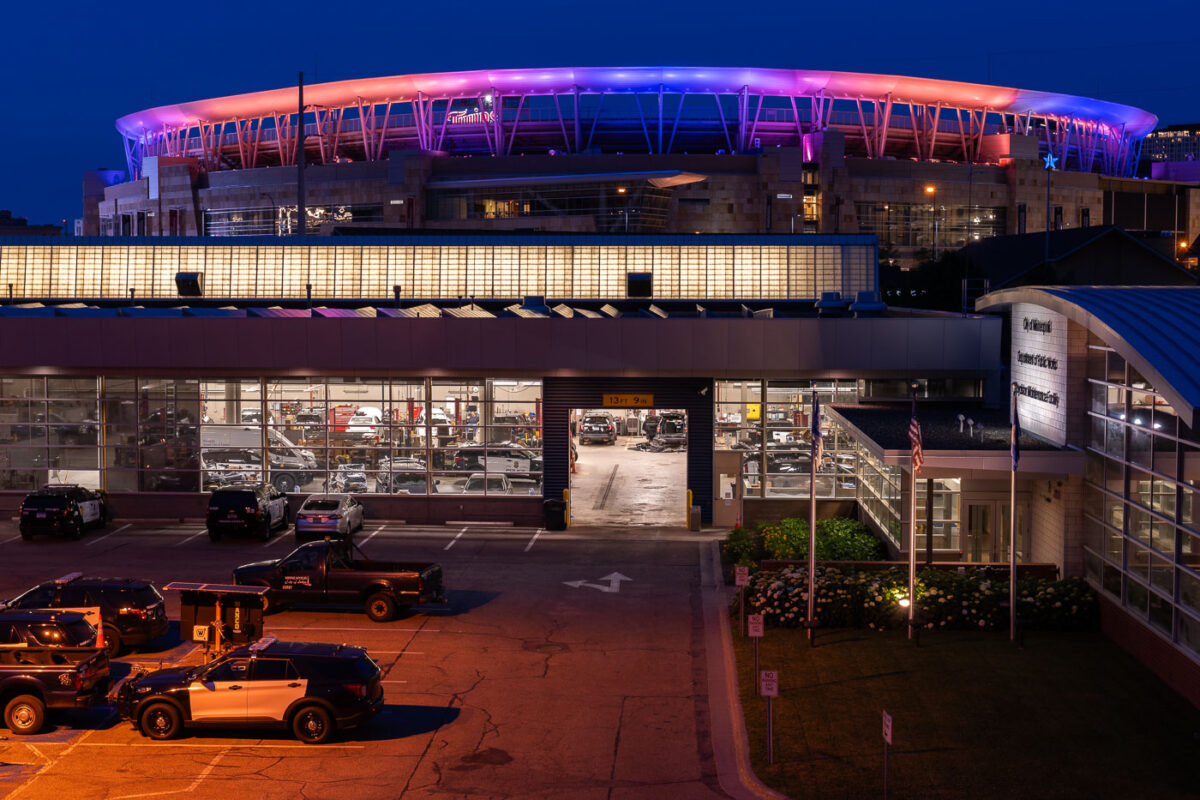
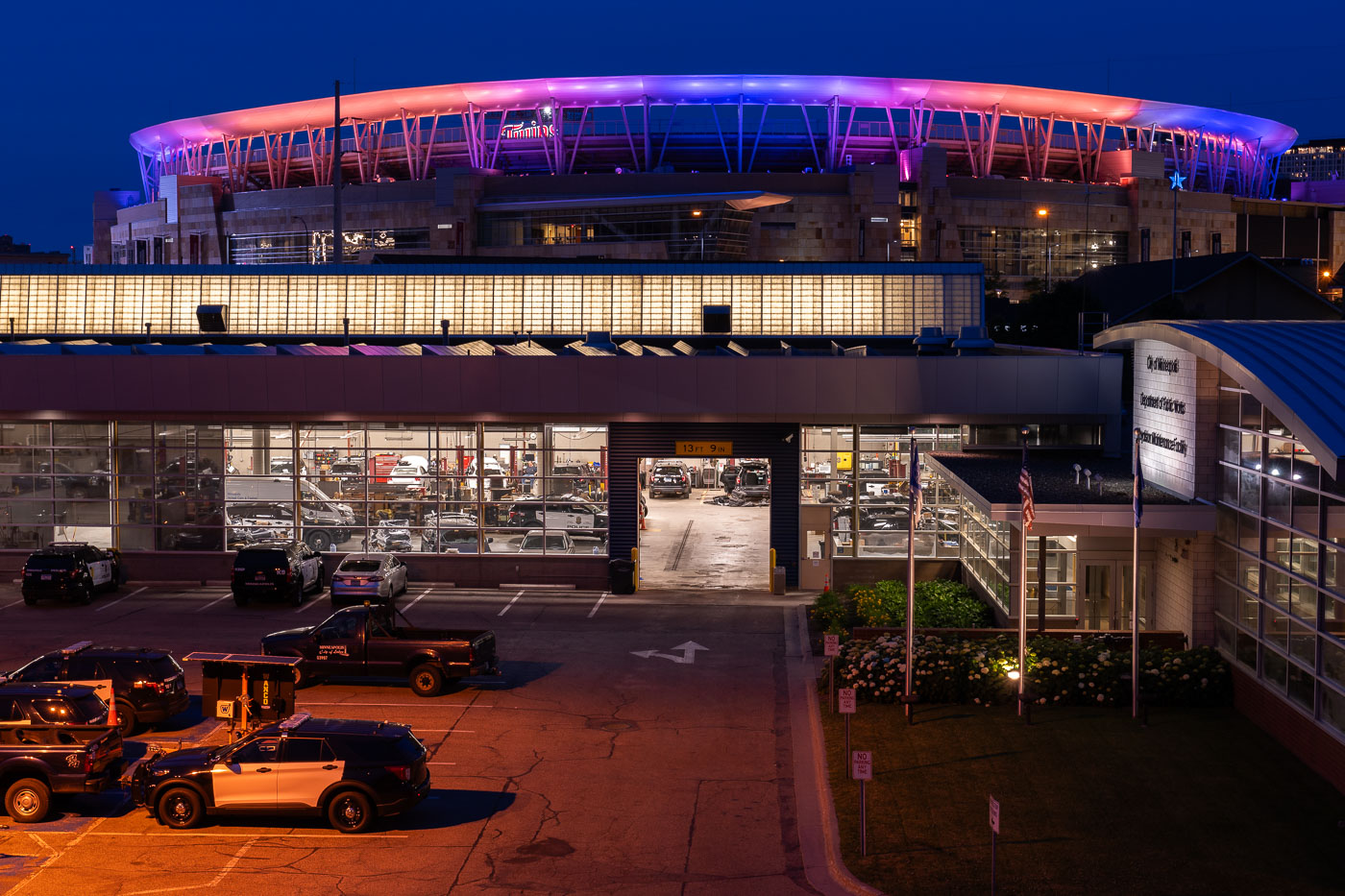
Minneapolis Police Department vehicles parked outside the Public Works Maintenance Facility beside U.S.
This city fleet maintenance garage sits downtown next to Target Field, its service bays holding municipal vehicles for repair work. Minneapolis Police squad cars are parked outside the building and inside the open bay, among the vehicles serviced at the facility.

City Fleet Garage Beside Target Field at Night
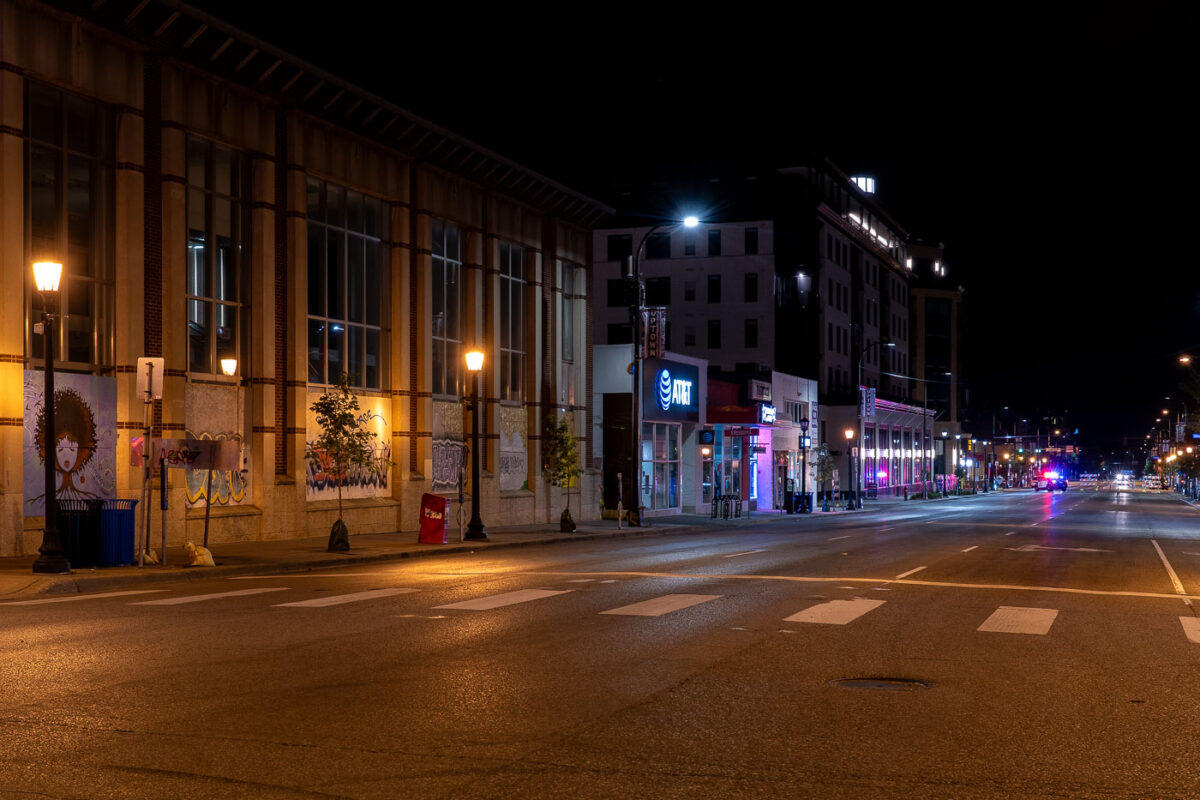
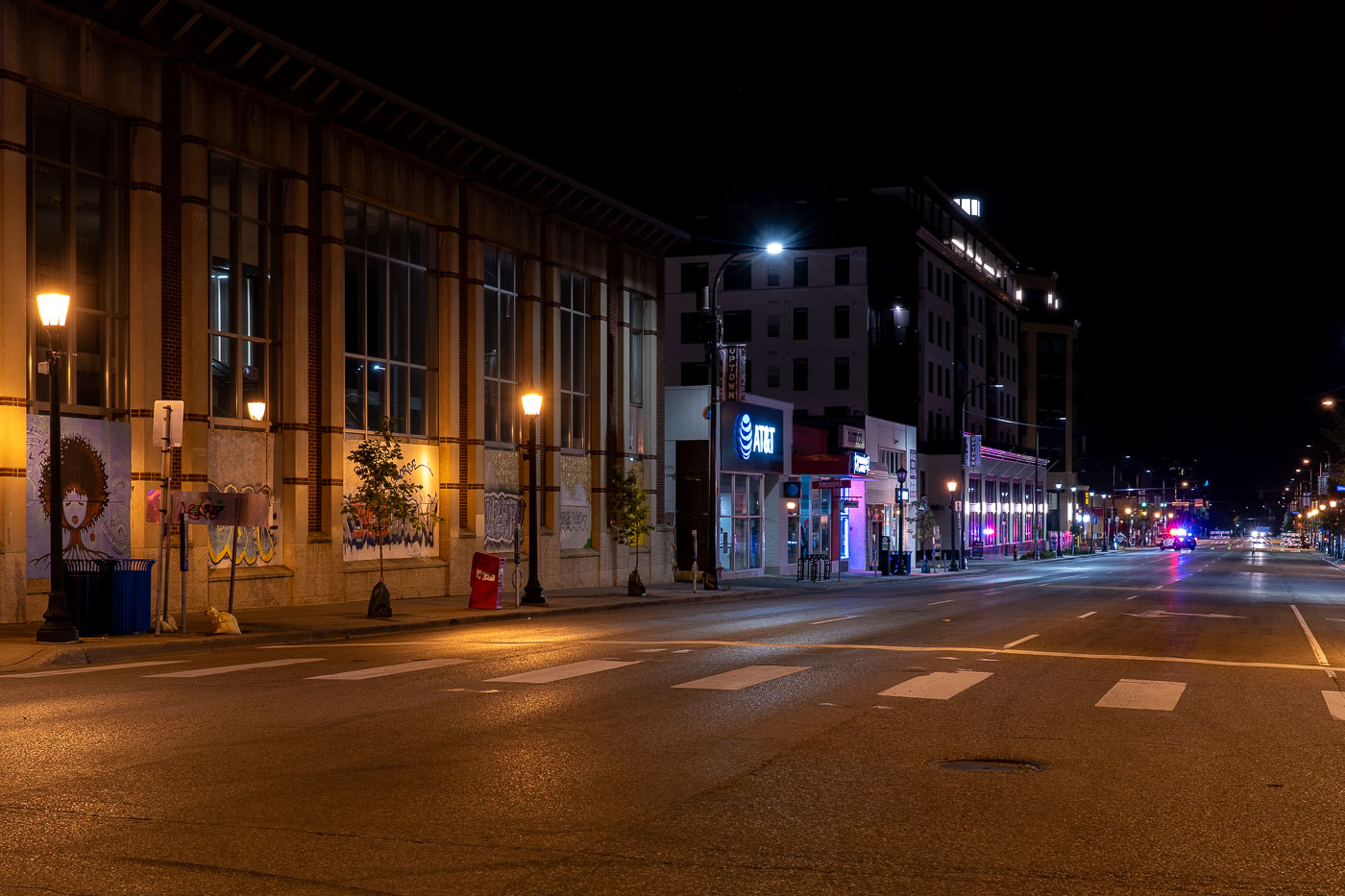
Empty Lake Street at Hennepin Avenue in Uptown Minneapolis during a police closure at night.
Lake Street at Hennepin Avenue in Uptown Minneapolis is shown at night during a police street closure on June 27, 2020. The normally busy commercial corridor appears largely empty, with boarded storefront windows and murals visible along the block. Minneapolis police imposed weekend closures in the area at the time in response to large late-night car gatherings in the entertainment district.

Uptown Minneapolis: Lake Street at Hennepin Ave Police Closure
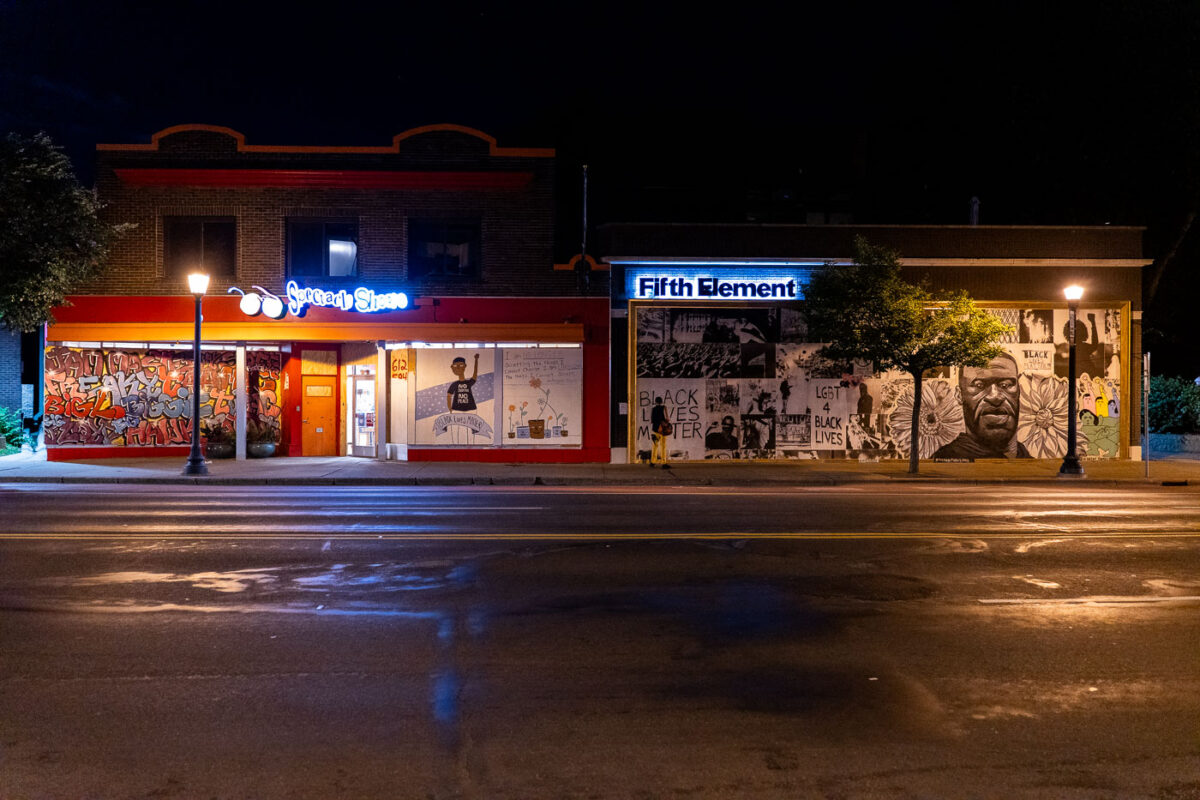
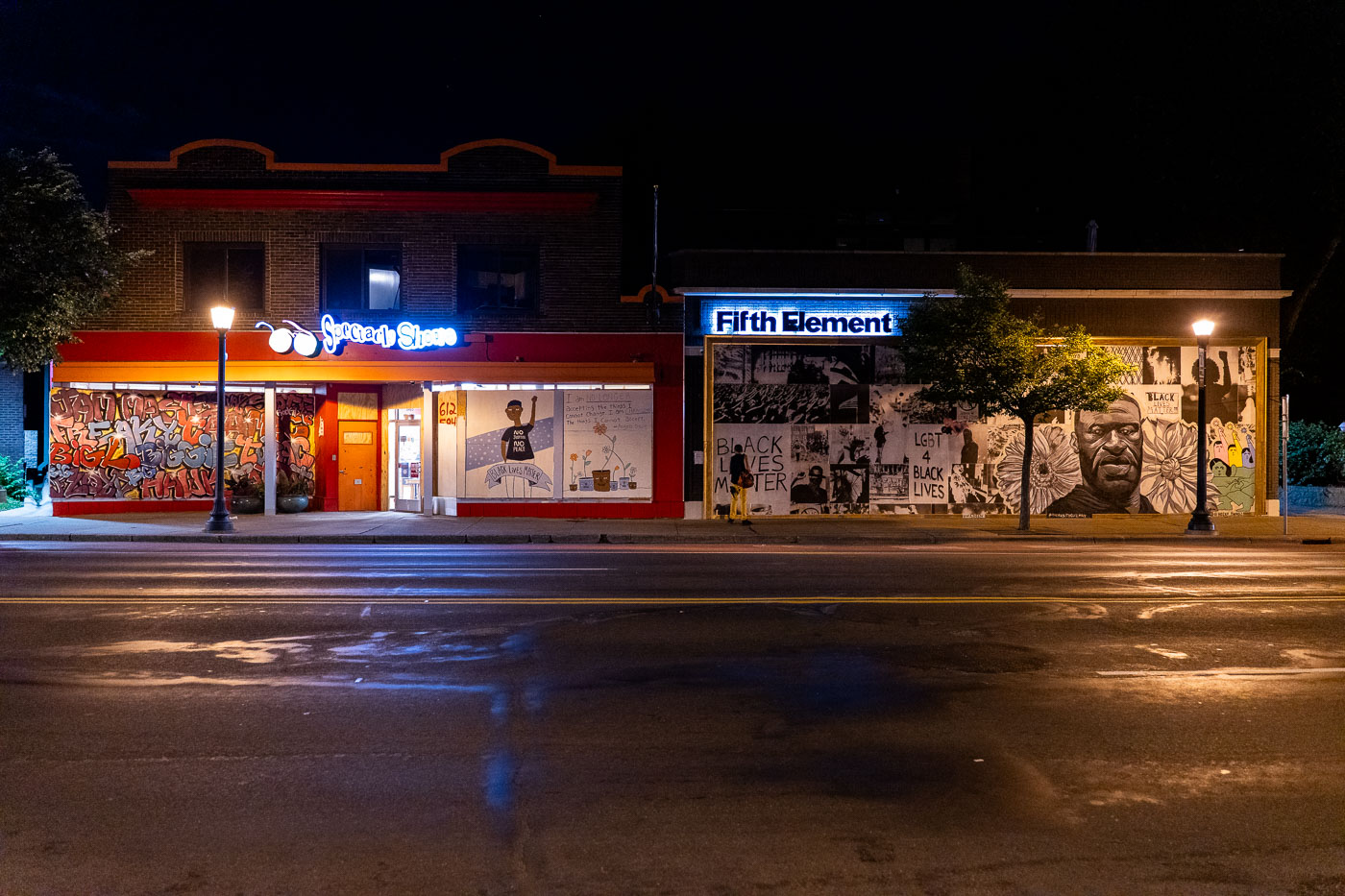
Boarded Spectacle Shoppe and Fifth Element on Hennepin Avenue, Minneapolis, covered with George Floyd murals.
The Spectacle Shoppe and Fifth Element on Hennepin Avenue in Uptown Minneapolis are boarded up and covered with murals and messages referencing George Floyd and Black Lives Matter. Photographed in late June 2020, the storefronts combine business signage with painted tributes, protest text, and portraits across the plywood panels.

Hennepin Ave Stores Boarded, George Floyd Murals, Minneapolis
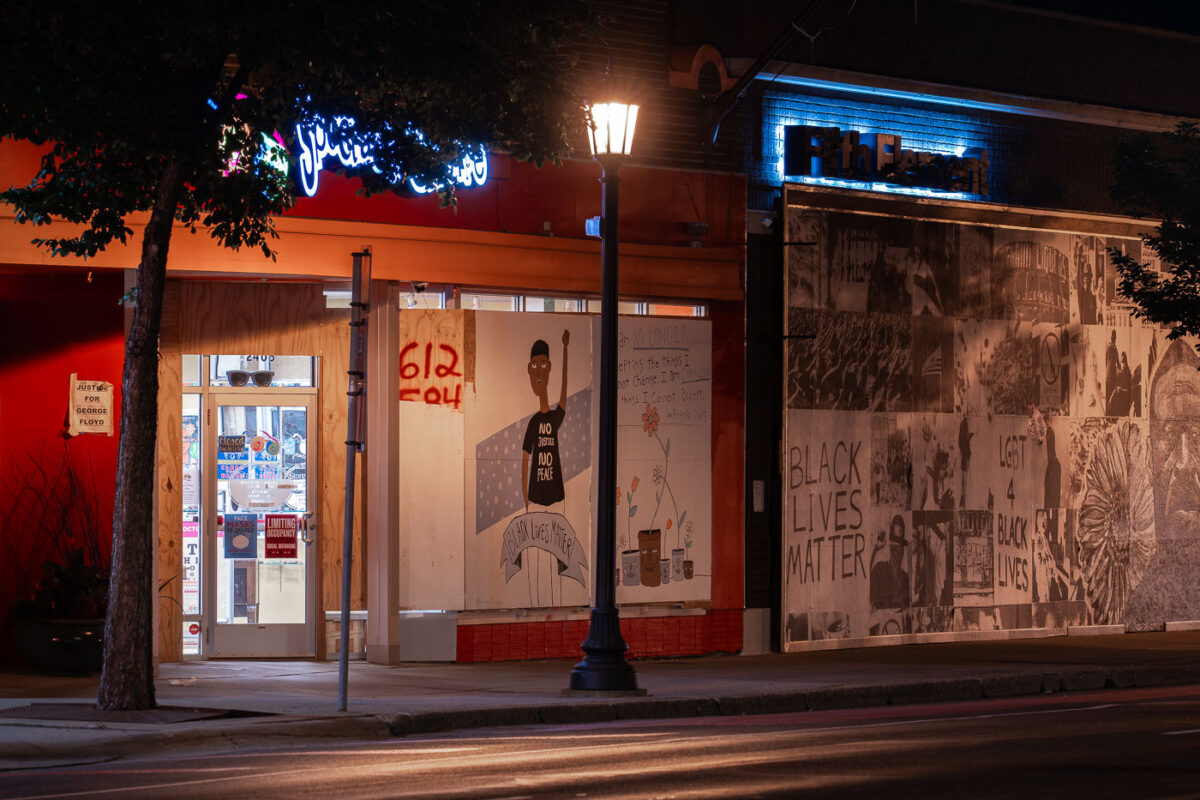
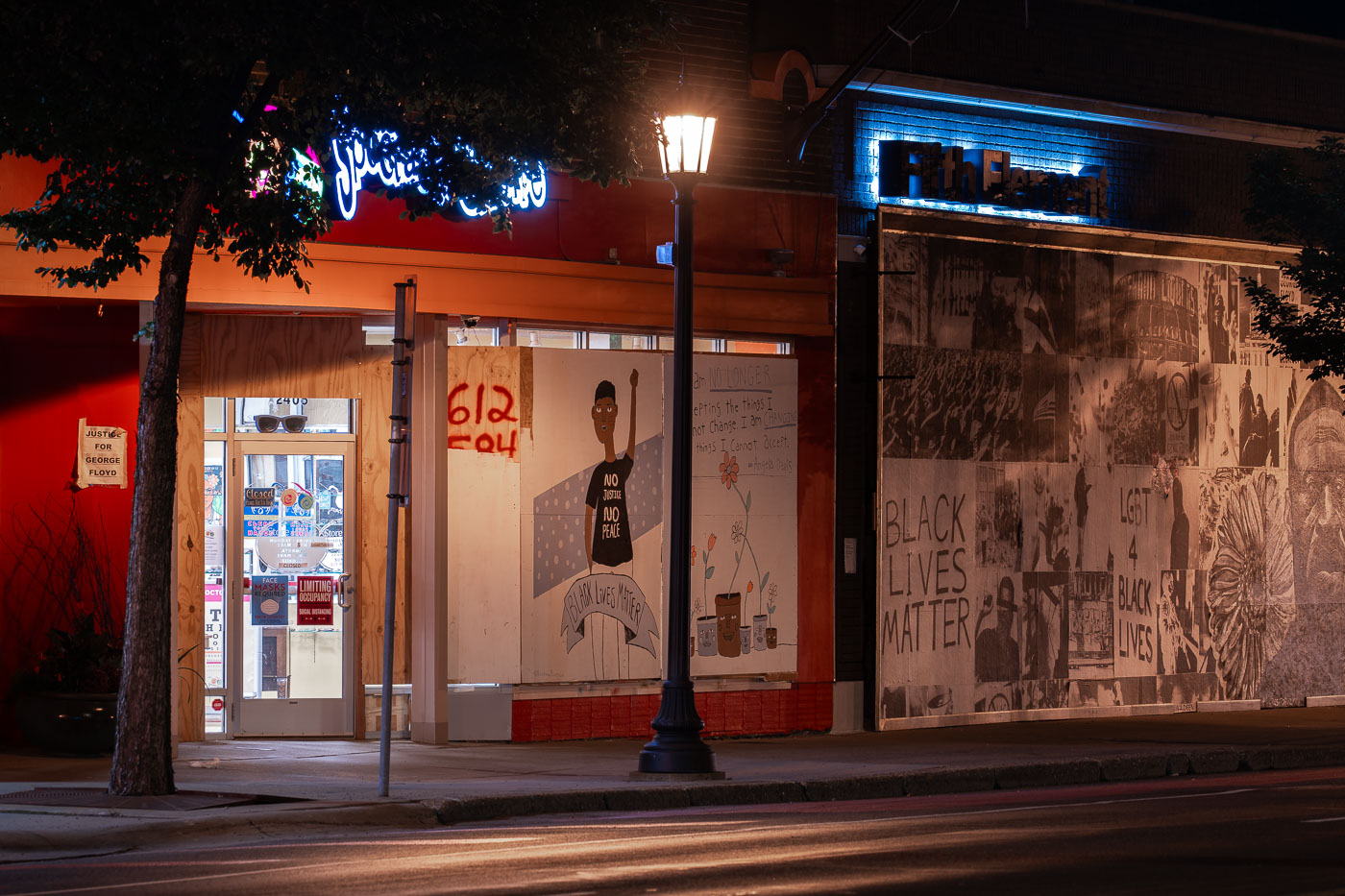
Boarded storefront murals at Fifth Element on Hennepin Avenue in Uptown Minneapolis, June 2020.
Boarded storefronts at Fifth Element on Hennepin Avenue in Uptown Minneapolis are covered with murals and protest messages in June 2020. The plywood panels include hand-painted portraits, “Black Lives Matter” text, and a memorial sign for George Floyd, whose killing on May 25, 2020, led many businesses across Minneapolis to install protective boarding.

Fifth Element Murals, Hennepin Ave, Minneapolis Uprising
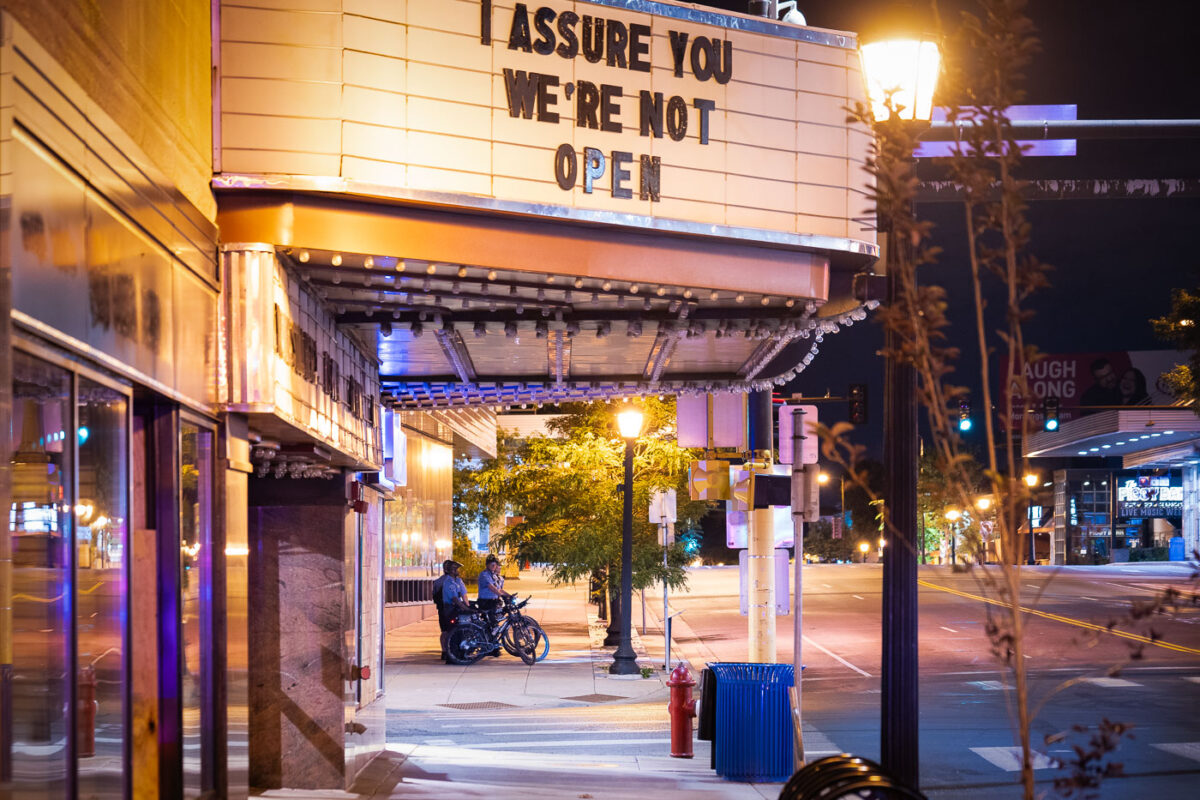
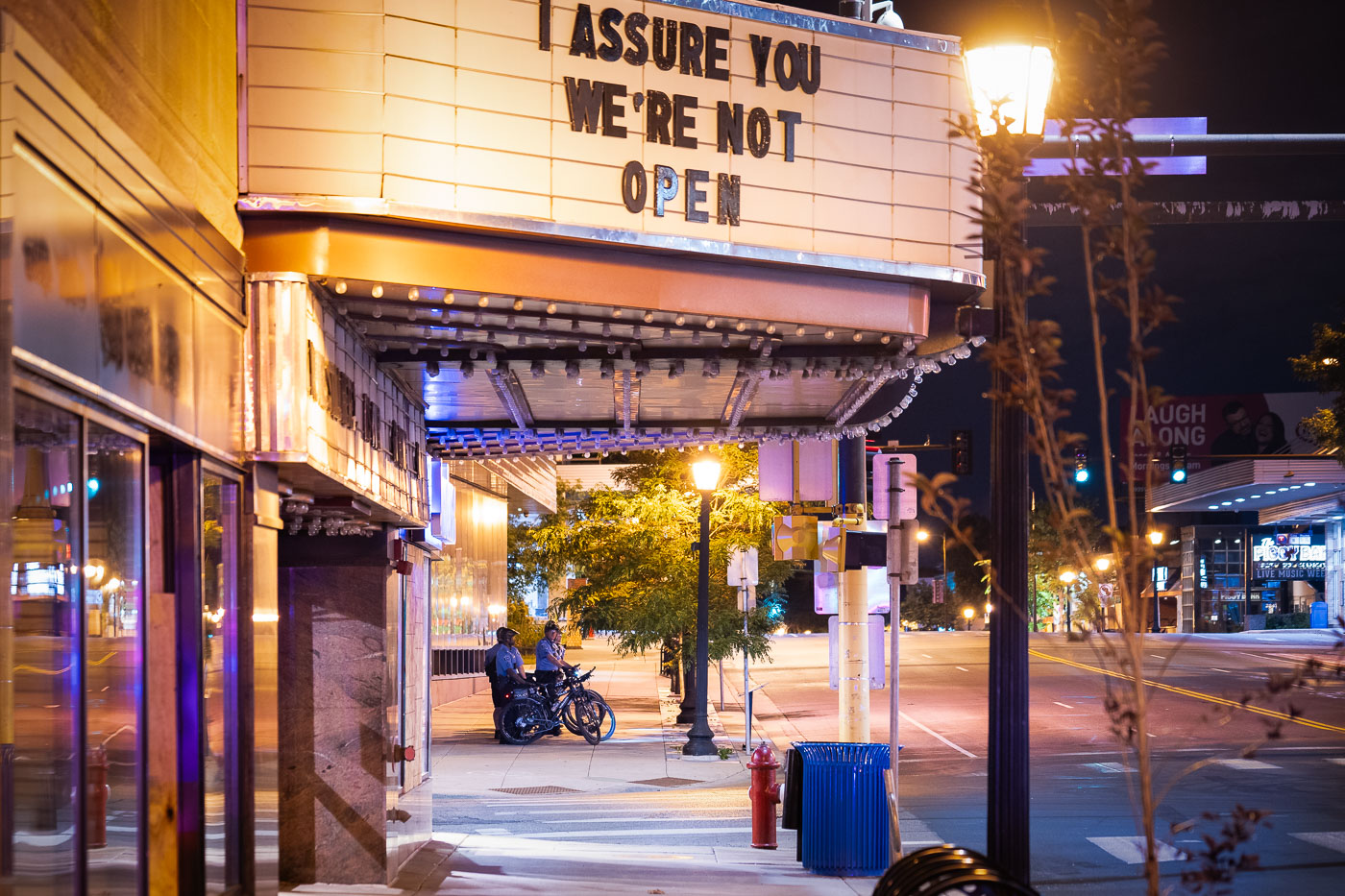
Uptown Theater marquee in Minneapolis as bicycle police stand outside during late-night street closures.
The Uptown Theater in Minneapolis, Minnesota, is shown at night with its marquee reading “ASSURE YOU WE’RE NOT OPEN” as two Minneapolis police officers with bicycles stand on the sidewalk beneath the canopy. The theater, a longstanding landmark in the Uptown district, was closed during a period of unrest and restricted street activity in late June 2020 following the killing of George Floyd. The image documents police presence along the largely empty commercial corridor near Hennepin Avenue and Lagoon Avenue during overnight street closures.

Uptown Theater Marquee: ‘We’re Not Open’, Minneapolis Police
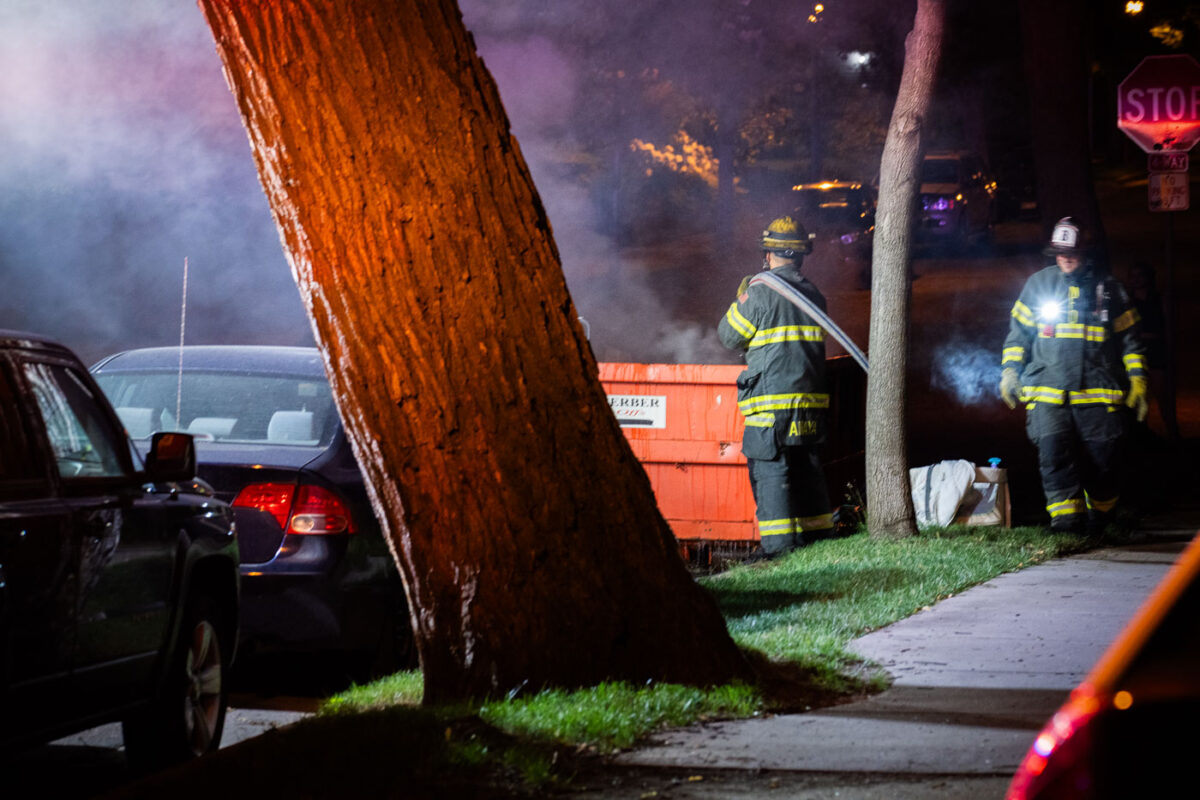
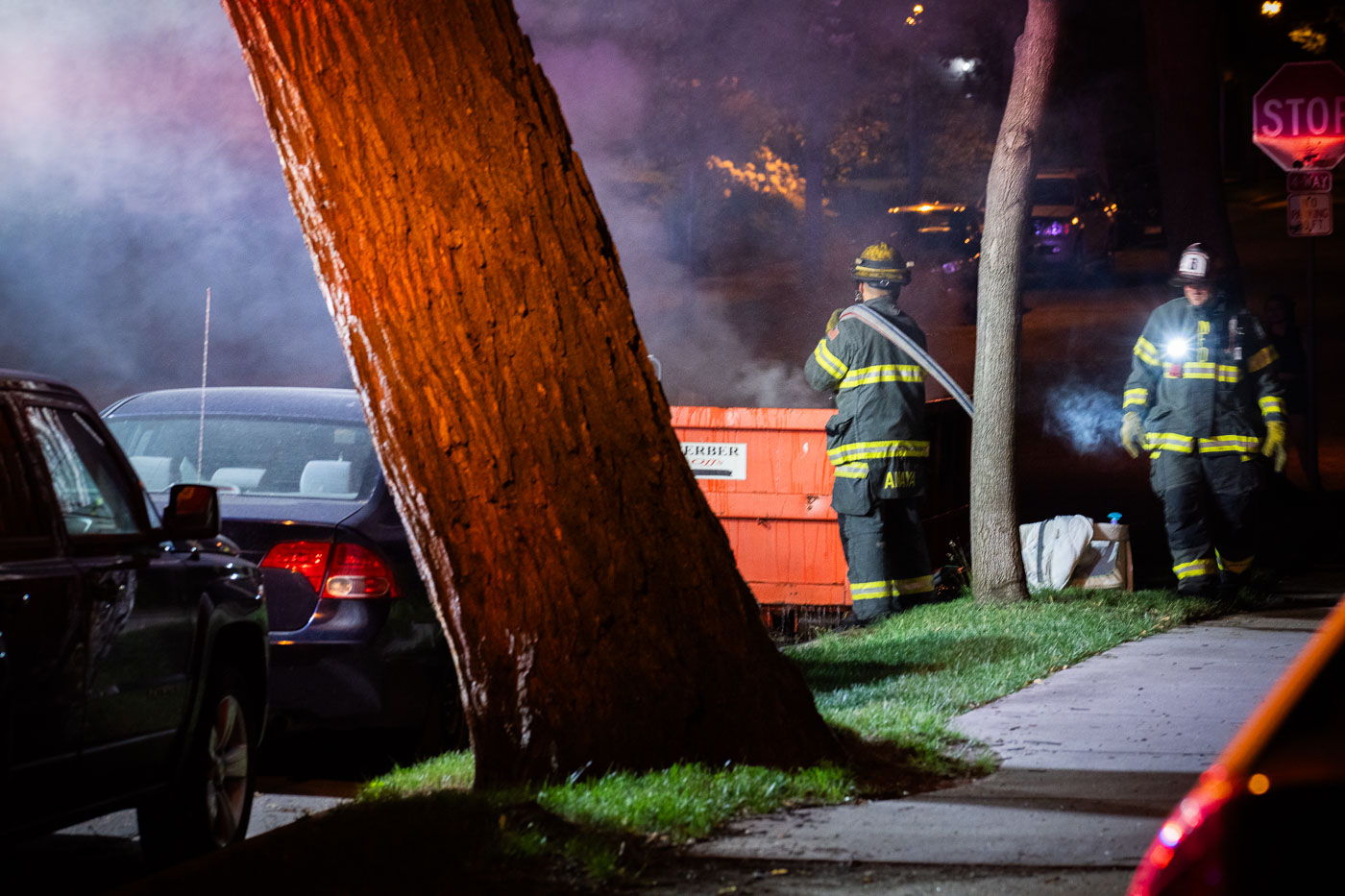
Minneapolis firefighters extinguish a dumpster fire on a South Minneapolis street on June 27, 2020.
Minneapolis Fire Department personnel extinguish a smoking dumpster fire on a residential street in South Minneapolis on June 27, 2020.

Minneapolis Fire Department extinguishes South Minneapolis dumpster fire, June 2020
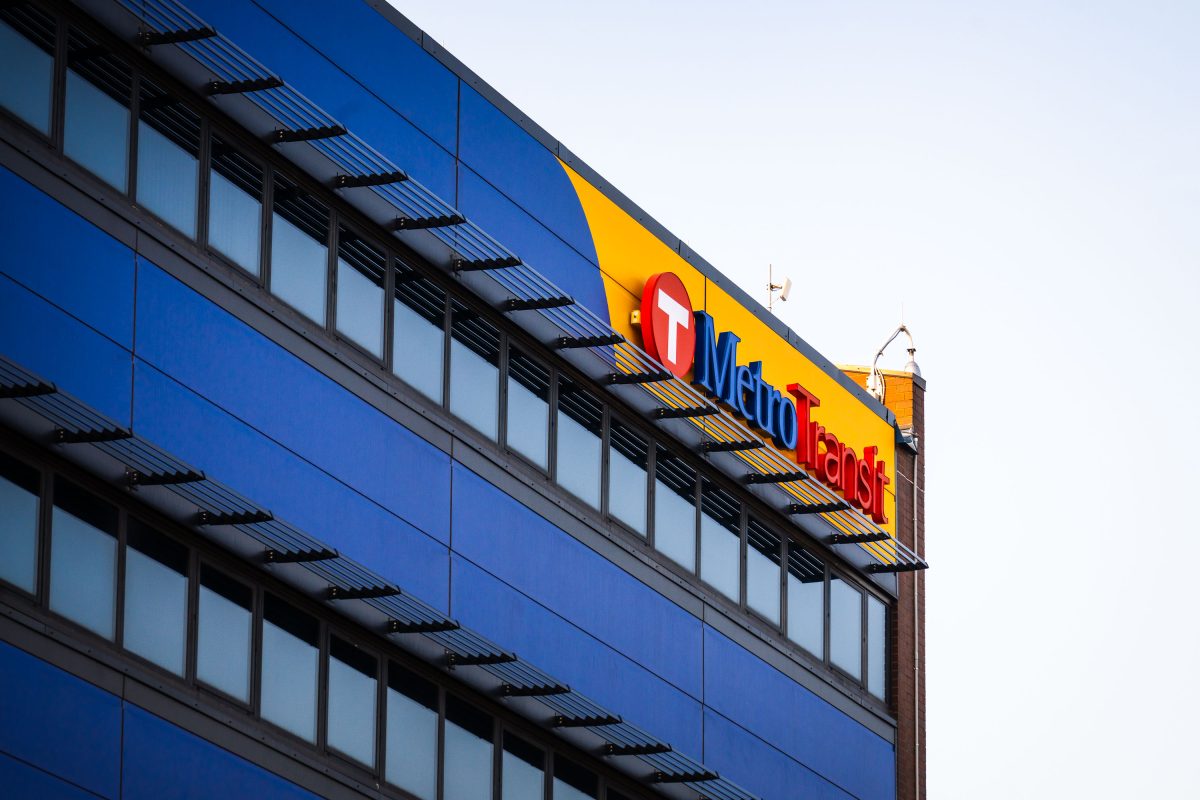
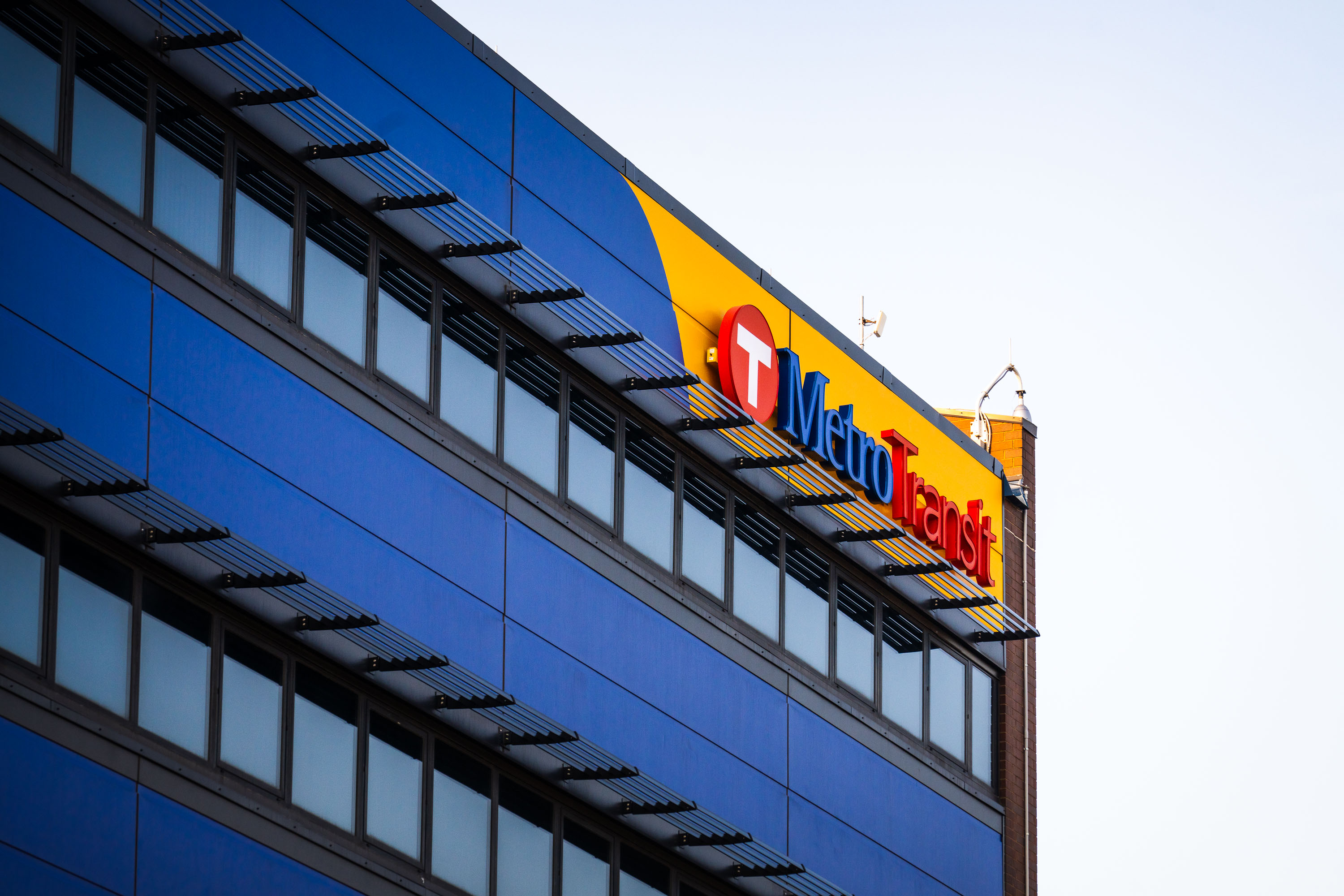
Metro Transit facility sign on blue building in Minneapolis North Loop.
Metro Transit operates the bus and rail network for the Minneapolis–St. Paul region under the Metropolitan Council, serving the Twin Cities' seven-county metro area. The agency runs the METRO light rail lines along with an extensive bus system, including the North Loop routes that connect downtown Minneapolis to surrounding neighborhoods. Metro Transit's headquarters and operations facilities are scattered across the metro, supporting a system that carries tens of millions of rides annually.

Metro Transit Building Sign, North Loop, Minneapolis
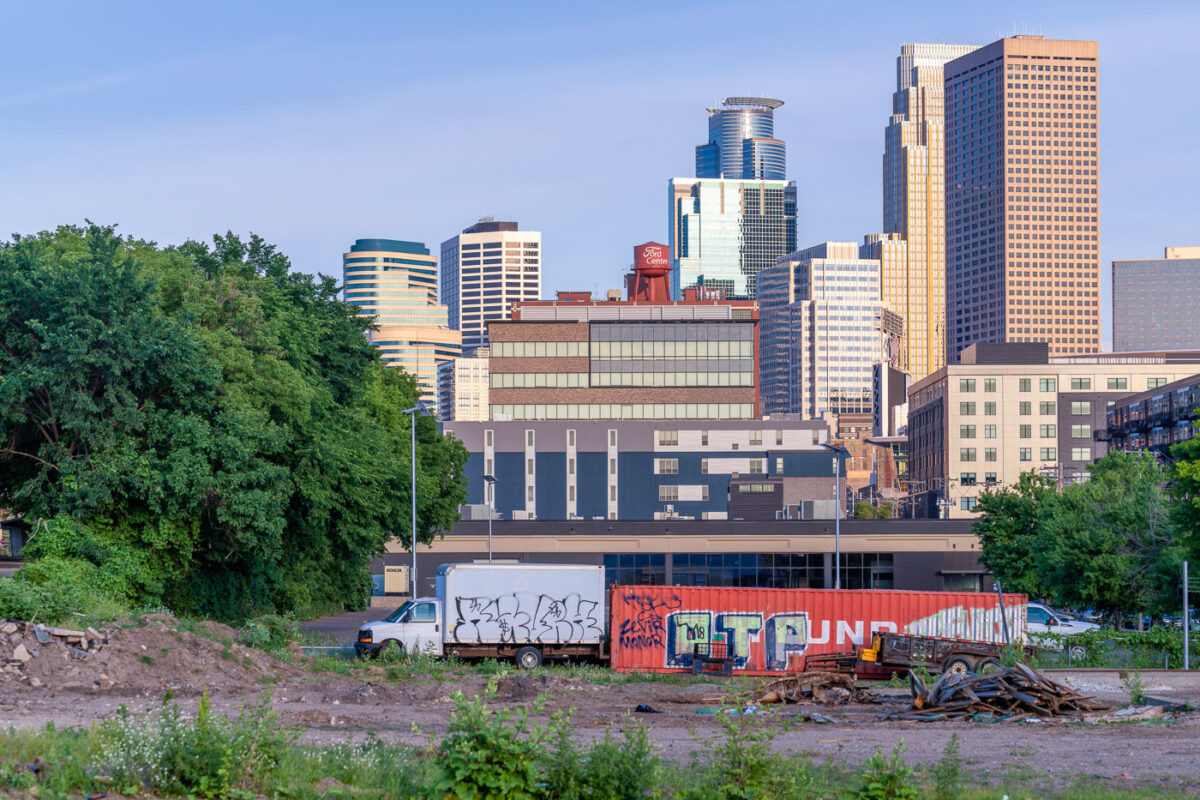
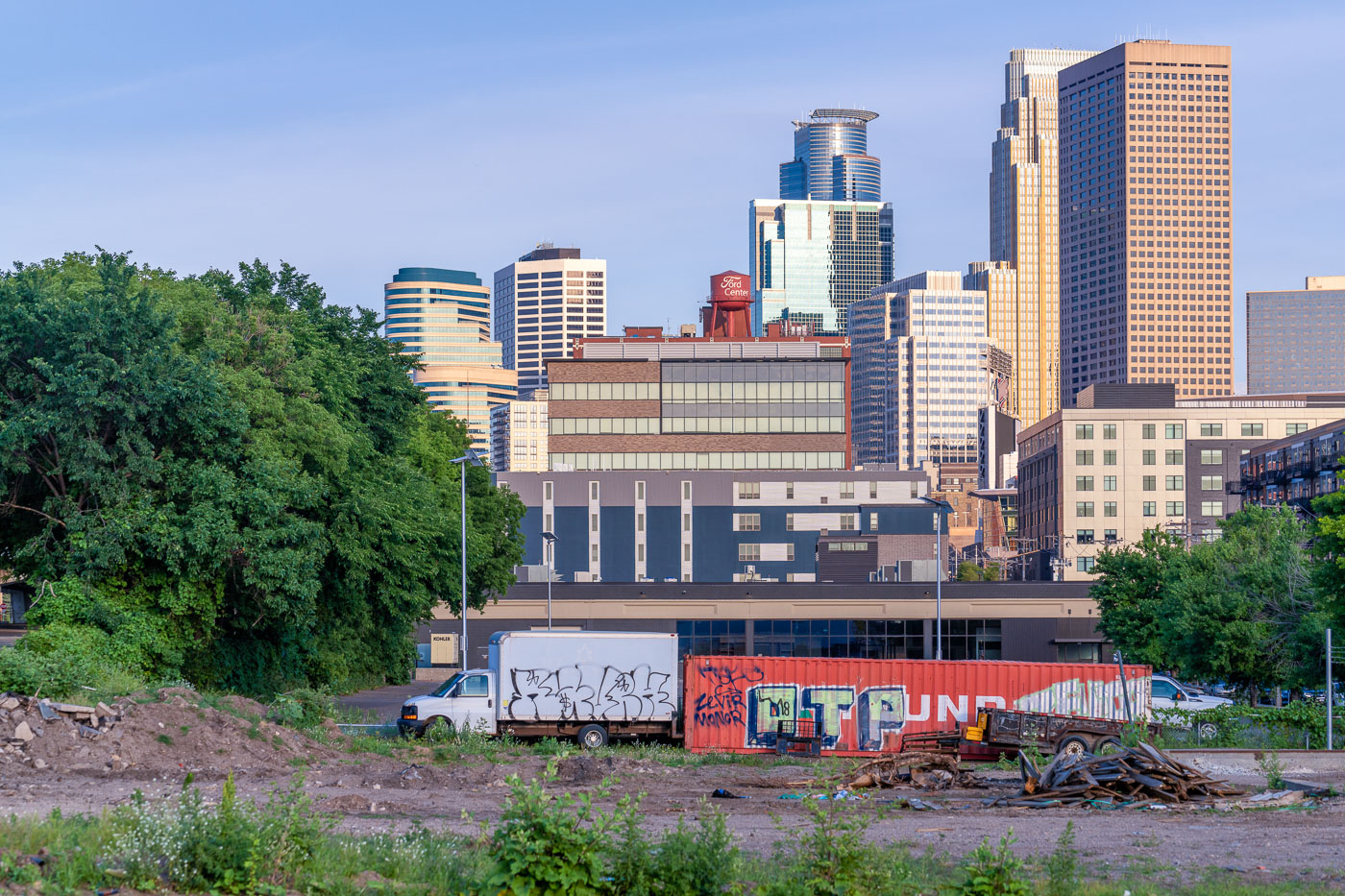
Downtown Minneapolis skyline above a vacant North Loop lot with a graffiti-marked truck and shipping container.
Downtown Minneapolis rises behind a vacant lot in the North Loop on June 27, 2020. A graffiti-marked box truck and shipping container stand on cleared industrial land west of the central business district, where former warehouse and service parcels have increasingly been converted to housing and commercial development.

Minneapolis North Loop Skyline, Graffiti-Covered Van, 06/27/20
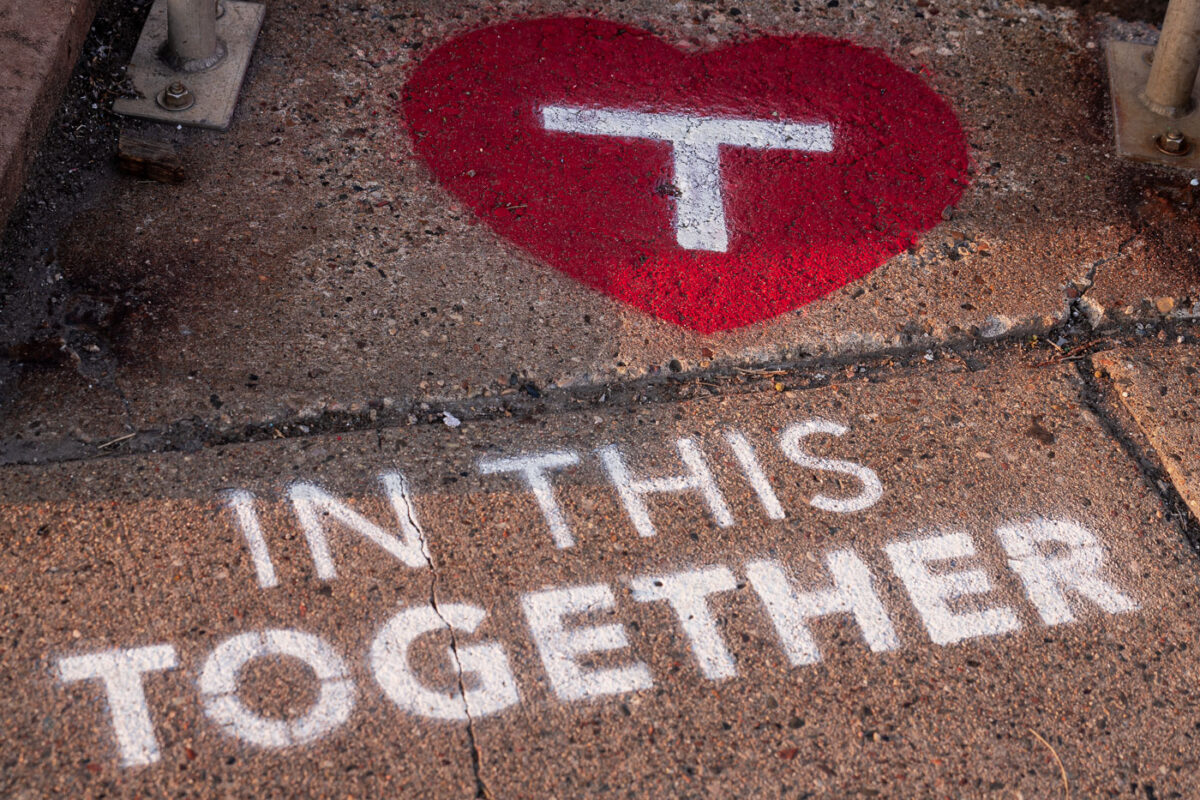
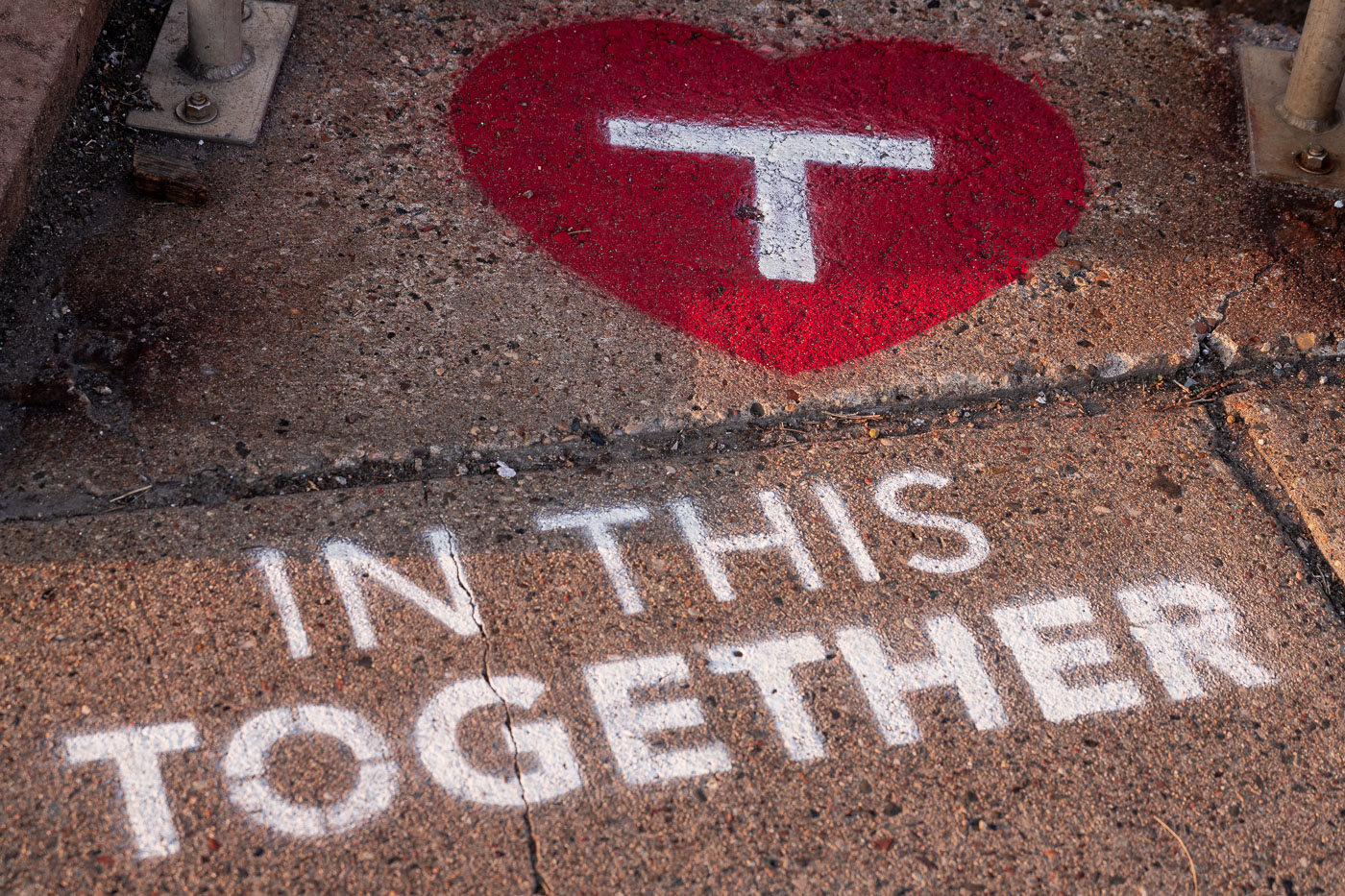
Metro Transit heart stencil and “IN THIS TOGETHER” message on a Minneapolis sidewalk.
Metro Transit stencil art on a sidewalk in Minneapolis’s North Loop neighborhood features the agency’s white “T” inside a red heart above the words “IN THIS TOGETHER.” The marking appears outside a Metro Transit facility and references the Twin Cities regional transit operator.

North Loop Metro Transit Stencil Art: In This Together
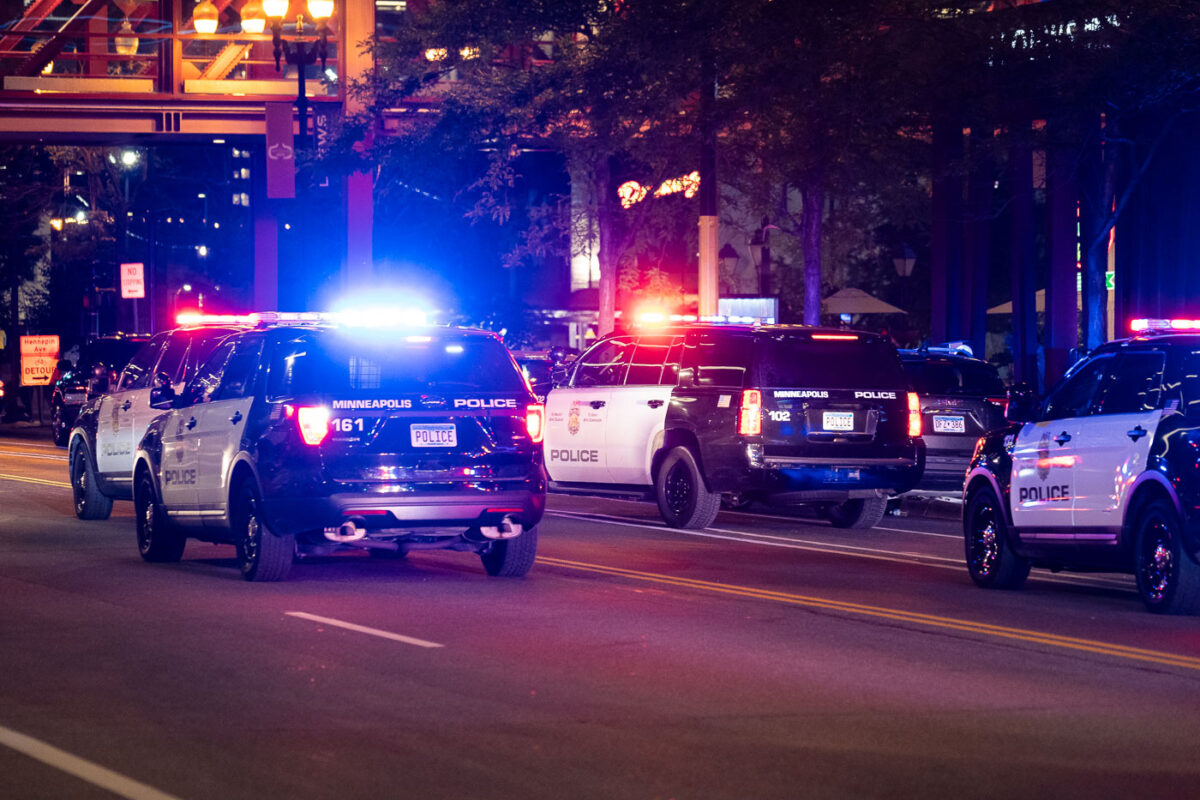
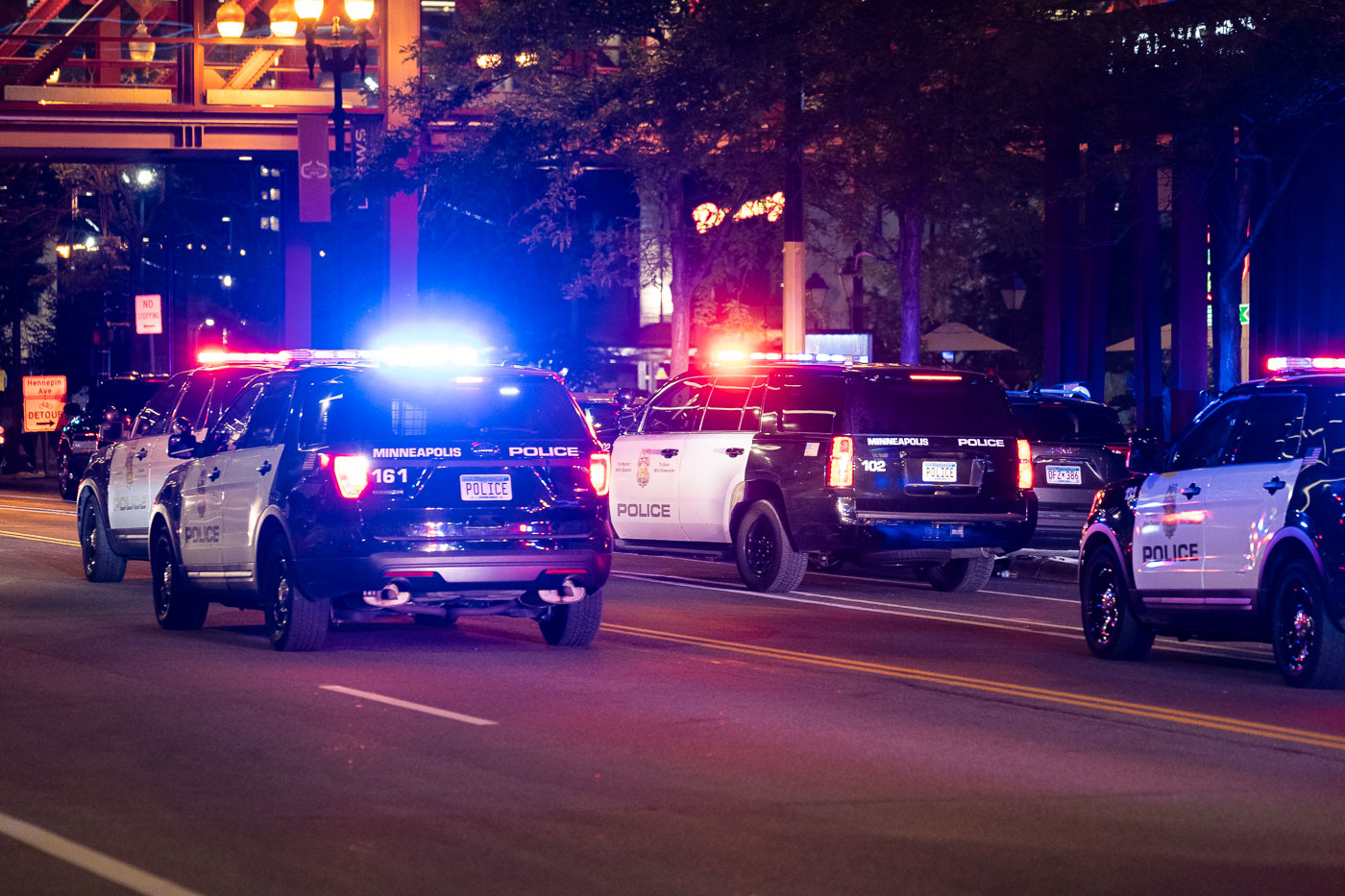
Minneapolis Police vehicles patrol 1st Avenue in Downtown Minneapolis, dispersing hot rodders.
Minneapolis Police vehicles patrol 1st Avenue in Downtown Minneapolis. A caravan of squad cars was deployed to disperse groups of 'hot rodders' who had gathered in the area. These individuals were reportedly performing 'donuts' and other maneuvers in city intersections, disrupting traffic.

Minneapolis Police dispersing hot rodders on 1st Avenue
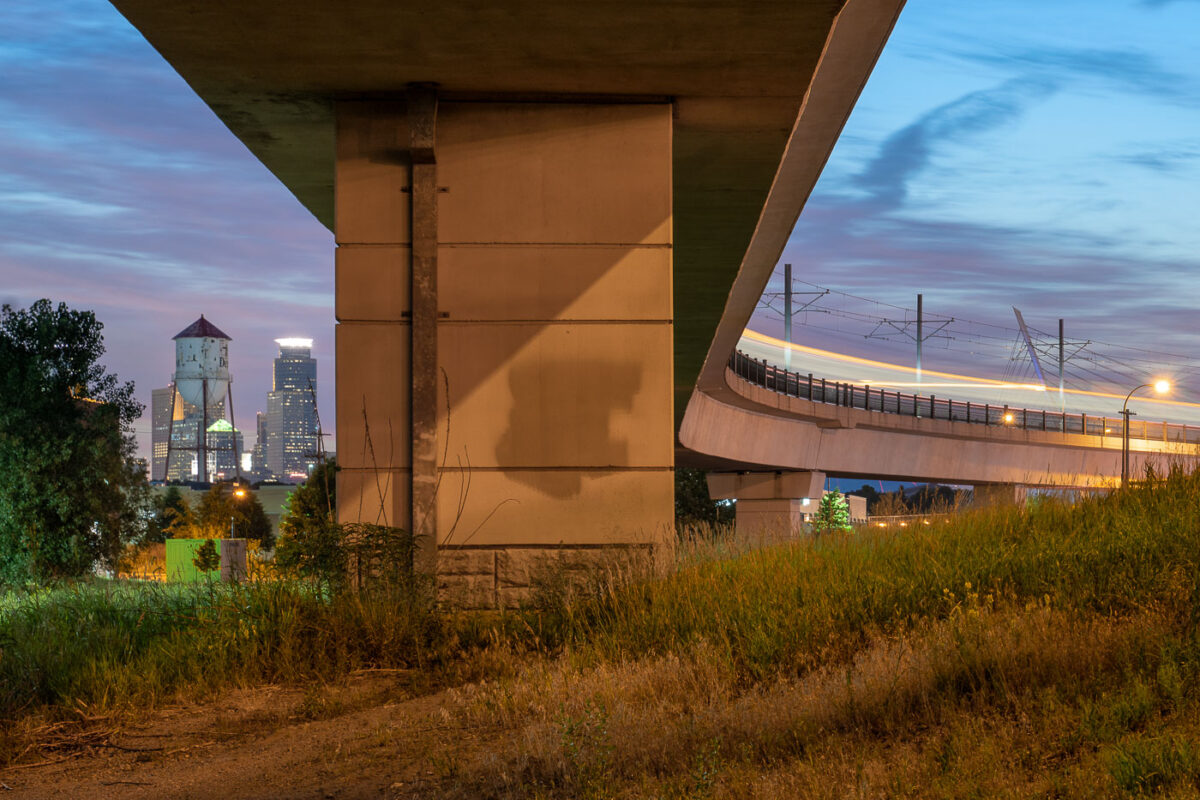
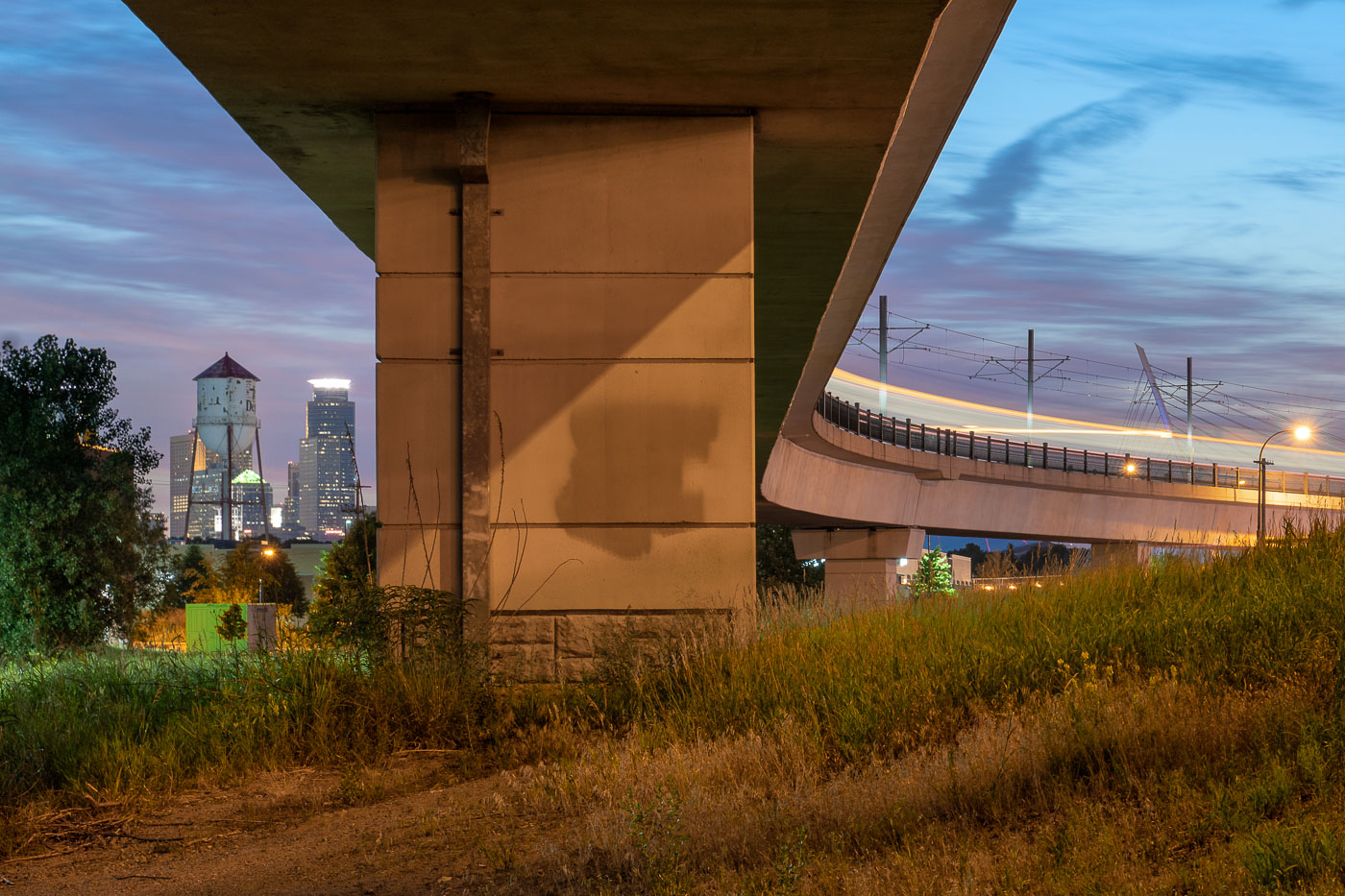
Metro Transit Blue Line bridge over Hiawatha Avenue and the Midtown Greenway in Minneapolis.
Metro Transit Blue Line over Hiawatha Avenue and the Midtown Greenway in Minneapolis. This elevated light rail segment is part of the Blue Line, which opened in 2004 and links downtown Minneapolis with southern destinations including Minneapolis–Saint Paul International Airport and Mall of America. The former Minneapolis Depot water tower appears in the distance.

Metro Transit Blue Line over Hiawatha and Midtown Greenway
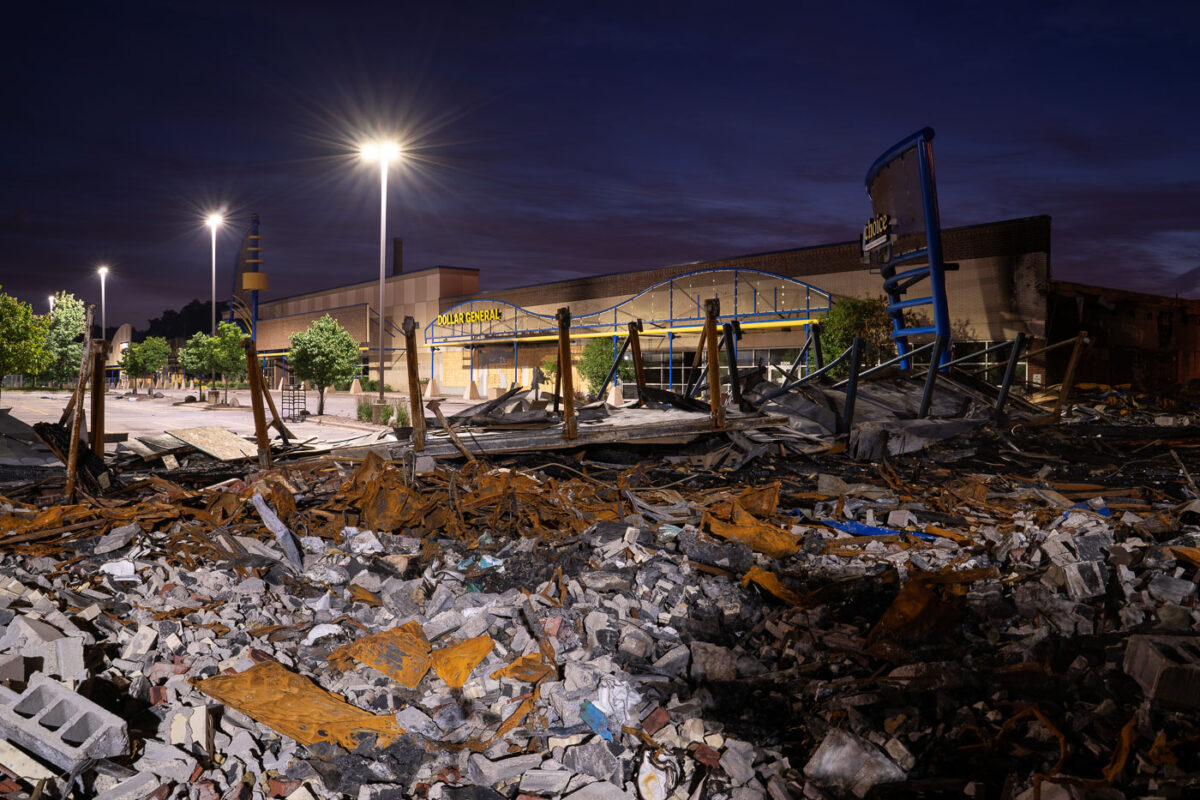
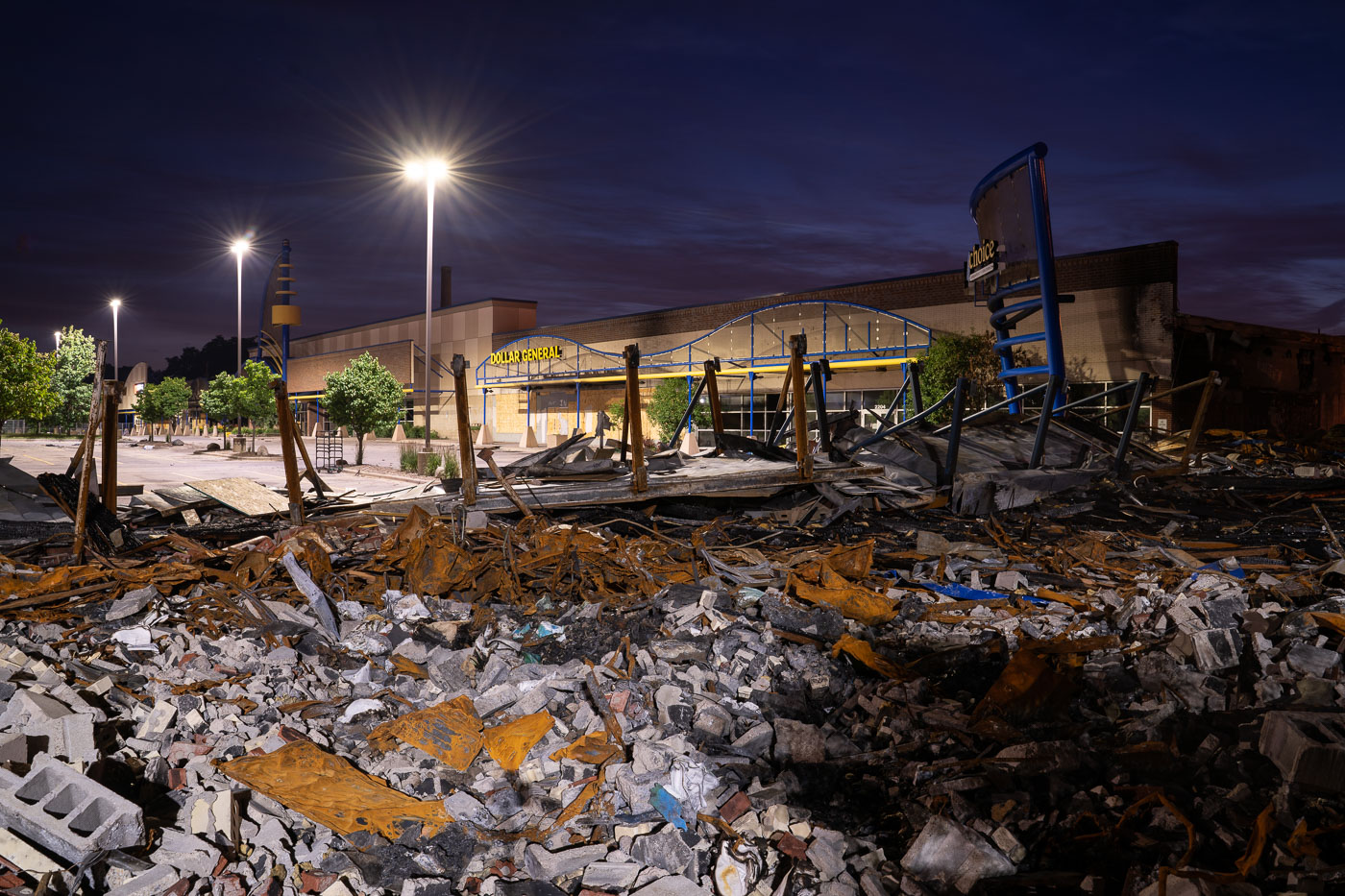
Dollar General at Hi-Lake Shopping Center in Minneapolis behind fire-damaged debris.
Dollar General at the Hi-Lake Shopping Center on East Lake Street in Minneapolis after fire damage in 2020. The shopping center also included an H&R Block office and other storefronts damaged during the unrest that followed the murder of George Floyd. Debris from the destroyed front portion of the complex remained across the site in early July 2020.

Dollar General at Hi-Lake Shopping Center, Minneapolis
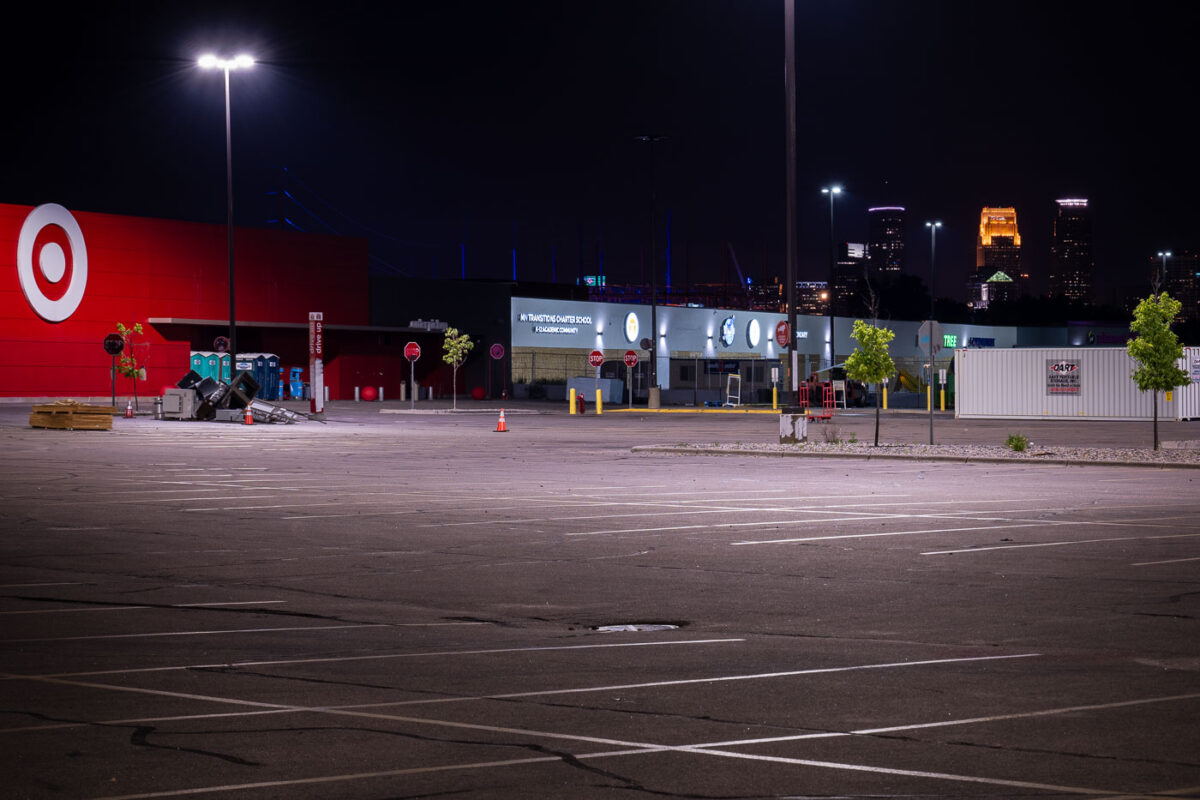
Target store renovation on East Lake Street in Minneapolis at night.
Target on East Lake Street in Minneapolis undergoes renovation after the store was damaged by fire in May 2020. The site sits across Lake Street from the Minneapolis Police Department's Third Precinct. Temporary facilities and construction equipment occupied the parking lot as rebuilding continued in early July 2020.

Target store renovation, East Lake Street, Minneapolis
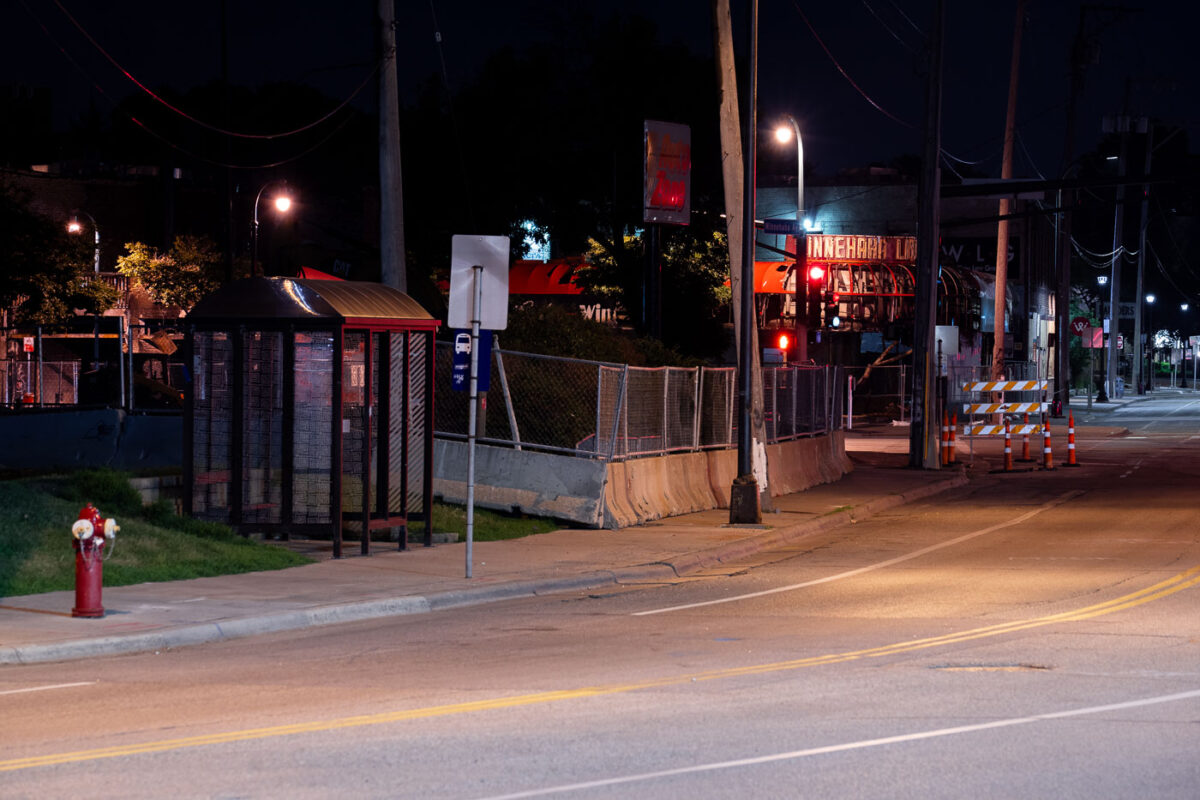
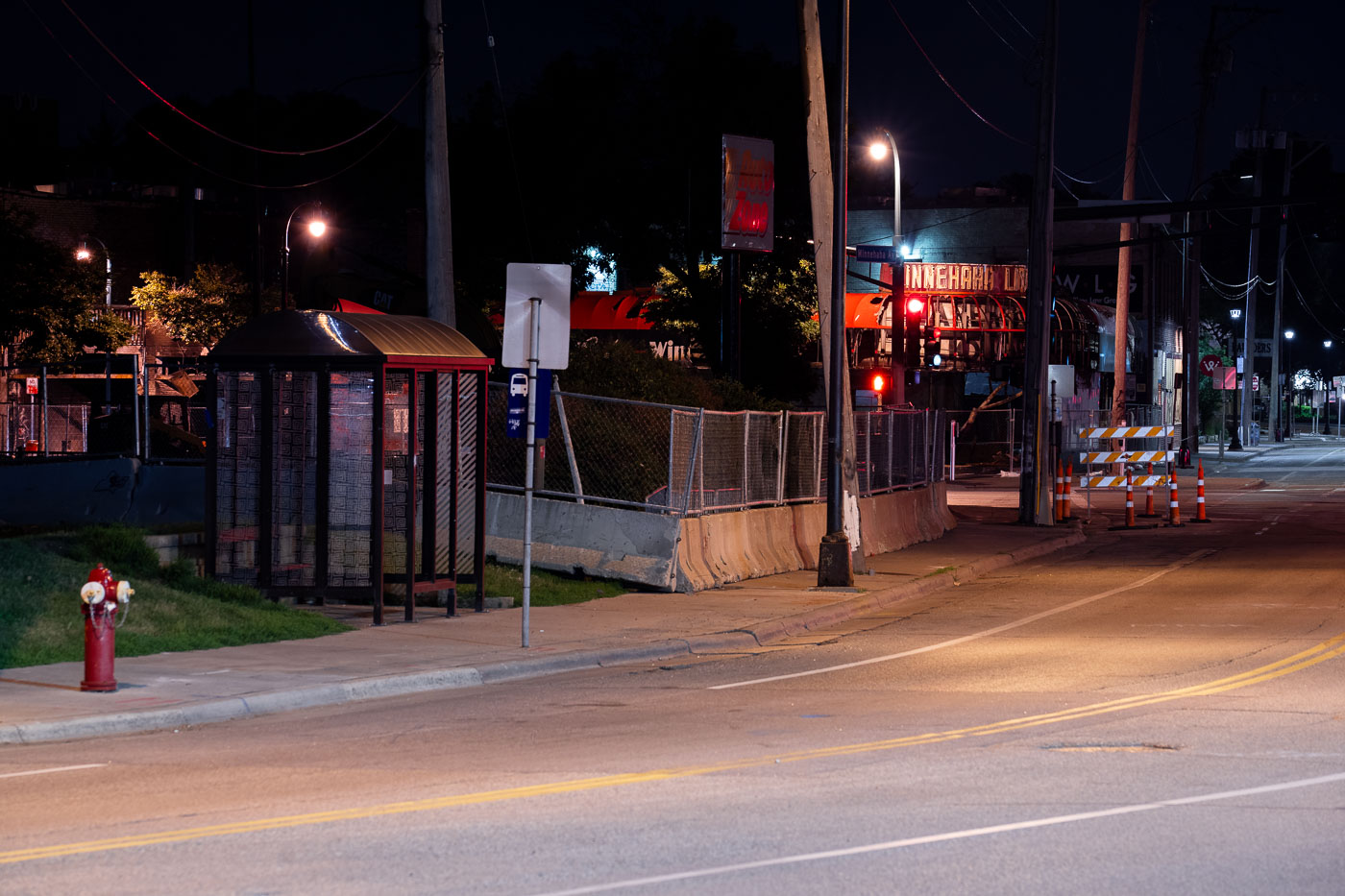
Minnehaha Liquors site at Lake Street and Minnehaha Avenue in Minneapolis behind fencing and barriers at night.
Minnehaha Liquors at East Lake Street and Minnehaha Avenue in Minneapolis appears behind fencing and concrete barriers in July 2020. The business was destroyed during the unrest that followed the killing of George Floyd, leaving a cleared and secured lot at the intersection. The corner sits near the former Third Precinct station and other fire-damaged Lake Street properties.

Minnehaha Liquors site at Lake Street, Minneapolis
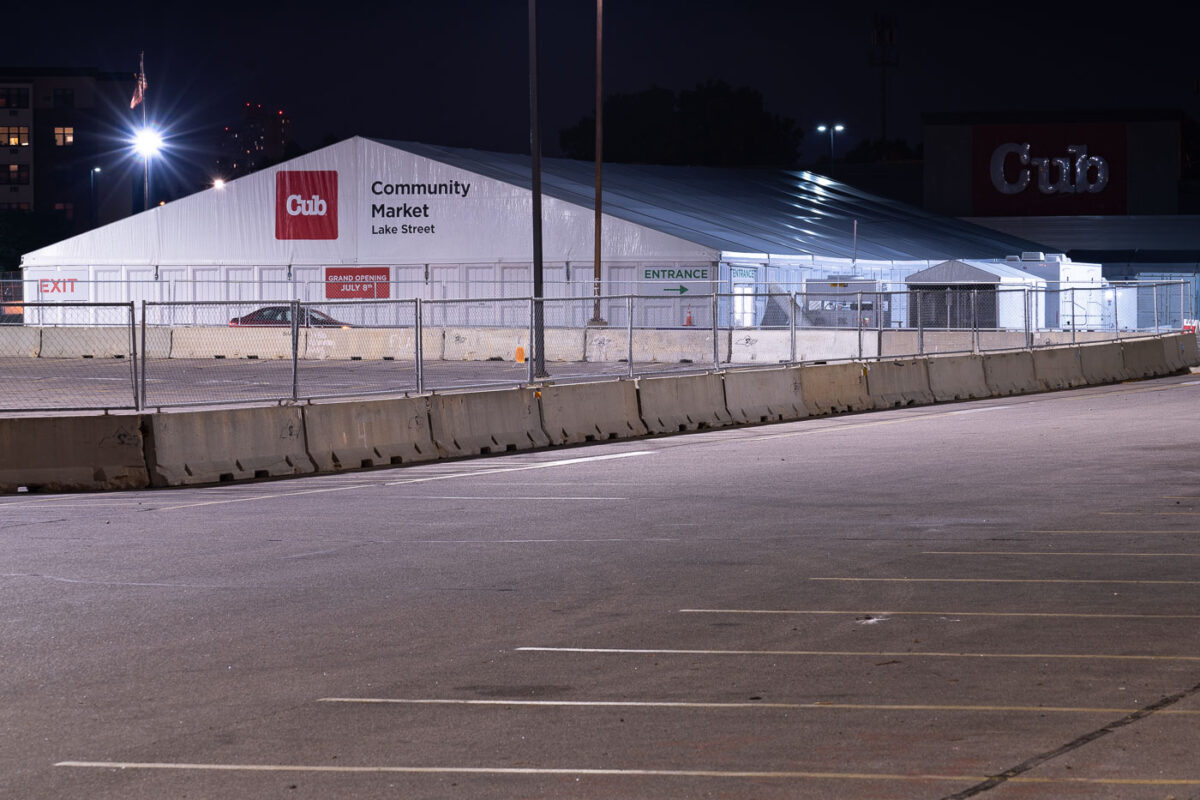
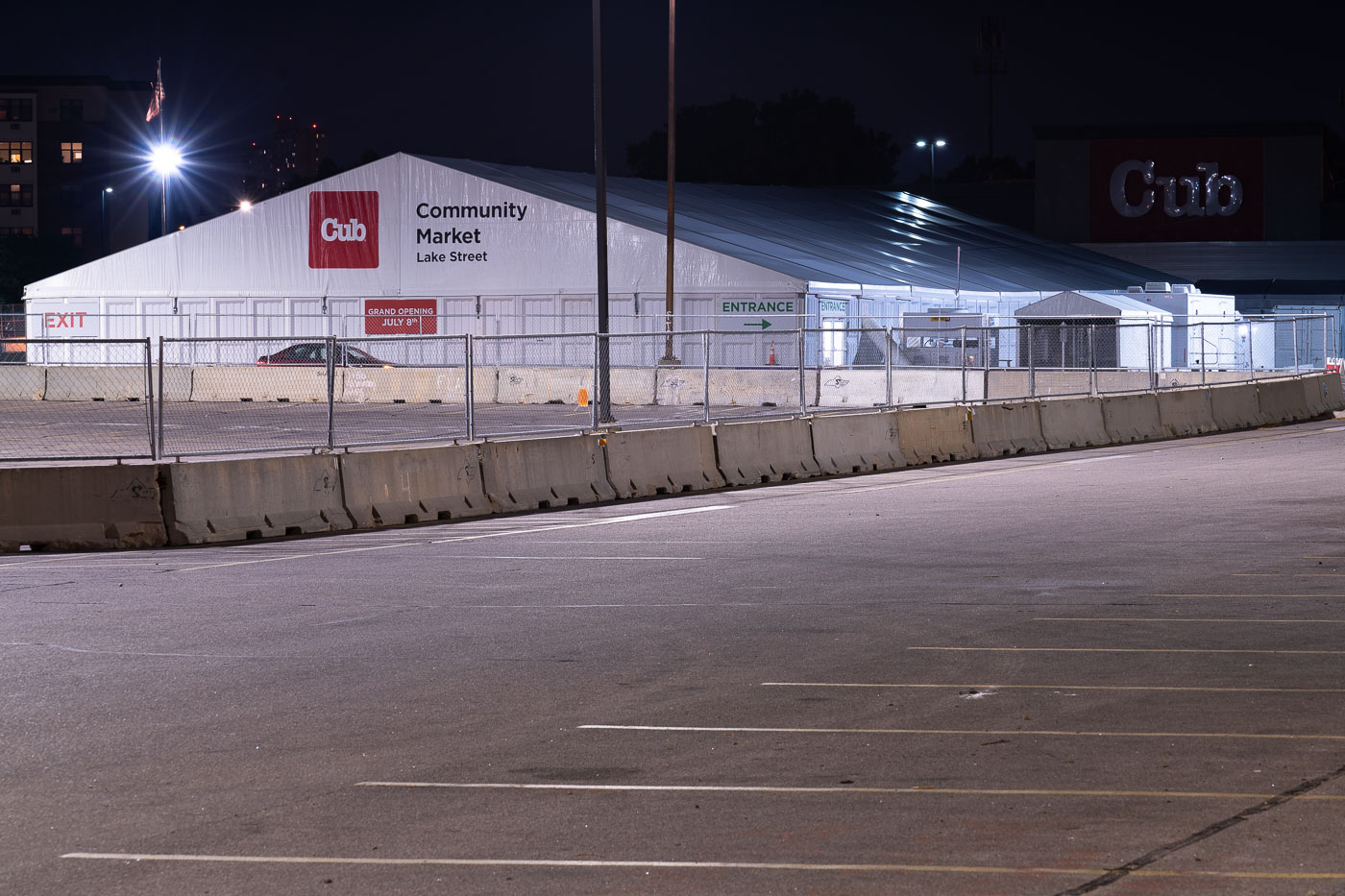
Cub Community Market tent on East Lake Street in Minneapolis before its July 8 opening.
Cub Community Market on East Lake Street in Minneapolis was a temporary grocery store established after the nearby Cub Foods was damaged by fire in May 2020. The tent market provided interim food access while the permanent store was rebuilt. A sign at the site announced a July 8 grand opening.

Cub Community Market, East Lake Street Minneapolis
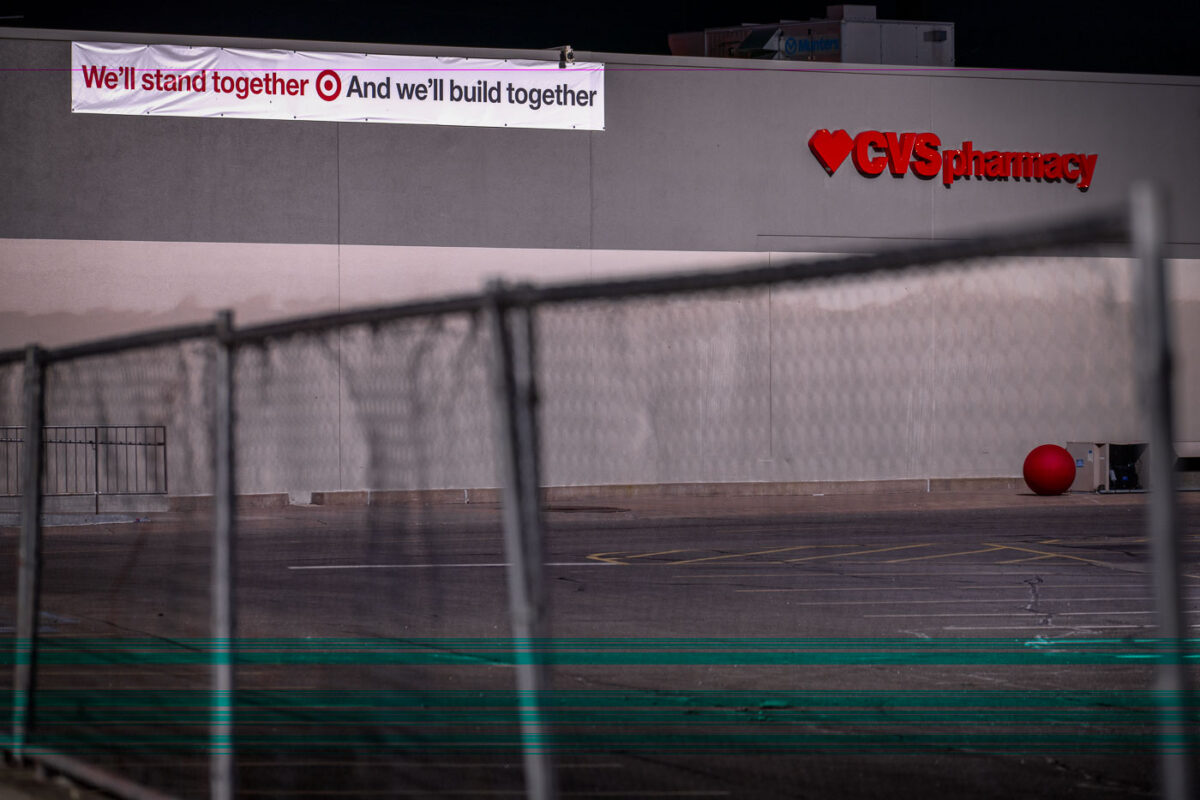
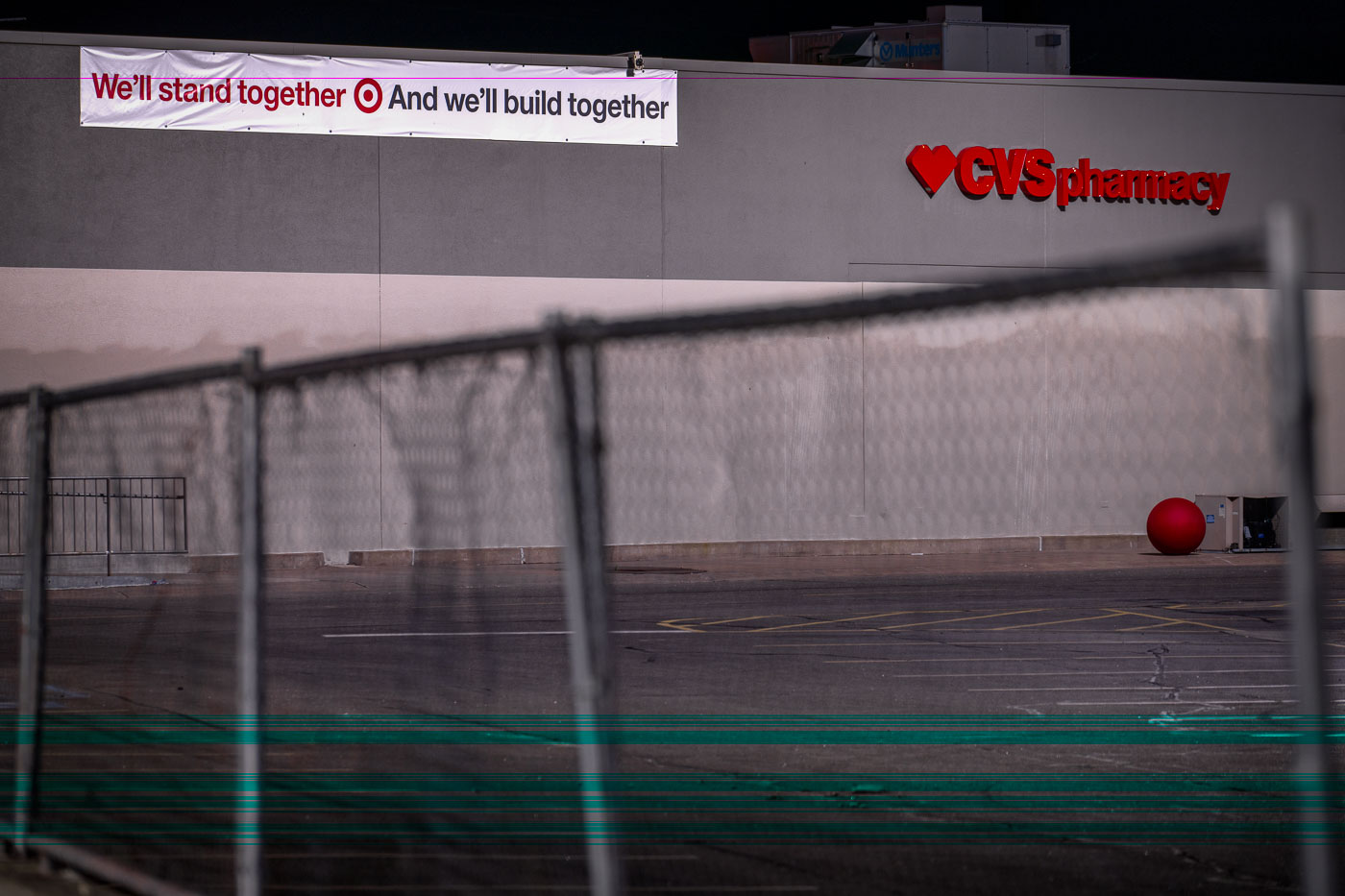
We’ll stand together and we’ll build together
A Target store, which includes a CVS Pharmacy, stands on East Lake Street in Minneapolis. This location was significantly affected by looting during the 2020 unrest that followed the May 25th death of George Floyd. A banner displayed on the building's facade reads, "We'll stand together And we'll build together," conveying a message of community resilience and recovery. Temporary fencing is visible in the foreground, indicating ongoing security or rebuilding efforts in the area.

Minneapolis Target Store Sign, East Lake Street, 2020 Unrest
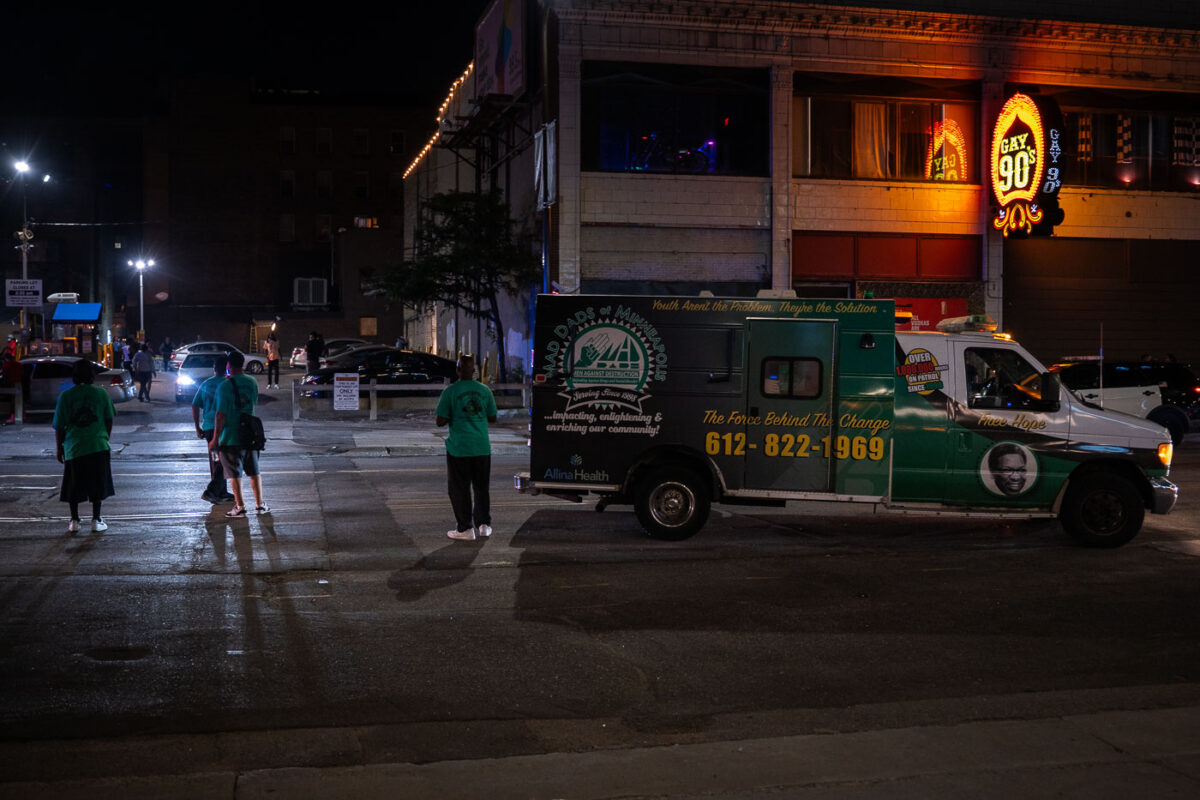
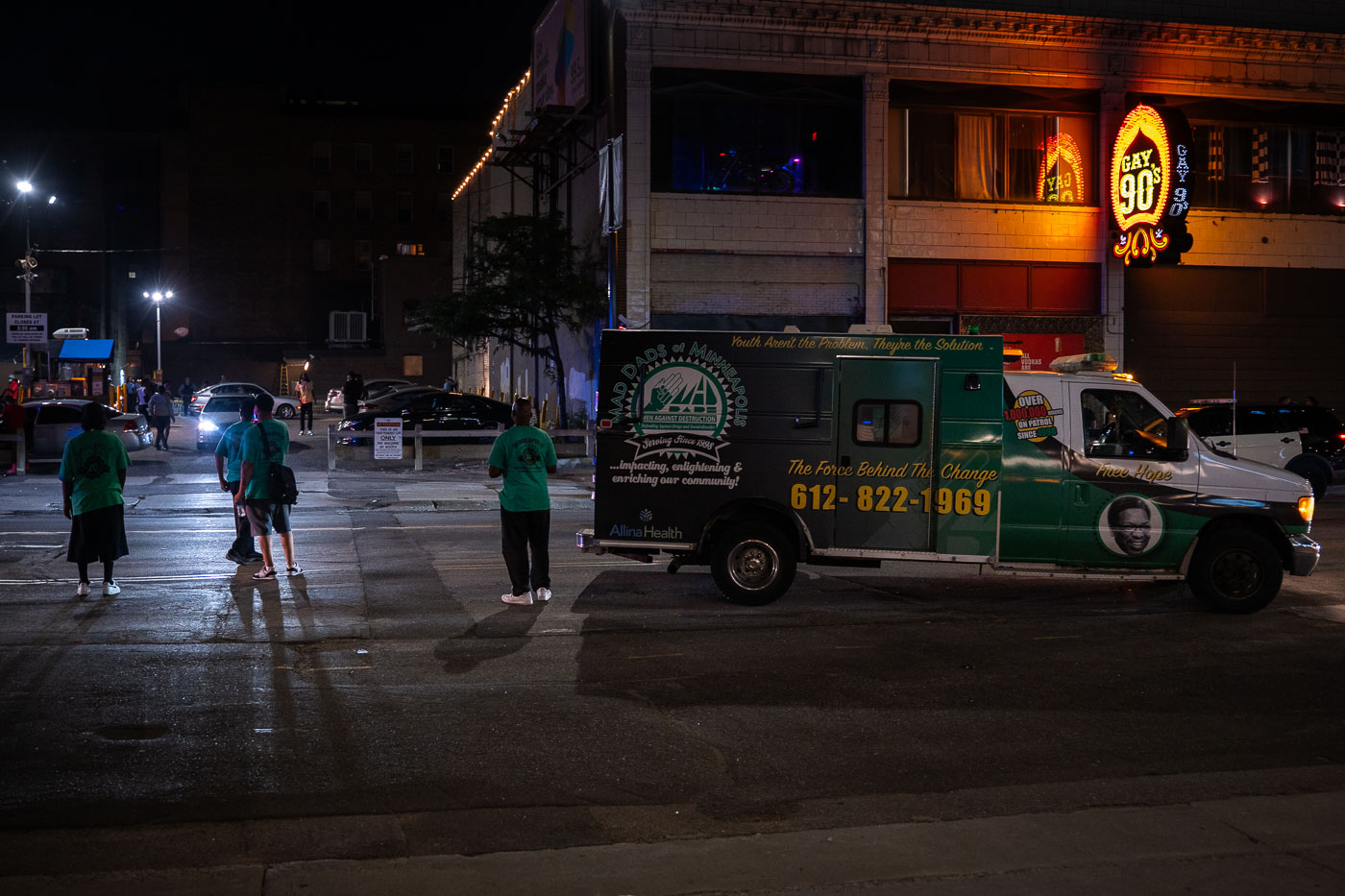
MAD DADs and their truck on Hennepin Ave
The MAD DADS organization operates its outreach truck on Hennepin Avenue in downtown Minneapolis, positioned outside the Gay 90s nightclub. Established to foster positive change and community stability, MAD DADS focuses on violence interruption, youth development, and assisting individuals re-entering society from prison. Their dedicated presence in urban areas like Hennepin Avenue underscores their mission to provide community service and support. The Gay 90s nightclub, a prominent and long-standing establishment, serves as a recognizable landmark in this vibrant Minneapolis district.

MAD DADS truck, Gay 90s Nightclub, Hennepin Ave, Minneapolis
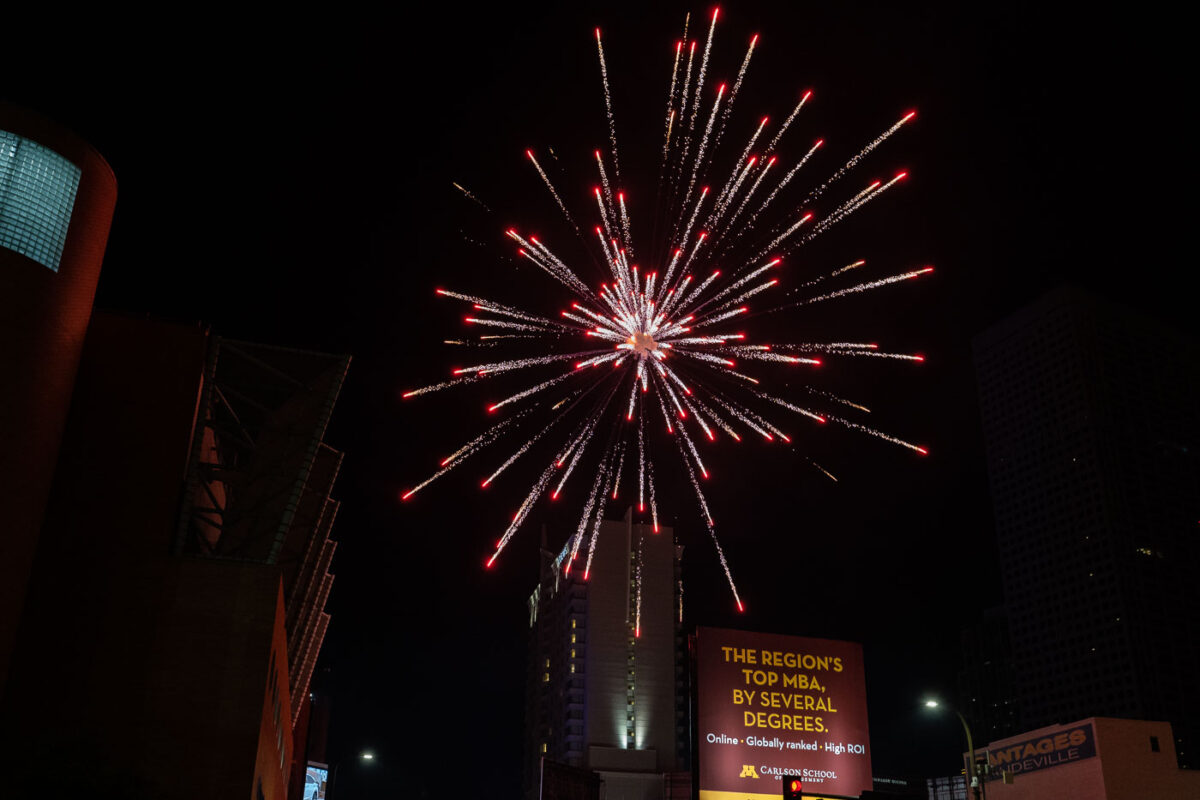
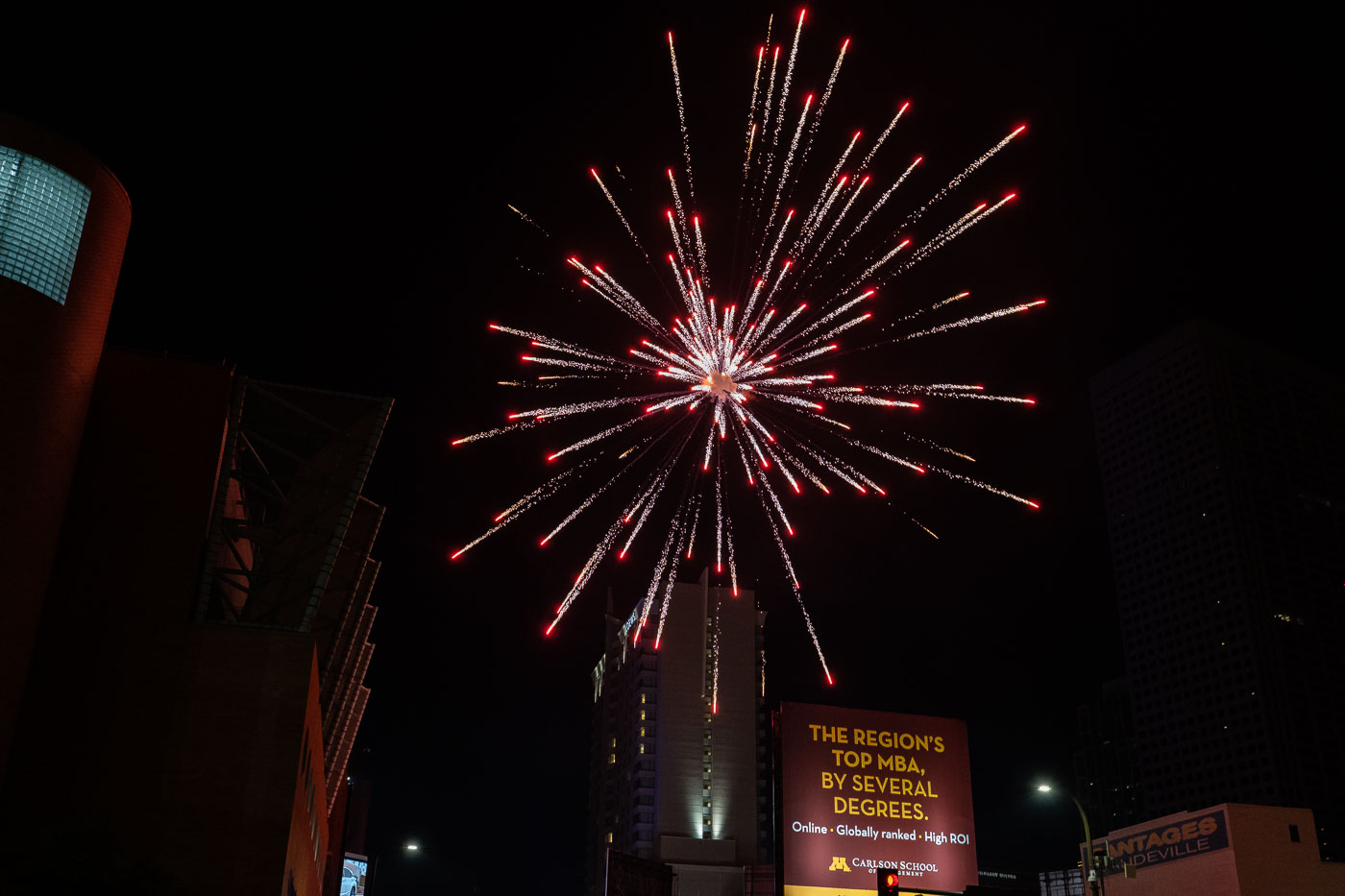
Fireworks burst above North 1st Avenue in downtown Minneapolis on July 4, 2020.
Fireworks over North 1st Avenue in downtown Minneapolis on July 4, 2020. The display rises above commercial buildings along the street in the Warehouse District area. A University of Minnesota Carlson School of Management billboard is visible among the downtown buildings.

Fireworks over North 1st Avenue, Minneapolis
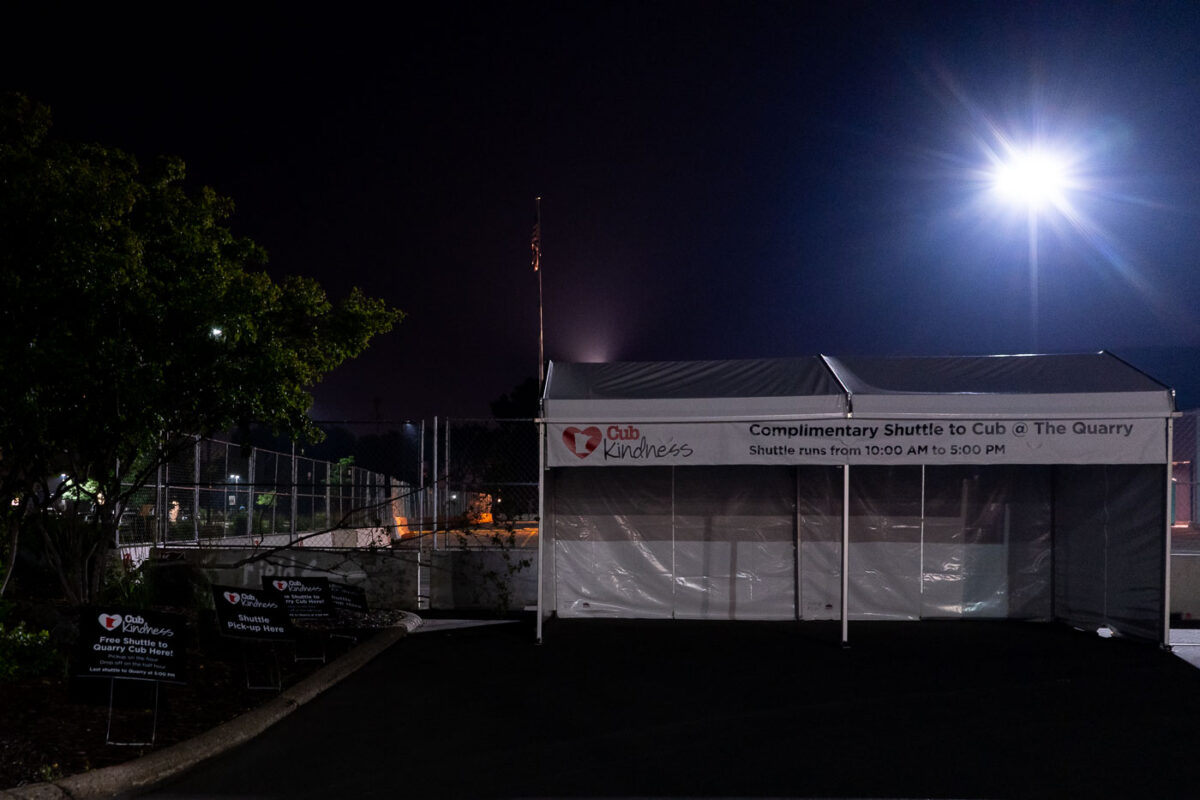
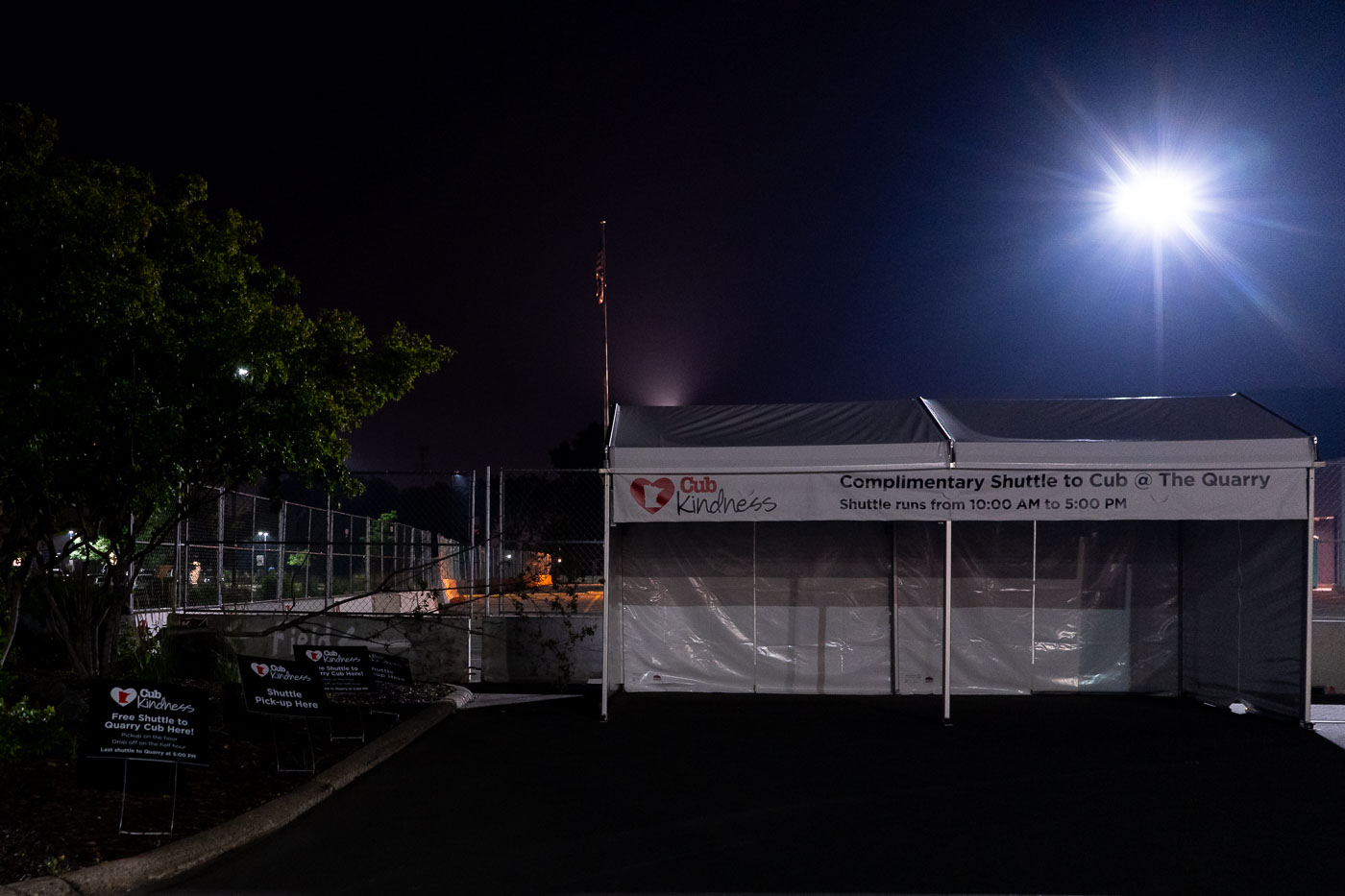
Complimentary Cub Foods shuttle bus stop
A temporary shuttle bus station, branded "Cub Kindness," was established in Minneapolis to provide essential transportation for residents. This service offered complimentary rides to the Cub Foods store at The Quarry, following extensive damage to the local Cub Foods store during the civil unrest in May 2020. The unrest occurred in the aftermath of George Floyd's murder, impacting local infrastructure and community access to resources. The shuttle operated daily from 10:00 AM to 5:00 PM, serving as a vital link for grocery access during the community's recovery period.

Cub Foods Shuttle to The Quarry, Minneapolis Aftermath
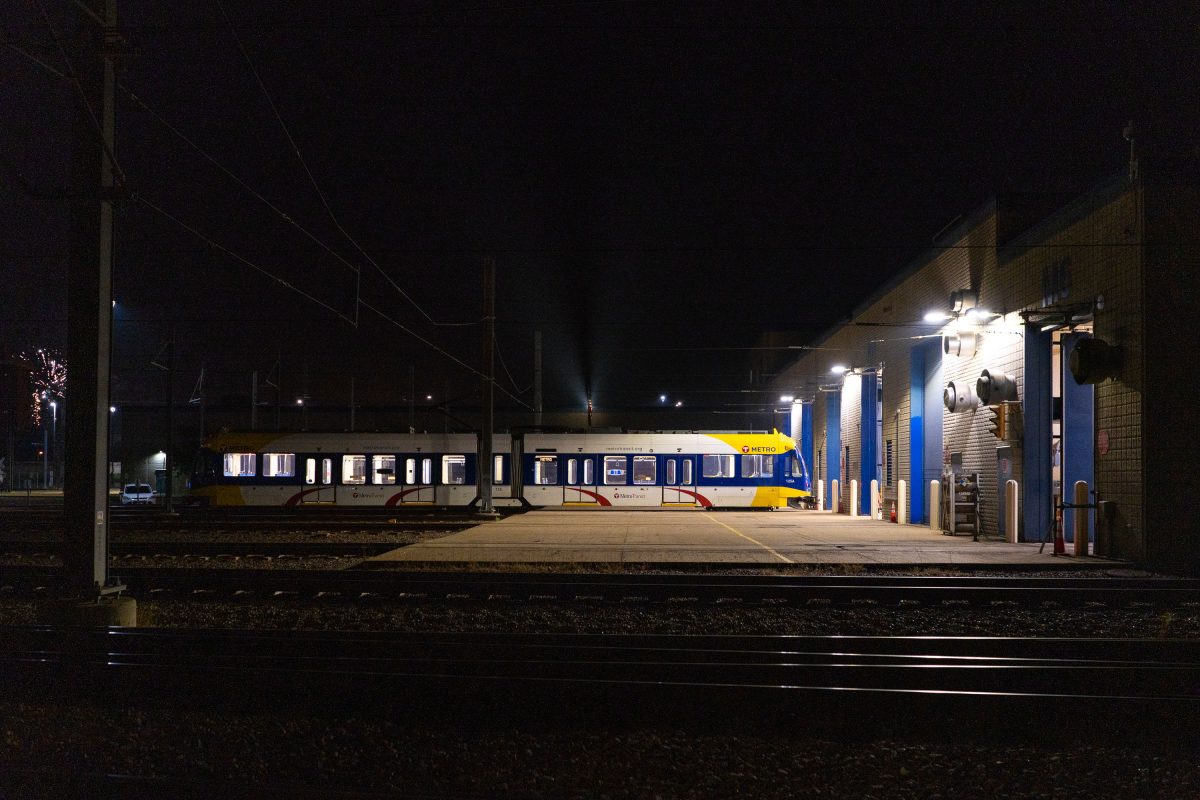
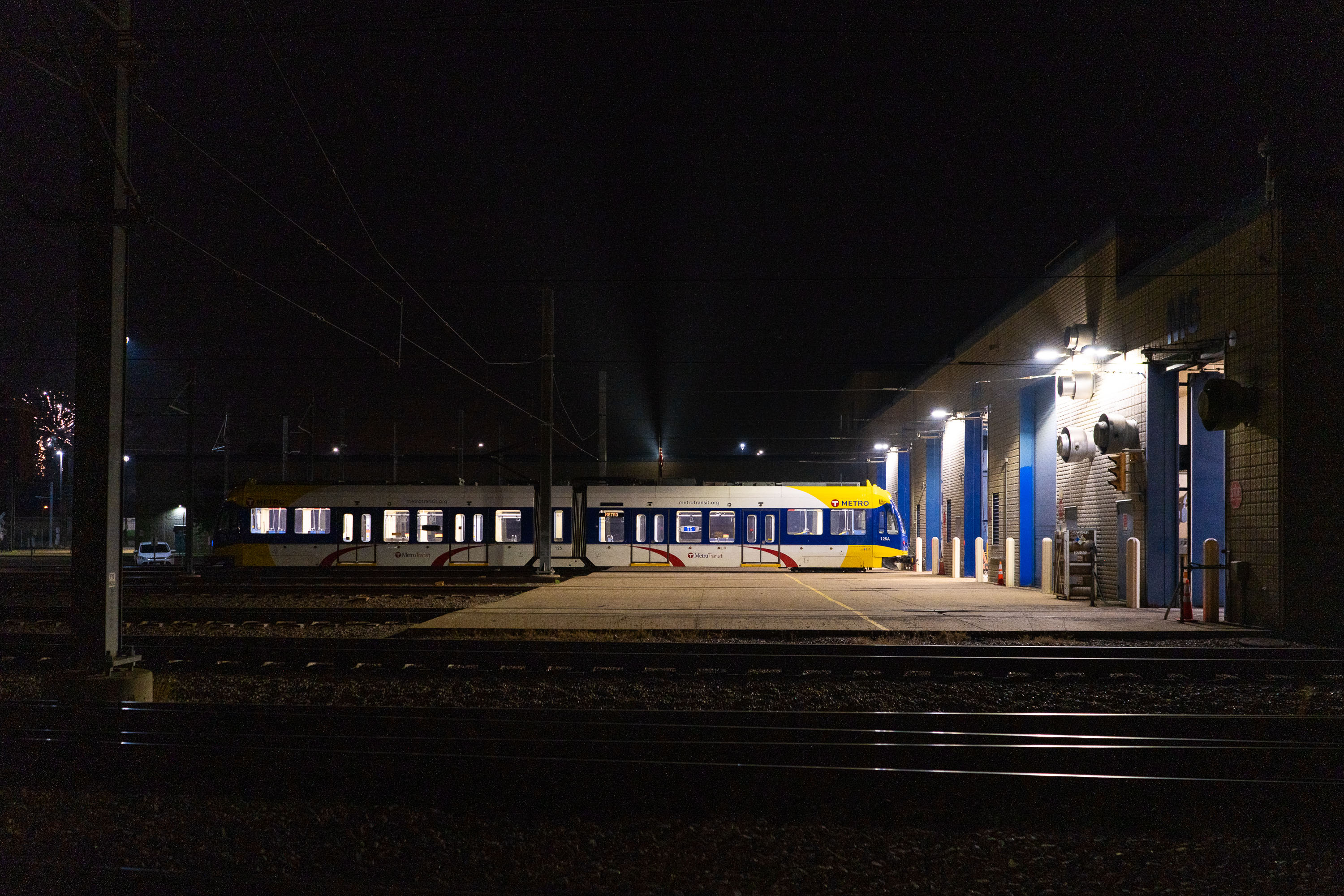
Metro Transit light rail vehicle stationed at a maintenance facility in south Minneapolis at night.
A Metro Transit light rail vehicle sits outside a maintenance and storage facility in South Minneapolis. The building services light rail cars operating on the METRO system, which includes the Blue and Green Lines connecting Minneapolis, St. Paul, and surrounding suburbs.

Light Rail Vehicle Parked at Metro Transit Facility at Night
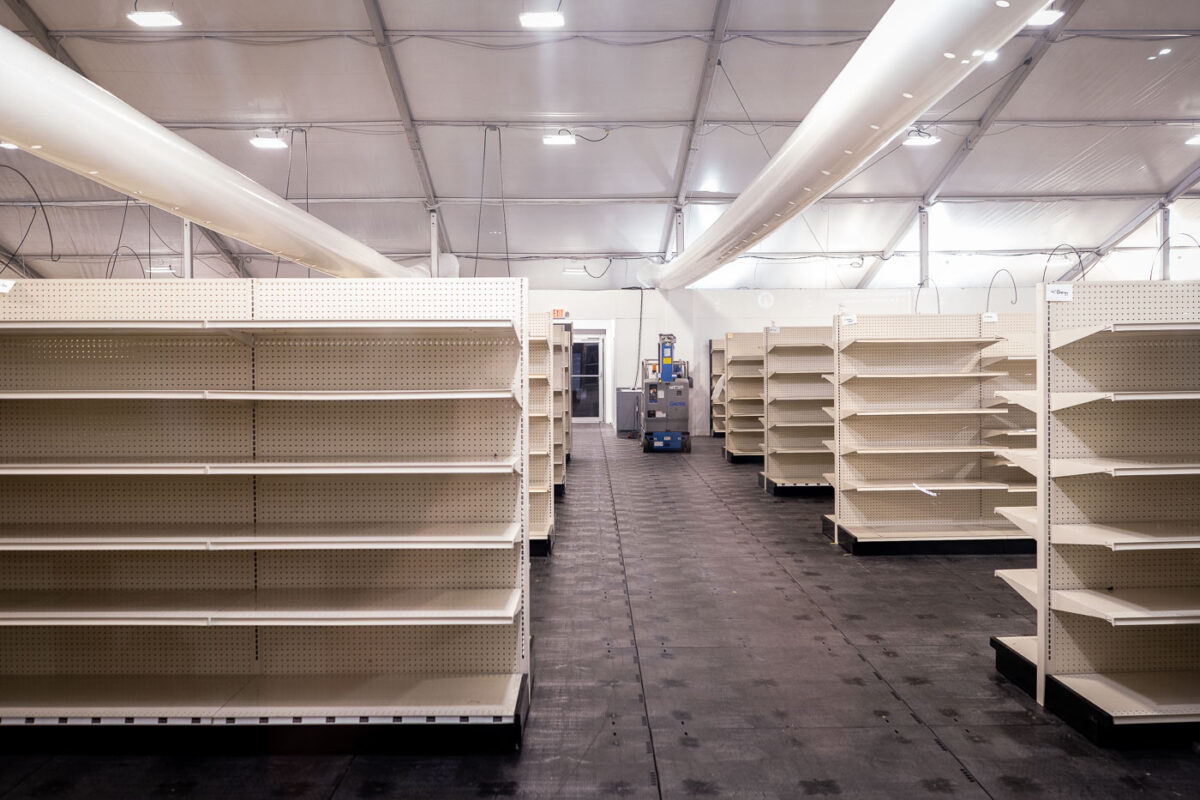
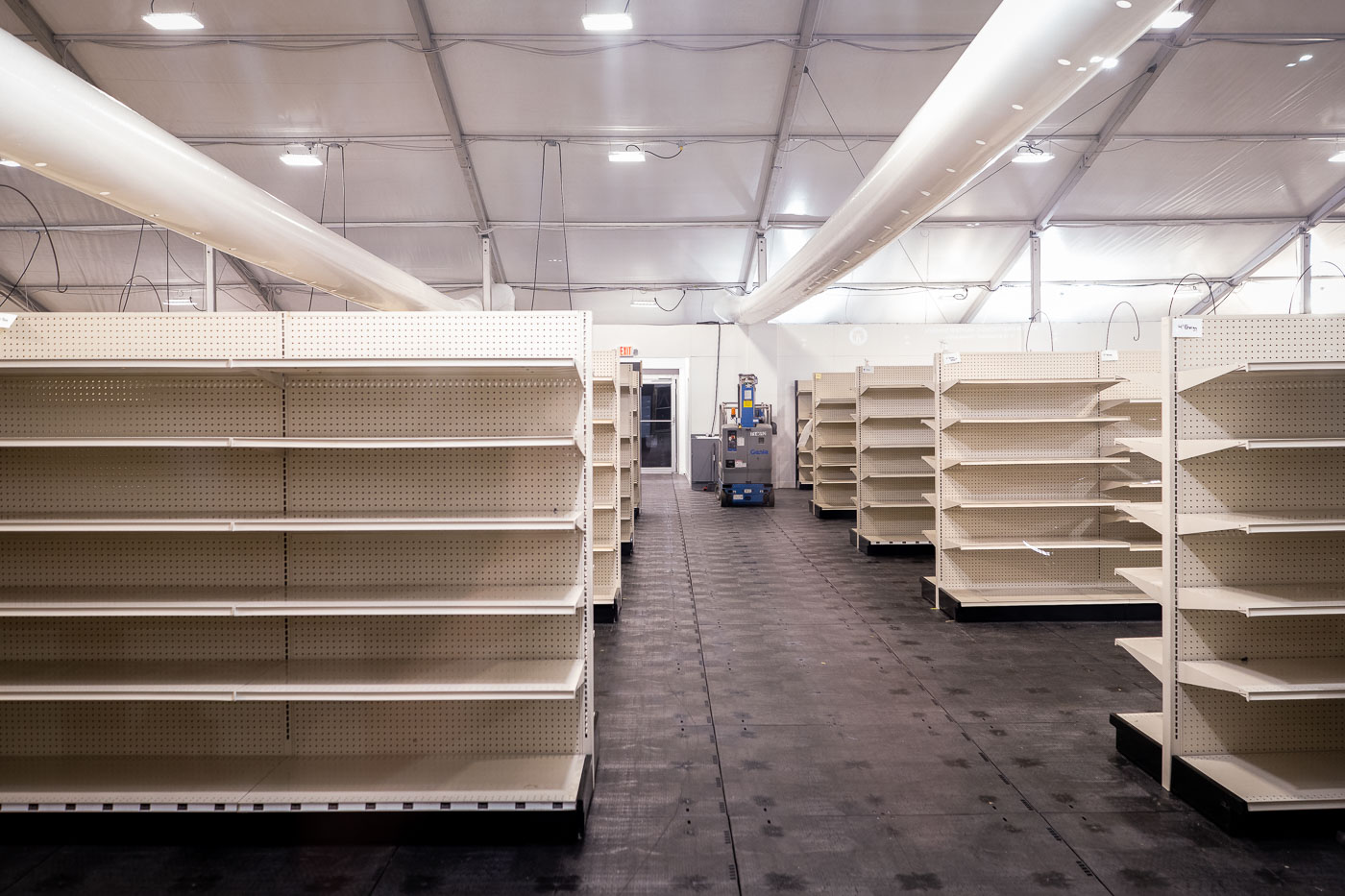
Cub Foods temporary market interior in Minneapolis with mostly empty grocery shelves.
Cub Foods temporary market, Minneapolis. This temporary grocery structure was set up to maintain food access while a nearby Cub Foods store underwent repairs after damage in 2020. The interior contains mostly empty retail shelving and store fixtures.

Cub Foods temporary market interior, Minneapolis
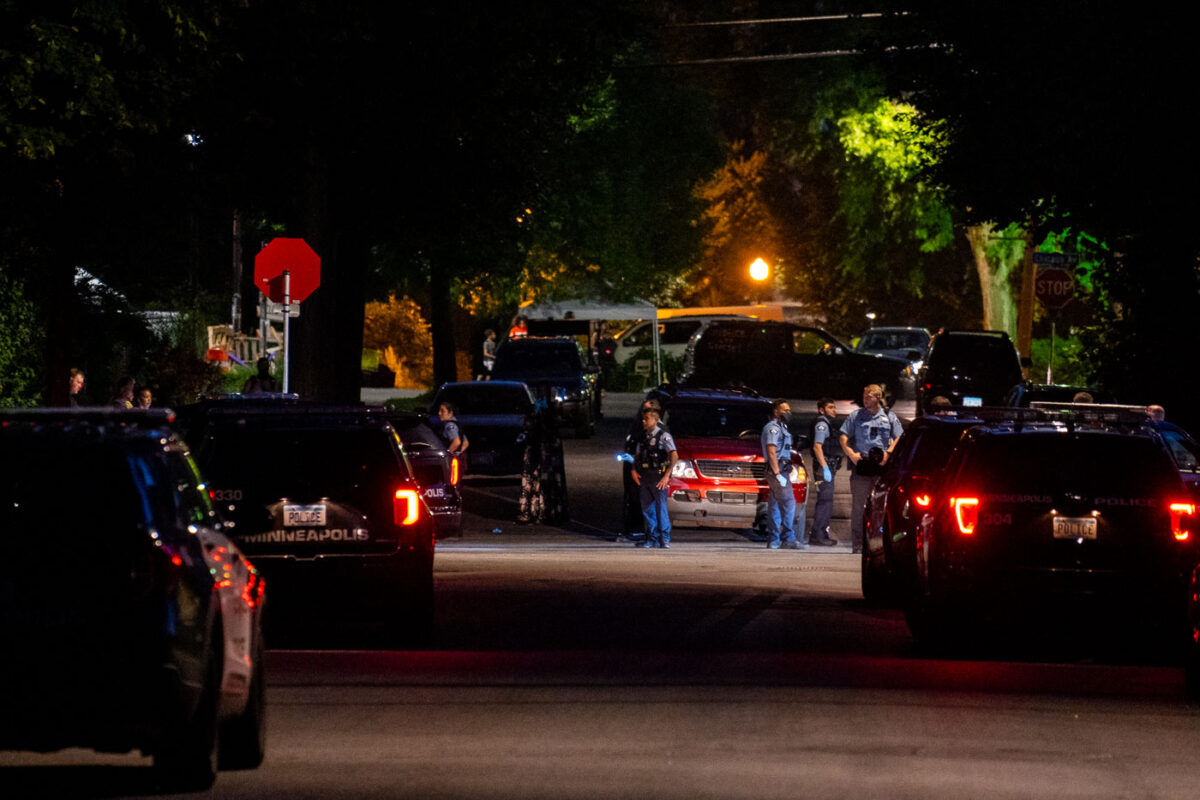
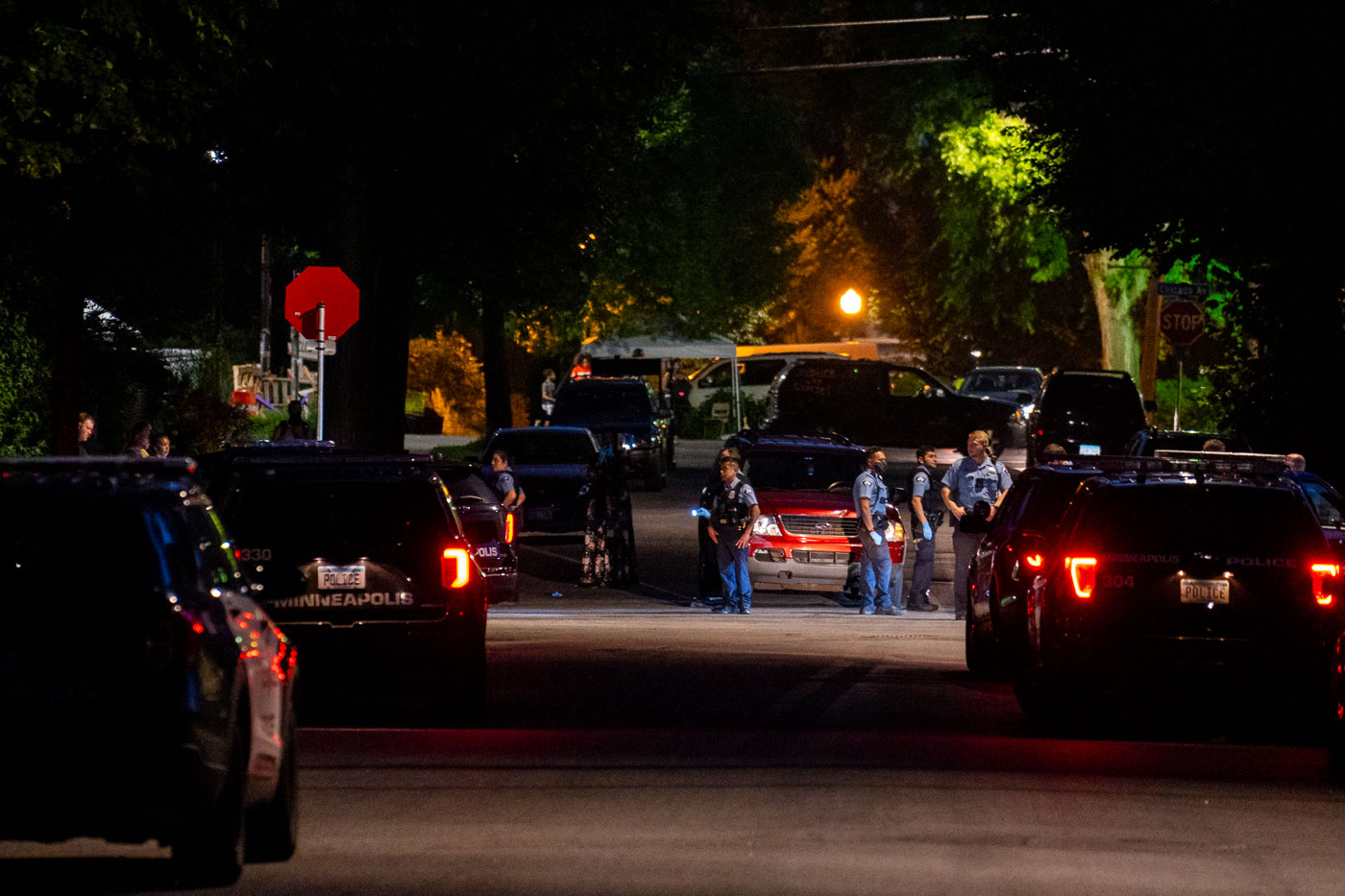
Minneapolis Police officers and squad cars investigate the killing of Leneesha Columbus in South Minneapolis at night.
Minneapolis Police investigate the killing of Leneesha Columbus in South Minneapolis on July 5, 2020. The response includes multiple officers and squad cars on a residential street near George Floyd Square.

Minneapolis Police Investigation after Leneesha Columbus Killing
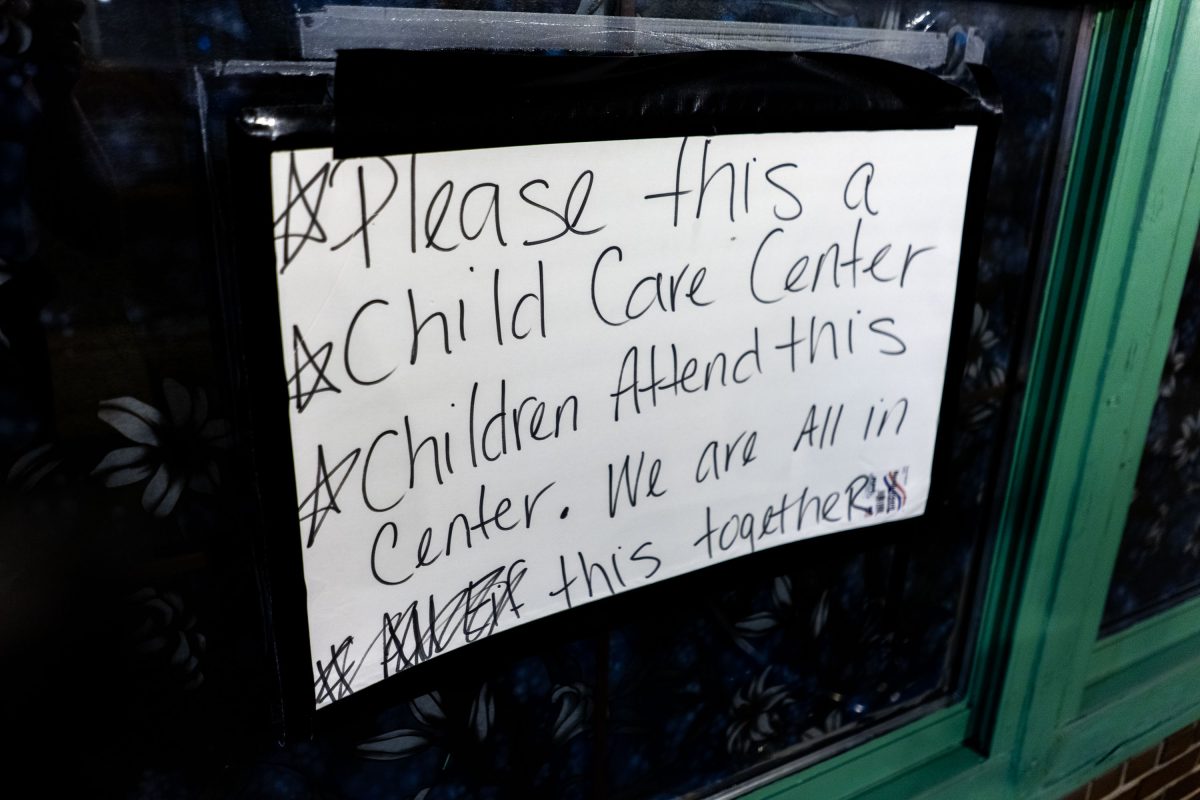
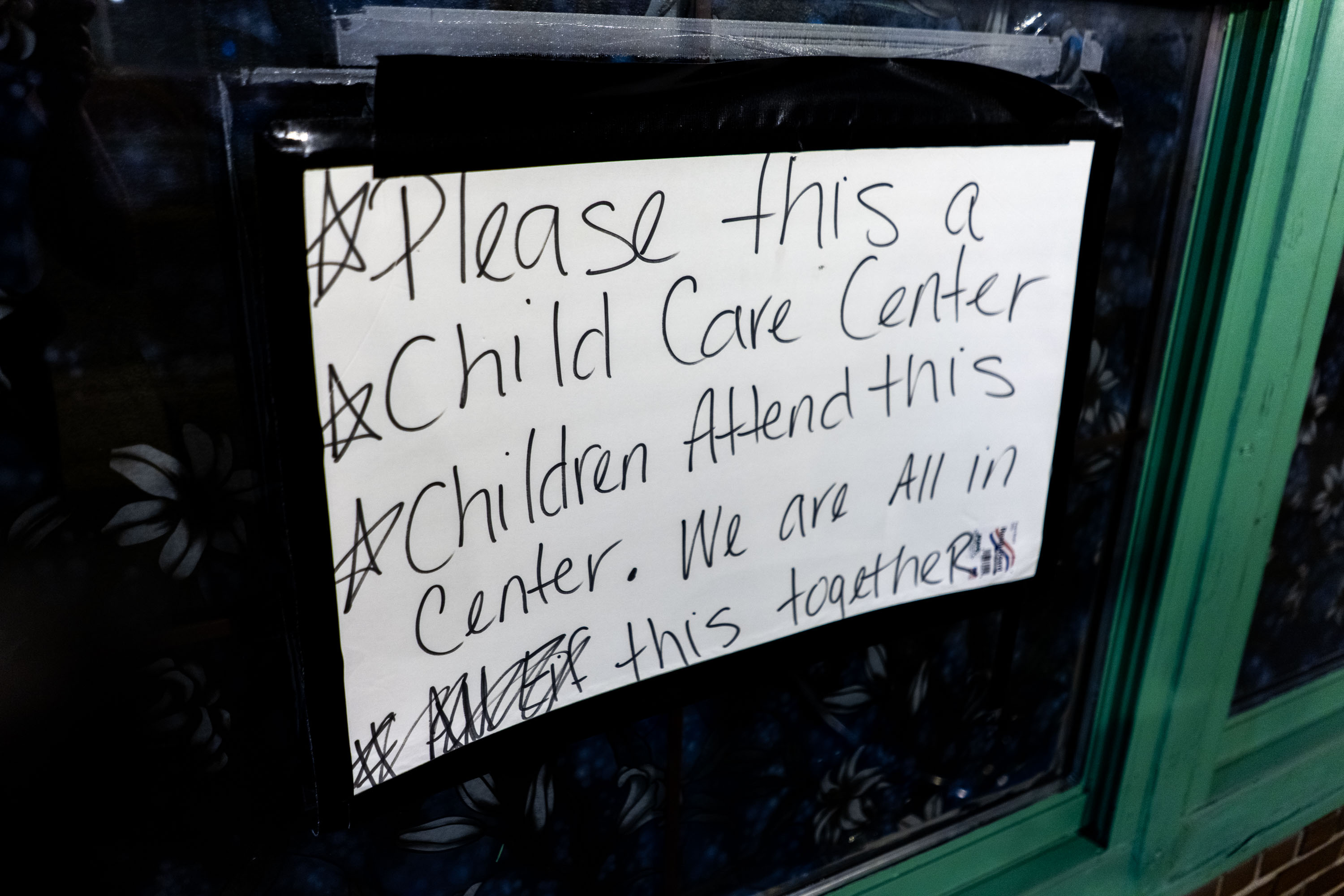
Sign on a child care center during Minneapolis unrest
A sign on the door of a child care center during May/June unrest in Minneapolis over the murder of George Floyd. Sign reads "Please this is a child care center. Children attend this center. We are all in this together"

Please this is a child care center, Minneapolis sign
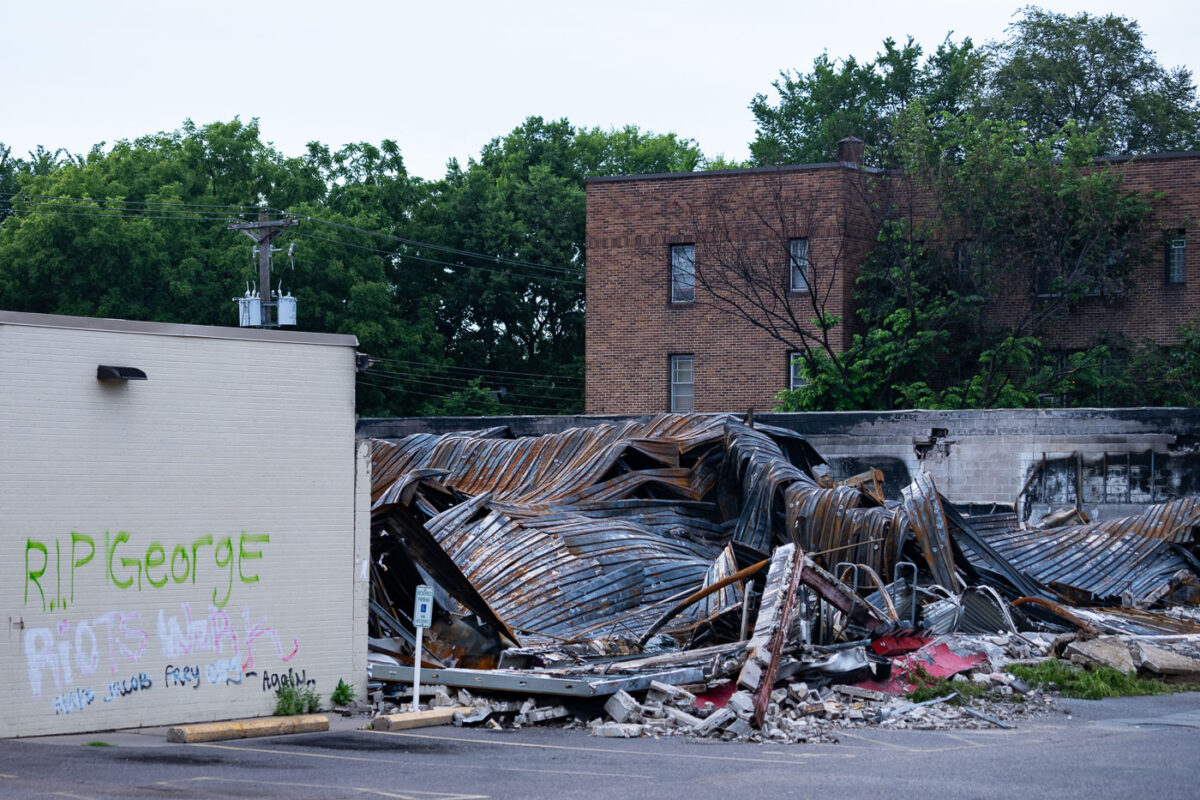
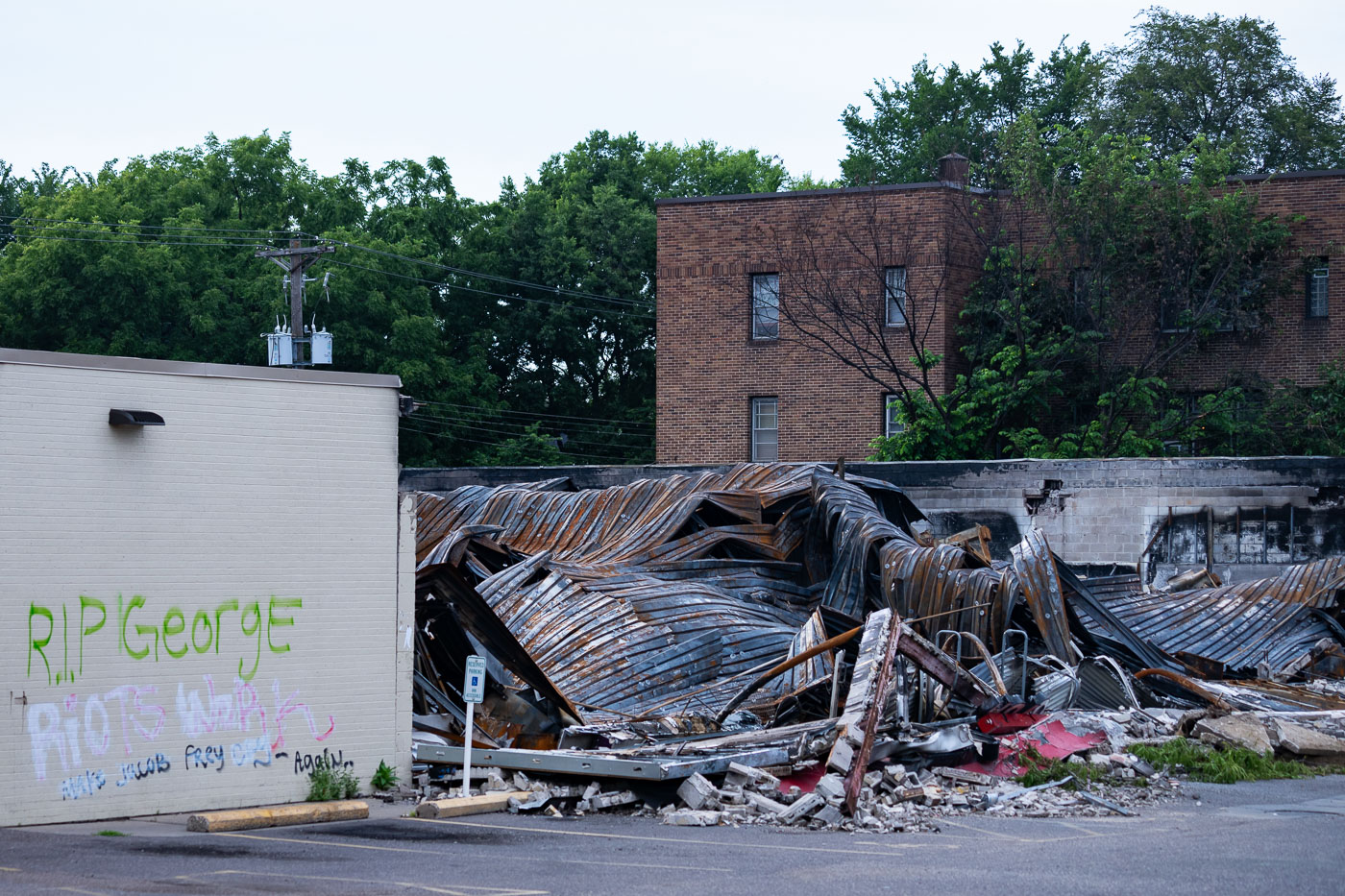
Burned O'Reilly Auto Parts remains on Nicollet Avenue in Minneapolis in July 2020.
Burned O'Reilly Auto Parts on Nicollet Avenue in Minneapolis remained collapsed and uncleared in July 2020. The store was damaged during the unrest that followed the murder of George Floyd in May 2020. Graffiti on the adjacent wall ties the site to that period in the city.

Burned O’Reilly Auto Parts on Nicollet Avenue, Minneapolis
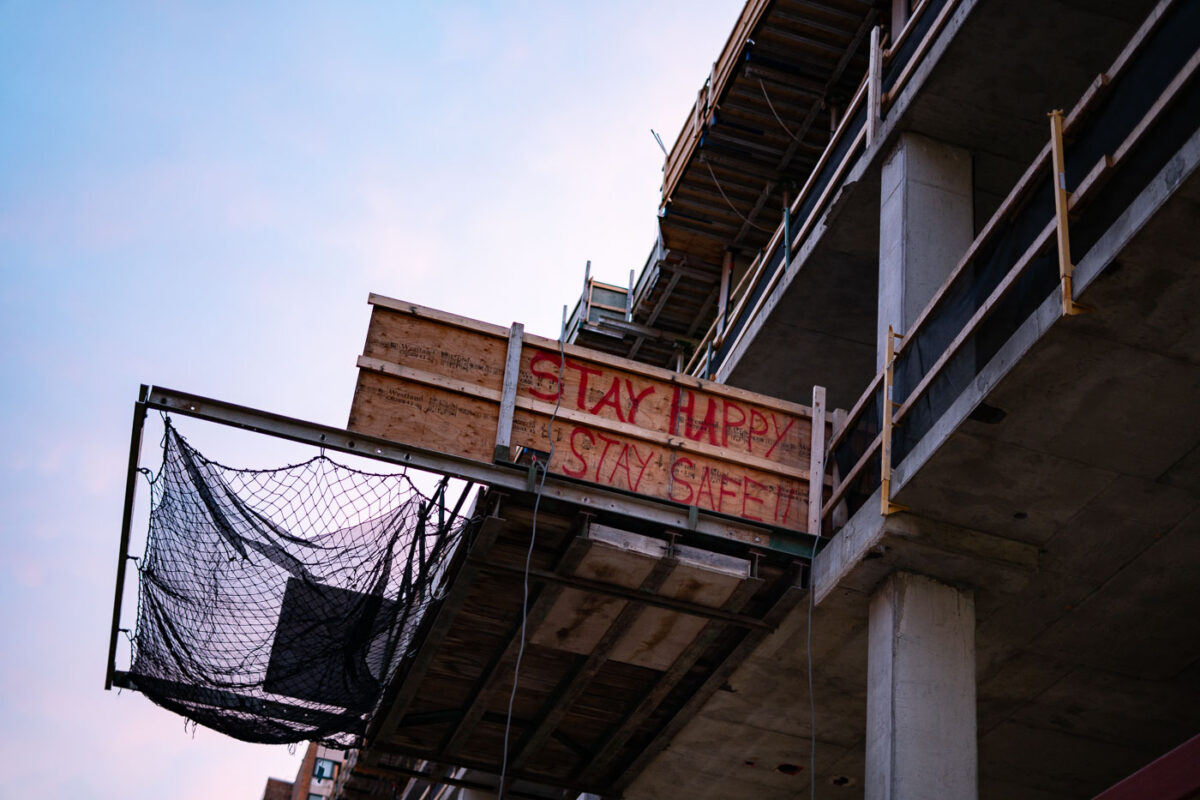
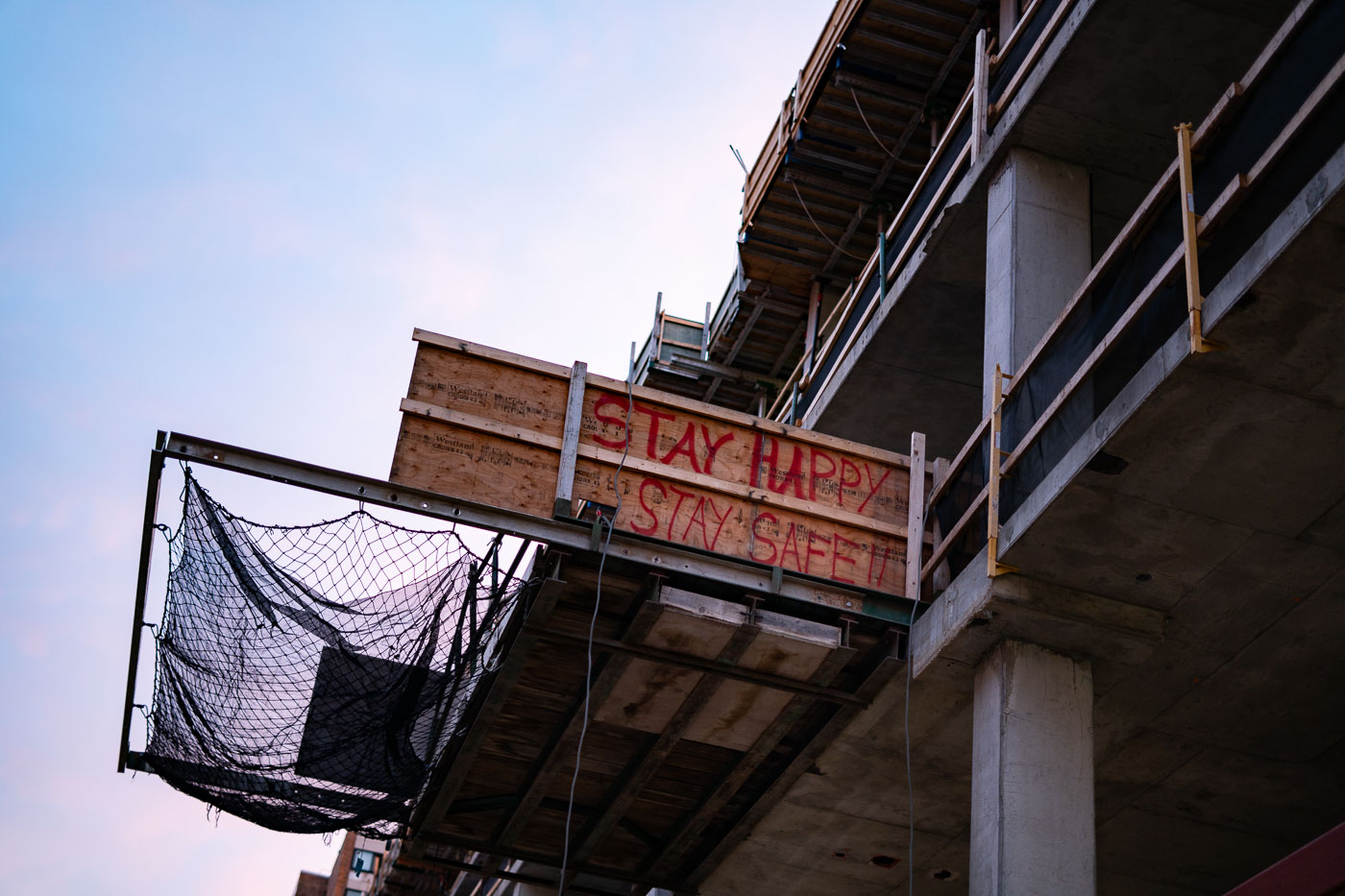
Stay Happy Stay Safe sign on a downtown Minneapolis construction site with scaffolding and safety netting.
Stay Happy Stay Safe sign at a downtown Minneapolis construction site. The message is painted on a temporary wooden barrier attached to an unfinished concrete building with scaffolding, guardrails, and safety netting. The structure was under active development in July 2020.

Stay Happy Stay Safe Sign at Downtown Minneapolis Construction Site
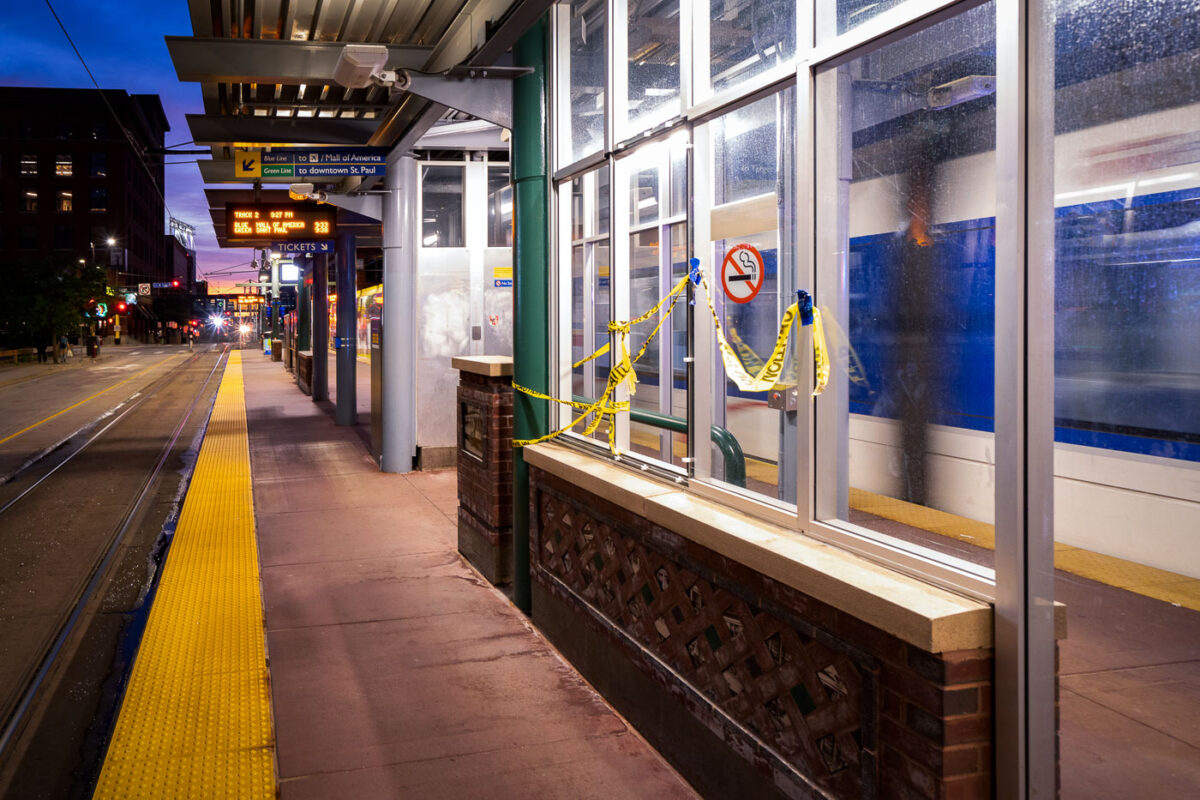
Warehouse District/Hennepin Station platform blocked with caution tape in downtown Minneapolis.
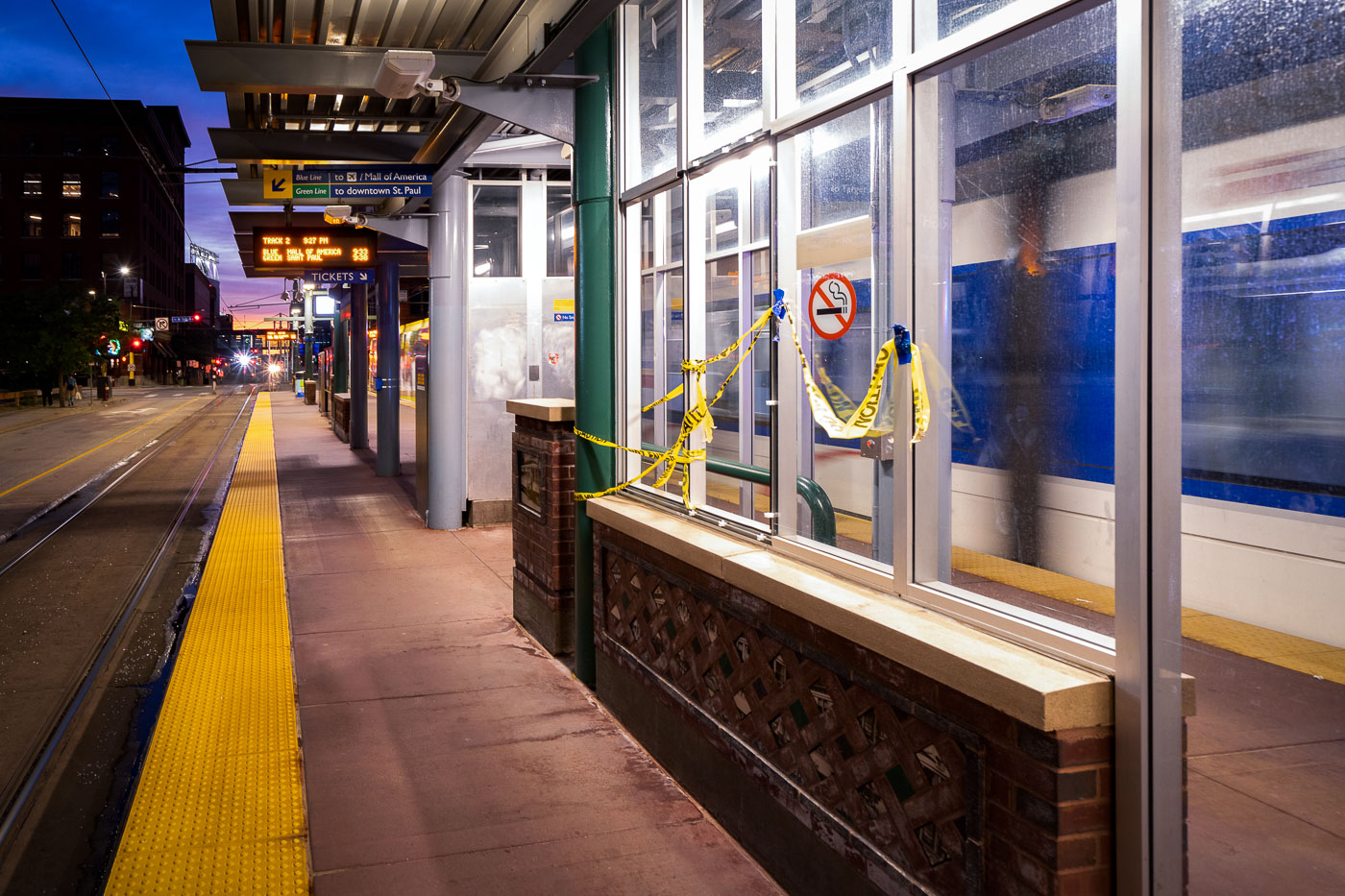
Warehouse District/Hennepin Station in downtown Minneapolis has caution tape blocking part of the METRO light rail platform. Signs for the Blue Line and Green Line are posted under the station canopy. The station serves trains through the Warehouse District on 5th Street in the city center.

Warehouse District/Hennepin Station platform closure, Minneapolis
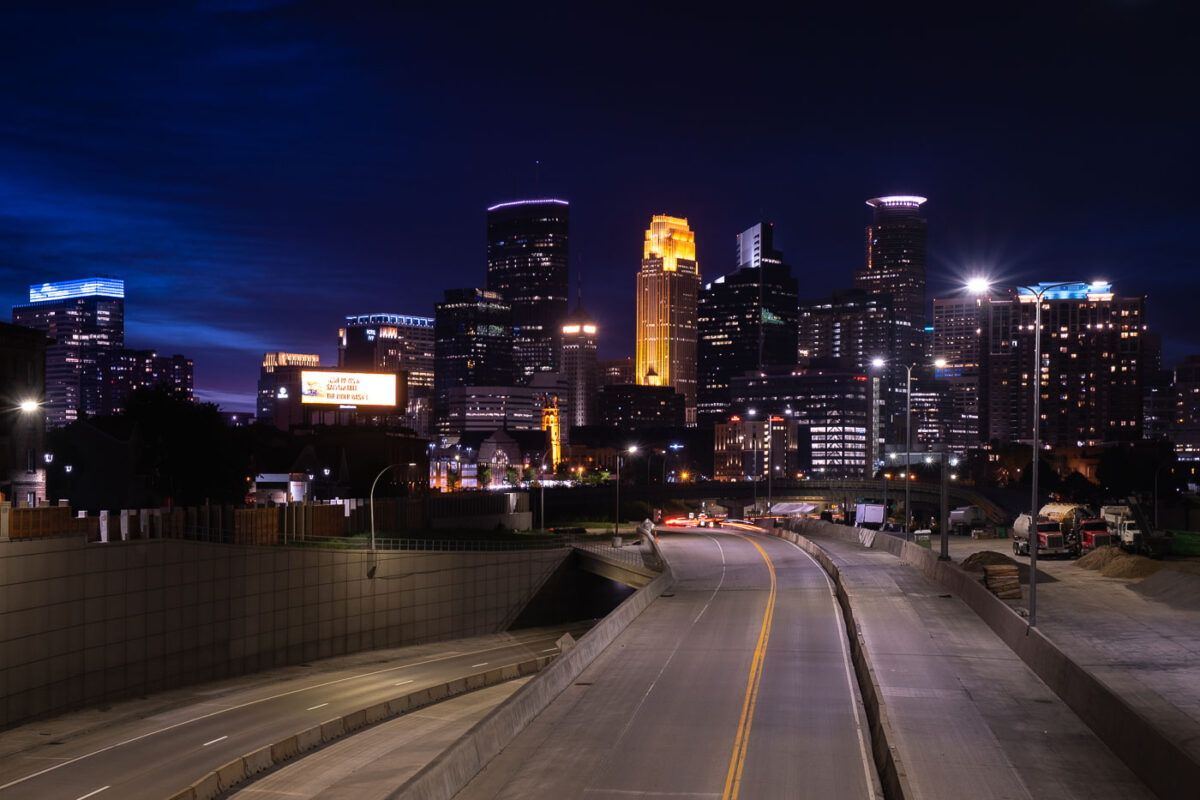
Interstate 35W construction approaching downtown Minneapolis at night with the skyline beyond.
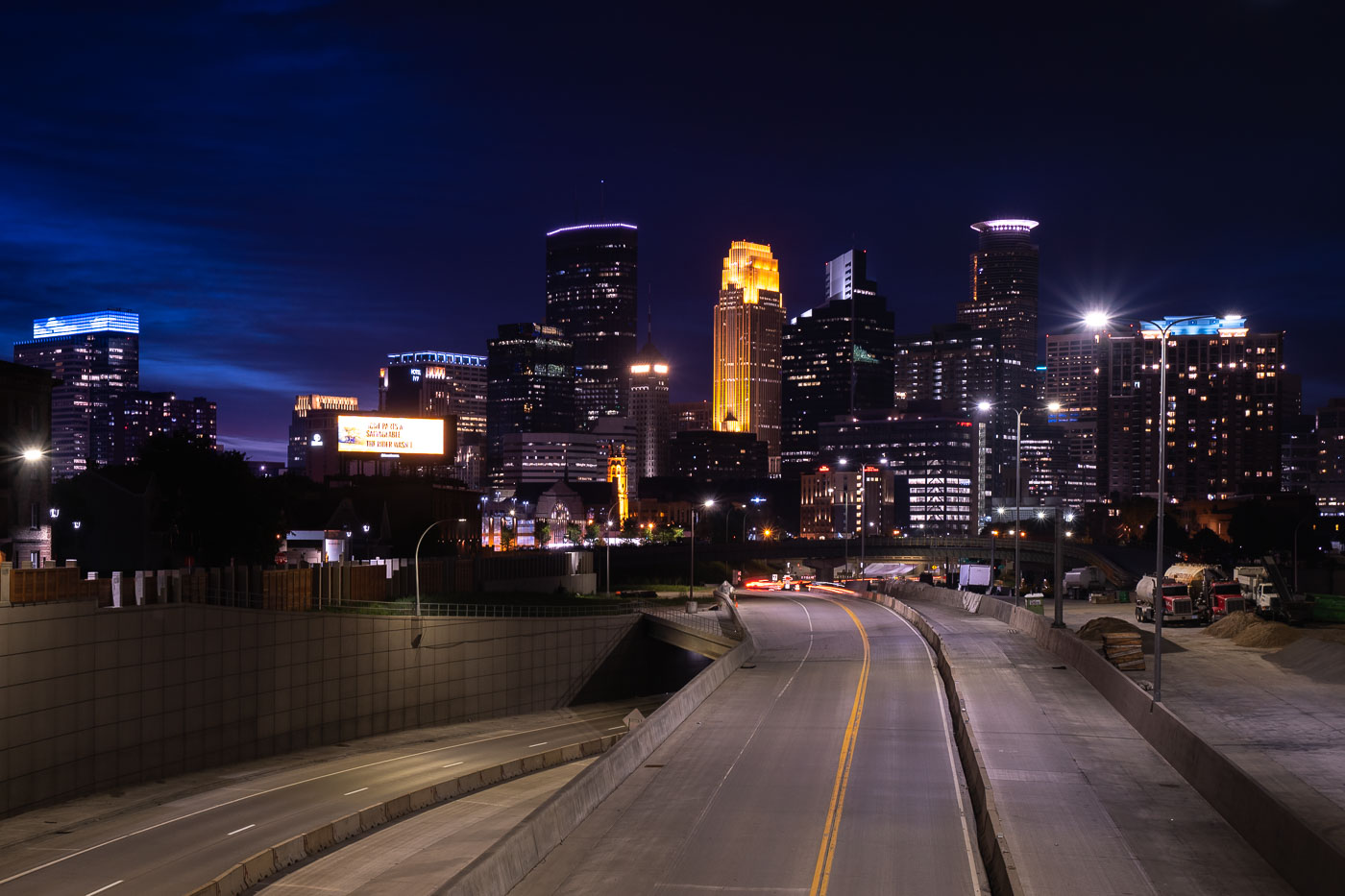
Interstate 35W approaches downtown Minneapolis during overnight construction in July 2020. The freeway corridor curves toward the central business district, with lane shifts, barriers, and active work areas visible along the roadway. The Minneapolis skyline rises beyond the construction zone.

Interstate 35W construction approaching downtown Minneapolis

Adult boutique store with boards on it
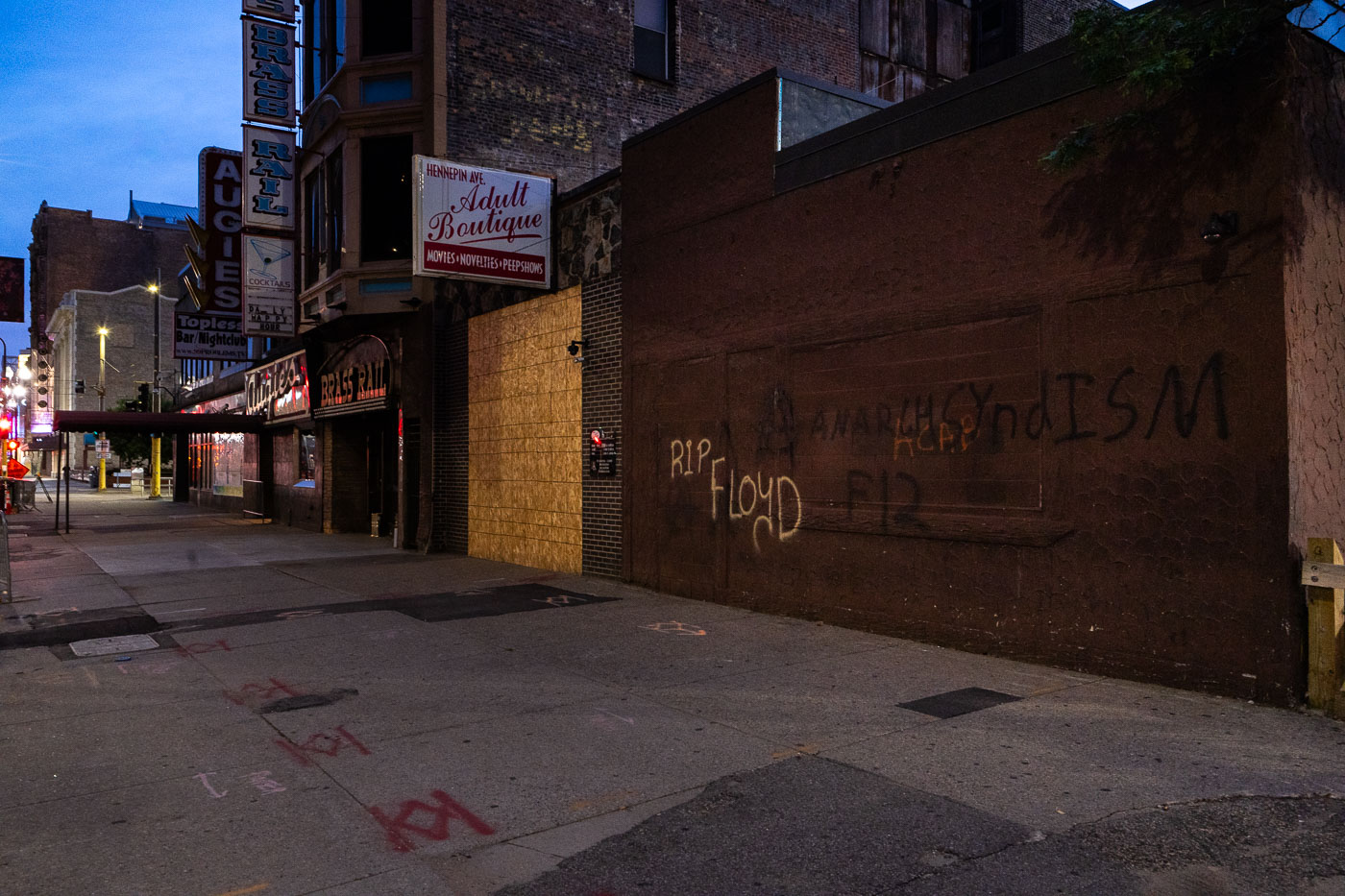
The storefronts of Augies and Brass Rail, adult entertainment venues on Hennepin Avenue in Downtown Minneapolis, are boarded up. This measure was widely adopted by businesses during the Minneapolis Uprising in May 2020, following the killing of George Floyd. The plywood boards feature graffiti, including "RIP Floyd," "ANARCHY," and "ACAB," reflecting the public outcry and calls for justice. Hennepin Avenue has long served as a significant commercial and entertainment corridor in the city, and these boarded establishments document the period of civil unrest and its impact on the urban landscape.

Augies & Brass Rail, Hennepin Ave, Boarded with RIP Floyd Graffiti
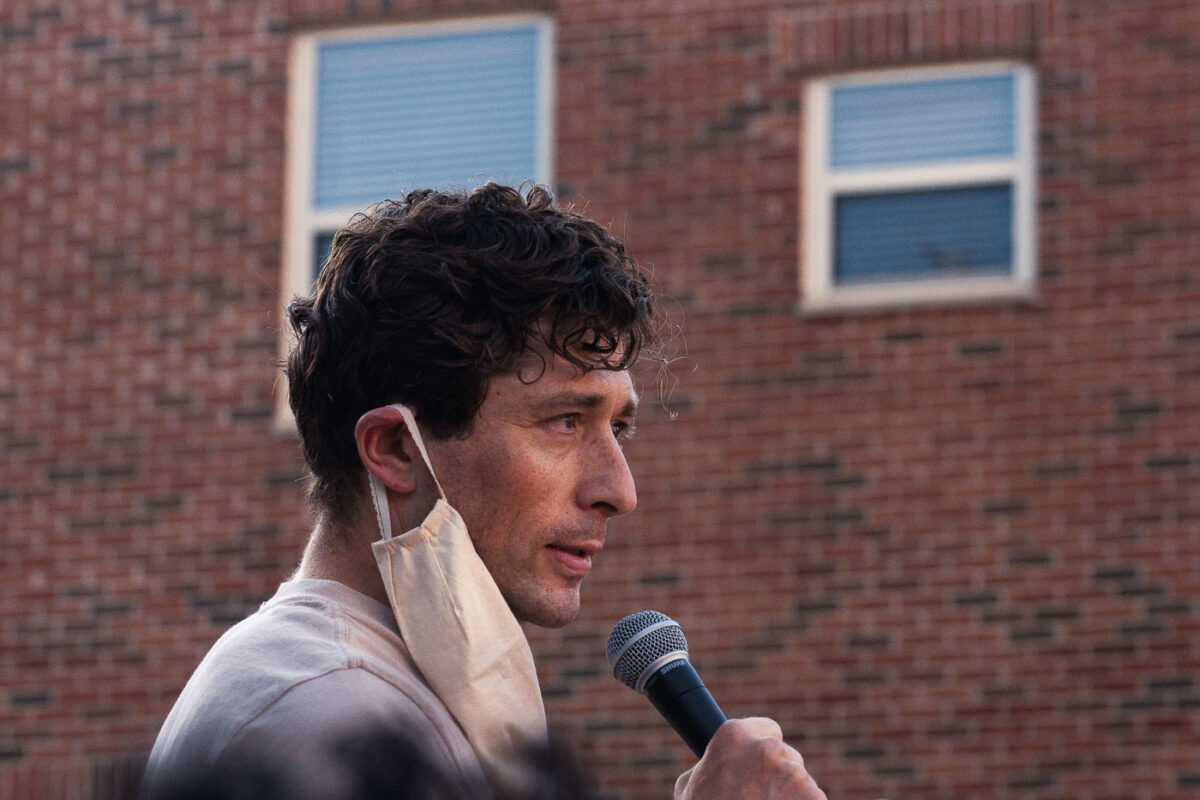
Minneapolis Mayor Jacob Frey speaks to participants at an Oromo community march in Northeast Minneapolis on July 10, 2020.
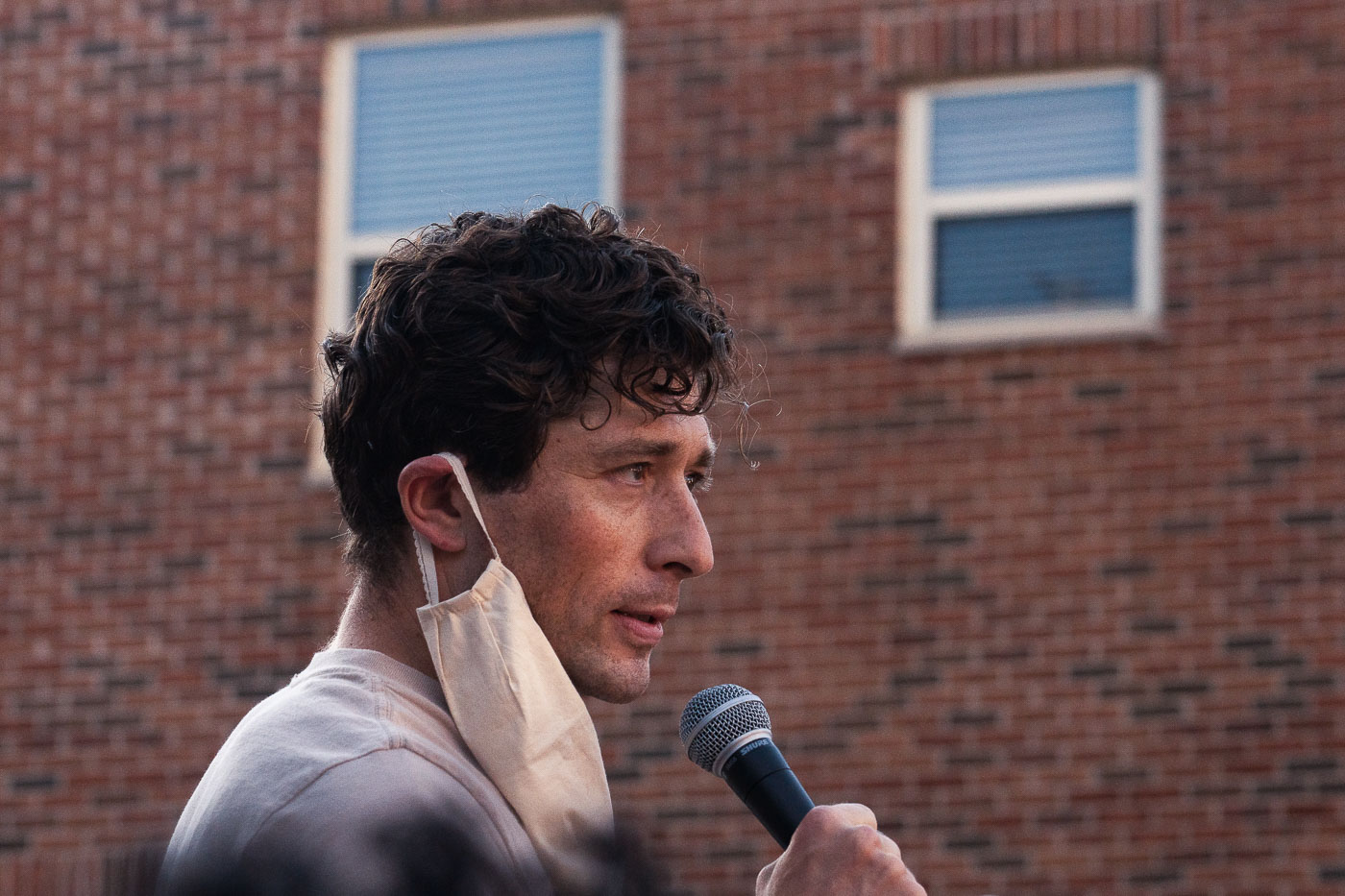
Minneapolis Mayor Jacob Frey addresses participants at an Oromo march in Northeast Minneapolis on July 10, 2020. This march, part of a series of protests in Minneapolis during the summer of 2020, highlighted Oromo community concerns and broader calls for social justice. The Oromo community in Minneapolis is one of the largest outside of Ethiopia.

Jacob Frey Speaks to the Crowd at Oromo March in Northeast Minneapolis
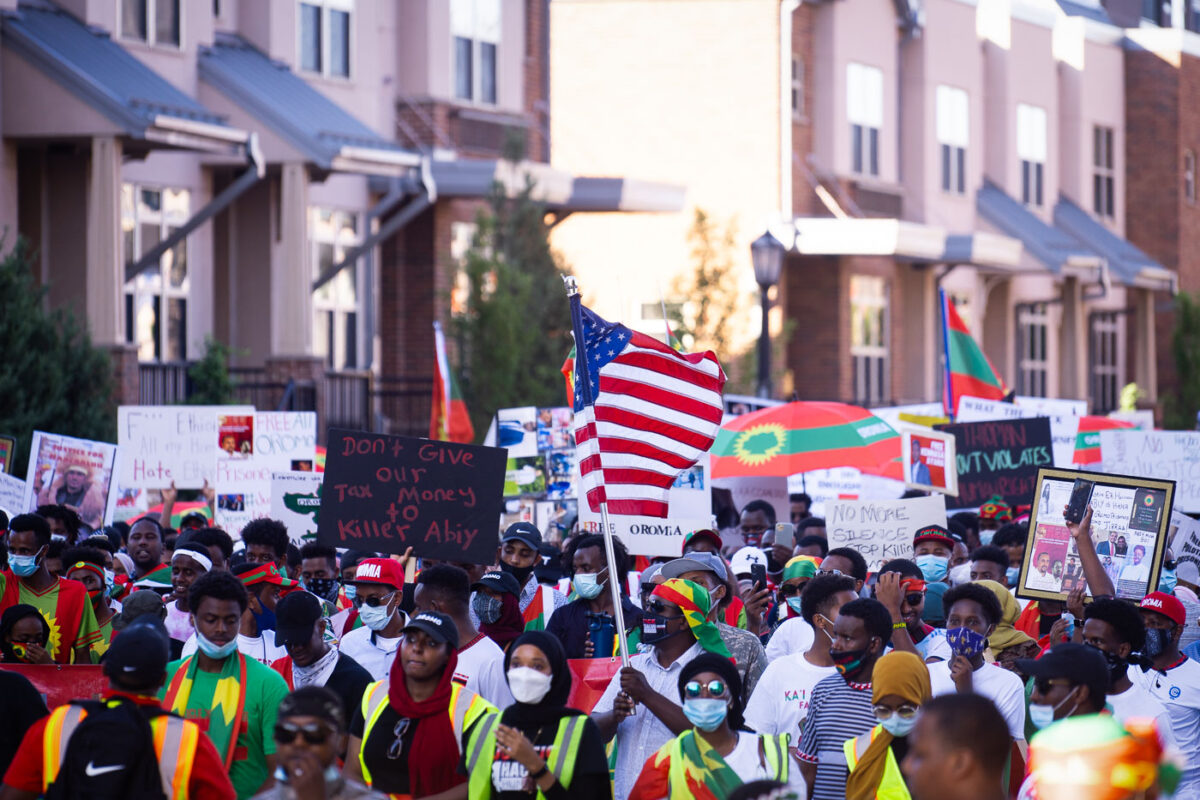
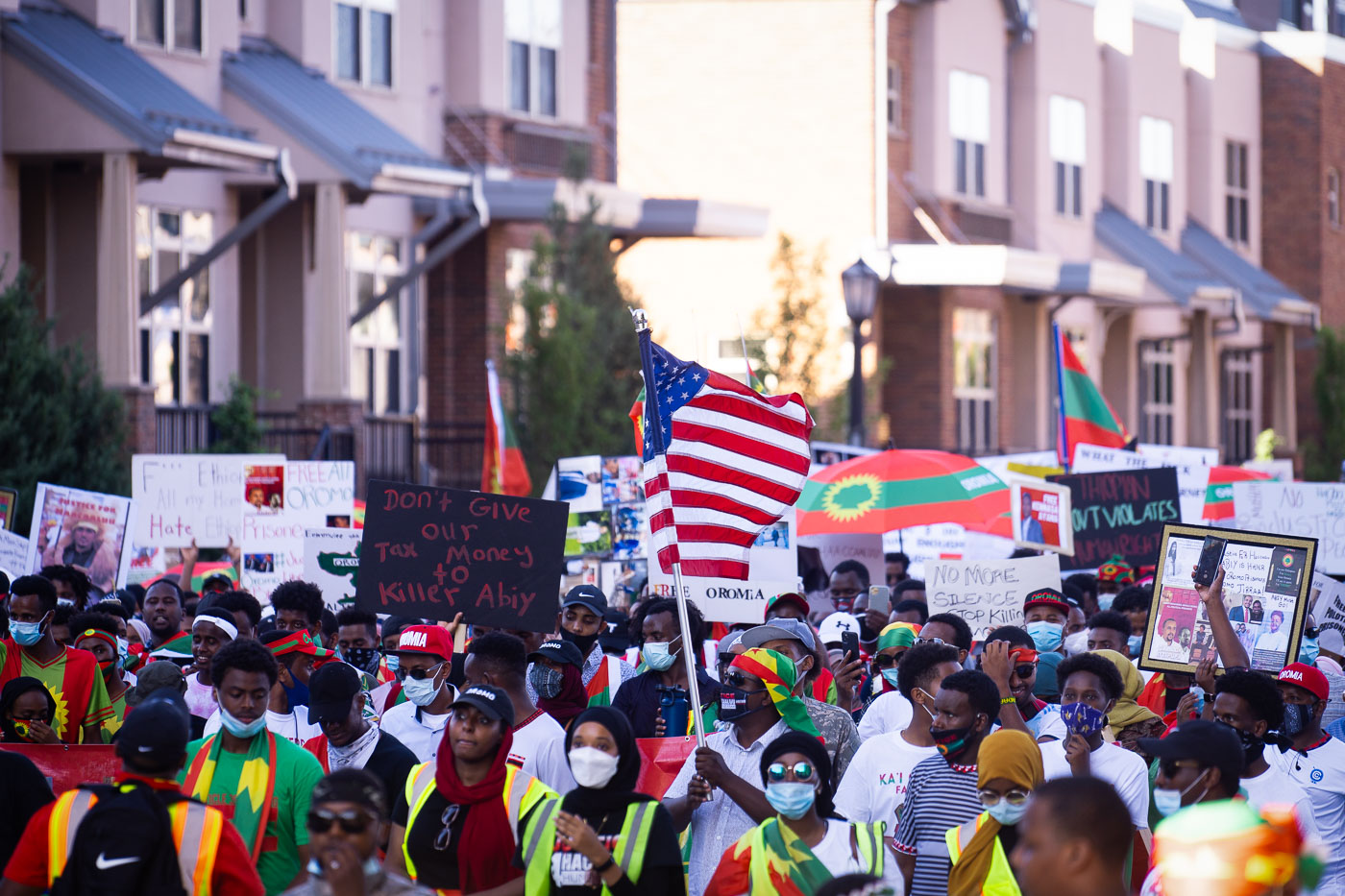
Oromo protesters march through Northeast Minneapolis carrying flags and signs demanding freedom for political prisoners in Ethiopia.
An Oromo protest march in Northeast Minneapolis calls attention to political conditions in Ethiopia. Demonstrators carry Oromo flags and signs criticizing Prime Minister Abiy Ahmed and demanding freedom for Oromo political prisoners. The march took place in July 2020.

“Don’t Give Our Tax Money to Killer Abiy” Sign at Oromo March
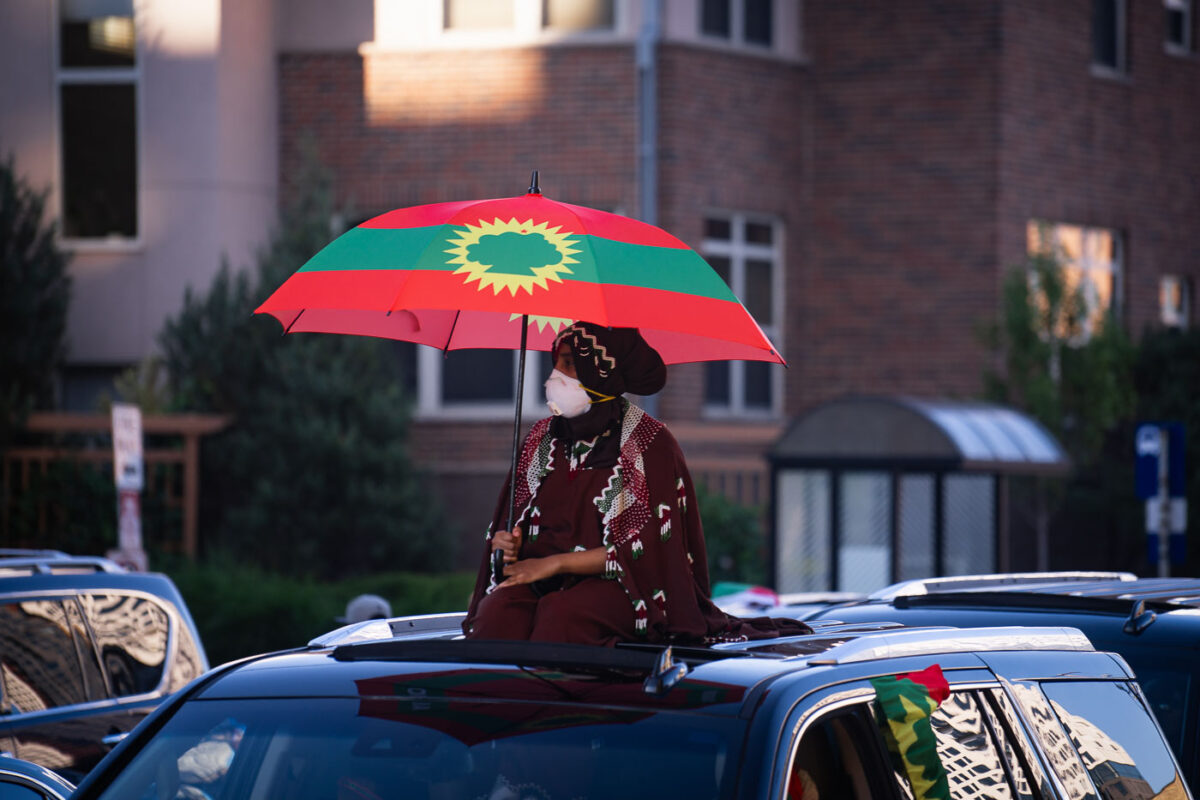
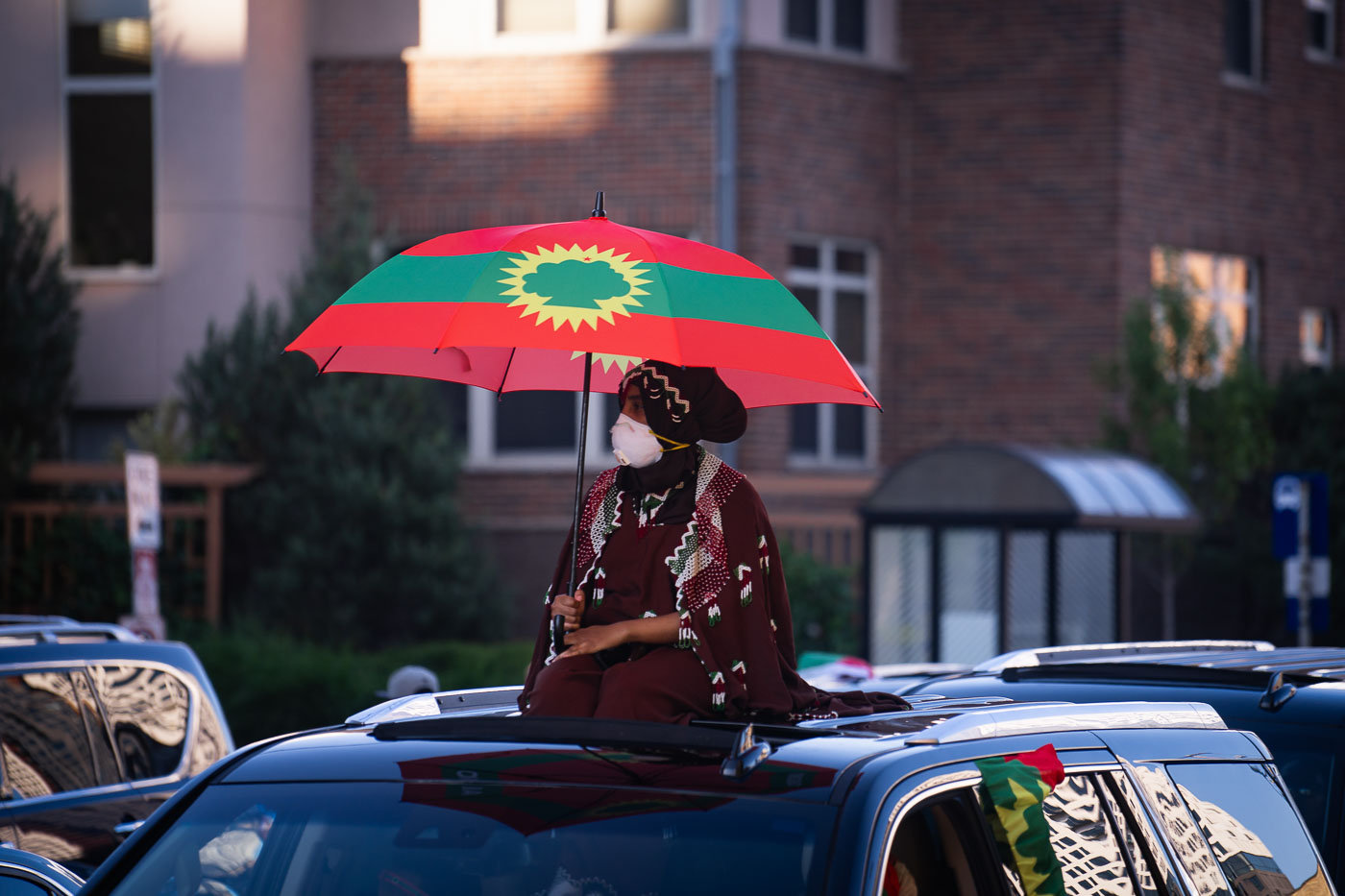
A woman sits on a car roof holding an Oromo flag umbrella during a march in Northeast Minneapolis.
A woman sits atop a vehicle during an Oromo march in Northeast Minneapolis on July 10, 2020.

Woman Rides Atop a Car Under an Oromo Flag Umbrella

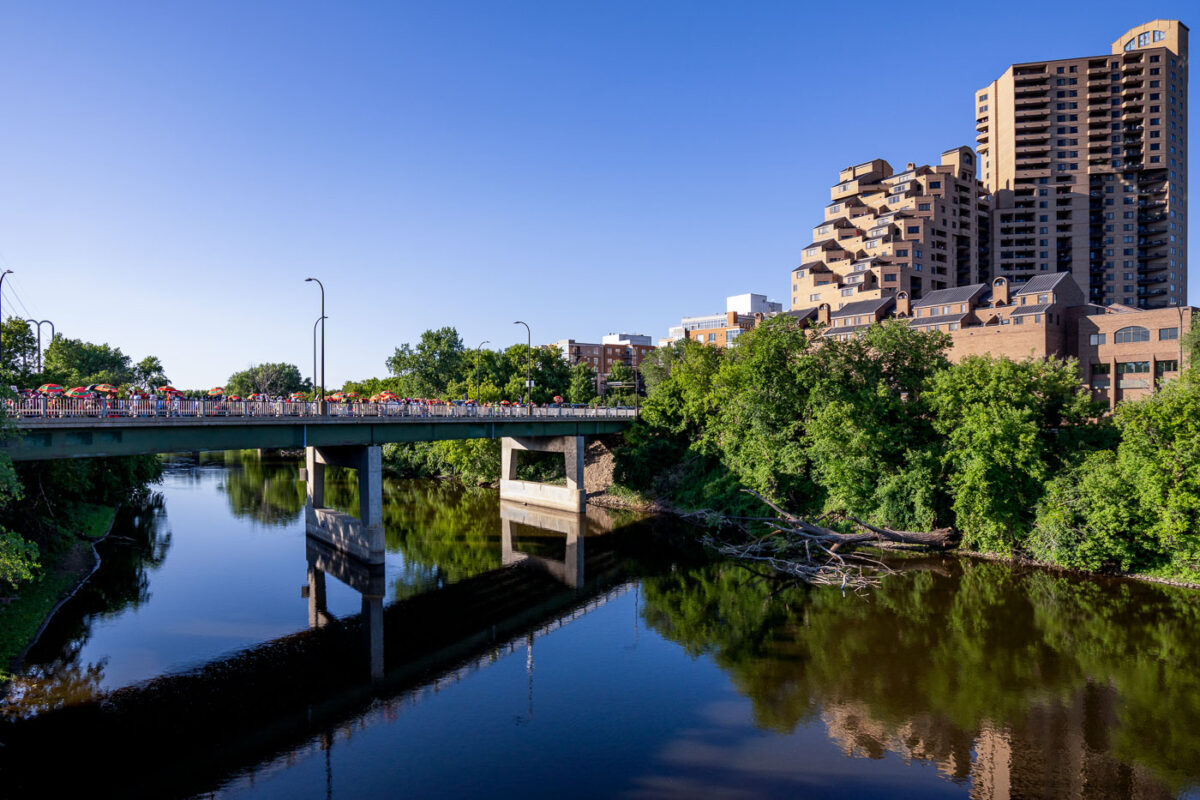
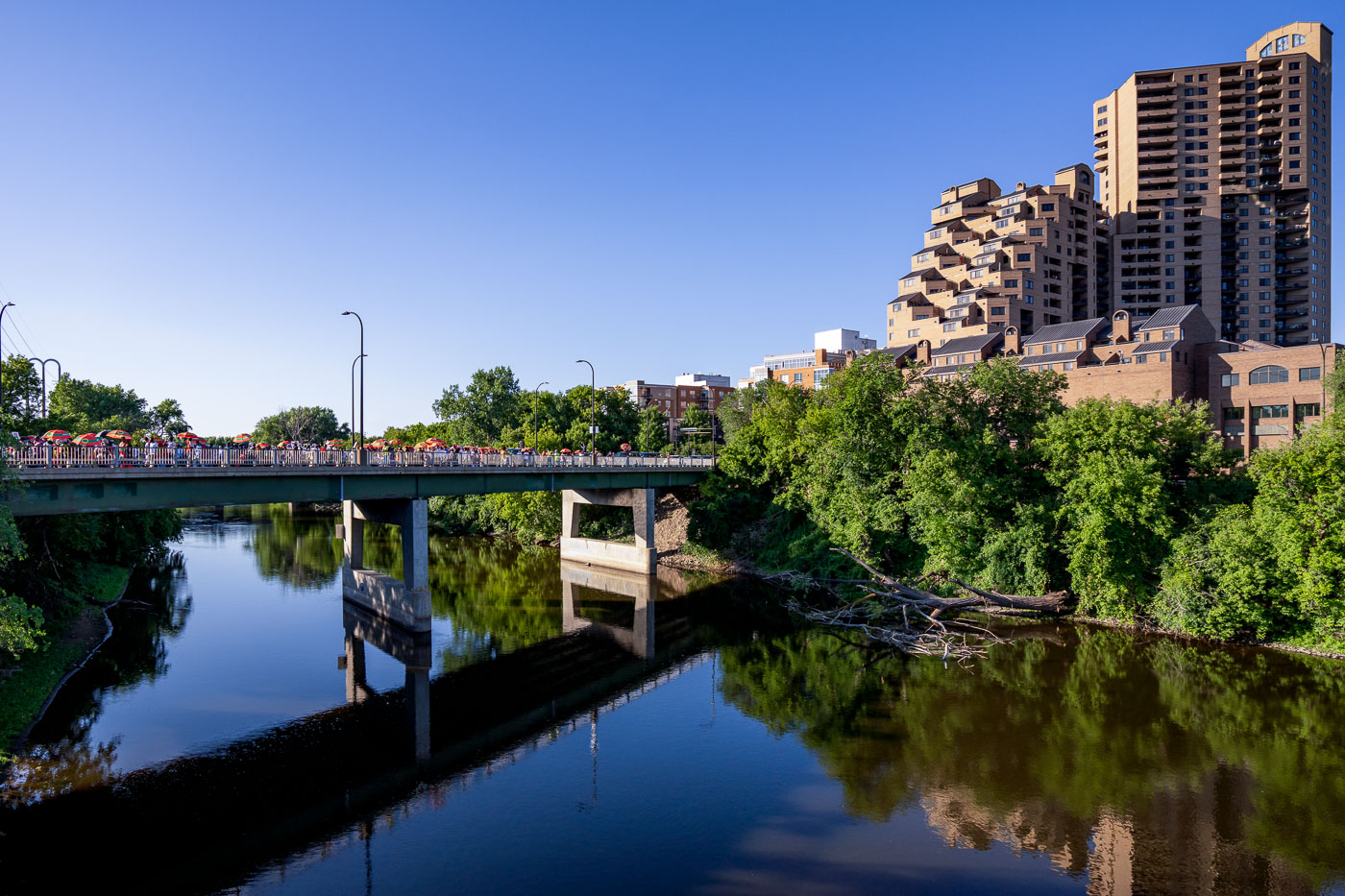
Oromo protesters march across a bridge spanning the Mississippi River in Minneapolis during a demonstration regarding Ethiopia.
Oromo protesters march across a bridge spanning the Mississippi River in Minneapolis. This protest drew attention to ongoing unrest in Ethiopia.

Oromo March Crosses a Mississippi River Bridge in Minneapolis
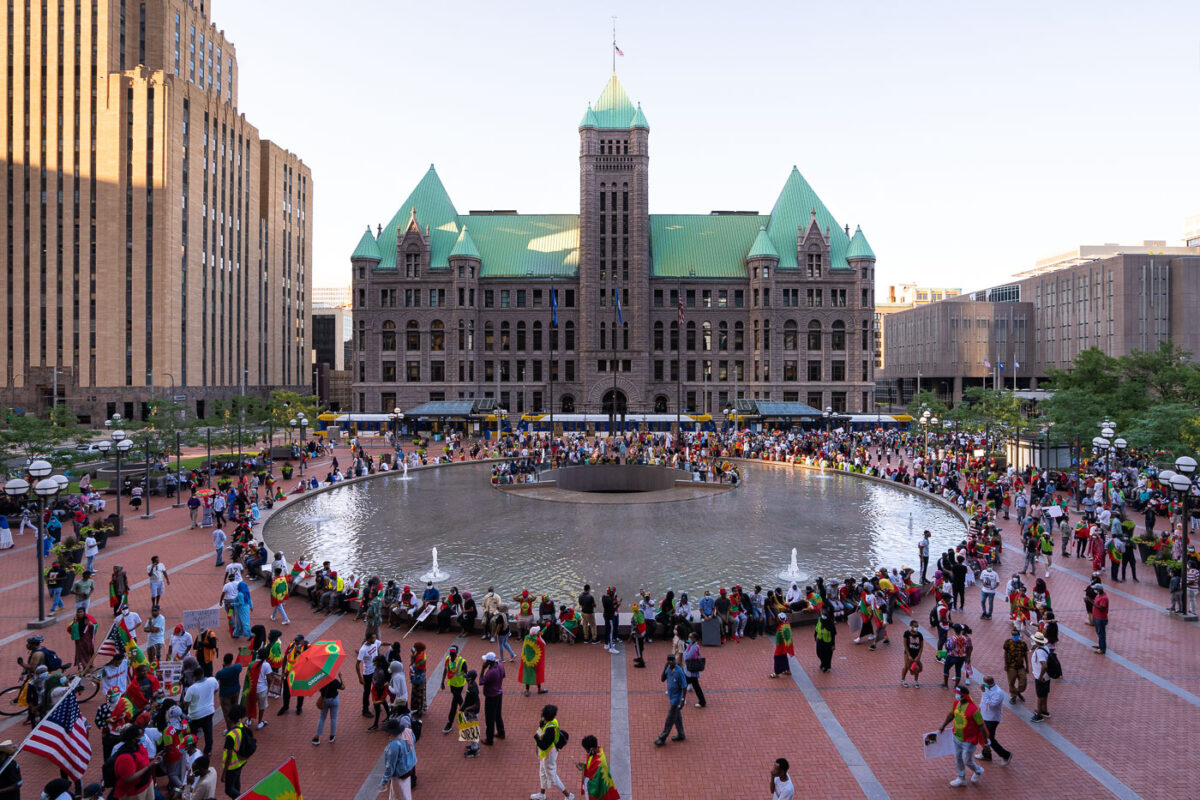
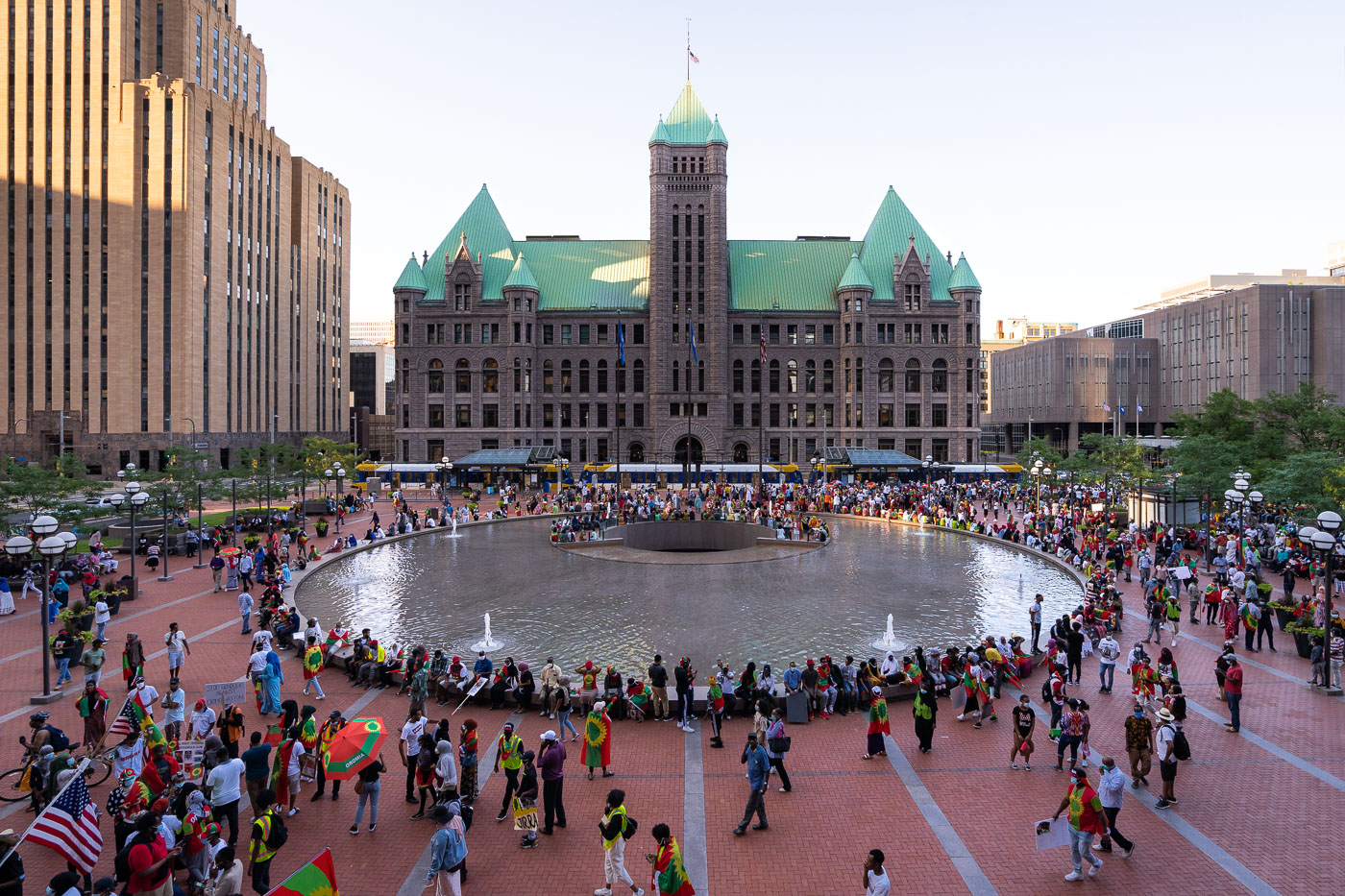
Oromo protesters gather at Hennepin County Government Center plaza in downtown Minneapolis surrounding a central fountain.
Oromo protesters gather outside the Hennepin County Government Center in downtown Minneapolis. The crowd fills the plaza around the central fountain, with people carrying Oromo and American flags and signs.

Oromo Rally Fills the Plaza at Minneapolis City Hall

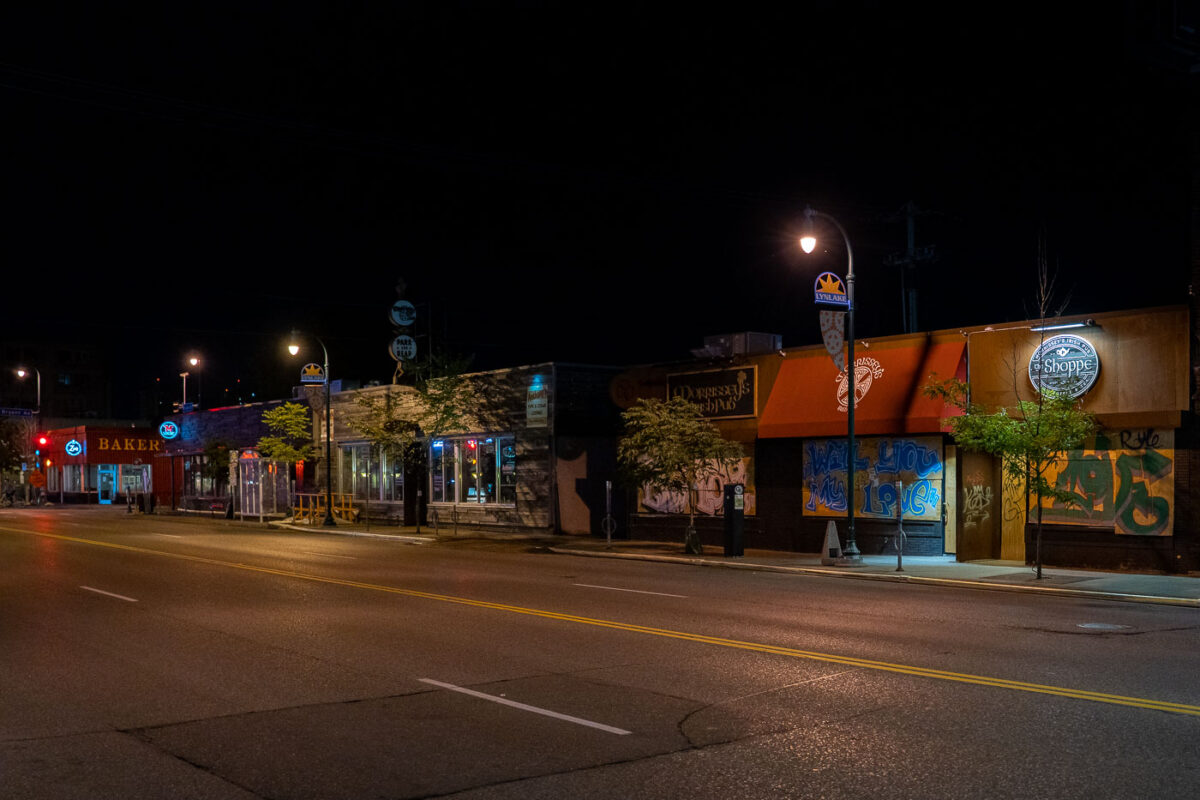
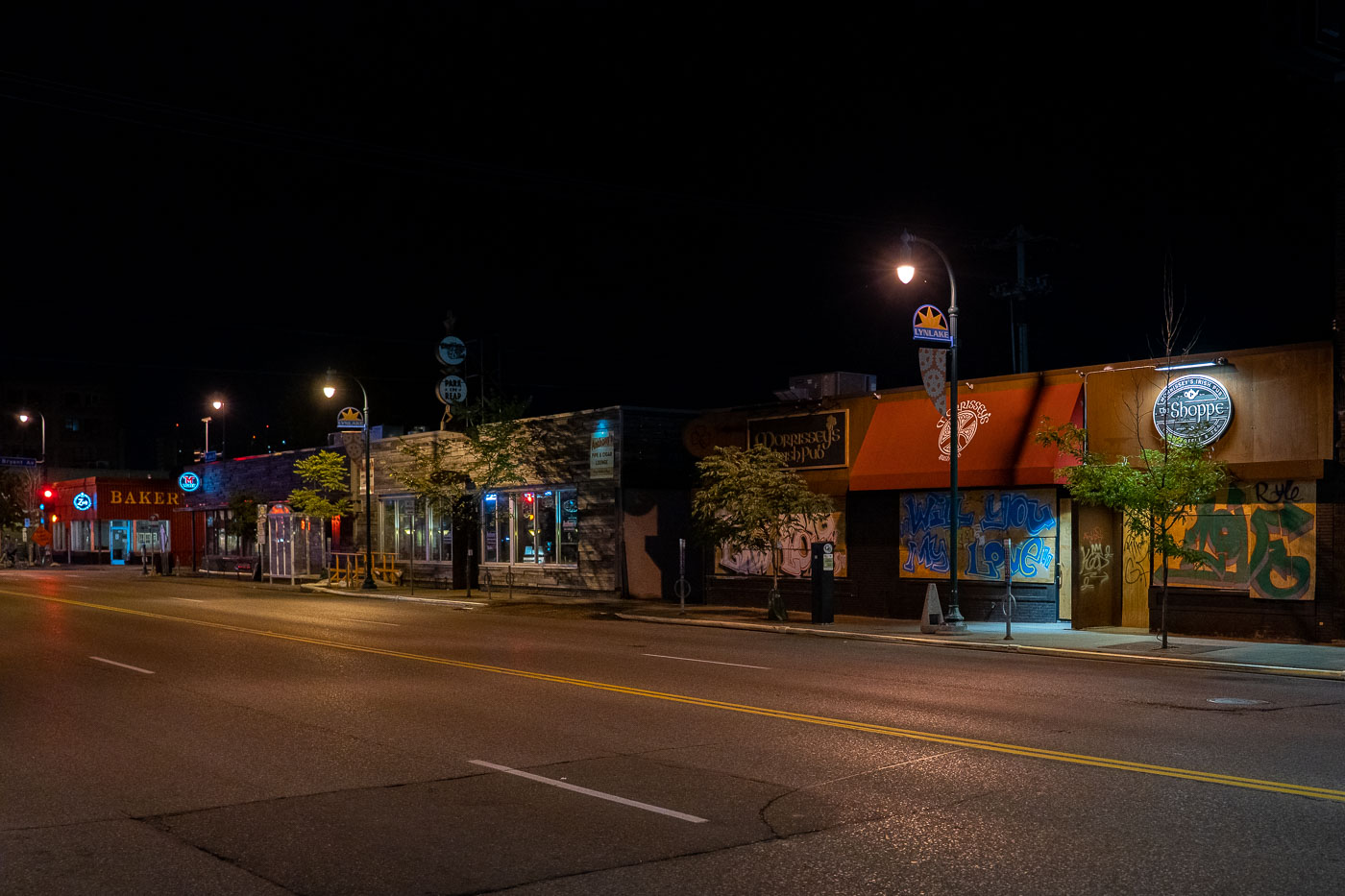
West Lake Street boarded up businesses
Murals adorn boarded-up storefronts along West Lake Street in Minneapolis's Lyn-Lake neighborhood. These boards were installed on businesses in July 2020 as a protective measure following civil unrest that occurred after the May 25, 2020 murder of George Floyd by Minneapolis police officer Derek Chauvin. Many of these temporary barriers were subsequently transformed into public art by various artists. The murals became a significant visual record of the period, contributing to the cultural landscape of Uptown Minneapolis.

West Lake Street Murals, Minneapolis, July 2020

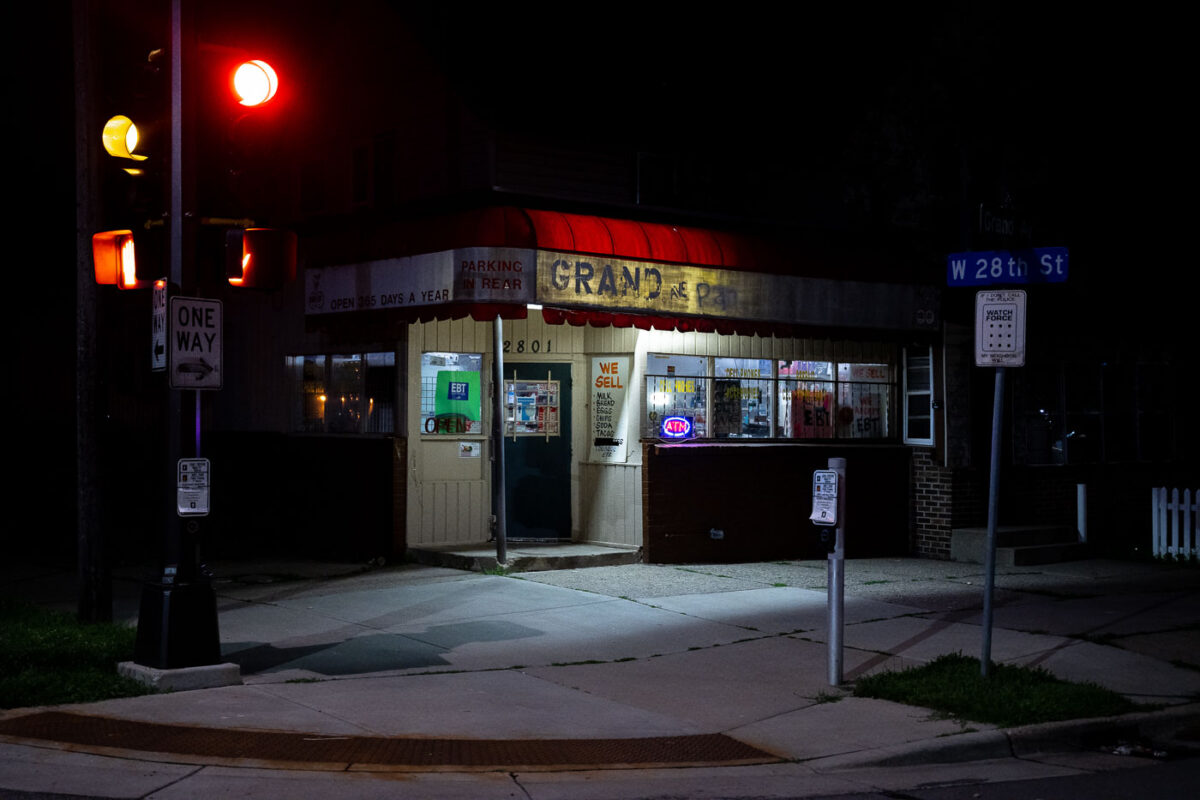
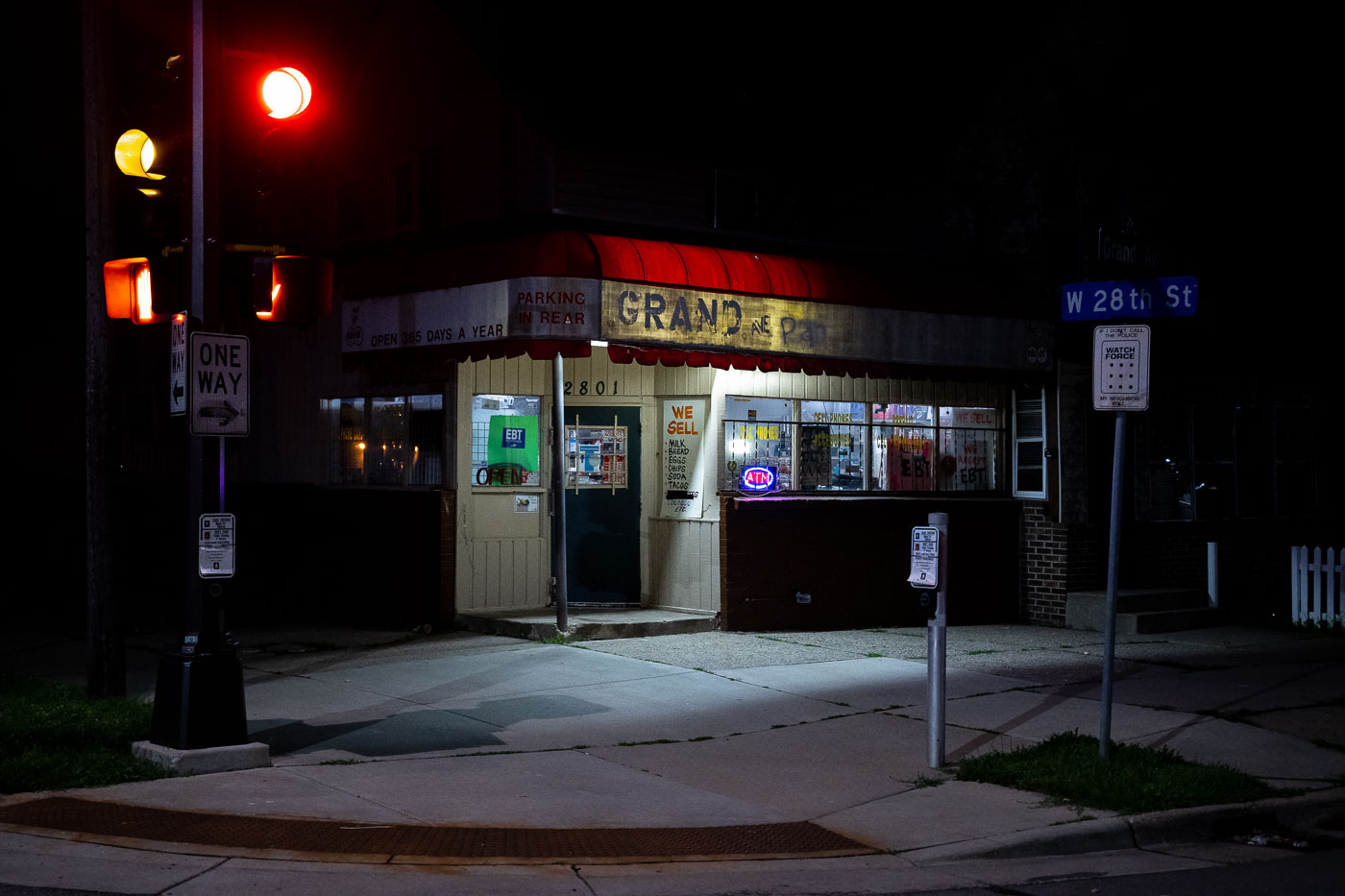
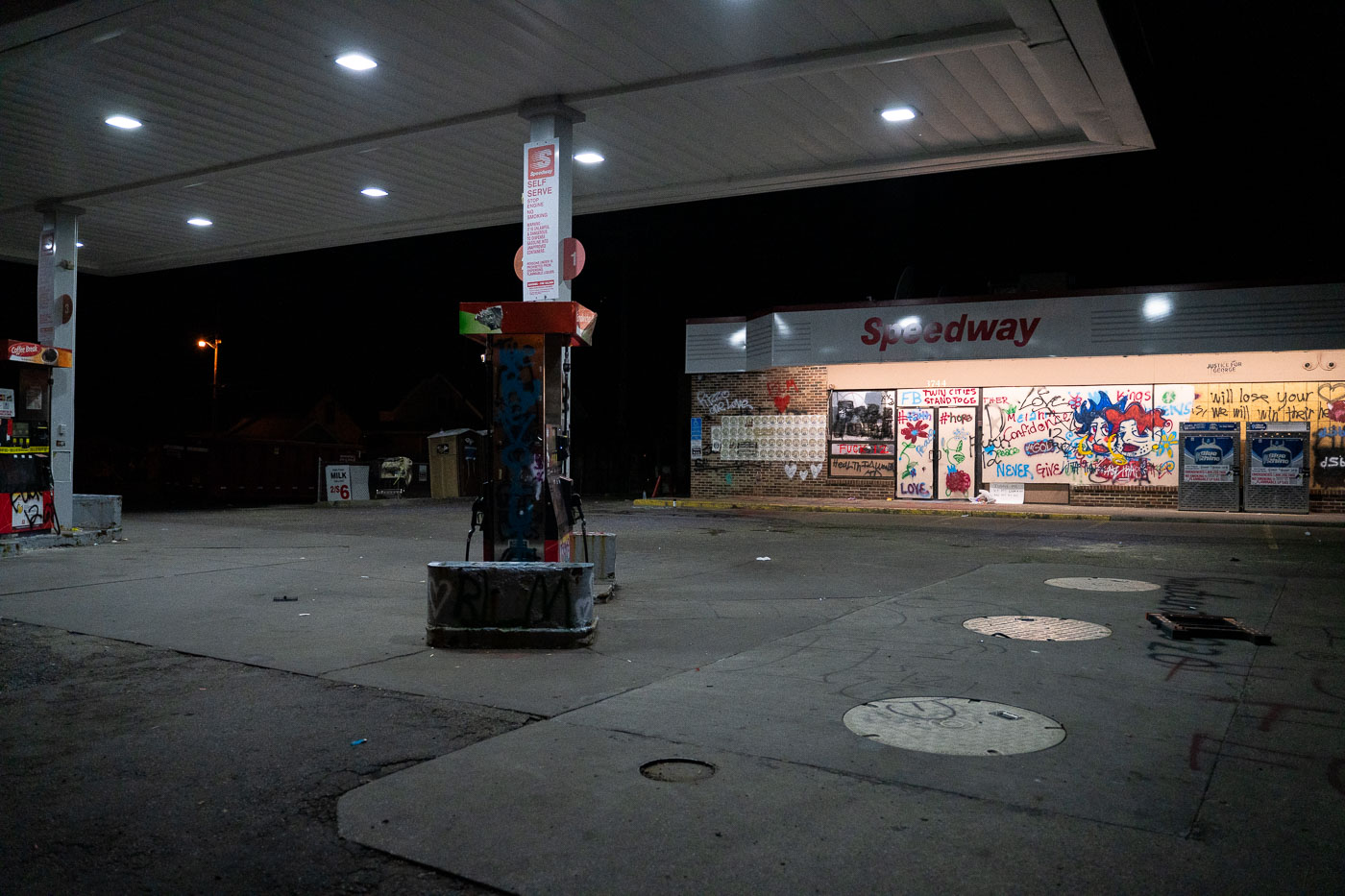
Corner store on Grand in Minneapolis
The Quik Shop convenience store stands at the corner of Grand Avenue and West 28th Street in South Minneapolis. Photographed in the early morning hours of July 12, 2020, the store operates as a local retail hub, providing daily necessities to the neighborhood. Its continued operation, indicated by the "Open 365 Days a Year" sign, reflects the resilience of community businesses in the aftermath of the civil unrest that affected Minneapolis in the preceding months. A "Watch Force" sign on a nearby pole further indicates community efforts towards security and mutual aid during this period.
Quik Shop, Grand Ave & W 28th St, Minneapolis
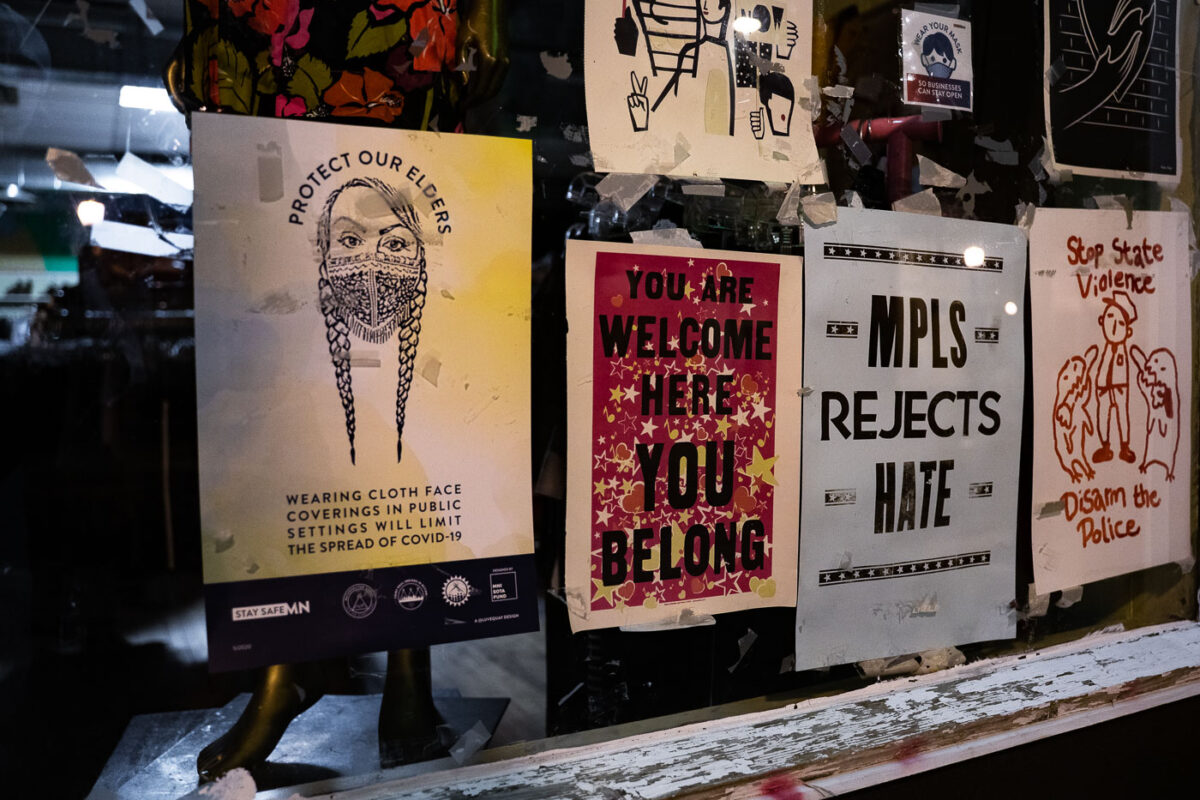
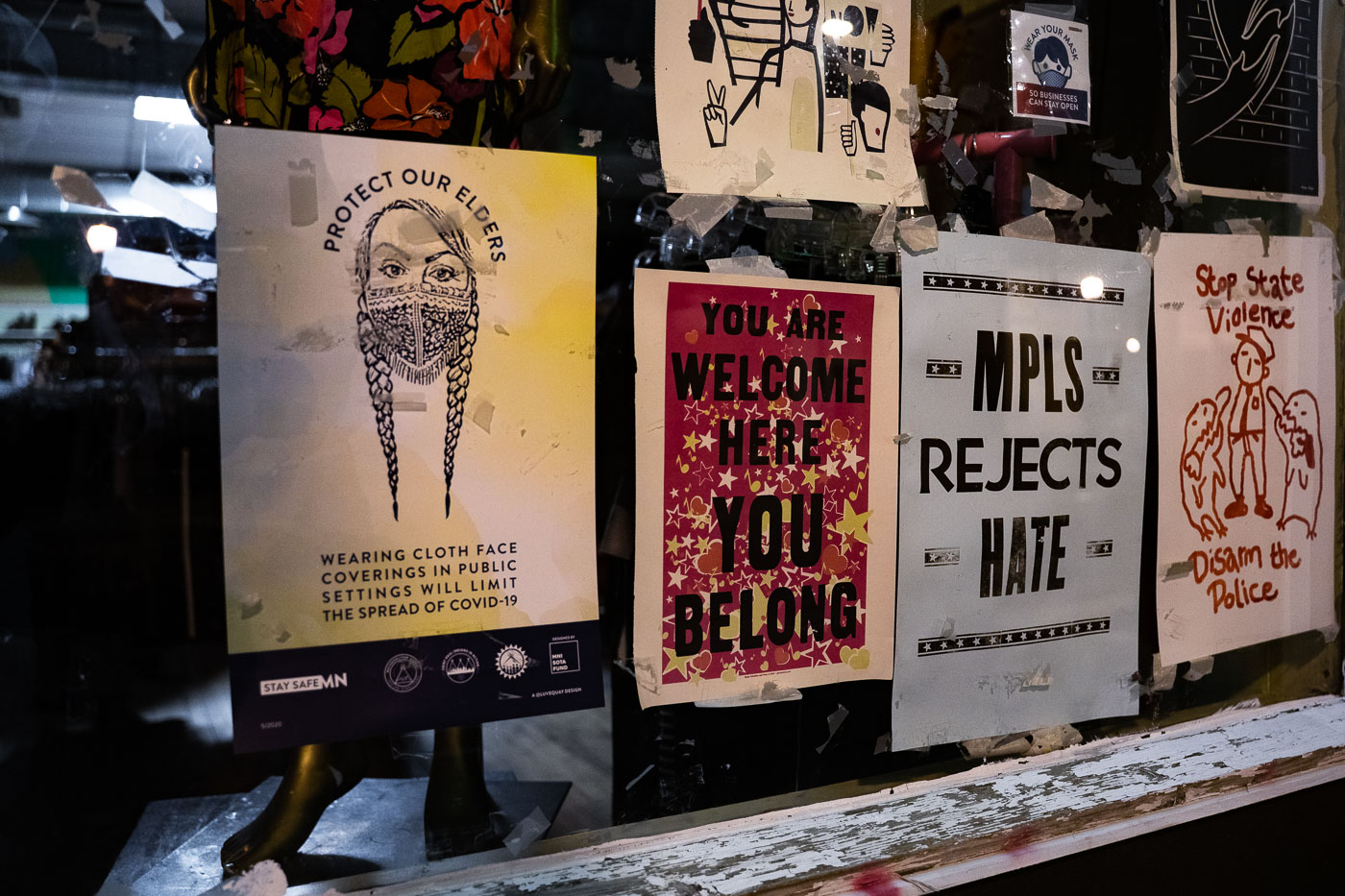
Signs in a storefront regarding covid and hate
A storefront window in Minneapolis displays a collection of signs reflecting the dual crises of the COVID-19 pandemic and the social justice protests of May 2020. One prominent sign, dated May 2020, encourages public health measures with the message "Protect our elders" and guidance on wearing face coverings to limit the spread of COVID-19. Alongside these, messages such as "MPLS Rejects Hate," "You are welcome here you belong," and "Stop State Violence Disarm the Police" express solidarity and demands for systemic change during the Minneapolis Uprising. These public displays served as a means for businesses and community members to communicate vital public health information and participate in civic discourse during a period of significant social unrest and public health emergency.

Minneapolis Storefront Window: COVID-19 & Protest Messages
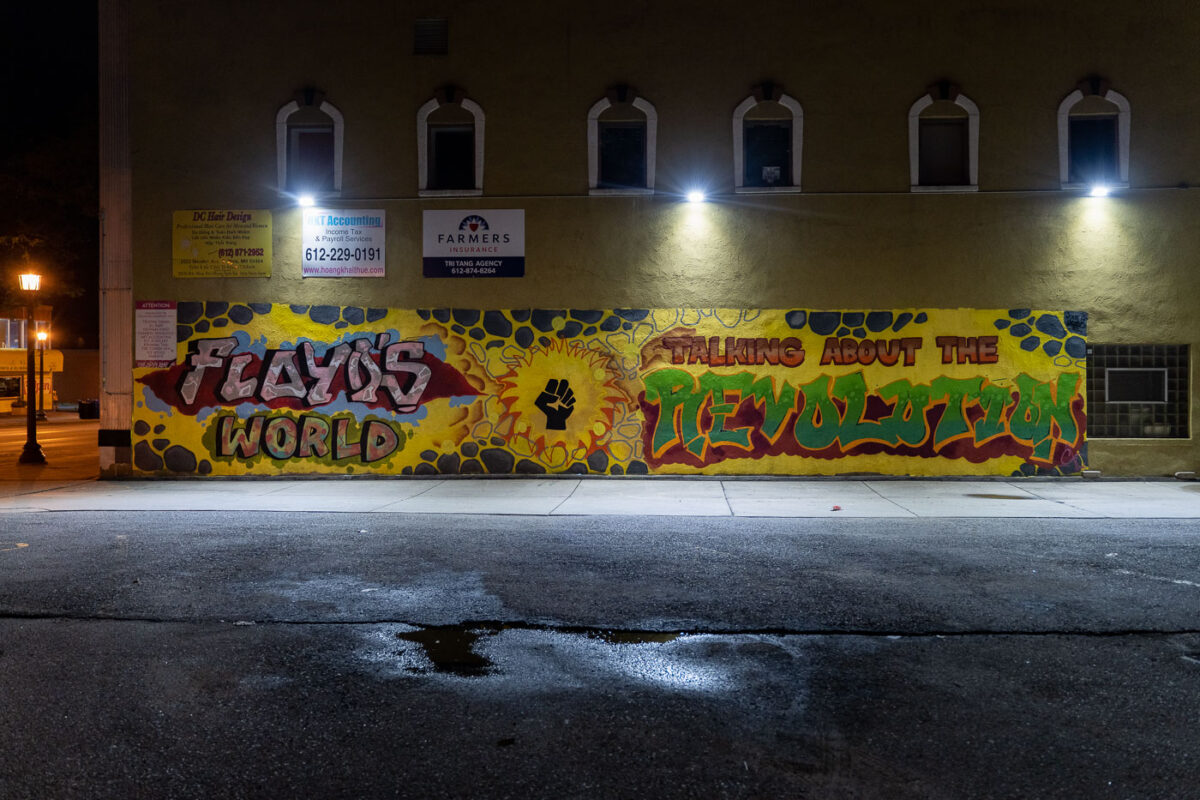
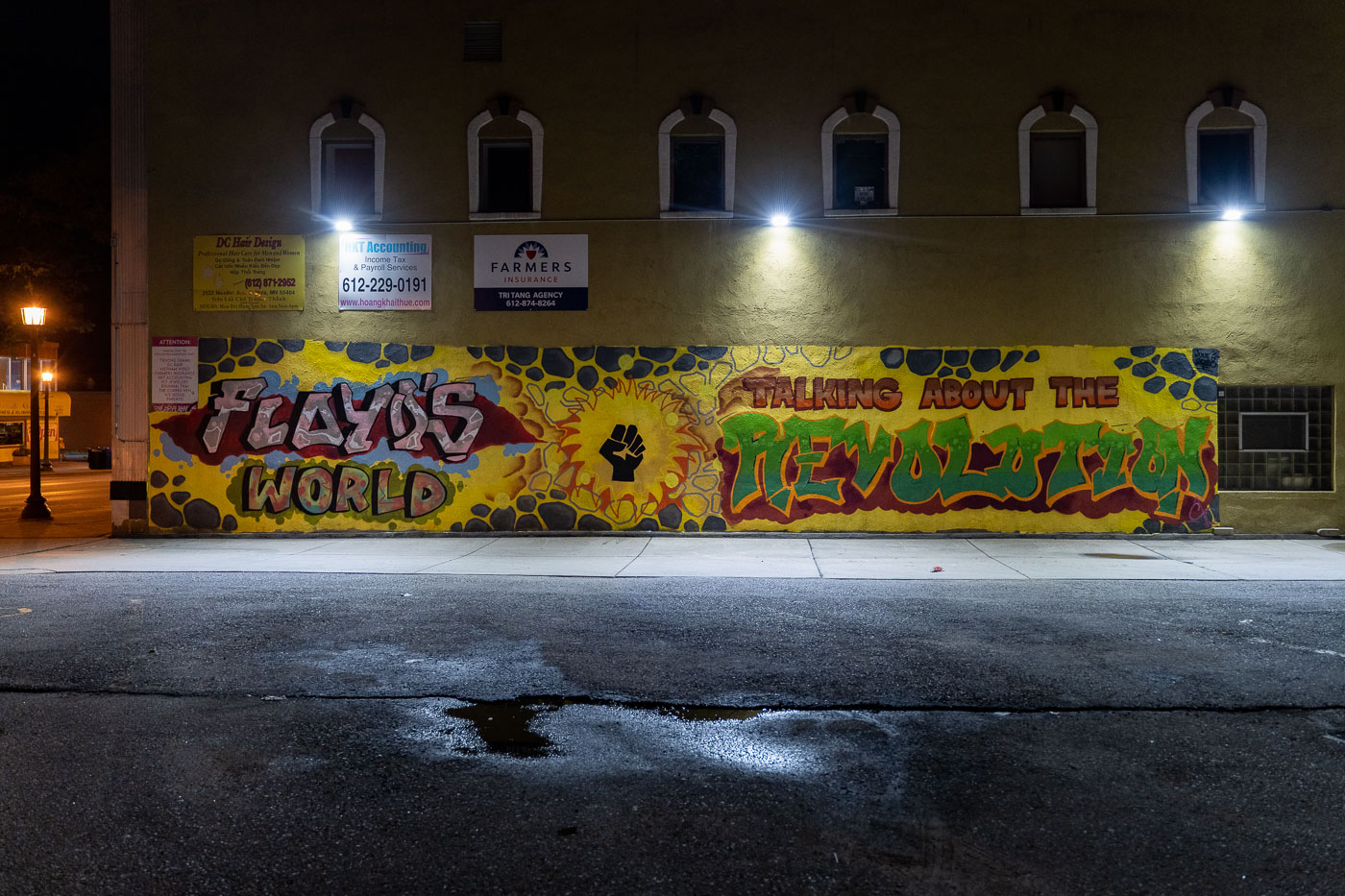
Large mural on the side of a building on Nicollet Ave
The "Floyd's World" mural, located on Nicollet Avenue in Minneapolis, was created on June 5, 2020, in the aftermath of George Floyd's murder and the Minneapolis Uprising. This large-scale graffiti art, painted on the side of a commercial building, features the phrases "Floyd's World" and "Talking about the Revolution," accompanied by a raised fist symbol. The mural serves as a public expression of grief, protest, and a call for social change, reflecting the community's response to the events of that period. It remains a significant piece of public art documenting a critical moment in Minneapolis history.

“Floyd’s World” Mural, Nicollet Avenue, Minneapolis
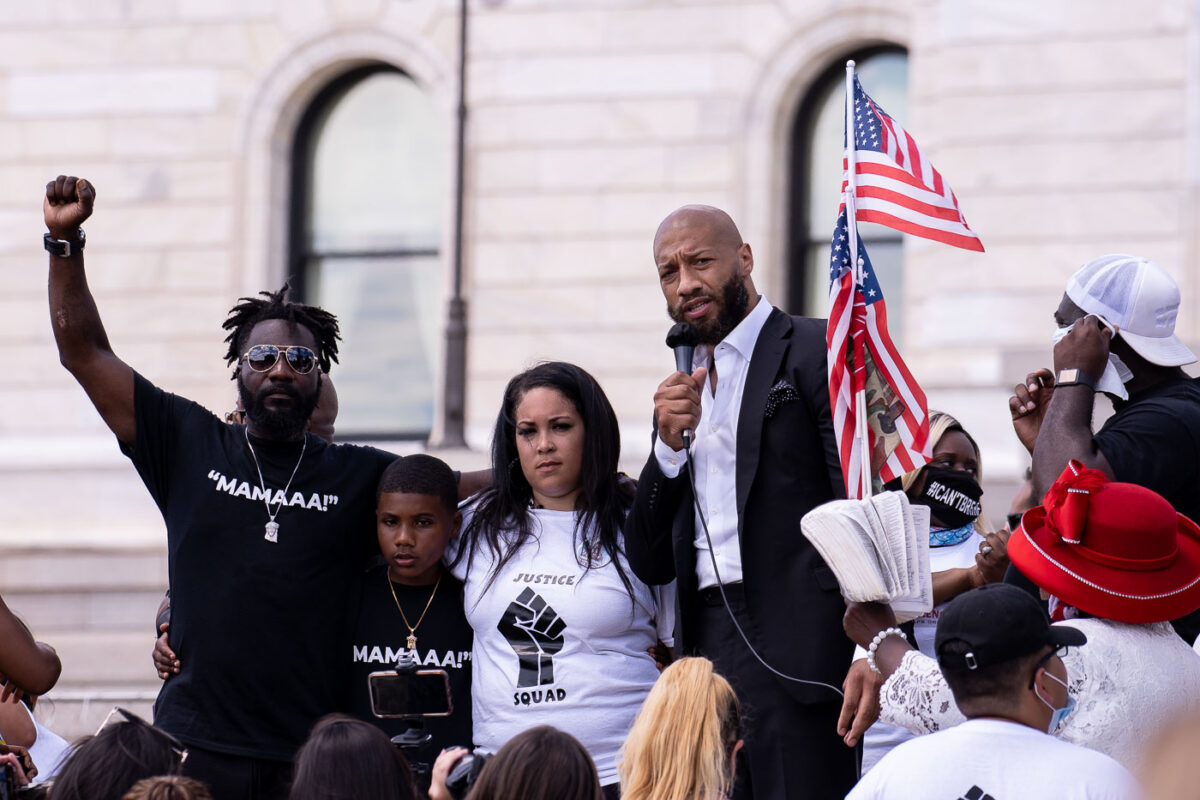
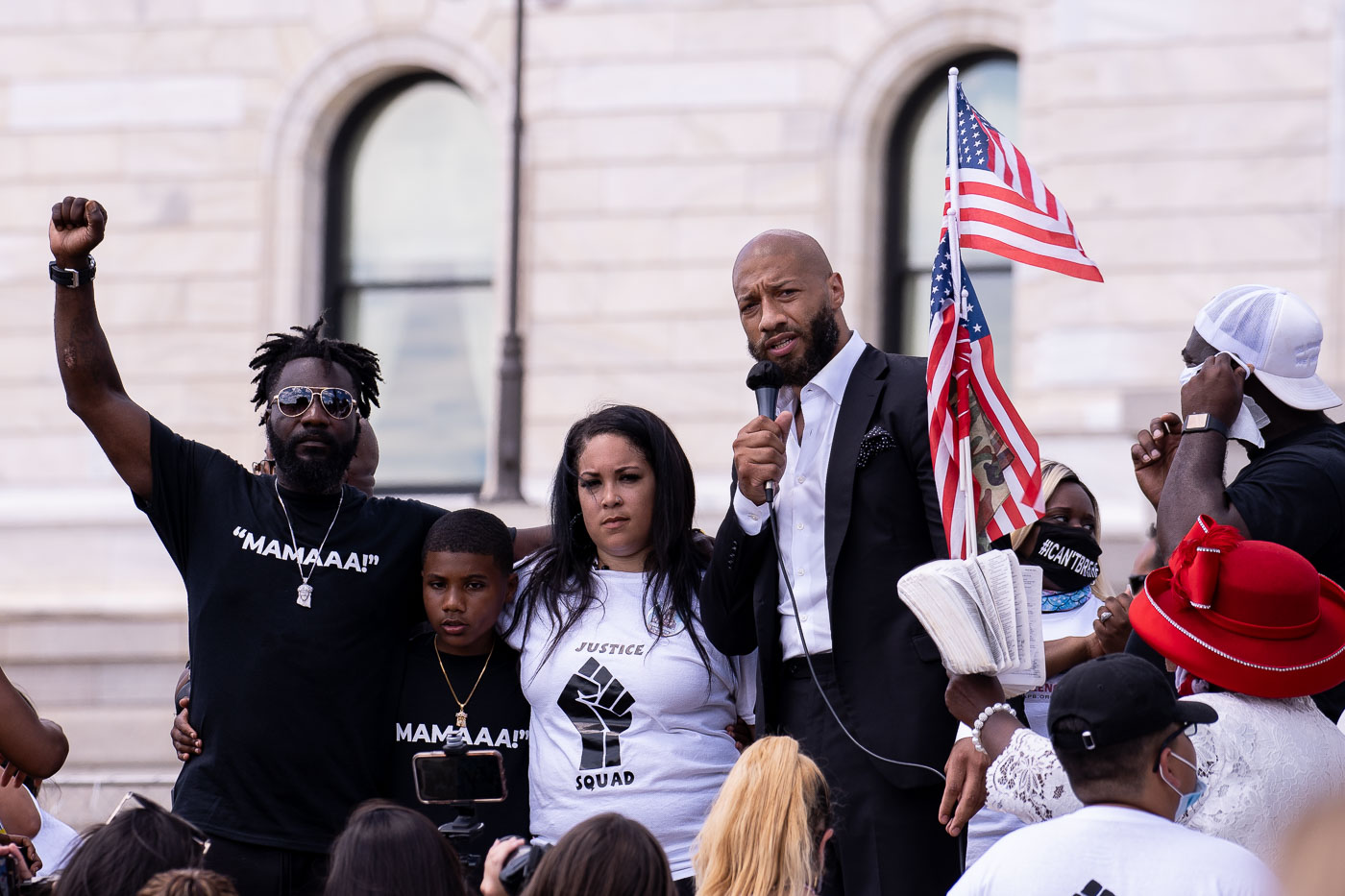
Royce White addresses a crowd holding American flags at a Native Lives Matter rally at the Minnesota State Capitol.
Royce White addresses participants at a Native Lives Matter rally held at the Minnesota State Capitol in St. Paul.

Royce White Speaks with “Justice Squad” Family at MN Capitol Rally
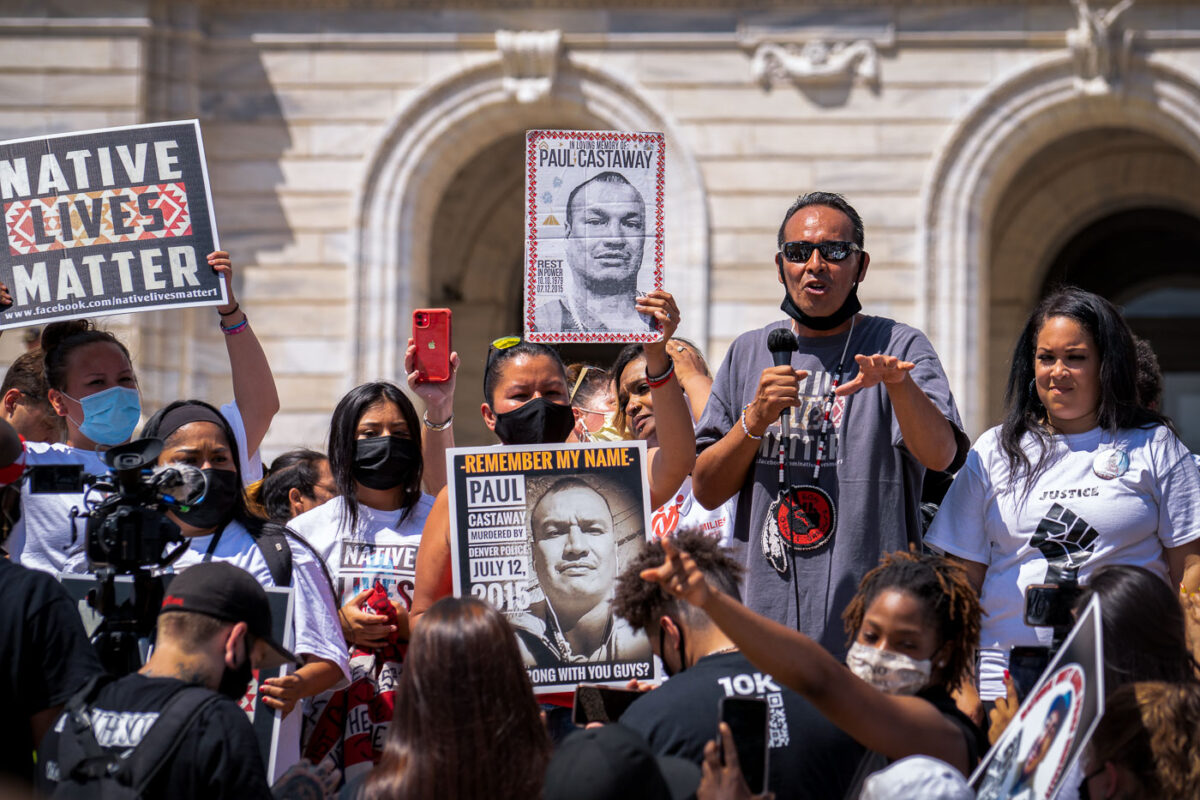
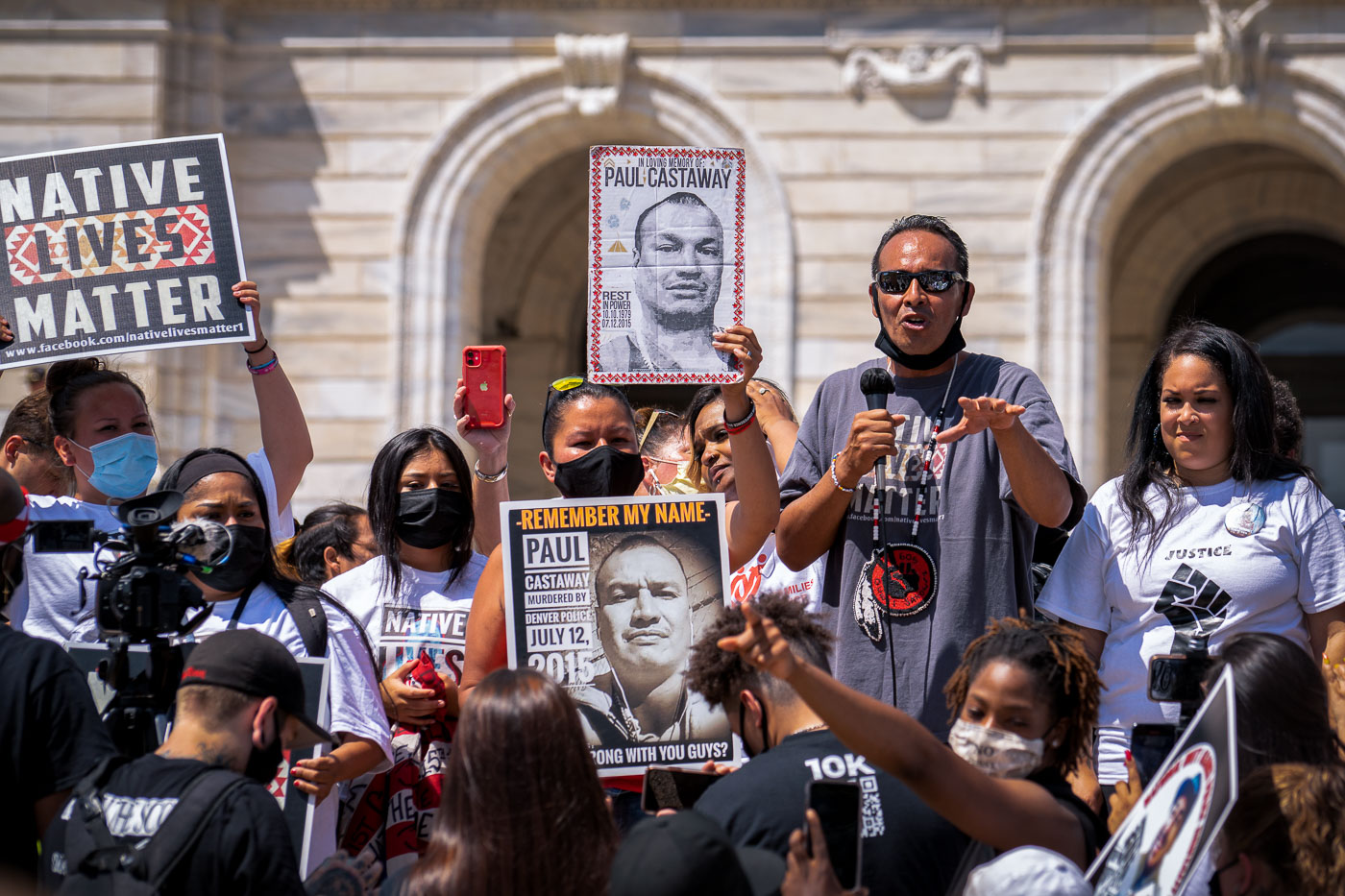
Gabriel Black Elk addresses a crowd at the Minnesota State Capitol during a rally commemorating Paul Castaway's death.
Gabriel Black Elk addresses a rally outside the Minnesota State Capitol in St. Paul, marking the five-year anniversary of his brother Paul Castaway's death. Paul Castaway was shot and killed by the Denver Police on July 12, 2015. The protest highlights ongoing concerns about police violence and Indigenous rights, with attendees holding signs advocating for "Native Lives Matter" and remembering Castaway.

“Remember My Name” Signs for Paul Castaway at the MN Capitol
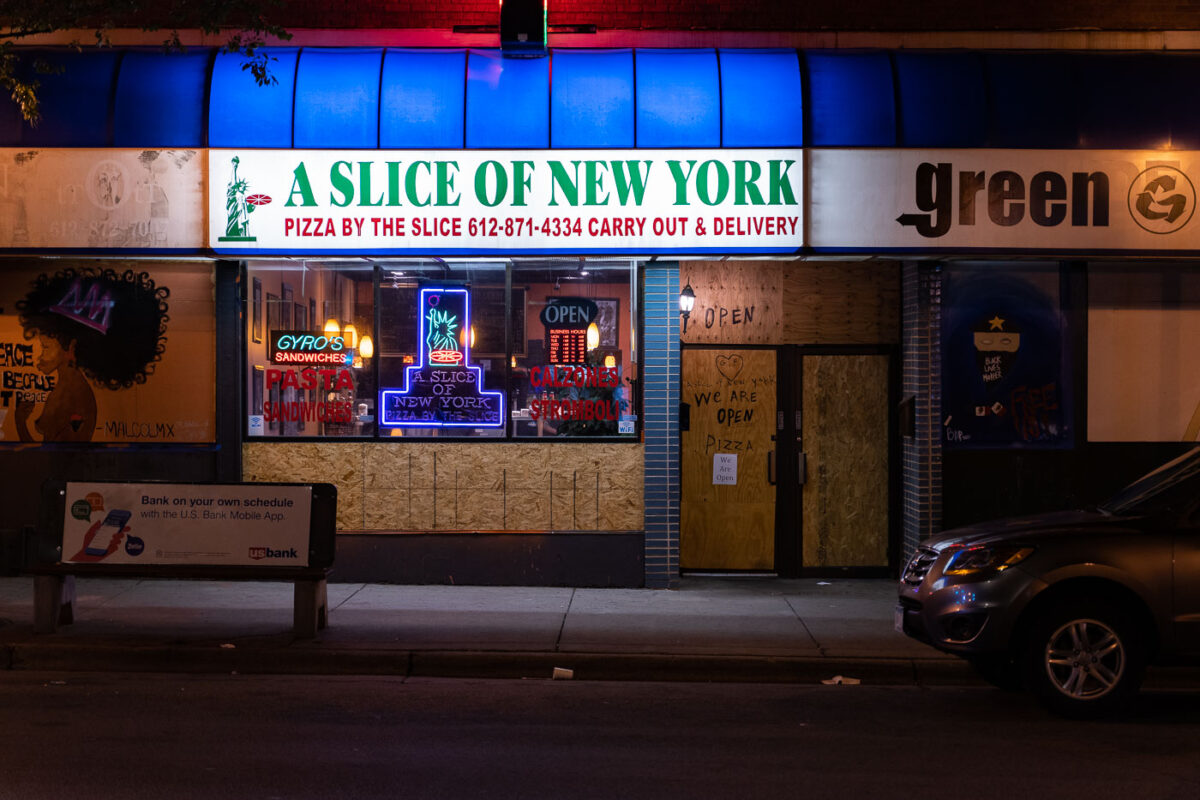
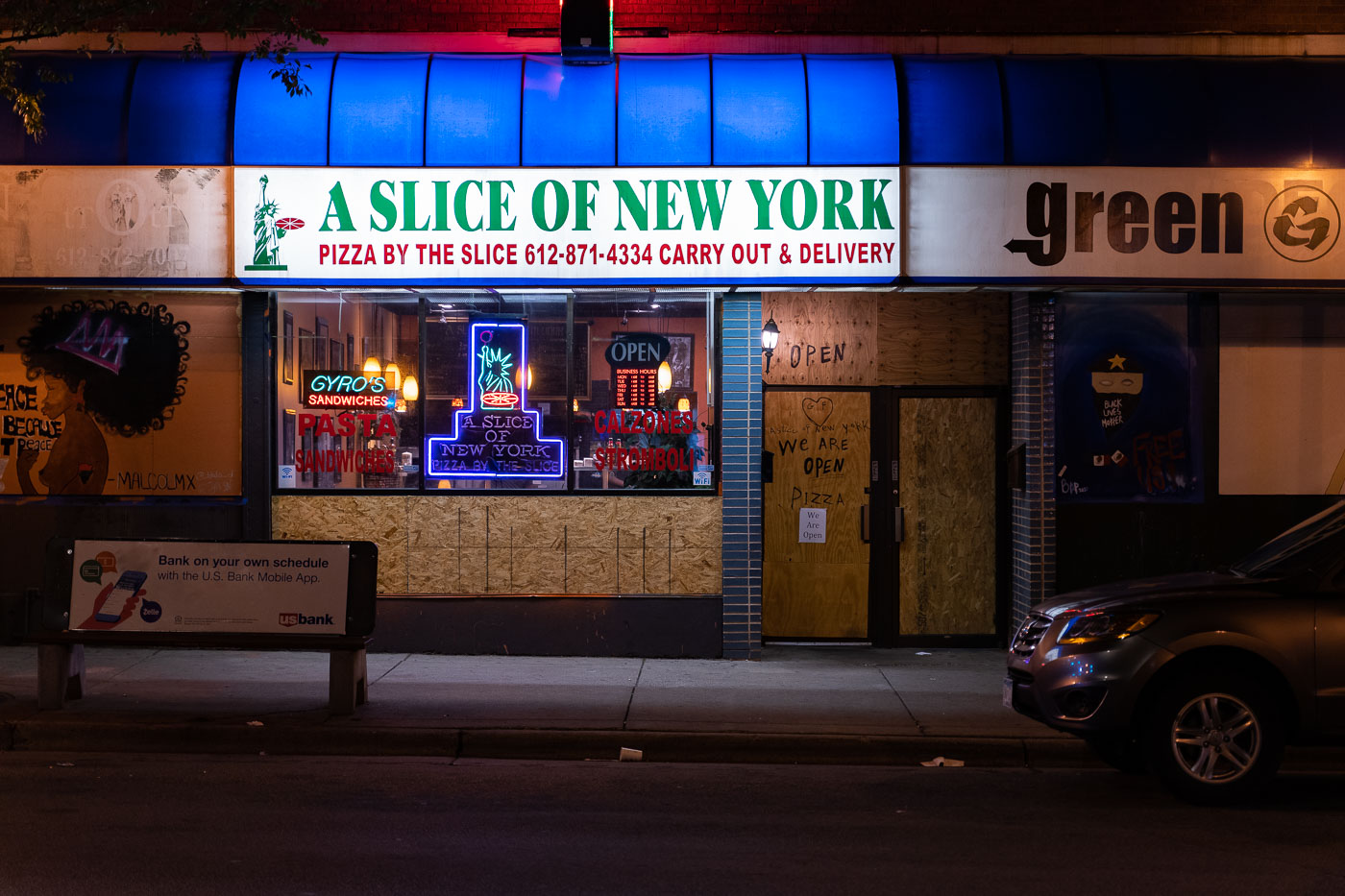
Slice of new york pizza store on Nicollet Ave in Minneapolis
A Slice of New York pizza shop on Nicollet Avenue in Minneapolis is shown with its storefront windows boarded up. This protective measure was widely adopted by businesses in the area following the civil unrest and protests that erupted after the death of George Floyd on May 25, 2020. Despite the boarding, which includes messages like 'We Are Open' and murals referencing the Black Lives Matter movement, the establishment continues to operate for carry-out and delivery. The image reflects the resilience of local businesses and the visible impact of the historical events on the urban environment of Minneapolis.

A Slice of New York, Nicollet Ave, Minneapolis, Post-Uprising
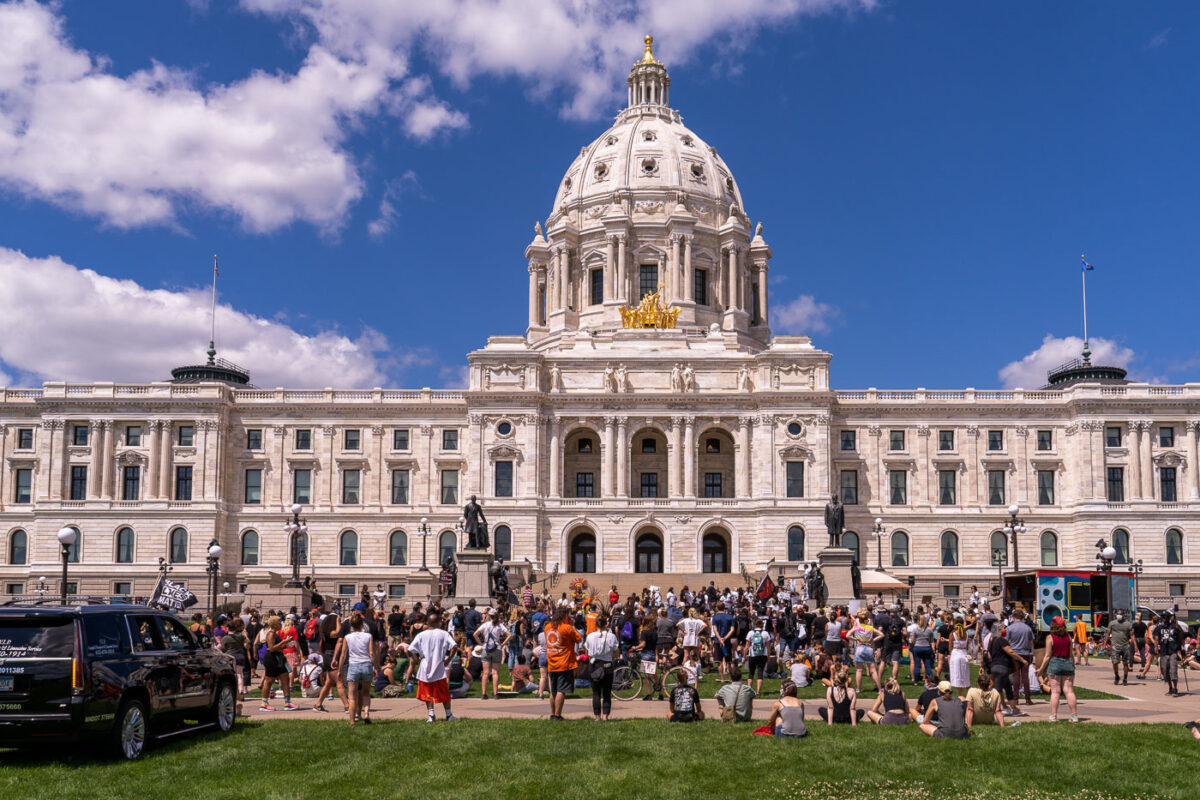
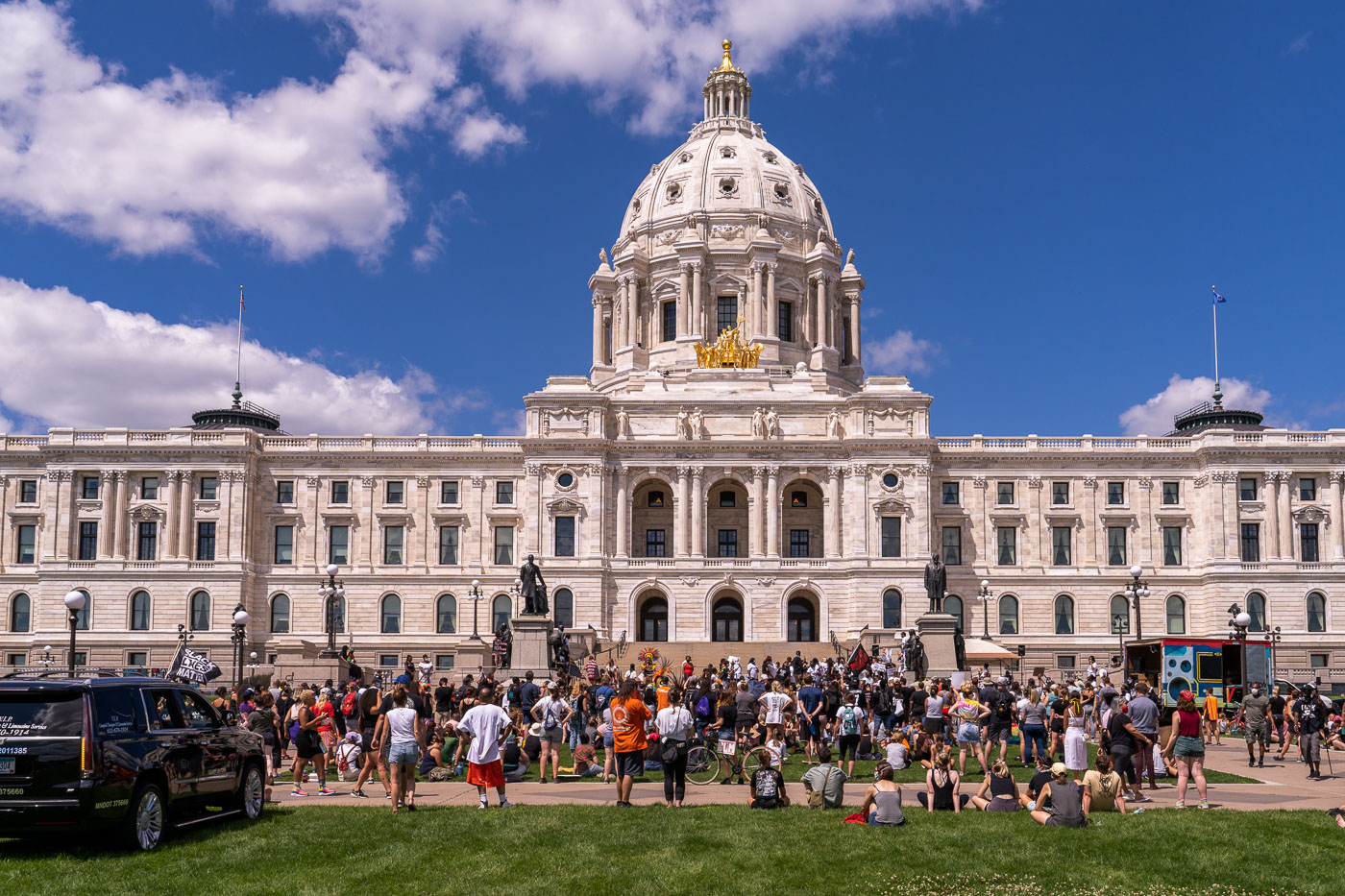
Native Lives Matter rally at Minnesota State Capitol
A Native Lives Matter rally gathered at the Minnesota State Capitol in St. Paul on July 12, 2020. Designed by Cass Gilbert and completed in 1905, the Capitol building features a prominent marble dome and the gilded Quadriga sculpture, serving as the seat of Minnesota's state government. This protest advocated for Indigenous rights and justice, occurring months after the murder of George Floyd by Minneapolis Police. The event underscored the ongoing calls for social justice and accountability within Minnesota's communities.

Native Lives Matter Rally, MN State Capitol, July 12, 2020
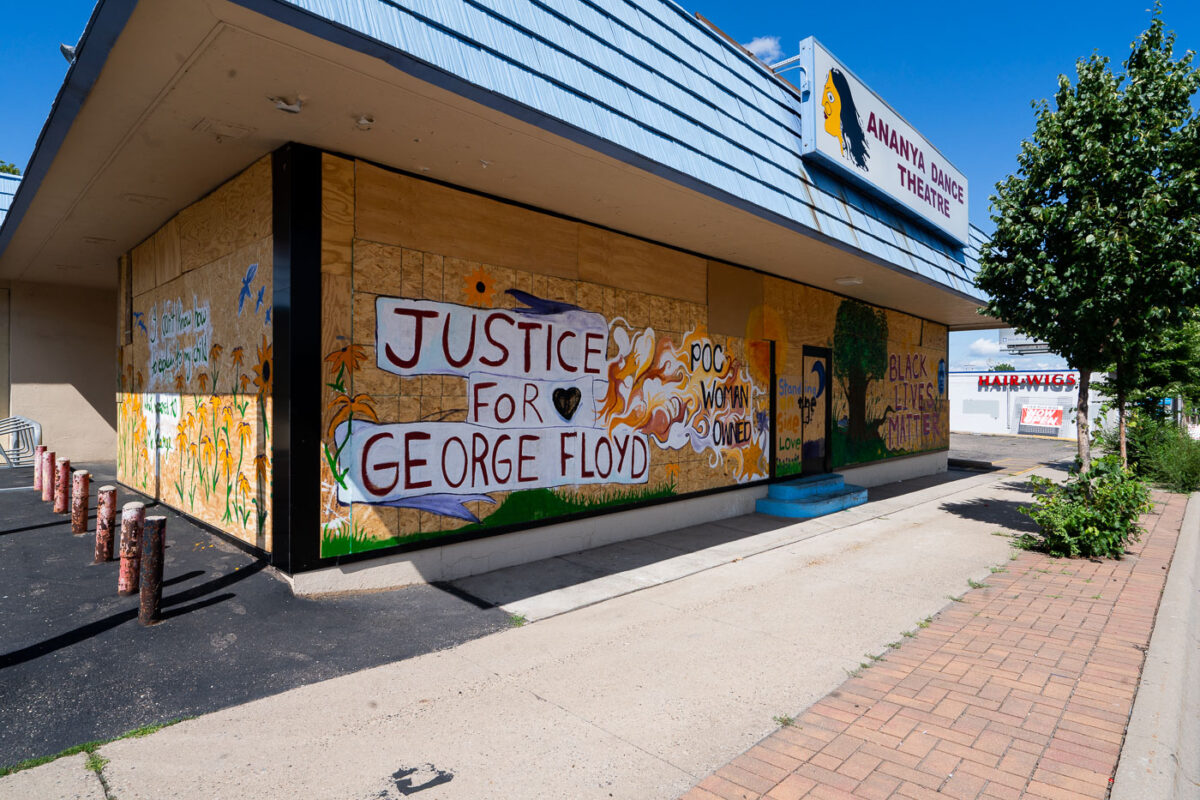
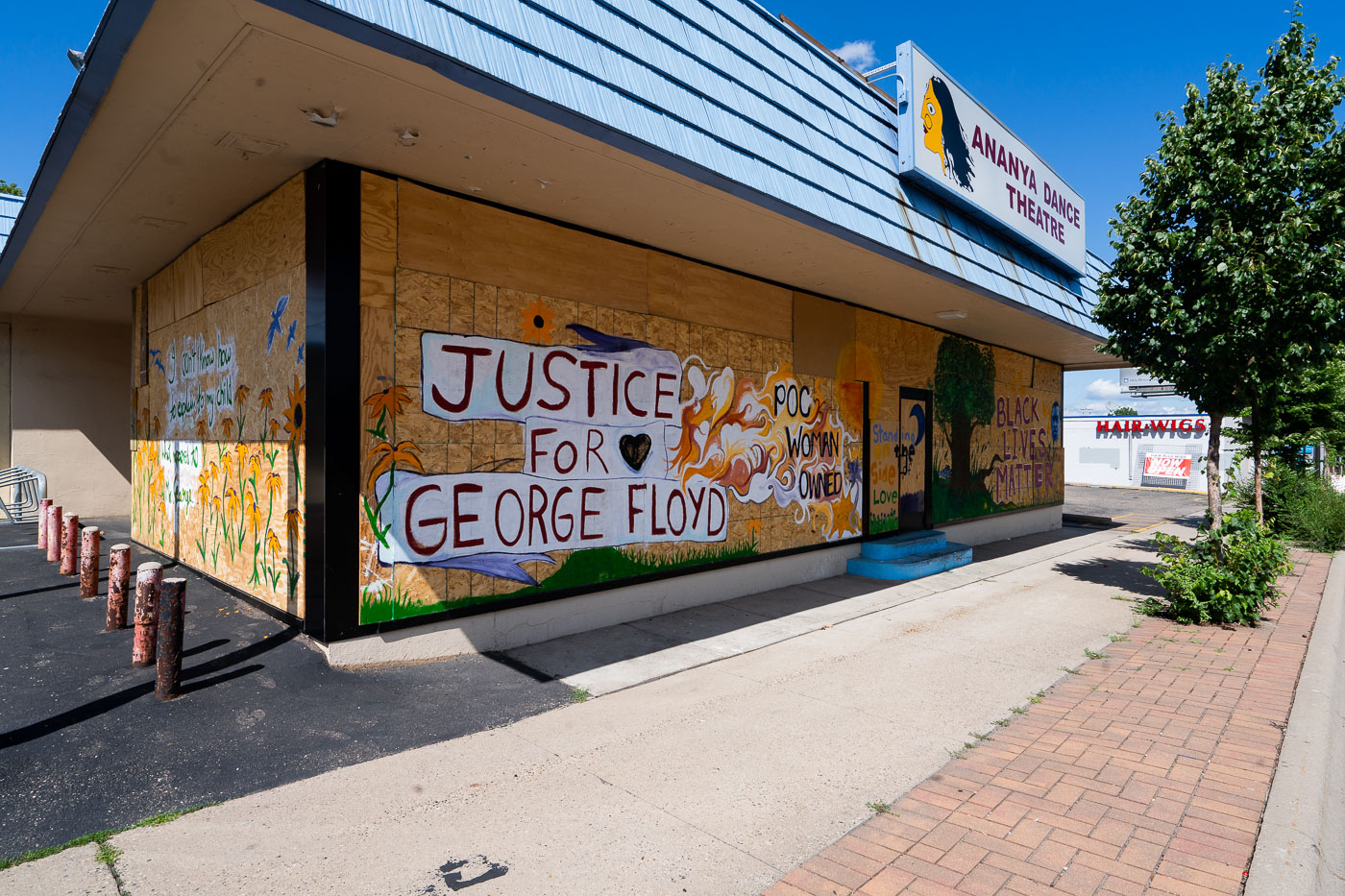
Boards on the Ananya Dance Theatre in St Paul
The Ananya Dance Theatre in St. Paul features murals painted on its boarded-up exterior. These artworks emerged in the aftermath of the 2020 protests following the murder of George Floyd, transforming the protective boards into a public expression of grief and calls for justice. The murals include messages such as "JUSTICE FOR GEORGE FLOYD" and "BLACK LIVES MATTER," alongside affirmations like "POC WOMAN OWNED," reflecting the theatre's identity and community solidarity. Ananya Dance Theatre, a professional dance company, uses performance to address social justice issues, making its building a fitting canvas for these protest art expressions.

Ananya Dance Theatre, St. Paul: George Floyd Mural
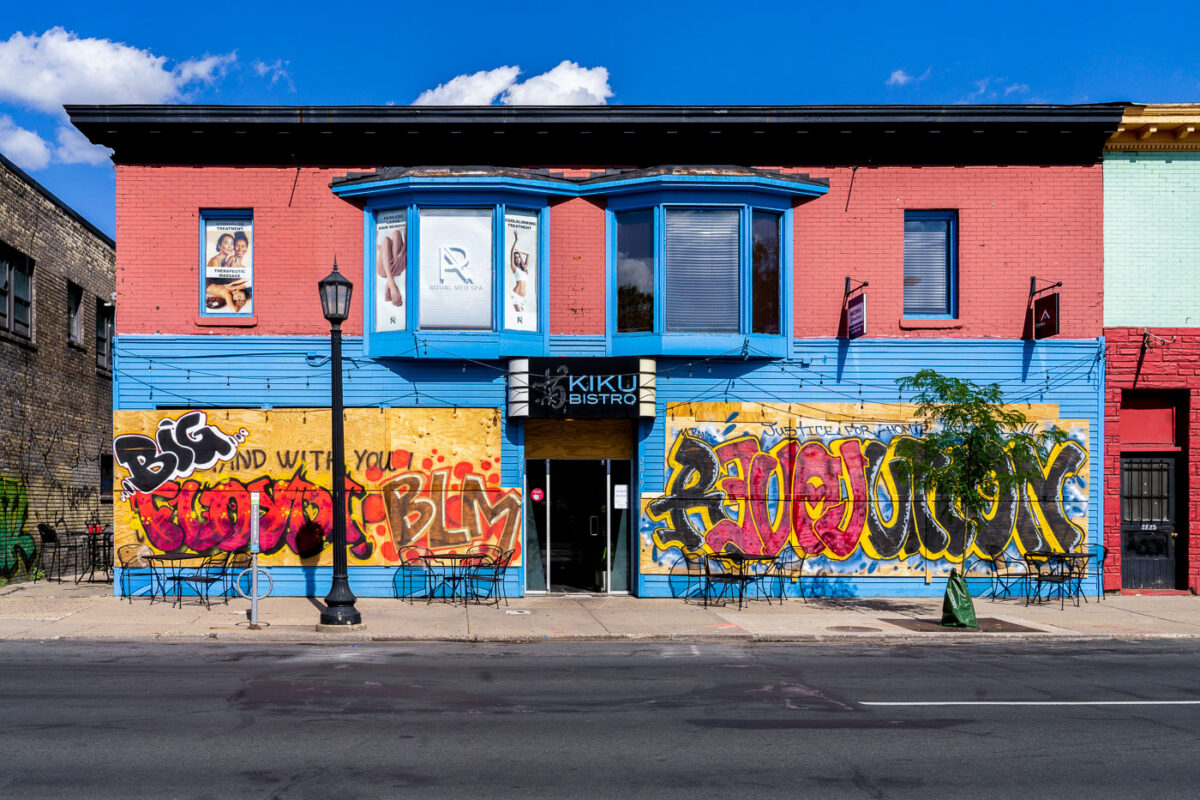
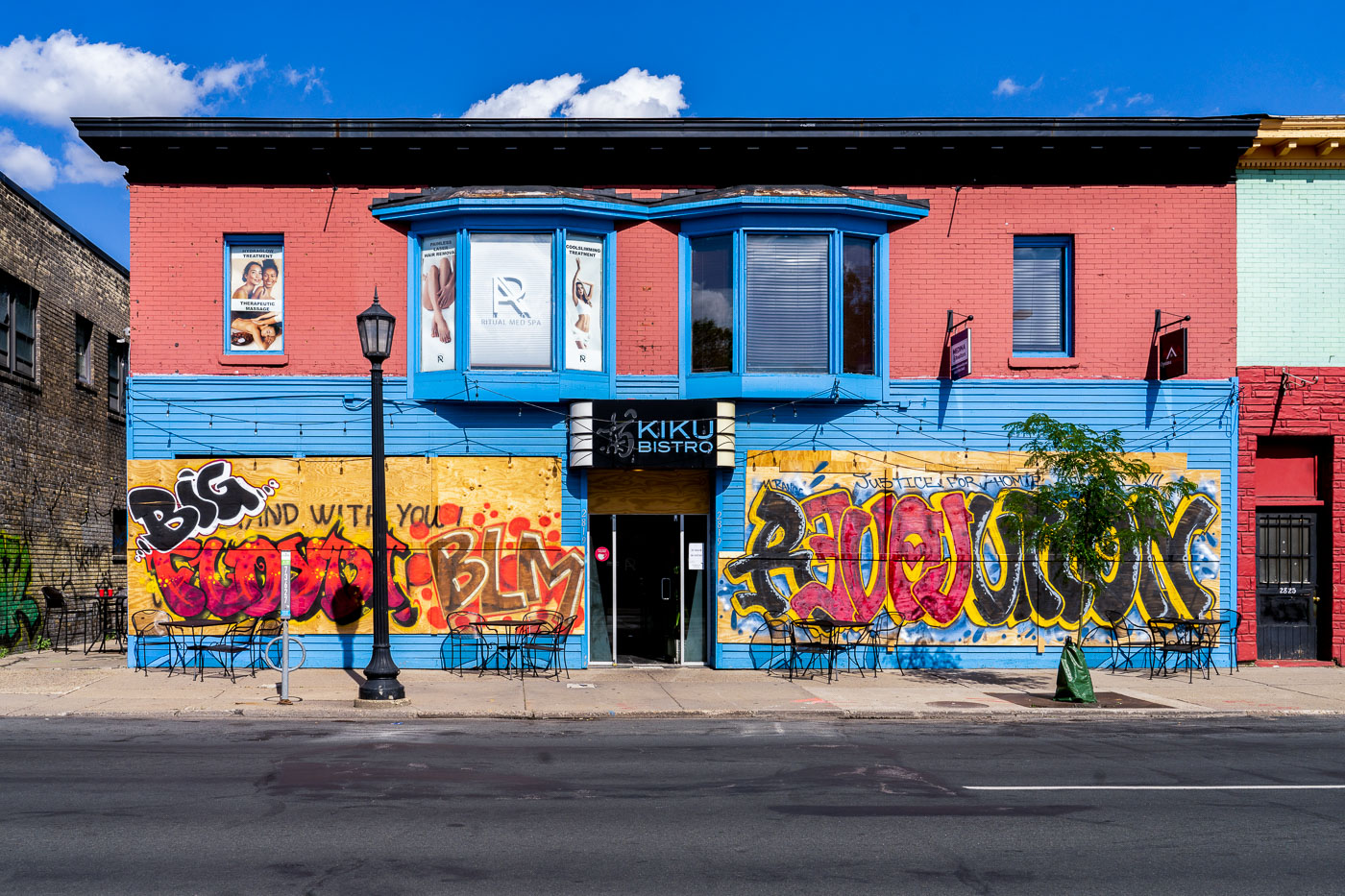
Art boards on Kiku Bistro on Hennepin Ave
Kiku Bistro on Hennepin Avenue displays protest graffiti from 2020. This restaurant, located in Uptown Minneapolis, boarded its windows with plywood panels following the May 25, 2020 death of George Floyd and the subsequent civil unrest. These protective boards became canvases for public expression, featuring graffiti and murals related to the widespread protests. The artwork includes "BLM" (Black Lives Matter) and other messages reflecting the community's response. This imagery documents a specific period of public commentary and artistic engagement within the city's commercial districts.

Kiku Bistro, Hennepin Ave, 2020 Uprising Graffiti
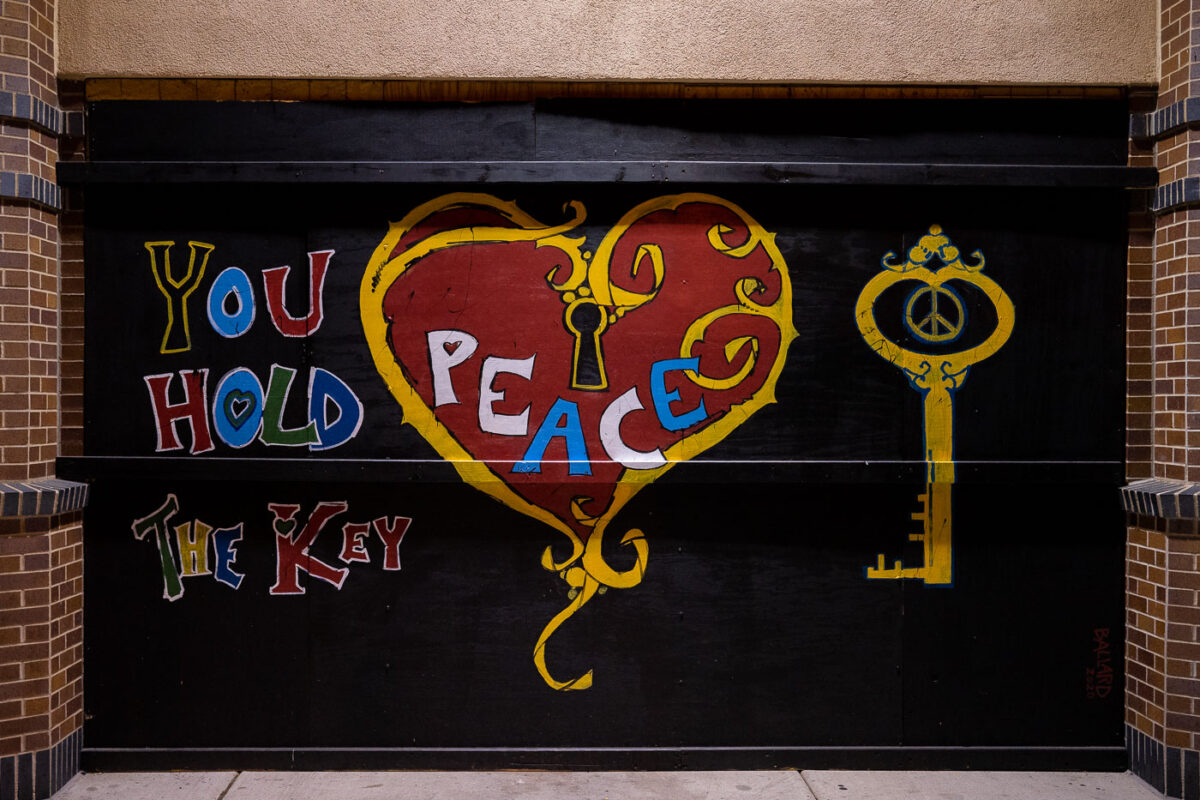
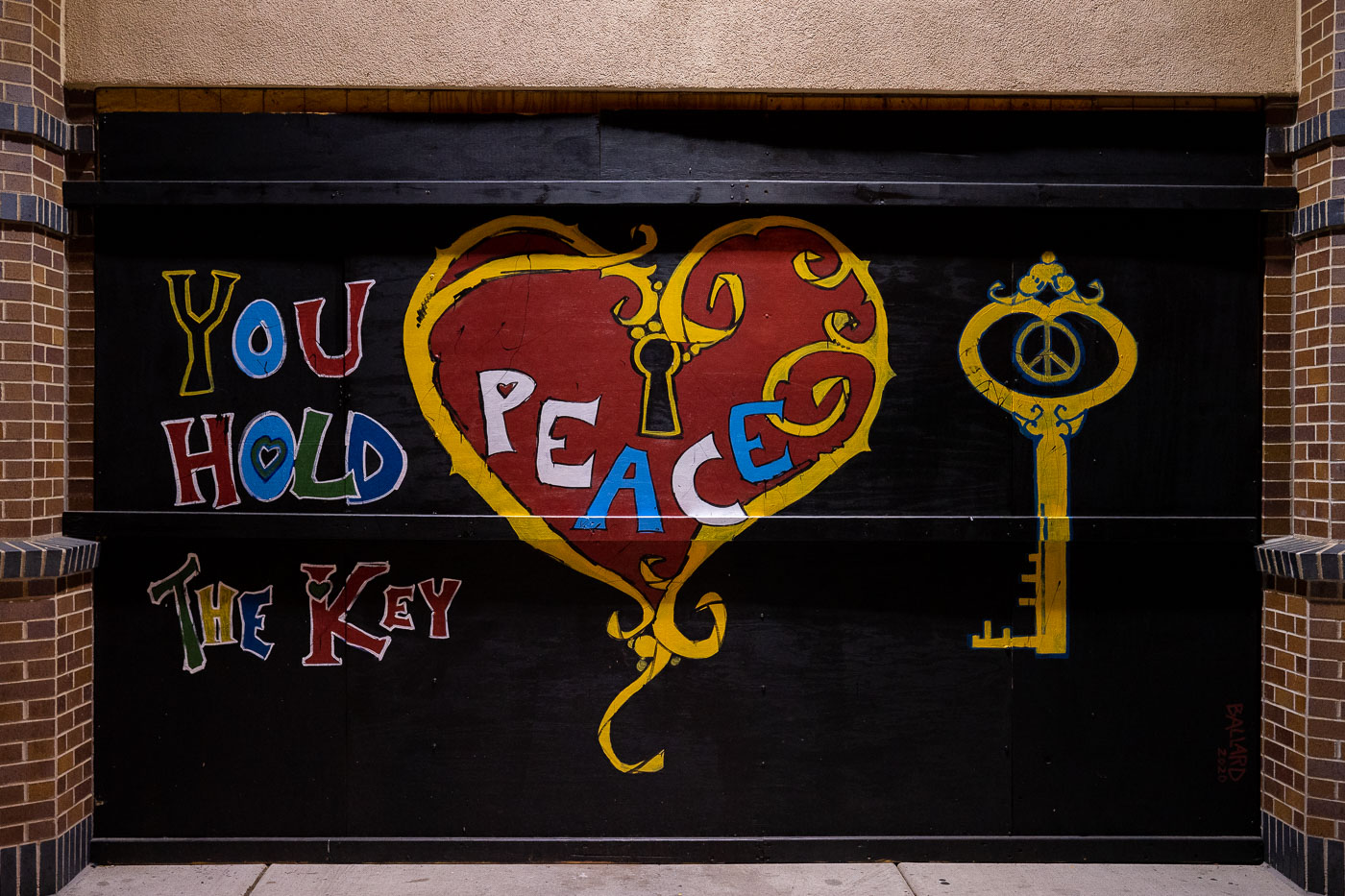
You Hold the Key mural on boarded-up CVS boards, Lake Street, Minneapolis
The "You Hold the Key" mural by Ballard covers a boarded-up CVS Pharmacy on Lake Street in Minneapolis. Painted in 2020, it features a heart, the word "PEACE," and a large key on protective boards over the storefront.

You Hold the Key Mural, Lake Street CVS, Minneapolis
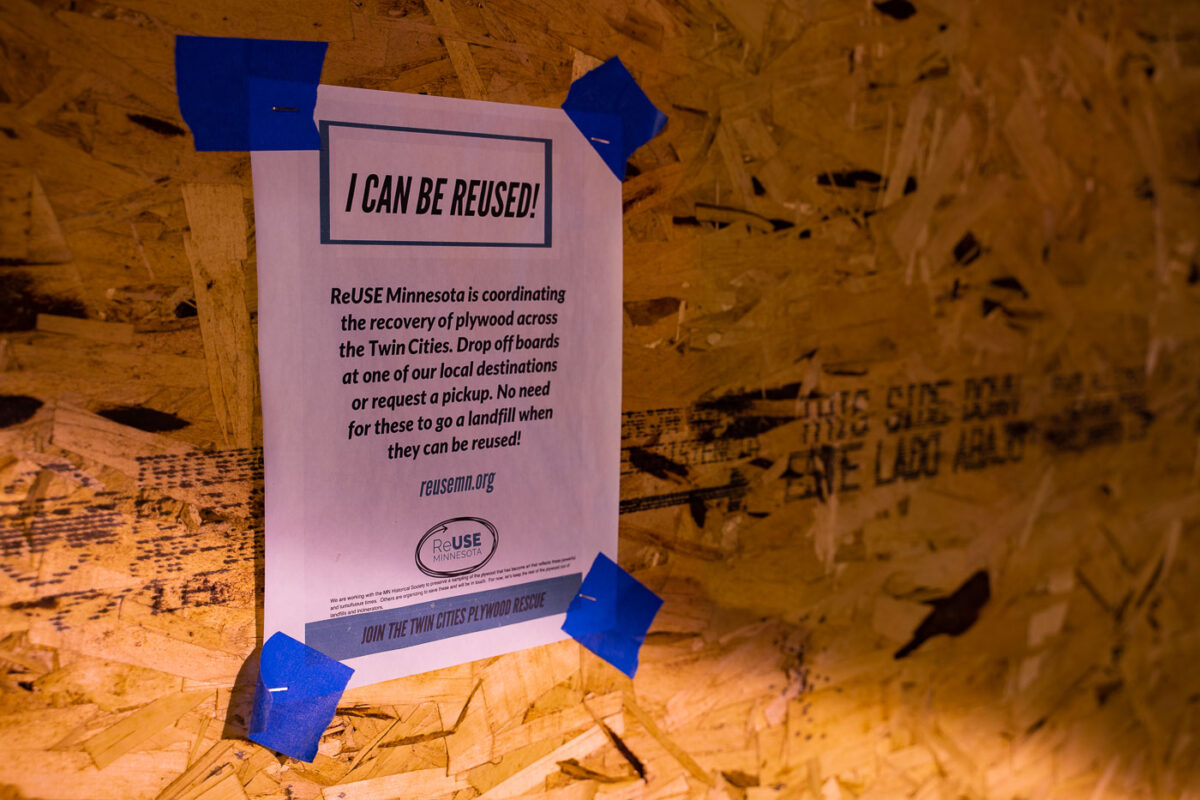
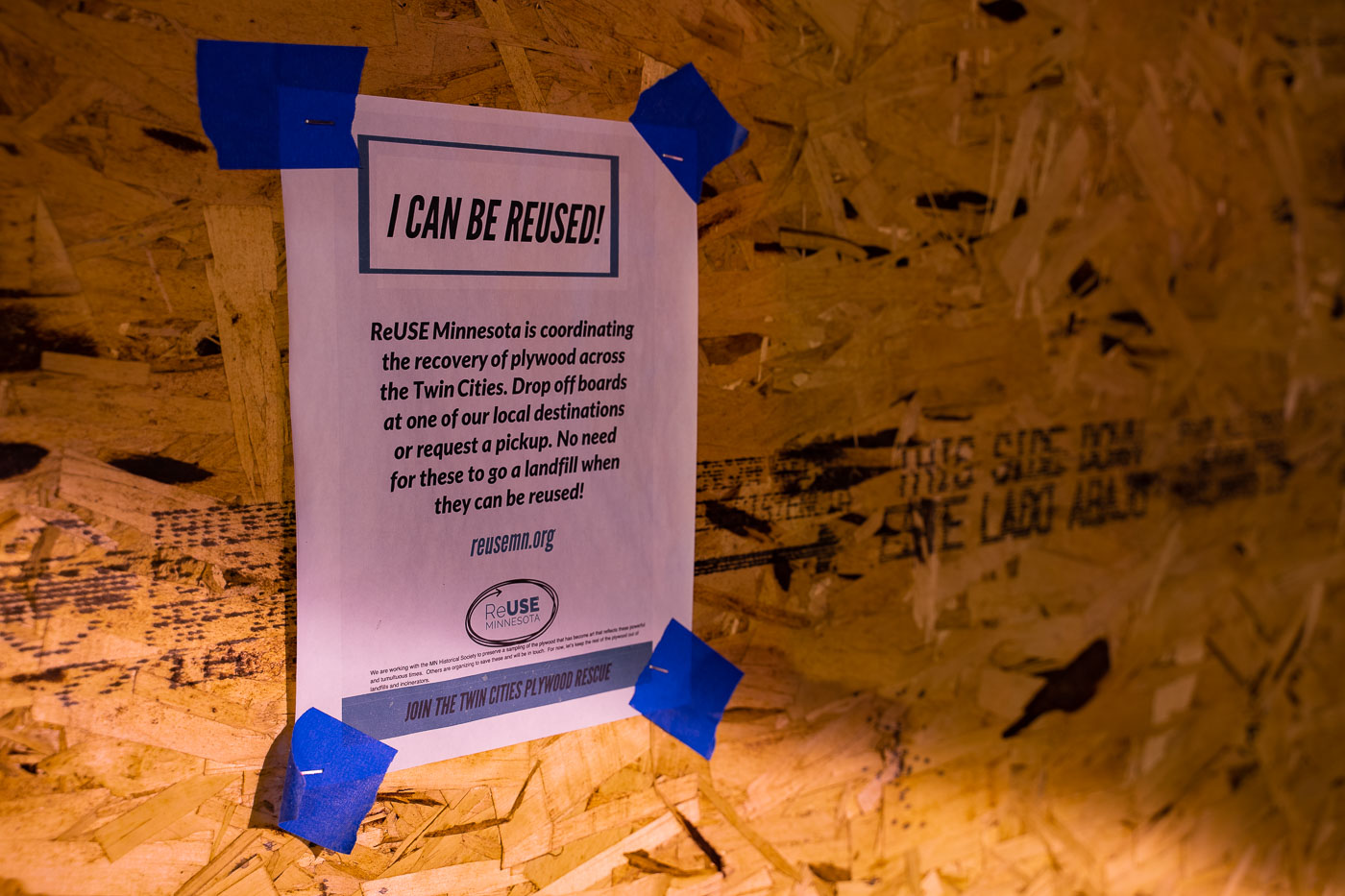
ReUSE Minnesota flyer on a plywood board
A flyer from ReUSE Minnesota is displayed on a plywood storefront in Minneapolis. The organization coordinates the recovery of plywood used to cover doors and windows across the Twin Cities. This initiative emerged following the widespread boarding up of businesses during the Minneapolis Uprising, aiming to divert materials from landfills. ReUSE Minnesota also collaborates with the Minnesota Historical Society to preserve select pieces of plywood, recognizing their cultural and historical significance as artifacts from a period of social unrest.

ReUSE Minnesota Flyer on Storefront Board, Minneapolis
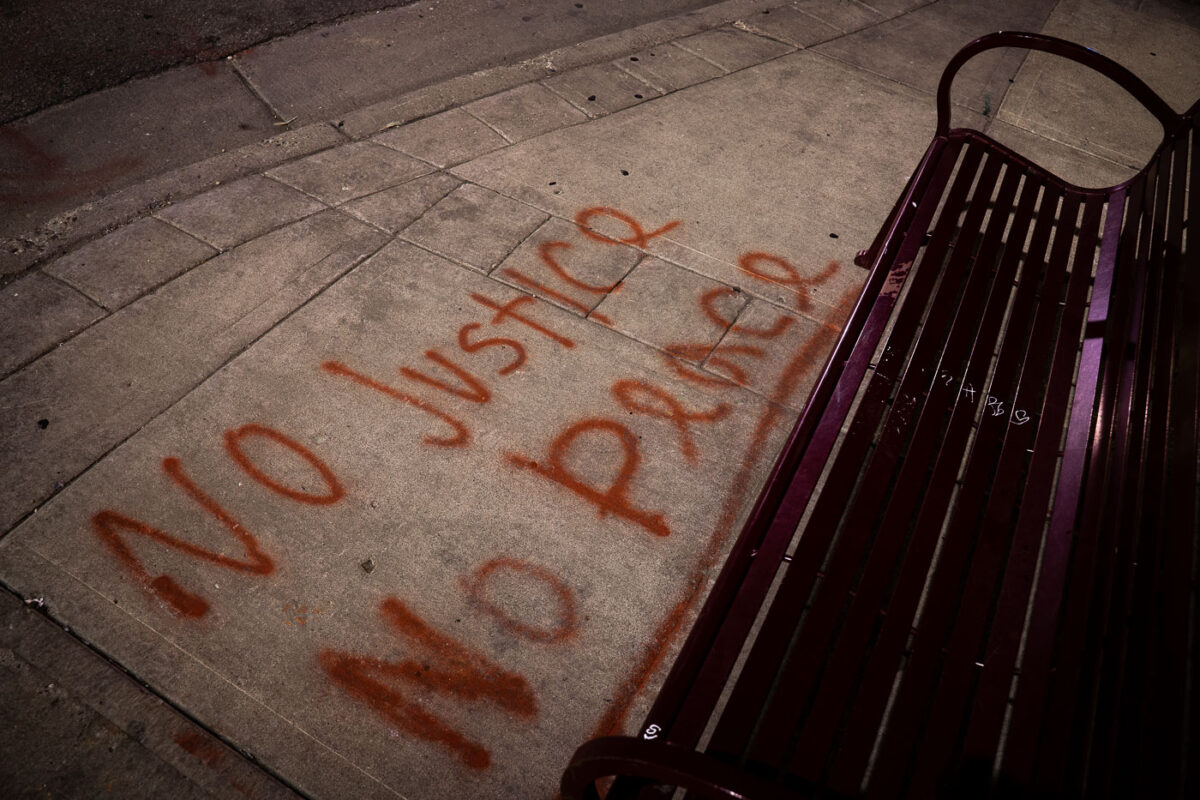
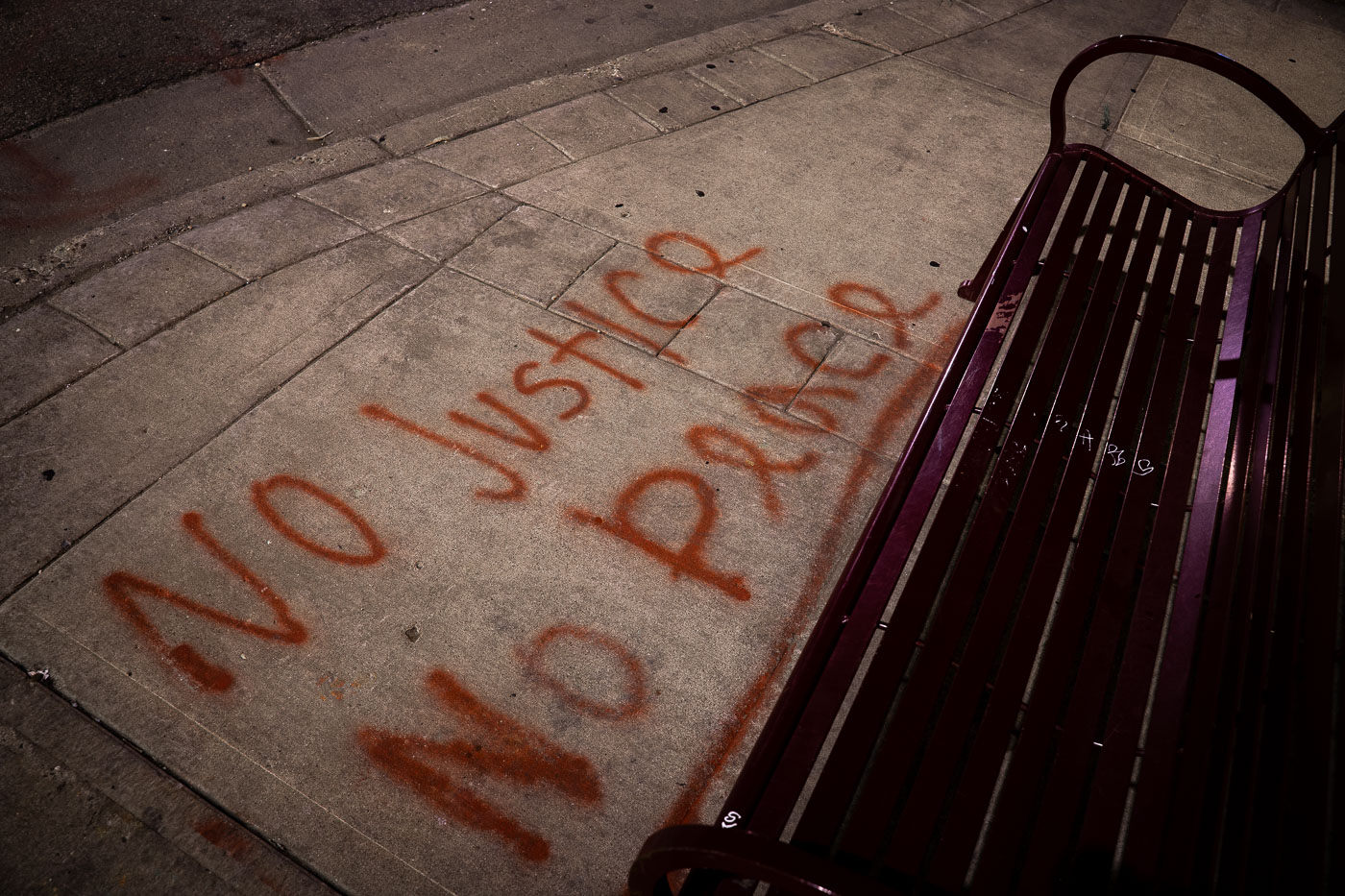
No Justice No Peace in front of South Minneapolis bench
The phrase 'No Justice, No Peace' is spray-painted in red on a sidewalk next to a public bench in South Minneapolis. This slogan became a prominent rallying cry during the widespread protests and civil unrest that followed the murder of George Floyd in Minneapolis in May 2020. Such public markings served as a direct expression of community grief, anger, and demands for systemic change, transforming urban spaces into sites of protest and remembrance. These messages, often temporary, marked the physical landscape of the city, reflecting the ongoing struggle for racial justice.

No Justice No Peace Graffiti on Sidewalk by Bench, South Minneapolis
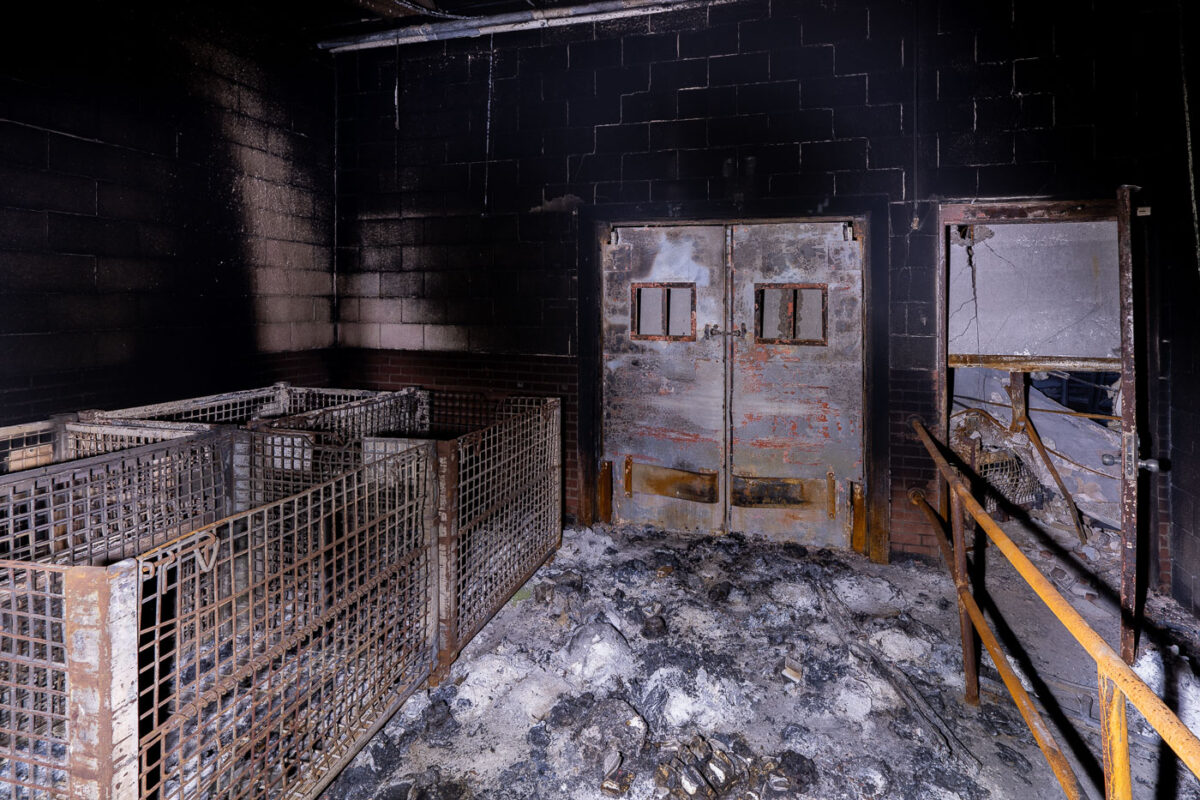
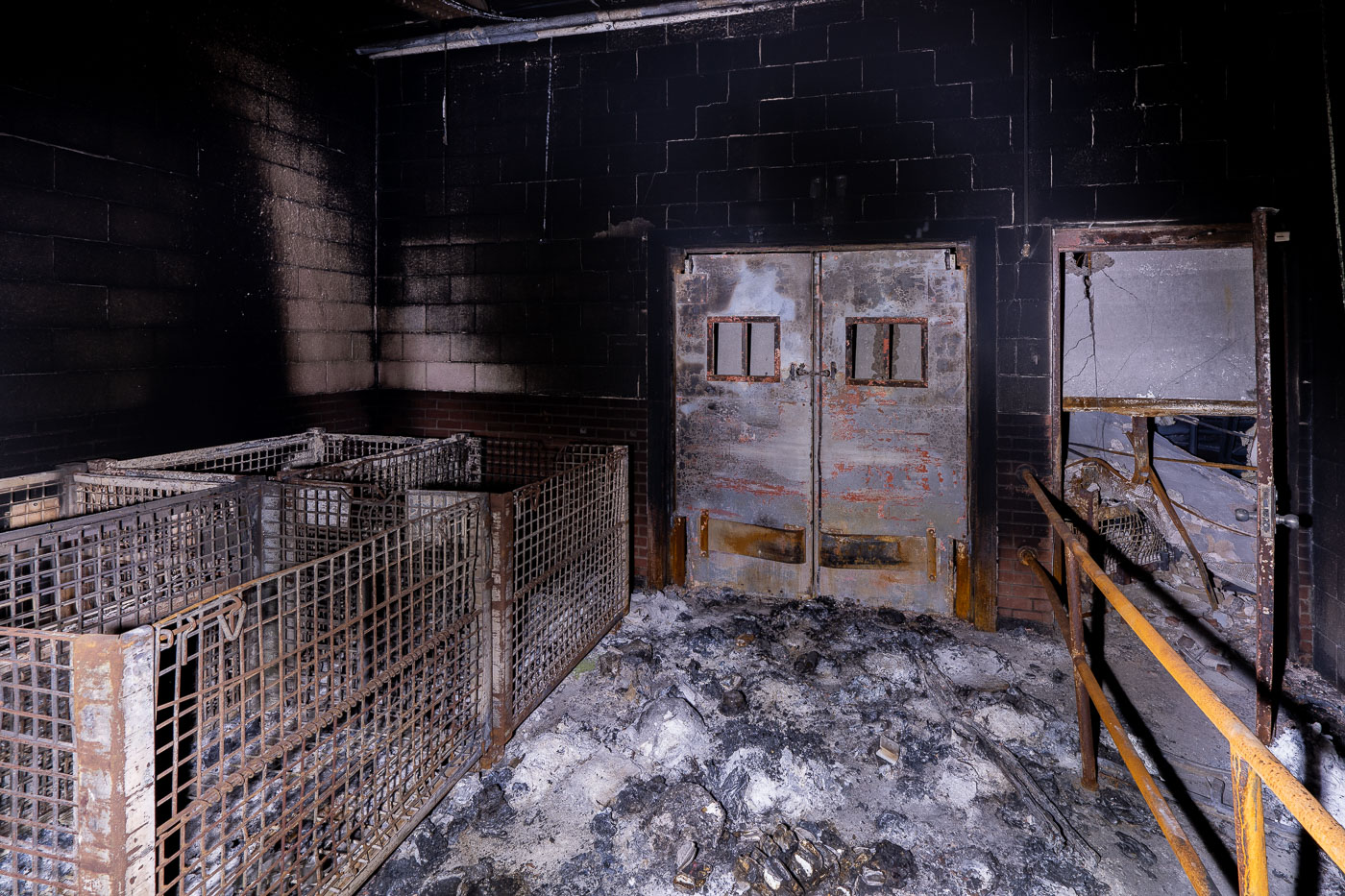
Inside the burned out Minnehaha Station post office
The interior of the Minnehaha Station United States Post Office, located at 3033 27th Avenue South in Minneapolis, shows extensive fire damage. This facility was severely burned during the civil unrest in May 2020, which followed the death of George Floyd. Charred walls, debris, and damaged mail sorting cages are visible, indicating the extent of the destruction within this essential community service building. The incident rendered the post office inoperable, disrupting postal services for residents in the surrounding Minneapolis neighborhood.

Burned Minnehaha Station Post Office Interior, Minneapolis
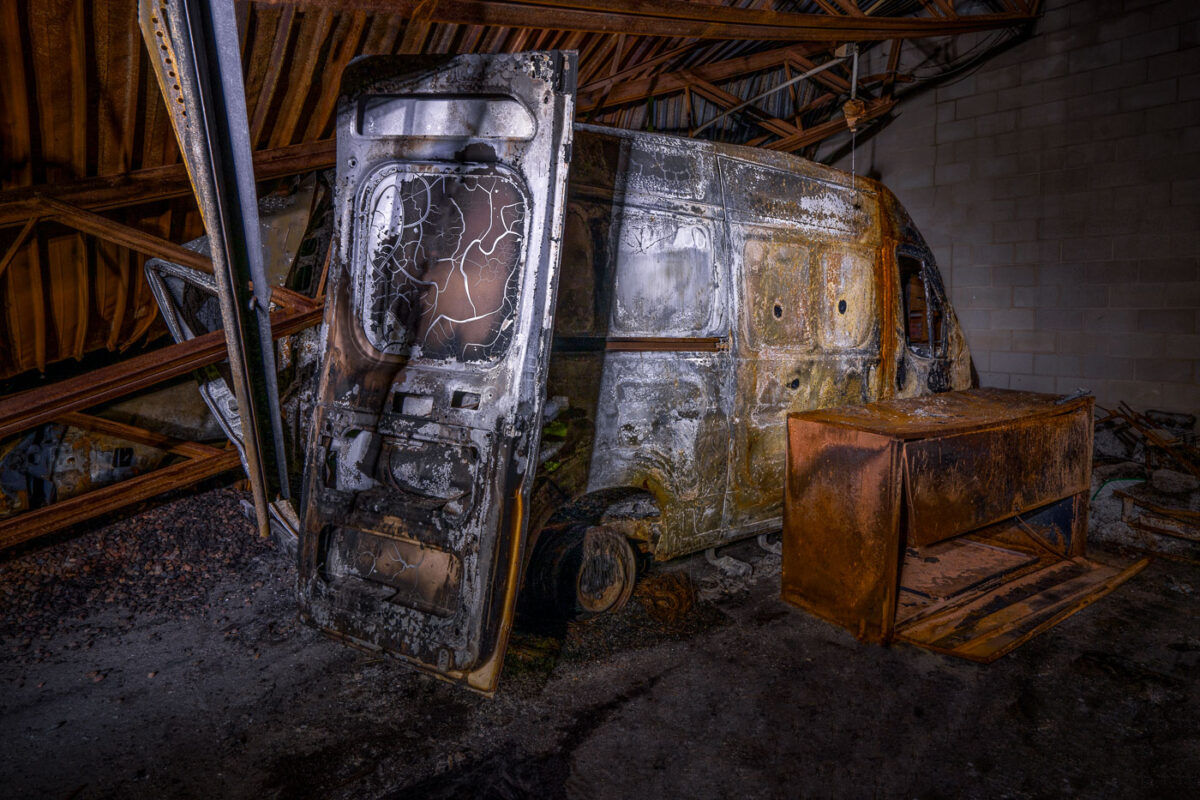
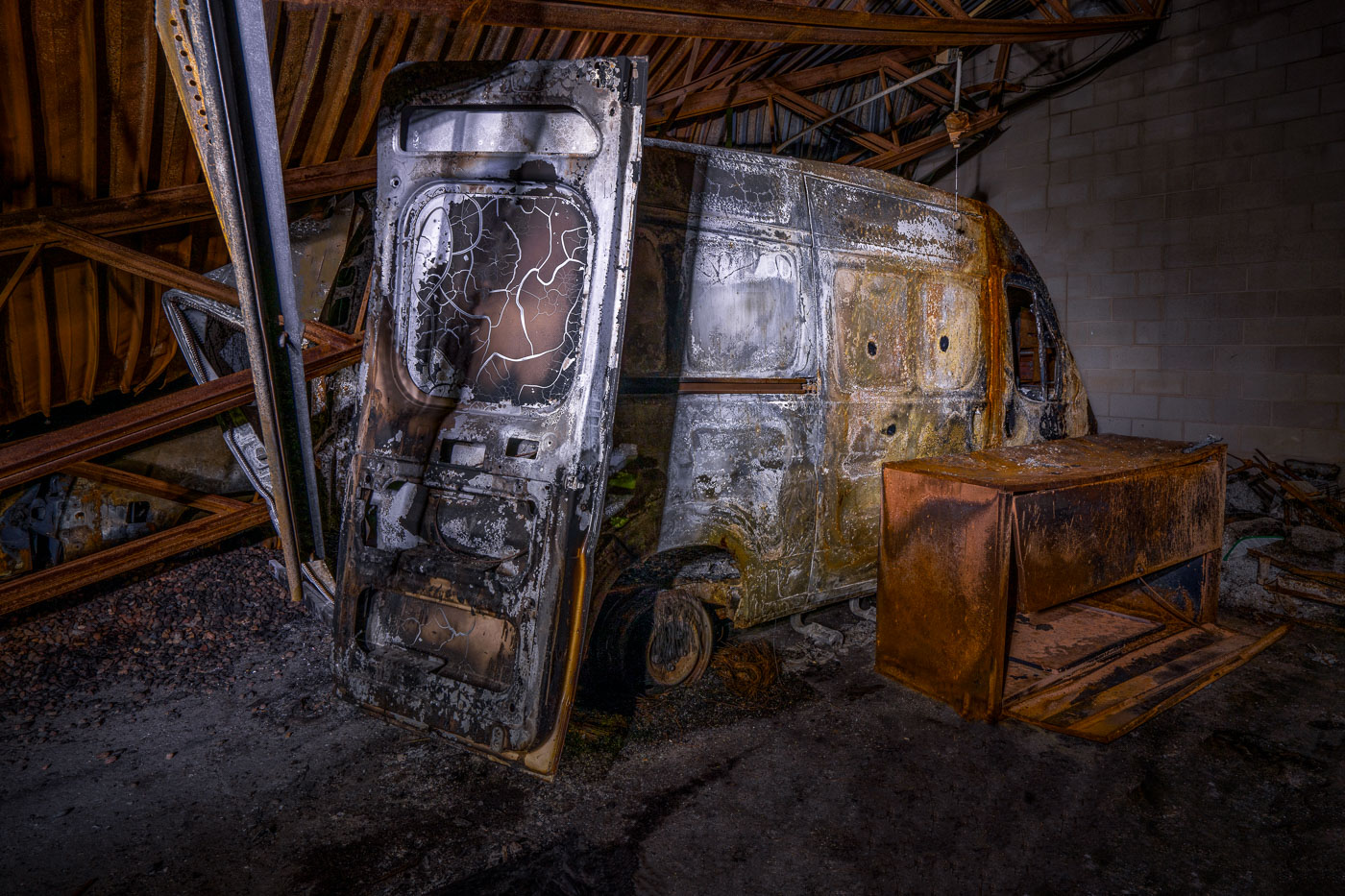
Burned out USPS van inside a burned post office
A burned United States Postal Service (USPS) van rests within the fire-damaged Minnehaha Post Office in South Minneapolis. This facility, located on 27th Avenue South, sustained extensive damage during the civil unrest that followed the May 25, 2020 death of George Floyd. As a vital piece of public infrastructure, the Minnehaha Station provided essential mail services to the local community. The destruction of the building and its contents, including the delivery vehicle, reflects the widespread property damage experienced during the Minneapolis Uprising.

Burned USPS Van, Minnehaha Post Office, Minneapolis
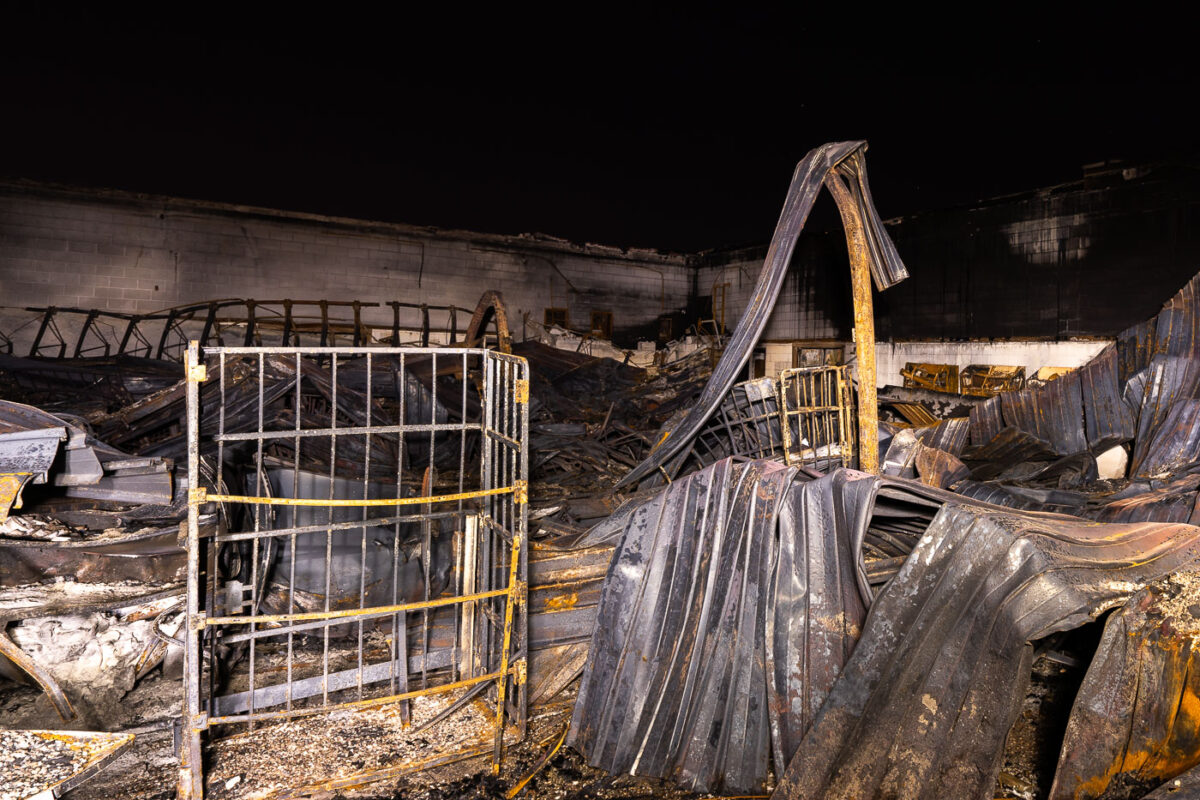
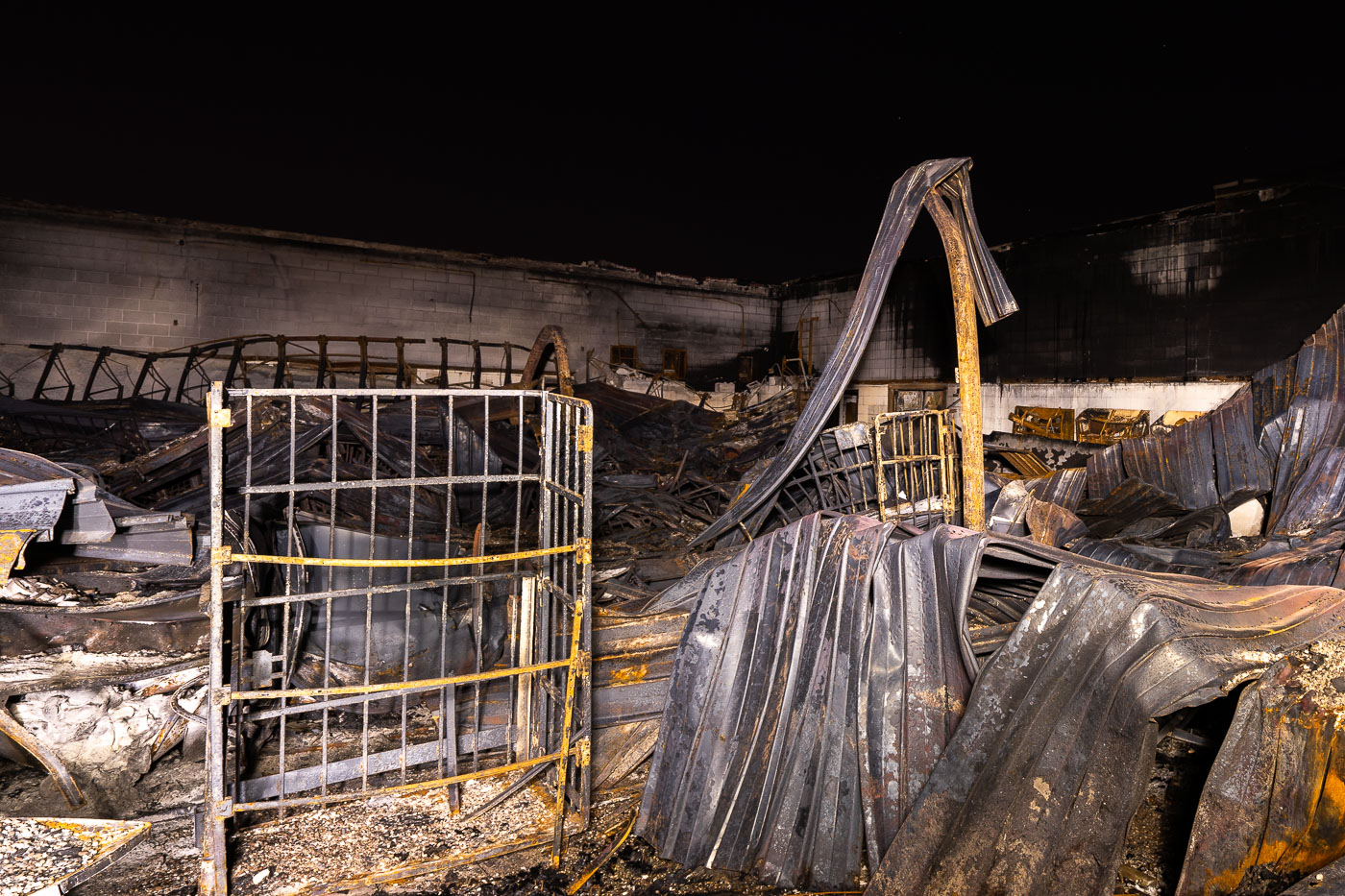
Burned rubble of USPS post office in South Minneapolis
The interior of the Minnehaha Station United States Post Office, located at 3033 27th Avenue South in Minneapolis, shows extensive fire damage. This facility served as a vital postal service hub for the local community. The building was severely damaged by fire and arson during the civil unrest in Minneapolis following the death of George Floyd in May 2020. Twisted metal and charred remains illustrate the widespread destruction that affected numerous structures in the city during that period.

Minnehaha Station Post Office Burned Interior
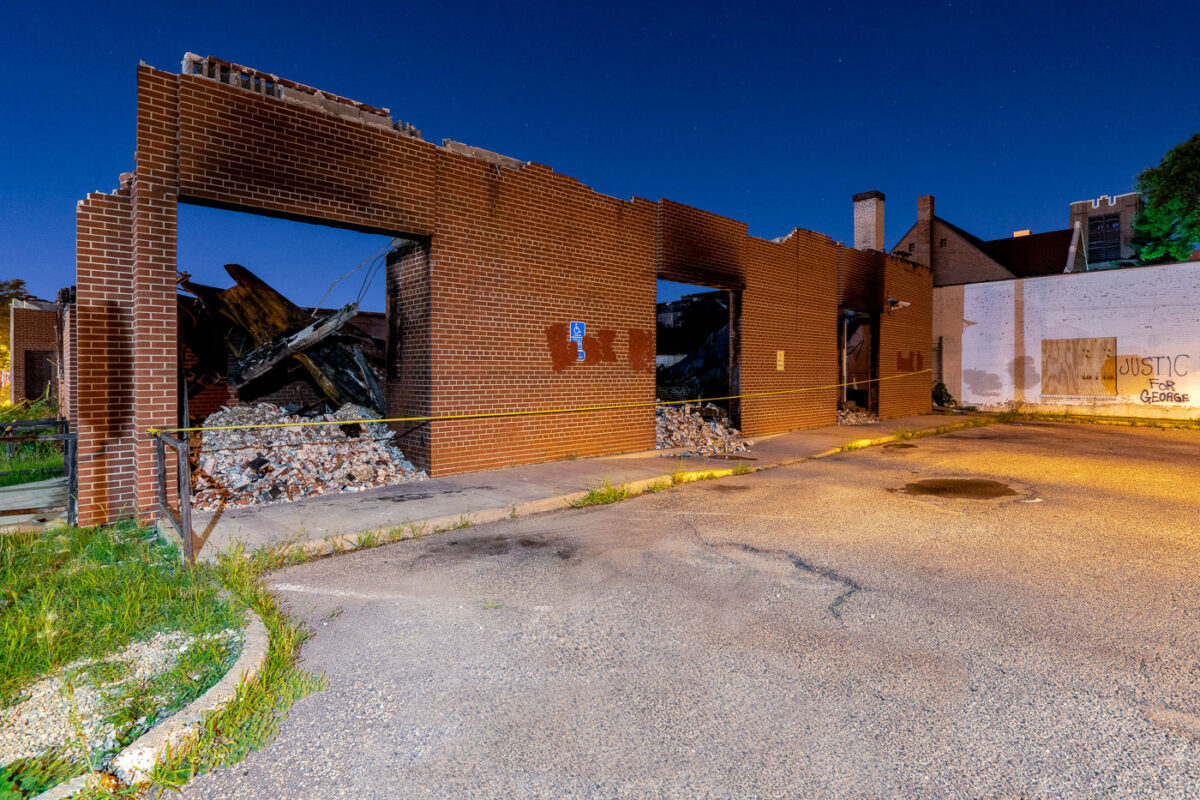
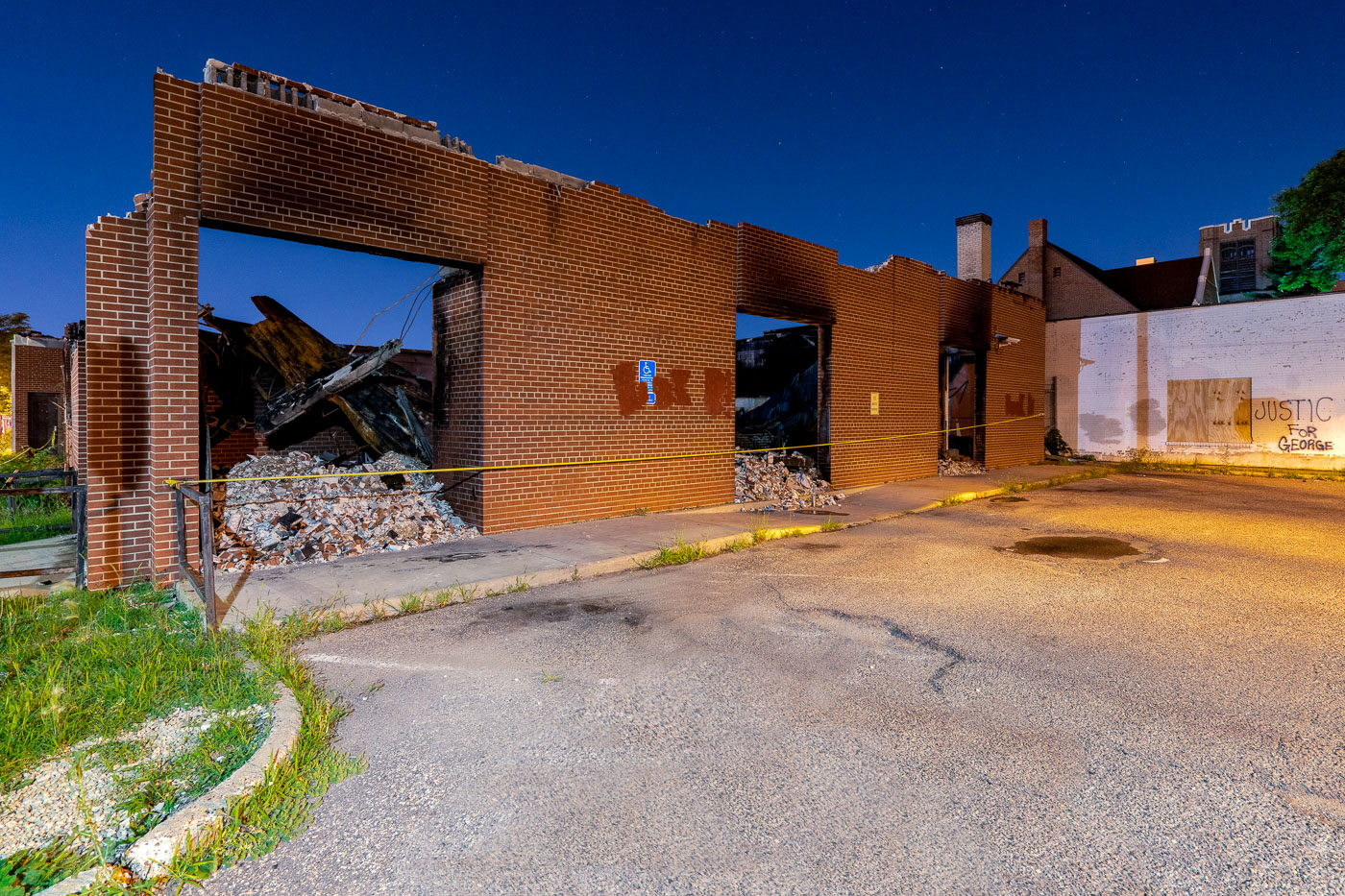
The remains of a burned out USPS post office
The Minnehaha Station United States Post Office, located at 3033 27th Avenue South in Minneapolis, stands as a burned-out structure. This facility previously served as a vital postal service hub for the surrounding community. The building was extensively damaged by fire and arson during the civil unrest in Minneapolis following the death of George Floyd in May 2020. The remaining brick shell and debris are a visible reminder of the widespread property damage that occurred during the protests, with graffiti reading 'Justice for George' on an adjacent wall further contextualizing the site.

Minnehaha Station USPS Post Office Rubble, Minneapolis
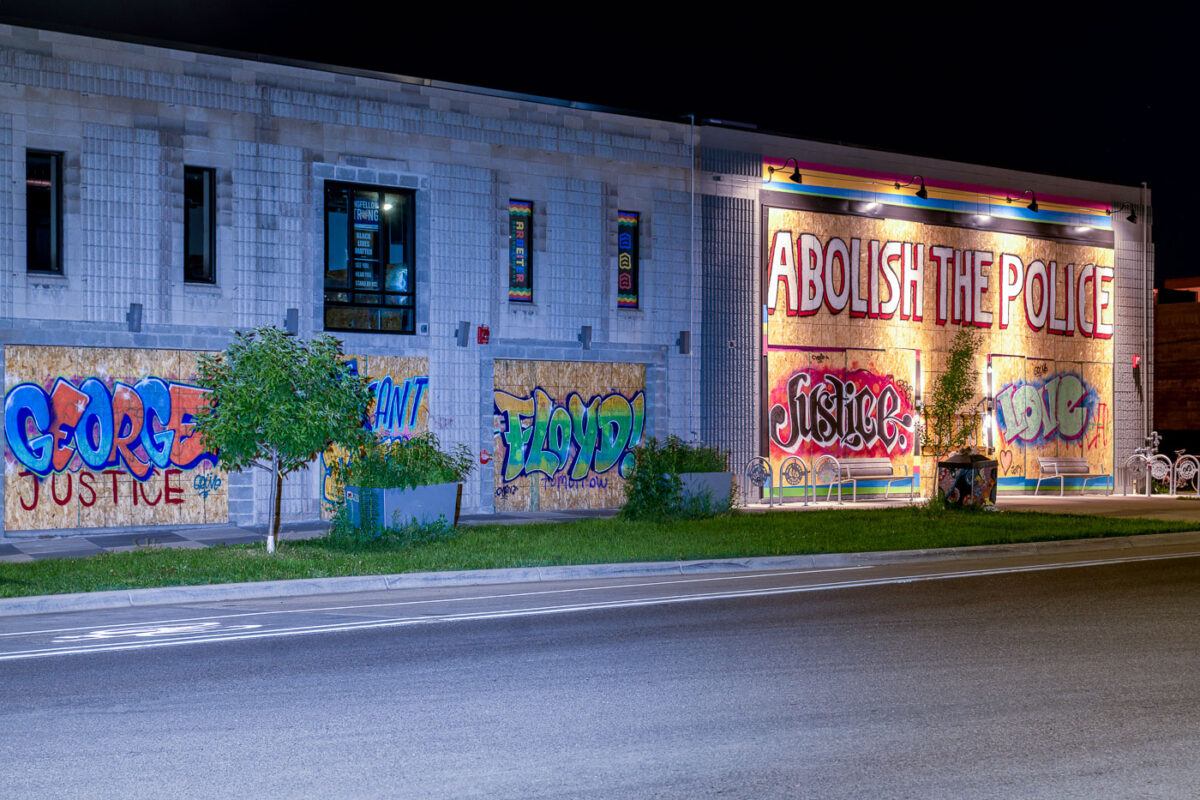
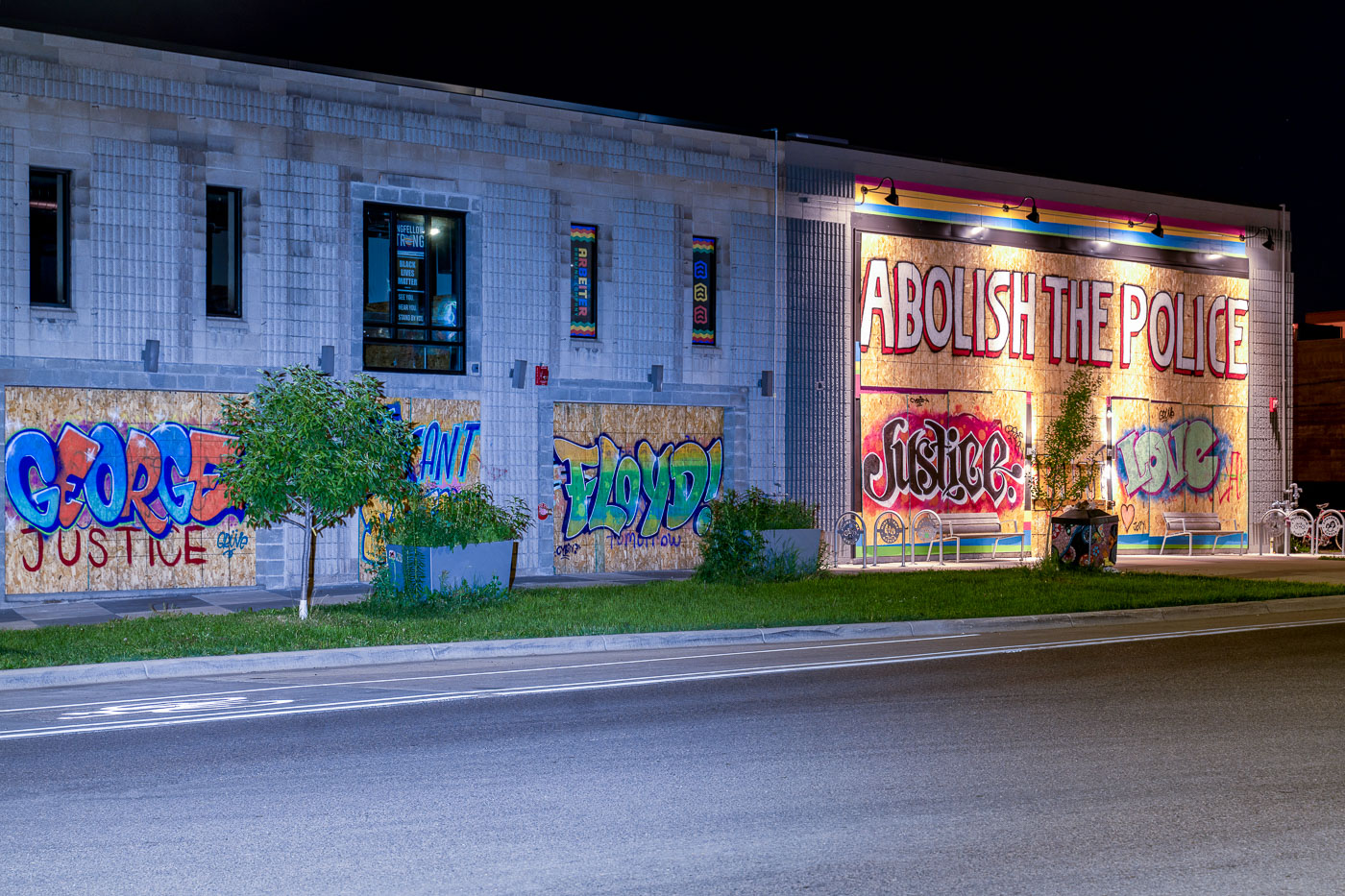
Abolish the police and George Floyd murals on Minnehaha
Murals and protest art adorn boarded-up buildings along Minnehaha Avenue in South Minneapolis. These public art installations emerged in the aftermath of the May 25, 2020, death of George Floyd and the subsequent widespread protests. The artwork includes tributes to George Floyd, calls for justice, and messages such as "Abolish The Police," reflecting the community's demands for systemic change. Serving as a temporary public canvas, these expressions visually documented the grief and activism that characterized the Minneapolis Uprising.

Abolish Police Mural & George Floyd Art, Minnehaha Ave
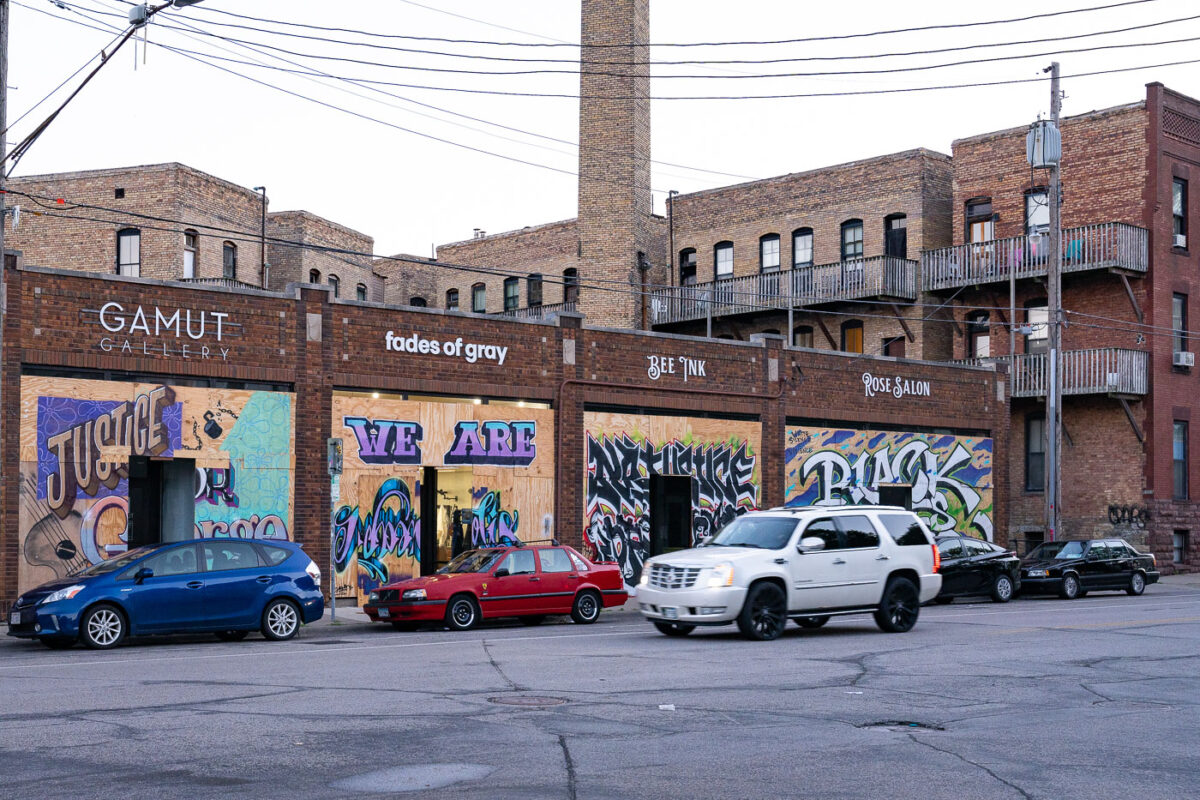
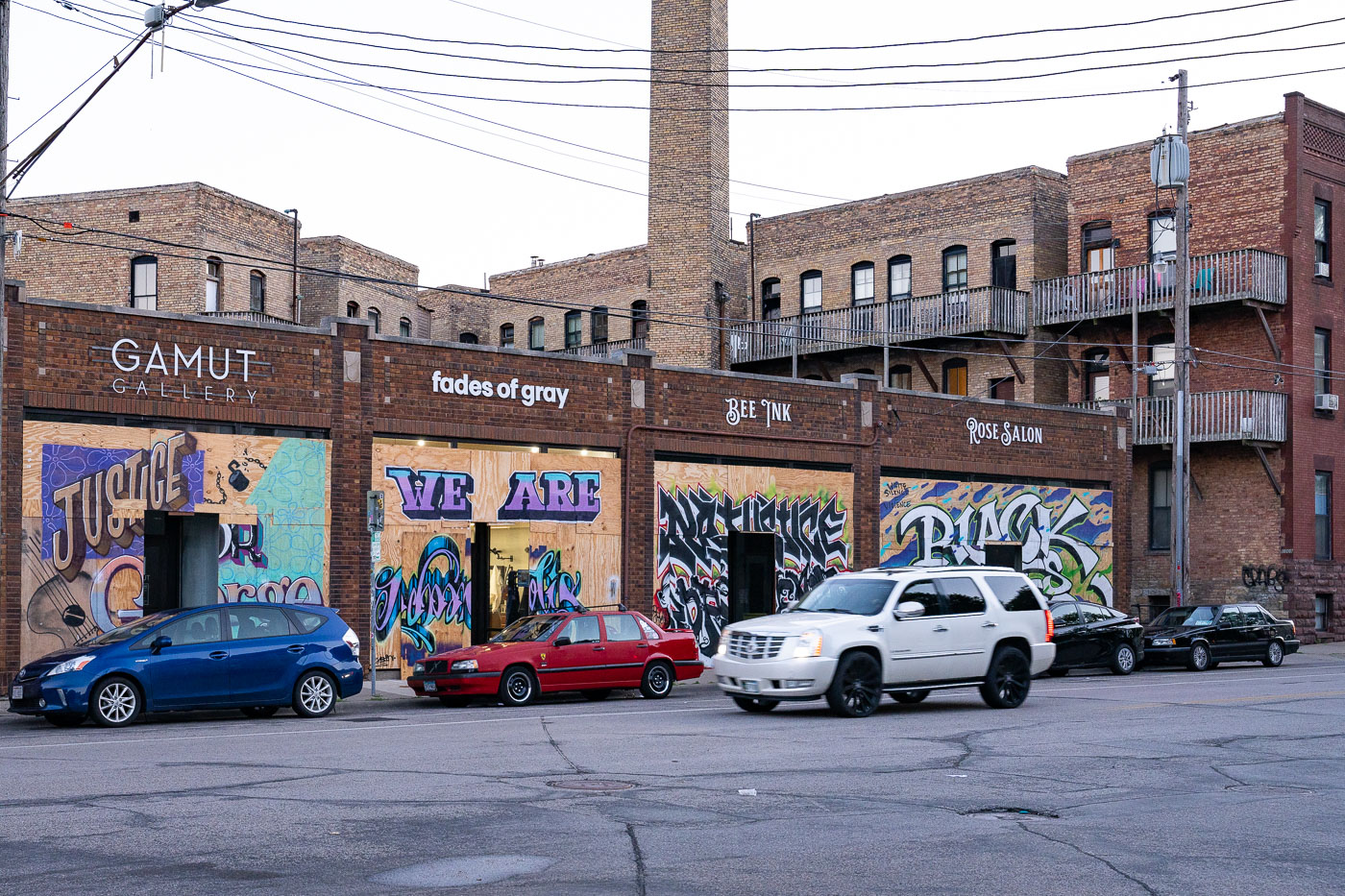
Gamut Galley art boards
Storefronts along a street in Minneapolis, including Gamut Gallery, are boarded with plywood. These boards were installed to protect businesses during the civil unrest and protests that followed the murder of George Floyd in May 2020. Many of the plywood panels were subsequently transformed into murals and public art, reflecting themes of justice and community. Businesses like Gamut Gallery, 'fades of gray,' 'BEE INK,' and 'ROSE SALON' participated in this widespread practice across the city.

Gamut Gallery boarded storefronts with murals, Minneapolis
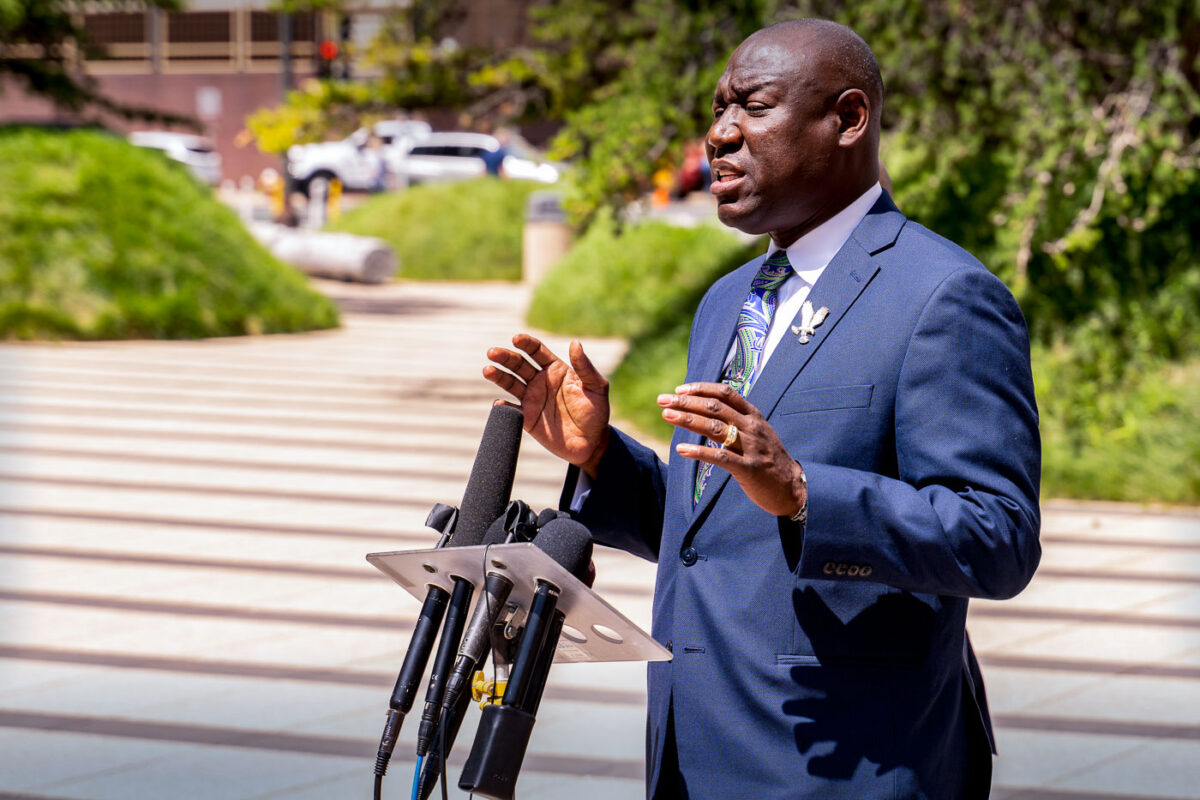
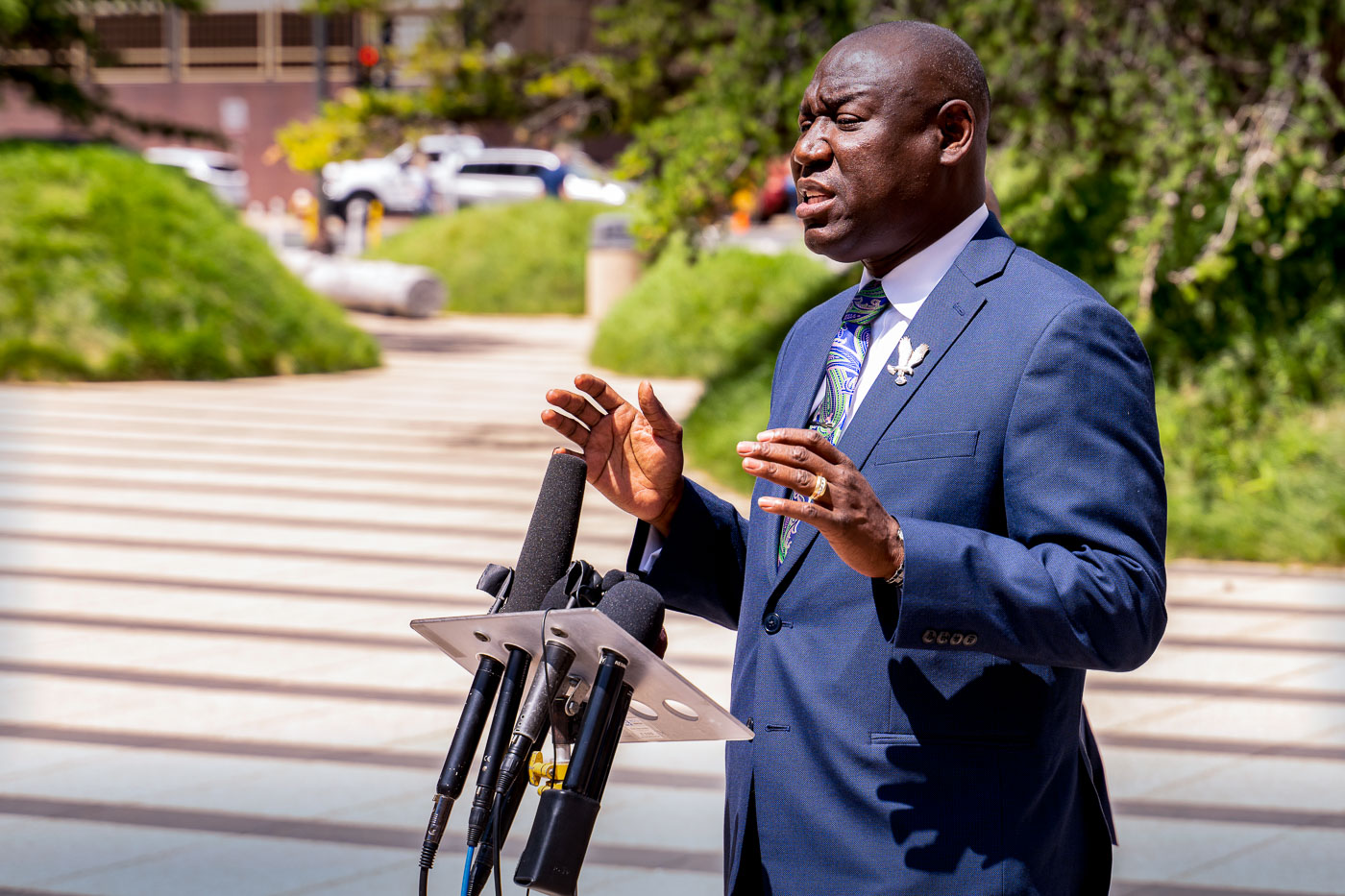
Ben Crump speaks in Downtown Minneapolis
Attorney Ben Crump addresses the media outside the Minneapolis Federal Courthouse in Downtown Minneapolis on July 15, 2020. He announced the filing of a civil rights lawsuit on behalf of the family of George Floyd against the City of Minneapolis and four police officers. This press conference took place amidst widespread protests and calls for police accountability following Floyd's death in May 2020, a period often referred to as the Minneapolis Uprising. The Federal Courthouse serves as a significant venue for legal proceedings and public statements related to federal cases and civil liberties.

Ben Crump Press Conference, Minneapolis Federal Courthouse
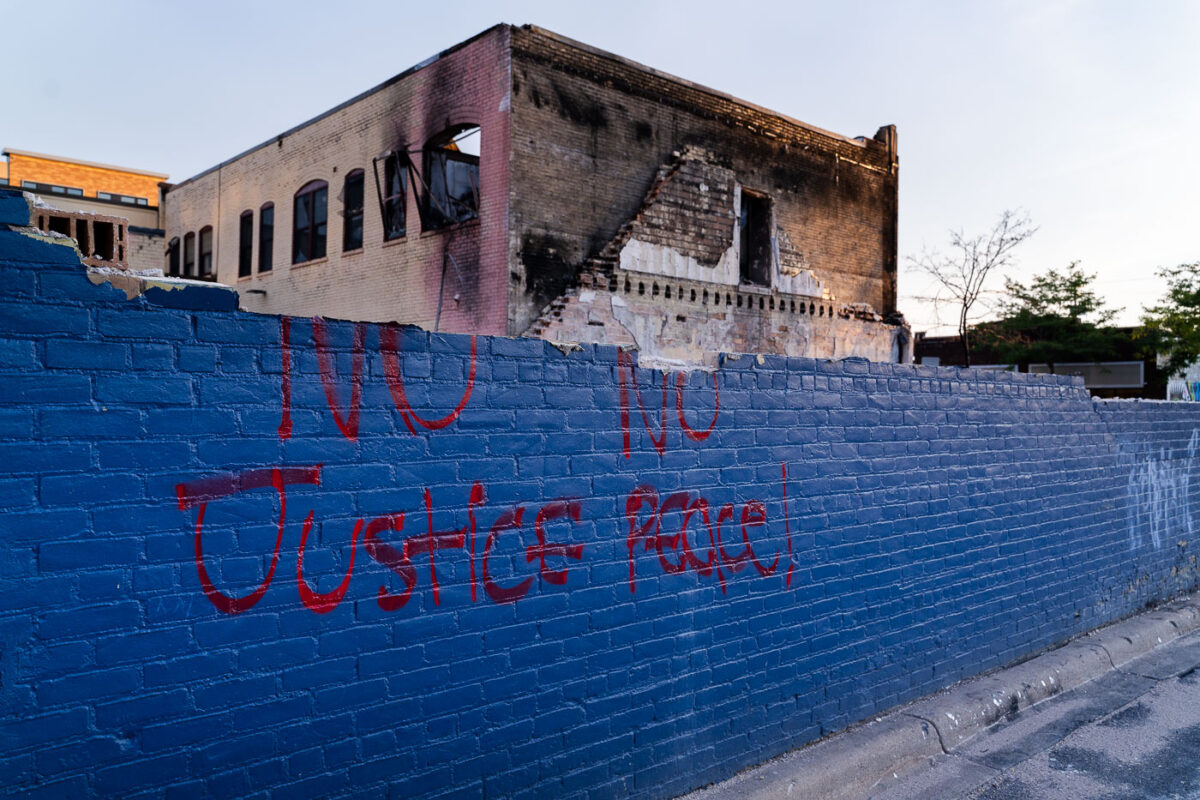
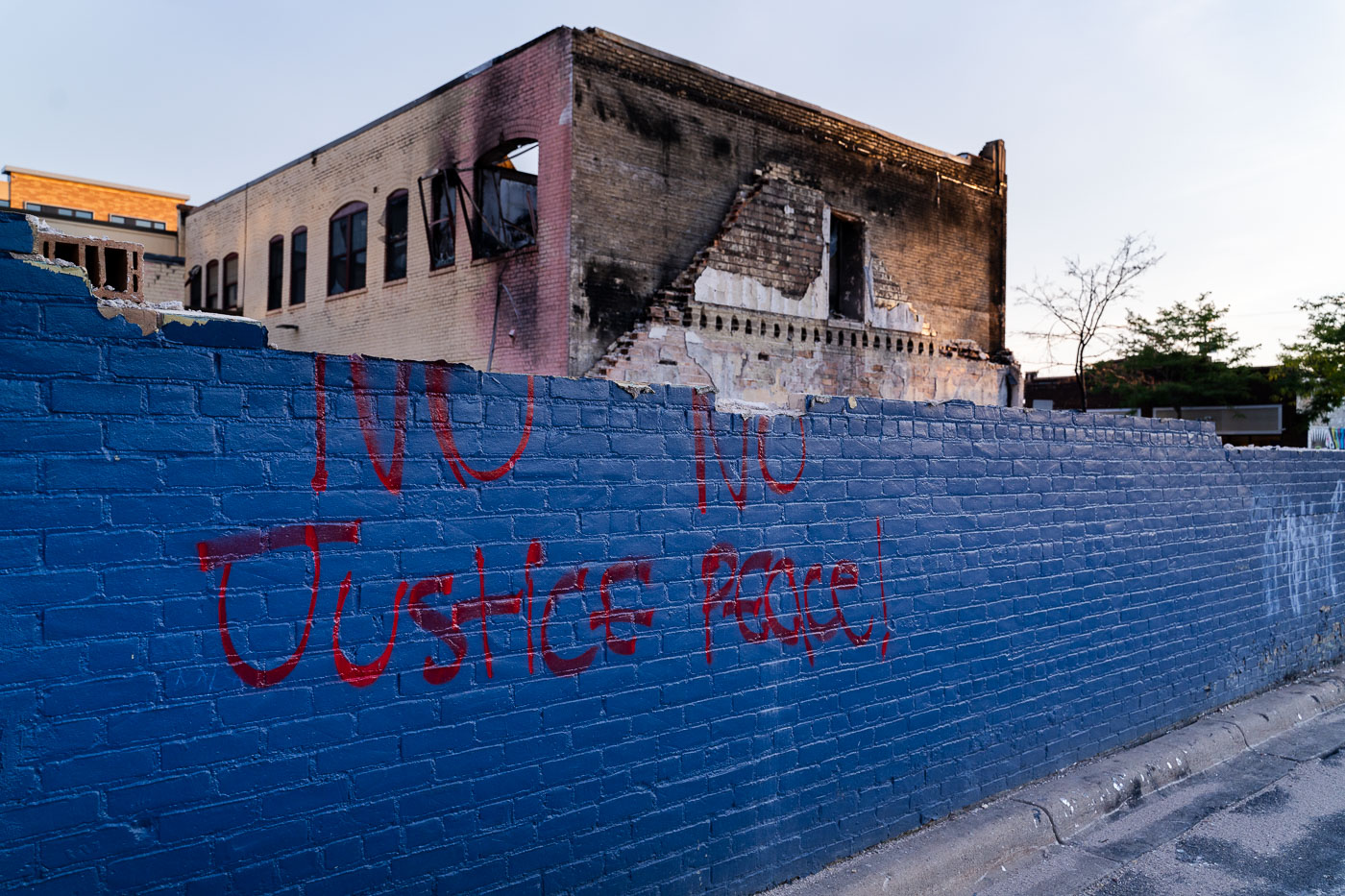
No Justice No peace on whats let of a burned building
The phrase "No Justice No Peace!" is spray-painted in red on a blue brick wall in Minneapolis. This graffiti marks the site of the former Chicago Furniture store on Chicago Avenue, which sustained extensive fire damage during the civil unrest that followed the death of George Floyd on May 25, 2020. The burned-out structure stands as a physical reminder of the widespread protests and property damage that occurred across the city. This message reflects the demands for social justice that emerged from the Minneapolis uprising.

“No Justice No Peace!” Graffiti, Burned Chicago Furniture
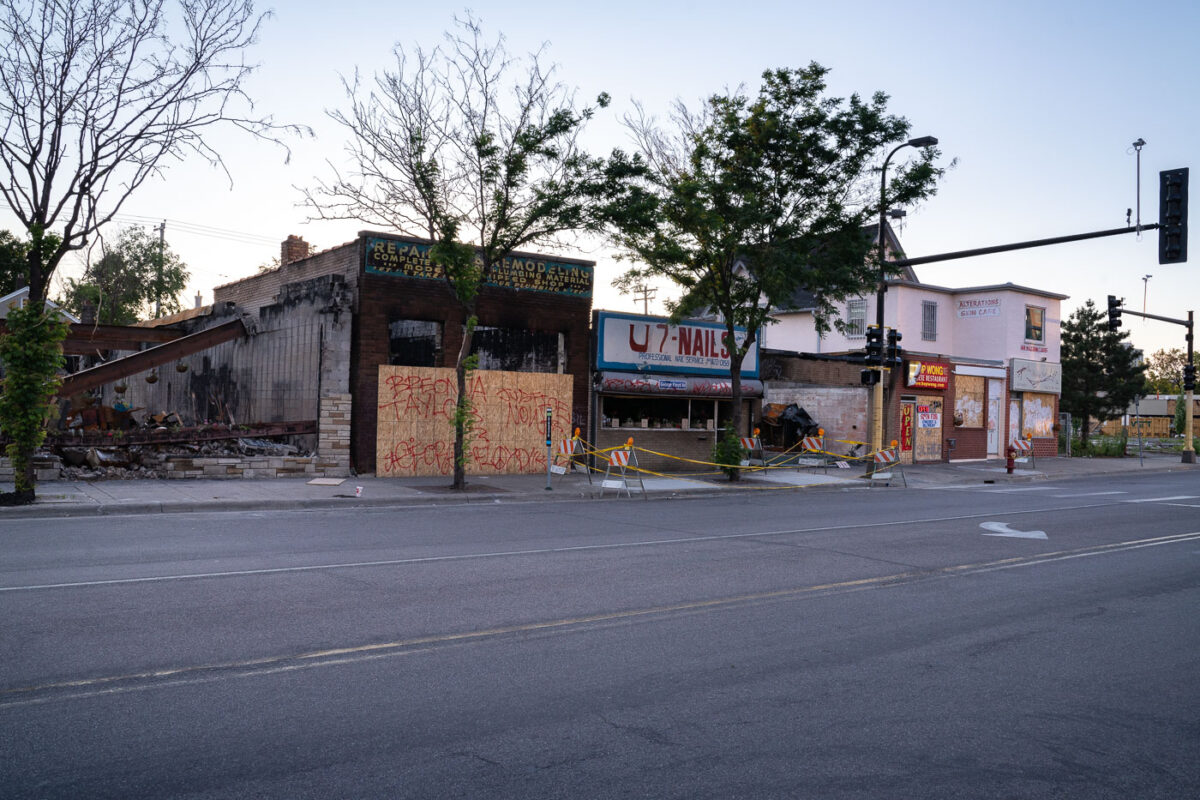
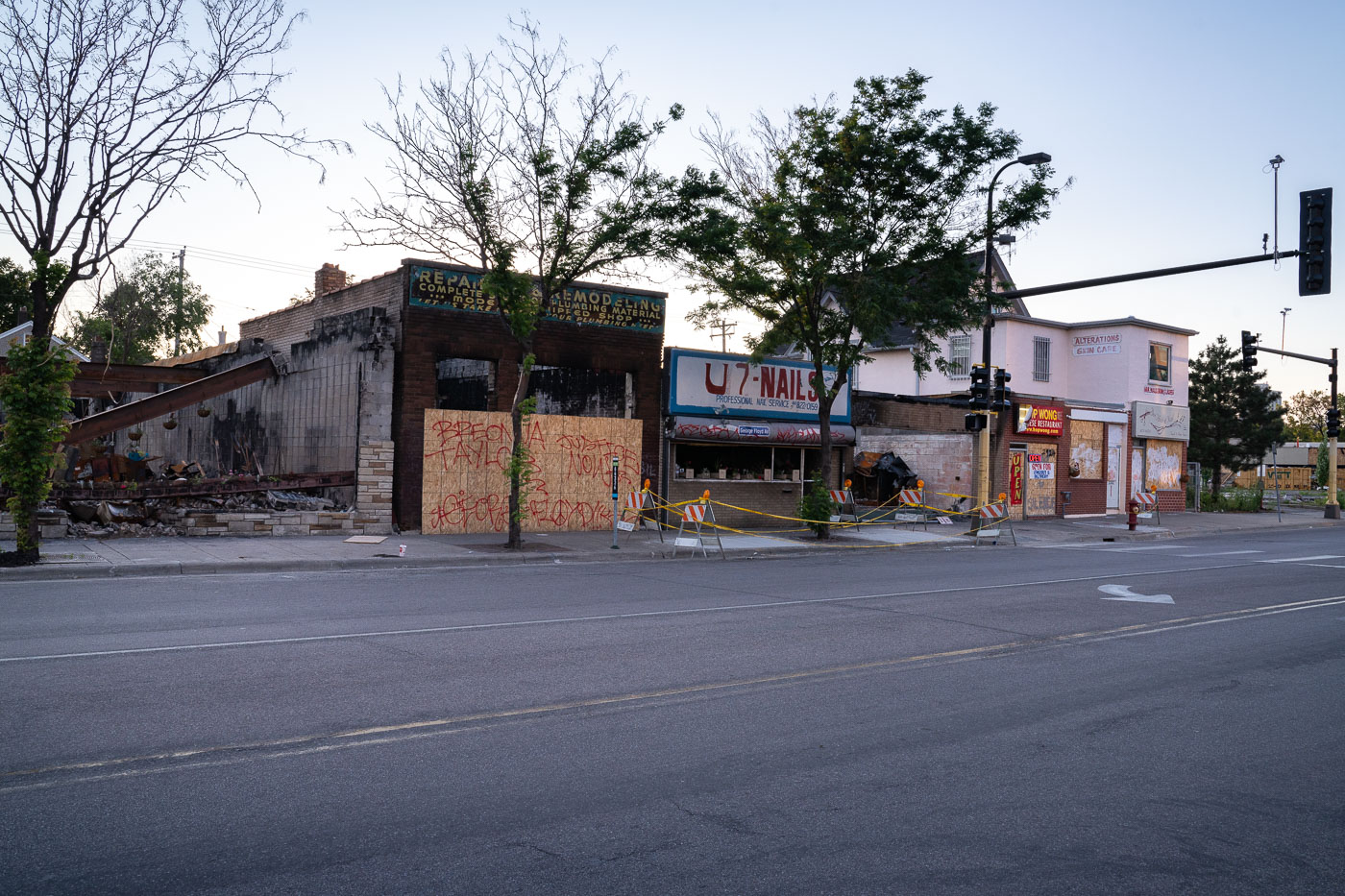
Riot damaged buildings on Chicago Ave in Minneapolis
Damaged commercial buildings stand on the 2900 block of Chicago Avenue in Minneapolis, showing the aftermath of civil unrest in May 2020. These retail establishments, including U-7 Nails, sustained significant fire and looting damage following the death of George Floyd. Graffiti on a boarded-up storefront references George Floyd and Breonna Taylor, underscoring the social justice themes of the protests. The extensive damage to these local businesses reflects the profound and lasting impact of the events on the city's urban fabric and community.

Burned Retail Stores, Chicago Ave Riot Damage, Minneapolis
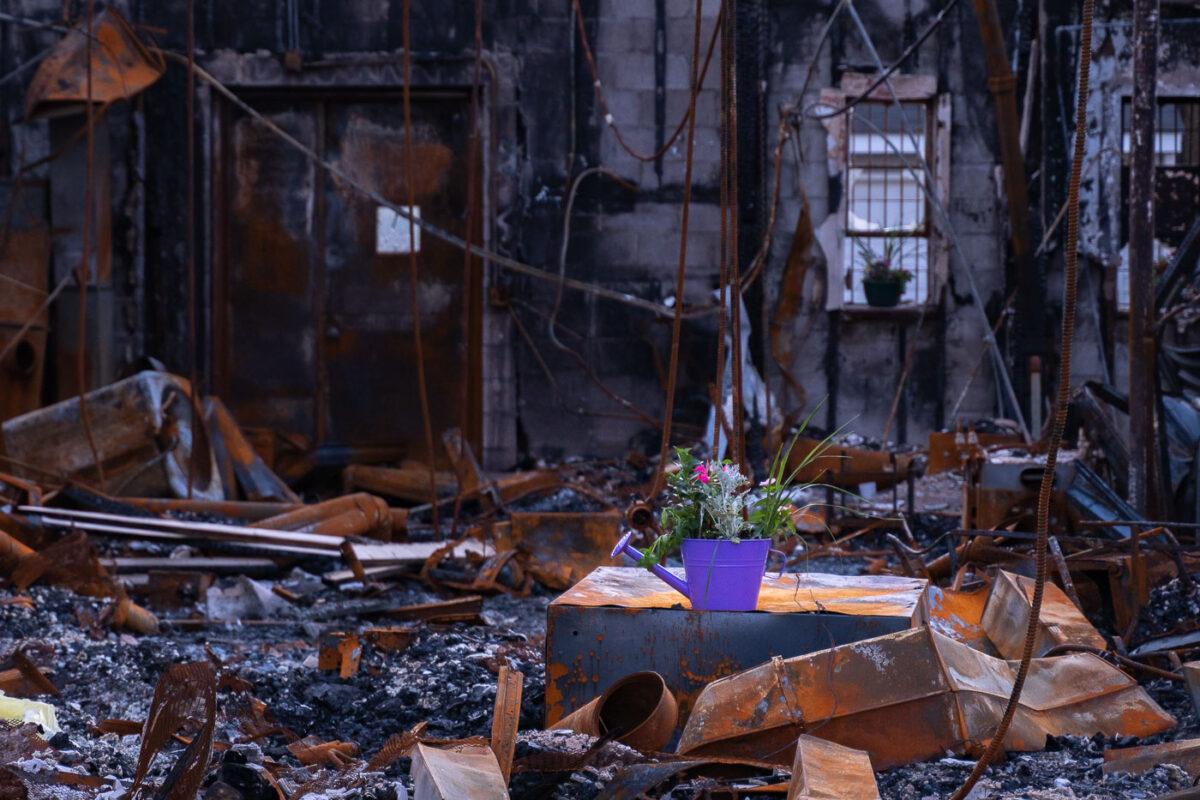
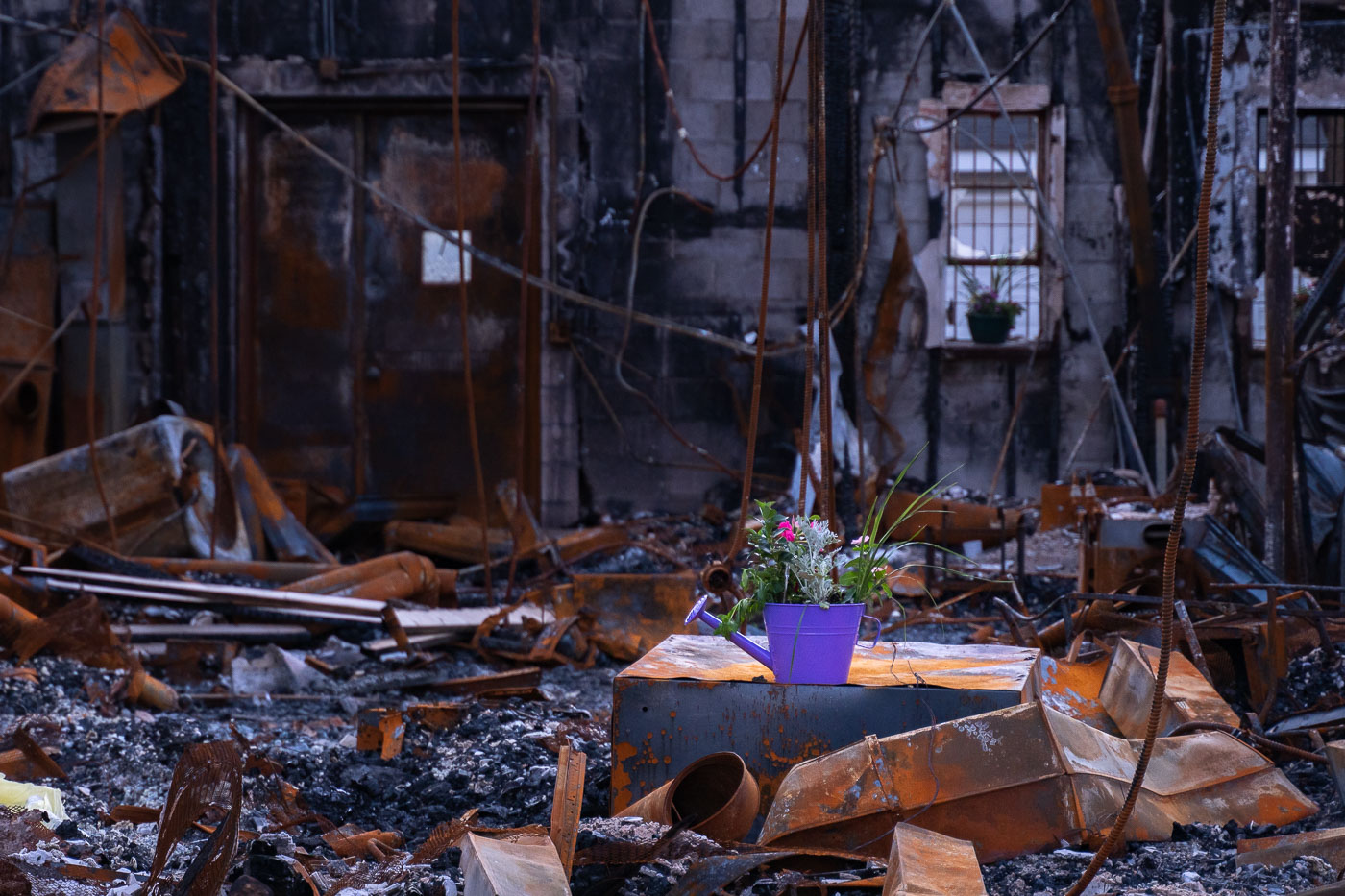
Riot damage building on Chicago Ave with flowers inside
A building on Chicago Avenue in Minneapolis stands extensively damaged by fire, with a small pot of flowers placed among the debris. This structure was burned during the civil unrest that followed the May 25, 2020 death of George Floyd. The widespread damage across Minneapolis during this period, often referred to as the Minneapolis Uprising, impacted numerous local businesses and properties. The flowers offer a contrasting element within the remnants of the fire-damaged interior.

Chicago Ave Burned Building with Flowers, Minneapolis
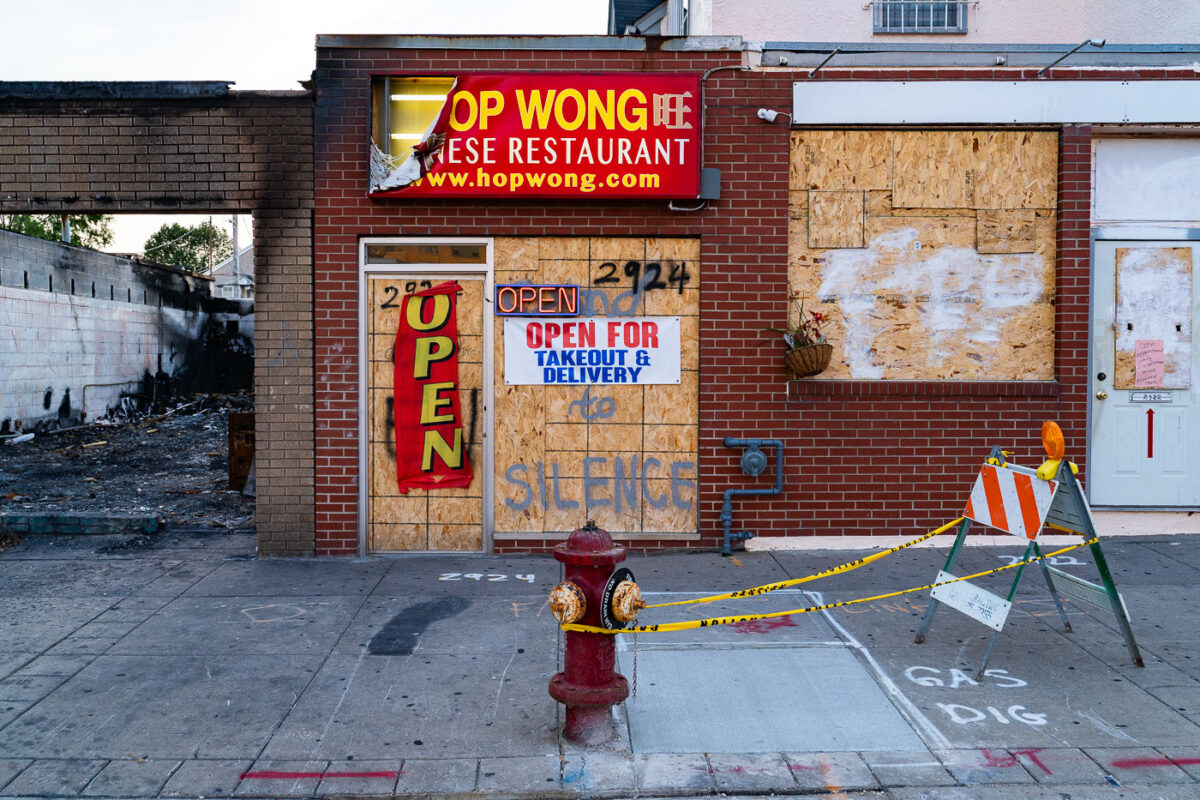
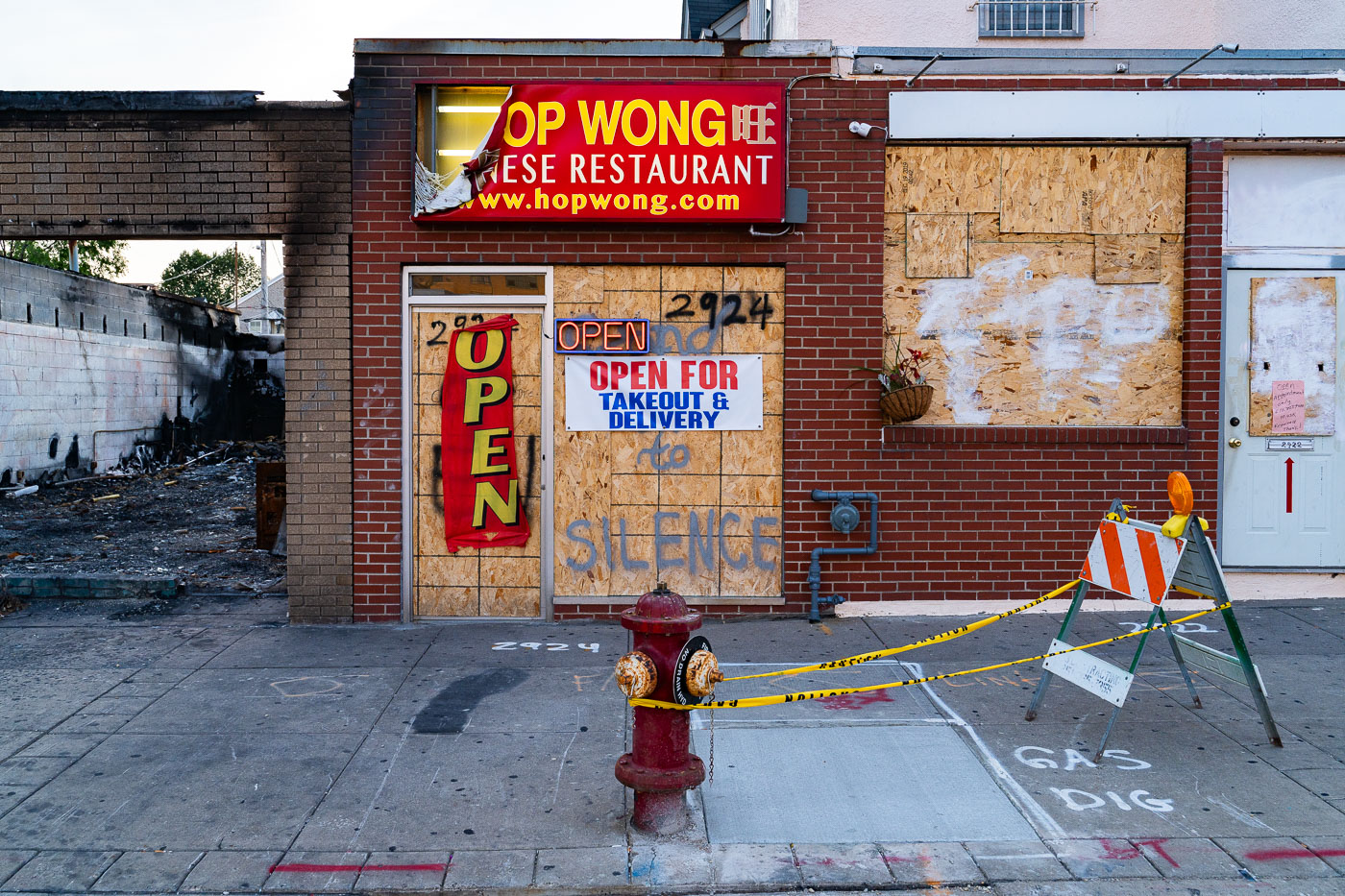
Hop Wong Restaurant with boards on it and open sign
The Hop Wong Chinese Restaurant on Chicago Avenue in Minneapolis is seen boarded up, with a sign indicating it remains open for takeout and delivery services. The adjacent structure to the left is severely damaged by fire, its interior reduced to rubble. This image documents the impact on local businesses in the aftermath of the 2020 protests and civil unrest that followed the death of George Floyd on May 25th. The restaurant's efforts to continue operations reflect the resilience of community establishments during a period of significant disruption and recovery.

Hop Wong Restaurant, Chicago Ave, Minneapolis, 2020 Uprising
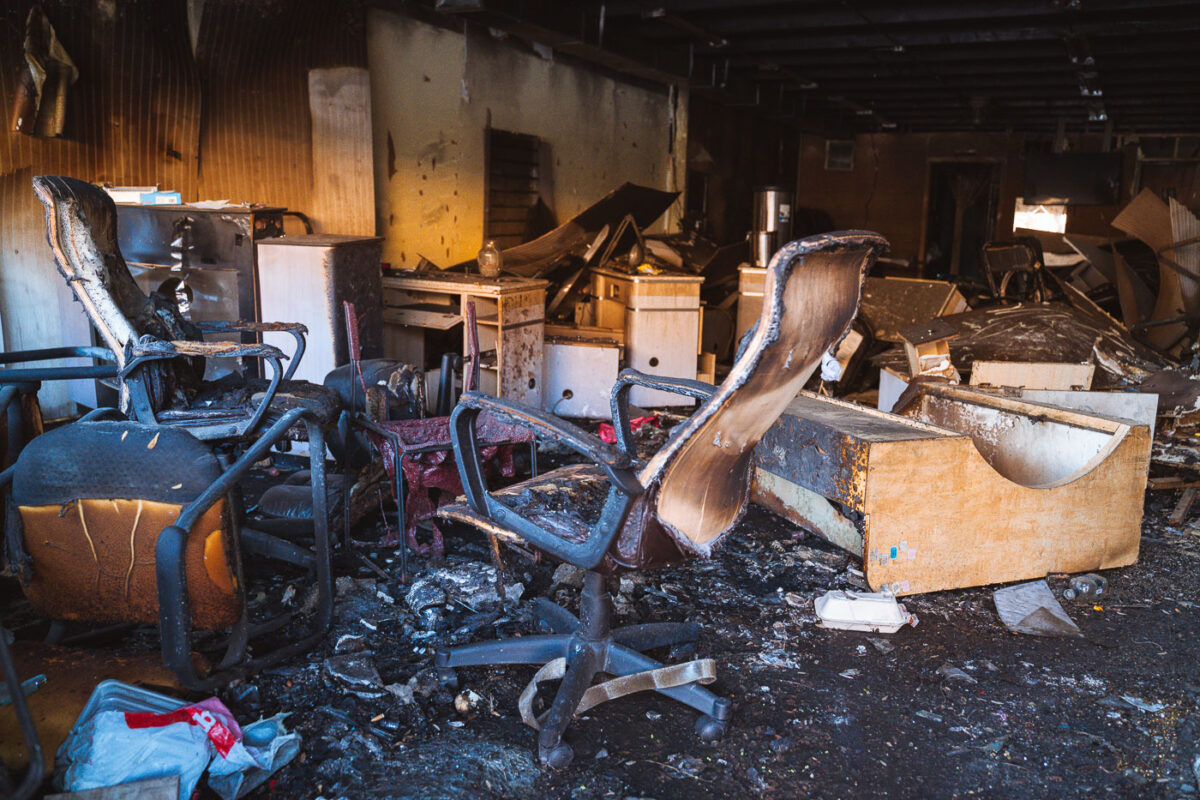
Chairs burned inside building on Chicago Ave
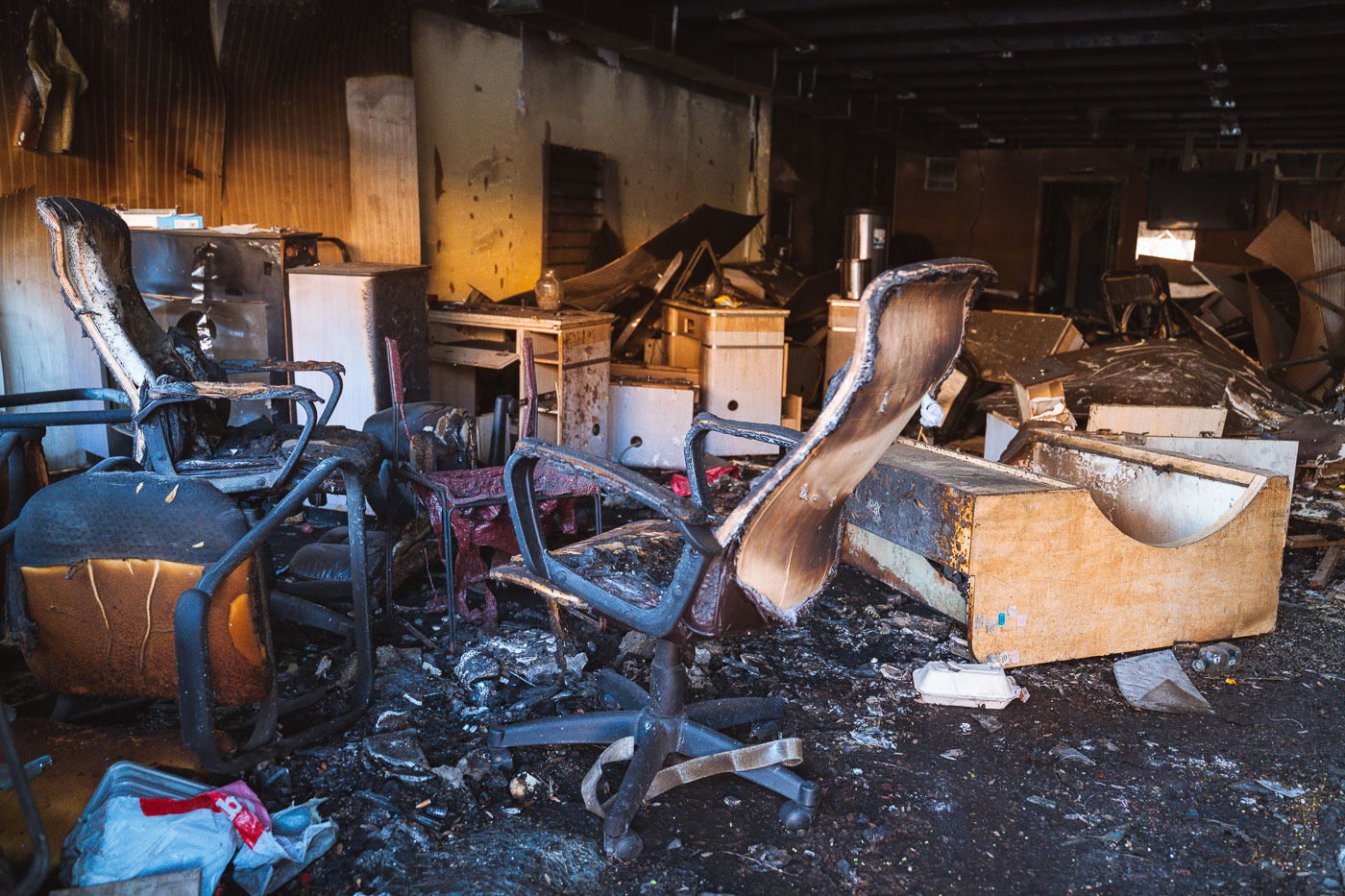
The interior of a commercial building on Chicago Avenue in Minneapolis shows extensive fire damage. This damage occurred in 2020, following the May 25th death of George Floyd, which sparked widespread protests and civil unrest in the city. The building was among many structures in Minneapolis that sustained damage from arson and fires during the period of intense public protest and associated disturbances. Charred office furniture and debris fill the space, reflecting the destructive impact of the events on local businesses and infrastructure.

Burned Office Interior, Chicago Ave, Minneapolis, 2020
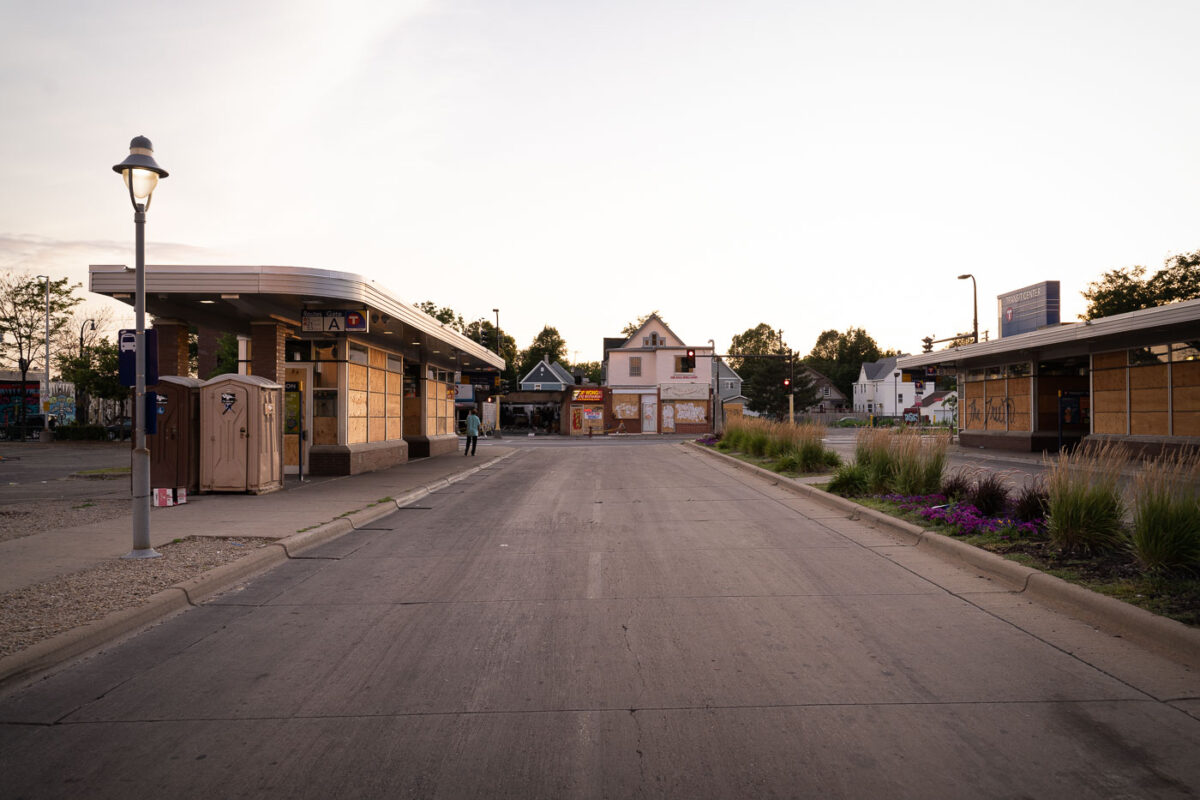
Midtown Transit Center with boards on windows
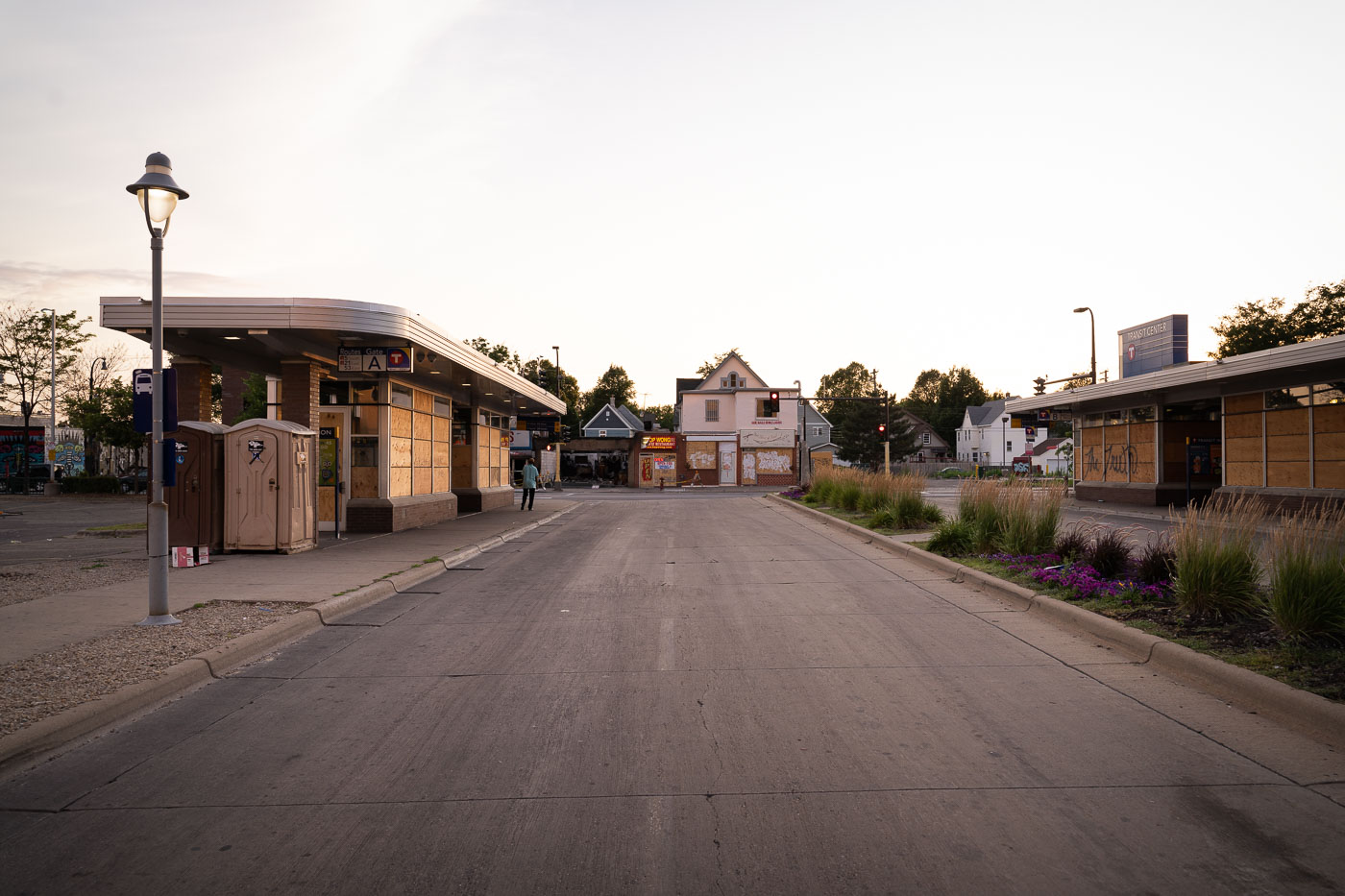
The Midtown Transit Center at Chicago Avenue and Lake Street in Minneapolis is shown boarded up on July 16, 2020. This facility serves as a key public transportation hub, connecting multiple bus routes in the city. The boarding of the transit center and surrounding retail stores occurred in the aftermath of the civil unrest that followed the murder of George Floyd in May 2020. Many businesses and public structures across Minneapolis were secured with boards during this period, reflecting widespread efforts to protect properties.

Boarded Midtown Transit Center, Chicago & Lake, July 2020
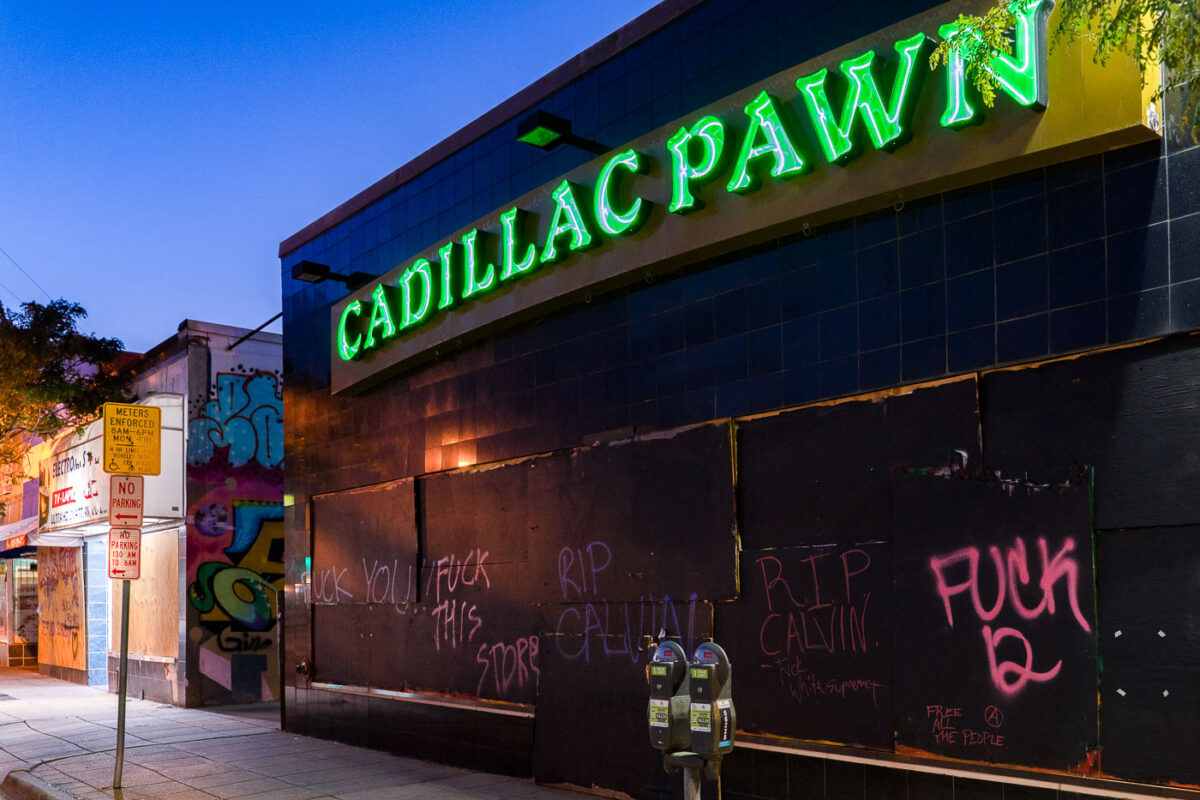
Boards on Cadillac Pawn on Lake Street reading Fuck 12
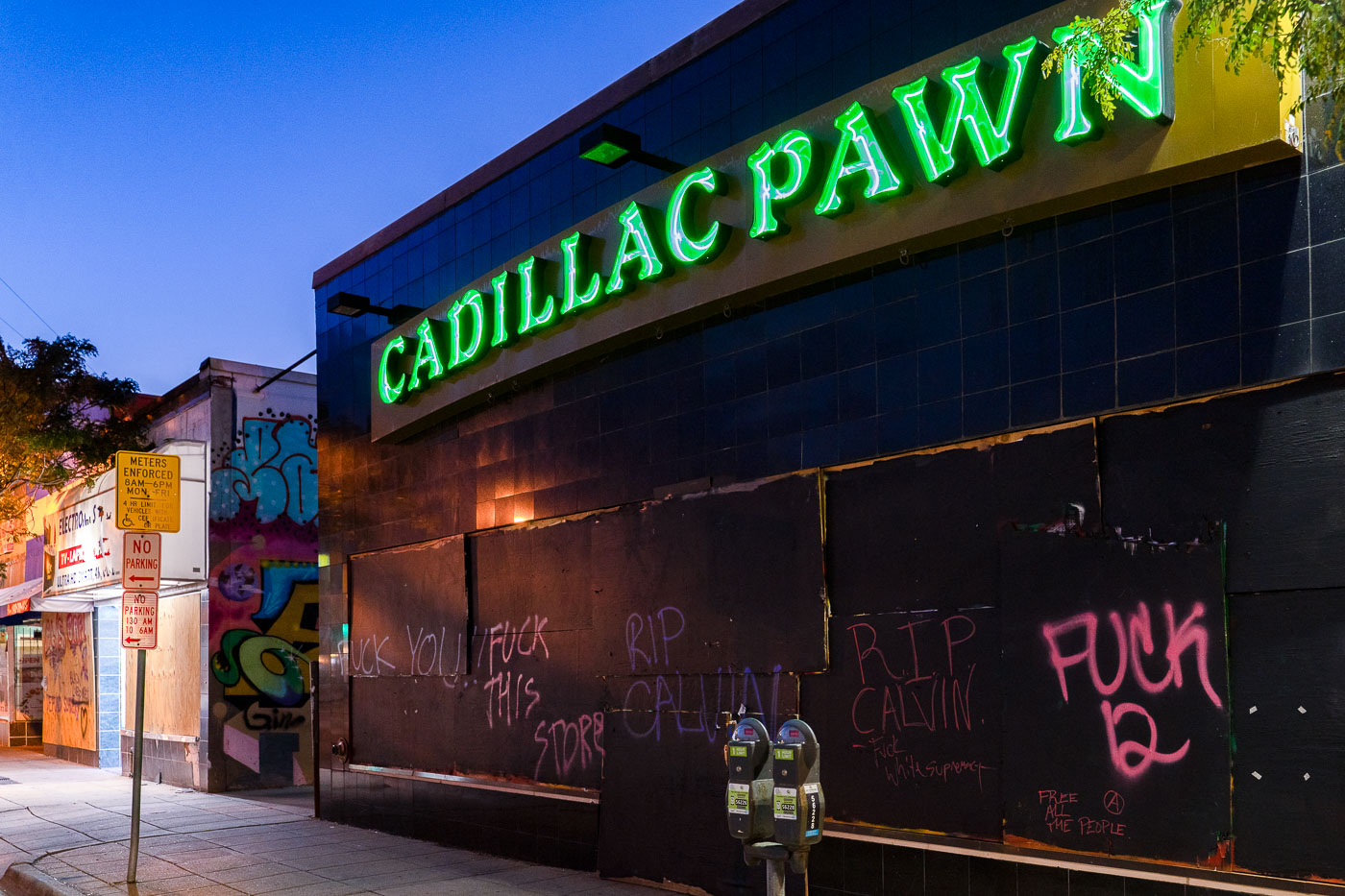
Cadillac Pawn, located at 1538 E Lake Street in Minneapolis, stands boarded with graffiti following the widespread unrest that occurred after the May 25th, 2020 death of George Floyd. The retail store was heavily looted during these events. Messages spray-painted on the boards include "RIP Calvin" and "Fuck this store," referencing Calvin Horton Jr., who was shot and killed by the store owner, with no charges filed in the case. This site serves as a stark reminder of the community's grievances and the profound impact of the 2020 protests on local businesses and the urban environment.

Cadillac Pawn, Lake Street, boarded with graffiti
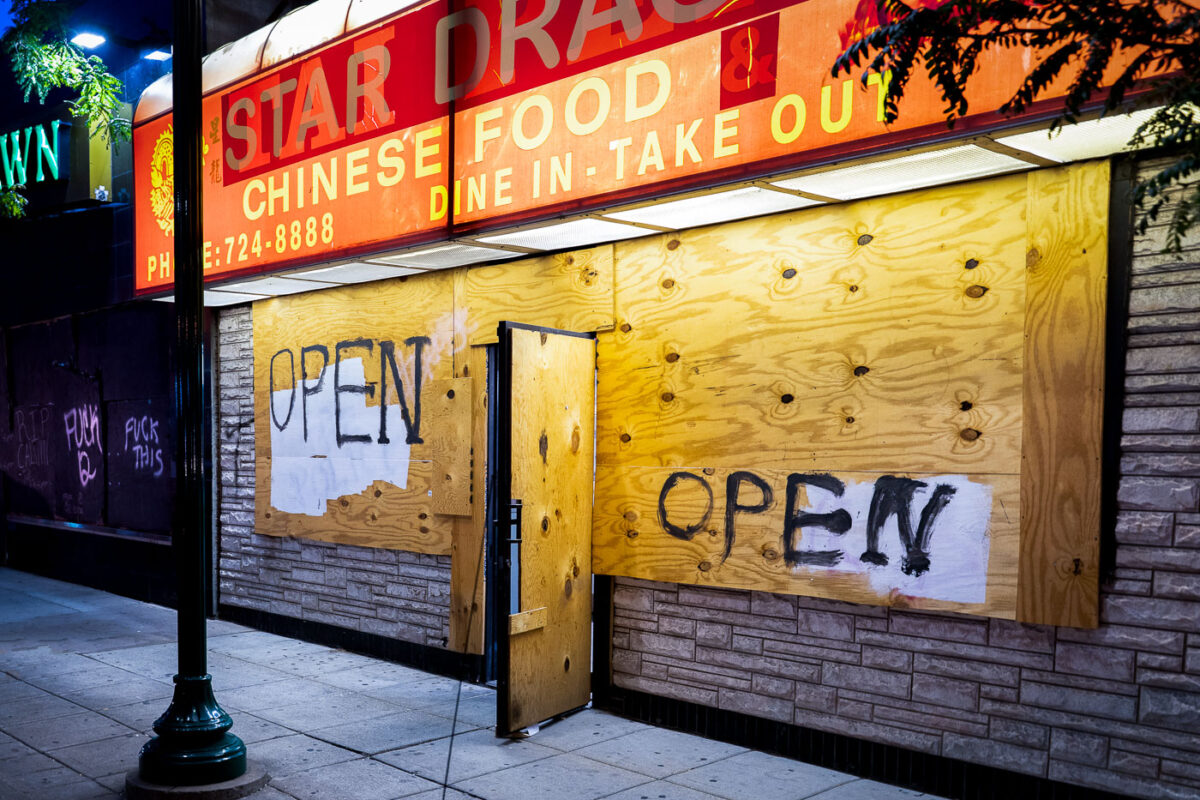
Star Dragon Chinese Restaurant with boards
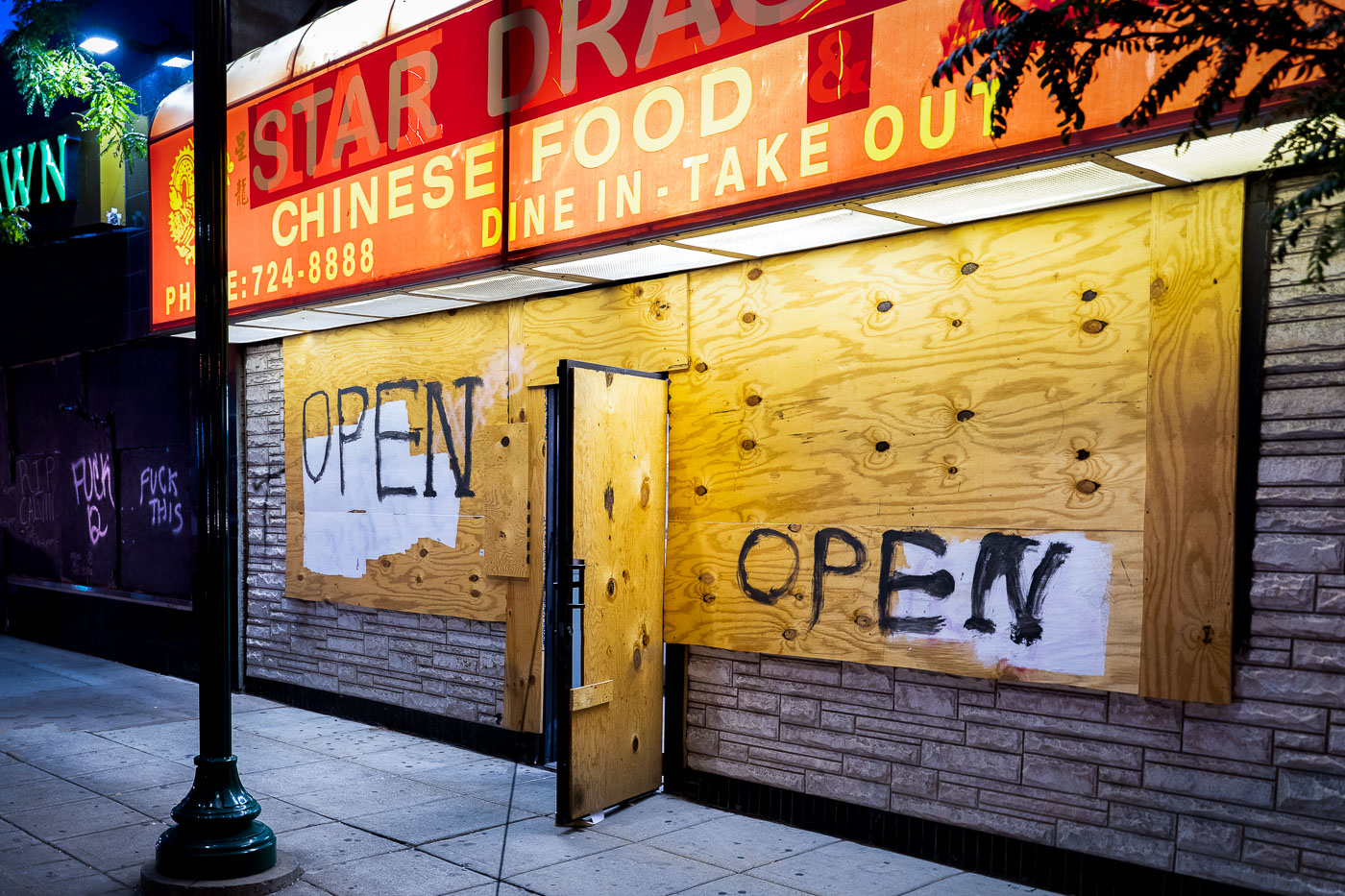
Star Dragon Restaurant, a Chinese restaurant located at 1540 E Lake Street in South Minneapolis, is shown with its windows boarded up. These protective measures were implemented during the civil unrest that followed the May 25, 2020, death of George Floyd. Despite the plywood coverings, the business remained operational, as indicated by the "OPEN" signs painted on the boards and the partially opened entrance. This retail establishment on Lake Street illustrates the resilience and challenges faced by local businesses during a period of significant social upheaval in the city.

Star Dragon Restaurant, Boarded Up, Open, Minneapolis
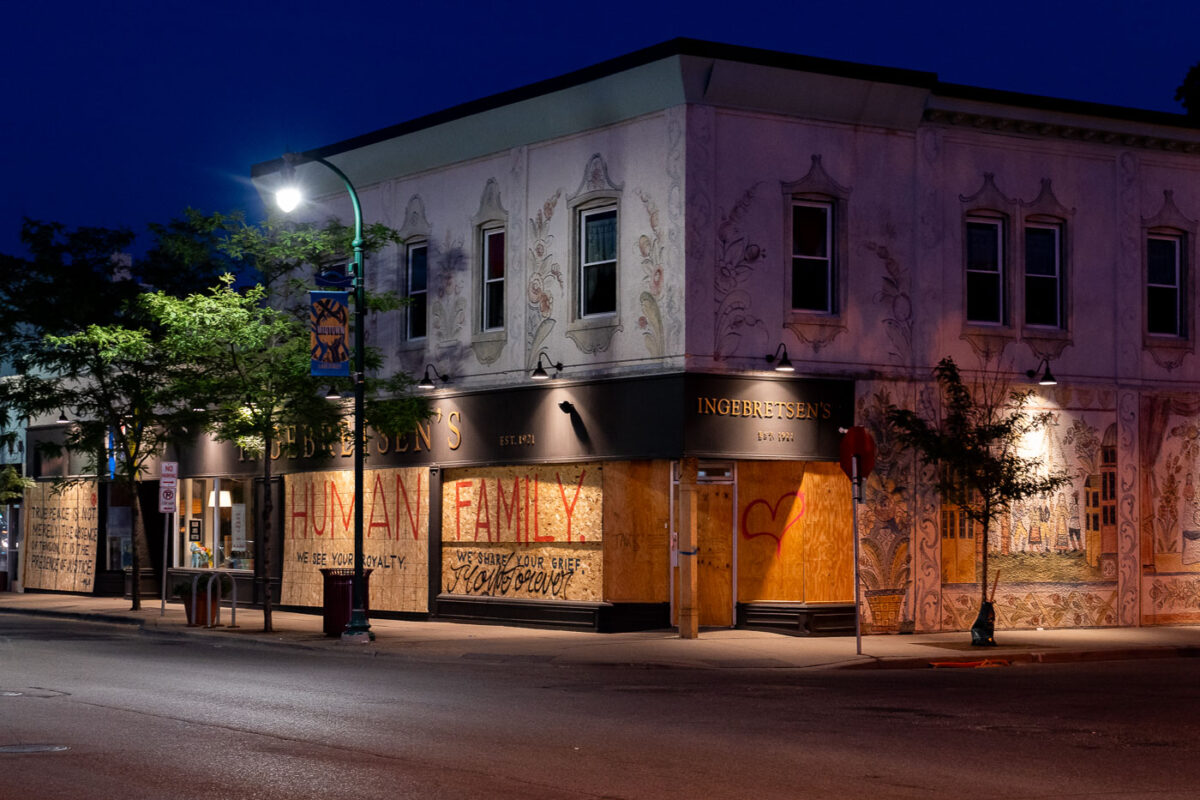
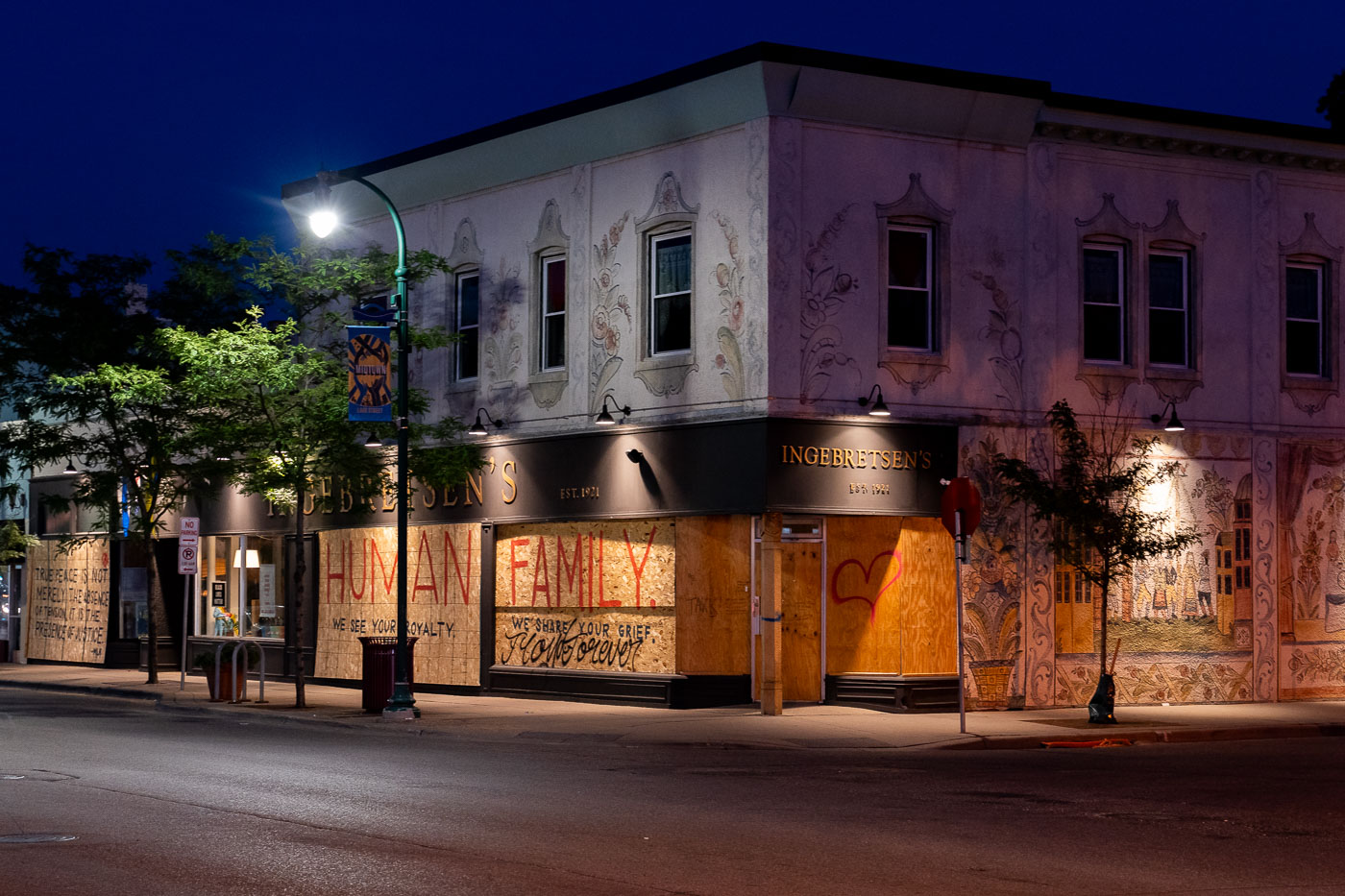
Ingebretsen’s store on Lake Street with boards
Ingebretsen's, a long-standing Scandinavian food market and gift shop, is located at 1601 E Lake Street in South Minneapolis. Established in 1921, the family-owned business has served as a cultural hub for the city's Scandinavian community for over a century. The store's windows were boarded and subsequently covered with protest messages and graffiti following the civil unrest in May 2020, which occurred after the death of George Floyd. Messages such as "HUMAN FAMILY" and a quote from Martin Luther King Jr. advocating for justice were painted on the protective boards, reflecting community sentiments during this period. This image documents the physical impact and public expression on local businesses along Lake Street during a significant moment in Minneapolis's recent history.

Ingebretsen’s Boarded Store with Graffiti, Lake Street, Minneapolis
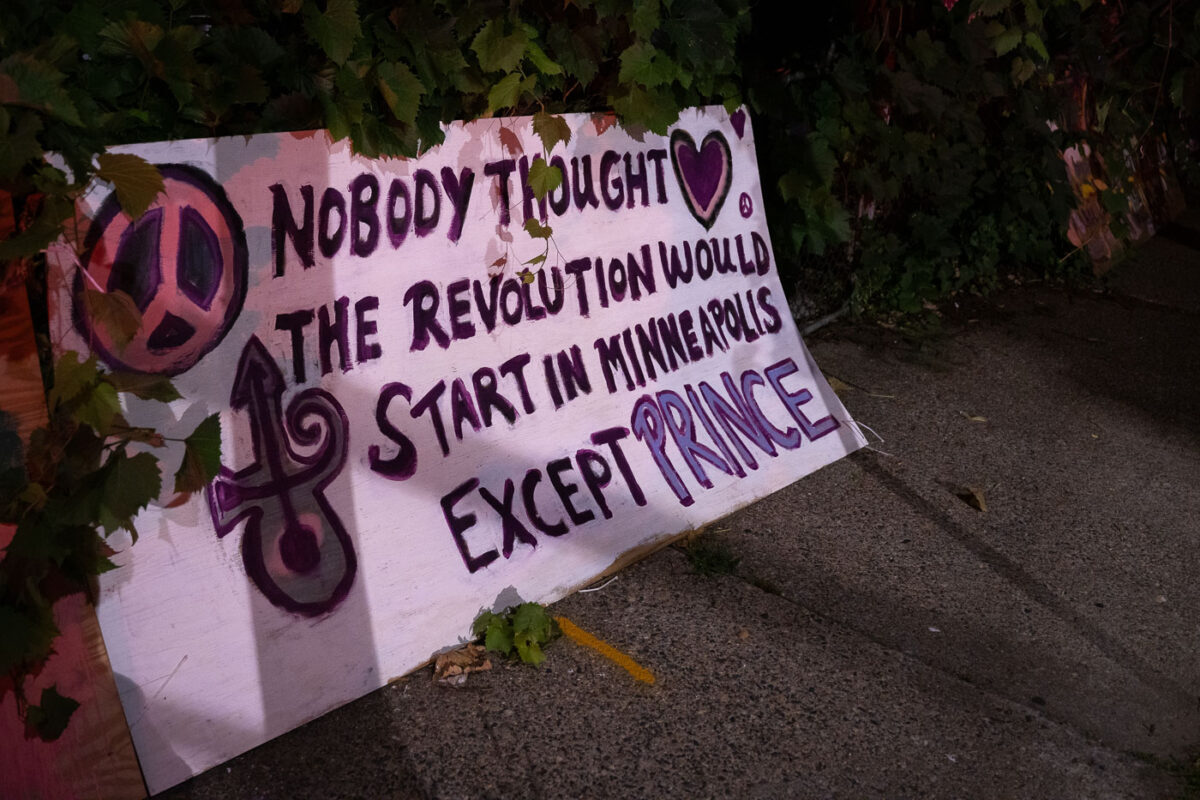
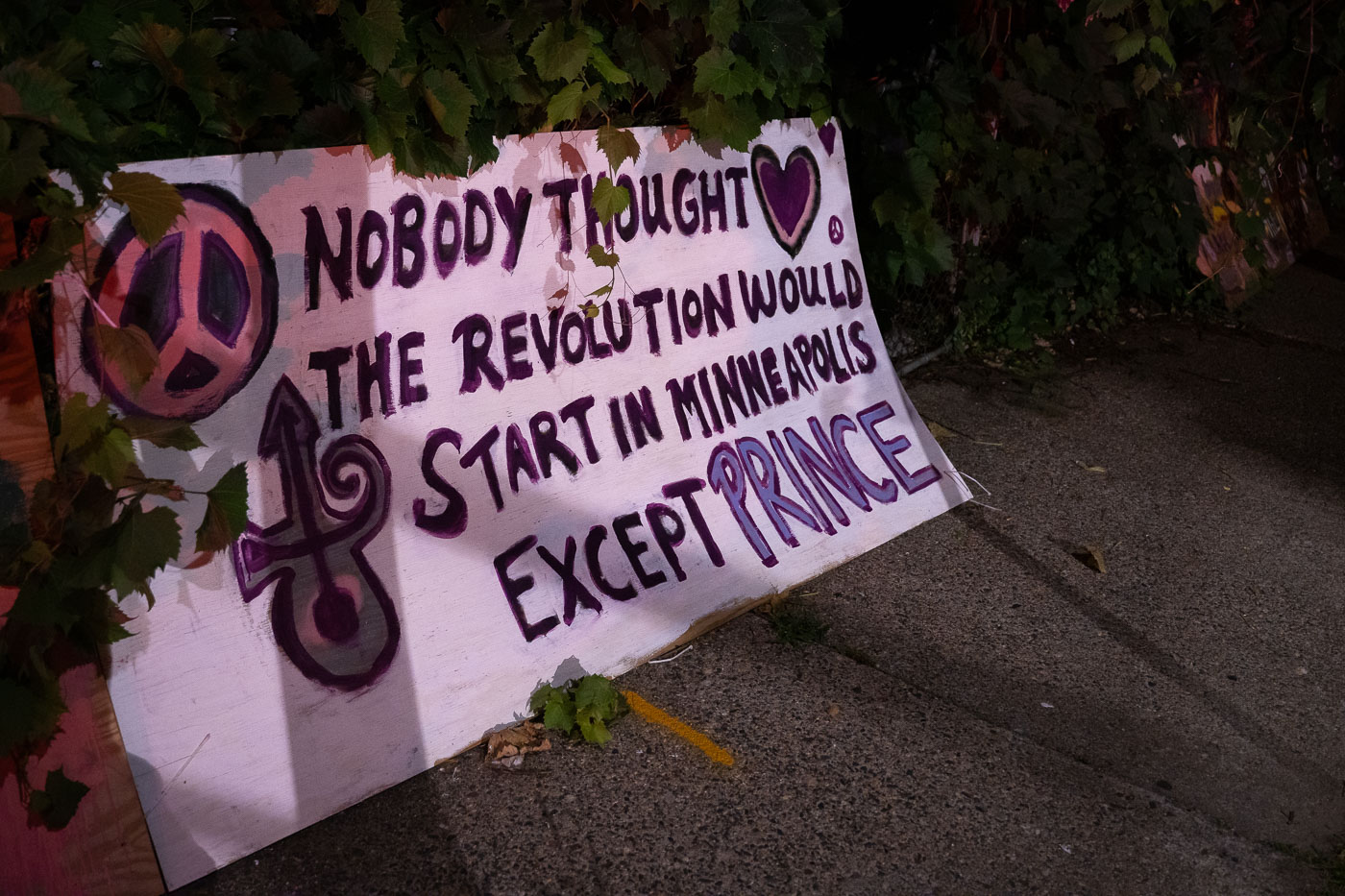
Hand-painted protest sign with Prince quote and peace symbol displayed on ivy-covered fence in South Minneapolis.
This protest sign, displayed in South Minneapolis, features a quote attributed to Prince: "Nobody thought the revolution would start in Minneapolis except Prince." The sign was out during the widespread protests and civil unrest that followed the killing of George Floyd in May 2020.

“Except Prince” Sign Among South Minneapolis Protest Boards
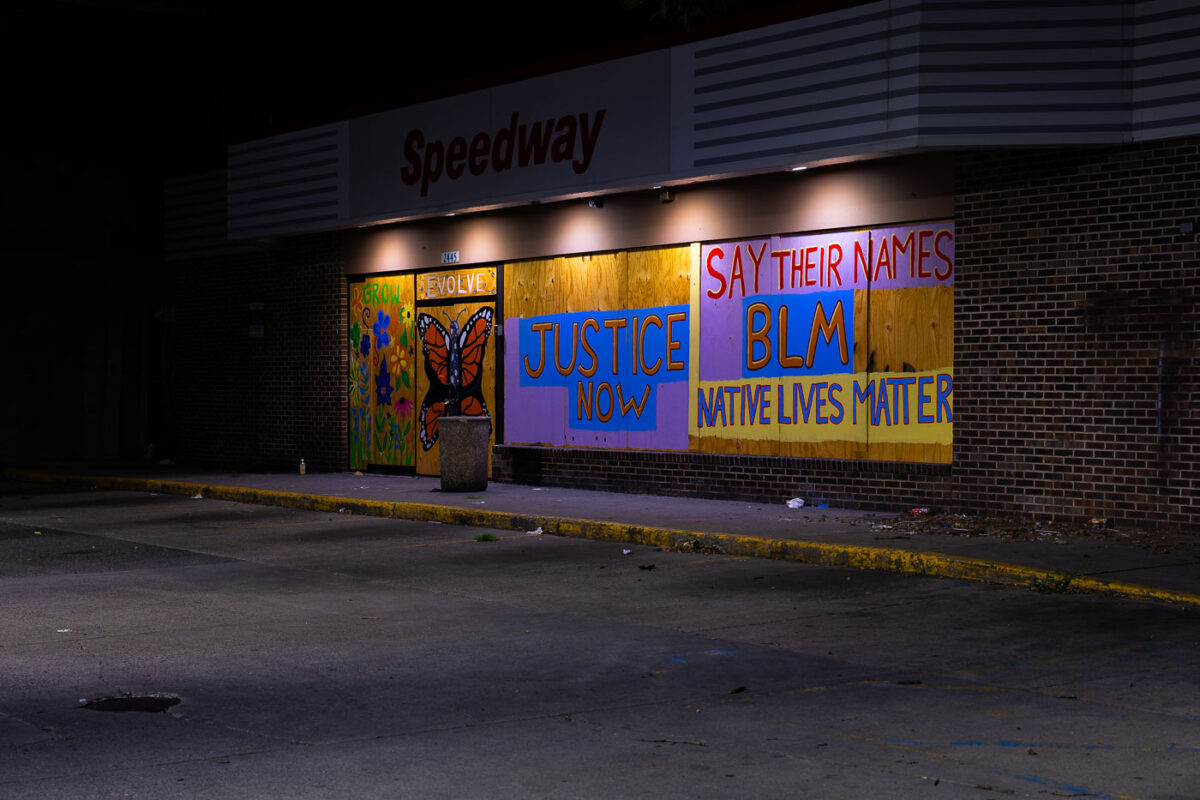
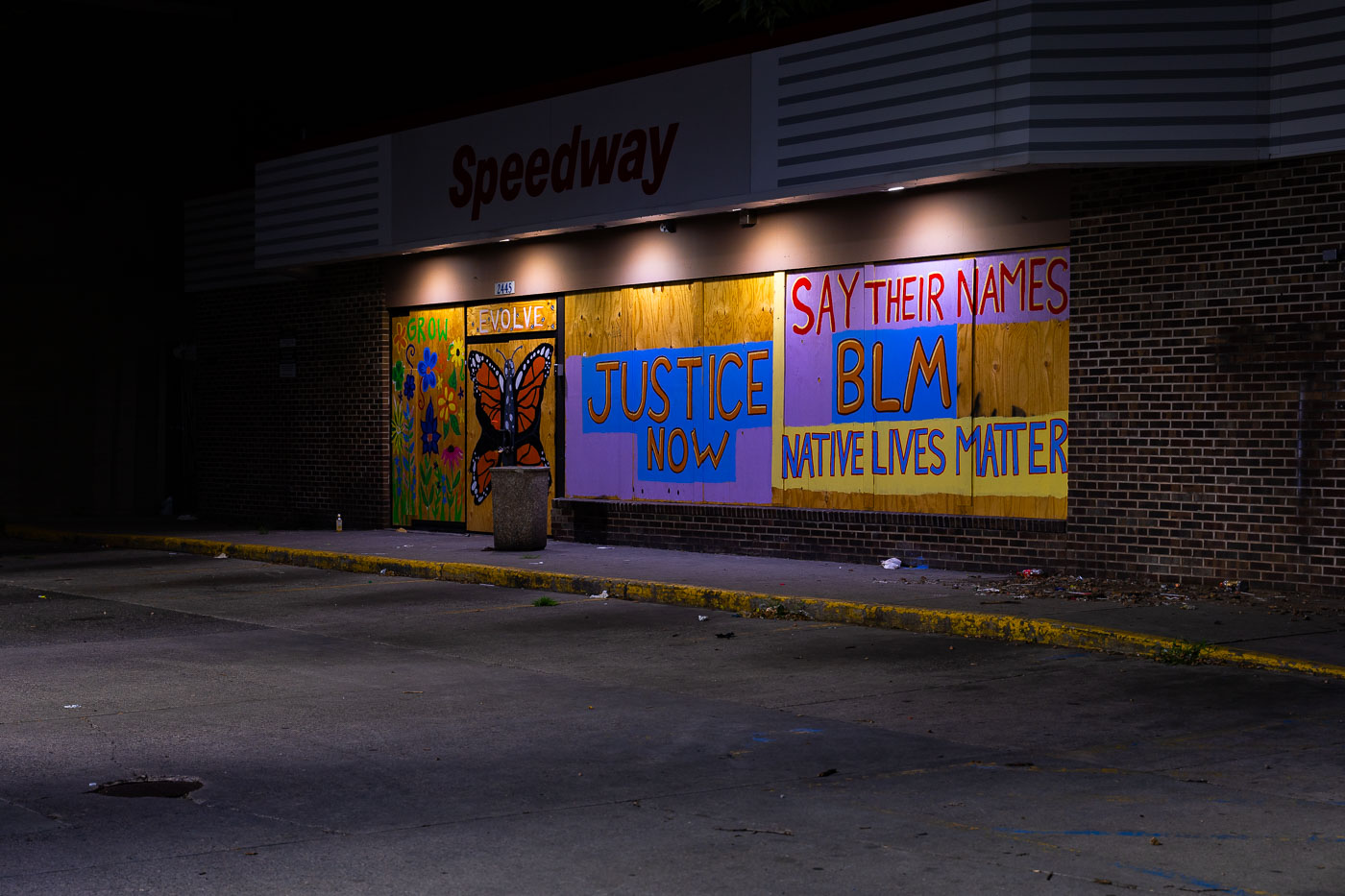
Say their names BLM Native Lives Matter boards
A Speedway gas station in South Minneapolis displays painted art boards covering its windows. These murals emerged during the Minneapolis Uprising, a period of widespread protest and unrest following the murder of George Floyd in May 2020. The plywood boards, initially installed for protection, became a public canvas for messages such as "Justice Now," "Say Their Names," "BLM," and "Native Lives Matter." This form of public art provided a means of community expression and remembrance, reflecting the social and political climate of the time.

Speedway Gas Station Murals, South Minneapolis
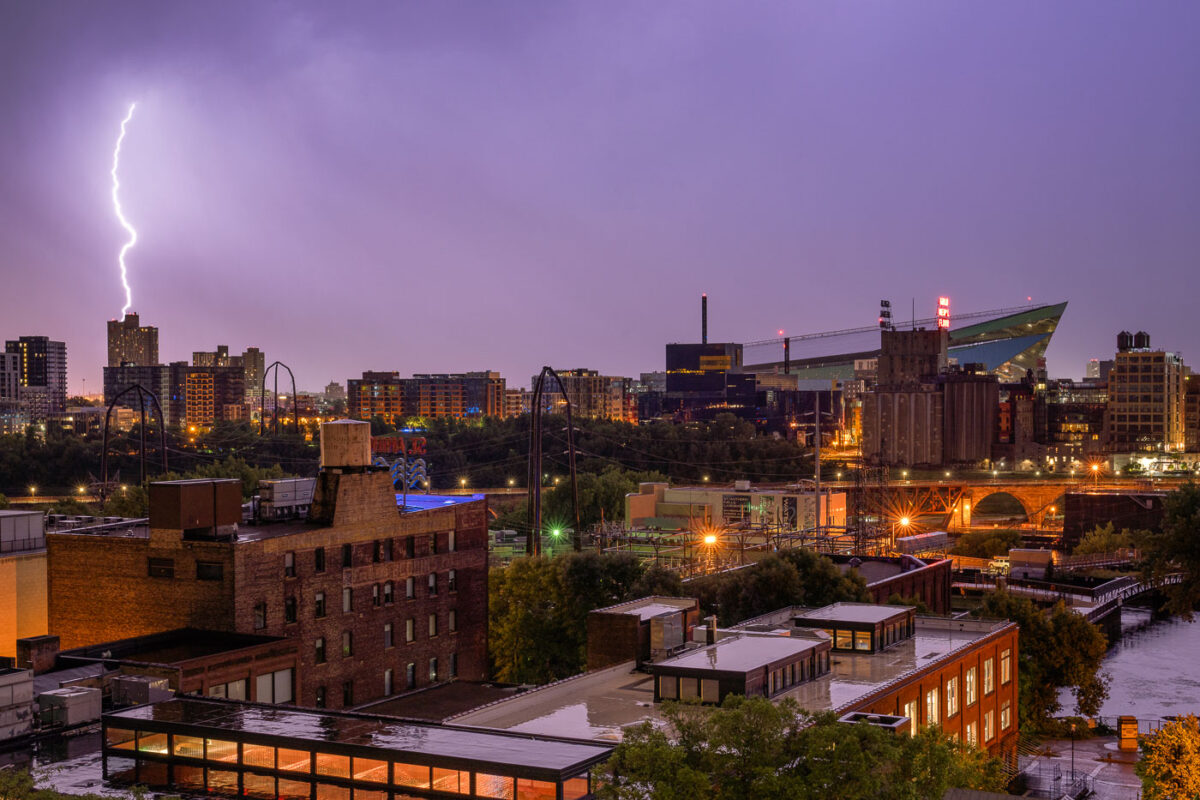
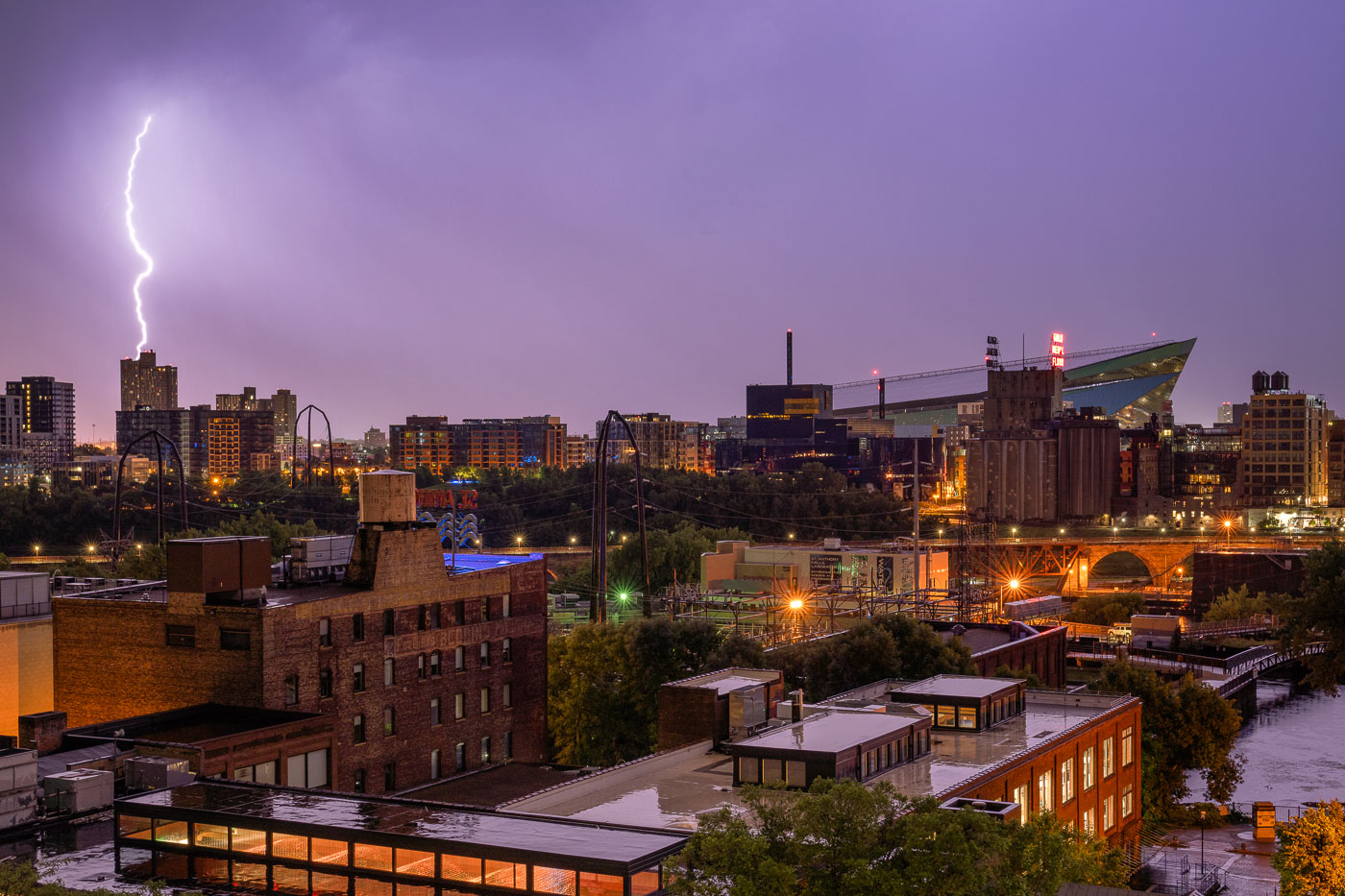
Lighting strike near US Bank Stadiium
A lightning bolt illuminates the early morning sky over downtown Minneapolis on July 18, 2020, striking a high-rise building. In the background, US Bank Stadium, the home of the Minnesota Vikings since its opening in 2016, stands prominently with its distinctive angular roof.

Lightning Strike on Minneapolis Building, US Bank Stadium
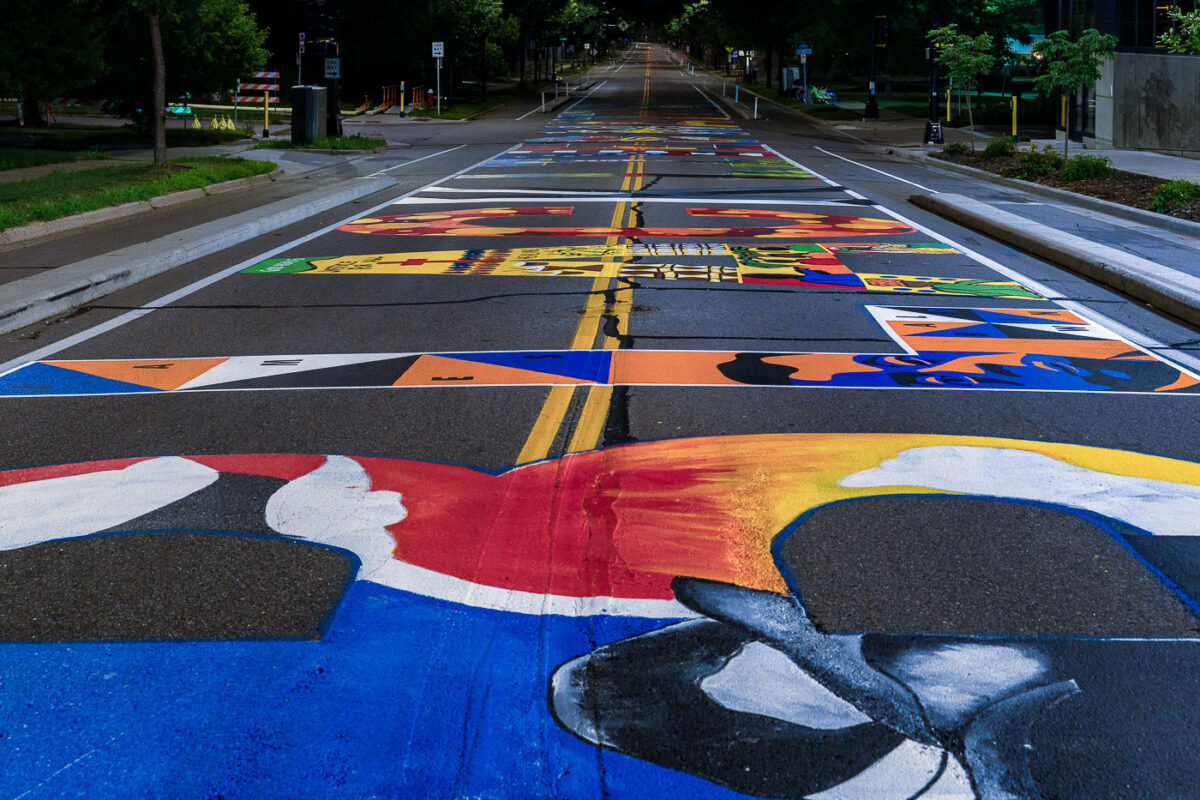
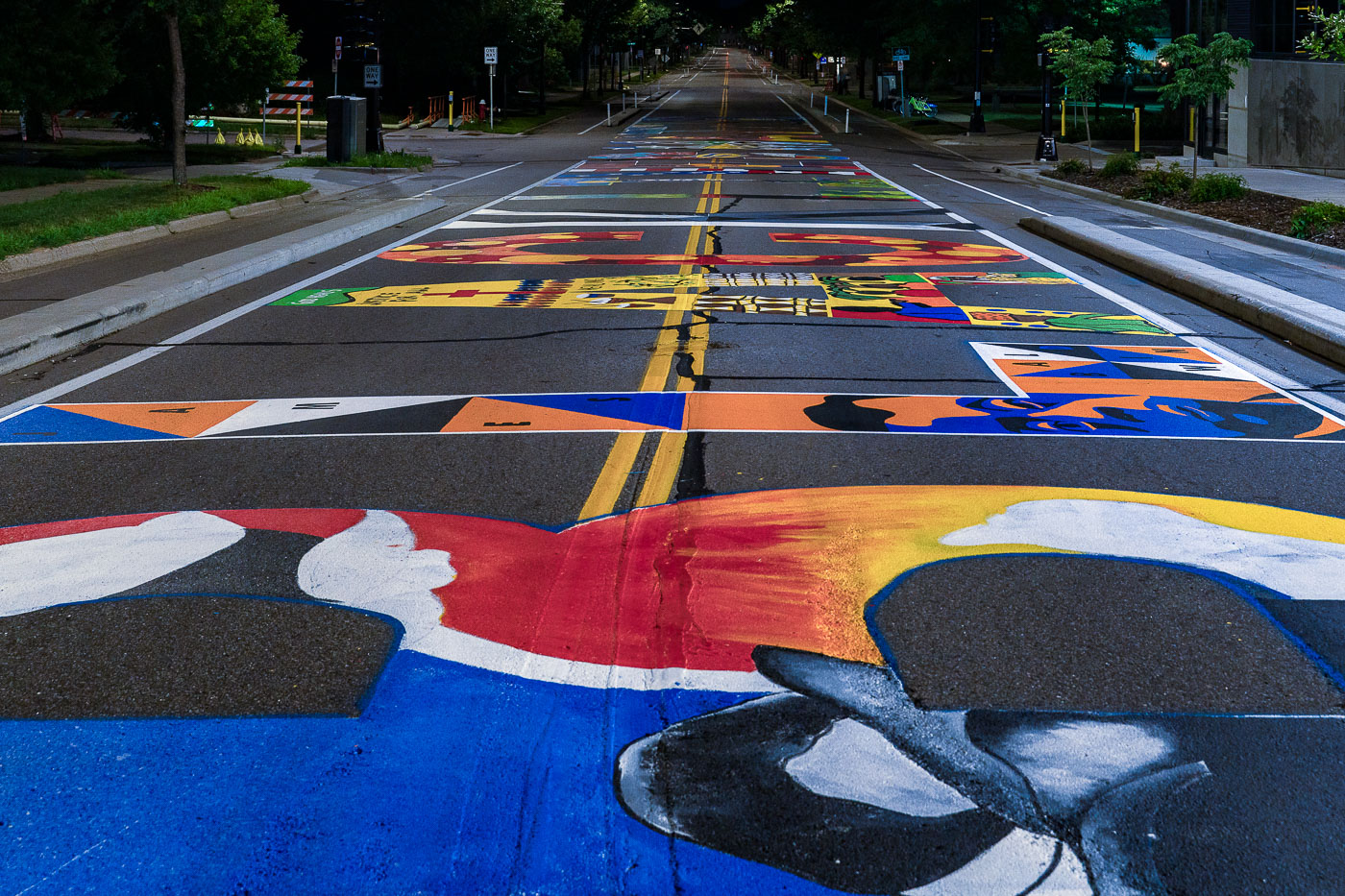
Black Lives Matter mural on Plymouth Ave at night
The Black Lives Matter street mural on Plymouth Avenue in North Minneapolis is a significant public art installation. Completed on July 18, 2020, this collaborative artwork was created in the aftermath of the Minneapolis Uprising and widespread protests against racial injustice. Each letter of "Black Lives Matter" was designed by different artists, transforming the street into a collective statement. The mural serves as a prominent cultural landmark in North Minneapolis, reflecting the community's ongoing commitment to racial equity and remembrance.

Plymouth Avenue Black Lives Matter Mural, North Minneapolis
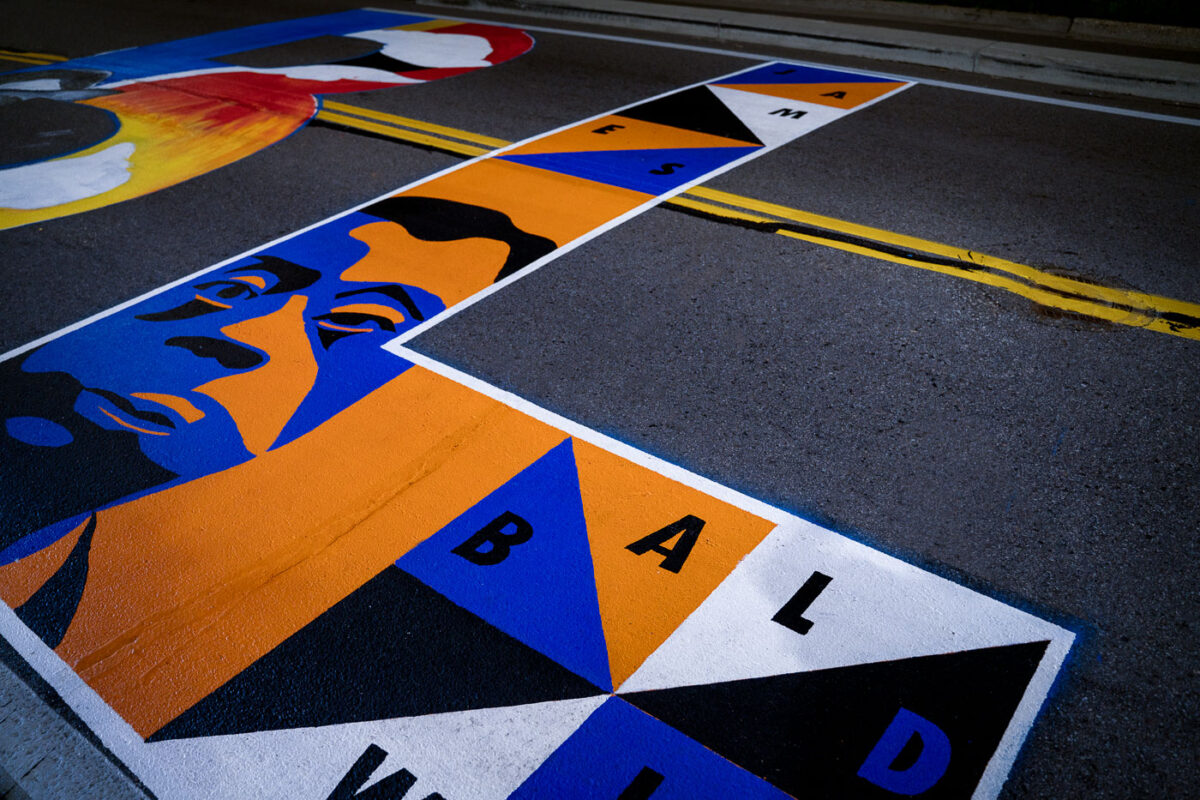
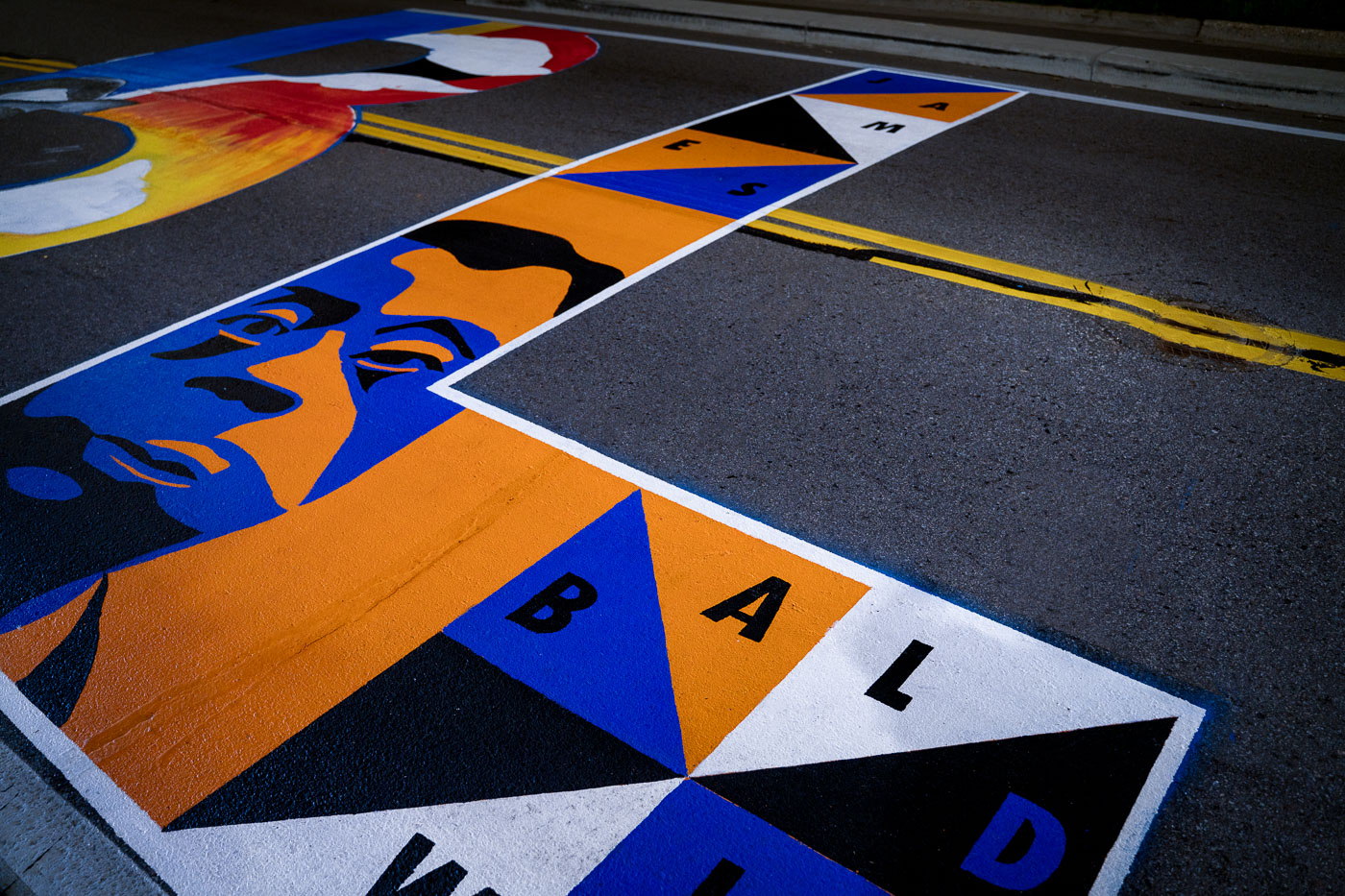
Close up of a Plymouth Ave street mural
A segment of the Black Lives Matter street mural on Plymouth Avenue in North Minneapolis features a portrait of writer and activist James Baldwin. This public art installation was completed on July 18, 2020, following the widespread protests for racial justice in Minneapolis and across the nation. The mural serves as a powerful statement of solidarity and a memorial, transforming the urban environment into a canvas for social commentary. It stands as a lasting symbol of the Minneapolis Uprising and the ongoing movement for Black liberation, reflecting the community's commitment to justice and equality.

James Baldwin Portrait, Black Lives Matter Mural, Plymouth Avenue
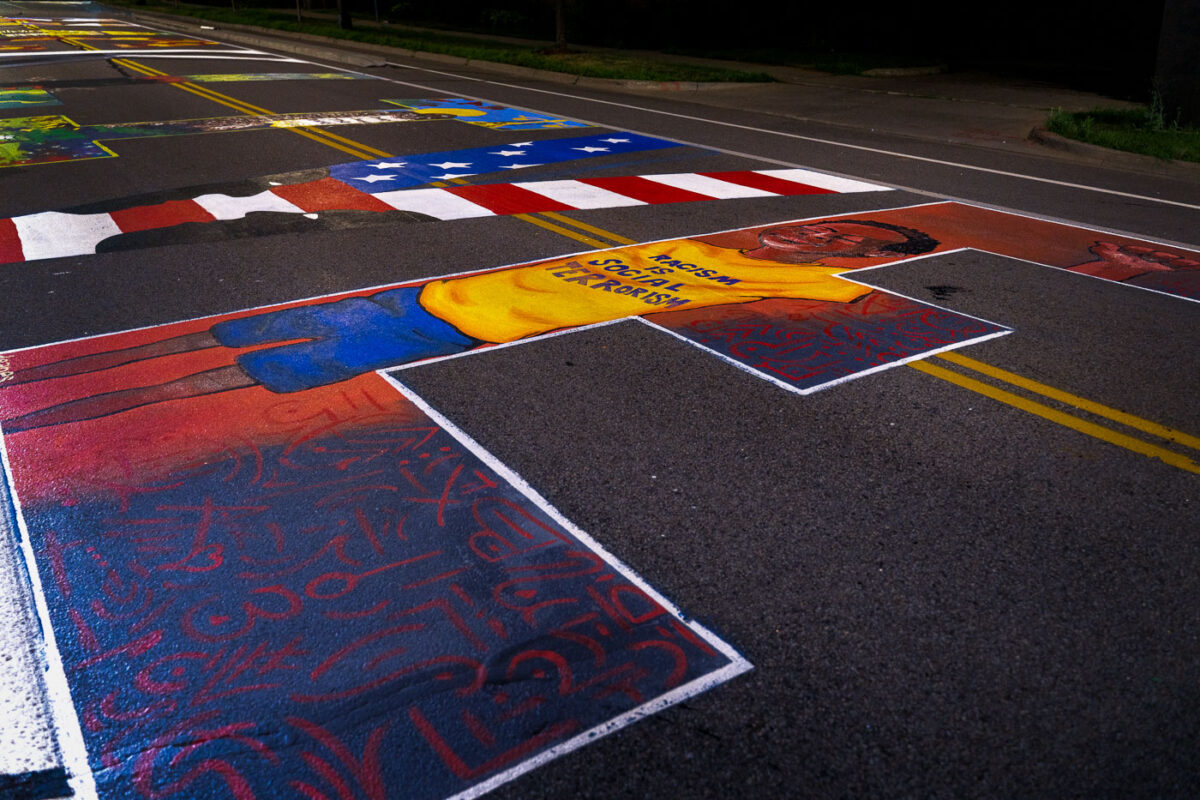
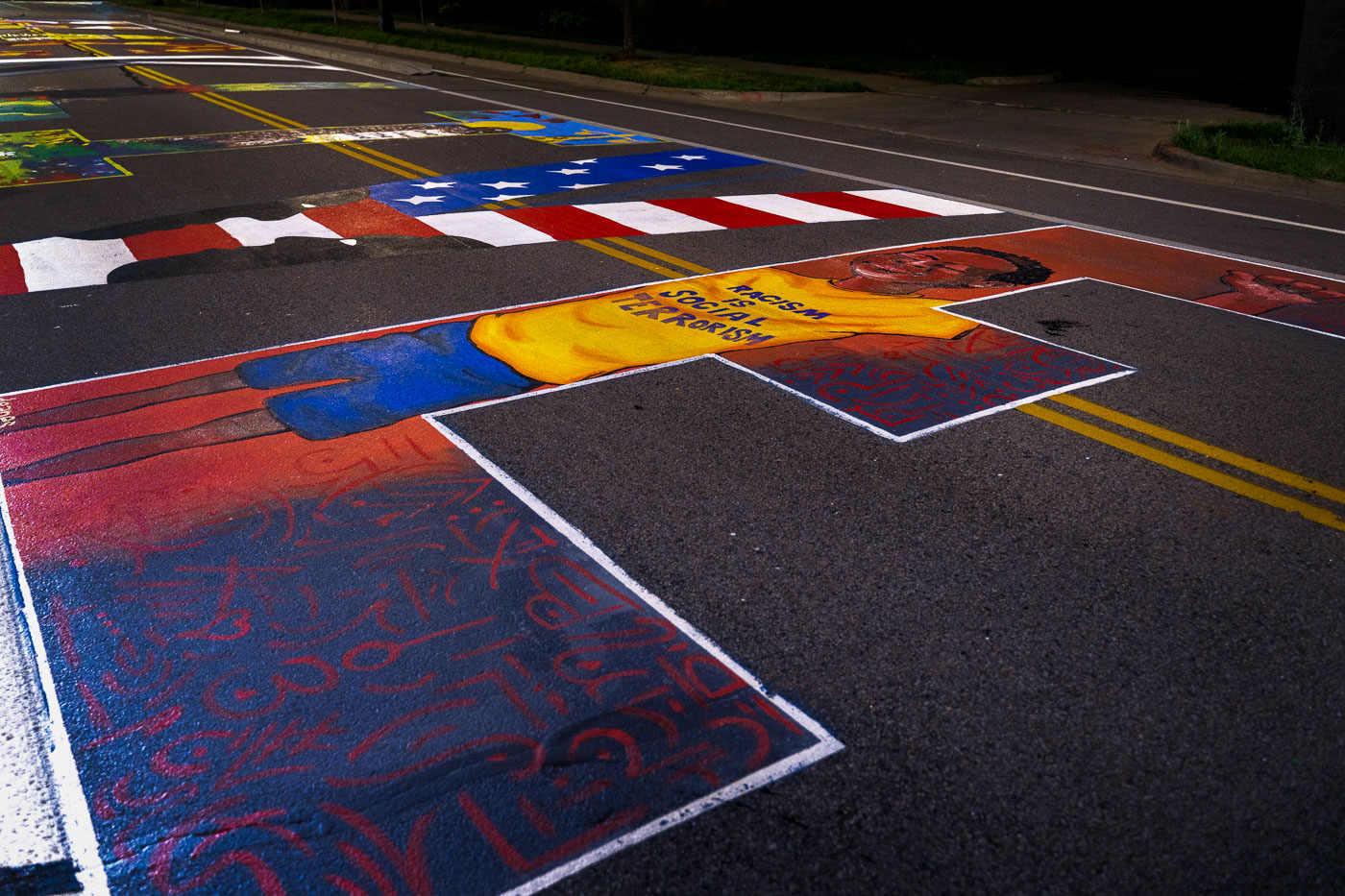
Racism is social terrorism on a street mural
The Black Lives Matter mural on Plymouth Avenue in North Minneapolis serves as a powerful public art installation. Created in the aftermath of the 2020 protests, this street art piece became a significant symbol during the Minneapolis Uprising. The mural incorporates diverse artistic expressions, including a figure wearing a shirt that reads "Racism is social terrorism." This artwork highlights the community's demand for racial justice and systemic change, transforming a public thoroughfare into a canvas for social commentary.

Black Lives Matter Mural on Plymouth Ave, North Minneapolis
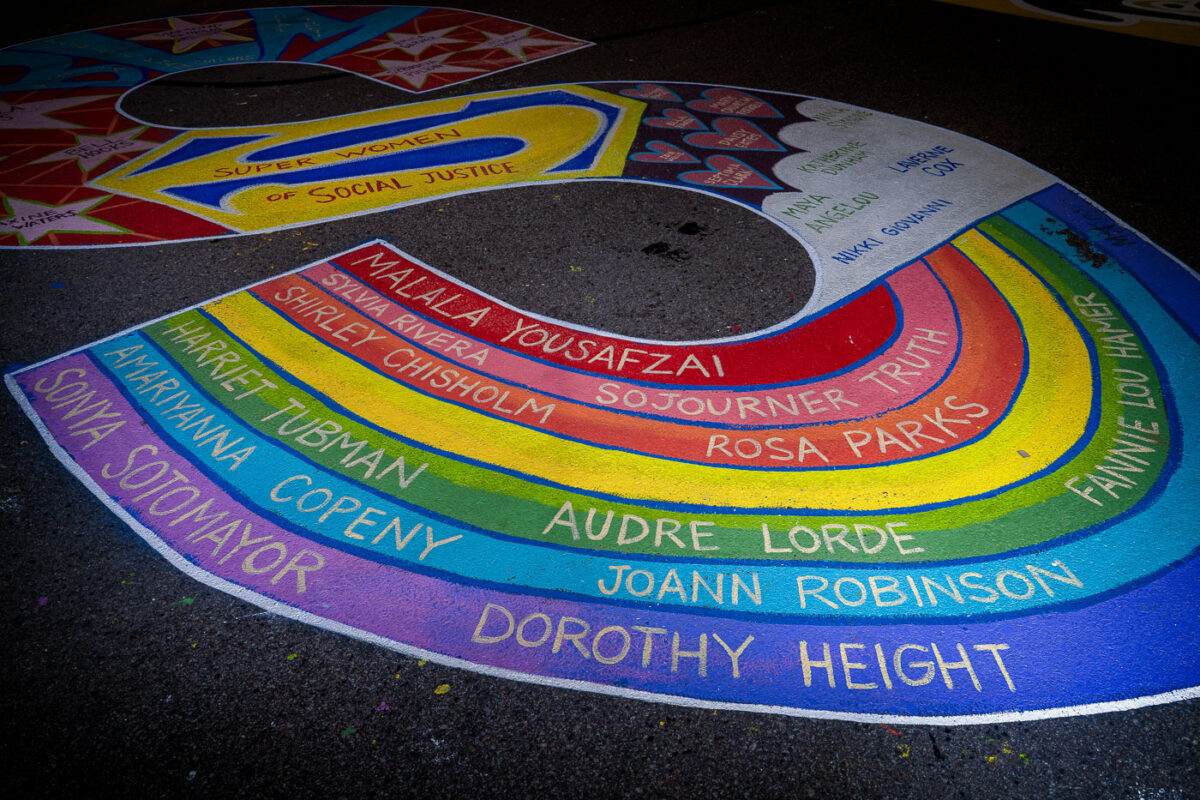
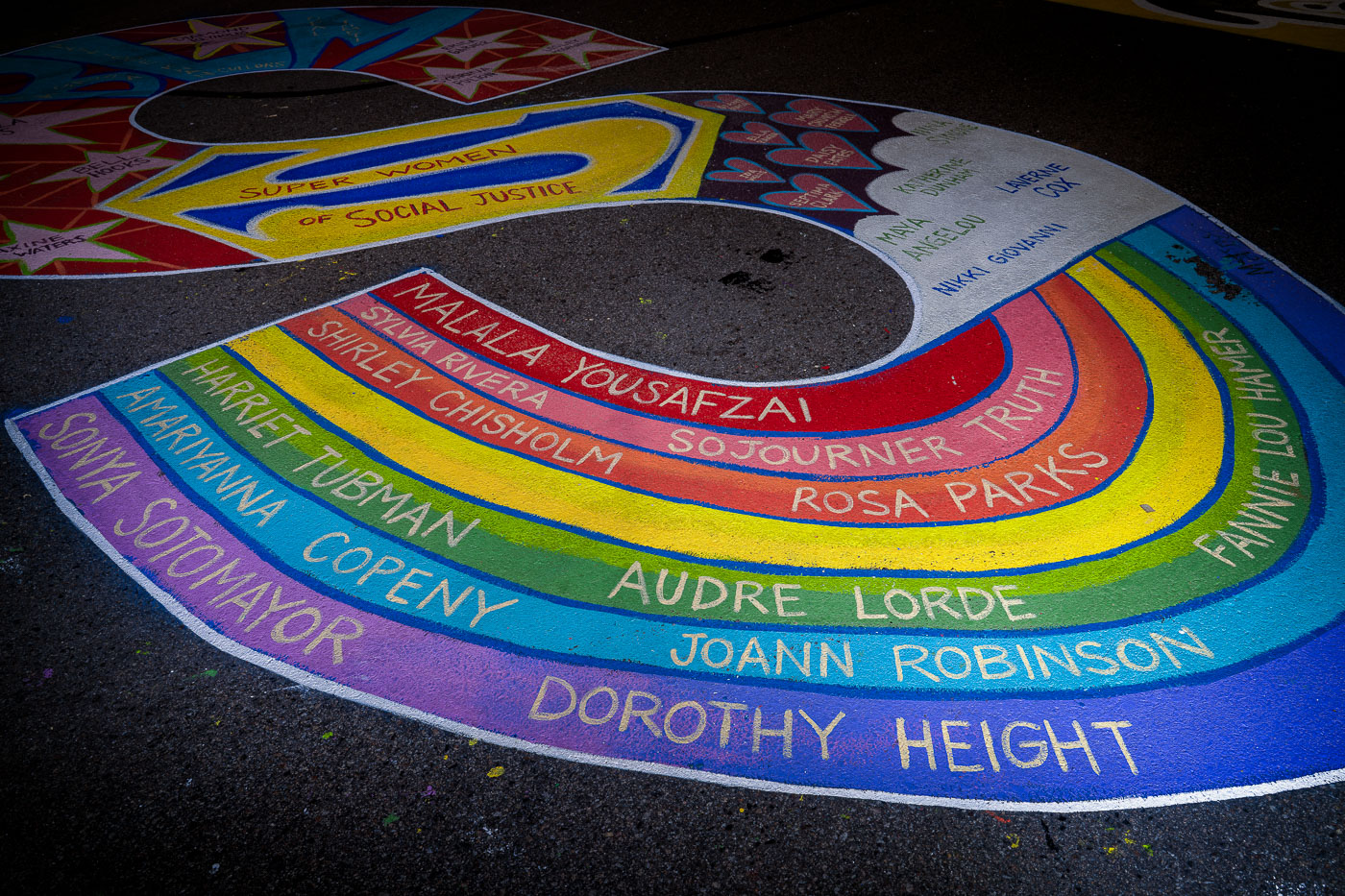
Close up of a Black Lives Matter street mural
The Black Lives Matter Mural on Plymouth Avenue in North Minneapolis features this segment dedicated to 'Super Women of Social Justice.' Completed on July 18th, 2020, the vibrant street art displays names of influential figures including Rosa Parks, Harriet Tubman, and Malala Yousafzai. This public art piece emerged in the wake of the Minneapolis Uprising, transforming the street into a site of remembrance and advocacy. It serves as a significant cultural marker, commemorating the ongoing movement for racial justice and equality within the urban environment.

Black Lives Matter Mural, Plymouth Ave, North Minneapolis
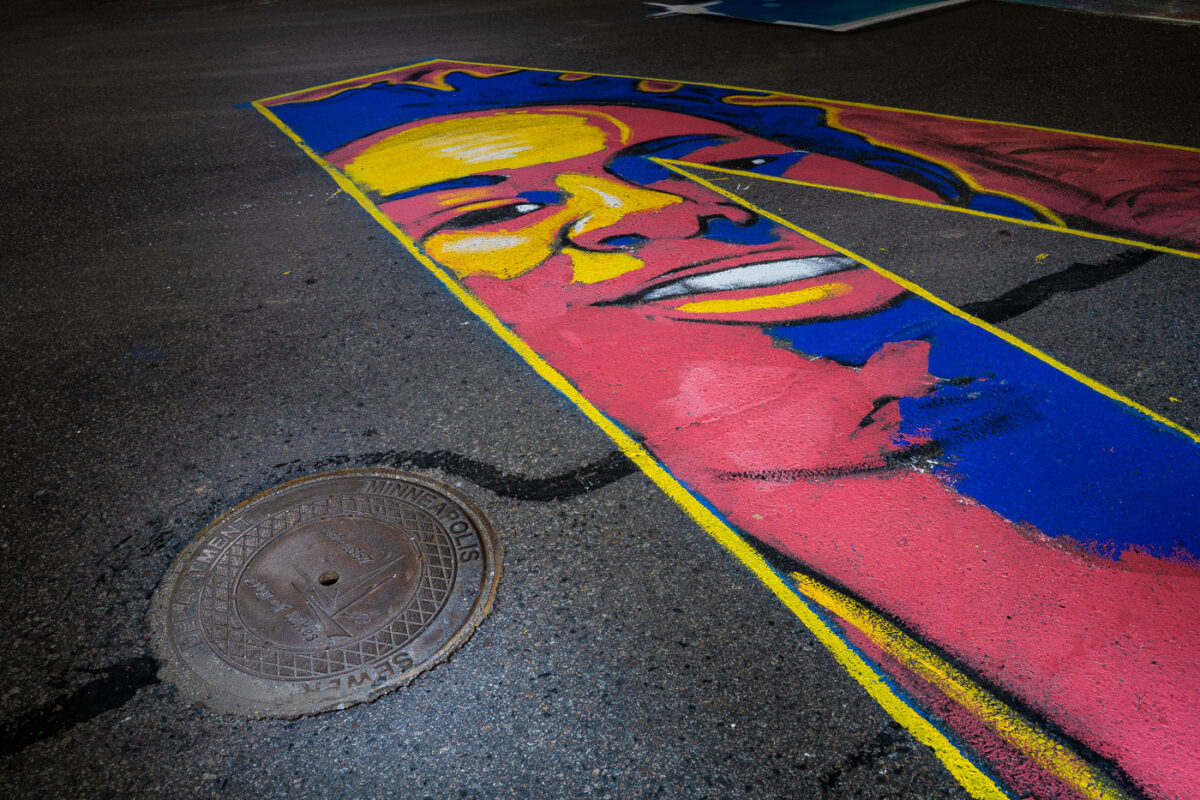
Community painted mural in Minneapolis
A community-painted mural on Plymouth Avenue in Minneapolis, created in July 2020, features a prominent stylized portrait. This public artwork emerged in the aftermath of the Minneapolis Uprising, reflecting collective expression and resilience within the community. Such street art served as a significant visual response to the social and political events of the period, transforming urban spaces into sites of public dialogue and remembrance. The mural's presence on Plymouth Avenue underscores its role in documenting a specific historical moment in Minneapolis.

Community street mural on Plymouth Avenue, Minneapolis 2020
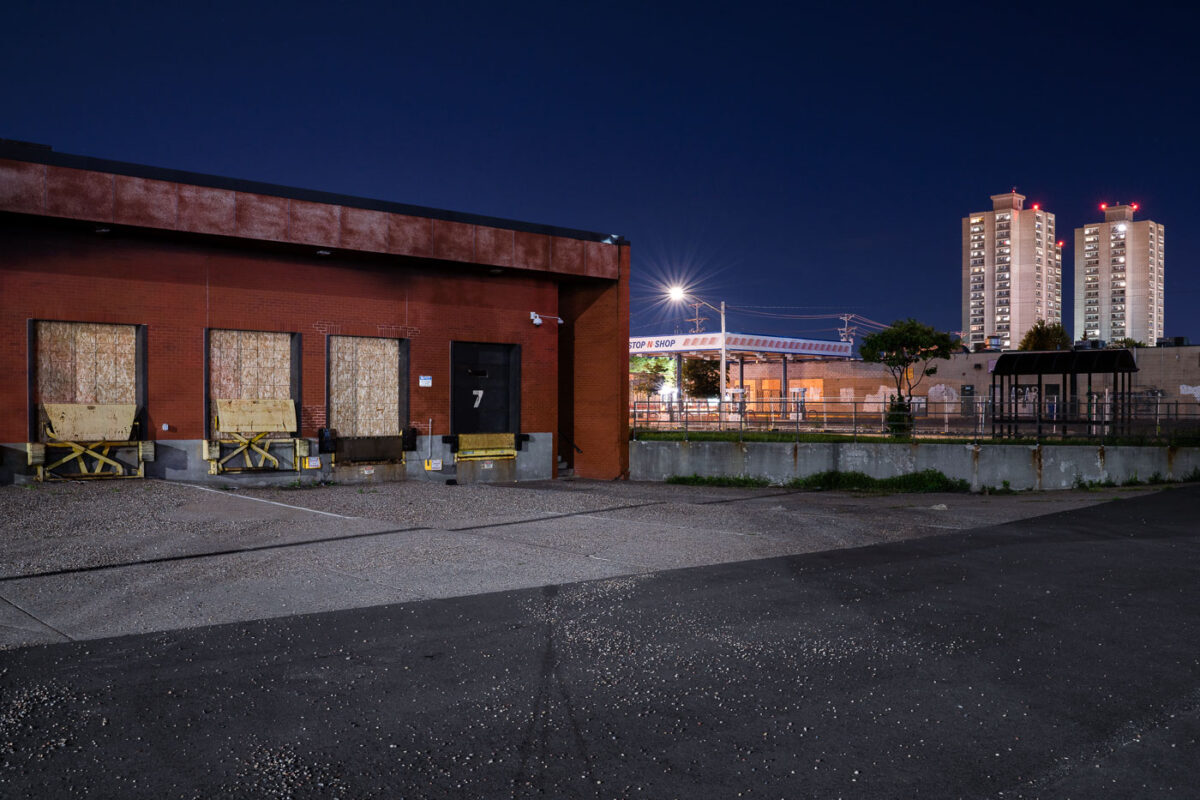
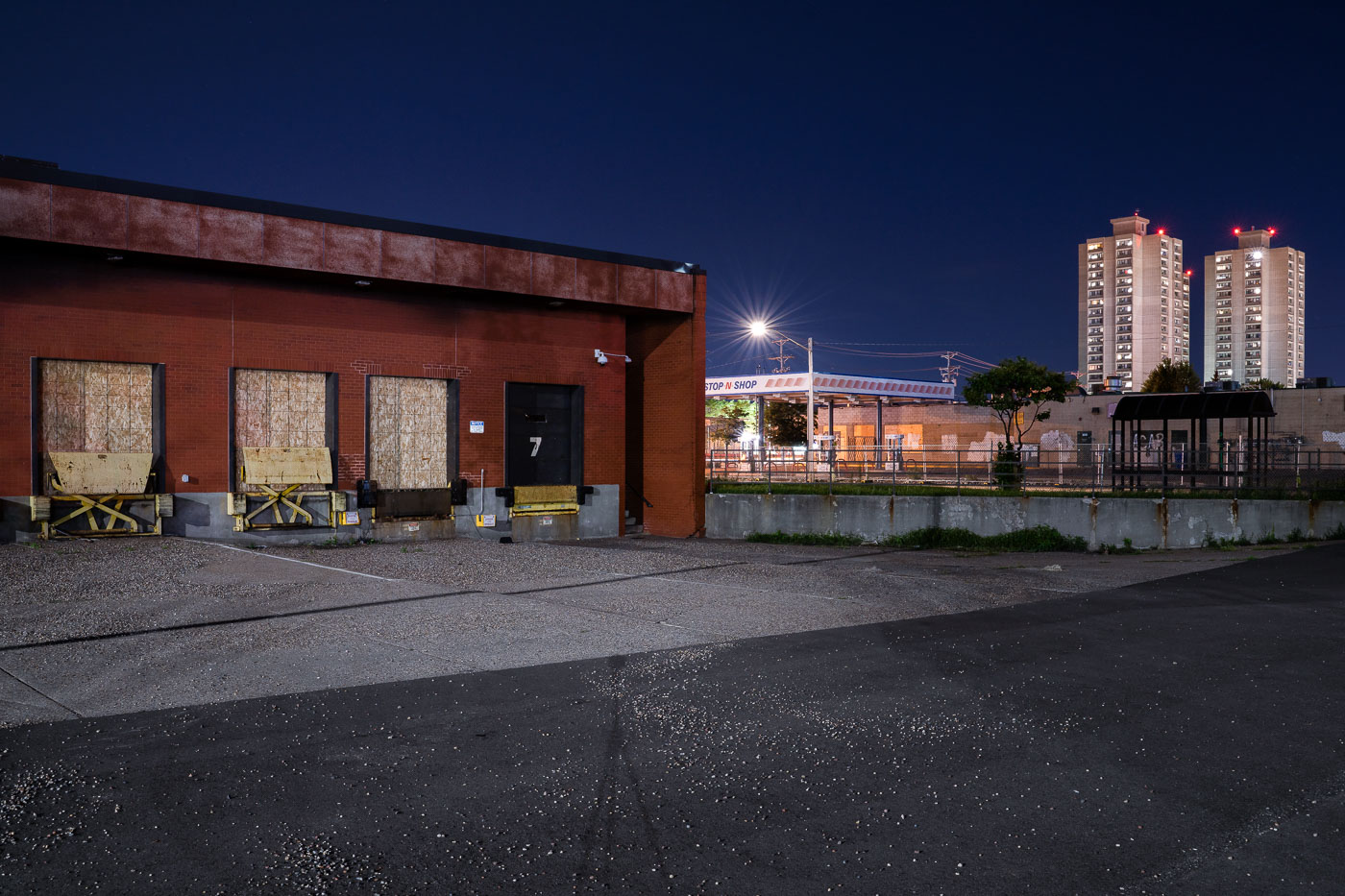
Back of fire damaged USPS post office in Minneapolis
The USPS Lake Street Station and a Stop N Shop gas station stand on Lake Street in Minneapolis. These commercial properties sustained significant damage, including instances of arson, during the civil unrest that occurred in May 2020 following the death of George Floyd. The boarded-up windows and visible repairs on both structures reflect the impact of these events on local businesses and infrastructure. The USPS facility continues to serve as a critical postal service hub for the surrounding community, while the Stop N Shop provides essential fuel and convenience services.

USPS Lake Street Station & Stop N Shop, Minneapolis Unrest
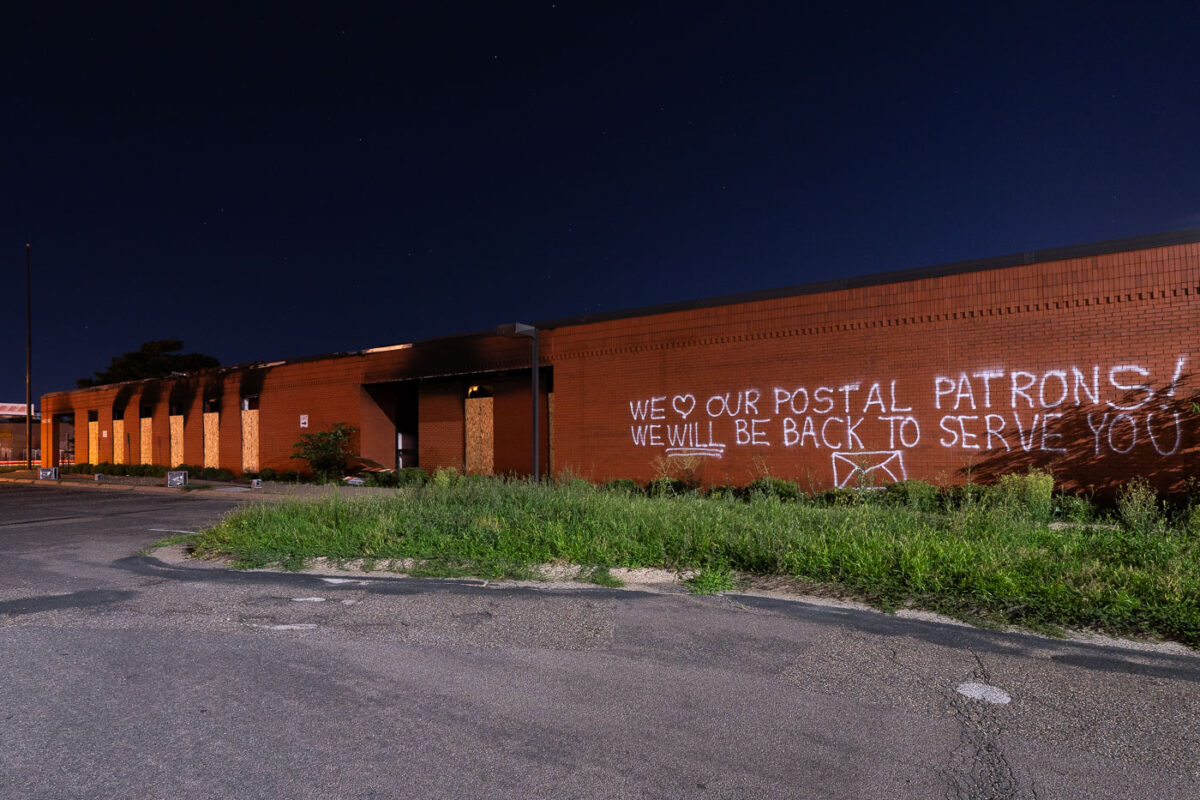
Graffiti on the side of burned USPS post office
The United States Postal Service (USPS) Lake Street Station in Minneapolis sustained significant fire damage during the Minneapolis Uprising. The brick building shows signs of charring and boarded-up windows, with white graffiti on its facade stating, "WE LOVE OUR POSTAL PATRONS! WE WILL BE BACK TO SERVE YOU!" This message reflects the station's commitment to its community despite the extensive damage from arson. As a critical piece of public infrastructure, the Lake Street Station provides essential postal services to residents and businesses in the surrounding Minneapolis neighborhood.

Burned USPS Lake Street Station with Graffiti
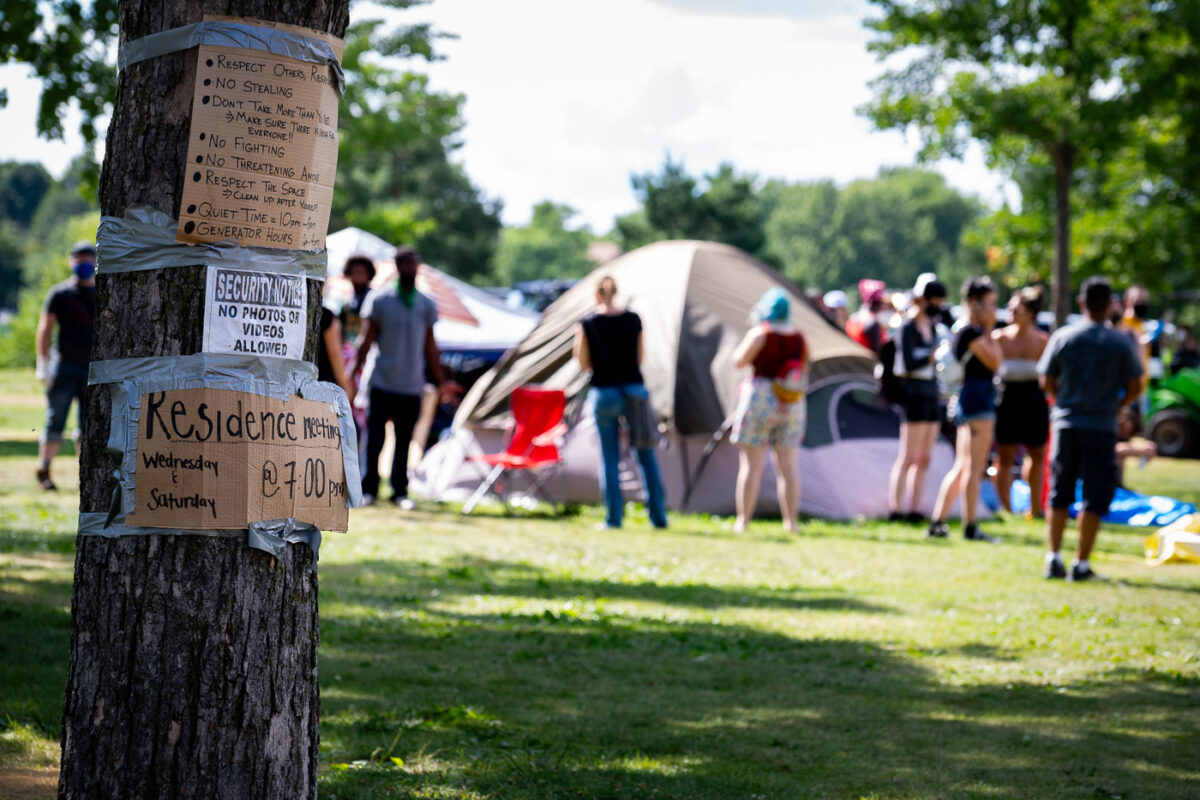
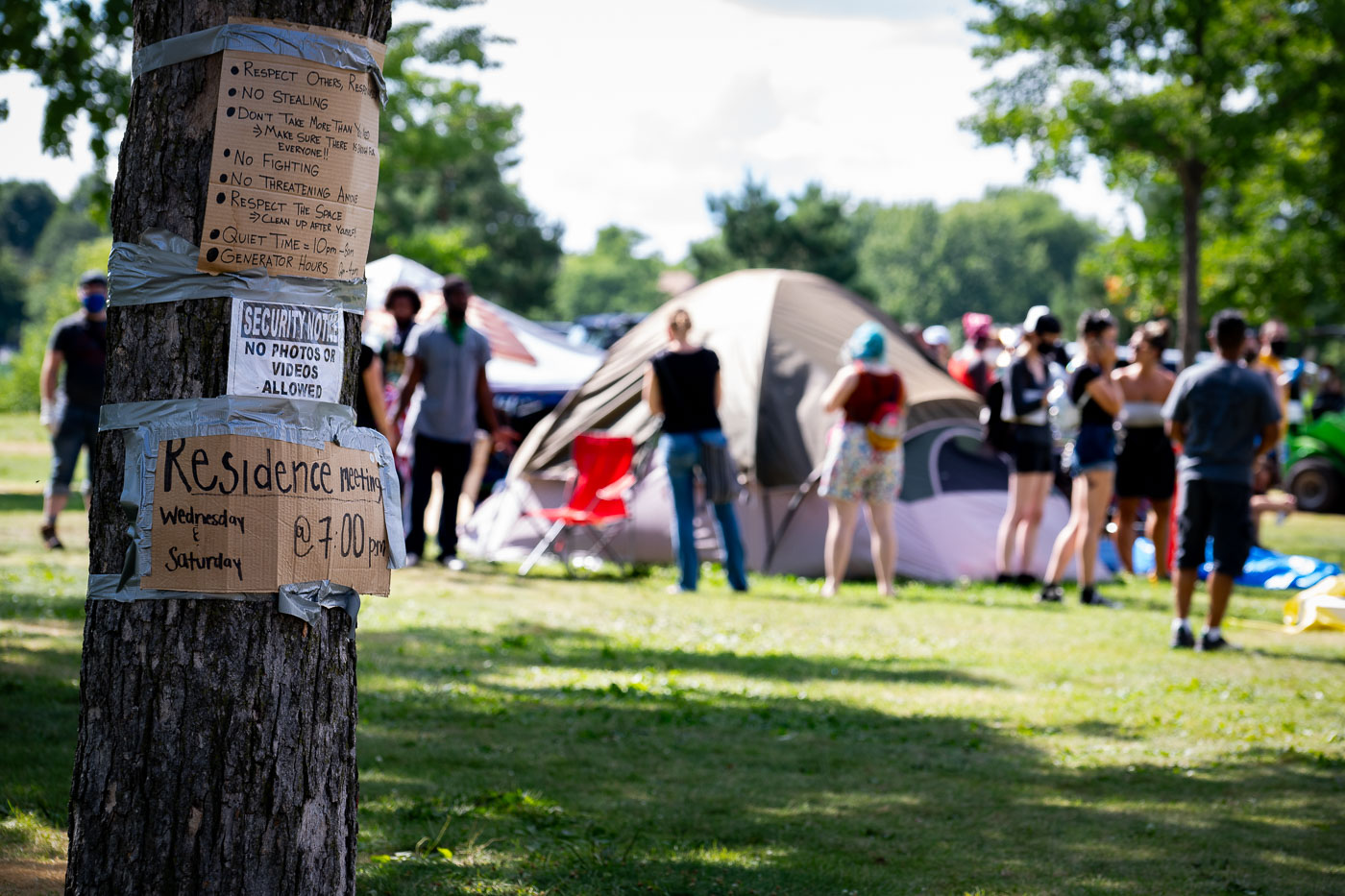
Encampment rules at Powderhorn park
Handwritten signs detailing community rules and meeting schedules are affixed to a tree at the Powderhorn East homeless encampment in South Minneapolis. This temporary settlement emerged as a response to housing insecurity, providing shelter for individuals during a period of significant social unrest in the city. The encampment, located within Powderhorn Park, was subsequently cleared by Minneapolis Police on July 21, 2020. Such sites underscore the challenges of homelessness and the community-led efforts to address immediate needs in urban areas.

Powderhorn Park Encampment Signs

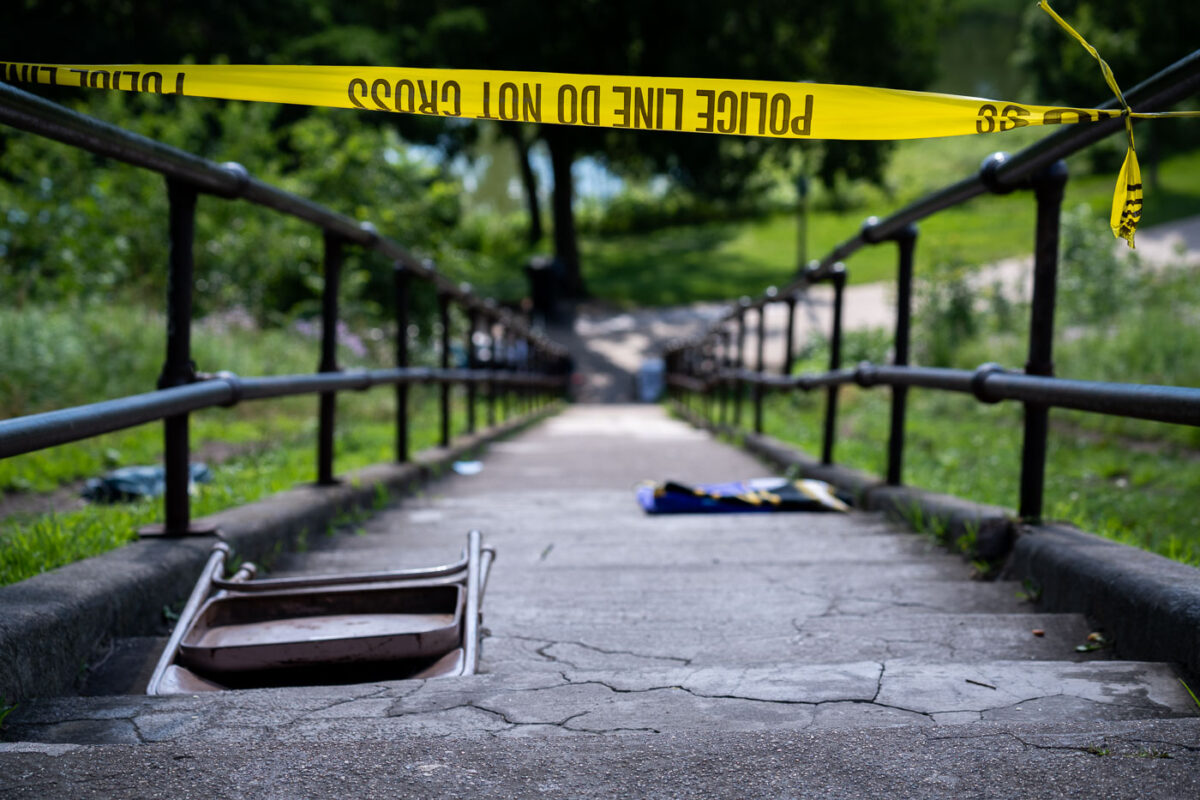
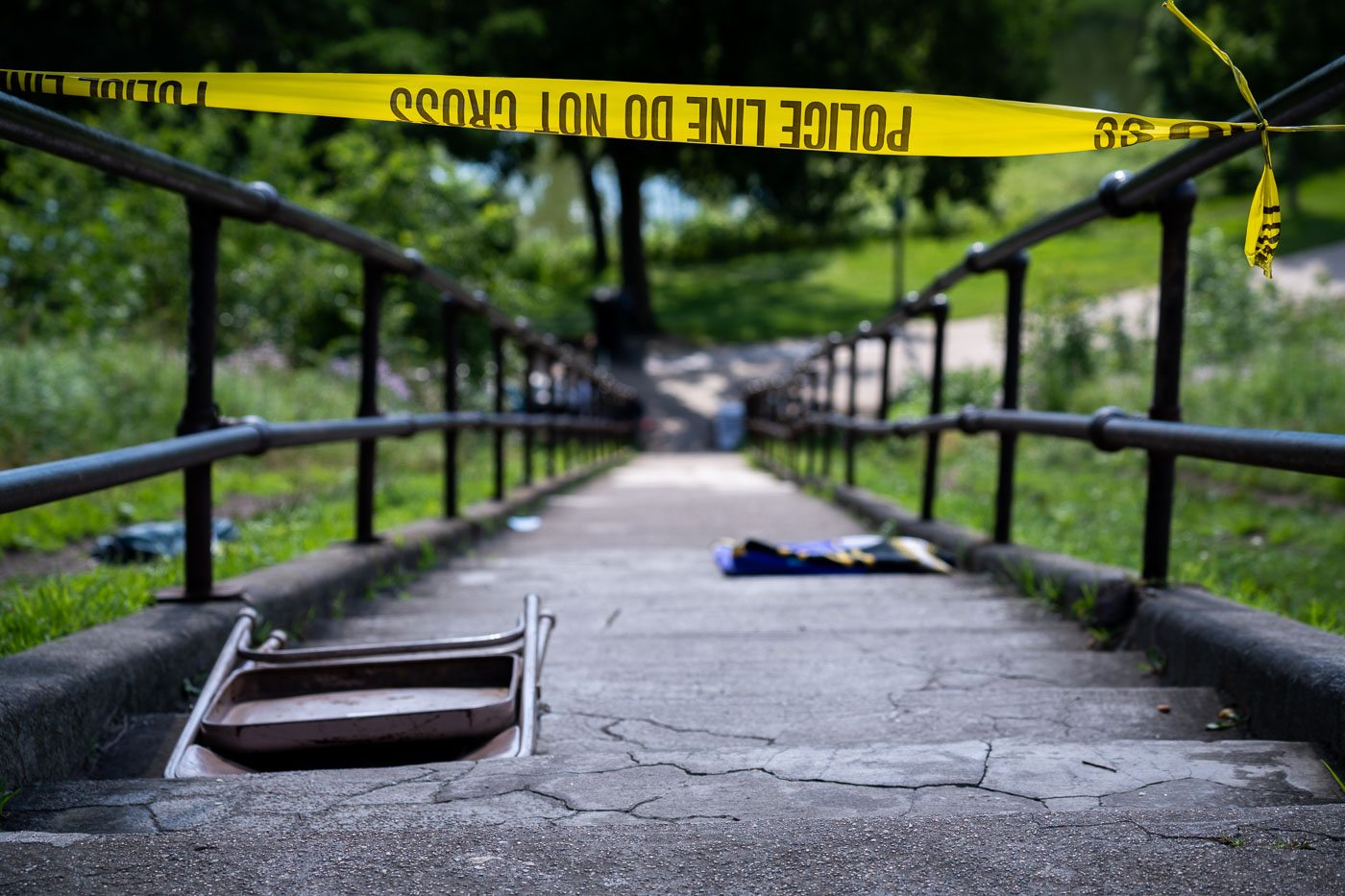
Police line do not cross at Powderhorn Park
A stairway at Powderhorn Park in South Minneapolis is cordoned off by "Police Line Do Not Cross" tape. This area of the park was previously the site of a large homeless encampment, established in the summer of 2020 amidst the Minneapolis Uprising and growing concerns over housing insecurity. The presence of the police tape and scattered debris, including a broken chair, indicates the recent closure or clearing of the encampment. Powderhorn Park, a significant public green space in the city, became a focal point for discussions on homelessness and community support during this period.

Police Tape on Powderhorn Park Stairway, Minneapolis
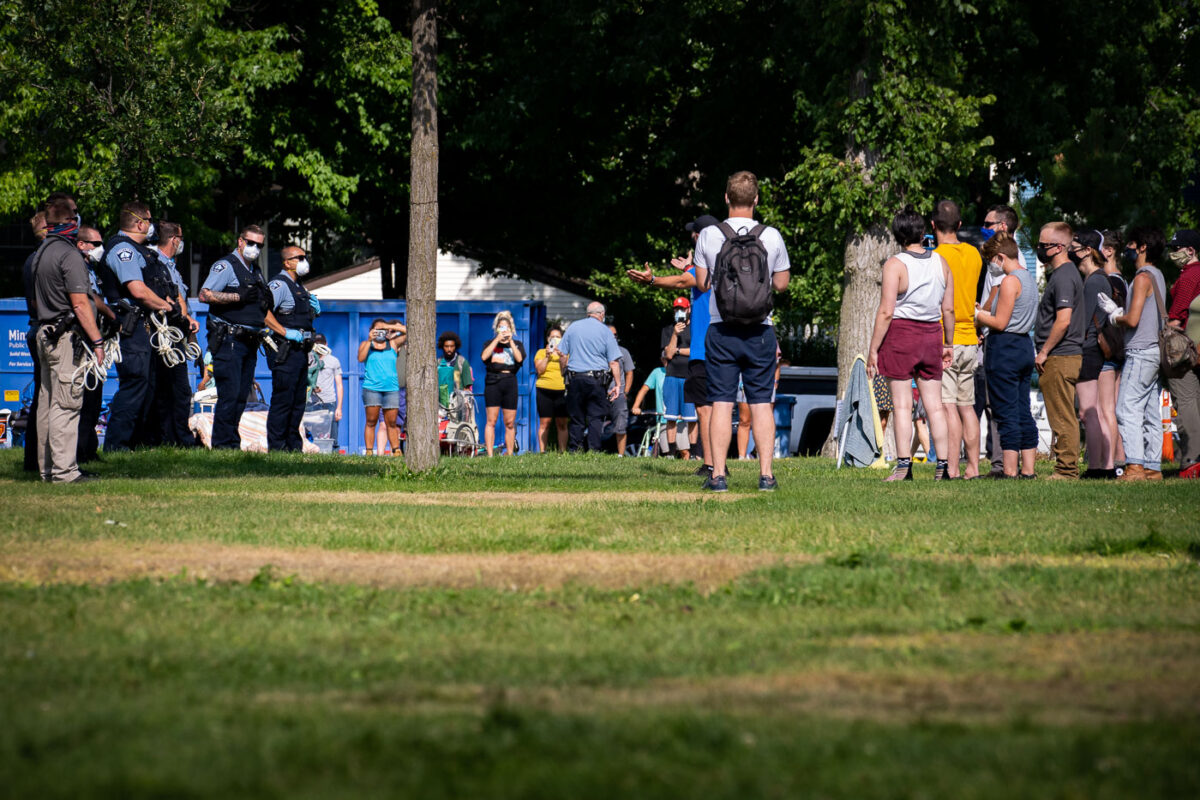
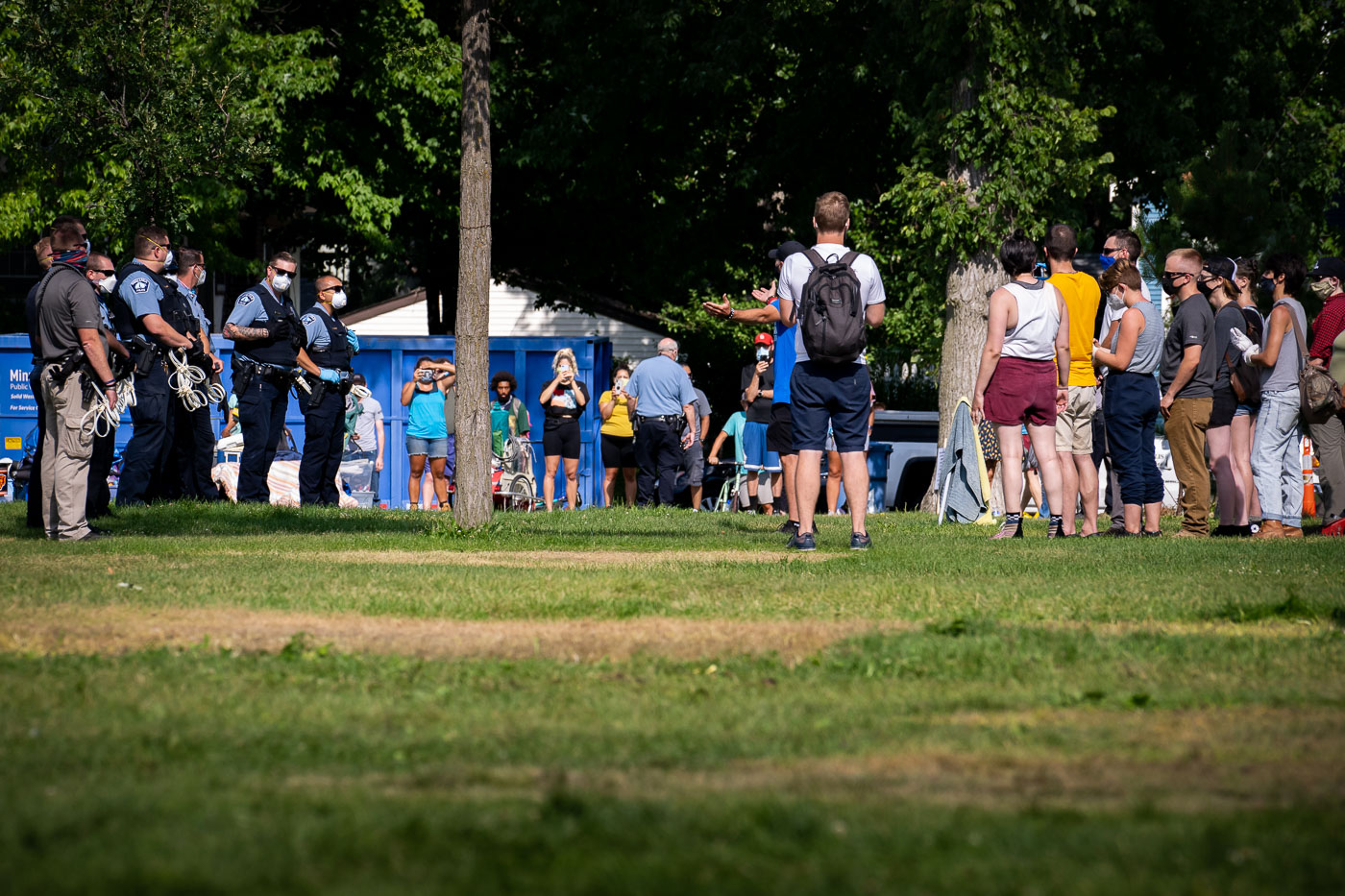
Minneapolis Park police at Powderhorn Park
Minneapolis Park Police officers conducted an eviction of a homeless encampment at Powderhorn Park in South Minneapolis on July 20, 2020. This action occurred during a period of heightened public attention to homelessness and social justice issues in the city, following the civil unrest of the Minneapolis Uprising. Powderhorn Park, a prominent public green space, had become a temporary shelter for many individuals experiencing homelessness throughout the summer. The police operation to remove tents and temporary structures highlighted the ongoing challenges faced by urban communities in addressing housing insecurity and providing adequate support for vulnerable populations.

Minneapolis Park Police Eviction at Powderhorn Park
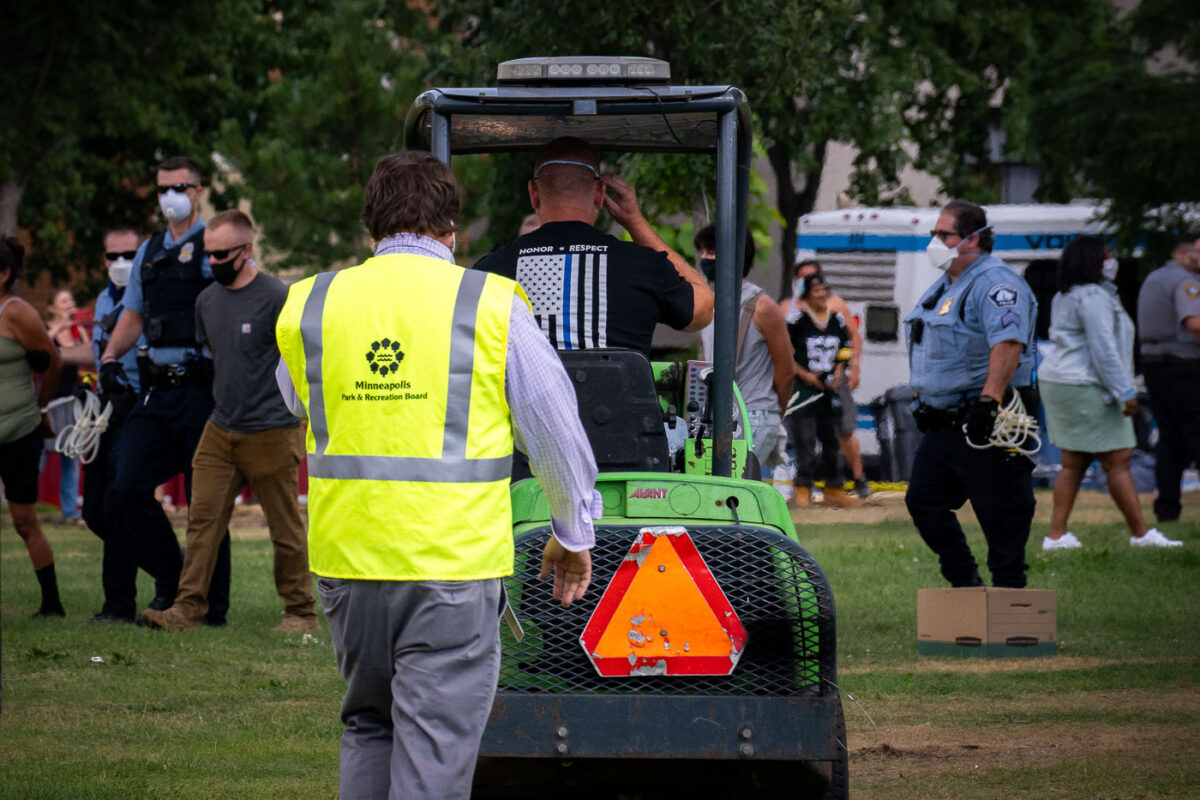
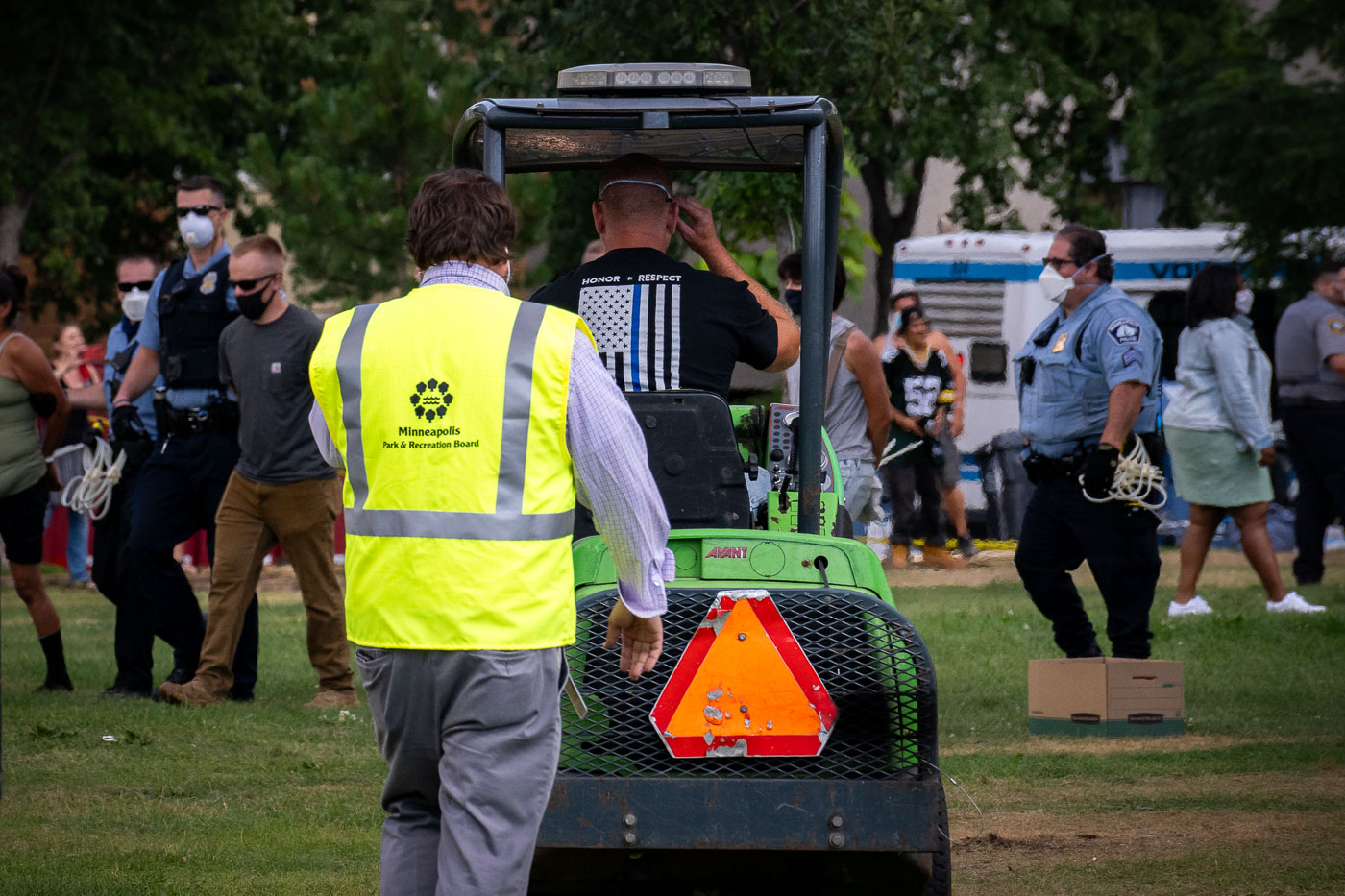
Minneapolis Park Police make arrests at Powderhorn Park
Minneapolis Park Police and Minneapolis Park & Recreation Board staff oversaw the clearing of a homeless encampment at Powderhorn Park in South Minneapolis on July 20, 2020. This operation addressed the significant growth of unhoused individuals residing in the park following the social unrest and economic disruptions experienced in the city during early 2020. Powderhorn Park, a historic green space established in the late 19th century, functions as a vital community and recreational area. The clearing aimed to remove temporary shelters and relocate residents, underscoring the complex challenges of homelessness and the management of public spaces in urban environments.

Powderhorn Park Homeless Encampment Clearing, July 2020
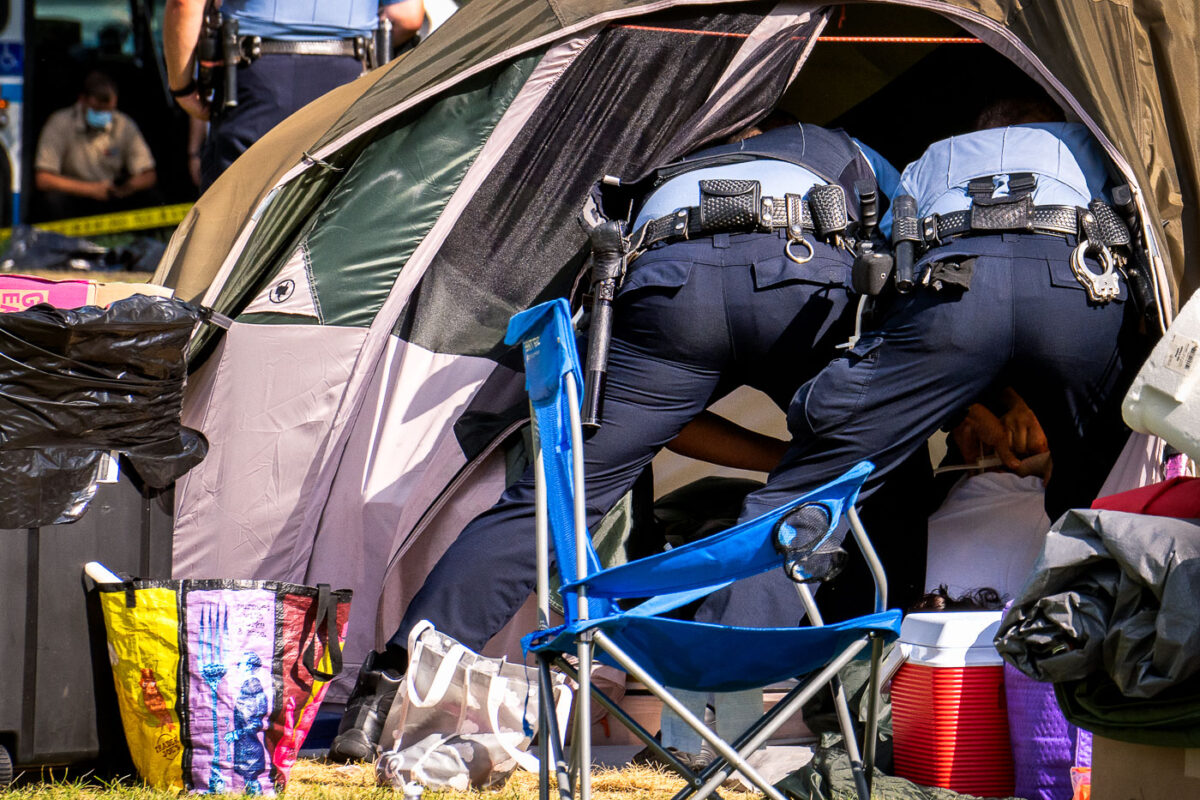
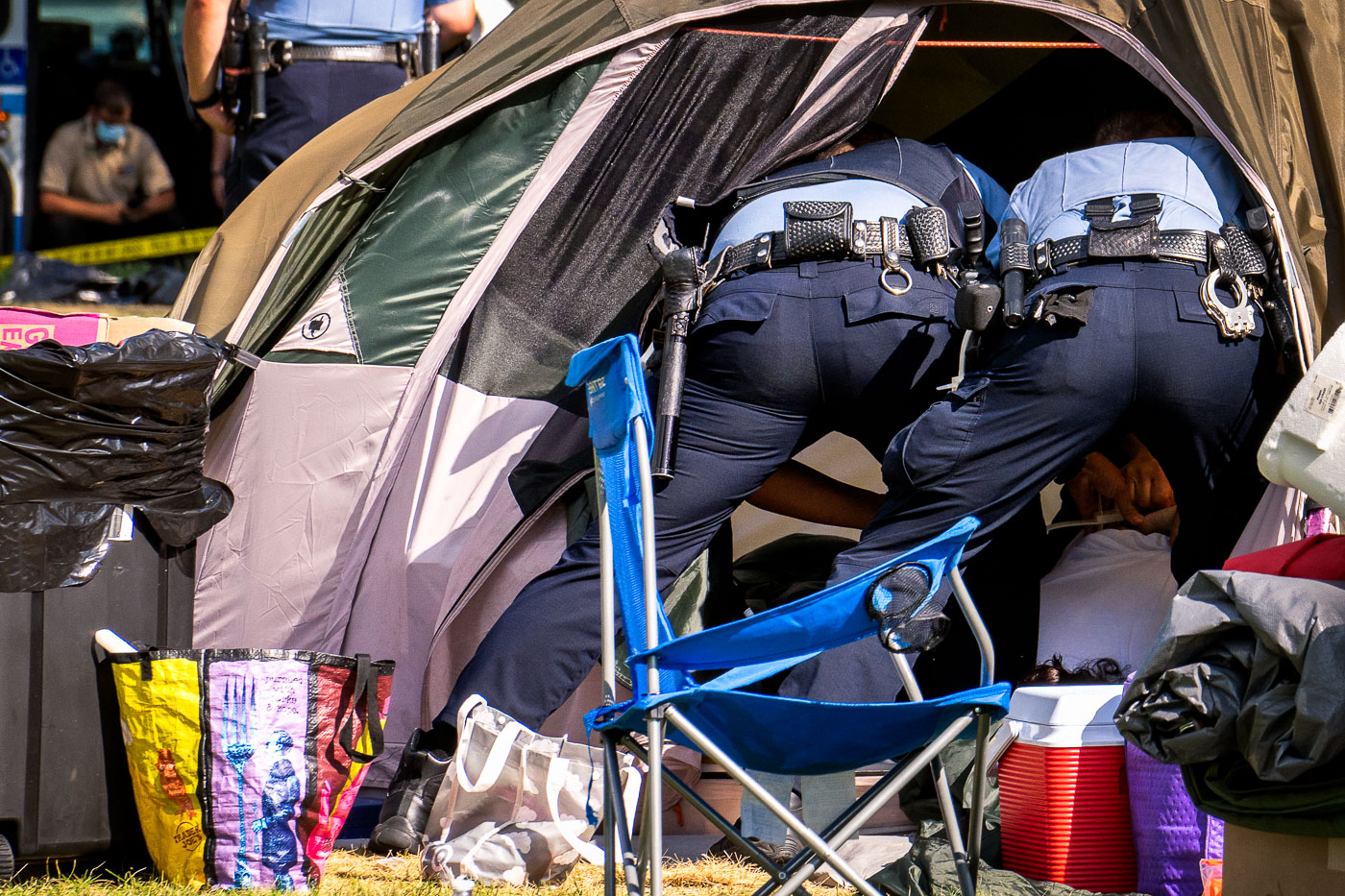
Police officers handcuffing people living in tents in Minneapolis
Minneapolis Park Police officers clear a homeless encampment at Powderhorn Park in South Minneapolis on July 20, 2020. This action addressed the growing number of unsheltered individuals residing in public parks, a situation exacerbated by the social and economic disruptions experienced in Minneapolis during that year. Powderhorn Park, a significant green space in South Minneapolis, became one of several locations where temporary shelters emerged, highlighting the city's challenges with housing insecurity. The clearing operations by park authorities aimed to manage these encampments and public health concerns.

Minneapolis Park Police clear homeless encampment, Powderhorn Park
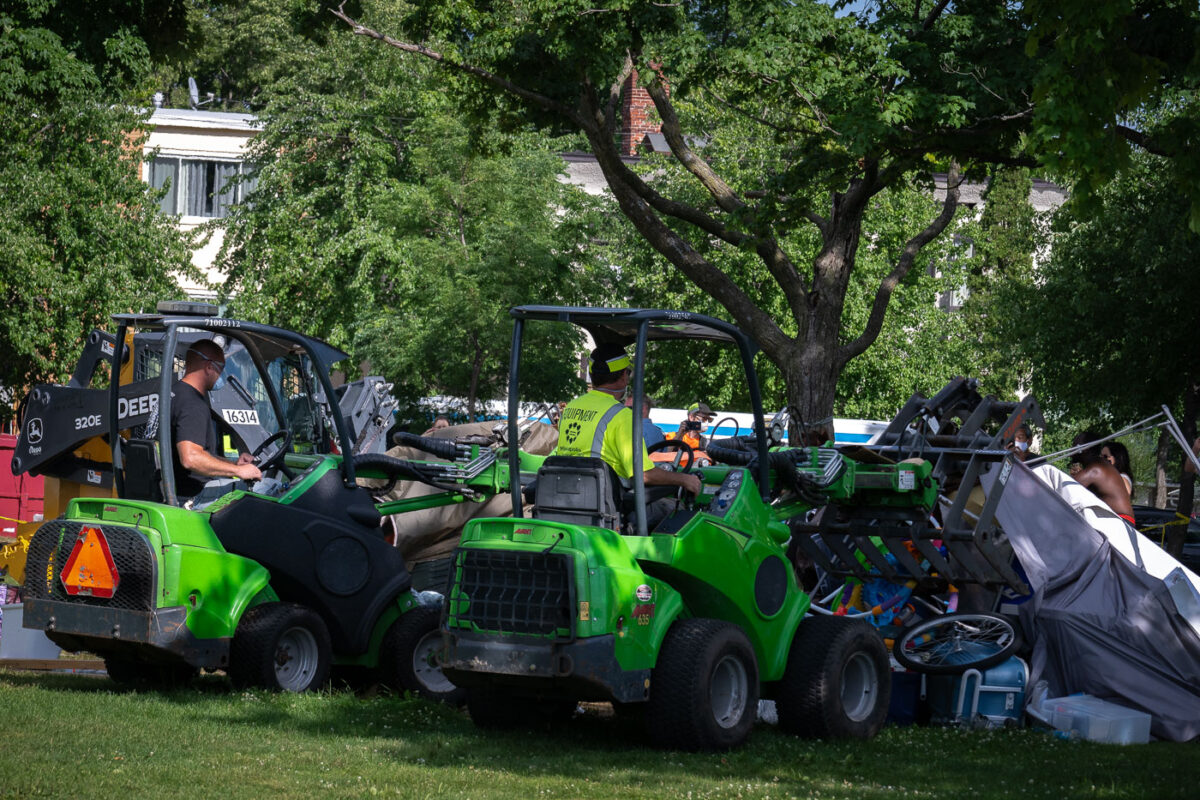
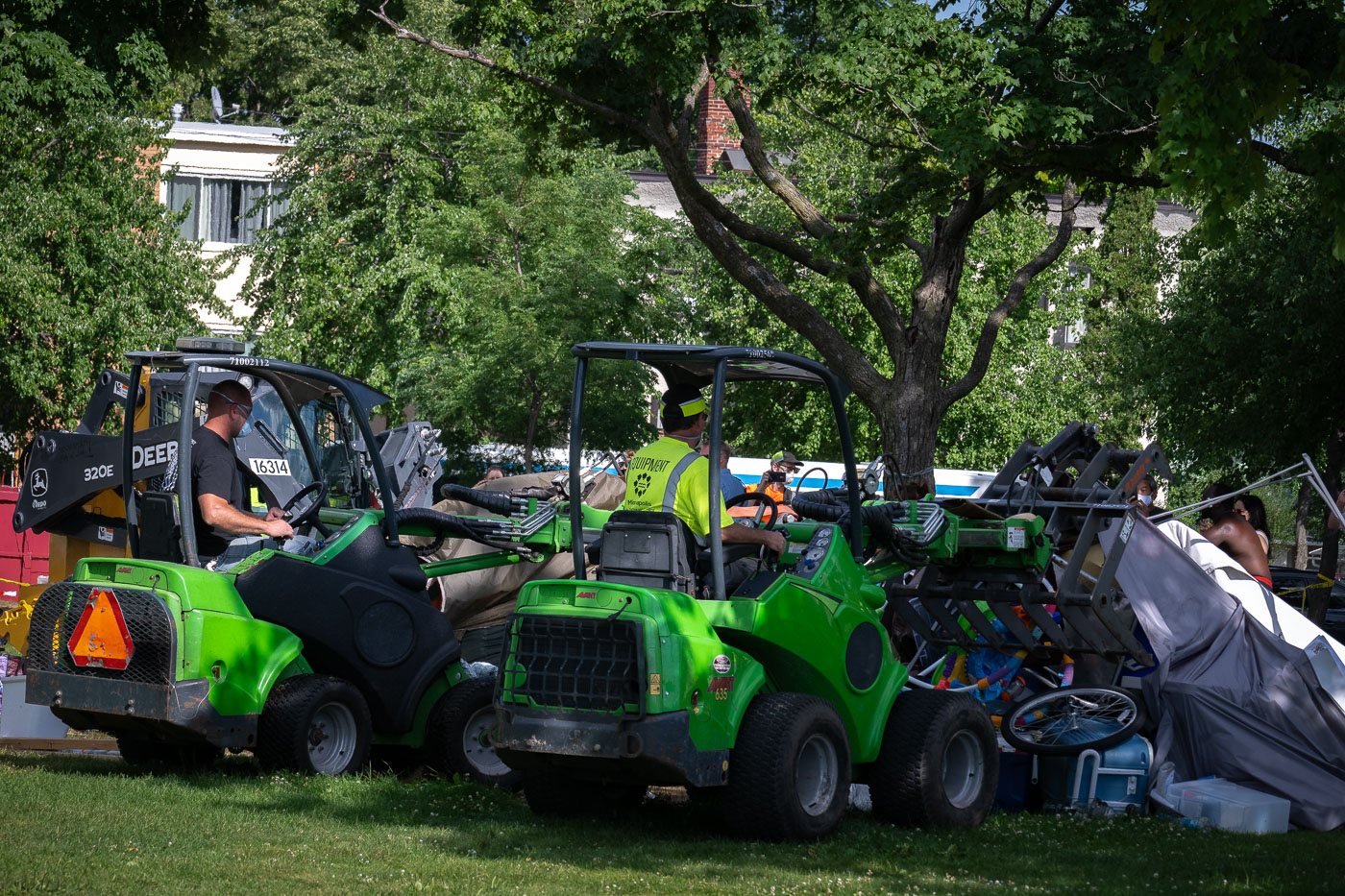
Police bulldoze over tents left behind in Minneapolis park
Minneapolis Park Police personnel clear tents and belongings from an encampment at Powderhorn Park in July 2020. This action followed the establishment of a large homeless encampment in the park, which grew significantly in the wake of the Minneapolis Uprising and broader discussions around housing insecurity. Powderhorn Park, a prominent urban green space in South Minneapolis, is historically designated for public recreation and community events. The clearing operation underscored the complex challenges of homelessness and the management of public spaces within the city.

Minneapolis Park Police bulldoze tents, Powderhorn Park
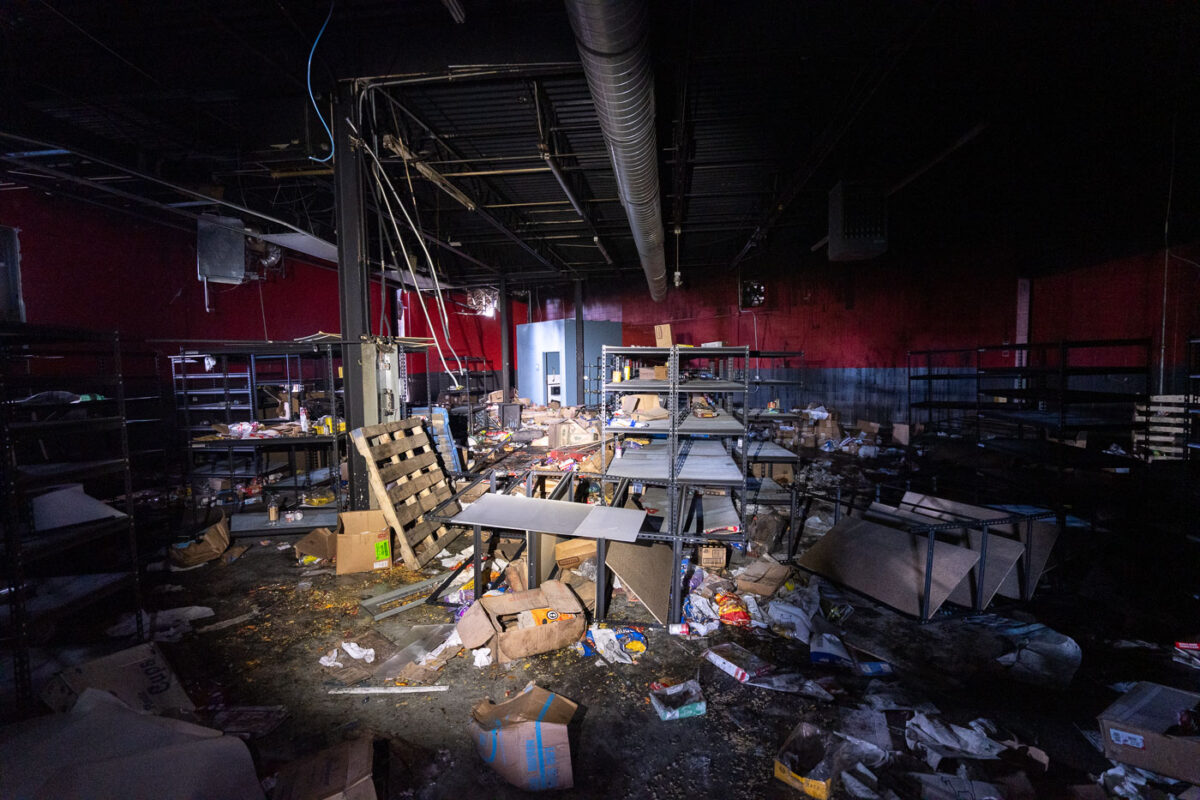
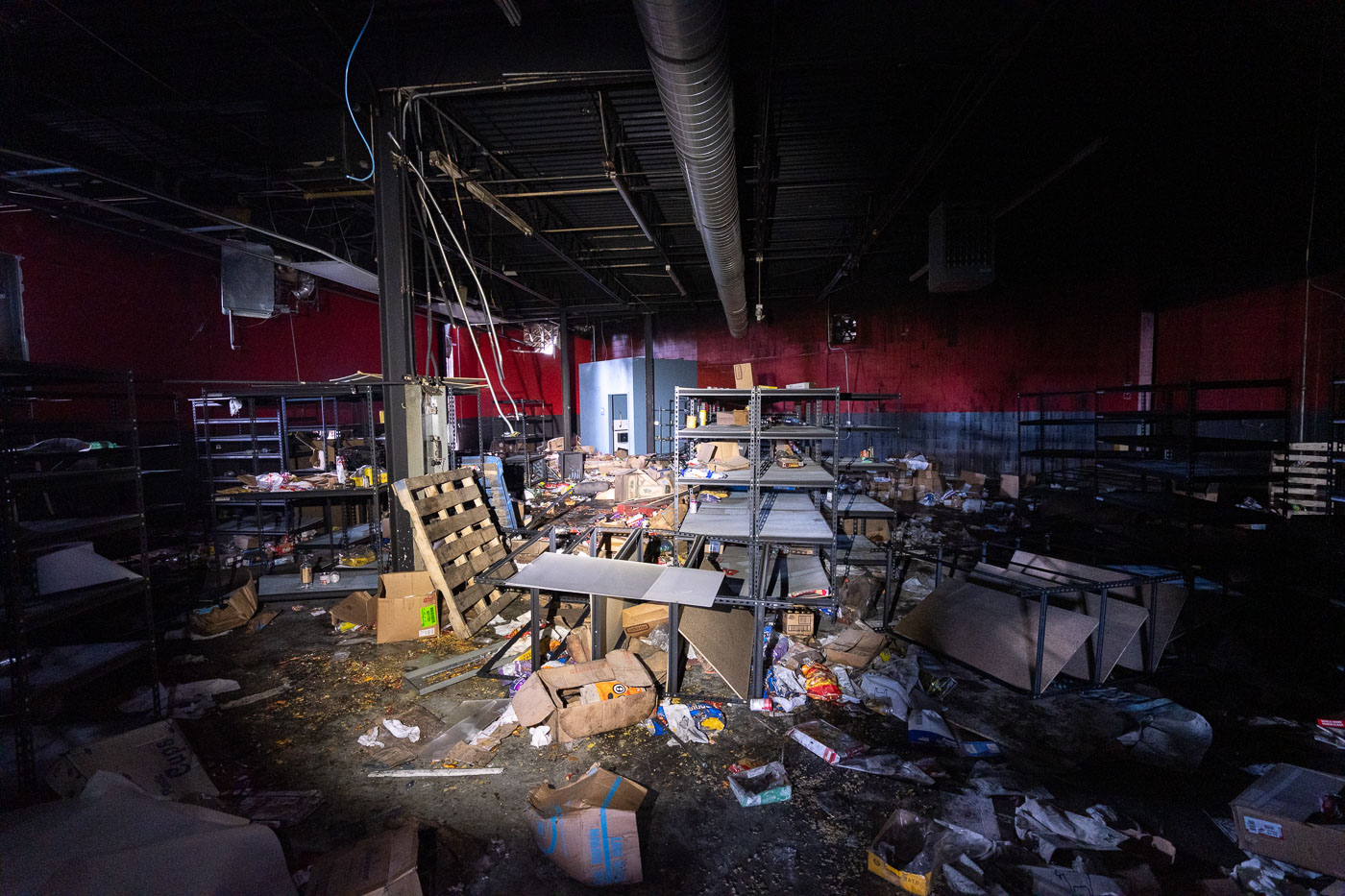
Inside GoPuff foods on Cedar Avenue
The interior of a GoPuff food delivery service facility on Cedar Avenue in Minneapolis displays significant damage. This damage occurred during the civil unrest and protests that followed the May 25, 2020, death of George Floyd. GoPuff operates as a rapid delivery service, utilizing local micro-fulfillment centers to store and dispatch a wide range of products directly to customers. The disarray of shelving, scattered products, and debris on the floor reflects the widespread impact on businesses in the area during that period.

Damaged GoPuff Interior, Cedar Ave, Minneapolis Uprising
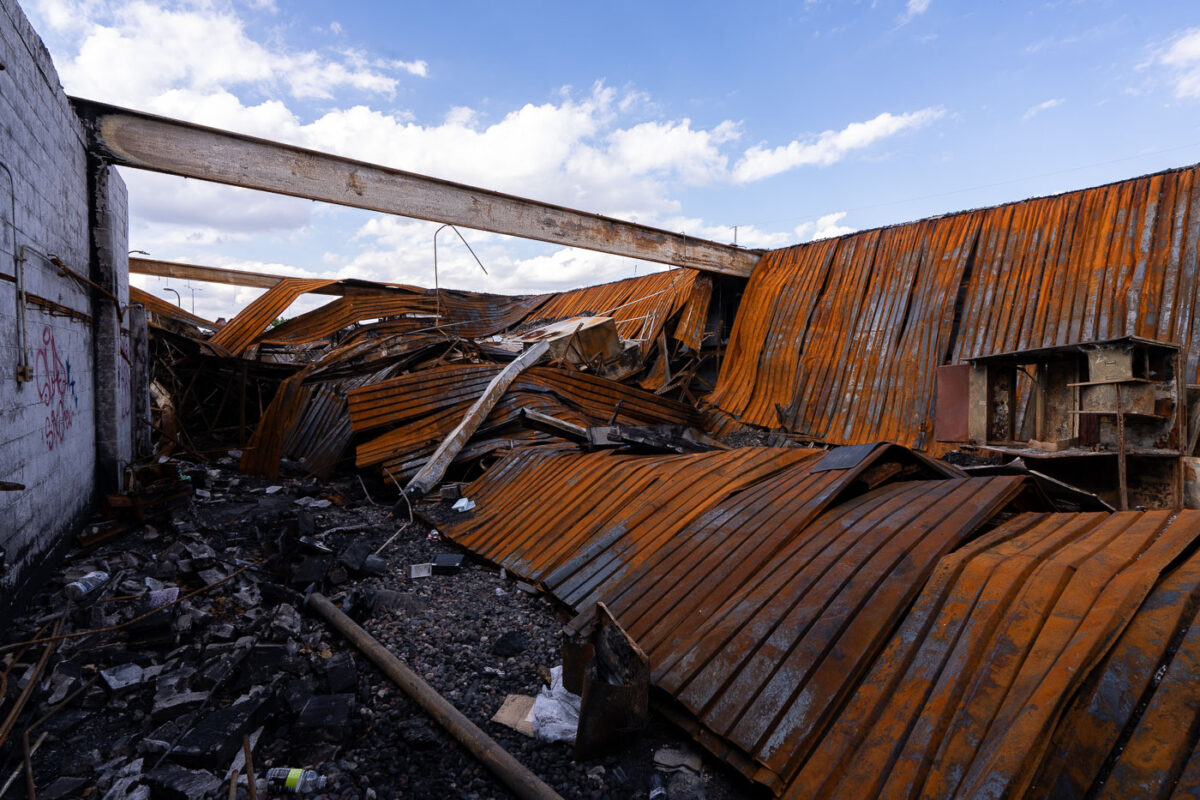
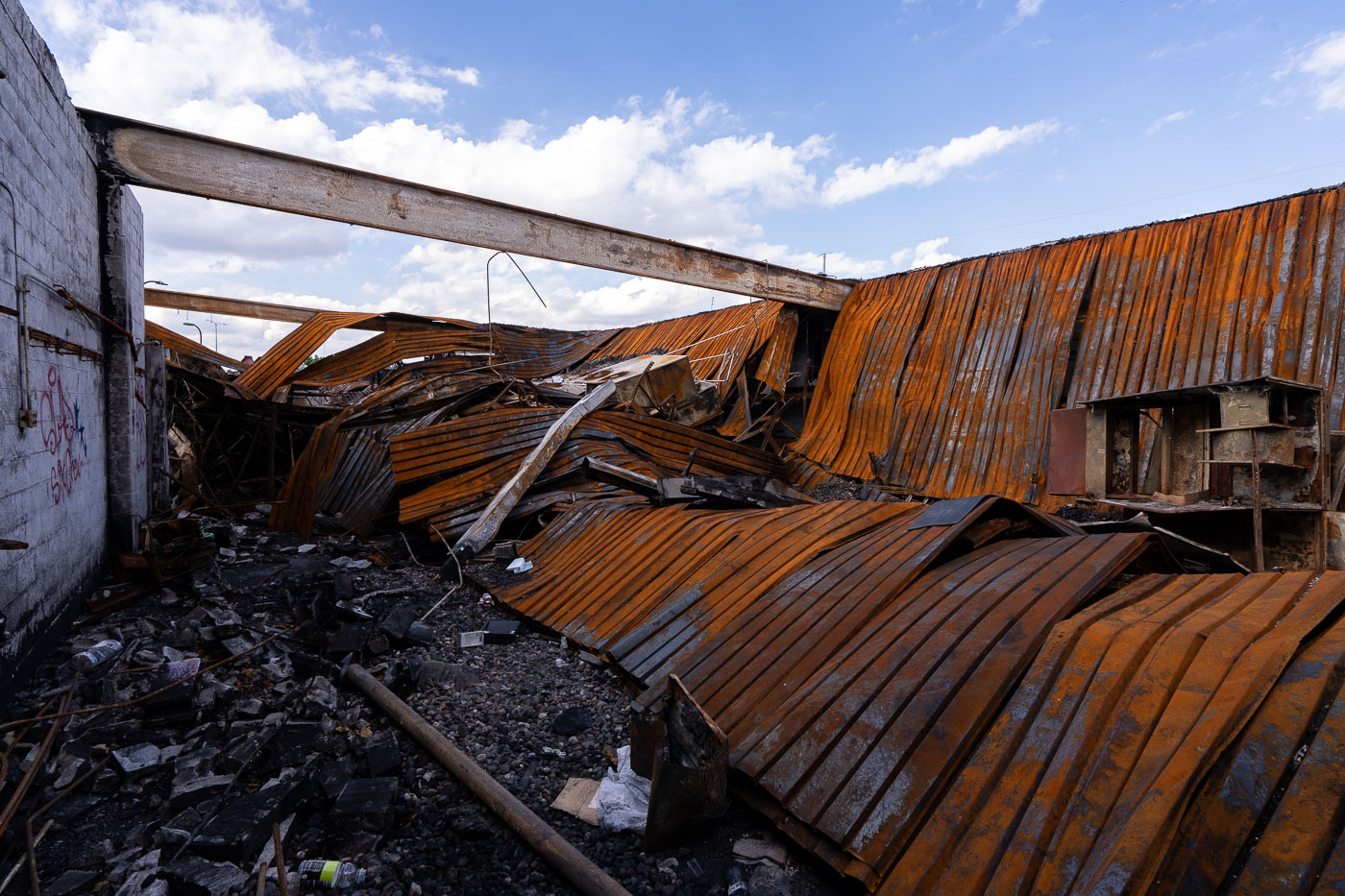
Caved in roof of fire damaged building on Cedar Ave
The interior of Max It Pawn on Cedar Avenue in Minneapolis shows extensive fire damage, with its roof caved in and corrugated metal structures twisted and rusted. This retail store sustained significant destruction during the protests and civil unrest that occurred in Minneapolis following the death of George Floyd on May 25, 2020. The building's charred remains and collapsed roof are a stark reminder of the widespread impact on local businesses. The damage to establishments like Max It Pawn became a visible representation of the profound effects of the Minneapolis Uprising on commercial districts and the community.

Max It Pawn Burned Interior, Cedar Ave, Minneapolis
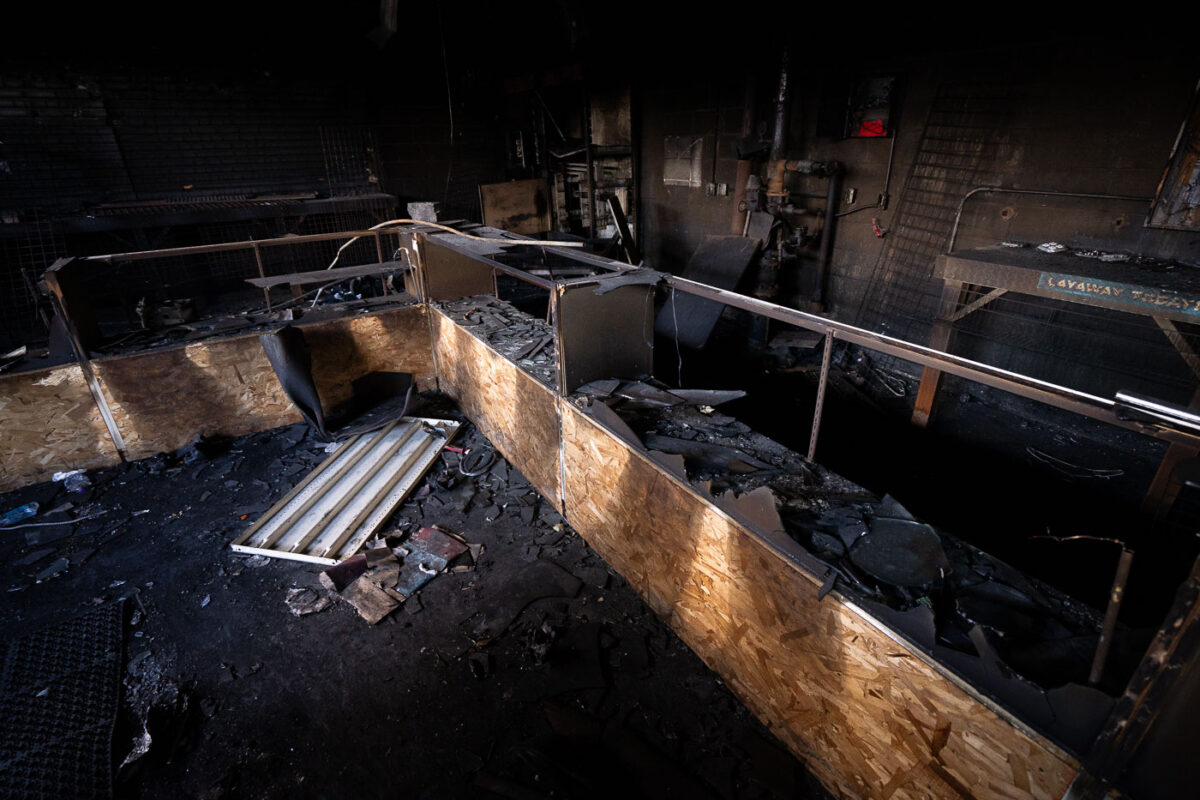
Burned out counter inside Max It Pawn
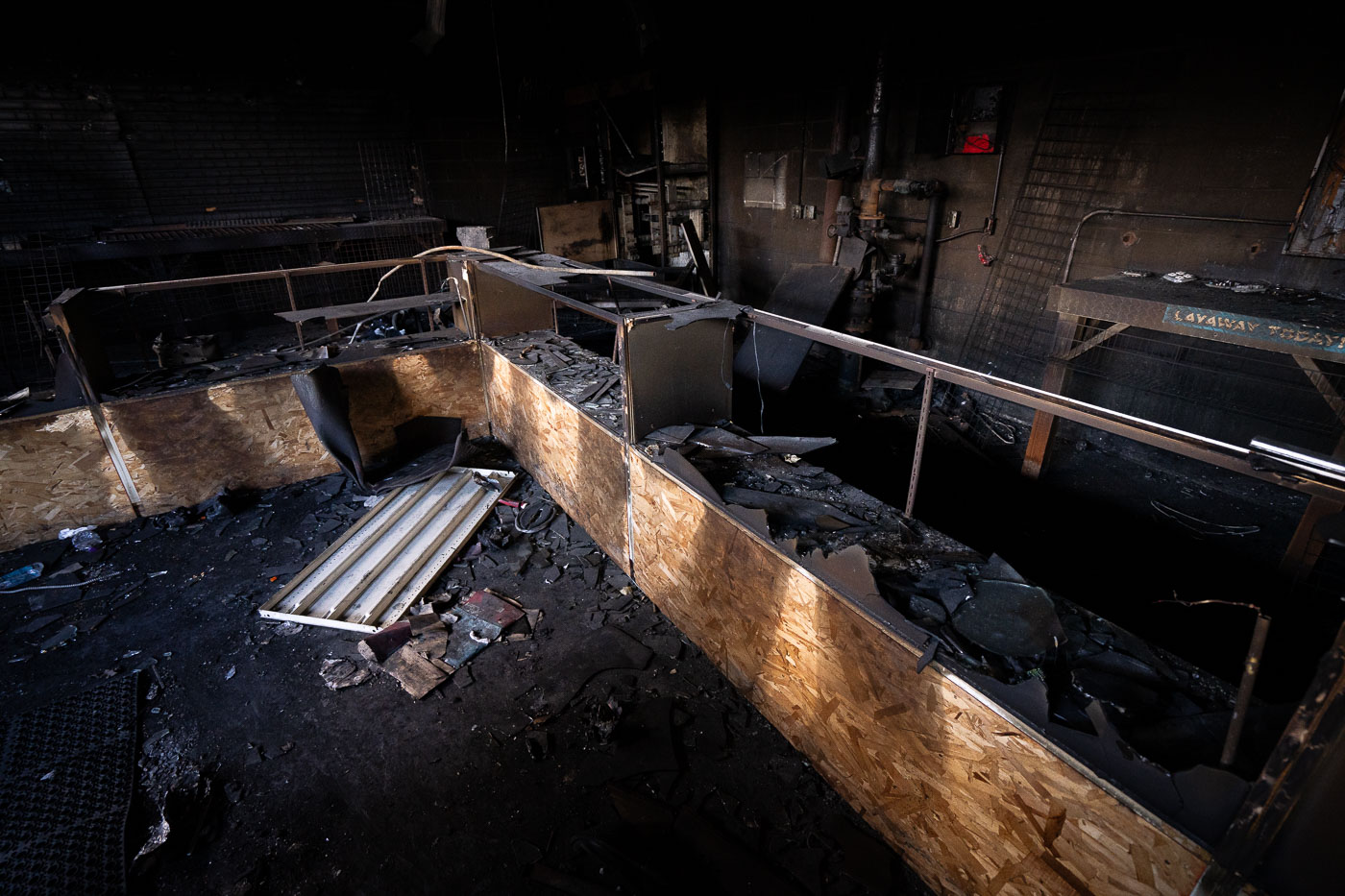
The interior of Max It Pawn on Cedar Avenue in Minneapolis displays extensive fire damage. This retail establishment was destroyed by arson following the May 25th, 2020 death of George Floyd. The destruction of the store reflects the broader impact of the civil unrest and protests that occurred across Minneapolis during that period, affecting numerous local businesses and the urban environment.

Burned Interior of Max It Pawn, Cedar Ave, Minneapolis
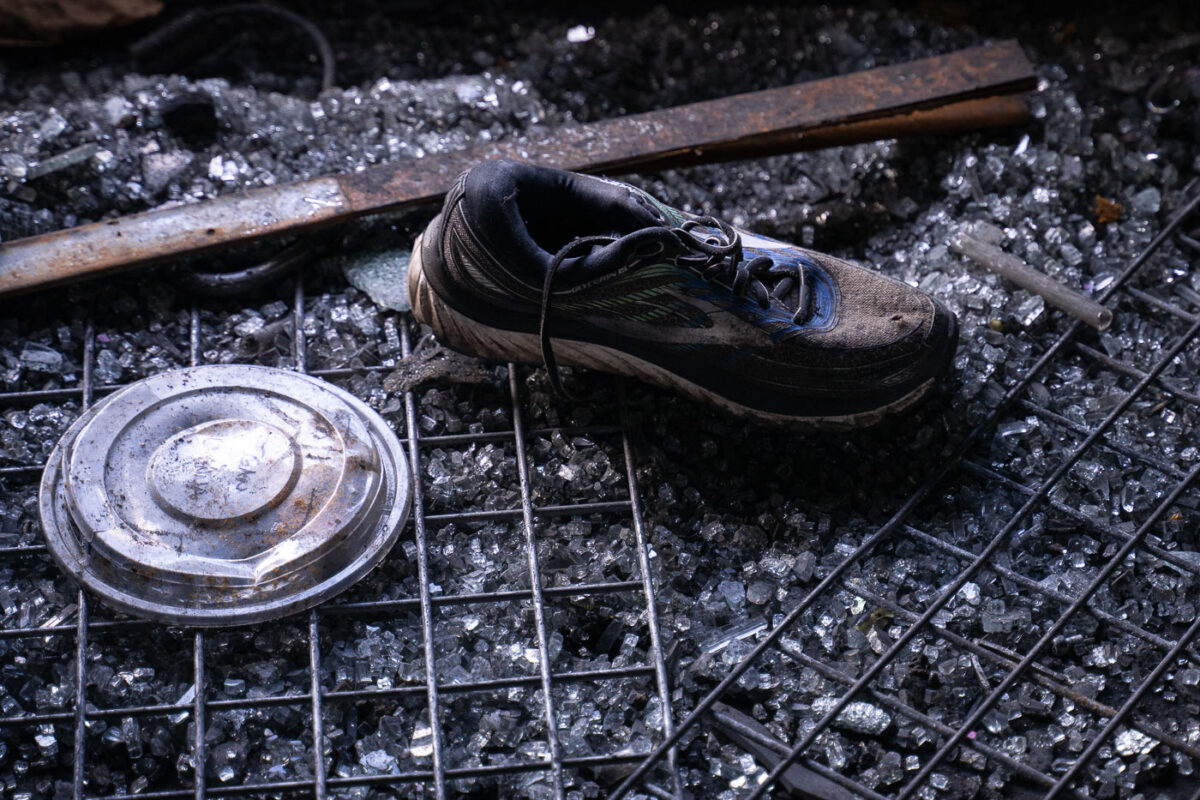
A shoe sits on floor of burned out building
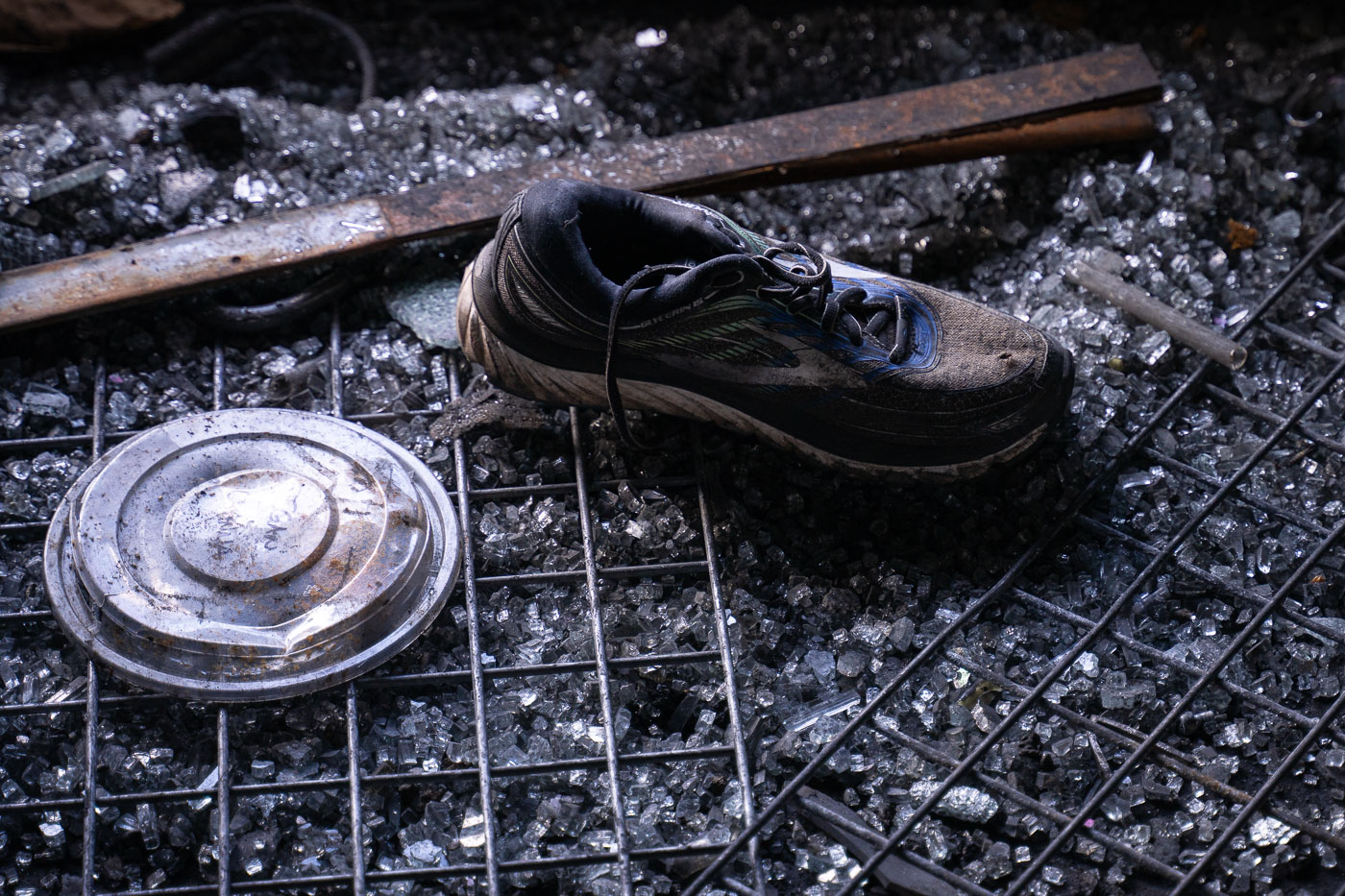
A single shoe rests amidst shattered glass and debris within the fire-damaged Max It Pawn shop on Cedar Avenue in Minneapolis. This retail establishment suffered extensive damage by arson during the civil unrest and protests that occurred in the city following the May 25, 2020 death of George Floyd. The destruction of businesses like Max It Pawn was a significant aspect of the period known as the Minneapolis Uprising. These remnants serve as a historical record of the profound social and economic impact on the community.

Shoe in Broken Glass, Max It Pawn, Cedar Ave, Minneapolis
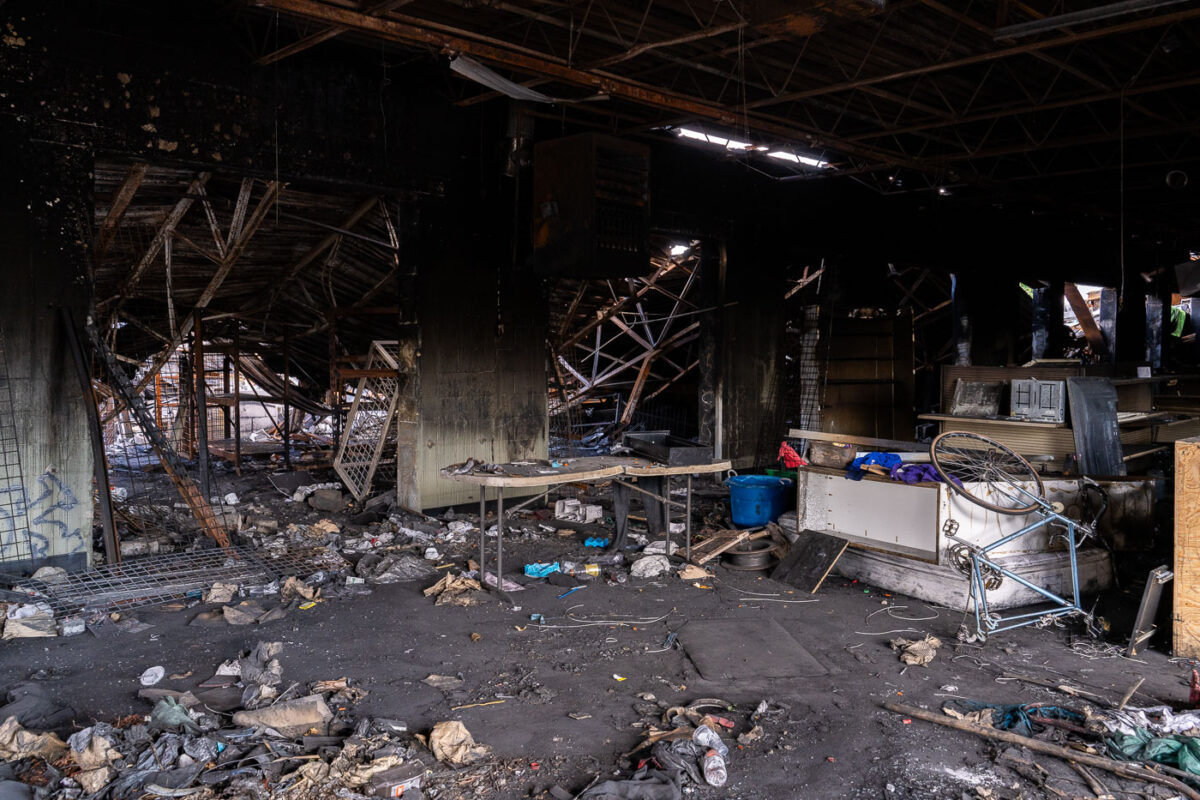
Photo of trash inside burned out building
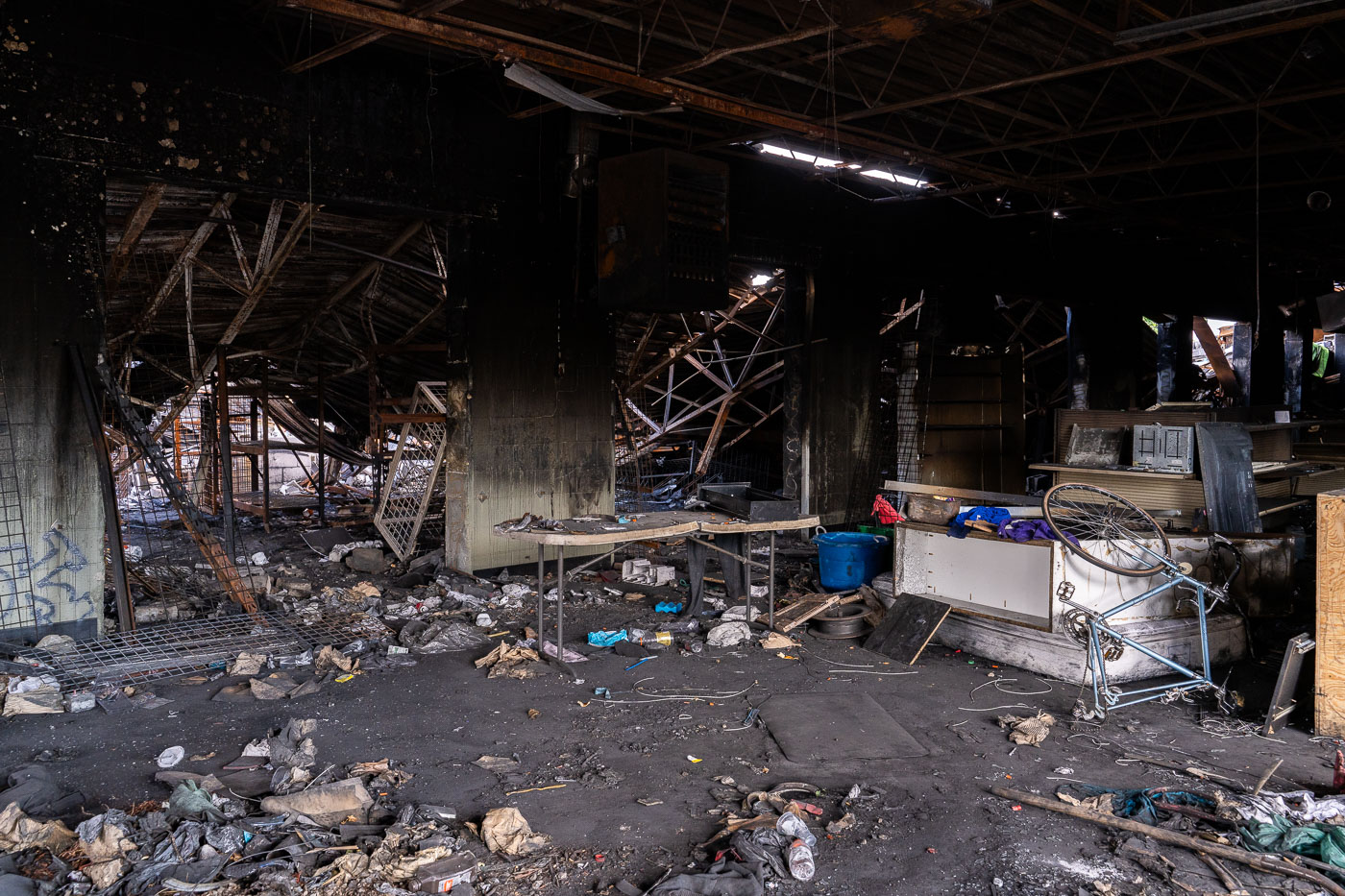
The charred interior of Max It Pawn on Cedar Avenue in South Minneapolis. This retail store sustained extensive fire damage and was destroyed during the civil unrest in Minneapolis following the murder of George Floyd in May 2020. The structural damage and debris on the floor reflect the widespread impact of arson and property destruction that occurred across the city during this period. The destruction of businesses like Max It Pawn became a visible marker of the protests and the community's response to systemic injustice.

Max It Pawn Burned Interior, Minneapolis