Minnesota

5,908 photos · 2008–2026

5,908 photographs tagged Minnesota, 2008–2026.
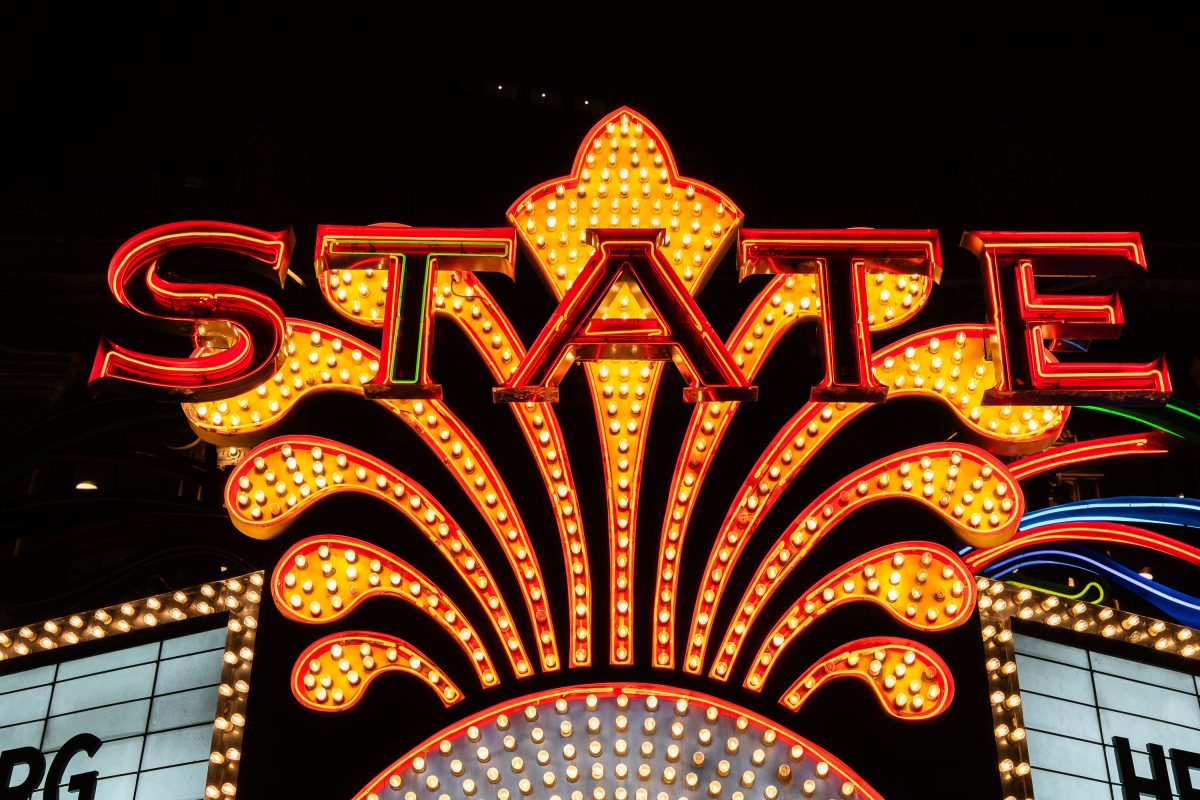
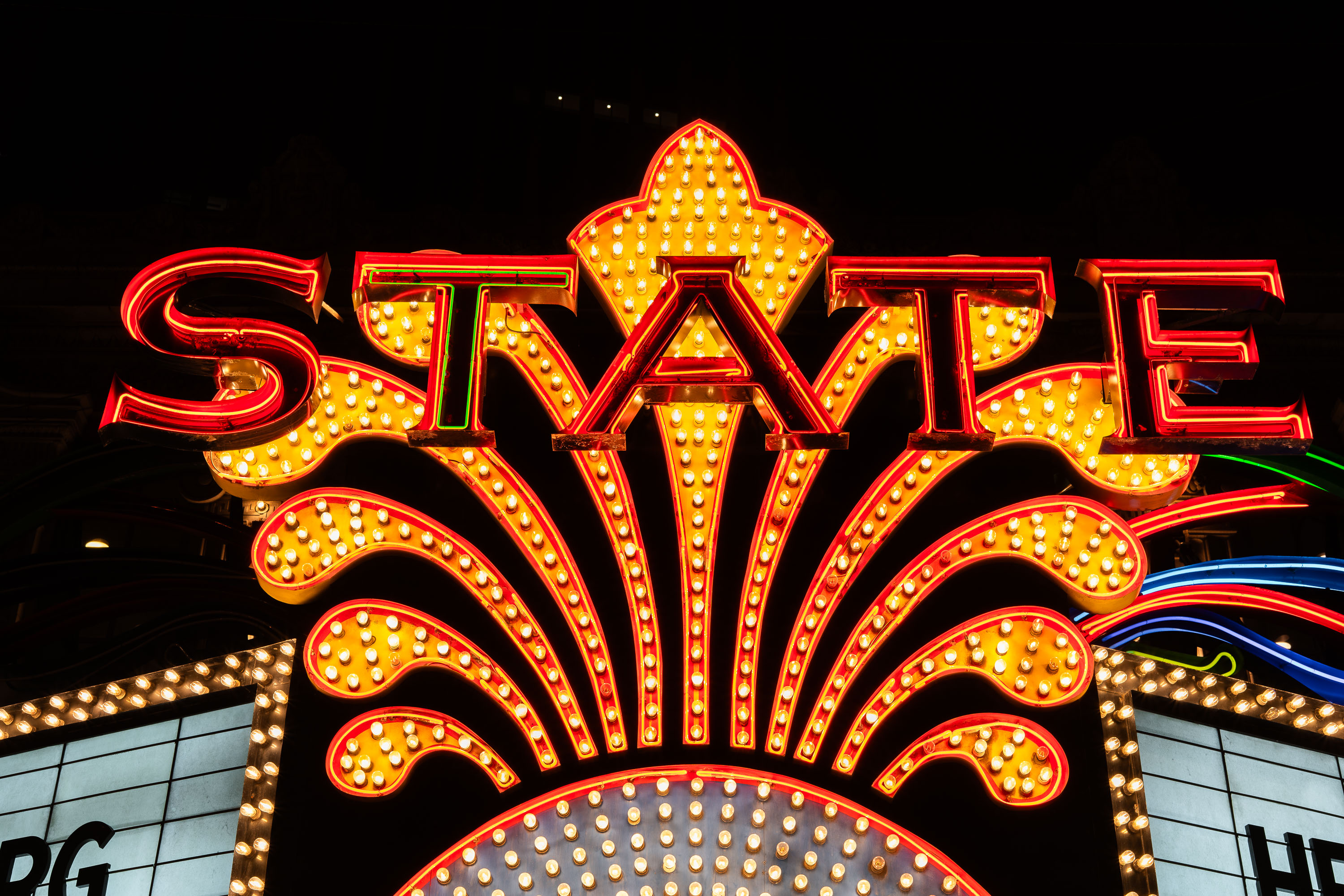
Illuminated State Theatre marquee sign glows red and gold above the downtown Minneapolis theater entrance at night.
The State Theatre stands on Hennepin Avenue in downtown Minneapolis. It opened in 1921 and seats about 2,100 people. Hennepin Theatre Trust operates the venue along with the nearby Orpheum and Pantages theatres.

State Theatre Marquee on Hennepin Avenue in Minneapolis
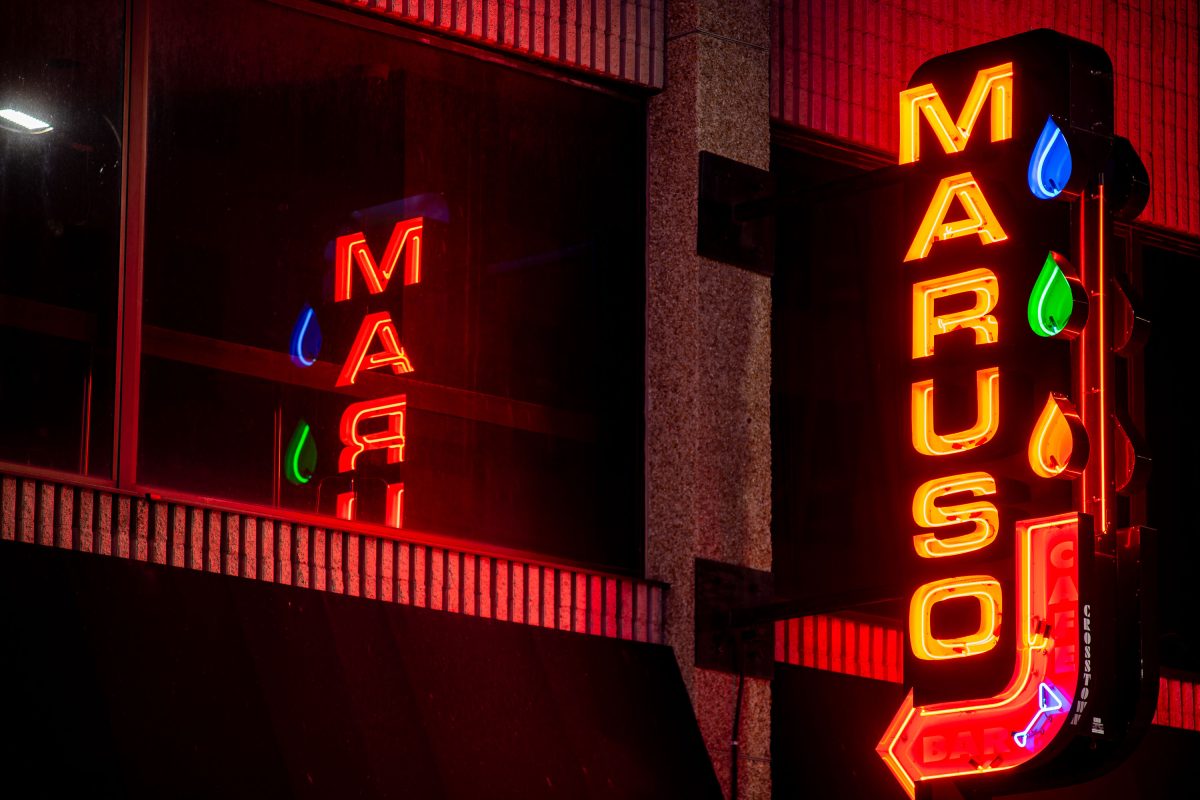
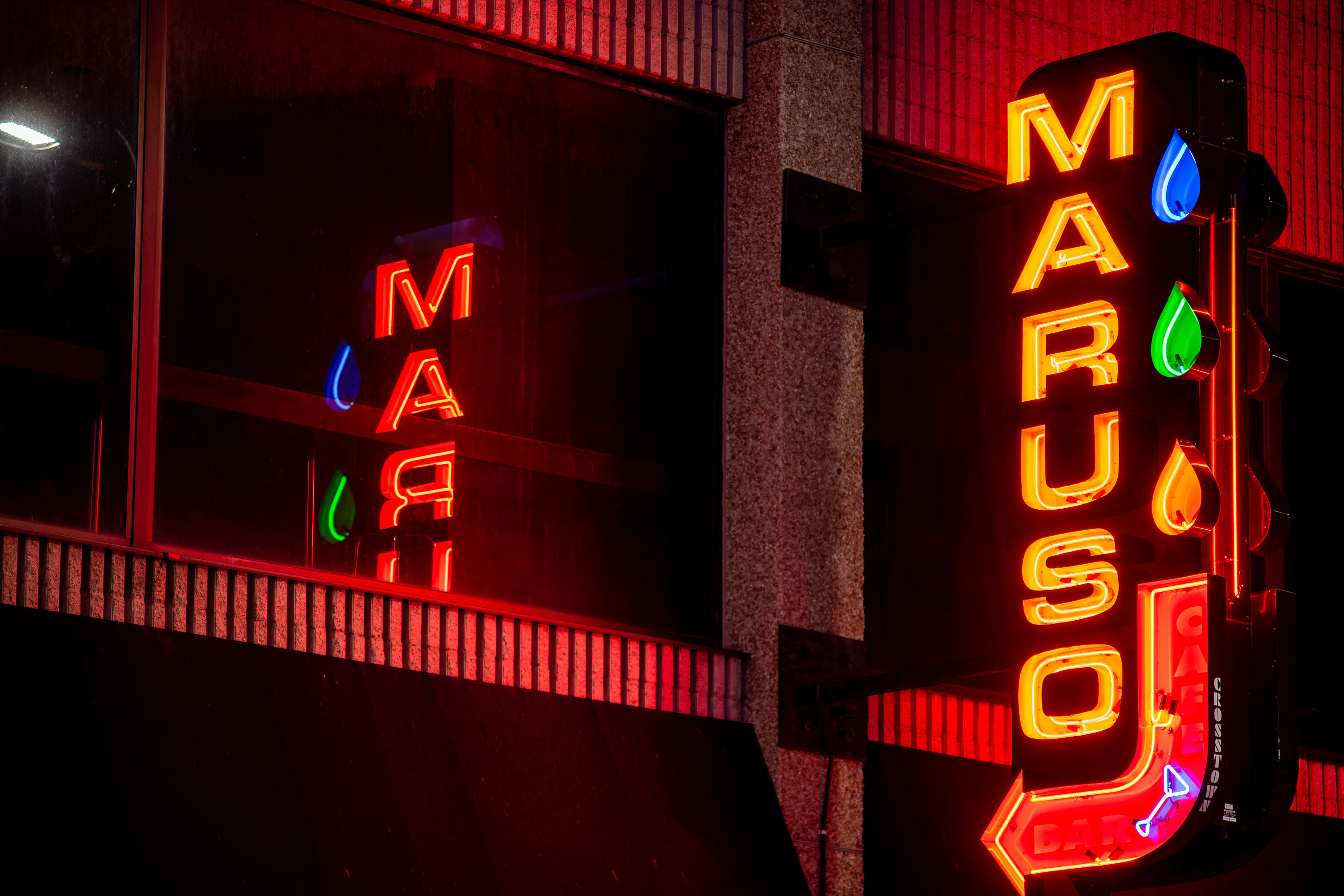
Maruso Sign in Downtown Minneapolis
The lit up Maruso neon sign on Hennepin Avenue in Downtown Minneapolis.

Maruso Sign in Downtown Minneapolis

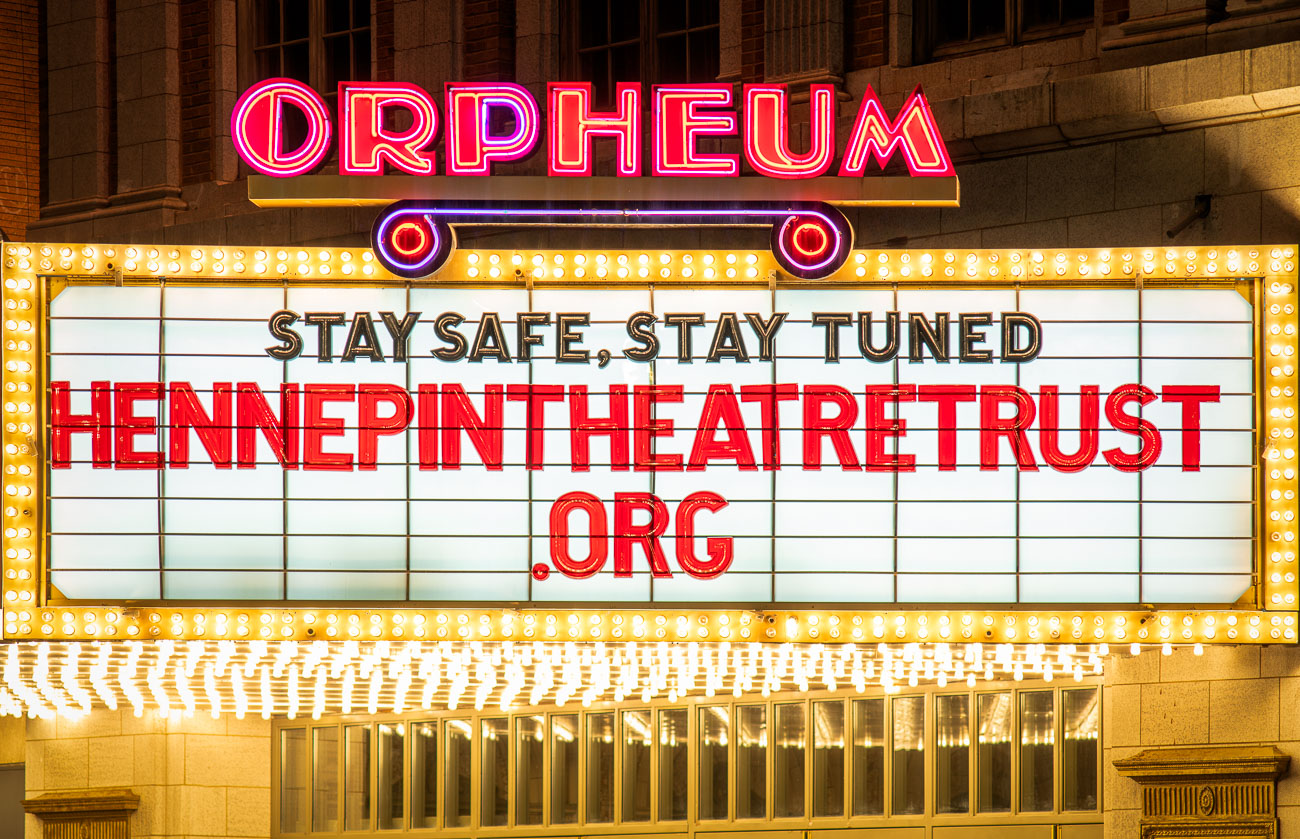
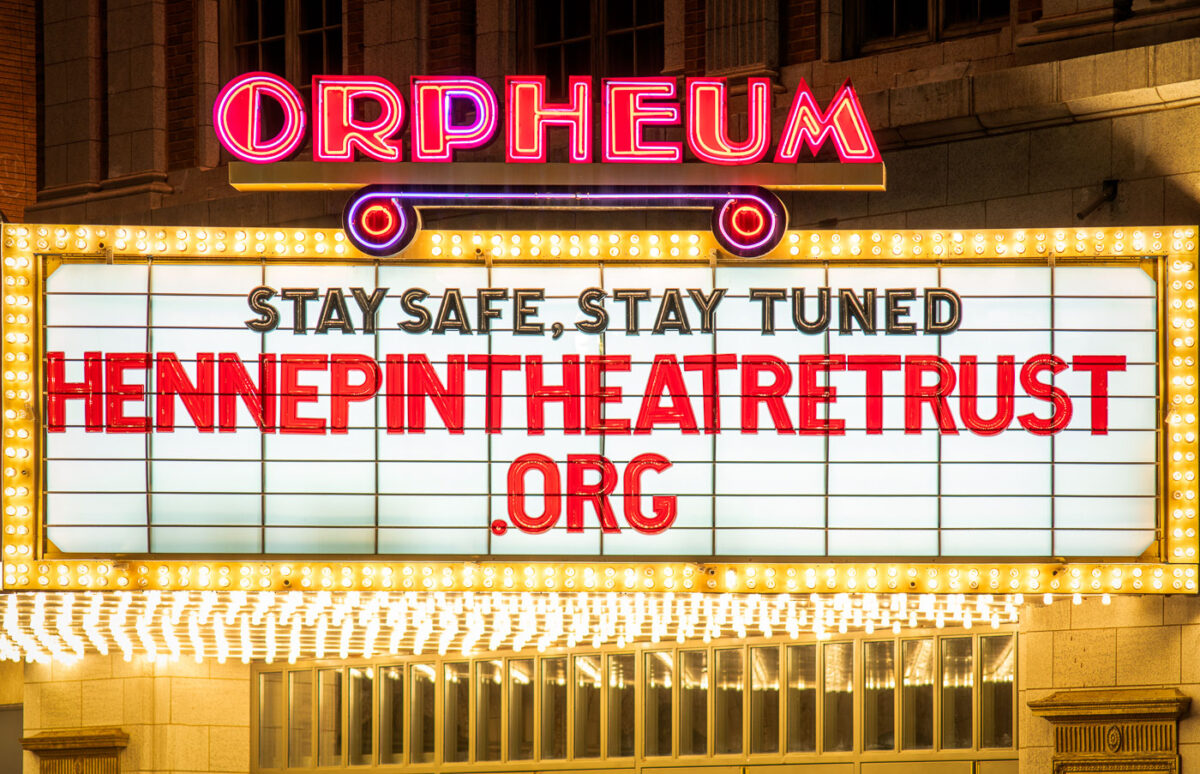
Orpheum Theatre marquee displays "Stay Safe, Stay Tuned" message on Hennepin Avenue during COVID-19 closure.
The Orpheum Theatre, at 910 Hennepin Avenue, opened in 1921 as the Hennepin Theatre and later operated as a vaudeville and movie house before its 1980s conversion to a live performance venue. It's now owned and operated by Hennepin Theatre Trust, part of the city's Hennepin Avenue theater district alongside the State and Pantages theaters. The marquee's message, directing passersby to HennepinTheatreTrust.org, went up during the closures ordered under Minnesota's COVID-19 stay-at-home order in the spring of 2020, when the Orpheum and other performance venues went dark to the public.

“Stay Safe, Stay Tuned” on the Orpheum Theatre Marquee
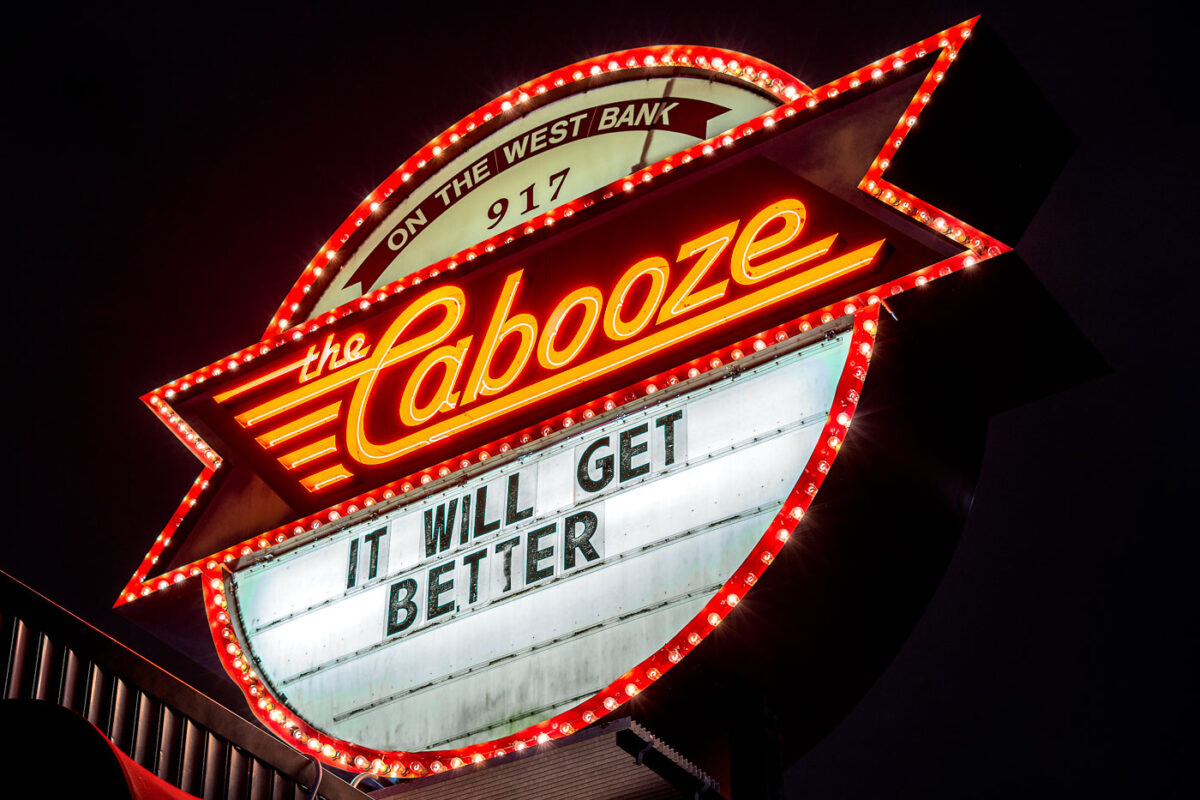
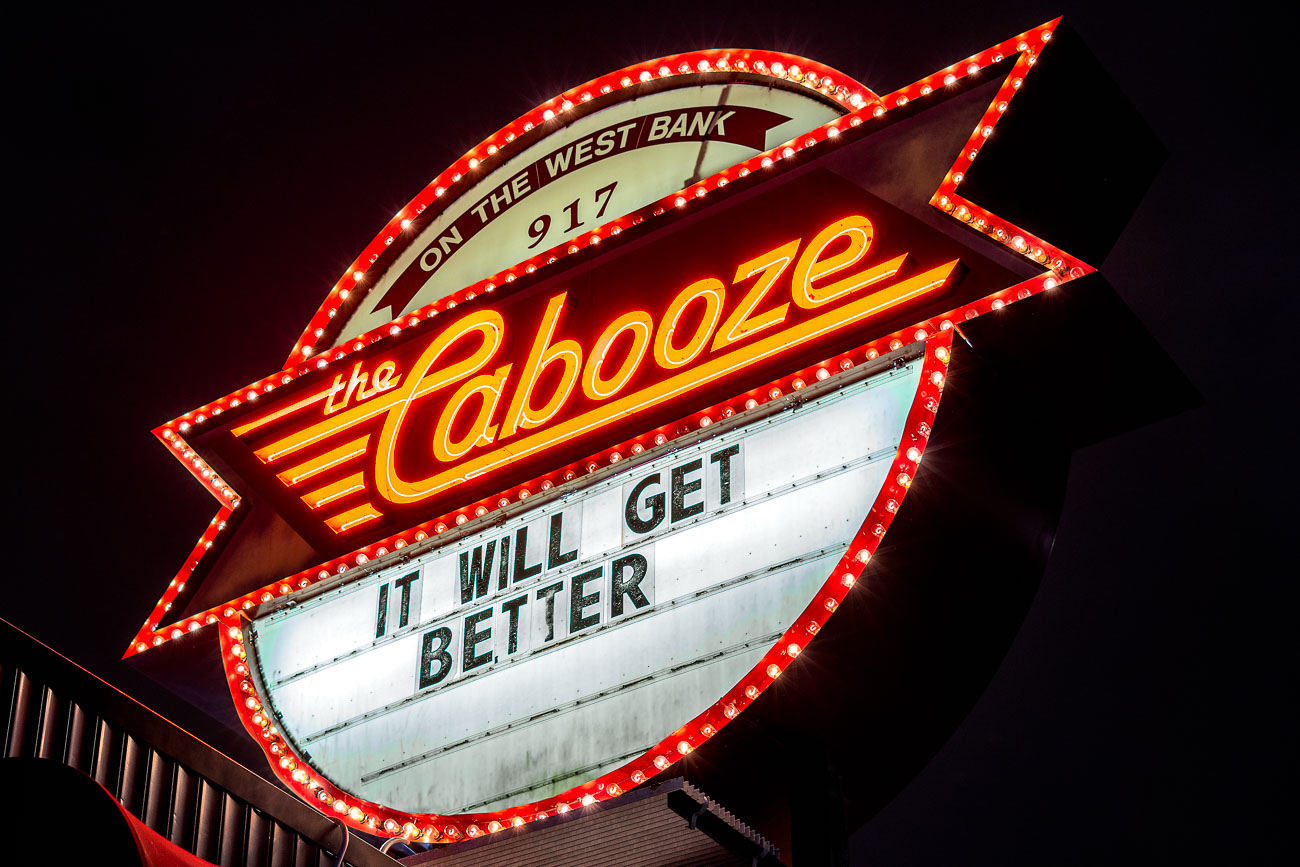
The Cabooze music venue marquee on Cedar Avenue displays "IT WILL GET BETTER" during COVID-19 closure.
The Cabooze sits at 917 Cedar Avenue South in Minneapolis's West Bank neighborhood, a live music club operating in that location since 1970. The venue has hosted blues, rock, and jam bands for decades and remains one of the longest-running music clubs in the Twin Cities. In late March 2020, its marquee read "IT WILL GET BETTER," posted after Minnesota's stay-at-home order forced the club to shut its doors along with other music venues statewide.

“It Will Get Better”: The Cabooze Marquee on the West Bank
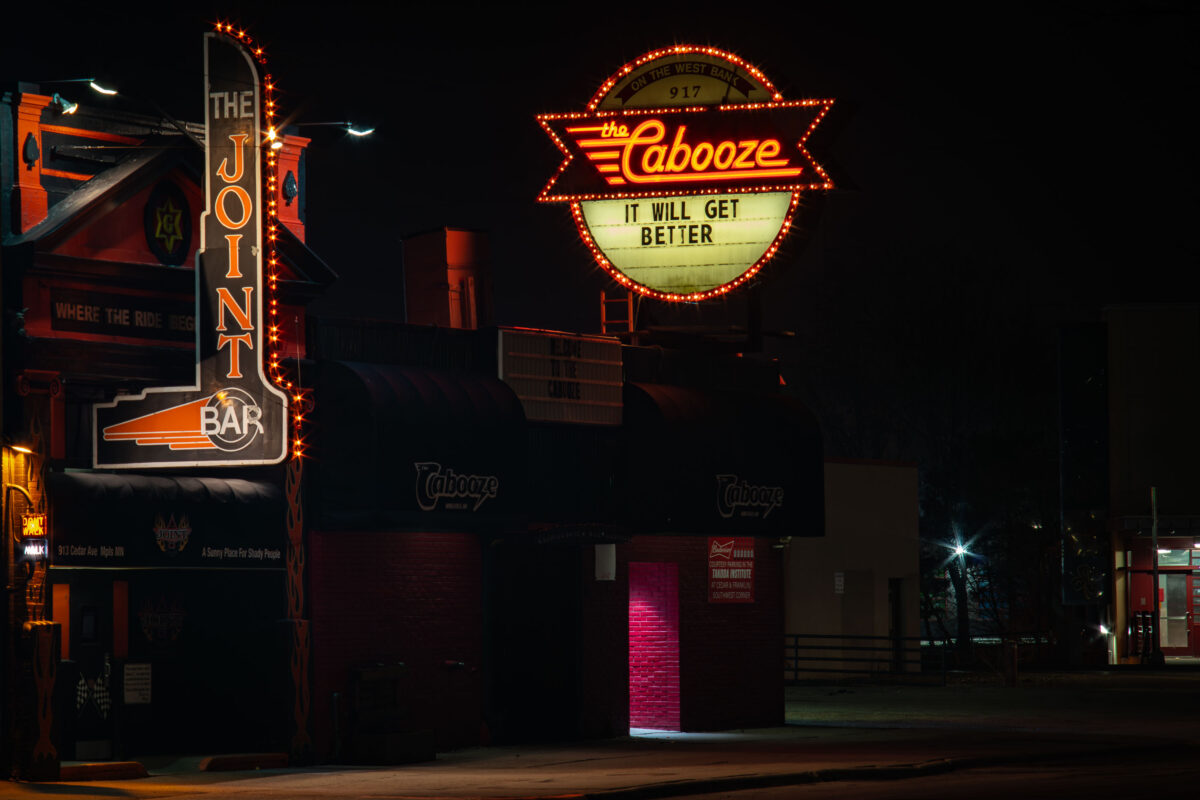
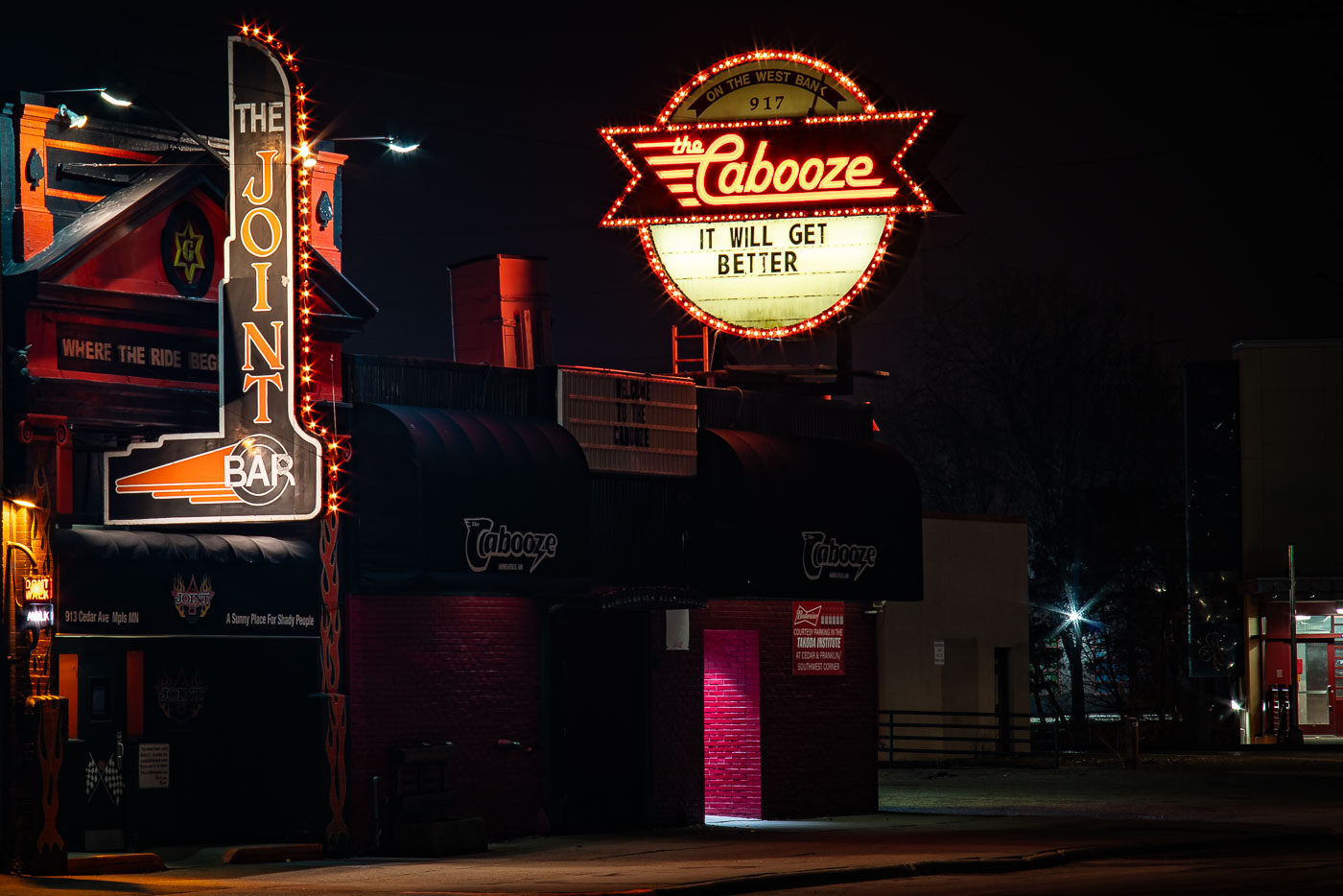
The Joint Bar and Cabooze music venues on Cedar Avenue in Minneapolis display neon signs at night during COVID-19 shutdowns in
The Cabooze sits at 917 Cedar Avenue South in the Cedar-Riverside neighborhood, part of Minneapolis's West Bank entertainment district. Opened in the early 1970s, it's one of the city's longest-running live music venues, having hosted acts ranging from local punk and blues bands to national touring artists. The Joint Bar operates next door in the same stretch of Cedar Avenue, part of the same cluster of nightlife businesses that has defined the West Bank for decades. In March 2020, both venues went dark under Minnesota's COVID-19 shutdown orders, and The Cabooze's marquee was changed to read "IT WILL GET BETTER."

The Cabooze and The Joint on Cedar Avenue, Minneapolis
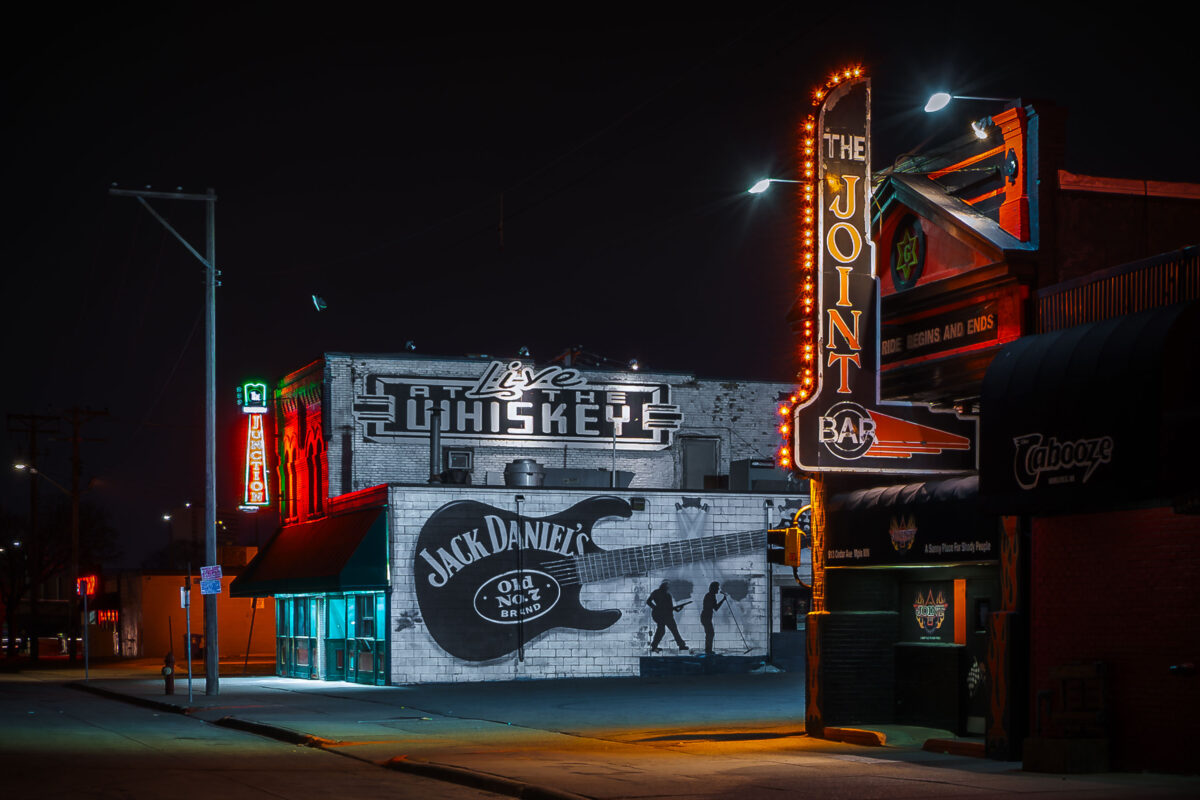
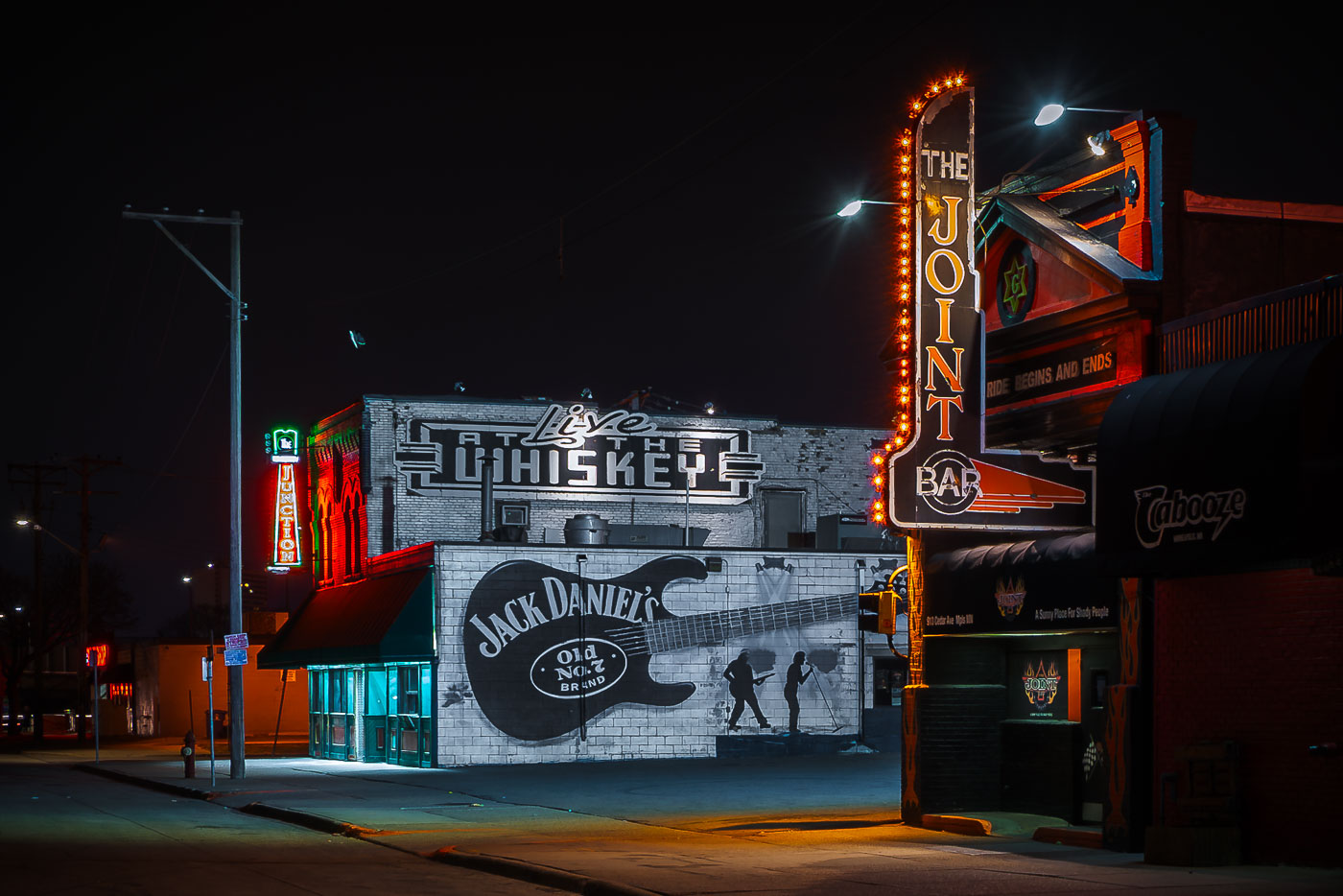
Jack Daniels guitar mural and neon signs illuminate Whiskey Junction nightclub on Cedar Avenue in Minneapolis.
Whiskey Junction sits on Cedar Avenue in the Cedar-Riverside neighborhood, a stretch long associated with live music venues near the University of Minnesota's West Bank. The building's side wall carries a large hand-painted mural advertising Jack Daniel's Old No. 7, styled around an electric guitar, alongside signage for "Live at the Whiskey." Next door, The Joint Bar and The Cabooze occupy the same block, part of a cluster of music clubs that has defined this stretch of Cedar Avenue for decades.

Whiskey Junction’s Jack Daniel’s Mural on Cedar Avenue
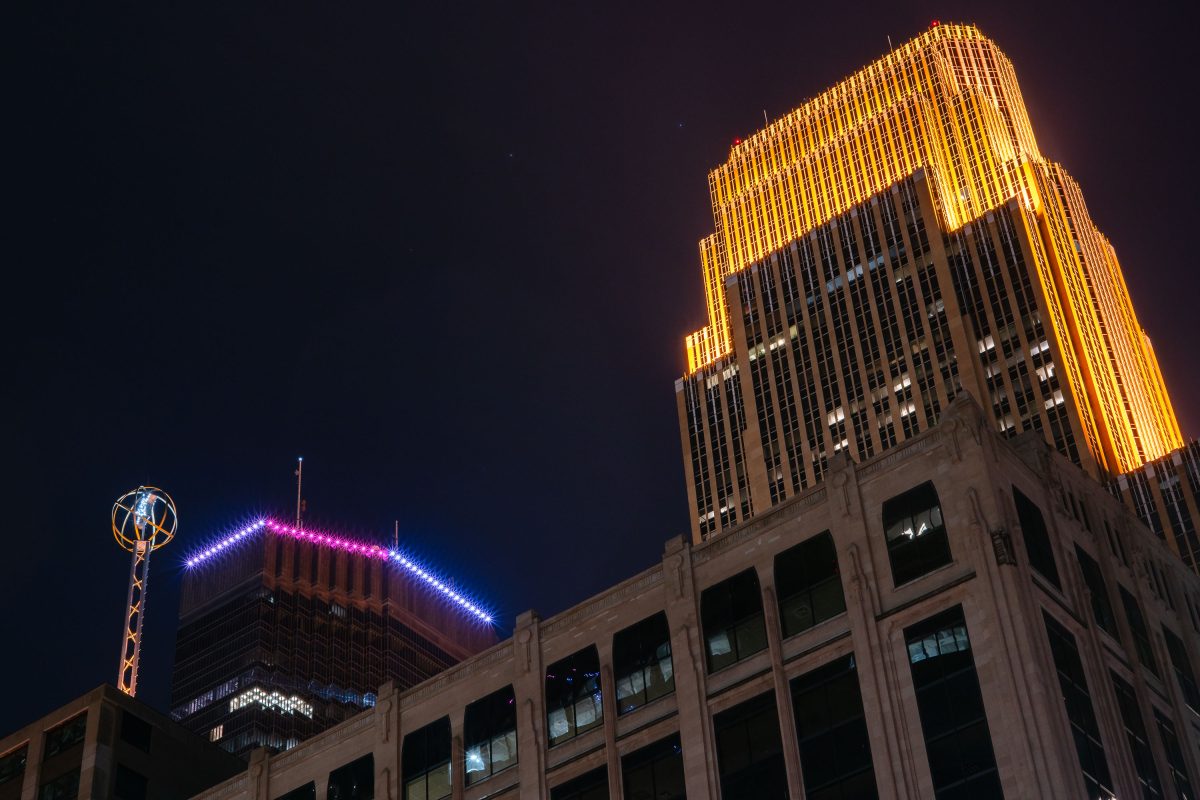
Northstar Center, IDS Center and Wells Fargo Center at night
The IDS Center and Wells Fargo Center in downtown Minneapolis with the star visible on top of the Northstar Center.

Northstar Center, IDS Center and Wells Fargo Center at night

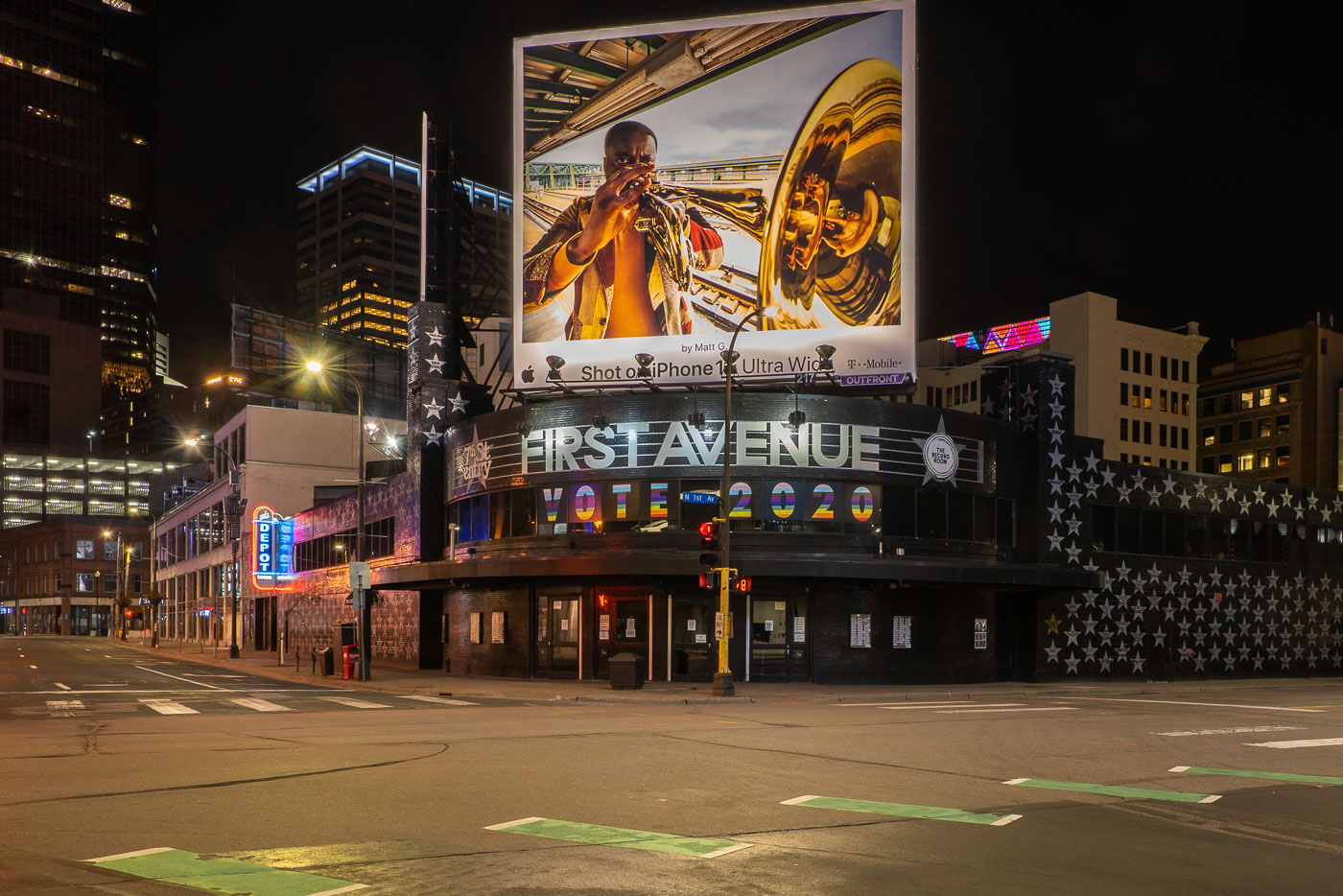
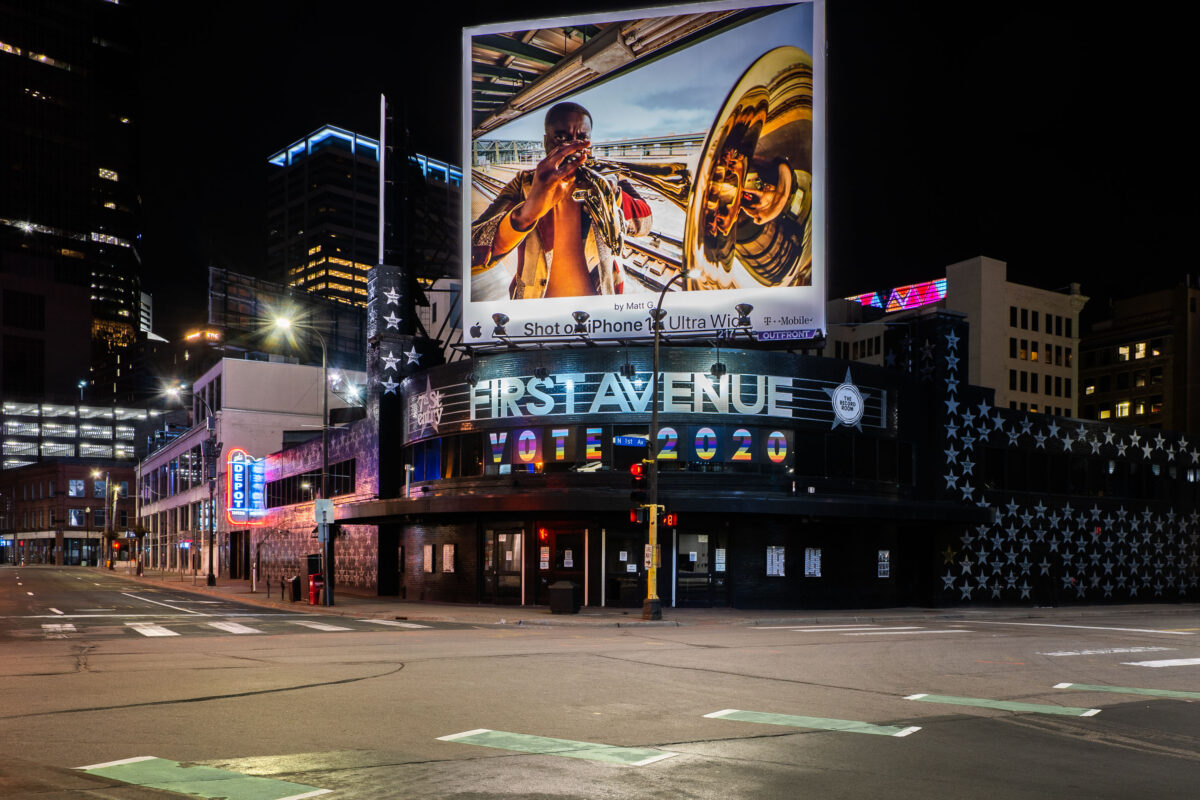
First Avenue concert venue displays large VOTE 2020 sign across its illuminated storefront in downtown Minneapolis.
First Avenue occupies a former Greyhound bus depot at 701 First Avenue North, built in 1937. The club opened in its current form in 1970 and has operated continuously except for a brief bankruptcy closure in 2004. Its exterior is covered in silver stars, each bearing the name of a musician who has performed there, a tradition that began in the 1980s. The venue gained international attention after Prince filmed key s of "Purple Rain" there in 1983, cementing its reputation as one of the country's best-known independent music clubs.

First Avenue’s “VOTE 2020” Marquee in Downtown Minneapolis
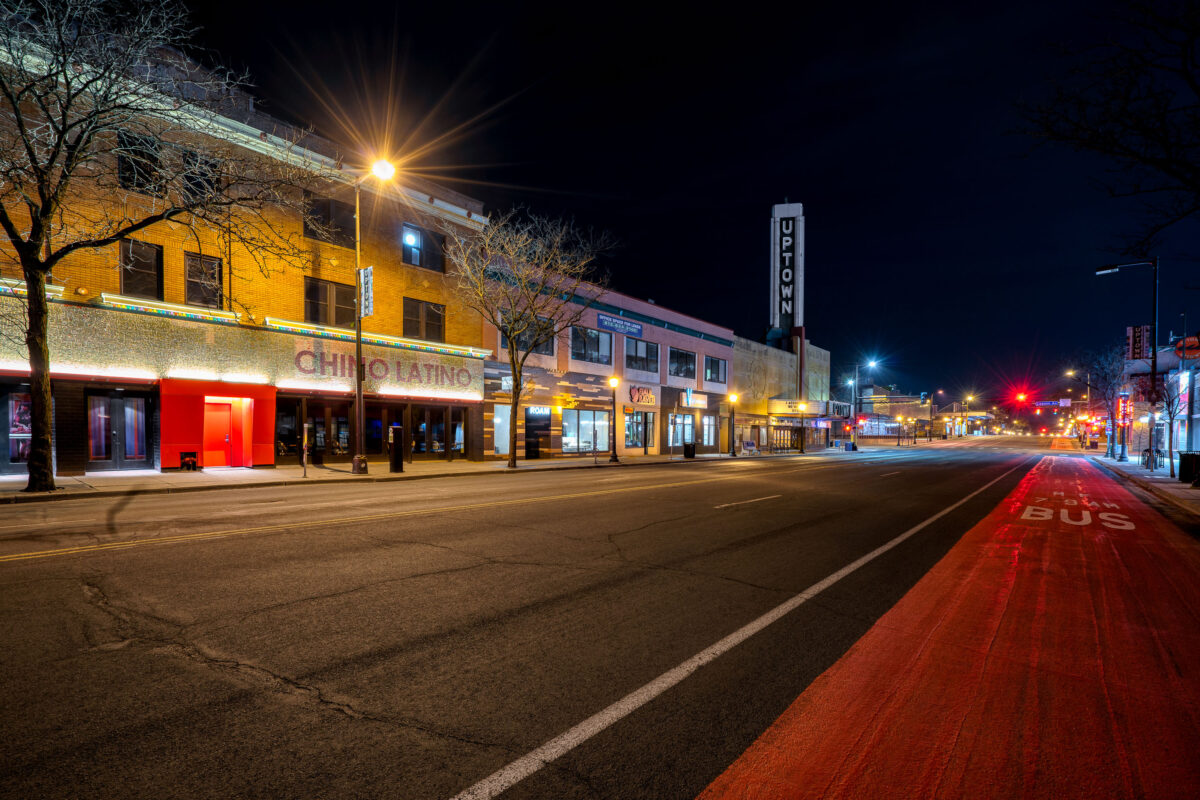
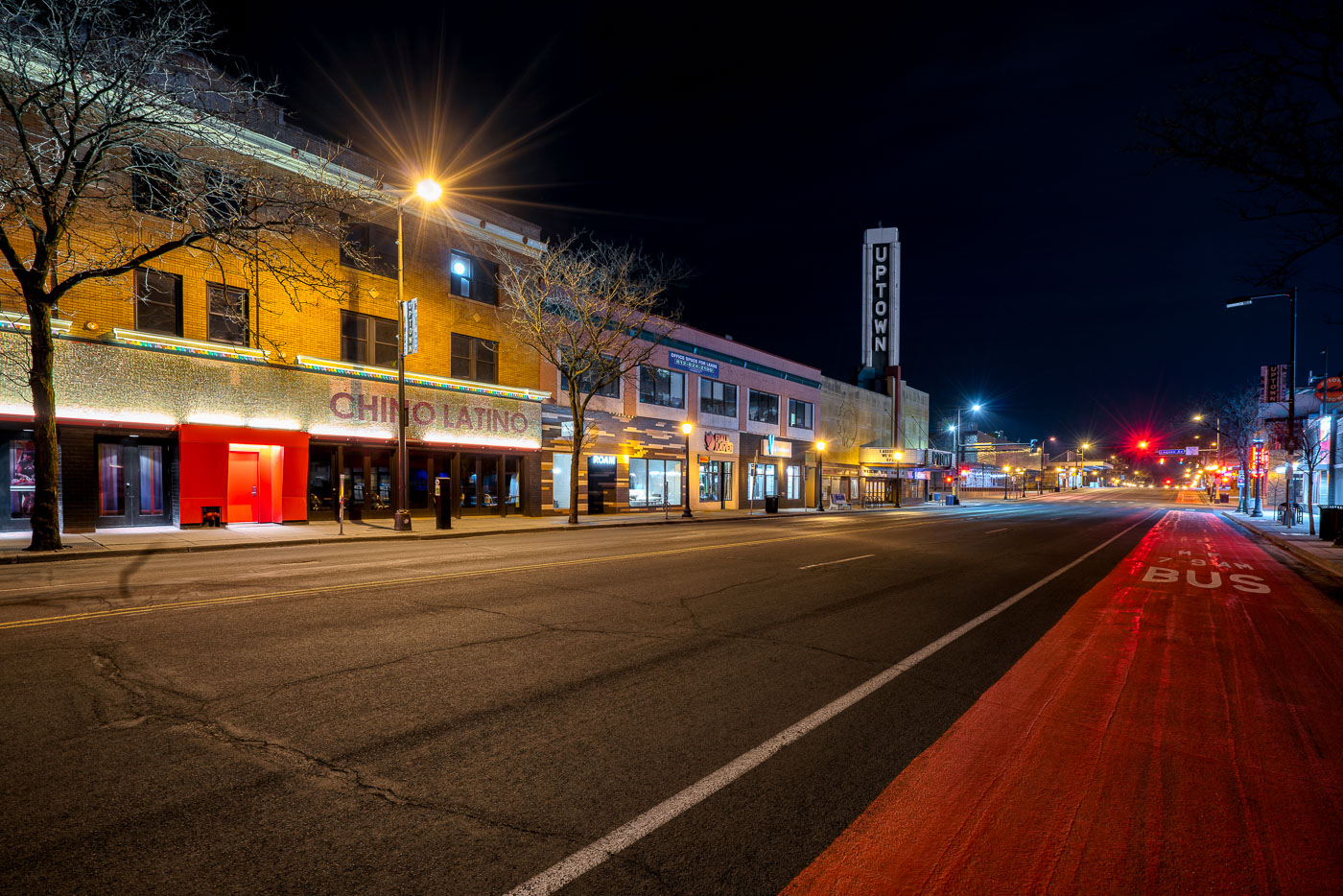
Hennepin Avenue in Uptown Minneapolis at night with Chino Latino restaurant and Uptown Theater sign visible during COVID-19
Hennepin Avenue runs through the heart of Uptown Minneapolis, linking downtown to the Chain of Lakes. The Uptown Theatre opened in 1939, designed by the Minneapolis architectural firm Liebenberg & Kaplan, known for a string of Art Deco movie houses built across the city in the 1930s and '40s. It later operated as a second-run and independent cinema before closing in 2020. Chino Latino, a pan-Asian and Latin fusion restaurant from Parasole Restaurant Holdings, opened along this stretch in 1998 and became a fixture of Uptown's nightlife before shutting down for good that same year amid the pandemic's early closures.

Chino Latino and the Uptown Theatre on Hennepin Avenue
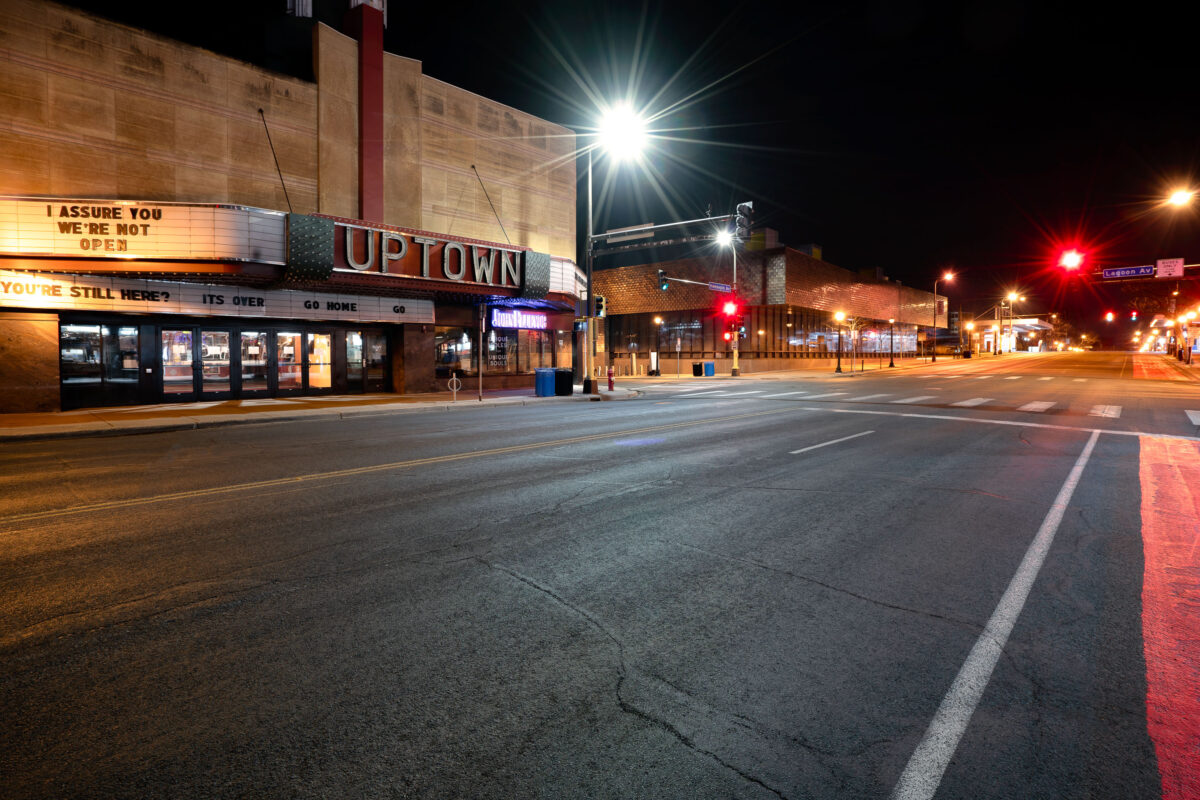
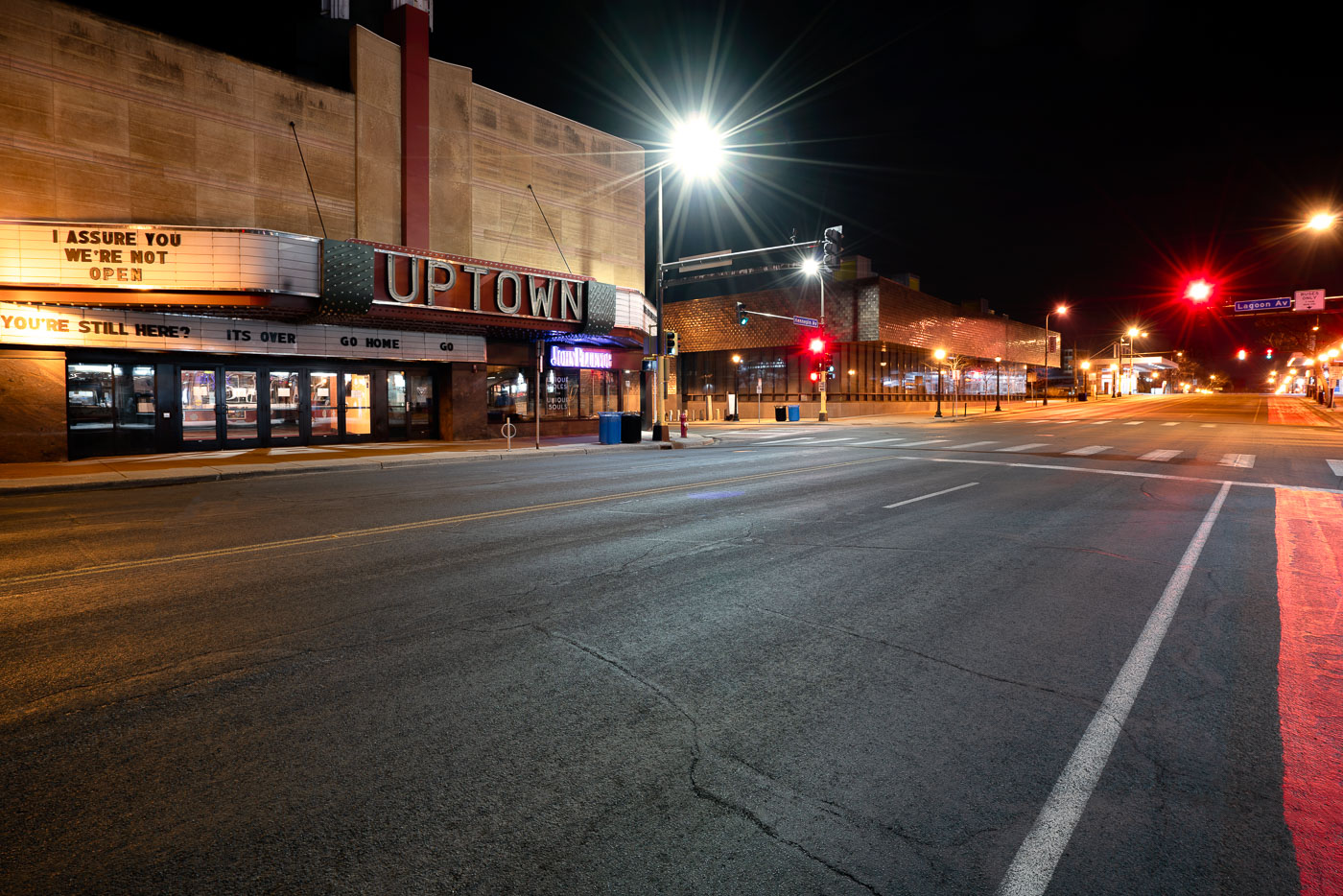
Uptown Theatre on Hennepin Avenue in Minneapolis displays closure messages on its marquee during the COVID-19 pandemic shutdown
The Uptown Theatre sits at Hennepin and Lagoon Avenues in the Uptown neighborhood of Minneapolis. It opened in 1916 and was rebuilt in 1939 with an Art Deco facade designed by Liebenberg and Kaplan, architects known for a string of Twin Cities movie houses. The marquee's message was a response to Minnesota's stay-at-home order, issued in late March 2020, which forced theaters and other entertainment venues statewide to close temporarily.

“I Assure You We’re Not Open” at the Uptown Theatre
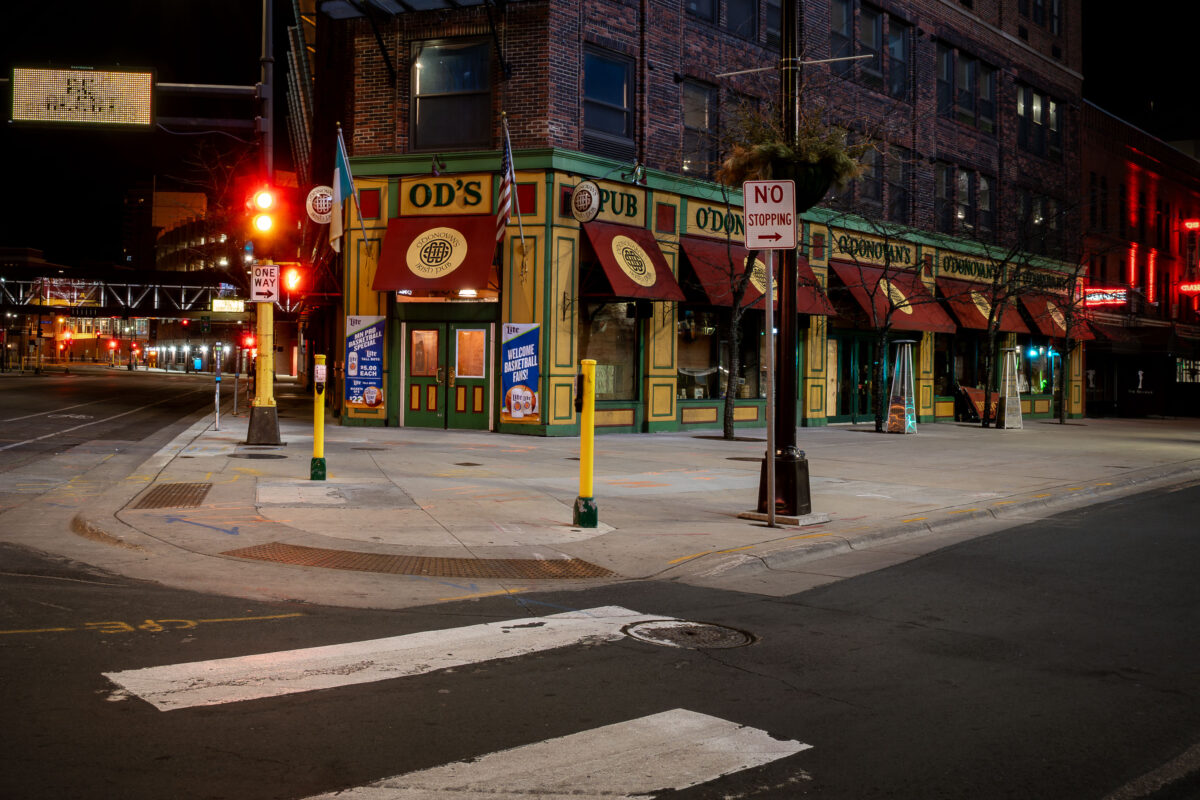
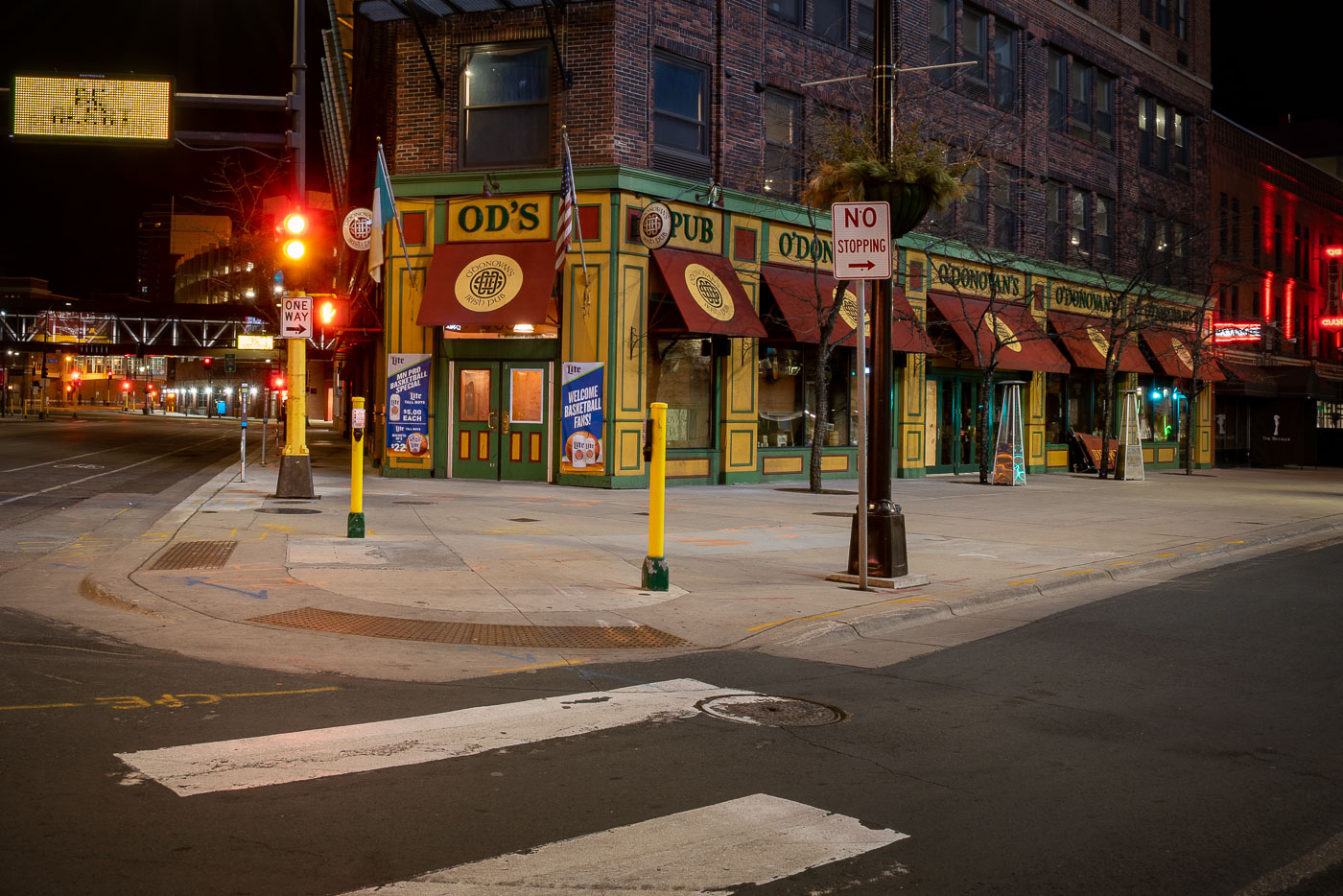
O'Donovan's Irish Pub, a yellow and green corner establishment in downtown Minneapolis, illuminated at night.
O'Donovan's Irish Pub occupies a corner storefront on First Avenue North in downtown Minneapolis, a few blocks from the First Avenue nightclub and the Warehouse District entertainment strip. The pub opened in 2004, and much of its interior — including the bar itself — was built in Ireland, then shipped and reassembled on site. It's part of a small local chain that also includes O'Donovan's locations elsewhere in the Twin Cities, though this Washington Avenue-area spot is the original.

O’Donovan’s Irish Pub on an Empty Downtown Minneapolis Corner

Hennepin Avenue at West Lake Street in Uptown Minneapolis at night, with the Uptown Theatre's vertical sign visible on the left.
Hennepin Avenue and West Lake Street mark the commercial center of Uptown Minneapolis. The Uptown Theatre, opened in 1939 with its Art Deco vertical sign, anchors the block and remains one of the few single-screen movie houses still operating in the Twin Cities.

Empty Streets at Hennepin Avenue and West Lake Street at Night

Lake and Hennepin in Uptown Minneapolis
Juut Hair Salon at the corner of Hennepin Avenue and Lake Street in Uptown Minneapolis. As seen in March 2020. The salon would close for good in June 2021.

JUUT Aveda Salon at Lake Street and Hennepin Avenue
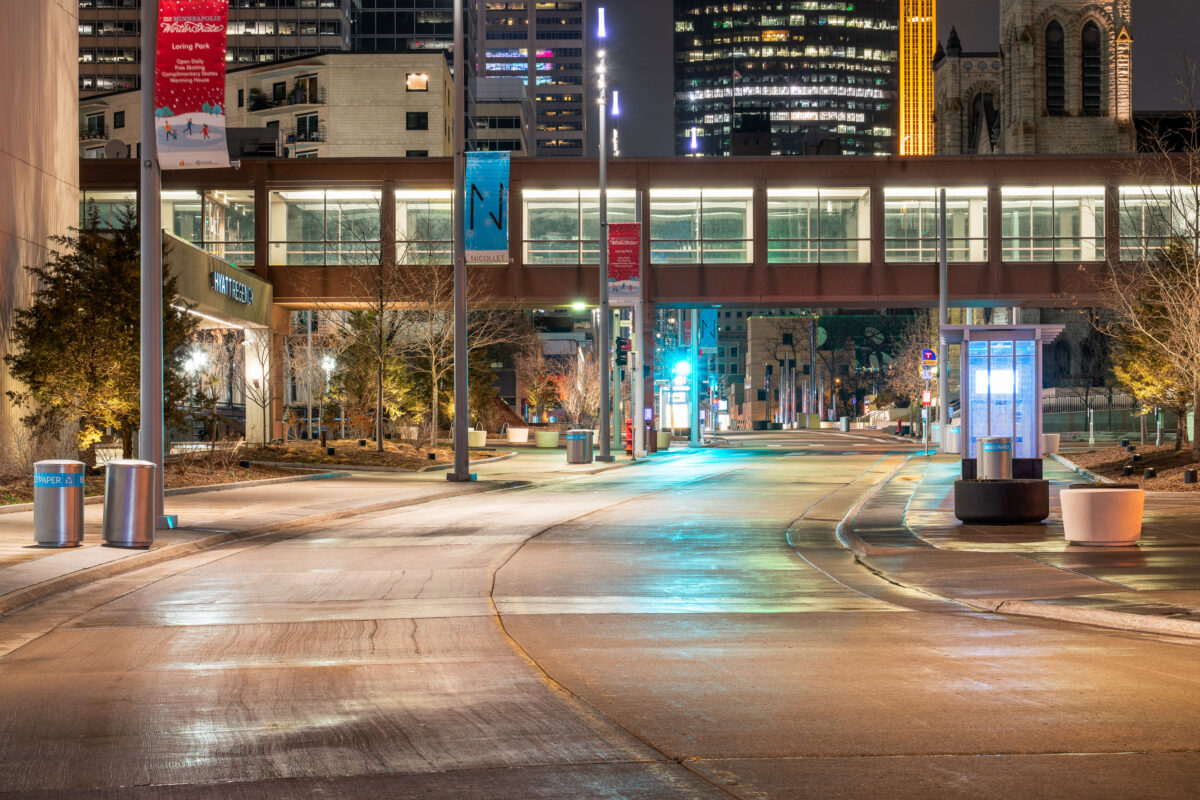
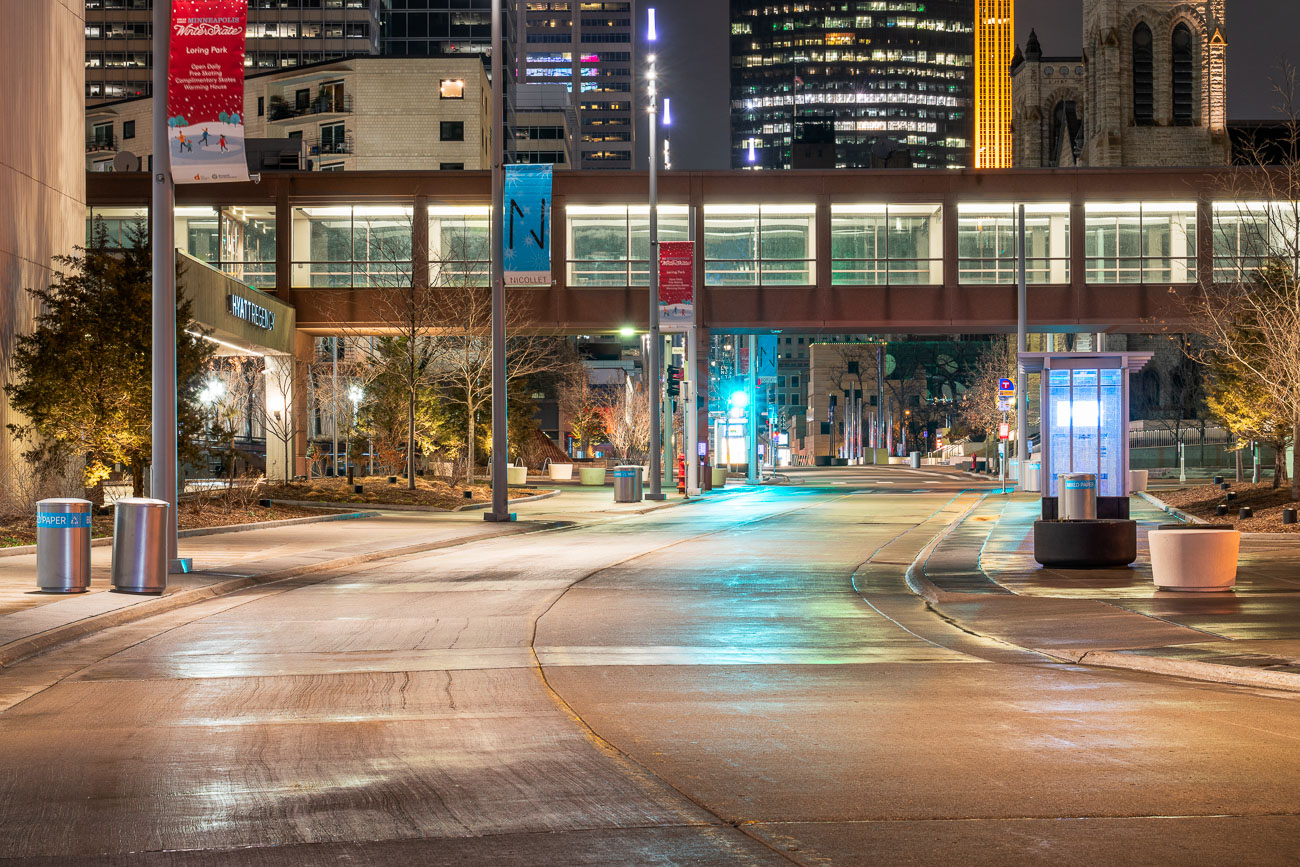
Nicollet Mall in Minneapolis during Stay At Home Orders
Nicollet Mall in downtown Minneapolis is seen during Minnesota's COVID-19 stay-at-home orders.

Nicollet Mall, Downtown Minneapolis During COVID-19 Stay-at-Home
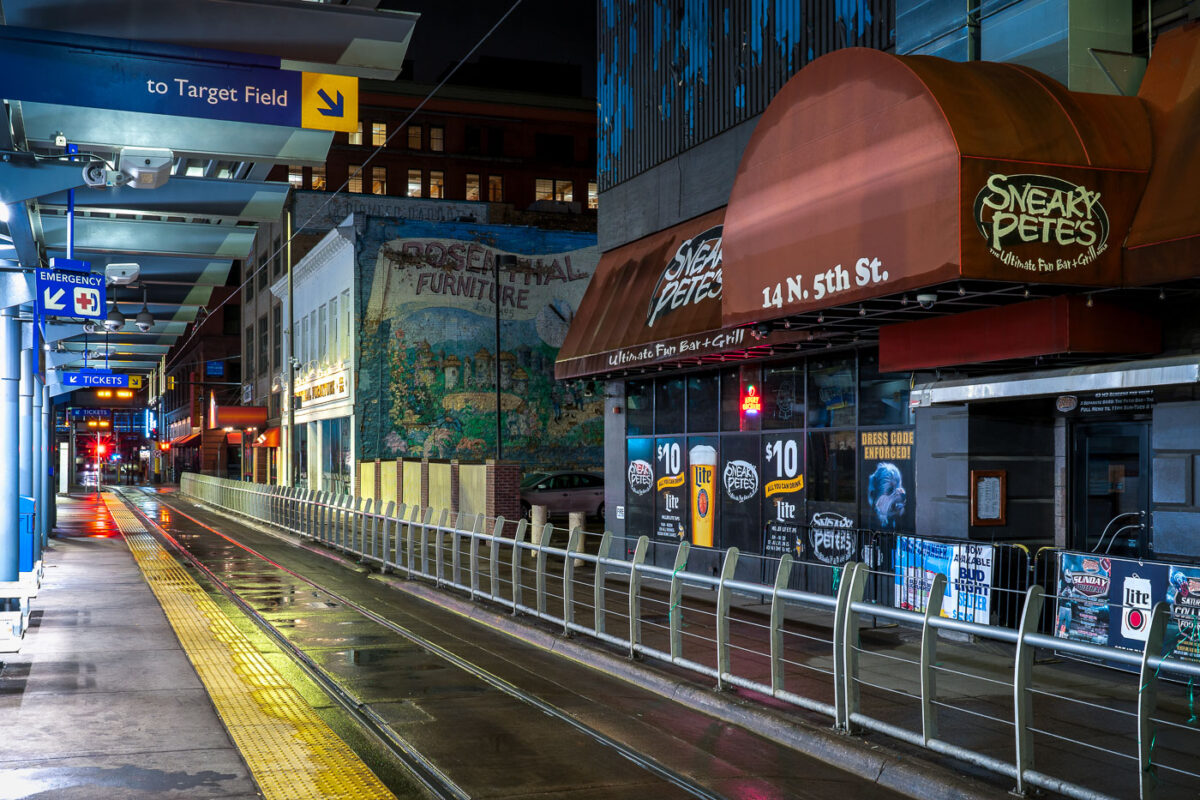
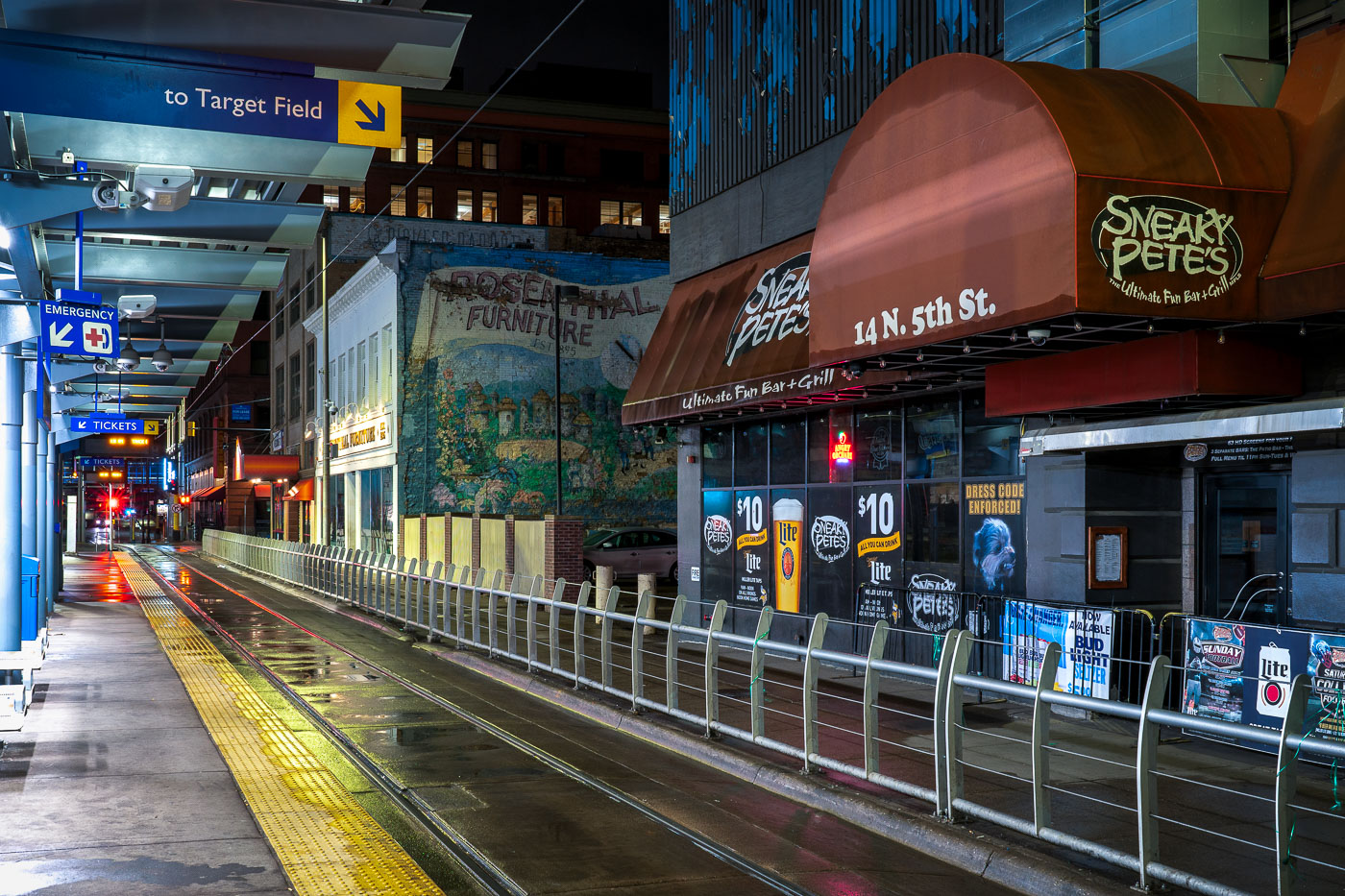
Sneaky Petes during covid19 stay at home orders
Sneaky Pete’s Bar at 14 N. 5th St. in downtown Minneapolis stands dark beside a METRO light rail platform on March 28, 2020, the first night of Minnesota’s COVID-19 stay-at-home order.

Sneaky Pete’s Bar, 14 N. 5th St., Minneapolis, COVID-19 Stay at Home Order
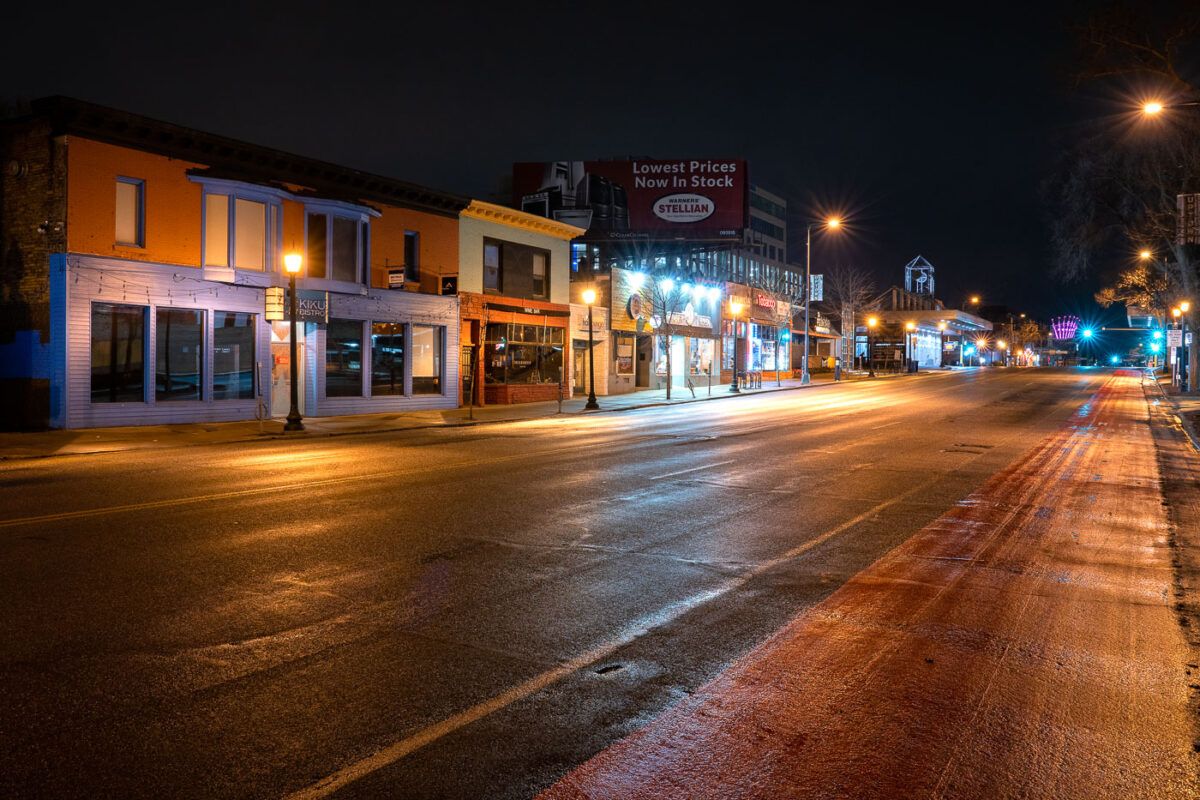
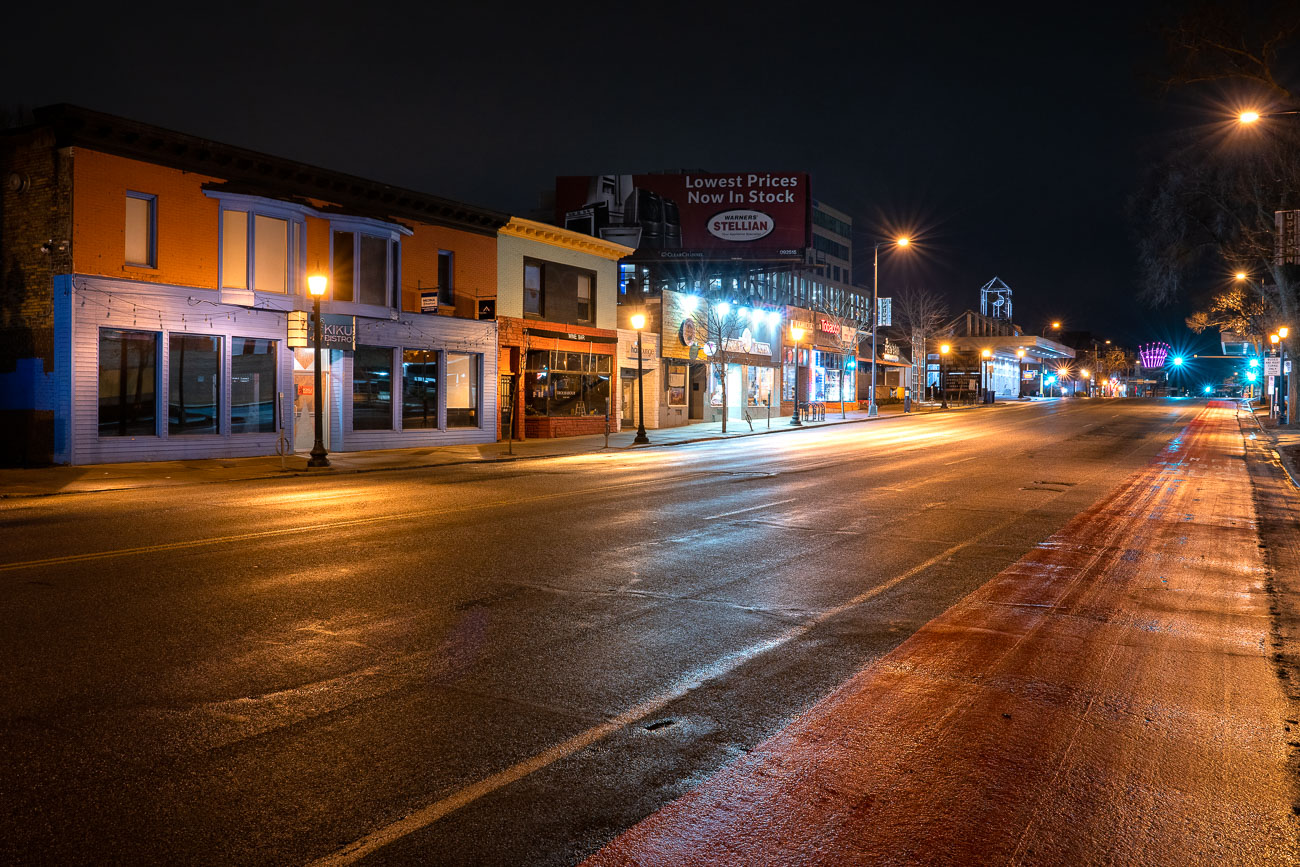
Empty Hennepin Avenue in Uptown Minneapolis at night during the stay-at-home order.
Hennepin Avenue in Uptown Minneapolis on the first night of Minnesota's stay-at-home order. The street, typically bustling with activity, is deserted as businesses close and residents are advised to remain indoors due to the COVID-19 pandemic.

Hennepin Ave, Uptown Minneapolis: First Night of Stay-at-Home Order
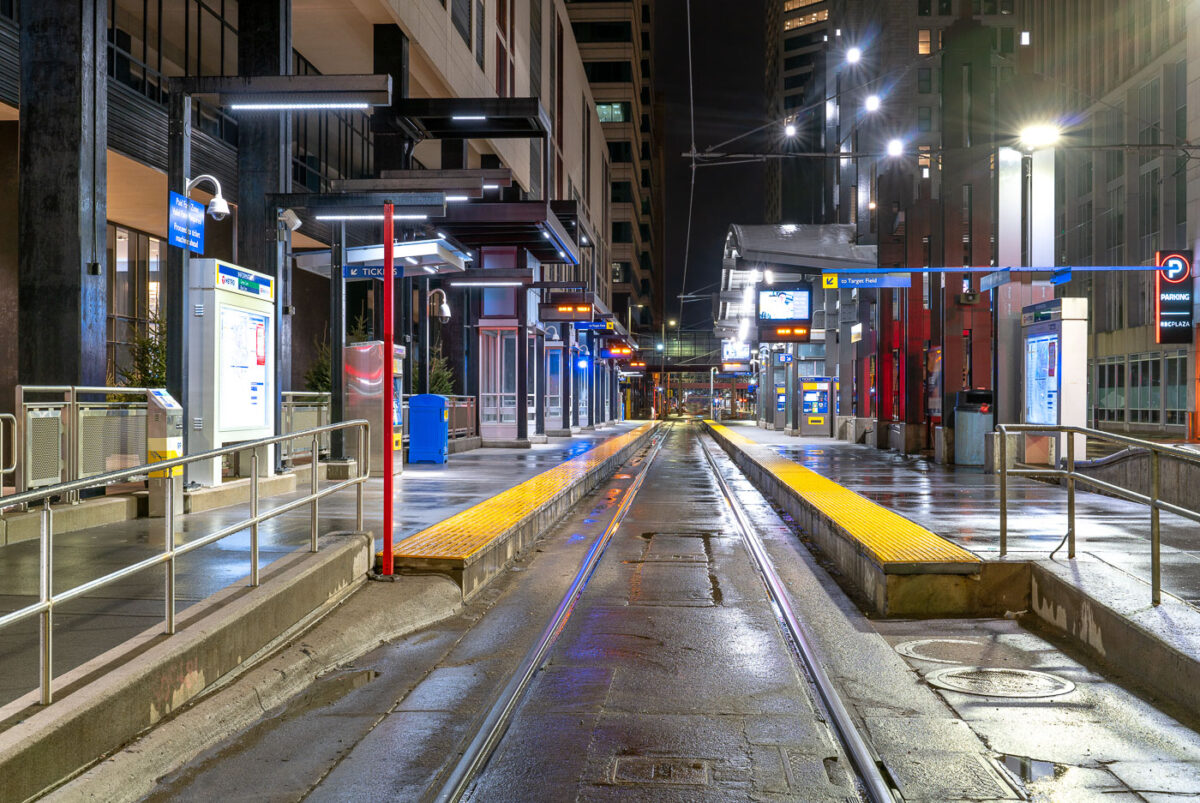
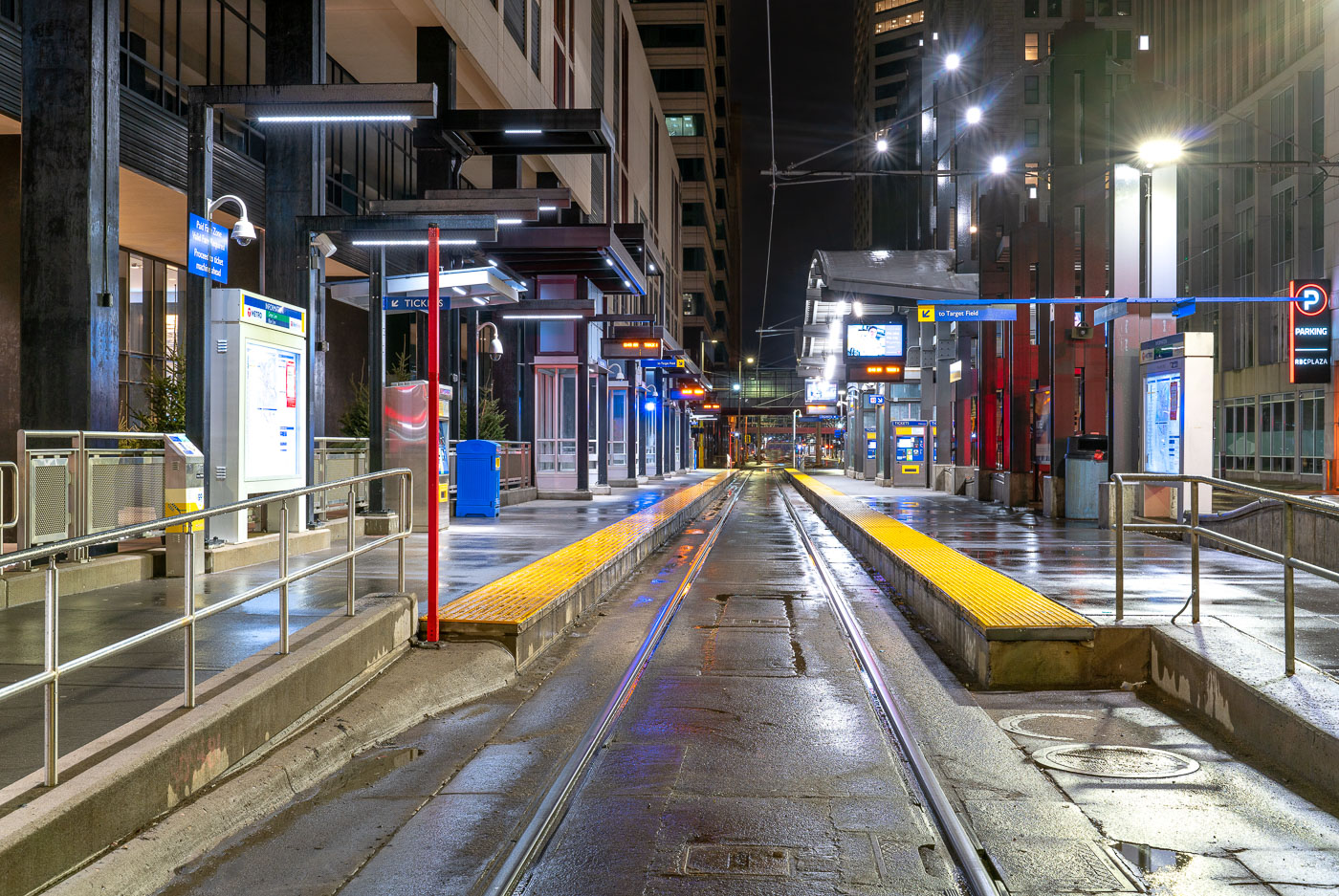
Nicollet Mall light rail station platform stretches empty at night during early COVID-19 pandemic closures in downtown
Nicollet Mall Station serves Metro Transit's Blue and Green Line trains along the transit mall in downtown Minneapolis. The Blue Line opened in 2004 as the region's first light rail line, running between downtown and the Mall of America; the Green Line, connecting downtown Minneapolis to downtown St. Paul, began service in 2014. The station sits along Nicollet Mall, a pedestrian and transit corridor that has restricted private vehicle traffic since the 1960s. Overhead signage points riders toward Target Field, home of the Minnesota Twins, a short walk to the north. This dates to late March 2020, during the early weeks of Minnesota's COVID-19 stay-at-home order, when ridership on the system dropped sharply from pre-pandemic levels.

A Rainy Night at Minneapolis’s Nicollet Mall Station
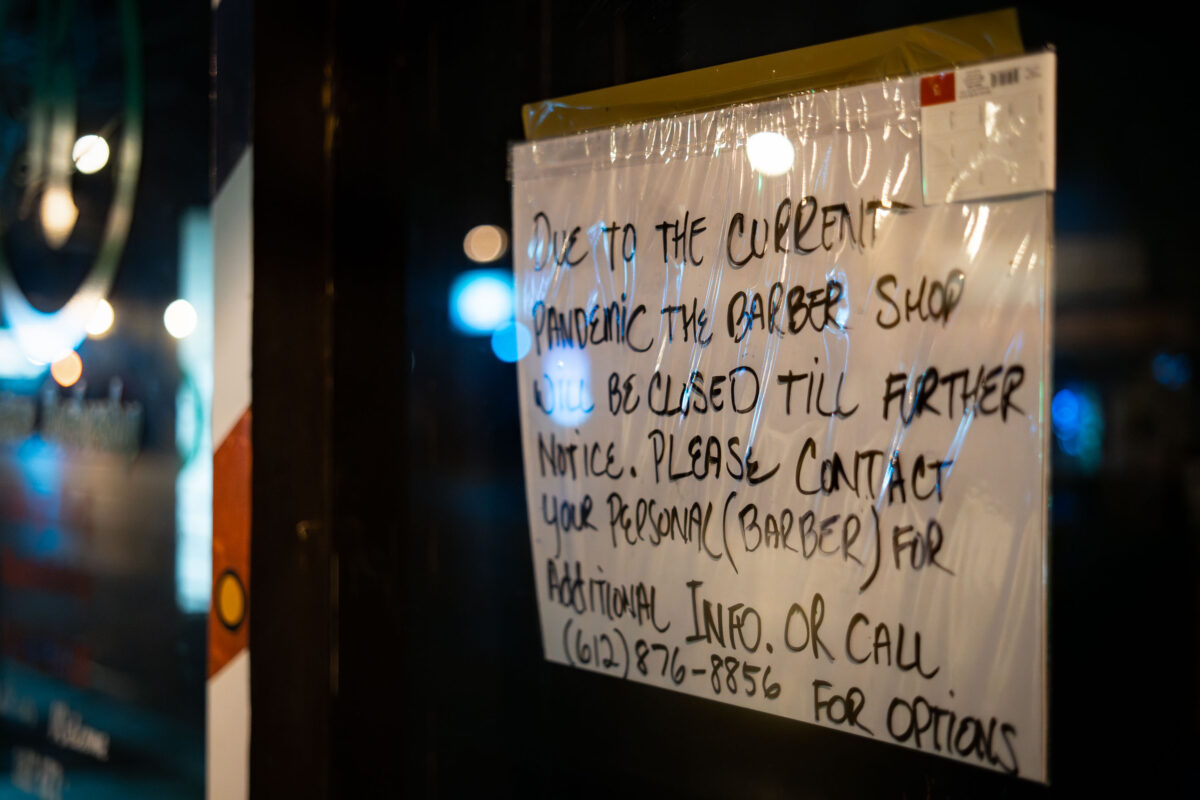
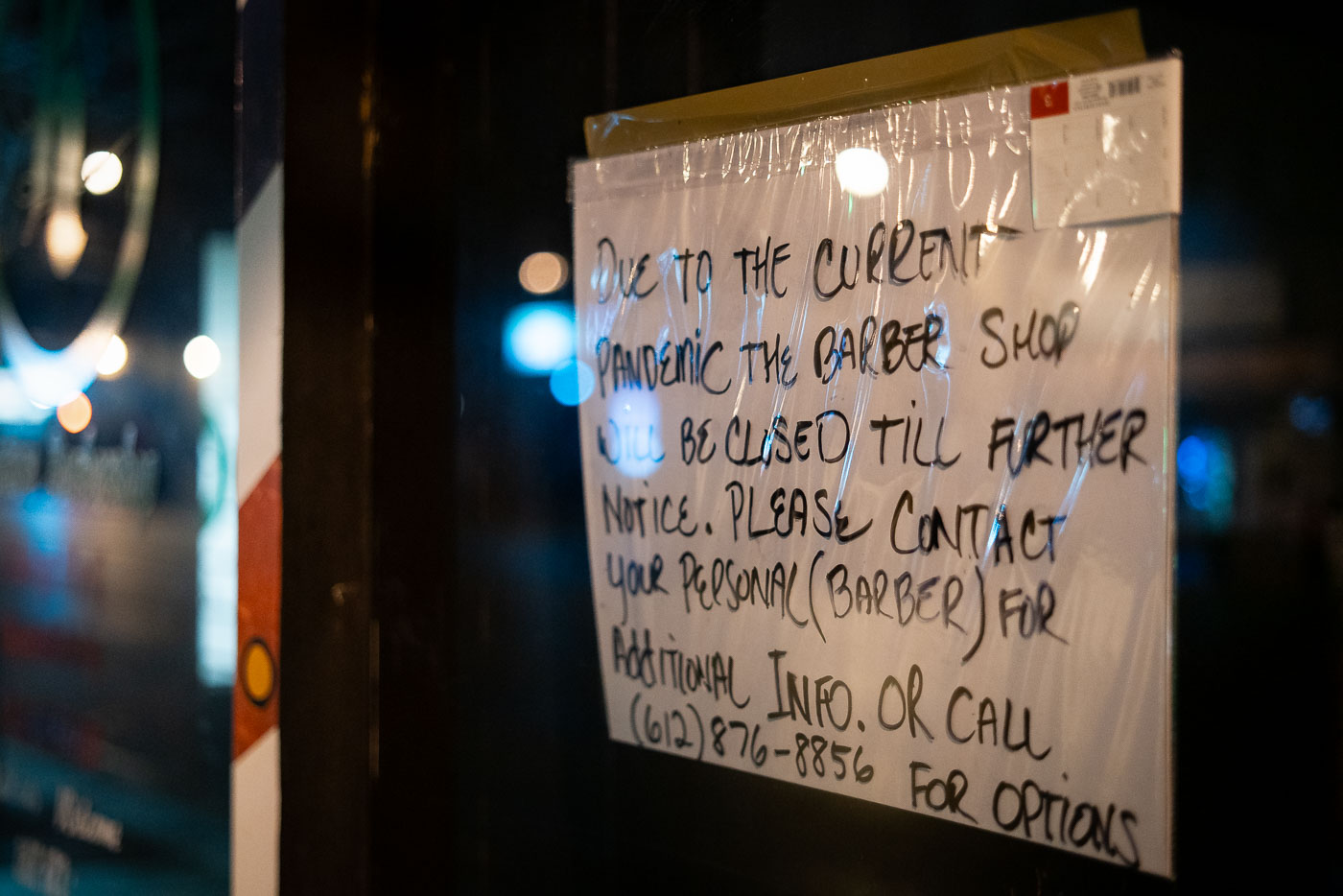
Handwritten closure notice taped to a barber shop door in Minneapolis during the March 2020 COVID-19 pandemic shutdown.
The handwritten sign cites "the current pandemic" as the reason the barber shop closed "till further notice," asking customers to contact their personal barber or call a listed number for options. Minneapolis barbershops and salons were ordered closed under Minnesota's statewide stay-at-home order, issued March 25, 2020, which classified personal grooming services as non-essential. Many small shops, without the staff or systems for remote booking, relied on notes like this one to keep clients informed while the order remained in effect.

A Barber Shop’s Handwritten Closure Notice in Minneapolis
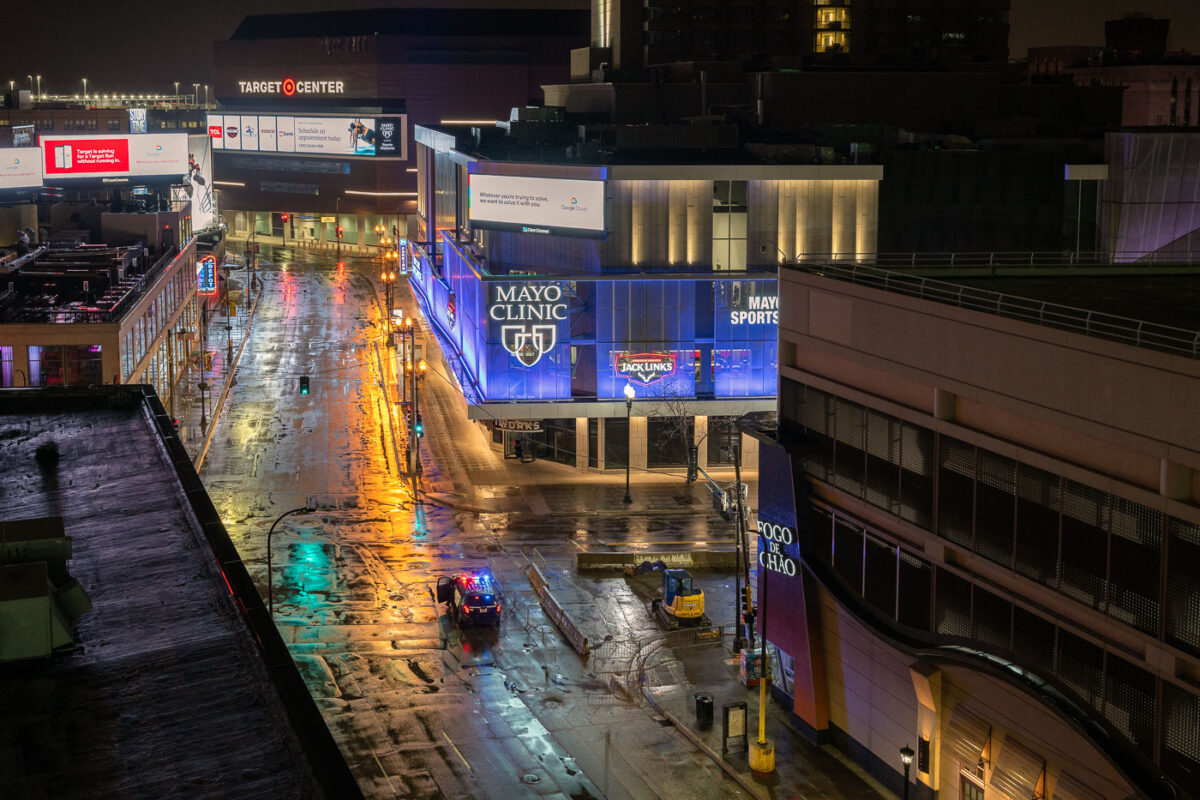
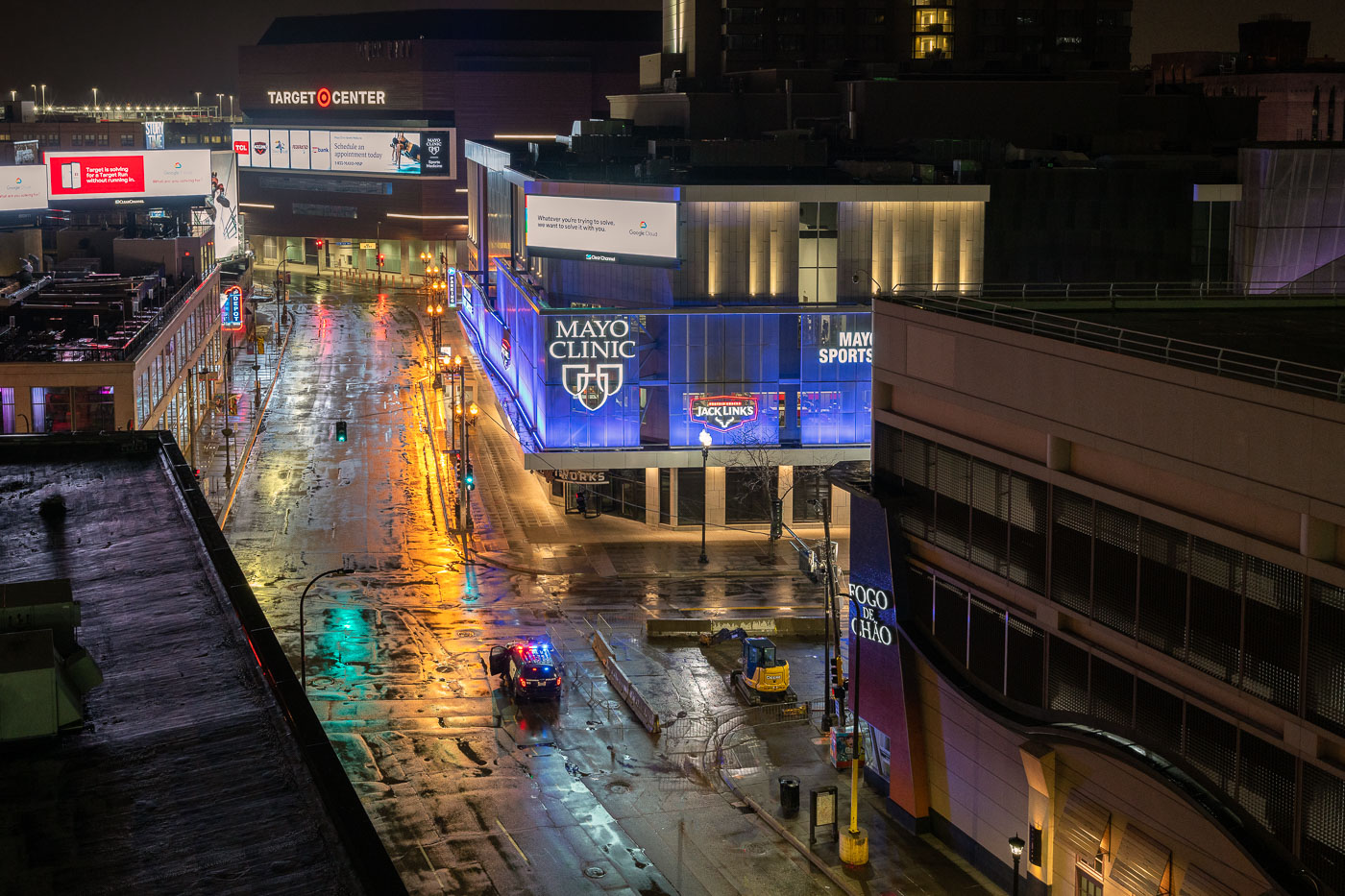
Police vehicle and excavator on wet Hennepin Avenue in downtown Minneapolis at night during COVID-19 shutdown.
Hennepin Avenue runs through downtown Minneapolis past Target Center, home of the Minnesota Timberwolves and Lynx, and Mayo Clinic Square, a mixed-use building housing retail space and the Minnesota Timberwolves' practice facility. The corridor sits at the center of the city's entertainment and sports district, connecting to First Avenue and the Warehouse District a few blocks south. In late March 2020, Minnesota's stay-at-home order emptied this stretch of its usual foot traffic, leaving only intermittent police and maintenance activity on the street.

Hennepin Avenue Near Target Center During Minneapolis’s COVID-19 Shutdown
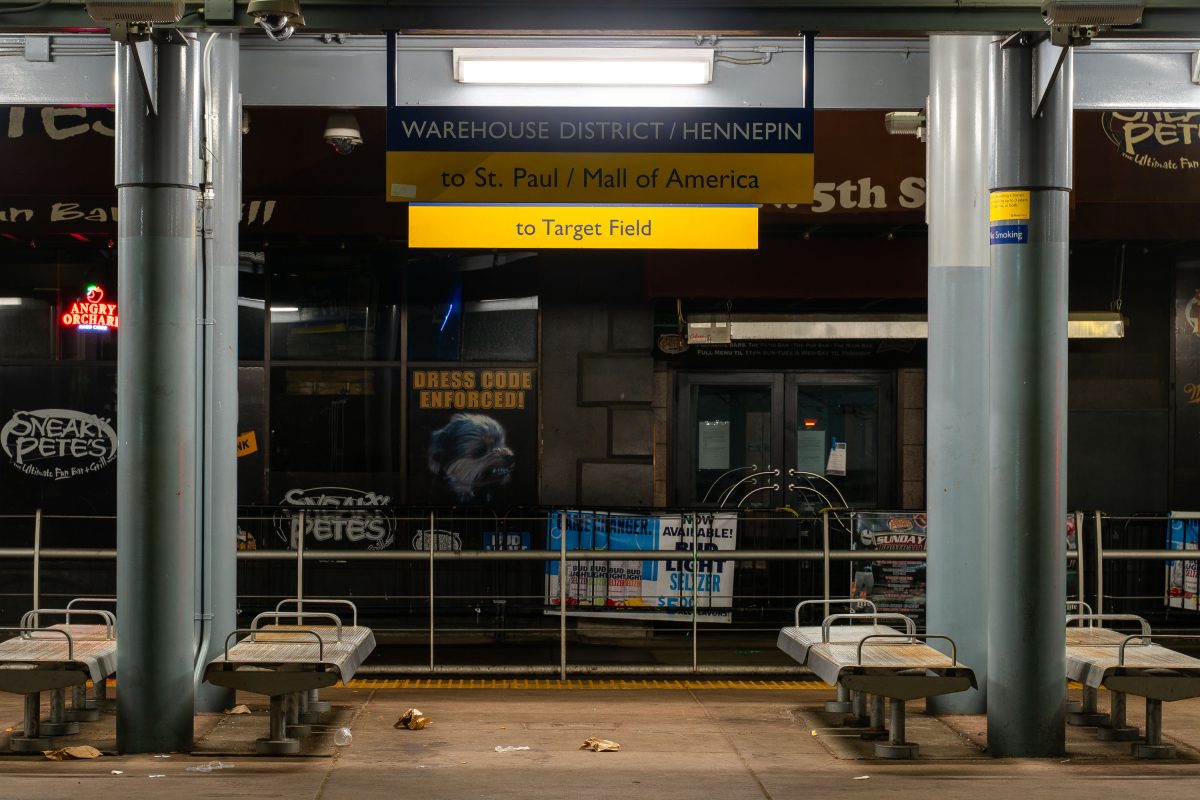
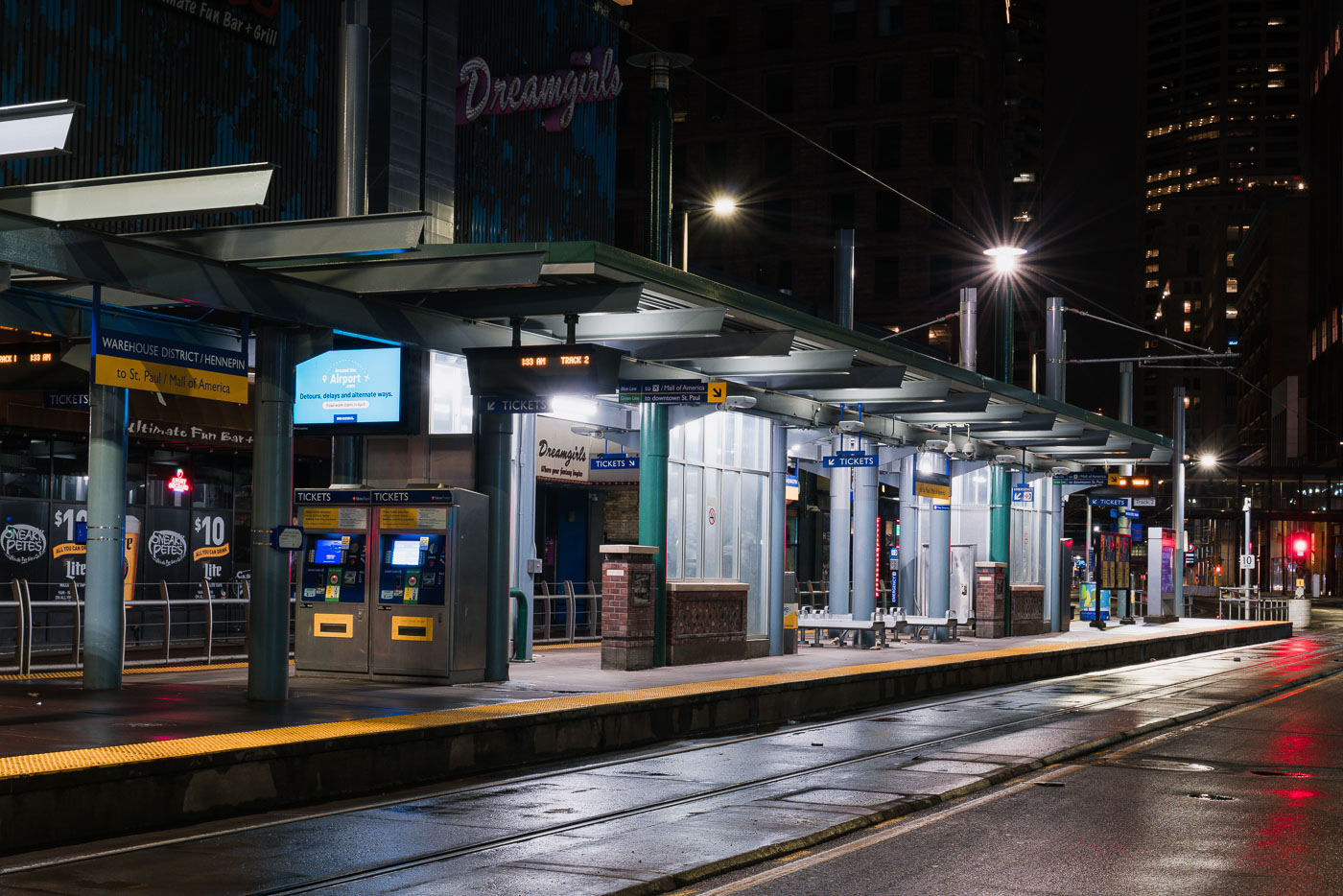
Warehouse District/Hennepin Avenue light rail station platform in downtown Minneapolis with directional signs to St. Paul.
The Warehouse District/Hennepin Avenue Station serves the METRO Blue and Green Lines in downtown Minneapolis, connecting riders to Target Field, St. Paul, and the Mall of America. Located near the Warehouse District entertainment area on 5th Street, the station provides transit access to nearby bars, clubs, and Target Field Station.

Empty Platform at Warehouse District/Hennepin Station, Minneapolis
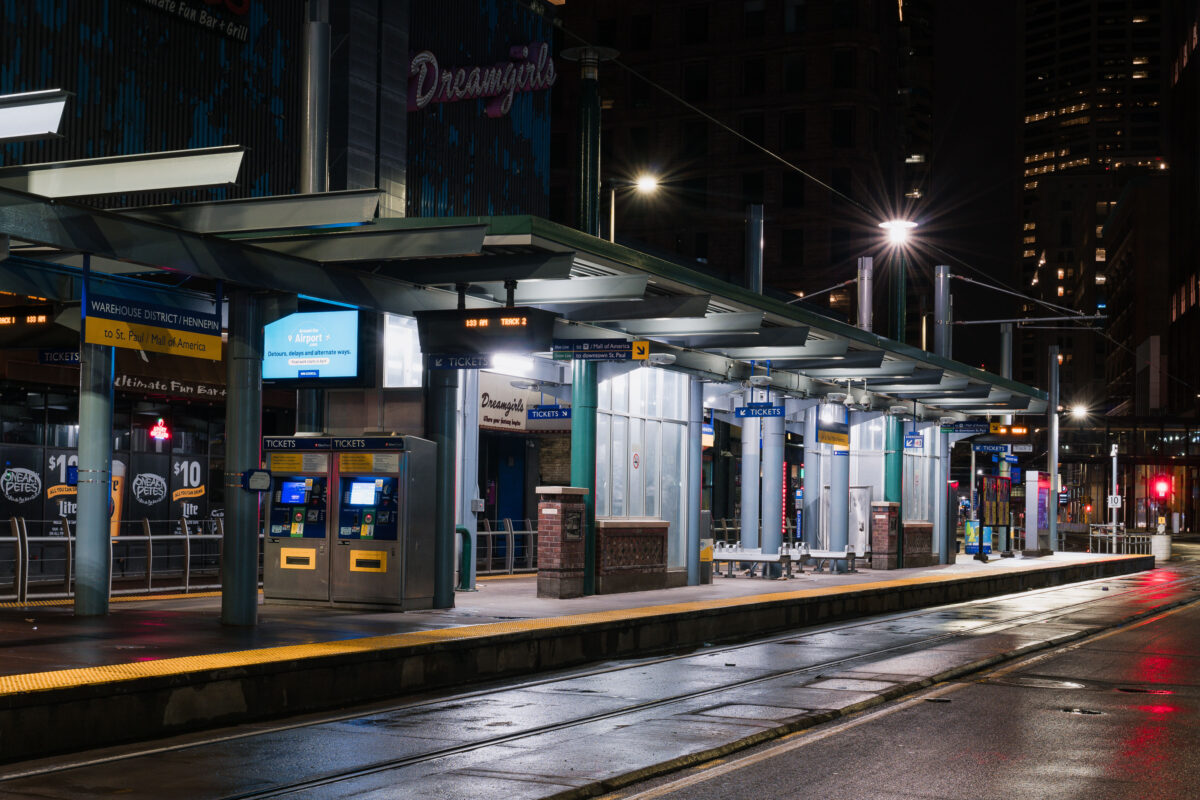
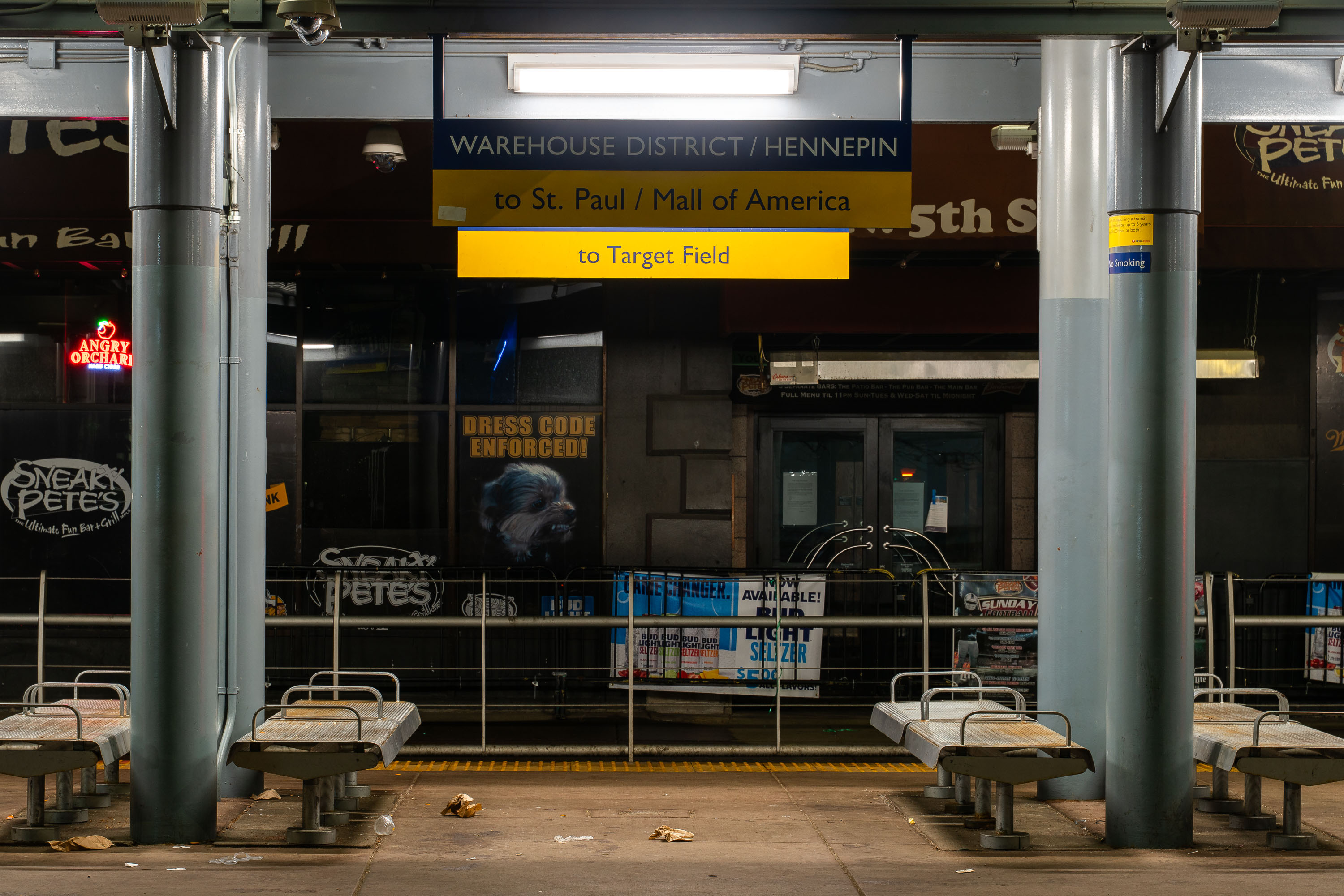
Warehouse District/Hennepin light rail station on North 5th Street in downtown Minneapolis, empty during early morning hours.
Warehouse District/Hennepin Station sits on North 5th Street in downtown Minneapolis, one of the stops serving Metro Transit's METRO Blue and Green Line trains. The station connects riders to downtown St. Paul and the Mall of America along one route, and to the Warehouse District's bars, theaters, and entertainment venues at street level. Metro Transit operates the regional light rail system, which opened its first line in 2004. This platform recorded far lower ridership in late March 2020, after Minnesota's statewide stay-at-home order took effect during the early weeks of the COVID-19 pandemic.

Warehouse District/Hennepin Station at Night, Minneapolis

Lucky Dragon Restaurant and Hard Times Cafe storefronts illuminated at night in Minneapolis.
Lucky Dragon Restaurant serves Vietnamese and Chinese cuisine from a storefront on Minneapolis's West Bank, in the Cedar-Riverside neighborhood near the University of Minnesota. Next door, Hard Times Cafe has operated as a 24-hour coffeehouse since the early 1990s, drawing a mix of students, night-shift workers, and the neighborhood's longtime punk and counterculture crowd. Cedar-Riverside took shape as a dense immigrant enclave in the late 19th century and later became a center of Minneapolis's Somali and East African community, giving the area its wide range of restaurants and small businesses.

Lucky Dragon Restaurant and Hard Times Cafe on the West Bank
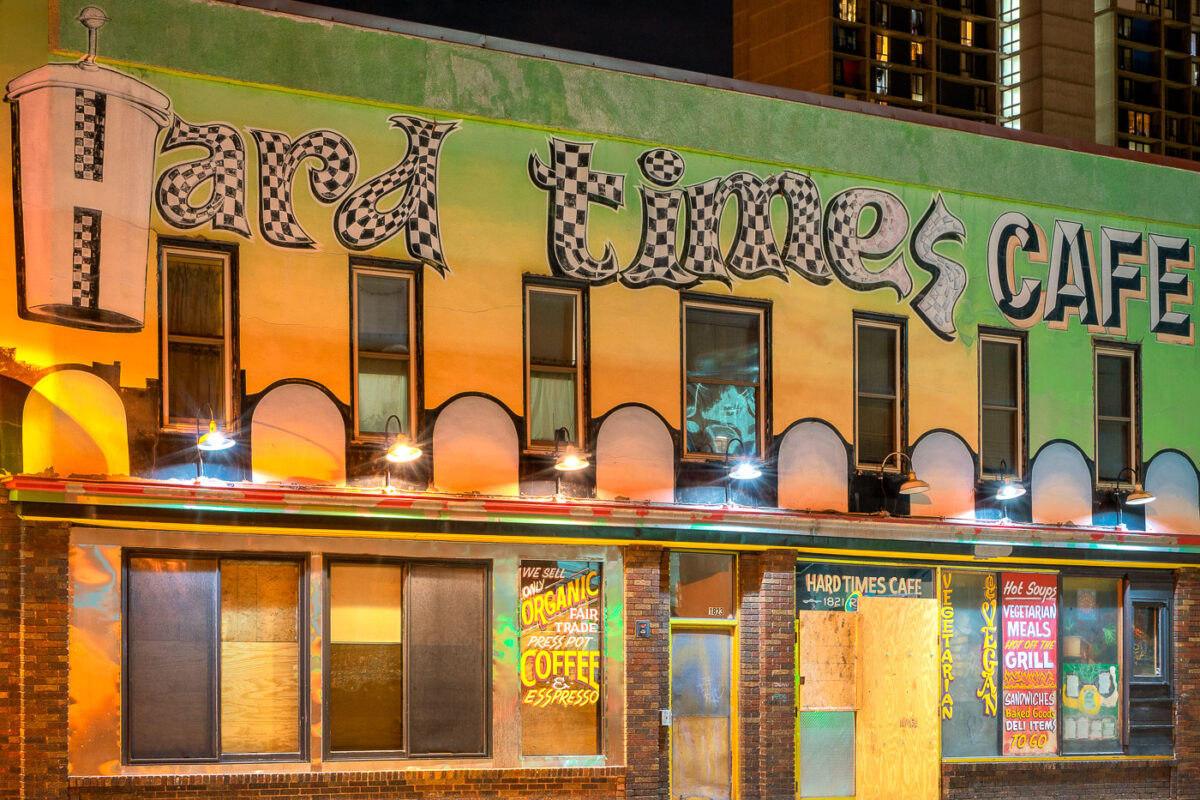
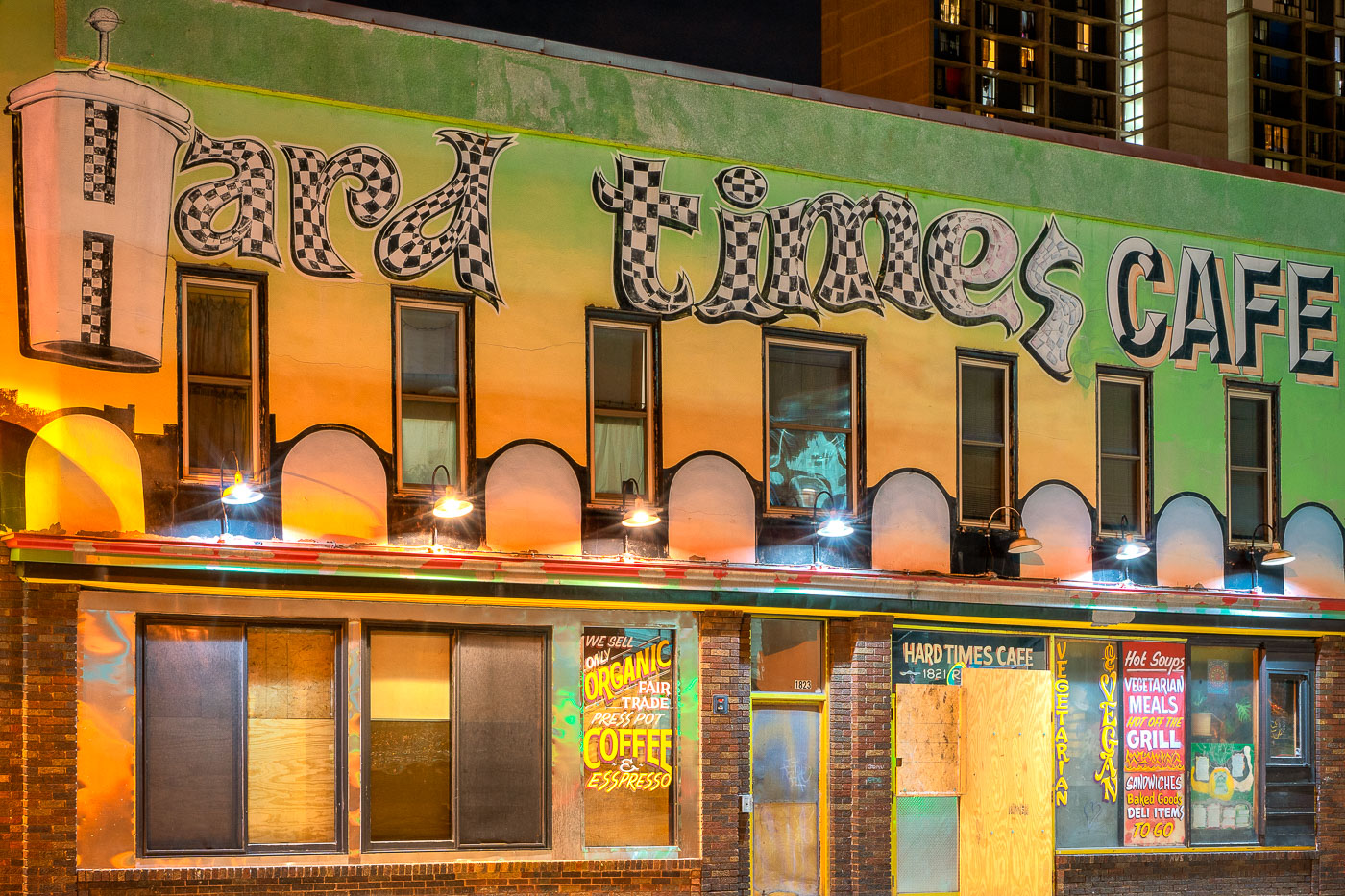
Hard Times Cafe with boards on door during covid closures
The Hard Times Cafe, located at 1823 Riverside Drive in Minneapolis's Cedar Riverside neighborhood, was boarded up during the COVID-19 pandemic closures.

Hard Times Cafe, Minneapolis: Boarded Up During COVID-19
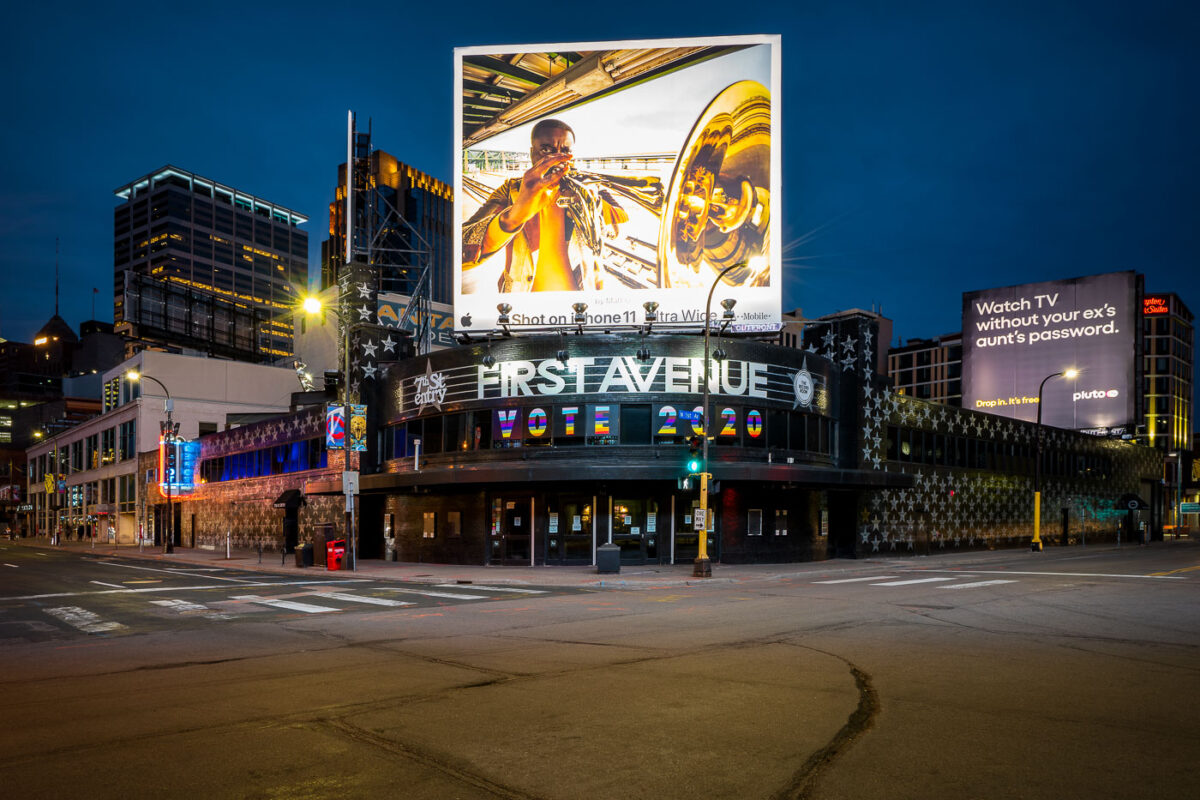
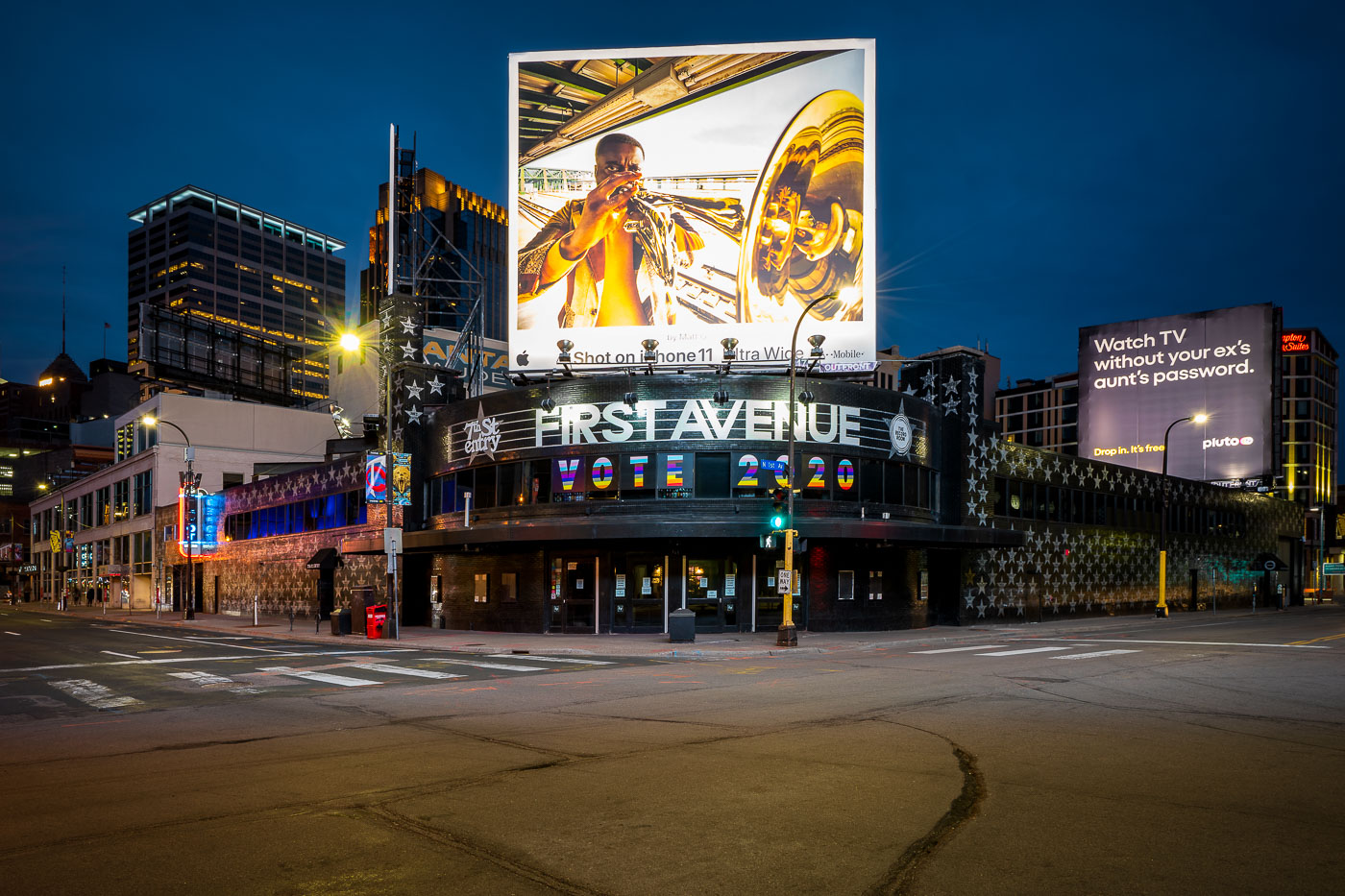
First Avenue music venue in downtown Minneapolis displays "VOTE 2020" on its marquee during COVID-19 shutdowns on April 2, 2020.
First Avenue, the nightclub at 701 First Avenue North, occupies a building that opened in 1937 as a Greyhound bus depot before its conversion to a music venue in 1970. Its Mainroom has hosted acts from Prince—who filmed key s of "Purple Rain" here—to touring bands across nearly every genre. The 7th Street Entry, the smaller adjoining room, opened in 1980 as a launching pad for punk and indie acts. The building's exterior stars, added over the years, each mark a musician who has performed there. On this night the marquee read "VOTE 2020" instead of a show listing, a message posted while the venue sat closed under Minnesota's statewide shutdown orders.

“VOTE 2020” Marquee at First Avenue During Empty Streets
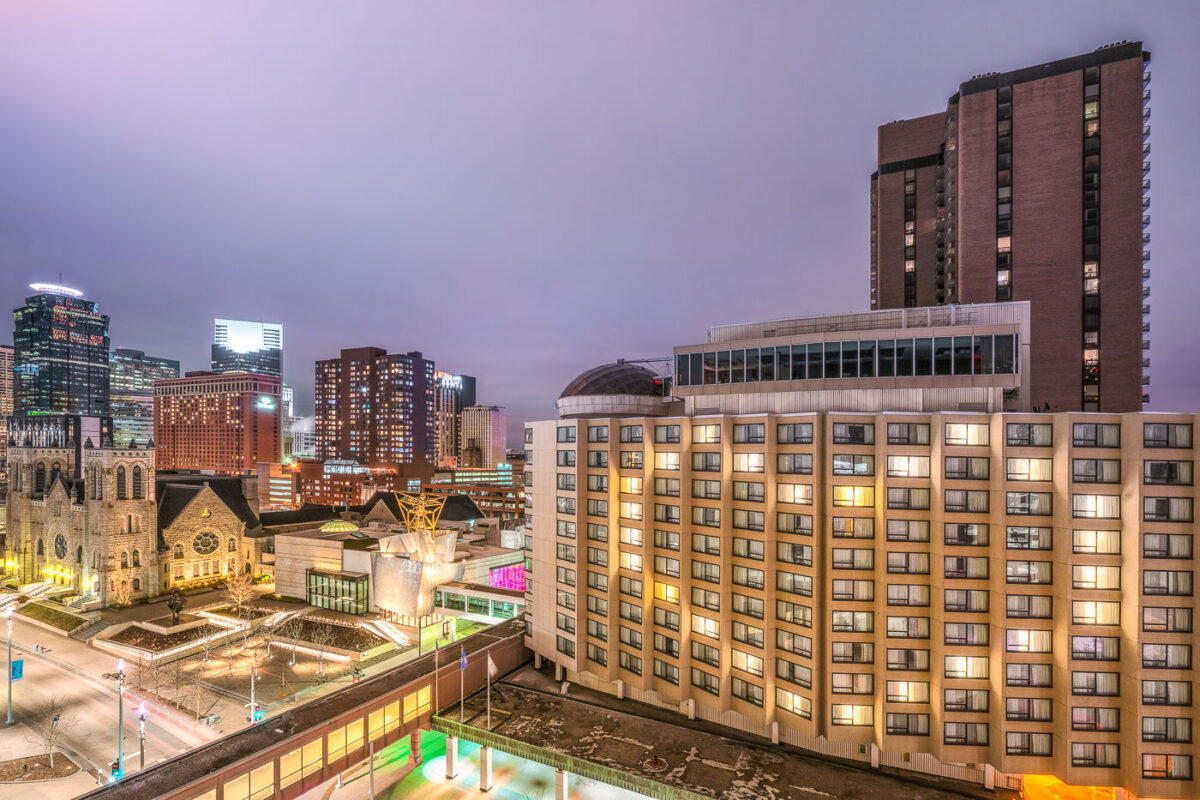
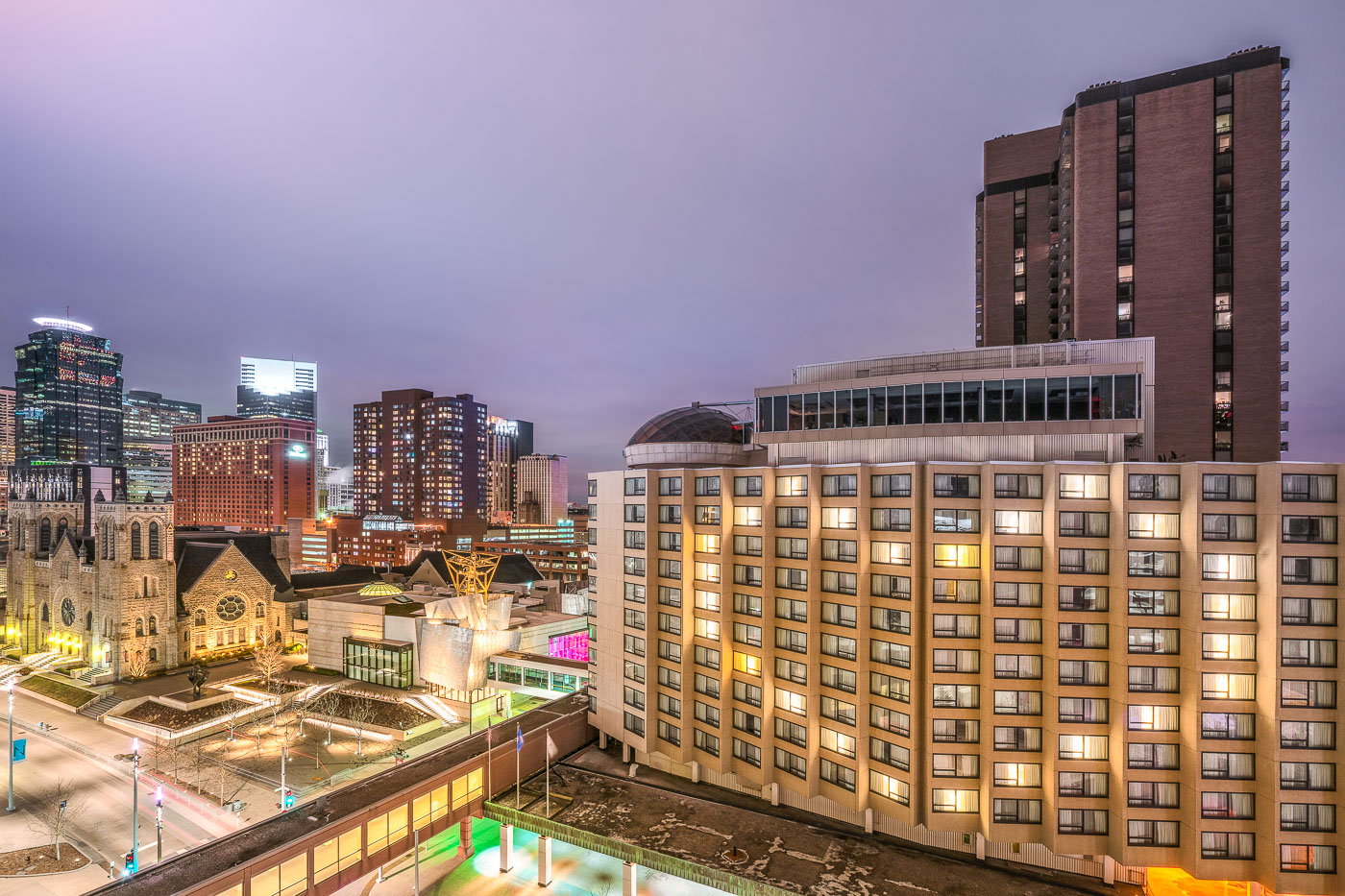
Millennium Hotel in downtown Minneapolis illuminated at twilight with lit windows forming a heart pattern during early COVID-19
The Millennium Hotel Minneapolis sits at 1313 Nicollet Mall, a high-rise a few blocks from the Minneapolis Convention Center. The tower opened in the 1970s under an earlier flag before joining the Millennium Hotels and Resorts chain, and its upper floors face north over downtown toward the Mississippi River. During the early weeks of the 2020 coronavirus shutdown, hotel occupancy across downtown Minneapolis fell sharply as conventions, sporting events, and business travel came to a halt.

Millennium Hotel Overlooking Downtown Minneapolis During COVID-19
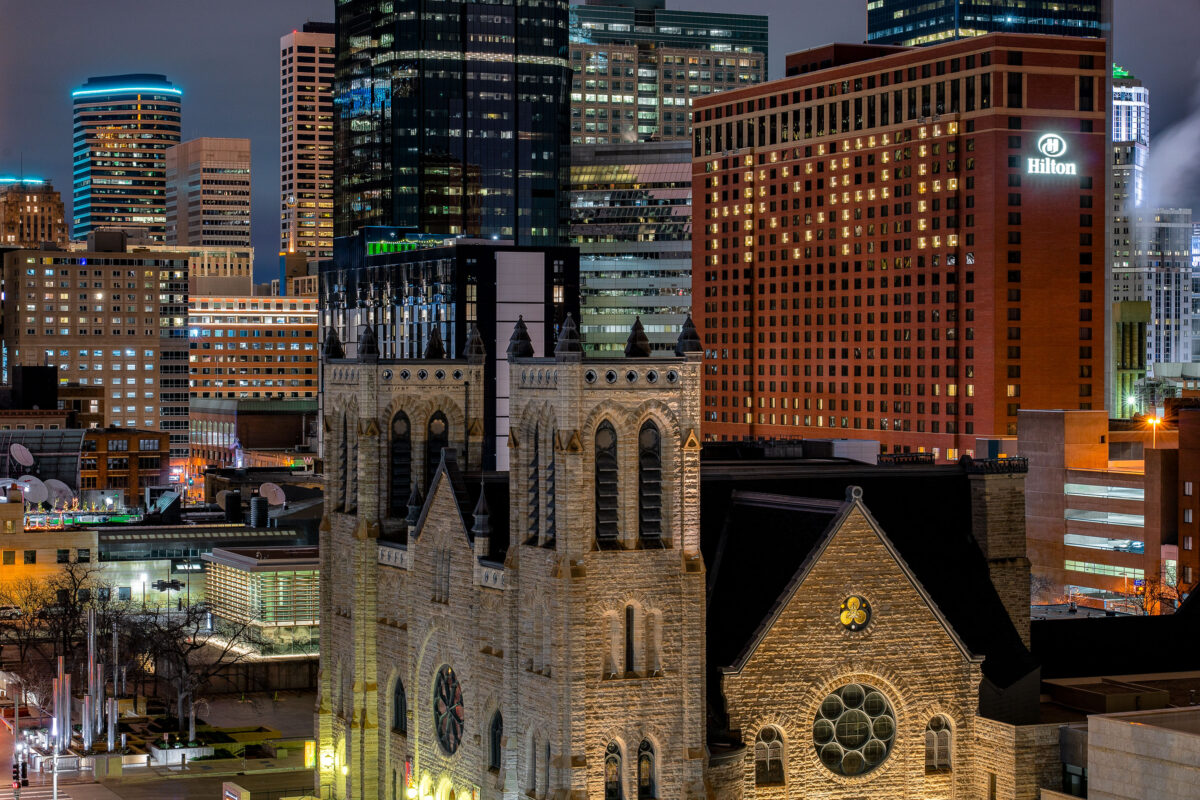
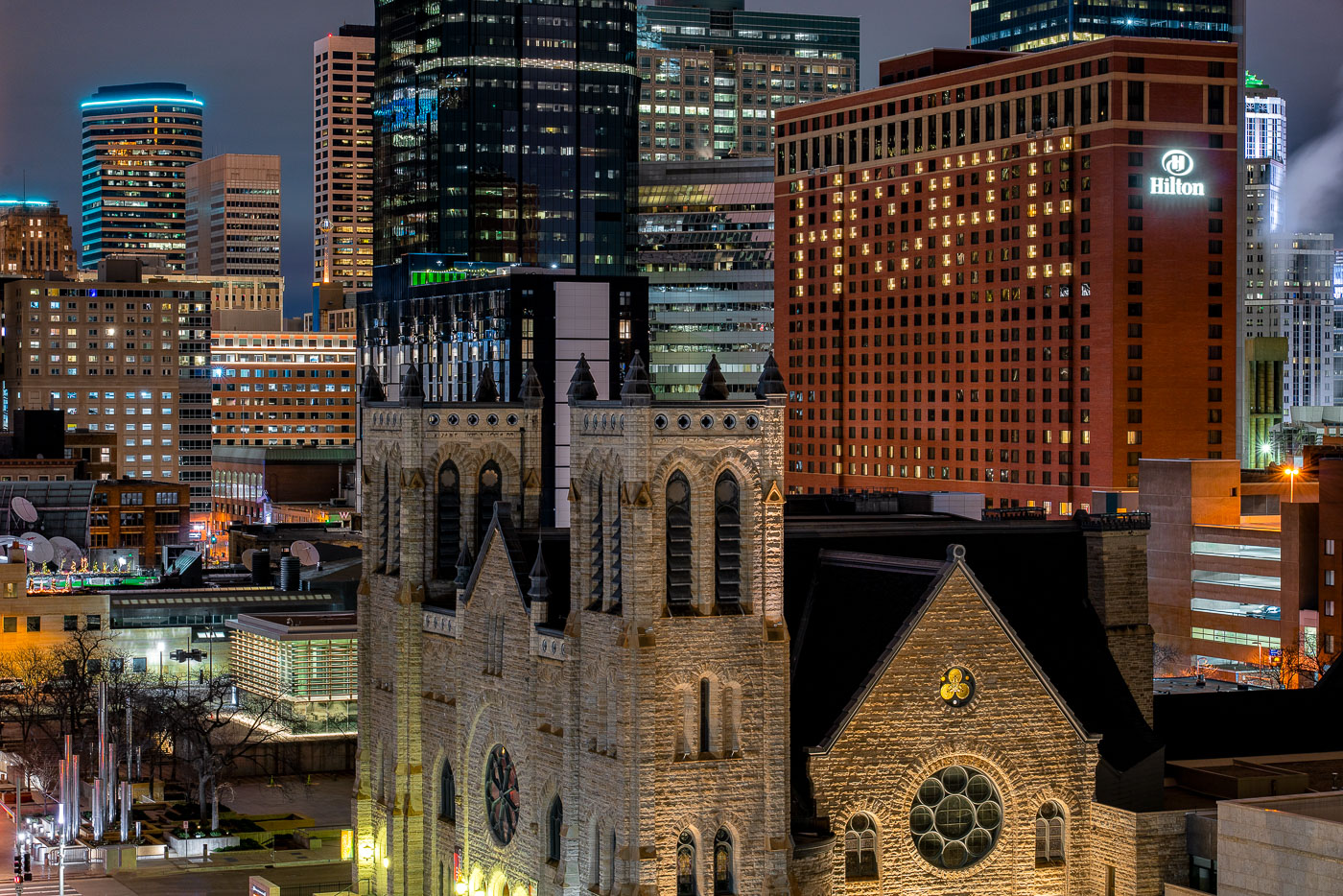
Hilton Minneapolis hotel displays "HOPE" message in illuminated windows during COVID-19 pandemic.
The Hilton Minneapolis, a 32-story tower at 1001 Marquette Avenue, spelled out the word "HOPE" and a heart in its guest-room windows on April 3, 2020, during the early weeks of Minnesota's COVID-19 stay-at-home order. The 821-room hotel opened in 1992 and remains one of the largest in the state. Just north of the hotel stands Westminster Presbyterian Church, a Gothic Revival building completed in 1897 for a congregation founded in 1857, making it one of downtown Minneapolis's oldest continuously operating churches.

Hilton Minneapolis Windows Spell “HOPE” During COVID-19

Empty parking level at Ramp A garage in downtown Minneapolis with yellow bollards and directional markings.
Ramp A is one of several municipal parking ramps the City of Minneapolis operates in the downtown core, serving nearby government offices, hotels, and retail. The ramp typically fills with commuters and visitors on weekdays but stood empty in early April 2020, during the citywide shutdown ordered in response to the COVID-19 pandemic.

Ramp A’s Upper Levels Sit Empty in Downtown Minneapolis
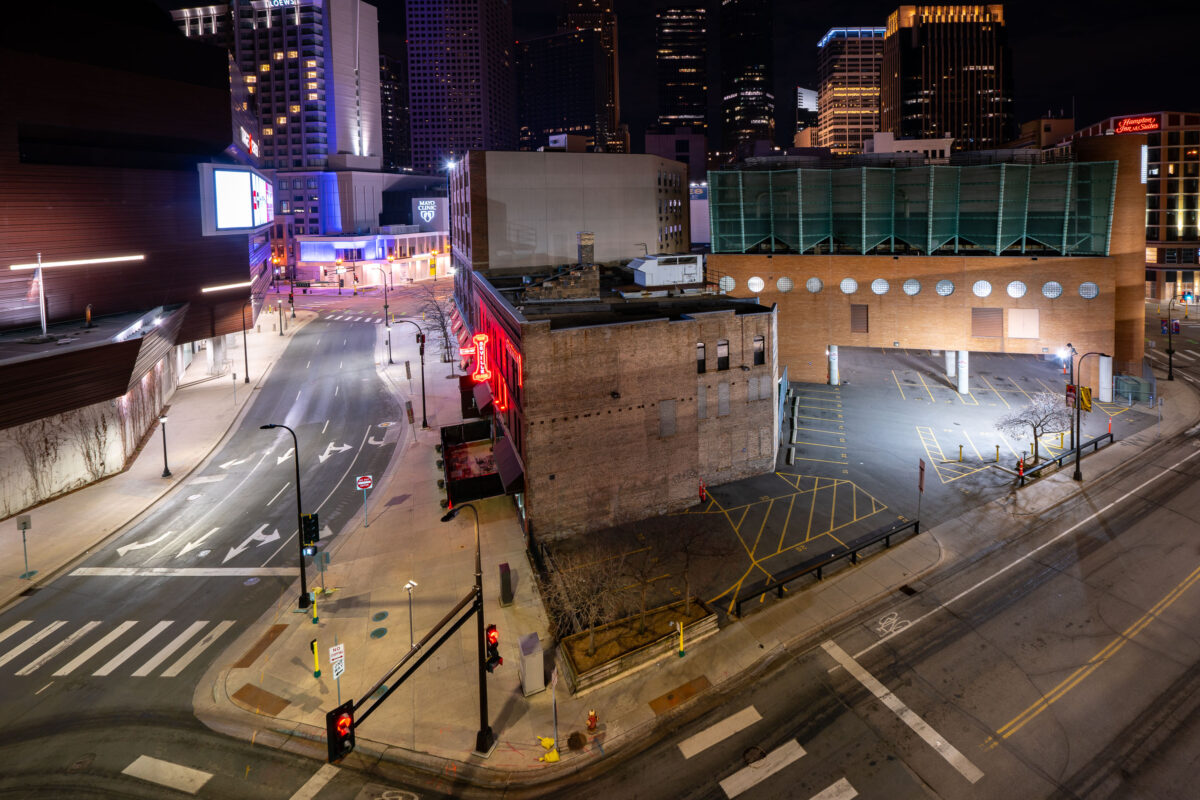
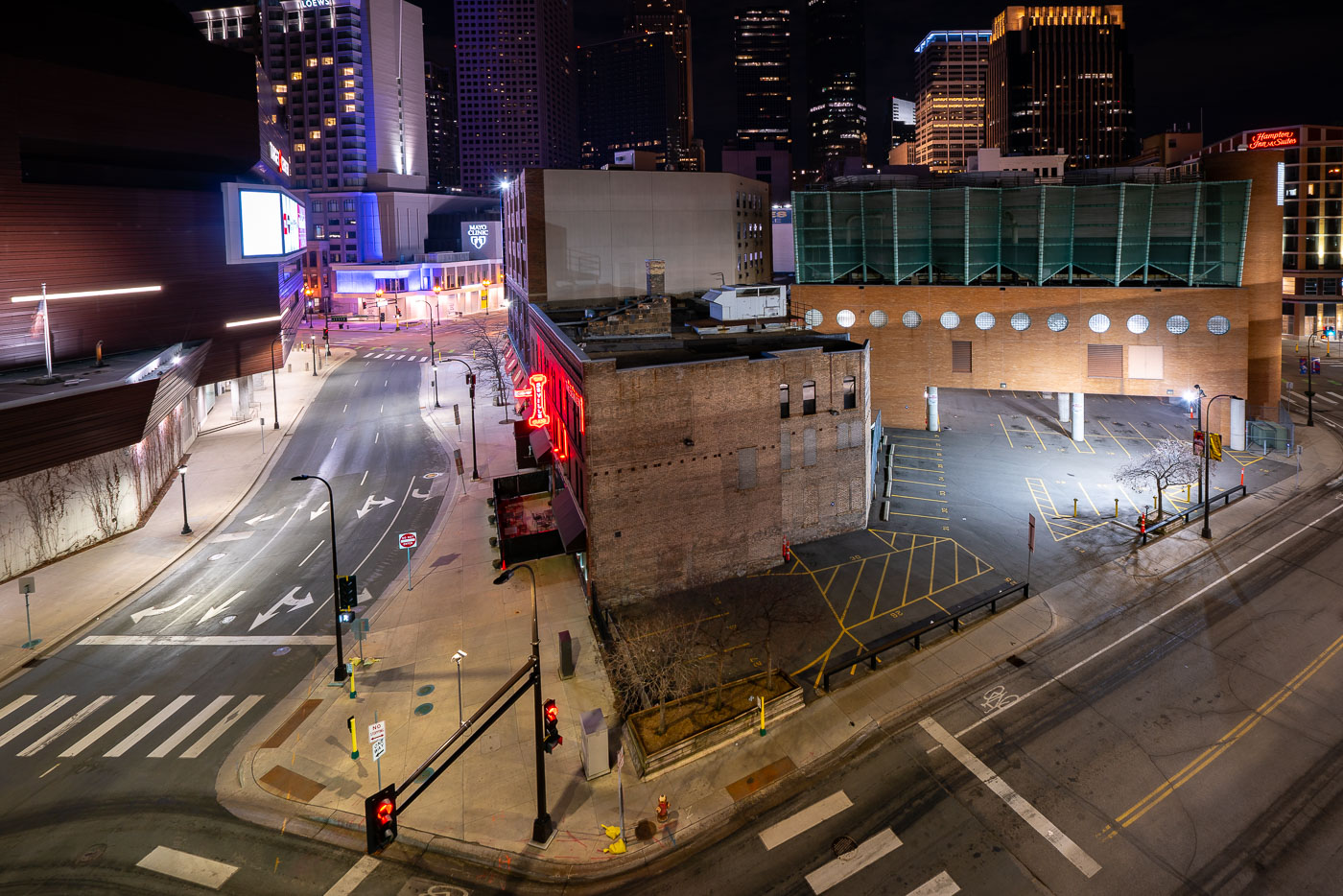
The Seville Club nightclub with red neon sign on 1st Avenue North in downtown Minneapolis during April 2020 COVID-19 shutdowns.
The Seville Club sits at 1st Avenue North and 9th Street in downtown Minneapolis, near the Target Center. Its red neon sign has long marked the block along a stretch of downtown known for nightlife and entertainment venues. In April 2020, statewide stay-at-home orders halted nightclub operations and left the surrounding streets and parking areas largely empty, a temporary condition rather than a permanent closure.

Seville Club on 1st Avenue North During Empty Downtown Streets
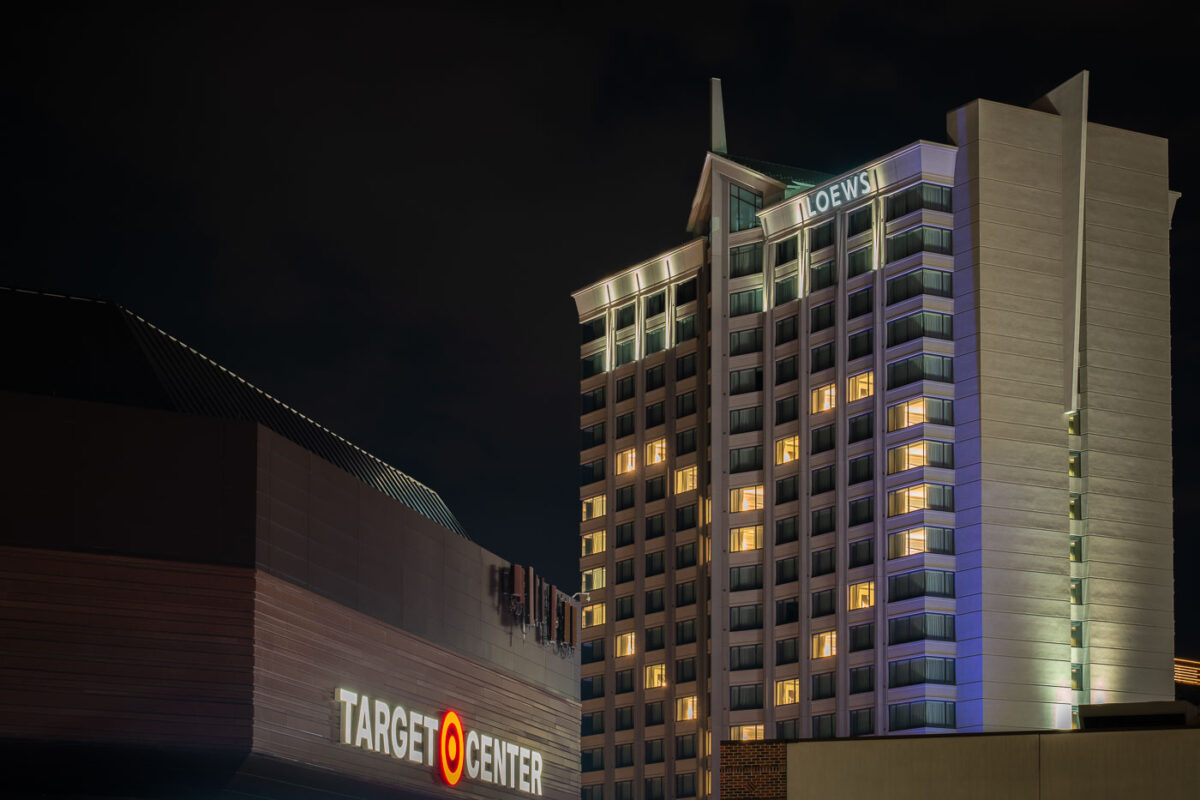
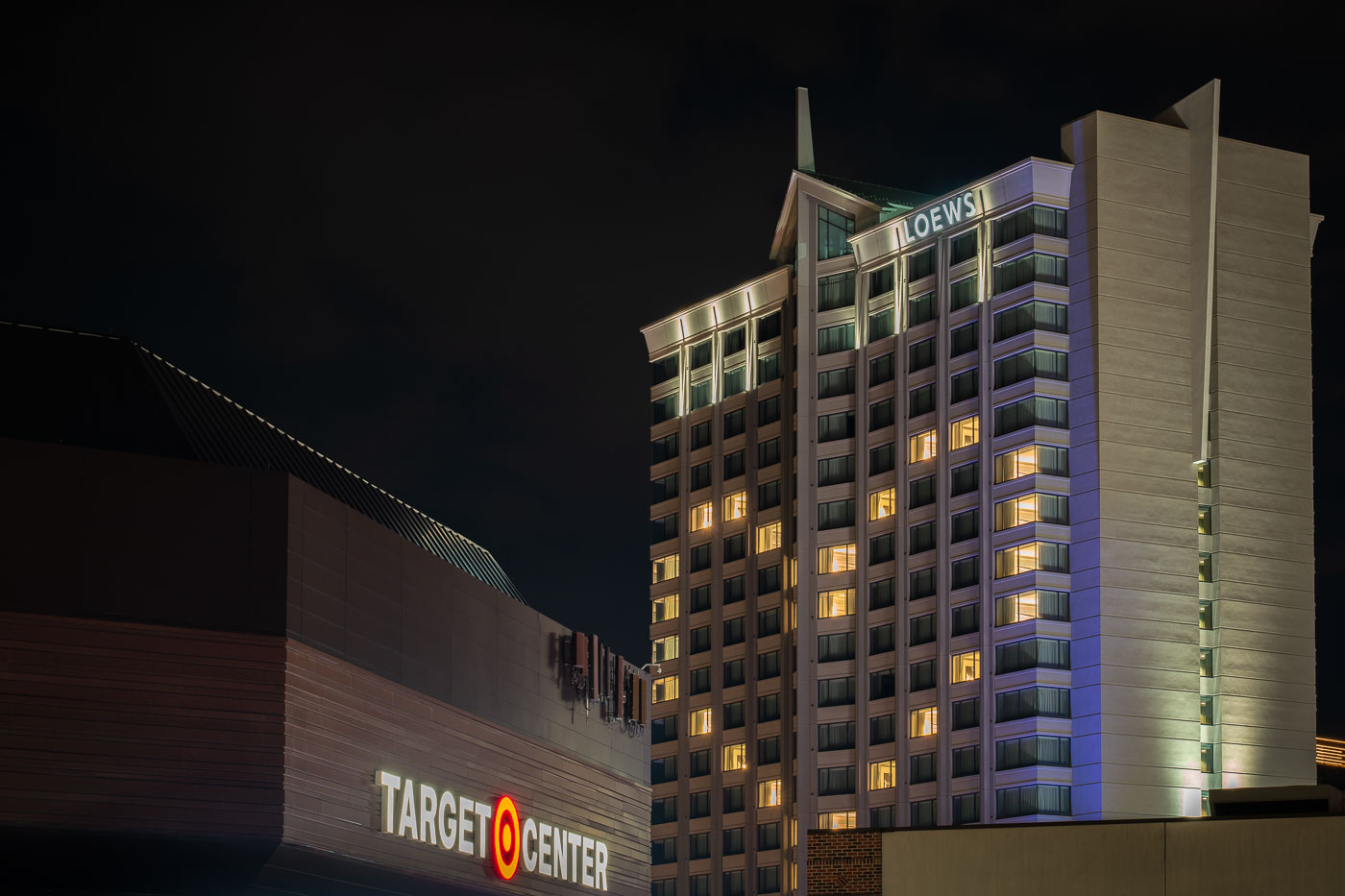
Loews Hotel and Target Center illuminated at night in downtown Minneapolis.
The Loews Minneapolis Hotel sits along First Avenue North next to the Target Center arena in downtown Minneapolis. Target Center opened in 1990 and has served as the home arena for the Minnesota Timberwolves and, since 1999, the Minnesota Lynx. The arena holds roughly 18,798 fans for basketball and has hosted concerts and other events since its debut. The Loews hotel occupies a tower built in 2000 as part of the same downtown block, giving visitors direct access to the arena's entertainment district.

Loews Minneapolis Hotel Beside Target Center at Night
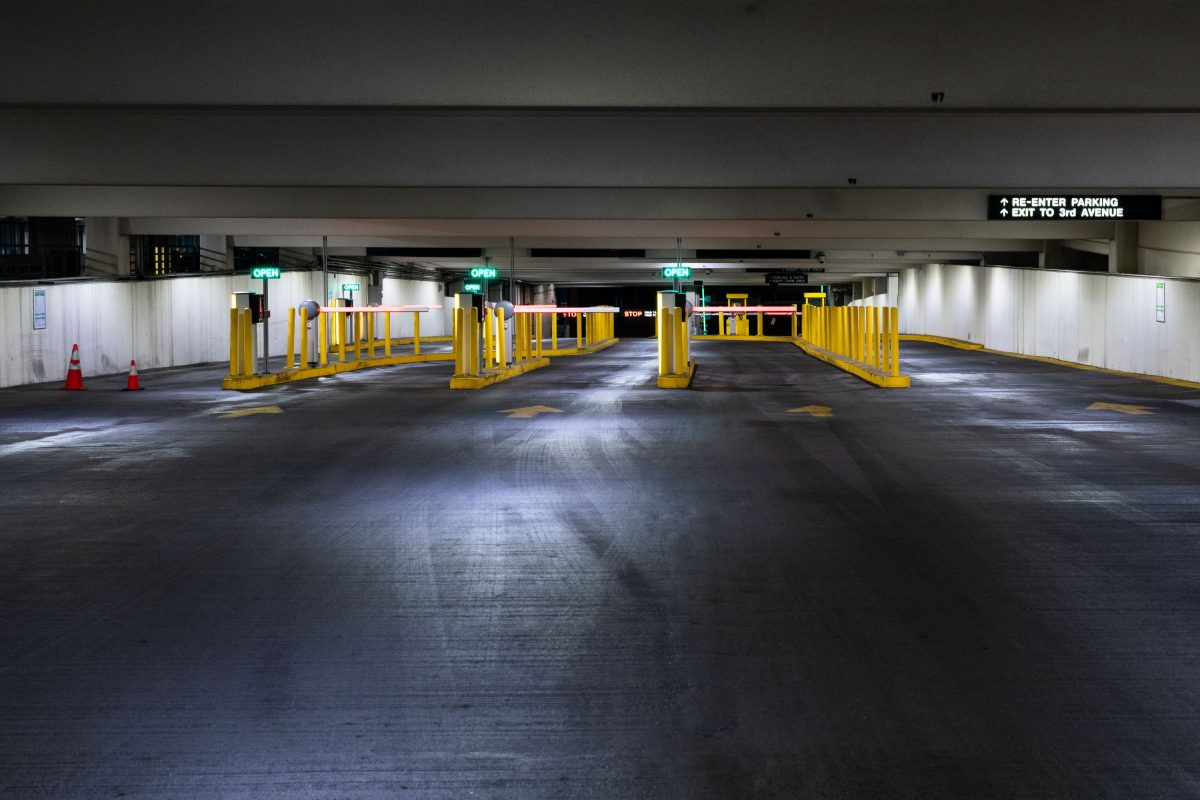
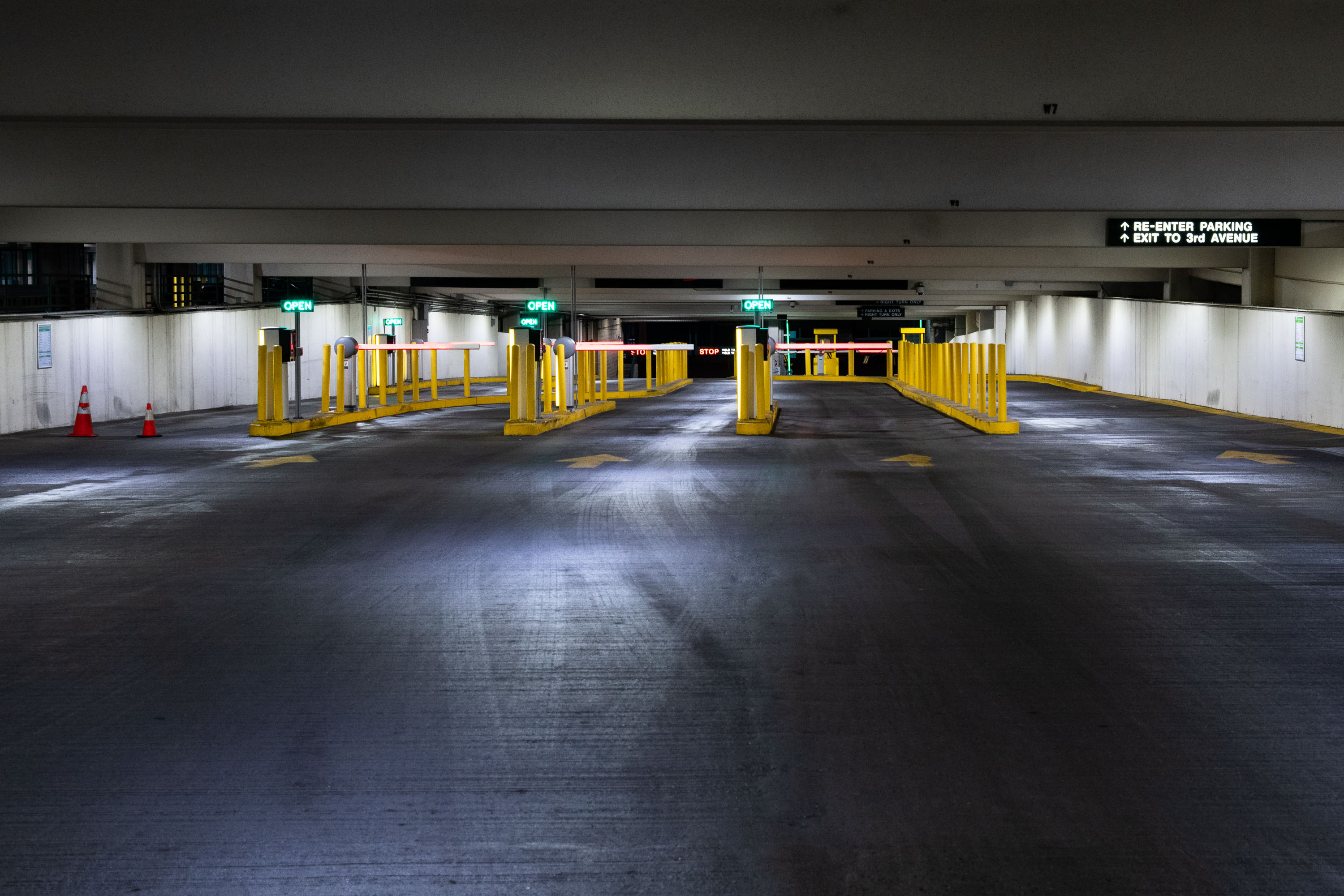
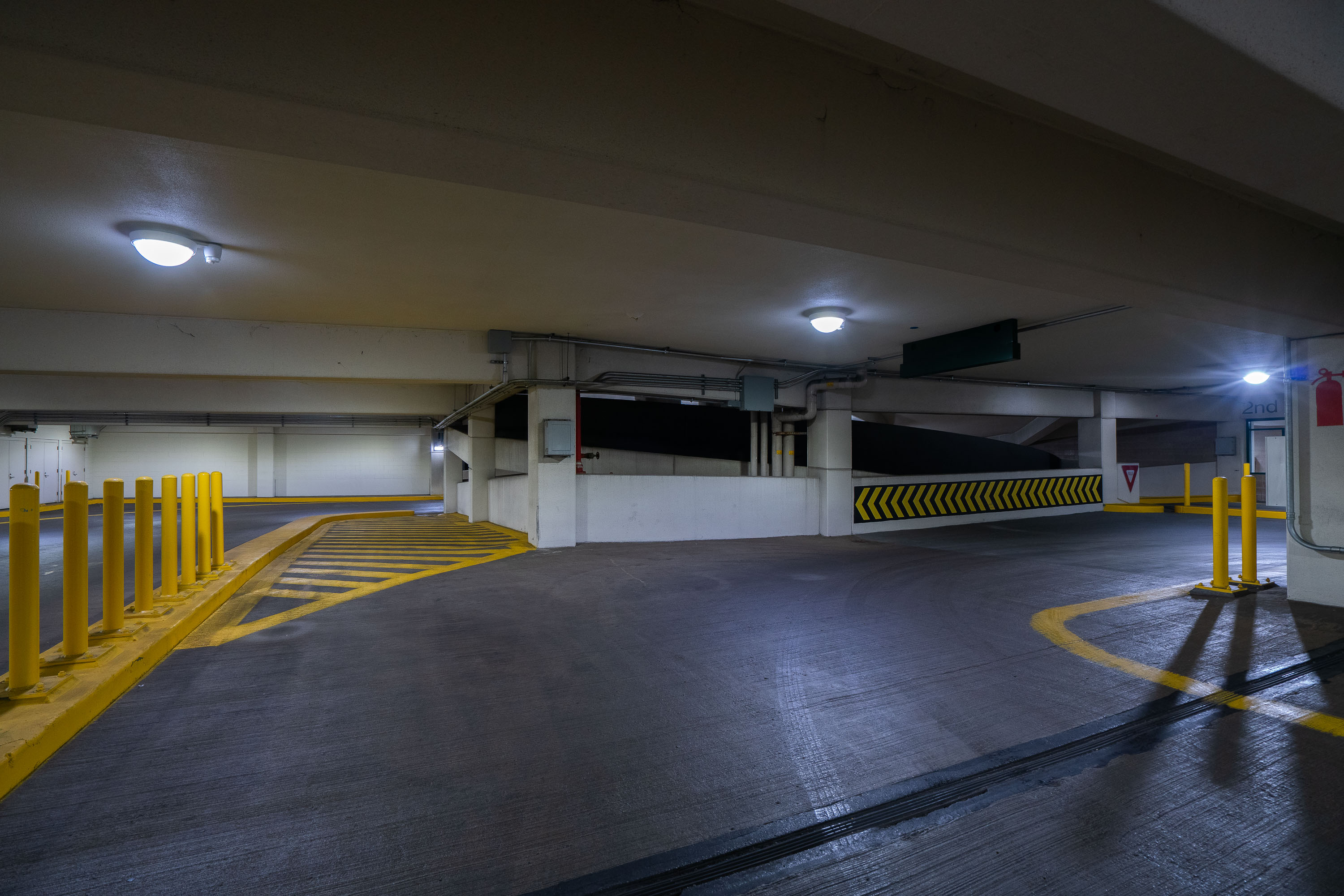
Yellow bollards and safety barriers line an empty level of Ramp C parking garage in downtown Minneapolis.
Ramp C is a parking garage in downtown Minneapolis with an exit onto 3rd Avenue.

Exit Lanes at Ramp C Parking Garage in Downtown Minneapolis
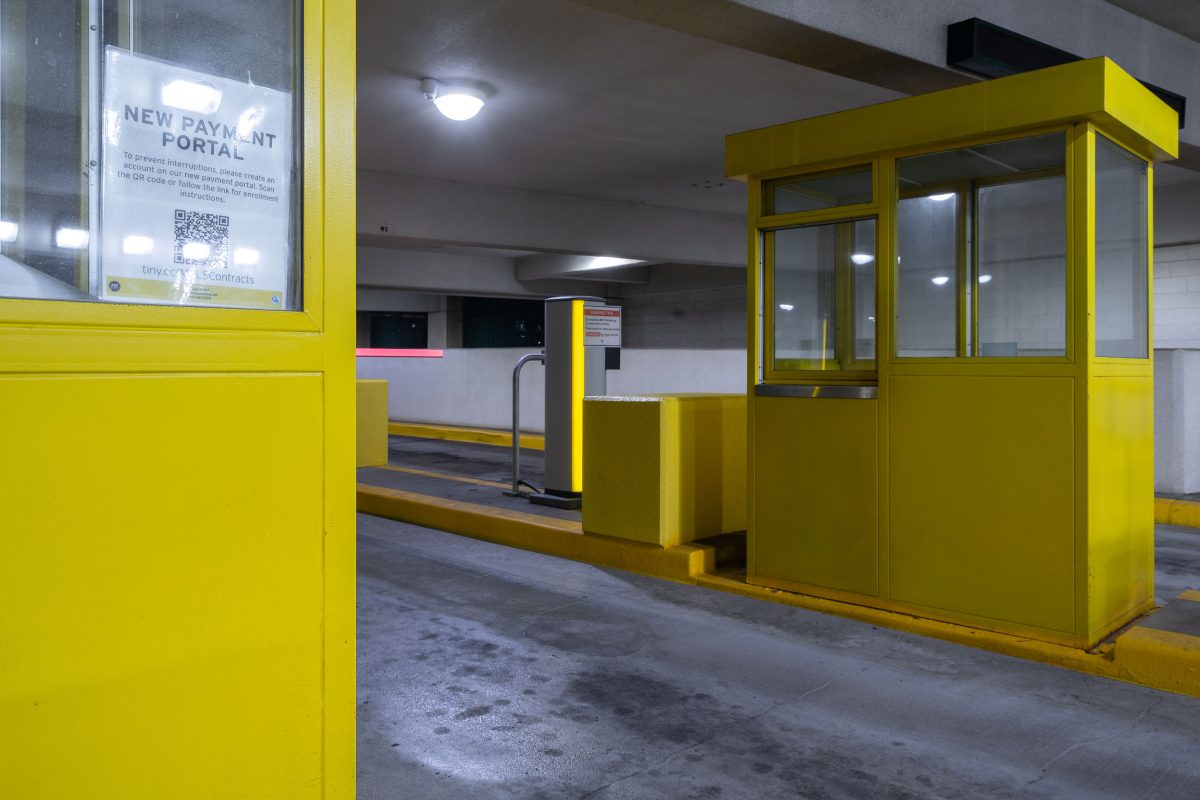
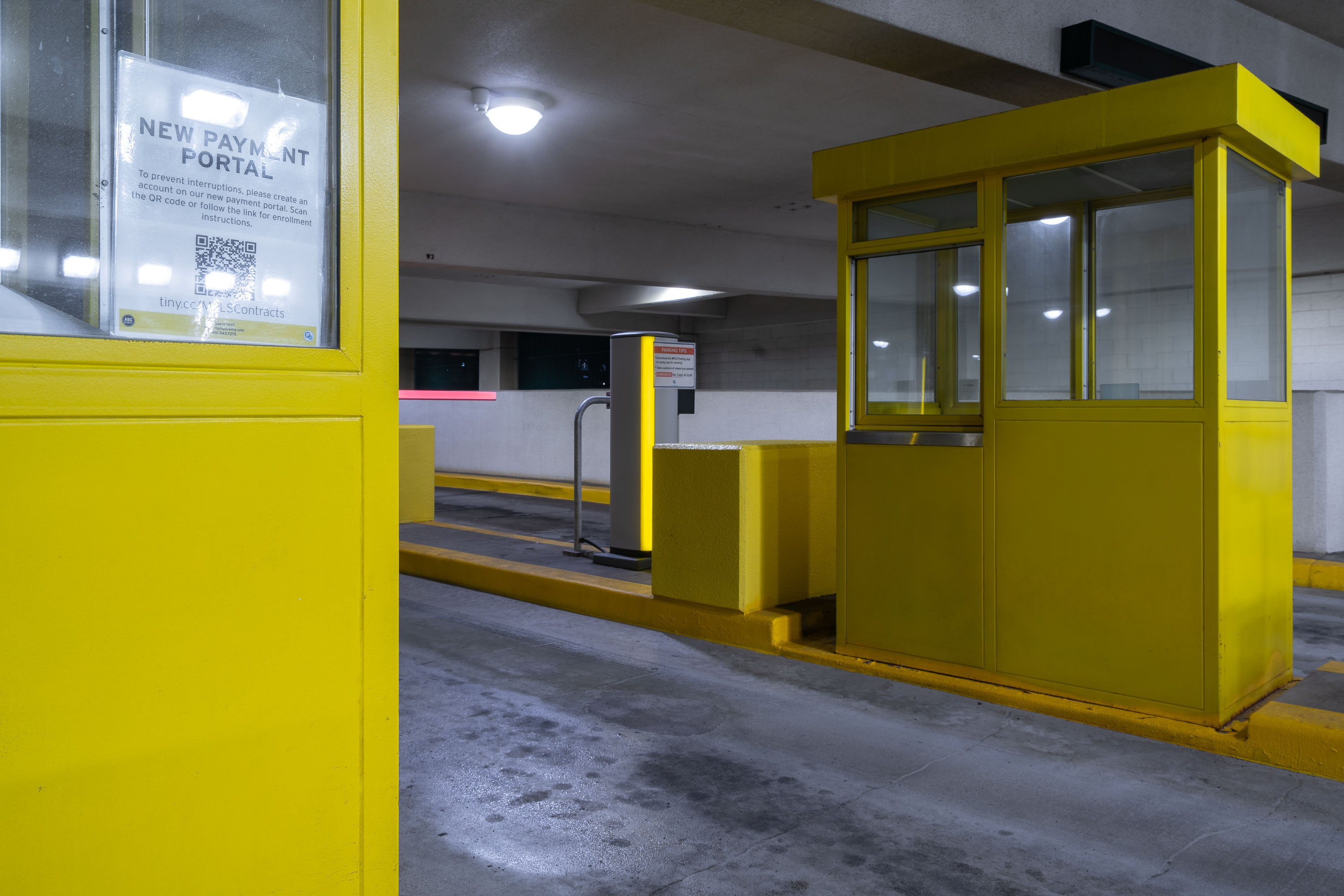
Payment Station
A payment station at a parking garage in downtown Minneapolis.

Payment Station

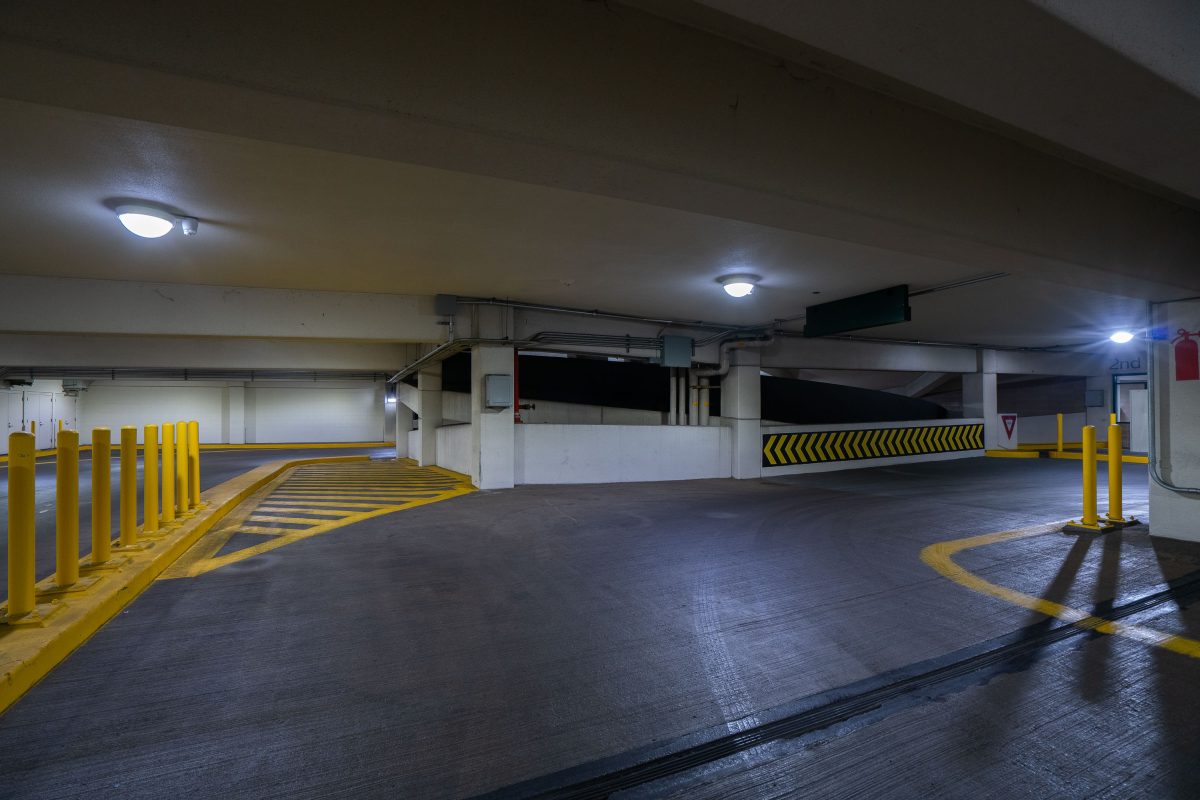
Empty parking ramp with yellow safety barriers and overhead lighting in downtown Minneapolis.
Ramp C is a parking garage in downtown Minneapolis, with a second level marked near its entrance. Yellow bollards and striped lane markings guide cars through the structure's lower level.

Interior of Ramp C in Downtown Minneapolis
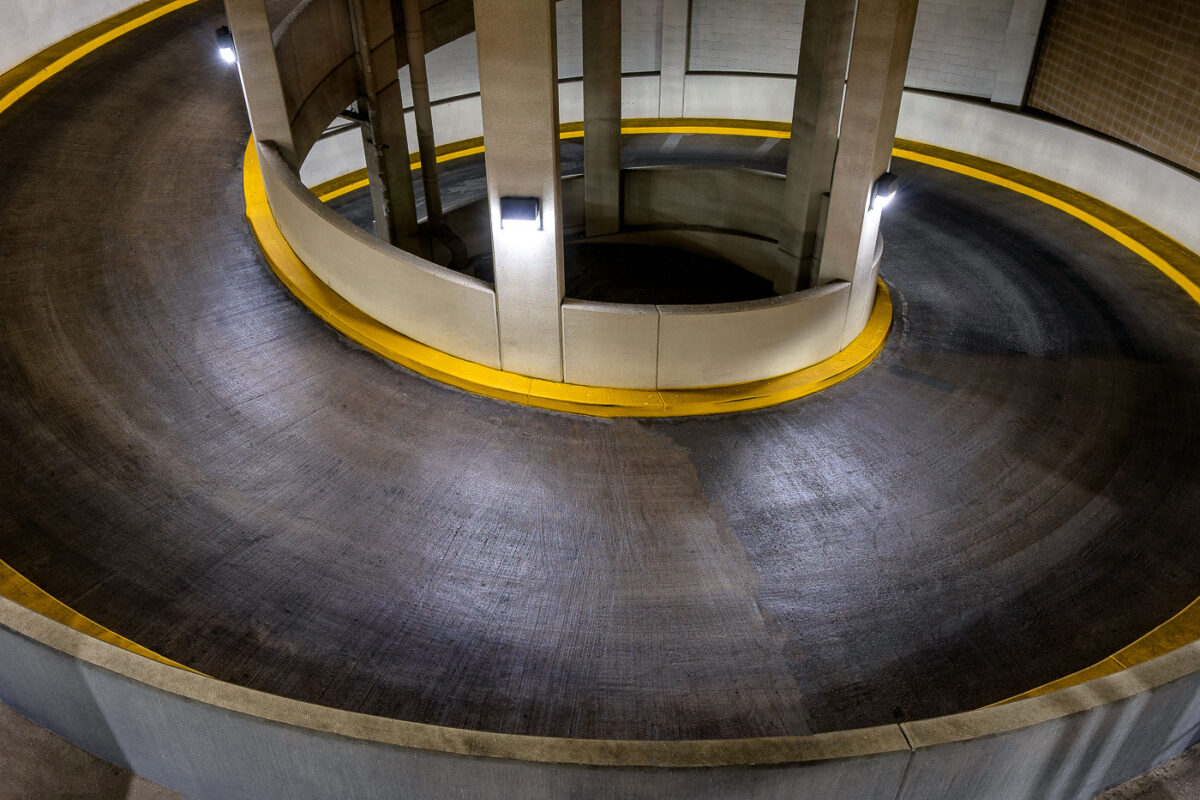
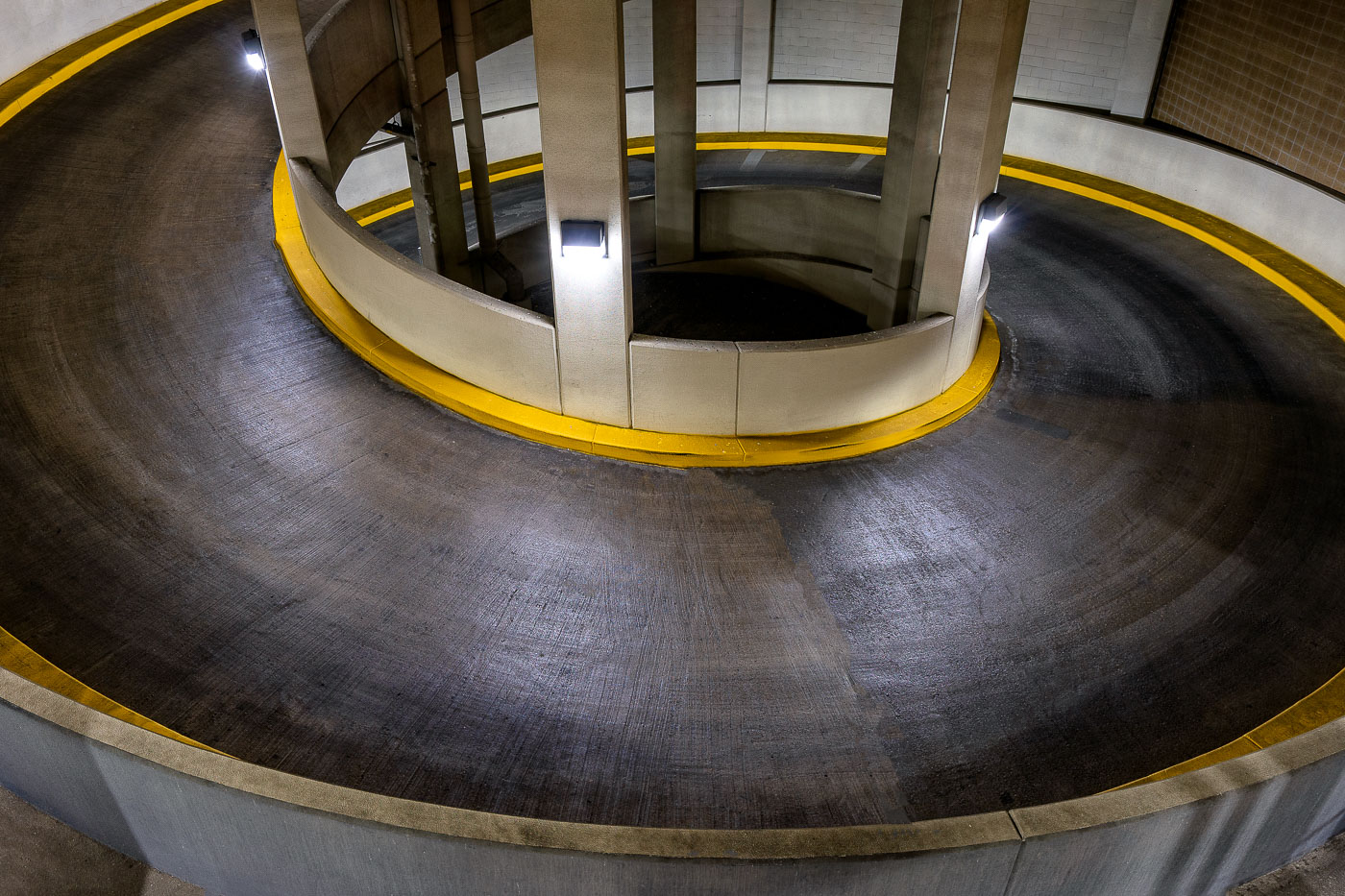
Spiral parking ramp with yellow-painted curbs and concrete support columns in downtown Minneapolis.
Ramp C is a municipal parking garage in downtown Minneapolis, operated by the city as part of its downtown parking system. The structure's central spiral connects its parking levels with a continuous curved roadway rather than straight ramps between floors, a common design solution for maximizing vehicle capacity on a compact urban site. Yellow curb markings delineate the traffic lane around the concrete support core. Facilities like Ramp C serve commuters, downtown employees, and visitors to nearby offices and entertainment venues in the central business district.

Spiral Ramp Inside Ramp C Parking Garage, Downtown Minneapolis
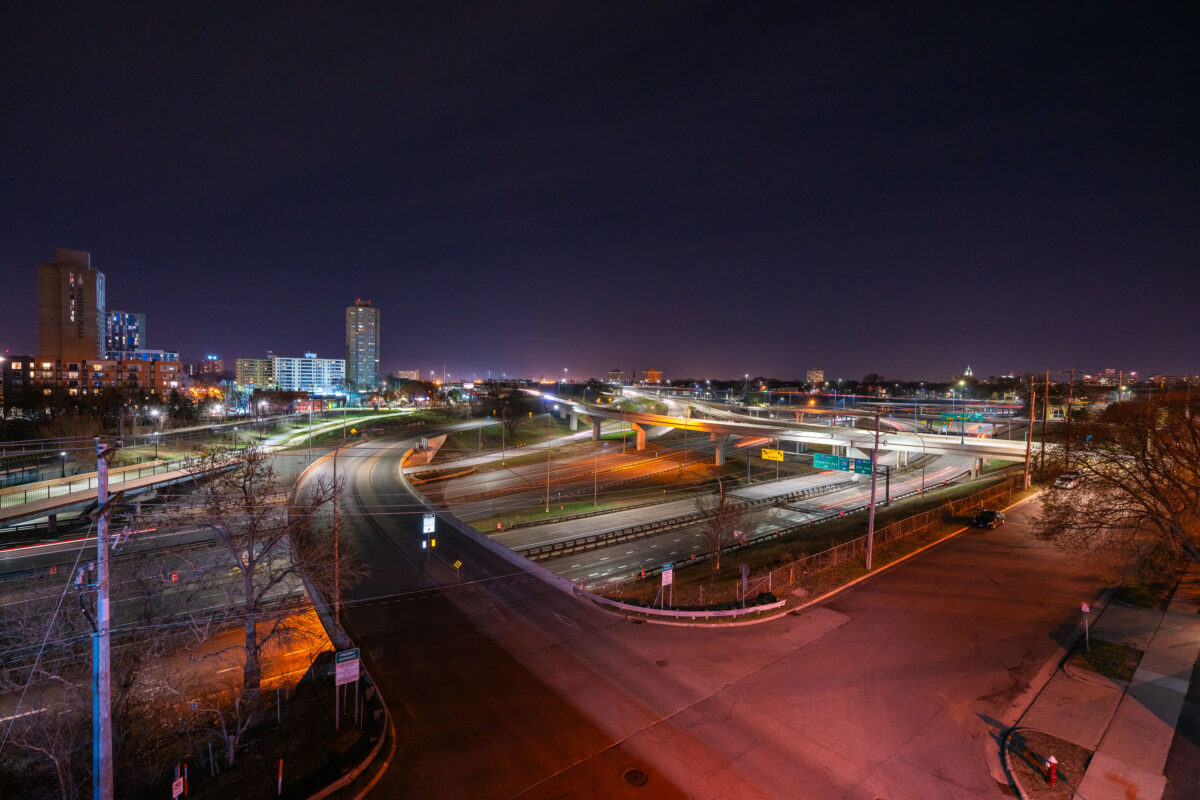
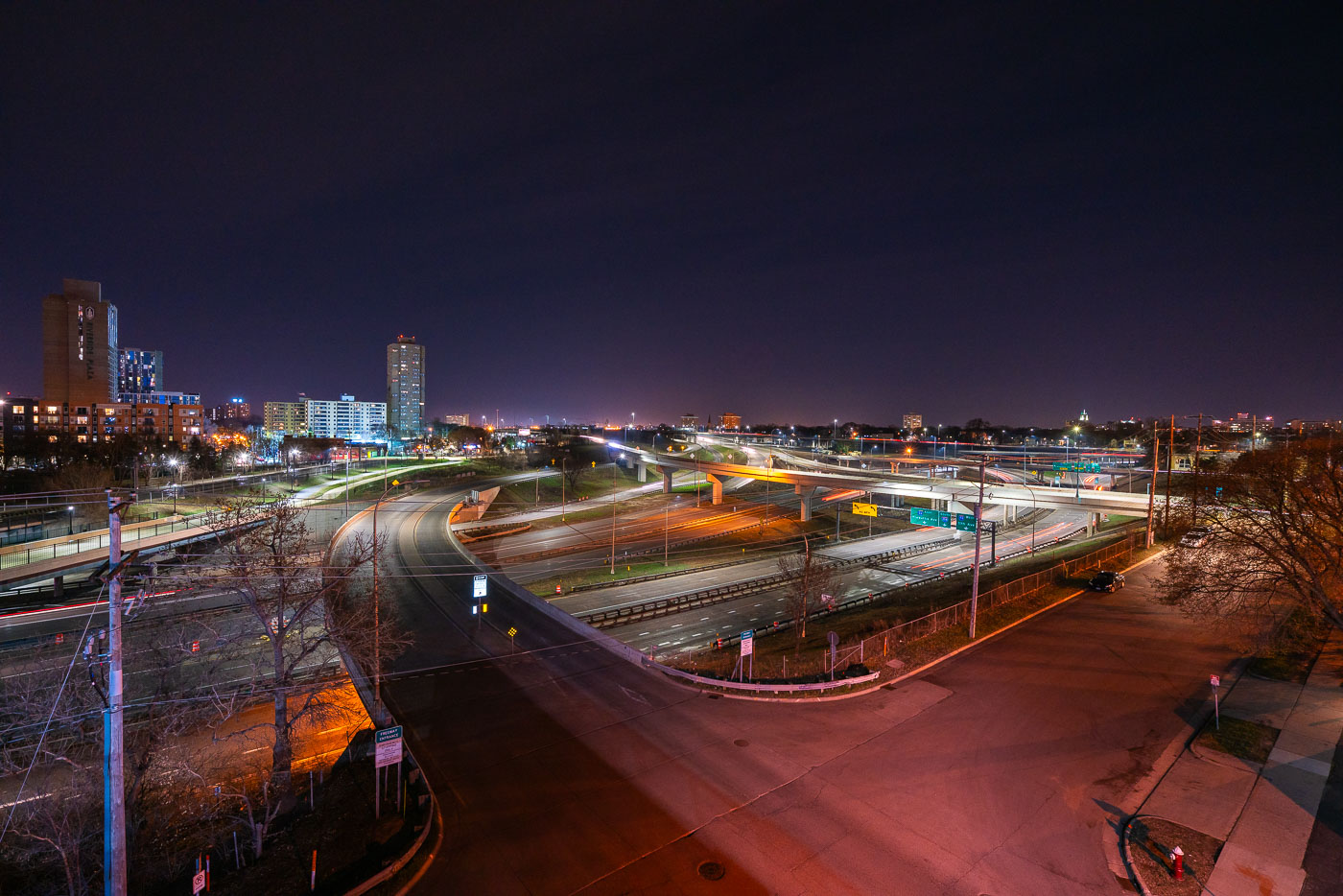
Interstate 35W and connecting ramps at night in Minneapolis with Cedar-Riverside neighborhood visible in background.
Interstate 35W cuts through the Cedar-Riverside neighborhood just south of downtown Minneapolis, carrying traffic between the city center and southern suburbs along the Twin Cities' busiest north-south corridor. The high-rise towers of Riverside Plaza, built in 1973 as public housing and now home to a large East African immigrant community, stand along the freeway's western edge. The interchange visible here connects 35W with Washington Avenue and the University of Minnesota's West Bank campus, one of several ramps rebuilt after the 2007 collapse of the 35W bridge over the Mississippi River prompted a broader reconstruction of the corridor.

Interstate 35W Interchange Near Cedar-Riverside at Night

Metro Transit buses parked in a North Minneapolis storage lot at night.
Metro Transit operates the bulk of bus and rail service across Minneapolis, St. Paul, and the surrounding Twin Cities metro area. Its fleet includes standard 40-foot coaches like the ones numbered here, typically pulled from routes for storage, repair, or reassignment between garages. During the early months of the COVID-19 pandemic, the agency cut scheduled service significantly as ridership dropped, leaving more buses parked than usual. Metro Transit is run by the Metropolitan Council, the regional planning body that also oversees transit for the seven-county Twin Cities area.

Metro Transit Buses Parked at a North Minneapolis Storage Lot

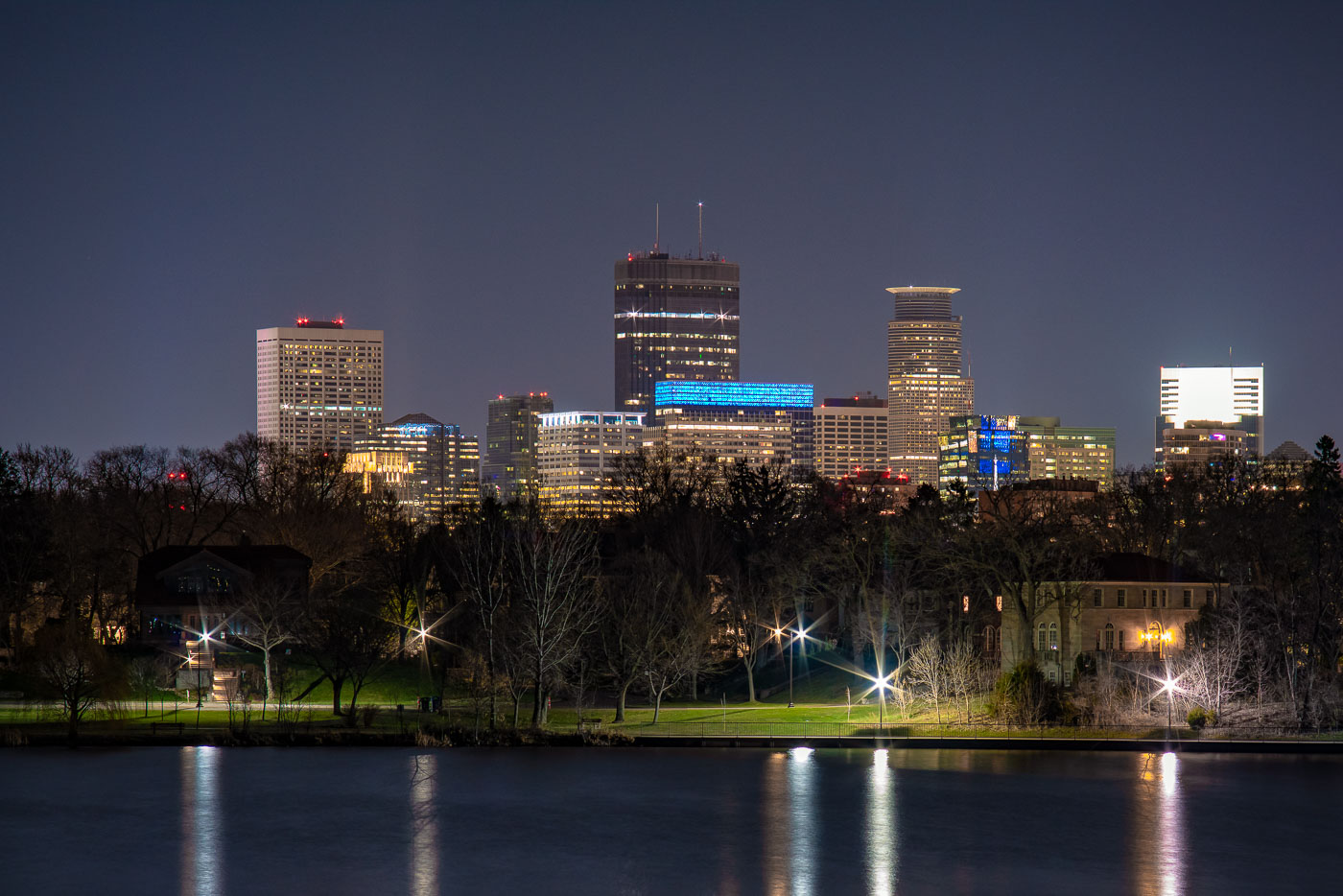
Minneapolis downtown skyline at night viewed across Lake of the Isles with illuminated office towers and foreground park.
Lake of the Isles sits at the western edge of Minneapolis's Chain of Lakes, linked by man-made channels to Bde Maka Ska to the south and Cedar Lake to the north.

Minneapolis Skyline at Night from Lake of the Isles

Hennepin Healthcare Paramedic ambulances parked in a vehicle bay in downtown Minneapolis.
Hennepin EMS operates as the ambulance service of Hennepin Healthcare, formerly known as Hennepin County Medical Center, which serves as Minnesota's only adult Level I trauma center and one of two in the state for pediatric trauma. The service covers Minneapolis and much of Hennepin County, responding to roughly 100,000 calls a year and transporting patients to HCMC's downtown campus on Chicago Avenue. Its paramedics also staff a community paramedic program that follows up with high-need patients outside the emergency room. HCMC has held its Level I trauma designation since the American College of Surgeons verification program began rating hospitals in the 1980s.

Hennepin EMS Ambulances Lined Up in a Minneapolis Parking Bay
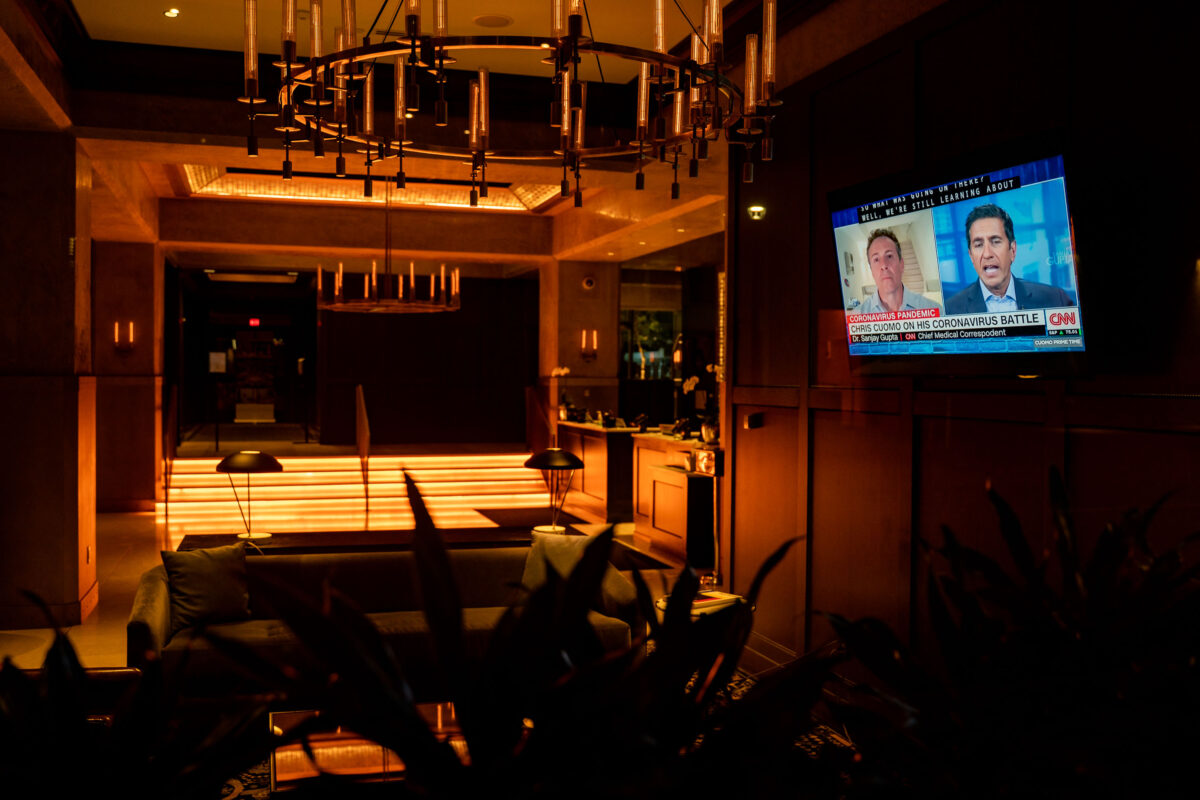
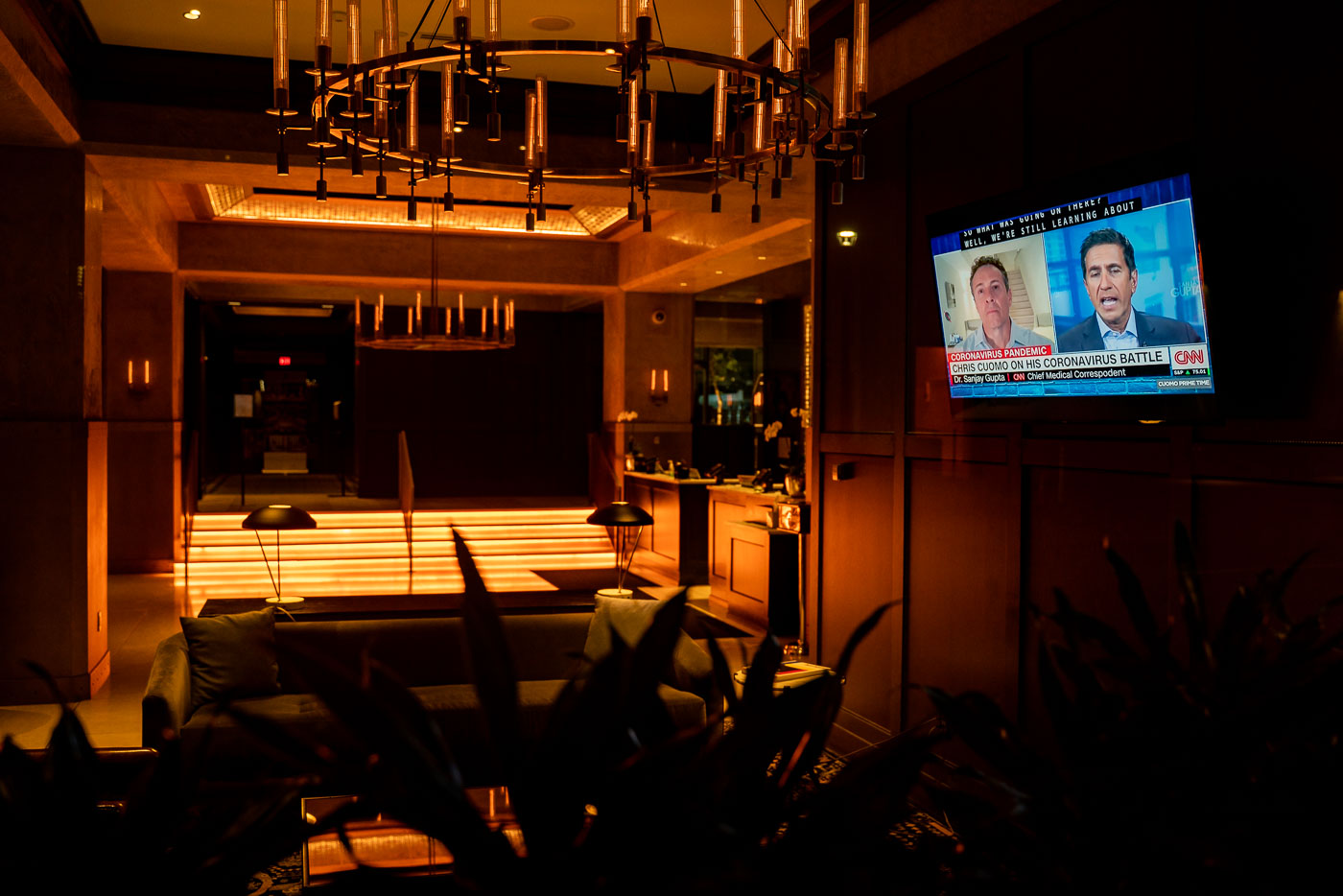
CNN broadcast with Chris Cuomo and Dr. Sanjay Gupta plays on television in the Marquette Hotel lobby, Minneapolis, April 2020.
Chris Cuomo discussed his own coronavirus diagnosis with CNN's chief medical correspondent, Dr. Sanjay Gupta, in an April 2020 segment that aired on the network amid the early weeks of the pandemic. The broadcast appeared on a lobby television at the Marquette Hotel in downtown Minneapolis, part of the Hilton-affiliated property on South Seventh Street near the IDS Center. Cuomo, then a primetime anchor for CNN, quarantined at home after testing positive and returned to reporting on air during his recovery.

Empty Marquette Hotel Lobby During Chris Cuomo’s CNN Interview
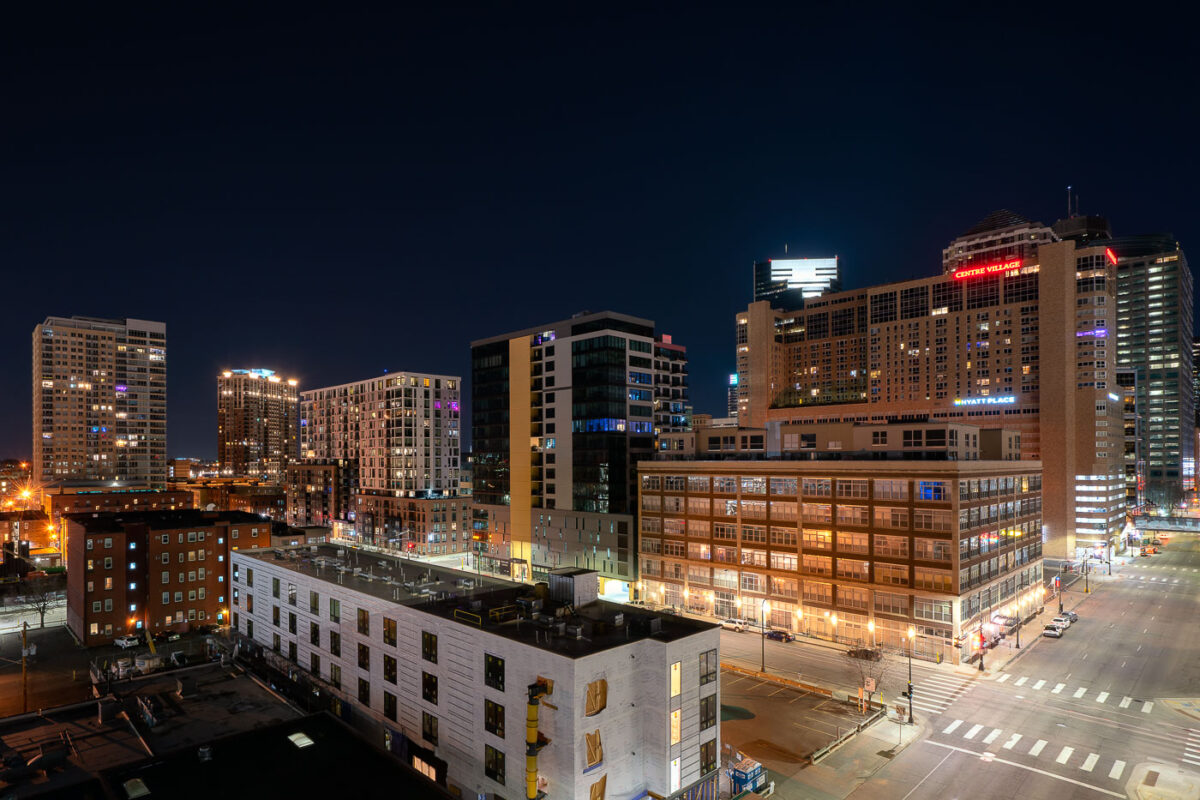
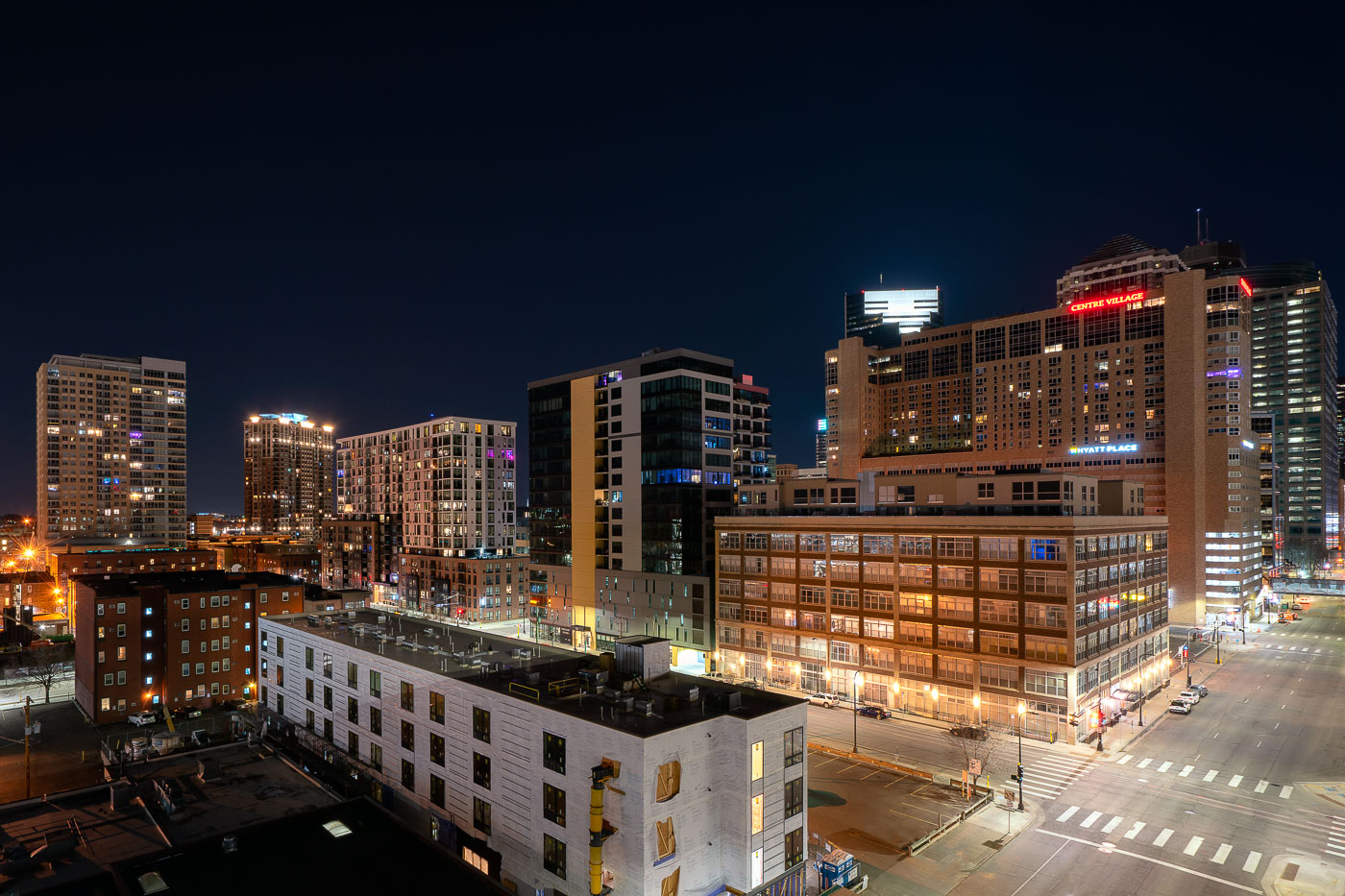
Downtown Minneapolis skyline at night showing Centre Village and Hyatt Place hotel buildings, April 2020.
Centre Village rises over downtown Minneapolis at Second Avenue South, a mixed-use high-rise completed in 1984 that combines residential units with commercial space. The Hyatt Place hotel occupies part of the same complex, serving business travelers and visitors to the city center. Both buildings sit within blocks of the Mississippi riverfront and the Central Business District, an area built up largely in the 1980s as downtown Minneapolis added residential towers alongside its office core.

Centre Village and Hyatt Place Above Downtown Minneapolis at Night
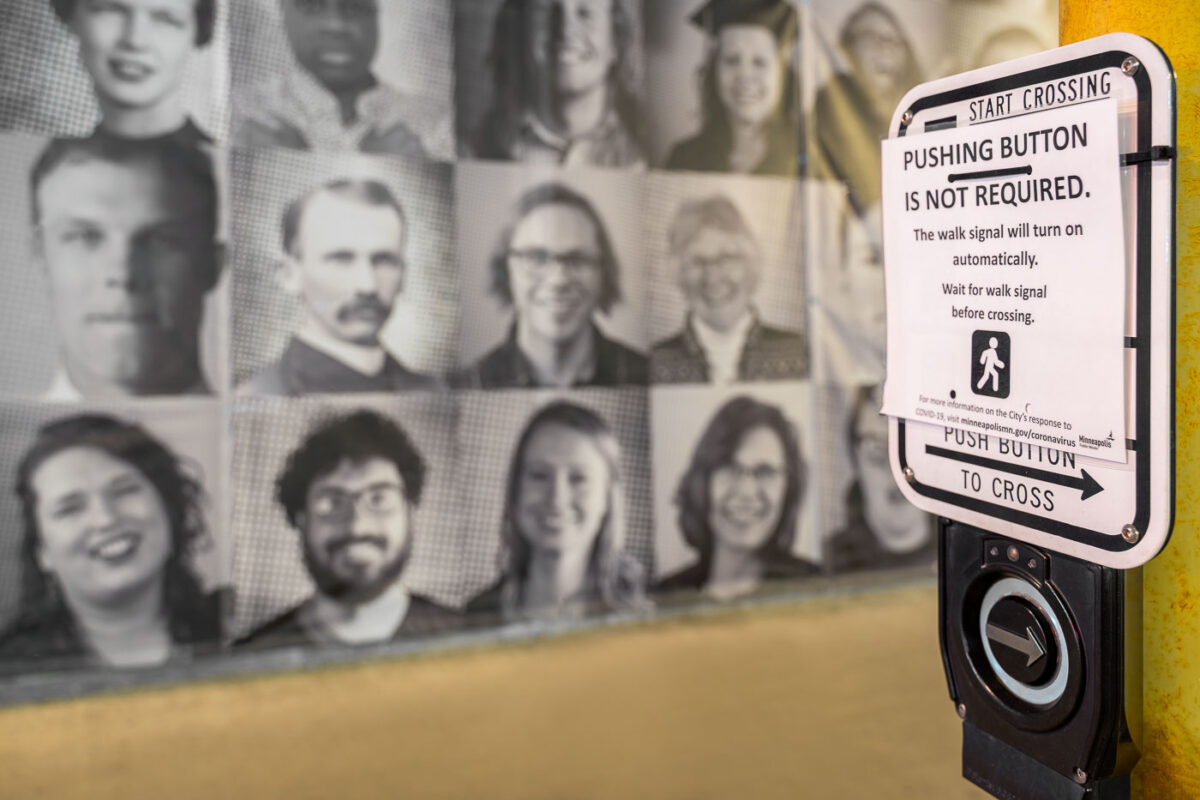
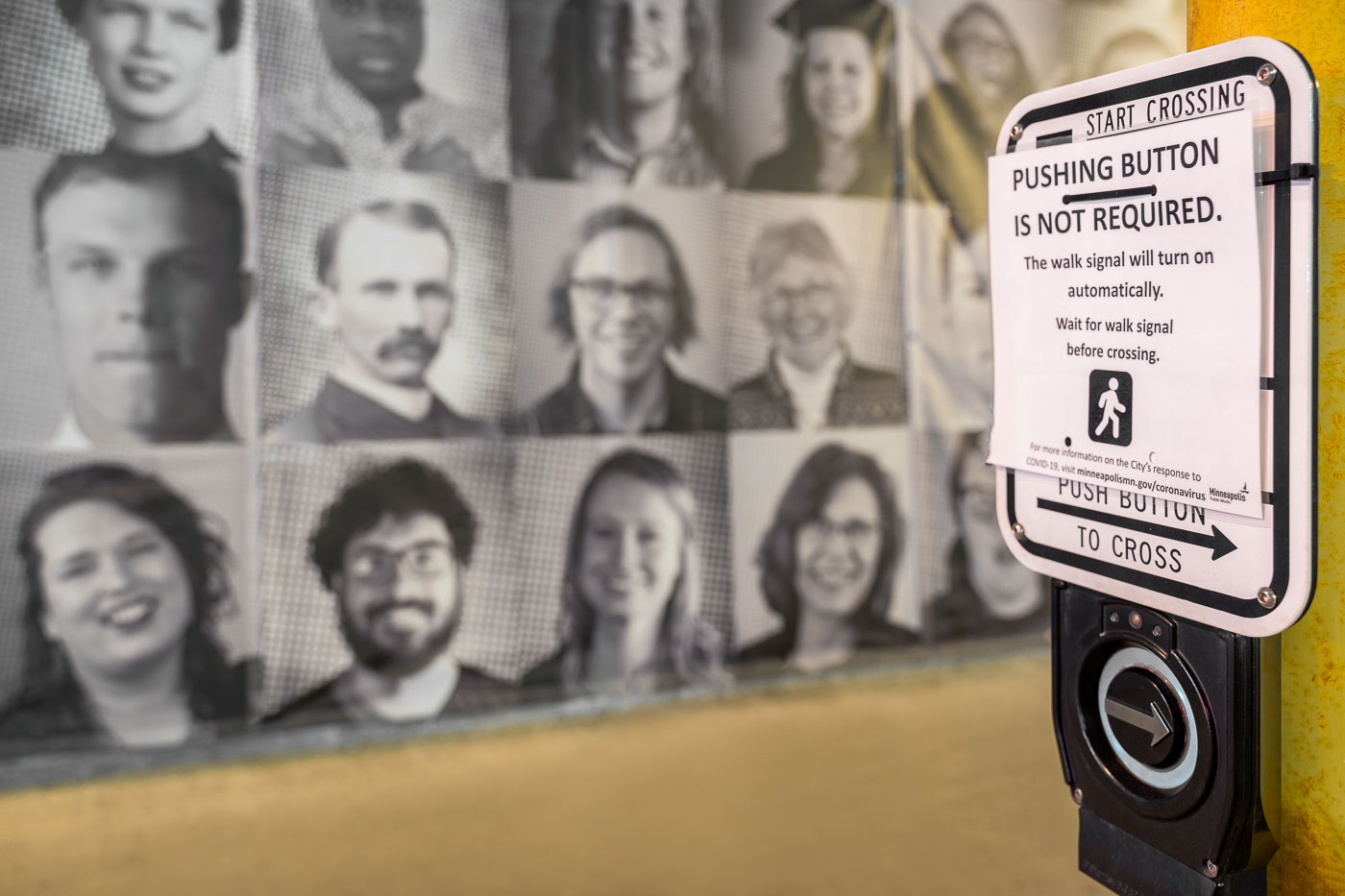
Pedestrian crosswalk button in Minneapolis with COVID-19 notice stating pushing is not required and walk signal activates
Minneapolis disabled the push-to-activate function on hundreds of pedestrian crossing buttons in spring 2020, switching signals to run on automatic timers instead. The city cited concerns about shared surfaces during the COVID-19 pandemic, part of a broader public health response that also touched transit, parks, and other city infrastructure. Signs like this one were taped over the manual buttons at intersections across the city, directing pedestrians to wait for the walk signal rather than press the crossing button.

Automatic Walk Signal Notice on a Minneapolis Crosswalk Button
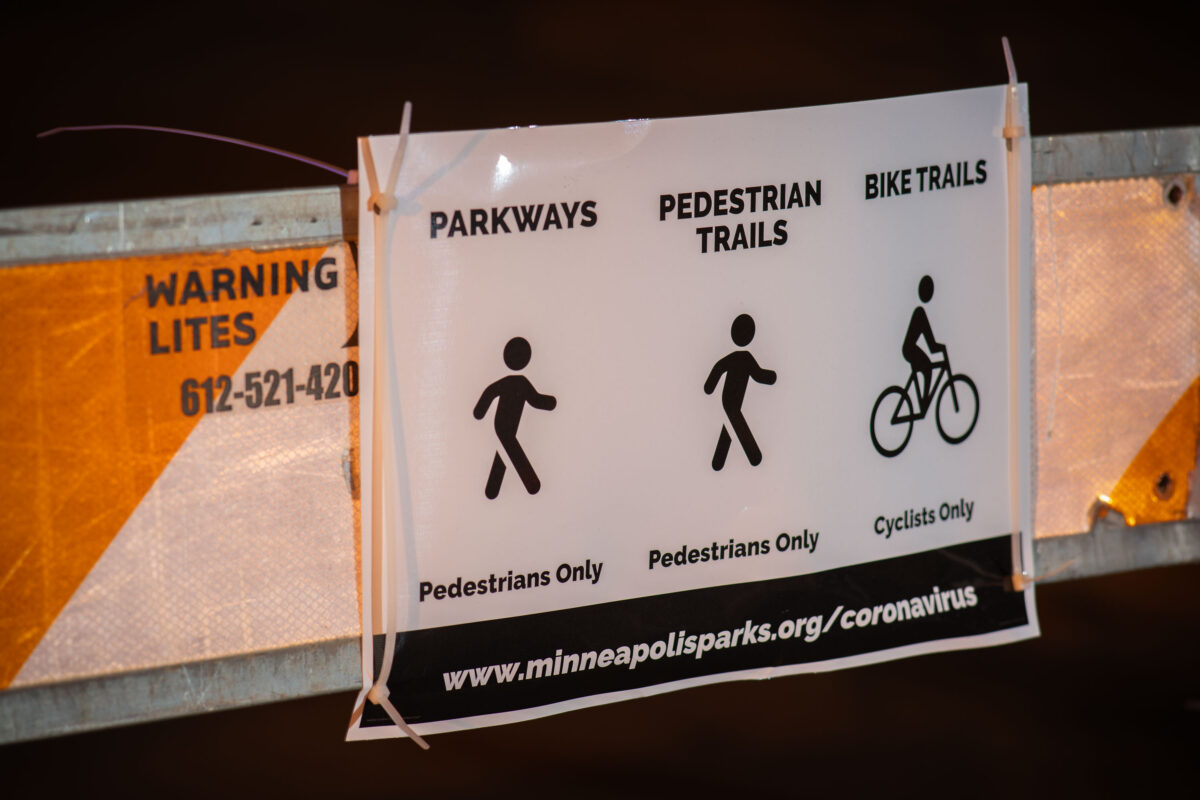
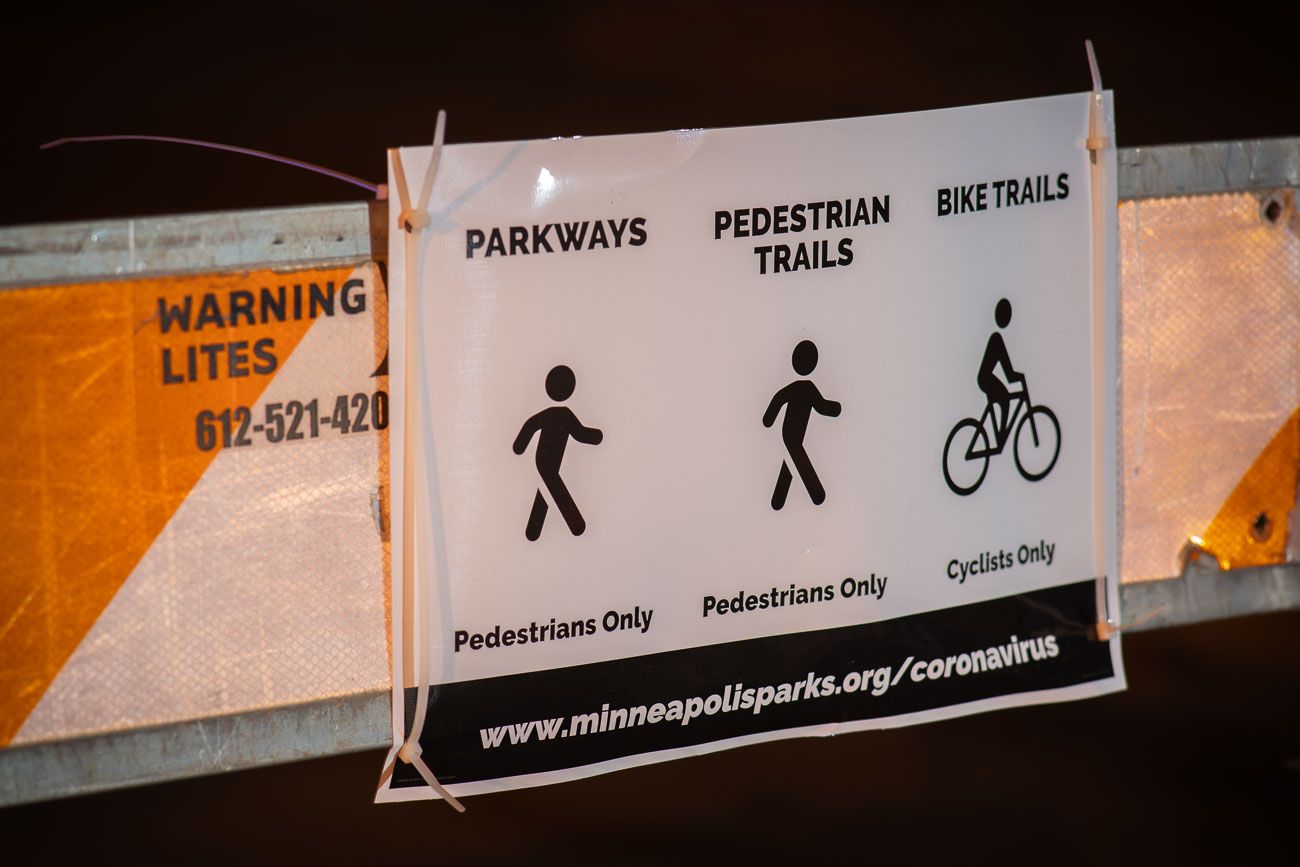
Minneapolis parks coronavirus signage
During the COVID-19 pandemic, Minneapolis Parks implemented temporary measures to manage public access to its parkways and trails. This signage, affixed to a barrier, directs pedestrians and cyclists to designated paths, indicating that parkways were closed to vehicular traffic and reserved for non-motorized use. The directive aimed to provide safe outdoor spaces for recreation while adhering to public health guidelines.

Minneapolis Parks COVID-19 Signage for Parkways and Trails
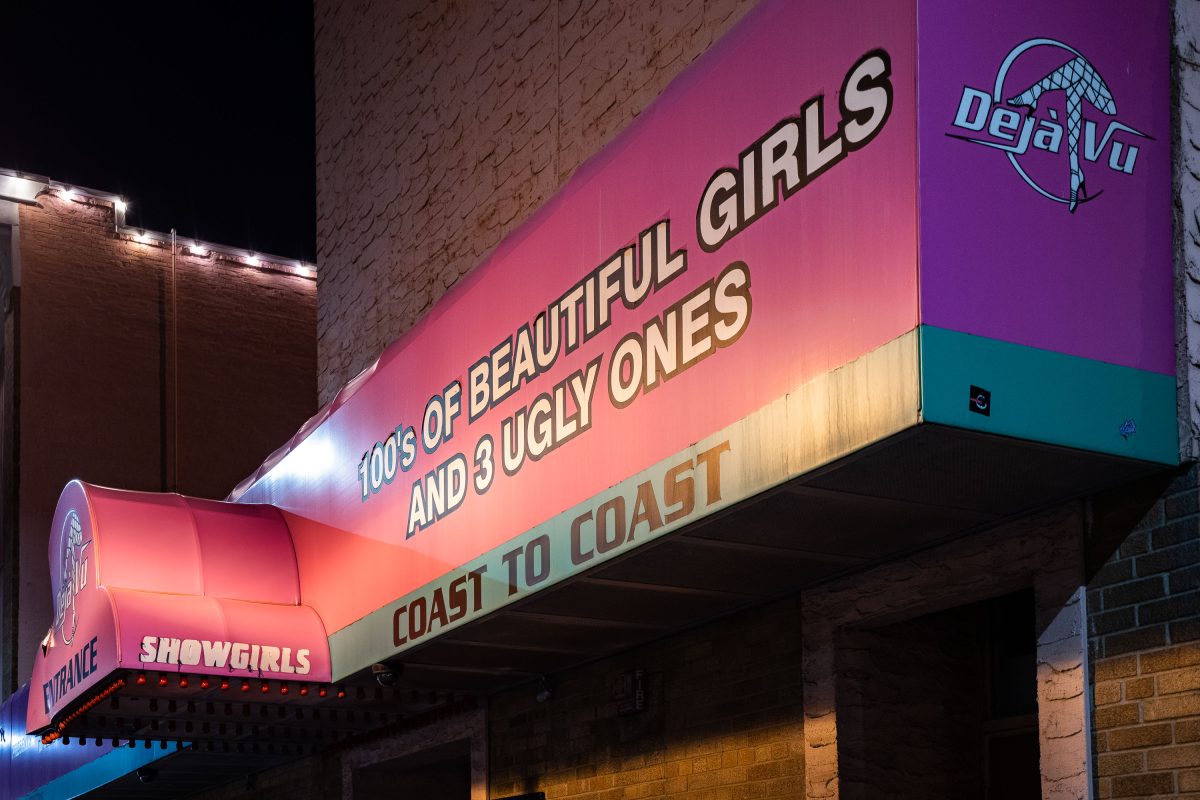
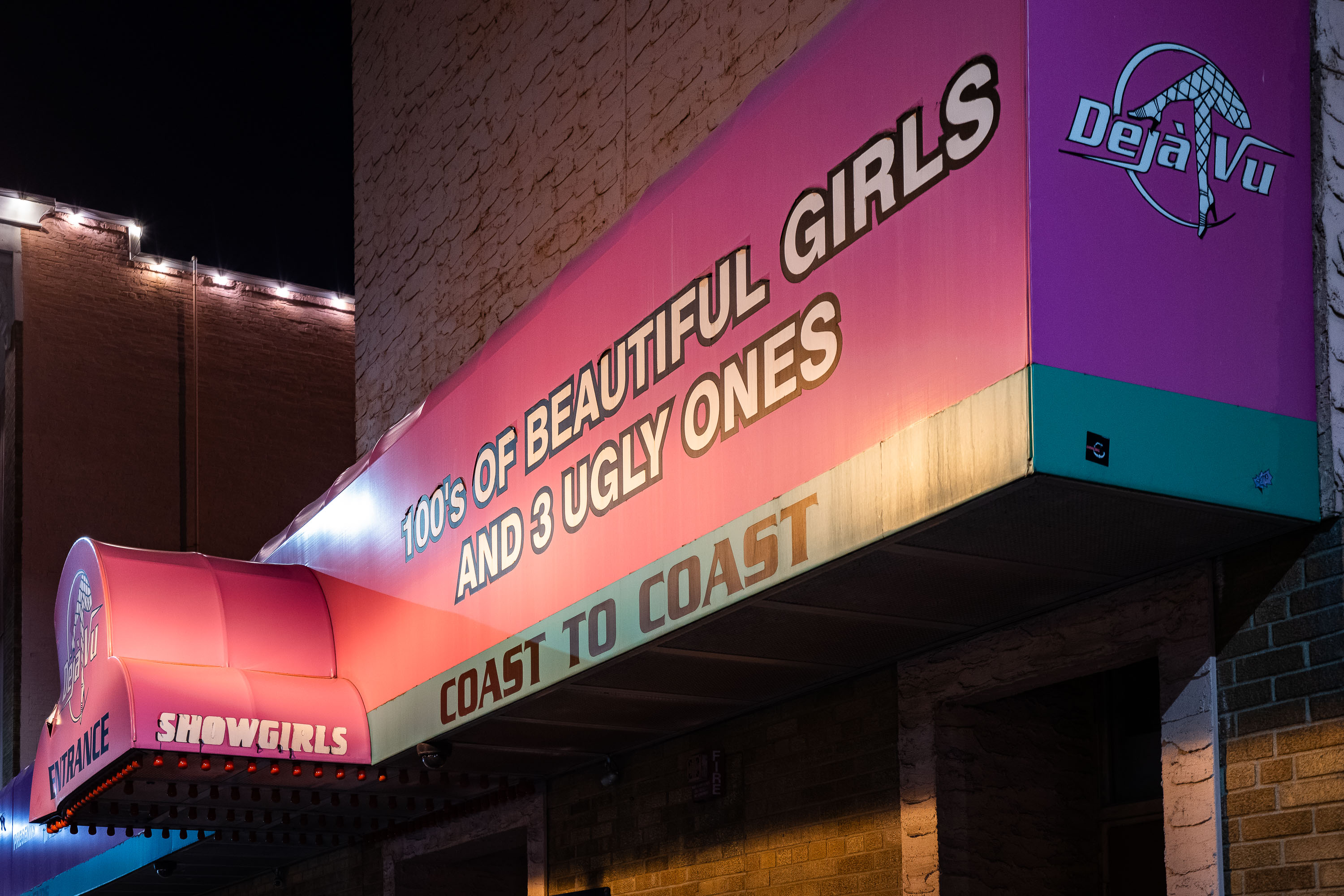
Neon sign for Deja Vu Showgirls strip club in Minneapolis displays humorous text about beautiful and ugly women.
Deja Vu Showgirls is a strip club in the North Loop neighborhood of Minneapolis. Its marquee reads "100's of Beautiful Girls and 3 Ugly Ones, Coast to Coast."

“100’s of Beautiful Girls” Sign at Deja Vu Showgirls in the North Loop
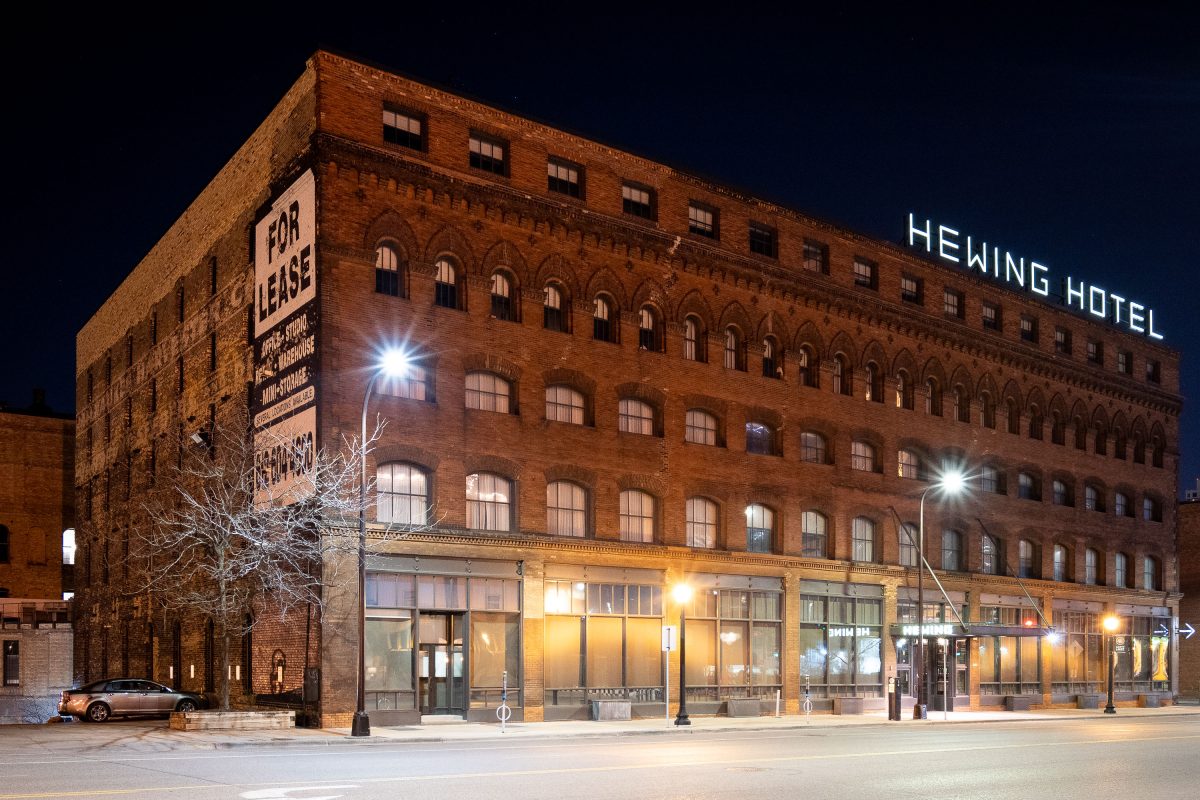
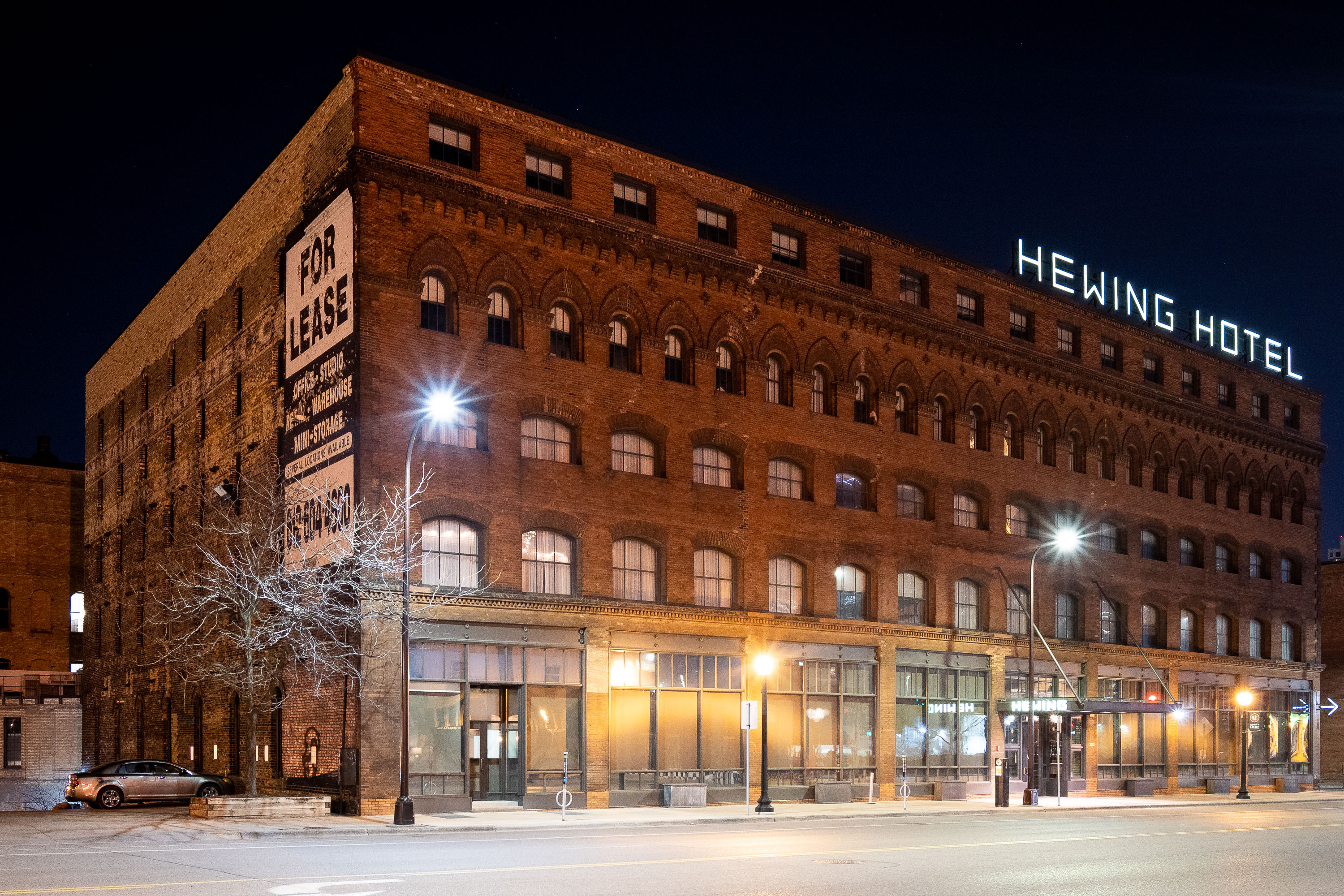
Hewing Hotel, a historic brick building in Minneapolis's North Loop neighborhood, illuminated at night.
The Hewing Hotel occupies a six story brick warehouse built in 1897 at 300 Washington Avenue North in the North Loop neighborhood of Minneapolis. The warehouse was converted into a boutique hotel that opened in 2017, with a rooftop pool and bar added on top of the original structure.

Hewing Hotel on Washington Avenue North in Minneapolis
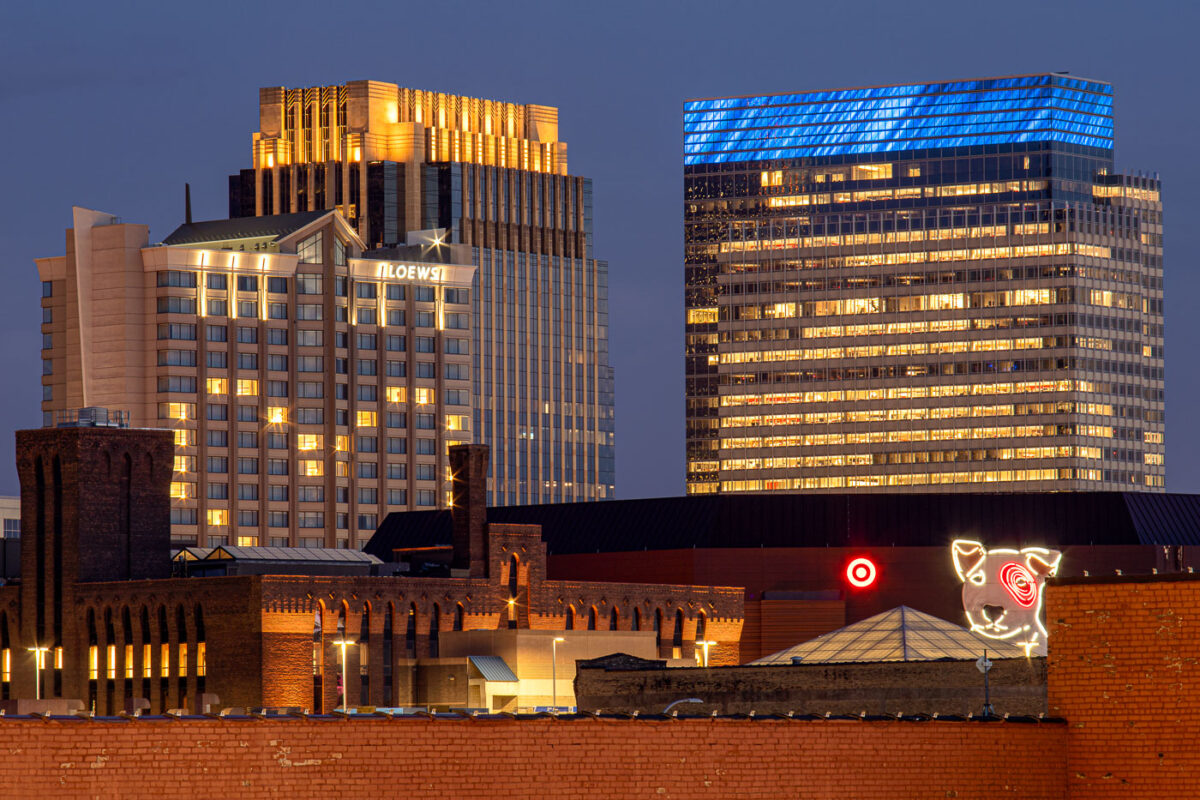
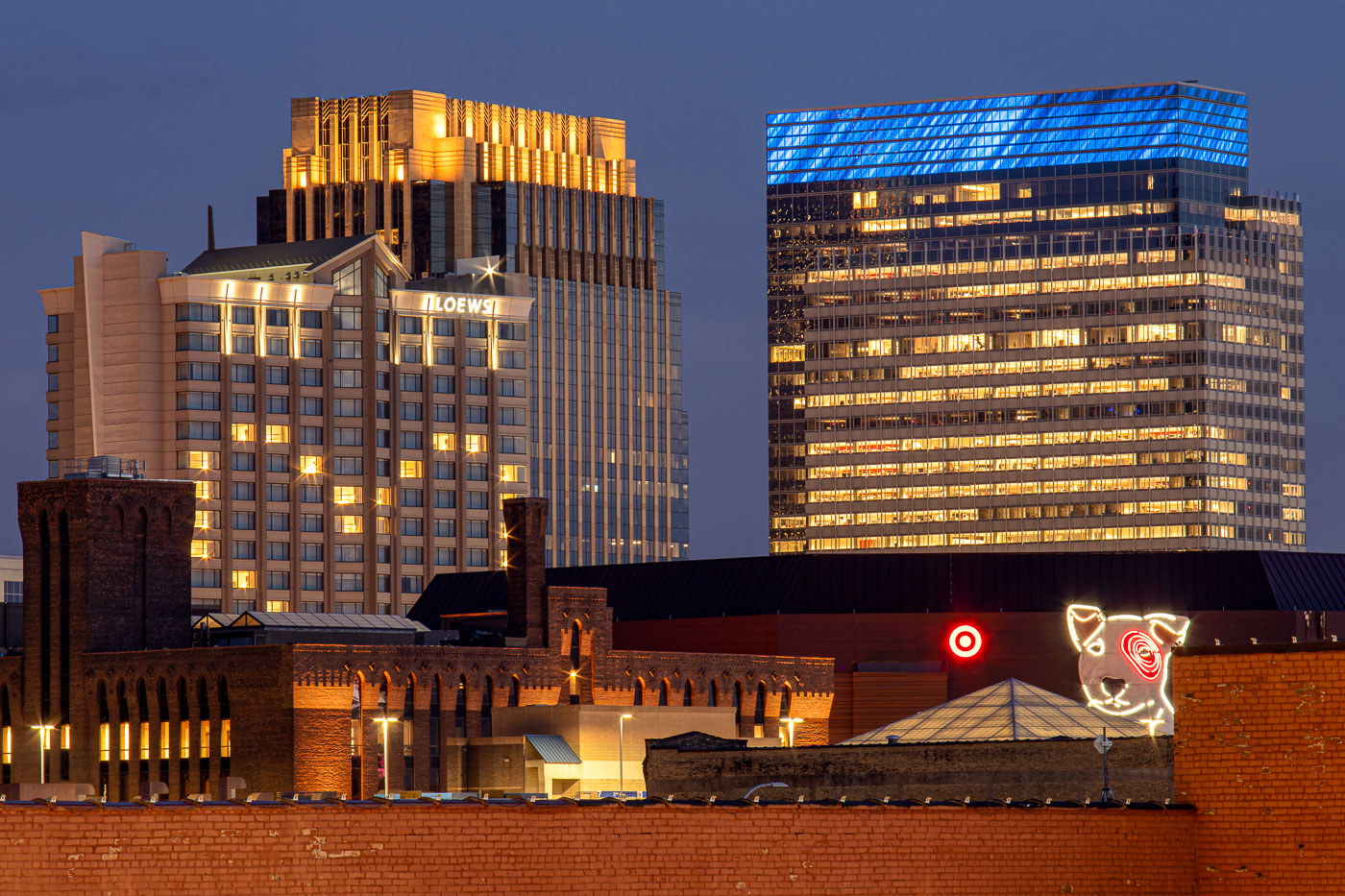
Loews Hotel and Target headquarters illuminated at night in downtown Minneapolis with Target Dog neon sign in foreground.
Target's corporate headquarters tower rises at 1000 Nicollet Mall, its glass exterior wrapped in a blue-lit crown near the top floors. The company has been based in downtown Minneapolis since its founding as a Dayton's discount offshoot in 1962, and its headquarters campus remains one of the largest employers in the city's core. The neon Bullseye dog sign near the building's base is a longstanding piece of Target's branding, drawn from the company's mascot, Bullseye. To the left, the Loews Minneapolis Hotel occupies part of the LaSalle Plaza complex, a mixed-use development completed in 1991 that also includes office space and street-level retail along Nicollet Mall.

Target’s Bullseye Dog Sign Beneath Its Minneapolis Headquarters
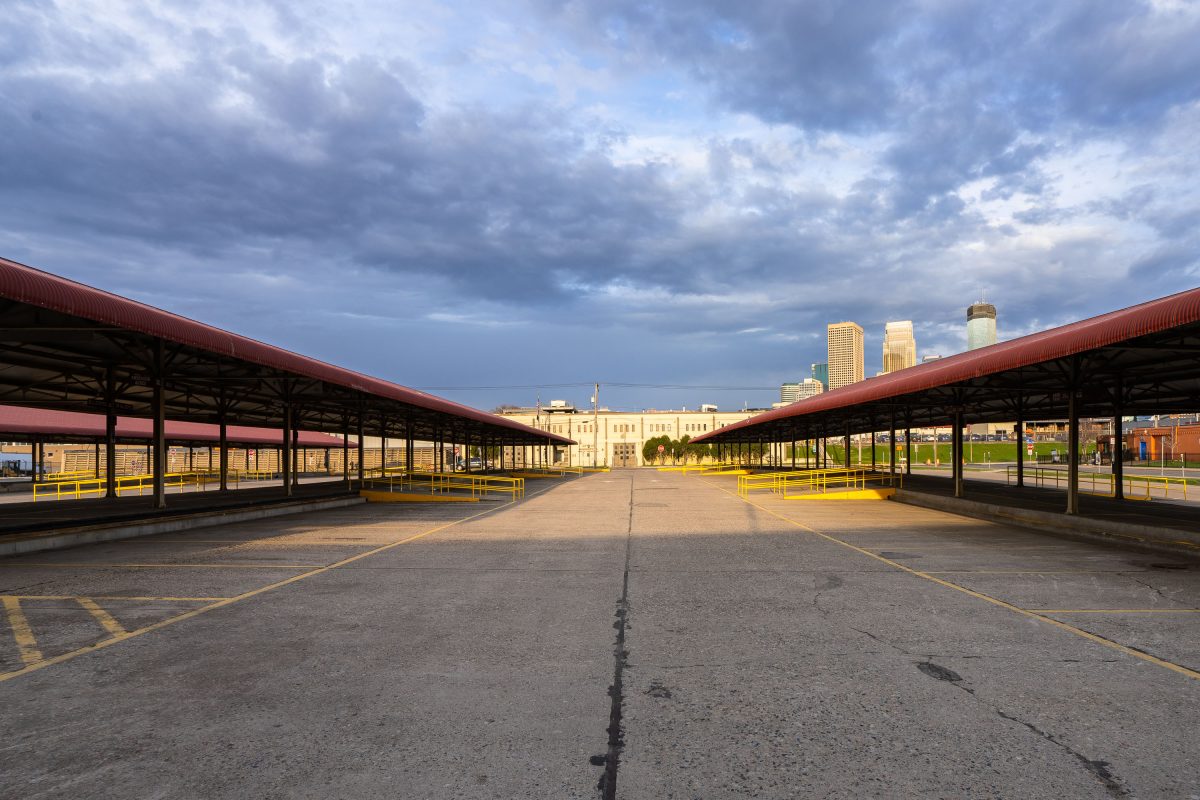
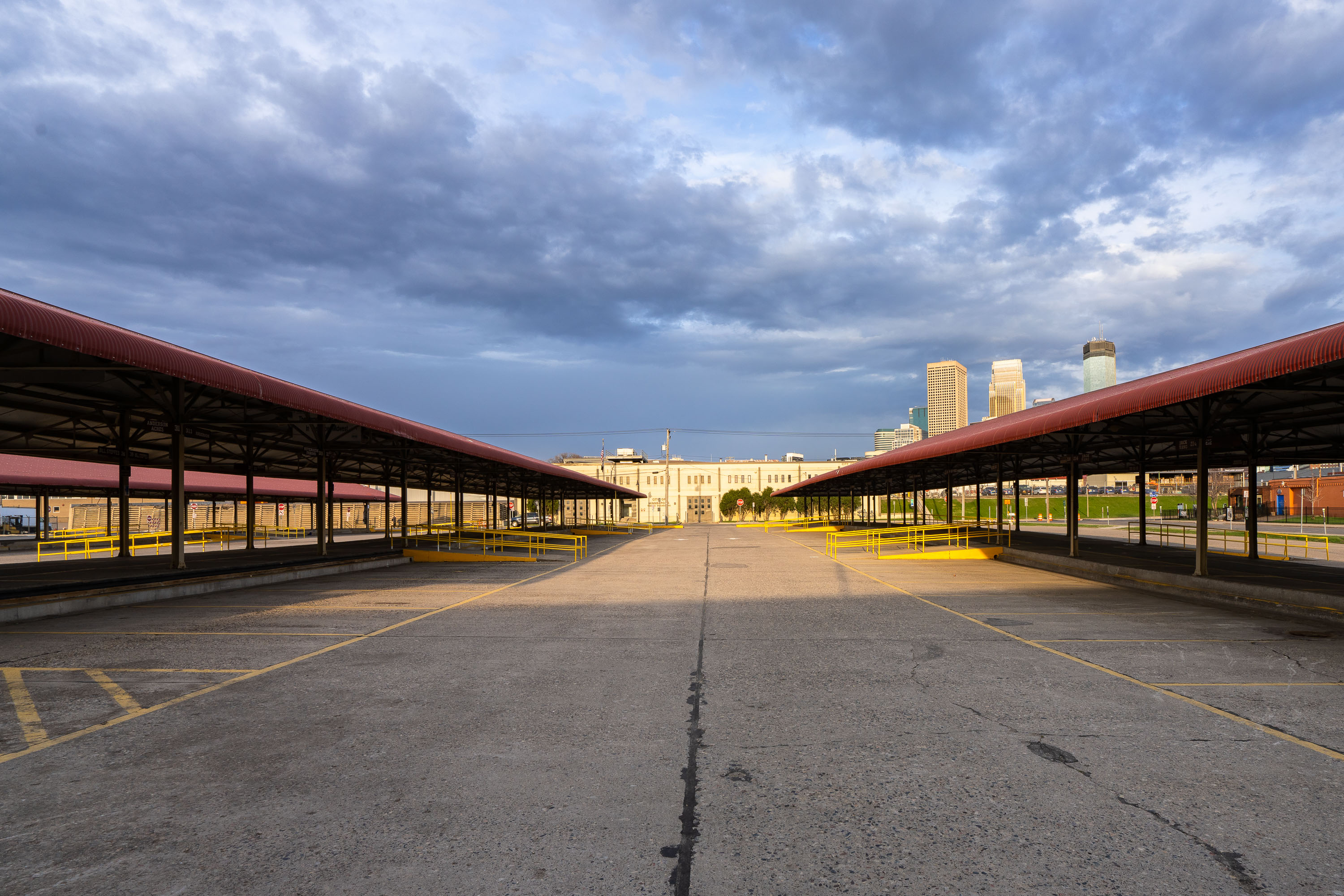
Minneapolis Farmers Market Property
Minneapolis Farmers Market and the Minneapolis Engineering building.

Minneapolis Farmers Market Property

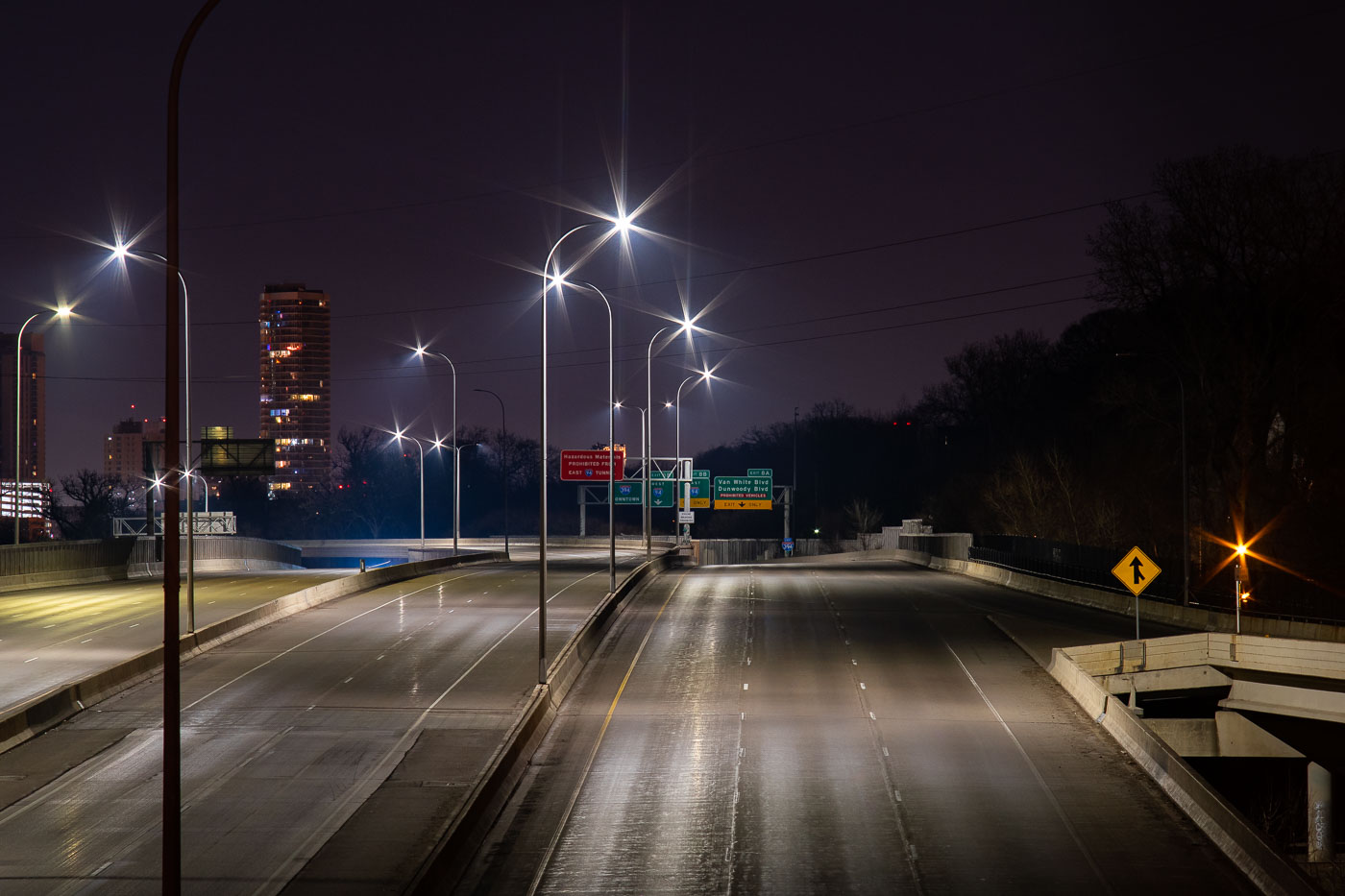
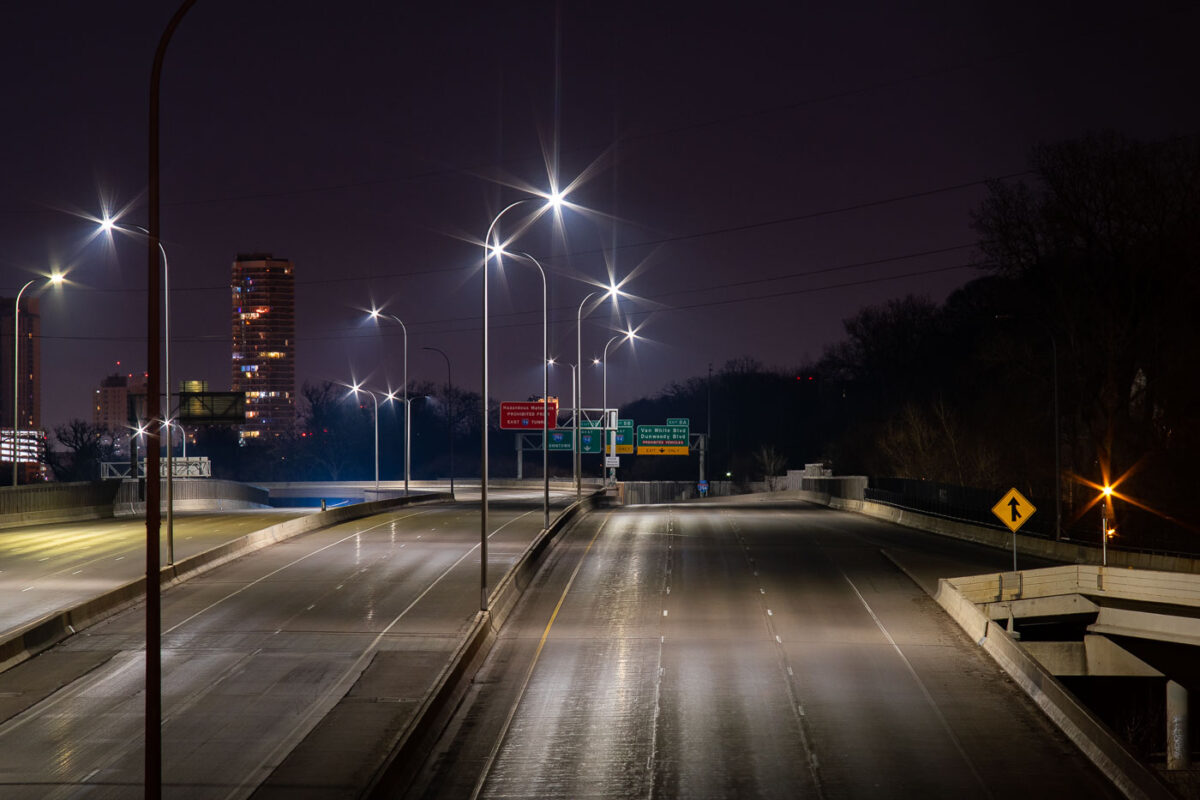
Interstate 394 in Minneapolis nearly empty at night during COVID-19 lockdown in April 2020.
Interstate 394 connects downtown Minneapolis to the western suburbs, running past the Cedar-Riverside neighborhood and merging with Interstate 94 near the Lowry Hill Tunnel. The freeway opened in stages during the late 1980s and early 1990s, replacing what had long been planned as an inner-city extension of Highway 12. Minnesota's stay-at-home order, in effect from late March through mid-May 2020, cut traffic across the Twin Cities metro to a fraction of normal volumes. Overnight counts on routes like I-394 dropped by more than half compared to pre-pandemic averages during that period.

Interstate 394 Empty During Minneapolis COVID-19 Shutdown
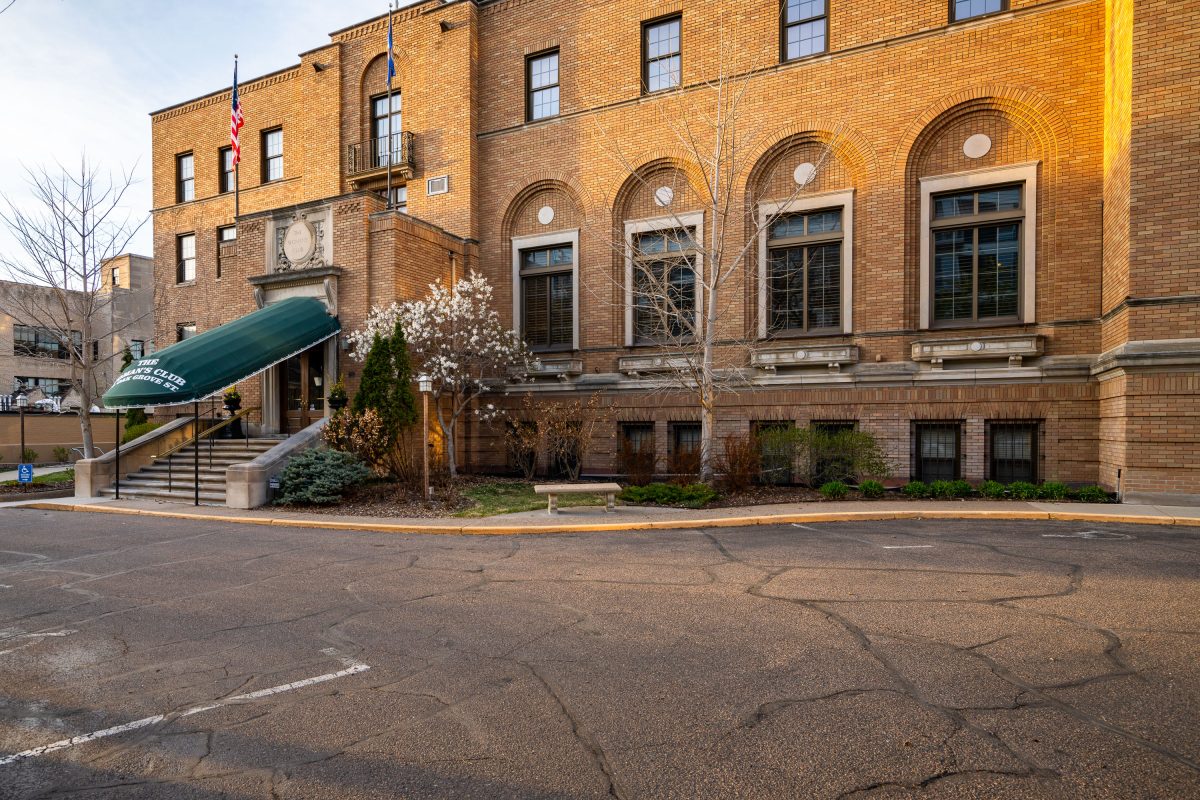
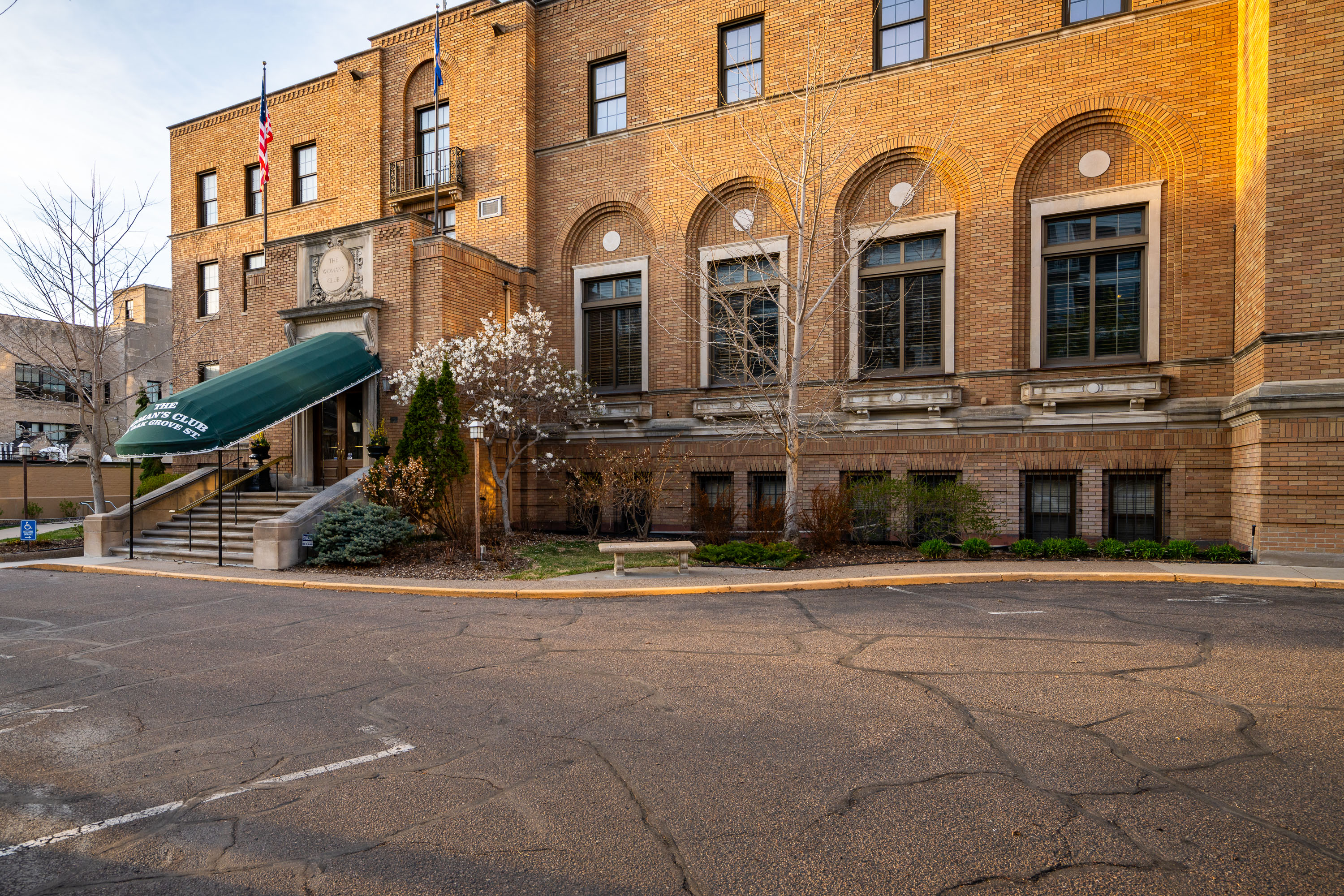
The Women's Club, a brick Romanesque Revival building in downtown Minneapolis, features arched windows and an American flag.
The Woman's Club building stands on Oak Grove Street in Minneapolis in Loring Park.

The Woman’s Club Building on Oak Grove Street
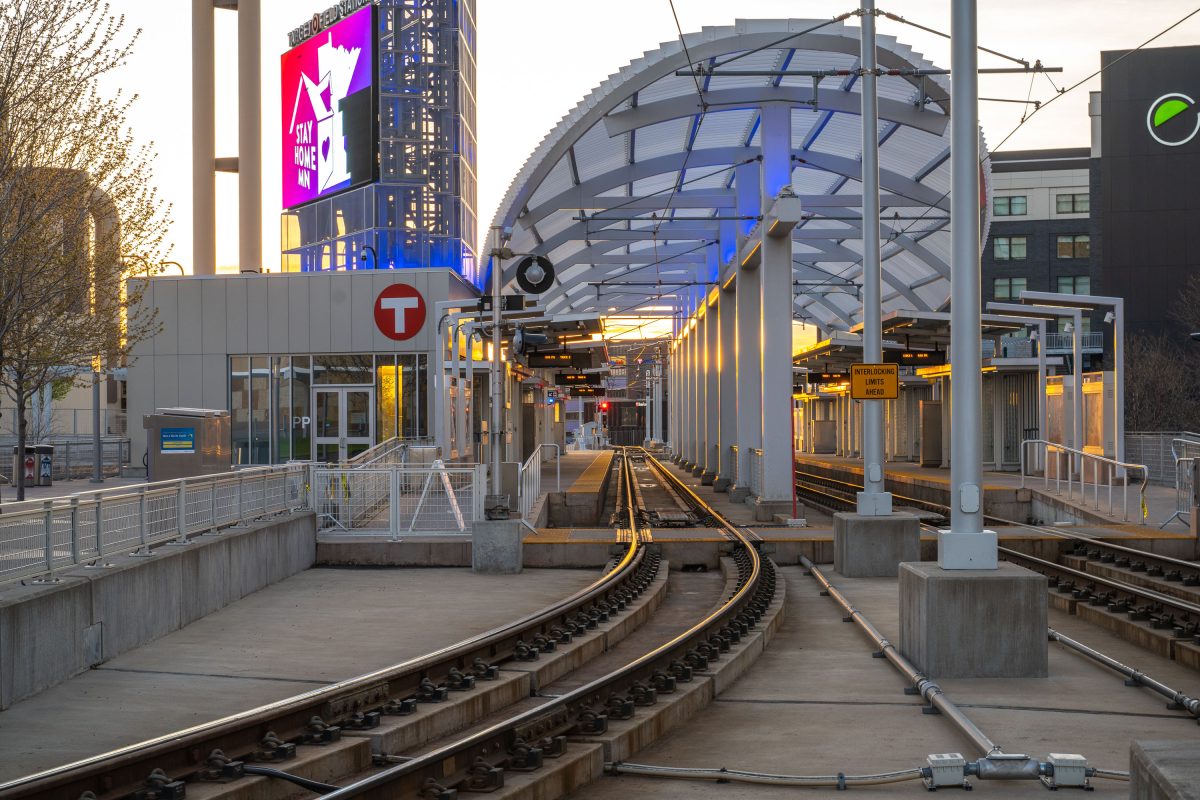
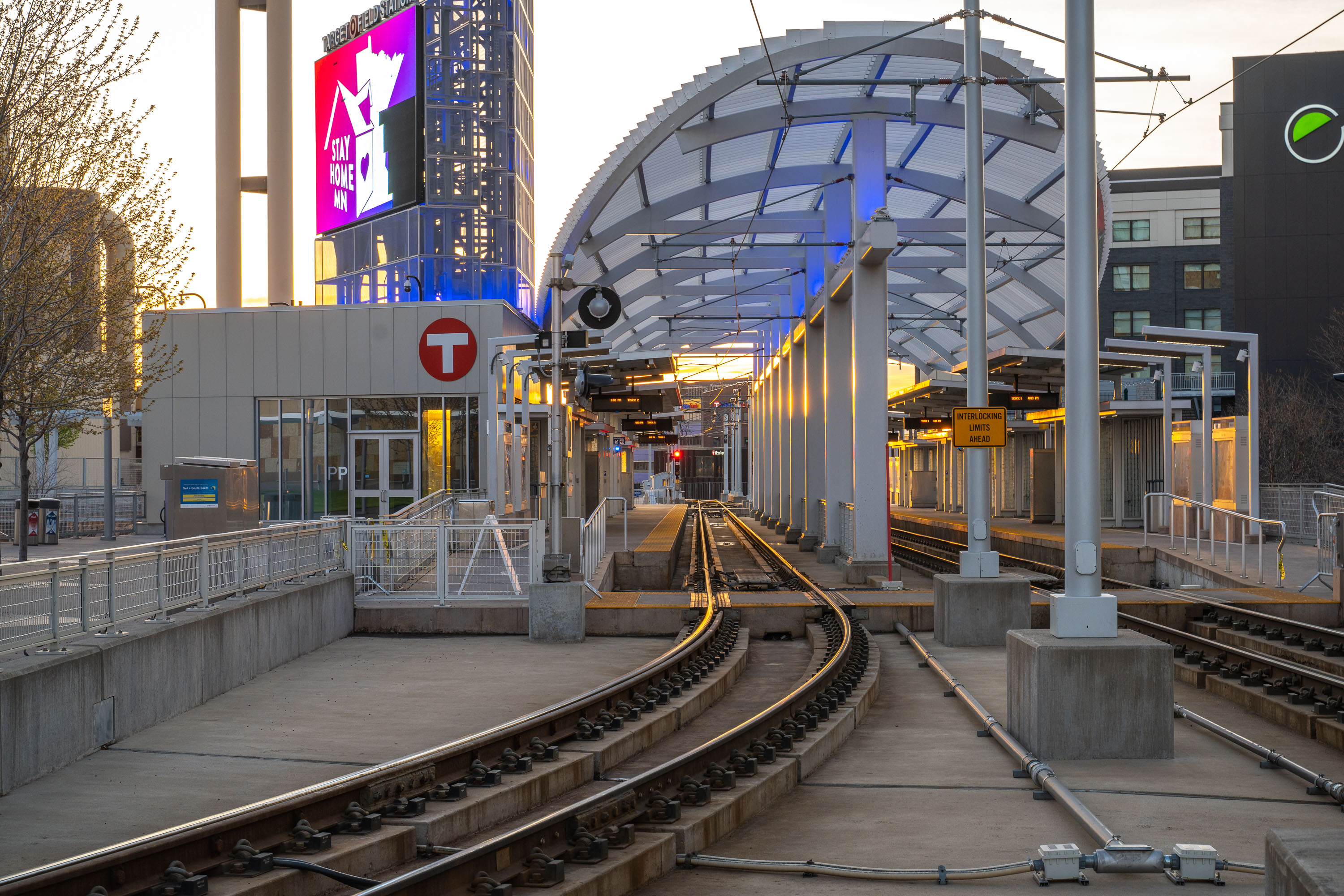
Empty platform at Target Field Station, a Minneapolis METRO light rail stop in the North Loop neighborhood.
Target Field Station sits in the North Loop neighborhood of downtown Minneapolis, serving as a stop on the METRO Blue and Green light rail lines. The station connects riders to Target Field, home of the Minnesota Twins, and links the North Loop to downtown Minneapolis and the broader METRO system.

“Stay Home MN” Sign Above Target Field Station at Dusk
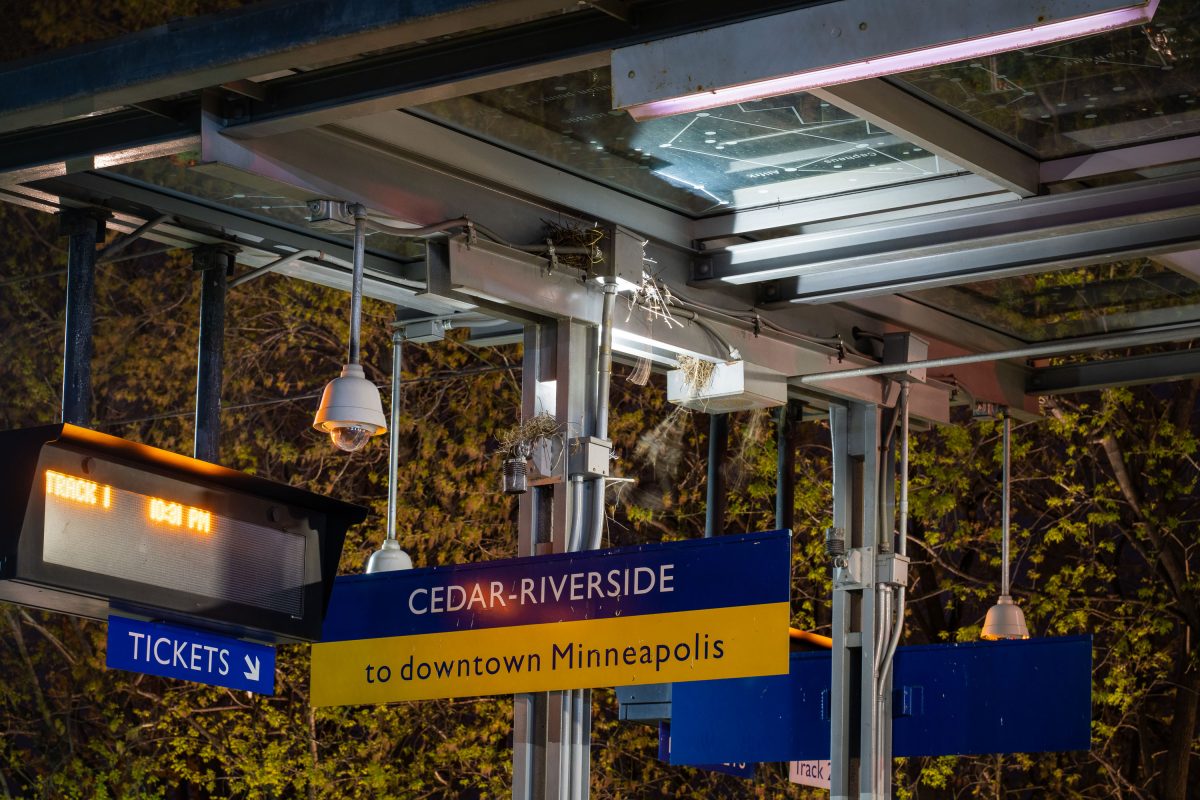
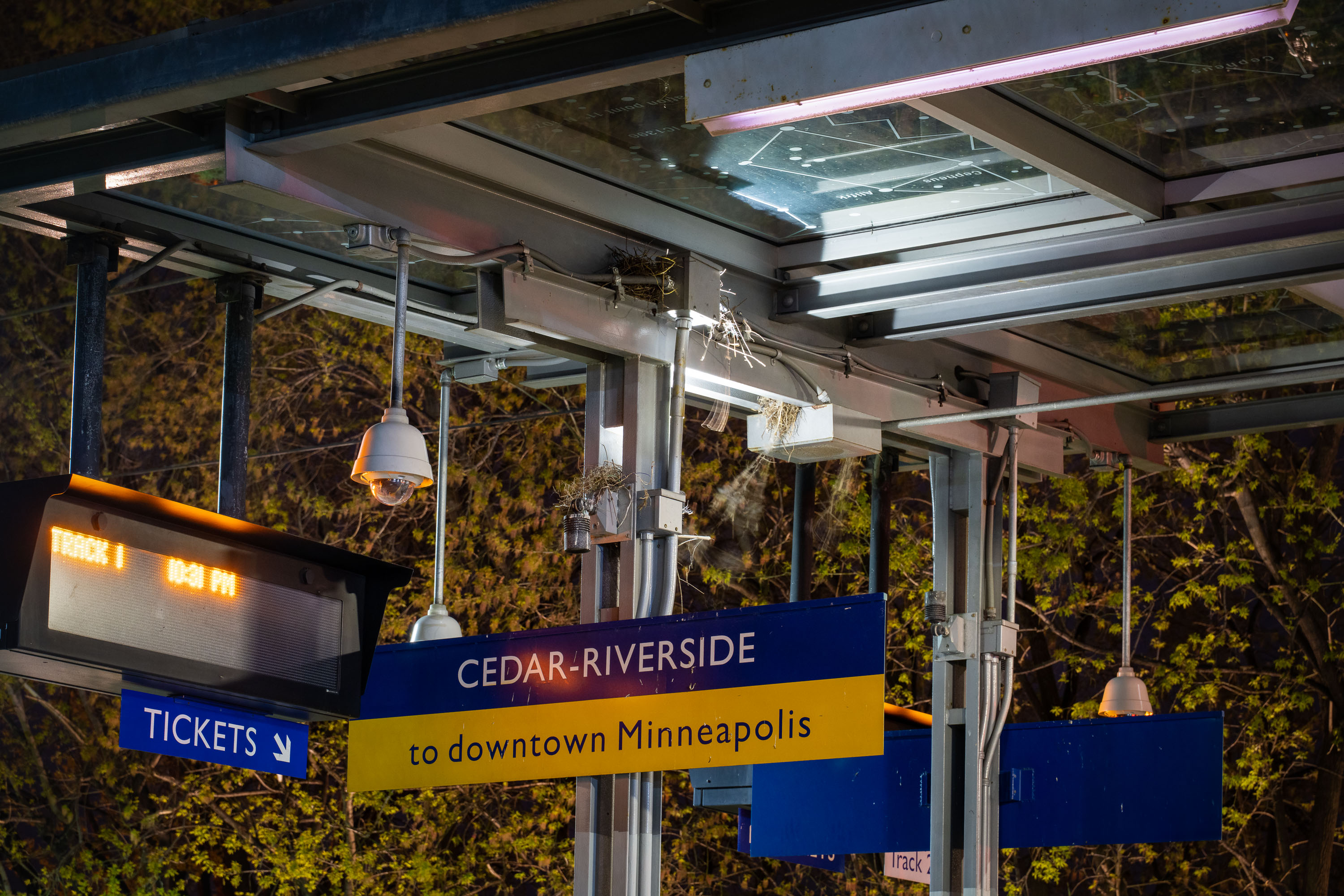
Cedar-Riverside light rail station platform sign in Minneapolis directing passengers to downtown via the Blue Line.
Cedar-Riverside Station serves the METRO Blue and Green Lines in Minneapolis, adjacent to the West Bank neighborhood and University of Minnesota. Opened in 2004 as part of the original Hiawatha Line, it sits near Augsburg University and the Cedar-Riverside residential towers, an area historically home to a large East African immigrant community.

Track 1 Signage at Cedar-Riverside Station, Minneapolis
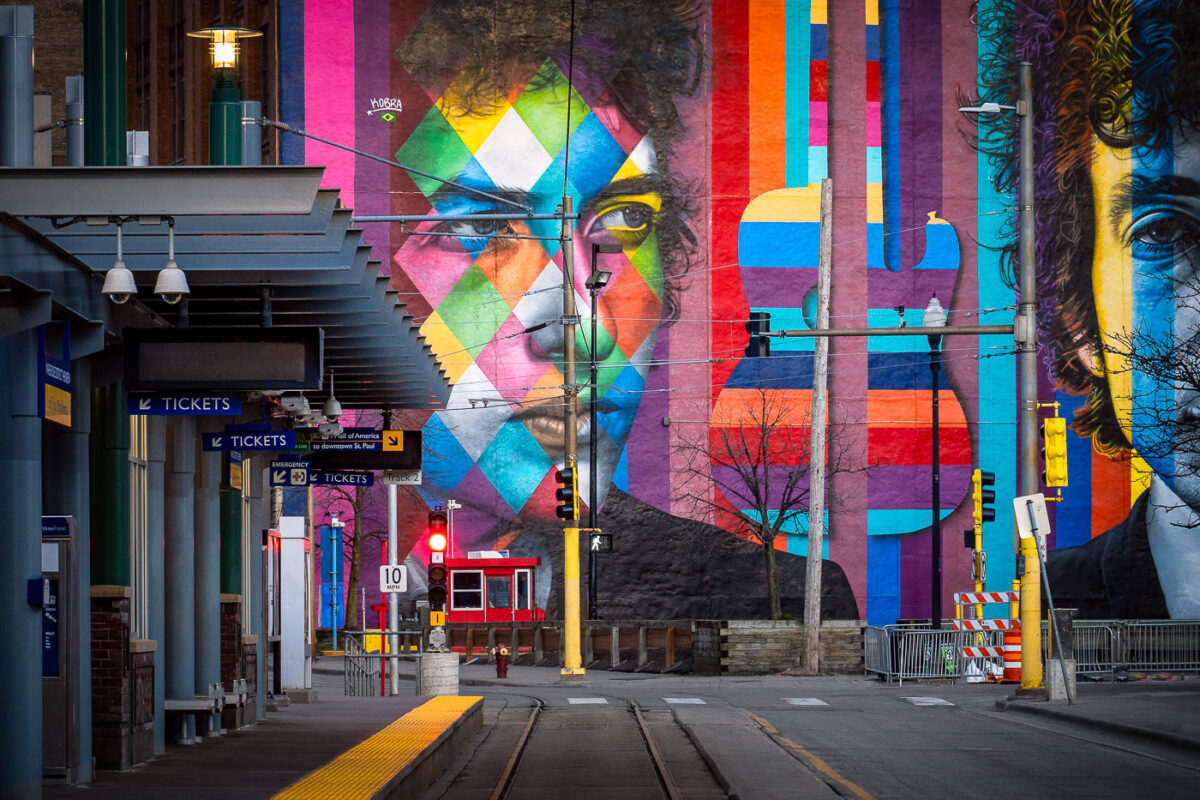
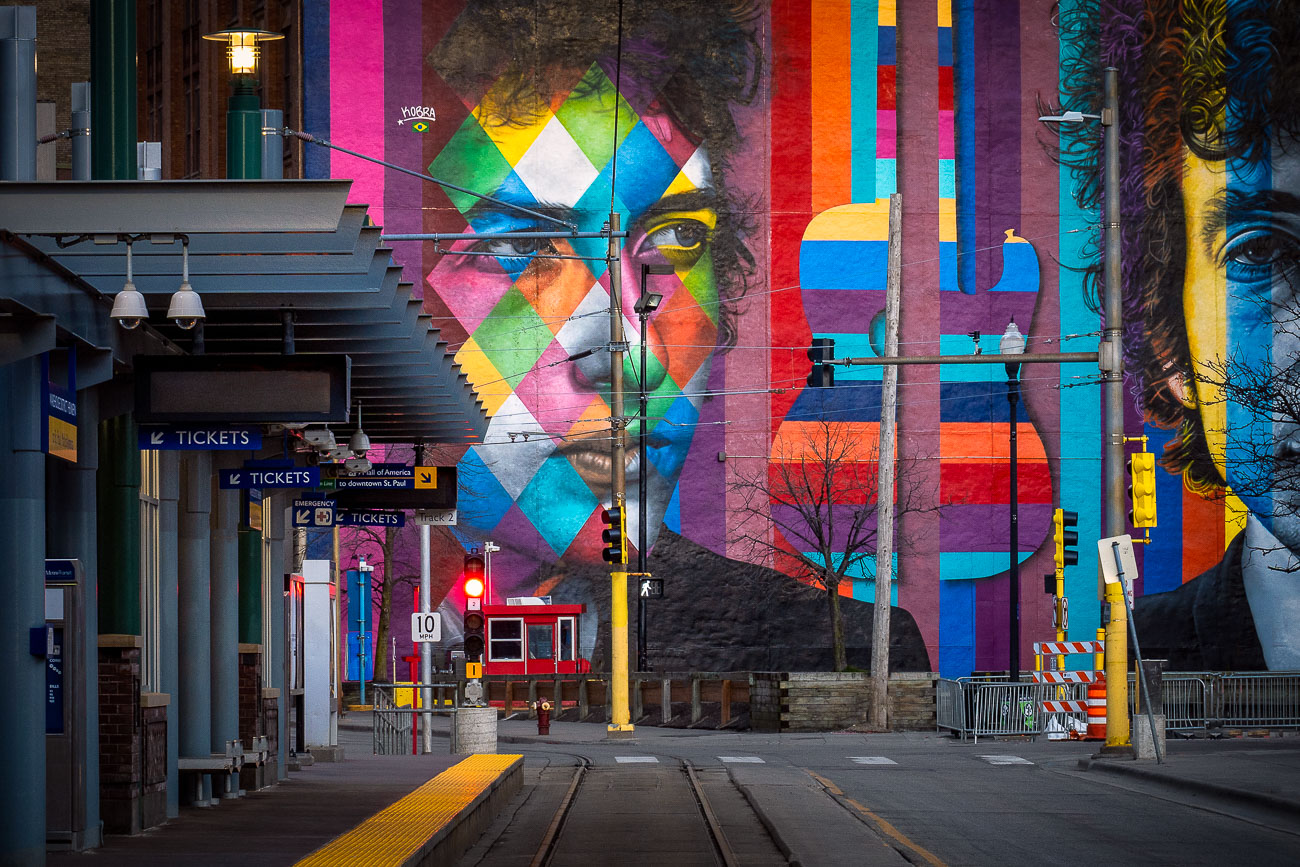
Eduardo Kobra's colorful Bob Dylan mural at Nicollet Mall station in downtown Minneapolis.
Eduardo Kobra painted this mural of Bob Dylan, titled "Face of Music," in 2015 for the Downtown Improvement District's Betsy-Ann Kane public art initiative. Brazilian street artist Kobra is known for his geometric, kaleidoscope-patterned portraits, which he has installed in cities worldwide. The mural covers roughly 90 feet of wall along the light rail corridor near Nicollet Mall Station, close to Hennepin Avenue in downtown Minneapolis. Dylan grew up in Hibbing, Minnesota, and began his music career in Dinkytown near the University of Minnesota before moving to New York in 1961.

Eduardo Kobra’s “Face of Music” Mural on Hennepin Avenue
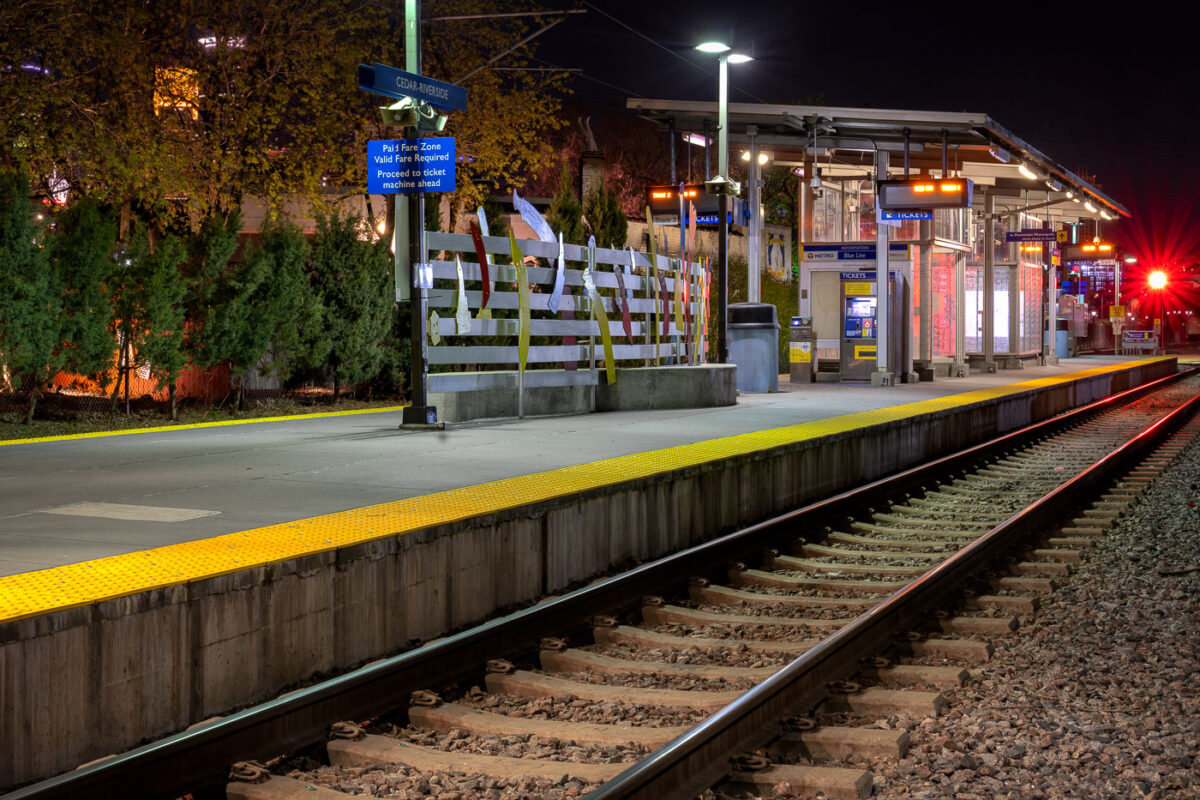
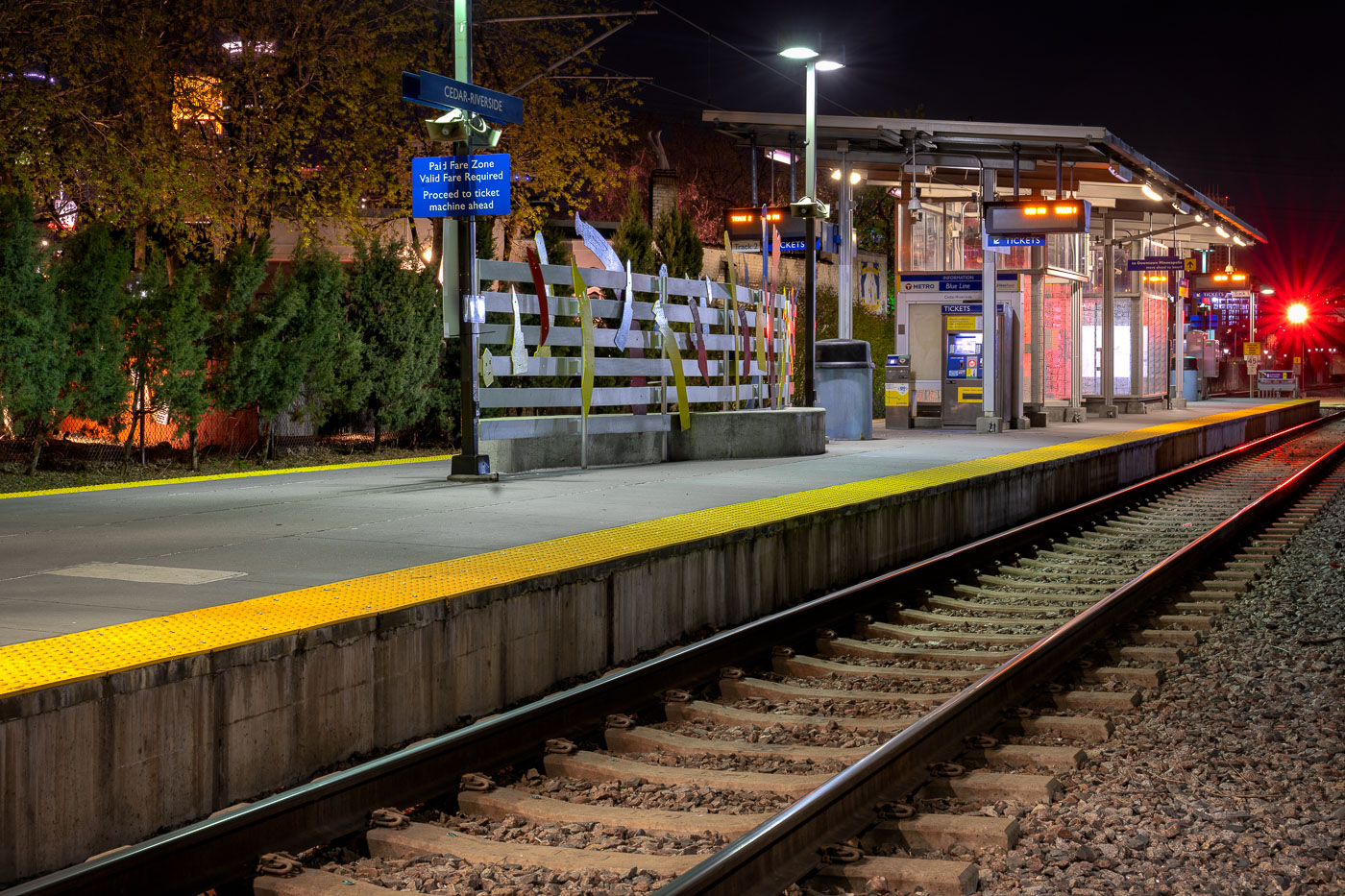
Cedar-Riverside Blue Line station platform at night in Minneapolis with yellow safety edge and rail tracks.
Cedar-Riverside Station sits along Metro Transit's Blue Line, formerly the Hiawatha Line, which opened in 2004 as the region's first light-rail route. The station serves the Cedar-Riverside and West Bank neighborhoods, just south of downtown Minneapolis and adjacent to the University of Minnesota's West Bank campus. The Blue Line runs roughly 12 miles between downtown Minneapolis, Minneapolis-Saint Paul International Airport, and the Mall of America in Bloomington. Metro Transit operates the line with trains arriving every 7 to 10 minutes during peak service hours.

Nighttime Platform at Cedar-Riverside Station
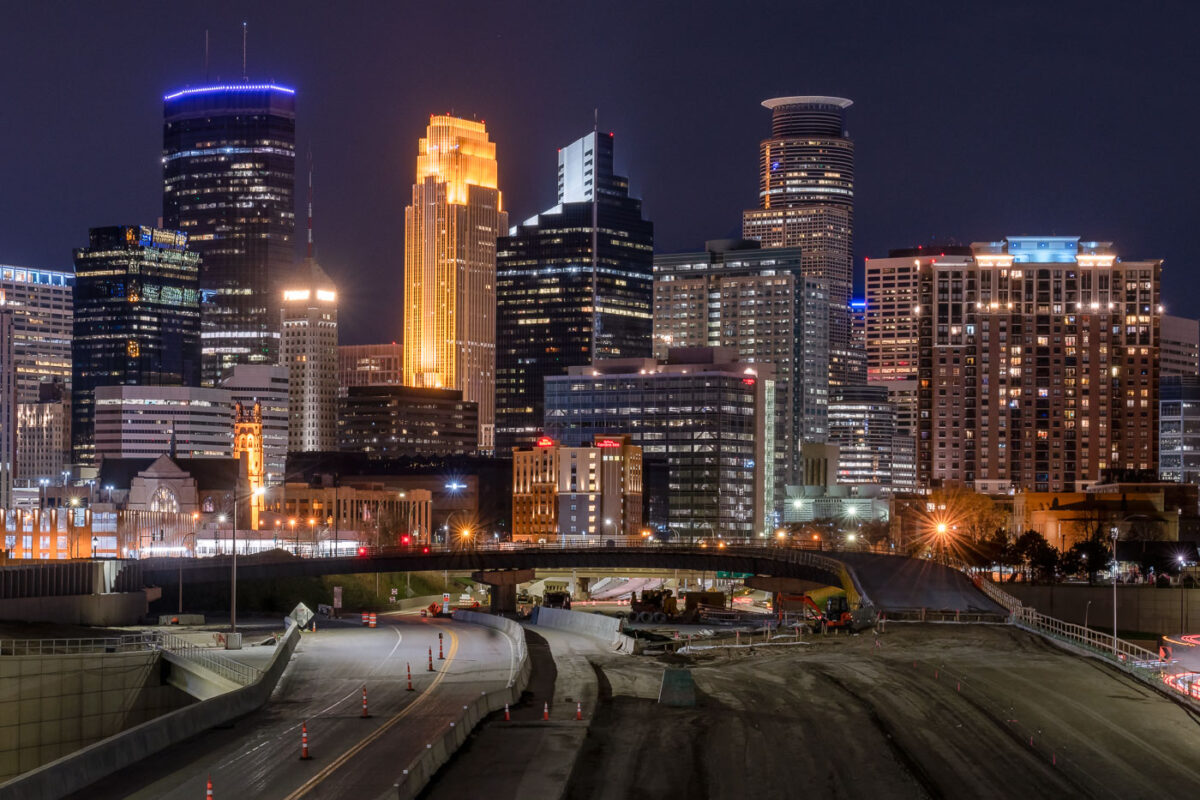
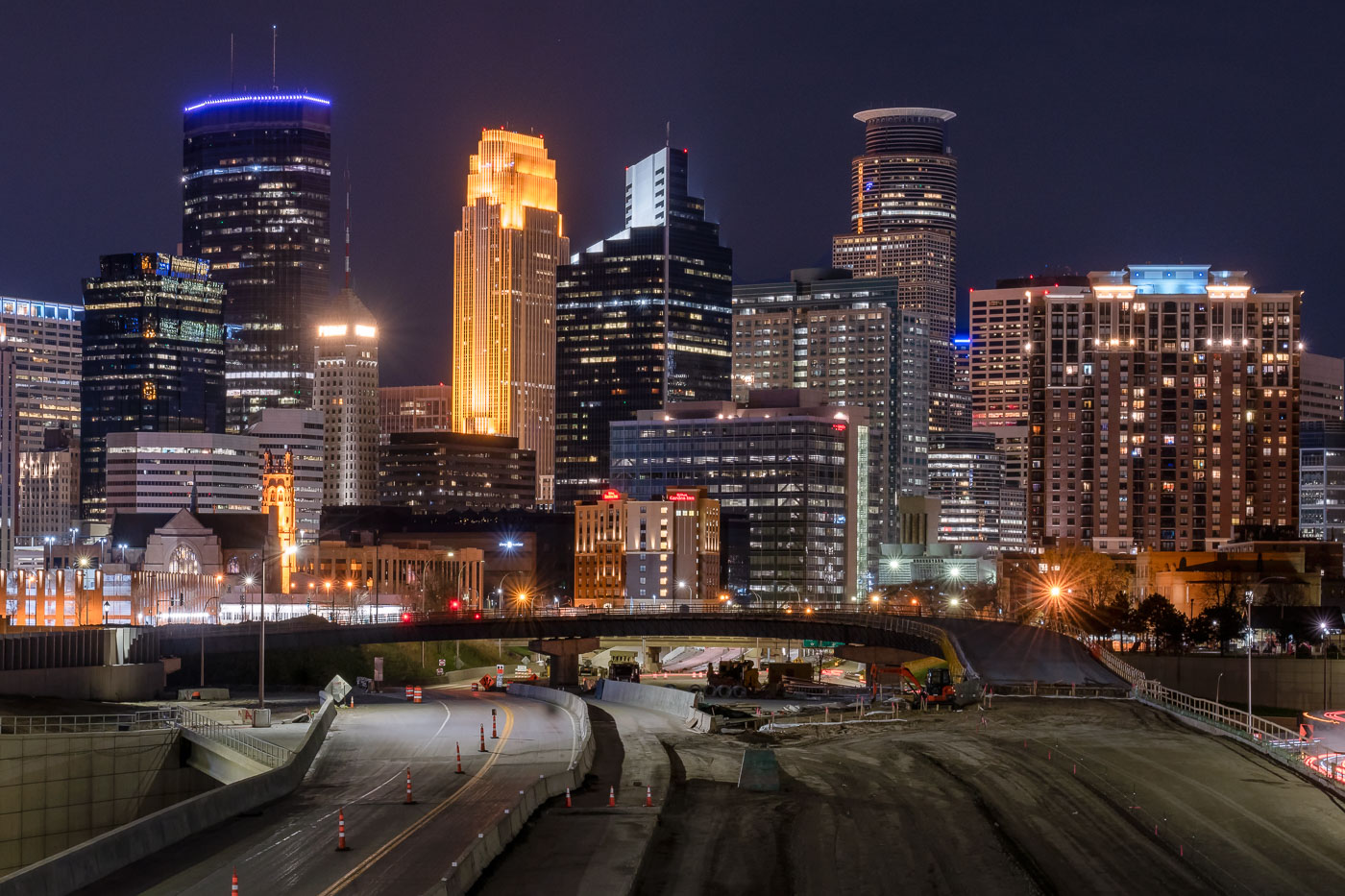
Interstate 35W construction site at night with downtown Minneapolis skyline and illuminated office towers beyond.
Interstate 35W cuts through downtown Minneapolis on its way between the northern and southern suburbs, carrying more than 100,000 vehicles a day under normal conditions. The tallest building on the skyline, the IDS Center, rises 792 feet and has held the title of Minnesota's tallest structure since its completion in 1972, designed by architect Philip Johnson. Capella Tower, completed in 1992 as the Norwest Center, stands 776 feet tall and is topped by a lattice crown that's lit gold for much of the year. This stretch of freeway saw major nighttime lane closures and repaving work in spring 2020, part of ongoing maintenance on one of the Twin Cities' primary north-south corridors.

I-35W Overnight Construction Beneath the Minneapolis Skyline
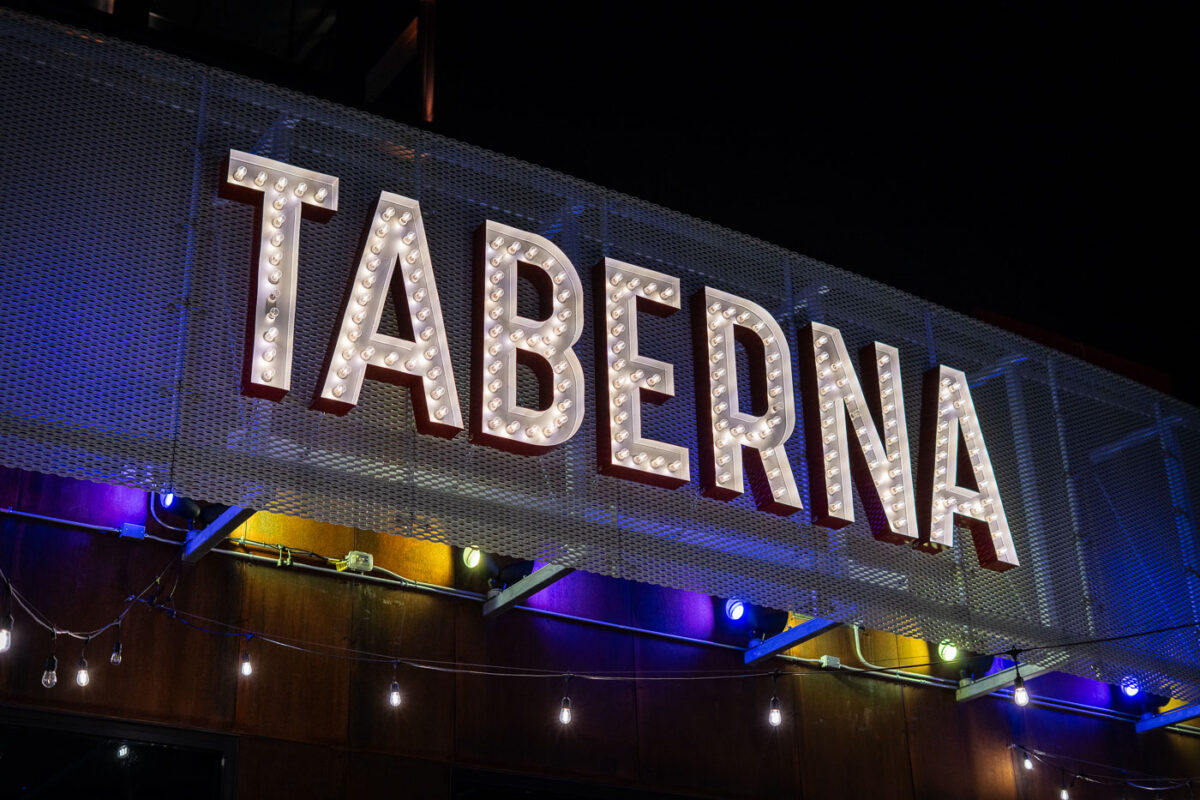
Illuminated Taberna restaurant sign at night in south Minneapolis.
Taberna is a restaurant in south Minneapolis near Bde Maka Ska. The establishment operates as a taco restaurant in the neighborhood.

Taberna Restaurant Sign, South Minneapolis
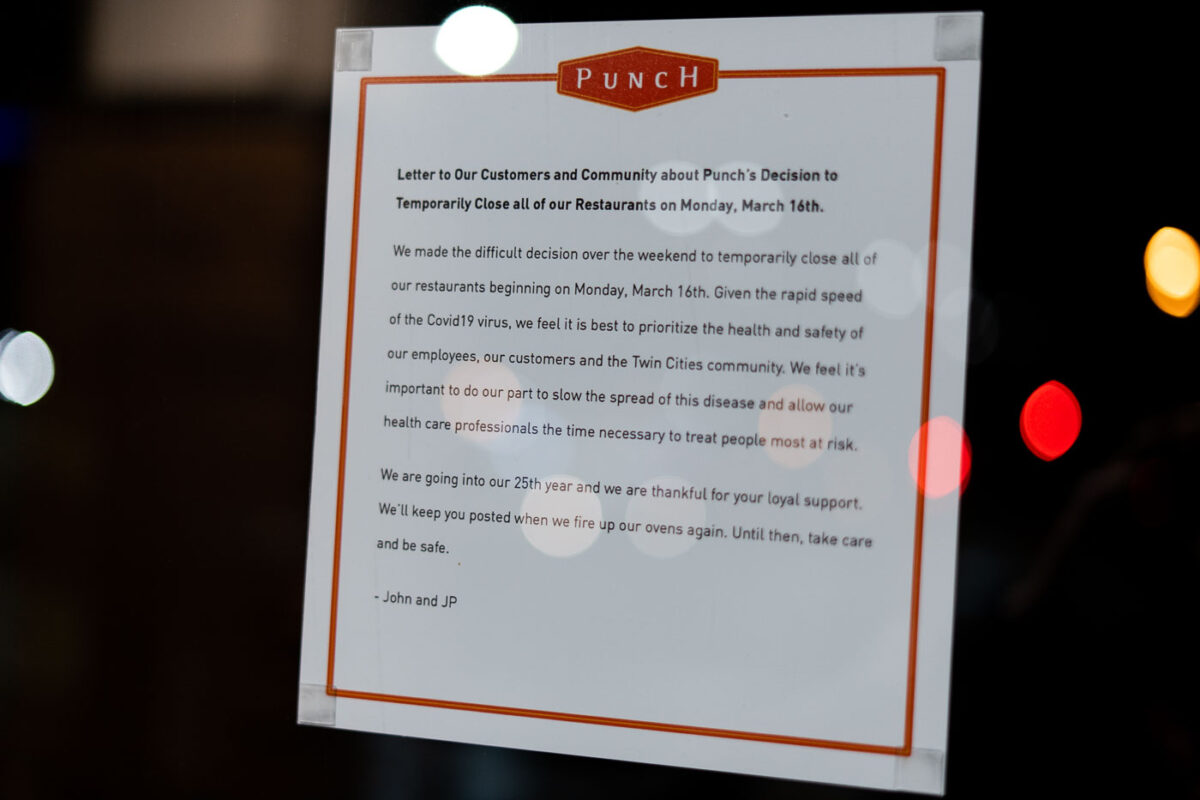
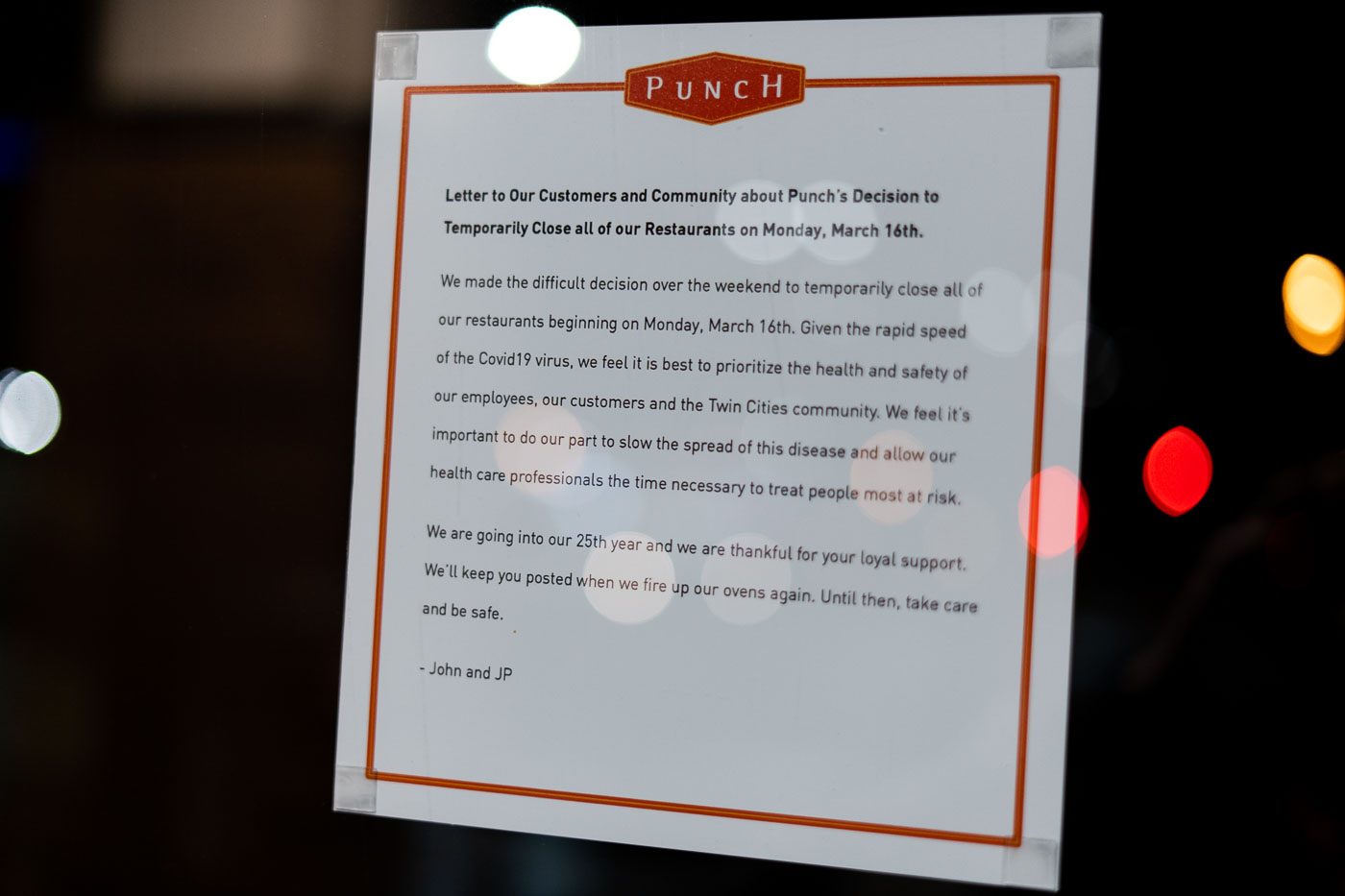
Punch Pizza closure notice posted in window announcing temporary restaurant shutdown on March 16, 2020, due to COVID-19.
Punch Pizza posted this letter to customers announcing the temporary closure of all its restaurants beginning Monday, March 16, 2020. Signed by co-founders John Soranno and JP Audette, the notice cites the need to protect employees, customers, and the Twin Cities community from the spread of Covid-19. The letter notes the company was entering its 25th year in business at the time of the shutdown.

Punch Pizza Announces Temporary Closure of All Locations
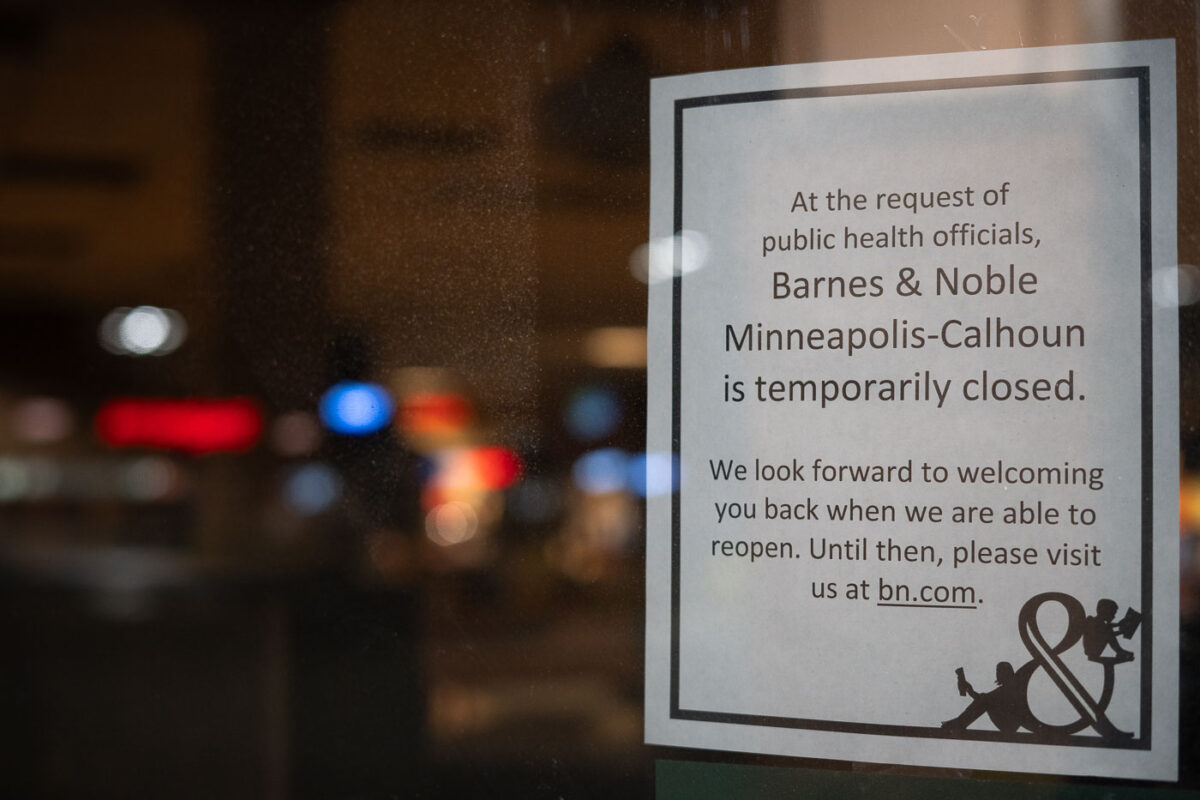
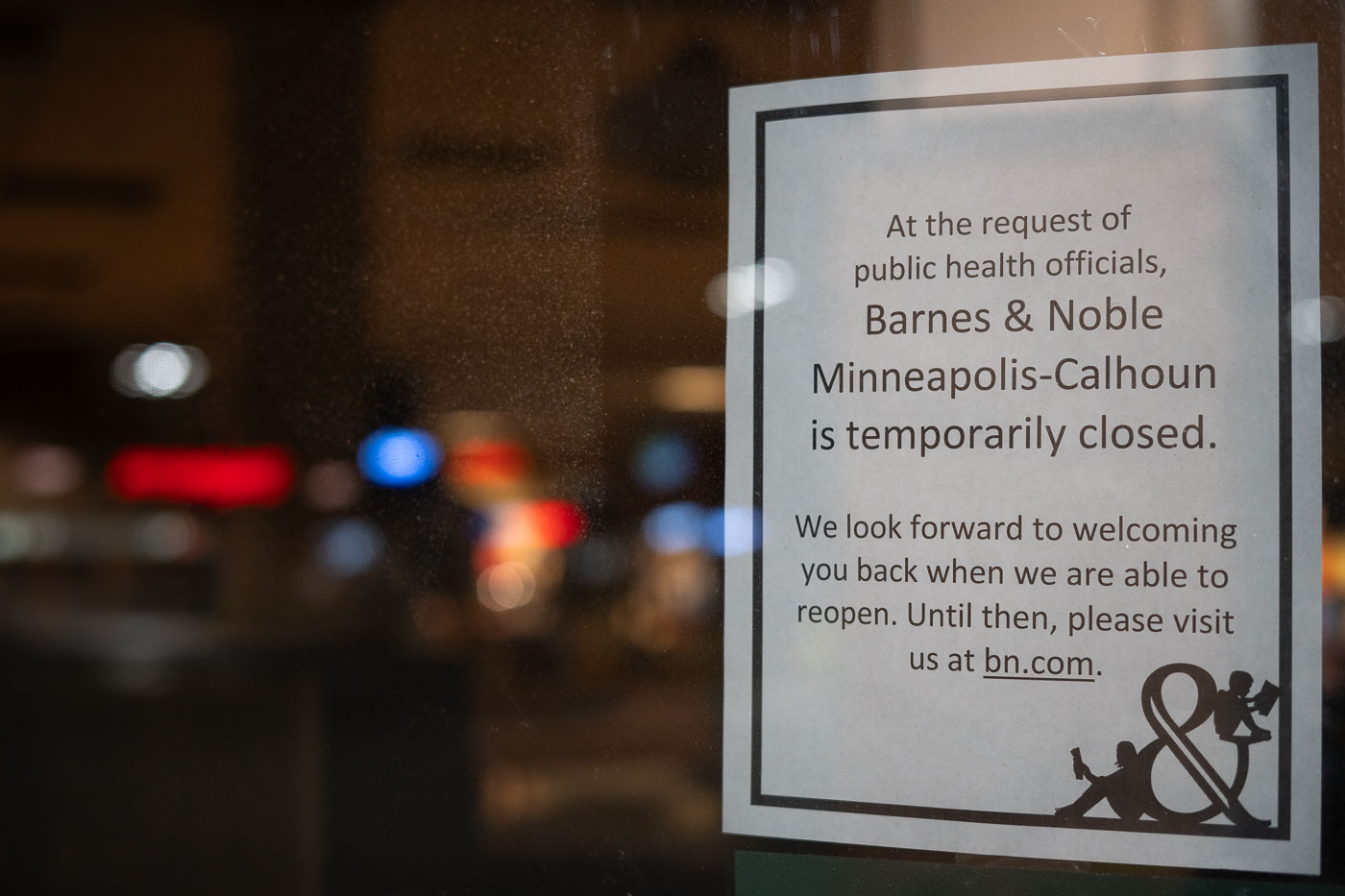
Barnes and Noble covid19 closure sign
A sign posted on the window of the Barnes & Noble Minneapolis-Calhoun store announces its temporary closure due to the COVID-19 pandemic. The notice, issued at the request of public health officials, reflects a widespread public health measure that impacted retail operations globally in 2020 and 2021.

Minneapolis Barnes & Noble Temporarily Closed Due to COVID-19
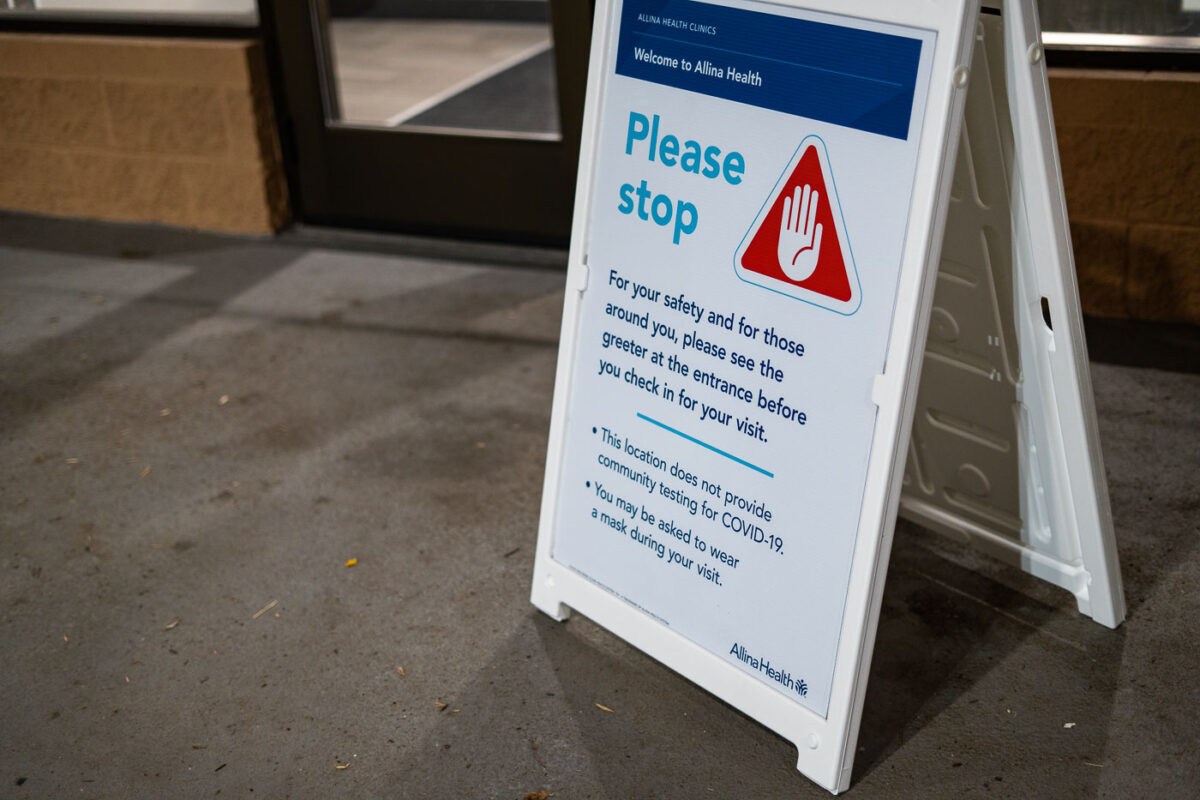
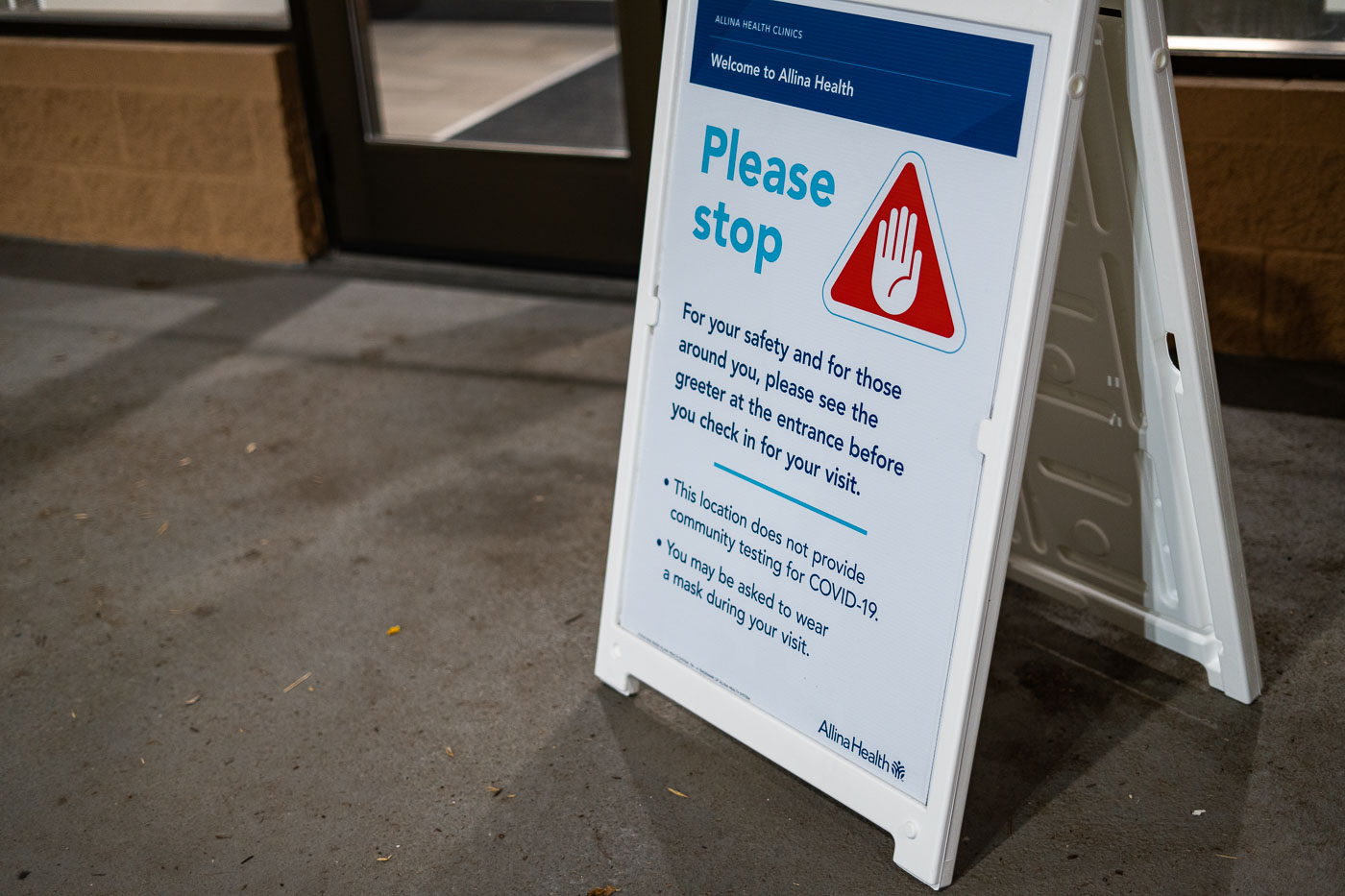
COVID19 Safety Sign at Clinic Entrance
At the entrance of an Allina Health clinic, a temporary sign reminds visitors of heightened safety measures during the COVID-19 pandemic. The notice instructs patients to stop and first meet with a greeter before checking in, emphasizing that the location does not provide community COVID-19 testing and that masks may be required during the visit. These portable A-frame signs became common across medical facilities in 2020–2021, helping manage visitor flow, screen for symptoms, and reinforce evolving public health protocols at clinics and hospitals throughout Minnesota.

COVID-19 Safety Sign at Clinic Entrance
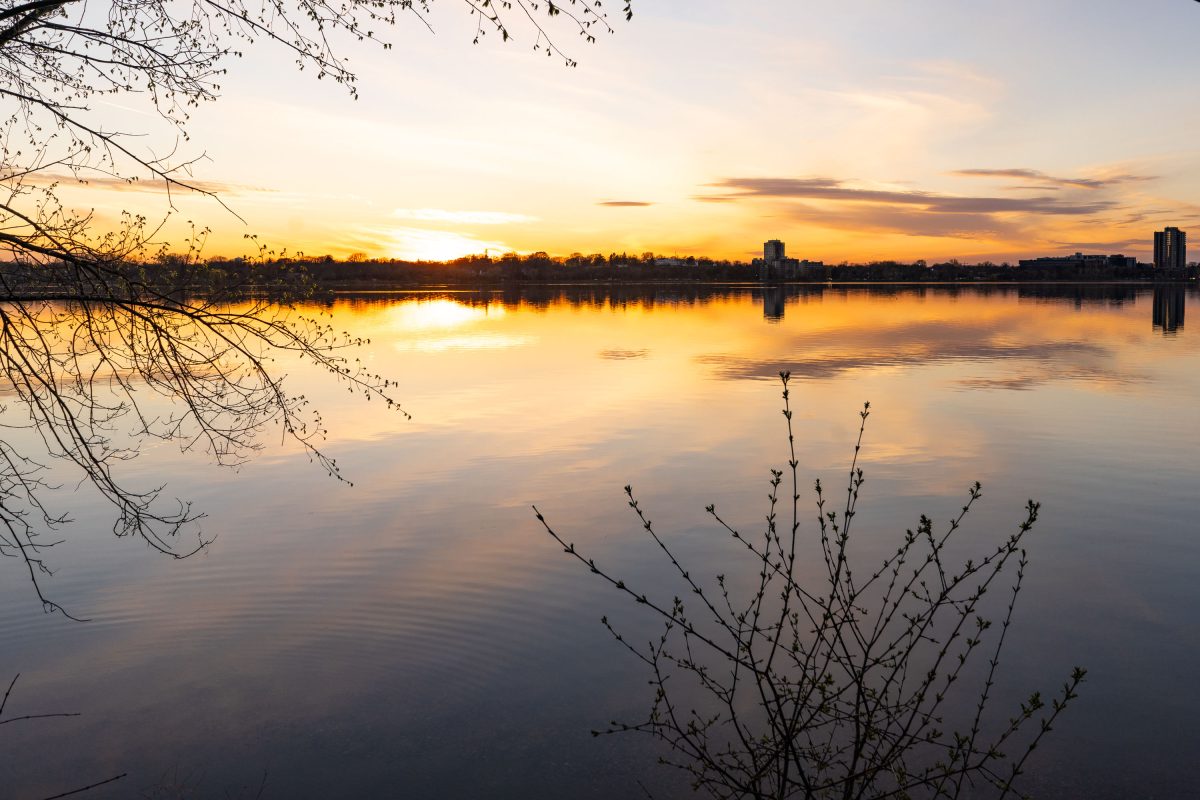
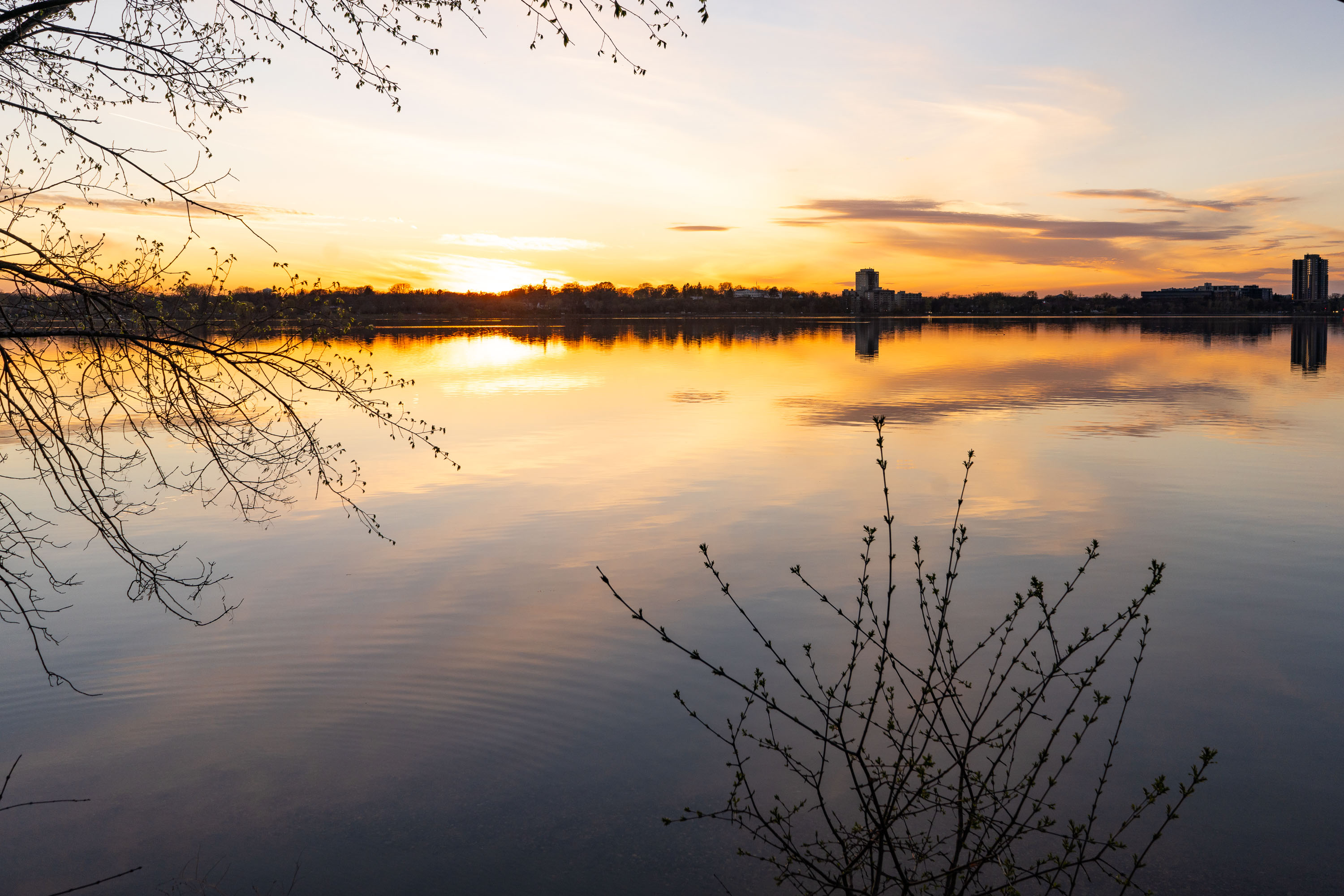
Sunset over Bde Maka Ska in Minneapolis with bare tree branches and downtown buildings silhouetted across the water.
Bde Maka Ska is the largest lake in Minneapolis, covering about 401 acres in the Chain of Lakes. It was renamed from Lake Calhoun in 2018, restoring its Dakota name, which means "White Earth Lake." A paved path over three miles long circles the shoreline for walkers and cyclists.

Sunset Over Bde Maka Ska

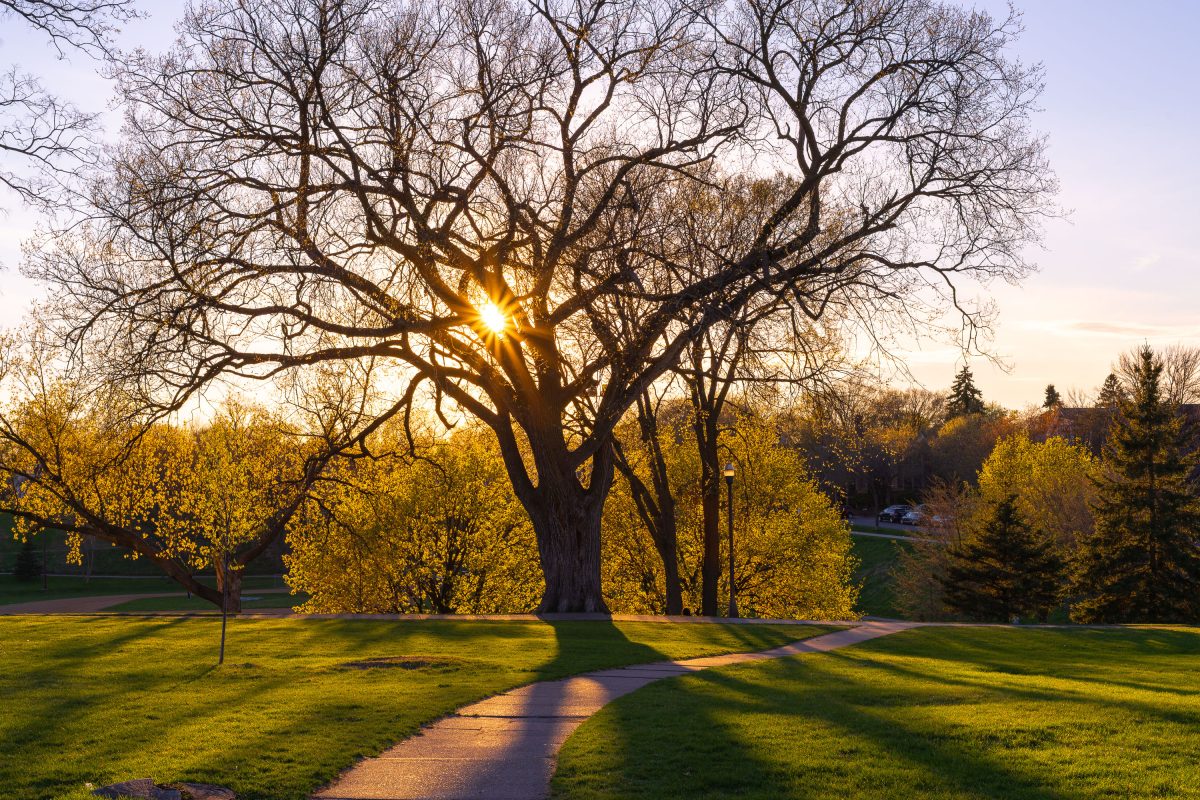
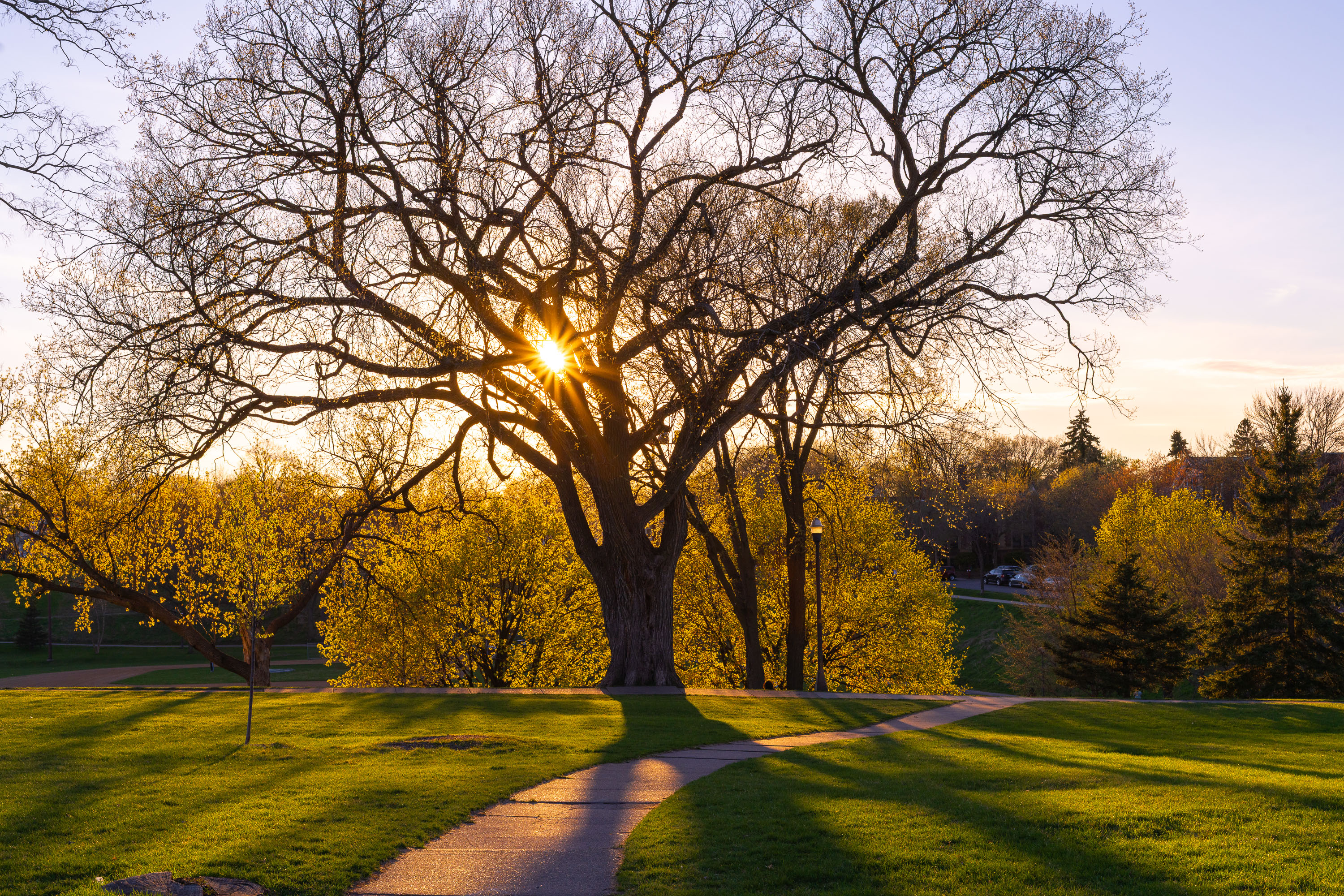
A large bare tree stands backlit by golden sunset light in Powderhorn Park, Minneapolis, with a winding path leading through the grass toward it.
Powderhorn Park is a 66 acre park in South Minneapolis, built around Powderhorn Lake and named for the lake's horn-shaped outline. The Minneapolis Park and Recreation Board acquired the land in 1911, and the park is known for its many mature elm and oak trees.

Sunset Behind a Large Elm at Powderhorn Park

Powderhorn Park in South Minneapolis features a curved path and large tree at sunset with the recreation center visible beyond.
Powderhorn Park anchors a residential section of South Minneapolis, its 66 acres laid out around Powderhorn Lake since the park's founding in 1889. The Minneapolis Park and Recreation Board maintains the grounds, which include the lake itself, open lawns, and a recreation center built in the 1970s. The neighborhood surrounding the park takes its name from the same source, and the park remains one of the larger green spaces on the city's south side.

Sunset Through a Bare Tree at Powderhorn Park
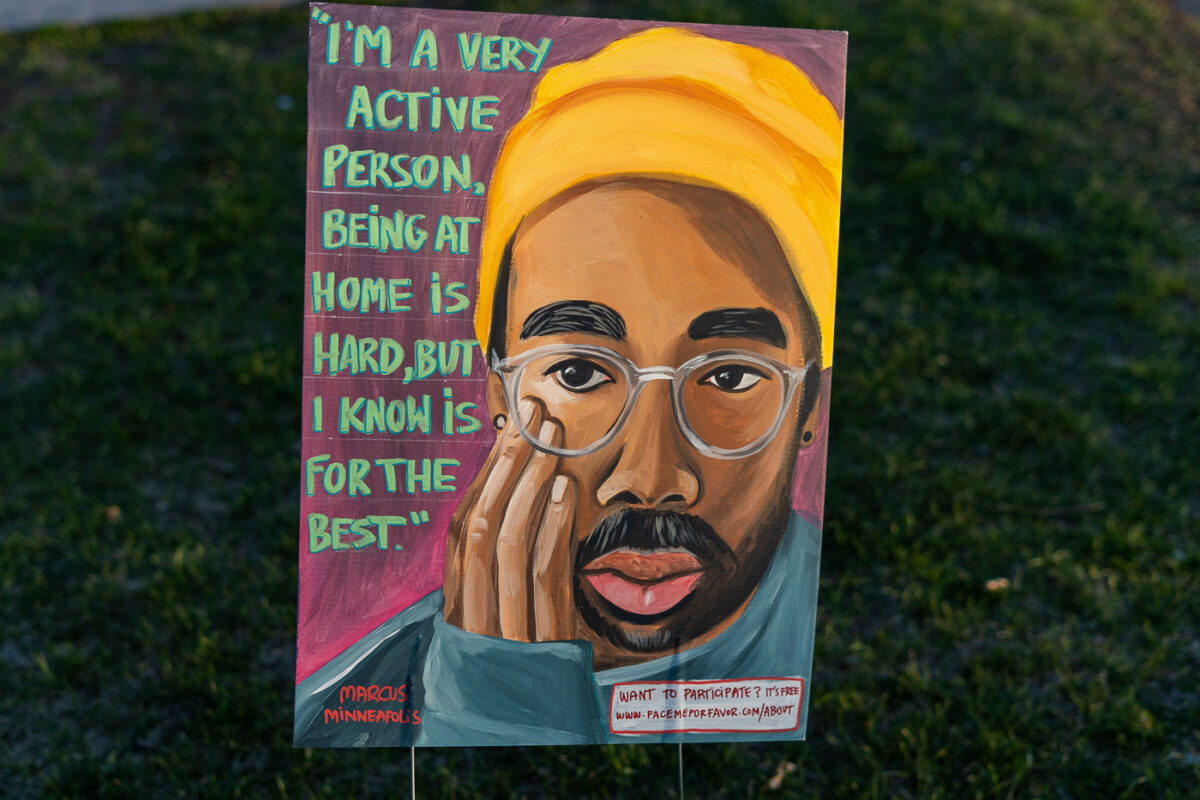
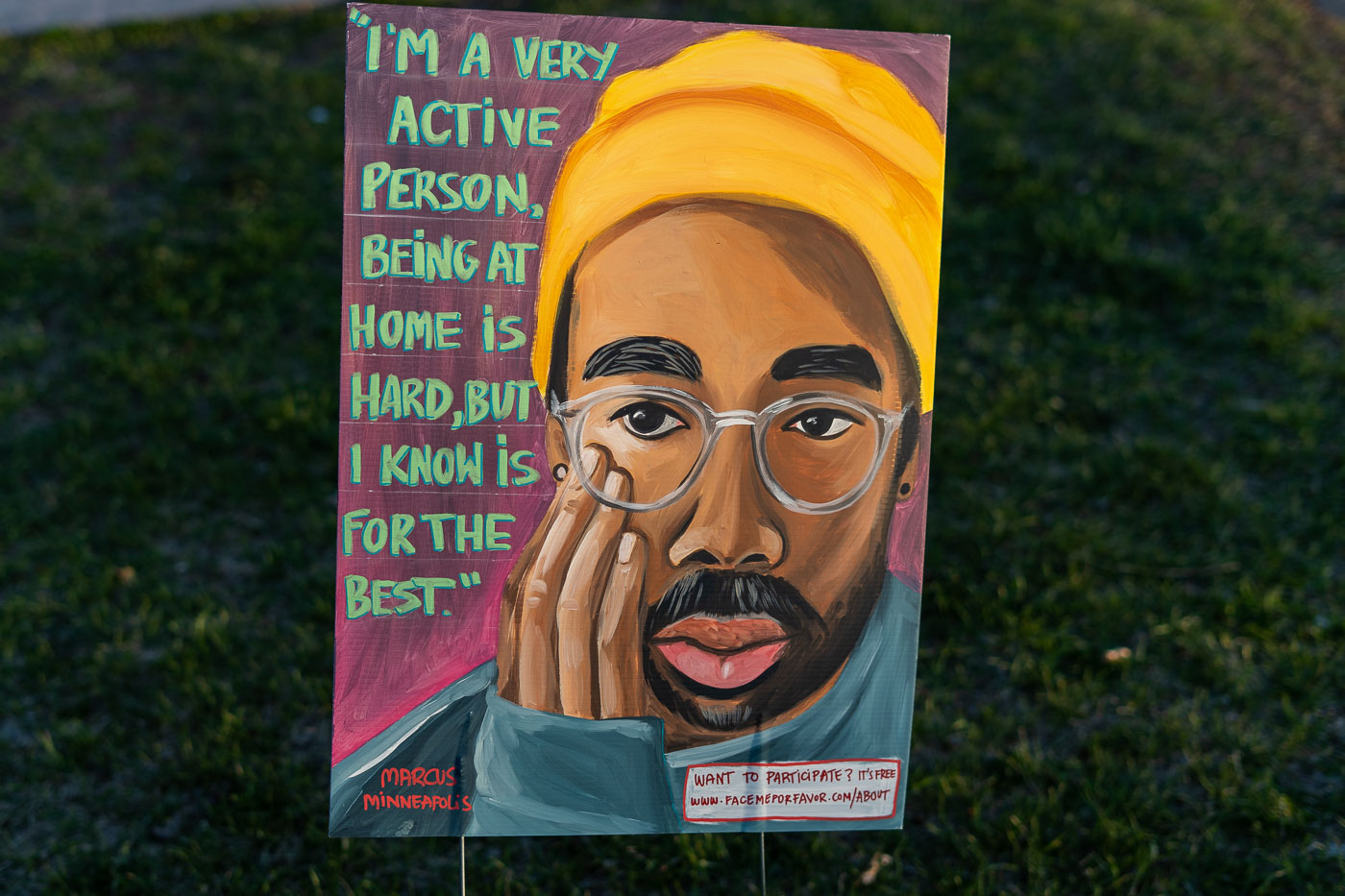
Painted sign at Powderhorn Park in South Minneapolis features portrait and text about staying active during pandemic lockdowns.
The sign at Powderhorn Park pairs a painted portrait with a quoted statement: "I'm a very active person, being at home is hard, but I know is for the best." It's signed "Marcus Minneapolis" and includes a web address inviting others to participate, suggesting the piece was part of a broader community art project rather than a single standalone work. Powderhorn Park, on the city's South Side, became a gathering point for public art and expression during the spring 2020 pandemic shutdowns.

Painted Portrait Sign by Marcus, Powderhorn Park
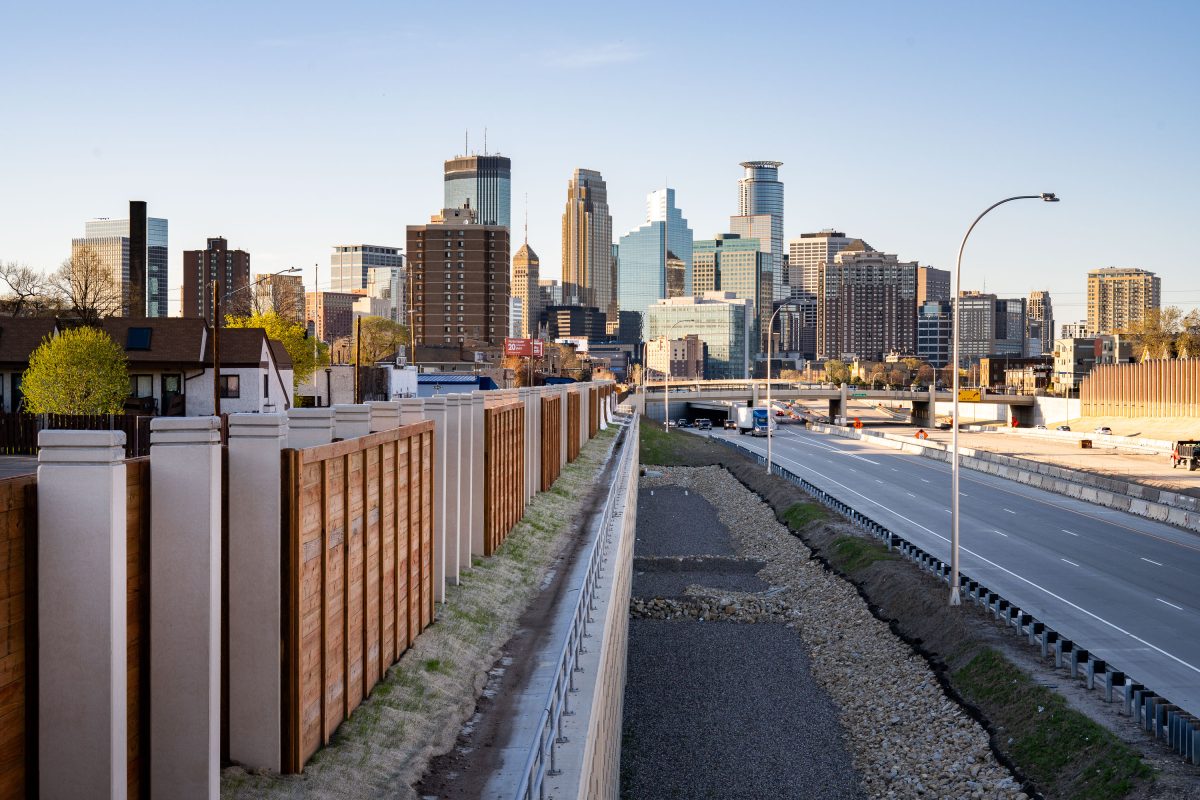
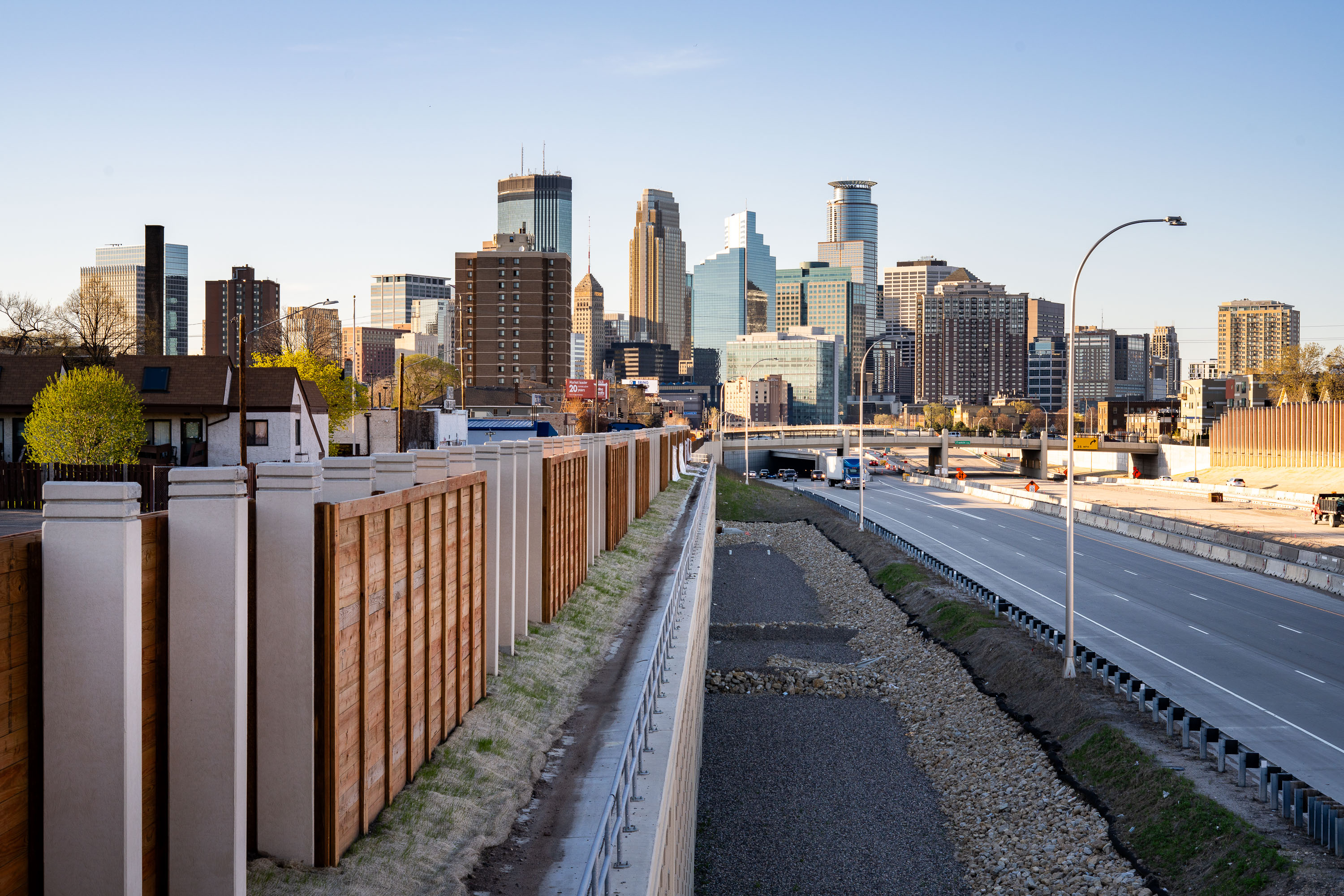
Minneapolis skyline seen from a bridge over 35W.
Downtown Minneapolis as seen from a bridge crossing I-35W.

Minneapolis Skyline Seen From a Bridge over I-35W
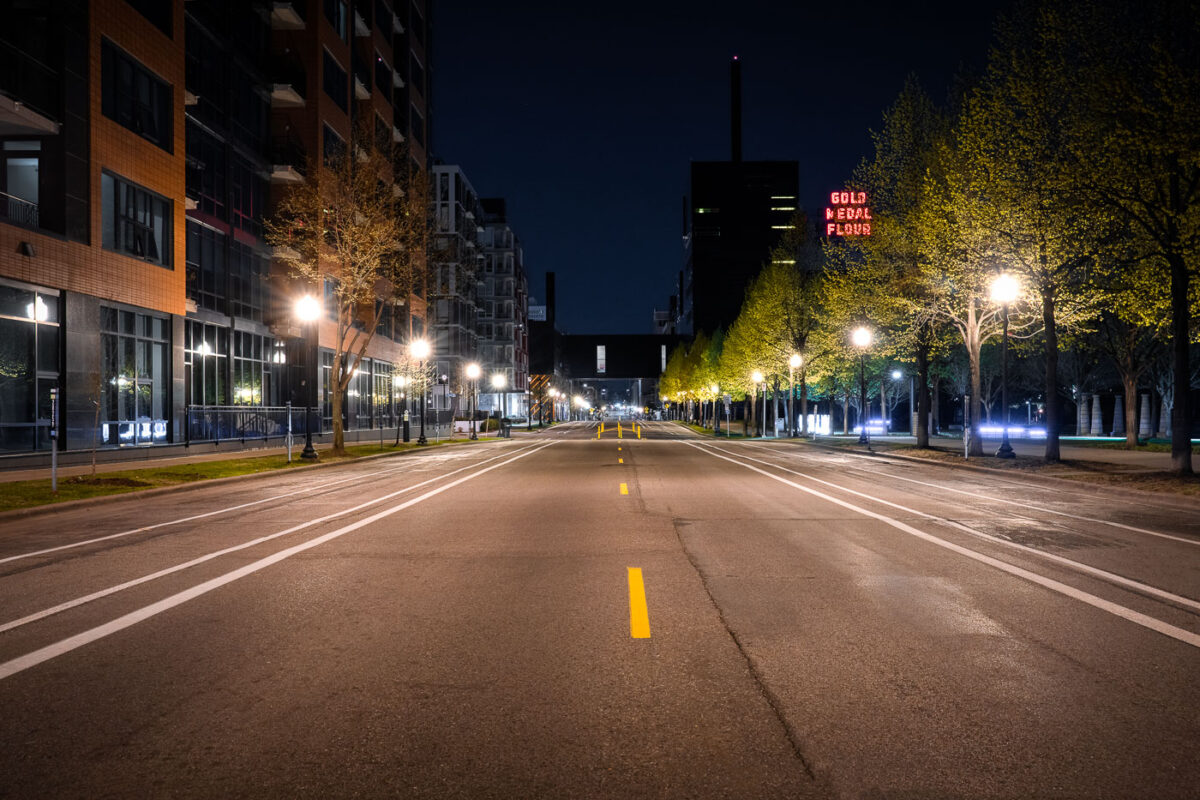
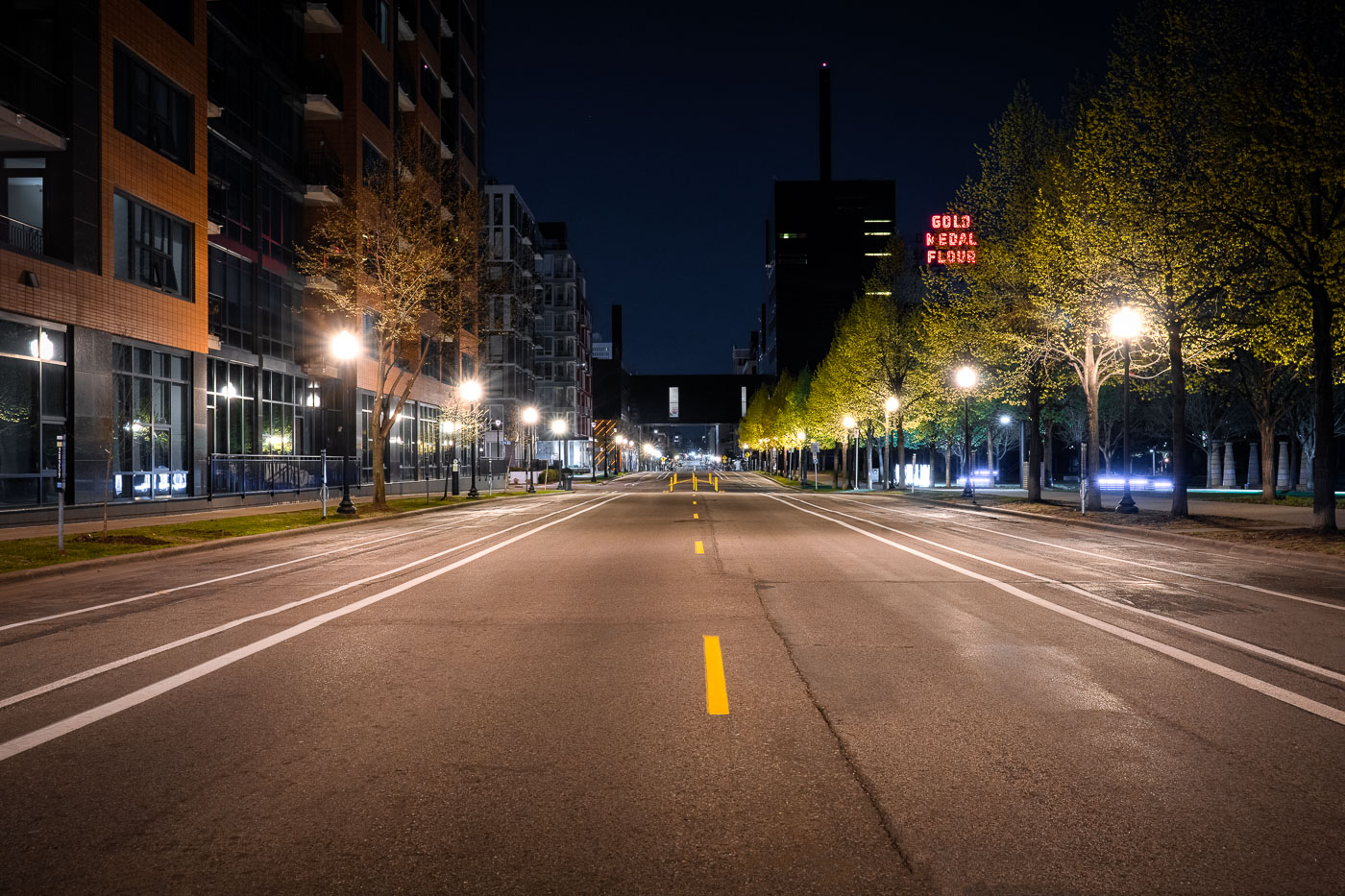
Gold Medal Flour neon sign as seen from 2nd st
South Second Street in downtown Minneapolis during the coronavirus (COVID-19) shutdown.

South Second Street in Downtown Minneapolis
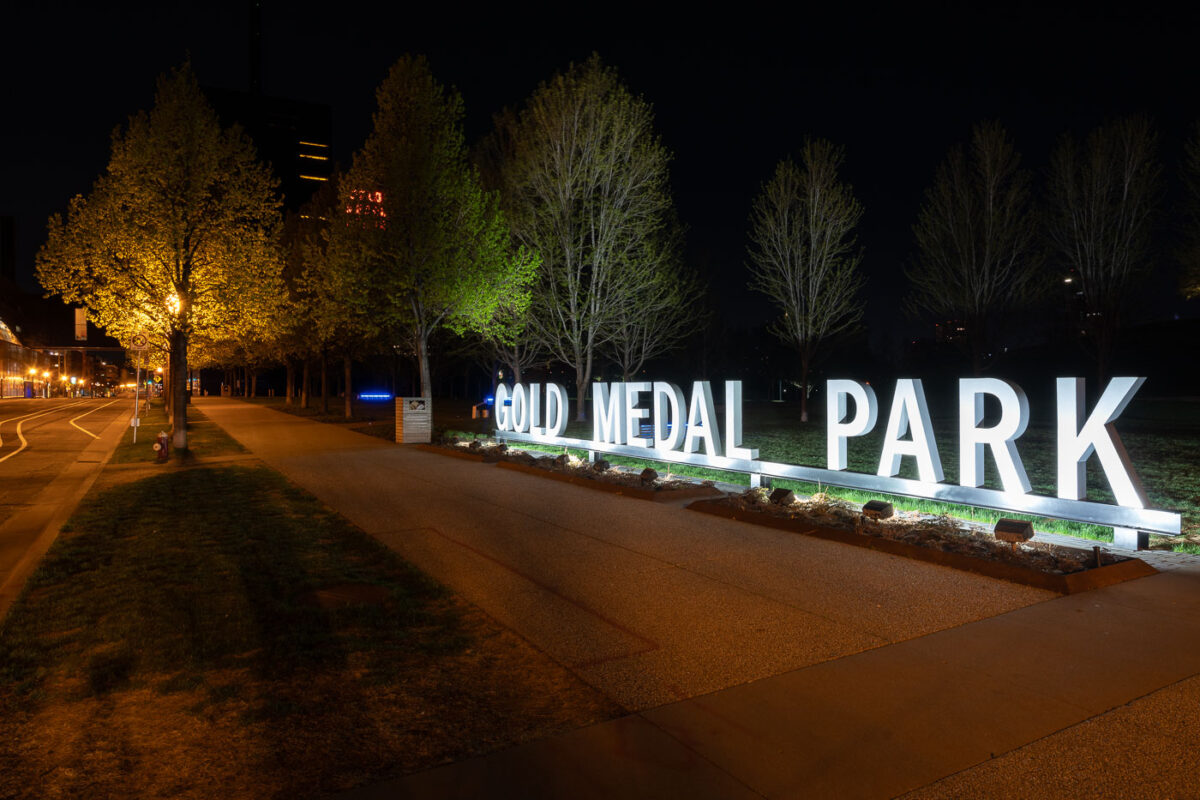
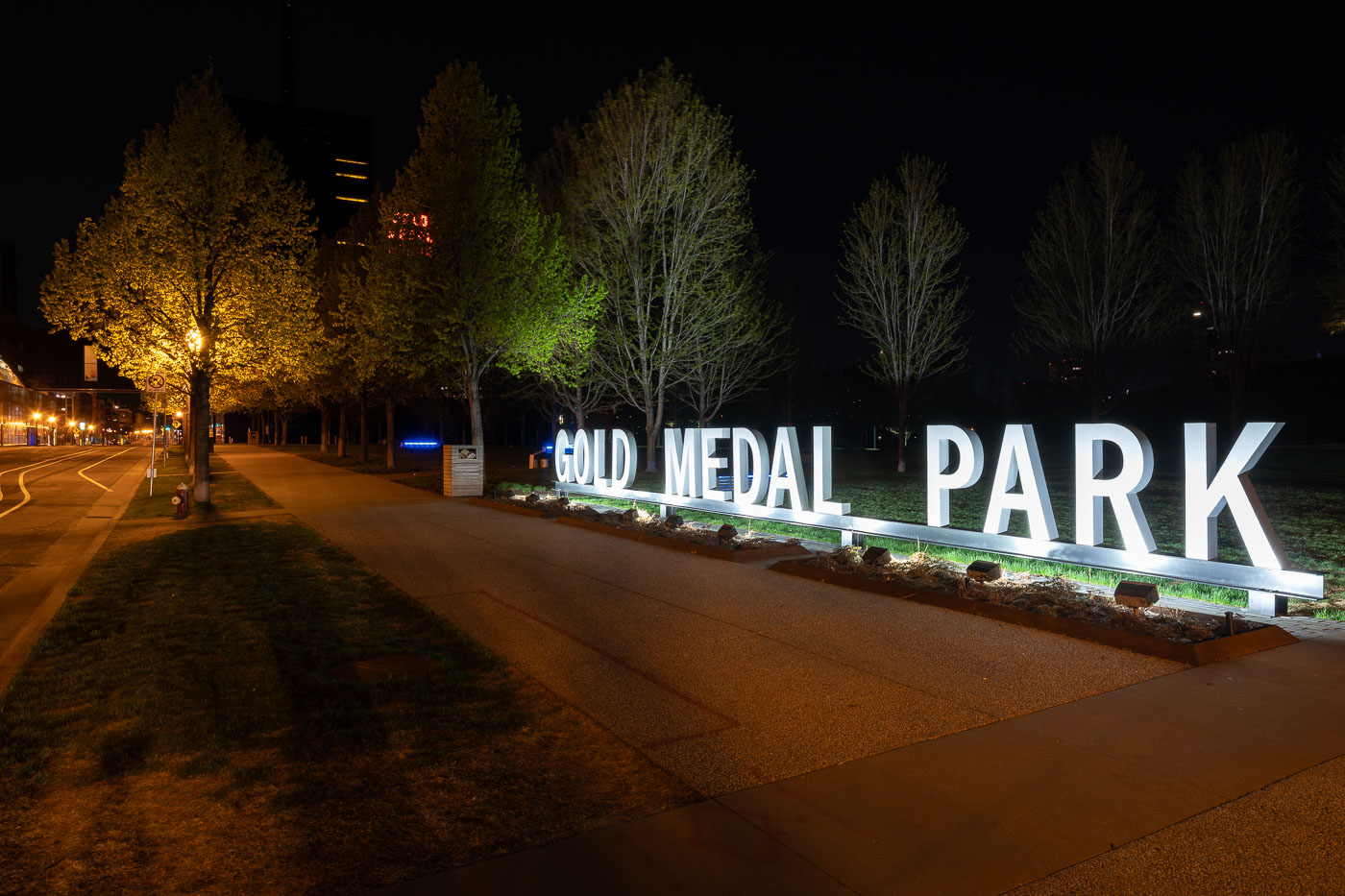
Gold Medal Park sign in Downtown Minneapolis park
Gold Medal Park sits along the Mississippi River near the Mill District in downtown Minneapolis, named in honor of the city’s flour-milling heritage and the iconic Gold Medal Flour brand. Designed by landscape architect Tom Oslund, the park opened in 2007 as part of the Guthrie Theater redevelopment and features a distinctive spiral mound at its center offering views of the river and city skyline. The illuminated park sign and tree-lined paths create a serene nighttime atmosphere against the industrial and cultural backdrop of the historic mill area.

Gold Medal Park at Night, Minneapolis Riverfront
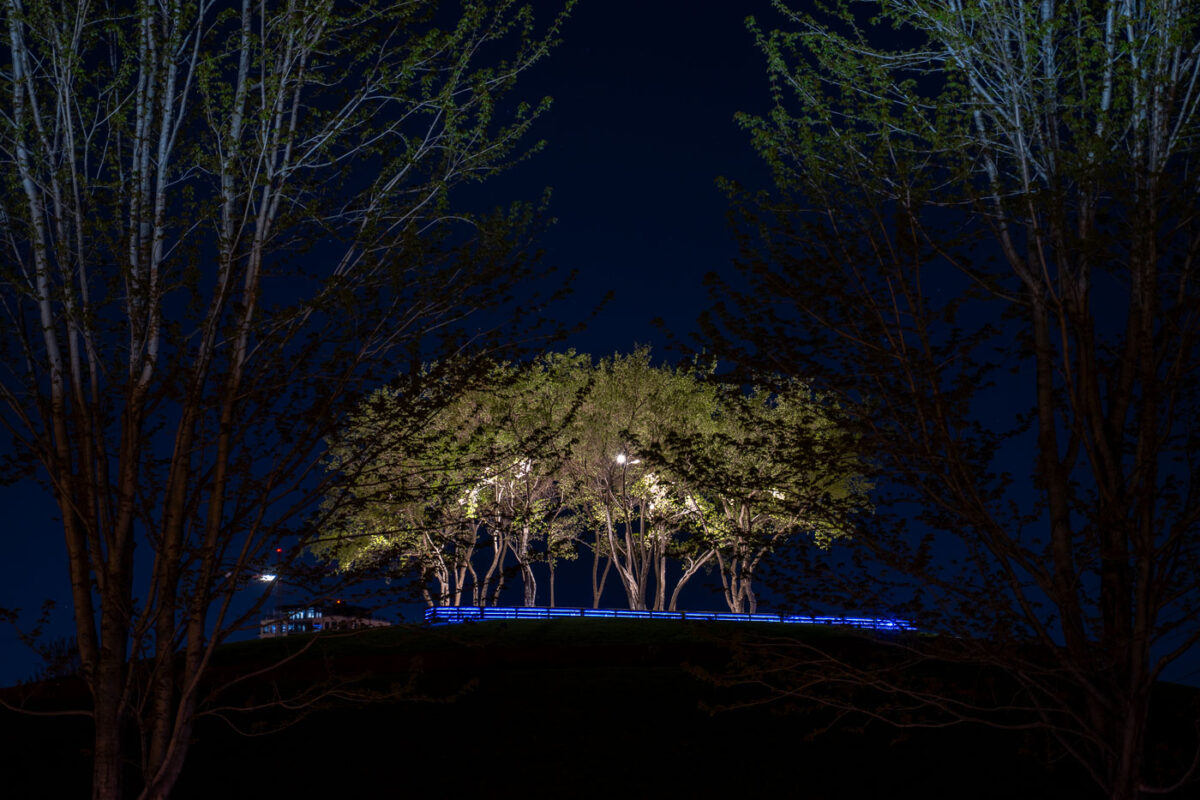
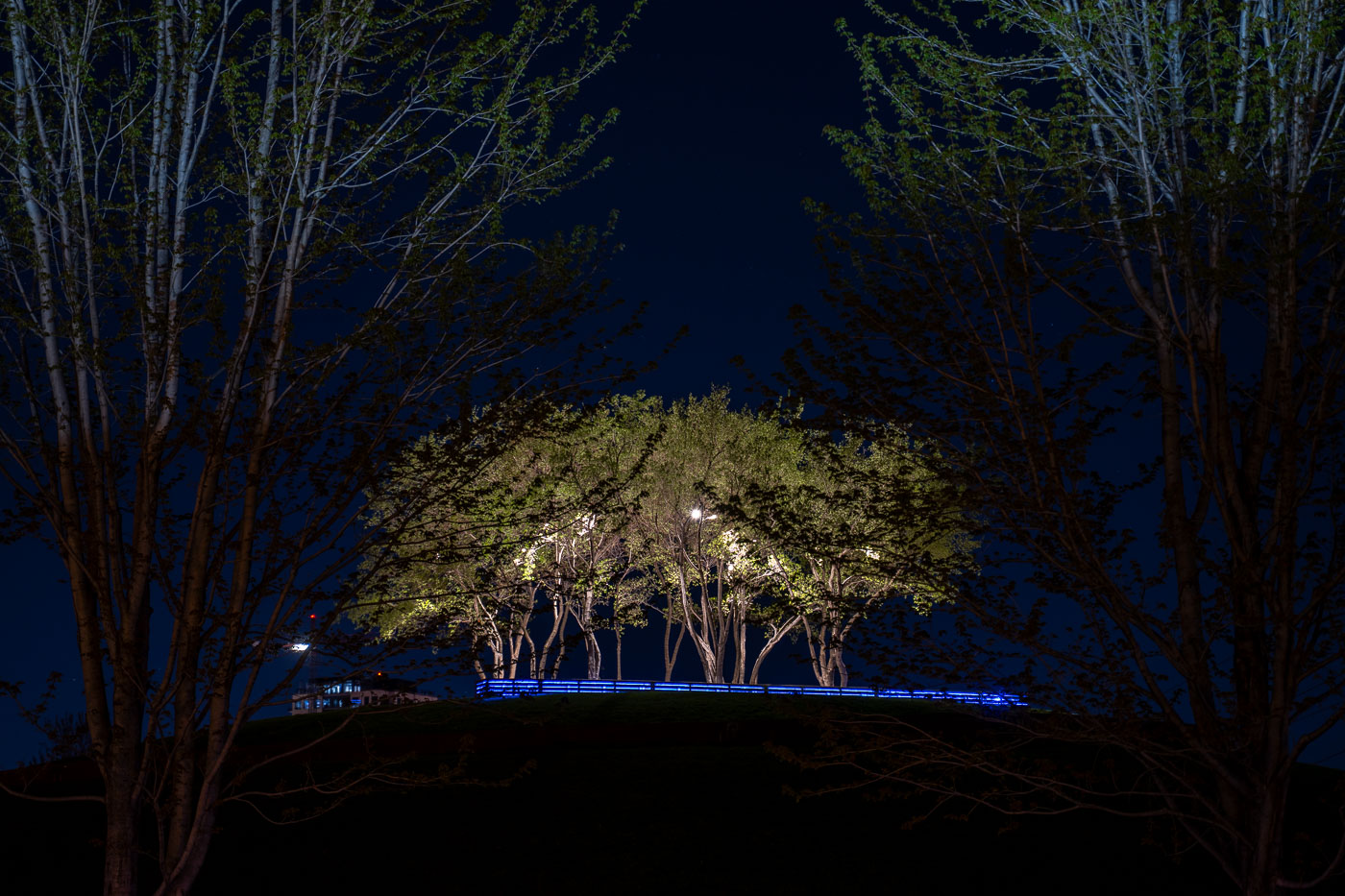
Trees in the middle of Gold Medal Park
Gold Medal Park in Minneapolis with the 40+ story "Eleven" rising in the background.

Trees in the middle of Gold Medal Park

Calhoun Building in Minneapolis lit at night
The Calhoun Building on Lake Street in Uptown Minneapolis shown on May 3, 2020.

Calhoun Building in Minneapolis at night
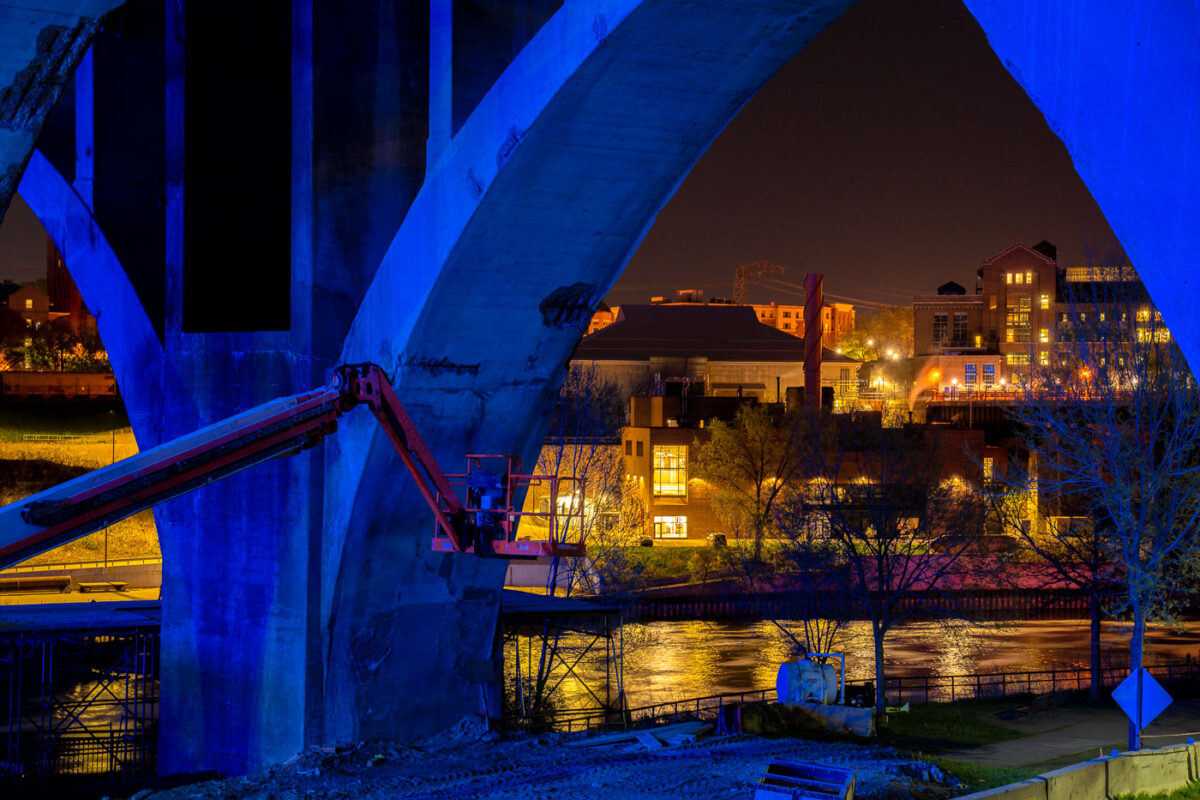
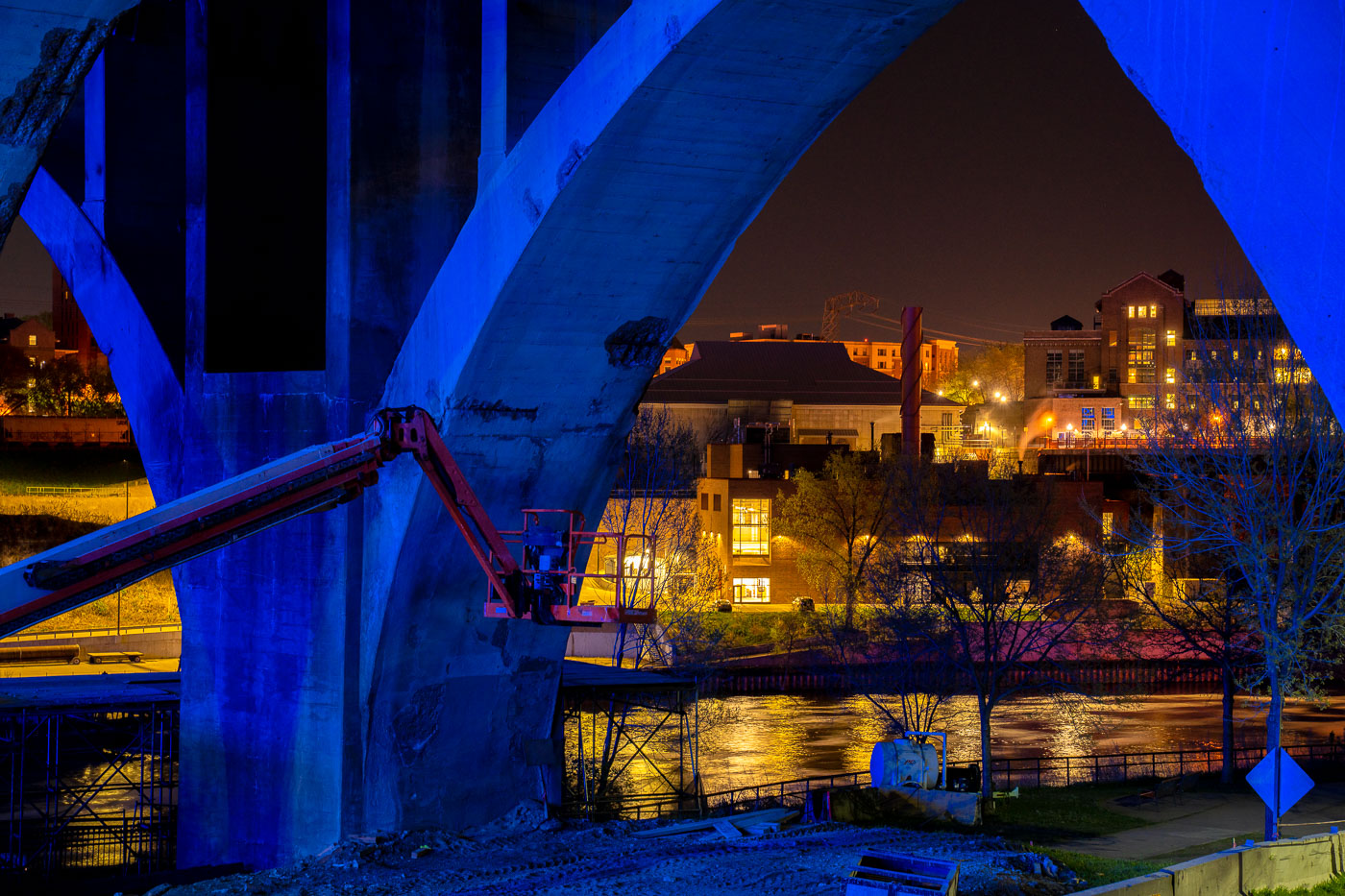
Blue steel framework of the 10th Avenue Bridge under reconstruction over the Mississippi River in Minneapolis.
Blue-lit steel arches and concrete piers of the 10th Avenue Bridge frame a nighttime view of the Mississippi River and the Northeast Minneapolis riverbank during the 2020 reconstruction project. A boom lift positioned against one of the bridge's massive piers suggests active structural work underway, while city lights reflect off the river below.

10th Avenue Bridge reconstruction, Minneapolis 2020
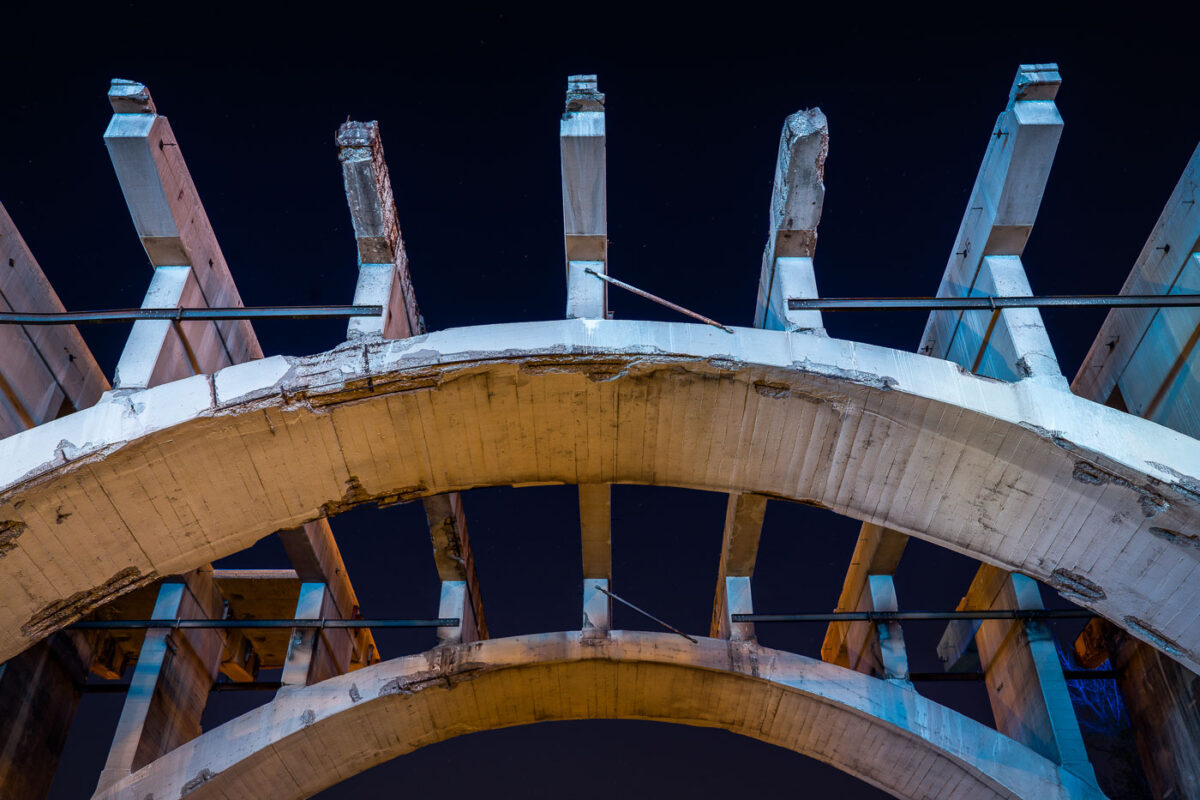
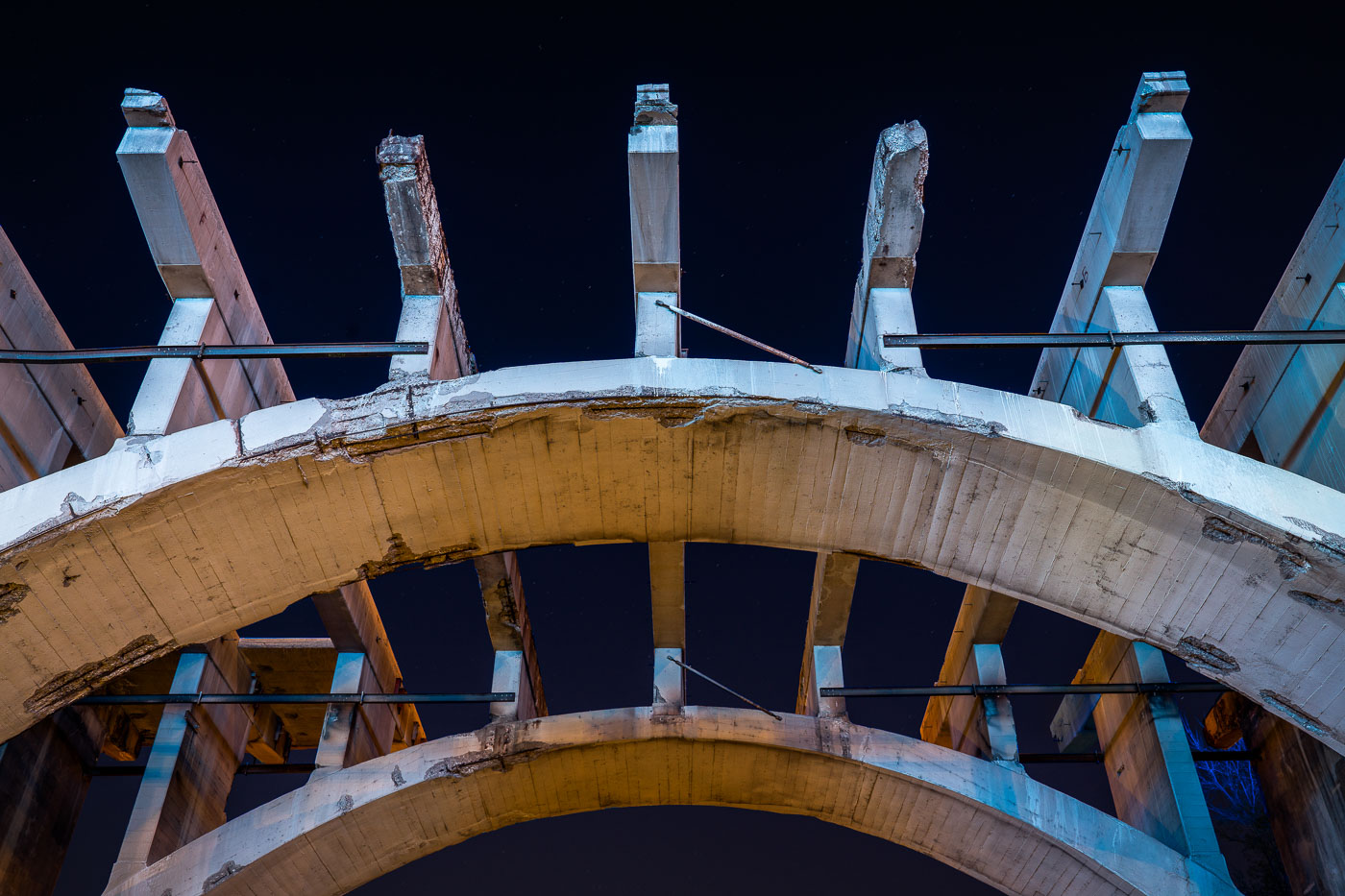
Concrete arches and steel lift spans of the 10th Avenue Bridge in Minneapolis during renovation.
The 10th Avenue Bridge in Minneapolis features vertical lift spans that raise to allow barge traffic on the Minnesota River below. The bridge's concrete arches and steel support structures were undergoing renovation in 2020. Lift bridges like this one are essential infrastructure for connecting the city while accommodating river commerce and navigation.

10th Avenue Bridge lift spans, Minneapolis
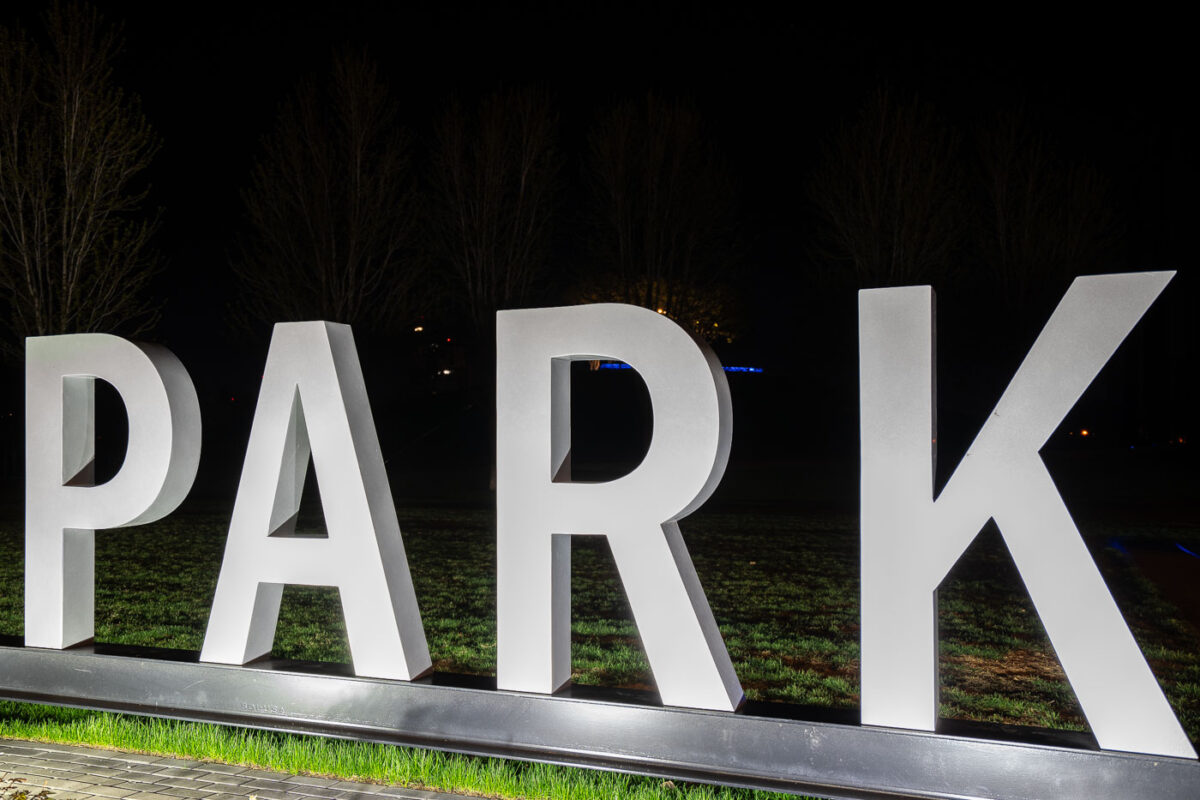
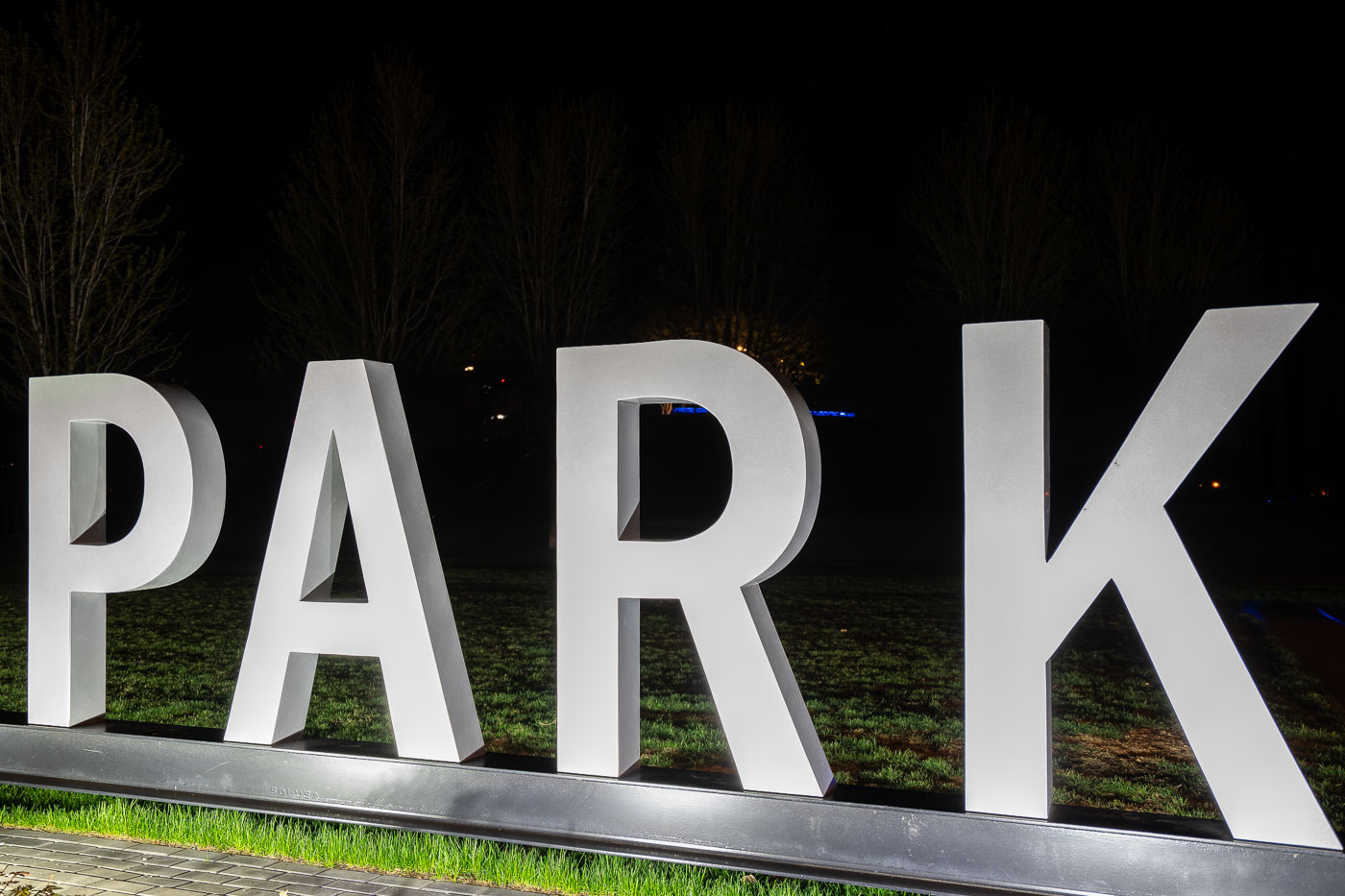
Illuminated "PARK" letters at Gold Medal Park near downtown Minneapolis.
Large illuminated letters spelling "PARK" stand at Gold Medal Park along the Mississippi River near downtown Minneapolis. The park occupies the site of the former Gold Medal Flour Mills, a major industrial landmark in the city's milling history. The signage serves as wayfinding and identification for the public green space.

Gold Medal Park Signage, Minneapolis

Sunlight filters through trees along a stream at Pike Island in St. Paul, Minnesota.
Pike Island, located in St. Paul along the Mississippi River, is a natural area featuring mature bottomland forest and waterways. The island's wooded landscape and channels provide habitat and recreational access within the .

Wooded Stream at Pike Island, St. Paul

Delta Airlines hangar and aircraft at Minneapolis–Saint Paul International Airport.
A Delta Airlines maintenance hangar at Minneapolis–Saint Paul International Airport in Bloomington, Minnesota. The facility serves as a major hub for aircraft maintenance and operations. Delta operates extensive facilities at MSP, one of the airline's primary maintenance bases.

Delta Airlines Maintenance Hangar, MSP Airport
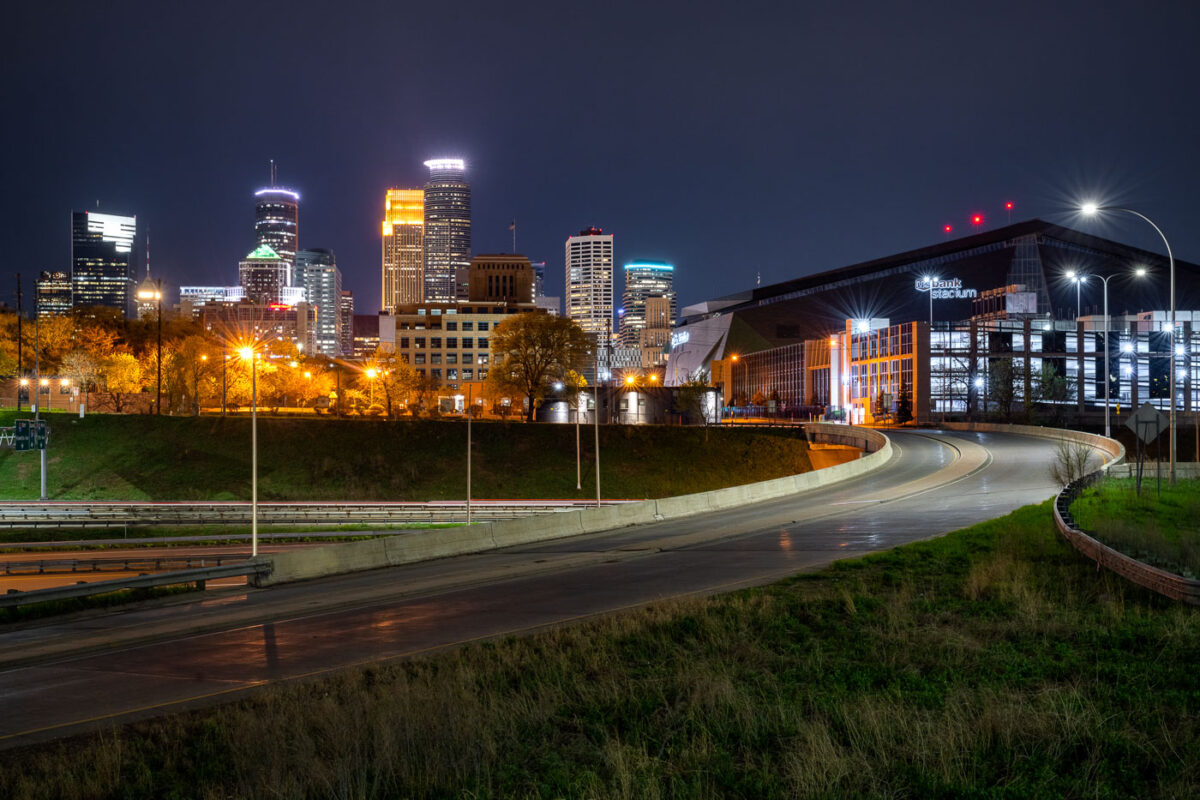
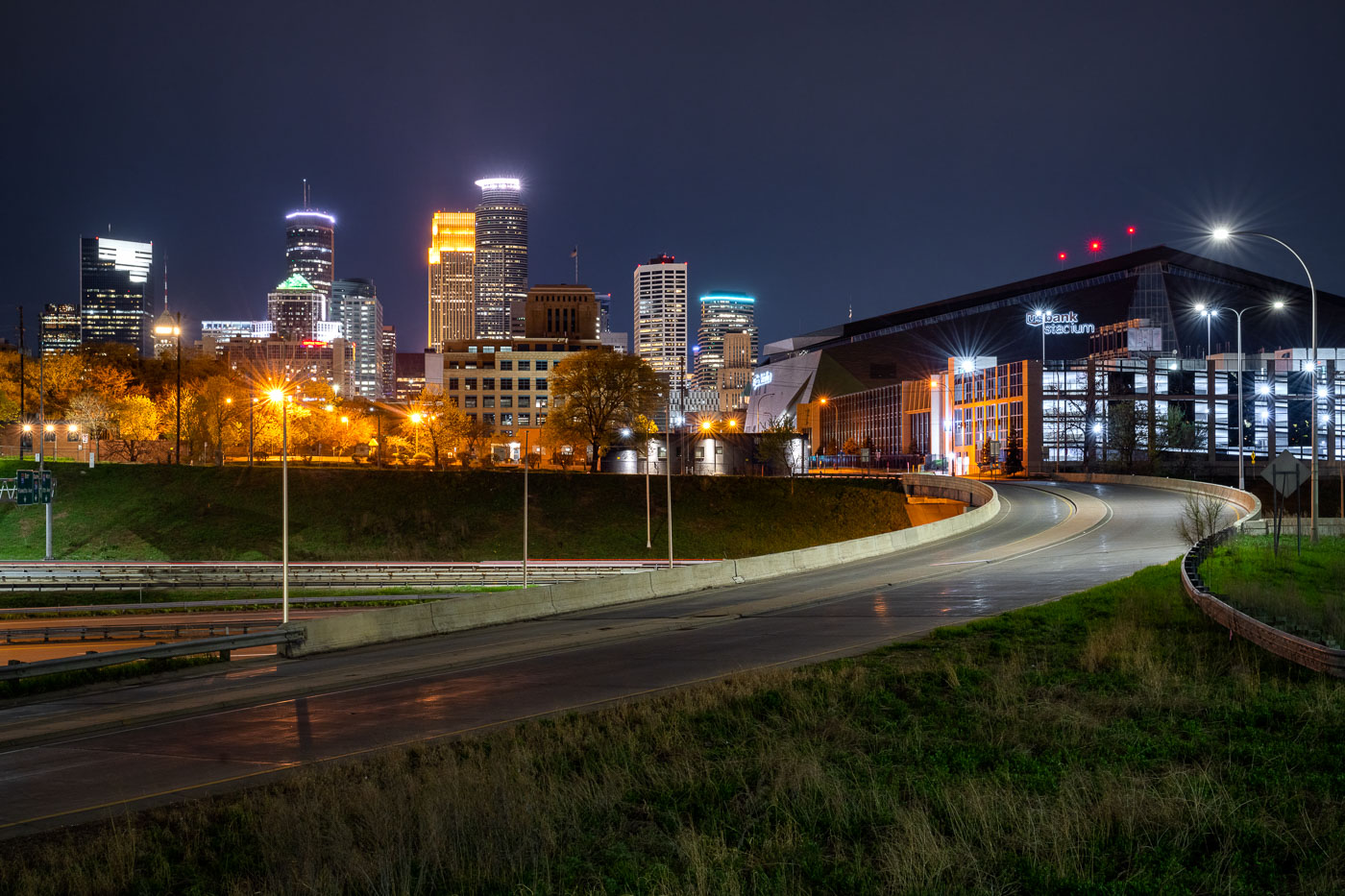
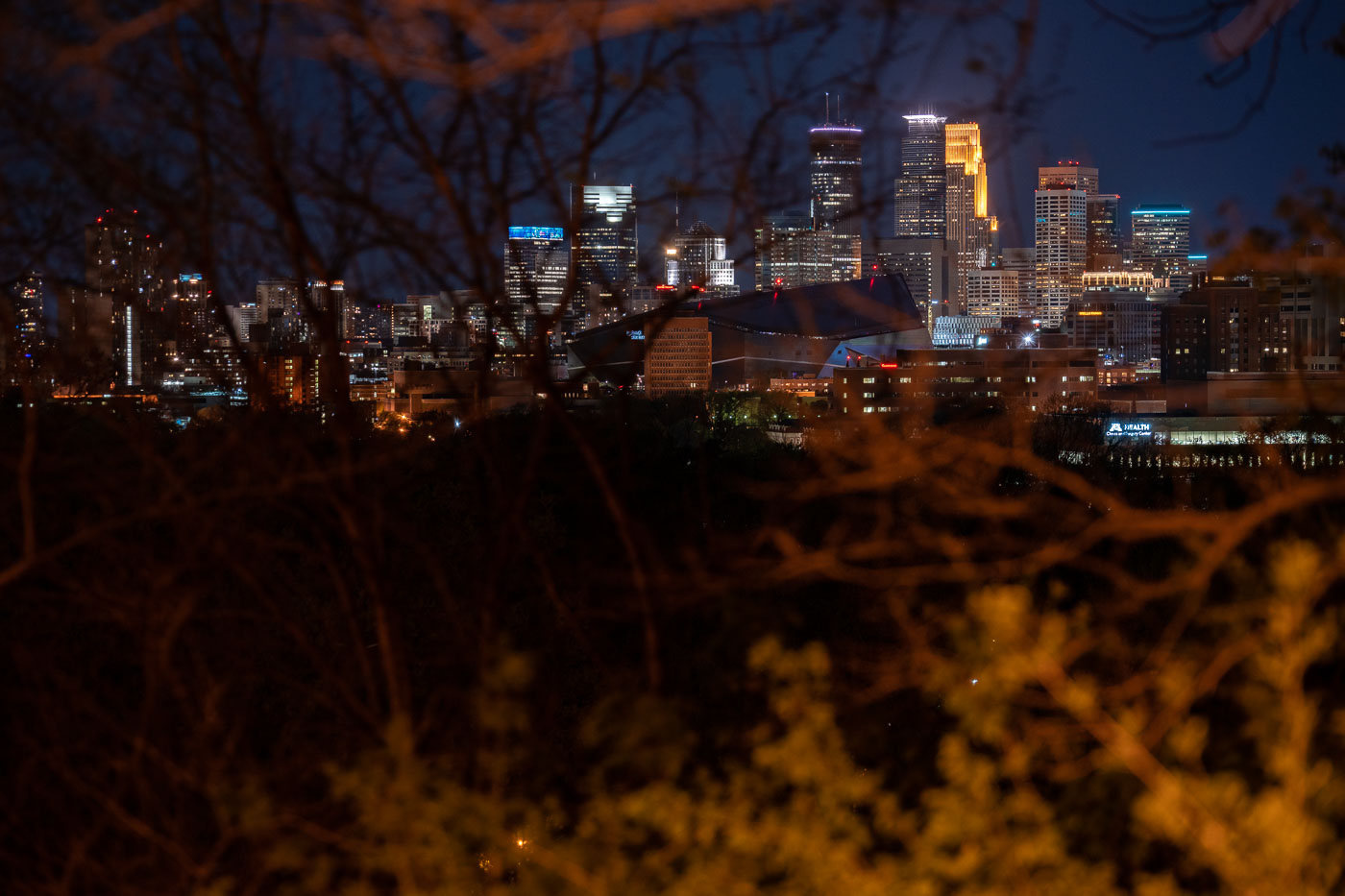
US Bank Stadium and the downtown Minneapolis skyline
US Bank Stadium, a multi-purpose venue in downtown Minneapolis, is illuminated at night. Opened in 2016, the stadium was built on the former site of the Metrodome and serves as the home for the Minnesota Vikings of the National Football League. Its distinctive architecture features a transparent ETFE roof and a faceted glass exterior, designed to reflect the city's sky and surrounding environment. The stadium hosts a variety of events, including professional football games, concerts, and other large-scale public gatherings.

US Bank Stadium and Minneapolis Skyline at Night
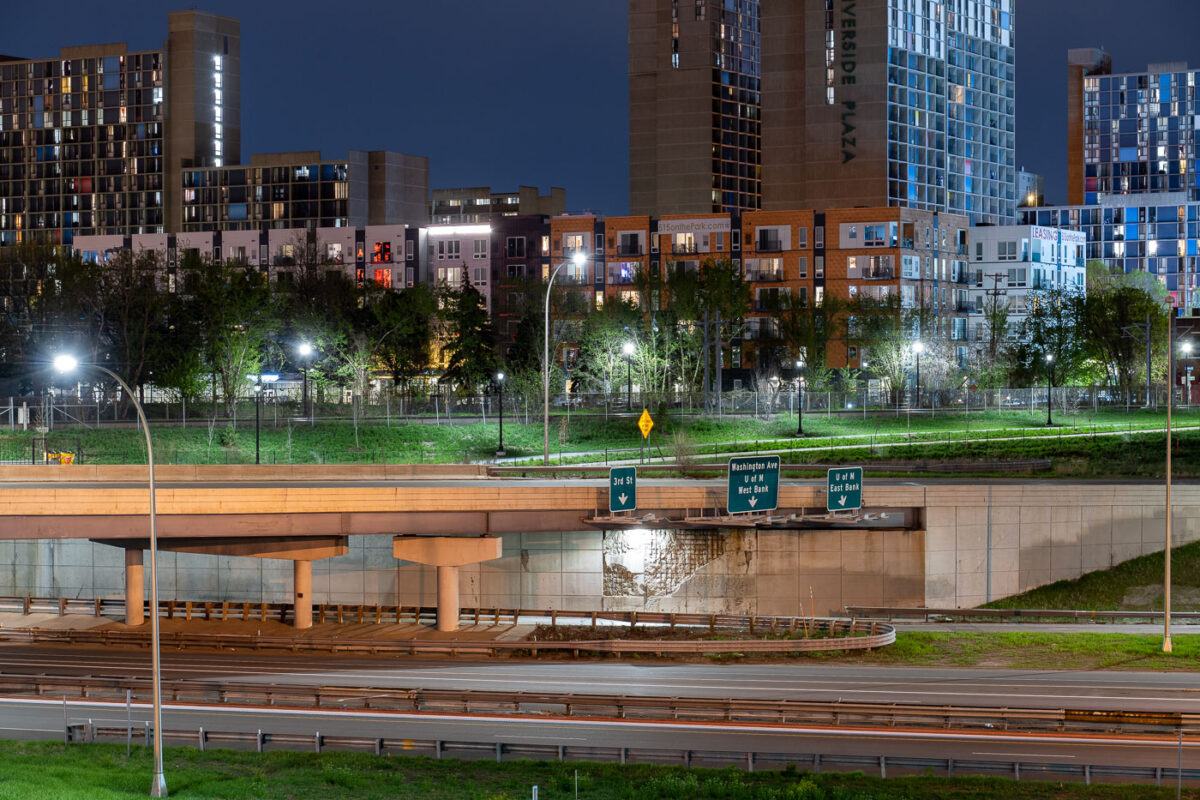
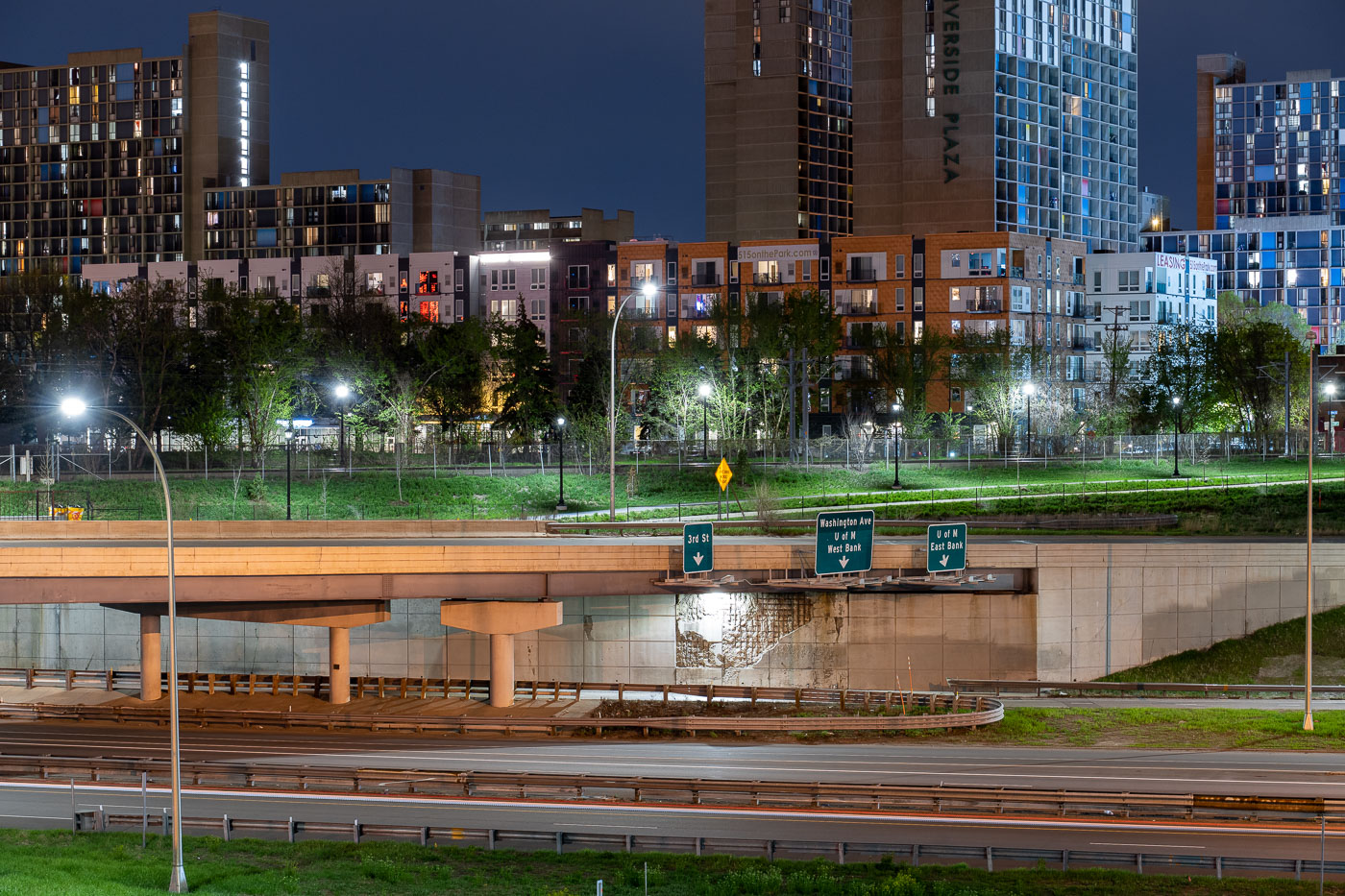
Interstate 35W underpass with Riverside Plaza towers in Cedar-Riverside, Minneapolis.
Interstate 35W passes beneath an overpass at the Cedar-Riverside neighborhood in Minneapolis. Riverside Plaza residential towers rise beyond the freeway corridor, which connects the Twin Cities metropolitan area north and south through downtown Minneapolis.

Interstate 35W at Cedar-Riverside, Minneapolis
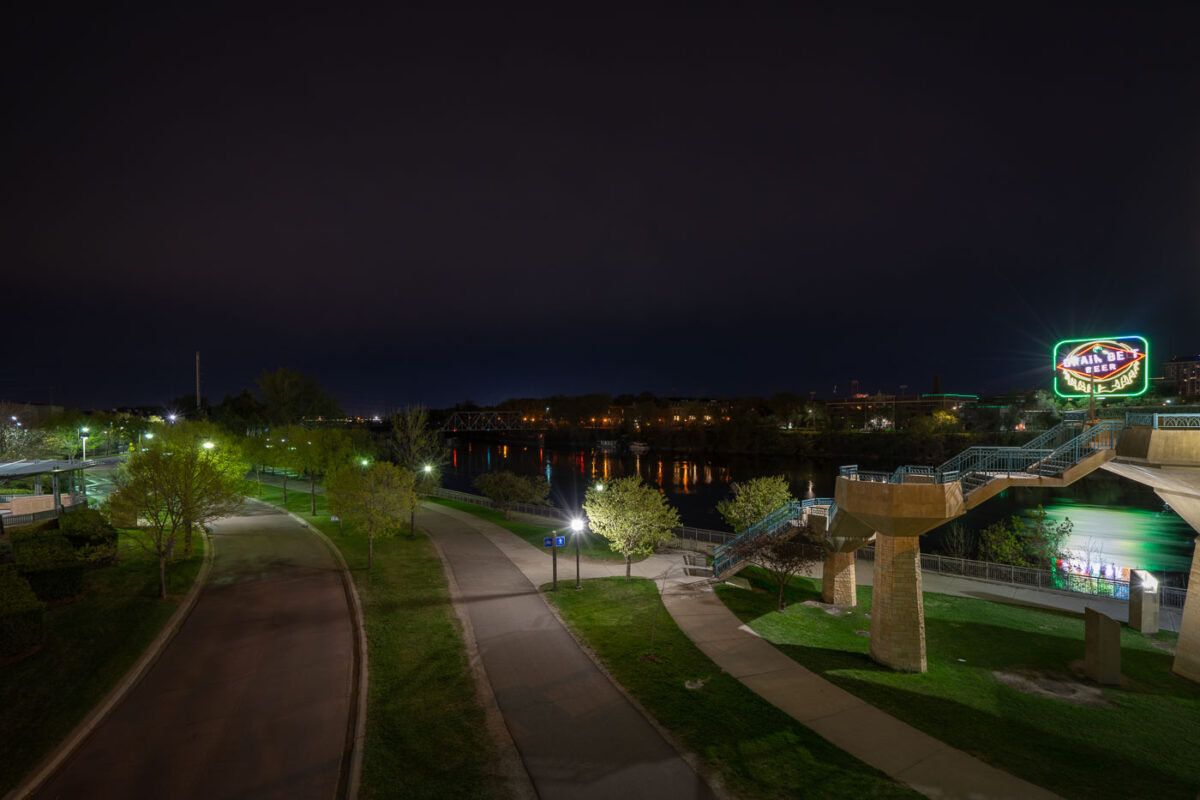
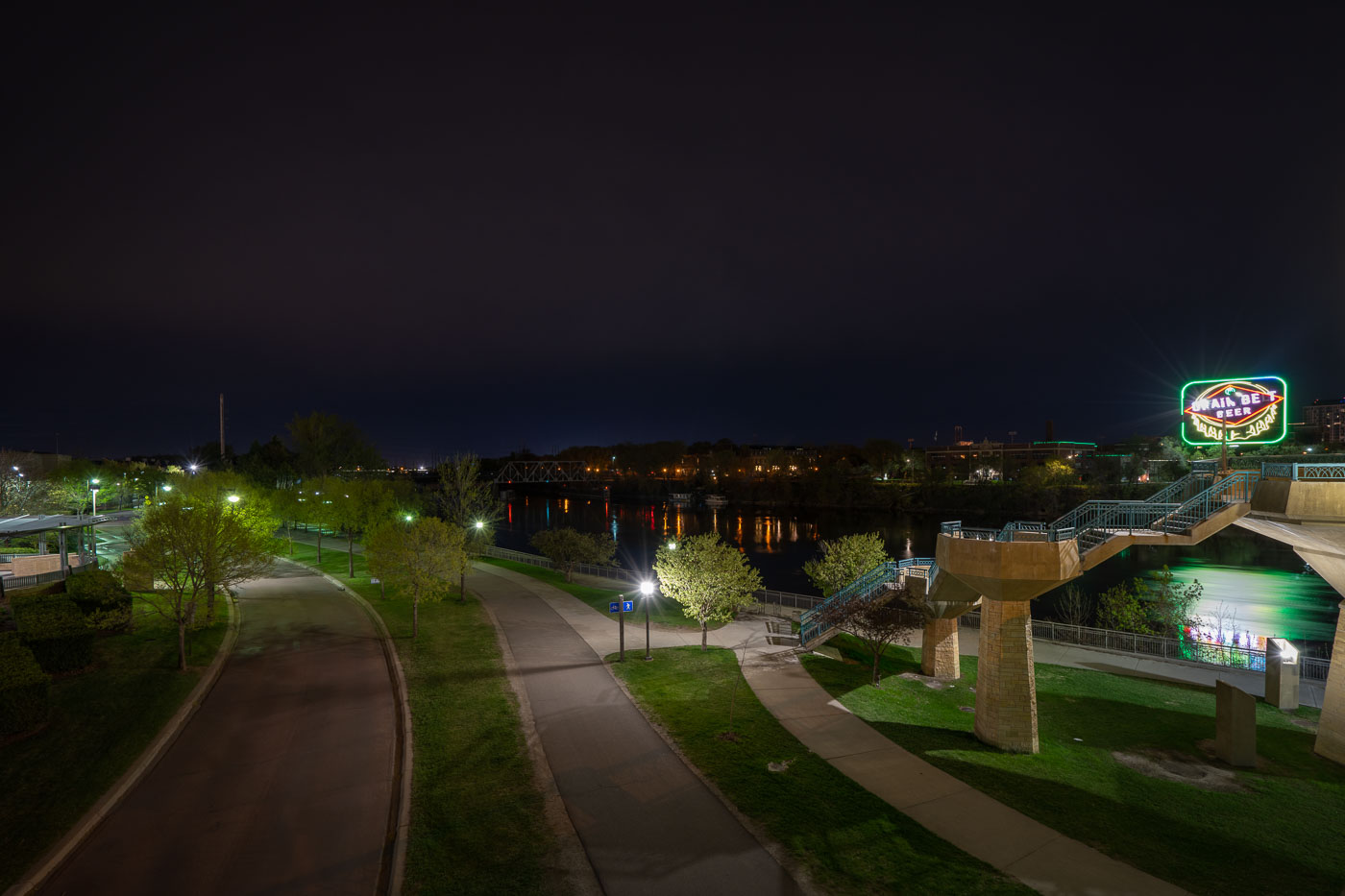
Grain Belt Beer neon sign glowing above West River Parkway at night in Minneapolis.
The Grain Belt Beer sign illuminates West River Parkway along the Mississippi River in Minneapolis. The neon sign is a longtime advertising fixture visible from the parkway, which runs along the river's west bank near downtown. The parkway serves as a recreational corridor through the city's riverfront area.

Grain Belt Beer Sign at West River Parkway, Minneapolis
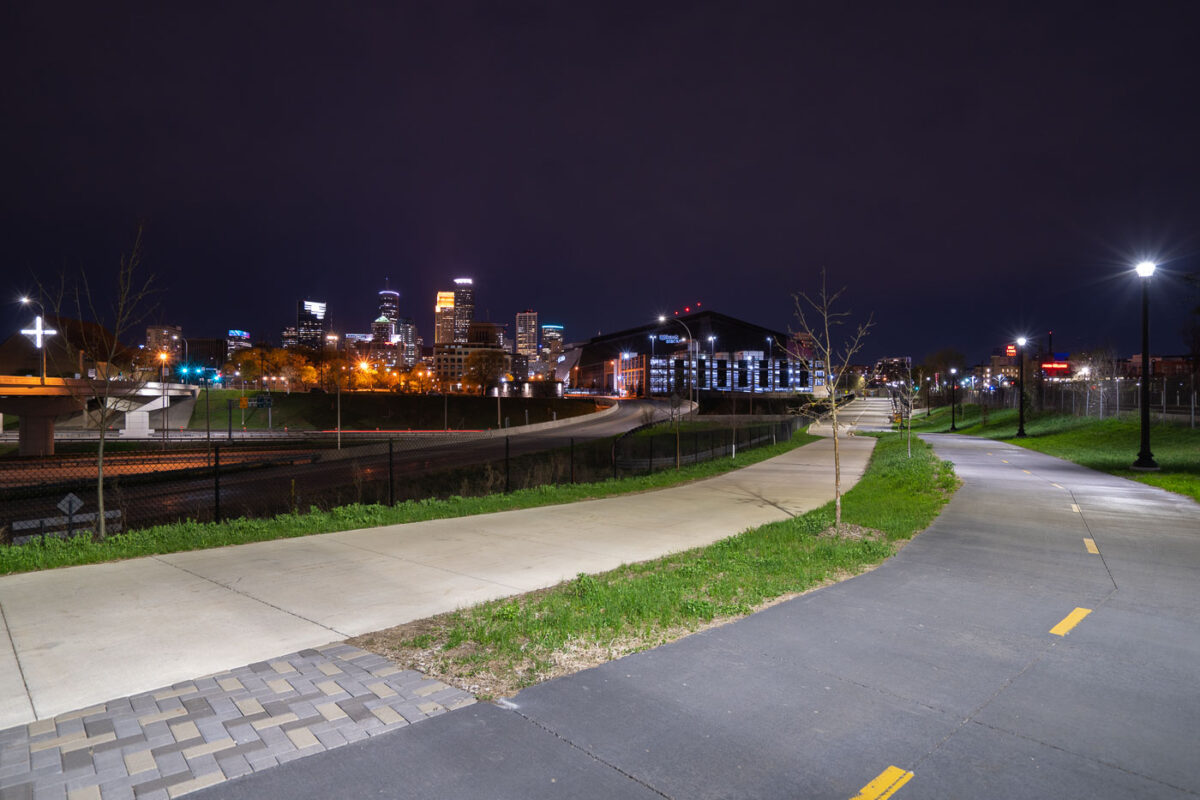
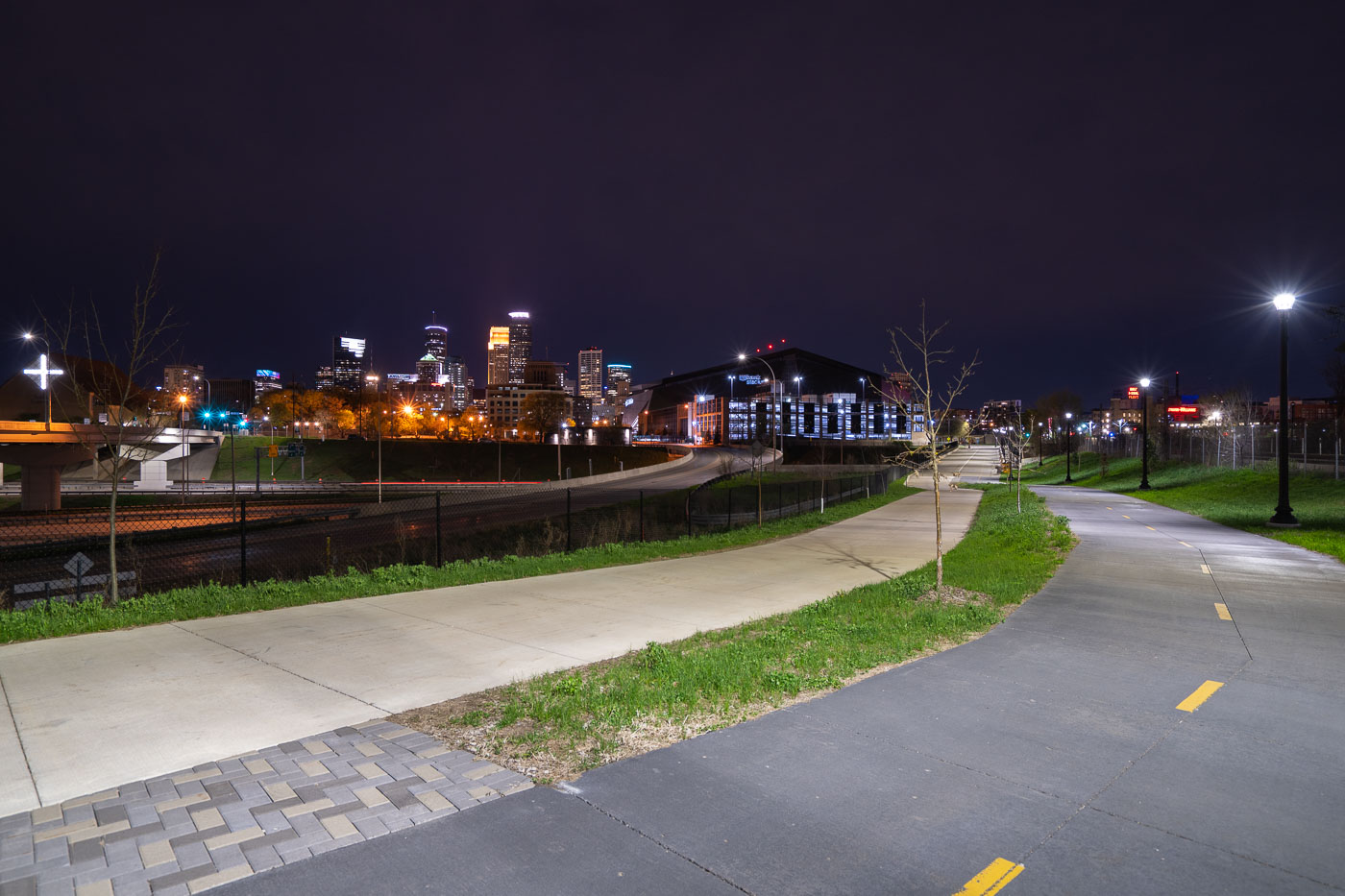
Samatar Crossing near Downtown Minneapolis
The Samatar Crossing shared use path near downtown Minneapolis. The path leads from Cedar Riverside to near US Bank Stadium.

Samatar Crossing near Downtown Minneapolis

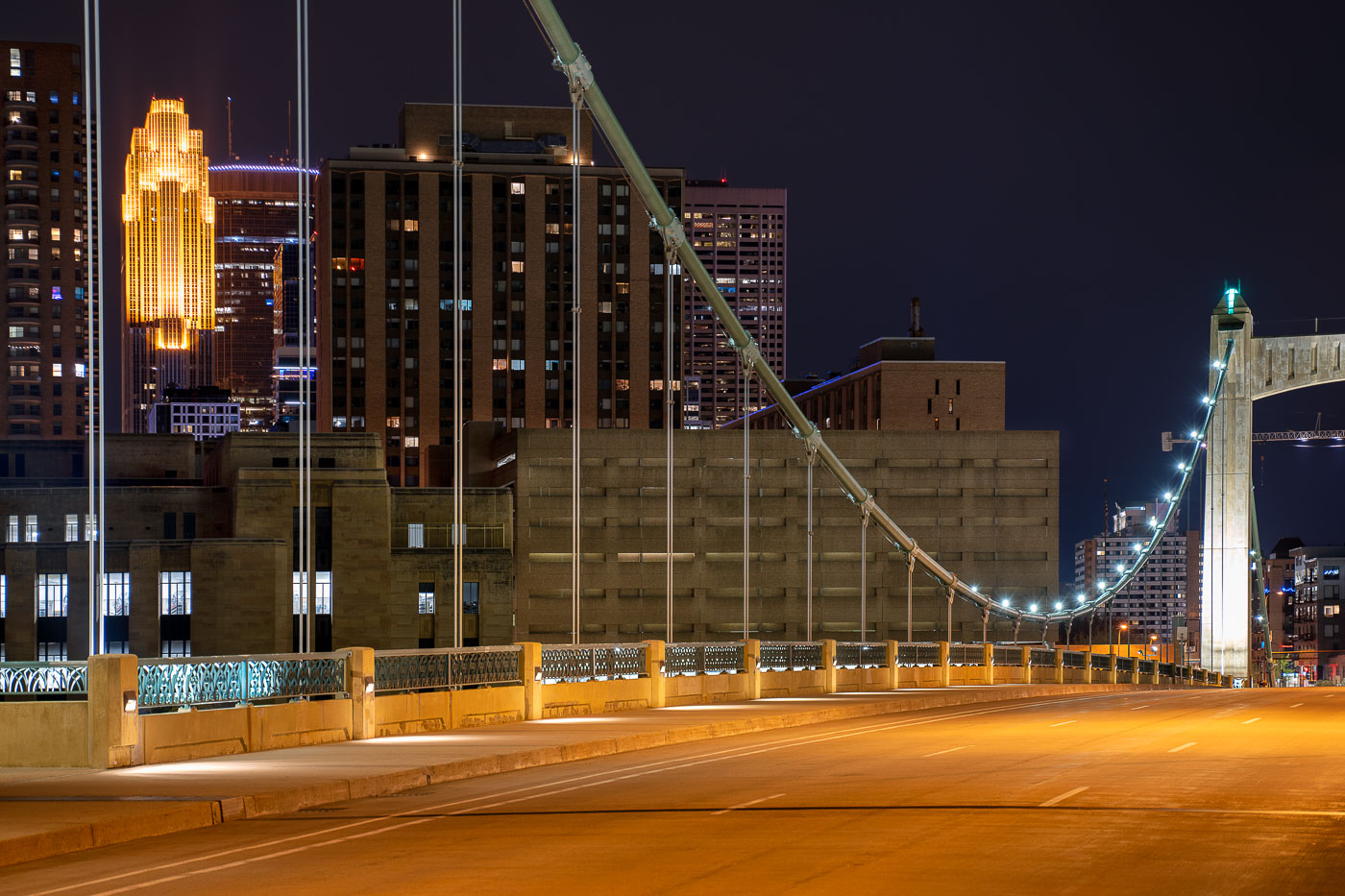
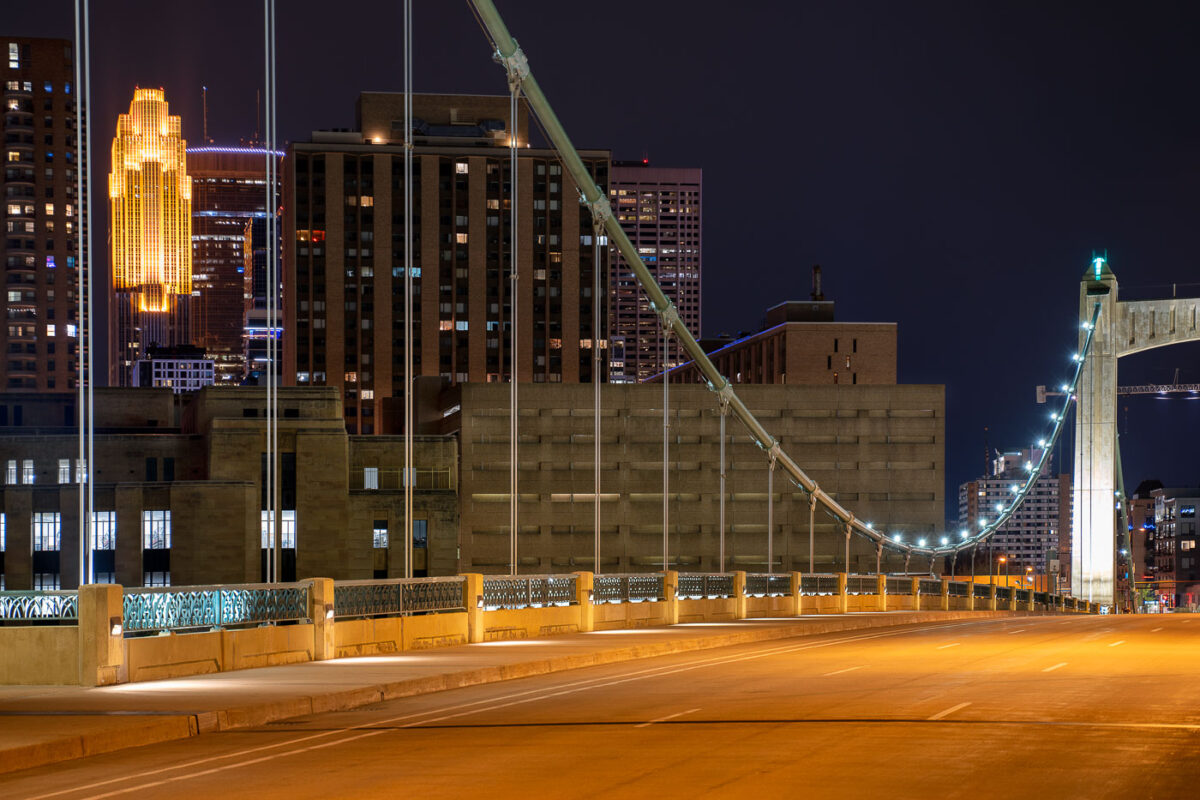
Hennepin Ave bridge at night during covid19
The Hennepin Avenue Bridge in Minneapolis, MN, is seen here during the COVID-19 pandemic.

Hennepin Avenue Bridge, Minneapolis, During COVID-19 Pandemic
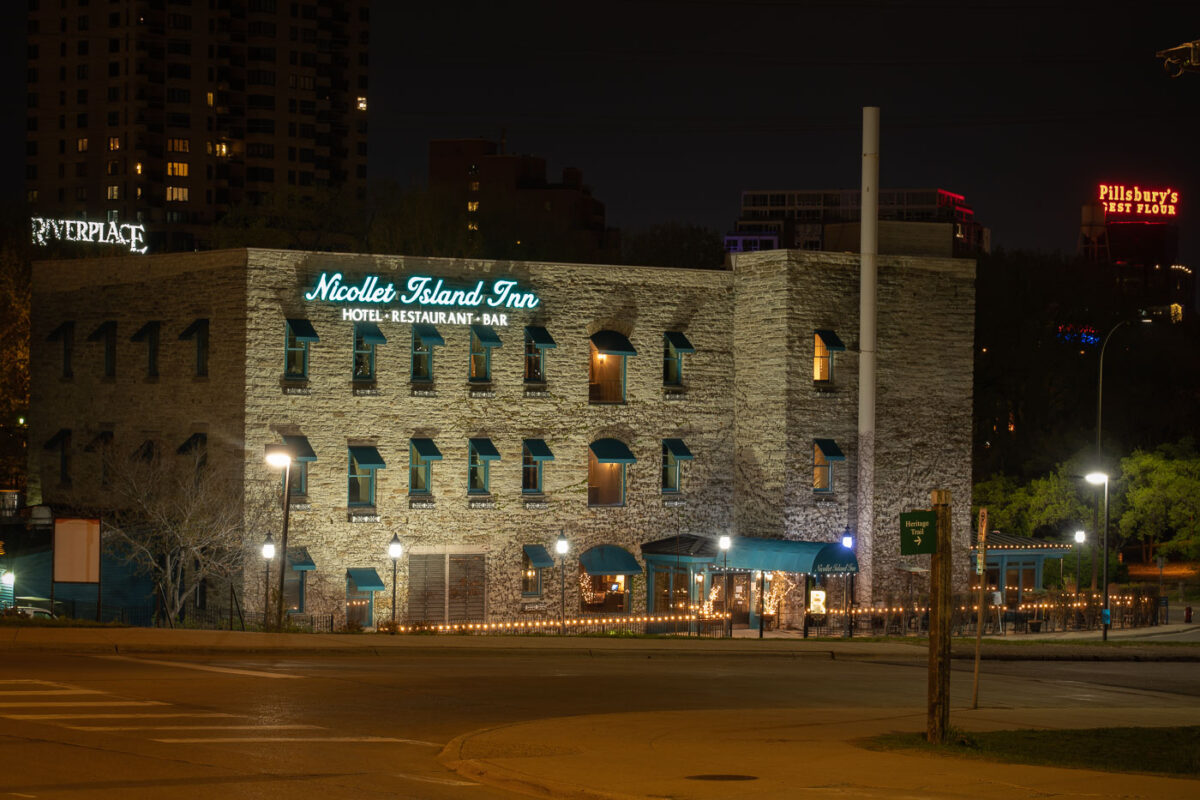
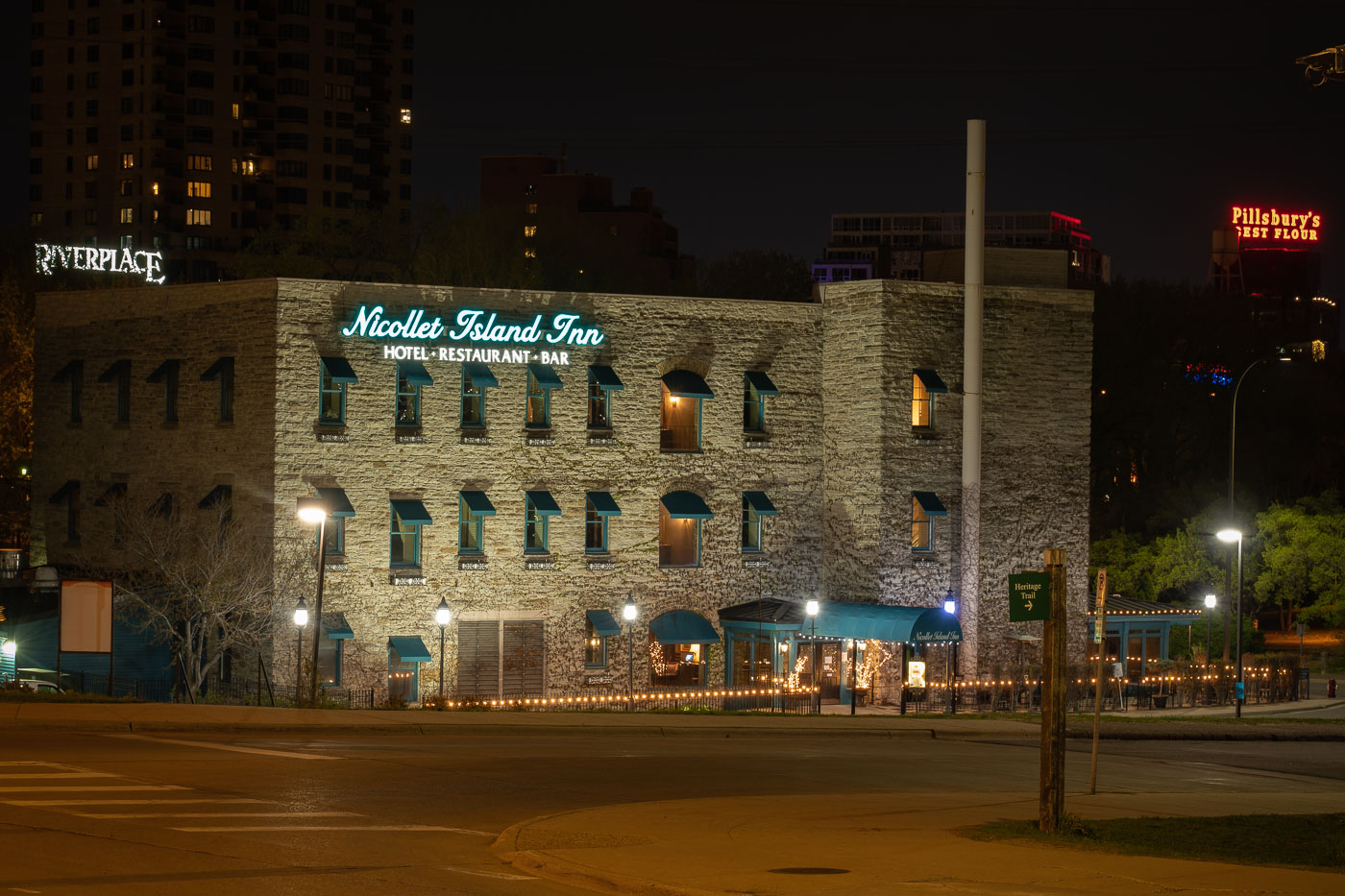
NIcollet Island Inn on Nicollet Island
The Nicollet Island Inn, a landmark along the Mississippi River in Minneapolis, occupies a 19th-century brick and limestone structure originally built in the 1890s as an industrial facility. Converted into a hotel and restaurant in the 1970s, it retains its historic character with exposed stone walls and vintage architectural details. Illuminated signage and soft outdoor lighting highlight the inn’s distinctive facade, with the iconic Pillsbury’s Best Flour sign visible across the river, linking the scene to the city’s milling heritage.

Nicollet Island Inn at Night, Minneapolis Riverfront
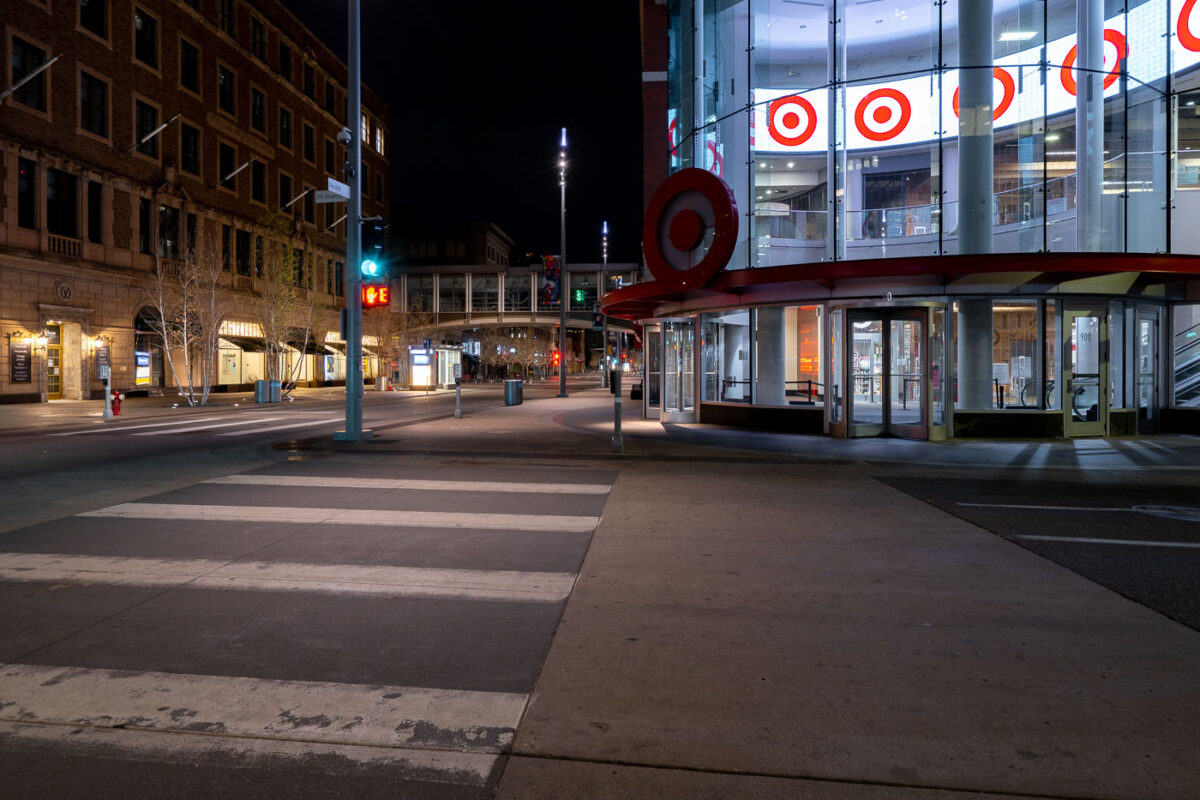
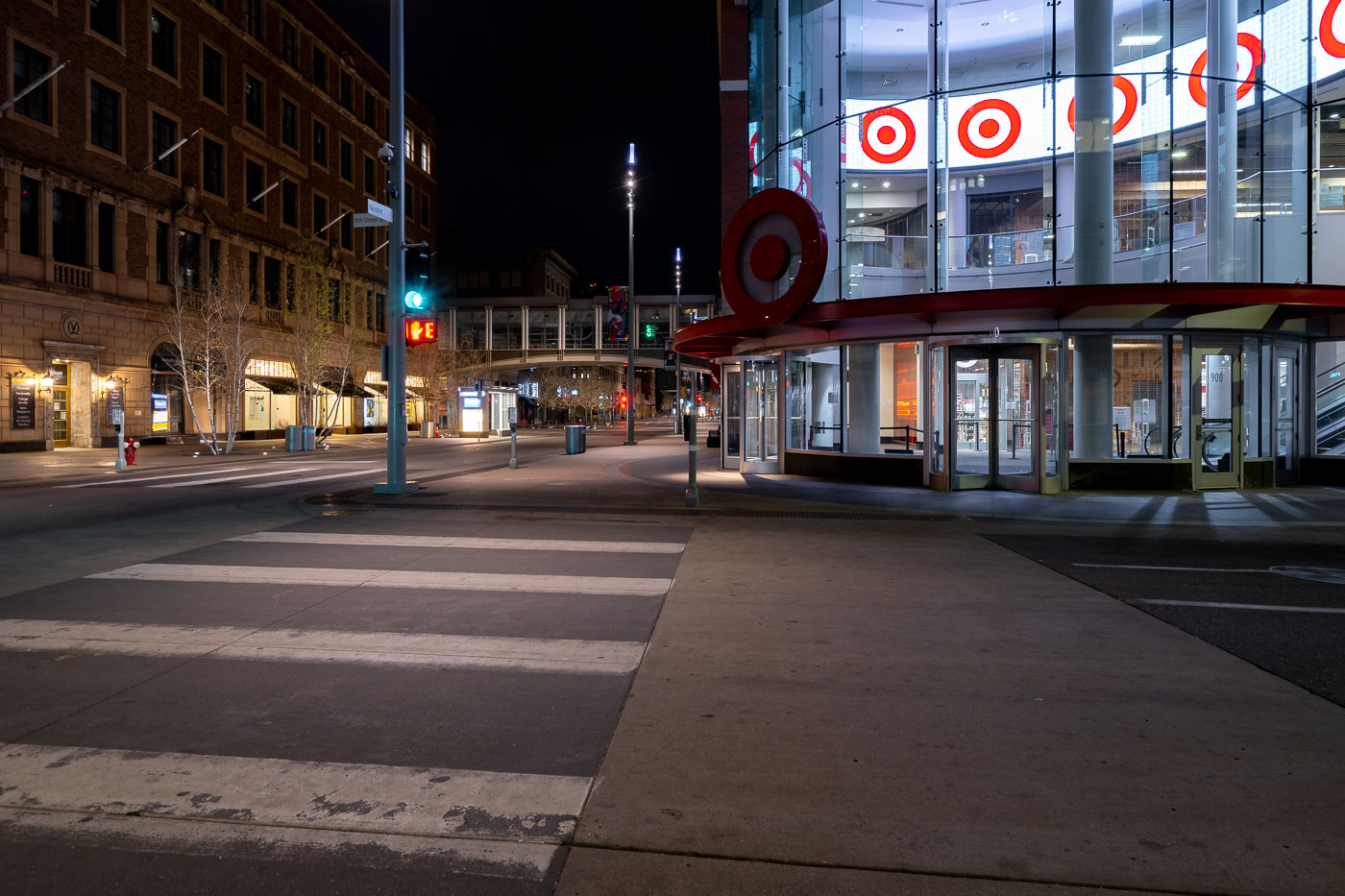
Target's flagship store illuminated at night on Nicollet Mall at South 9th Street in downtown Minneapolis.
Target's downtown Minneapolis store sits at the corner of Nicollet Mall and South 9th Street, its curved glass corner marked by the company's red bullseye logo. The flagship location anchors this stretch of the pedestrian mall, with a skyway overhead linking it to neighboring blocks.

Target Store on Nicollet Mall at night
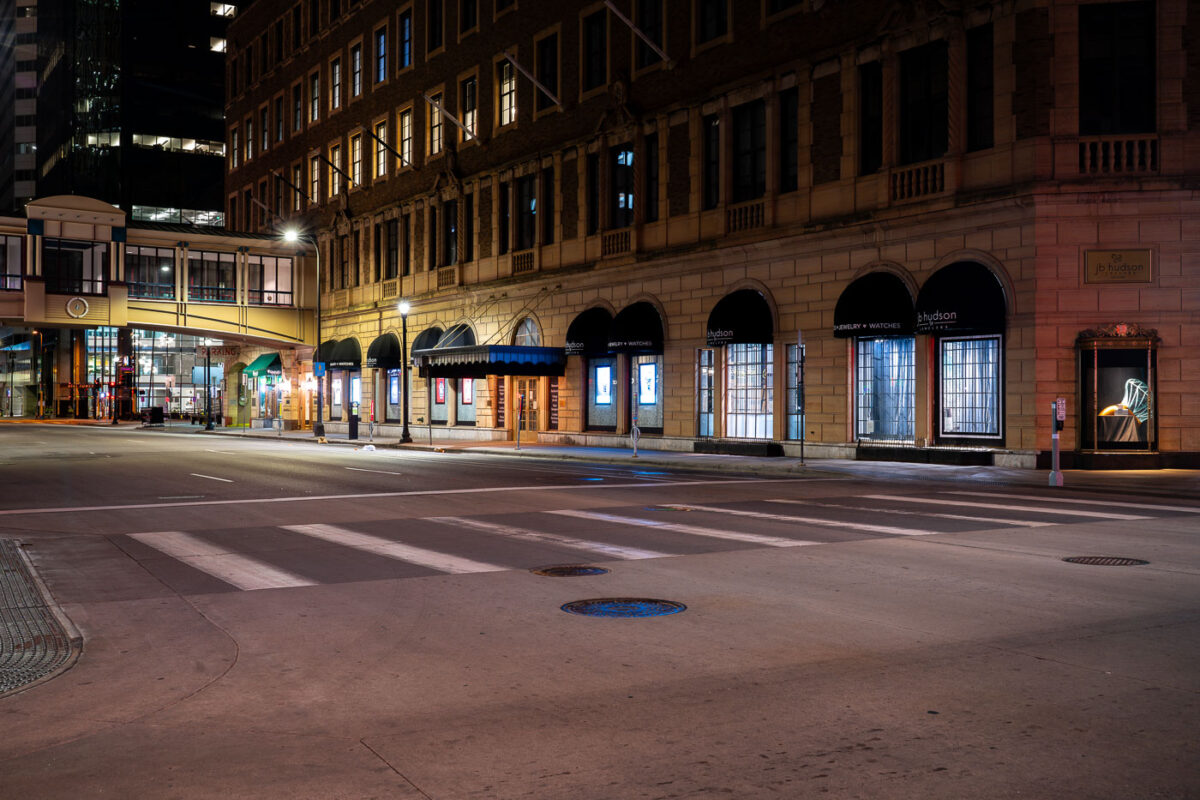
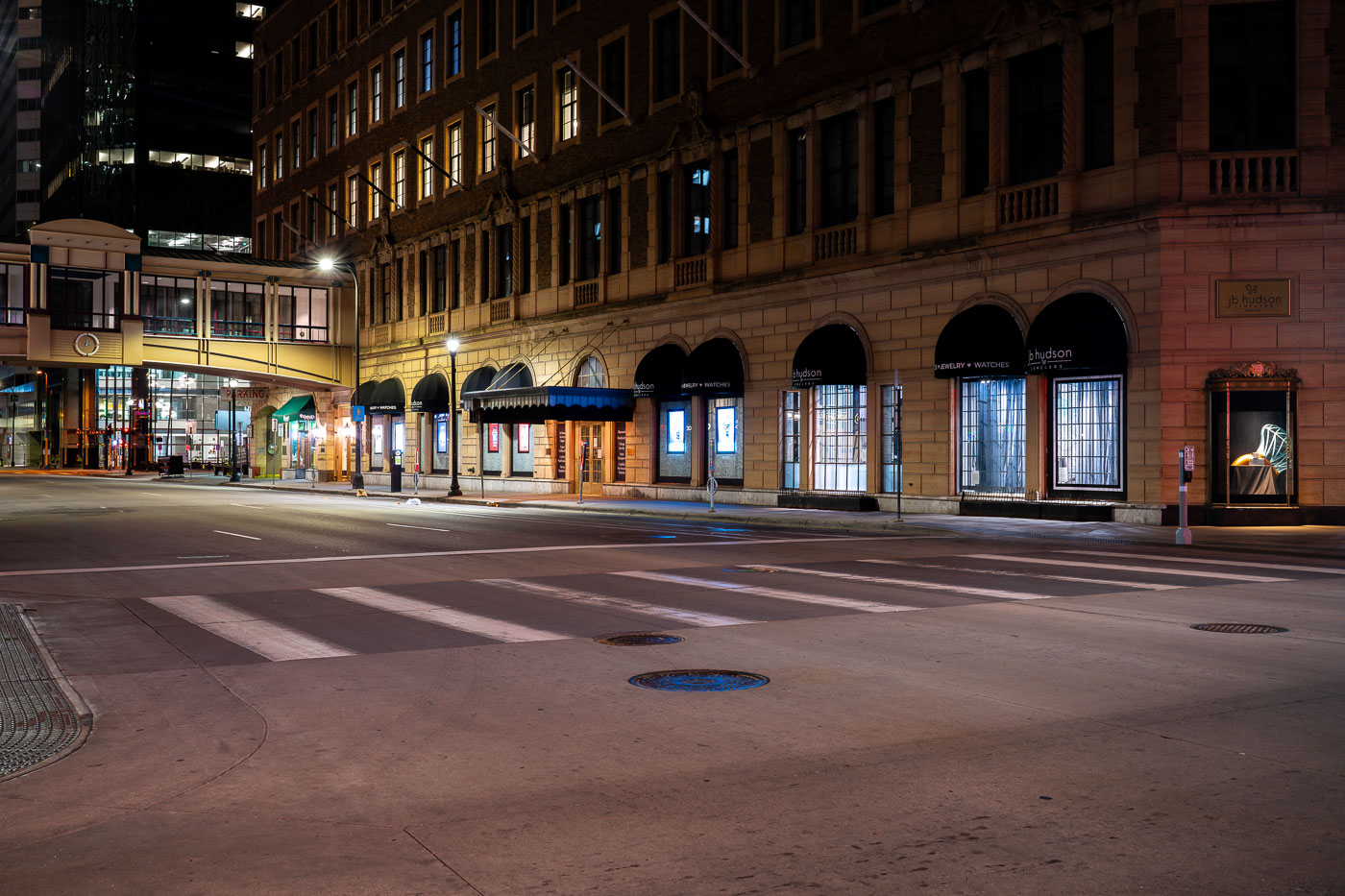
Nicollet Mall storefronts and retail businesses at night in downtown Minneapolis.
Nicollet Mall is a pedestrian shopping district in downtown Minneapolis featuring retail storefronts and restaurants along a tree-lined walkway. The mall, which opened in 1968, was designed as a mixed-use urban space connecting downtown businesses and offices. JB Hudson Jewelers operates among the various retailers along the mall, which has served as a commercial and gathering destination for decades.

Nicollet Mall storefronts at night, downtown Minneapolis

An ambulance with emergency lights activated travels along Nicollet Mall in downtown Minneapolis at night.
An emergency vehicle races through a Nicollet Mall intersection in downtown Minneapolis on the night of May 5, 2020. Nicollet Mall is the main shopping street in downtown Minneapolis, a mall twelve blocks long that opened in 1967 and was rebuilt from 2015 to 2017.

Emergency Vehicle Speeds Through Nicollet Mall at Night
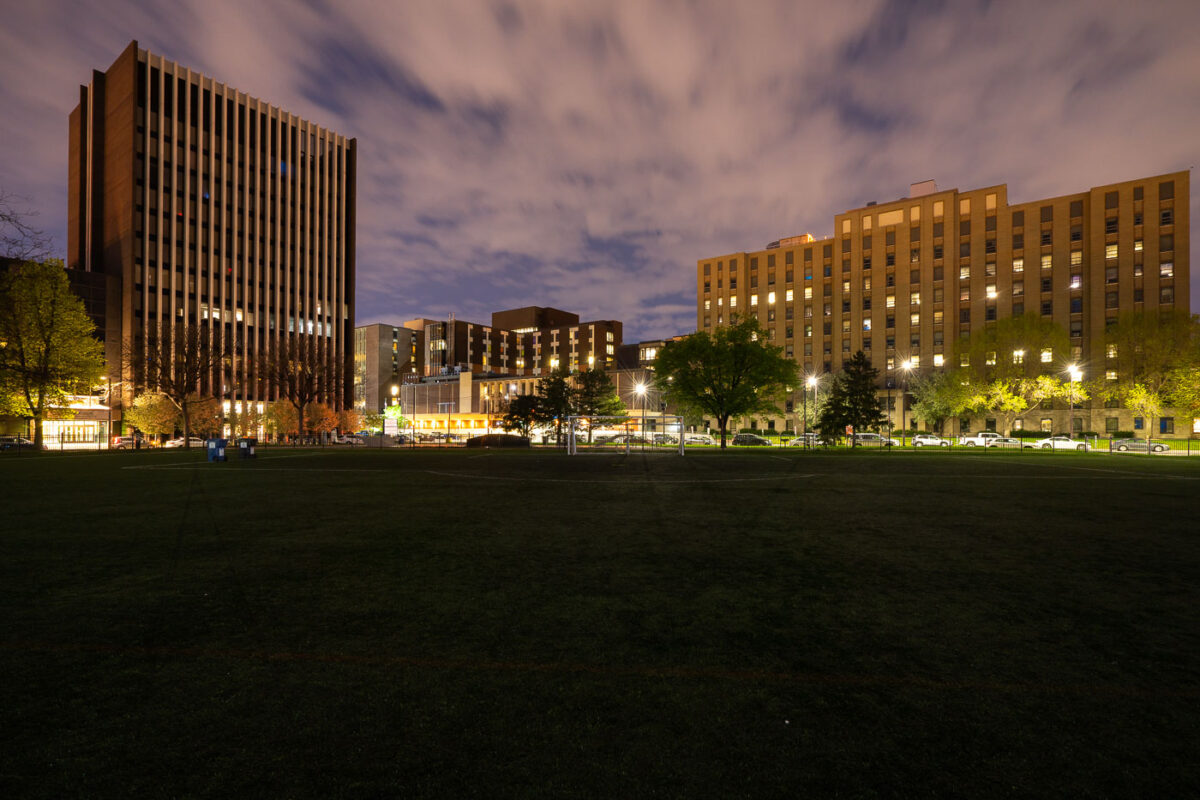
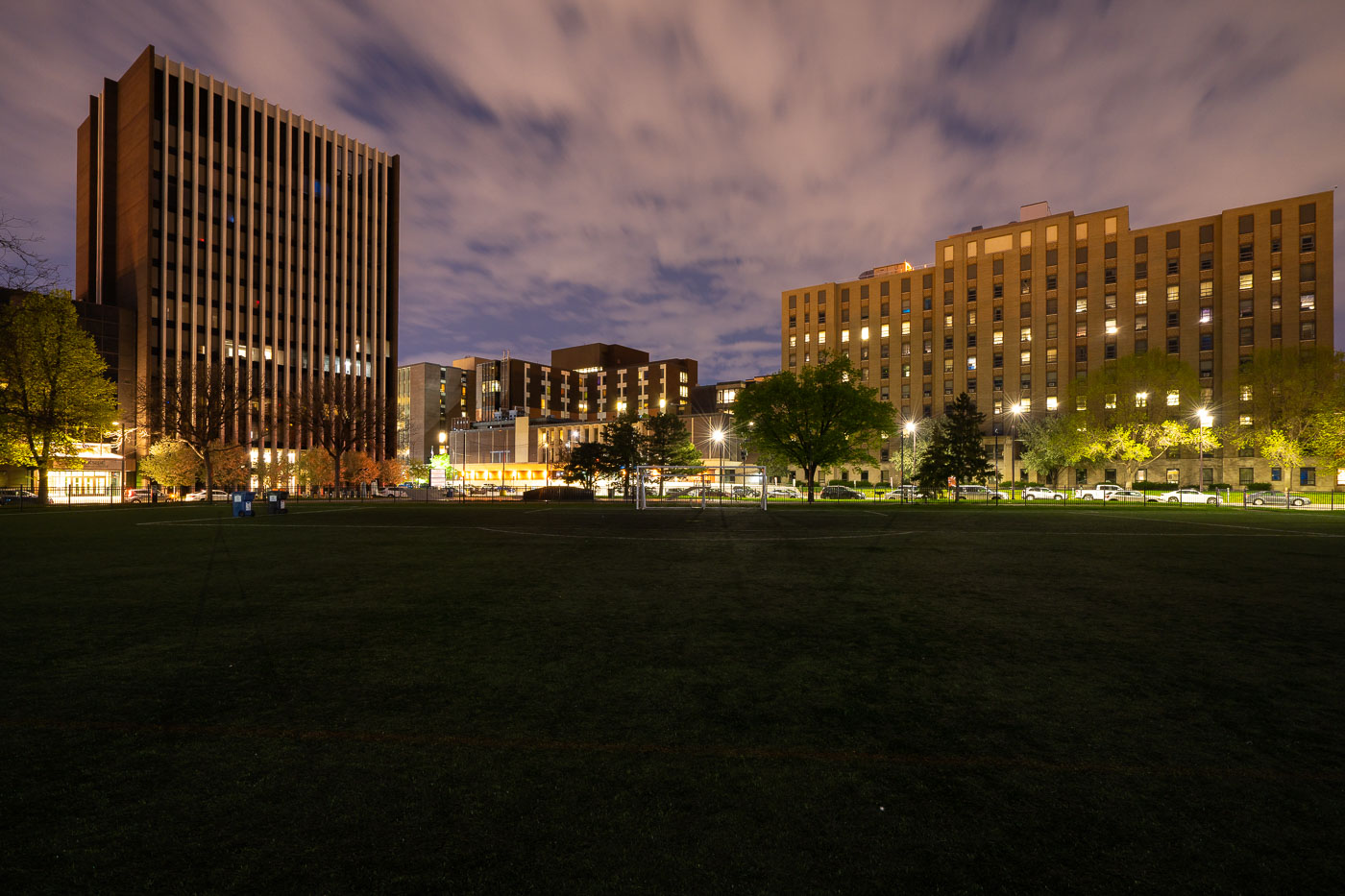
Elliot Park at night in downtown Minneapolis
Elliott Park in Downtown Minneapolis. One of my favorite parks downtown because of the skyline that's visible from the soccer fields.

Elliott Park in downtown Minneapolis at night

COVID19 and Elliot Park Minneapolis
A basketball hoop with a board over it to prevent playing during COVID-19 in Minneapolis. May 2020

COVID-19 and Elliot Park, Minneapolis
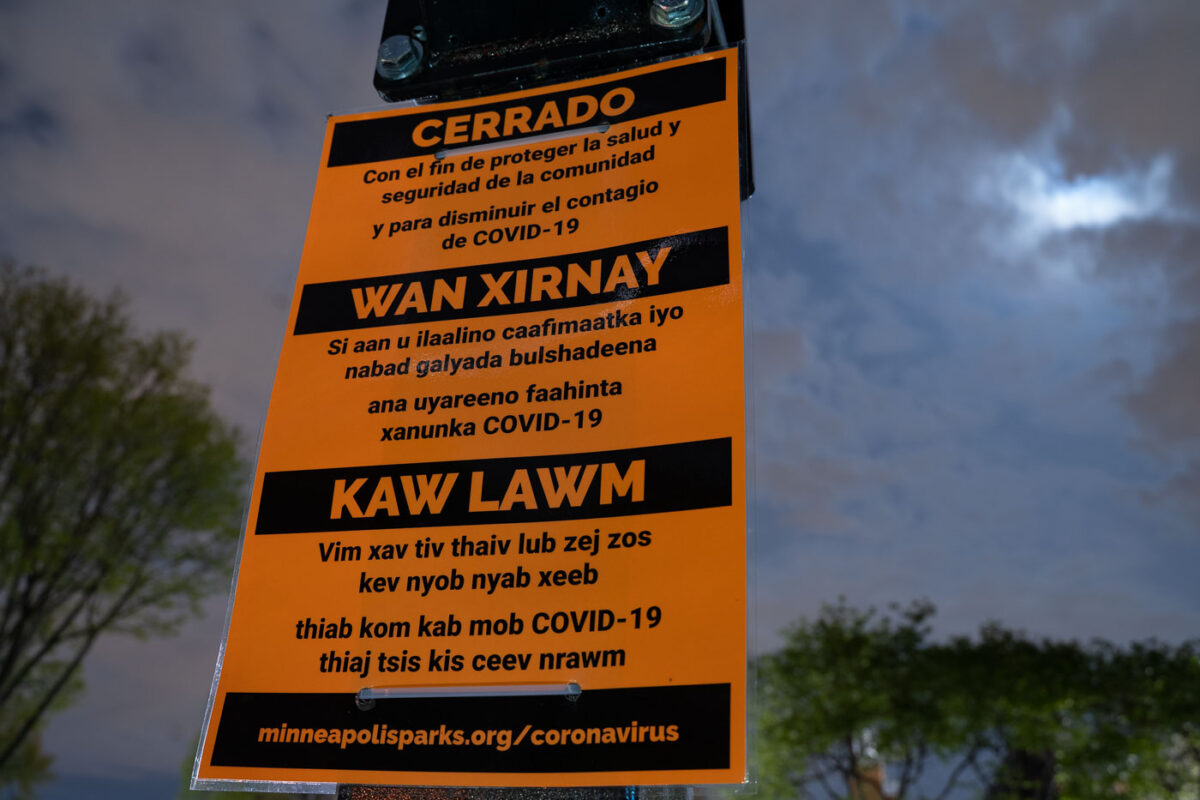
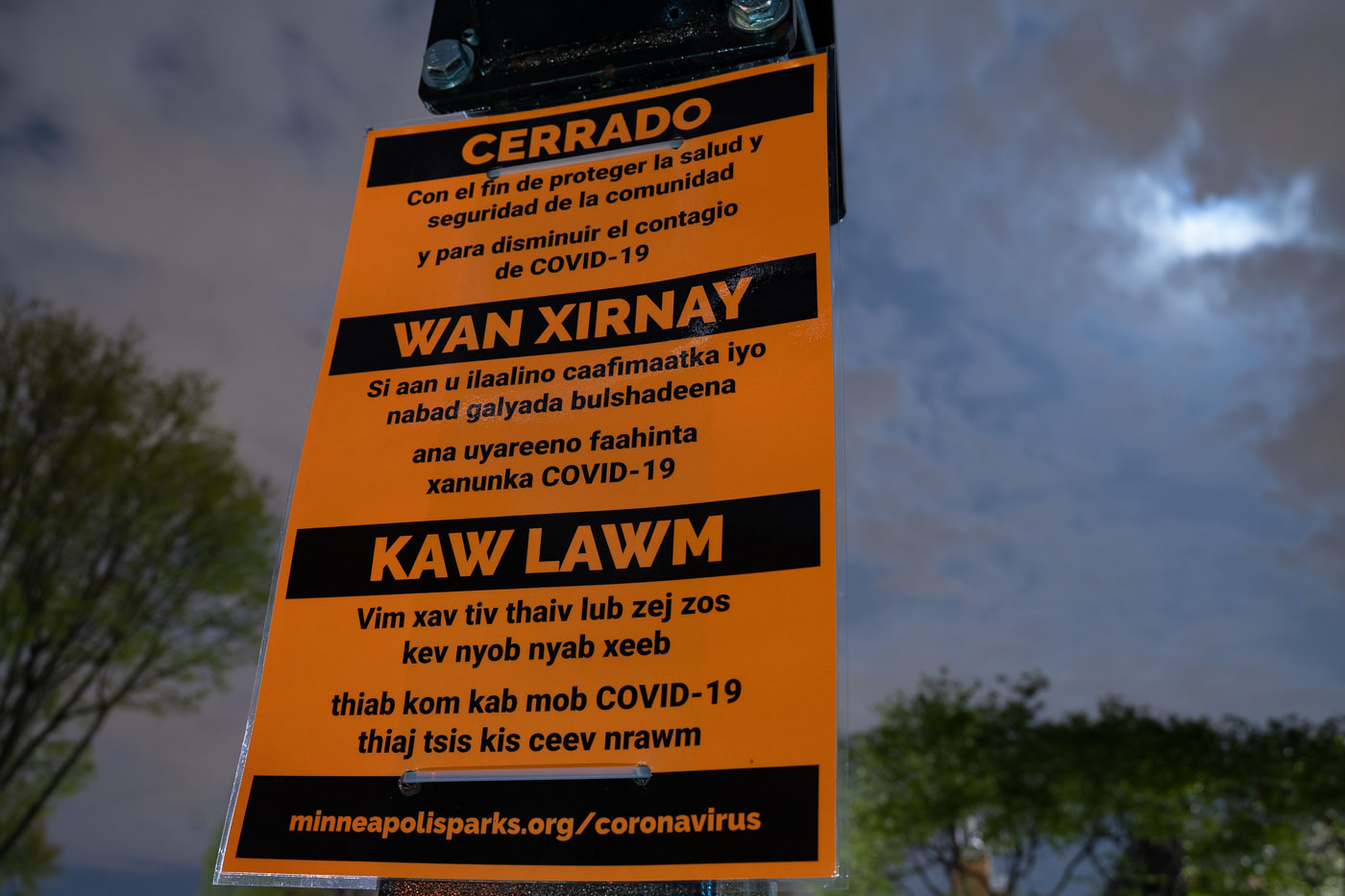
Multi language COVID signage in Minneapolis Park
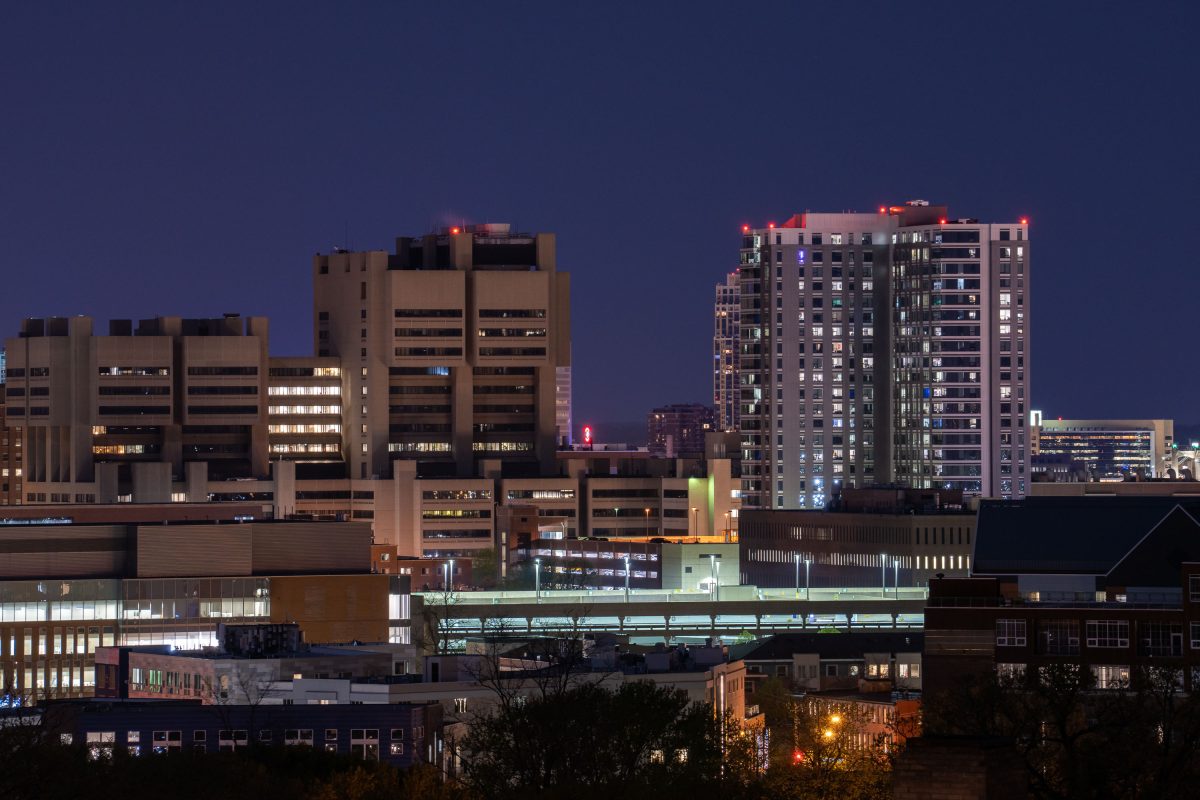
Park closed due to coronavirus signage at Elliot Park in Minneapolis.

Multi language COVID signage in Minneapolis Park

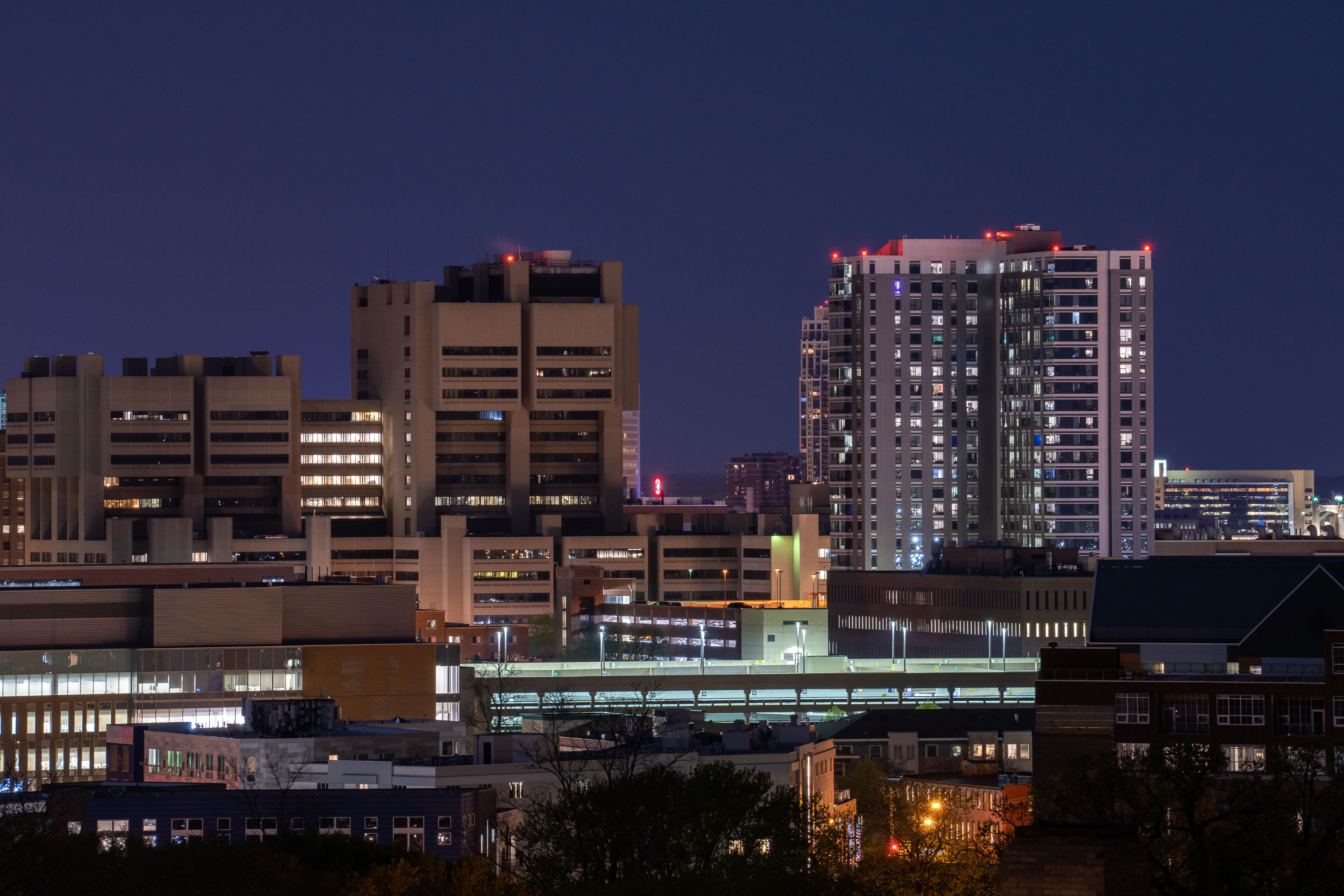
University of Minnesota Medical Center and East Bank campus buildings illuminated at dusk in Minneapolis.
The University of Minnesota's East Bank campus includes its academic health center, home to M Health Fairview University of Minnesota Medical Center and the university's medical school.

East Bank Medical Center Towers at Night from Prospect Park

Prospect Park Water Tower with its green conical roof overlooking Minneapolis downtown and industrial skyline at dusk.
The Prospect Park Water Tower, commonly known as the Witches Hat for its distinctive green conical roof, overlooks downtown Minneapolis and the Mississippi River valley. Built in 1913, the tower served as a water storage and distribution facility for the surrounding neighborhood. The tower remains a recognizable landmark in the Prospect Park area, offering views across the city's industrial and commercial districts.

Prospect Park Water Tower and Minneapolis Skyline

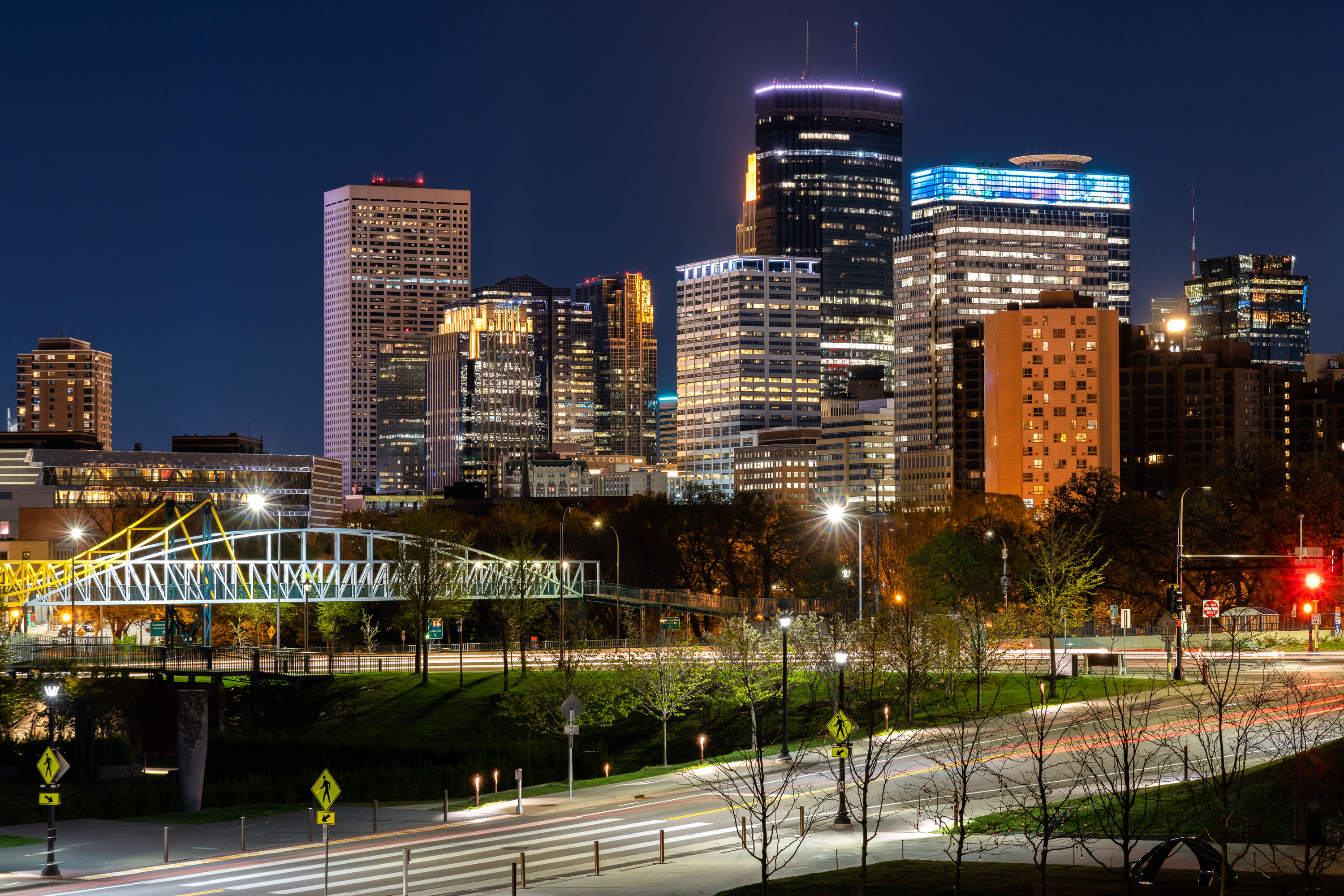
Minneapolis skyline at night with illuminated downtown towers and a lit pedestrian bridge in foreground.
The Irene Hixon Whitney Bridge links Loring Park to the Minneapolis Sculpture Garden at the Walker Art Center, carrying pedestrians and cyclists over Interstate 94. Minneapolis artist and MIT design professor Siah Armajani designed the bridge, which opened in 1988 and stretches roughly 375 feet in a bowstring-arch form of steel and wood. The skyline behind it is anchored by Capella Tower, completed in 1992 and capped with a lattice crown that once displayed a rotating color scheme, and the IDS Center, Minnesota's tallest building at 792 feet since 1972. Both towers stand within the city's central business district, a short walk from Loring Park.

Irene Hixon Whitney Bridge and Minneapolis Skyline at Night
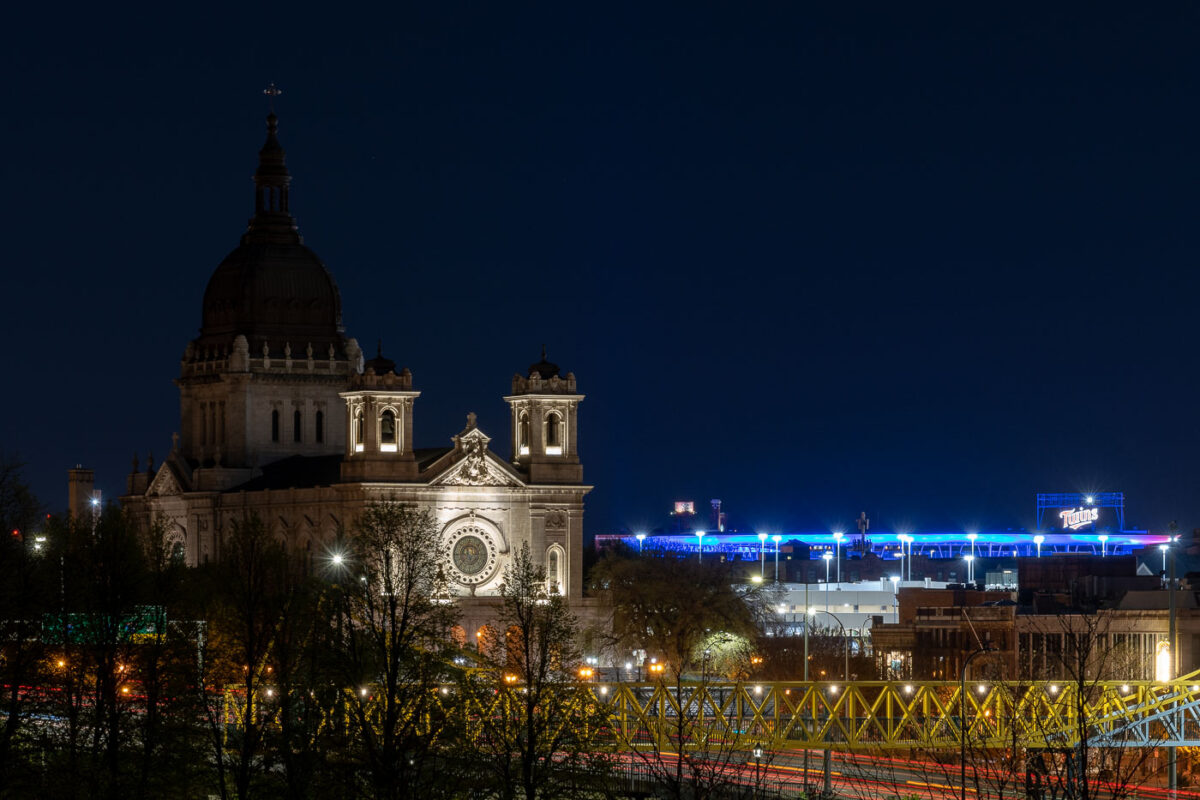
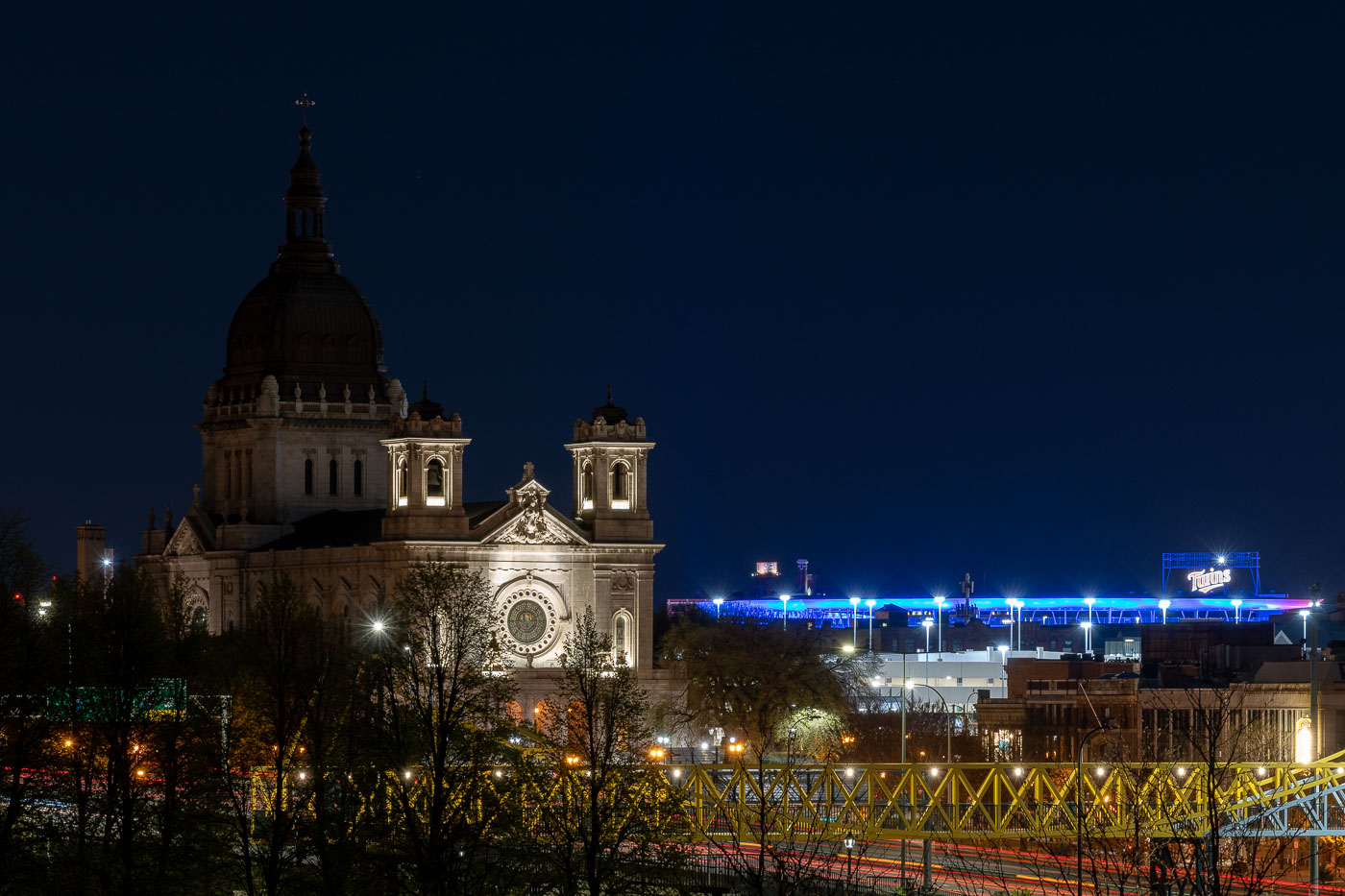
The Basilica of Saint Mary and Target Field illuminated at night in downtown Minneapolis.
The Basilica of Saint Mary stands at 1600 Hennepin Avenue in downtown Minneapolis, completed in 1926 as the first basilica designated in the United States. Target Field, home of the Minnesota Twins, opened in 2010 on the north side of downtown near the Mississippi River.

Basilica of Saint Mary Rises Over Target Field at Night
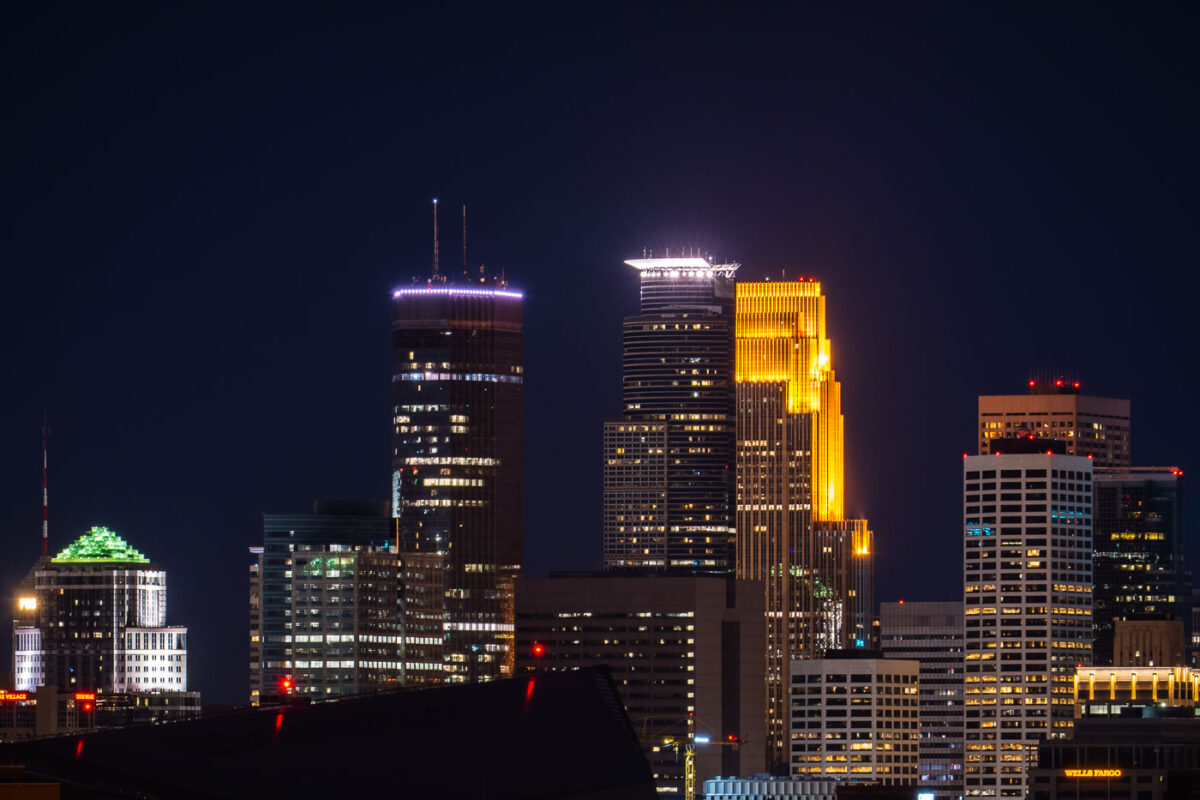
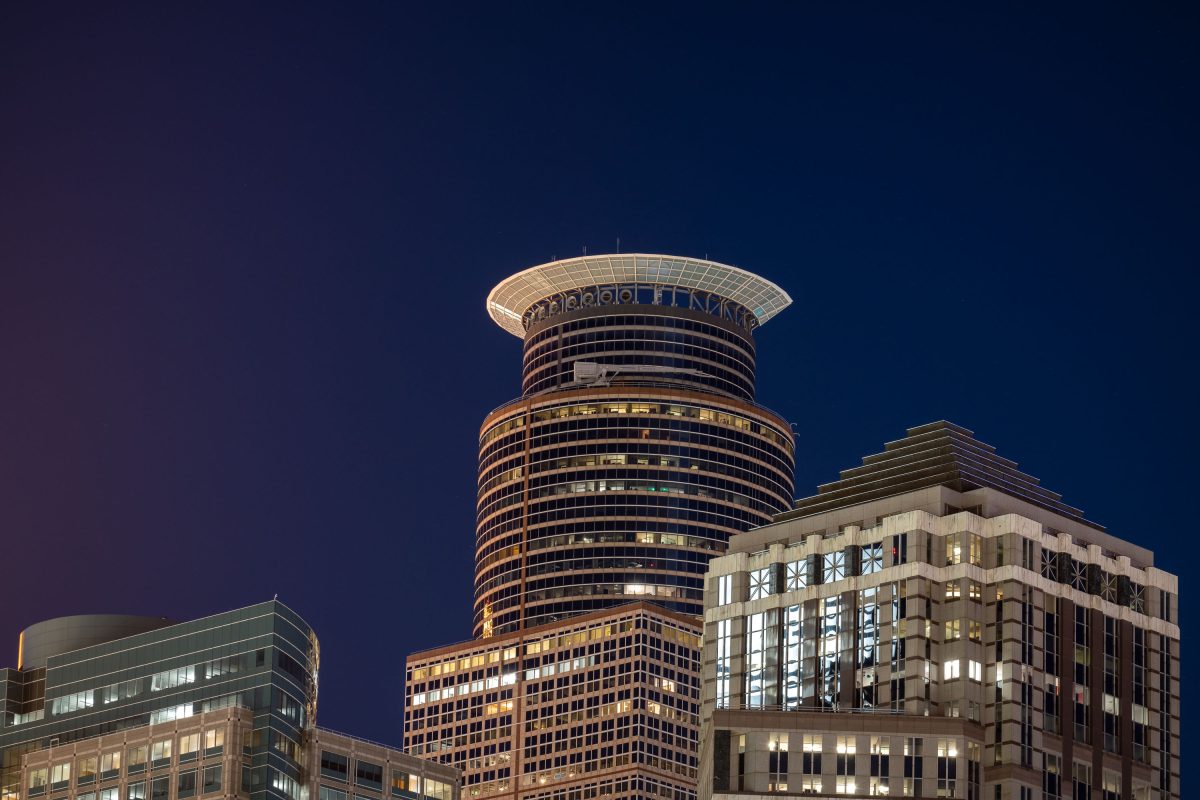
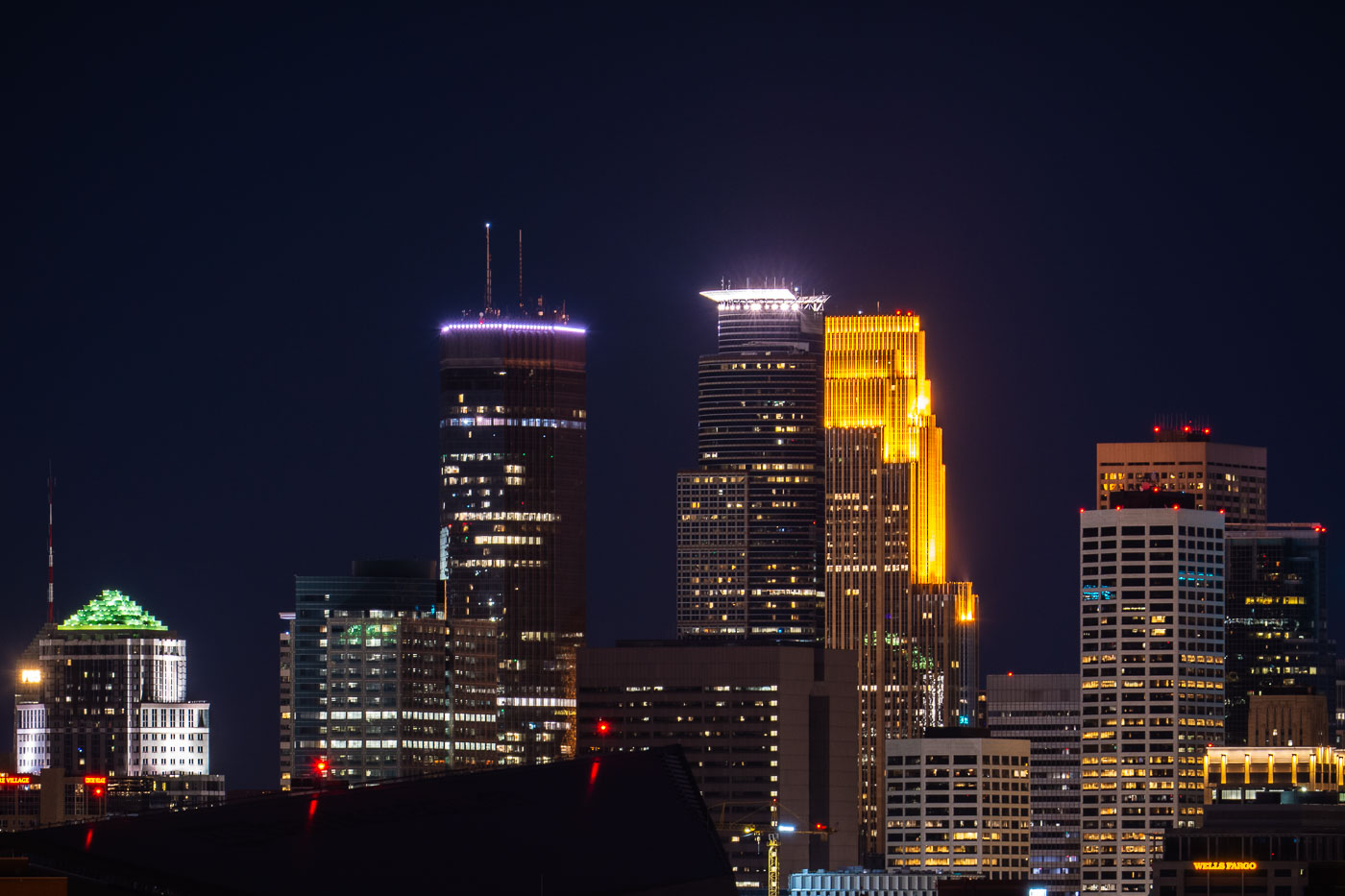
Downtown Minneapolis skyline with IDS Center, Wells Fargo Center, and Capella Tower at night.
Downtown Minneapolis skyline, Minnesota, includes IDS Center, Wells Fargo Center, and Capella Tower on May 6, 2020. The office towers are part of the city’s central business district, clustered around Nicollet Mall and the downtown core. IDS Center has long been Minnesota’s tallest building, while Wells Fargo Center is one of the city’s most recognizable high-rise office towers.

IDS Center and Wells Fargo Center, Minneapolis

Closeup of the Witches Hat water tower
The Prospect Park Water Tower in Minneapolis. It's also known as The Witches Hat.

Prospect Park Water Tower Witches Hat
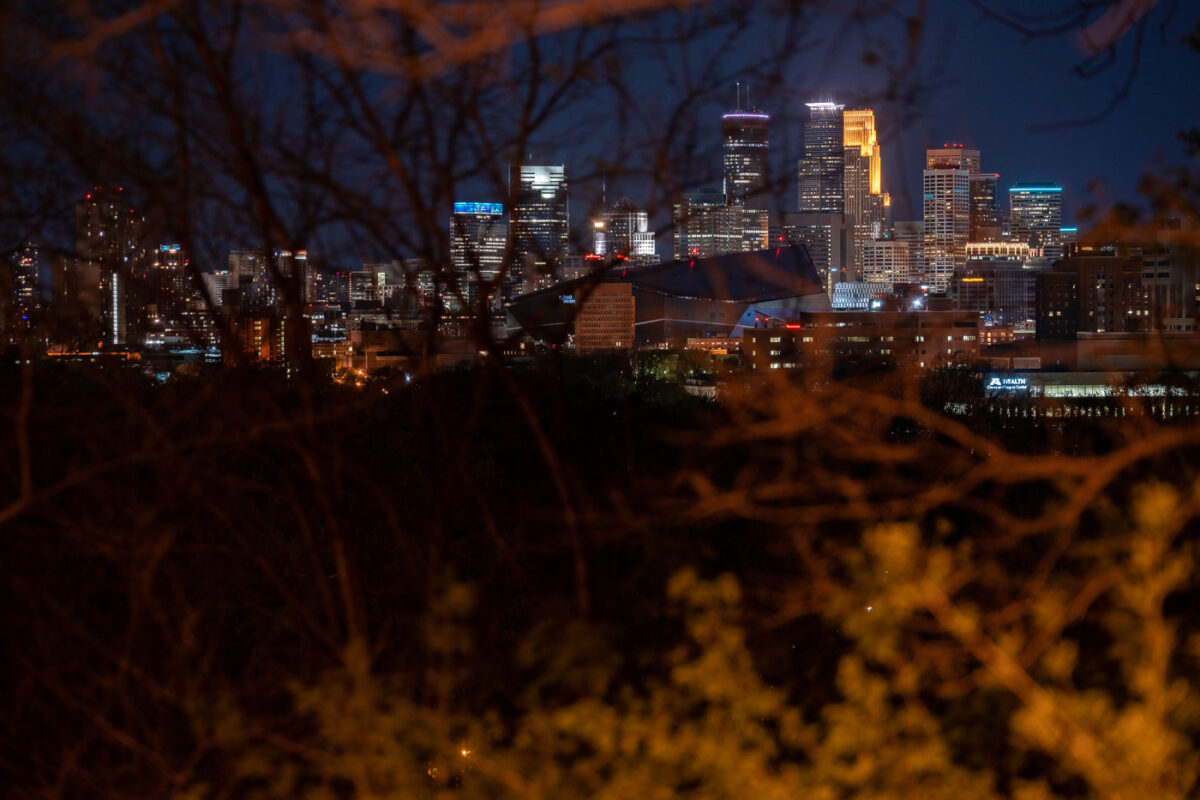
Minneapolis skyline at night from Witches Hat
Downtown Minneapolis as seen from the Prospect Park and Witches Hat. In my opinion, this is a very underrated view of the downtown skyline!

Minneapolis skyline from Witches Hat

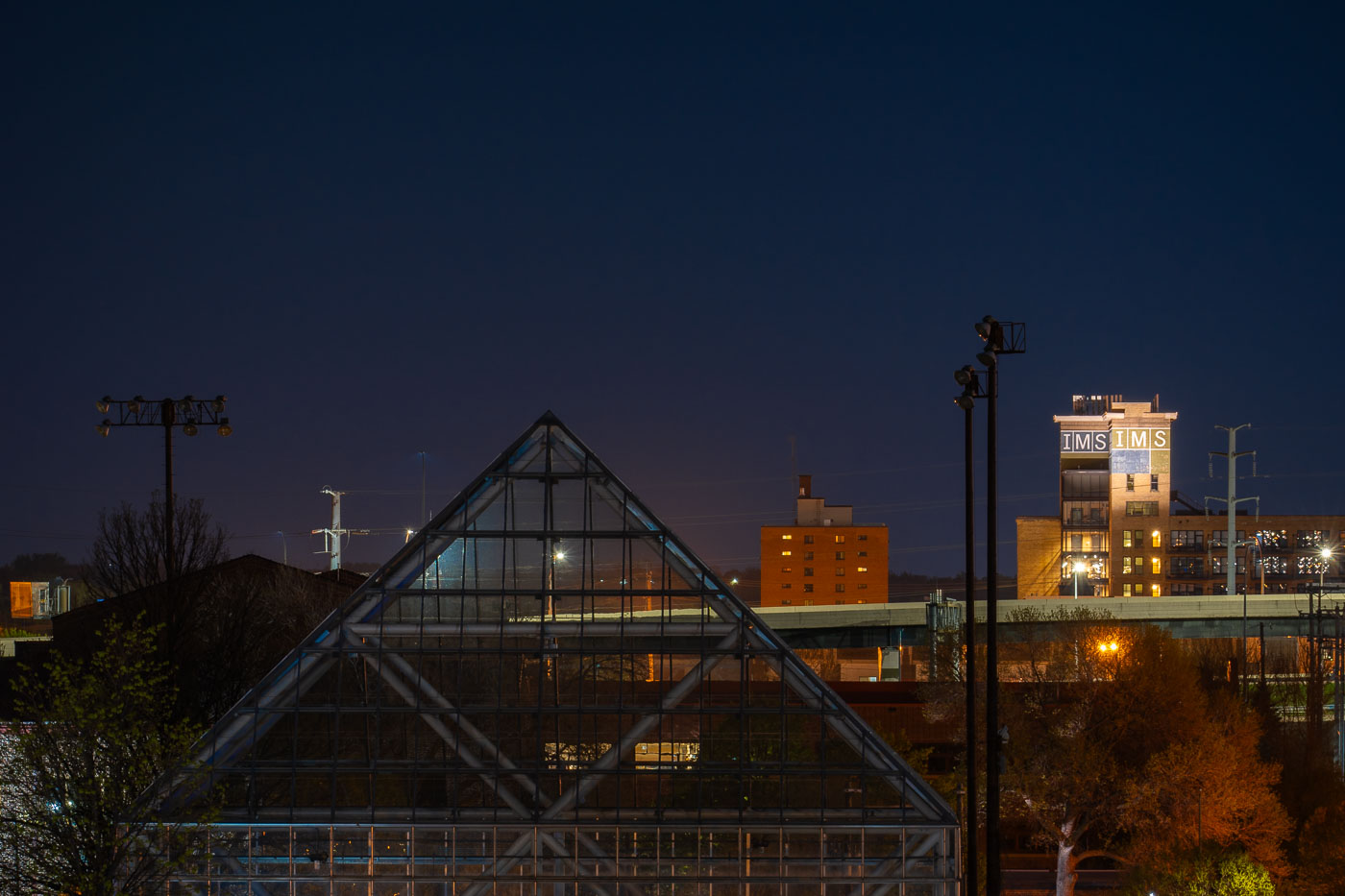
International Market Square from the Minneapolis Sculpture Garden
International Market Square in Minneapolis as seen from the Minneapolis Sculpture Garden.

International Market Square in Minneapolis at night
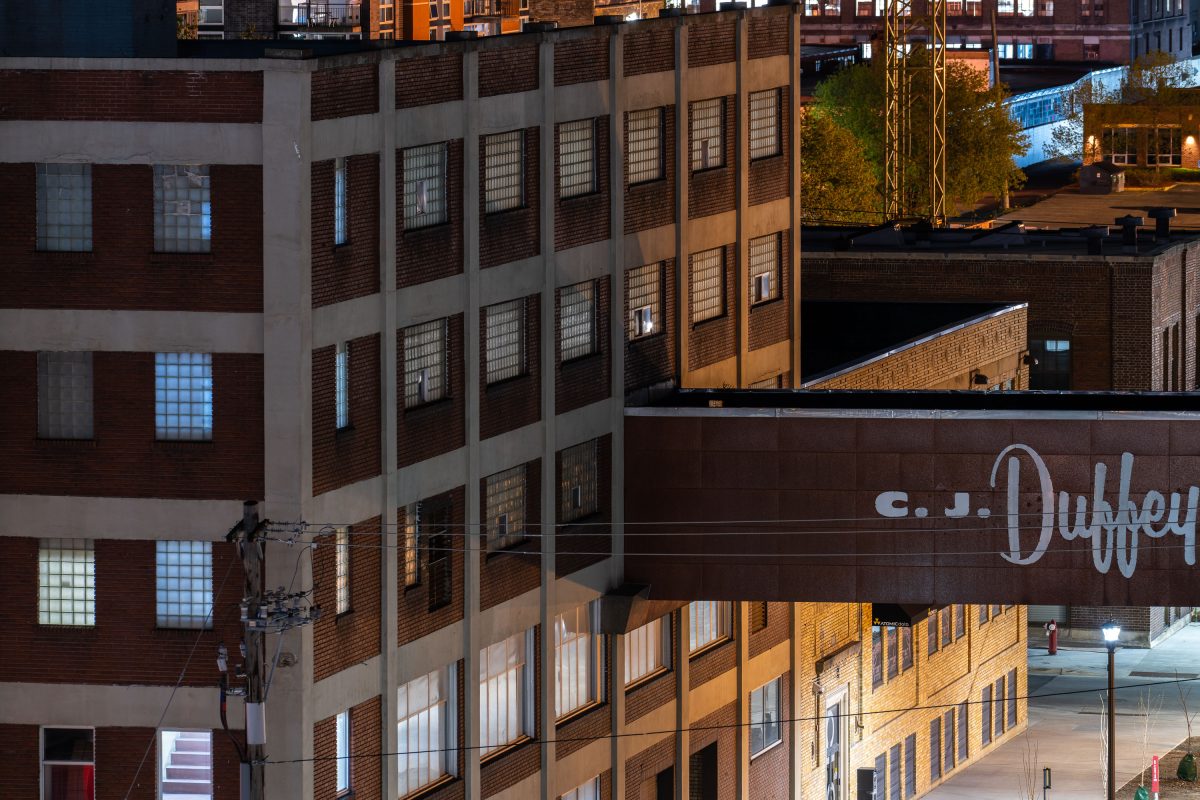
CJ Duffey Building, a historic brick warehouse in Minneapolis's North Loop district, lit at dusk.
One of the CJ Duffey Paper Co. buildings in the North Loop. Now being renovated.

C.J. Duffey Paper Co. Skyway at Dusk in the North Loop
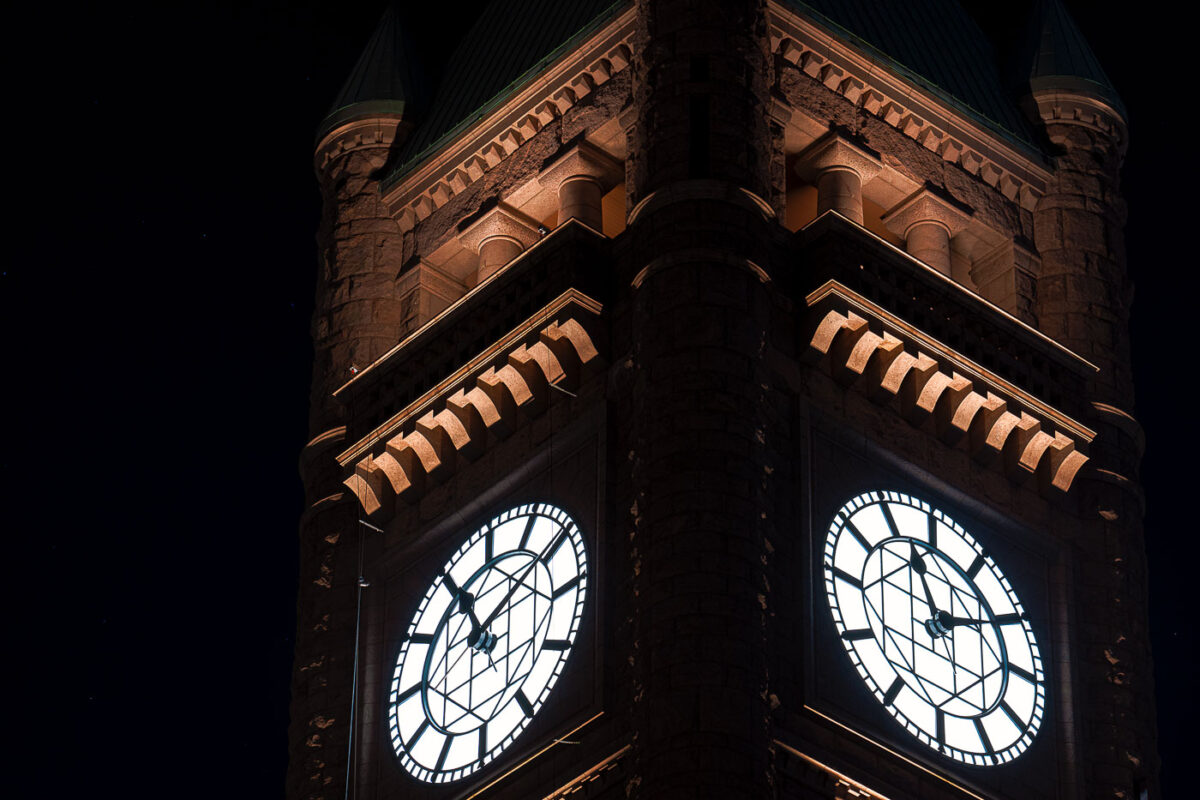
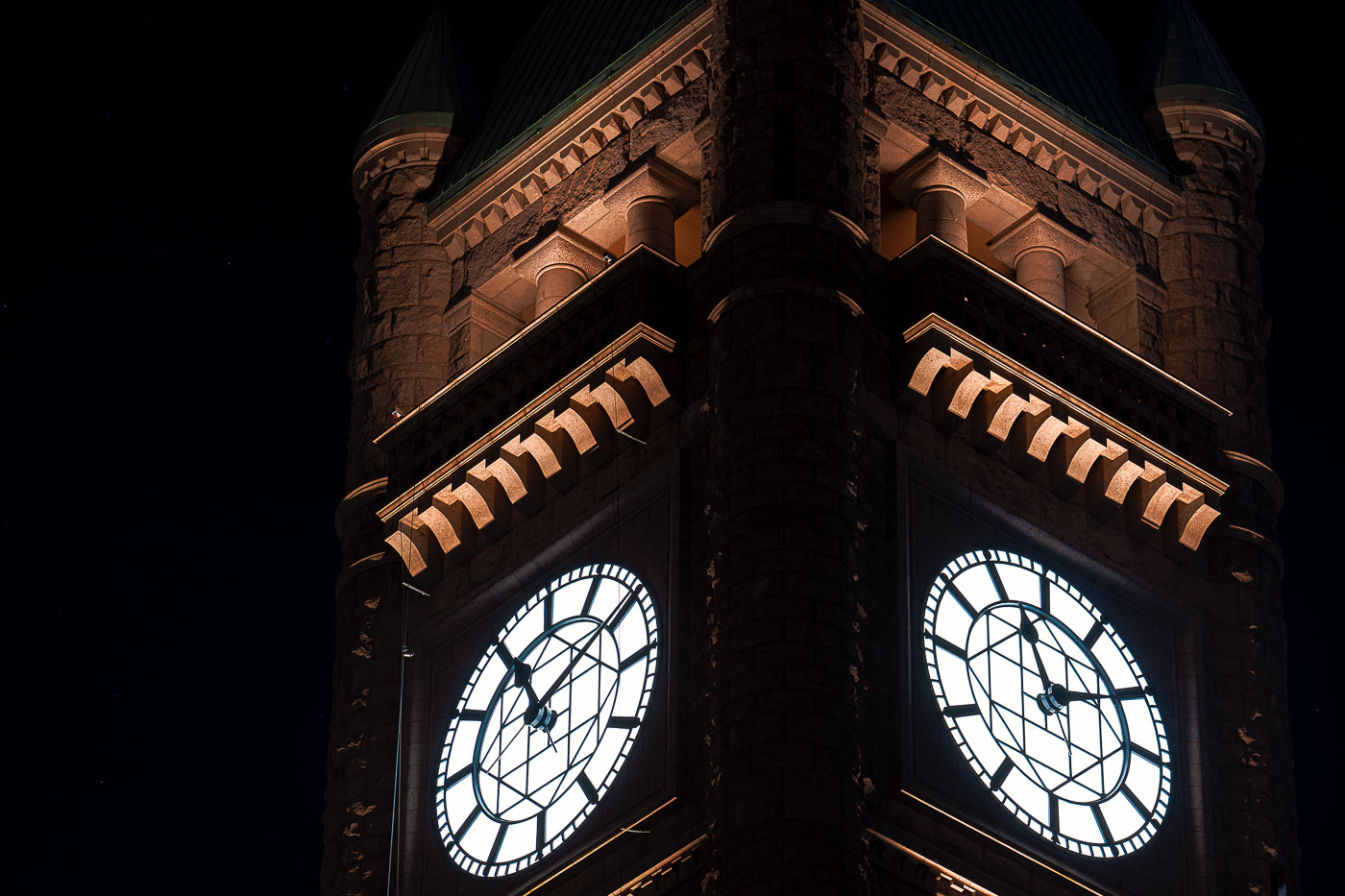
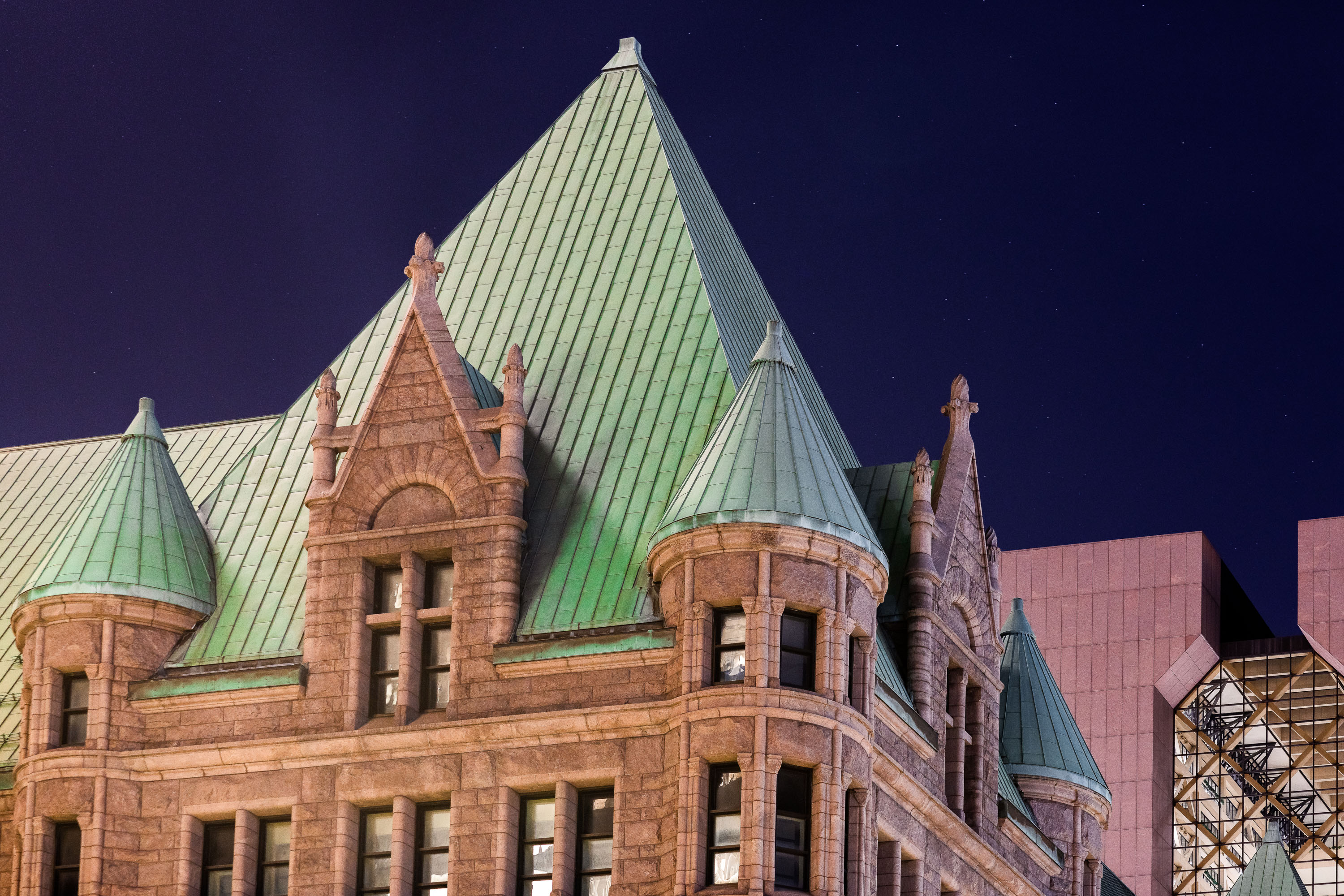
Minneapolis City Hall's illuminated clock tower displays two glowing faces against ornate Romanesque architecture at night.
The clock tower of Minneapolis City Hall glows at night, its illuminated faces visible across downtown.

Illuminated Clock Faces on Minneapolis City Hall’s Tower
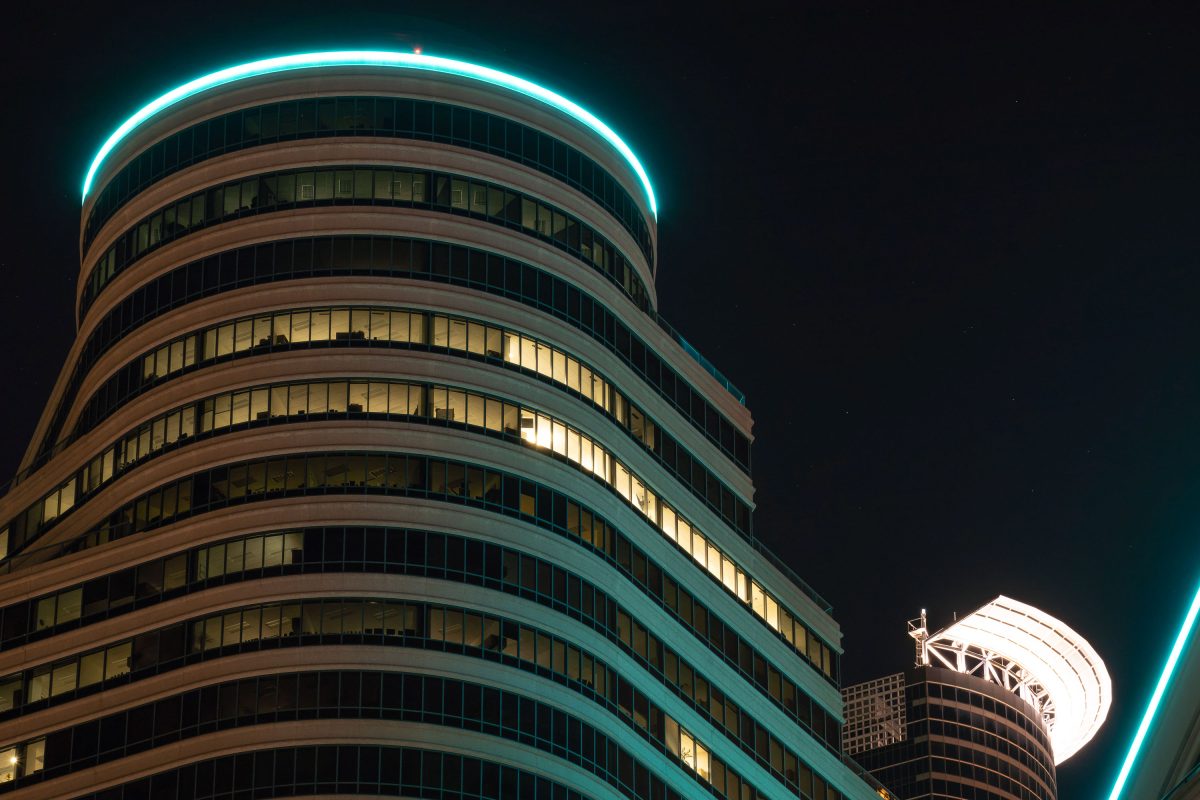
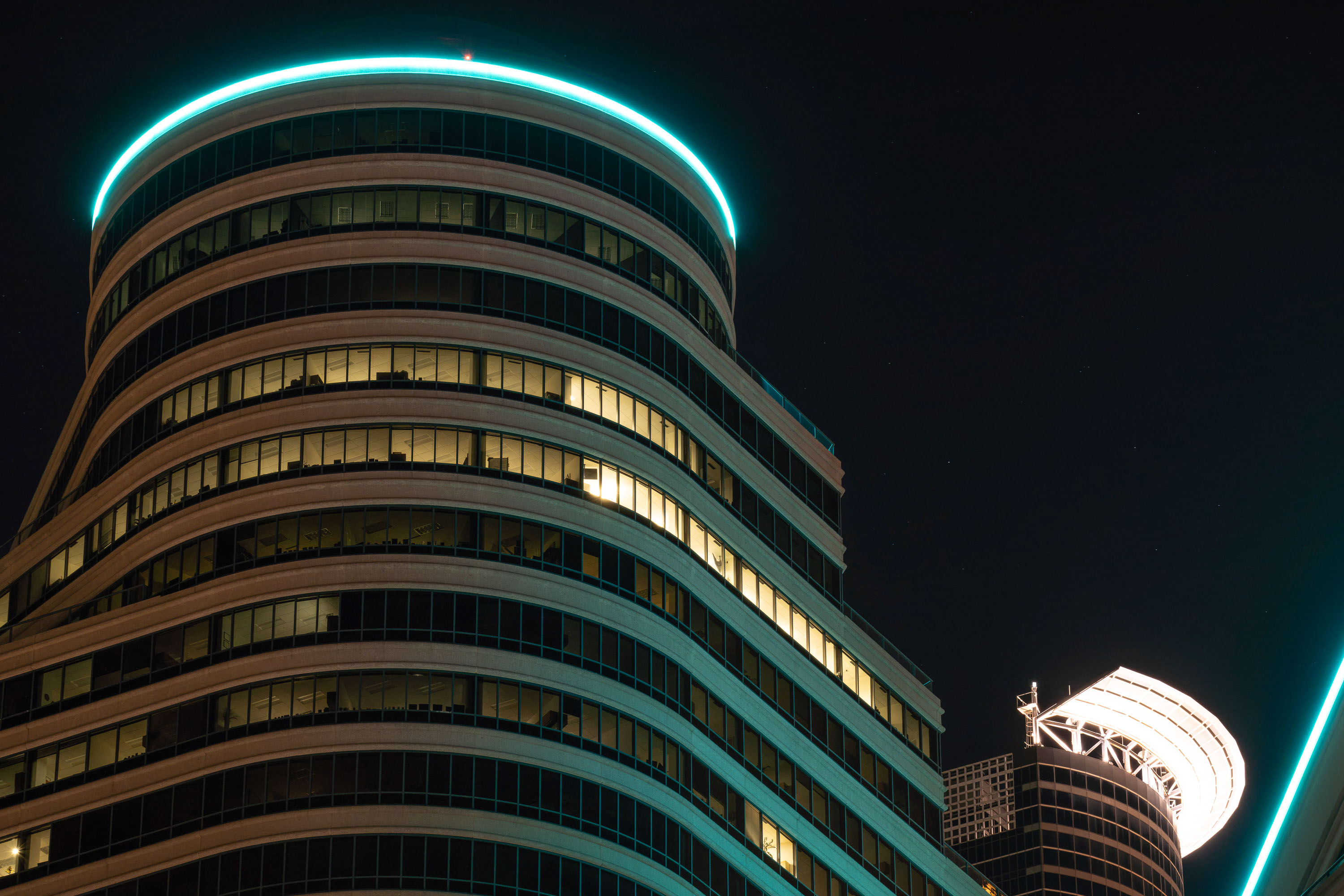
Fifth Street Towers in Downbtown Minneapolis at night
Fifth Street Towers and Capella Tower in Downtown Minneapolis.

Fifth Street Towers in Downbtown Minneapolis at night

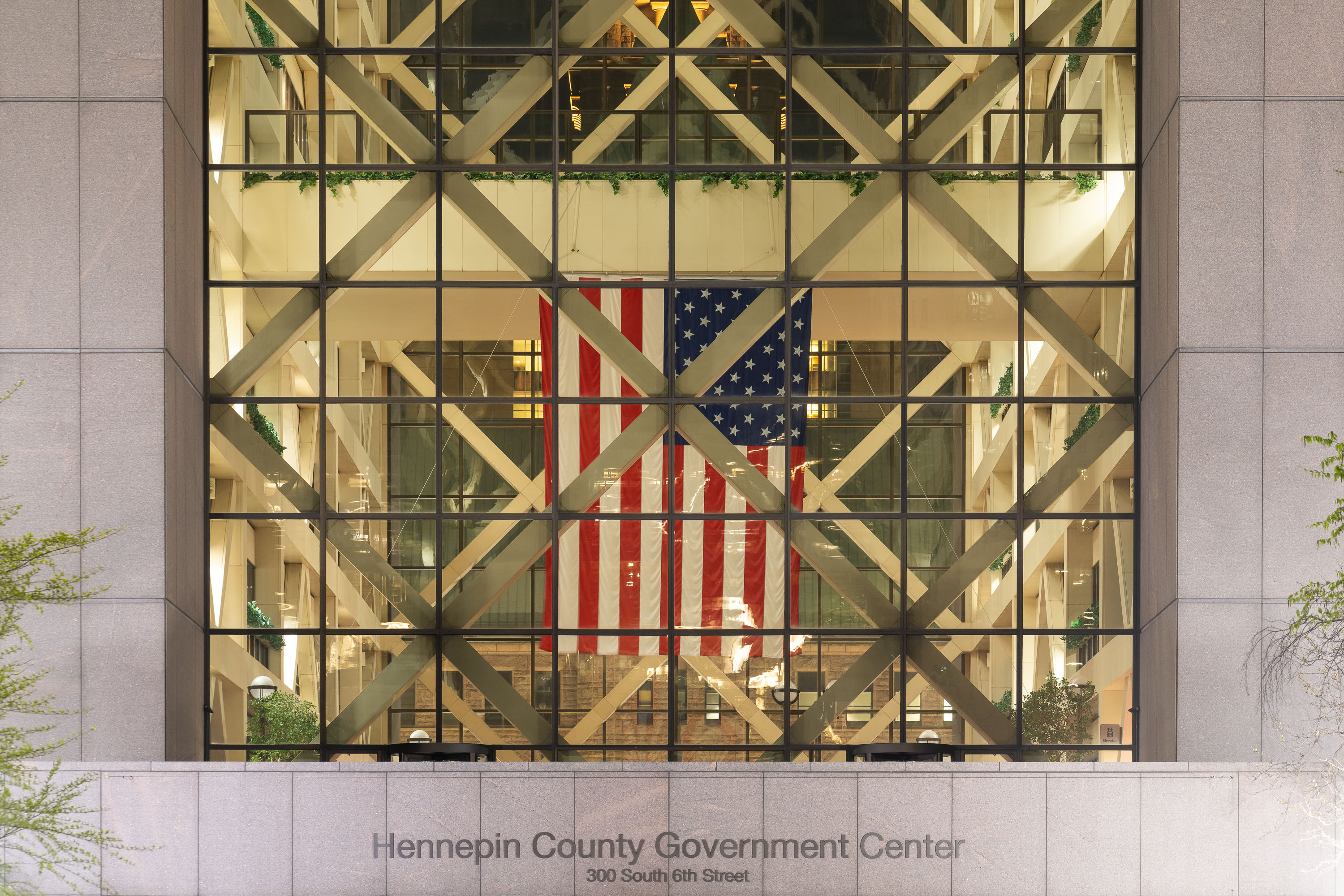
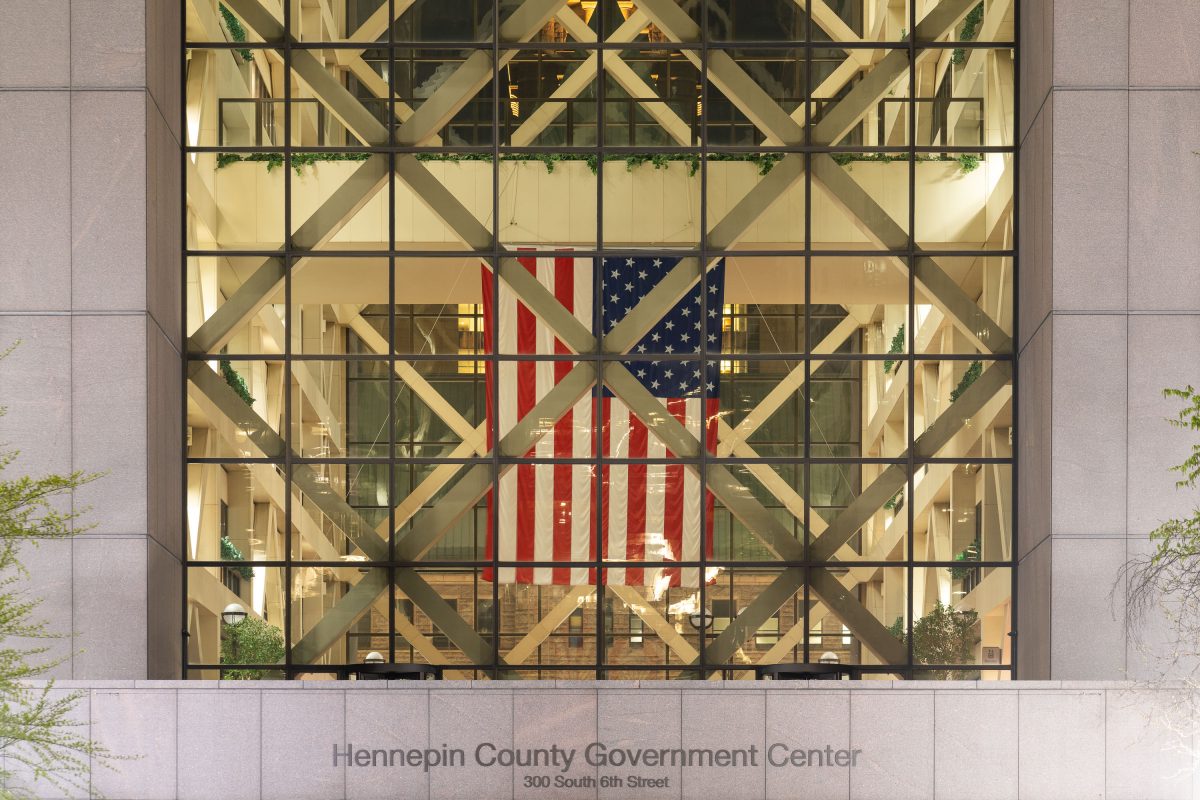
Hennepin County Government Center and the American Flag
An American Flag hangs inside the Hennepin County Courthouse in Downtown Minneapolis in May 2020.

Hennepin County Government Center and the American Flag

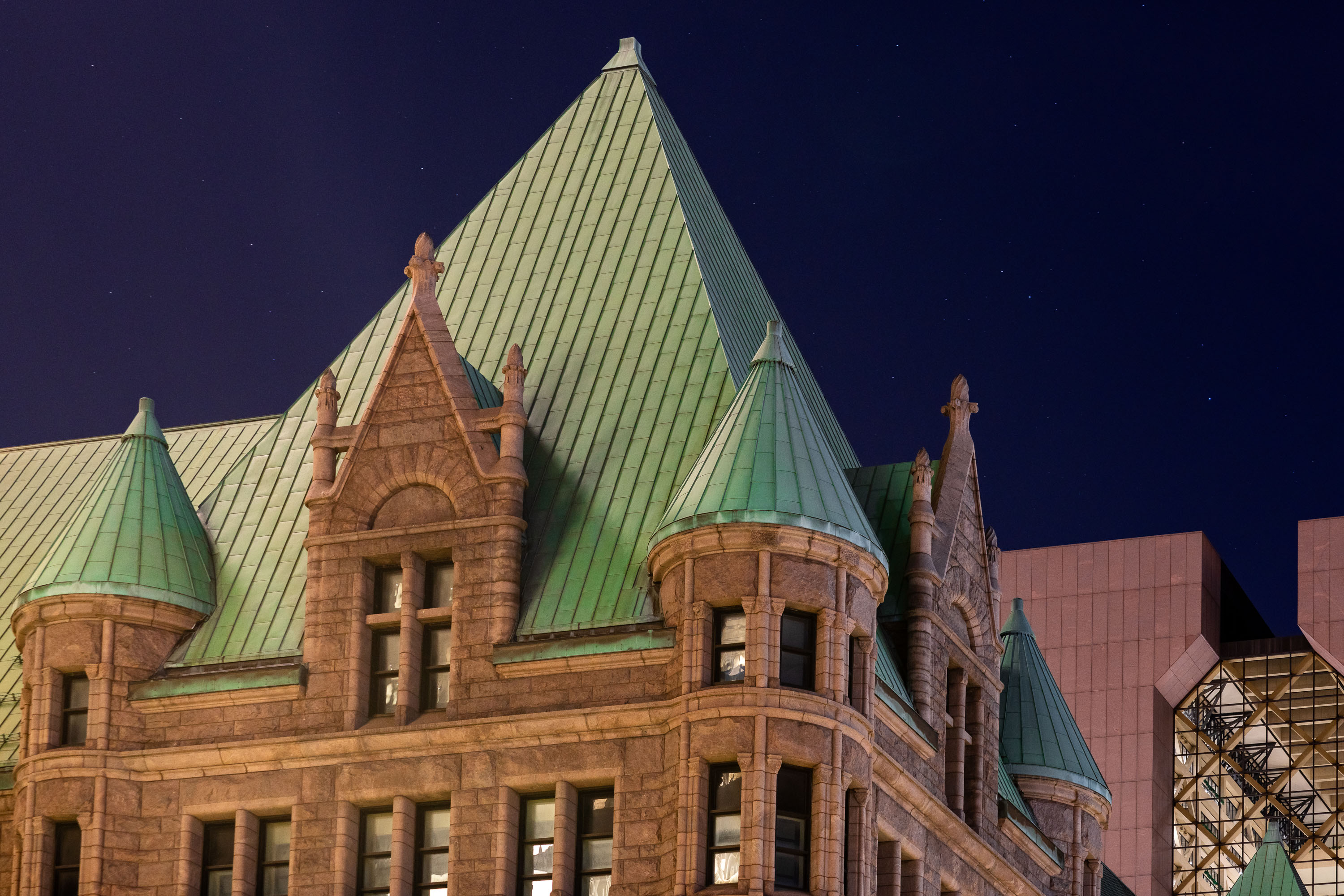
Minneapolis City Hall and Hennepin County Government Center at night
Minneapolis City Hall and the Hennepin County Government Center in downtown Minneapolis on a clear night.

Downtown Minneapolis City Hall At Night
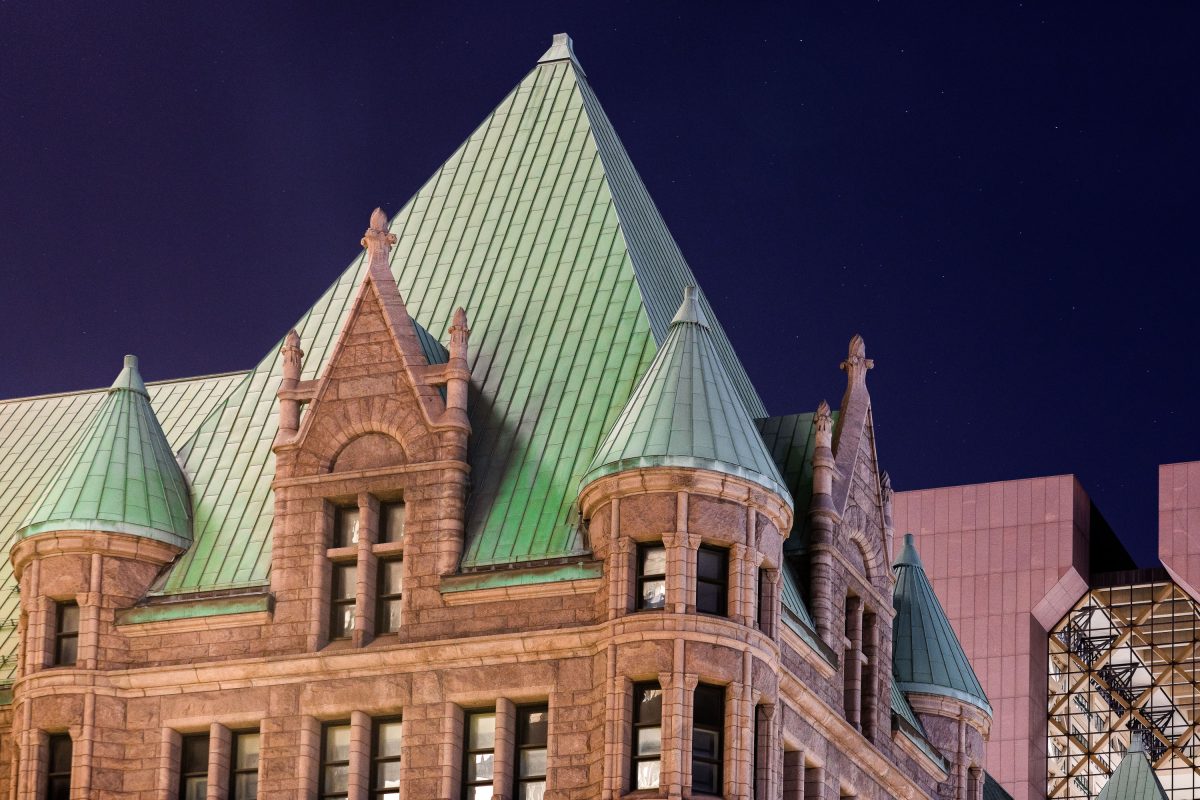
Minneapolis City Hall at night in May 2020
The Minneapolis City Hall and Hennepin County Government Center in the background.

Minneapolis City Hall at night in May 2020

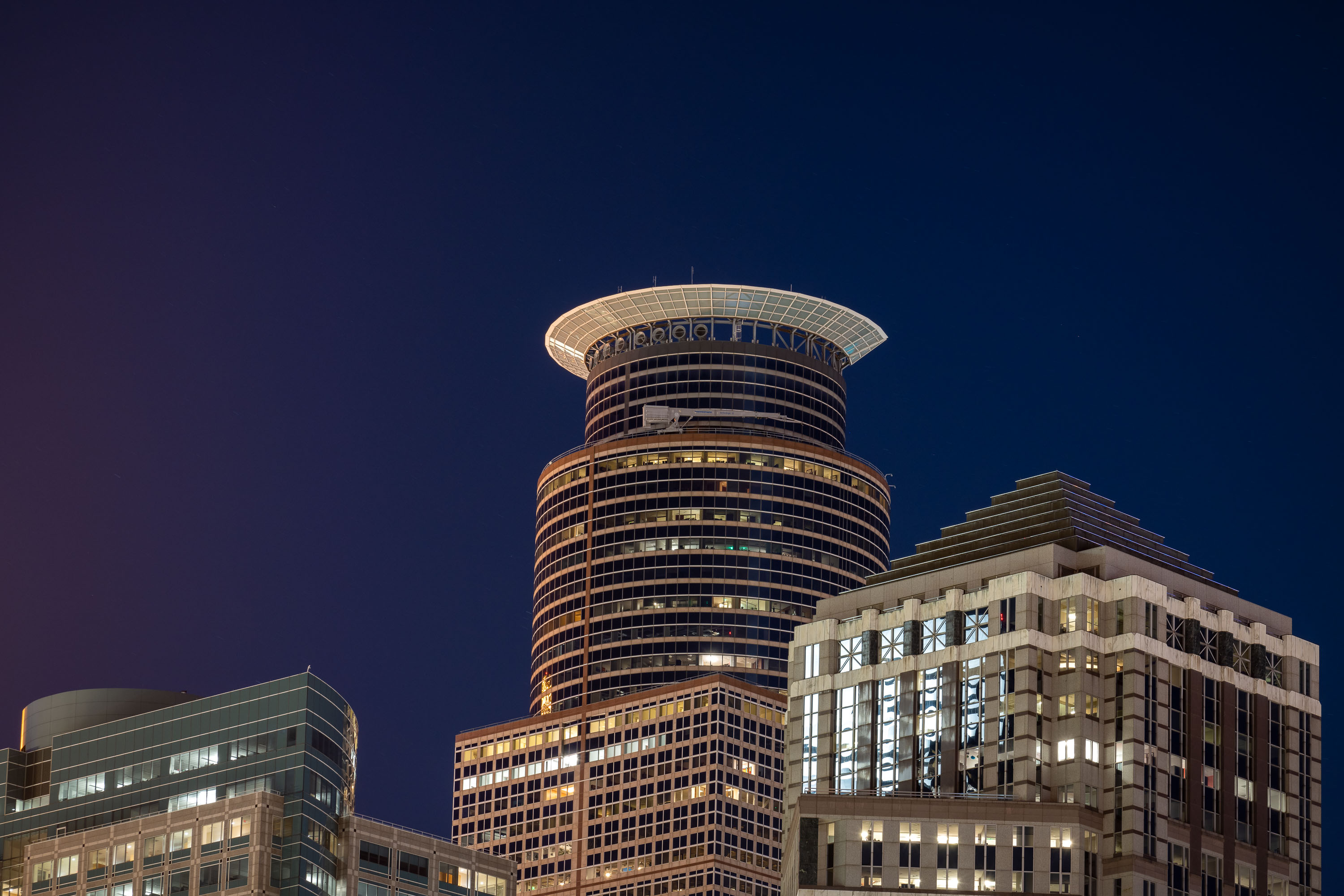
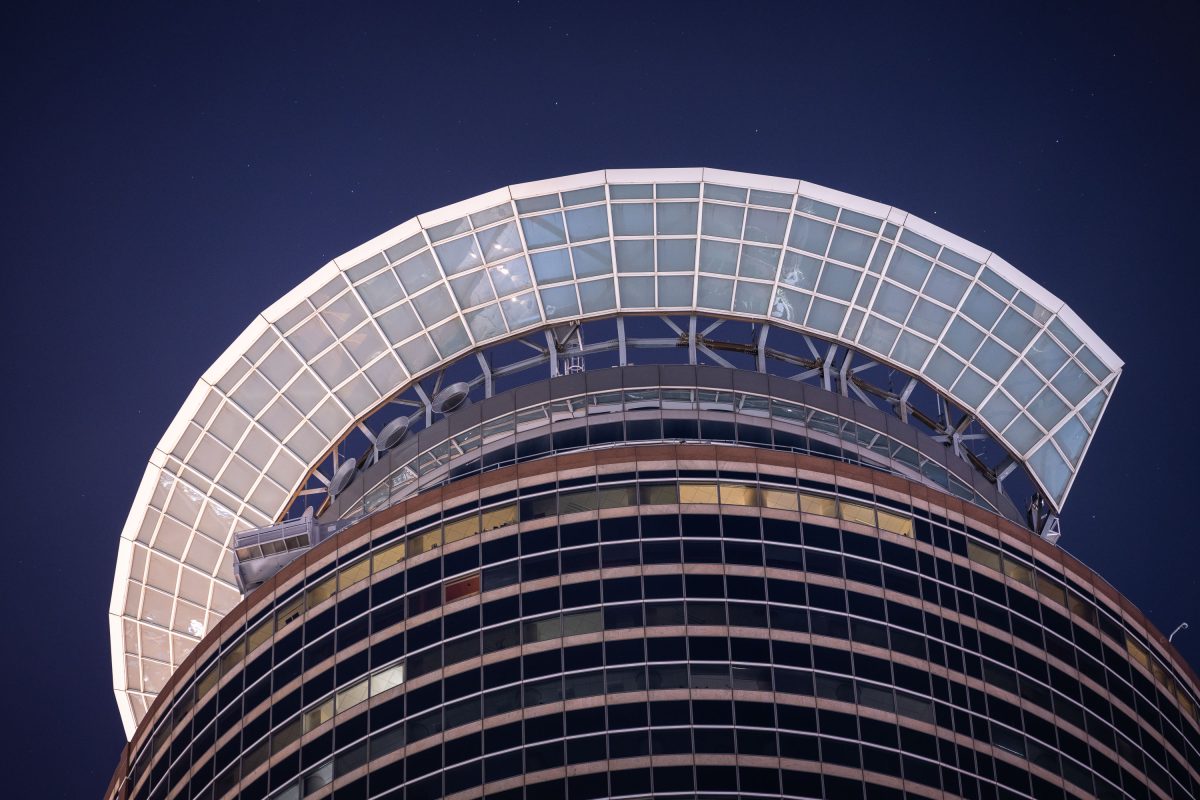
Capella Tower crown seen at night in Downtown Minneapolis
Capella Tower in Downtown Minneapolis

Capella Tower crown seen at night in Downtown Minneapolis

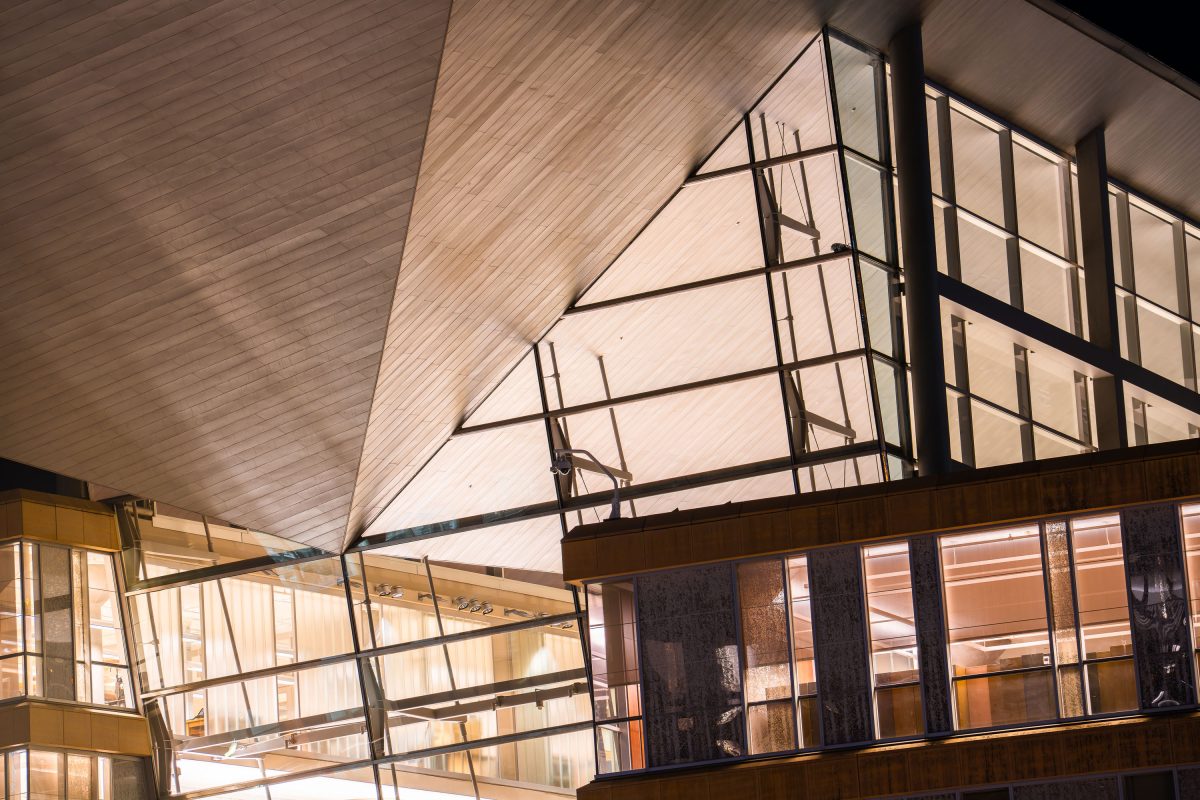
Minneapolis Central Library's interior skylight and metal framework structure illuminated from above.
The Minneapolis Central Library sits at 300 Nicollet Mall, serving as the flagship branch of the Hennepin County Library system. Designed by César Pelli and completed in 2006, the building replaced an earlier 1961 library on the same downtown site. Its cantilevered roof, clad in Kebony wood, extends over the building's glass curtain wall and was engineered to reduce solar heat gain on the reading areas below. The library holds close to 400,000 items and includes a rooftop garden above its lower levels. It also houses the Minneapolis Collection, an archive of historical materials documenting the city's development.

Cantilevered Roof of the Minneapolis Central Library at Night
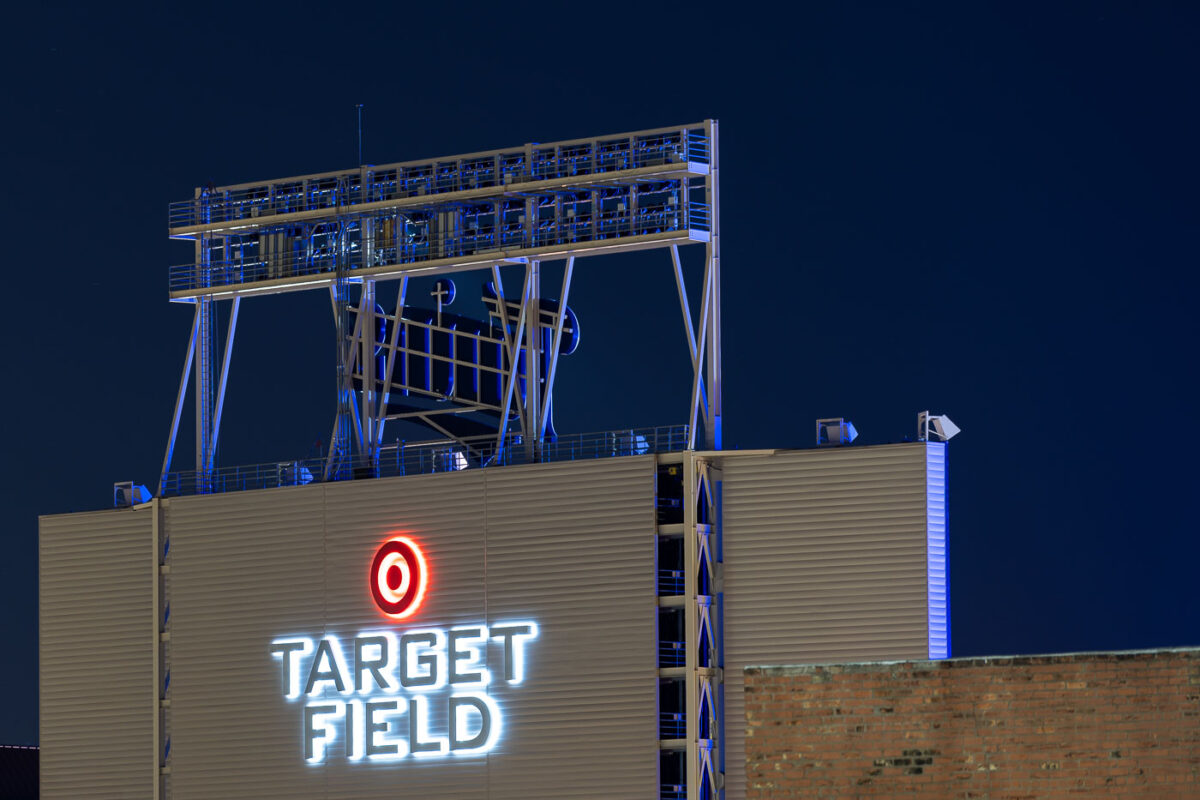
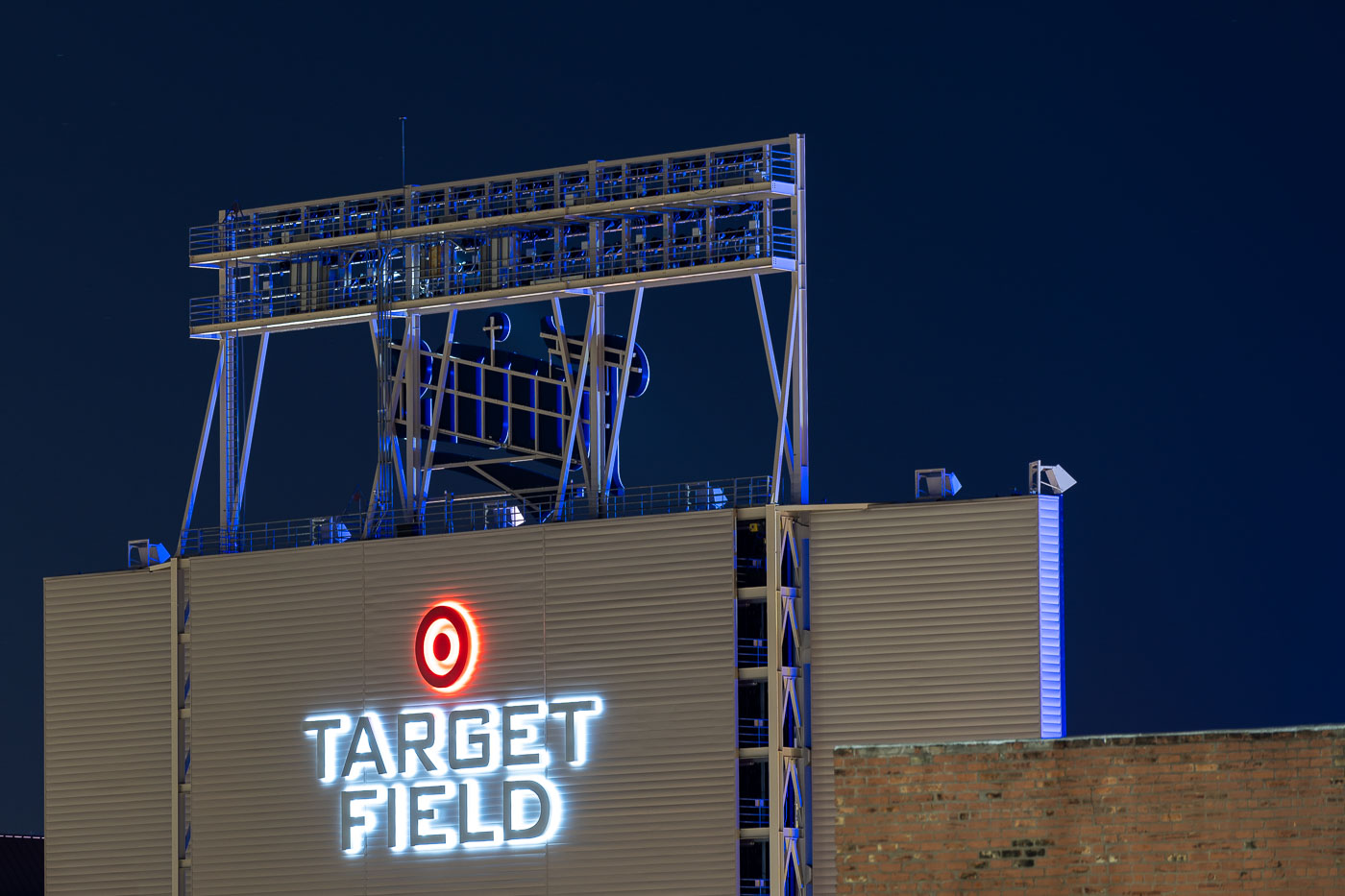
Target Field's illuminated sign and scoreboard structure at night in Minneapolis's North Loop neighborhood.
Target Field is the Minnesota Twins' ballpark in the North Loop neighborhood of Minneapolis. It opened in 2010, replacing the Hubert H. Humphrey Metrodome as the team's home and giving the Twins their first open-air stadium since Metropolitan Stadium closed in 1981.

Target Field’s Rooftop Sign at Night

Capella Tower Crown In Downtown Minneapolis
The Capella Tower (center) in downtown Minneapolis.

Capella Tower Crown In Downtown Minneapolis

Police officers inside a squad car in North Loop
A Minneapolis Police squad car sits in a parking ramp in Minneapolis.

Police officers inside a squad car in North Loop

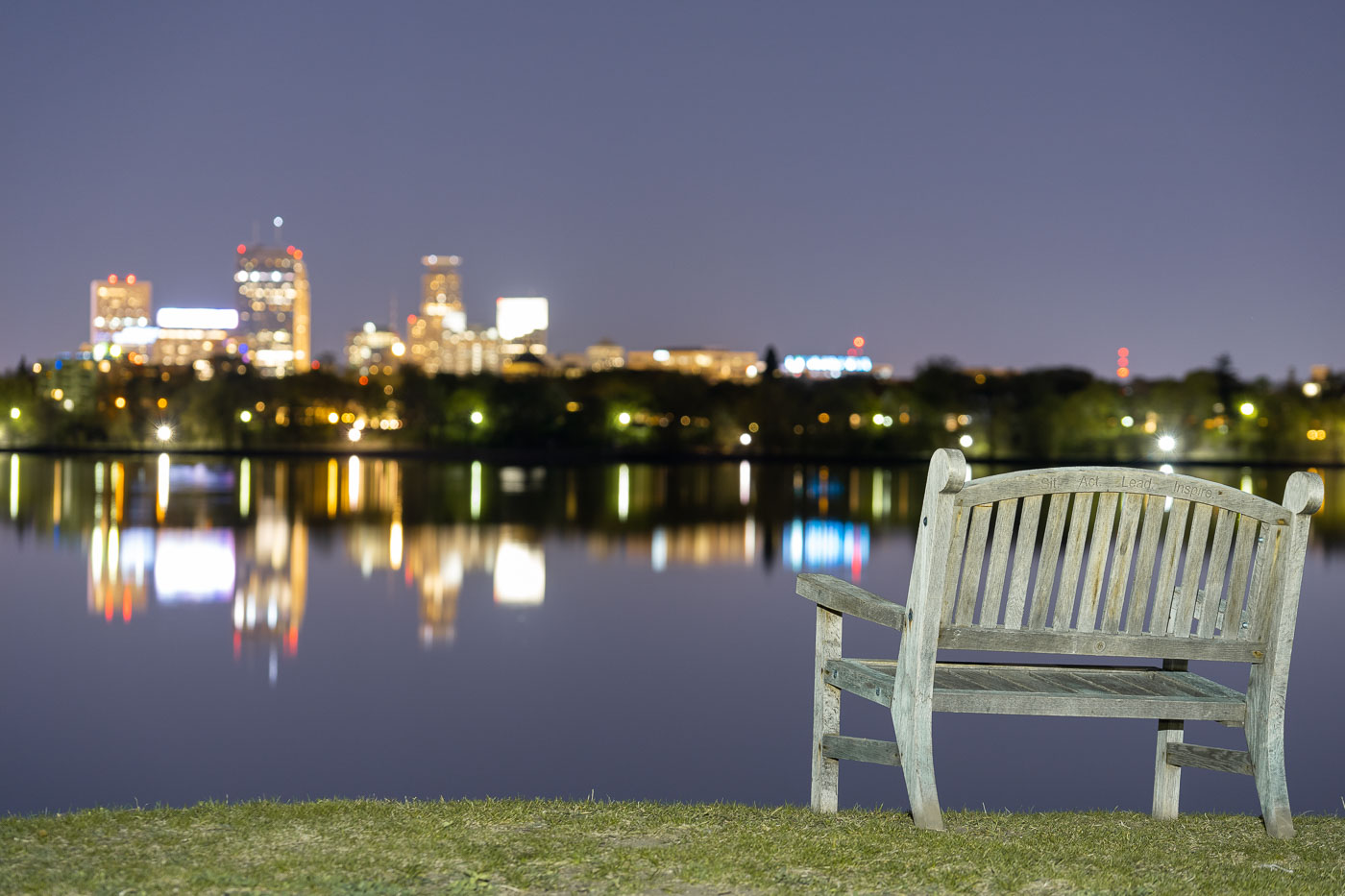
Wooden bench on grass overlooking Bde Maka Ska lake with Minneapolis skyline illuminated at dusk.
A bench at Bde Maka Ska in South Minneapolis. The Minneapolis skyline seen across the lake.

Night View of the Minneapolis Skyline from Bde Maka Ska

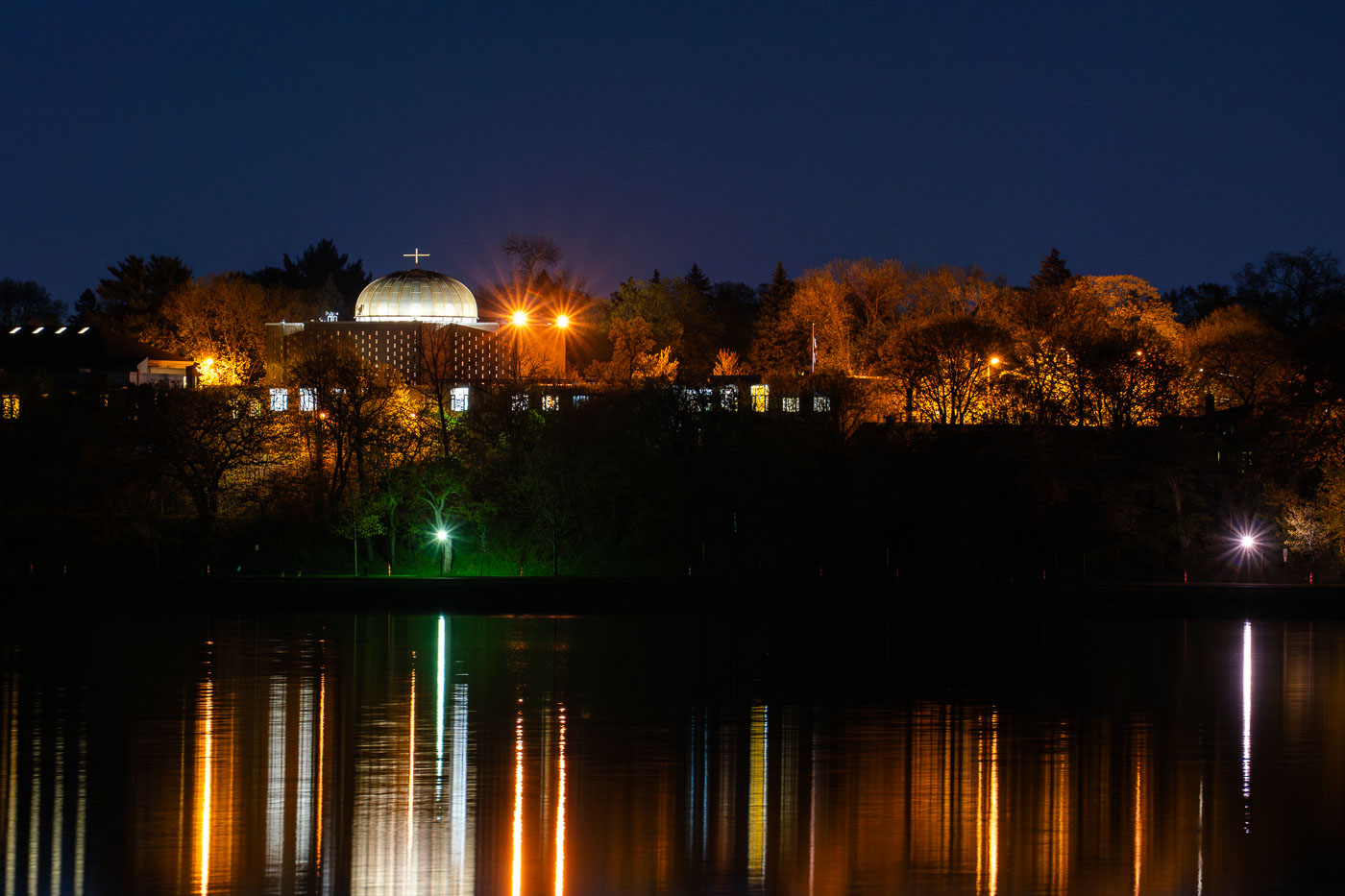
St. Mary's Greek Orthodox Church illuminated at night across Bde Maka Ska lake in Minneapolis.
St. Mary's Greek Orthodox Church as seen from across Bde Maka Ska in Minneapolis.

St. Mary’s Greek Orthodox Church at Night Across Bde Maka Ska

Stacked shipping containers in a Minneapolis rail yard near the University of Minnesota.
Stacked shipping containers fill a rail yard near the University of Minnesota in Minneapolis. The containers, marked with various shipping company names, are used for intermodal freight transportation, moving cargo between rail, truck, and maritime networks. The facility serves as a transfer point in the regional logistics system.

Shipping containers, Minneapolis rail yard

Brass water utility manhole lid at University of Minnesota with crosshatch pattern and department markings.
A cast brass manhole lid for the University of Minnesota water system. The lid features a crosshatch pattern typical of utility access covers, with "WATERS" marked at the base and a water department emblem at the center. Manhole lids provide access to underground infrastructure for maintenance and monitoring of water lines.

Waters utility manhole lid, University of Minnesota

China Shipping containers in a Minneapolis rail yard
Shipping containers in a Minneapolis rail yard near the University of Minnesota-Twin Cities.

China Shipping Containers in Minneapolis
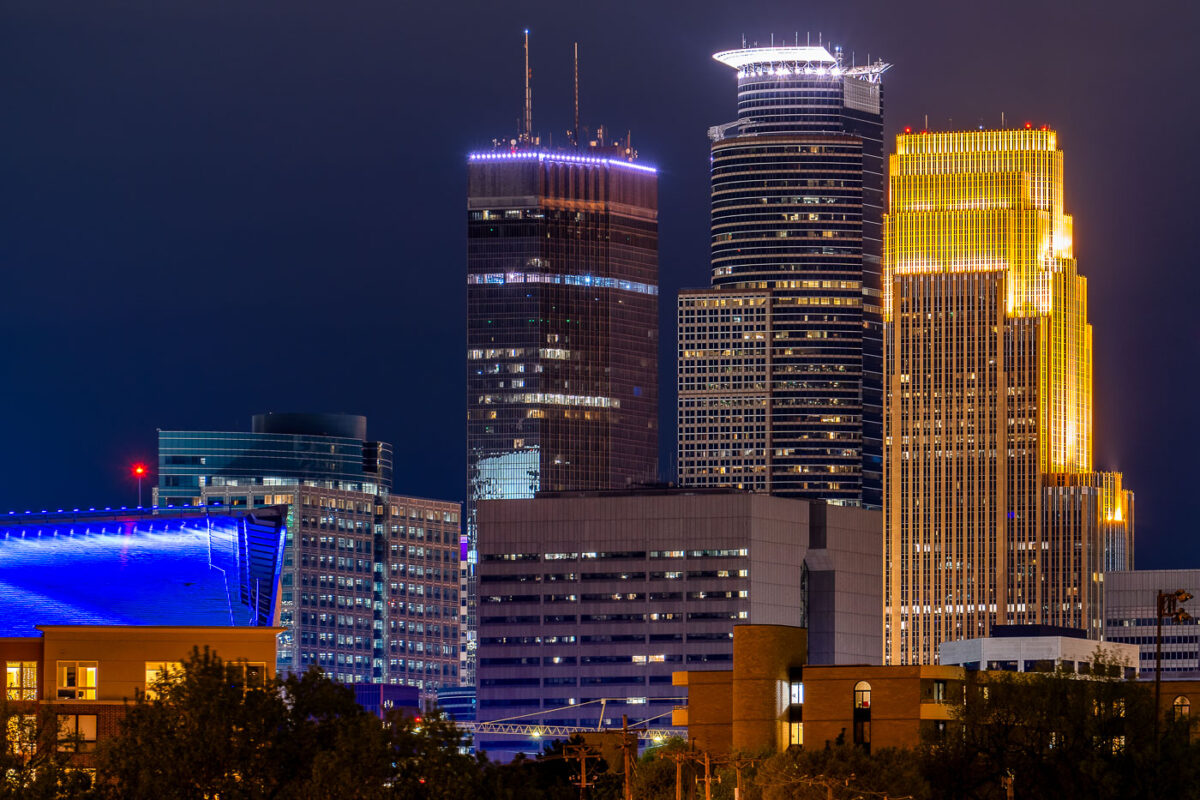
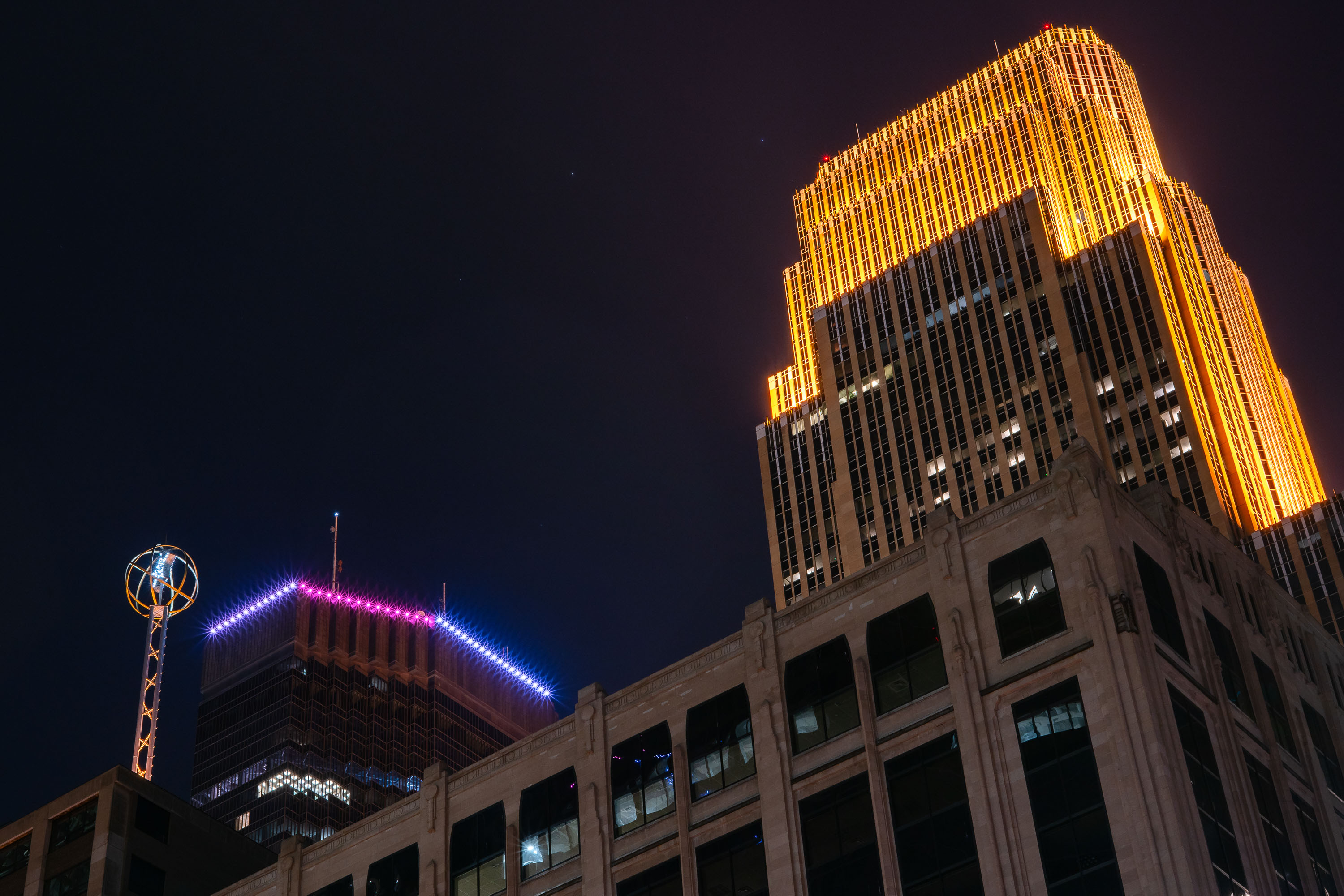
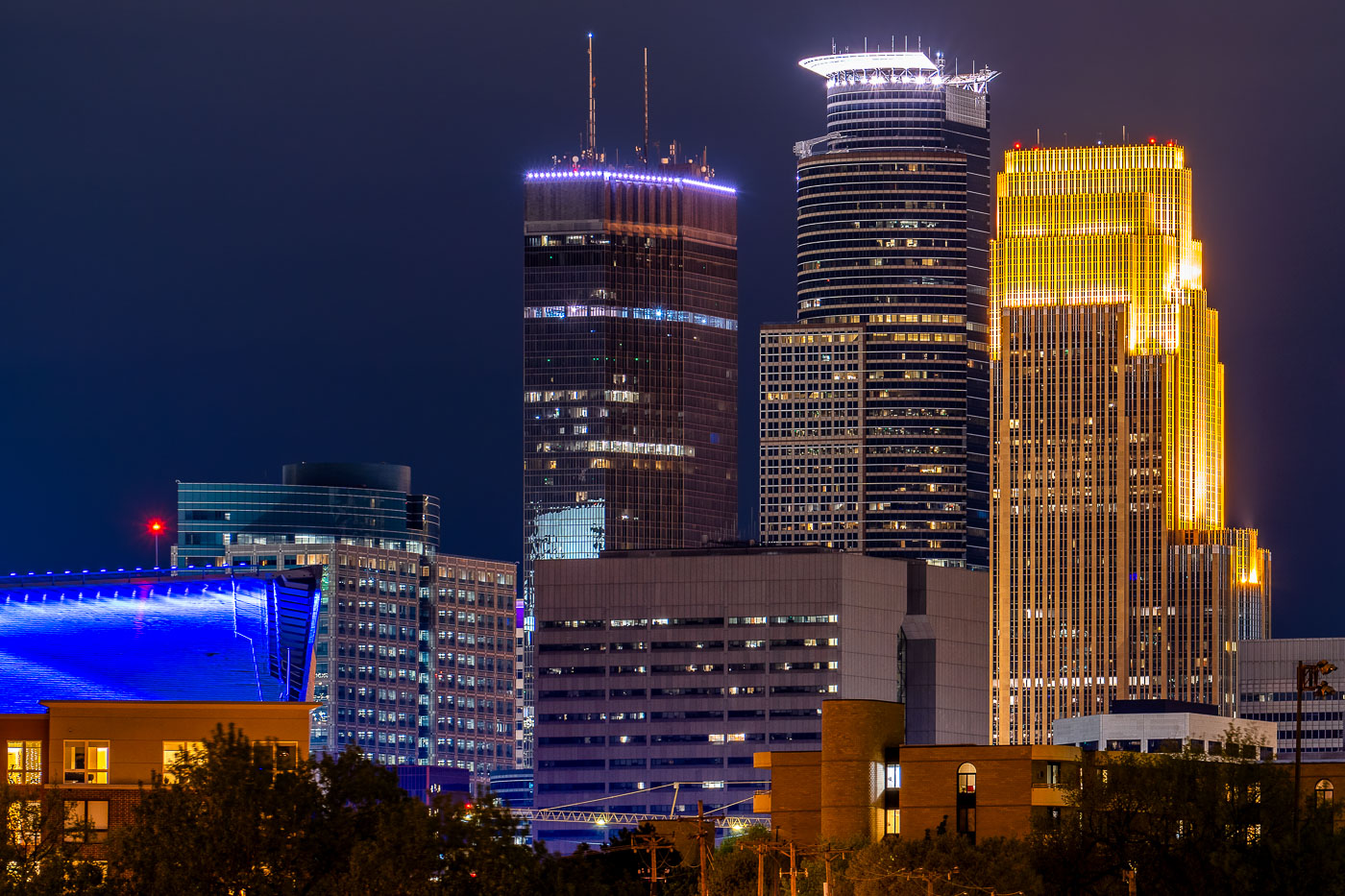
Skyscrapers in downtown Minneapolis on clear night
The Capella Tower, IDS Center, and Wells Fargo Center in Downtown Minneapolis at night.

Capella, IDS and Wells Fargo Center in Minneapolis
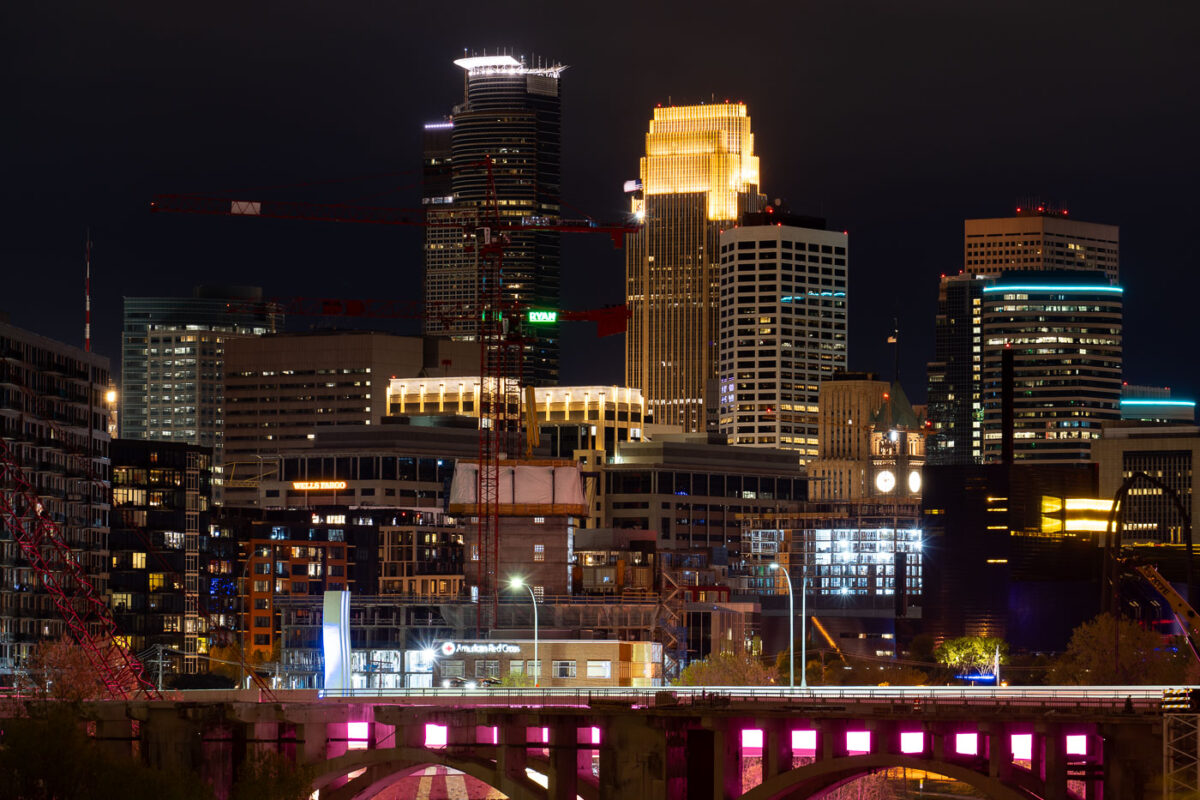
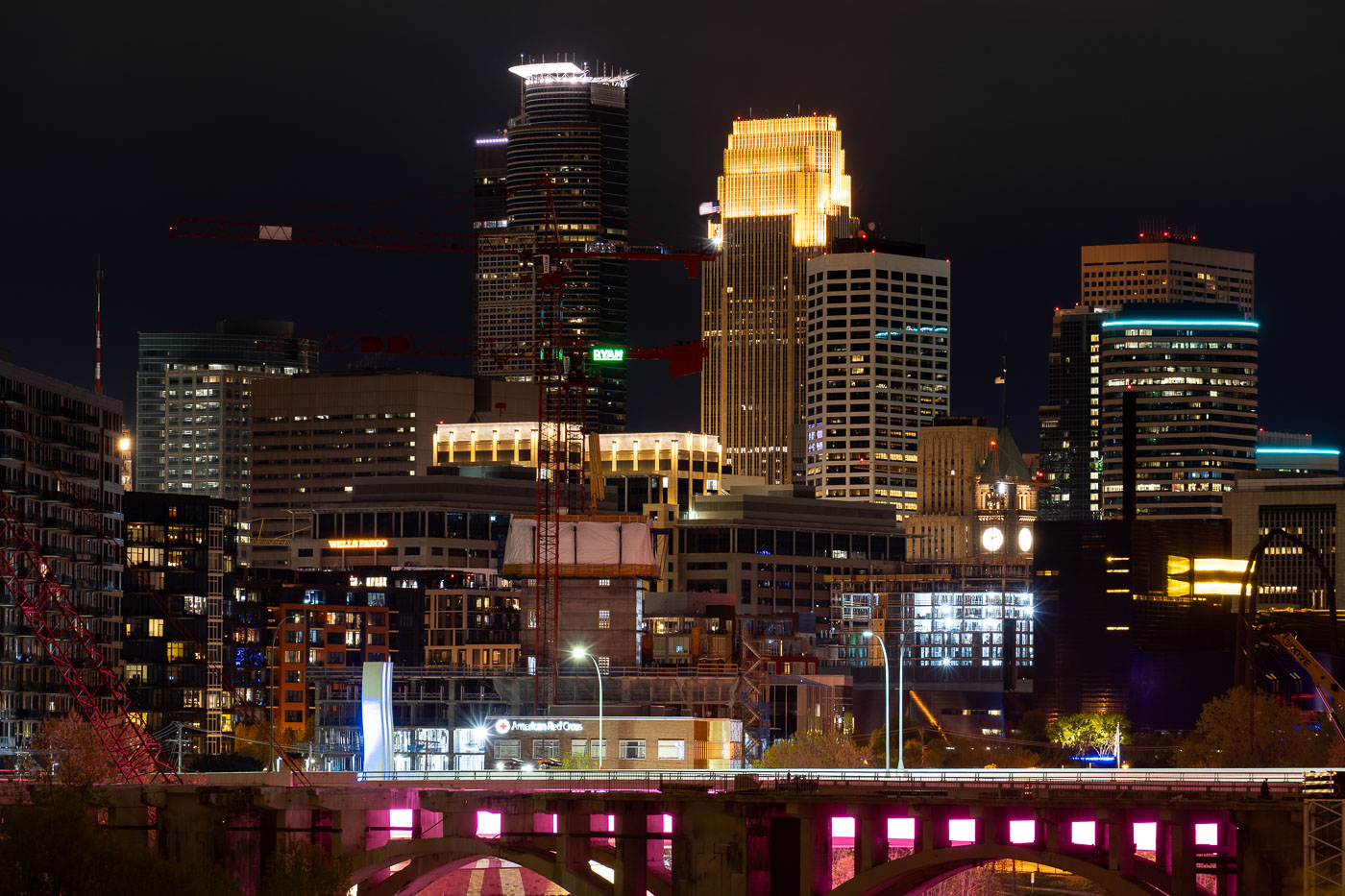
Minneapolis in Development
Tower cranes in downtown Minneapolis during constructon work on the 10th avenue bridge.

Minneapolis in Development

Woman looks over the Stone Arch Bridge in Minneapolis
Woman looks over the railing on the Stone Arch Bridge in downtown Minneapolis.

Downtown Minneapolis Skyline and Stoen Arch Bridge

Dome at the Millennium Hotel in Minneapolis
Have always loved the dome at the Millennium Hotel in downtown Minneapolis. A popular wedding spot.

Dome at the Millennium Hotel

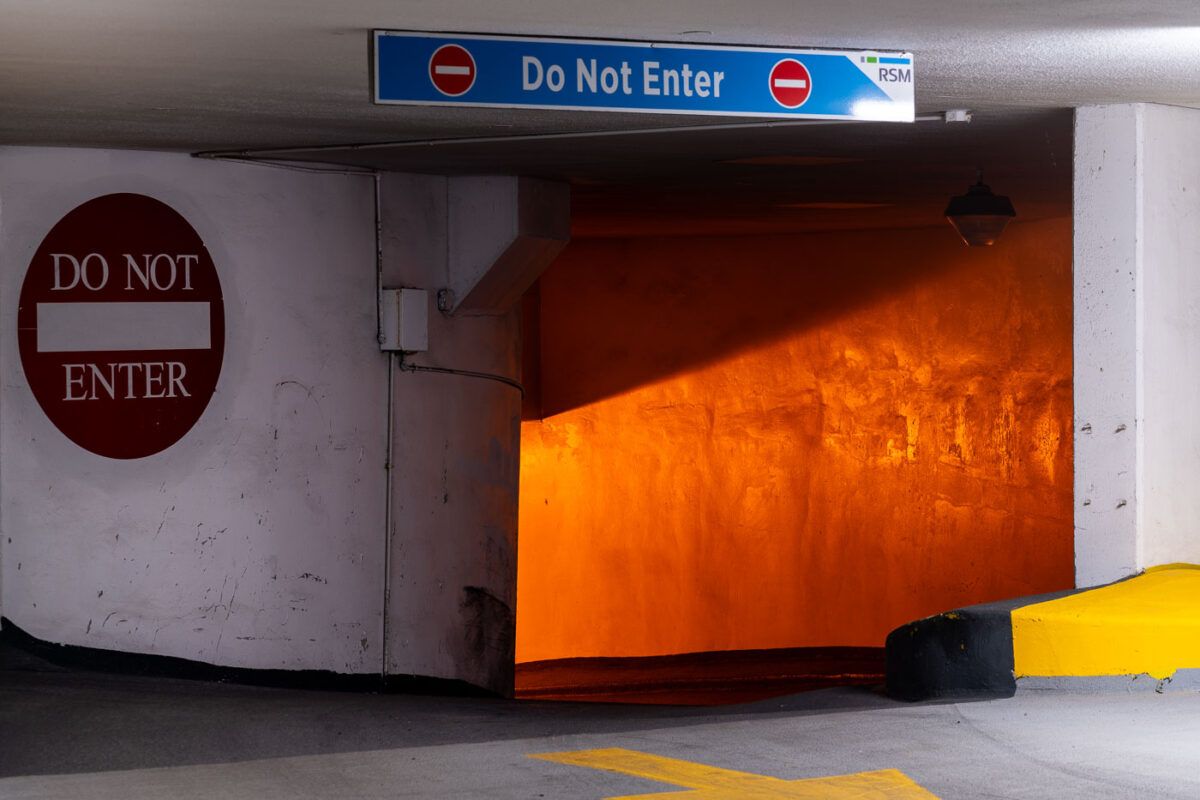
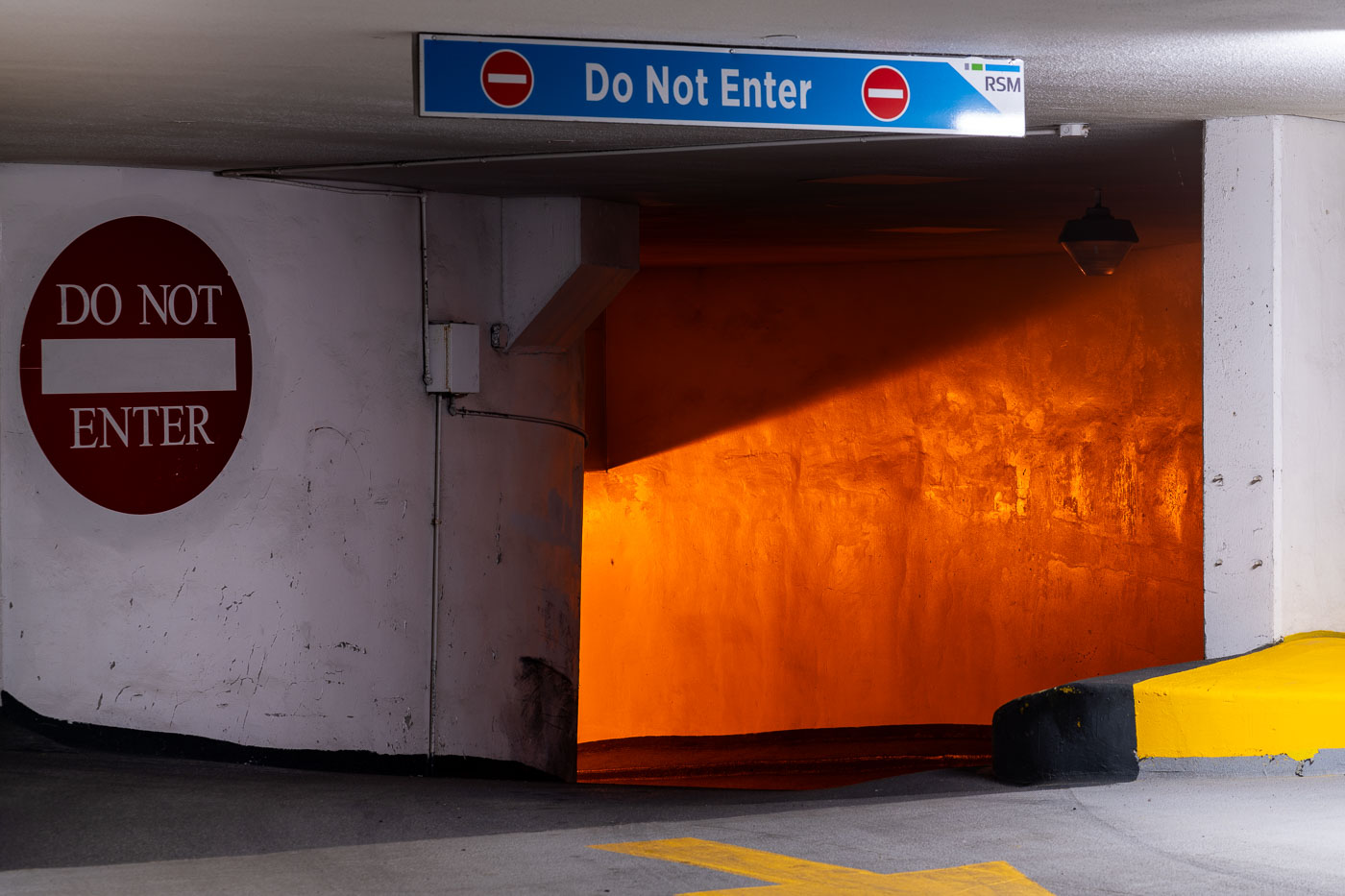
Orange safety barrier and "Do Not Enter" sign at RSM parking ramp entrance in downtown Minneapolis.
The RSM parking garage occupies a structure in downtown Minneapolis. The facility serves as commercial parking for the area's office and business district. An orange safety barrier marks an entrance, with "Do Not Enter" signage visible above.
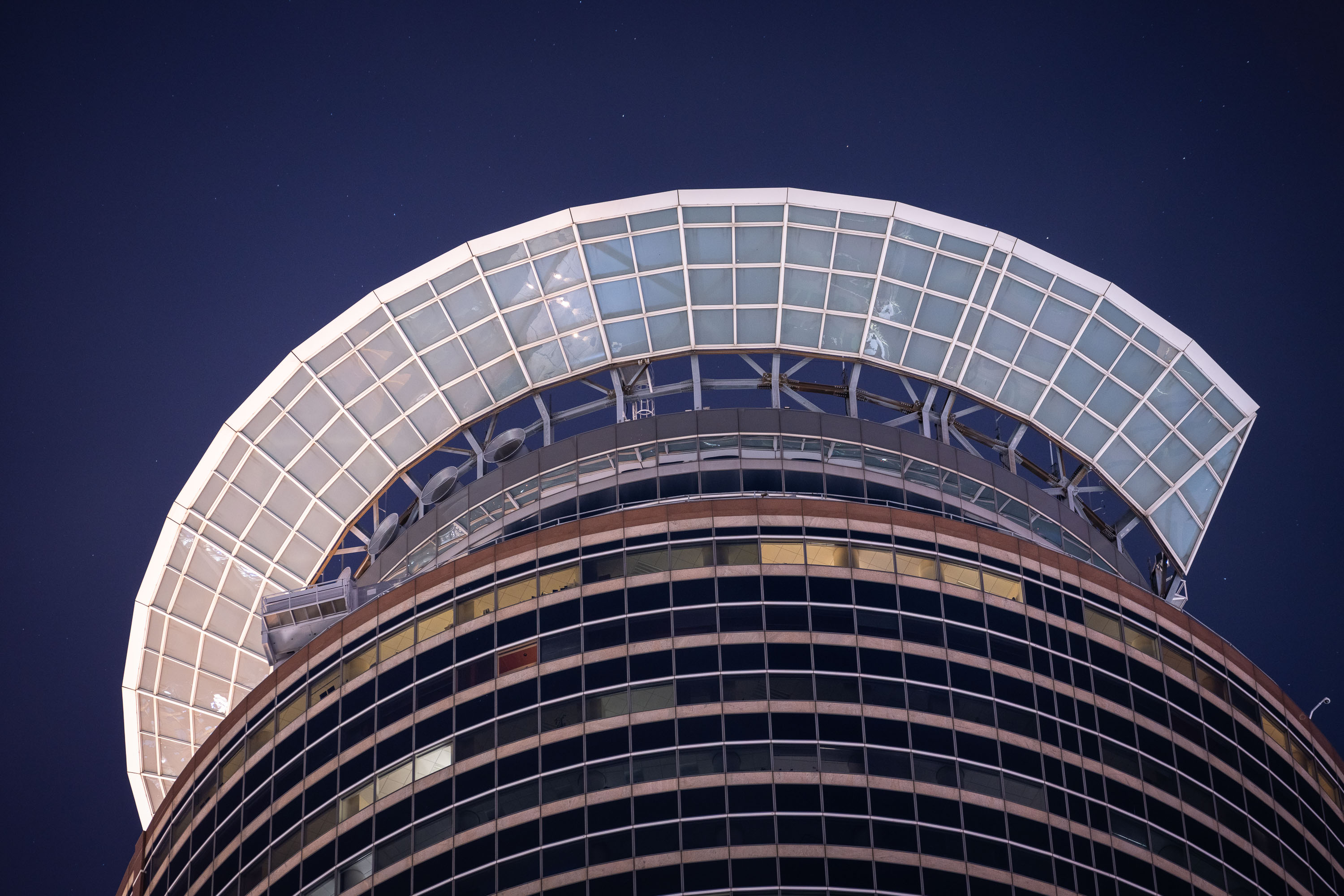
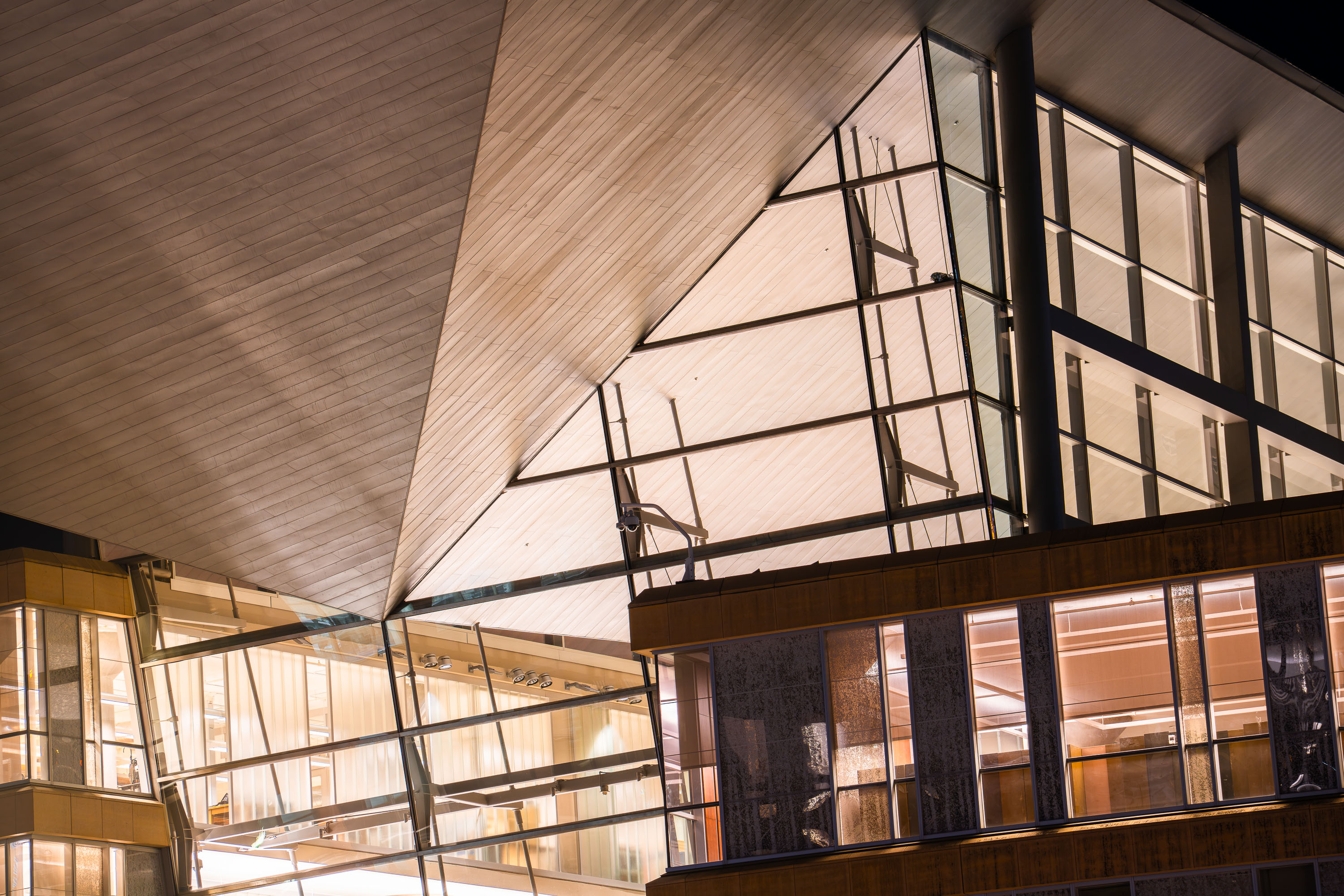
RSM Parking Ramp, Downtown Minneapolis
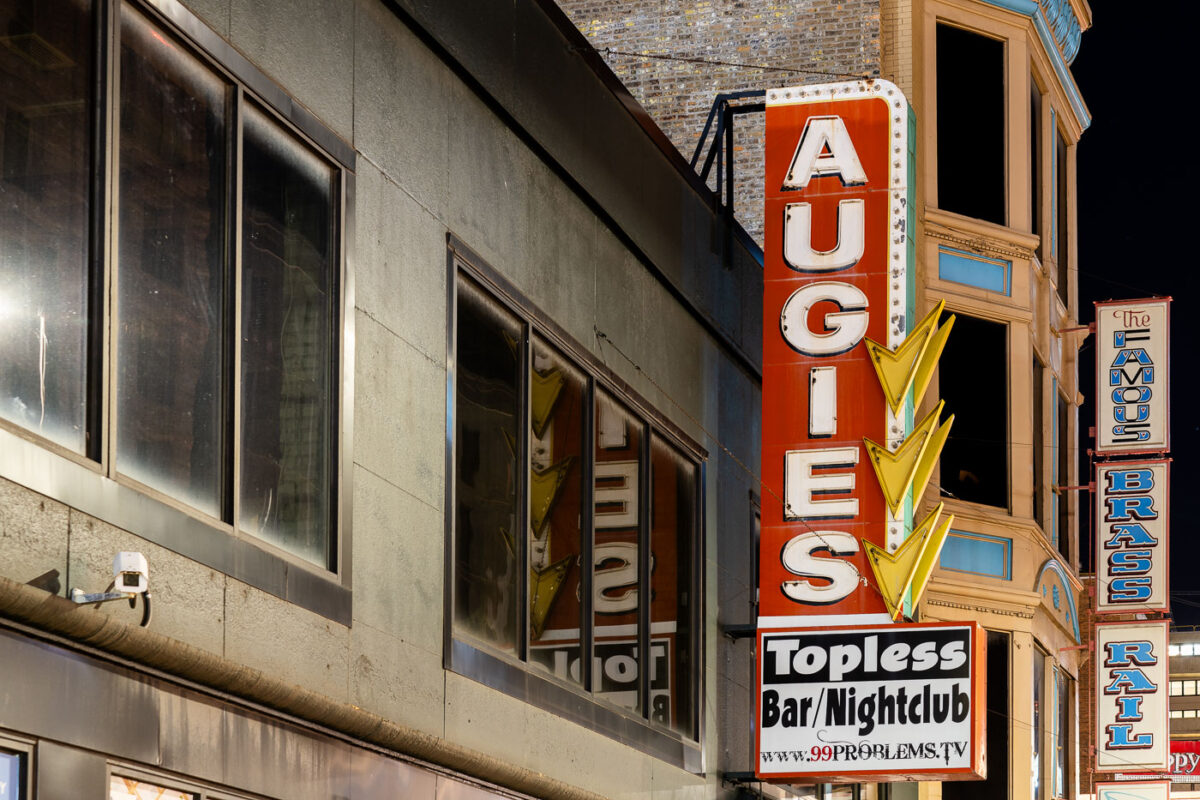
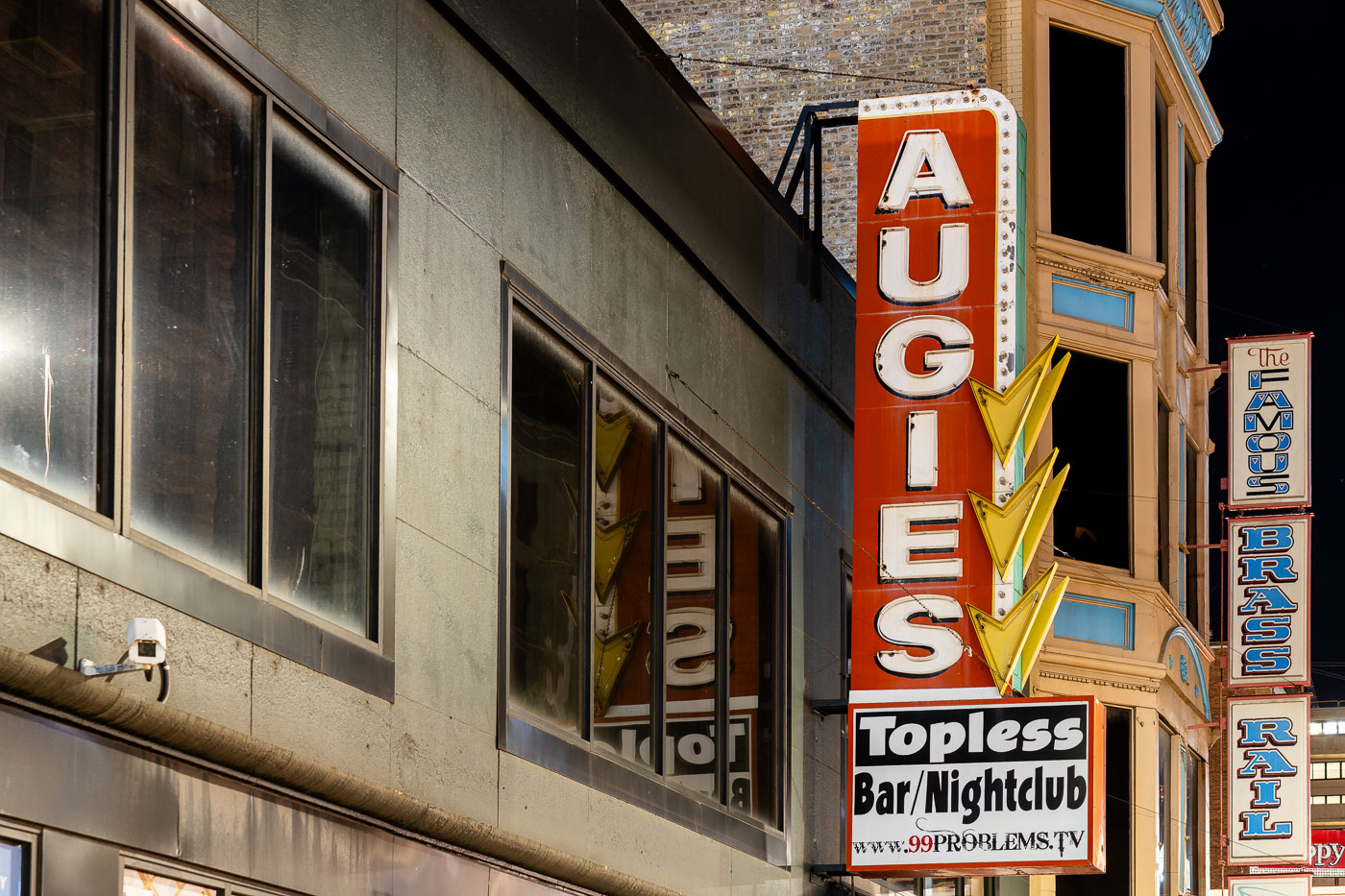
Vertical red neon Augies Topless Bar sign on downtown Minneapolis street at night.
Augies Topless Bar and Nightclub operated on Hennepin Avenue in downtown Minneapolis. The establishment's vertical neon sign, with its distinctive red background and white lettering, was a recognizable fixture in the entertainment district. The Famous Brass Rail sign is visible adjacent to it on the same block.

Augies Topless Bar sign, downtown Minneapolis
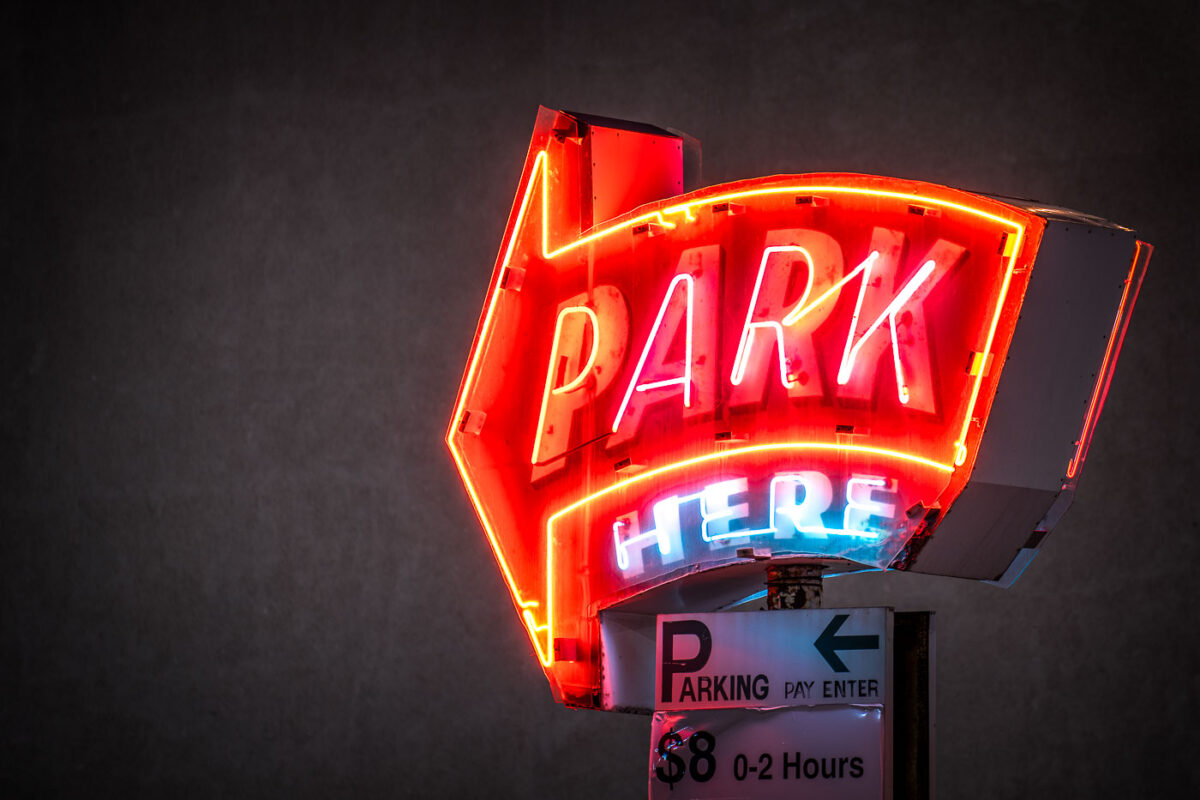
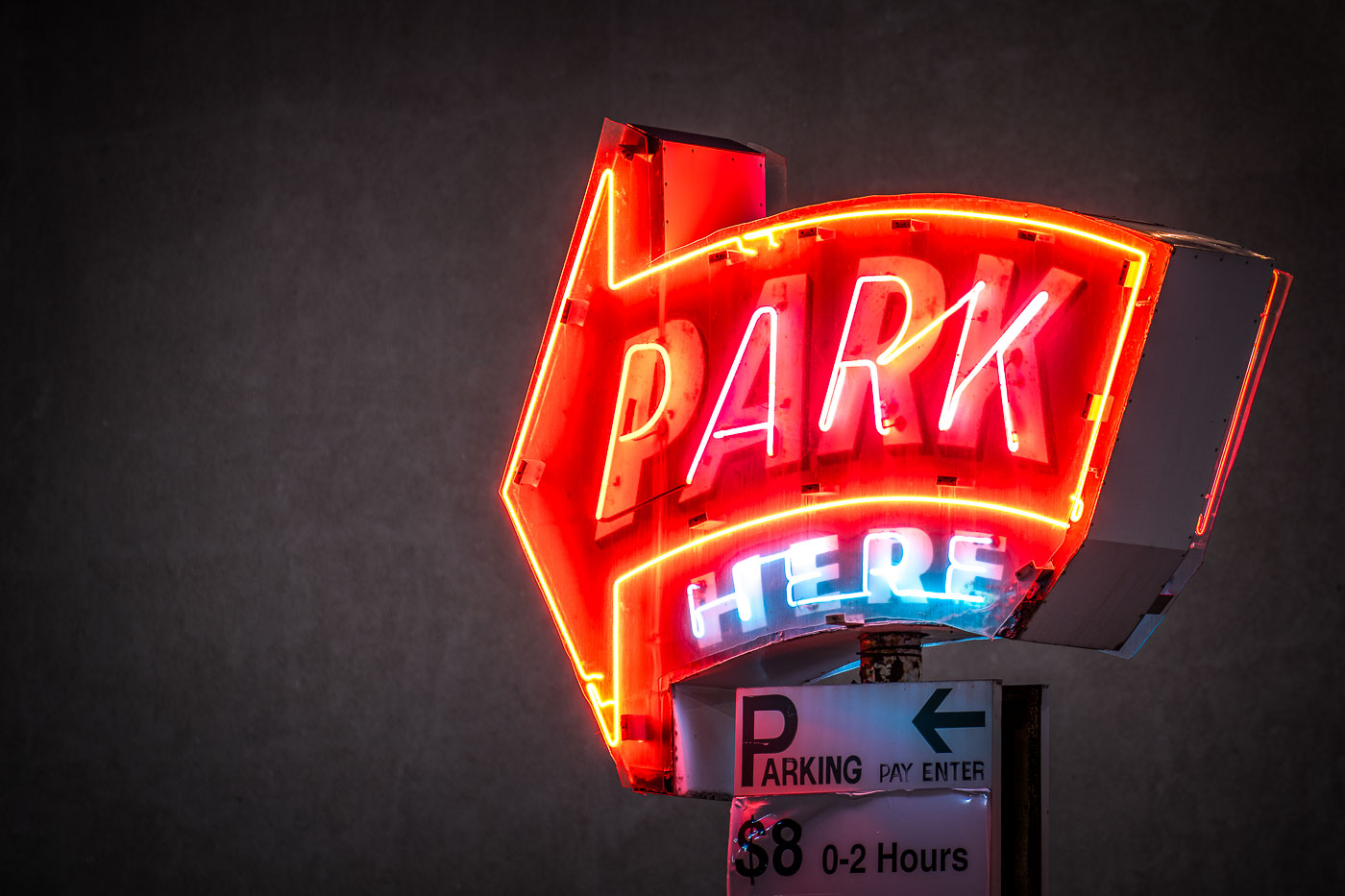
Red neon "Park Here" sign with arrow and parking rate board in downtown Minneapolis.
A vintage neon sign advertising parking in downtown Minneapolis. The red neon lettering reads "PARK HERE" with a directional arrow, typical of mid-20th-century commercial signage. Below the sign, a parking rate board s pricing for short-term parking, showing $8 for 0–2 hours.

Park Here neon sign, downtown Minneapolis
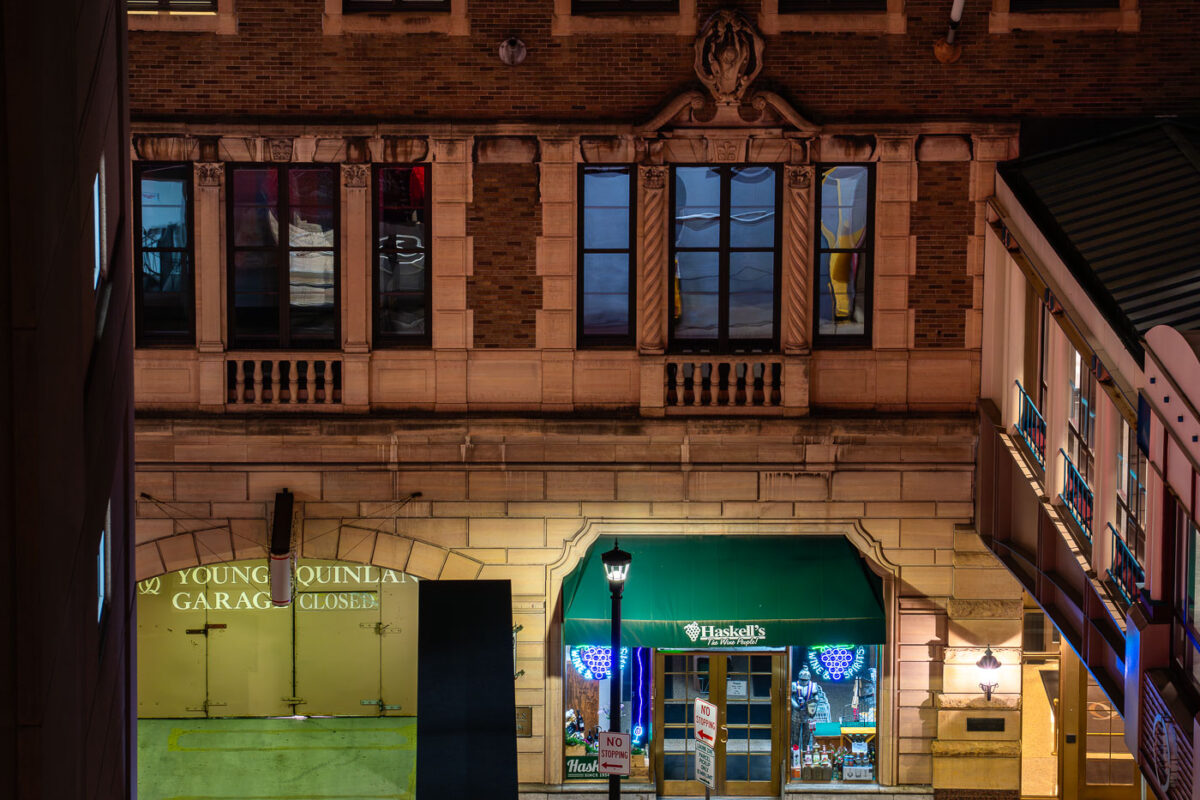
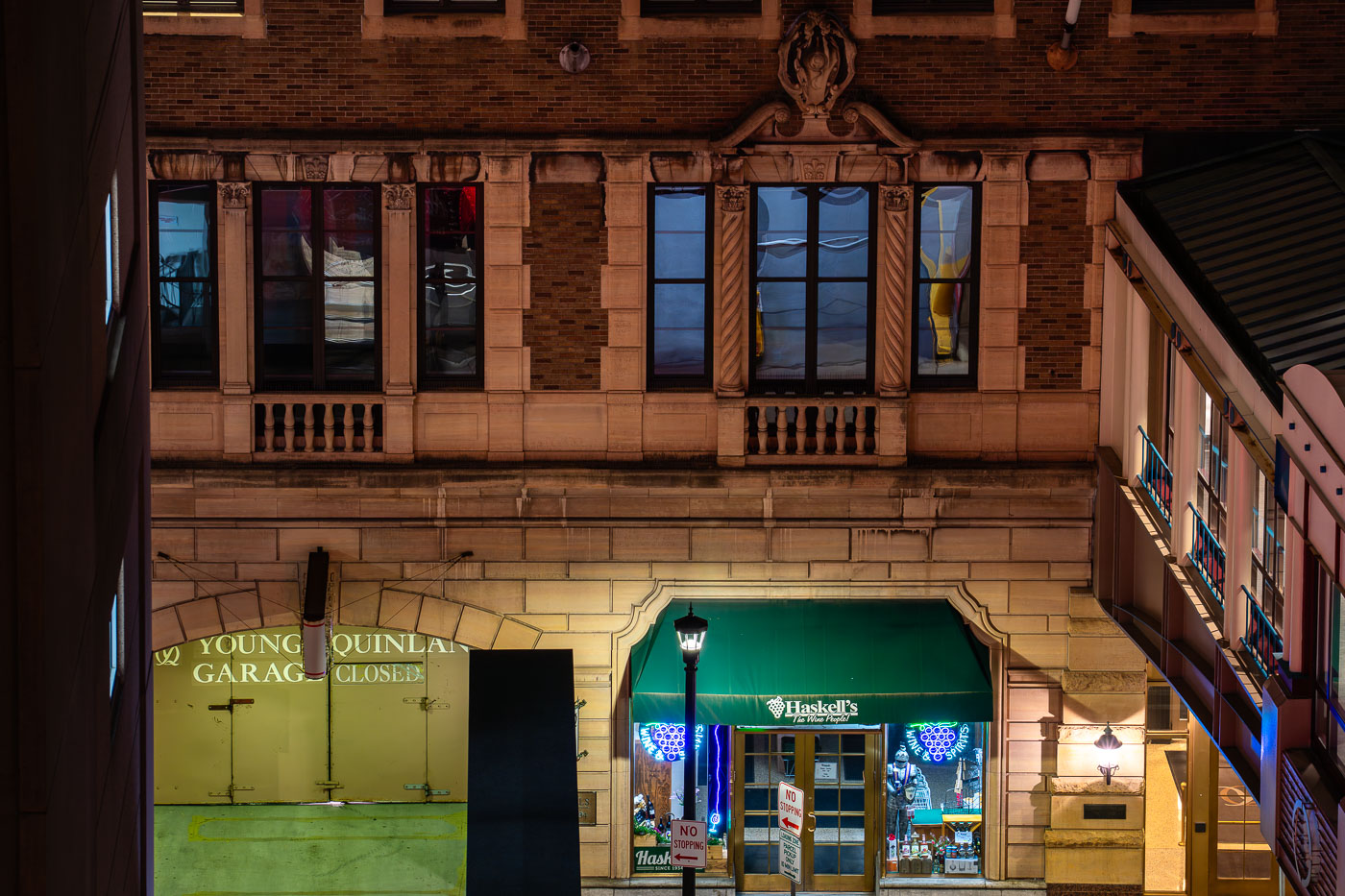
Haskell's liquor store storefront at street level in a historic brick building in downtown Minneapolis.
Haskell's is a liquor retailer located in downtown Minneapolis. The storefront occupies street-level space in a historic brick building with ornamental architectural details typical of early 20th-century commercial construction in the area.

Haskell’s Liquor Store, Downtown Minneapolis

Ford Center with illuminated rooftop sign at sunset in Minneapolis North Loop.
The Ford Center is a major office and entertainment venue in Minneapolis's North Loop neighborhood. The building's rooftop sign is a prominent landmark visible across the downtown area. Adjacent structures house additional office and commercial space throughout the district.

Ford Center at Sunset, Minneapolis

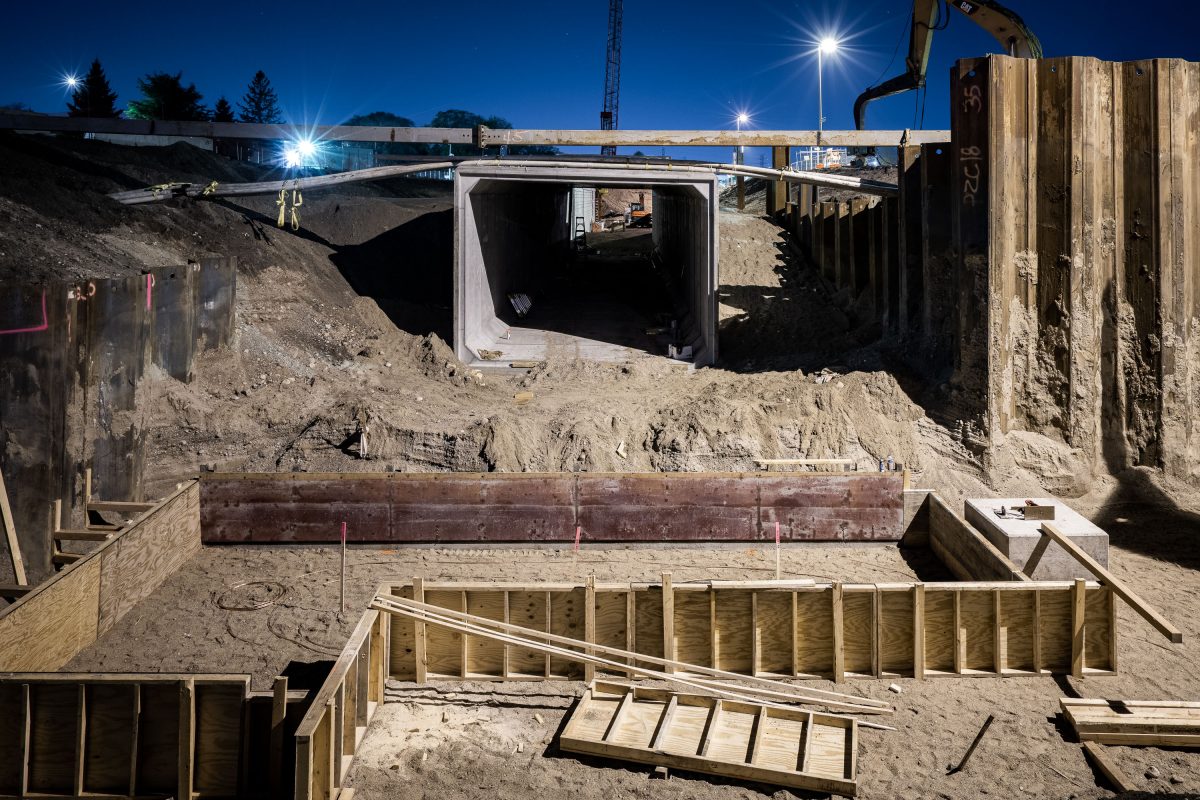
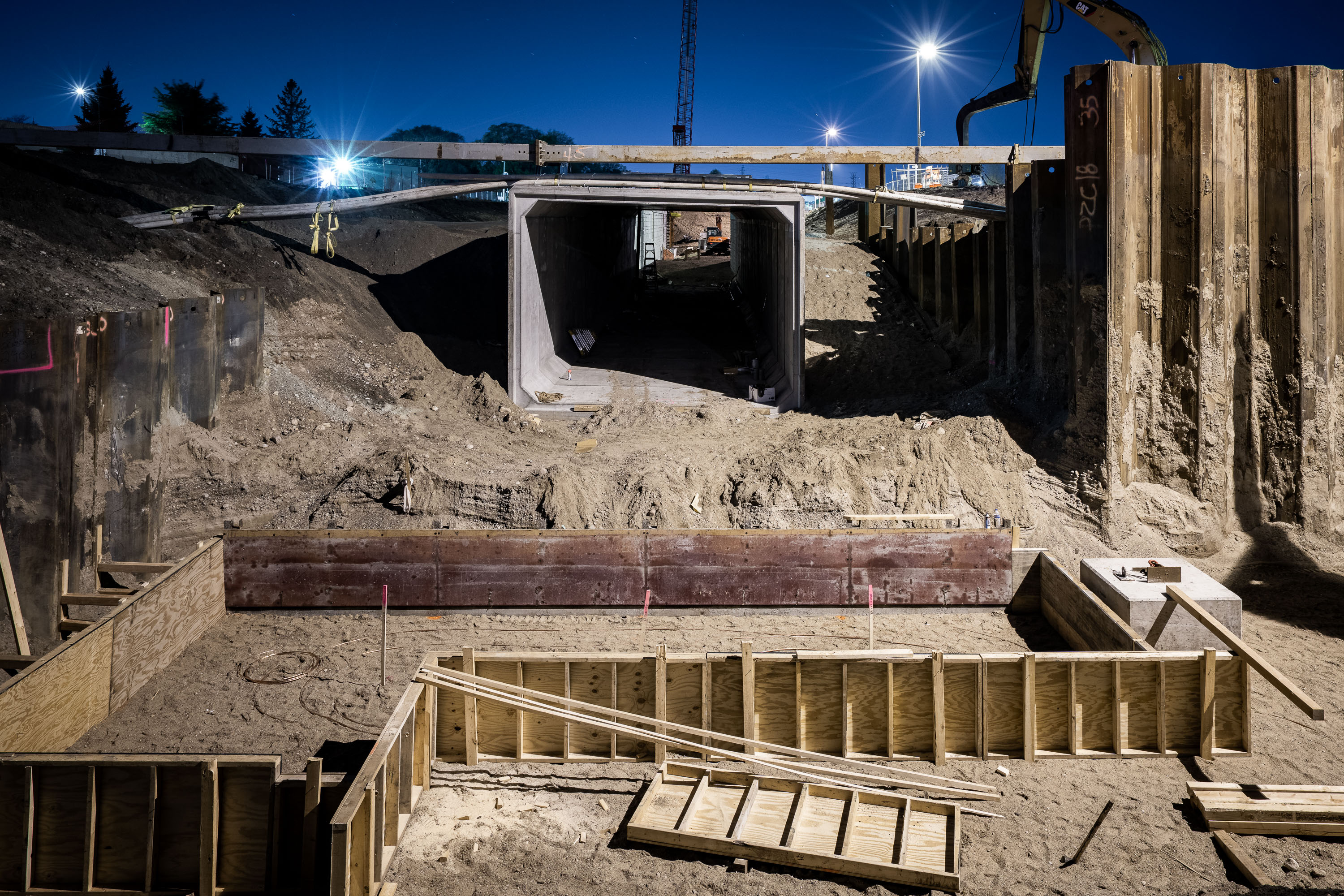
Construction of the Cedar Lake Trail tunnel under Wooddale Avenue in St. Louis Park at night.
The Cedar Lake Trail tunnel carries the regional bike and pedestrian path beneath Wooddale Avenue in St. Louis Park. The trail connects Minneapolis's Kenilworth corridor to the western suburbs, following a former railroad right-of-way. This segment was rebuilt as part of the Southwest Light Rail Transit project, which required reconstructing Wooddale Avenue and its crossing structures to accommodate the new Green Line extension.

Night Construction of the Cedar Lake Trail Tunnel at Wooddale Avenue

Orangetheory Fitness gym storefront at night in St. Louis Park, Minnesota.
Orangetheory Fitness is a fitness studio franchise that offers group fitness classes combining cardio, strength training, and endurance work. The St. Louis Park location operates as part of the national chain, which uses heart rate monitoring technology during group classes. The studio's distinctive orange branding is visible on the storefront.

Orangetheory Fitness, St. Louis Park

The Local Irish Pub storefront at night in St. Louis Park, Minnesota, with red facade and illuminated arched windows.
The Local is an Irish pub located in St. Louis Park, Minnesota. The establishment features a distinctive storefront with red-painted facade, arched windows, and warm interior lighting visible through the glass.

The Local Irish Pub, St. Louis Park

DoubleTree by Hilton hotel illuminated at night in St. Louis Park, Minnesota.
The DoubleTree by Hilton is a hotel located in St. Louis Park, Minnesota, a suburb west of Minneapolis. The property features a brick facade typical of mid-range hotel architecture in the region.

DoubleTree by Hilton, St. Louis Park
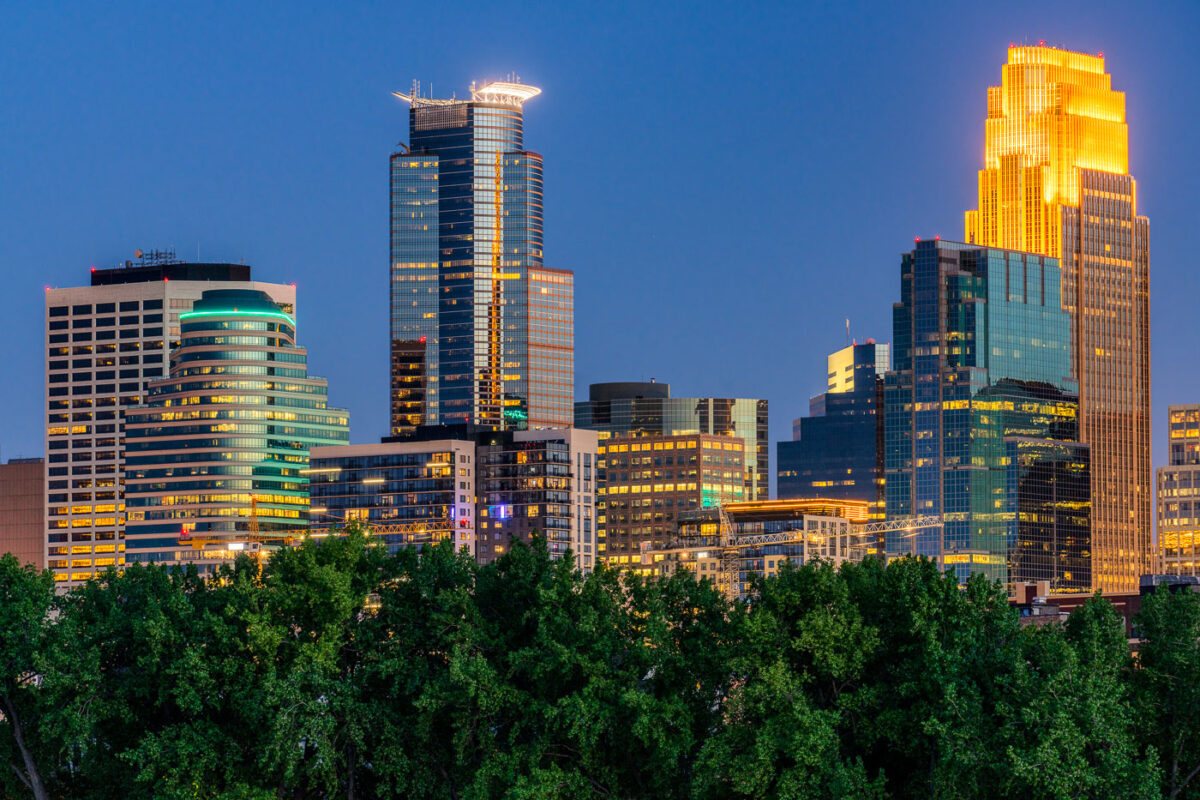
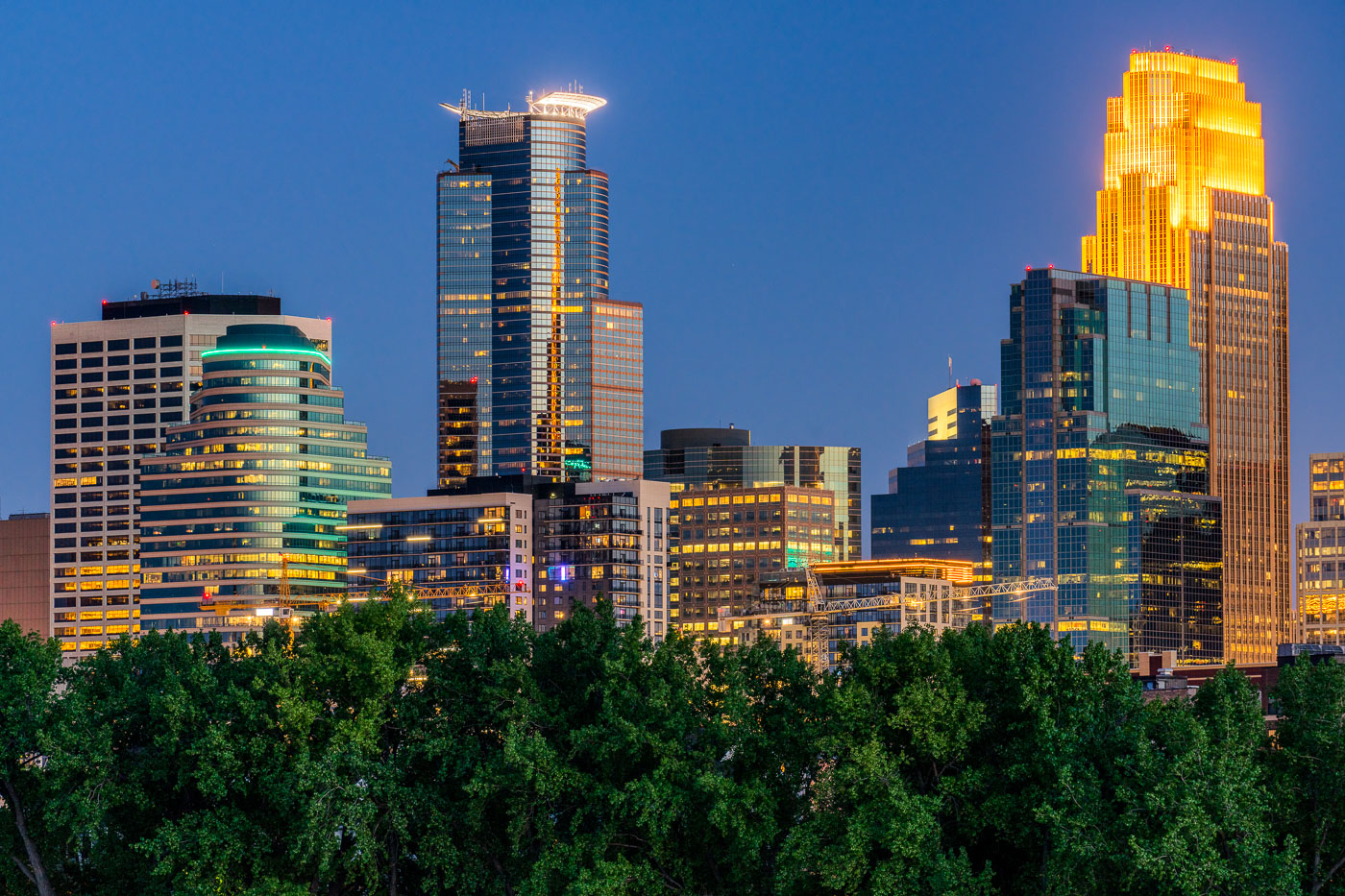
Downtown Minneapolis at dusk from Boom Island Park, with Wells Fargo Center and U.S. Bank Tower above treetops
Downtown Minneapolis is seen from Boom Island Park at dusk. The Wells Fargo Center and U.S. Bank Tower rise above the riverfront, with treetops in the foreground.

Downtown Minneapolis at dusk from Boom Island Park