Minnesota

5,930 photos · 2008–2026

5,930 photographs tagged Minnesota, 2008–2026.

Best Buy headquarters campus in Richfield, Minnesota, with angular glass office buildings along a broad roadway.
Best Buy headquarters campus in Richfield, Minnesota, consists of multiple modern office buildings with dark glass facades and angular end walls. The campus houses corporate offices for the electronics retailer, whose logo is visible on one of the buildings. The complex sits along a broad roadway with surface parking and campus landscaping.

Best Buy Headquarters Campus, Richfield

Tornado damaged homes in Hugo, Minnesota, stand beside a flooded field after the May 25, 2008 storm.
Tornado damaged homes in Hugo, Minnesota, were hit by the May 25, 2008 tornado. Roof sections, siding, and exterior walls were torn from multiple houses in the neighborhood. The damage is adjacent to a flooded field at the edge of the residential area.

Tornado Damaged Homes, Hugo, Minnesota

Myth Nightclub entrance in Maplewood, Minnesota, with blue neon lighting and people outside at night.
Myth Nightclub in Maplewood, Minnesota, was a live music and entertainment venue that opened in 2008. Blue neon trim and a large MYTH sign identify the building’s entrance. Concertgoers are gathered near the doors, ticket area, and will-call window.

Myth Nightclub Entrance, Maplewood, Minnesota

Abandoned Wisconsin farmhouse room with a rocking chair, vinyl records, and a leaning box spring.
An abandoned farmhouse room in Wisconsin contains a rocking chair, vinyl records, and a detached box spring leaning against wood-paneled walls. The scattered albums include Arthur Fiedler and the Boston Pops' World's Most Beautiful Waltzes. Green patterned carpet, yellow curtains, and a small stand remain in the room.

Abandoned Wisconsin Farmhouse Room with Vinyl Records

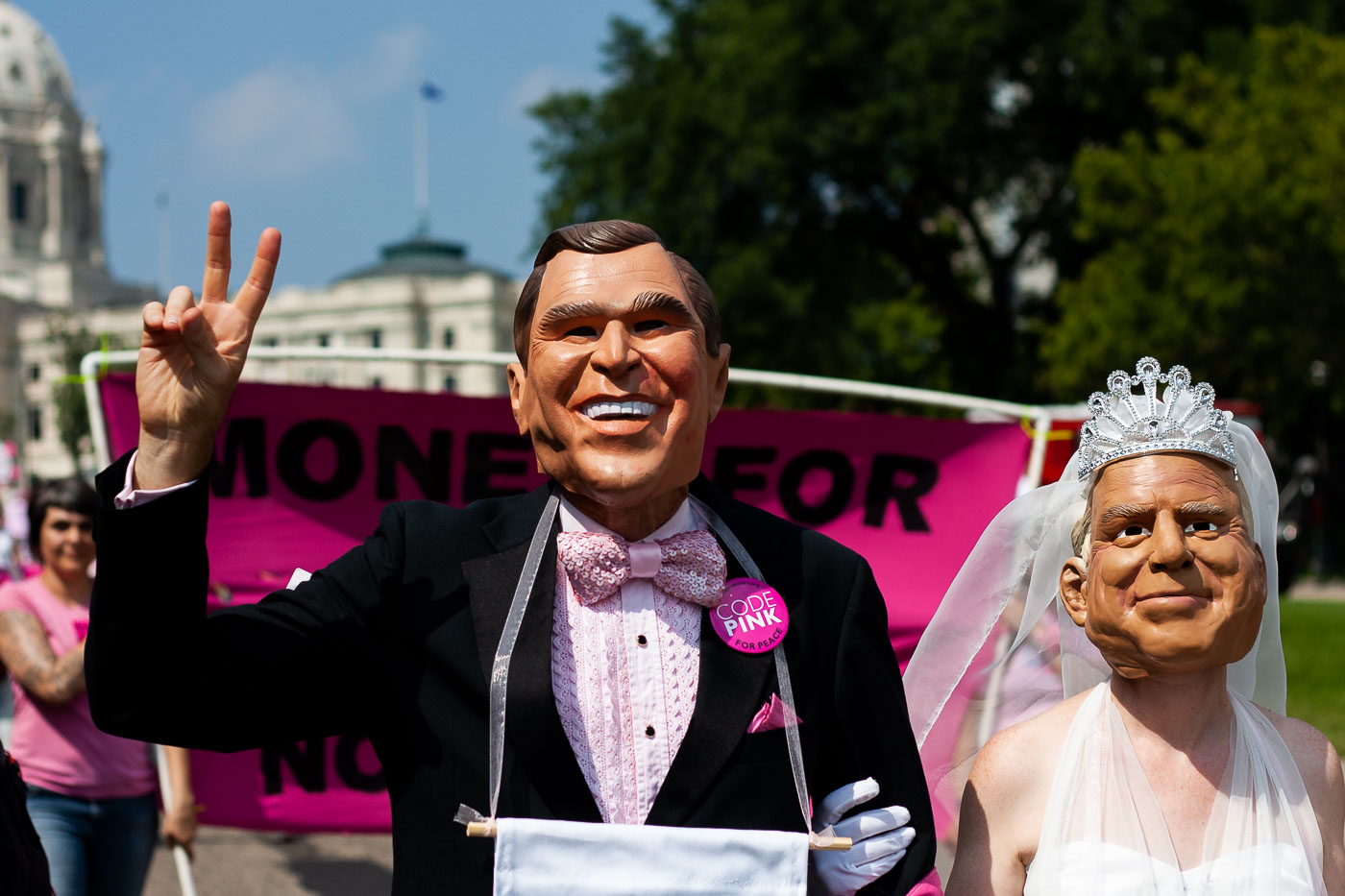
Code Pink protesters with satirical effigies at the 2008 Republican National Convention in St. Paul, Minnesota.
Code Pink protesters demonstrated outside the 2008 Republican National Convention in St. Paul, using satirical effigies and banners to criticize government spending and military policy. The anti-war organization staged the protest during the convention held at the Xcel Energy Center, which drew demonstrations from multiple groups opposing the wars in Iraq and Afghanistan.

Code Pink Protest, 2008 Republican National Convention, St. Paul

Bike police officers patrol in St. Paul during the 2008 Republican National Convention.
Bike police officers patrol a street in St. Paul, Minnesota, during the 2008 Republican National Convention. The convention was held September 1–4, 2008, at the Xcel Energy Center and required coordinated security and crowd-management operations across the city. Uniform patches identify officers from multiple Minnesota departments working as bicycle patrol units during convention week.

Bike Police Patrol in St. Paul During 2008 RNC

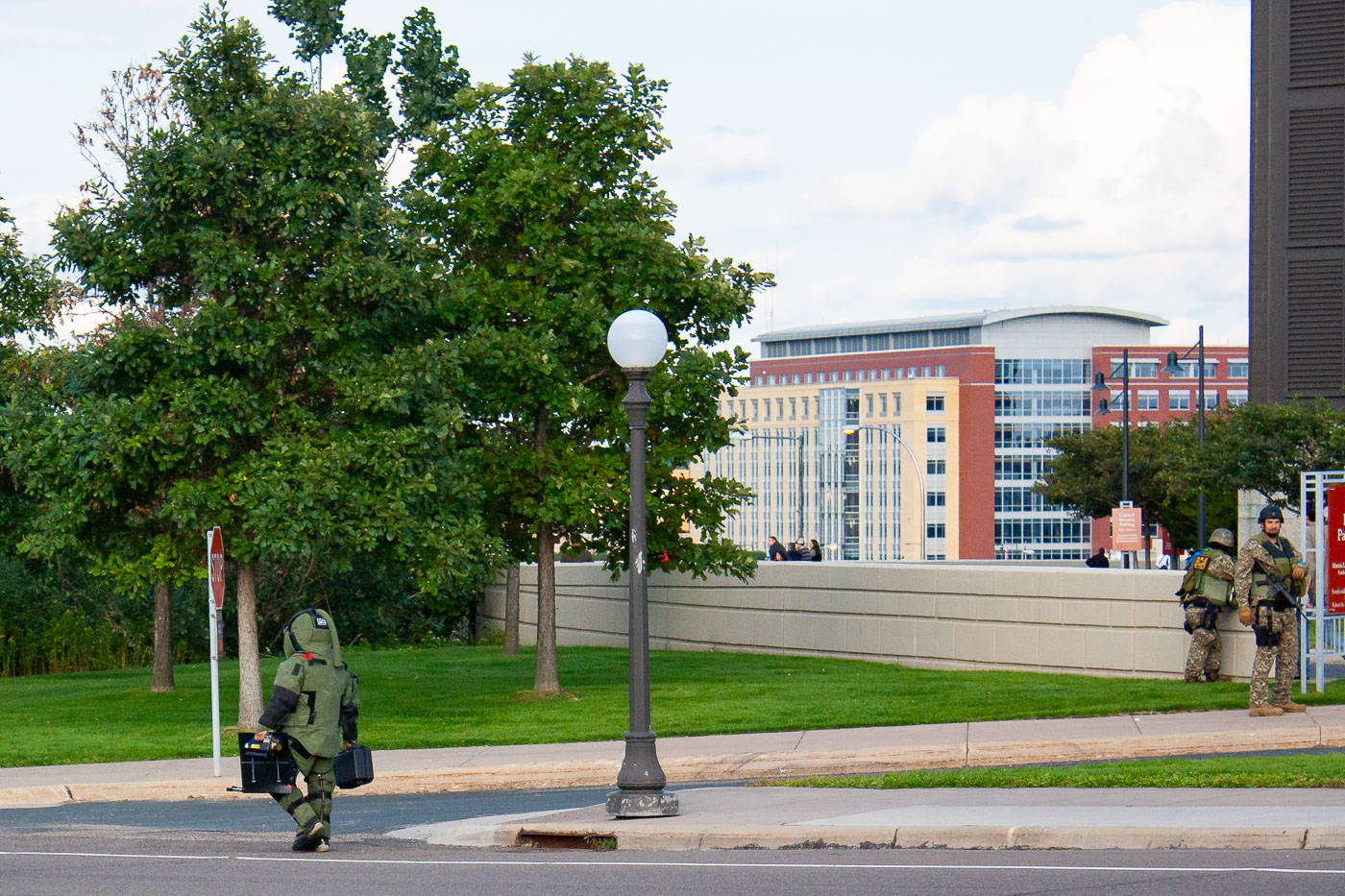
Bomb squad member in protective gear during 2008 Republican National Convention security operations in St. Paul.
A bomb squad member in protective gear patrols near the Xcel Energy Center during the 2008 Republican National Convention in St. Paul. The convention, held September 1-4, 2008, required extensive security operations by federal, state, and local law enforcement agencies. Specialized units including the bomb squad were deployed throughout the city to address security concerns during the four-day political event.

Bomb Squad at 2008 Republican National Convention, St. Paul
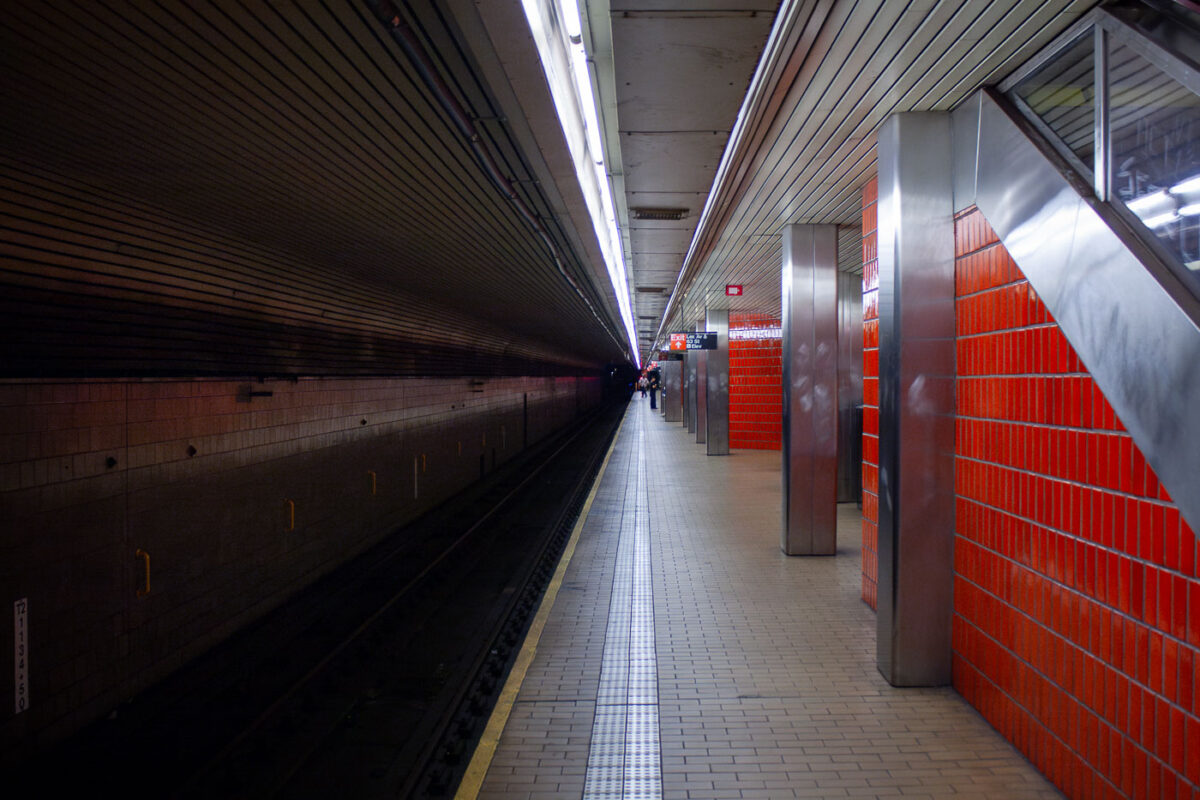
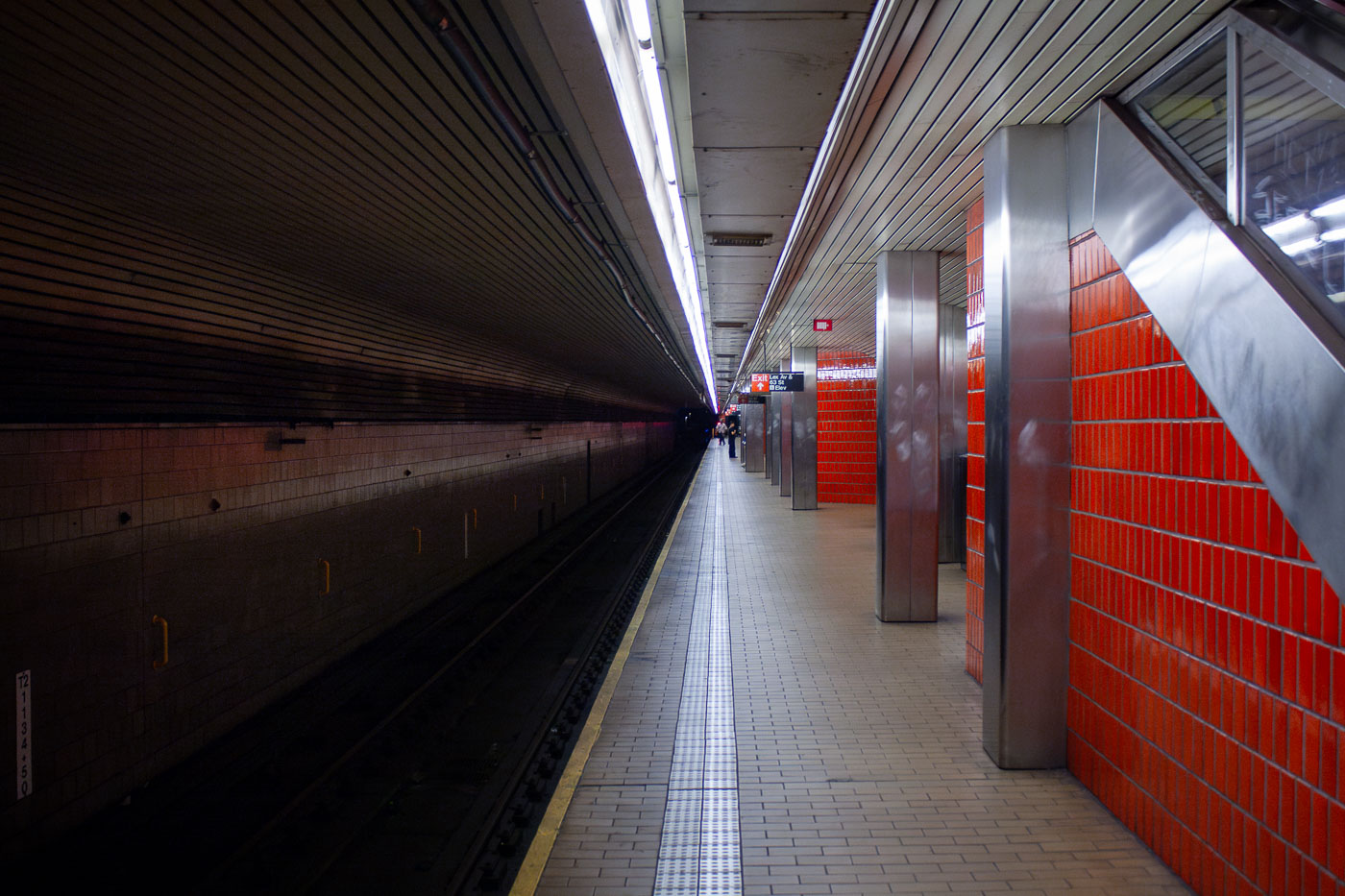
Empty platform at Lexington Avenue–63rd Street subway station in Manhattan with red brick wall and metal support columns.
Lexington Avenue–63rd Street station platform in Manhattan. Opened in 1989 as part of the 63rd Street Tunnel project, the station links the Upper East Side with Queens through the IND 63rd Street Line. It is served by the F train at all times and by the Q train on weekdays.

Red-Tiled Platform at Lexington Avenue–63rd Street Station

Interior view of the Lowry Avenue Bridge steel truss structure, Minneapolis, 1905–2009.
The Lowry Avenue Bridge connected north and south Minneapolis across the Mississippi River. Built in 1905 as a steel truss structure, the bridge served the city for over a century. Structural deterioration led to its closure in April 2008, and it was demolished by controlled explosions in June 2009 to make way for a replacement.

Lowry Avenue Bridge, Minneapolis, 1905-2009

Boarded foreclosure auction house with yellow and black signage in North Minneapolis.
A residential property in North Minneapolis advertises a public foreclosure auction with open house dates and contact information displayed on boarded windows. The auction resulted from lender foreclosure proceedings. Foreclosure auctions were common outcomes of mortgage defaults during the 2008–2009 financial crisis, which significantly impacted housing markets and neighborhoods across Minneapolis.

Lender Foreclosure Auction, North Minneapolis
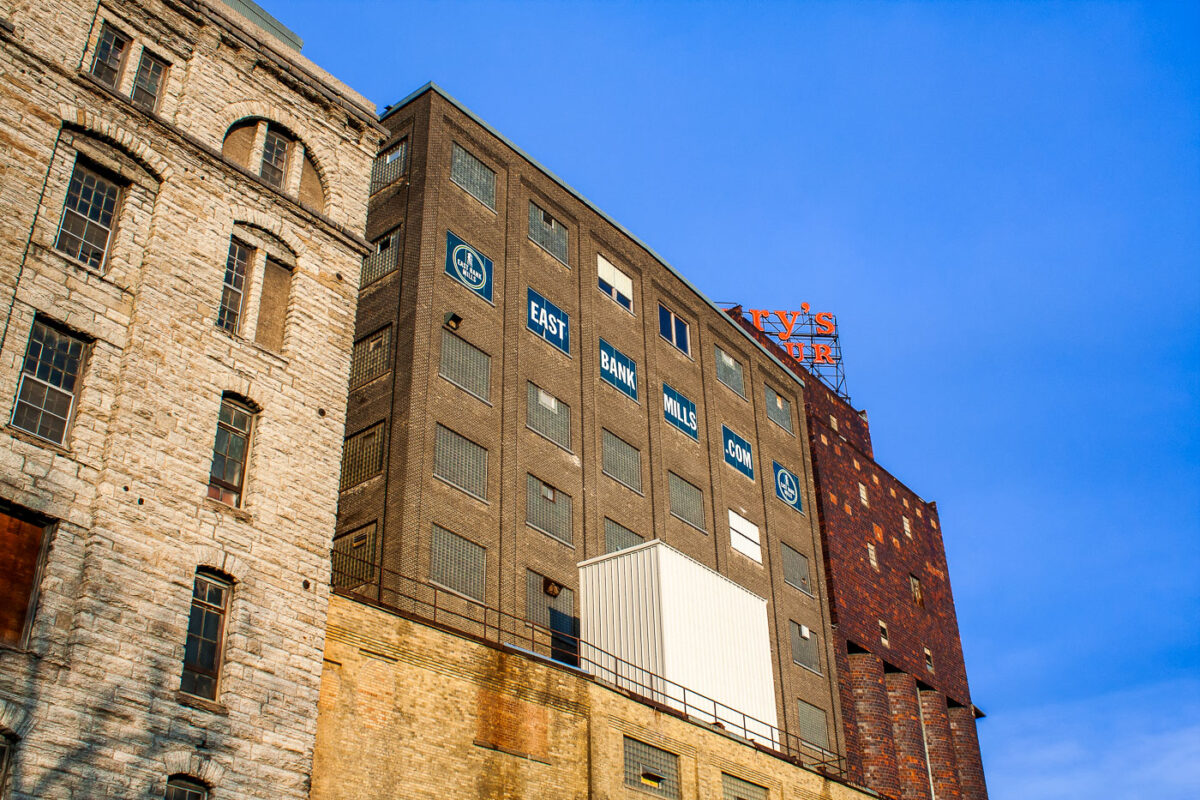
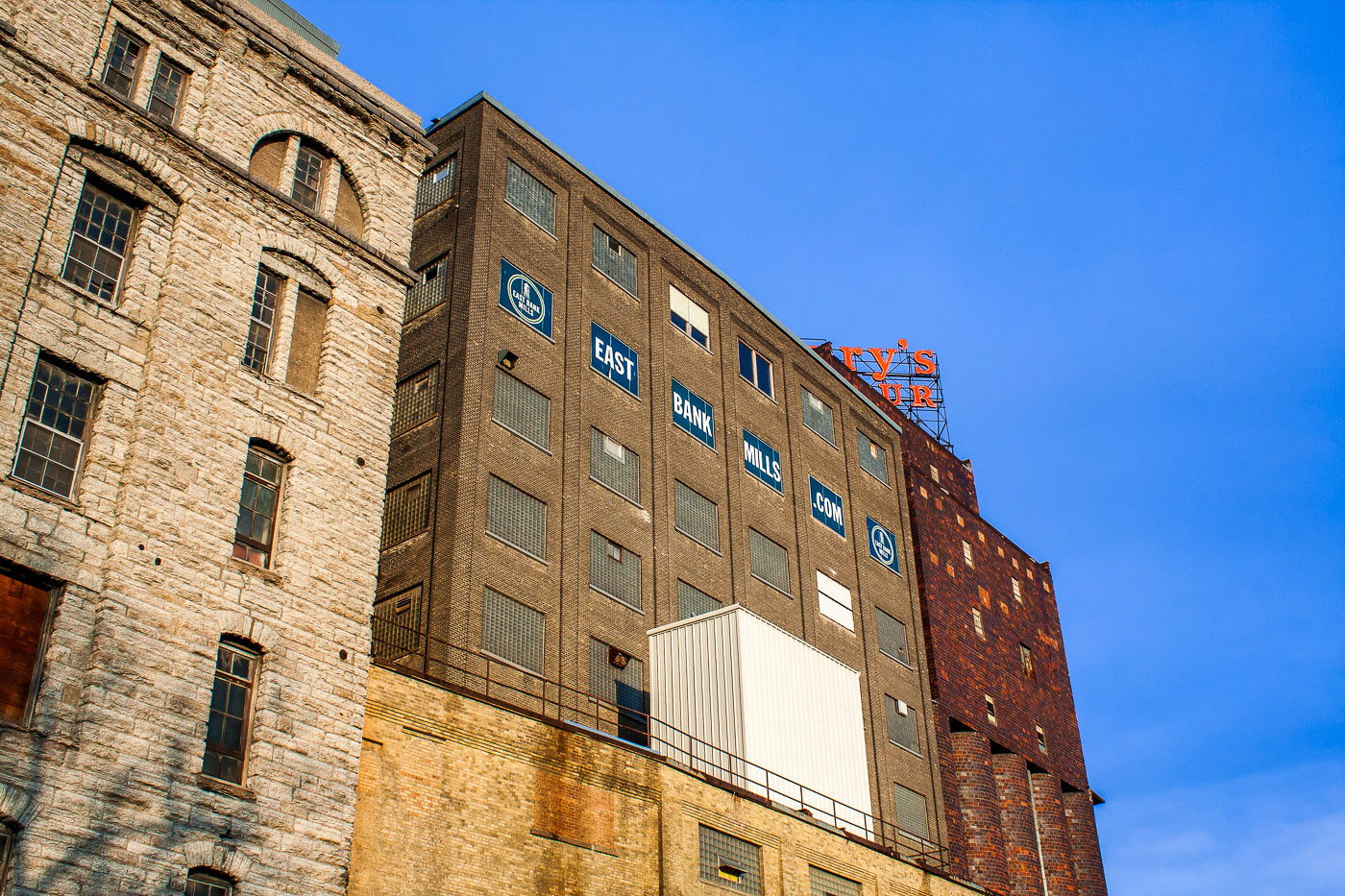
East Bank Mills historic flour mill complex in Northeast Minneapolis with blue signage on tan brick buildings under clear sky.
East Bank Mills is a historic flour mill complex in Northeast Minneapolis. The industrial buildings visible here are part of the milling operations that made Minneapolis a major flour production center in the late 19th and early 20th centuries.

East Bank Mills Signage on a Northeast Minneapolis Flour Mill

White-tailed deer on snowy slope in Father Hennepin Bluff Park, Minneapolis.
A white-tailed deer traverses a snow-covered slope in Father Hennepin Bluff Park, a natural area along the Mississippi River in Minneapolis. Established in 1961, the park preserves bluff habitat within the city. The deer's presence demonstrates the park's role in supporting wildlife populations in an urban setting.

White-tailed deer, Father Hennepin Bluff Park, Minneapolis

Wafana's Grocery and Deli storefront on Lyndale Avenue, North Minneapolis, with orange and cream facade.
Wafana's Grocery and Deli operated on Lyndale Avenue in North Minneapolis as a neighborhood retail establishment offering both grocery and deli services. The storefront displays signage for WIC and EBT acceptance, participation in federal food assistance programs. Boarded sections of the facade reflect the commercial challenges faced by small retail businesses in the area.

Wafana’s Grocery and Deli, Lyndale Avenue

Illuminated Boom Island Lighthouse on the Mississippi River with Minneapolis skyline at night.
The Boom Island Lighthouse stands on the Mississippi River in Minneapolis, illuminated at night with the city skyline visible beyond. Built as a navigational aid for river traffic, the structure now functions as a landmark within Boom Island Park. The park occupies a former industrial site along the river, providing public access to the waterfront and views of downtown Minneapolis.

Boom Island Lighthouse, Minneapolis

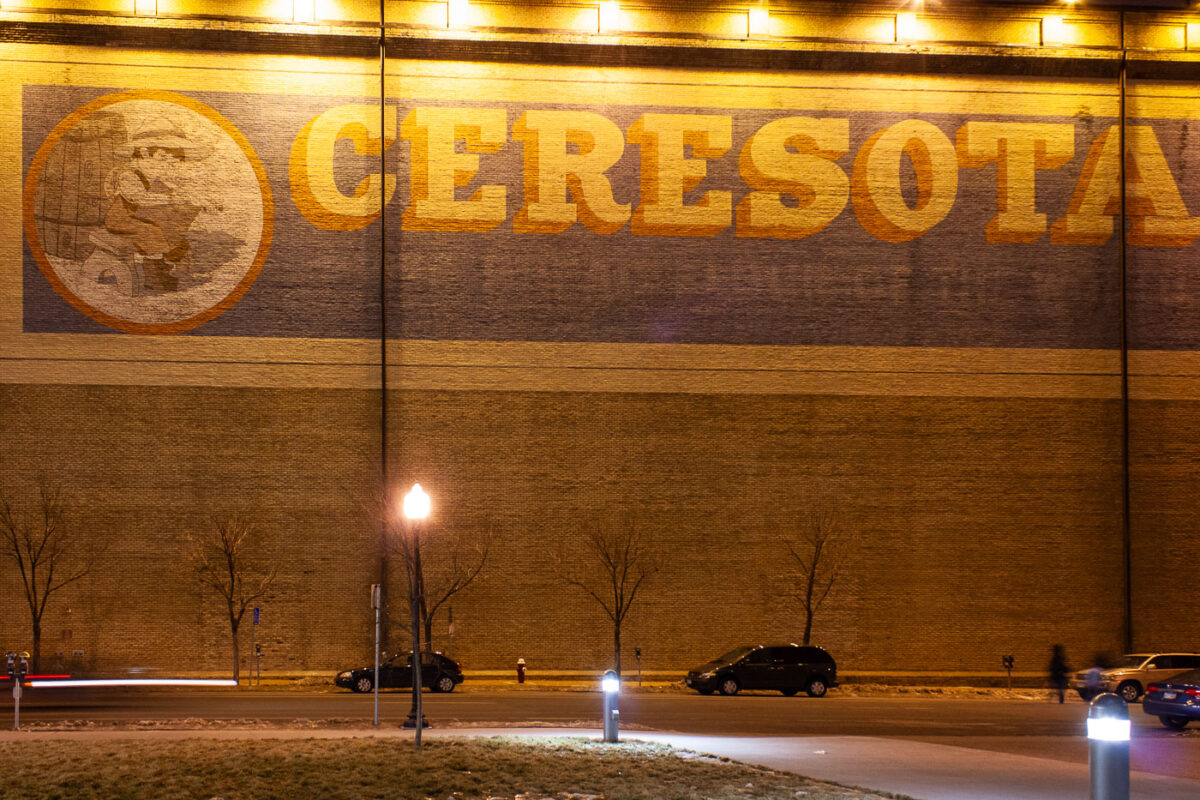
Golden Ceresota Building mural with portrait on brick facade, downtown Minneapolis.
The Ceresota Building mural in downtown Minneapolis commemorates the Ceresota Milling Company, a major flour miller that operated in the city. The building's prominent brick facade displays a portrait and the company name in large golden letters. Ceresota was one of numerous milling operations that made Minneapolis the nation's leading flour production center in the late 19th and early 20th centuries.

Ceresota Building Mural, Minneapolis

The Minneapolis Police Department's 4th Precinct building in North Minneapolis, Minnesota, photographed in 2009. The precinct served as a law enforcement facility for the area.
The Minneapolis Police Department's 4th Precinct building, located in North Minneapolis, served as a key law enforcement facility for the area. Established to provide public safety and community services, the precinct's operations were integral to the functioning of this part of the city.

Minneapolis Police 4th Precinct, North Minneapolis, 2009

Paul Masson brandy bottle and McDonald's fries box discarded on grass in North Minneapolis.
A Paul Masson brandy bottle and McDonald's French fries box lie discarded on grass and dead leaves in North Minneapolis. The image litter found in an urban neighborhood, showing the presence of branded consumer products in public spaces.

Discarded Bottles and Food Packaging, North Minneapolis

Fourth Police Precinct building with marquee sign in North Minneapolis, 2009.
The Minneapolis Police Fourth Precinct is a law enforcement facility serving North Minneapolis. The building's marquee advertises a precinct meeting scheduled for March 17, 2009, reflecting ongoing community engagement activities. The facility operates as a neighborhood police station within the city's public safety infrastructure.

Fourth Police Precinct, North Minneapolis

Illuminated neon sign for Broadway Liquors on a brick building in North Minneapolis.
Broadway Liquors is a retail liquor store located on Broadway in North Minneapolis. The establishment's neon signage, characteristic of mid-20th century commercial storefronts, identifies the business and its street presence. Neon signs such as this were standard features of neighborhood commercial districts, providing wayfinding and establishing visual identity along commercial corridors.

Broadway Liquors neon sign, Broadway and West Broadway, Minneapolis

Grand Rounds Scenic Byway wayfinding sign at Bde Maka Ska park in Minneapolis.
A wayfinding sign for the Grand Rounds Scenic Byway stands at Bde Maka Ska in Minneapolis. The Grand Rounds is a system of parkways designed by Horace Cleveland in the late 19th century to connect Minneapolis's chain of lakes and parks.

Trail Signs for Grand Rounds Scenic Byway at Bde Maka Ska

The Minneapolis Bureau of Mines building, part of the Department of the Interior, was a federal facility for mining research. Located in Minneapolis, Minnesota, it was closed in 1996.
The Minneapolis Bureau of Mines building, part of the Department of the Interior, was a federal facility dedicated to research and development in mining and mineral resources. Established to advance the understanding and utilization of the nation's mineral wealth, the Bureau played a significant role in geological surveys, safety research, and resource management. This building, located in Minneapolis, Minnesota, served as a hub for these critical scientific and governmental functions. Its demolition signifies the changing landscape of federal research facilities and the eventual closure of the Bureau of Mines itself in 1996.

Minneapolis Bureau of Mines Building, Department of the Interior

A Northwest Airlines Airbus A320 takes off from Minneapolis-Saint Paul International Airport (MSP) in Bloomington, Minnesota.
A Northwest Airlines Airbus A320 aircraft lifts off from Minneapolis-Saint Paul International Airport (MSP). MSP Airport, a primary air traffic hub for the Upper Midwest, handles millions of passengers annually and was historically a major base for Northwest Airlines. The airline, which merged with Delta Air Lines in 2010, operated a significant fleet from this location.

Northwest Airlines Airbus A320 Takeoff from MSP Airport

The United States Department of the Interior, Bureau of Mines building in Minneapolis
The United States Department of the Interior, Bureau of Mines building in Minneapolis/ Established in 1910, the Bureau of Mines was tasked with promoting the conservation and efficient utilization of the nation's mineral and fuel resources. It has since been demolished.

US Department of the Interior, Bureau of Mines – Minneapolis

Boarded-up brick building at Fort Snelling, Minnesota, a historic military installation near Minneapolis.
This brick building, located at Fort Snelling near Minneapolis, Minnesota, has boarded-up windows and doors, indicating disuse. Fort Snelling is a historic military installation that served as a key strategic post for the U.S. Army in the Upper Midwest. The fort's history dates back to its establishment in 1819, and it played a significant role in westward expansion and military operations throughout the 19th and 20th centuries. The architectural style of the building suggests it may have been constructed during the fort's active military period, likely serving administrative or residential purposes for personnel.

Fort Snelling Building with Boarded Windows

Abandoned brick building at Fort Snelling, Minnesota, showing signs of disrepair and neglect.
This brick building, located at Fort Snelling near Minneapolis, Minnesota, is in a state of disrepair. The structure appears to be a former residential or administrative building, likely part of the historic military post. Its crumbling facade and damaged roof indicate significant abandonment and neglect. Fort Snelling has a long history, established in the 1820s, and has served various military functions throughout different eras of American history.

Fort Snelling Abandoned Building, Minneapolis

Abandoned barracks at Fort Snelling, Minneapolis, Minnesota, a historic military installation constructed in the early 20th century.
These abandoned barracks at Fort Snelling, Minnesota, represent a portion of the historic military installation. Constructed in the early 20th century, these buildings served as housing for soldiers. Fort Snelling has a long history dating back to 1819, playing a significant role in the region's military and economic development. The barracks, like much of the fort's infrastructure, have fallen into disuse and disrepair, standing as silent reminders of past military presence.

Abandoned Barracks at Fort Snelling, Minneapolis

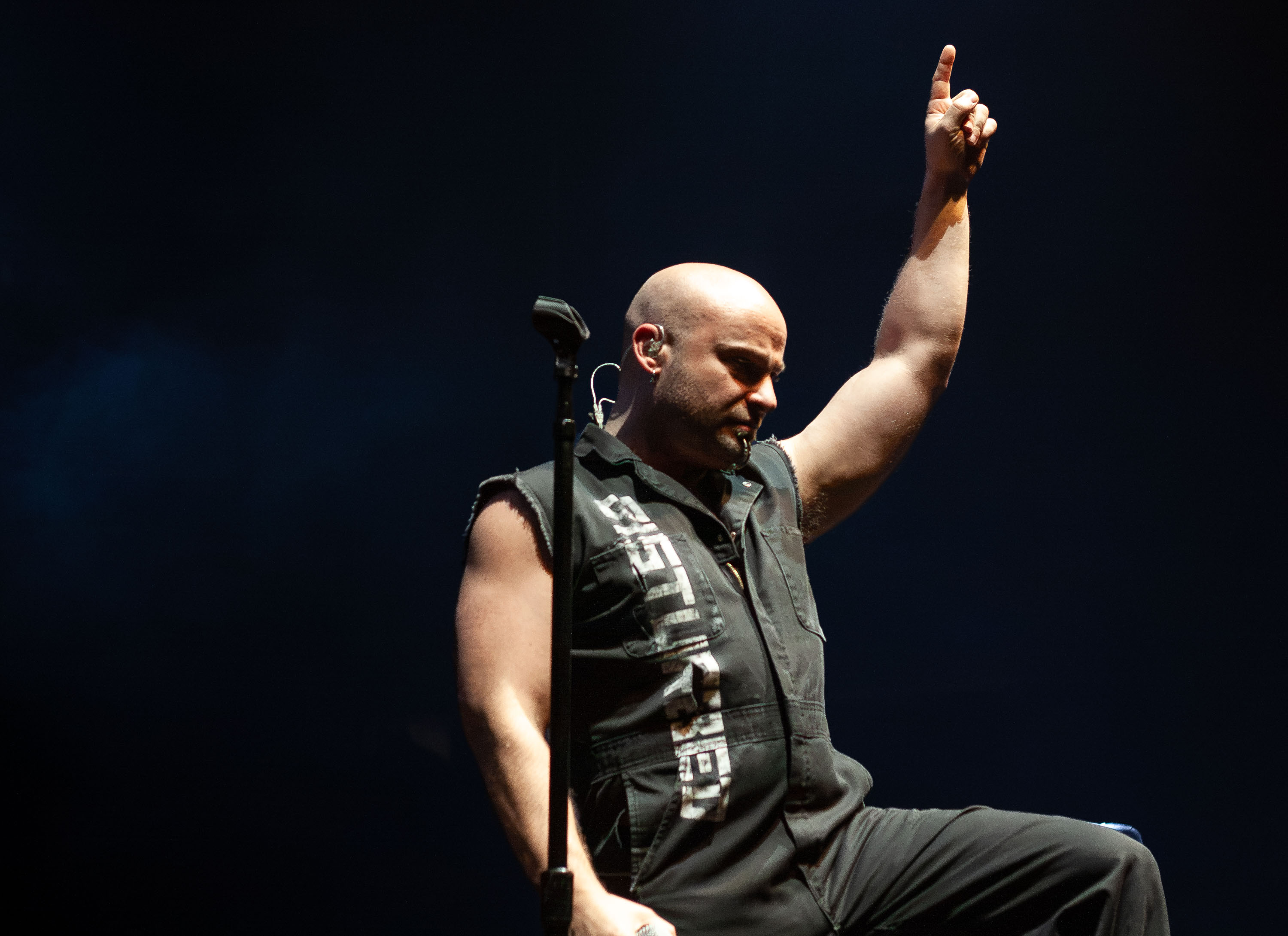
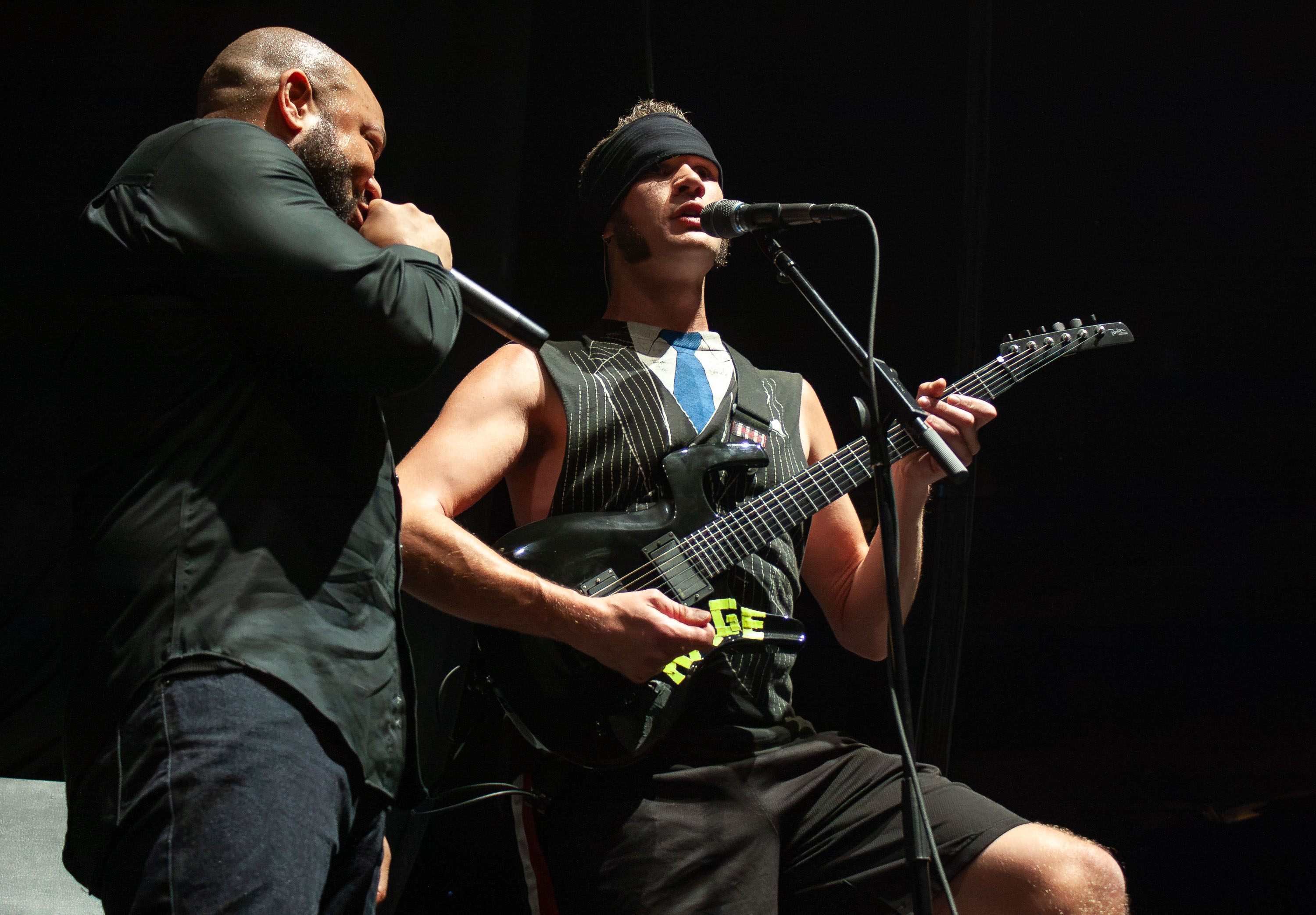
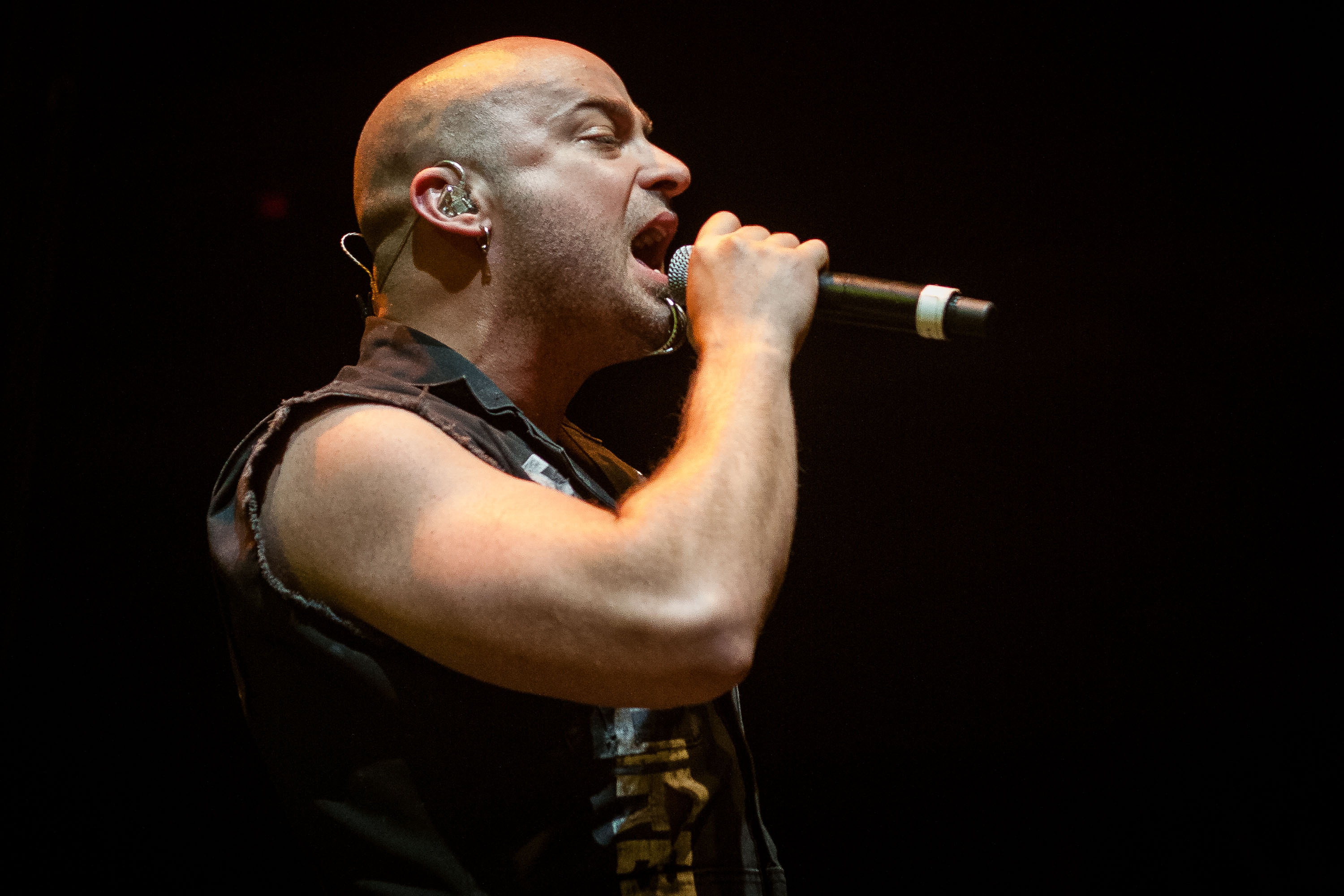
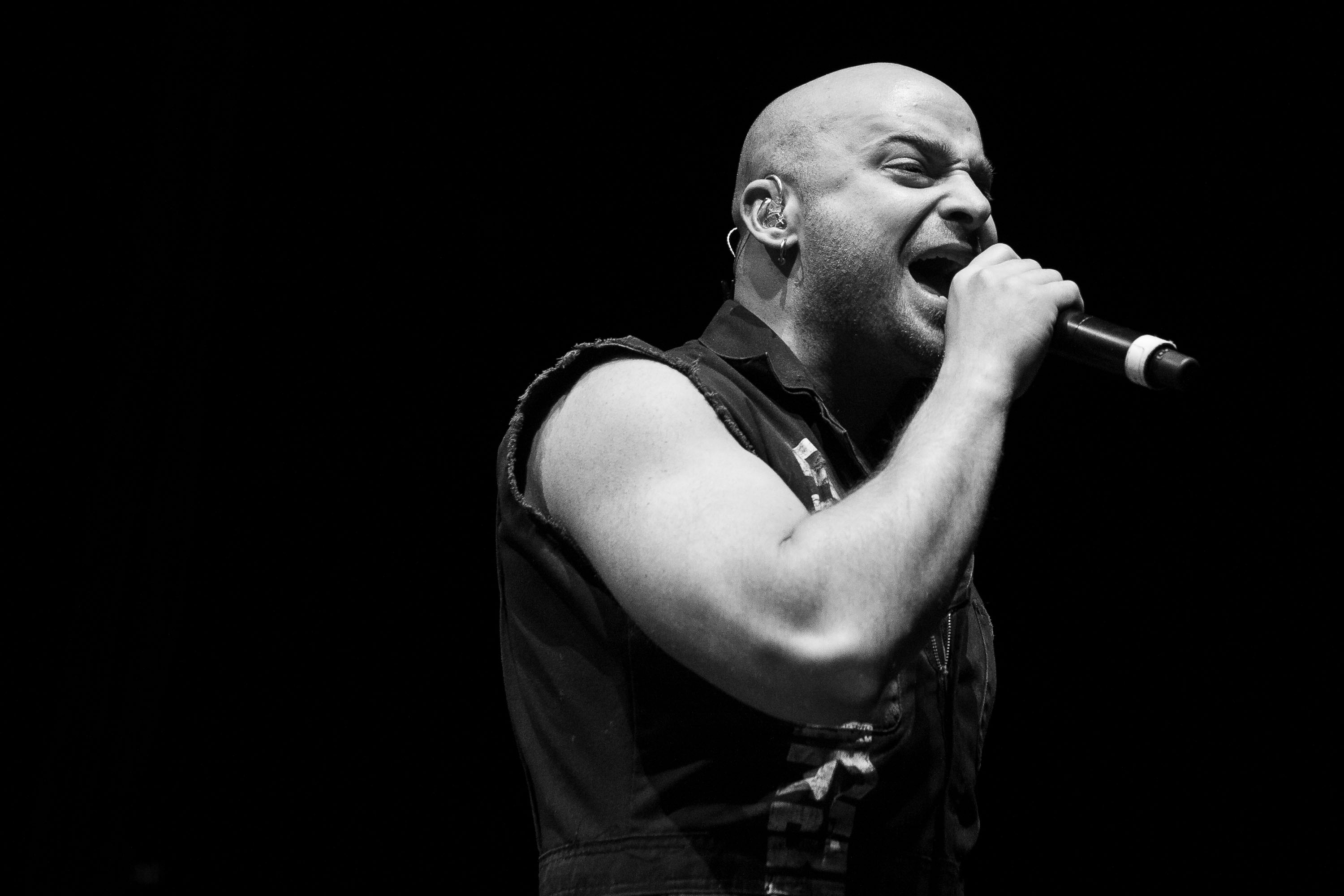
David Draiman of Disturbed performs at Target Center in Minneapolis during Music As A Weapon IV.
Disturbed performs on the Music as a Weapon IV tour at the Target Center in Minneapolis. Killswitch Engage and Lacuna Coil were also part of the tour.

David Draiman of Disturbed Performs at Target Center, Minneapolis

Guitarist Adam Dutkiewicz in Minneapolis
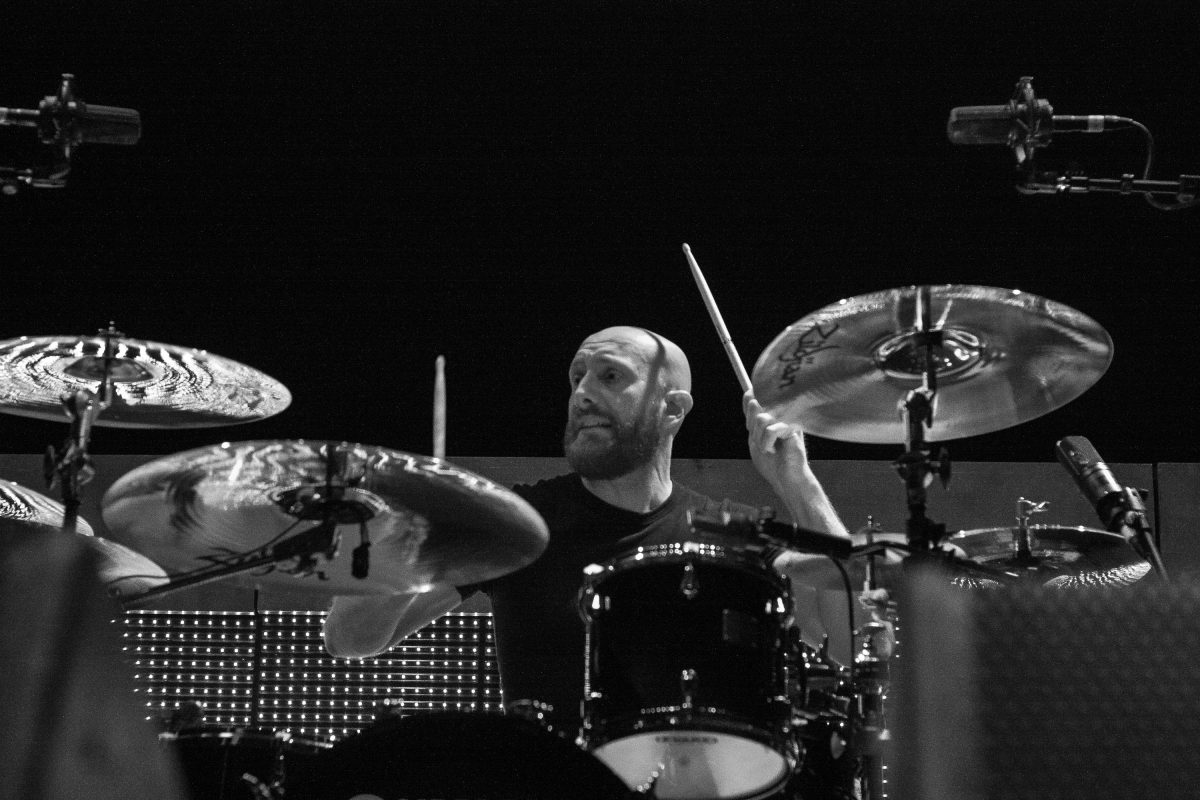
Killswitch Engage performs at the Target Center in Minneapolis on the Music as a Weapon IV tour.

Guitarist Adam Dutkiewicz in Minneapolis

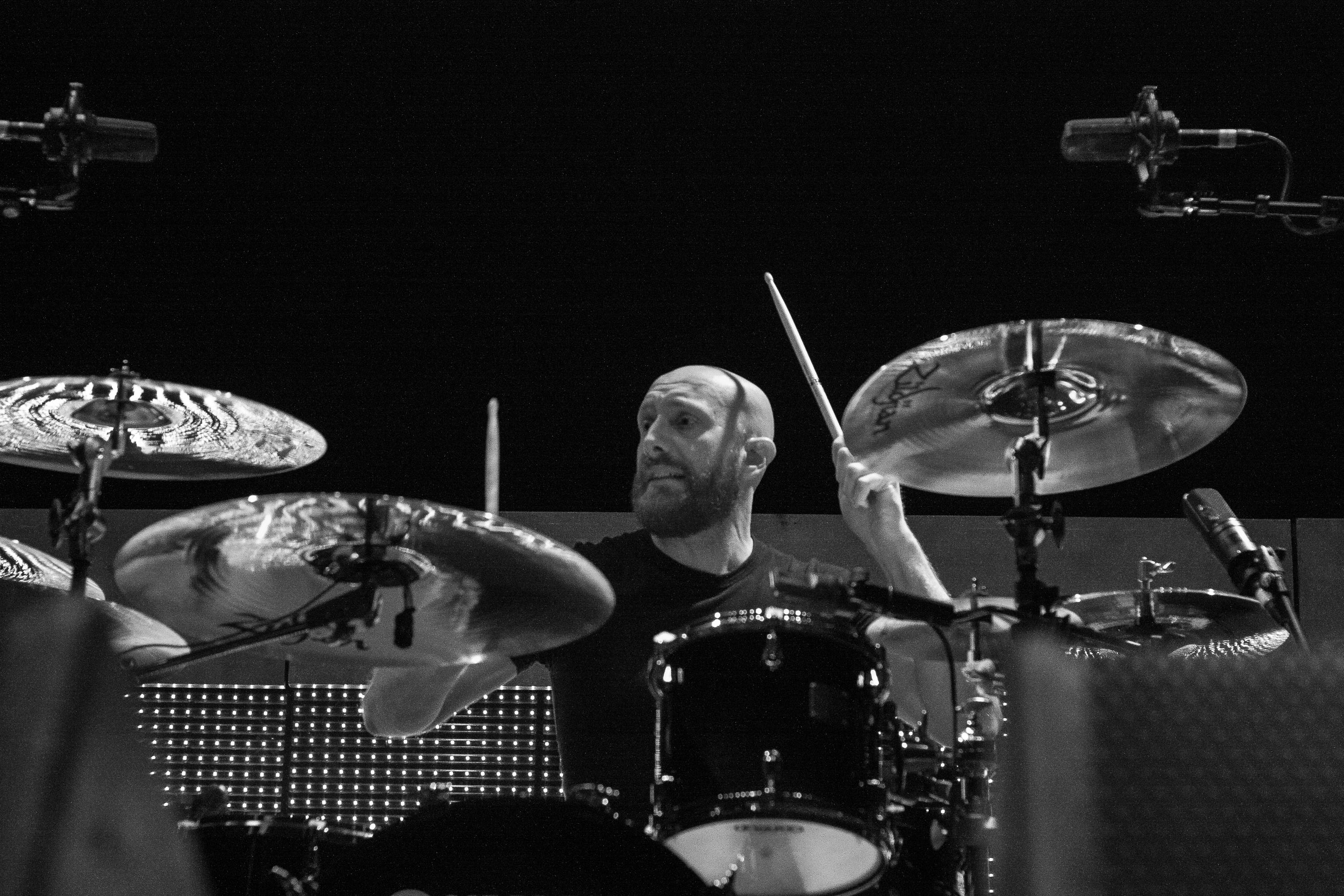
Killswitch Engage Drummer Justin Foley in Minneapolis

Killswitch Engage performs at the Target Center in Minneapolis on the Music as a Weapon IV tour.

Killswitch Engage Drummer Justin Foley in Minneapolis

Bassist Mike D'Antonio of Killswitch Engage in Minneapolis

Killswitch Engage performs at the Target Center in Minneapolis on the Music as a Weapon IV tour.

Bassist Mike D’Antonio of Killswitch Engage in Minneapolis

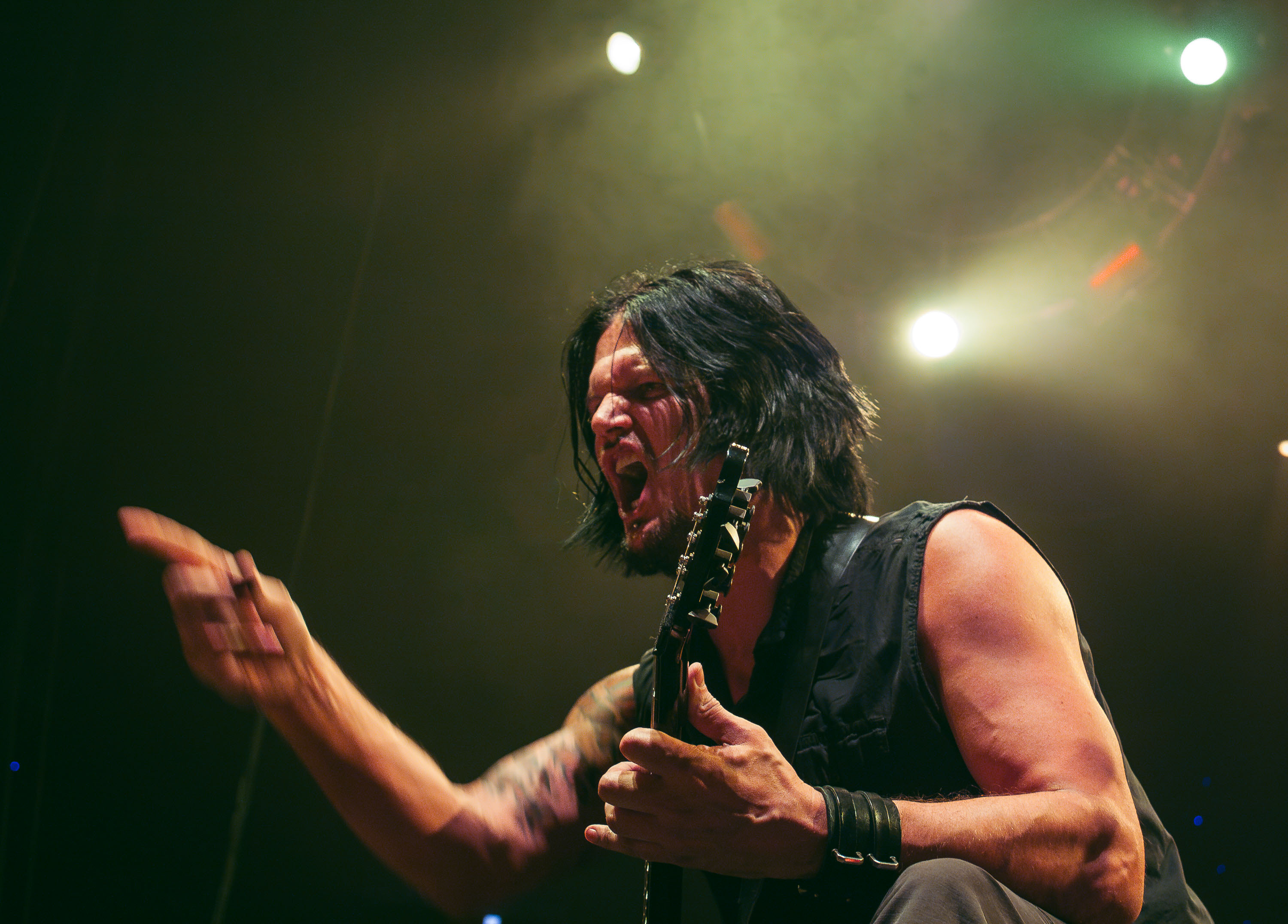
Guitarist Joel Stroetzel of Killswitch Engage in Minneapolis

Killswitch Engage performs at the Target Center in Minneapolis on the Music as a Weapon IV tour.

Guitarist Joel Stroetzel of Killswitch Engage in Minneapolis

Howard Jones of Killswitch Engage in Minneapolis
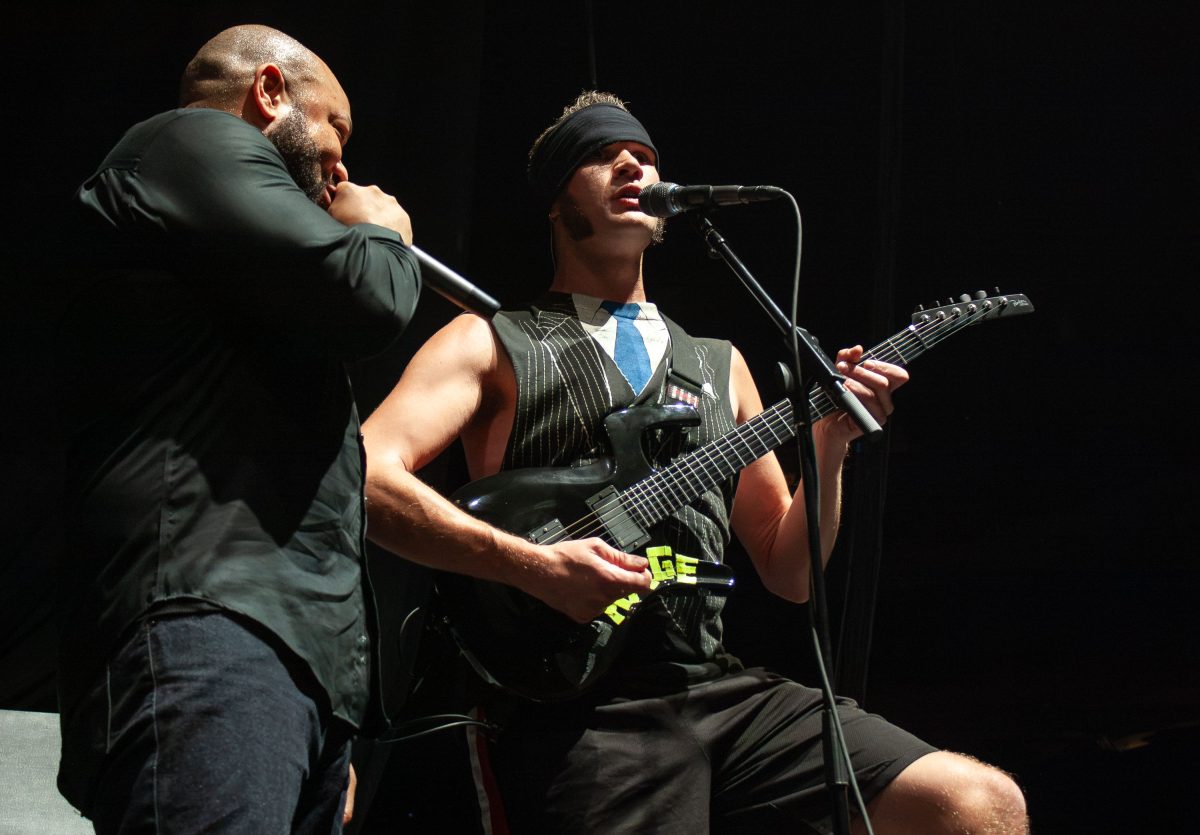
Killswitch Engage performs at the Target Center in Minneapolis on the Music as a Weapon IV tour.

Howard Jones of Killswitch Engage in Minneapolis

Howard Jones and Adam Dutkiewicz in Minneapolis
Killswitch Engage performs at the Target Center in Minneapolis on the Music as a Weapon IV tour.

Howard Jones and Adam Dutkiewicz of Killswitch Engage
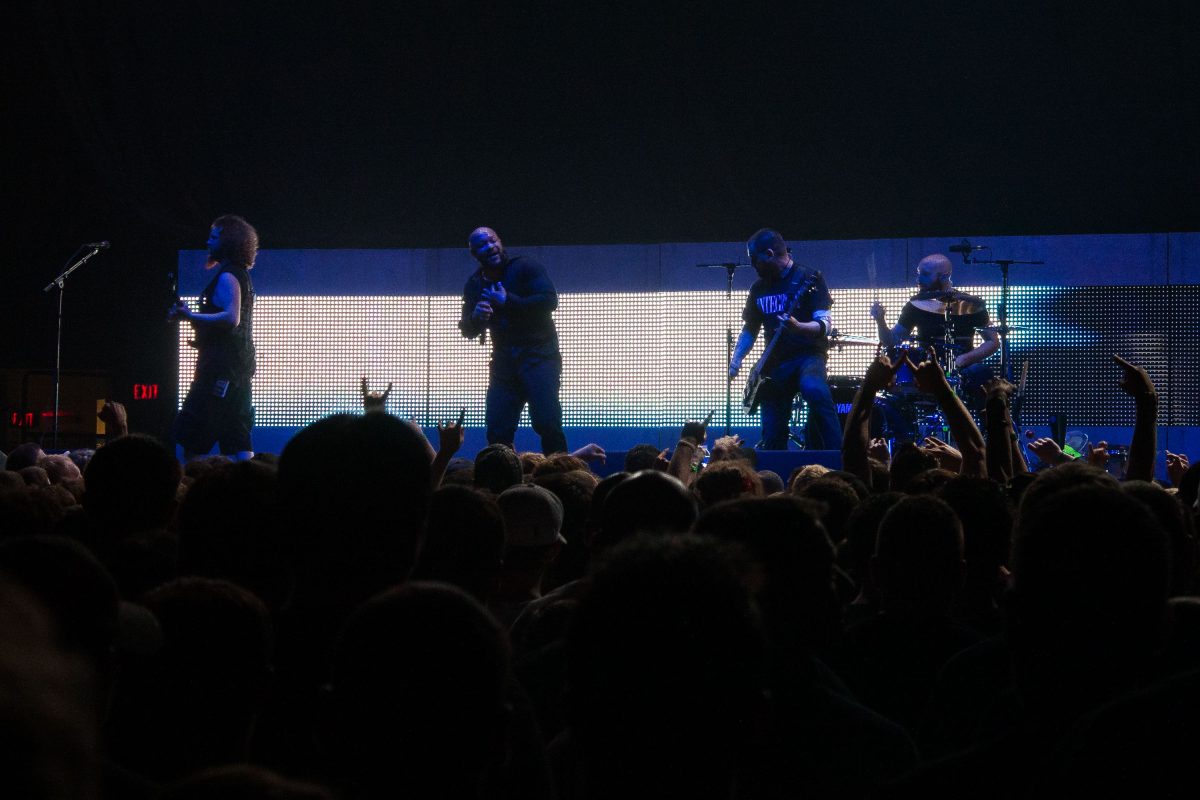
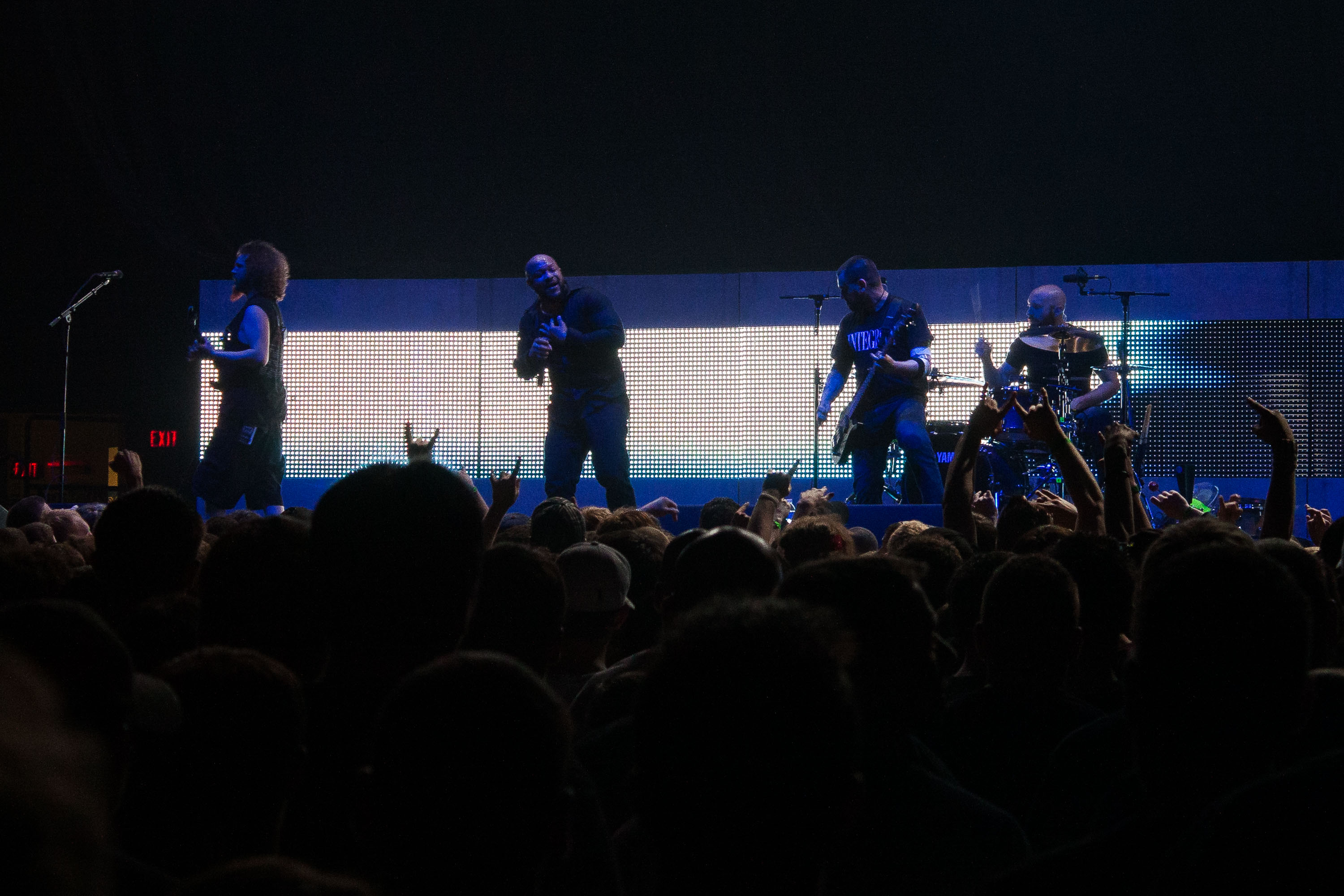
Killswitch Engage at Music As A Weapon IV Tour
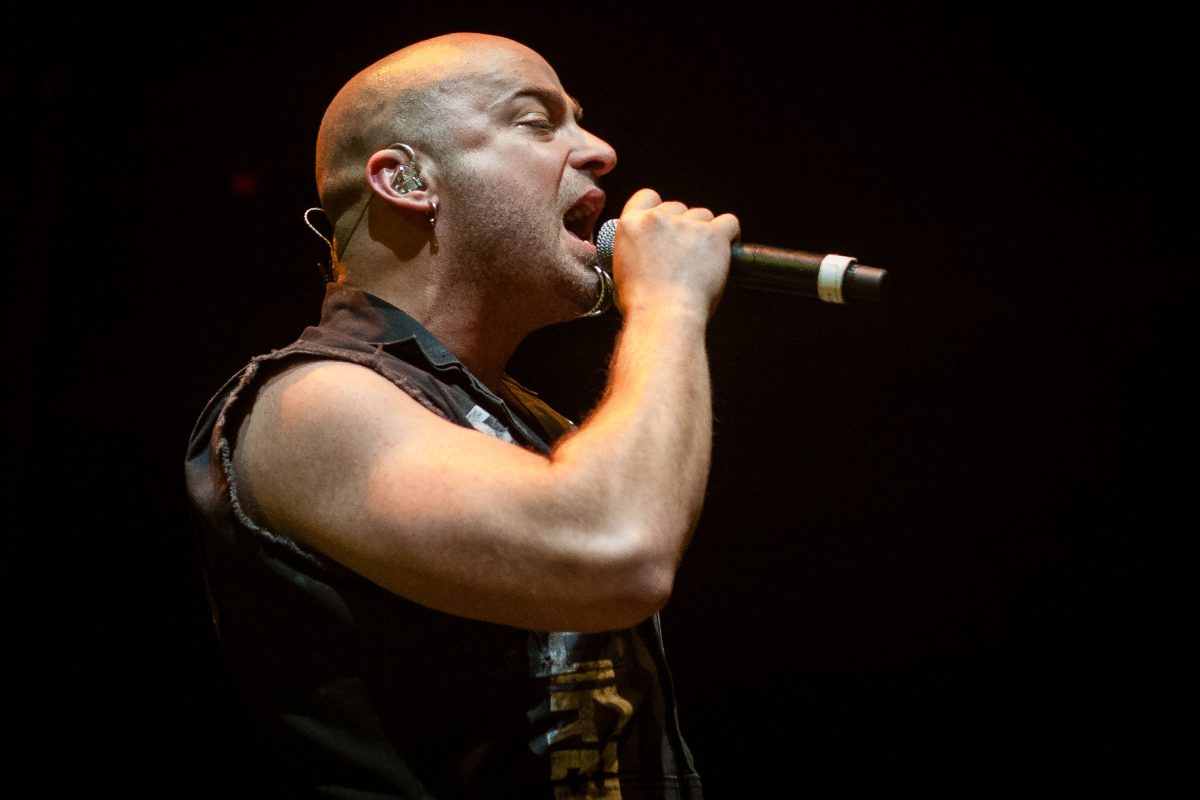
Killswitch Engage performs at the Target Center in Minneapolis on the Music as a Weapon IV tour.

Killswitch Engage at Music As A Weapon IV Tour

David Draiman of Disturbed at Music as A Weapon IV Tour
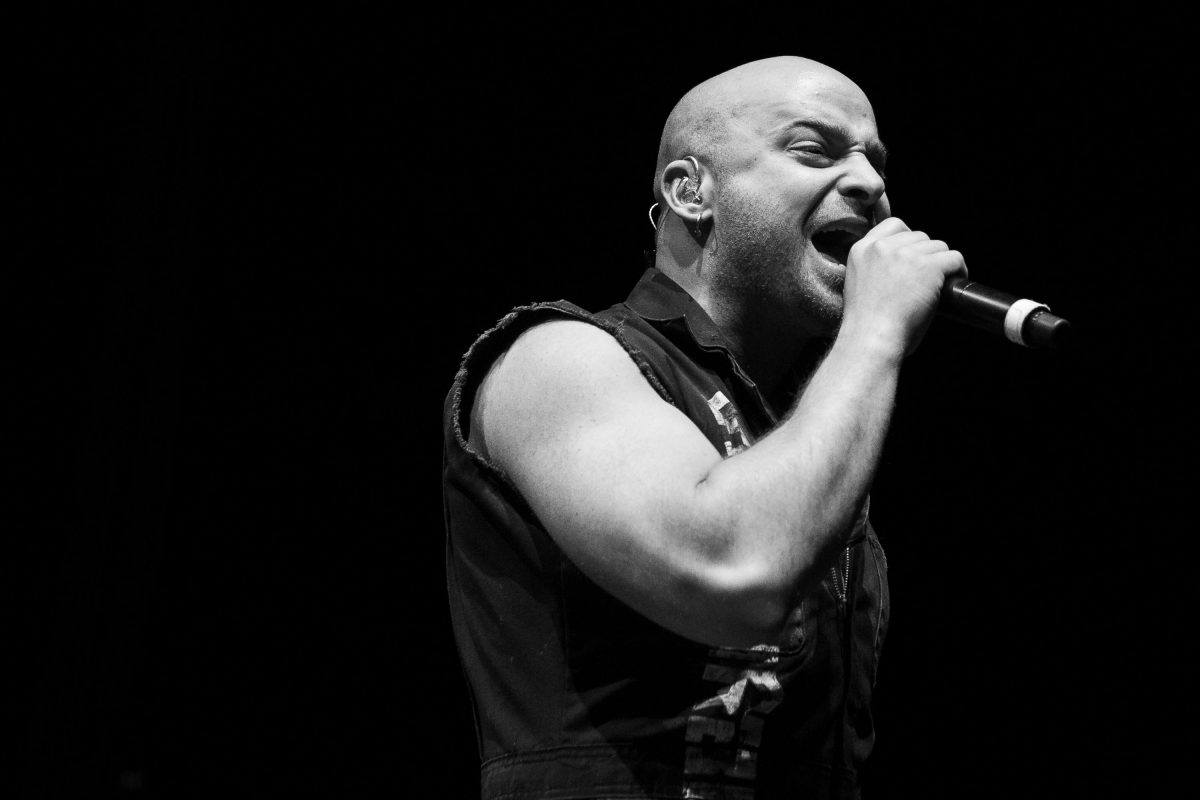
Disturbed performs on the Music as a Weapon IV tour at the Target Center in Minneapolis. Killswitch Engage and Lacuna Coil were also part of the tour.

David Draiman of Disturbed at Music as A Weapon IV Tour

David Draiman of Disturbed in Minneapolis

Disturbed performs on the Music as a Weapon IV tour at the Target Center in Minneapolis. Killswitch Engage and Lacuna Coil were also part of the tour.

David Draiman of Disturbed in Minneapolis

Bassist John Moyer of DIsturbed in Minneapolis
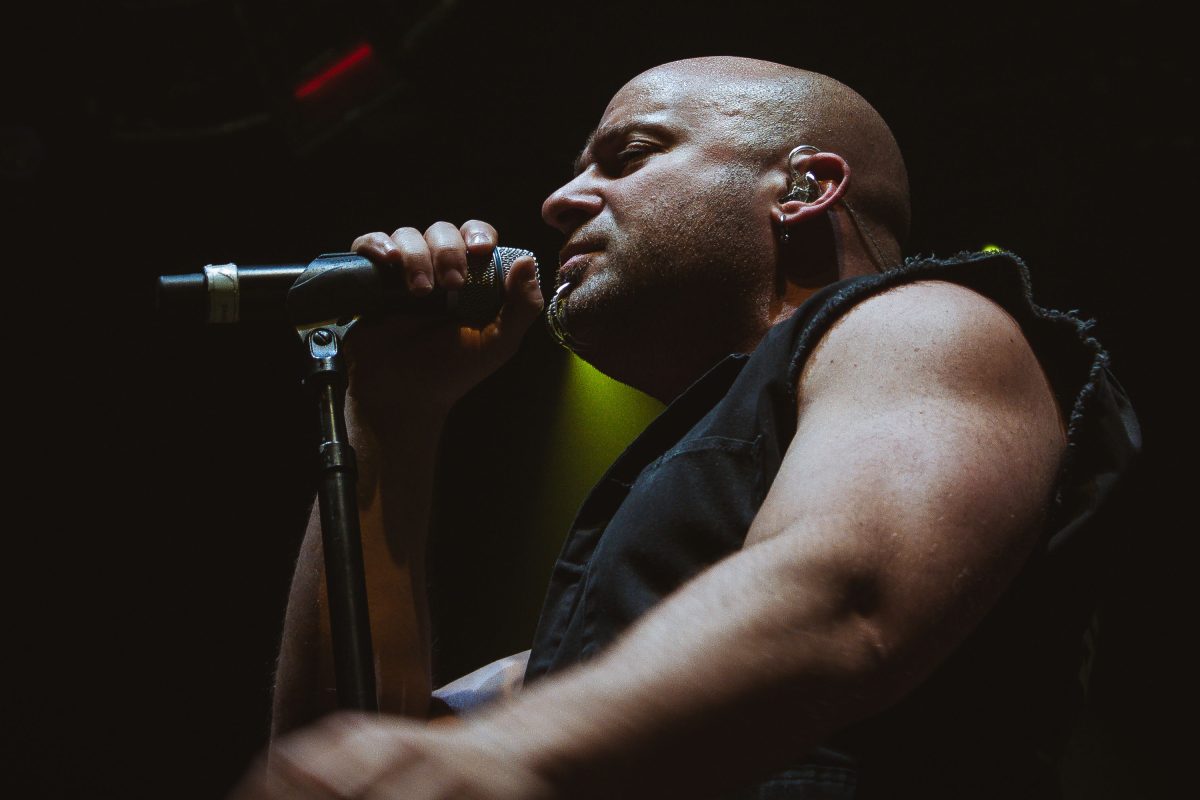
Disturbed performs on the Music as a Weapon IV tour at the Target Center in Minneapolis. Killswitch Engage and Lacuna Coil were also part of the tour.

Bassist John Moyer of DIsturbed in Minneapolis

David Draiman of Disturbed at the Target Center in Minneapolis
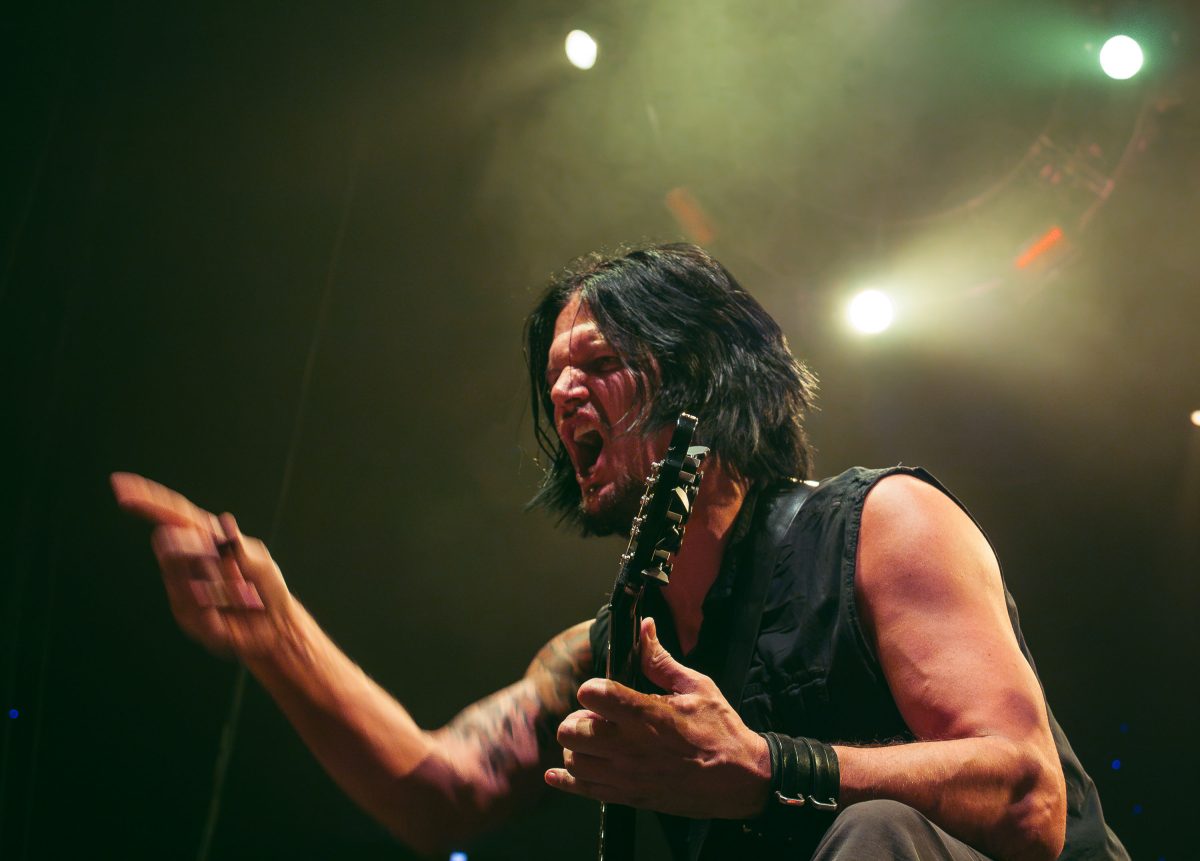
Disturbed performs on the Music as a Weapon IV tour at the Target Center in Minneapolis. Killswitch Engage and Lacuna Coil were also part of the tour.

David Draiman of Disturbed at the Target Center in Minneapolis

Dan Donegan of Disturbed in Minneapolis

Disturbed performs on the Music as a Weapon IV tour at the Target Center in Minneapolis. Killswitch Engage and Lacuna Coil were also part of the tour.

Dan Donegan of Disturbed in Minneapolis

Disturbed's John Moyer at the Target Center in Minneapolis
Disturbed performs on the Music as a Weapon IV tour at the Target Center in Minneapolis. Killswitch Engage and Lacuna Coil were also part of the tour.

Disturbed’s John Moyer at the Target Center in Minneapolis

Globe and chess set inside a Stillwater, Minnesota bookstore.
A globe and chess set are displayed on a table inside a bookstore in Stillwater, Minnesota. Bookshelves line the room, creating a retail setting centered on books and related objects.

Bookstore Globe and Chess Set, Stillwater, Minnesota
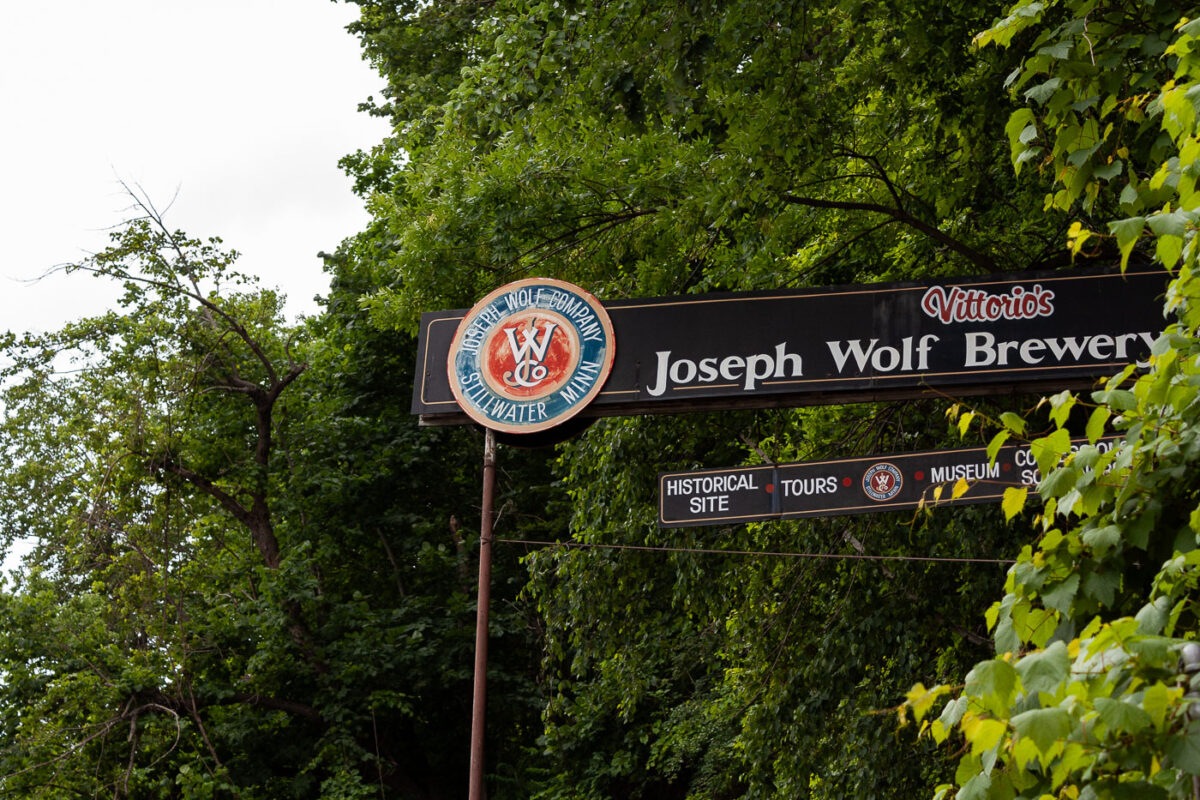
Joseph Wolf Brewery sign in Stillwater, Minnesota, marking a historical site and museum.
Joseph Wolf Brewery in Stillwater, Minnesota, is marked by a sign identifying it as a historical site, museum, and tour location. The site preserves the legacy of the Joseph Wolf Brewing Company in the city’s brewing history.

Joseph Wolf Brewery sign, Stillwater, Minnesota

Wrigley's Spearmint mural on a brick building in downtown Stillwater, Minnesota.
Wrigley's Spearmint mural in downtown Stillwater, Minnesota. The painted advertisement on a brick building promotes Wrigley’s Spearmint gum and includes the “Purity Package” graphic and the line “The Flavor Lasts After Every Meal.” It remains next to The Chef’s Gallery storefront on Main Street.

Wrigley’s Spearmint Mural, Stillwater, Minnesota

Target Field stadium lights illuminate rain during construction in downtown Minneapolis, October 2009.
Target Field is the outdoor home of the Minnesota Twins in the North Loop neighborhood of downtown Minneapolis.

Target Field Under Construction During a Rainy Night, 2009

Apple Store sign at Uptown Minneapolis under a glass facade.
The Apple Store on Hennepin Avenue in Uptown Minneapolis. The store held its grand opening 2 days later. The store was one of the first national chains to move into the area. The store would close ten years later and remain vacant for many years.

Apple Store grand opening in Uptown Minneapolis

Customers line Hennepin Avenue for the Apple Store opening in Uptown Minneapolis.
The Apple Store opening line on Hennepin Avenue in Uptown Minneapolis formed for the store’s June 19, 2010 opening. The store was part of the Uptown commercial corridor near the Uptown Theatre and national retailers. Apple later closed the Uptown Minneapolis store in 2020.

Apple Store Opening Line on Hennepin Avenue, Minneapolis

The Lowertown Depot building in St. Paul, Minnesota, formerly the Standard Oil Branch Warehouse, a key industrial structure.
The "Lowertown Depot" building in St. Paul, Minnesota, once served as the Standard Oil Branch Warehouse. This structure was a key component of the city's industrial and commercial infrastructure, facilitating the distribution of petroleum products. Its demolition marked the end of an era for this historic industrial site in the Lowertown district.

Standard Oil Branch Warehouse, St. Paul

The Porky's restaurant sign in St. Paul, Minnesota, featuring a cartoon pig, advertised "Twin Cities Best Burger in 2 Minutes" on April 2, 2011, the day the establishment closed.
The Porky's restaurant sign in St. Paul, Minnesota, is pictured here on April 2, 2011, the day the establishment closed its doors.

Porky’s Sign Advertises “Twin Cities Best Burger” in St. Paul
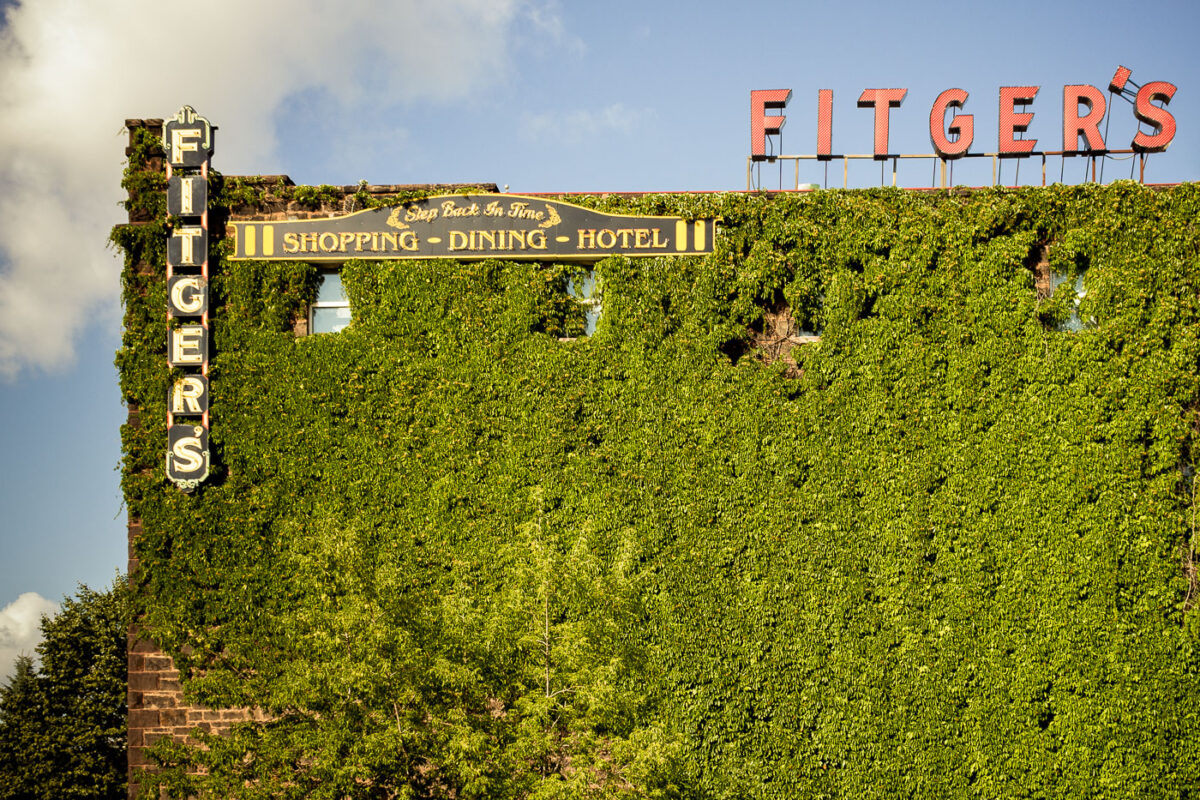
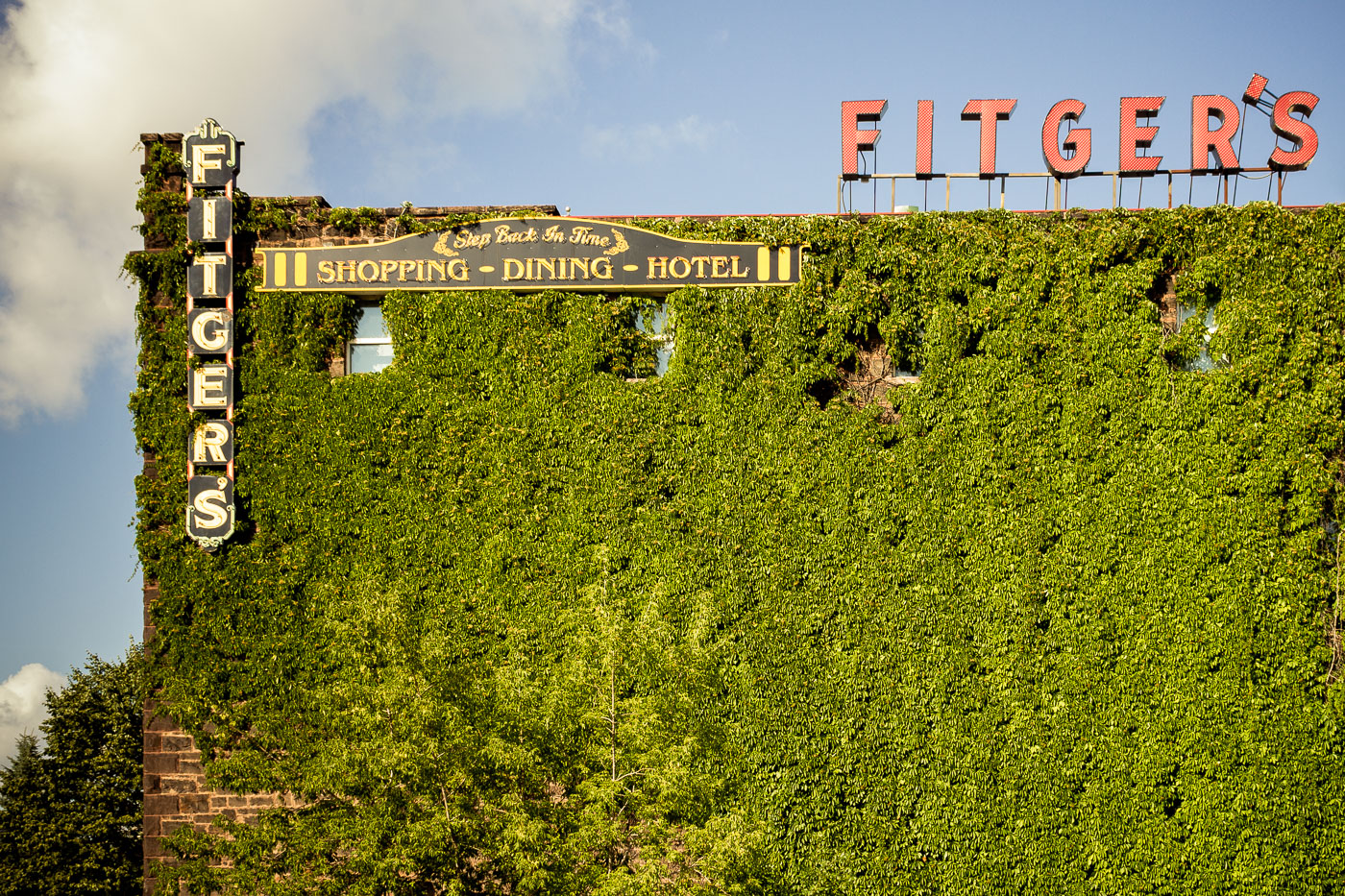
Fitger's historic brewery building in Duluth, Minnesota, with ivy-covered facade and rooftop signage.
Fitger's Historic Complex in Duluth, Minnesota, was originally built as a brewery and hotel. The former industrial building now houses a hotel, restaurant, and retail space on the city's waterfront.

Ivy Covers Fitger’s Brewery Building in Duluth

White yard line markings on artificial turf field of the Hubert H. Humphrey Metrodome in Minneapolis.
The artificial turf field of the Hubert H. Humphrey Metrodome in Minneapolis, Minnesota.

Yard-Line Markings on the Metrodome’s Artificial Turf

Interior of the Hubert H. Humphrey Metrodome's air-supported roof in Minneapolis, Minnesota.
The interior of the Hubert H. Humphrey Metrodome's air-supported fabric roof is visible in Minneapolis.

Catwalks Suspended Beneath the Metrodome’s Air-Supported Roof

WCCO Radio broadcast booth in the Hubert H. Humphrey Metrodome, Minneapolis.
WCCO Radio Booth 58, Metrodome. This image shows Booth 58, designated for WCCO Radio, within the now-demolished Hubert H. Humphrey Metrodome in Minneapolis, Minnesota. The Metrodome, which opened in 1982, was a multi-purpose stadium that hosted the Minnesota Vikings football team, the Minnesota Twins baseball team, and various other sporting and entertainment events.

WCCO Radio’s Booth 58 Overlooking the Metrodome Field

Visitor's locker room at the Hubert H. Humphrey Metrodome in Minneapolis, featuring blue metal lockers and seating.
The visitor's locker room at the Hubert H. Humphrey Metrodome in Minneapolis, Minnesota. This facility, which was demolished in 2019, served as the home stadium for the Minnesota Vikings from 1982 to 2013.

Blue Lockers in the Metrodome’s Visitors’ Locker Room

Apple tribute marked “4 Ever” and infinity symbol outside an Apple Store in Minneapolis.
An apple, marked with "4 Ever" and an infinity symbol, rests on a display outside the Apple Store in Minneapolis's Uptown neighborhood. This spontaneous tribute appeared on October 5, 2011, following the death of Apple co-founder Steve Jobs.

Tribute to Steve Jobs after his death in October 2011, Minneapolis
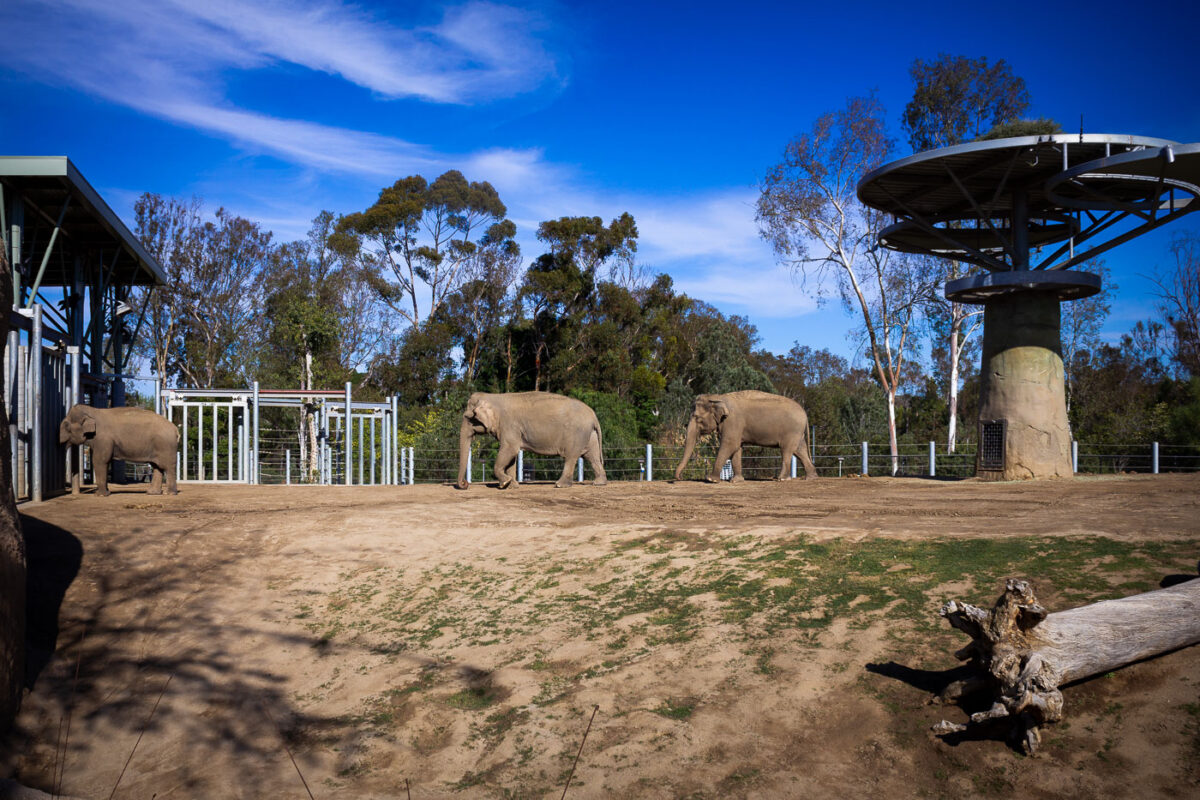
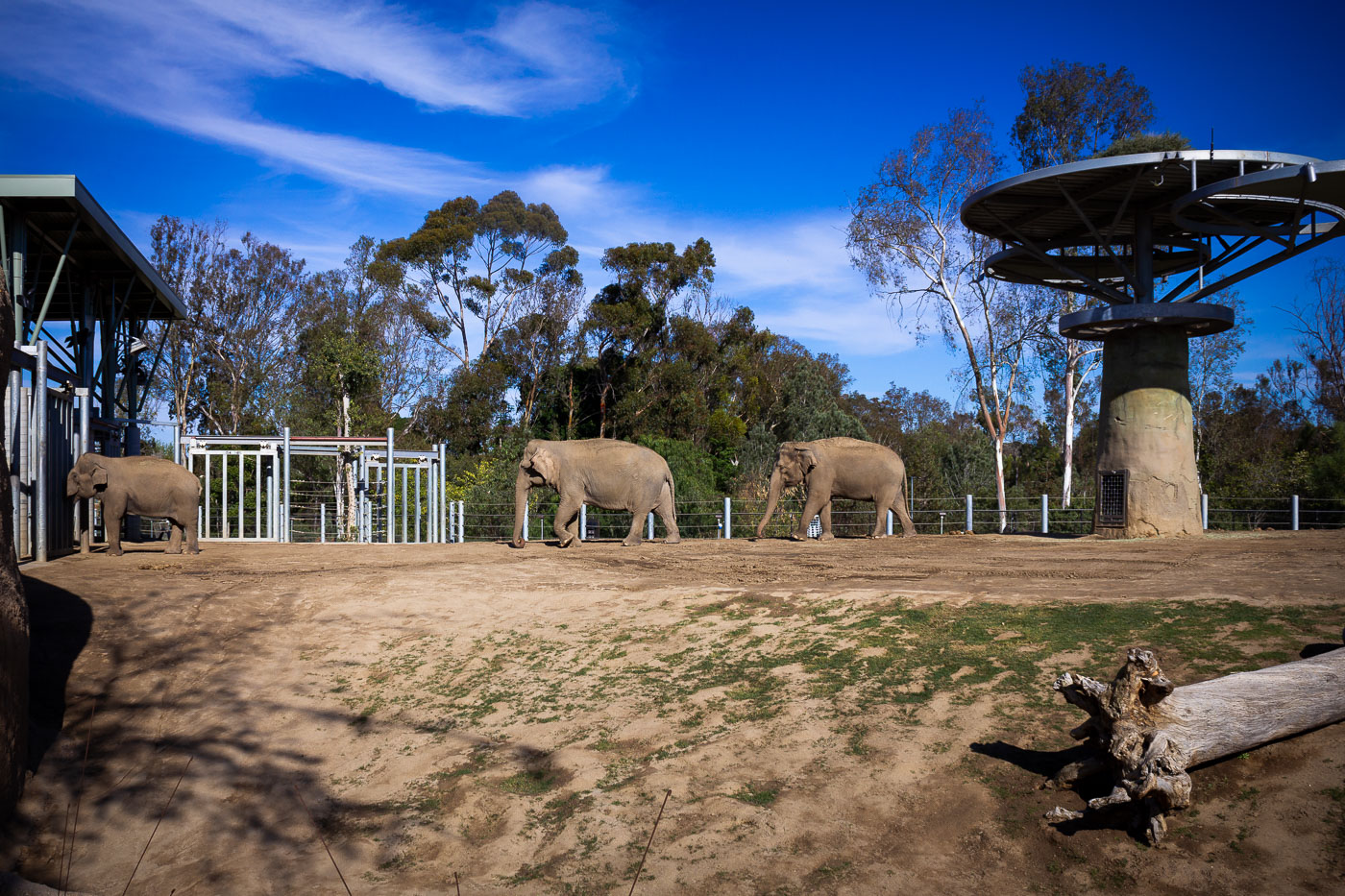
Four Asian elephants walk across a sandy enclosure at San Diego Zoo in California.
Elephant Odyssey is an eight acre exhibit at the San Diego Zoo in Balboa Park, built in 2009 to house the zoo's herd of Asian elephants. The habitat was designed with pools, mud wallows, and varied terrain to encourage the walking and foraging elephants do across large home ranges in the wild. Three elephants walk single file along the fence line while a younger one stays near the building behind them.

Elephant Odyssey Herd Walks Their Enclosure at the San Diego Zoo
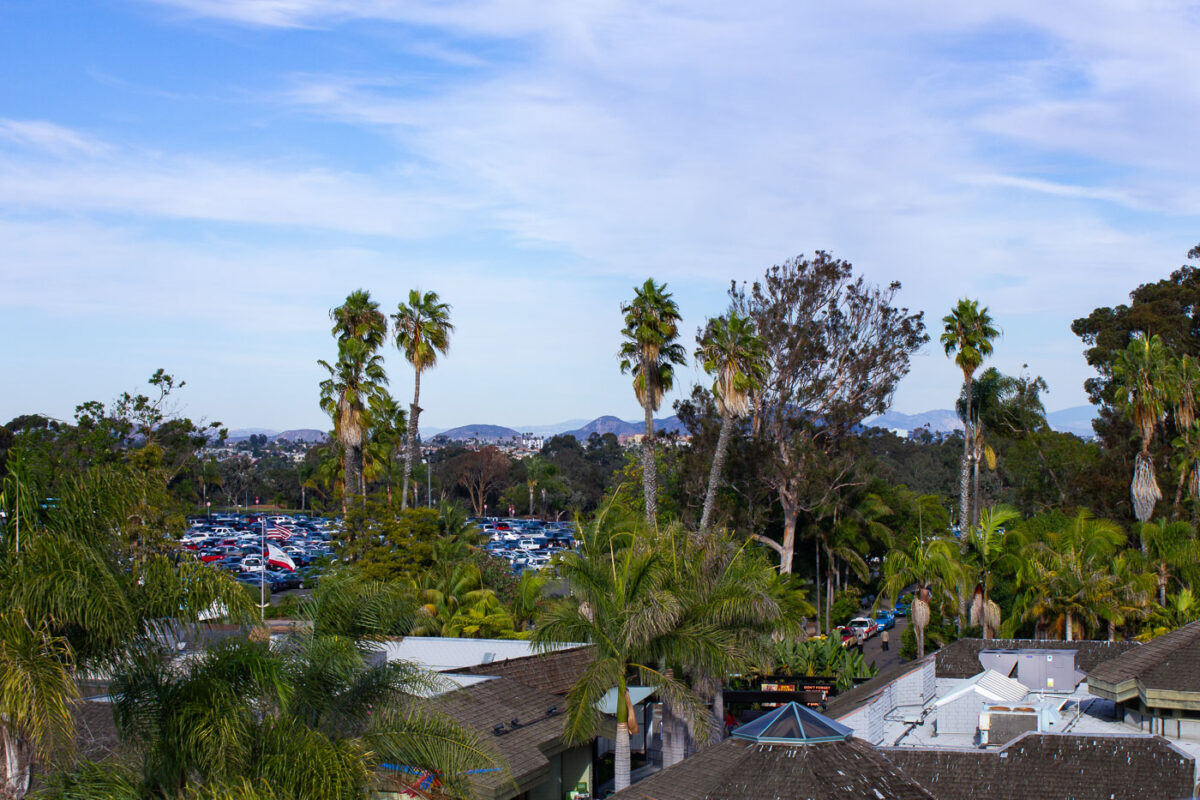
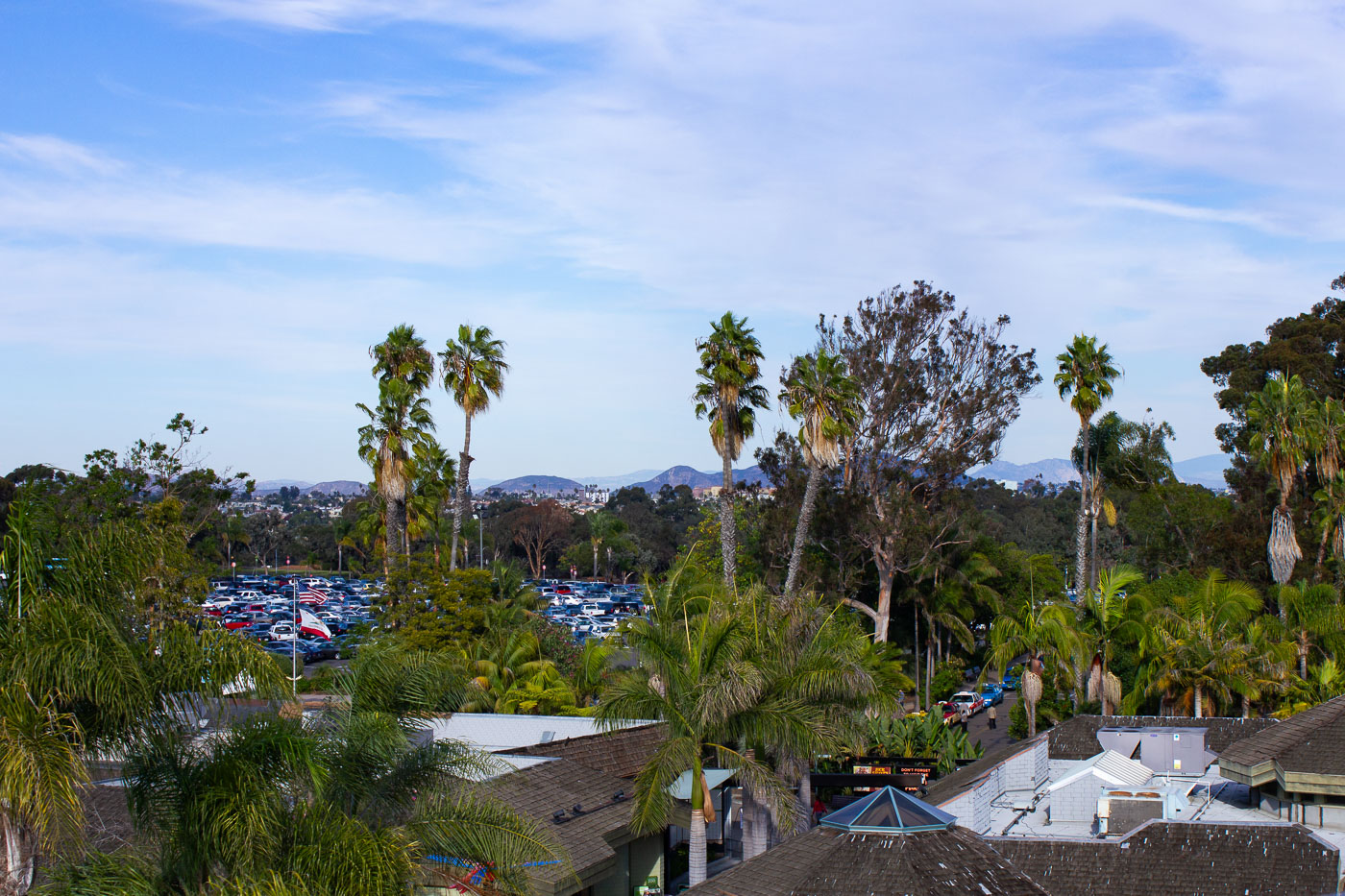
San Diego Zoo parking lot with palm trees and visitor vehicles under blue sky.
The San Diego Zoo sits in Balboa Park, with its parking areas bordered by palm trees near the park's northern edge. The zoo opened in 1916 with animals left over from the Panama-California Exposition. Hills mark San Diego's inland terrain beyond the park's rooflines and tree cover.

Rooftops and Palm Trees Above the San Diego Zoo Parking Lot
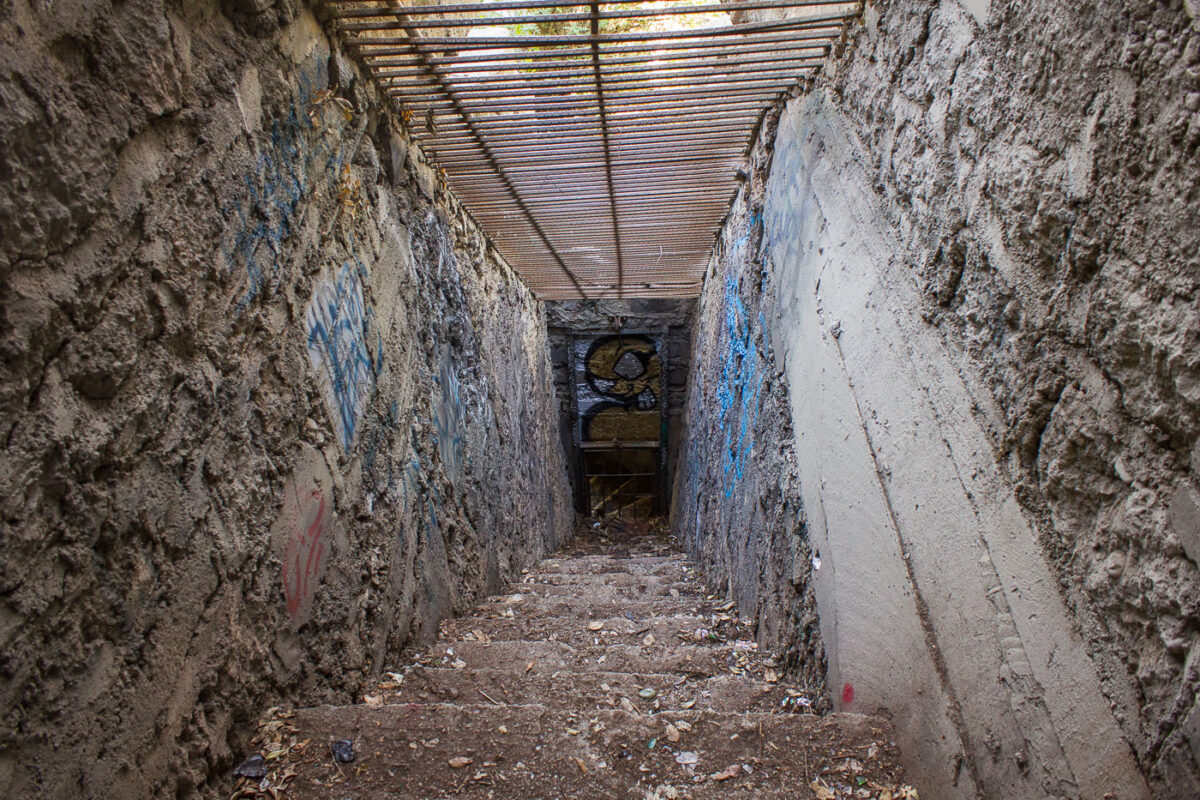
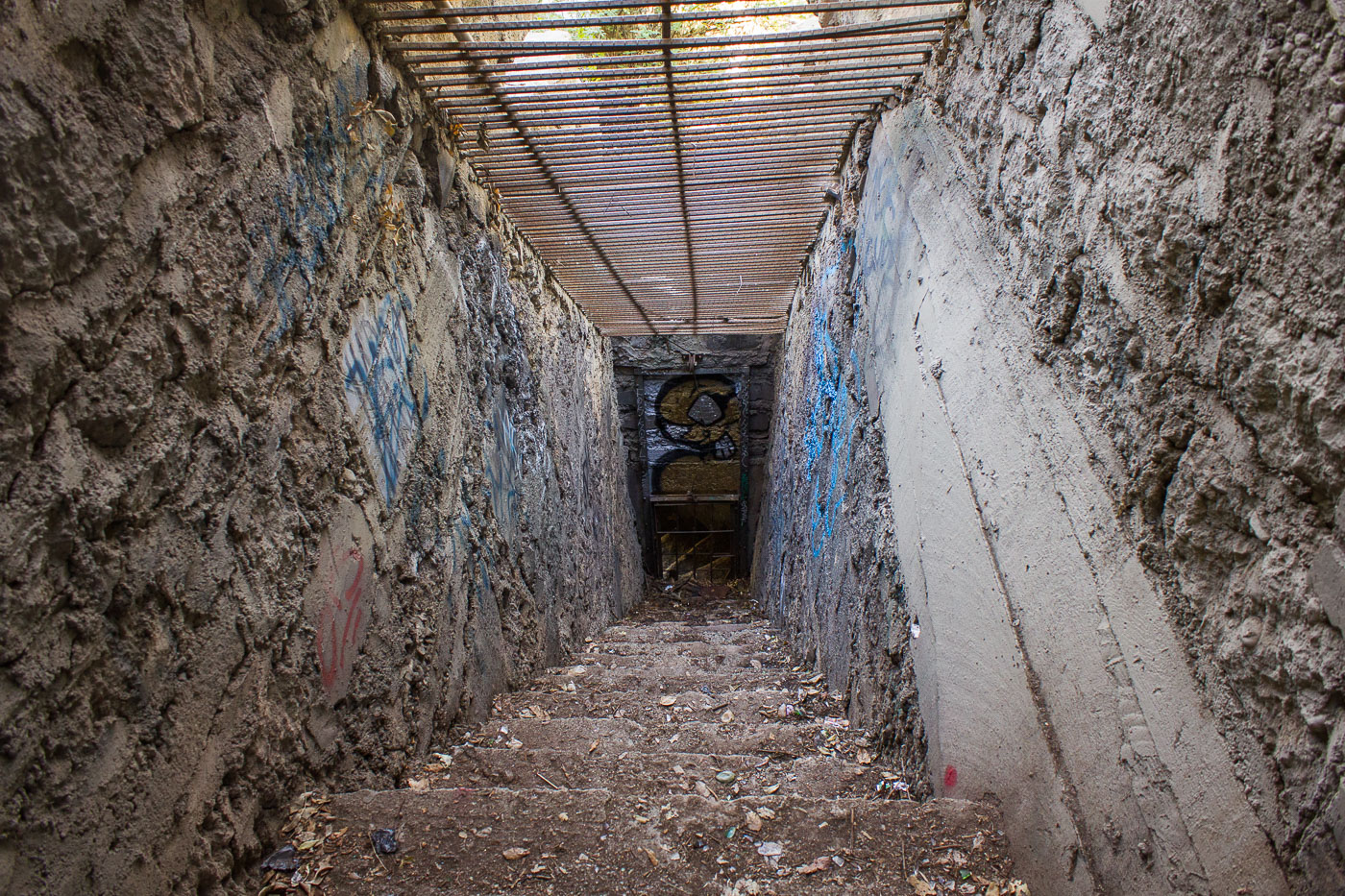
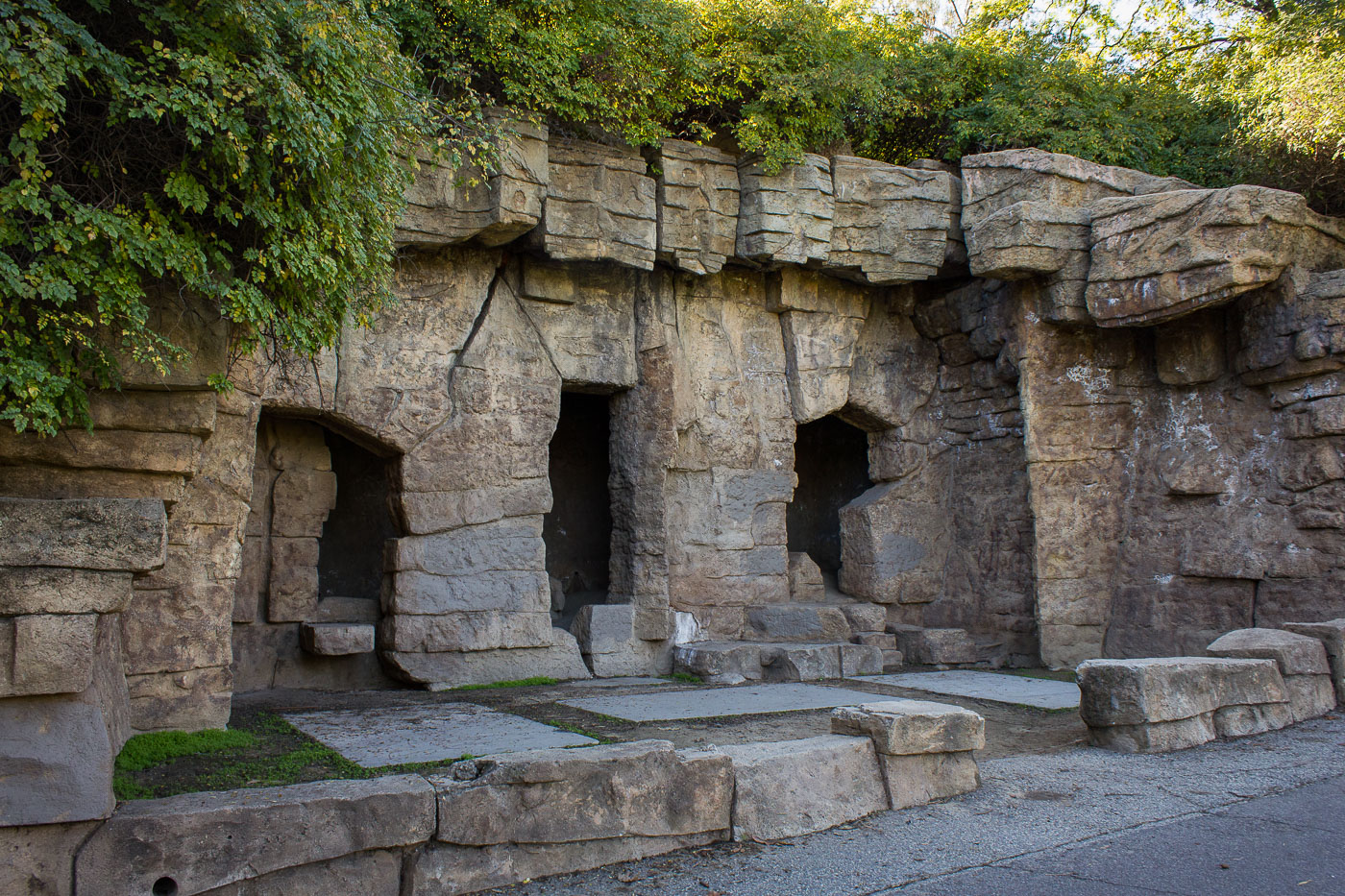
Deteriorated concrete animal enclosure with corrugated metal roof inside the abandoned Griffith Park Zoo, Los Angeles.
Griffith Park Zoo operated from 1912 until 1965, when the Los Angeles Zoo relocated to a new site elsewhere in the park. This stairway once led into one of the old animal enclosures, which held bears, lions, monkeys, and other species during the zoo's five decades of operation. The abandoned structures were left in place after closure and now sit within Griffith Park's Old Zoo Picnic Area, accessible to hikers and visitors. Layers of graffiti have accumulated on the concrete walls in the decades since the enclosures were emptied.

Stairway Into an Old Cage at Griffith Park Zoo
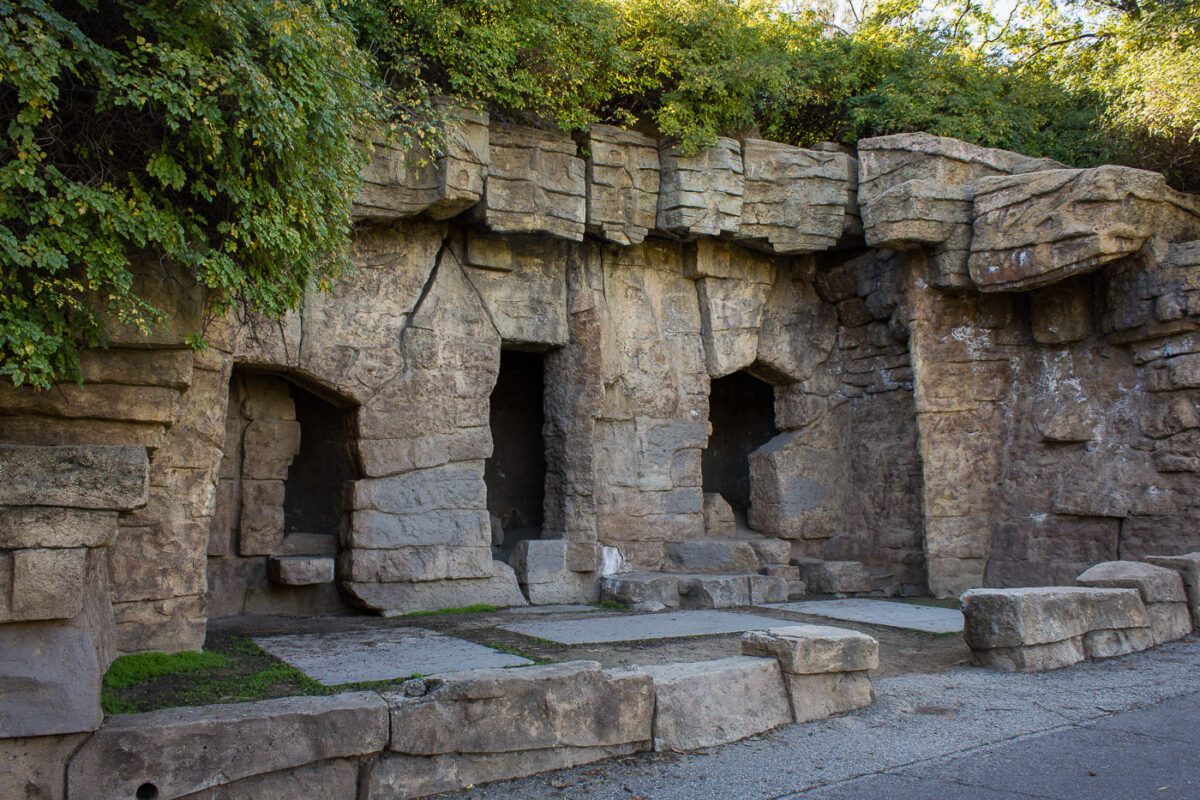
Abandoned stone bear enclosure with arched openings at the original Griffith Park Zoo, Los Angeles, 1912–1965.
These stone grottos are remnants of the original Griffith Park Zoo, which operated from 1912 until 1966. The zoo's bear dens were built into artificial rock formations meant to suggest a more natural enclosure than the barred cages common at the time. When the Los Angeles Zoo opened nearby in 1966, the old zoo grounds were left in place rather than demolished. The enclosures now sit along a paved walking path in Griffith Park, open to visitors as a historic ruin rather than a functioning exhibit.

Old Bear Grottos at the Original Griffith Park Zoo
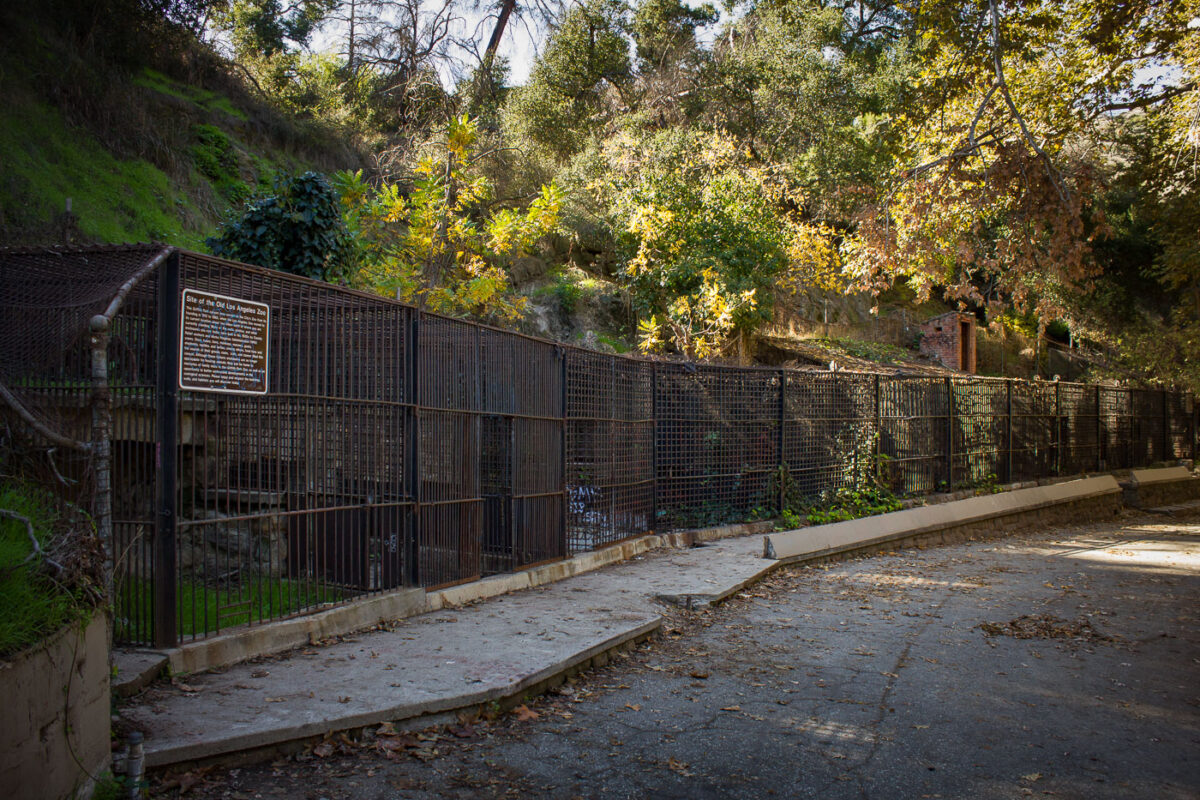
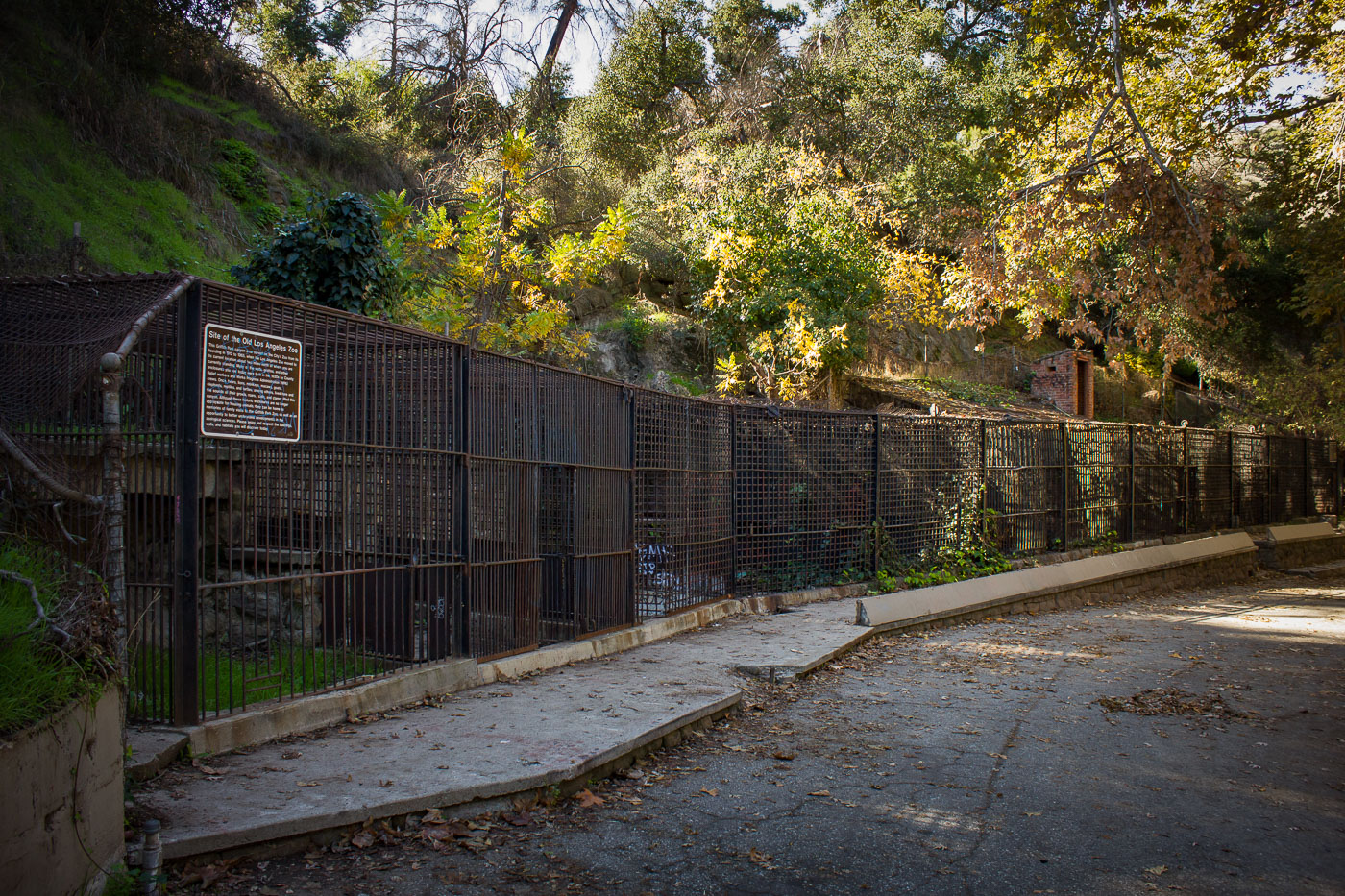
Abandoned animal enclosure with metal fencing and informational sign at the former Griffith Park Zoo, Los Angeles.
The old Griffith Park Zoo operated on this site from 1912 until 1966, when the animals moved to the newly built Los Angeles Zoo nearby. Many of the barred enclosures along this stretch date to the 1930s, when Works Progress Administration crews rebuilt much of the zoo's infrastructure. After closure, the grounds were absorbed into Griffith Park, and the old cages were left standing rather than demolished. Today the site is known informally as the Old Zoo, a picnic and hiking area where visitors can walk past the original enclosures.

Old Cages Along the Path at the Former Griffith Park Zoo
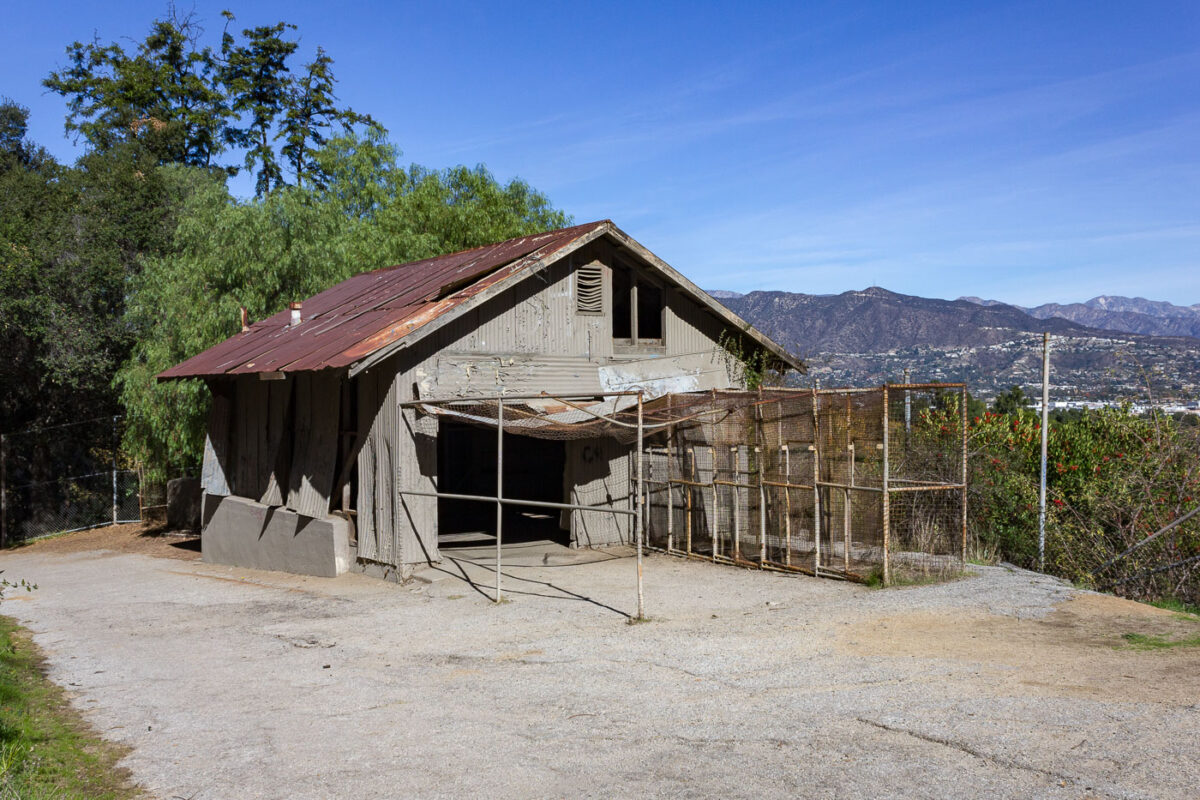
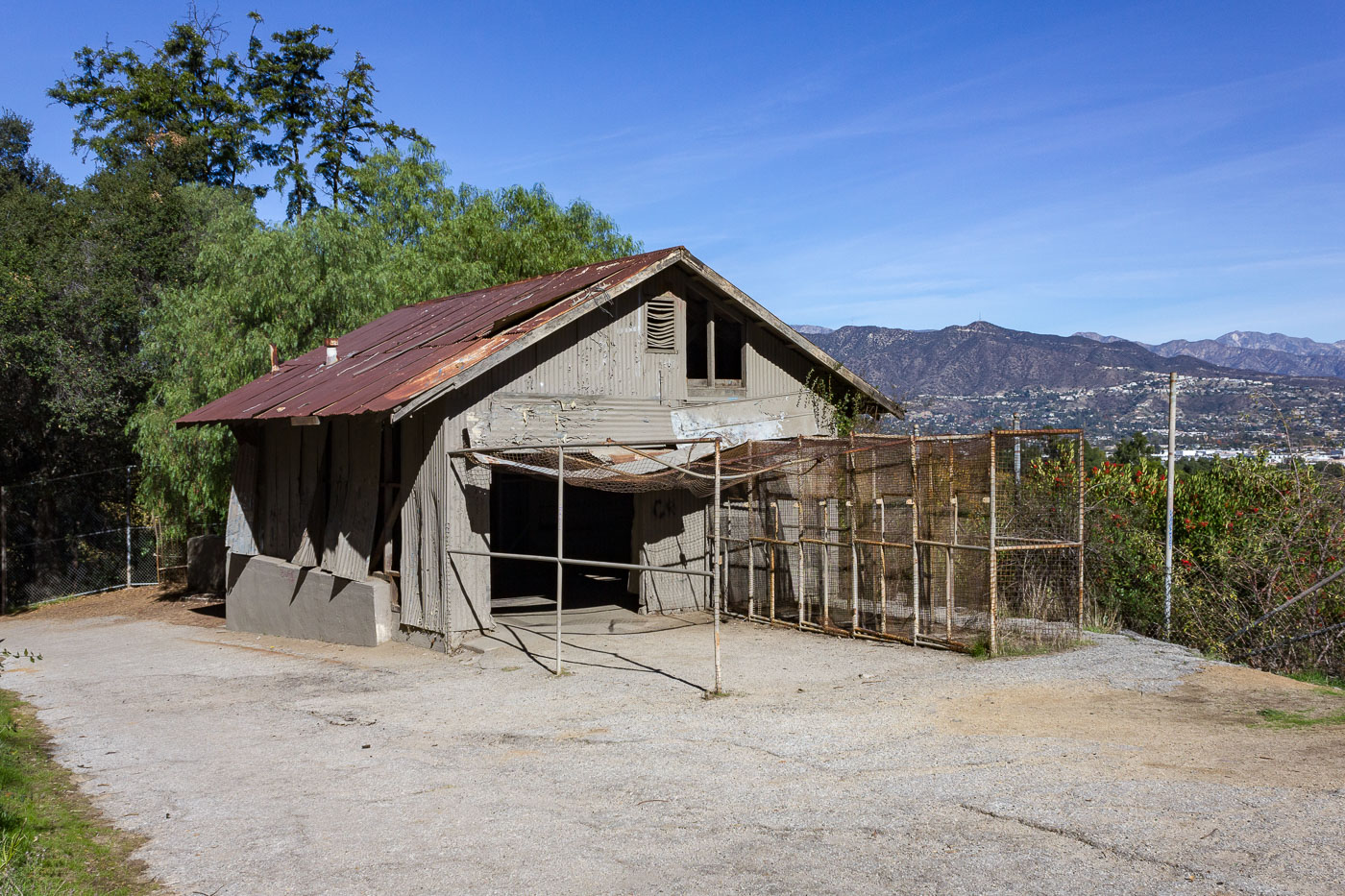
Abandoned animal enclosure from the original Los Angeles Zoo in Griffith Park, operating 1912–1965.
This former animal enclosure is a remnant of the old Griffith Park Zoo, which operated from 1912 to 1965 on the eastern side of the park. The zoo closed when its animals were relocated to the newly built Los Angeles Zoo in the adjacent hills, and the original grounds were left largely intact. Several of the old cages and dens still stand along the park's trails, built from wire mesh, wood, and concrete rather than the steel-reinforced enclosures used in modern zoos. The site is now open to hikers and picnickers as part of Griffith Park's public parkland.

Abandoned Animal Cage at the Old Griffith Park Zoo

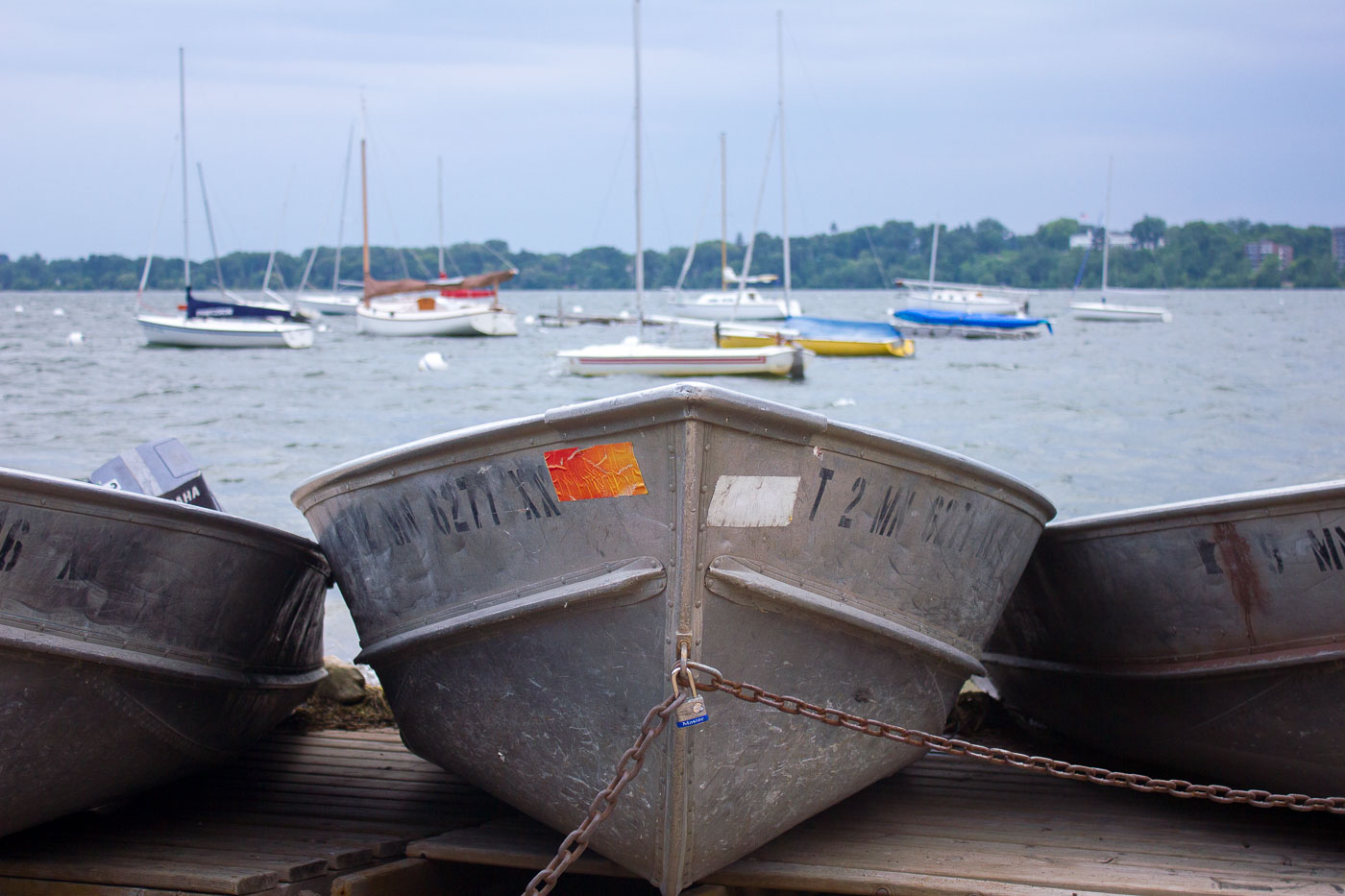
Aluminum boats moored on a wooden dock at Bde Maka Ska in Minneapolis, with sailboats anchored in the background.
Aluminum boats are secured on the wooden dock at Bde Maka Ska in Minneapolis. The lake, formerly known as Lake Calhoun, is one of the most popular bodies of water in the Chain of Lakes park system. It is a central feature of the city's parkland, offering residents and visitors opportunities for boating, swimming, and other water activities.

Rental Boats Chained Up at Bde Maka Ska

My Burger restaurant interior on Excelsior Boulevard in Minneapolis.
My Burger on Excelsior Boulevard in Minneapolis is a burger restaurant at the corner of Excelsior Boulevard and France Avenue. The interior combines a modern industrial design with diner-inspired touches. It is part of the commercial corridor in southwest Minneapolis.

My Burger, Excelsior Boulevard, Minneapolis
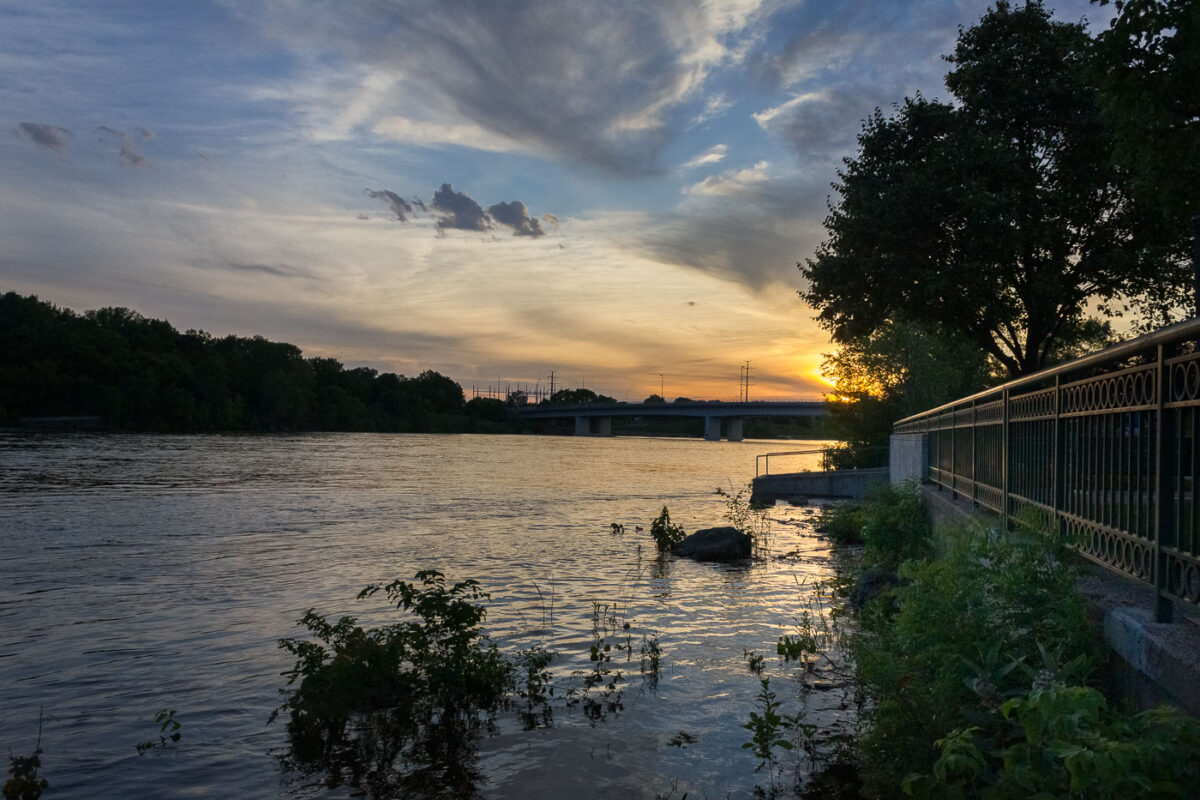
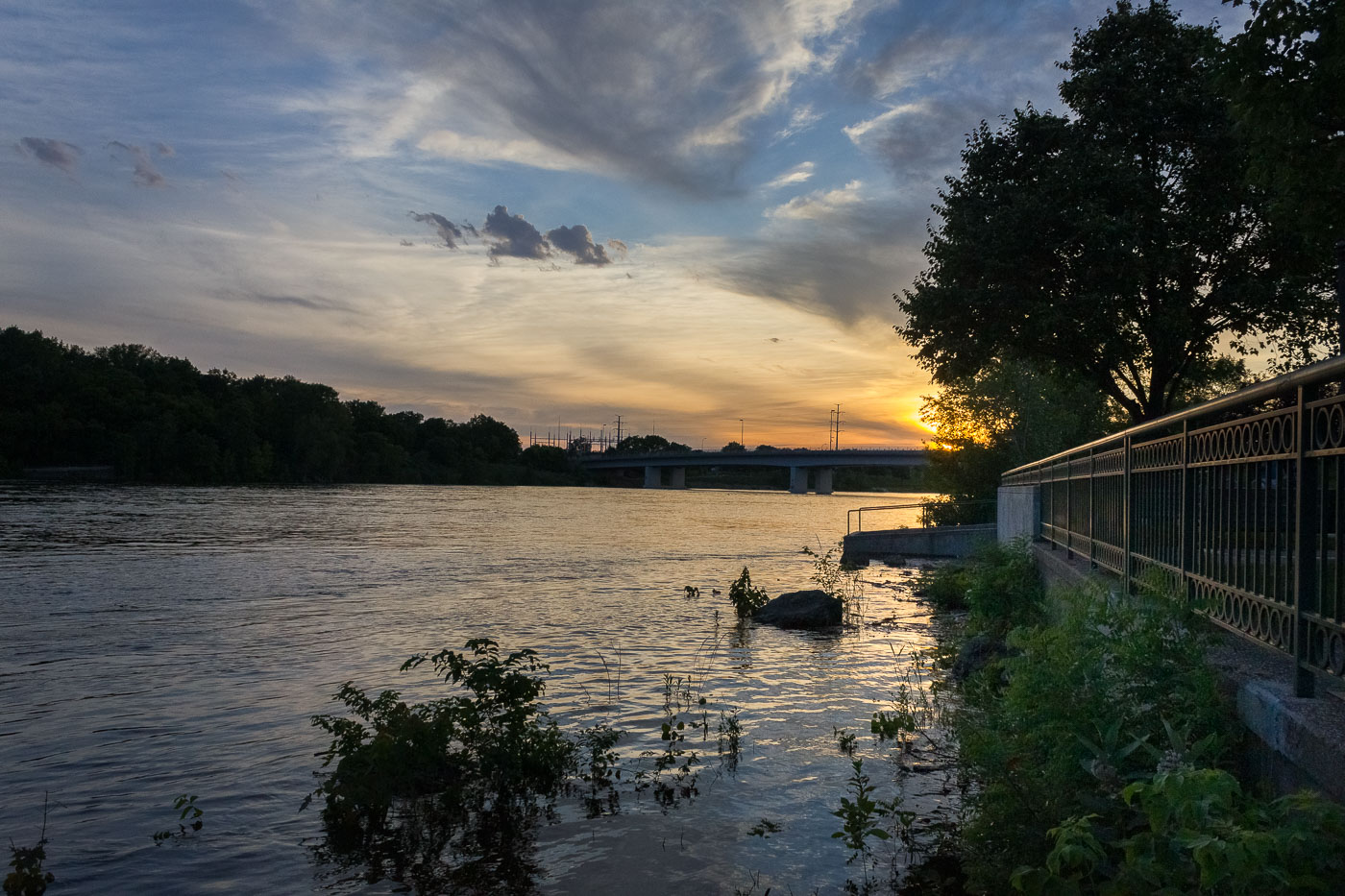
Mississippi River at Boom Island Park in Minneapolis at sunset.
The Mississippi River passes Boom Island Park in Minneapolis at sunset. Boom Island is a park on the river's west bank, north of downtown, with access to the riverfront and views of nearby bridges. The riverfront area was once used for logging and milling before becoming public parkland.

Mississippi River at Boom Island, Minneapolis
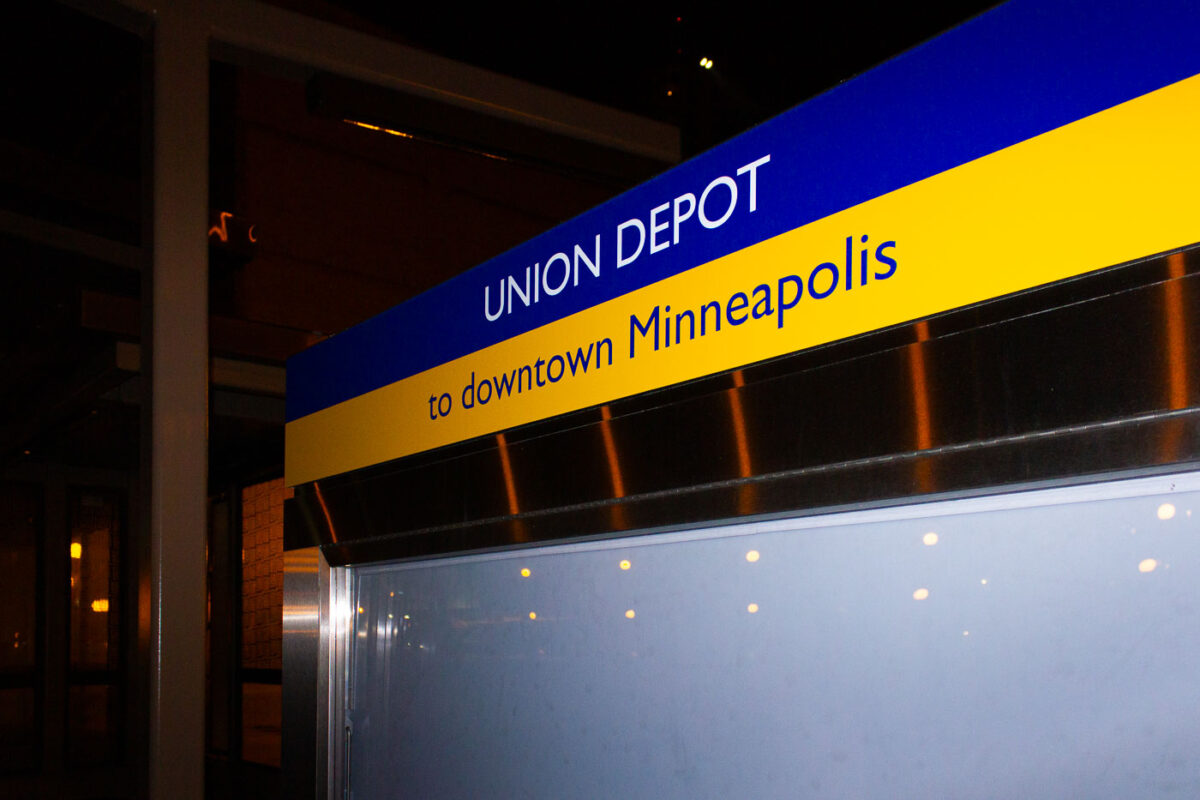
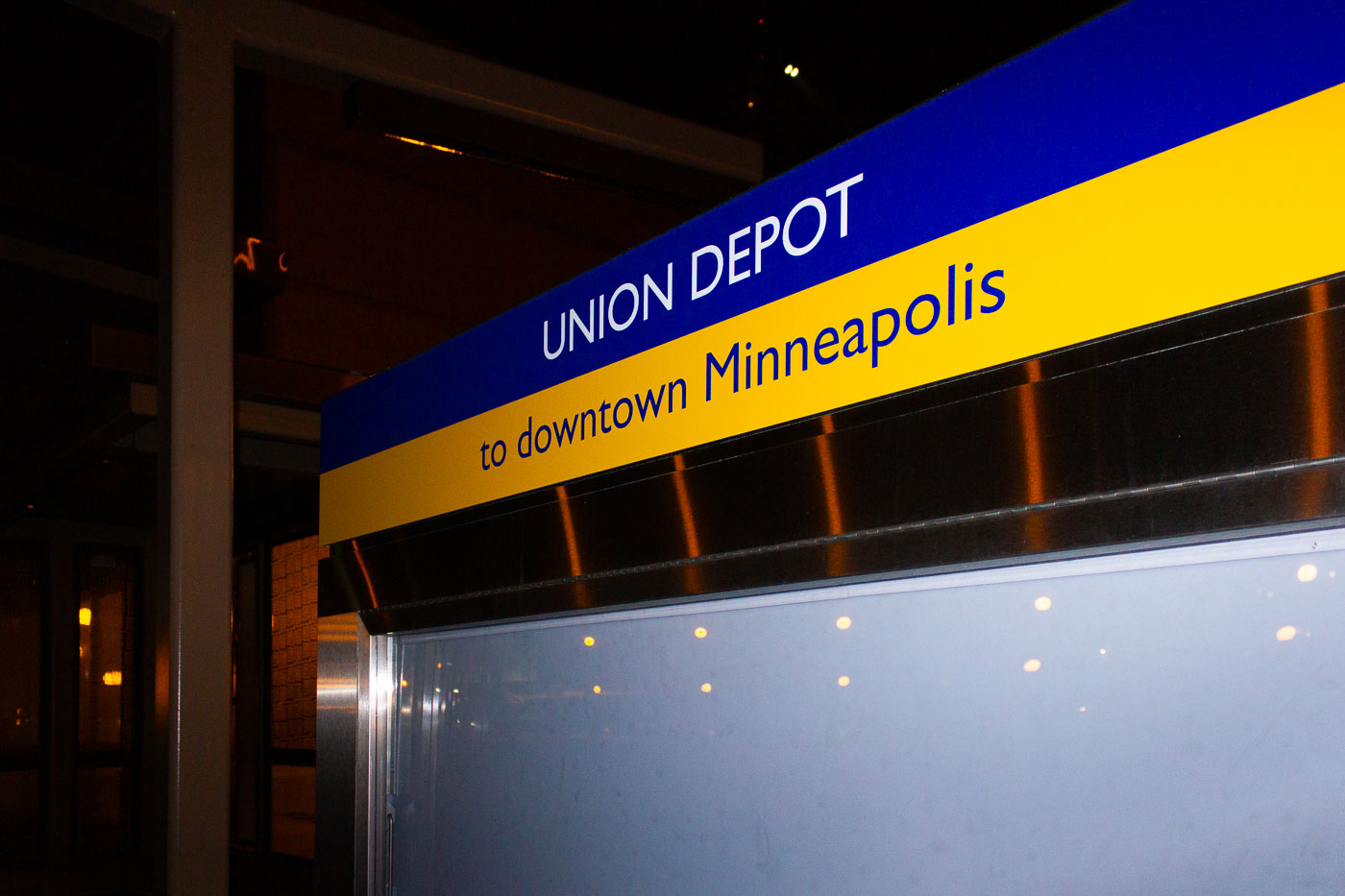
Union Depot station sign in St. Paul directing passengers to downtown Minneapolis via light rail.
Union Depot in St. Paul, Minnesota, is a regional transportation hub serving light rail, buses, and Amtrak. The restored 1923 terminal reopened in 2012 after decades of decline and renovation.

Union Depot Sign for Downtown Minneapolis Service at Night

Art Happens Here stencil art on a St. Paul, Minnesota sidewalk.
Art Happens Here stencil art in St. Paul, Minnesota, is painted on a sidewalk. The design combines block lettering with a skyline silhouette inside the text.

Art Happens Here Stencil on St. Paul Sidewalk

Station 4 in St. Paul with a mural of Pabst Blue Ribbon cans and a skull.
Station 4 in St. Paul, Minnesota, features exterior mural art incorporating Pabst Blue Ribbon cans and a skull motif. The West Seventh nightclub has long hosted live music and other events.

Station 4 Pabst Mural, St. Paul

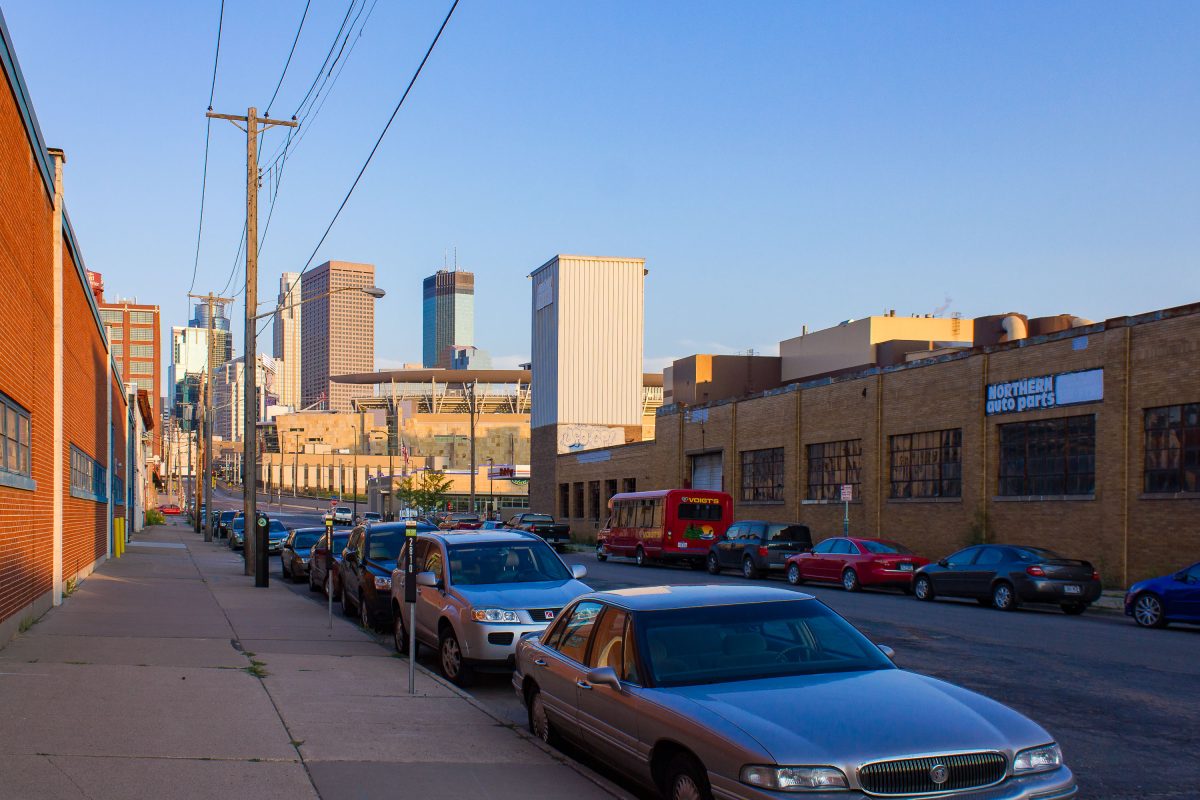
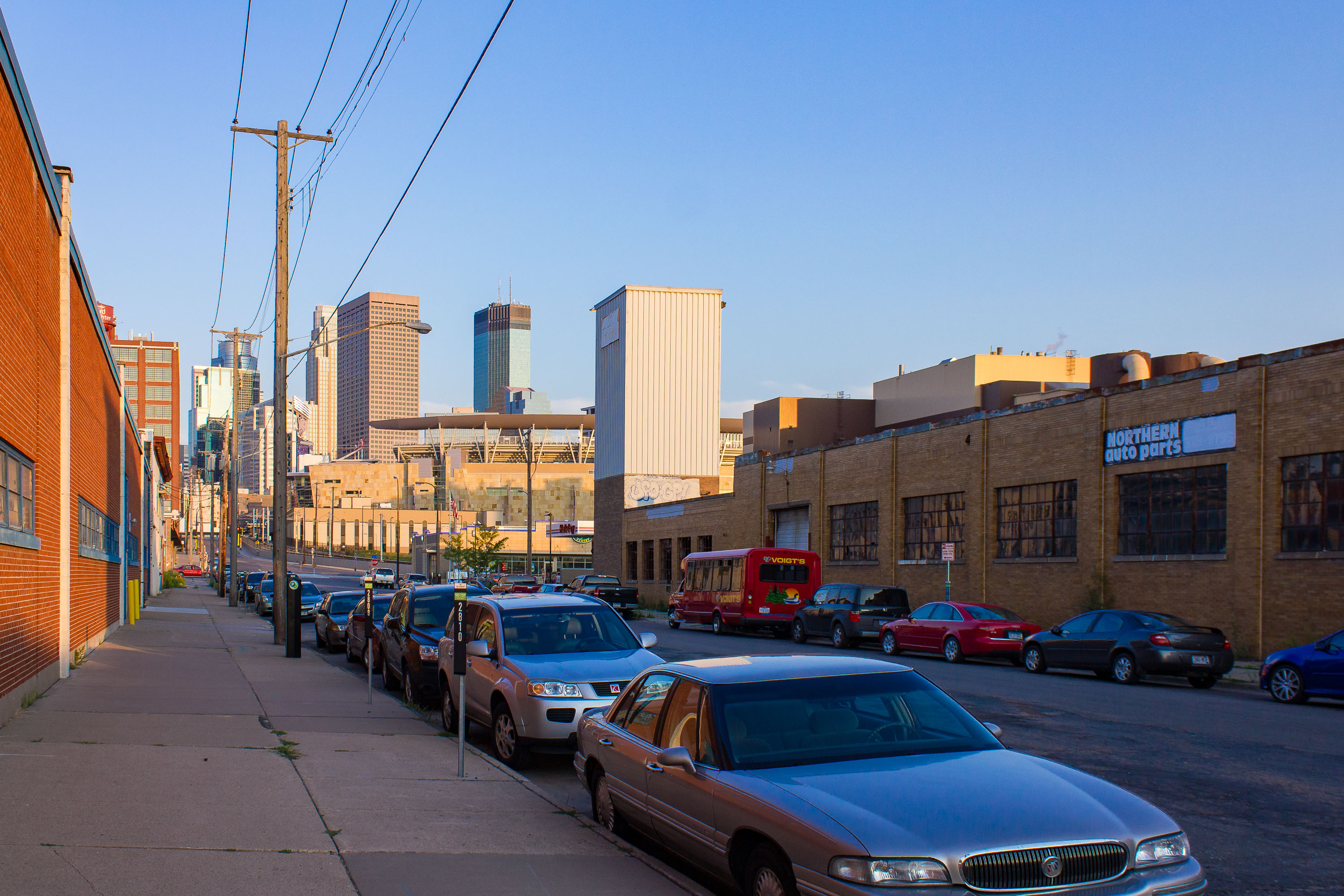
North 5th Street in Minneapolis's North Loop neighborhood with parked cars, brick buildings, and downtown skyline in background.
North 5th Street in the North Loop of Minneapolis before the demolition of Northern Auto Parts. The street is now lined with apartment buildings.

Downtown Minneapolis Skyline Beyond Northern Auto Parts on N 5th Street

Peterson’s House of Balls in Minneapolis, Minnesota, filled with sculptures, masks, and found objects.
Peterson’s House of Balls in Minneapolis, Minnesota, is an art installation created by Lee “Peterson” House. The private space combines found objects, sculptures, masks, and memorabilia in an eccentric indoor assemblage. It has long been known as one of Minneapolis’s most unusual artist-built interiors.

Peterson’s House of Balls, Minneapolis

HOTTEA yarn installation on a chain-link fence in Minneapolis.
HOTTEA yarn installation in Minneapolis. The temporary site-specific work uses stretched yarn on a chain-link fence near downtown, where the artist regularly creates ephemeral public art in unexpected places.

HOTTEA yarn installation, Minneapolis
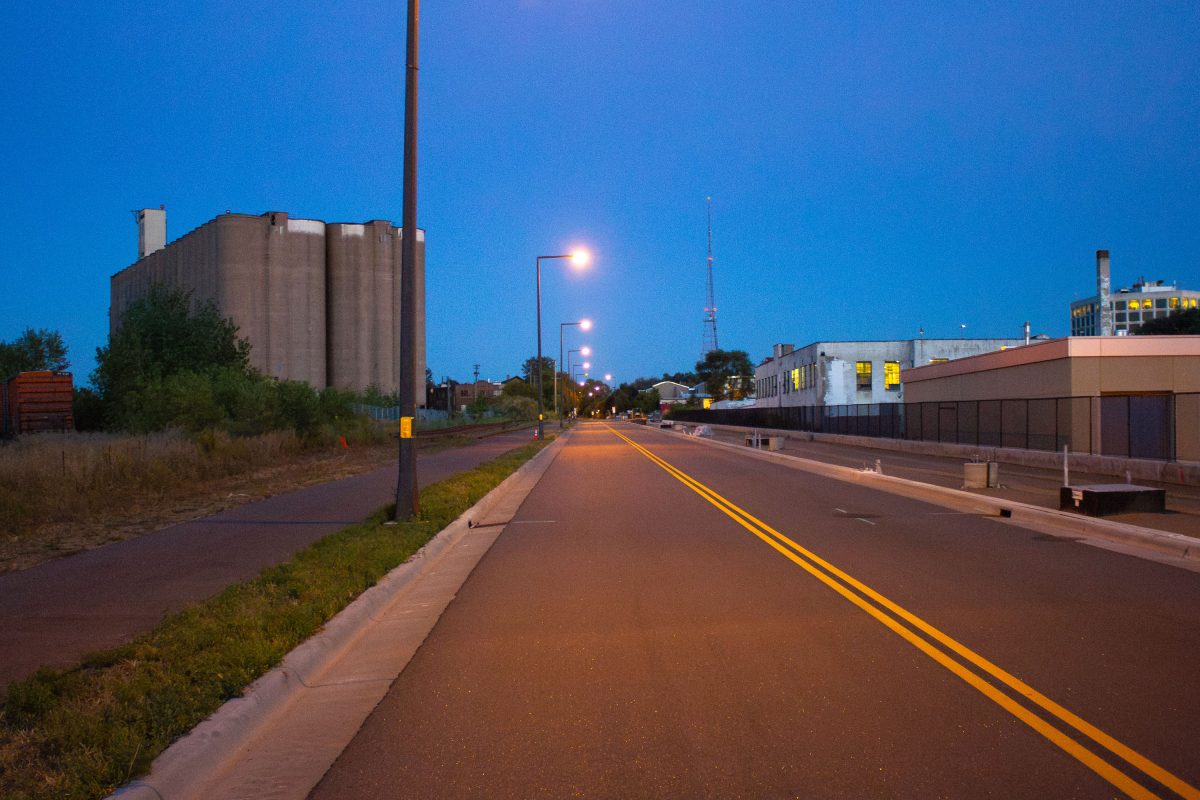
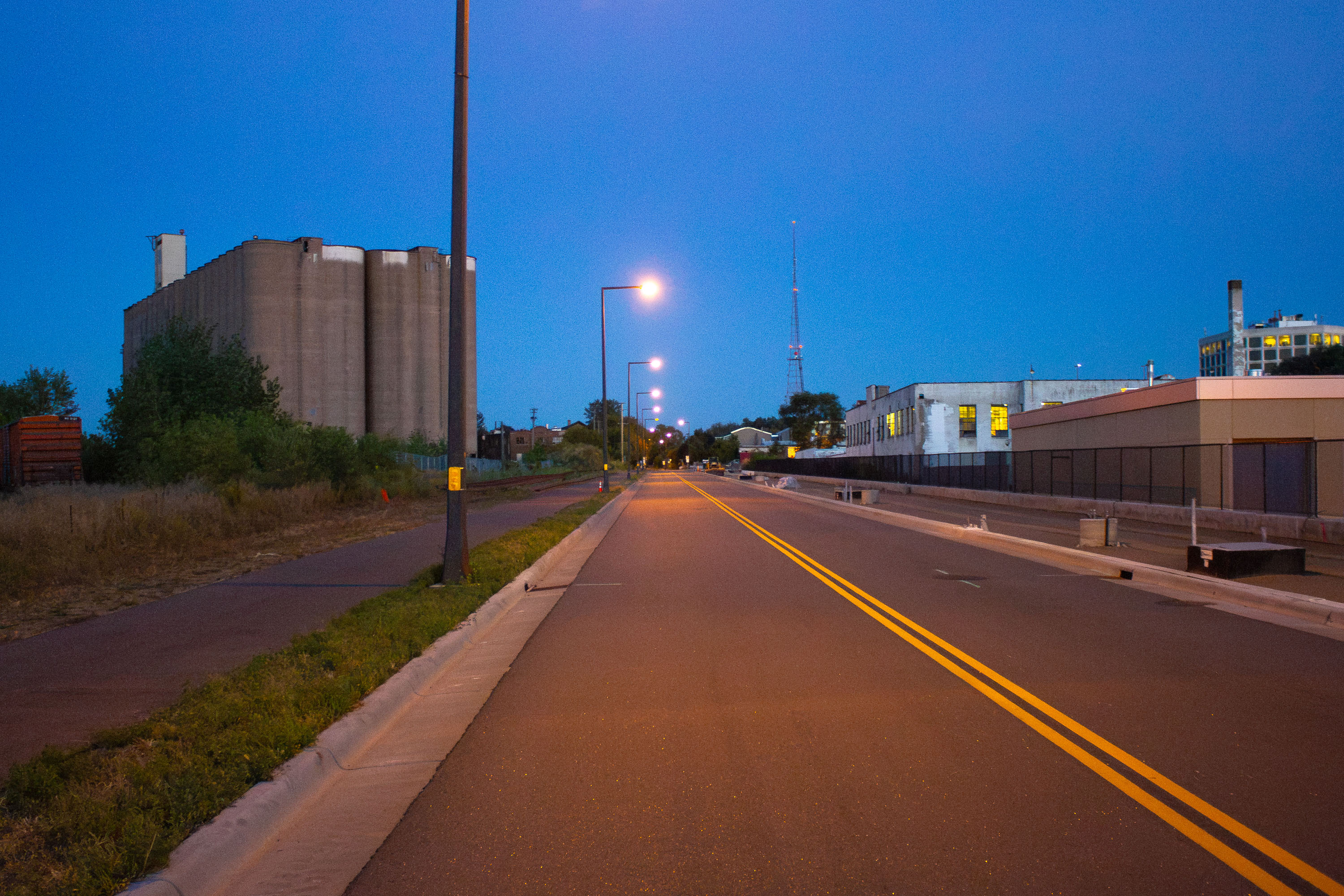
United Crushers grain elevator stands beside the University of Minnesota Transitway in the Dinkytown area of Minneapolis.
The University of Minnesota Transitway runs along the East Bank corridor in Minneapolis, carrying university and Metro Transit buses between the Twin Cities campuses.

United Crushers Elevator Along the Transitway, Minneapolis

Abandoned brick house in Egg Harbor, Wisconsin, with a deteriorating roof and boarded windows.
Abandoned brick house in Egg Harbor, Wisconsin. The two-story brick residence has a late 19th- or early 20th-century appearance and is now in poor condition with a deteriorated roof and boarded or broken openings. Its form is consistent with a rural dwelling built during Door County’s early settlement period.

Abandoned brick house in Egg Harbor, Wisconsin

Downtown St. Paul, Minnesota skyline at night with the Cathedral of Saint Paul on the right.
Downtown St. Paul, Minnesota, is illuminated at night in September 2012. The skyline includes office towers, public buildings, and the Cathedral of Saint Paul on the right. St. Paul is the state capital and Ramsey County seat.

Downtown St. Paul Skyline at Night, September 2012

Schmidt's Brewery silos and tower in St. Paul, Minnesota, connected by a Landmark walkway.
Schmidt's Brewery in St. Paul, Minnesota, includes a brick tower, concrete silos, and an elevated conveyor walkway marked “Landmark.” The former brewery was founded in 1855 and ceased operations in 2002. The complex remains one of the city’s notable industrial landmarks.

Schmidt’s Brewery Silos and Tower, St. Paul, Minnesota

Downtown Minneapolis skyline at night featuring the IDS Center and Capella Tower among surrounding office buildings.
The Minneapolis skyline includes the IDS Center, Capella Tower, and Foshay Tower, three of downtown's best known towers. The IDS Center, completed in 1972, rises 792 feet and remains the tallest building in Minnesota. The Foshay Tower, finished in 1929 as the city's first skyscraper, modeled its stepped shape after the Washington Monument.

Minneapolis Skyline: IDS Center, Capella Tower at Night

Minneapolis Convention Center at night with downtown Minneapolis in the background.
The Minneapolis Convention Center in Minneapolis, Minnesota, is a major venue for trade shows, conventions, and public events. Opened in 1990, the complex is known for its domed roof structures. Downtown Minneapolis is visible in the background.

Minneapolis Convention Center at Night
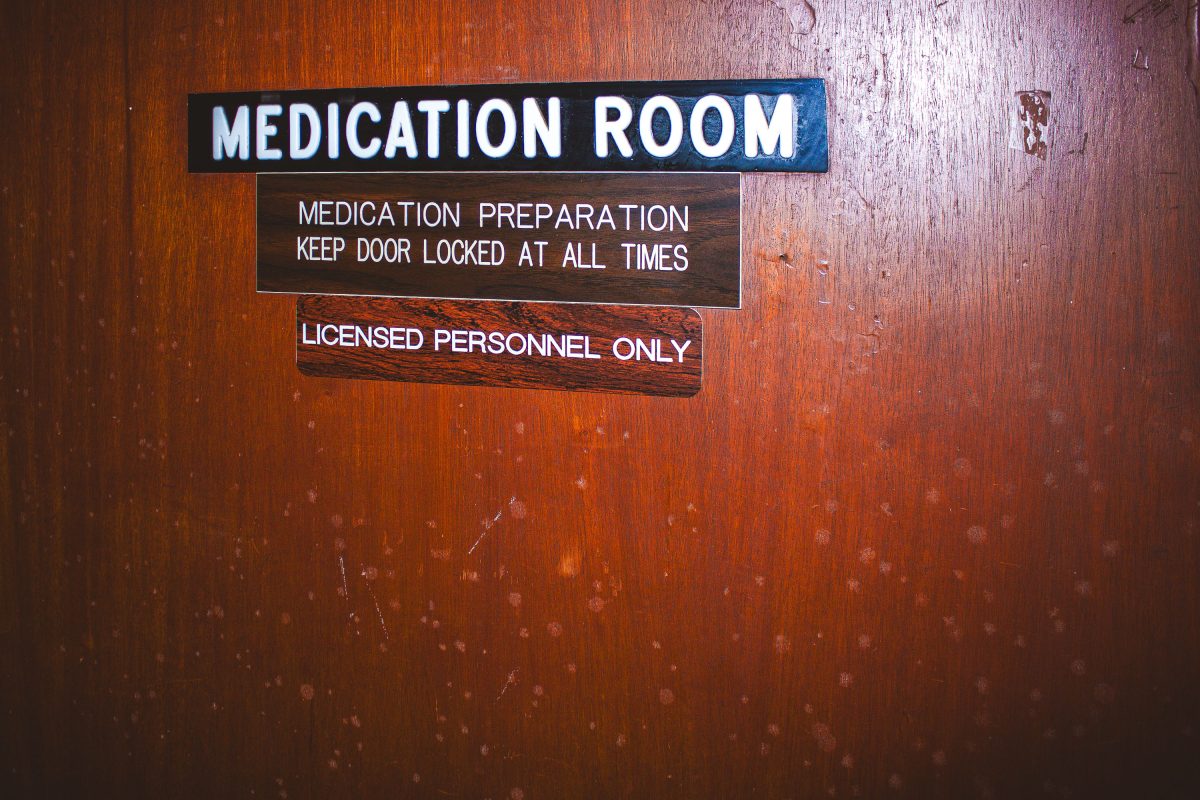
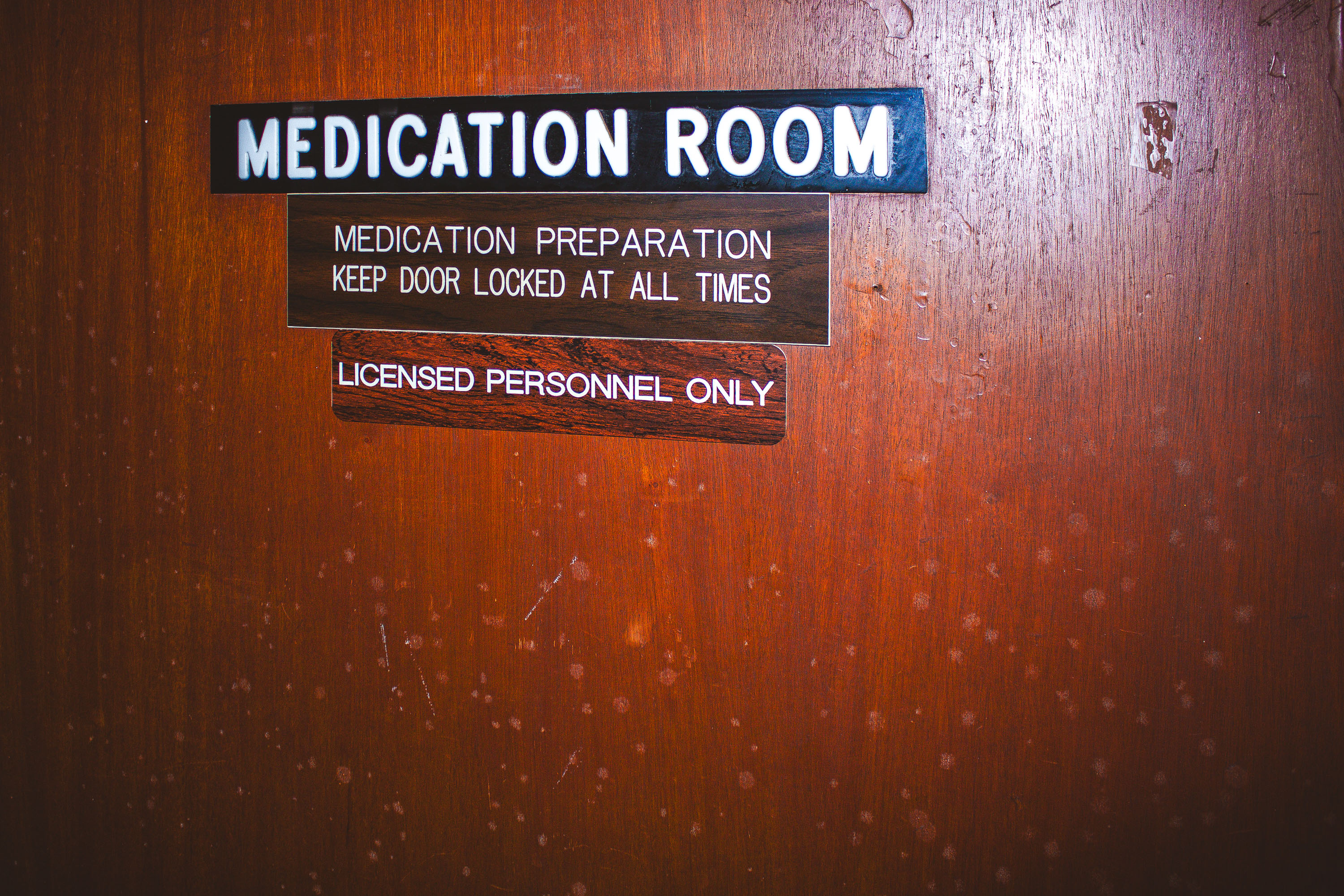
Signage for a medication room at an abandoned hospital in Minnesota with restricted access instructions.
A door reading "Medication Room" marks a preparation area at the abandoned Good Shepherd nursing home in Minnesota. Smaller signs below it warn to keep the door locked at all times and restrict entry to licensed personnel only.

Medication Room at Abandoned Hospital
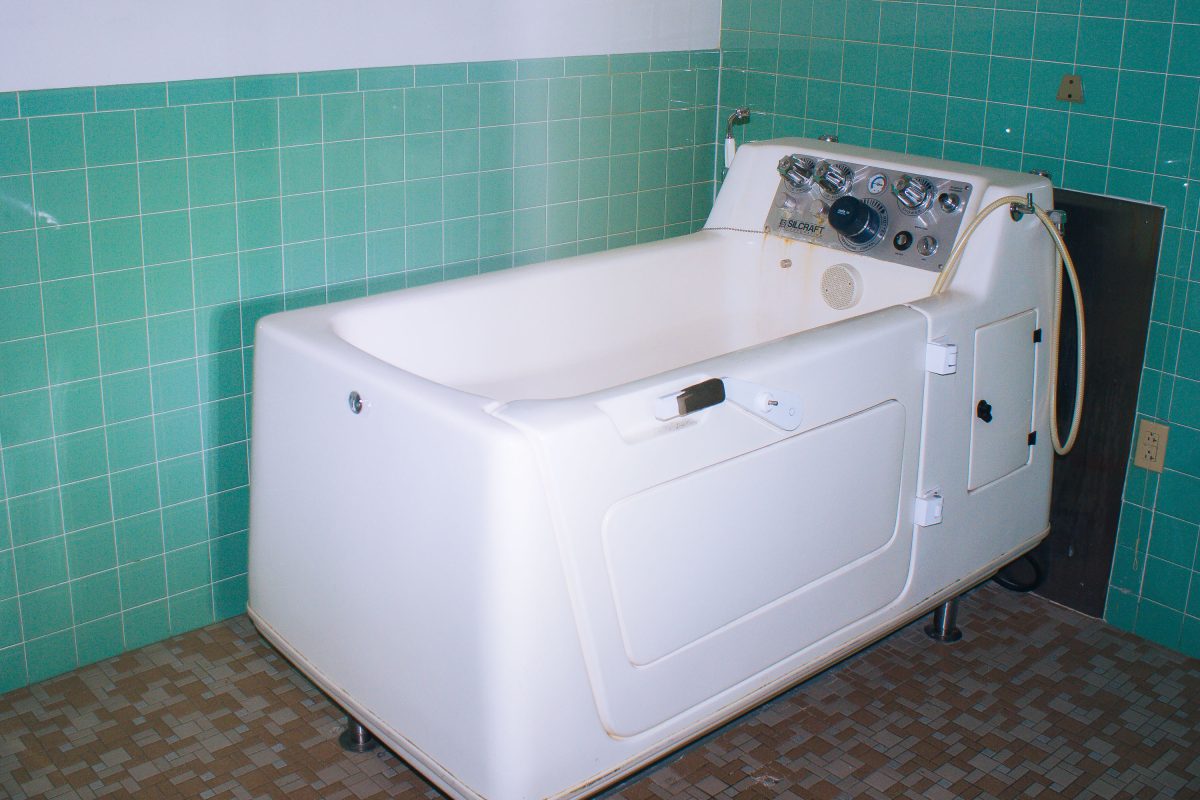
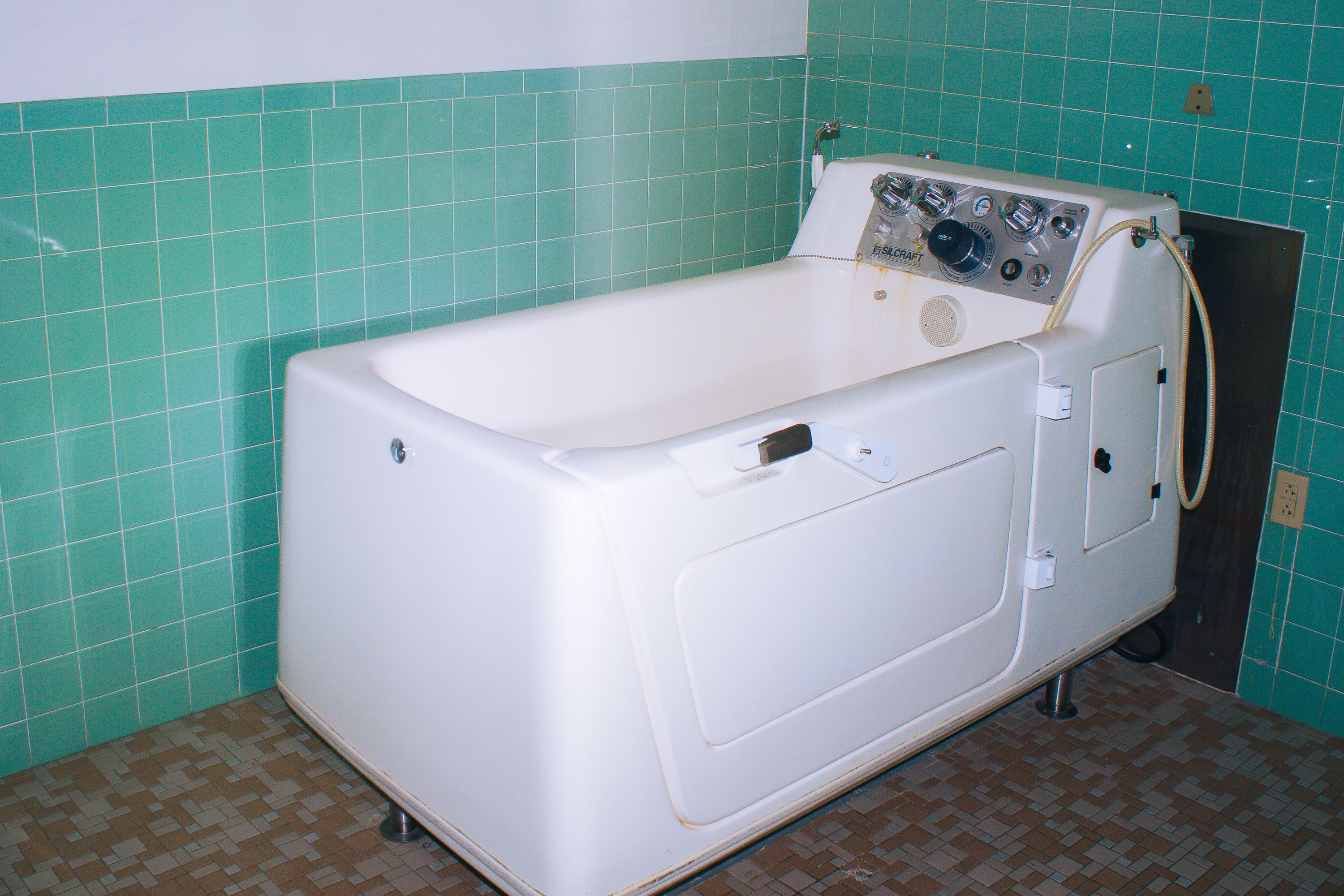
Hubbard tank with control panel in a turquoise-tiled bathroom at the abandoned Good Shepherd Nursing Home in St. Paul, Minnesota.
A Hubbard tank sits in a tiled bathroom at the former Good Shepherd Nursing Home in St. Paul. The side loading tub has a control panel with dials for its water jets, a design once common in nursing homes and hospitals for bathing patients who could not get in and out of a standard tub.

Hubbard Tank in a Tiled Bathroom at Good Shepherd Nursing Home
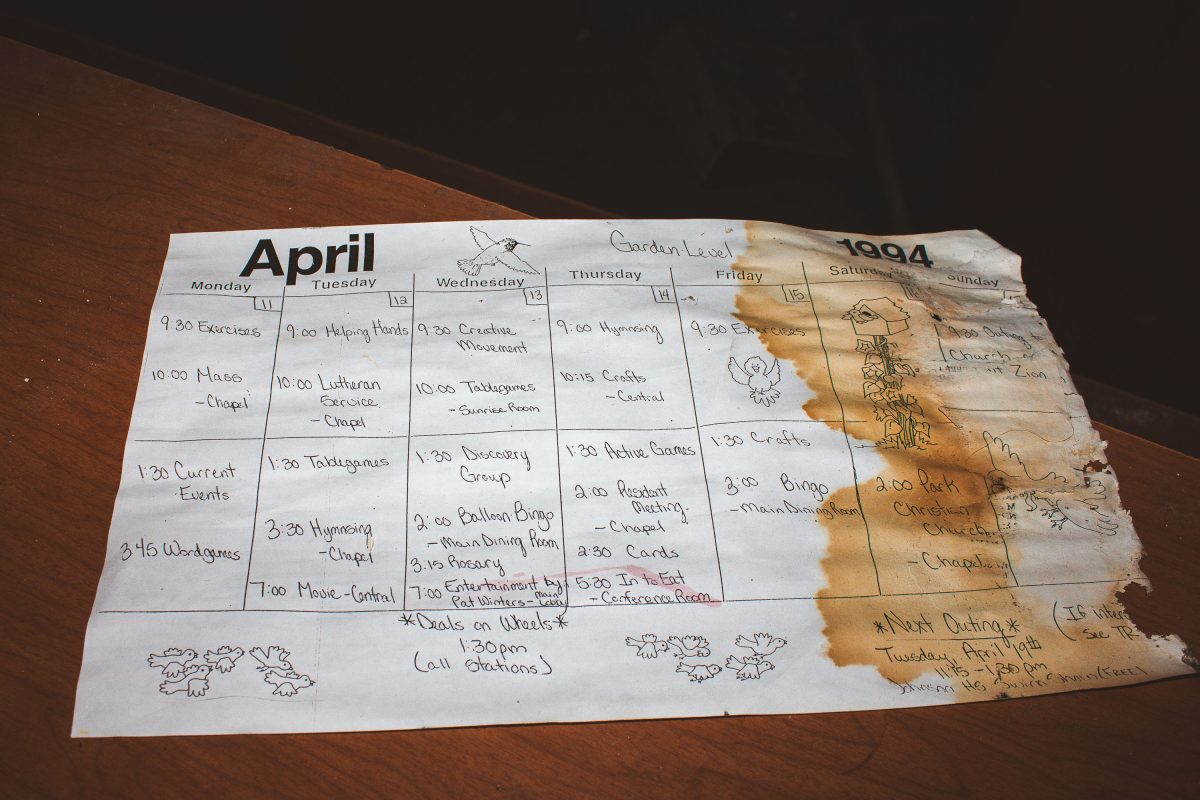
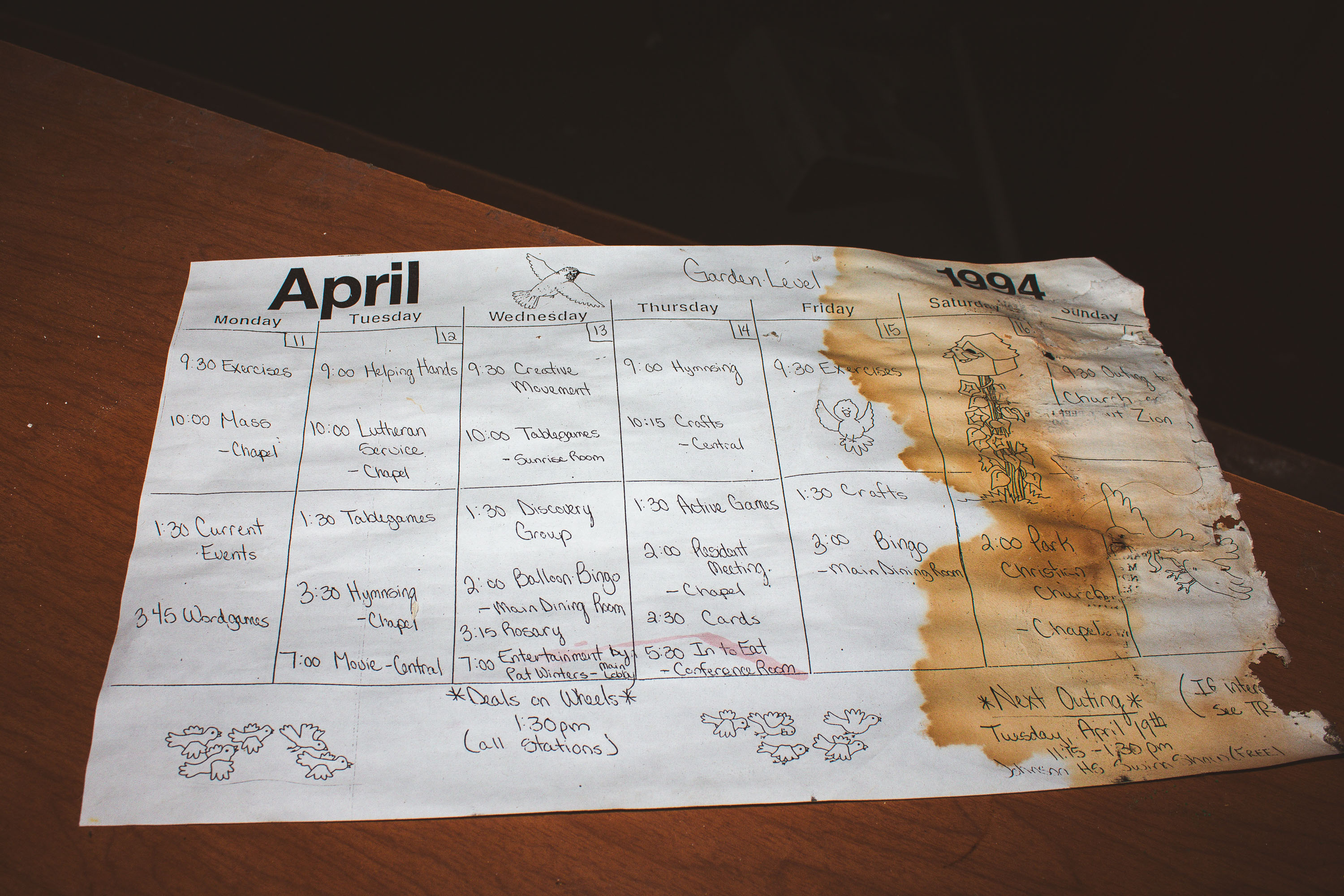
Handwritten April 1994 calendar schedule on deteriorating paper showing daily activities and events at Good Shepherd nursing home.
This water-stained activity calendar for April 1994 sits on a table at the former Good Shepherd Nursing Home in St. Paul. It lists the Garden Level's daily schedule of exercises, Mass, crafts, bingo, and hymn singing, along with a "Next Outing" planned for Tuesday, April 19.

A Water-Stained 1994 Activity Calendar at Good Shepherd Nursing Home
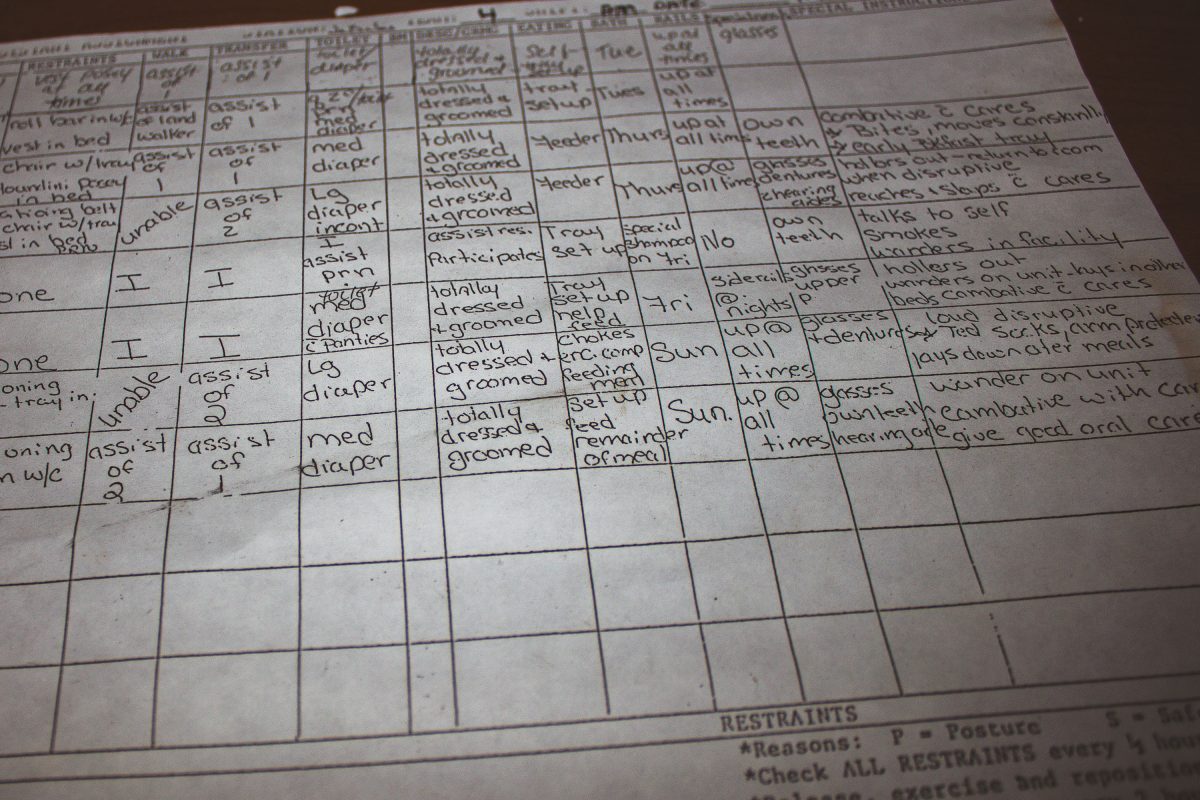
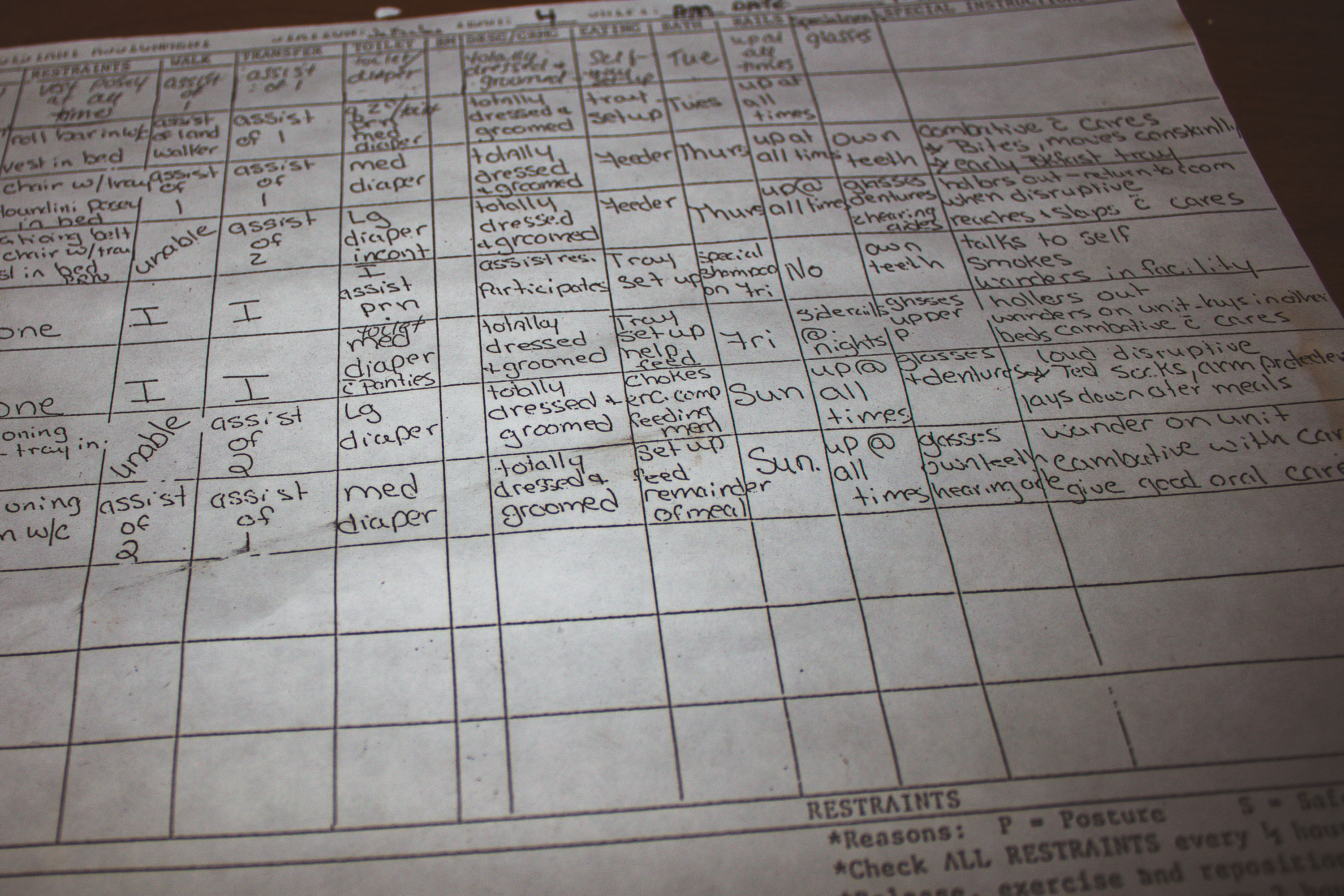
Handwritten nursing care chart with columns for patient care tasks, medications, and medical observations at Good Shepherd nursing home.
A handwritten patient care chart sits inside the abandoned Good Shepherd nursing home in St. Paul. The form tracks daily needs like restraints, transfers, toileting, grooming, feeding, and dental care, with staff notes on individual residents' behavior scrawled in the margins.

Patient Care Chart at the Abandoned Good Shepherd Nursing Home
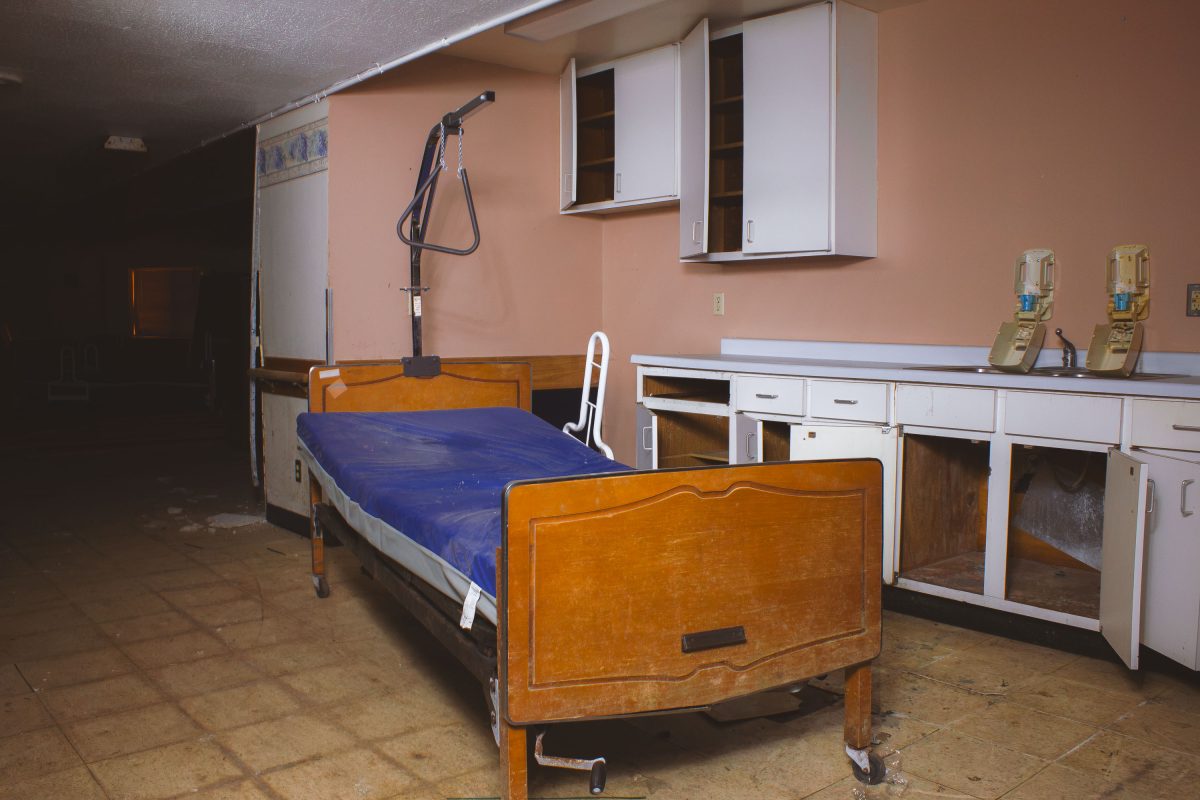
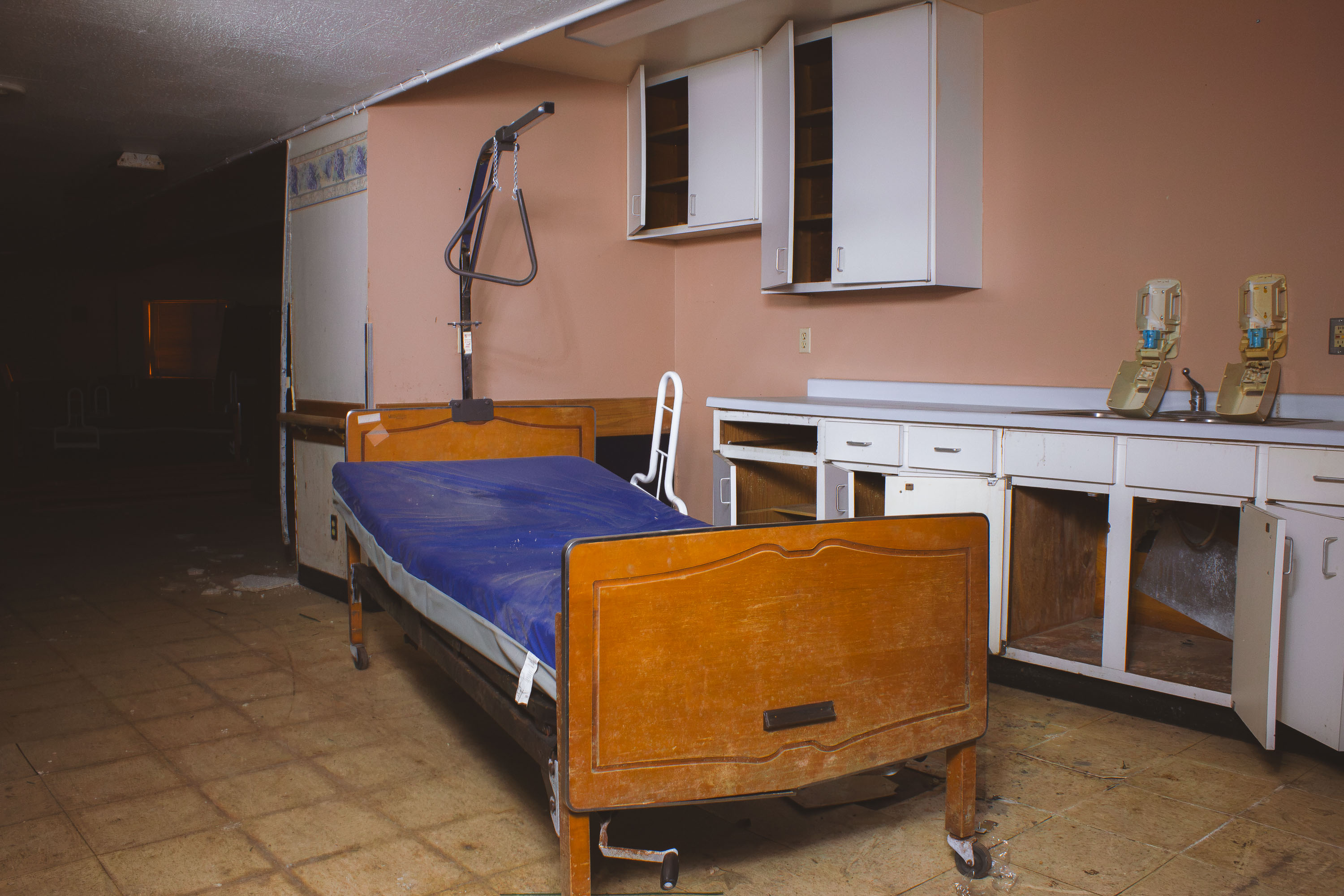
Medical bed with blue mattress and wooden headboard in an empty room at Good Shepherd Nursing Home in St. Paul, Minnesota.
Good Shepherd Nursing Home is a shuttered care facility in St. Paul, Minnesota. Inside, a hospital bed and patient lift sit in a former room, with cabinets and a counter built in along the wall.

Abandoned Patient Room at Good Shepherd Nursing Home
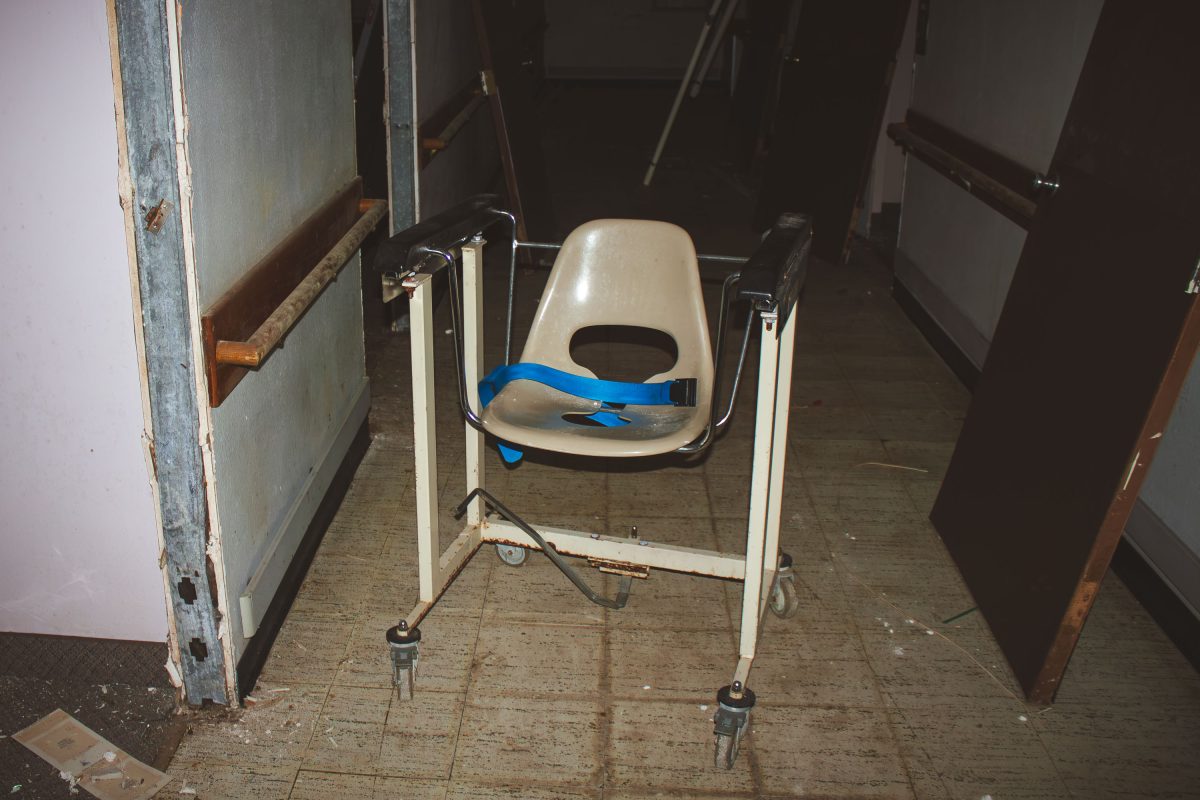
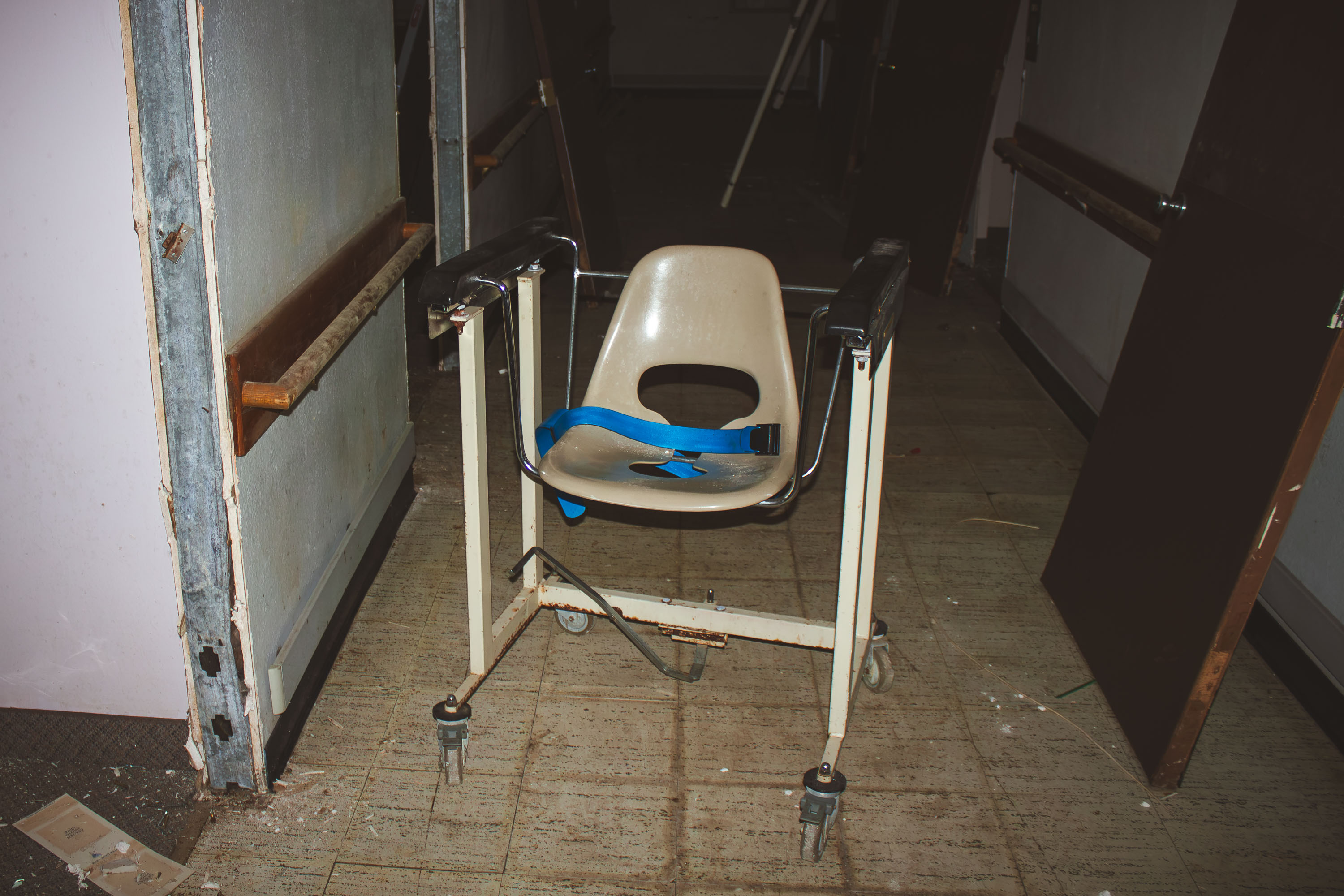
Portable toilet seat with blue lid on metal stand in deteriorating institutional hallway.
A wheeled shower chair with a safety strap sits in a hallway at the former Good Shepherd Nursing Home in St. Paul. Handrails still line the walls on either side, left over from the facility's use as a care home.

Abandoned Shower Chair in a Hallway at Good Shepherd Nursing Home
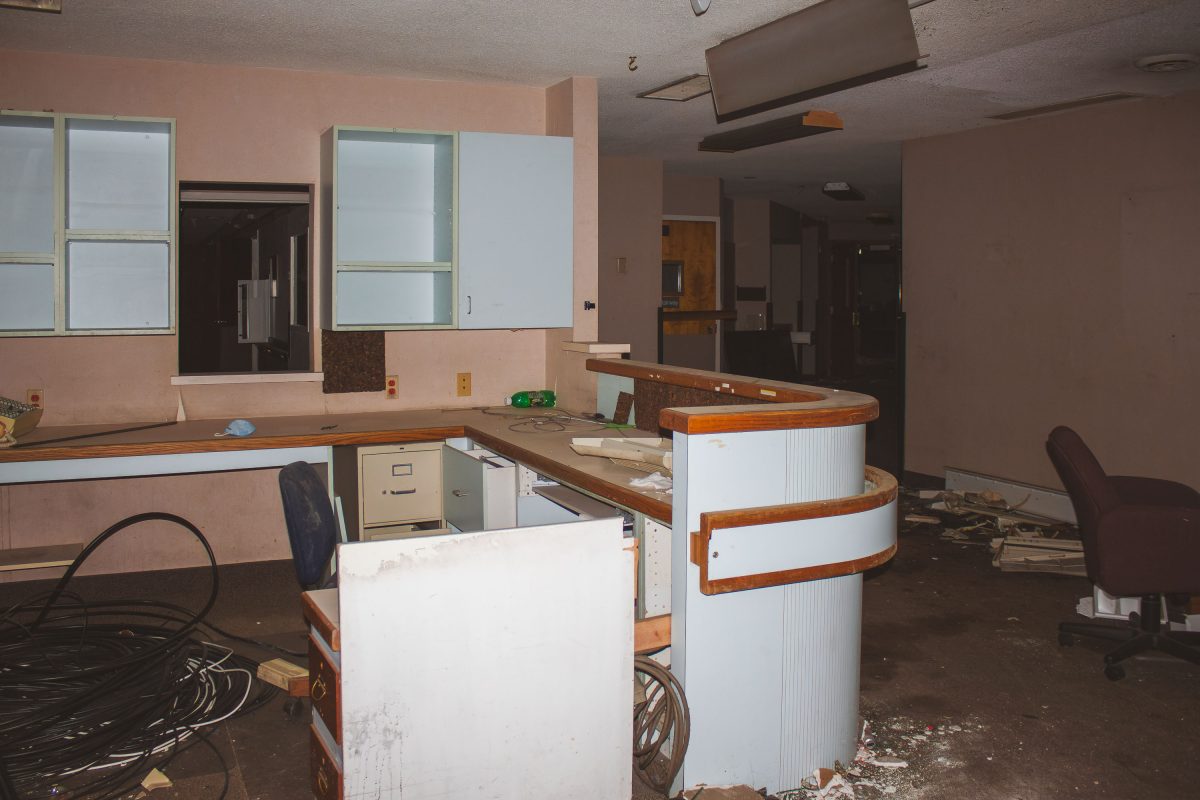
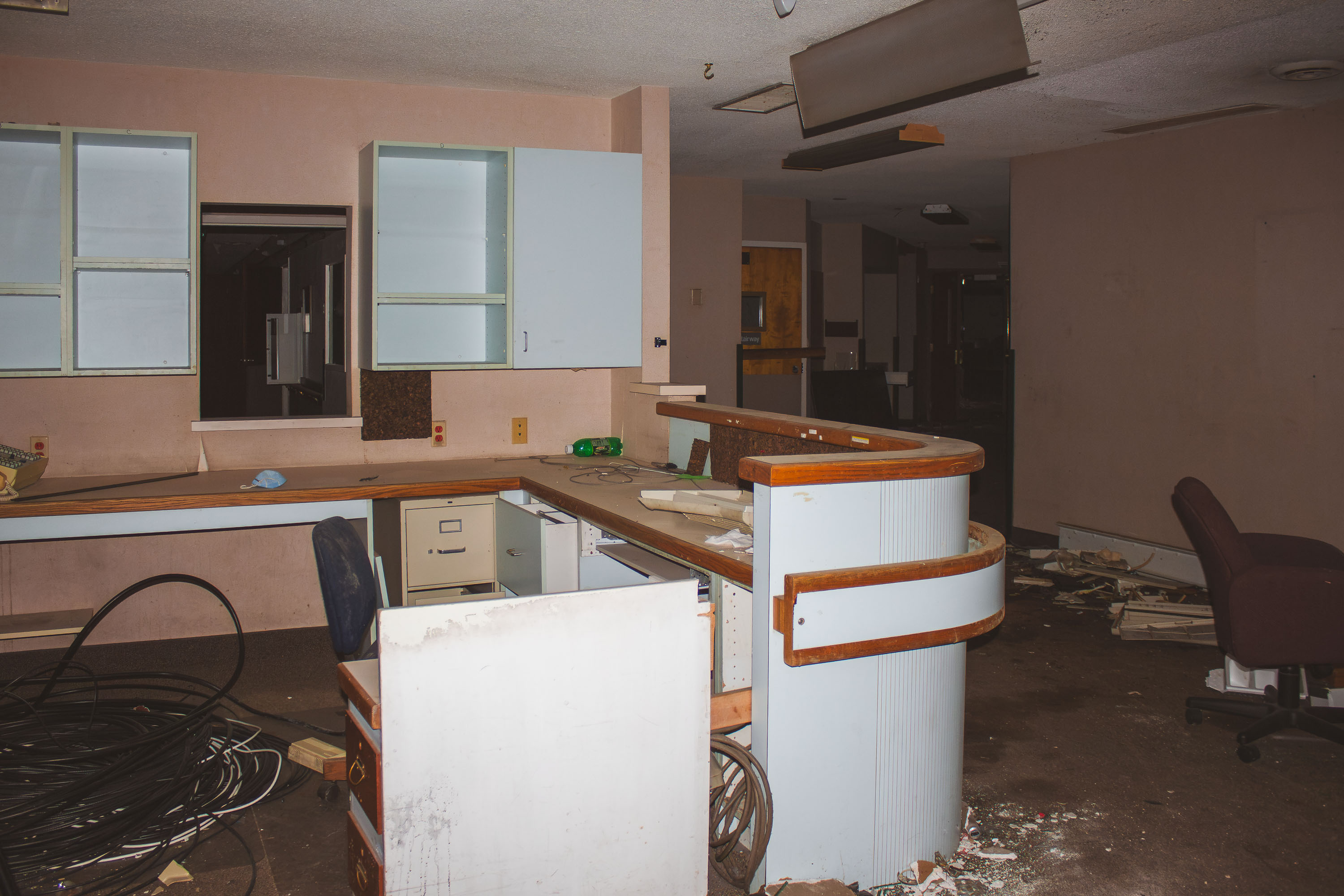
Abandoned interior of Good Shepherd nursing home in St. Paul, Minnesota, showing empty reception desk and deteriorating office space.
Good Shepherd Nursing Home in St. Paul sits abandoned, its nurses' station left with scattered file cabinets, loose wiring, and debris on the floor.

Abandoned Nurses’ Station at Good Shepherd Nursing Home
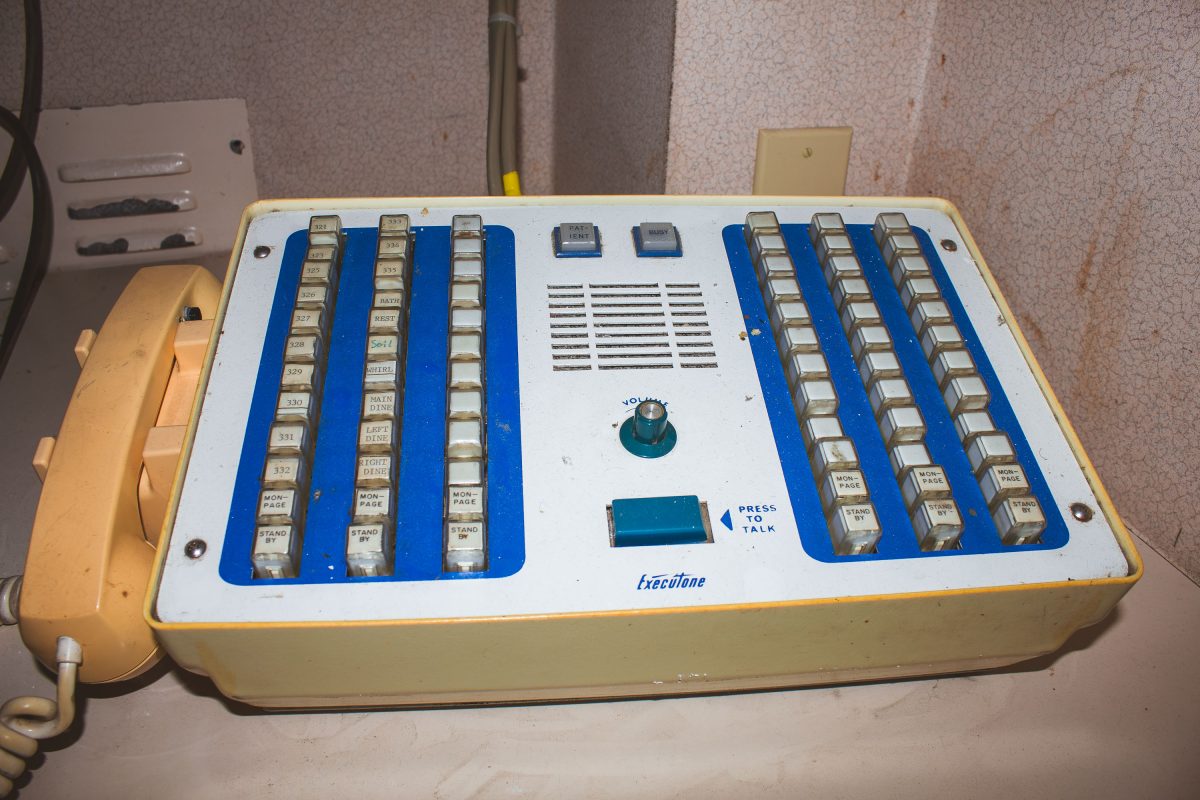
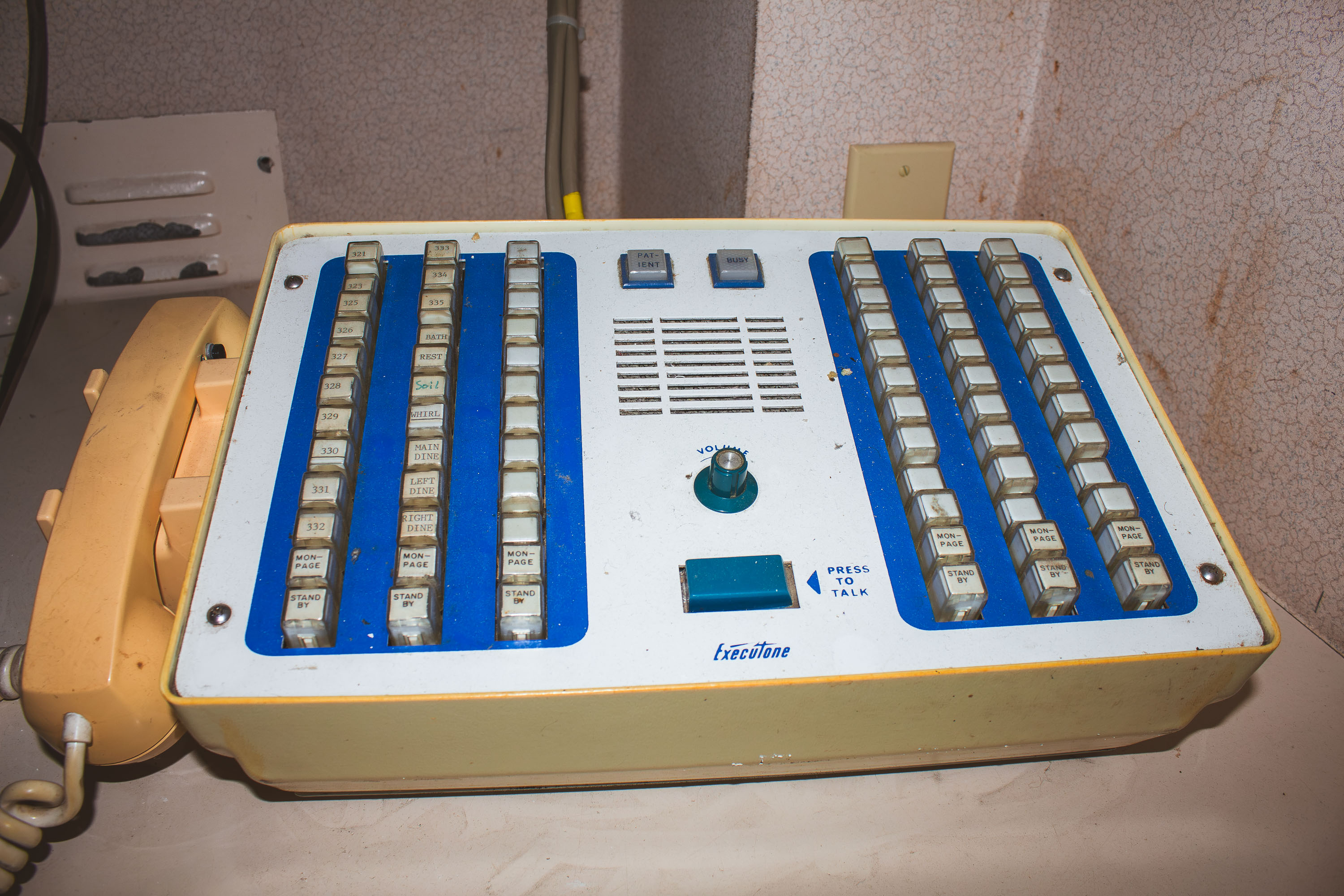
Vintage Inception telephone switchboard with blue panels and rows of numbered buttons at Good Shepherd Nursing Home in St. Paul, Minnesota.
An Executone intercom and paging panel sits with its handset at the former Good Shepherd Nursing Home in St. Paul. The unit's rows of call buttons once let staff page different rooms or wards and talk back through a built in speaker.

Executone Intercom Panel at the Abandoned Good Shepherd Nursing Home
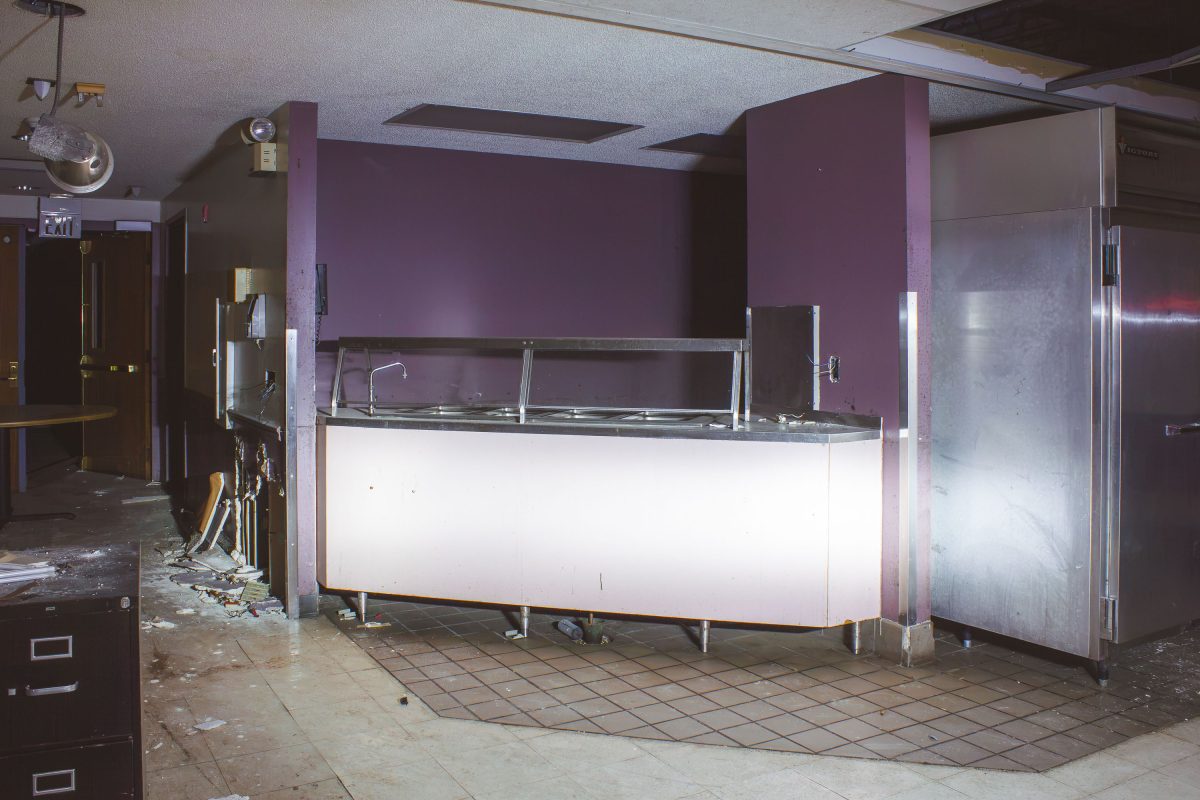
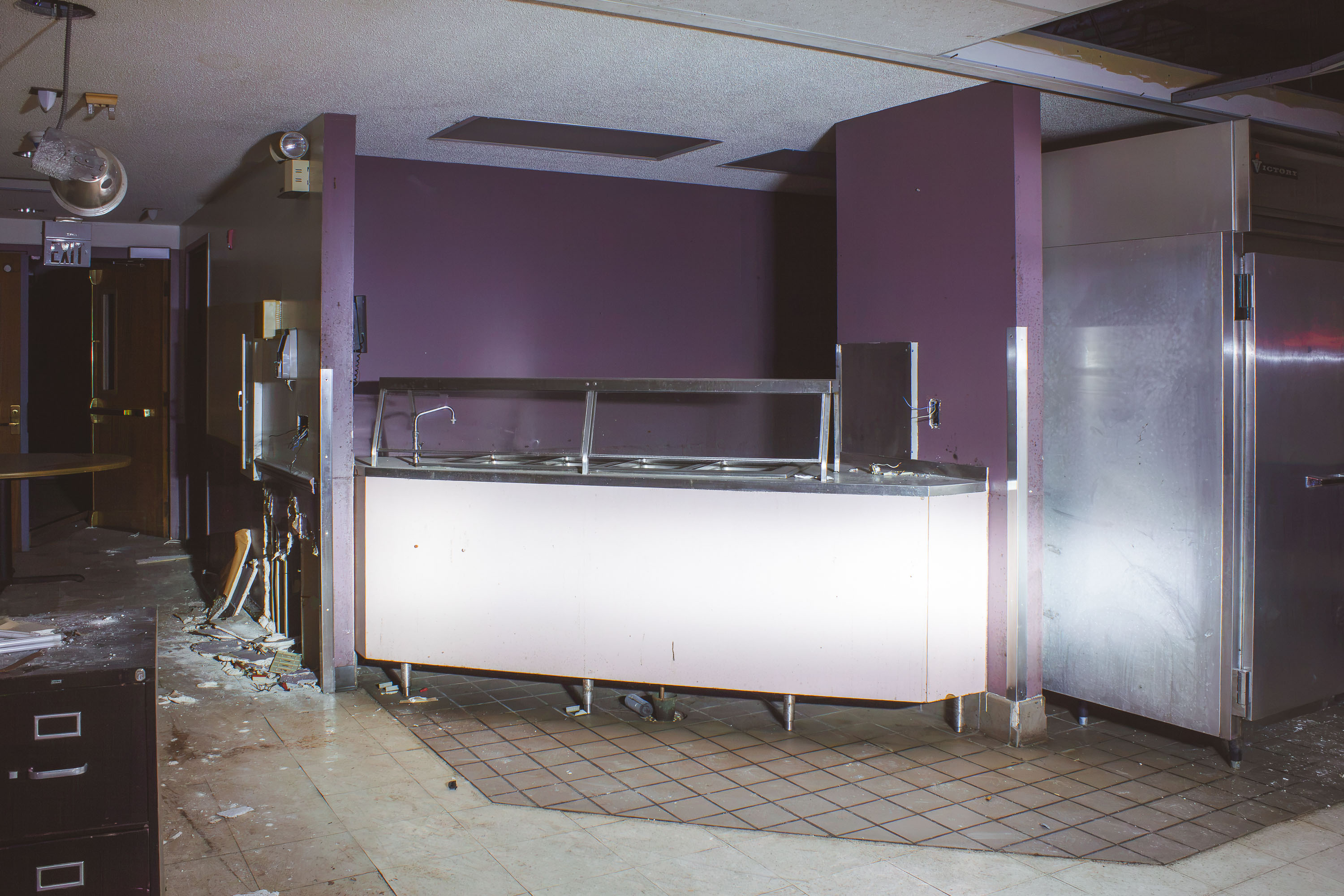
Abandoned interior of Good Shepherd Nursing Home in St. Paul with purple walls and stainless steel counter.
This serving counter sits in the former cafeteria of the Good Shepherd Nursing Home in St. Paul. Steam table wells and a sneeze guard still line the stainless steel counter, with debris scattered across the floor tiles around it.

Abandoned Cafeteria Serving Line at Good Shepherd Nursing Home
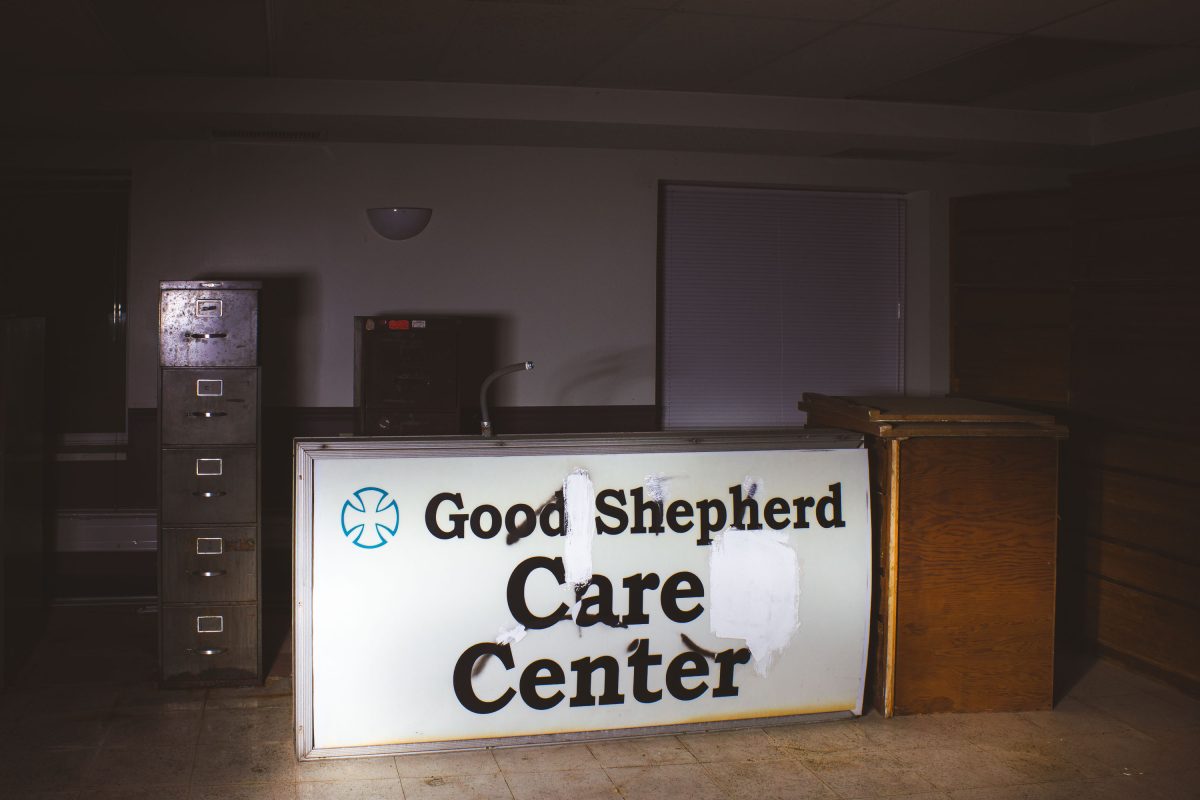
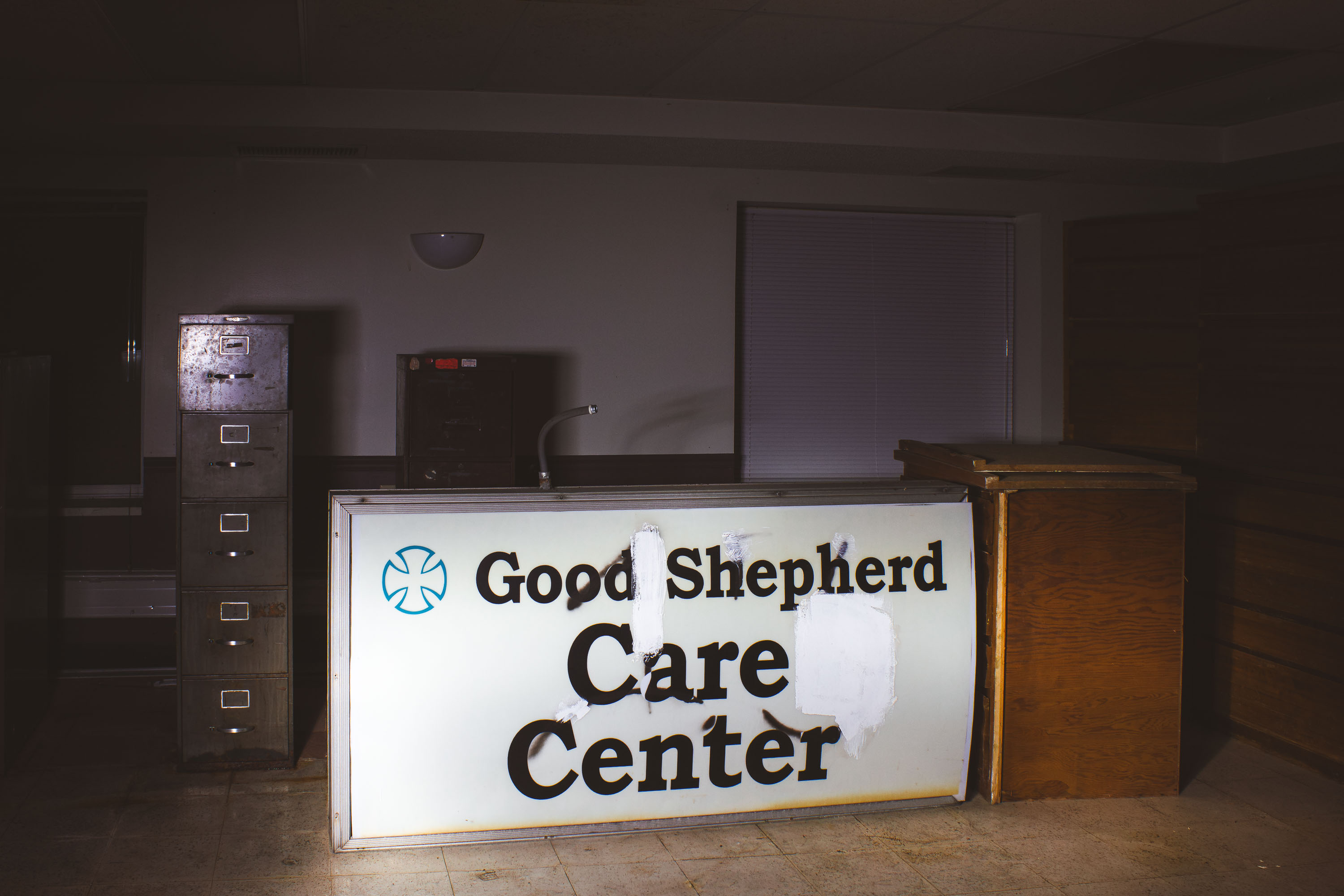
Good Shepherd Care Center sign displayed on an interior wall in St. Paul, Minnesota.
Good Shepherd Care Center was a nursing home in St. Paul, Minnesota. Its old front desk sign leans against filing cabinets inside the closed building.

Old Sign at the Good Shepherd Care Center in St. Paul
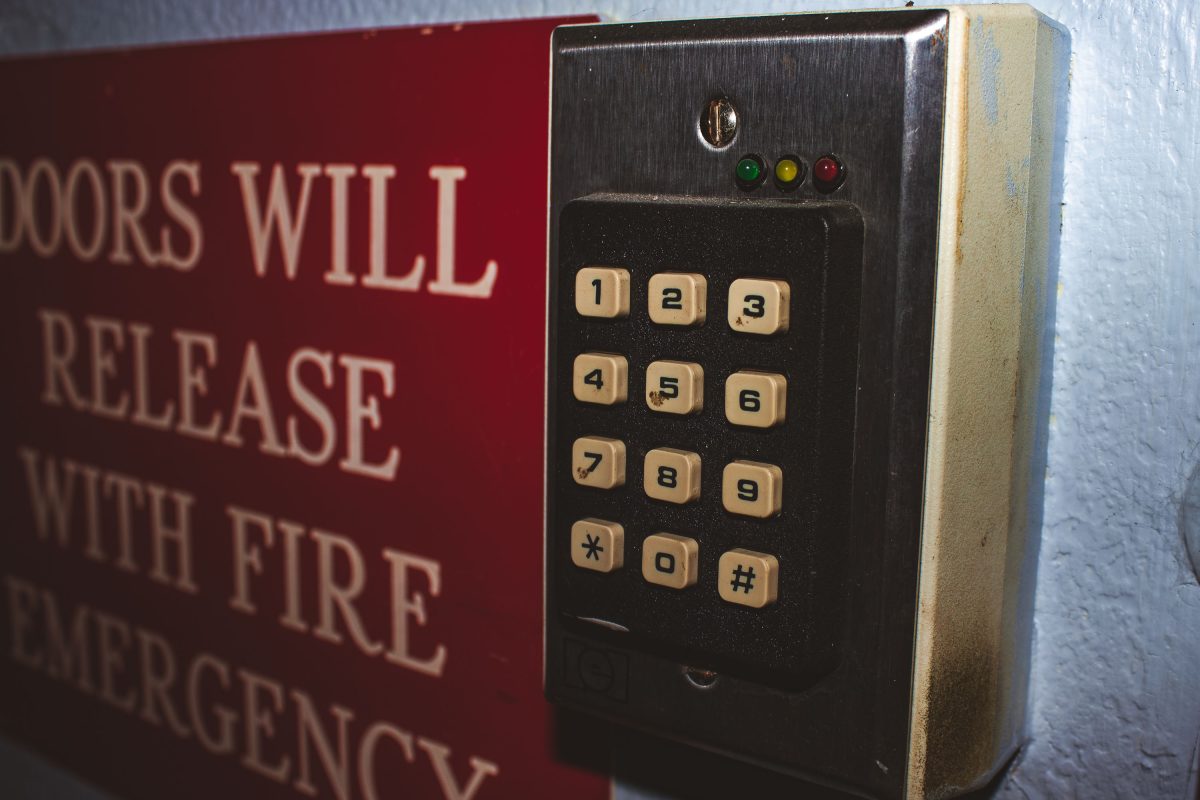
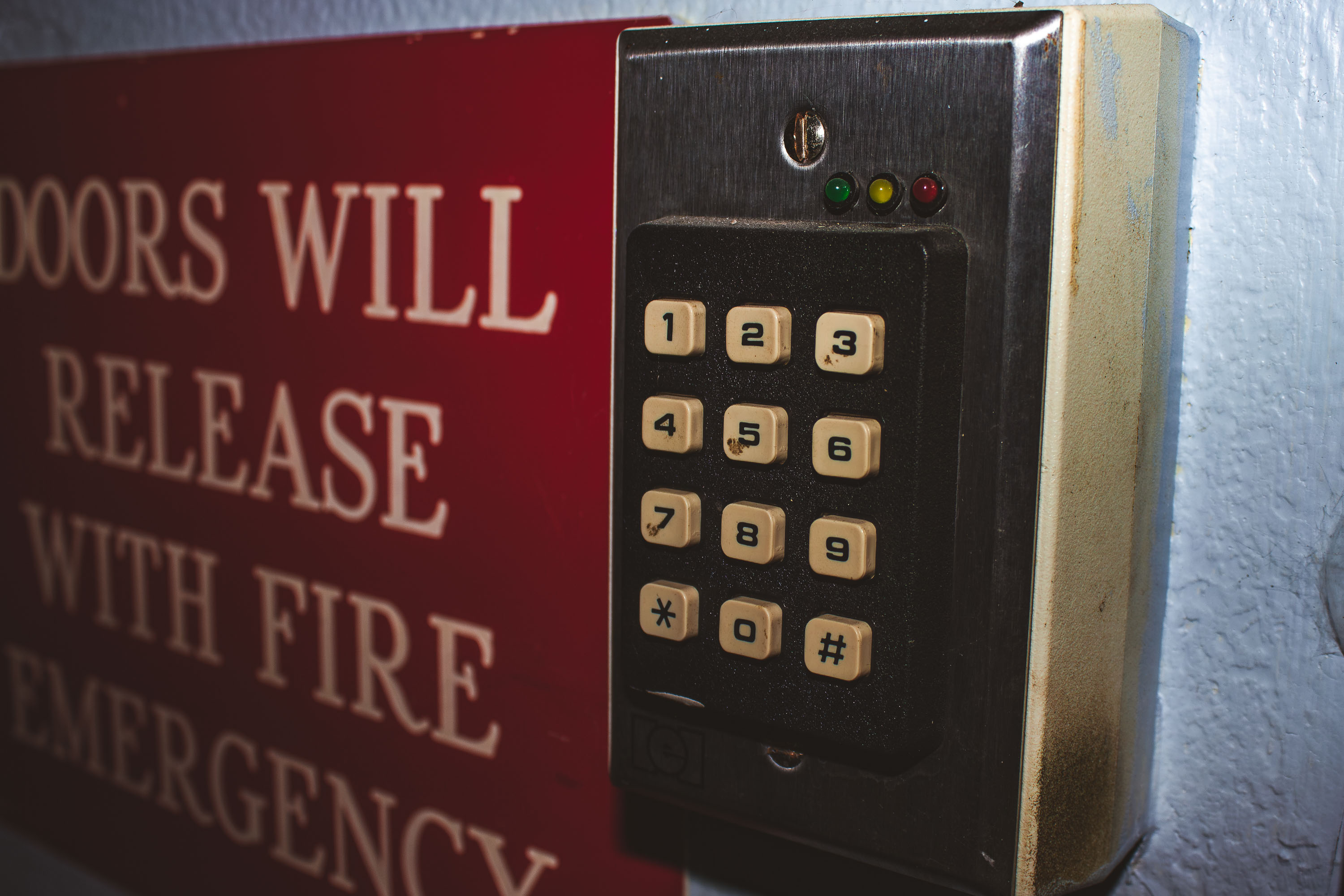
Vintage keypad door release system mounted next to emergency signage at Good Shepherd Nursing Home in St. Paul, Minnesota.
A keypad access lock sits beside a fire release sign at the former Good Shepherd nursing home in St. Paul. The sign notes that the doors release automatically in a fire emergency, overriding the electronic lock.

Keypad Door Lock Beside a Fire Release Sign at Good Shepherd

Dinkytown graffiti in Minneapolis reads, “The banks got bailed out, the people got sold out.”
Dinkytown in Minneapolis is the site of graffiti reading, “The banks got bailed out, the people got sold out.” The wall sits near the University of Minnesota in a neighborhood known for student-oriented businesses and street art.

Dinkytown Banks Got Bailed Out Graffiti, Minneapolis
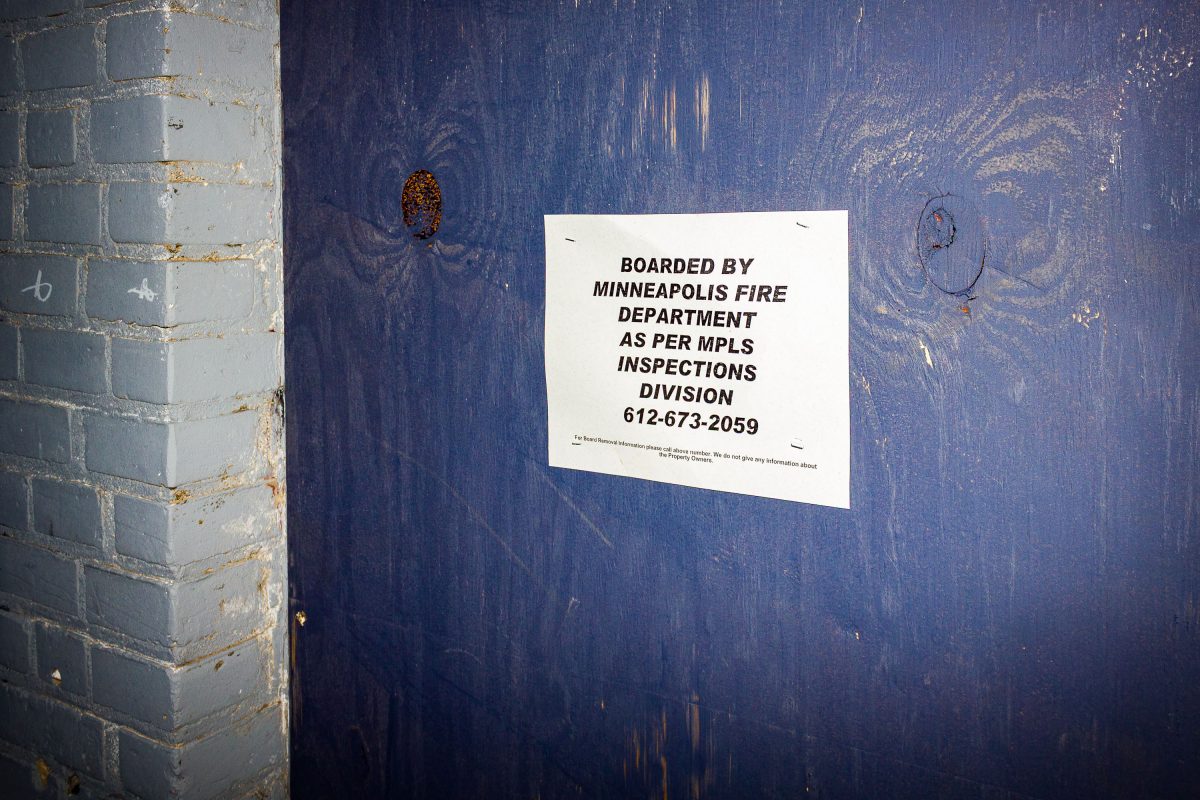
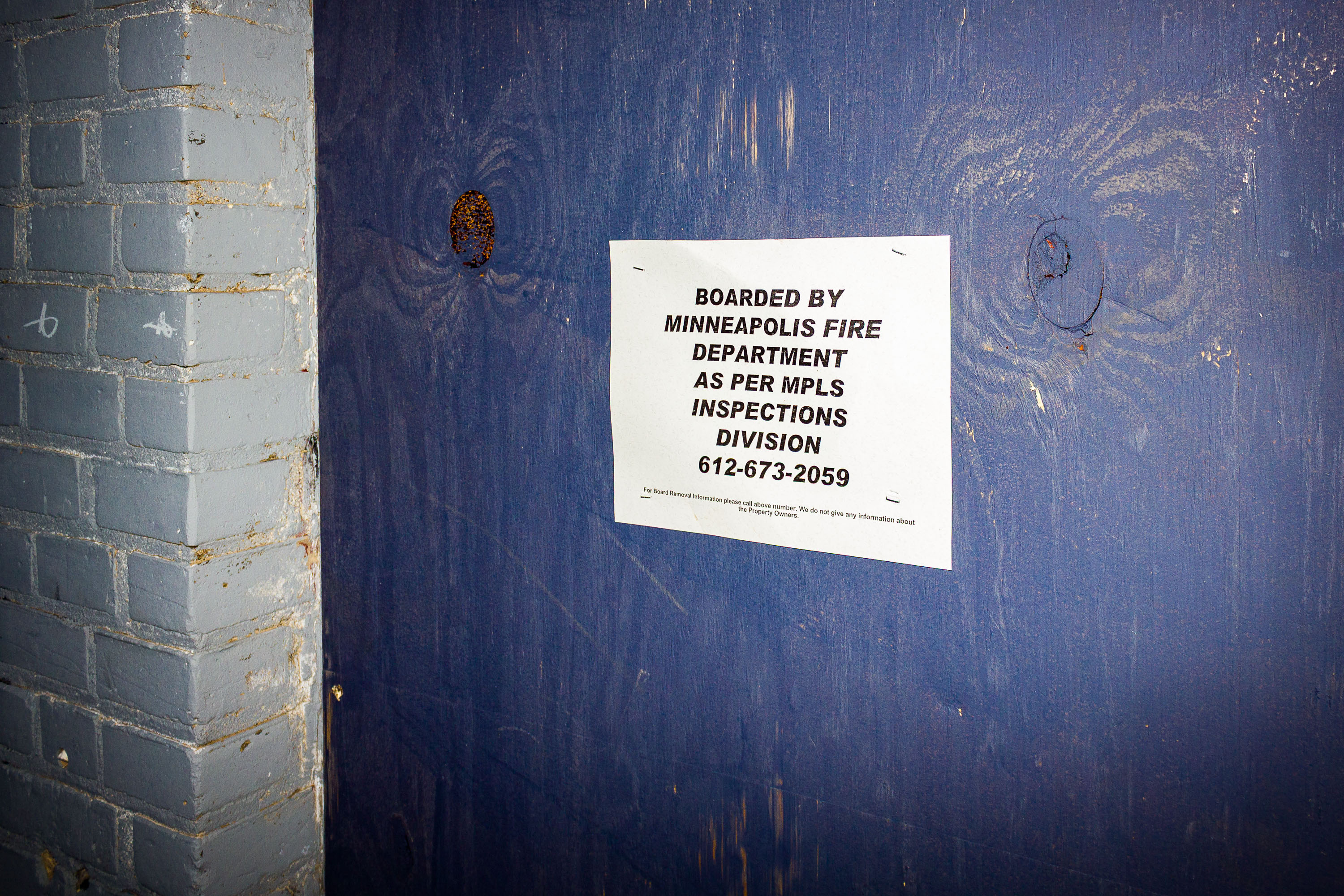
Boarded by Minneapolis Fire Signage
A sign reading Boarded by Minneapolis Fire Department as per MPLS inspections

Boarded by Minneapolis Fire Signage

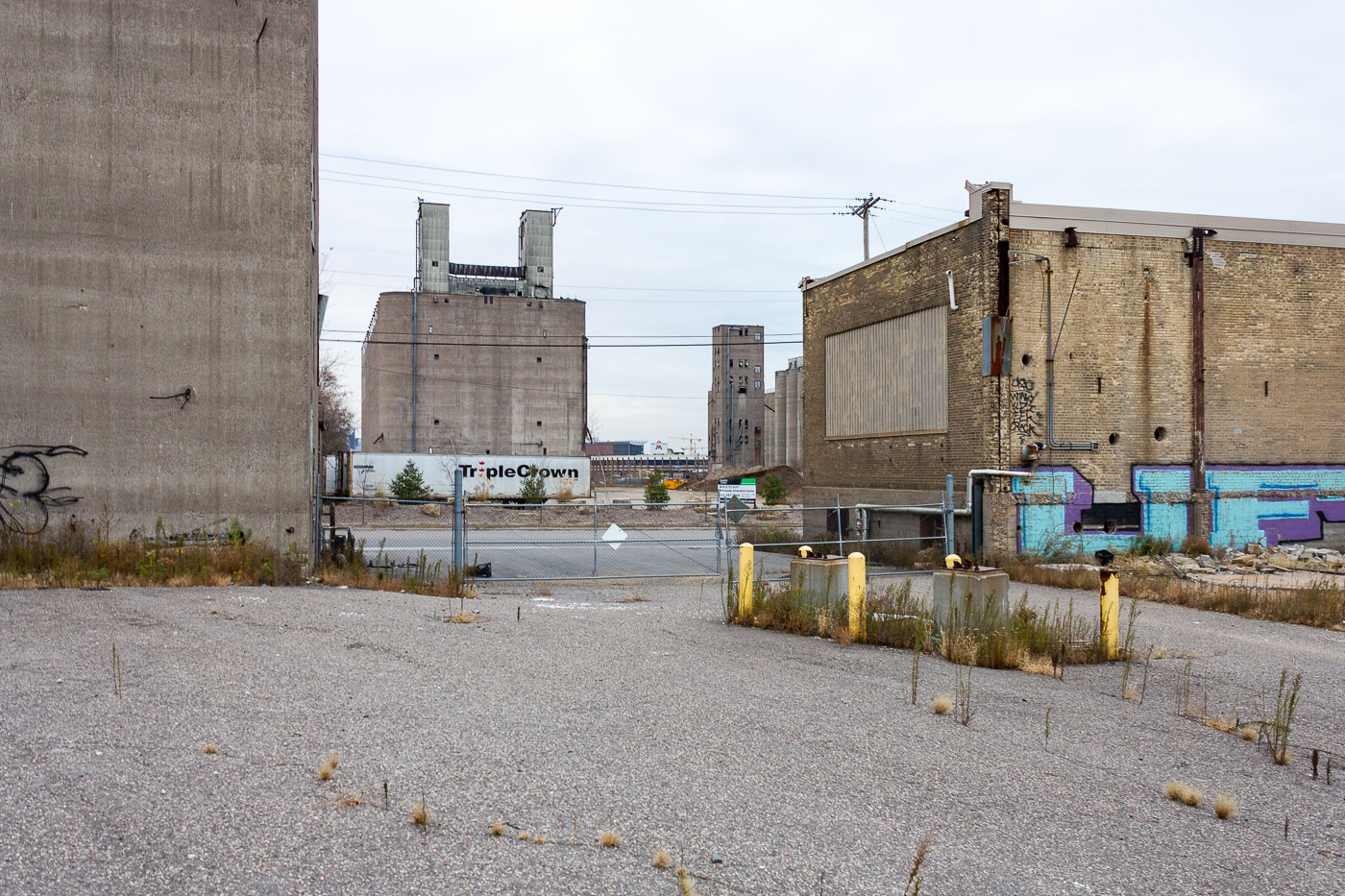
Abandoned grain elevators in Minneapolis, Minnesota, are covered in graffiti. A Triple Crown trailer is parked nearby, indicating ongoing activity at the derelict industrial site.
Abandoned grain elevators in Minneapolis.

Abandoned Grain Elevators and Graffiti, Minneapolis

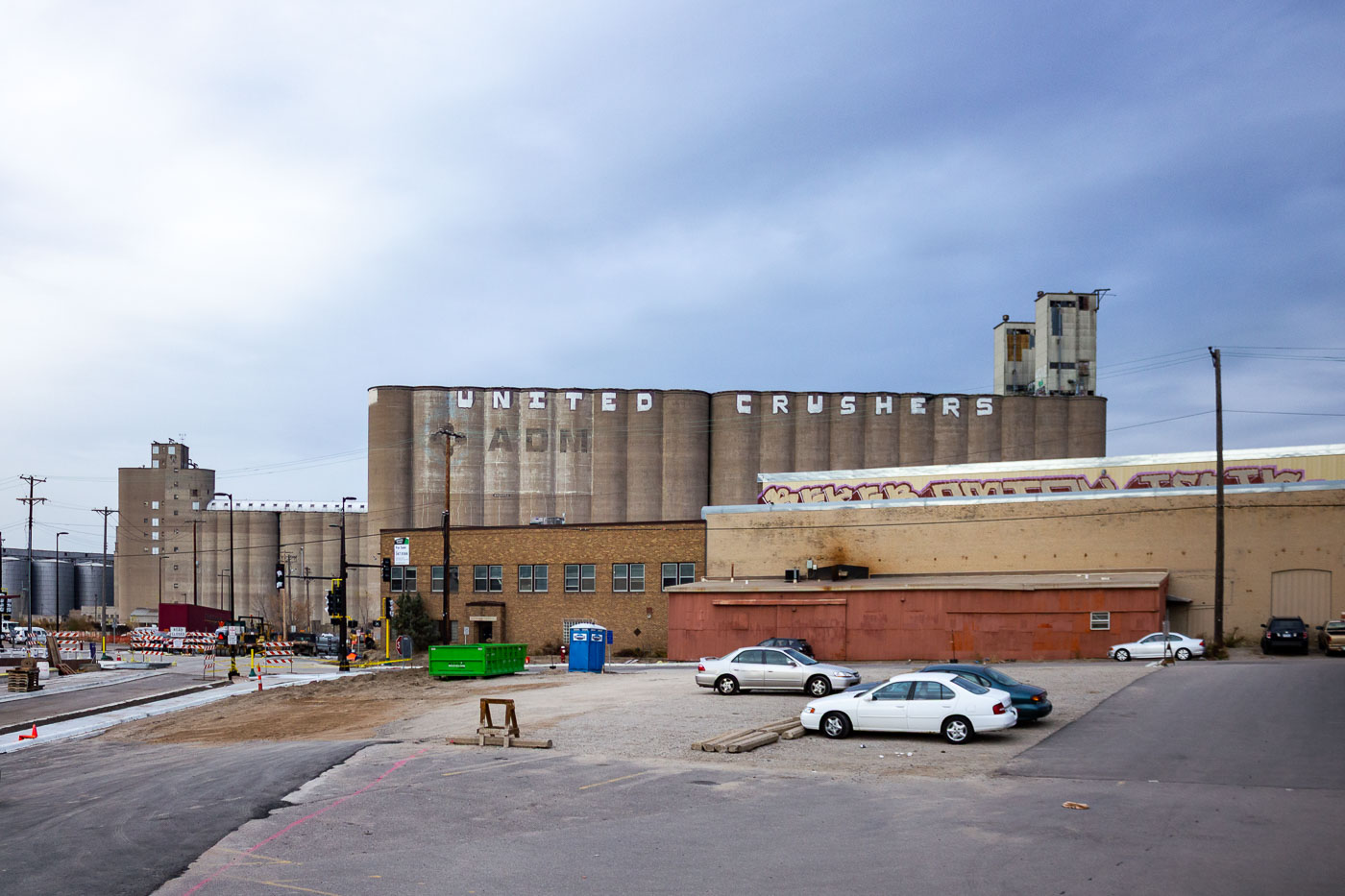
The ADM Grain Elevator complex, also known as United Crushers, in Minneapolis, Minnesota, is a large industrial facility for grain storage and processing.
The ADM United Crushers grain elevator complex in Minneapolis. The "United Crushers" tag at this point has become a historical tag in Minneapolis.

ADM United Crushers Grain Elevator, Minneapolis

Robotic welders operate on an automotive assembly line at a Ford plant in St. Paul, Minnesota.
Robotic welders at a Ford assembly plant in St. Paul, Minnesota. The automated welding equipment operates on an automotive body assembly line, joining stamped metal components during vehicle production. The plant was part of Ford's Twin Cities manufacturing operations.

Robotic Welders at Ford Assembly Plant, St. Paul

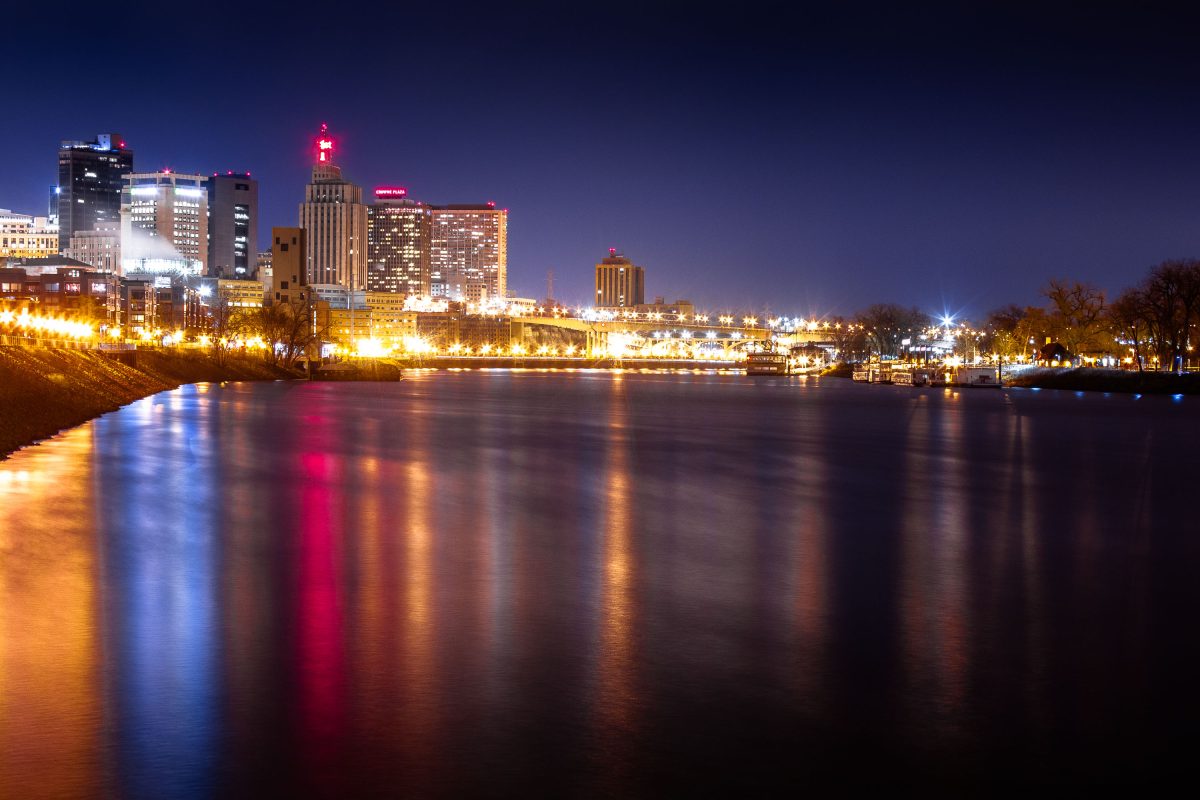
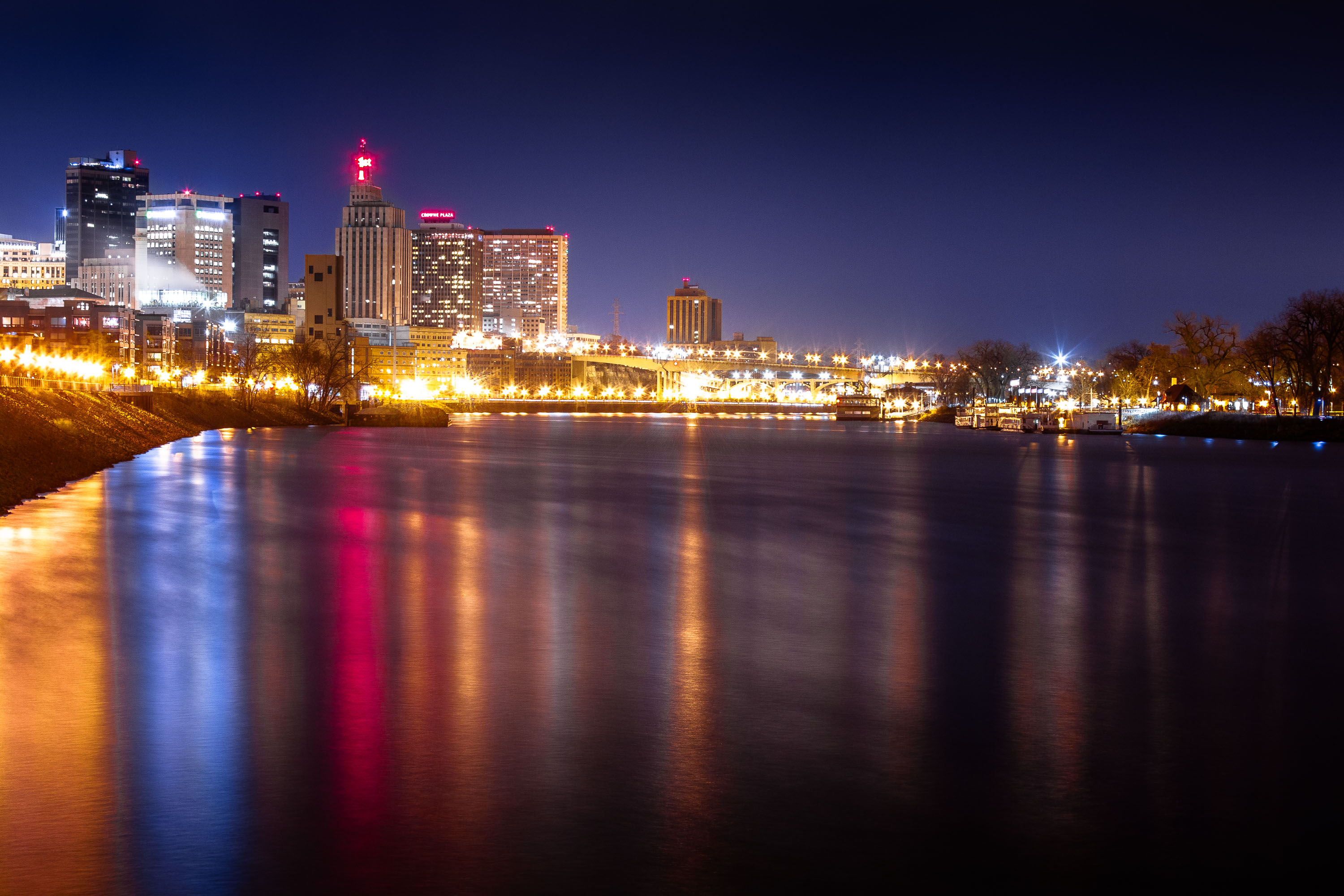
St. Paul skyline at night illuminated above the Mississippi River.
Downtown St. Paul sits along a bend of the Mississippi River, about nine miles downstream from Minneapolis. The First National Bank Building, completed in 1931, rises 32 stories and carries a red "1st" sign that has topped the tower since its construction; it remained St. Paul's tallest building until Wells Fargo Place overtook it in 1987. The Wabasha Street Bridge, rebuilt in 1998, carries traffic across the river between downtown and the West Side neighborhood. St. Paul has served as Minnesota's capital since 1849.

Downtown St. Paul Skyline, Mississippi River

Soap Factory in Minneapolis, No Unauthorized Photography
A sign at the Soap Factory in Minneapolis states "No unauthorized photography" and provides an email address for permission requests. Originally built in 1890 as a flour mill, the building has been repurposed as a venue for art exhibitions and performances.

Soap Factory in Minneapolis, No Unauthorized Photography

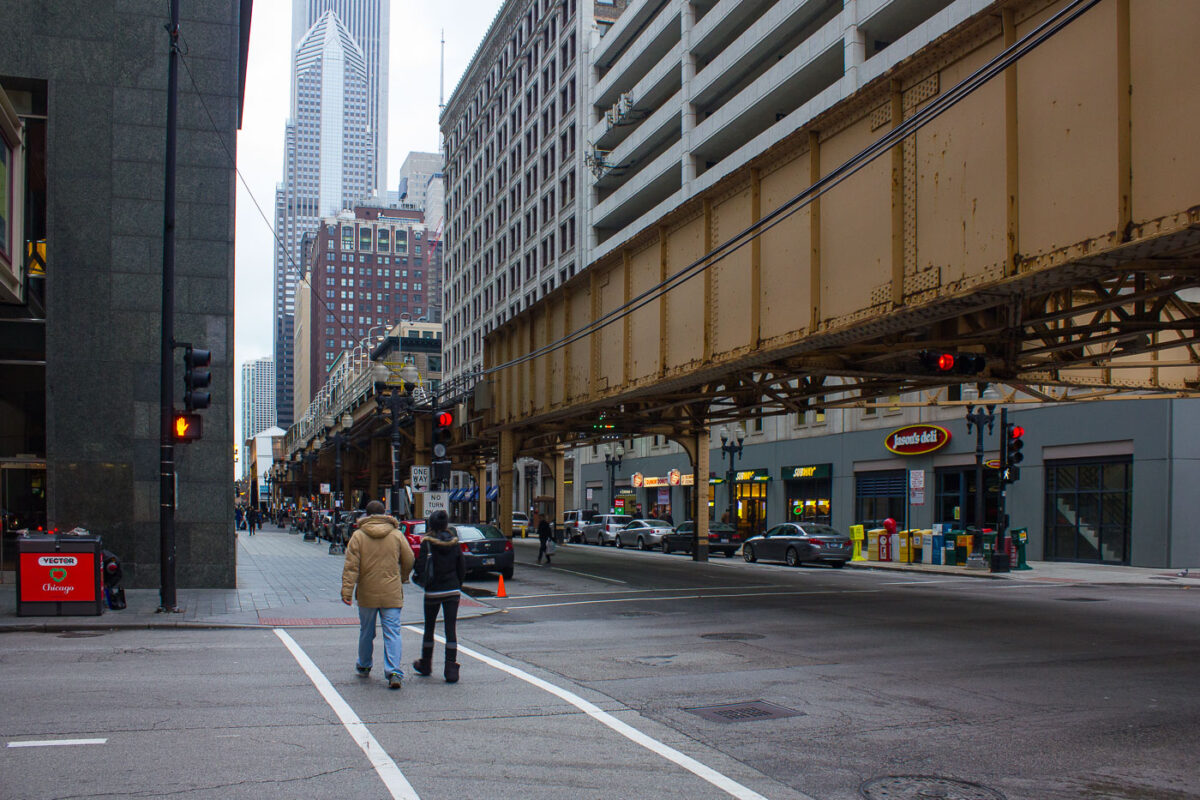
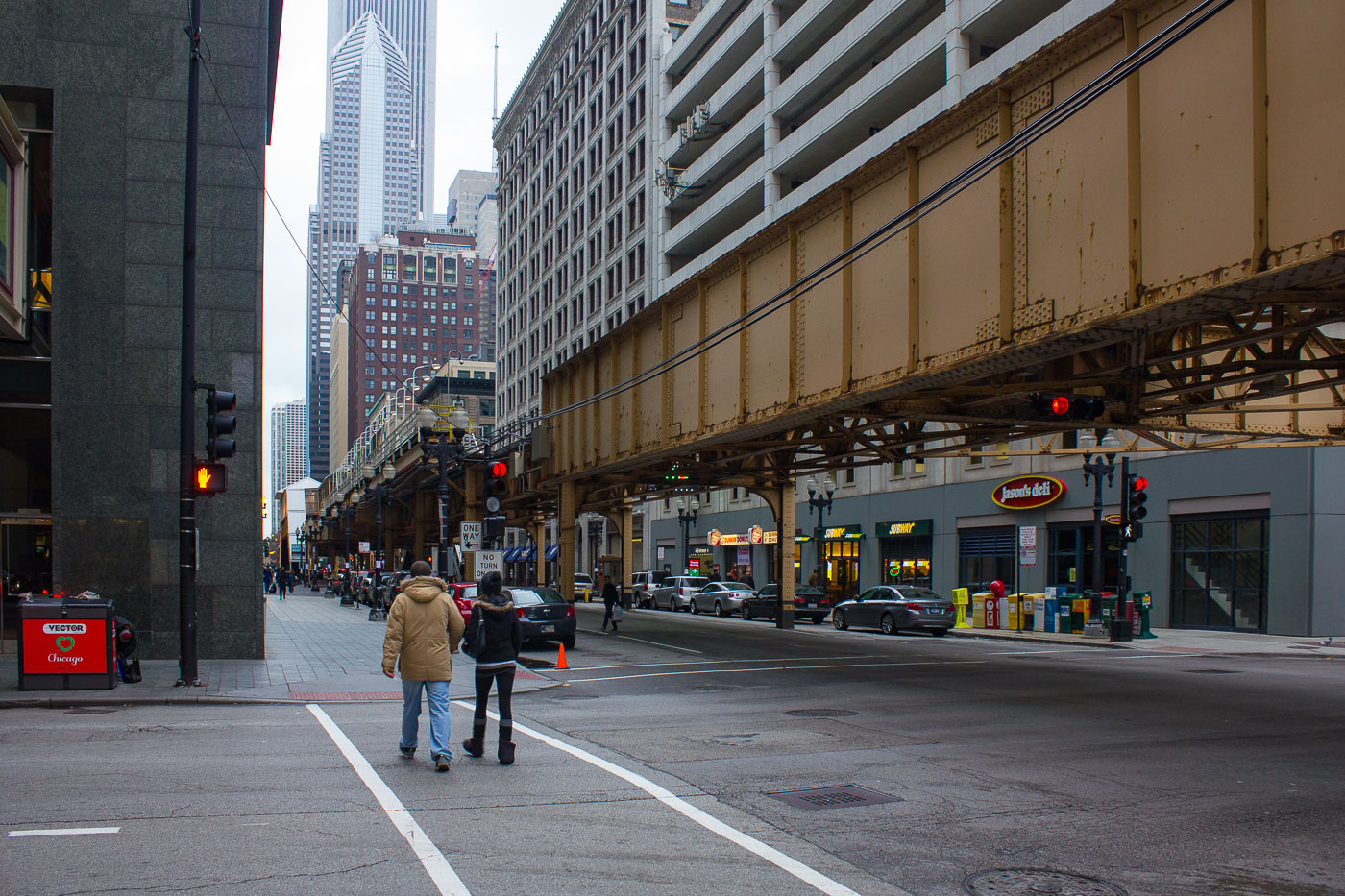
Lake Street elevated 'L' tracks cross Dearborn Street in Chicago's Loop.
Lake Street elevated 'L' tracks run above Lake Street at Dearborn Street in Chicago's Loop. The structure is part of the CTA's Loop Elevated, the rail circuit that carries rapid transit through the central business district. Built in stages in the late 19th century, Chicago's elevated system remains a core connection between downtown and surrounding neighborhoods.

Lake Street ‘L’ Tracks at Dearborn Street, Chicago

3M World Headquarters in Maplewood, Minnesota, illuminated at night.
3M World Headquarters in Maplewood, Minnesota, is the corporate headquarters of the multinational materials science company. The complex houses administrative and research functions for 3M, which was founded in 1902 and is based in the St. Paul suburb of Maplewood.

3M World Headquarters at Night, Maplewood, Minnesota

View from a Hyatt hotel room window of downtown Minneapolis at night, showing illuminated buildings and city lights.
A view from a hotel room at the Hyatt Regency Minneapolis showcases the city's downtown core at night. The hotel, a significant fixture in the Minneapolis business district, provides lodging and event spaces for travelers and locals alike. Its construction and operation are part of the ongoing development and economic activity that defines the urban environment of Minneapolis. The illuminated buildings visible through the window represent the commercial and residential heart of the city, highlighting its role as a center for business and culture in the Upper Midwest.

Hyatt Hotel Room View of Downtown Minneapolis at Night

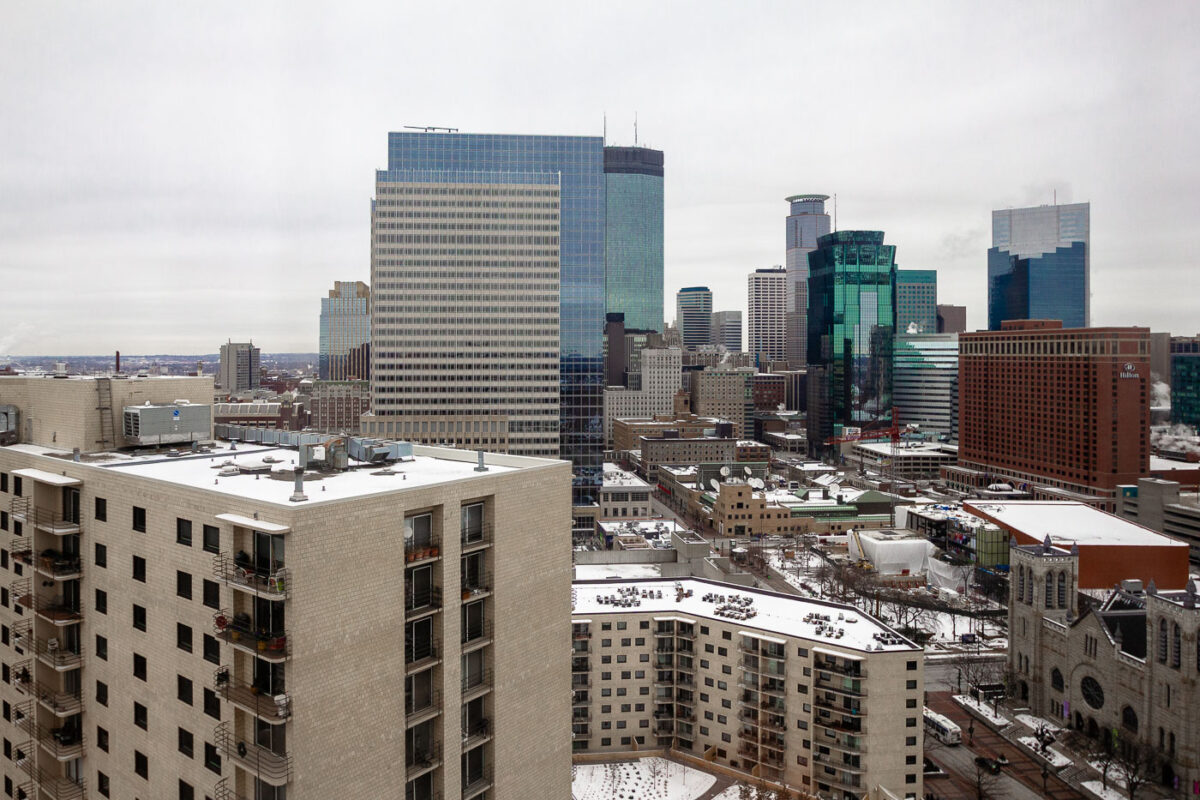
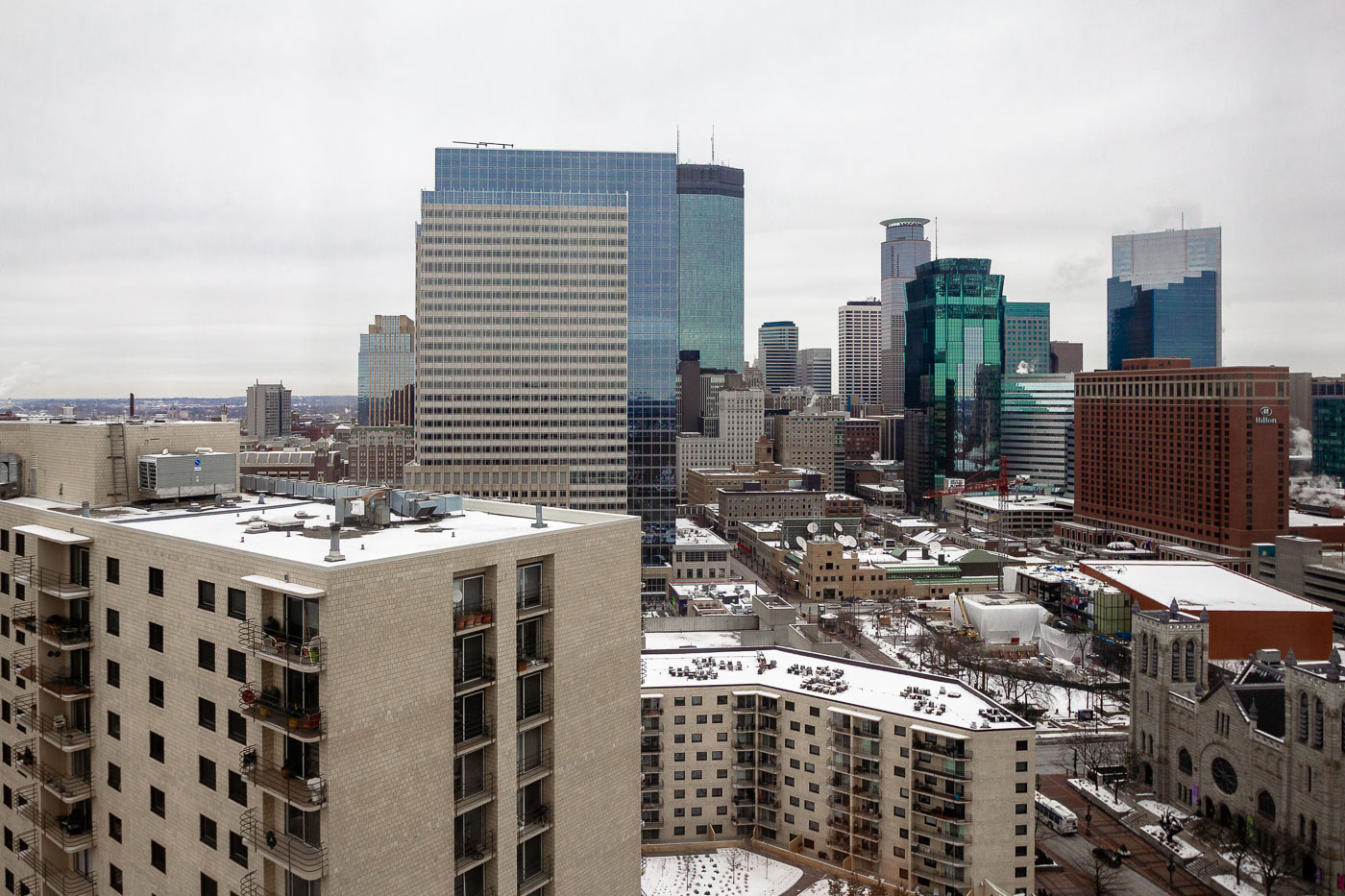
Downtown Minneapolis skyline from the Hyatt Regency Minneapolis, with snow-covered rooftops and office towers.
Downtown Minneapolis is visible from the Hyatt Regency Minneapolis. The skyline includes office towers, hotels, and church buildings in the city’s central business district. Snow covers rooftops and streets in winter.

Downtown Minneapolis Skyline from Hyatt Hotel

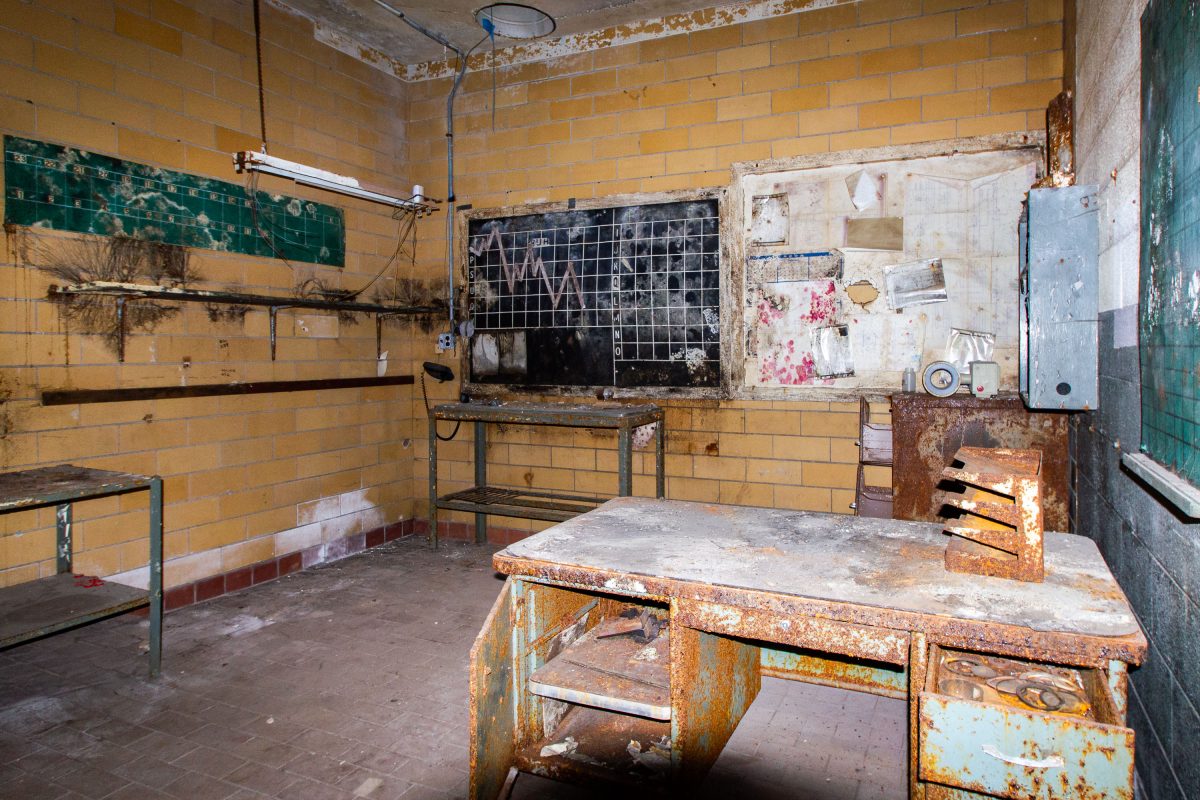
Abandoned testing lab at Schmidt Brewery in St. Paul featuring rusted tables, yellow tile walls, and deteriorated equipment.
The Schmidt Brewery complex on West Seventh Street in St. Paul traces its roots to 1855, when it began as the St. Paul Brewing Company before Jacob Schmidt took control in 1900 and renamed it. By the mid-20th century it ranked among the largest breweries in the country, producing Schmidt beer along with brands like Old Style and Grain Belt after later mergers. The brewery closed production in 2002, and much of the site sat vacant for over a decade afterward. Portions of the complex are listed on the National Register of Historic Places, and the property was eventually redeveloped into artist lofts and event space starting in 2013.

Chalkboard and Rusted Workbenches, Schmidt Brewery, St. Paul

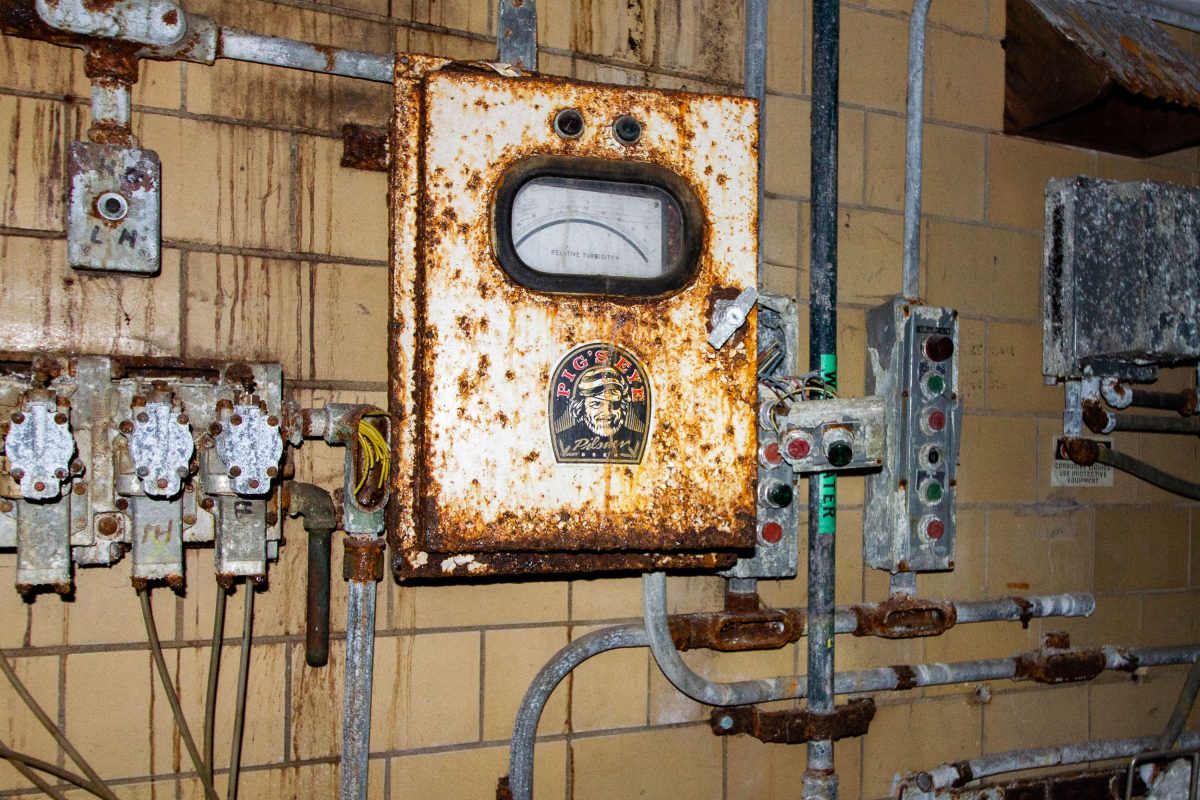
Rusted electrical control panel with Pig's Eye Pilsner emblem from Jacob Schmidt Brewery in St. Paul.
The Pig's Eye Pilsner sticker on this control panel ties it to the Jacob Schmidt Brewing Company, which operated on West Seventh Street in St. Paul from 1900 until it closed in 2002. The Pig's Eye name honors Pierre "Pig's Eye" Parrant, a fur trader and bootlegger regarded as one of St. Paul's earliest settlers. The brewery's industrial complex, developed over the early twentieth century, was listed on the National Register of Historic Places in 1990. Following years of vacancy after closure, the site was redeveloped into housing known as the Schmidt Artist Lofts.

Pig’s Eye Pilsner Sticker on a Gauge Panel at Schmidt Brewery

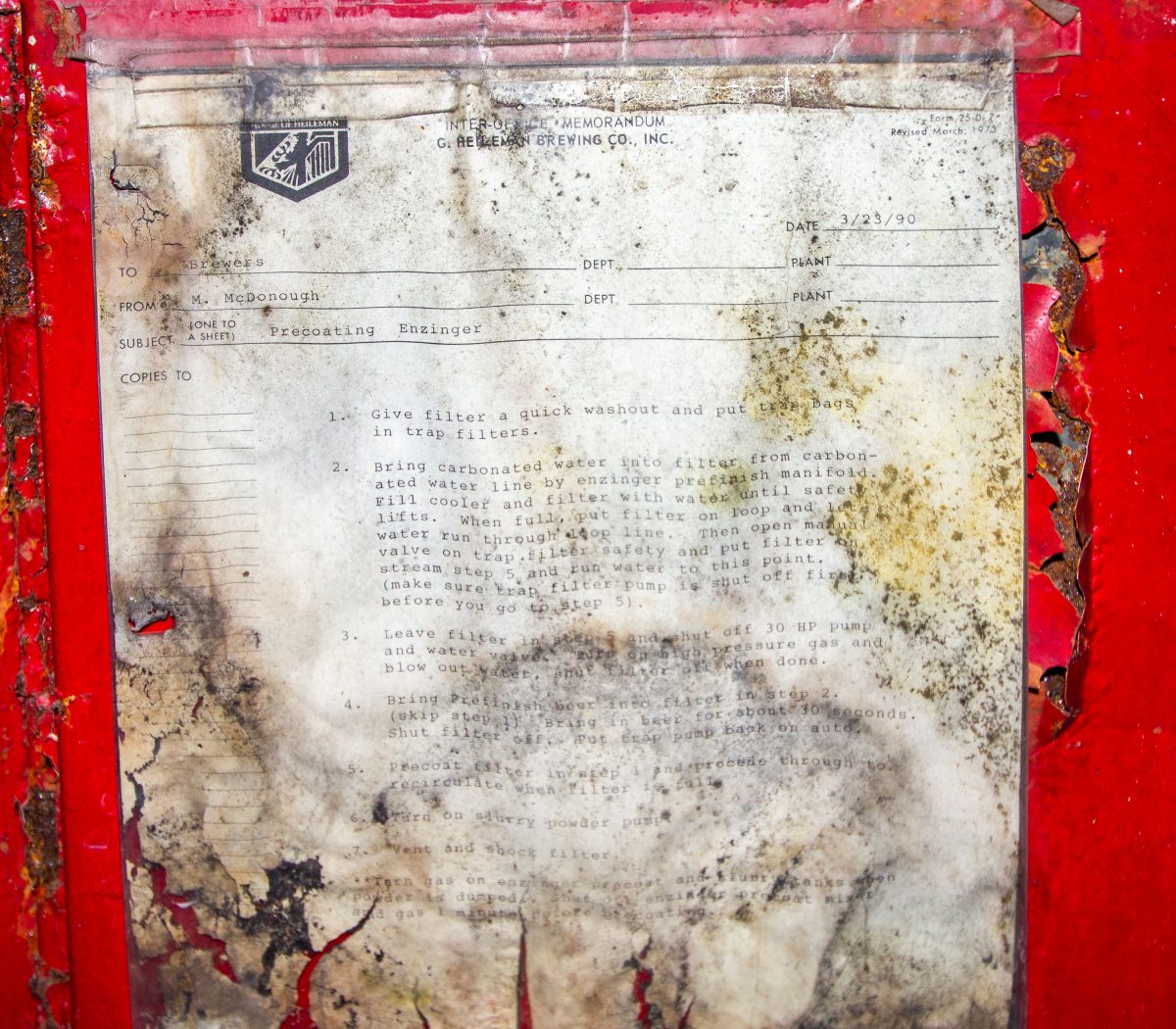
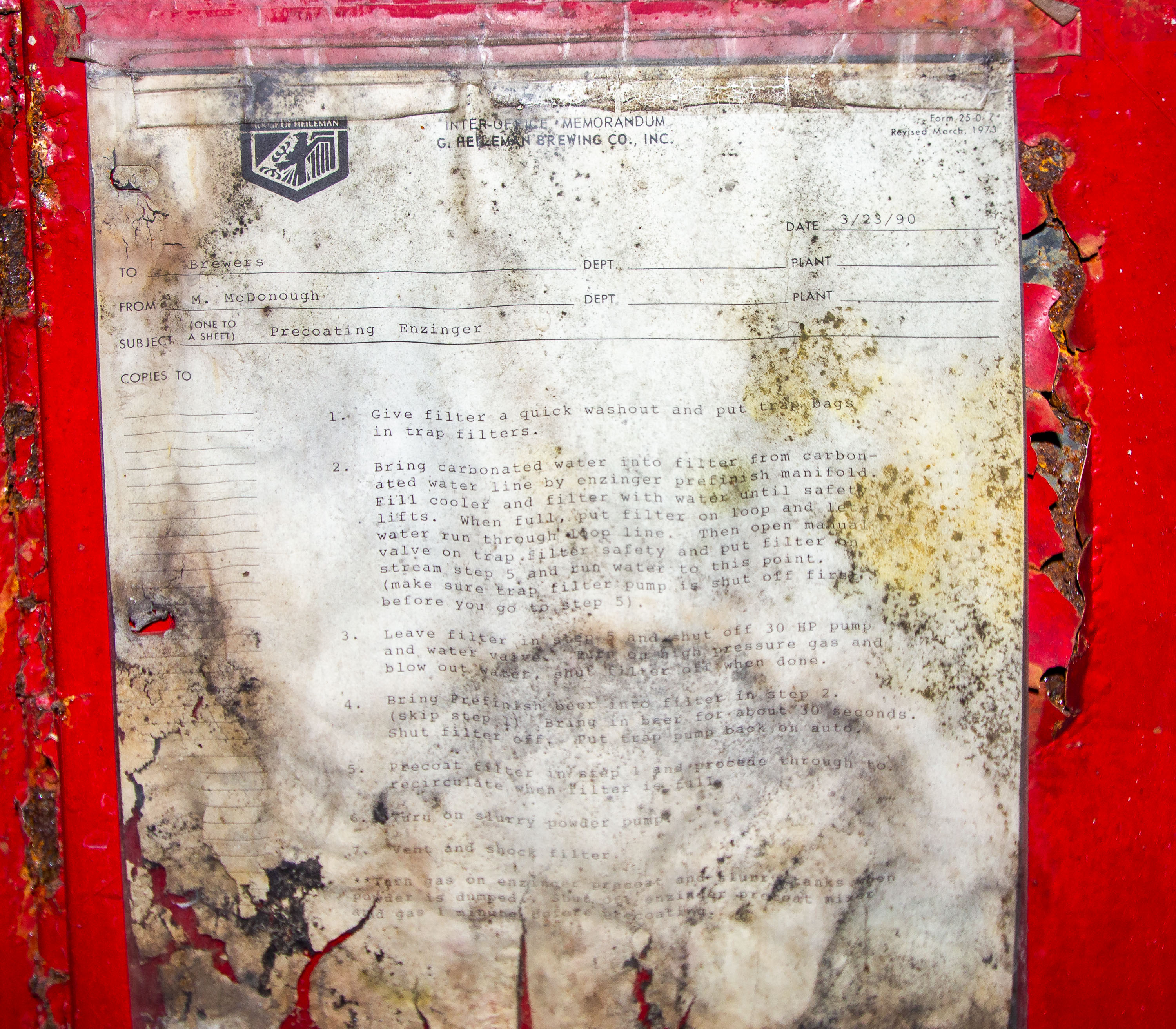
Aged interoffice memorandum from G. Heileman Brewing Co.
G. Heileman Brewing Co., Inc. took over the Jacob Schmidt Brewing Company's St. Paul plant in 1972, continuing beer production there under the Schmidt name for nearly two more decades. This interoffice memorandum, dated March 23, 1990, is addressed from M. McDonough to the brewery's staff and outlines a step-by-step procedure for precoating an Enzinger filter, a rotary vacuum filter used to clarify beer before it was packaged. Heileman halted brewing at the West Seventh Street complex later that year, after which Minnesota Brewing Company took over the site. The Schmidt Brewery complex, parts of which date to 1900, is listed on the National Register of Historic Places.

Precoating Enzinger Memo at Schmidt Brewery
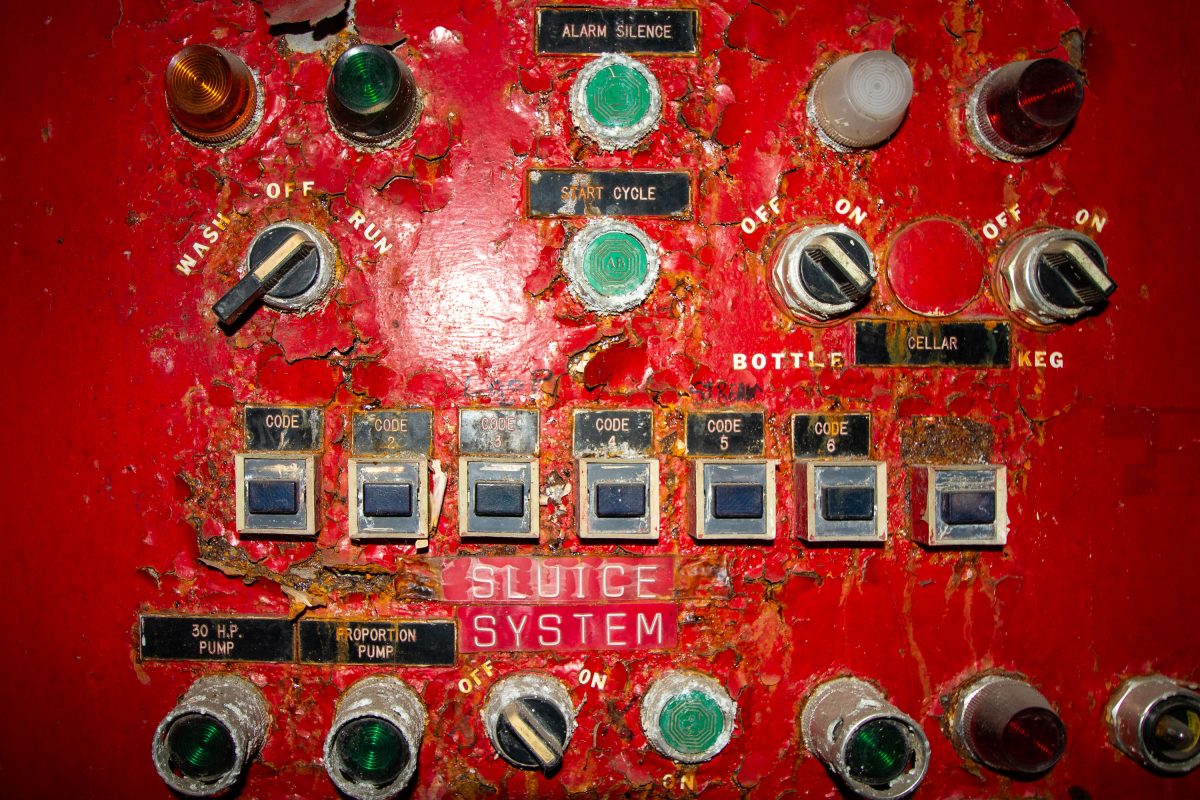
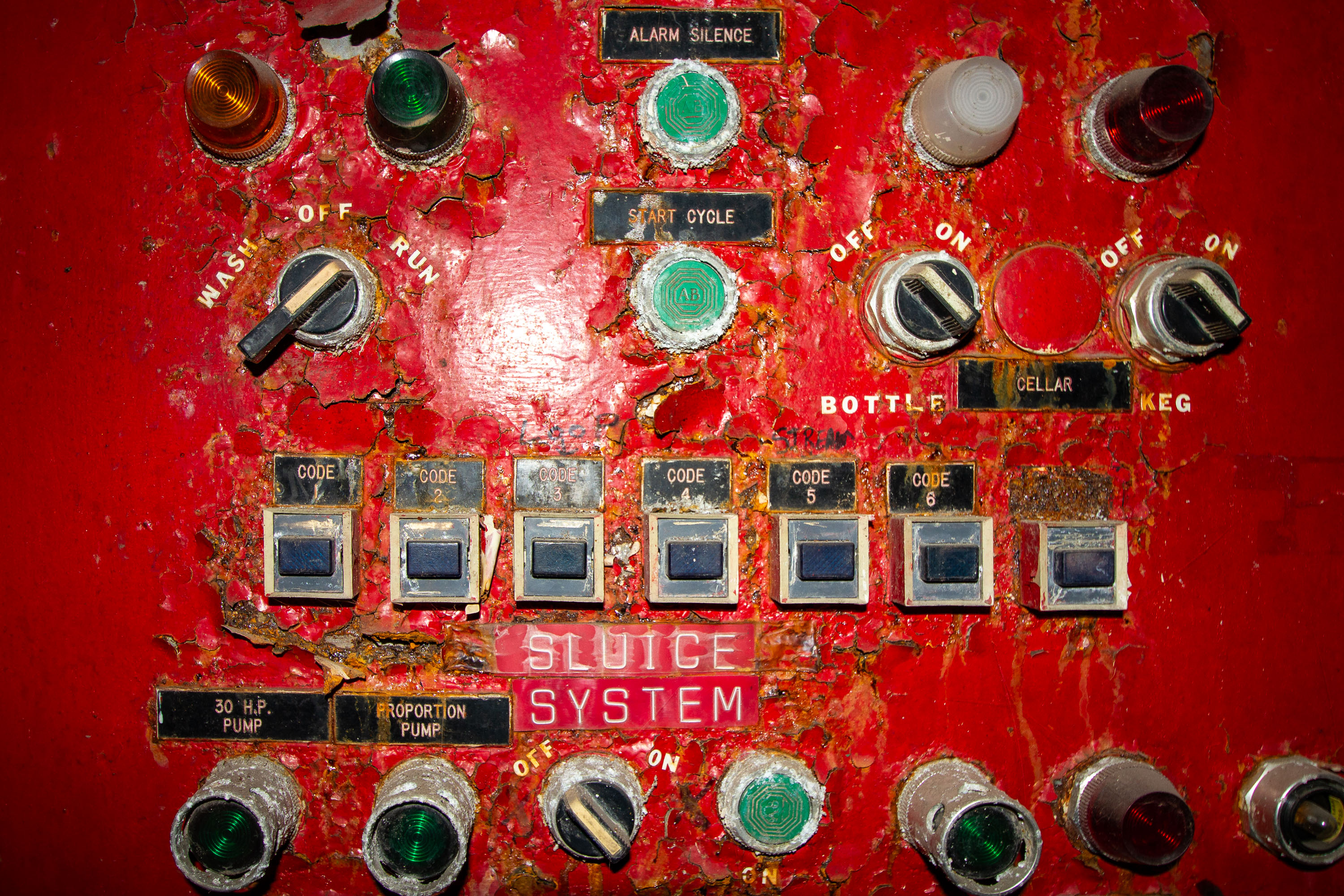
Weathered red control panel from Schmidt Brewery's sluice system with labeled switches, buttons, and indicator lights for bottling and keg operations.
The Jacob Schmidt Brewing Company operated at 882 West Seventh Street in St. Paul from 1900 until its closure in 2002. Panels like this one governed the plant's sluice and pumping operations, routing product between the bottling and keg lines noted on its switches. The brewery once ranked among the largest in Minnesota, producing Schmidt beer for distribution across the Upper Midwest. After decades of vacancy, the complex was redeveloped starting in 2013 into the Schmidt Artist Lofts, and the site is listed on the National Register of Historic Places.

Rusted “Sluice System” Panel at the Schmidt Brewery
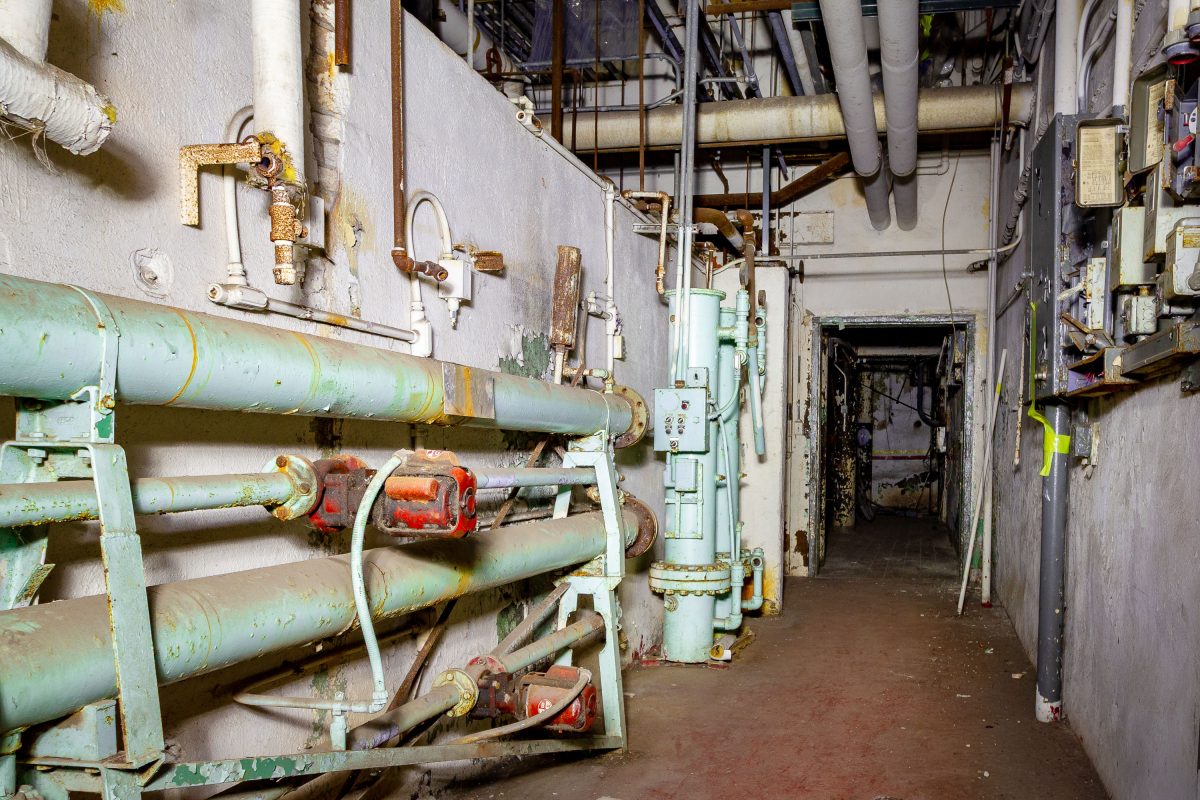
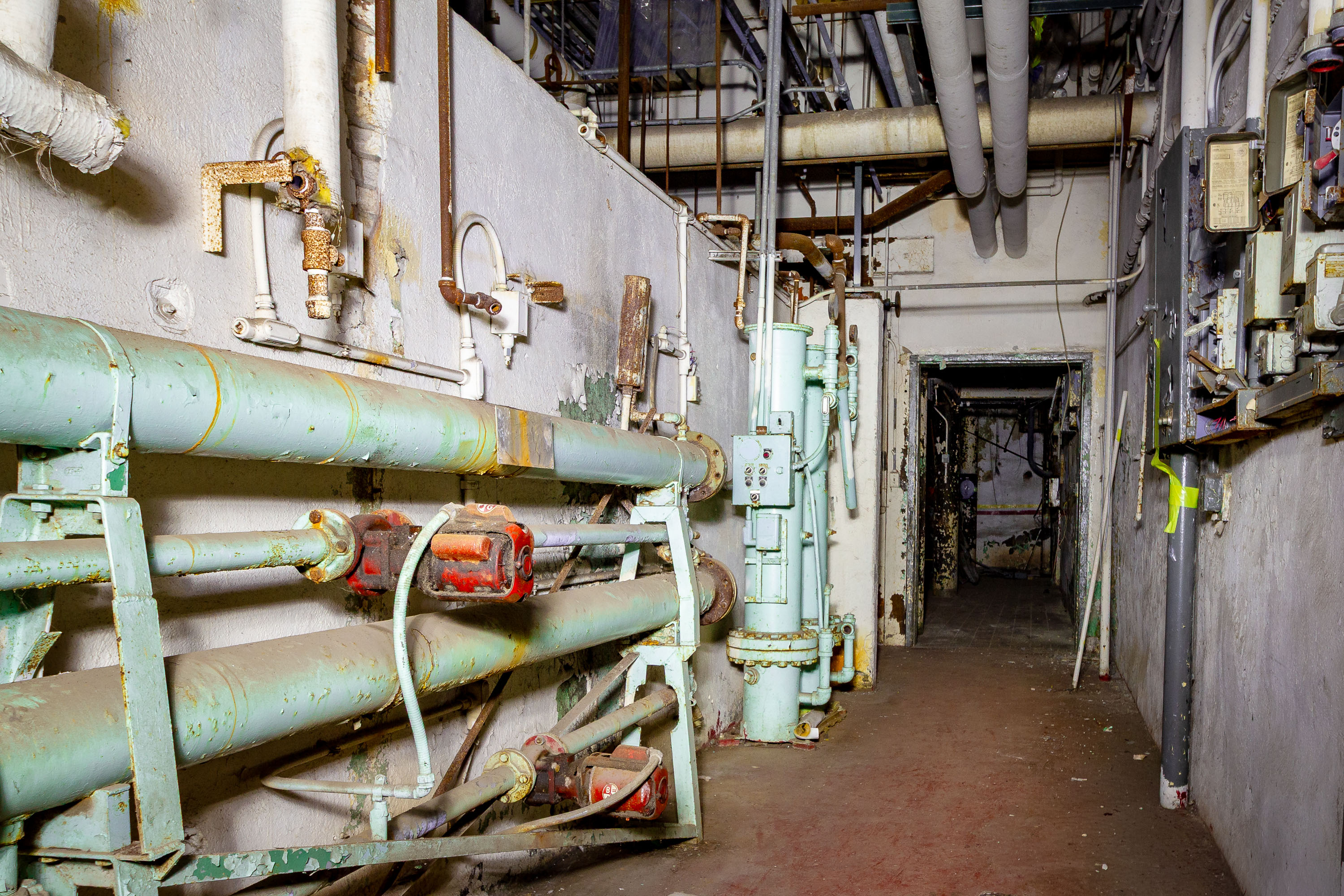
Industrial pipe corridor with rusted valves and fittings inside the abandoned Schmidt Brewery in St. Paul, Minnesota.
The former Schmidt Brewery complex sits along West Seventh Street in St. Paul, where the Jacob Schmidt Brewing Company operated for much of the 20th century after taking over an earlier plant founded in the 1850s. Production continued under various owners until the brewery closed in 2002, leaving behind a network of boiler rooms, pipe galleries, and mechanical corridors built to support large-scale brewing operations. Many of these service areas, lined with steam and process piping, were later gutted or left untouched during the site's redevelopment into artist studios and apartments starting in the 2010s. The complex was added to the National Register of Historic Places in 2006, recognizing its role in Minnesota's brewing industry.

Pipe Gallery Inside the Former Schmidt Brewery
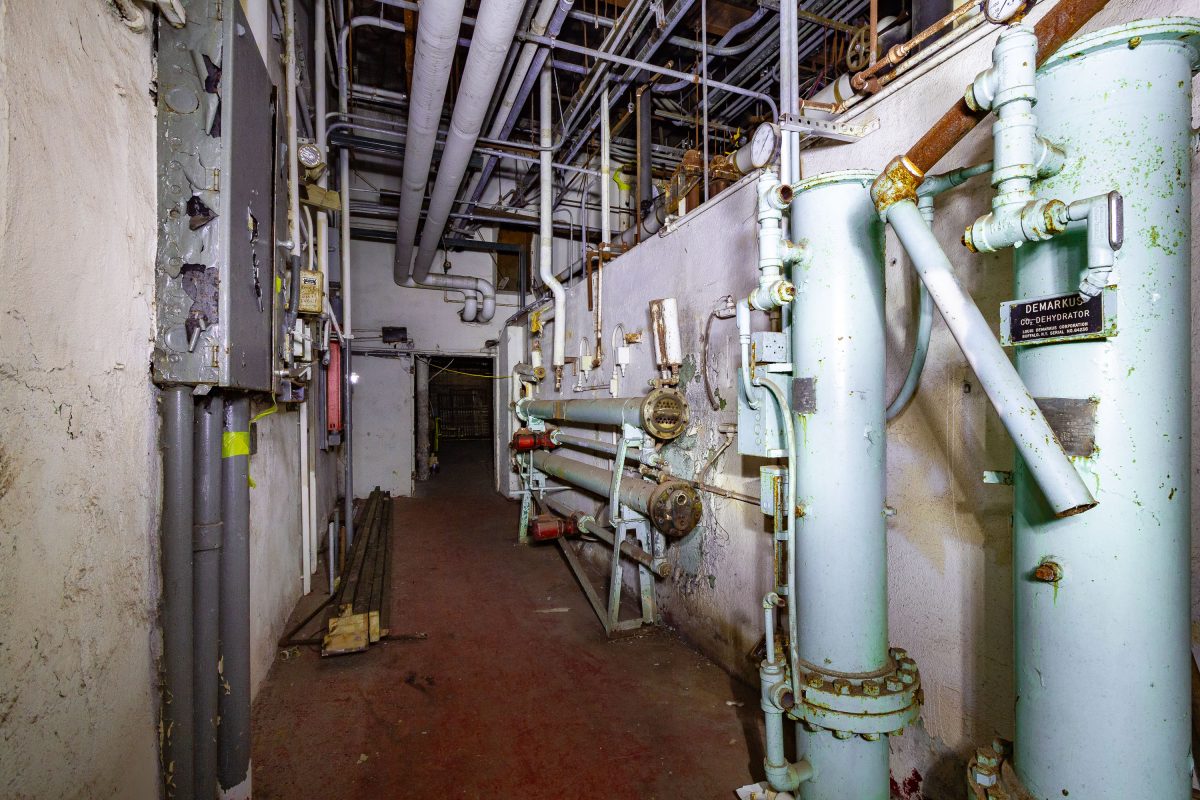
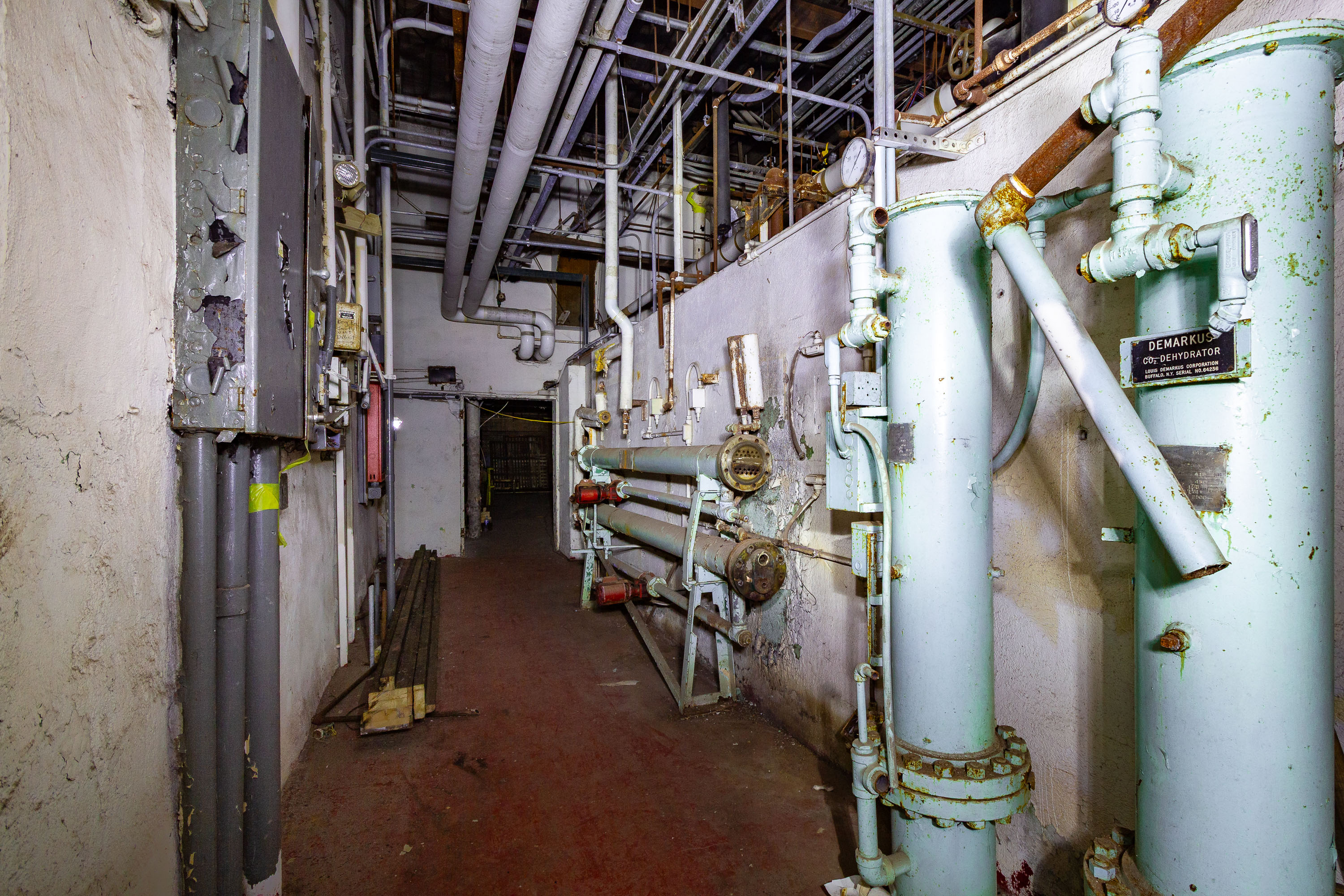
Industrial corridor in Schmidt Brewery's CO2 dehydrator room with rusted pipes, valves, and equipment lining the walls.
The Jacob Schmidt Brewing Company operated at this West Seventh Street site in St. Paul from 1900 until production ended in 2002 under later owner Minnesota Brewing Company. Machinery like the CO2 dehydrator unit pictured here supported the carbonation and packaging lines that once turned out beer under the Schmidt label and, later, contract brands. The complex is listed on the National Register of Historic Places for its role in Minnesota's brewing industry. Following a lengthy vacancy, developers converted the property into the Schmidt Artist Lofts, completed in 2013, preserving portions of the original industrial infrastructure within the residential redevelopment.

Demarkus CO2 Dehydrator Tank at Schmidt Brewery
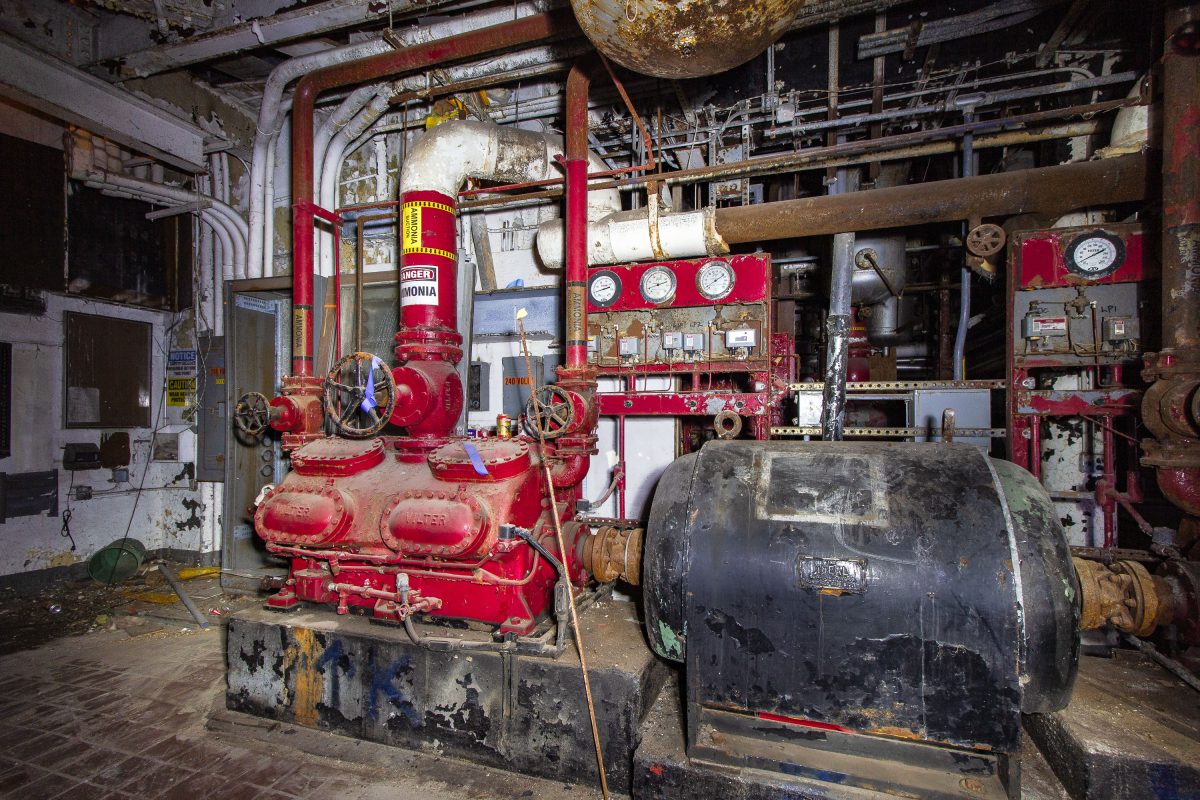
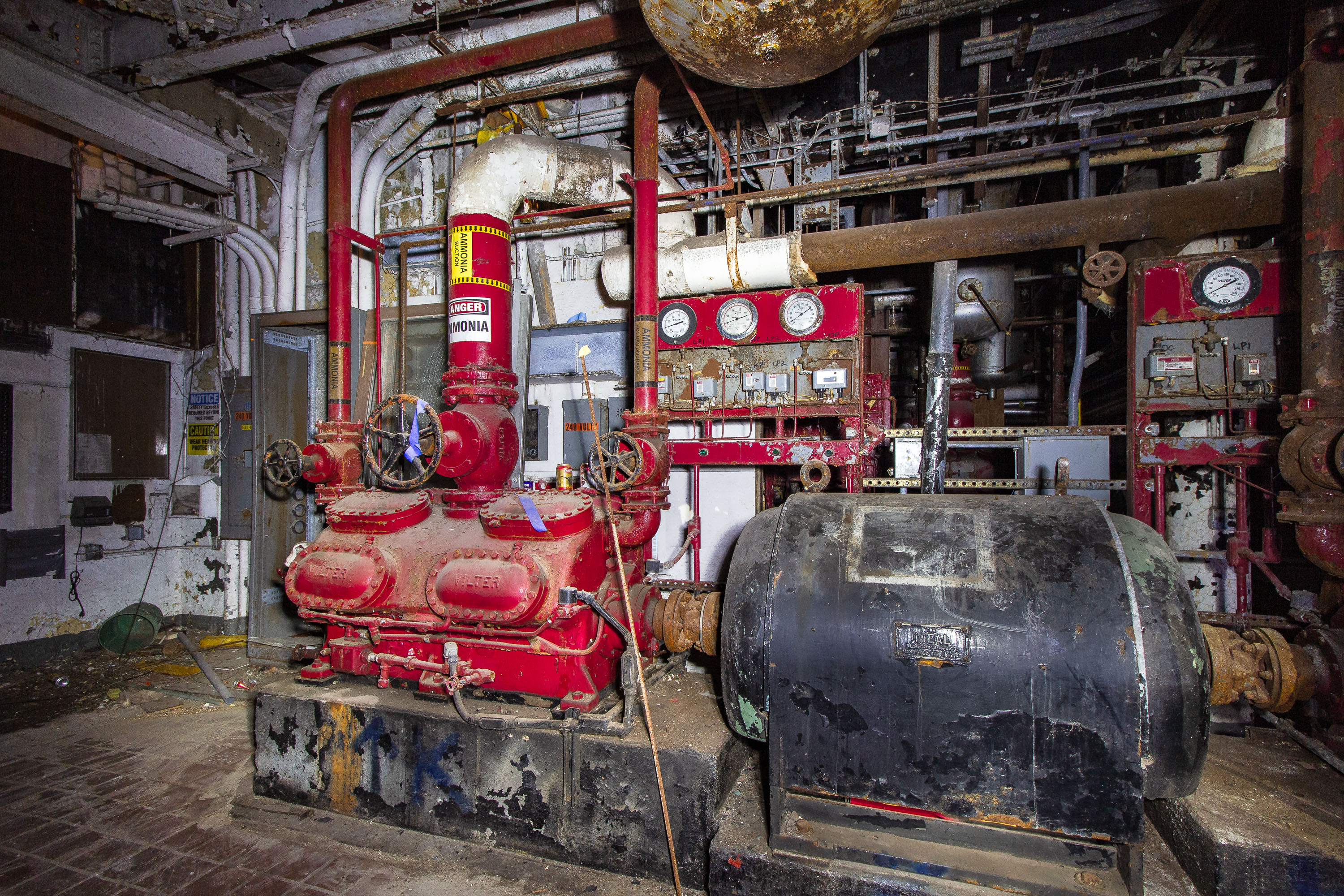
Ammonia compressor system in the machinery room of Schmidt Brewery in St. Paul, Minnesota.
The Jacob Schmidt Brewing Company operated this complex on West Seventh Street in St. Paul from the 1900s until its closure in 2002. Ammonia compressors like this one powered the plant's refrigeration systems, a necessity for lagering beer at controlled temperatures before modern electric cooling took over. The brewery traces its roots to 1855 as the North Star Brewery, later reorganized under Jacob Schmidt in 1900, and grew into one of the largest beer producers in the Upper Midwest. Machinery of this kind remained in service for decades after brewing ceased, left in place when production ended. The property is listed on the National Register of Historic Places and has since been redeveloped into apartments known as the Schmidt Artist Lofts.

Red Ammonia Compressor at the Former Schmidt Brewery
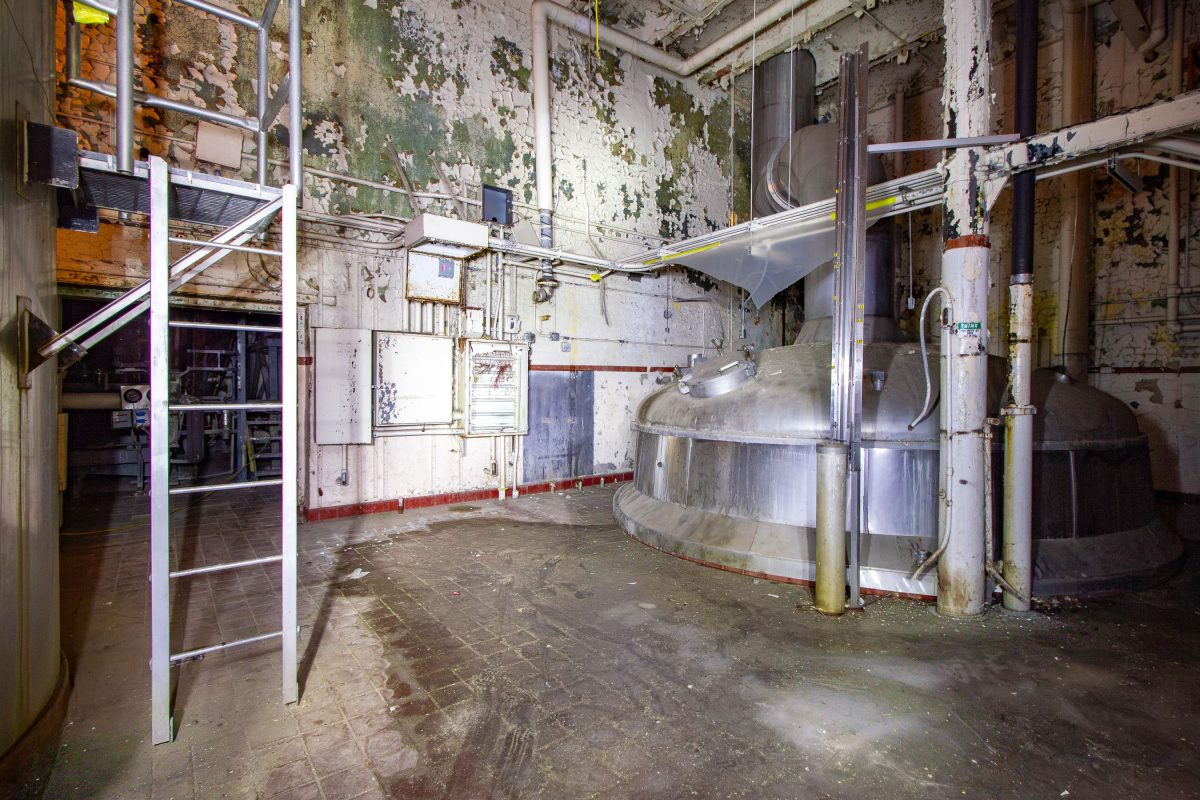
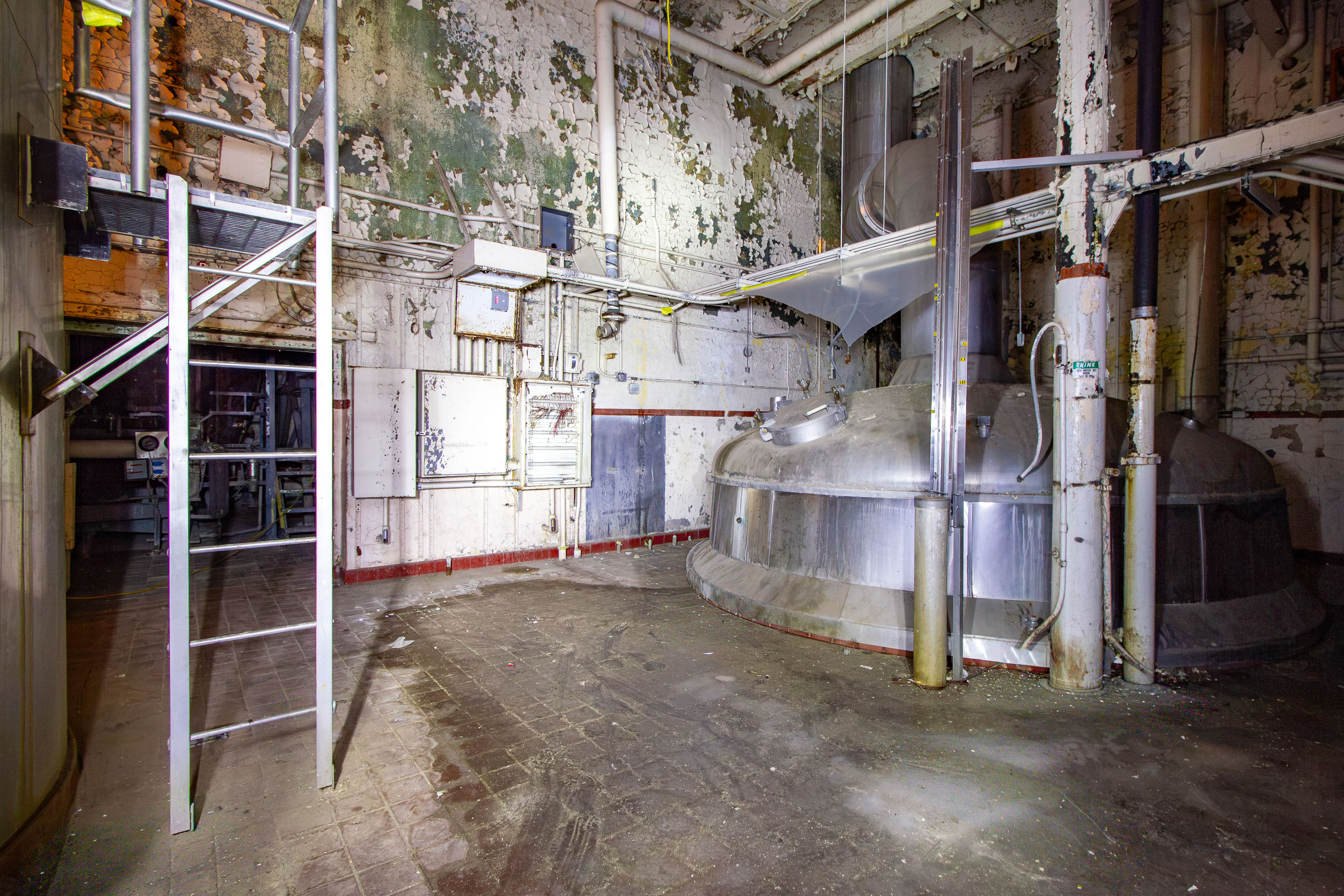
Abandoned brew kettle and industrial machinery in the brew house of Schmidt Brewery in St. Paul, Minnesota.
The Jacob Schmidt Brewing Company operated on West Seventh Street in St. Paul from 1900 until production ceased in 2002, when the Minnesota Brewing Company, its final owner, shut the plant down. Schmidt's beer had been a regional staple for much of the 20th century, at one point ranking among the largest breweries in the country by output. The brew house, listed on the National Register of Historic Places, held the kettles and tanks used to mash and boil grain into wort before fermentation. After sitting vacant for over a decade, the complex was redeveloped into the Schmidt Artist Lofts, reopening in 2013 with the old brewing equipment left in place as a reminder of the site's industrial past.

Kettle Room in the Former Schmidt Brewery’s Brew House
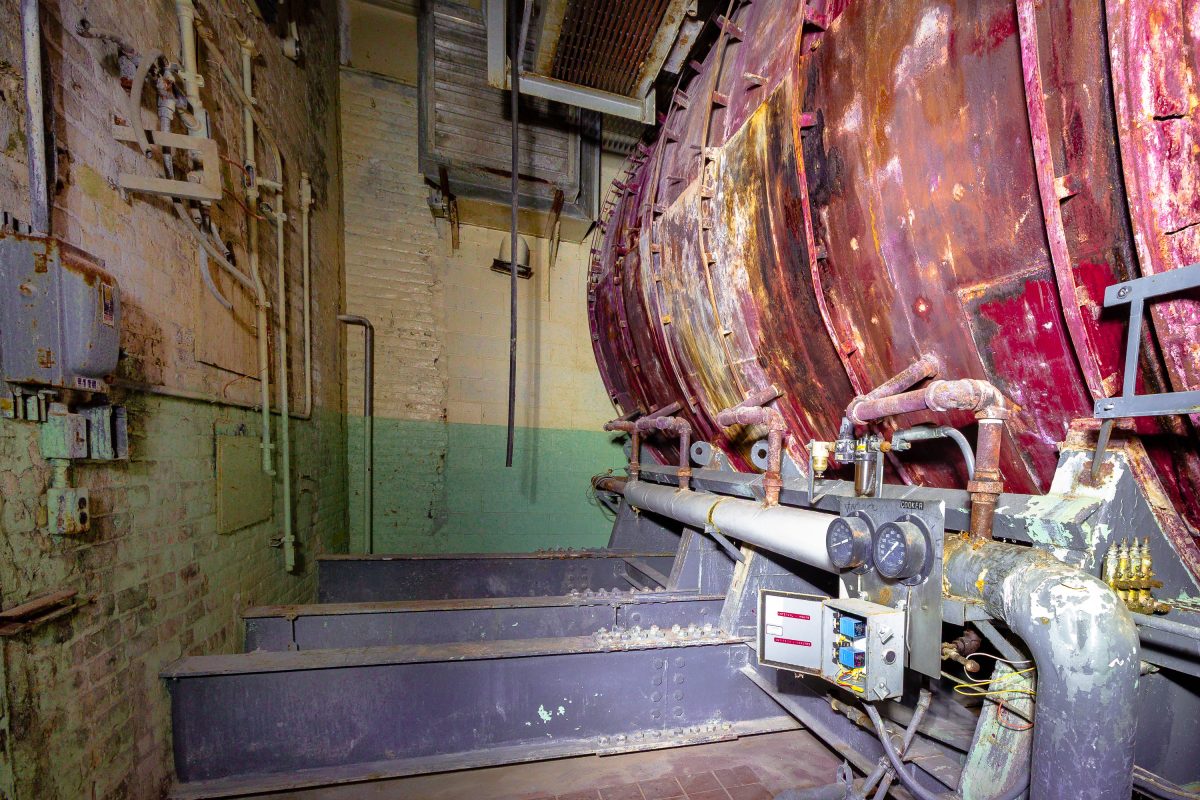
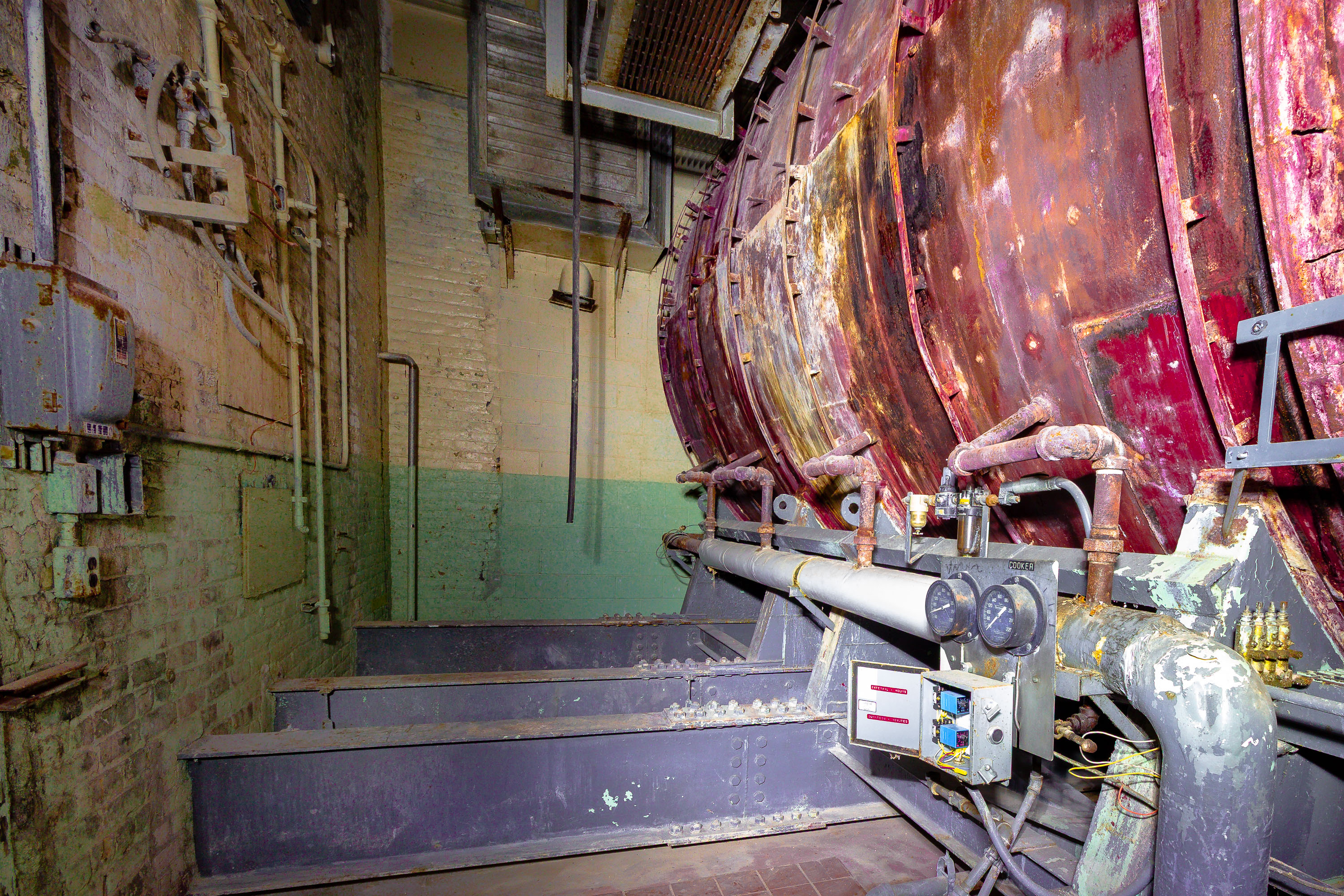
Rusted boiler and steam machinery in the abandoned Schmidt Brewery boiler room in St. Paul, Minnesota.
The Schmidt Brewery complex on West Seventh Street traces its roots to 1855, when Jacob Schmidt began brewing on the site after taking over an earlier operation founded by German immigrant Christopher Stahlmann. By the early 1900s it had grown into one of the largest breweries in the country, producing Schmidt Beer and City Club under a sprawling campus of production and power buildings along the Mississippi River bluff. Brewing operations continued under various owners until the plant closed in 1990, ending more than a century of continuous production. The boiler and mechanical rooms housed the steam systems that powered brewing kettles, bottling lines, and refrigeration throughout the complex. In 2013 the site was redeveloped into the Schmidt Artist Lofts, and the brewery's main buildings were later listed on the National Register of Historic Places.

Rusted Boiler Tank at the Former Schmidt Brewery
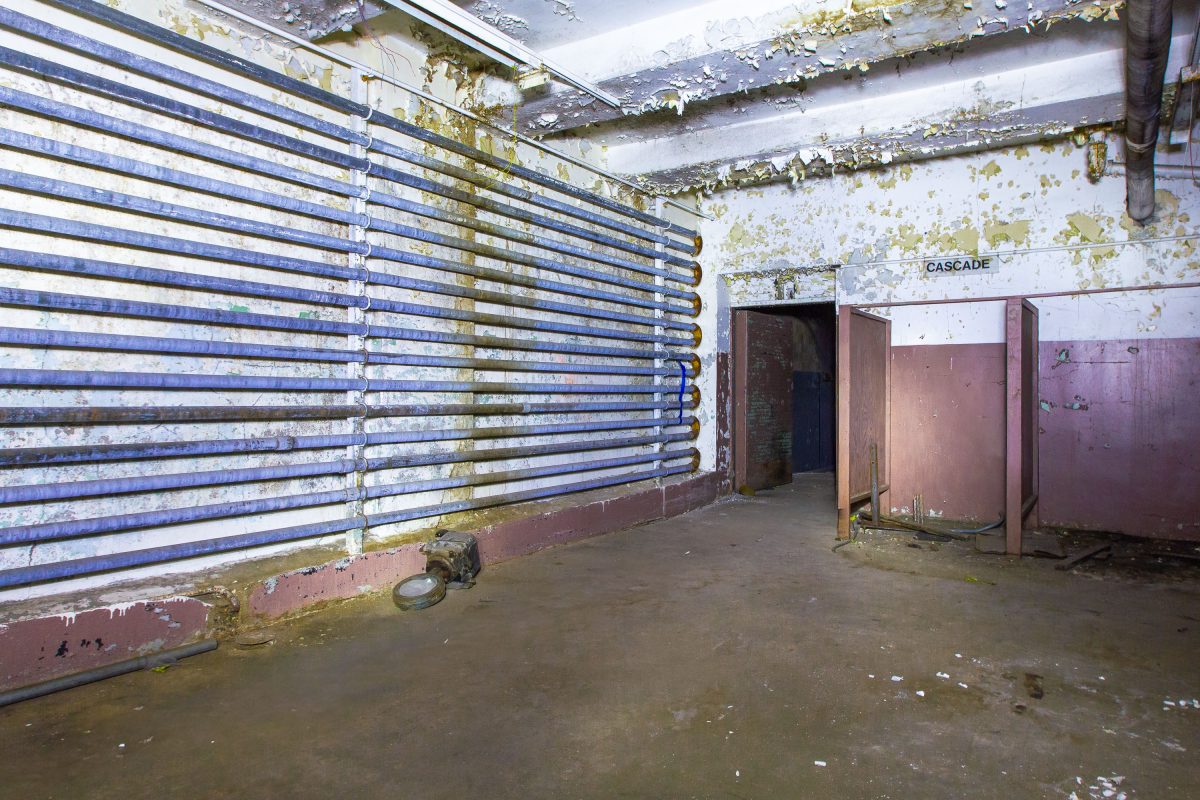
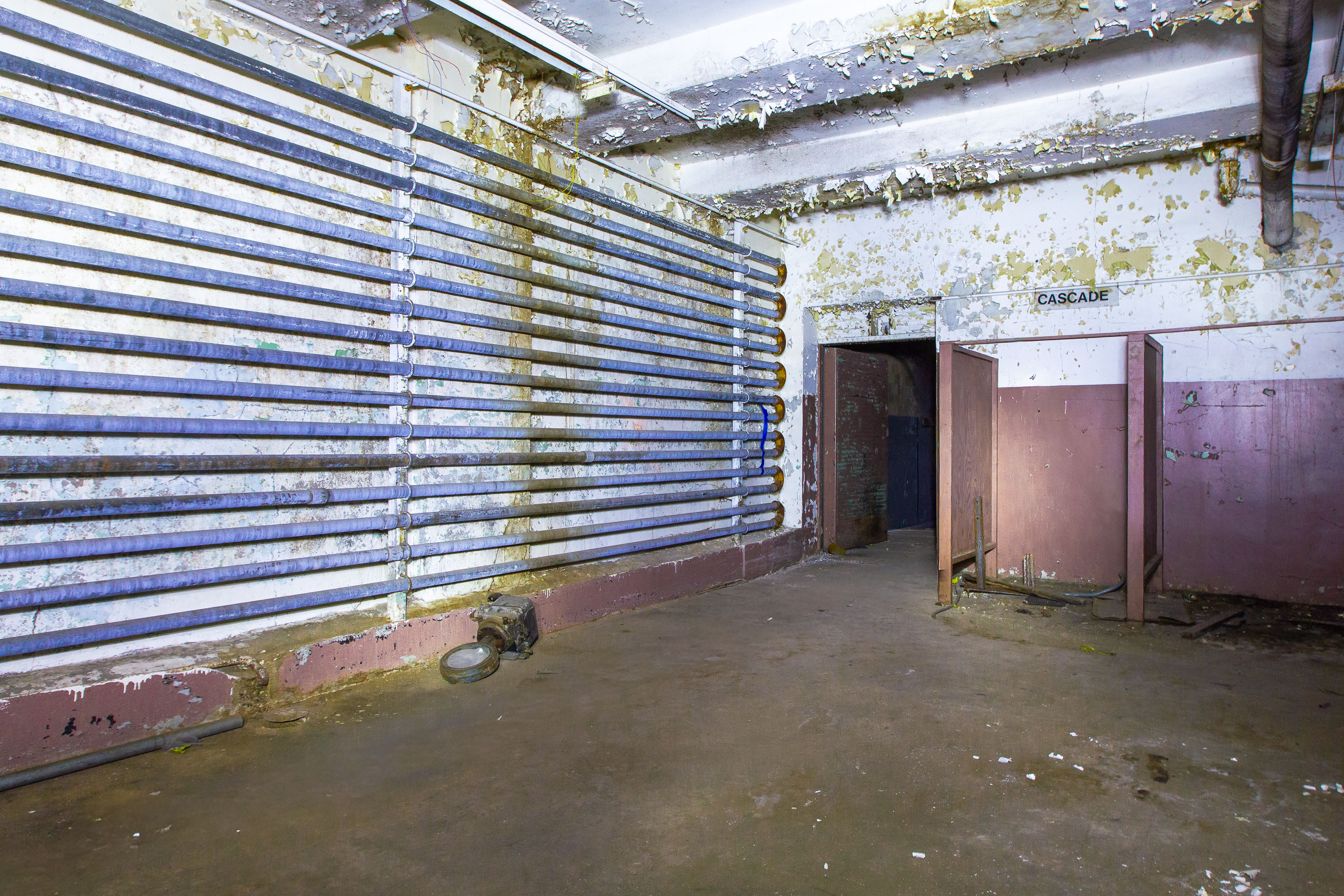
Deteriorated interior room with blue and white horizontal louvers and rusted metal storage boxes at the abandoned Schmidt Brewery in St.
The Jacob Schmidt Brewing Company operated at 882 West Seventh Street in St. Paul, tracing its roots to the North Star Brewery founded on the site in 1855. Schmidt acquired the operation in 1900 and built it into one of the largest breweries in Minnesota, producing beer under the Schmidt name for most of the 20th century. Pabst bought the company in 1972 and kept the plant running under contract brewing arrangements until production finally ceased in 2002. The complex was added to the National Register of Historic Places and later redeveloped into the Schmidt Artist Lofts, with much of the original brewhouse and support buildings preserved in the conversion.

Entrance to the Cascade Room at the Former Schmidt Brewery
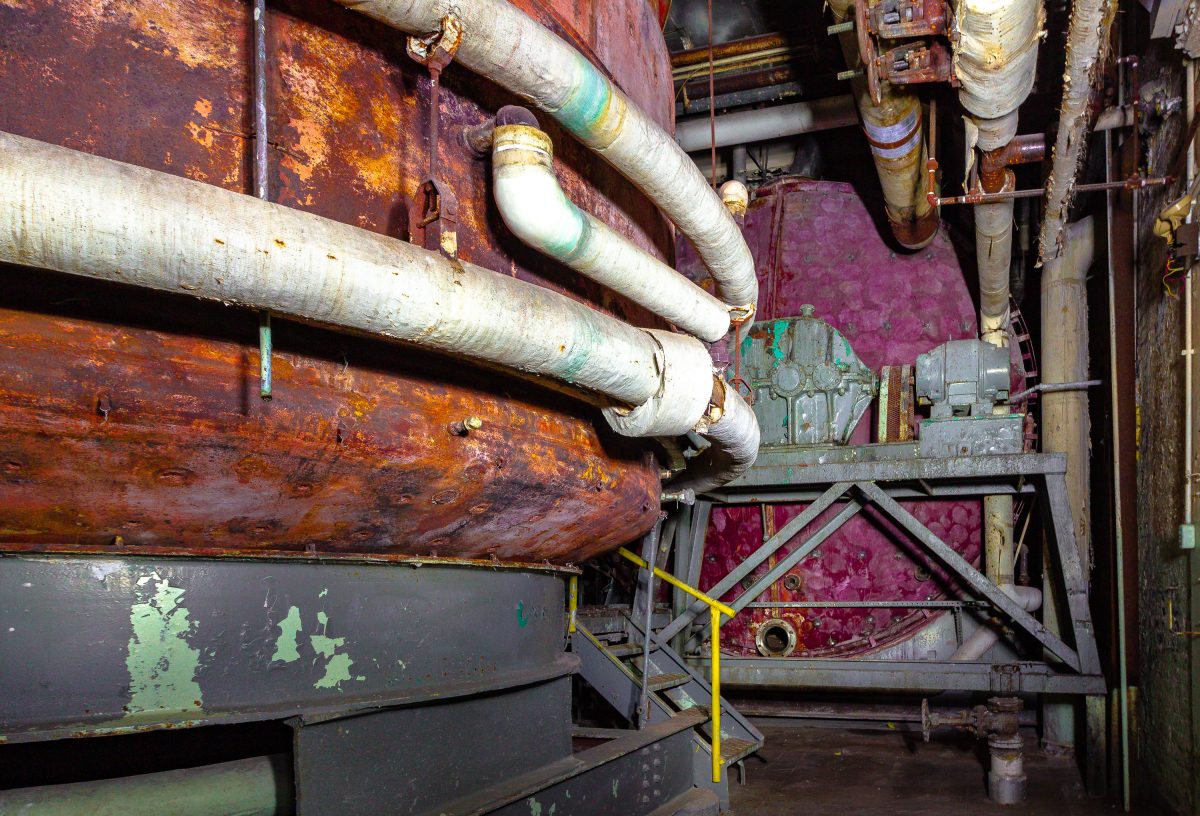
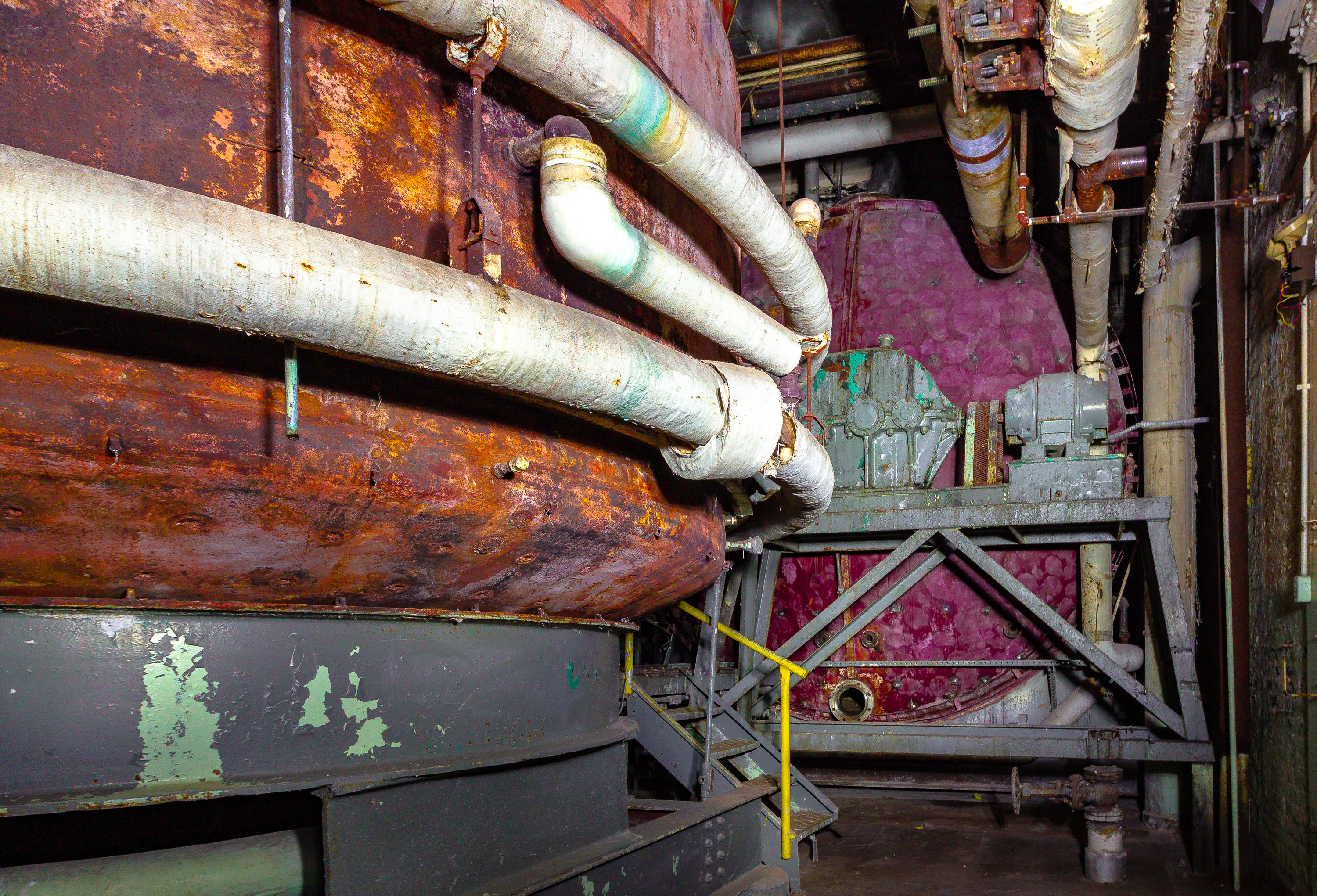
Corroded pipes, valves, and insulated tubing in the boiler room machinery of the abandoned Schmidt Brewery in St. Paul, Minnesota.
The Jacob Schmidt Brewing Company operated on West Seventh Street in St. Paul from the 1900s until production ended in 2002 under the Minnesota Brewing Company name. The complex traces its roots to the Stahlmann Brewery, founded on the site in 1855, and grew into one of the largest breweries in the Midwest by the early twentieth century. Its castle-style brew house and adjoining industrial buildings were added to the National Register of Historic Places in 1988. Boilers and mechanical equipment like this once powered the brewing and bottling lines that supplied Schmidt beer across the region before the plant's closure ended nearly a century and a half of brewing on the site.

Rusted Boiler Tank and Piping at the Schmidt Brewery
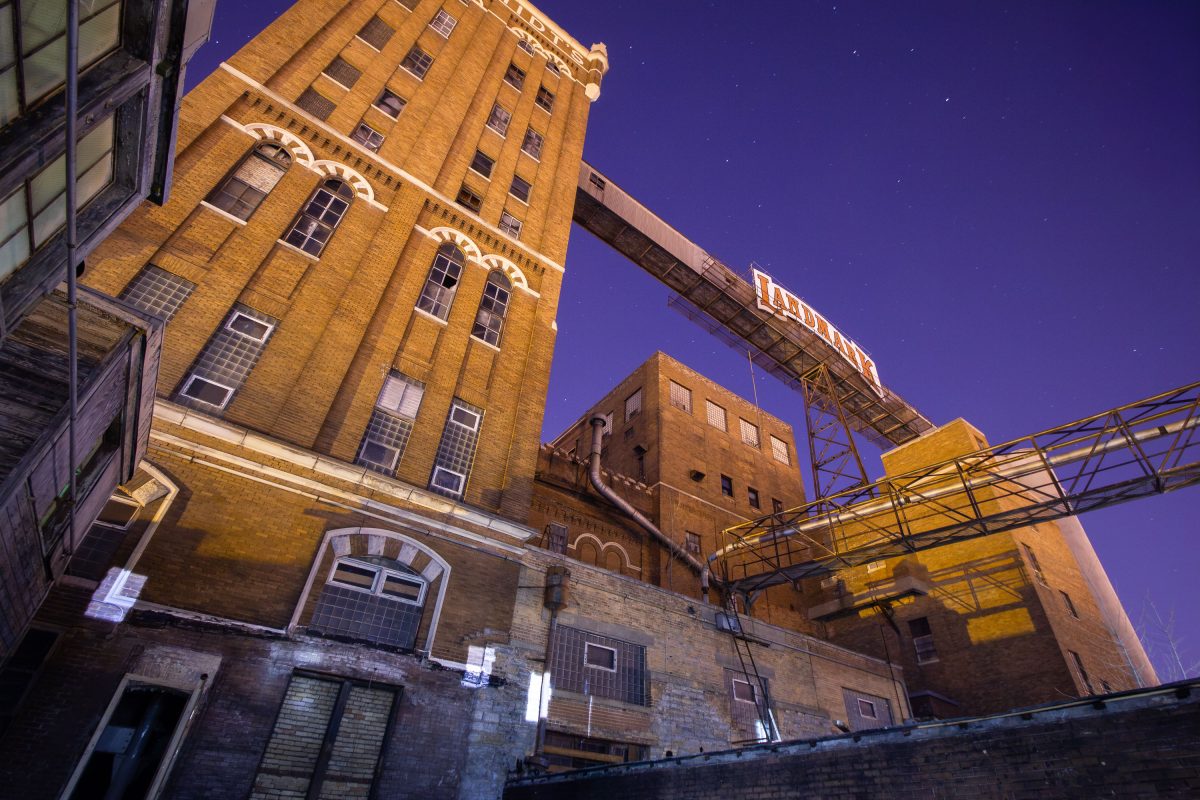
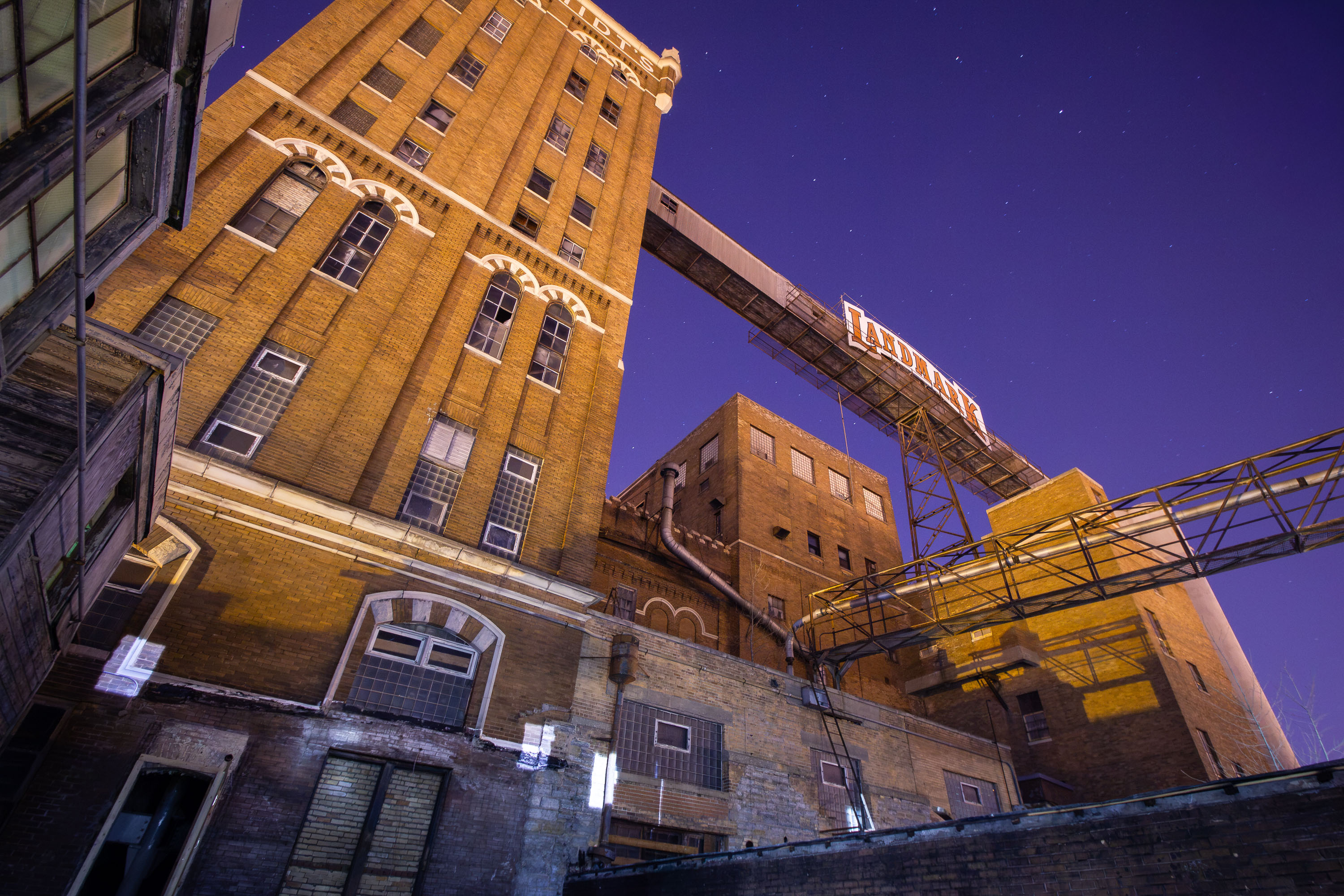
Historic Jacob Schmidt Brewery complex illuminated at night in St.
The Jacob Schmidt Brewing Company built this complex along West Seventh Street in St. Paul, with the brew house tower dating to a 1904 expansion. Schmidt brewed beer here for most of the 20th century, at one point ranking among the largest breweries in the country before the plant closed in 2002. The building sat vacant for over a decade, its "Landmark" sign a holdover from a later owner, before a renovation converted the complex into the Schmidt Artist Lofts in 2013. The site is listed on the National Register of Historic Places for its role in the region's brewing industry.

Brew House Tower and “Landmark” Sign at Schmidt Brewery
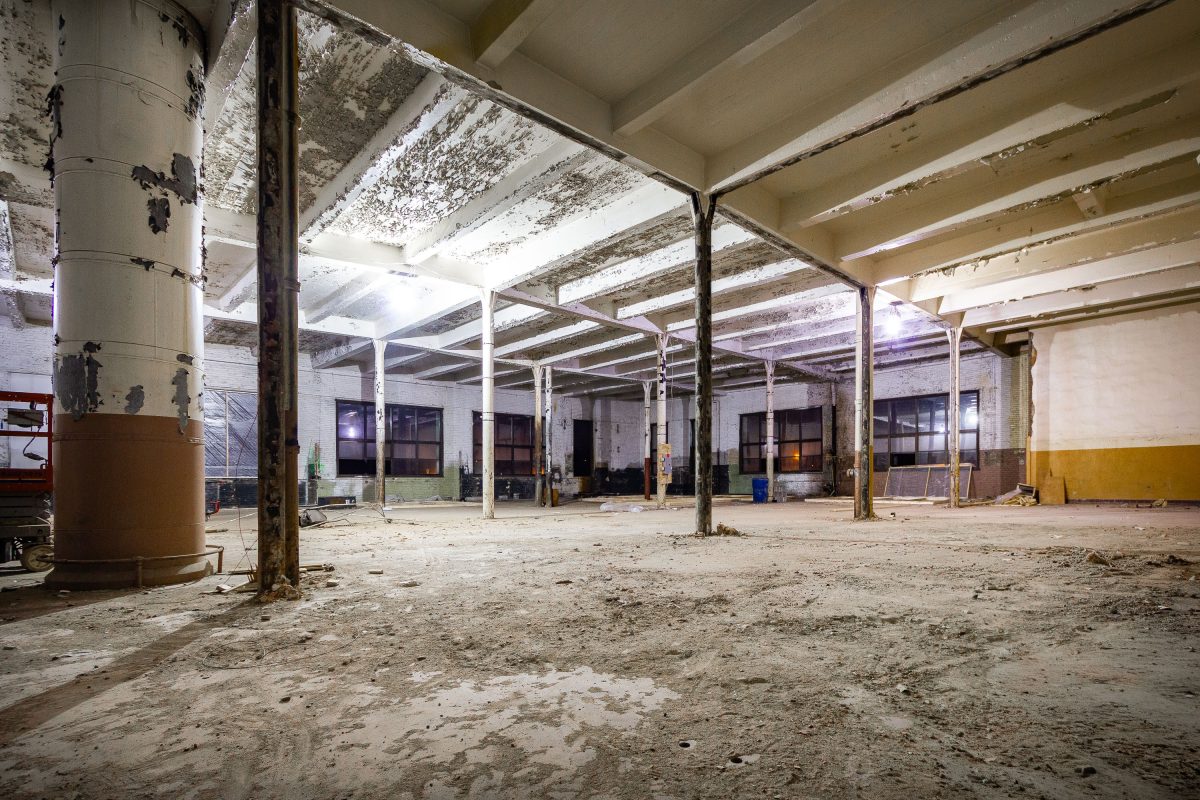
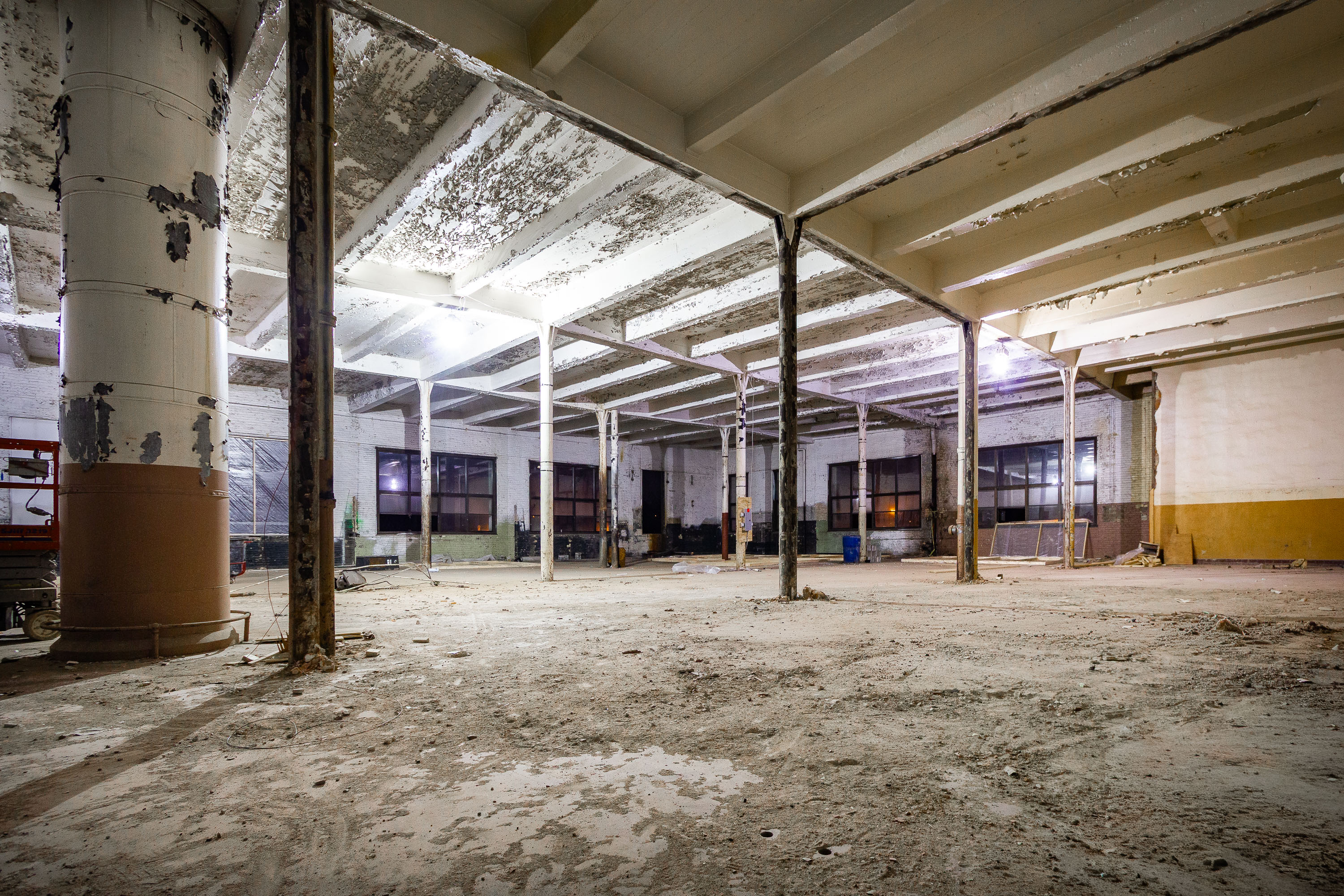
Vacant production floor of the abandoned Schmidt Brewery in St.
The Schmidt Brewery complex on St. Paul's West Seventh Street traces back to 1855, when German immigrant brewers founded the operation as the North Star Brewery. Jacob Schmidt took over in 1900, and the company's beer became a regional staple for much of the 20th century. Production continued under various owners until 2002, when the plant closed for good. The site sat empty for years before developers began converting the complex into the Schmidt Artist Lofts, completed in 2013, and the brewery buildings are listed on the National Register of Historic Places.

Open Production Hall at the Former Schmidt Brewery
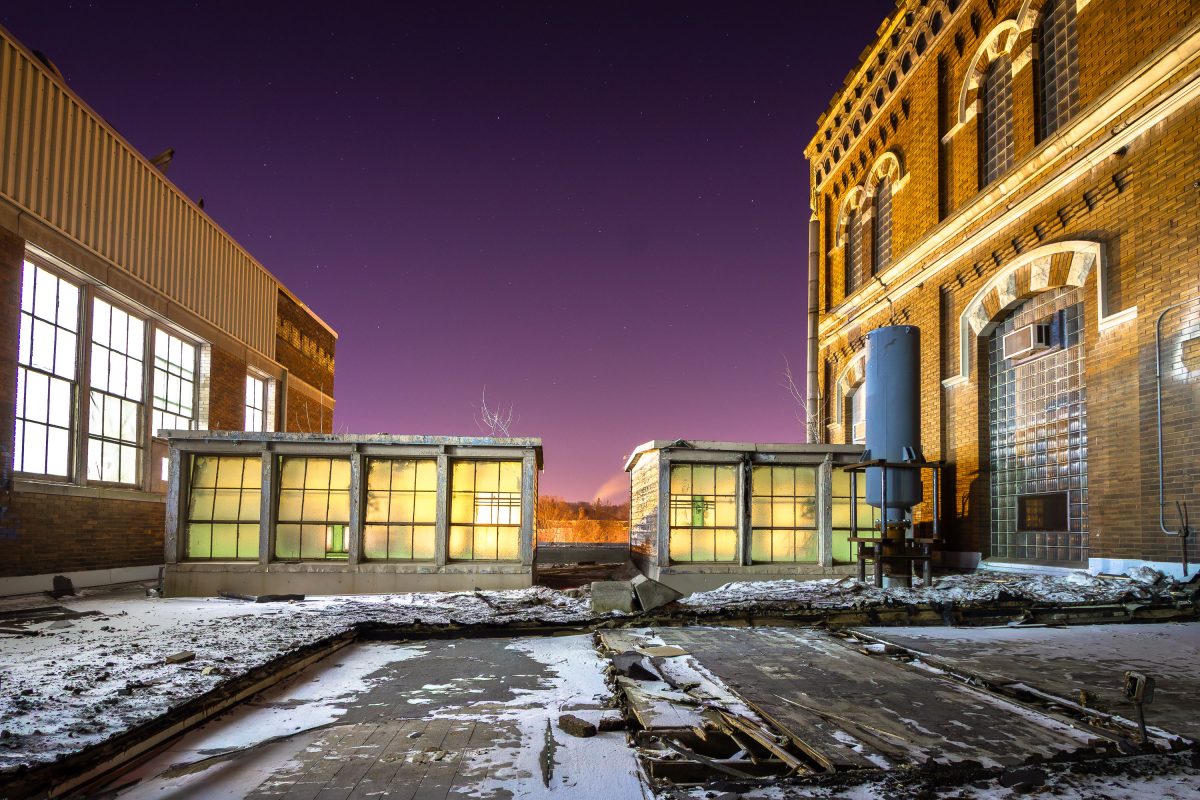
Historic Jacob Schmidt Brewery complex in St.
The Jacob Schmidt Brewing Company operated at this West Seventh Street complex in St. Paul from the 1900s until its closure in 1990. The brewery grew out of the earlier North Star Brewery, founded in the 1850s, and by the early twentieth century had become one of Minnesota's largest beer producers. Its brick buildings, including the landmark brew house with the arched windows and painted brand signage, are listed on the National Register of Historic Places. After decades of vacancy, the complex was redeveloped in 2013 into the Schmidt Artist Lofts, a mixed-use residential project that preserved much of the original industrial architecture.

Snow-Covered Rooftop at the Former Schmidt Brewery
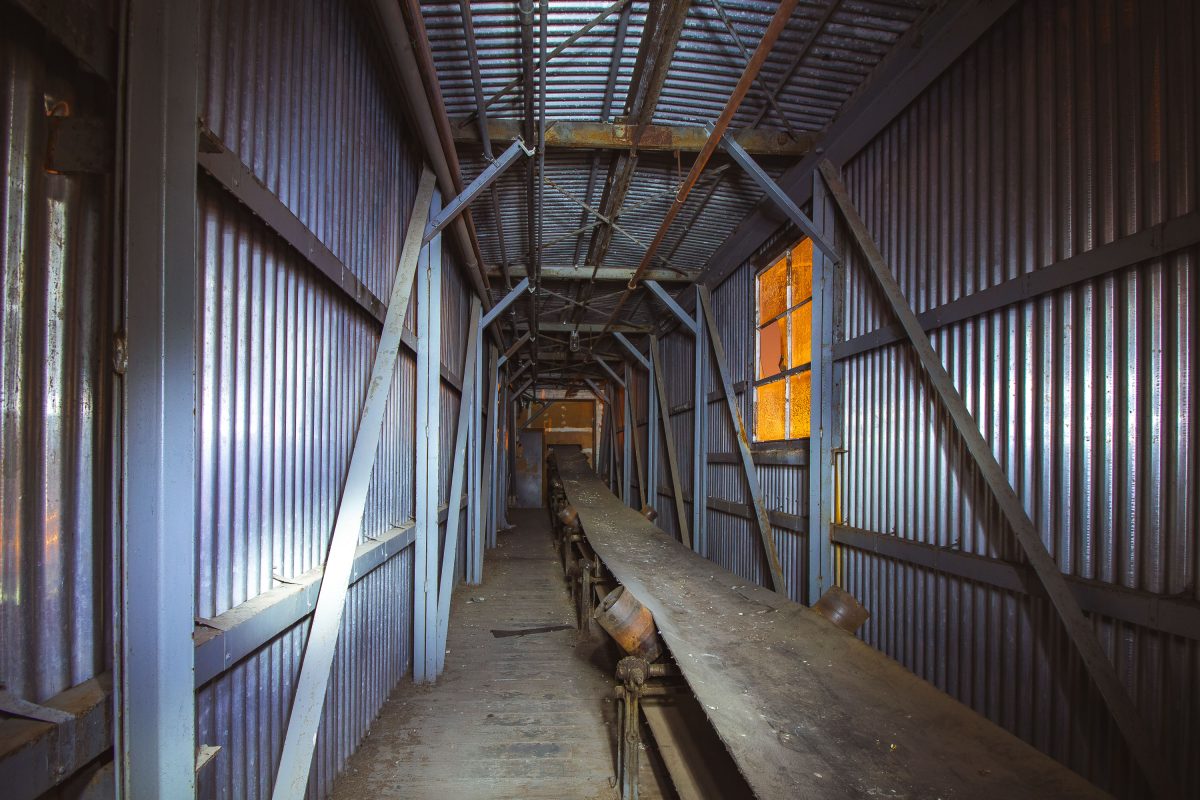
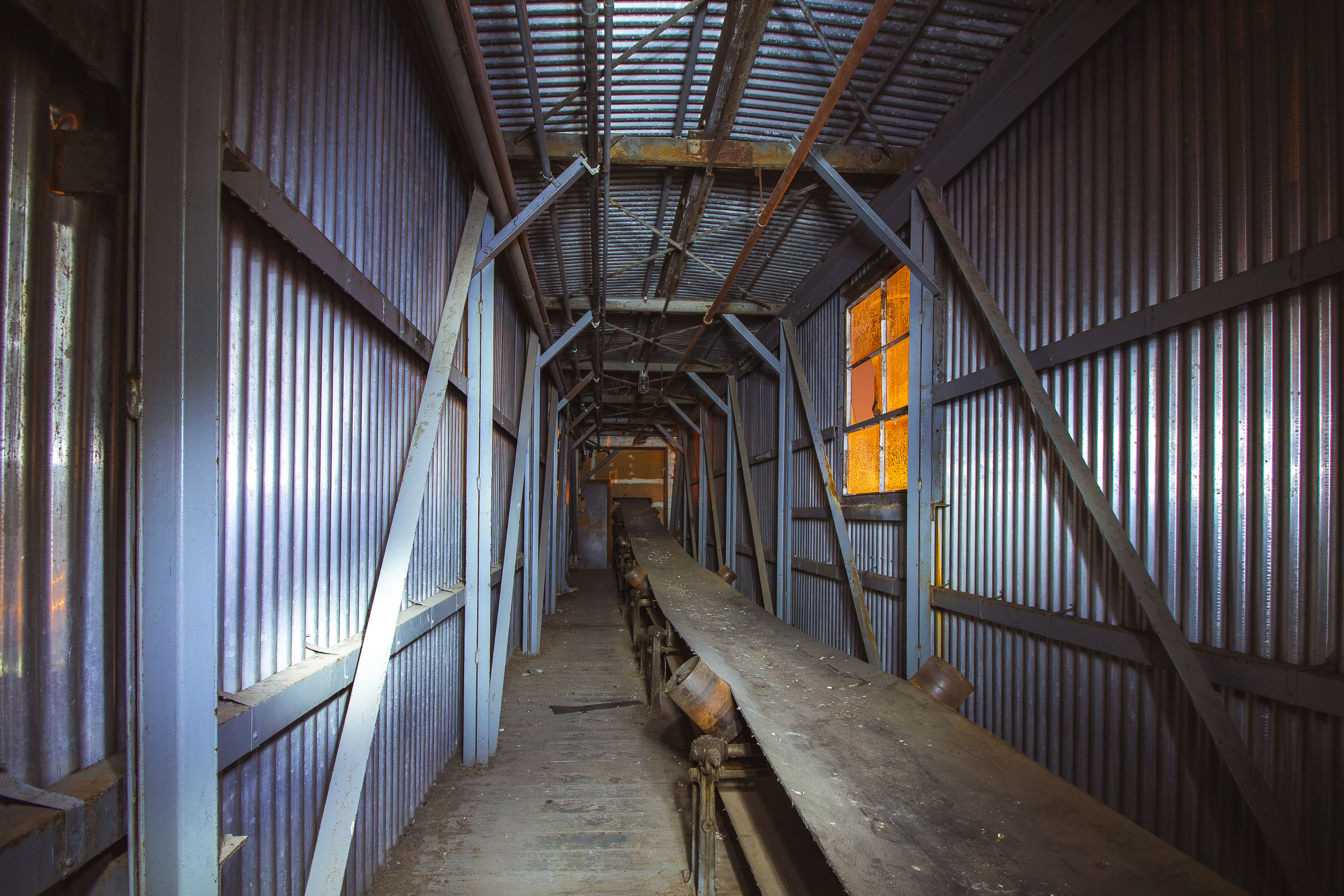
Enclosed conveyor tunnel with corrugated metal walls and structural supports inside the abandoned Schmidt Brewery in St.
The Schmidt Brewery complex at 882 West Seventh Street in St. Paul traces back to 1855, when Christopher Stahlmann established what grew into one of Minnesota's largest brewing operations. Jacob Schmidt bought the company around 1900, and it operated under the Schmidt name for most of the twentieth century, later passing to the Minnesota Brewing Company. Enclosed conveyor passages like this one linked the malt house, brew house, and bottling plant, moving grain and materials between production stages. Brewing at the site ended in 2002, and the complex was later listed on the National Register of Historic Places before being redeveloped into artist lofts and apartments.

Enclosed Conveyor Passage at the Former Schmidt Brewery

I-35W Bridge in Minneapolis illuminated at night with rainbow-colored lights along its deck and supports.
The I-35W Mississippi River Bridge in Minneapolis is illuminated with rainbow-colored lights. This bridge was rebuilt following its catastrophic collapse in 2007. The reconstruction prioritized modern engineering and safety standards.

Rainbow Lights on the I-35W Bridge Over the Mississippi
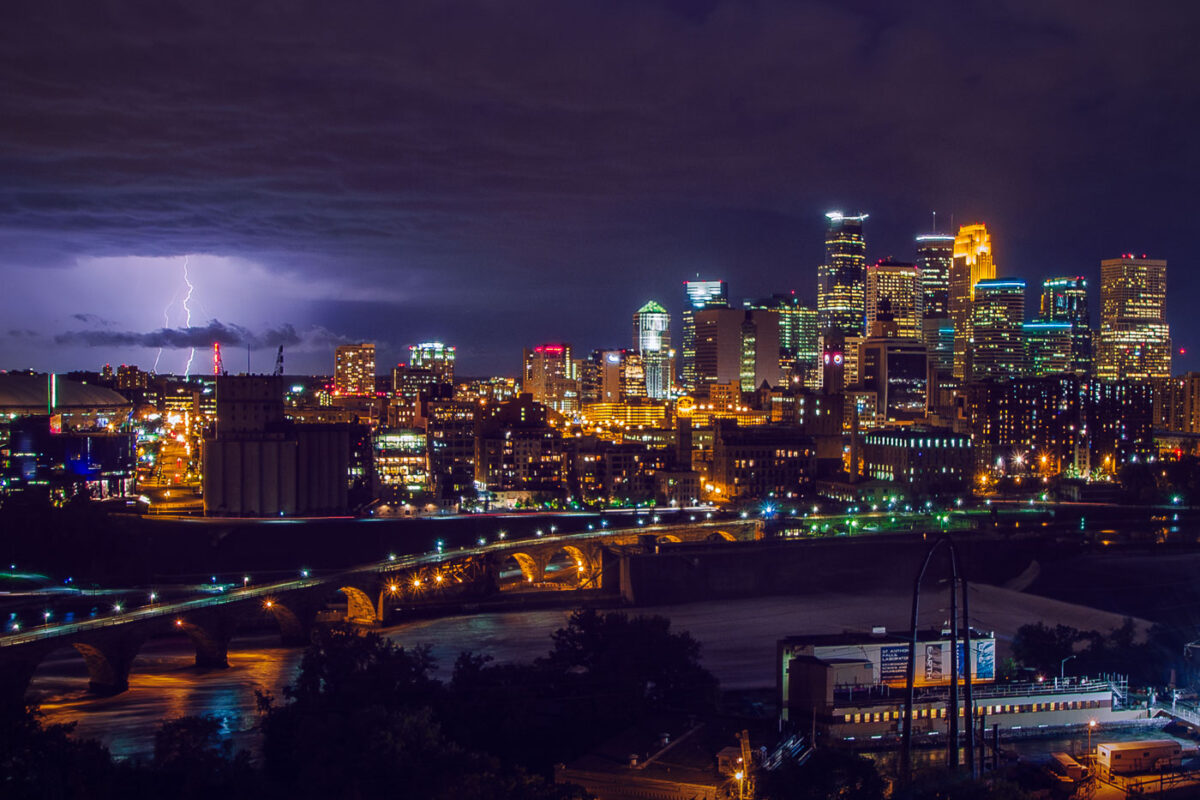
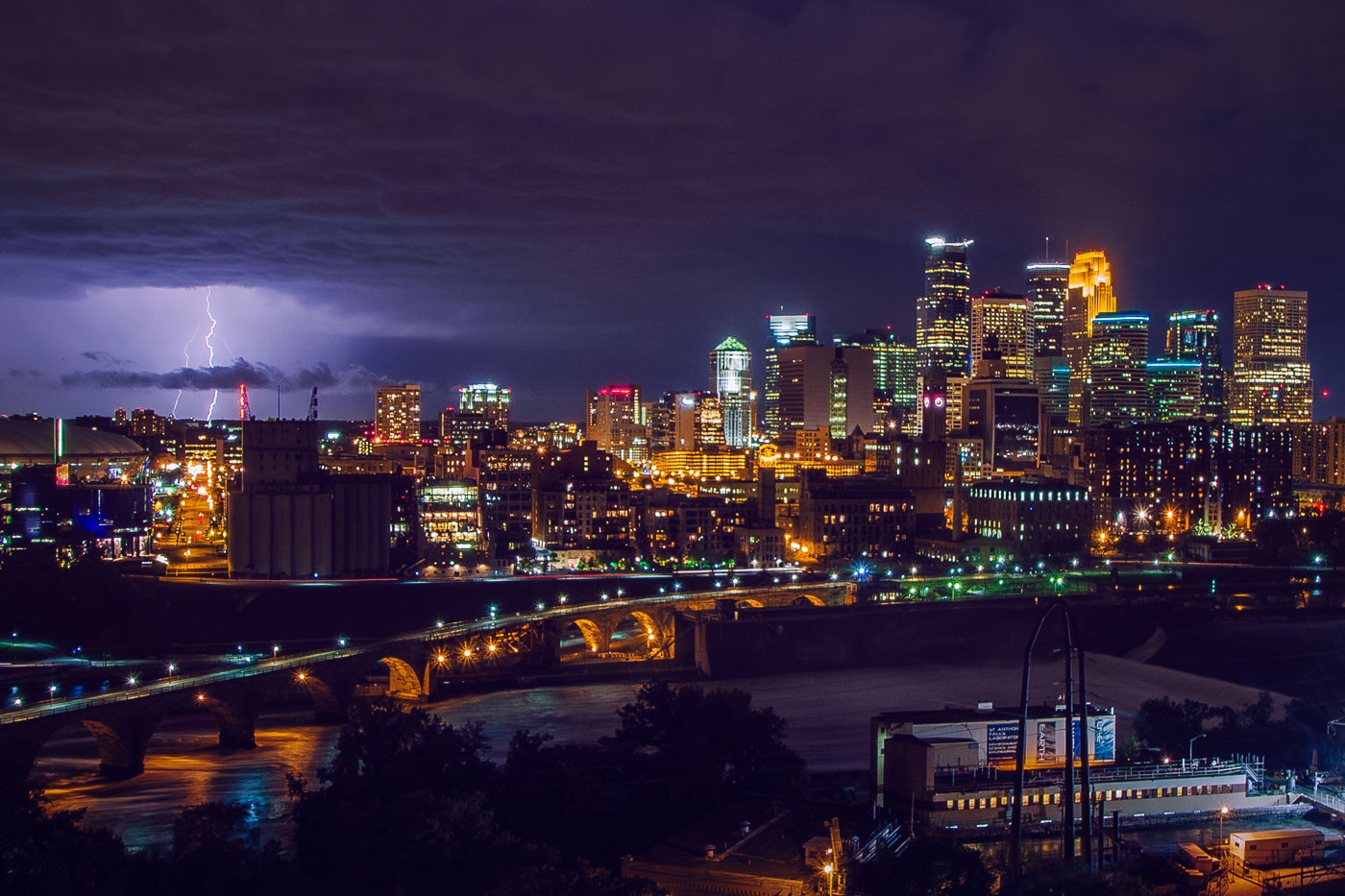
Lightning strikes over downtown Minneapolis skyline at night, with the Stone Arch Bridge spanning the Mississippi River.
The Stone Arch Bridge crosses the Mississippi River below Saint Anthony Falls in downtown Minneapolis. Railroad magnate James J. Hill built it in 1883 for the Great Northern Railway, and it now carries pedestrians and cyclists between the river's east and west banks. Lightning flashes over the downtown skyline beyond it.

Lightning Over Downtown Minneapolis and the Stone Arch Bridge
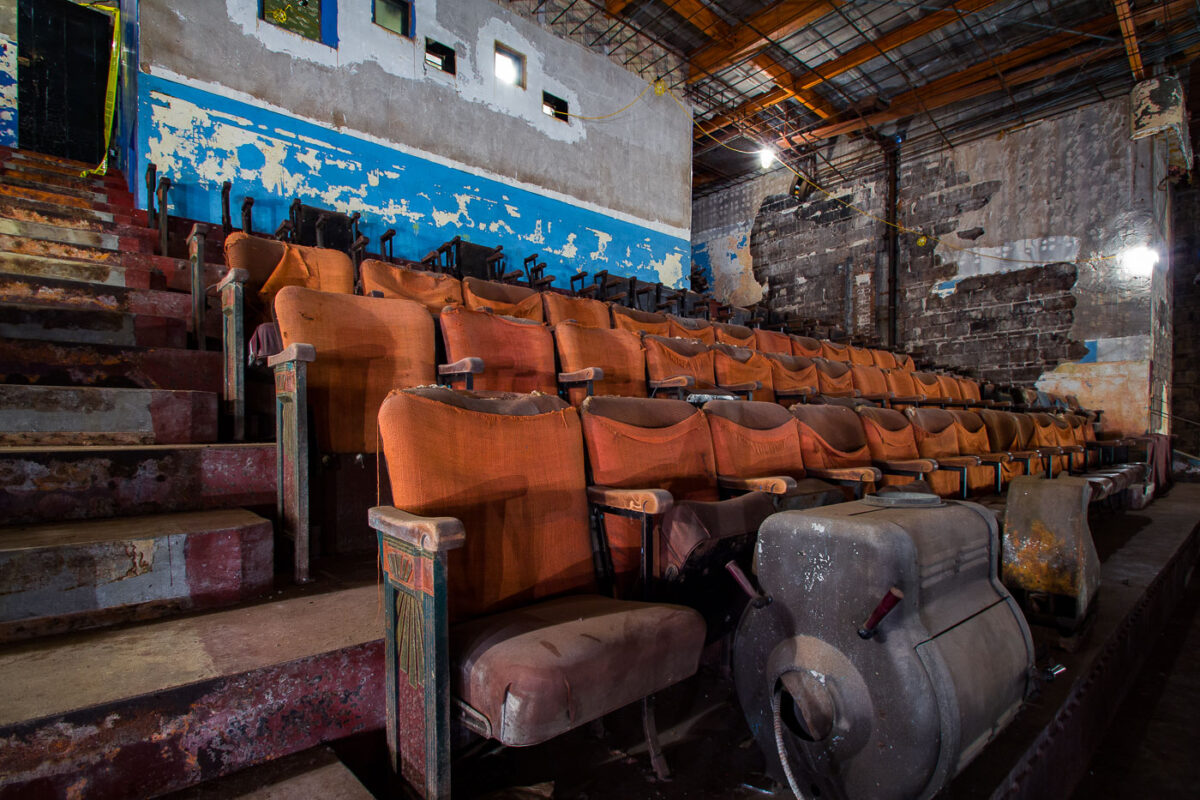
Abandoned Hollywood Theatre in Minneapolis
The auditorium of the abandoned Hollywood Theater in Minneapolis, Minnesota, shows the wear of decades since its closure in 1987. Opened in 1935, the Streamline Moderne building served the Northeast neighborhood for over fifty years before succumbing to competition from multiplex cinemas and video rentals. The theater, listed on the US National Register of Historic Places, was acquired in 2015 with plans for its preservation and renovation.

Rusted Seating Rows Inside the Hollywood Theater in Northeast Minneapolis
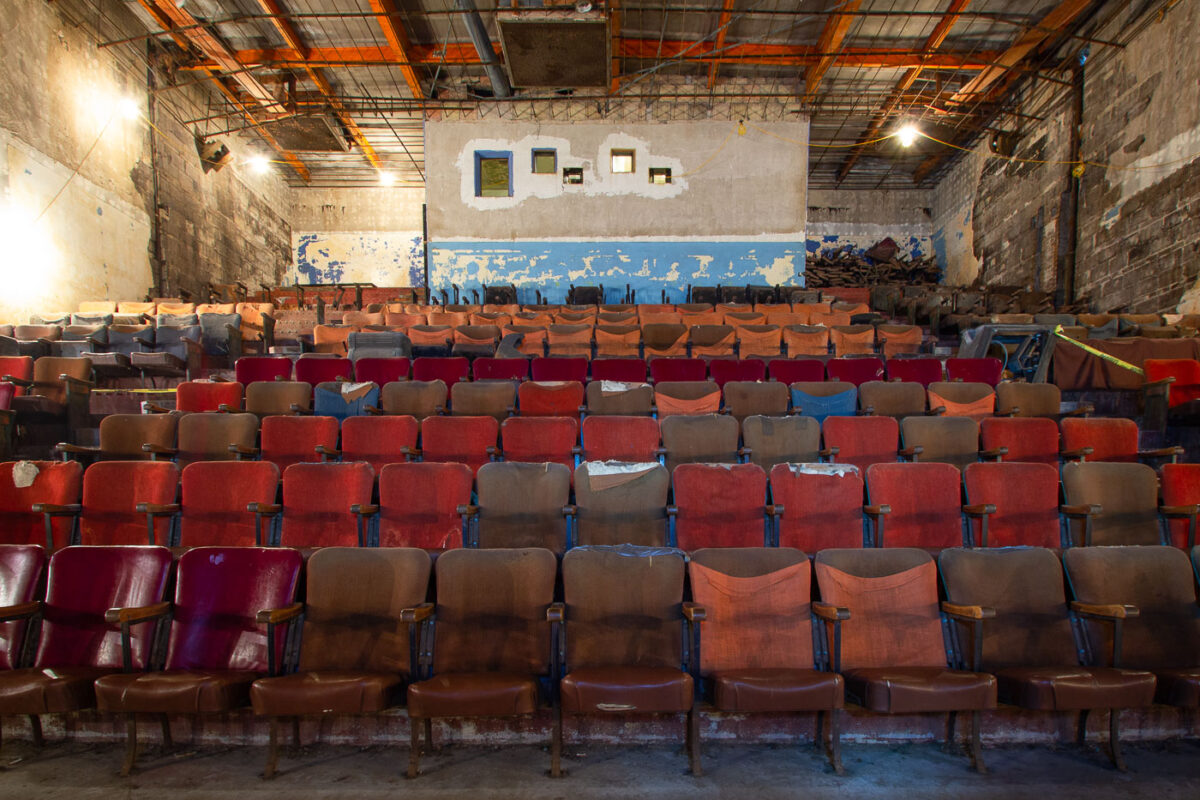
Seats at the abandoned Hollywood Theater in Minneapolis
The auditorium seats of the Hollywood Theater, located at 2815 Johnson Street in Minneapolis, remain as a testament to its closure in 1987. Originally opened in 1935, the Streamline Moderne building, now listed on the US National Register of Historic Places, ceased operations due to competition from video rental stores and multiplex cinemas. Despite a developer's acquisition in 2015 with plans for renovation, the theater's interior continues to show signs of disuse and decay.

Rows of Faded Seats Inside the Hollywood Theater
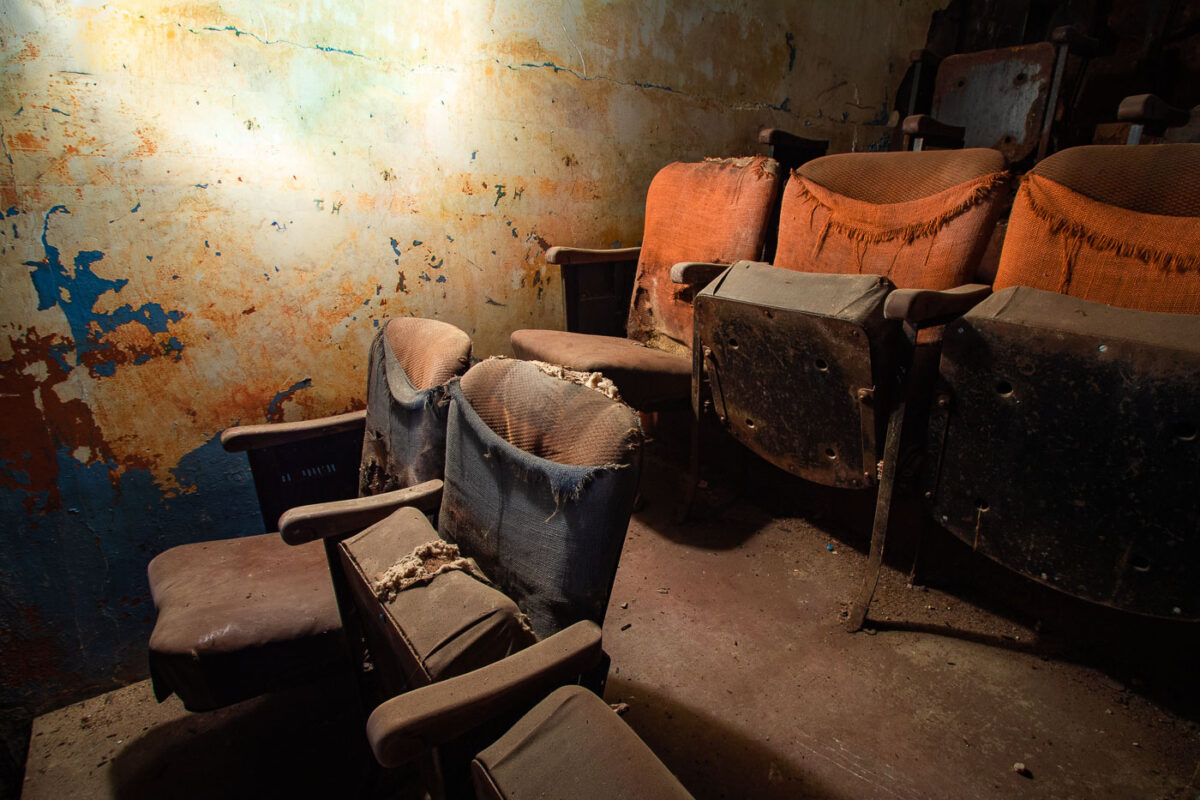
Hollywood Theater seating while abandoned
Worn seats and peeling walls inside the Hollywood Theater, Minneapolis. This Streamline Moderne cinema, located at 2815 Johnson Street, opened in 1935 and operated for over five decades before closing in 1987. The theater was a significant cultural venue in the Northeast Minneapolis neighborhood until changing entertainment trends led to its closure. Listed on the US National Register of Historic Places, the building was sold in 2015 with plans for its renovation and preservation.

Tattered Upholstery and Toppled Chairs at the Hollywood Theater
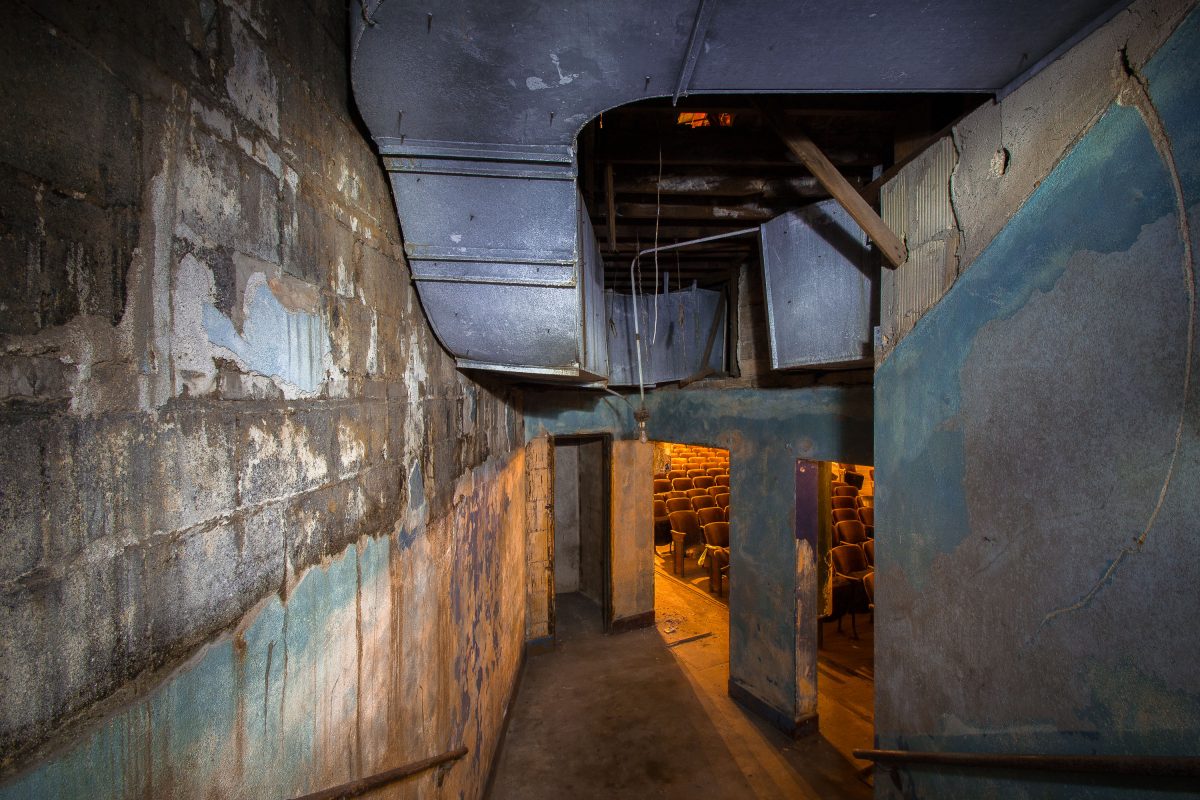
Hollywood Theater Abandoned in Minneapolis
The Hollywood Theater located at 2815 Johnson Street, Minneapolis. Listed on the US National Register of Historic Places and notable for it’s Streamline Moderne design. It opened in 1935 and closed in 1987 after not being able to compete with video stores and new larger theaters. The theater was sold in 2015 to a developer who plans to renovate the property.

Backstage Passage to the Auditorium at Hollywood Theater
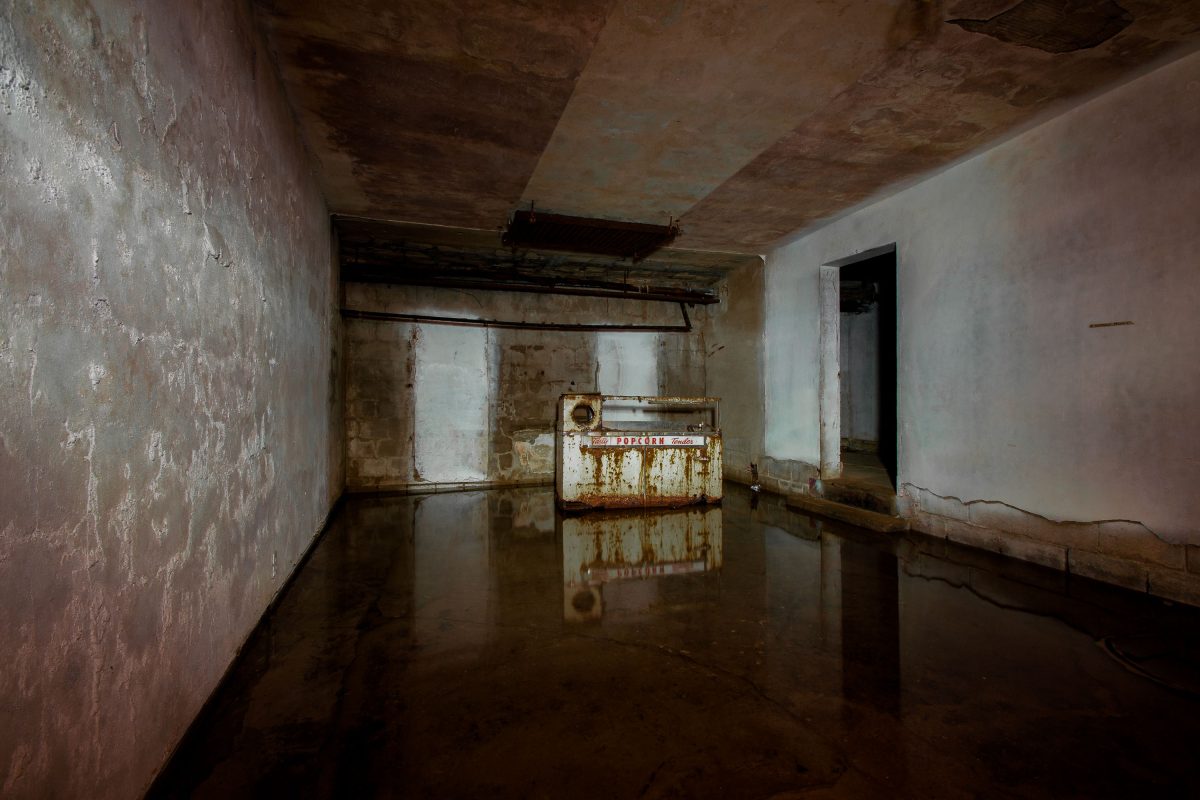
Popcorn machine at Minneapolis Hollywood Theater
The Hollywood Theater located at 2815 Johnson Street, Minneapolis. Listed on the US National Register of Historic Places and notable for it’s Streamline Moderne design. It opened in 1935 and closed in 1987 after not being able to compete with video stores and new larger theaters. The theater was sold in 2015 to a developer who plans to renovate the property.

Flooded Lobby and Popcorn Stand at Hollywood Theater
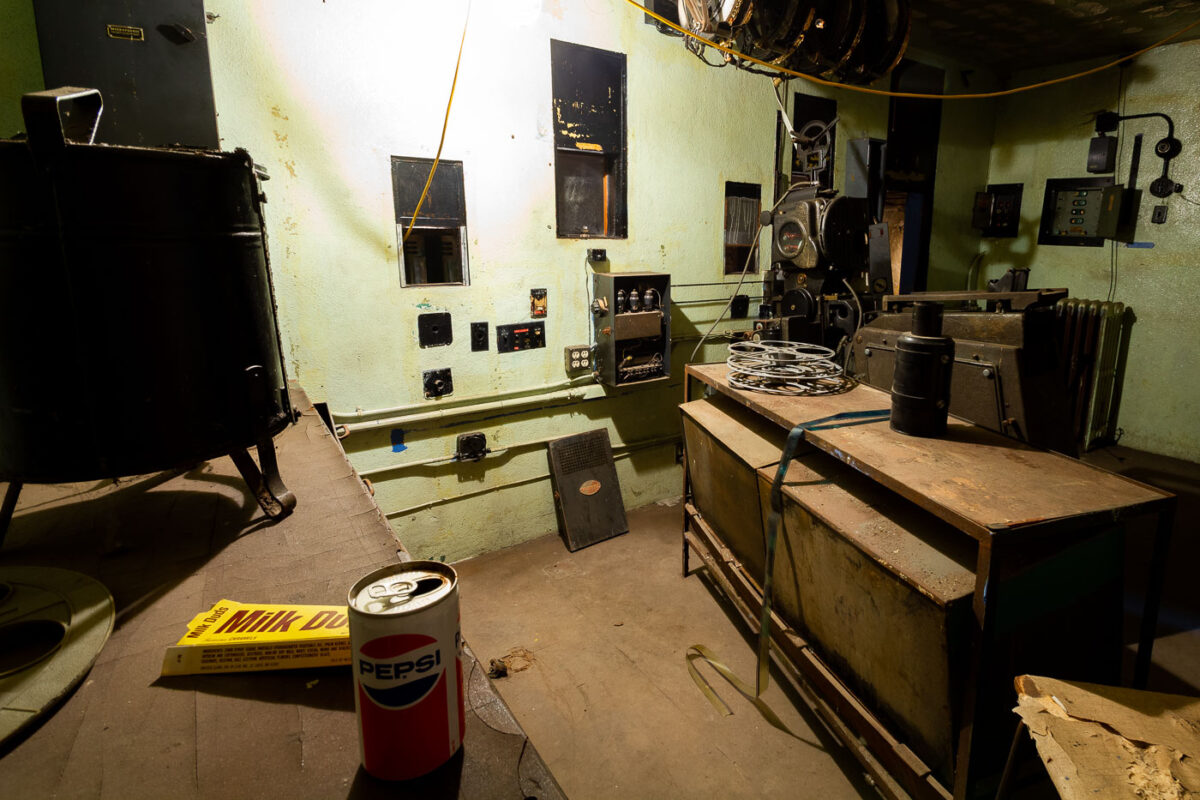
Old pepsi can and milk duds at abandoned Hollywood Theater
The projection room of the Hollywood Theater at 2815 Johnson Street in Minneapolis, Minnesota, contains remnants of its operational past, including a Pepsi can and Milk Duds box. This Streamline Moderne cinema, opened in 1935, is listed on the US National Register of Historic Places for its architectural significance. The theater closed in 1987, unable to compete with video stores and larger venues, leaving its equipment and personal items behind. The property was sold in 2015 to a developer with plans to renovate the historic structure.

Hollywood Theater Projection Room: Pepsi Can and Milk Duds

© 1996–2026 Chad Davis