COVID-19

61 photos · 2020–2024

61 photographs tagged COVID-19, 2020–2024.
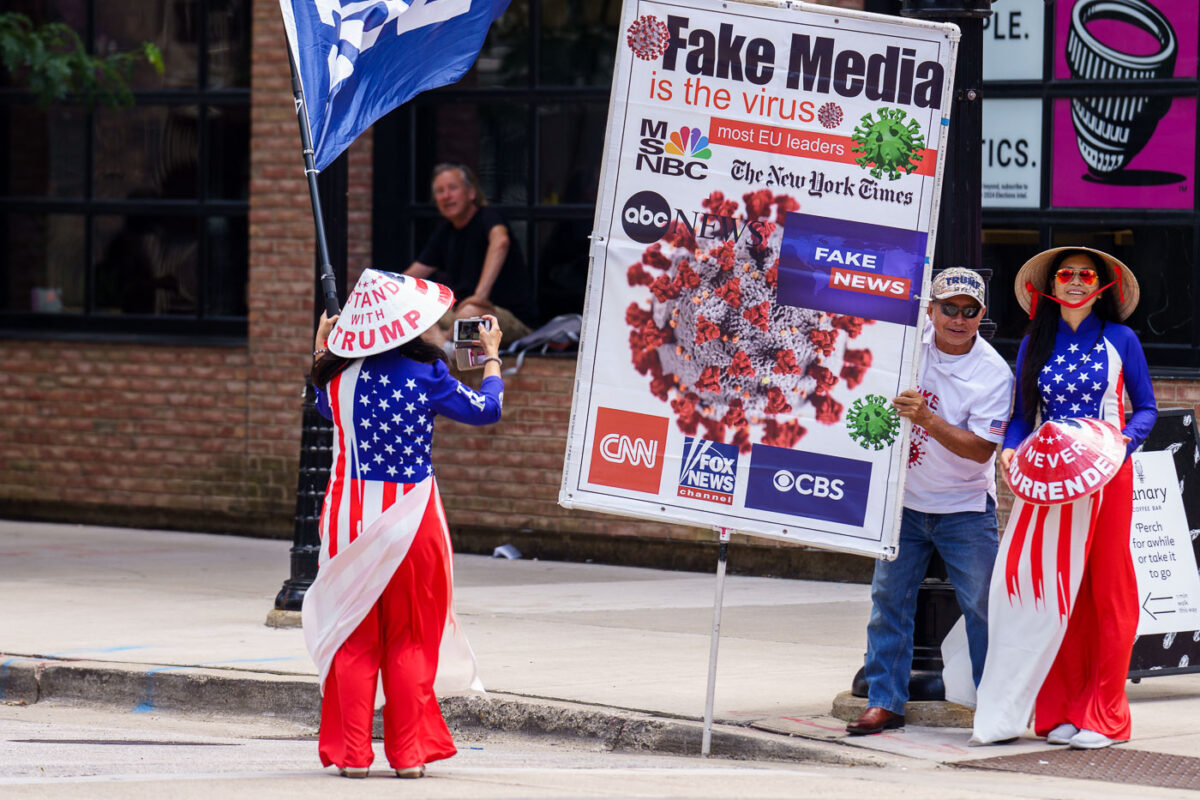
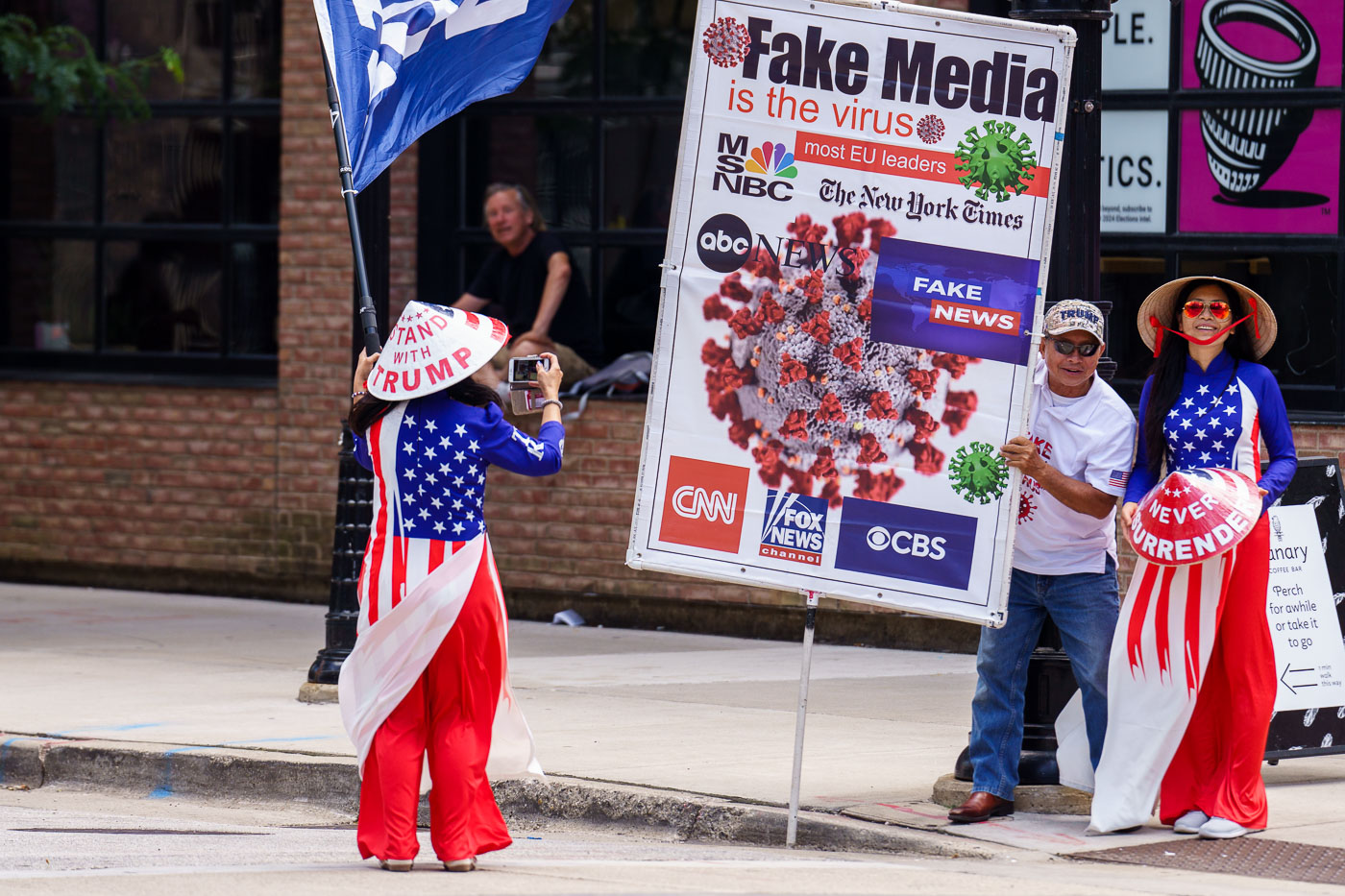
Protesters display "Fake Media is the Virus" sign with news network logos at 2024 Republican National Convention in Milwaukee.
Trump supporters gathered on the streets near the 2024 Republican National Convention in Milwaukee, held July 15–18 at Fiserv Forum. One sign carried by demonstrators pairs images of a virus with the logos of CNN, Fox News, CBS, ABC News, MSNBC and The New York Times, accusing mainstream and international outlets of spreading misinformation. Participants wore "Stand With Trump" caps and hats reading "Never Surrender," a phrase that circulated widely among Trump supporters following his booking at the Fulton County Jail in Georgia in August 2023. The convention that year formally nominated Donald Trump and running mate JD Vance as the Republican ticket for the 2024 presidential election.

“Fake Media Is the Virus” Sign at 2024 RNC, Milwaukee
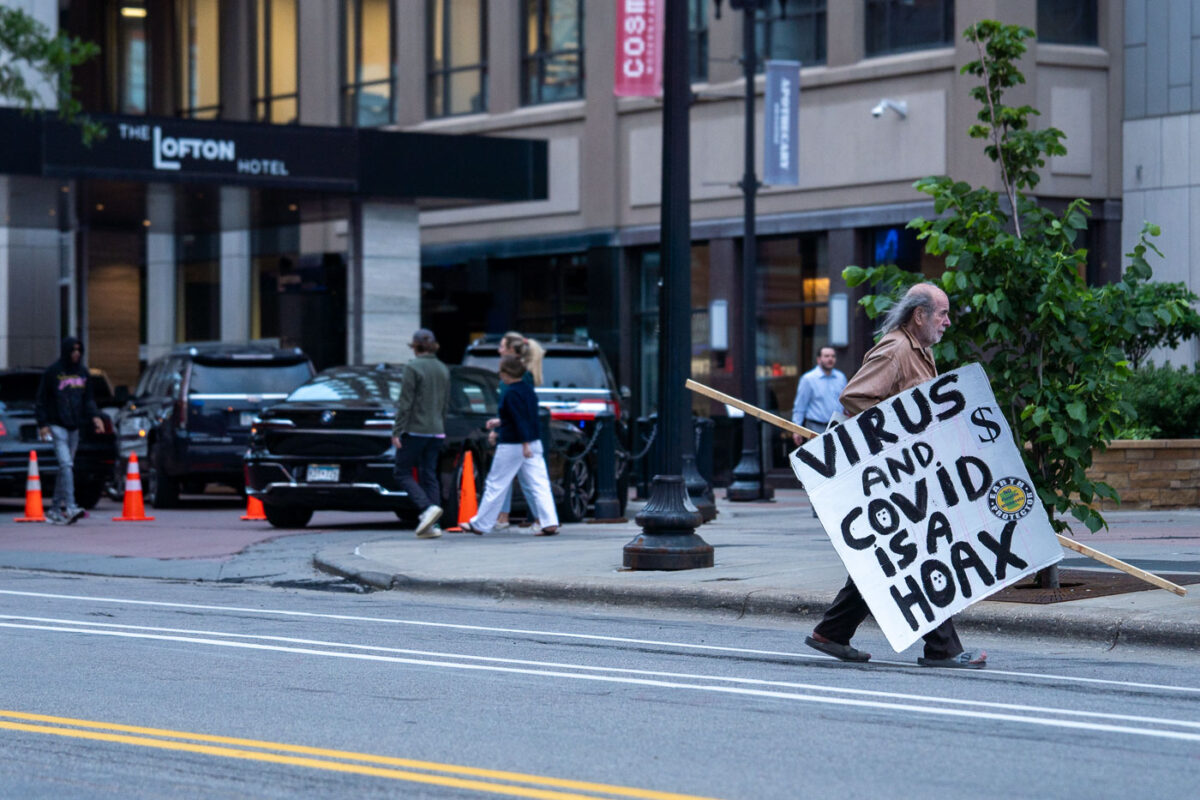
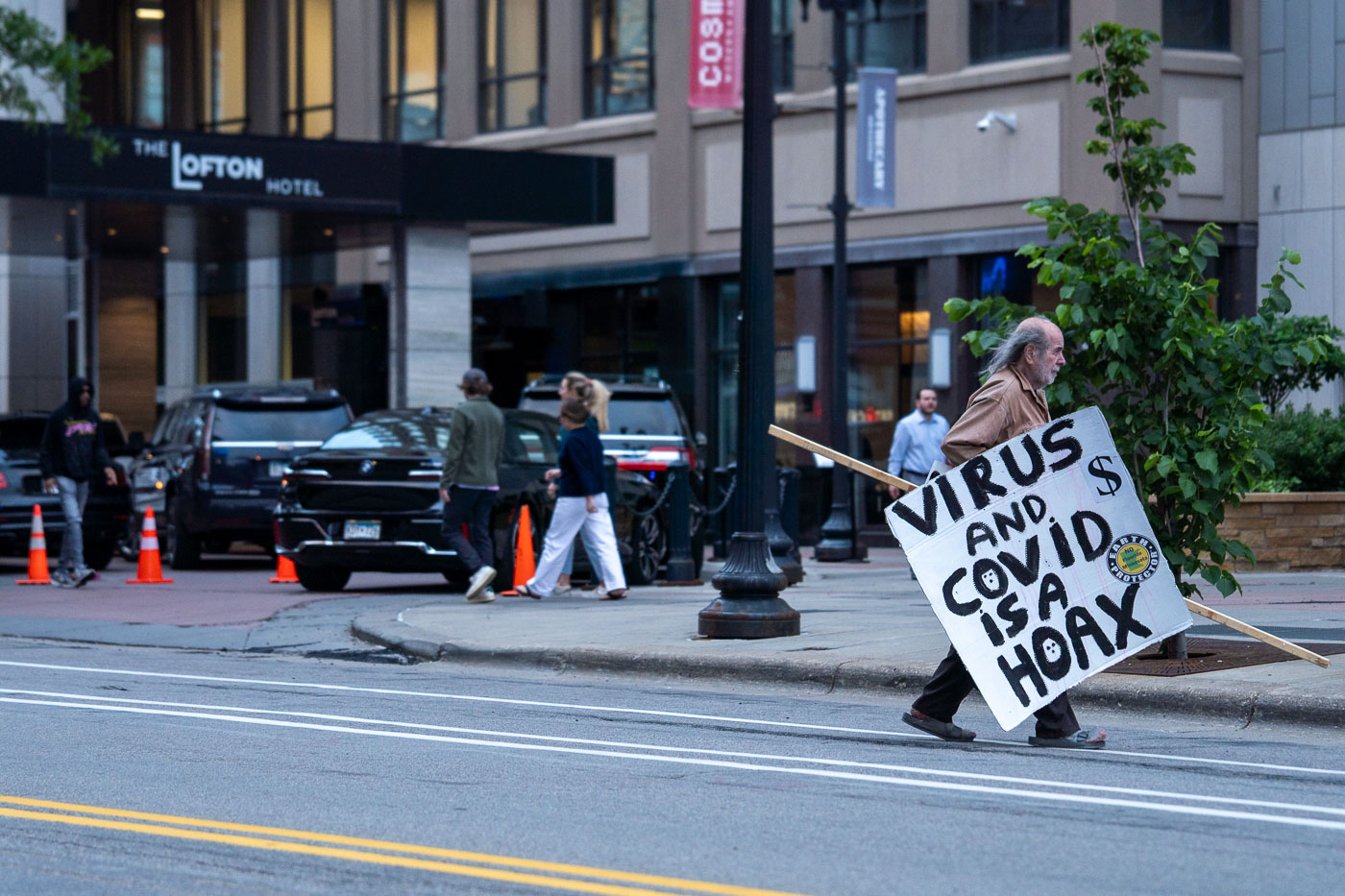
Man holding a sign reading "VIRUS AND COVID IS A HOAX" on a downtown Minneapolis street with storefronts and pedestrians visible behind him.
A man carries a sign stating "VIRUS AND COVID IS A HOAX" in downtown Minneapolis in May 2024. The sign also includes "EARTH NO MILLENNIAL PROTECTOR".

“Virus and Covid Is a Hoax” Sign Near the Lofton Hotel
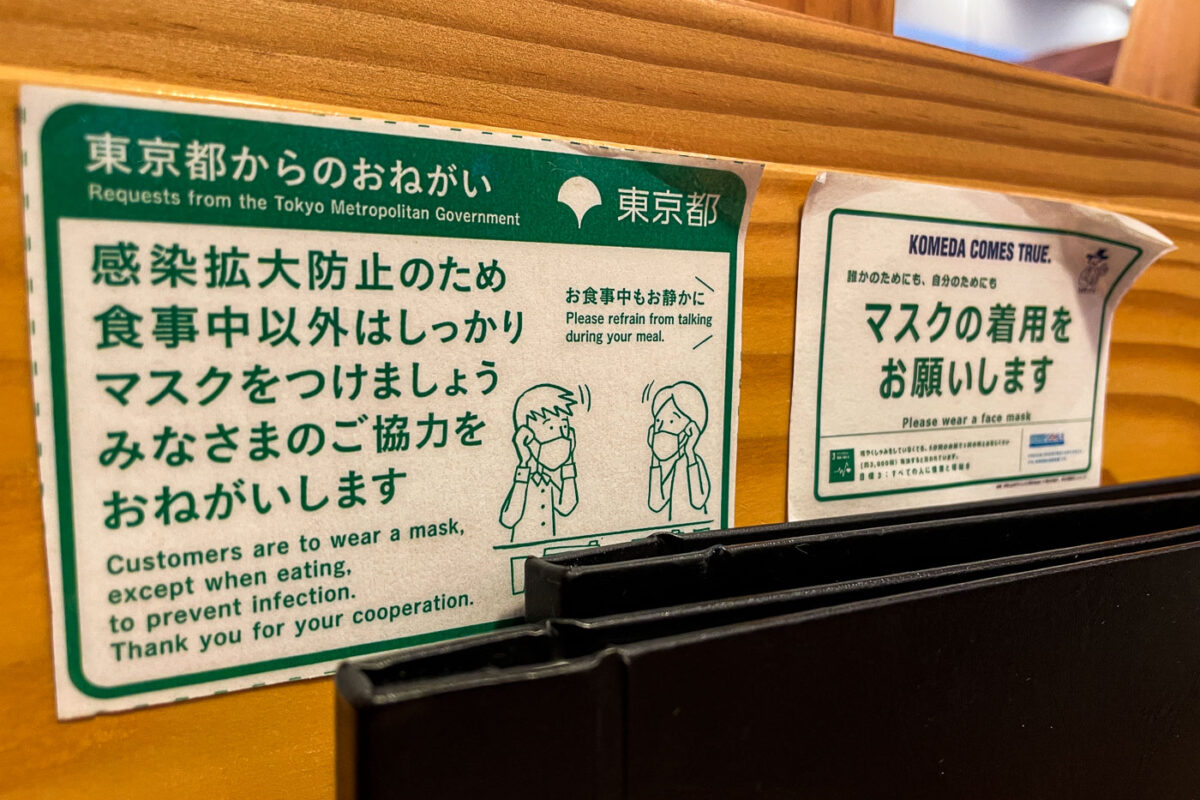
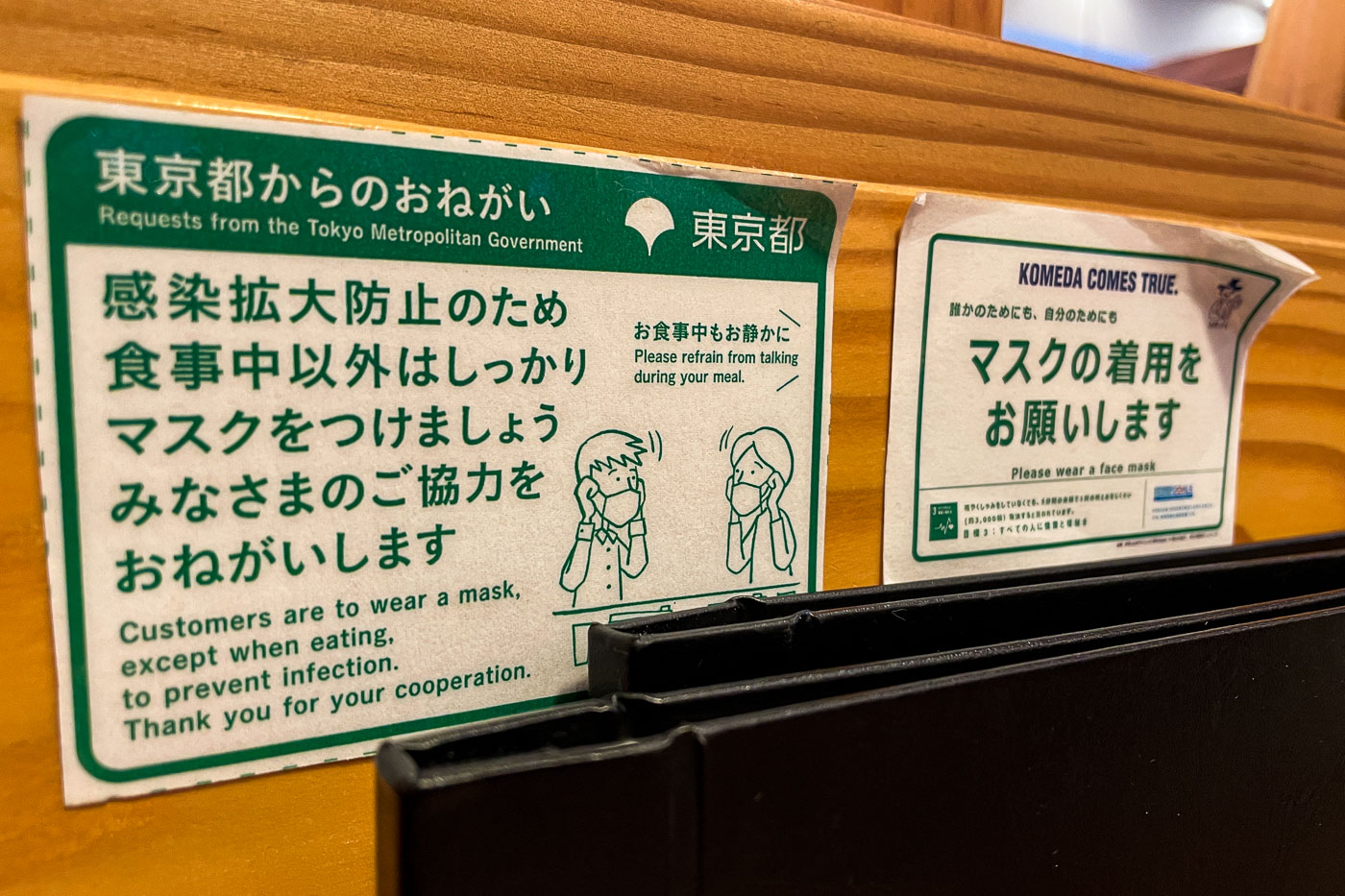
Tokyo Metropolitan Government Mask Sign
Printed notices from the Tokyo Metropolitan Government remind customers to wear masks except while eating.

Tokyo Metropolitan Government Mask Sign

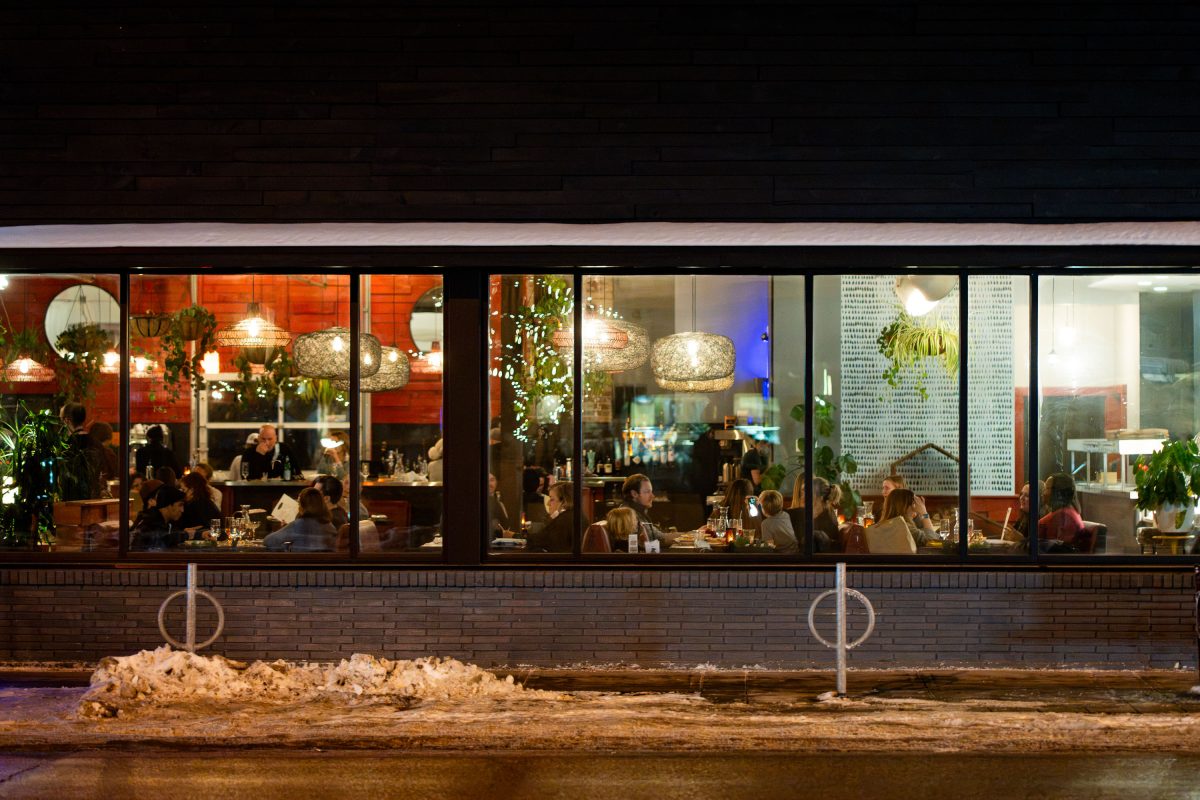
Mucci's Italian, Lake Street in Minneapolis
Mucci's Italian restaurant in Uptown Minneapolis on it's last day of service. Owner told Eater "It had nothing to do with mandates, the closure was going to happen regardless".

Mucci’s Italian, Lake Street in Minneapolis
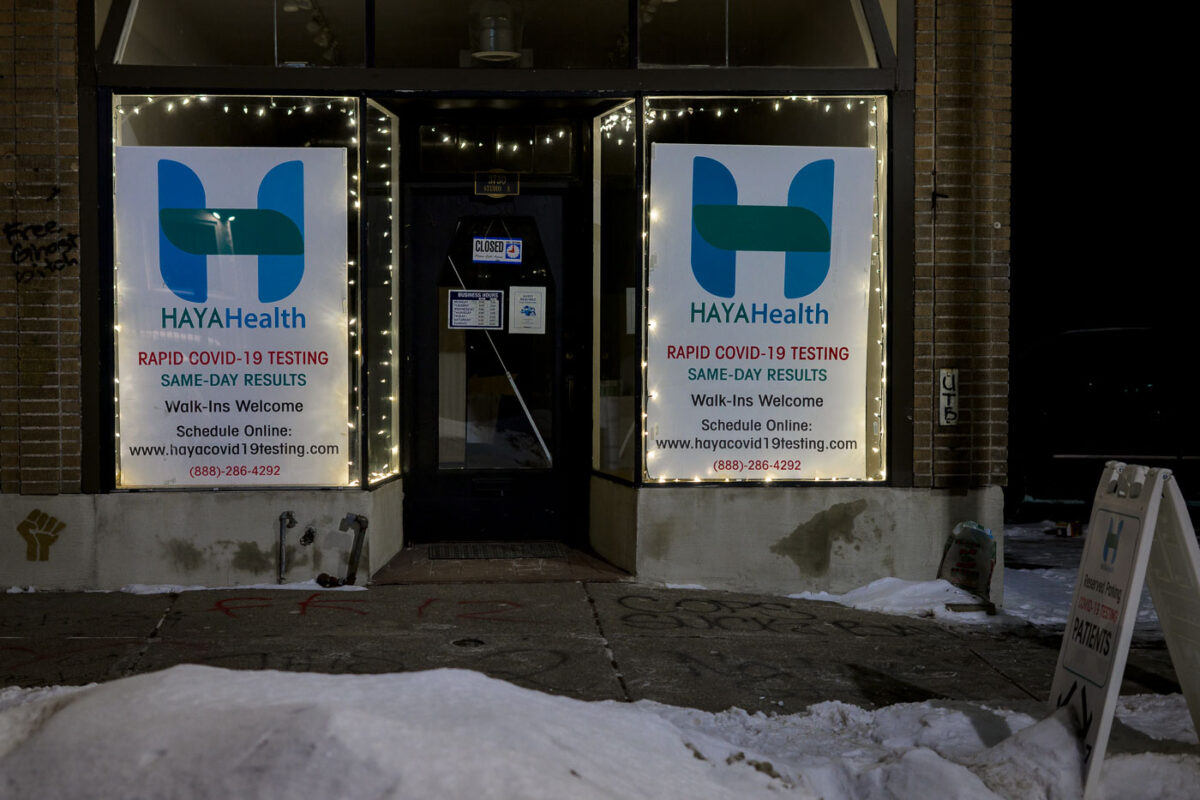
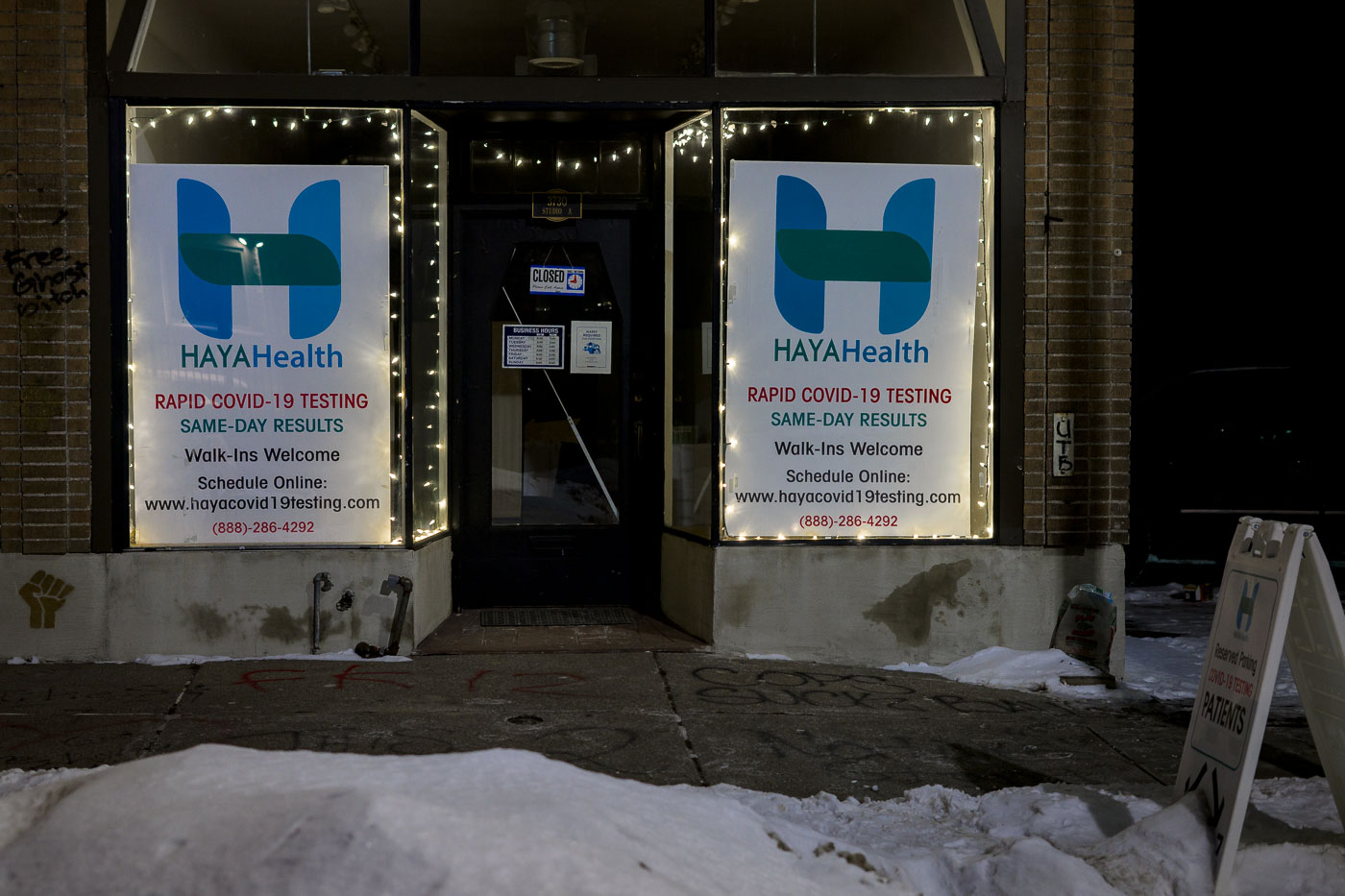
Haya Health COVID19 Testing
A Haya Health COVID-19 testing site is pictured on Chicago Avenue in Minneapolis. The site offered rapid testing with same-day results and walk-in appointments. This location is located in George Floyd Square, an area that became a focal point during the 2020 Minneapolis uprising following the murder of George Floyd.

Haya Health COVID Testing Site, Chicago Ave, Minneapolis
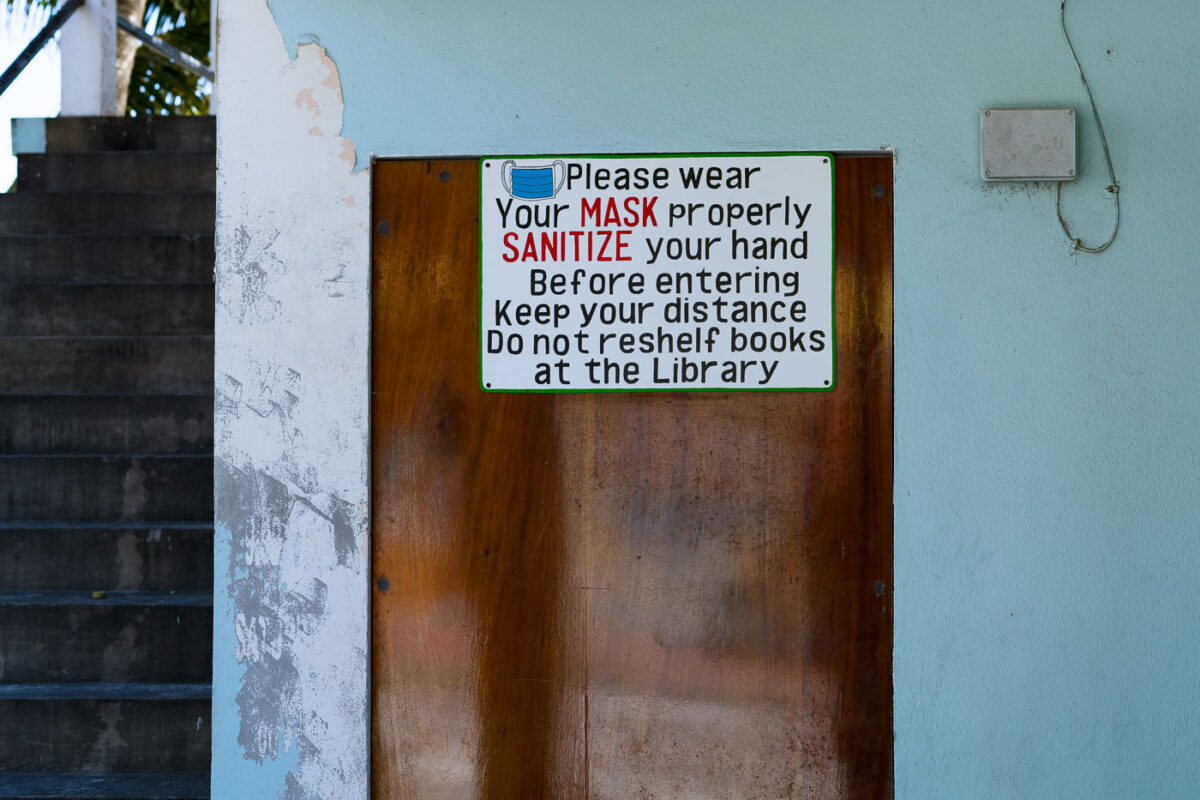
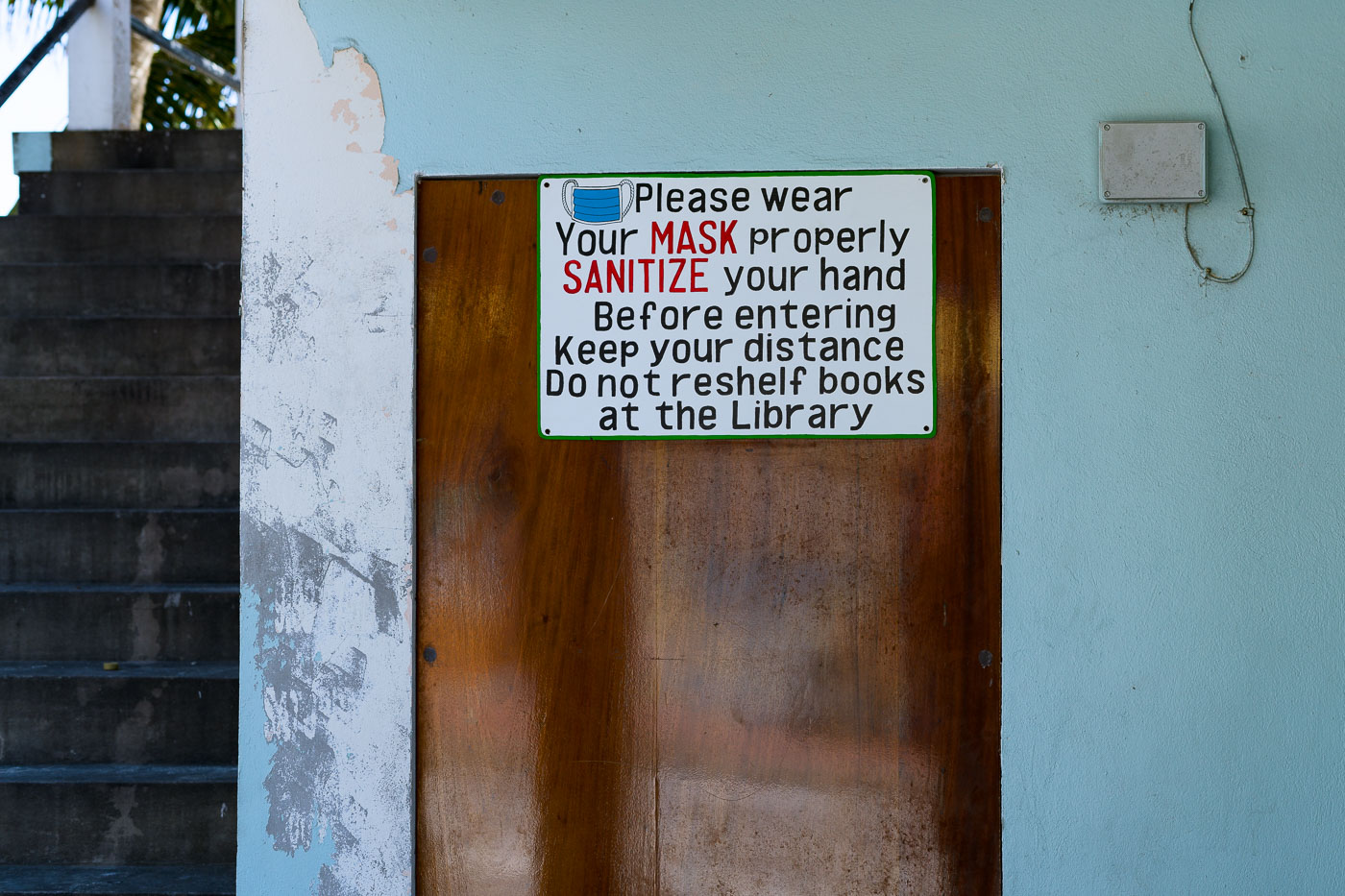
COVID-19 safety sign at the San Pedro Public Library in Belize.
A COVID-19 safety sign is posted at the entrance of the San Pedro Public Library on Ambergris Caye, Belize. The notice instructs visitors to wear a mask properly, sanitize their hands, keep their distance, and not reshelve books.

COVID-19 Library Sign, San Pedro, Belize
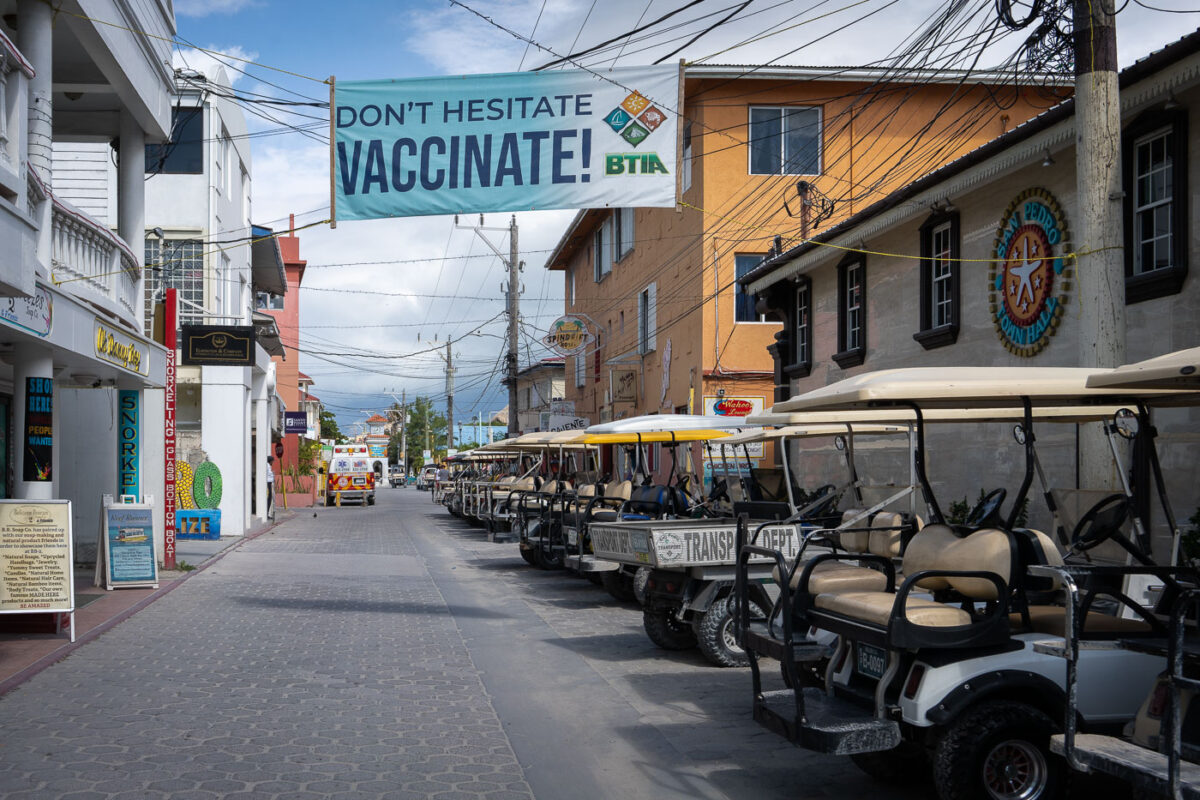
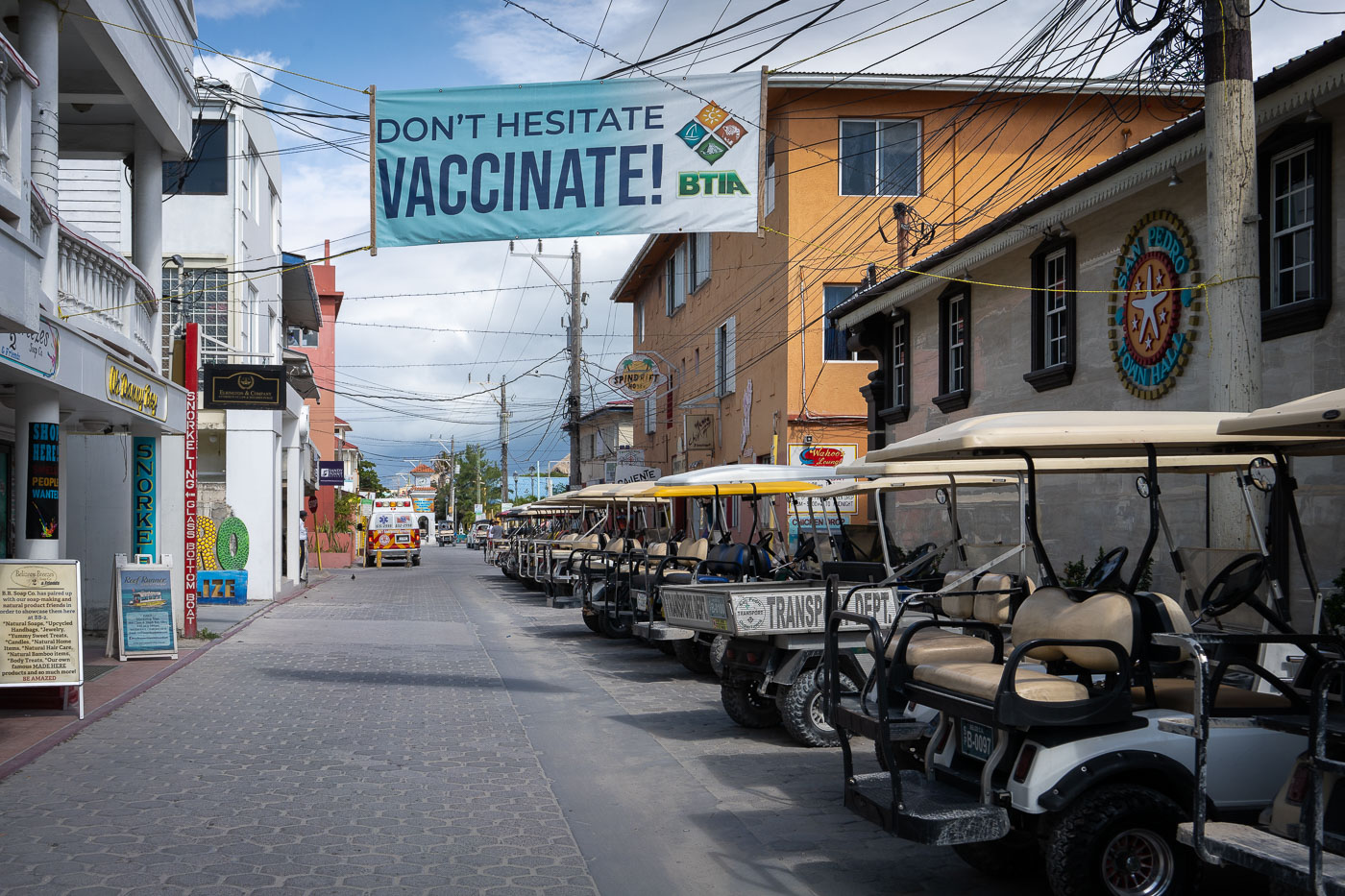
A "Don't Hesitate Vaccinate!" banner hangs over a street lined with golf carts in San Pedro, Belize.
A banner reading "Don't Hesitate Vaccinate!" is displayed in San Pedro, Belize, on Ambergris Caye. The banner, which also features the logo of the Belize Tourism Industry Association (BTIA), hangs above a street lined with parked golf carts, a common mode of transportation on the island. The message encourages COVID-19 vaccination.

Vaccination Banner in San Pedro, Belize
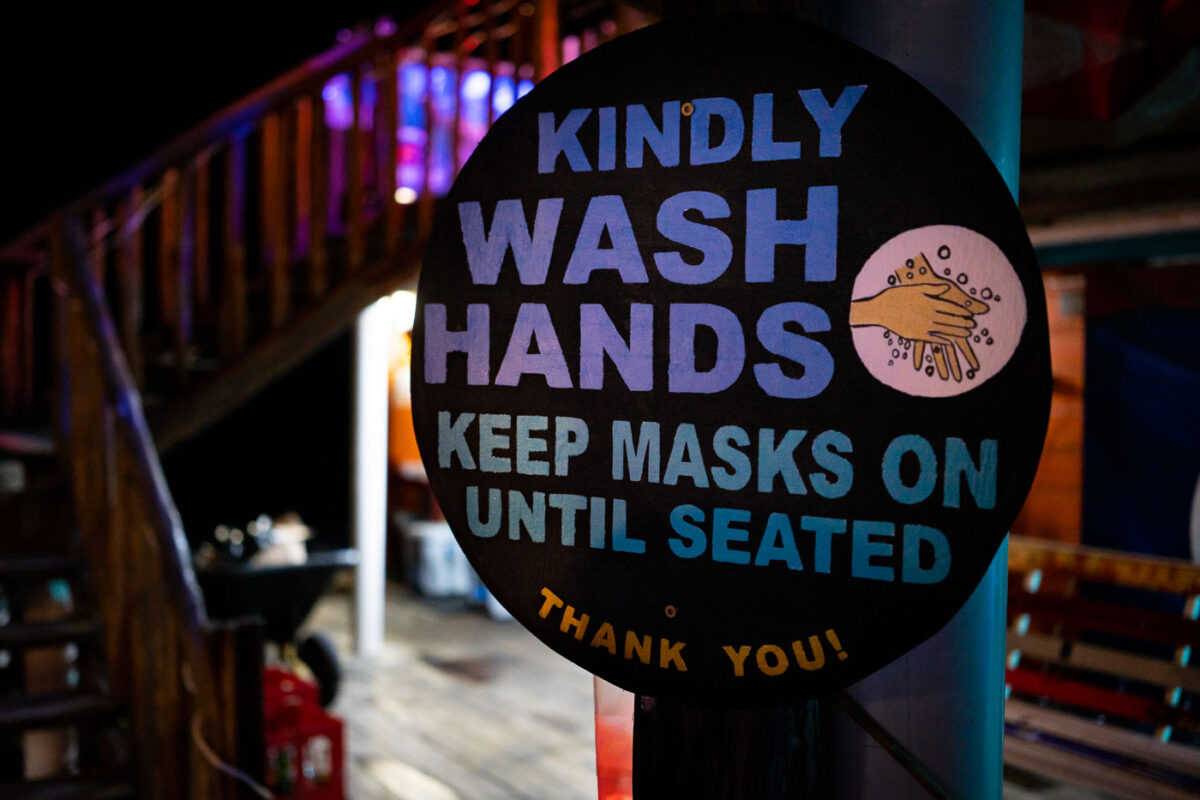
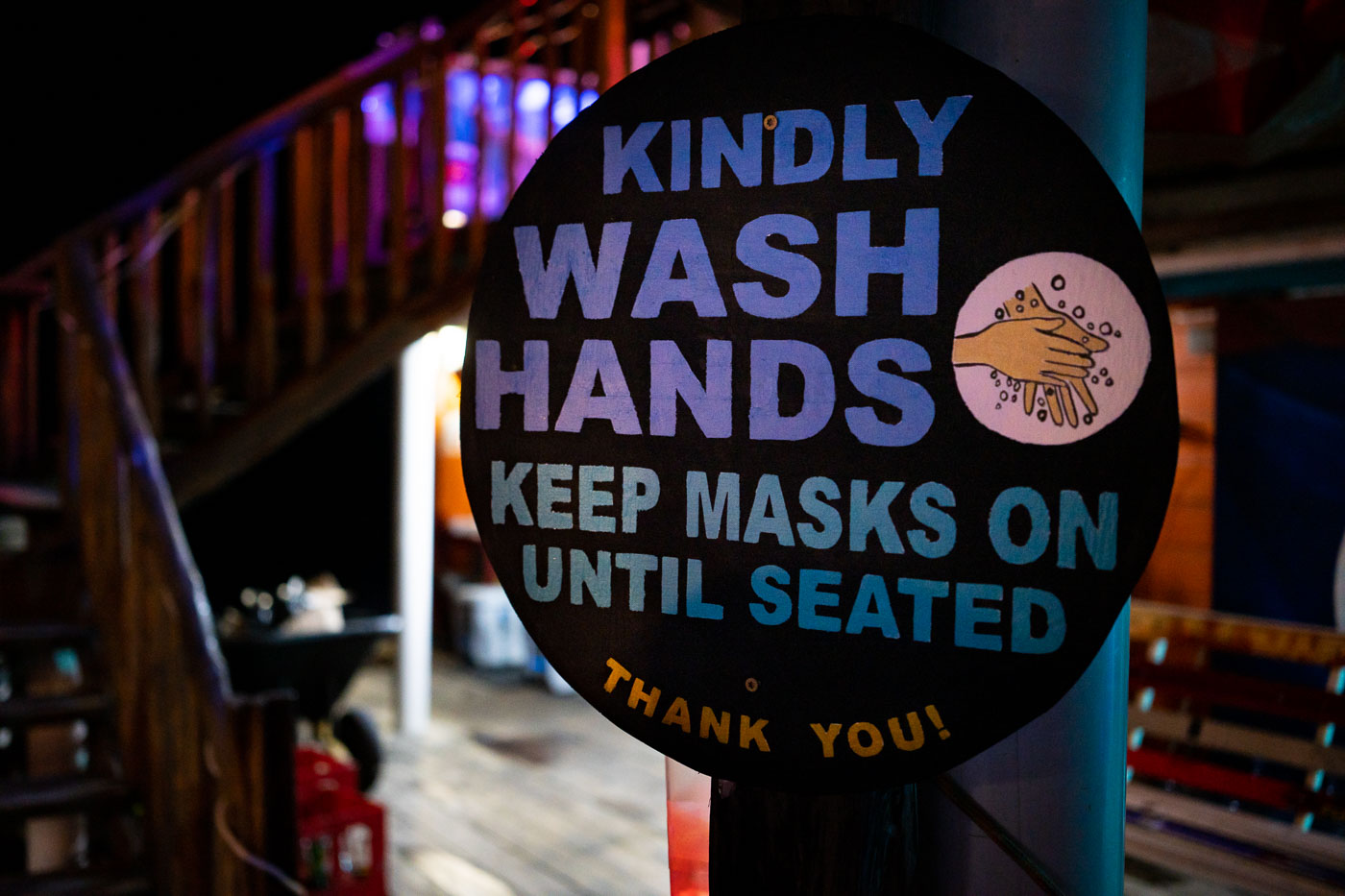
COVID-19 safety sign in San Pedro, Belize, reads "Kindly wash hands" and "Keep masks on until seated."
A COVID-19 health notice at a business in San Pedro, Belize, asks patrons to wash hands and keep masks on until seated. The sign includes a handwashing icon and is posted indoors, likely near the entrance or seating area.

COVID-19 Sign in San Pedro, Belize

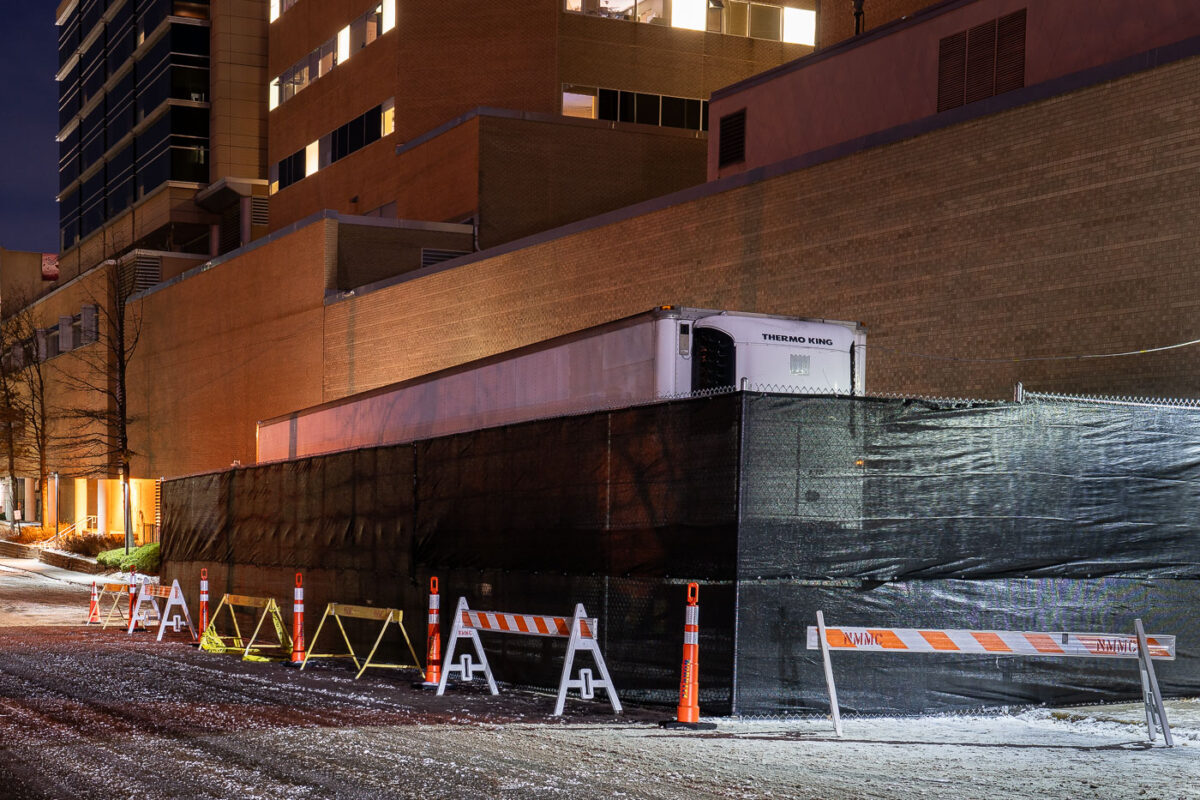
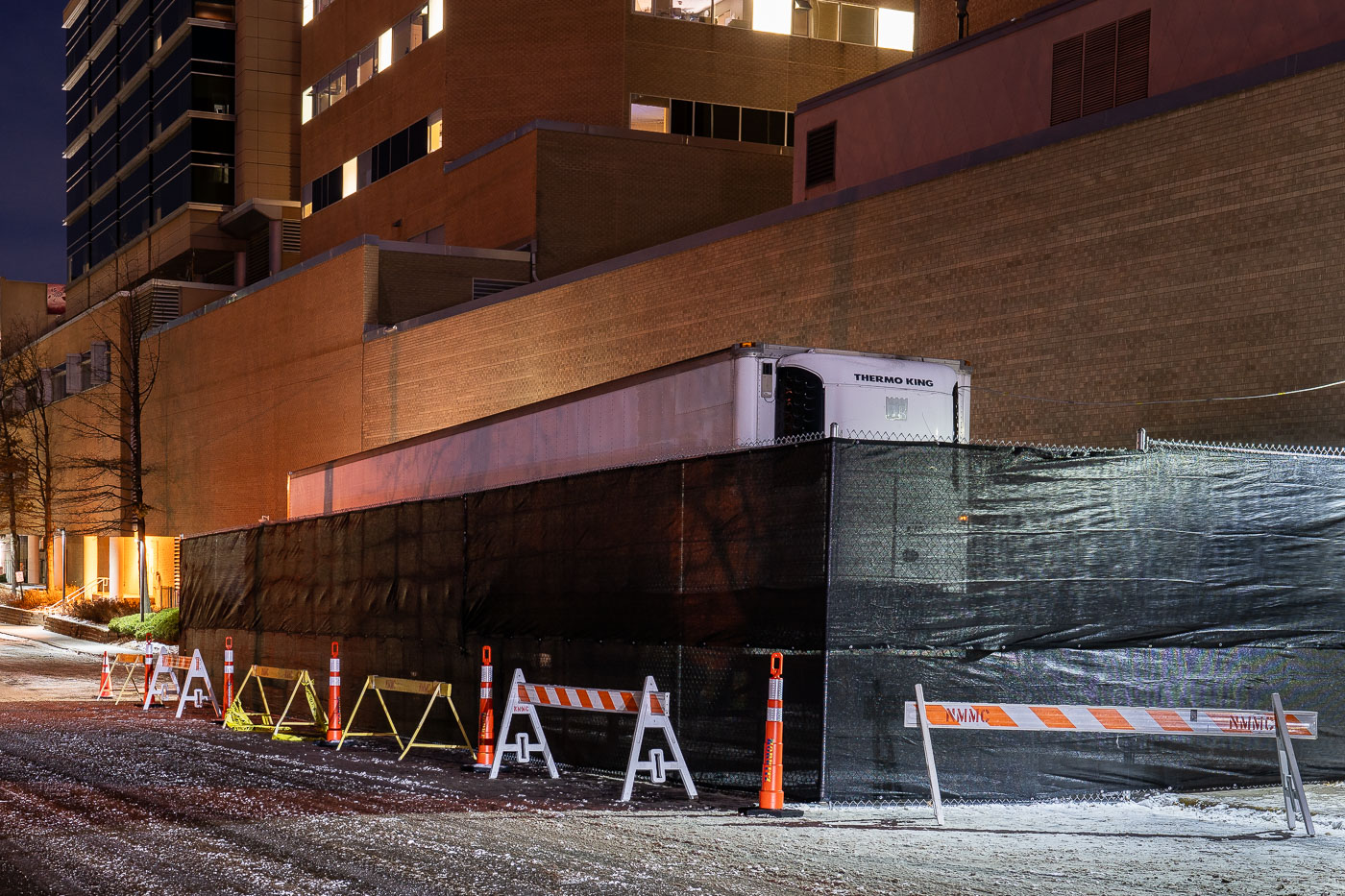
COVID Mobile Morgue in Minneapolis outside hospital
A refrigerated trailer, serving as a temporary morgue, is set up outside North Memorial Hospital in Robbinsdale, a suburb of Minneapolis. This measure was implemented during the COVID-19 pandemic, specifically during the spread of the Omicron variant in late 2021 or early 2022, when the state reported critically low ICU bed availability in the Twin Cities metro area. The presence of the mobile morgue underscored the immense strain on healthcare systems during the pandemic's surges.

Mobile Morgue at North Memorial Hospital, Minneapolis
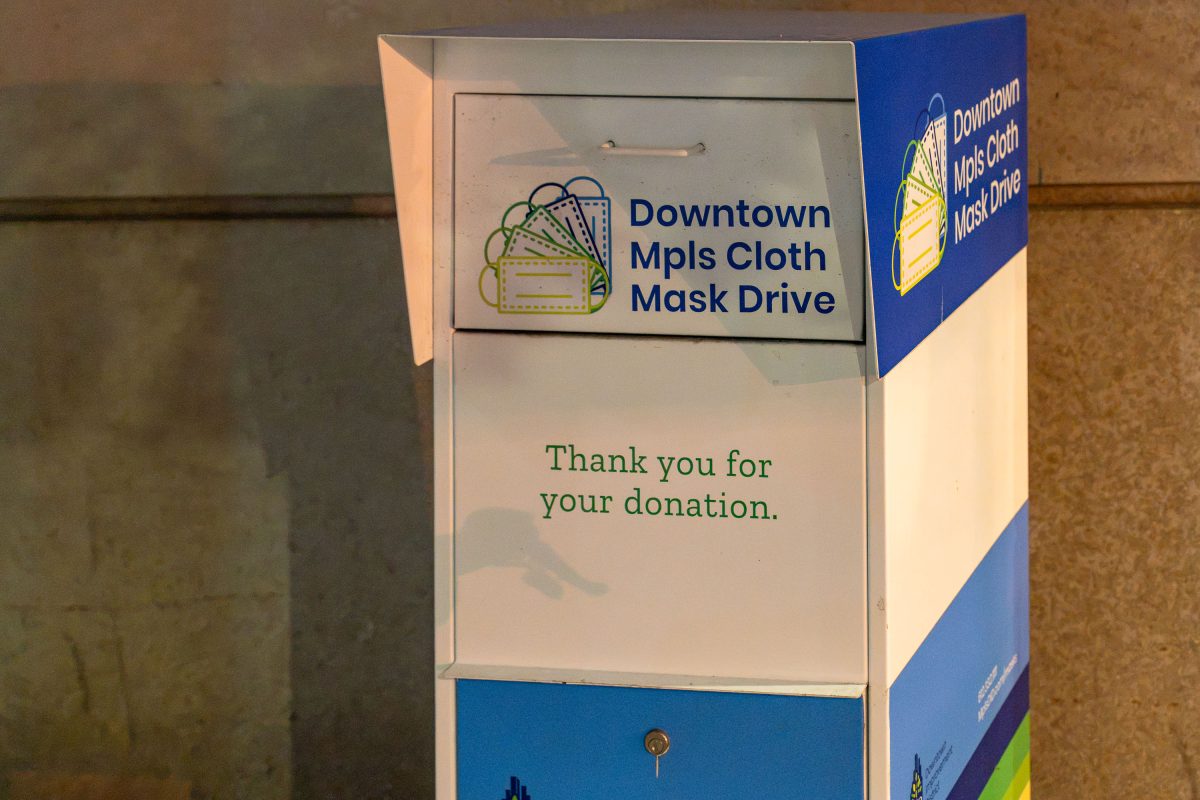
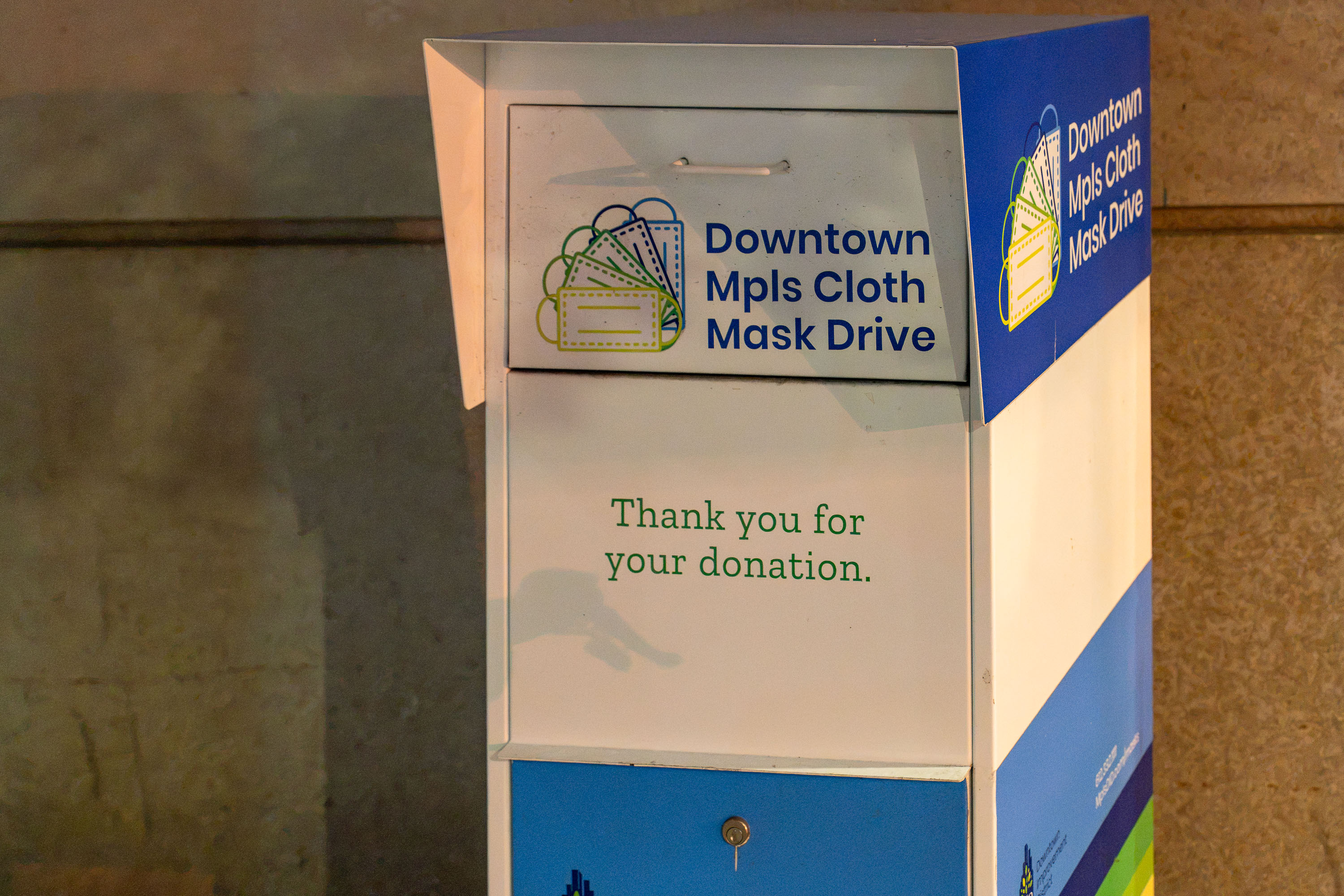
Downtown Minneapolis Cloth Mask Drive Box
A donation box for cloth masks seen in Minneapolis in April 2021.

Downtown Minneapolis Cloth Mask Drive Box

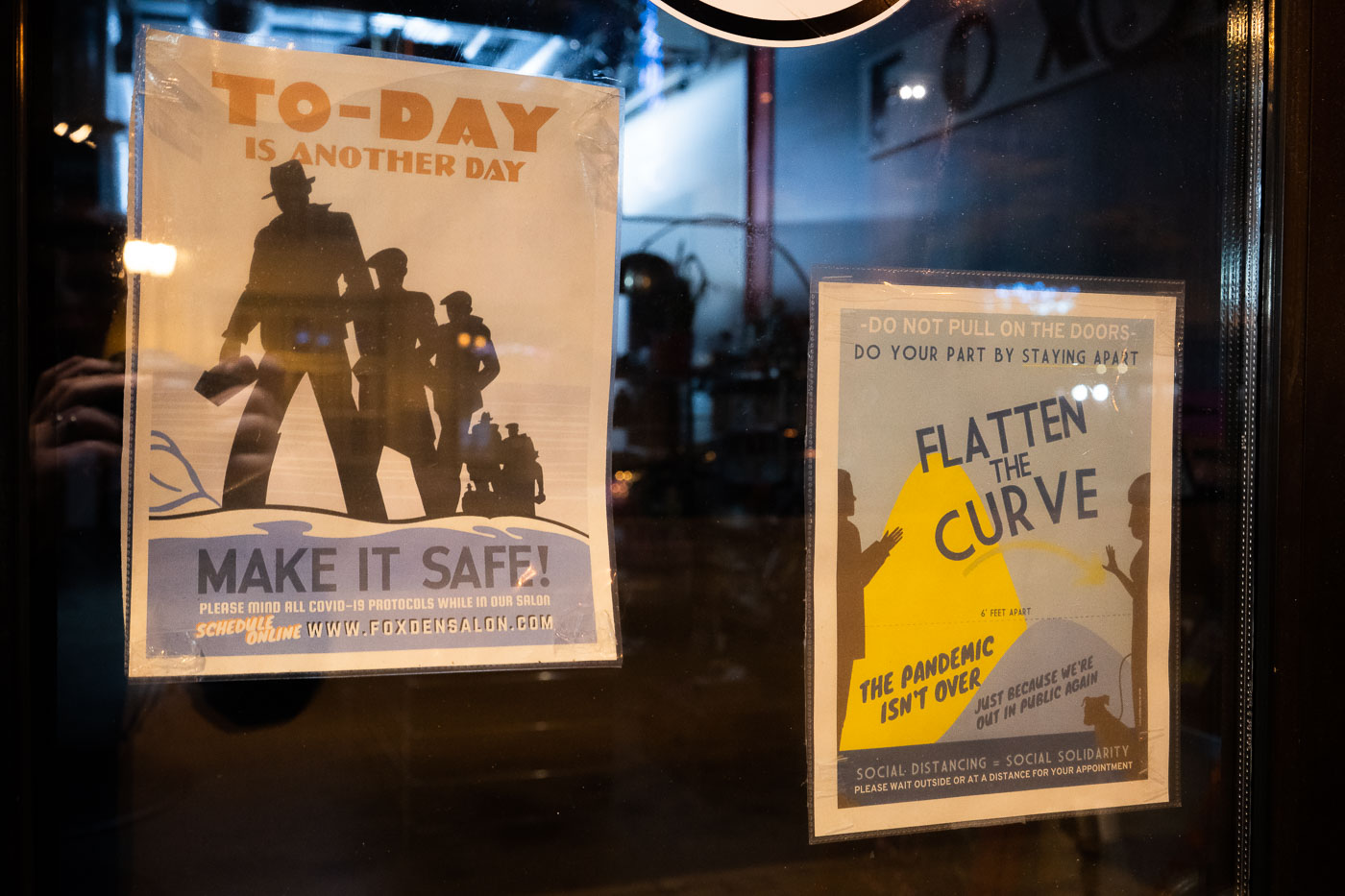
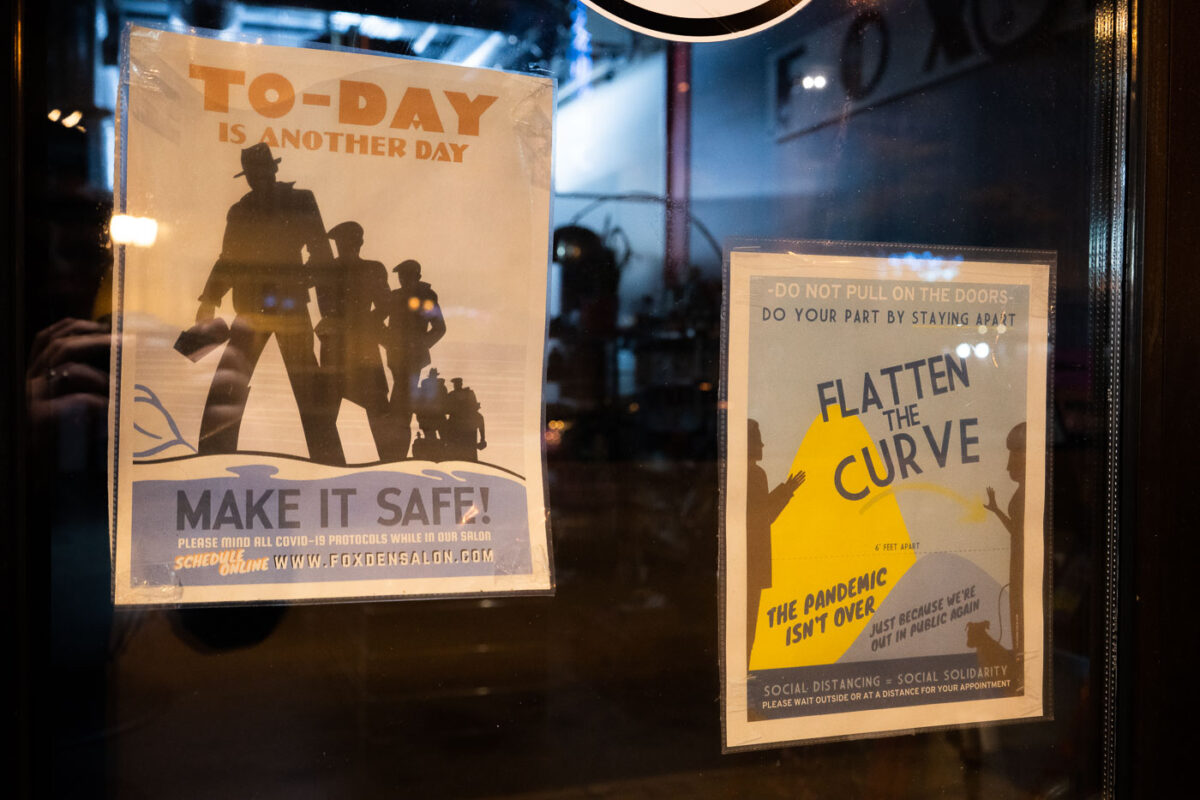
COVID-19 safety signs at Fox Den Salon in Uptown Minneapolis encourage social distancing and online appointments to mitigate virus spread.
Signs displayed on the window of Fox Den Salon in Uptown Minneapolis communicate public health guidelines during the COVID-19 pandemic. One poster, titled "Make It Safe!", urges patrons to "Mind All COVID-19 Protocols" and directs them to schedule appointments online via the salon's website. Another sign, "Flatten The Curve", emphasizes social distancing and reminds the public that "The Pandemic Isn't Over" and encourages "Social Solidarity" by waiting outside or at a distance. These visual cues reflect the widespread adoption of safety measures by businesses to mitigate the spread of the virus and maintain operations.

COVID-19 Signs at Fox Den Salon, Uptown Minneapolis
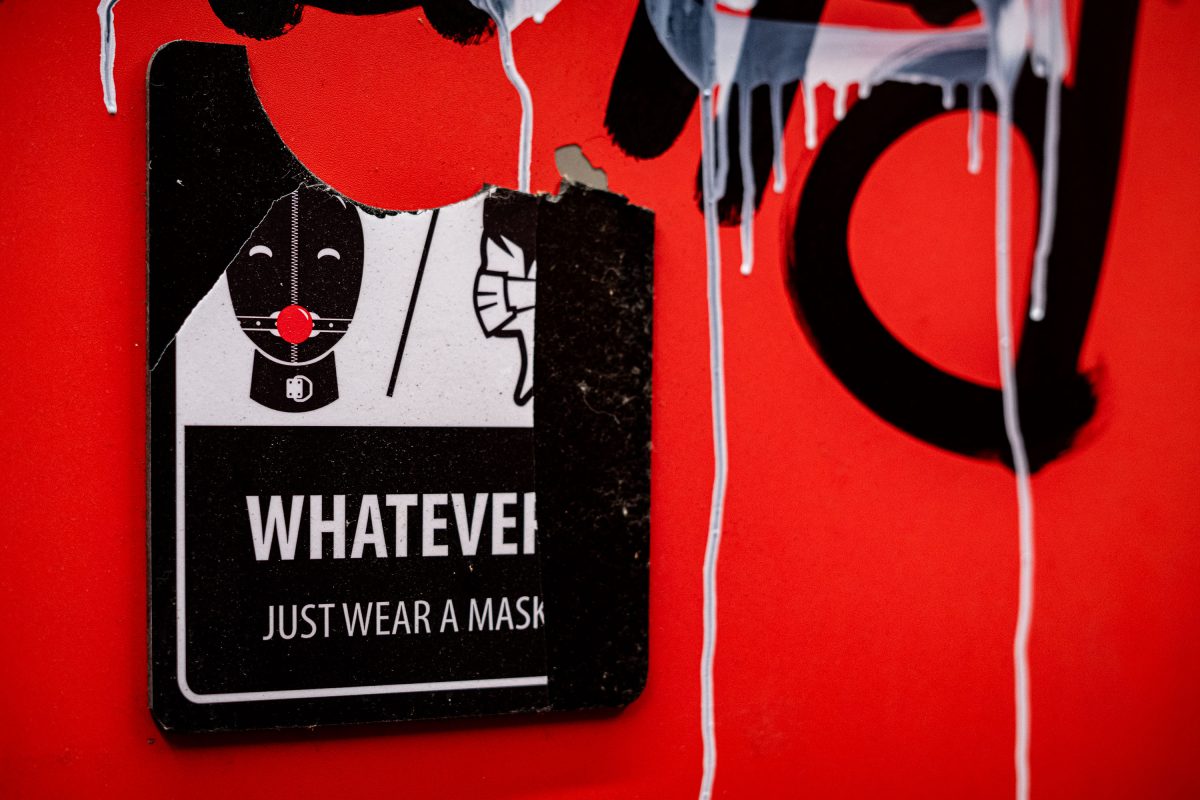
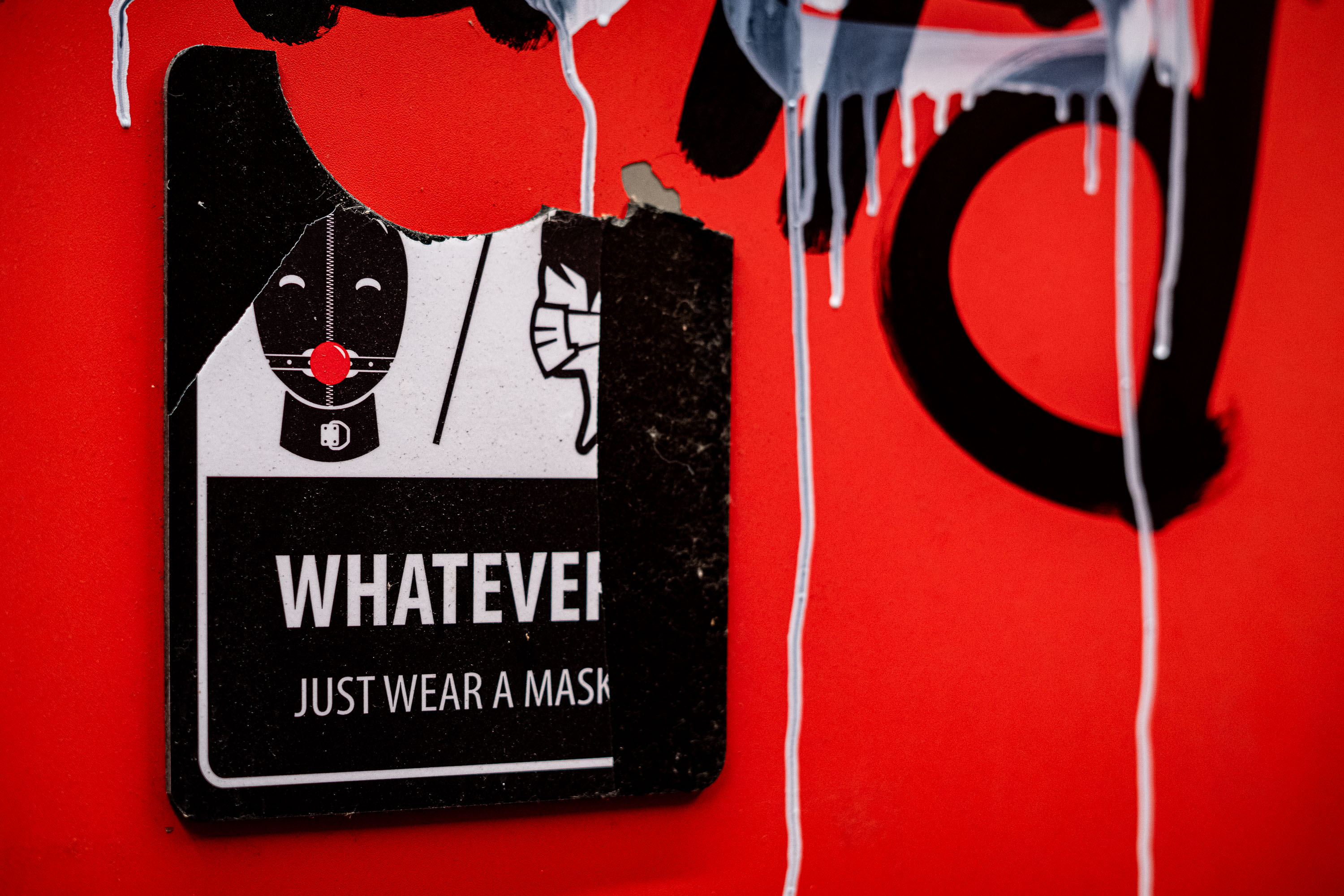
A "WHATEVER, JUST WEAR A MASK" sign in Minneapolis's Uptown neighborhood, defaced with graffiti
A sign in Minneapolis's Uptown neighborhood reads "WHATEVER, JUST WEAR A MASK." This message reflects the public health discourse and mandates surrounding the COVID-19 pandemic. Such signs were common on commercial establishments across the United States during various phases of the pandemic, serving as a visual reminder and enforcement tool for mask-wearing policies.

Minneapolis Business Sign: Whatever, Just Wear a Mask
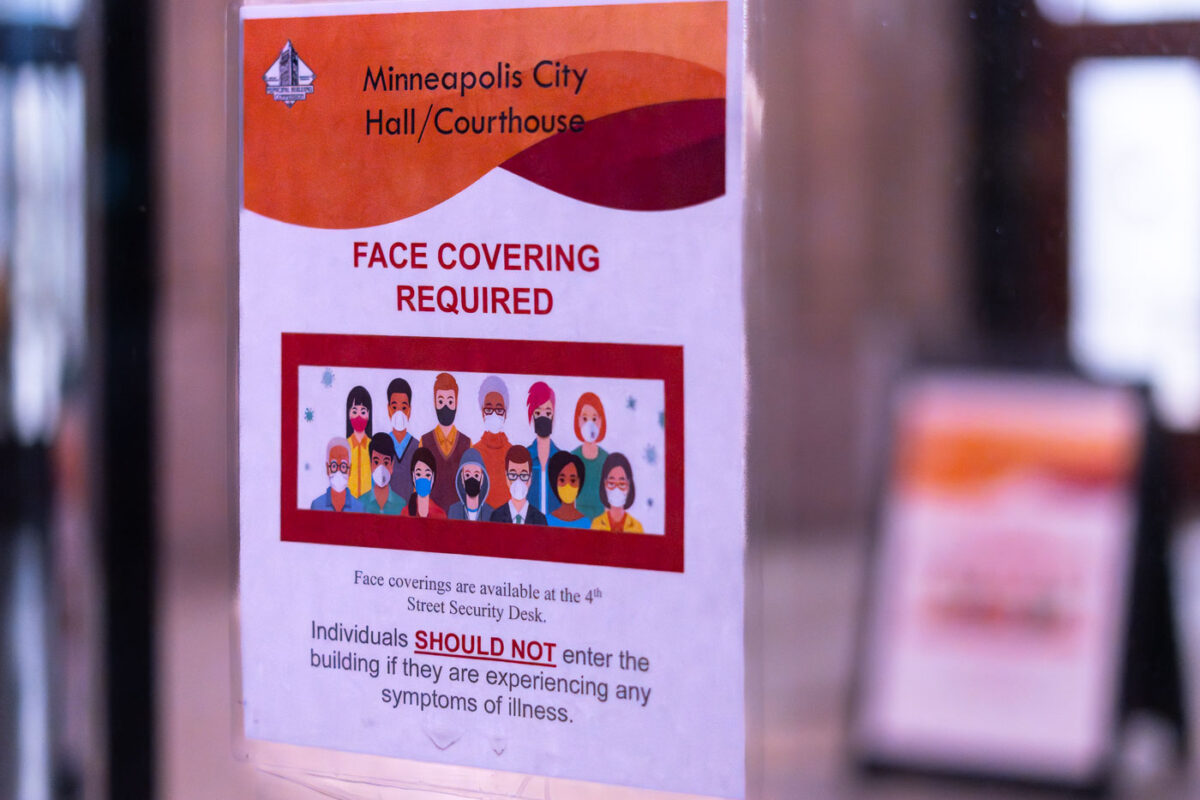
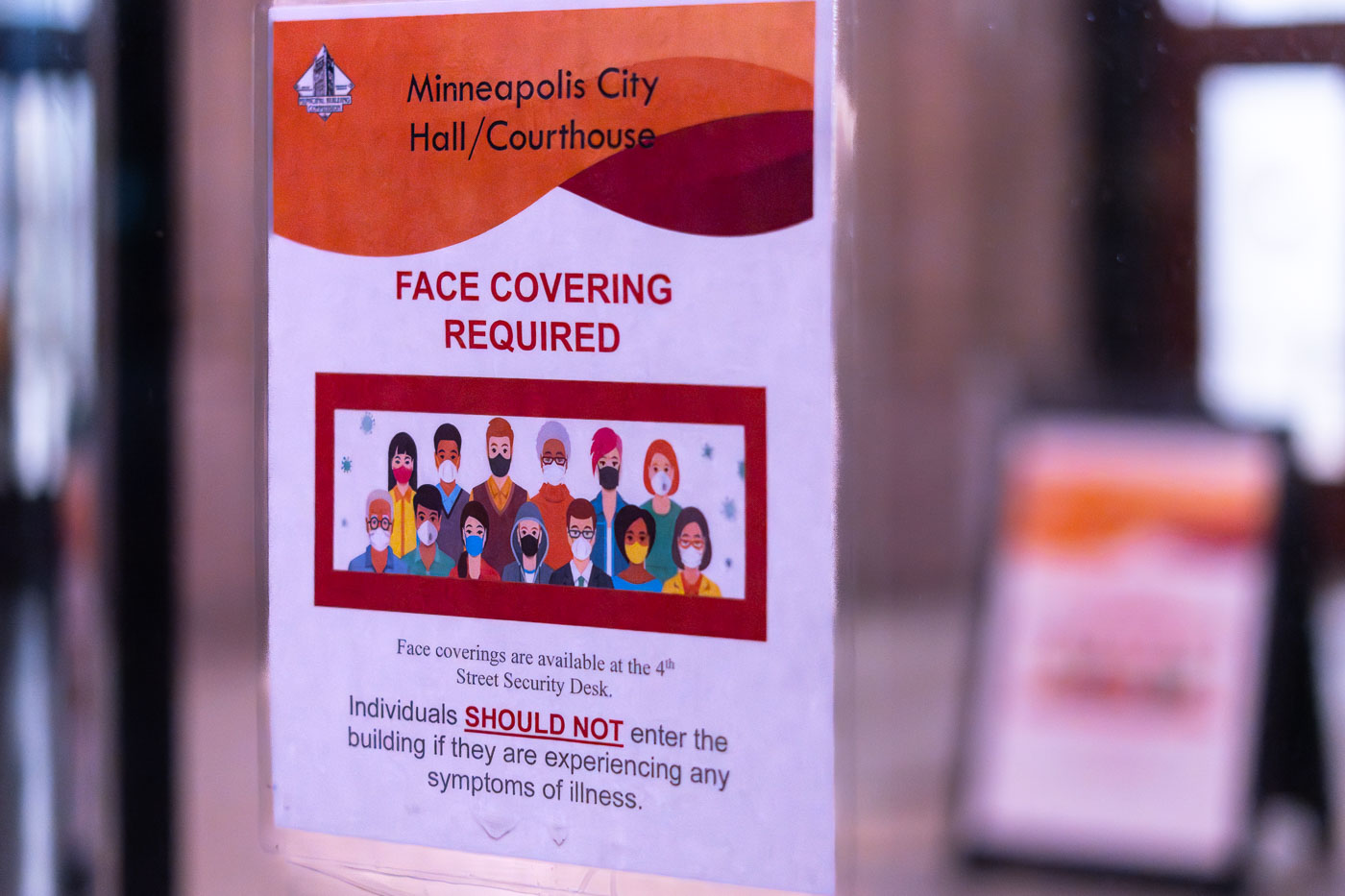
COVID Face Coverings Sign at City Hall
Face Covering Required A sign seen at Minneapolis City Hall. It states individuals should not enter the building if they are experiencing any symptoms of illness.

COVID Face Coverings Sign at City Hall

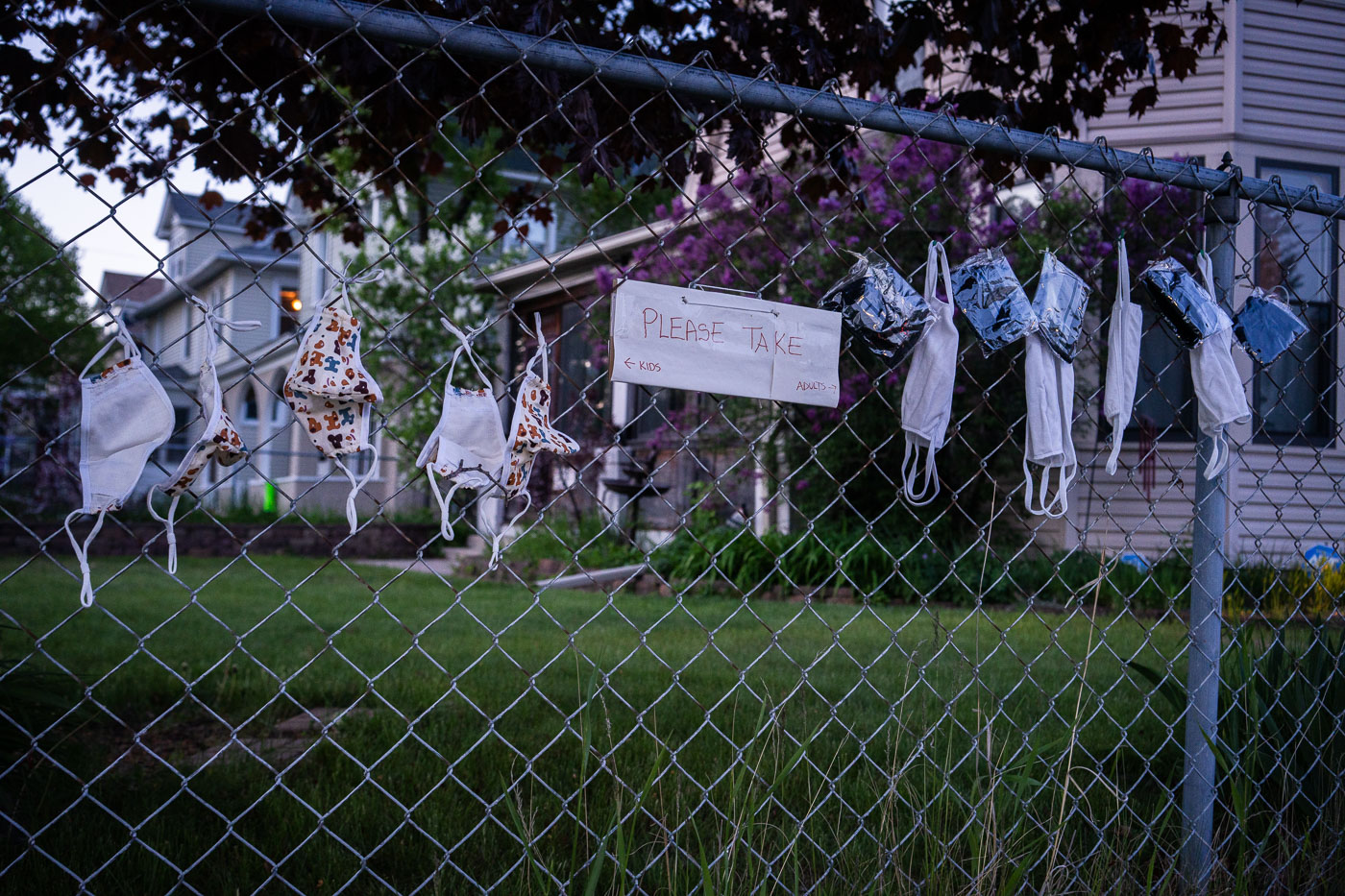
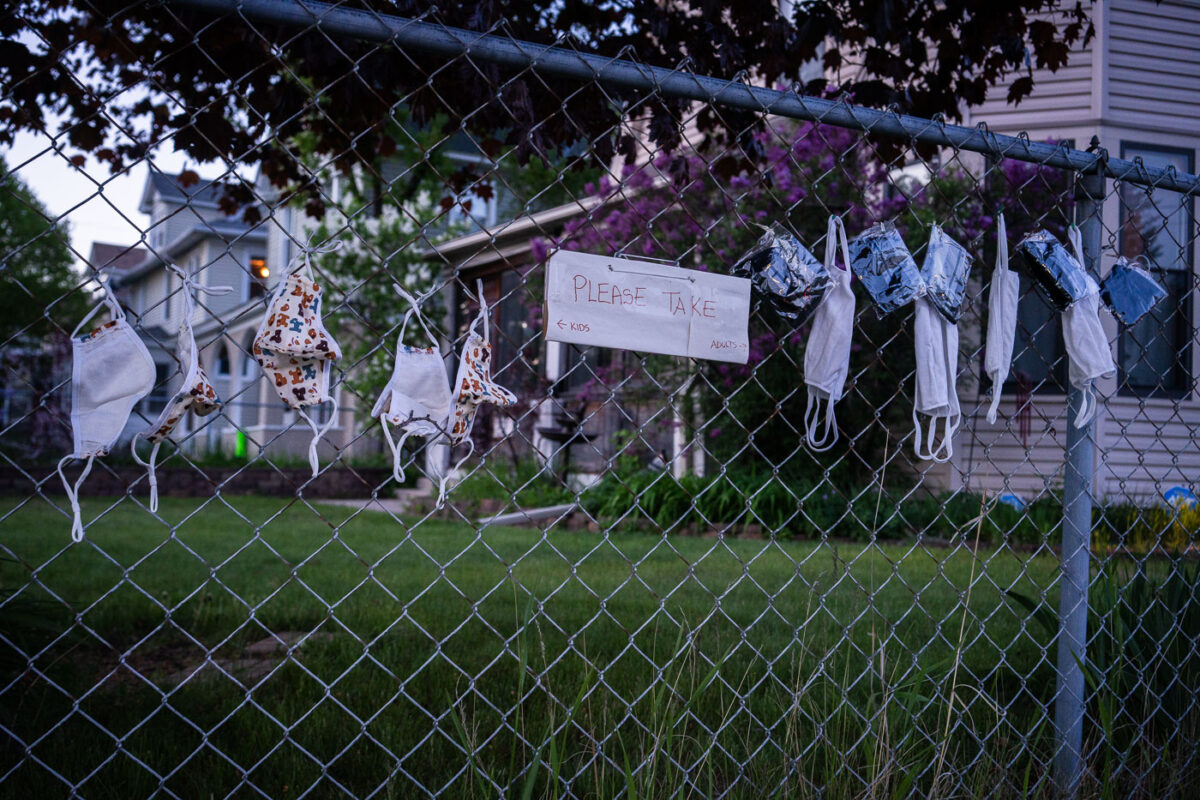
Free face masks on South Minneapolis fence
During the COVID-19 pandemic and the period of civil unrest following the murder of George Floyd in Minneapolis, residents offered mutual aid to their neighbors. This photograph shows a collection of free face masks hung on a chain-link fence in South Minneapolis, with a sign indicating they are available for anyone to take. The gesture reflects a community's response to public health needs and social solidarity during a challenging time.

Free face masks offered on South Minneapolis fence
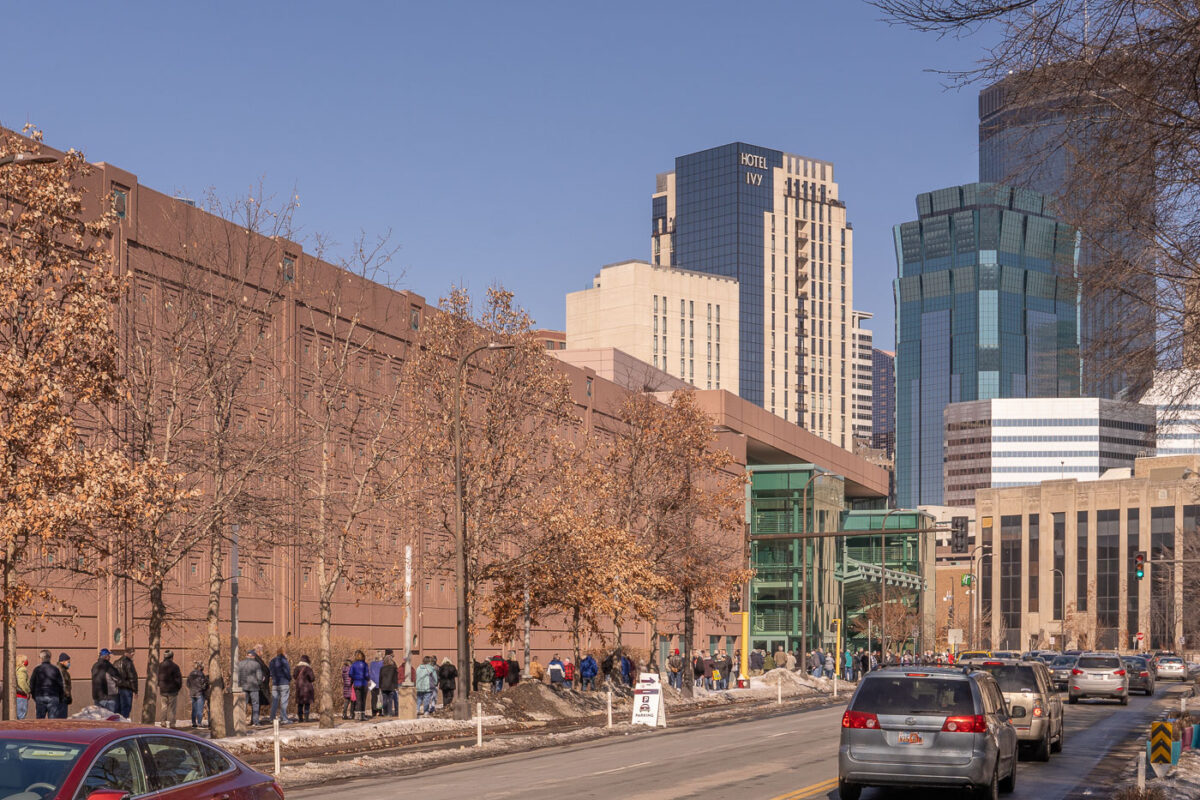
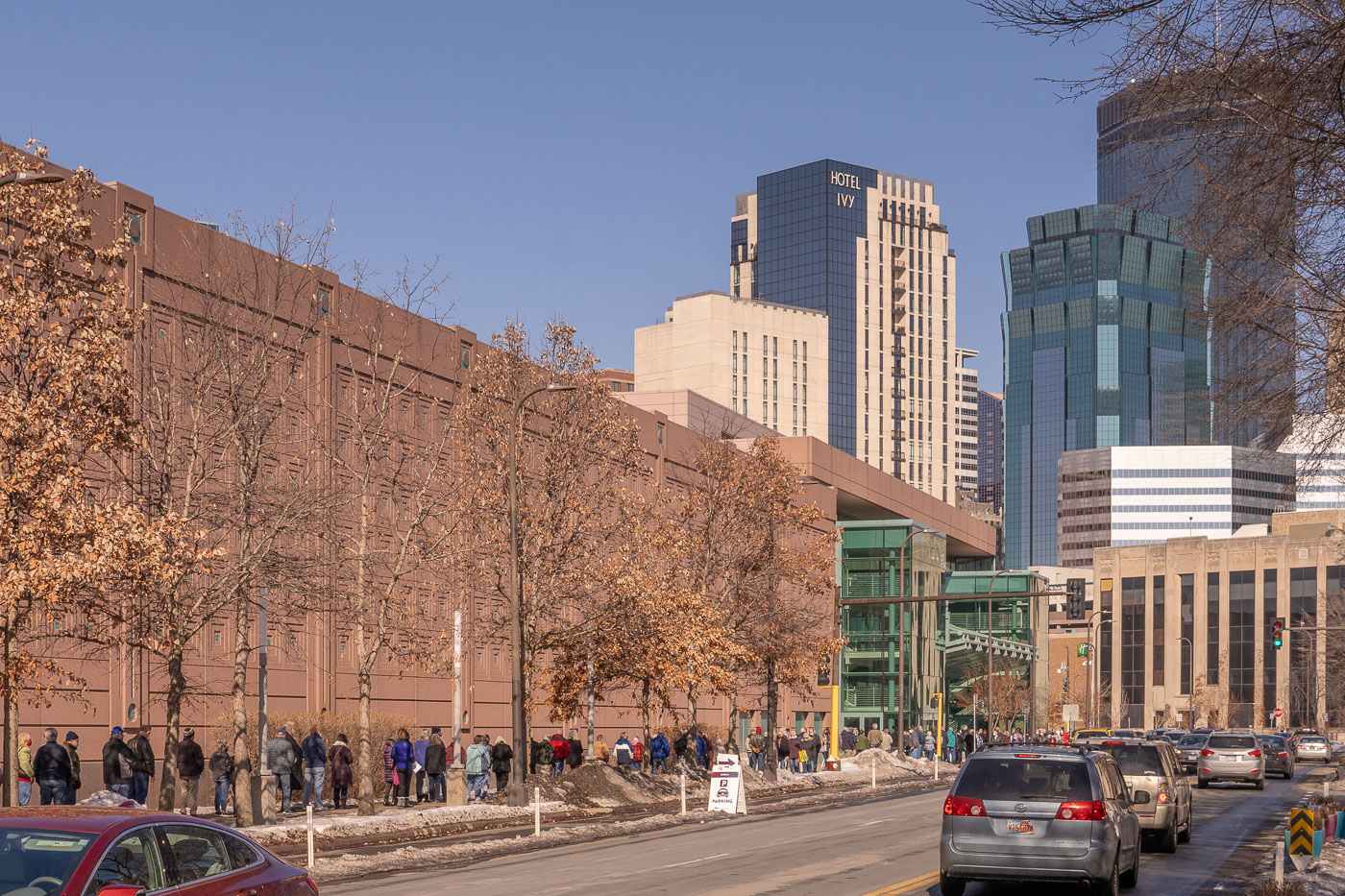
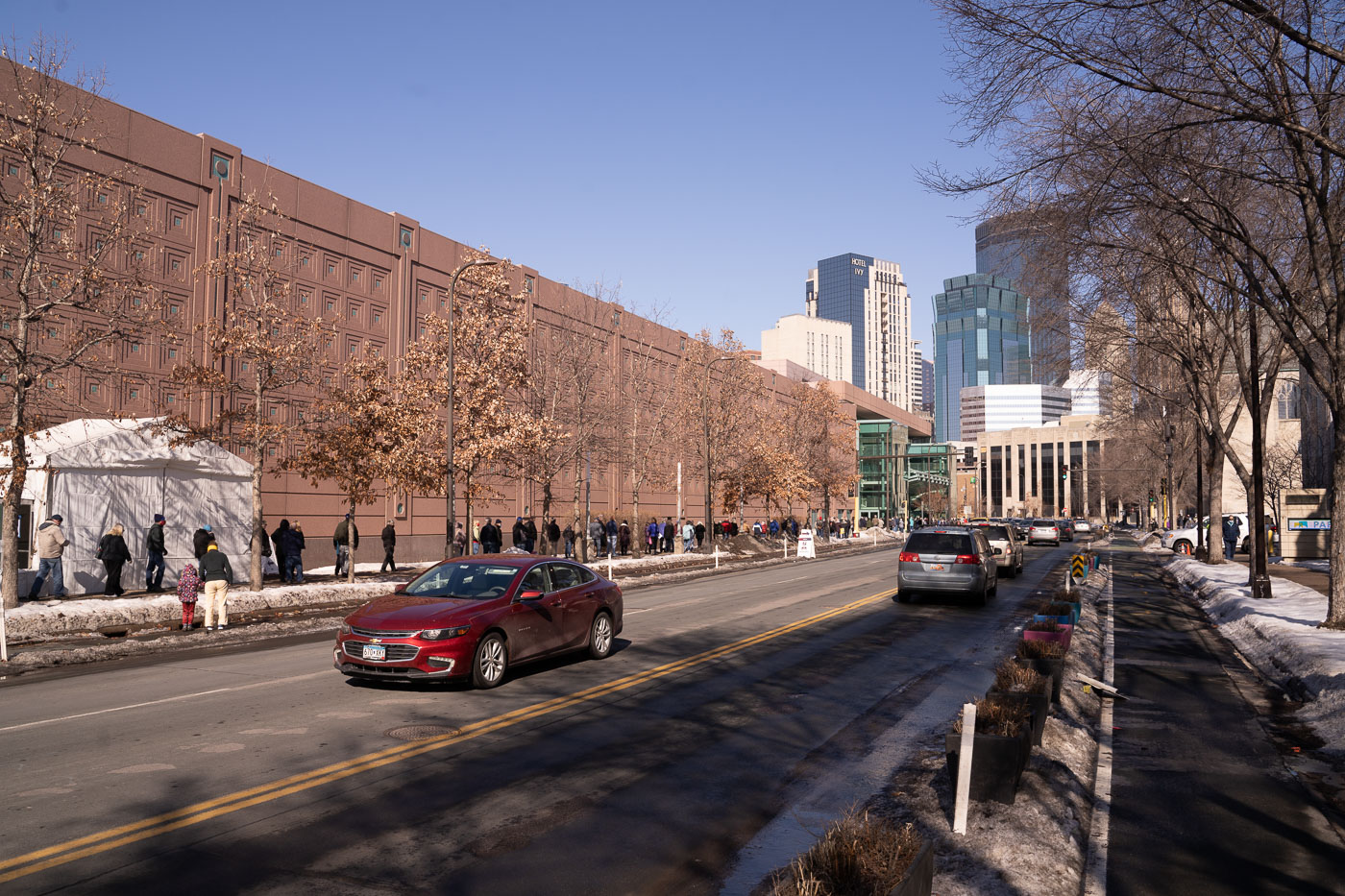
COVID vaccine line outside Minneapolis Convention Center in downtown Minneapolis.
Minneapolis Convention Center in downtown Minneapolis, Minnesota. People wait in line outside the venue for COVID-19 vaccinations during the winter 2021 rollout. The convention center was used as a mass vaccination site as public health agencies expanded access to the vaccine.

COVID vaccine line at Minneapolis Convention Center
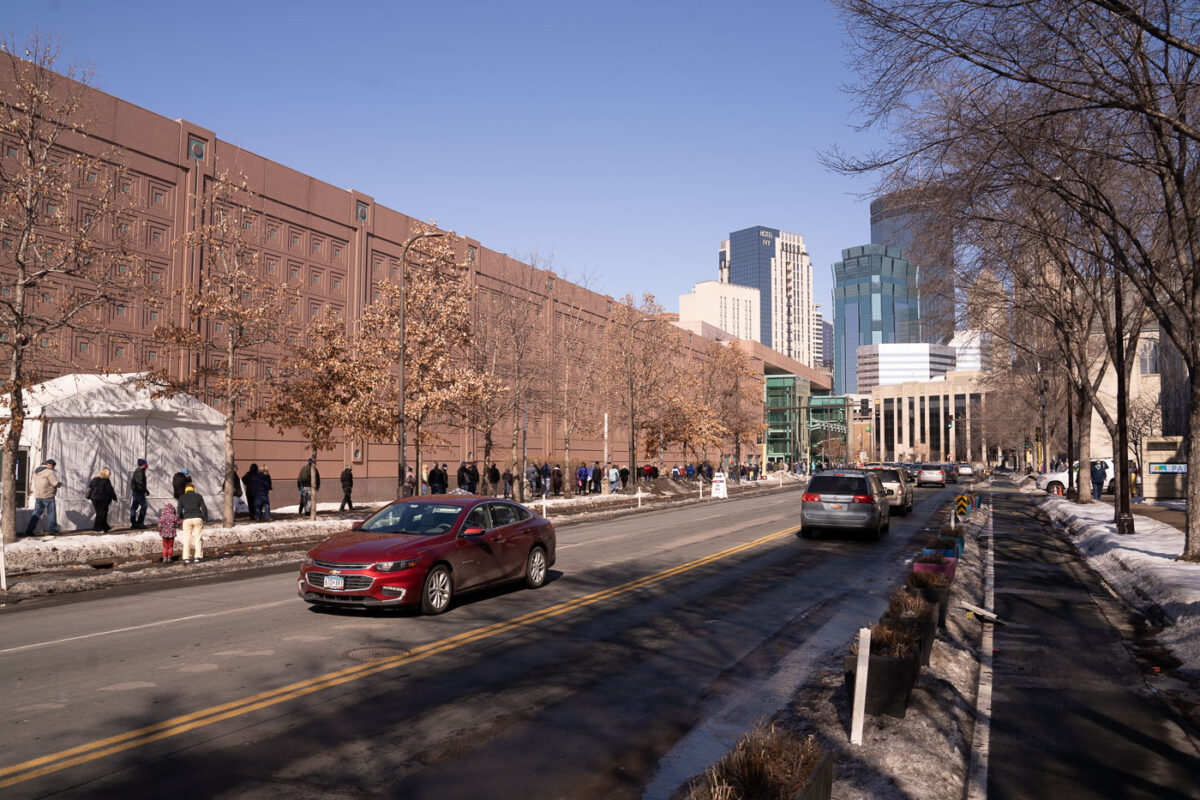
Minneapolis Convention Center in downtown Minneapolis with people waiting outside for COVID-19 vaccines.
Minneapolis Convention Center in downtown Minneapolis, Minnesota, during a COVID-19 vaccination event. People wait outside the building for vaccine appointments along the street beside the convention center.

Minneapolis Convention Center COVID-19 Vaccine Line
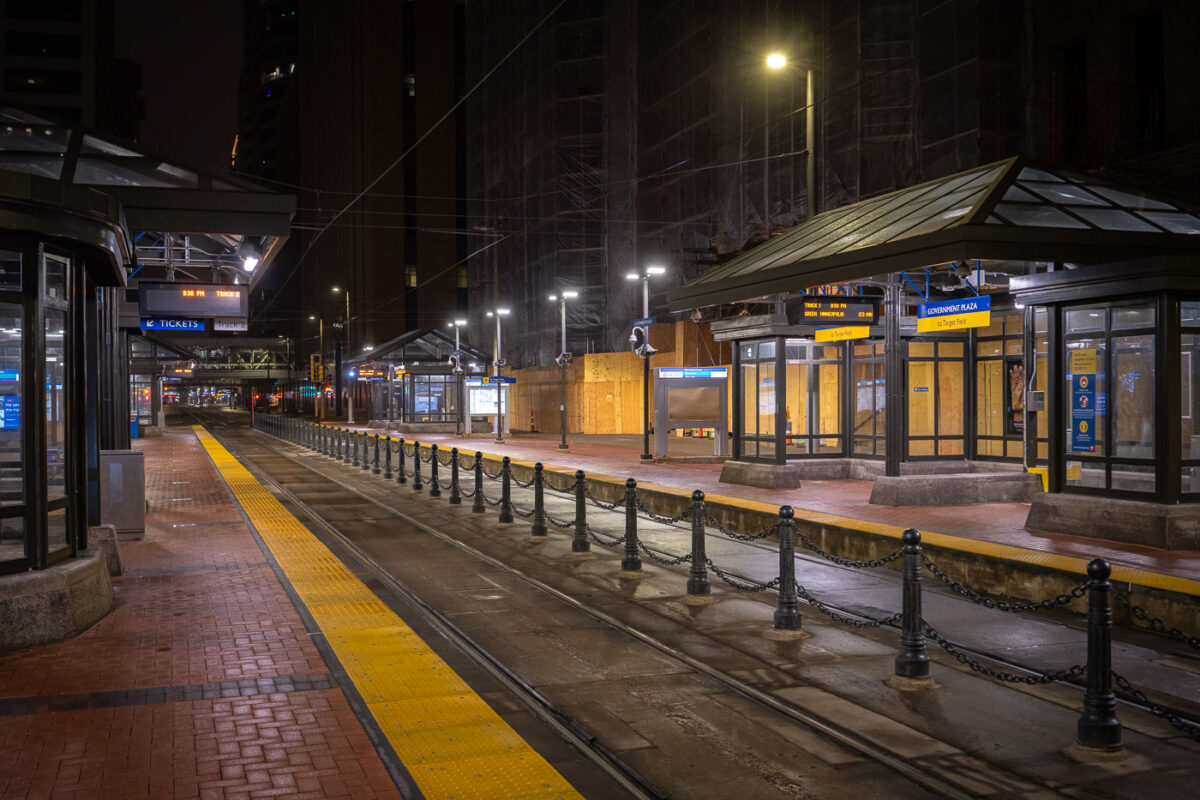
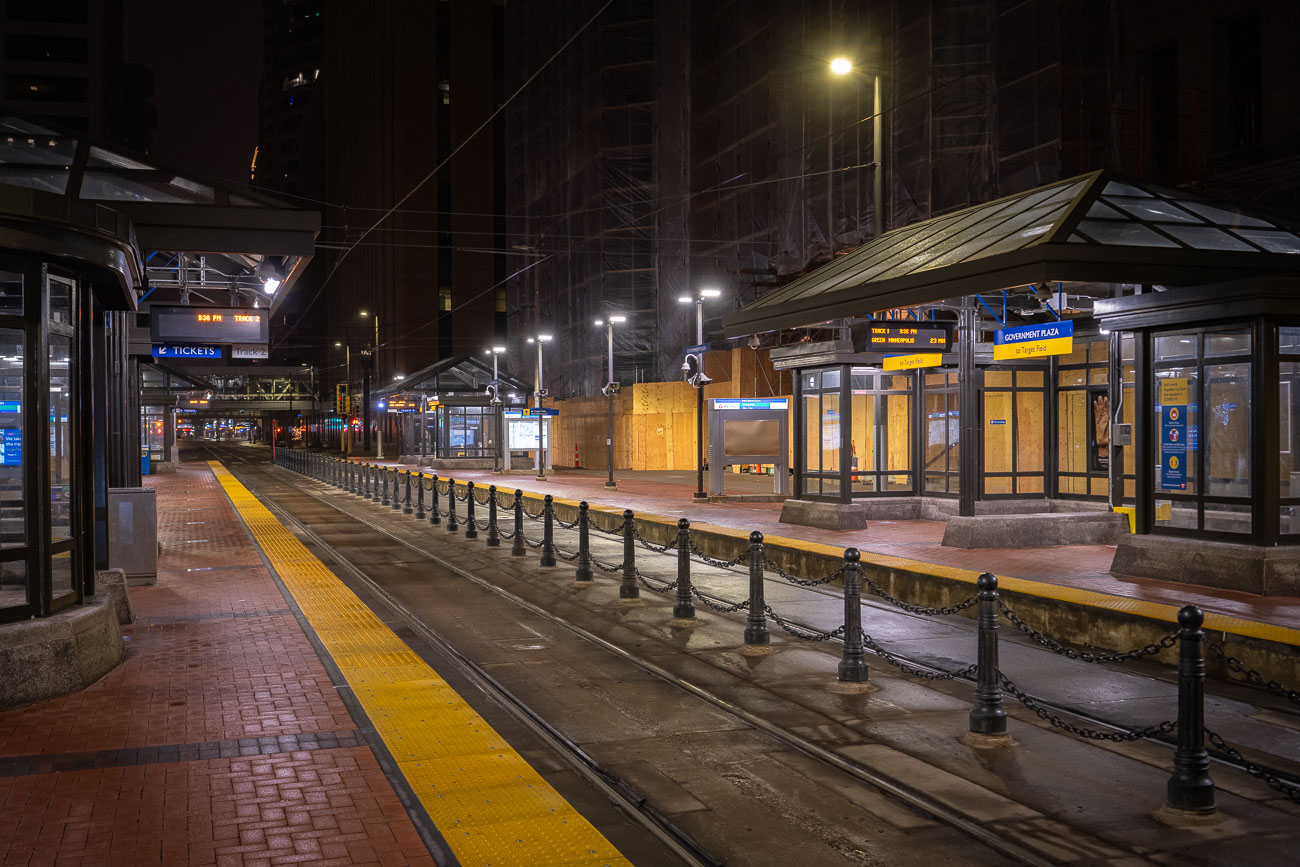
City Hall train station in Minneapolis
Government Plaza station serves as a key transit hub for the Green Line and Blue Line light rail services in downtown Minneapolis. Opened in 2004, the station is situated beneath the plaza of the same name, connecting commuters and visitors to the heart of the city's business and government district. Pictured here during COVID-19 shutdowns.

Government Plaza LRT Station, Downtown Minneapolis
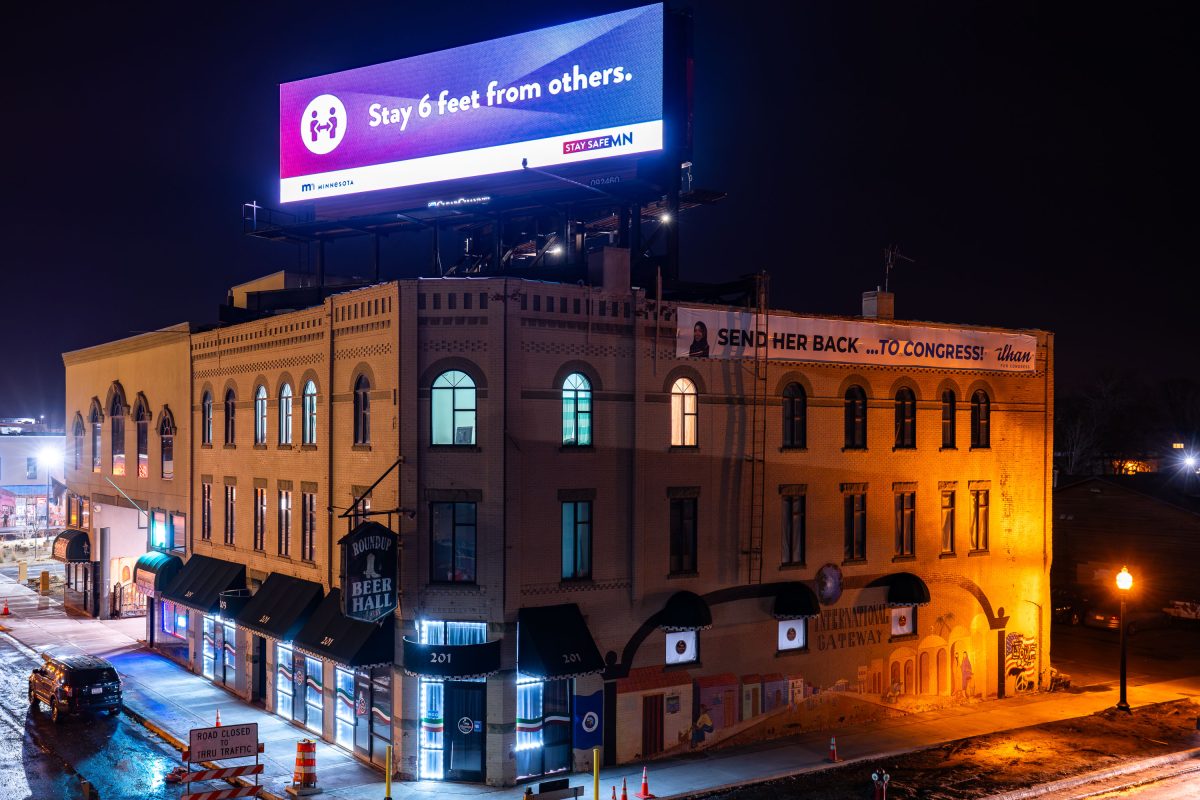
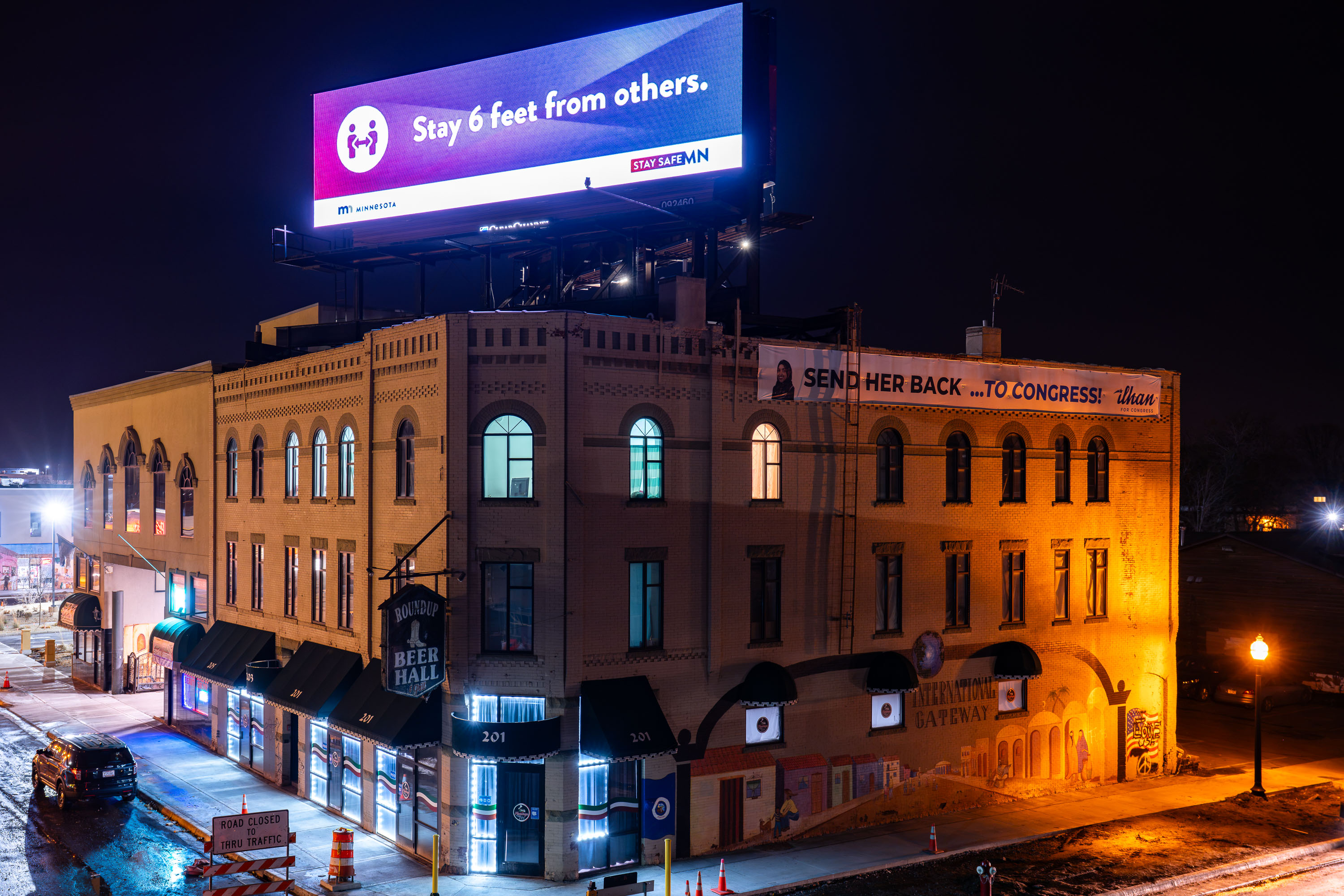
Ilhan Omar banner and COVID-19 Billboard
A billboard during COVID-19 pandemic that reads "Stay 6 feet from others". "Send Her Back... To Congress!" Ilhan Omar sign on the side of the building.

Ilhan Omar banner and COVID-19 Billboard

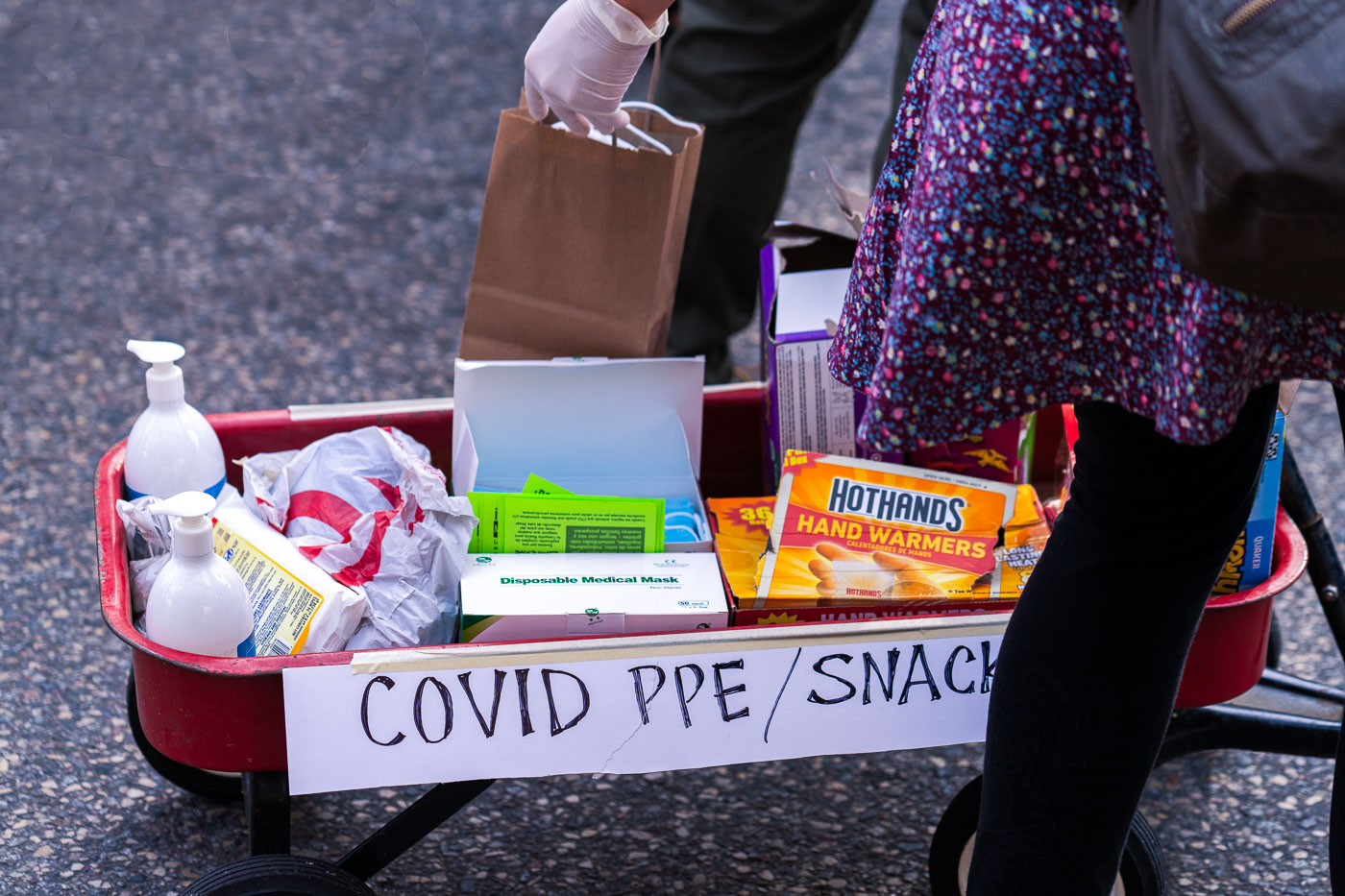
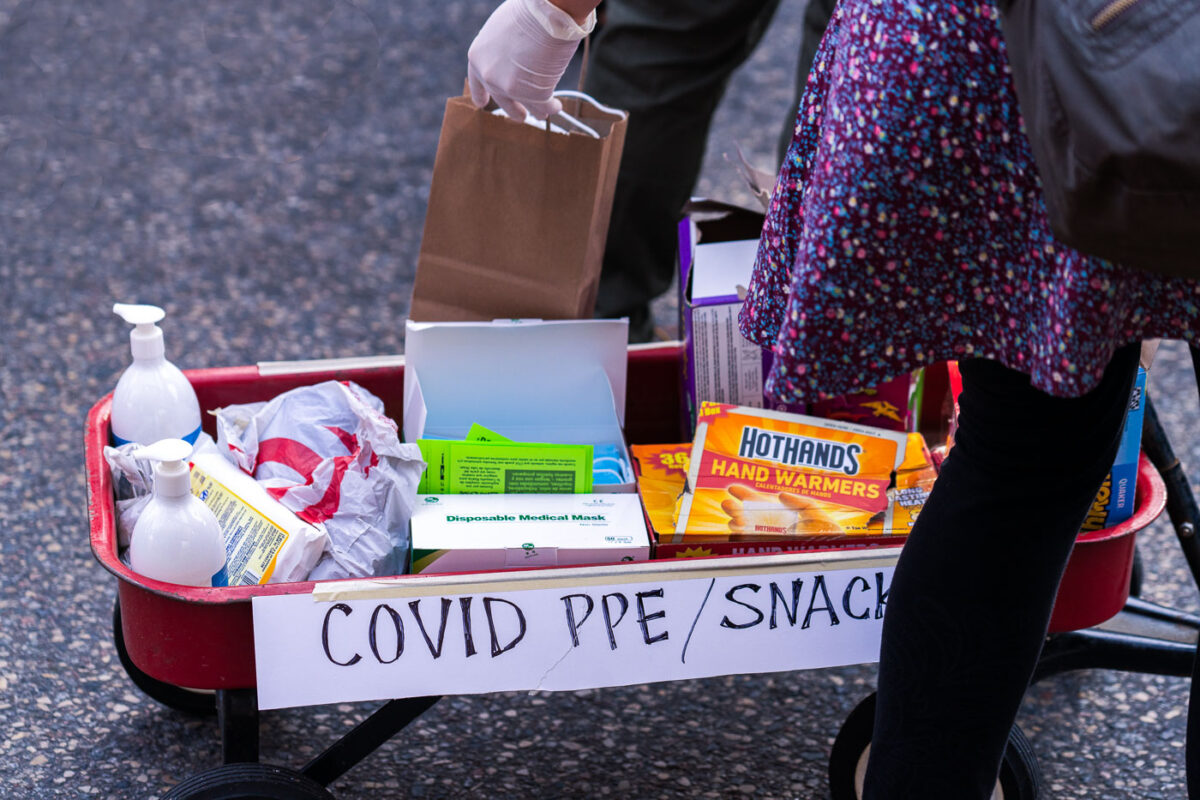
Red wagon stocked with COVID-19 PPE, hand warmers, and snacks for protest participants in Minneapolis.
A hand-lettered sign reading "COVID PPE / Snacks" identifies this wagon as a mutual aid station, stocked with hand sanitizer, disposable medical masks, hand warmers, and packaged snacks. Volunteers organizing such stations typically distribute supplies free of charge to marchers, a practice that became common at Minneapolis demonstrations during the COVID-19 pandemic. The mix of protective gear and warmers the practical needs of participants marching outdoors in November, when the city's temperatures often fall near freezing.

A Mutual Aid Wagon Marked “COVID PPE / Snacks”
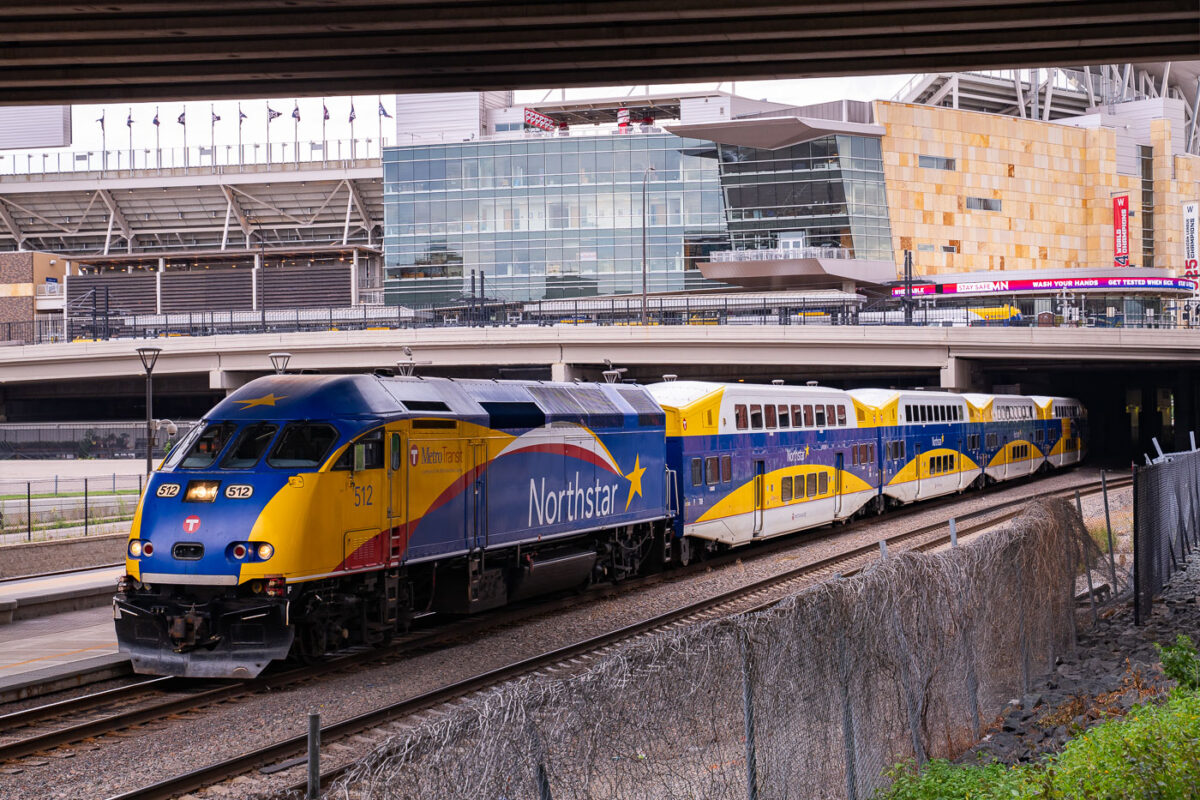
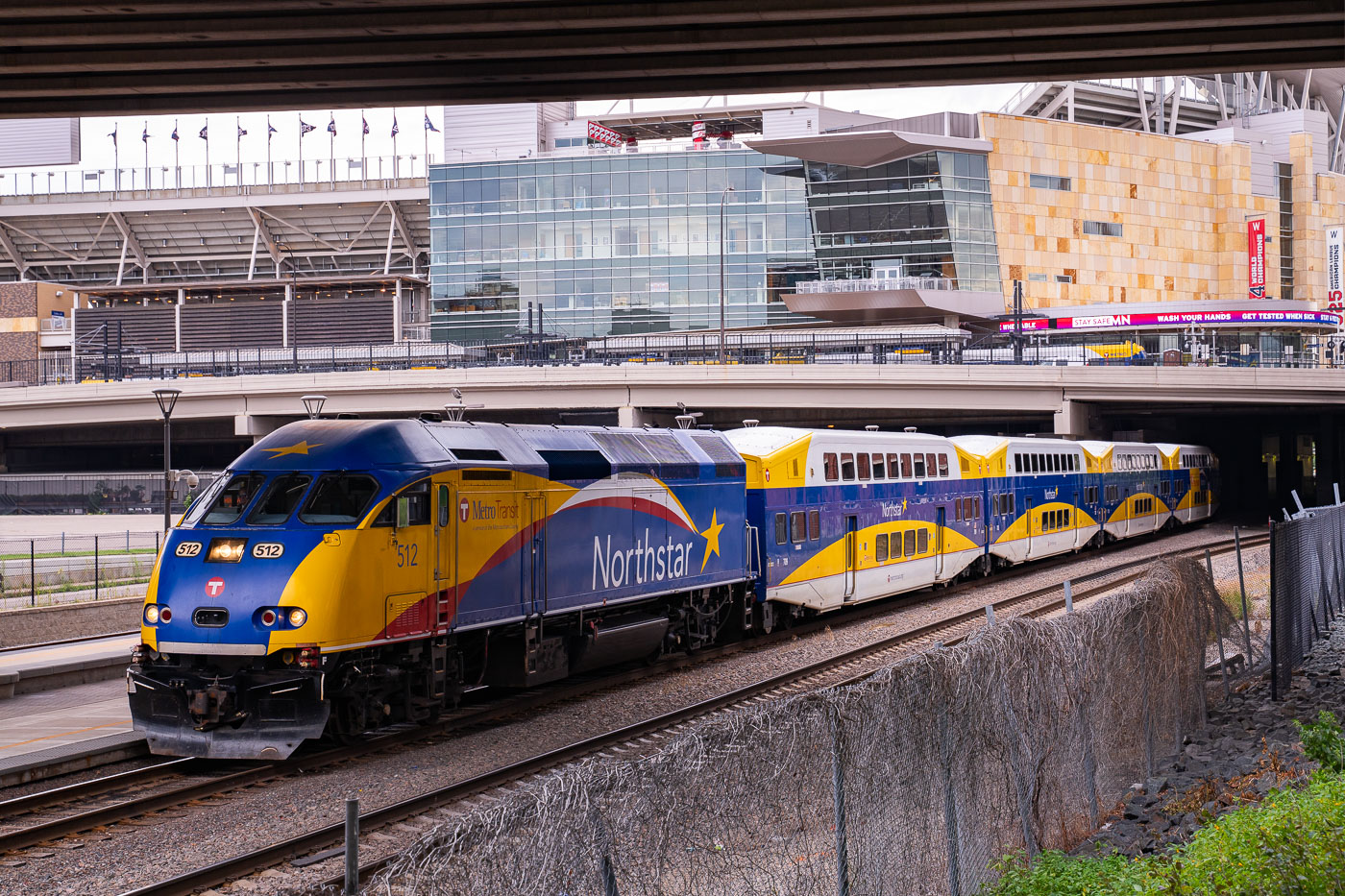
Northstar commuter train at Target Field Station in downtown Minneapolis, Minnesota.
The Northstar Line is a commuter rail route running between Big Lake and downtown Minneapolis, with this train passing Target Field Station near the ballpark. Metro Transit operates the line, which opened in 2009 and covers about 40 miles along existing freight tracks owned by BNSF Railway.

Northstar Train Passes Target Field in Minneapolis
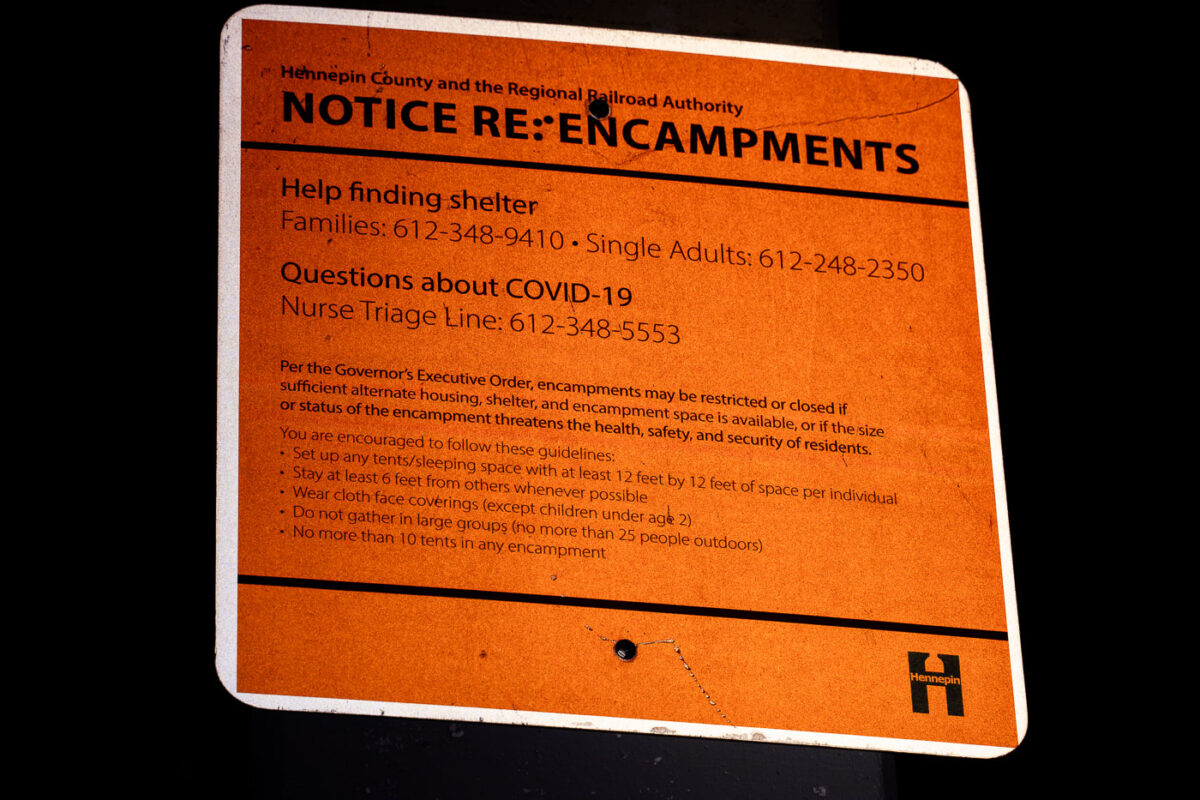
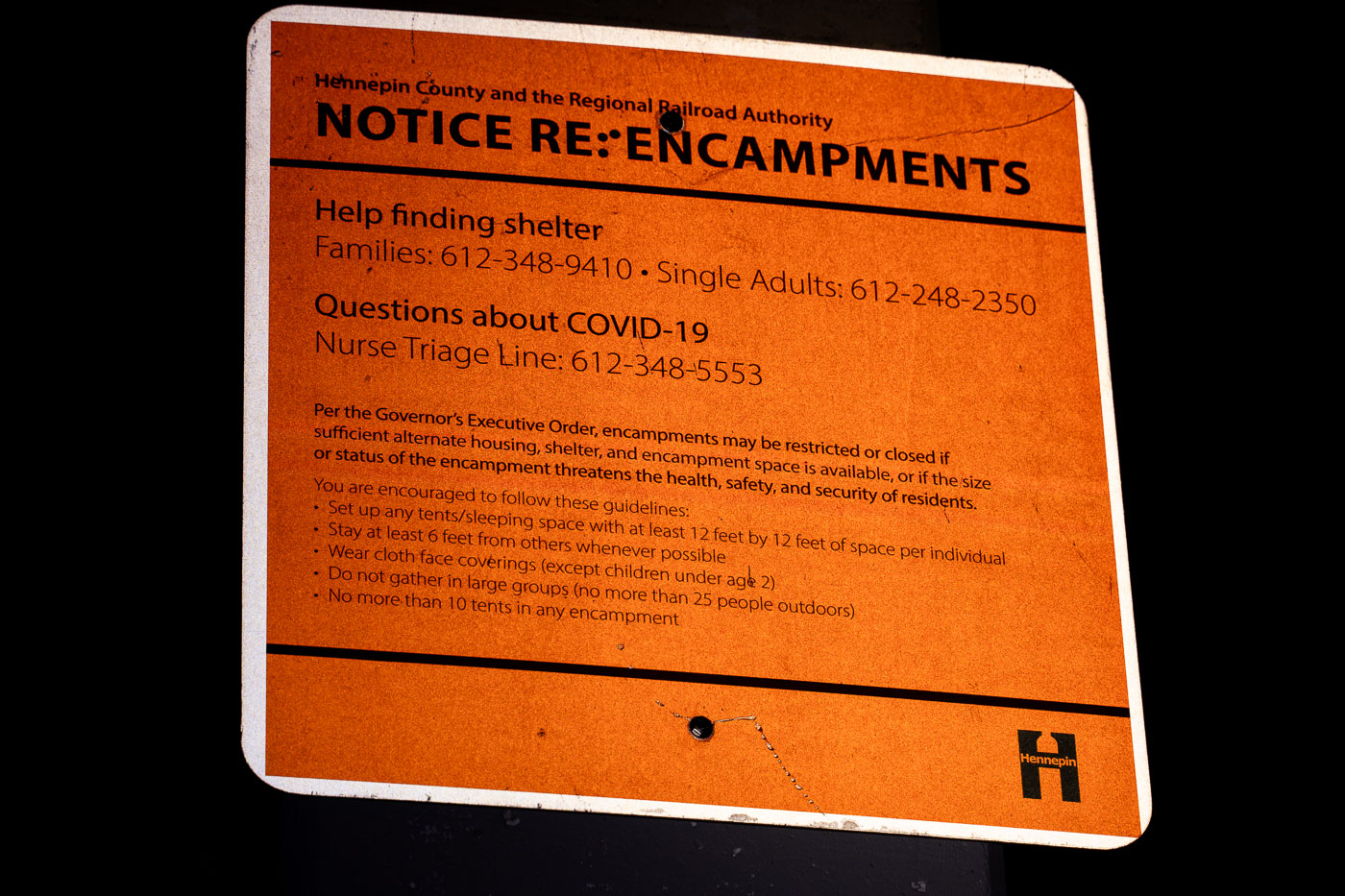
Orange notice from Hennepin County regarding encampment restrictions and COVID-19 resources posted on the Midtown Greenway in
Hennepin County and the Metropolitan Council's Regional Railroad Authority posted this notice along the Midtown Greenway during the summer of 2020, directing people living in encampments to shelter hotlines — 612-348-9410 for families, 612-248-2350 for single adults — and a COVID-19 nurse triage line at 612-348-5553. The notice cited Governor Tim Walz's executive order allowing counties to restrict or close encampments if adequate housing or shelter space became available, or if an encampment's size threatened residents' health and safety. It also listed pandemic guidelines: tents spaced at least 12 by 12 feet apart, six feet of distance between people, cloth face coverings for anyone over age two, outdoor gatherings capped at 25 people, and no more than 10 tents per encampment. The Midtown Greenway runs roughly five and a half miles through south Minneapolis along a former Milwaukee Road rail corridor, now used as a bicycle and pedestrian trail beneath street level.

Hennepin County Notice on Encampments Along the Midtown Greenway
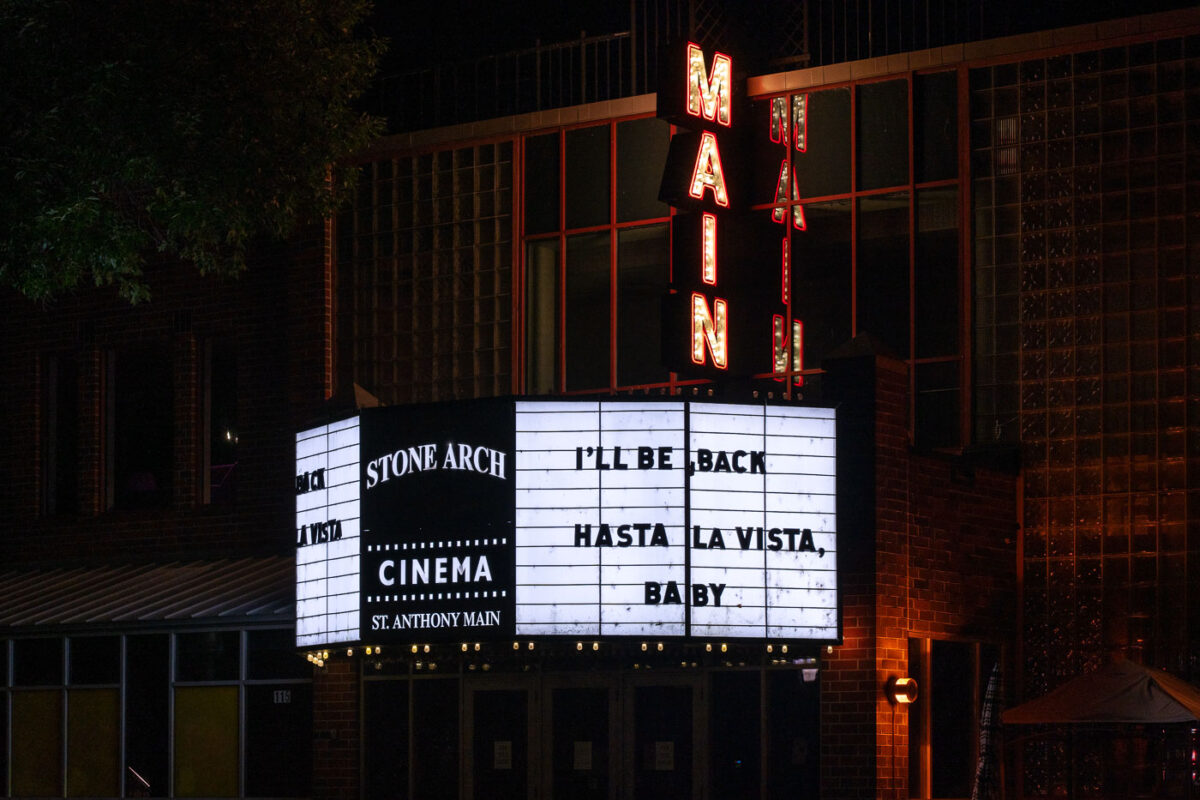
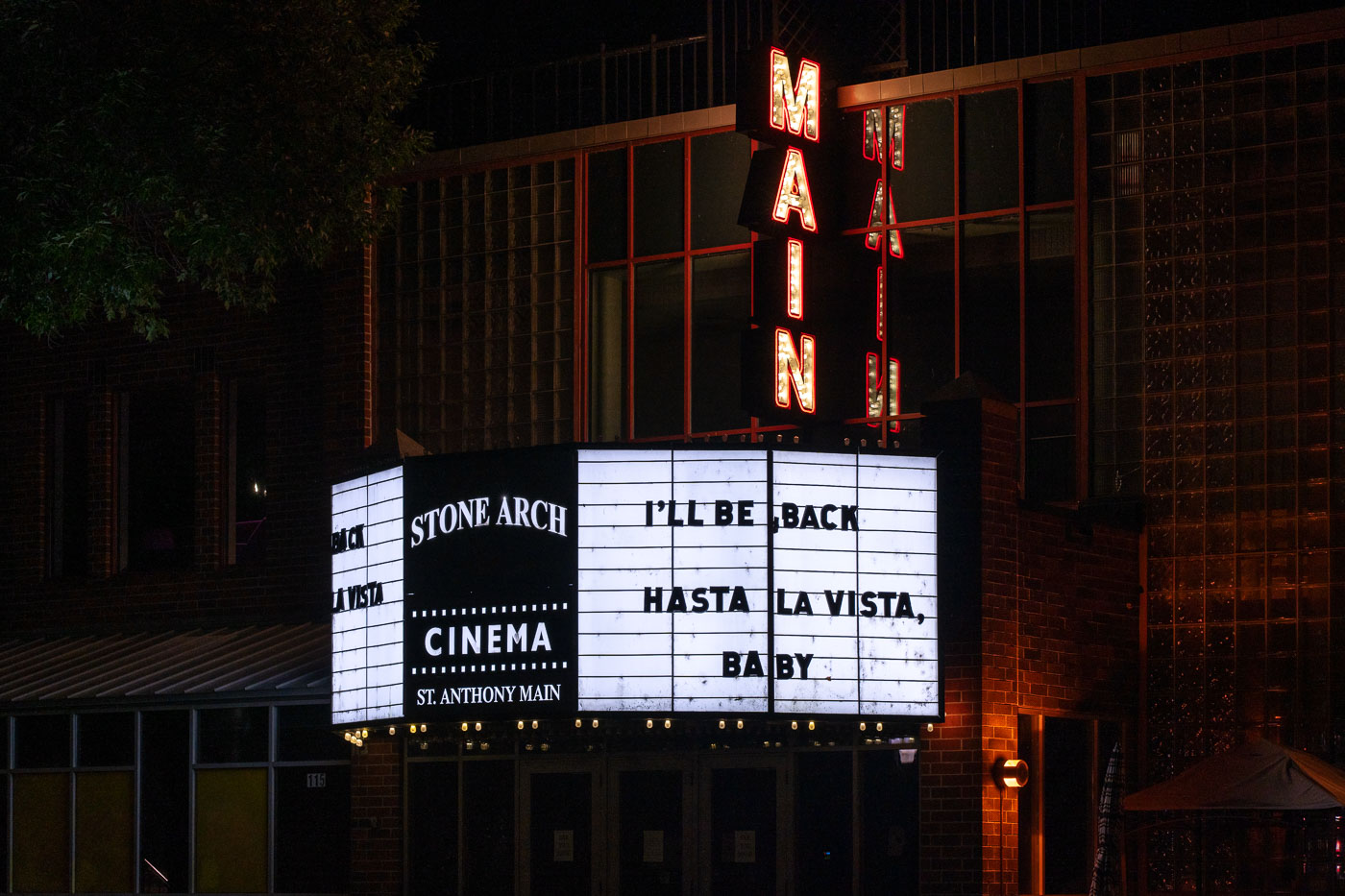
Stone Arch Cinema marquee displays "I'll Be Back, Hasta La Vista, Baby" message during 2020 closure.
Stone Arch Cinema operates at 117 SE Main Street in Minneapolis's St. Anthony Main district, along the east bank of the Mississippi River near the historic Stone Arch Bridge. The marquee's message — "I'll Be Back, Hasta La Vista, Baby" — quotes Arnold Schwarzenegger's line from "Terminator 2: Judgment Day." Theaters across Minnesota closed to in-person moviegoing in 2020 under statewide COVID-19 restrictions, and many independent cinemas used their marquees to post messages to passersby during the shutdown.

“I’ll Be Back” on the Stone Arch Cinema Marquee in St. Anthony Main
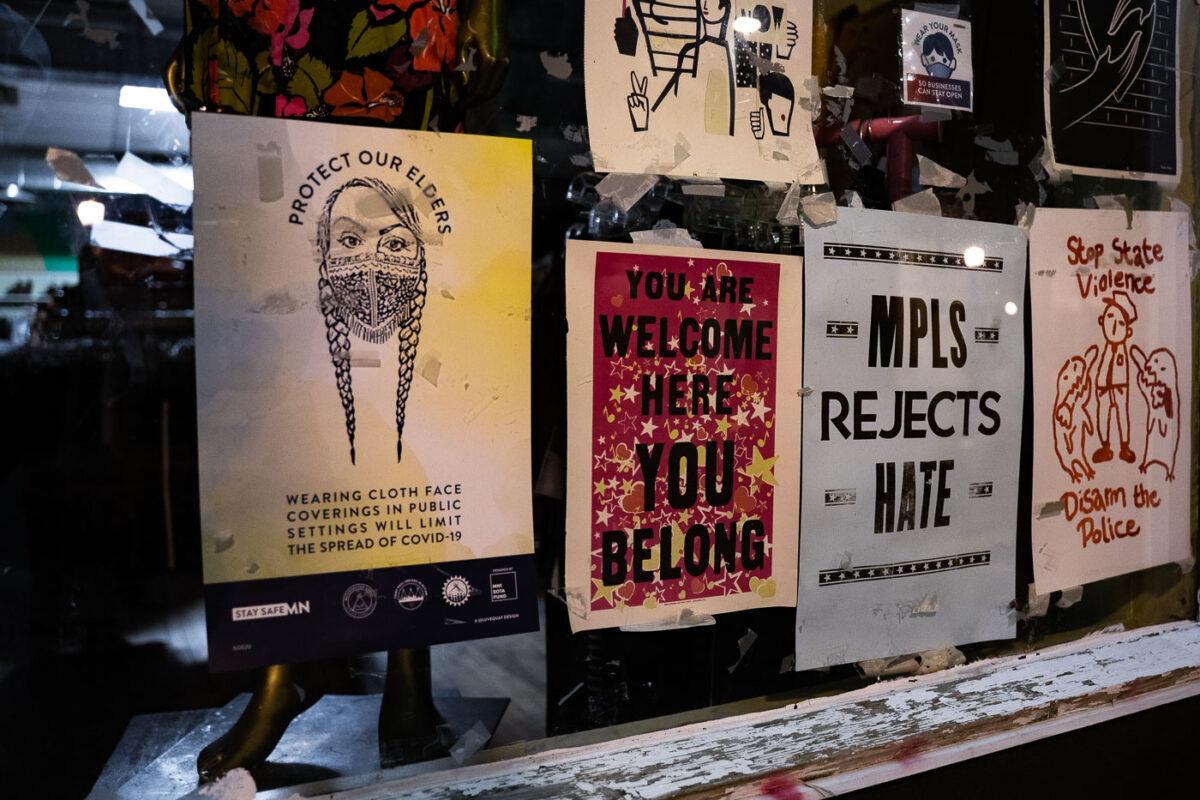
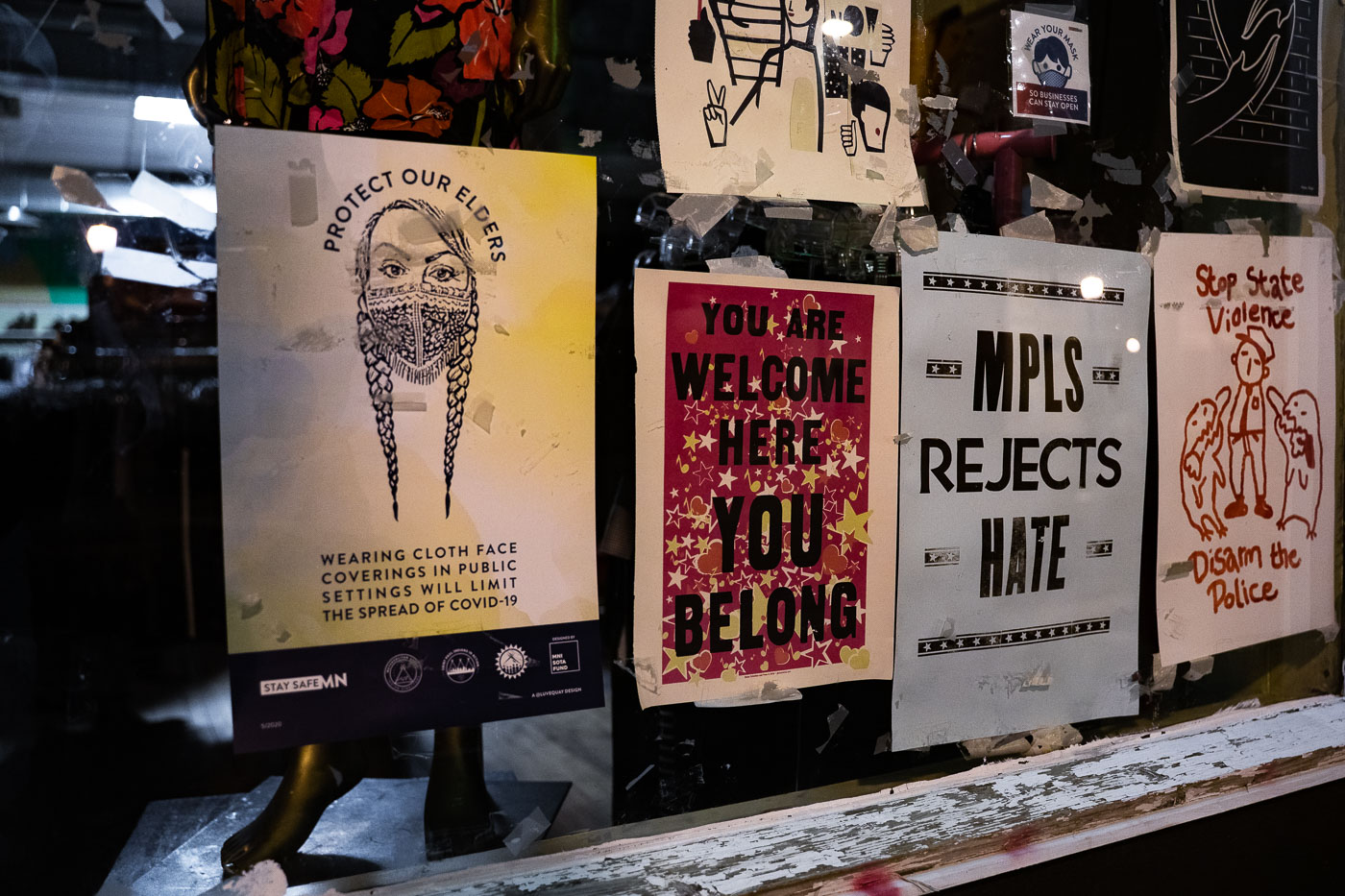
Signs in a storefront regarding covid and hate
A storefront window in Minneapolis displays a collection of signs reflecting the dual crises of the COVID-19 pandemic and the social justice protests of May 2020. One prominent sign, dated May 2020, encourages public health measures with the message "Protect our elders" and guidance on wearing face coverings to limit the spread of COVID-19. Alongside these, messages such as "MPLS Rejects Hate," "You are welcome here you belong," and "Stop State Violence Disarm the Police" express solidarity and demands for systemic change during the Minneapolis Uprising. These public displays served as a means for businesses and community members to communicate vital public health information and participate in civic discourse during a period of significant social unrest and public health emergency.

Minneapolis Storefront Window: COVID-19 & Protest Messages
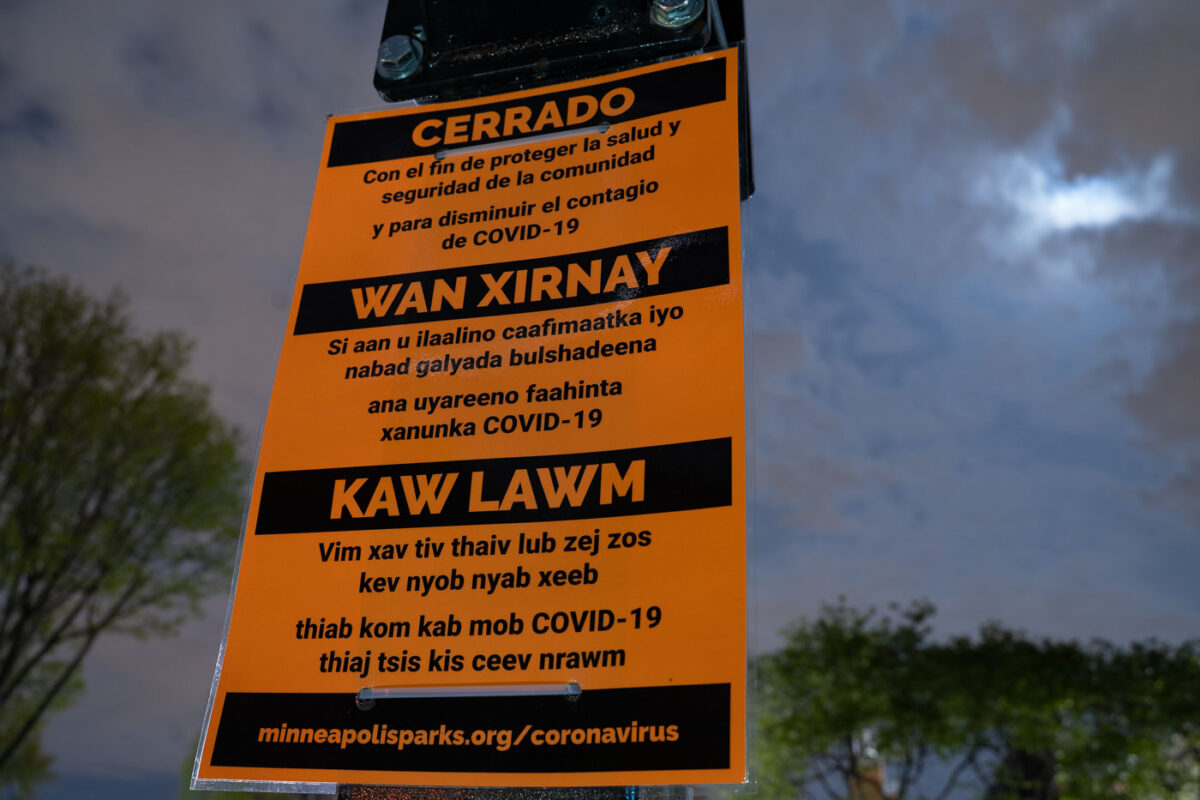
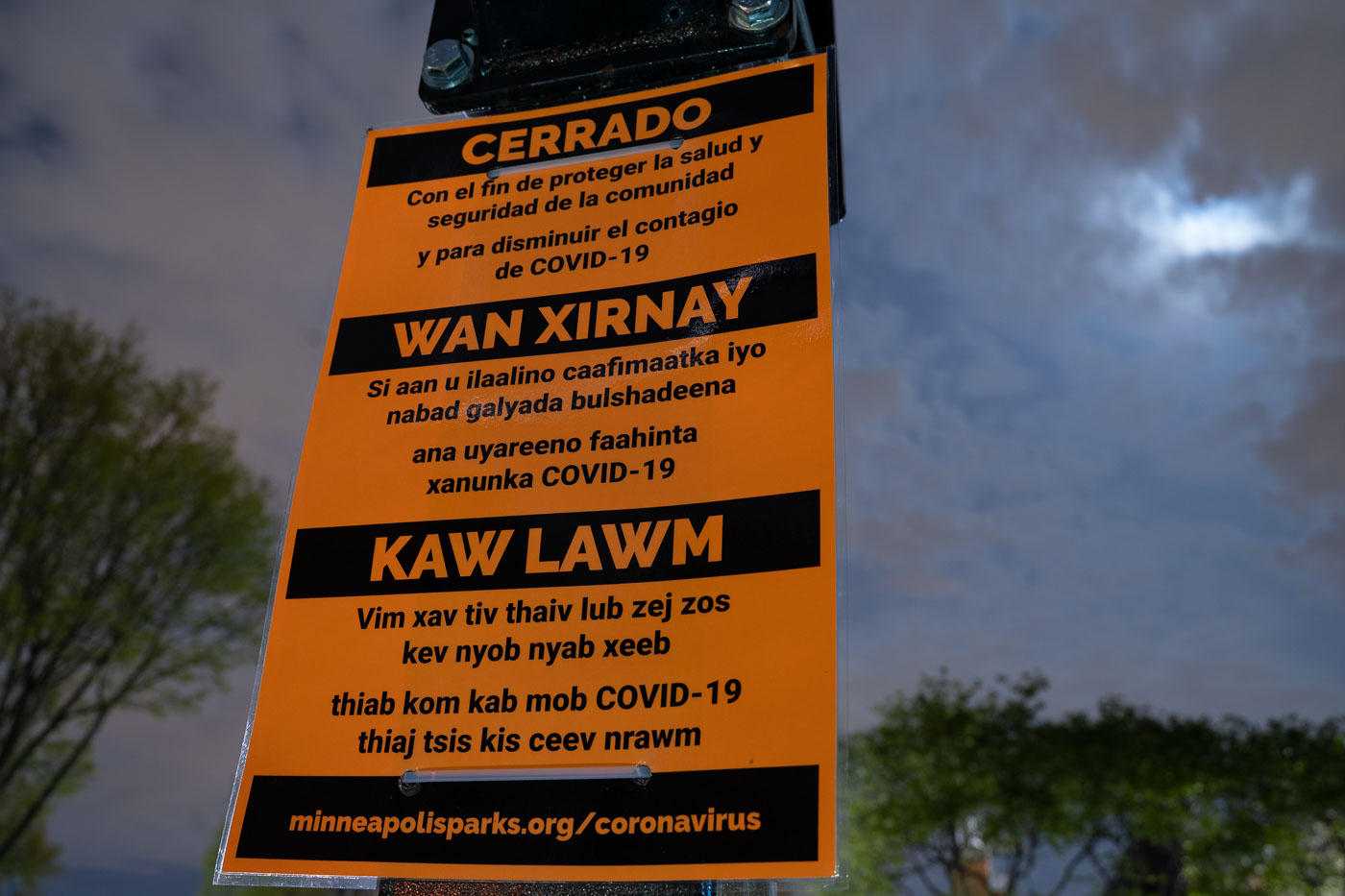
Multi language COVID signage in Minneapolis Park

Park closed due to coronavirus signage at Elliot Park in Minneapolis.

Multi language COVID signage in Minneapolis Park

COVID19 and Elliot Park Minneapolis
A basketball hoop with a board over it to prevent playing during COVID-19 in Minneapolis. May 2020

COVID-19 and Elliot Park, Minneapolis
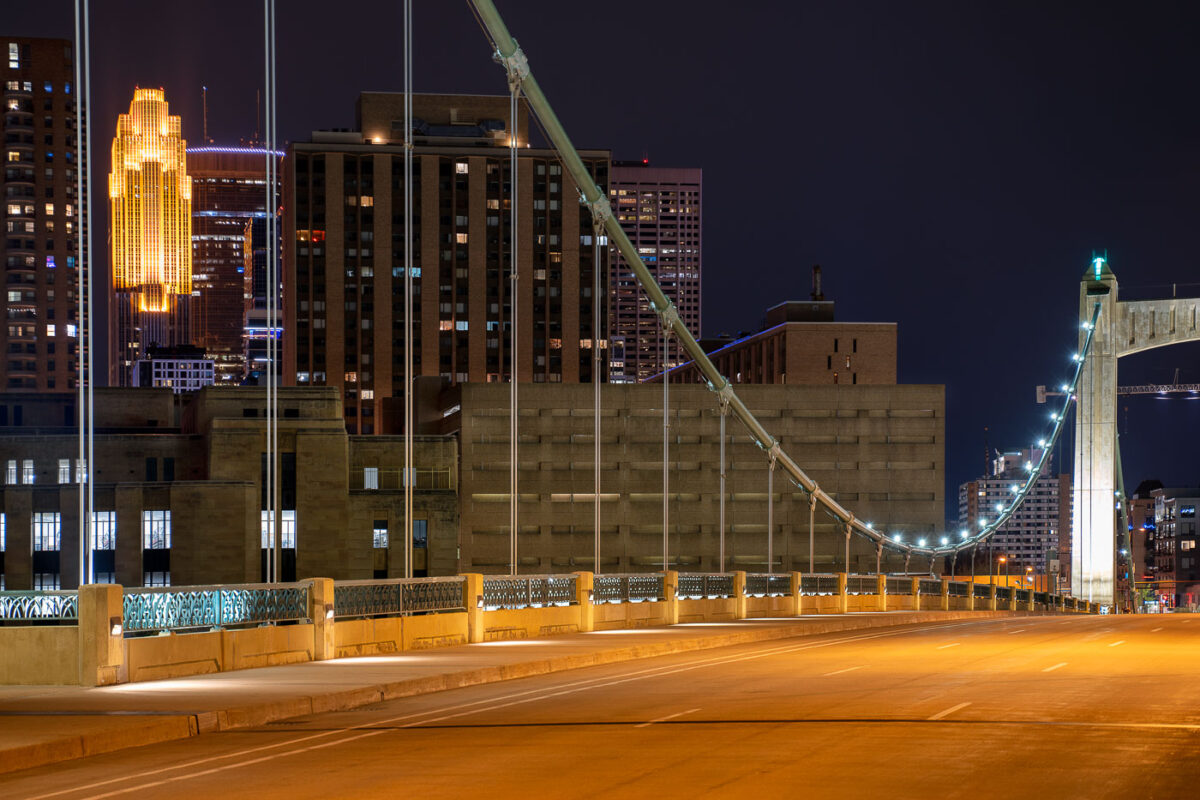
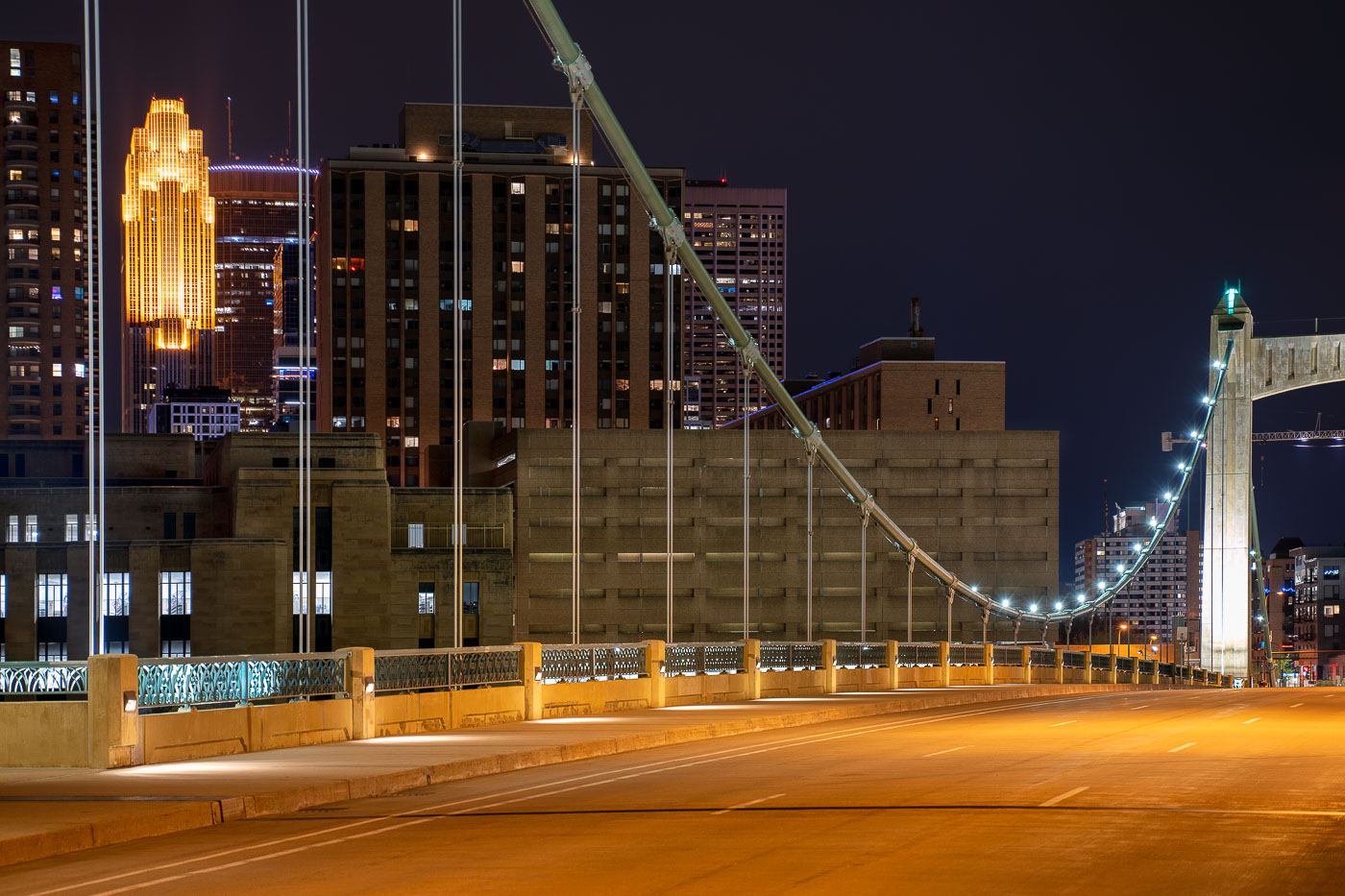
Hennepin Ave bridge at night during covid19
The Hennepin Avenue Bridge in Minneapolis, MN, is seen here during the COVID-19 pandemic.

Hennepin Avenue Bridge, Minneapolis, During COVID-19 Pandemic
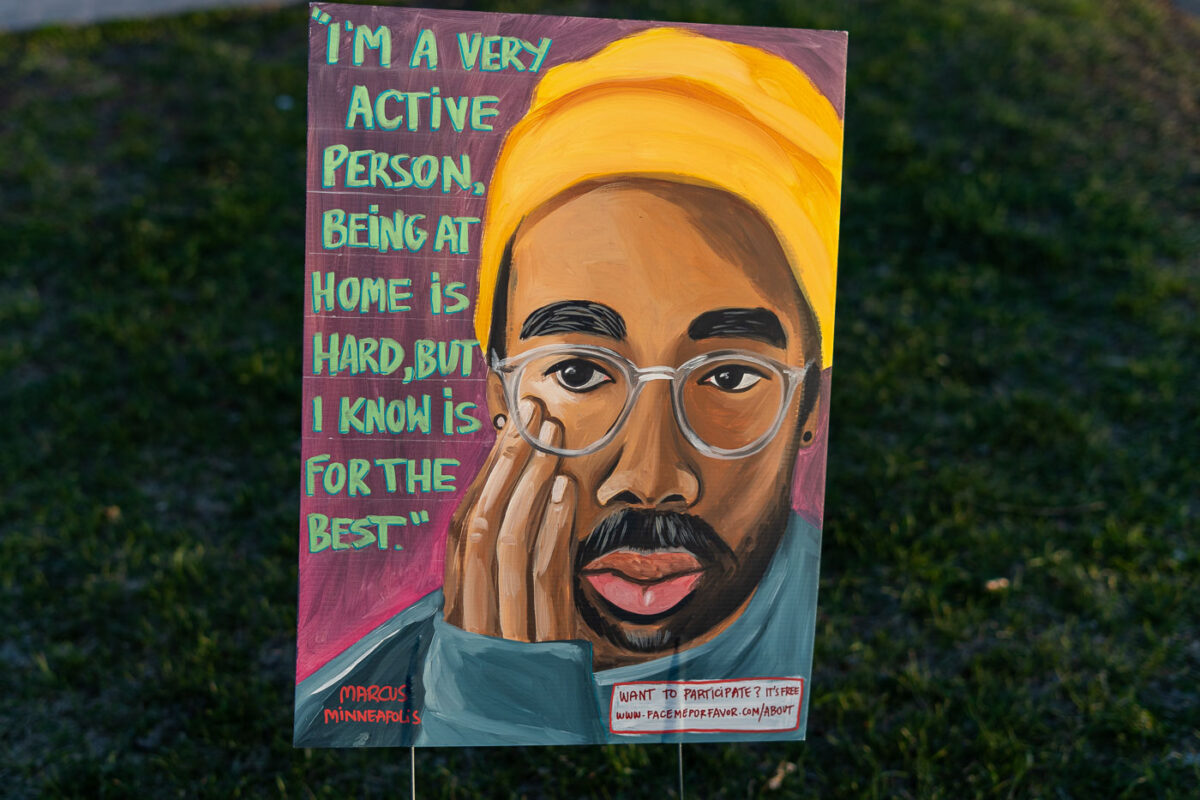
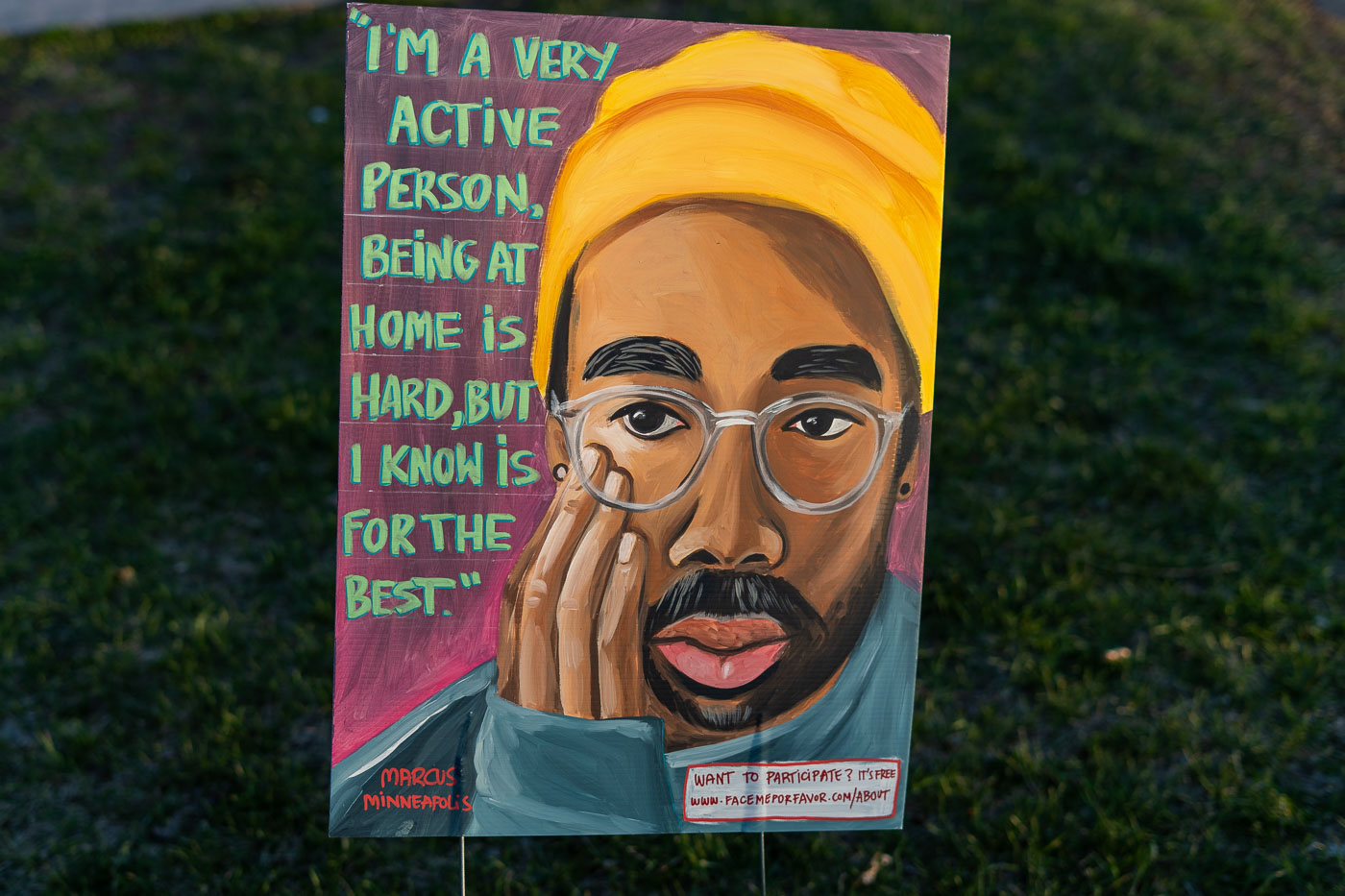
Painted sign at Powderhorn Park in South Minneapolis features portrait and text about staying active during pandemic lockdowns.
The sign at Powderhorn Park pairs a painted portrait with a quoted statement: "I'm a very active person, being at home is hard, but I know is for the best." It's signed "Marcus Minneapolis" and includes a web address inviting others to participate, suggesting the piece was part of a broader community art project rather than a single standalone work. Powderhorn Park, on the city's South Side, became a gathering point for public art and expression during the spring 2020 pandemic shutdowns.

Painted Portrait Sign by Marcus, Powderhorn Park
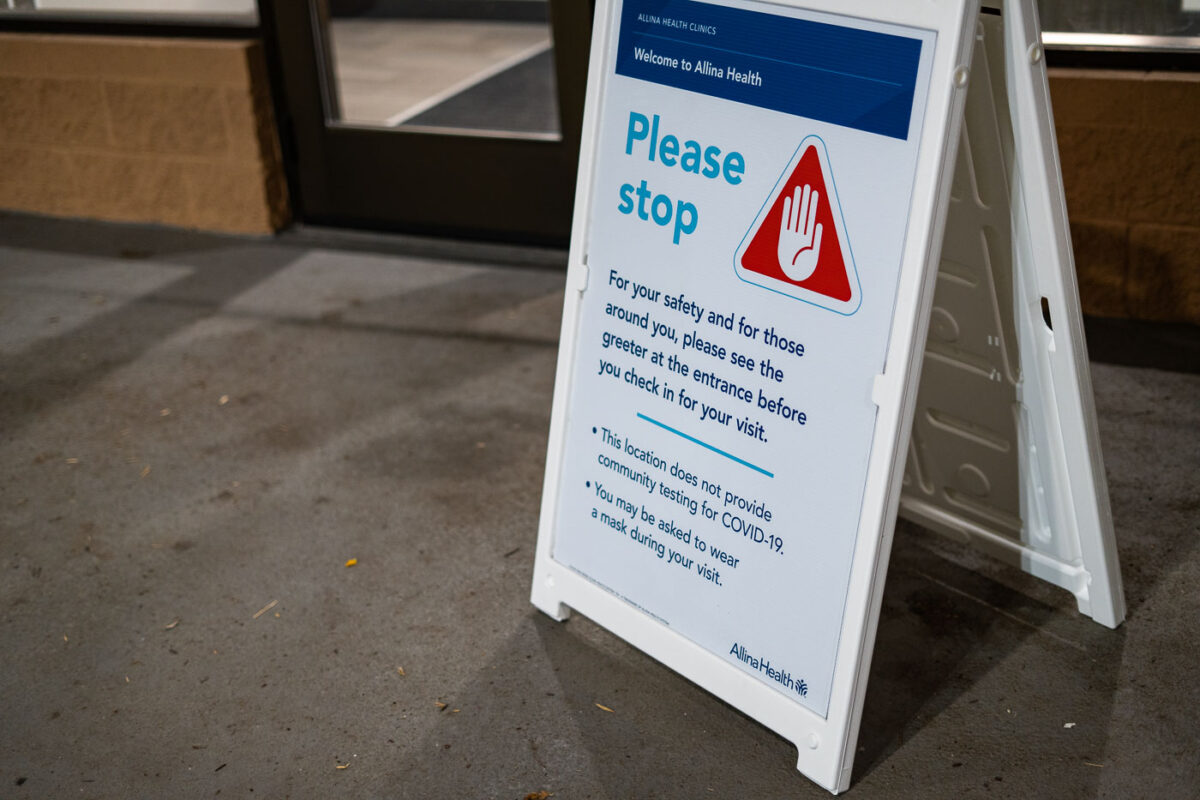
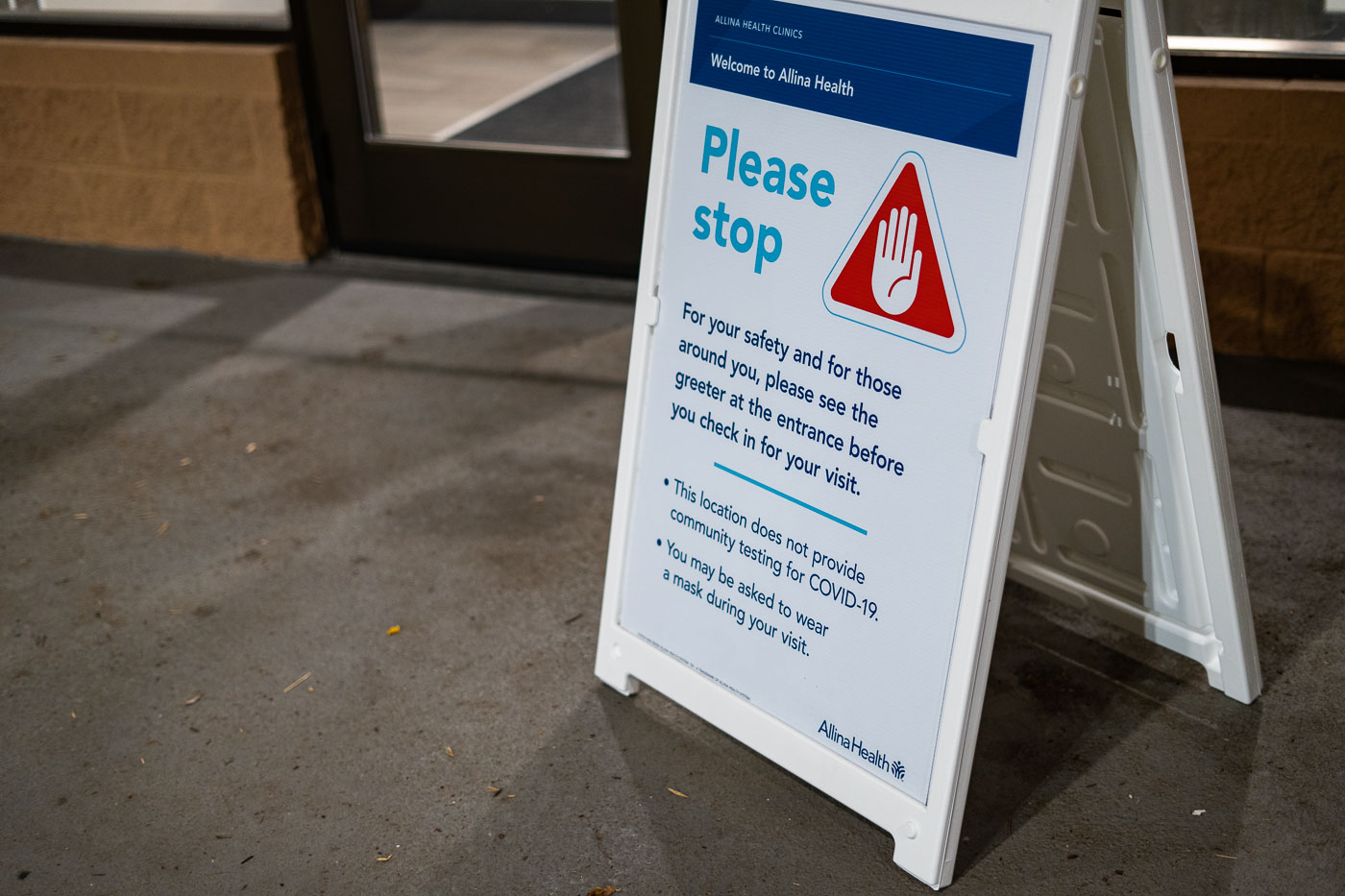
COVID19 Safety Sign at Clinic Entrance
At the entrance of an Allina Health clinic, a temporary sign reminds visitors of heightened safety measures during the COVID-19 pandemic. The notice instructs patients to stop and first meet with a greeter before checking in, emphasizing that the location does not provide community COVID-19 testing and that masks may be required during the visit. These portable A-frame signs became common across medical facilities in 2020–2021, helping manage visitor flow, screen for symptoms, and reinforce evolving public health protocols at clinics and hospitals throughout Minnesota.

COVID-19 Safety Sign at Clinic Entrance
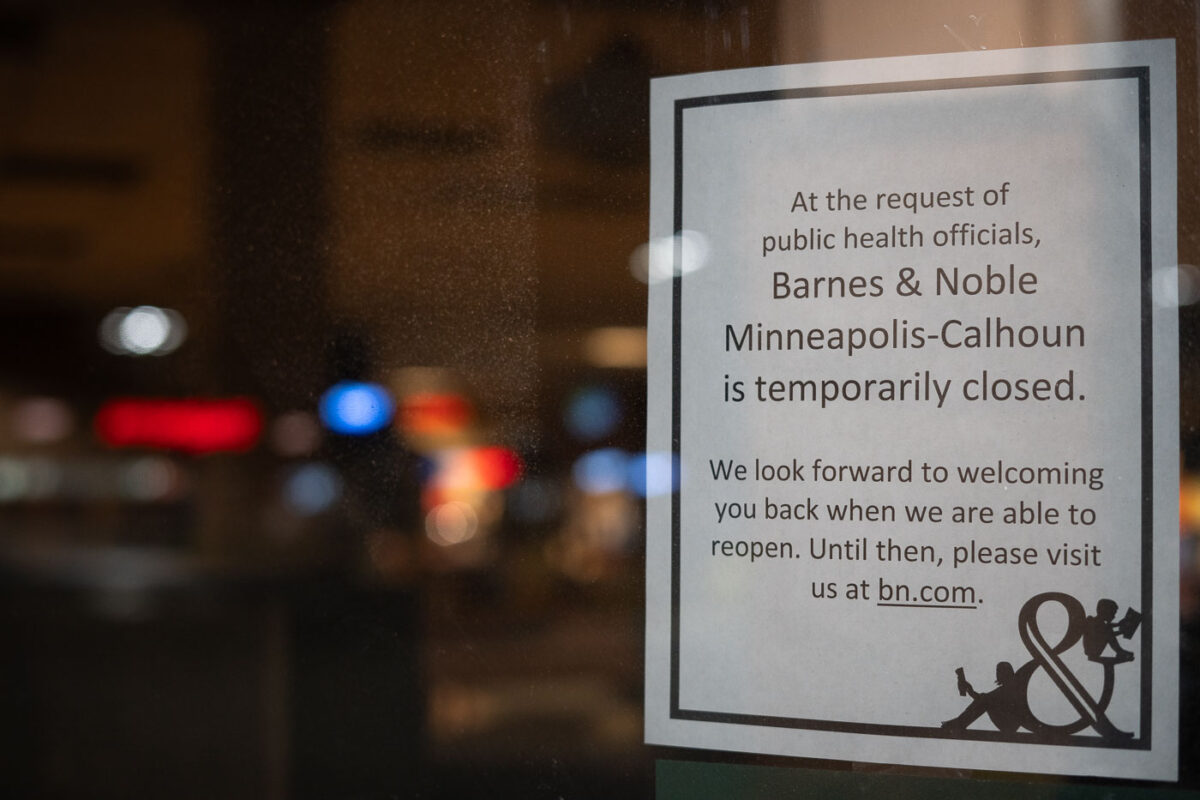
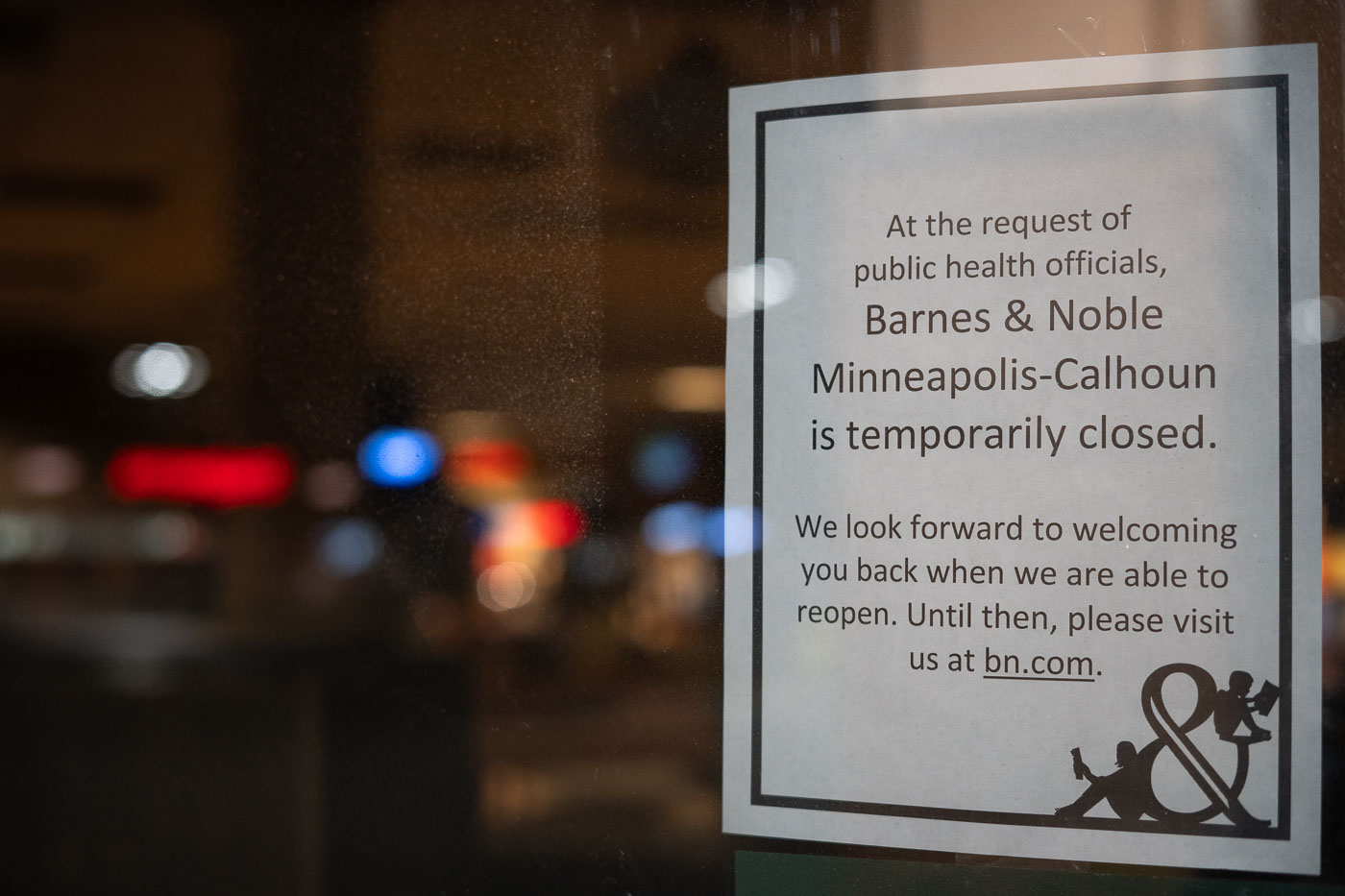
Barnes and Noble covid19 closure sign
A sign posted on the window of the Barnes & Noble Minneapolis-Calhoun store announces its temporary closure due to the COVID-19 pandemic. The notice, issued at the request of public health officials, reflects a widespread public health measure that impacted retail operations globally in 2020 and 2021.

Minneapolis Barnes & Noble Temporarily Closed Due to COVID-19
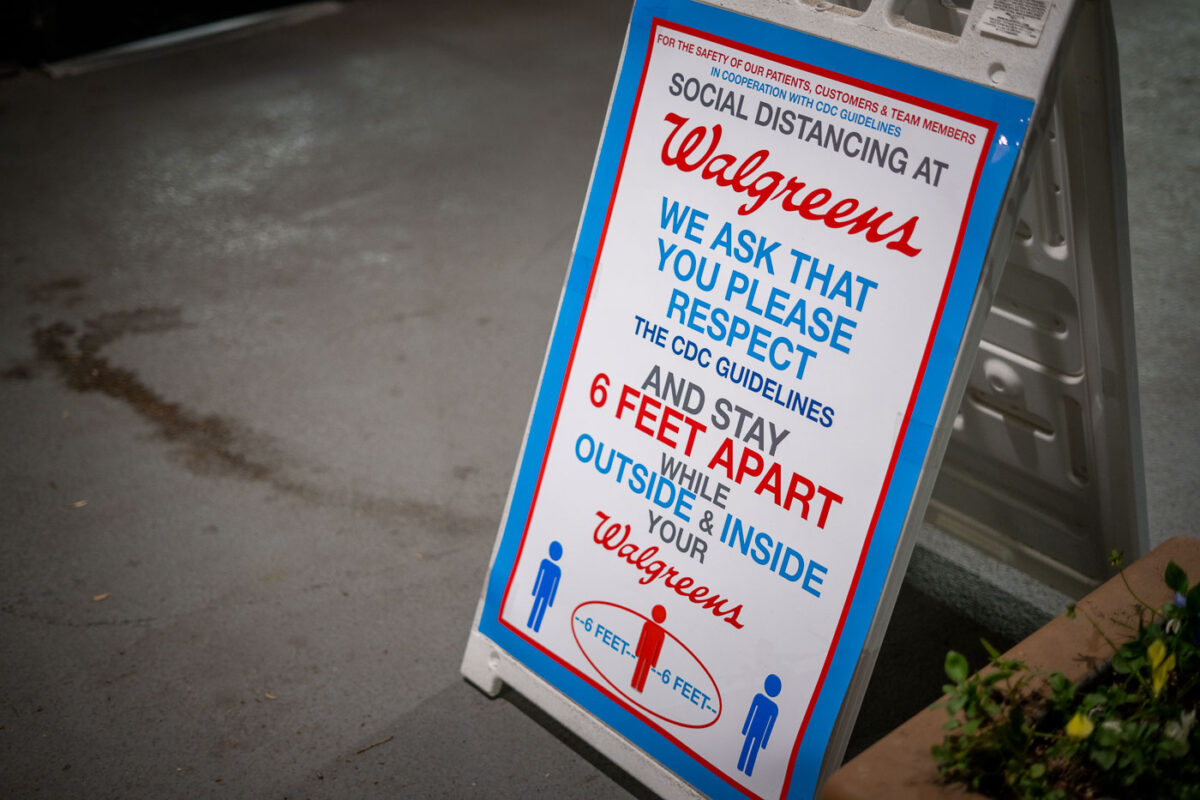
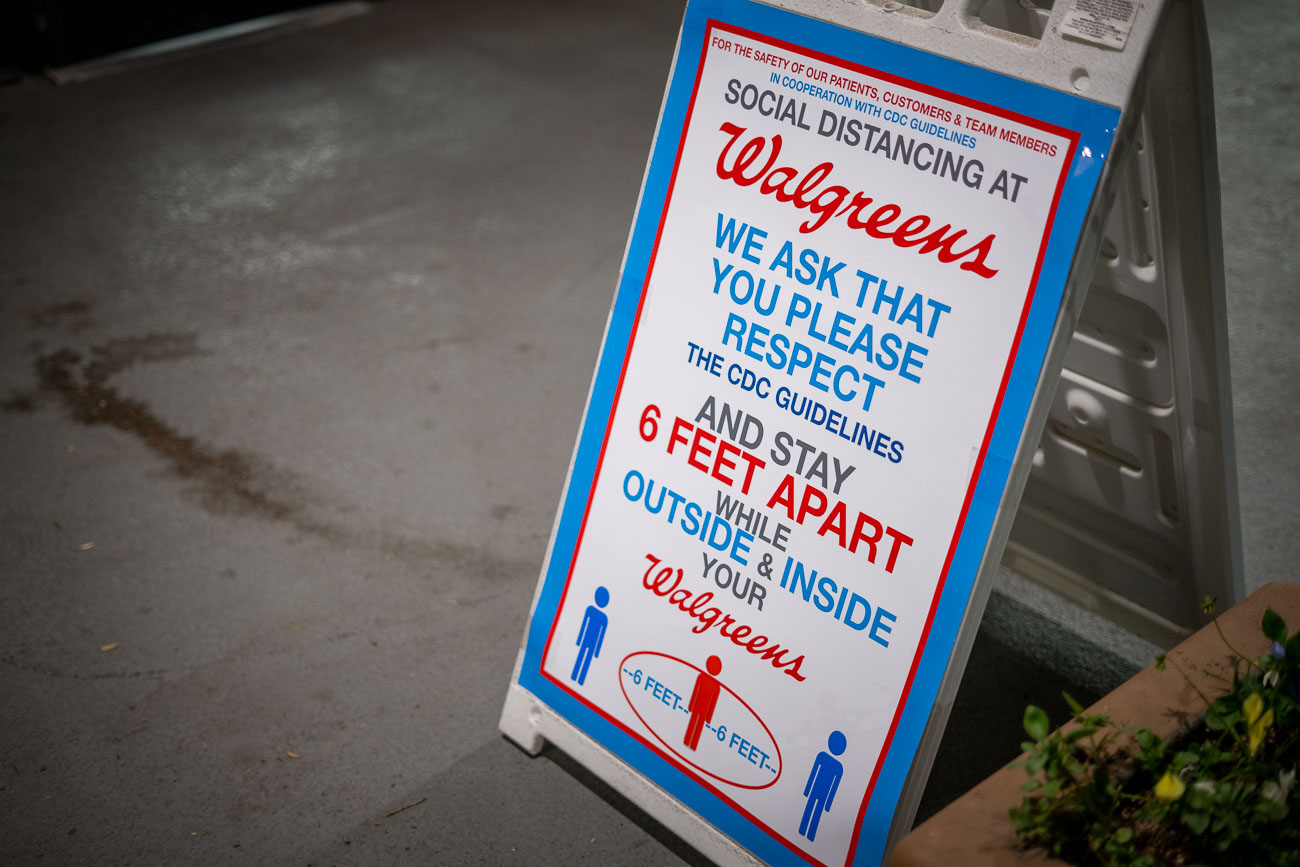
Walgreens A-frame sign instructs customers to maintain six feet of distance and follow CDC guidelines during COVID-19.
Walgreens posted this A-frame sign outside one of its Minneapolis stores asking customers to keep six feet of distance, both inside and outside the building, in line with CDC guidance during the COVID-19 pandemic. Pharmacies were classified as essential businesses under Minnesota's stay-at-home order, allowing them to remain open while most retail closed. Chains including Walgreens adopted floor markers, capacity limits, and posted signage like this one to manage store traffic during the outbreak's early months.

Social Distancing Sign at a Minneapolis Walgreens
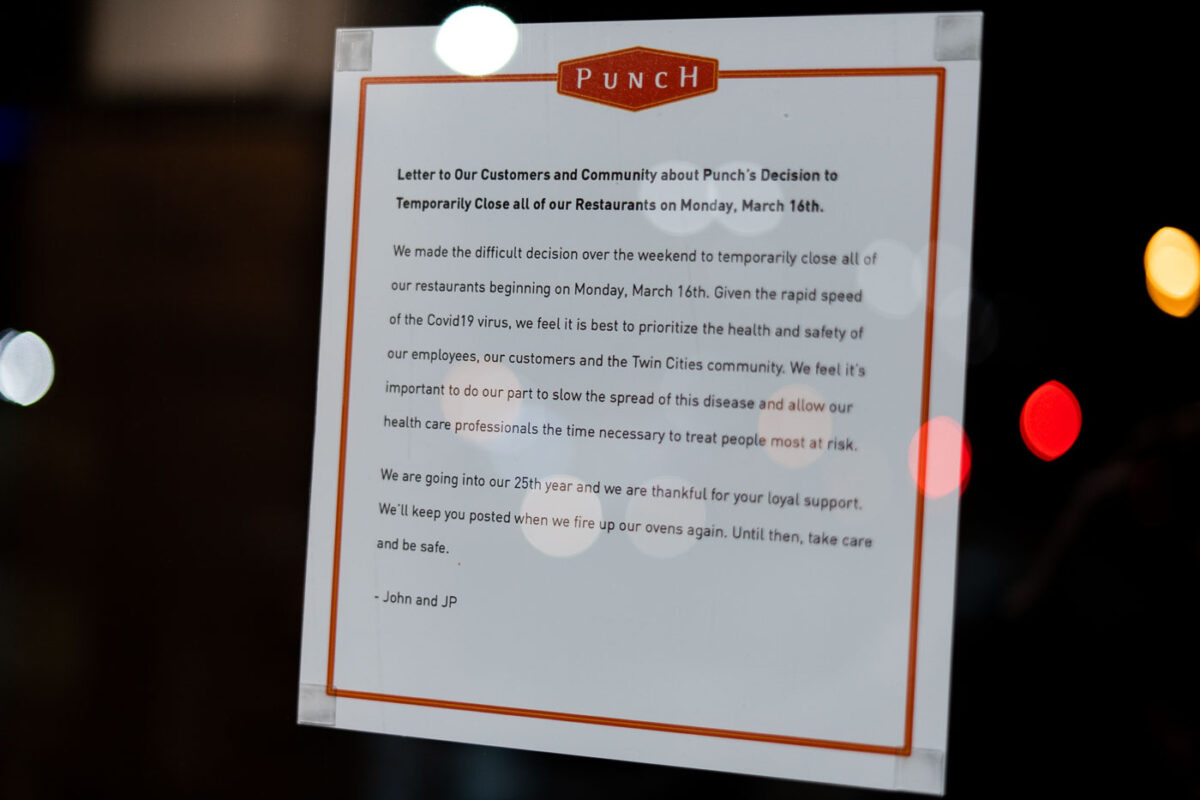
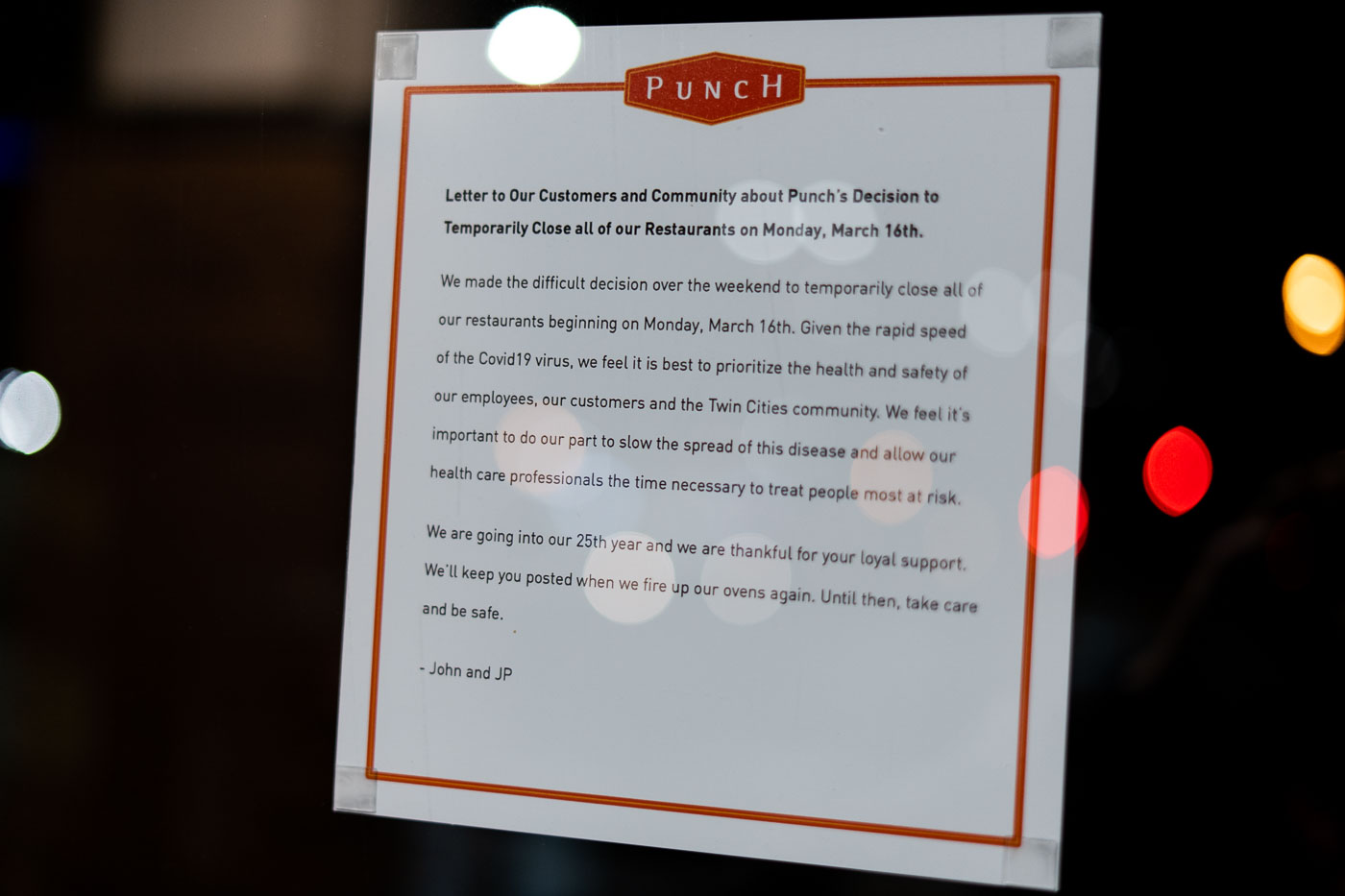
Punch Pizza closure notice posted in window announcing temporary restaurant shutdown on March 16, 2020, due to COVID-19.
Punch Pizza posted this letter to customers announcing the temporary closure of all its restaurants beginning Monday, March 16, 2020. Signed by co-founders John Soranno and JP Audette, the notice cites the need to protect employees, customers, and the Twin Cities community from the spread of Covid-19. The letter notes the company was entering its 25th year in business at the time of the shutdown.

Punch Pizza Announces Temporary Closure of All Locations
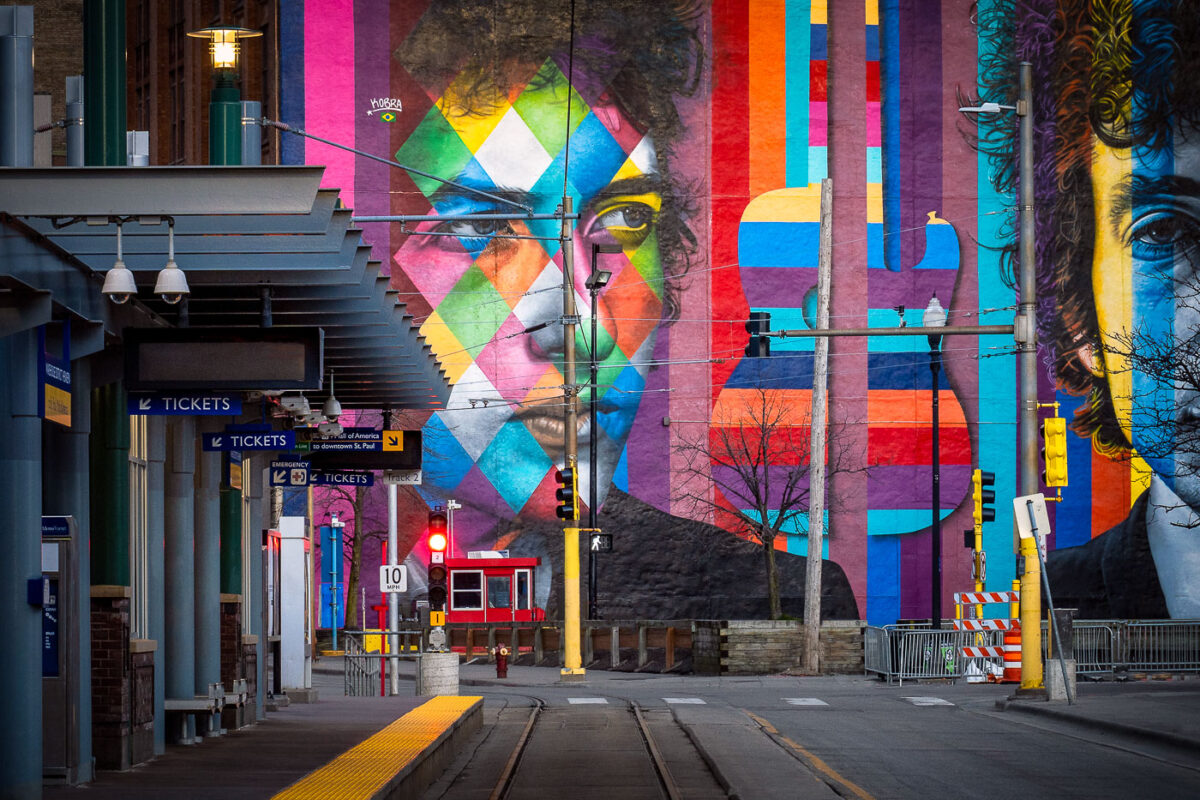
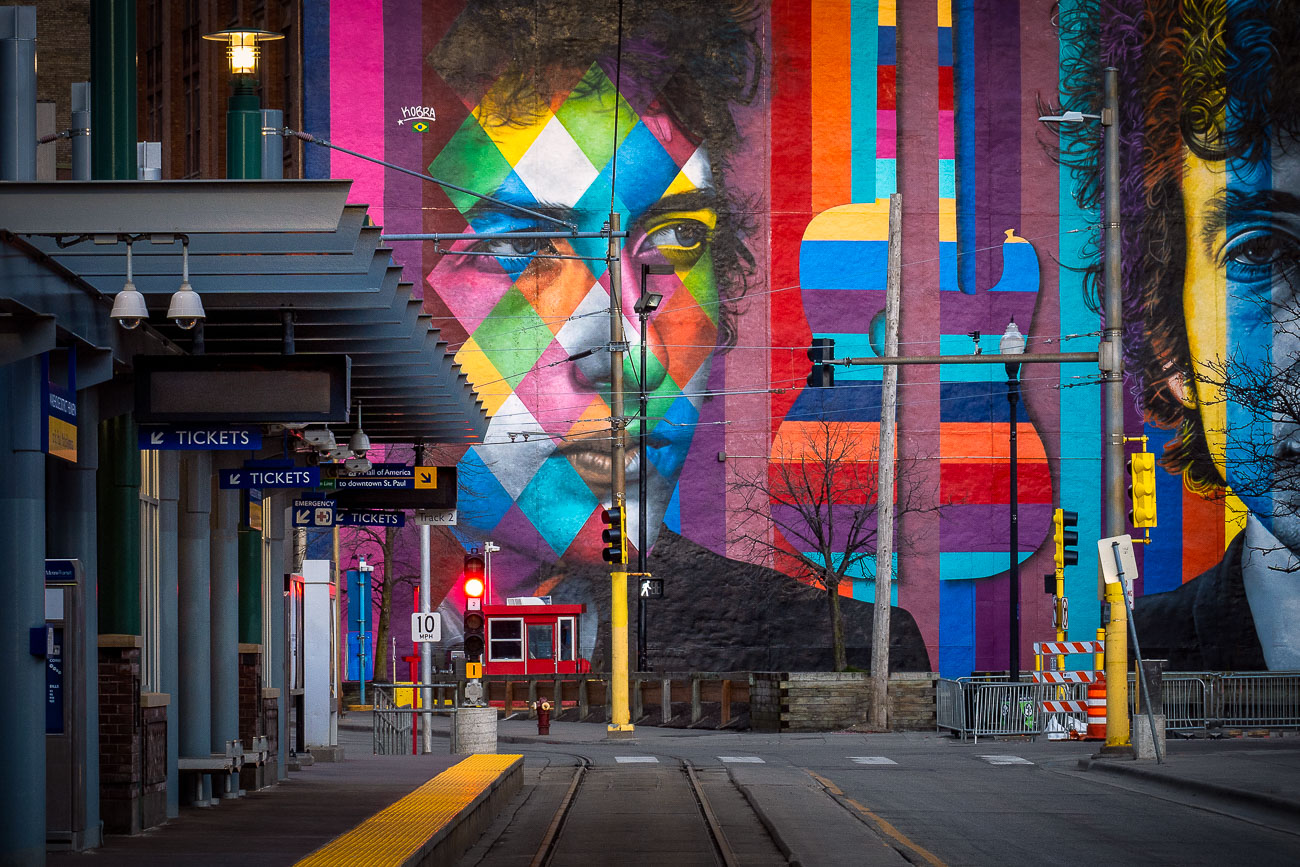
Eduardo Kobra's colorful Bob Dylan mural at Nicollet Mall station in downtown Minneapolis.
Eduardo Kobra painted this mural of Bob Dylan, titled "Face of Music," in 2015 for the Downtown Improvement District's Betsy-Ann Kane public art initiative. Brazilian street artist Kobra is known for his geometric, kaleidoscope-patterned portraits, which he has installed in cities worldwide. The mural covers roughly 90 feet of wall along the light rail corridor near Nicollet Mall Station, close to Hennepin Avenue in downtown Minneapolis. Dylan grew up in Hibbing, Minnesota, and began his music career in Dinkytown near the University of Minnesota before moving to New York in 1961.

Eduardo Kobra’s “Face of Music” Mural on Hennepin Avenue
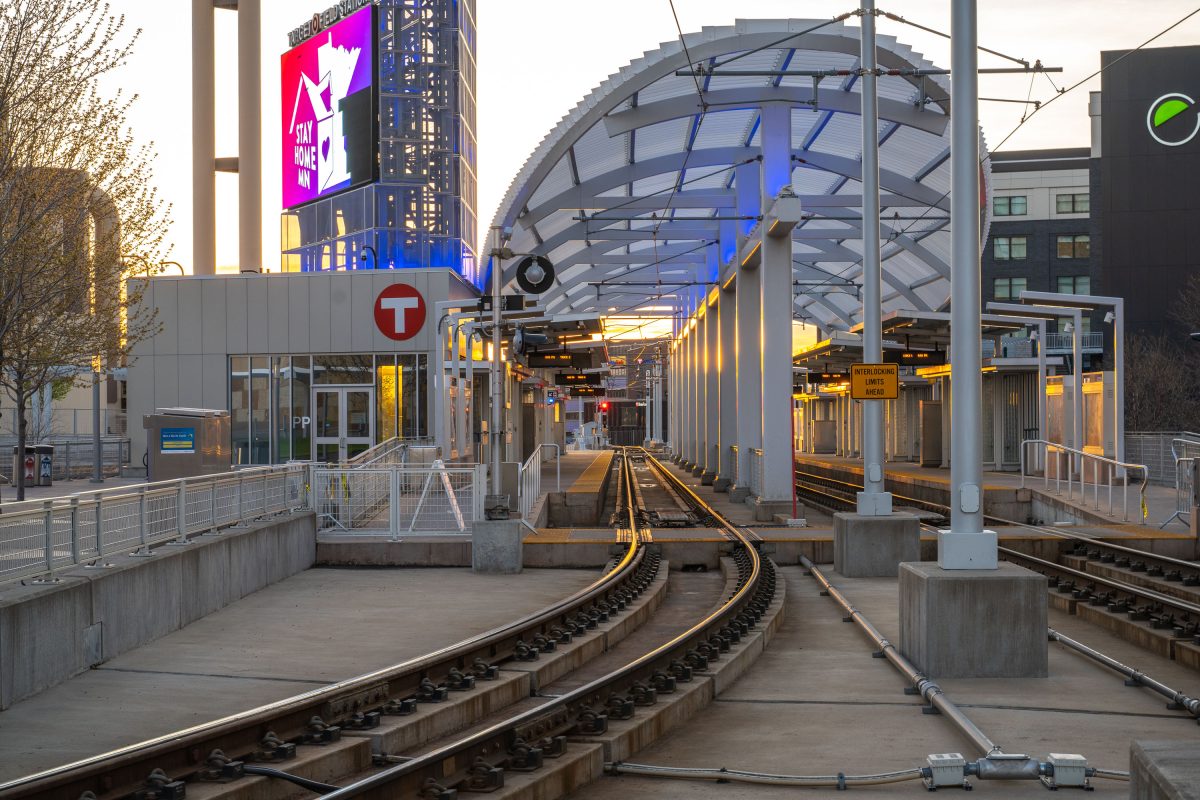
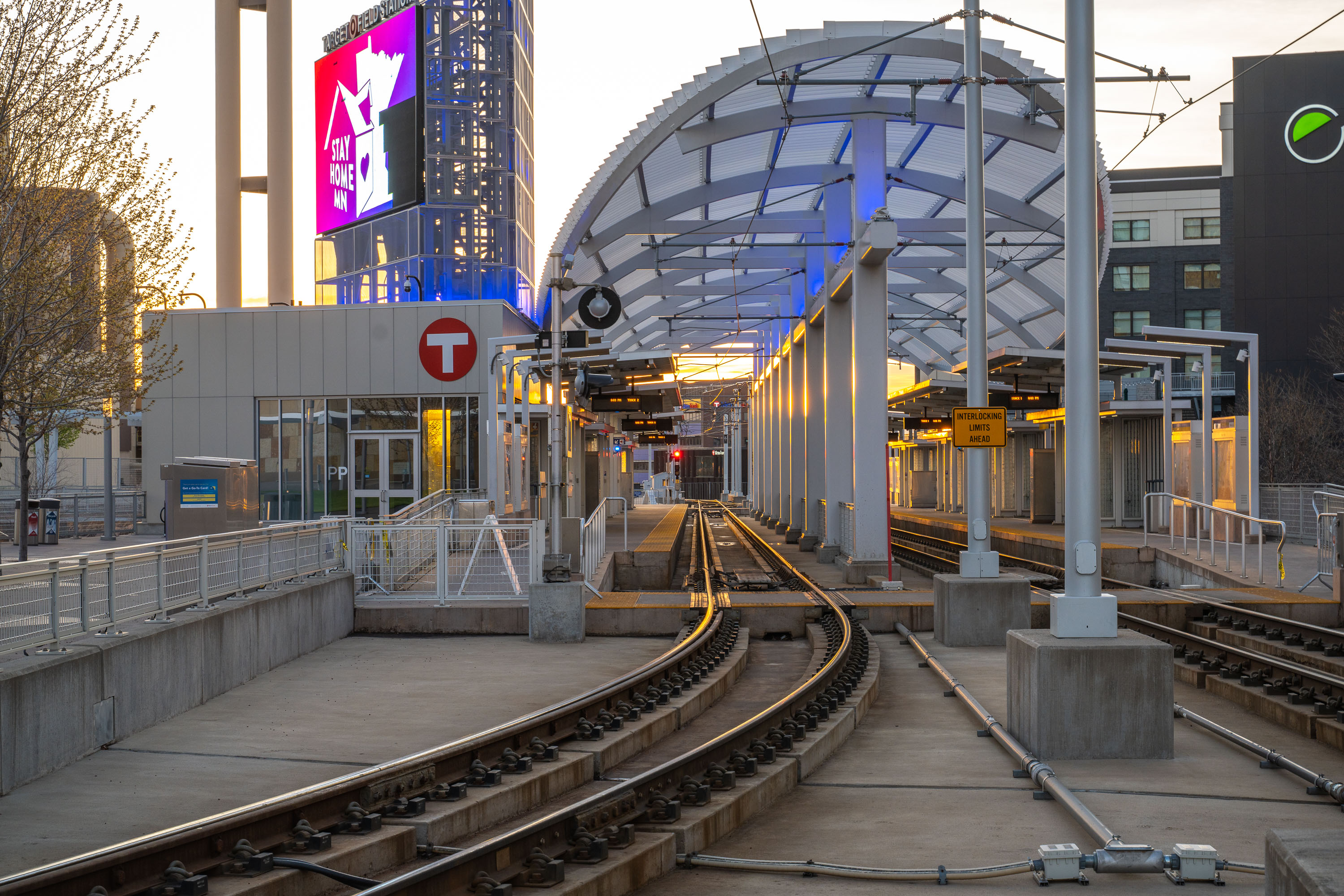
Empty platform at Target Field Station, a Minneapolis METRO light rail stop in the North Loop neighborhood.
Target Field Station sits in the North Loop neighborhood of downtown Minneapolis, serving as a stop on the METRO Blue and Green light rail lines. The station connects riders to Target Field, home of the Minnesota Twins, and links the North Loop to downtown Minneapolis and the broader METRO system.

“Stay Home MN” Sign Above Target Field Station at Dusk
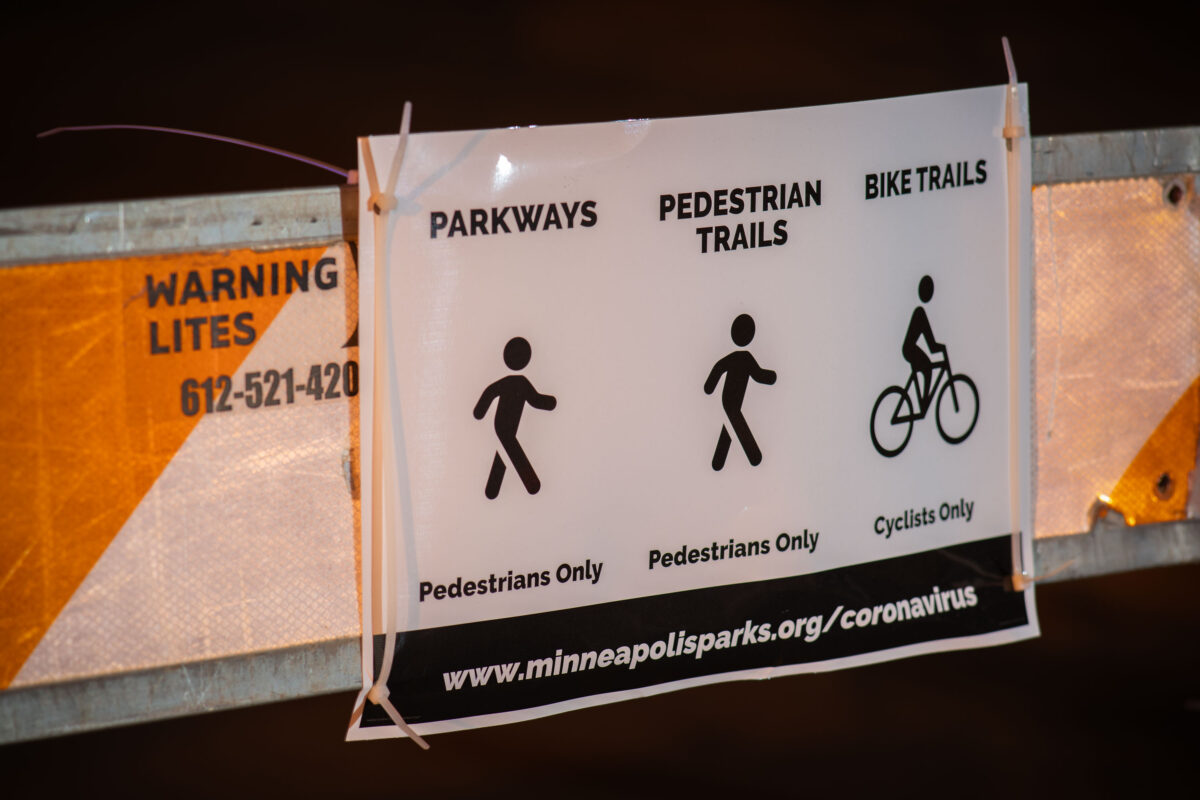
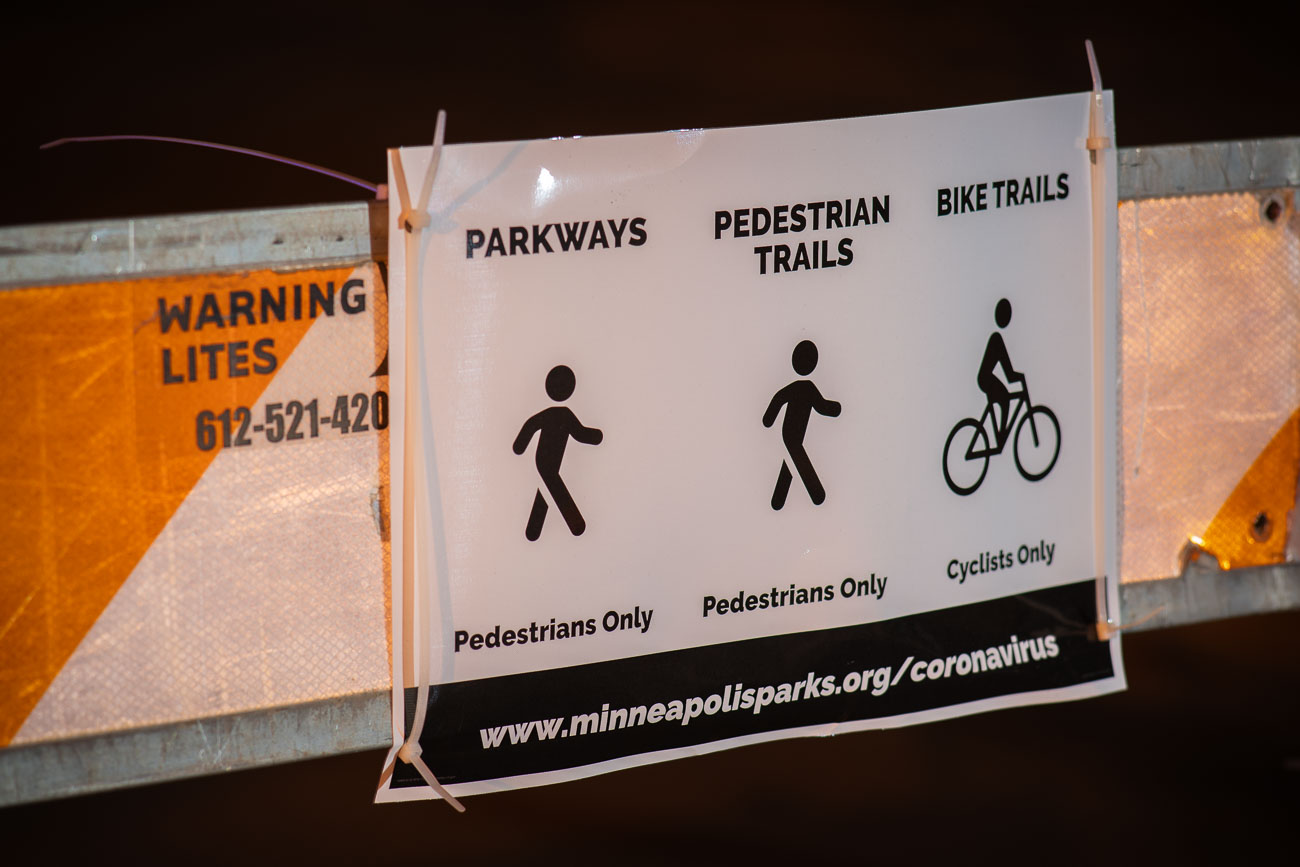
Minneapolis parks coronavirus signage
During the COVID-19 pandemic, Minneapolis Parks implemented temporary measures to manage public access to its parkways and trails. This signage, affixed to a barrier, directs pedestrians and cyclists to designated paths, indicating that parkways were closed to vehicular traffic and reserved for non-motorized use. The directive aimed to provide safe outdoor spaces for recreation while adhering to public health guidelines.

Minneapolis Parks COVID-19 Signage for Parkways and Trails
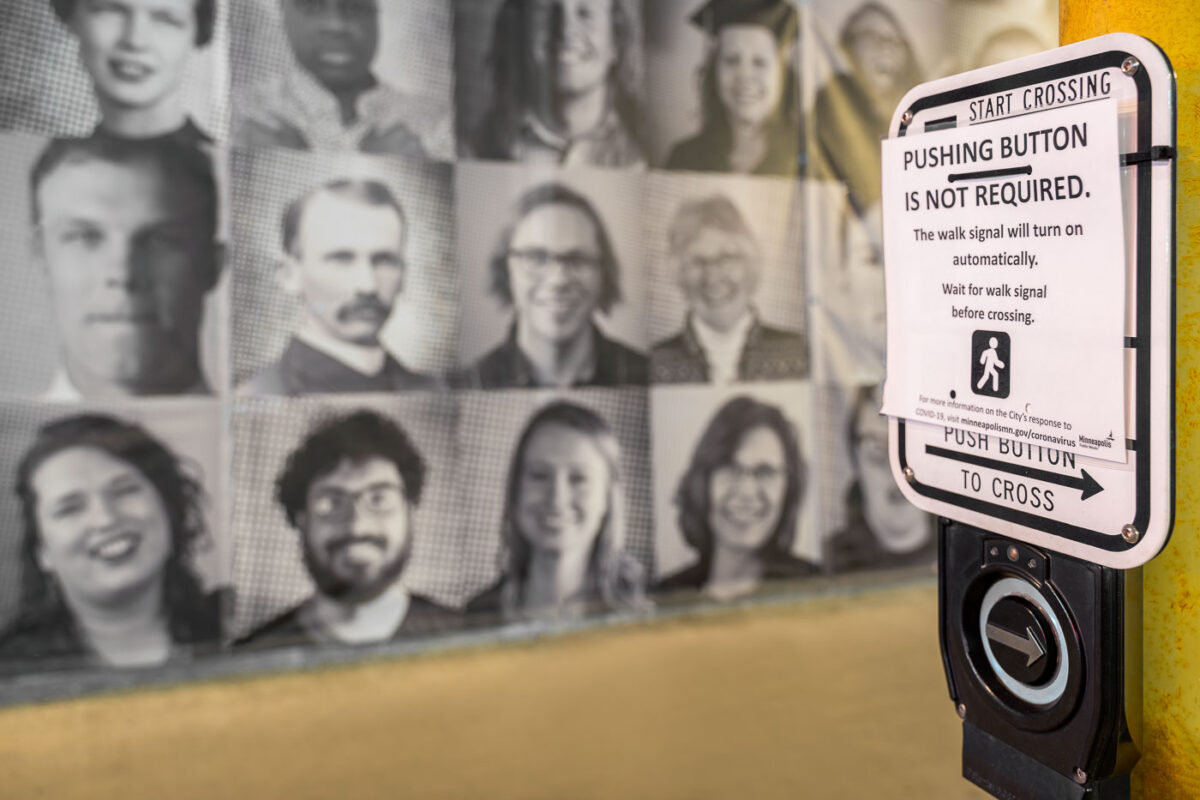
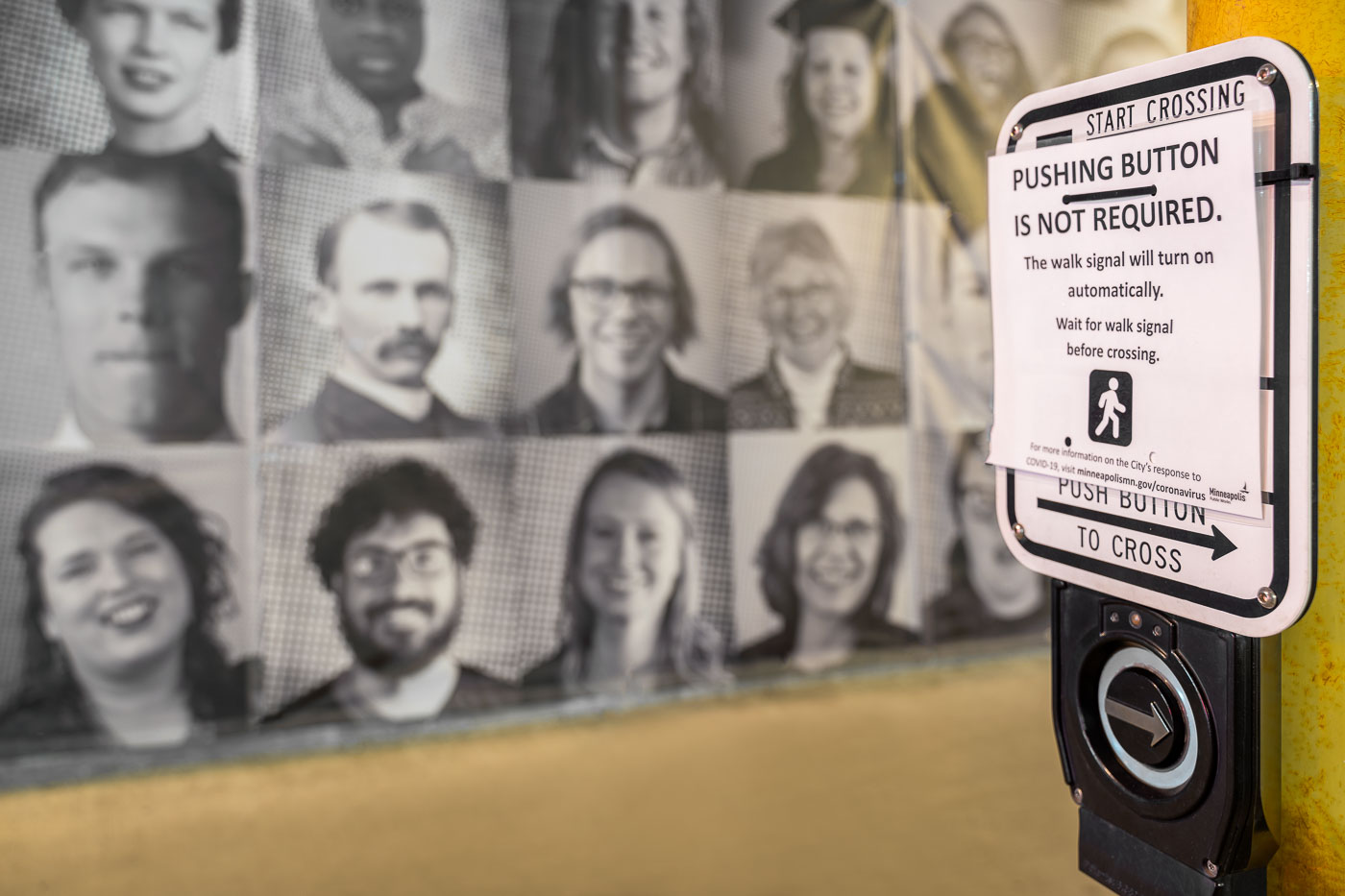
Pedestrian crosswalk button in Minneapolis with COVID-19 notice stating pushing is not required and walk signal activates
Minneapolis disabled the push-to-activate function on hundreds of pedestrian crossing buttons in spring 2020, switching signals to run on automatic timers instead. The city cited concerns about shared surfaces during the COVID-19 pandemic, part of a broader public health response that also touched transit, parks, and other city infrastructure. Signs like this one were taped over the manual buttons at intersections across the city, directing pedestrians to wait for the walk signal rather than press the crossing button.

Automatic Walk Signal Notice on a Minneapolis Crosswalk Button
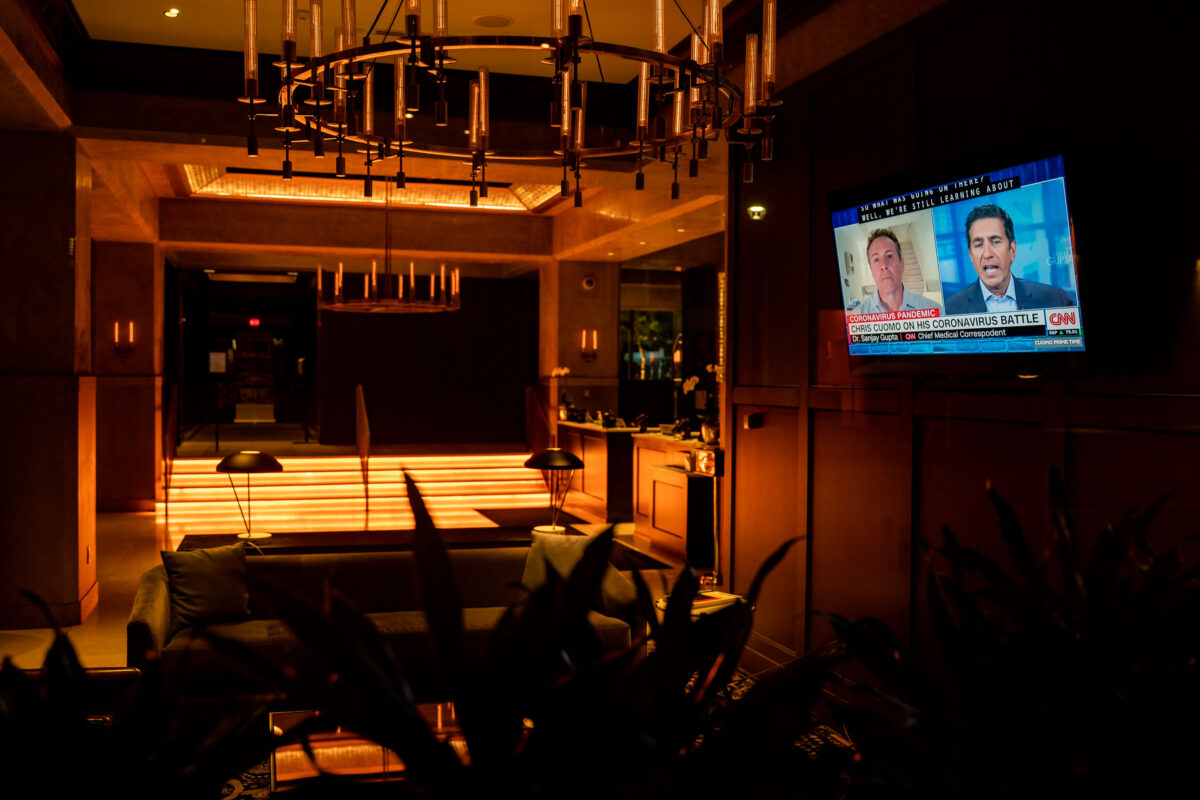
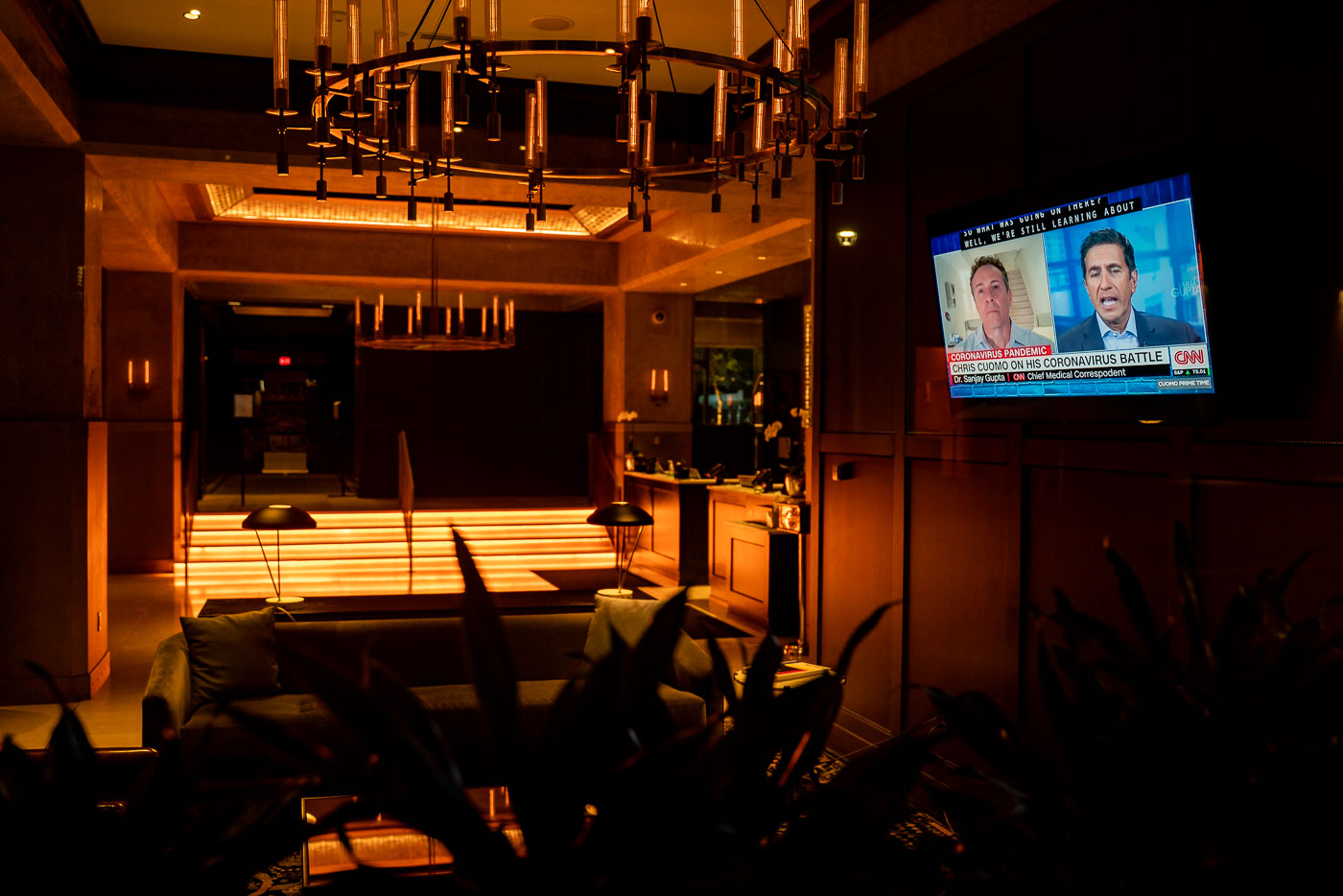
CNN broadcast with Chris Cuomo and Dr. Sanjay Gupta plays on television in the Marquette Hotel lobby, Minneapolis, April 2020.
Chris Cuomo discussed his own coronavirus diagnosis with CNN's chief medical correspondent, Dr. Sanjay Gupta, in an April 2020 segment that aired on the network amid the early weeks of the pandemic. The broadcast appeared on a lobby television at the Marquette Hotel in downtown Minneapolis, part of the Hilton-affiliated property on South Seventh Street near the IDS Center. Cuomo, then a primetime anchor for CNN, quarantined at home after testing positive and returned to reporting on air during his recovery.

Empty Marquette Hotel Lobby During Chris Cuomo’s CNN Interview
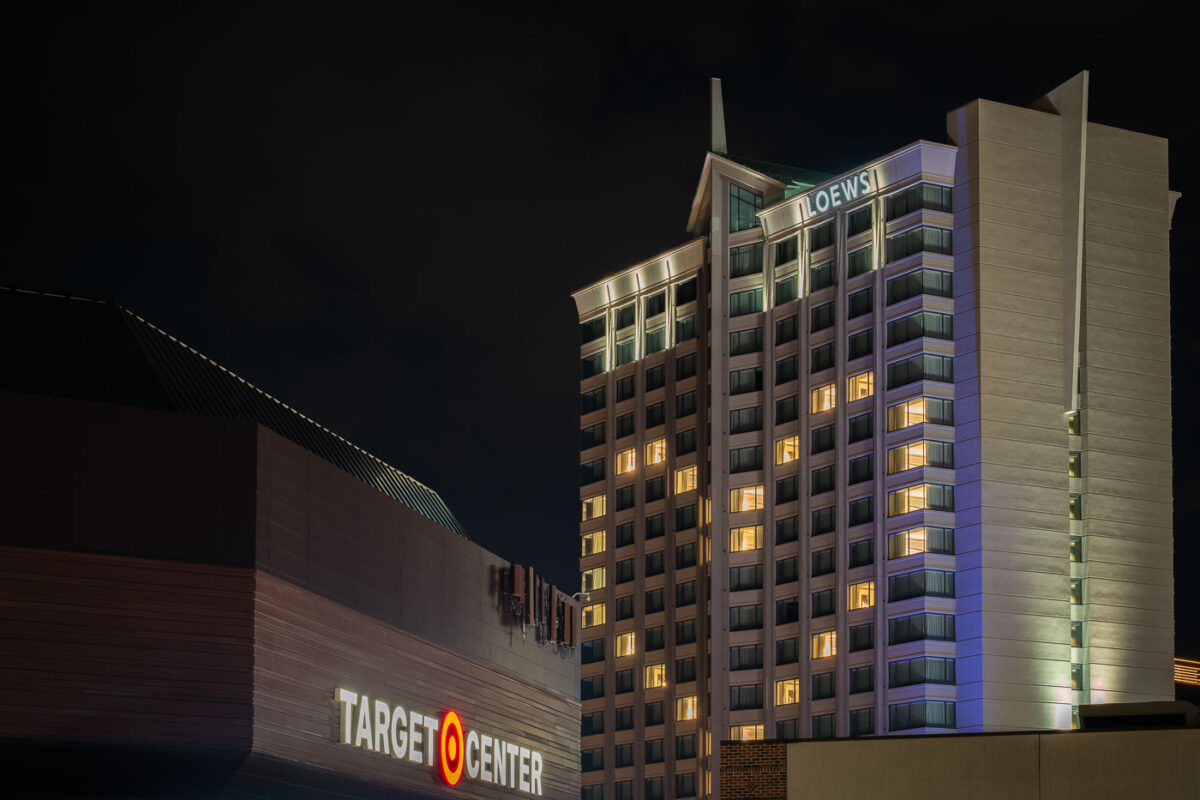
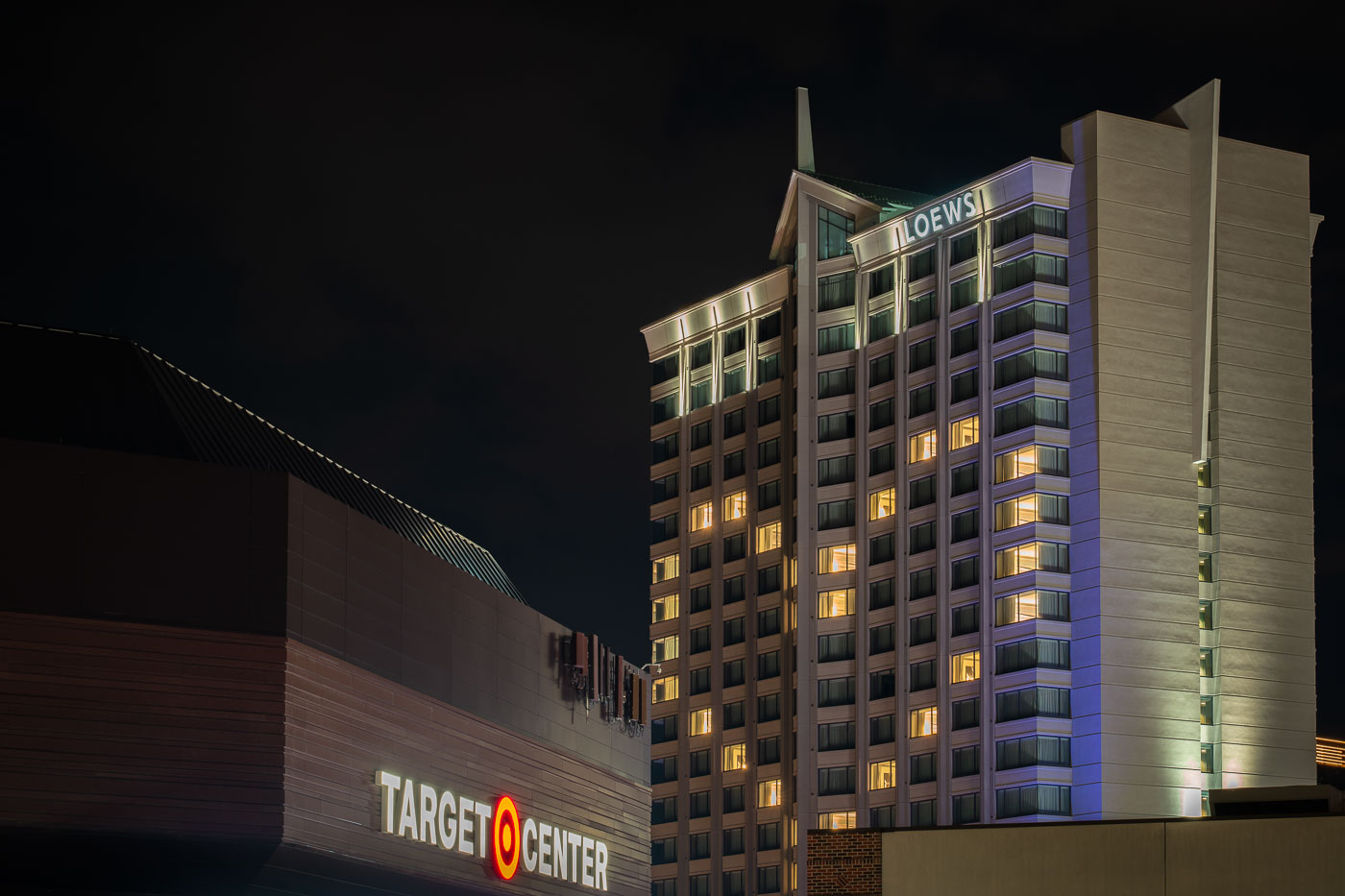
Loews Hotel and Target Center illuminated at night in downtown Minneapolis.
The Loews Minneapolis Hotel sits along First Avenue North next to the Target Center arena in downtown Minneapolis. Target Center opened in 1990 and has served as the home arena for the Minnesota Timberwolves and, since 1999, the Minnesota Lynx. The arena holds roughly 18,798 fans for basketball and has hosted concerts and other events since its debut. The Loews hotel occupies a tower built in 2000 as part of the same downtown block, giving visitors direct access to the arena's entertainment district.

Loews Minneapolis Hotel Beside Target Center at Night
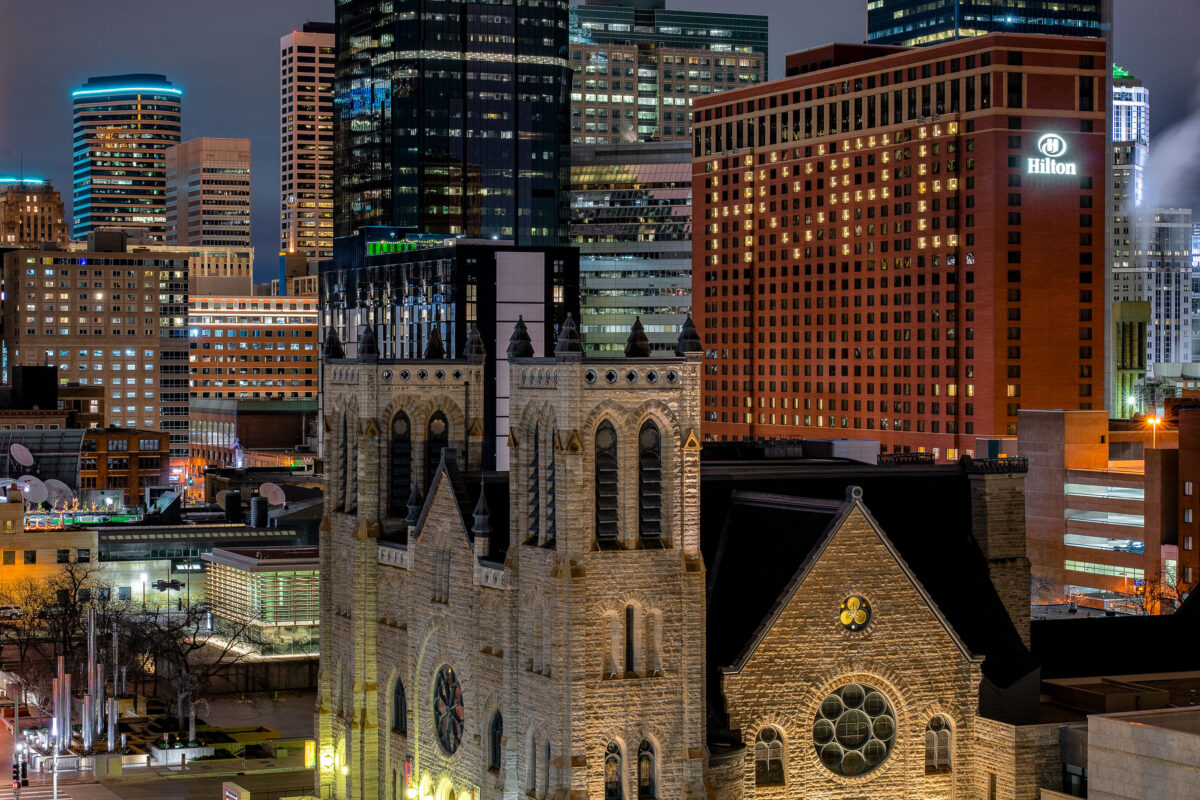
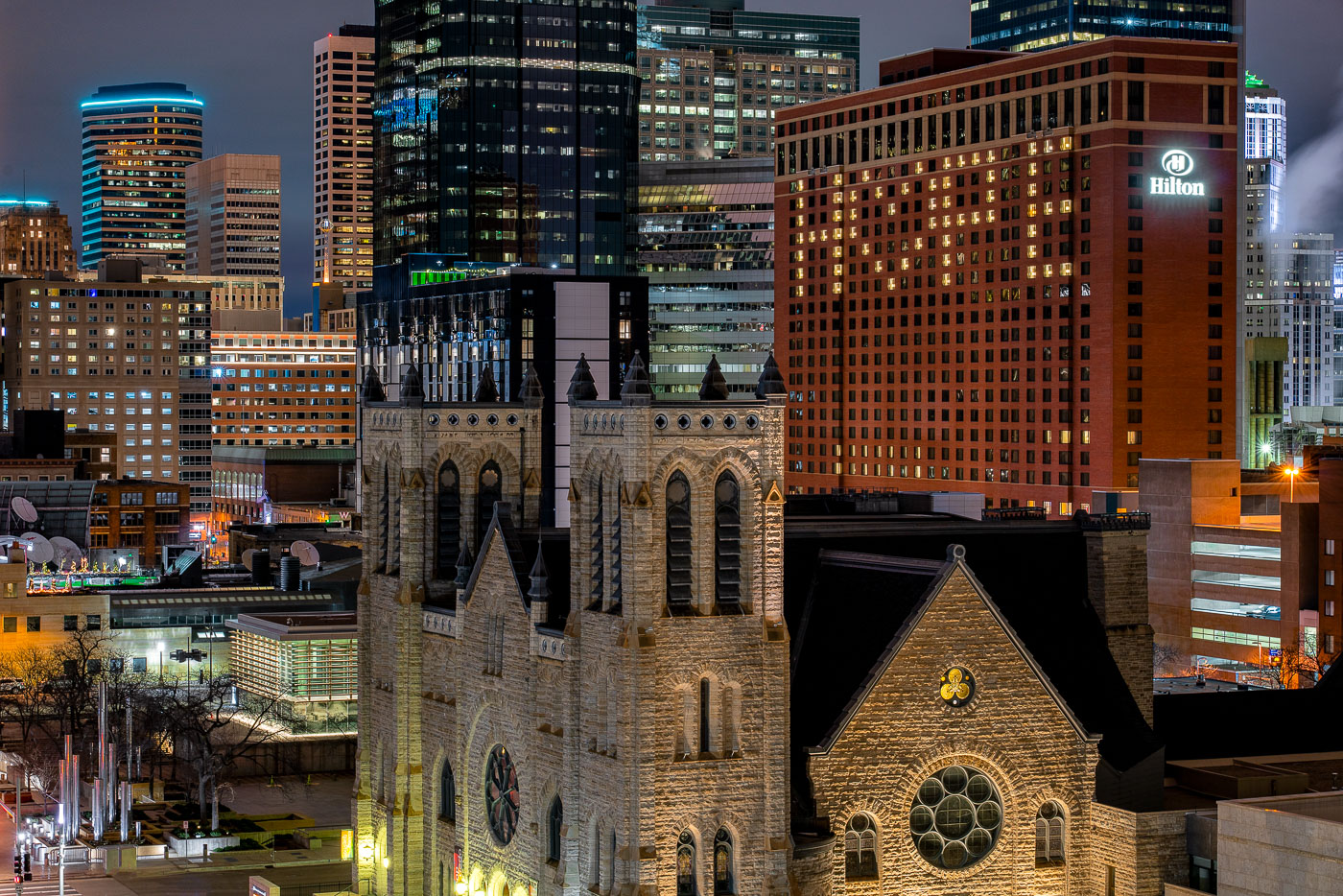
Hilton Minneapolis hotel displays "HOPE" message in illuminated windows during COVID-19 pandemic.
The Hilton Minneapolis, a 32-story tower at 1001 Marquette Avenue, spelled out the word "HOPE" and a heart in its guest-room windows on April 3, 2020, during the early weeks of Minnesota's COVID-19 stay-at-home order. The 821-room hotel opened in 1992 and remains one of the largest in the state. Just north of the hotel stands Westminster Presbyterian Church, a Gothic Revival building completed in 1897 for a congregation founded in 1857, making it one of downtown Minneapolis's oldest continuously operating churches.

Hilton Minneapolis Windows Spell “HOPE” During COVID-19
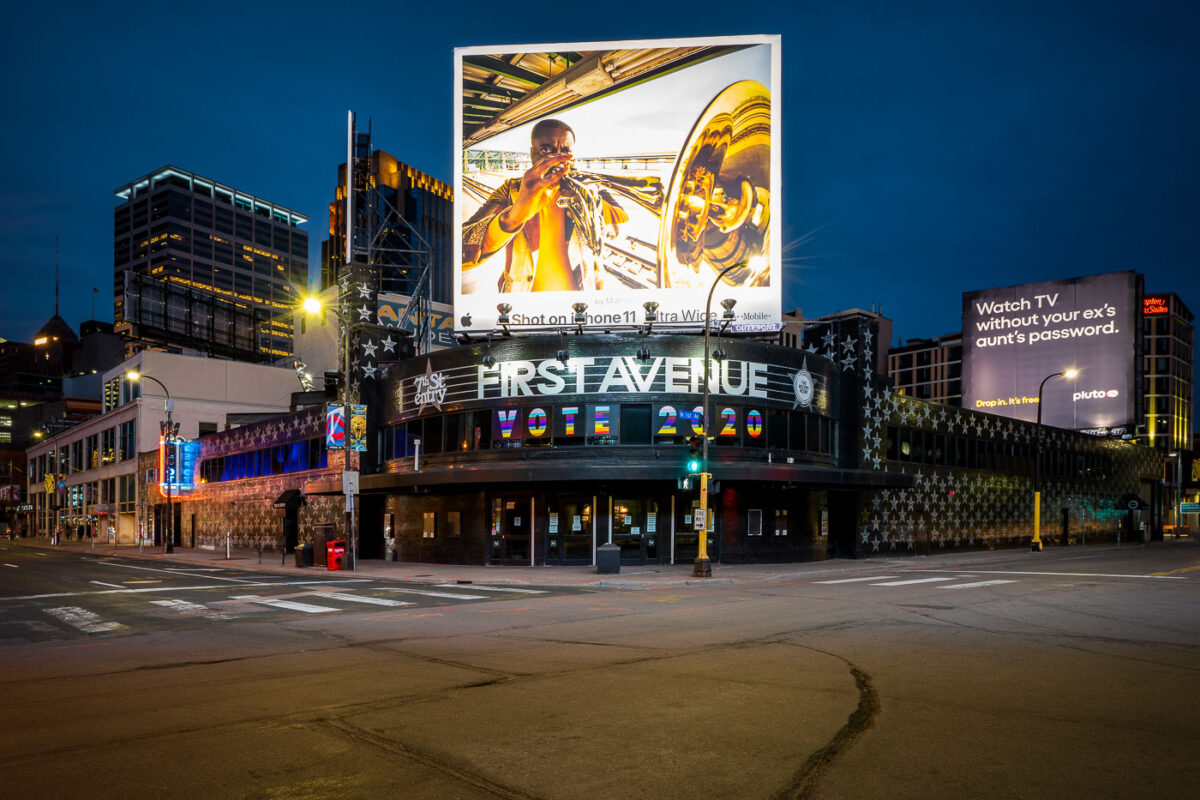
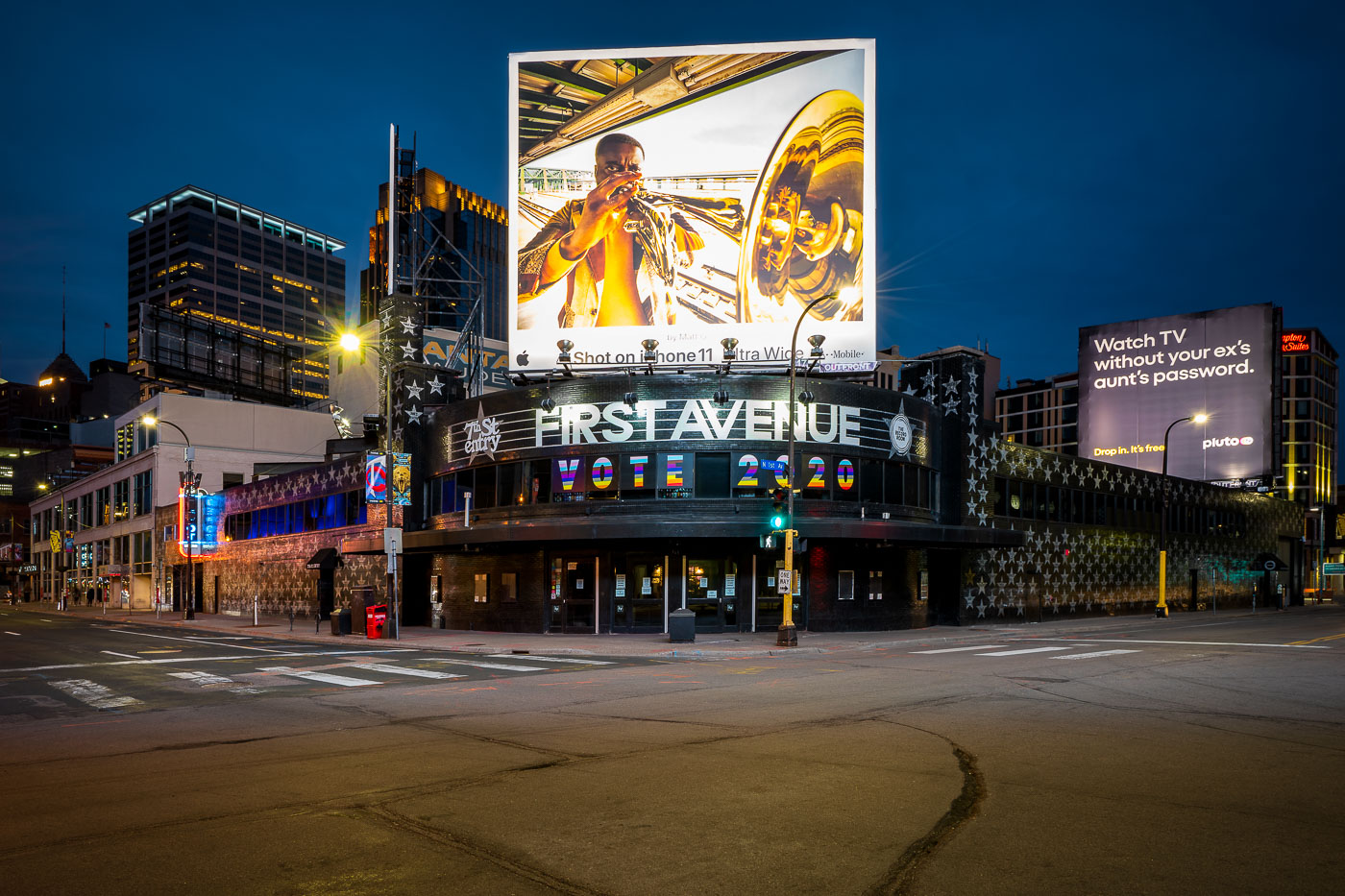
First Avenue music venue in downtown Minneapolis displays "VOTE 2020" on its marquee during COVID-19 shutdowns on April 2, 2020.
First Avenue, the nightclub at 701 First Avenue North, occupies a building that opened in 1937 as a Greyhound bus depot before its conversion to a music venue in 1970. Its Mainroom has hosted acts from Prince—who filmed key s of "Purple Rain" here—to touring bands across nearly every genre. The 7th Street Entry, the smaller adjoining room, opened in 1980 as a launching pad for punk and indie acts. The building's exterior stars, added over the years, each mark a musician who has performed there. On this night the marquee read "VOTE 2020" instead of a show listing, a message posted while the venue sat closed under Minnesota's statewide shutdown orders.

“VOTE 2020” Marquee at First Avenue During Empty Streets
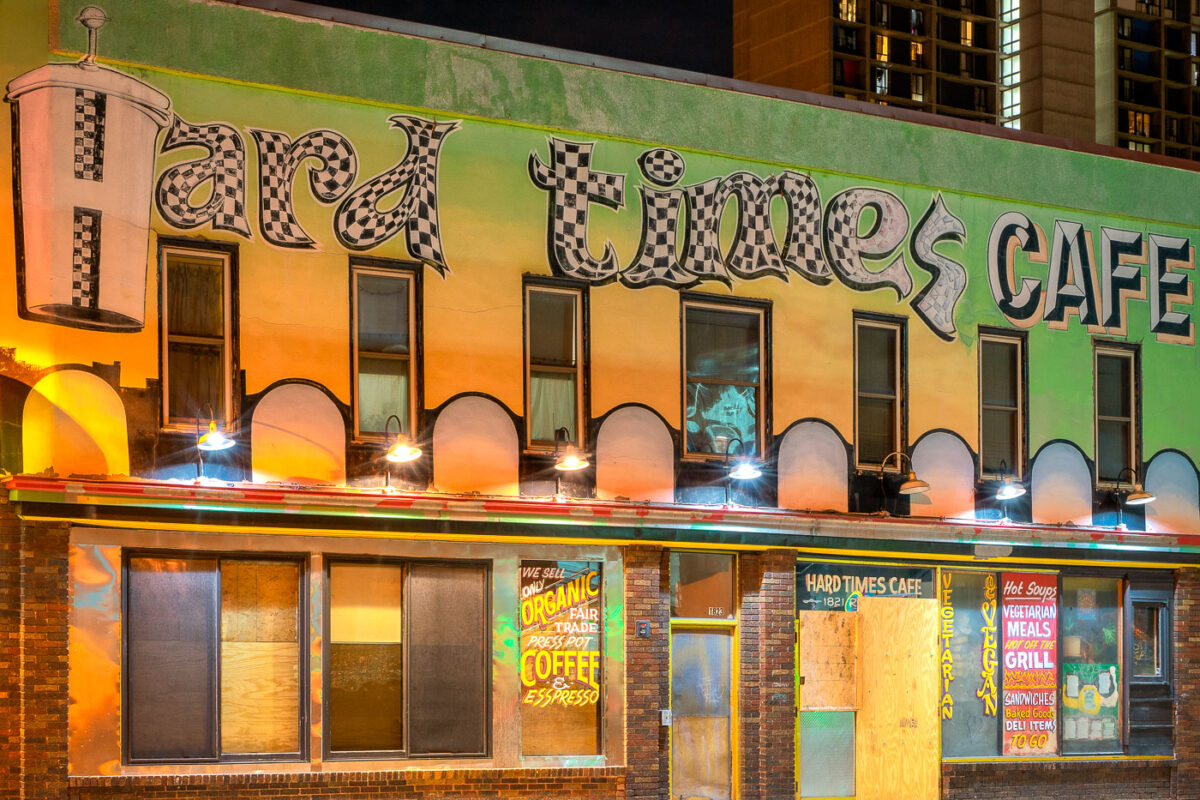
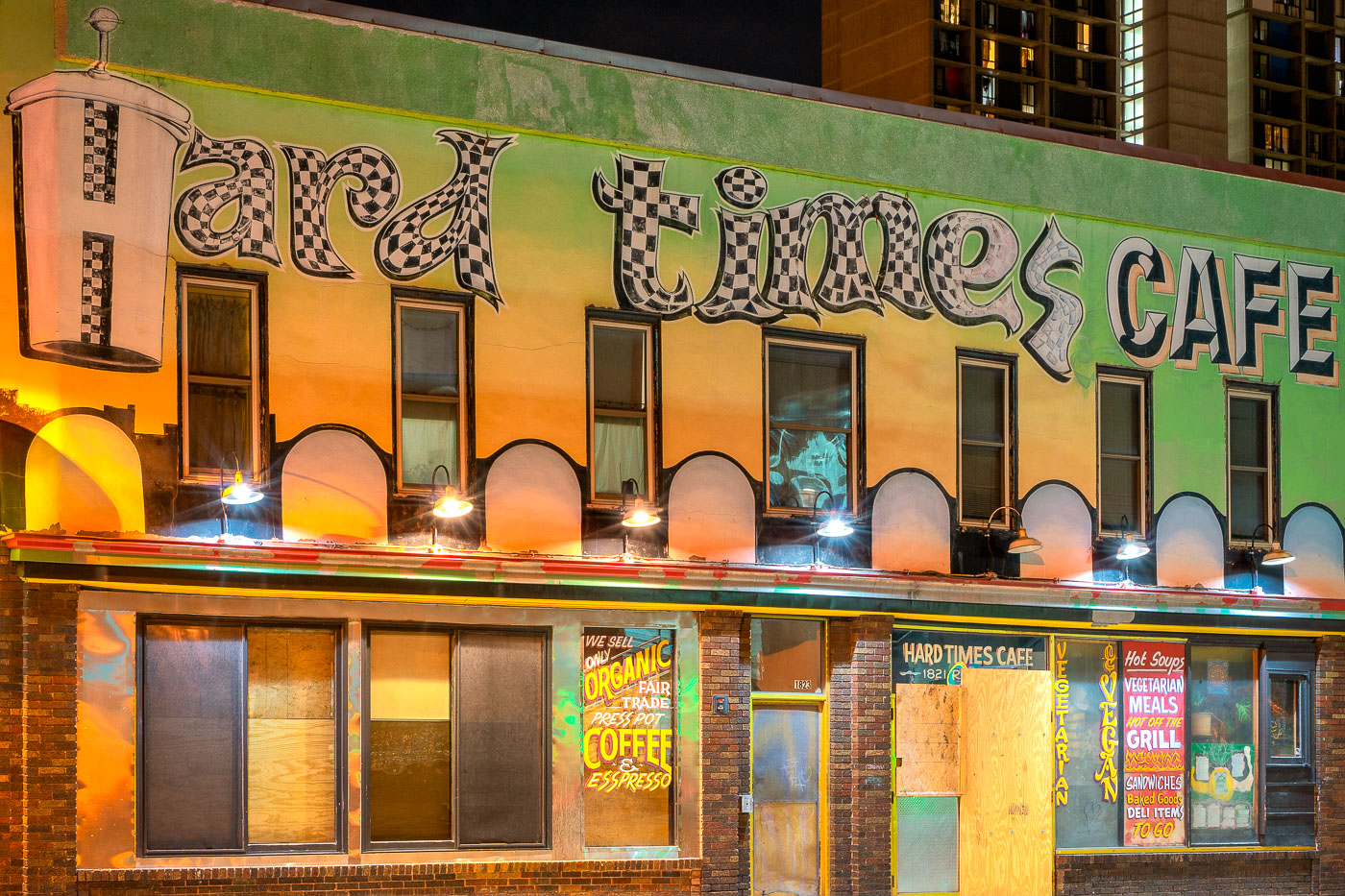
Hard Times Cafe with boards on door during covid closures
The Hard Times Cafe, located at 1823 Riverside Drive in Minneapolis's Cedar Riverside neighborhood, was boarded up during the COVID-19 pandemic closures.

Hard Times Cafe, Minneapolis: Boarded Up During COVID-19
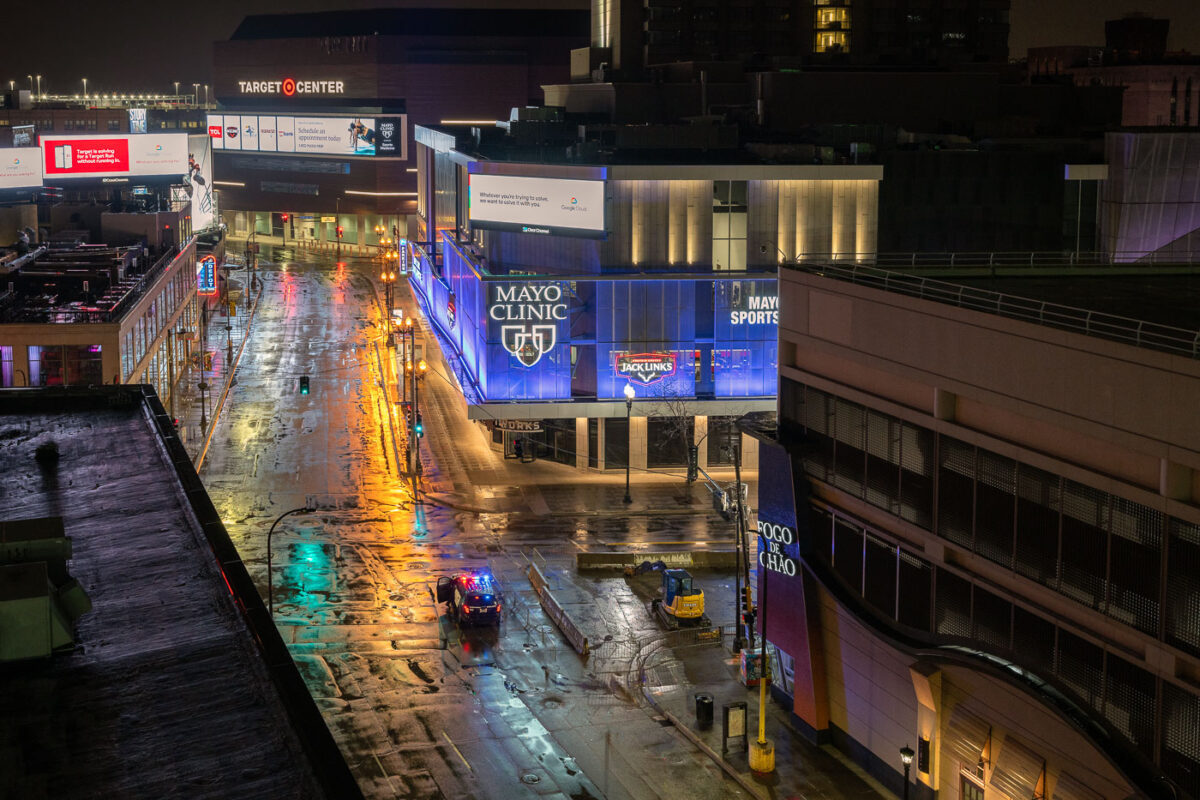
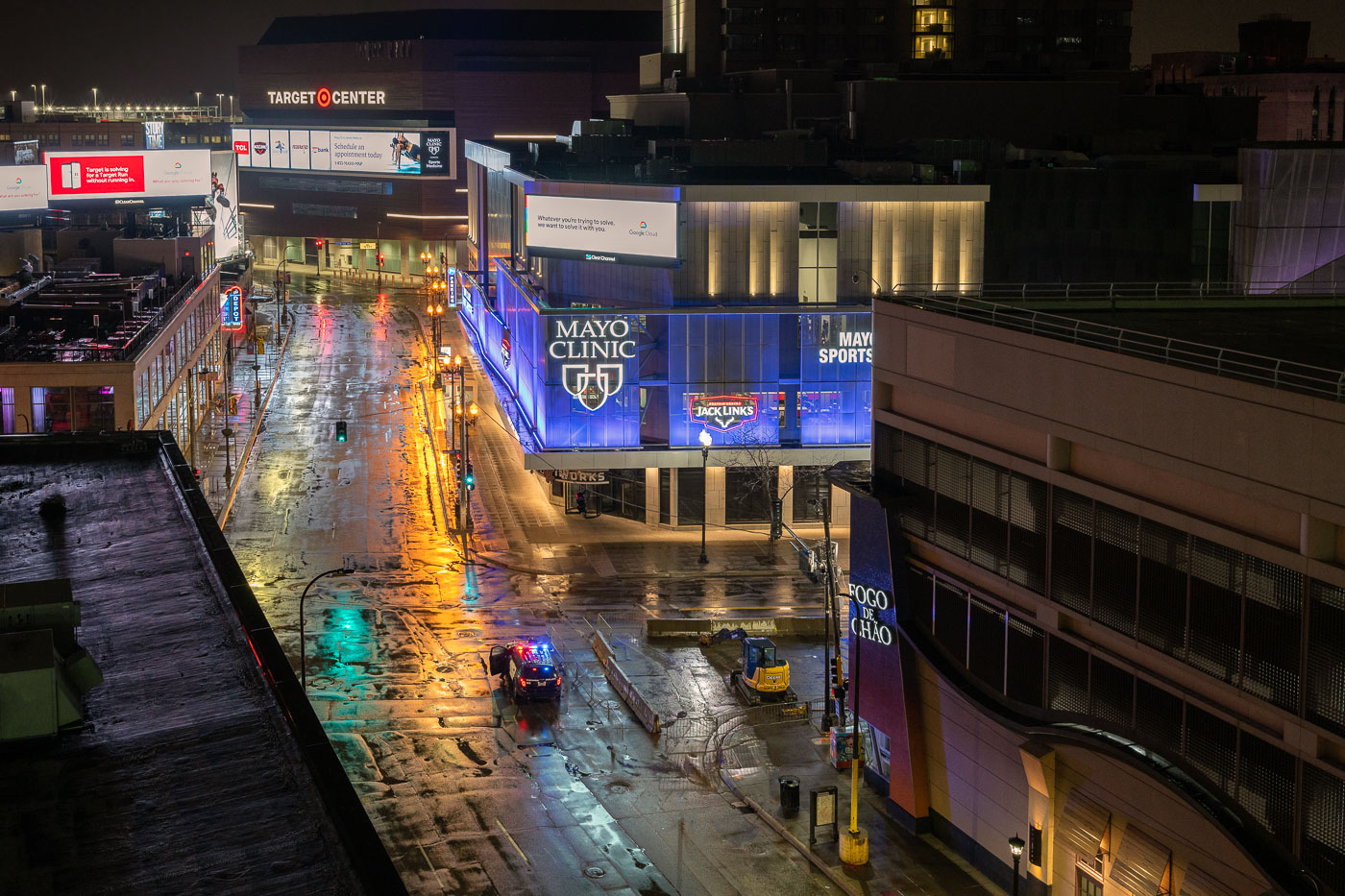
Police vehicle and excavator on wet Hennepin Avenue in downtown Minneapolis at night during COVID-19 shutdown.
Hennepin Avenue runs through downtown Minneapolis past Target Center, home of the Minnesota Timberwolves and Lynx, and Mayo Clinic Square, a mixed-use building housing retail space and the Minnesota Timberwolves' practice facility. The corridor sits at the center of the city's entertainment and sports district, connecting to First Avenue and the Warehouse District a few blocks south. In late March 2020, Minnesota's stay-at-home order emptied this stretch of its usual foot traffic, leaving only intermittent police and maintenance activity on the street.

Hennepin Avenue Near Target Center During Minneapolis’s COVID-19 Shutdown
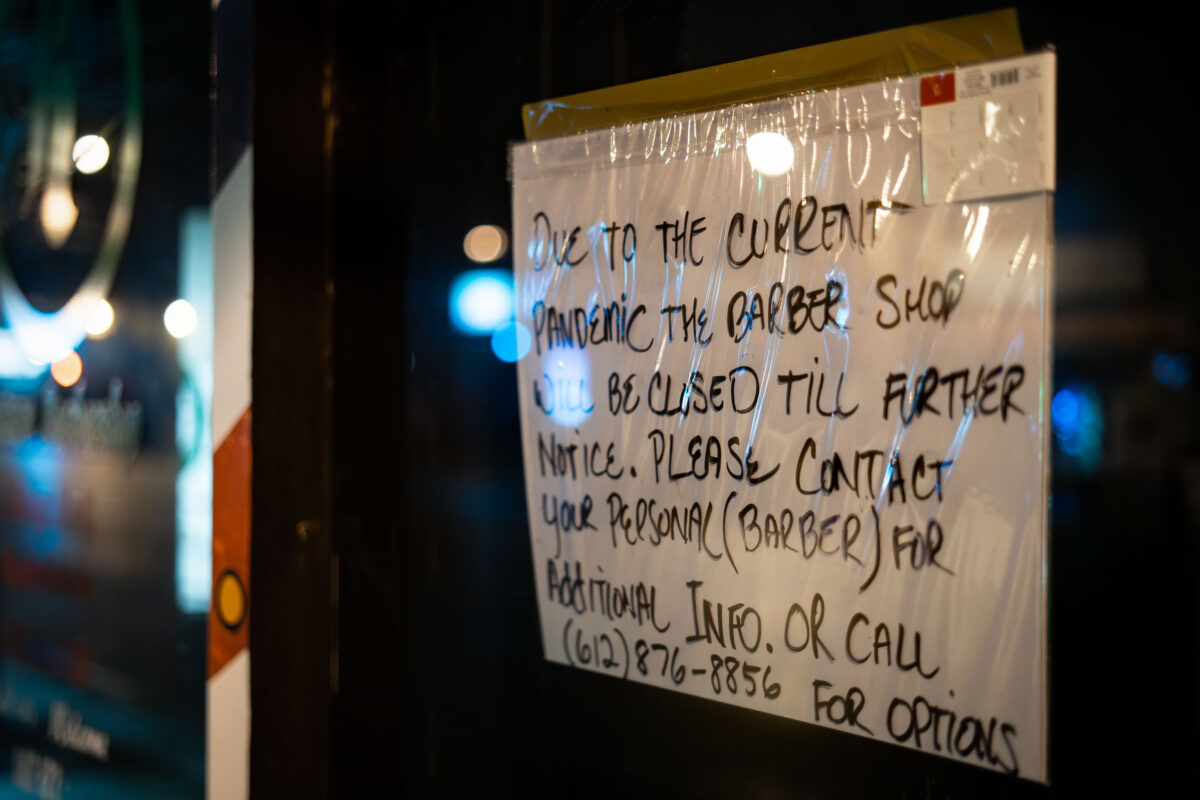
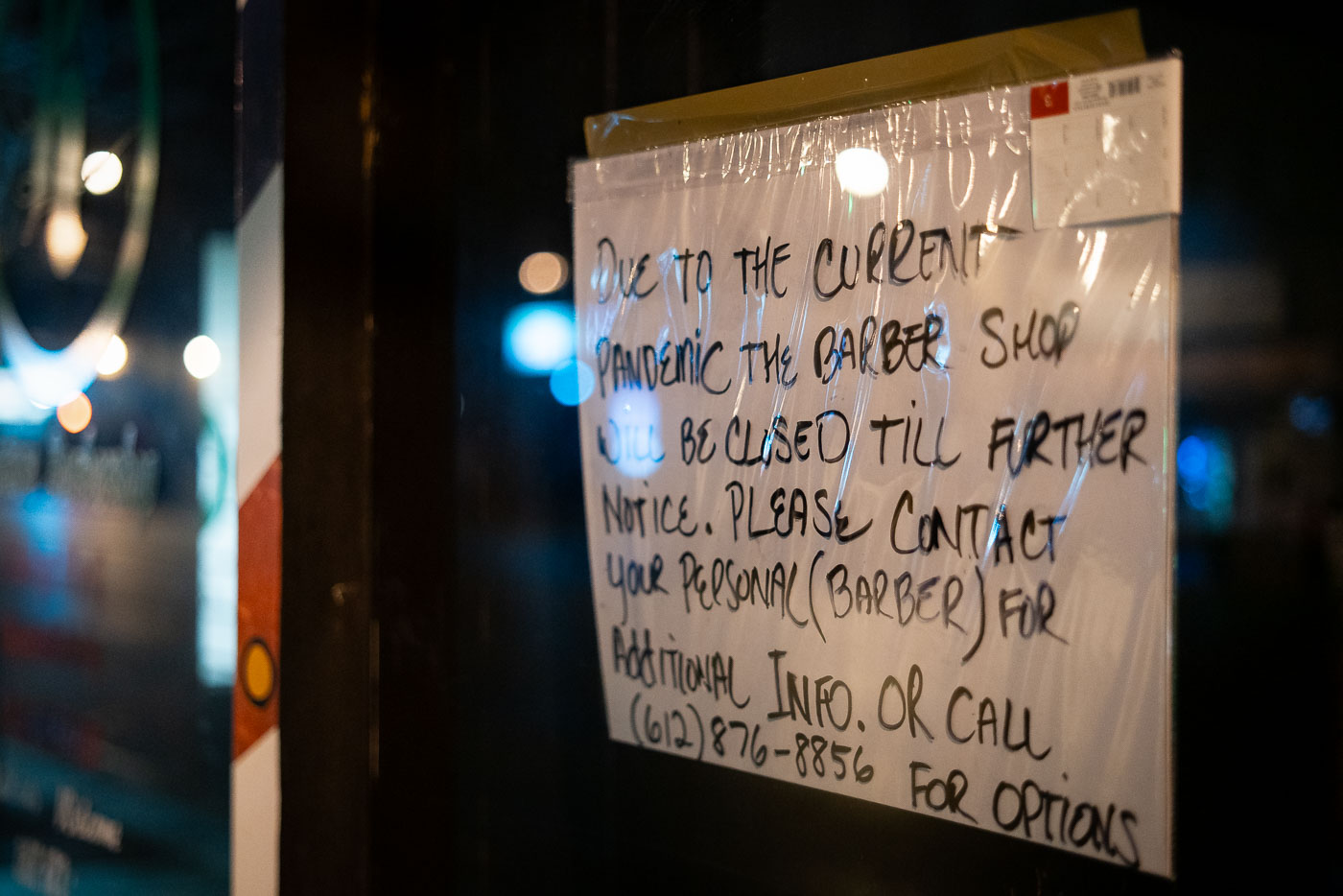
Handwritten closure notice taped to a barber shop door in Minneapolis during the March 2020 COVID-19 pandemic shutdown.
The handwritten sign cites "the current pandemic" as the reason the barber shop closed "till further notice," asking customers to contact their personal barber or call a listed number for options. Minneapolis barbershops and salons were ordered closed under Minnesota's statewide stay-at-home order, issued March 25, 2020, which classified personal grooming services as non-essential. Many small shops, without the staff or systems for remote booking, relied on notes like this one to keep clients informed while the order remained in effect.

A Barber Shop’s Handwritten Closure Notice in Minneapolis
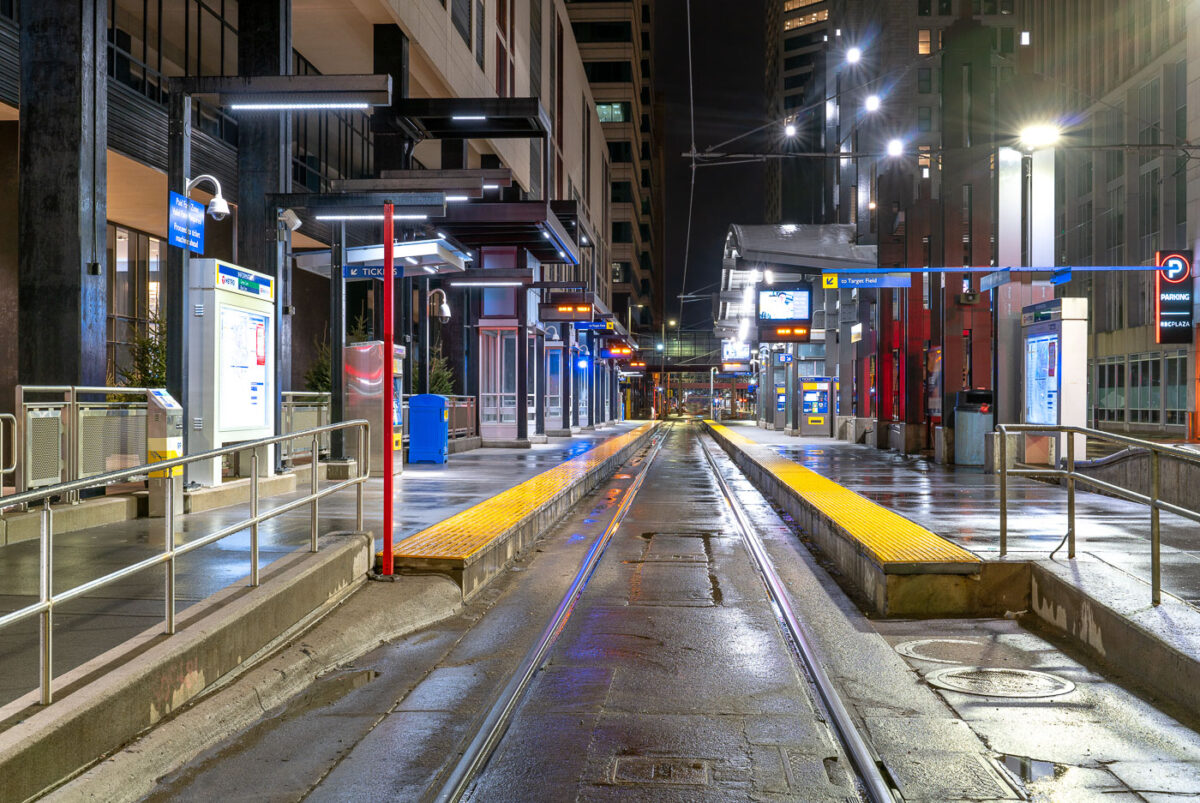
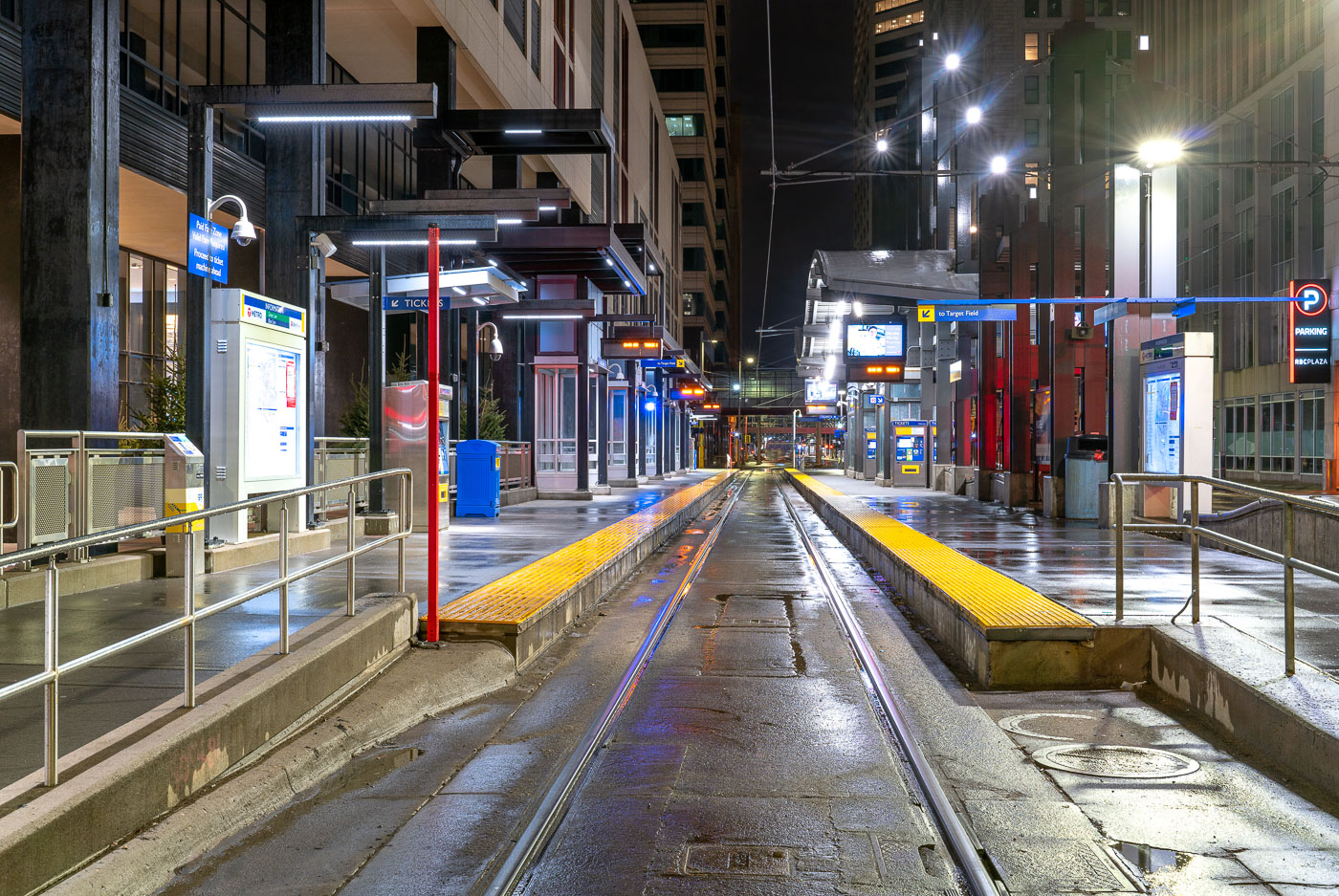
Nicollet Mall light rail station platform stretches empty at night during early COVID-19 pandemic closures in downtown
Nicollet Mall Station serves Metro Transit's Blue and Green Line trains along the transit mall in downtown Minneapolis. The Blue Line opened in 2004 as the region's first light rail line, running between downtown and the Mall of America; the Green Line, connecting downtown Minneapolis to downtown St. Paul, began service in 2014. The station sits along Nicollet Mall, a pedestrian and transit corridor that has restricted private vehicle traffic since the 1960s. Overhead signage points riders toward Target Field, home of the Minnesota Twins, a short walk to the north. This dates to late March 2020, during the early weeks of Minnesota's COVID-19 stay-at-home order, when ridership on the system dropped sharply from pre-pandemic levels.

A Rainy Night at Minneapolis’s Nicollet Mall Station
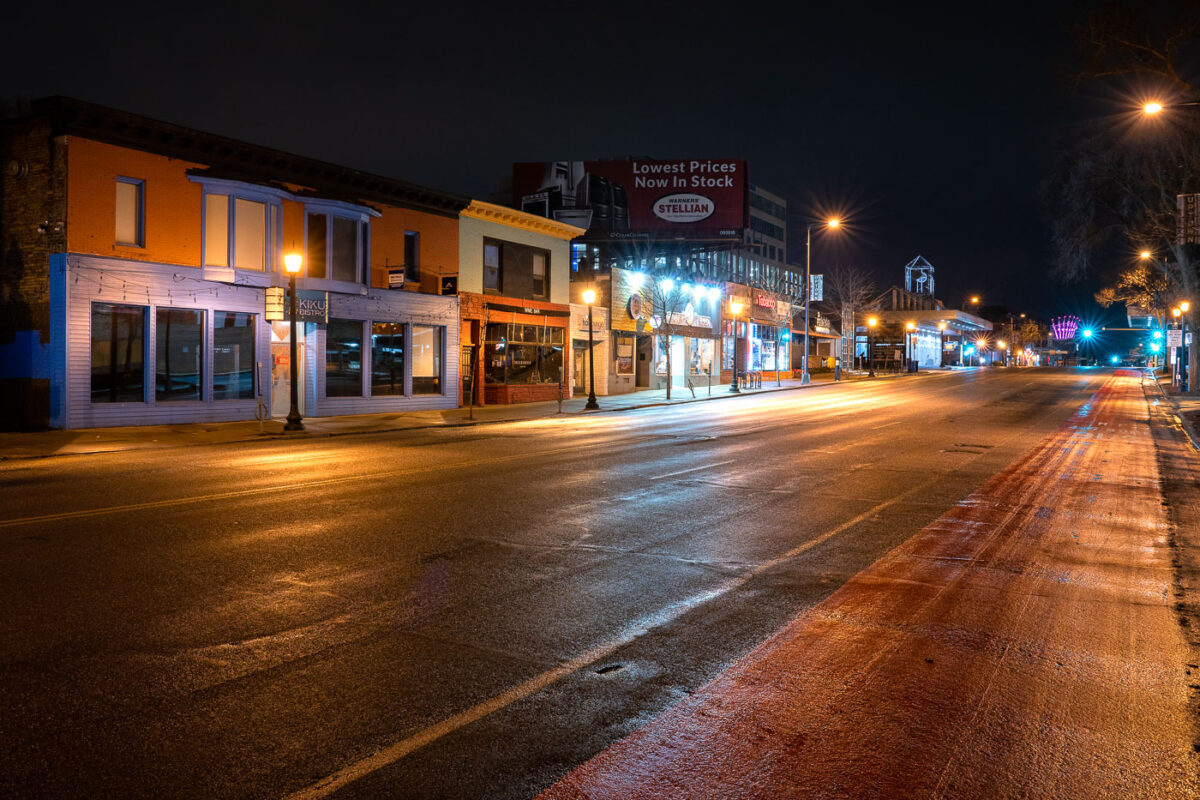
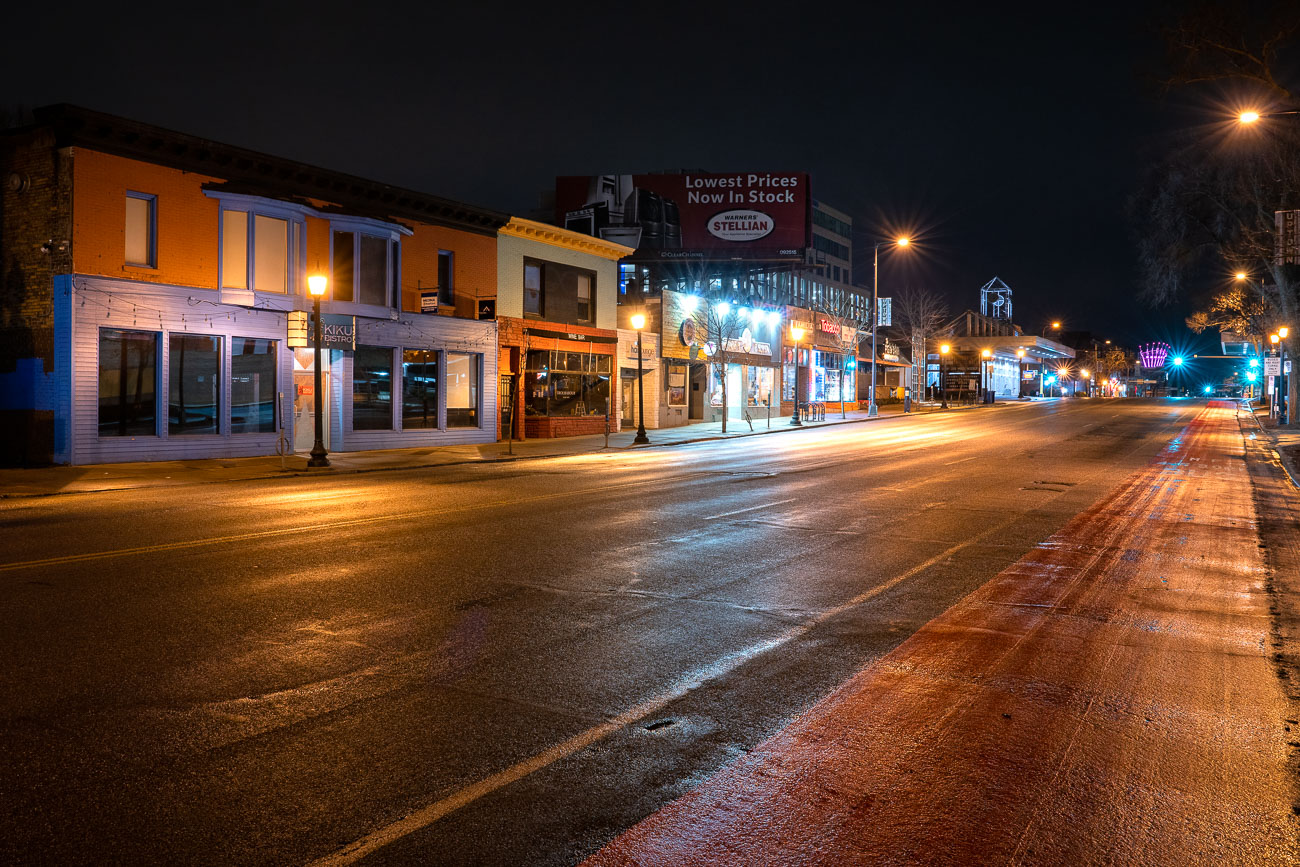
Empty Hennepin Avenue in Uptown Minneapolis at night during the stay-at-home order.
Hennepin Avenue in Uptown Minneapolis on the first night of Minnesota's stay-at-home order. The street, typically bustling with activity, is deserted as businesses close and residents are advised to remain indoors due to the COVID-19 pandemic.

Hennepin Ave, Uptown Minneapolis: First Night of Stay-at-Home Order
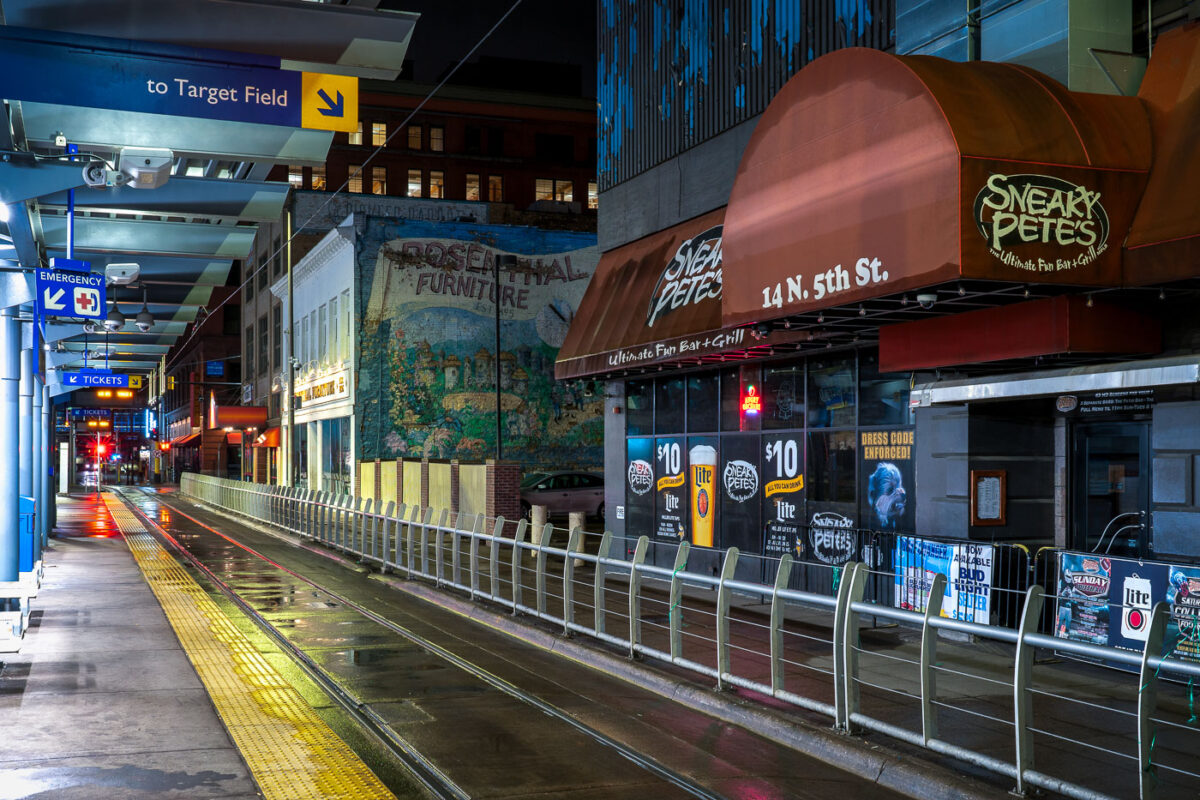
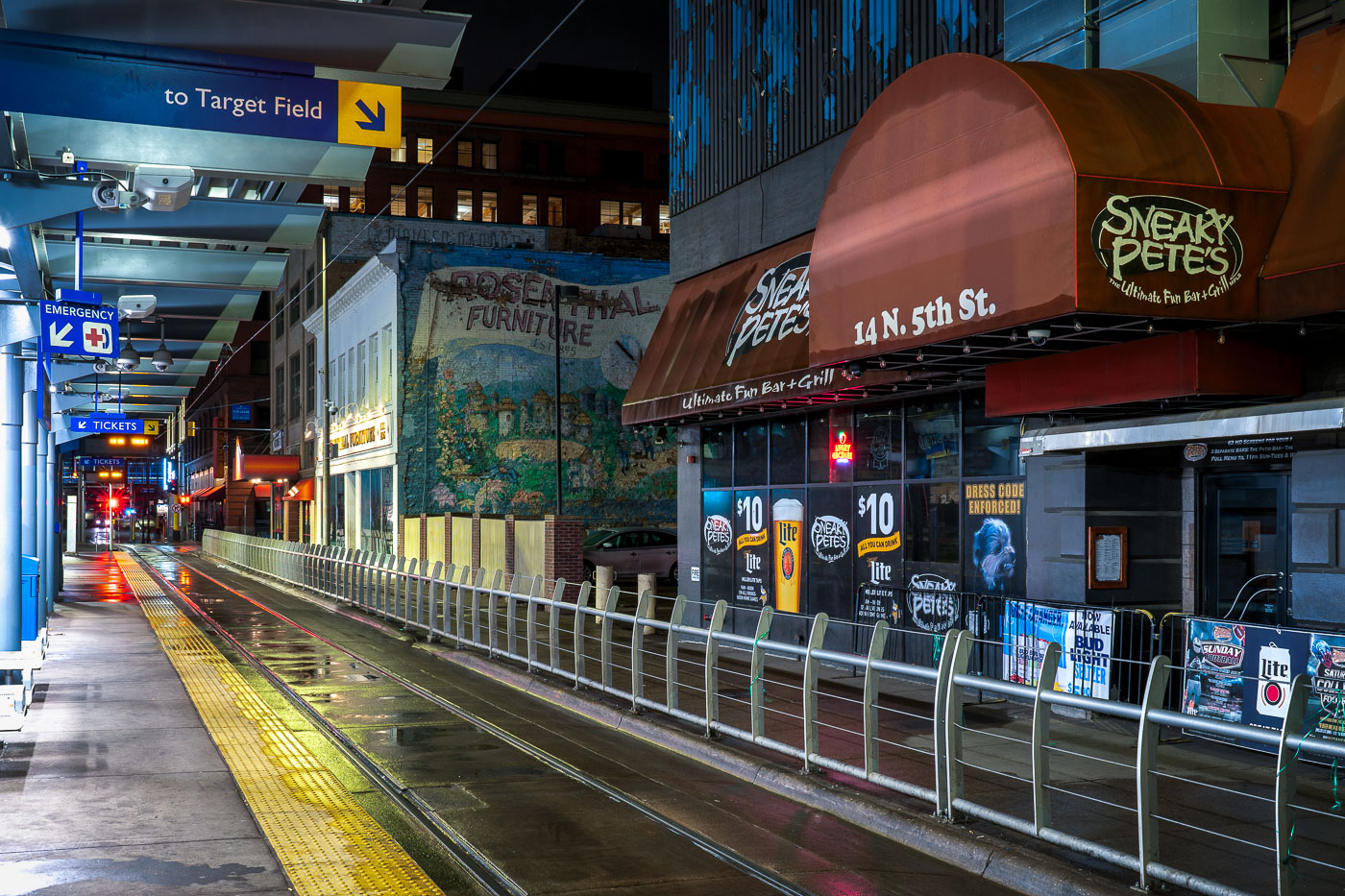
Sneaky Petes during covid19 stay at home orders
Sneaky Pete’s Bar at 14 N. 5th St. in downtown Minneapolis stands dark beside a METRO light rail platform on March 28, 2020, the first night of Minnesota’s COVID-19 stay-at-home order.

Sneaky Pete’s Bar, 14 N. 5th St., Minneapolis, COVID-19 Stay at Home Order
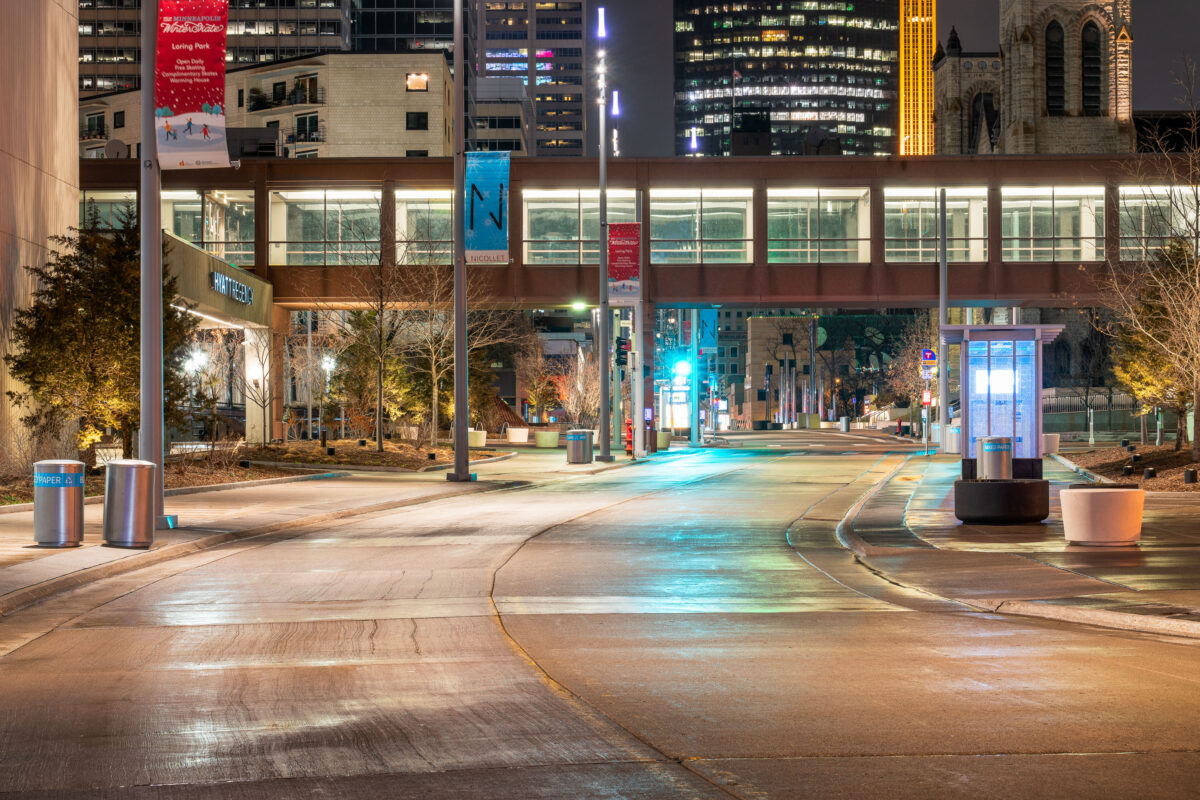
Nicollet Mall in Minneapolis during Stay At Home Orders
Nicollet Mall in downtown Minneapolis is seen during Minnesota's COVID-19 stay-at-home orders.

Nicollet Mall, Downtown Minneapolis During COVID-19 Stay-at-Home
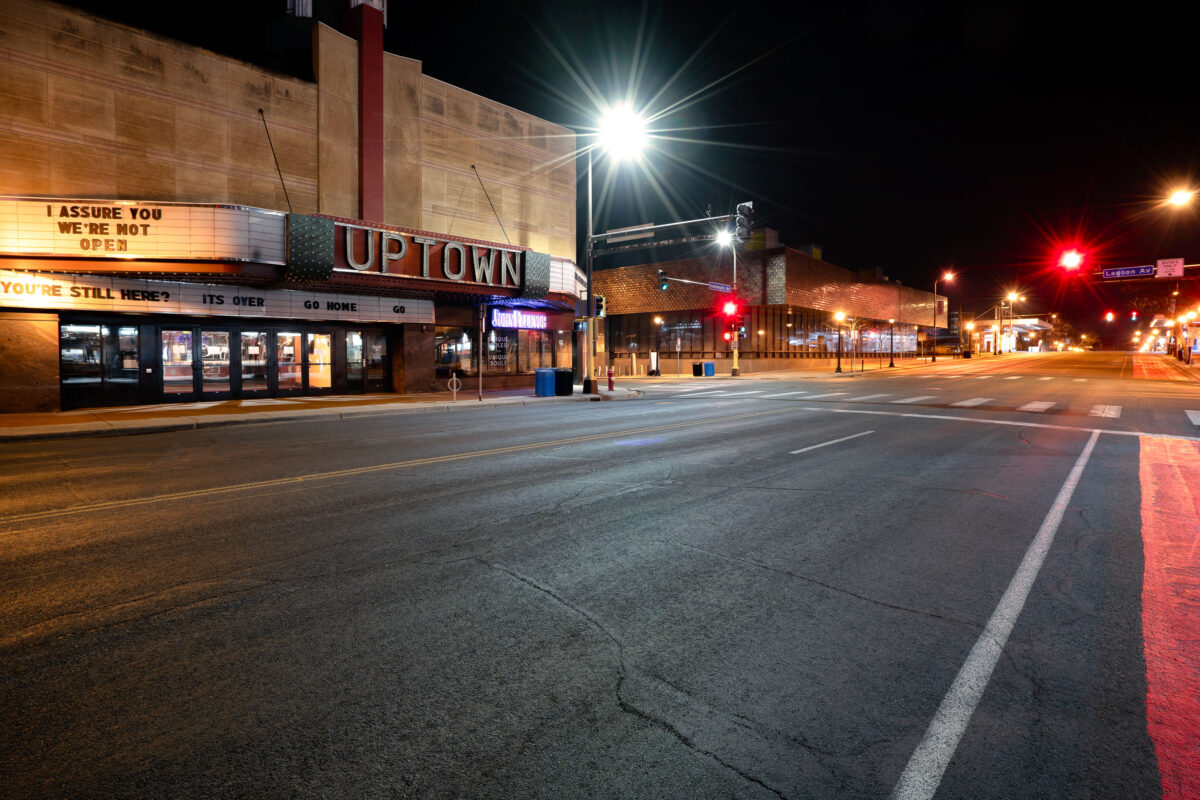
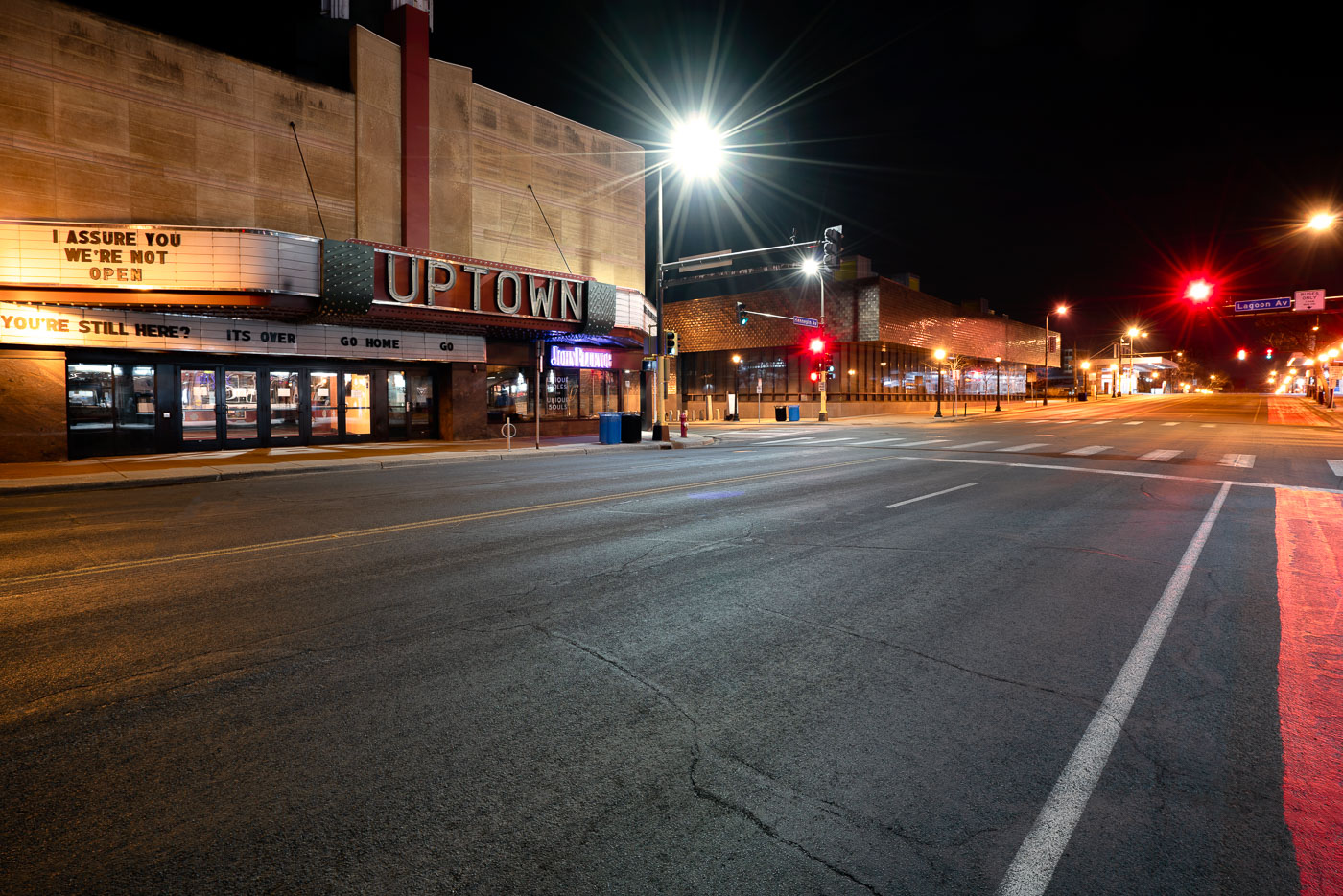
Uptown Theatre on Hennepin Avenue in Minneapolis displays closure messages on its marquee during the COVID-19 pandemic shutdown
The Uptown Theatre sits at Hennepin and Lagoon Avenues in the Uptown neighborhood of Minneapolis. It opened in 1916 and was rebuilt in 1939 with an Art Deco facade designed by Liebenberg and Kaplan, architects known for a string of Twin Cities movie houses. The marquee's message was a response to Minnesota's stay-at-home order, issued in late March 2020, which forced theaters and other entertainment venues statewide to close temporarily.

“I Assure You We’re Not Open” at the Uptown Theatre
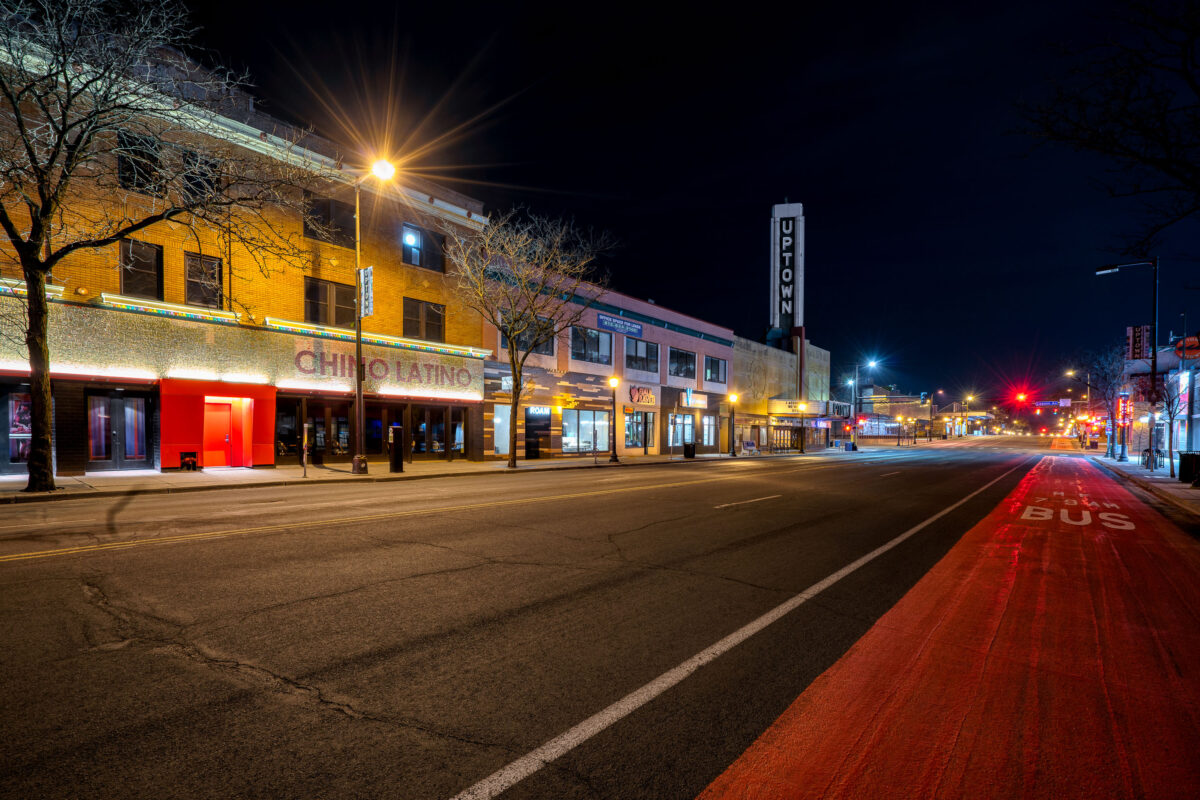
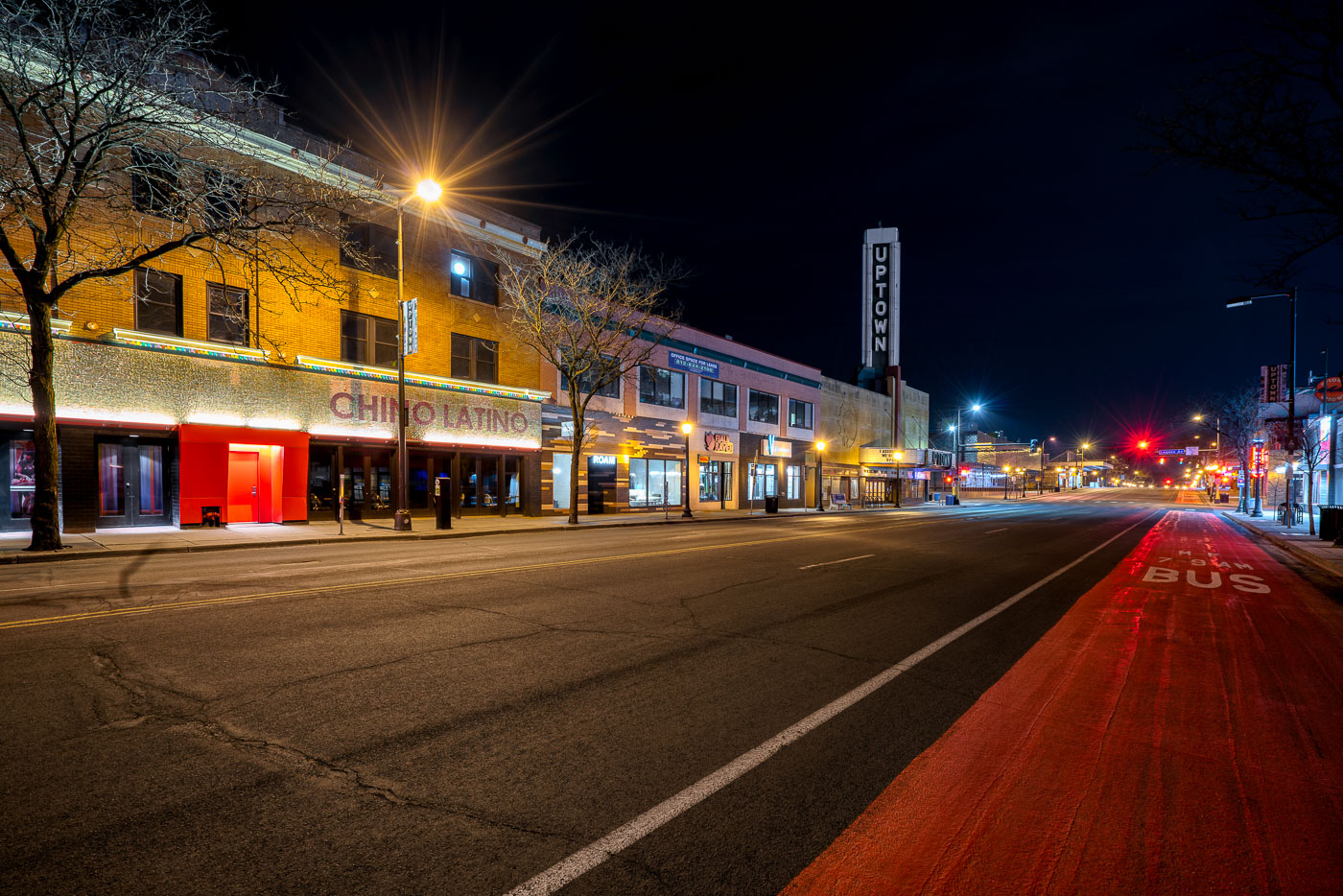
Hennepin Avenue in Uptown Minneapolis at night with Chino Latino restaurant and Uptown Theater sign visible during COVID-19
Hennepin Avenue runs through the heart of Uptown Minneapolis, linking downtown to the Chain of Lakes. The Uptown Theatre opened in 1939, designed by the Minneapolis architectural firm Liebenberg & Kaplan, known for a string of Art Deco movie houses built across the city in the 1930s and '40s. It later operated as a second-run and independent cinema before closing in 2020. Chino Latino, a pan-Asian and Latin fusion restaurant from Parasole Restaurant Holdings, opened along this stretch in 1998 and became a fixture of Uptown's nightlife before shutting down for good that same year amid the pandemic's early closures.

Chino Latino and the Uptown Theatre on Hennepin Avenue
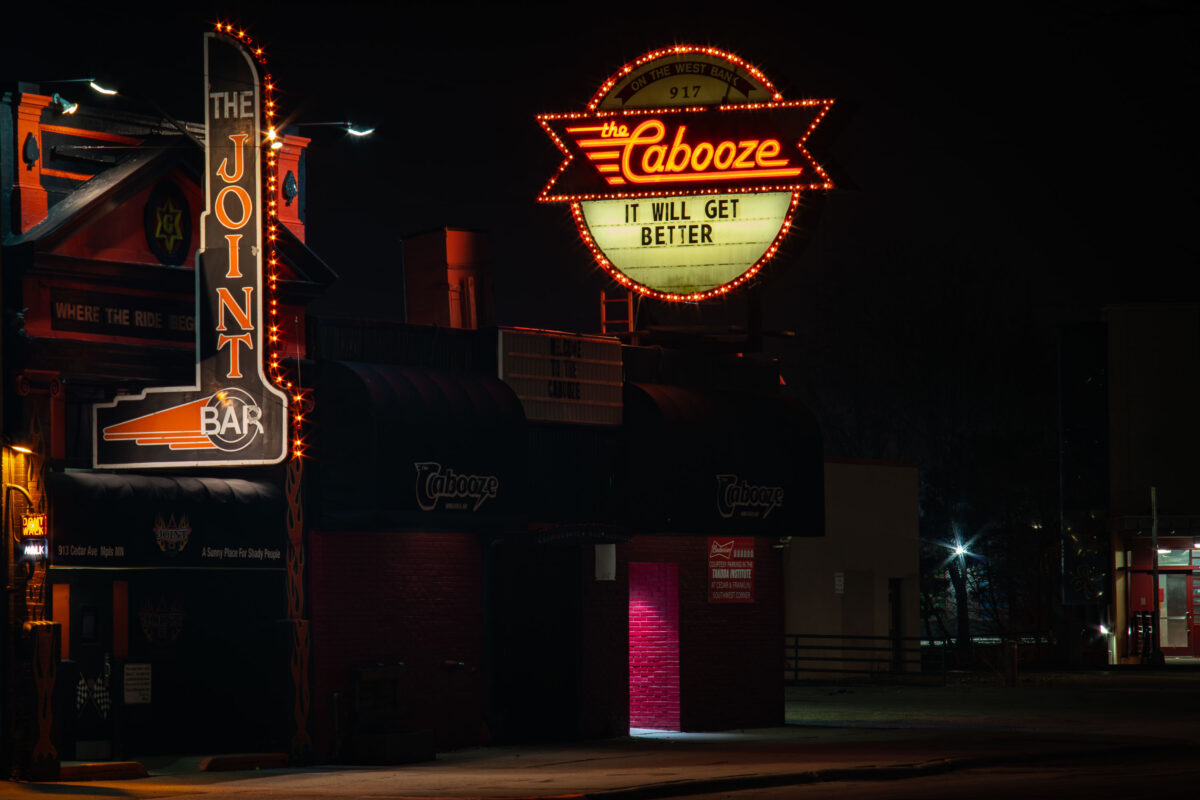
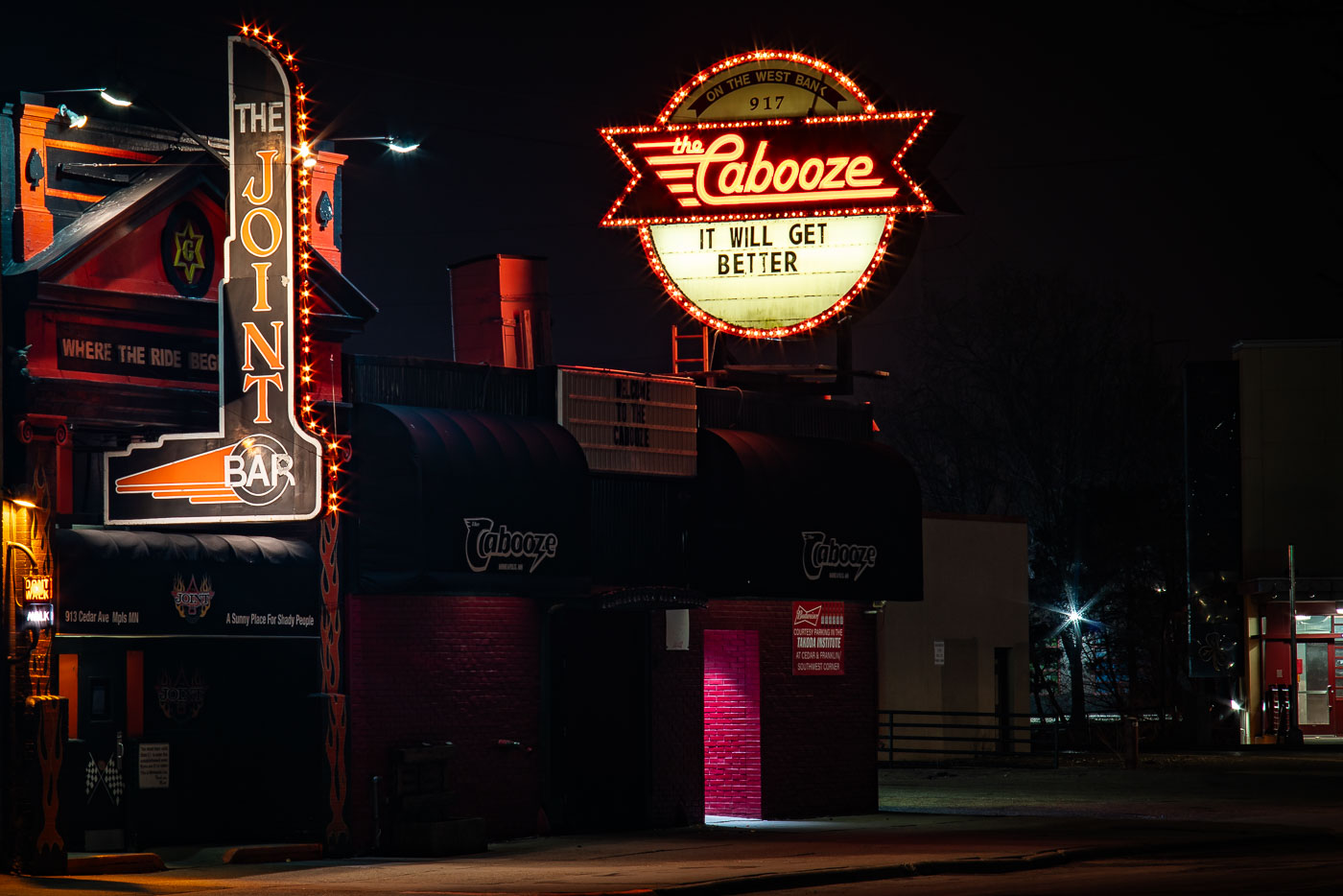
The Joint Bar and Cabooze music venues on Cedar Avenue in Minneapolis display neon signs at night during COVID-19 shutdowns in
The Cabooze sits at 917 Cedar Avenue South in the Cedar-Riverside neighborhood, part of Minneapolis's West Bank entertainment district. Opened in the early 1970s, it's one of the city's longest-running live music venues, having hosted acts ranging from local punk and blues bands to national touring artists. The Joint Bar operates next door in the same stretch of Cedar Avenue, part of the same cluster of nightlife businesses that has defined the West Bank for decades. In March 2020, both venues went dark under Minnesota's COVID-19 shutdown orders, and The Cabooze's marquee was changed to read "IT WILL GET BETTER."

The Cabooze and The Joint on Cedar Avenue, Minneapolis
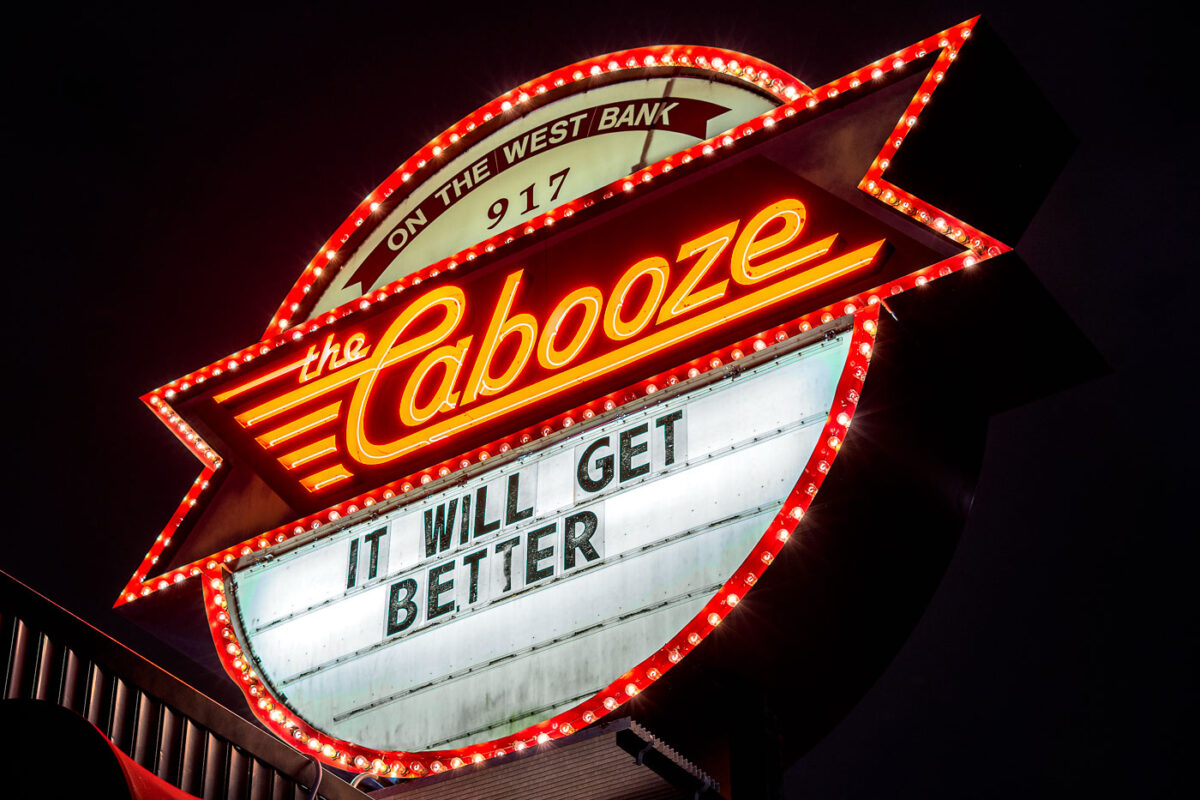
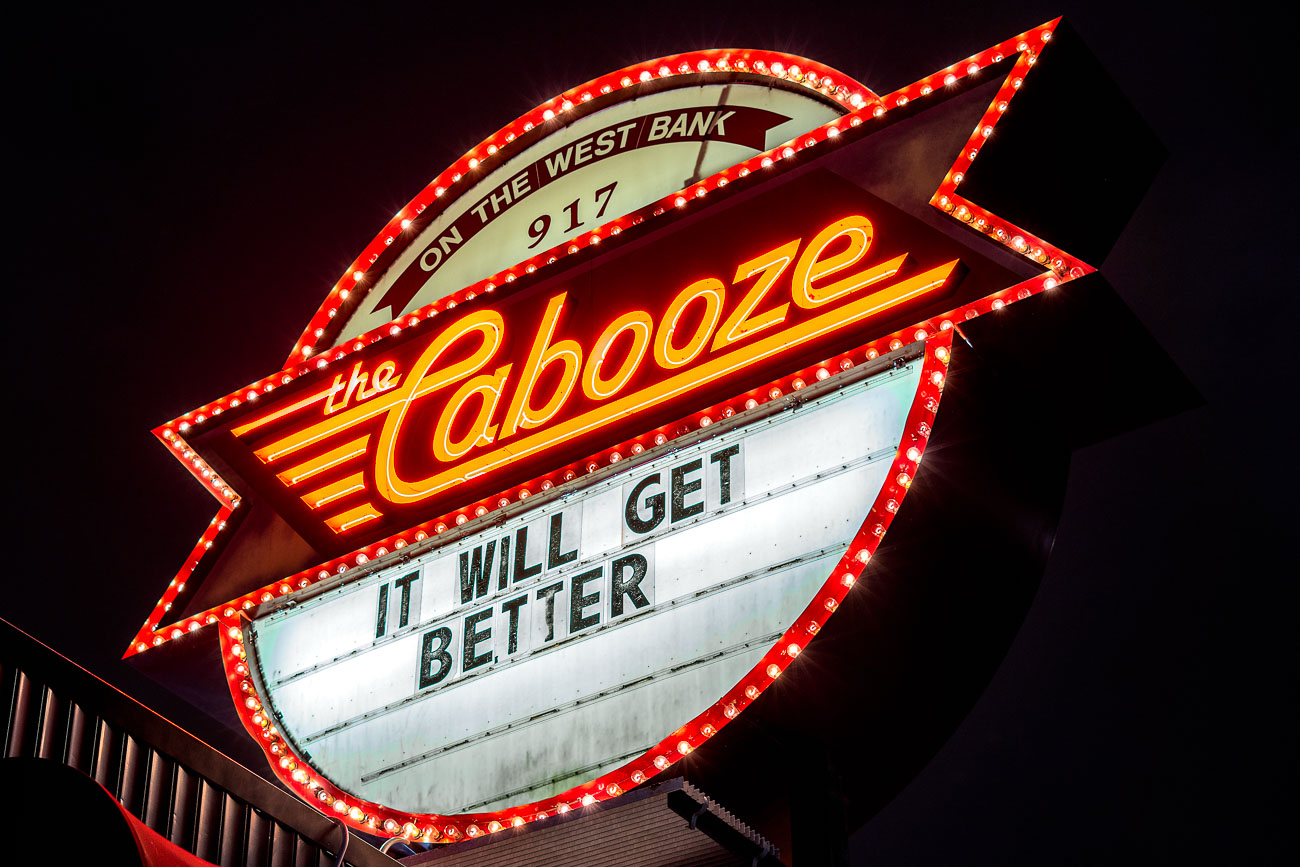
The Cabooze music venue marquee on Cedar Avenue displays "IT WILL GET BETTER" during COVID-19 closure.
The Cabooze sits at 917 Cedar Avenue South in Minneapolis's West Bank neighborhood, a live music club operating in that location since 1970. The venue has hosted blues, rock, and jam bands for decades and remains one of the longest-running music clubs in the Twin Cities. In late March 2020, its marquee read "IT WILL GET BETTER," posted after Minnesota's stay-at-home order forced the club to shut its doors along with other music venues statewide.

“It Will Get Better”: The Cabooze Marquee on the West Bank
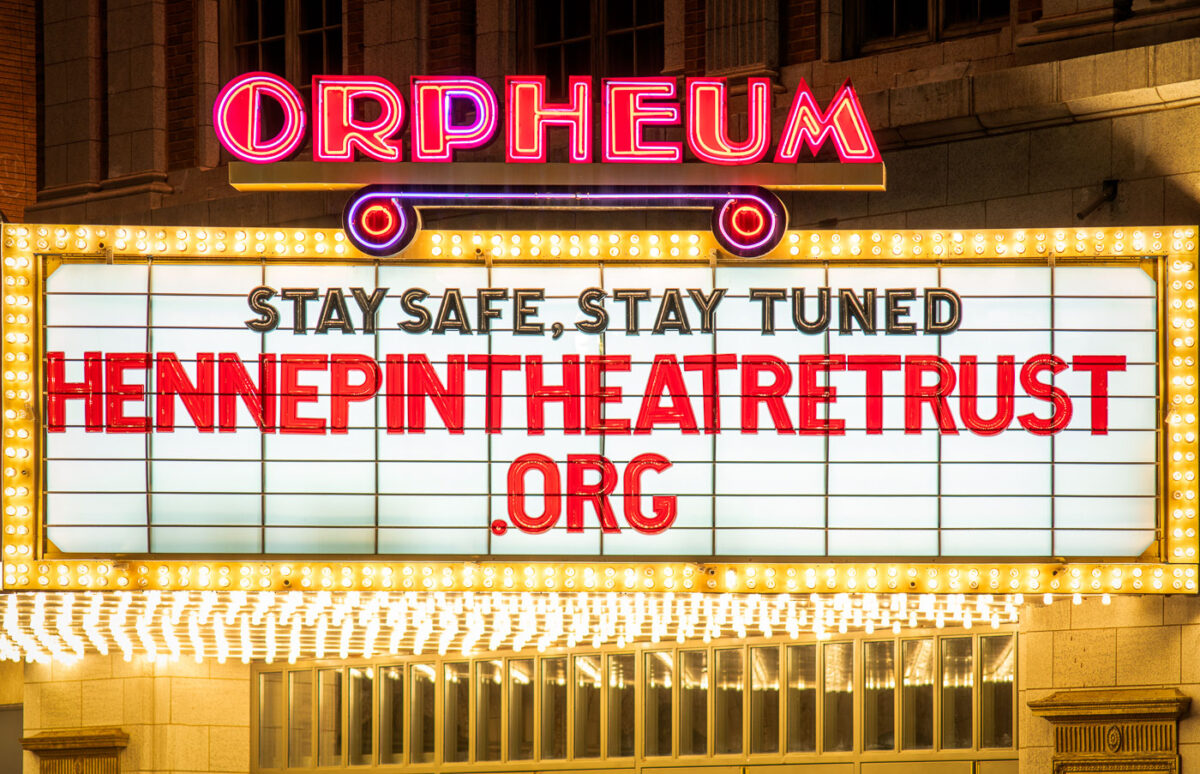
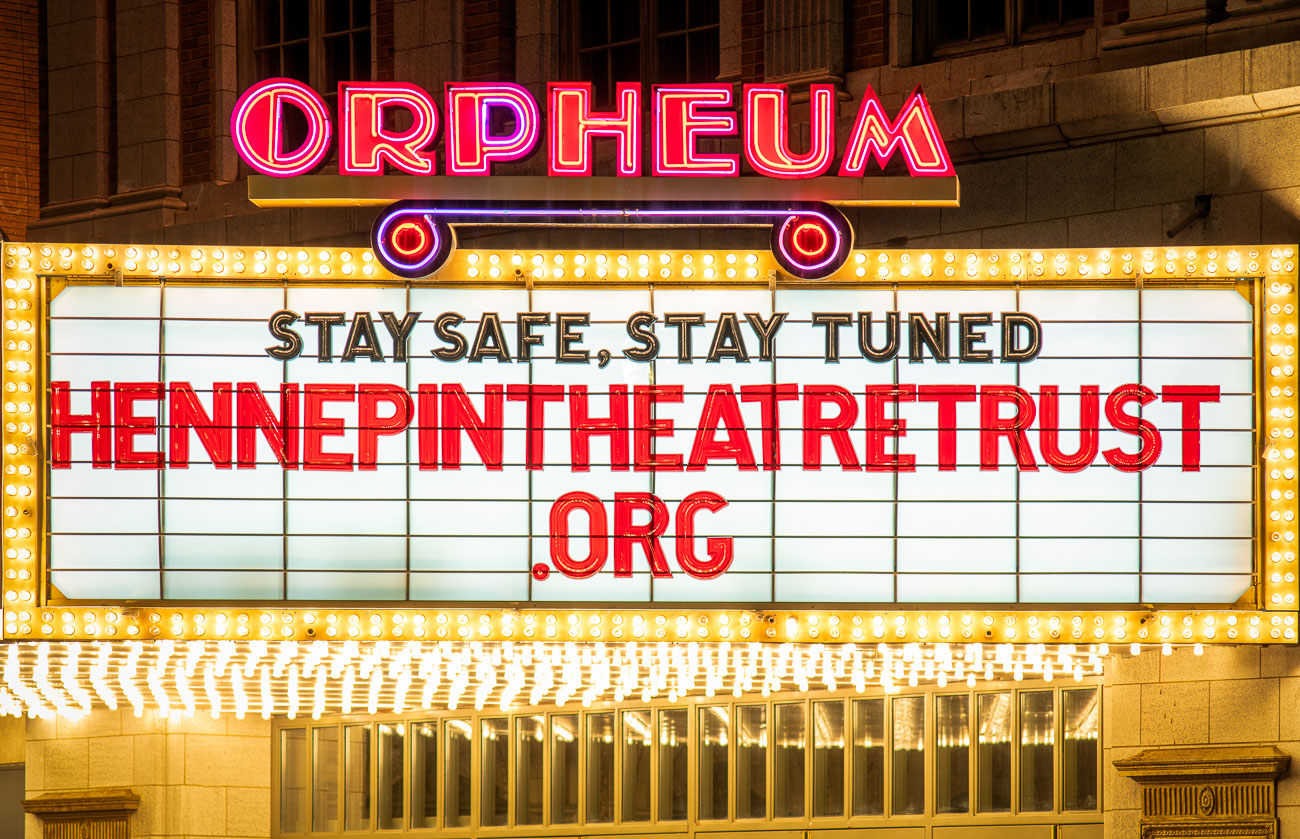
Orpheum Theatre marquee displays "Stay Safe, Stay Tuned" message on Hennepin Avenue during COVID-19 closure.
The Orpheum Theatre, at 910 Hennepin Avenue, opened in 1921 as the Hennepin Theatre and later operated as a vaudeville and movie house before its 1980s conversion to a live performance venue. It's now owned and operated by Hennepin Theatre Trust, part of the city's Hennepin Avenue theater district alongside the State and Pantages theaters. The marquee's message, directing passersby to HennepinTheatreTrust.org, went up during the closures ordered under Minnesota's COVID-19 stay-at-home order in the spring of 2020, when the Orpheum and other performance venues went dark to the public.

“Stay Safe, Stay Tuned” on the Orpheum Theatre Marquee
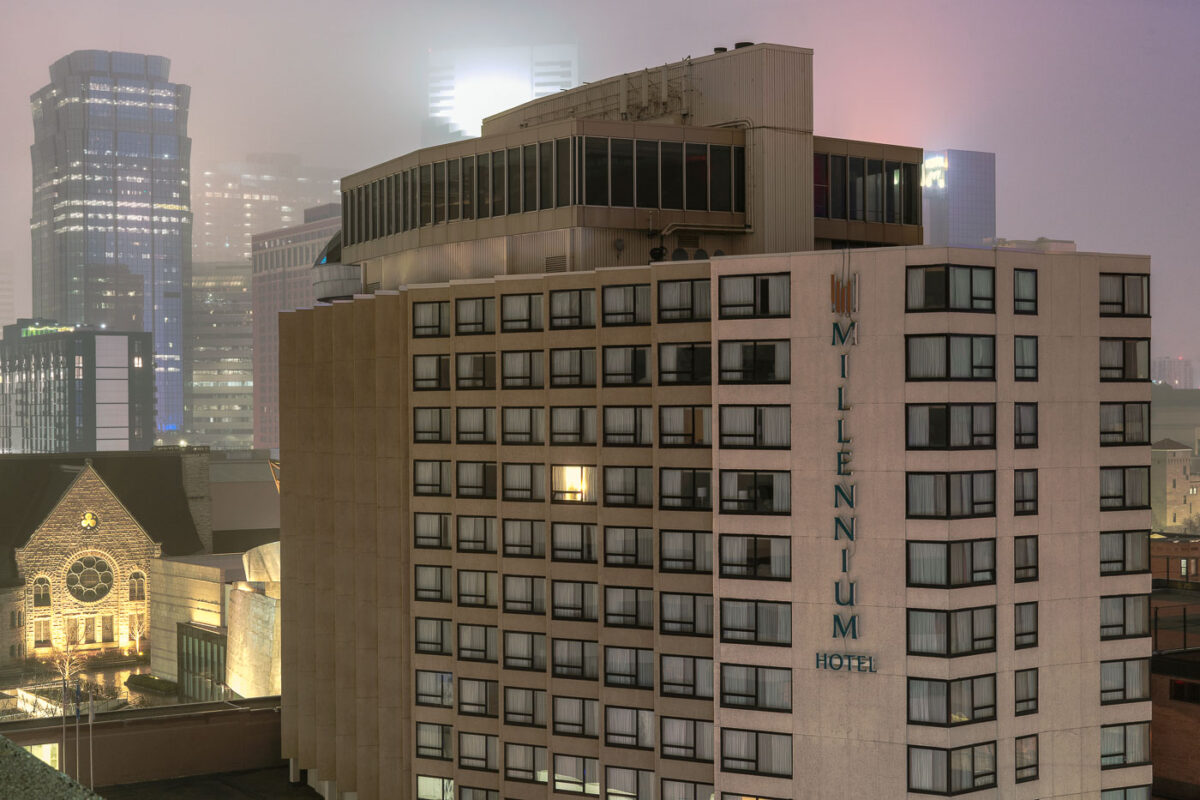
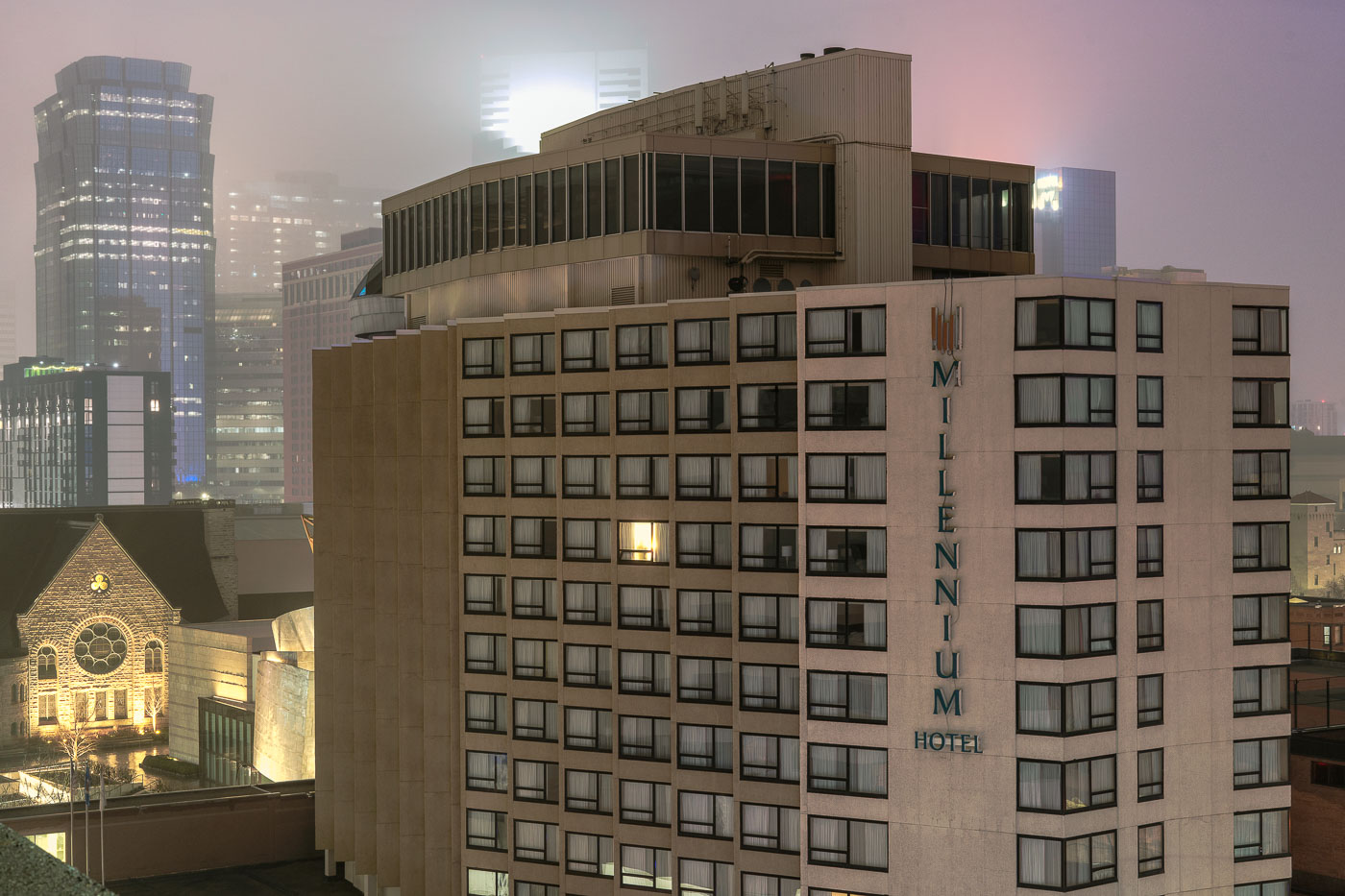
Millennium Hotel in downtown Minneapolis with one illuminated window among darkened guest rooms during COVID-19 pandemic
The Millennium Hotel occupies 1313 Nicollet Mall in downtown Minneapolis, a 14-story tower tied into the city's skyway system near the Minneapolis Convention Center. Nicollet Mall, the street it fronts, has served since 1967 as downtown Minneapolis's main pedestrian and transit corridor, running about a dozen blocks through the business district. In March 2020, hotel occupancy across downtown Minneapolis fell sharply as COVID-19 restrictions canceled conventions and curtailed business travel. Westminster Presbyterian Church, at the foot of the same block, dates to 1897 and remains one of the city's oldest active congregations.

One Lit Window at the Millennium Hotel on Nicollet Mall
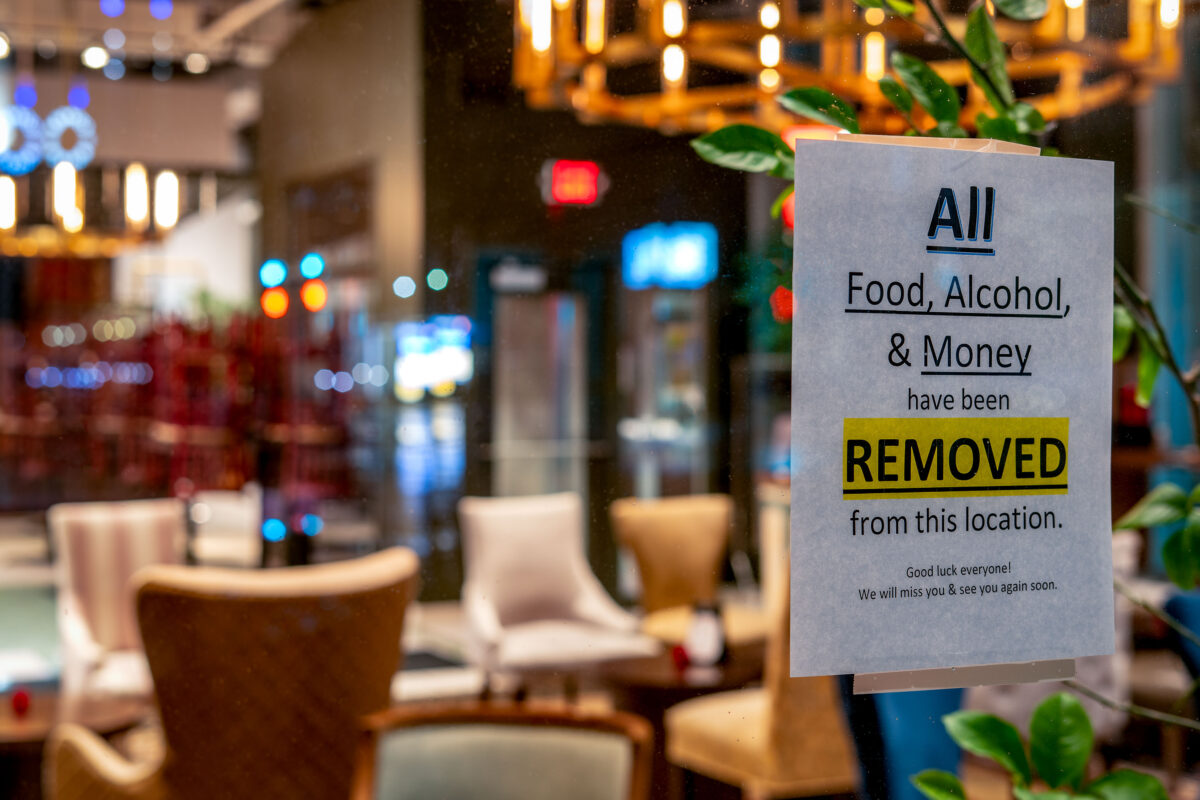
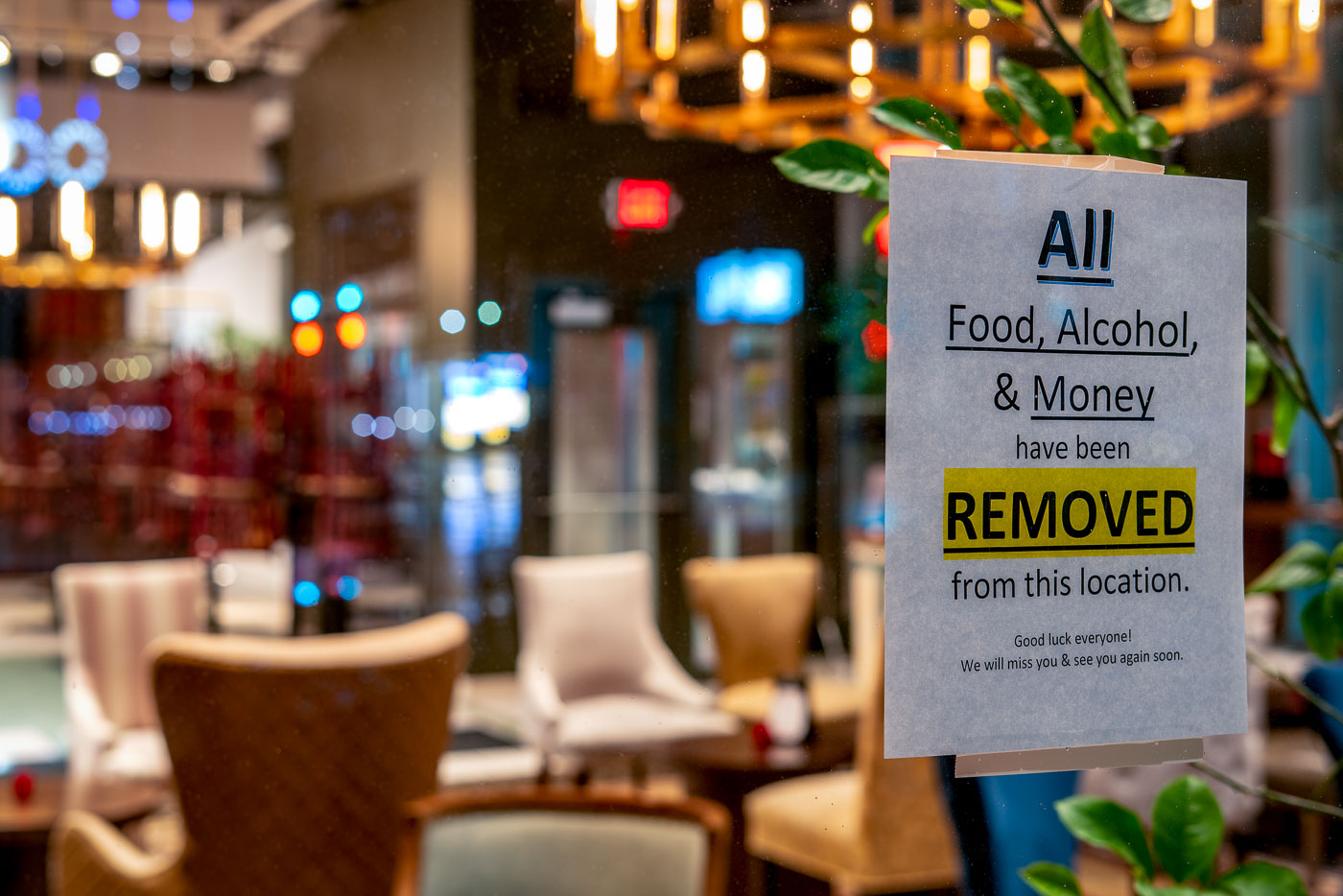
Restaurant window notice stating food, alcohol, and money have been removed from the premises during COVID-19 shutdowns.
The sign appeared in the window of a downtown Minneapolis restaurant during the early COVID-19 shutdowns of March 2020. Minnesota's stay-at-home order, issued that month, forced bars and restaurants to close their dining rooms, leaving many owners to clear out perishable food, alcohol, and cash registers before locking up. The handwritten note ends with a message to customers: "Good luck everyone! We will miss you & see you again soon."

“All Food, Alcohol & Money Removed” Sign in a Minneapolis Restaurant Window
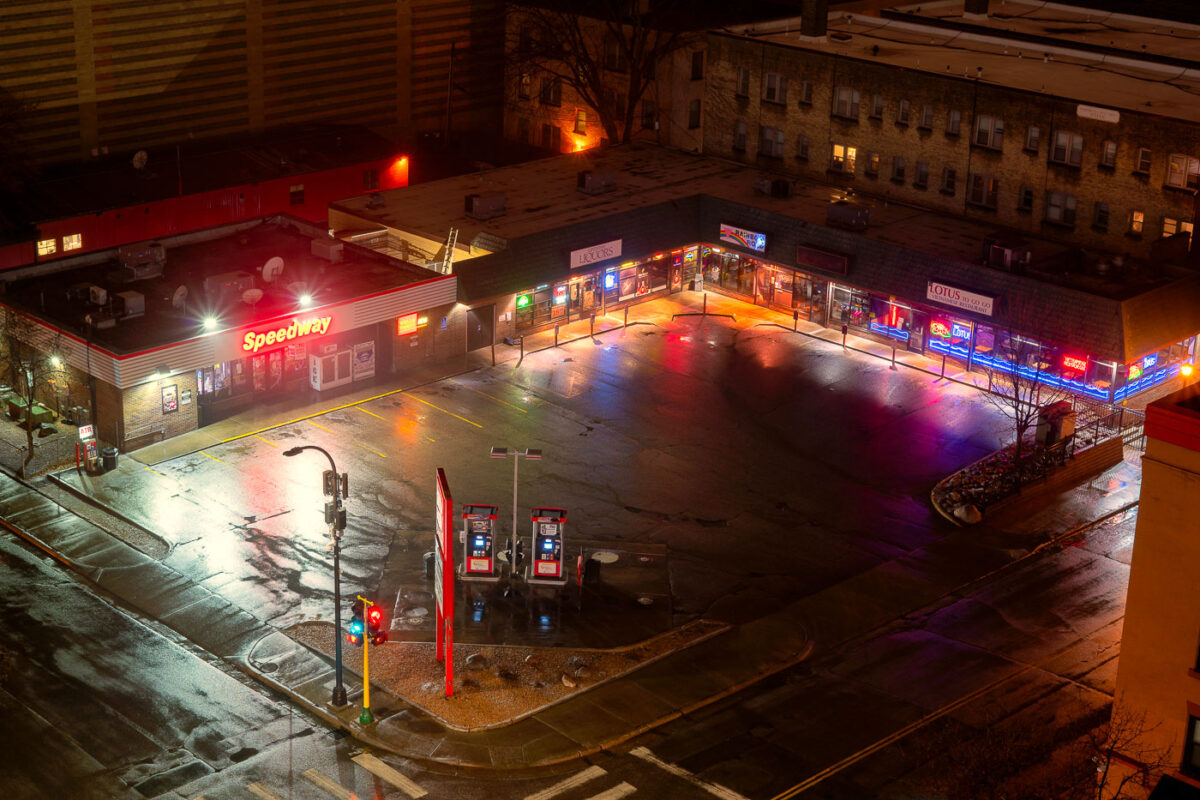
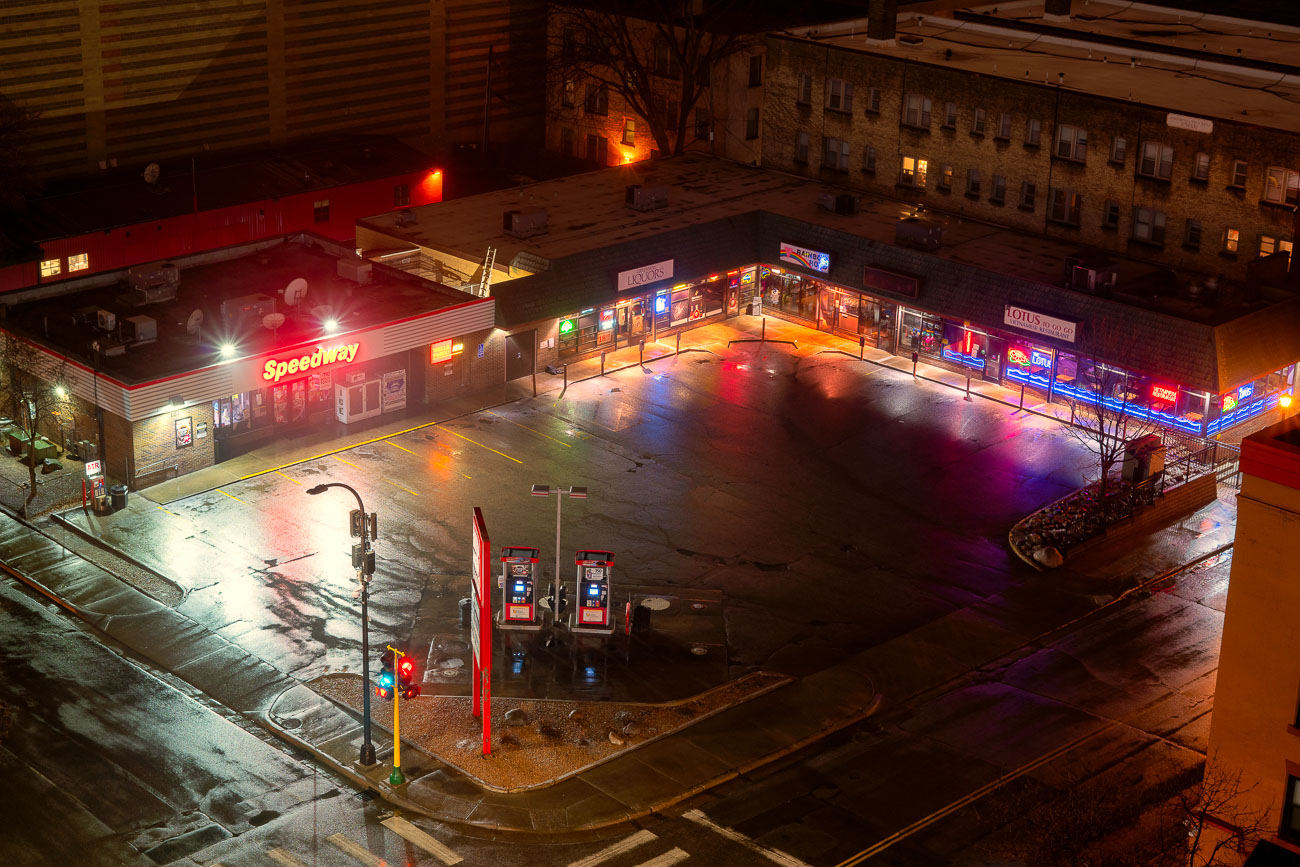
Speedway gas station and strip mall in Loring Park, Minneapolis, empty at night during COVID-19 pandemic.
Speedway operates this gas station and convenience store at the edge of Loring Park, one of downtown Minneapolis's oldest residential neighborhoods, platted around a park dating to 1883. The photo was taken March 23, 2020, days before Minnesota's statewide stay-at-home order took effect as the first wave of pandemic restrictions spread through the city. Loring Park sits just west of downtown, bordered by Interstate 94 and long connected to the commercial strip along Hennepin Avenue. The adjoining strip mall houses a liquor store and several small retailers typical of that stretch of the neighborhood.

Speedway Station in Loring Park During the COVID-19 Shutdown
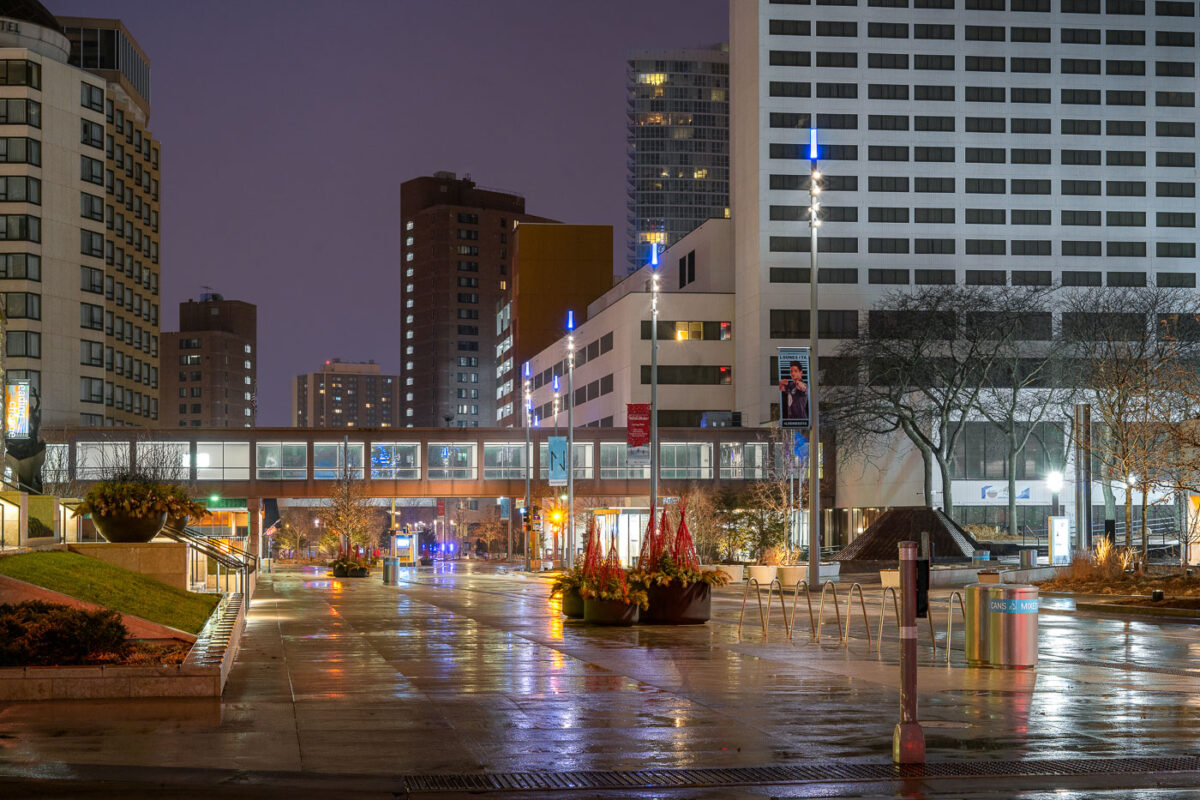
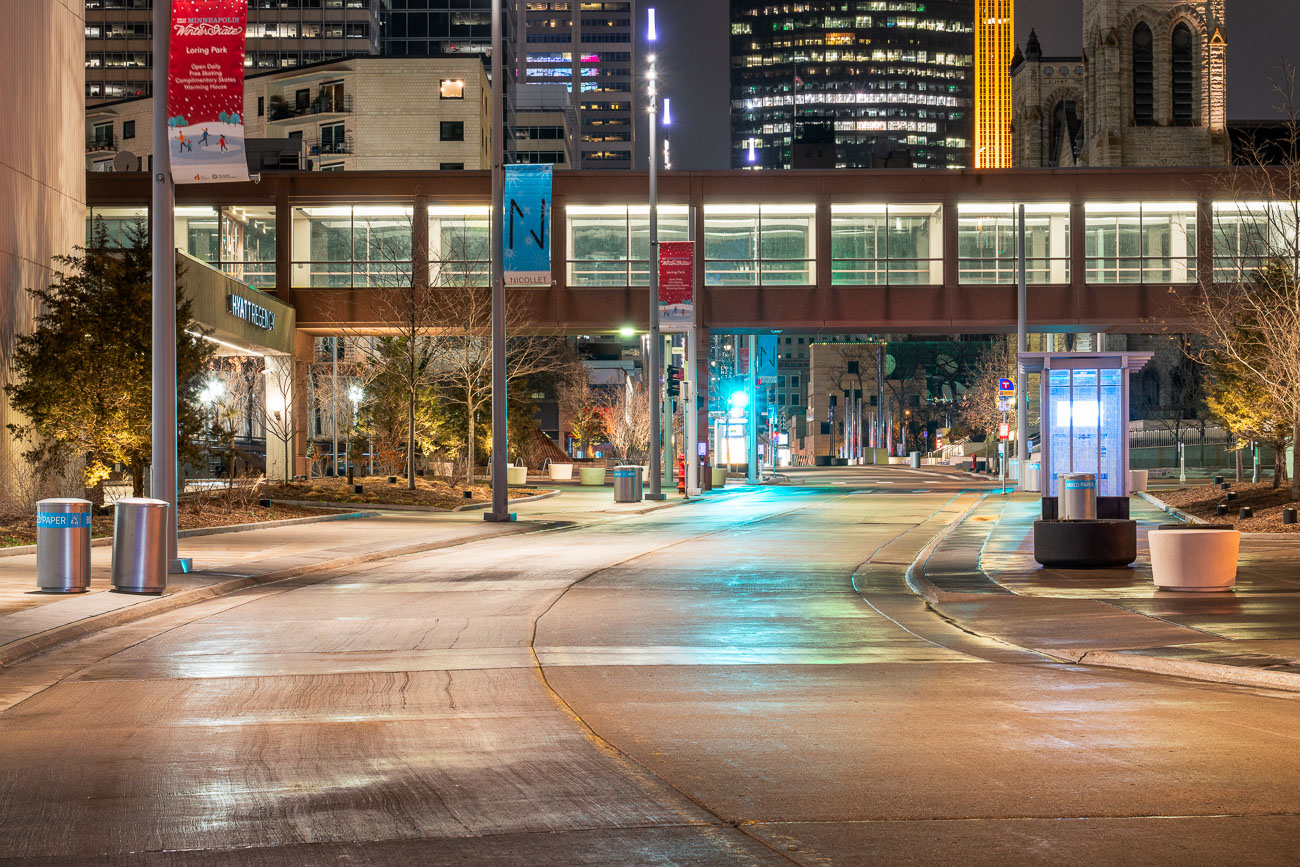
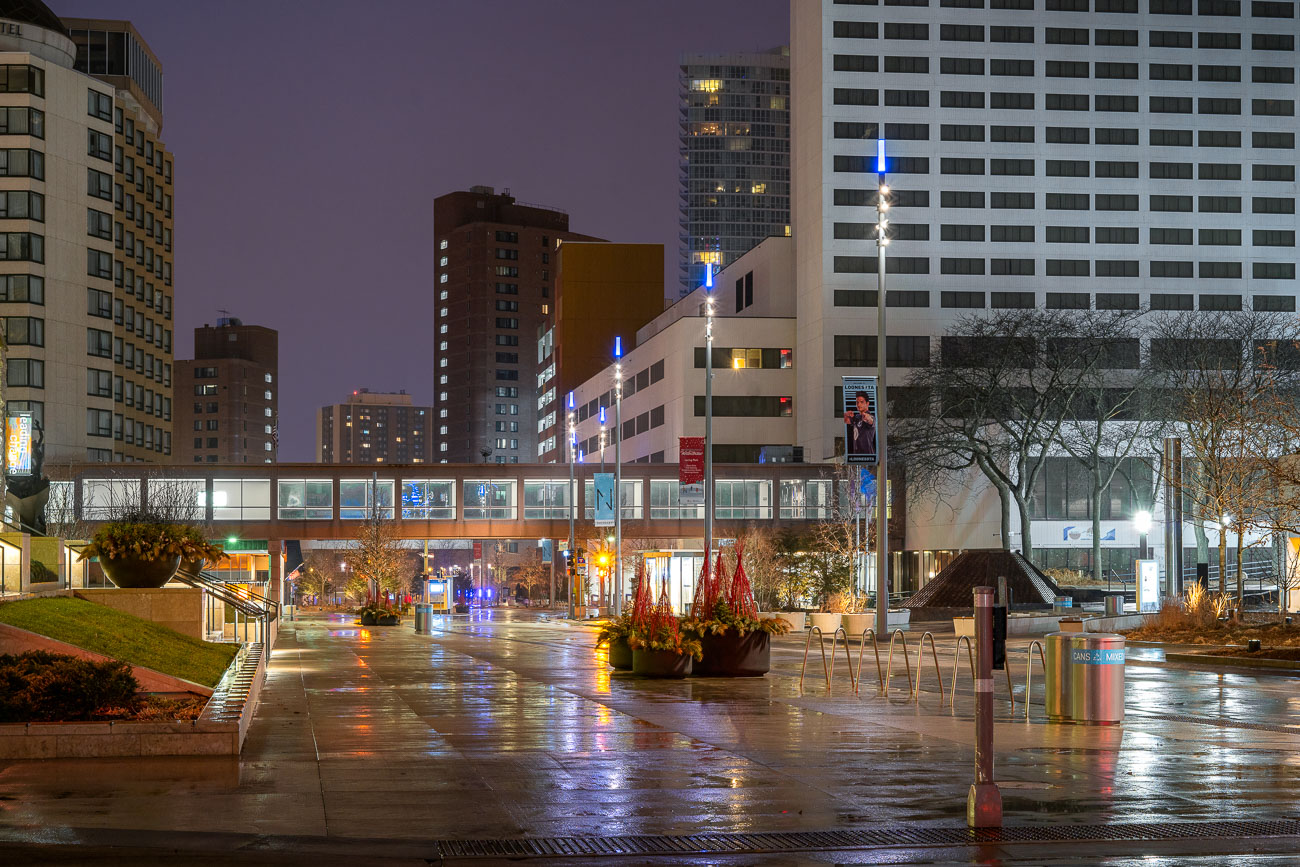
Wet Nicollet Mall pedestrian plaza in downtown Minneapolis at dusk with high-rise buildings and sparse foot traffic.
Nicollet Mall is downtown Minneapolis's main pedestrian and transit corridor, running roughly twelve blocks between Washington Avenue and Grant Street. The city closed it to general traffic in 1967, and a $50 million redesign led by James Corner Field Operations reopened it in 2017 with wider sidewalks, new lighting, and dedicated space for buses and cyclists. The Hyatt Regency Minneapolis has anchored the corridor since 1973, standing near the skyway network that links downtown's office towers and hotels. In March 2020, the mall's usual foot traffic all but disappeared as Minnesota's stay-at-home order took hold during the early weeks of the COVID-19 pandemic.

Nicollet Mall Deserted on a Rainy Night During COVID-19
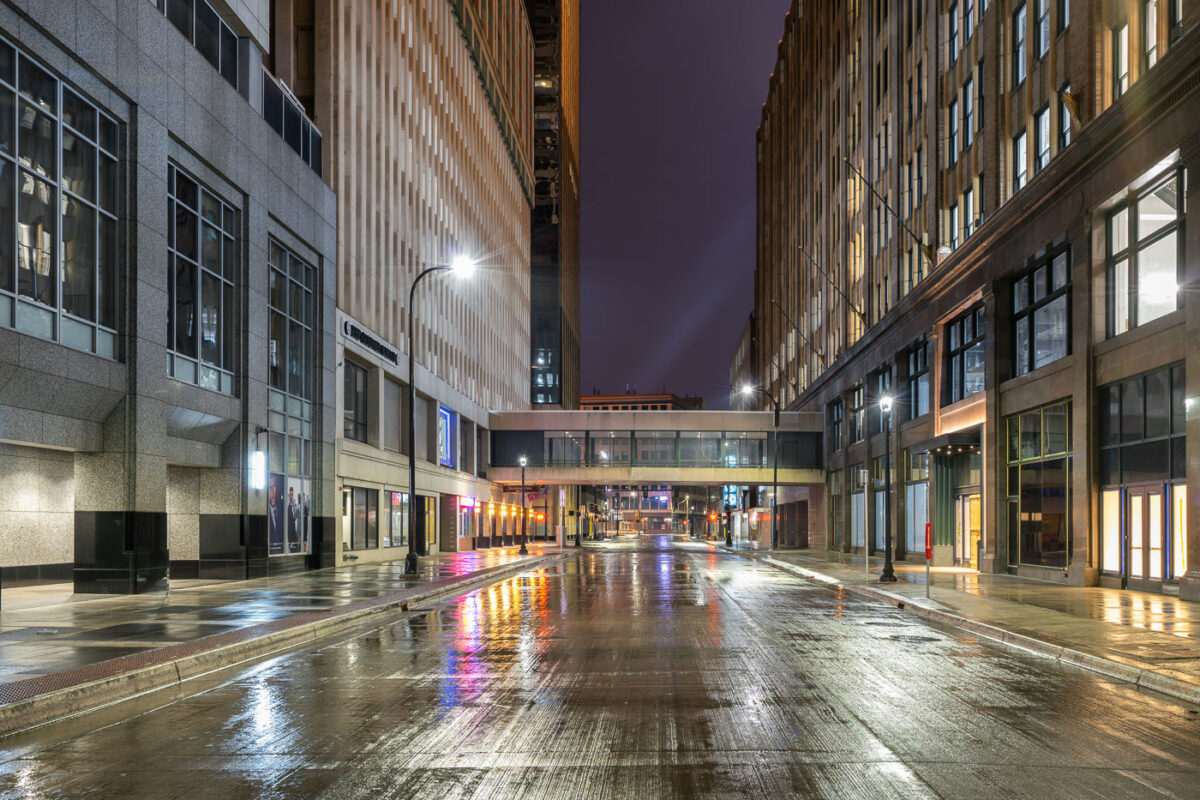
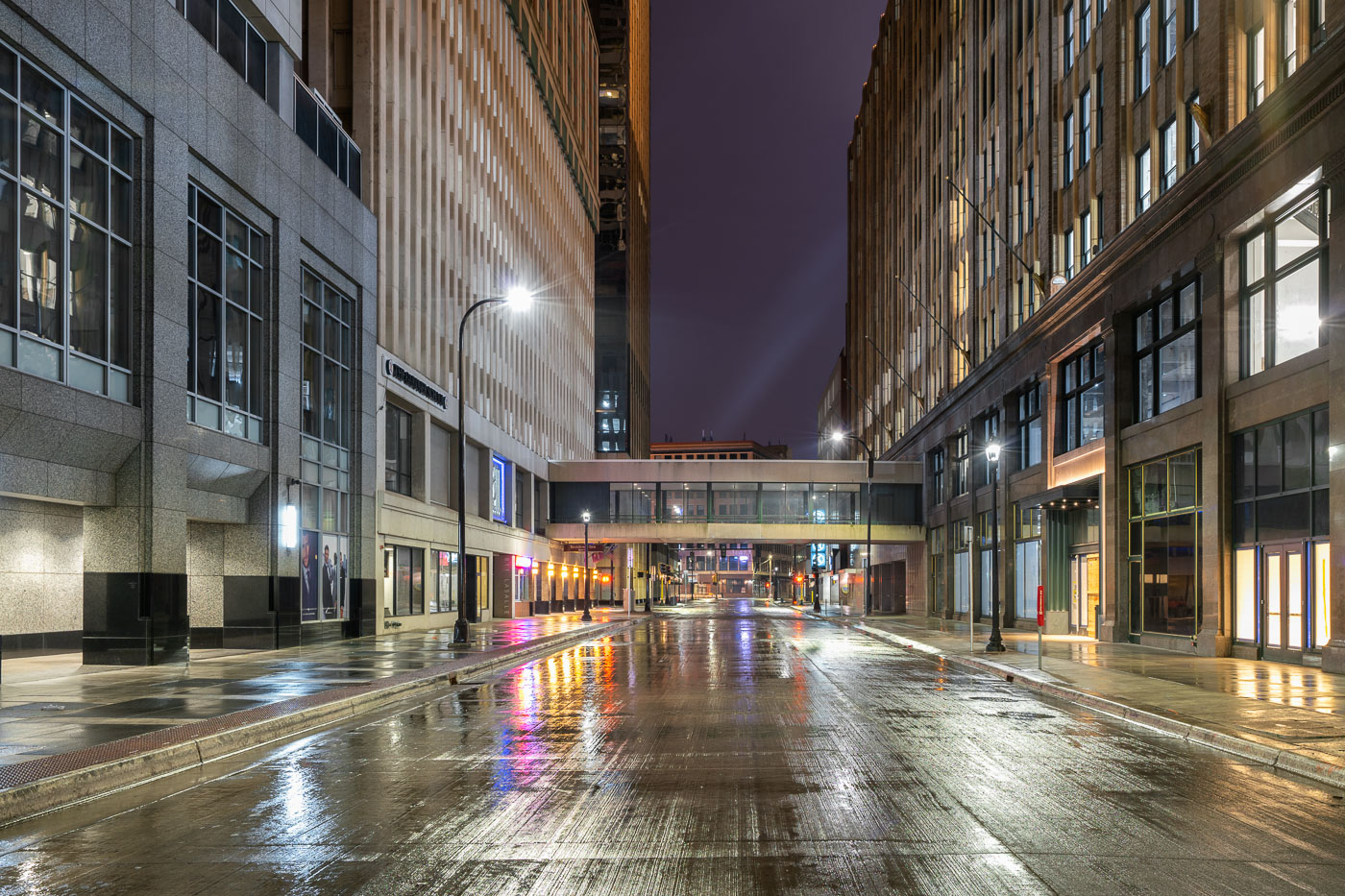
Looking down S 8th Street during COVID19 on rainy night
South 8th Street in downtown Minneapolis is seen on March 22, 2020, during the early stages of the COVID-19 pandemic. The street, typically bustling with activity, are empty.

Downtown Minneapolis S 8th St During COVID-19 Pandemic
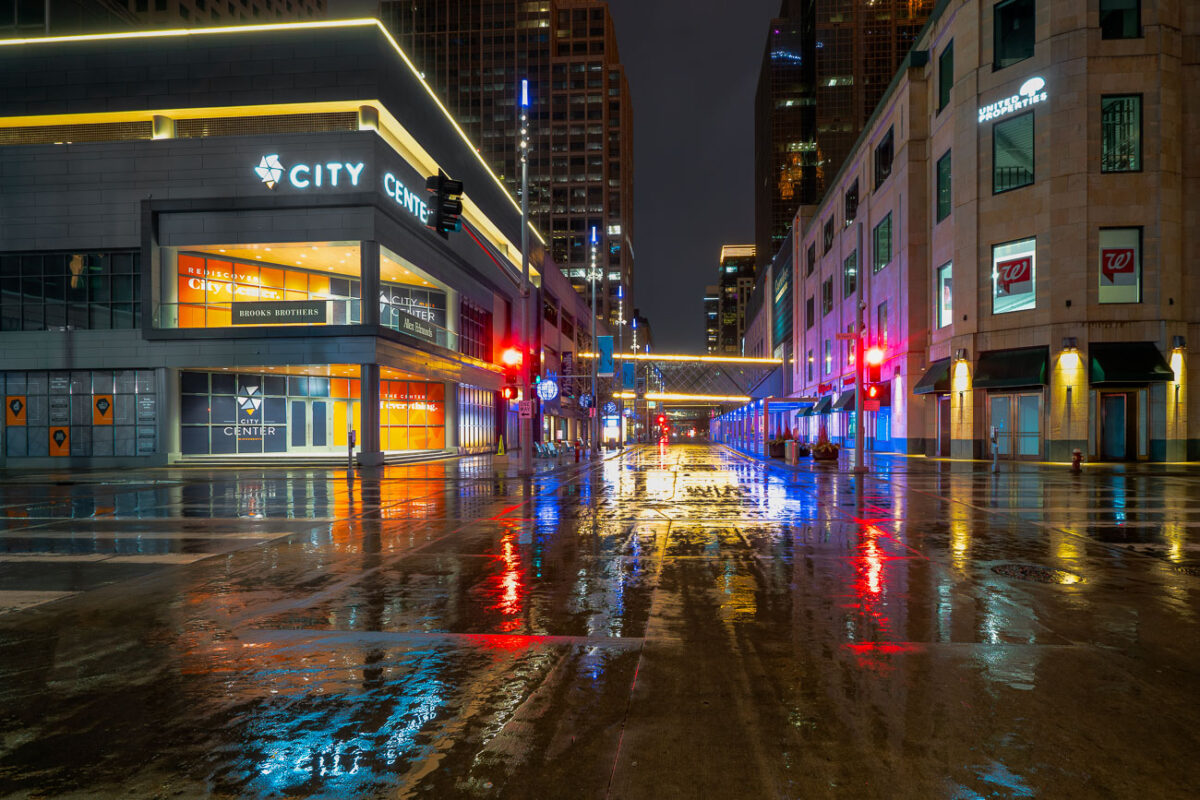
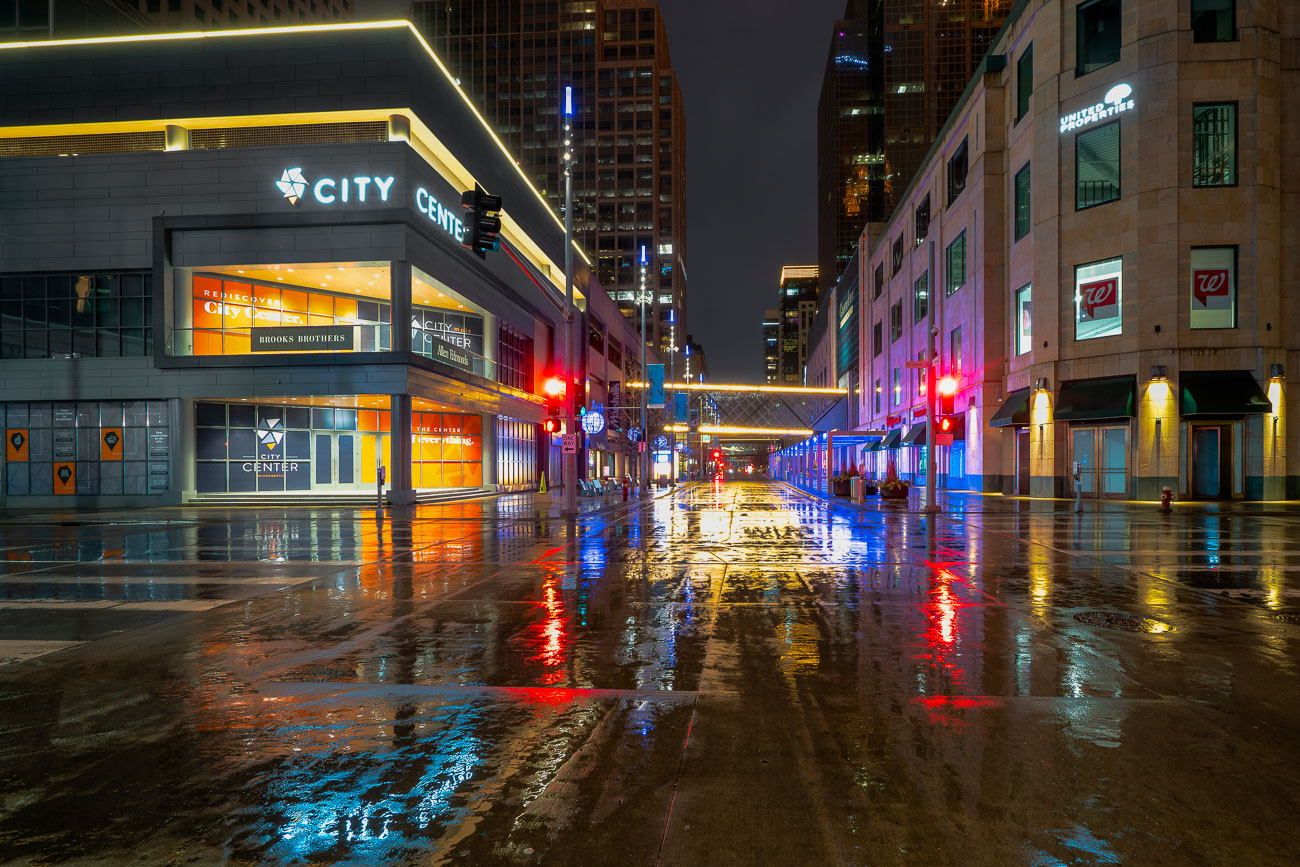
Rainy night outside CIty Center on Nicolelt Mall in Minneapolis.
Nicollet Mall in Downtown Minneapolis is reflected in the wet pavement on a rainy night in early 2020, during the initial phase of the COVID-19 pandemic.

Rainy Night on Nicollet Mall, Downtown Minneapolis, Early COVID-19
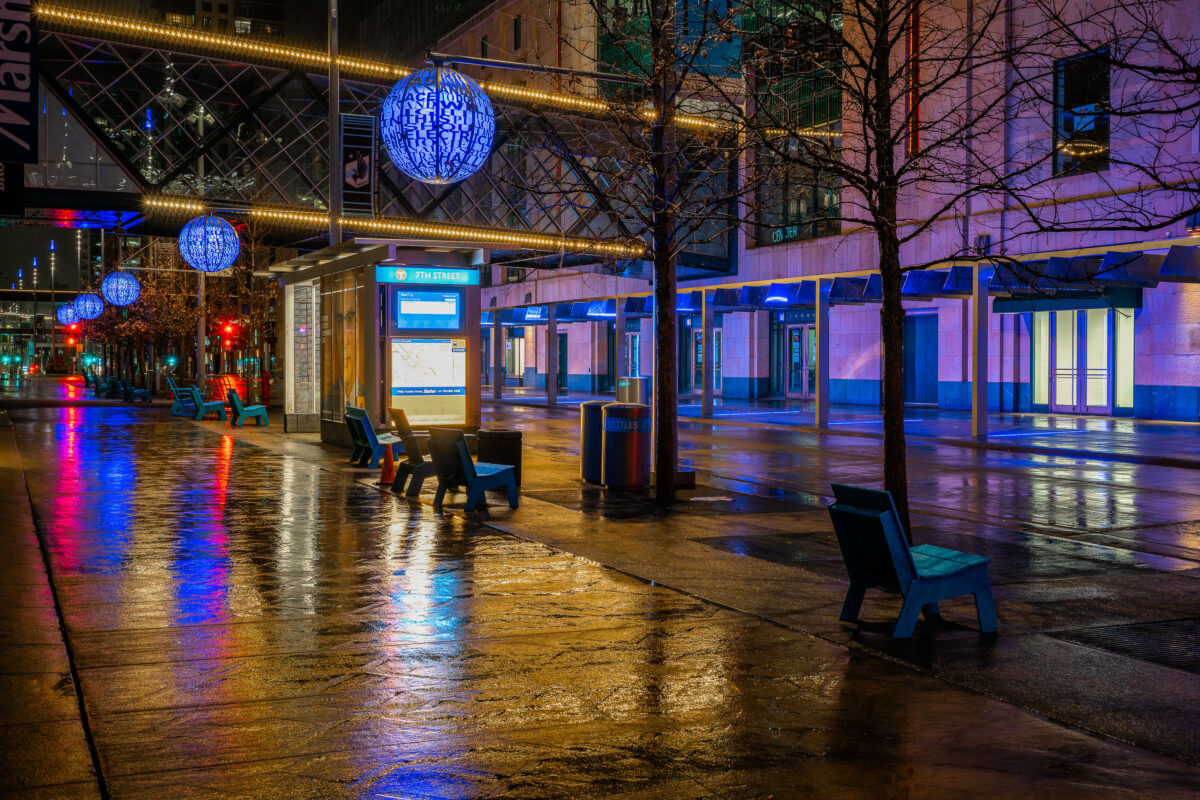
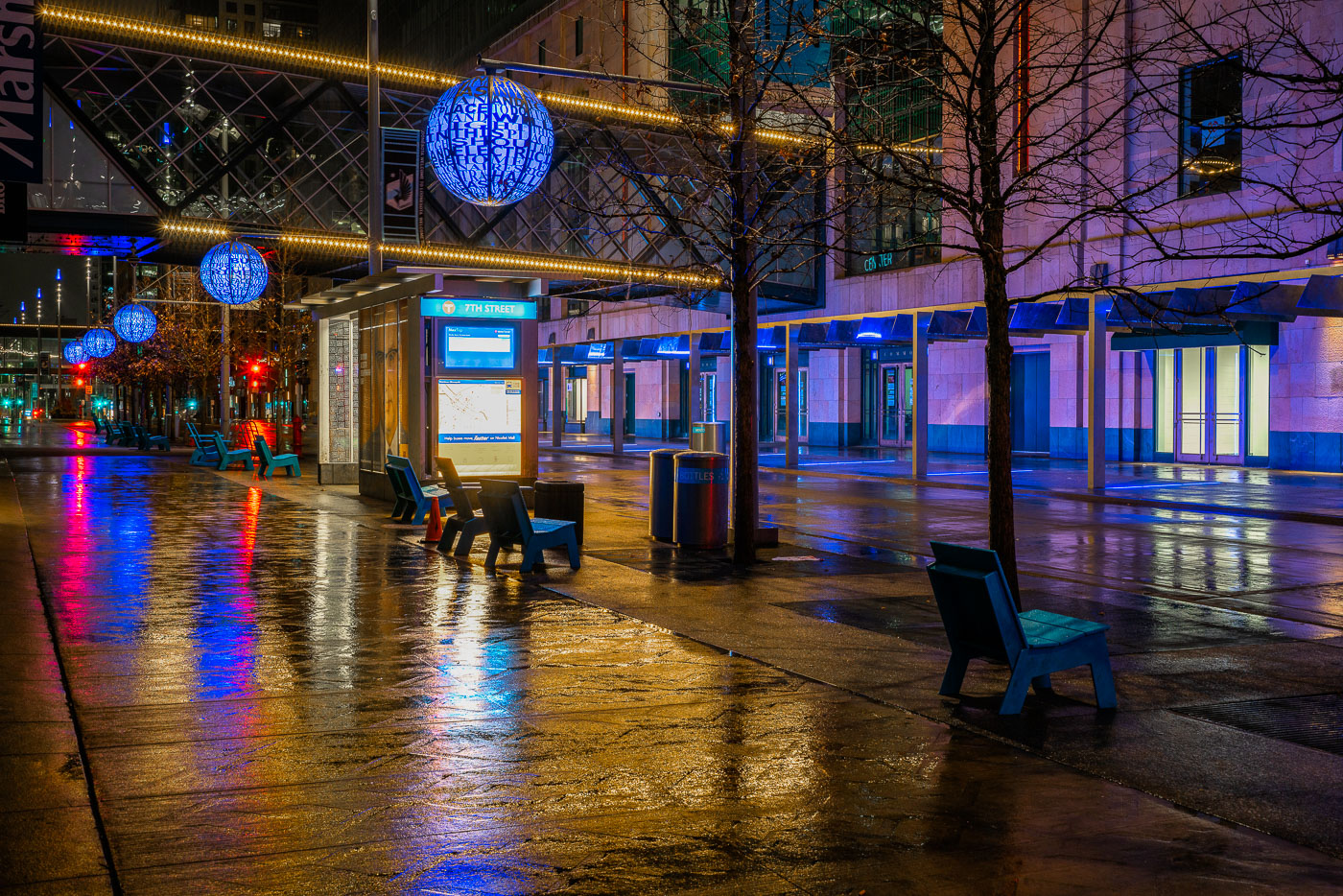
Chairs on Nicollet Mall during a rainy early COVID19 night
Nicollet Mall in Minneapolis is seen on a rainy night during the early stages of the COVID-19 pandemic.

Nicollet Mall, Minneapolis: Rainy Night During COVID-19
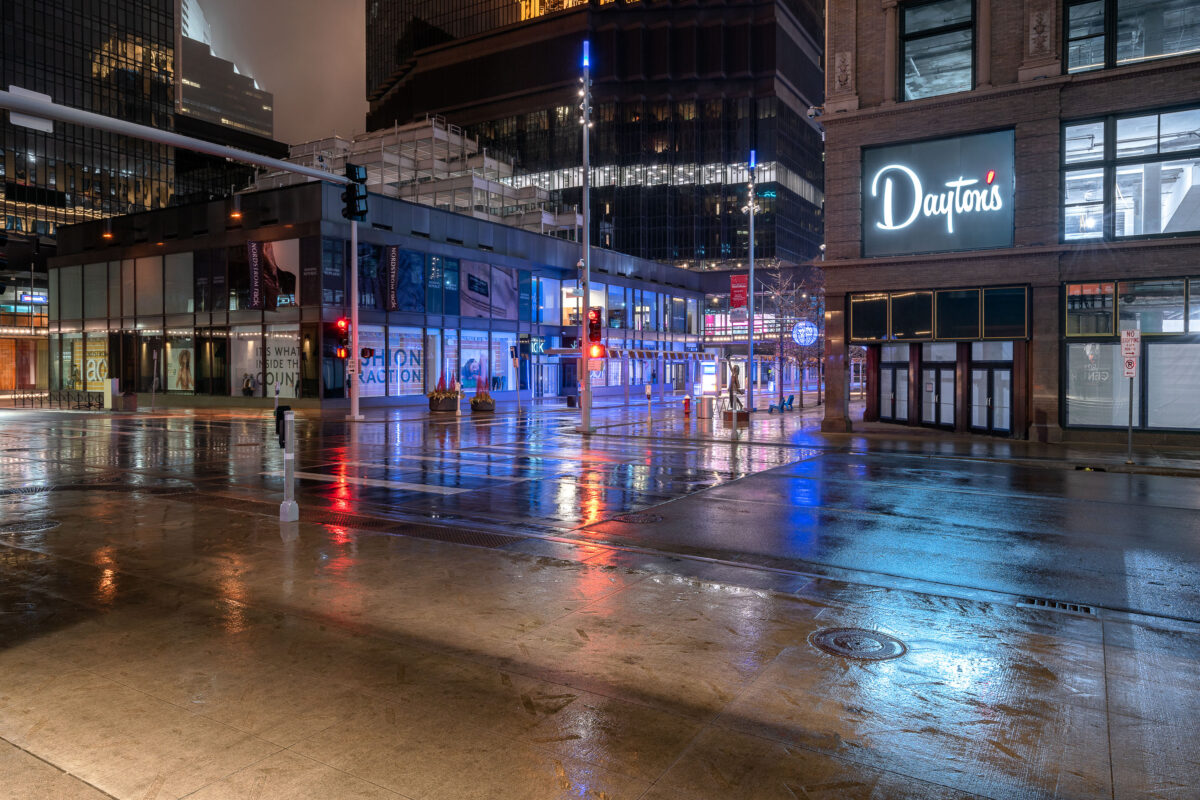
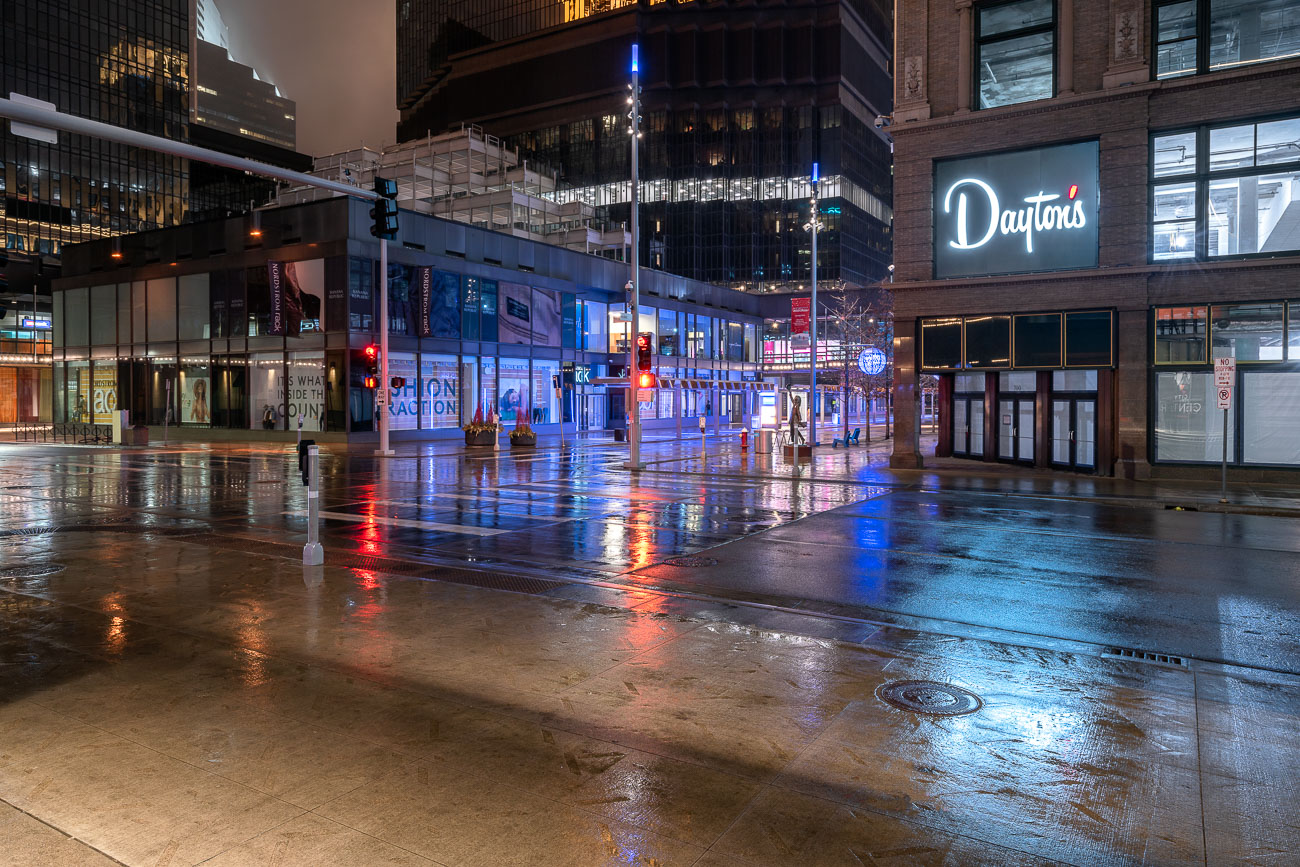
Daytons and IDS Center on Nicollet Mall in the rain
The Dayton's Project and the IDS Center stand on Nicollet Mall in Minneapolis during the early stages of the COVID-19 pandemic. The Dayton's building, a historic landmark in the city's retail landscape, was a prominent fixture on the mall for decades.

Dayton’s and IDS Center, Nicollet Mall, Minneapolis, Early COVID-19
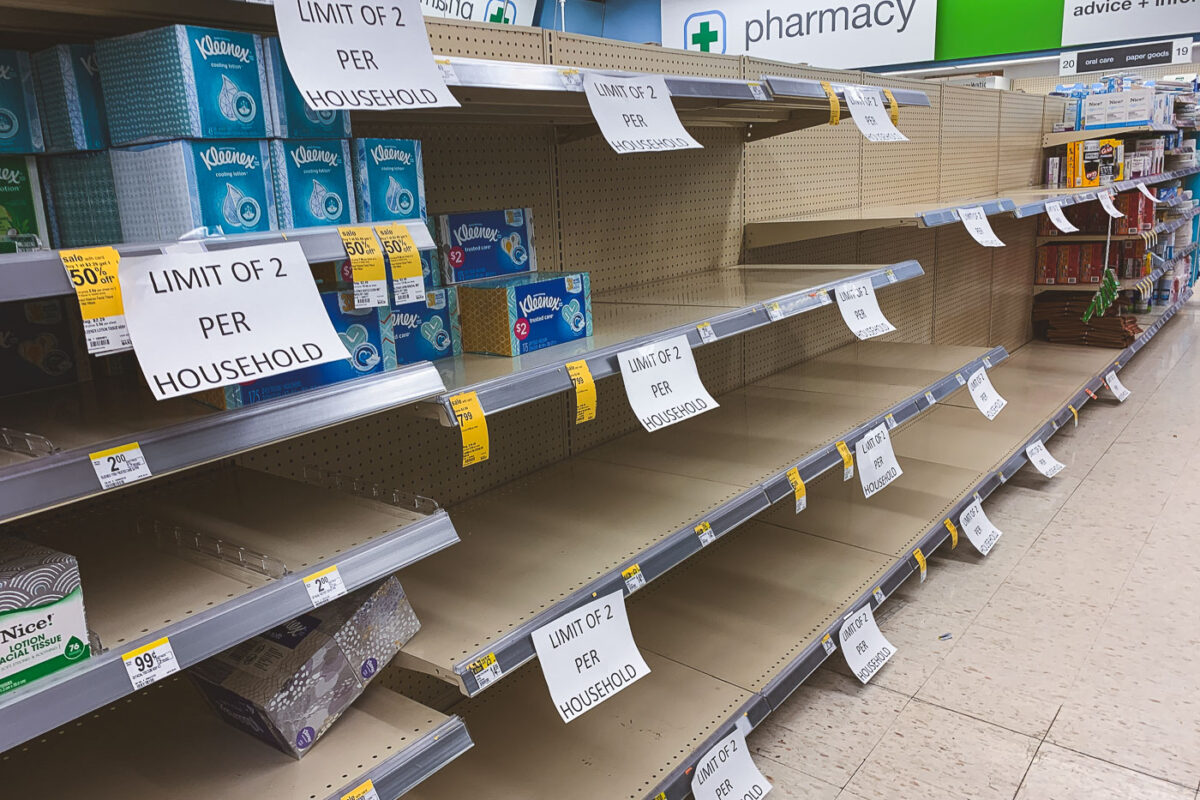
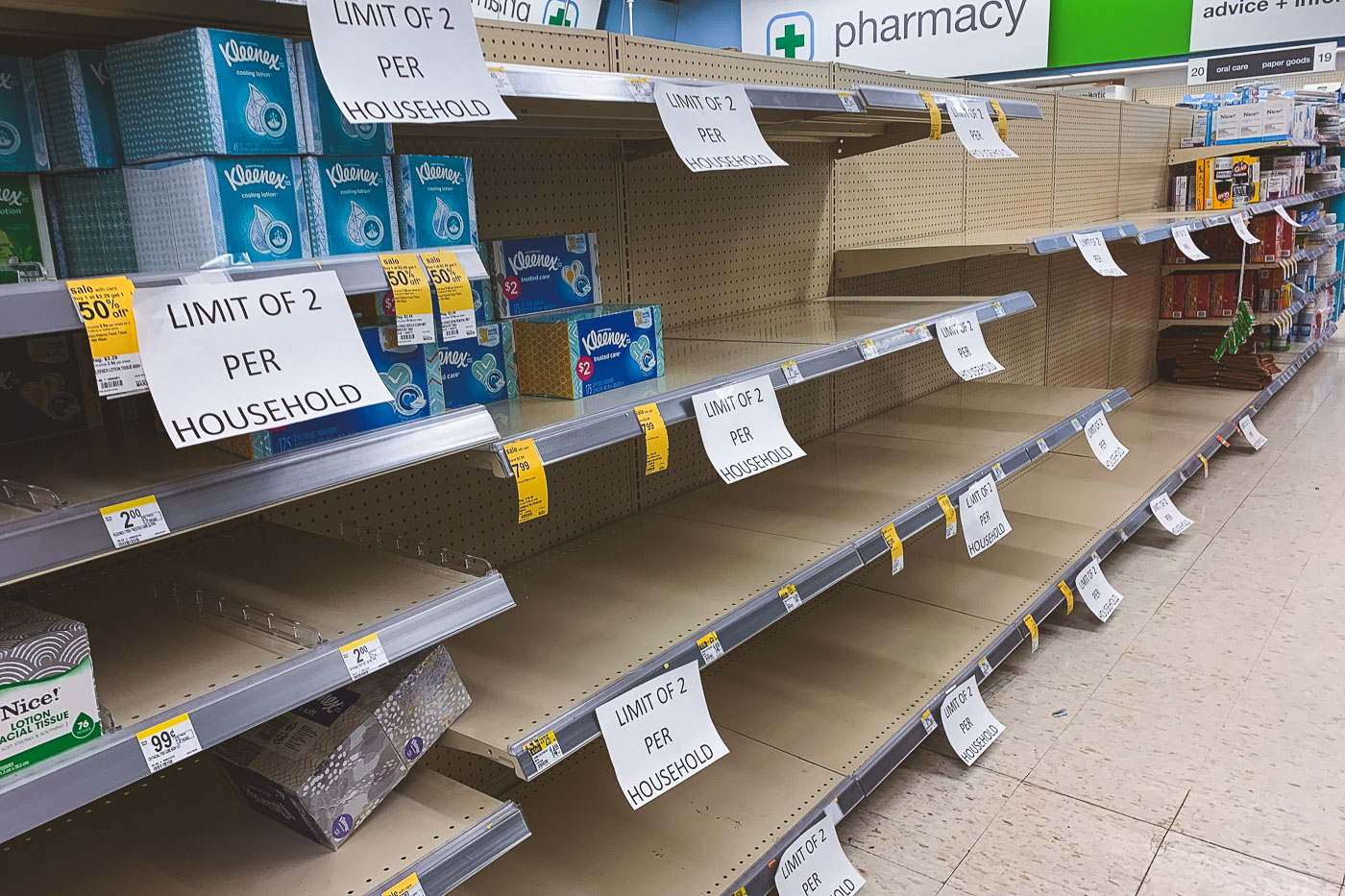
Empty shelves in Minneapolis during early days of Covid pandemic
Empty shelves of toilet paper at a Walgreens in Minneapolis on March 16, 2020.

Limit 2 per household at Walgreens

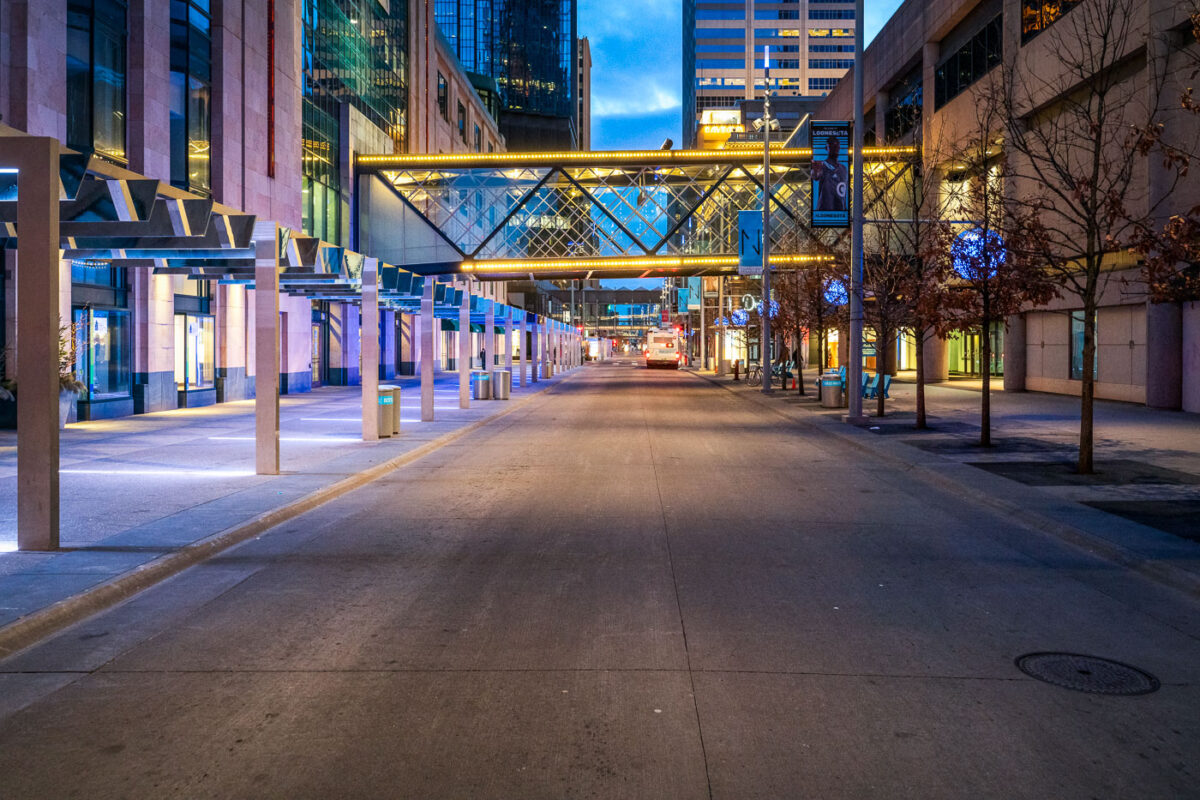
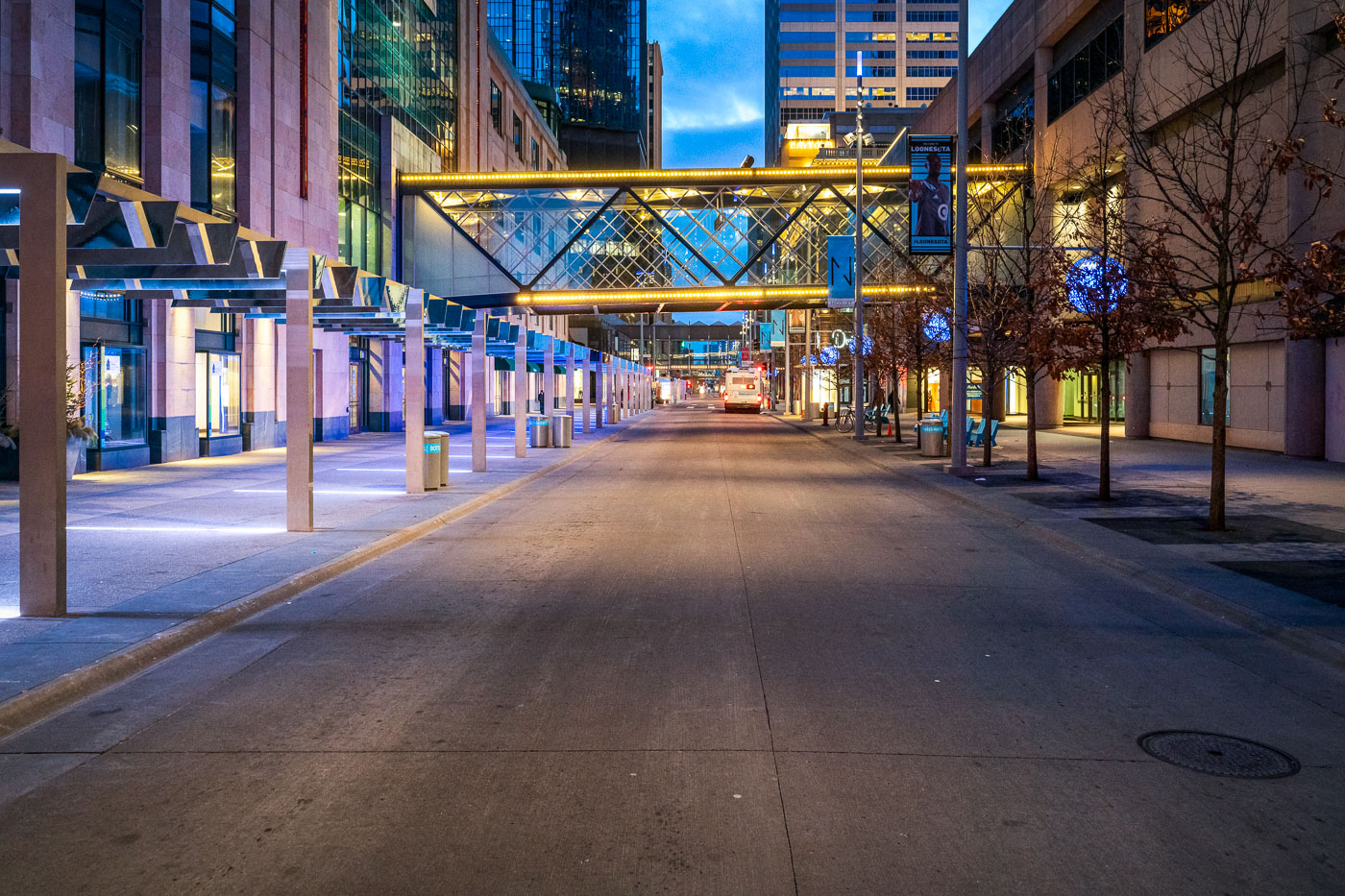
Empty Nicollet Mall pedestrian street in downtown Minneapolis at dusk during COVID-19 pandemic shutdowns.
Nicollet Mall is downtown Minneapolis's mile-long pedestrian and transit corridor, running between Washington Avenue and Grant Street. Cars have been barred from the mall since it opened in 1967, leaving the roadway to buses, taxis, and foot traffic. A $50 million redesign led by James Corner Field Operations, the firm behind New York's High Line, reopened the corridor in 2017 with wider sidewalks, new lighting, and updated bus shelters. Skyways link many of the office towers and retail buildings along the mall, letting workers move between blocks without going outside. In March 2020, Minnesota's stay-at-home order emptied the corridor of the office workers and shoppers who normally fill it on weekdays.

Nicollet Mall at Dusk During Minneapolis’s COVID-19 Shutdown
Built in Minneapolis

Minneapolis Photographer

Browse by location, move through long-running series, or start with recent work.