Minnesota

5,930 photos · 2008–2026

5,930 photographs tagged Minnesota, 2008–2026.
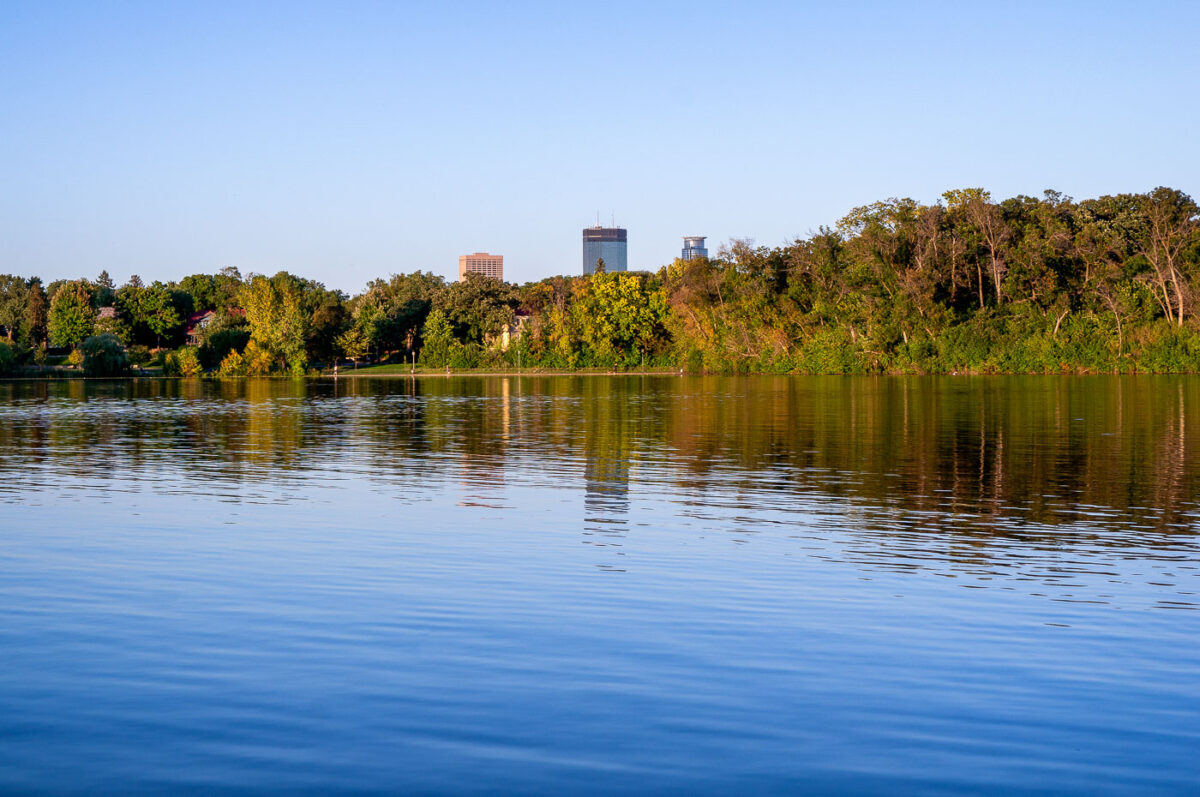
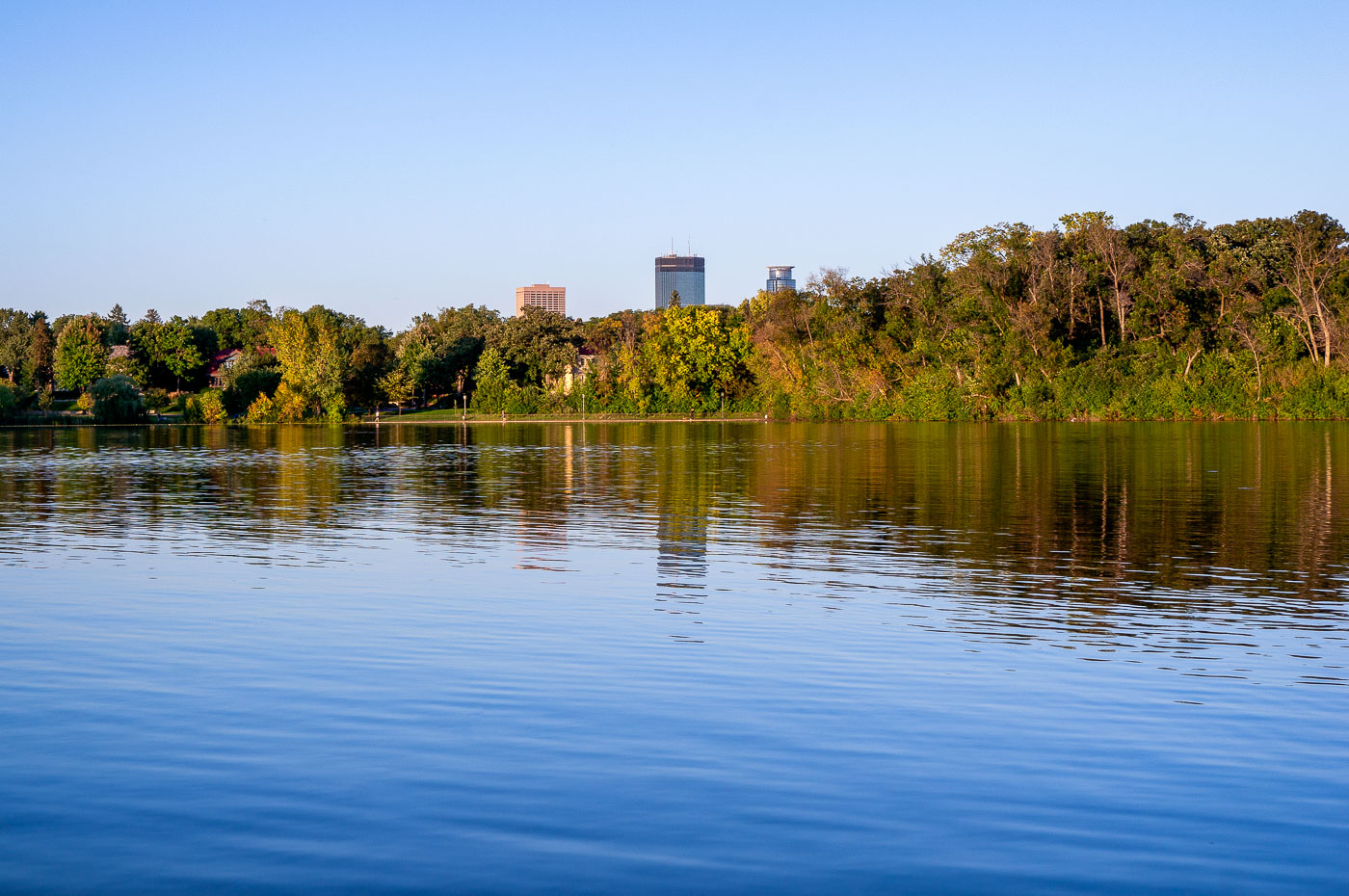
Minneapolis skyline from Lake of the Isles with IDS Center and Capella Tower.
Minneapolis skyline from Lake of the Isles in Minneapolis, Minnesota. The IDS Center and Capella Tower rise above the trees on the far shore.

Minneapolis skyline from Lake of the Isles

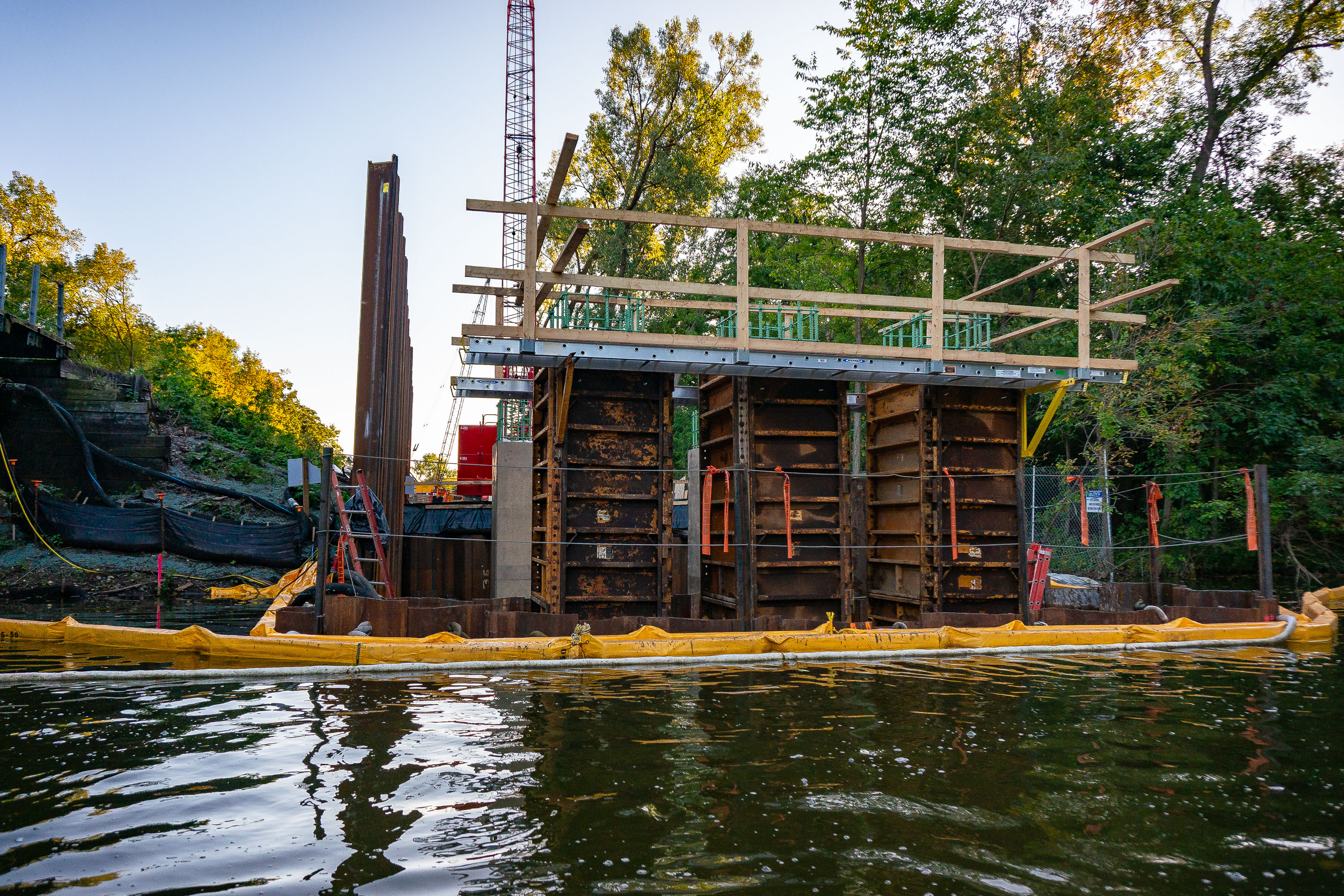
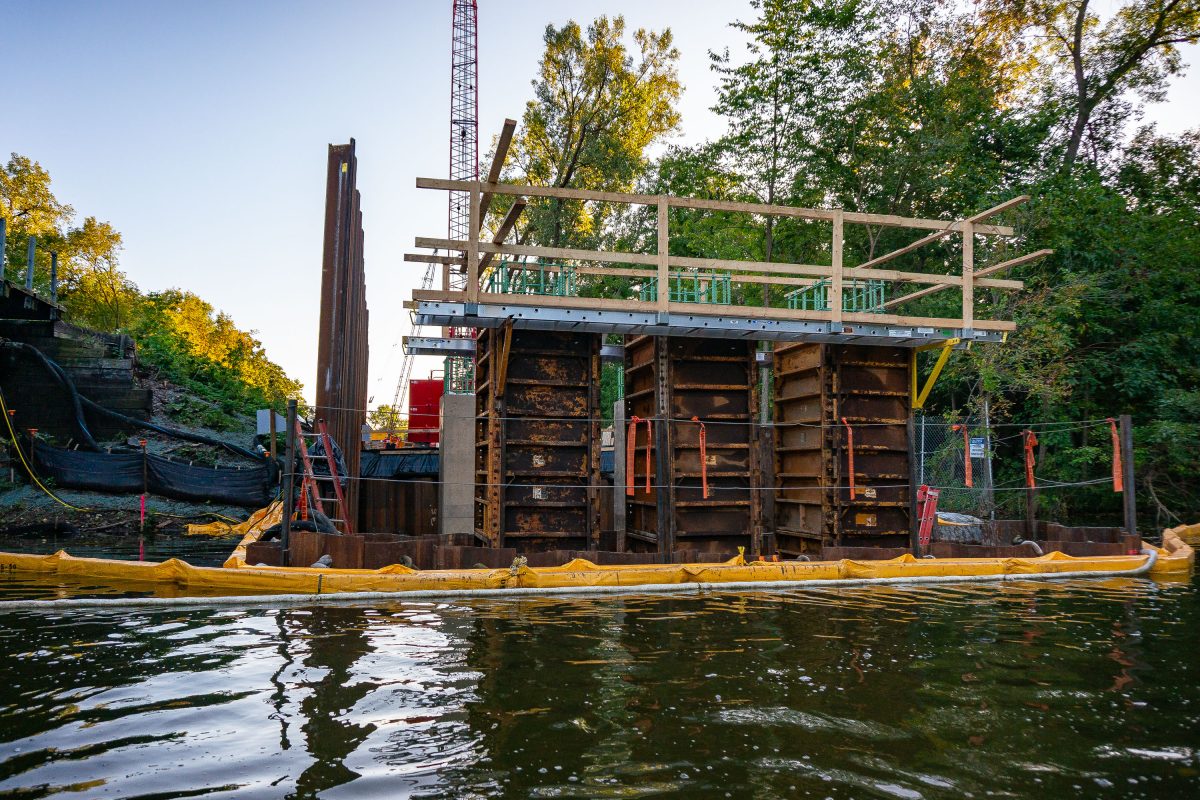
Construction equipment and containment barriers along Cedar Lake during Metro Green Line Extension work in Minneapolis.
The Kenilworth Channel connects Cedar Lake and Lake of the Isles in Minneapolis, carrying both water traffic and the Kenilworth Trail along its banks. Construction here is tied to the Metro Green Line Extension, a light-rail project that runs through the Kenilworth corridor en route to Eden Prairie.

Bridge Construction Along the Kenilworth Channel
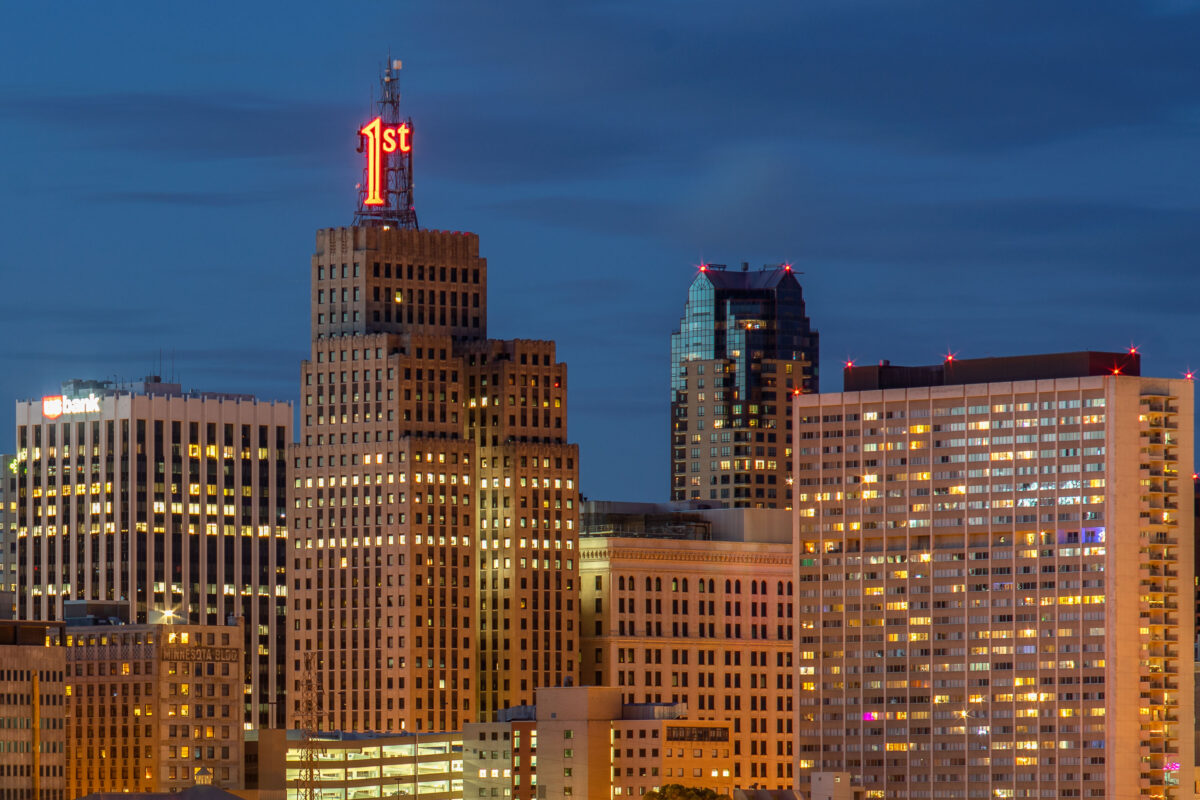
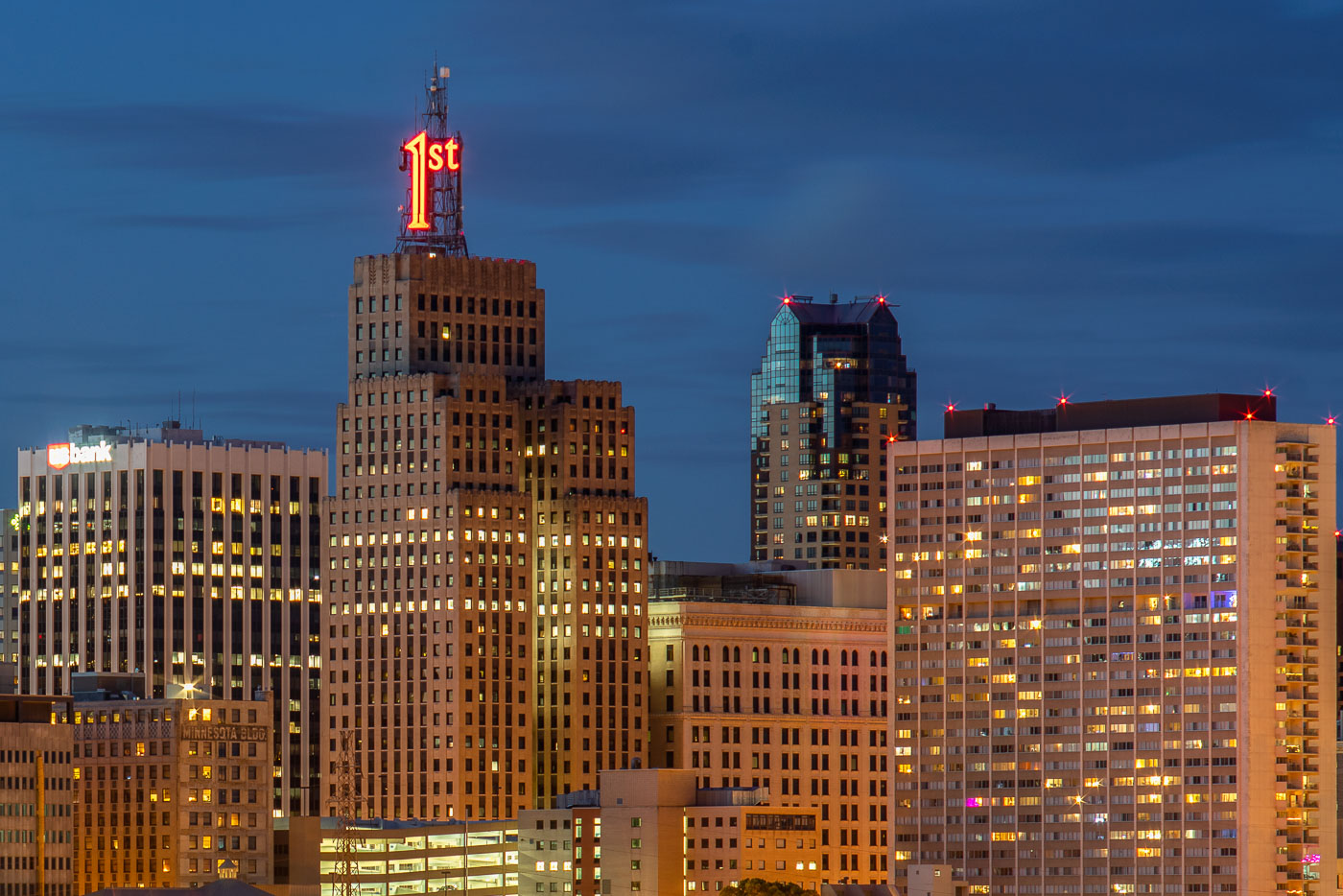
First National Bank Building with illuminated neon sign at dusk in downtown St. Paul.
The First National Bank Building dominates the St. Paul skyline at dusk. The Art Deco structure, completed in 1929, is identifiable by its distinctive "1st" neon sign atop the tower. Located on Bellows Street in downtown St. Paul, the building remains a prominent landmark in the city's commercial district.

First National Bank Building, St. Paul
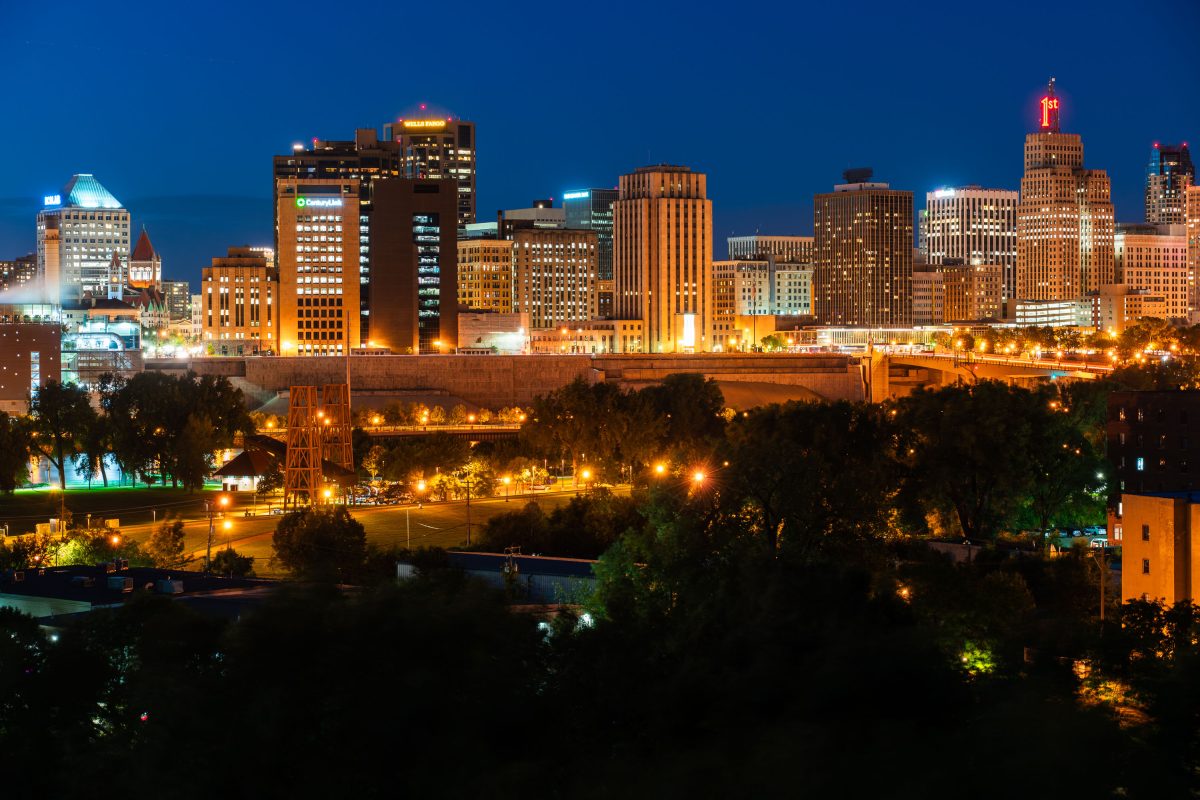
St. Paul Skyline from across the river
The view of Downtown St. Paul as seen from across the Mississippi River.

St. Paul Skyline from across the river

Arcola High Bridge spanning forested valley with graffiti-covered steel structure and railing.
The Arcola High Bridge carries rail traffic across the St. Croix River near Marine on St. Croix, Minnesota. Built in 1911 by the Wisconsin Central Railway, the steel trestle rises about 185 feet above the river and runs roughly 2,682 feet across the valley. It was added to the National Register of Historic Places in 1980 for its engineering significance. The line later passed to the Soo Line Railroad and remains part of the Canadian National Railway network today.

Arcola High Bridge Trestle, St. Croix River, Minnesota

Arcola High Bridge near Stillwater
Located near Stillwater, the Soo Line High Bridge was built in 1910 and is on the National Register of Historic Places.

Arcola High Bridge – Stillwater, MN

Cedar Lake East Beach, Minneapolis, a small sand shoreline with picnic tables by the lake under autumn trees.
Cedar Lake East Beach is a public shoreline on the east side of Cedar Lake in Minneapolis. Locally known as “Hidden Beach,” it functions as a small beach and picnic area within Minneapolis parklands. The swimming and recreation area is equipped for seasonal lake use, including a lifeguard stand.

Hidden Beach, Cedar Lake East Beach, Minneapolis

Cedar Lake East Beach, Minneapolis, with a shoreline, trees, and calm water.
Cedar Lake East Beach, commonly known as Hidden Beach, is on the east side of Cedar Lake in Minneapolis. It is a small public beach and shoreline access area in the city’s lake district.

September at Hidden Beach Minneapolis, MN
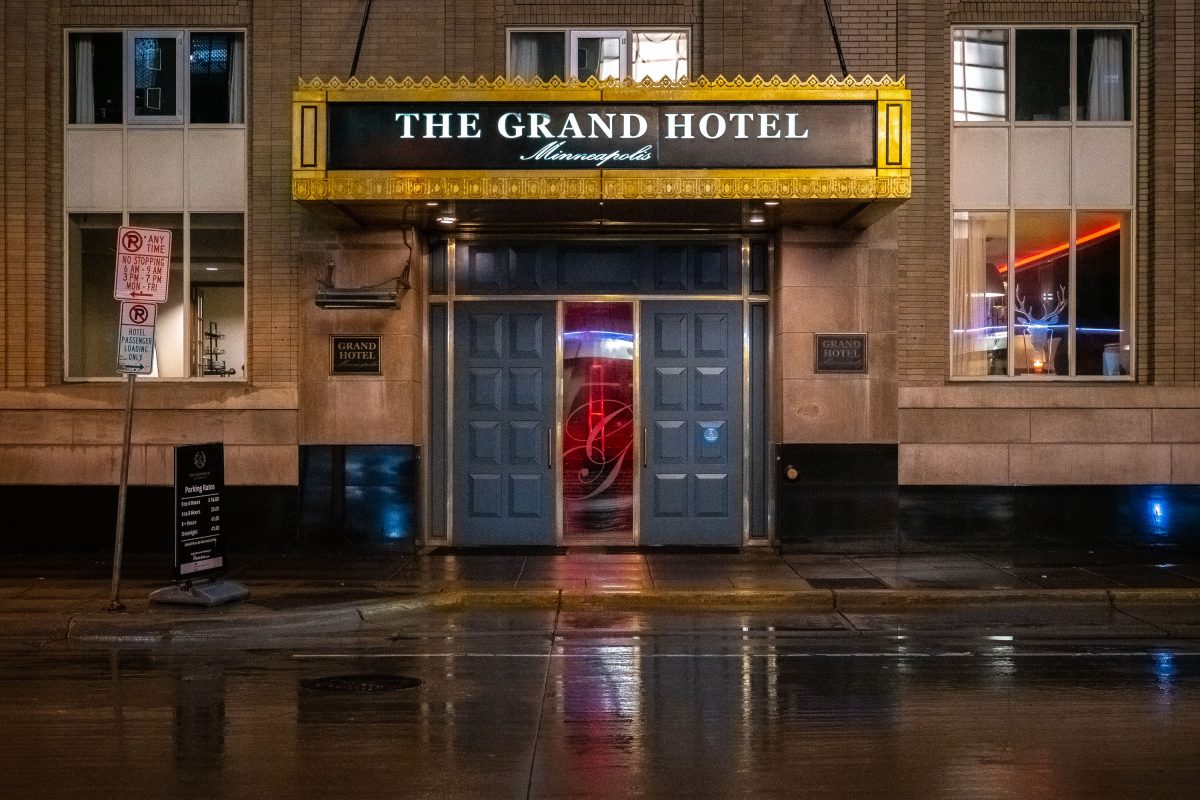
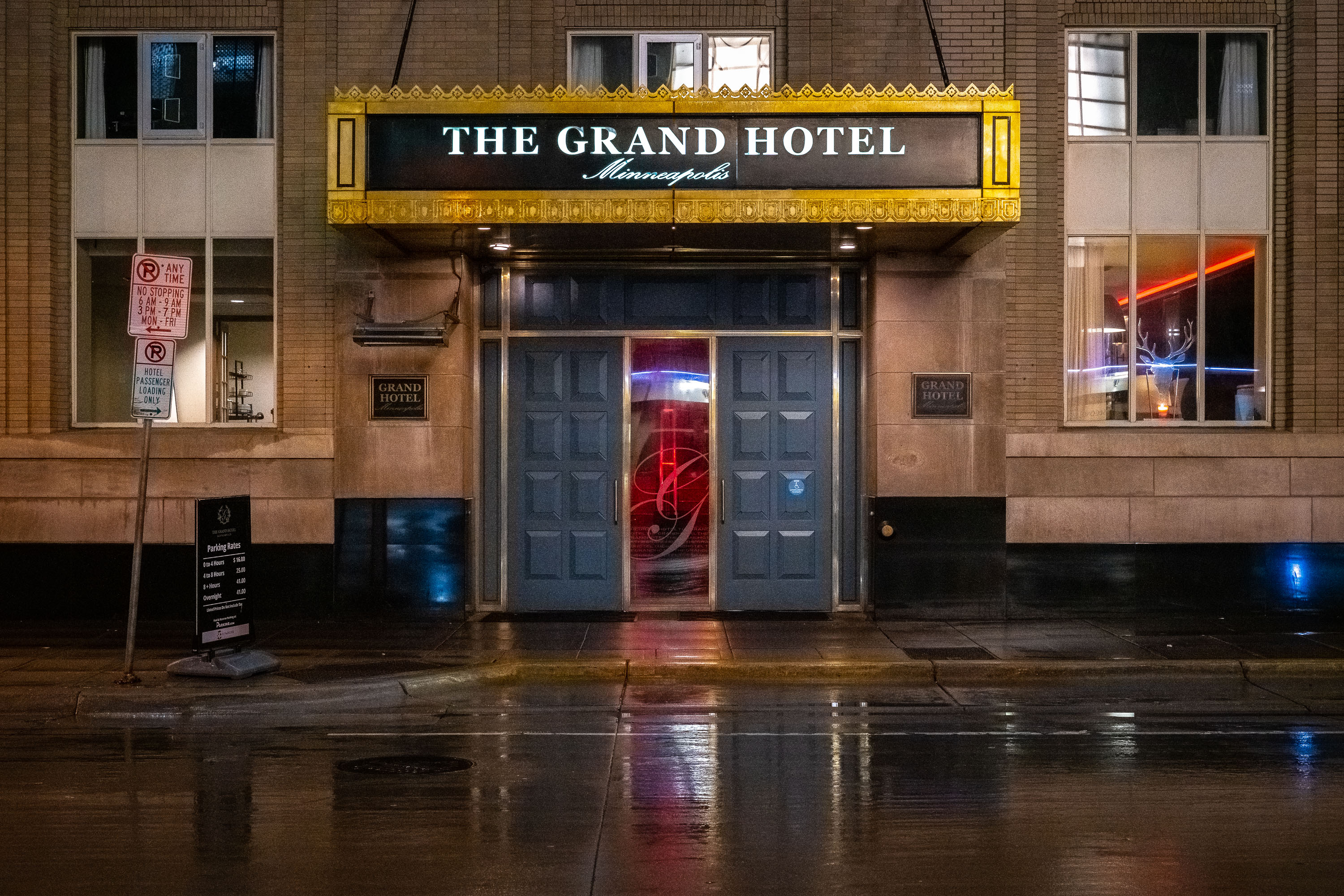
Entrance of The Grand Hotel at 615 2nd Ave S in downtown Minneapolis, Minnesota.
The Grand Hotel stands at 615 2nd Ave S in downtown Minneapolis. The building operates as a hotel property within the city's downtown core, near the Mississippi riverfront district.

Entrance of The Grand Hotel, Downtown Minneapolis

Minneapolis' Midtown Greenway at night
The Midtown Greenway walking and biking trail as seen late night. The trails runs through Minneapolis from the river to St. Louis Park

Minneapolis’ Midtown Greenway at night
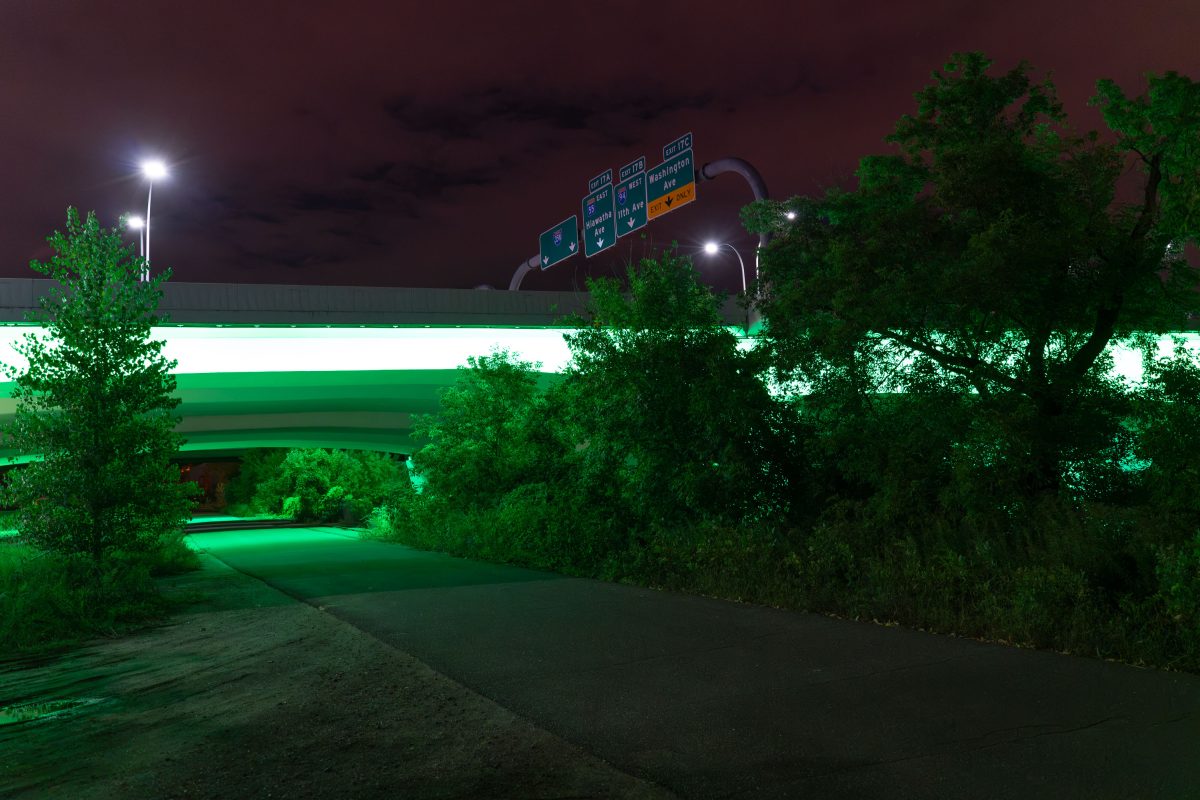
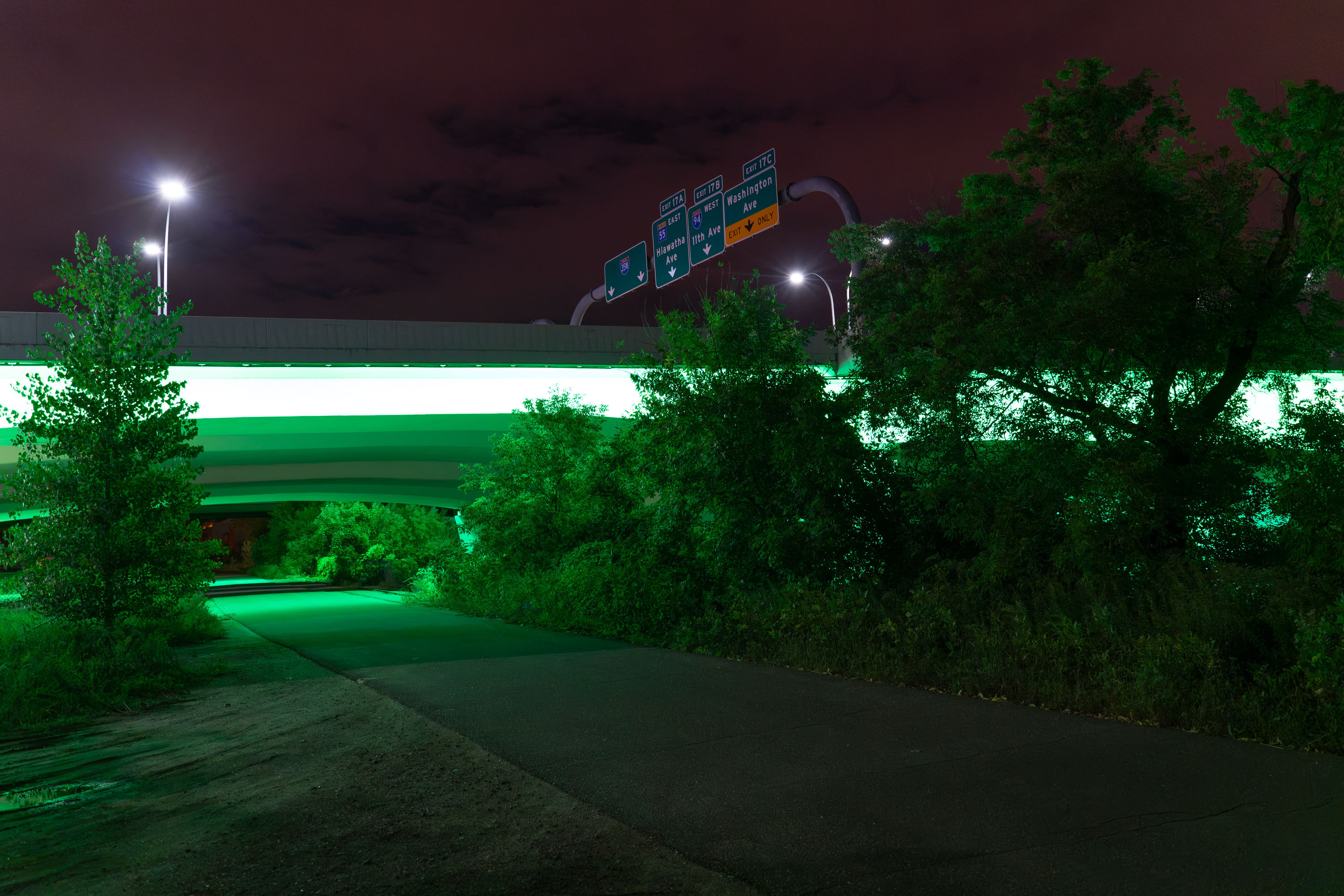
Green lights on 35W, Minneapolis, MN
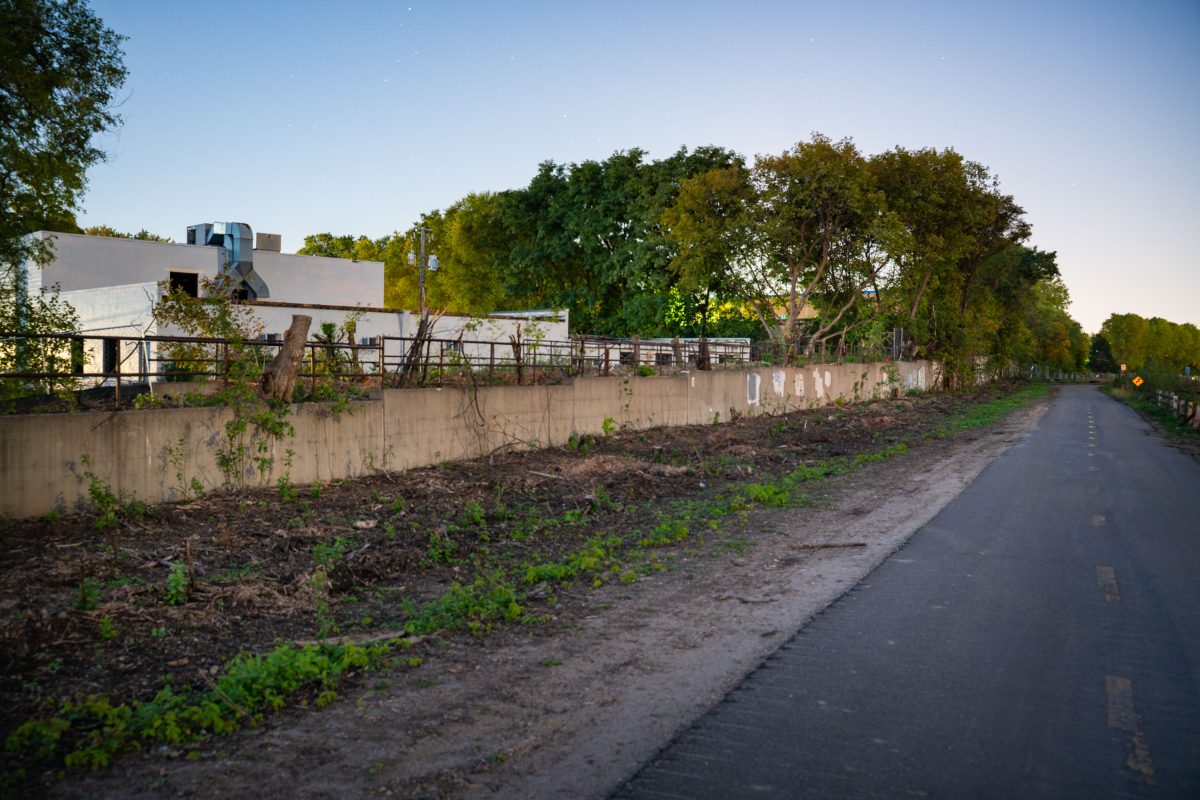
The lights of Interstate 35W lit green for National Cerebral Palsy Awareness.

Green lights on 35W, Minneapolis, MN

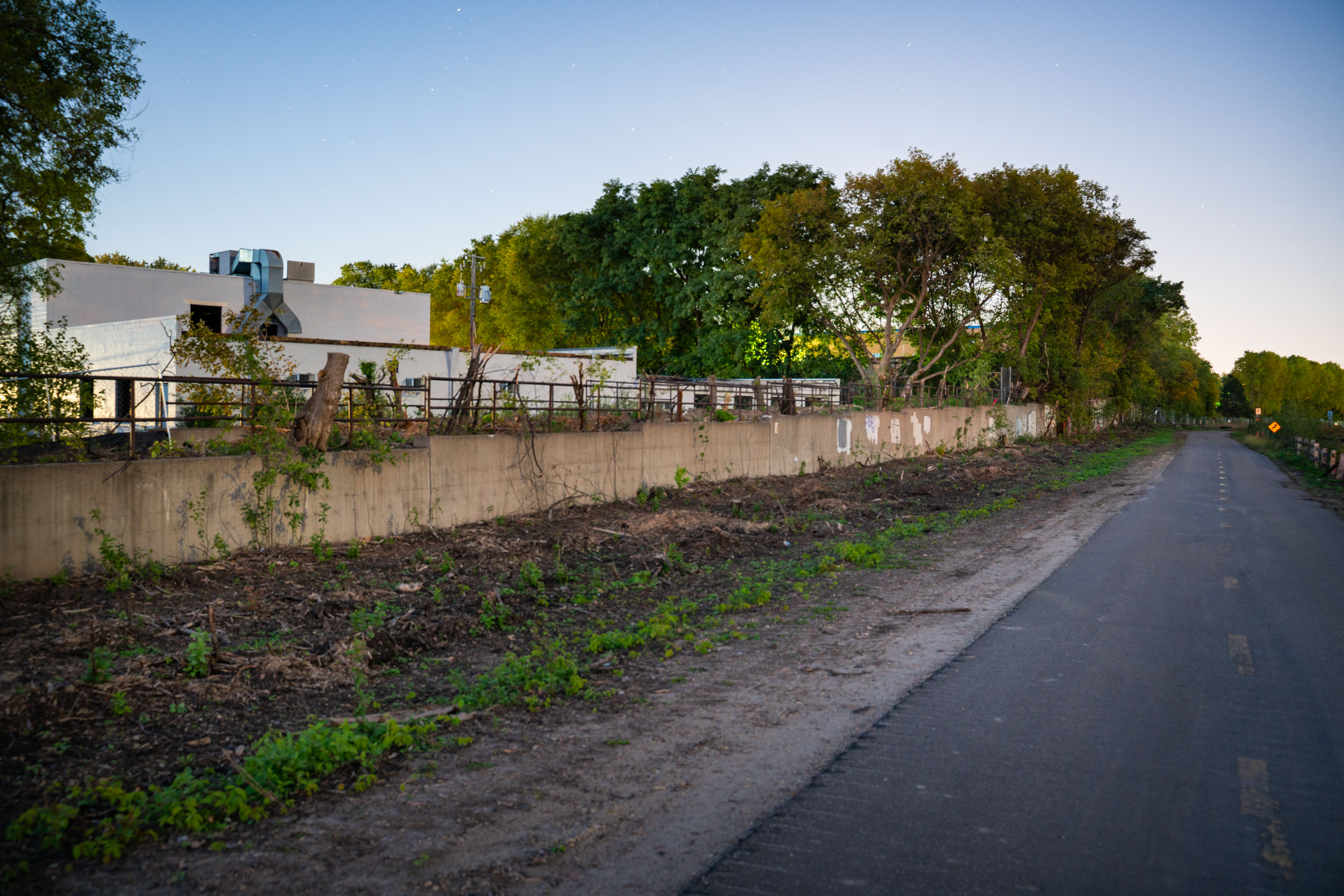
Concrete retaining wall along Cedar Lake Trail in St. Louis Park with industrial building and mature trees.
Cedar Lake Trail runs along a former rail corridor connecting the Kenilworth area of Minneapolis to St. Louis Park, used today by cyclists and pedestrians. The trail parallels the alignment of the Metro Green Line Extension, a light rail project linking downtown Minneapolis to Eden Prairie. Construction along this corridor required new retaining walls and the clearing of vegetation to accommodate the rail line. St. Louis Park station is one of several planned stops along this western stretch of the route.

Cedar Lake Trail Near the Green Line Extension in St. Louis Park

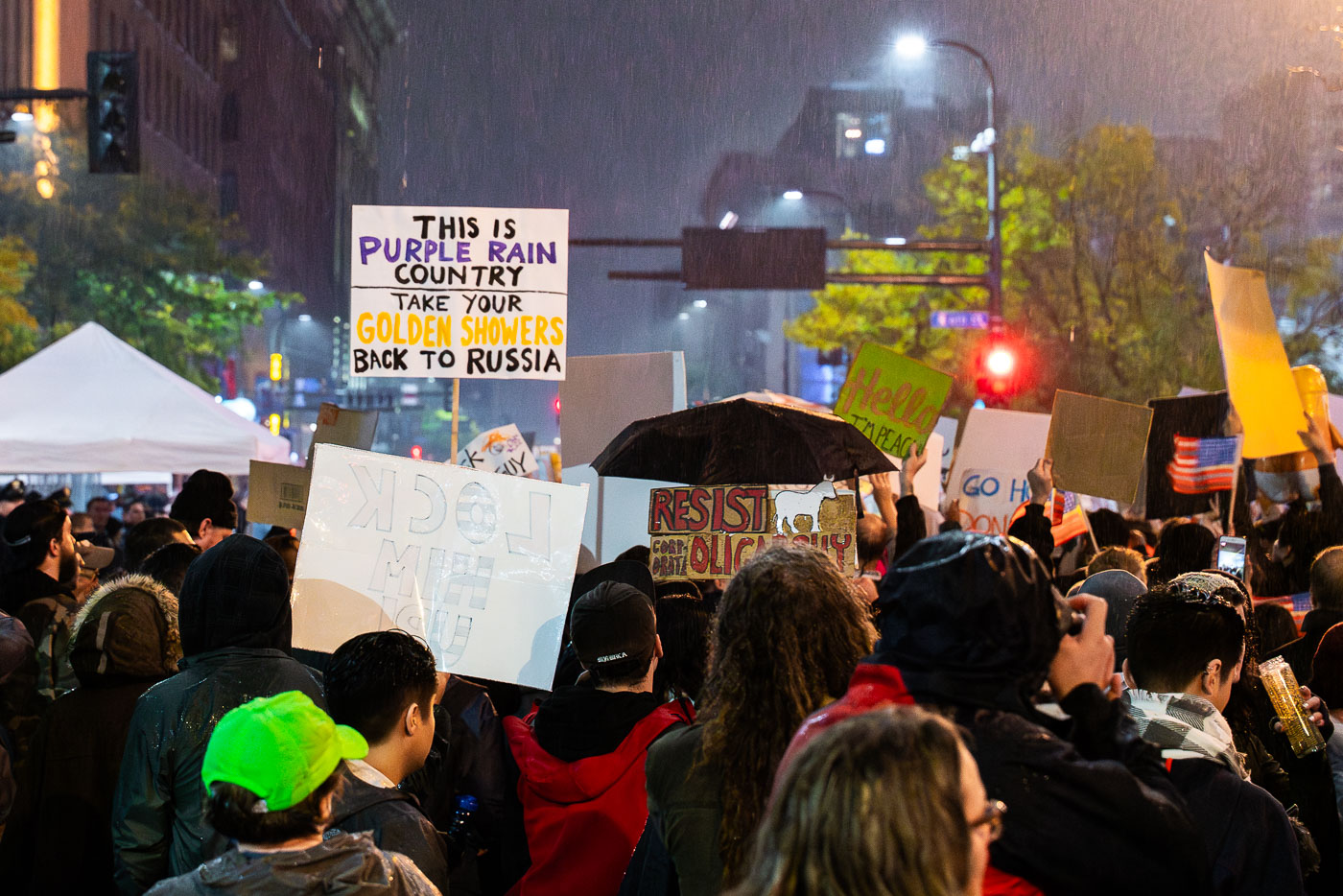
Protesters holding signs gather in heavy rain during a Trump rally demonstration in downtown Minneapolis on October 10, 2019.
Protesters gathered near the Target Center in downtown Minneapolis on October 10, 2019, during a campaign rally for then-President Donald Trump.

“Purple Rain Country” Sign at Trump Rally Protest in Minneapolis

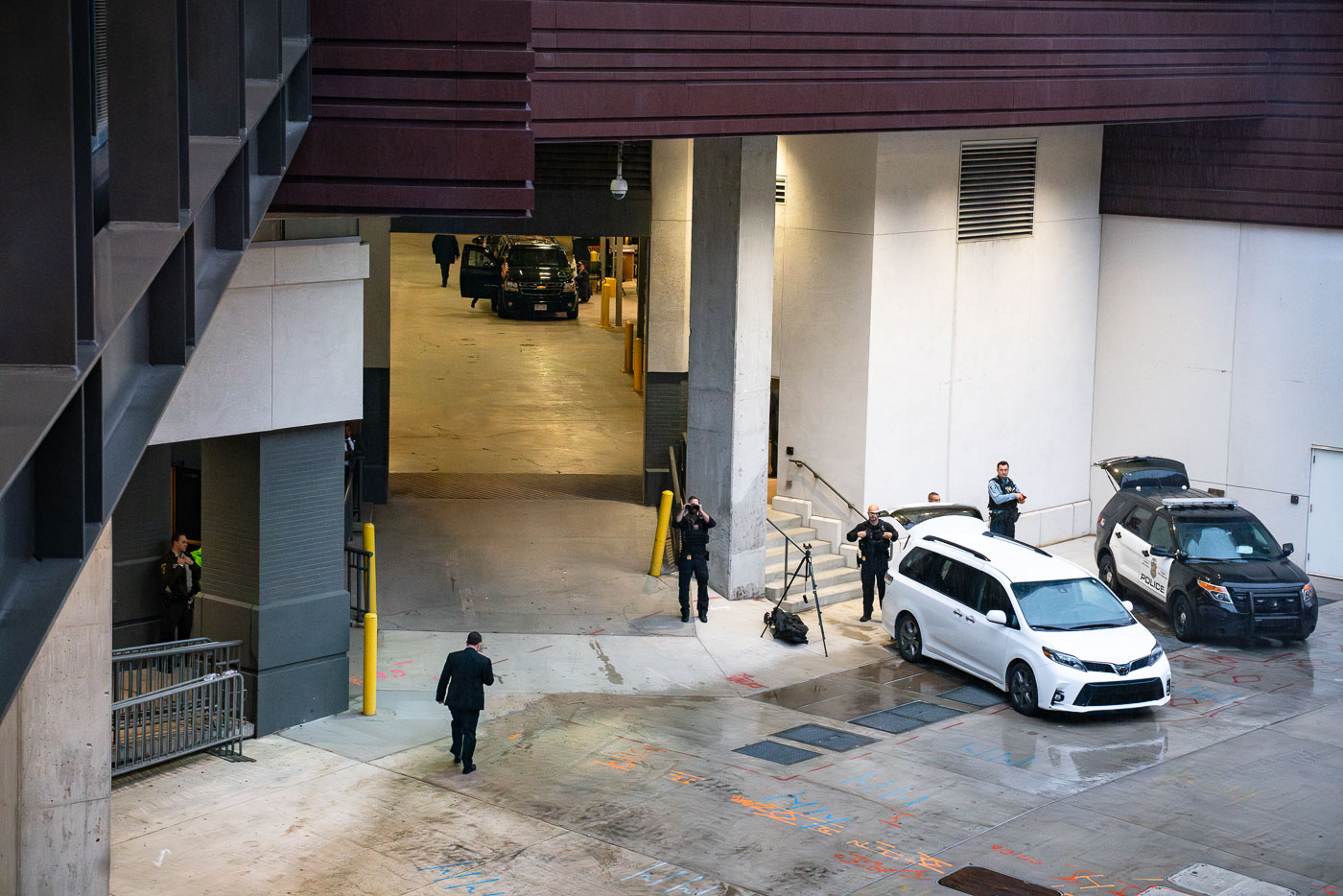
Secret Service agents and police outside Target Center in Minneapolis, with vehicles parked at a loading dock.
Secret Service agents and police officers are visible outside the Target Center in Minneapolis on October 10, 2019. The presence of these security personnel indicates preparations for a high-profile event, likely the arrival of a presidential motorcade, as suggested by the agent using binoculars. The Target Center, a multi-purpose arena, frequently hosts major sporting events, concerts, and political rallies, necessitating robust security measures for such occasions.

Secret Service and Police Outside Target Center, Minneapolis

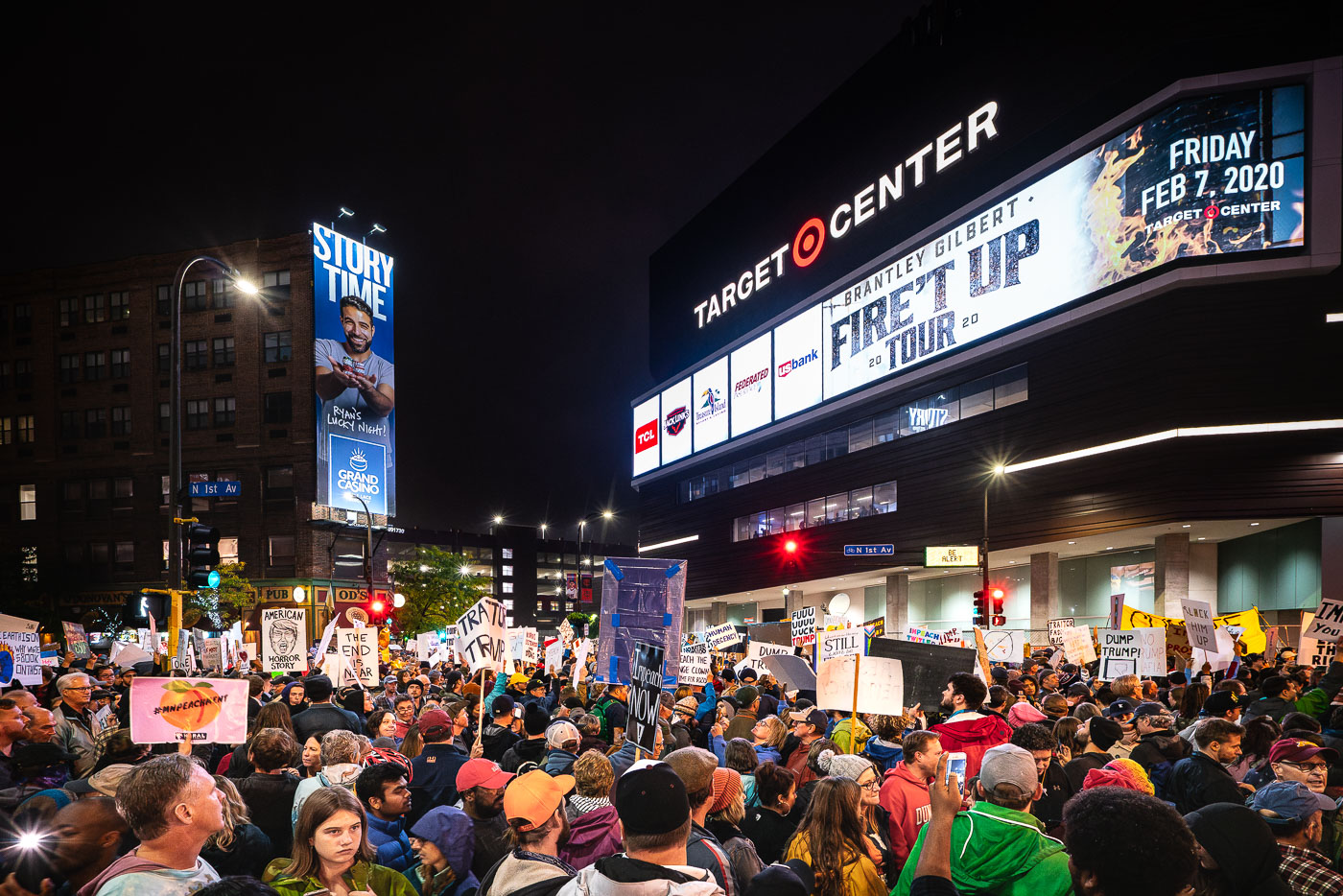
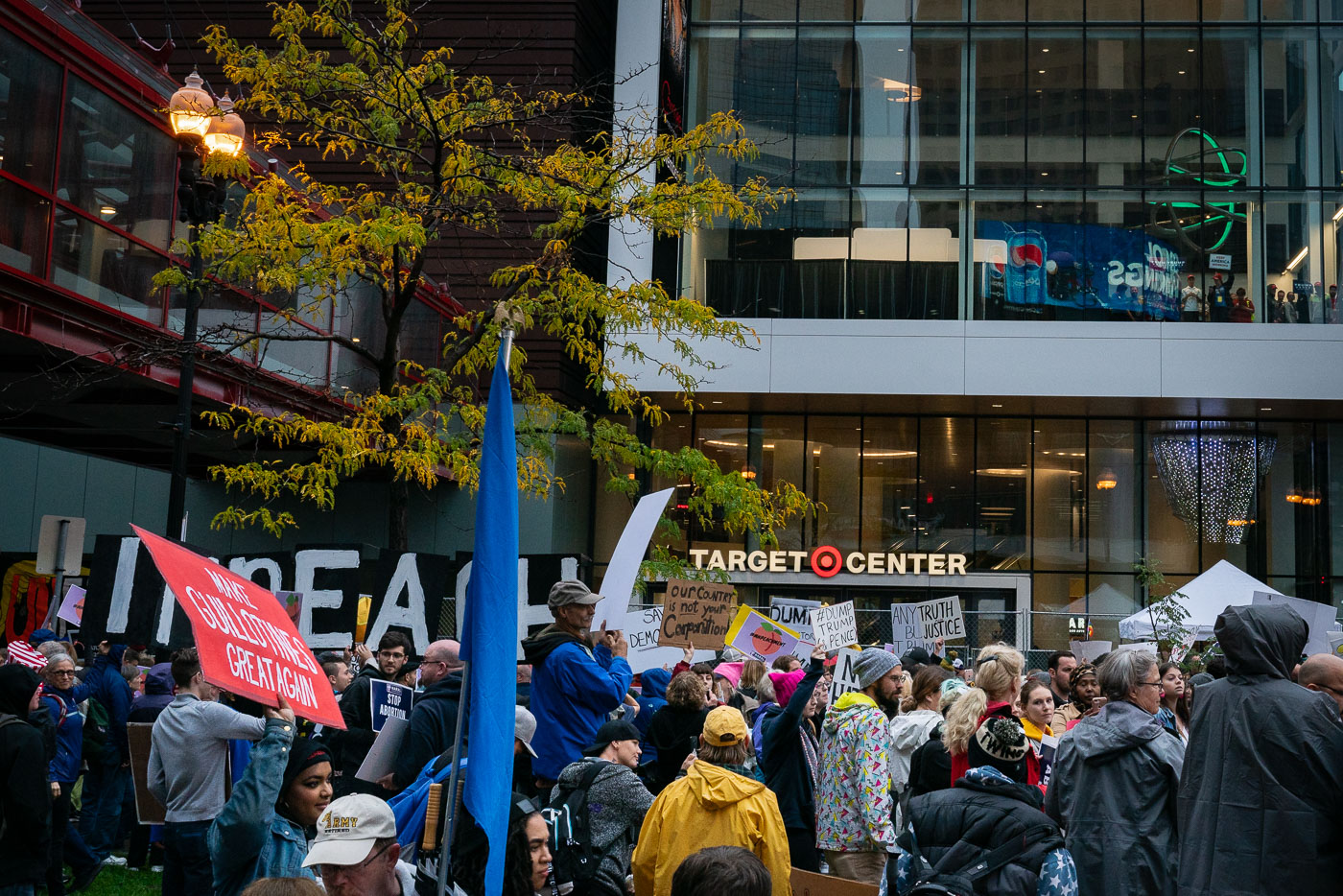
Protesters outside Target Center in downtown Minneapolis during a Trump rally.
Protesters gathered outside the Target Center in downtown Minneapolis on October 10, 2019, to voice their opposition to a Trump campaign rally being held inside. The Target Center, a multi-purpose arena, hosts a variety of events including sports, concerts, and political rallies. This protest occurred during the 2020 presidential election cycle, reflecting the political divisions of the time. The signs held by the crowd express a range of sentiments, from direct criticism of the president to broader political statements.

Protesters Outside Target Center, Minneapolis, October 10, 2019

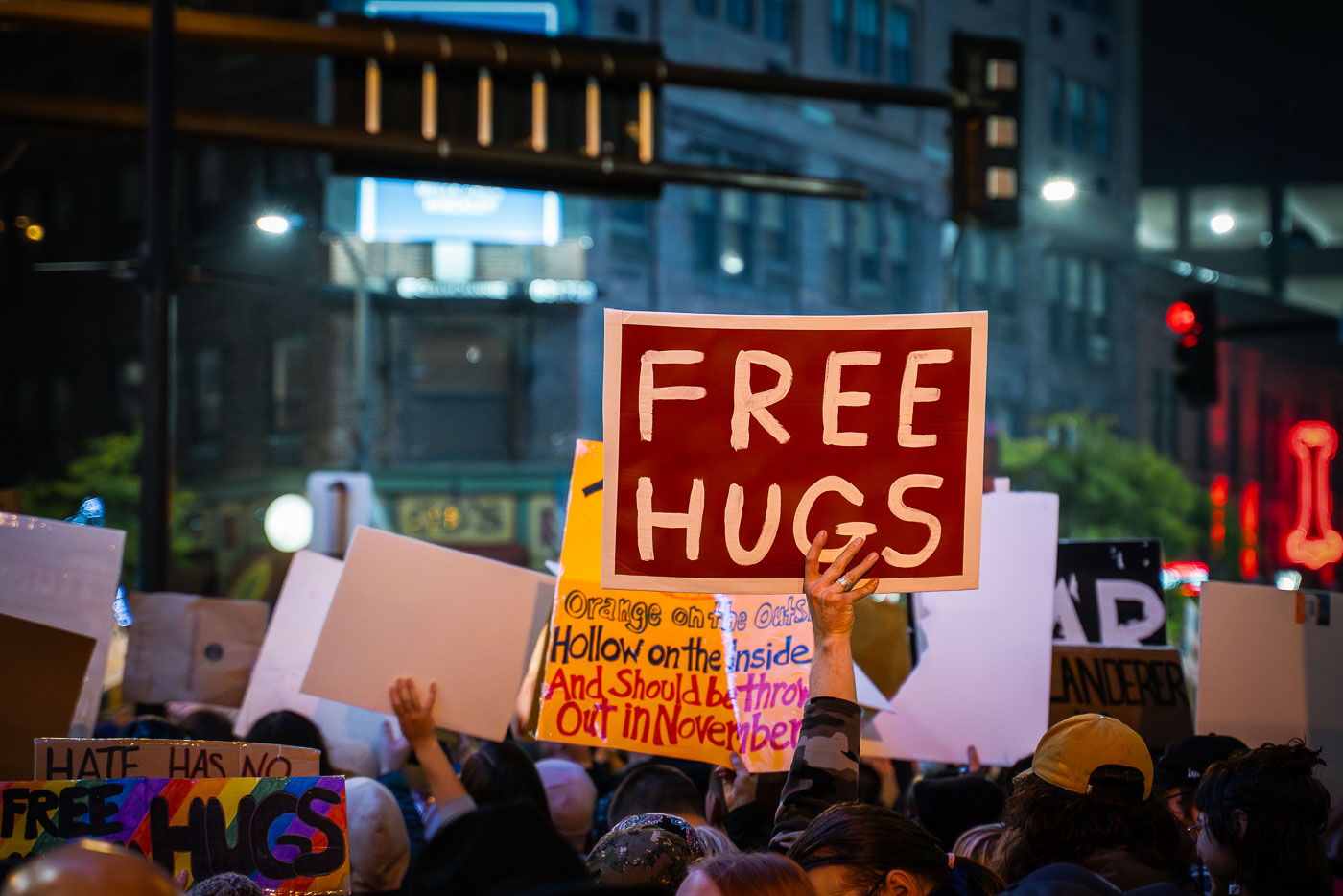
Protesters in downtown Minneapolis hold a Free Hugs sign outside Target Center at night.
A "Free Hugs" sign is visible amidst a protest outside the Target Center in Minneapolis on October 10, 2019. The demonstration occurred concurrently with a Donald Trump campaign rally, drawing thousands of attendees who gathered to express opposition to the administration's policies. Despite the charged political climate, the presence of signs like "Free Hugs" and "Hate Has No Home Here" highlighted a desire for connection and solidarity among some participants.

Free Hugs Sign at Minneapolis Trump Protest, Oct 2019

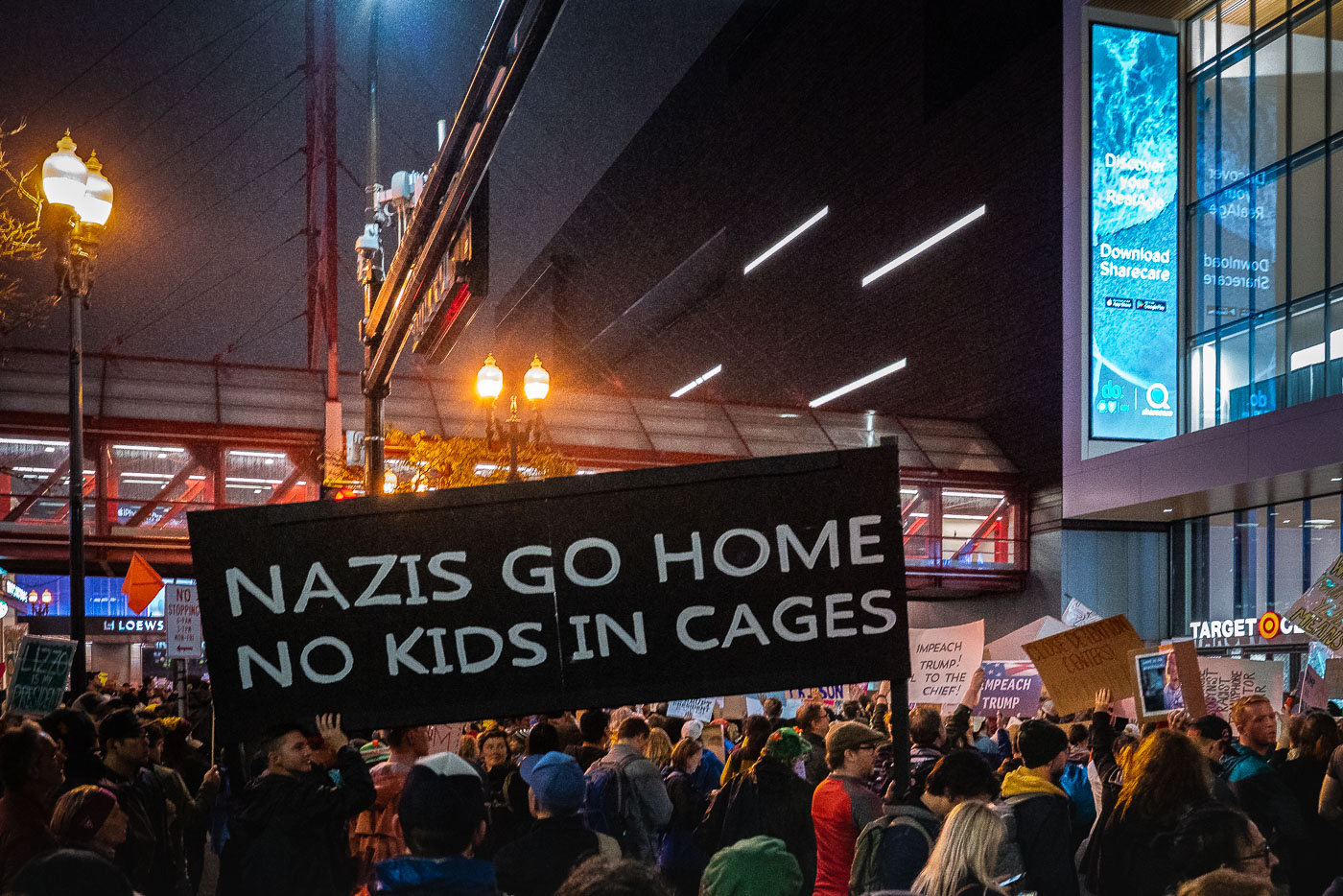
Protesters outside Target Center in Minneapolis hold signs opposing a Trump rally.
Thousands of protesters gathered outside the Target Center in downtown Minneapolis on October 10, 2019, to oppose a Donald Trump campaign rally. Demonstrators voiced opposition to the administration's immigration policies and far-right extremism, with signs reading "Nazis Go Home – No Kids in Cages" and "Impeach Trump." This event represented a significant public display of dissent in the city during Trump's presidency.

Minneapolis Protest Against Trump Rally, Target Center, 2019

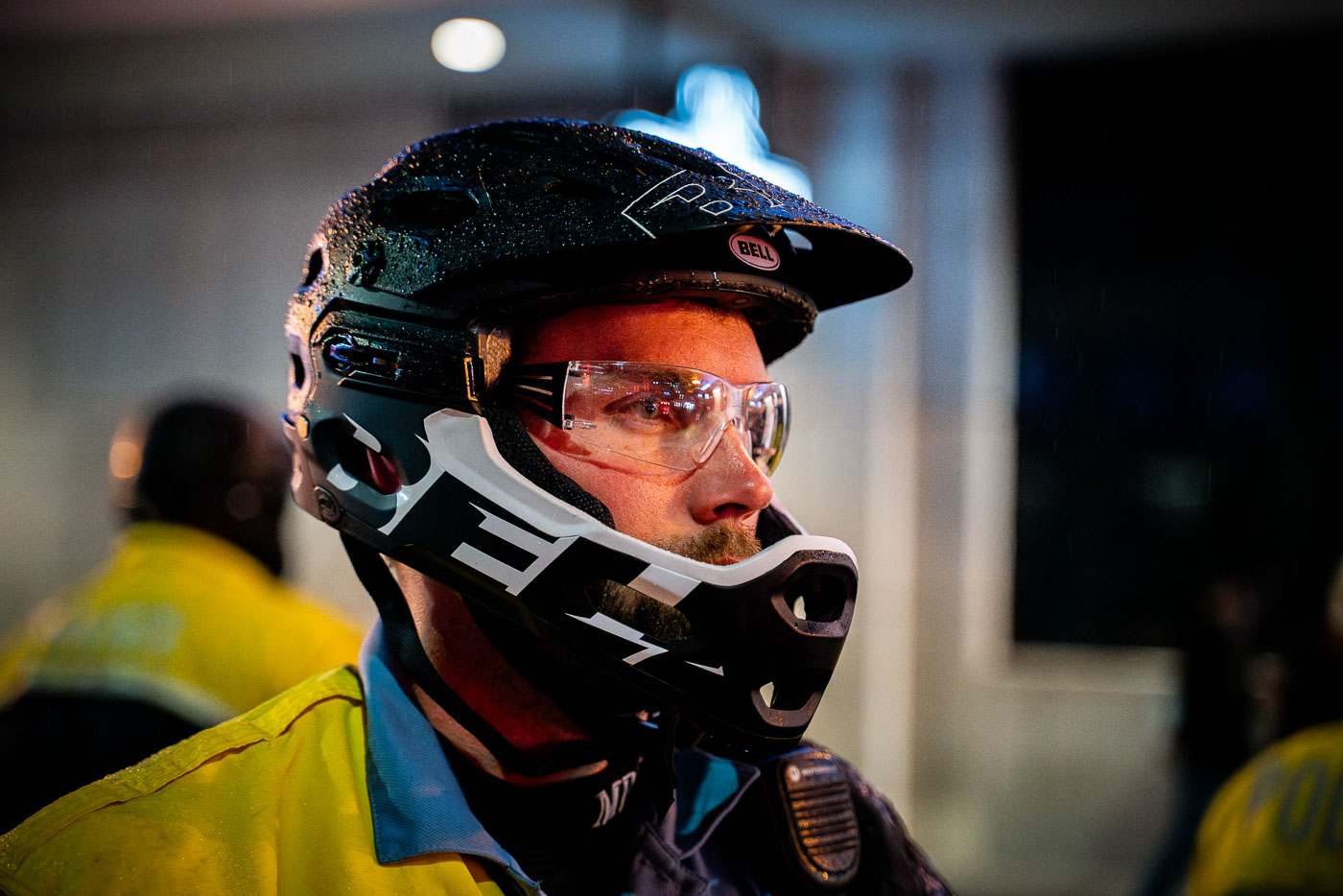
Helmeted Minneapolis police officer wearing goggles at a Trump rally.
A Minneapolis Police officer, equipped with protective gear including a helmet and goggles, stands on duty during a Donald Trump rally held in Minneapolis on October 10, 2019. Such events often require a significant police presence to manage crowds and ensure public safety. The presence of law enforcement in riot gear highlights the potential for civil unrest or the need for crowd control during politically charged gatherings.

Minneapolis Police Officer at Trump Rally, October 10, 2019

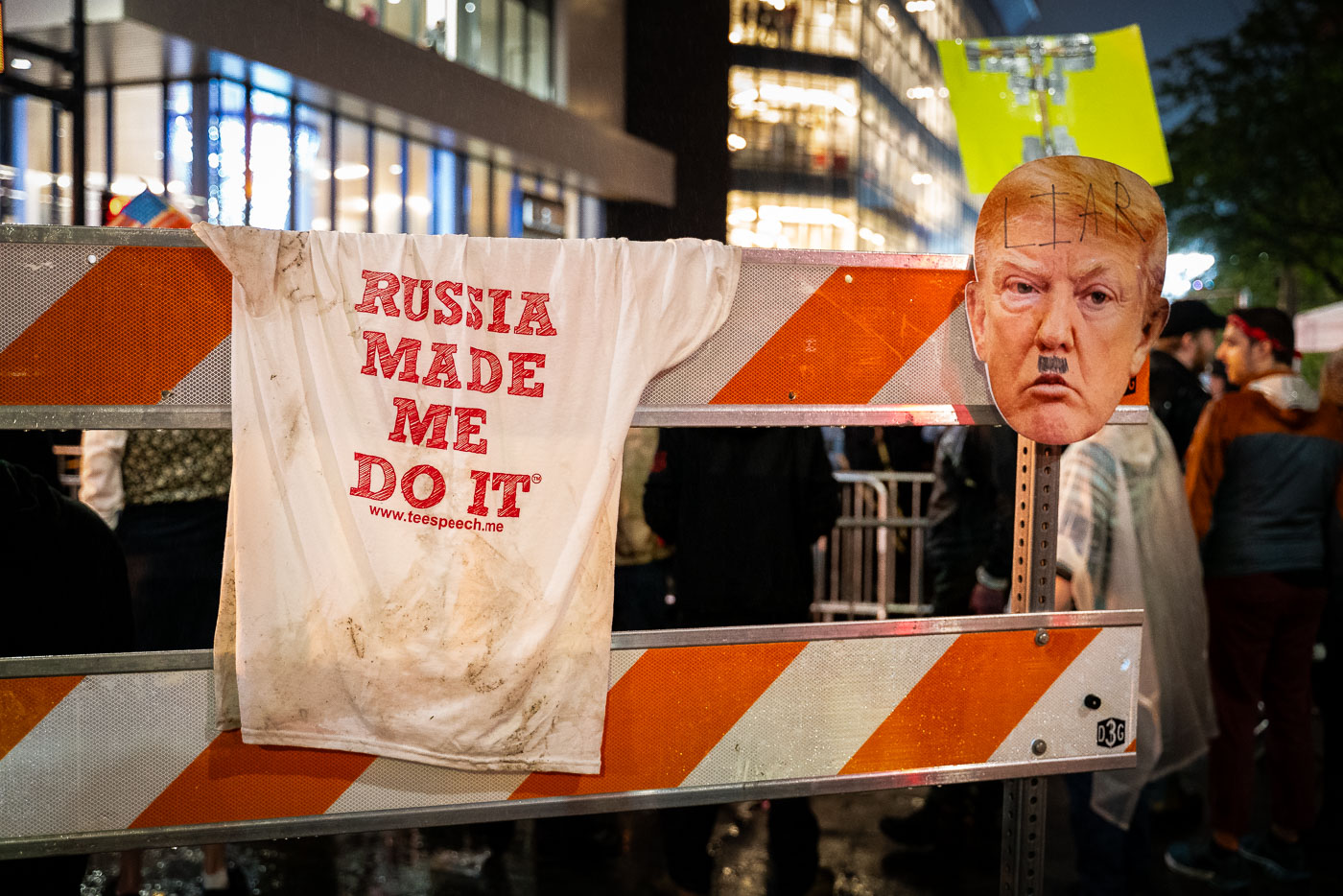
Protest sign reading "Russia Made Me Do It" and Trump cutout on a barricade outside Target Center in Minneapolis.
A protest sign reading "Russia Made Me Do It" and a cutout of Donald Trump's face, defaced with a Hitler-esque mustache, are displayed on a barricade outside the Target Center in Minneapolis. This display was part of protests on October 10, 2019, coinciding with Trump's campaign rally, his first visit to Minnesota since the Mueller report's release. Thousands gathered in the Warehouse District to voice opposition to the president's policies and rhetoric, under heavy police presence and national media attention.

Minneapolis Trump Rally Protest Sign: “Russia Made Me Do It”
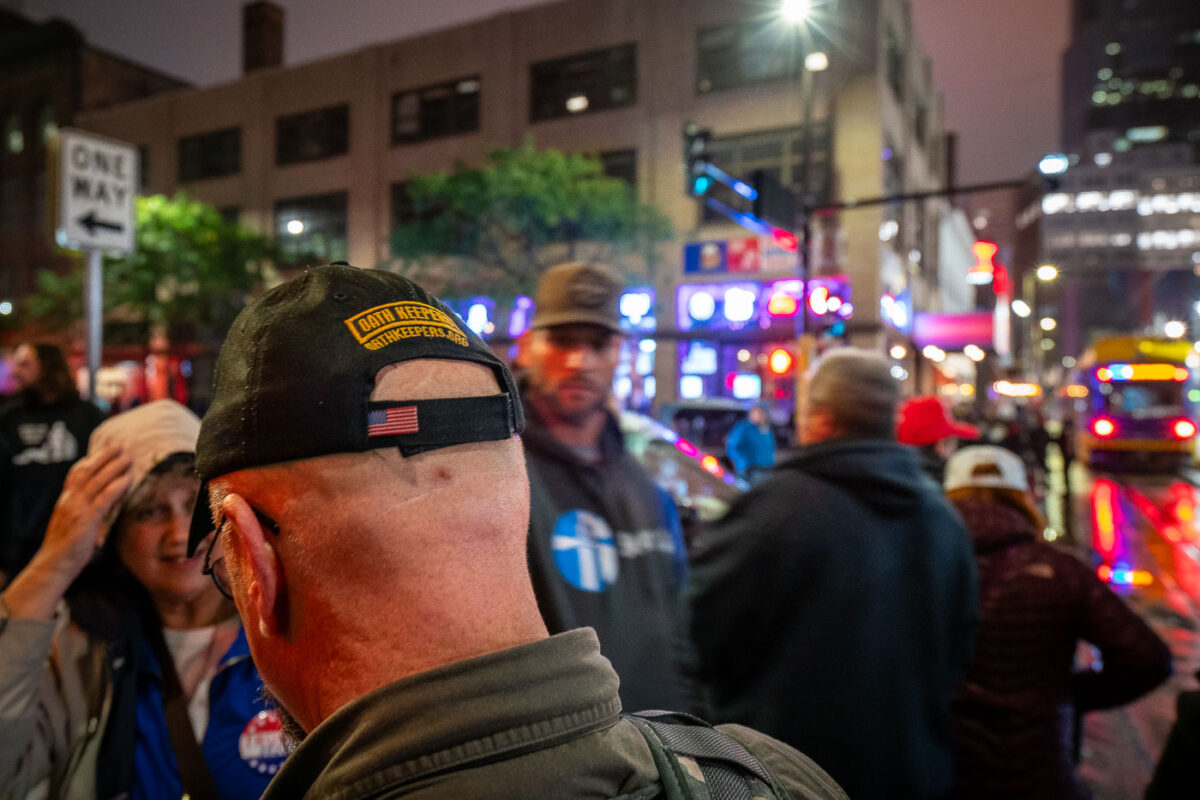
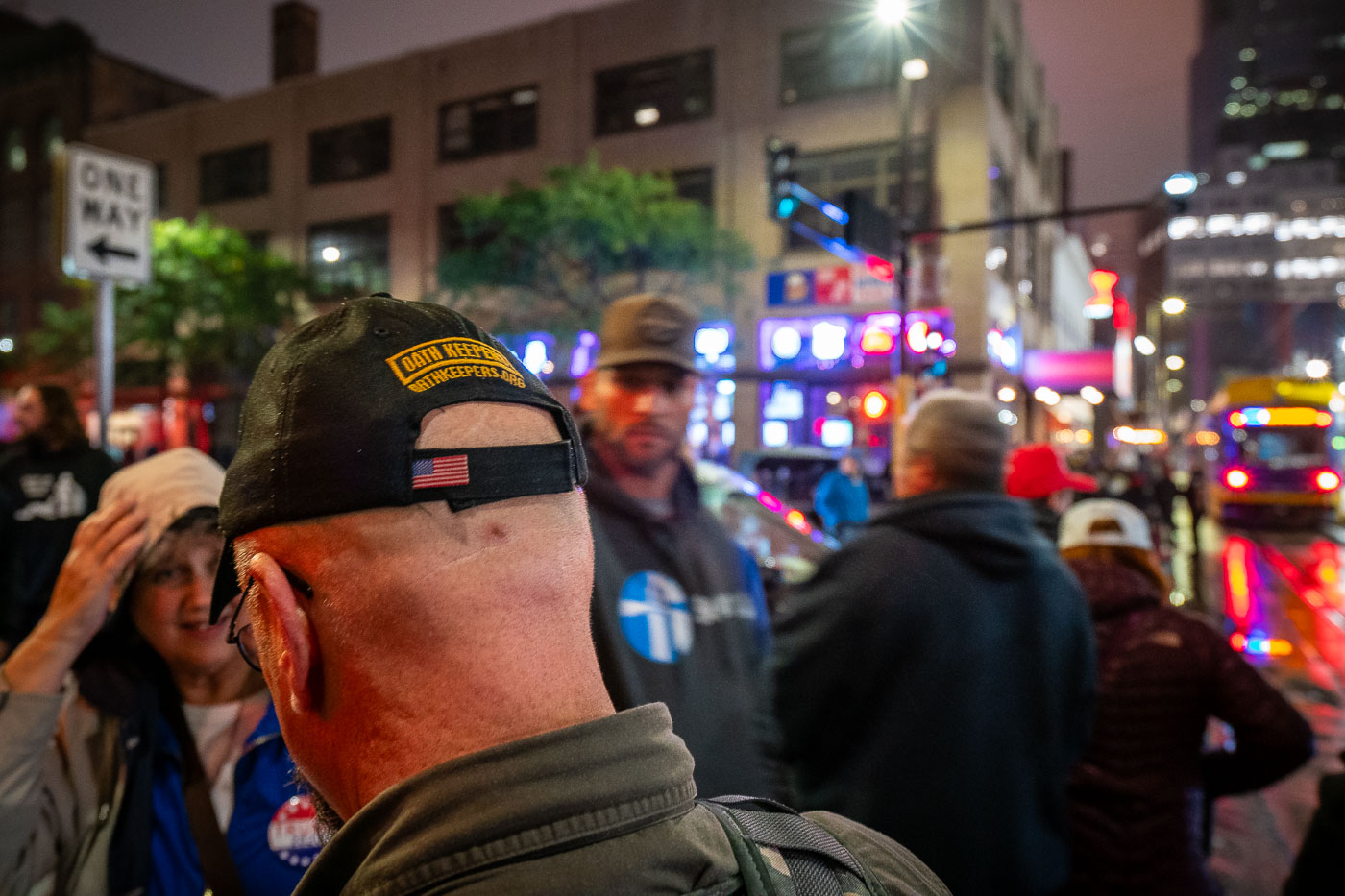
Man wearing an Oath Keepers hat stands in downtown Minneapolis during a Trump rally protest.
A man wearing an Oath Keepers hat is seen amidst a crowd during a protest outside President Donald Trump’s campaign rally at the Target Center in downtown Minneapolis on October 10, 2019. The rally, which drew thousands of supporters and counter-protesters, filled Hennepin Avenue and was met with a significant police presence. The Oath Keepers, a far-right militia founded in 2009, is known for its anti-government stance and has been associated with armed protests, including the January 6, 2021, U.S. Capitol attack.

Oath Keepers Hat at Minneapolis Trump Rally Protest, 2019

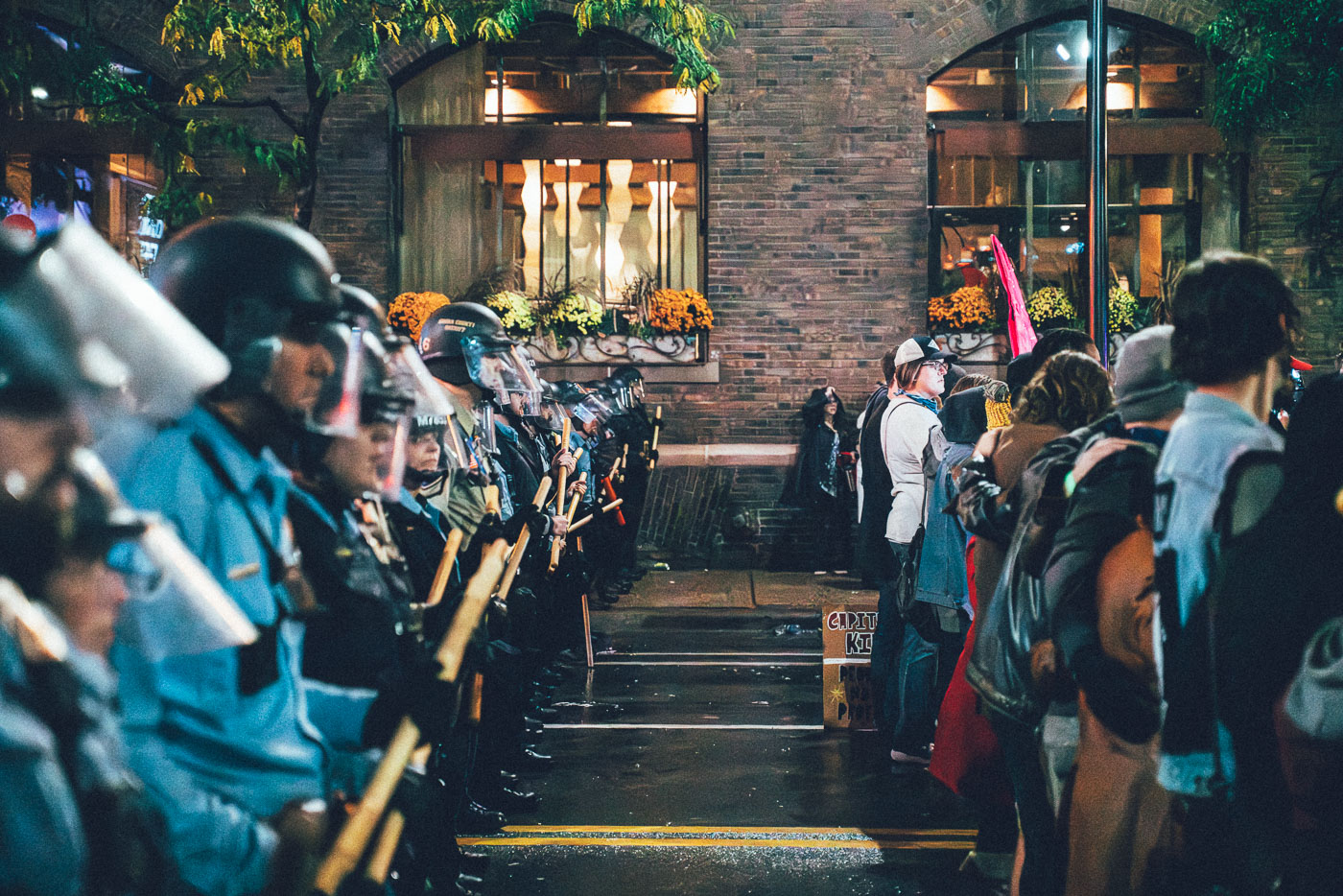
Minneapolis police in riot gear face protesters outside Target Center during a Trump rally in downtown Minneapolis.
Minneapolis police officers in riot gear formed a barricade on First Avenue outside the Target Center on October 10, 2019. They confronted protesters gathered for a campaign rally held by then-President Donald Trump. The rally drew thousands to downtown Minneapolis, prompting a significant law enforcement response. The police line separated demonstrators from attendees as tensions escalated.

Minneapolis Police Confront Protesters Outside Target Center, 2019

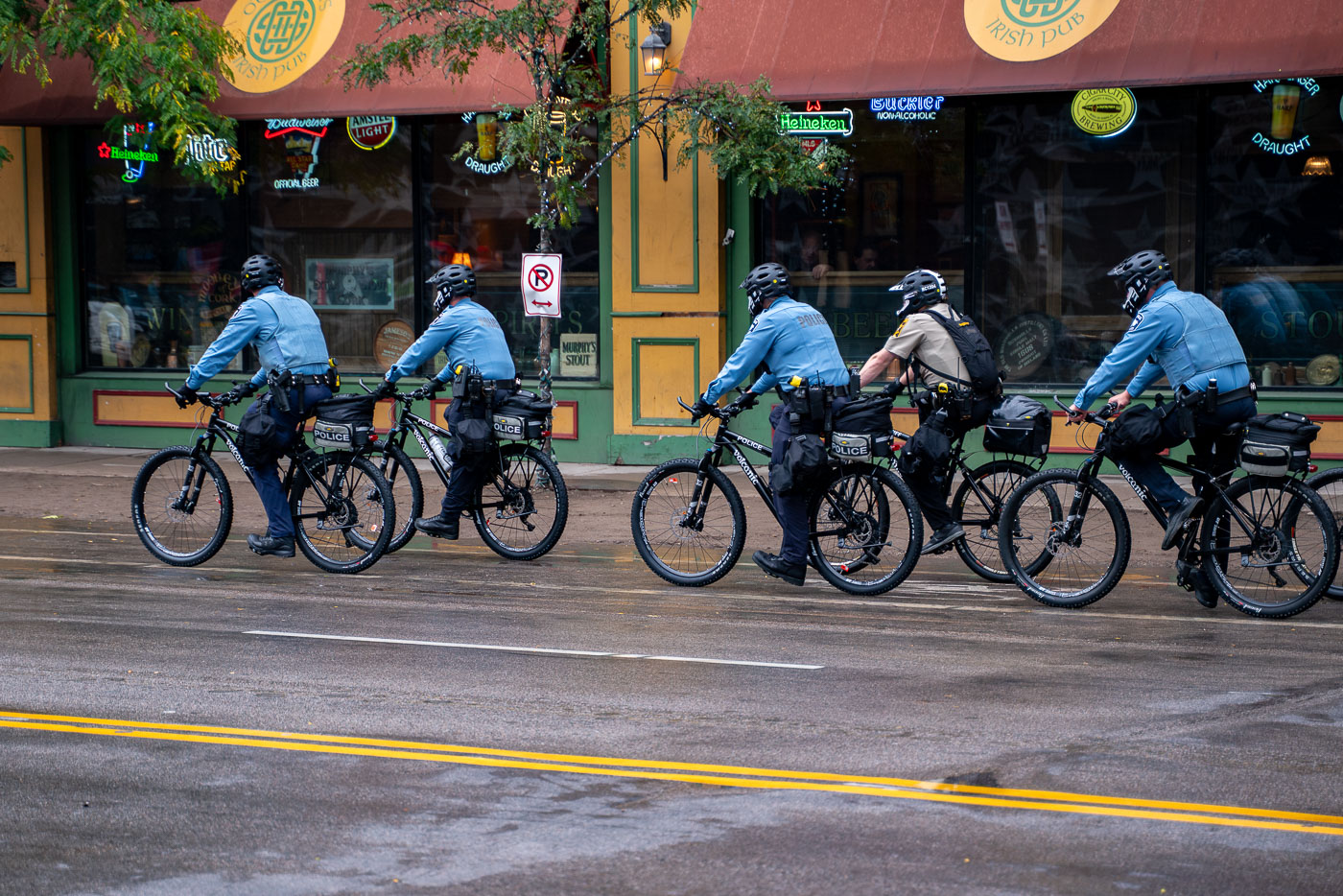
Minneapolis police officers on bicycles patrol near a downtown pub on a wet street.
Minneapolis police officers on bicycles patrol the downtown area near the Target Center on October 10, 2019. This patrol occurred as supporters and protesters gathered for a campaign event hosted by then-President Donald Trump. The Target Center is a multi-purpose arena that hosts sporting events, concerts, and other public gatherings, and its surrounding streets often become focal points for political rallies and demonstrations.

Minneapolis Bike Police Patrol Near Target Center

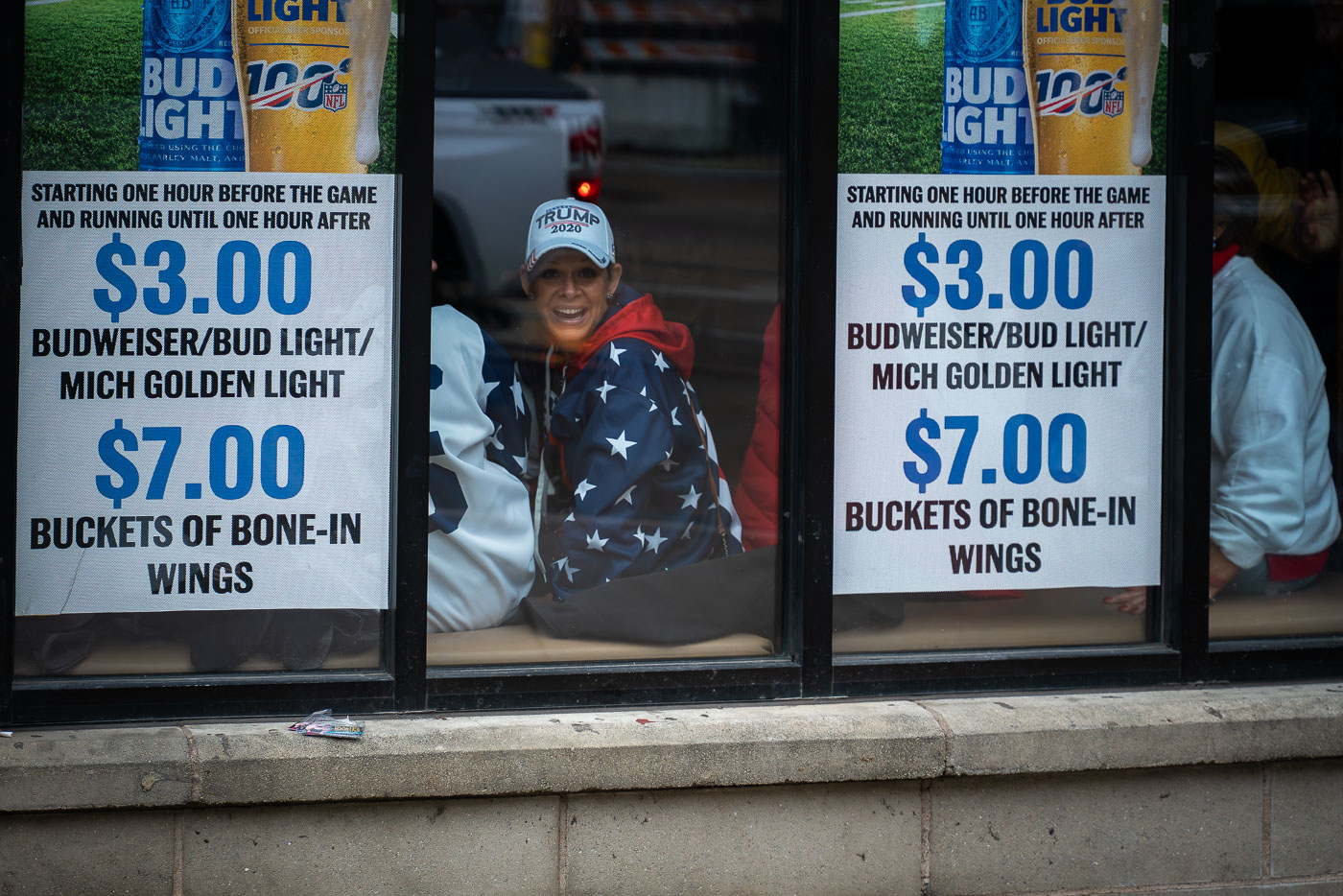
Woman in a Trump 2020 hat sits in a downtown Minneapolis bar window during a 2019 rally.
A woman wearing a “Trump 2020” hat smiles from inside a downtown Minneapolis bar near the Target Center on October 10, 2019. The establishment, decorated with promotional posters for discounted beer and wings, became a temporary gathering spot for attendees arriving early to the president’s evening campaign rally. The 2019 visit marked a rare appearance by a sitting U.S. president in Minneapolis and drew both supporters and demonstrators into the city’s entertainment district, where security and anticipation heightened throughout the afternoon.

Minneapolis Bar Patron Before Trump Rally, Oct 10, 2019
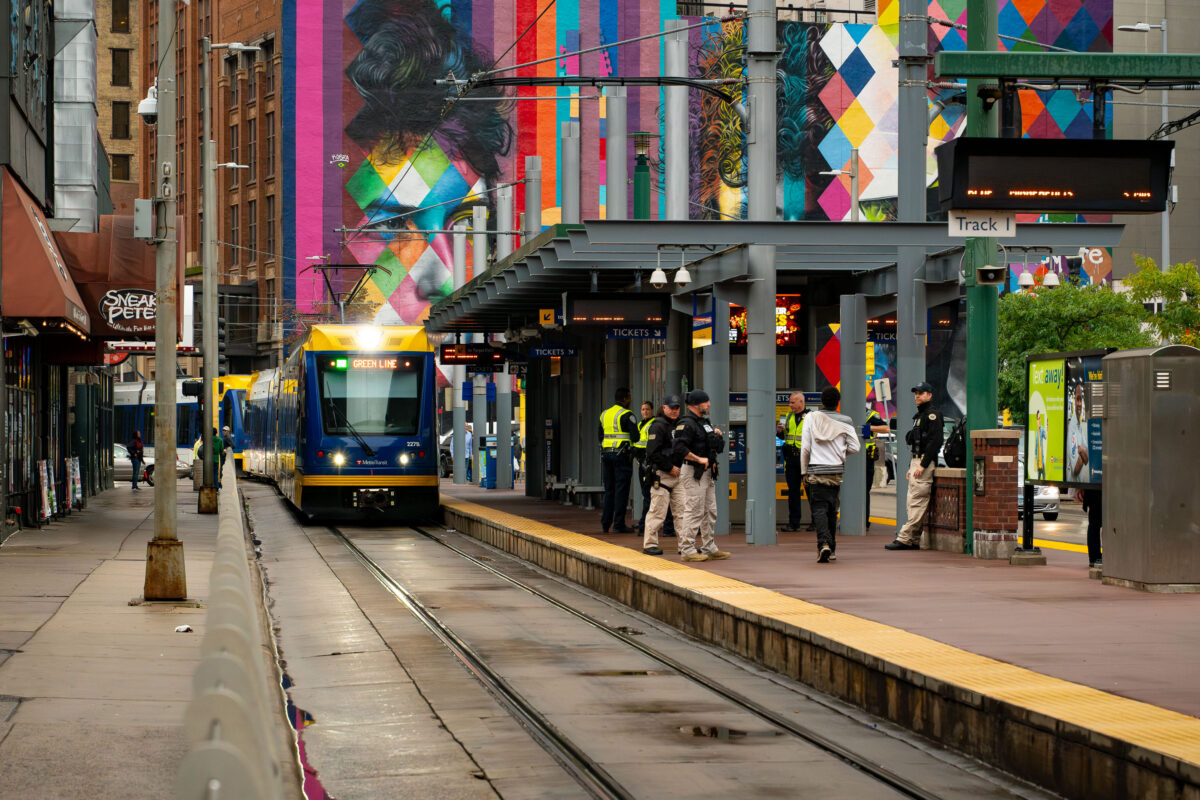
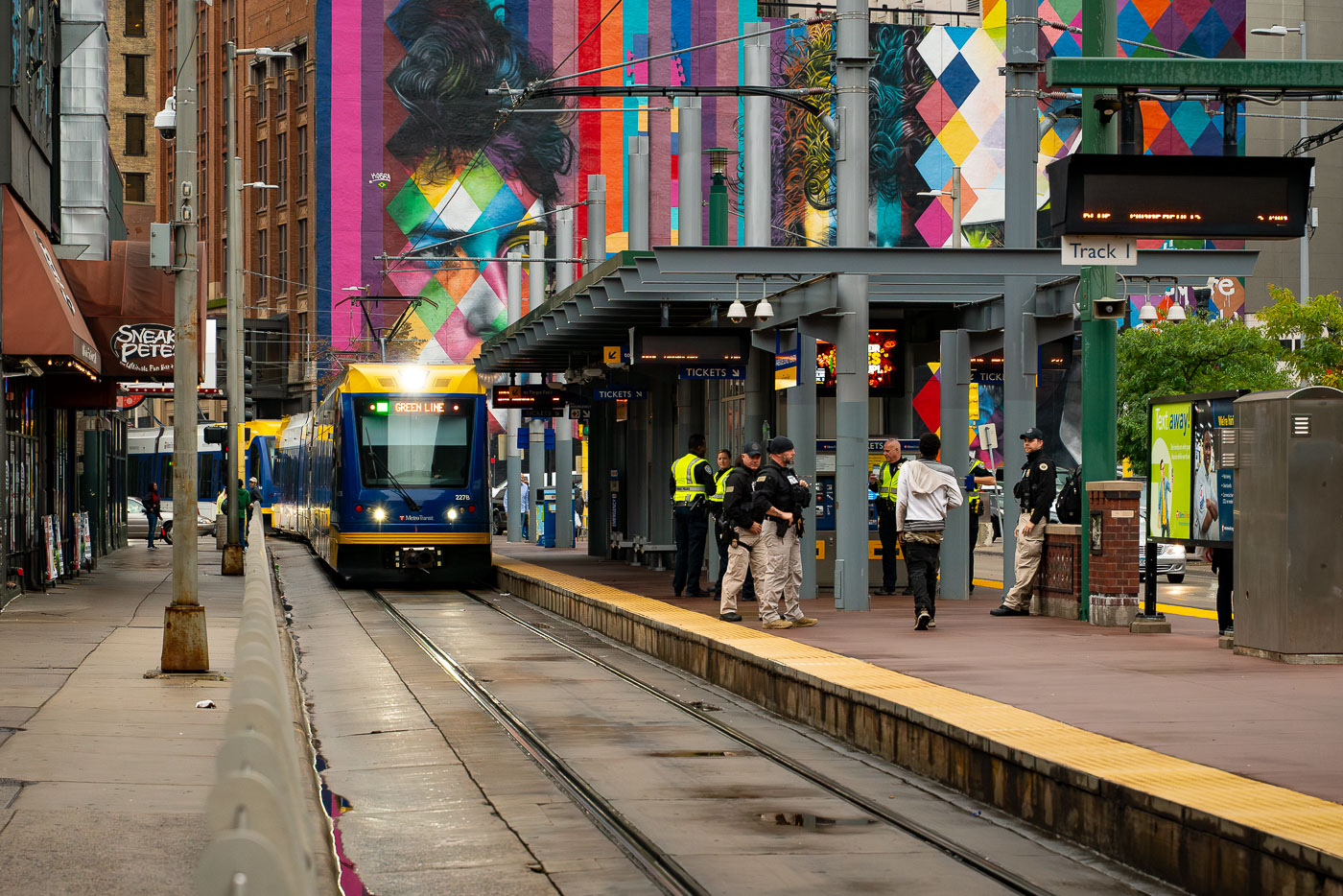
Minneapolis Target Field Station with officers on the platform beside a Green Line train and Prince mural.
Minneapolis Target Field Station with Prince Mural and Security. On October 10, 2019, Homeland Security officers were present at the Target Field light rail station in downtown Minneapolis. This increased security presence was in response to a major political rally held at the nearby arena, which prompted heightened security measures throughout the Warehouse District transit corridor. The station serves as a key transit hub, connecting light rail lines to the downtown area and surrounding neighborhoods.

Minneapolis Target Field Station with Prince Mural and Security

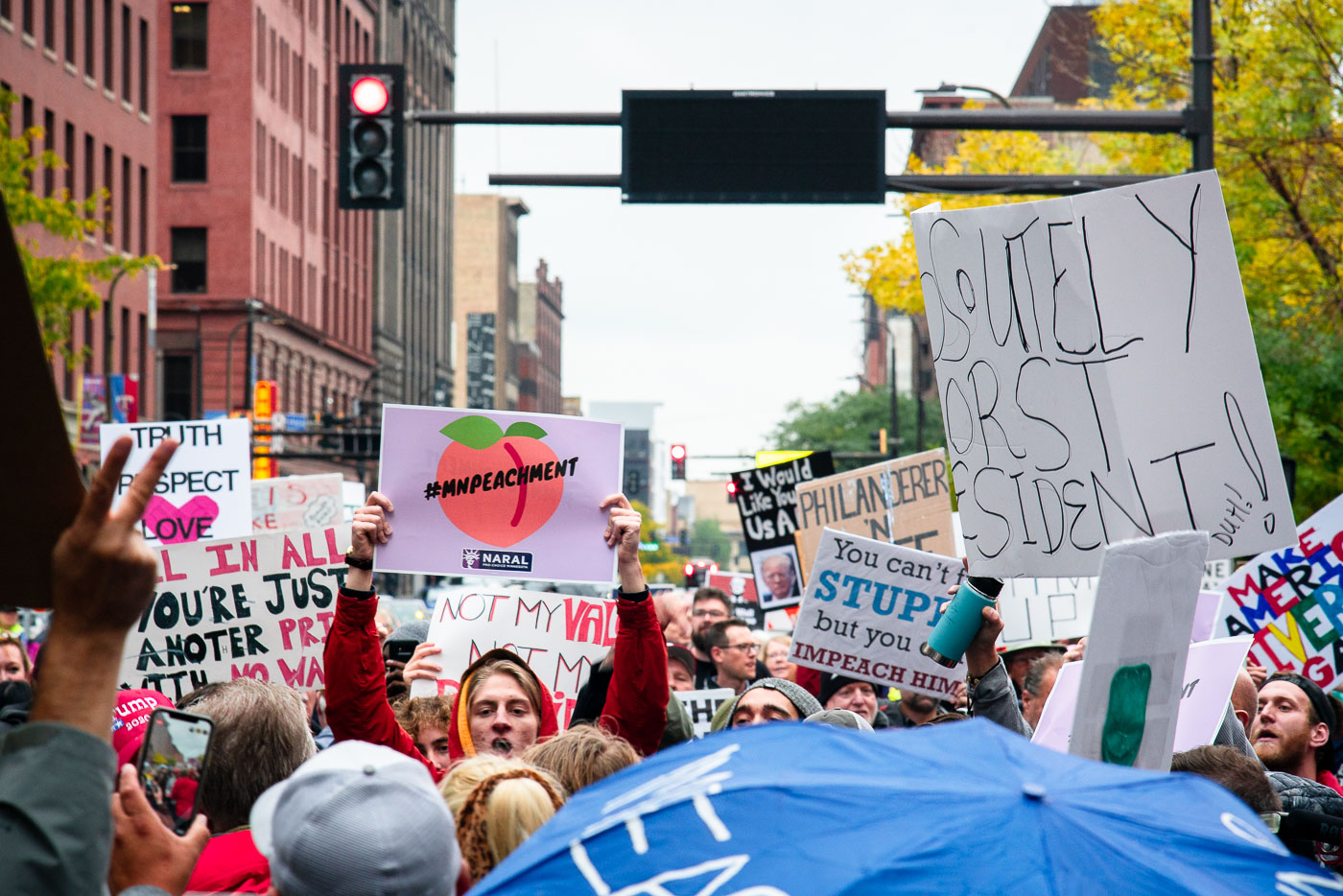
Protesters holding anti-Trump signs on Nicollet Mall in Minneapolis during the MNPEACHMENT march
Thousands of Minnesotans gathered on Nicollet Mall in downtown Minneapolis on October 10, 2019, for a protest against then-President Donald Trump. The event, known online as #MNPEACHMENT, was organized in opposition to Trump's policies and to call for his impeachment. The march originated near the Target Center, where Trump was holding a campaign rally, and proceeded through downtown under a significant police presence. This demonstration highlighted public dissent and political engagement in the city.

MNPEACHMENT Protest on Nicollet Mall, Minneapolis

Protester holds a sign at the Target Center in Minneapolis reading “Trump is giving children PTSD.”
Protesters gathered outside the Target Center in Downtown Minneapolis on October 10, 2019, to voice their opposition to a rally held by then-President Donald Trump. The sign prominently displayed reads, "TRUMP is giving CHILDREN PTSD" and "REPUBLICANS: WHERE ARE YOUR FAMILY VALUES? RELEASE THE FAMILIES REUNITE NOW!!" This protest occurred during Trump's 2020 presidential campaign, reflecting significant public dissent regarding his administration's policies, particularly those concerning immigration and family separations at the U.S.-Mexico border.

Minneapolis Protest Sign: Trump is Giving Children PTSD

Woman holds a protest sign reading “Trump: Read My Sign” in downtown Minneapolis.
A protestor holds a sign reading "TRUMP: READ MY SIGN" during a rally in Minneapolis on October 10, 2019. The event coincided with a campaign rally for then-President Donald Trump. Such protests often occur during presidential election cycles, reflecting public engagement with political discourse and policy debates. The sign's message directly addresses the president, suggesting a desire for engagement or a critique of his administration's policies or communication.

Minneapolis Trump Rally Protestor Holds Sign
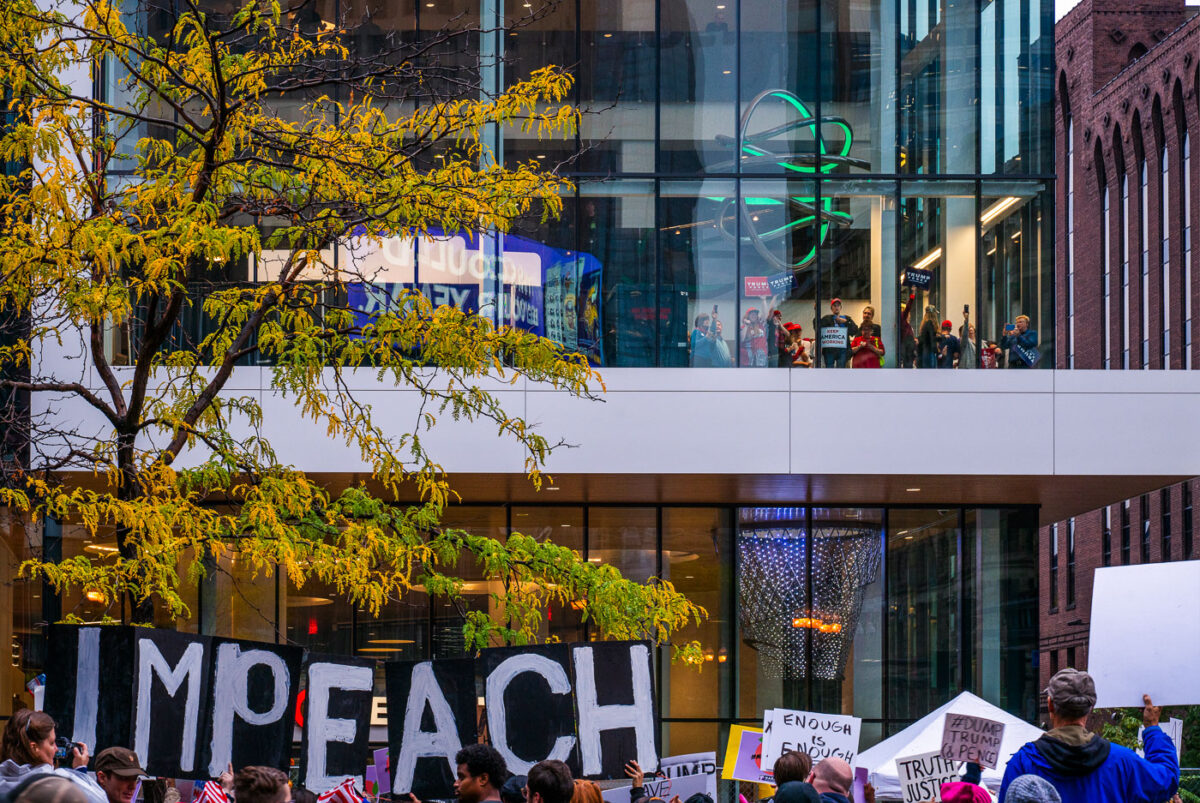
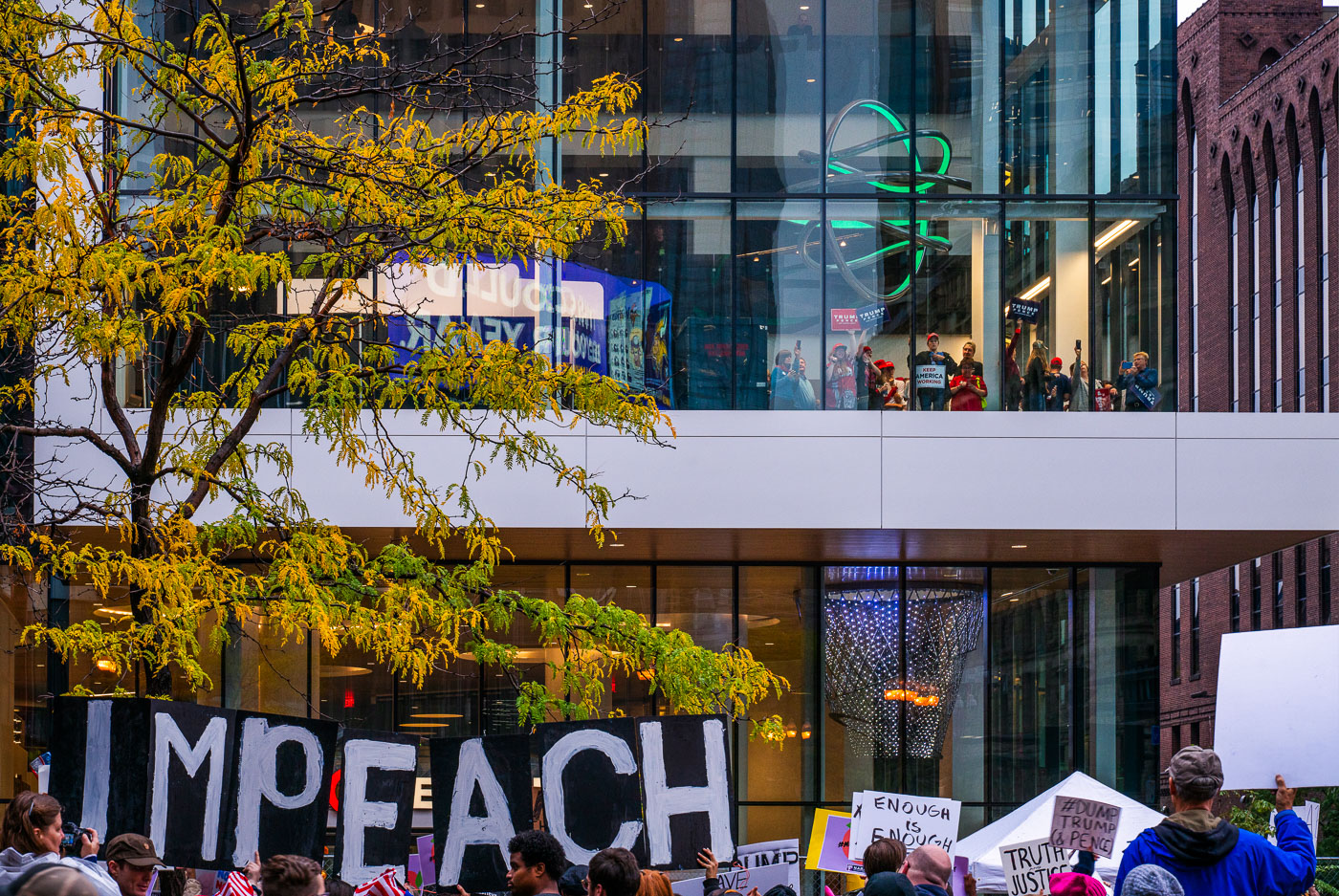
Protesters with IMPEACH signs outside Target Center in Minneapolis during Trump rally, 2019
Protesters gathered outside the Target Center in downtown Minneapolis on October 10, 2019, to rally against then-President Donald Trump's campaign event. The "IMPEACH" sign prominently displayed reflects the political climate of the time, as the House of Representatives was initiating impeachment proceedings against Trump. Inside the venue, supporters of the President could be seen, highlighting the division surrounding the event. The Target Center, a multi-purpose arena, regularly hosts sporting events, concerts, and political rallies, serving as a significant public gathering space in the city.

Minneapolis Protestors Rally Against Trump at Target Center, Oct 2019
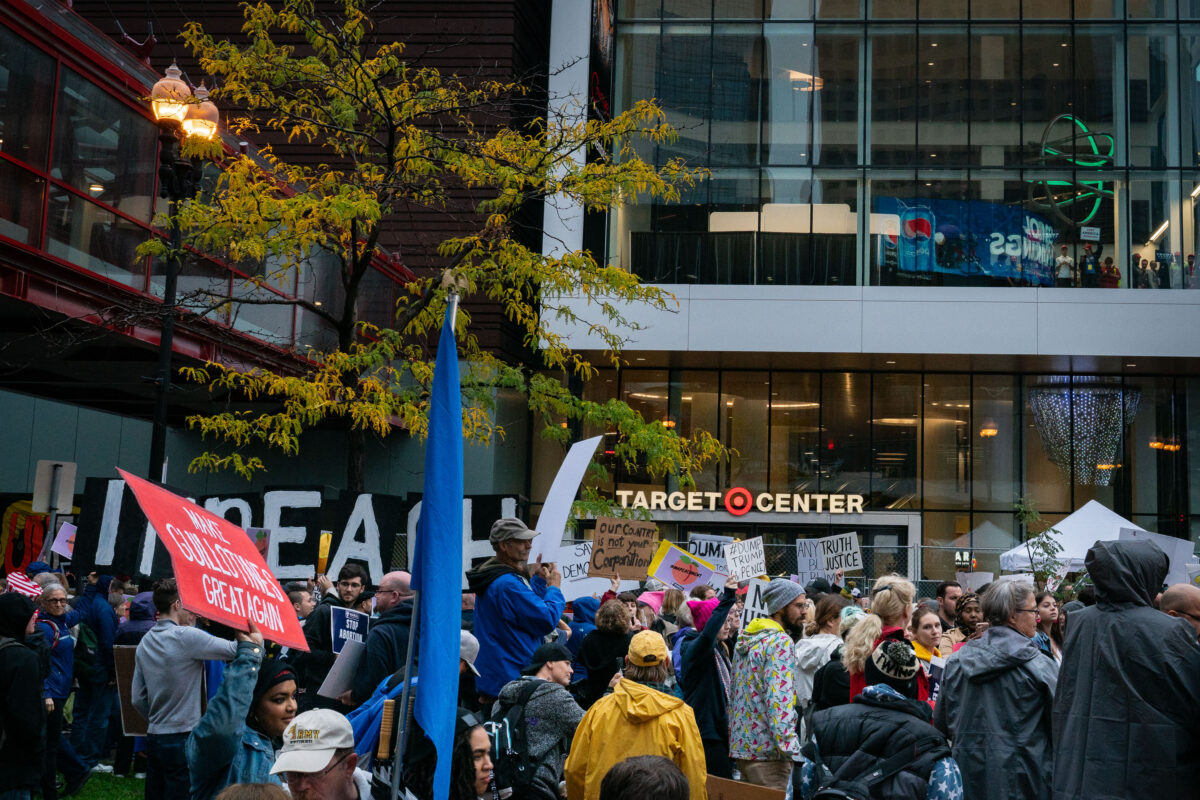
Protesters outside Target Center in Minneapolis during a Trump rally.
Protesters gathered outside the Target Center in Minneapolis on October 10, 2019, during a Trump rally. The Target Center, a multi-purpose arena, hosts sporting events, concerts, and political gatherings. The protest occurred amidst the 2020 presidential election cycle, reflecting the polarized political climate of the time. Signs held by protesters expressed opposition to the rally and the Trump administration, with some referencing impeachment proceedings.

Protesters at Trump Rally, Target Center, Minneapolis, 2019
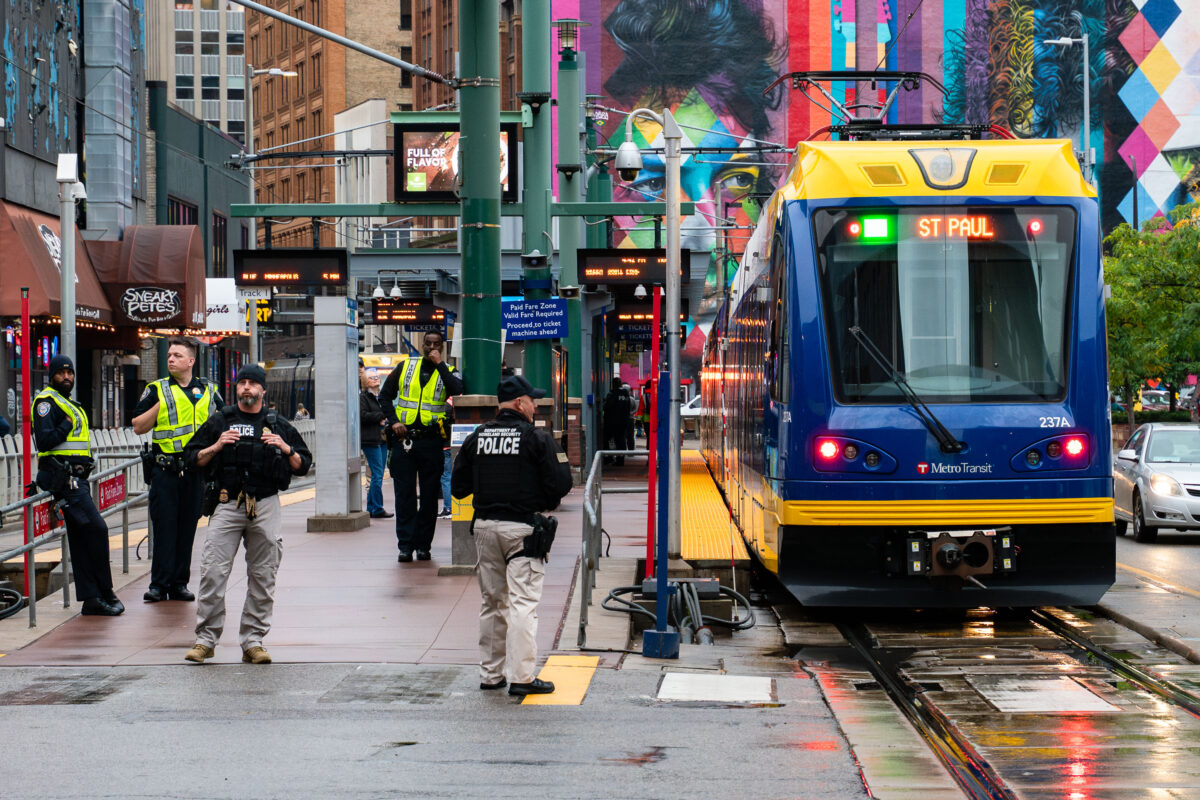
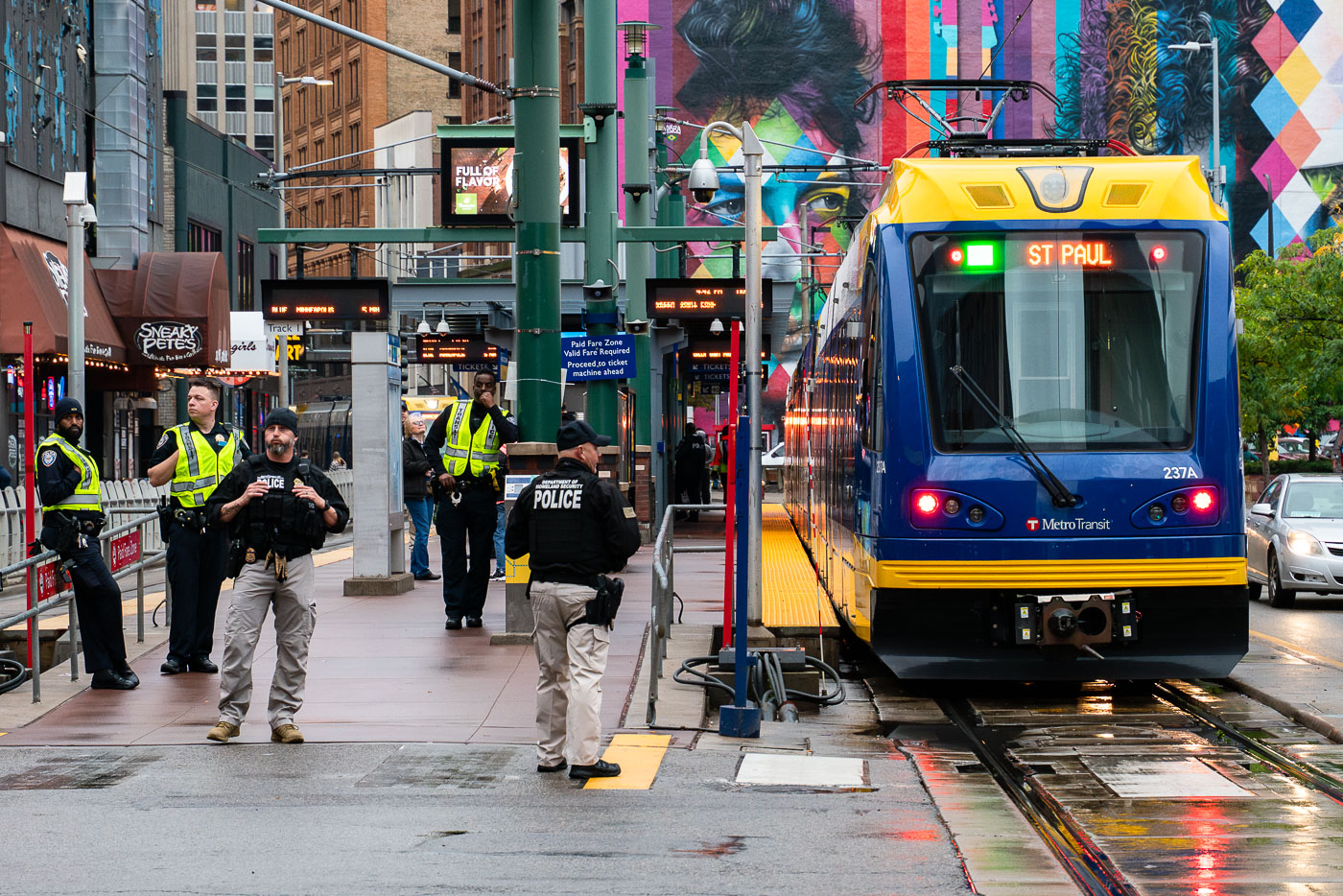
Homeland Security officers stand by a Metro Transit train at Minneapolis Warehouse District LRT station.
Department of Homeland Security officers were present at the Warehouse District LRT station in Minneapolis on October 10, 2019. Their deployment coincided with a rally held by then-President Donald Trump at the nearby Target Center. The light rail system serves as a vital transportation artery for the city, connecting residents and visitors to various districts. The presence of federal law enforcement at a public transit hub during a political event highlights the security considerations surrounding such gatherings.

Homeland Security at Minneapolis Warehouse District LRT during Trump Rally
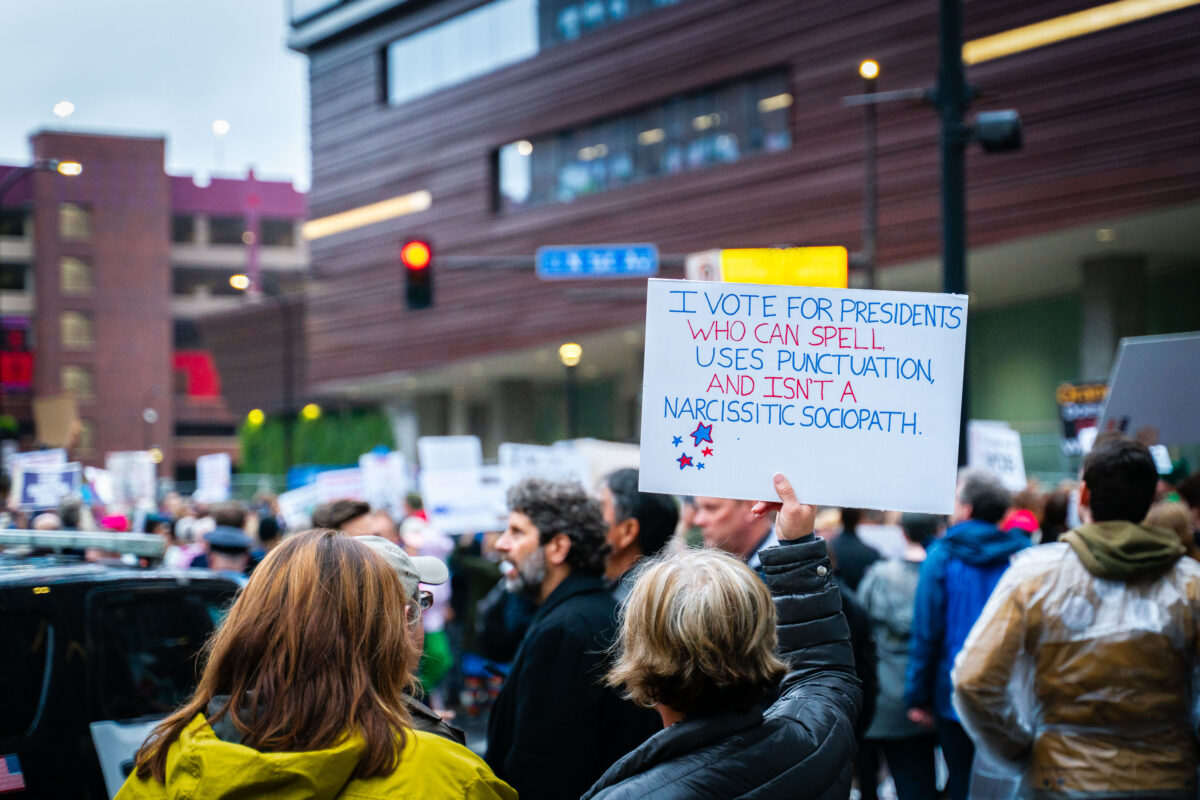
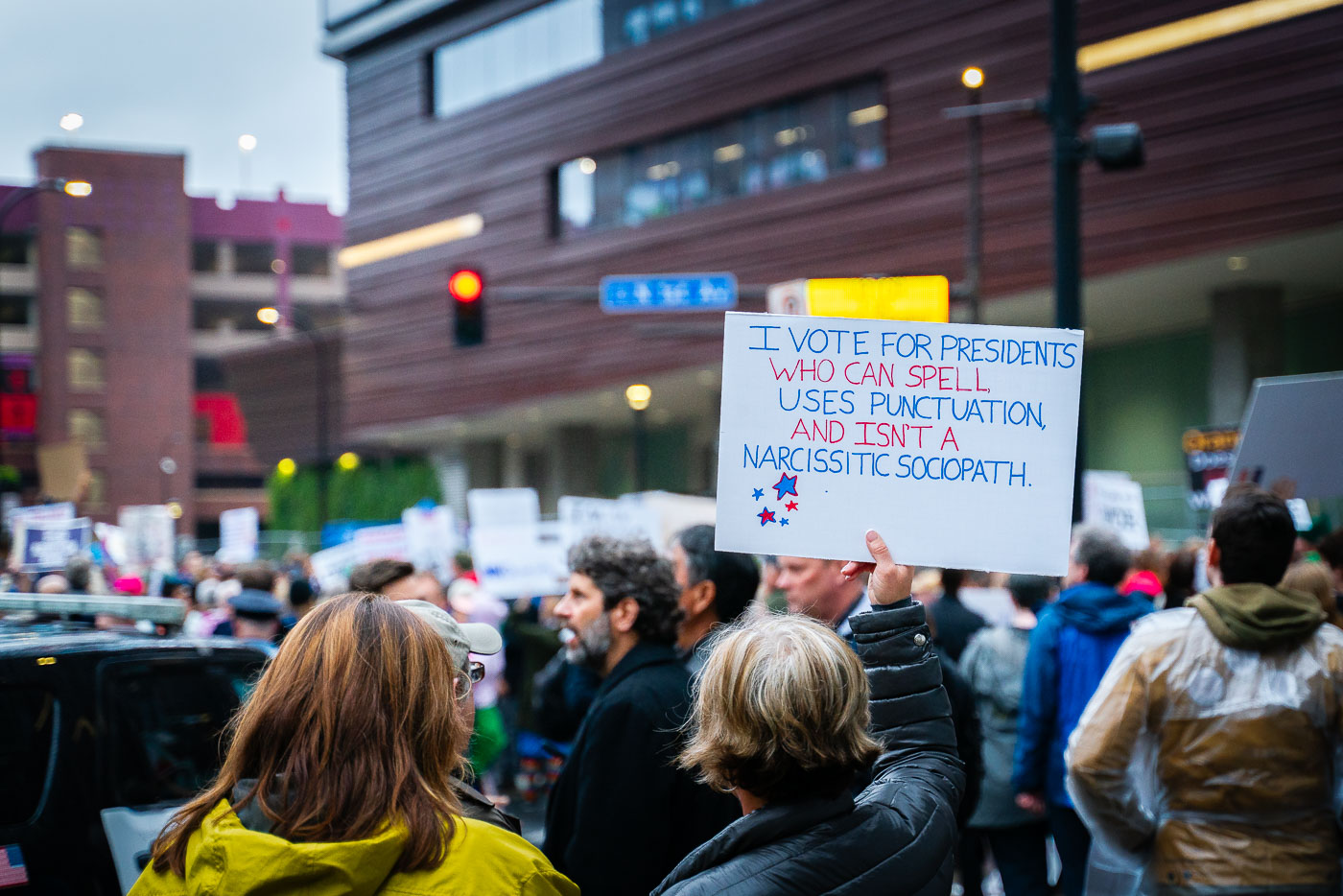
Protester holds a sign outside Target Center in Minneapolis during a Trump rally.
A protestor holds a sign reading "I VOTE FOR PRESIDENTS WHO CAN SPELL, USES PUNCTUATION AND ISN'T A NARCISSISTIC SOCIOPATH" outside the Target Center in Minneapolis on October 10, 2019. The sign reflects critical sentiment towards then-President Donald Trump during a rally held in the city. The Target Center, a multi-purpose arena, frequently hosts political events and public gatherings, making it a common site for both support and opposition rallies. This protest occurred during the 2020 presidential election cycle, a period marked by significant political polarization and public engagement.

Minneapolis Protest Sign at Trump Rally, Oct 10, 2019
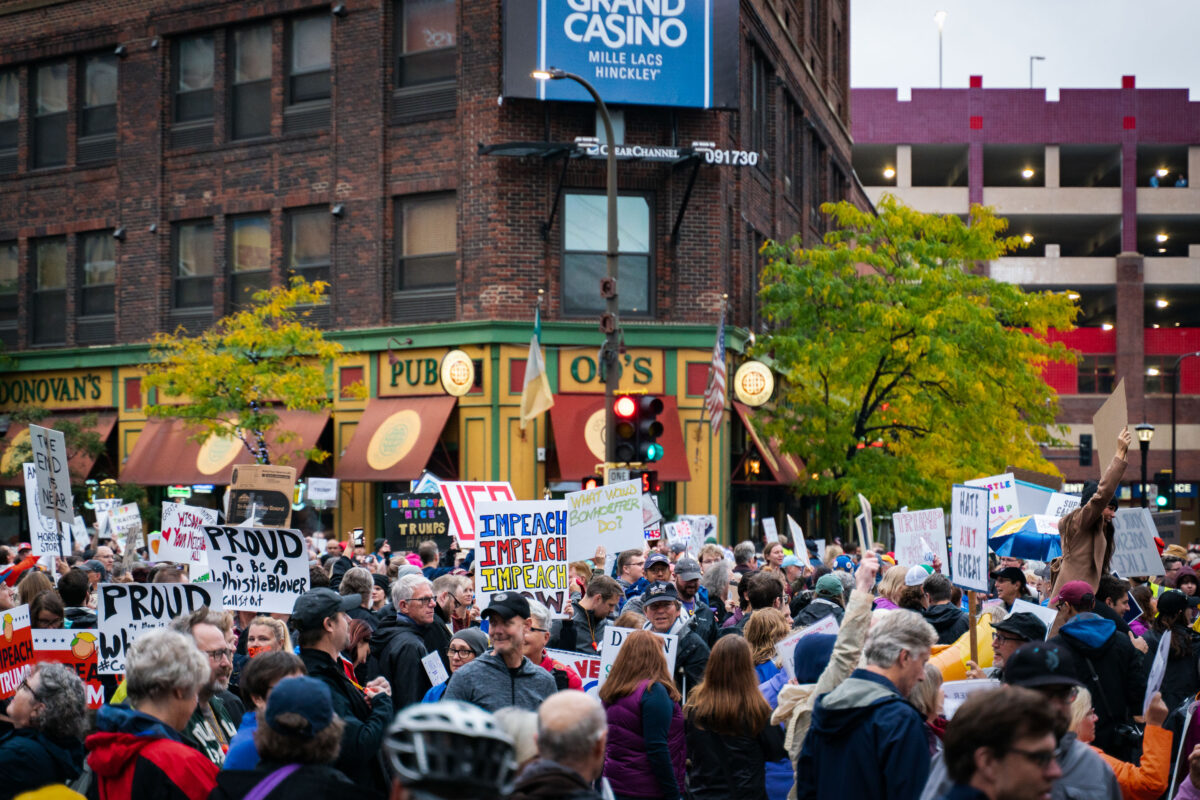
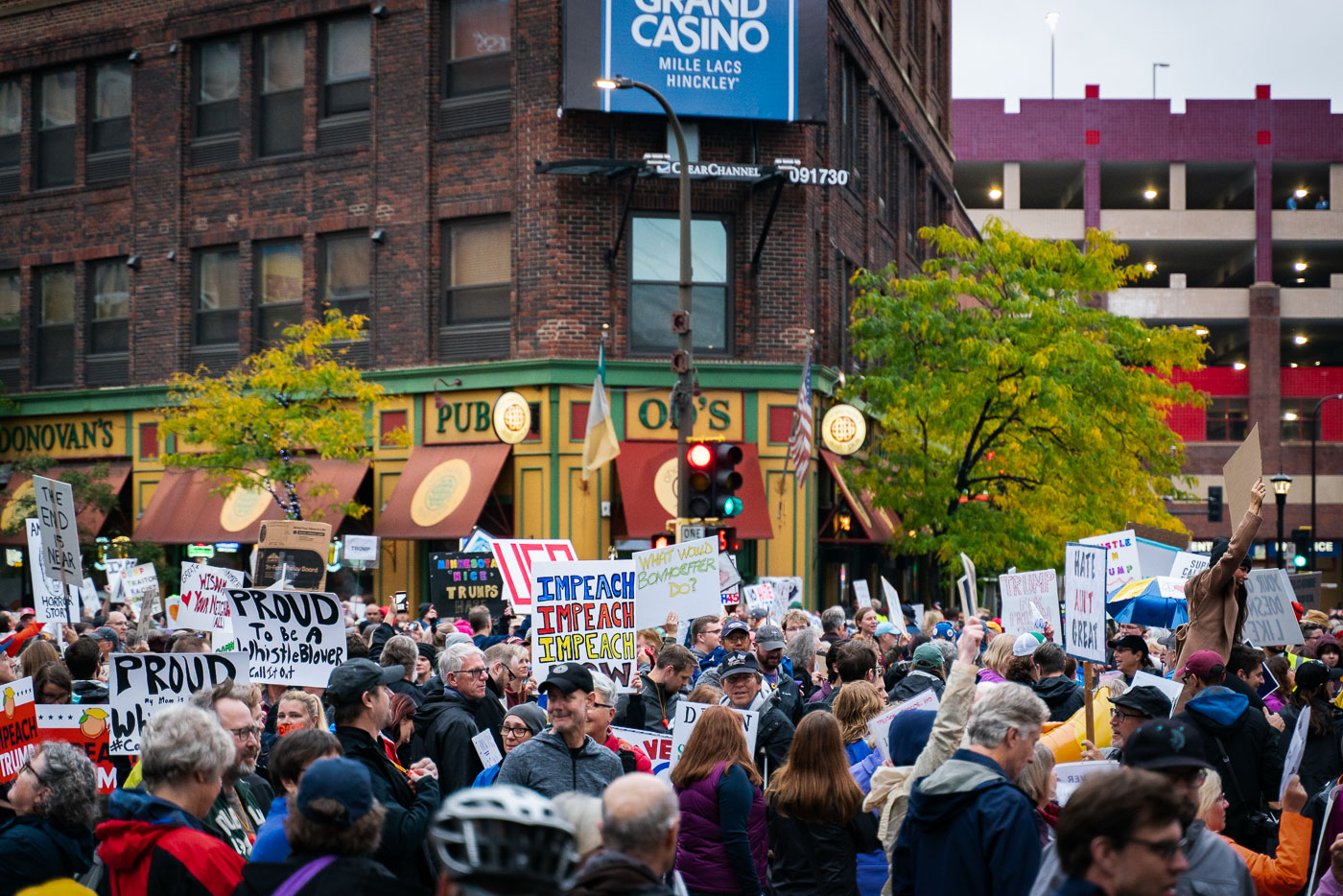
Protesters with impeachment signs outside O'Donovan's Pub in downtown Minneapolis.
Protesters gathered in downtown Minneapolis on October 10, 2019, holding signs calling for the impeachment of President Donald Trump. The protest took place outside the Target Center, a major indoor arena in the city. This event occurred during a period of significant political division and ongoing impeachment inquiries related to the Trump administration. The signs reflect the strong sentiments of opposition and calls for accountability among a segment of the public during that time.

Minneapolis Protestors Hold Impeach Trump Signs Oct 10 2019
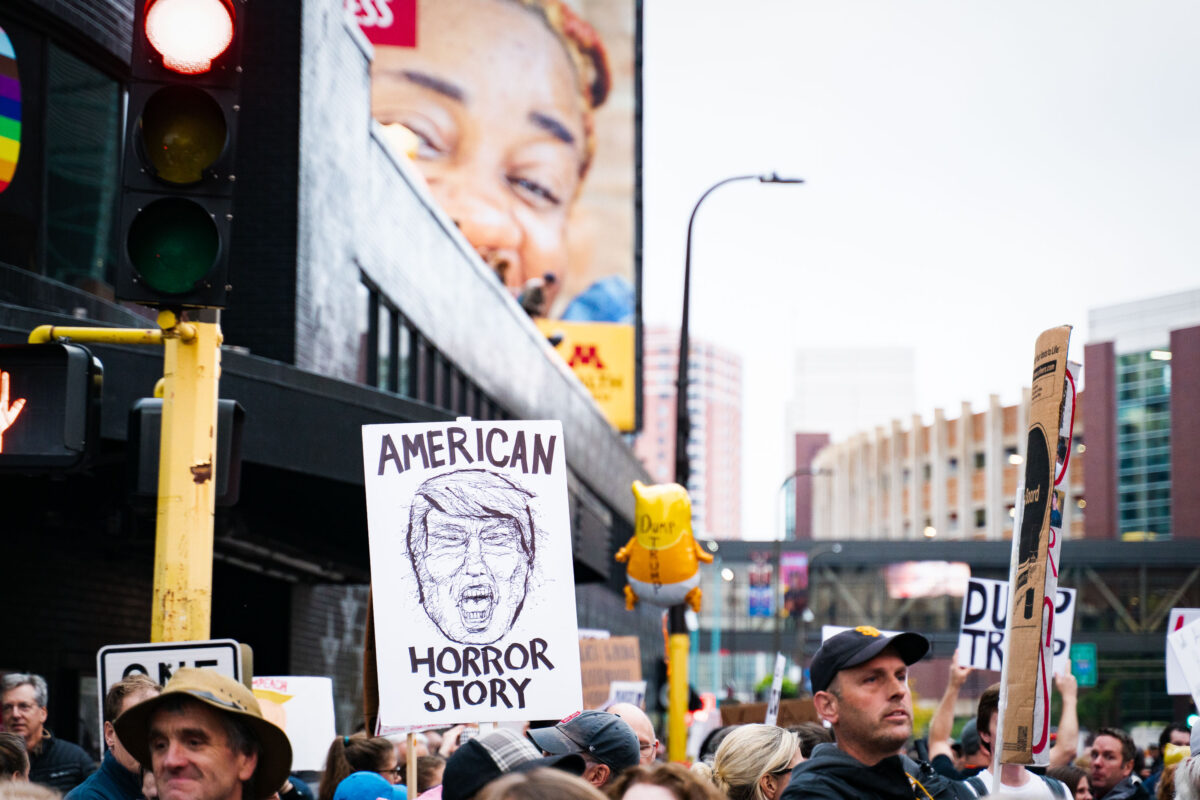
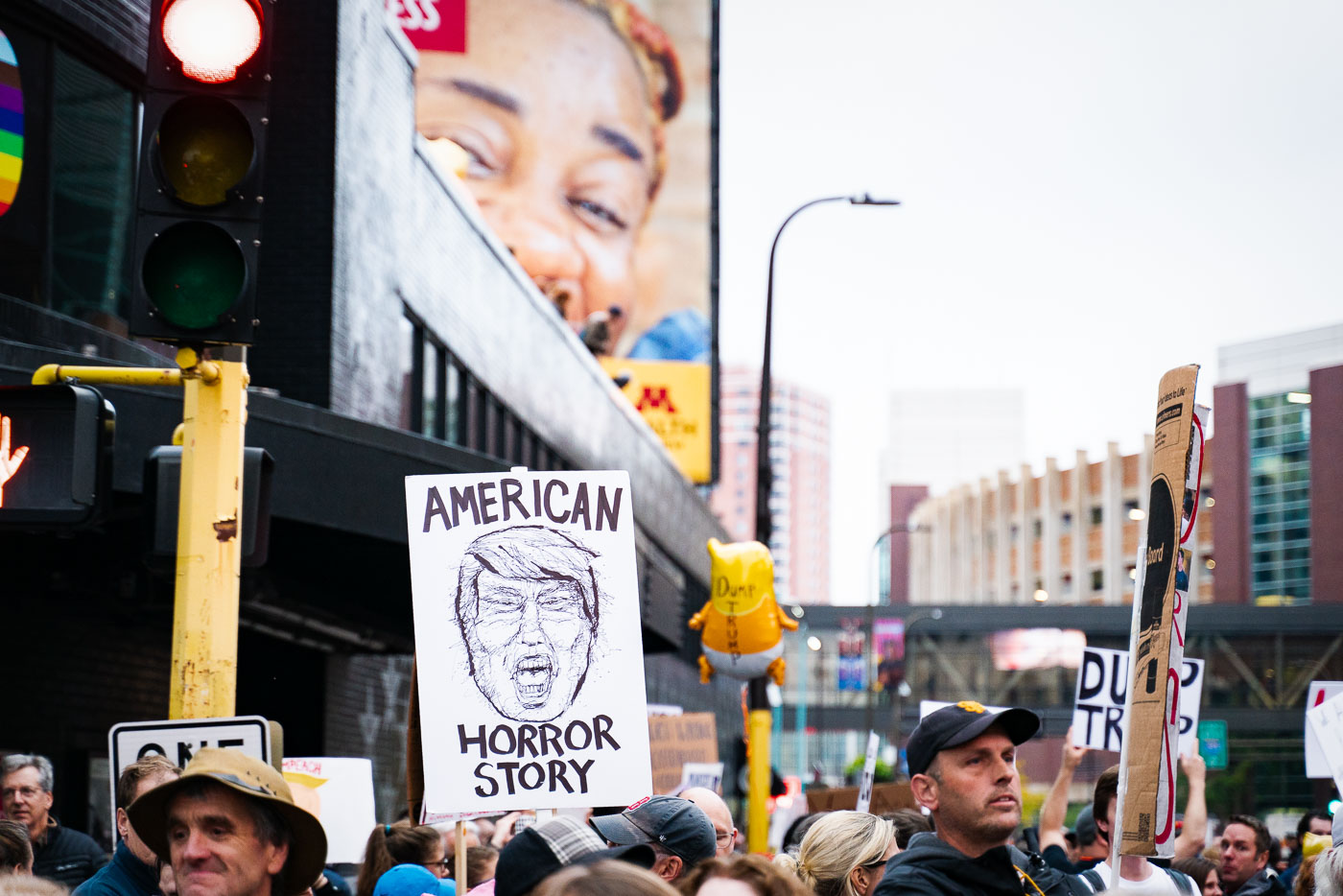
Protesters in downtown Minneapolis hold a sign reading "American Horror Story" beside a Trump caricature.
Protesters gathered in downtown Minneapolis on October 10, 2019, during a rally related to the 2020 presidential election. The sign prominently displayed reads "American Horror Story" with a caricature of then-President Donald Trump. This event occurred amidst a period of significant political polarization and public discourse surrounding the Trump administration and its policies. The protest reflects the broader national sentiment and engagement with political issues during that election cycle.

Minneapolis Protest Sign: “American Horror Story” – Oct 10, 2019
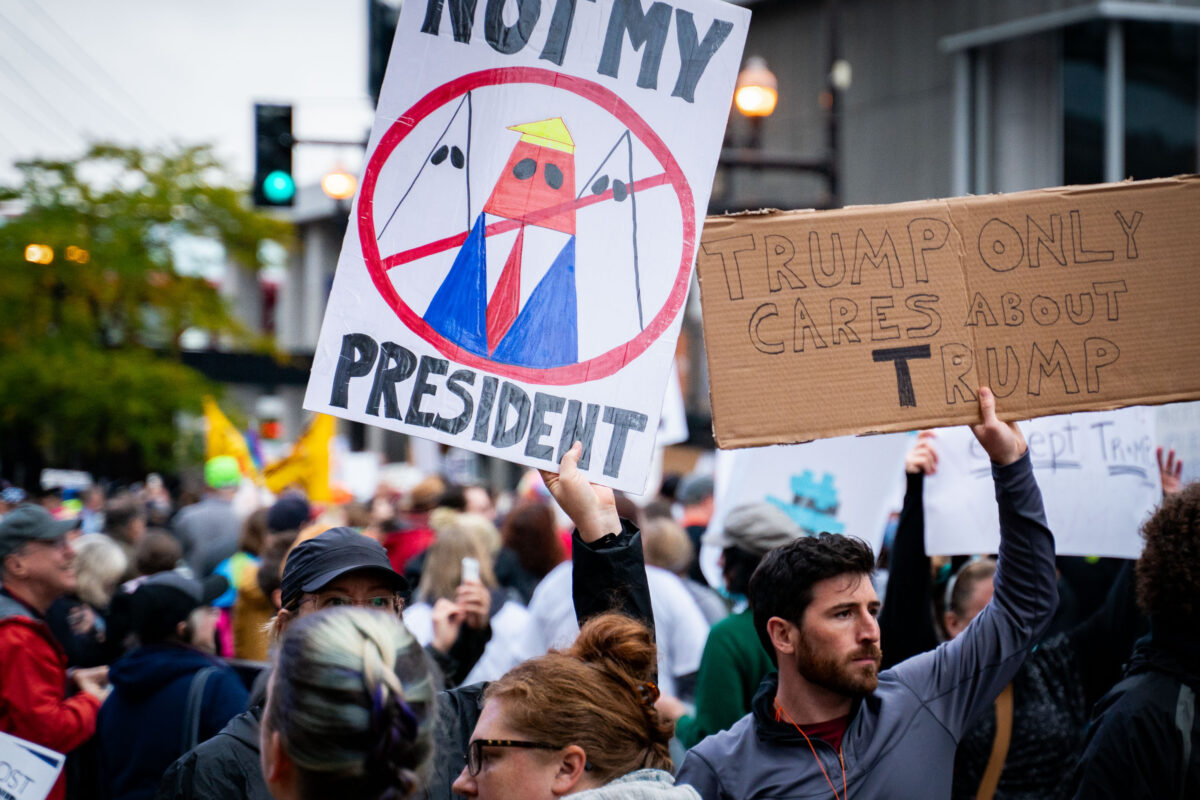
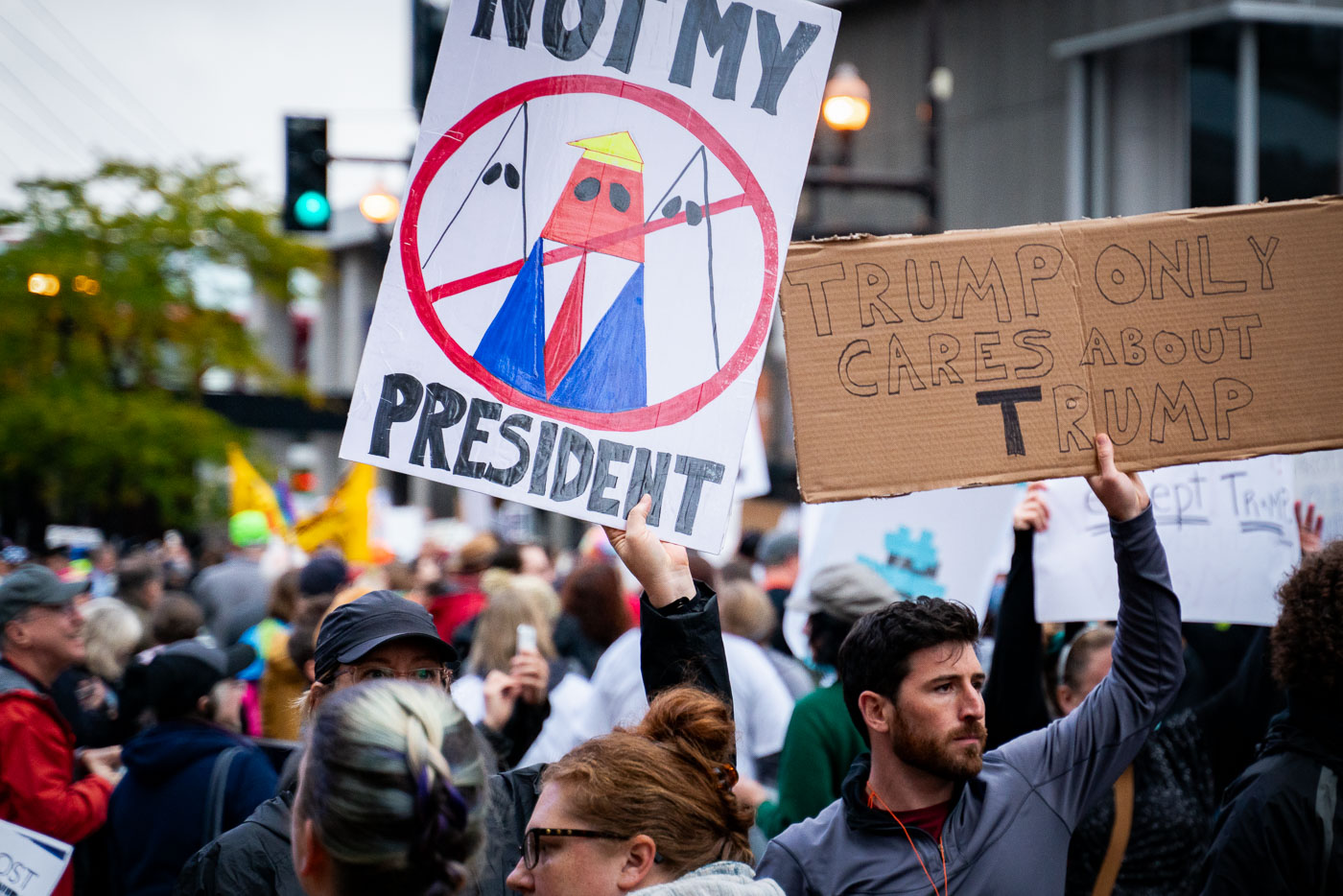
Protesters hold anti-Trump signs outside Target Center in downtown Minneapolis.
Protesters gathered outside the Target Center in Minneapolis on October 10, 2019, to voice their opposition to then-President Donald Trump's policies. The signs displayed reflect sentiments of dissent and criticism towards the administration. This event occurred during a period of significant political polarization surrounding the Trump presidency and his re-election campaign. The Target Center, a multi-purpose arena, has often been a site for major public events and gatherings in downtown Minneapolis.

Minneapolis Protest: ‘Not My President’ Sign, October 10, 2019
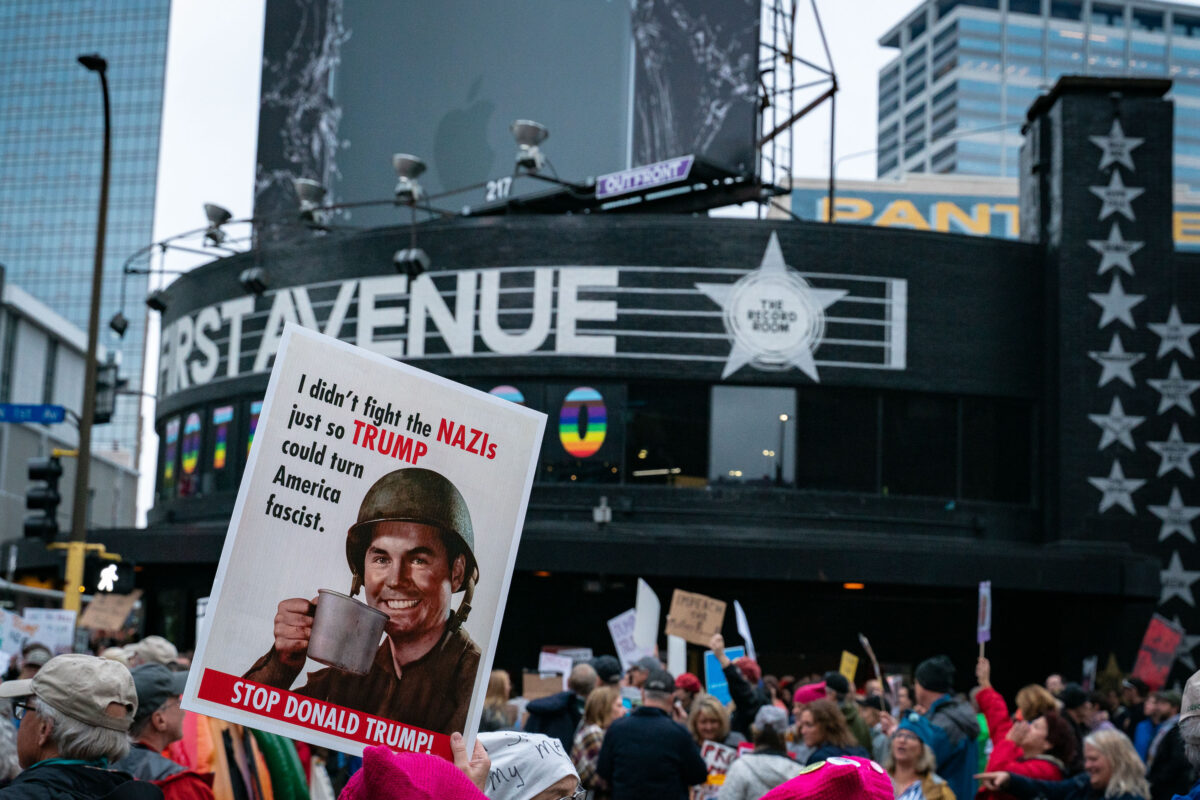
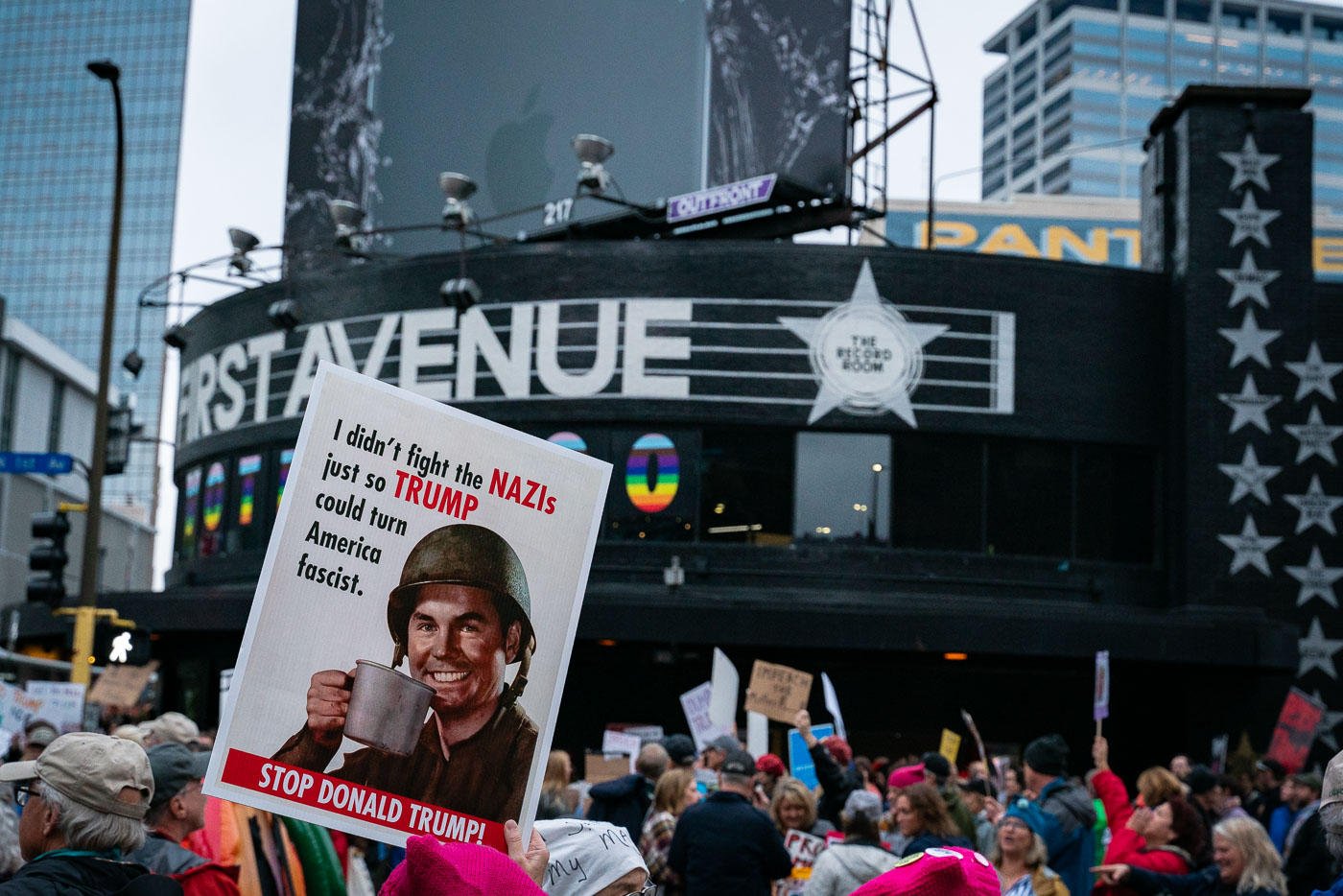
Protesters with anti-Trump signs outside First Avenue in downtown Minneapolis
Protesters gathered outside First Avenue in Minneapolis on October 10, 2019, during a rally for then-President Donald Trump. The sign prominently displayed reads, "I didn't fight the NAZIs just so TRUMP could turn America fascist." First Avenue is a historic entertainment venue in downtown Minneapolis, known for hosting concerts and other live events. The protest reflects the political divisions and public discourse surrounding the 2020 presidential election cycle.

Minneapolis Protest Sign Outside First Avenue: “Stop Donald Trump!”
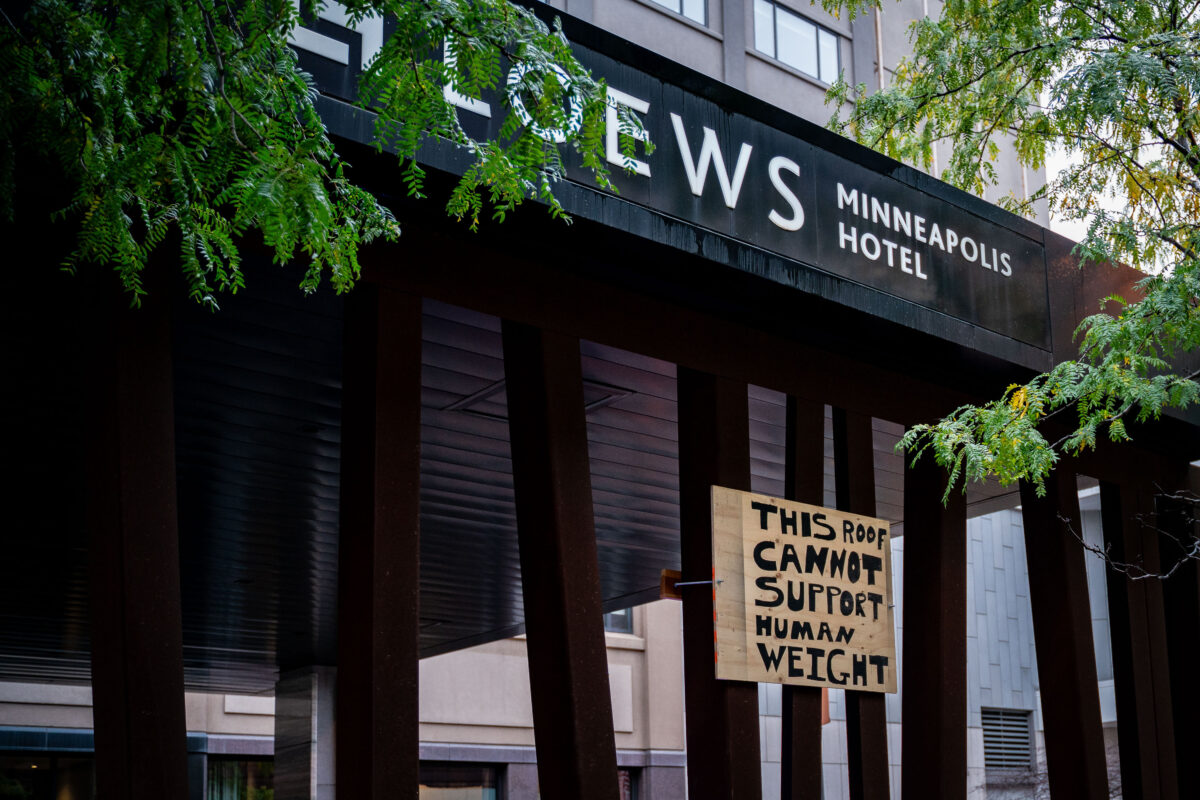
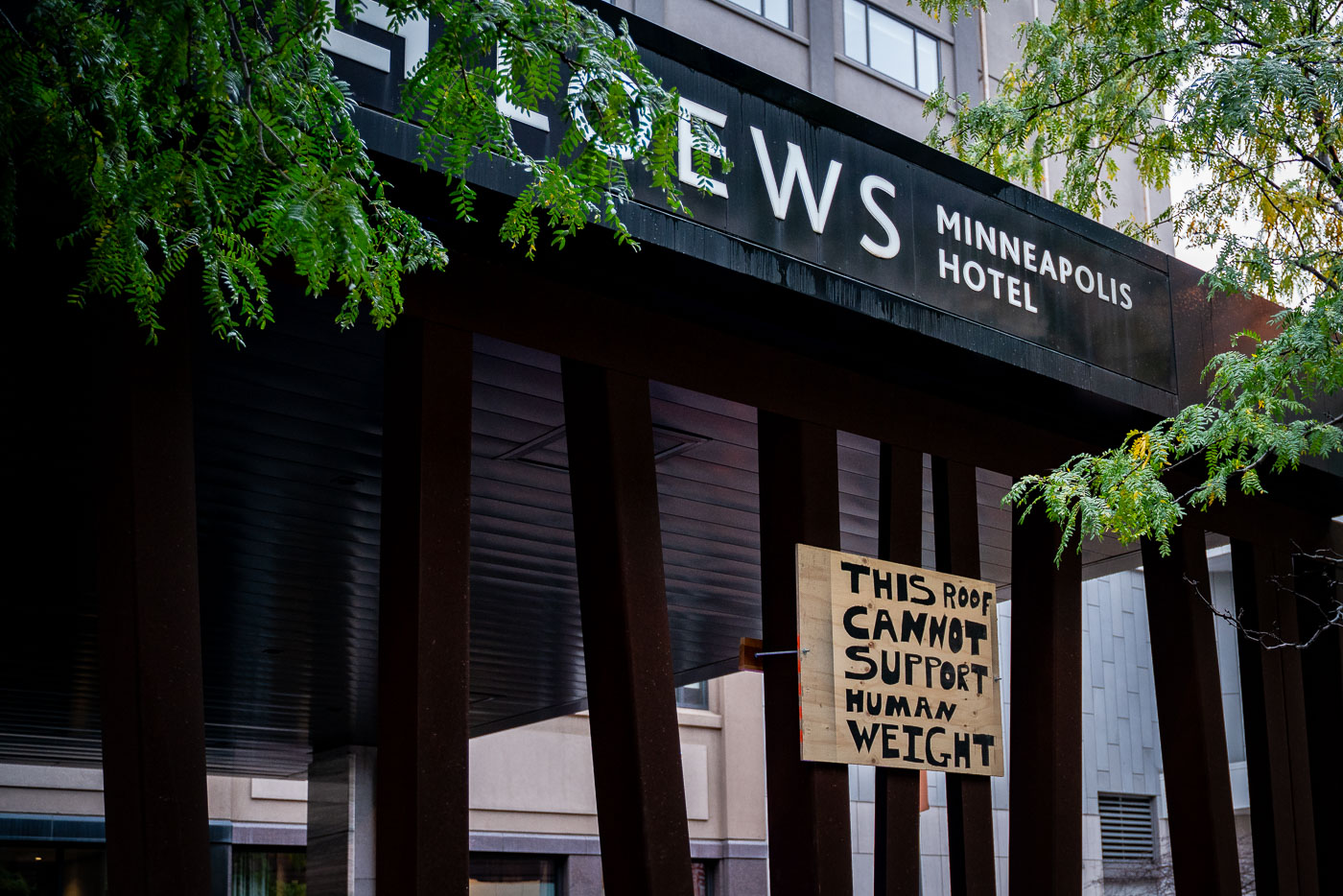
Handmade warning sign hangs under the Loews Minneapolis Hotel canopy during a Trump rally in downtown Minneapolis
A handmade sign reading “This Roof Cannot Support Human Weight” was posted beneath the Loews Minneapolis Hotel canopy on October 10, 2019. The hotel, adjacent to the Target Center, served as a focal point during a political rally and counter-protests that drew thousands to downtown Minneapolis. City officials placed similar signs throughout the area to deter individuals from climbing elevated structures amidst heavy police presence and street closures.

Minneapolis Hotel Safety Sign During 2019 Trump Rally

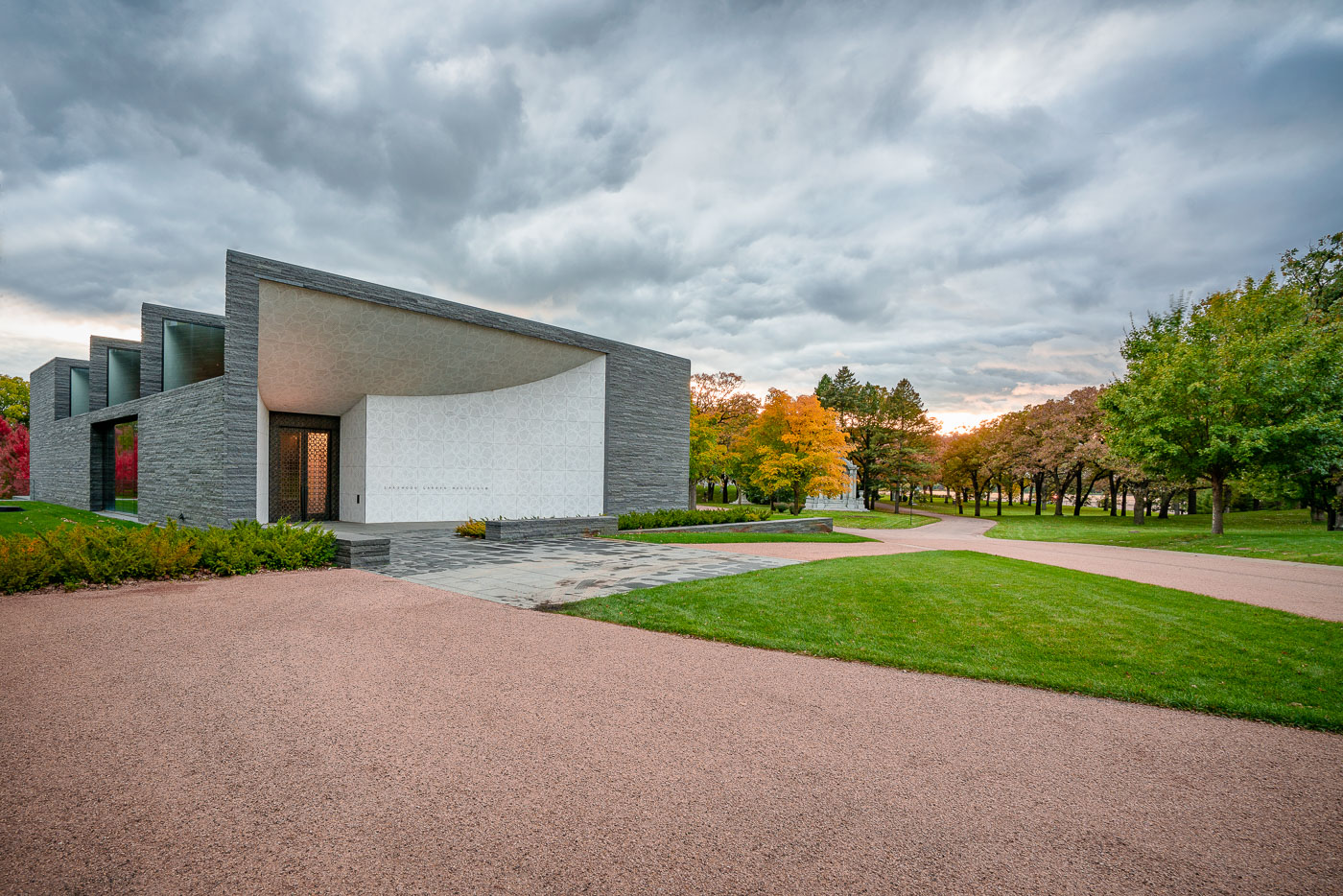
Lakewood Cemetery Garden Mausoleum, Minneapolis
The Lakewood Cemetery Garden Mausoleum, completed in 2012 and designed by Joan Soranno and John Cook of HGA Architects, represents a modern counterpart to Lakewood’s historic chapel. Built into the natural slope of the cemetery grounds, the structure uses gray granite and white mosaic marble to evoke quiet reflection and permanence. Its minimalist form and interplay of light were conceived to harmonize with the surrounding landscape of Lake Calhoun (Bde Maka Ska). The mausoleum extends Lakewood’s 150-year tradition of blending architecture, art, and remembrance within a park-like setting in south Minneapolis.

Lakewood Cemetery Garden Mausoleum, Minneapolis

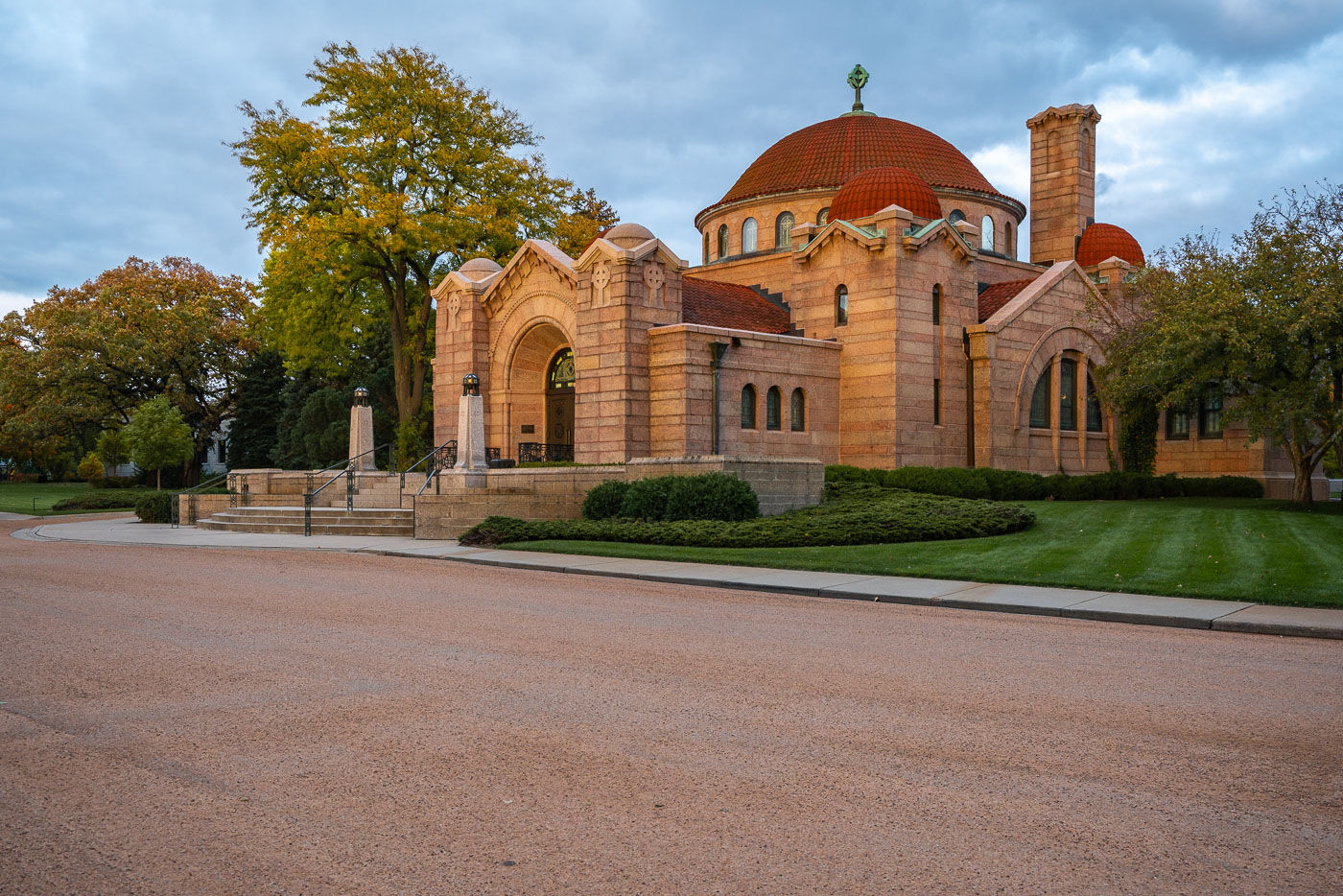
Lakewood Memorial Chapel in Minneapolis
The Lakewood Cemetery Memorial Chapel in Minneapolis, completed in 1910 and inspired by Byzantine architecture, stands as one of Minnesota’s most significant funerary landmarks. Its interior mosaics—crafted with over ten million pieces of Venetian glass—were modeled after the Hagia Sophia in Istanbul. The surrounding landscape, designed in the late 19th century, reflects the “garden cemetery” movement that emphasized serenity and park-like beauty. Today, Lakewood remains both an active cemetery and a public green space, connecting generations through its art, architecture, and memorial traditions.

Lakewood Cemetery Memorial Chapel at Sunset
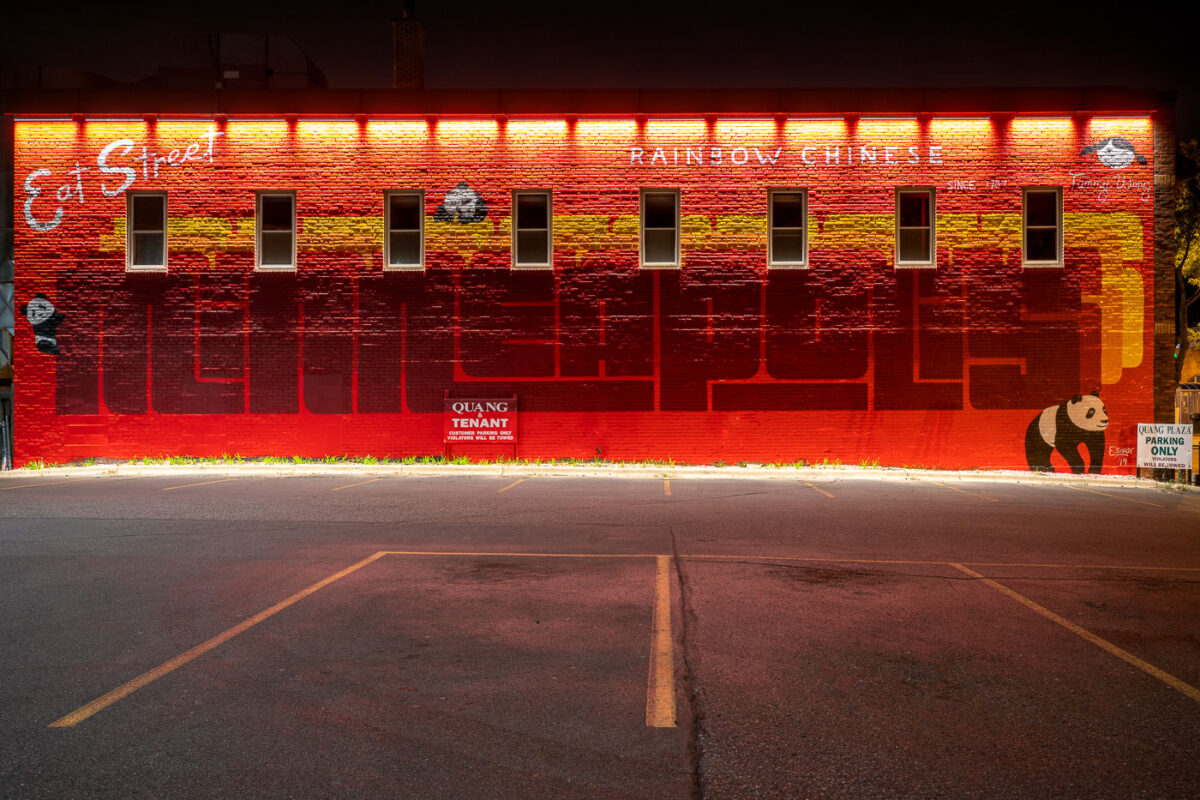
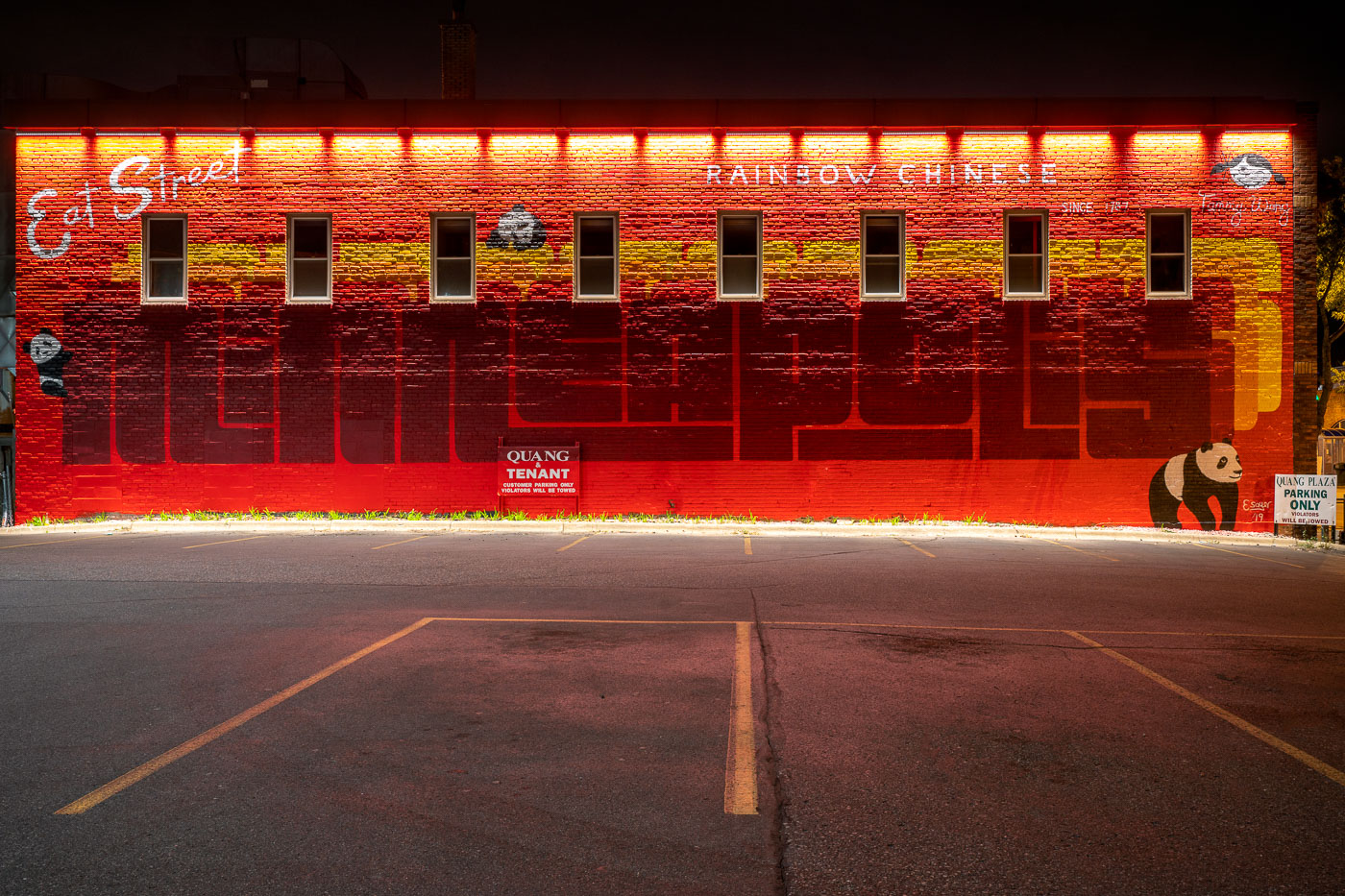
Rainbow Chinese Mural on Eat Street Minneapolis
The bright red mural on the side of Rainbow Chinese Restaurant at 2739 Nicollet Avenue anchors Minneapolis’s iconic “Eat Street” corridor. Painted in bold geometric letters spelling “Minneapolis,” the work was designed to celebrate the neighborhood’s cultural diversity and long history as a hub for immigrant-owned restaurants. The panda motif and stylized lettering nod to the restaurant’s founder, Tammy Wong, whose establishment has been a local fixture since 1987.

Rainbow Chinese Mural on Eat Street, Minneapolis
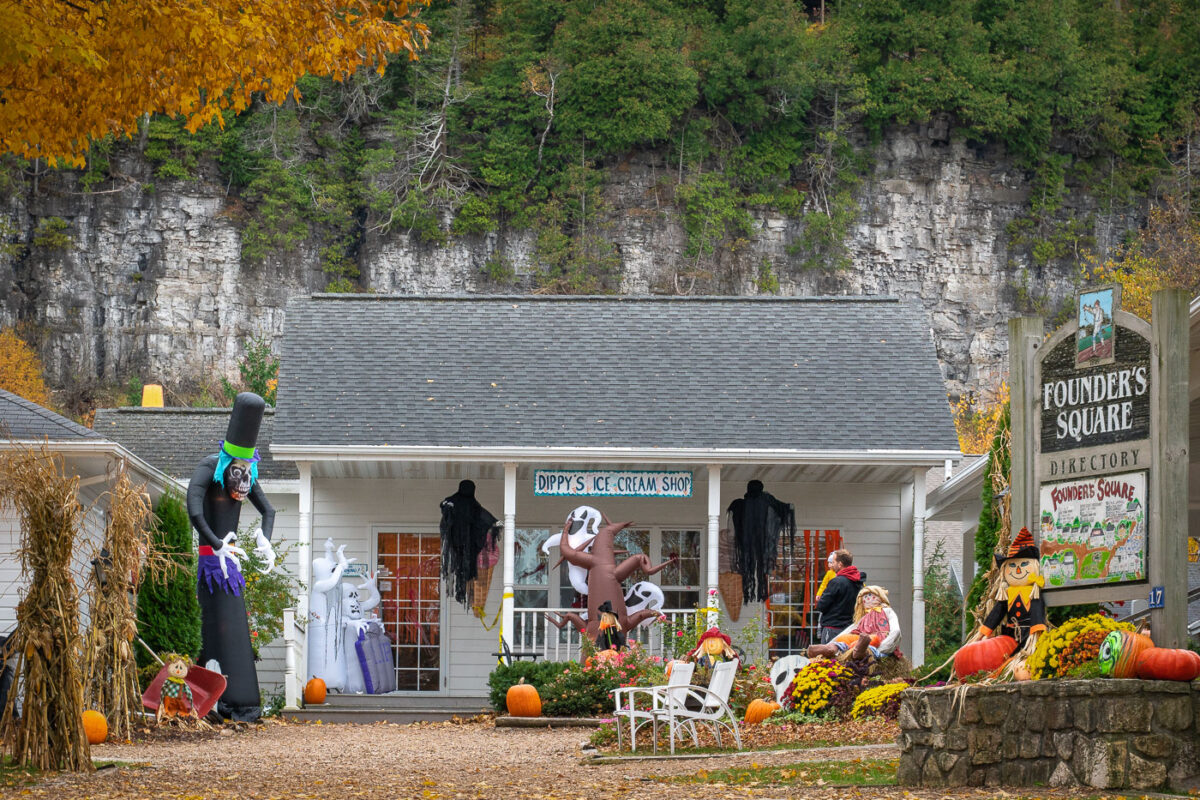
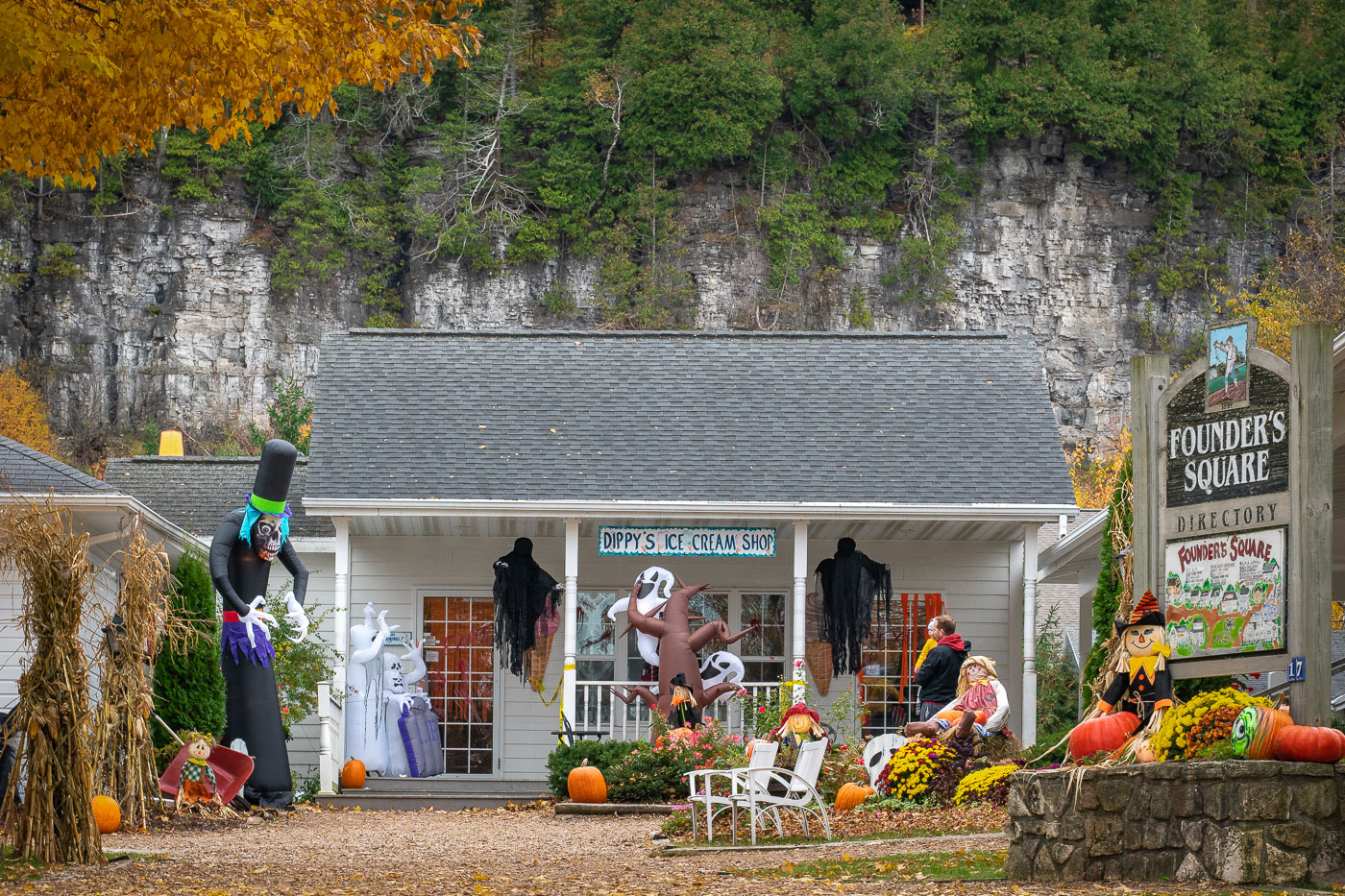
Dippy's Ice Cream Shop in Fish Creek, Wisconsin, decorated with Halloween inflatables and pumpkins beside limestone cliffs.
Dippy's Ice Cream Shop sits within Founder's Square, a cluster of shops along Highway 42 in Fish Creek, Wisconsin, set against the limestone bluffs that rise along this stretch of the Door County shoreline. Fish Creek was platted in the 1850s and grew as a lumber and shipping port before becoming one of the peninsula's early tourist villages. Founder's Square takes its name from the site's association with the town's original settlers and now houses a mix of seasonal businesses catering to visitors. Each October, shop owners in the square put out Halloween displays alongside pumpkins and mums to mark the transition into the fall tourist season.

Halloween at Dippy’s Ice Cream Shop in Founder’s Square, Fish Creek

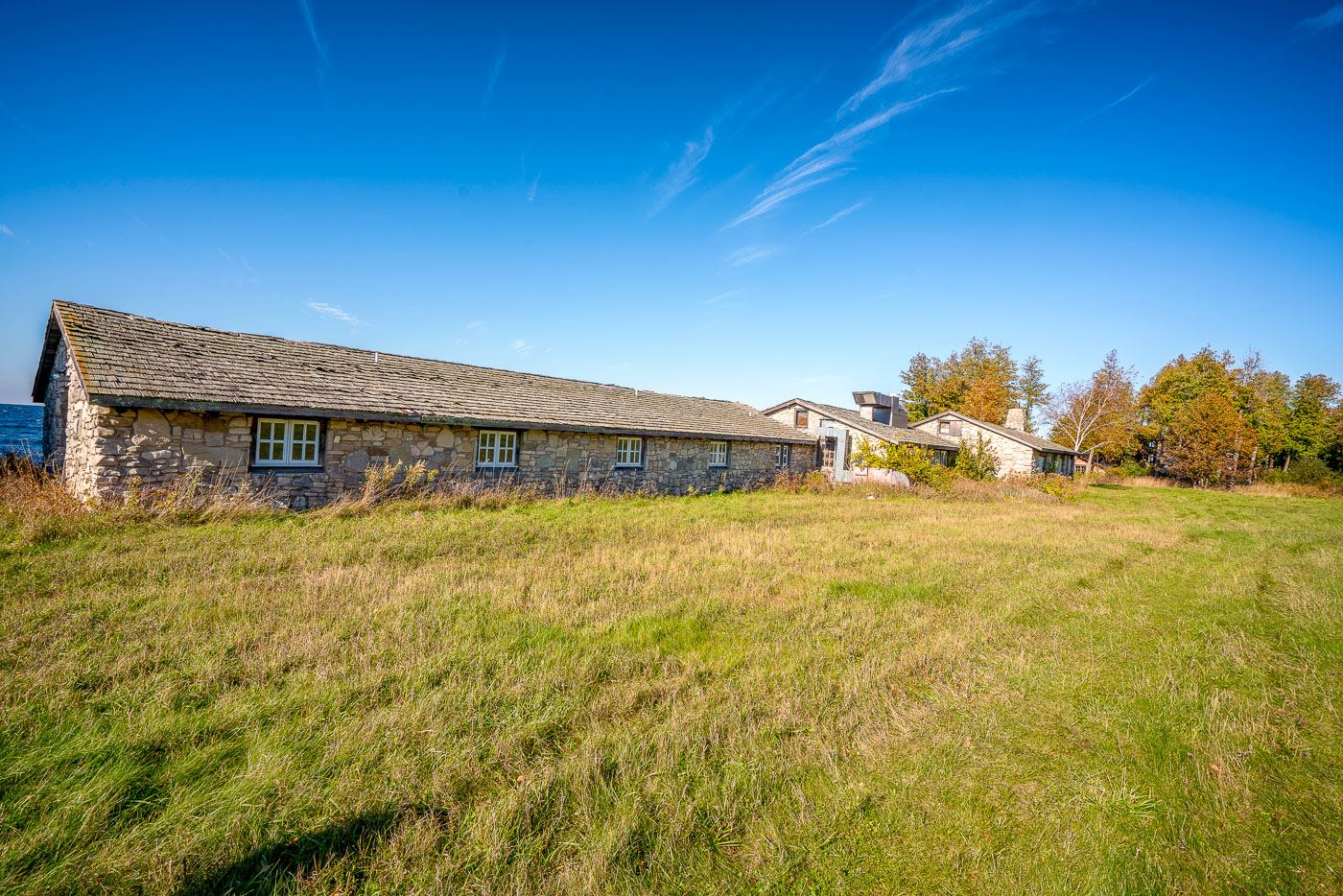
Abandoned Chateau Hutter on the Shore of Sturgeon Bay
Built in the early 1930s, Chateau Hutter was originally envisioned as a European-style resort and winery overlooking Sturgeon Bay in Door County, Wisconsin. The stone building, designed with locally quarried limestone and heavy timber framing, has long been abandoned but still stands as a striking relic of pre-war leisure architecture. Its location on a bluff above Lake Michigan and its craftsmanship make it one of the region’s most enigmatic remnants of early tourism development.

Abandoned Chateau Hutter on the Shore of Sturgeon Bay

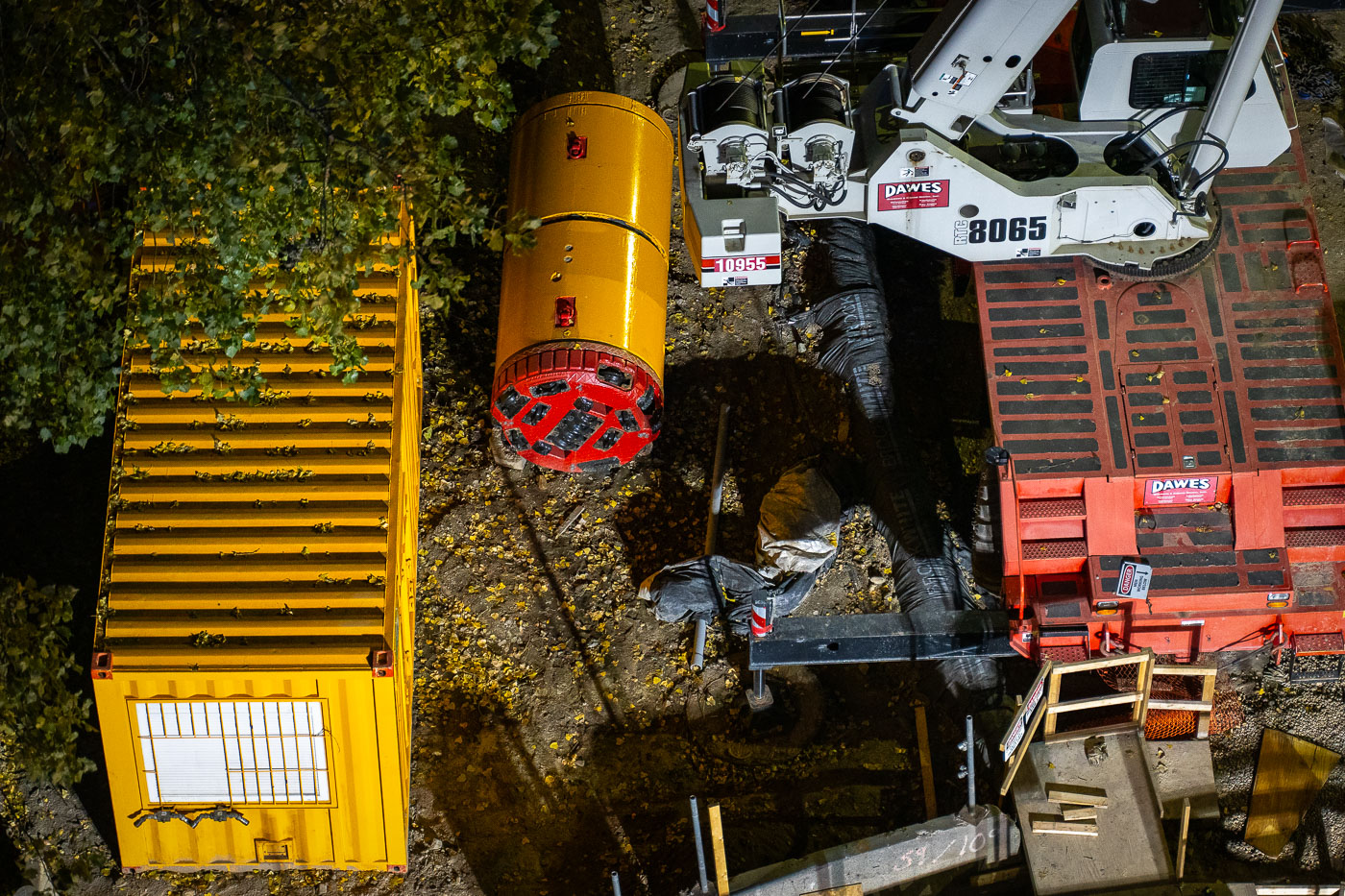
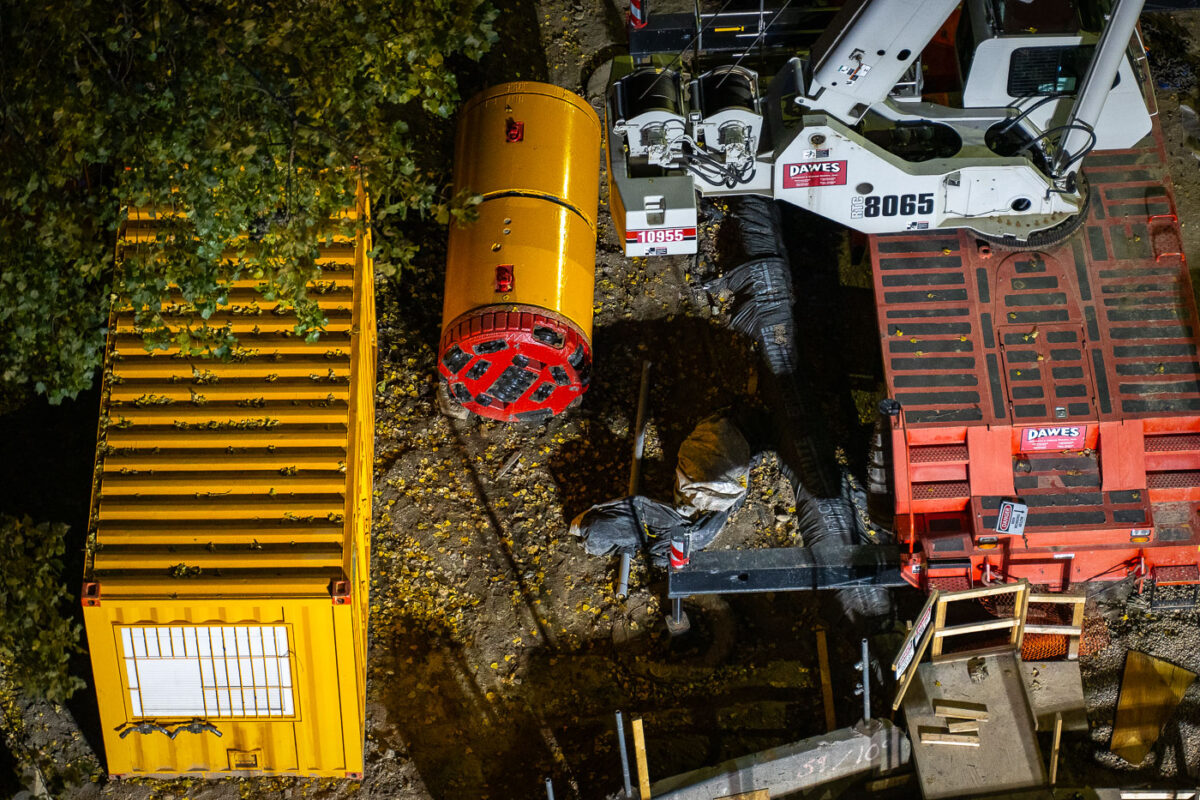
Mississippi River tunnel boring machine staged for a Minneapolis water main tunnel project.
Mississippi River tunnel boring machine, Minneapolis. The machine is staged for a subsurface water main tunnel project as part of work to expand and modernize the city’s underground water distribution system.

Mississippi River Tunnel Boring Machine, Minneapolis
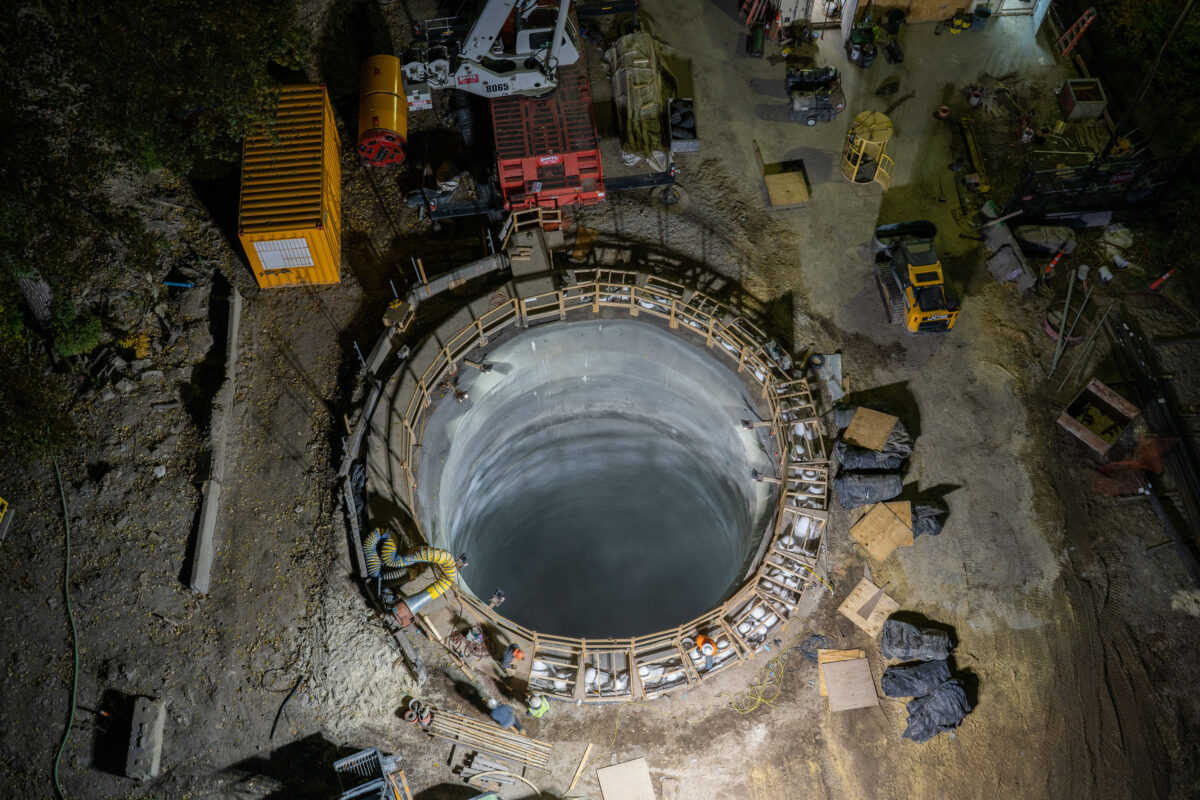
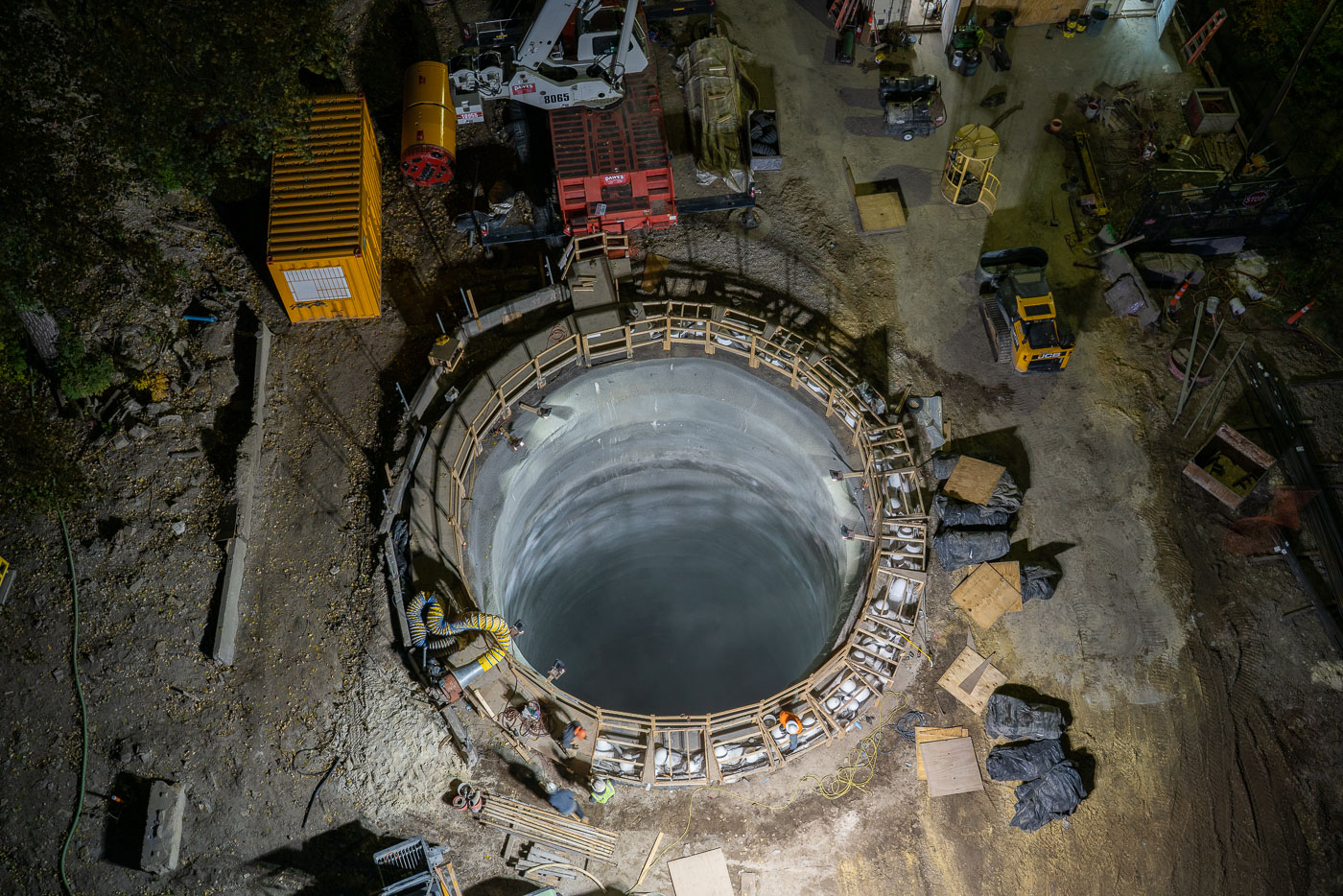
Mississippi River tunnel shaft construction in Minneapolis with a reinforced concrete excavation shaft.
Mississippi River tunnel shaft construction in Minneapolis. The reinforced concrete excavation shaft serves as the launch point for a tunnel boring machine that will build a water main tunnel beneath the river. The project is part of a major upgrade to the city’s water system.

Mississippi River tunnel shaft construction, Minneapolis
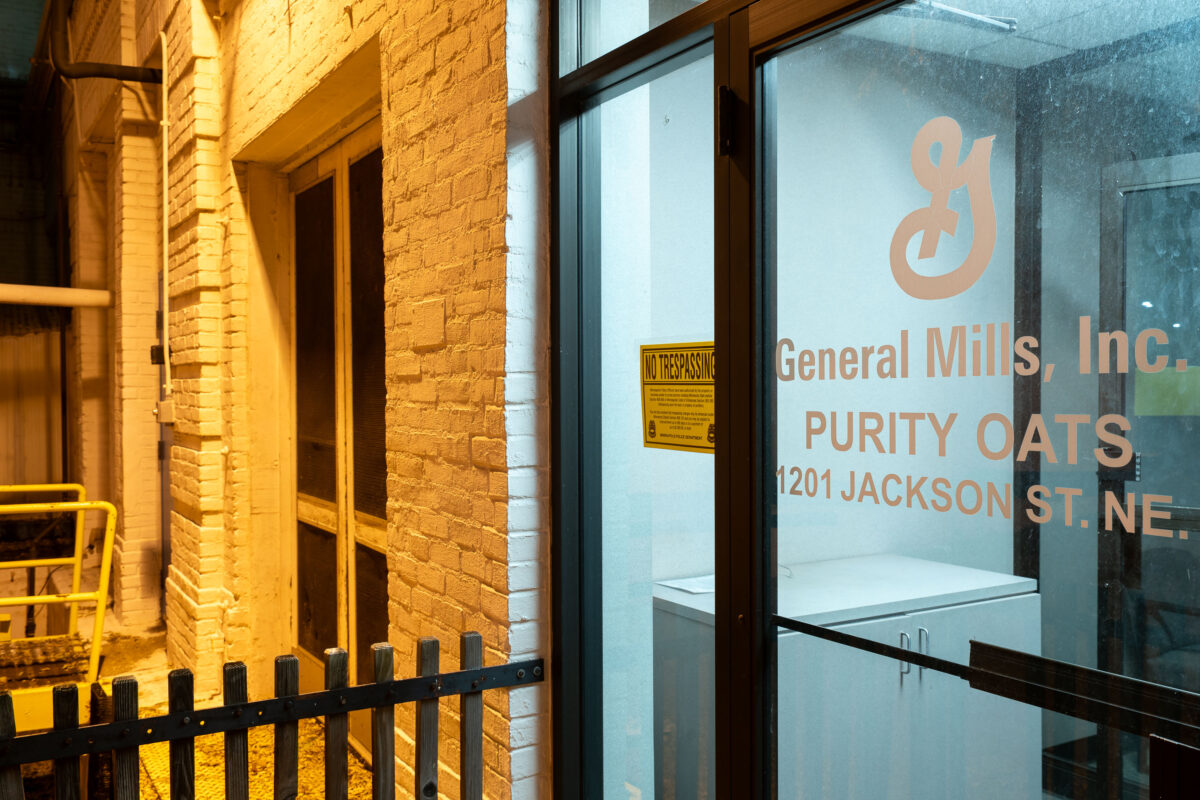
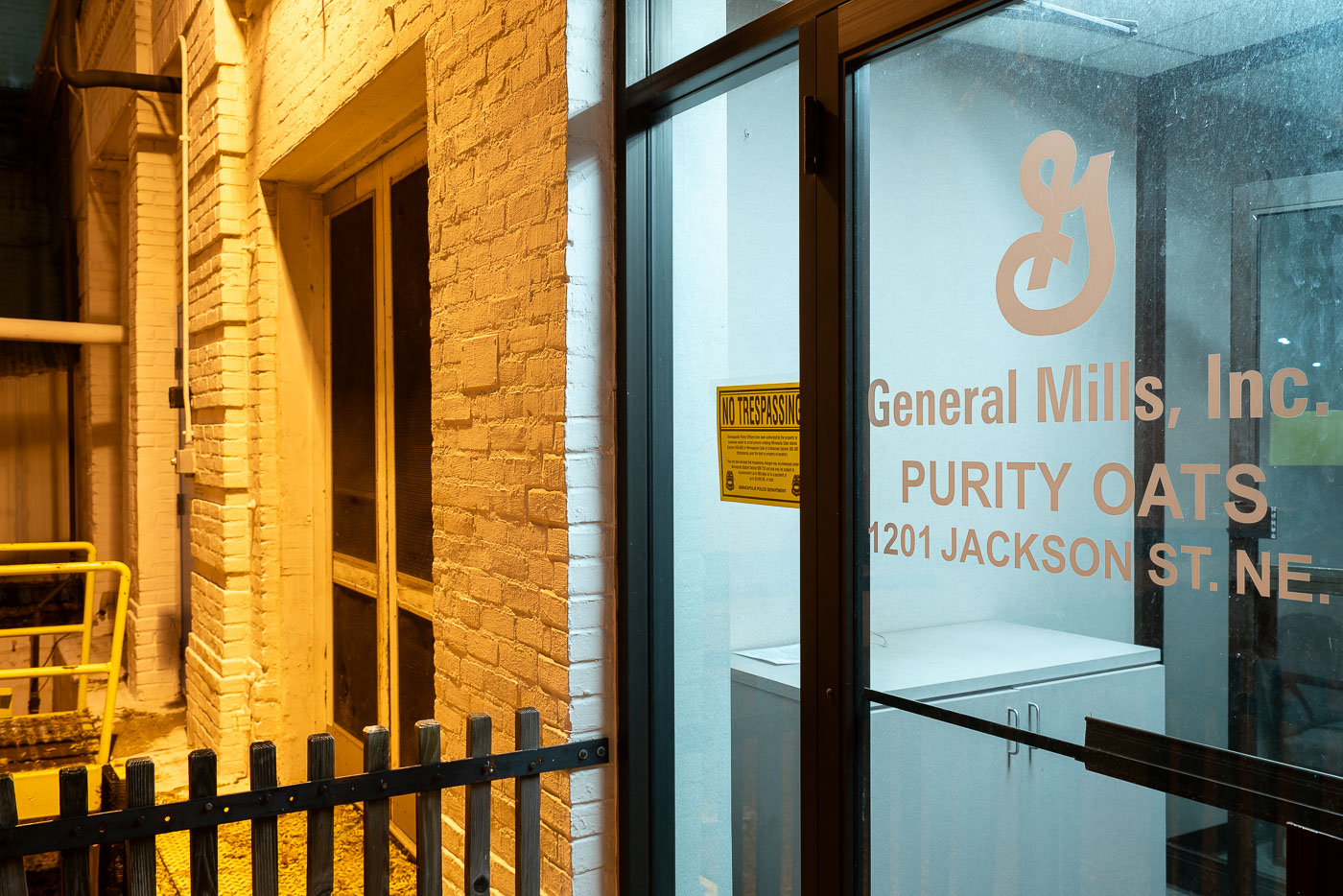
General Mills Purity Oats facility storefront at 1201 Jackson Street NE in Northeast Minneapolis.
General Mills Purity Oats Facility, Minneapolis, at 1201 Jackson Street NE. The former industrial building in Northeast Minneapolis was part of General Mills’ grain and cereal processing operations.

General Mills Purity Oats Entrance on Jackson Street NE
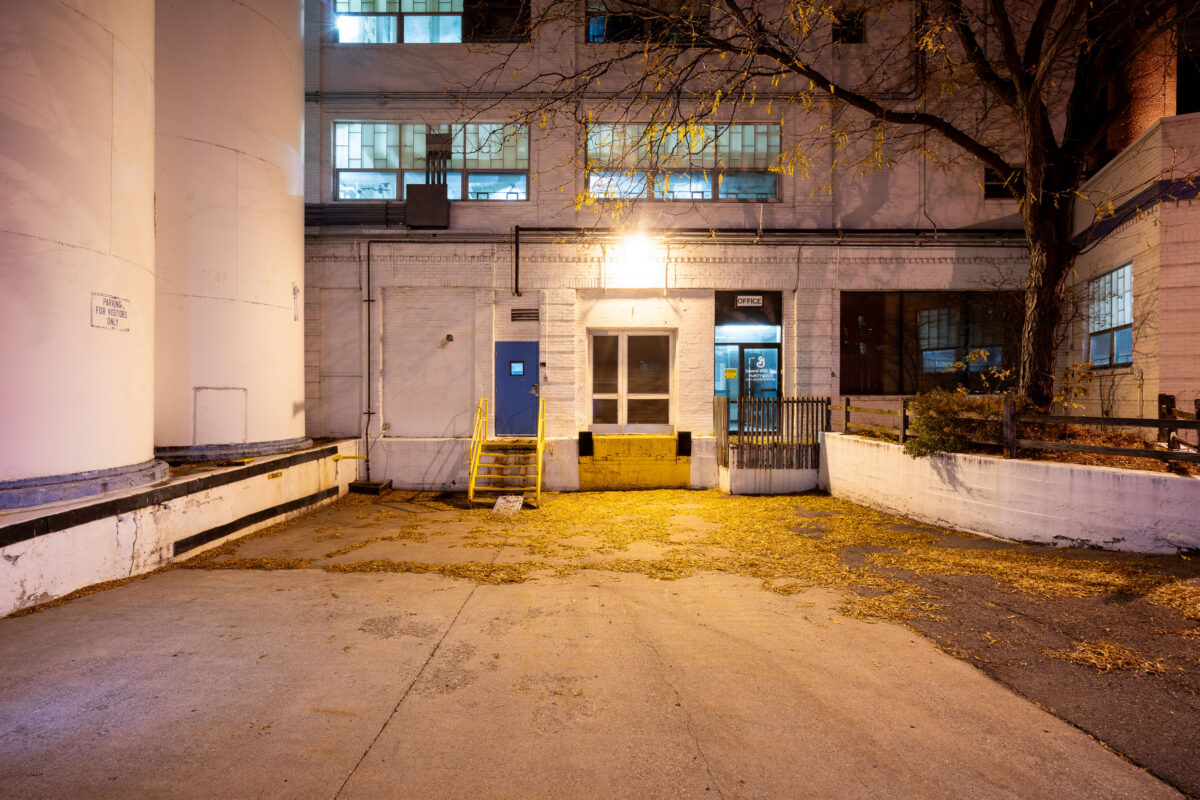
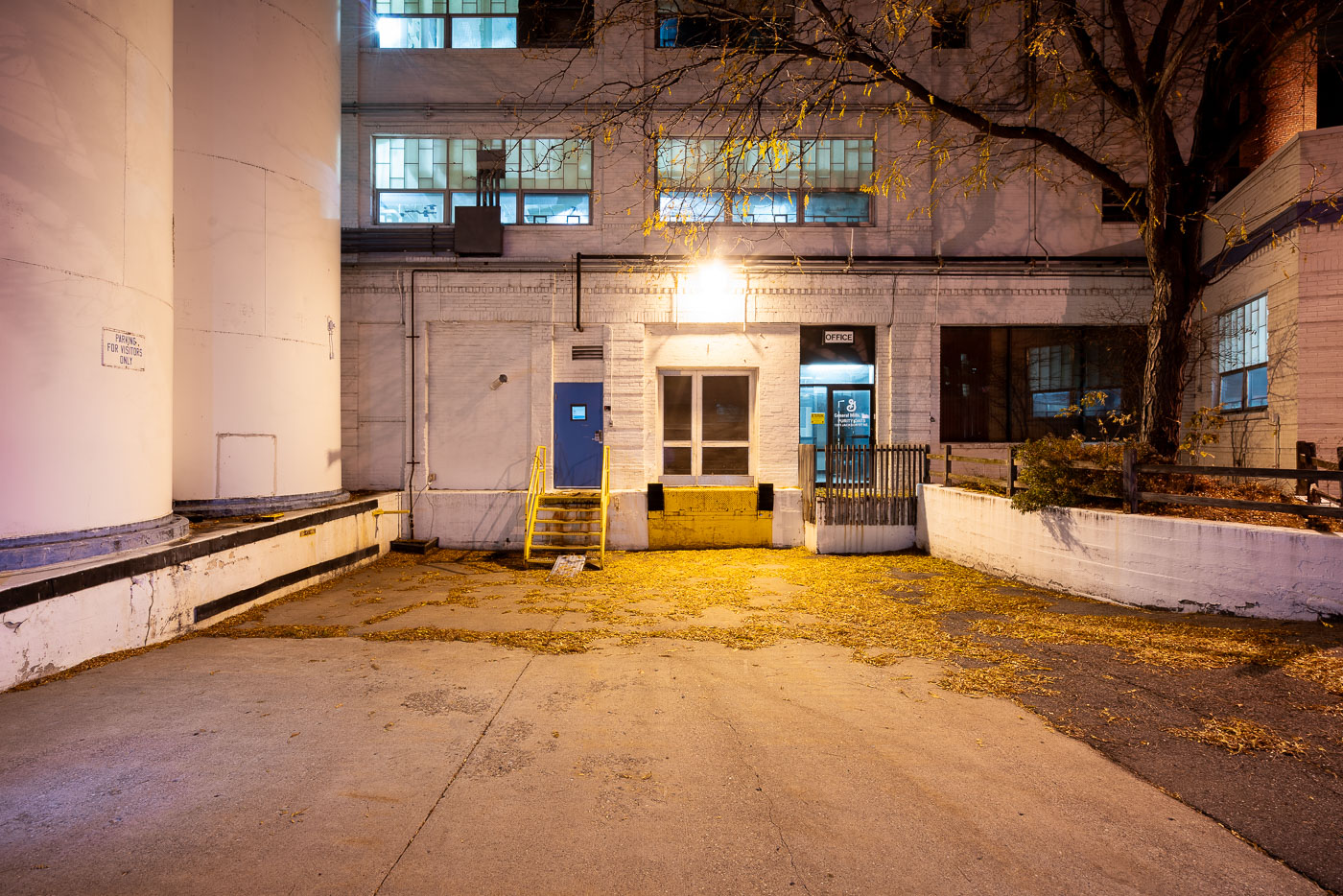
Rear loading entrance of the former General Mills Purity Oats plant in Northeast Minneapolis, illuminated at night.
This view shows the rear loading and office entrance of the former General Mills Purity Oats facility in Northeast Minneapolis. Built during the city’s industrial boom, the complex once handled oat processing and packaging for one of the nation’s largest cereal producers.

Rear Entrance of the General Mills Purity Oats Plant at Night
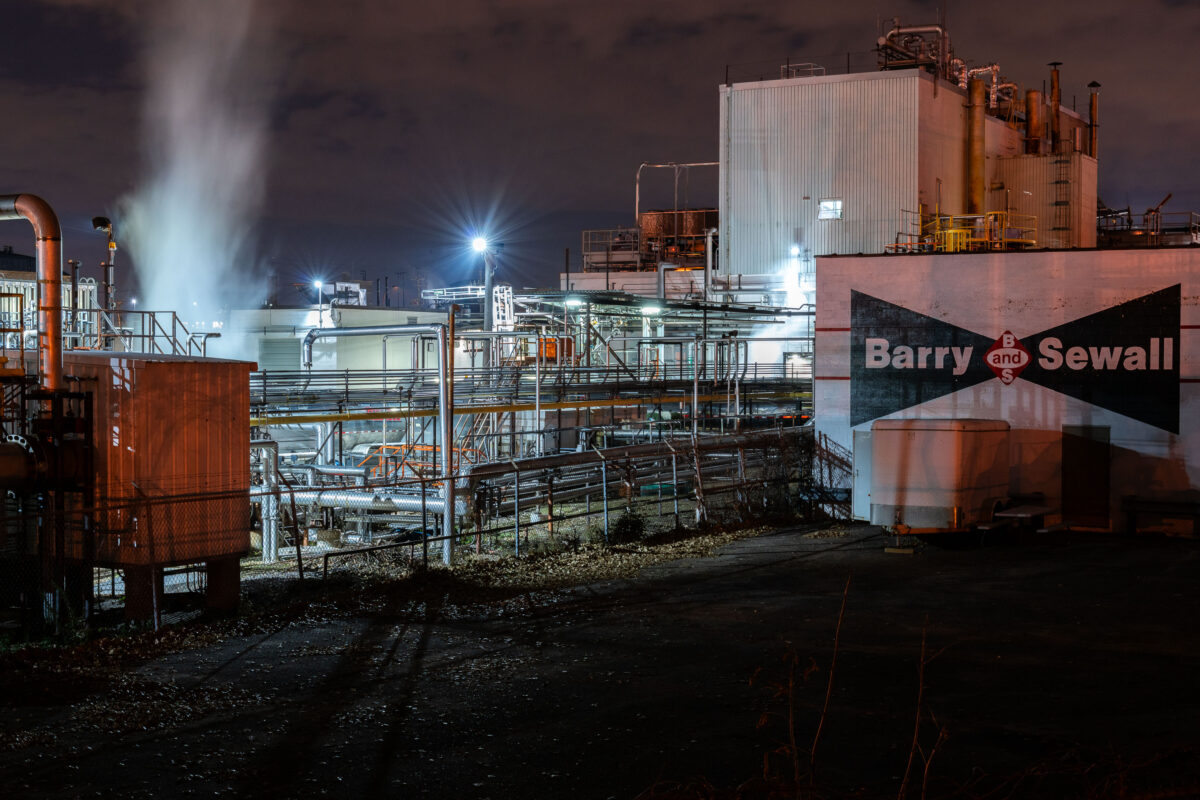
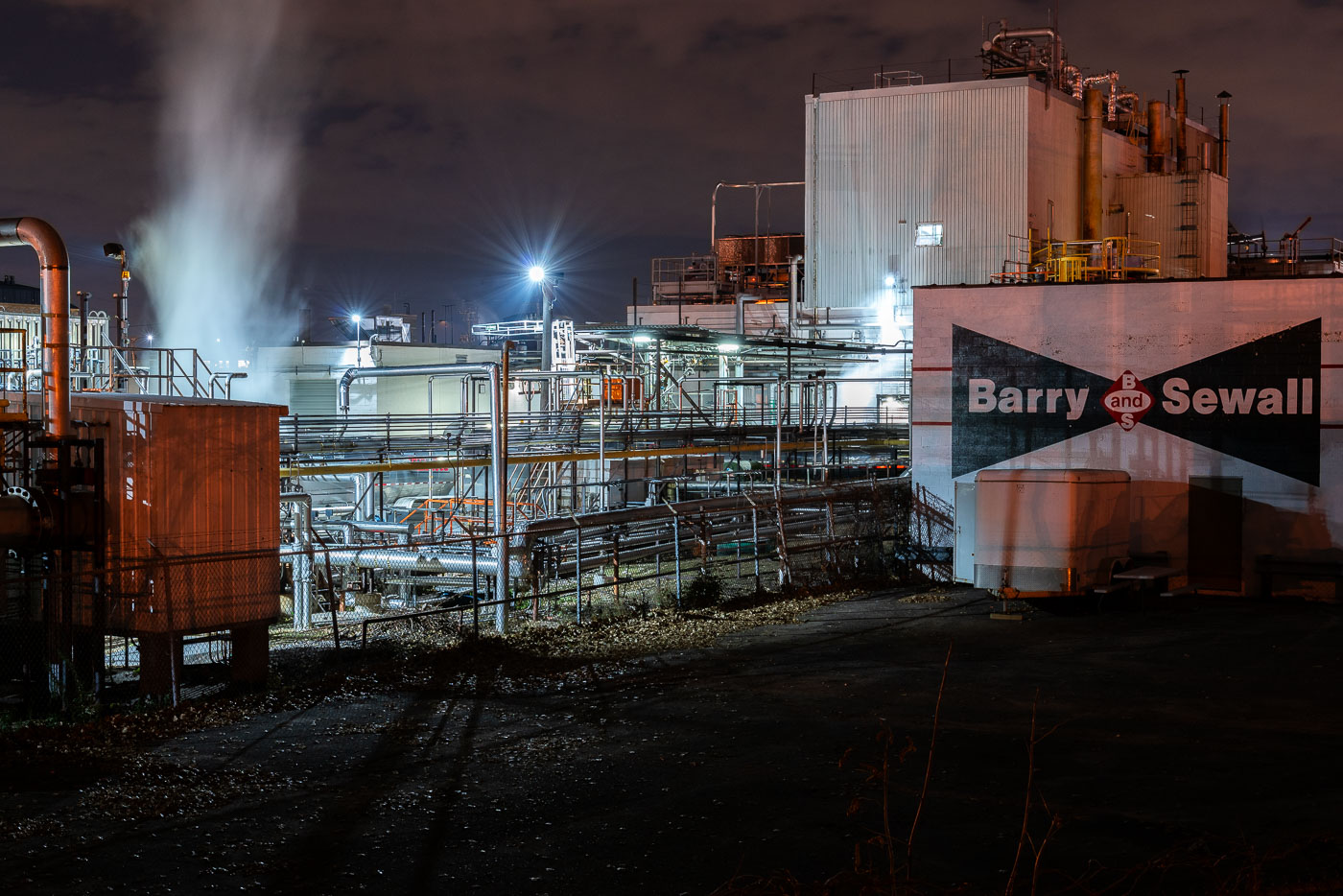
Barry & Sewall Chemical Company in Northeast Minneapolis rises at night with steam and illuminated pipework.
Barry & Sewall Chemical Company in Northeast Minneapolis manufactures industrial chemicals, including adhesives, coatings, and specialty products. The complex has operated for more than a century along the city’s industrial rail and river corridor. Steam rises from the plant at night.

Barry & Sewall Chemical Company, Minneapolis
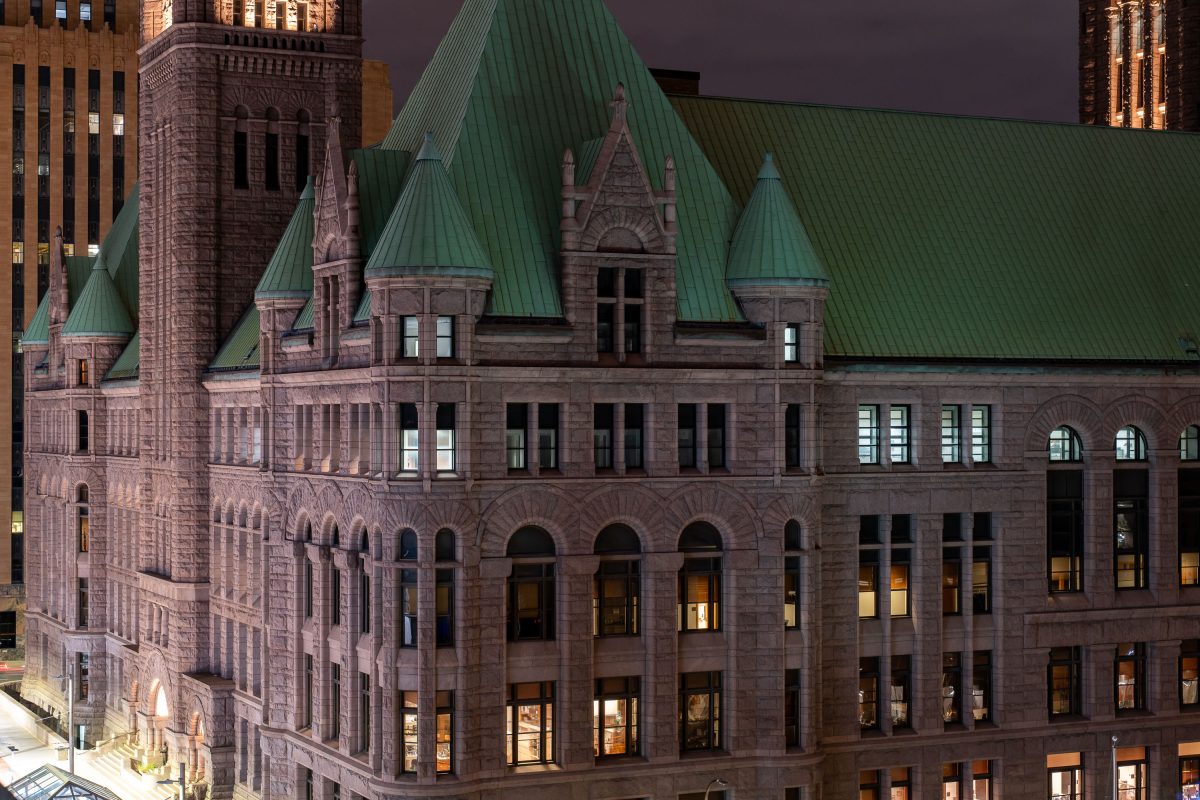
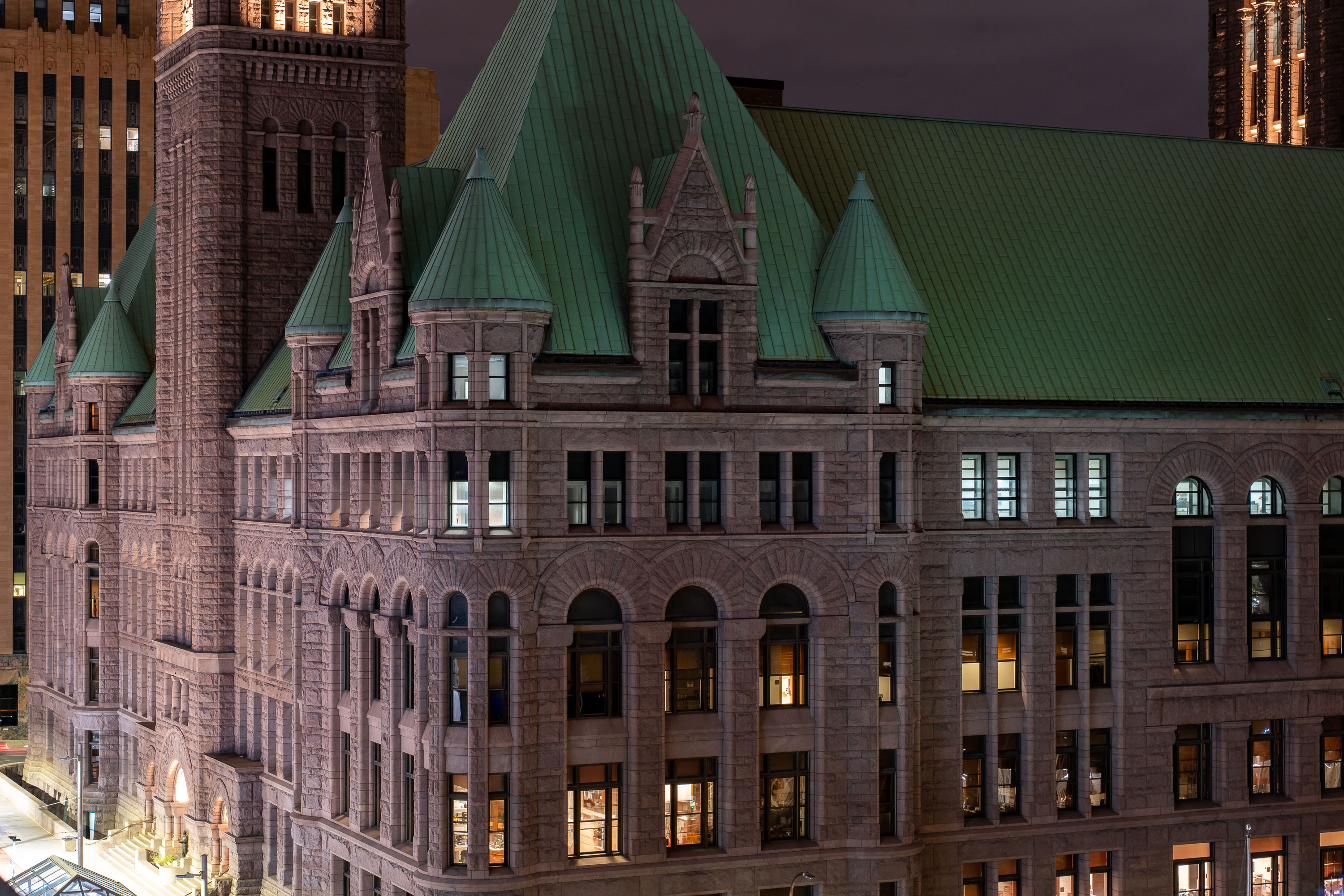
Minneapolis City Hall's Romanesque Revival facade with green copper roof turrets illuminated at night.
The Minneapolis City Hall and Hennepin County Courthouse building stands at 350 South 5th Street in downtown Minneapolis. Completed in 1905, the Romanesque Revival structure was designed by architects Long and Kees. It houses offices for the City of Minneapolis and Hennepin County, including courtrooms and municipal administration.

Green Rooflines of Minneapolis City Hall at Night
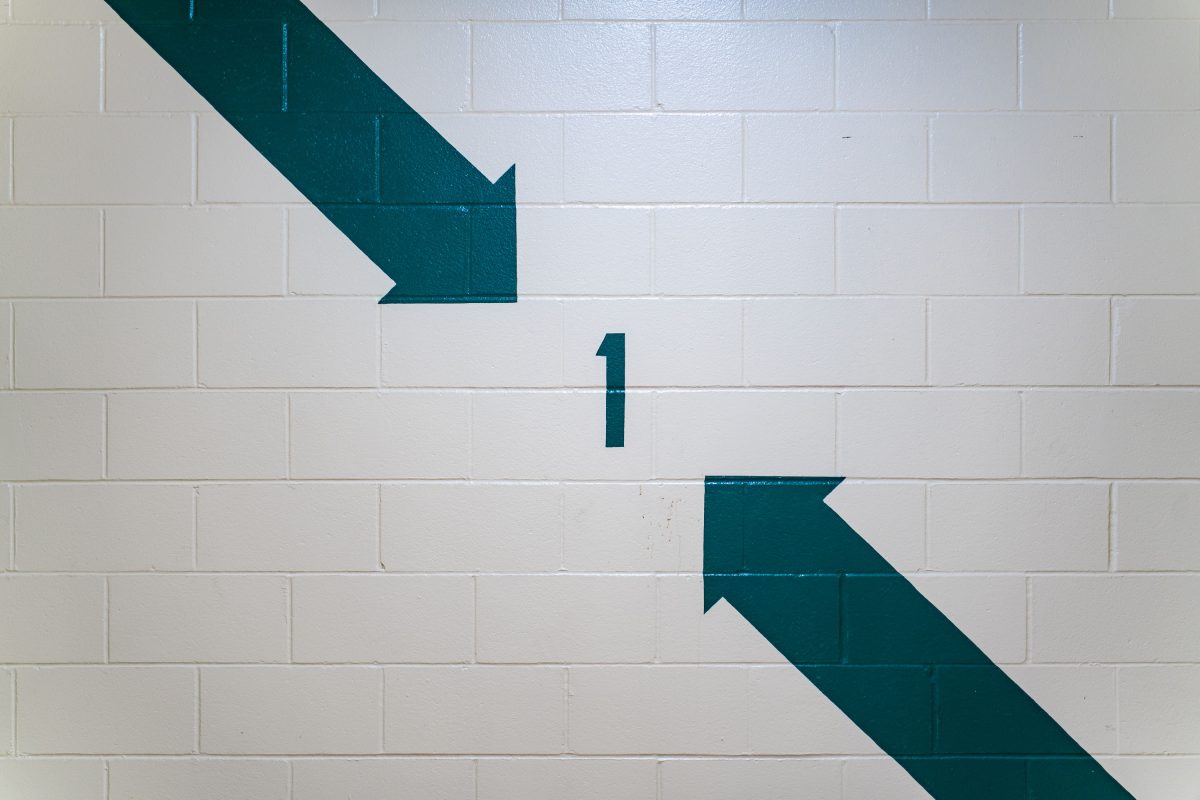
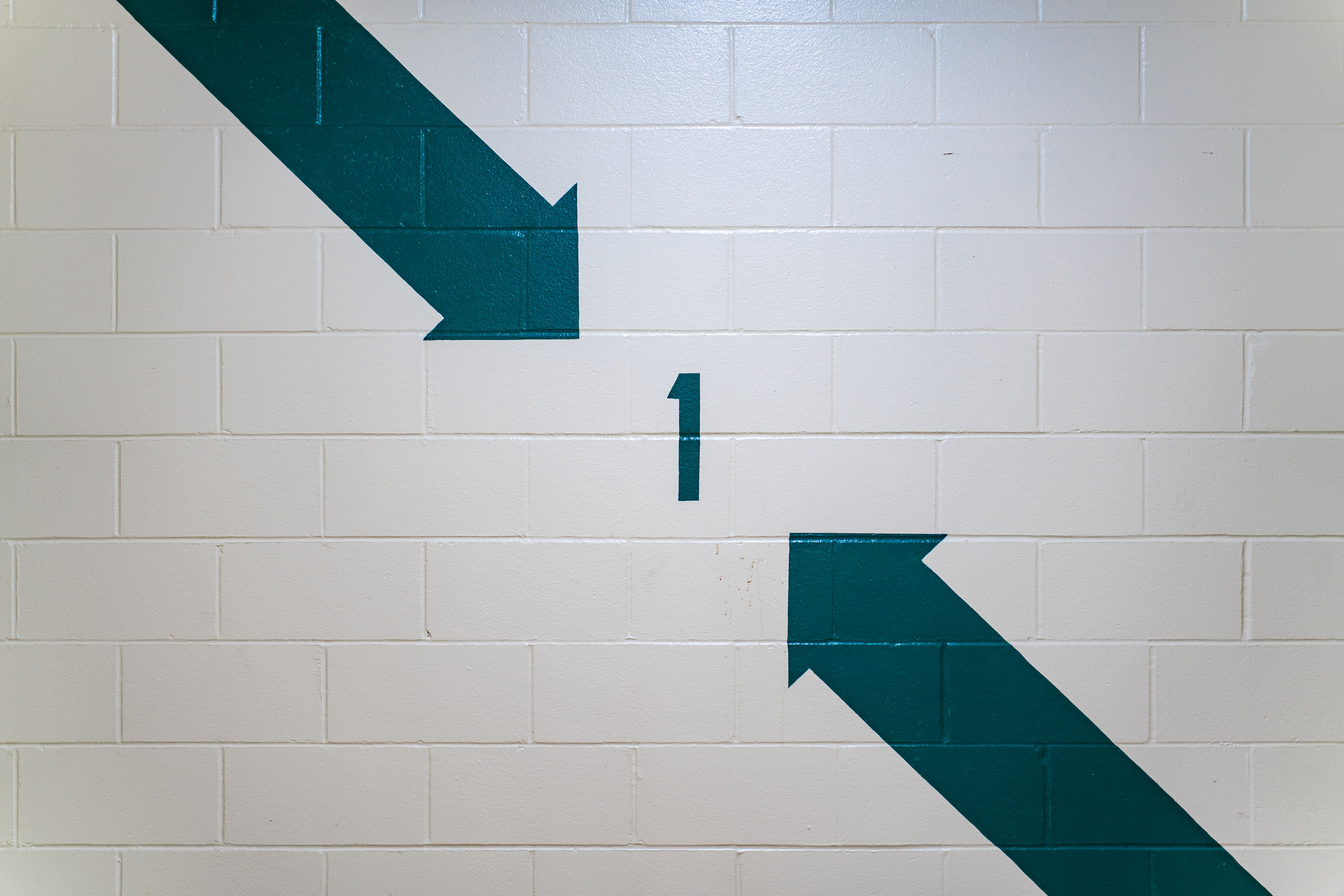
Teal arrows and the number 1 painted on a concrete block wall in a Minneapolis parking garage.
Painted directional arrows and the number 1 mark a level in a parking garage in Minneapolis. The teal markings are applied directly to painted concrete block walls to guide drivers to parking levels.

Level 1 Directional Arrows, Parking Garage, Minneapolis
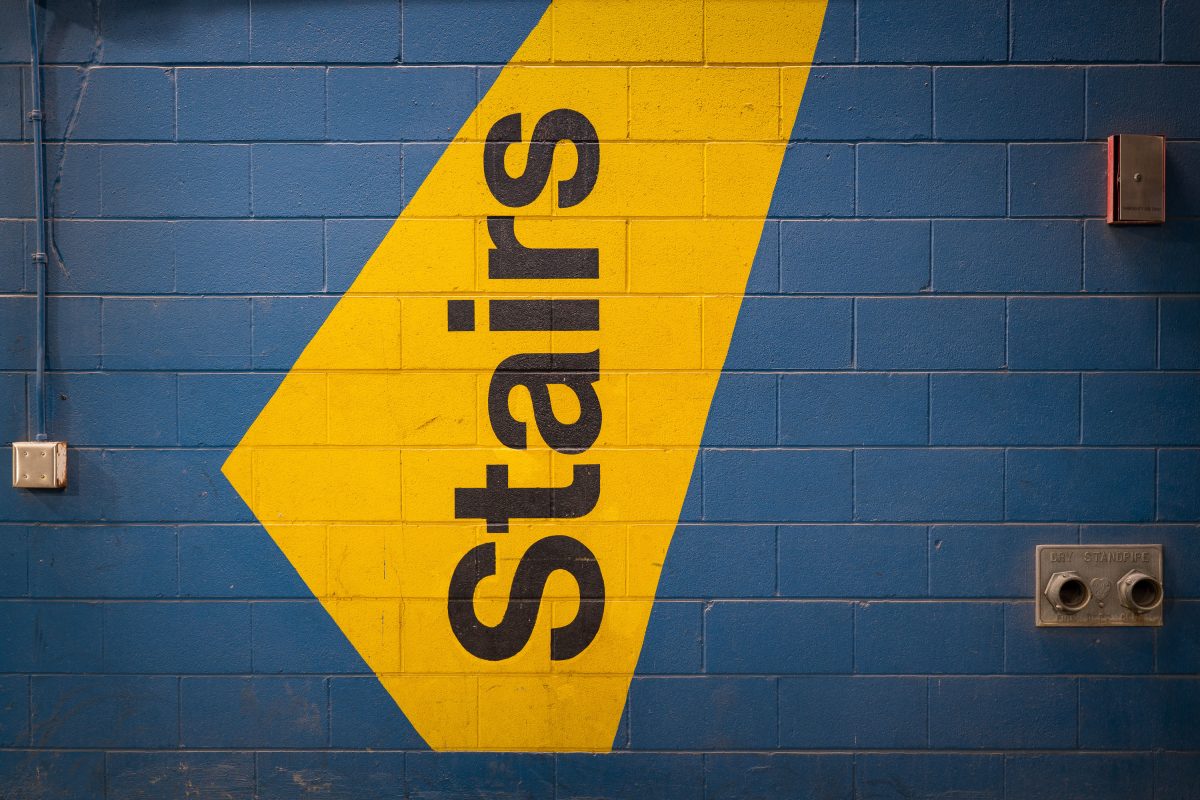
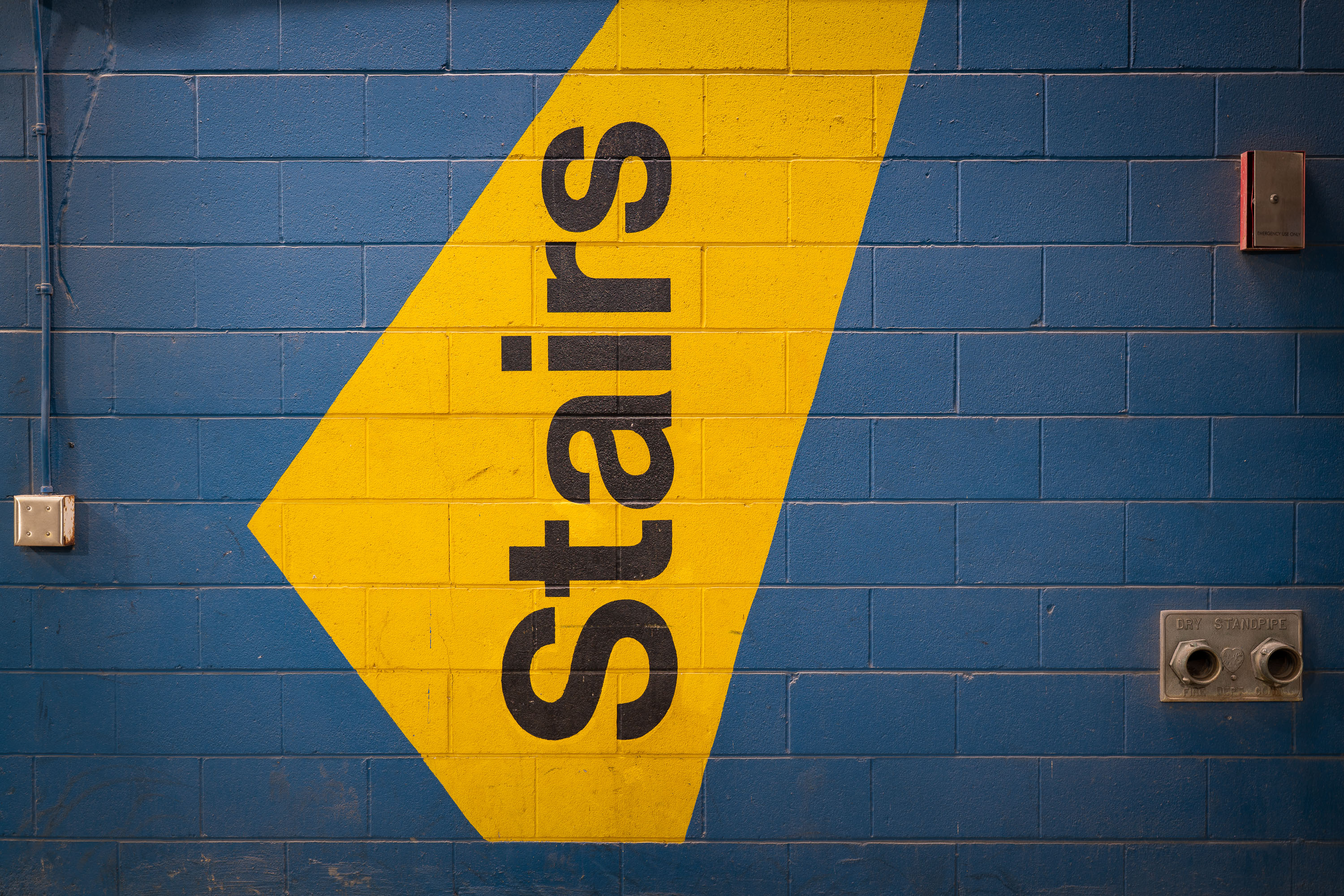
Yellow arrow with the word "Stairs" painted on a blue cinder block wall in a Minneapolis parking garage.
A "Stairs" wayfinding mark is painted on a concrete block wall inside a parking garage in downtown Minneapolis.

Stairs Sign, Parking Garage in Downtown Minneapolis
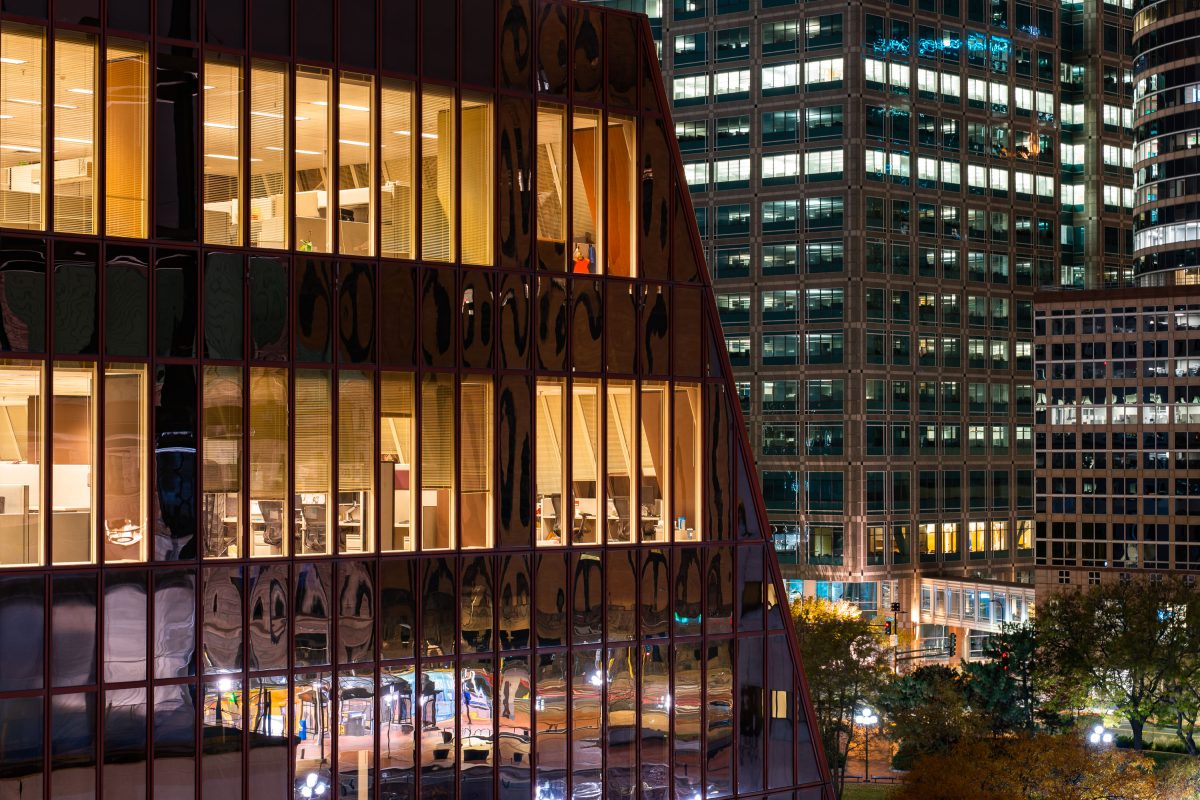
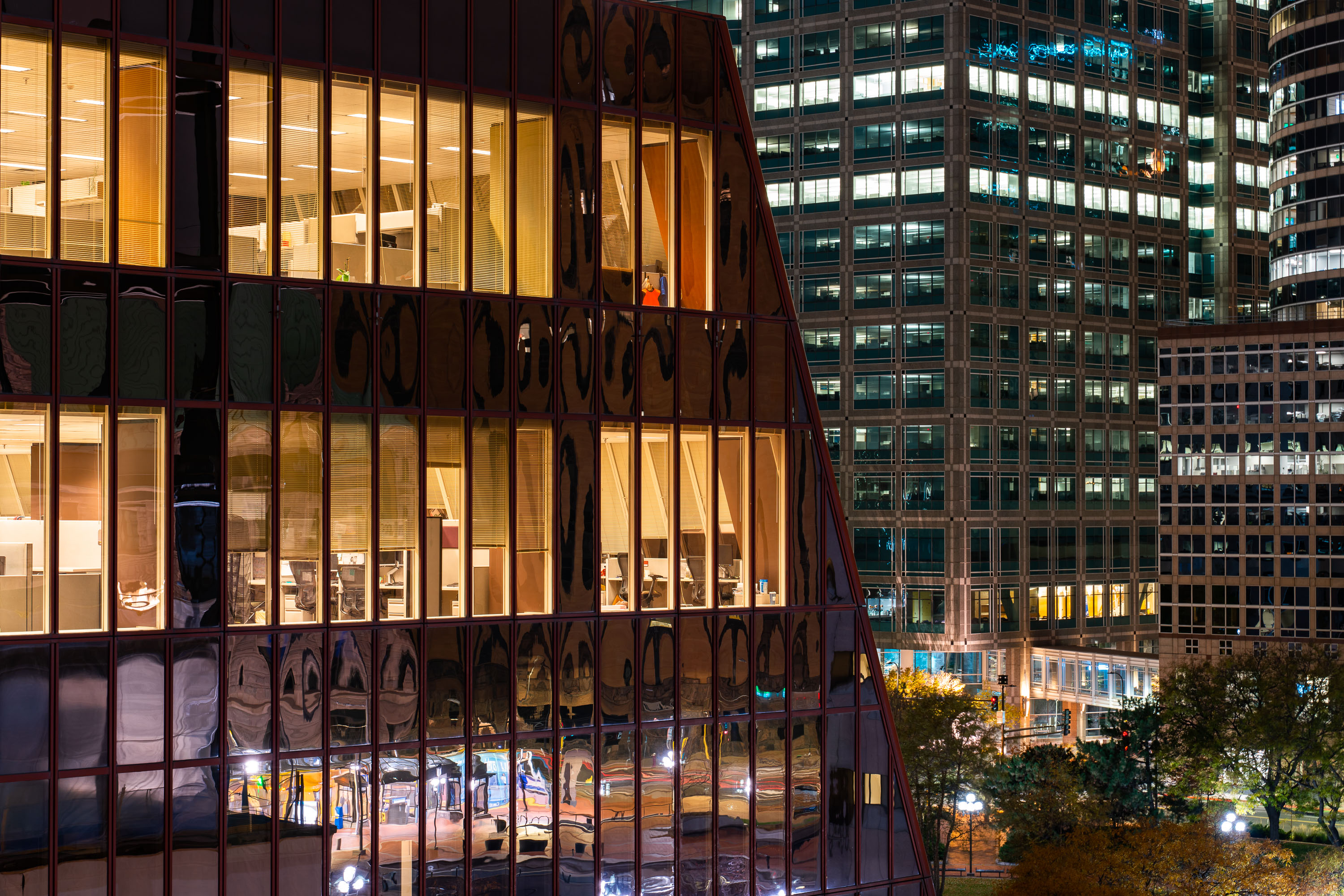
Glass office tower, the former Thrivent Financial headquarters, among high-rises in downtown Minneapolis at night.
This building at 625 Fourth Avenue South is the former Thrivent Financial headquarters in downtown Minneapolis. Thrivent, a Fortune 500 financial services organization, relocated its headquarters to a new downtown campus in 2020.

Former Thrivent Building, Downtown Minneapolis

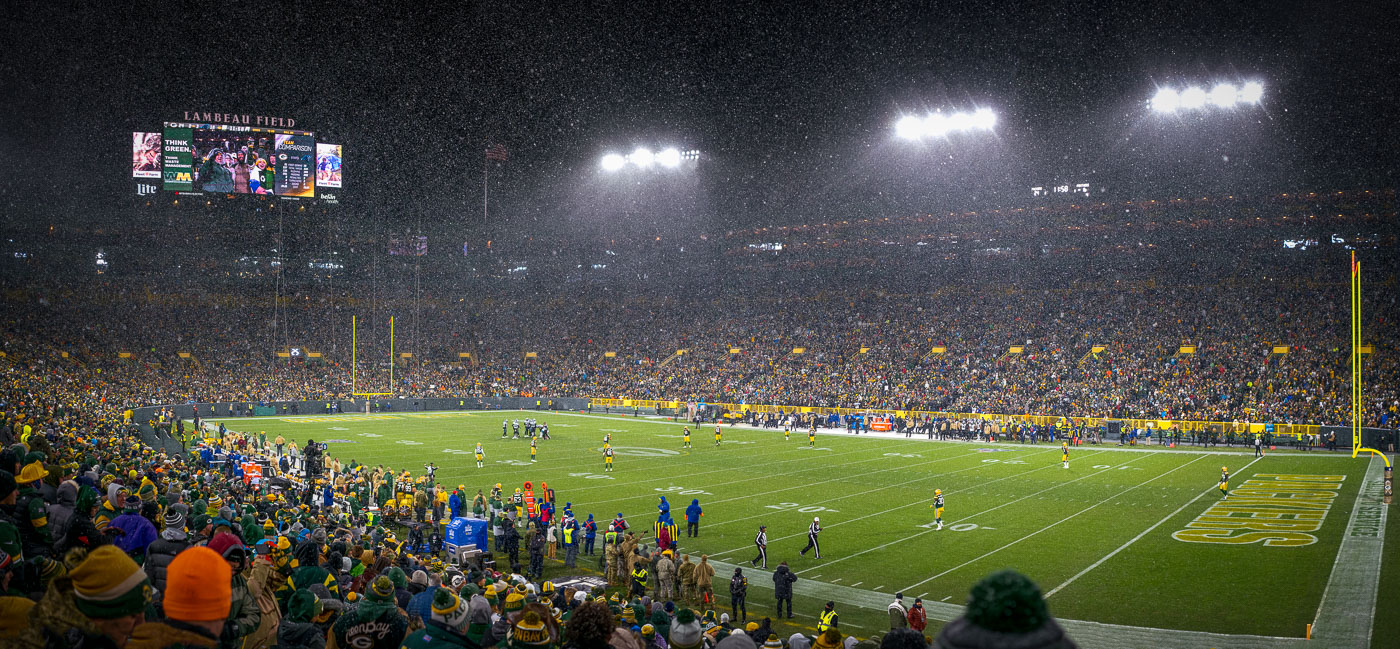
Snow falls on Lambeau Field in Green Bay, Wisconsin, during an NFL game between the Packers and the Panthers.
Snow falls on Lambeau Field in Green Bay, Wisconsin, during an NFL game between the Packers and the Panthers. The stadium, a historic venue for American football, is filled with spectators braving the cold weather to watch the game. The scoreboard displays game statistics and advertisements, typical of a professional sporting event.

Packers vs Panthers at Lambeau Field in Snow
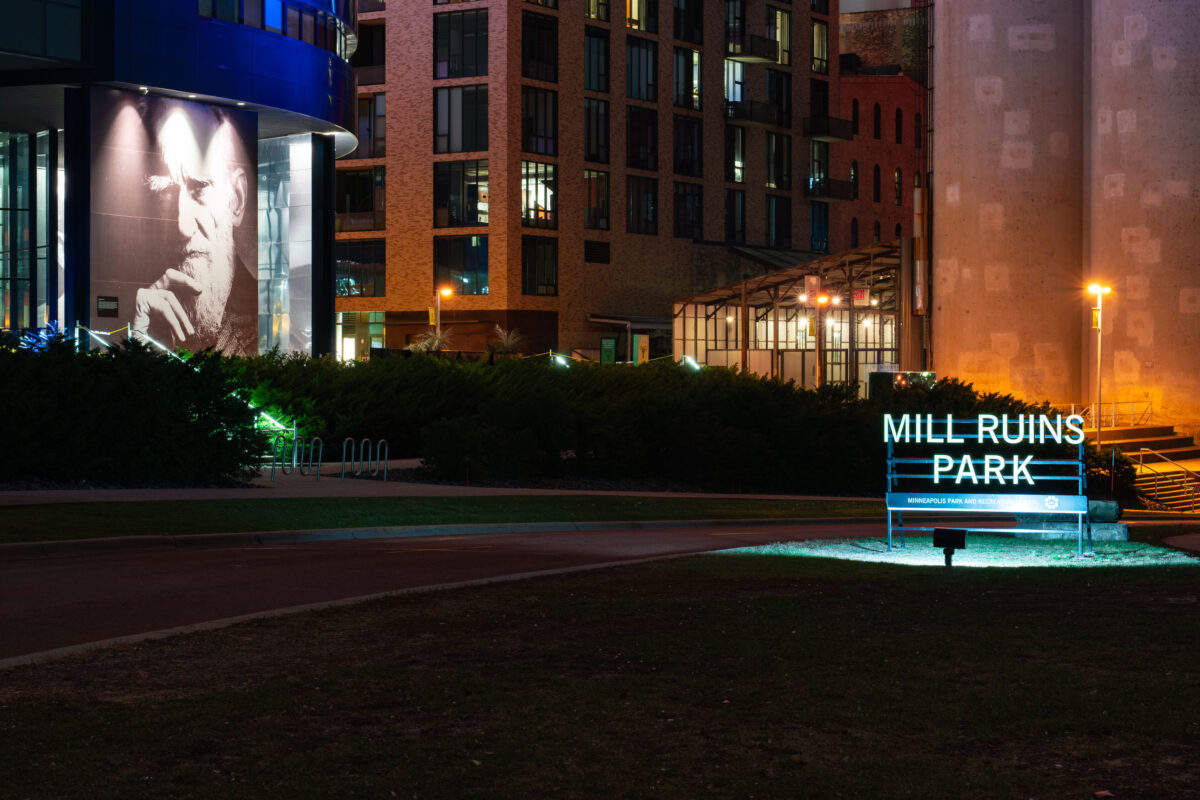
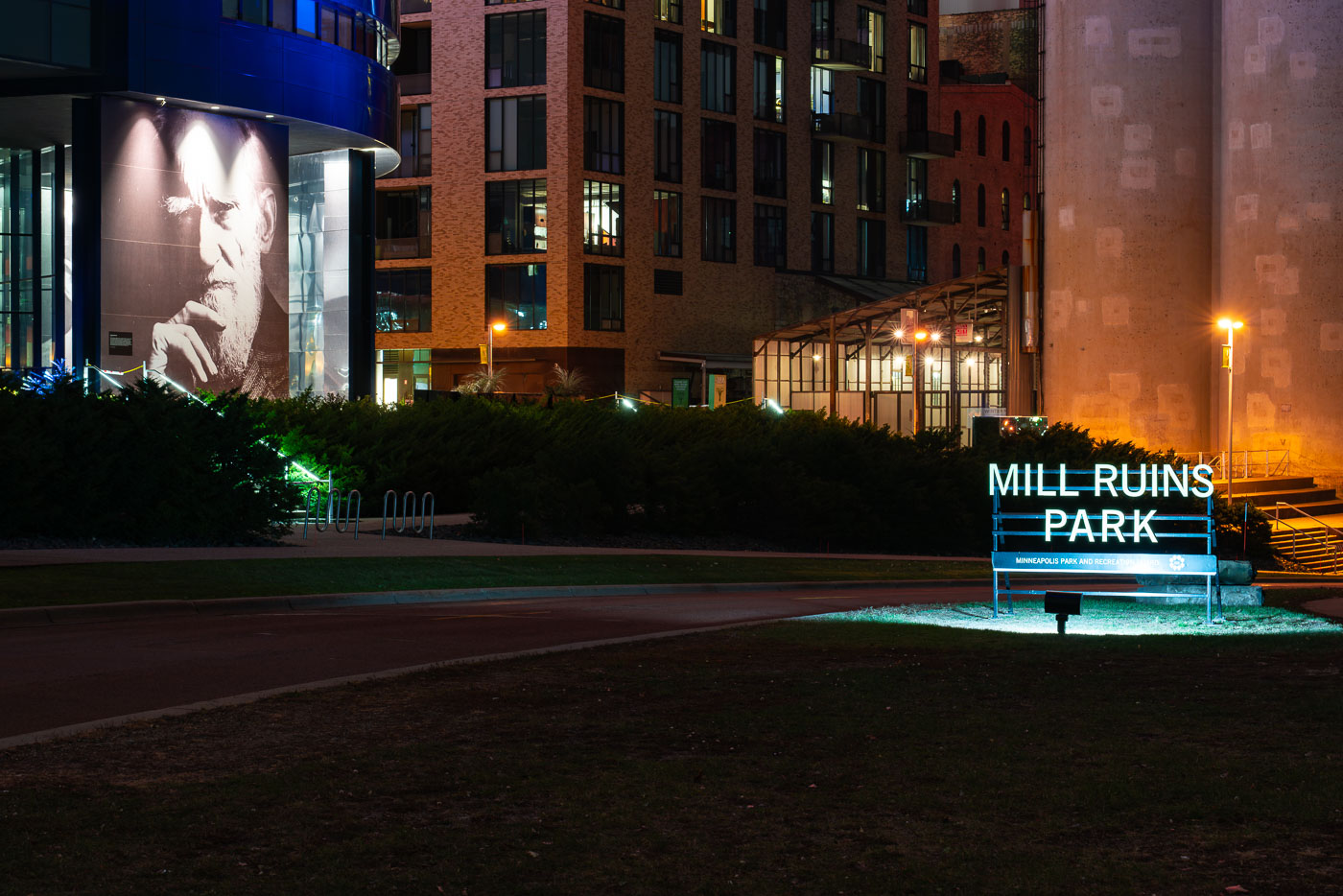
Mill Ruins Park sign in Minneapolis near the Guthrie Theater at night.
Mill Ruins Park in Minneapolis preserves the foundations of the city’s historic flour mills along the Mississippi riverfront. The park sits near the Guthrie Theater and modern residential development in the Mill District.

Mill Ruins Park Sign, Minneapolis

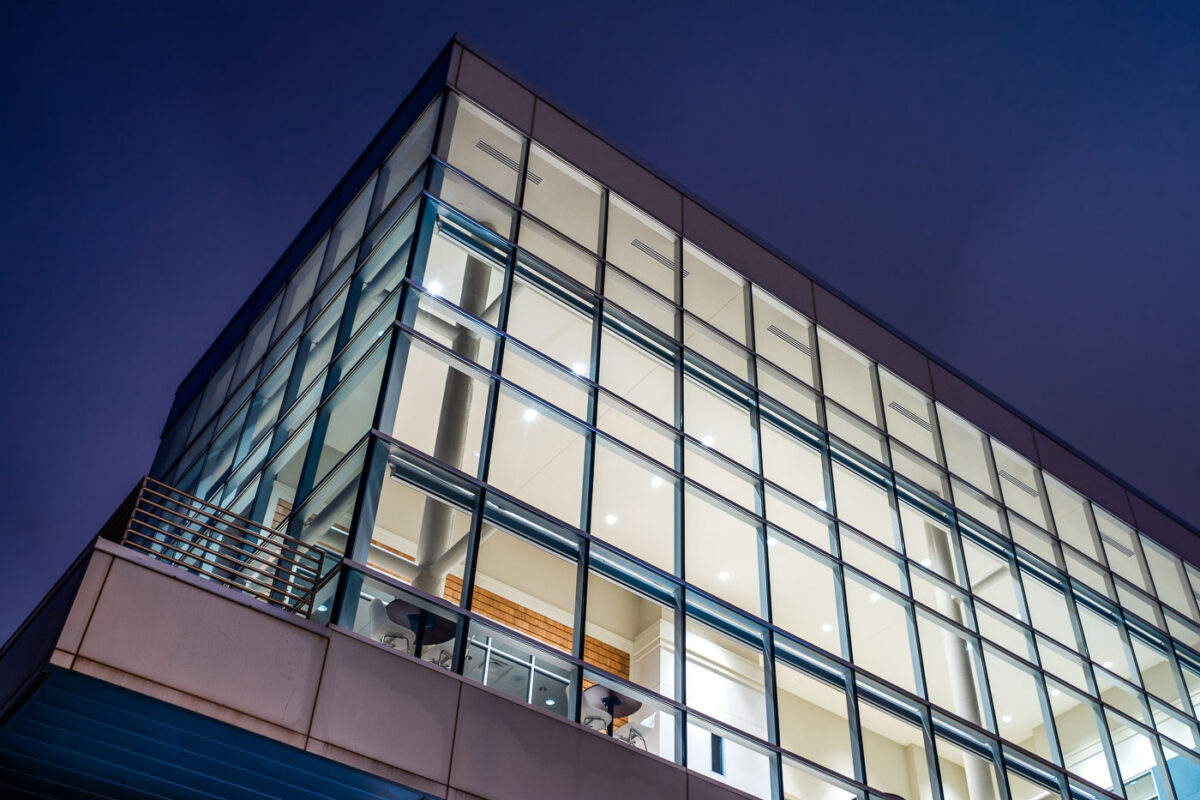
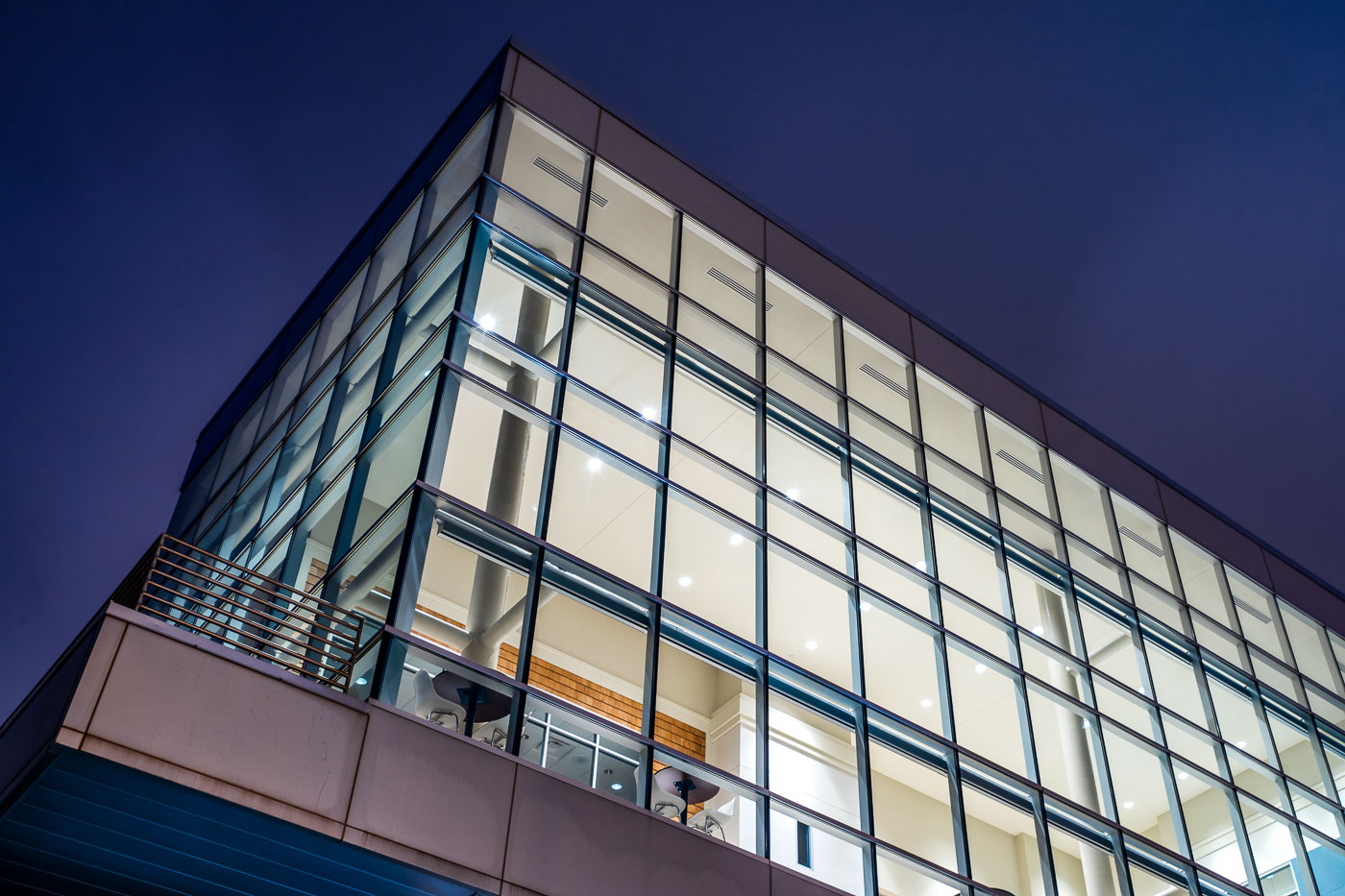
River Parkway Place in Minneapolis has a glass curtain wall lit at dusk.
River Parkway Place at 1101 West River Parkway in Minneapolis is a modern commercial building along the Mississippi River. The structure has a glass curtain wall and is adjacent to the site planned for the Eleven Condos development.

River Parkway Place, Minneapolis

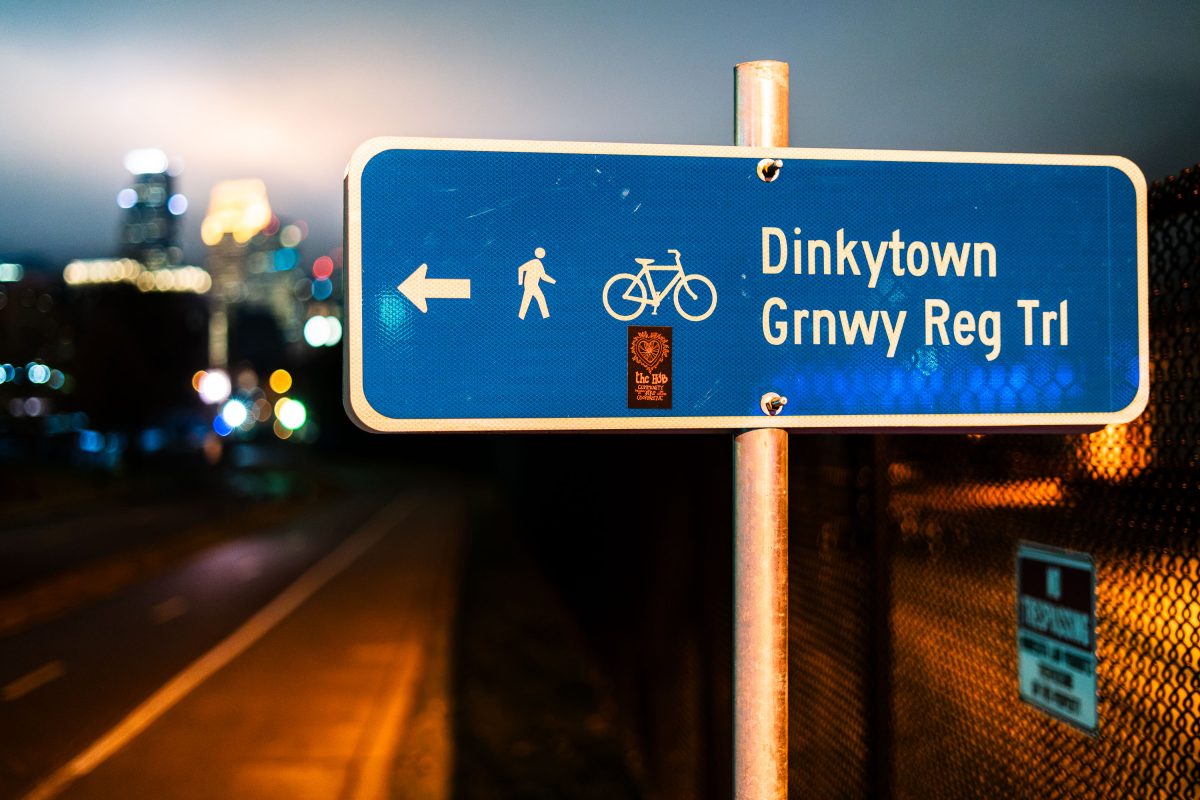
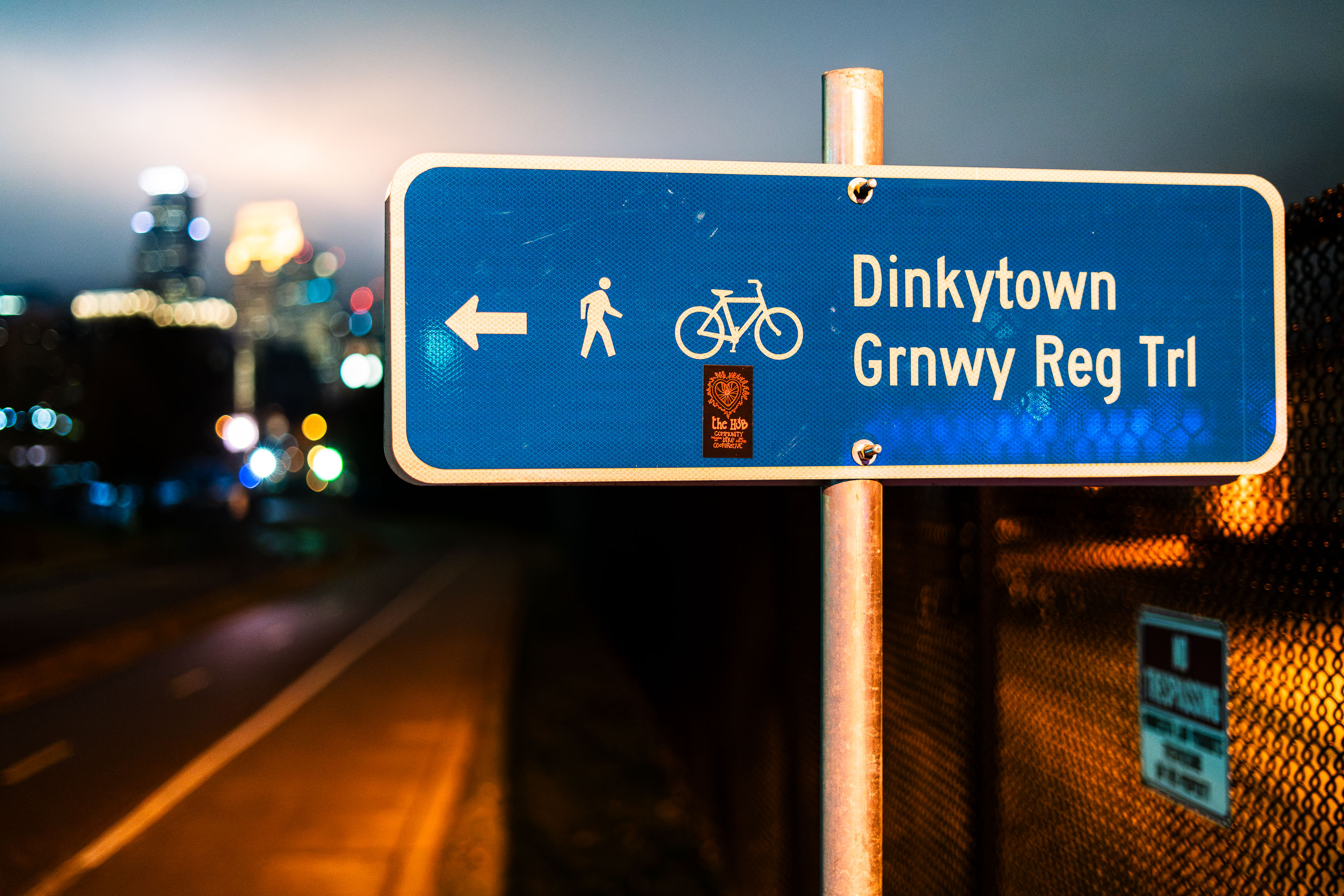
Trail sign for Dinkytown Greenway on West River Parkway
This sign on West River Parkway directs pedestrians and cyclists to the Dinkytown Greenway Regional Trail. West River Parkway runs along the Mississippi River through Minneapolis, connecting to the regional trail network maintained by the Minneapolis Park and Recreation Board.

Trail sign for Dinkytown Greenway on West River Parkway

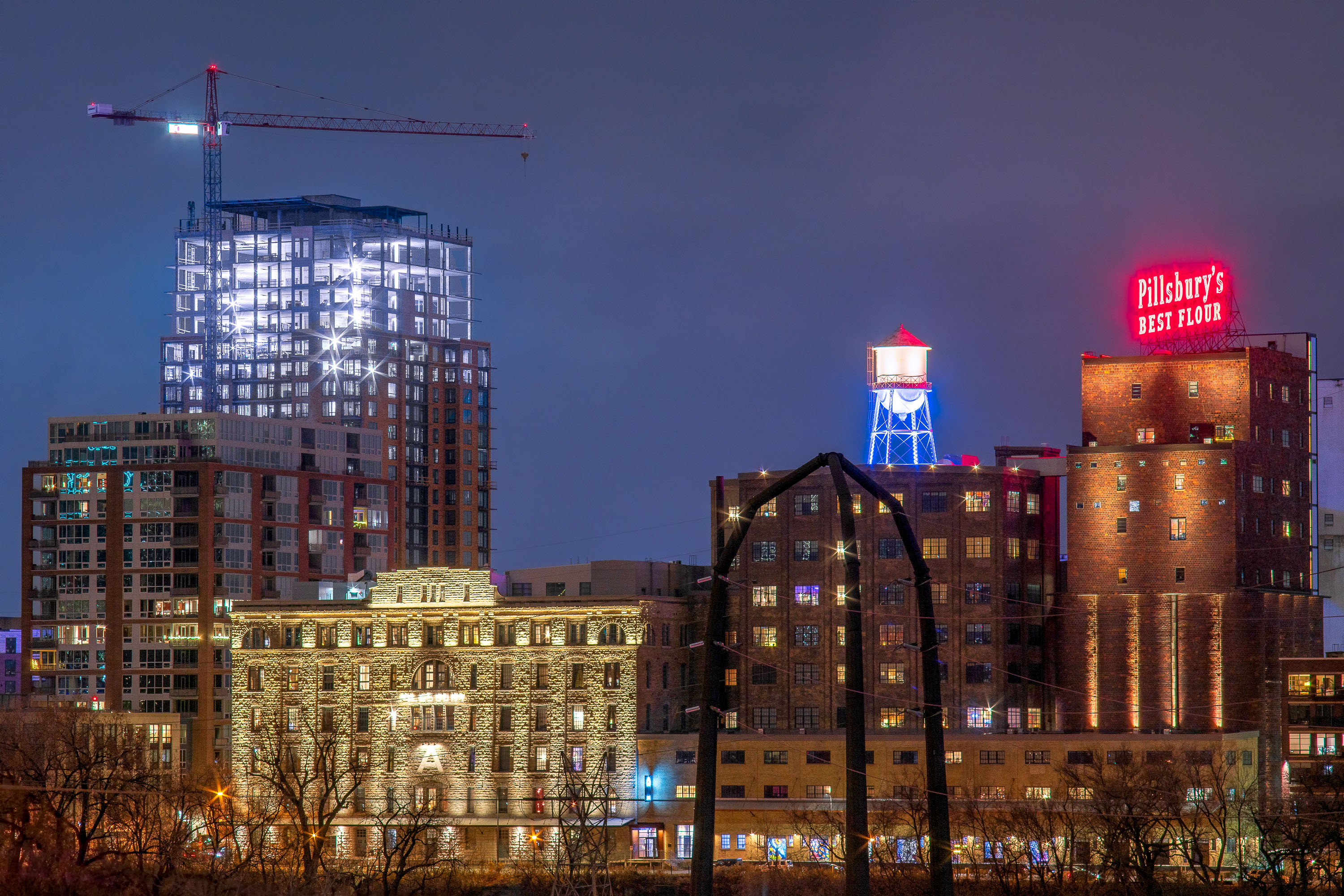
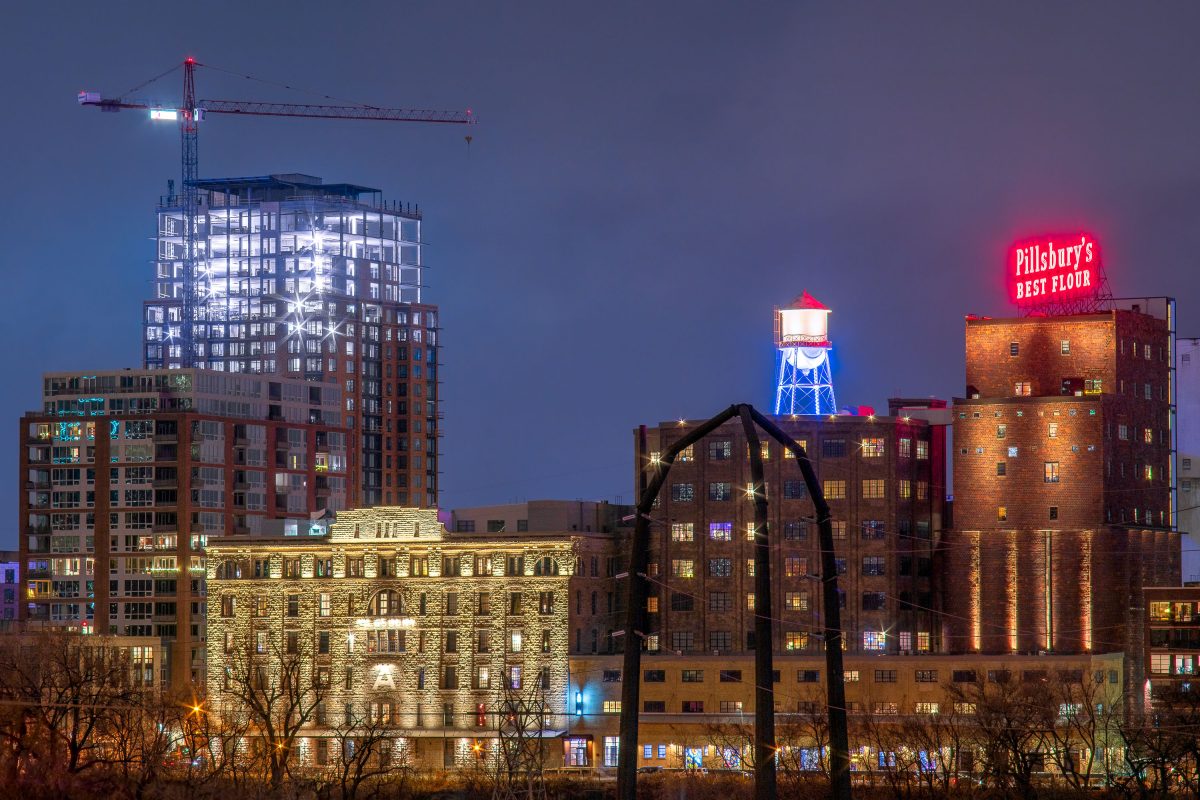
Pillsbury "A" Mill and water tower illuminated at night along Minneapolis's Main Street with the Expo building under construction.
The Pillsbury A Mill sits on the Mississippi riverfront at 415 Main Street SE, built in 1881 by Charles Pillsbury on the site of an earlier mill destroyed by an explosion. At the time of its construction, it was the largest flour mill in the world, producing wheat flour under the "Pillsbury's Best" name that still glows in neon atop the building. The mill operated until 2003 and was later designated a National Historic Landmark; it now houses the A-Mill Artist Lofts, an affordable housing complex for working artists completed in 2015. The water tower beside it, part of the historic milling complex, has been restored as a lighted architectural feature rather than a working tank. The Expo, the glass tower rising behind the mill, is part of the Mill & Main development along Main Street SE, adding market-rate apartments to the former industrial riverfront district.

Pillsbury A Mill and The Expo Tower, Minneapolis, MN

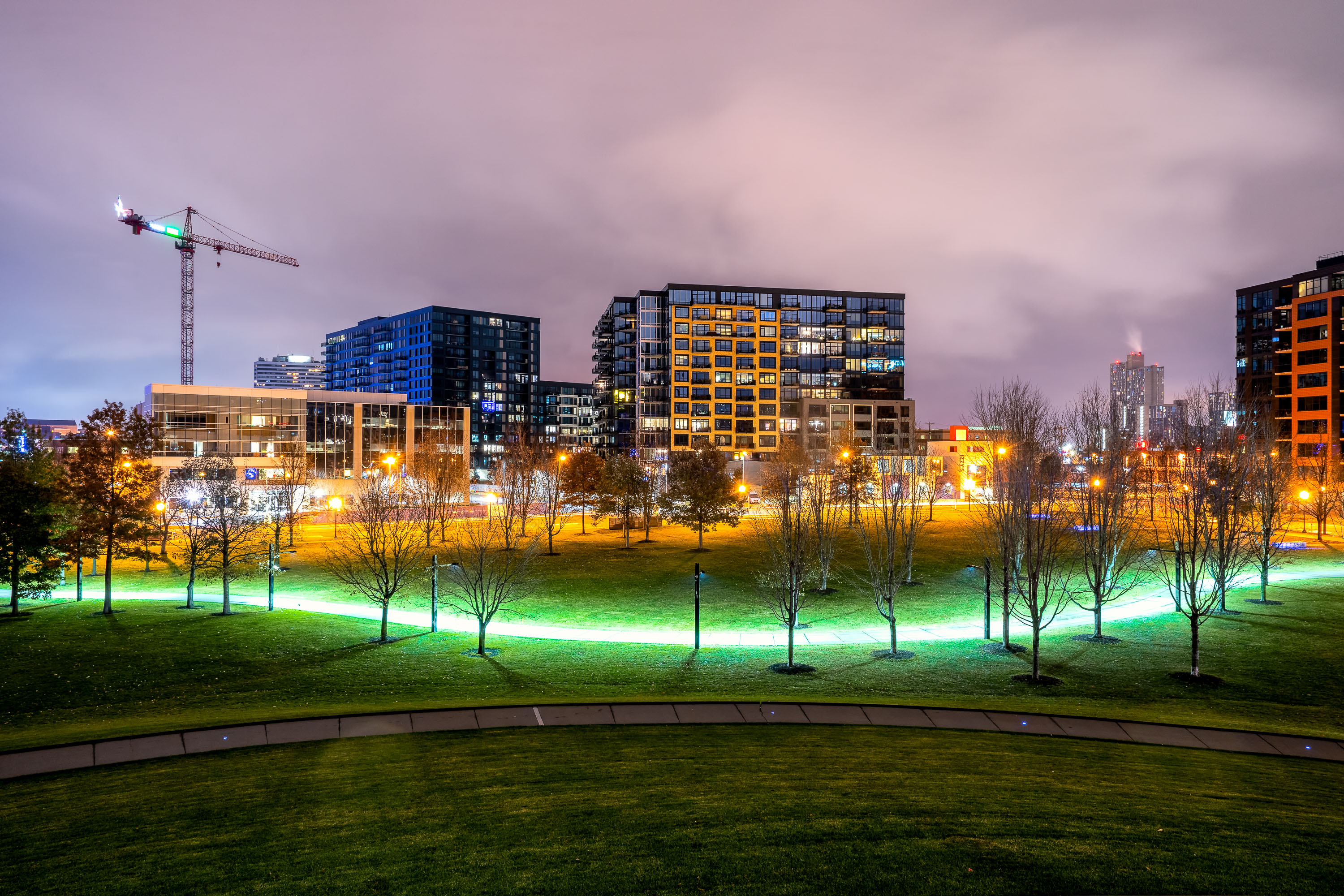
Gold Medalk Park near Downtown Minneapolis
Gold Medal Park near downtown Minneapolis seen at night in November 2019.

Gold Medalk Park near Downtown Minneapolis

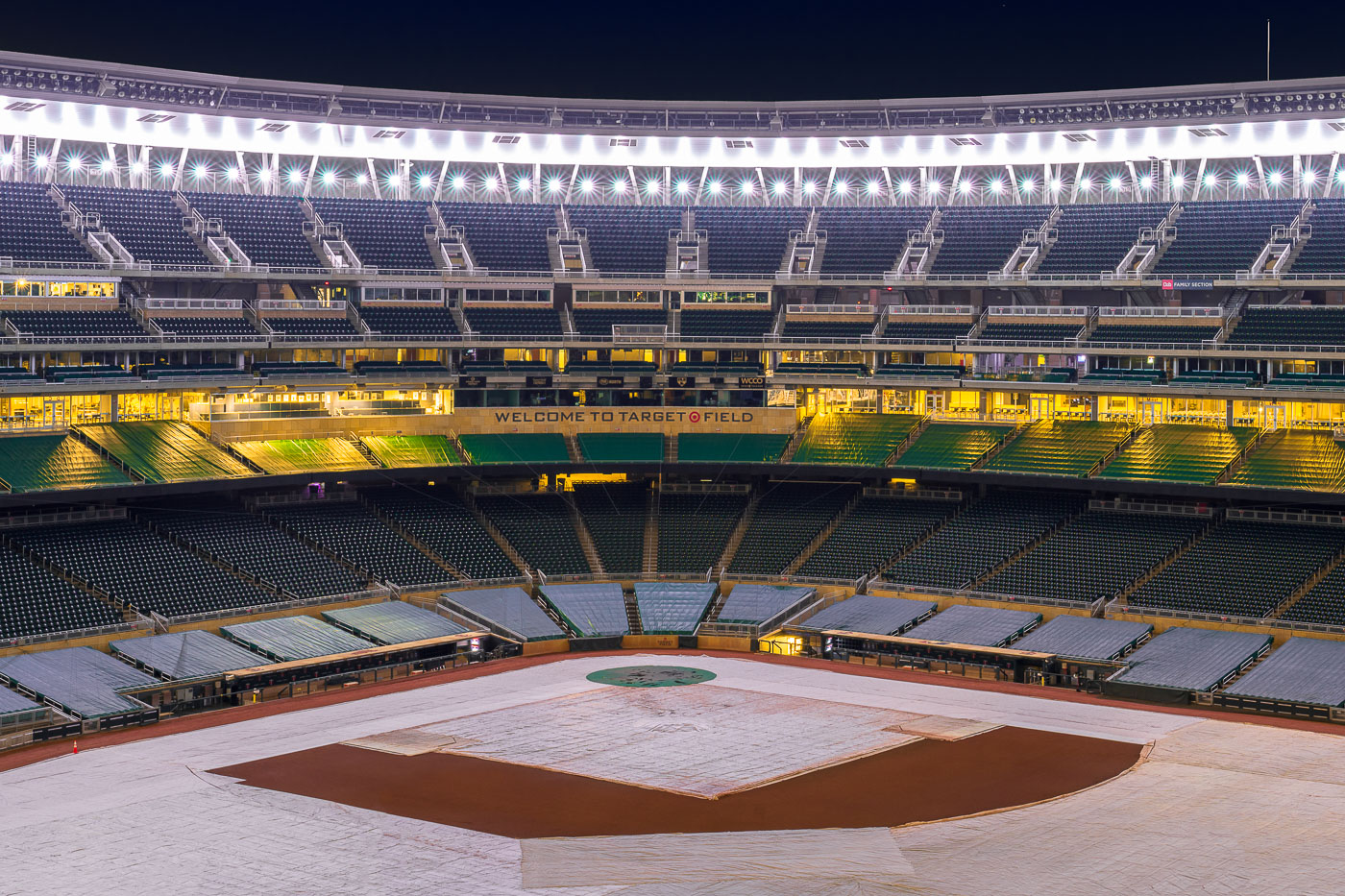
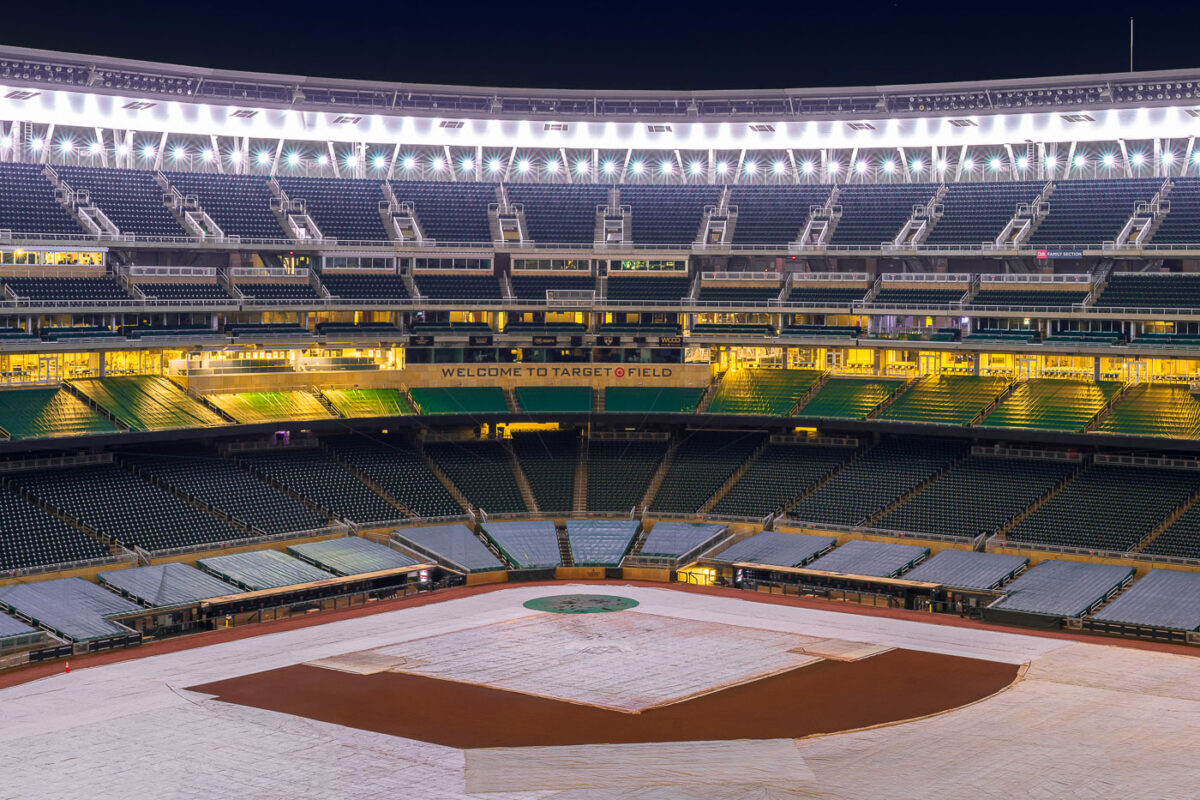
Target Field's baseball diamond covered in white tarps under stadium lights in Minneapolis.
Target Field is the Minnesota Twins' ballpark in downtown Minneapolis, built on a former railroad and warehouse site in the North Loop. It opened in 2010, replacing the Metrodome as the team's home after nearly three decades of indoor baseball. A tarp covers the infield during the off-season, with the diamond empty and the stands bare of fans.

Target Field’s Infield Tarp on a Winter Night

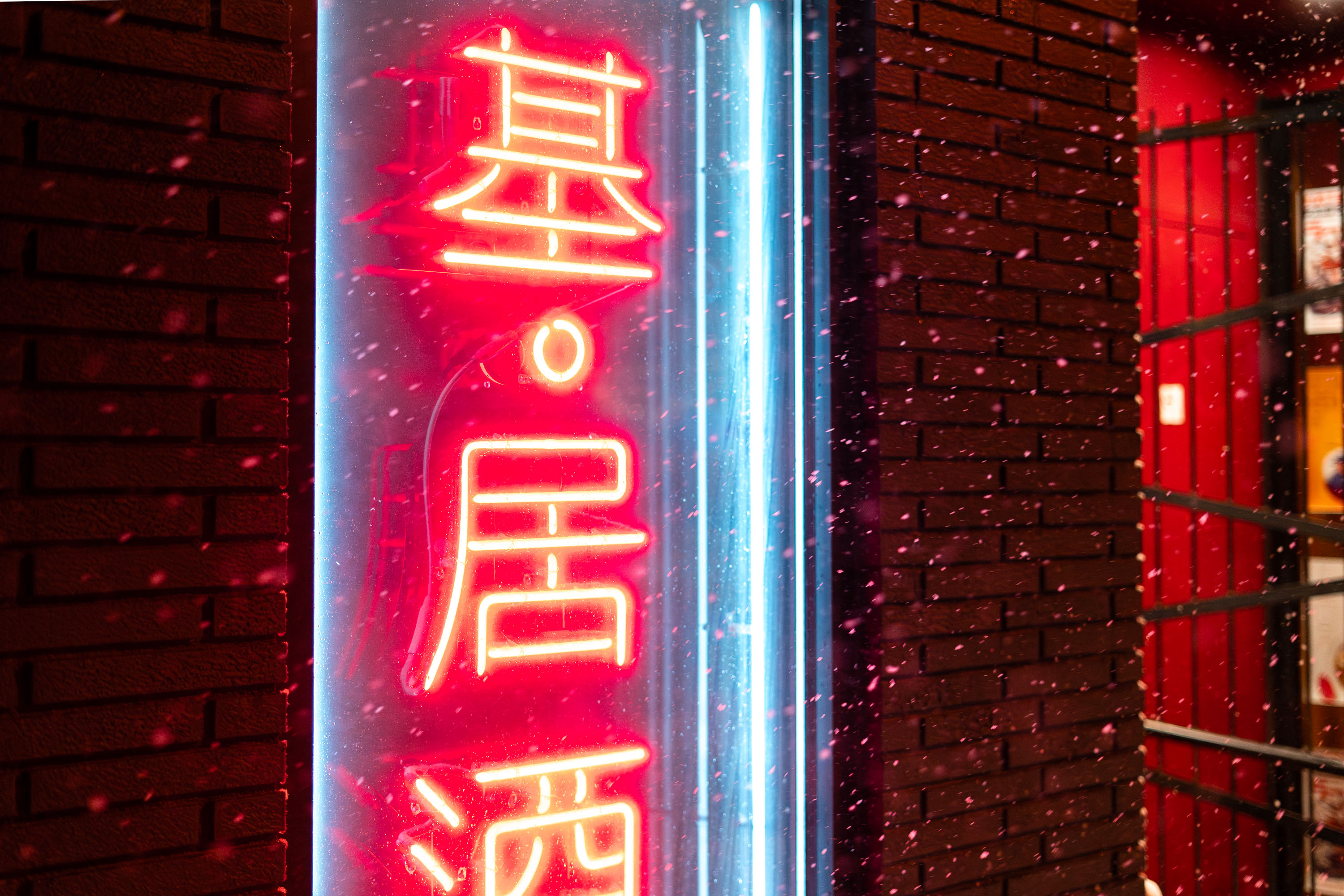
Moto-i neon sign in snow on Lyndale Avenue in Minneapolis
The neon sign for Moto-i, a Japanese restaurant and sake bar, glows in the snow on Lyndale Avenue in Minneapolis. The restaurant, which opened in 2001, is known for its extensive sake list and sushi offerings. This image was taken during a significant snowstorm on November 26, 2019, which blanketed the city.

Moto-i Neon Sign in the snow, Minneapolis
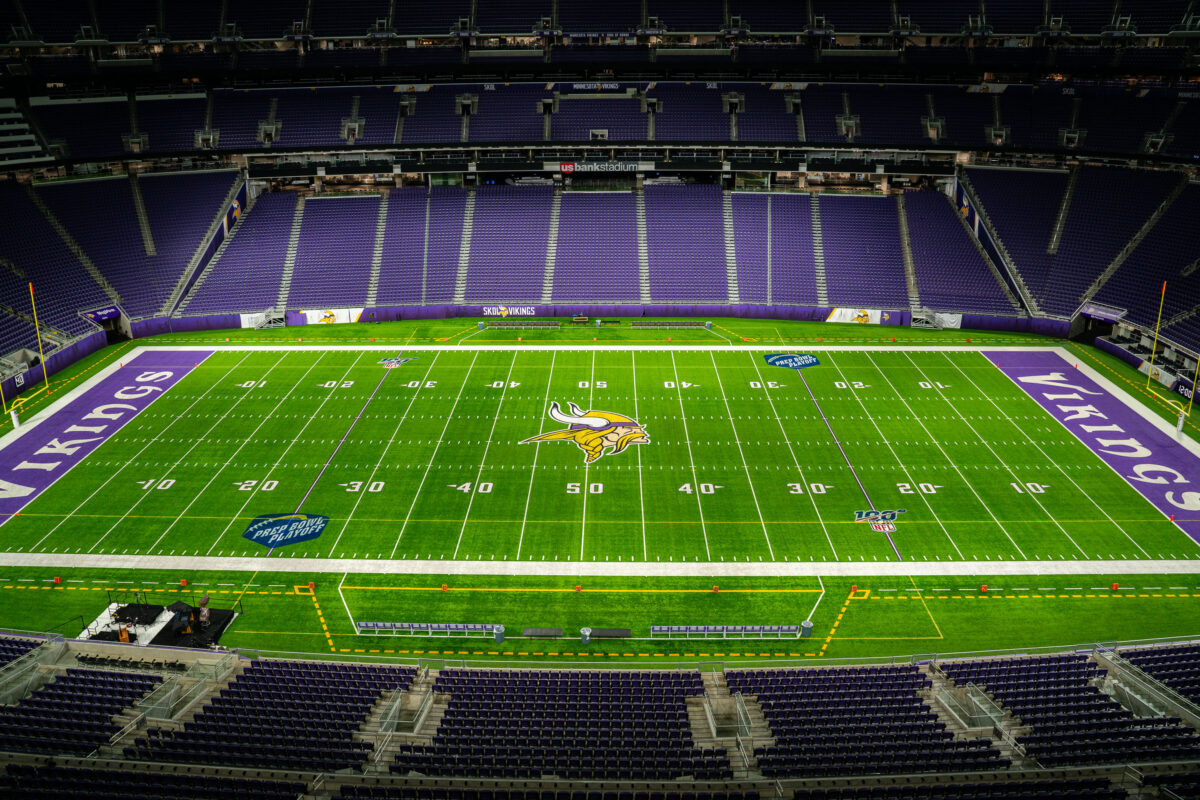
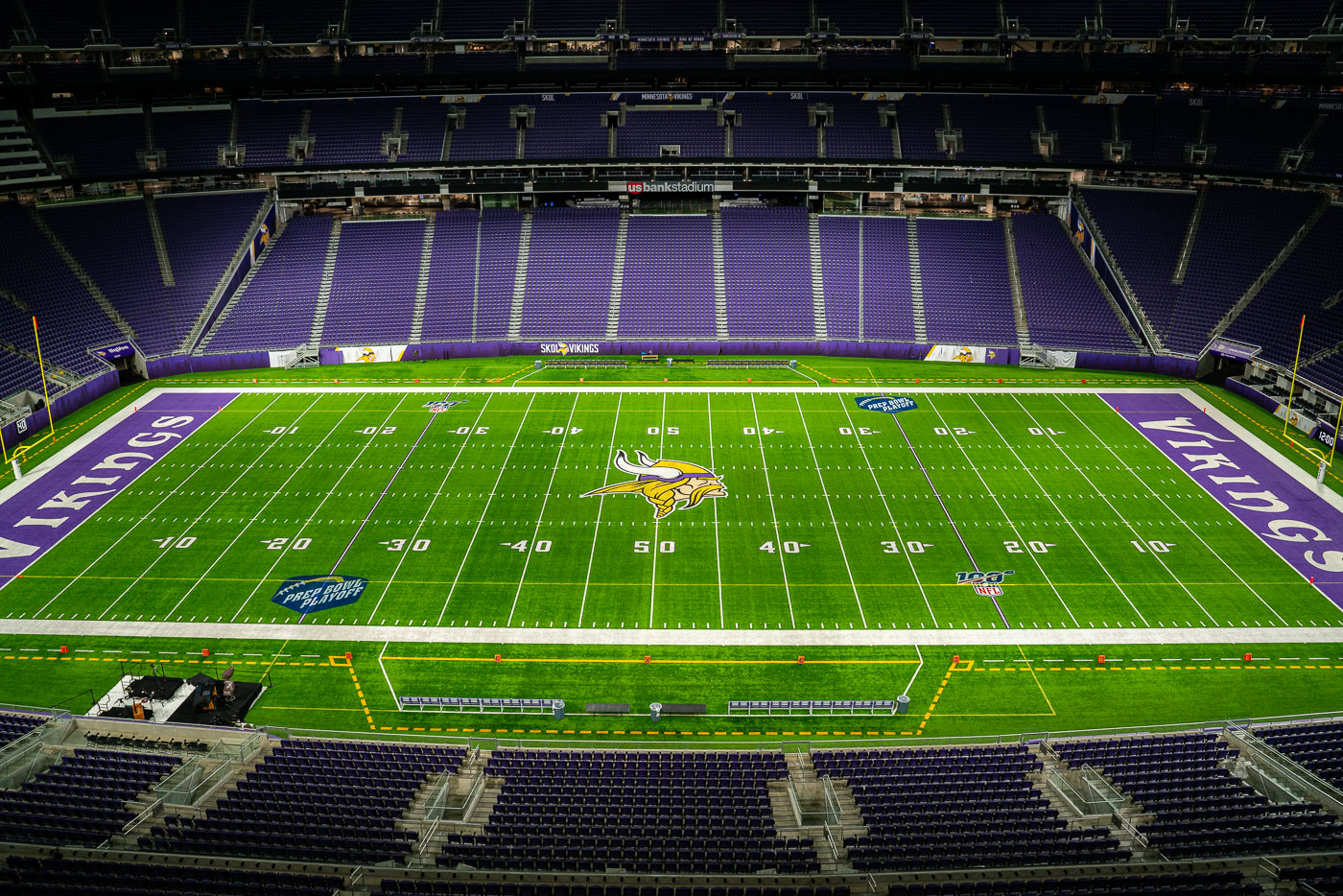
US Bank Stadium Field Home of the Minnesota Vikings
U.S. Bank Stadium, home of the NFL's Minnesota Vikings, is a multi-purpose venue in downtown Minneapolis. Completed in 2016, the $1.1 billion stadium replaced the Metrodome and features a translucent ETFE roof and steep seating.

U.S. Bank Stadium Field, Minneapolis, Home of the Minnesota Vikings
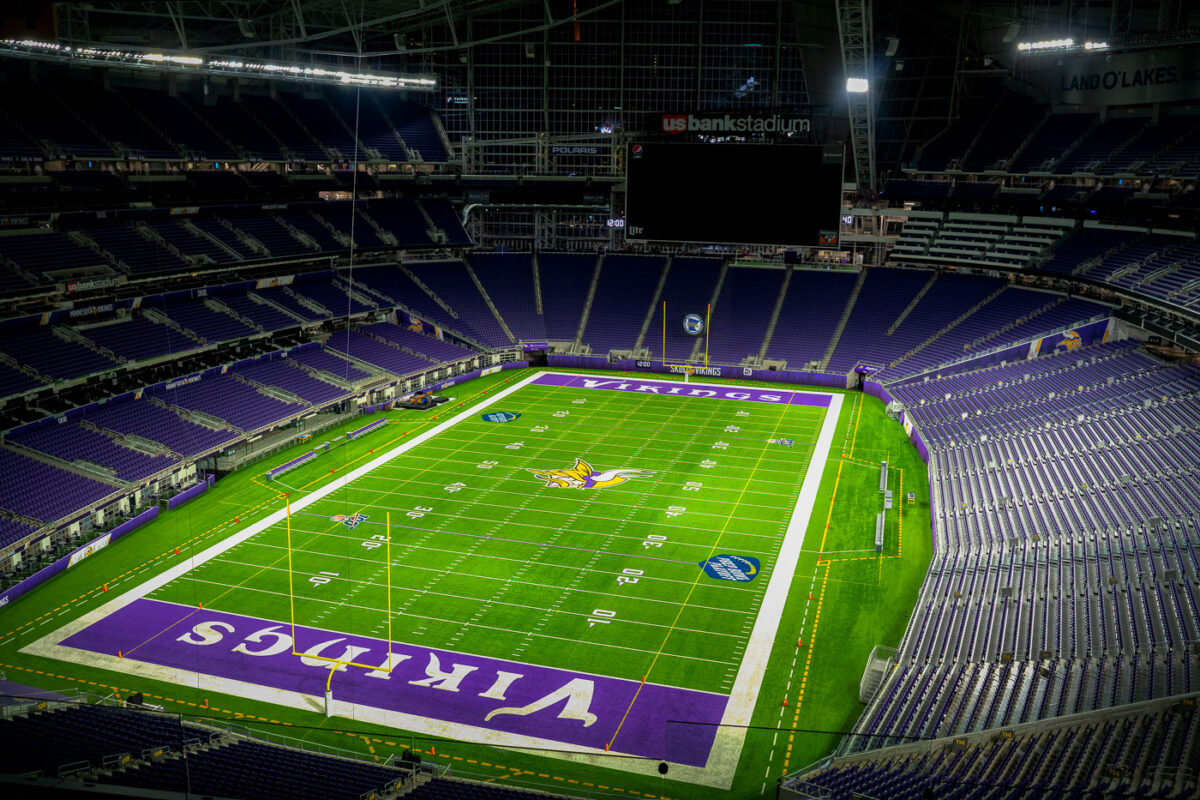
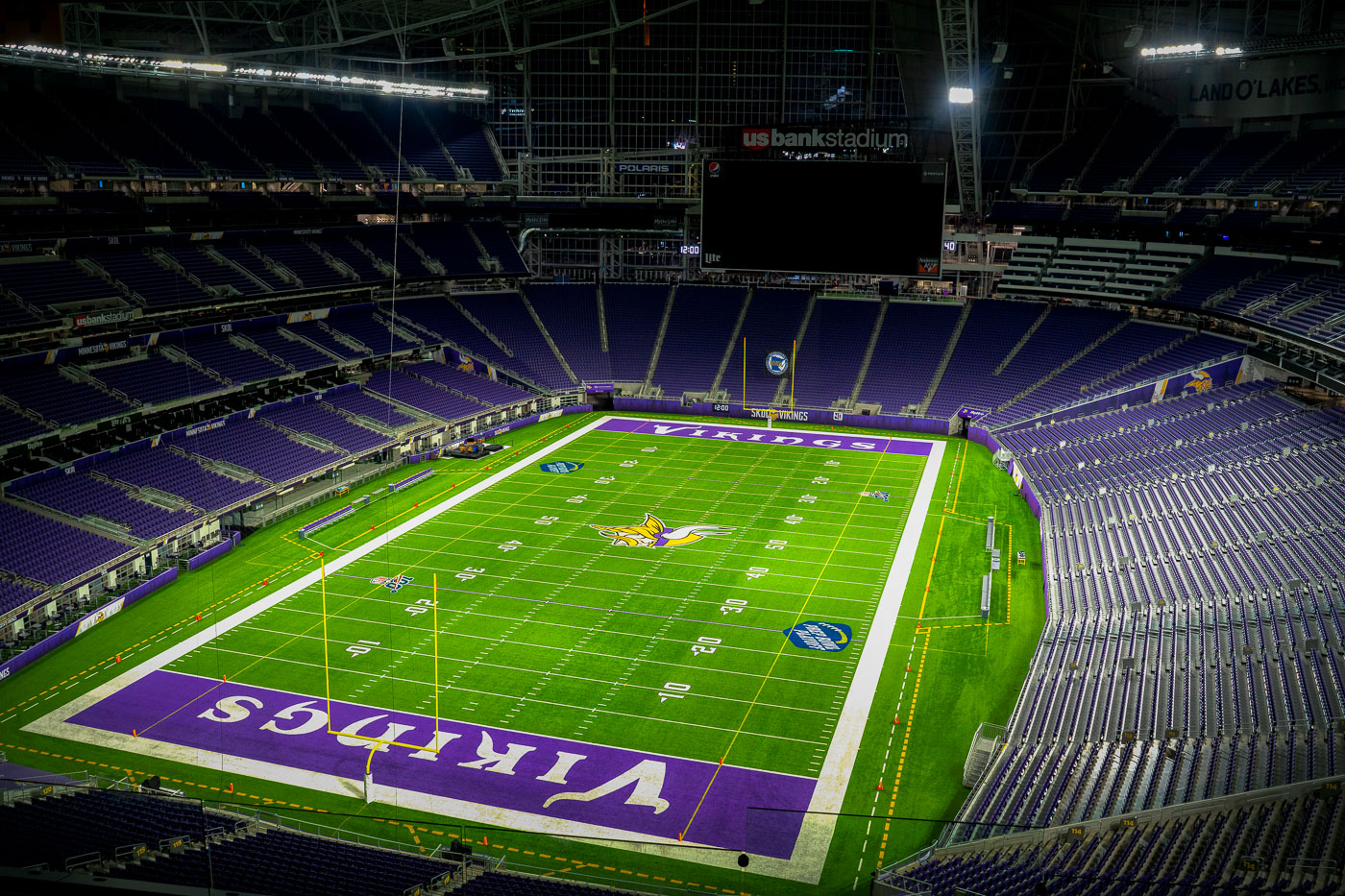
Inside US Bank Stadium at night
US Bank Stadium, located in downtown Minneapolis, serves as the home field for the NFL's Minnesota Vikings. Opened in 2016, the stadium replaced the Metrodome, which had been the Vikings' home since 1982.

US Bank Stadium, Home of the Minnesota Vikings, Minneapolis

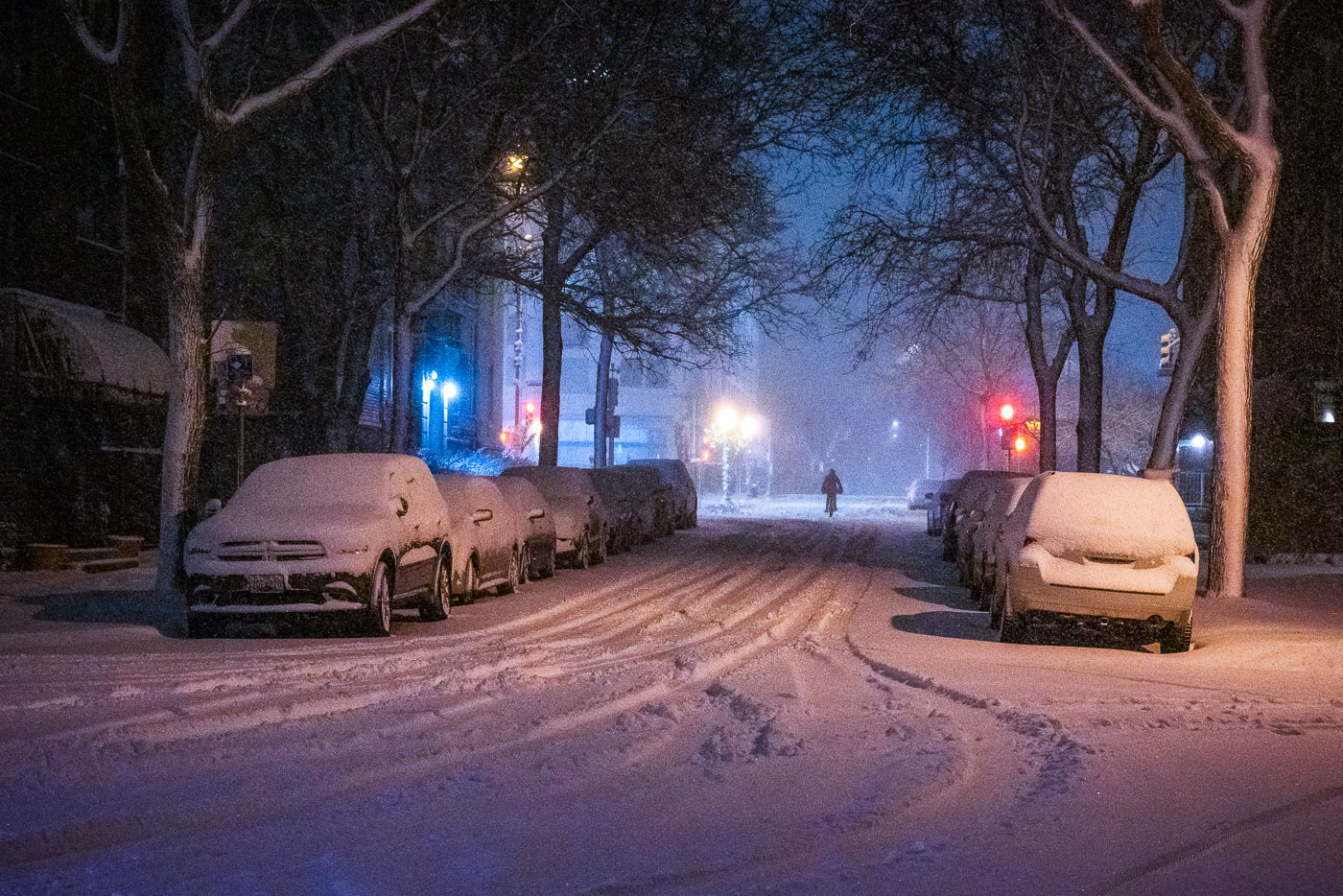
Cyclist on a snow-covered Uptown Minneapolis street during the November 2019 snowstorm.
Minneapolis, Minnesota, during a snowstorm on November 26, 2019. A cyclist makes their way along a snow-covered Uptown street as parked cars and tree-lined blocks are buried in fresh snow.

Minneapolis Snowstorm, Uptown Street Nov. 2019
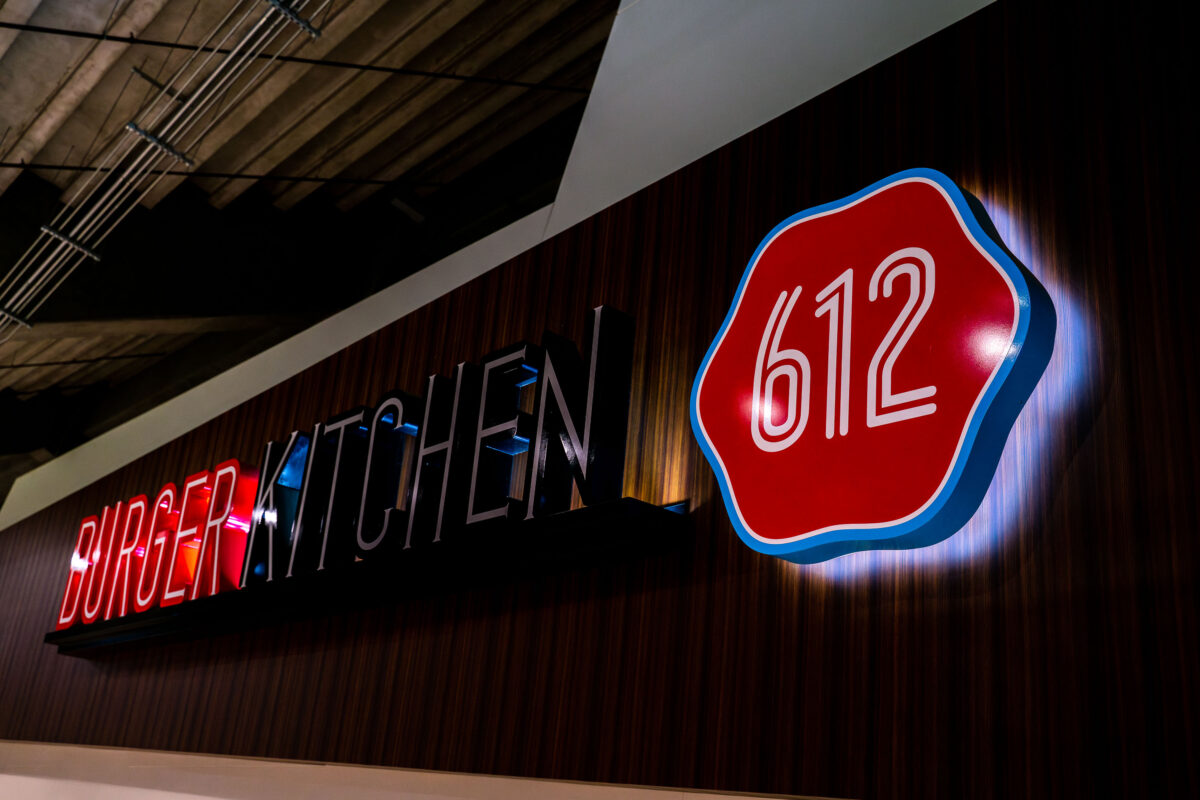
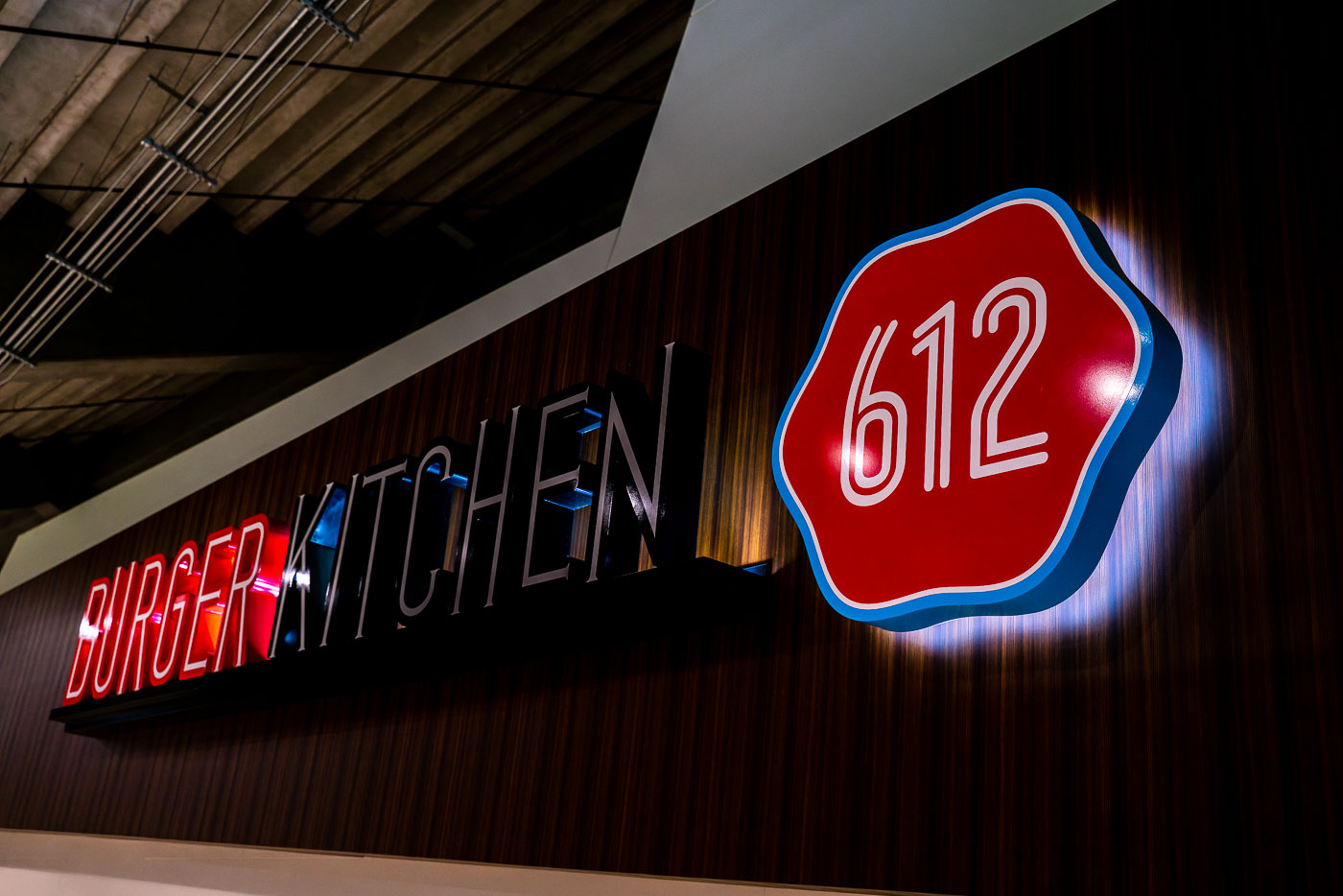
612 Burger Kitchen sign inside U.S. Bank Stadium in Minneapolis.
612 Burger Kitchen at U.S. Bank Stadium in Minneapolis is a concessions outlet inside the home of the Minnesota Vikings. The name references Minneapolis area code 612, a local identifier used in the stadium's food and beverage branding.

612 Burger Kitchen at U.S. Bank Stadium, Minneapolis

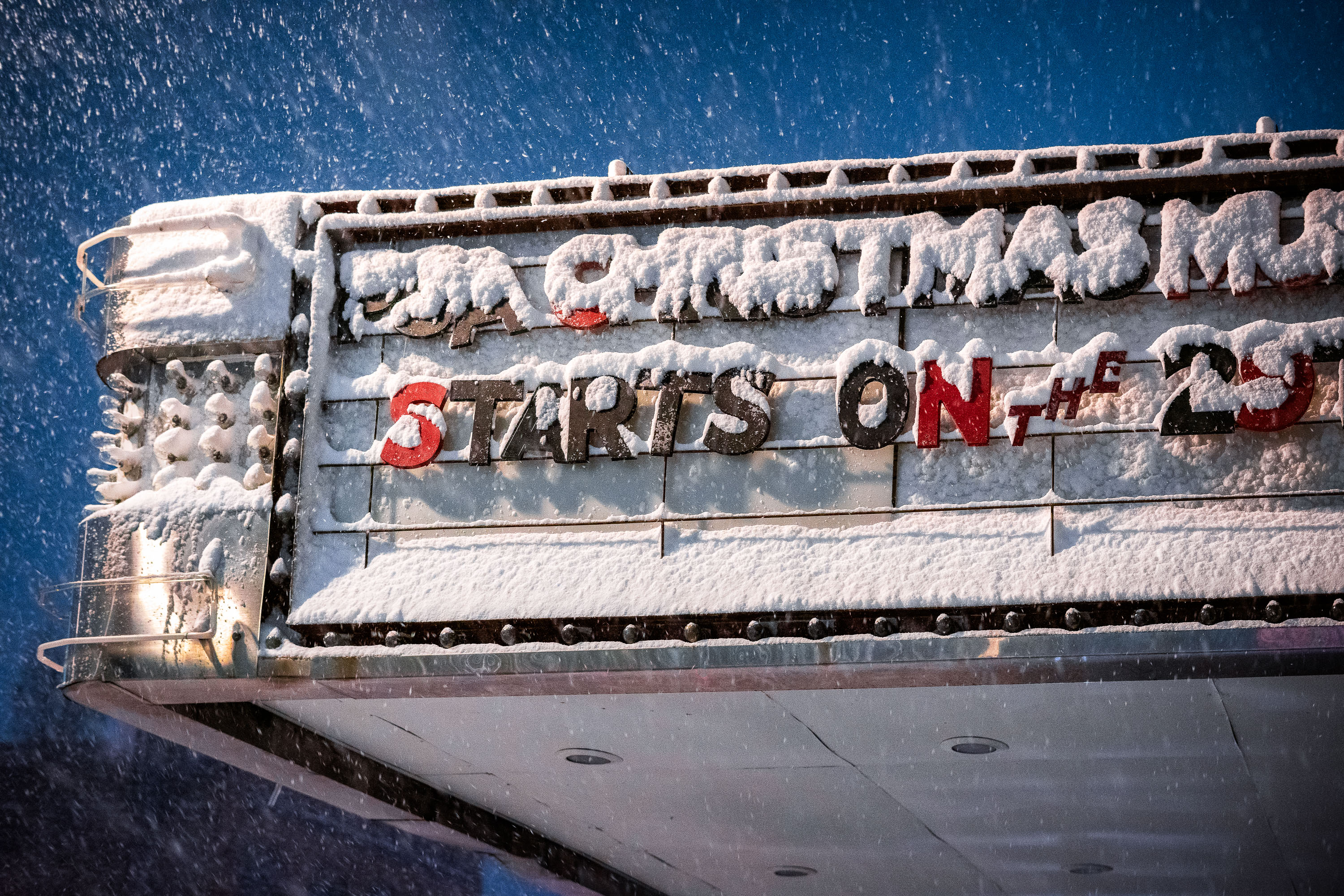
Snow-covered Lynlake Brewery marquee in Minneapolis during a winter storm.
The marquee of Lynlake Brewery in Minneapolis's Uptown neighborhood is covered in snow during a November storm. The sign reads "CHRISTMAS STARTS ON THE 29th."

Lynlake Brewery Marquee in Snowstorm, Minneapolis

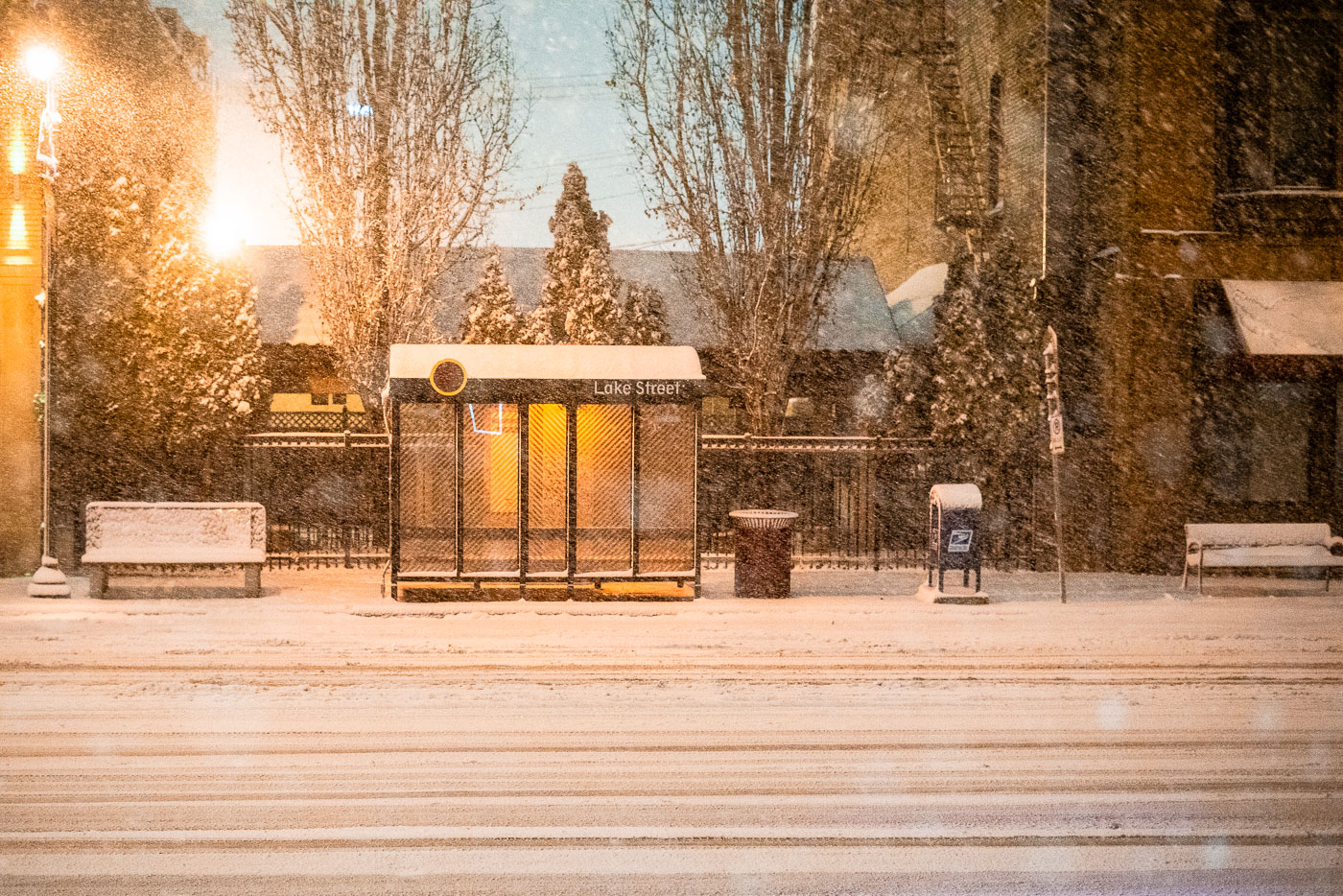
Lake Street bus stop in Minneapolis during a November 2019 snowstorm at night.
A heavy snow falls on a bus shelter along Lake Street in Minneapolis in late November 2019. Lake Street runs about six miles across south Minneapolis, linking Uptown to the Mississippi River and the Midtown Greenway.

Snowstorm at a Lake Street Bus Shelter in Minneapolis

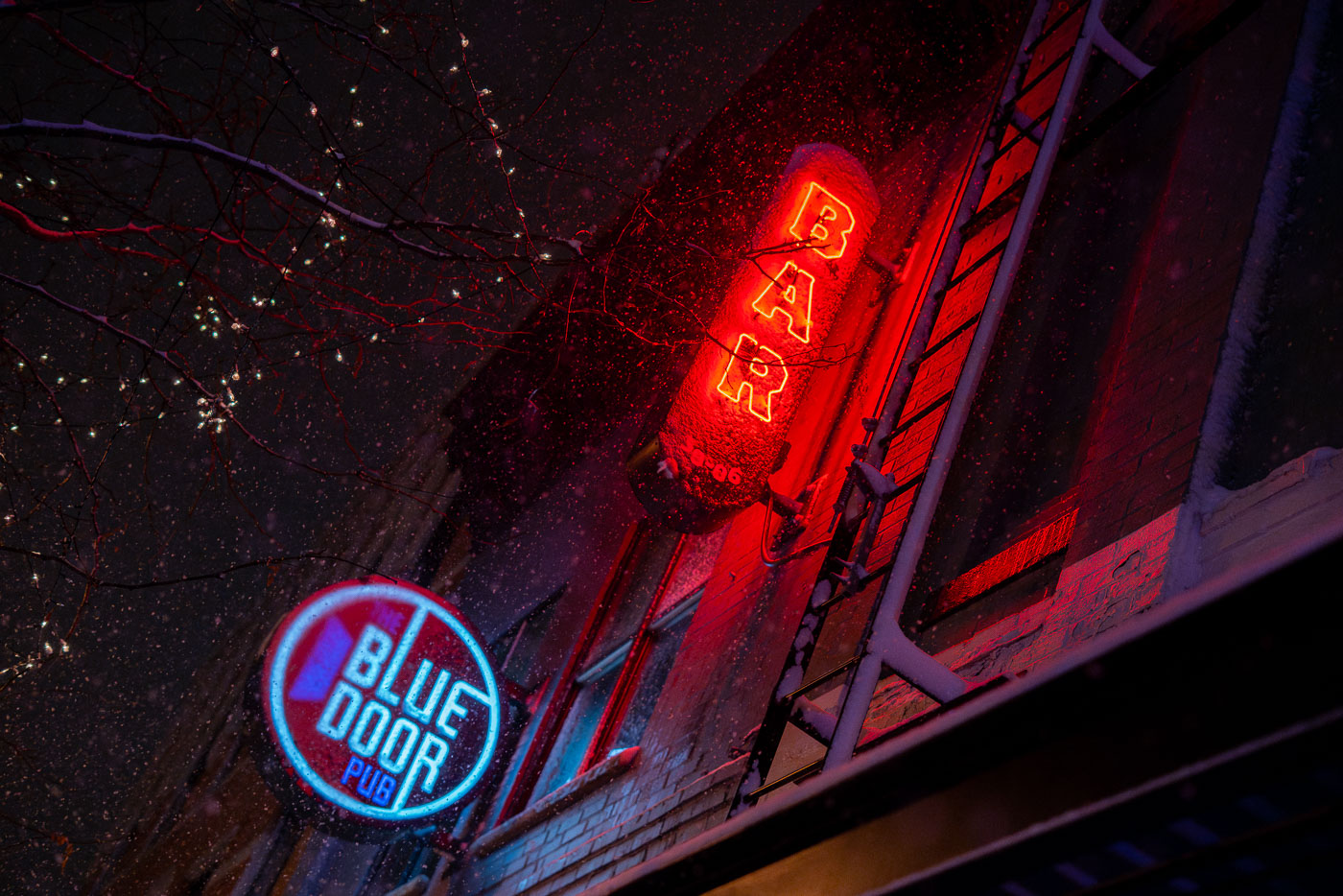
Blue Door Pub neon signs glow red and blue on a snowy building in Uptown Minneapolis at night.
The Blue Door Pub is a bar and restaurant on Lyndale Avenue in Minneapolis. Snow falls past its neon "BAR" sign during a snowstorm on November 26, 2019.

Blue Door Pub’s “BAR” Sign During a November Snowstorm

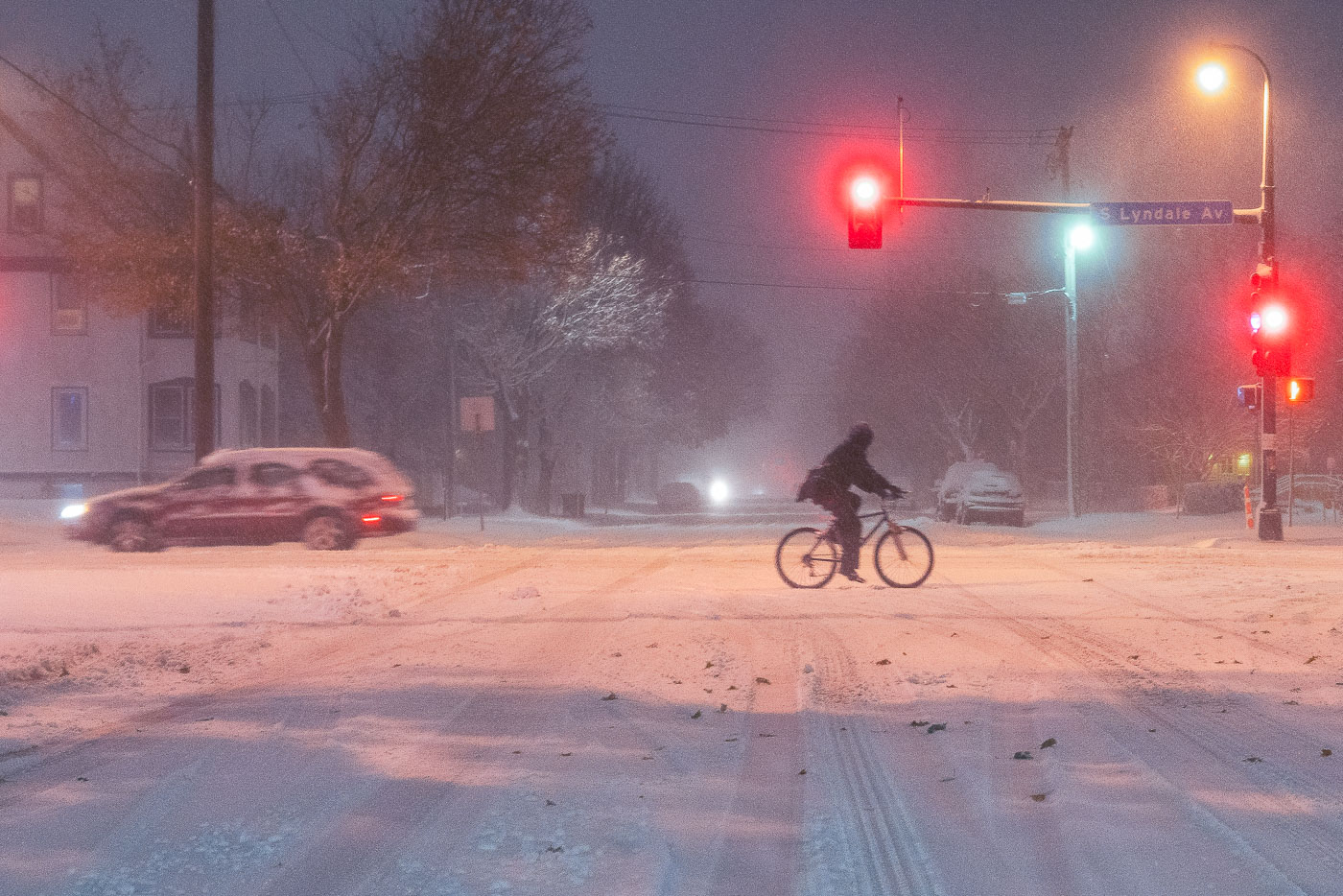
A cyclist rides across snow-covered Lyndale Avenue in Minneapolis during a heavy snowstorm at night.
South Lyndale Avenue is a major north-south street through Uptown Minneapolis. A cyclist crosses the snow-covered street at a red light during a snowstorm on November 26, 2019.

Cyclist Crossing South Lyndale Avenue During a Snowstorm

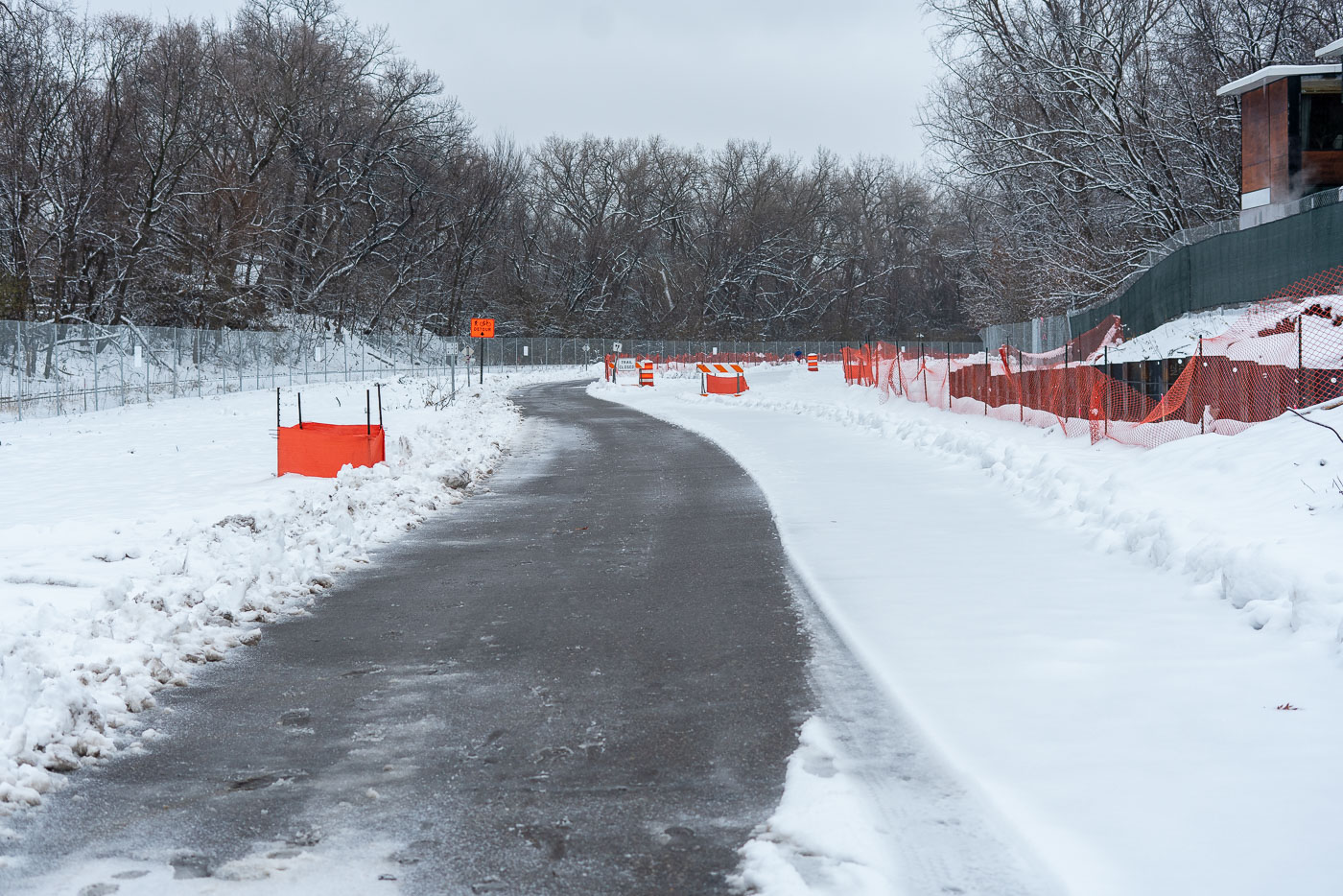
Red detour barriers and signs line a snow-covered Cedar Lake Trail in Minneapolis during winter construction.
A detour is in effect on the Kenilworth Trail near 21st Street in Minneapolis. The detour is in place during Metro Green Line construction.

Snow-Covered Kenilworth Trail During Green Line Construction
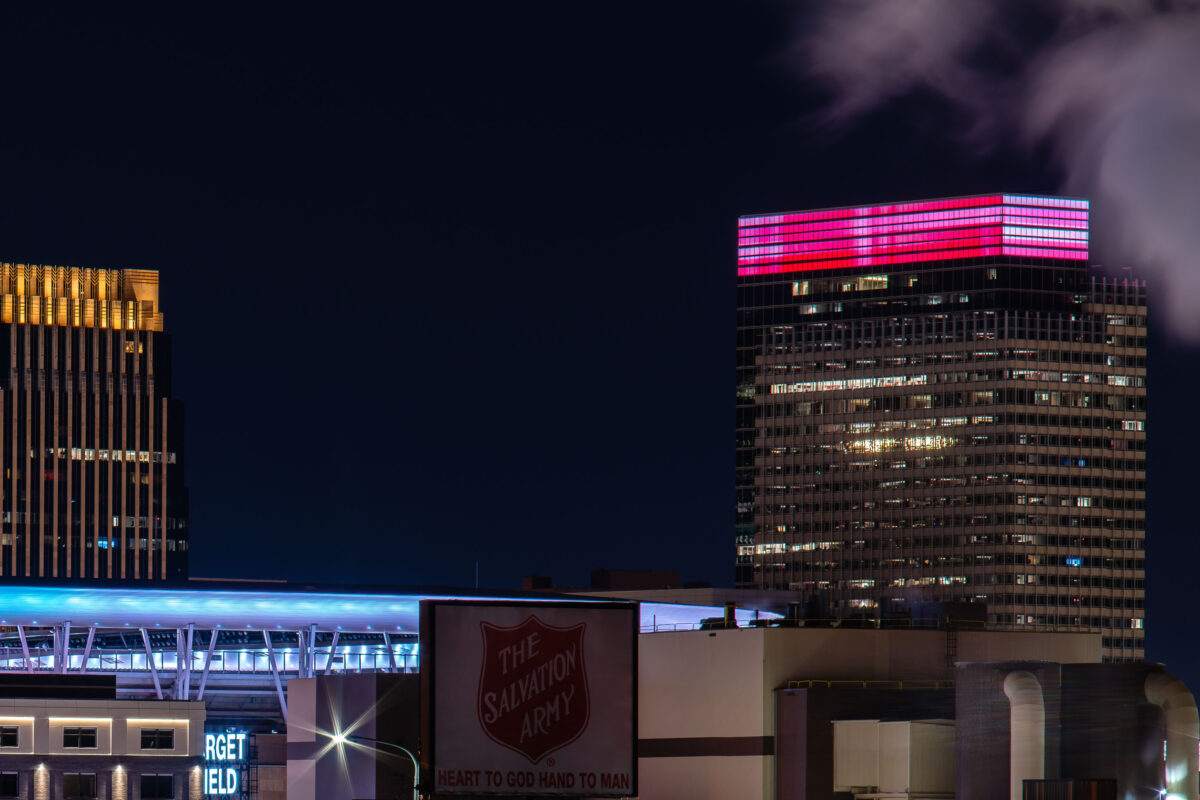
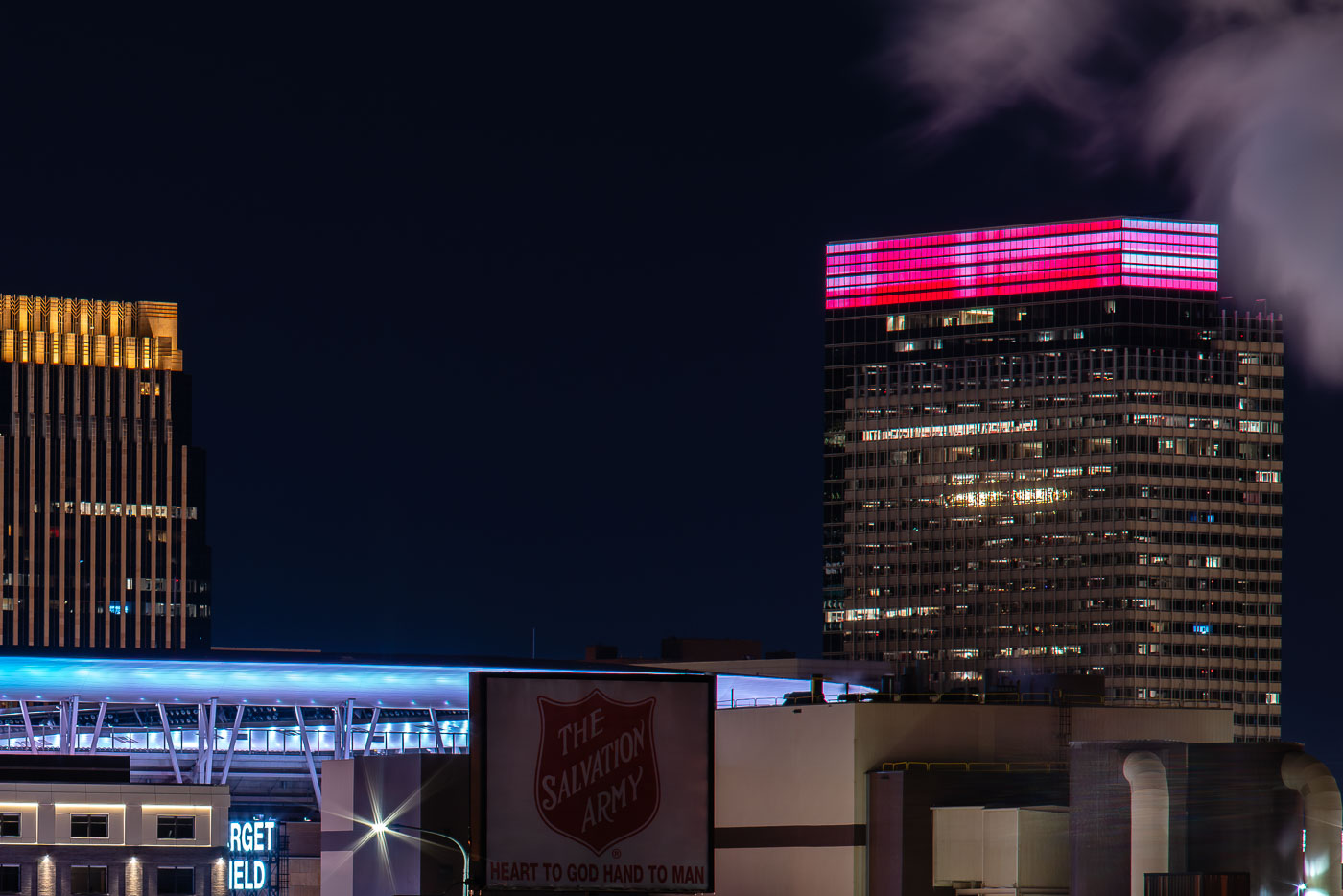
Target World Headquarters and Salvation Army signage in Minneapolis North Loop at night.
Target's corporate headquarters tower stands in the North Loop of downtown Minneapolis, next to Target Field, home of the Minnesota Twins. The tower is part of the Target Plaza complex, which the retailer has expanded in stages since relocating its headquarters there in the 1950s. A Salvation Army sign marks a nearby building on the same block.

Target Headquarters Tower Near Target Field in Minneapolis

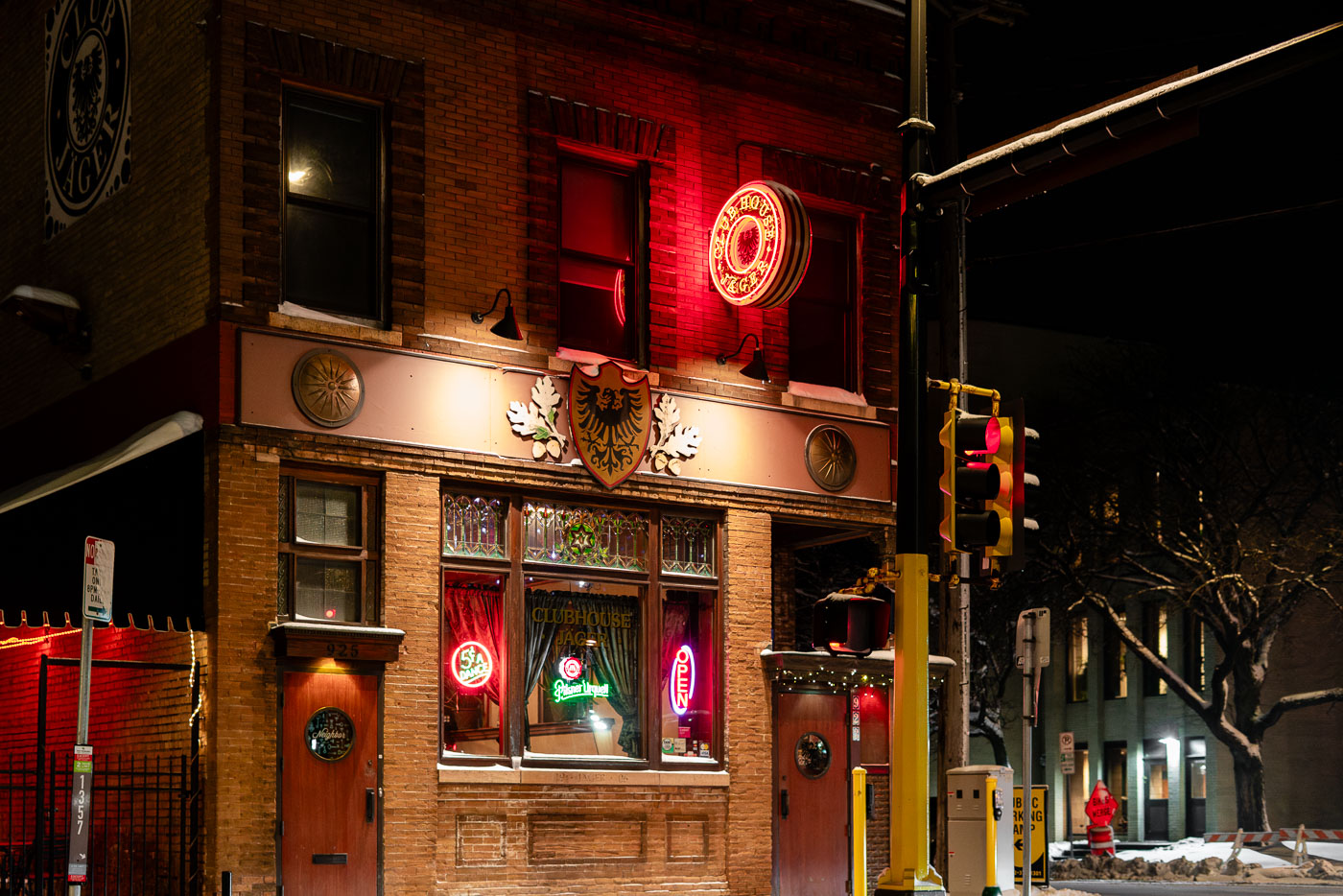
Clubhouse Jäger in Minneapolis’s North Loop neighborhood at night.
Clubhouse Jäger in Minneapolis’s North Loop neighborhood is a longtime bar and music venue at 925 Washington Avenue North. The brick building is one of the neighborhood’s older commercial structures, known for its distinctive neon signage and corner location.

Clubhouse Jäger, North Loop, Minneapolis

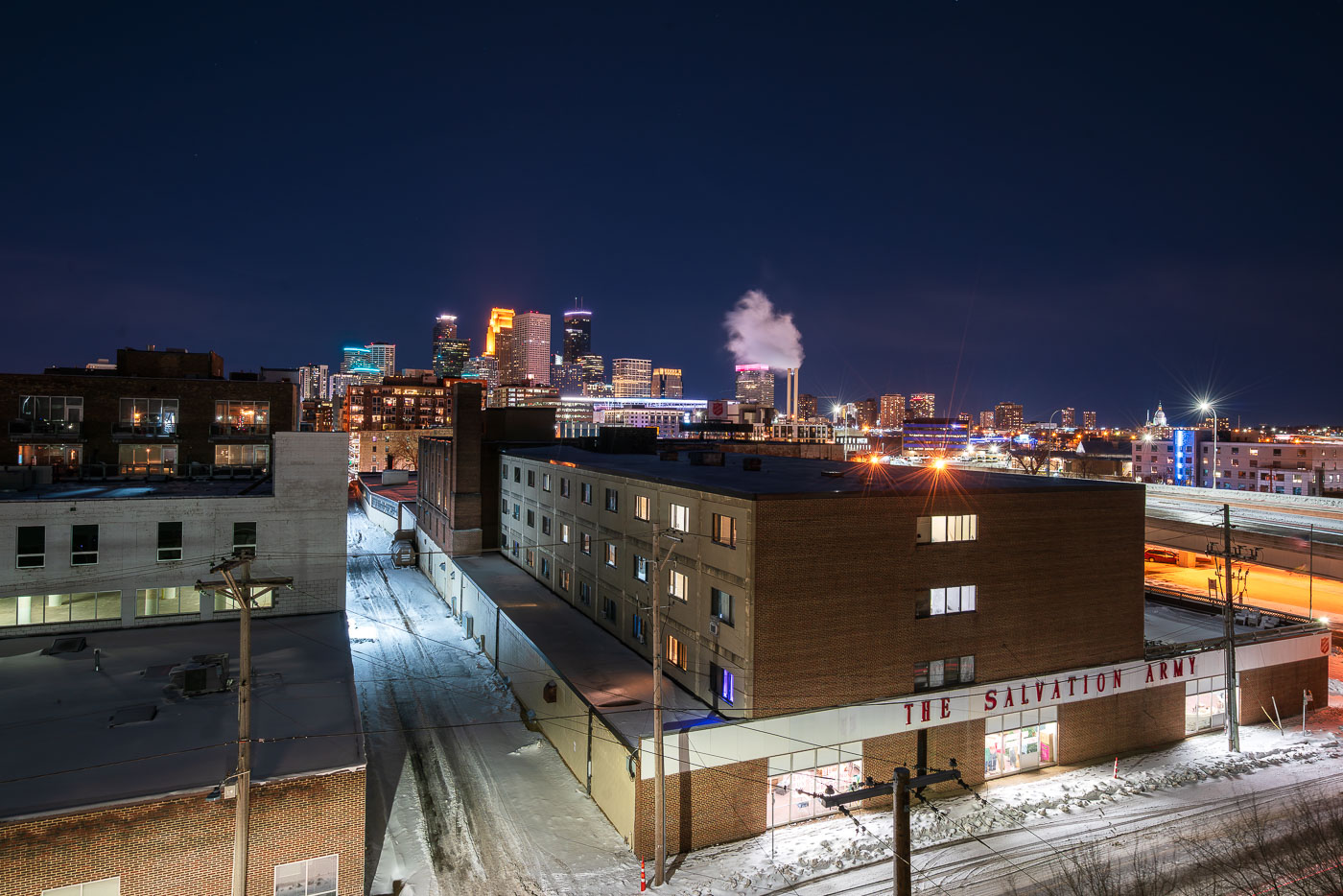
The Salvation Army facility in Minneapolis stands near downtown with the skyline behind it at night.
The Salvation Army facility in Minneapolis stands near downtown with the city skyline in the background. The organization provides social services and humanitarian aid in the city through local programs and emergency support. Its Minneapolis presence dates to the late 19th century.

The Salvation Army, Minneapolis at Night
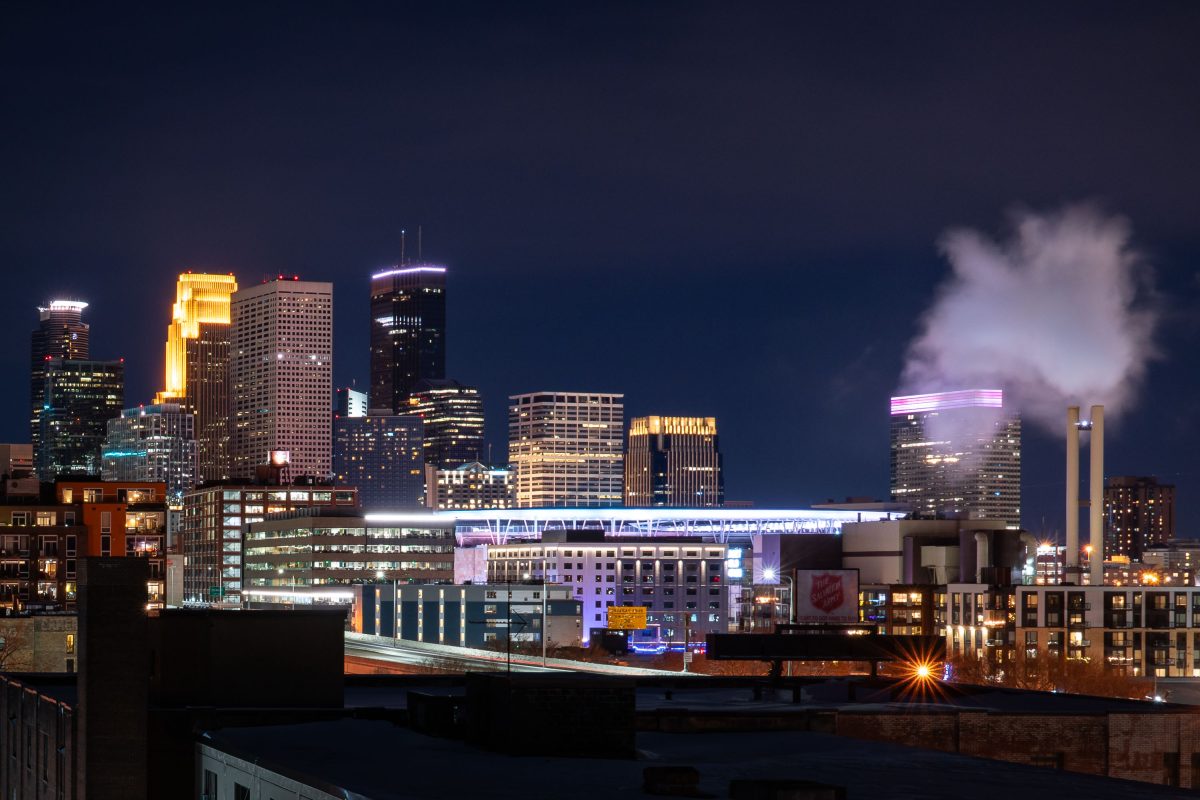
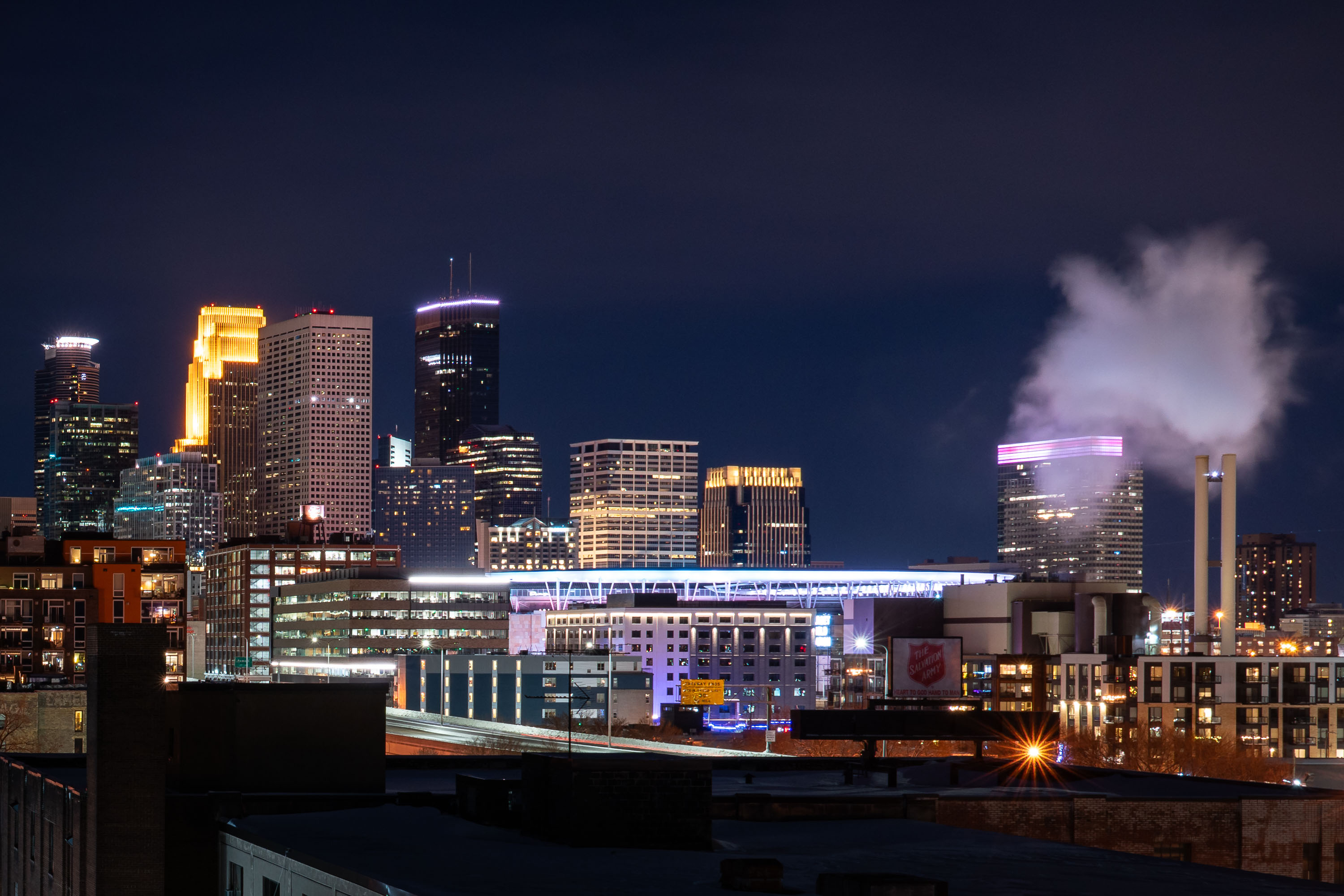
Target Field and downtown Minneapolis skyline at night, viewed from North Loop.
Target Field opened in 2010 as the home of the Minnesota Twins, ending the team's 28-year run at the Metrodome. The ballpark seats about 38,800 and was built from Minnesota-quarried limestone at a cost of roughly $545 million. Beyond the outfield, downtown Minneapolis rises with the 57-story Wells Fargo Center and the 775-foot IDS Center, the tallest building in the state since its 1972 completion. The twin smokestacks near the ballpark belong to a district energy plant that supplies steam heat to much of downtown.

Target Field Skyline at Night, Minneapolis
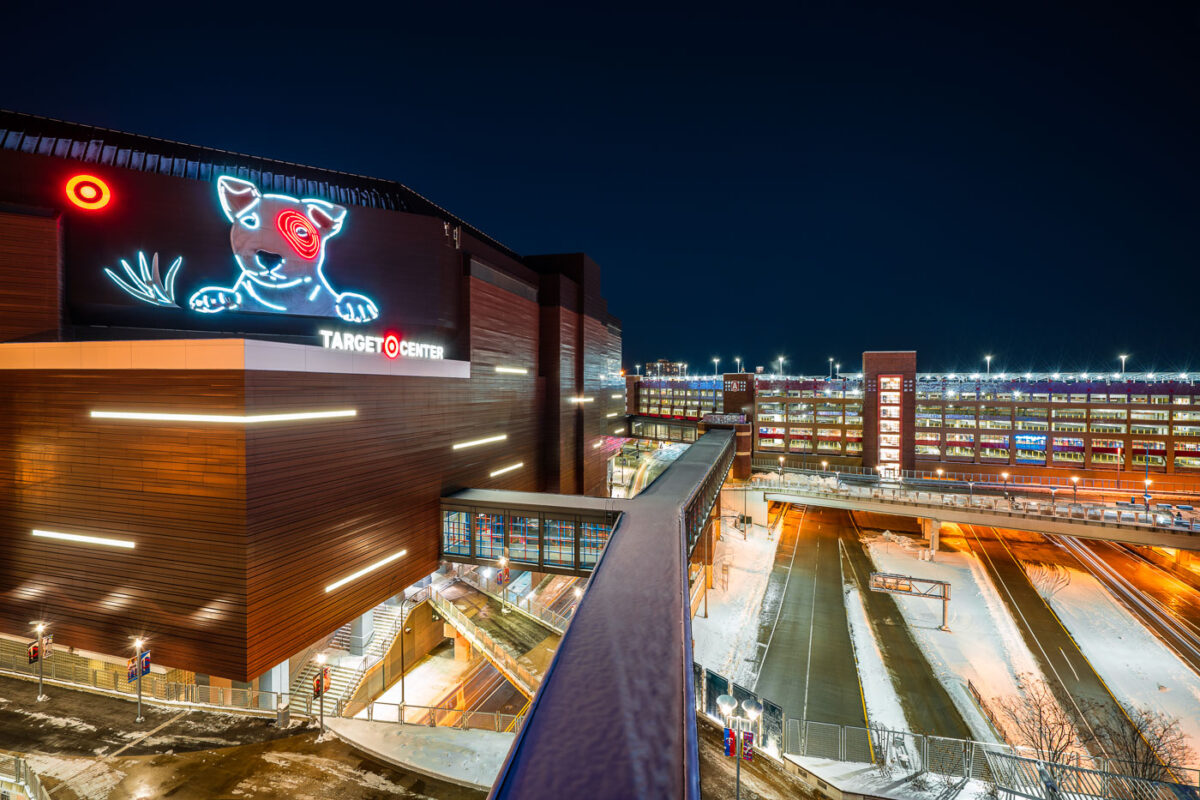
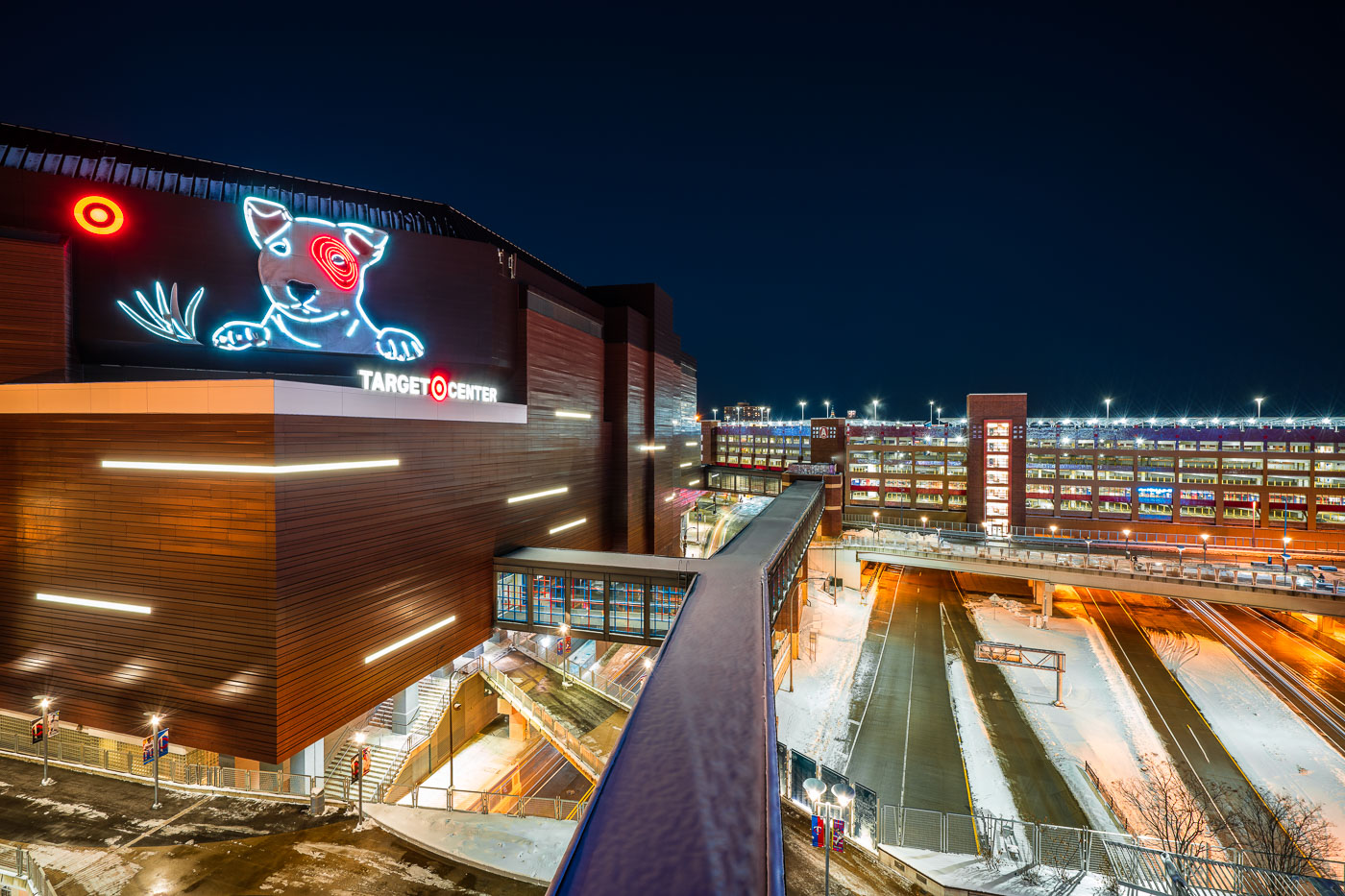
Target Center and Ramp A skyway in downtown Minneapolis at night.
Target Center in downtown Minneapolis is a multi-purpose arena opened in 1990 and renovated in 2017. It is the home court of the Minnesota Timberwolves and is connected to Ramp A by an enclosed skyway. The Minneapolis skyway system links buildings and parking ramps across the downtown core.

Target Center and Ramp A Skyway, Minneapolis
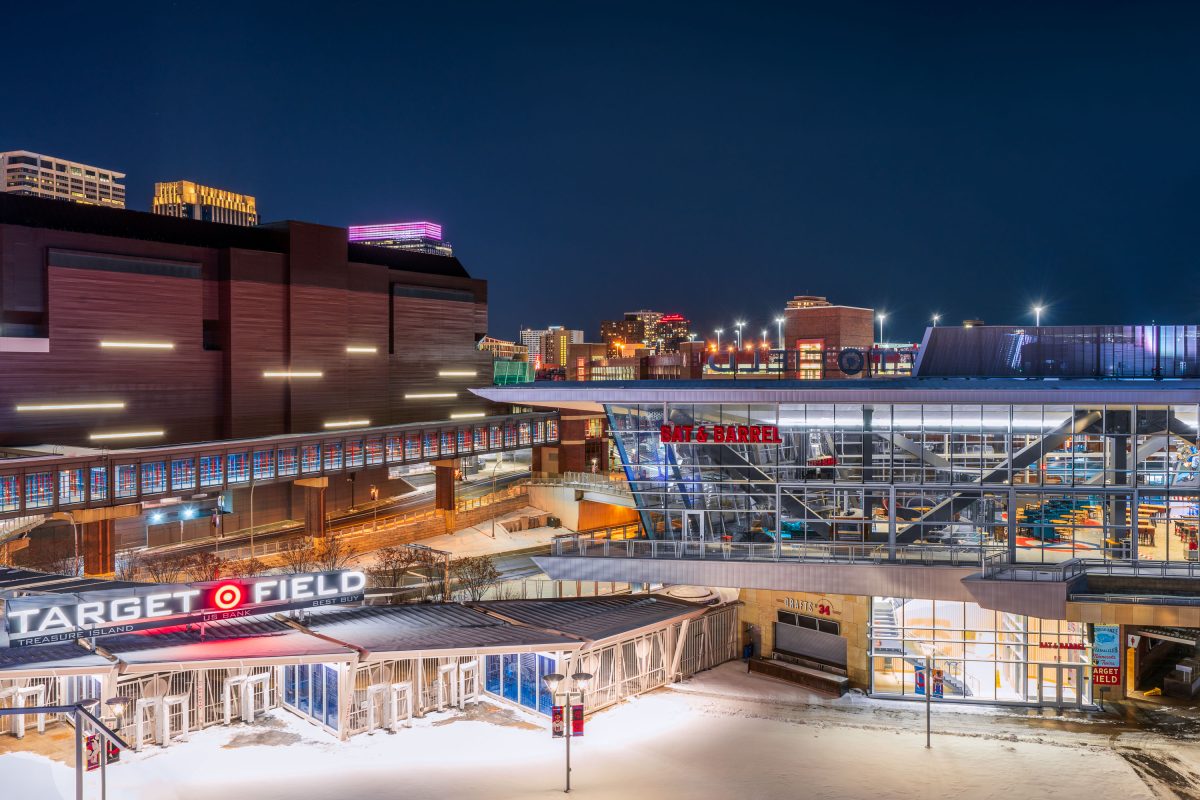
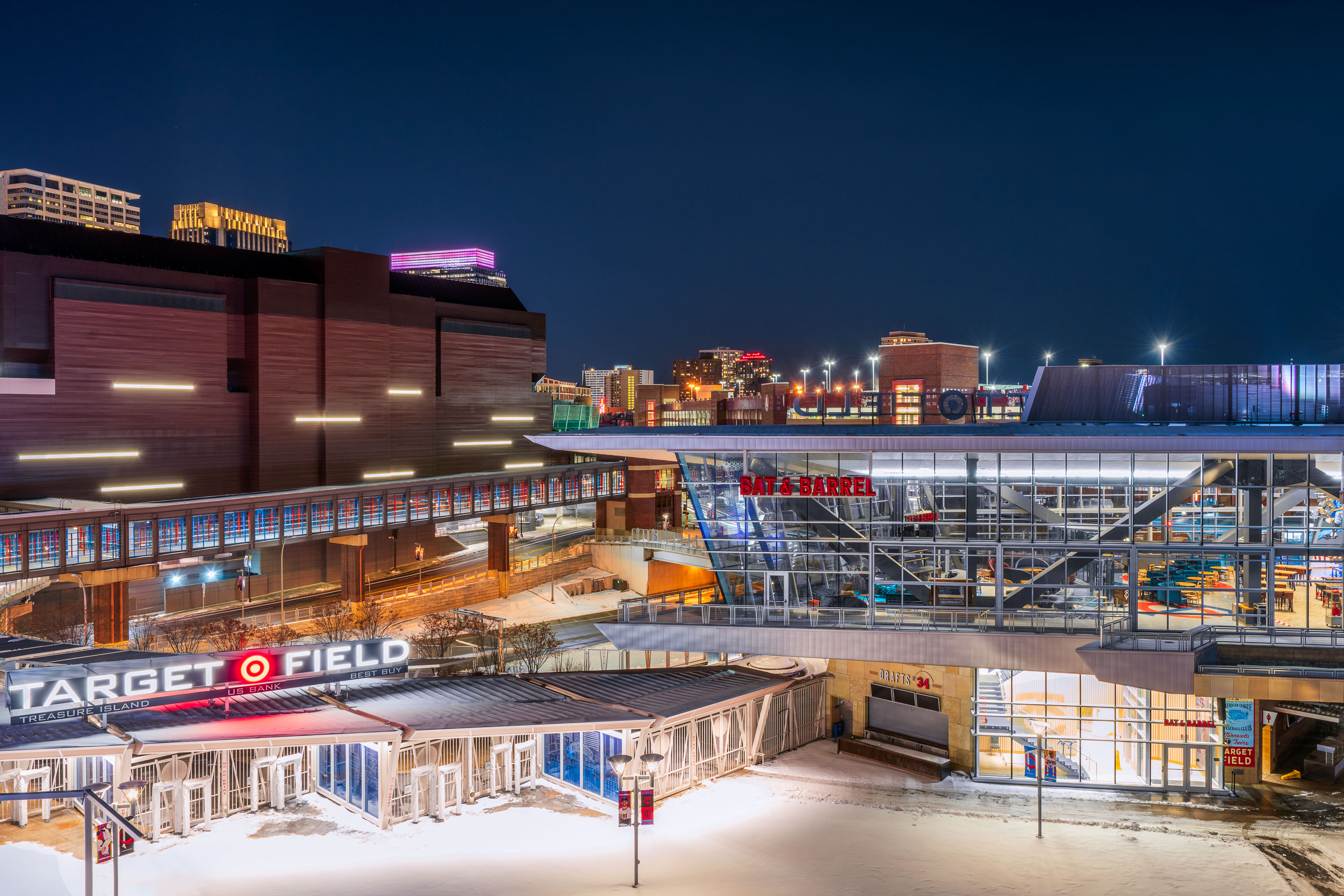
Target Field stadium and surrounding downtown Minneapolis buildings illuminated at night with snow on the ground.
Target Field, the home of the MLB Minnesota Twins. Located near the North Loop and Downtown Minneapolis.

Target Field and Bat & Barrel on a Snowy Night in Minneapolis
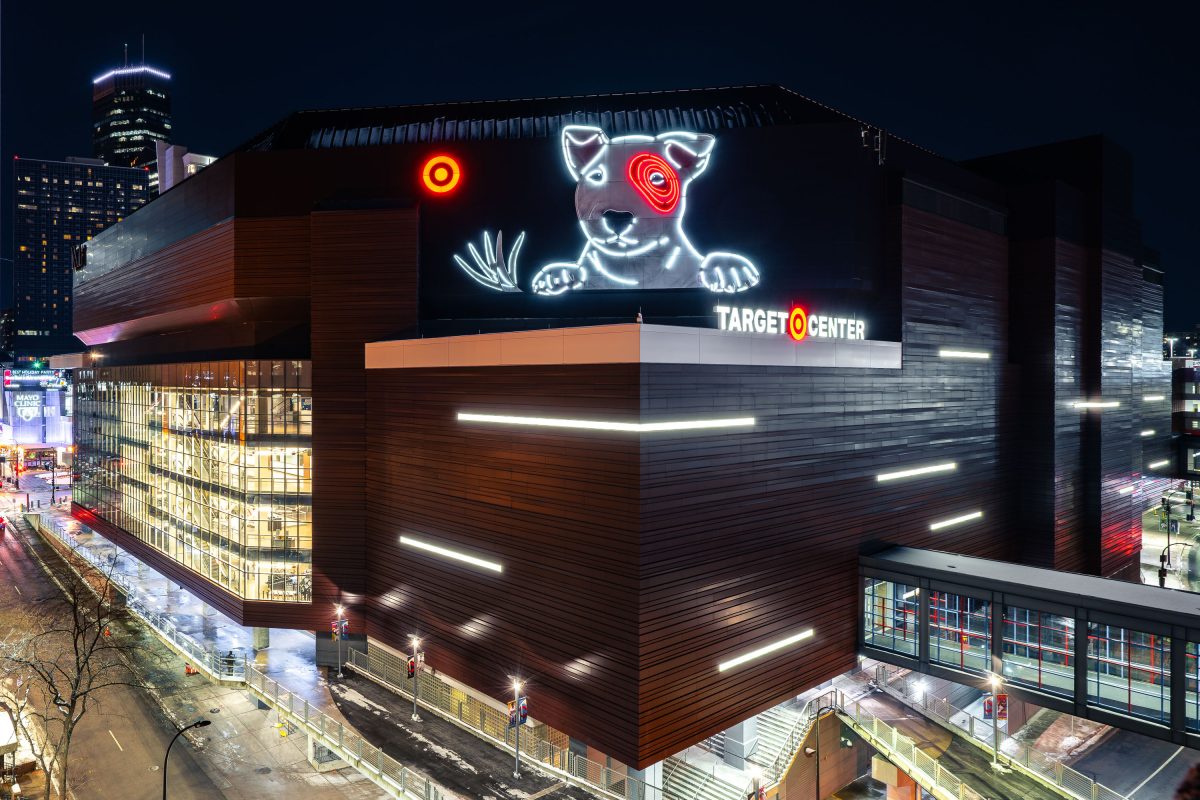
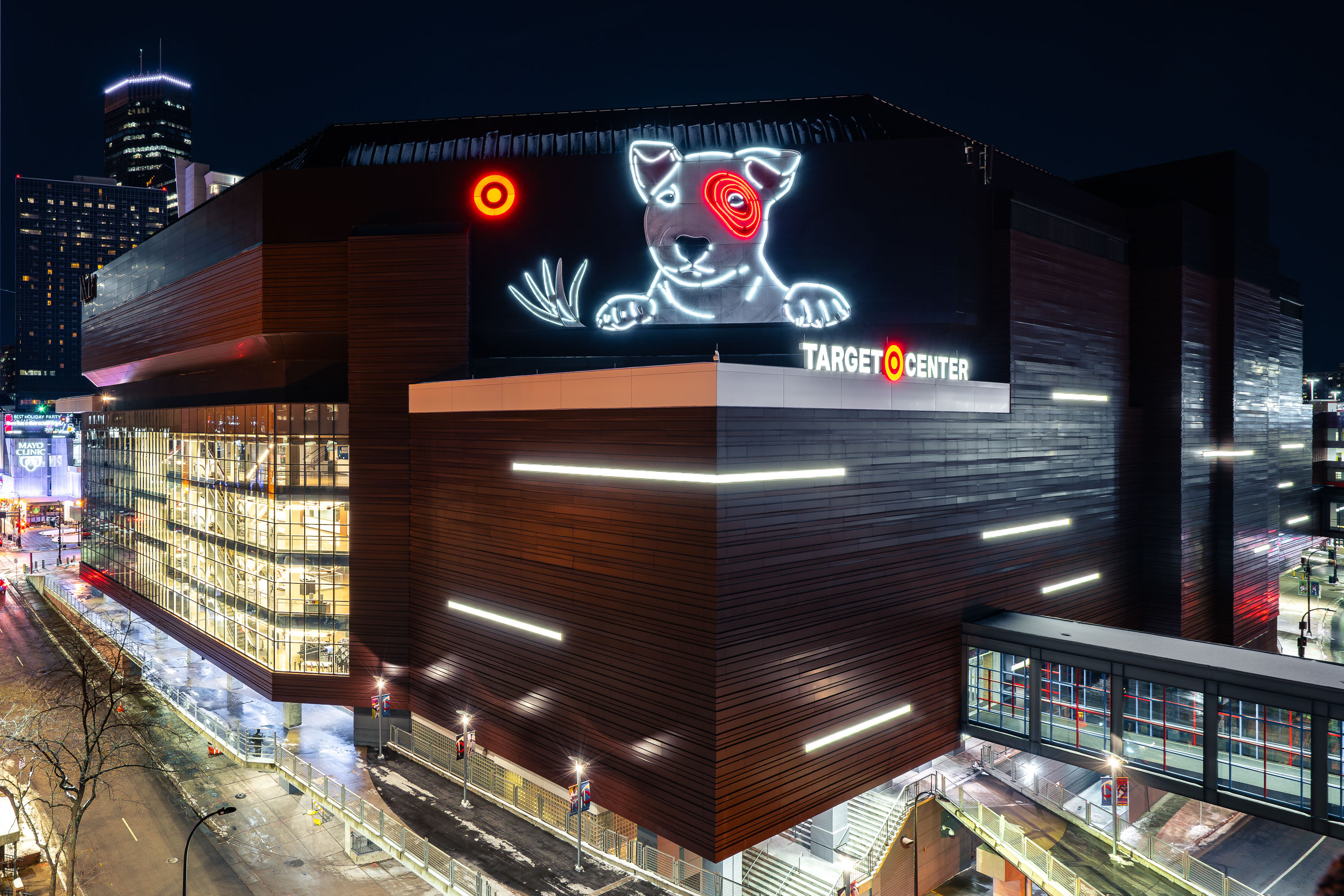
Target Center's illuminated neon bullseye dog logo displays above the arena entrance in downtown Minneapolis at night.
Target Center opened in downtown Minneapolis in 1990 as home to the NBA's Minnesota Timberwolves and, later, the WNBA's Minnesota Lynx. The arena seats roughly 19,000 for basketball and hosts concerts and other events year-round. A skyway connection links the building to the surrounding downtown buildings.

Neon Bullseye Dog Sign on Target Center at Night
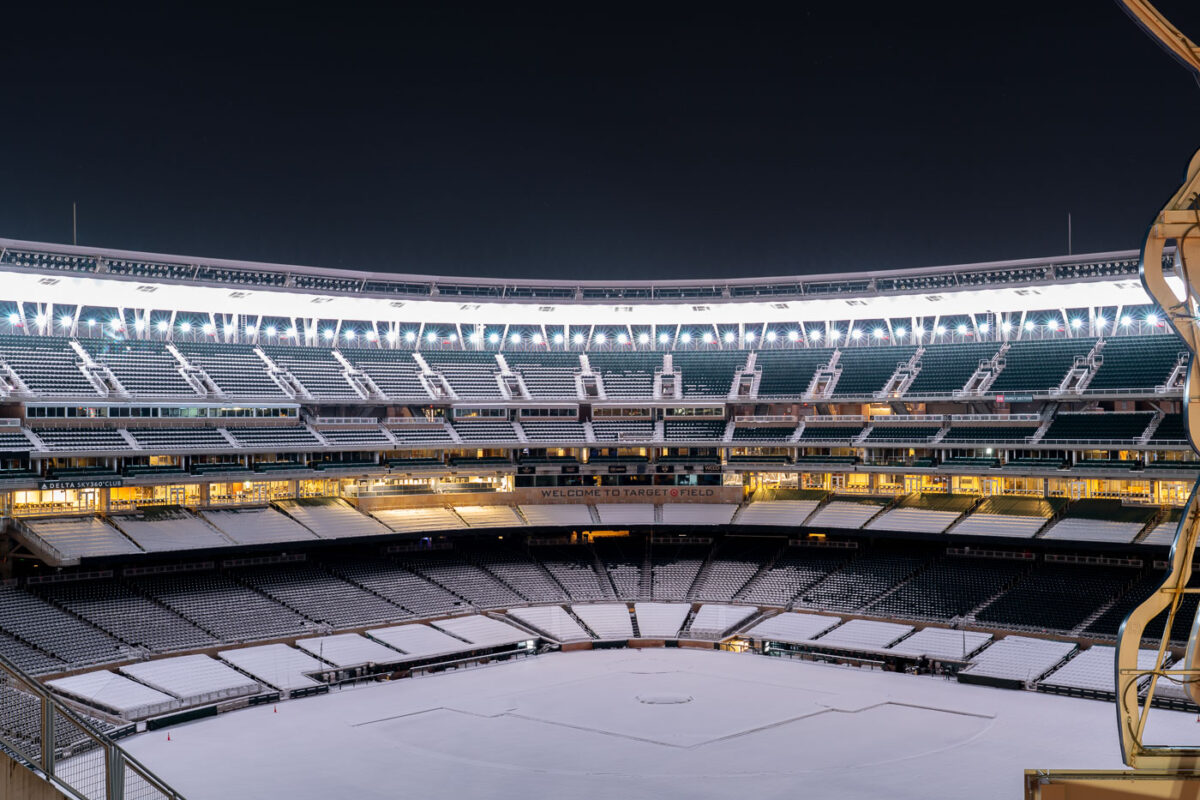
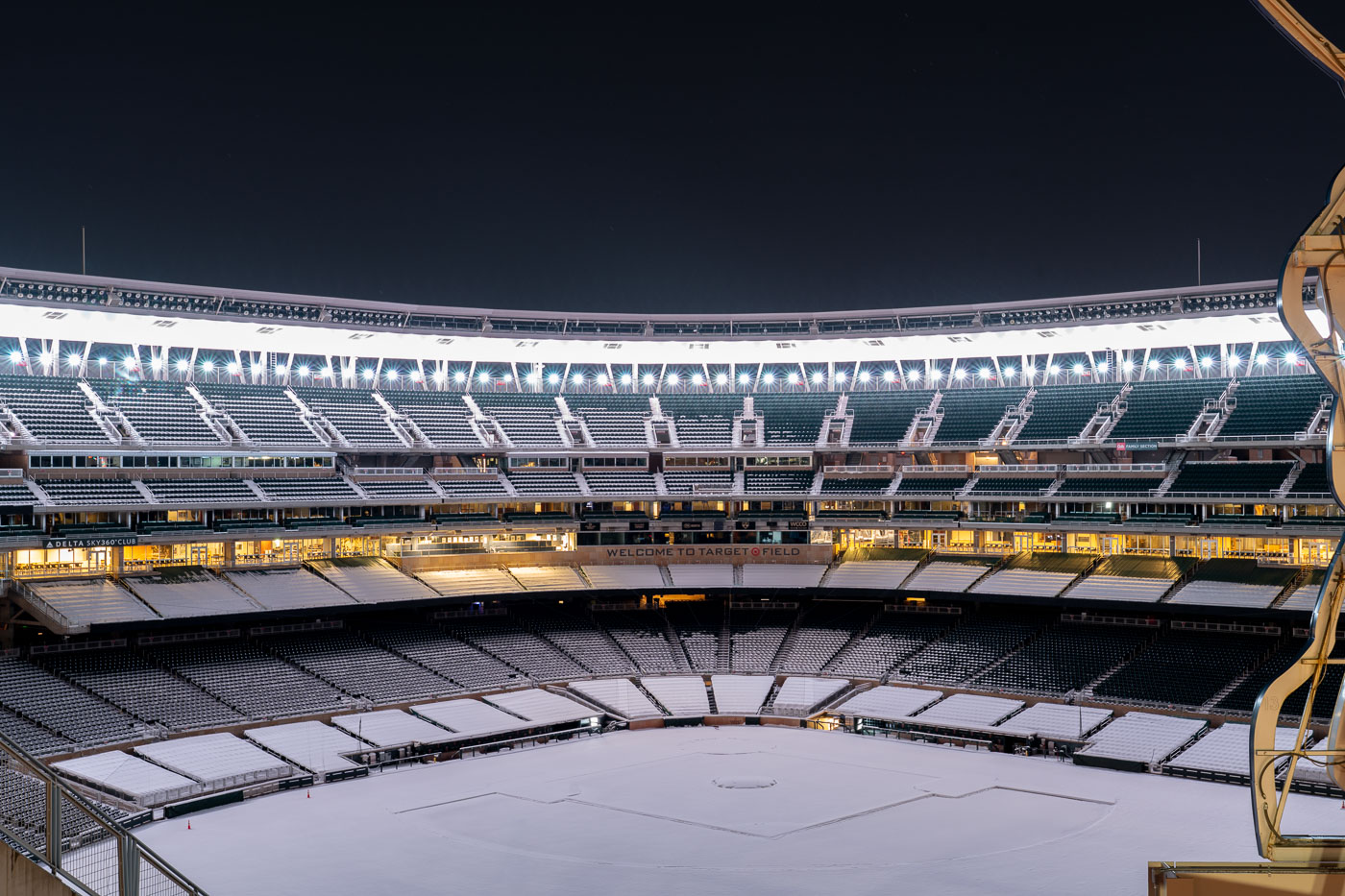
Target Field, home of the Minnesota Twins, sits snow-covered under night lighting in Minneapolis.
Target Field is the Minnesota Twins' ballpark in the North Loop of downtown Minneapolis, seating about 39,000 fans. It opened in 2010 as an open-air replacement for the Metrodome, where the Twins had played since 1982.

Snow Covers the Infield at Target Field
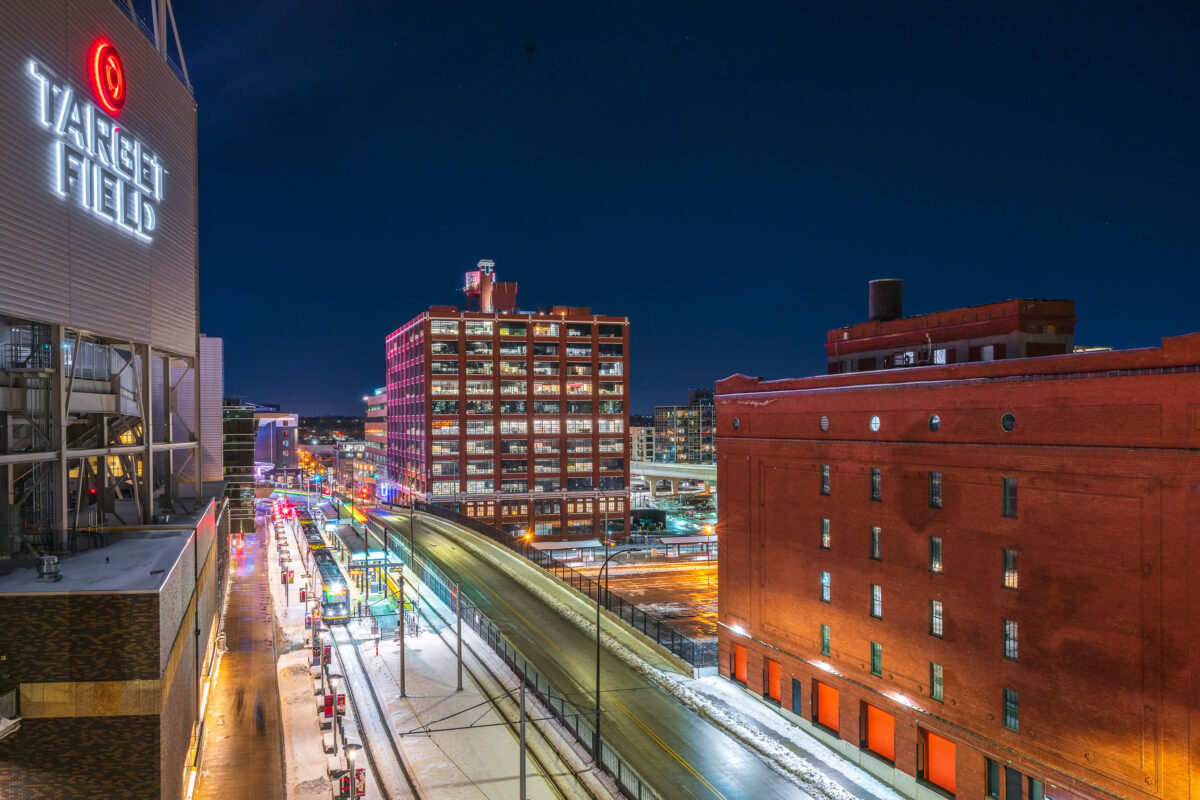
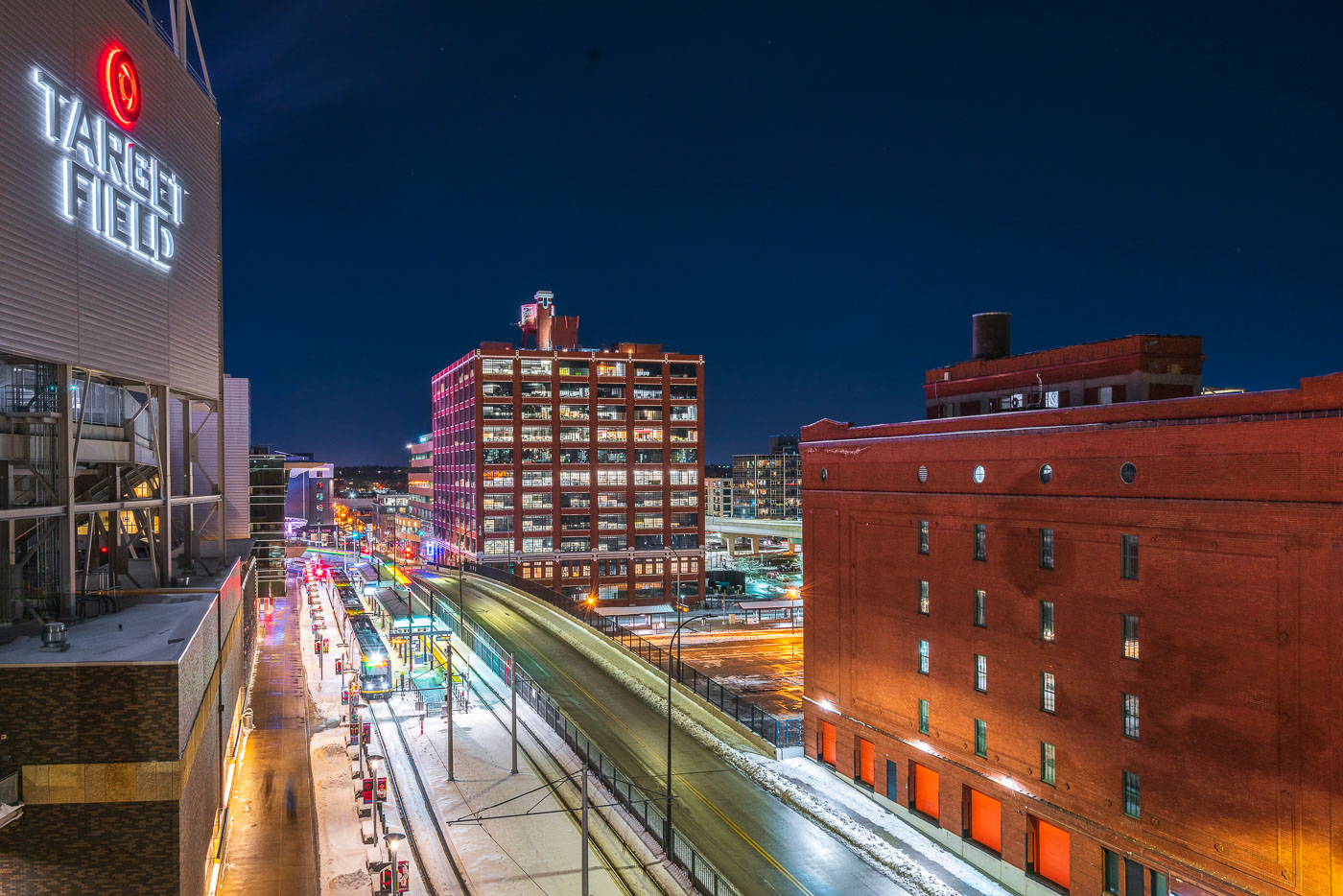
Target Field's illuminated sign overlooks downtown Minneapolis's Warehouse District with historic brick buildings and modern transit infrastructure at night.
Target Field, home of the Minnesota Twins, sits at the edge of the Warehouse District in downtown Minneapolis's North Loop. The ballpark opened in 2010 and stands next to Target Field Station, a transit hub serving the Metro Blue and Green Line light rail along with regional and commuter rail.

Warehouse District Rooftops Near Target Field
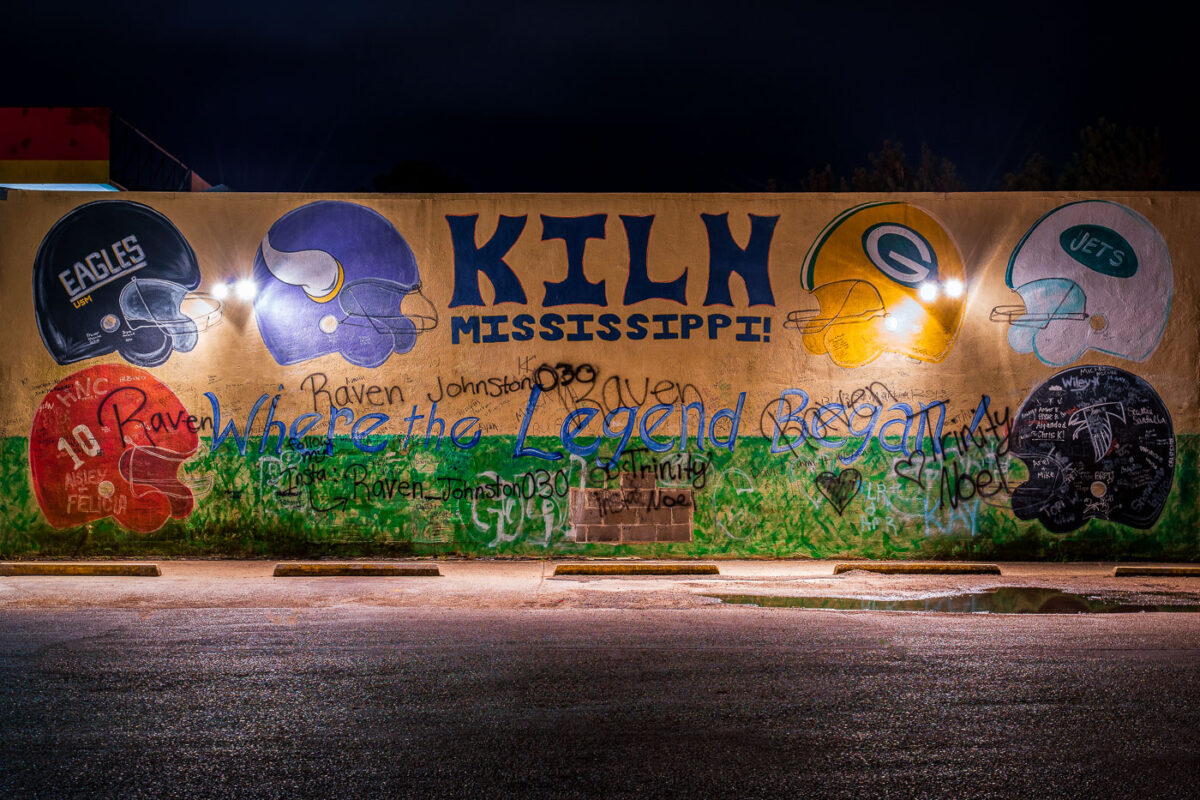
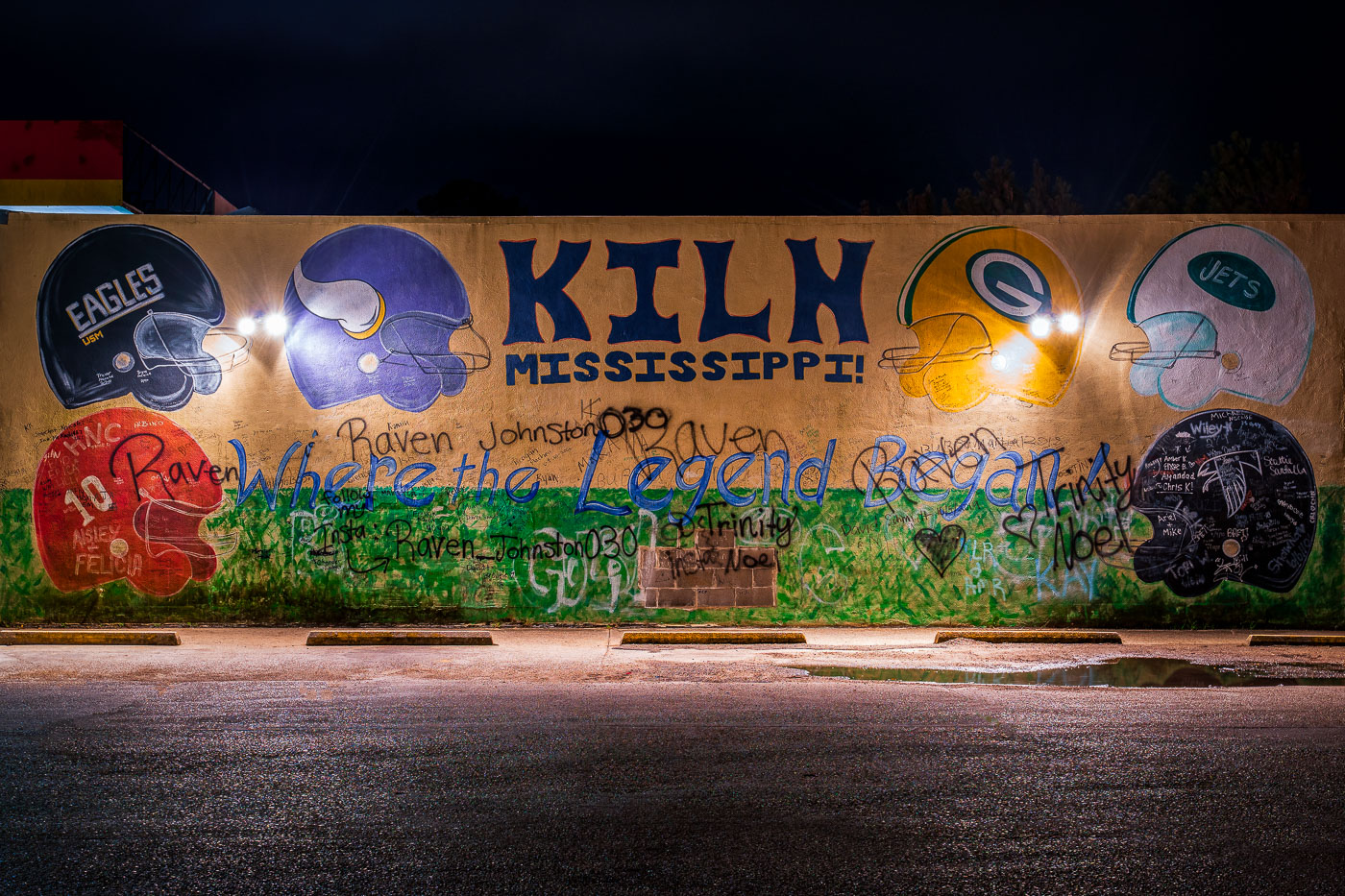
Brett Favre helmet mural in Kiln, Mississippi displays painted NFL team helmets honoring the quarterback's career.
Kiln, Mississippi, is the hometown of Brett Favre, the Hall of Fame quarterback who grew up here before starring at Hancock High School. This roadside mural marks that connection, pairing helmets from the four NFL teams Favre played for — the Atlanta Falcons, Green Bay Packers, Minnesota Vikings, and New York Jets — with the phrase "Where the Legend Began." Favre spent the bulk of his career with the Packers, where he won a Super Bowl following the 1996 season and set numerous passing records before later stints in Minnesota and with the Jets. The small unincorporated community, part of Hancock County near the Mississippi Gulf Coast, has leaned into its association with Favre as a point of local identity.

“Where the Legend Began” Mural in Kiln, Mississippi
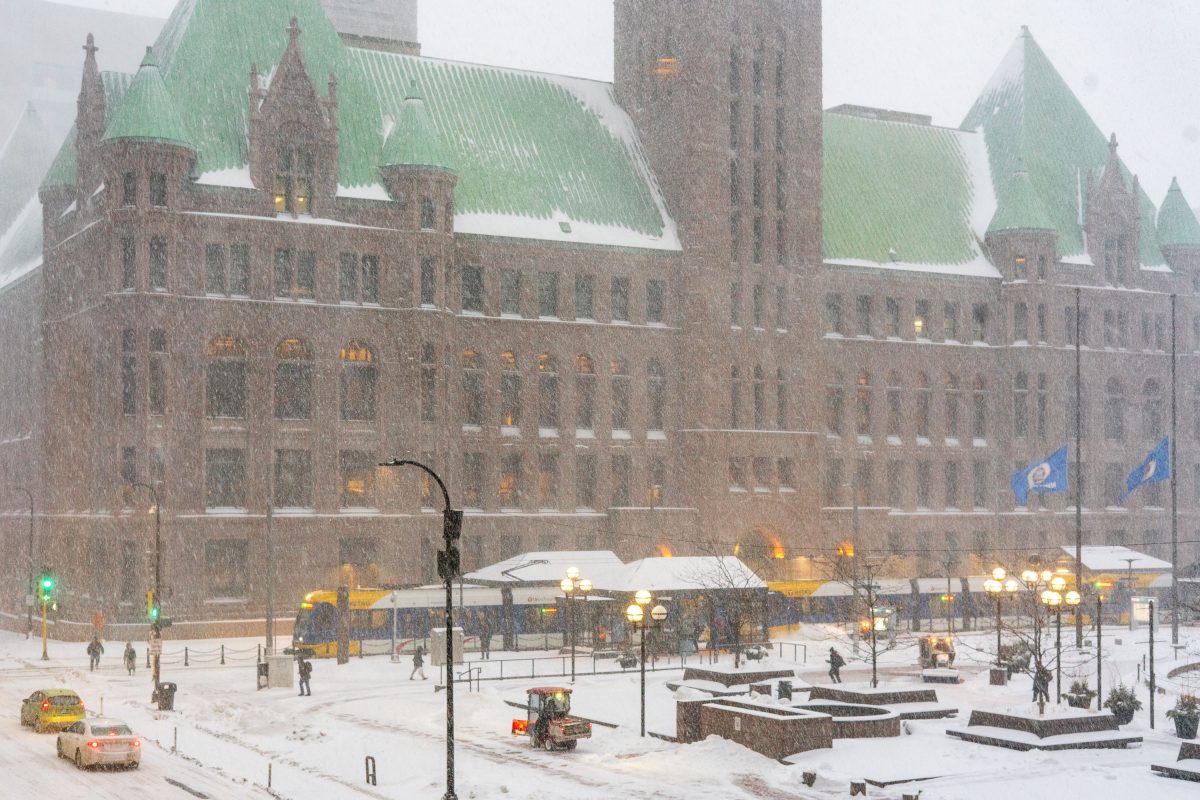
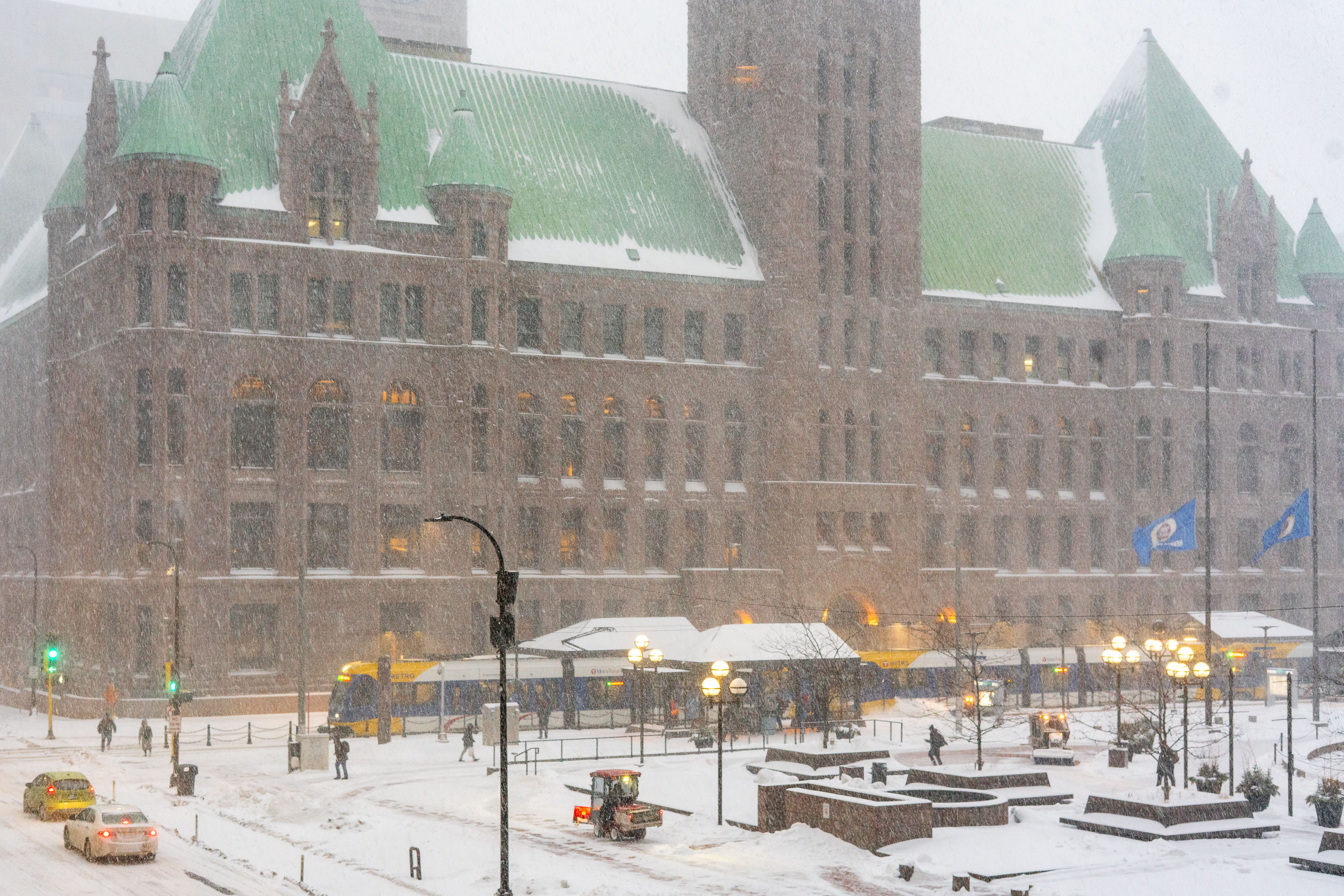
Minneapolis City Hall's Romanesque Revival tower with green copper roof dominates the snow-covered downtown plaza during a winter snowstorm.
Minneapolis City Hall opened in 1905 after nearly two decades of construction, designed by Long and Kees in Romanesque Revival style. The building rises twelve stories and is topped by a clock tower with a 15-foot minute hand, once among the largest four-faced clocks in the world.

Light Rail and Pedestrians Pass Minneapolis City Hall During Snowfall
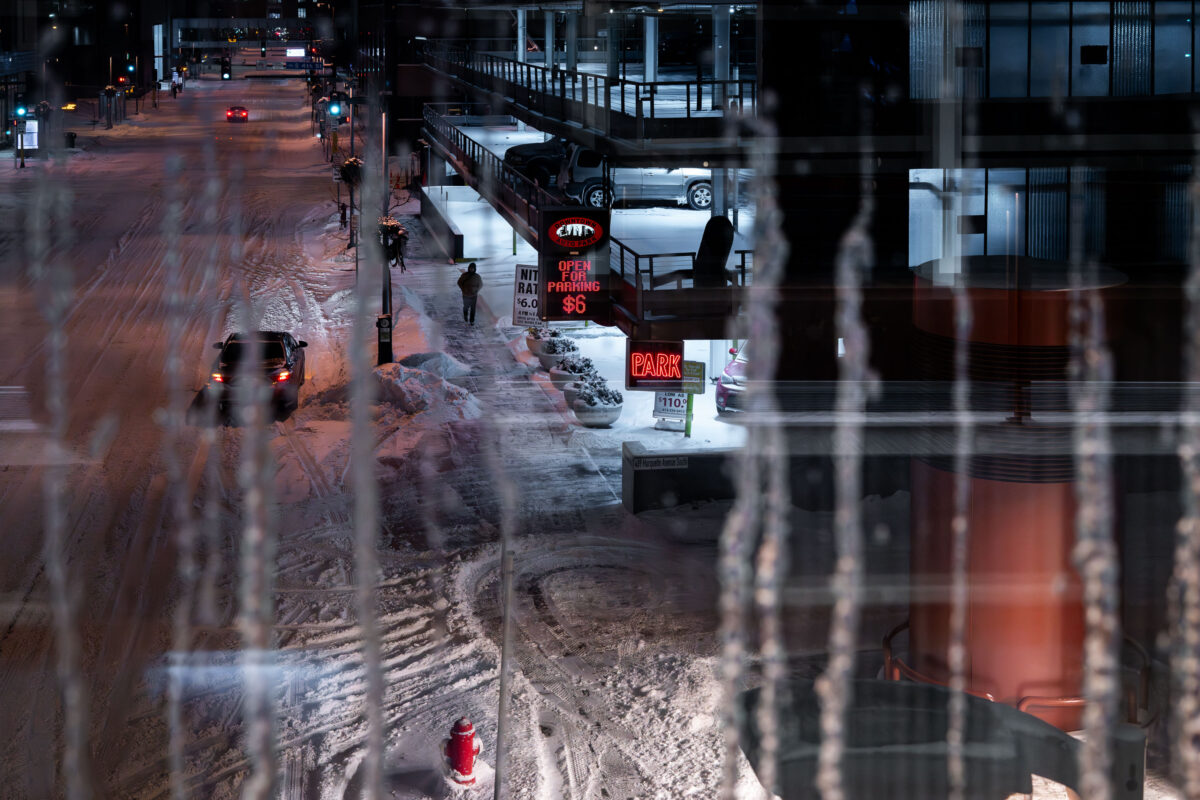
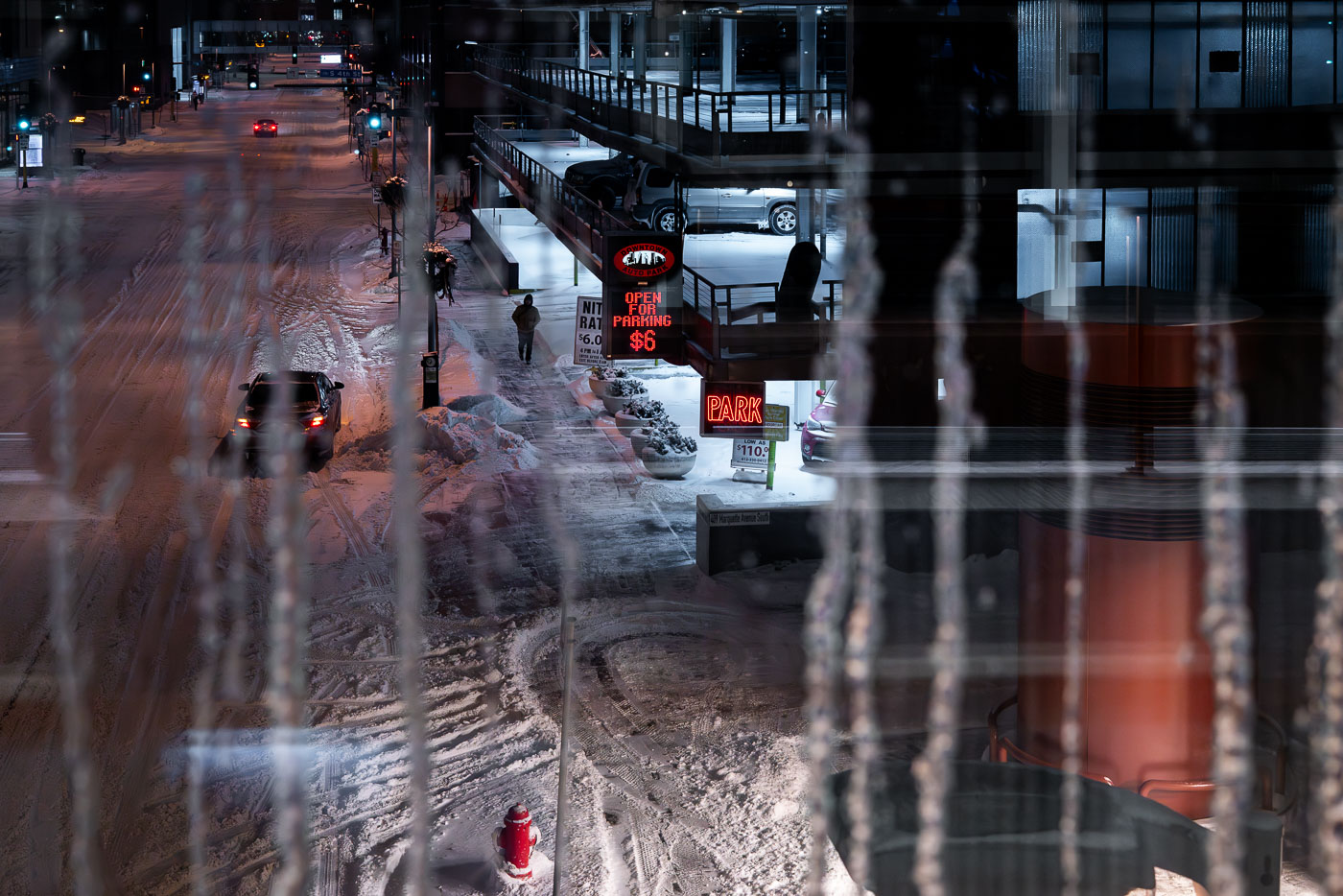
Icy downtown Minneapolis street beside a skyway parking ramp at night
A snow-covered street in downtown Minneapolis runs past a skyway-connected parking ramp at night. Icicles hang in the foreground, and neon signs mark the parking entrance and rate information.

Icy downtown Minneapolis street beside skyway parking ramp
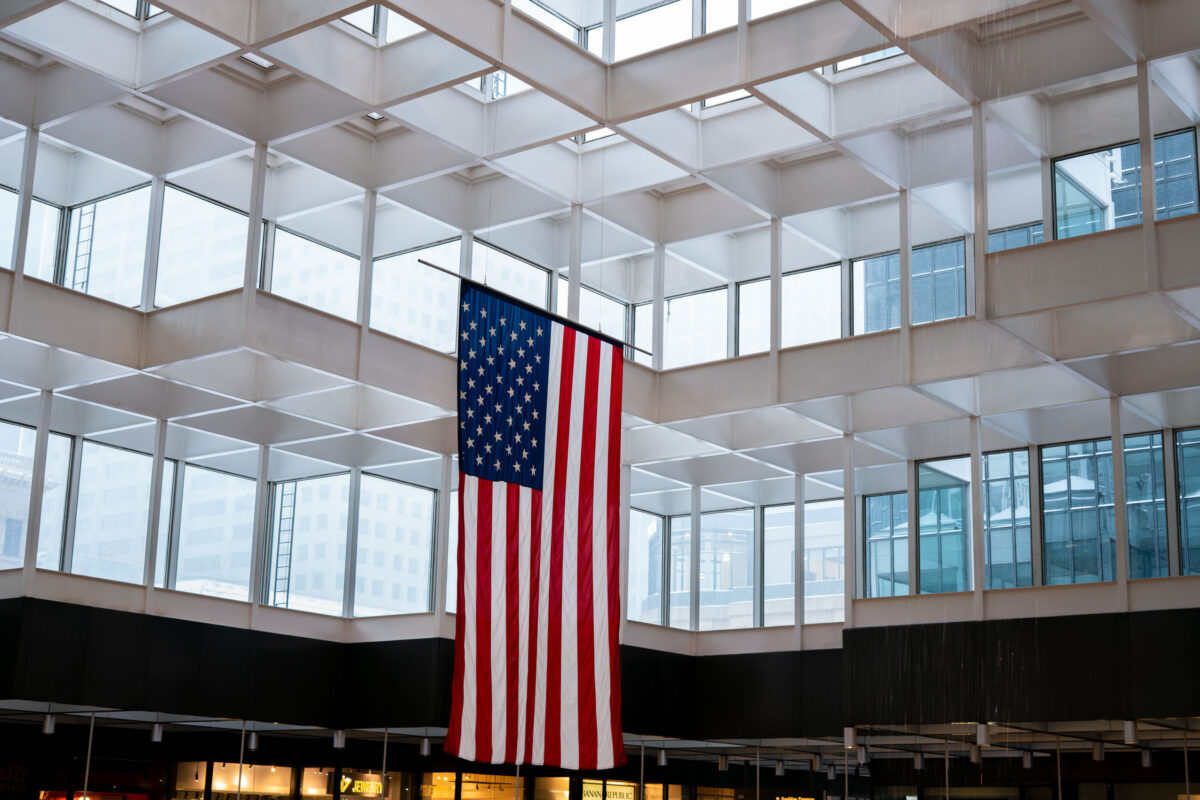
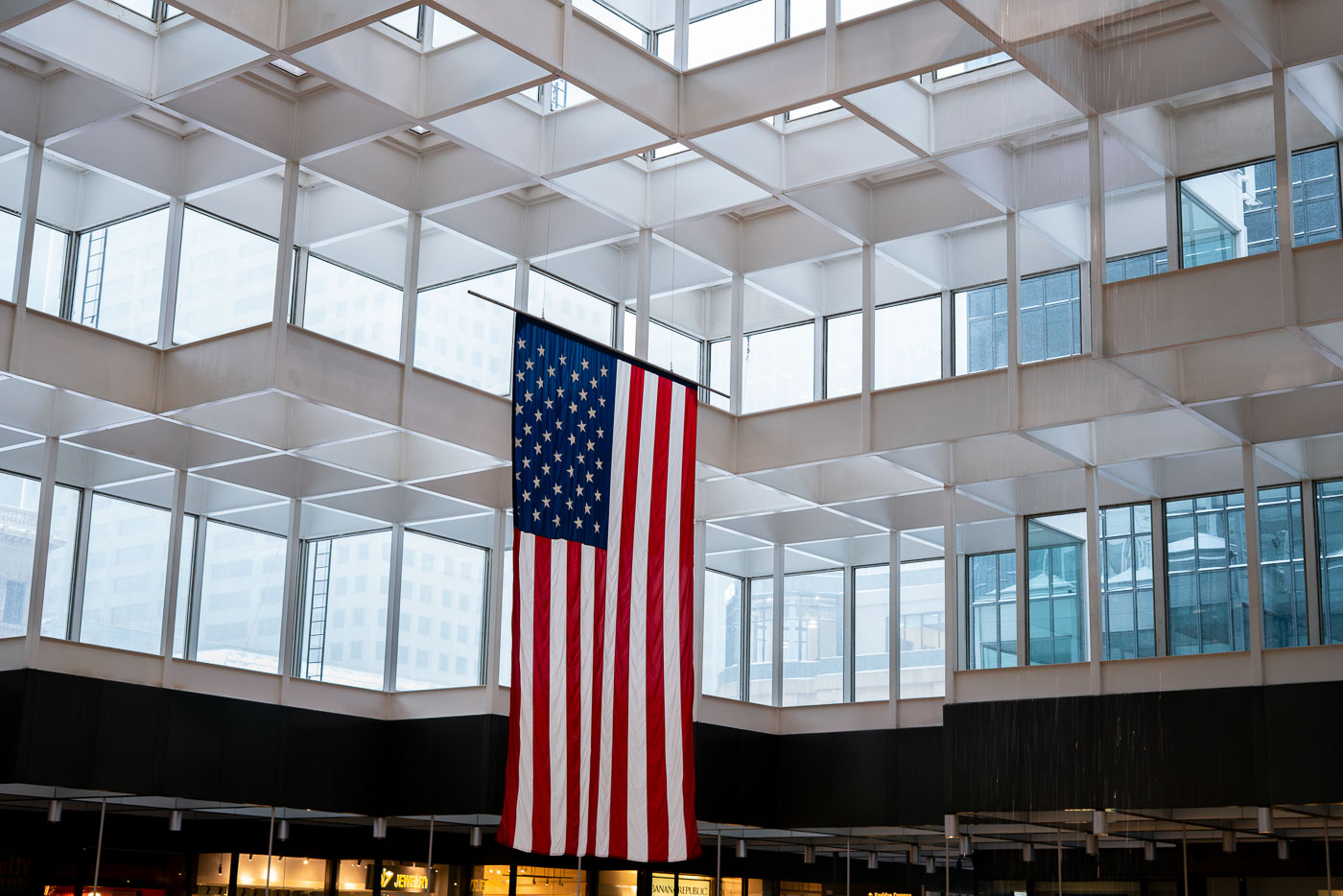
American flag suspended in the IDS Crystal Court atrium, downtown Minneapolis.
An American flag hangs in the IDS Crystal Court, the atrium of the IDS Center in downtown Minneapolis. The court is enclosed by a grid of skylights and surrounded by multiple levels of offices and commercial spaces. Completed in 1973, the IDS Center was Minnesota's tallest building at the time of construction.

American flag, IDS Crystal Court, Minneapolis
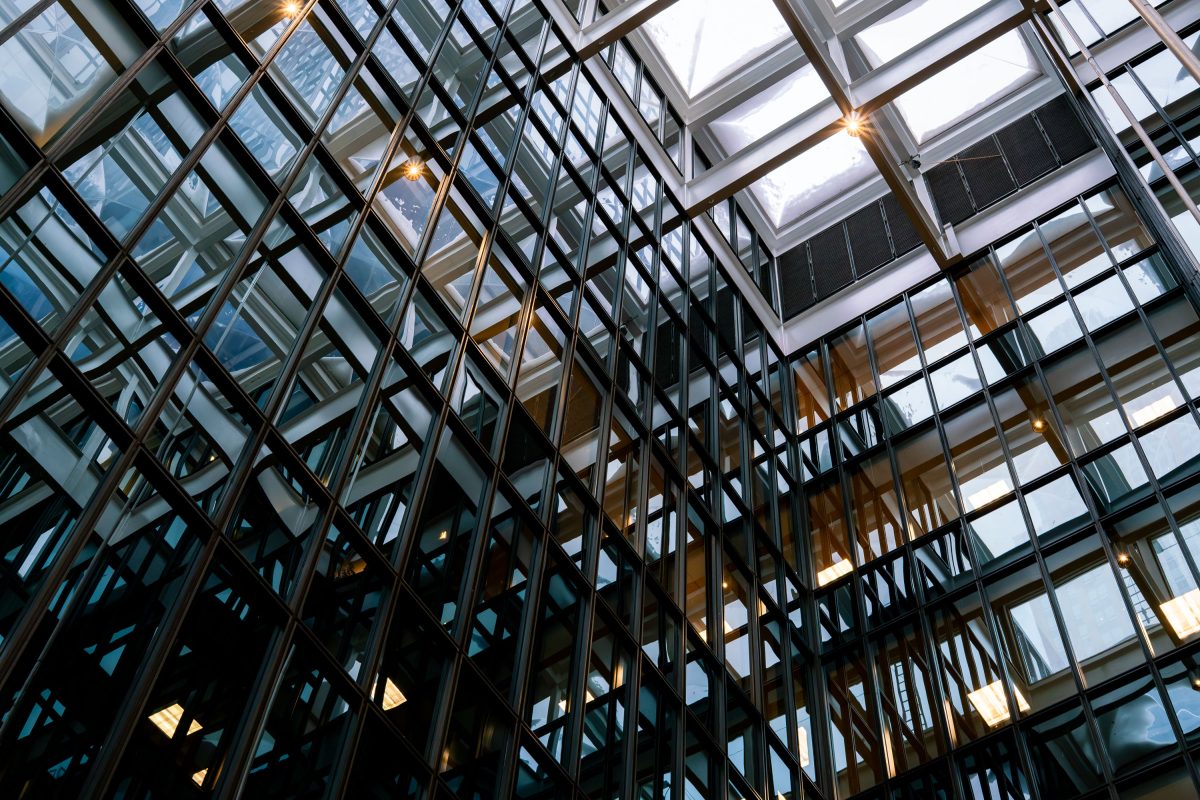
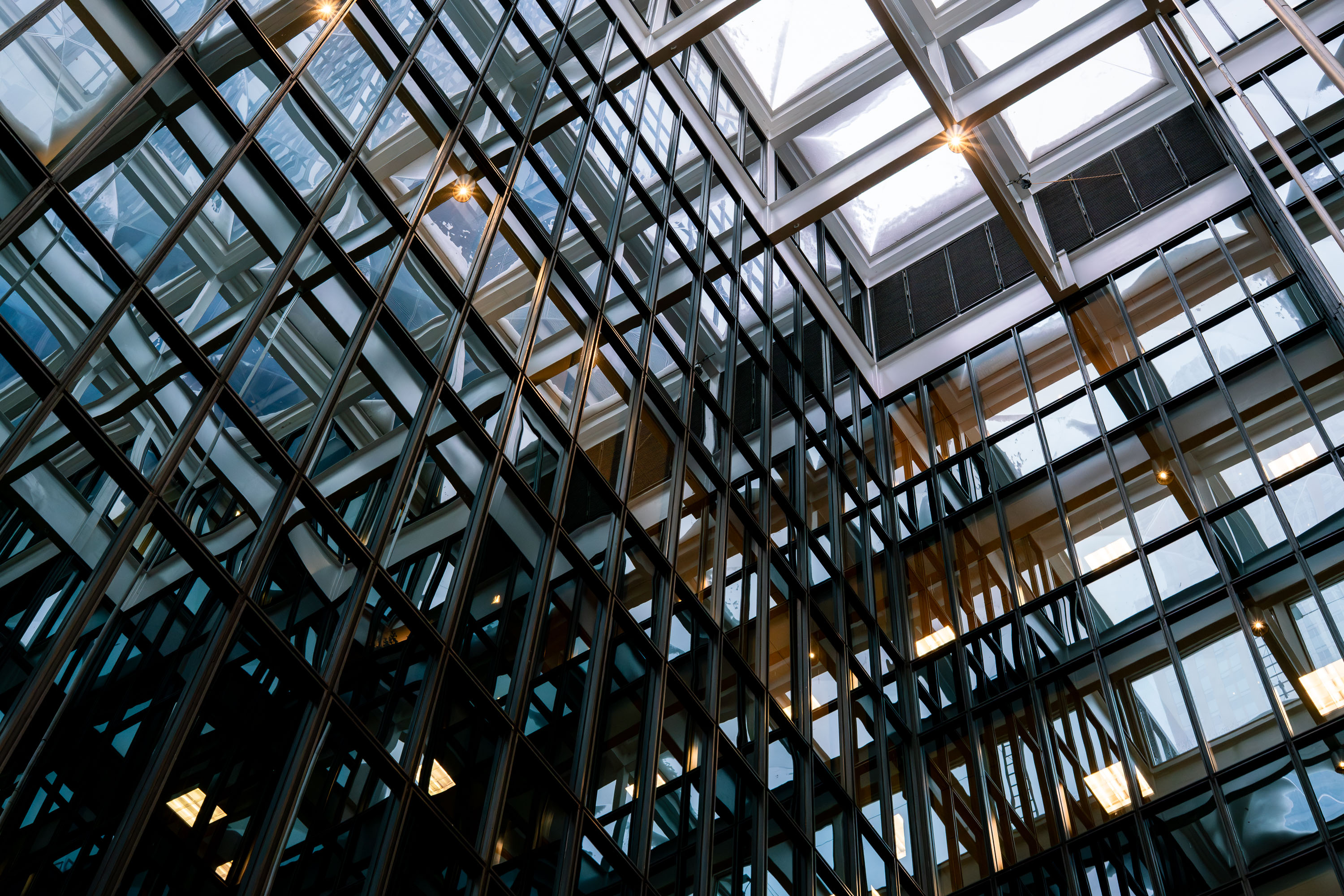
Steel-framed glass atrium ceiling inside the IDS Center's Crystal Court in downtown Minneapolis.
The IDS Center's Crystal Court sits at the base of the 792-foot IDS Tower, completed in 1972 to a design by Philip Johnson and John Burgee with Edward Baker. The eight-story atrium was built as a public gathering space linking the tower to the surrounding skyway system, which connects much of downtown Minneapolis. Its steel-and-glass roof structure covers roughly an acre, making it one of the largest enclosed public spaces of its kind in the city. The building remains the tallest in Minnesota and is listed on the National Register of Historic Places.

Glass Atrium Ceiling, IDS Center Crystal Court, Minneapolis
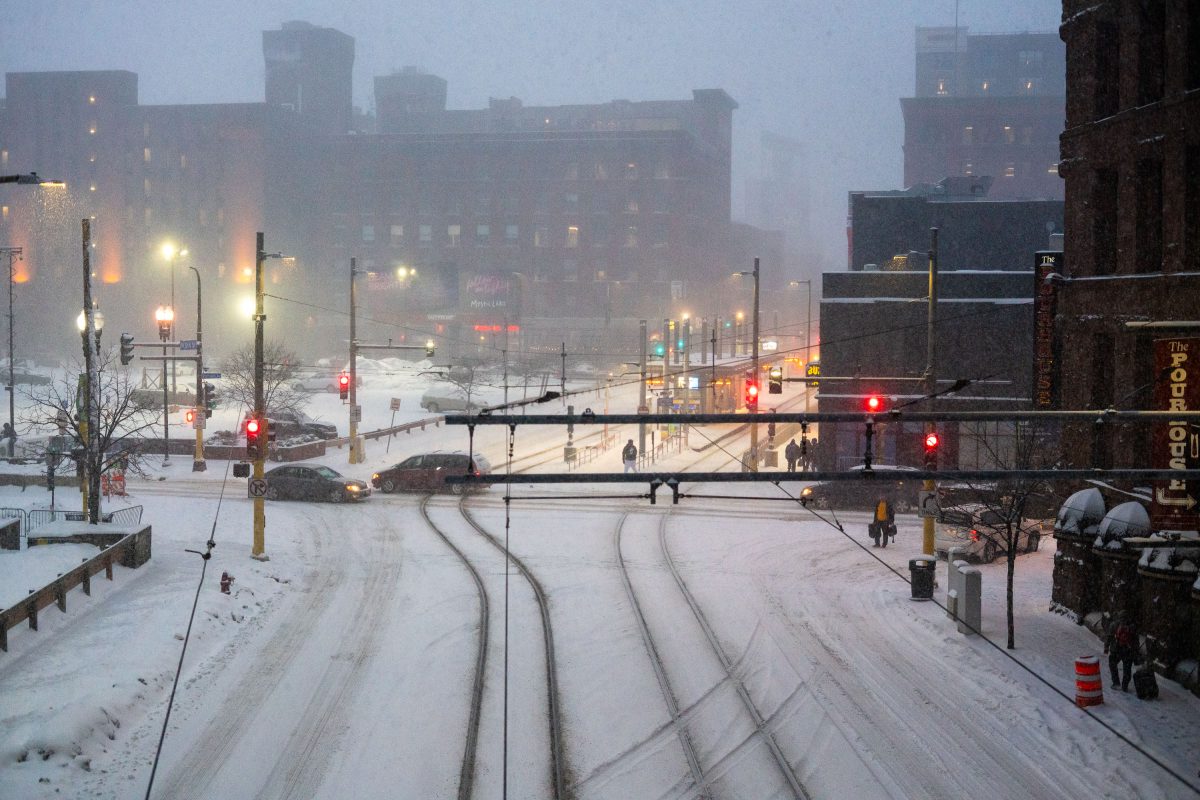
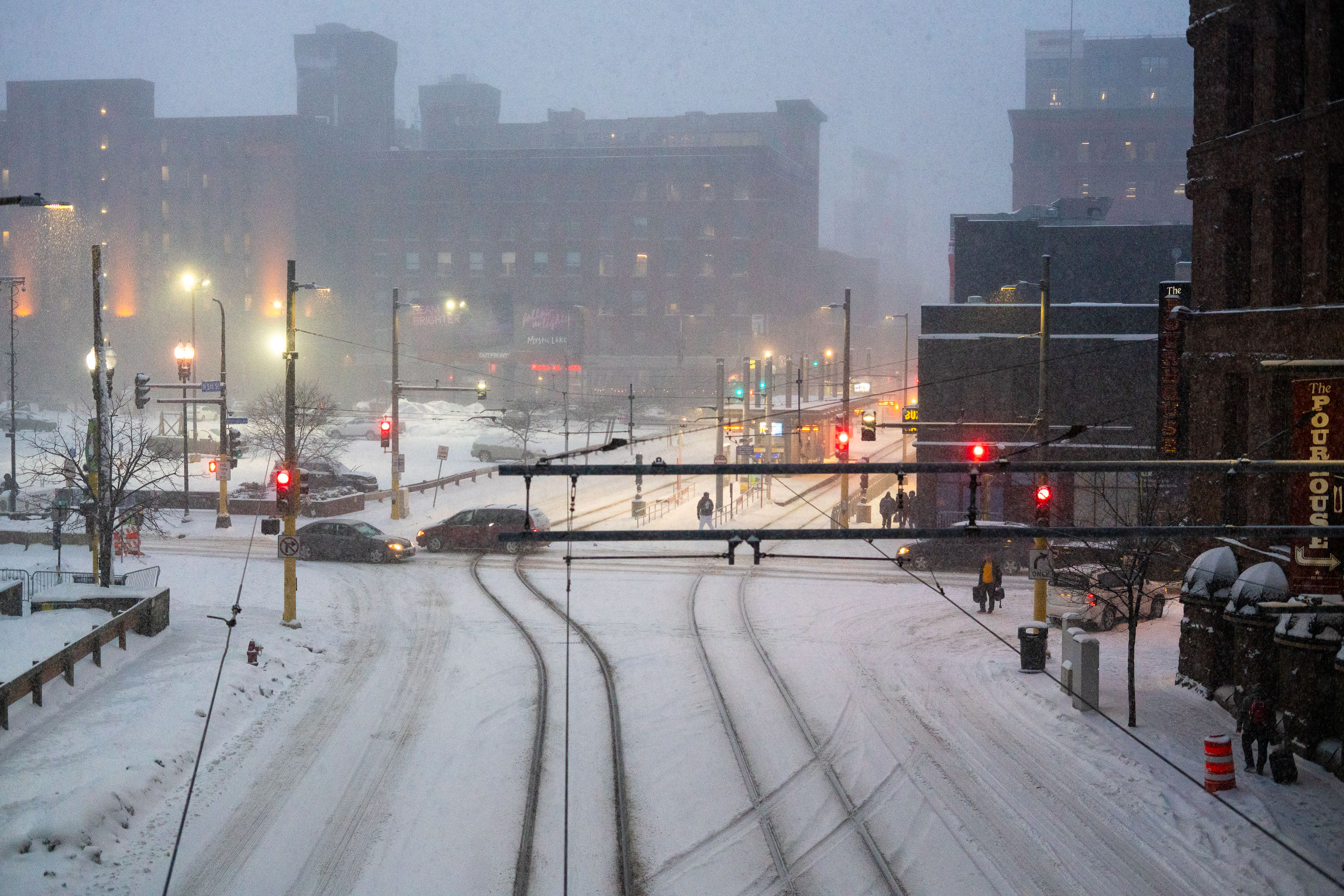
Snow-covered light rail tracks and traffic signals in downtown Minneapolis during a winter storm.
The METRO Blue and Green Line light rail tracks run through downtown Minneapolis along a shared corridor near the Warehouse District. Metro Transit operates the system, which connects downtown to the Mall of America, the airport, and the University of Minnesota. Overhead catenary wires power the trains along fixed rails embedded in the roadway. Snowstorms are common in the region between November and March, and Metro Transit crews use heated switches and de-icing equipment to keep the rail lines operational during winter weather.

Snowstorm Blankets METRO Light Rail Tracks, Downtown Minneapolis
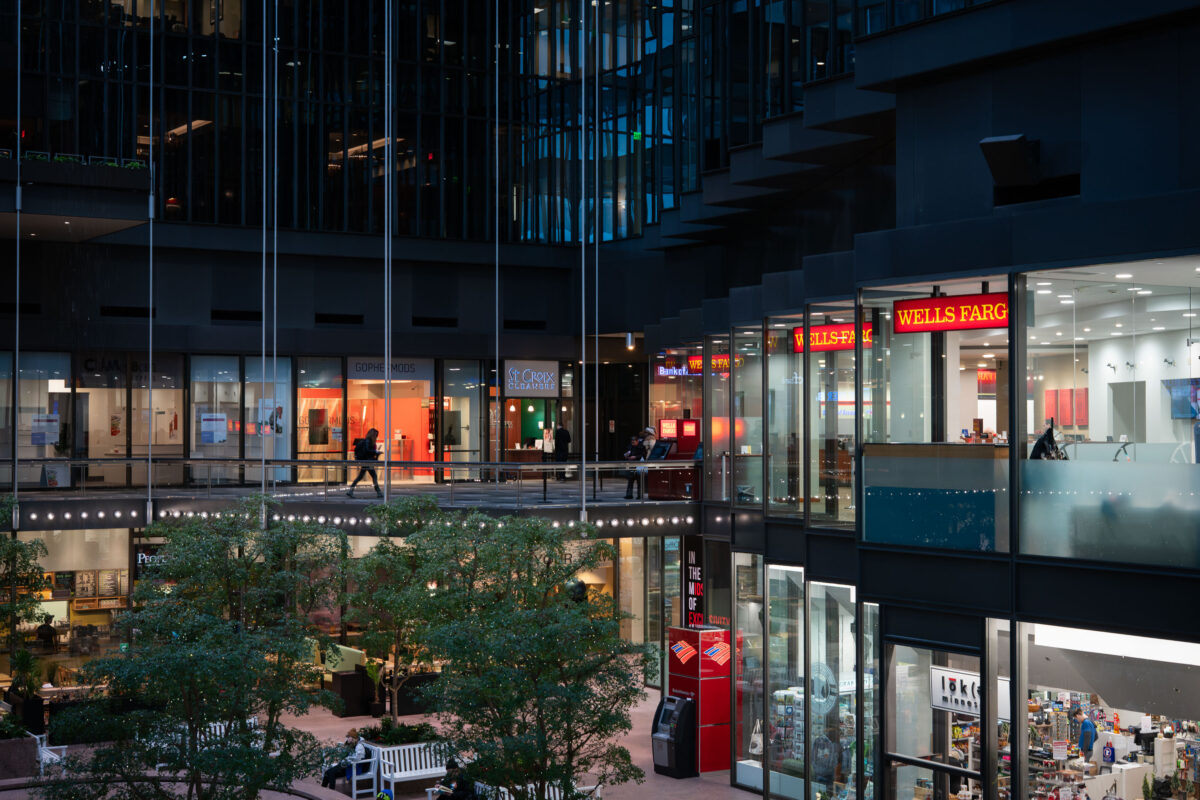
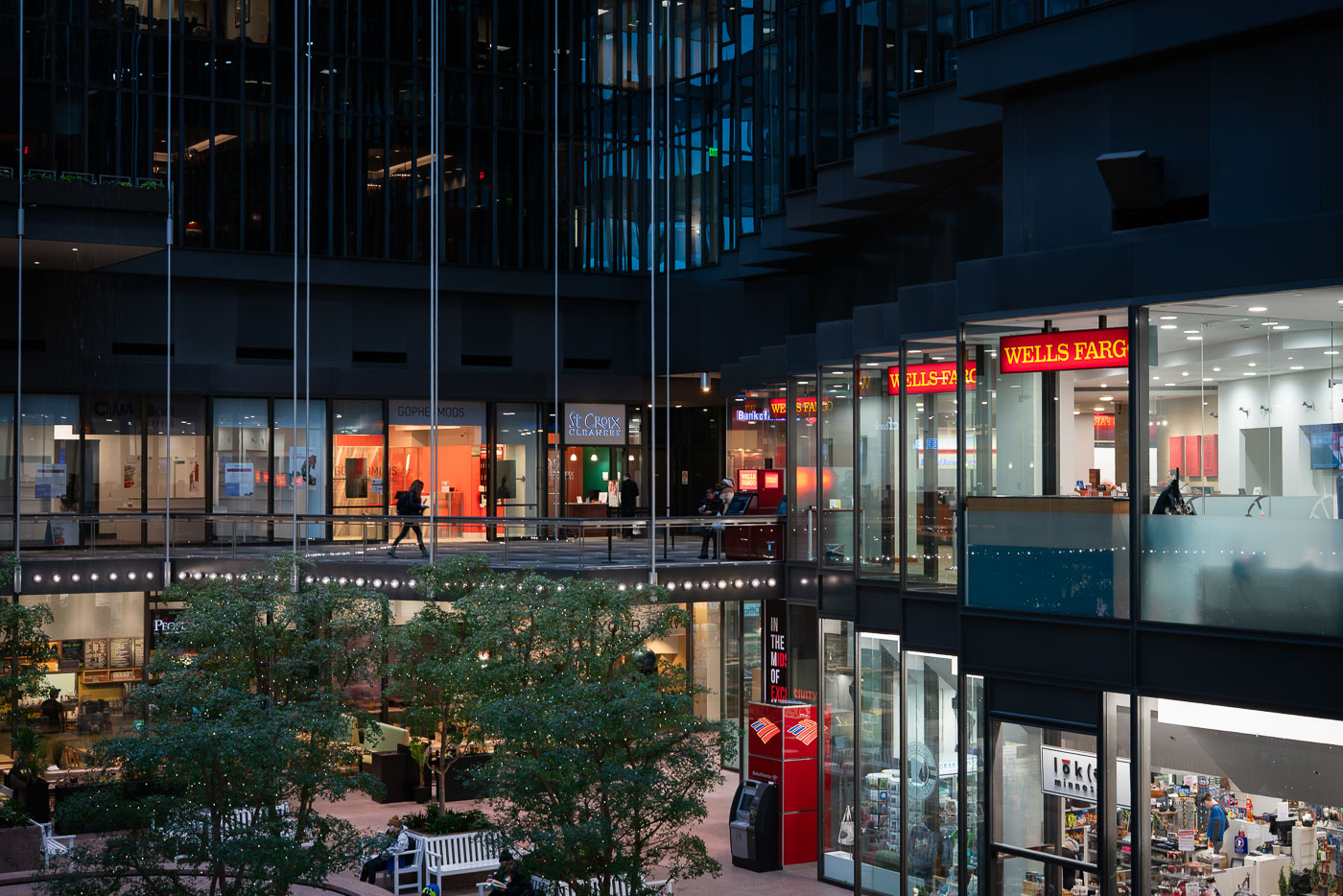
Storefronts and skyway walkway inside Crystal Court at the IDS Center in downtown Minneapolis.
Crystal Court is the eight-story glass atrium at the base of the IDS Center in downtown Minneapolis. Designed by Philip Johnson and John Burgee, the IDS Center opened in 1972 and rises 792 feet, making it the tallest building in Minnesota. Crystal Court connects to several downtown blocks via the Minneapolis Skyway System, the enclosed pedestrian network that links buildings throughout the city center. The atrium has long functioned as a public gathering space and retail concourse, with Wells Fargo among the tenants operating storefronts along its upper walkways.

Retail Level of Crystal Court, IDS Center, Minneapolis
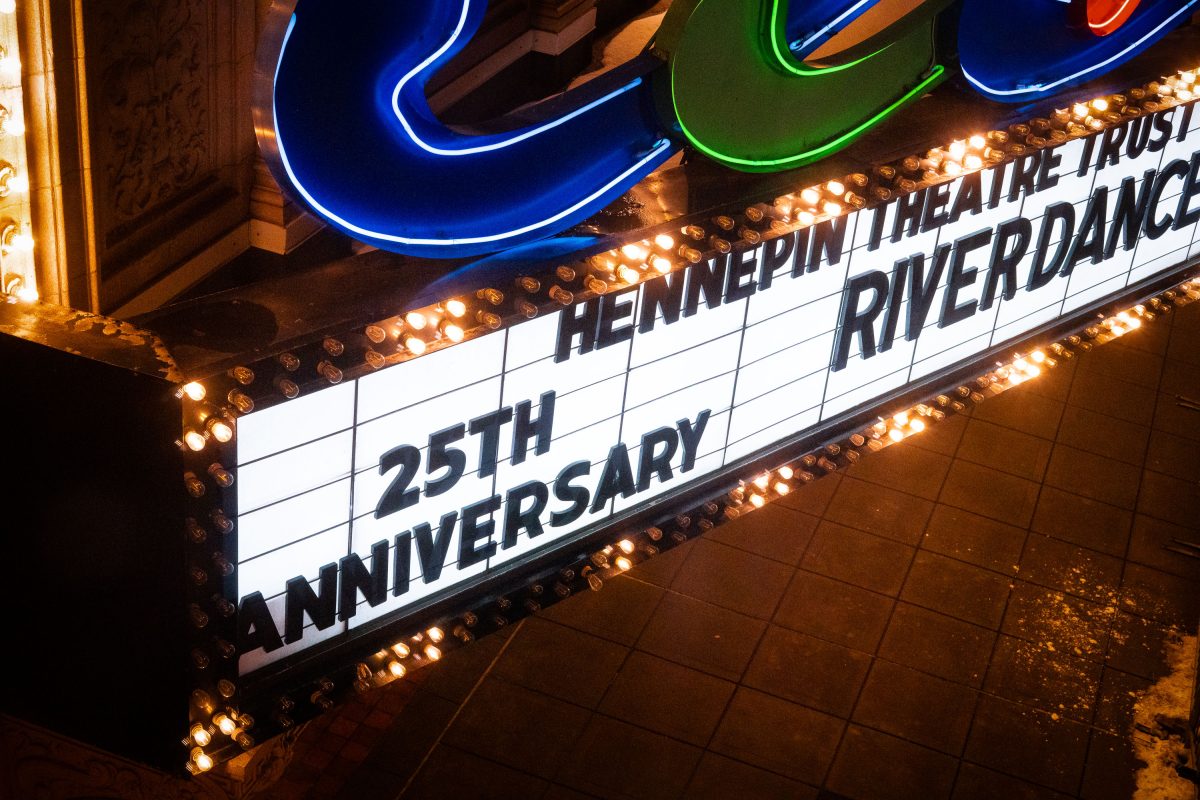
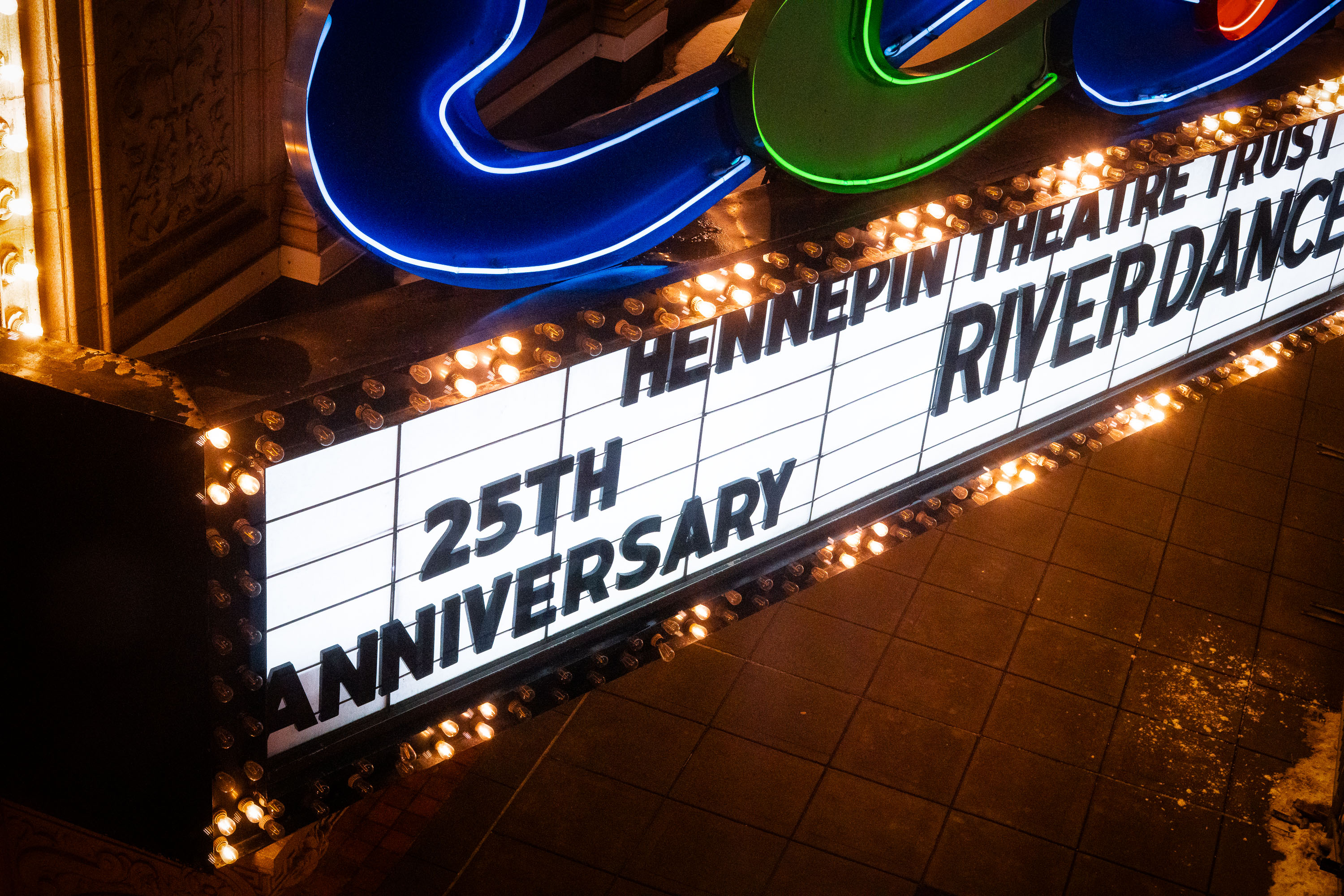
Riverdance 25th Anniversary Marquee
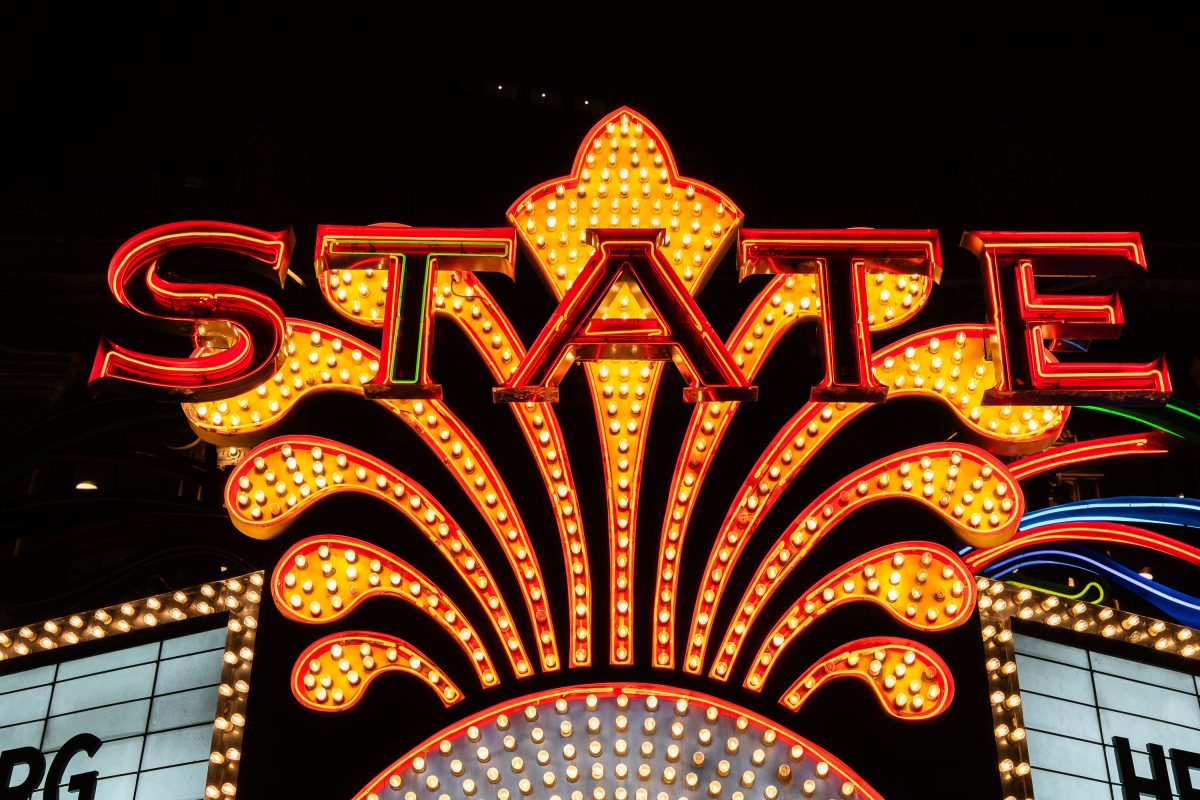
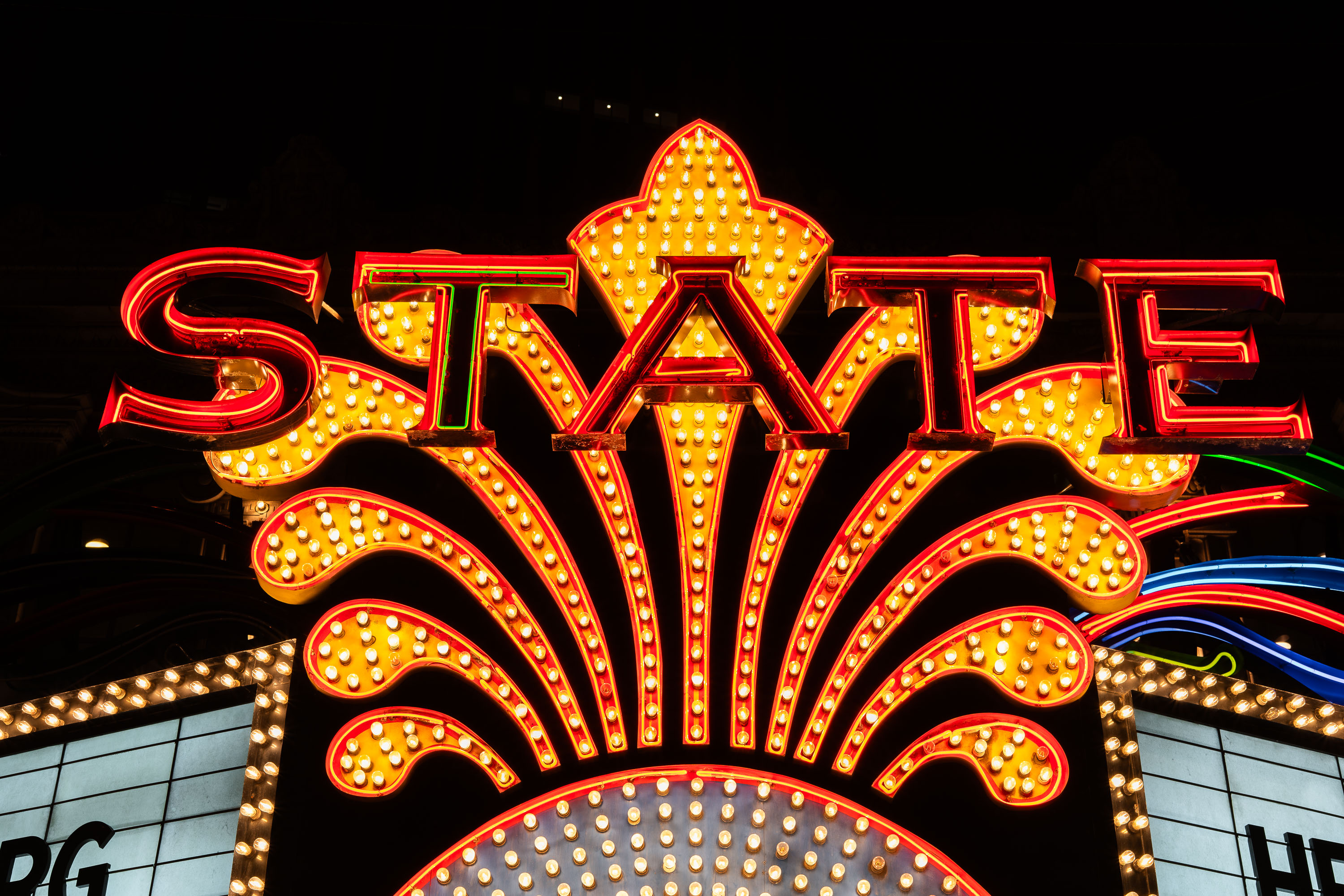
The marquee of the State Theater on Hennepin Avenue in Downtown Minneapolis.

Riverdance 25th Anniversary Marquee State Theater

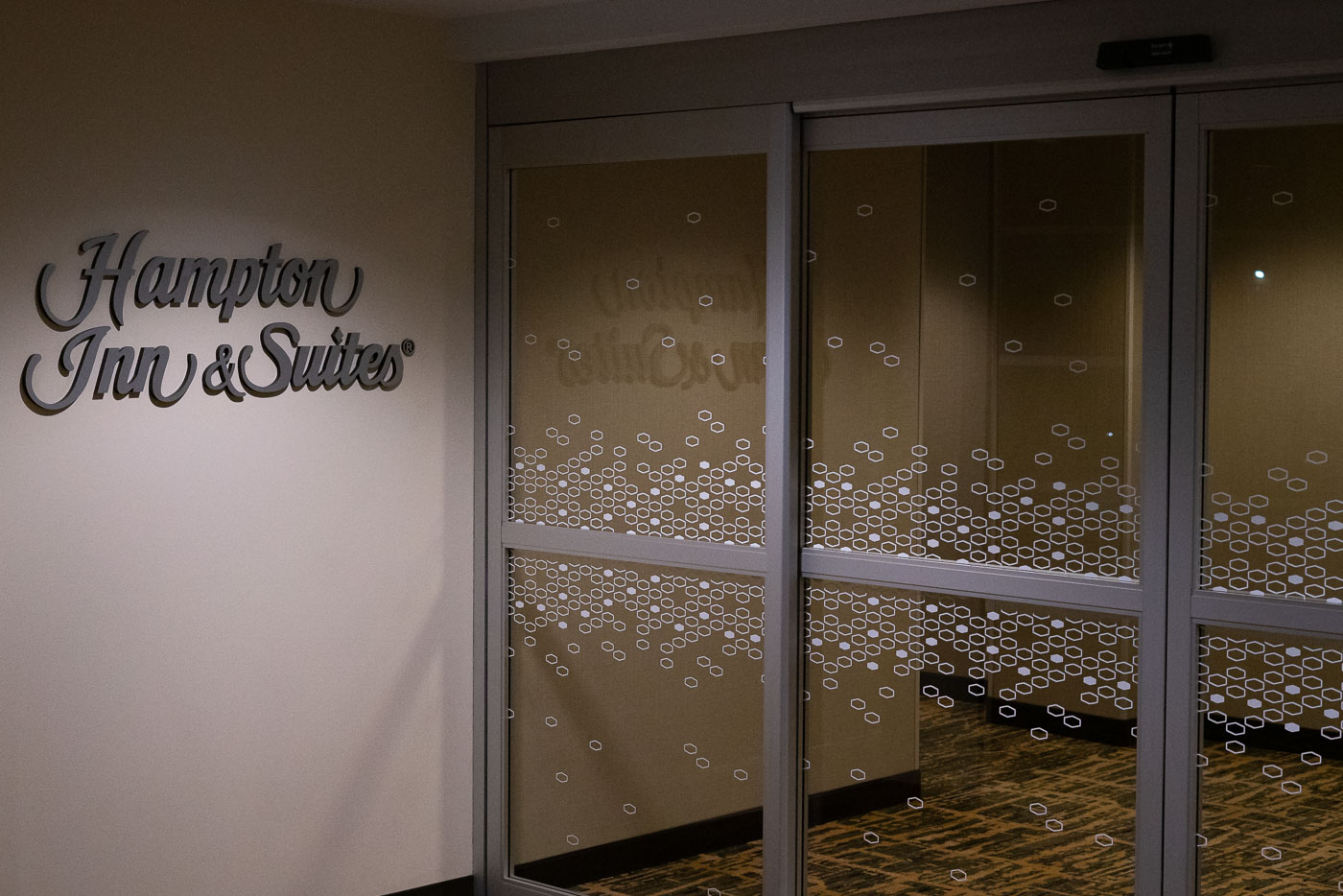
The entrance to the Hampton Inn & Suites in downtown Minneapolis, a hotel offering accommodations for travelers.
The entrance to the Hampton Inn & Suites in downtown Minneapolis is shown. This hotel chain, part of Hilton Worldwide, is known for providing comfortable accommodations for business and leisure travelers. The "& Suites" designation indicates that this particular location offers extended-stay options with kitchenettes. The hotel serves as a lodging facility within the central business district of Minneapolis, contributing to the city's hospitality sector and supporting tourism and commerce.

Hampton Inn & Suites Entrance, Downtown Minneapolis

Red-tiled escalator station interior with metal escalators and illuminated ceiling panels in downtown Minneapolis.
Ramp A is one of several municipal parking ramps woven into downtown Minneapolis's skyway system, connecting parking levels directly to the enclosed second-story walkways that link buildings throughout downtown. The city operates a network of these ramps to serve commuters and shoppers without requiring them to step outside, a design common to Minneapolis since the skyway system's expansion in the 1960s and 1970s.

Ramp A Skyway Escalators, Downtown Minneapolis
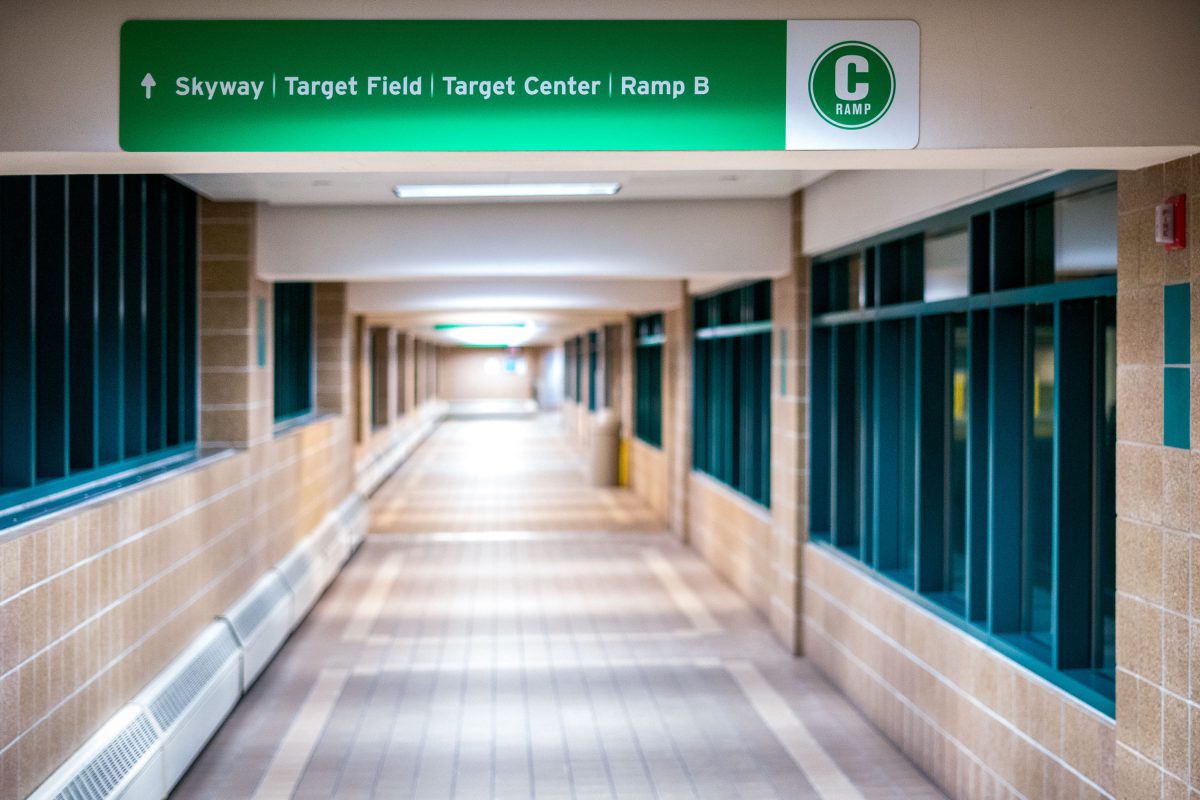
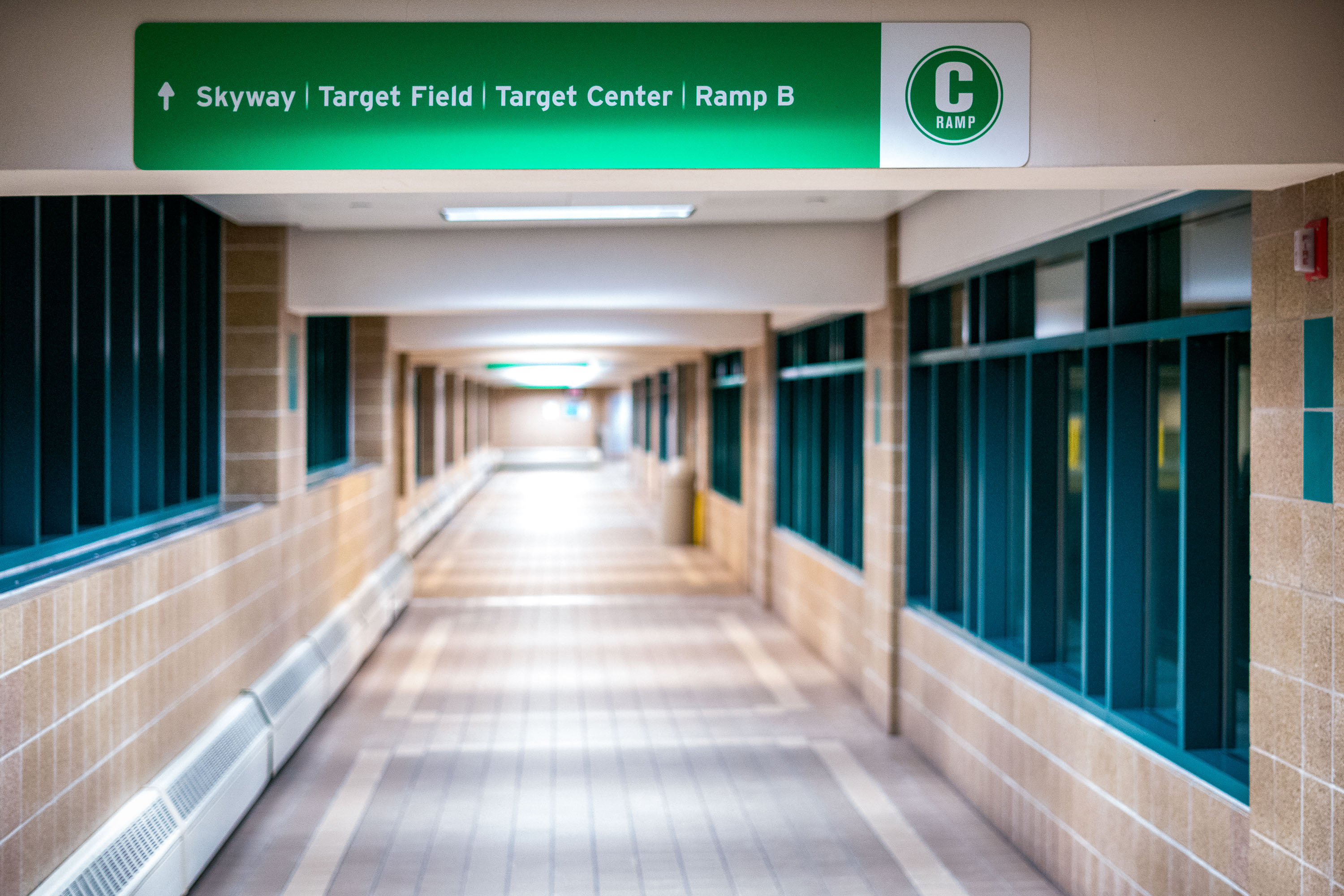
Interior corridor of Ramp C in the Minneapolis Skyway System with directional signage for Target Field and Target Center.
Minneapolis's Skyway System is the largest continuous skyway network in the world, linking more than 80 blocks of downtown through roughly 9.5 miles of enclosed, climate-controlled walkways. This particular corridor runs through Ramp C, a municipal parking structure, and directs pedestrians toward Target Field, home of the Minnesota Twins since 2010, and Target Center, the arena that has hosted the Minnesota Timberwolves since 1990.

Ramp C Skyway to Target Field and Target Center, Minneapolis
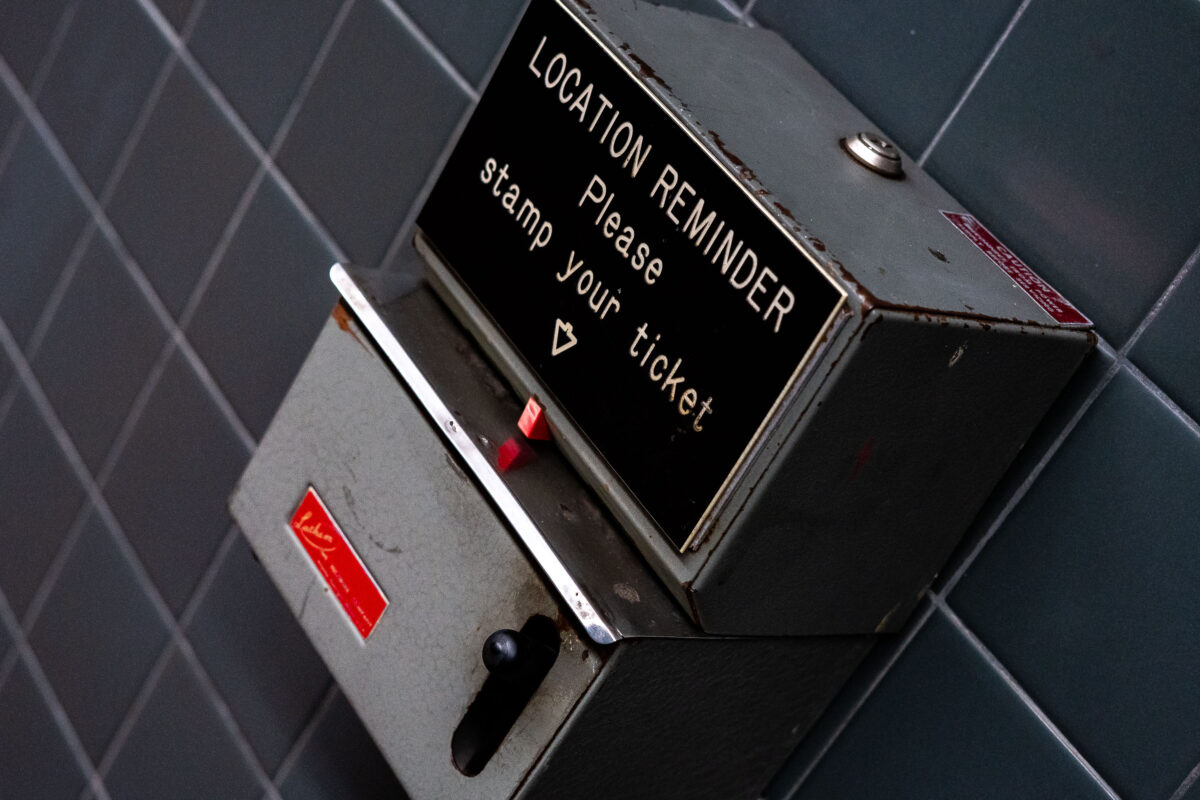
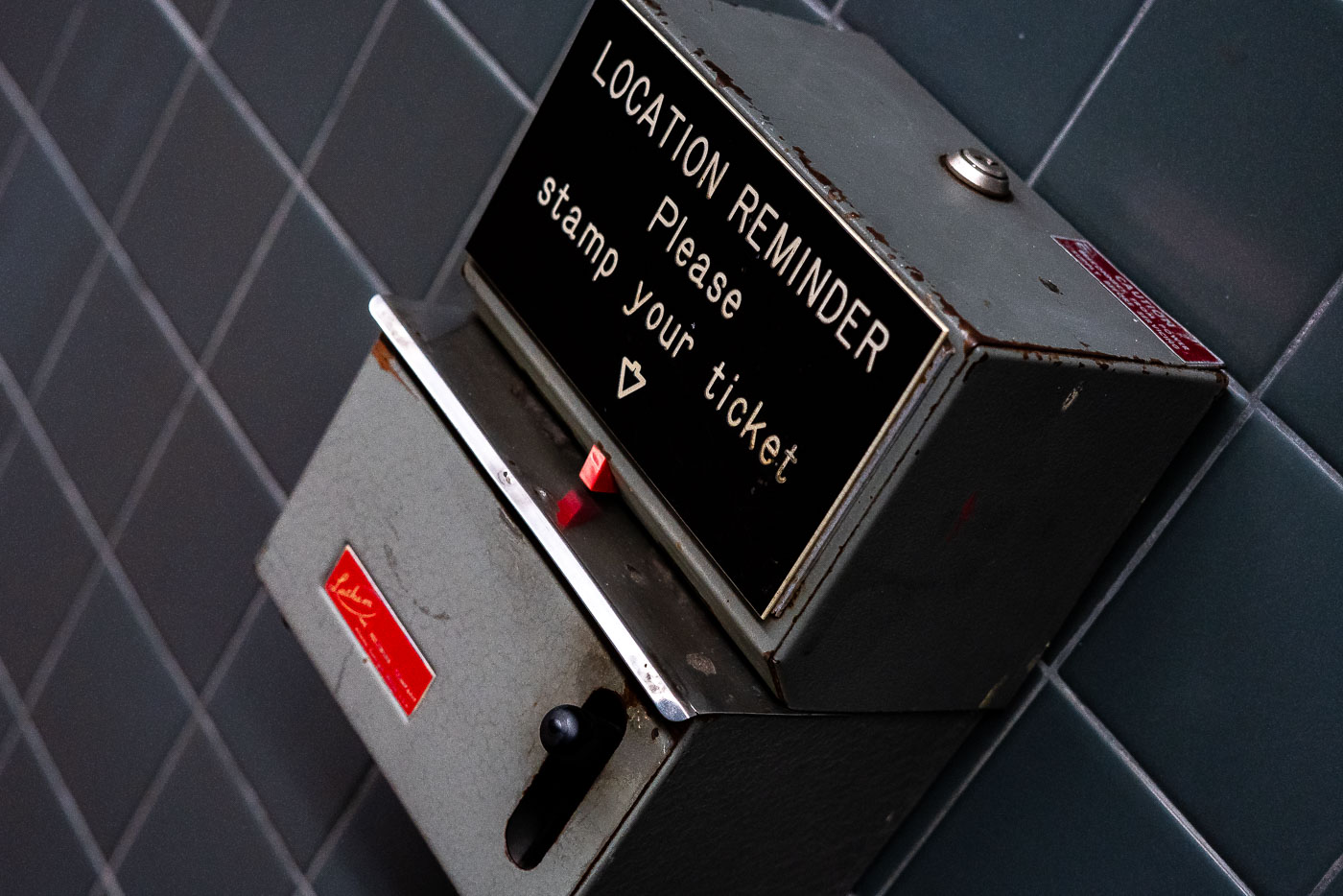
A "Location Reminder" ticket stamping machine, formerly in downtown Minneapolis transit stations, allowed passengers to mark tickets with arrival/departure times. This mid-20th-century device exemplifies transit infrastructure.
A "Location Reminder" ticket stamping machine, formerly installed in downtown Minneapolis transit stations, allowed passengers to mark their tickets with the time and place of their arrival or departure. This utilitarian device, with its lever-operated mechanism and faded instructional label, exemplifies mid-20th-century transit infrastructure. Such machines were essential for manual timestamping in parking facilities and public transit hubs before the widespread adoption of digital systems. The machine's robust, industrial design and its mounting on a tiled wall reflect the functional aesthetics of public transportation facilities of its era.

Location Reminder Ticket Stamping Machine, Downtown Minneapolis
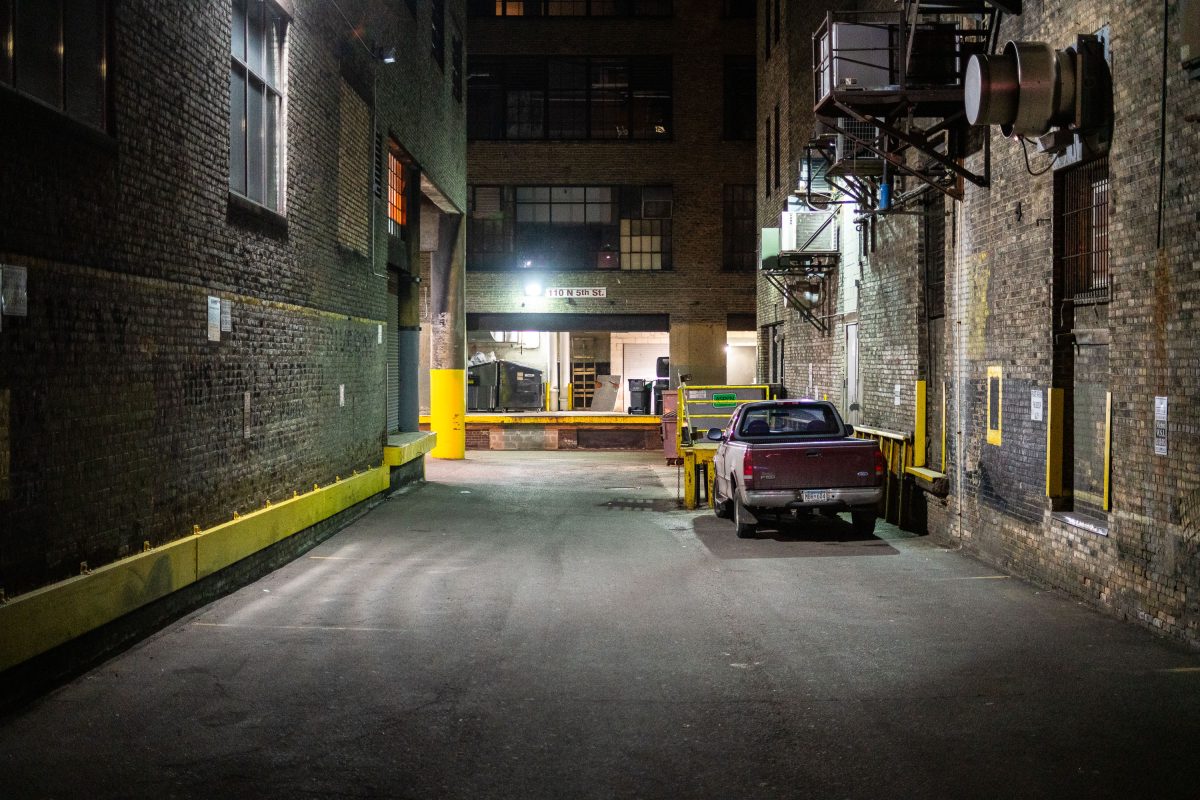
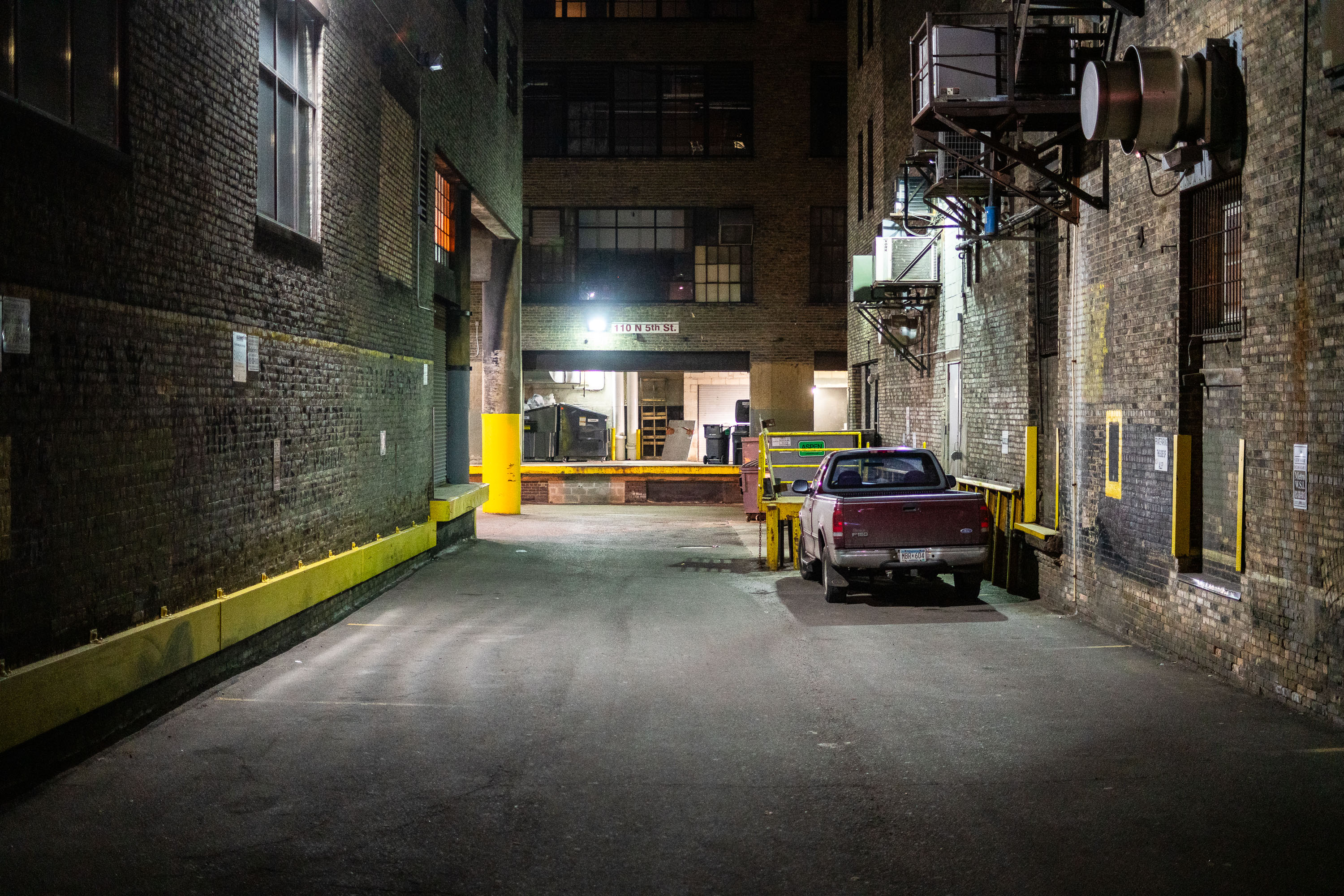
An Alley in Downtown Minneapolis
An alley in downtown Minneapolis.

An Alley in Downtown Minneapolis

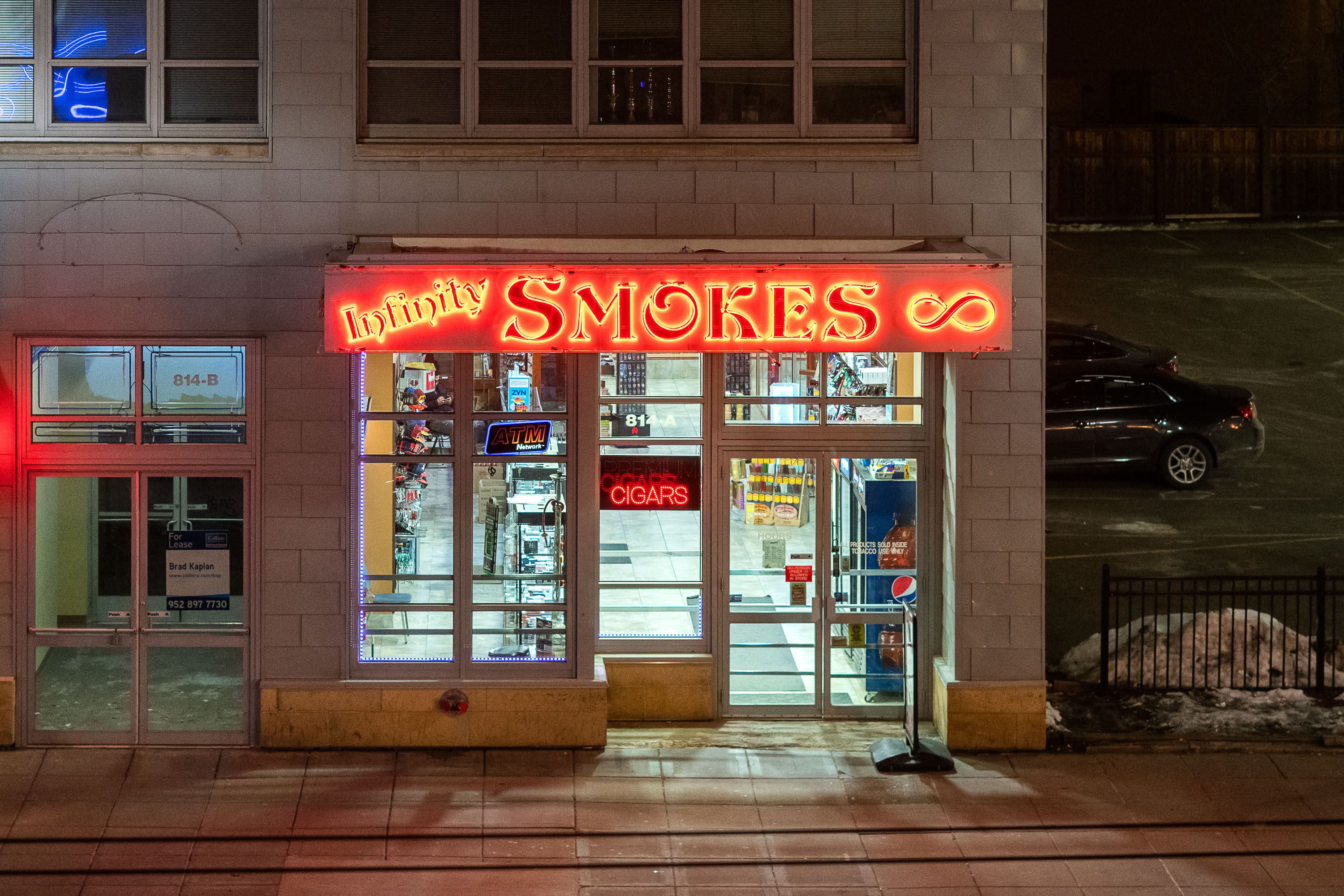
Infinity Smokes in Downtown Minneapolis
Infinity Smokes at 814 Hennepin Ave in Downtown Minneapolis.

Infinity Smokes in Downtown Minneapolis

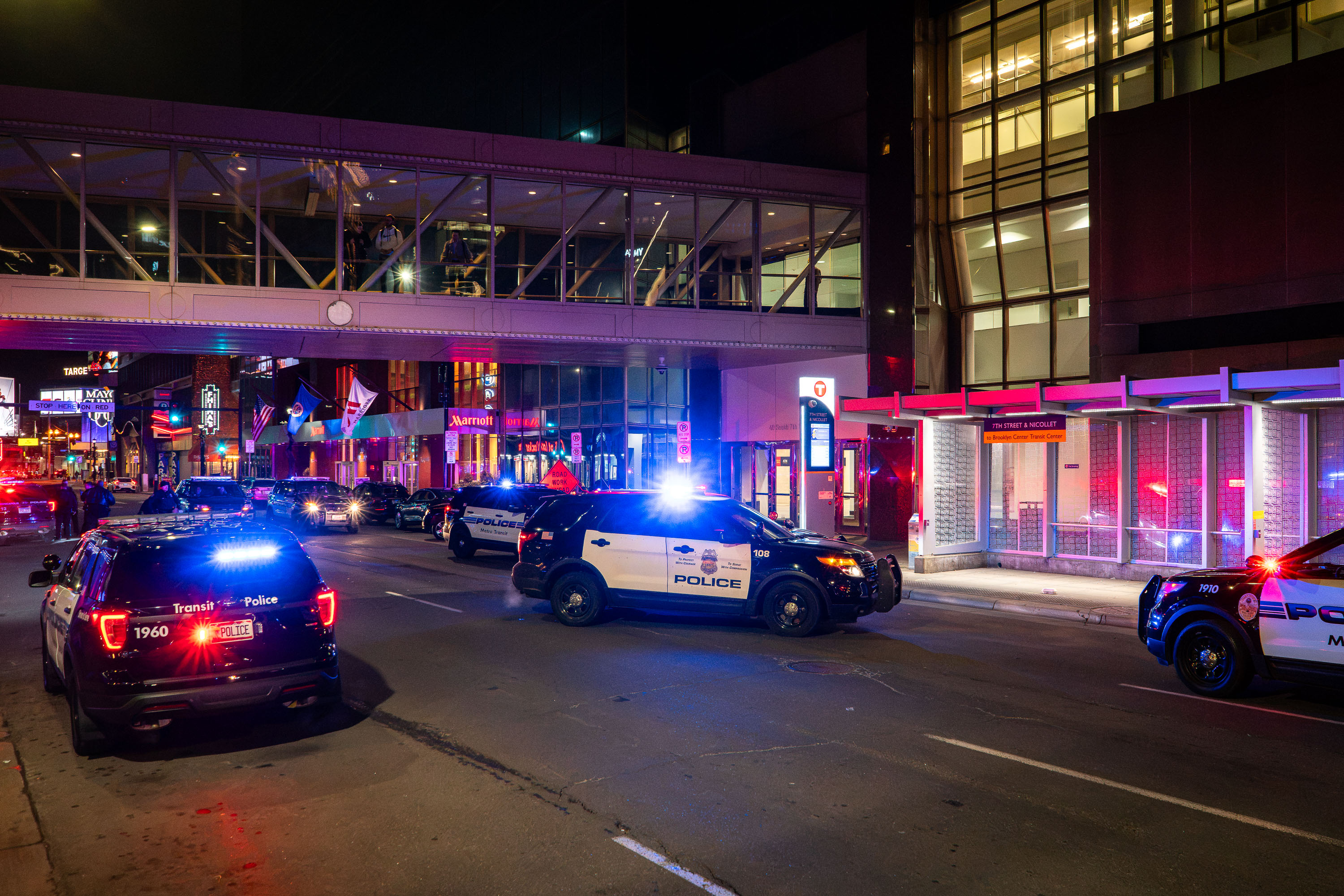
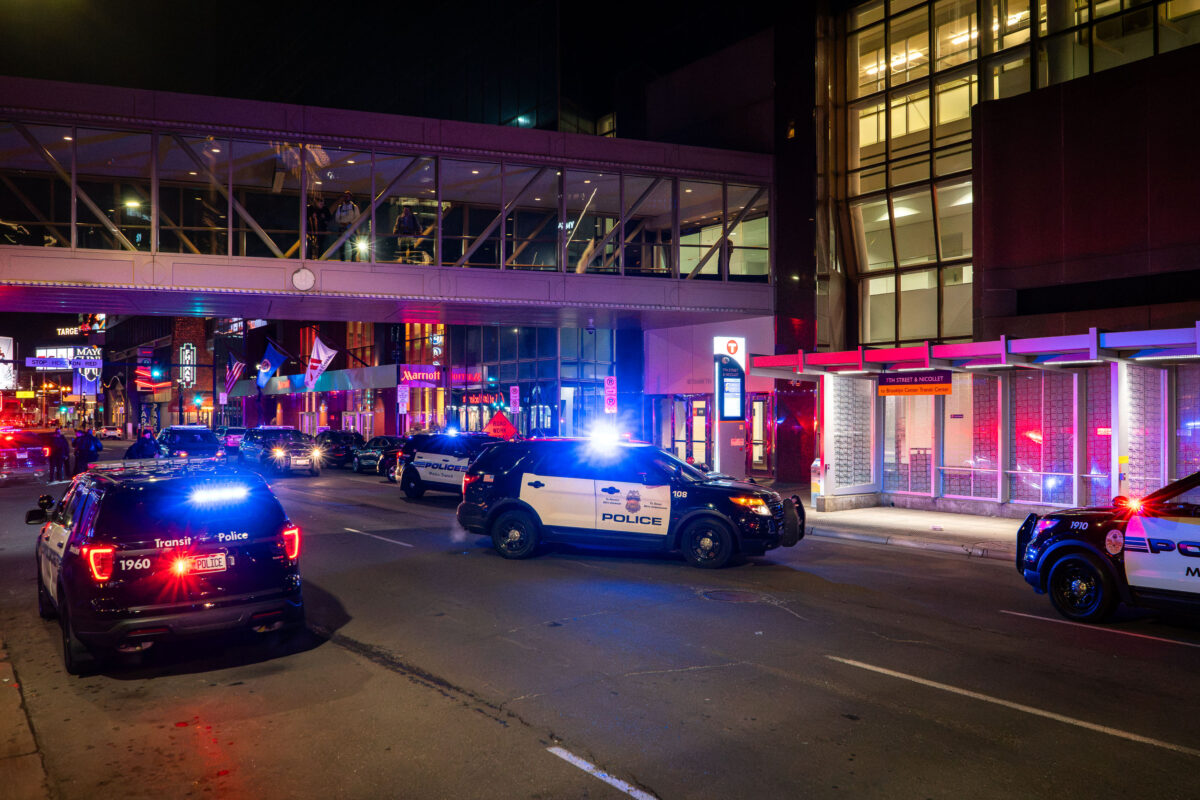
Minneapolis Police and Metro Transit Police, Downtown Minneapolis
Minneapolis Police and Metro Transit Police on 7th Street in Downtown Minneapolis.

Minneapolis Police and Metro Transit Police, Downtown Minneapolis

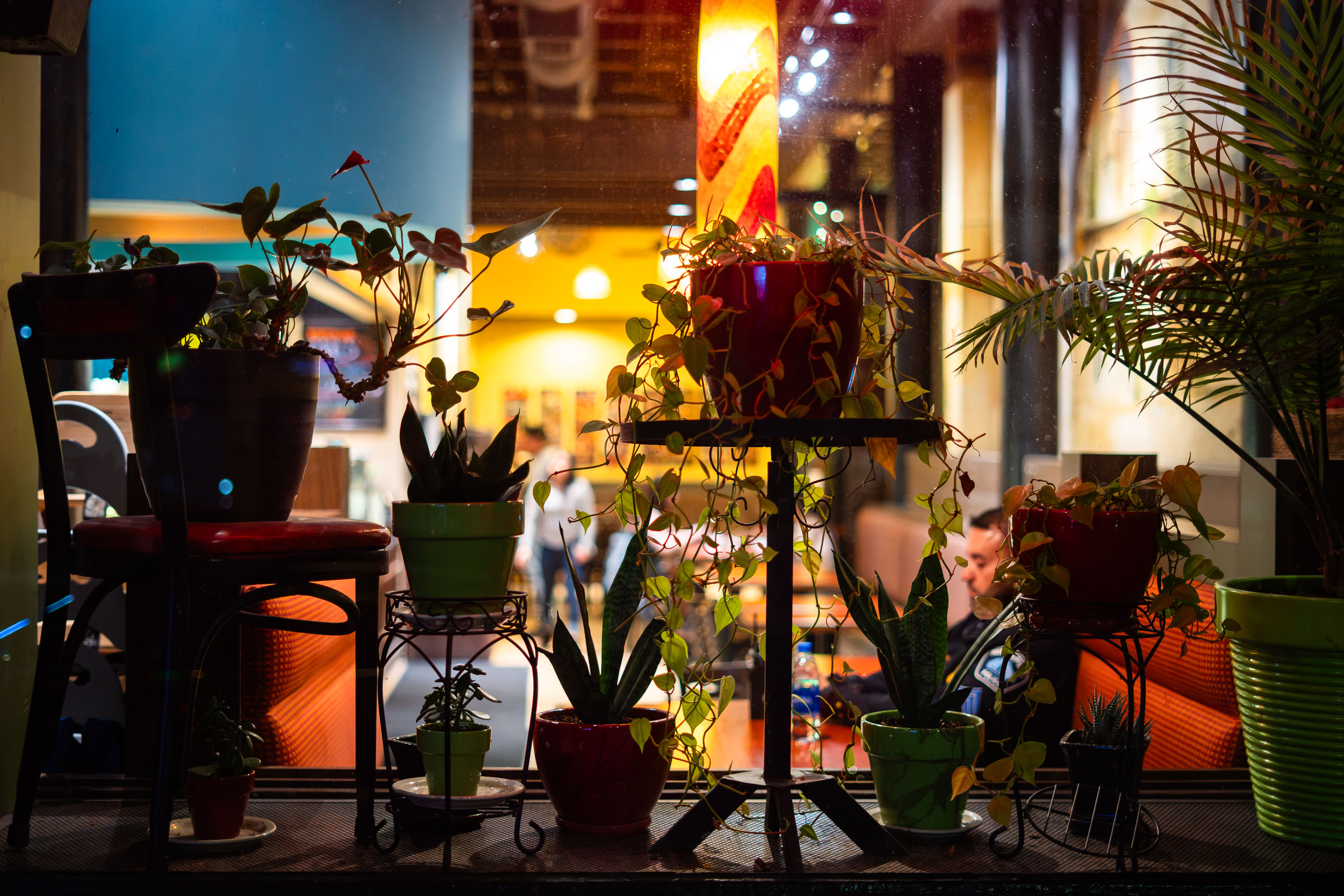
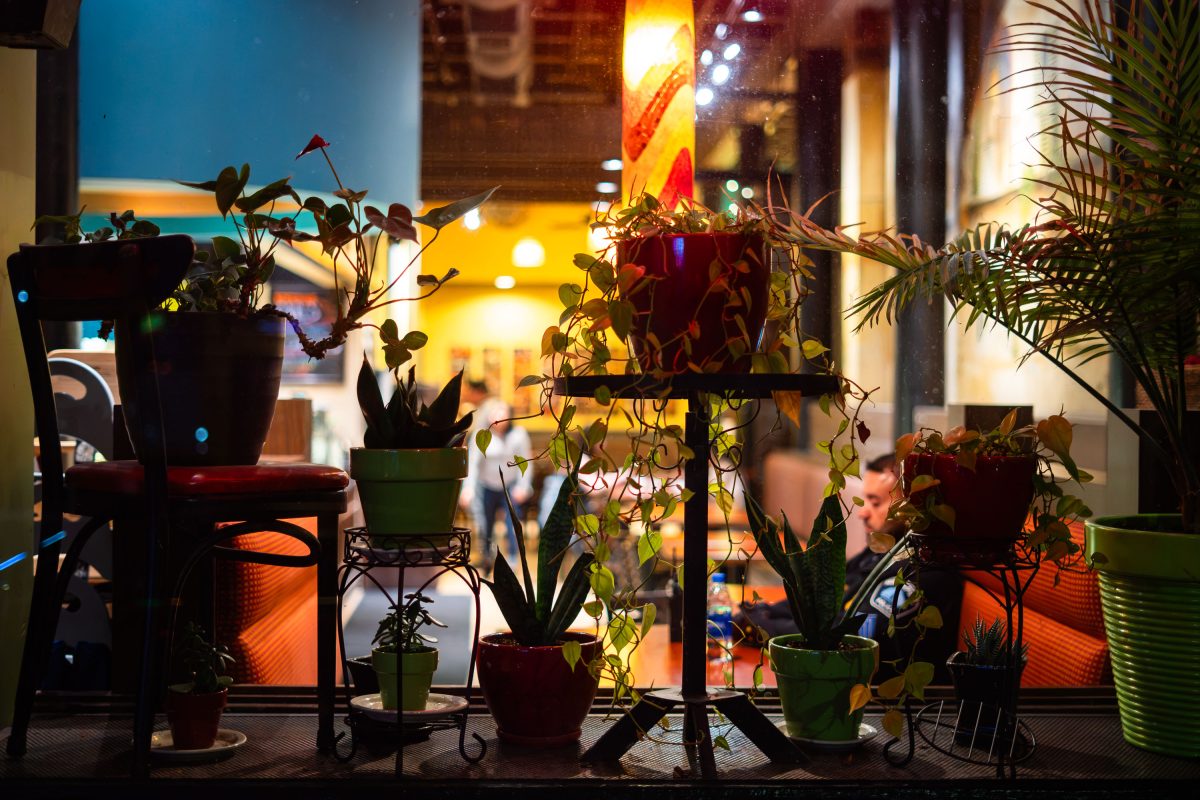
Window Plants at Pizza Luce in Downtown Minneapolis
Plants in the window of Pizza Luce in Downtown Minneapolis.

Window Plants at Pizza Luce in Downtown Minneapolis

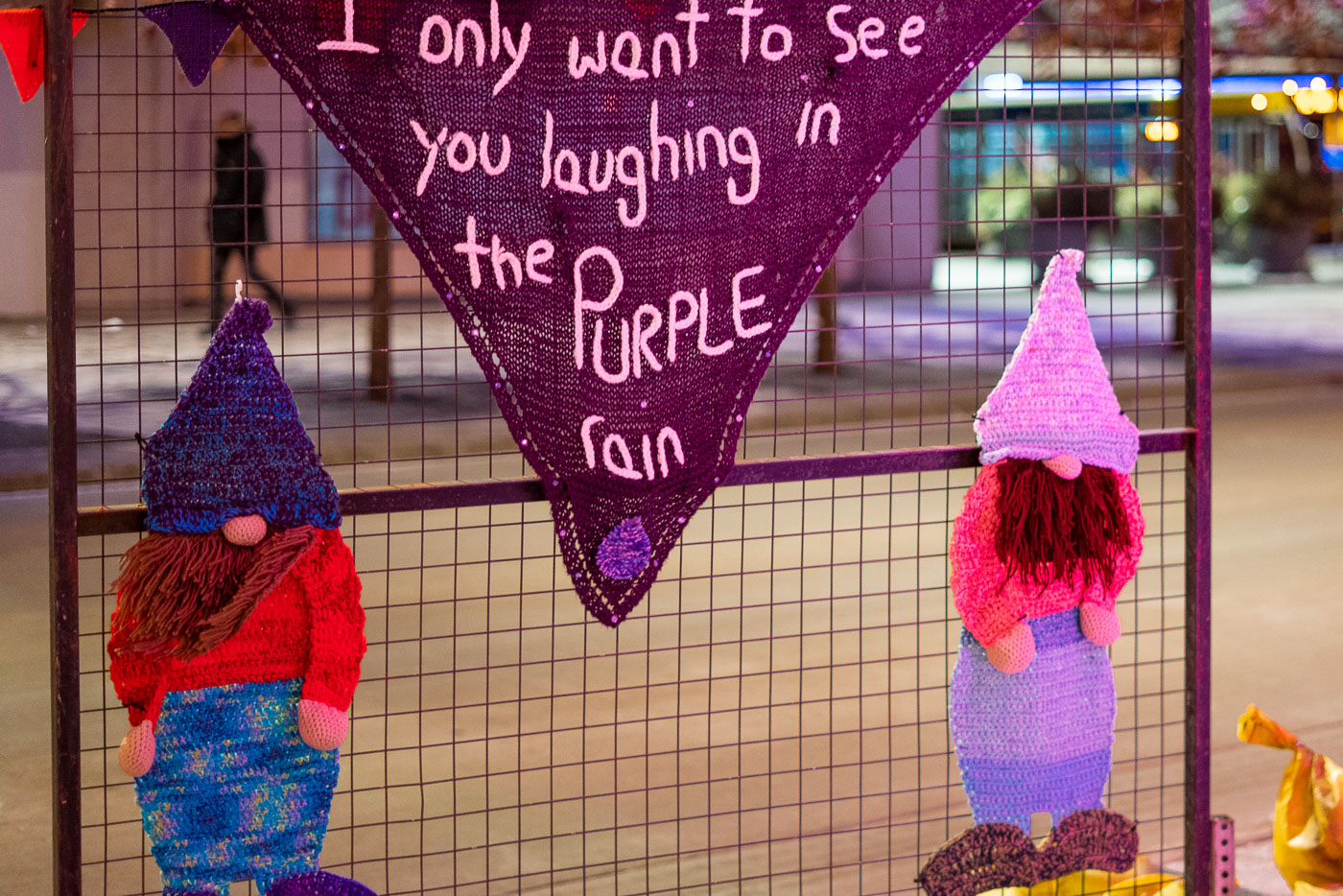
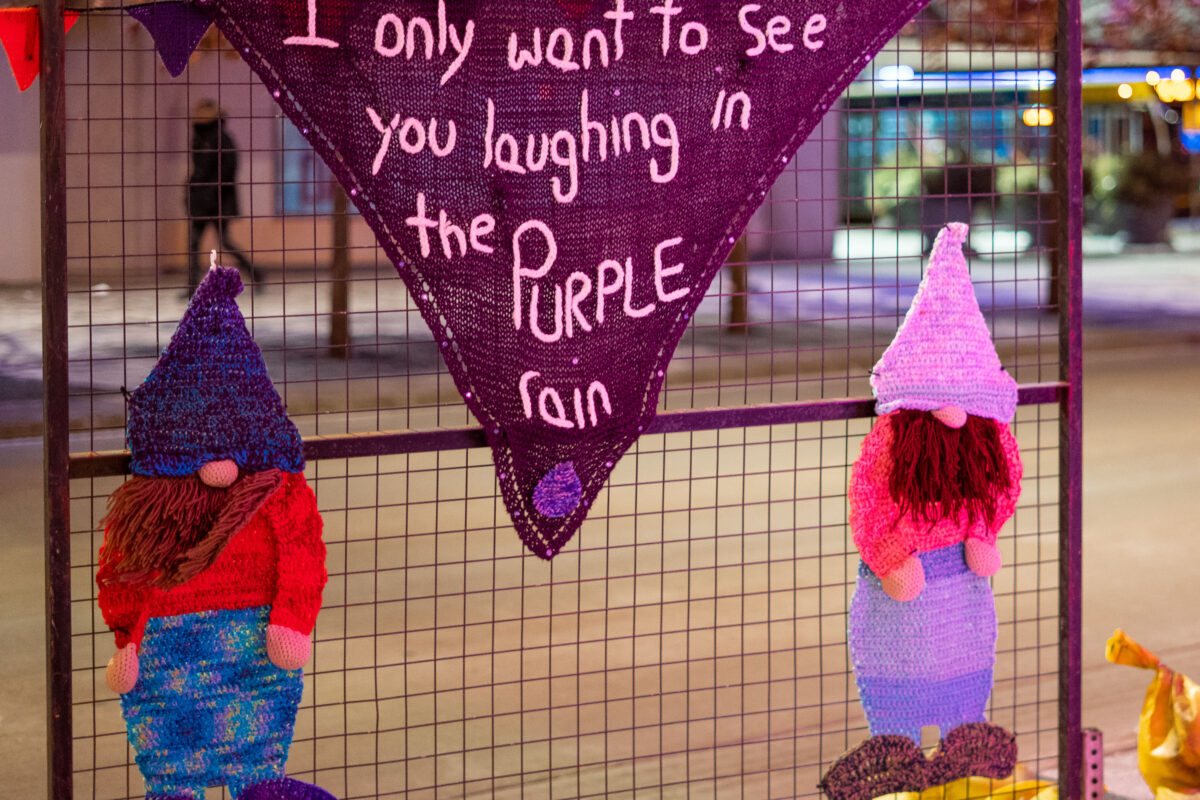
Knitted figures with a purple banner quoting Prince's "Purple Rain" hang from a downtown Minneapolis fence.
Fiber art installed on a fence in downtown Minneapolis on February 12, 2020 includes a stitched quotation from Prince’s “Purple Rain.”

Yarn-Bombed Gnomes with “Purple Rain” Quote on Nicollet Mall
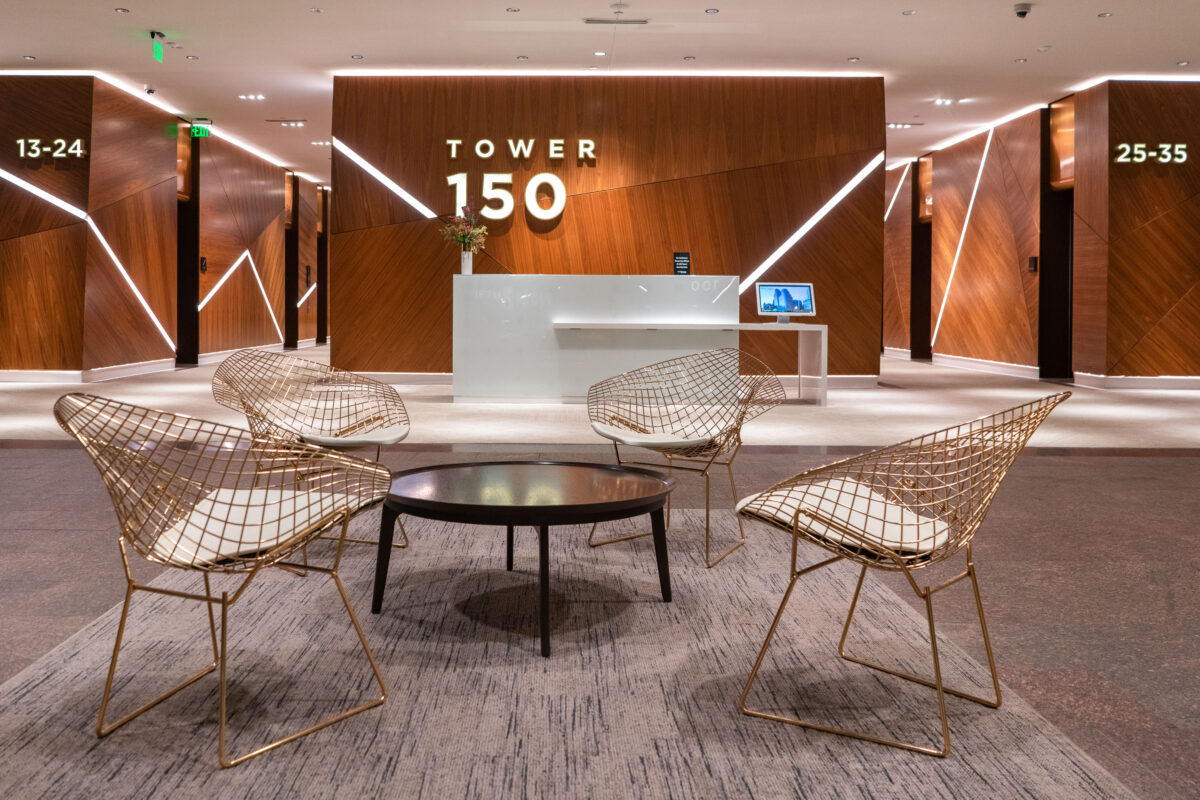
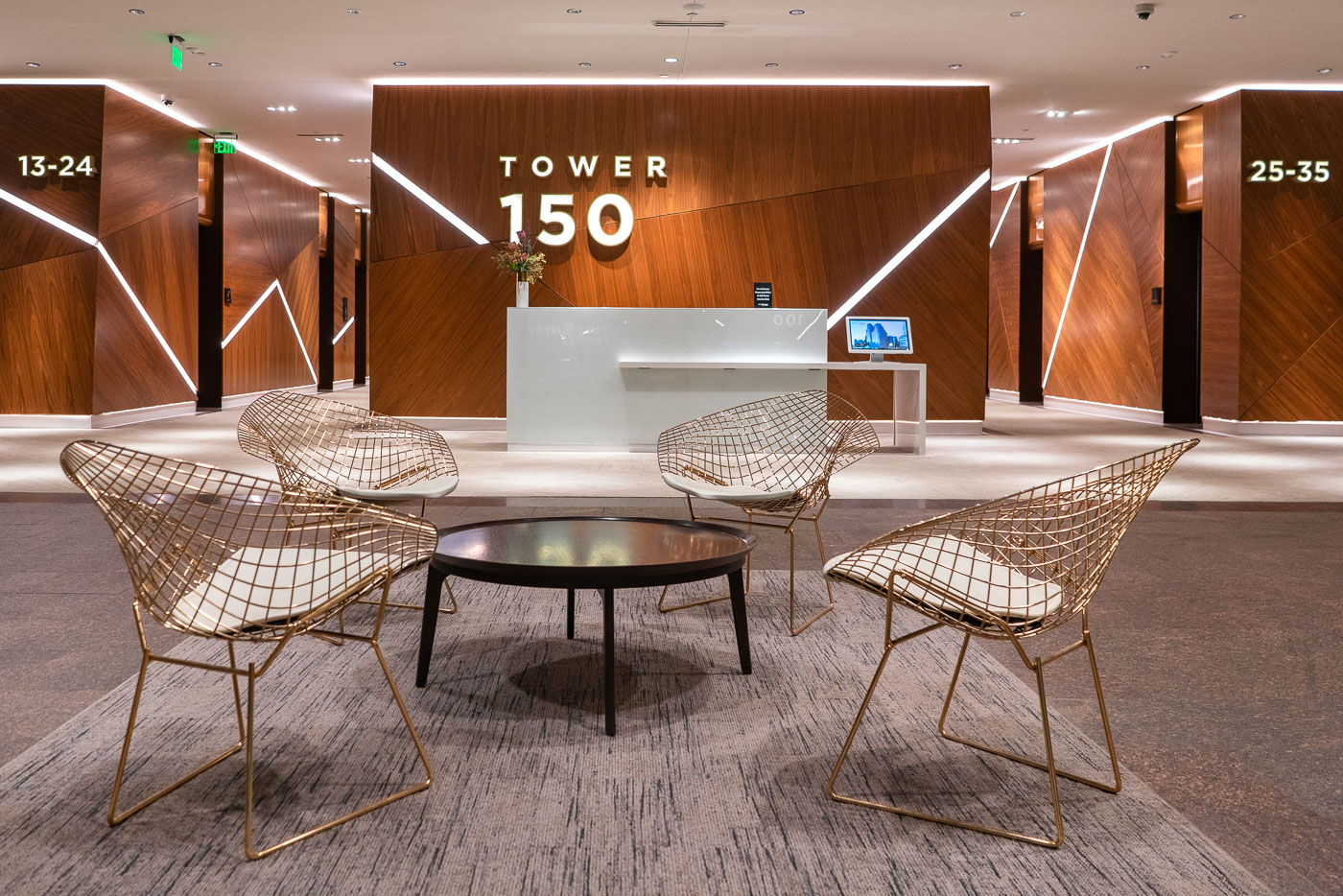
Tower 150 lobby at Fifth Street Towers in downtown Minneapolis with elevator banks and seating.
Tower 150 lobby at Fifth Street Towers in downtown Minneapolis. The office tower is part of the Fifth Street Towers complex, which connects to the Minneapolis Skyway system. The lobby provides elevator access to upper-floor offices and links building tenants and visitors with the downtown skyway network.

Tower 150 Lobby at Fifth Street Towers
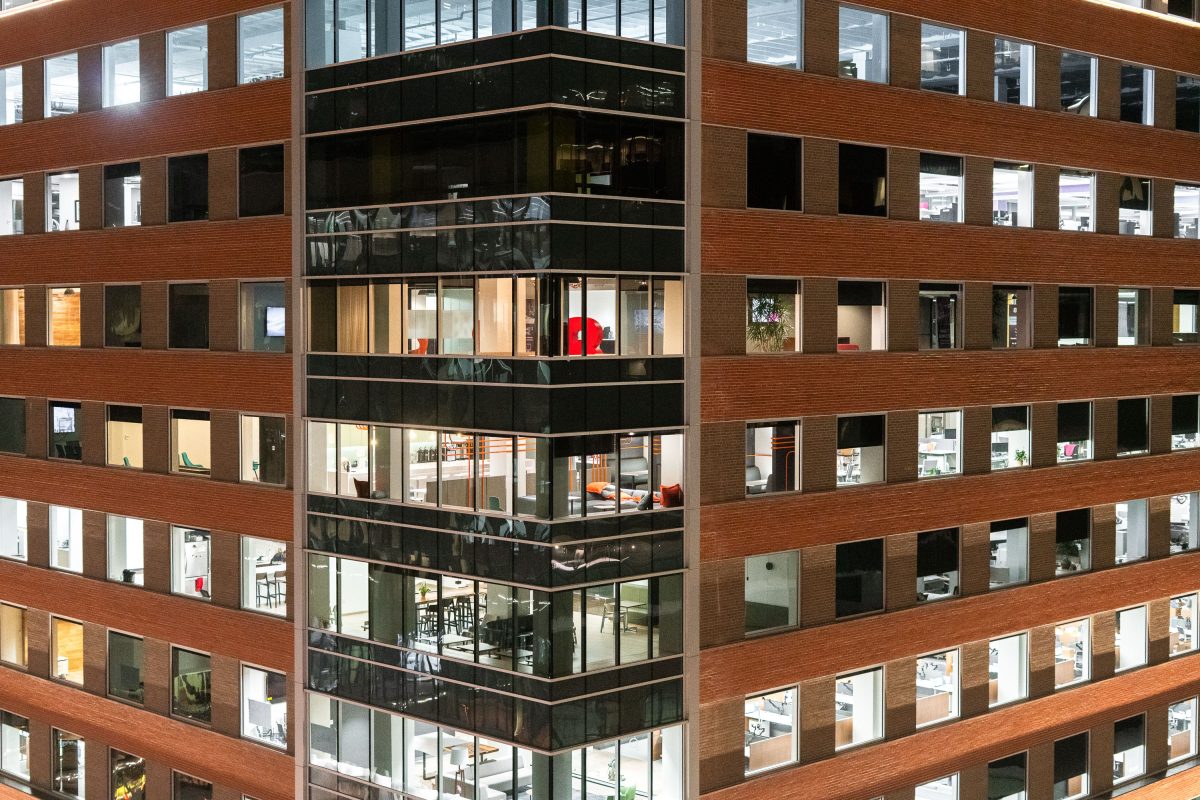
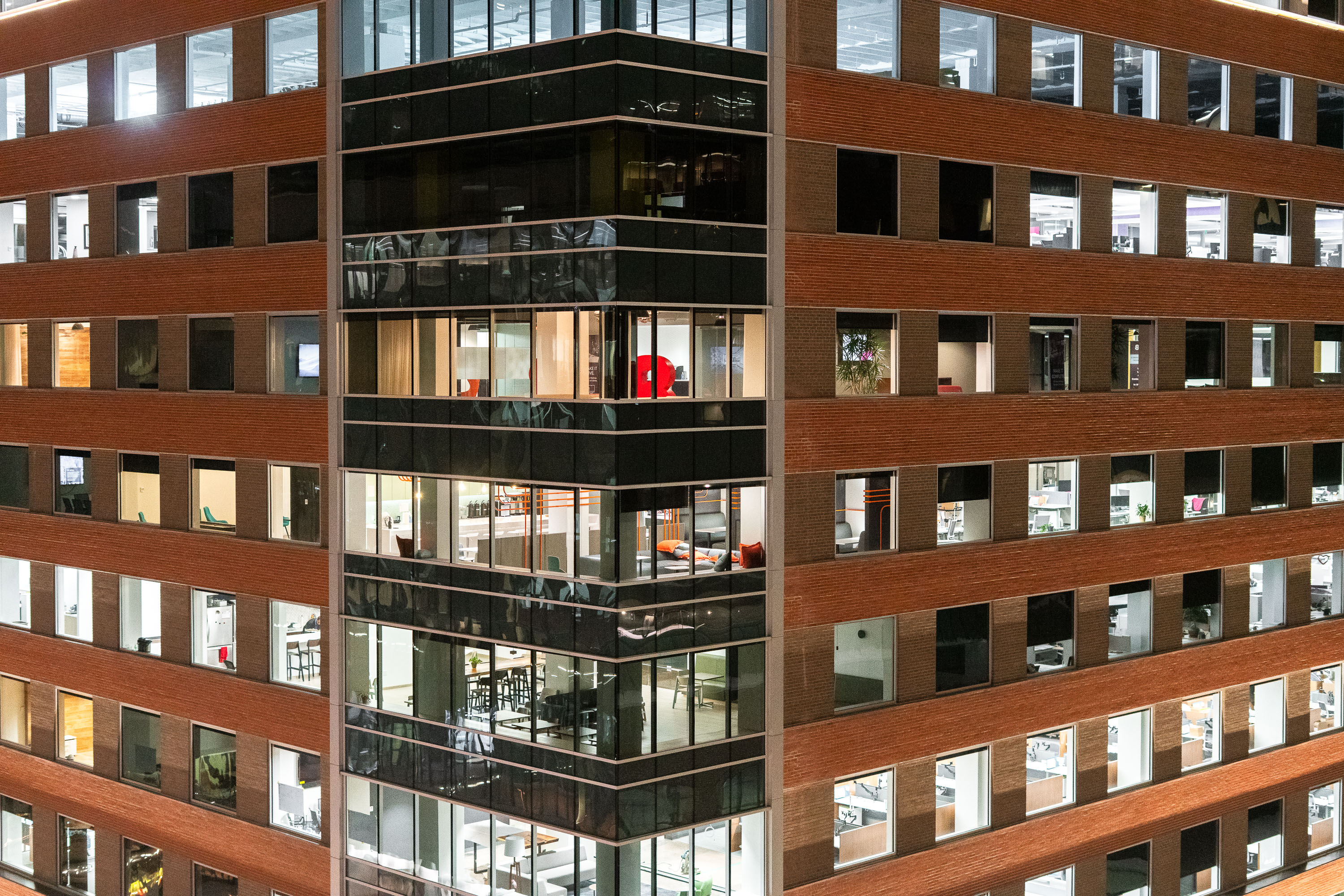
Baker Center Renovation in Downtown Minneapolis
The Baker Center office building in downtown Minneapolis after ungoing a large renovation both inside and outside.

Baker Center Renovation in Downtown Minneapolis

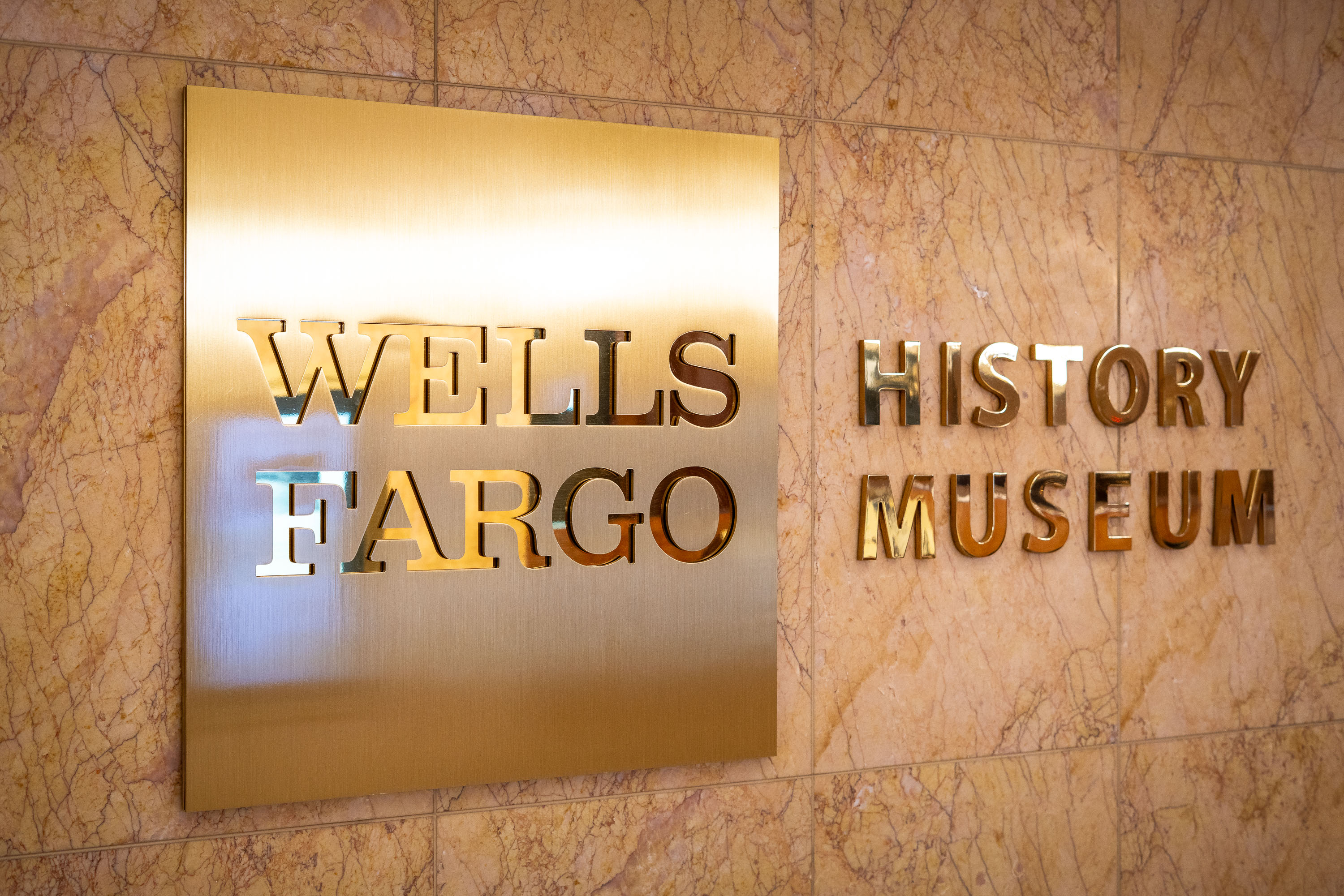
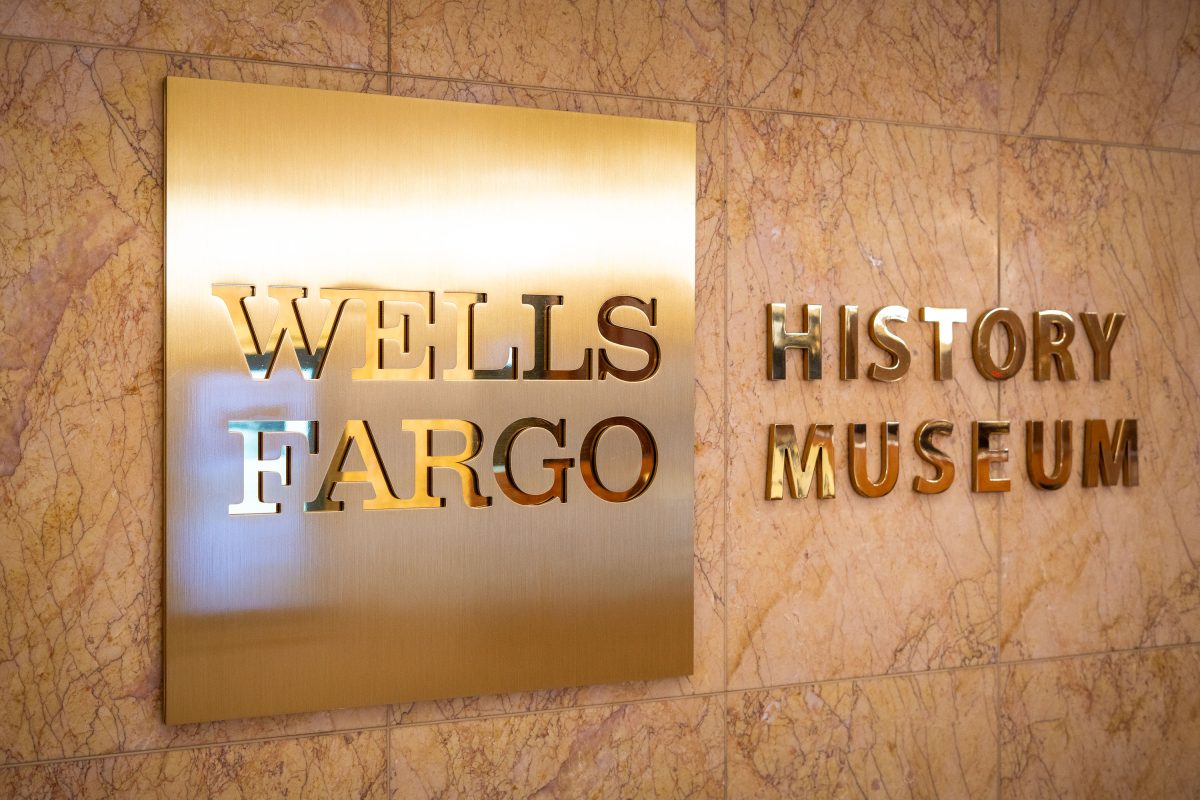
Wells Fargo History Museum signage mounted on marble wall in Minneapolis.
Wells Fargo operates several history museums across its footprint, including this one inside Wells Fargo Center in downtown Minneapolis. The museums showcase artifacts from the company's founding in 1852 by Henry Wells and William Fargo, when it began as an express delivery and banking service for customers headed to California during the Gold Rush. Exhibits typically include stagecoaches, mining-era currency, and telegraph equipment tracing the company's expansion across the American West. Wells Fargo Center itself, completed in 1988, is a 58-story skyscraper designed by César Pelli and remains one of the tallest buildings in Minneapolis.

Wells Fargo History Museum, Wells Fargo Center, Minneapolis
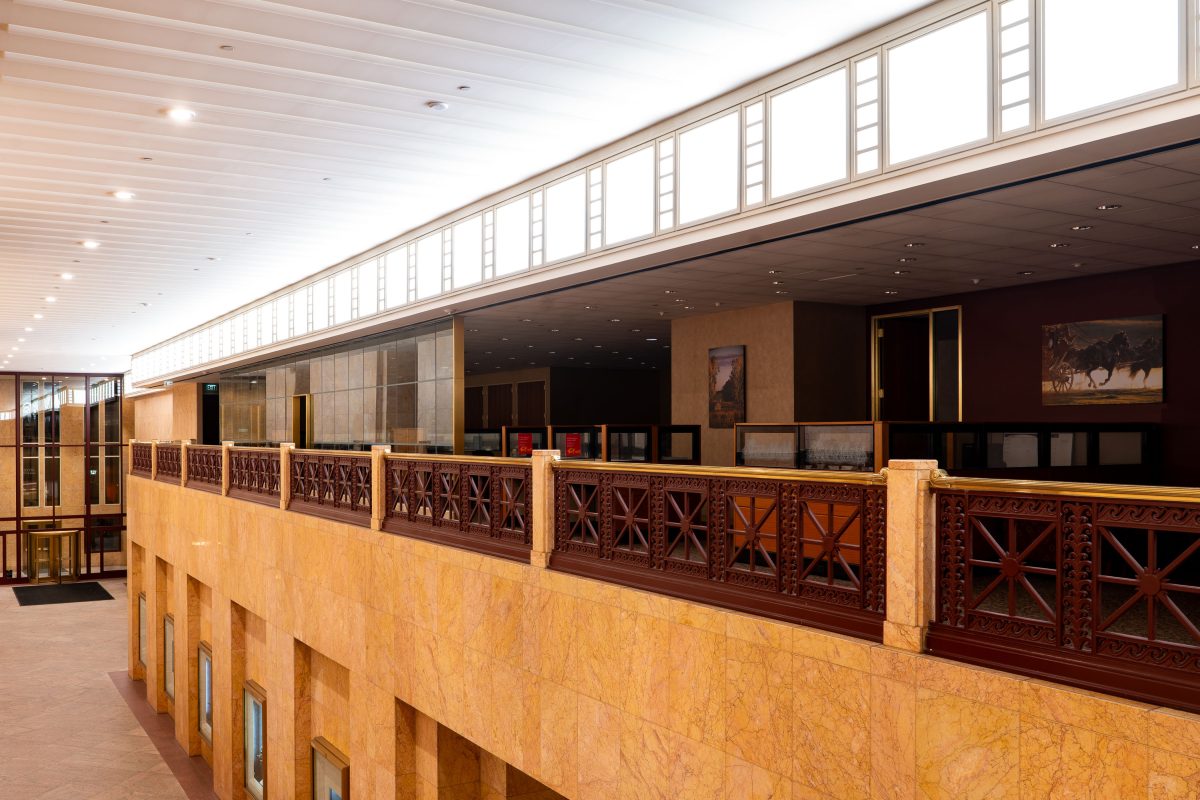
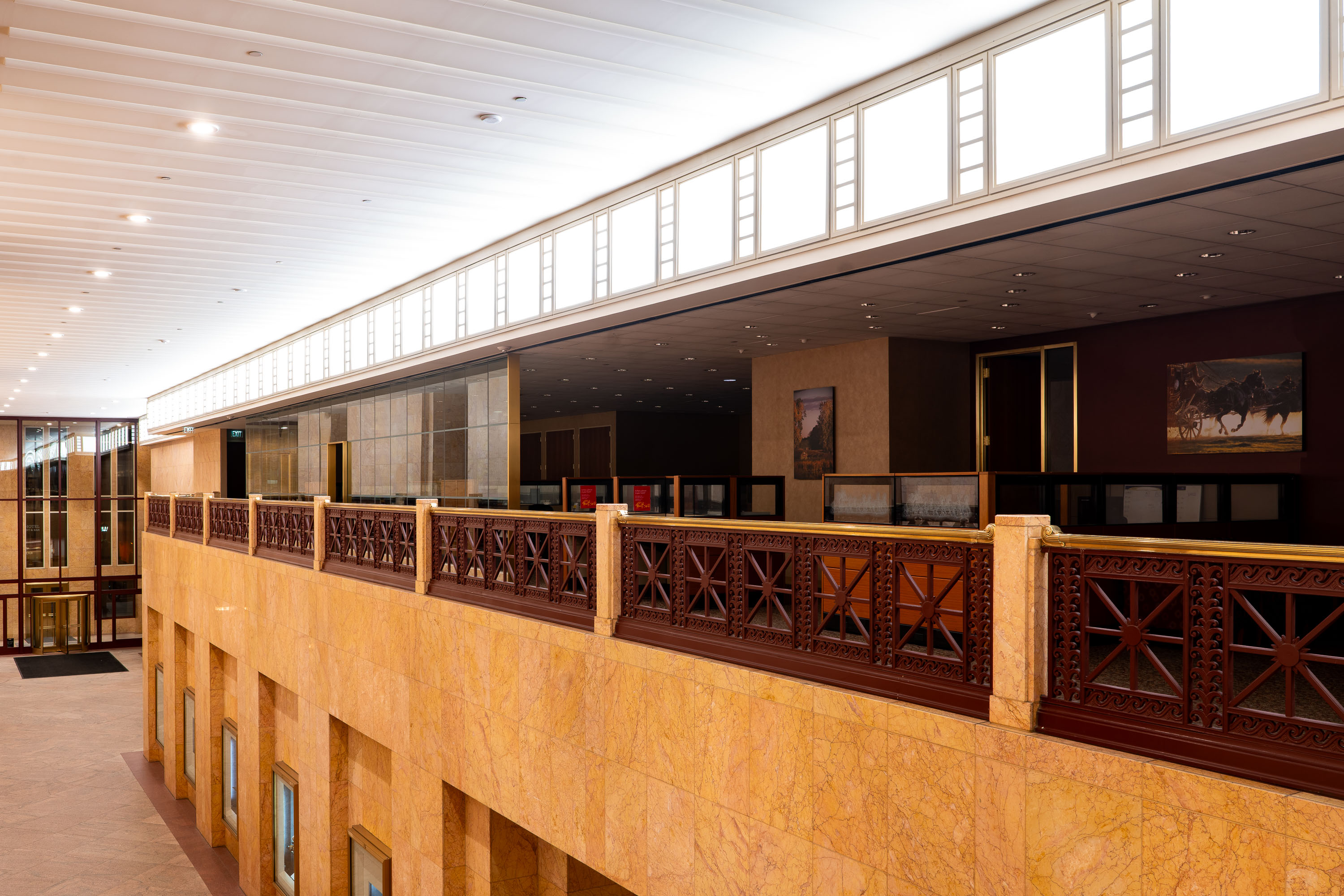
Interior of the Wells Fargo Center Museum in downtown Minneapolis featuring wooden railings and gallery spaces.
The Wells Fargo History Museum occupies the mezzanine level of the Wells Fargo Center at 90 South Seventh Street in downtown Minneapolis. Wells Fargo operates a small chain of these free museums in cities where it has a historic presence, using them to display stagecoaches, mining-era artifacts, and archival s tied to the company's founding in 1852. The exhibit cases along the balcony rail typically rotate items from the bank's corporate archives, including gold specimens and correspondence from the stagecoach express era. The Wells Fargo Center tower itself, completed in 1988 and designed by Cesar Pelli, rises 58 stories above the museum's perch overlooking the building's lobby.

Mezzanine Balcony, Wells Fargo History Museum, Minneapolis
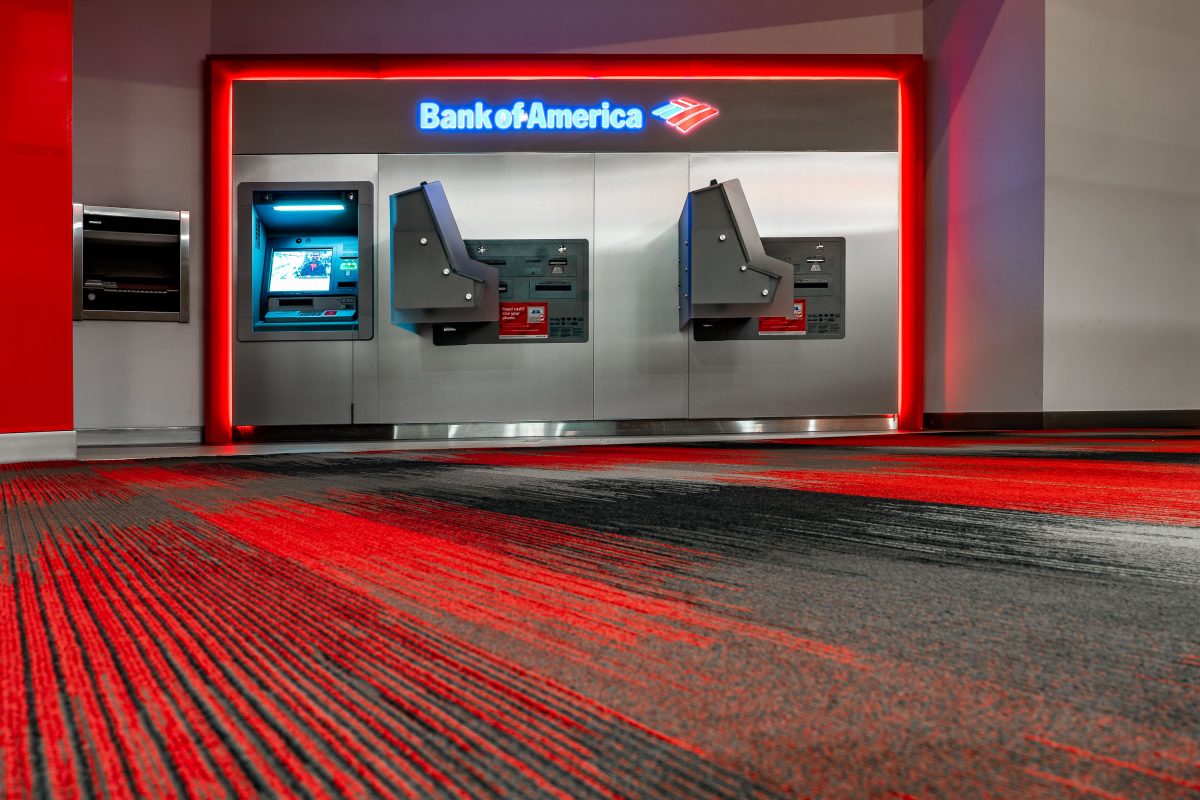
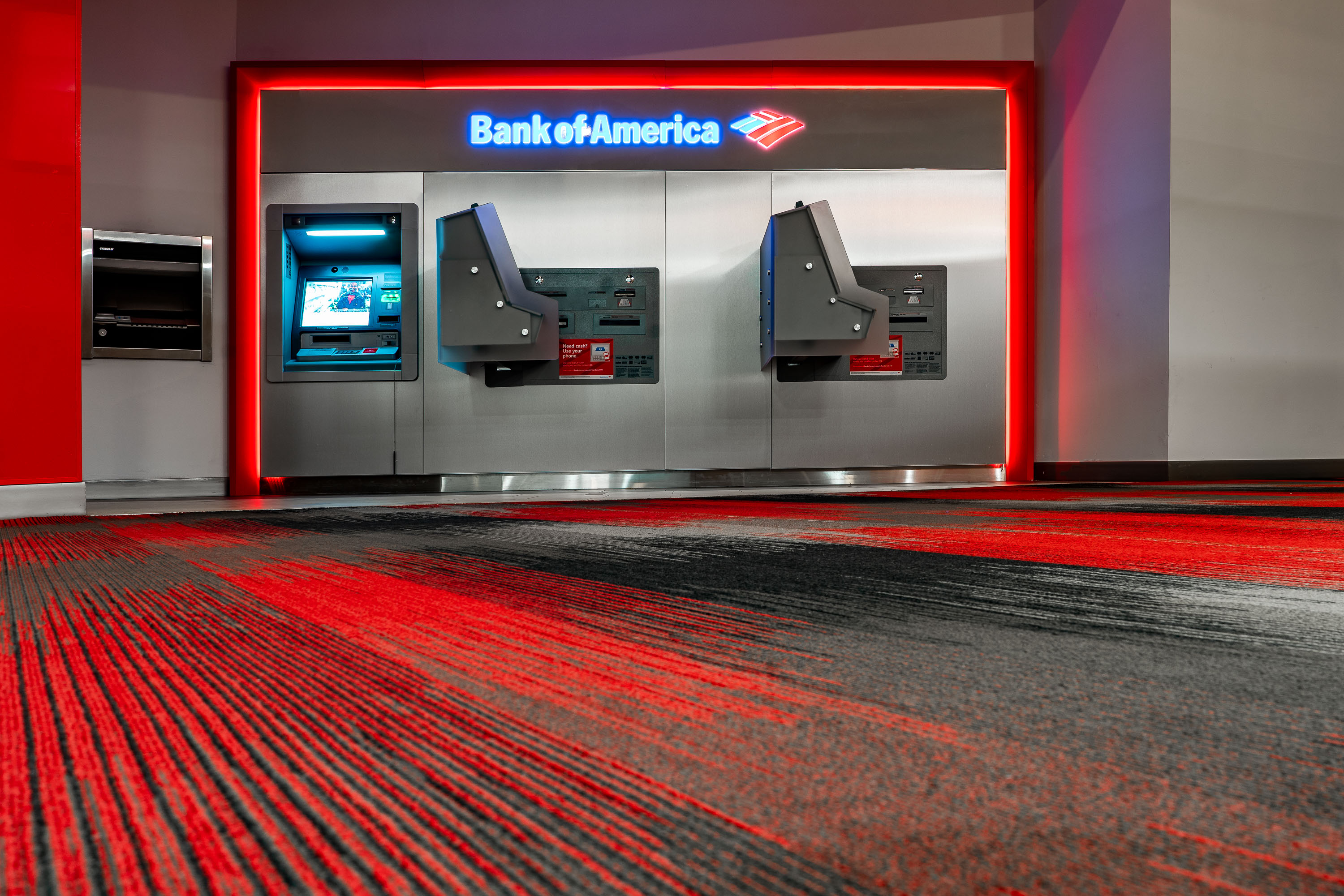
Bank Of America ATM Downtown Minneapolis
Bank Of America ATMs in the IDS Center in Downtown Minneapolis.

Bank Of America ATM Downtown Minneapolis

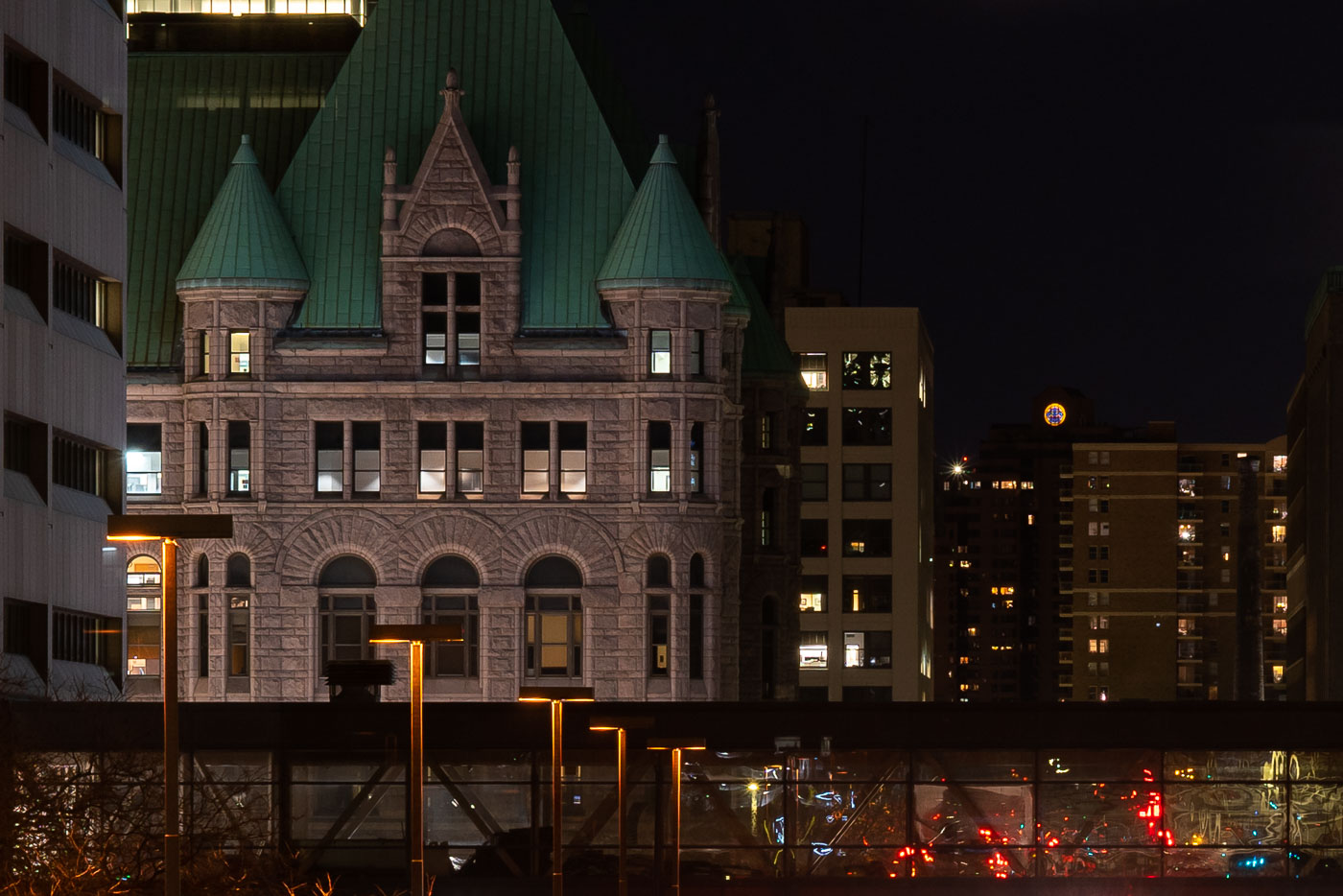
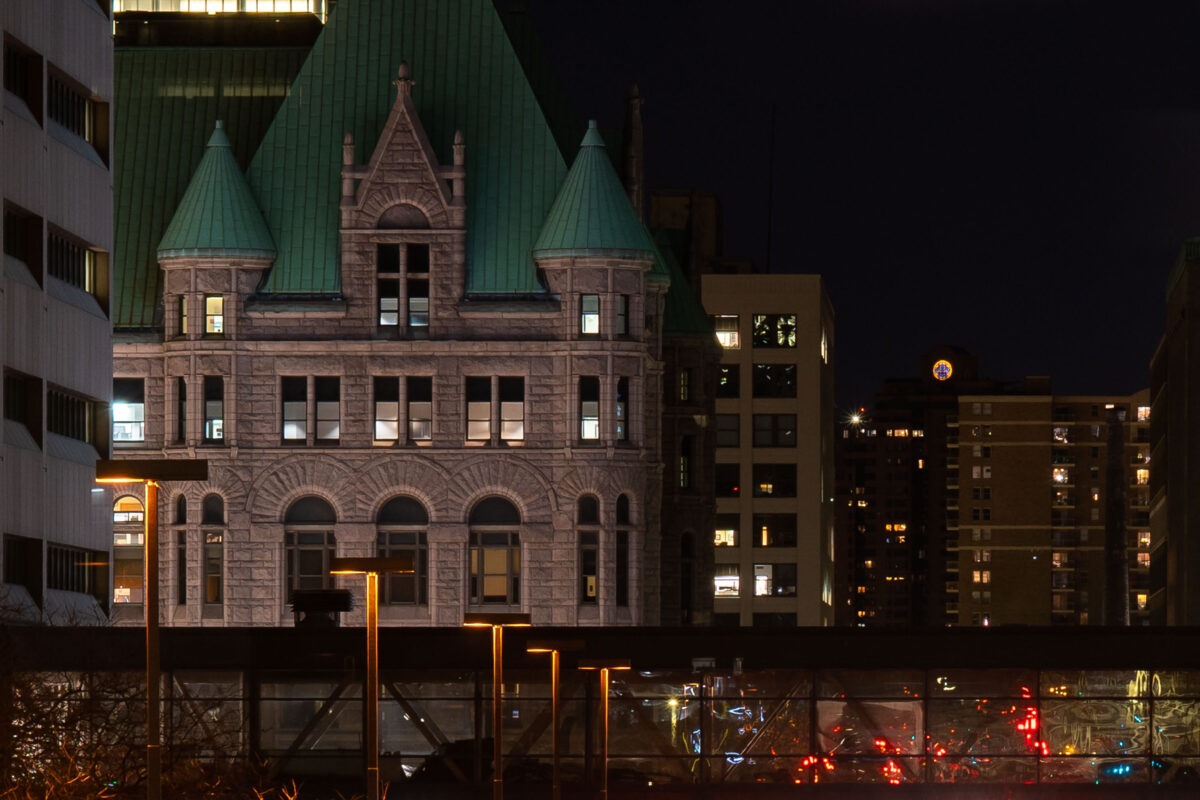
Minneapolis City Hall's green-roofed clock tower illuminated at night above downtown buildings and street lights.
Minneapolis City Hall rises behind a skyway in downtown Minneapolis at night. The historic building’s green roof and stone façade are lit against nearby apartment and office buildings.

Minneapolis City Hall Amid Downtown Towers at Night
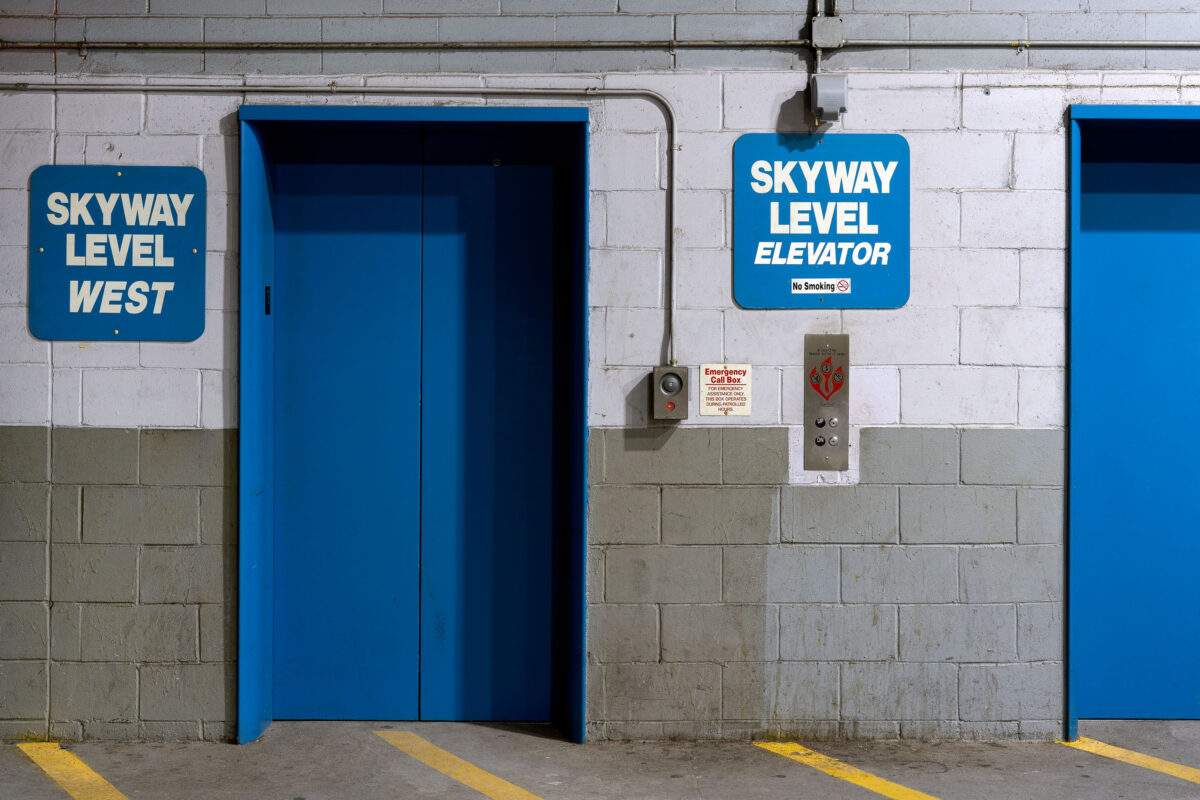
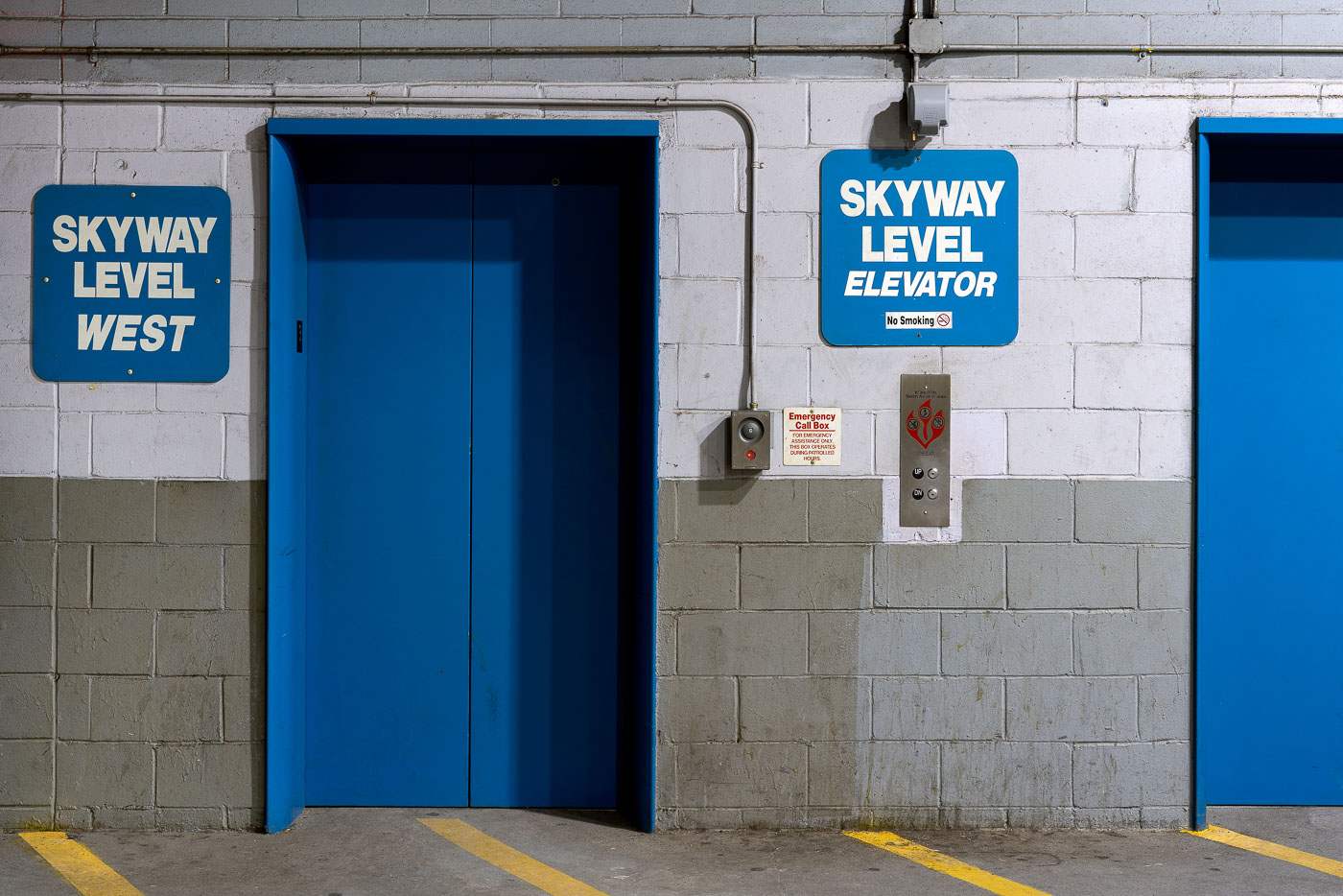
Blue directional signs for Skyway Level elevators in a downtown Minneapolis parking ramp.
Directional signs for Skyway Level elevators mark access points in a downtown Minneapolis parking ramp. The Minneapolis Skyway System connects downtown buildings at the second-floor level, allowing pedestrians to move between structures without exposure to weather. Elevator access from parking facilities is essential infrastructure for the skyway network's operation.

Skyway Level Elevator Signs, Minneapolis Parking Ramp
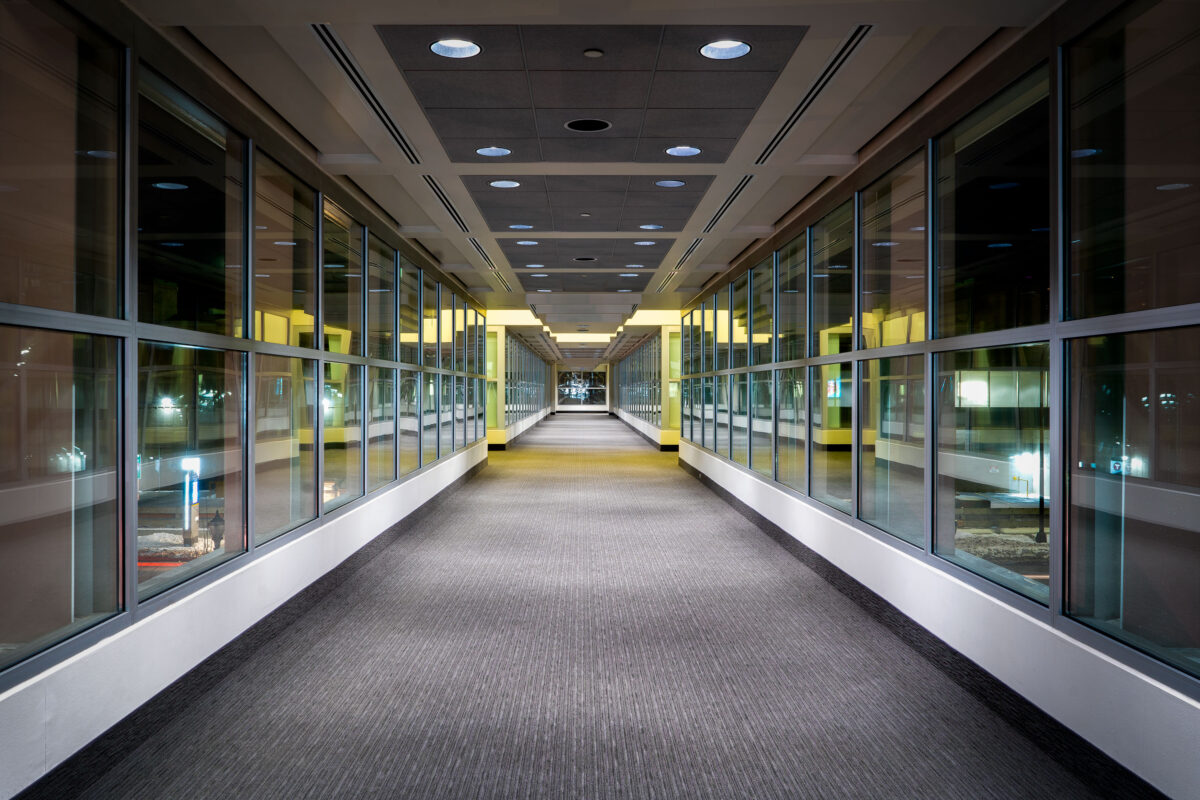
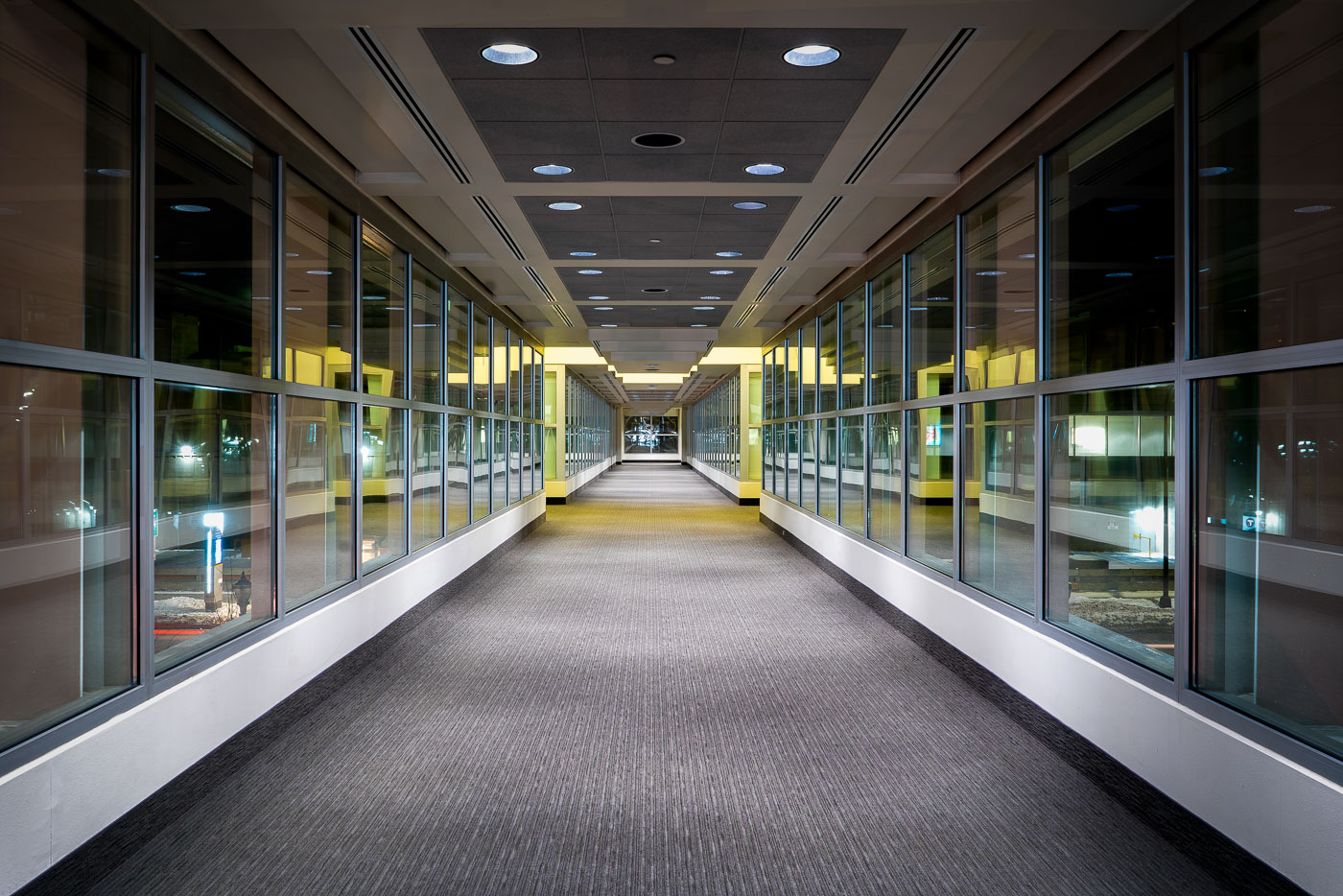
SPS Tower skyway corridor in downtown Minneapolis with windows lining the elevated walkway.
The SPS Tower skyway in downtown Minneapolis is part of the Minneapolis Skyway System. The enclosed elevated walkway connects downtown buildings above street level and supports pedestrian movement through the central business district.

SPS Tower Skyway, Downtown Minneapolis
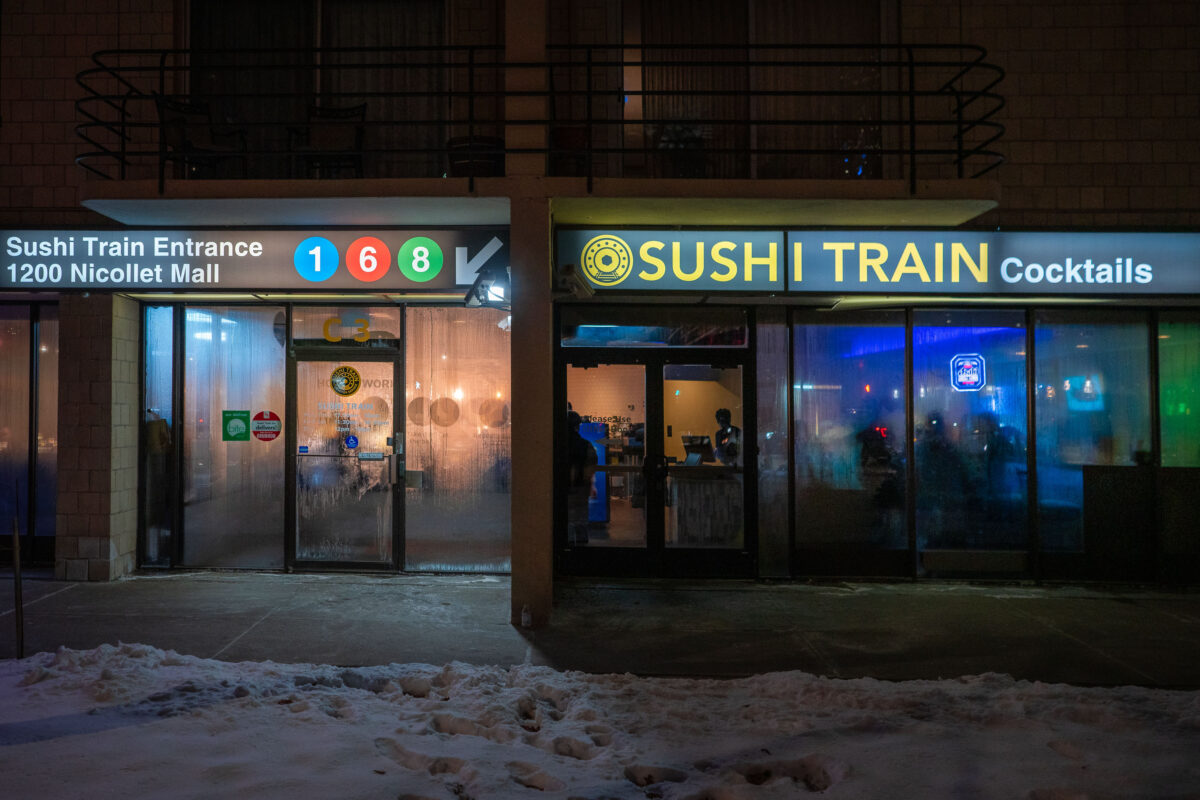
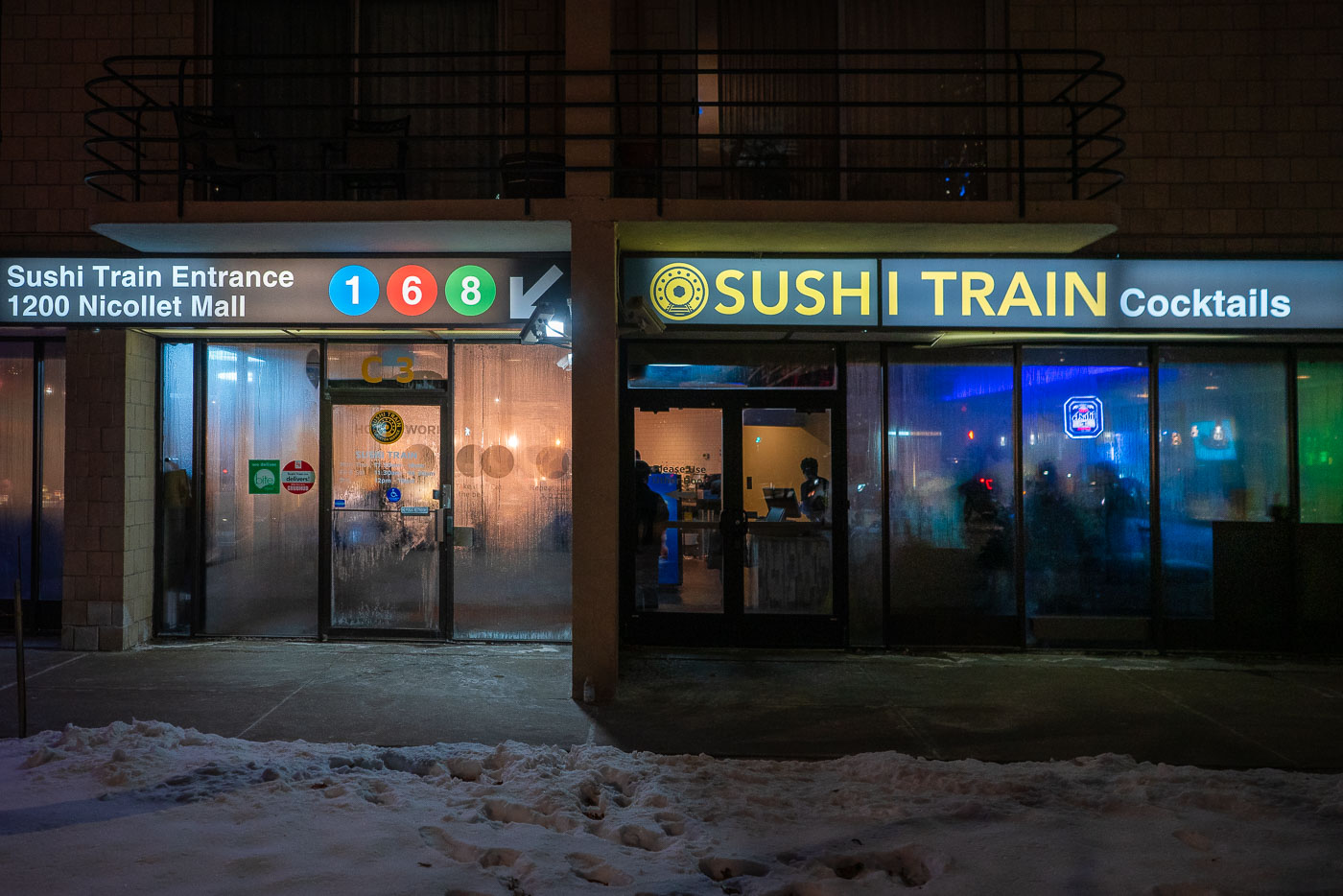
Sushi Train restaurant entrance at 1200 Nicollet Mall in downtown Minneapolis on a snowy evening.
Sushi Train is a conveyor-belt sushi restaurant at 1200 Nicollet Mall in downtown Minneapolis. The conveyor-belt format, where plates circle the dining counter for customers to pick up, began in Japan in the 1950s and later spread worldwide.

Sushi Train on Nicollet Mall on a Snowy Night
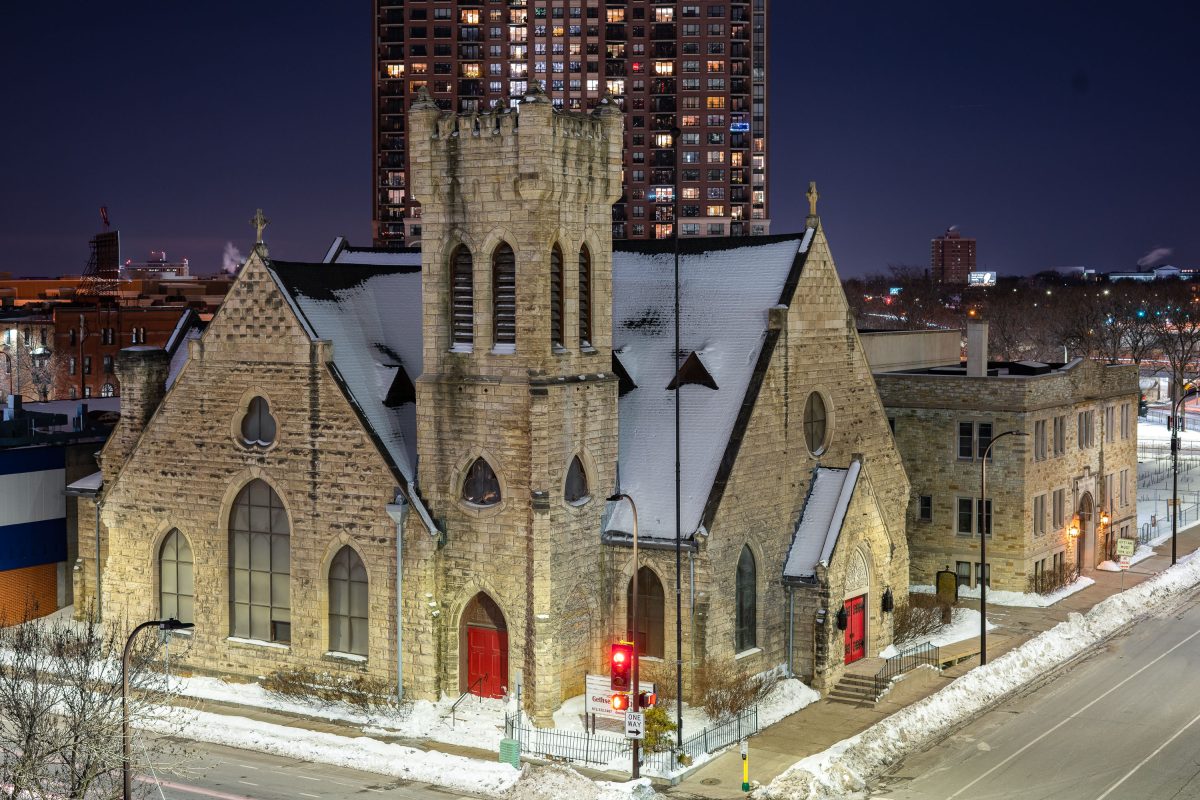
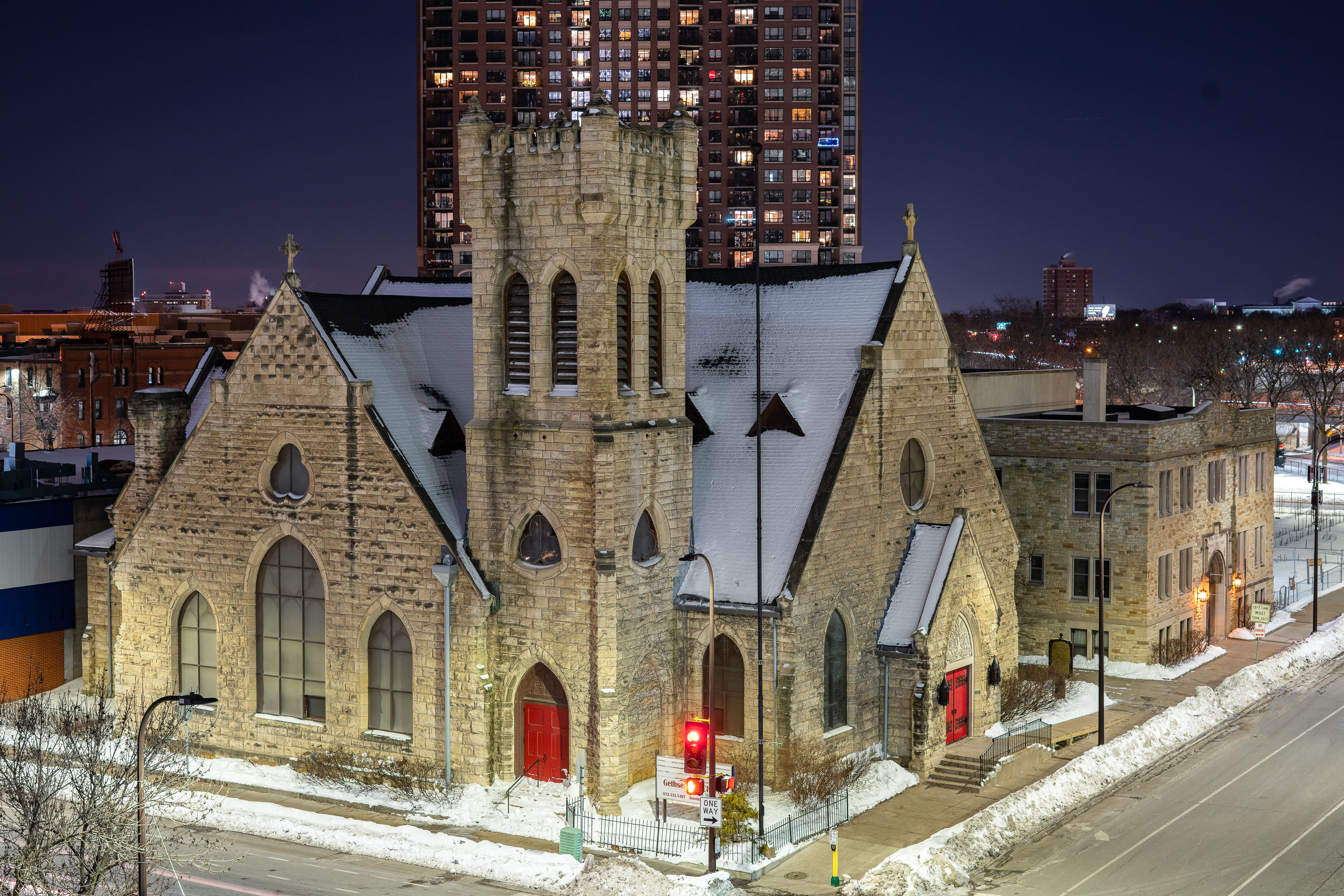
Gethsemane Episcopal Church's stone tower and snow-covered roof stand below a high-rise in downtown Minneapolis.
Gethsemane Episcopal Church stands at 905 4th Avenue South in downtown Minneapolis. The congregation was organized in 1856, making it one of the oldest Episcopal parishes in the city, and the current limestone building dates to the 1880s in a Gothic Revival style. The church has long served an urban parish role, offering outreach programs alongside regular worship. It sits within blocks of the Minneapolis Convention Center and the city's Loring Park neighborhood, surrounded in recent decades by high-rise residential towers built up around the older structure.

Gethsemane Episcopal Church Beneath Downtown Minneapolis High-Rise
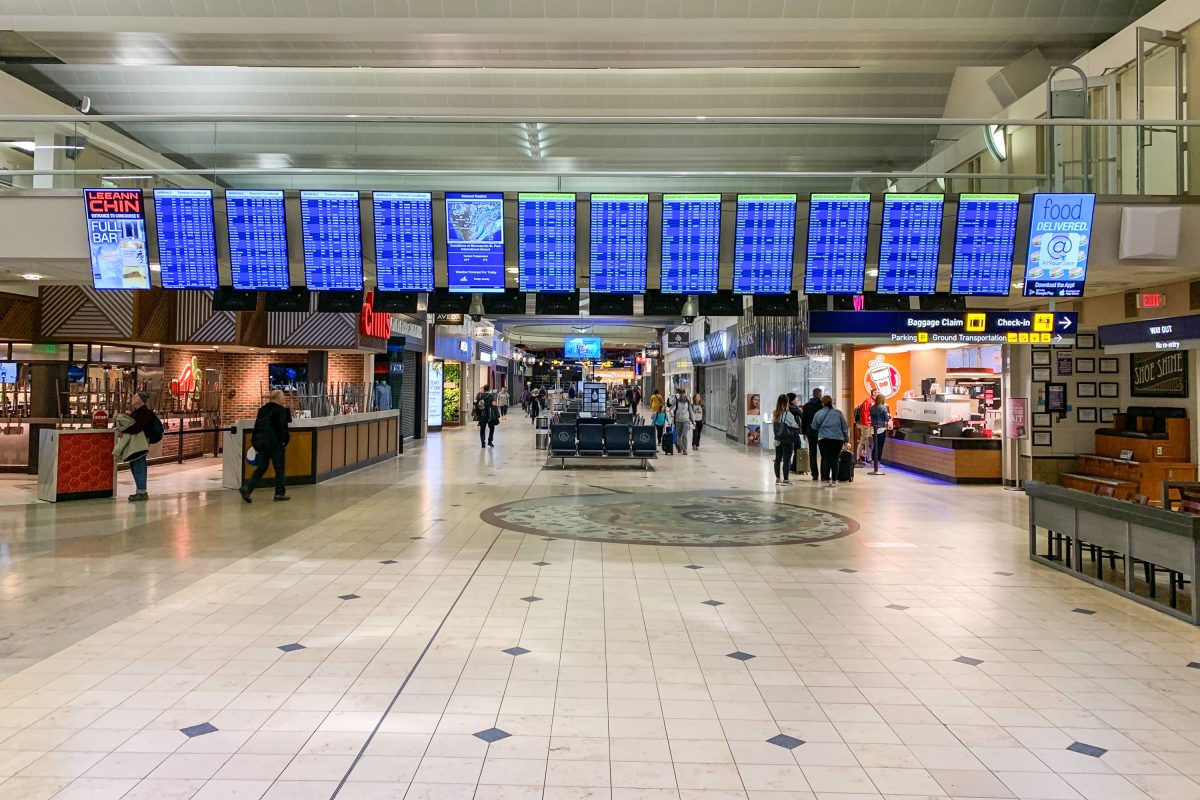
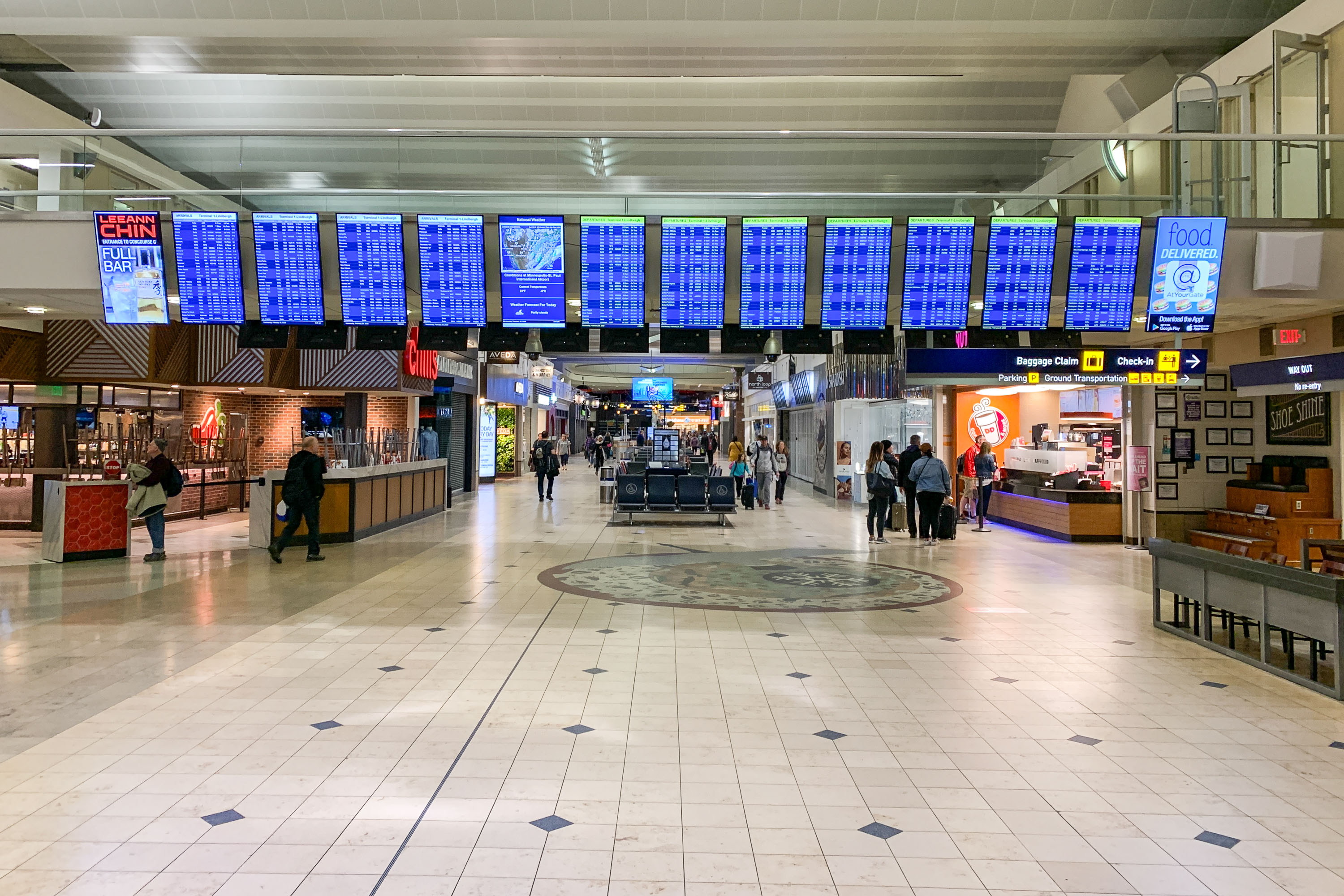
Airport terminal concourse with departure boards, retail shops, and scattered passengers at Minneapolis-St. Paul International
Minneapolis-Saint Paul International Airport's Terminal 1, also known as the Lindbergh Terminal, serves as the primary hub for Delta Air Lines and its regional partners. The terminal is operated by the Metropolitan Airports Commission and connects to seven concourses identified by letters A through G.

Flight Boards Line the Concourse at MSP’s Lindbergh Terminal
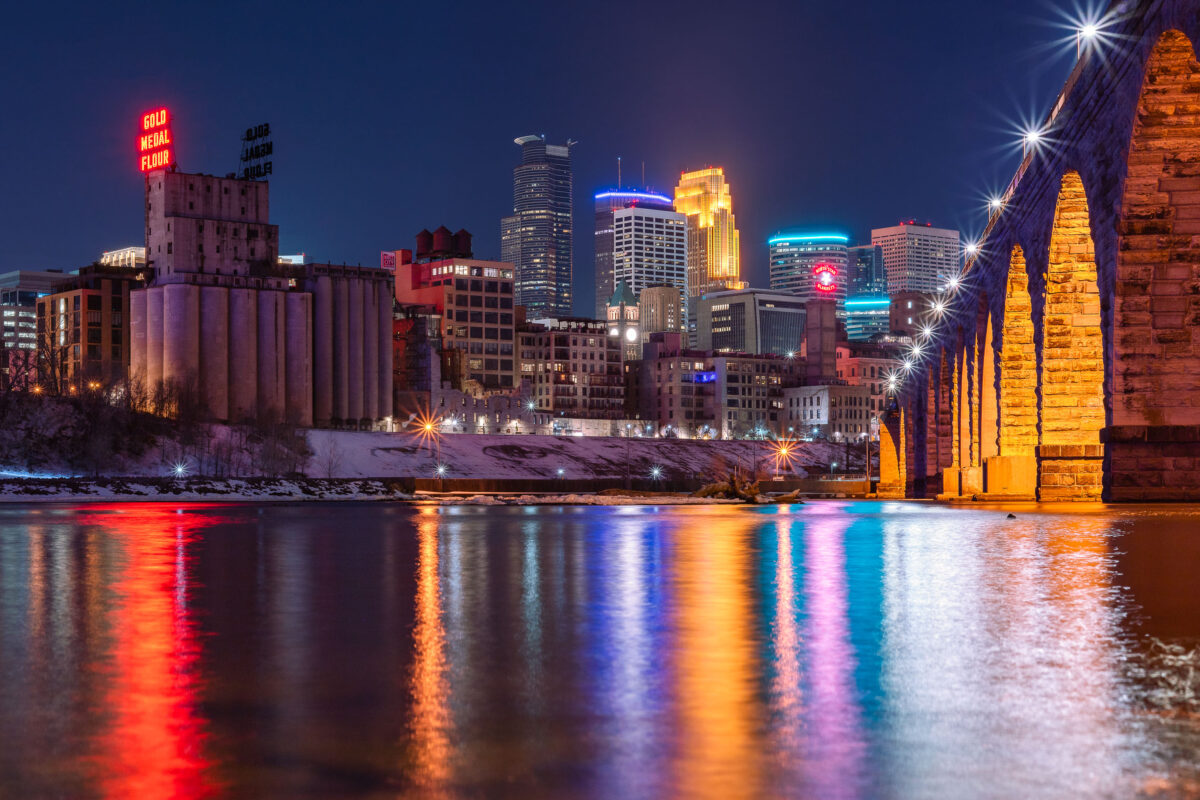
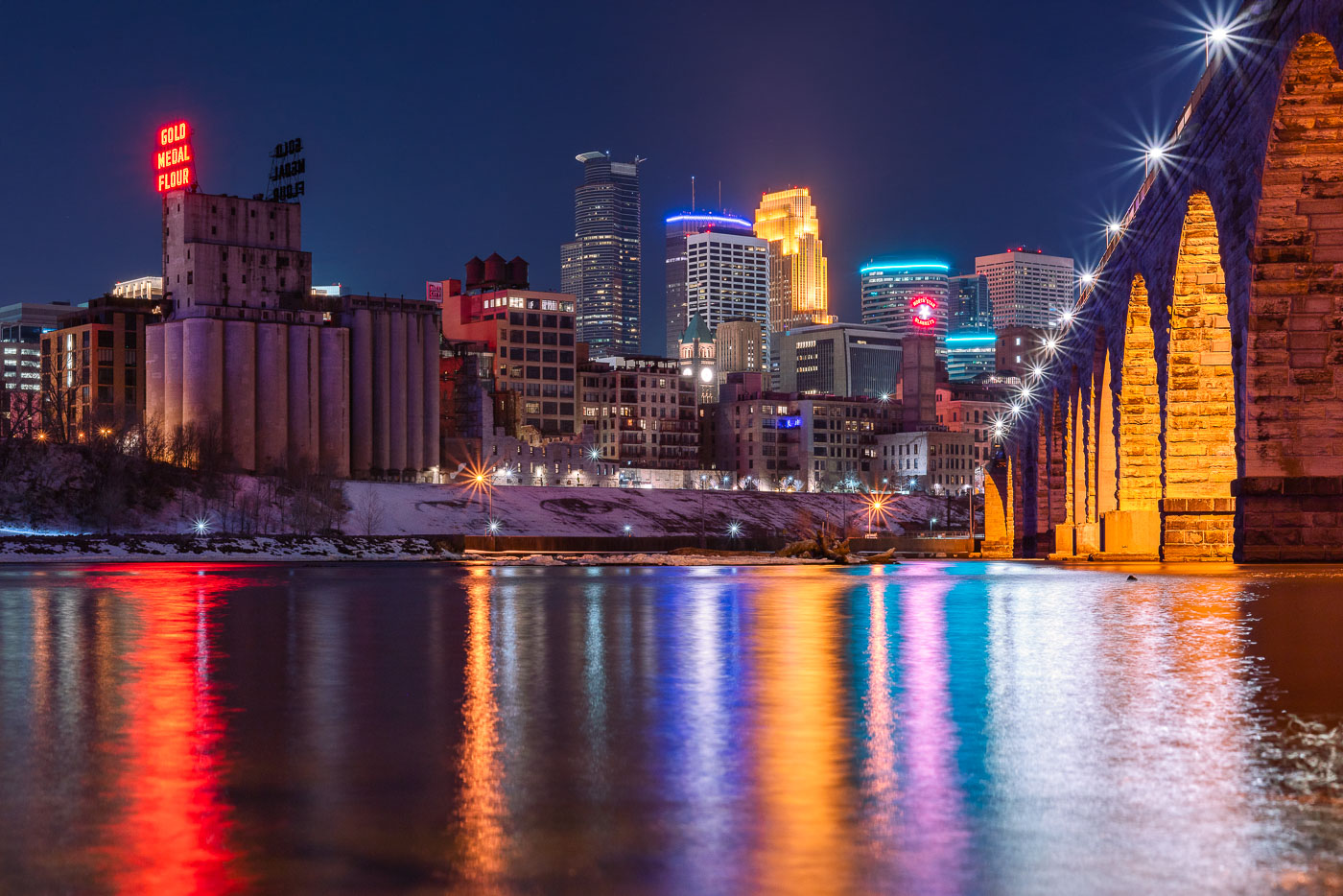
Stone Arch Bridge and Minneapolis skyline at night along the Mississippi River, with Gold Medal Flour mill sign visible.
The Gold Medal Flour sign sits atop the old Washburn-Crosby mill complex, a reminder of Minneapolis's decades as the flour-milling capital of the world. Washburn-Crosby, which later became General Mills, first put up the sign in 1910, and it has been relit and maintained as a fixture of the skyline ever since. The Stone Arch Bridge crosses the Mississippi just downstream, built in 1883 for the St. Paul, Minneapolis and Manitoba Railway to carry trains into the city's rail yards. Its limestone and granite piers were designed to withstand river ice, and the bridge now carries only pedestrians and cyclists between the riverfront and St. Anthony Main.

Gold Medal Flour Sign Above the Minneapolis Riverfront
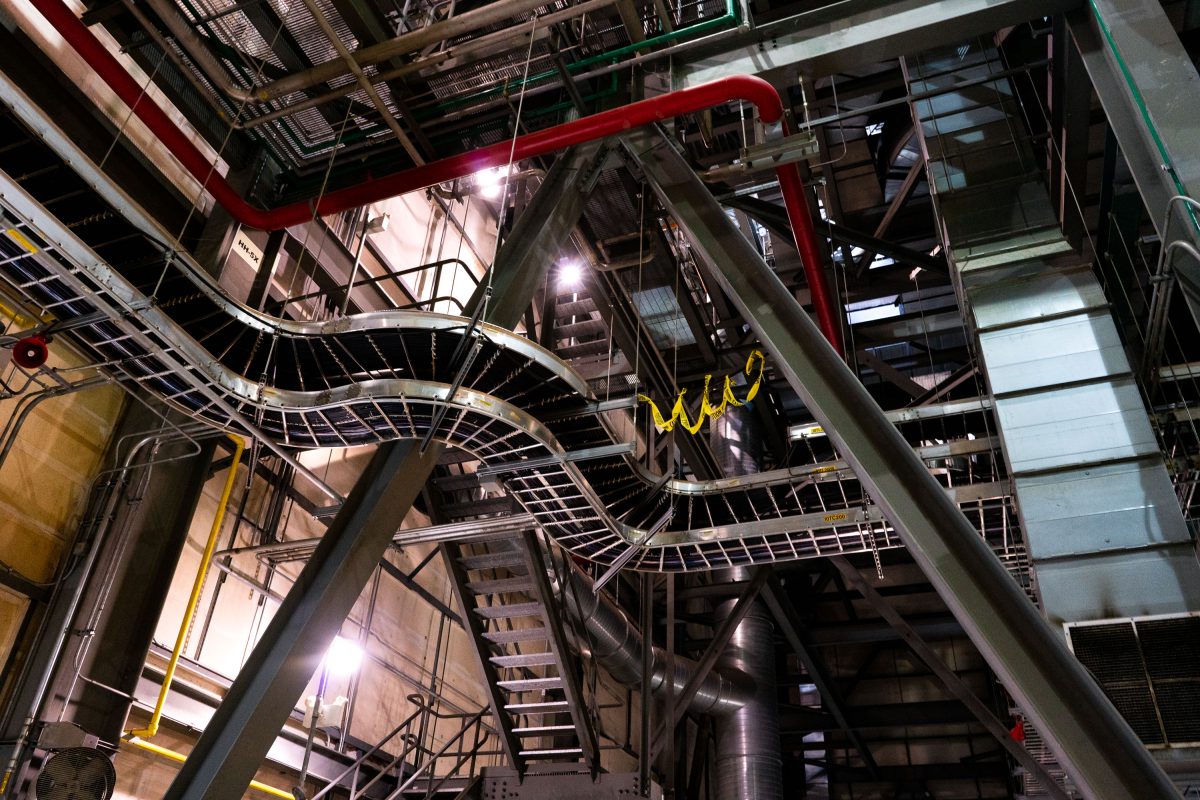
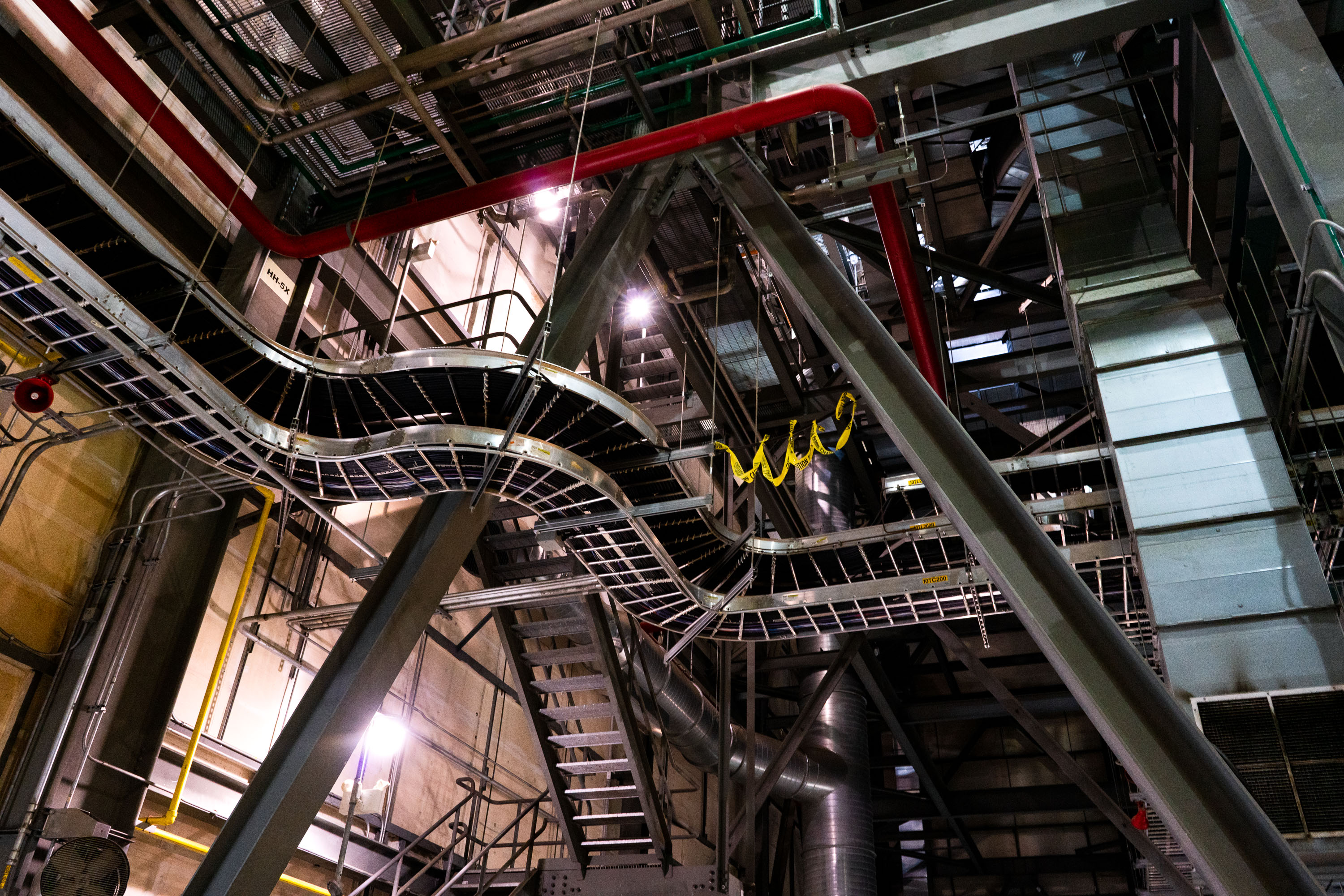
Steel catwalks, pipes, and ductwork inside Riverside Generating Station, an Xcel Energy power plant in Minneapolis.
Riverside Generating Station is an Xcel Energy power plant along the Mississippi River in Minneapolis. Built in the early twentieth century as a coal-fired plant, it was later converted to burn natural gas.

Catwalks and Piping Inside Riverside Generating Station
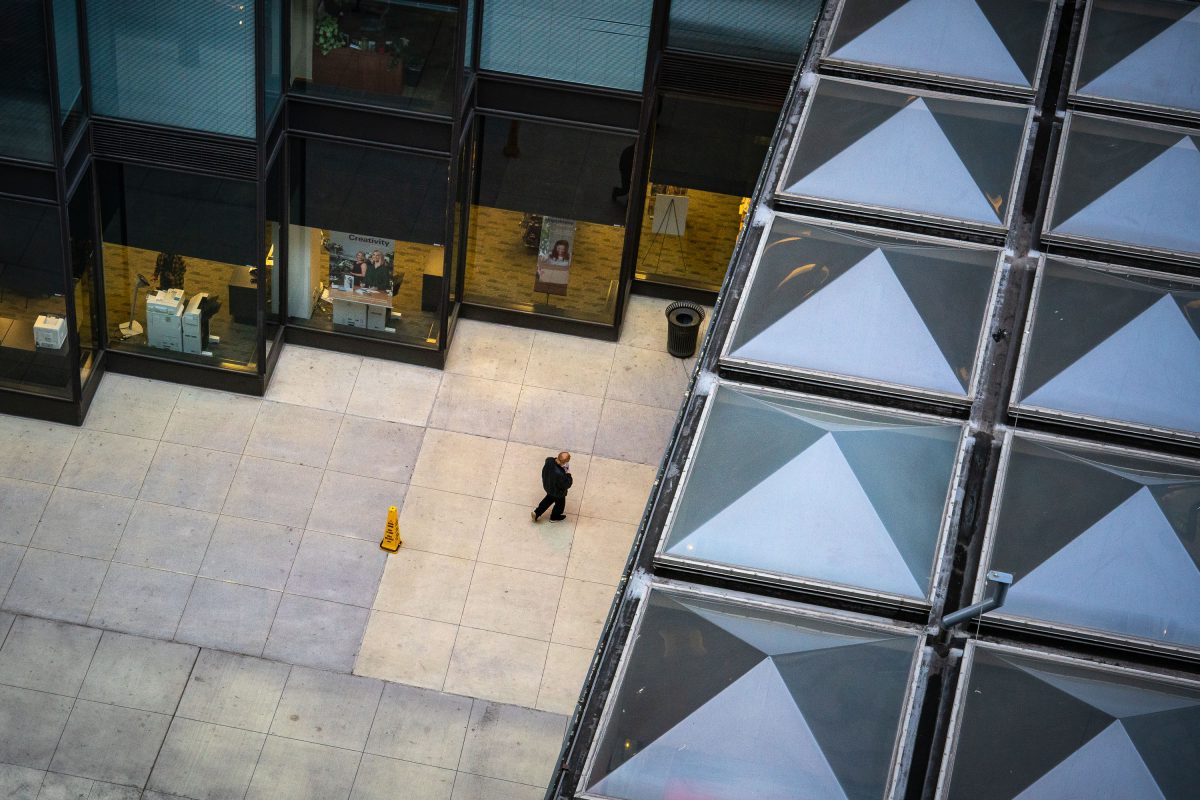
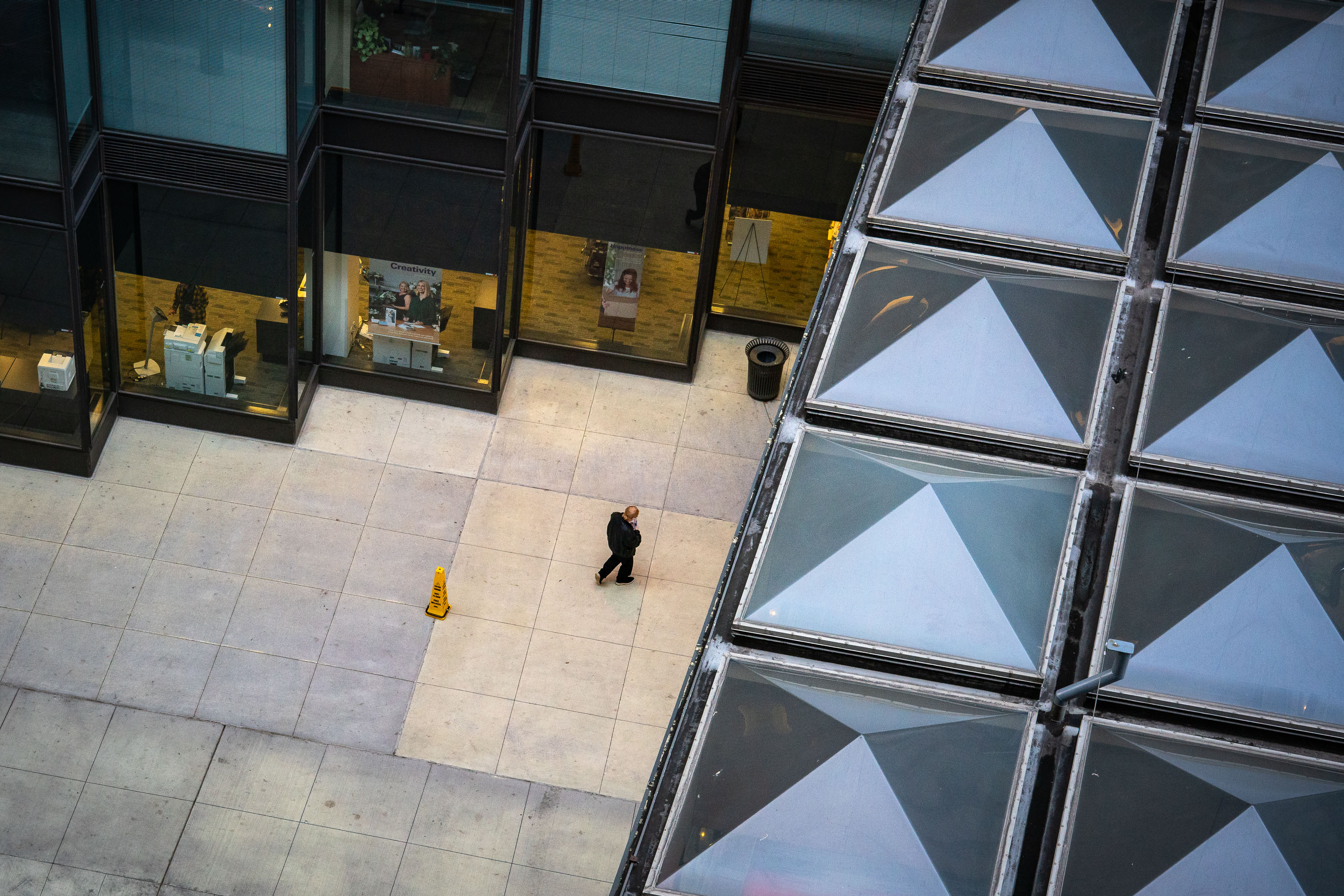
View from above the IDS Center Skyway
A man walks outside the IDS Center in Downtown Minneapolis. Seen from above the skyway.

Man walks outside the IDS Center, Minneapolis

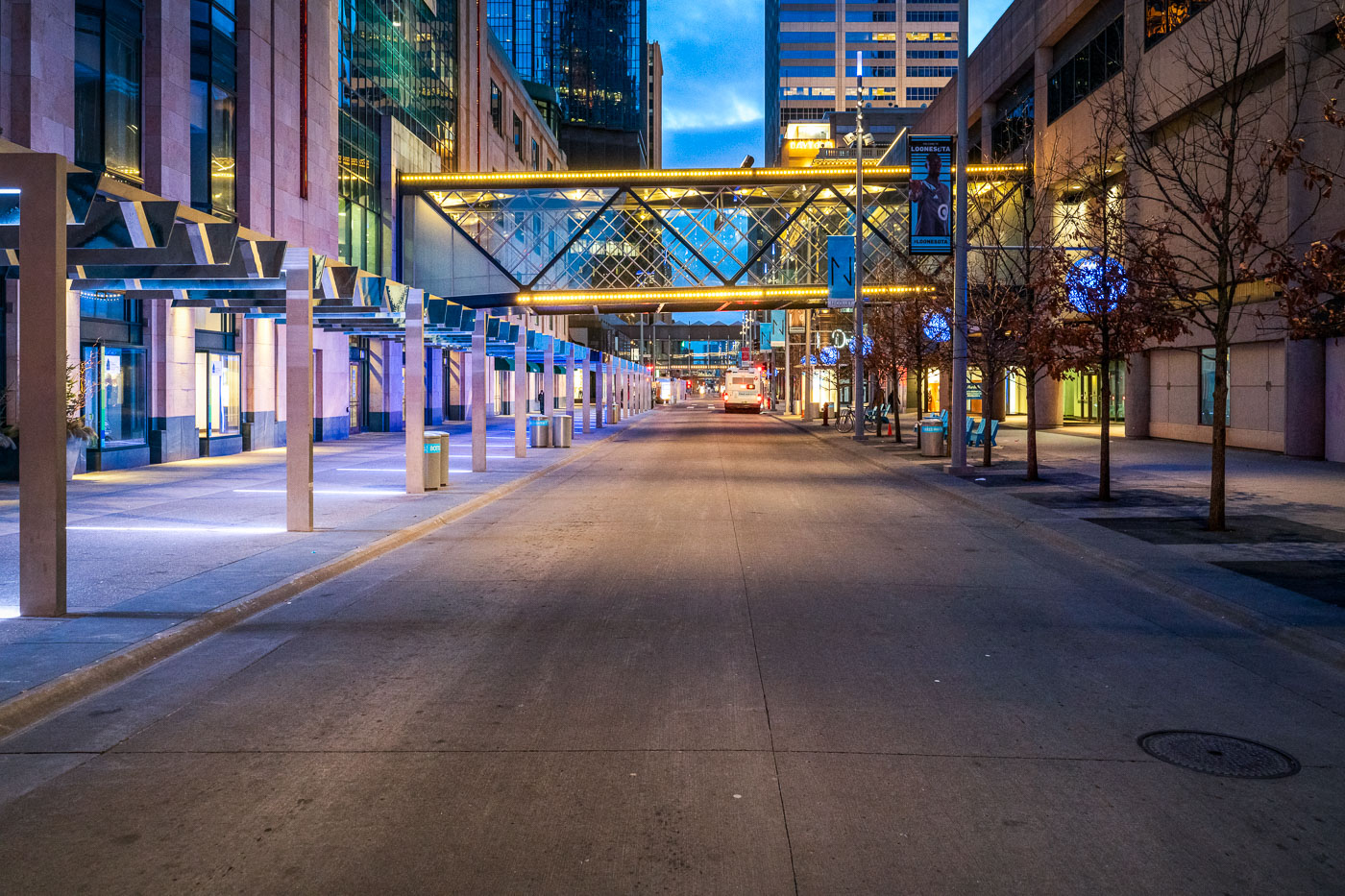
Empty Nicollet Mall pedestrian street in downtown Minneapolis at dusk during COVID-19 pandemic shutdowns.
Nicollet Mall is downtown Minneapolis's mile-long pedestrian and transit corridor, running between Washington Avenue and Grant Street. Cars have been barred from the mall since it opened in 1967, leaving the roadway to buses, taxis, and foot traffic. A $50 million redesign led by James Corner Field Operations, the firm behind New York's High Line, reopened the corridor in 2017 with wider sidewalks, new lighting, and updated bus shelters. Skyways link many of the office towers and retail buildings along the mall, letting workers move between blocks without going outside. In March 2020, Minnesota's stay-at-home order emptied the corridor of the office workers and shoppers who normally fill it on weekdays.

Nicollet Mall at Dusk During Minneapolis’s COVID-19 Shutdown

Hennepin Healthcare outpatient building illuminated at dusk in Minneapolis, Minnesota.
Hennepin Healthcare, formerly known as Hennepin County Medical Center (HCMC), is Minnesota's largest safety-net hospital system, serving patients regardless of ability to pay. The system opened this outpatient specialty center in downtown Minneapolis in 2018 to consolidate clinic services previously spread across multiple buildings. Hennepin Healthcare operates as a public teaching hospital affiliated with the University of Minnesota Medical School, training resident physicians alongside its clinical work. The system's Level I Trauma Center designation makes it one of the region's primary referral points for critical emergency care.

Hennepin Healthcare Outpatient Building, Minneapolis

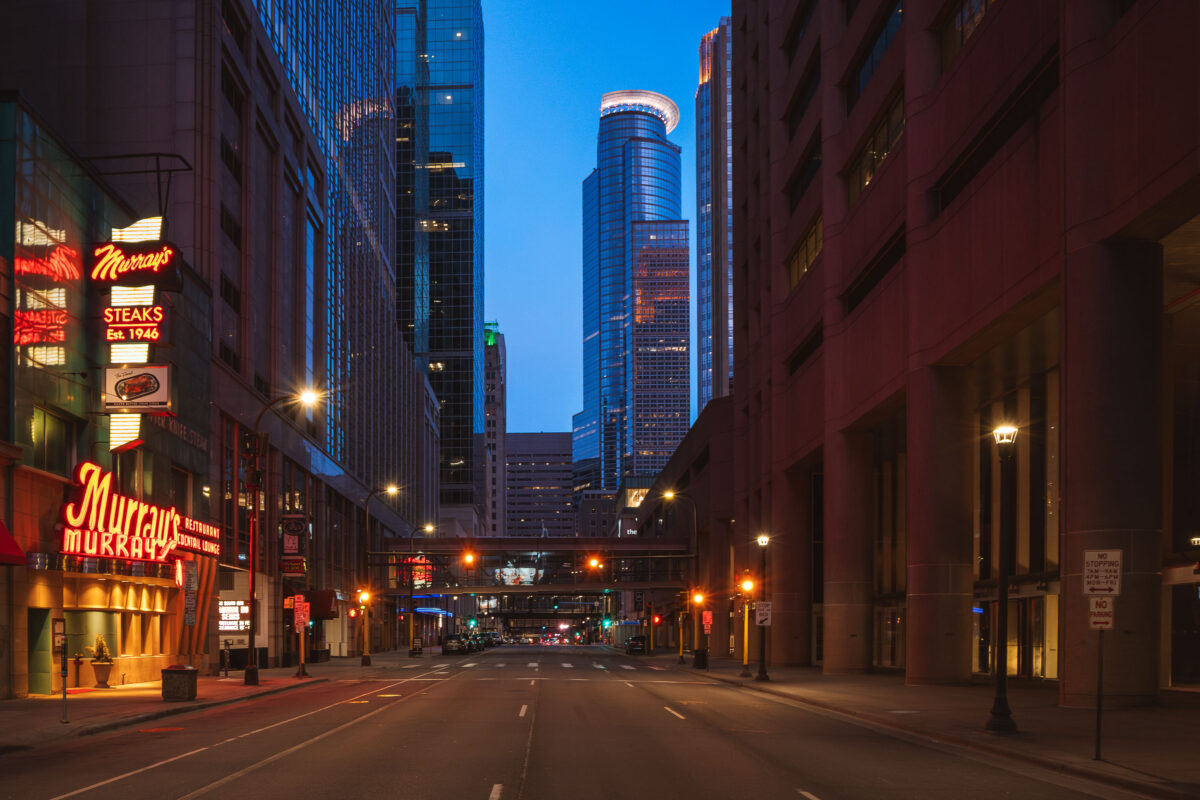
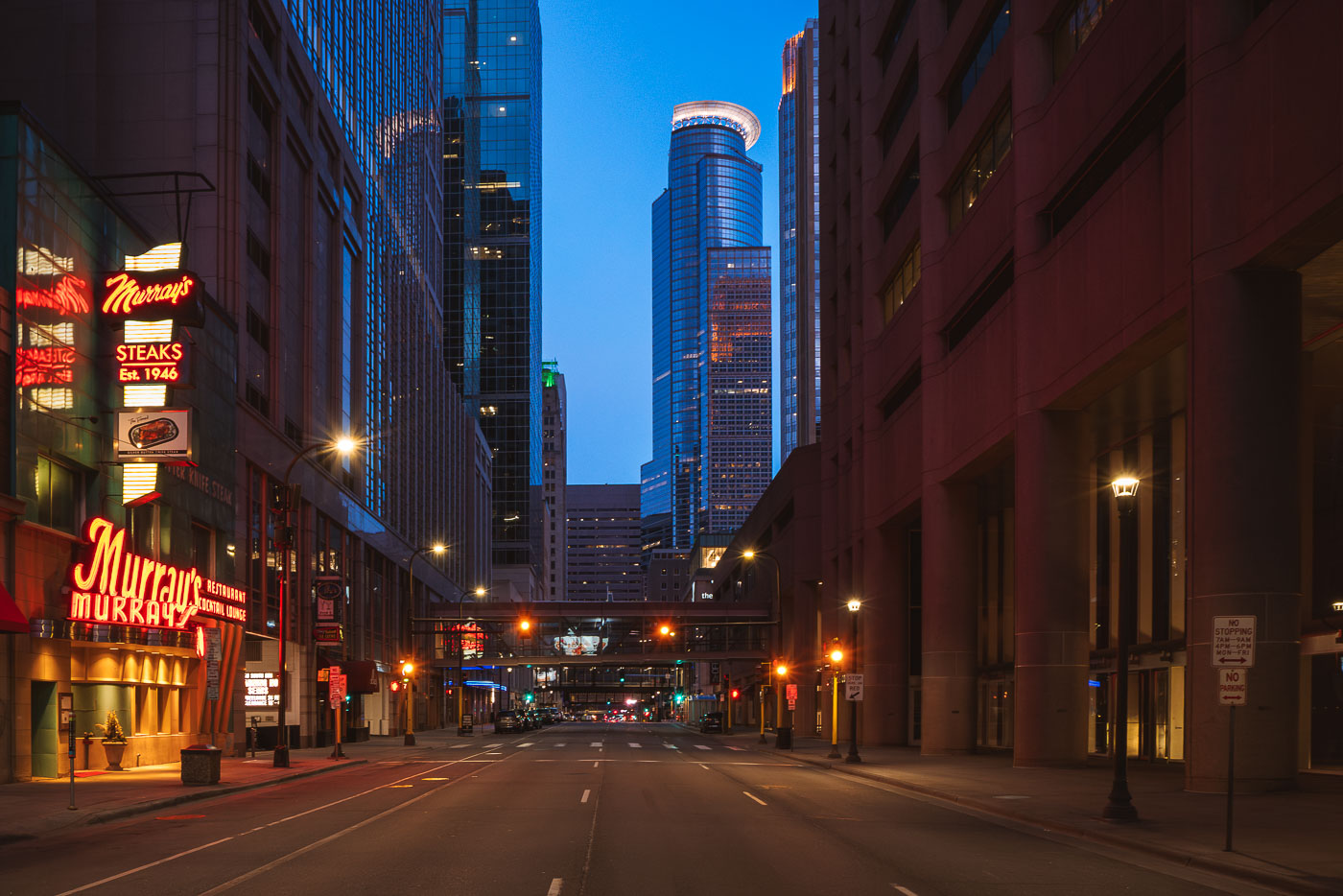
Murray's Steakhouse, Minneapolis Blue Hour
A north–south view through downtown Minneapolis during early evening, with illuminated office towers forming a dense street corridor and minimal traffic on the roadway below. The cylindrical crown of the IDS Center, completed in 1973, anchors the skyline in the distance as the city’s tallest building and a defining element of its modern profile. In the foreground, the neon signage of Murray’s, a Minneapolis institution since 1946, adds a warm counterpoint to the cooler glass-and-steel architecture surrounding Nicollet Mall.

Murray’s Steakhouse, Minneapolis Blue Hour

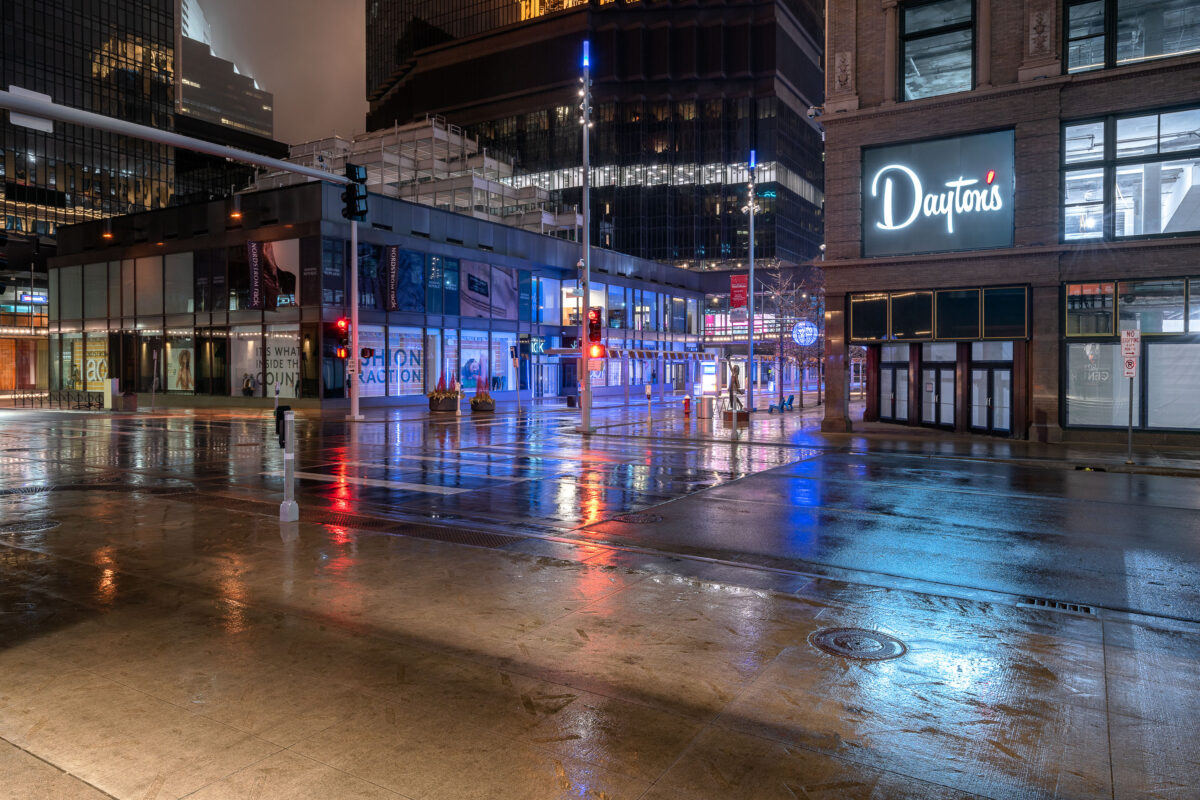
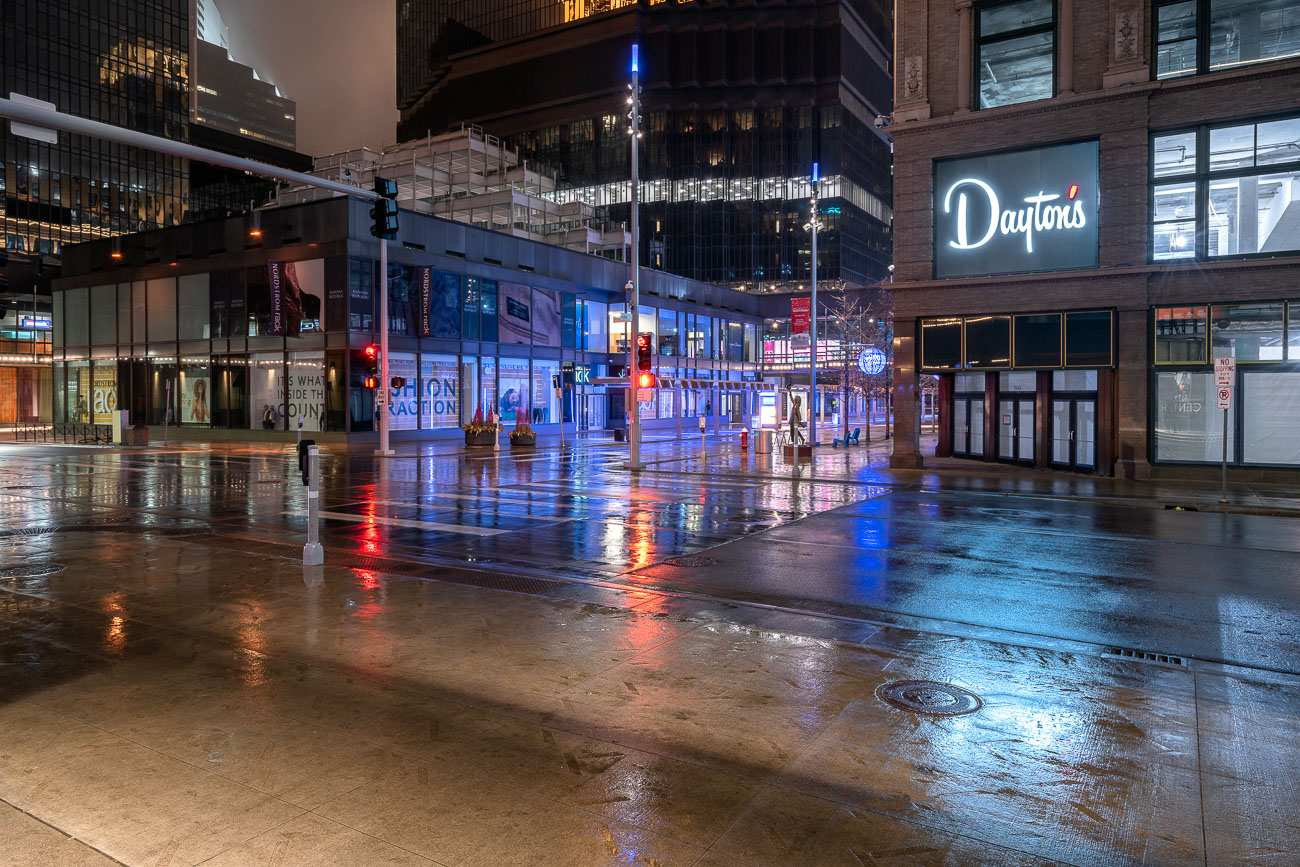
Daytons and IDS Center on Nicollet Mall in the rain
The Dayton's Project and the IDS Center stand on Nicollet Mall in Minneapolis during the early stages of the COVID-19 pandemic. The Dayton's building, a historic landmark in the city's retail landscape, was a prominent fixture on the mall for decades.

Dayton’s and IDS Center, Nicollet Mall, Minneapolis, Early COVID-19

Chairs on Nicollet Mall during a rainy early COVID19 night
Nicollet Mall in Minneapolis is seen on a rainy night during the early stages of the COVID-19 pandemic.

Nicollet Mall, Minneapolis: Rainy Night During COVID-19

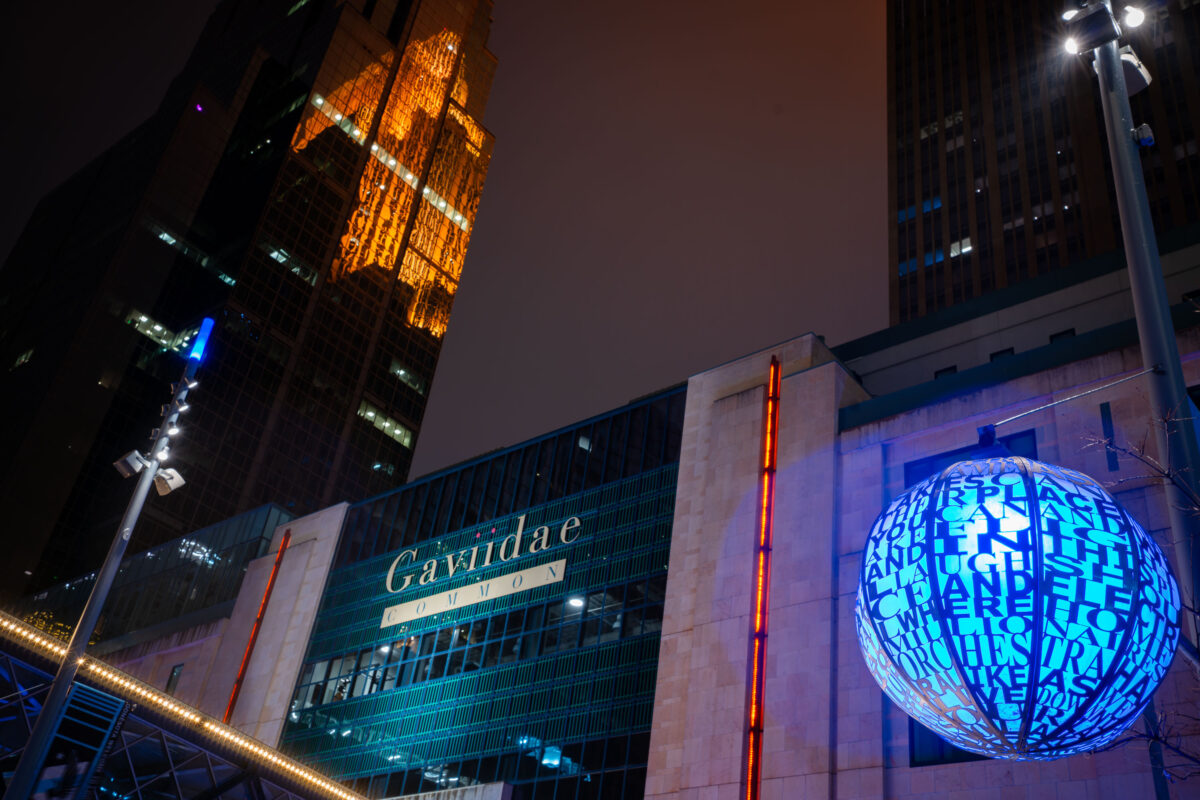
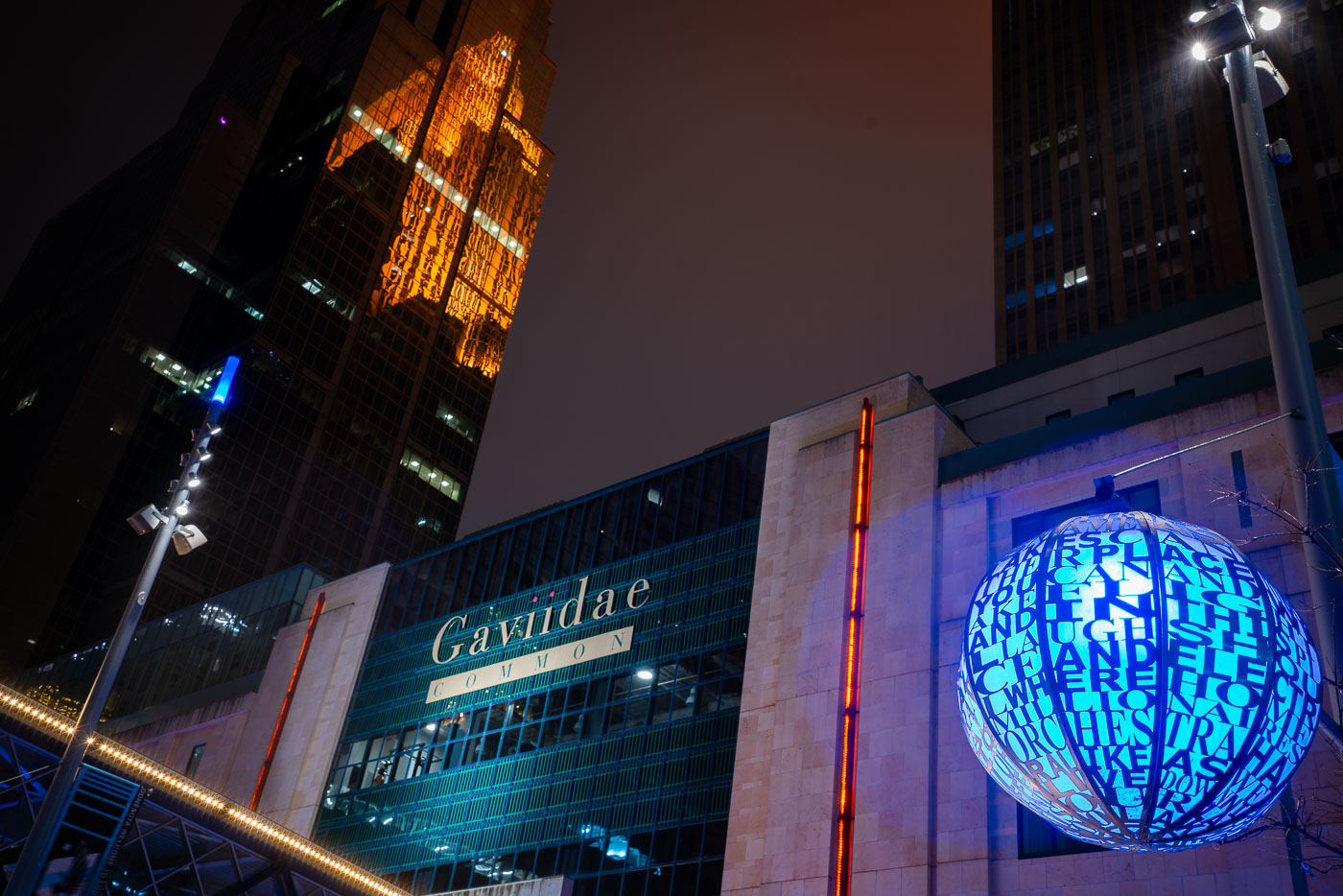
Gaviidae Common and Westin Reflection on Nicollet Mall
Downtown Minneapolis after dark, with the Gaviidae Common retail and office complex illuminated along Nicollet Mall. The metallic blue spherical public art installation in the foreground—inscribed with words referencing music, light, and community—adds a cultural element to the urban corridor. Reflected dramatically in the golden glass façade of the Westin building behind it is the historic Foshay Tower, one of Minneapolis’s earliest skyscrapers dating back to 1929. Today, Nicollet Mall serves as the city’s primary pedestrian and transit thoroughfare, blending modern commercial redevelopment, historic preservation, and public art into a central civic space.

Gaviidae Common and Westin Reflection on Nicollet Mall

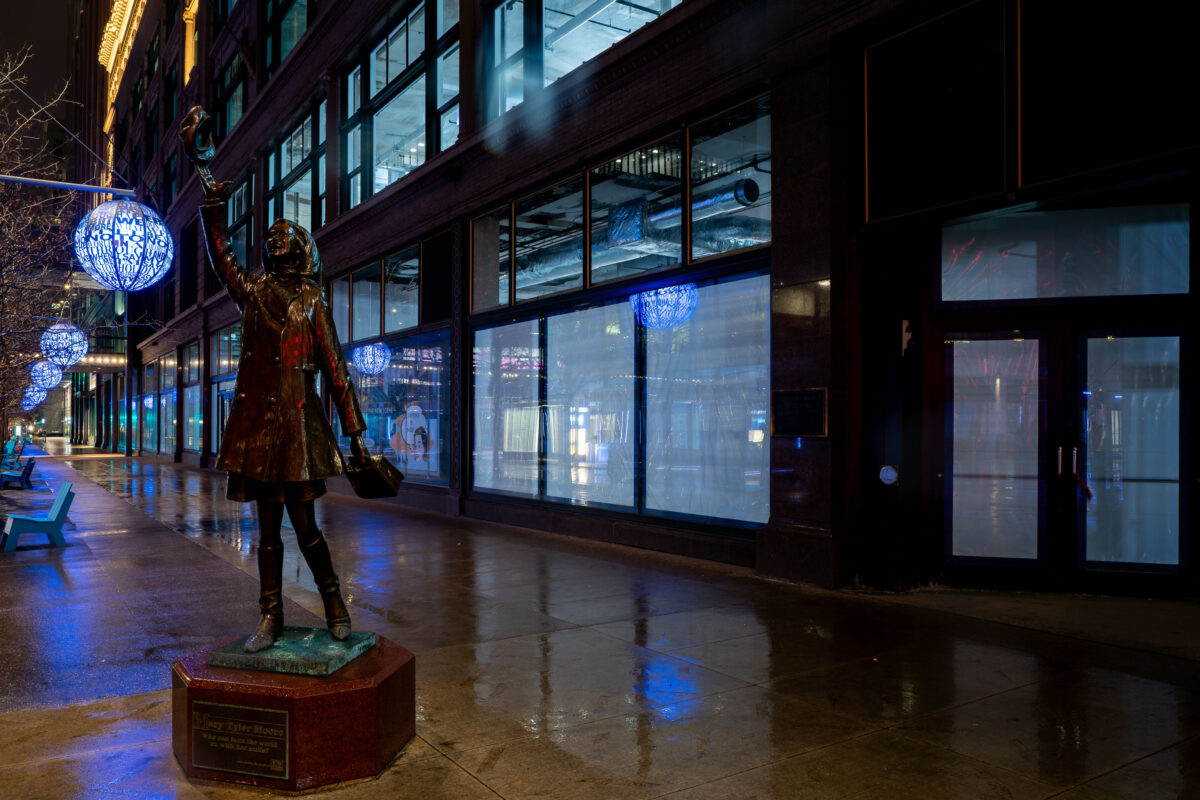
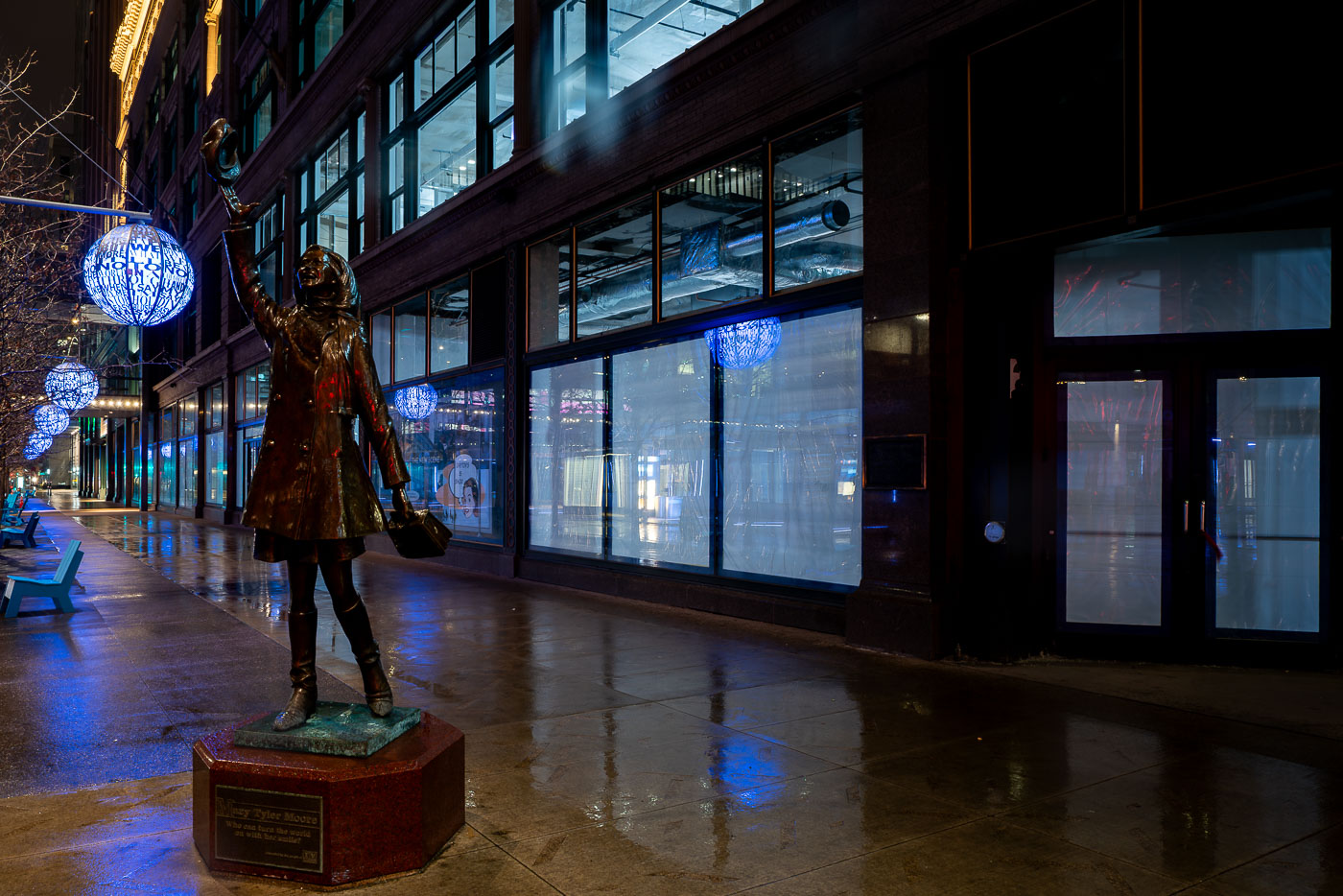
Mary Tyler Moore Statue on an Empty Nicollet Mall
The iconic bronze statue of Mary Tyler Moore along Nicollet Mall in downtown Minneapolis, depicting the memorable hat-tossing moment from the opening of The Mary Tyler Moore Show, which first aired in 1970 and helped cement Minneapolis in television history. Installed in 2002, the statue symbolizes the city’s cultural association with the show’s themes of independence and optimism. At the time of this photograph, Nicollet Mall—normally a busy pedestrian and transit corridor—appears unusually empty, reflecting the early days of COVID-19 shutdowns that drastically reduced public presence in city centers. Blue public art lanterns, added during street improvements completed in 2017, line the renovated streetscape, emphasizing Nicollet Mall’s evolution as both a commercial and cultural landmark.

Mary Tyler Moore Statue on an Empty Nicollet Mall

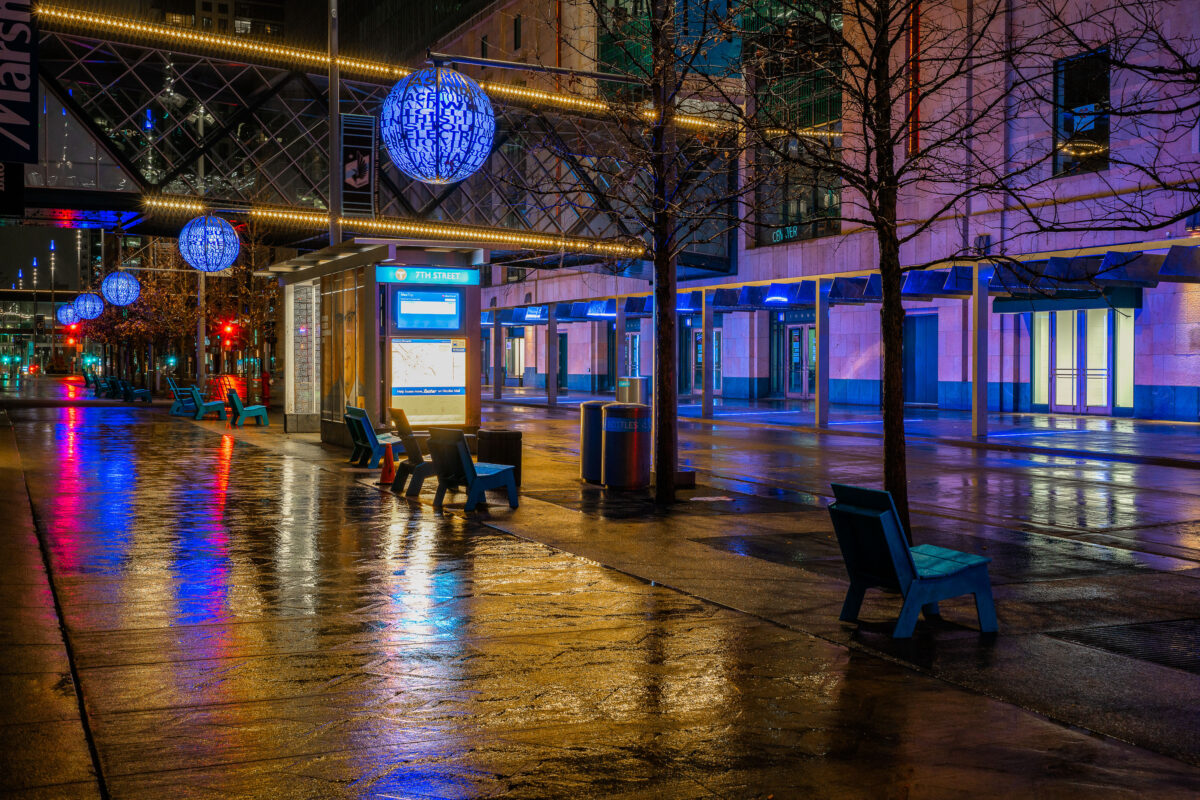
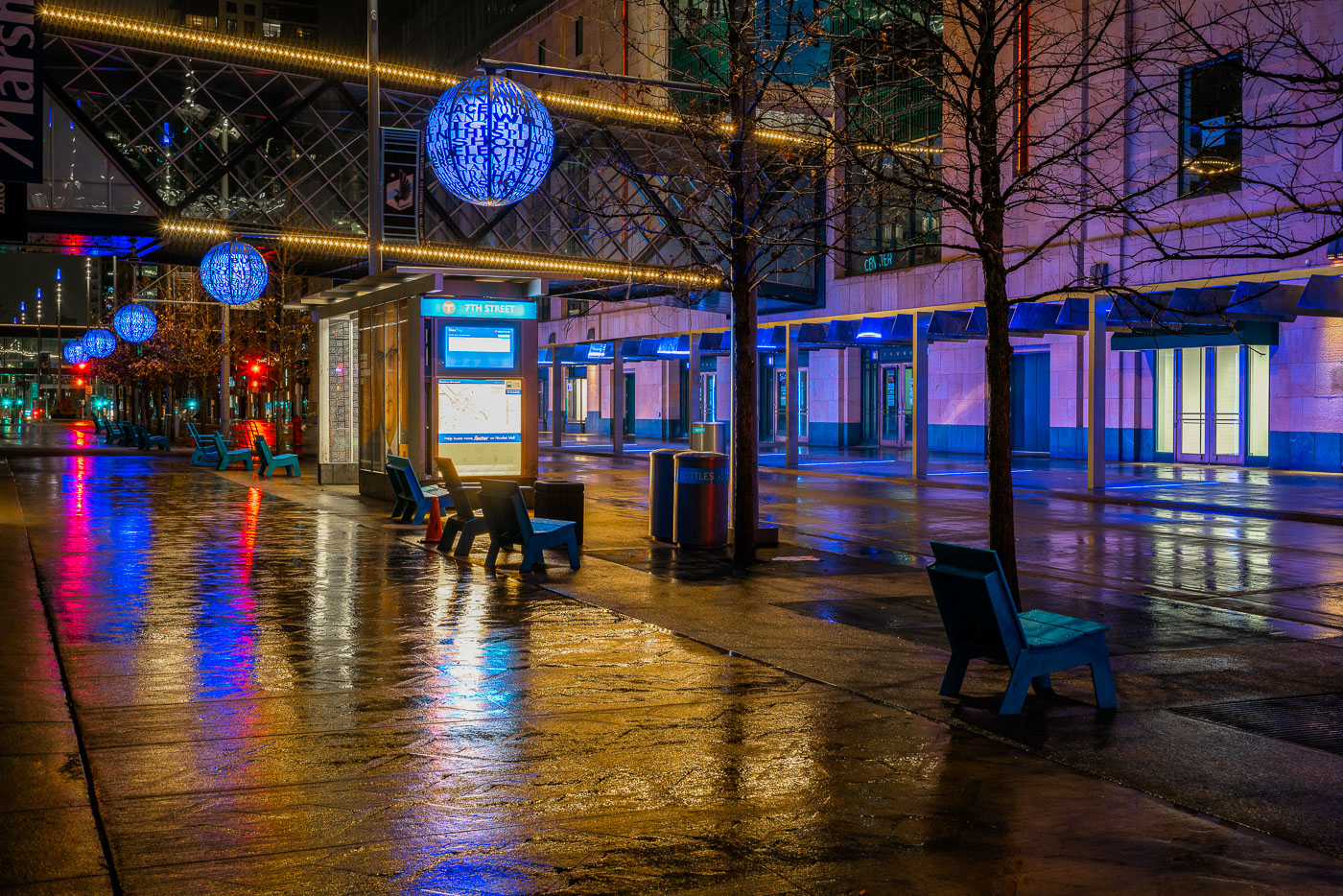
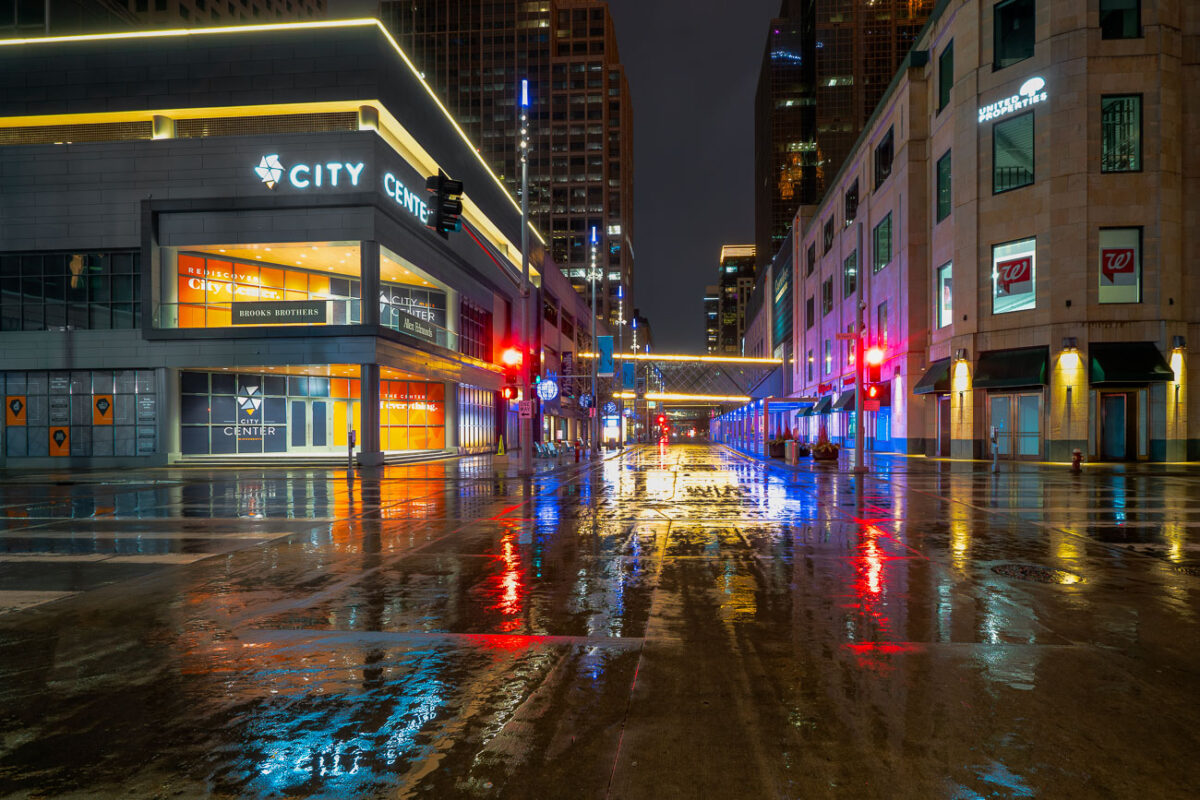
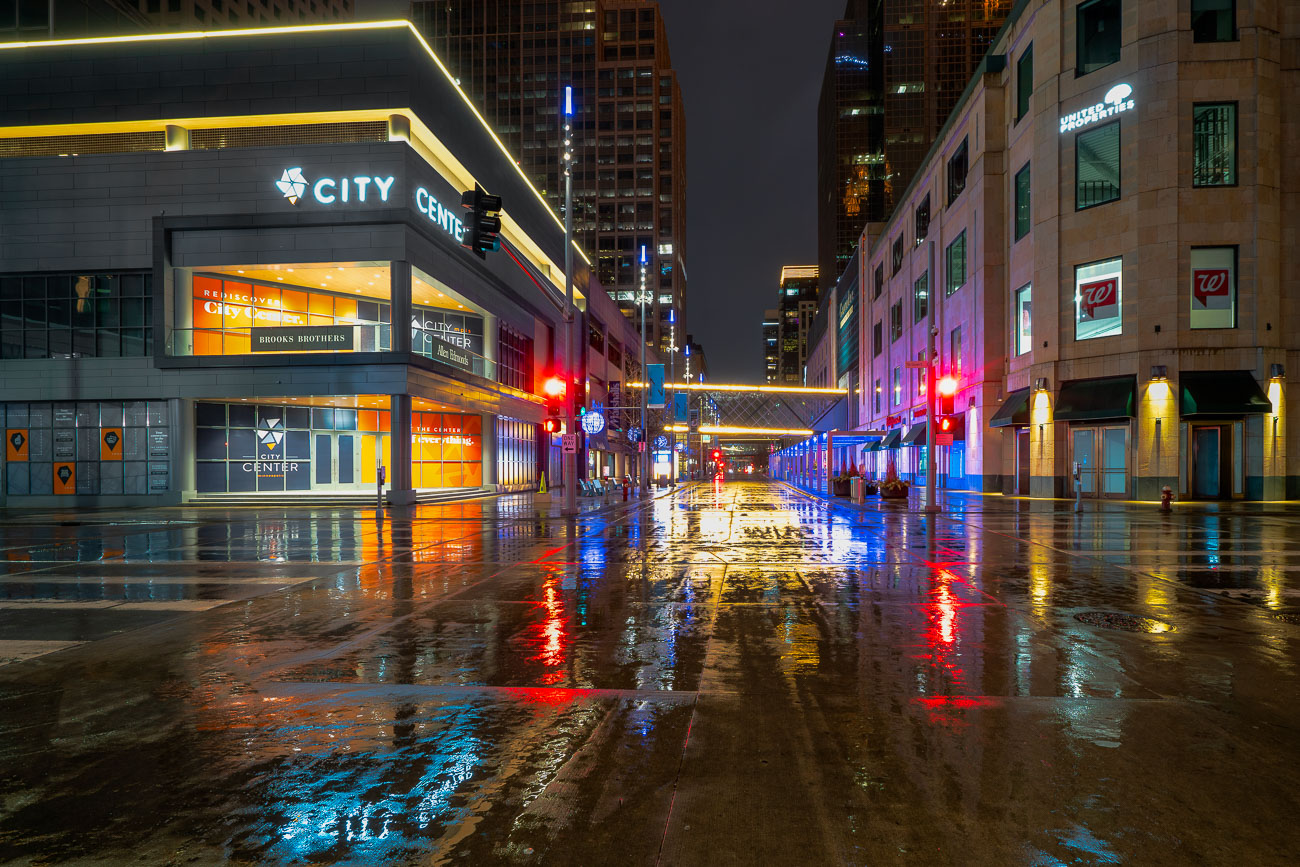
Rainy night outside CIty Center on Nicolelt Mall in Minneapolis.
Nicollet Mall in Downtown Minneapolis is reflected in the wet pavement on a rainy night in early 2020, during the initial phase of the COVID-19 pandemic.

Rainy Night on Nicollet Mall, Downtown Minneapolis, Early COVID-19

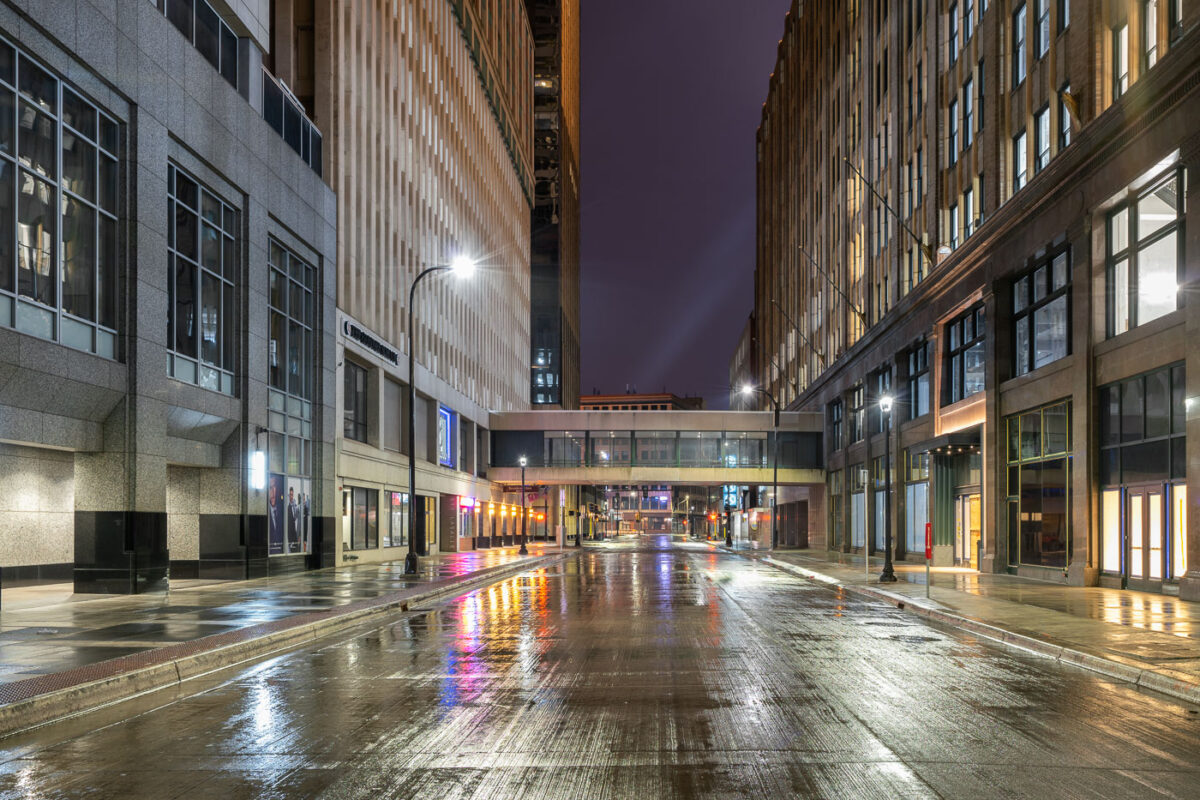
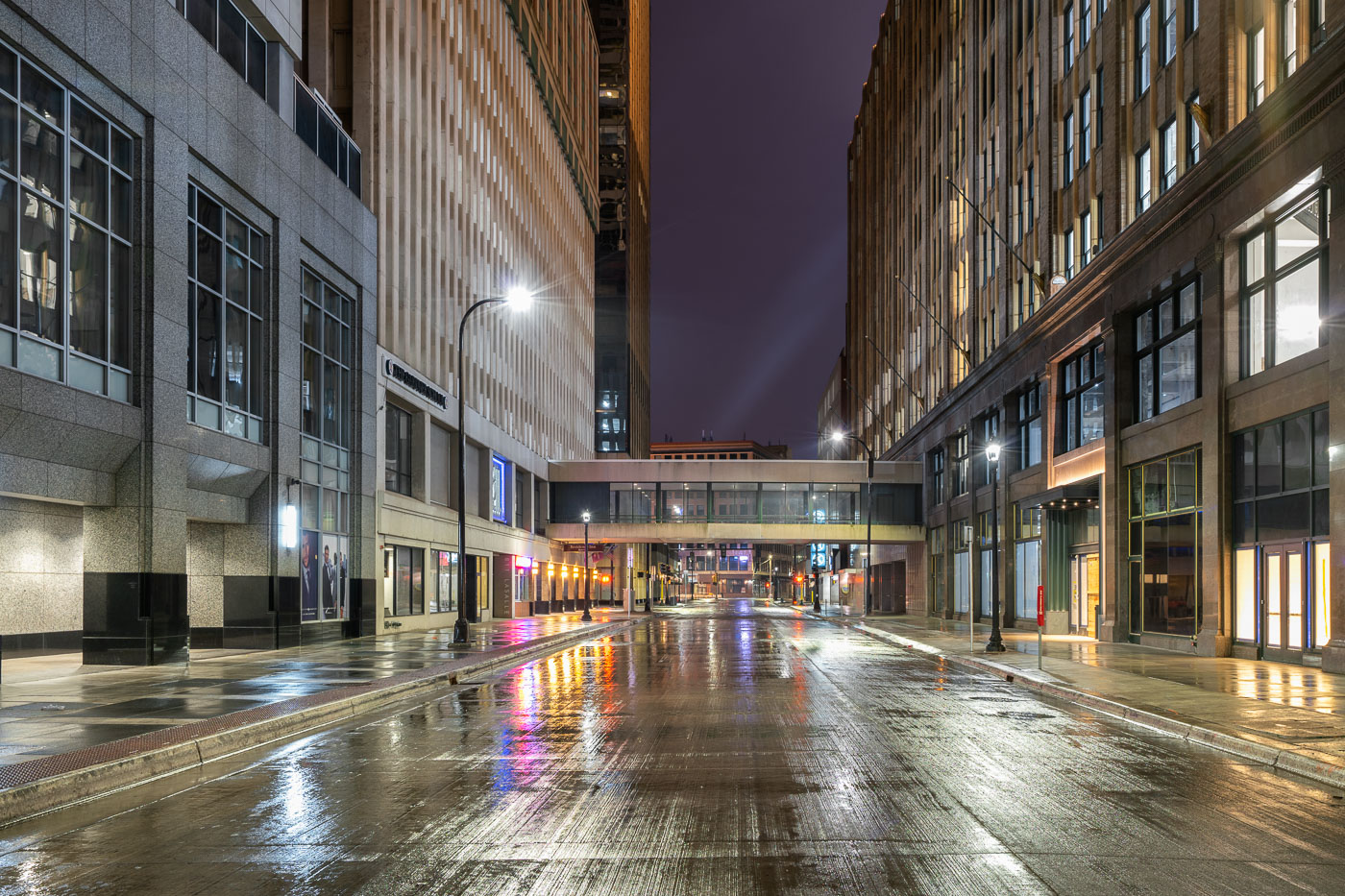
Looking down S 8th Street during COVID19 on rainy night
South 8th Street in downtown Minneapolis is seen on March 22, 2020, during the early stages of the COVID-19 pandemic. The street, typically bustling with activity, are empty.

Downtown Minneapolis S 8th St During COVID-19 Pandemic

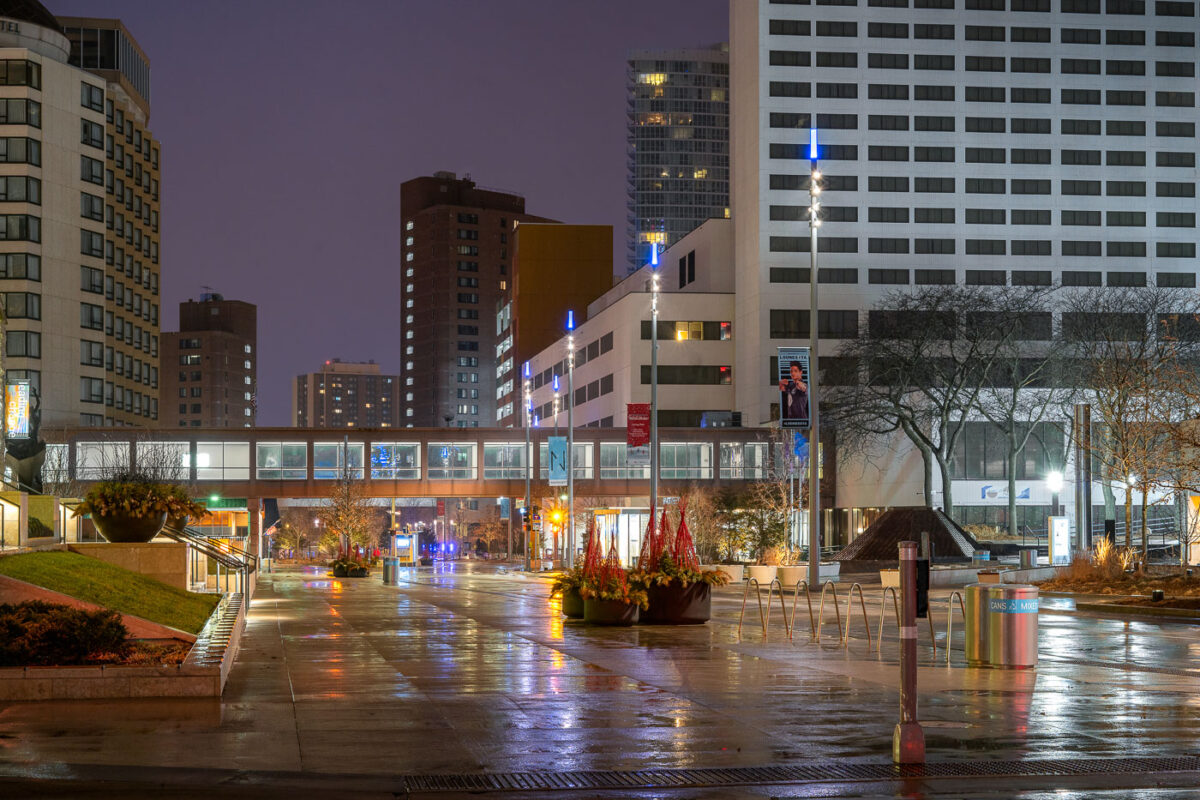
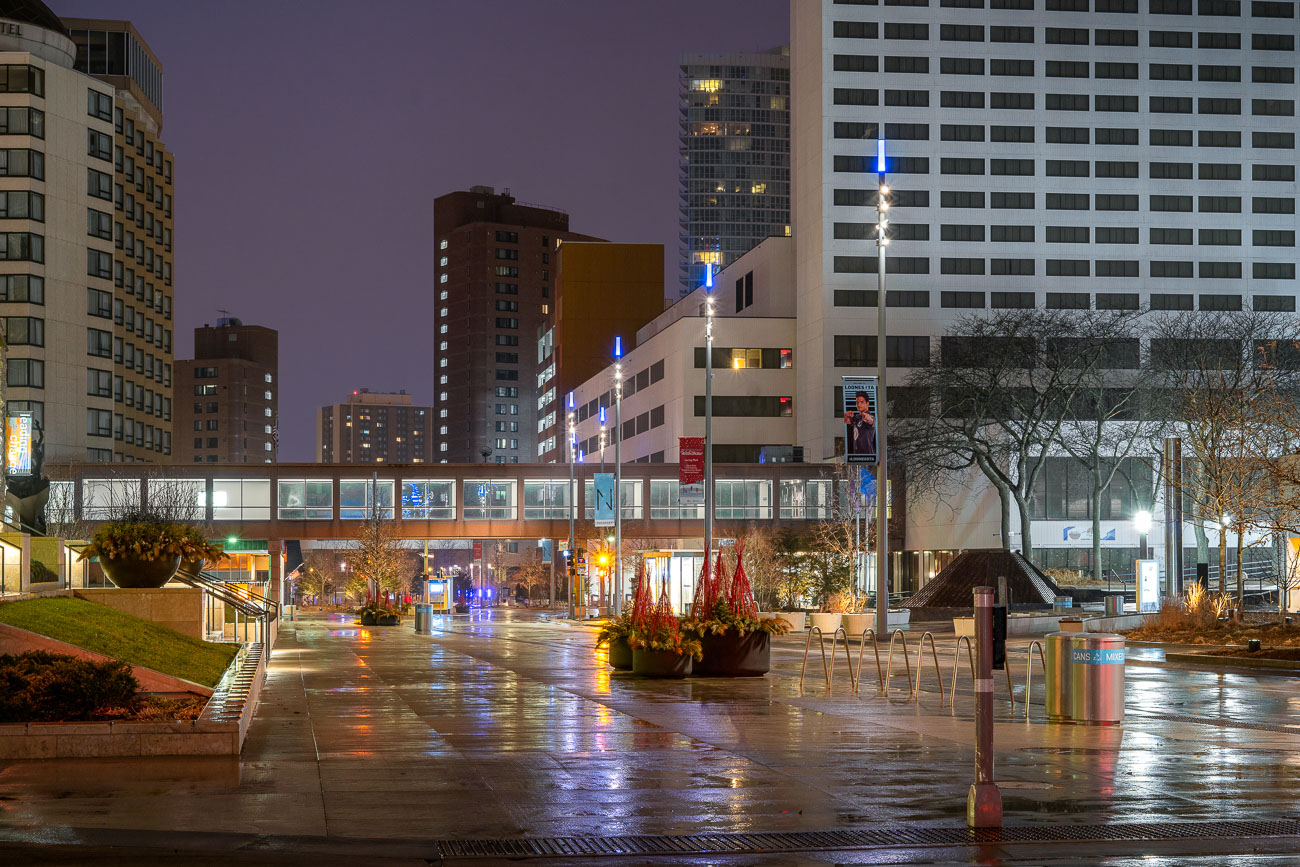
Wet Nicollet Mall pedestrian plaza in downtown Minneapolis at dusk with high-rise buildings and sparse foot traffic.
Nicollet Mall is downtown Minneapolis's main pedestrian and transit corridor, running roughly twelve blocks between Washington Avenue and Grant Street. The city closed it to general traffic in 1967, and a $50 million redesign led by James Corner Field Operations reopened it in 2017 with wider sidewalks, new lighting, and dedicated space for buses and cyclists. The Hyatt Regency Minneapolis has anchored the corridor since 1973, standing near the skyway network that links downtown's office towers and hotels. In March 2020, the mall's usual foot traffic all but disappeared as Minnesota's stay-at-home order took hold during the early weeks of the COVID-19 pandemic.

Nicollet Mall Deserted on a Rainy Night During COVID-19

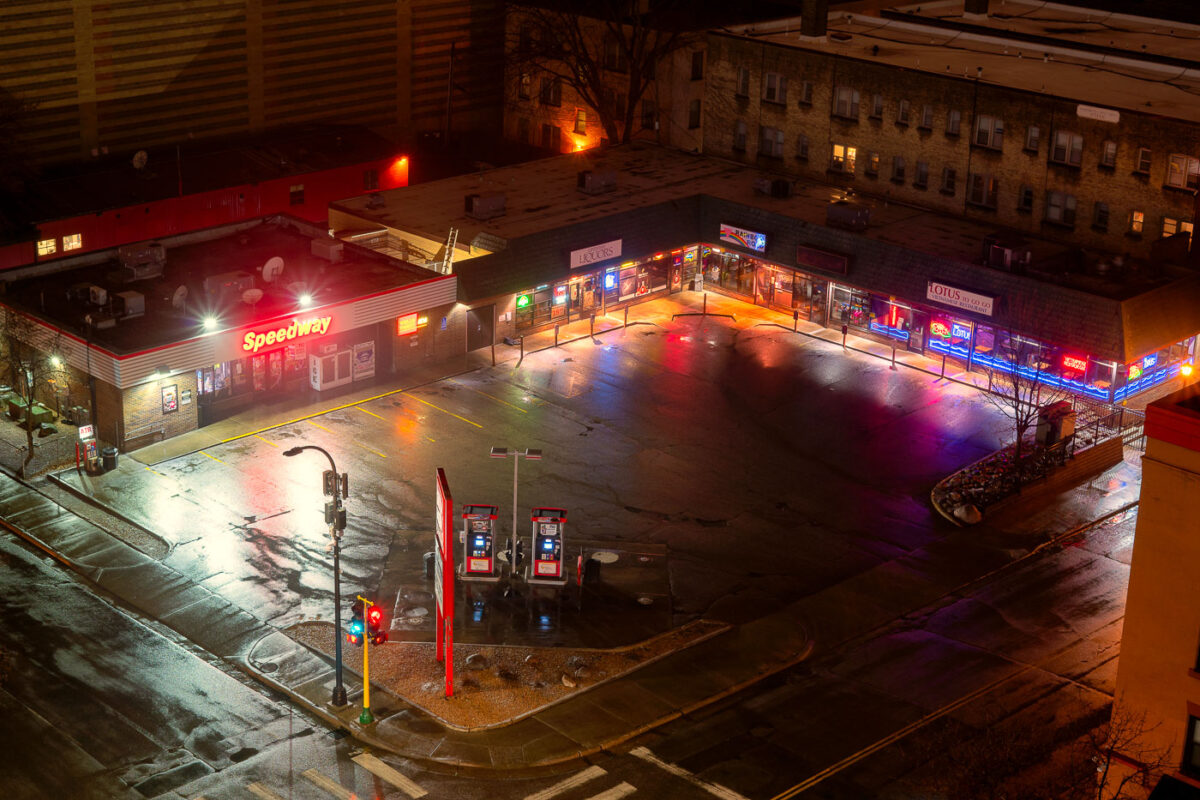
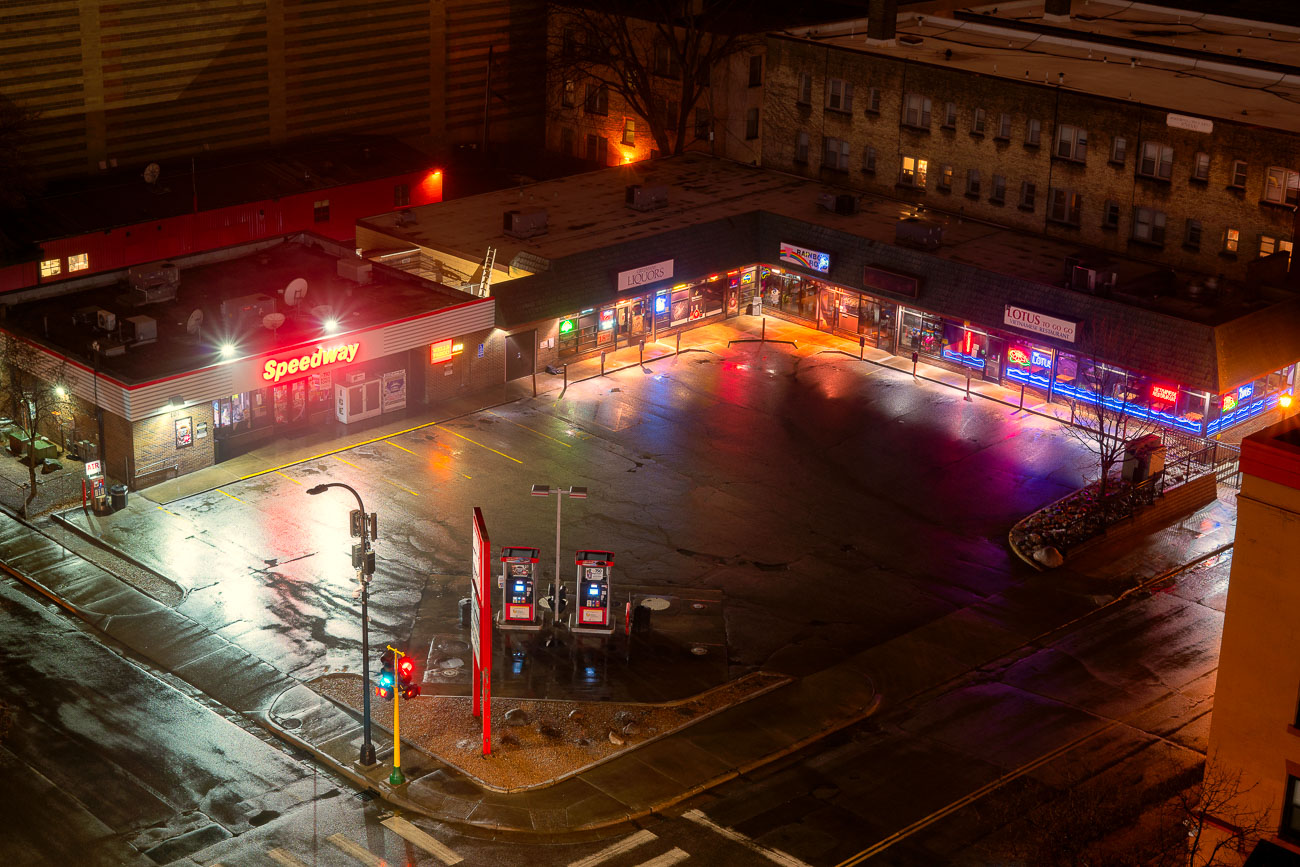
Speedway gas station and strip mall in Loring Park, Minneapolis, empty at night during COVID-19 pandemic.
Speedway operates this gas station and convenience store at the edge of Loring Park, one of downtown Minneapolis's oldest residential neighborhoods, platted around a park dating to 1883. The photo was taken March 23, 2020, days before Minnesota's statewide stay-at-home order took effect as the first wave of pandemic restrictions spread through the city. Loring Park sits just west of downtown, bordered by Interstate 94 and long connected to the commercial strip along Hennepin Avenue. The adjoining strip mall houses a liquor store and several small retailers typical of that stretch of the neighborhood.

Speedway Station in Loring Park During the COVID-19 Shutdown
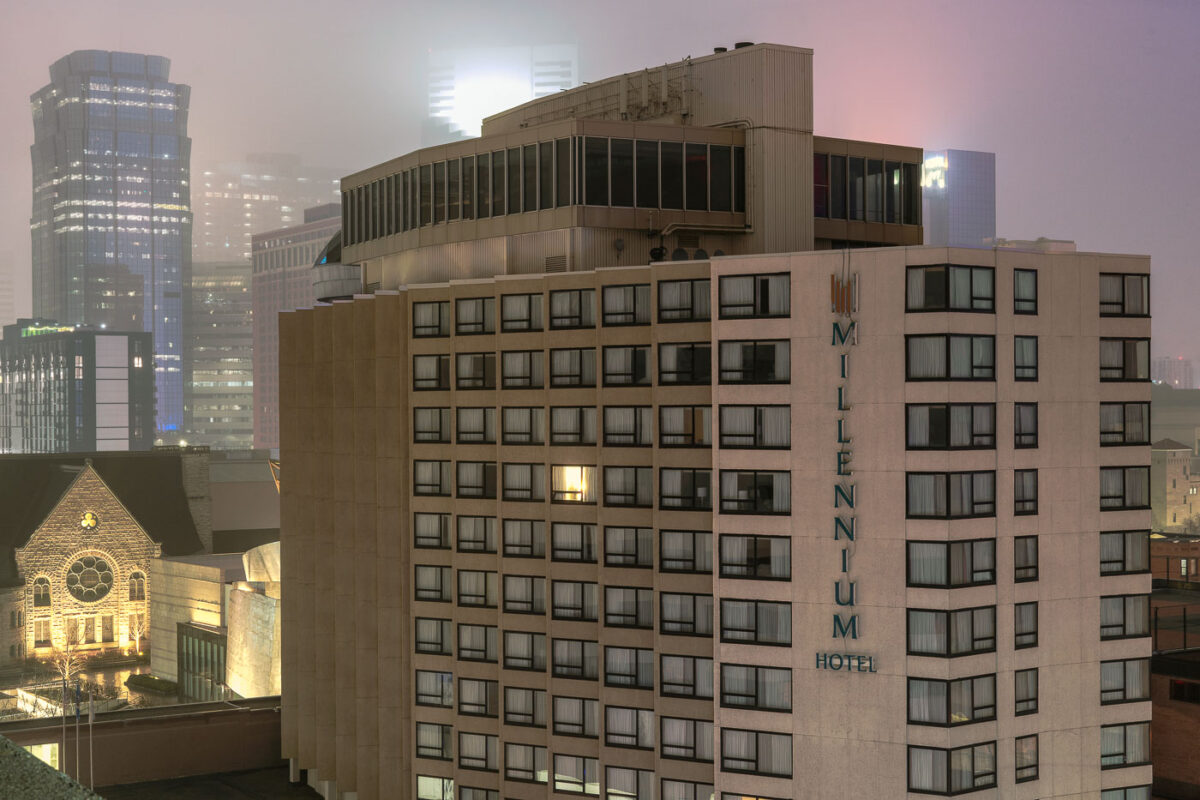
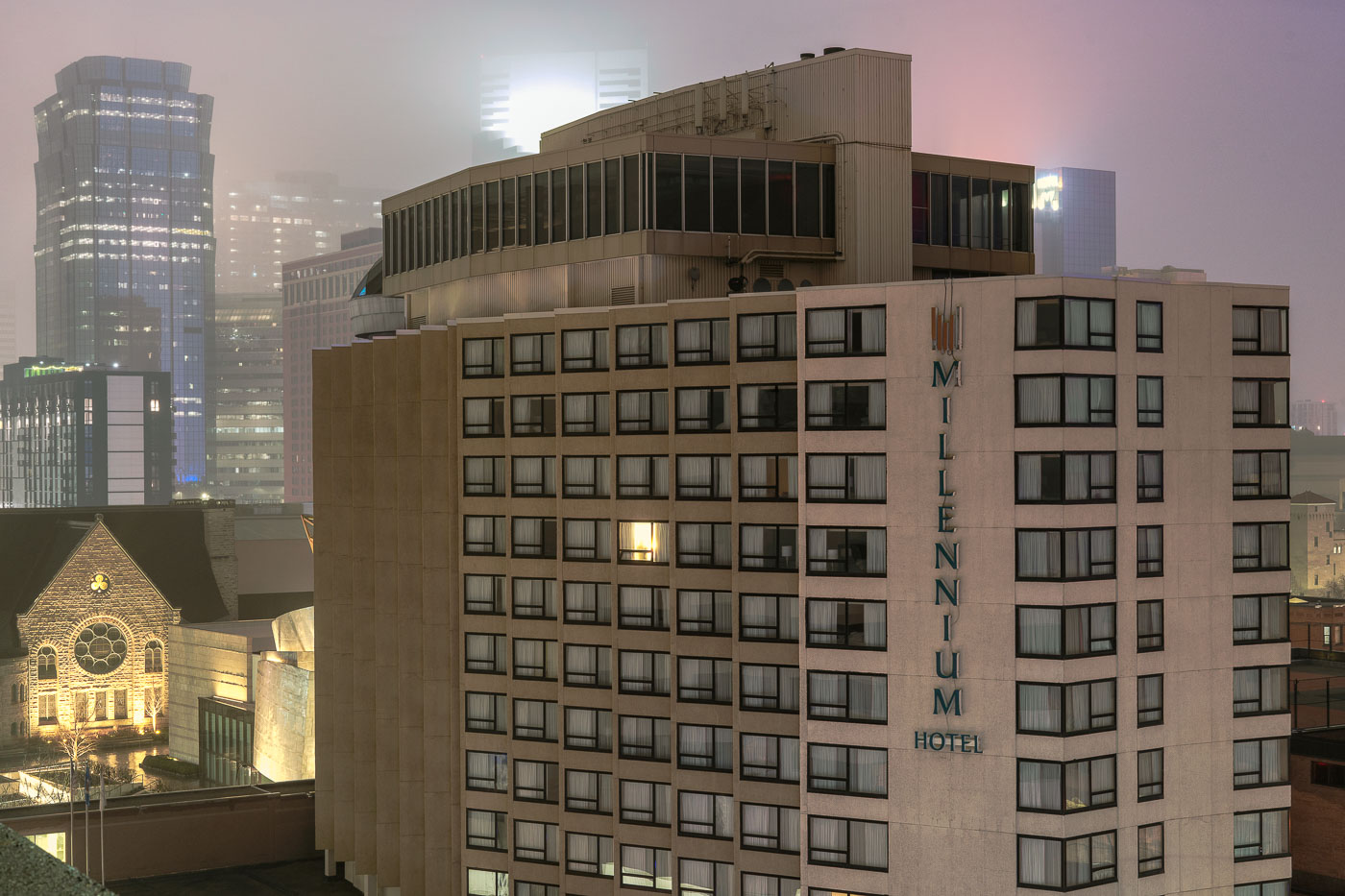
Millennium Hotel on Nicollet Mall in downtown Minneapolis with one lit window among darkened guest rooms during COVID-19 lockdown.
The Millennium Hotel stands at 1313 Nicollet Mall in downtown Minneapolis, a 14-story tower near the Minneapolis Convention Center. Nicollet Mall, the street it fronts, opened in 1967 as downtown Minneapolis's main pedestrian and transit street. Only one window lit up during COVID-19 lockdown.
Only One Light on at Millennium Hotel on Nicollet Mall
Illuminated State Theatre marquee sign glows red and gold above the downtown Minneapolis theater entrance at night.
The State Theatre stands on Hennepin Avenue in downtown Minneapolis. It opened in 1921 and seats about 2,100 people. Hennepin Theatre Trust operates the venue along with the nearby Orpheum and Pantages theatres.
State Theatre Marquee on Hennepin Avenue in Minneapolis

© 1996–2026 Chad Davis