Minnesota

5,829 photos · 2008–2026

5,829 photographs tagged Minnesota, 2008–2026.
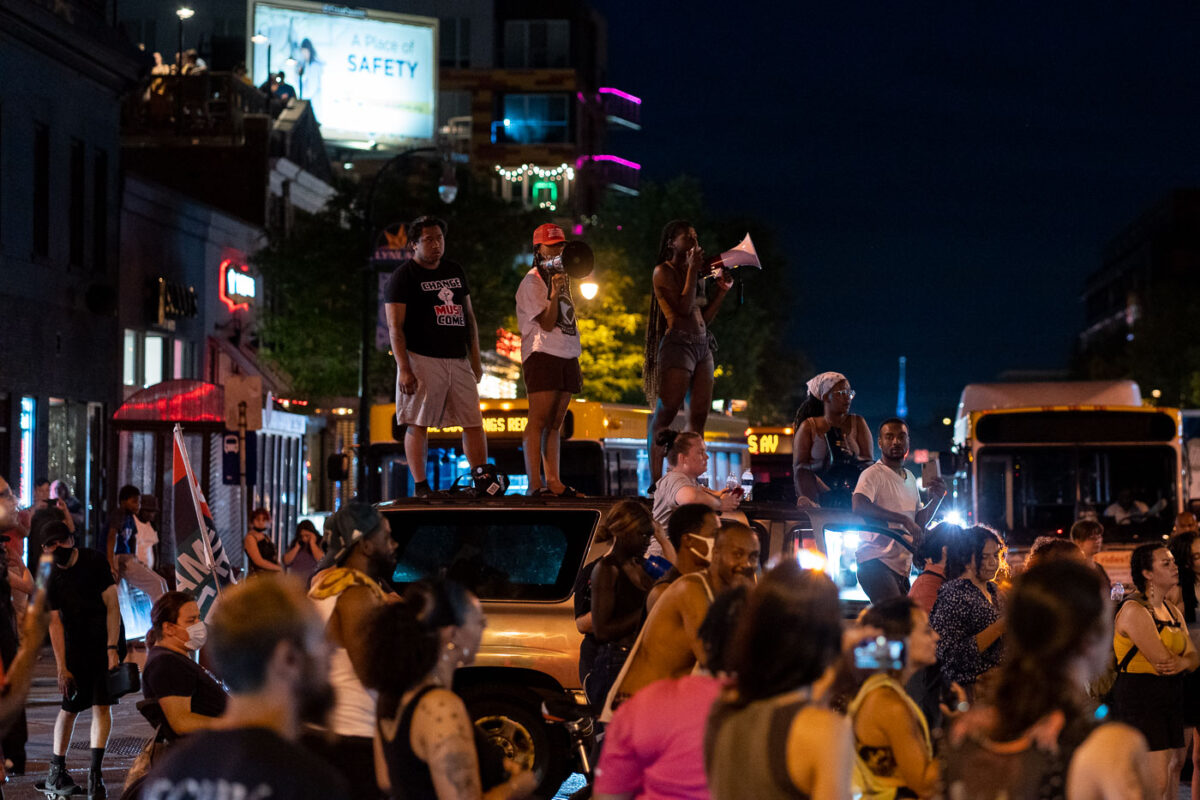
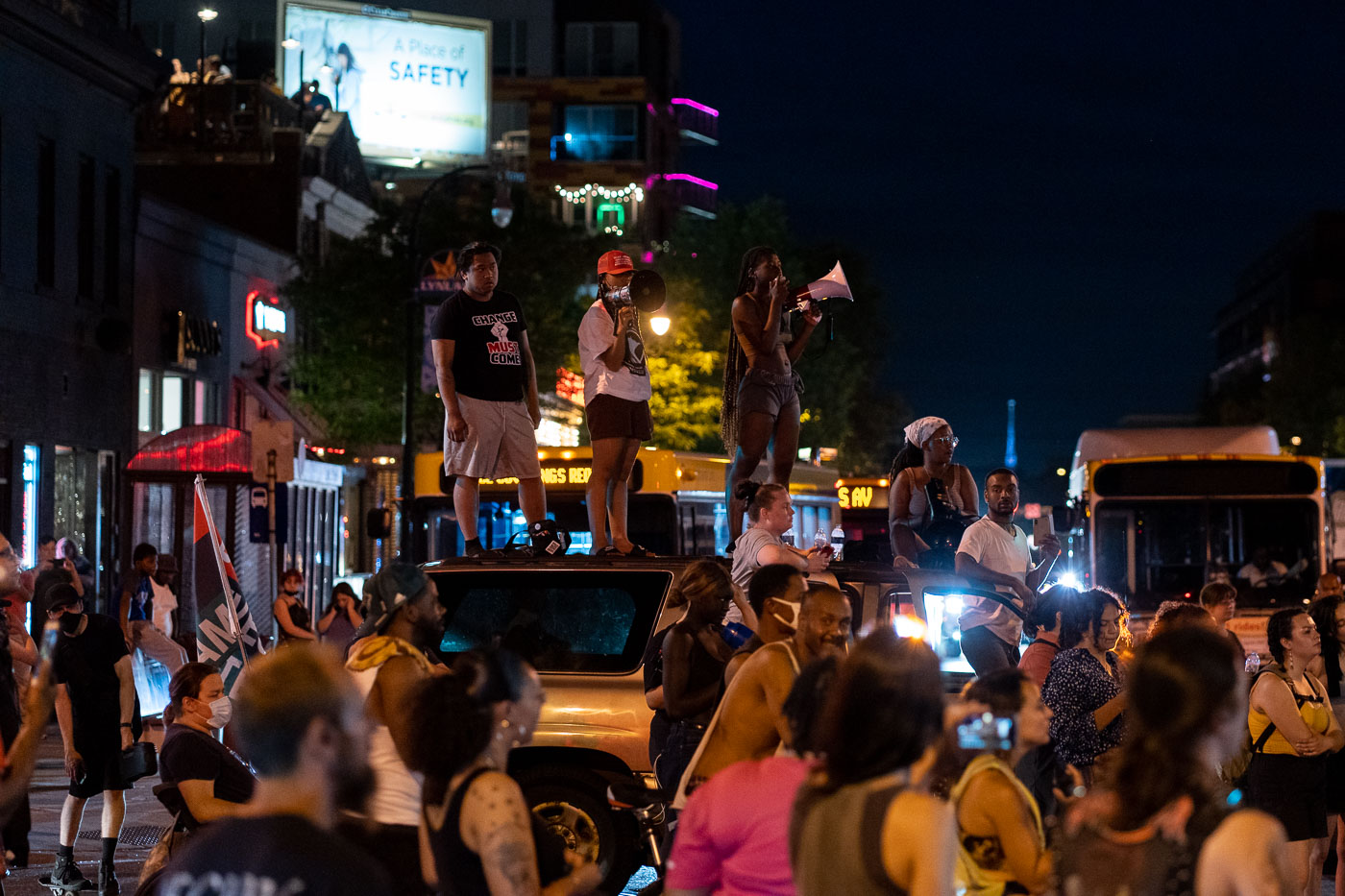
Protesters stand on a vehicle at Lyndale and Lake Street in Minneapolis at night.
Protesters gathered on the third night of demonstrations following the law enforcement shooting death of Winston Smith on June 3rd in Minneapolis. Officials stated that officers from Hennepin and Ramsey County, operating as part of a Federal Task Force, discharged their weapons while attempting to serve a warrant. The protests occurred at the intersection of Lyndale Avenue and Lake Street, a significant commercial and transit hub in the Uptown neighborhood. On June 3, 2021, members of a U.S. Marshals Service fugitive task force fatally shot 32-year-old Winston “Boogie” Smith Jr. on the top level of a parking ramp in Minneapolis’ Uptown neighborhood while attempting to arrest him on a felony warrant. Authorities said Smith fired a handgun from inside his vehicle during the encounter, while family members and activists questioned the official account and demanded the release of additional evidence. The killing led to weeks of protests, street occupations, and confrontations with police in Uptown, becoming another major flashpoint in Minneapolis during the period following the murder of George Floyd. Earlier in the day Minneapolis city officials along with The Agape Movement coordinated to open the streets that had been closed at George Floyd Square since his murder.

Protesters on Cars at Lyndale and Lake Street, Minneapolis
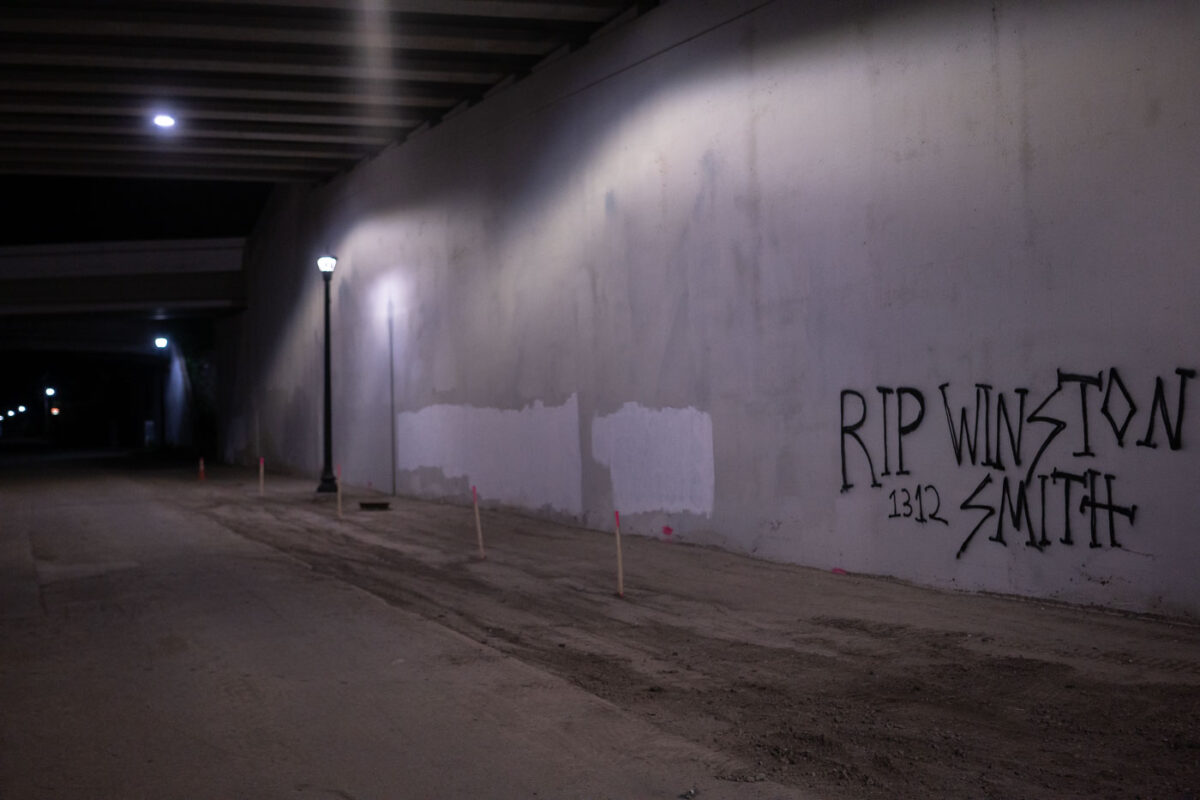
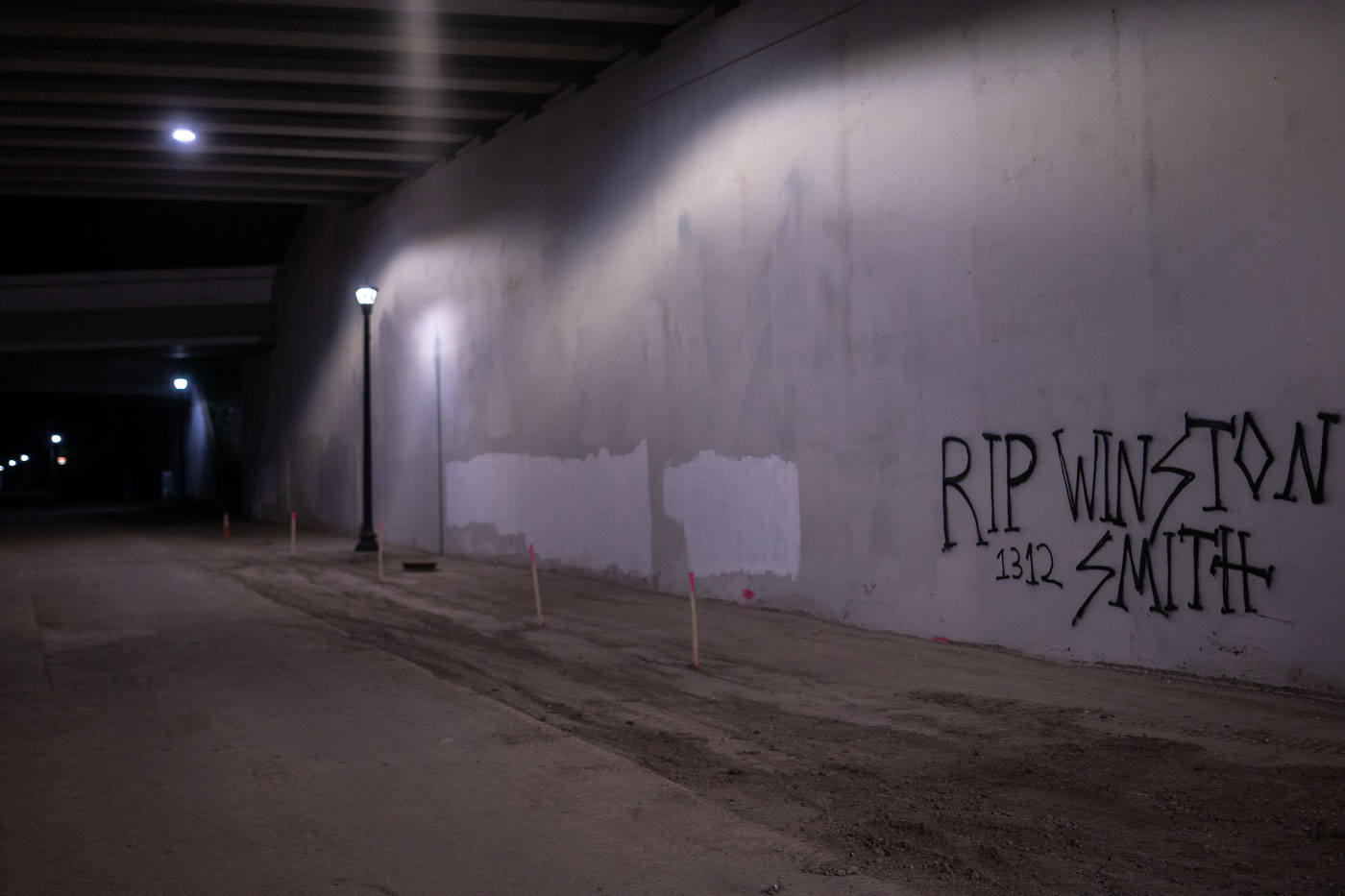
Graffiti reading RIP Winston Smith on a wall along the Midtown Greenway in Minneapolis.
Graffiti memorializing Winston Smith, who was killed by law enforcement on June 3, 2021, is visible on a wall along the Midtown Greenway in Minneapolis. The Midtown Greenway is a 5.7-mile paved multi-use trail built on a former railroad corridor. The graffiti, which includes the number "1312" (a numerical code for "All Cops Are Bastards"), appeared in the context of protests and unrest following Smith's death. On June 3, 2021, members of a U.S. Marshals Service fugitive task force fatally shot 32-year-old Winston “Boogie” Smith Jr. on the top level of a parking ramp in Minneapolis’ Uptown neighborhood while attempting to arrest him on a felony warrant. Authorities said Smith fired a handgun from inside his vehicle during the encounter, while family members and activists questioned the official account and demanded the release of additional evidence. The killing led to weeks of protests, street occupations, and confrontations with police in Uptown, becoming another major flashpoint in Minneapolis during the period following the murder of George Floyd. Earlier in the day Minneapolis city officials along with The Agape Movement coordinated to open the streets that had been closed at George Floyd Square since his murder.

RIP Winston Smith Graffiti on Midtown Greenway, Minneapolis
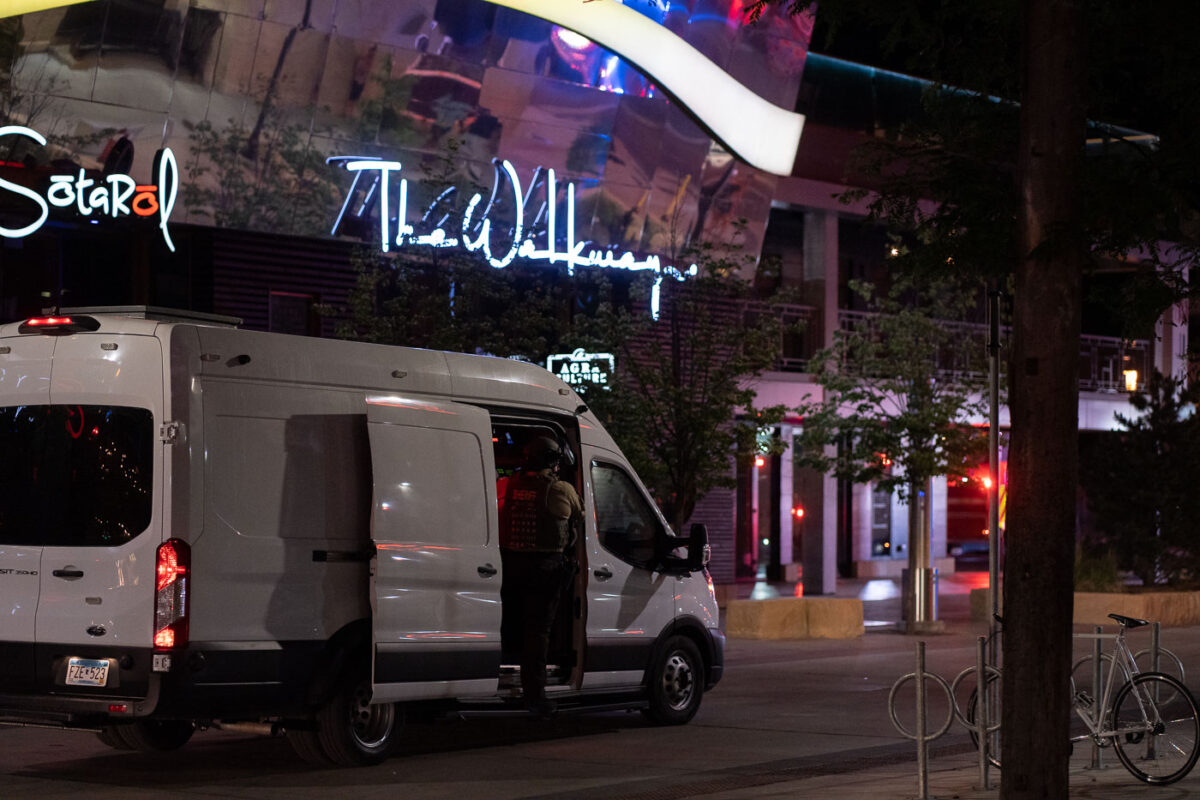
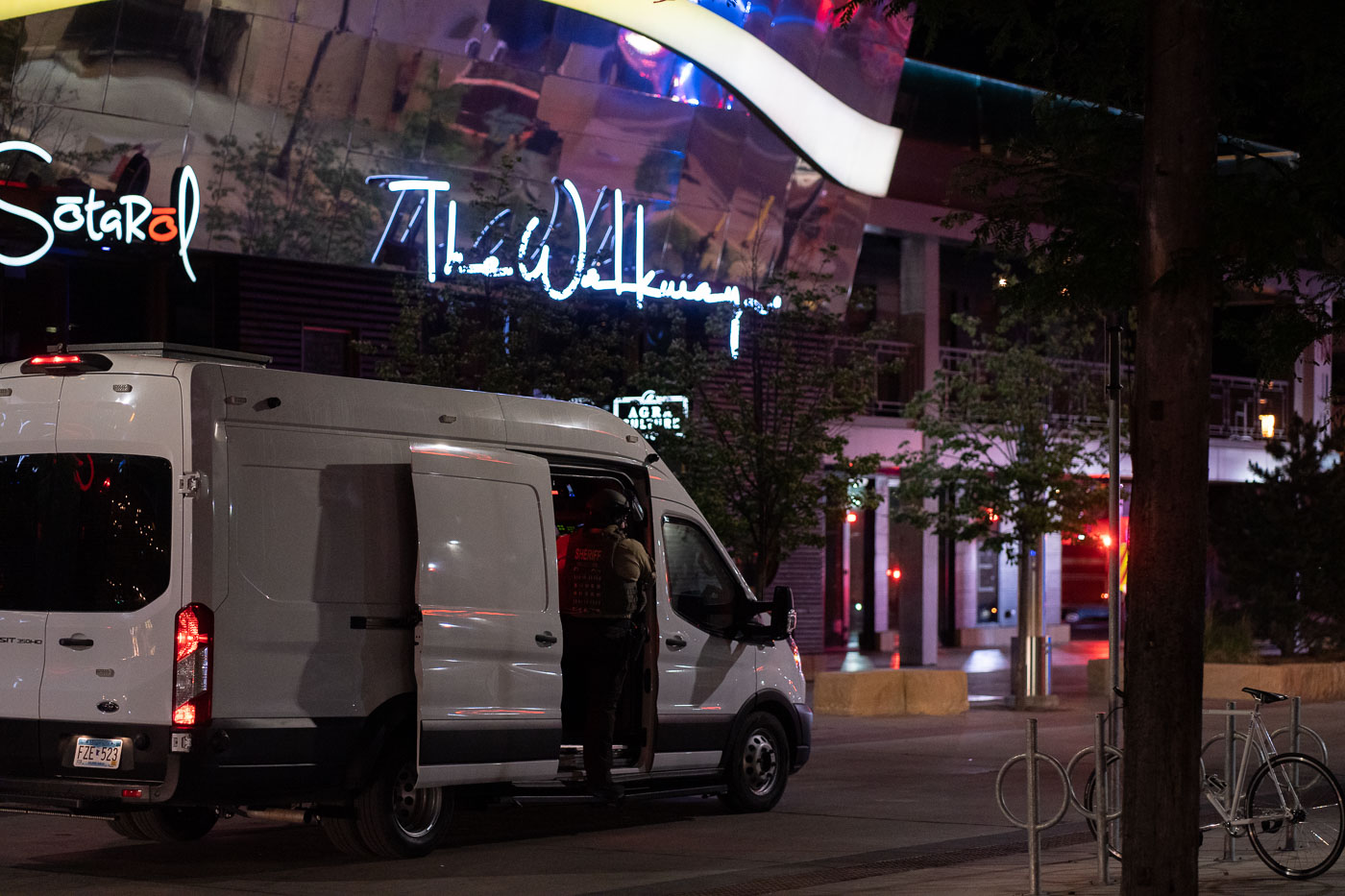
Hennepin County sheriff's van parked outside SōtaRōl in Minneapolis at night
A Hennepin County Sheriff's Department van is parked on Girard Avenue in Minneapolis during protests following the death of Winston Smith. On June 3, 2021, members of a U.S. Marshals Service fugitive task force fatally shot 32-year-old Winston “Boogie” Smith Jr. on the top level of a parking ramp in Minneapolis’ Uptown neighborhood while attempting to arrest him on a felony warrant. Authorities said Smith fired a handgun from inside his vehicle during the encounter, while family members and activists questioned the official account and demanded the release of additional evidence. The killing led to weeks of protests, street occupations, and confrontations with police in Uptown, becoming another major flashpoint in Minneapolis during the period following the murder of George Floyd. Earlier in the day Minneapolis city officials along with The Agape Movement coordinated to open the streets that had been closed at George Floyd Square since his murder.

Minneapolis Sheriff’s van on Girard Ave during Winston Smith protests
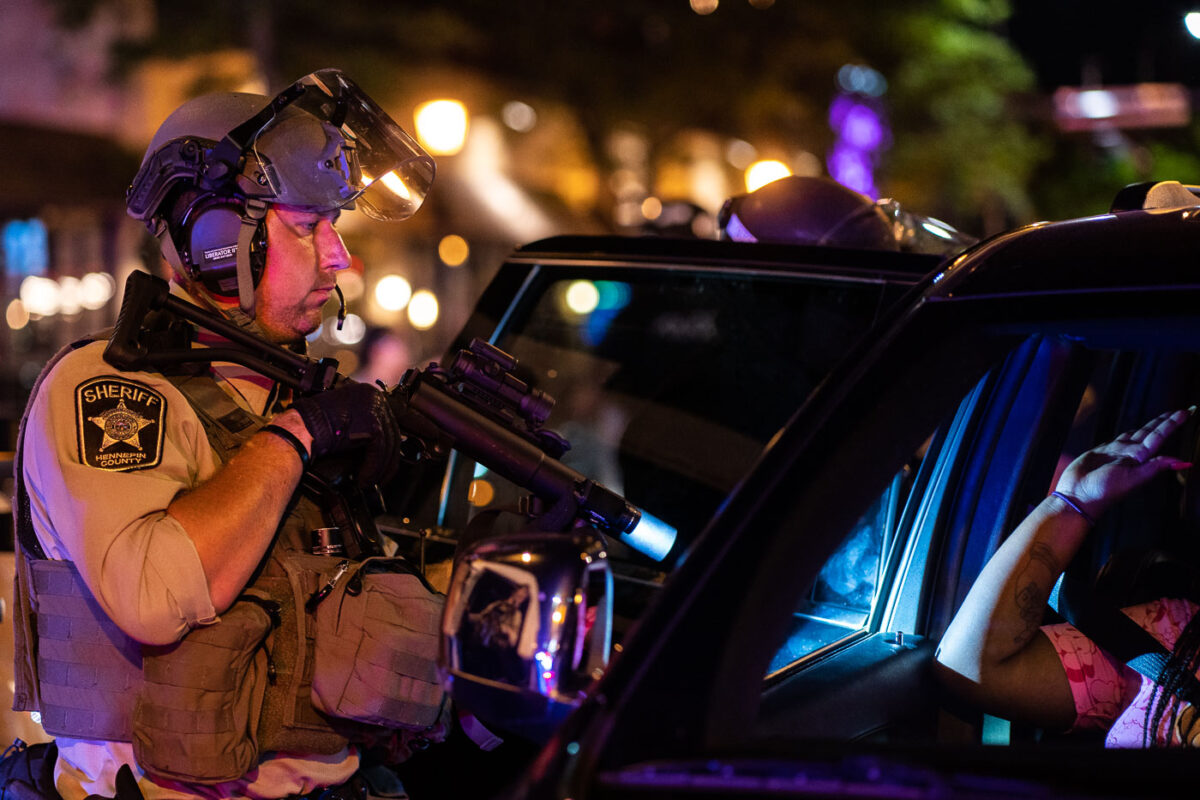
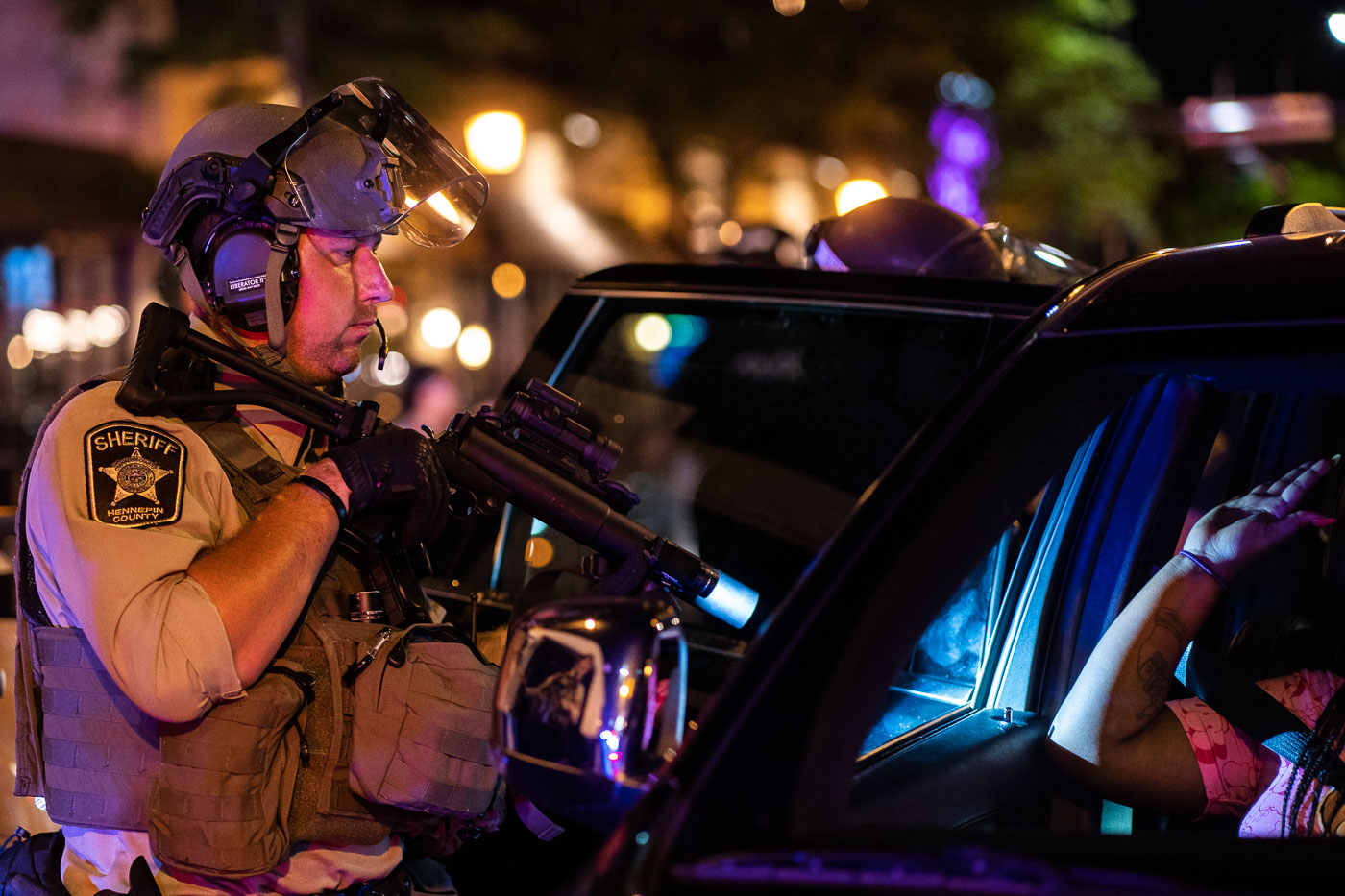
Hennepin County sheriff points a rifle at a driver during protests in Minneapolis.
A Hennepin County Sheriff's deputy points a firearm at a vehicle during protests in Minneapolis on June 5, 2021. On June 3, 2021, members of a U.S. Marshals Service fugitive task force fatally shot 32-year-old Winston “Boogie” Smith Jr. on the top level of a parking ramp in Minneapolis’ Uptown neighborhood while attempting to arrest him on a felony warrant. Authorities said Smith fired a handgun from inside his vehicle during the encounter, while family members and activists questioned the official account and demanded the release of additional evidence. The killing led to weeks of protests, street occupations, and confrontations with police in Uptown, becoming another major flashpoint in Minneapolis during the period following the murder of George Floyd. Earlier in the day Minneapolis city officials along with The Agape Movement coordinated to open the streets that had been closed at George Floyd Square since his murder.

Hennepin County Sheriff points gun at vehicle during protests
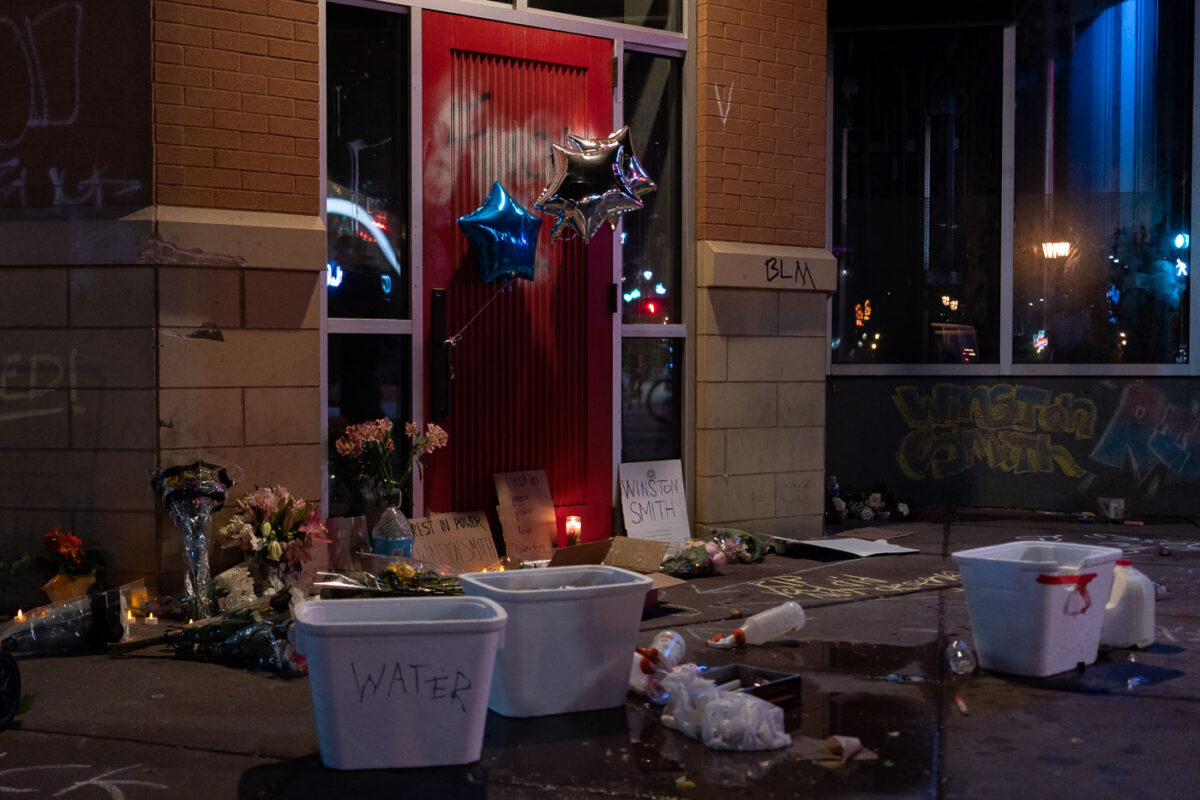
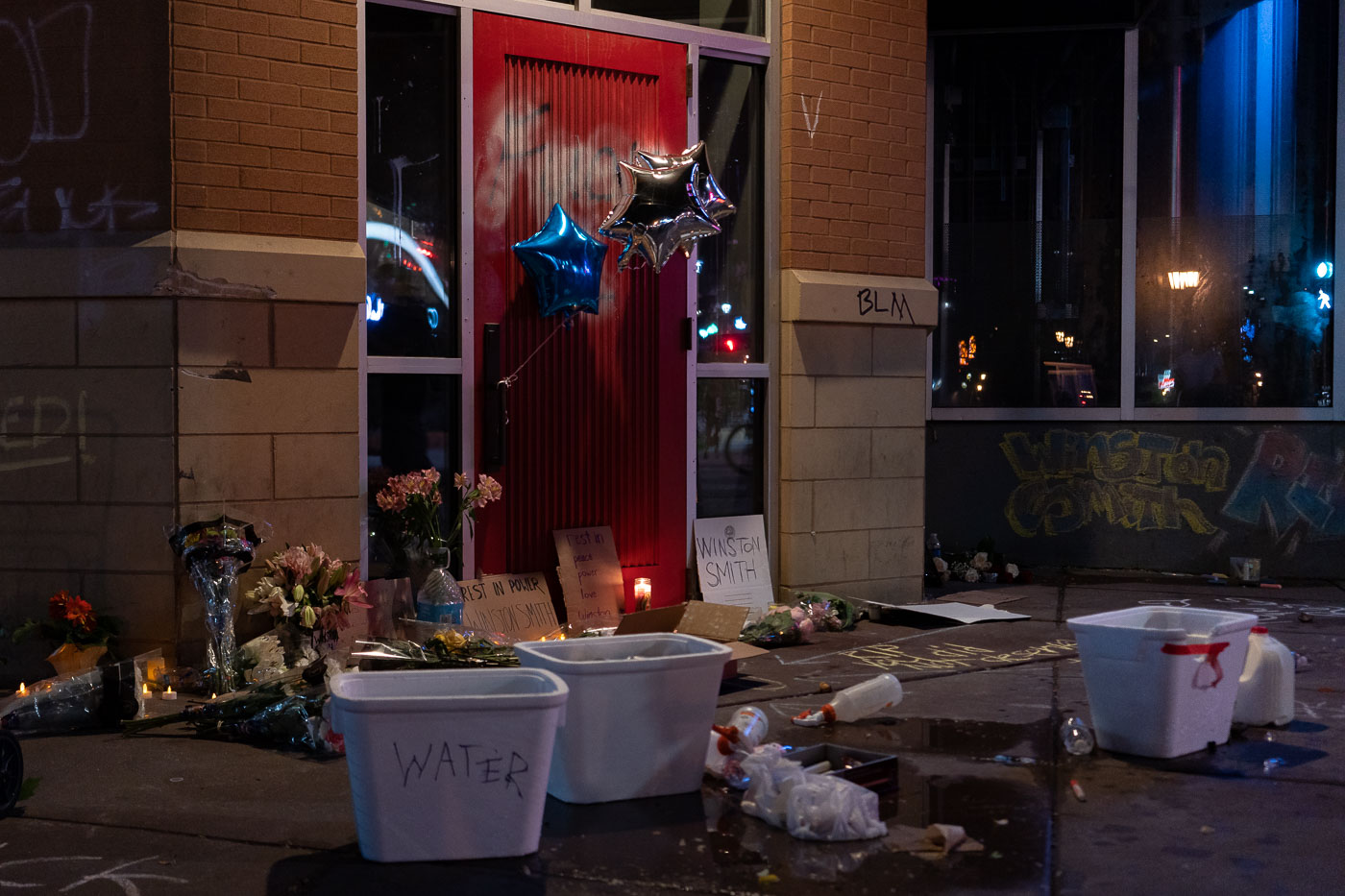
Winston Smith memorial with flowers and candles on Lake Street in Minneapolis at night.
A makeshift memorial for Winston Smith is seen on Lake Street in Minneapolis. On June 3, 2021, members of a U.S. Marshals Service fugitive task force fatally shot 32-year-old Winston “Boogie” Smith Jr. on the top level of a parking ramp in Minneapolis’ Uptown neighborhood while attempting to arrest him on a felony warrant. Authorities said Smith fired a handgun from inside his vehicle during the encounter, while family members and activists questioned the official account and demanded the release of additional evidence. The killing led to weeks of protests, street occupations, and confrontations with police in Uptown, becoming another major flashpoint in Minneapolis during the period following the murder of George Floyd. Earlier in the day Minneapolis city officials along with The Agape Movement coordinated to open the streets that had been closed at George Floyd Square since his murder.

Winston Smith Memorial on Lake Street, Minneapolis
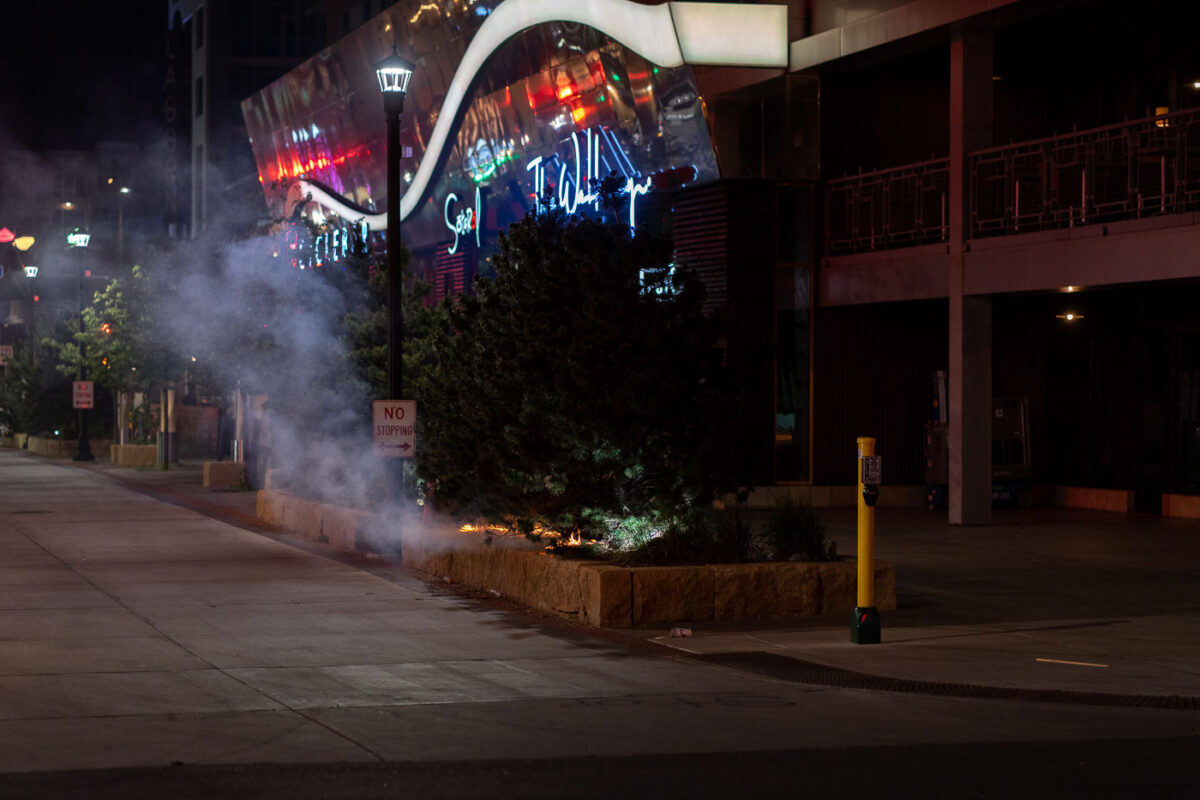
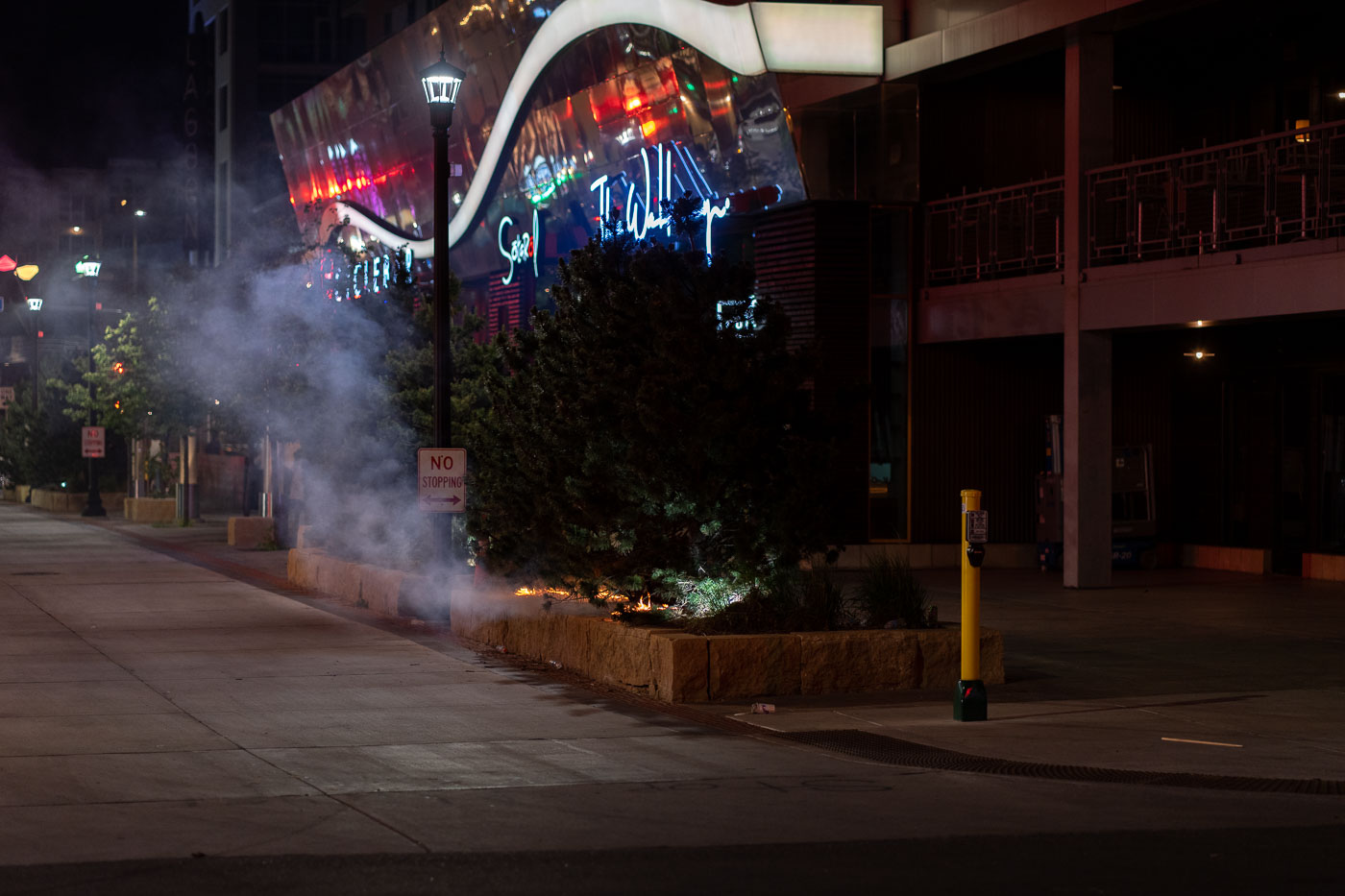
Small fire and smoke rise from bushes on Girard Ave in Minneapolis at night.
Bushes burn on Girard Avenue in Minneapolis during protests following the law enforcement shooting death of Winston Smith on June 3rd. On June 3, 2021, members of a U.S. Marshals Service fugitive task force fatally shot 32-year-old Winston “Boogie” Smith Jr. on the top level of a parking ramp in Minneapolis’ Uptown neighborhood while attempting to arrest him on a felony warrant. Authorities said Smith fired a handgun from inside his vehicle during the encounter, while family members and activists questioned the official account and demanded the release of additional evidence. The killing led to weeks of protests, street occupations, and confrontations with police in Uptown, becoming another major flashpoint in Minneapolis during the period following the murder of George Floyd. Earlier in the day Minneapolis city officials along with The Agape Movement coordinated to open the streets that had been closed at George Floyd Square since his murder.

Bushes burn on Girard Ave, Minneapolis during protests
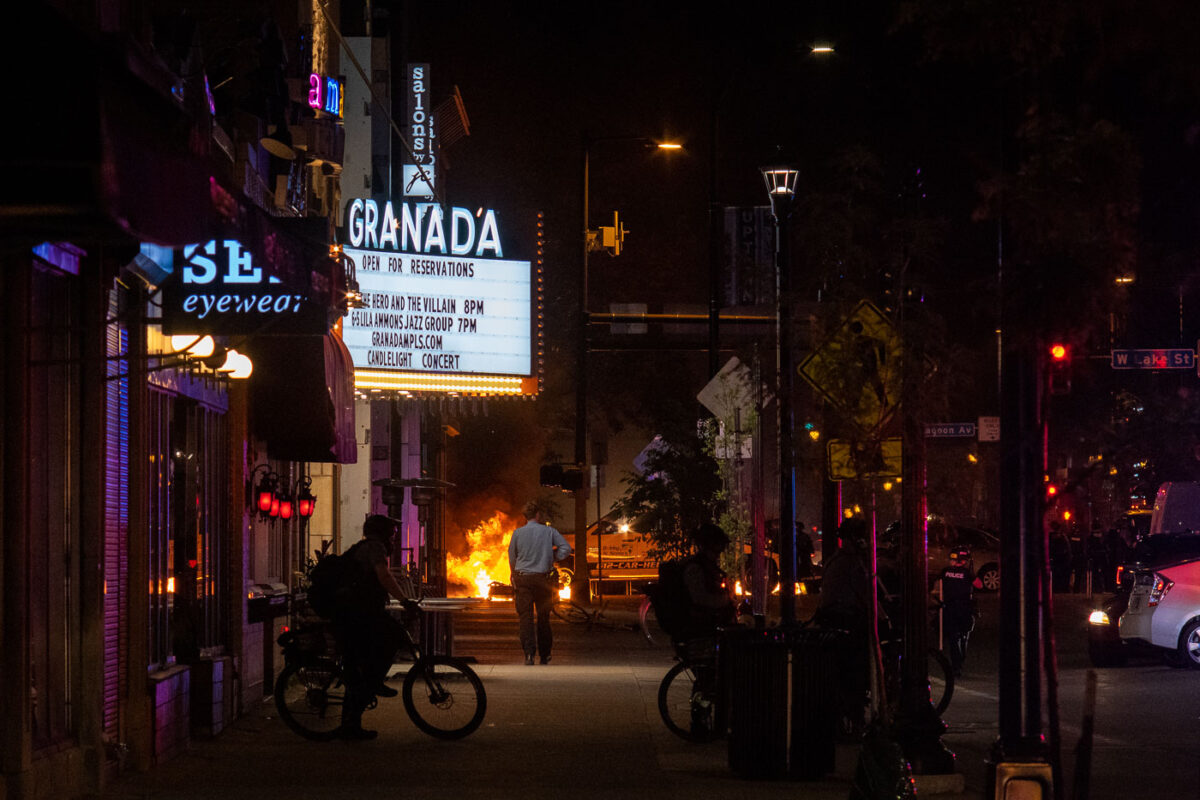
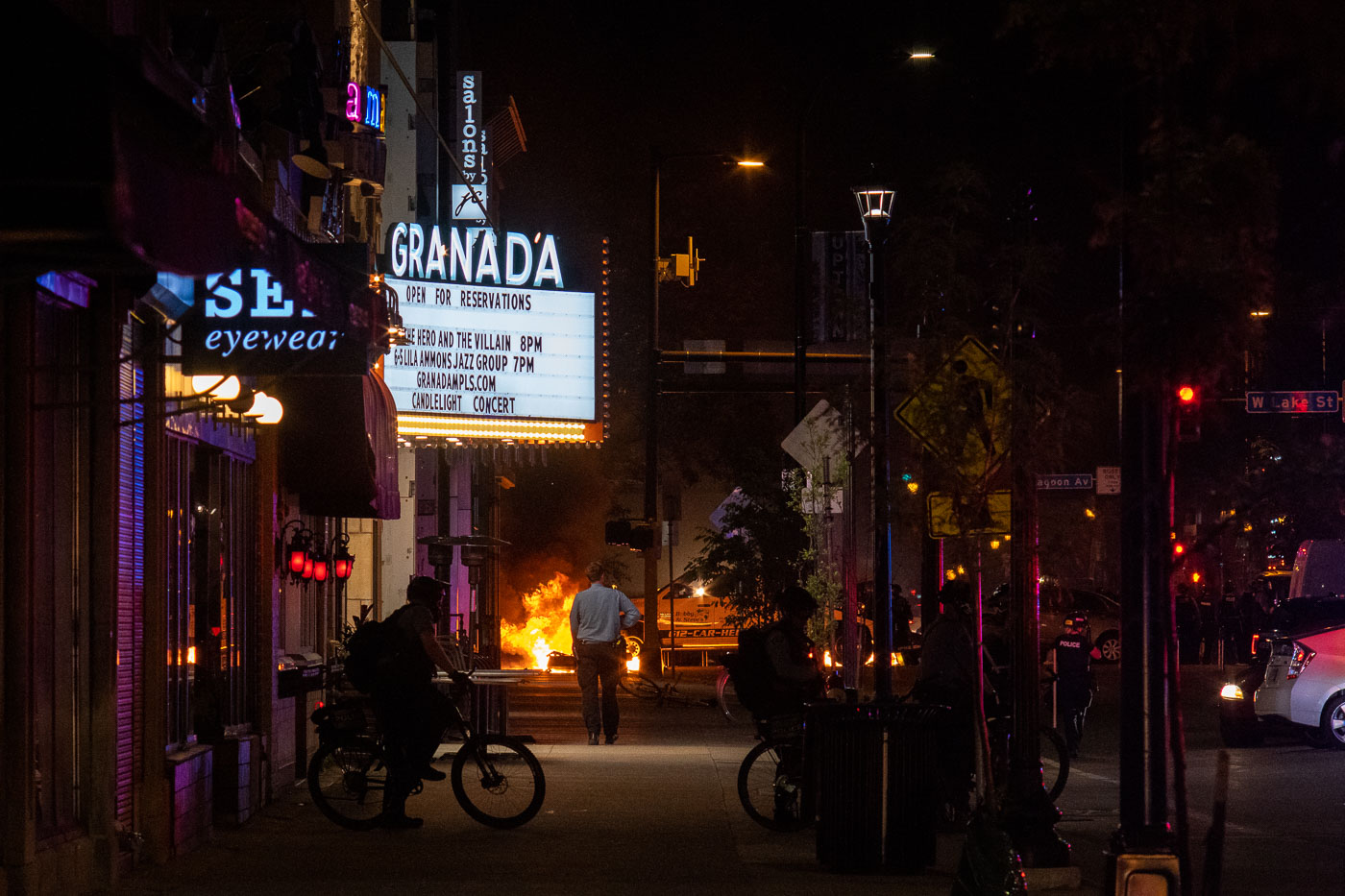
Fire burns on Hennepin Avenue by the Granada Theatre in Minneapolis at night.
Fires burn on Hennepin Avenue in Minneapolis on the night of June 3, 2021, following the shooting death of Winston Smith by federal law enforcement officers. Minneapolis Police are present as flames engulf vehicles and structures in the street near the Granada Theater. On June 3, 2021, members of a U.S. Marshals Service fugitive task force fatally shot 32-year-old Winston “Boogie” Smith Jr. on the top level of a parking ramp in Minneapolis’ Uptown neighborhood while attempting to arrest him on a felony warrant. Authorities said Smith fired a handgun from inside his vehicle during the encounter, while family members and activists questioned the official account and demanded the release of additional evidence. The killing led to weeks of protests, street occupations, and confrontations with police in Uptown, becoming another major flashpoint in Minneapolis during the period following the murder of George Floyd. Earlier in the day Minneapolis city officials along with The Agape Movement coordinated to open the streets that had been closed at George Floyd Square since his murder.

Minneapolis: Fire on Hennepin Ave near Granada Theatre
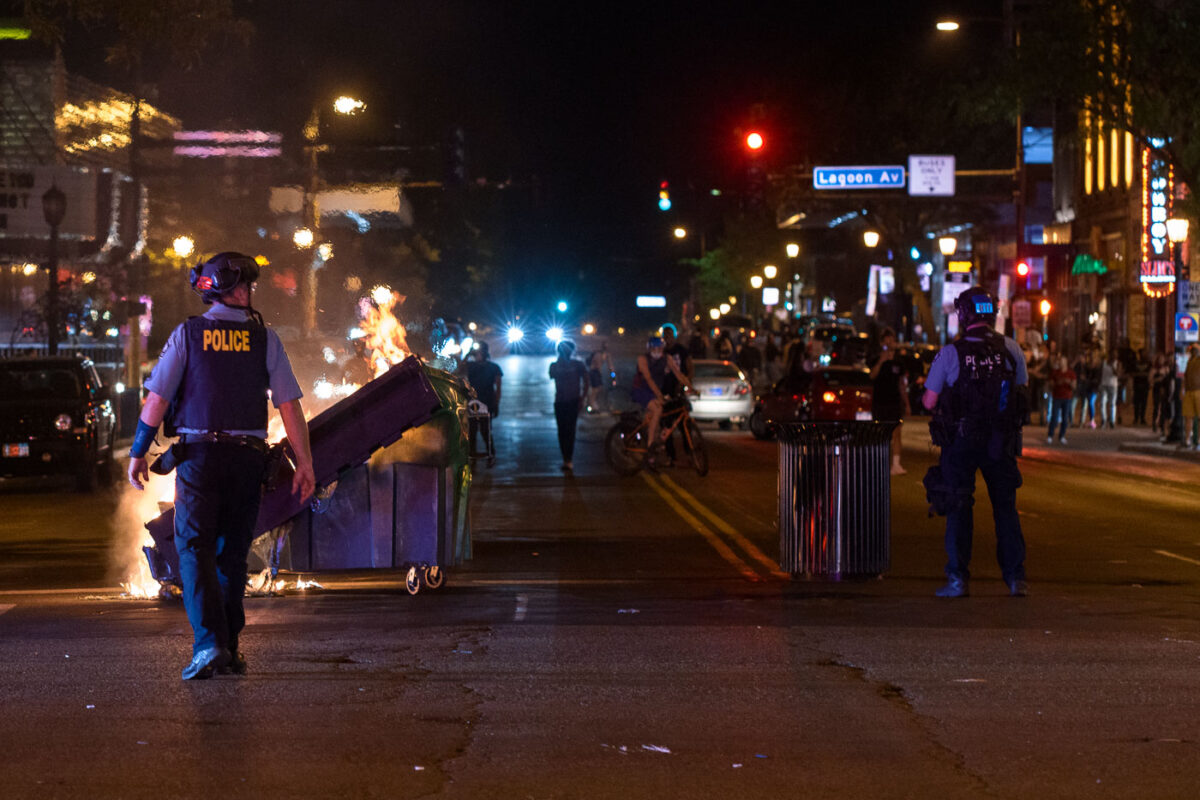
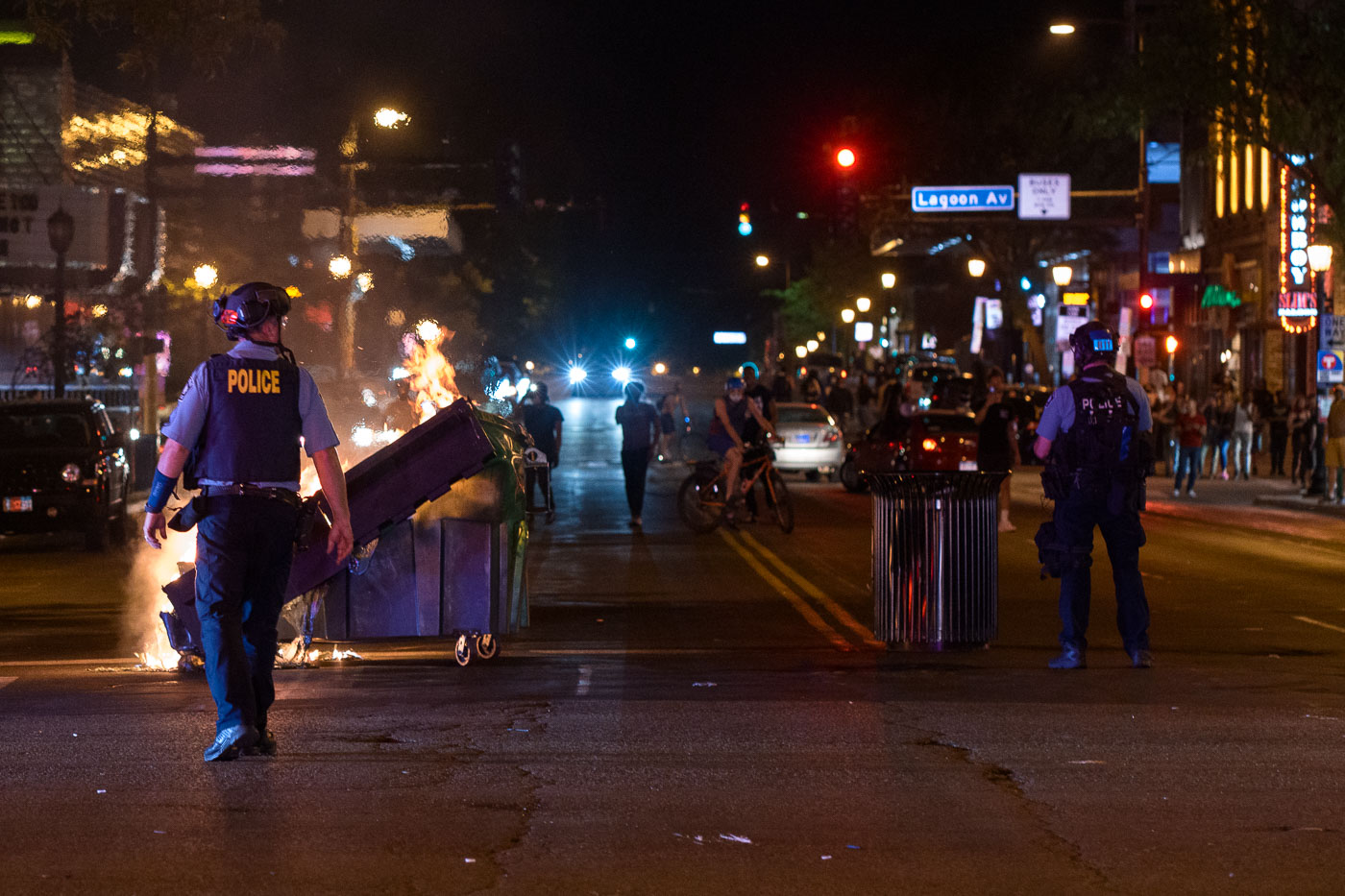
Police stand near a burning dumpster at Lake Street and Hennepin Avenue in Minneapolis at night during protests
Burning dumpsters are visible at the intersection of Hennepin Avenue and Lake Street in Minneapolis on June 5, 2021. This occurred during protests following the law enforcement shooting death of Winston Smith on June 3. The protests, which took place in the Uptown neighborhood, saw unrest and property damage, including fires set in public trash receptacles. On June 3, 2021, members of a U.S. Marshals Service fugitive task force fatally shot 32-year-old Winston “Boogie” Smith Jr. on the top level of a parking ramp in Minneapolis’ Uptown neighborhood while attempting to arrest him on a felony warrant. Authorities said Smith fired a handgun from inside his vehicle during the encounter, while family members and activists questioned the official account and demanded the release of additional evidence. The killing led to weeks of protests, street occupations, and confrontations with police in Uptown, becoming another major flashpoint in Minneapolis during the period following the murder of George Floyd. Earlier in the day Minneapolis city officials along with The Agape Movement coordinated to open the streets that had been closed at George Floyd Square since his murder.

Minneapolis: Burning dumpsters at Lake St & Hennepin Ave during protests
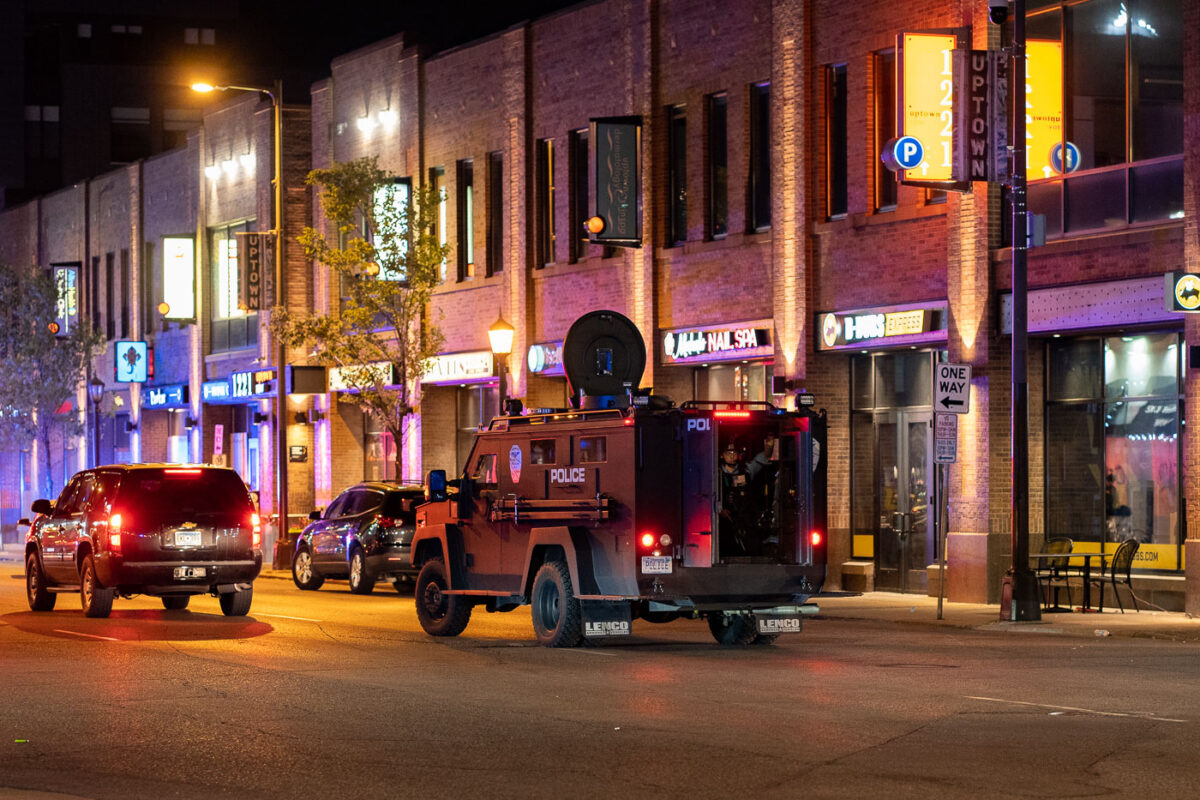
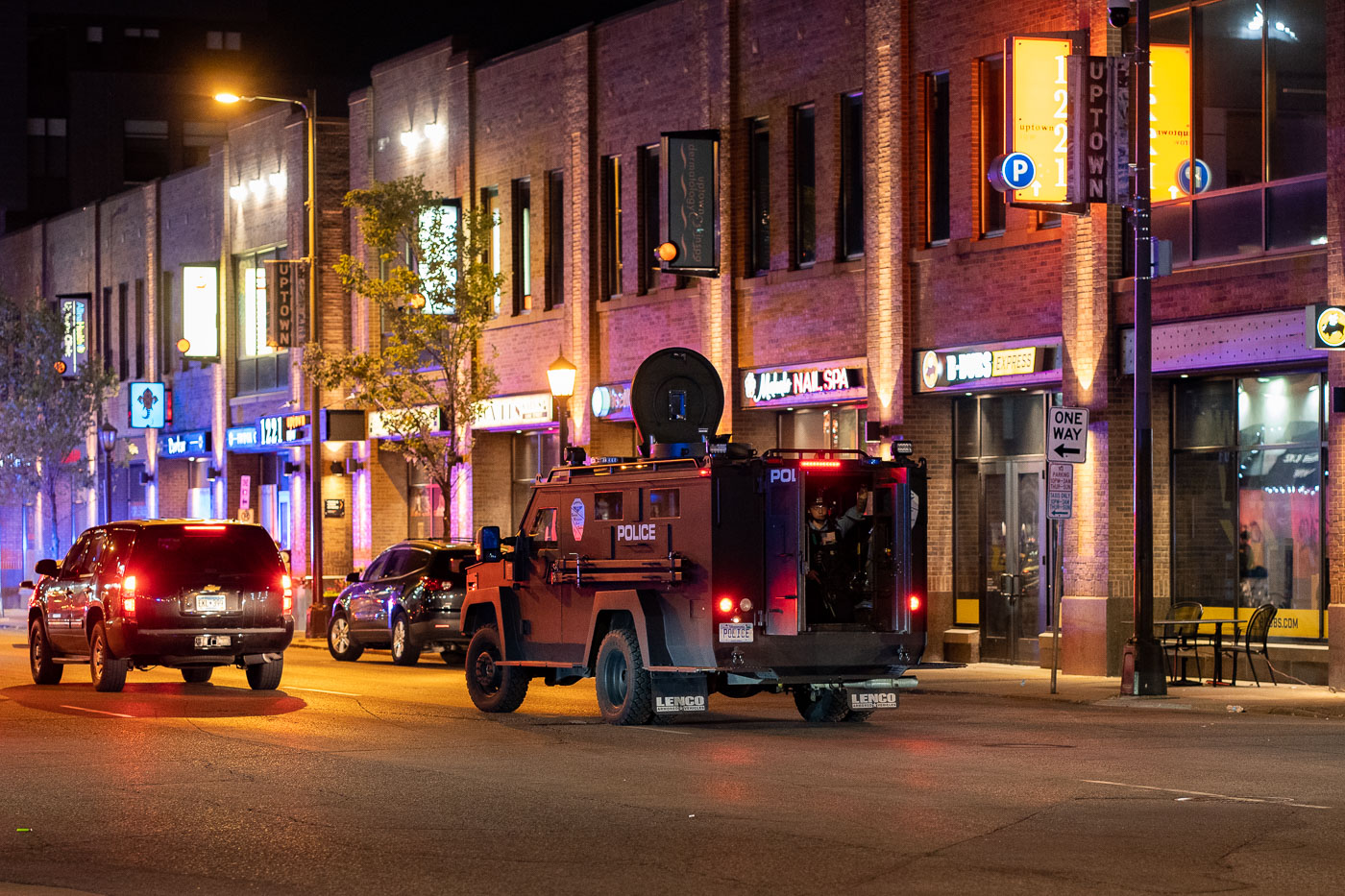
Minneapolis police Bearcat on Lake Street in Uptown at night during protests
Minneapolis police in the back of a bearcat vehicle driving down Lake Street in Uptown Minneapolis during protests over the shooting death of Winston Smith. On June 3, 2021, members of a U.S. Marshals Service fugitive task force fatally shot 32-year-old Winston “Boogie” Smith Jr. on the top level of a parking ramp in Minneapolis’ Uptown neighborhood while attempting to arrest him on a felony warrant. Authorities said Smith fired a handgun from inside his vehicle during the encounter, while family members and activists questioned the official account and demanded the release of additional evidence. The killing led to weeks of protests, street occupations, and confrontations with police in Uptown, becoming another major flashpoint in Minneapolis during the period following the murder of George Floyd. Earlier in the day Minneapolis city officials along with The Agape Movement coordinated to open the streets that had been closed at George Floyd Square since his murder.

Minneapolis Police Bearcat on Lake Street during Winston Smith protests
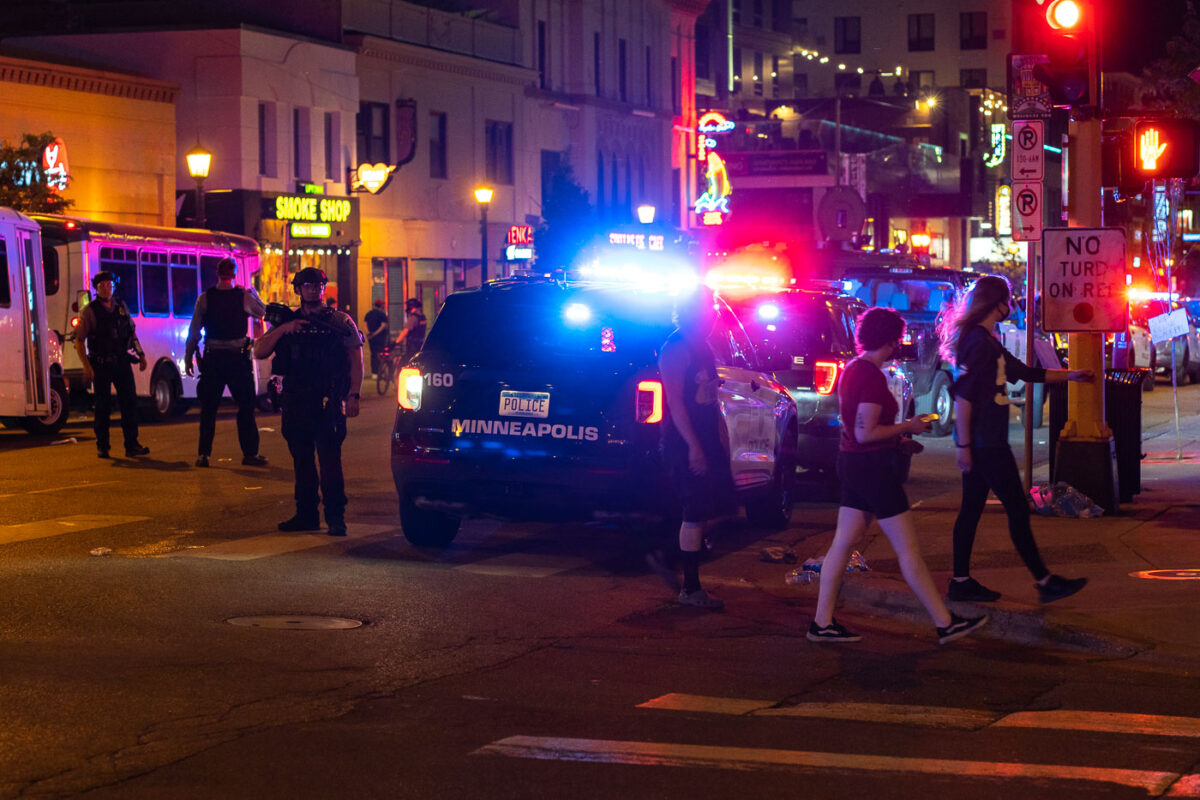
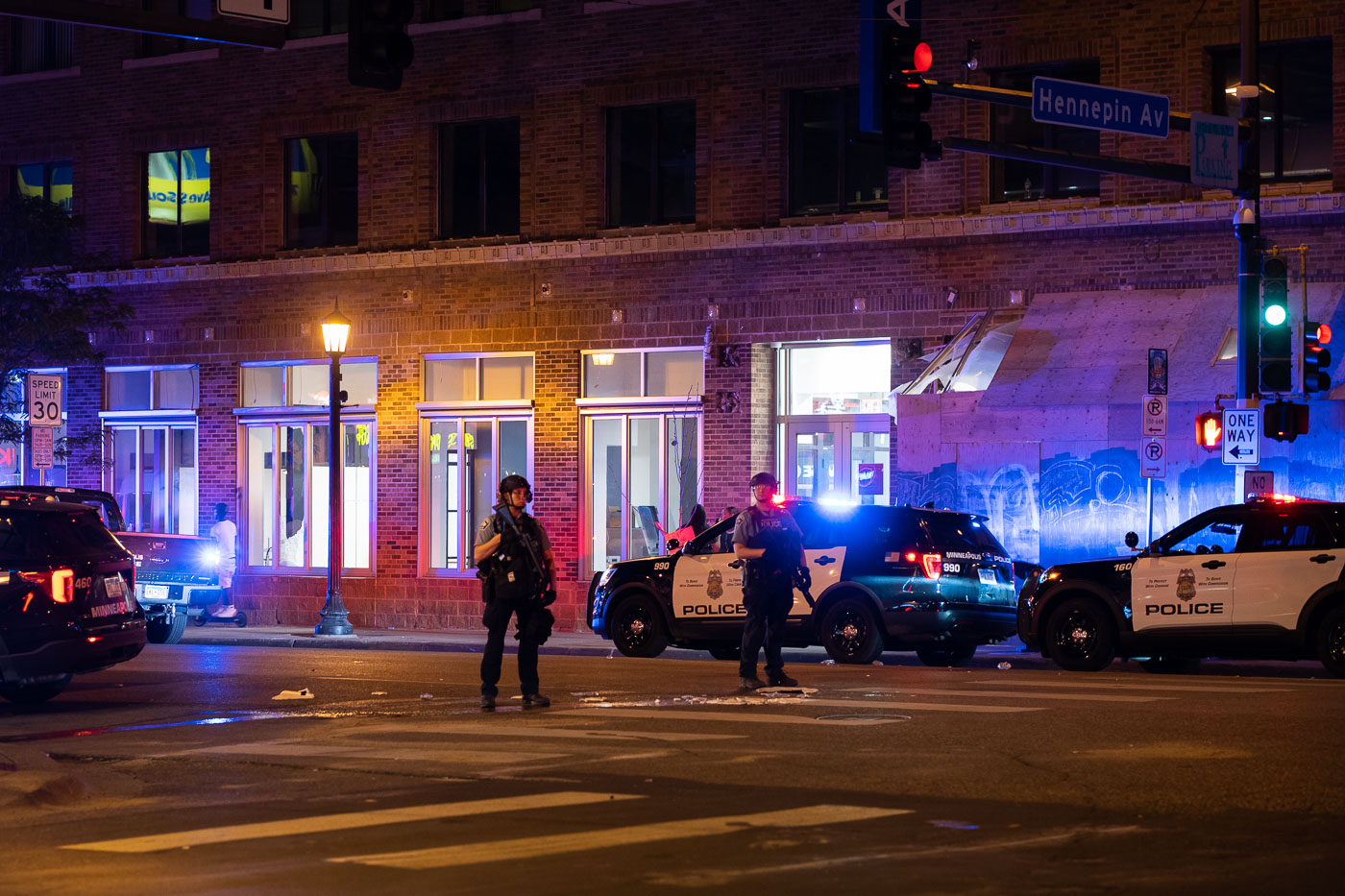
Minneapolis police vehicles and officers on Hennepin Avenue at night during protests.
Minneapolis Police officers were present on Hennepin Avenue during protests following the June 3rd shooting death of Winston Smith by a Federal task force. The protests, which occurred in the Uptown Minneapolis neighborhood, drew a significant police response. On June 3, 2021, members of a U.S. Marshals Service fugitive task force fatally shot 32-year-old Winston “Boogie” Smith Jr. on the top level of a parking ramp in Minneapolis’ Uptown neighborhood while attempting to arrest him on a felony warrant. Authorities said Smith fired a handgun from inside his vehicle during the encounter, while family members and activists questioned the official account and demanded the release of additional evidence. The killing led to weeks of protests, street occupations, and confrontations with police in Uptown, becoming another major flashpoint in Minneapolis during the period following the murder of George Floyd. Earlier in the day Minneapolis city officials along with The Agape Movement coordinated to open the streets that had been closed at George Floyd Square since his murder.

Minneapolis Police presence on Hennepin Ave during protests
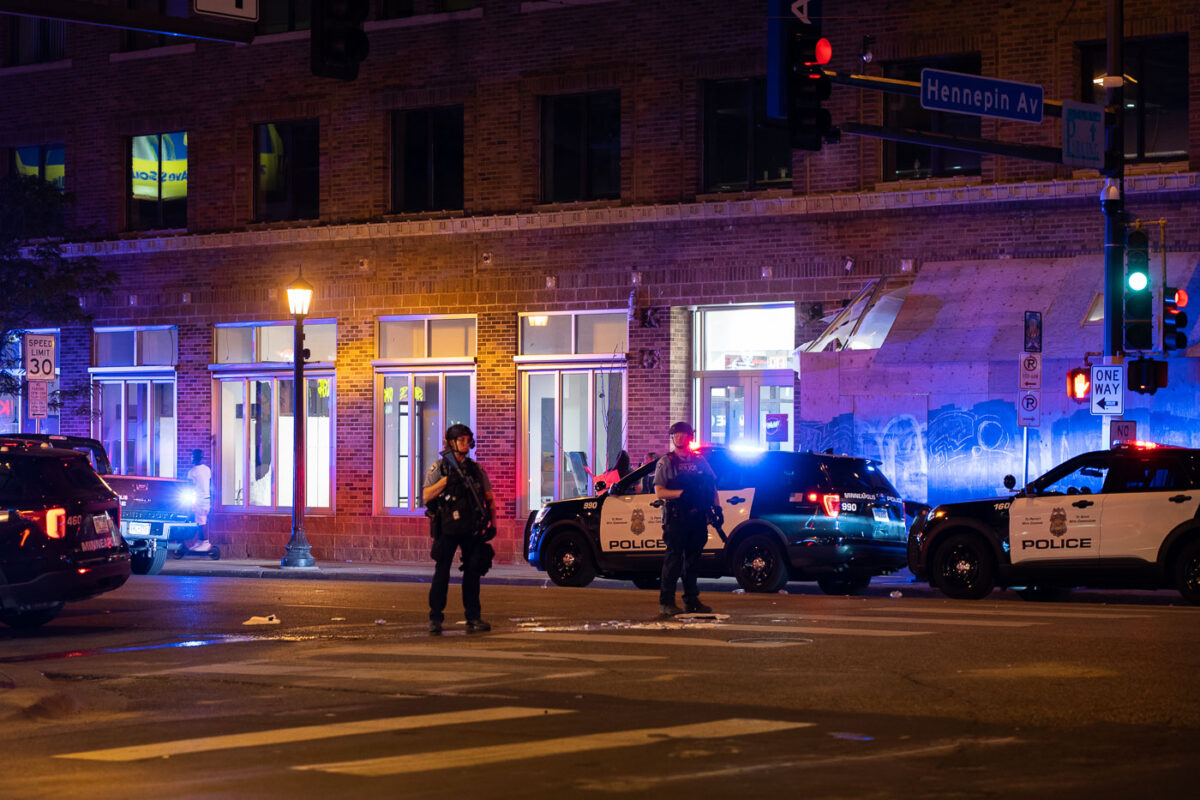
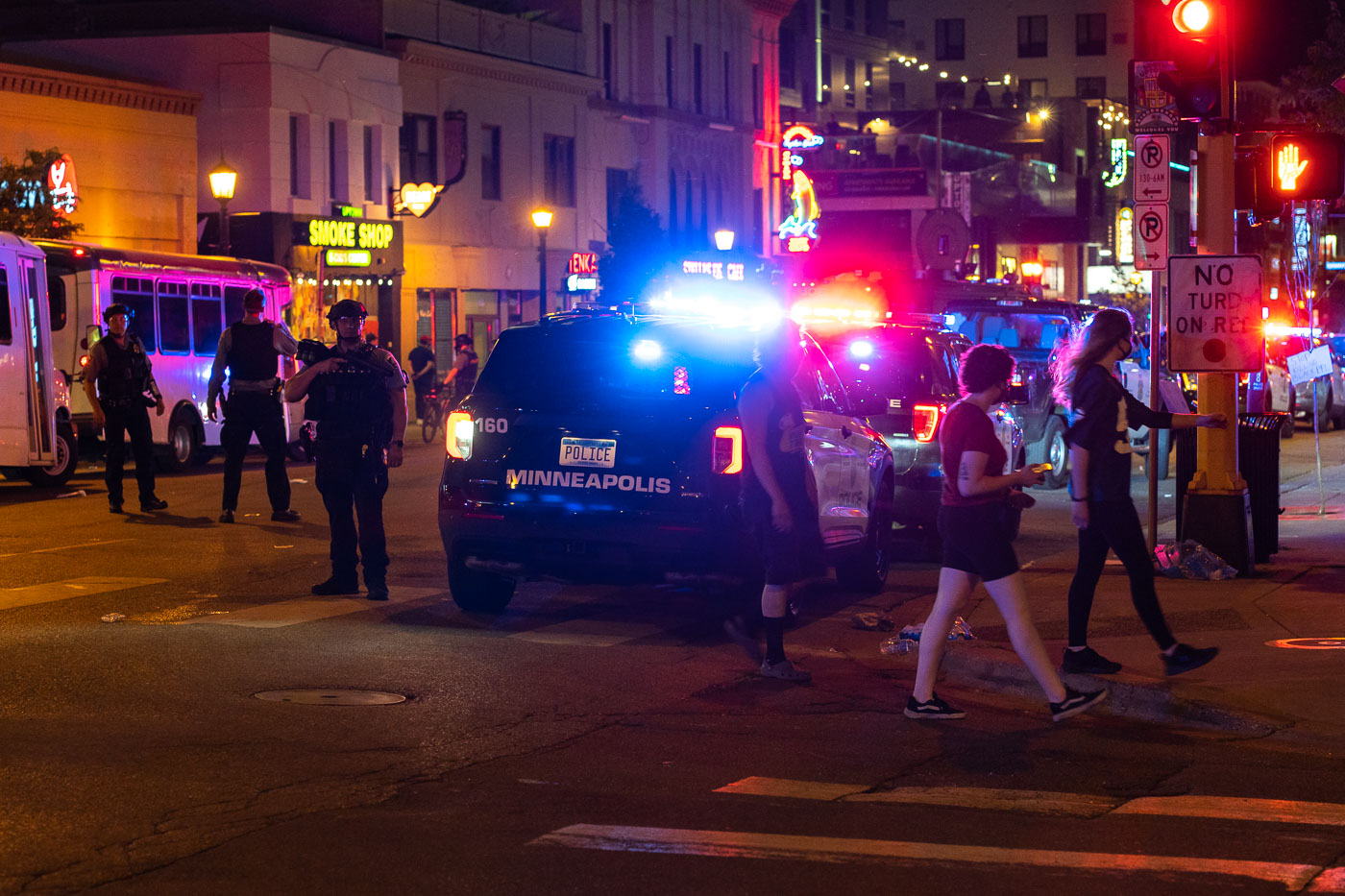
Police officers and squad cars at Hennepin Ave and Lake Street in Minneapolis at night.
Authorities move in to push out and make arrests of protesters after a dispersal order is given. On June 3, 2021, members of a U.S. Marshals Service fugitive task force fatally shot 32-year-old Winston “Boogie” Smith Jr. on the top level of a parking ramp in Minneapolis’ Uptown neighborhood while attempting to arrest him on a felony warrant. Authorities said Smith fired a handgun from inside his vehicle during the encounter, while family members and activists questioned the official account and demanded the release of additional evidence. The killing led to weeks of protests, street occupations, and confrontations with police in Uptown, becoming another major flashpoint in Minneapolis during the period following the murder of George Floyd. Earlier in the day Minneapolis city officials along with The Agape Movement coordinated to open the streets that had been closed at George Floyd Square since his murder.

Minneapolis Police at Hennepin Ave during Winston Smith protests
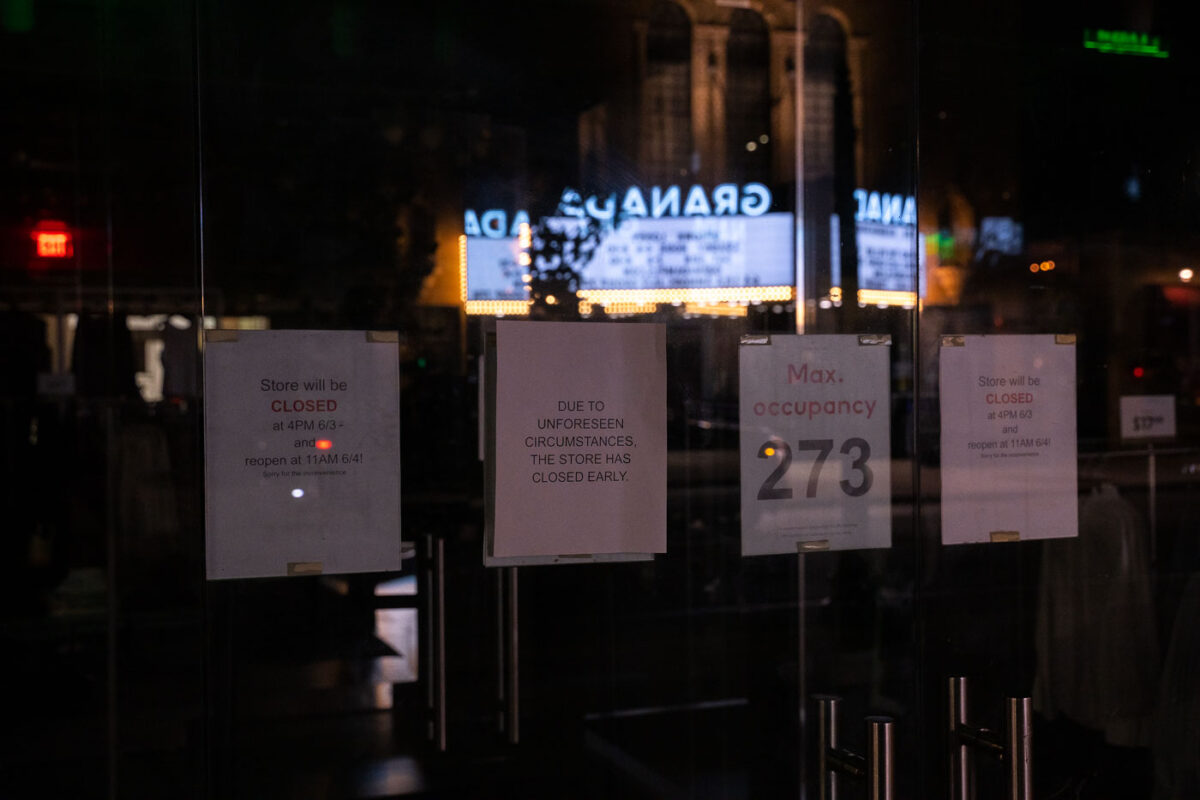
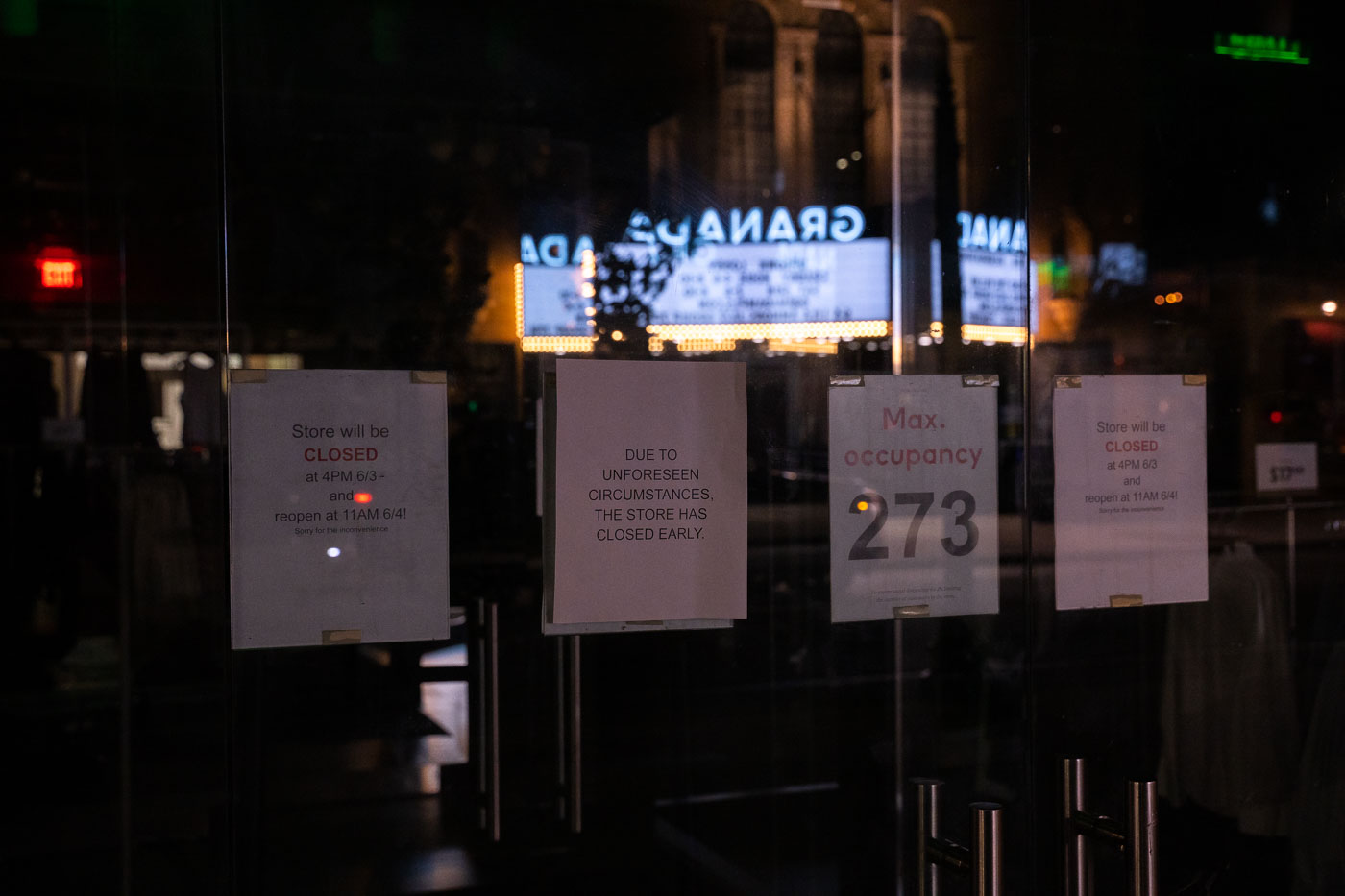
Store closure notices on an H&M door in Minneapolis, including a sign citing unforeseen circumstances.
Signs indicate that the H&M store on Hennepin Avenue in Minneapolis closed early on June 3, 2021, due to unforeseen circumstances. This closure occurred the day after Winston Smith was killed by law enforcement a block away, leading to concerns about potential unrest. The store was scheduled to reopen the following morning. On June 3, 2021, members of a U.S. Marshals Service fugitive task force fatally shot 32-year-old Winston “Boogie” Smith Jr. on the top level of a parking ramp in Minneapolis’ Uptown neighborhood while attempting to arrest him on a felony warrant. Authorities said Smith fired a handgun from inside his vehicle during the encounter, while family members and activists questioned the official account and demanded the release of additional evidence. The killing led to weeks of protests, street occupations, and confrontations with police in Uptown, becoming another major flashpoint in Minneapolis during the period following the murder of George Floyd. Earlier in the day Minneapolis city officials along with The Agape Movement coordinated to open the streets that had been closed at George Floyd Square since his murder.

Minneapolis H&M Closed Due to Unforeseen Circumstances
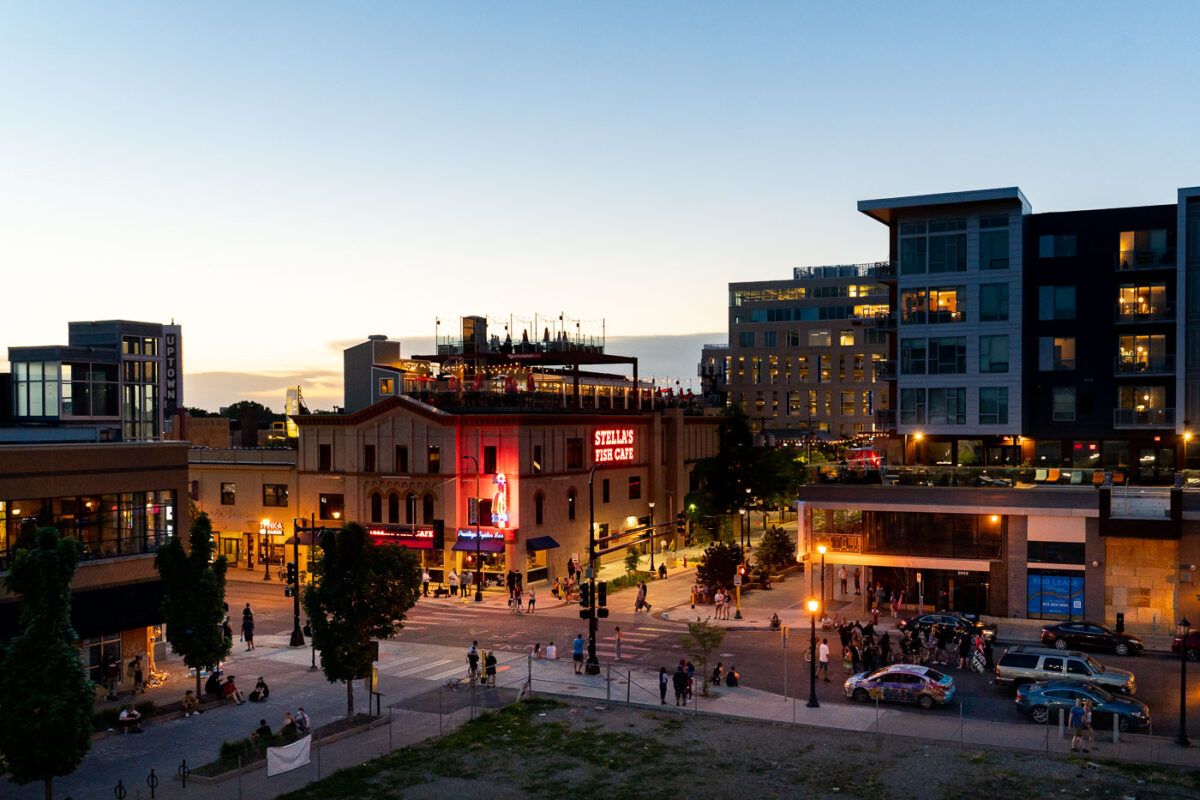
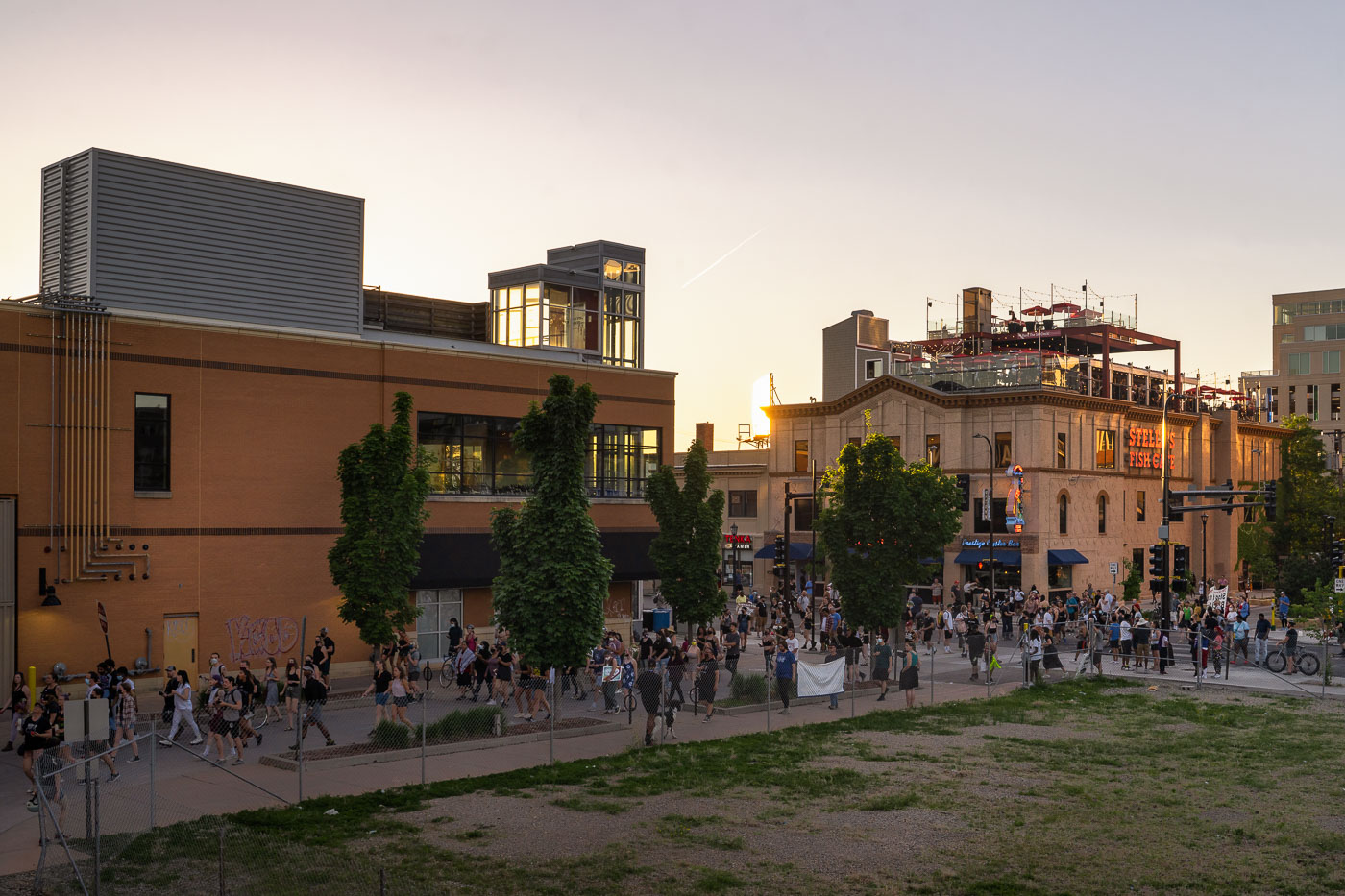
Protesters gather on Lake Street in Uptown Minneapolis at dusk.
Protesters march down Lake Street in Uptown Minneapolis the day after Winston Smith was killed by a federal law enforcement task force. On June 3, 2021, members of a U.S. Marshals Service fugitive task force fatally shot 32-year-old Winston “Boogie” Smith Jr. on the top level of a parking ramp in Minneapolis’ Uptown neighborhood while attempting to arrest him on a felony warrant. Authorities said Smith fired a handgun from inside his vehicle during the encounter, while family members and activists questioned the official account and demanded the release of additional evidence. The killing led to weeks of protests, street occupations, and confrontations with police in Uptown, becoming another major flashpoint in Minneapolis during the period following the murder of George Floyd. Earlier in the day Minneapolis city officials along with The Agape Movement coordinated to open the streets that had been closed at George Floyd Square since his murder.

Minneapolis Protest on Lake Street After Winston Smith Killing
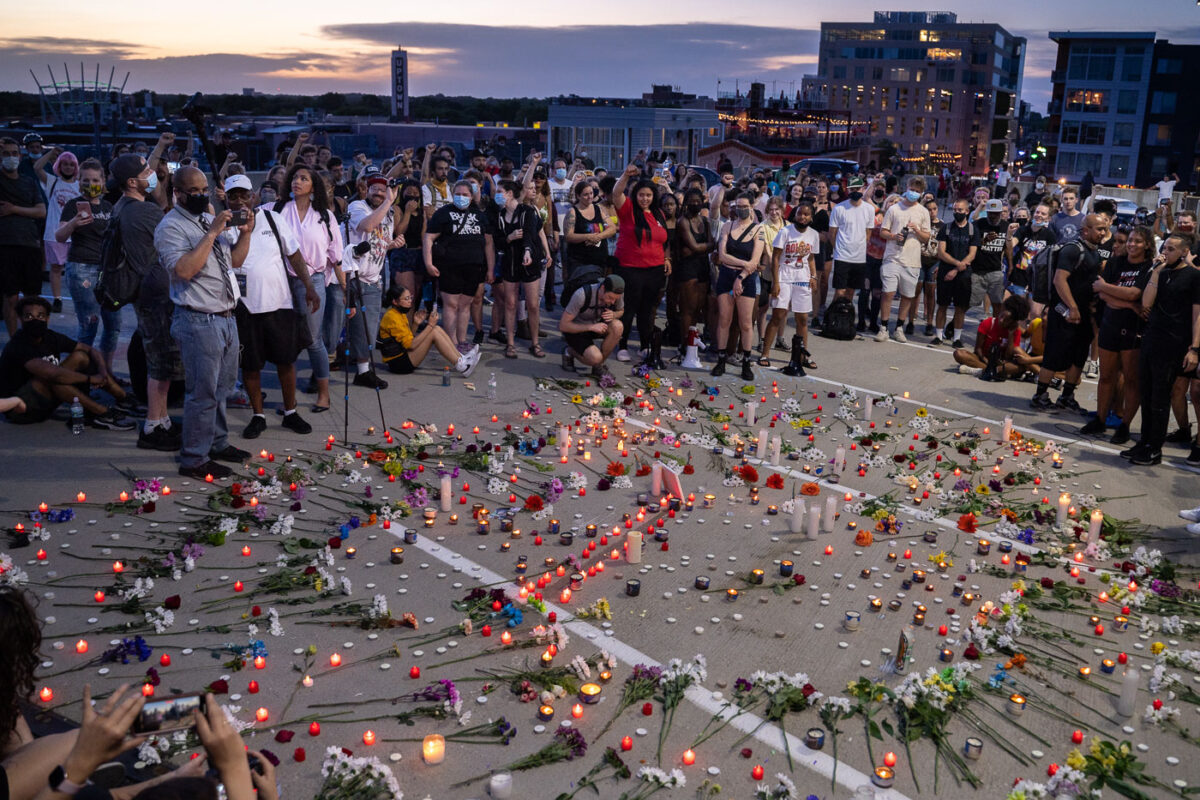
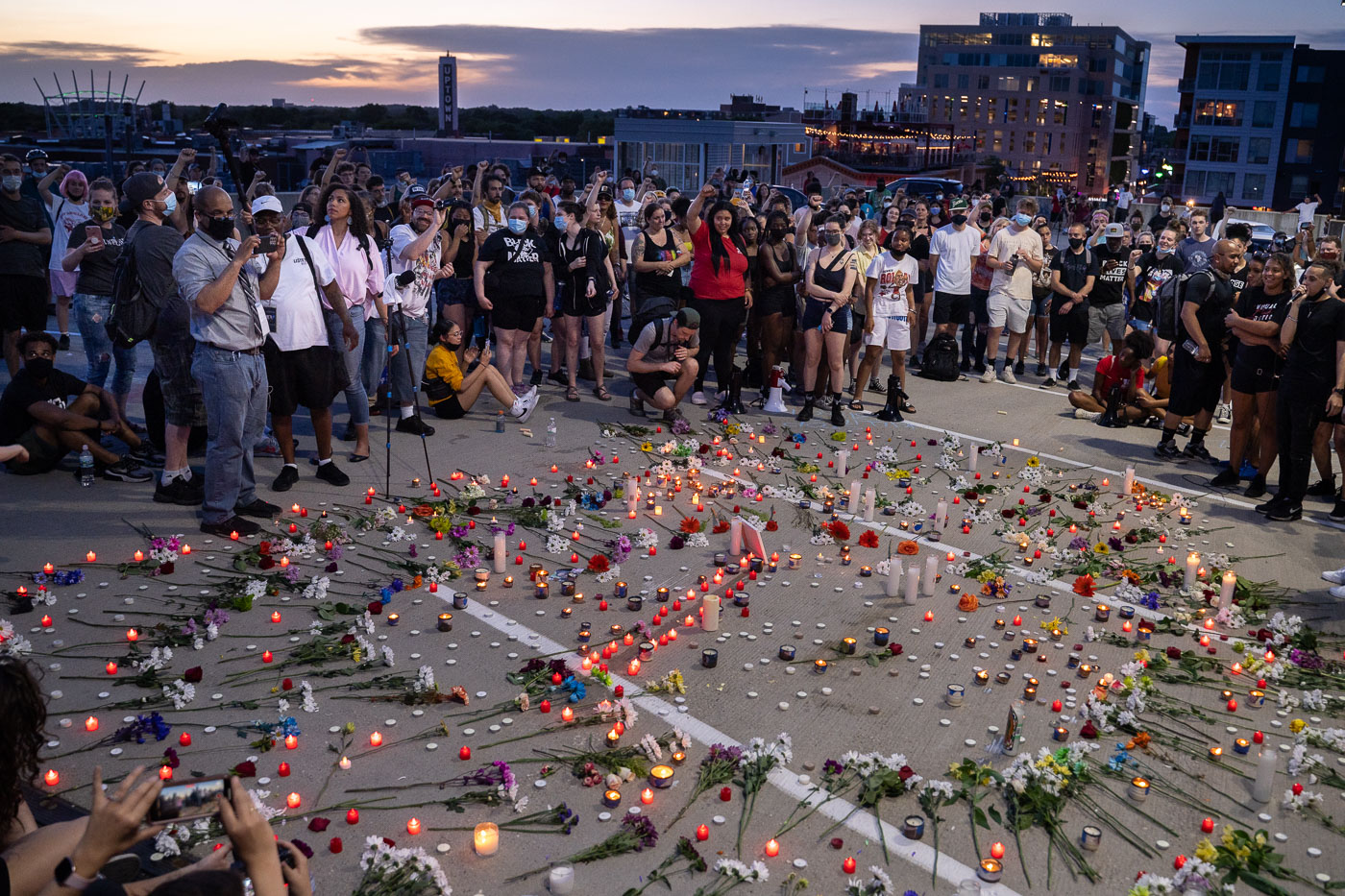
Minneapolis vigil for Winston Smith with candles and flowers at dusk in Uptown.
A vigil was held in Minneapolis following the police shooting of Winston Smith. Community members gathered to honor his memory, placing numerous candles and flowers on the ground where he was killed by a federal task force. On June 3, 2021, members of a U.S. Marshals Service fugitive task force fatally shot 32-year-old Winston “Boogie” Smith Jr. on the top level of a parking ramp in Minneapolis’ Uptown neighborhood while attempting to arrest him on a felony warrant. Authorities said Smith fired a handgun from inside his vehicle during the encounter, while family members and activists questioned the official account and demanded the release of additional evidence. The killing led to weeks of protests, street occupations, and confrontations with police in Uptown, becoming another major flashpoint in Minneapolis during the period following the murder of George Floyd. Earlier in the day Minneapolis city officials along with The Agape Movement coordinated to open the streets that had been closed at George Floyd Square since his murder.

Minneapolis Vigil for Winston Smith After Police Shooting
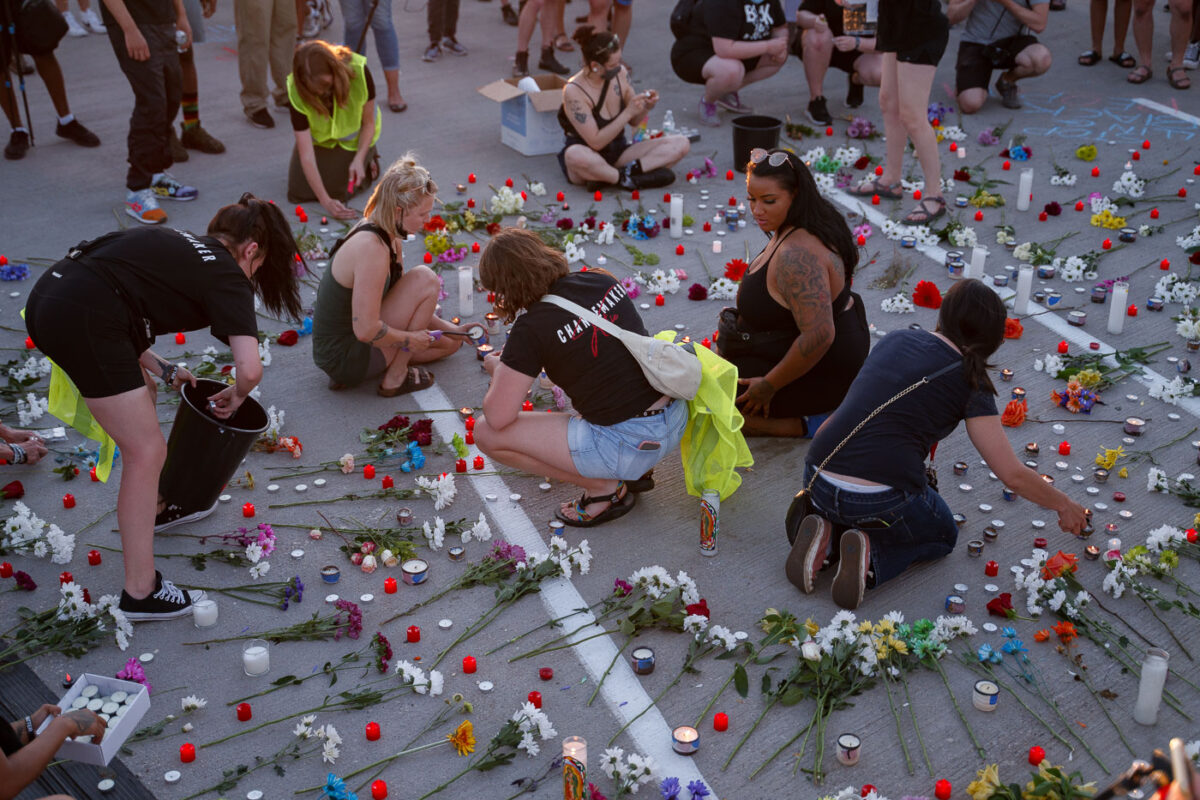
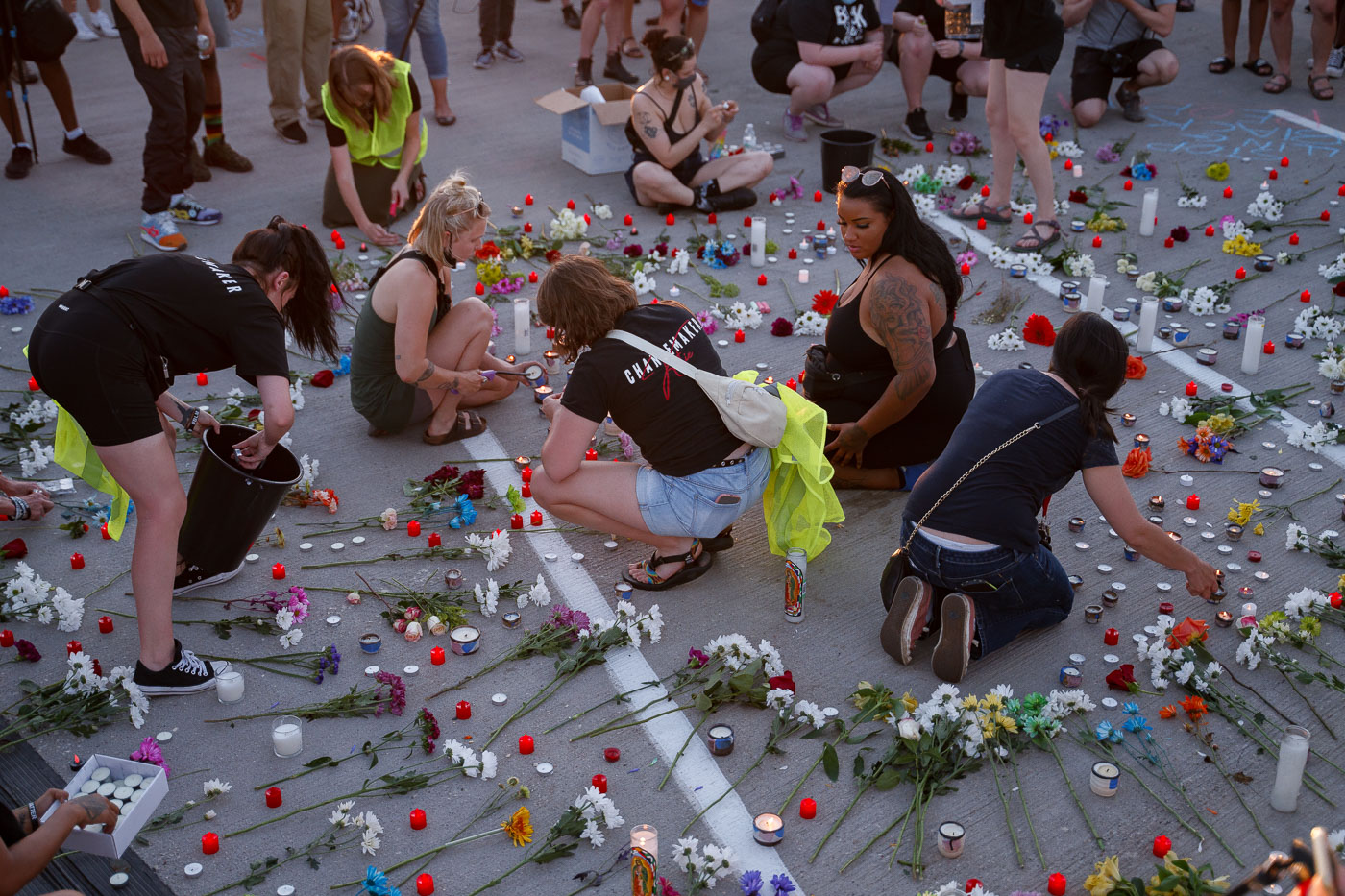
Mourners place candles and flowers on pavement at a vigil in Uptown Minneapolis.
A vigil is held at the site where Winston Smith was killed by law enforcement on June 3rd. Participants placed flowers and lit candles on the pavement, creating a memorial. The event occurred in Uptown Minneapolis, a neighborhood that saw significant unrest following Smith's death and other incidents of police violence. On June 3, 2021, members of a U.S. Marshals Service fugitive task force fatally shot 32-year-old Winston “Boogie” Smith Jr. on the top level of a parking ramp in Minneapolis’ Uptown neighborhood while attempting to arrest him on a felony warrant. Authorities said Smith fired a handgun from inside his vehicle during the encounter, while family members and activists questioned the official account and demanded the release of additional evidence. The killing led to weeks of protests, street occupations, and confrontations with police in Uptown, becoming another major flashpoint in Minneapolis during the period following the murder of George Floyd. Earlier in the day Minneapolis city officials along with The Agape Movement coordinated to open the streets that had been closed at George Floyd Square since his murder.

Protesters with candles at Winston Smith vigil
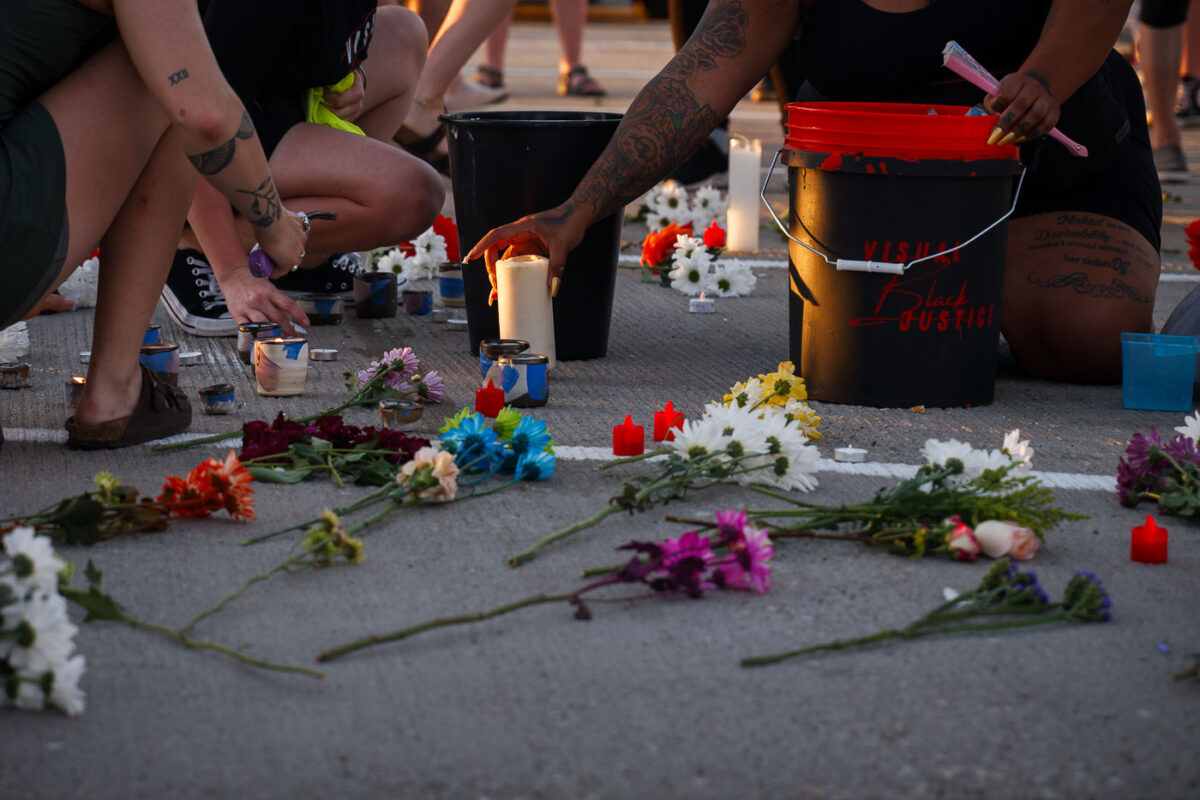
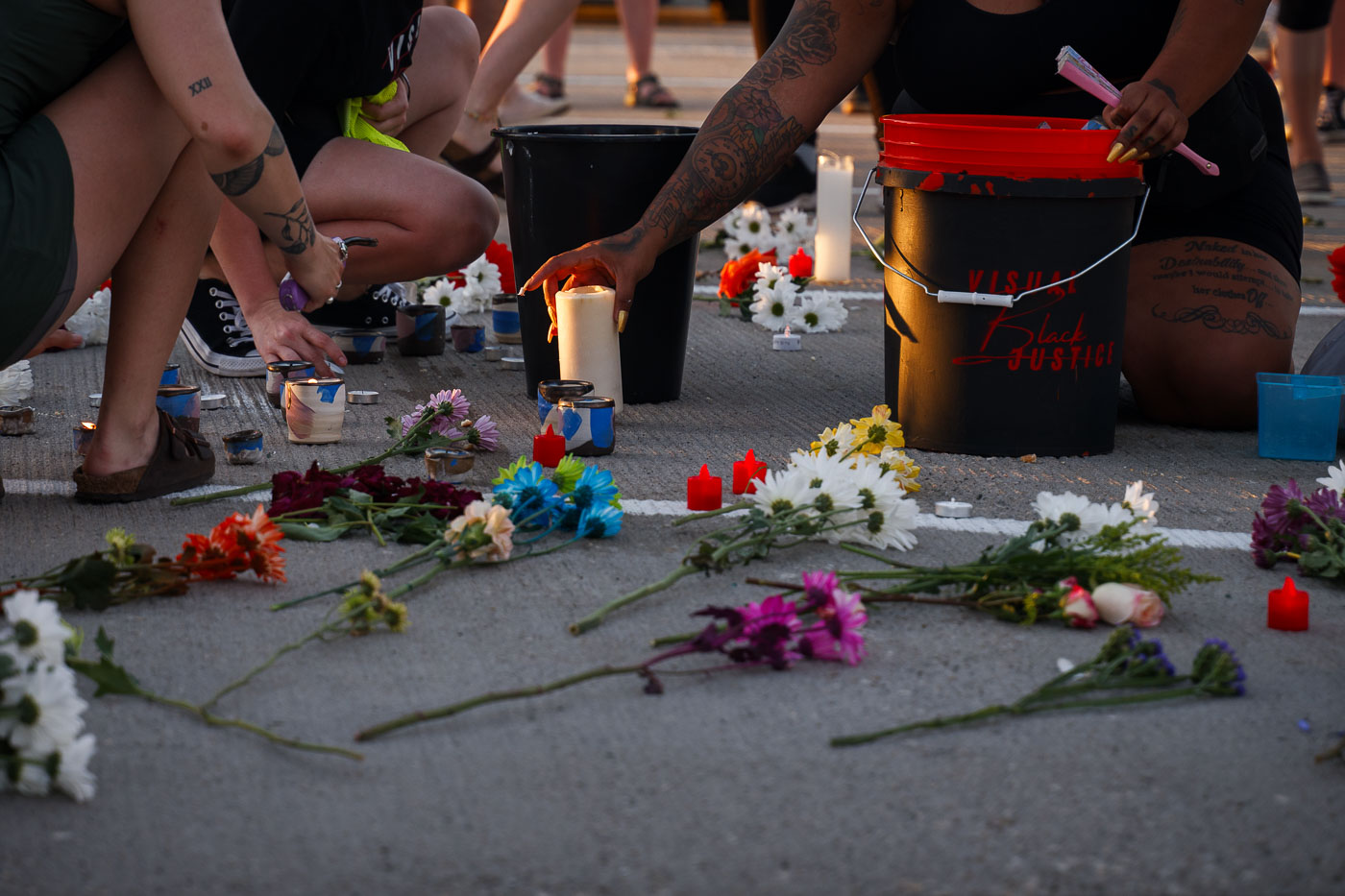
Mourners place candles and flowers at a vigil in Minneapolis for Winston Smith.
A vigil was held on the parking ramp in Uptown Minneapolis where Winston Smith was killed by law enforcement on June 4th, 2021. Attendees lit candles and placed flowers in remembrance of Smith, who was shot and killed by a federal task force. On June 3, 2021, members of a U.S. Marshals Service fugitive task force fatally shot 32-year-old Winston “Boogie” Smith Jr. on the top level of a parking ramp in Minneapolis’ Uptown neighborhood while attempting to arrest him on a felony warrant. Authorities said Smith fired a handgun from inside his vehicle during the encounter, while family members and activists questioned the official account and demanded the release of additional evidence. The killing led to weeks of protests, street occupations, and confrontations with police in Uptown, becoming another major flashpoint in Minneapolis during the period following the murder of George Floyd. Earlier in the day Minneapolis city officials along with The Agape Movement coordinated to open the streets that had been closed at George Floyd Square since his murder.

Winston Smith Vigil on Parking Ramp, Uptown Minneapolis
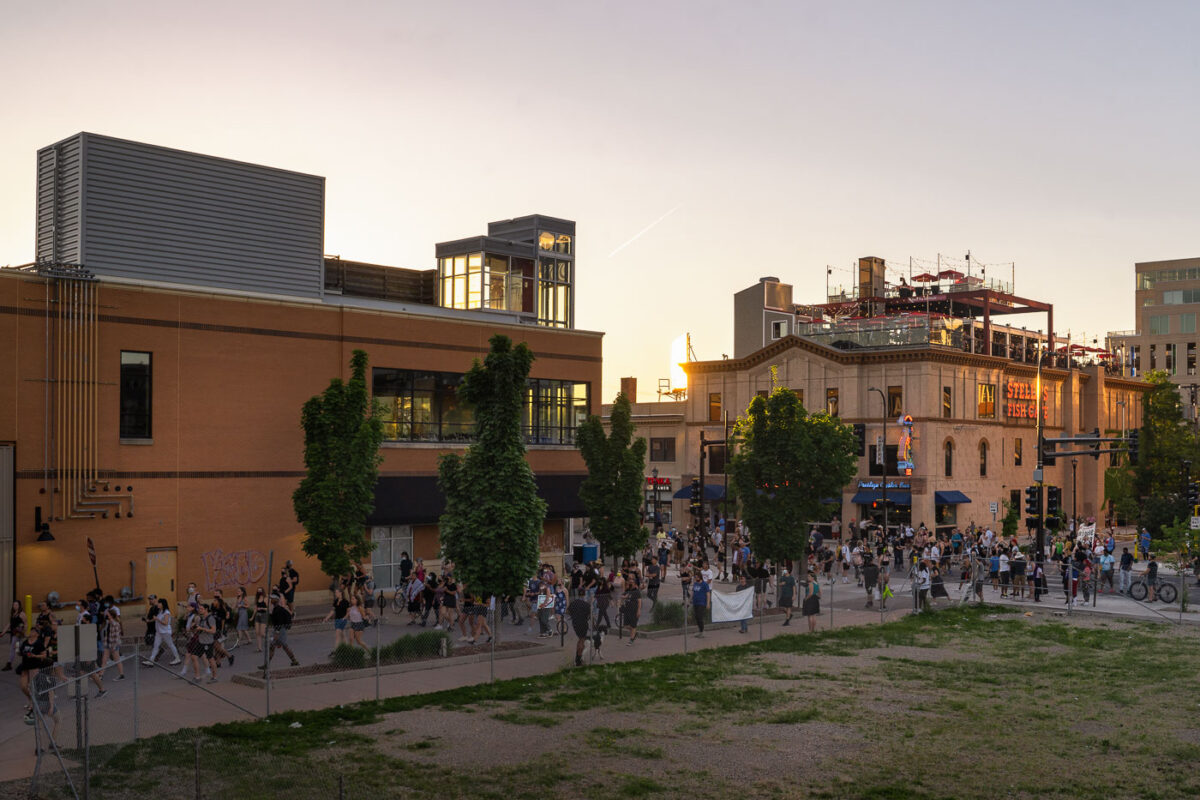
Protesters march along Hennepin Avenue in Uptown Minneapolis at sunset
Protesters march through Uptown Minneapolis on June 24, 2021, following the killing of Winston Smith. On June 3, 2021, members of a U.S. Marshals Service fugitive task force fatally shot 32-year-old Winston “Boogie” Smith Jr. on the top level of a parking ramp in Minneapolis’ Uptown neighborhood while attempting to arrest him on a felony warrant. Authorities said Smith fired a handgun from inside his vehicle during the encounter, while family members and activists questioned the official account and demanded the release of additional evidence. The killing led to weeks of protests, street occupations, and confrontations with police in Uptown, becoming another major flashpoint in Minneapolis during the period following the murder of George Floyd. Earlier in the day Minneapolis city officials along with The Agape Movement coordinated to open the streets that had been closed at George Floyd Square since his murder.

Protesters March in Uptown Minneapolis After Winston Smith Killing
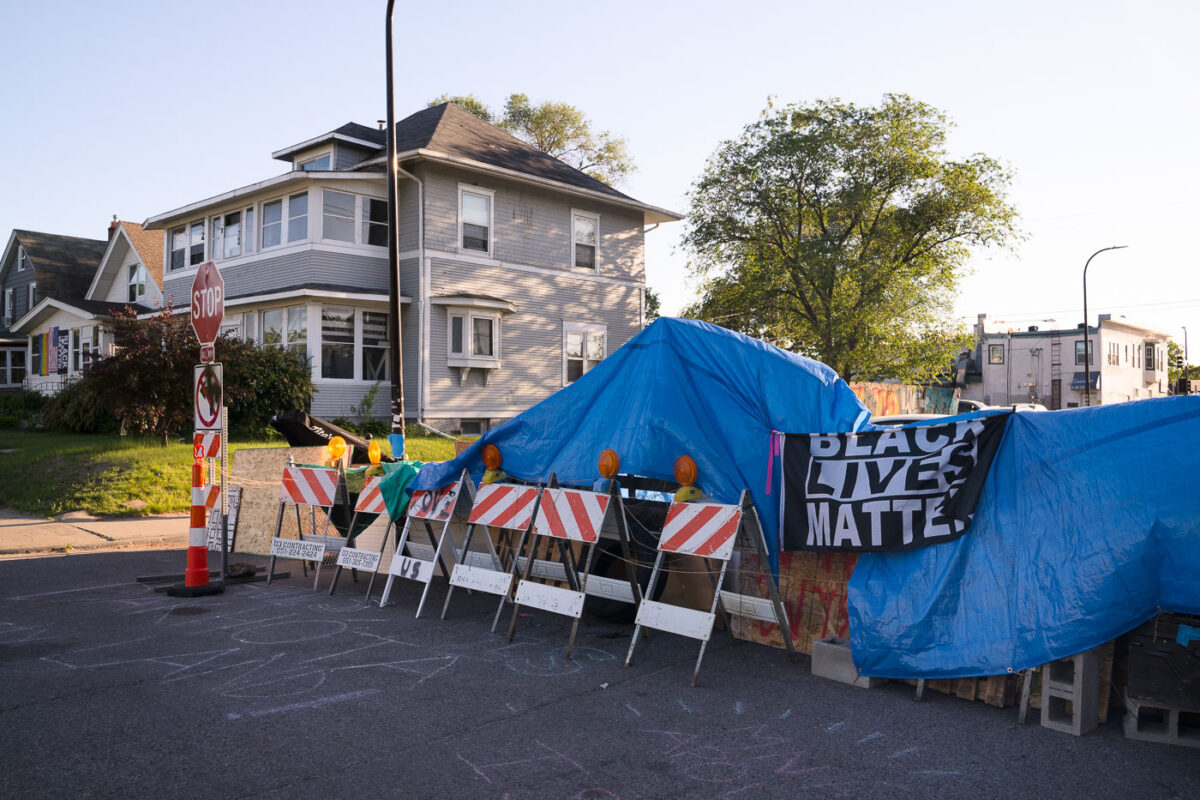
Barricades with a Black Lives Matter banner at George Floyd Square in Minneapolis
Barricades, including a Black Lives Matter banner, at George Floyd Square in Minneapolis. The square, located at the intersection of 38th Street and Elliott Avenue, was established as an autonomous zone following the murder of George Floyd in May 2020. City workers removed the barricades the day before this photograph was taken, marking a significant moment in the ongoing occupation and its eventual dismantling. On May 25, 2020, Minneapolis police officer Derek Chauvin murdered 46-year-old George Floyd during an arrest outside Cup Foods at the intersection of 38th Street and Chicago Avenue in south Minneapolis. Video recorded by bystanders showed Chauvin kneeling on Floyd’s neck for more than nine minutes while Floyd repeatedly said he could not breathe. Three other Minneapolis police officers - J. Alexander Kueng, Thomas Lane, and Tou Thao — were also present during the arrest and later faced criminal charges for their roles in Floyd’s death. Floyd’s murder sparked protests and civil unrest across Minneapolis and around the world, leading to widespread demonstrations against police violence, major policy debates on policing, and the conviction of Chauvin on murder and manslaughter charges in 2021.

George Floyd Square Barricades with BLM Banner, Minneapolis
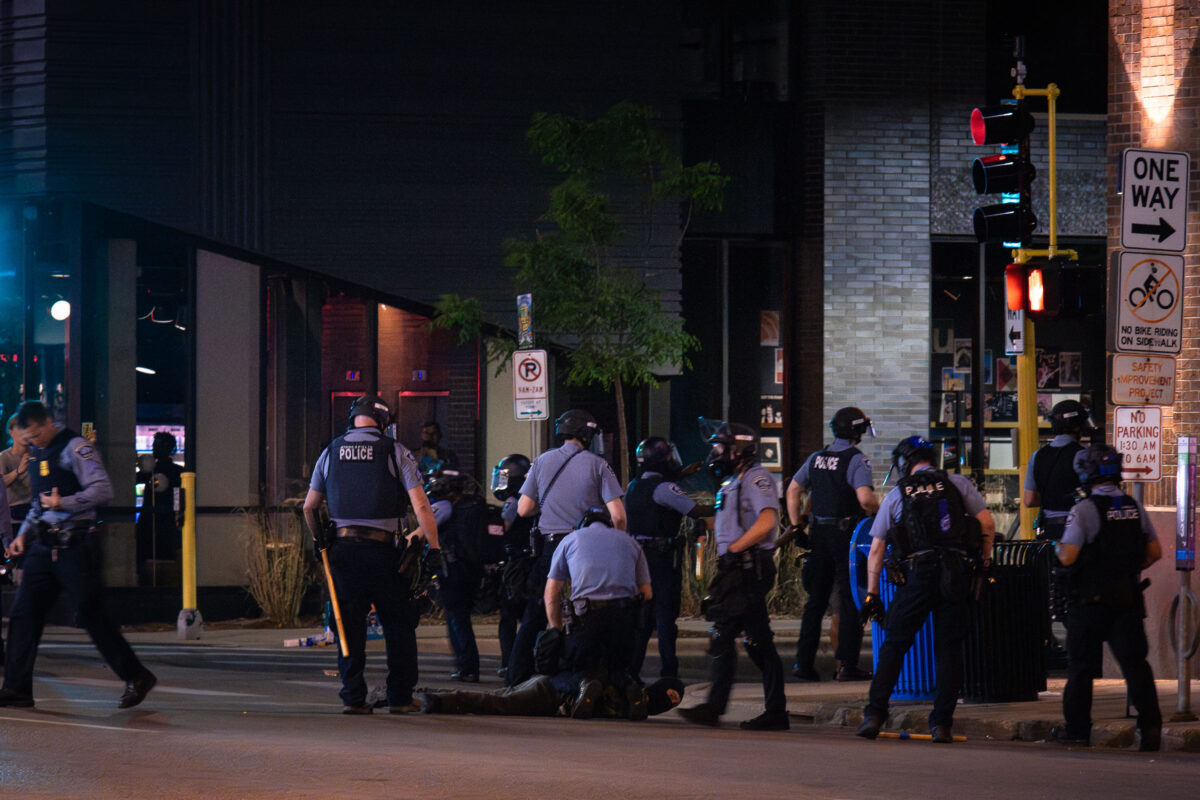
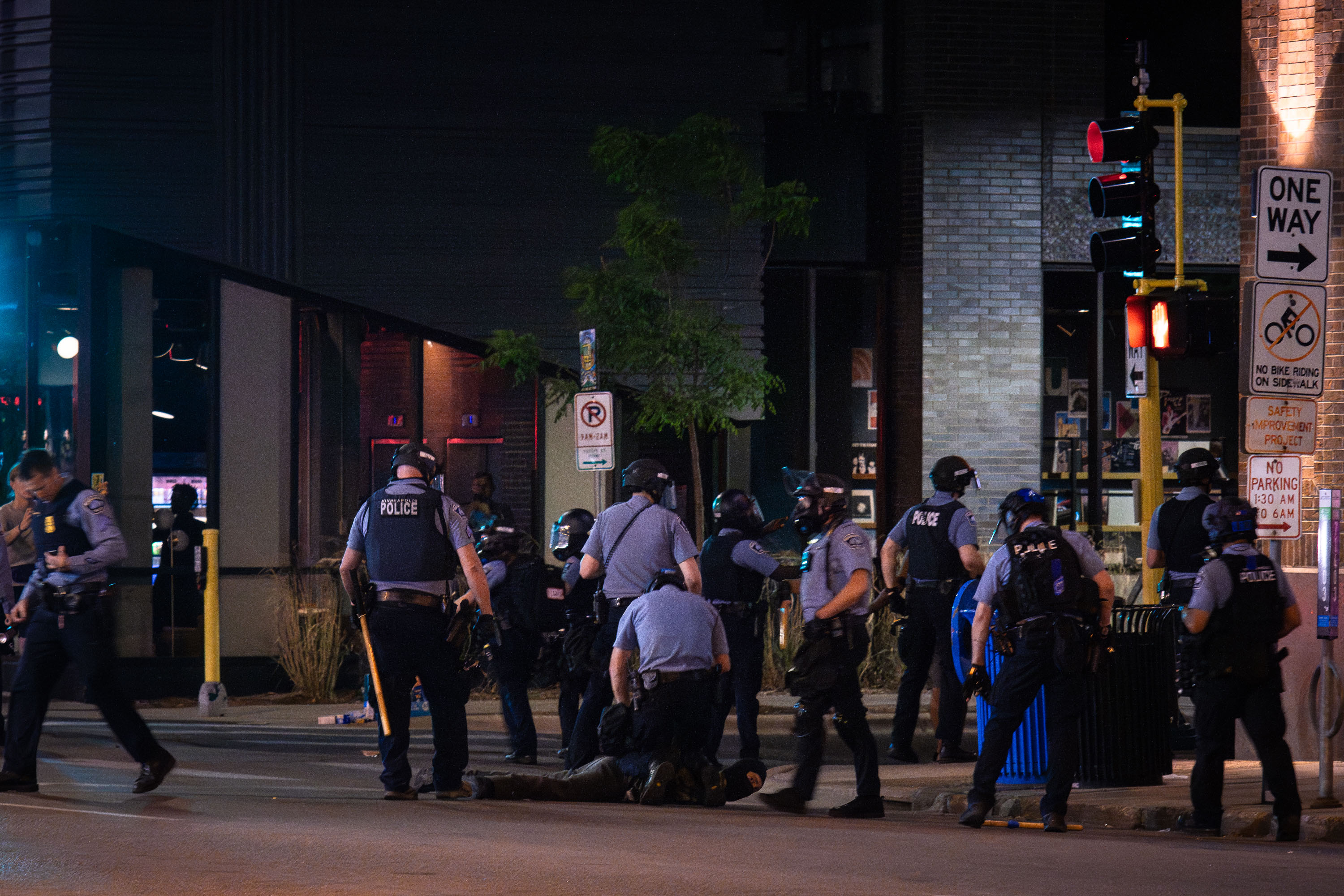
Minneapolis Police Arrest Winston Smith  Protesters
Protesters who had been protesting the killing of Winston Smith earlier in the day are arrested on Lake Street in Uptown Minneapolis.

Minneapolis Police Arrest Winston Smith Protesters

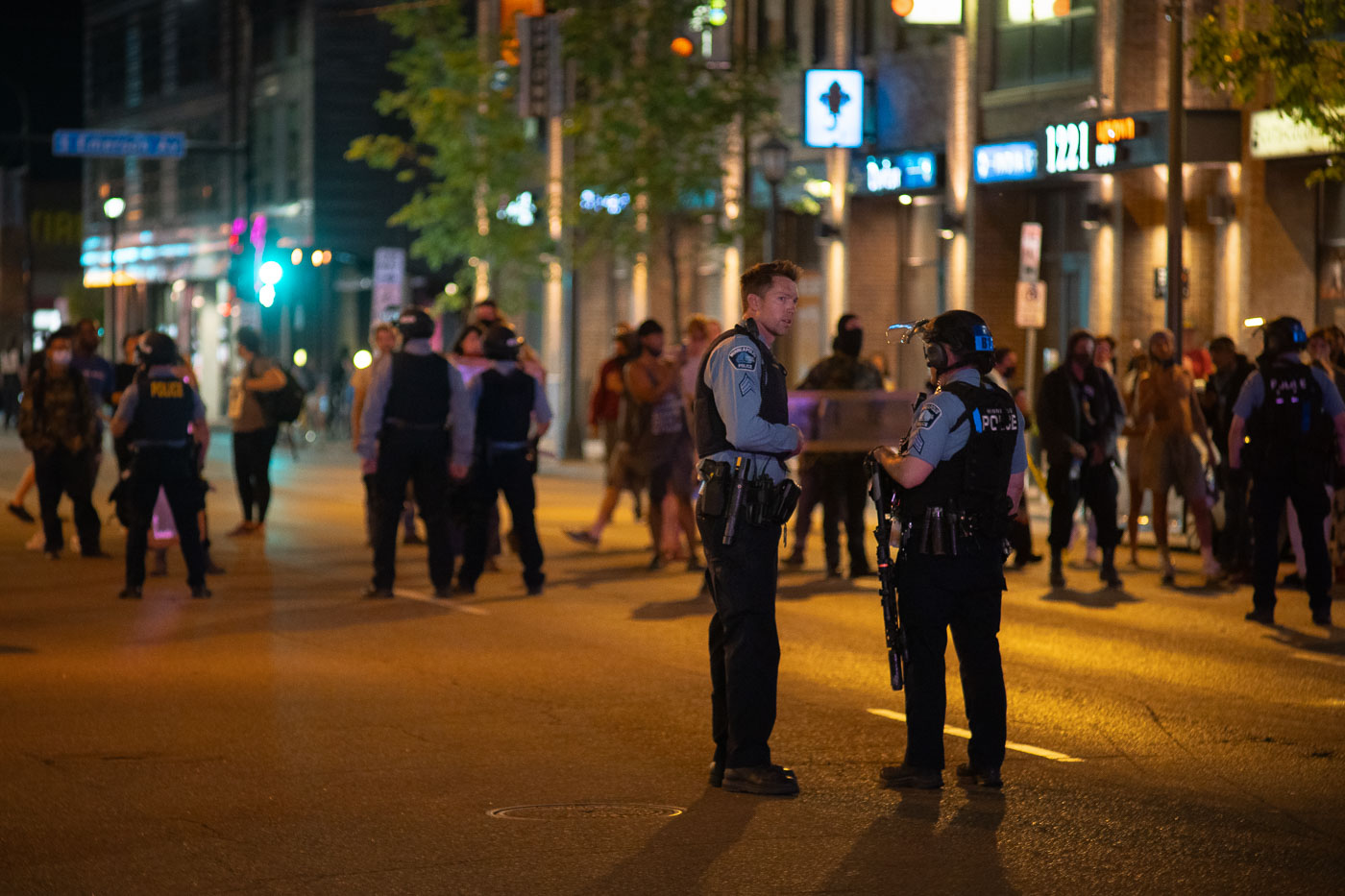
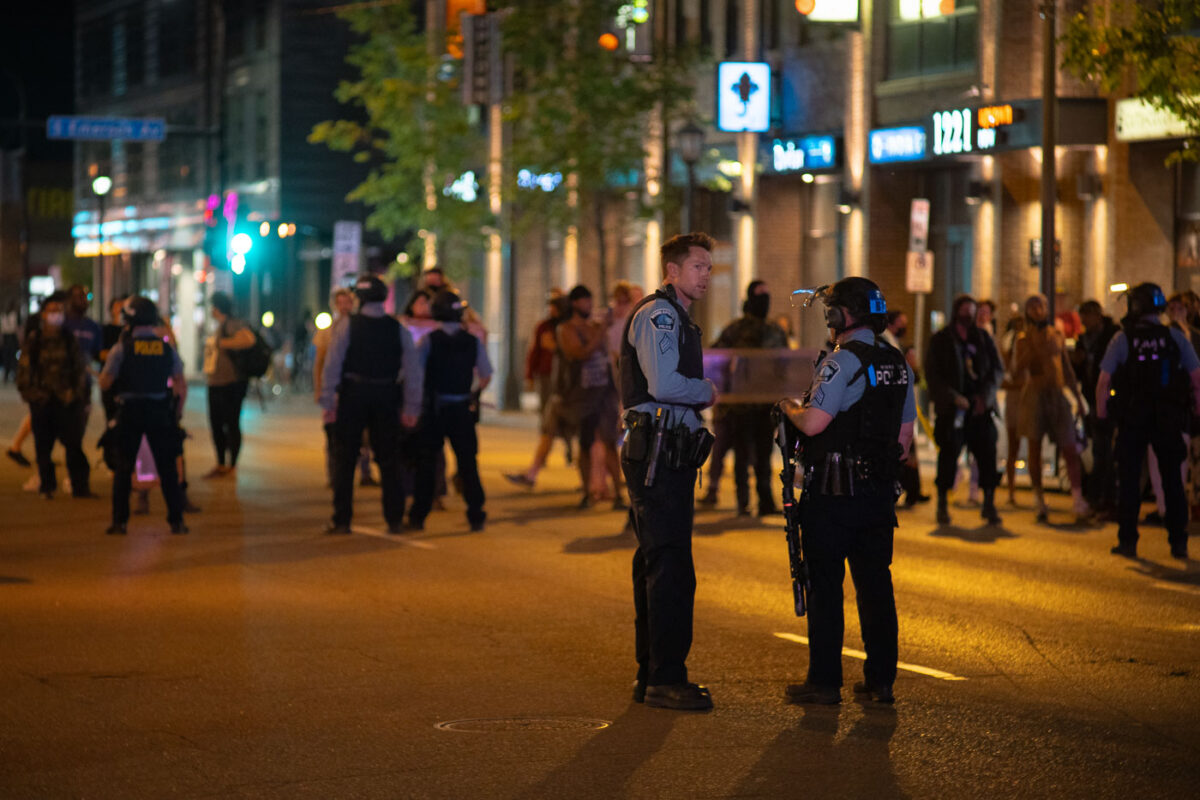
Minneapolis police officers stand on Lake Street near protesters at night
Minneapolis Police officers confront protesters on Lake Street in Minneapolis on June 3, 2021. The gathering occurred hours after Winston Smith Jr. was killed by police in a parking garage in the Uptown neighborhood. On June 3, 2021, members of a U.S. Marshals Service fugitive task force fatally shot 32-year-old Winston “Boogie” Smith Jr. on the top level of a parking ramp in Minneapolis’ Uptown neighborhood while attempting to arrest him on a felony warrant. Authorities said Smith fired a handgun from inside his vehicle during the encounter, while family members and activists questioned the official account and demanded the release of additional evidence. The killing led to weeks of protests, street occupations, and confrontations with police in Uptown, becoming another major flashpoint in Minneapolis during the period following the murder of George Floyd. Earlier in the day Minneapolis city officials along with The Agape Movement coordinated to open the streets that had been closed at George Floyd Square since his murder.

Minneapolis Police confront Winston Smith protesters on Lake Street
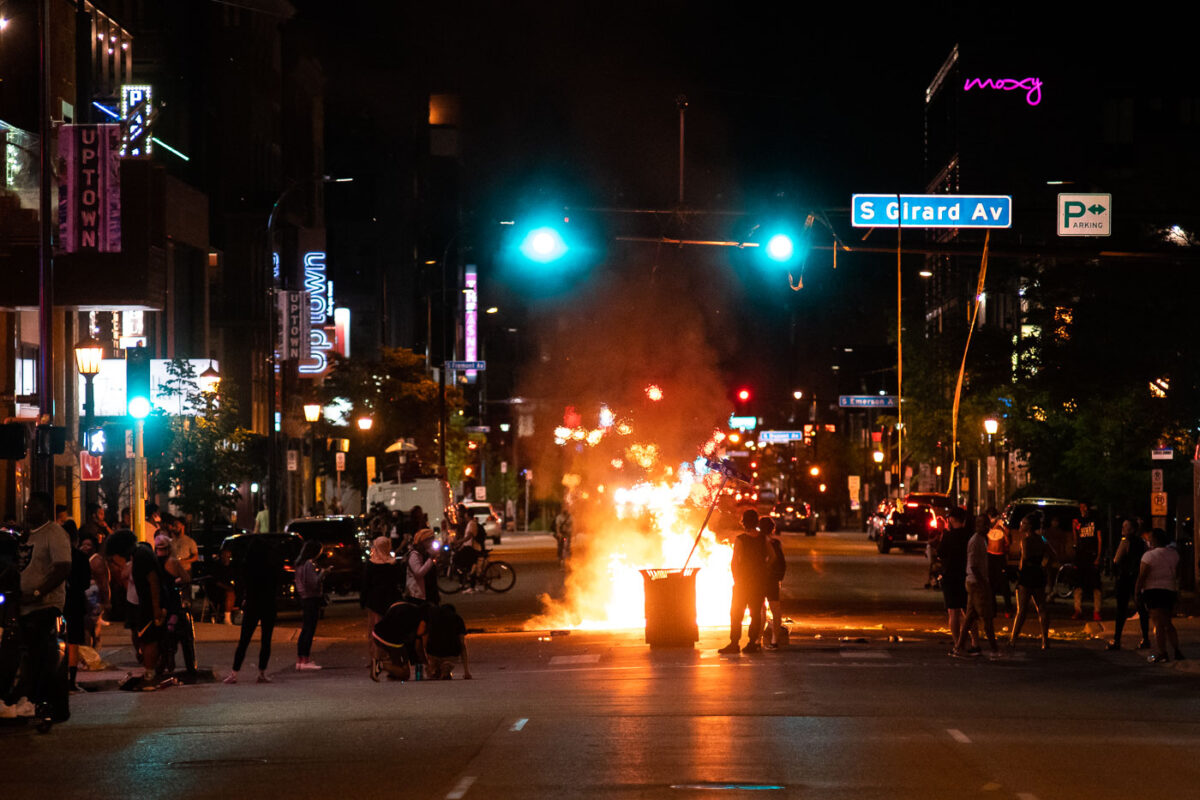
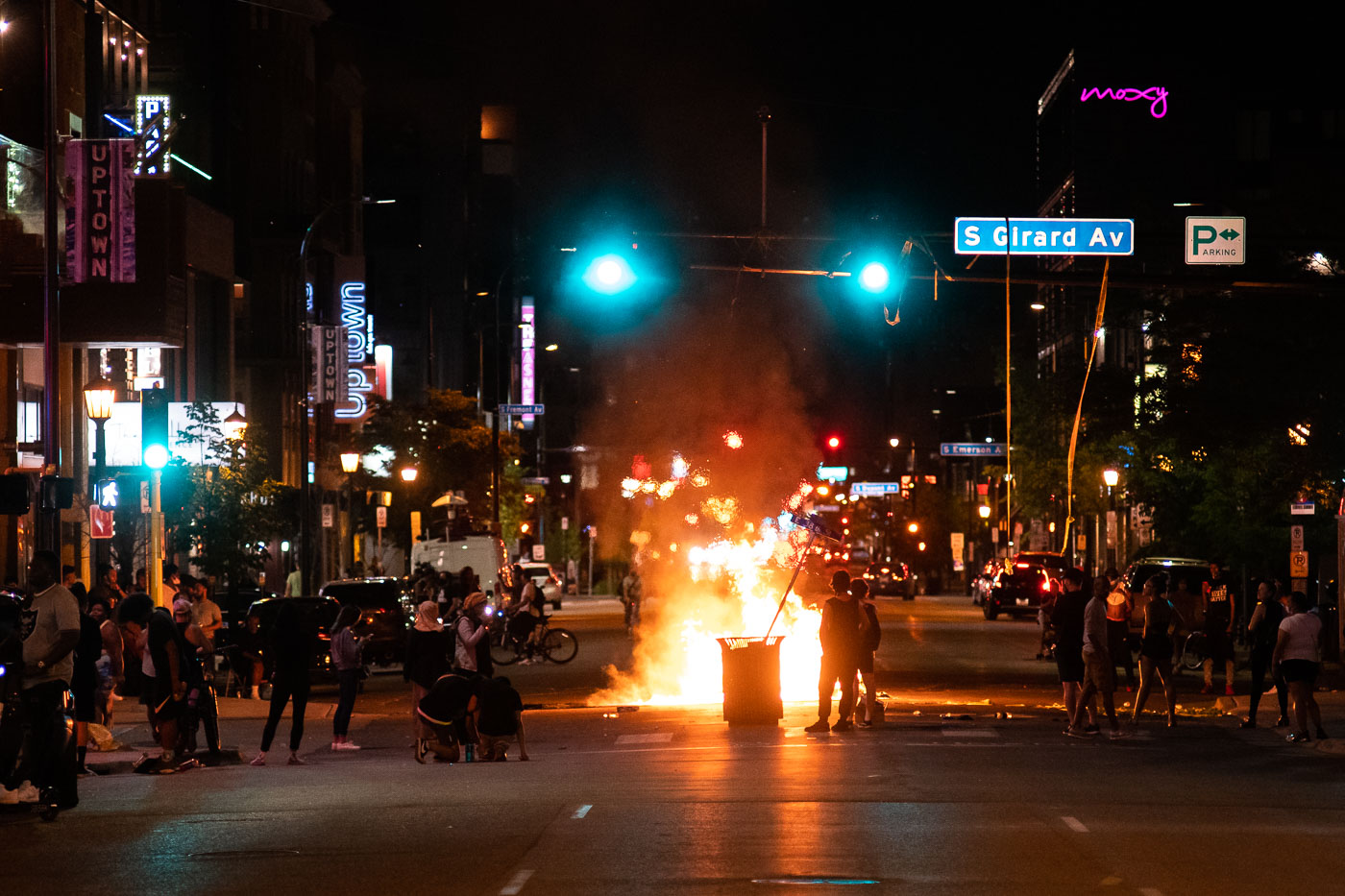
People gather around a burning trash can at Lake Street and S Girard Ave in Minneapolis at night.
Protesters gather at the intersection of Lake Street and South Girard Avenue in Uptown Minneapolis on June 23, 2021. On June 3, 2021, members of a U.S. Marshals Service fugitive task force fatally shot 32-year-old Winston “Boogie” Smith Jr. on the top level of a parking ramp in Minneapolis’ Uptown neighborhood while attempting to arrest him on a felony warrant. Authorities said Smith fired a handgun from inside his vehicle during the encounter, while family members and activists questioned the official account and demanded the release of additional evidence. The killing led to weeks of protests, street occupations, and confrontations with police in Uptown, becoming another major flashpoint in Minneapolis during the period following the murder of George Floyd. Earlier in the day Minneapolis city officials along with The Agape Movement coordinated to open the streets that had been closed at George Floyd Square since his murder.

Minneapolis: Fire at Lake St & S Girard Ave After Winston Smith Killing
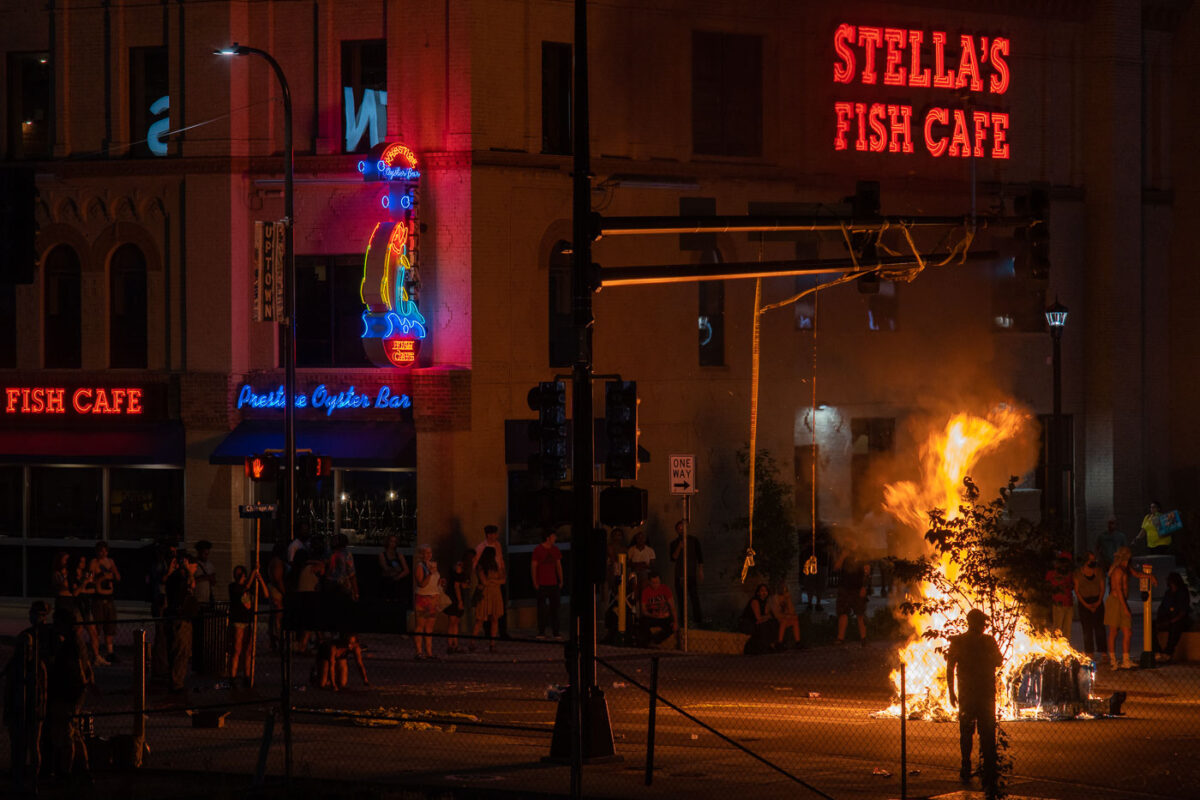
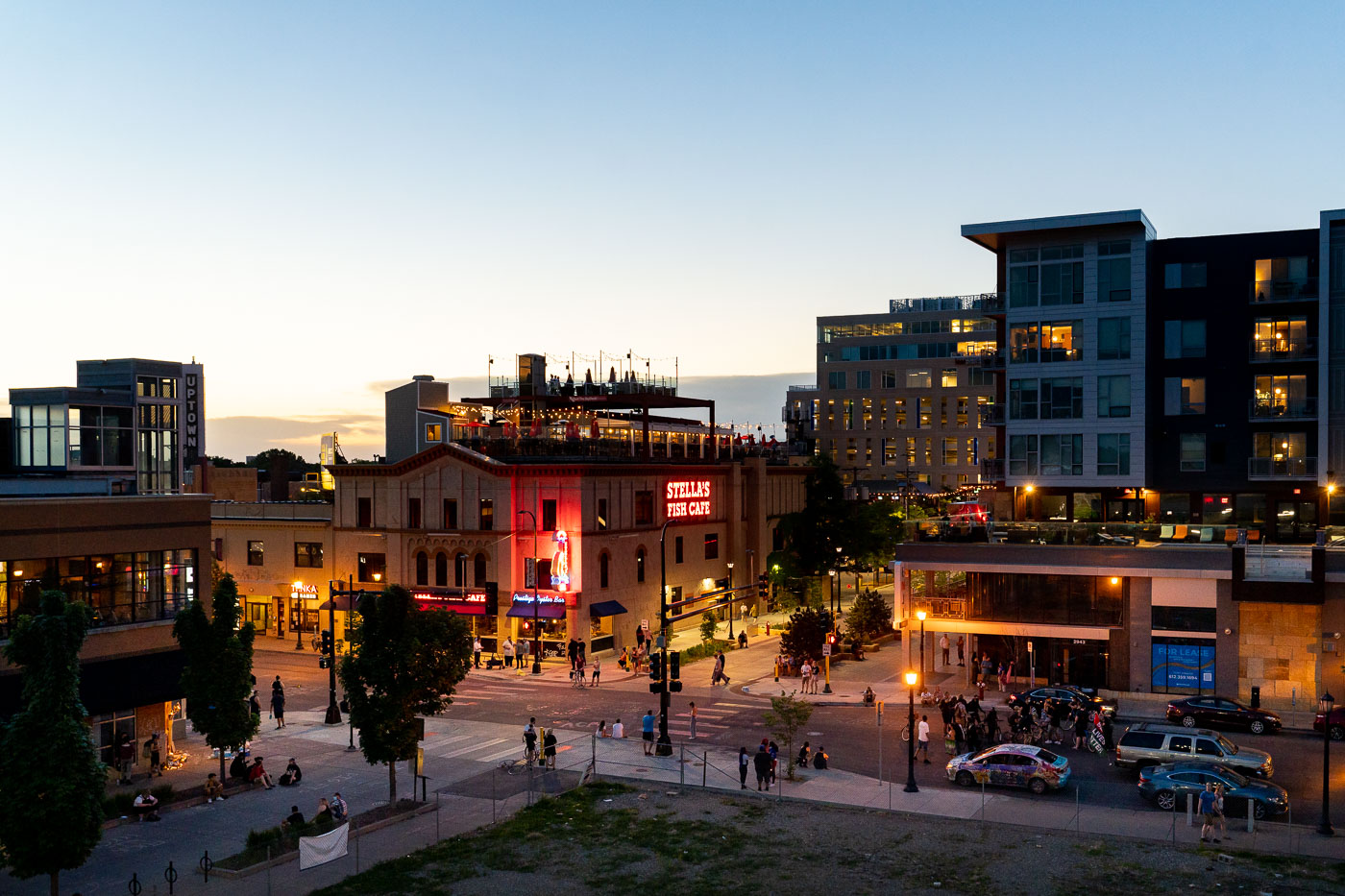
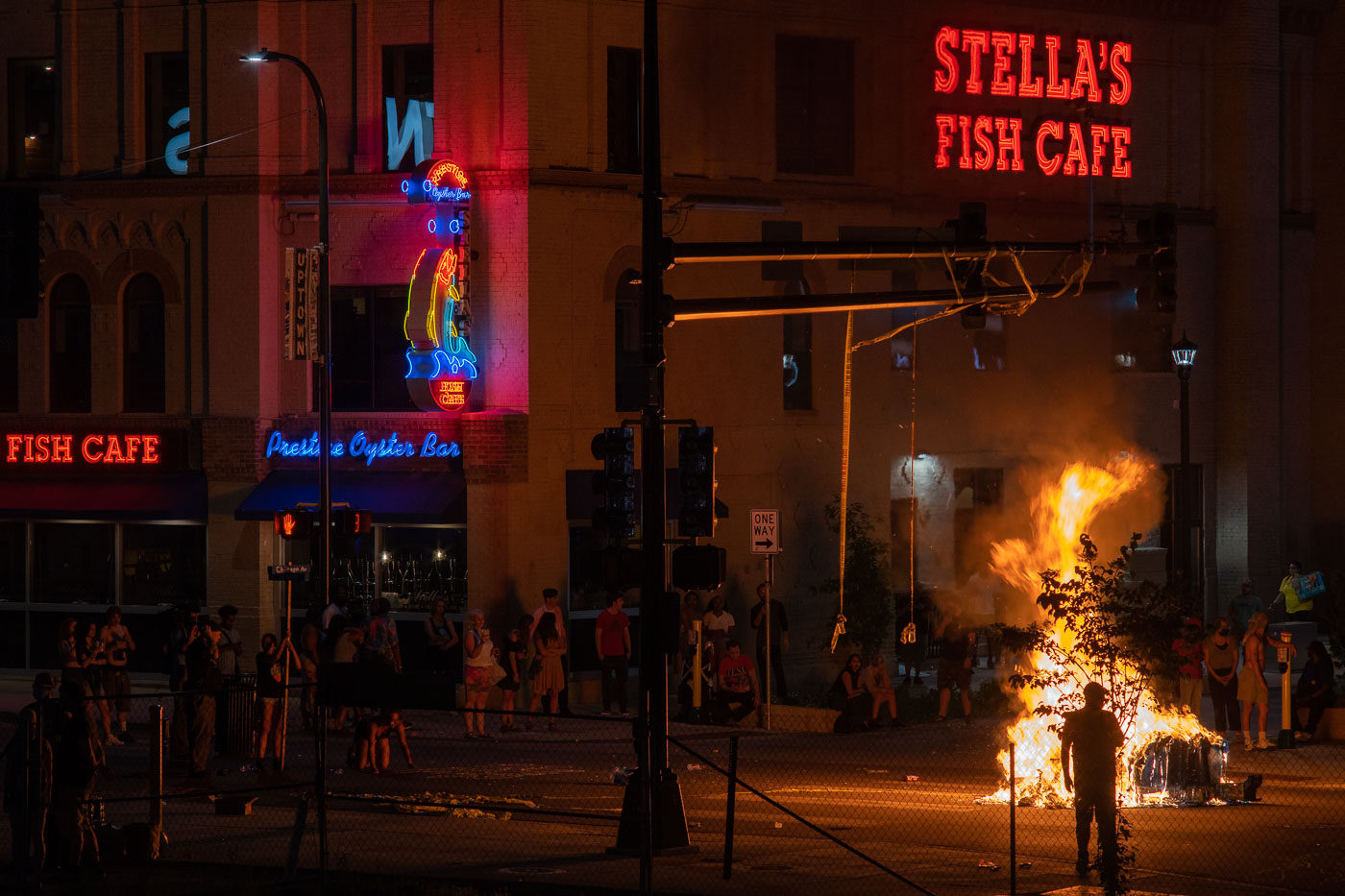
Fire burns in the street outside Stella's Fish Cafe on Lake Street in Minneapolis during unrest.
On the evening of June 3, 2020, protests erupted in Uptown Minneapolis following the killing of Winston Smith by law enforcement earlier that day. The unrest led to fires and property damage along Lake Street, a major commercial corridor. On June 3, 2021, members of a U.S. Marshals Service fugitive task force fatally shot 32-year-old Winston “Boogie” Smith Jr. on the top level of a parking ramp in Minneapolis’ Uptown neighborhood while attempting to arrest him on a felony warrant. Authorities said Smith fired a handgun from inside his vehicle during the encounter, while family members and activists questioned the official account and demanded the release of additional evidence. The killing led to weeks of protests, street occupations, and confrontations with police in Uptown, becoming another major flashpoint in Minneapolis during the period following the murder of George Floyd. Earlier in the day Minneapolis city officials along with The Agape Movement coordinated to open the streets that had been closed at George Floyd Square since his murder.

Minneapolis: Fire on Lake Street during Winston Smith protests
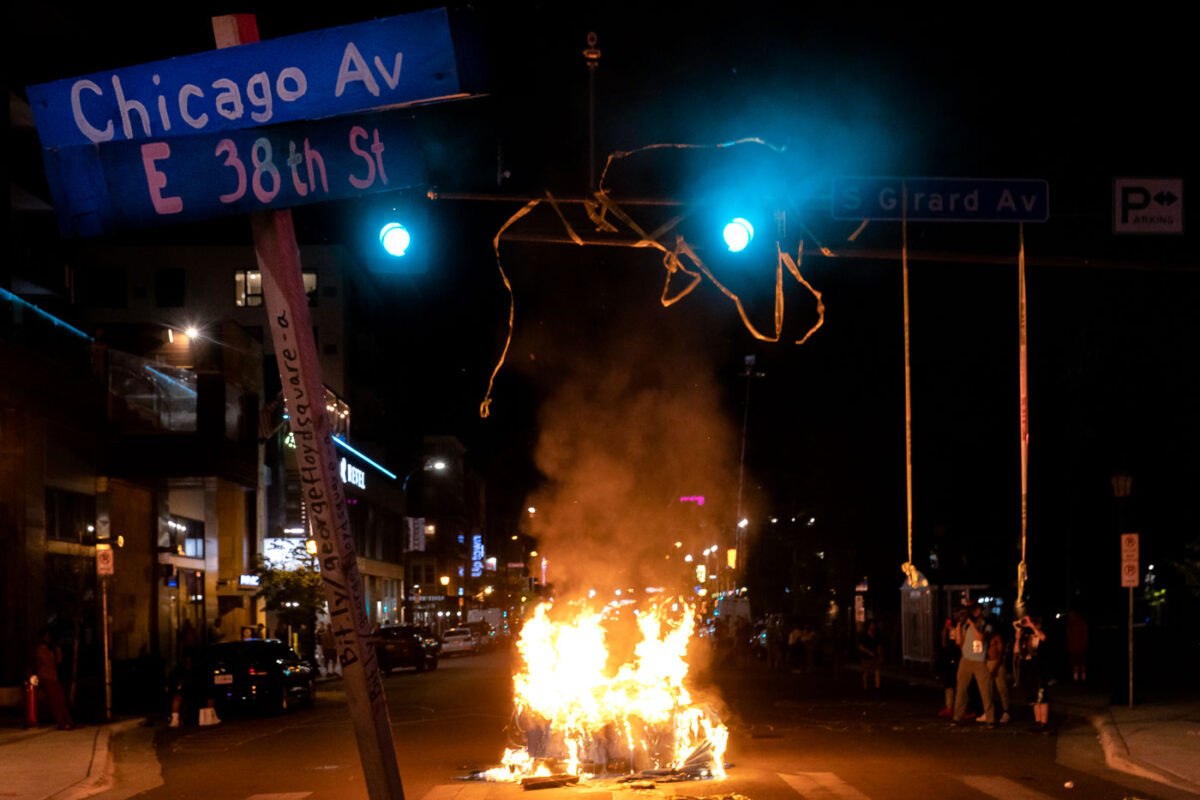
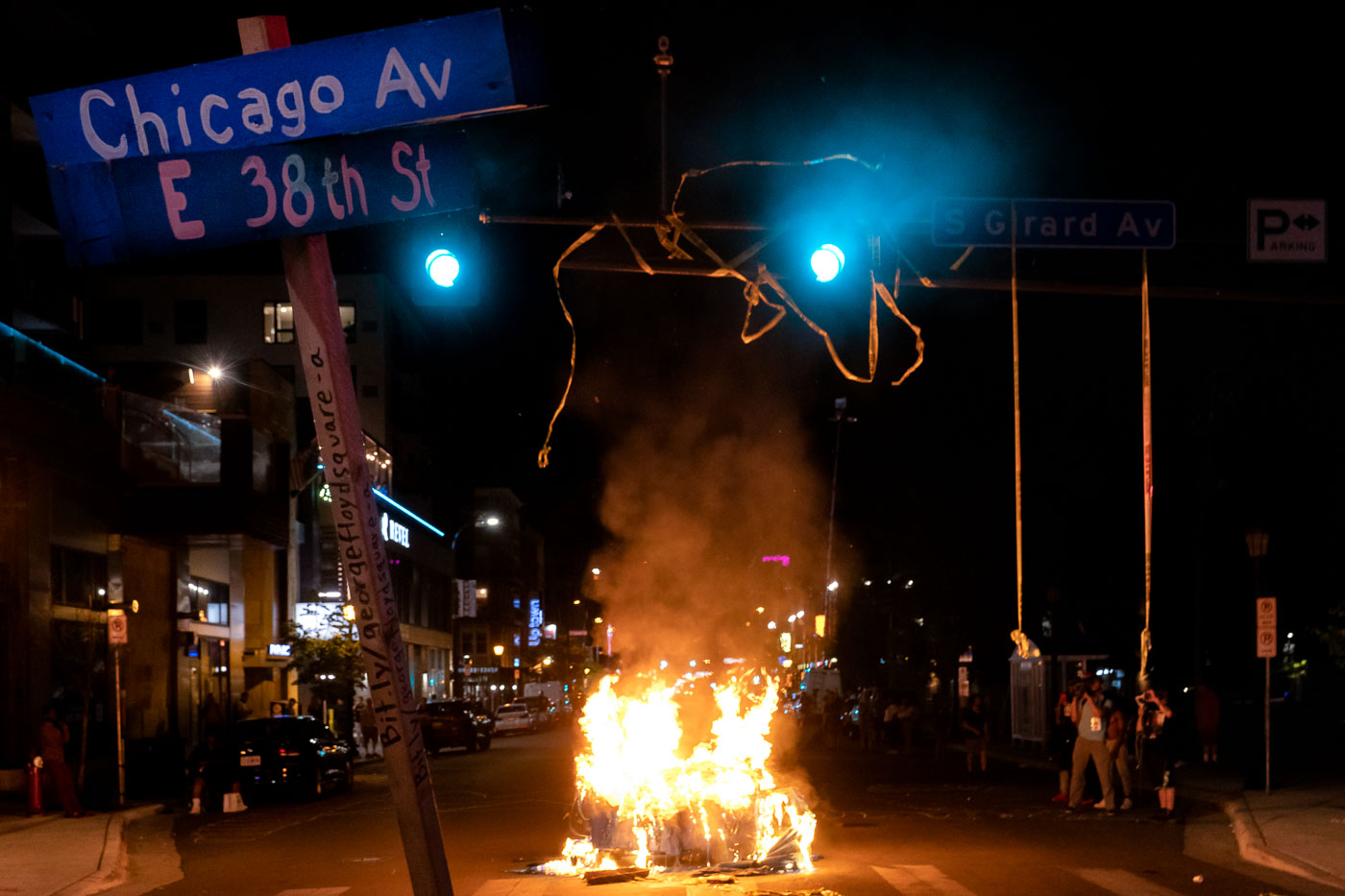
Fire burns in the street at Chicago Ave and S Girard Ave in Minneapolis at night.
Protesters burn a dumpster at Lake Street and Girard avenue in Uptown Minneapolis on June 3, 2021. On June 3, 2021, members of a U.S. Marshals Service fugitive task force fatally shot 32-year-old Winston “Boogie” Smith Jr. on the top level of a parking ramp in Minneapolis’ Uptown neighborhood while attempting to arrest him on a felony warrant. Authorities said Smith fired a handgun from inside his vehicle during the encounter, while family members and activists questioned the official account and demanded the release of additional evidence. The killing led to weeks of protests, street occupations, and confrontations with police in Uptown, becoming another major flashpoint in Minneapolis during the period following the murder of George Floyd. Earlier in the day Minneapolis city officials along with The Agape Movement coordinated to open the streets that had been closed at George Floyd Square since his murder.

Minneapolis: Fire at Chicago Ave and S Girard Ave during protest
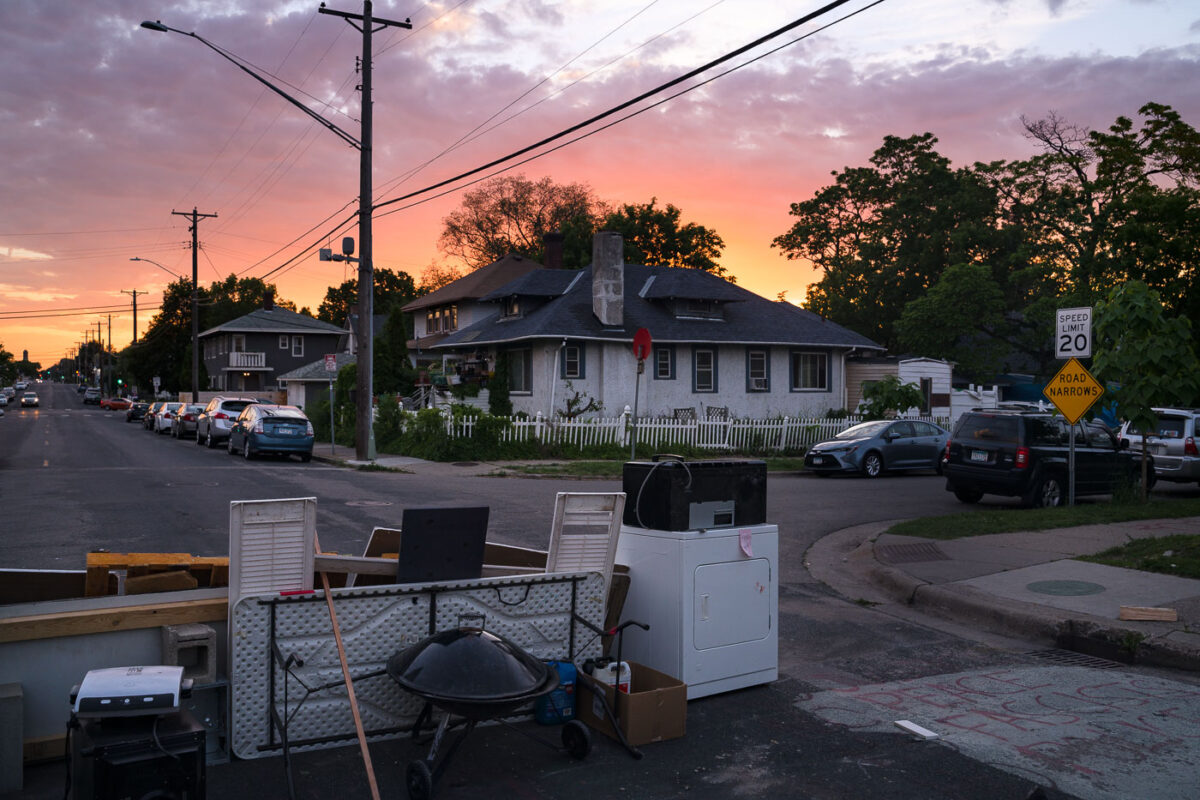
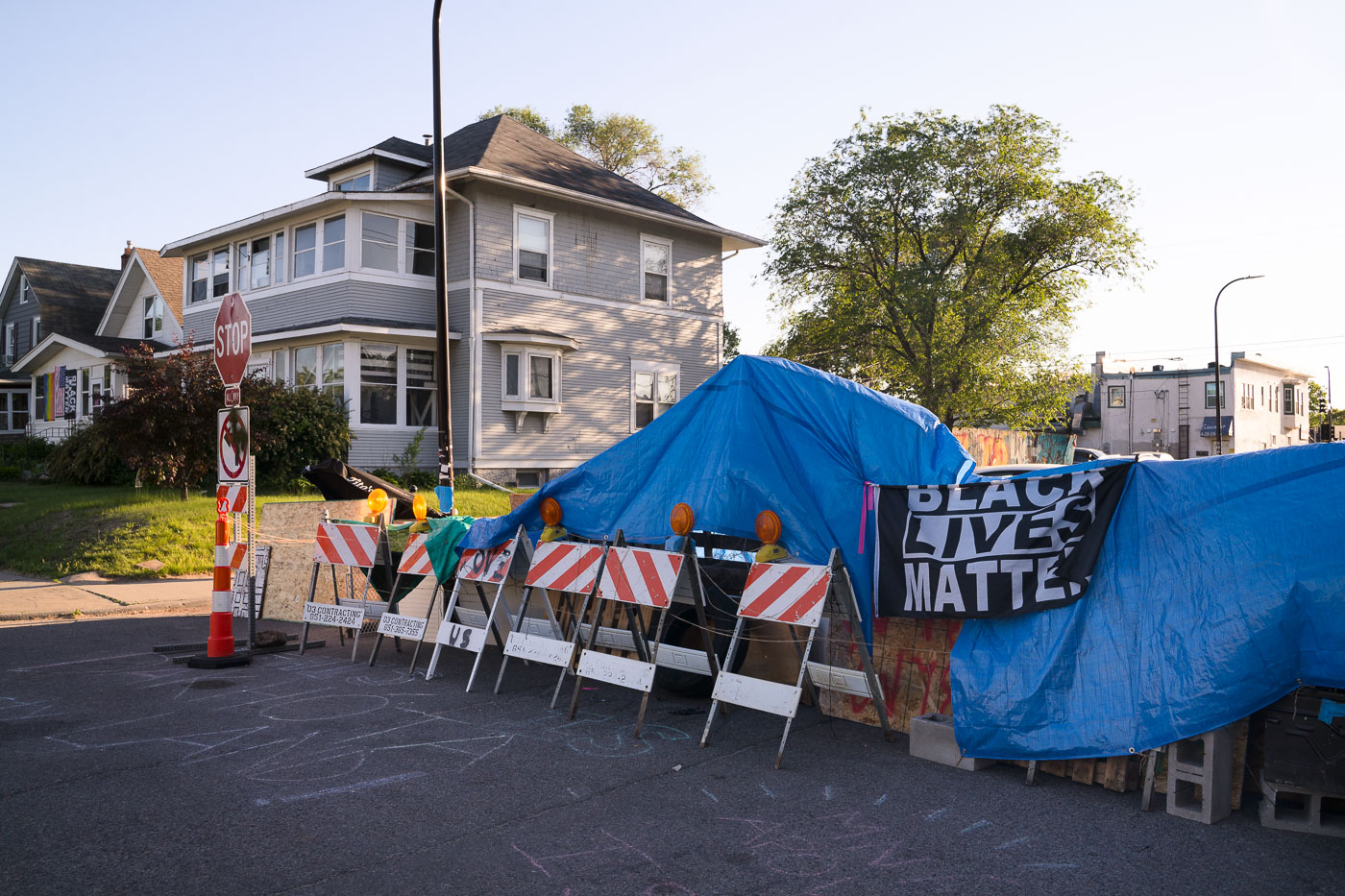
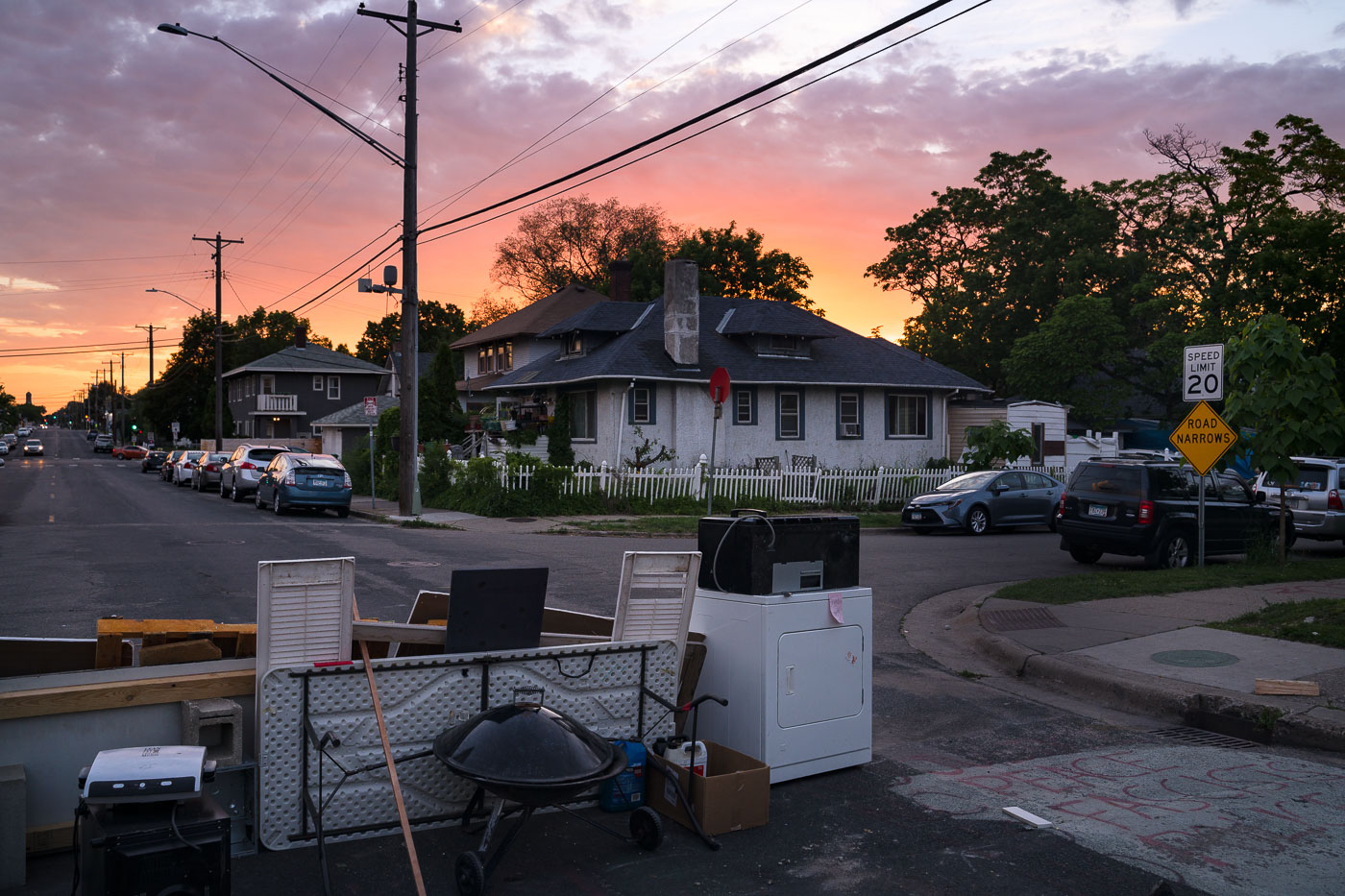
Barricades and household items block a Minneapolis street at sunset near George Floyd Square.
Barricades are re-established at George Floyd Square in Minneapolis at sunset on June 3, 2021, following an earlier clearing by the city. The square, located at the intersection of 38th Street and Chicago Avenue, became a focal point of protests and community organizing after the murder of George Floyd in May 2020. The community established autonomous zones and erected barricades to control access and create a space for remembrance and activism. On May 25, 2020, Minneapolis police officer Derek Chauvin murdered 46-year-old George Floyd during an arrest outside Cup Foods at the intersection of 38th Street and Chicago Avenue in south Minneapolis. Video recorded by bystanders showed Chauvin kneeling on Floyd’s neck for more than nine minutes while Floyd repeatedly said he could not breathe. Three other Minneapolis police officers - J. Alexander Kueng, Thomas Lane, and Tou Thao — were also present during the arrest and later faced criminal charges for their roles in Floyd’s death. Floyd’s murder sparked protests and civil unrest across Minneapolis and around the world, leading to widespread demonstrations against police violence, major policy debates on policing, and the conviction of Chauvin on murder and manslaughter charges in 2021.

George Floyd Square Barricades at Sunset, Minneapolis
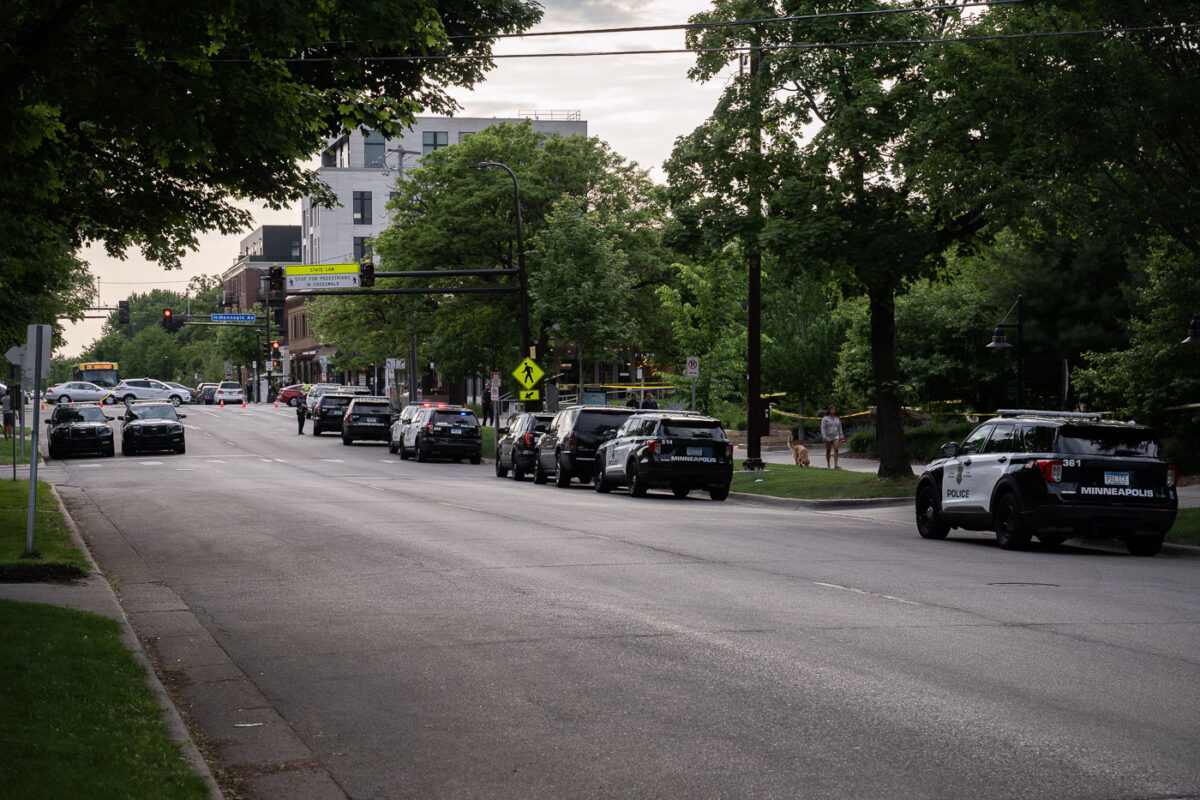
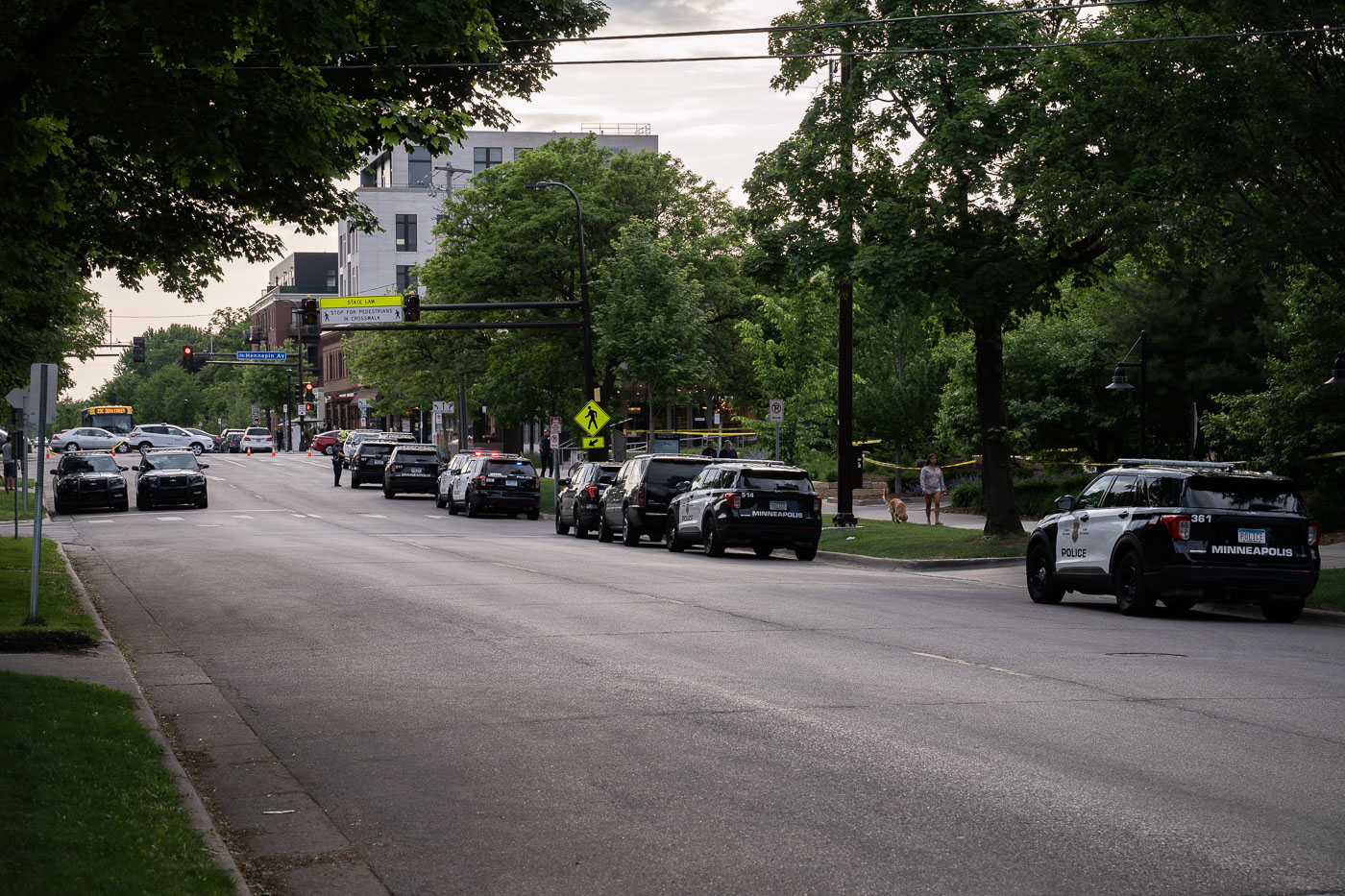
Minneapolis police vehicles line Hennepin Avenue near the Uptown parking ramp.
Minneapolis police vehicles are shown on Hennepin Avenue near the parking ramp where Winston Smith was killed by law enforcement hours earlier. The incident occurred on June 3, 2021, during a protest that followed the death of George Floyd in 2020. Smith's death, which took place on top of the ramp, sparked further unrest in the Uptown Minneapolis area. On June 3, 2021, members of a U.S. Marshals Service fugitive task force fatally shot 32-year-old Winston “Boogie” Smith Jr. on the top level of a parking ramp in Minneapolis’ Uptown neighborhood while attempting to arrest him on a felony warrant. Authorities said Smith fired a handgun from inside his vehicle during the encounter, while family members and activists questioned the official account and demanded the release of additional evidence. The killing led to weeks of protests, street occupations, and confrontations with police in Uptown, becoming another major flashpoint in Minneapolis during the period following the murder of George Floyd. Earlier in the day Minneapolis city officials along with The Agape Movement coordinated to open the streets that had been closed at George Floyd Square since his murder.

Minneapolis Police at Hennepin Ave Parking Garage
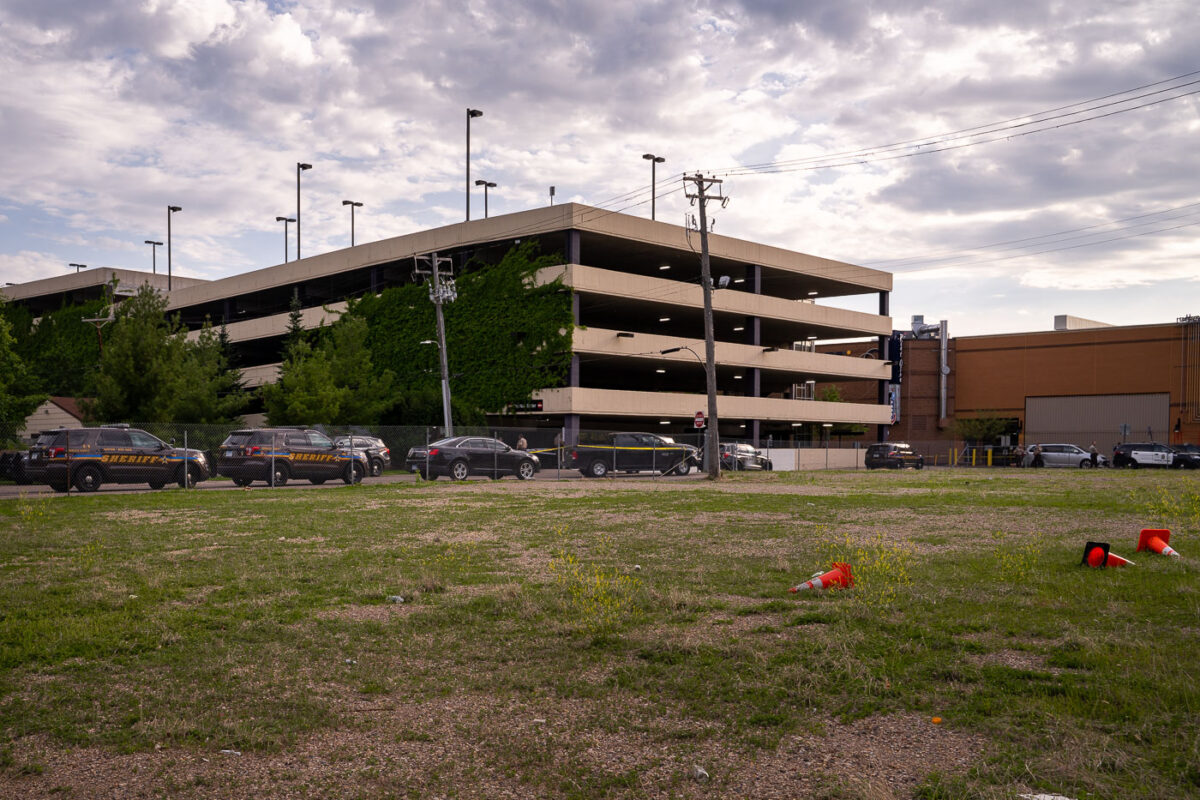
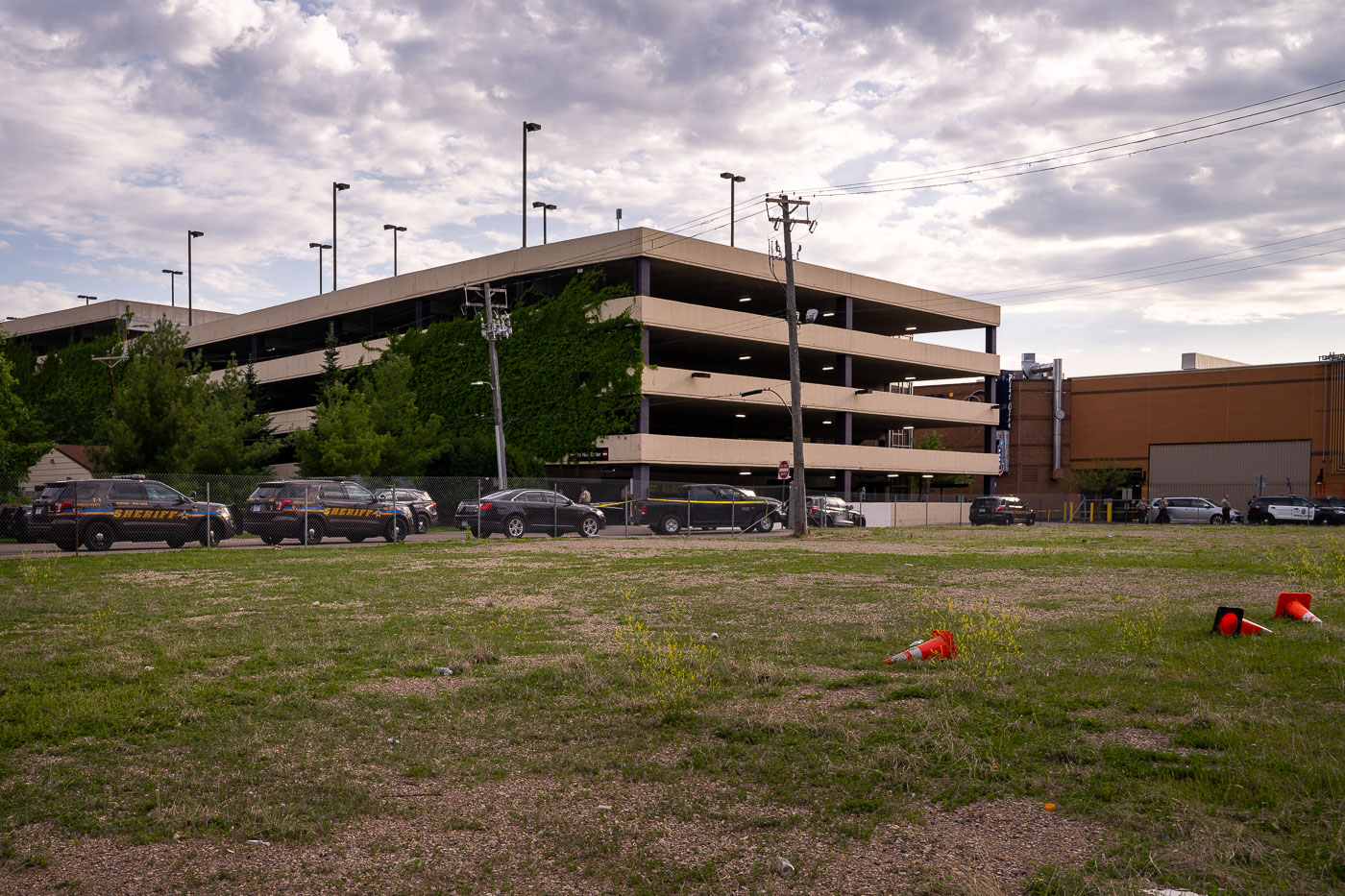
Sheriff vehicles parked outside Seven Points parking garage in Minneapolis
Sheriff's vehicles are present at the Seven Points Mall parking garage in Minneapolis, the site where Winston Smith was killed by law enforcement on June 3, 2021. Smith, a civilian, was shot and killed by officers from the Hennepin County Sheriff's Office and the Minneapolis Police Department. The incident occurred on the top level of the parking structure, leading to protests and public outcry. On June 3, 2021, members of a U.S. Marshals Service fugitive task force fatally shot 32-year-old Winston “Boogie” Smith Jr. on the top level of a parking ramp in Minneapolis’ Uptown neighborhood while attempting to arrest him on a felony warrant. Authorities said Smith fired a handgun from inside his vehicle during the encounter, while family members and activists questioned the official account and demanded the release of additional evidence. The killing led to weeks of protests, street occupations, and confrontations with police in Uptown, becoming another major flashpoint in Minneapolis during the period following the murder of George Floyd. Earlier in the day Minneapolis city officials along with The Agape Movement coordinated to open the streets that had been closed at George Floyd Square since his murder.

Minneapolis: Sheriff’s vehicles at Seven Points Mall parking garage
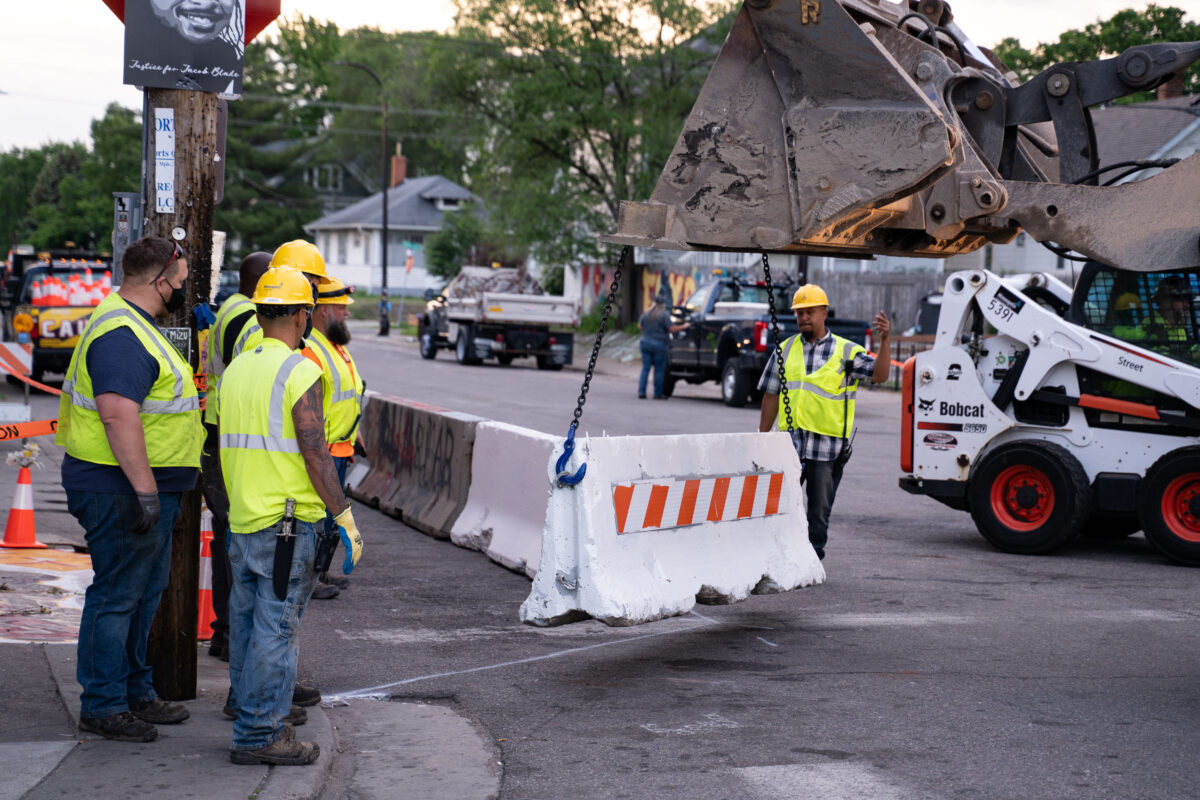
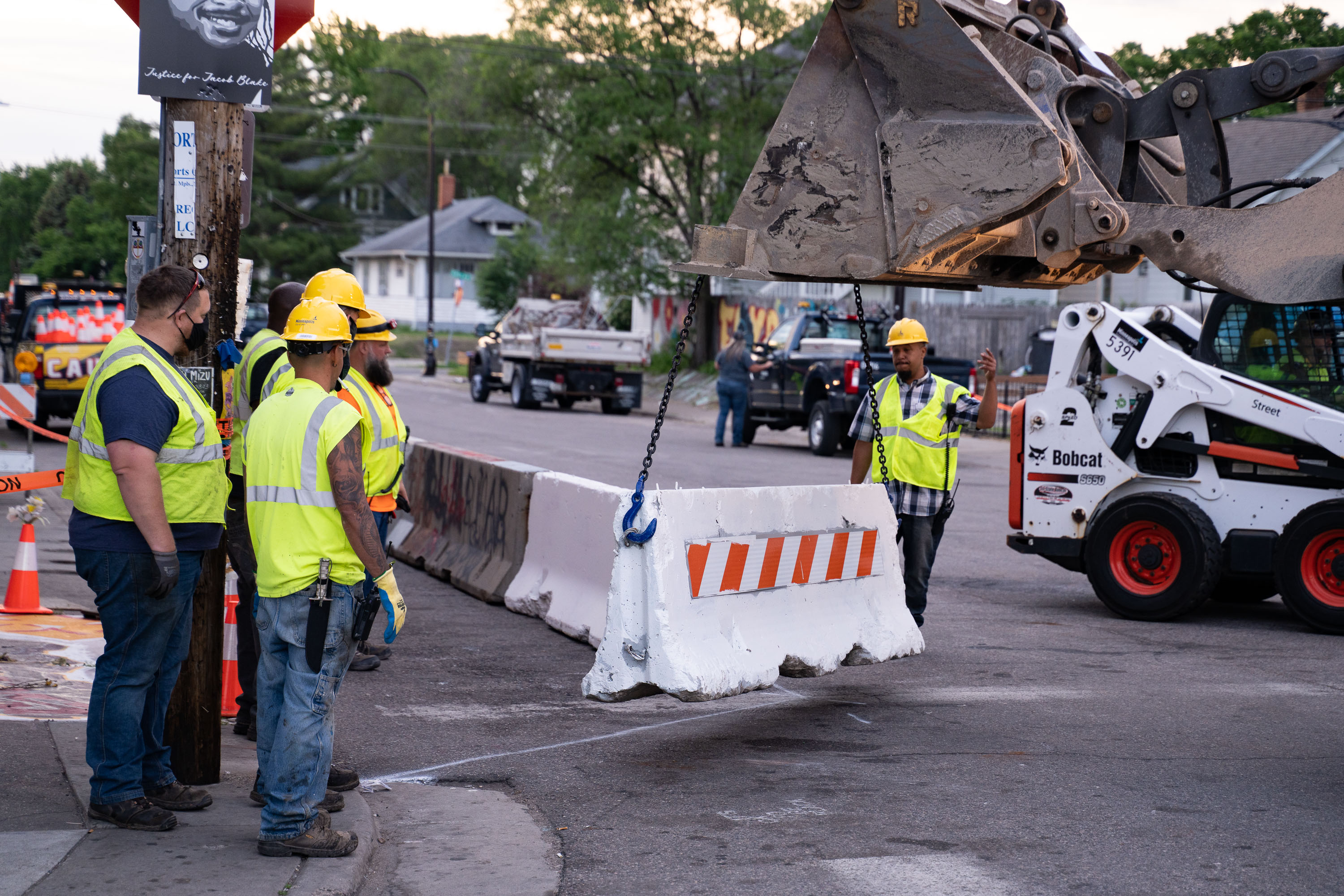
Public Works Place Barricades at George Floyd Square.
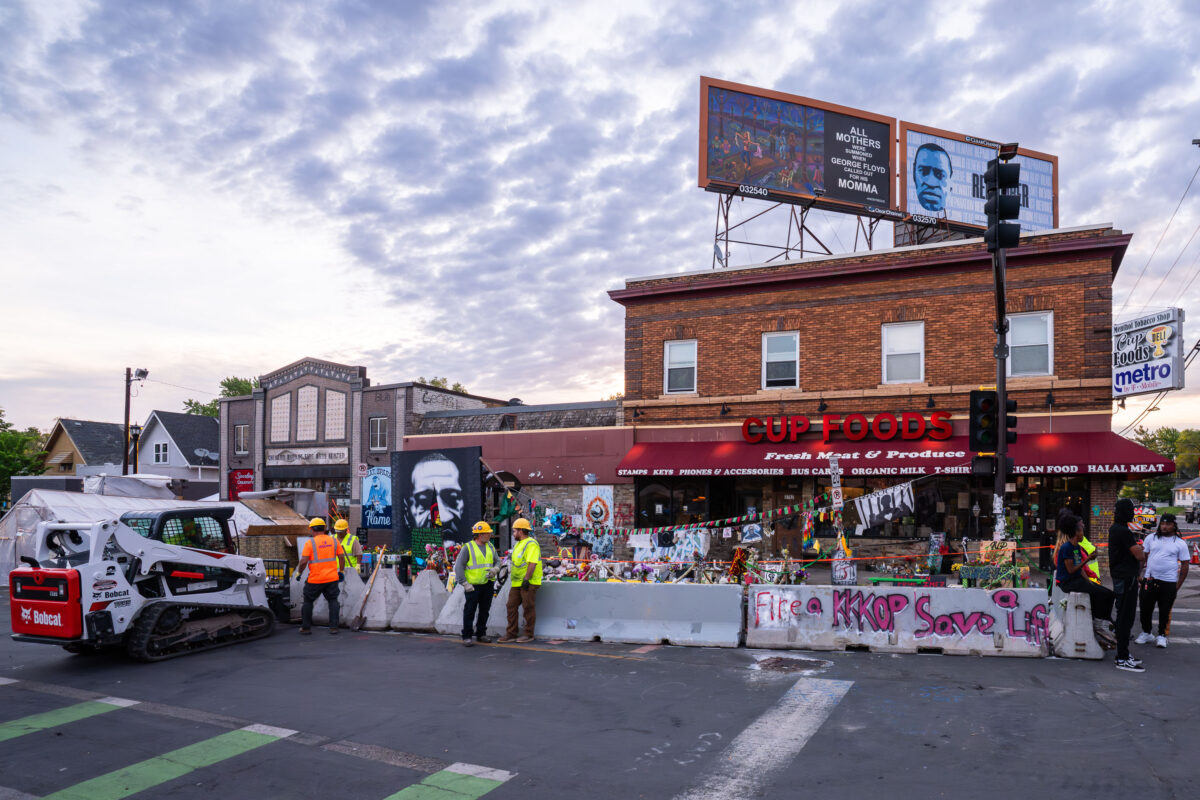
City employees move in to open George Floyd Square to vehicle traffic.

Public Works Place Barricades at George Floyd Square.

Agape at George Floyd Square June 2021
The Agape Movement working with Minneapolis Public Works to open up George Floyd Square on June 3, 2021.

Agape Movement and Public Works, George Floyd Square
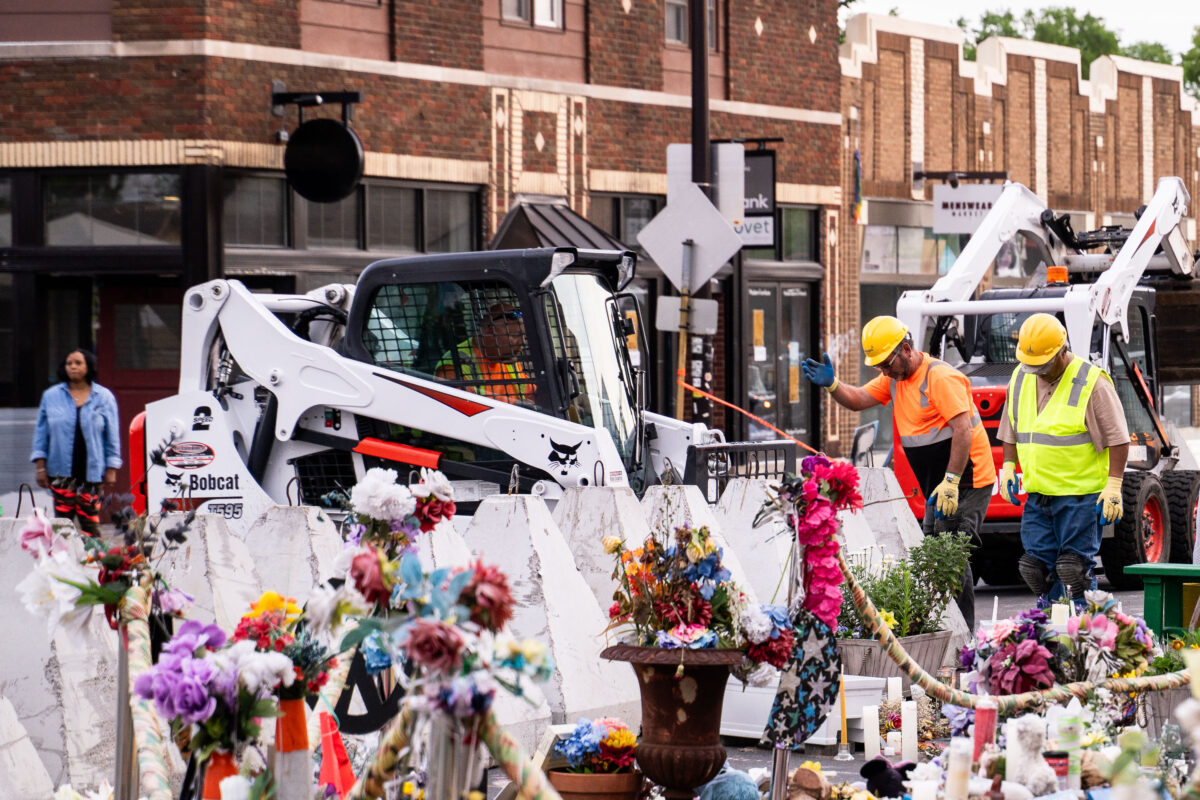
Public Works at George Floyd Square
Agape Movement looks on as Public Works places barricades at the George Floyd Memorial.

Public Works at George Floyd Square

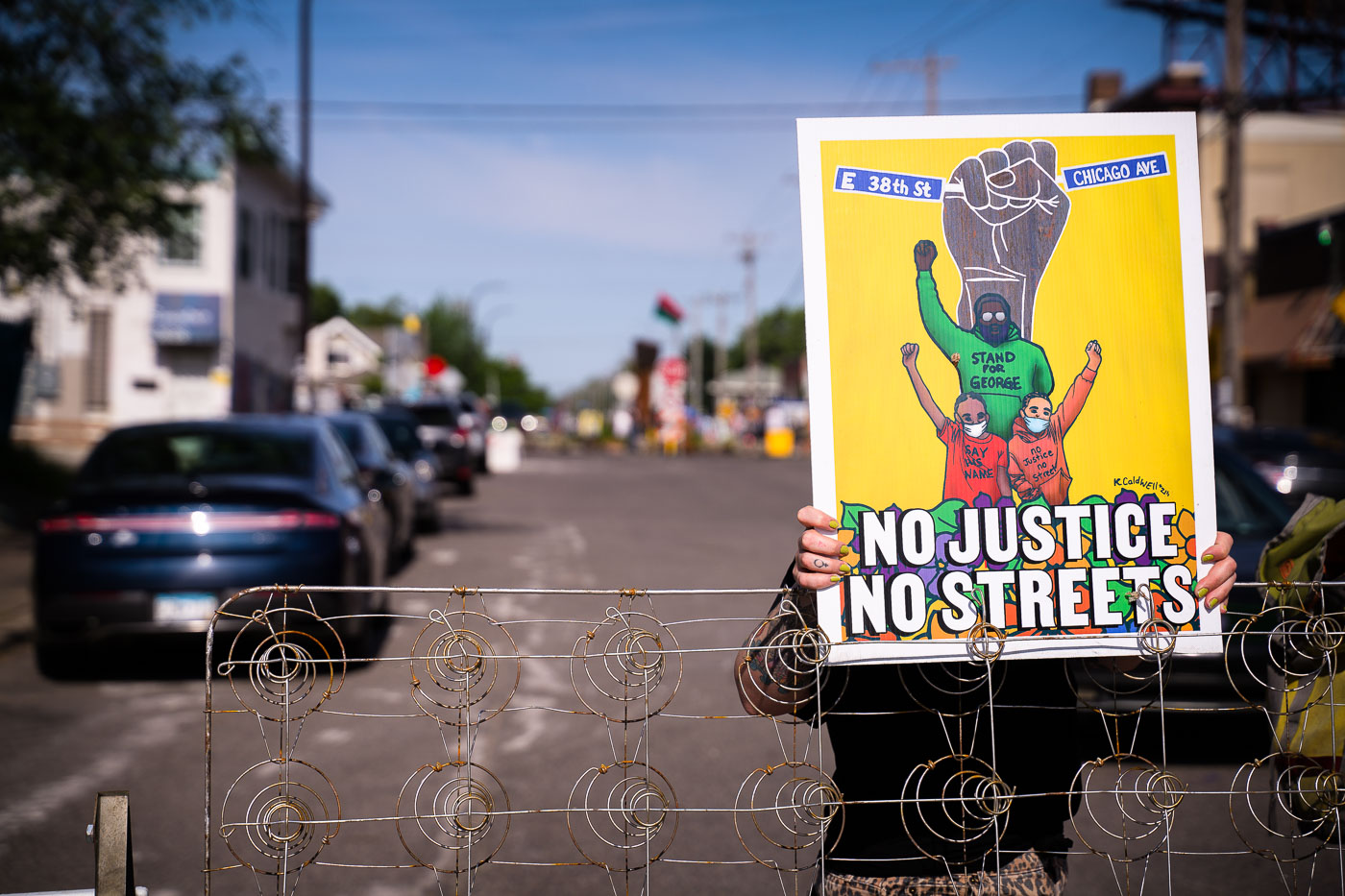
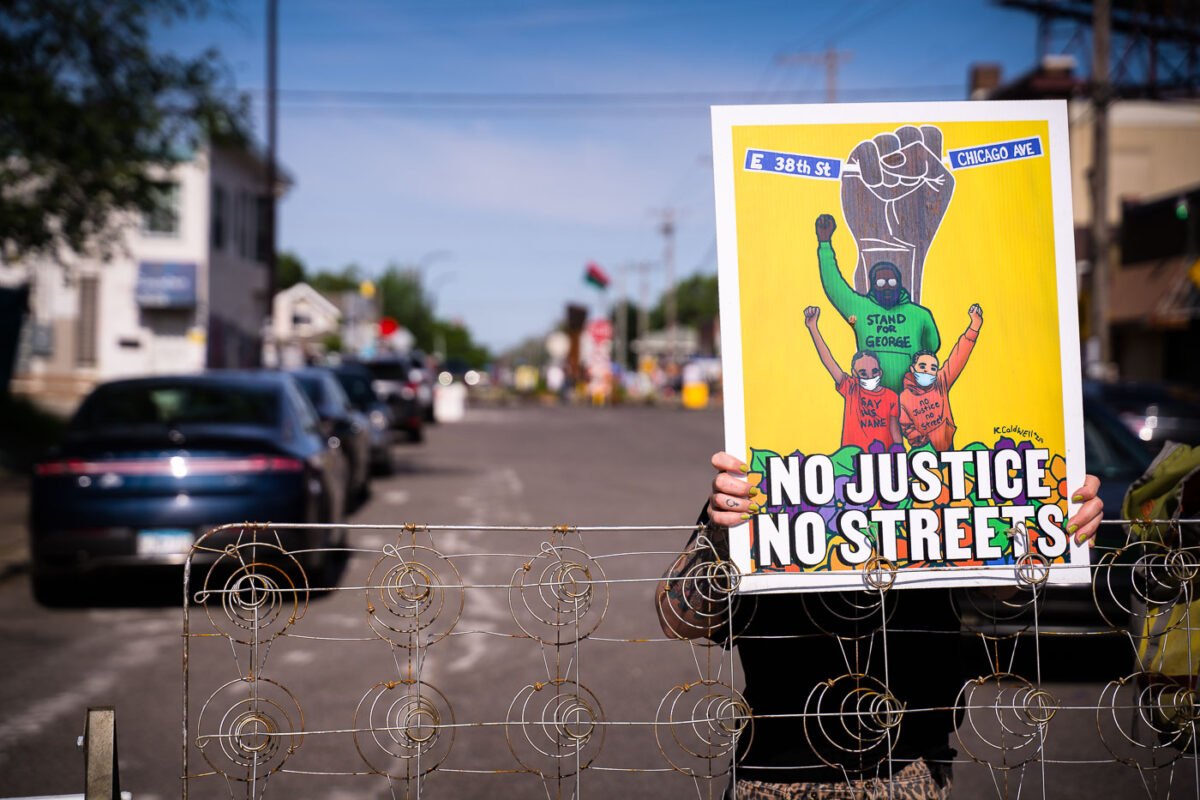
Person holds a “No Justice No Streets” sign at George Floyd Square in Minneapolis.
A protestor holds a "No Justice No Streets" sign at George Floyd Square in Minneapolis. The square, located at the intersection of East 38th Street and Chicago Avenue, became a focal point for protests following the murder of George Floyd in May 2020. For over a year, activists maintained barricades around the area, transforming it into a community space and a symbol of resistance. This image was taken on June 3, 2021, the day the city began efforts to dismantle the barricades and reopen the streets. On May 25, 2020, Minneapolis police officer Derek Chauvin murdered 46-year-old George Floyd during an arrest outside Cup Foods at the intersection of 38th Street and Chicago Avenue in south Minneapolis. Video recorded by bystanders showed Chauvin kneeling on Floyd’s neck for more than nine minutes while Floyd repeatedly said he could not breathe. Three other Minneapolis police officers - J. Alexander Kueng, Thomas Lane, and Tou Thao — were also present during the arrest and later faced criminal charges for their roles in Floyd’s death. Floyd’s murder sparked protests and civil unrest across Minneapolis and around the world, leading to widespread demonstrations against police violence, major policy debates on policing, and the conviction of Chauvin on murder and manslaughter charges in 2021.

George Floyd Square barricade protest sign
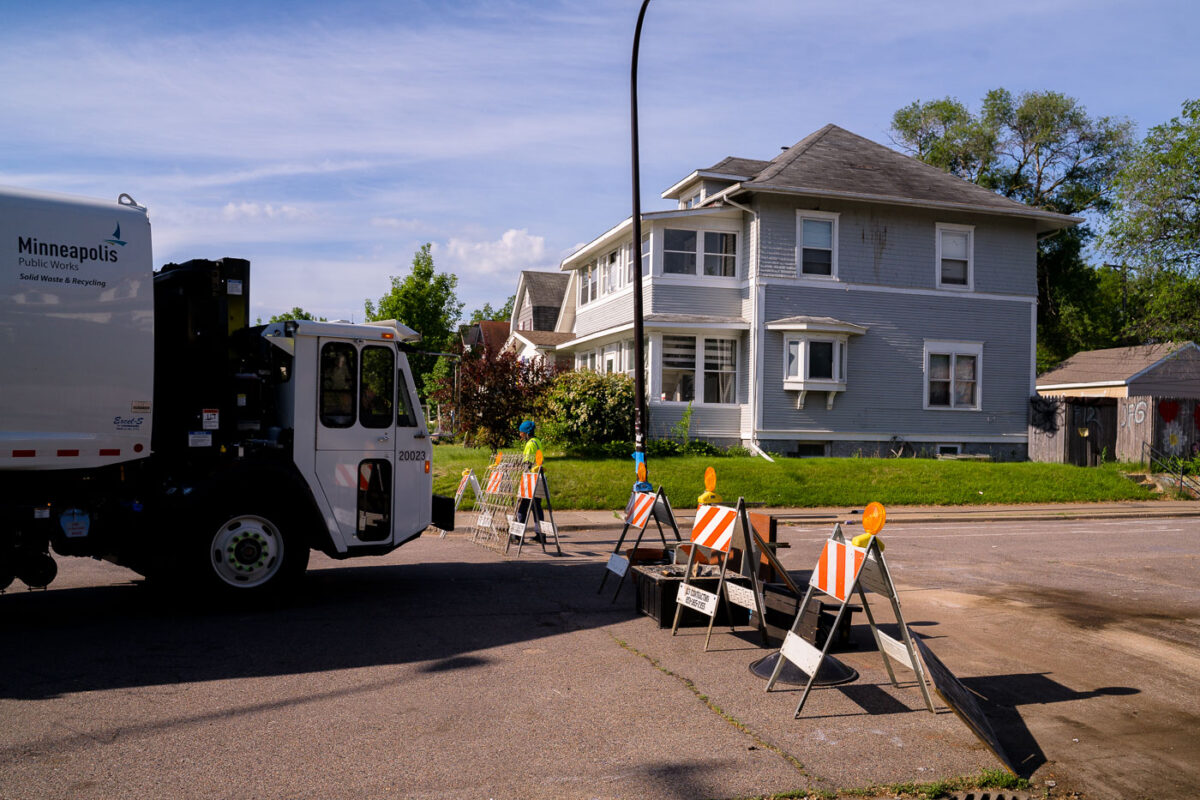
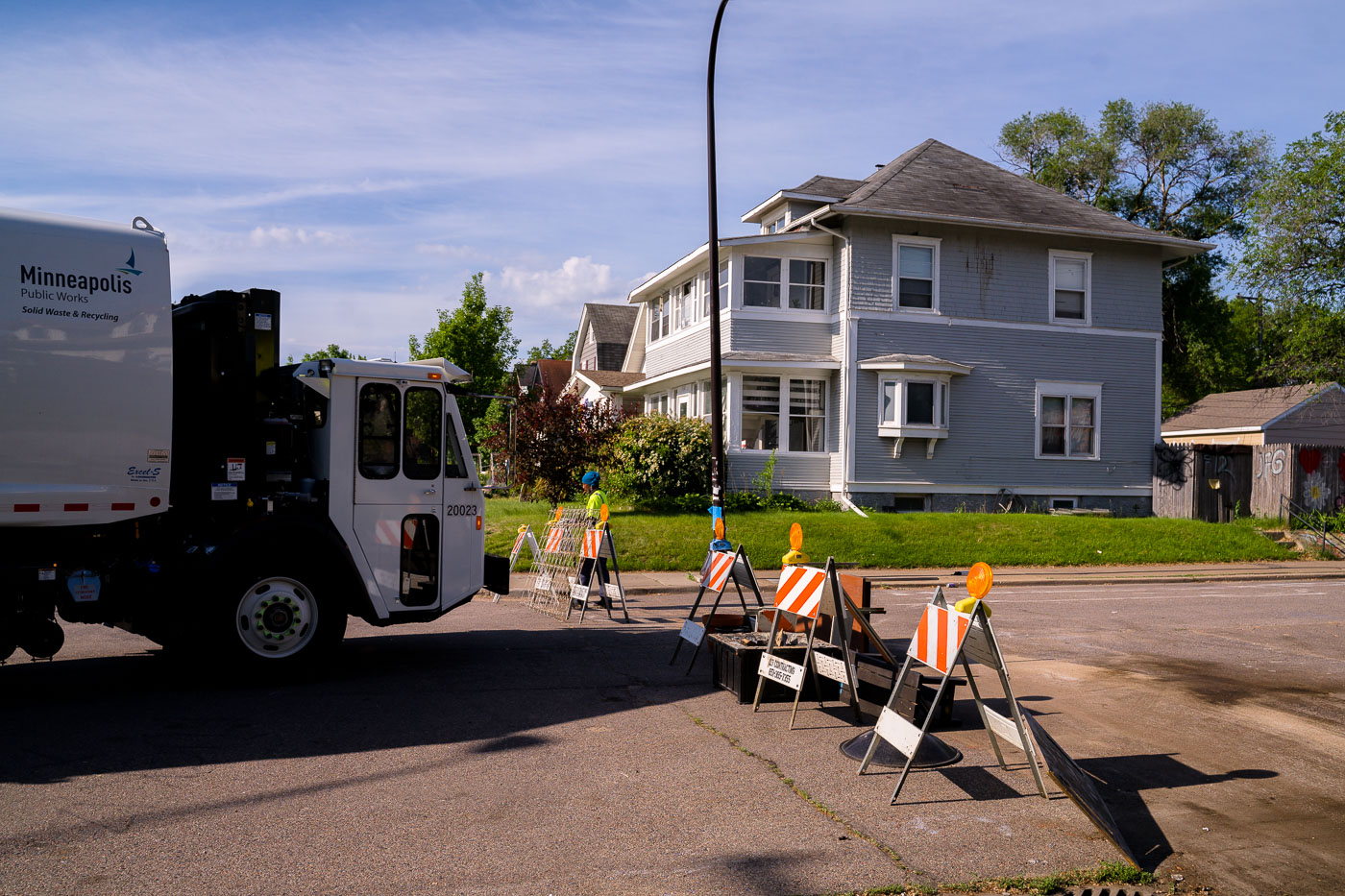
Minneapolis Public Works truck removes barricades at George Floyd Square in South Minneapolis.
Minneapolis Public Works crews remove barricades from George Floyd Square, also known as the intersection of 38th Street and Chicago Avenue in South Minneapolis on June 3, 2021. The square became a focal point for protests and community organizing following the murder of George Floyd in May 2020. For over two years, the intersection was largely controlled by protesters and community members, who established it as a space for remembrance and activism. The removal of these barricades by city officials marked a significant moment in the ongoing efforts to reclaim public space and restore traffic flow. On May 25, 2020, Minneapolis police officer Derek Chauvin murdered 46-year-old George Floyd during an arrest outside Cup Foods at the intersection of 38th Street and Chicago Avenue in south Minneapolis. Video recorded by bystanders showed Chauvin kneeling on Floyd’s neck for more than nine minutes while Floyd repeatedly said he could not breathe. Three other Minneapolis police officers - J. Alexander Kueng, Thomas Lane, and Tou Thao — were also present during the arrest and later faced criminal charges for their roles in Floyd’s death. Floyd’s murder sparked protests and civil unrest across Minneapolis and around the world, leading to widespread demonstrations against police violence, major policy debates on policing, and the conviction of Chauvin on murder and manslaughter charges in 2021.

Minneapolis Public Works removes barricades at George Floyd Square

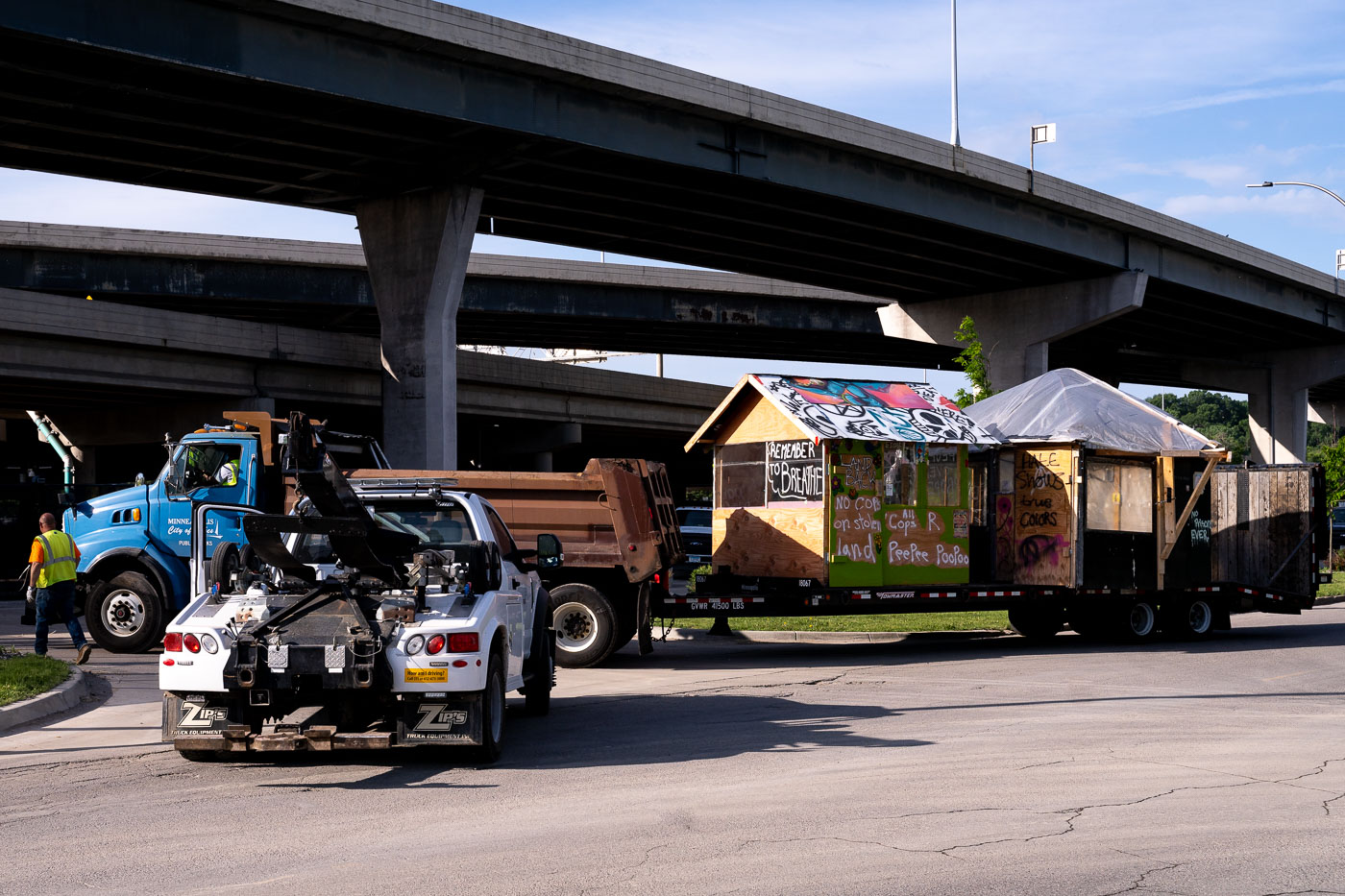
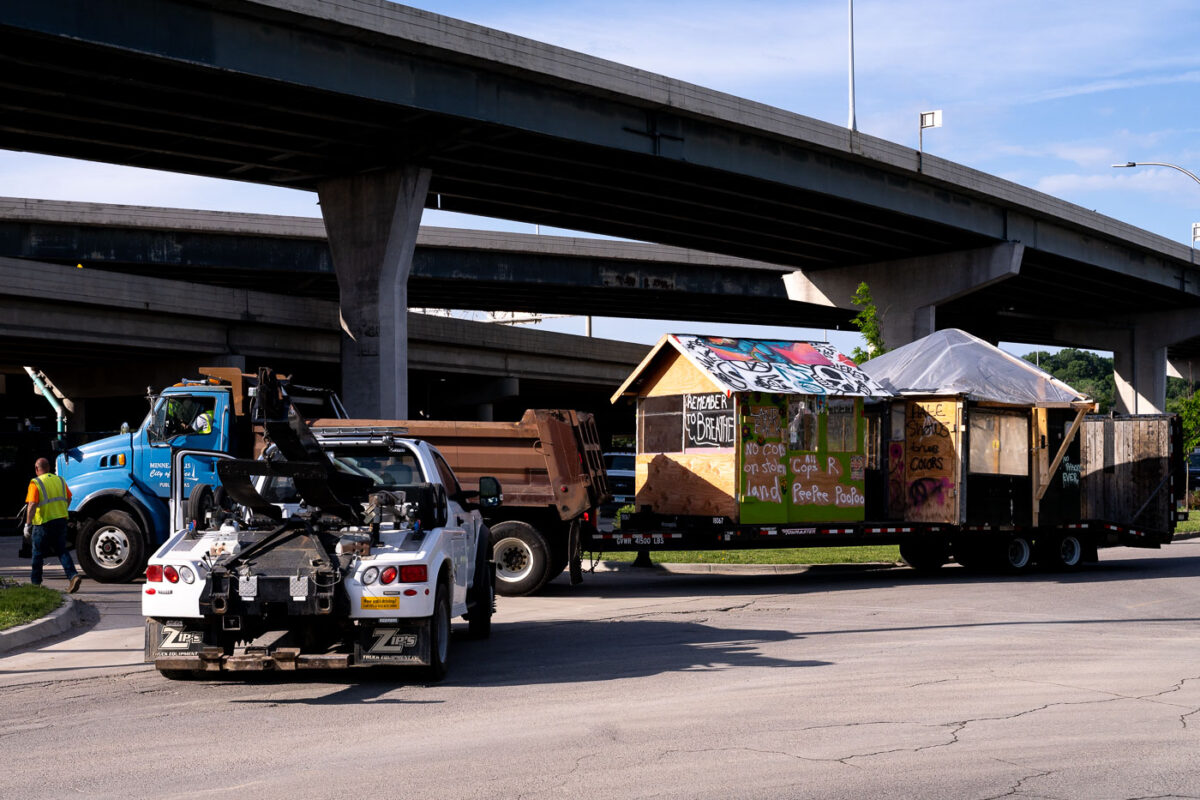
City workers haul graffiti-covered warming shelters on a trailer under Minneapolis highway overpasses.
Warming shelters, constructed by activists and used at George Floyd Square, are transported to a City of Minneapolis impound lot. The shelters were removed after the city reopened the intersection to vehicular traffic in June 2021. George Floyd Square became a focal point for protests and activism following the murder of George Floyd by Minneapolis police officers in May 2020. The area was occupied by protesters for over a year, during which time community-built structures like these shelters were erected. On May 25, 2020, Minneapolis police officer Derek Chauvin murdered 46-year-old George Floyd during an arrest outside Cup Foods at the intersection of 38th Street and Chicago Avenue in south Minneapolis. Video recorded by bystanders showed Chauvin kneeling on Floyd’s neck for more than nine minutes while Floyd repeatedly said he could not breathe. Three other Minneapolis police officers - J. Alexander Kueng, Thomas Lane, and Tou Thao — were also present during the arrest and later faced criminal charges for their roles in Floyd’s death. Floyd’s murder sparked protests and civil unrest across Minneapolis and around the world, leading to widespread demonstrations against police violence, major policy debates on policing, and the conviction of Chauvin on murder and manslaughter charges in 2021.

George Floyd Square warming shelters moved to impound lot
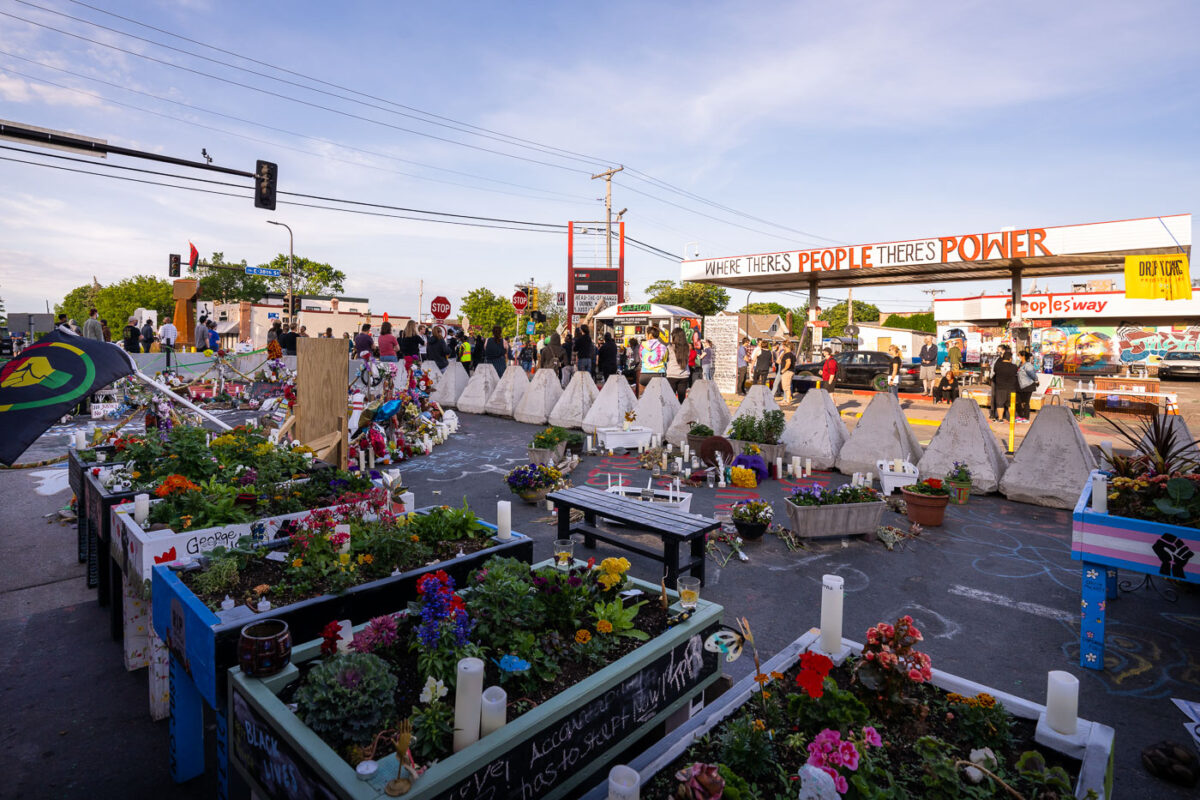
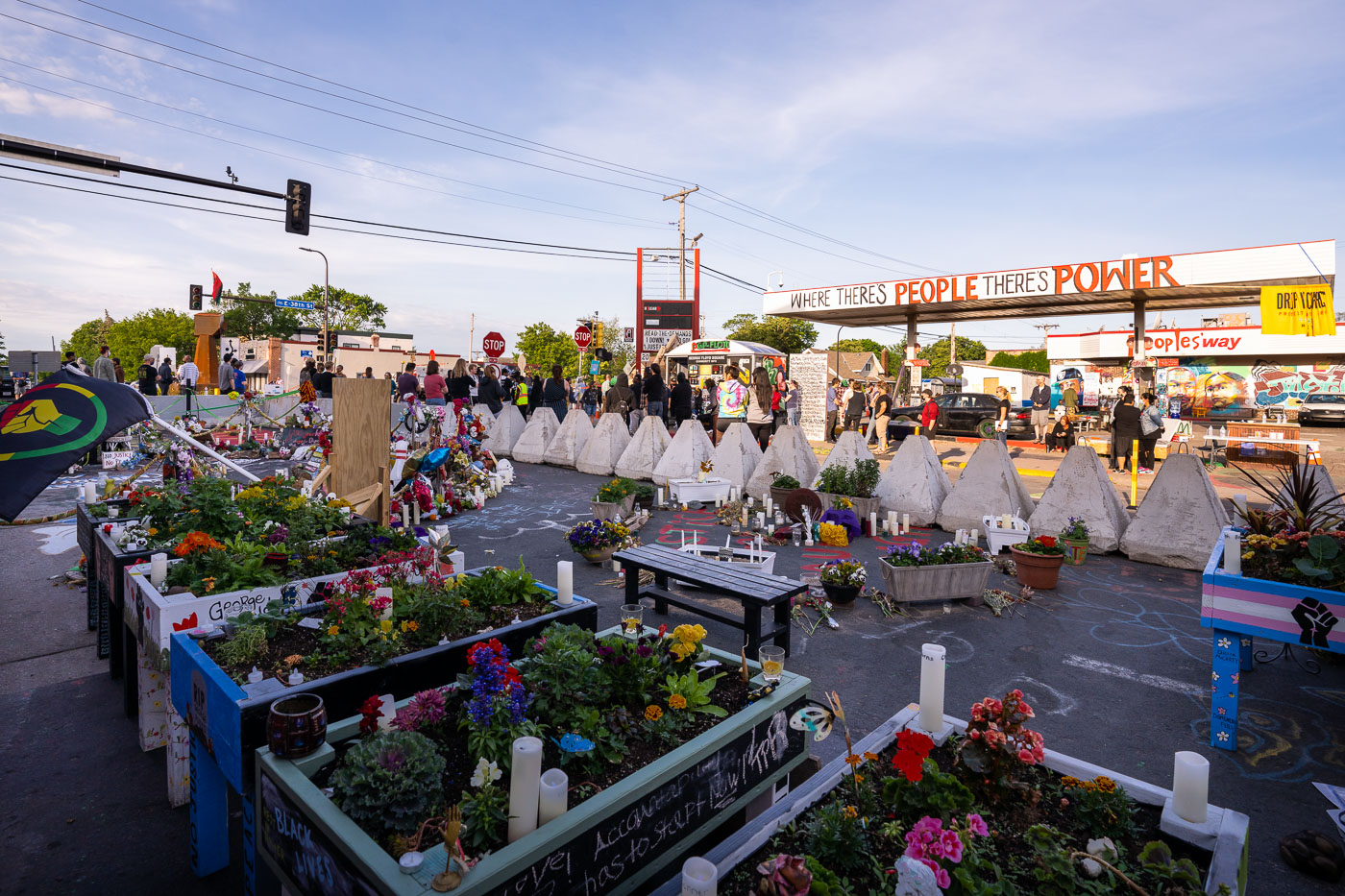
Memorials and barricades at George Floyd Square in Minneapolis, with people gathered nearby.
George Floyd Square, located at the intersection of East 38th Street and Chicago Avenue in Minneapolis, Minnesota, became a focal point for protests following the murder of George Floyd in May 2020. The area was occupied by activists and community members for over a year, transforming it into a space for remembrance, political expression, and community organizing. This photograph shows the square after city officials had removed initial barricades and subsequently erected new ones, alongside numerous community-created memorials, including planters, flowers, candles, and artwork. On May 25, 2020, Minneapolis police officer Derek Chauvin murdered 46-year-old George Floyd during an arrest outside Cup Foods at the intersection of 38th Street and Chicago Avenue in south Minneapolis. Video recorded by bystanders showed Chauvin kneeling on Floyd’s neck for more than nine minutes while Floyd repeatedly said he could not breathe. Three other Minneapolis police officers - J. Alexander Kueng, Thomas Lane, and Tou Thao — were also present during the arrest and later faced criminal charges for their roles in Floyd’s death. Floyd’s murder sparked protests and civil unrest across Minneapolis and around the world, leading to widespread demonstrations against police violence, major policy debates on policing, and the conviction of Chauvin on murder and manslaughter charges in 2021.

George Floyd Square: New barricades and community memorials
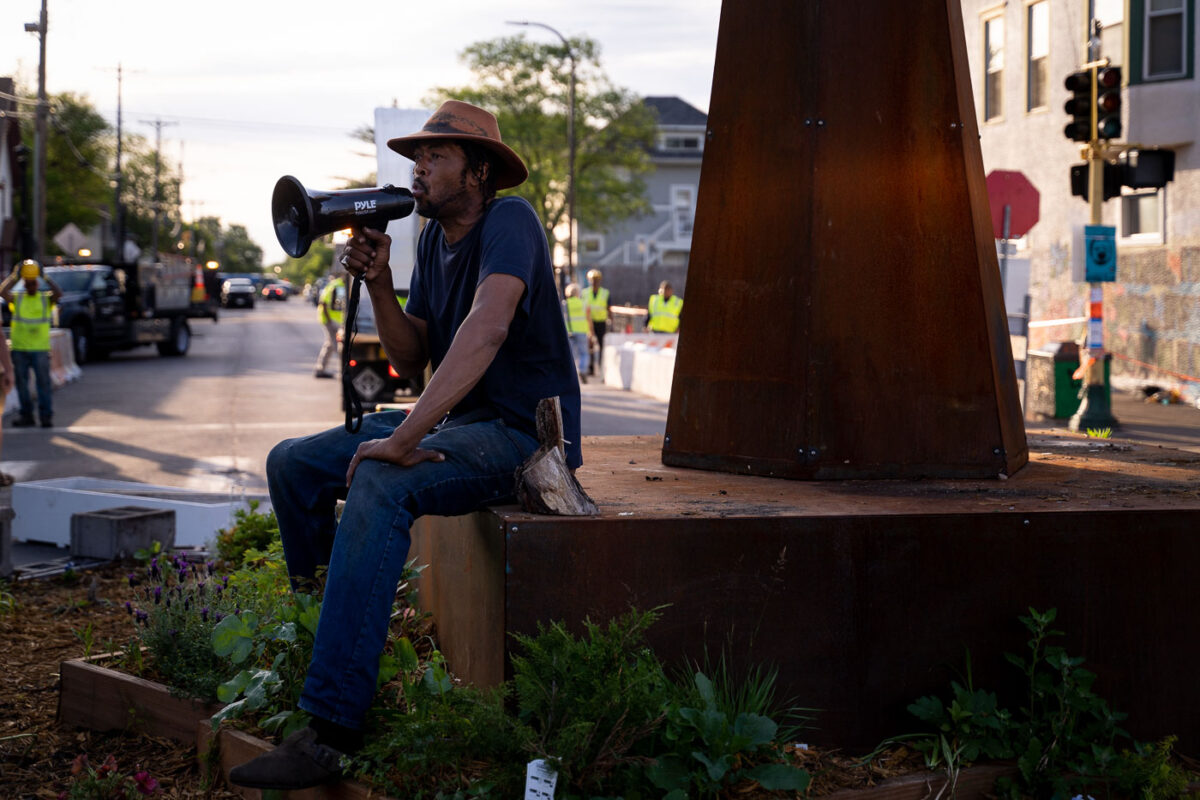
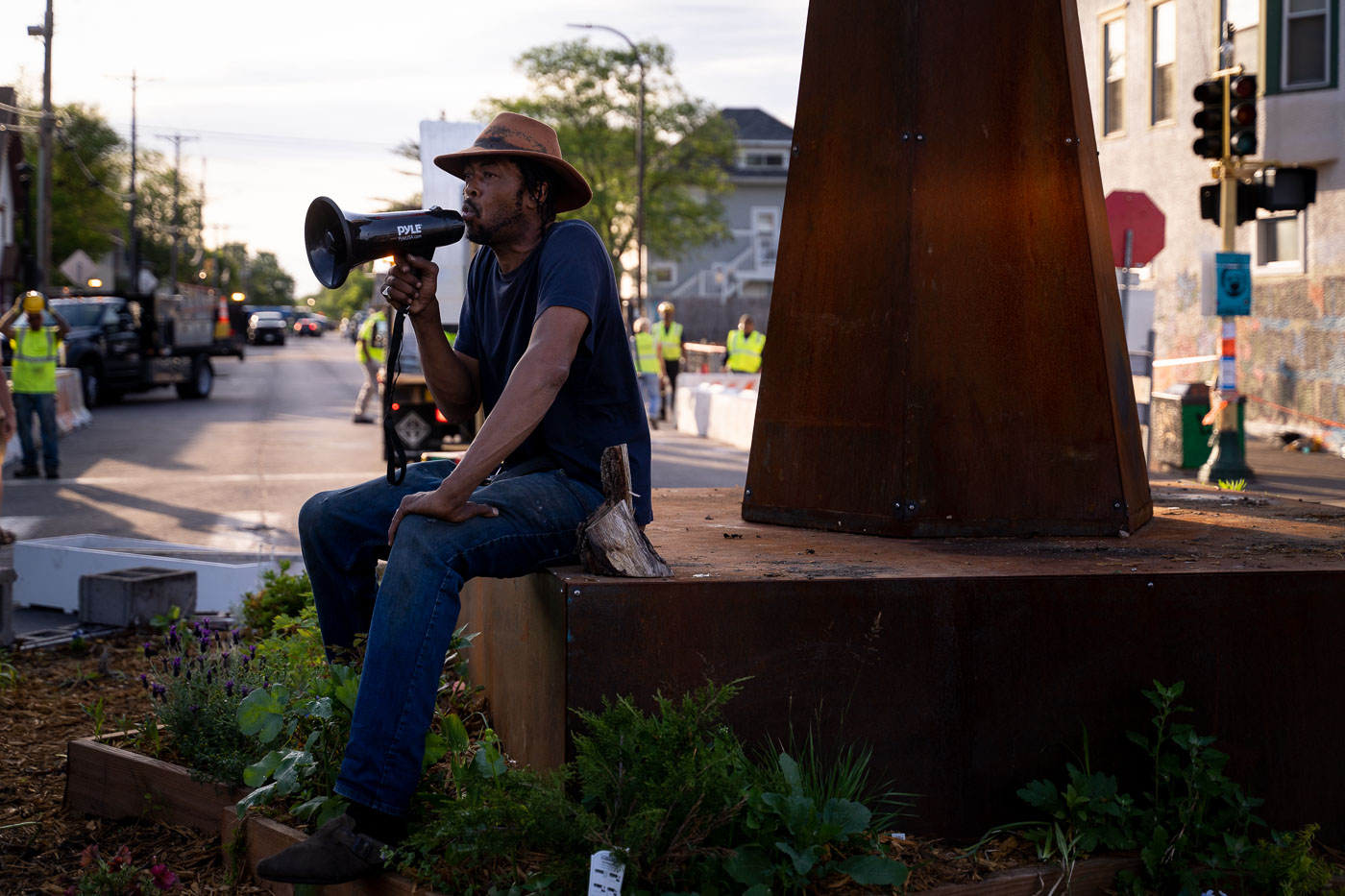
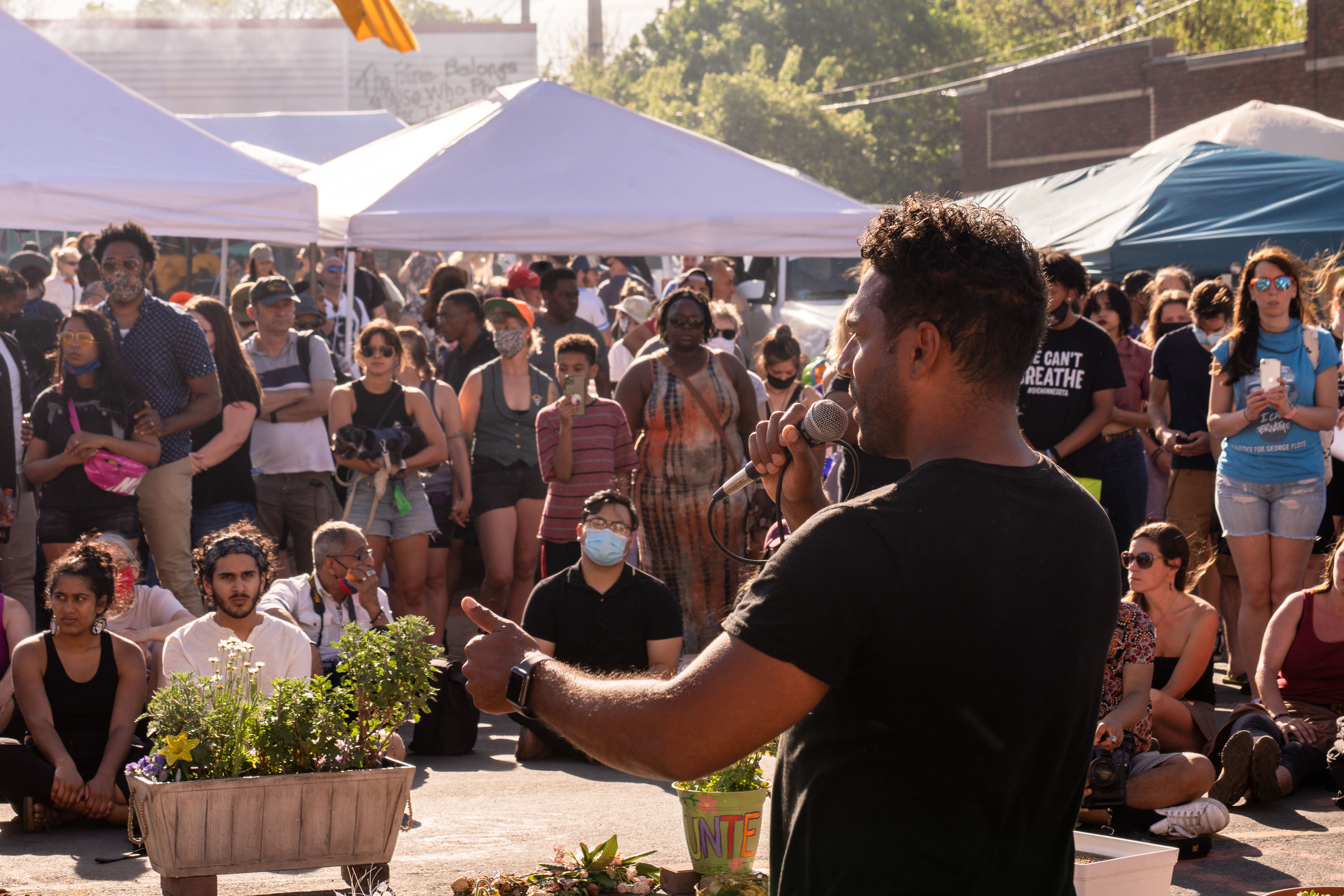
Jay Webb speaks into a megaphone at George Floyd Square in Minneapolis.
Jay Webb addresses a gathering at the George Floyd Square garden in Minneapolis. The square, a site of protest and remembrance following the murder of George Floyd in May 2020, was the subject of ongoing community efforts to transform the space. This image was taken as the city began to reopen the intersection to vehicle traffic, a move that sparked debate and community organizing. On May 25, 2020, Minneapolis police officer Derek Chauvin murdered 46-year-old George Floyd during an arrest outside Cup Foods at the intersection of 38th Street and Chicago Avenue in south Minneapolis. Video recorded by bystanders showed Chauvin kneeling on Floyd’s neck for more than nine minutes while Floyd repeatedly said he could not breathe. Three other Minneapolis police officers - J. Alexander Kueng, Thomas Lane, and Tou Thao — were also present during the arrest and later faced criminal charges for their roles in Floyd’s death. Floyd’s murder sparked protests and civil unrest across Minneapolis and around the world, leading to widespread demonstrations against police violence, major policy debates on policing, and the conviction of Chauvin on murder and manslaughter charges in 2021.

Jay Webb speaks at George Floyd Square garden, Minneapolis
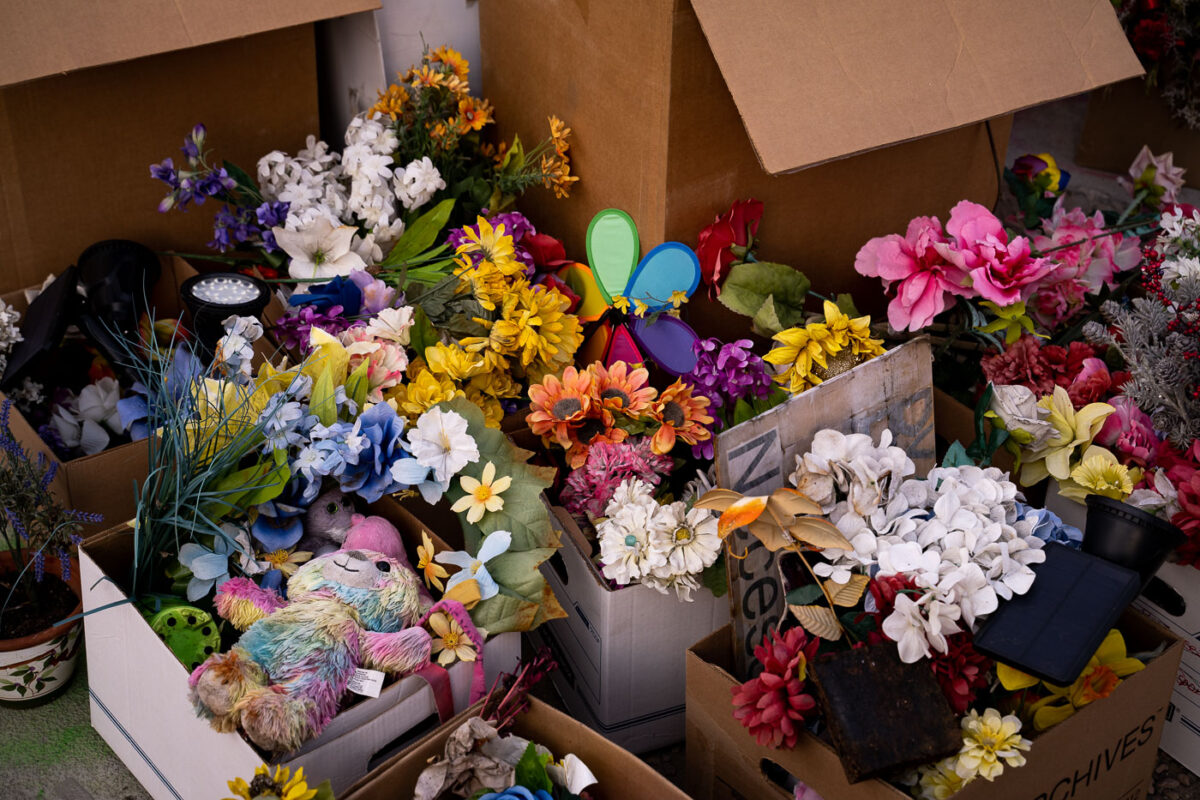
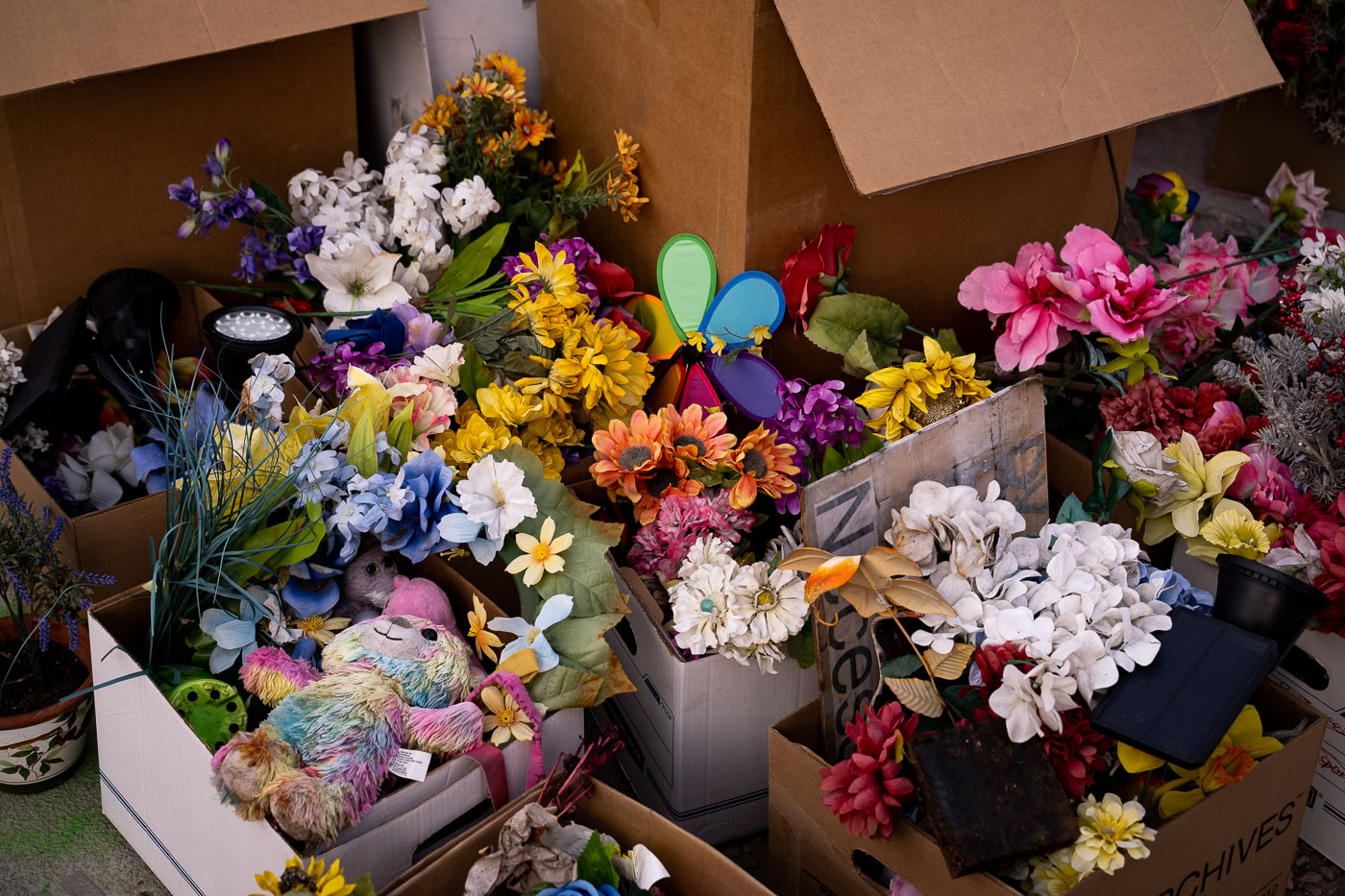
Flowers and memorial items packed in boxes at George Floyd Square in Minneapolis.
Flowers from the George Floyd Memorial in boxes as the city moves in to open up the streets. Seen on June 3, 2021. On May 25, 2020, Minneapolis police officer Derek Chauvin murdered 46-year-old George Floyd during an arrest outside Cup Foods at the intersection of 38th Street and Chicago Avenue in south Minneapolis. Video recorded by bystanders showed Chauvin kneeling on Floyd’s neck for more than nine minutes while Floyd repeatedly said he could not breathe. Three other Minneapolis police officers - J. Alexander Kueng, Thomas Lane, and Tou Thao — were also present during the arrest and later faced criminal charges for their roles in Floyd’s death. Floyd’s murder sparked protests and civil unrest across Minneapolis and around the world, leading to widespread demonstrations against police violence, major policy debates on policing, and the conviction of Chauvin on murder and manslaughter charges in 2021.

George Floyd Square Memorial Flowers Boxed in Minneapolis
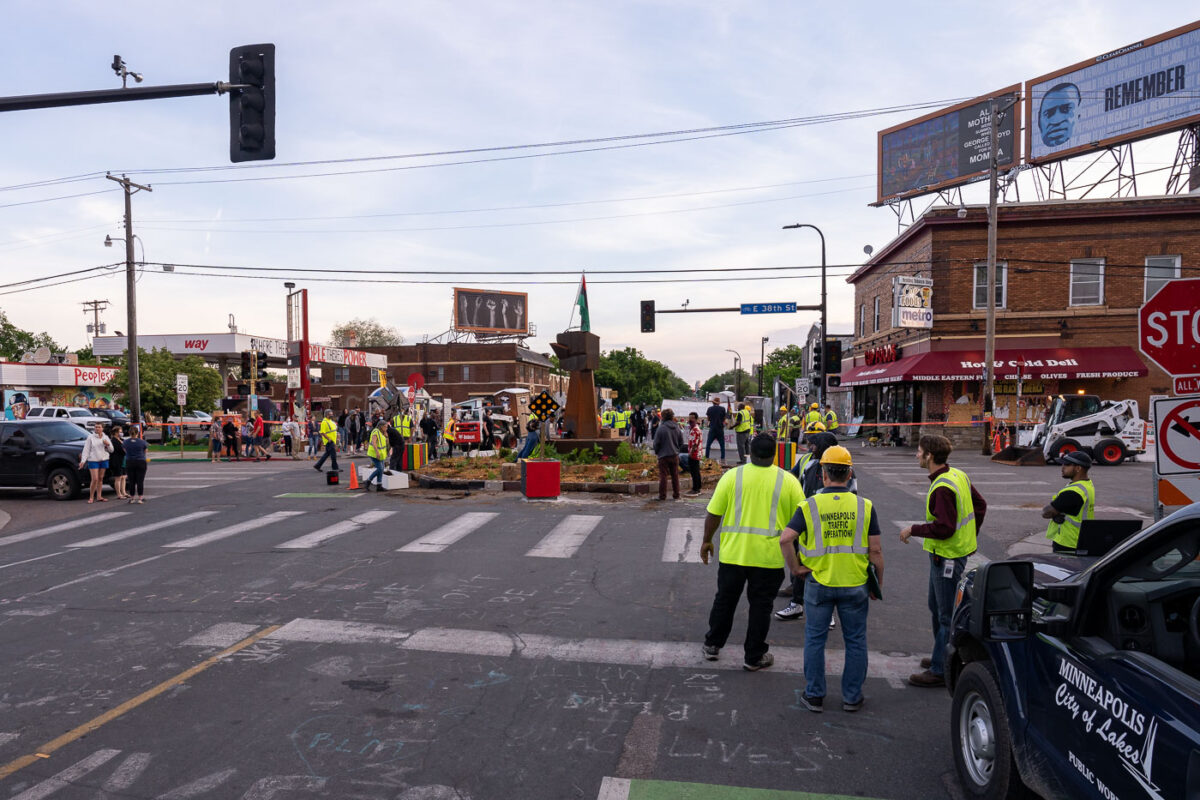
Minneapolis Public Works crews remove barricades at George Floyd Square in Minneapolis.
Minneapolis Public Works crews began dismantling barricades at George Floyd Square on June 3, 2021. The intersection of 38th Street and Chicago Avenue had been occupied by protesters and transformed into a community space since the murder of George Floyd by Minneapolis police on May 25, 2020. The "autonomous zone" became a focal point for racial justice protests and a memorial to Floyd, featuring art, gardens, and community gatherings. On May 25, 2020, Minneapolis police officer Derek Chauvin murdered 46-year-old George Floyd during an arrest outside Cup Foods at the intersection of 38th Street and Chicago Avenue in south Minneapolis. Video recorded by bystanders showed Chauvin kneeling on Floyd’s neck for more than nine minutes while Floyd repeatedly said he could not breathe. Three other Minneapolis police officers - J. Alexander Kueng, Thomas Lane, and Tou Thao — were also present during the arrest and later faced criminal charges for their roles in Floyd’s death. Floyd’s murder sparked protests and civil unrest across Minneapolis and around the world, leading to widespread demonstrations against police violence, major policy debates on policing, and the conviction of Chauvin on murder and manslaughter charges in 2021.

Minneapolis Public Works Remove Barricades at George Floyd Square
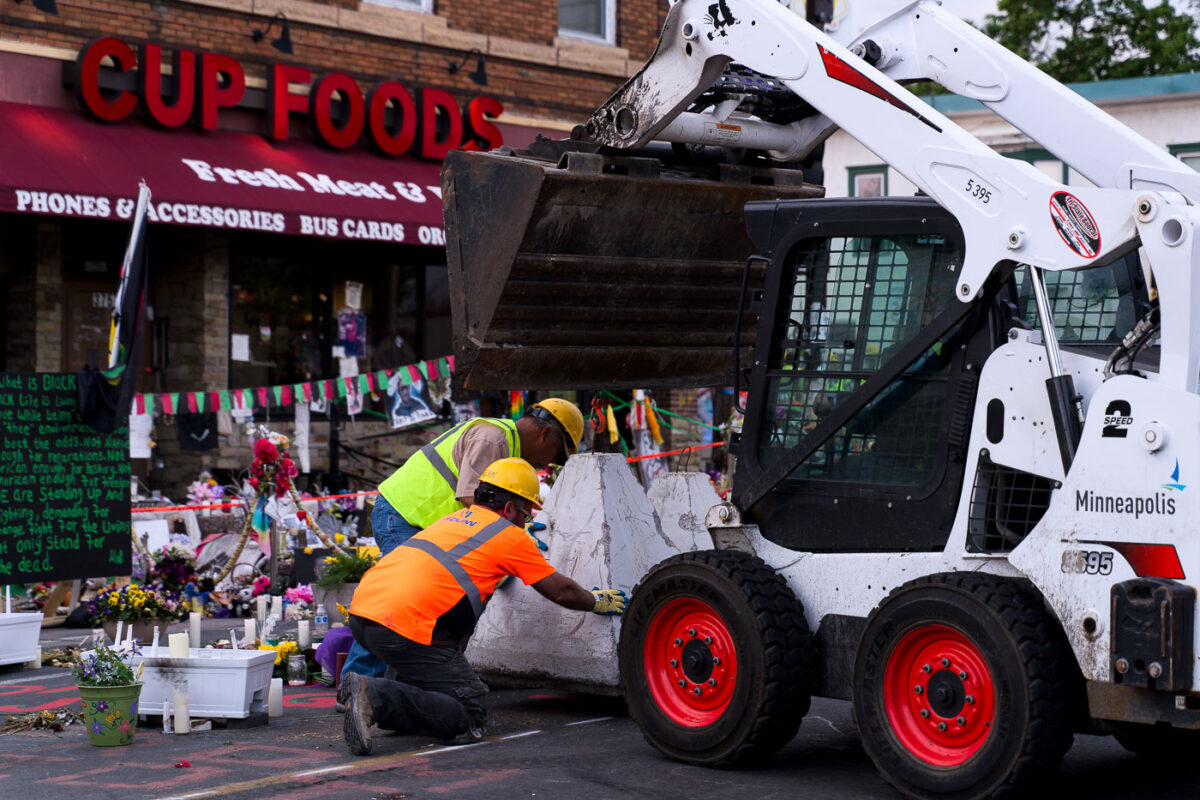
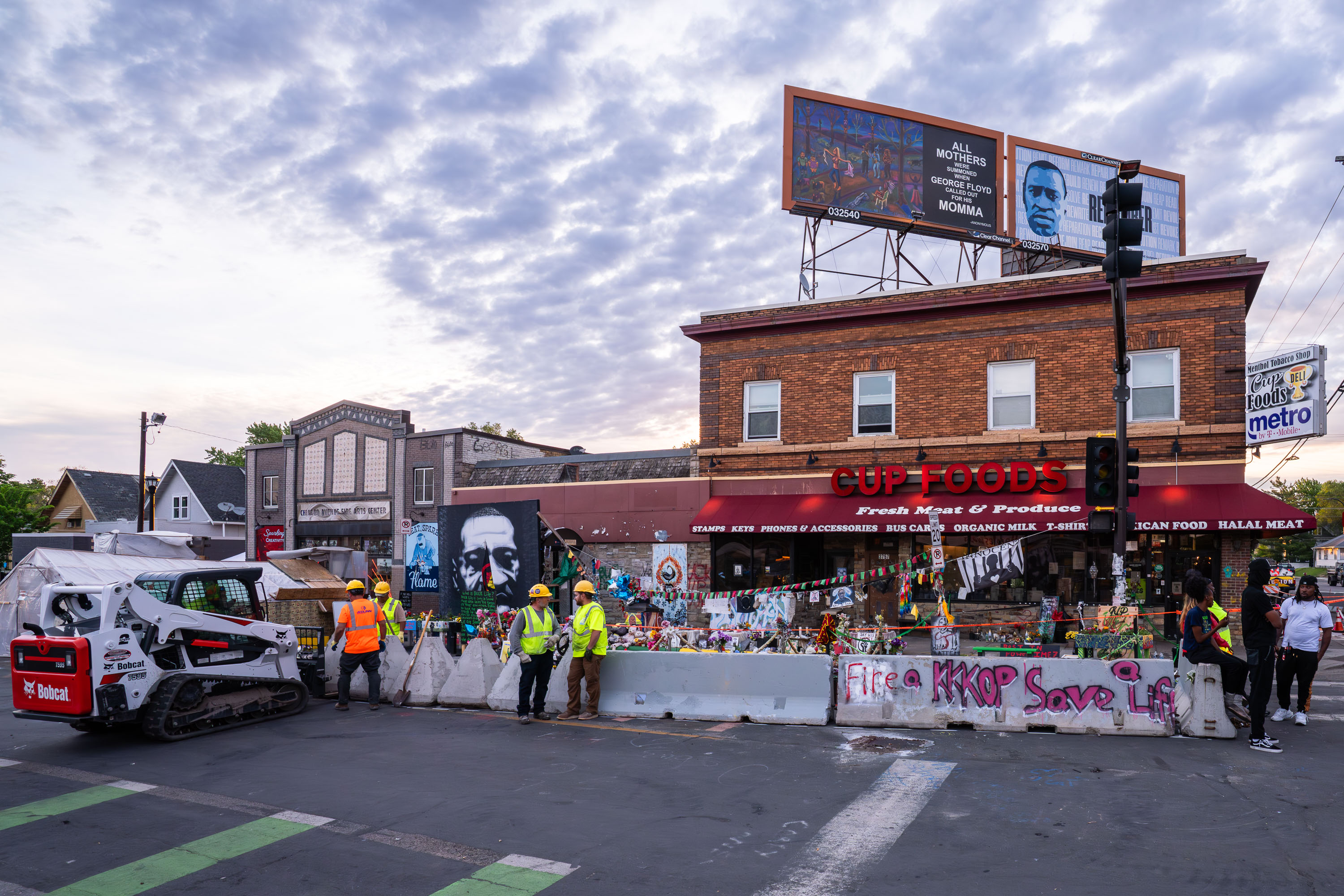
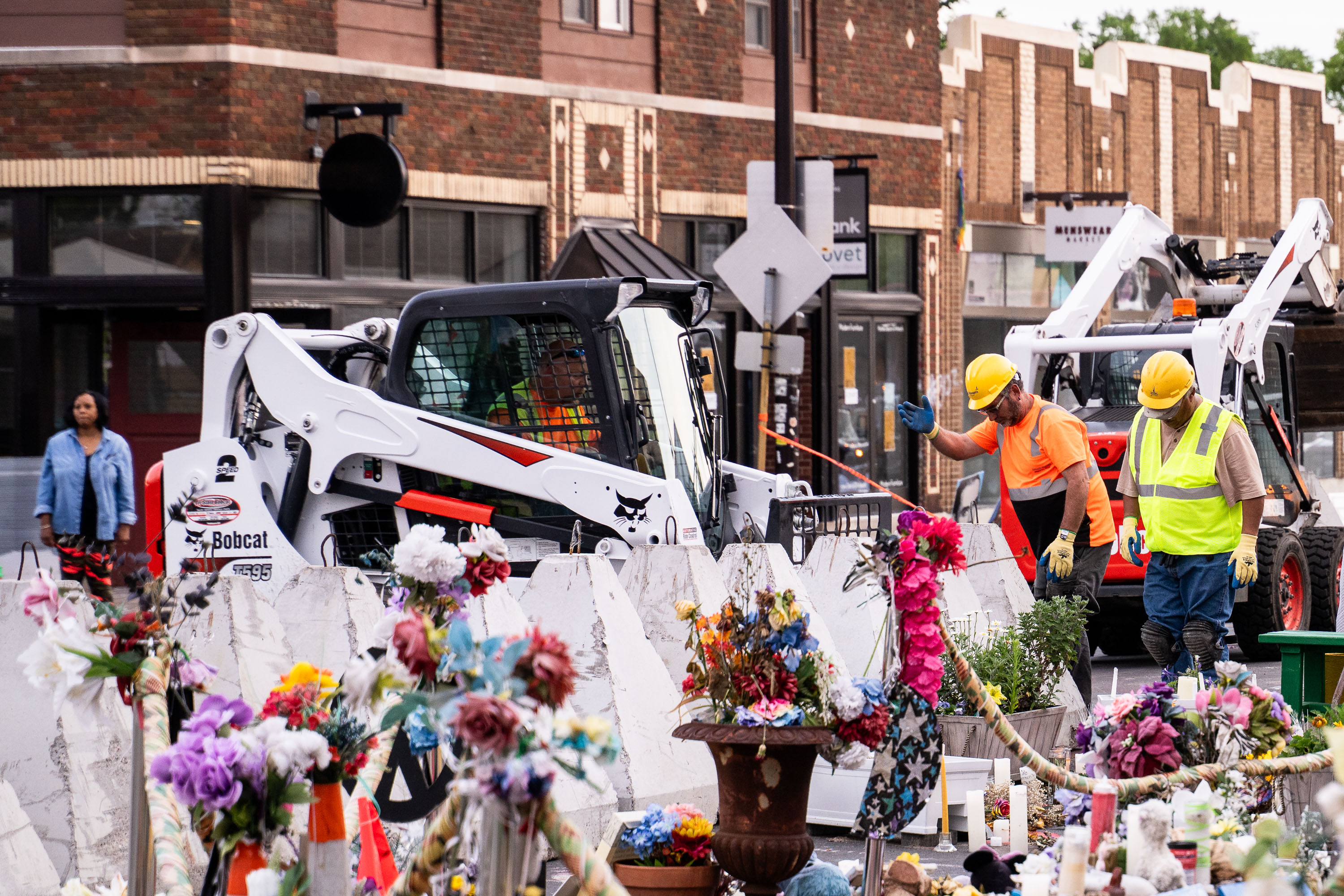
Minneapolis workers move concrete barricades at George Floyd Square outside Cup Foods.
Minneapolis Public Works employees place concrete barricades around George Floyd Square, a protest zone established after the murder of George Floyd by Minneapolis police. The square, located at the intersection of 38th Street and Chicago Avenue, became a focal point for demonstrations against racial injustice and police brutality. The area has been maintained by activists and community members as a memorial and a space for continued activism since May 2020. On the morning of June 3, 2021, city officials along with the Agape Movement coordinated to remove the street barricades and open the square to vehicular traffic. On May 25, 2020, Minneapolis police officer Derek Chauvin murdered 46-year-old George Floyd during an arrest outside Cup Foods at the intersection of 38th Street and Chicago Avenue in south Minneapolis. Video recorded by bystanders showed Chauvin kneeling on Floyd’s neck for more than nine minutes while Floyd repeatedly said he could not breathe. Three other Minneapolis police officers - J. Alexander Kueng, Thomas Lane, and Tou Thao — were also present during the arrest and later faced criminal charges for their roles in Floyd’s death. Floyd’s murder sparked protests and civil unrest across Minneapolis and around the world, leading to widespread demonstrations against police violence, major policy debates on policing, and the conviction of Chauvin on murder and manslaughter charges in 2021.

Minneapolis Public Works places barricades at George Floyd Square
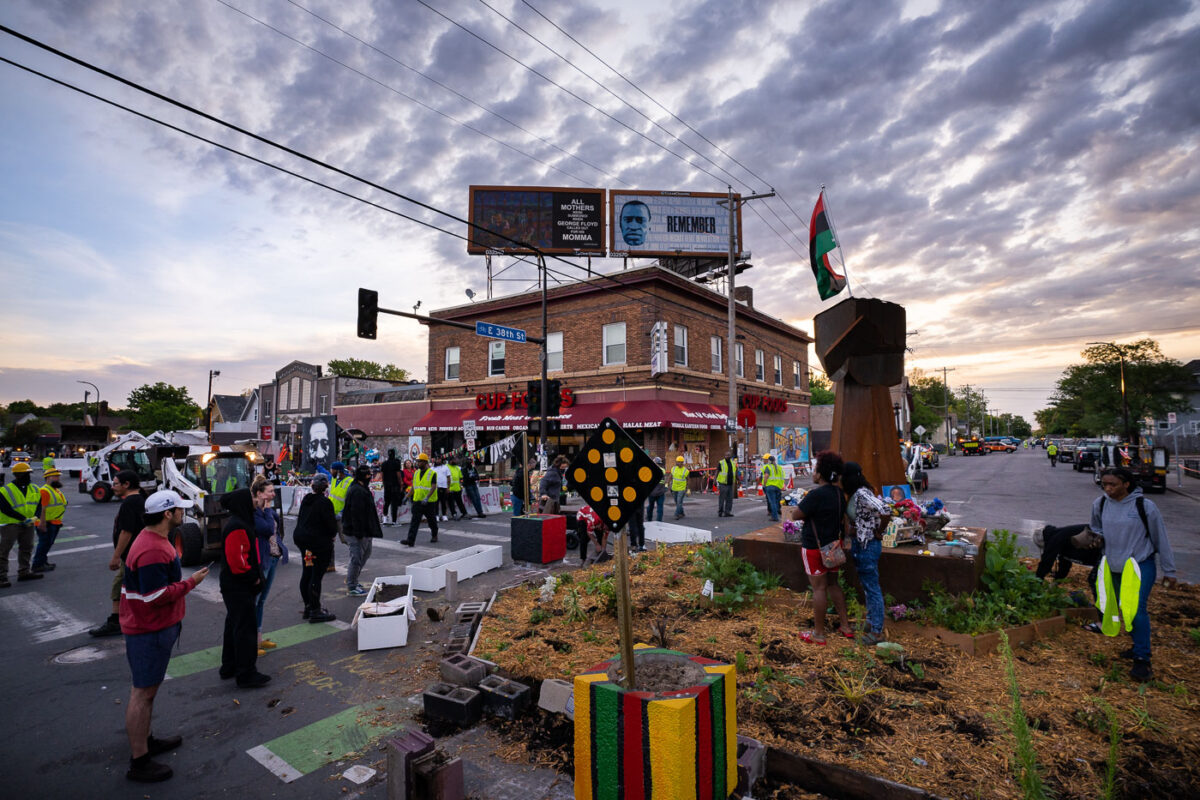
People gather at George Floyd Square in Minneapolis as workers reopen East 38th Street to traffic.
City employees began reopening George Floyd Square to vehicle traffic on June 3, 2021, nearly a year after the intersection was closed following the murder of George Floyd. The square, located at the intersection of East 38th Street and Chicago Avenue in Minneapolis, became a focal point for protests against racial injustice and police brutality. It was transformed into a community space with memorials, art, and gardens, serving as a symbol of resistance and a gathering place for activism. On May 25, 2020, Minneapolis police officer Derek Chauvin murdered 46-year-old George Floyd during an arrest outside Cup Foods at the intersection of 38th Street and Chicago Avenue in south Minneapolis. Video recorded by bystanders showed Chauvin kneeling on Floyd’s neck for more than nine minutes while Floyd repeatedly said he could not breathe. Three other Minneapolis police officers — J. Alexander Kueng, Thomas Lane, and Tou Thao — were also present during the arrest and later faced criminal charges for their roles in Floyd’s death. Floyd’s murder sparked protests and civil unrest across Minneapolis and around the world, leading to widespread demonstrations against police violence, major policy debates on policing, and the conviction of Chauvin on murder and manslaughter charges in 2021.

Minneapolis: George Floyd Square Reopened to Traffic
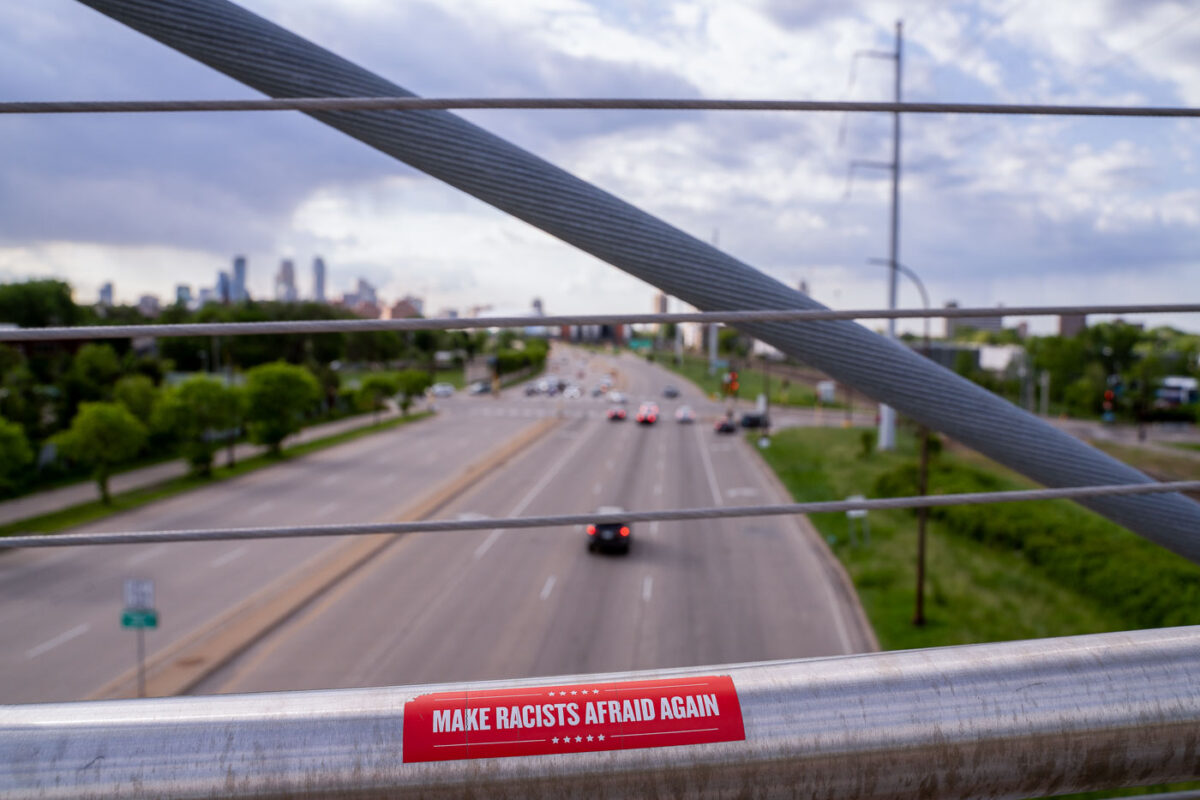
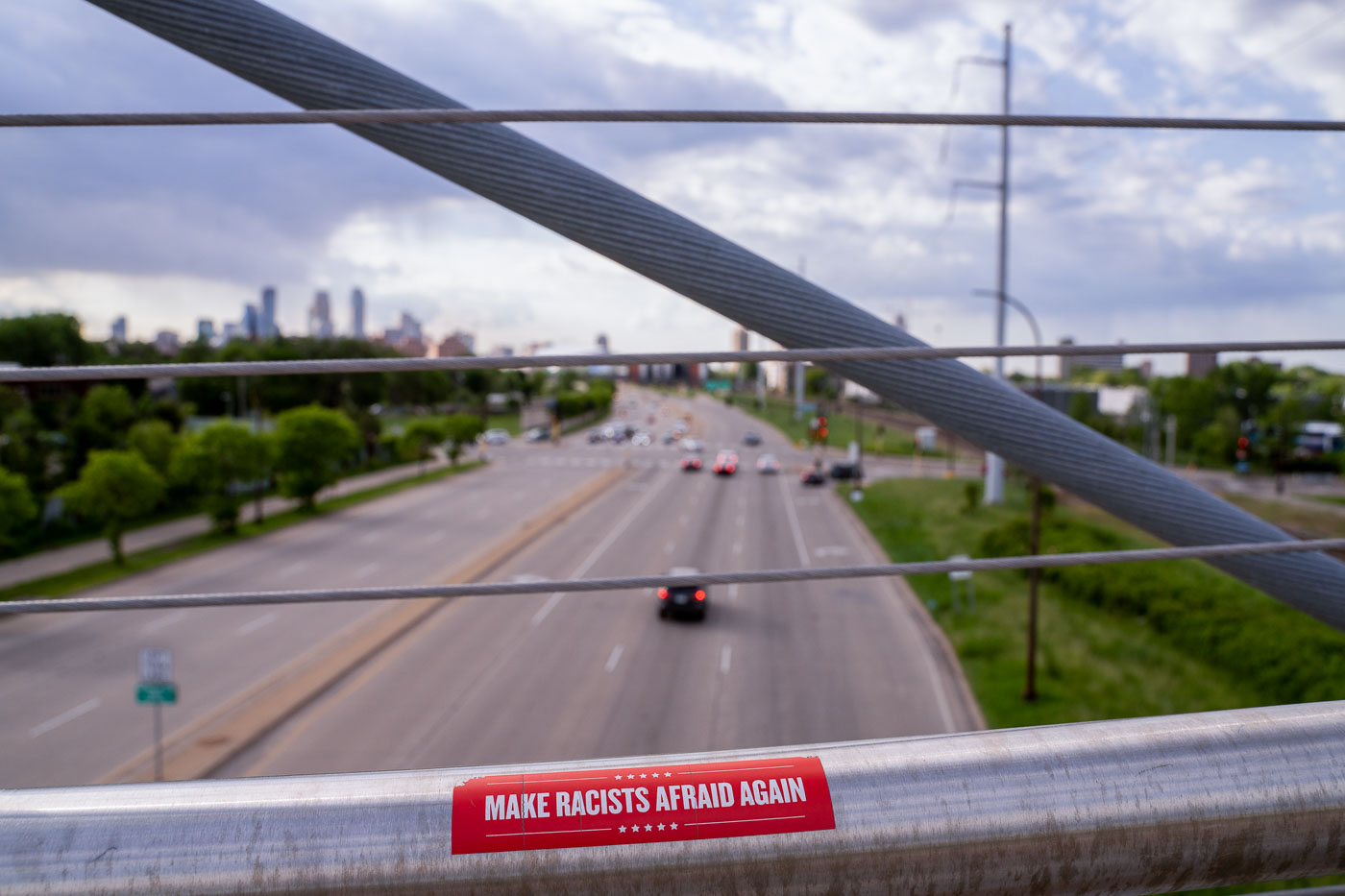
Sticker reading “Make Racists Afraid Again” on the Martin Olav Sabo Bridge over Hiawatha Avenue in Minneapolis.
A sticker on the Martin Olav Sabo bridge in Minneapolis that reads "Make Racists Afraid Again".

Minneapolis: ‘Make Racists Afraid Again’ sticker on Sabo Bridge
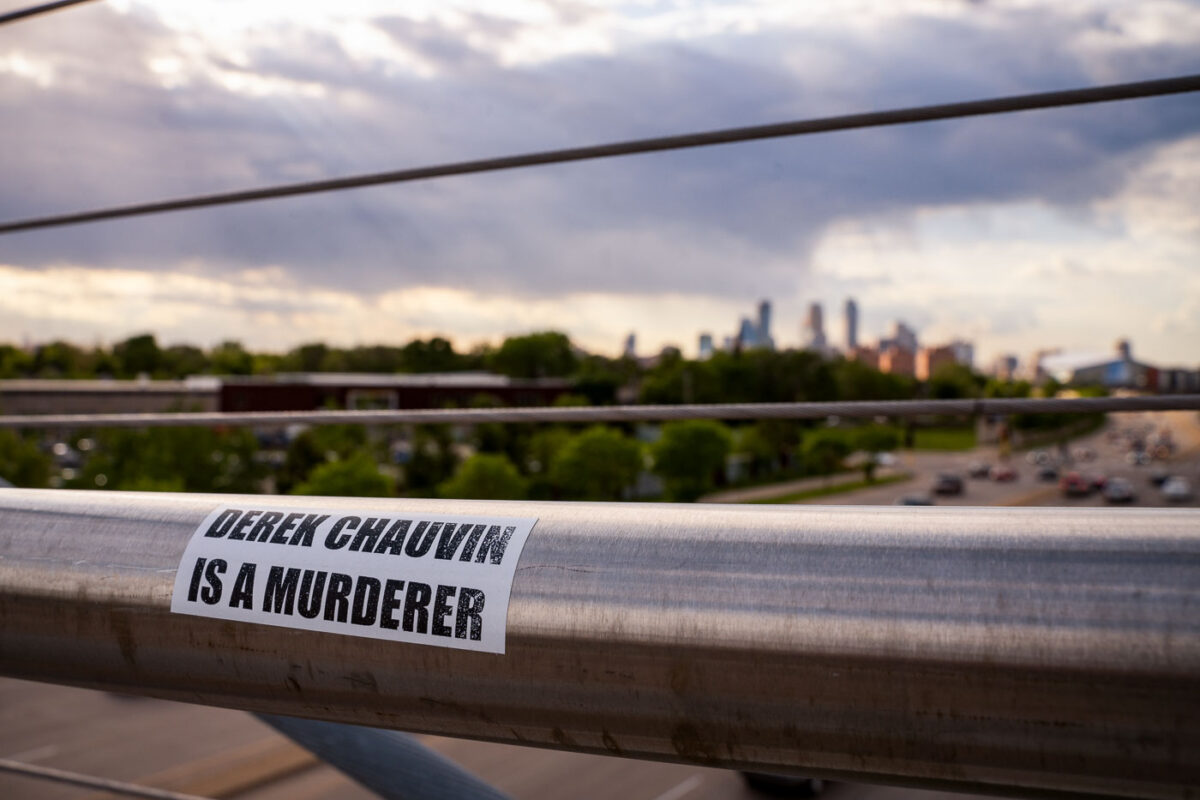
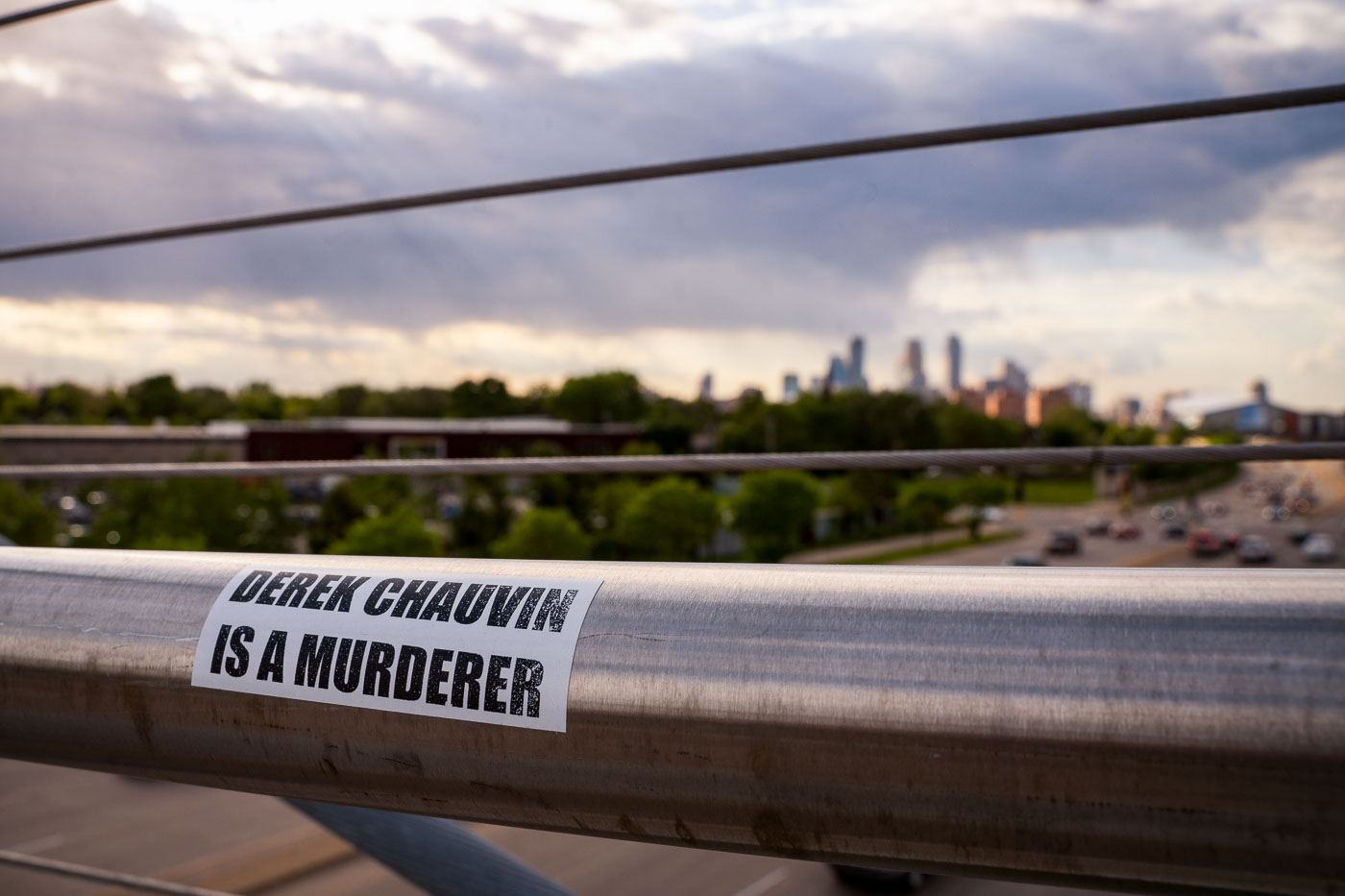
Sticker reading “Derek Chauvin Is a Murderer” on a bridge railing in Minneapolis with skyline in background
A sticker reading "Derek Chauvin Is A Murderer" is affixed to a railing on the Martin Olav Sabo Bridge in Minneapolis. The bridge, which spans Hiawatha Avenue, is a vital transportation link in the city. This message appeared in the context of widespread protests and public outcry following the murder of George Floyd in May 2020, for which former Minneapolis police officer Derek Chauvin was convicted.

Derek Chauvin Sticker on Martin Olav Sabo Bridge, Minneapolis
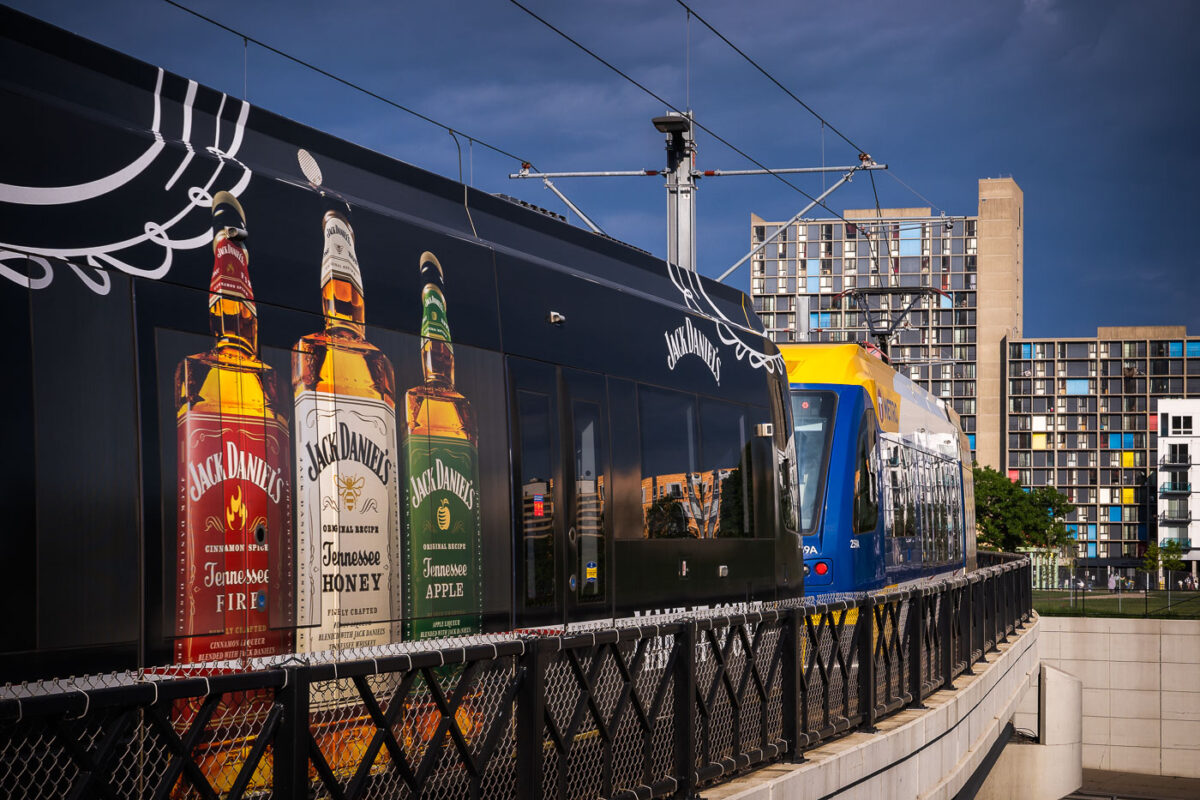
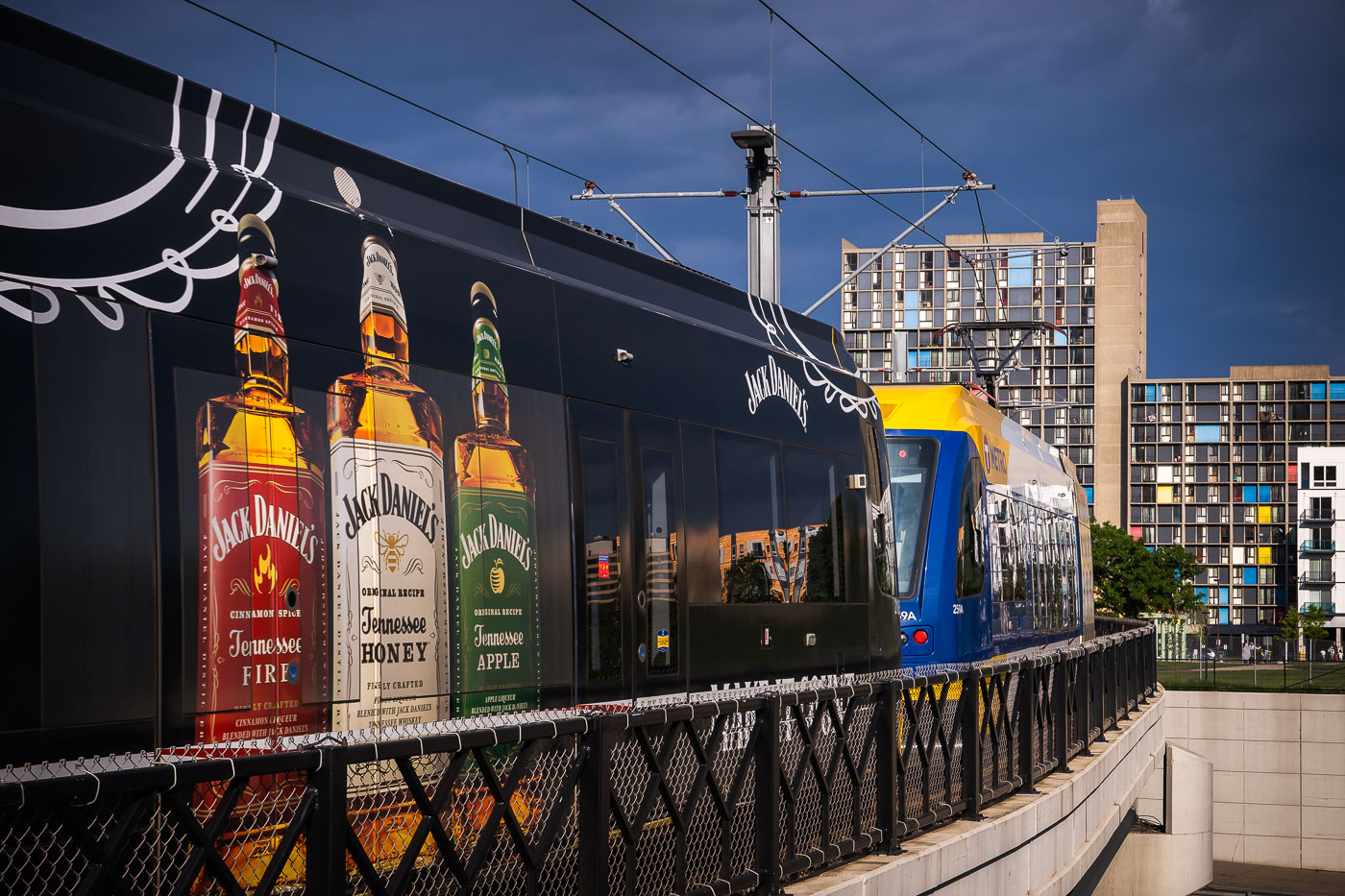
Jack Daniel's ad wraps a Minneapolis light rail train beside Cedar Riverside apartments.
A Metro Transit light rail train in Minneapolis, Minnesota, is wrapped with an advertisement for Jack Daniel's Tennessee Whiskey. The train features prominent imagery of the brand's iconic bottles, including Tennessee Fire, Tennessee Honey, and Tennessee Apple. In the background, the Cedar Riverside apartment buildings, known for their distinctive modernist architecture and colorful window accents, are visible.

Jack Daniels Advertisement on Minneapolis Light Rail Train
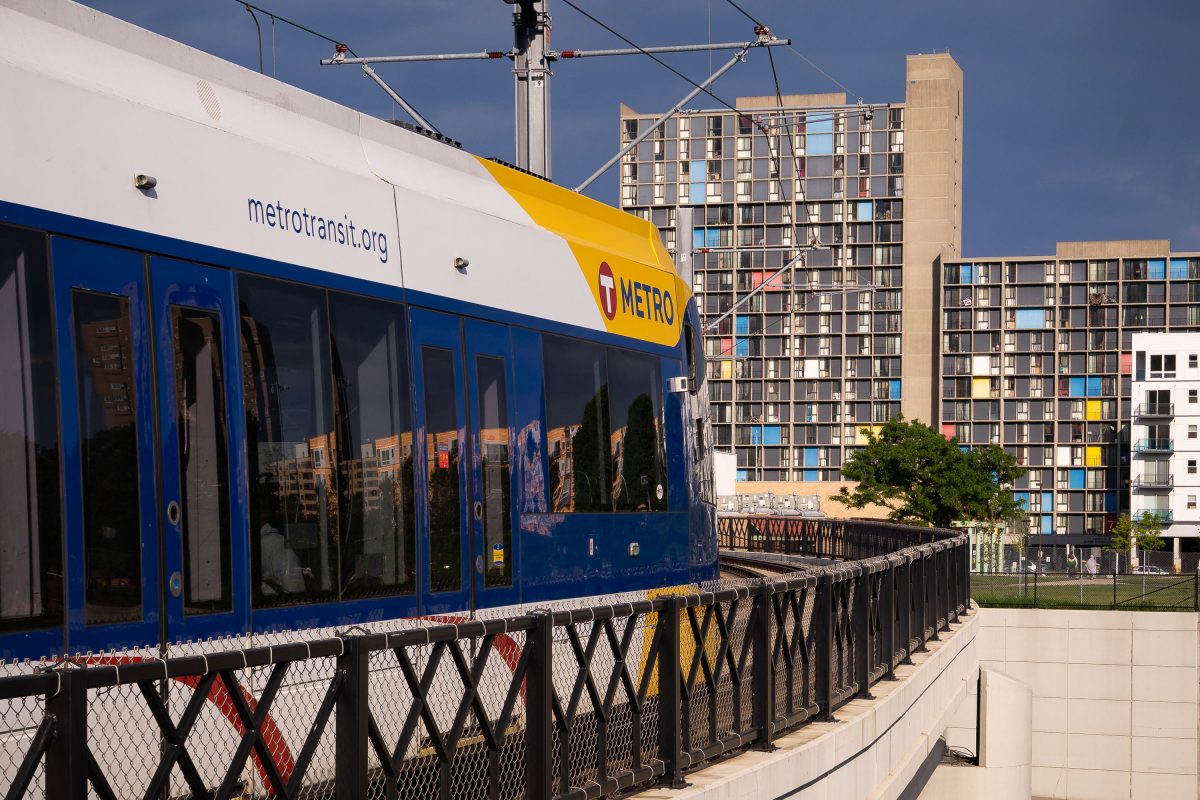
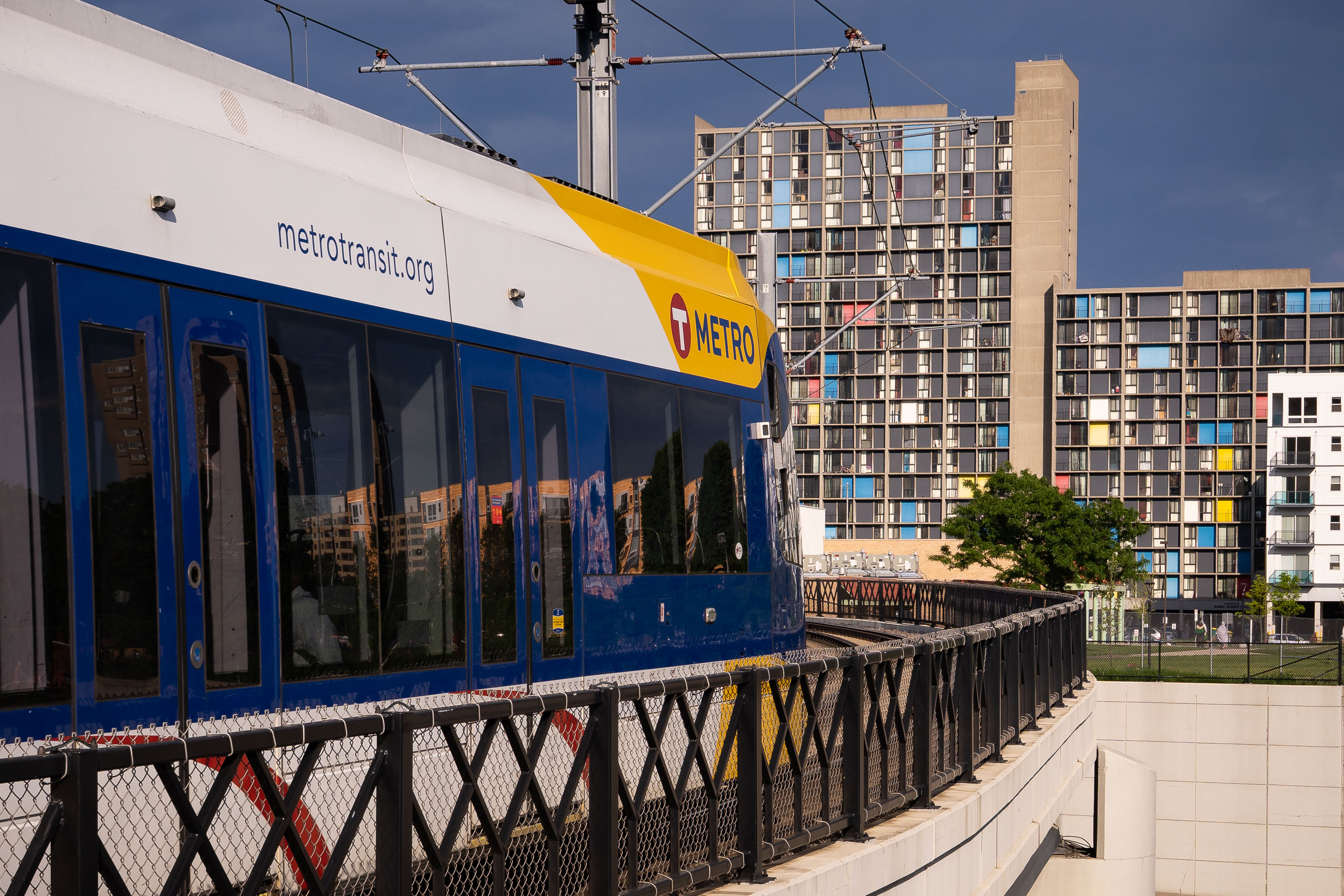
Metro Transit light rail train approaching Cedar-Riverside Station with Riverside Plaza residential towers in downtown Minneapolis.
A Metro Transit light rail train crosses Interstate 35W approaching the Cedar-Riverside Station in Minneapolis. The station serves the Blue and Green Lines and sits adjacent to the Riverside Plaza high-rise complex, a distinctive Brutalist housing development completed in 1973.

Metro Train Crosses I-35W Near Riverside Plaza, Minneapolis
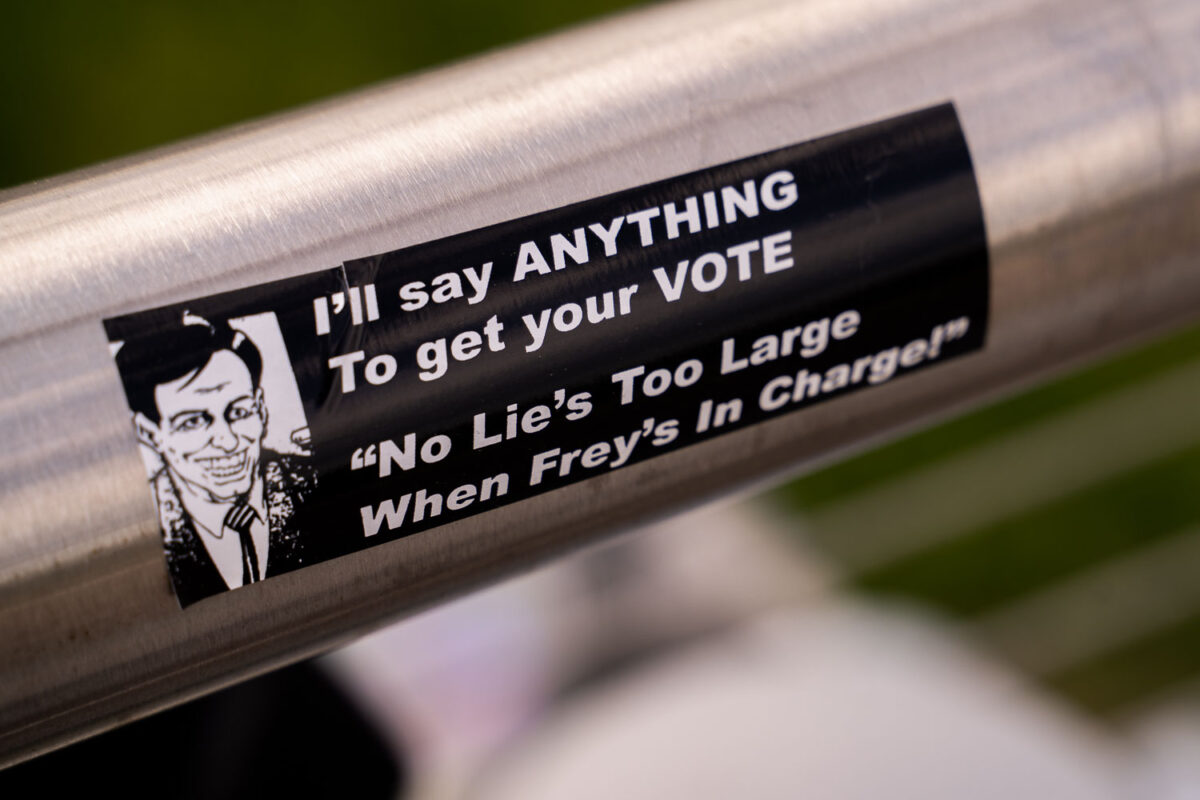
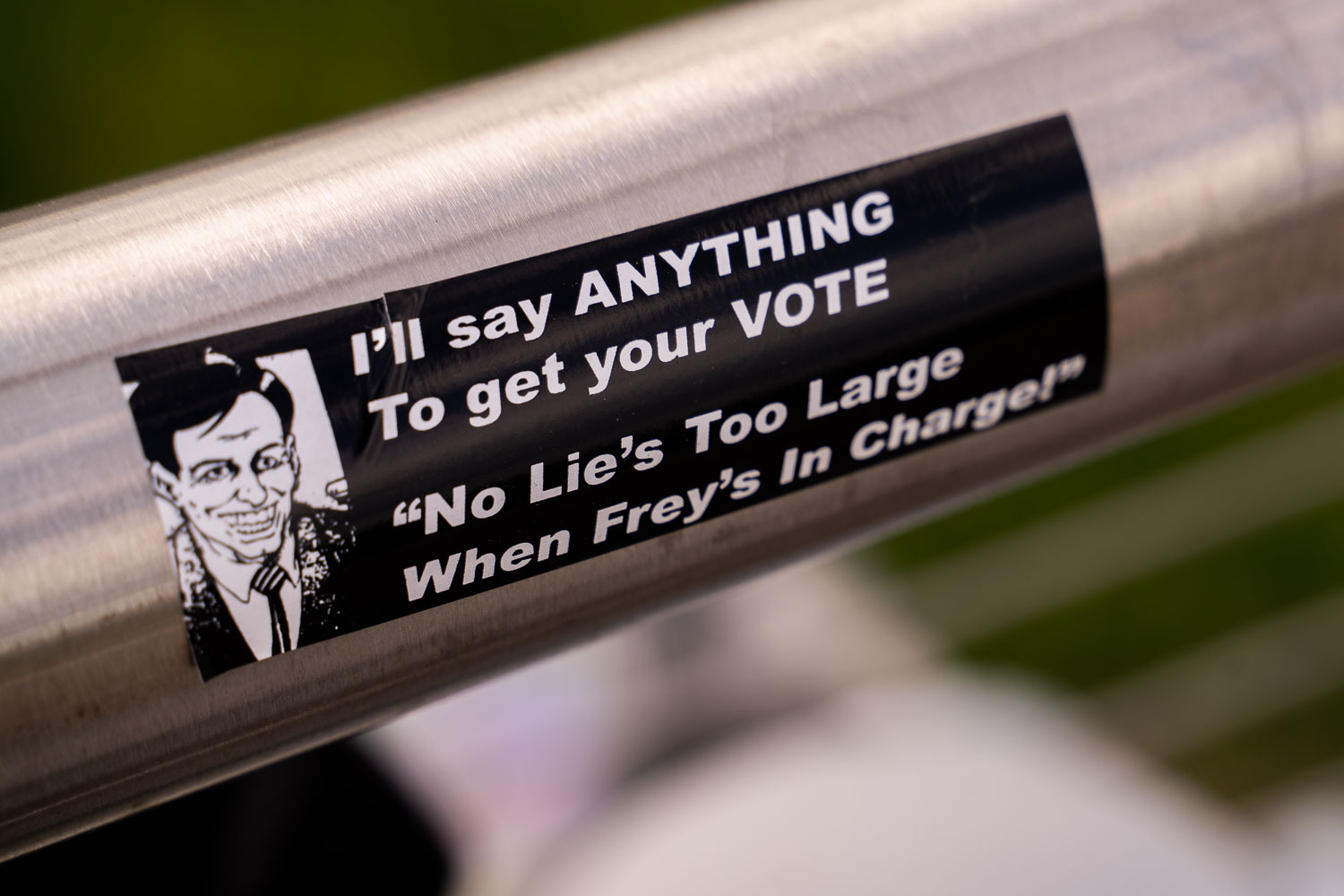
Political sticker affixed to Martin Olav Sabo Bridge criticizing Minneapolis Mayor Jacob Frey's handling of a Frey's restaurant incident.
A sticker mentioning Minneapolis Mayor Jacob Frey seen on the Martin Olav Sabo Bridge in Minneapolis.

“No Lie’s Too Large” Jacob Frey Sticker on a Minneapolis Railing
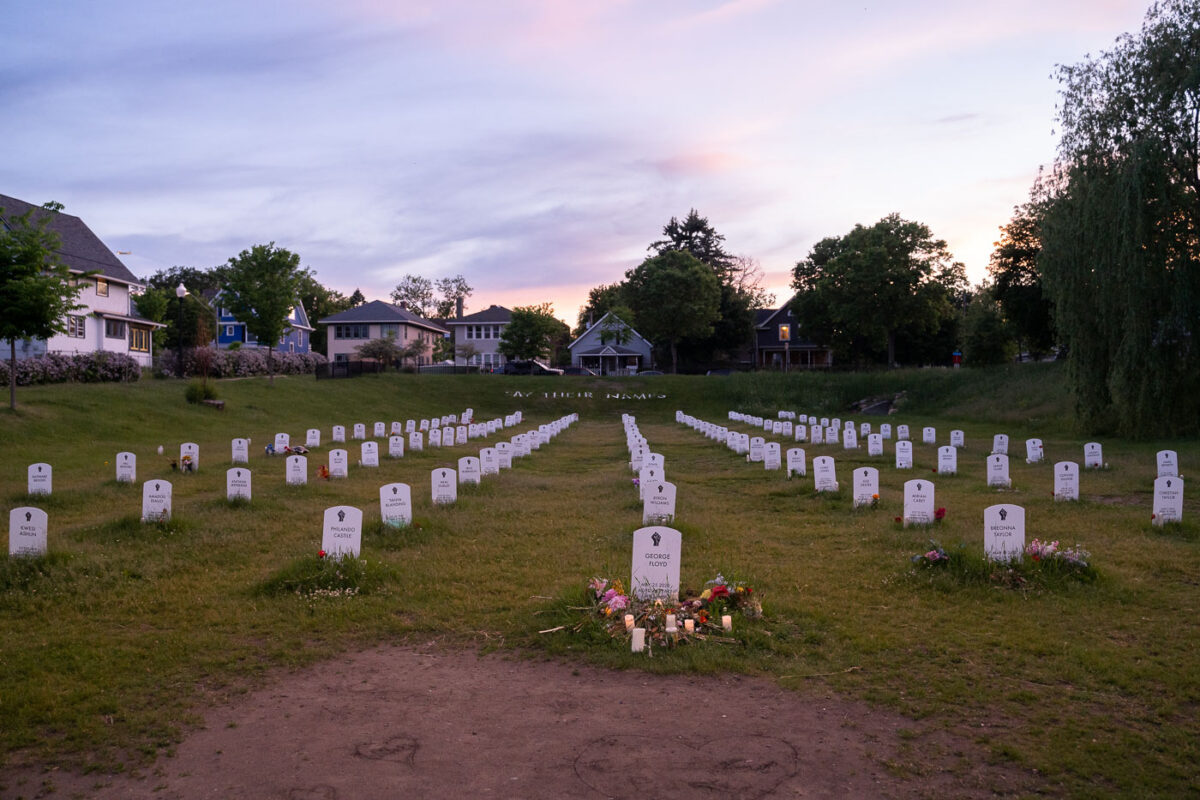
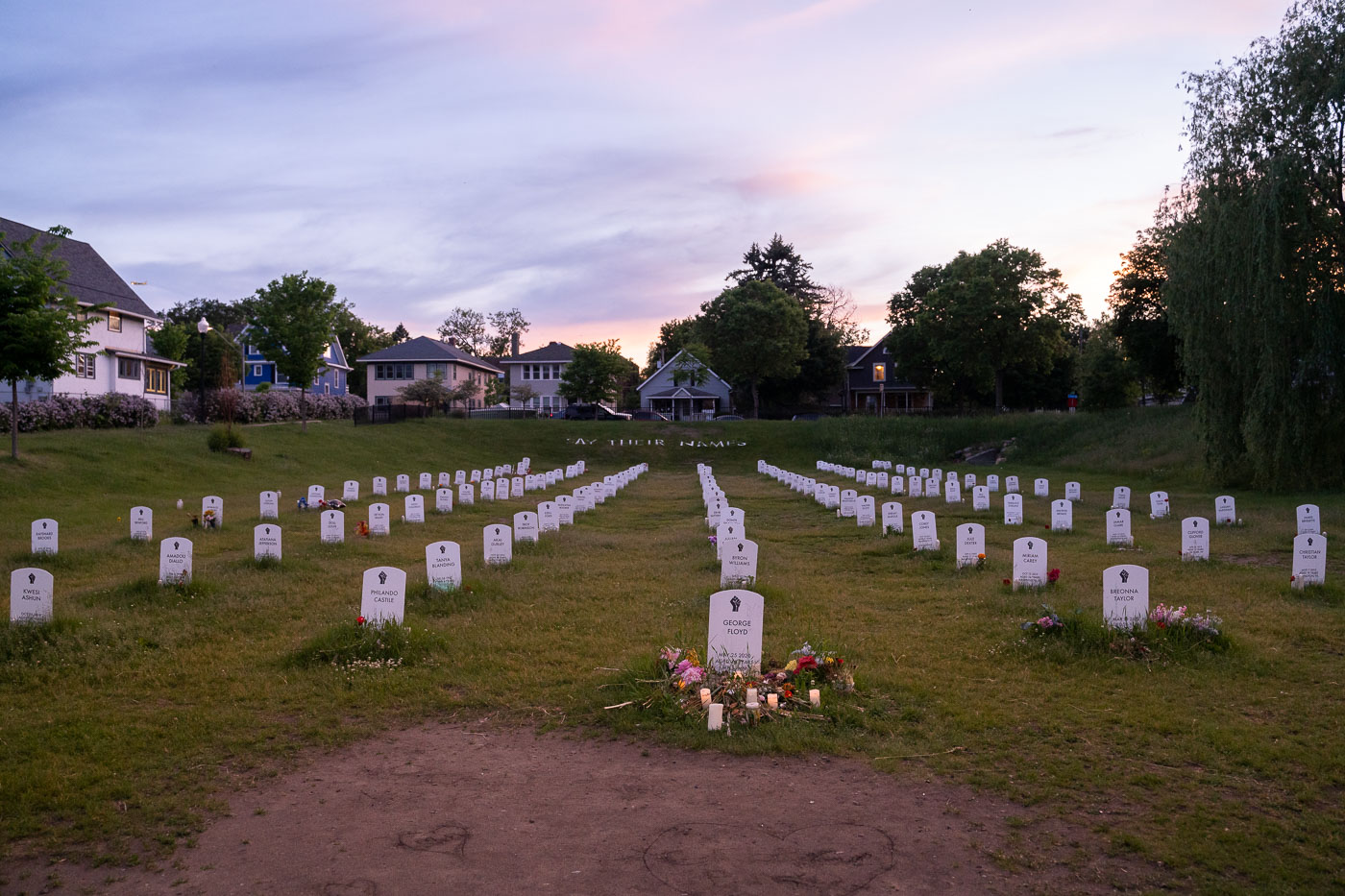
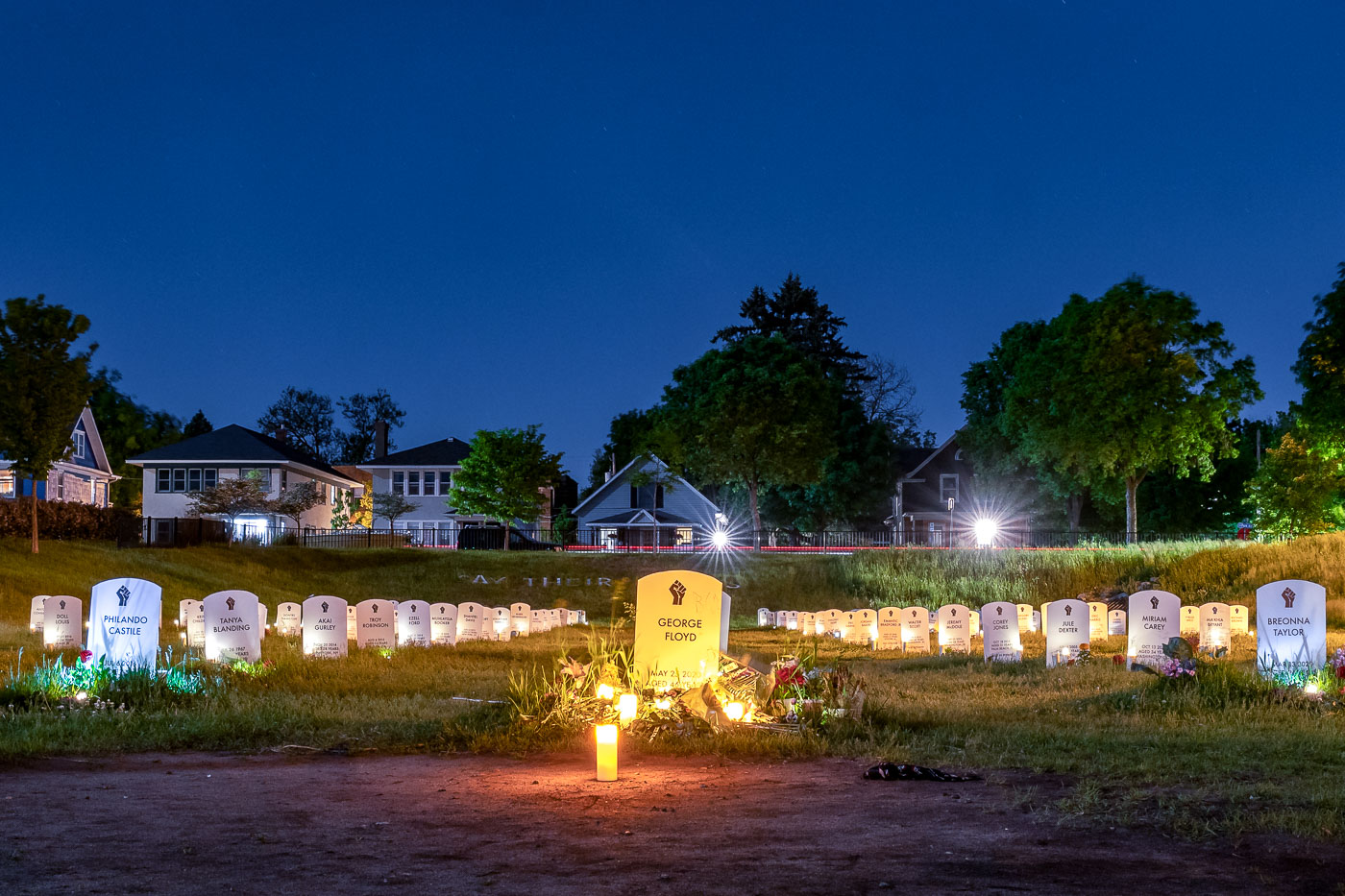
Say Their Names Cemetery memorial in Minneapolis at dusk with rows of headstones for victims of police violence.
The "Say Their Names Cemetery" is an outdoor memorial located in South Minneapolis, near George Floyd Square. Established in the wake of the murder of George Floyd and subsequent protests, the cemetery serves as a tribute to victims of police violence. Each headstone bears the name of an individual who died as a result of police brutality, with the central marker dedicated to George Floyd himself. The memorial aims to honor these lives and raise awareness about systemic injustice. On May 25, 2020, Minneapolis police officer Derek Chauvin murdered 46-year-old George Floyd during an arrest outside Cup Foods at the intersection of 38th Street and Chicago Avenue in south Minneapolis. Video recorded by bystanders showed Chauvin kneeling on Floyd’s neck for more than nine minutes while Floyd repeatedly said he could not breathe. Three other Minneapolis police officers - J. Alexander Kueng, Thomas Lane, and Tou Thao — were also present during the arrest and later faced criminal charges for their roles in Floyd’s death. Floyd’s murder sparked protests and civil unrest across Minneapolis and around the world, leading to widespread demonstrations against police violence, major policy debates on policing, and the conviction of Chauvin on murder and manslaughter charges in 2021.

Say Their Names Cemetery, Minneapolis
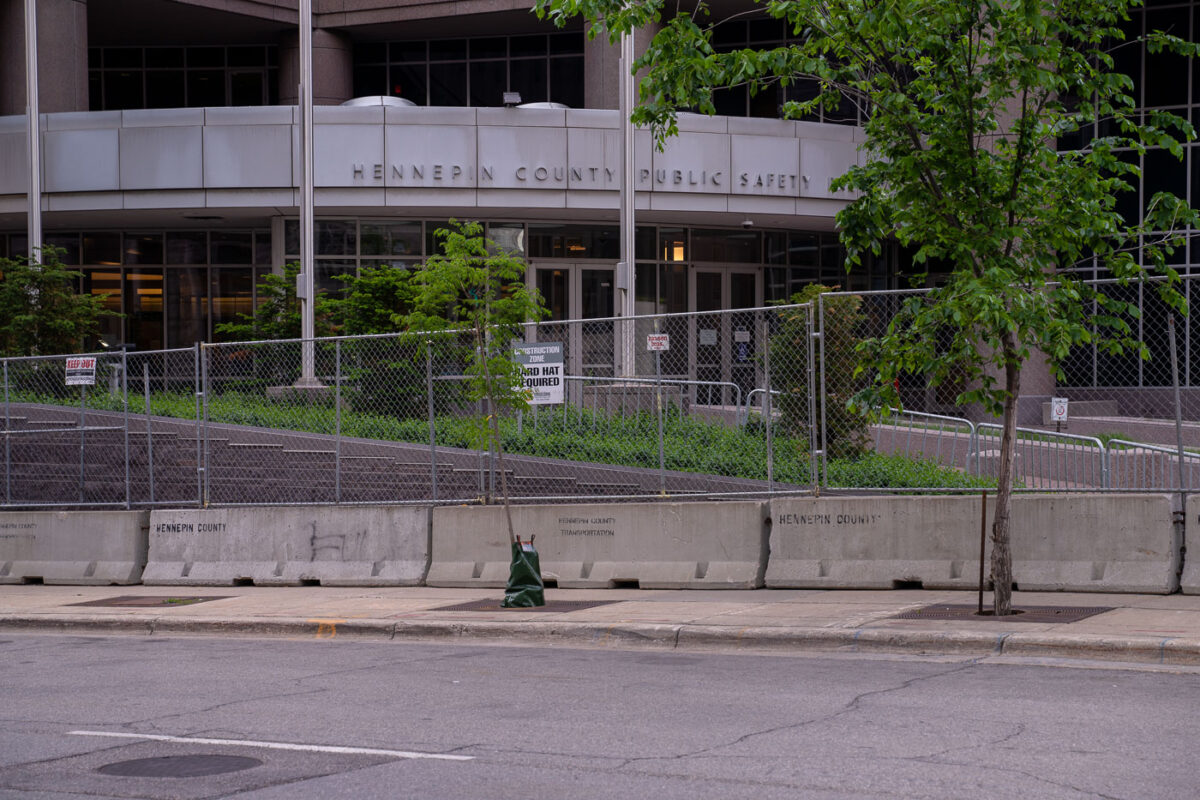
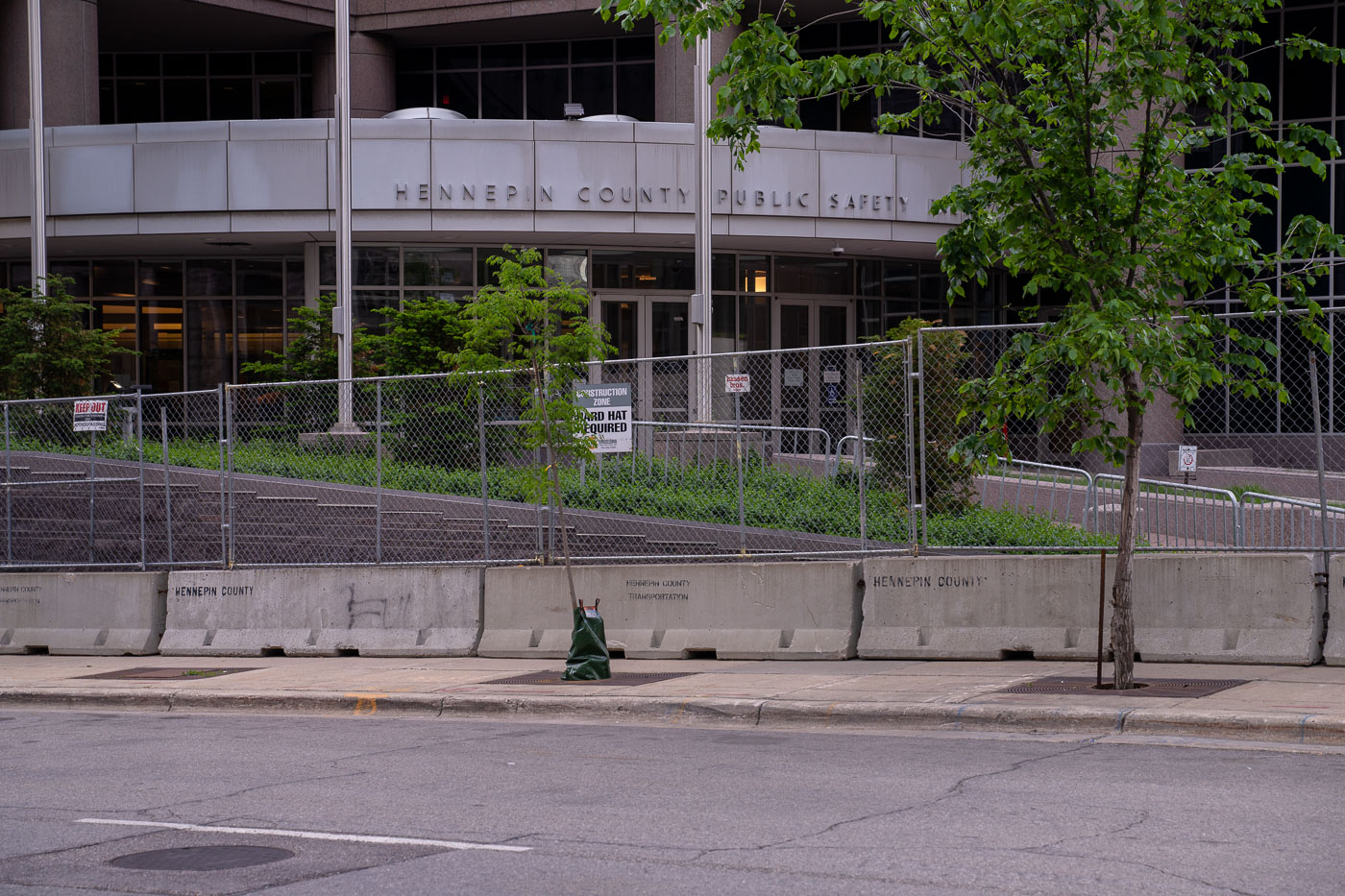
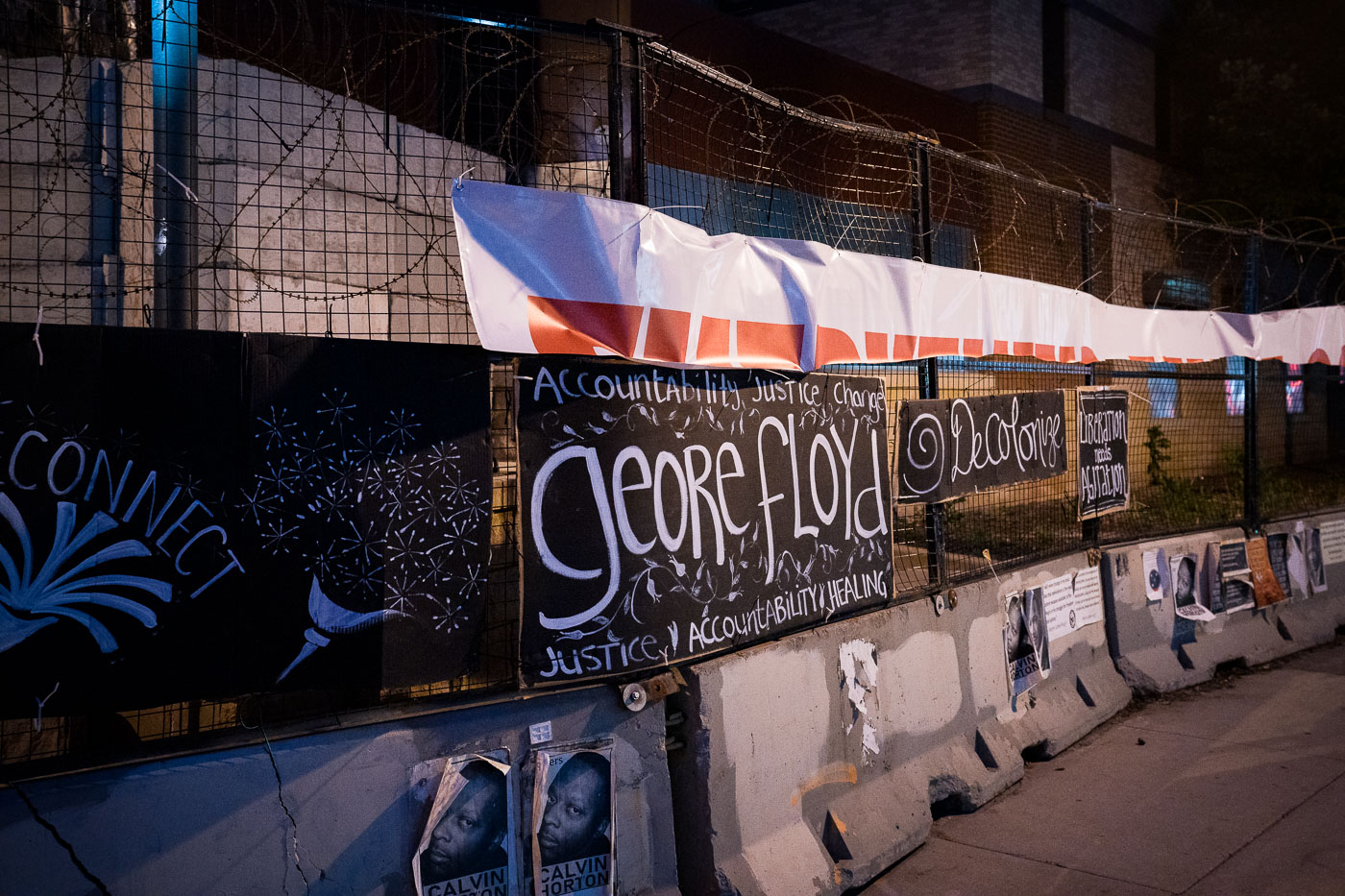
Hennepin County Public Safety Facility in Minneapolis behind fencing and concrete barriers
The Hennepin County Public Safety Facility in Downtown Minneapolis, which houses the county jail, is shown with security fencing and concrete barriers. These measures were installed in anticipation of the Derek Chauvin murder trial in 2021, reflecting heightened security concerns in the city following the murder of George Floyd. On May 25, 2020, Minneapolis police officer Derek Chauvin murdered 46-year-old George Floyd during an arrest outside Cup Foods at the intersection of 38th Street and Chicago Avenue in south Minneapolis. Video recorded by bystanders showed Chauvin kneeling on Floyd’s neck for more than nine minutes while Floyd repeatedly said he could not breathe. Three other Minneapolis police officers - J. Alexander Kueng, Thomas Lane, and Tou Thao — were also present during the arrest and later faced criminal charges for their roles in Floyd’s death. Floyd’s murder sparked protests and civil unrest across Minneapolis and around the world, leading to widespread demonstrations against police violence, major policy debates on policing, and the conviction of Chauvin on murder and manslaughter charges in 2021.

Hennepin County Public Safety Facility with Security Fencing, Minneapolis
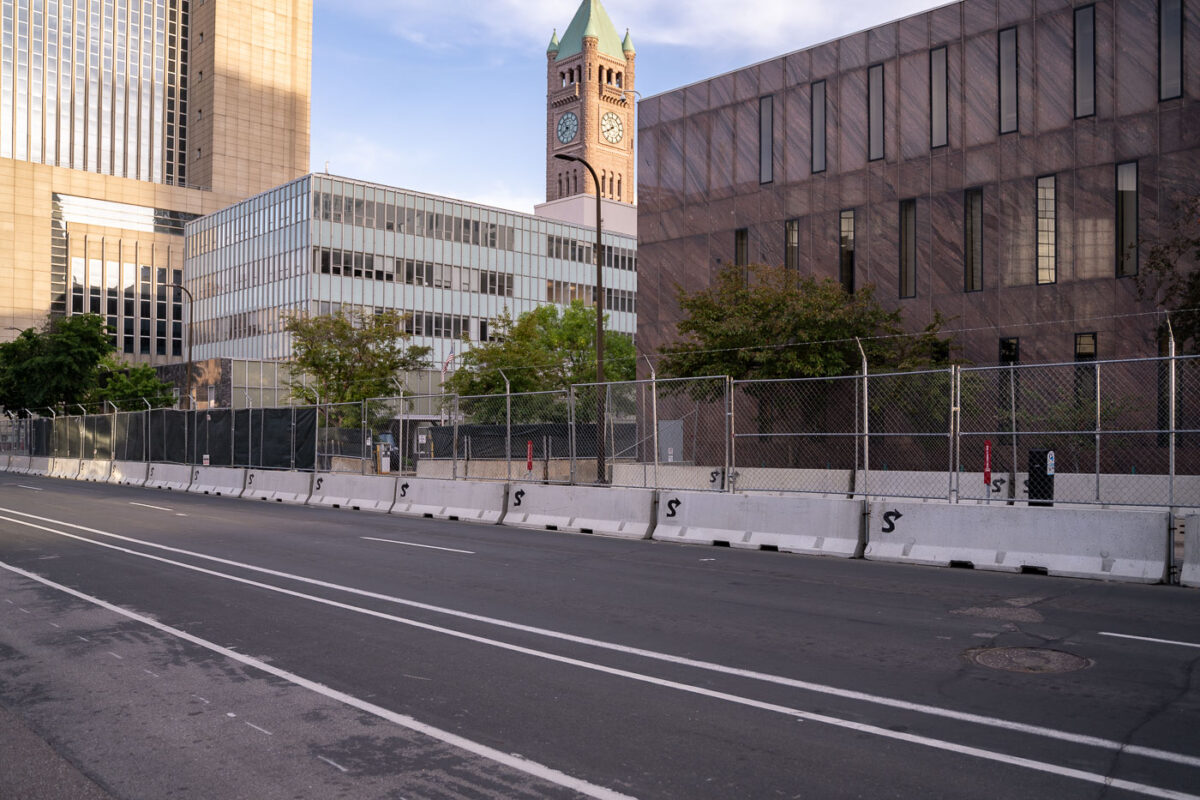
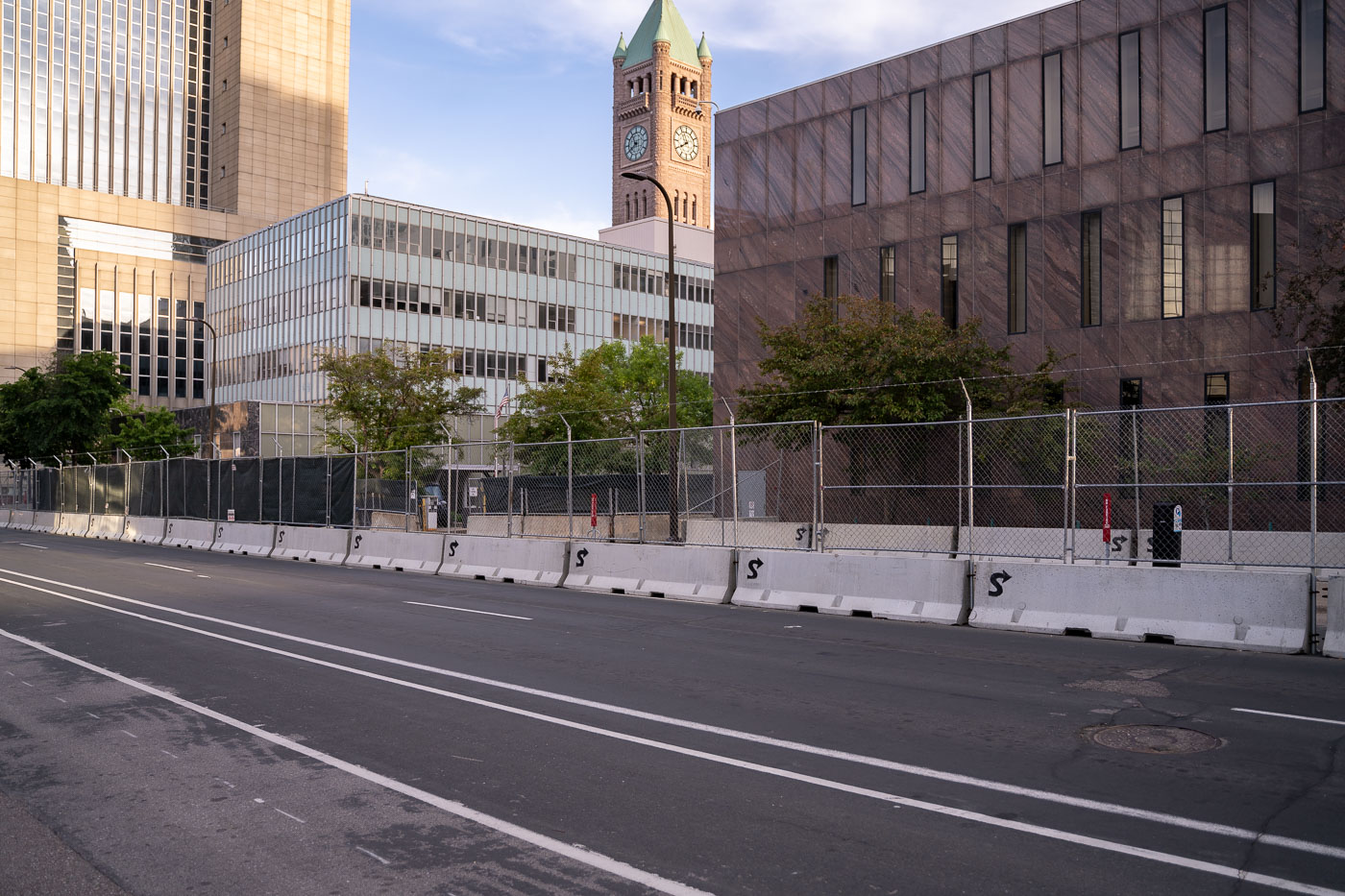
Temporary barricades line a downtown Minneapolis street near the Third Precinct and City Hall.
Temporary barricades surround the Minneapolis Police Department's Third Precinct station, which was relocated after the original building was destroyed by fire during the 2020 Minneapolis Uprising. On May 25, 2020, Minneapolis police officer Derek Chauvin murdered 46-year-old George Floyd during an arrest outside Cup Foods at the intersection of 38th Street and Chicago Avenue in south Minneapolis. Video recorded by bystanders showed Chauvin kneeling on Floyd’s neck for more than nine minutes while Floyd repeatedly said he could not breathe. Three other Minneapolis police officers - J. Alexander Kueng, Thomas Lane, and Tou Thao — were also present during the arrest and later faced criminal charges for their roles in Floyd’s death. Floyd’s murder sparked protests and civil unrest across Minneapolis and around the world, leading to widespread demonstrations against police violence, major policy debates on policing, and the conviction of Chauvin on murder and manslaughter charges in 2021.

Barricades at Temporary Minneapolis Police 3rd Precinct
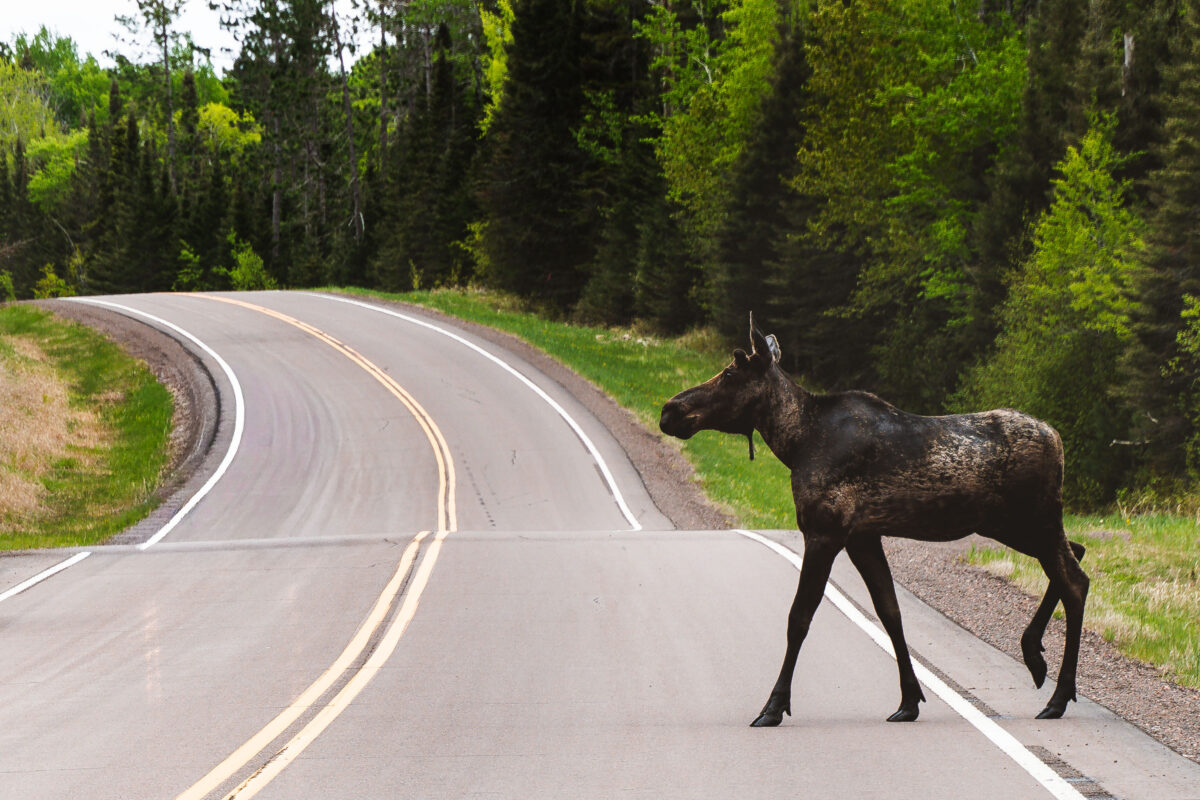
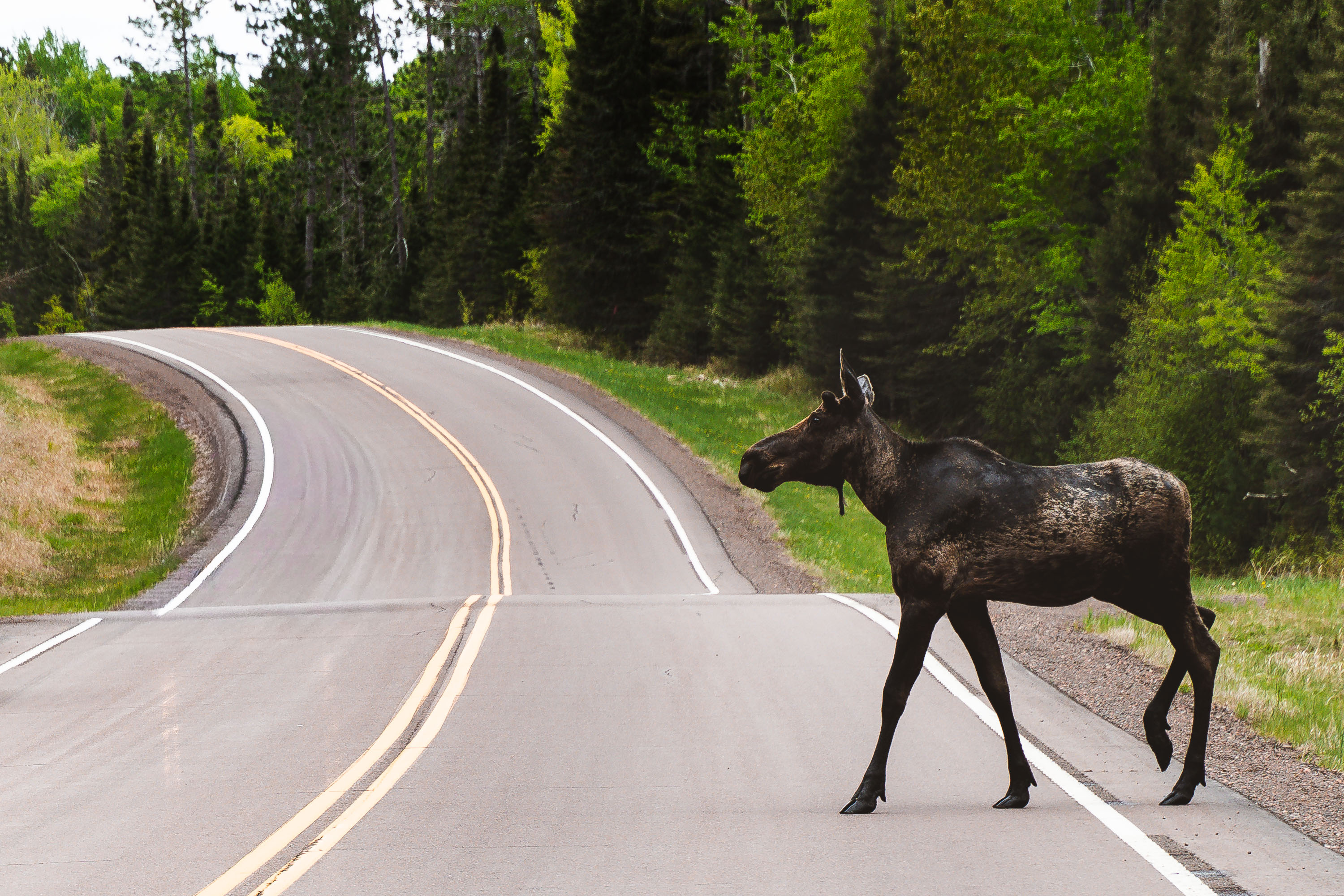
Moose crossing Highway 1 in northern Minnesota near the Superior National Forest
A moose crosses Highway 1 near Isabella in the Superior National Forest.

Moose on Highway 1, Northern Minnesota
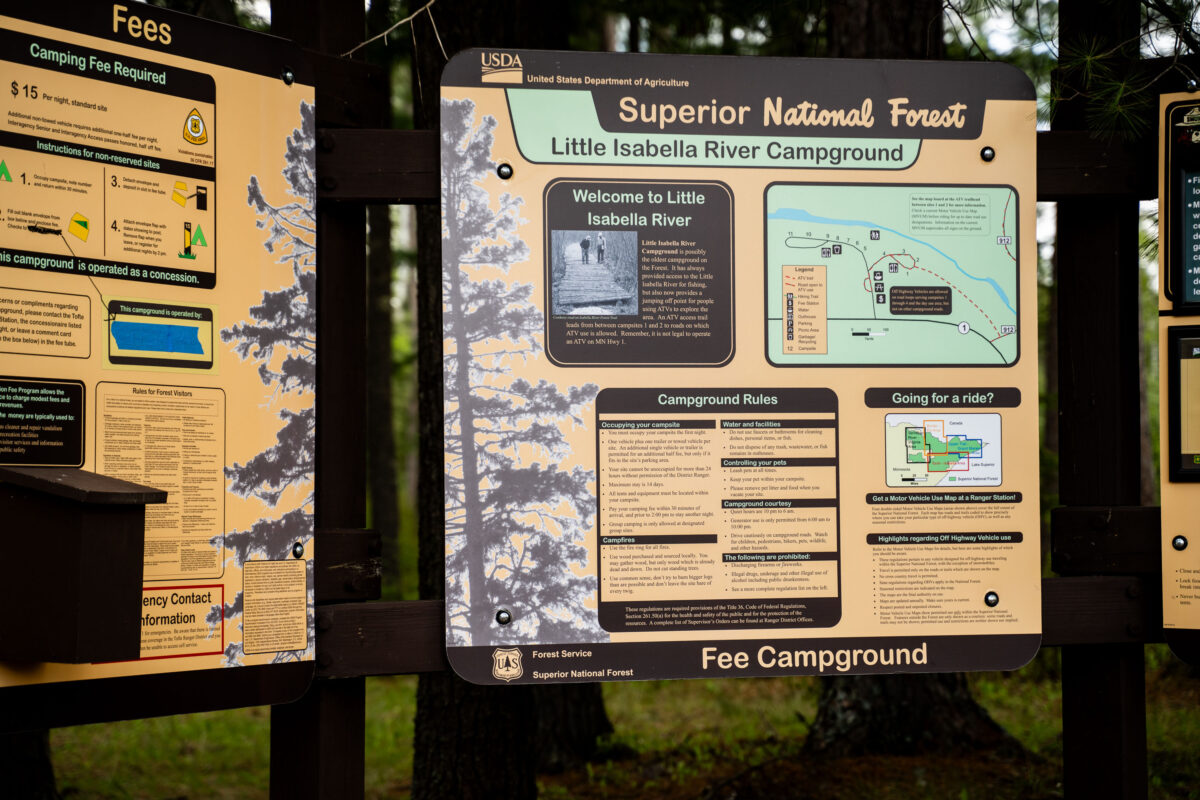
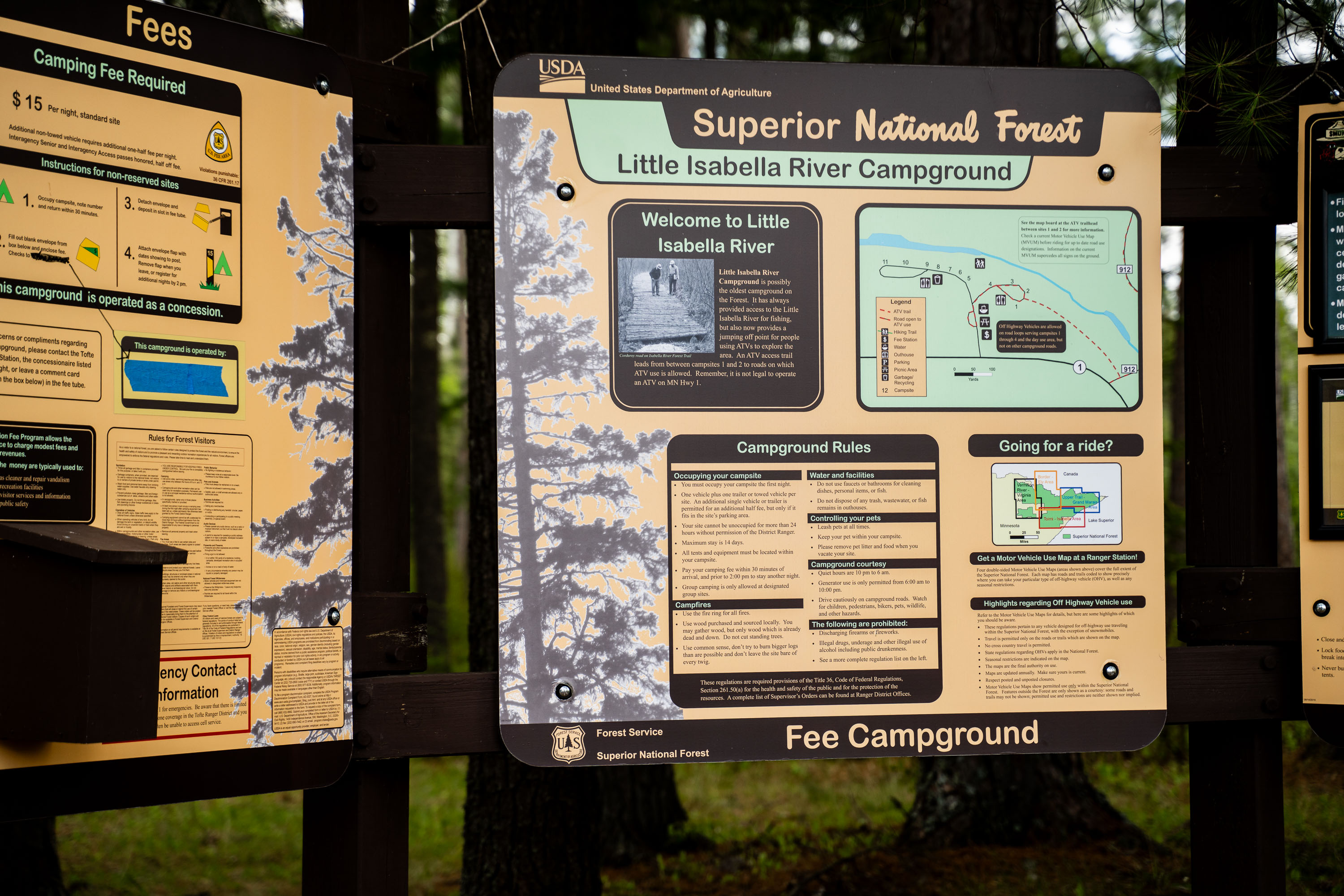
Little Isabella River Campground sign in Superior National Forest with rules and a site map
Little Isabella River Campground in Superior National Forest is shown on a Forest Service information board. The sign lists campground rules, fees, and a map of the site near Lake Isabella River.

Little Isabella River Campground, Superior National Forest
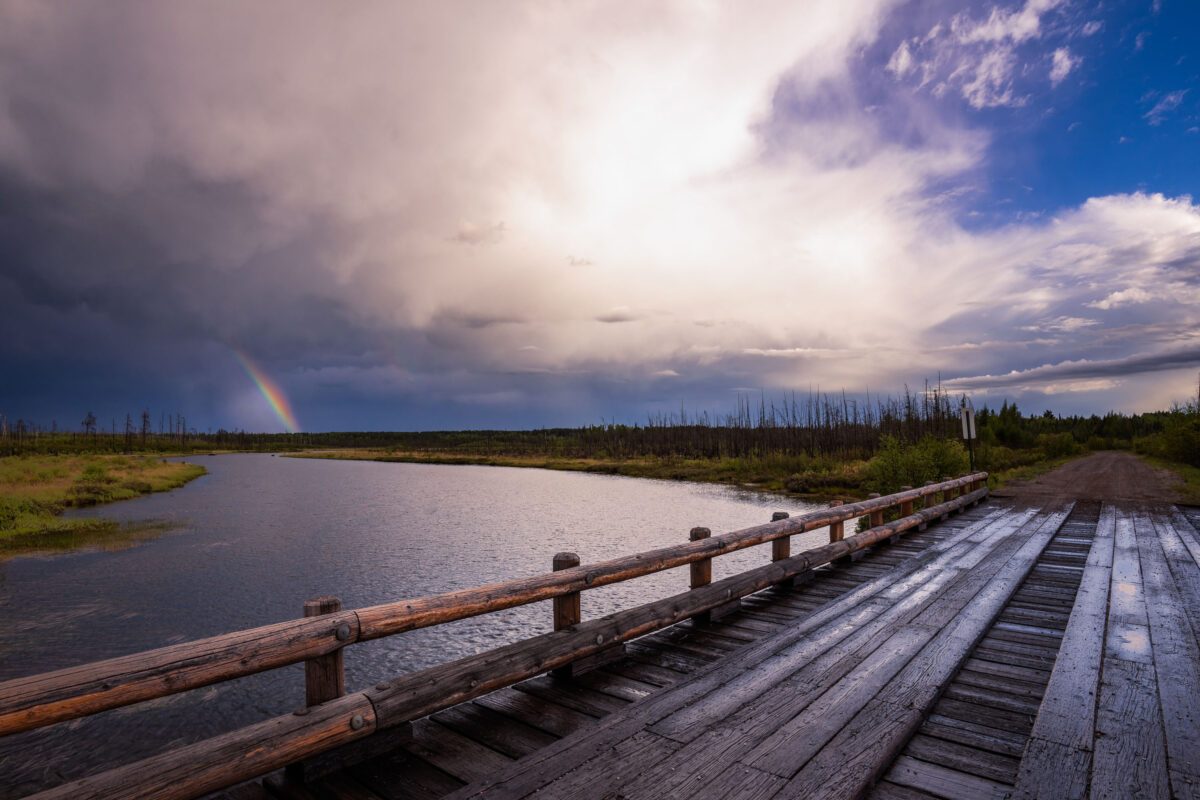
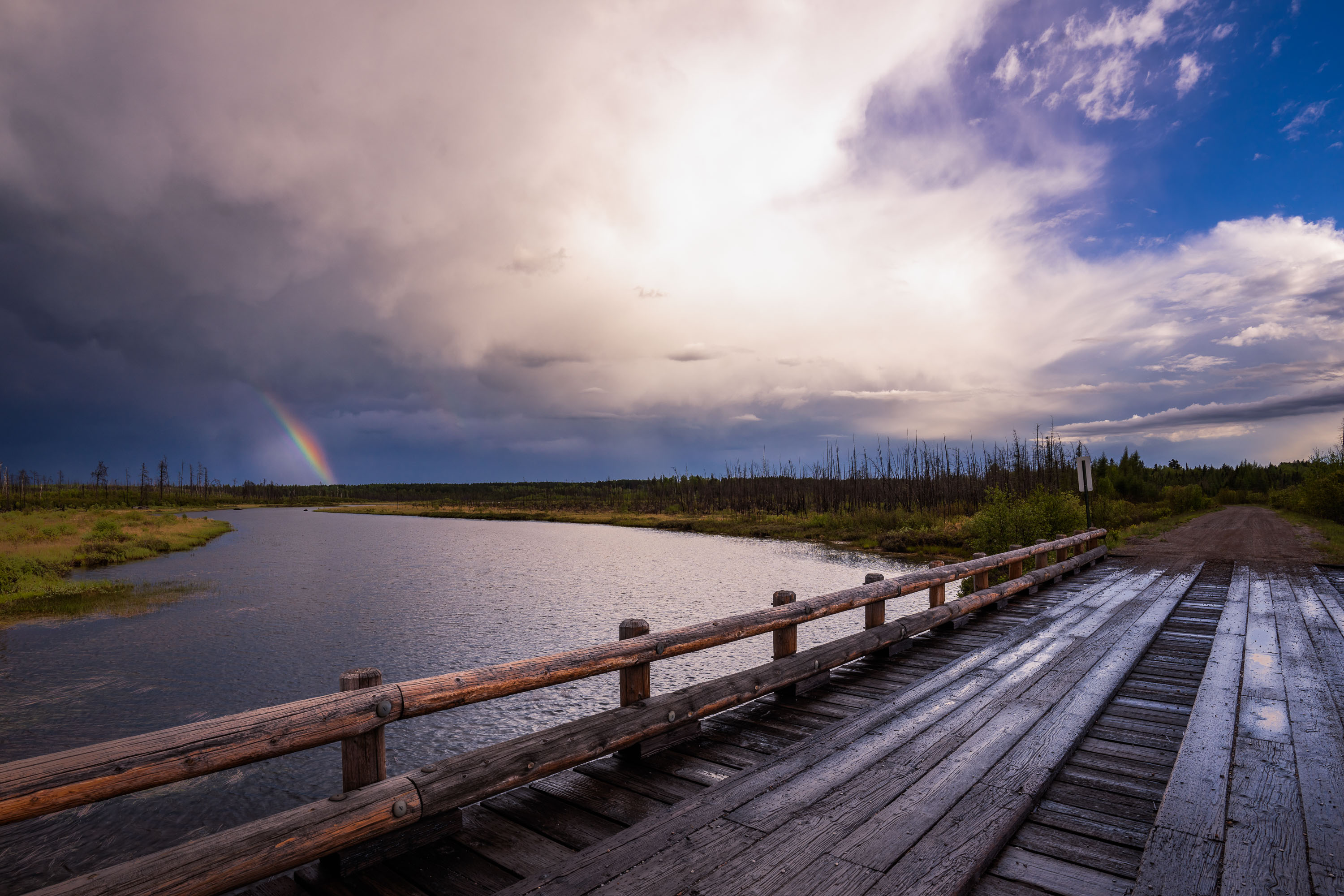
Rainbow over Isabella Lake in Superior National Forest, Minnesota, beside a wooden bridge.
A rainbow appears over Isabella Lake in Superior National Forest, Minnesota, beside a wooden bridge and road crossing. Storm clouds and brighter sky divide the horizon above the water and forest.

Rainbow near Isabella Lake, Superior National Forest
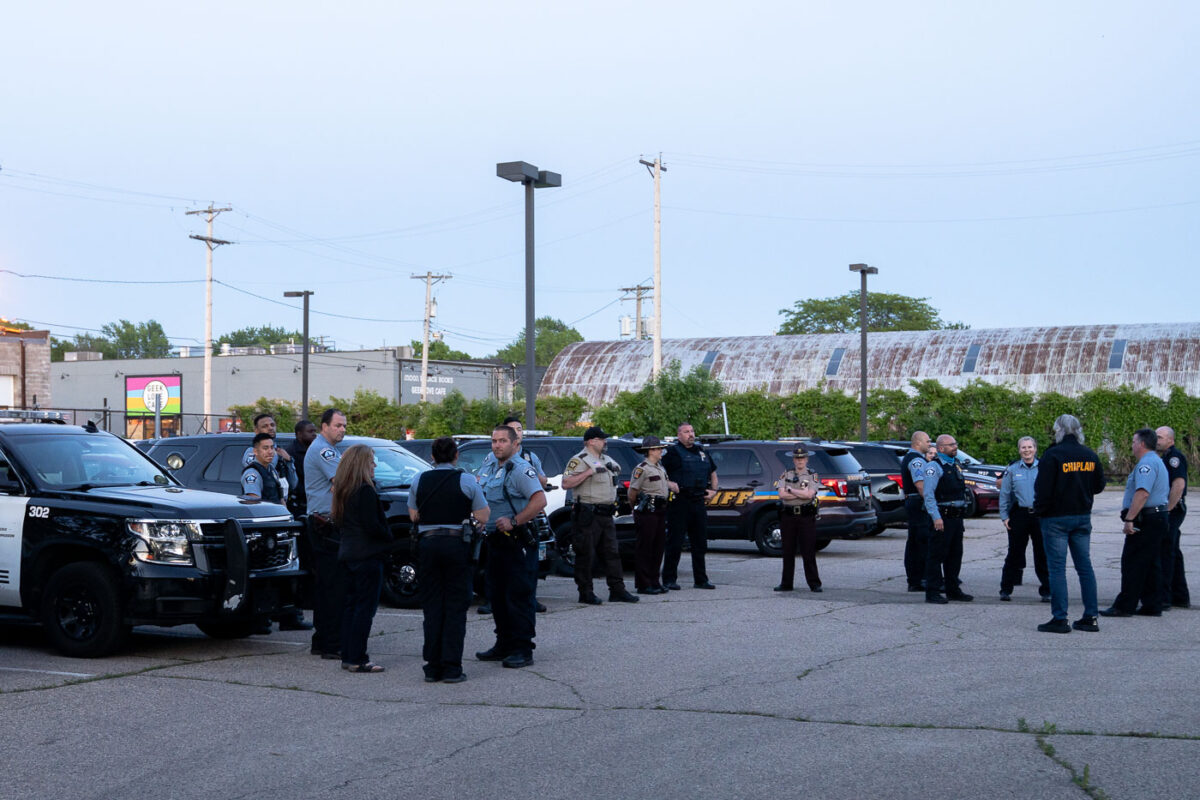
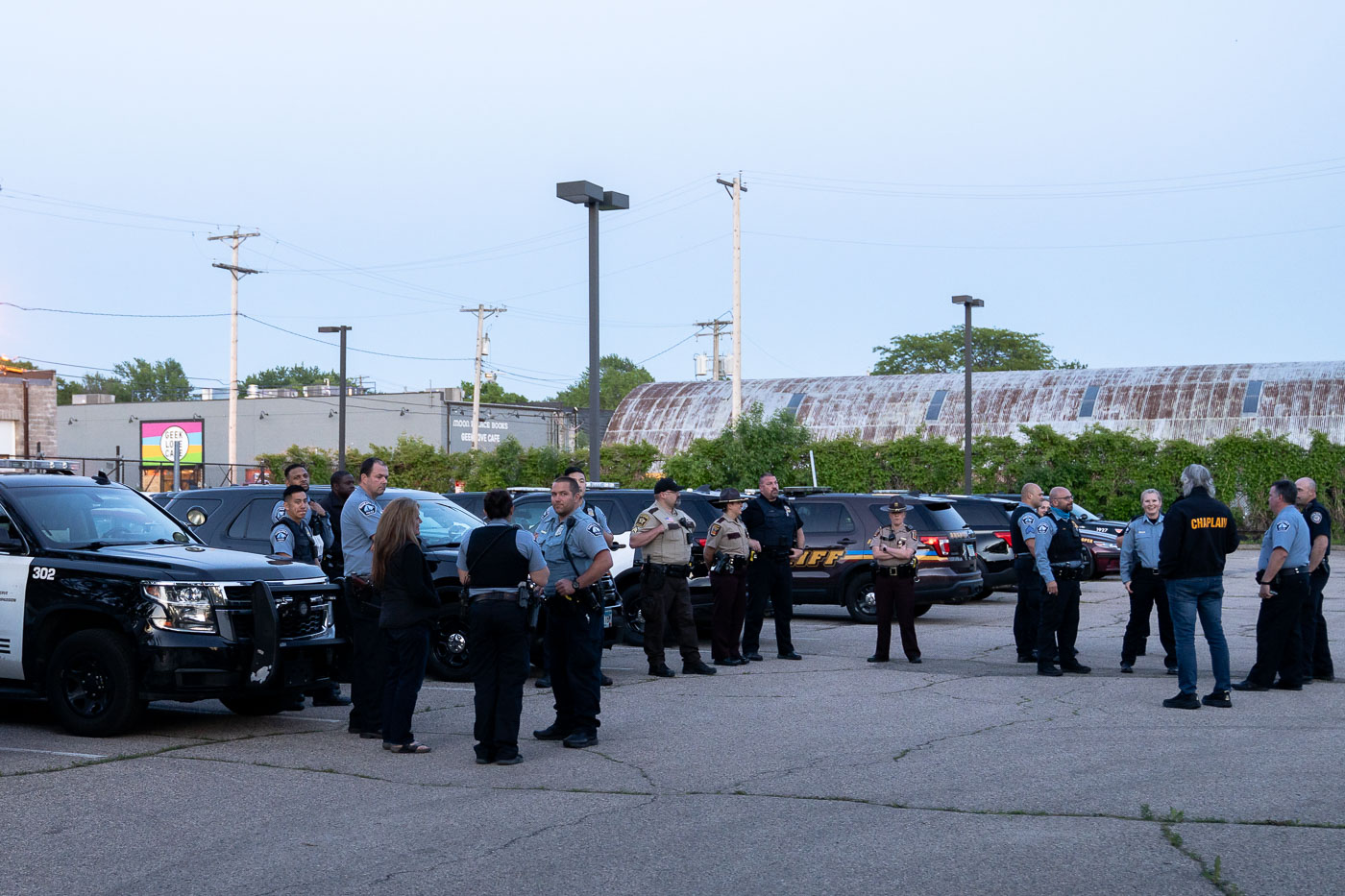
Minneapolis police gather 1 year after George Floyd's murder
Police officers and a chaplain gather at the Minneapolis Police Department's Third Precinct on May 28, 2021, the one-year anniversary of the precinct's burning during civil unrest. The precinct was compromised on May 28, 2020, following the murder of George Floyd.

Minneapolis Police gather at 3rd Precinct anniversary
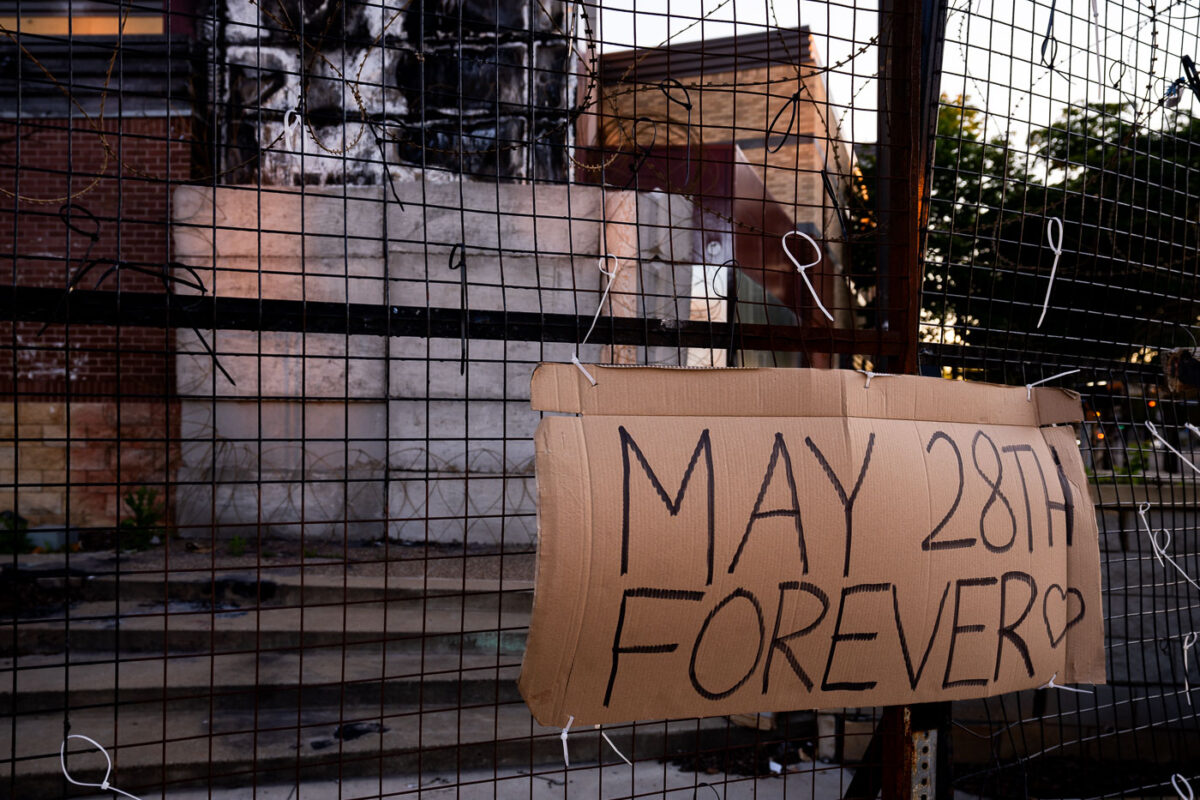
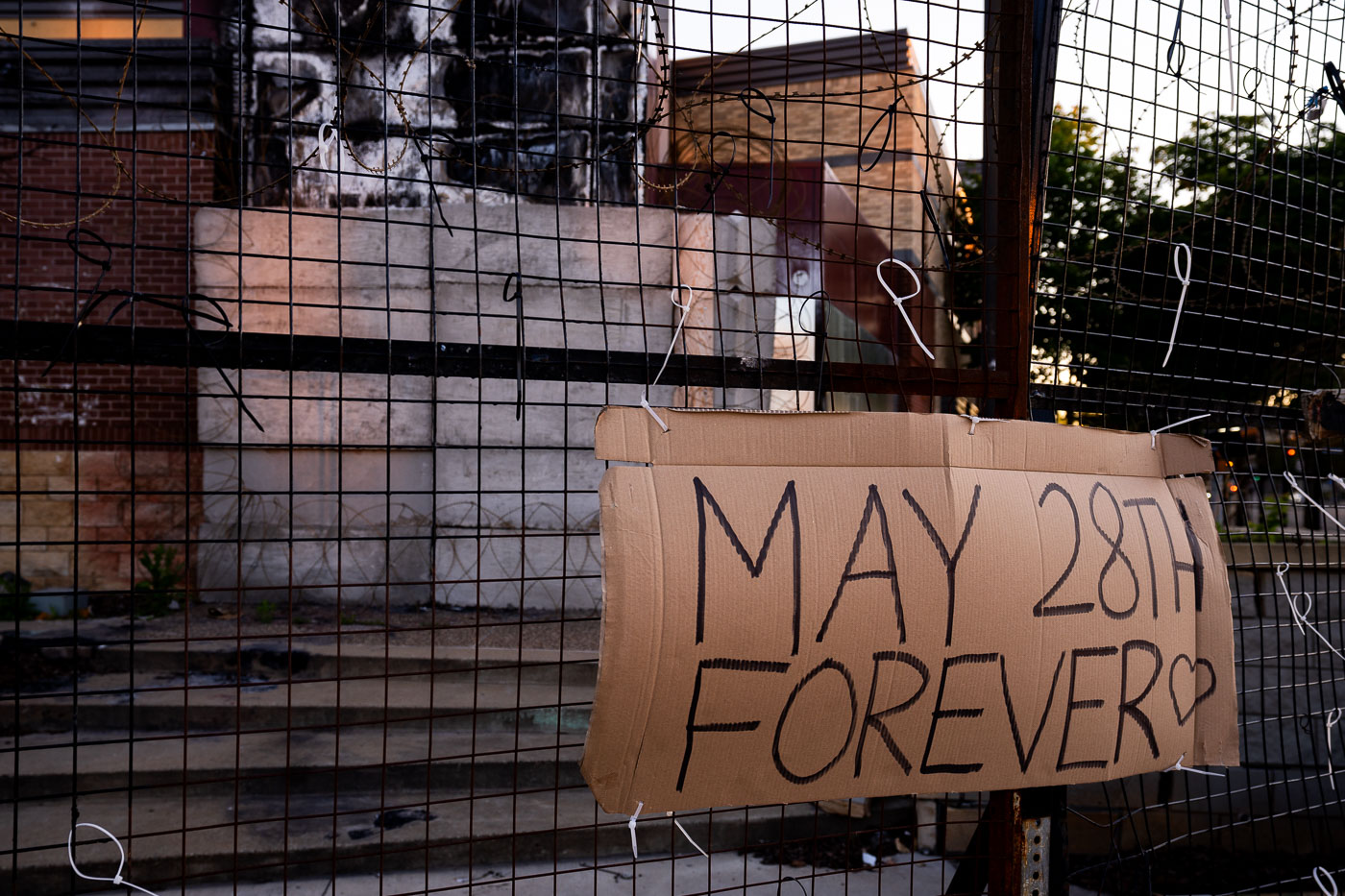
May 28 forever sign on Minneapolis police station
A sign reading "May 28th Forever" is affixed to the fence surrounding the Minneapolis Police Third Precinct. This date marks the one-year anniversary of the precinct being set ablaze during protests following the murder of George Floyd.

Minneapolis Police 3rd Precinct: “May 28th Forever” Sign
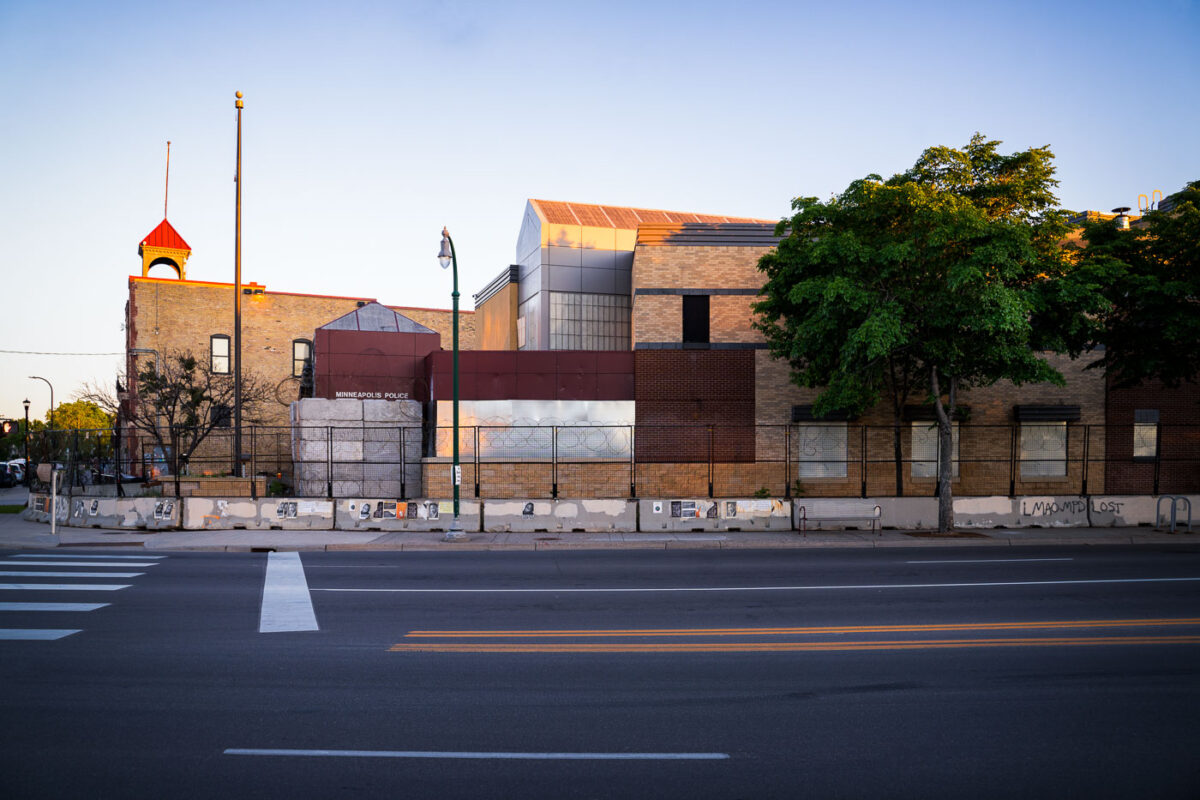
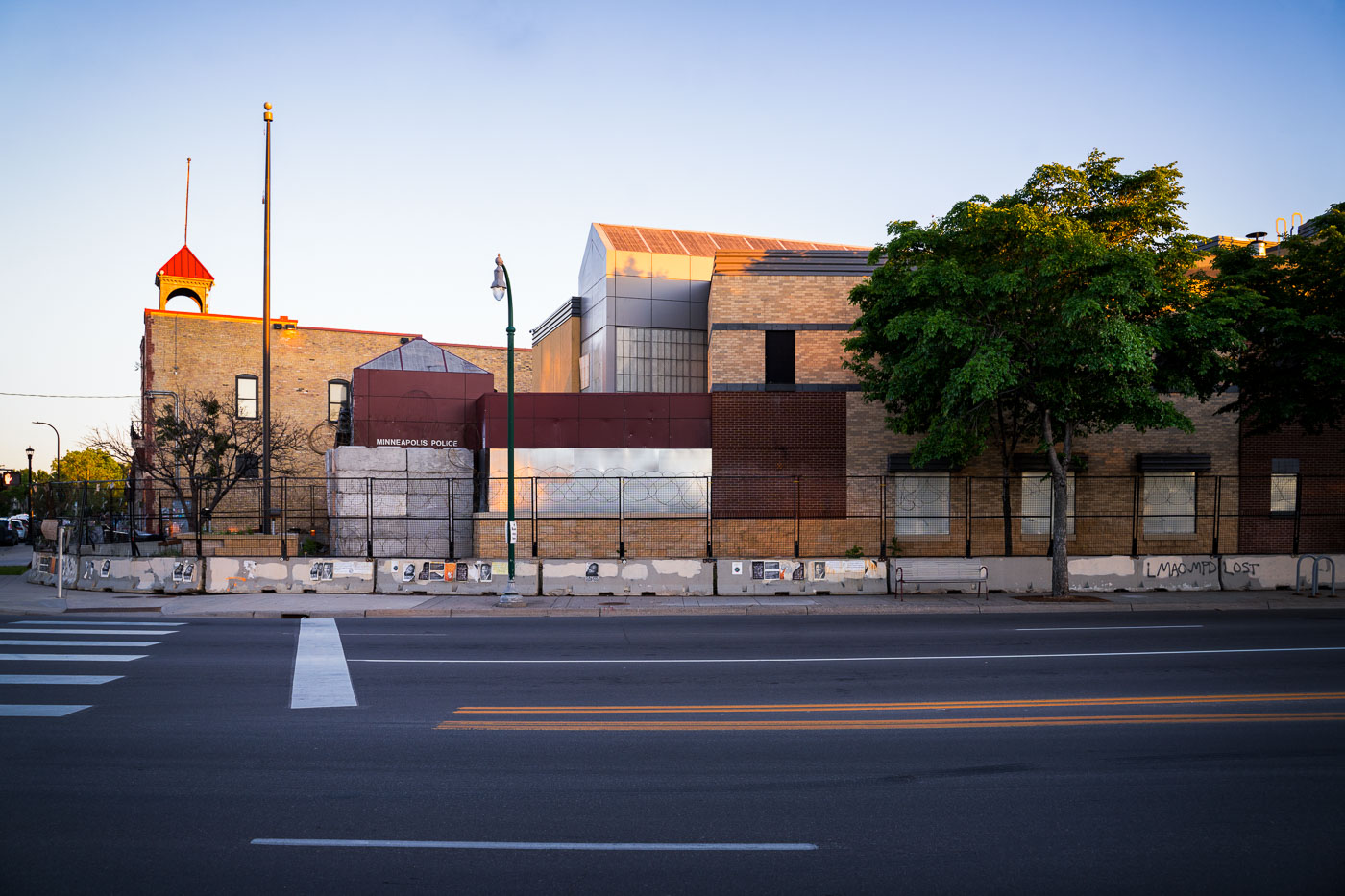
Minneapolis police station 1 year after it was burned
The Minneapolis Police Third Precinct stands fortified one year after it was set ablaze during protests following the murder of George Floyd. The building, a key law enforcement facility for the south Minneapolis area, sustained significant damage during the unrest in May 2020. The surrounding area has been secured with concrete barriers and fencing, reflecting the ongoing impact of the events and the community's response to police actions.

Minneapolis Police 3rd Precinct 1 Year After Unrest
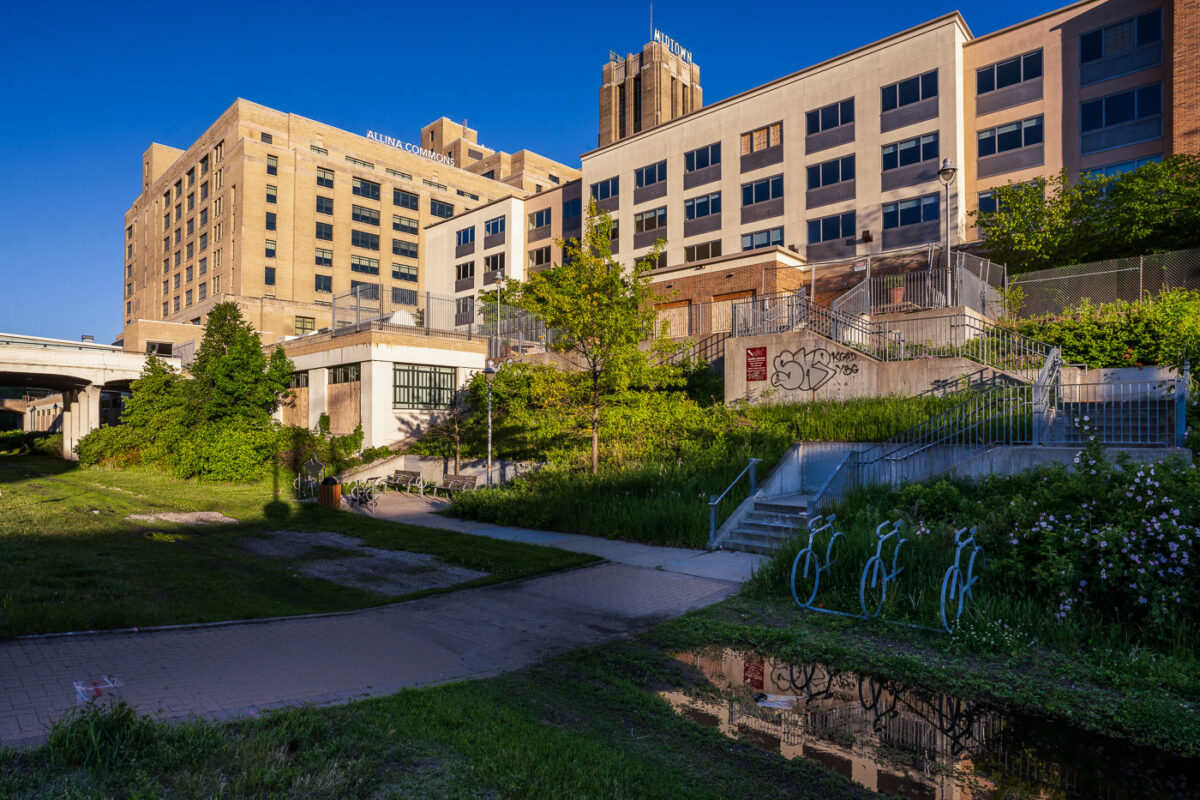
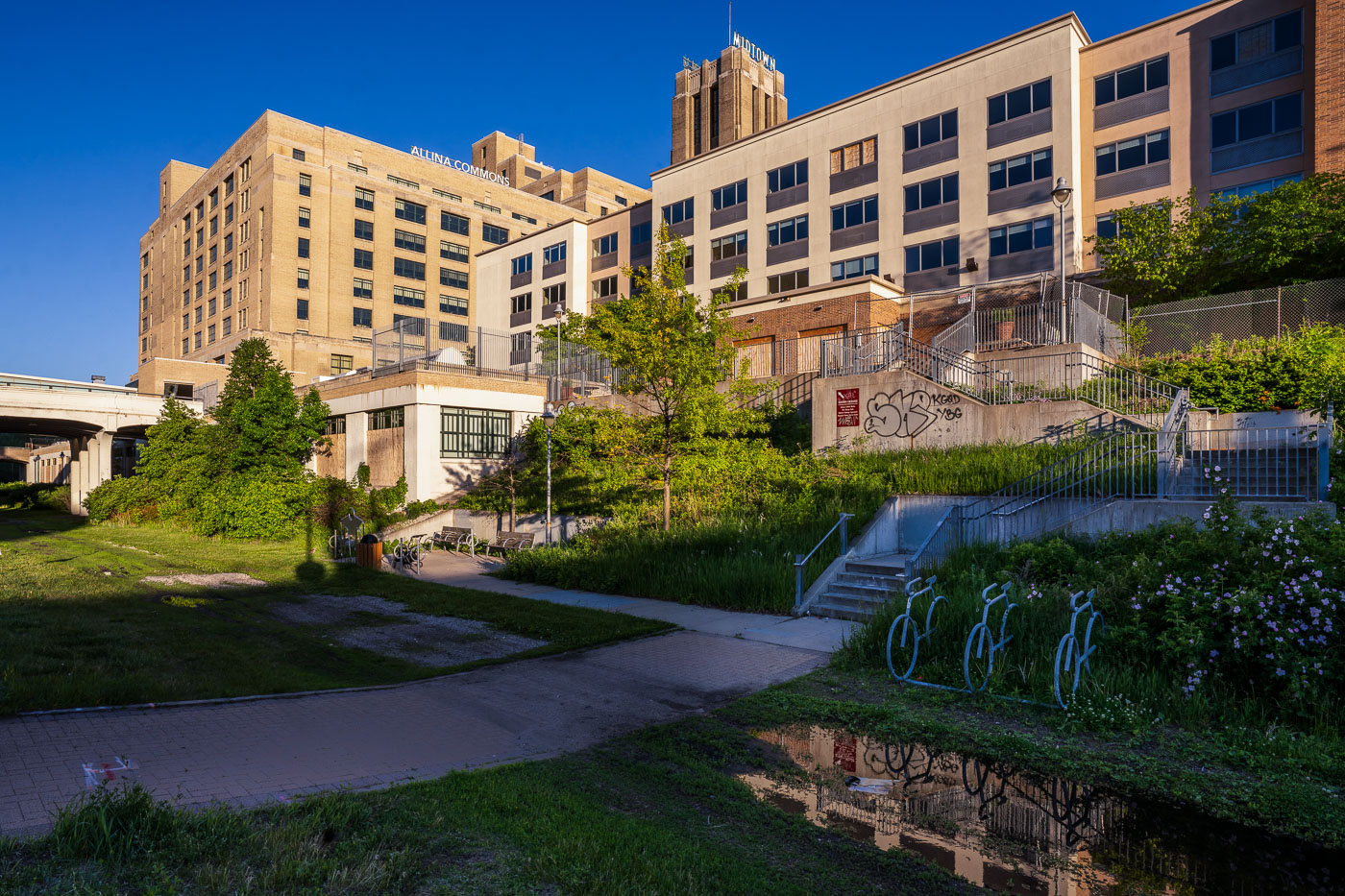
Midtown Sheraton from the Midtown Greenway
The Allina Commons building, formerly the Midtown Sheraton Hotel, stands in South Minneapolis. The structure, originally built as a hotel, has been repurposed and is now part of the Allina Health system. Adjacent to the building is the Midtown Greenway, a popular urban trail developed on a former railroad corridor. The Greenway provides a vital link for cyclists and pedestrians through the city, connecting various neighborhoods and parks.

Allina Commons and Midtown Greenway, South Minneapolis
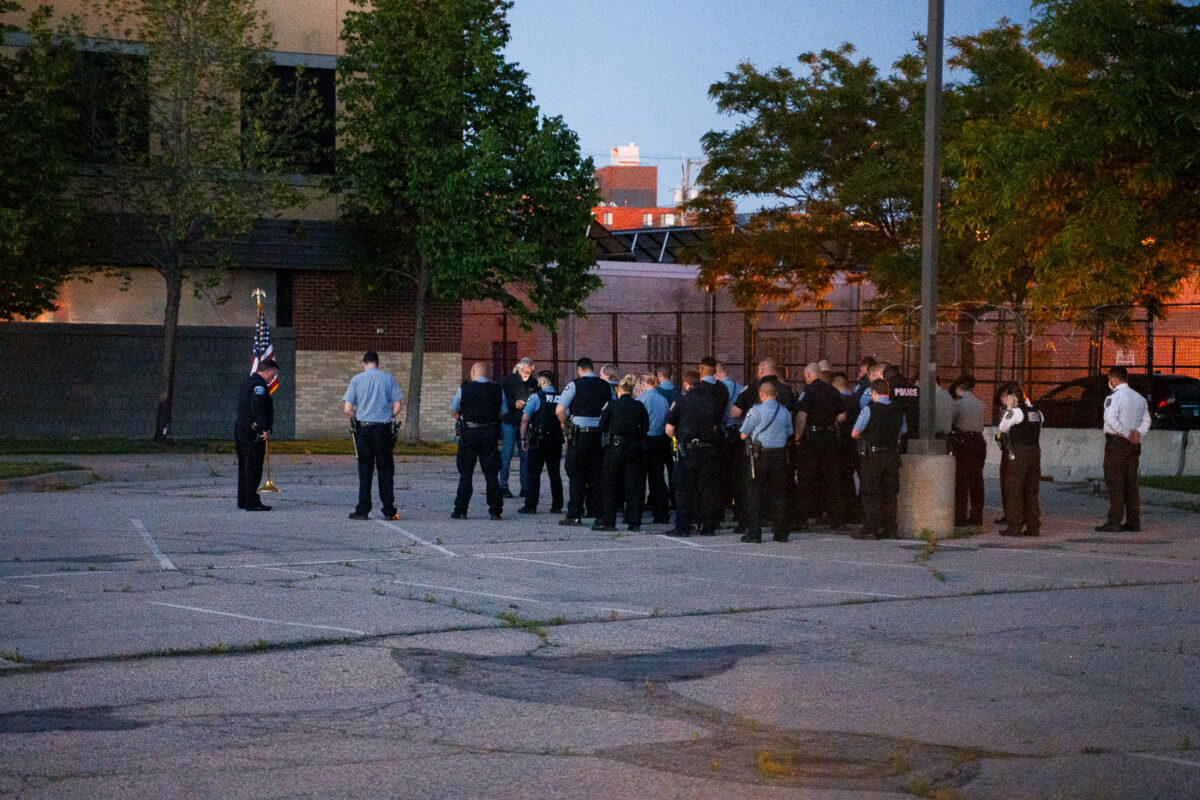
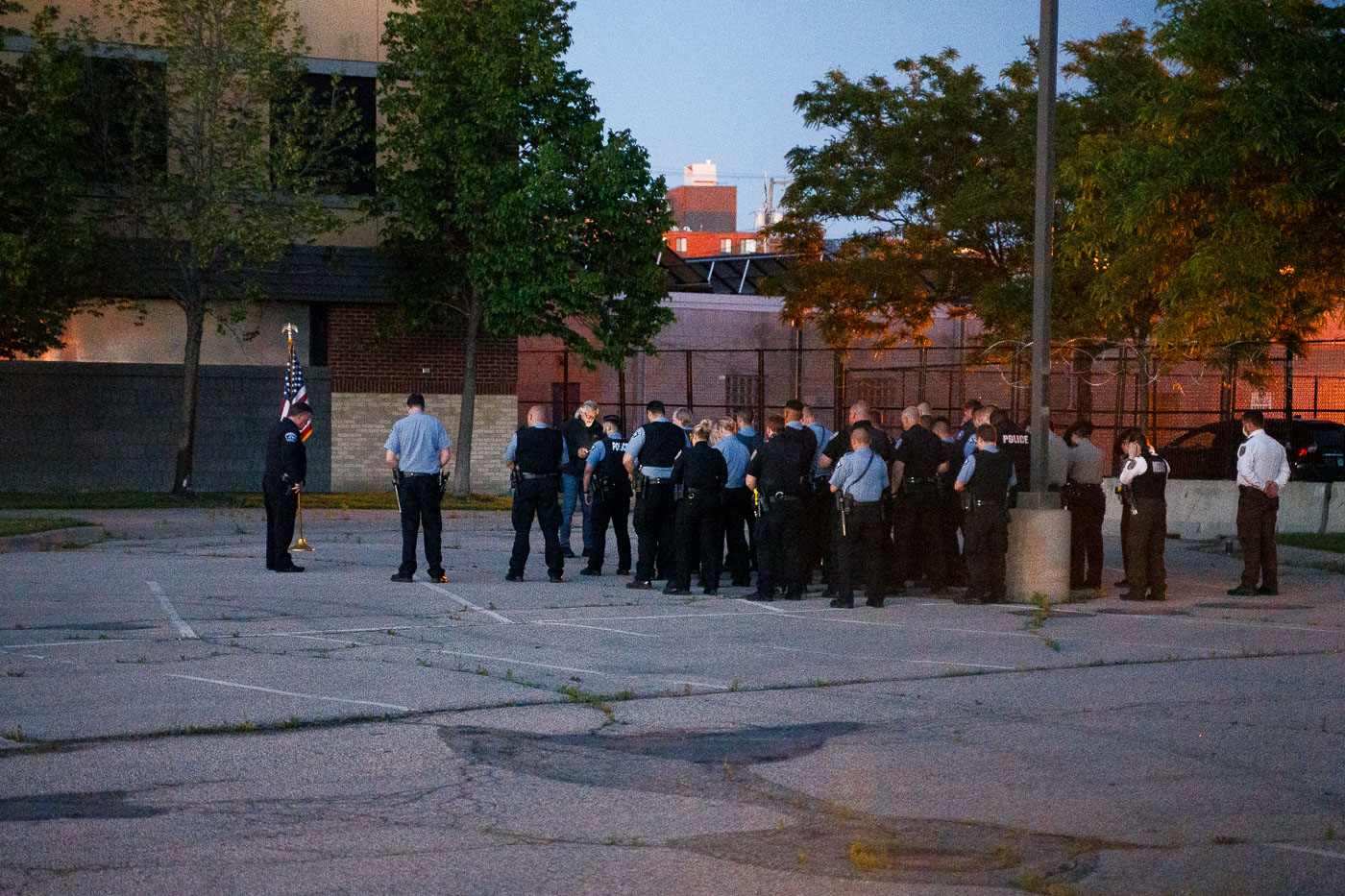
Minneapolis police hold religious ceromony 1 year after Floyds death
Minneapolis Police officers gather at the Third Precinct on May 28, 2021 to hold some time of religious ceremony. It was the one-year anniversary of the precinct being burned during protests that followed the murder of George Floyd.

Minneapolis Police gather at Third Precinct anniversary
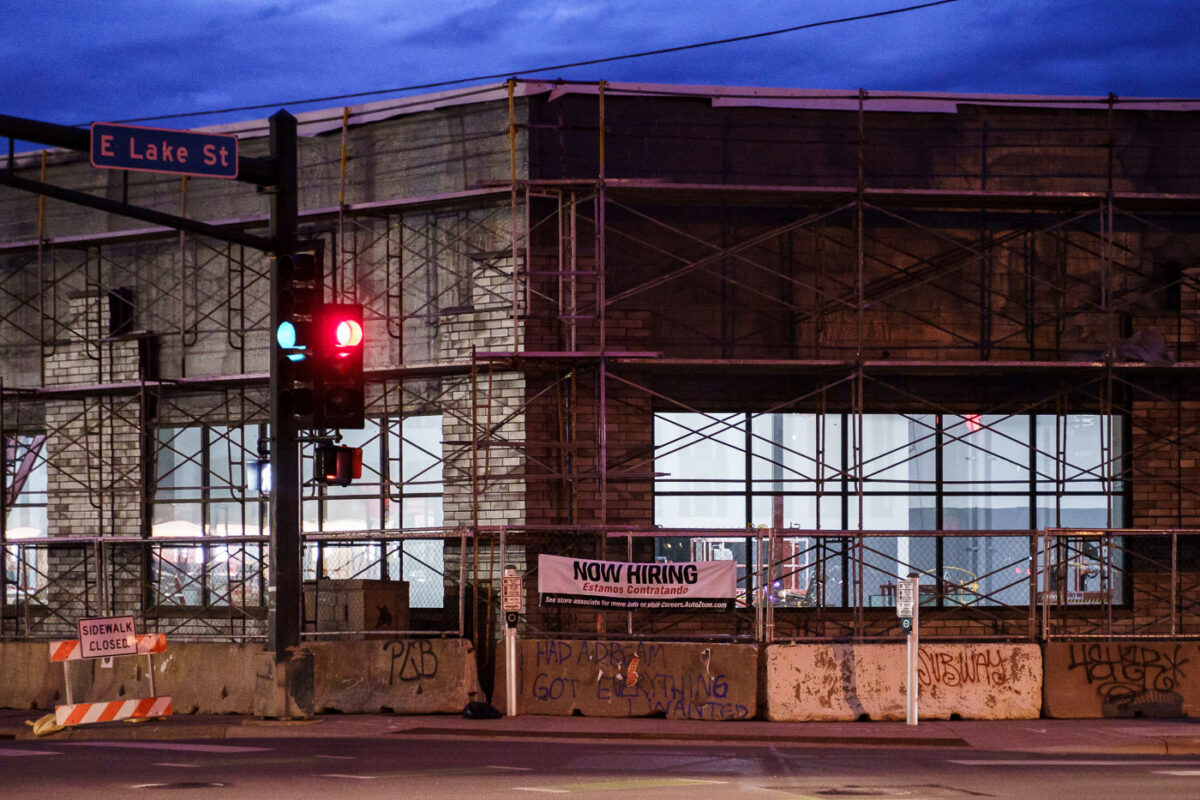
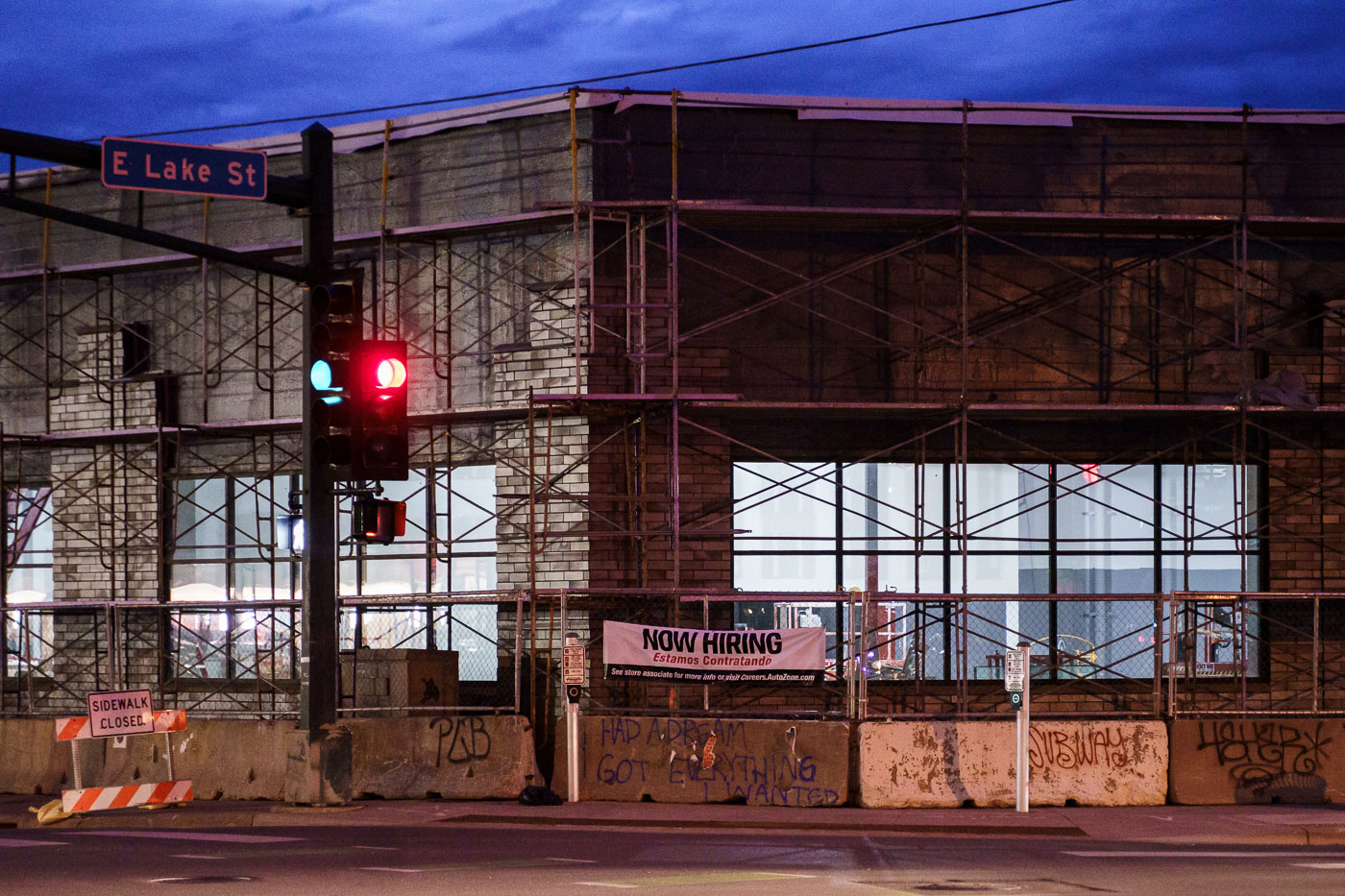
Rebuilt AutoZone with a Now Hiring sign in May 2021
The AutoZone on East Lake Street in Minneapolis is shown under reconstruction in May 2021. This location was notably the first business to be set on fire during the 2020 Minneapolis uprising, which followed the murder of George Floyd. The "now hiring" sign reflects the ongoing rebuilding efforts in the area following the unrest.

AutoZone Reconstruction on E Lake St, Minneapolis, May 2021
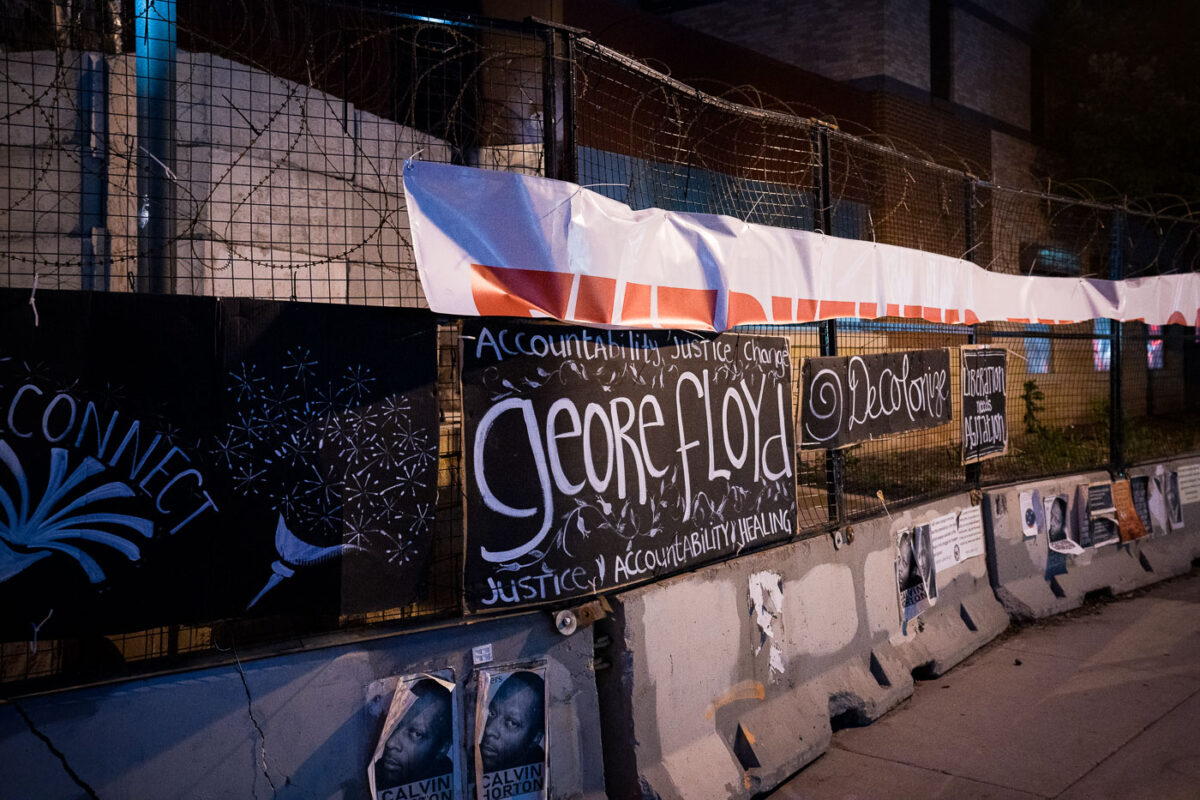
Minneapolis Police station 1 year after George Floyd's murder
Art and messages adorn the perimeter of the Minneapolis Police Third Precinct building, one year after the killing of George Floyd by Minneapolis police officers. The precinct was a focal point during the widespread protests and unrest that followed Floyd's death. The artwork and signage reflect calls for justice, accountability, and healing in the community.

Minneapolis Police 3rd Precinct: George Floyd Memorial Art
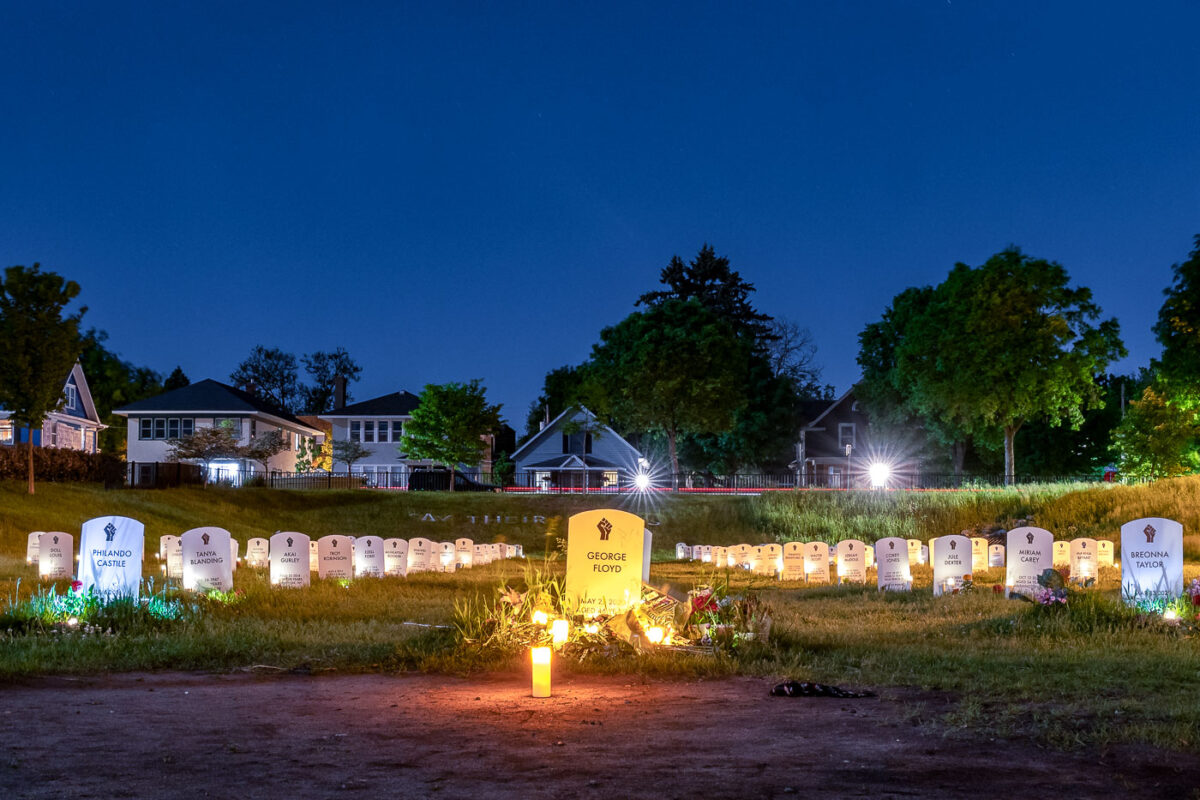
Say Their Names Cemetery on 1 year anniversary
The Say Their Names Cemetery in Minneapolis, established on the one-year anniversary of George Floyd's murder, serves as a memorial to victims of racial injustice and police brutality. The temporary installation features headstones bearing the names of individuals, including George Floyd, Breonna Taylor, Philando Castile, and others, alongside candles and floral tributes.

Say Their Names Cemetery, Minneapolis, 1 Year Anniversary
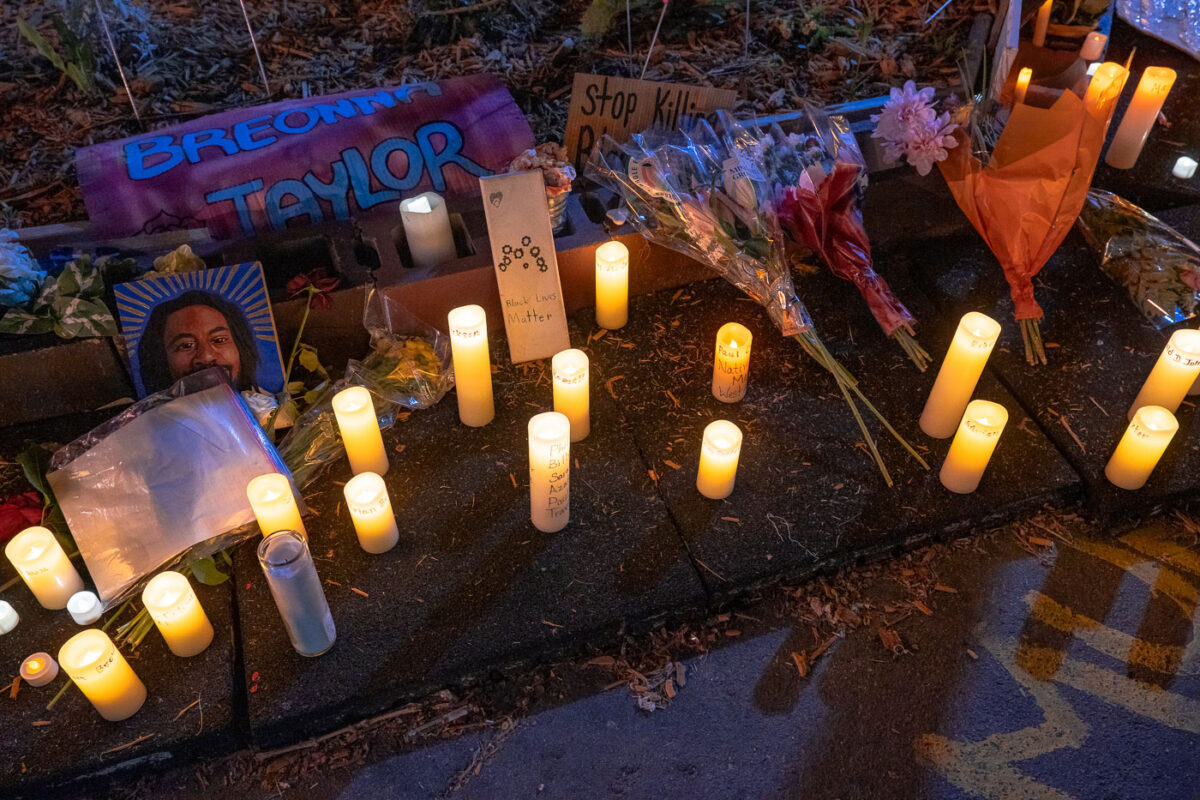
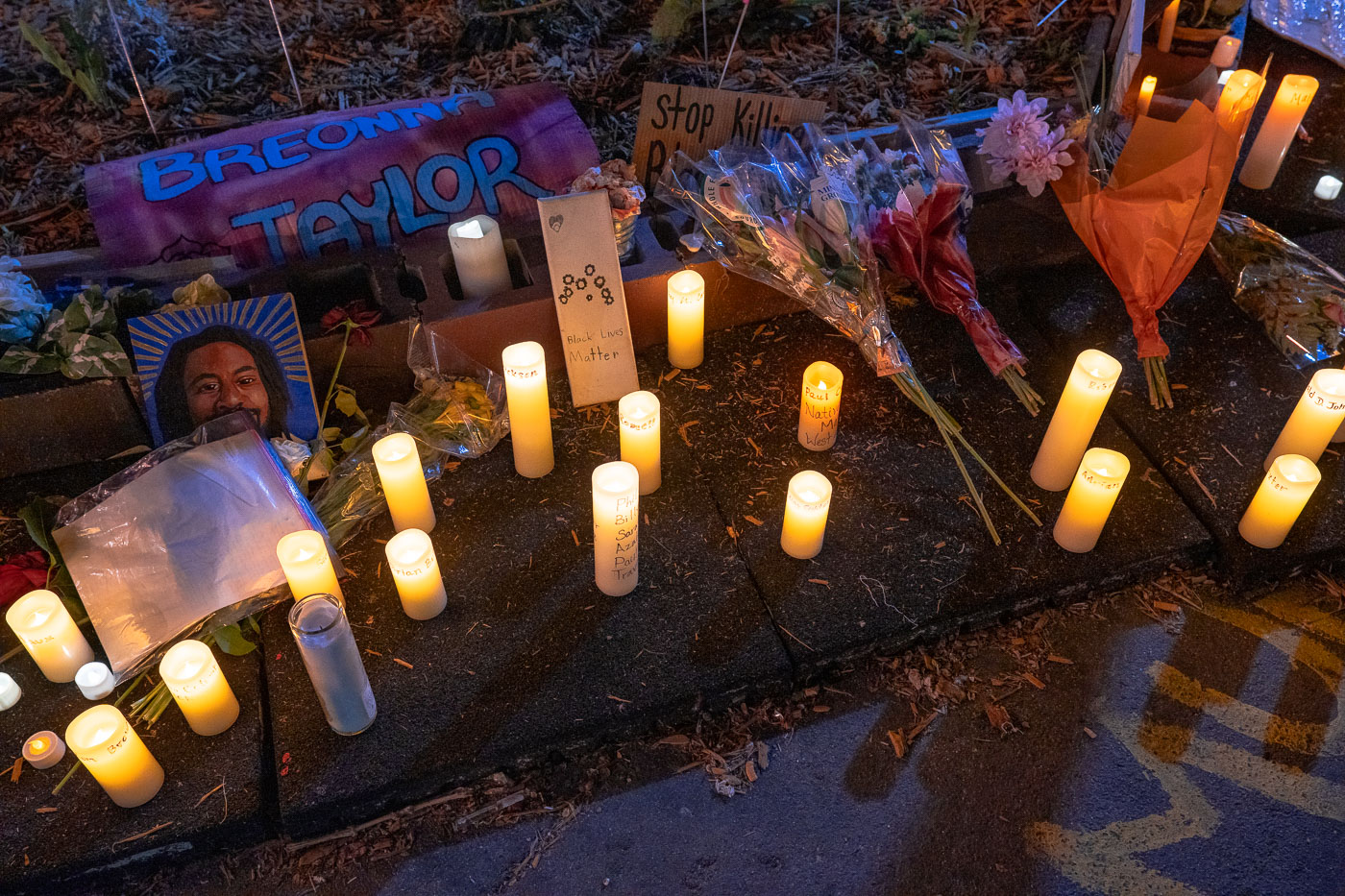
George Floyd 1 year anniversary candles
Candles bearing the names of victims of police violence are illuminated at George Floyd Square in Minneapolis. The memorial was established following the murder of George Floyd on May 25, 2020, and has since become a site of remembrance and protest. The names on the candles, such as Breonna Taylor and others, represent individuals whose lives were lost due to police brutality.

George Floyd Square Memorial: Victims’ Names on Candles
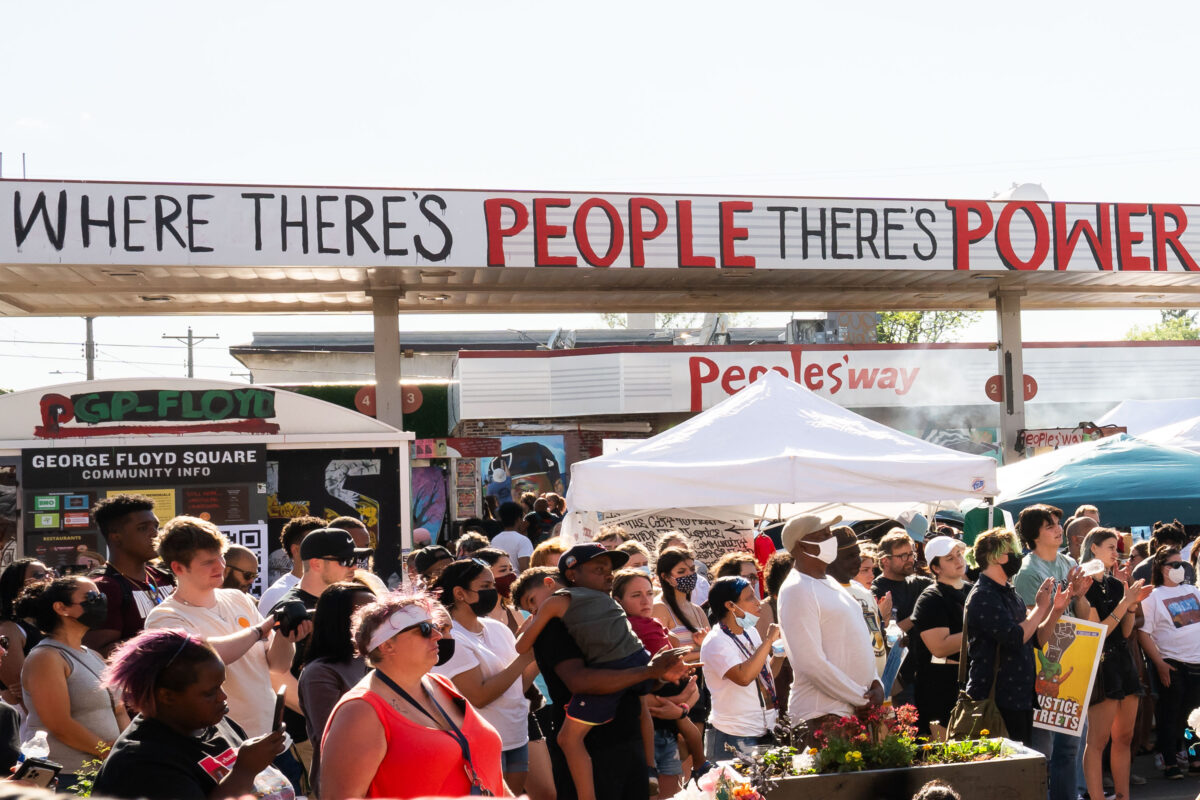
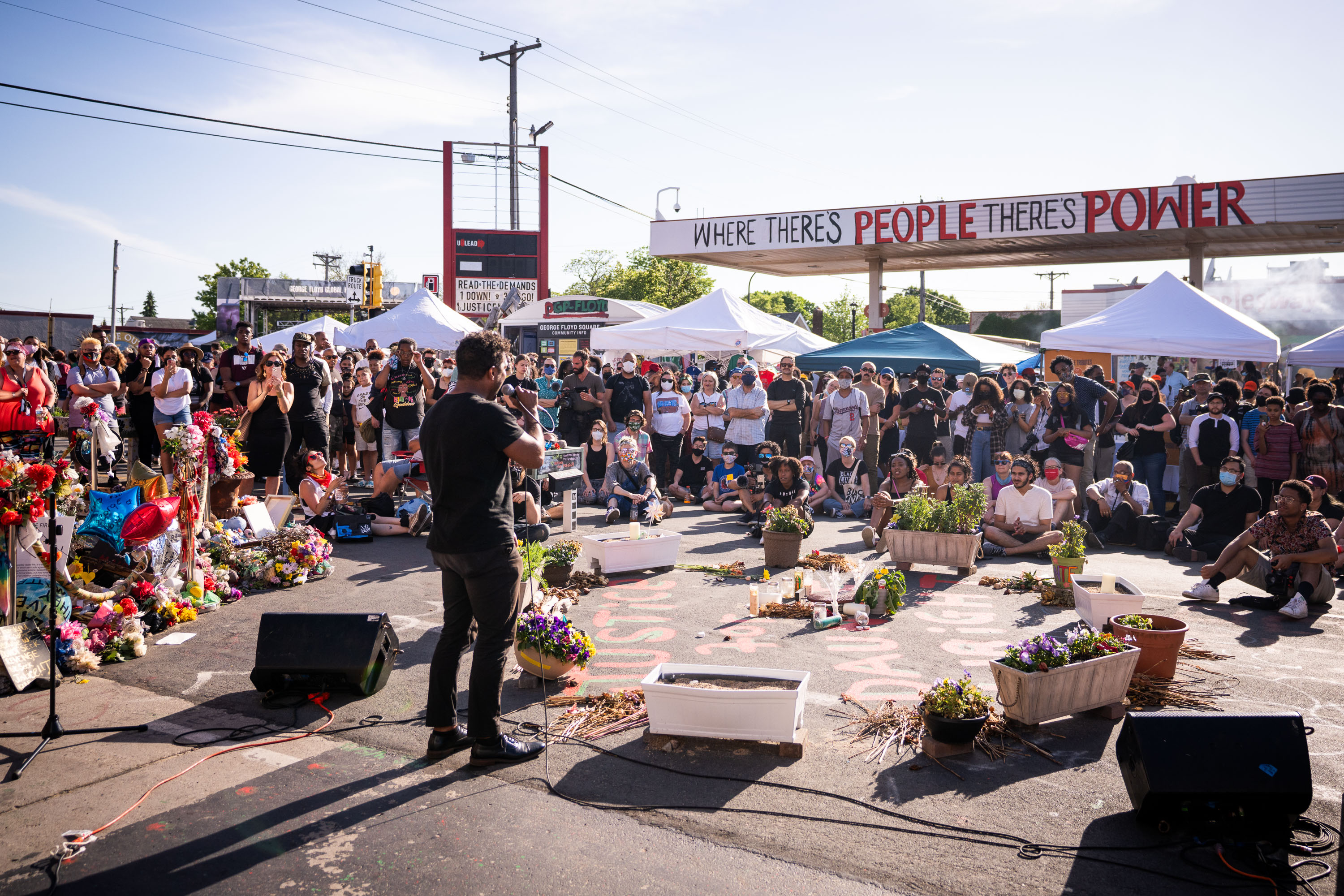
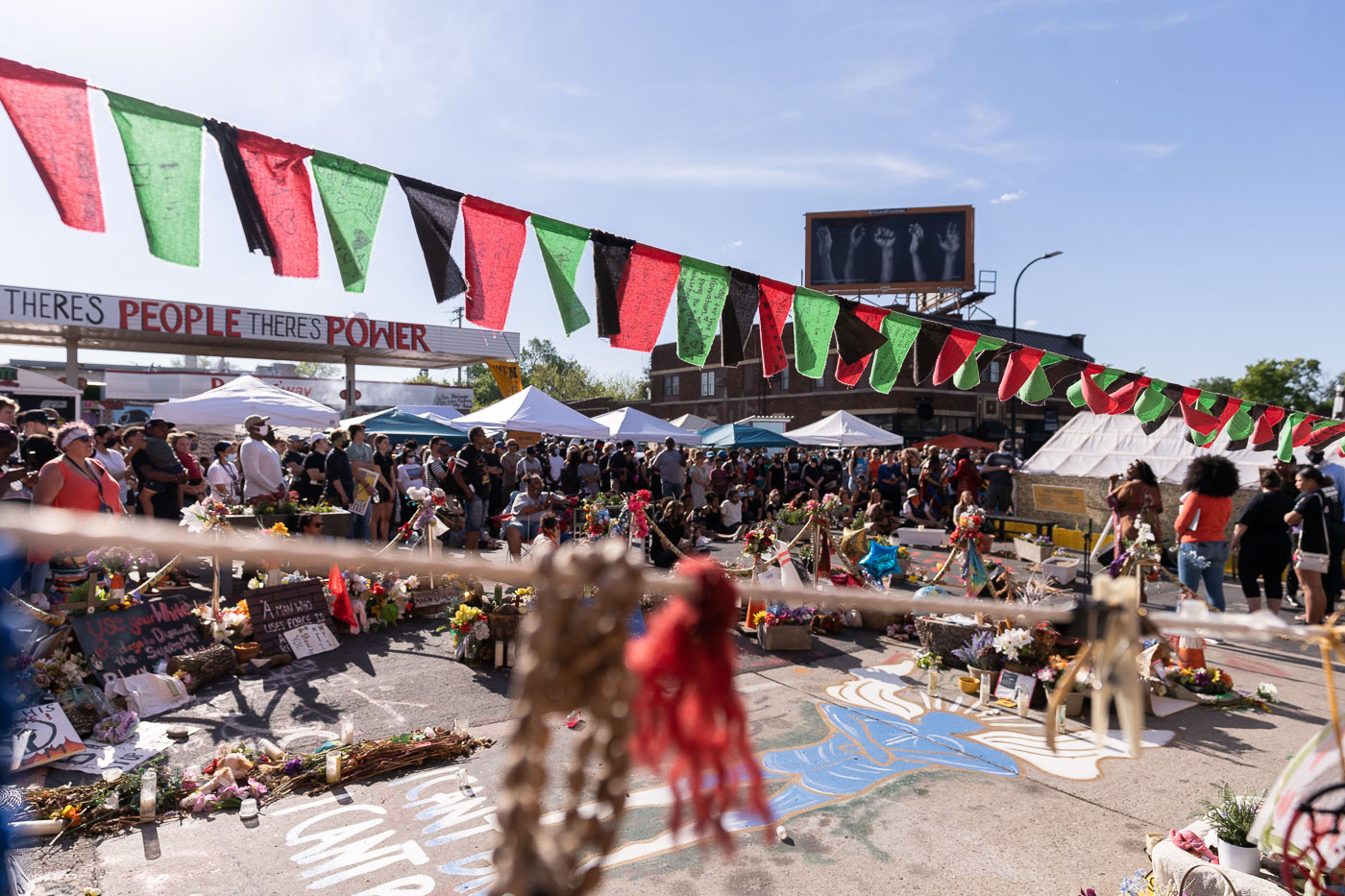
Rise and Remember 2021, Minneapolis
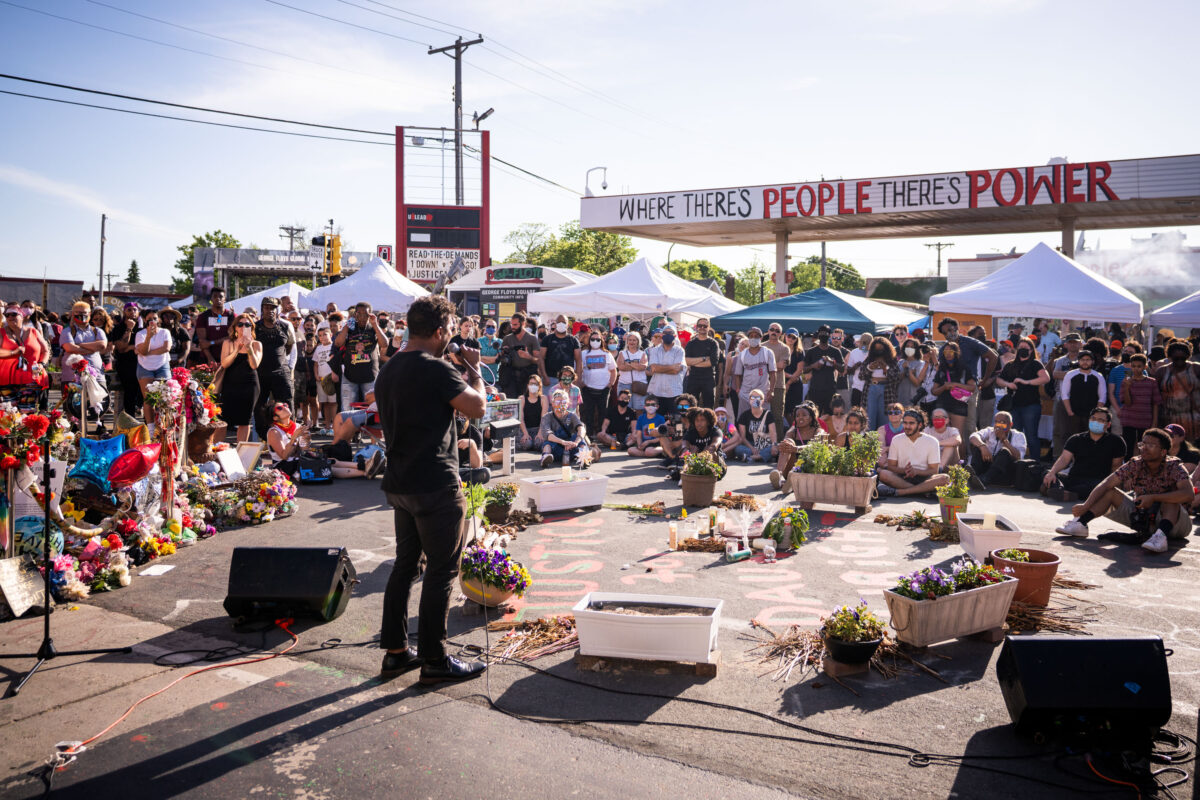
Community gathers at Rise and Remember 2021 at George Floyd Square.

Rise and Remember 2021, Minneapolis

Toussaint Morrison and The People's Way
Toussaint Morrison speaks at Rise and Remember Festival at George Floyd Square.

Toussaint Morrison and The People’s Way
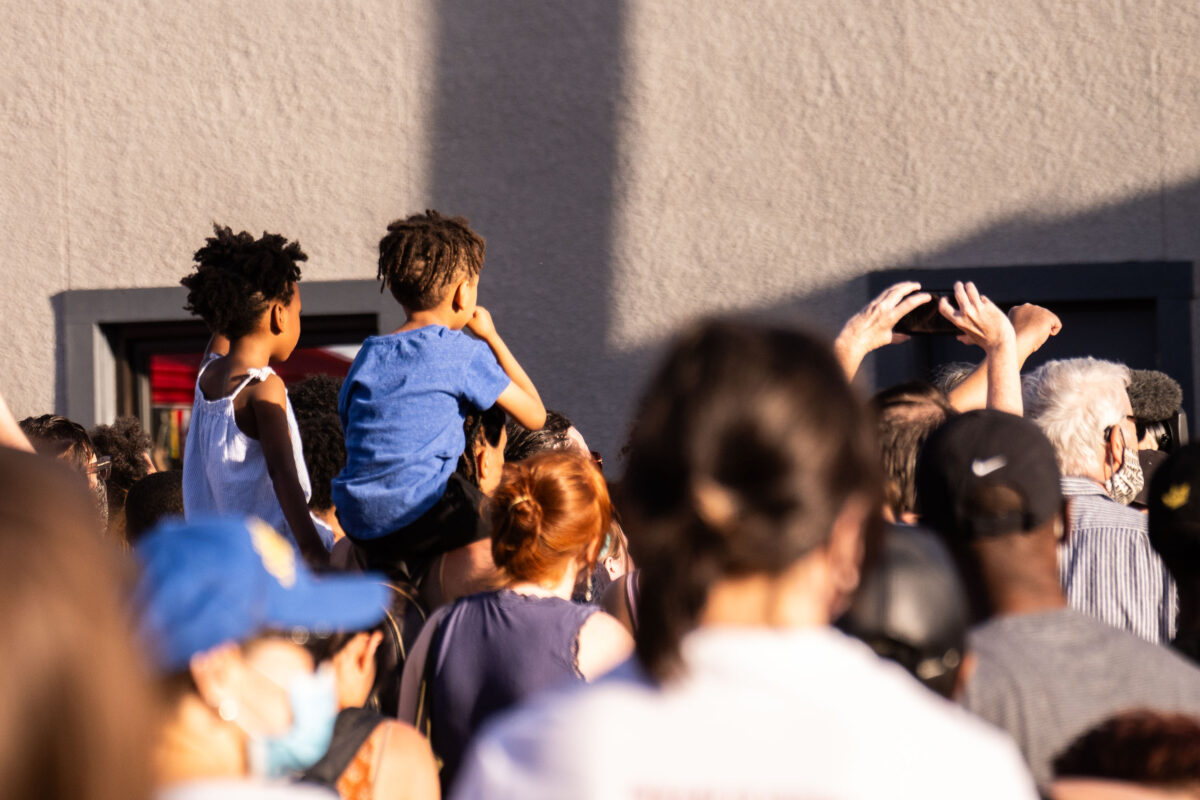
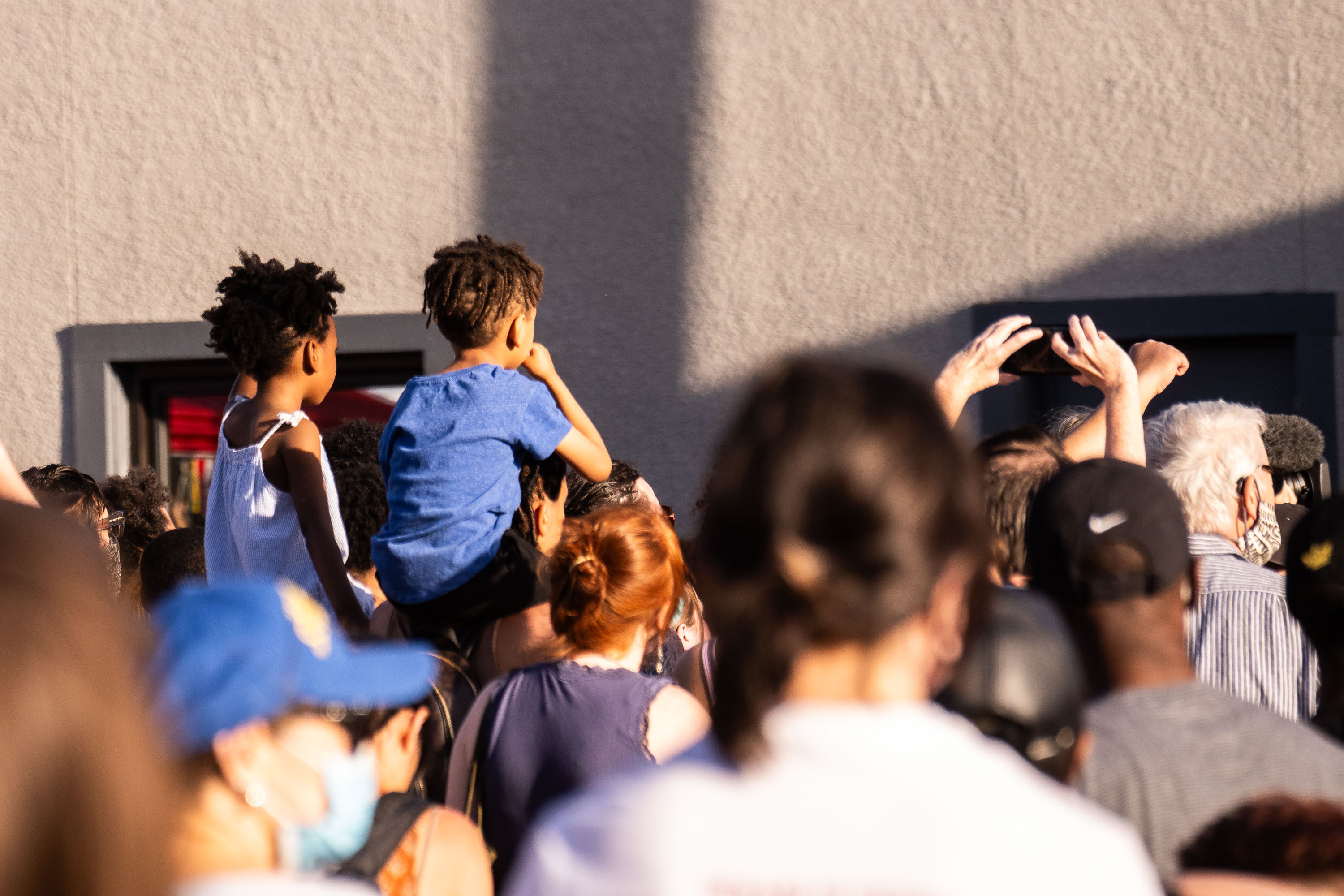
Kids at Rise and Remember Festival
Kids at Rise and Remember Festival at George Floyd Square in 2021.

Kids at Rise and Remember Festival

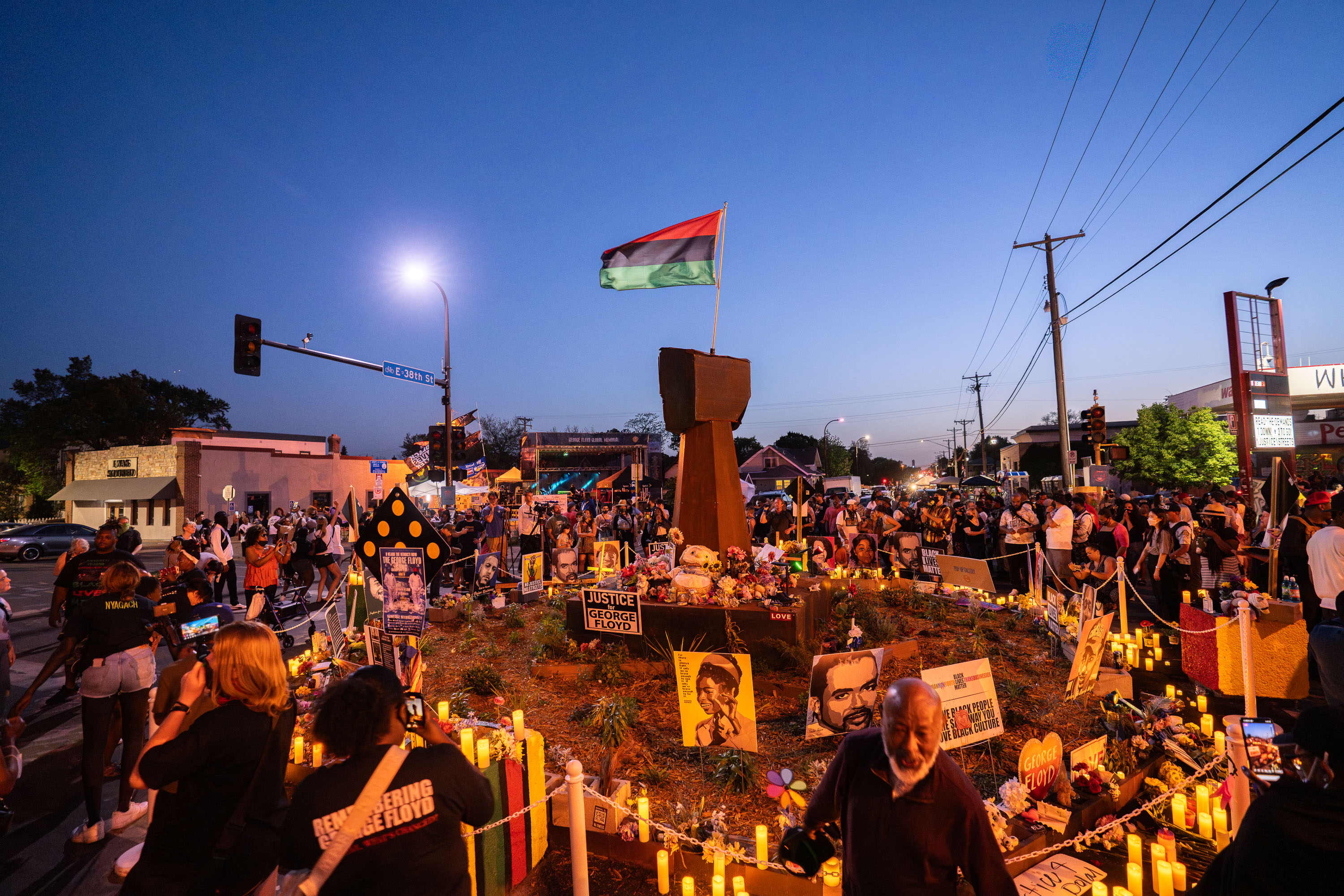
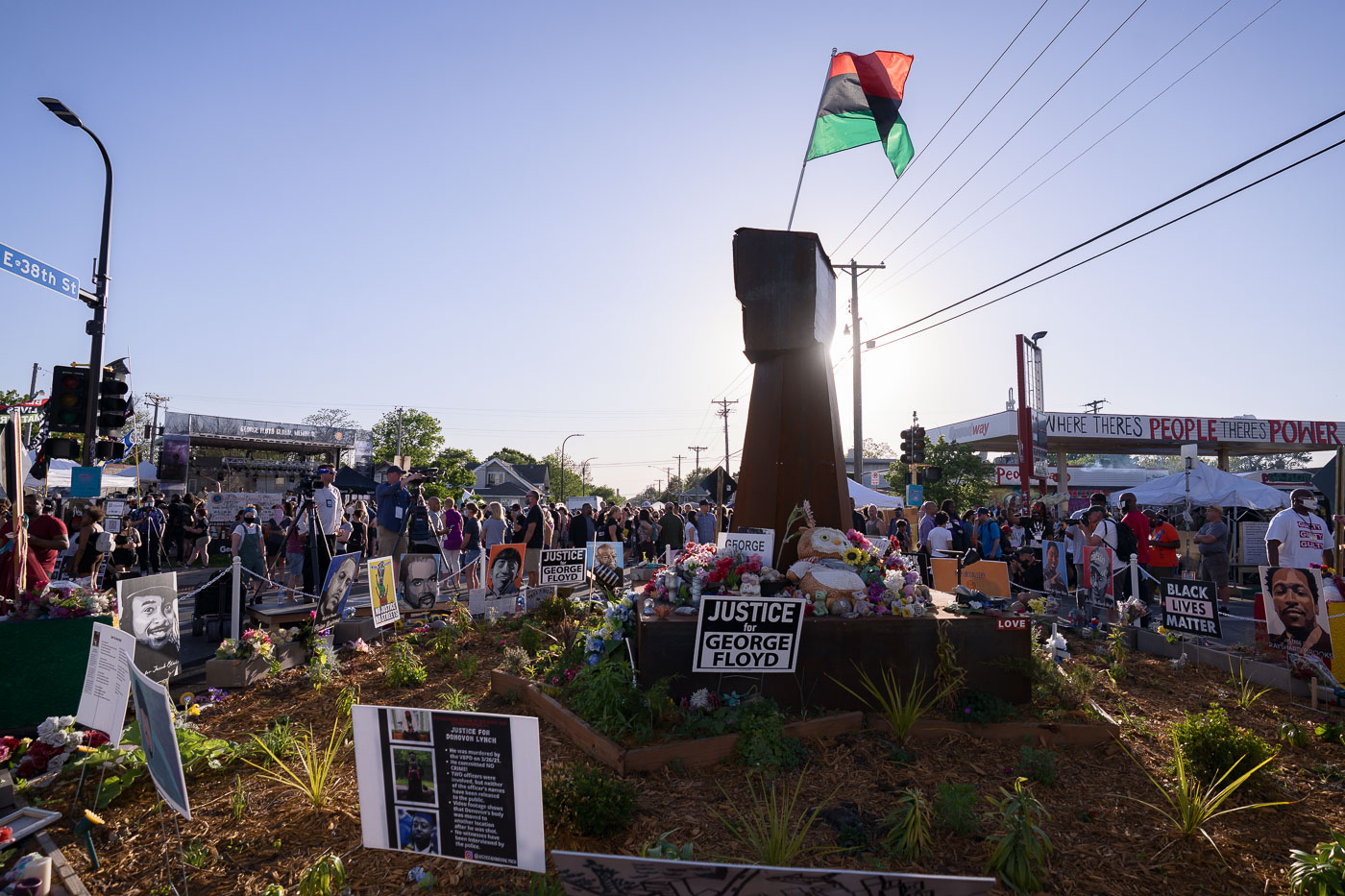
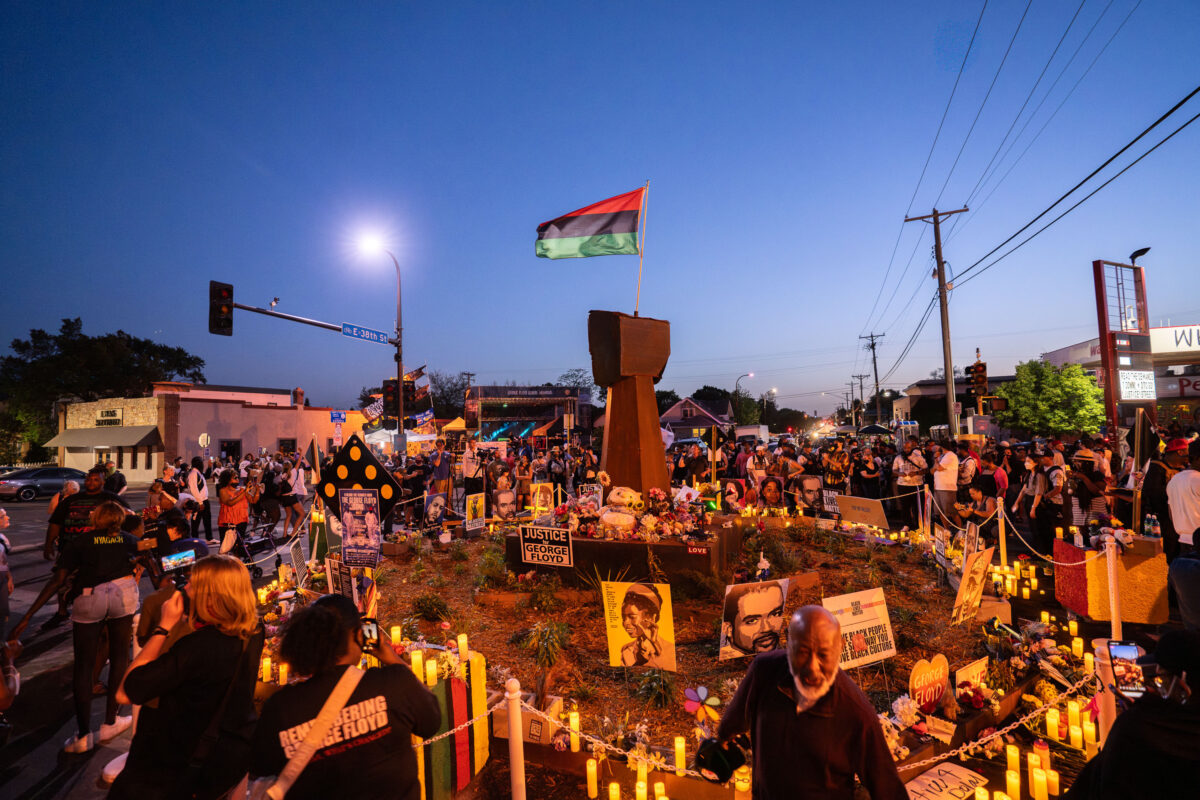
Candles around the fist at George Floyd Square
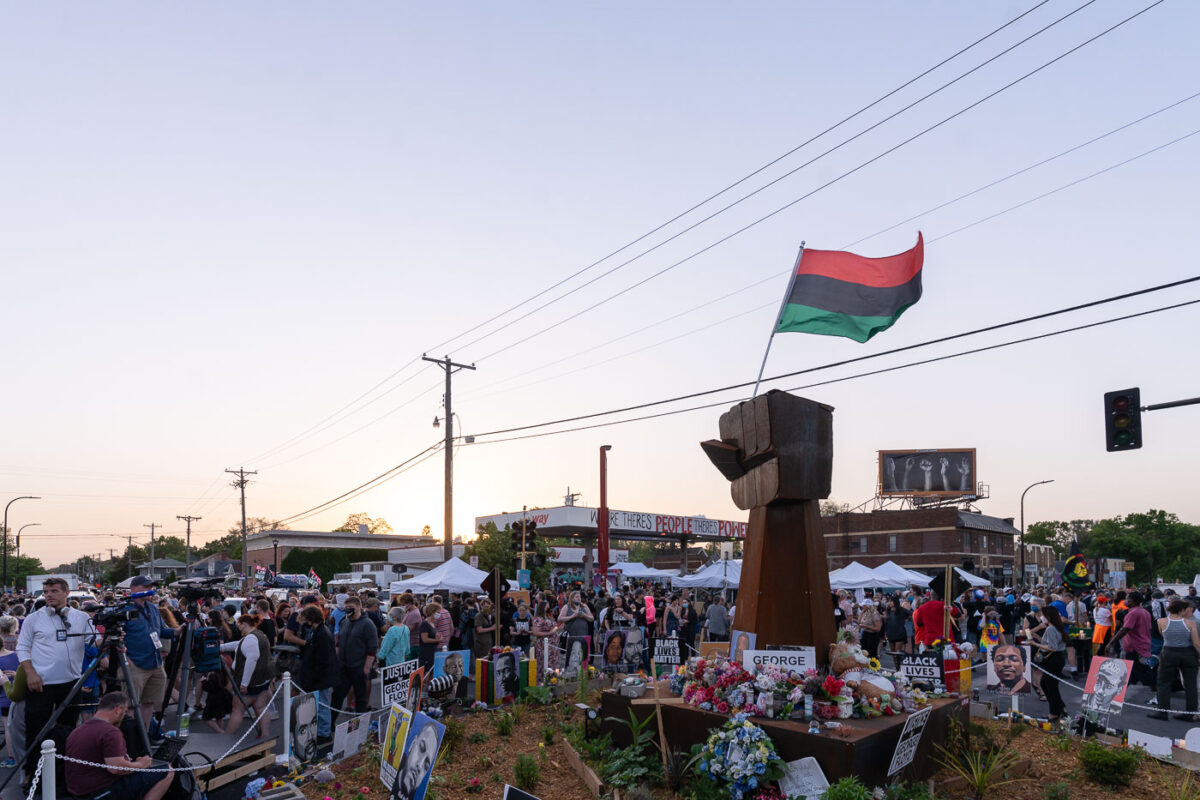
Candles, portraits of George Floyd, and memorial offerings surround the raised fist sculpture at George Floyd Square as community members gather at the intersection of 38th Street and Chicago Avenue in Minneapolis during the Rise and Remember event on May 25, 2021. The Pan-African flag flies above the memorial as dusk settles over the crowd marking one year since Floyd's murder at the site.

Candles around the fist at George Floyd Square

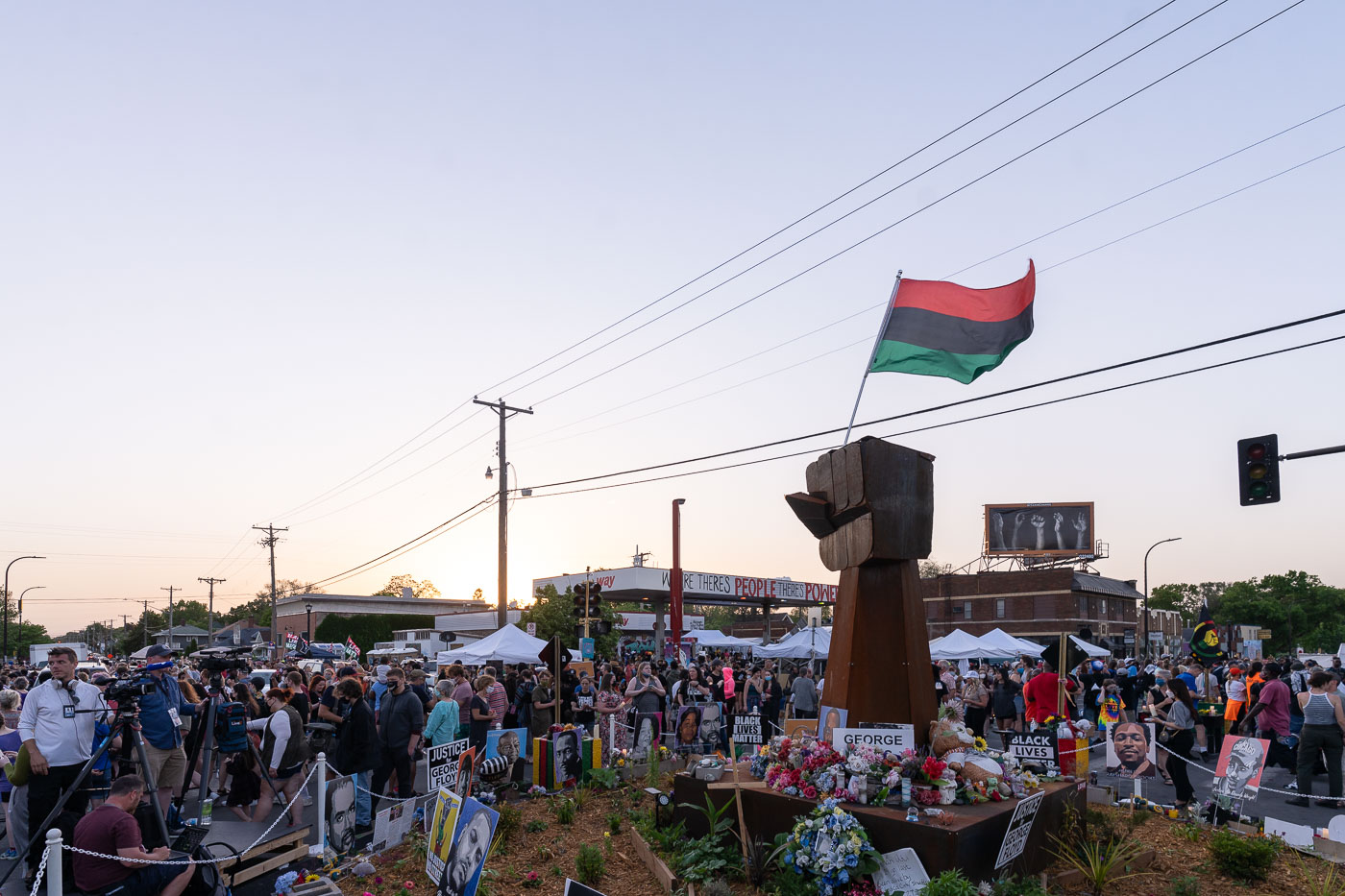
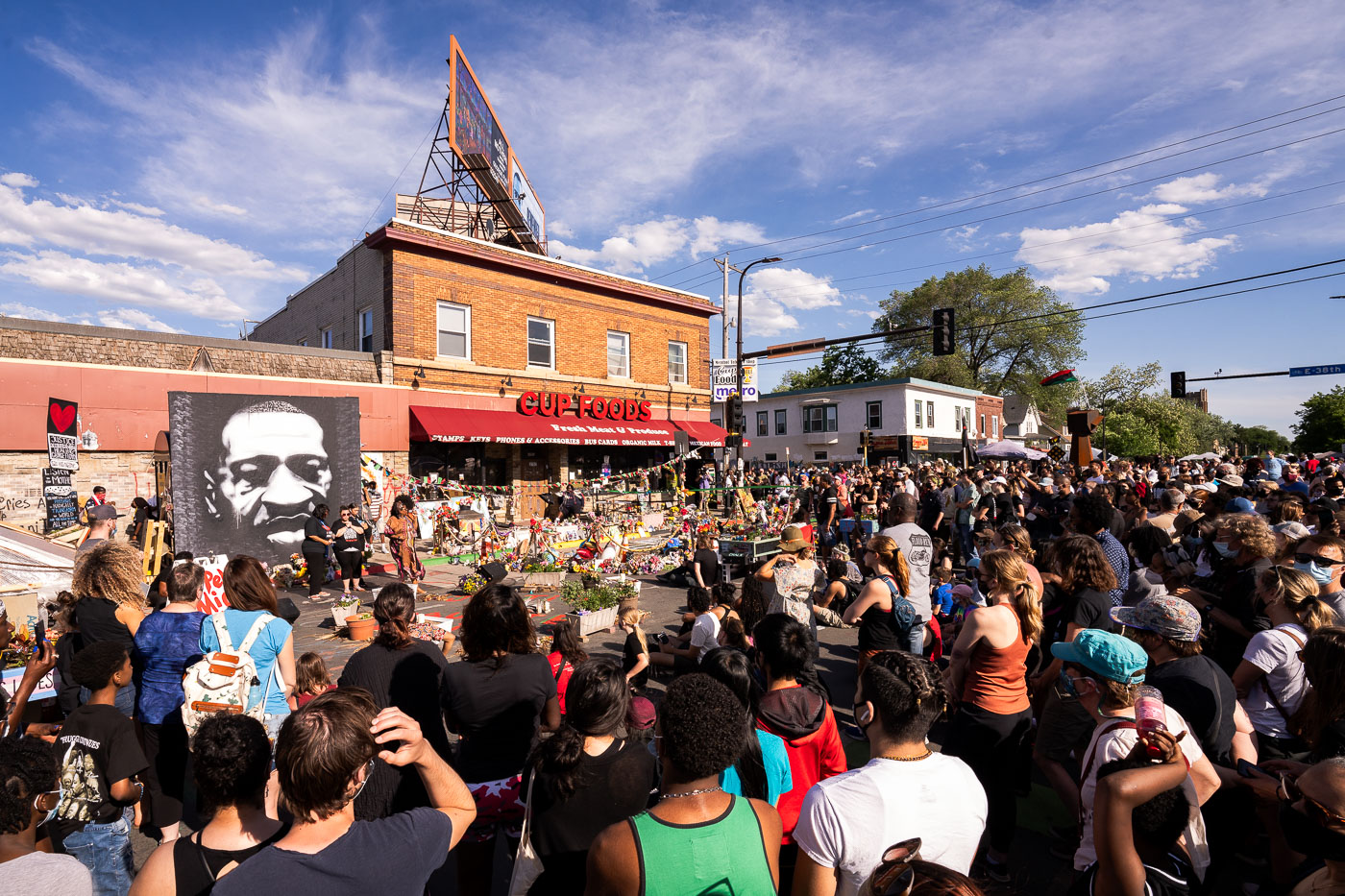
Rise and Remember Fist in May 2021
A crowd gathers at George Floyd Square in Minneapolis on May 25, 2021, marking the one-year anniversary of George Floyd's murder. The intersection, which became a focal point for protests following Floyd's death, was transformed into a memorial and community space. The gathering includes a large sculpture of a raised fist, adorned with flowers and tributes, and a Pan-African flag flying overhead. This site serves as a potent symbol of the ongoing movement for racial justice and a place of remembrance for Floyd and other victims of police brutality.

George Floyd Square Anniversary Gathering, Minneapolis, May 2021
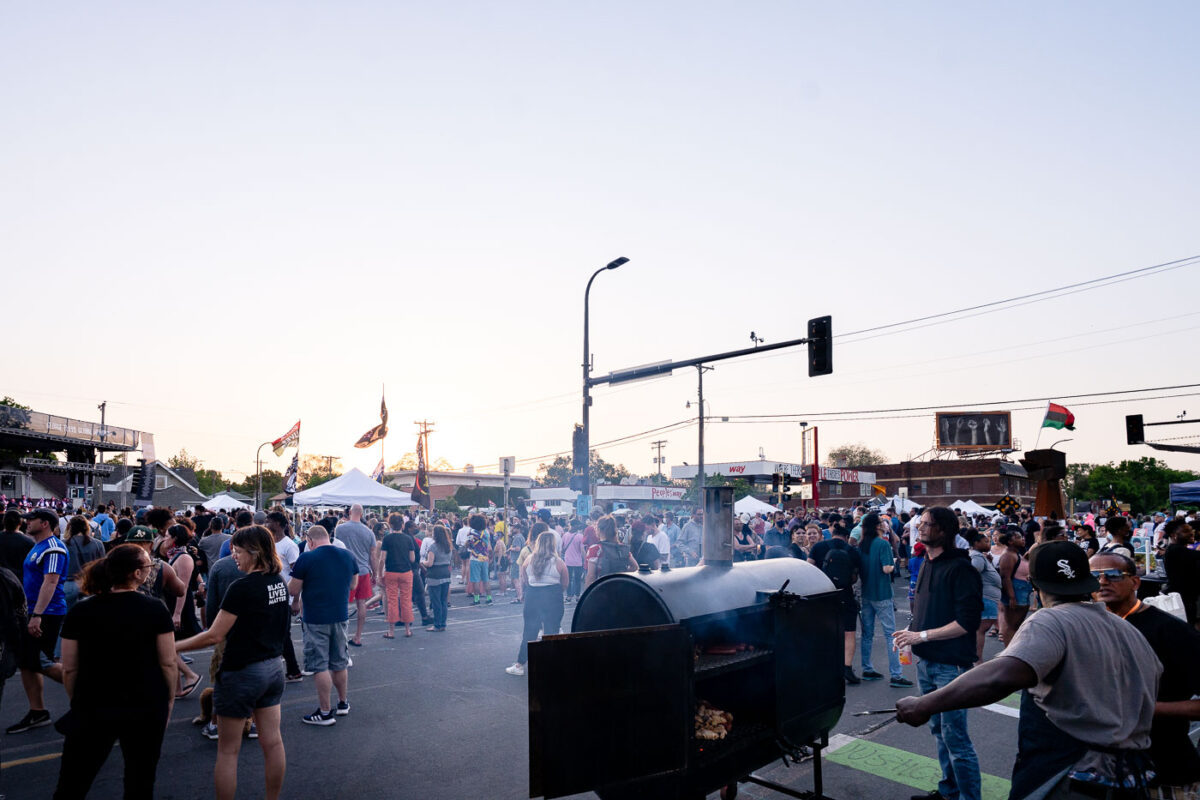
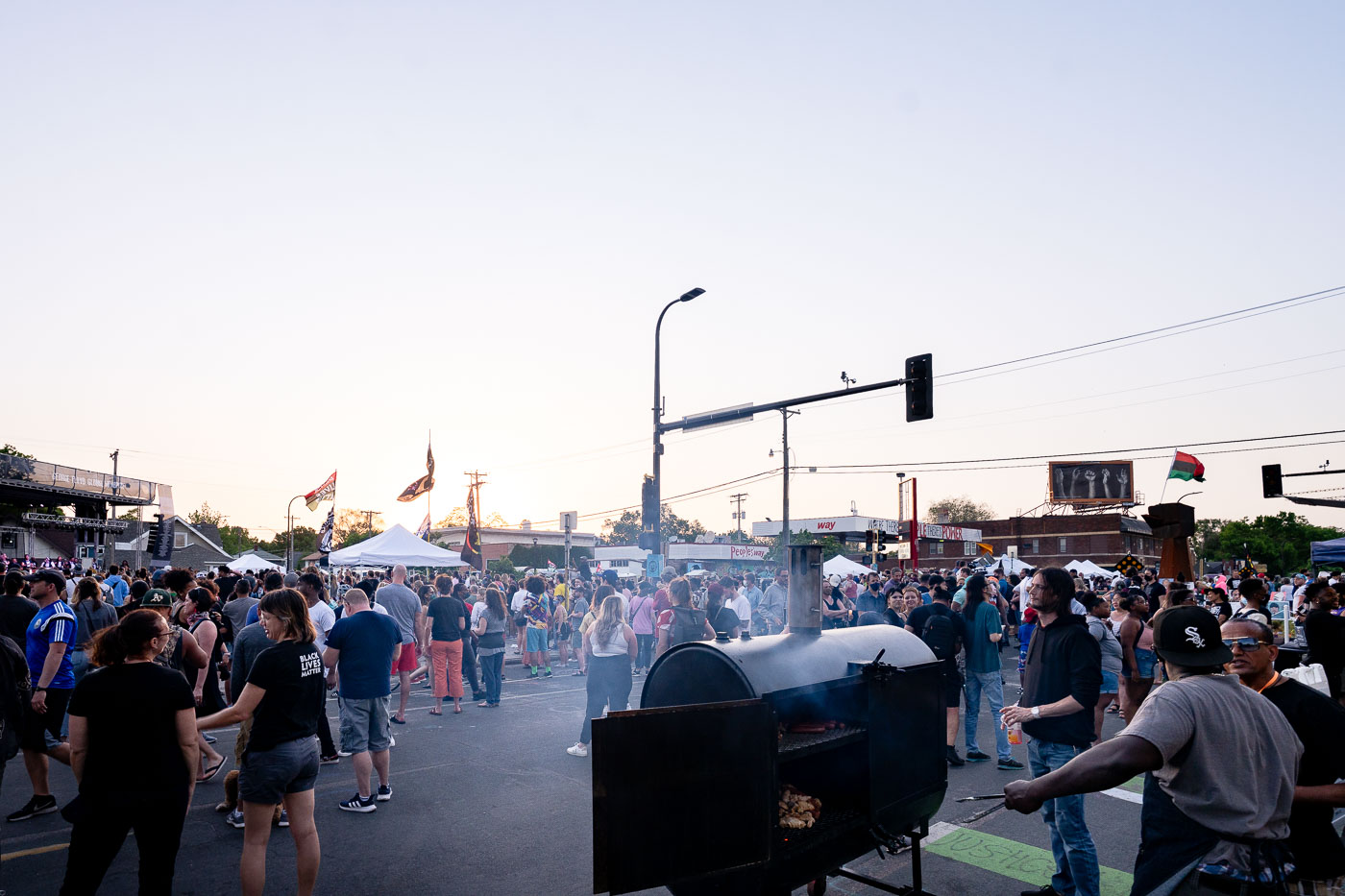
Grilling out at Rise and Remember 2021
A community barbecue, "Rise and Remember 2021," was held at George Floyd Square in Minneapolis on the anniversary of George Floyd's murder. The event brought together residents for a gathering that included food preparation, as seen with the large smoker in the foreground. George Floyd Square, formerly the intersection of 38th Street and Chicago Avenue, became a focal point for protests and community organizing following Floyd's death in May 2020.

George Floyd Square Community BBQ, Minneapolis
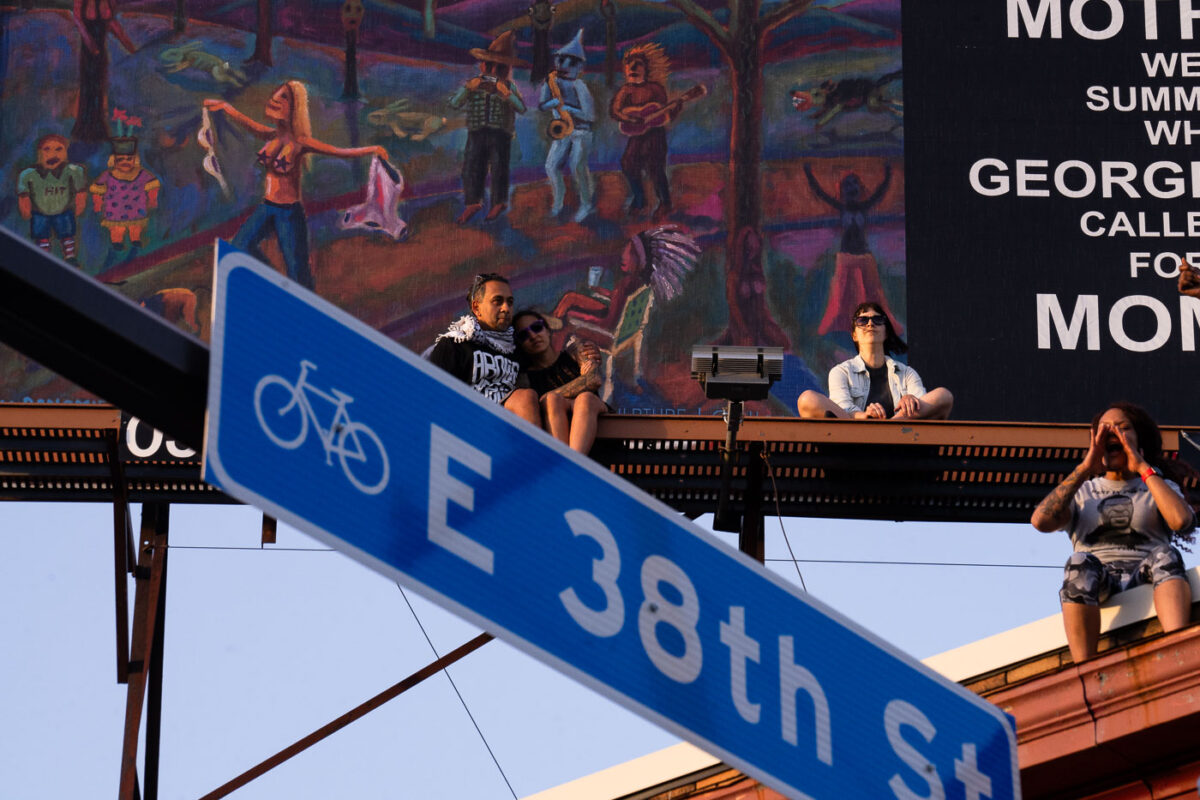
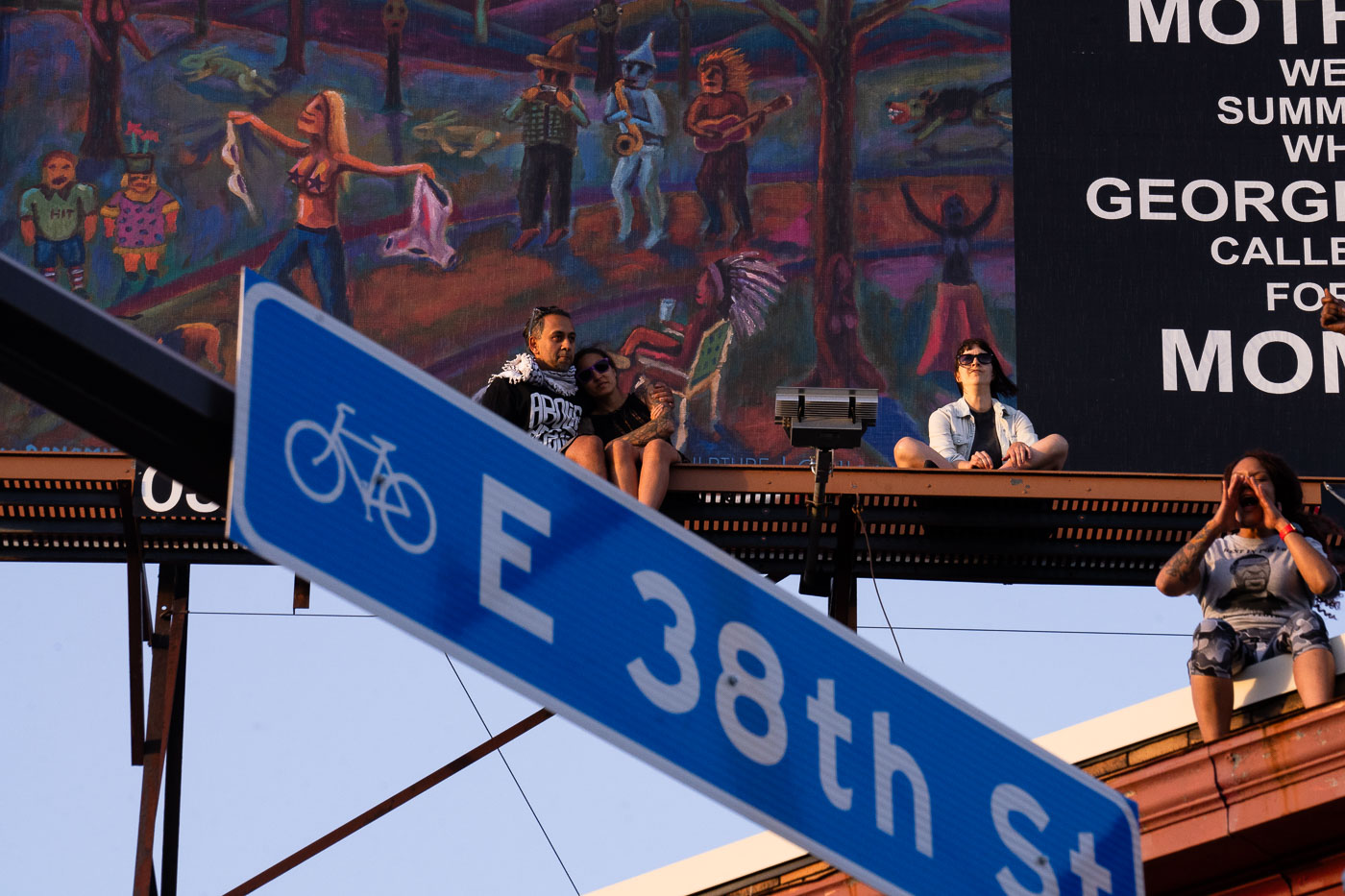
People on billboards at George Floyd Square
On the one-year anniversary of George Floyd's murder, community members gathered at George Floyd Square in Minneapolis. The square, located at the intersection of East 38th Street and Chicago Avenue, has been under community control since May 26, 2020. Attendees watched a performance by Common and The Sound of Blackness from atop rooftop billboards.

People on billboards at George Floyd Square, Minneapolis
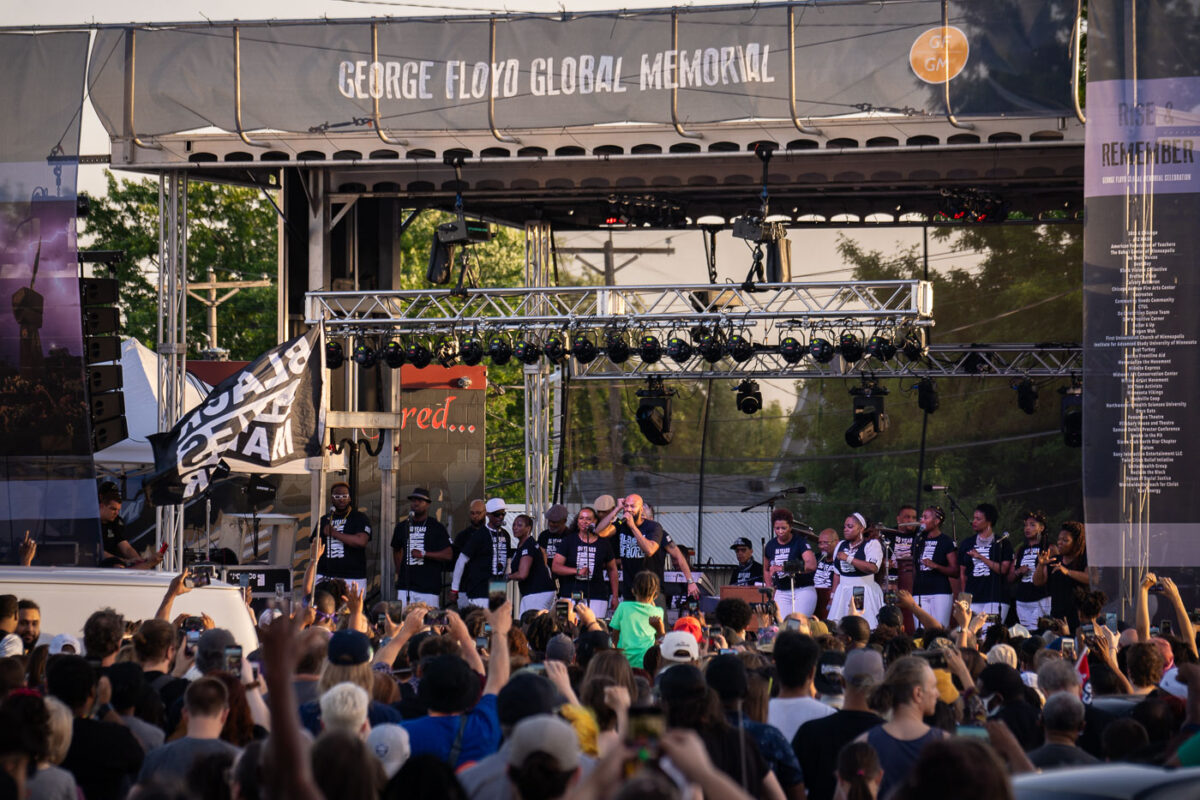
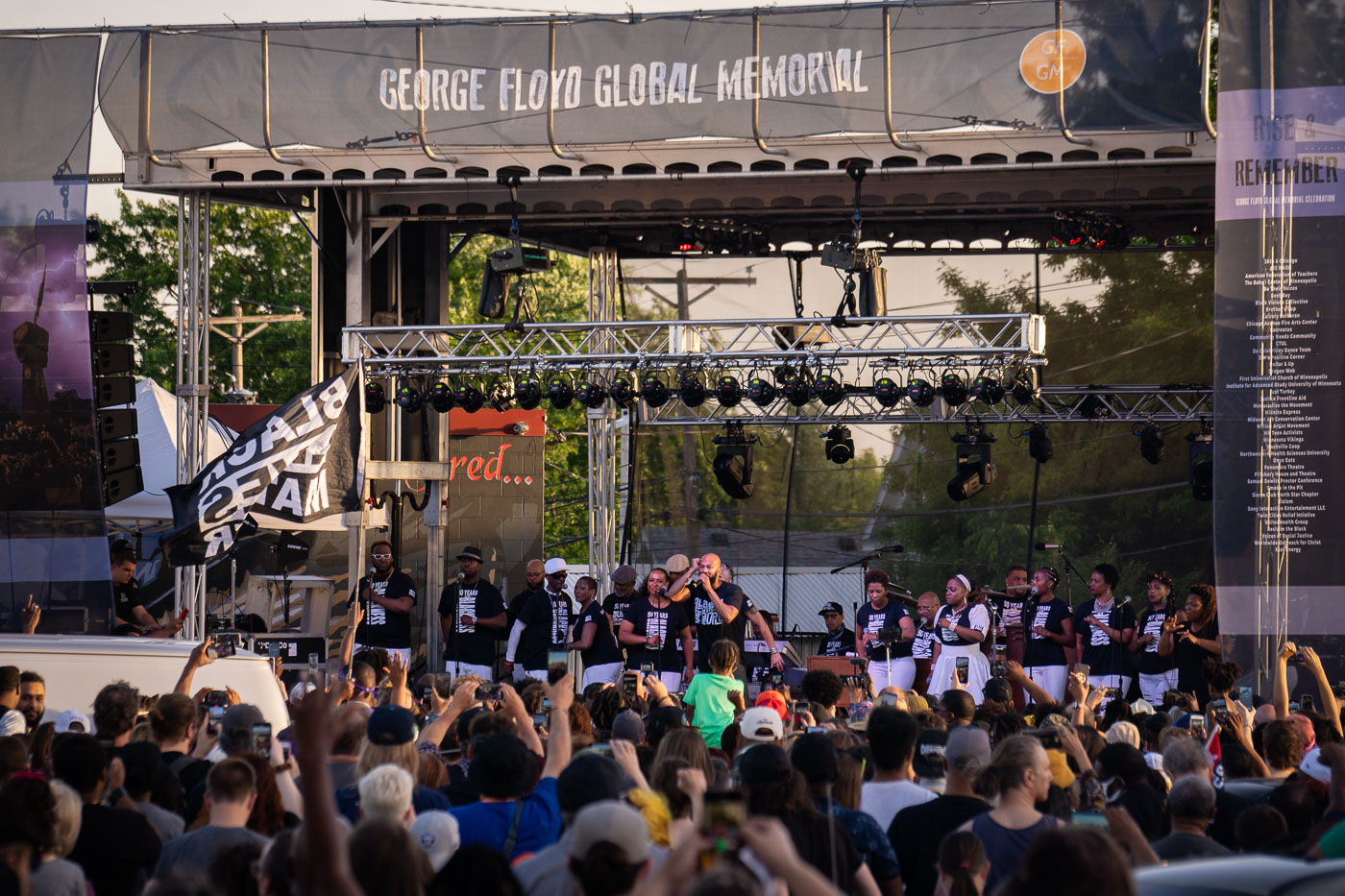
Common performing at George Floyd Square
Grammy award-winning artist Common performs at the George Floyd Global Memorial in Minneapolis on the one-year anniversary of George Floyd's murder. The memorial site, established at the intersection where Floyd was killed, serves as a space for remembrance and community gathering. The performance, featuring the song "Glory" with the Sound of Blackness, was part of a larger event to "Rise & Remember" the victims of police brutality and racial injustice.

Common Performs at George Floyd Global Memorial, Minneapolis
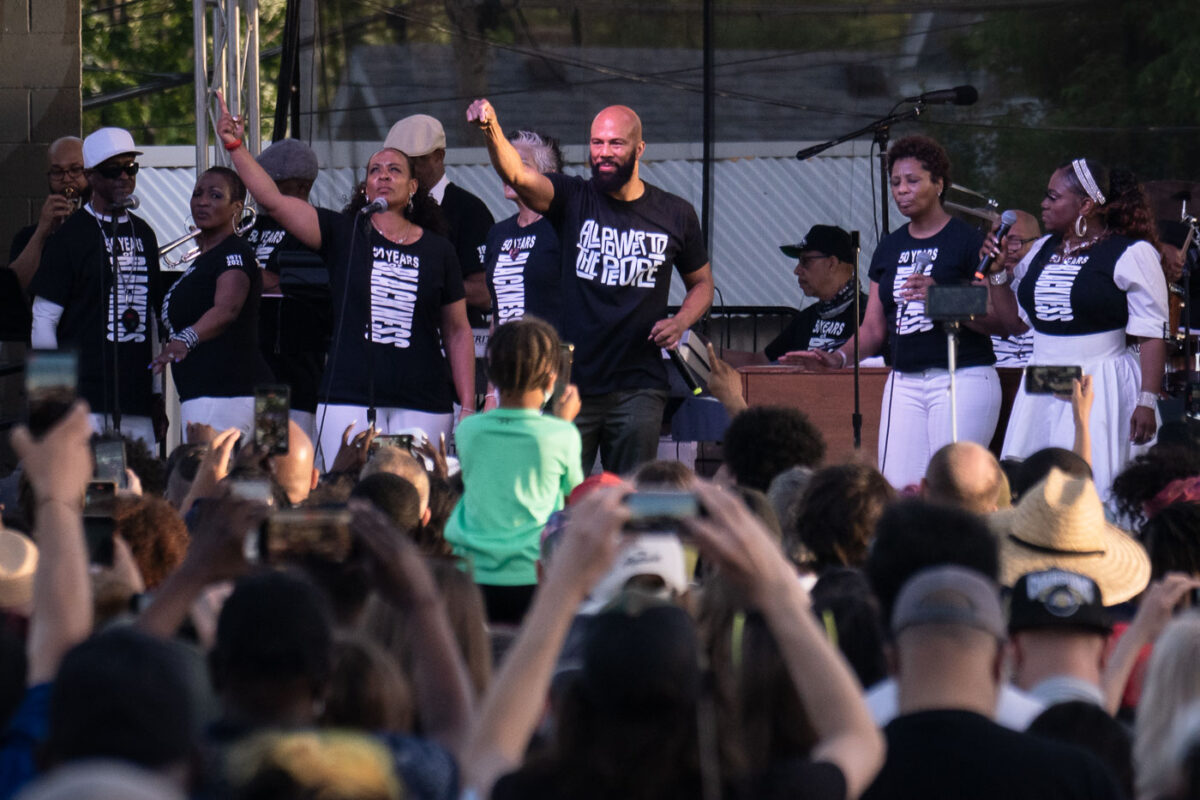
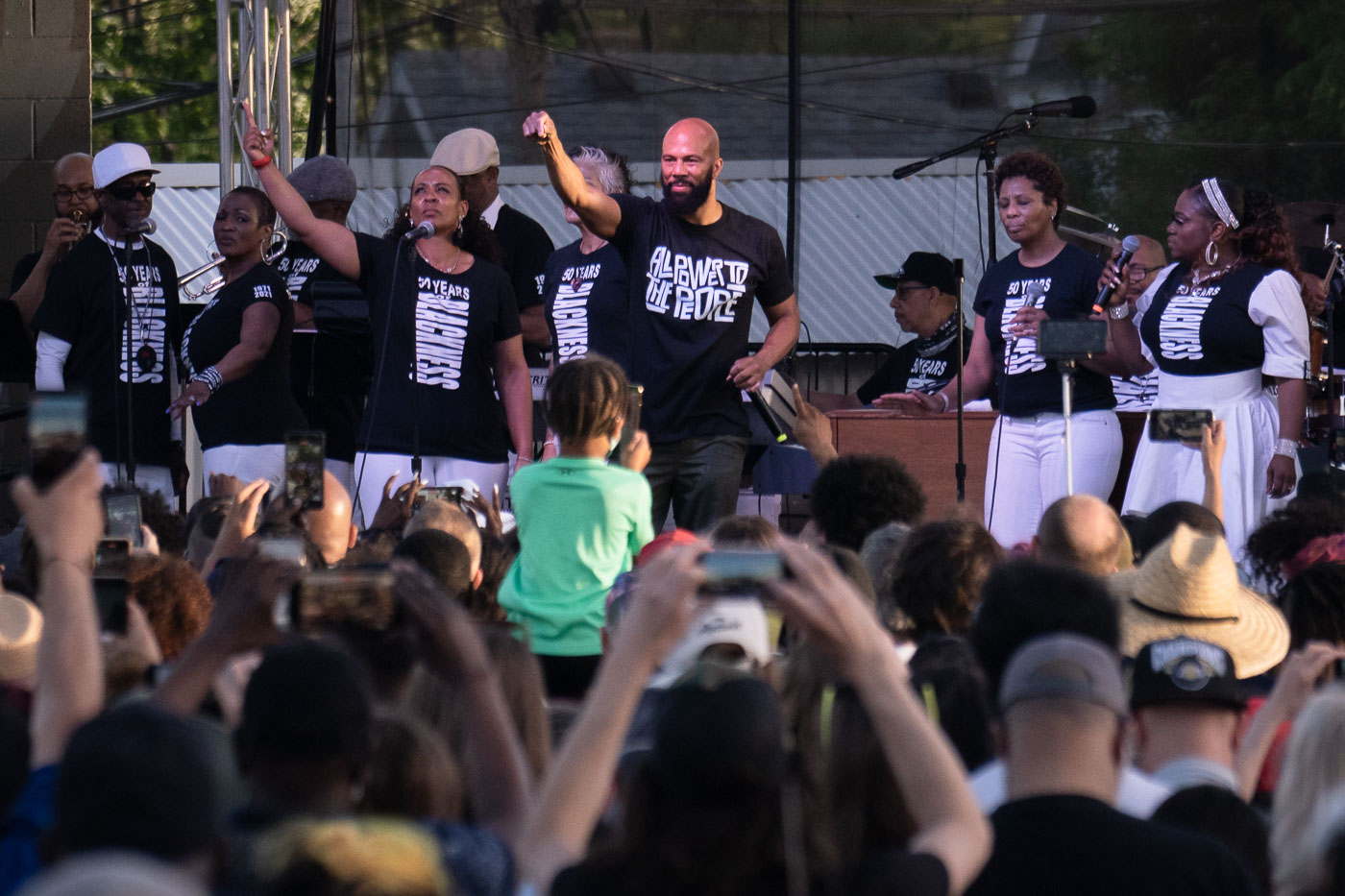
Common at George Floyd Square in May 2021
Rapper Common and the gospel group Sounds of Blackness performed at George Floyd Square in Minneapolis on May 25, 2021, marking the one-year anniversary of George Floyd's murder. The performance took place at the intersection, which had been occupied by protesters and transformed into a memorial and community space following Floyd's death.

Common and Sounds of Blackness at George Floyd Square, May 2021
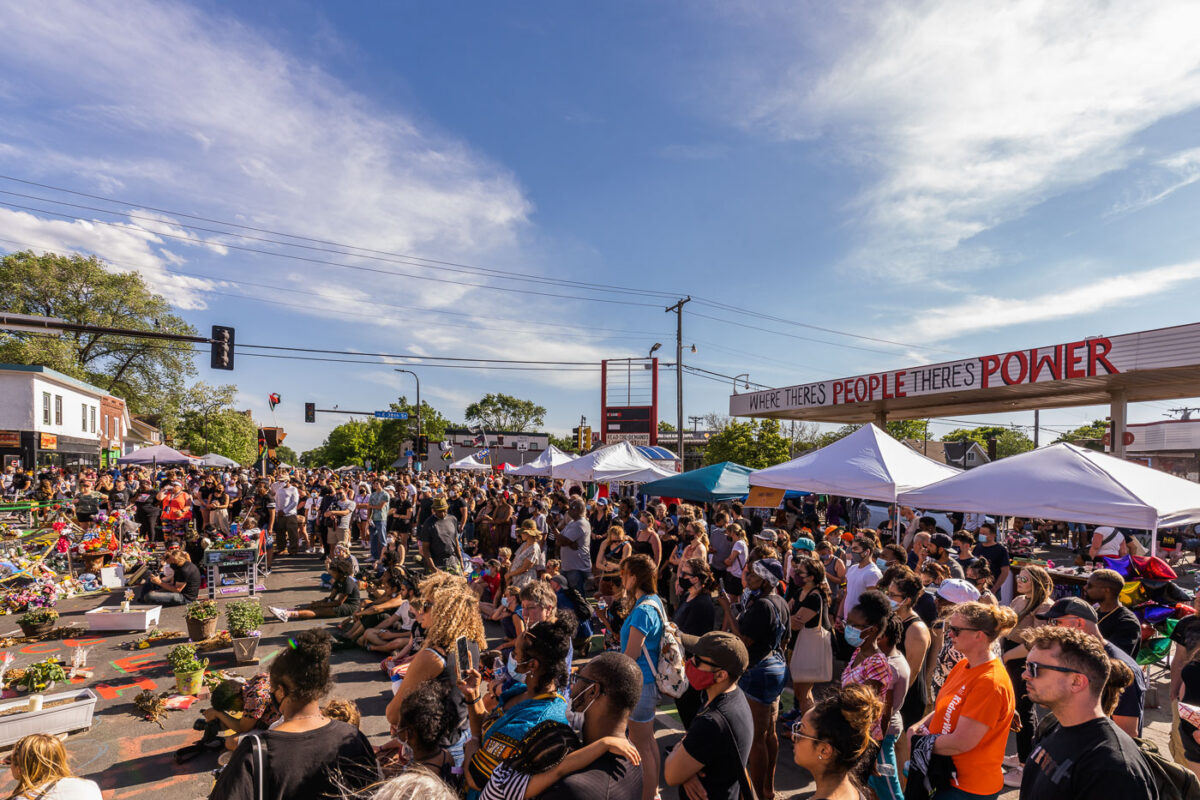
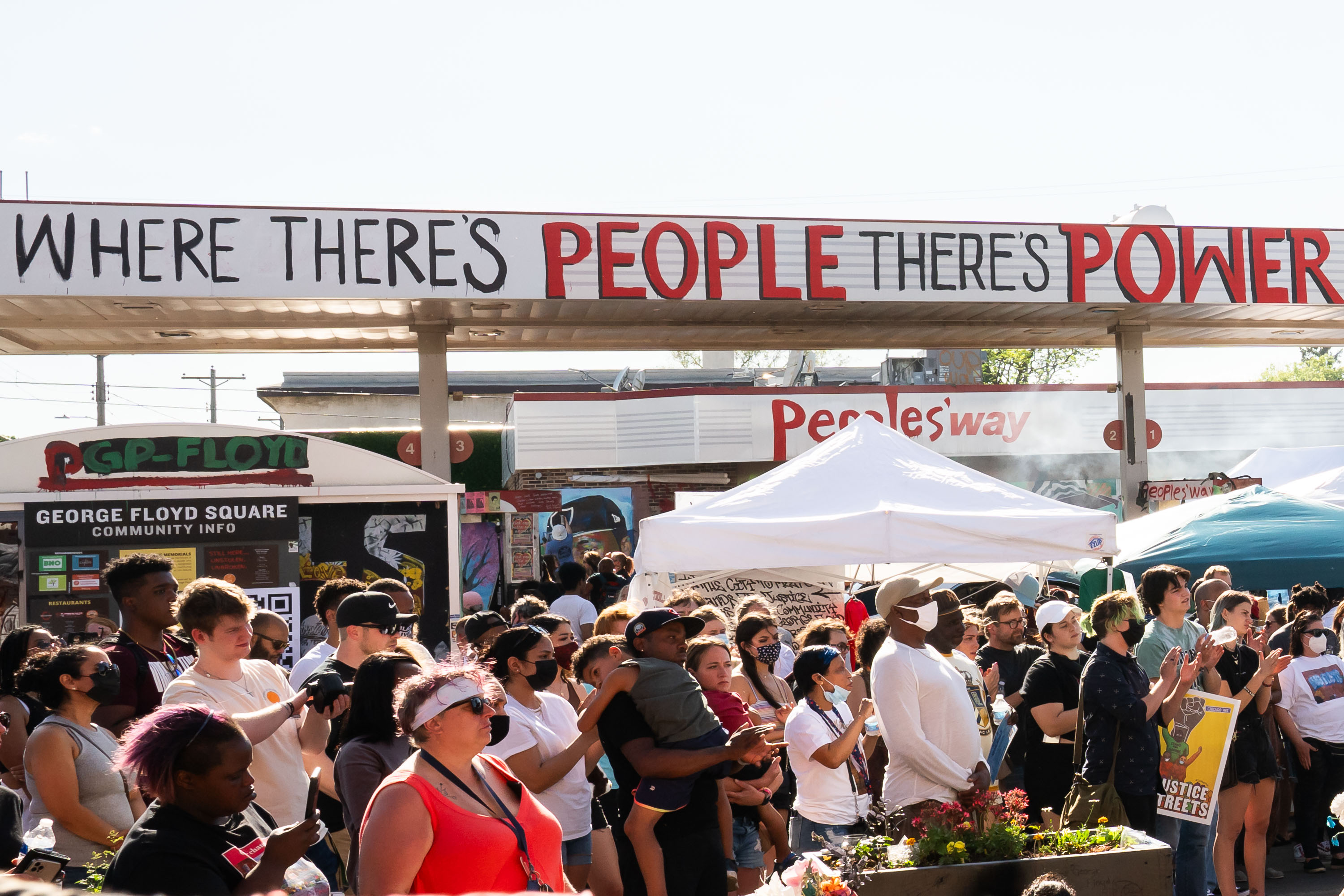
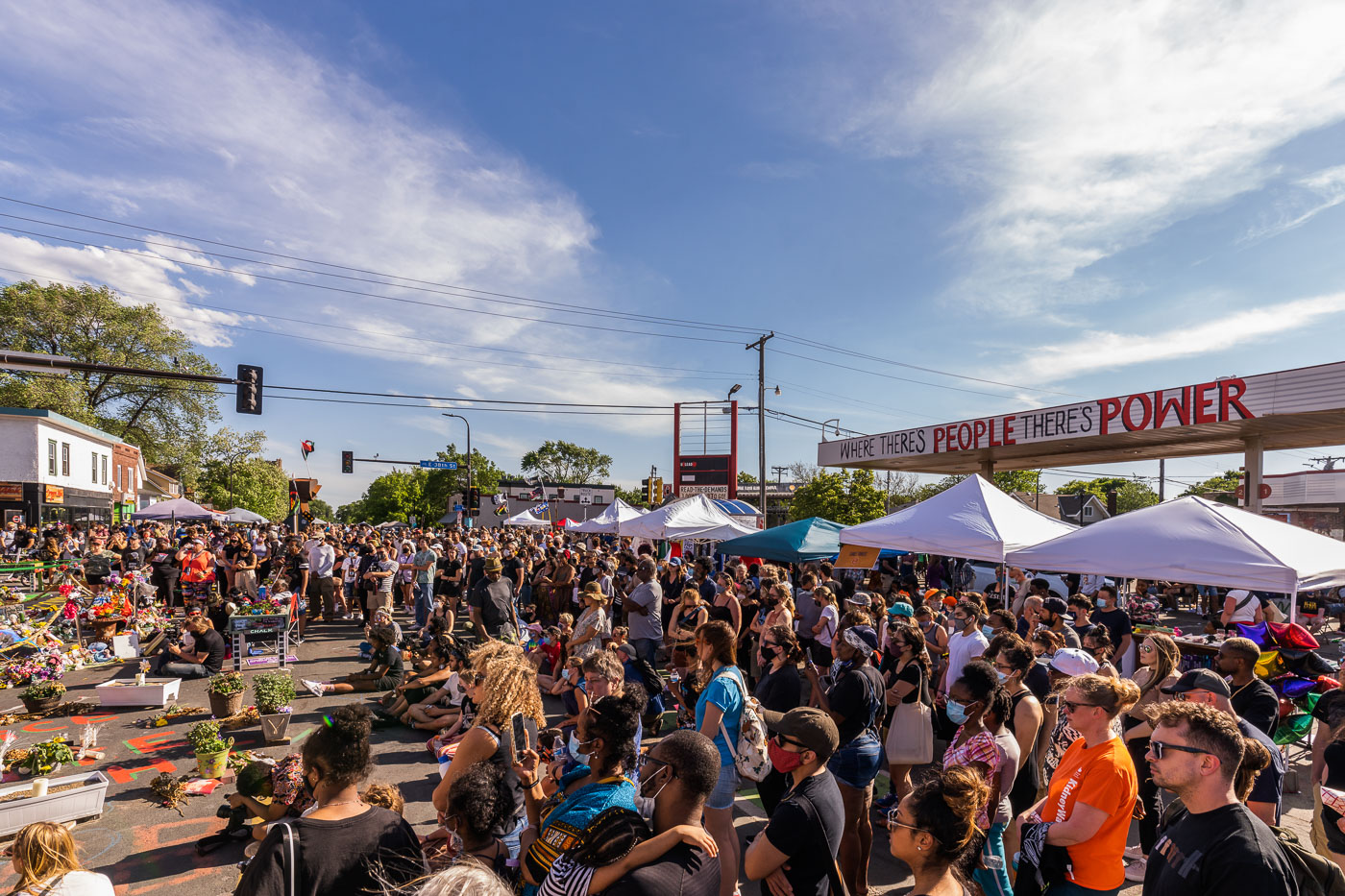
Large crowd at George Floyd Square 1 year later
On the one-year anniversary of George Floyd's murder, a large gathering took place at 38th Street and Chicago Avenue in Minneapolis, an area that became known as George Floyd Square.

George Floyd Square Anniversary Gathering, Minneapolis
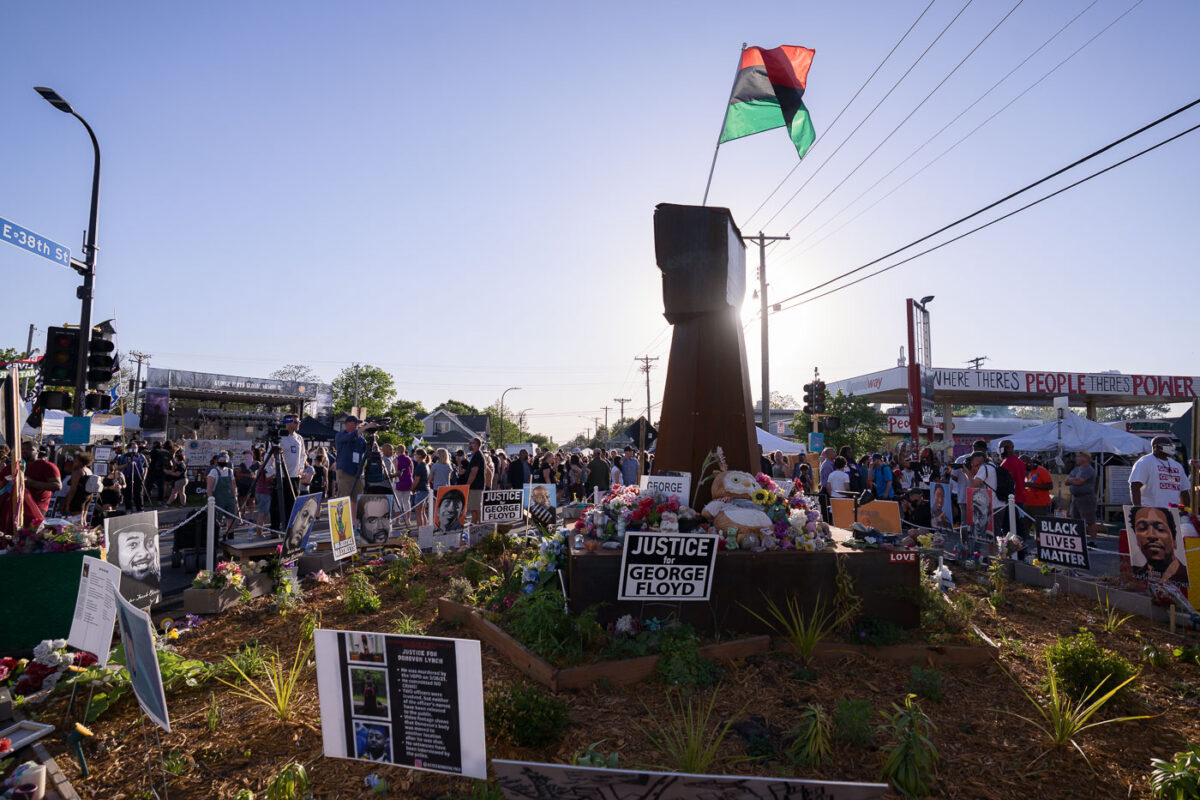
George Floyd Square Fist on 1 year anniversary May 21
A memorial stands at George Floyd Square in Minneapolis on the one-year anniversary of his murder. The square, located at the intersection of East 38th Street and Chicago Avenue, became a focal point for protests and activism following Floyd's death in May 2020. The memorial features portraits of Floyd and other victims of police brutality, flowers, stuffed animals, and signs demanding justice. The "Rise and Remember 2021" event marked a year of continued remembrance and advocacy for racial justice in the city and beyond.

George Floyd Square Memorial, Minneapolis, 1 Year Anniversary
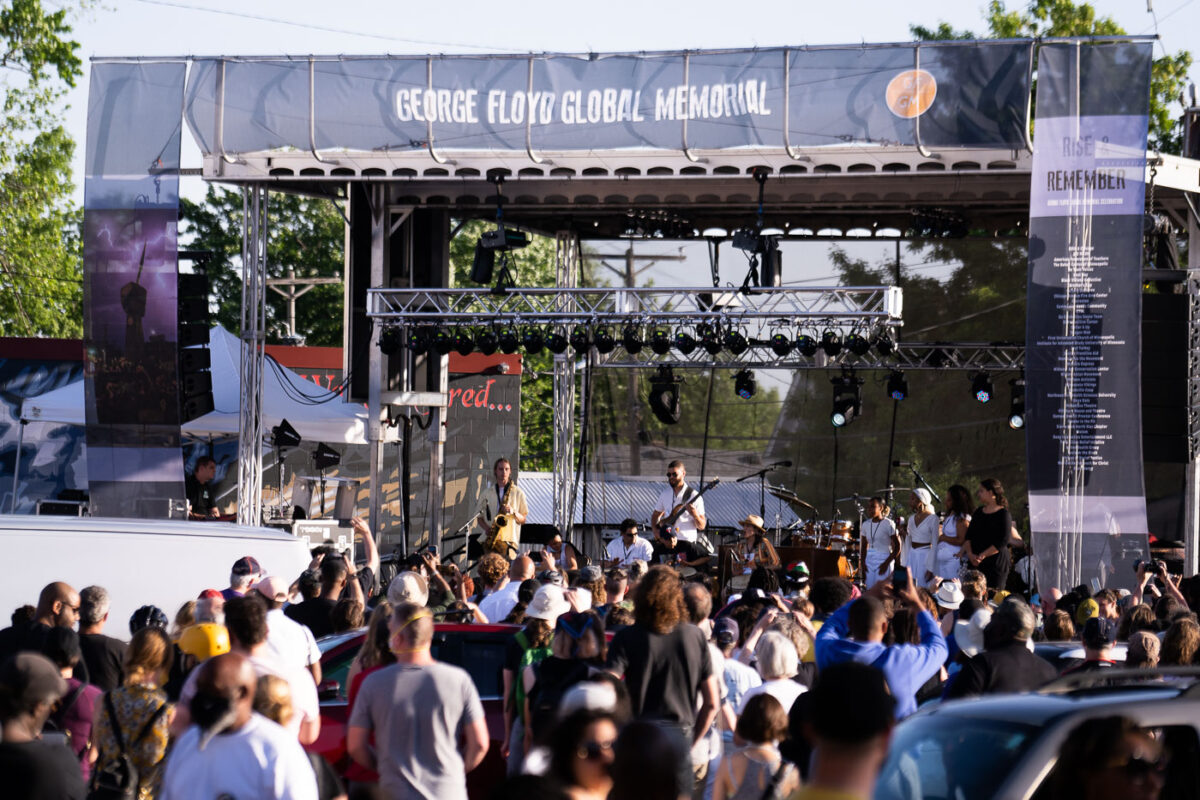
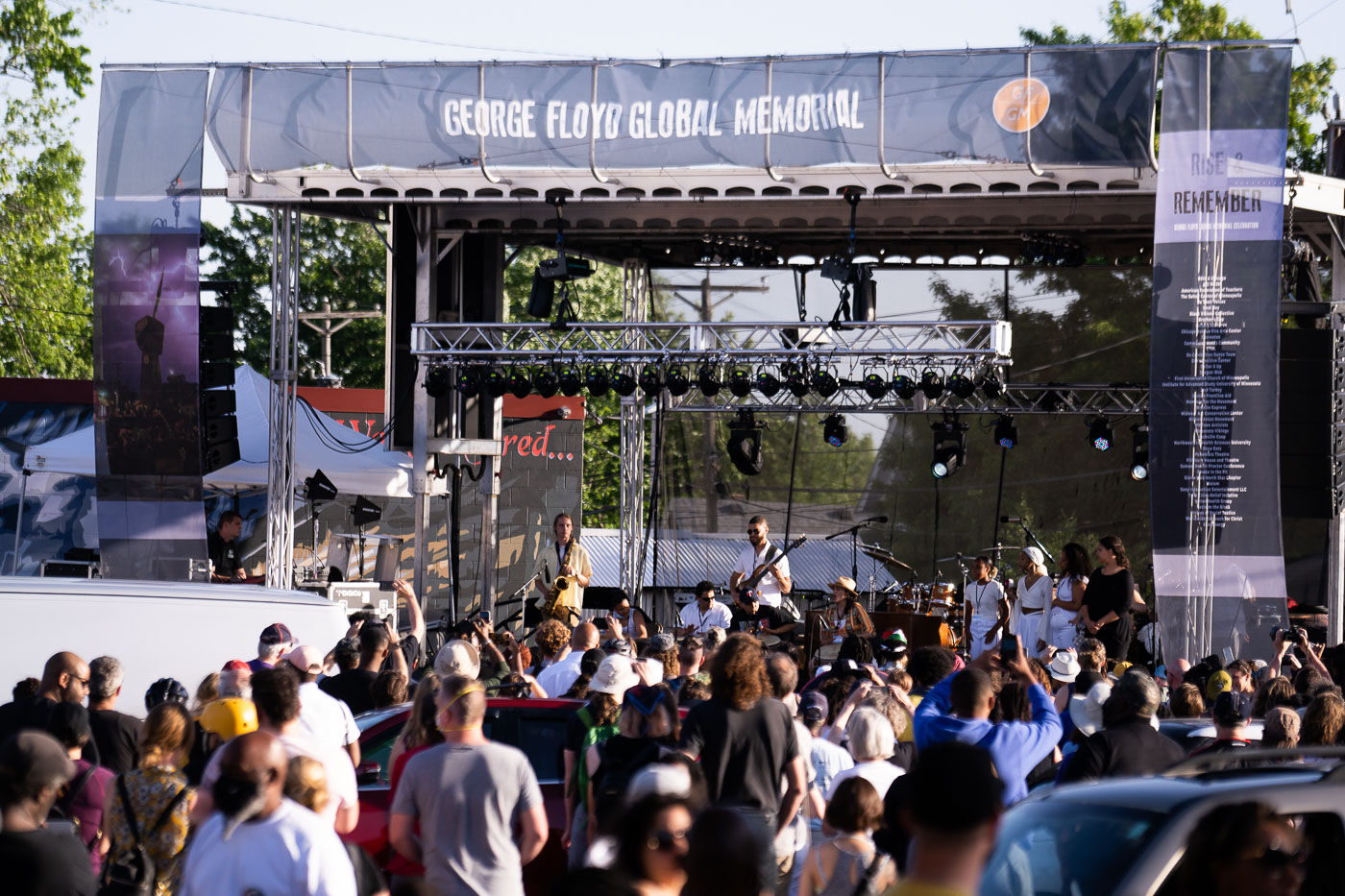
Rise and Remember stage at George Floyd Square
A stage is set up at George Floyd Square in Minneapolis for a "Rise & Remember" celebration marking the one-year anniversary of George Floyd's murder. The event featured musical performances and was organized by a coalition of community groups, including the George Floyd Global Memorial and the Chicago Avenue Fire Arts Center. This gathering served as a memorial and a call for continued action and remembrance in the wake of Floyd's death and the subsequent protests.

George Floyd Square Memorial Celebration Stage, Minneapolis
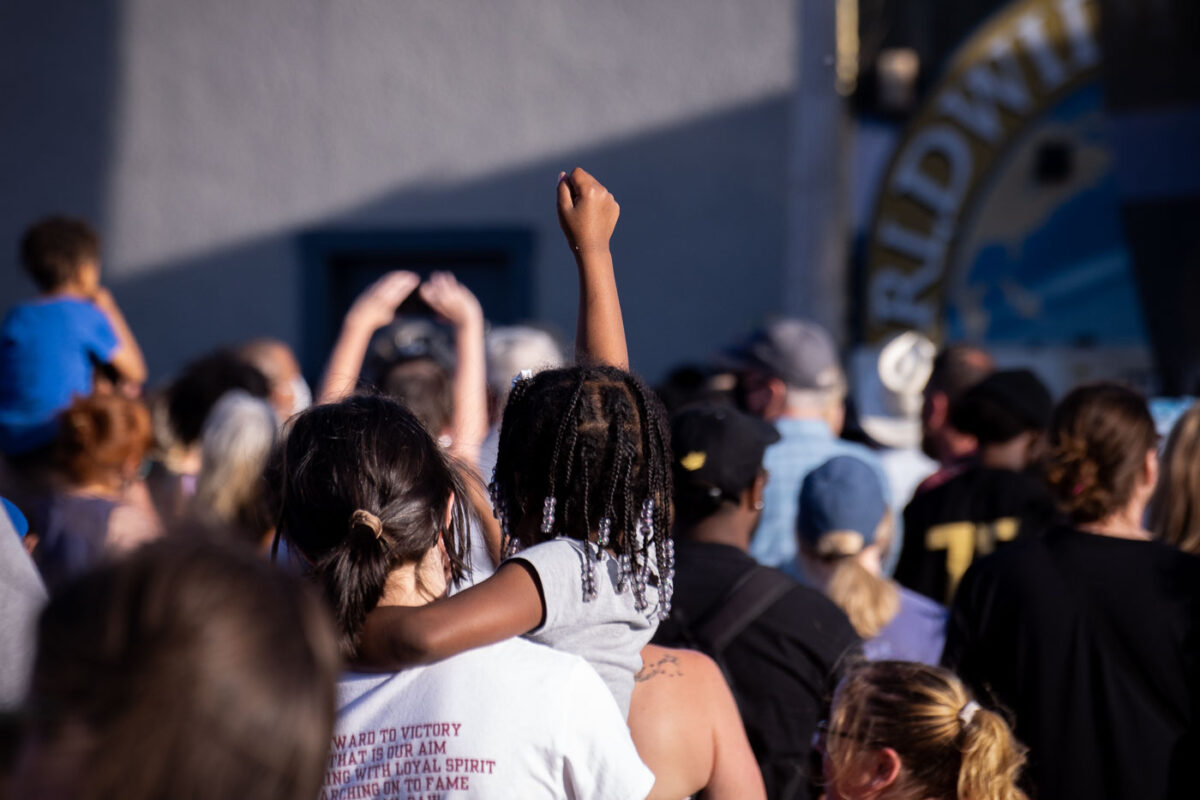
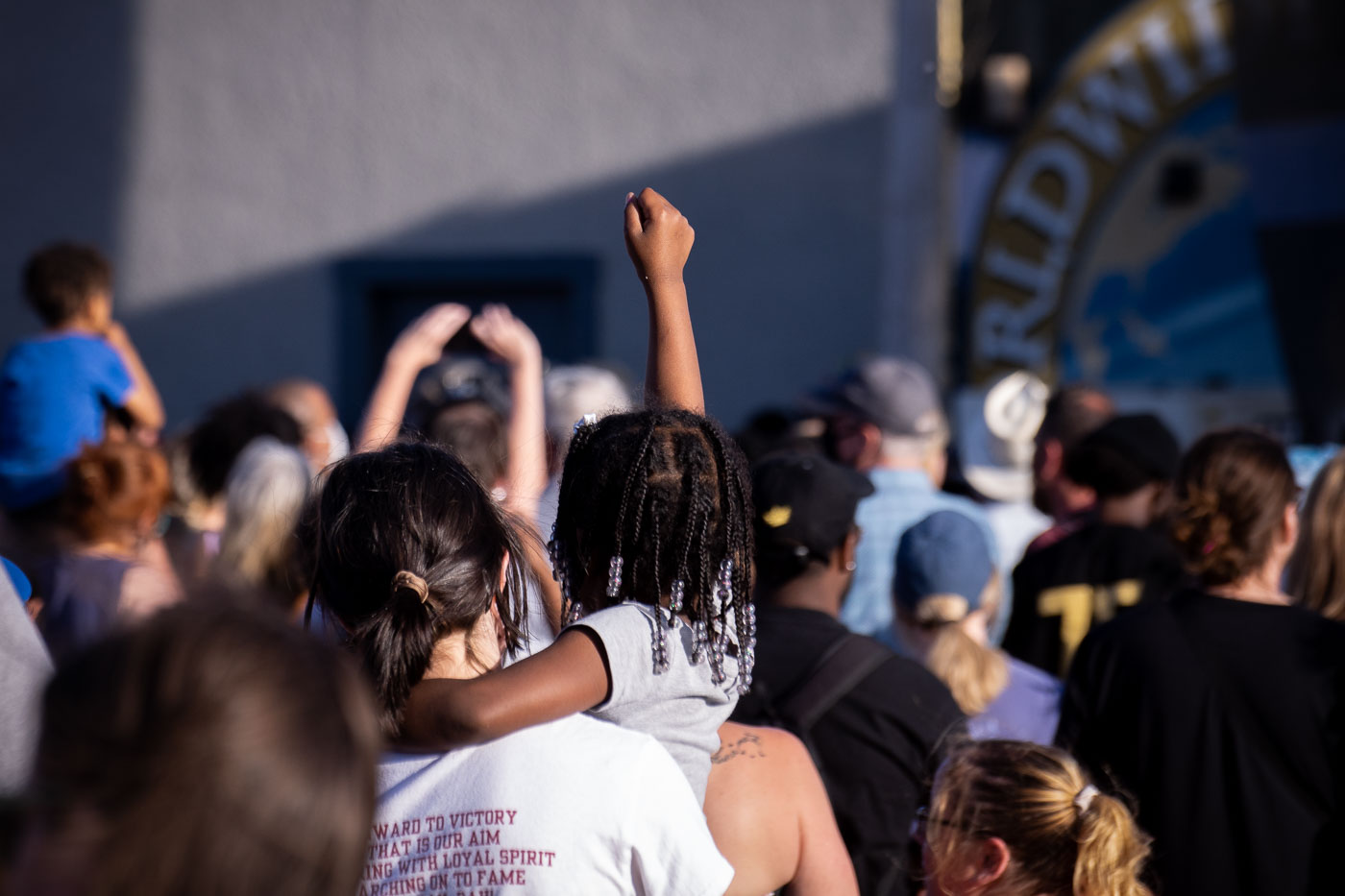
Young child raises her fist at George Floyd Square
A child raises a fist in solidarity at George Floyd Square in Minneapolis during the "Rise and Remember" event in 2021. This location became a focal point for protests and activism following the murder of George Floyd in May 2020. The "Rise and Remember" event commemorated the ongoing struggle for racial justice and remembrance of those lost to police brutality.

Child’s fist raised at George Floyd Square, Minneapolis
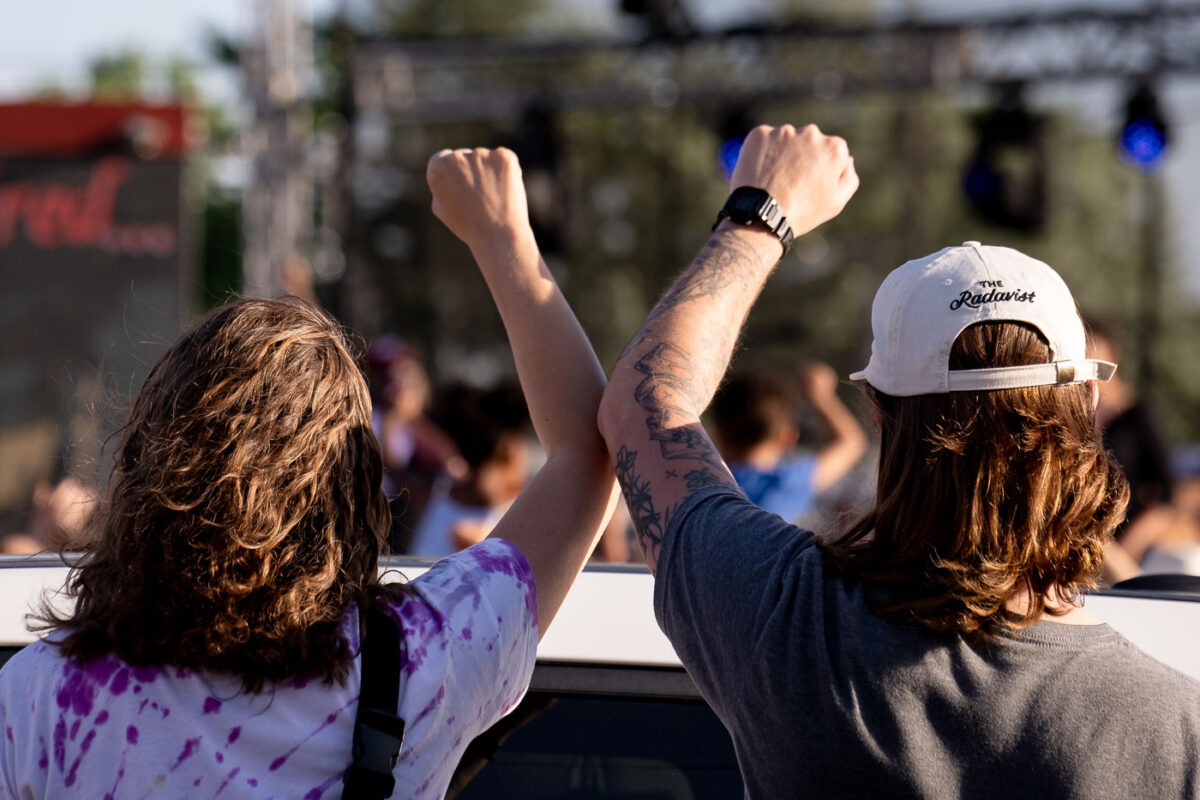
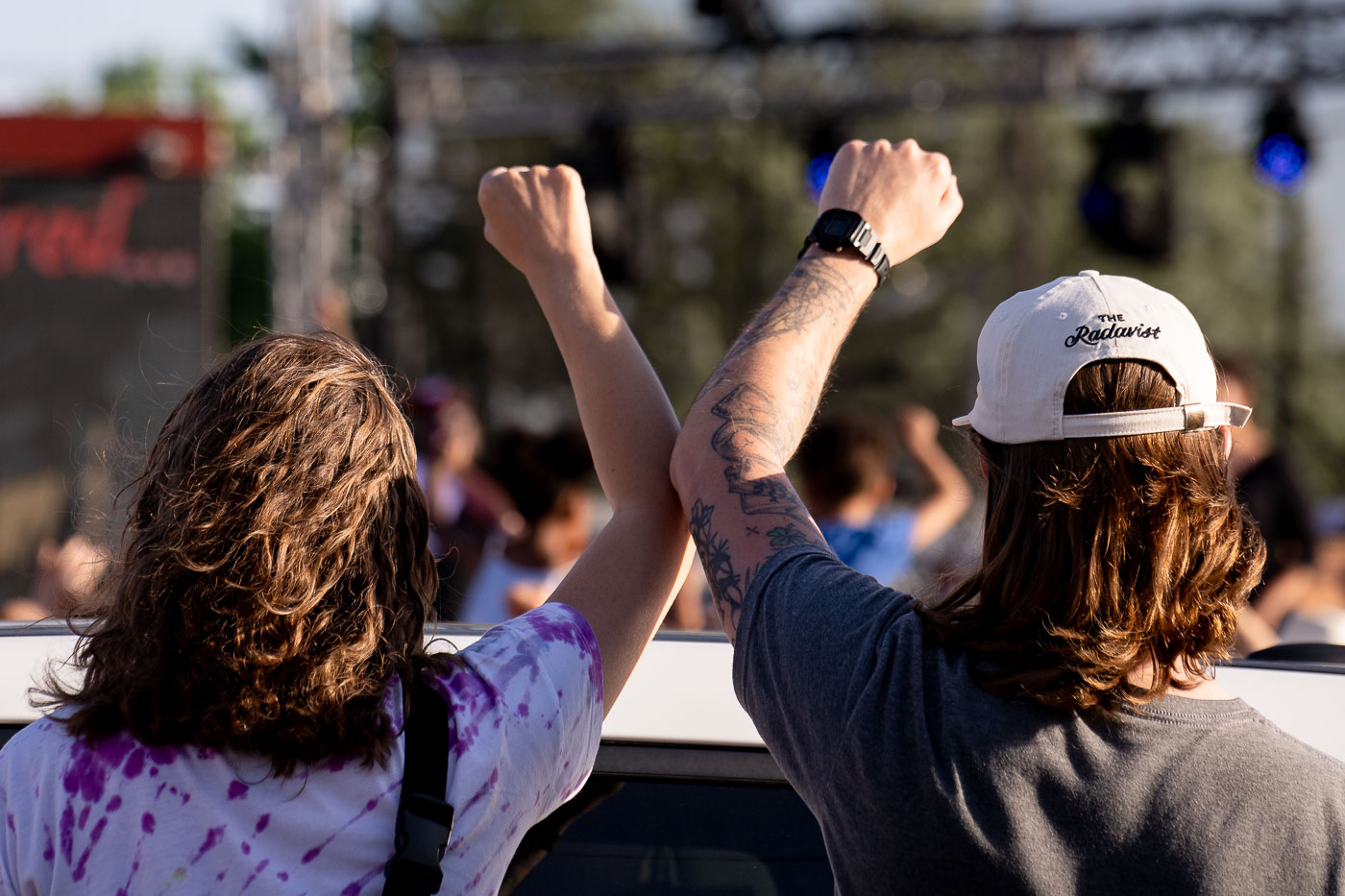
Couple raise fists at George Floyd Square
On the one-year anniversary of George Floyd's murder, community members gathered at the intersection of 38th Street and Chicago Avenue in Minneapolis, a site that became known as George Floyd Square. The gathering marked a year since Floyd's death, which occurred nearby and sparked widespread protests and a global movement for racial justice. The square became a focal point for activism and community organizing in the aftermath of the murder.

George Floyd Square Anniversary Protest, Minneapolis
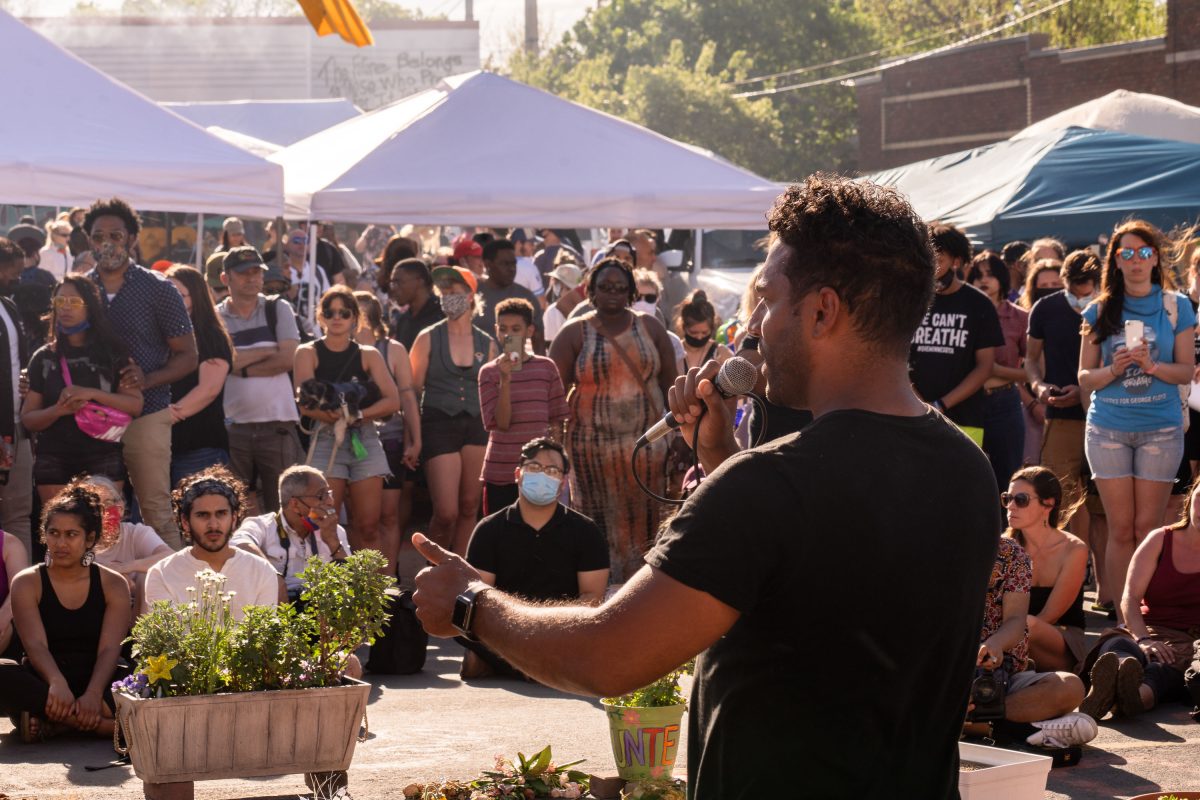
Toussaint Morrison speaks at Rise and Remember
Toussaint Morrison speaking to the crowd at Rise and Remember 2021 at George Floyd Square.

Toussaint Morrison at Rise and Remember
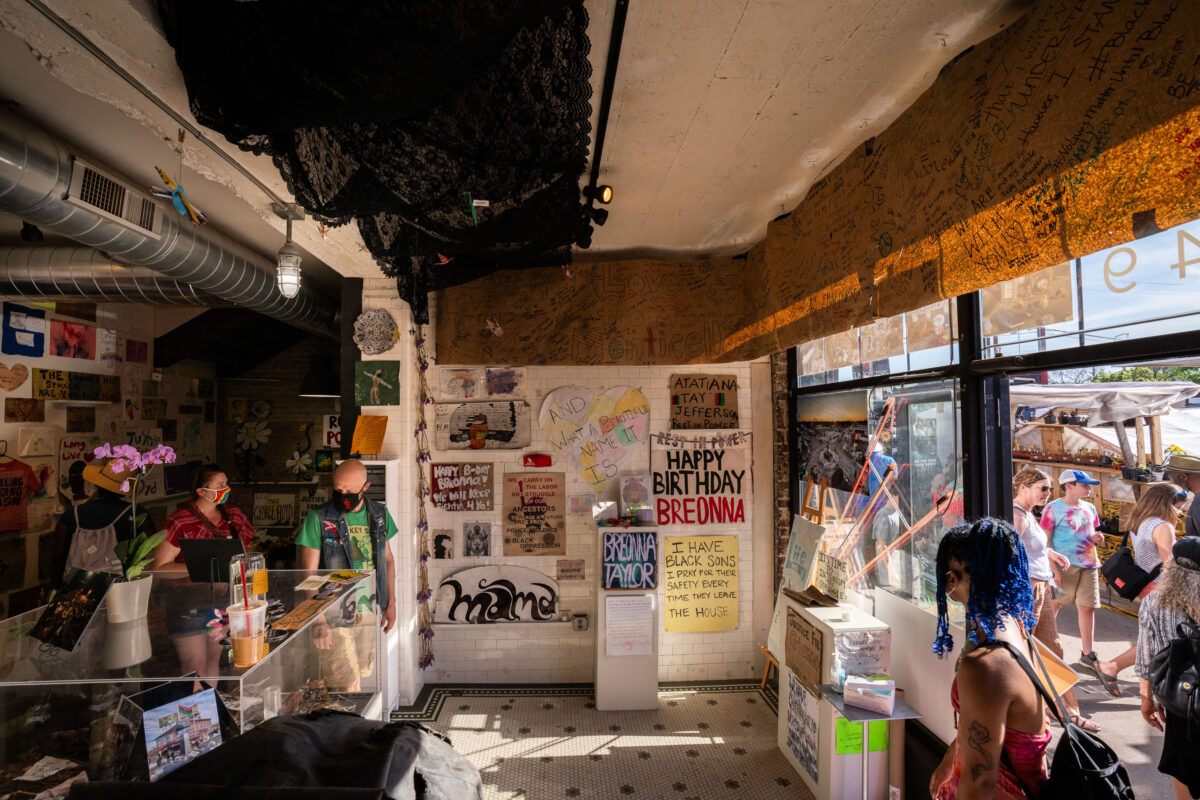
Museum of items left at George Floyd's Memorial
Items left behind at George Floyd's Memorial on display during Rise and Remember.

George Floyd Memorial Offerings On Display
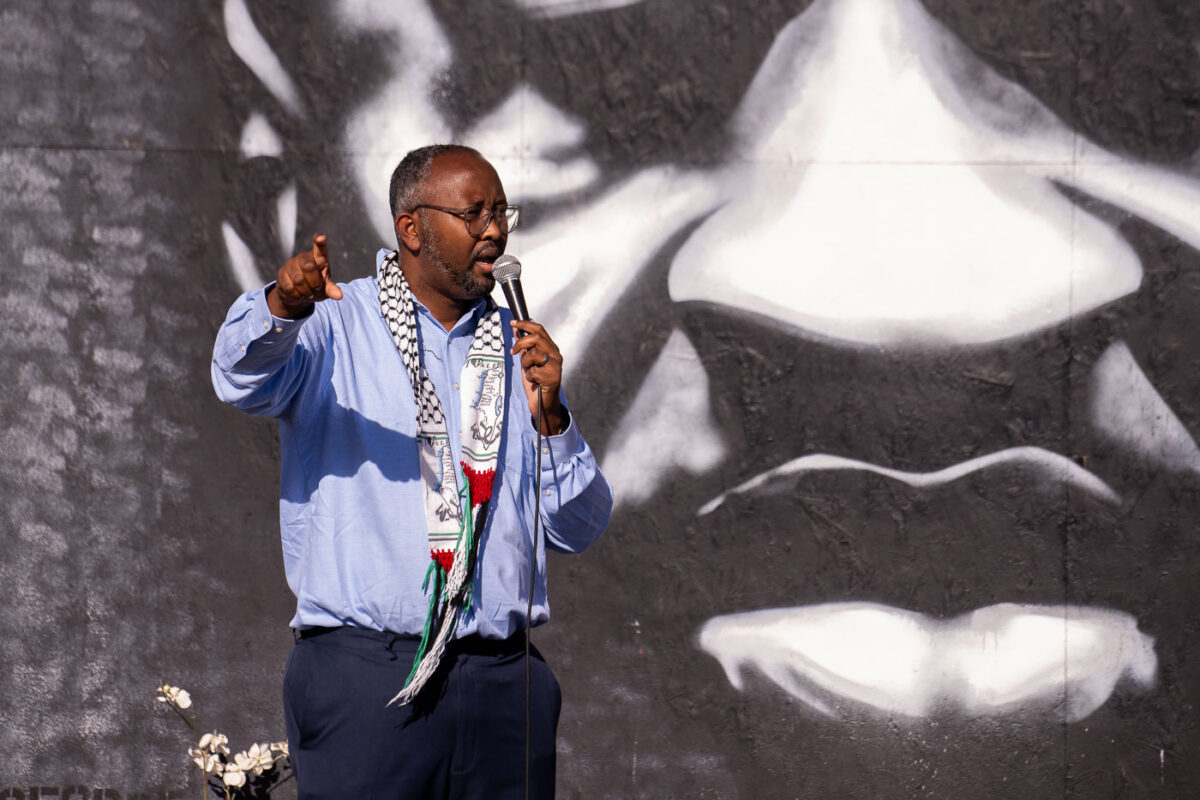
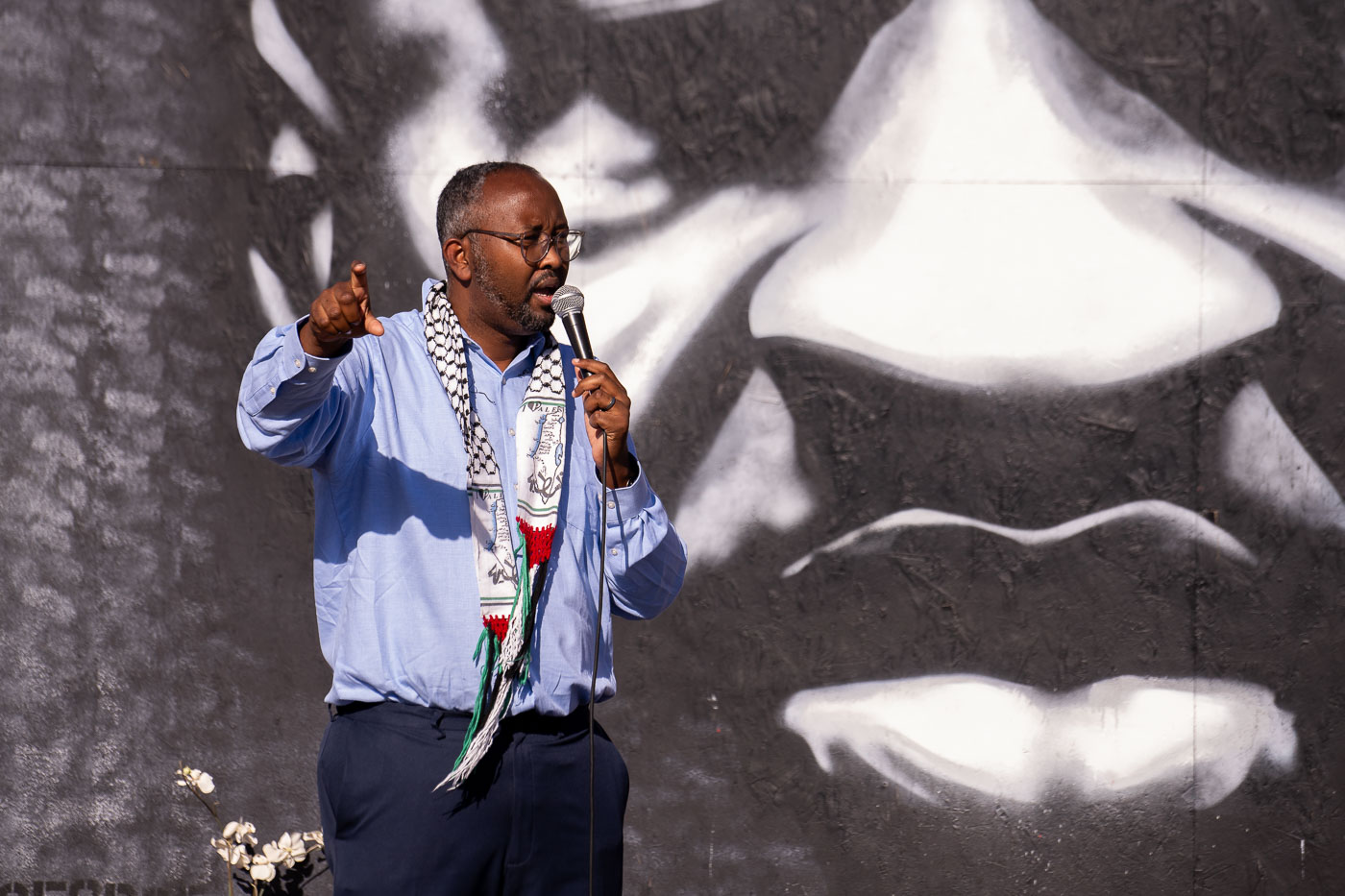
Jaylani Hussein speaks at George Floyd Square
Jaylani Hussein, representing the Council on American-Islamic Relations of Minnesota (CAIR-MN), speaks at George Floyd Square in Minneapolis on the one-year anniversary of George Floyd's murder. The square, located at the intersection of 38th Street and Chicago Avenue, became a focal point for protests and activism following Floyd's death in May 2020.

Jaylani Hussein speaks at George Floyd Square anniversary
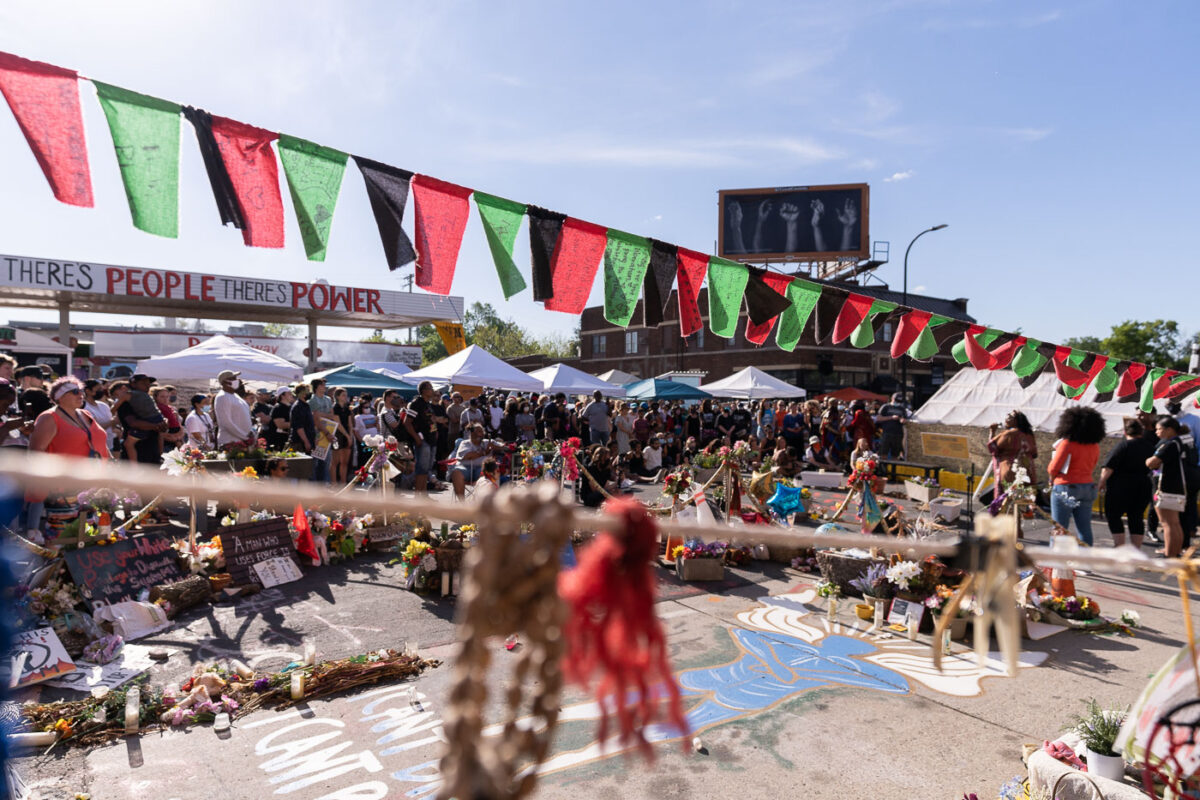
George Floyd memorial 1 year later
A gathering took place at George Floyd Square in Minneapolis on the one-year anniversary of George Floyd's murder. The intersection, which became a focal point for protests following Floyd's death in May 2020, was transformed into a community space and memorial. Attendees observed the anniversary with tributes, speeches, and communal reflection.

George Floyd Square Memorial: 1 Year Anniversary Gathering
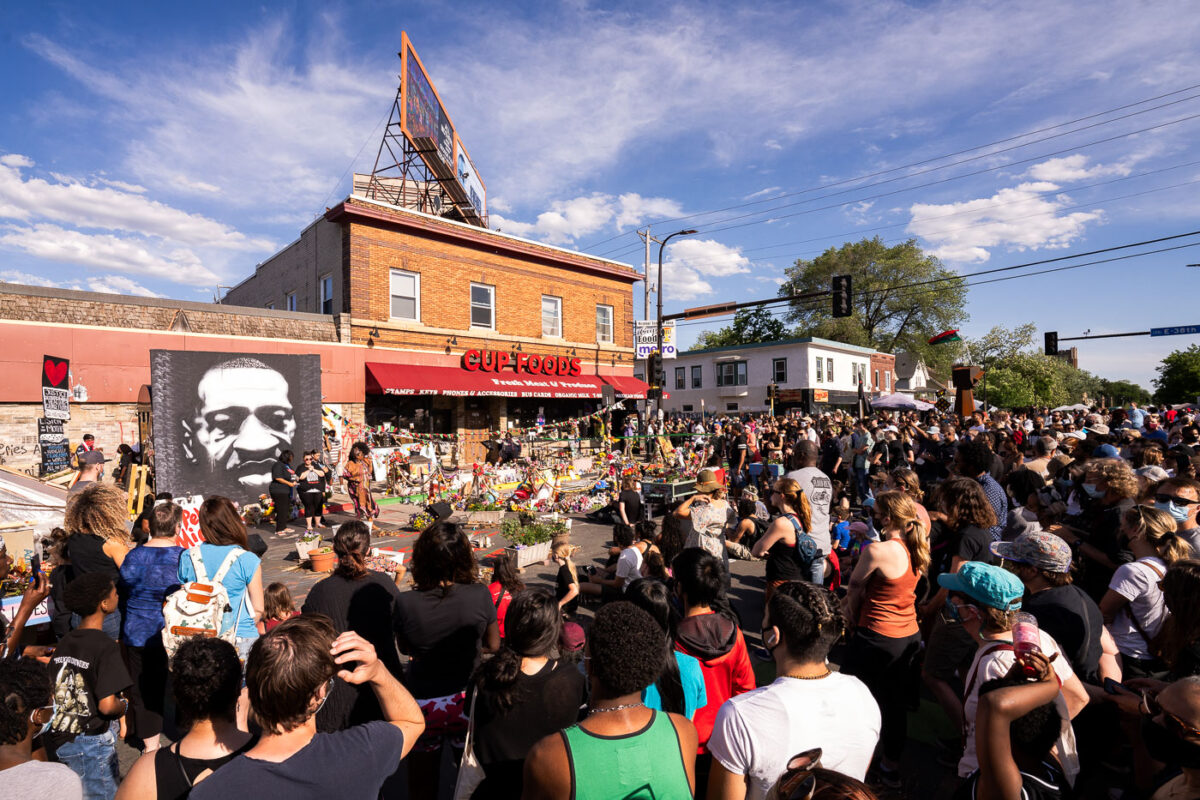
Community gathered at George Floyd Square 1 year later
A large crowd gathered at George Floyd Square in Minneapolis on the one-year anniversary of George Floyd's murder. The intersection, located at 38th Street and Chicago Avenue, became a focal point for protests and a memorial following Floyd's death in May 2020.

George Floyd Square Memorial Gathering, Minneapolis
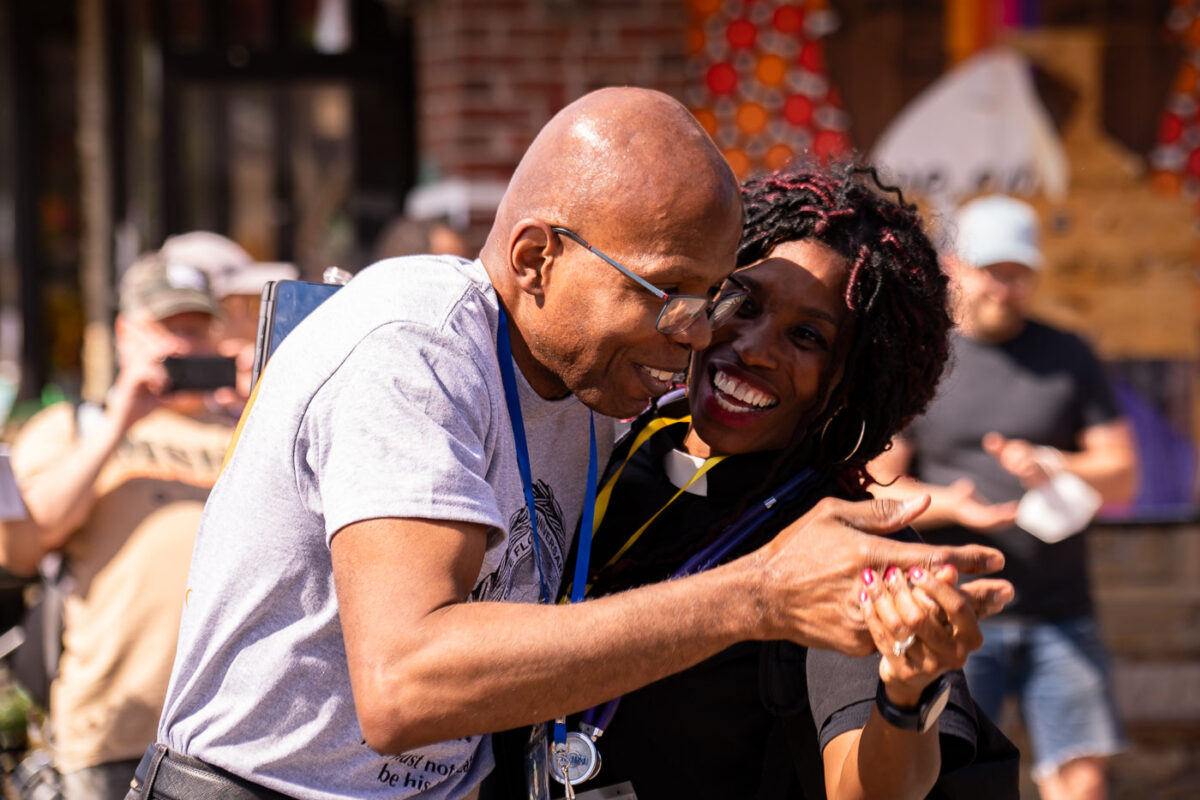
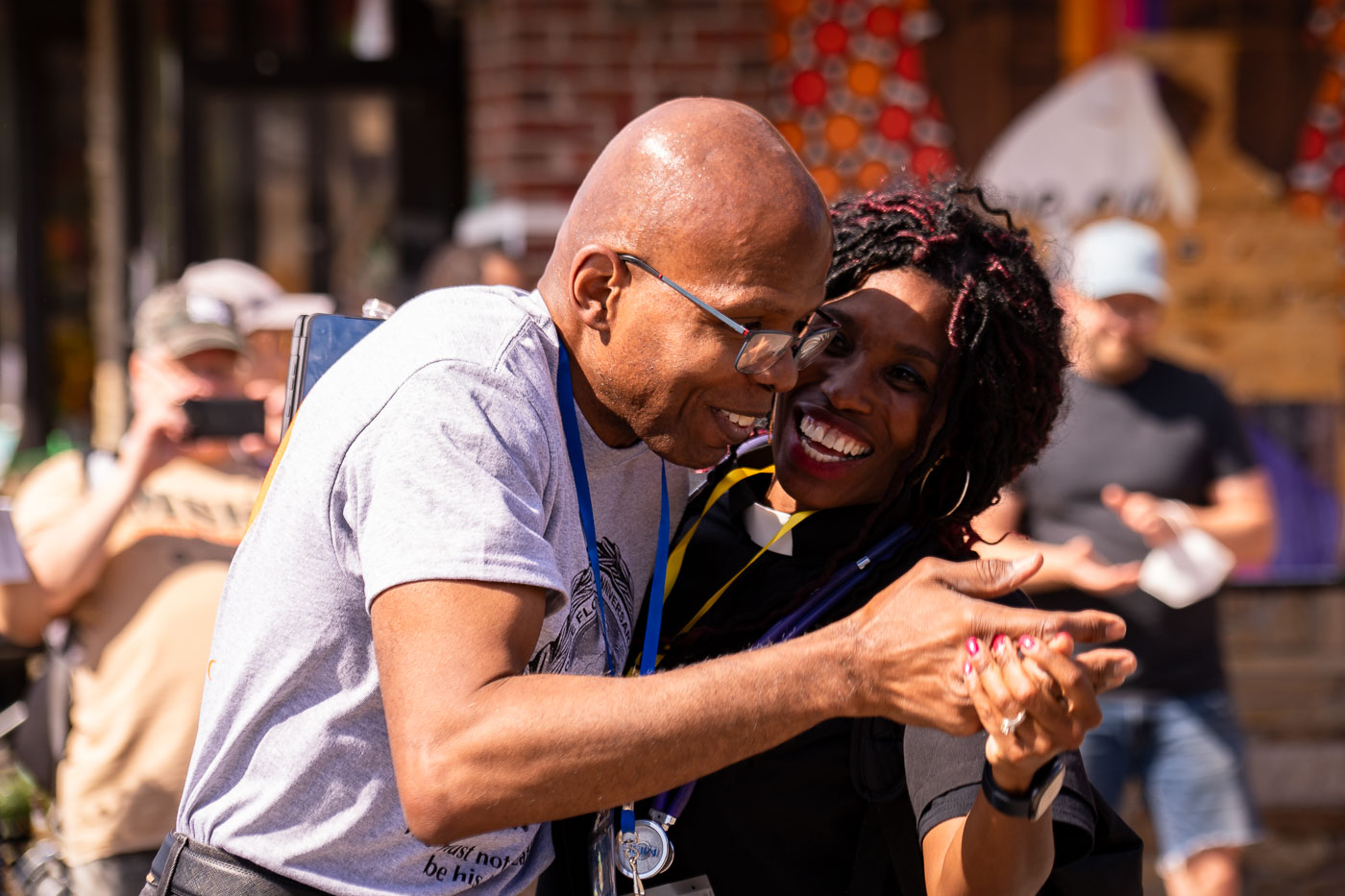
Dancing at George Floyd Square
A community medic dances at George Floyd Square in Minneapolis on the one-year anniversary of his murder. The square, located at the intersection of Chicago Avenue and 38th Street, became a focal point for protests and activism following Floyd's death in May 2020. It was occupied by activists for months, transforming into a space for community organizing and remembrance.

Minneapolis: Community medic dances with Floyd family member
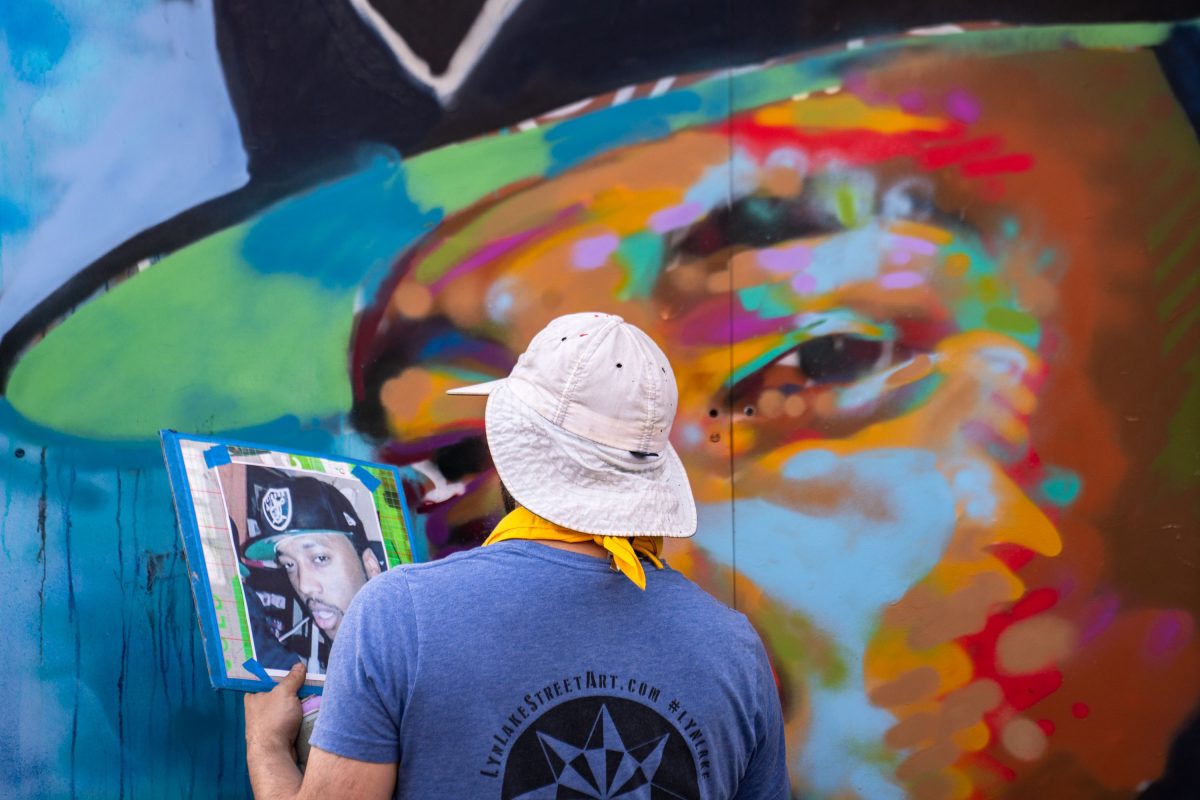
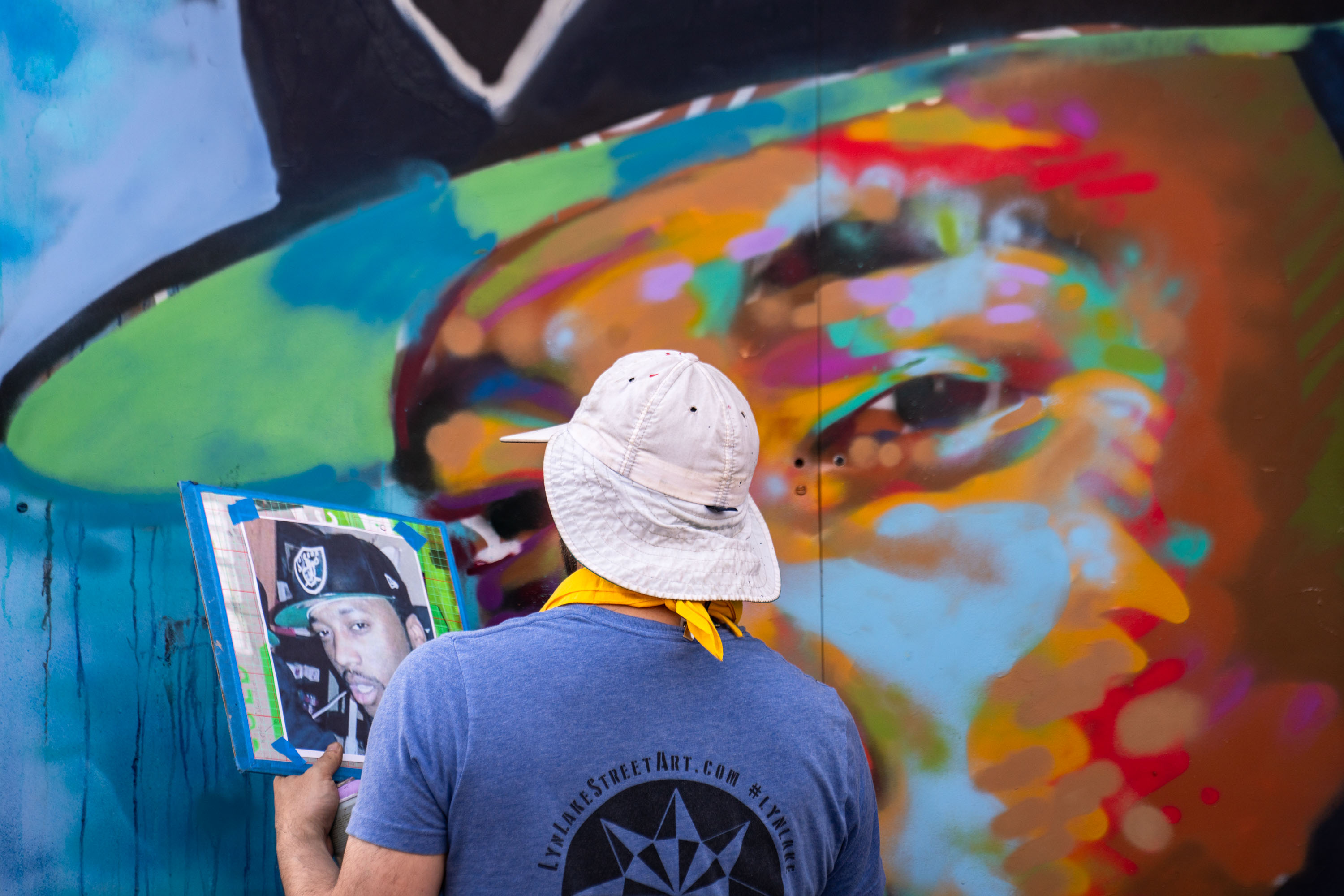
Mural painting at Geroge Floyd Square
A mural being painted at George Floyd Square in May 2021.

Mural painting at Geroge Floyd Square

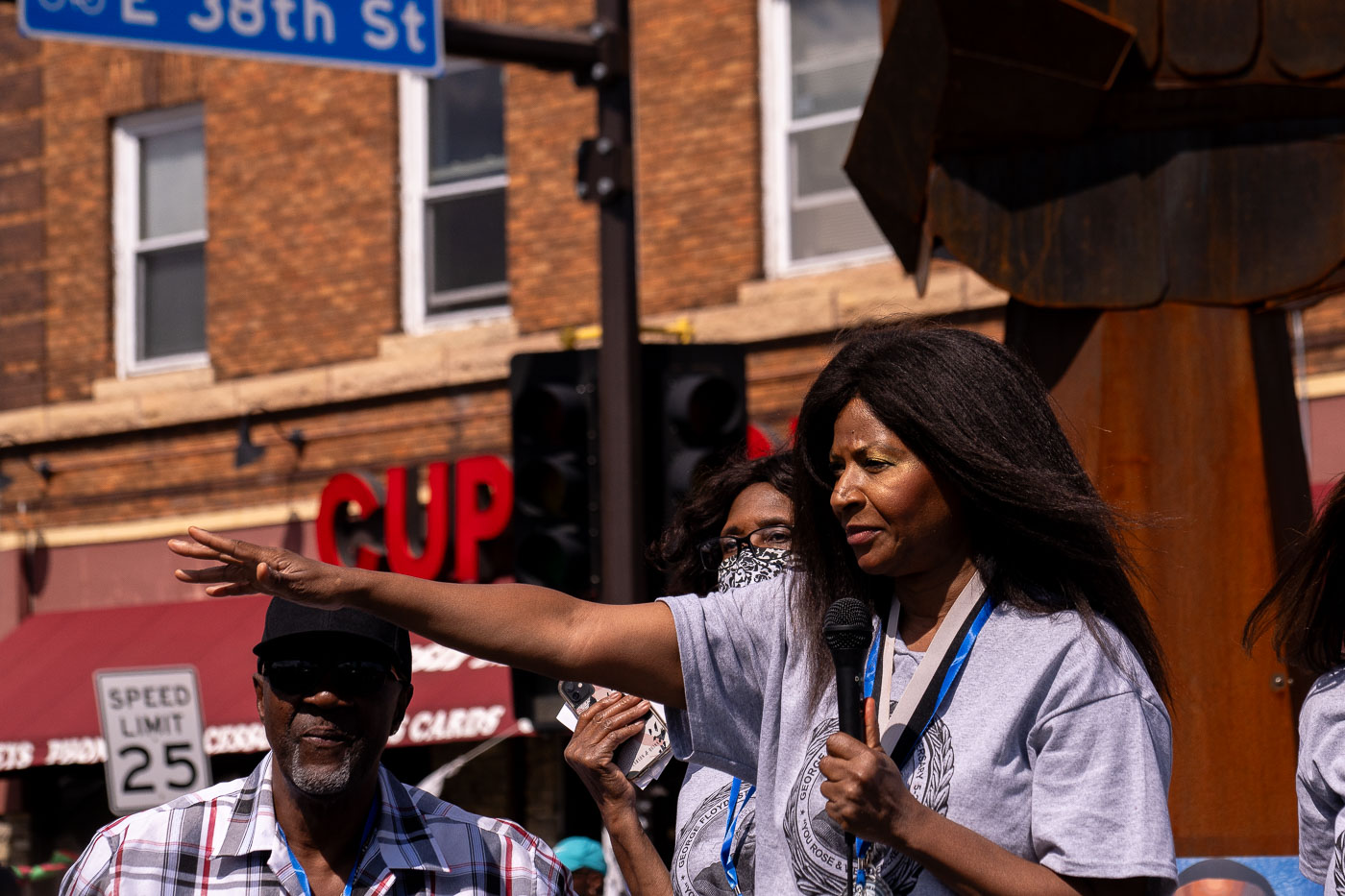
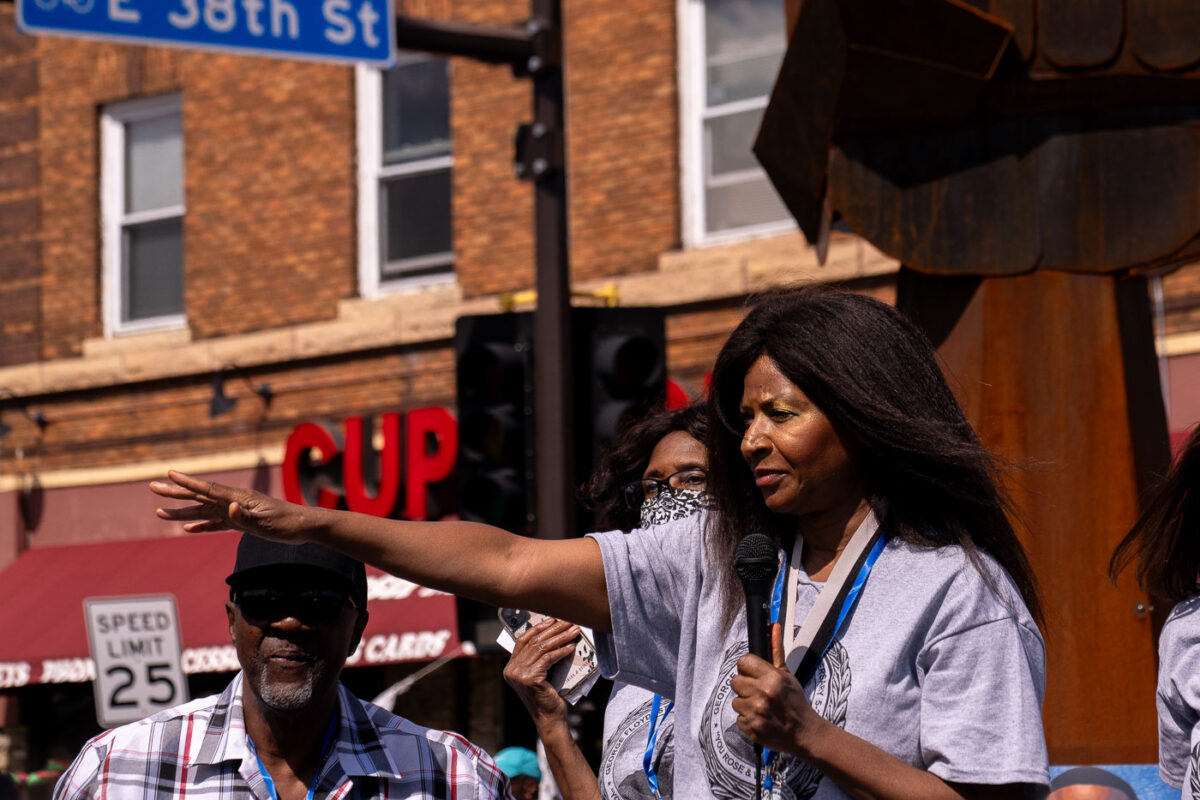
Angela Harrelson speaks at George Floyd Square in 2021
Angela Harrelson, aunt of George Floyd, addresses a crowd at George Floyd Square in Minneapolis on May 25, 2021. The gathering marked the one-year anniversary of Floyd's murder by a Minneapolis police officer. The intersection, located at 38th Street and Chicago Avenue, became a focal point for protests and a symbol of racial justice movements following Floyd's death.

Angela Harrelson speaks at George Floyd Square, Minneapolis, 2021
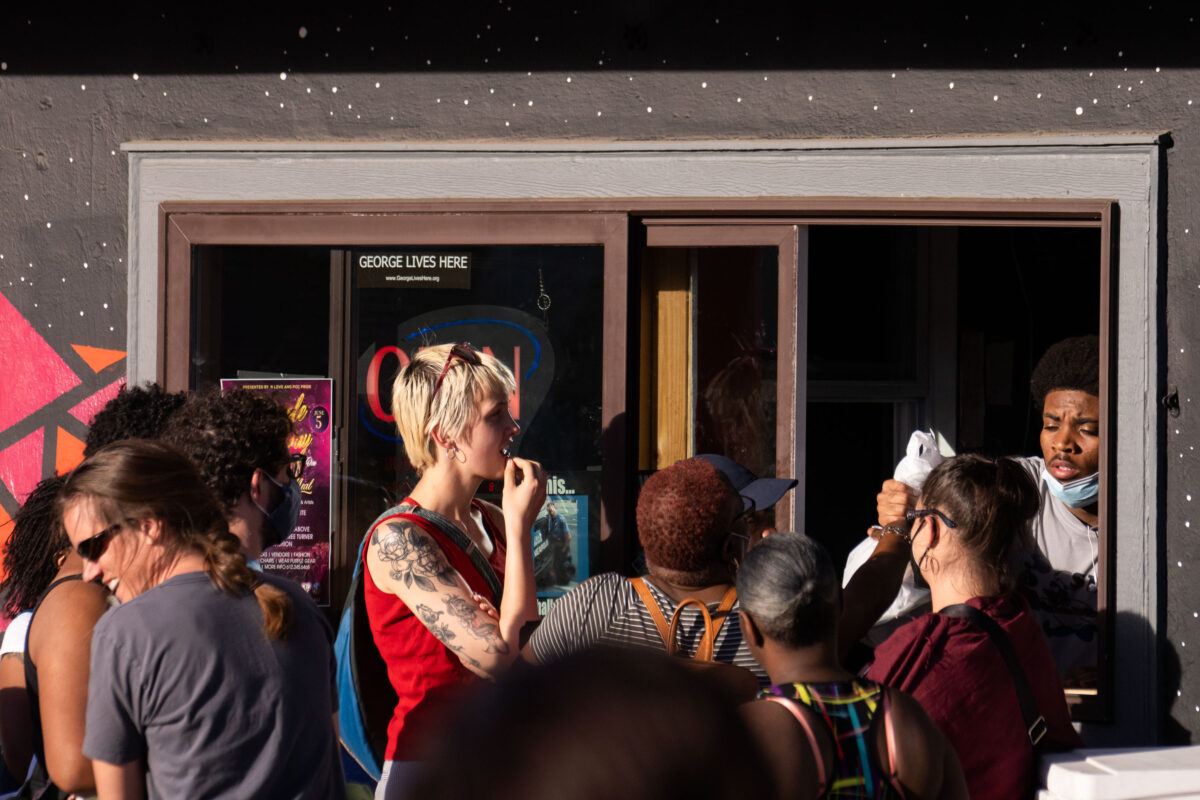
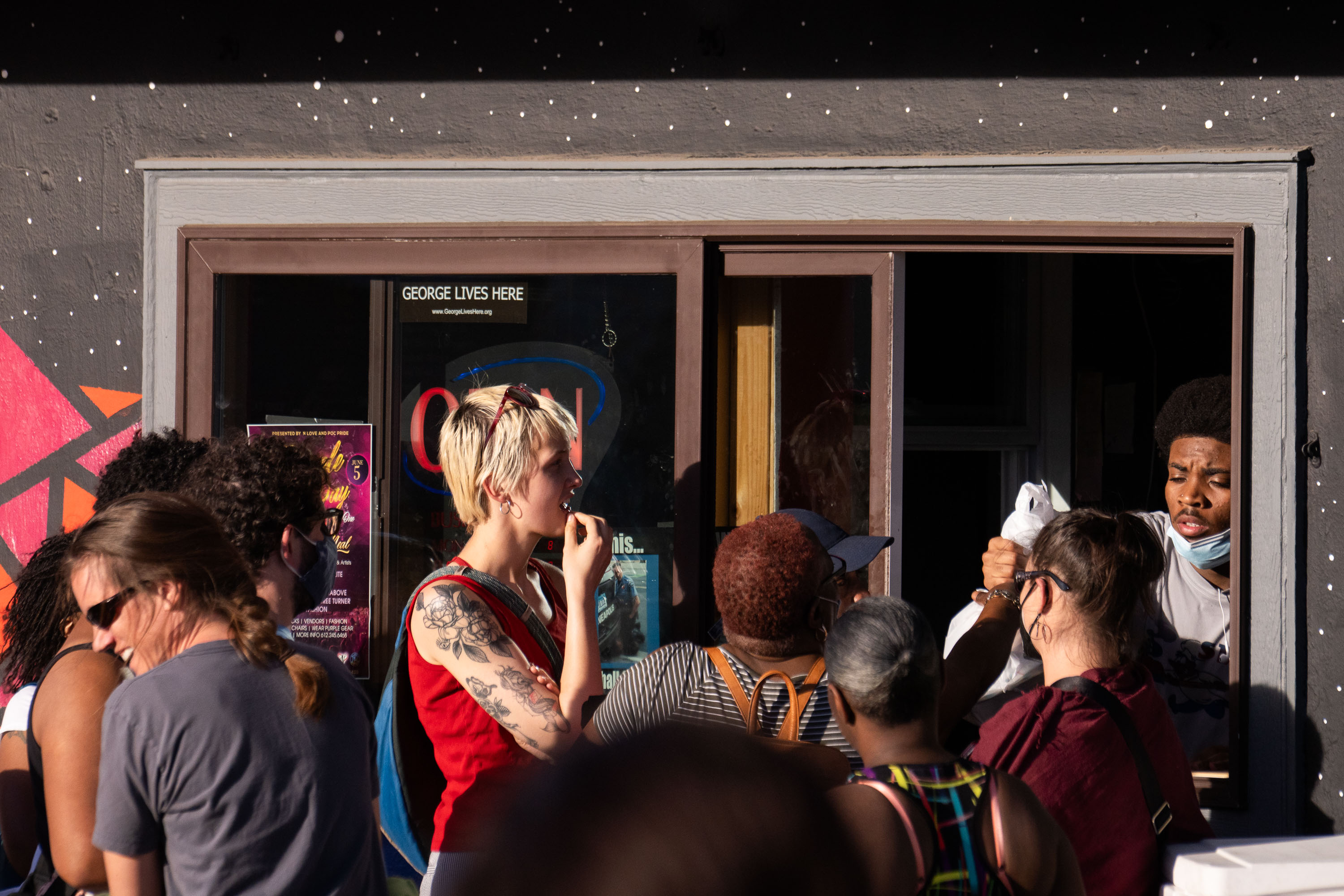
Just Turkey food line at George Floyd Square in Minneapolis with people waiting at a walk-up window.
Just Turkey at George Floyd Square in Minneapolis distributed food from a walk-up window during the Rise and Remember gathering on May 25, 2021. The gathering marked one year since George Floyd was killed at 38th Street and Chicago Avenue. The restaurant storefront was part of the public memorial area in South Minneapolis.

Just Turkey Food Line at George Floyd Square
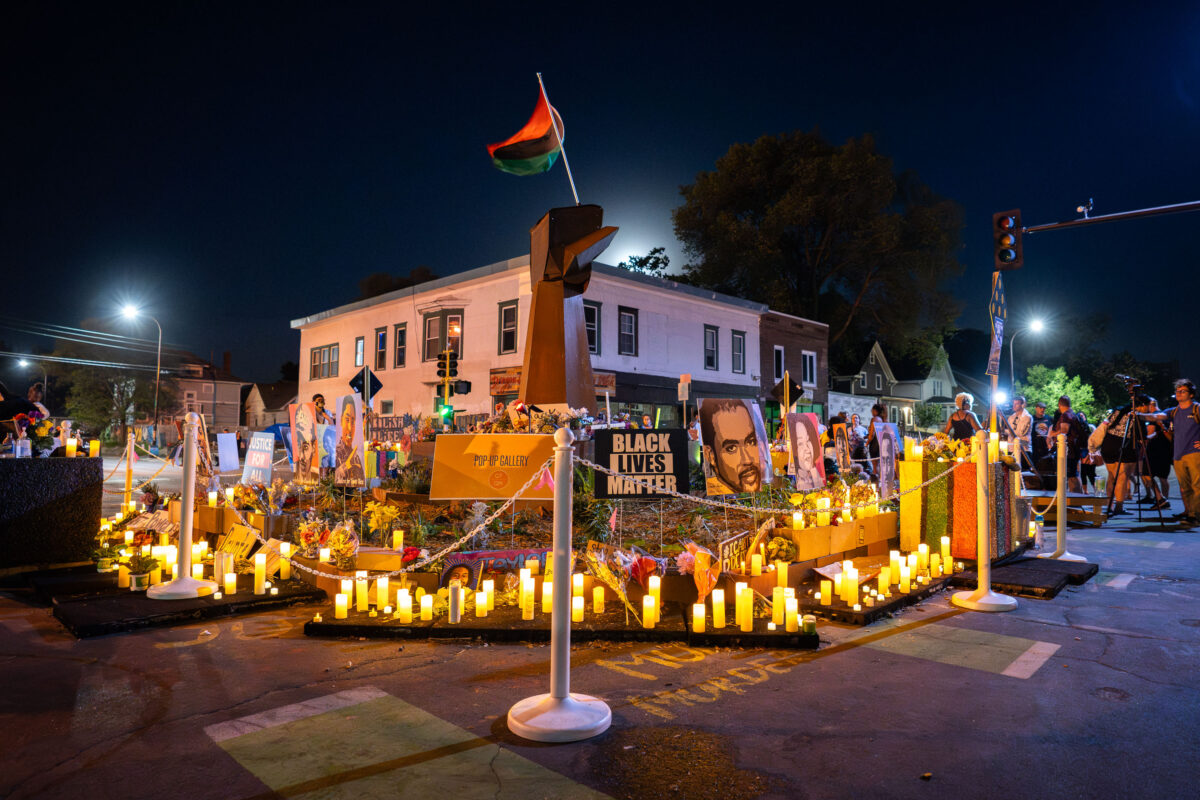
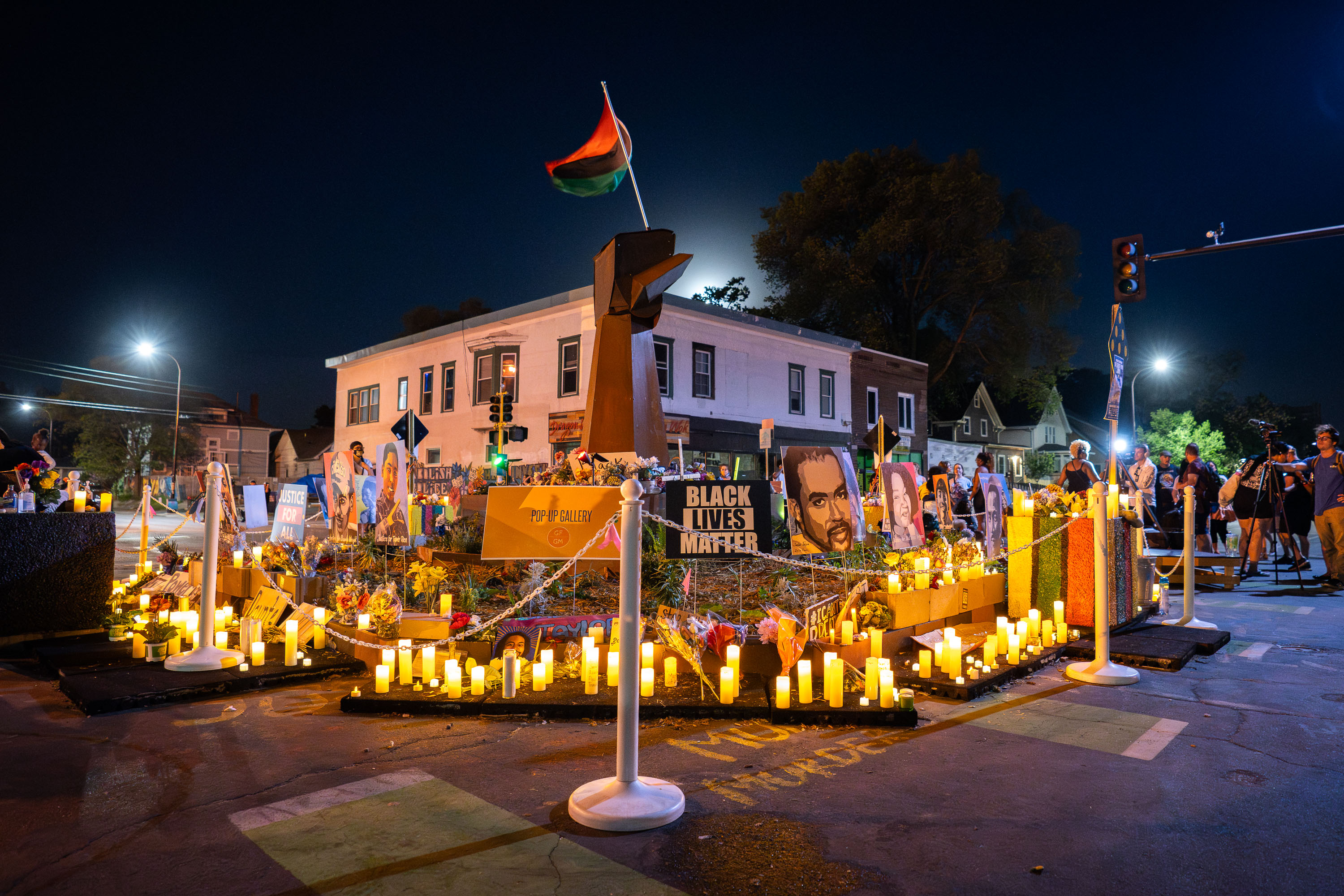
George Floyd Square Rise and Remember candles
Candles illuminate the memorial at George Floyd Square on May 25, 2021, during the Rise and Remember gathering at the intersection of 38th Street and Chicago Avenue in Minneapolis. The candlelit shrine, adorned with portraits, flowers, a Black Lives Matter banner, and a Pan-African flag, became a center of community remembrance and activism following Floyd's death.

Candles at George Floyd Square, Minneapolis
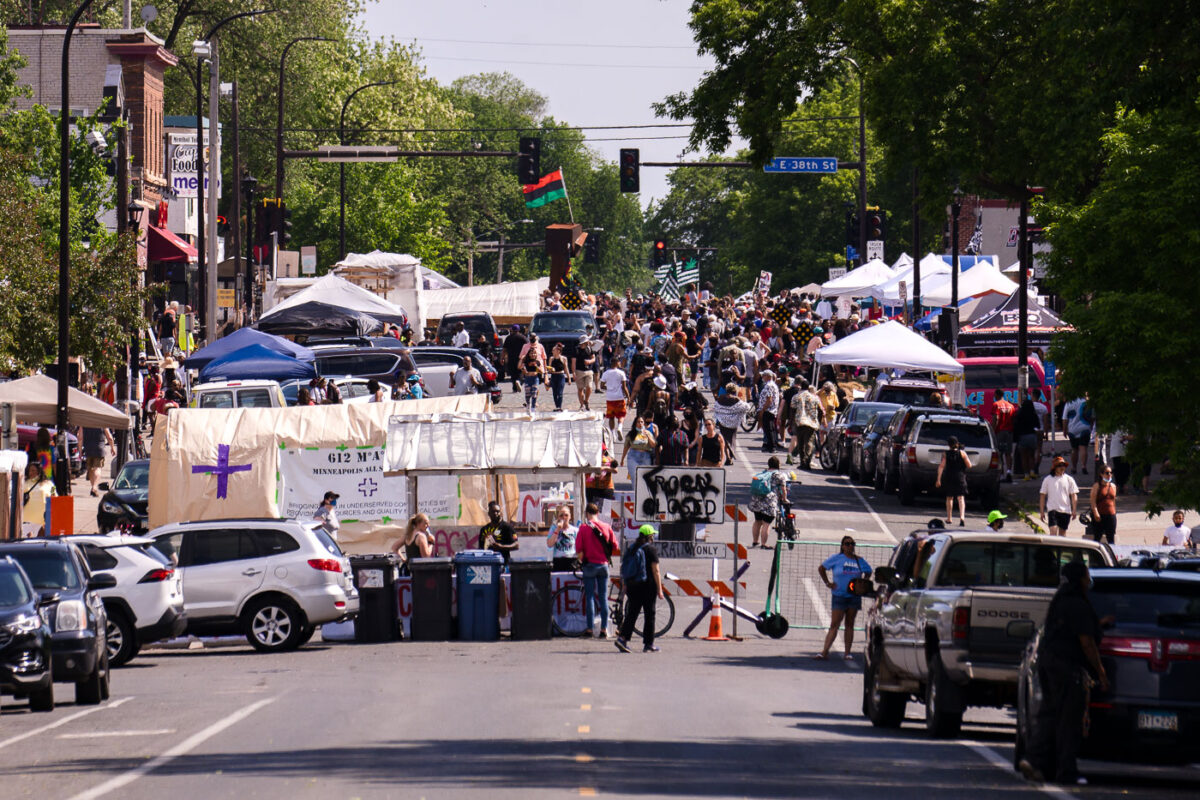
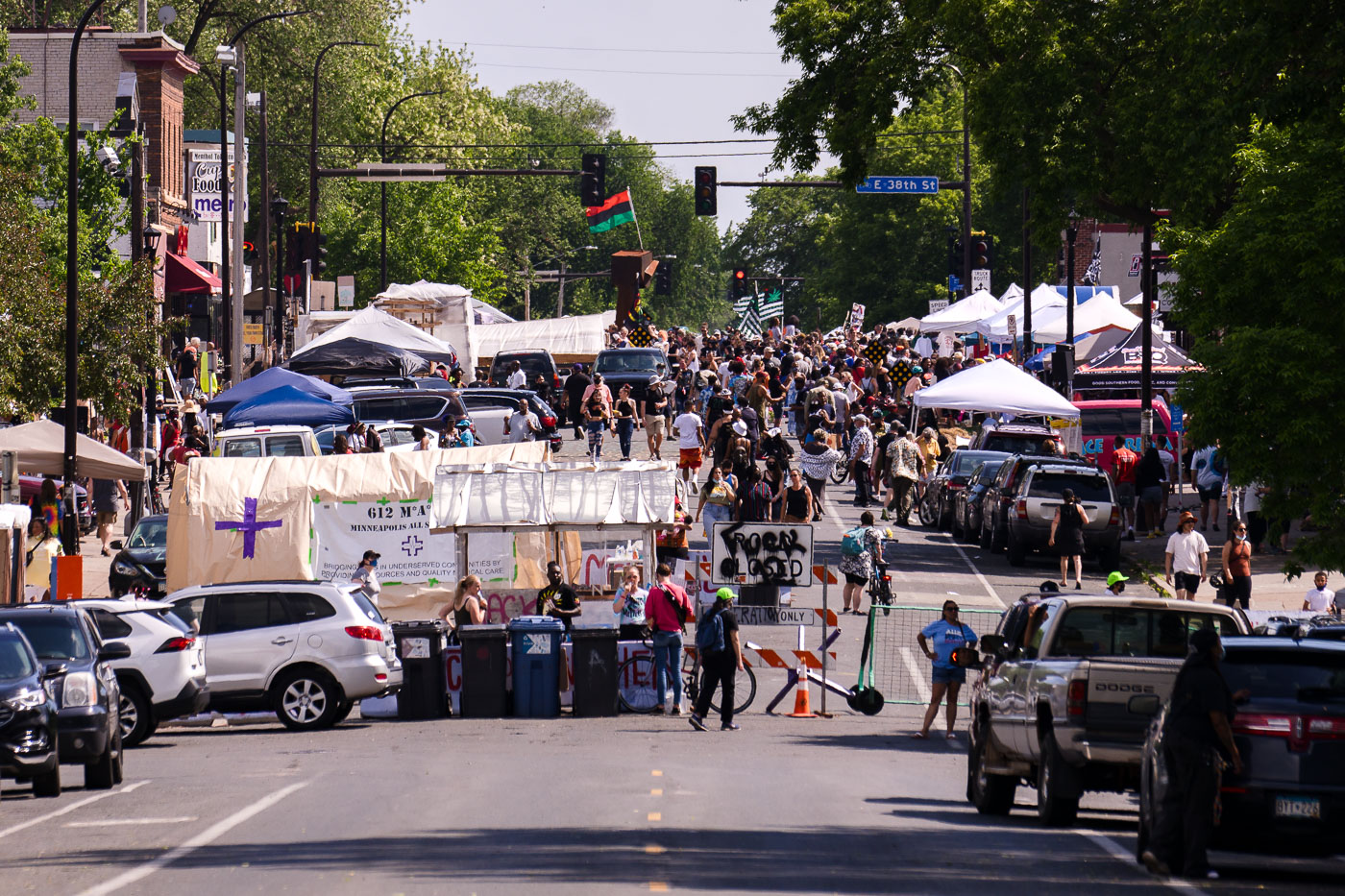
George Floyd Square on anniversary of Floyds murder
A large crowd gathers at George Floyd Square in Minneapolis on the one-year anniversary of George Floyd's murder. The intersection, located at 38th Street and Chicago Avenue, became a focal point for protests and community organizing following Floyd's death in May 2020. This gathering marks a year of continued activism and remembrance at the site, which has been transformed into a space for community expression and memorialization.

George Floyd Square Rise and Remember 2021
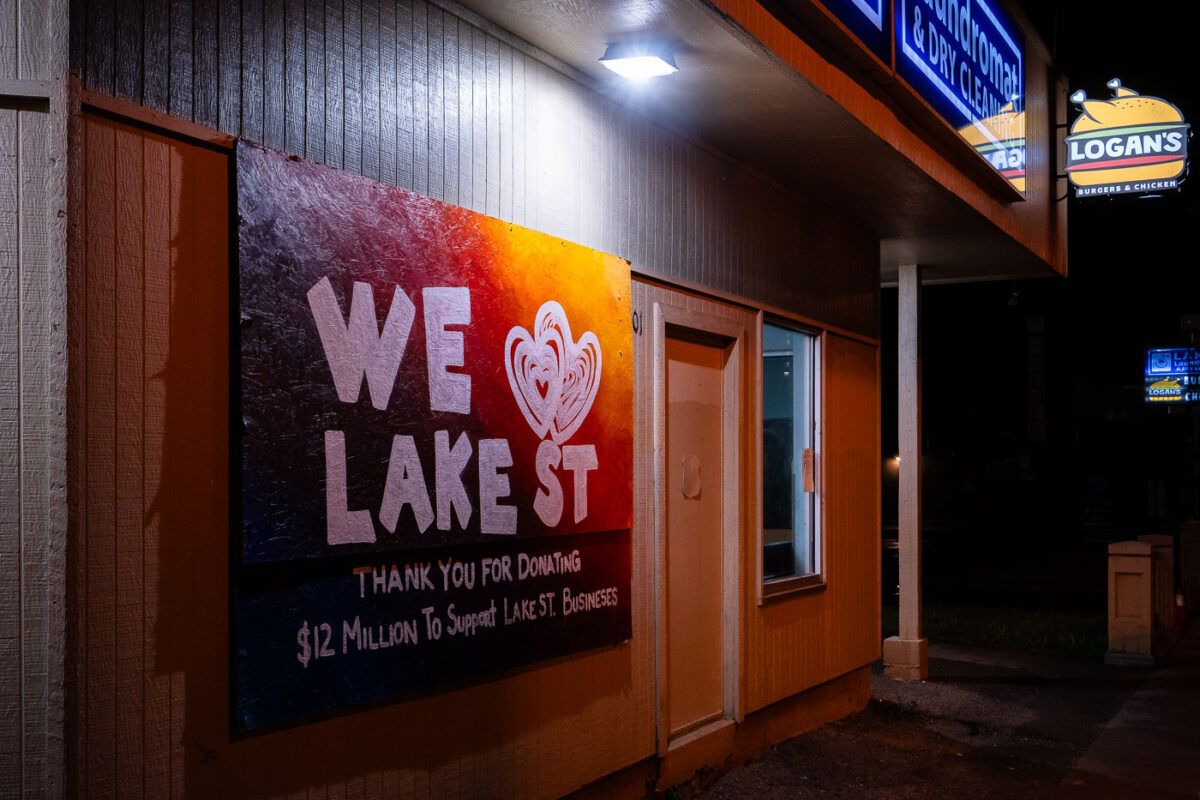
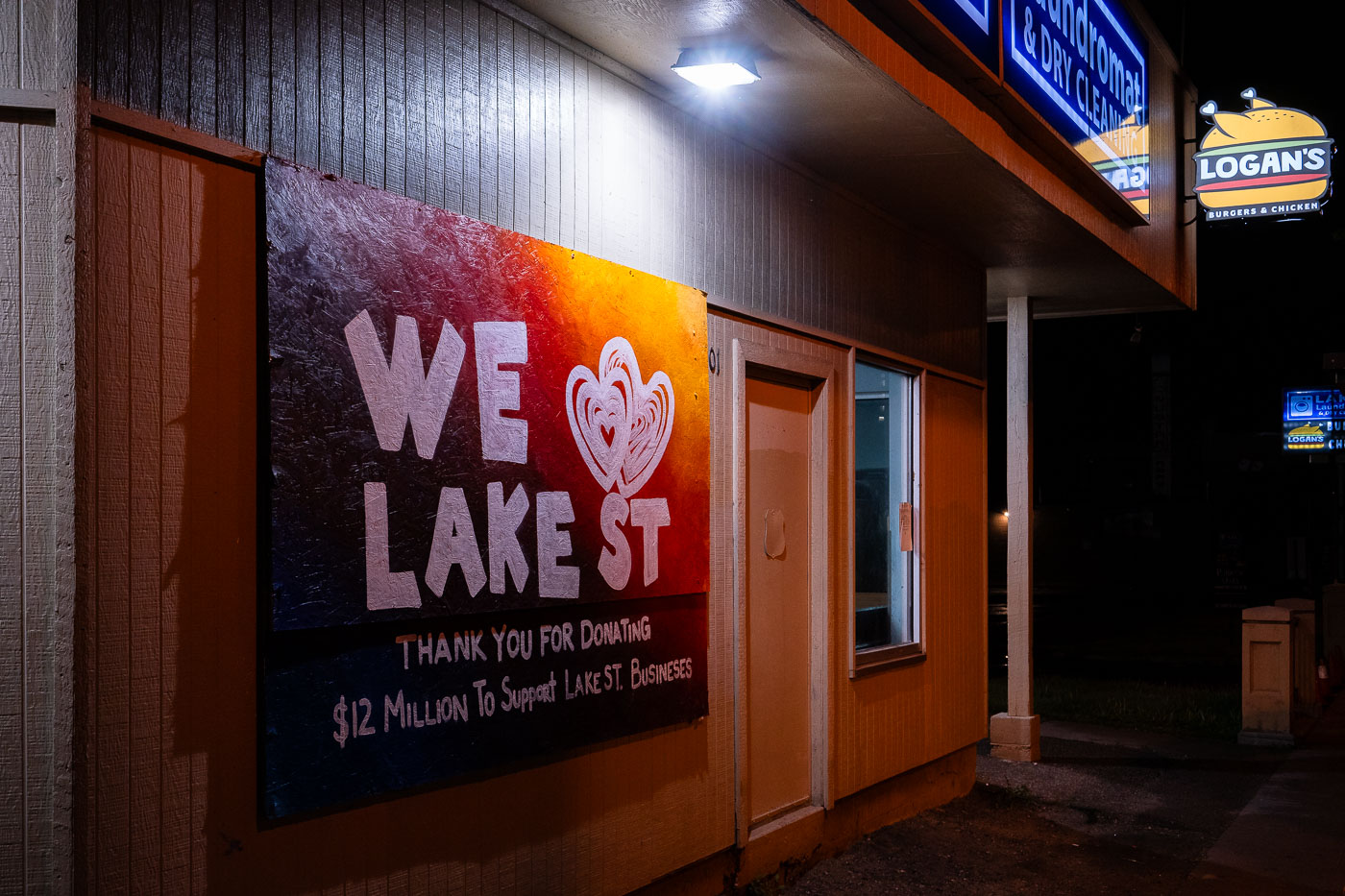
We Love Lake Street sign at the Laundromat
A sign on Lake Street in Minneapolis reads "WE LAKE ST THANK YOU FOR DONATING $12 MILLION TO SUPPORT LAKE ST BUSINESSES." This message reflects community support and financial aid efforts following the unrest and damage that occurred in Minneapolis in 2020. Lake Street, a major commercial corridor, was significantly impacted by the events, leading to widespread destruction of businesses.

Lake Street Sign: Thank You for Donating to Businesses
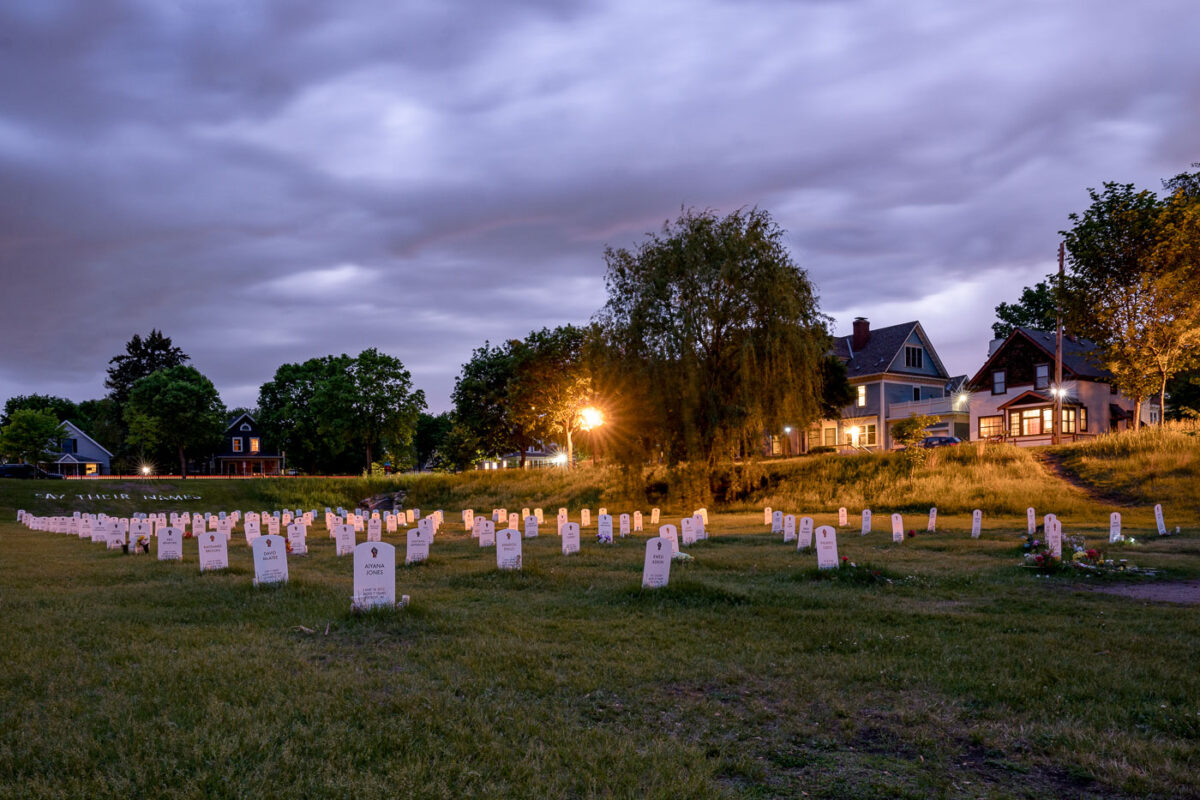
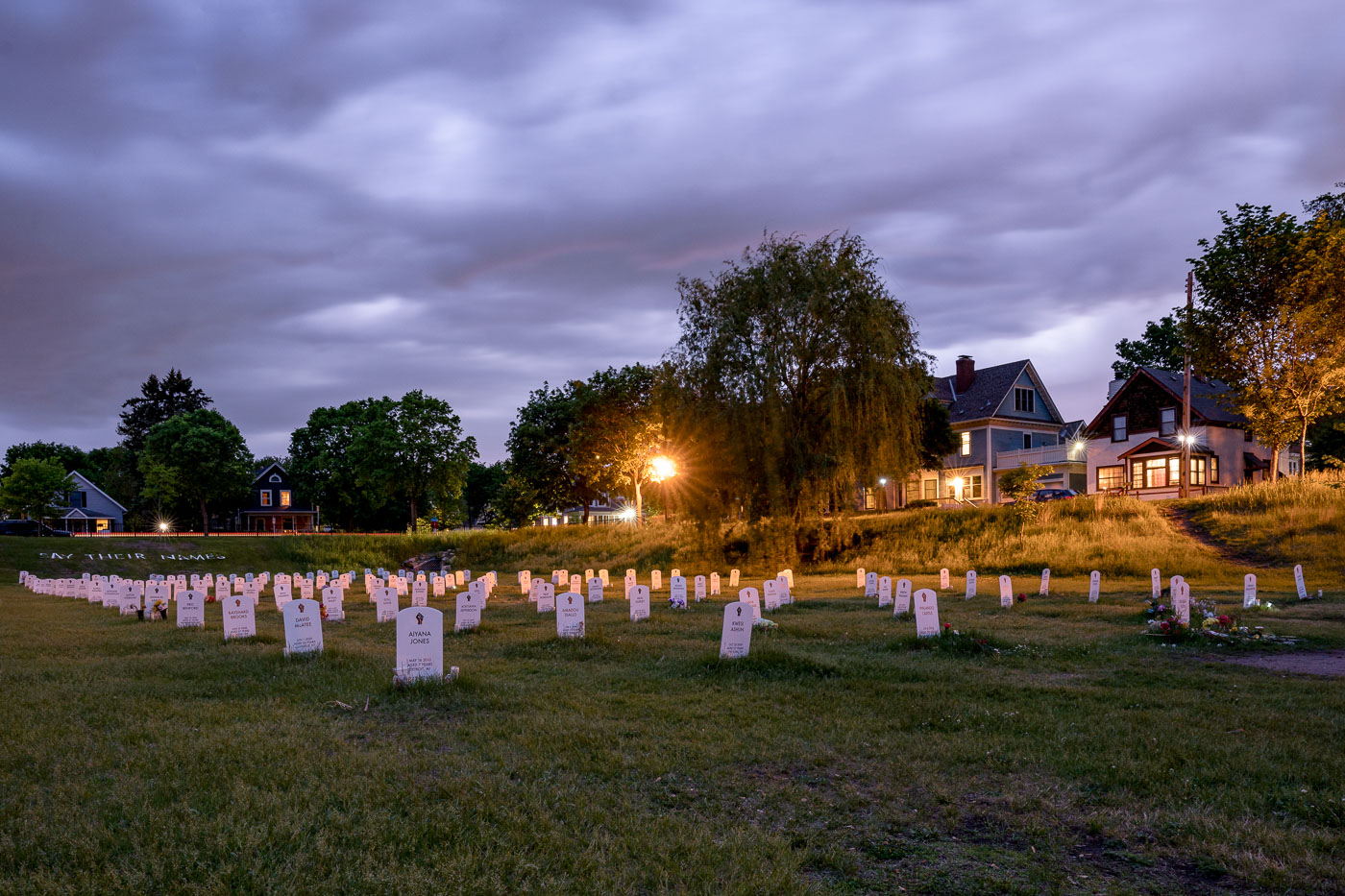
Say Their Names Cemetery in Minneapolis at dusk
The "Say Their Names Cemetery" in Minneapolis, established a block from George Floyd Square, honors victims of racial injustice and police brutality.

Say Their Names Cemetery, Minneapolis, at dusk
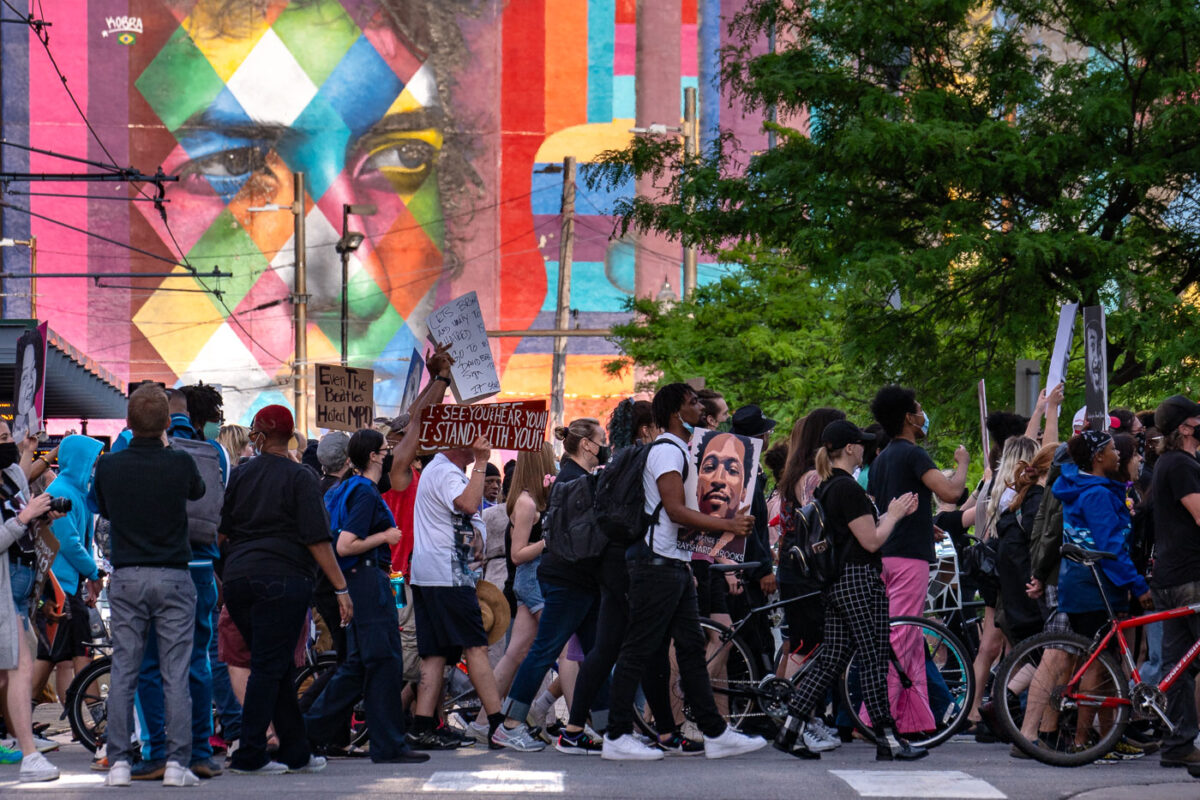
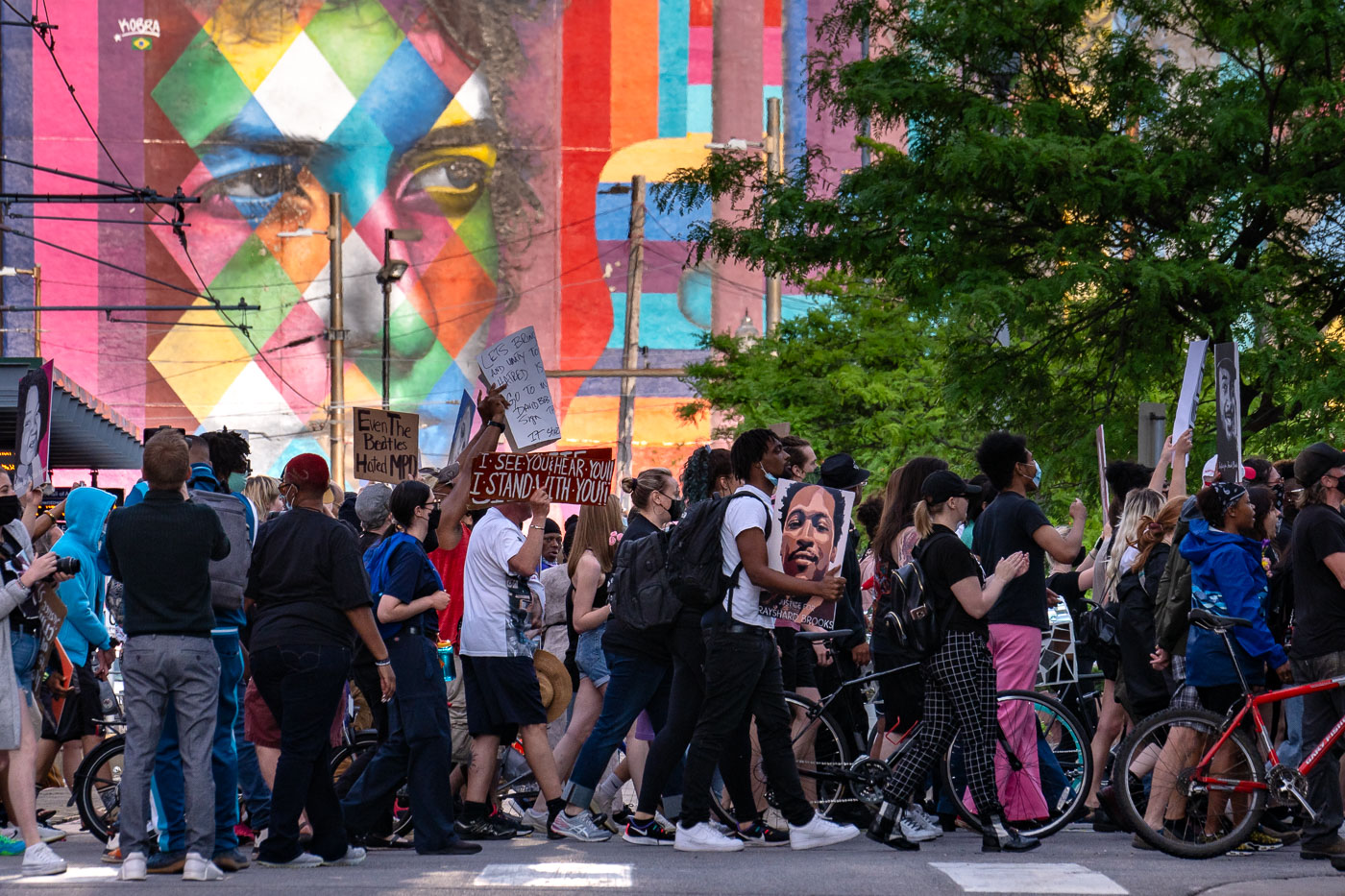
Protesters walk past Bob Dylan mural by Kobra in Minneapolis
Protesters march through downtown Minneapolis, passing by Eduardo Kobra's "Bob Dylan" mural. This march occurred following a George Floyd Remembrance rally at the Hennepin County Courthouse.

Minneapolis Protest March Past Kobra Bob Dylan Mural
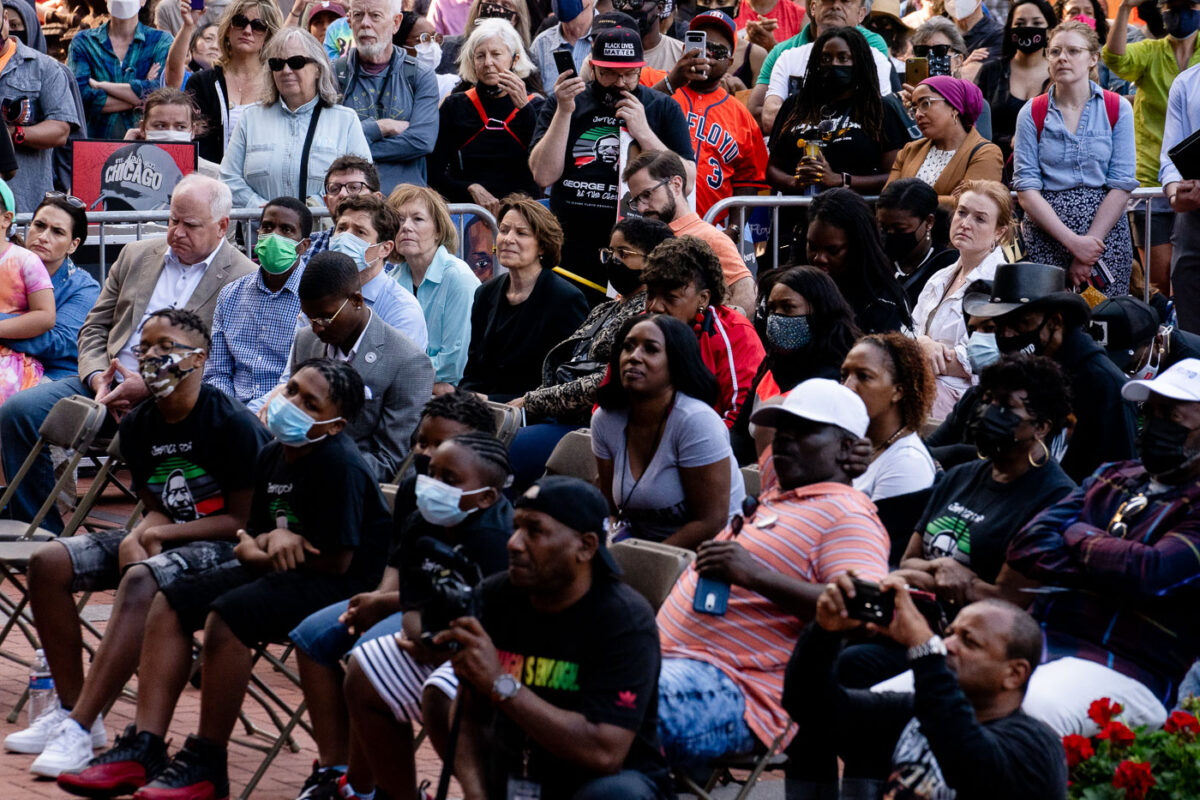
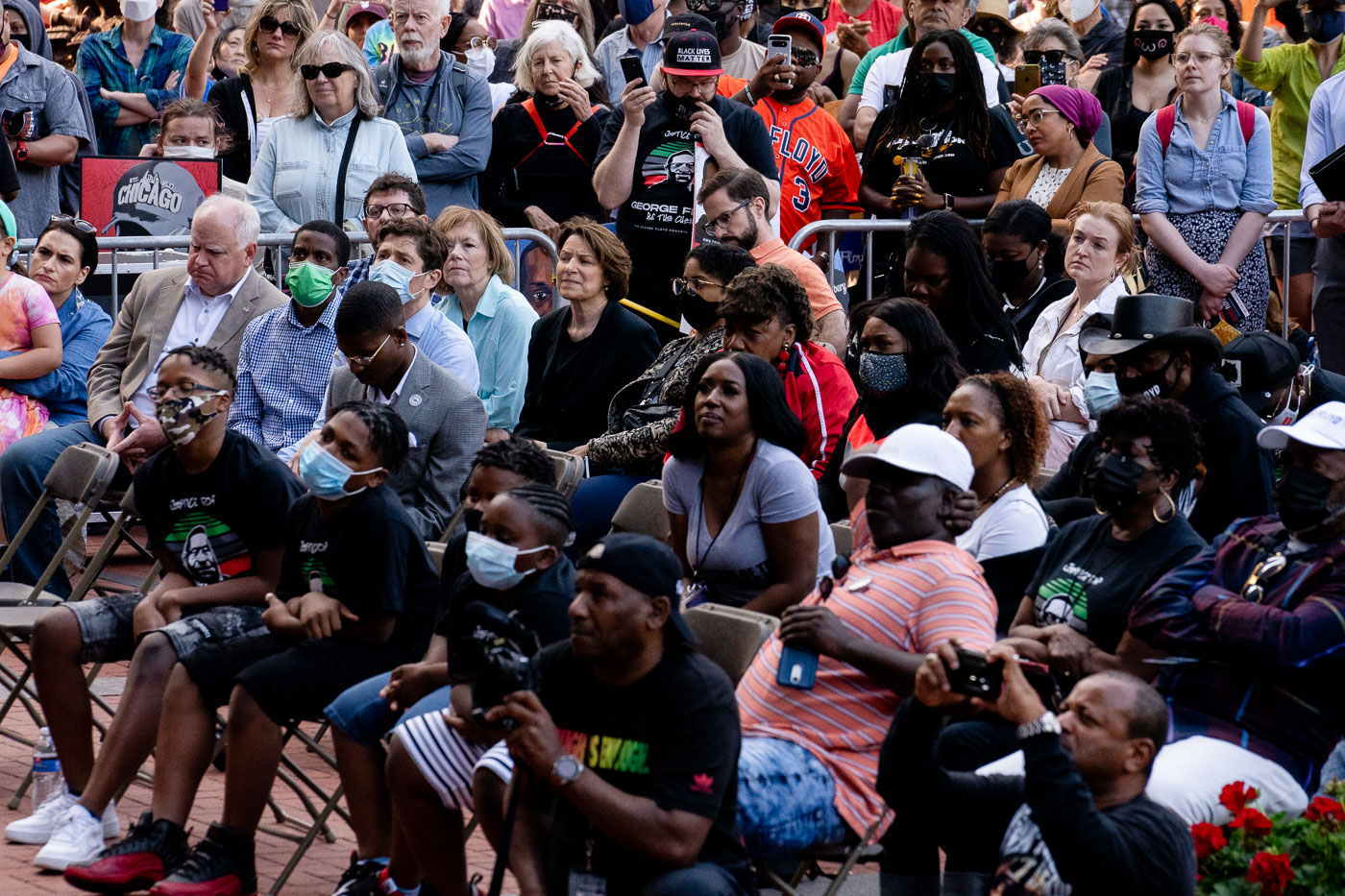
Minnesota politicians at George Floyd rally
Minnesota officials, including Governor Tim Walz and Senators Amy Klobuchar and Tina Smith, attended a George Floyd Remembrance Rally at the Hennepin County Government Center in Minneapolis. The rally marked an anniversary of Floyd's murder, which occurred on May 25, 2020, in Minneapolis. His death, captured on video, sparked widespread protests against racial injustice and police brutality across the United States and globally.

Minnesota Officials Attend George Floyd Rally at Government Center
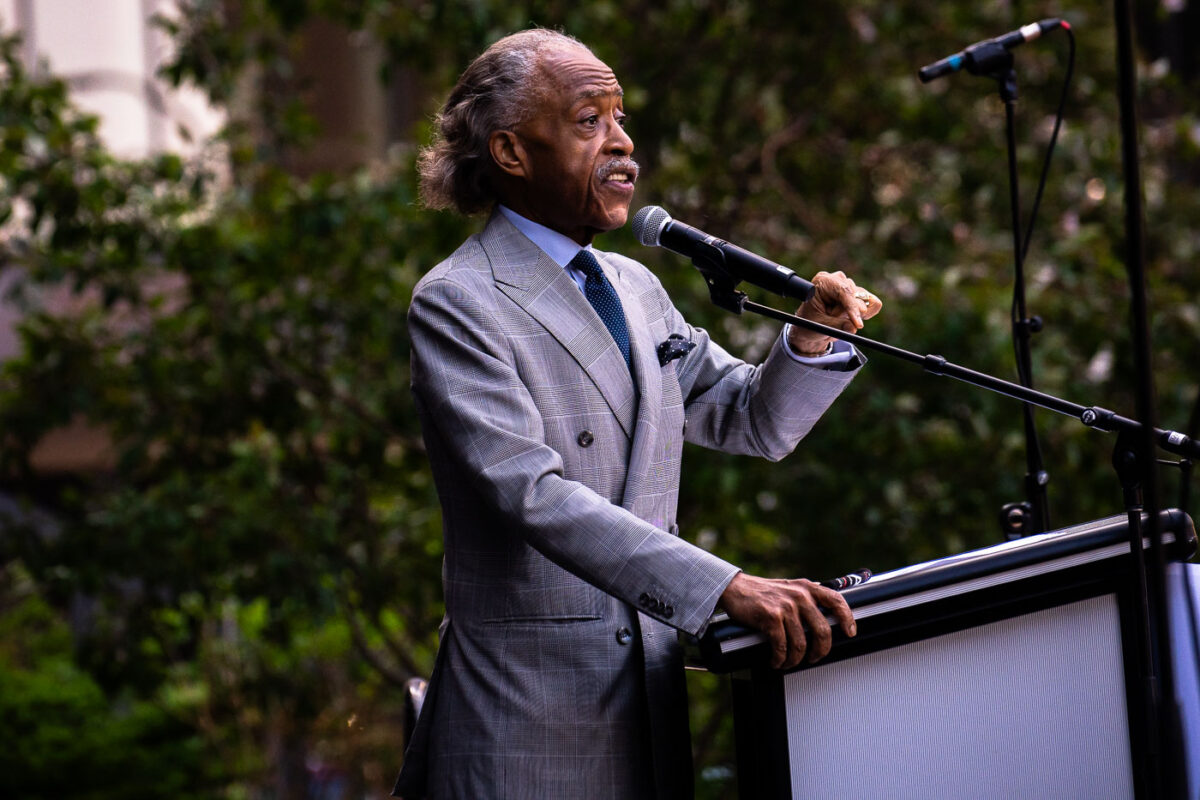
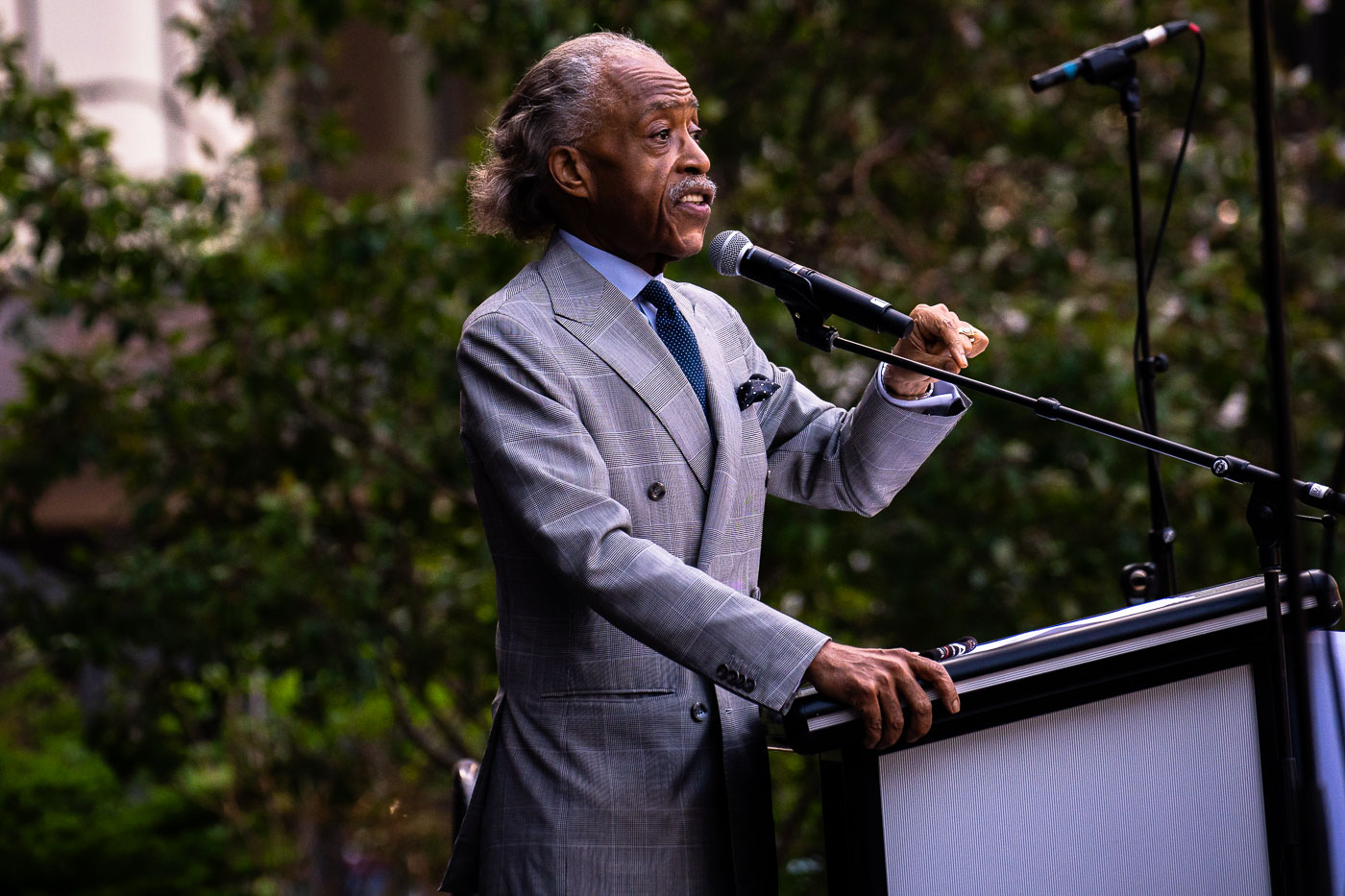
Al Sharpton speaks at George Floyd rally in Minneapolis
Reverend Al Sharpton speaks at a rally in downtown Minneapolis on April 28, 2021. The event commemorated the one-year anniversary of George Floyd's murder by Minneapolis police officer Derek Chauvin. Floyd's death, captured on video, sparked widespread protests against racial injustice and police brutality across the United States and globally. This rally was part of ongoing efforts to remember Floyd and advocate for police reform.

Al Sharpton speaks at George Floyd rally, Minneapolis
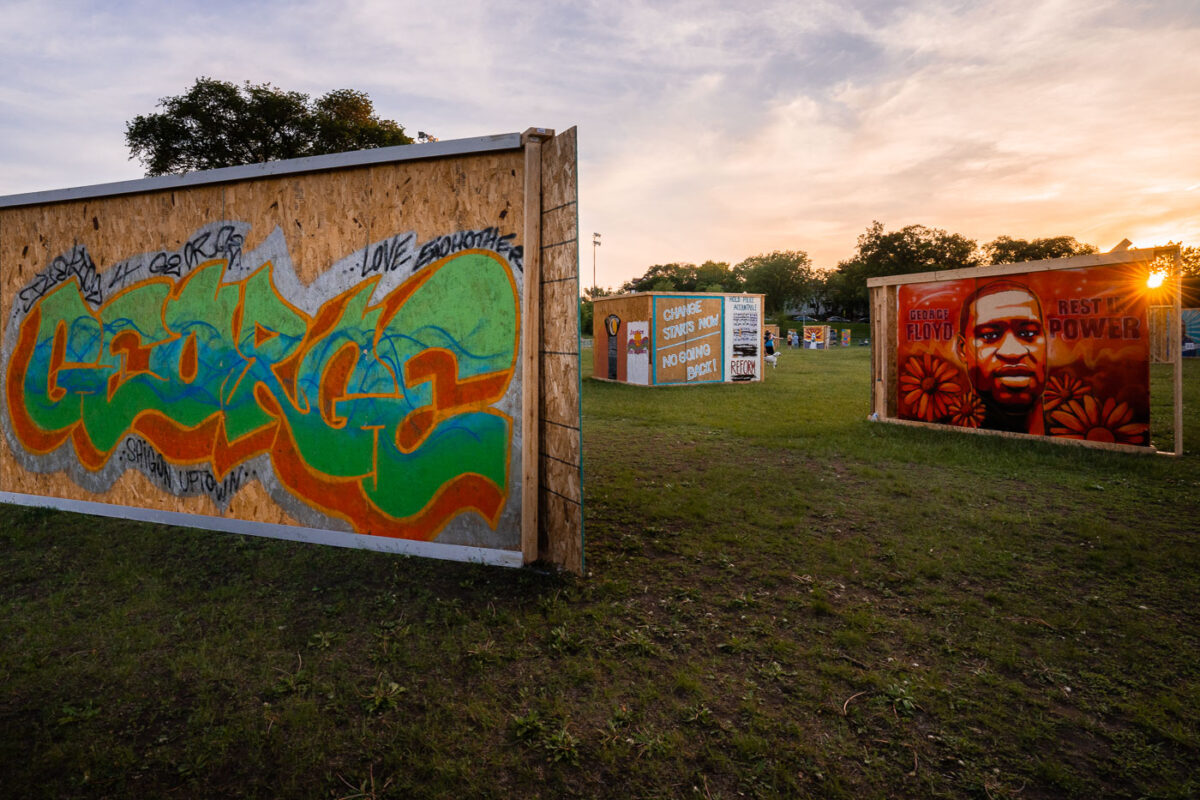
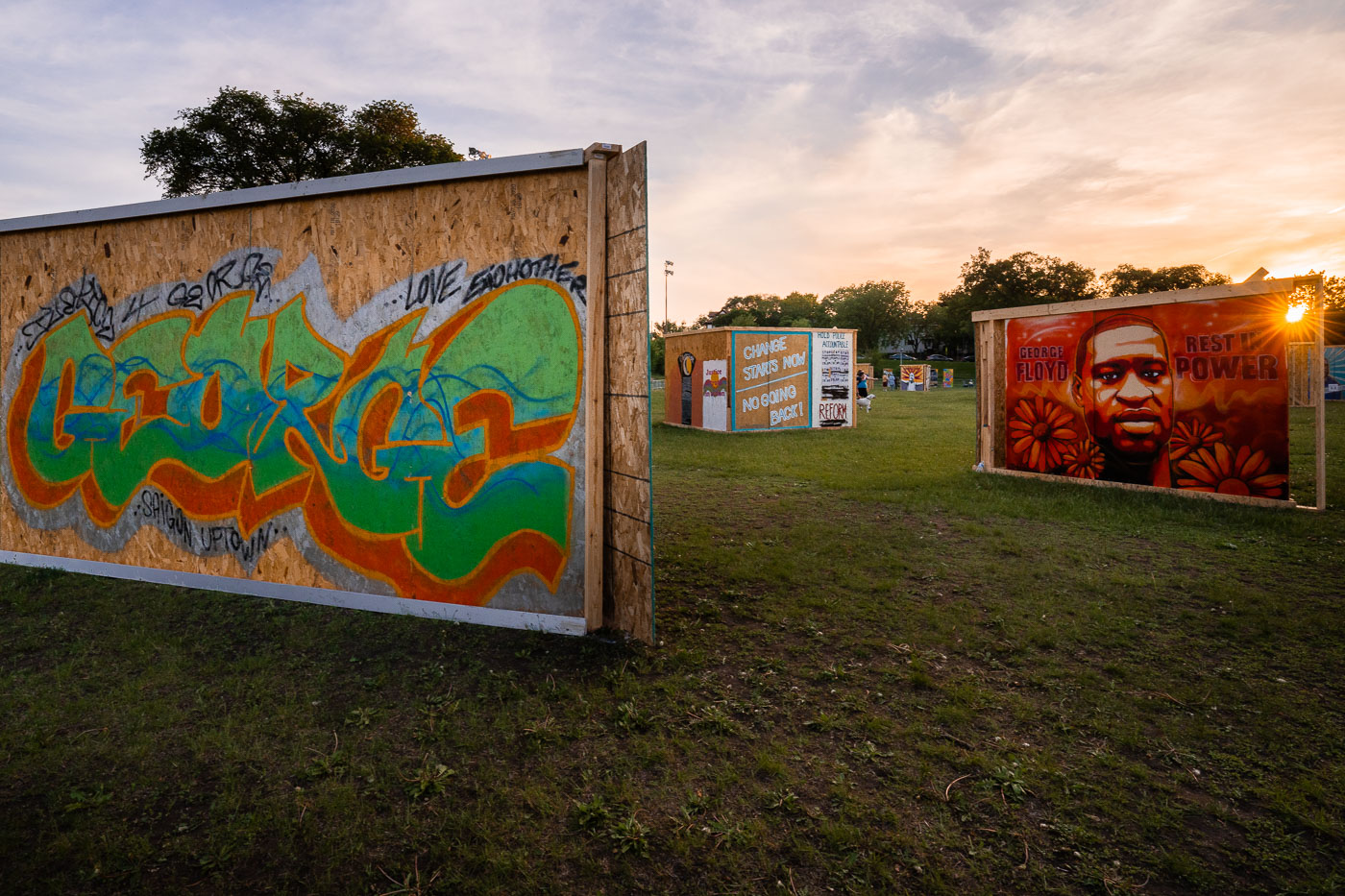
Memorialize The Movement exhibit in Minneapolis
The "Save the Boards to Memorialize the Movement" exhibit is displayed at Phelps Park, adjacent to George Floyd Square in Minneapolis. This exhibition showcases 87 of the nearly one thousand plywood boards that were collected and preserved. These boards, originally used as protective coverings during protests and unrest following the murder of George Floyd in 2020, have been transformed into a memorial.

Save the Boards exhibit at George Floyd Square, Minneapolis
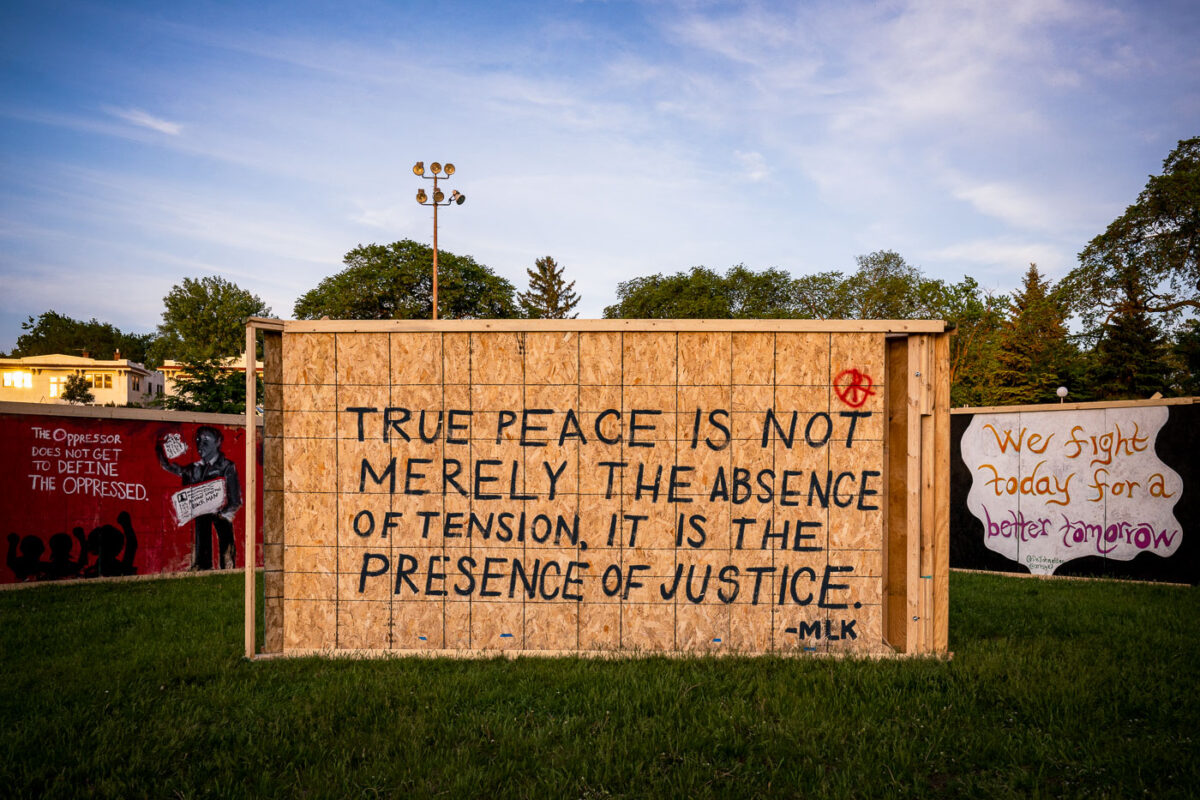
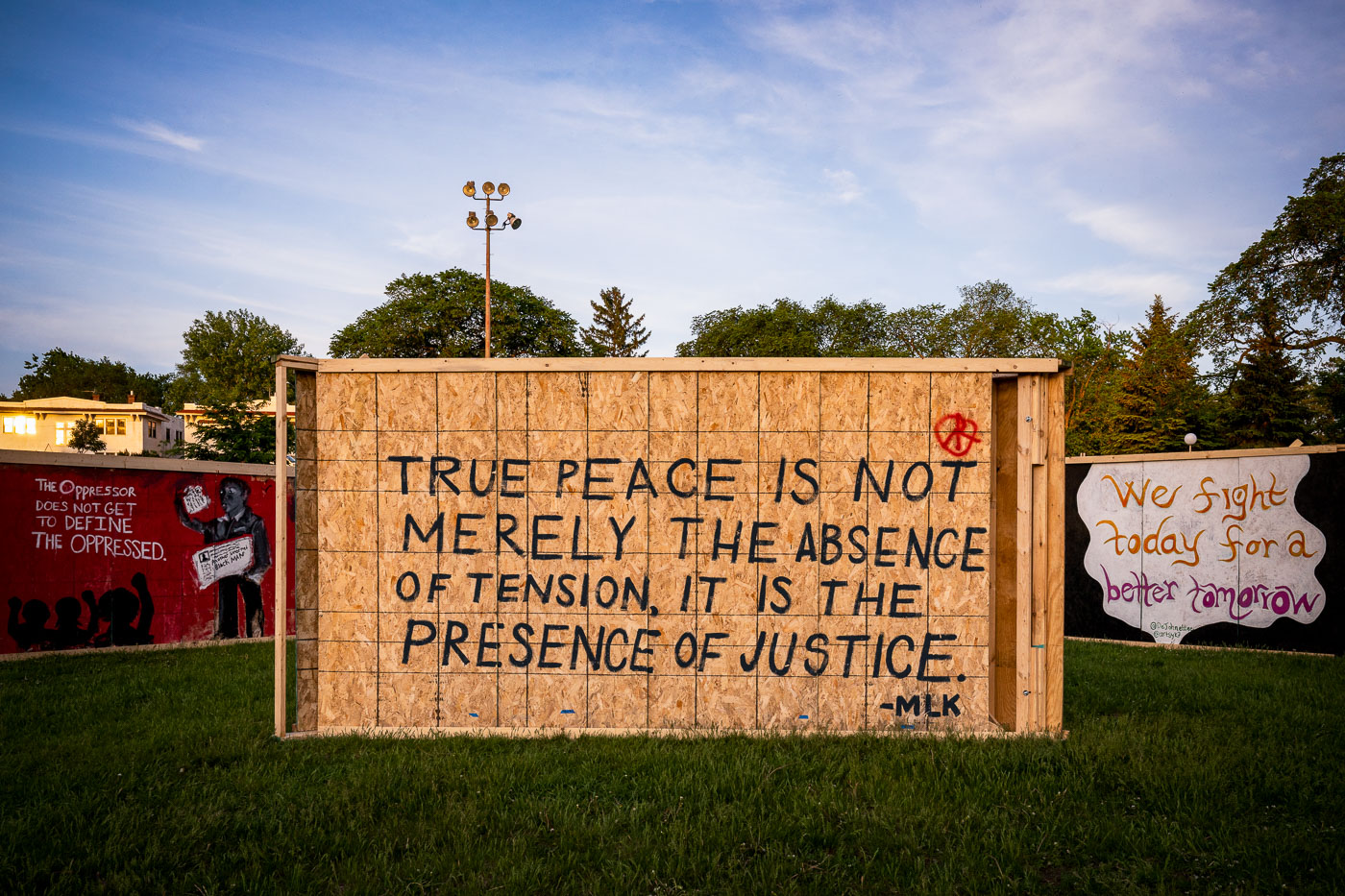
Save The Boards exhibit at Phelps Park
The "Save The Boards to Memorialize the Movement" exhibit, which displayed 87 of nearly a thousand salvaged boards, was held at Phelps Park in Minneapolis, adjacent to George Floyd Square. The central board features a quote attributed to Martin Luther King Jr.: "True peace is not merely the absence of tension, it is the presence of justice." Other boards include artwork and slogans such as "The Oppressor Does Not Get to Define The Oppressed" and "We fight today for a better tomorrow." This exhibit served as a memorial to the Minneapolis Uprising and the broader struggle for racial justice.

Save The Boards exhibit: MLK quote at Phelps Park, Minneapolis
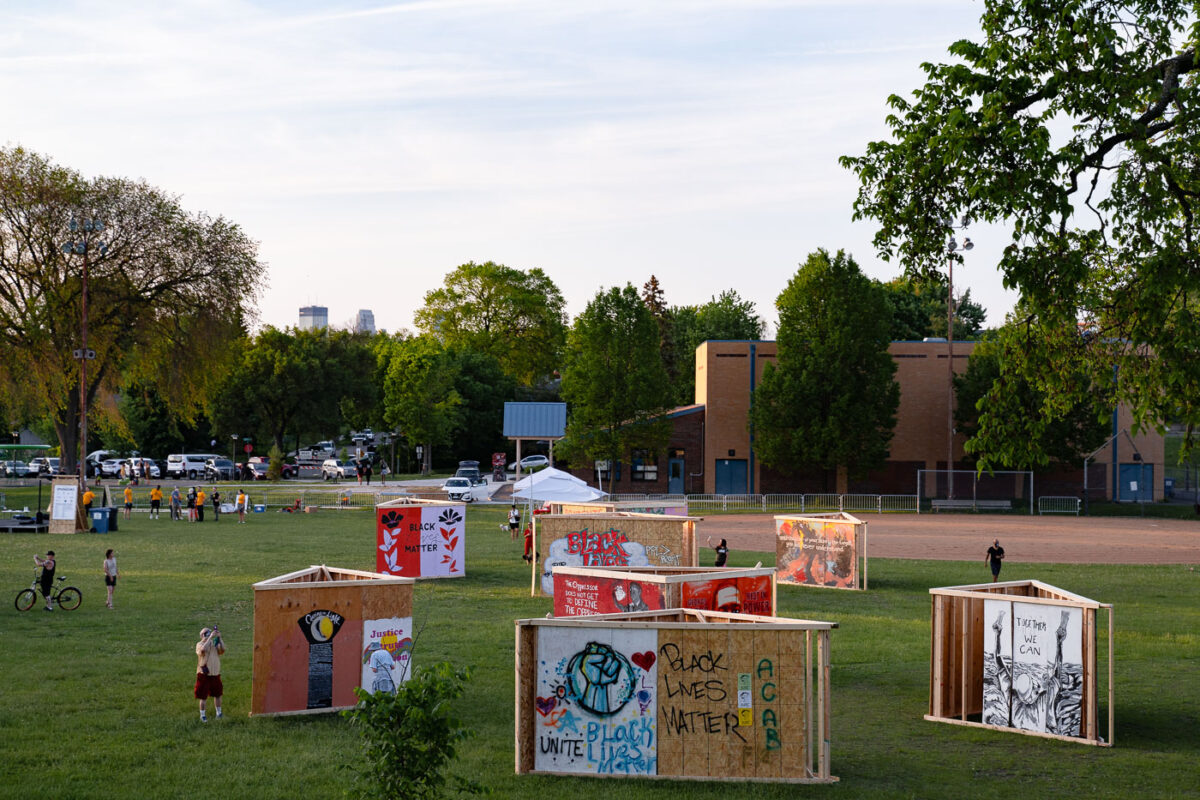
Save the Boards to Memorialize The Movement exhibit
The "Save the Boards to Memorialize the Movement" exhibit is displayed at Phelps Park in Minneapolis, adjacent to George Floyd Square. The exhibition features 87 of the nearly 1,000 salvaged boards that were part of the protests and uprisings following the murder of George Floyd in 2020. These boards, often adorned with art and messages of solidarity, serve as a collective memorial to the movement for racial justice.

Save the Boards exhibit at Phelps Park, Minneapolis
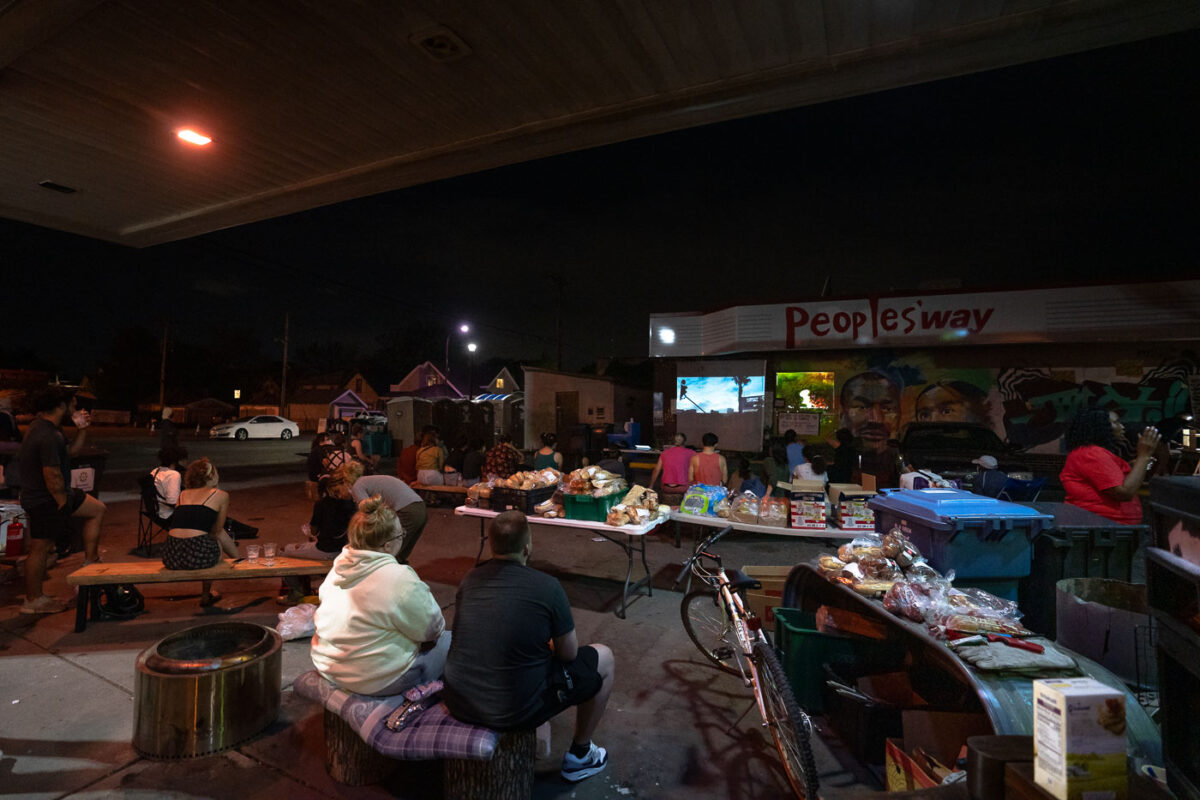
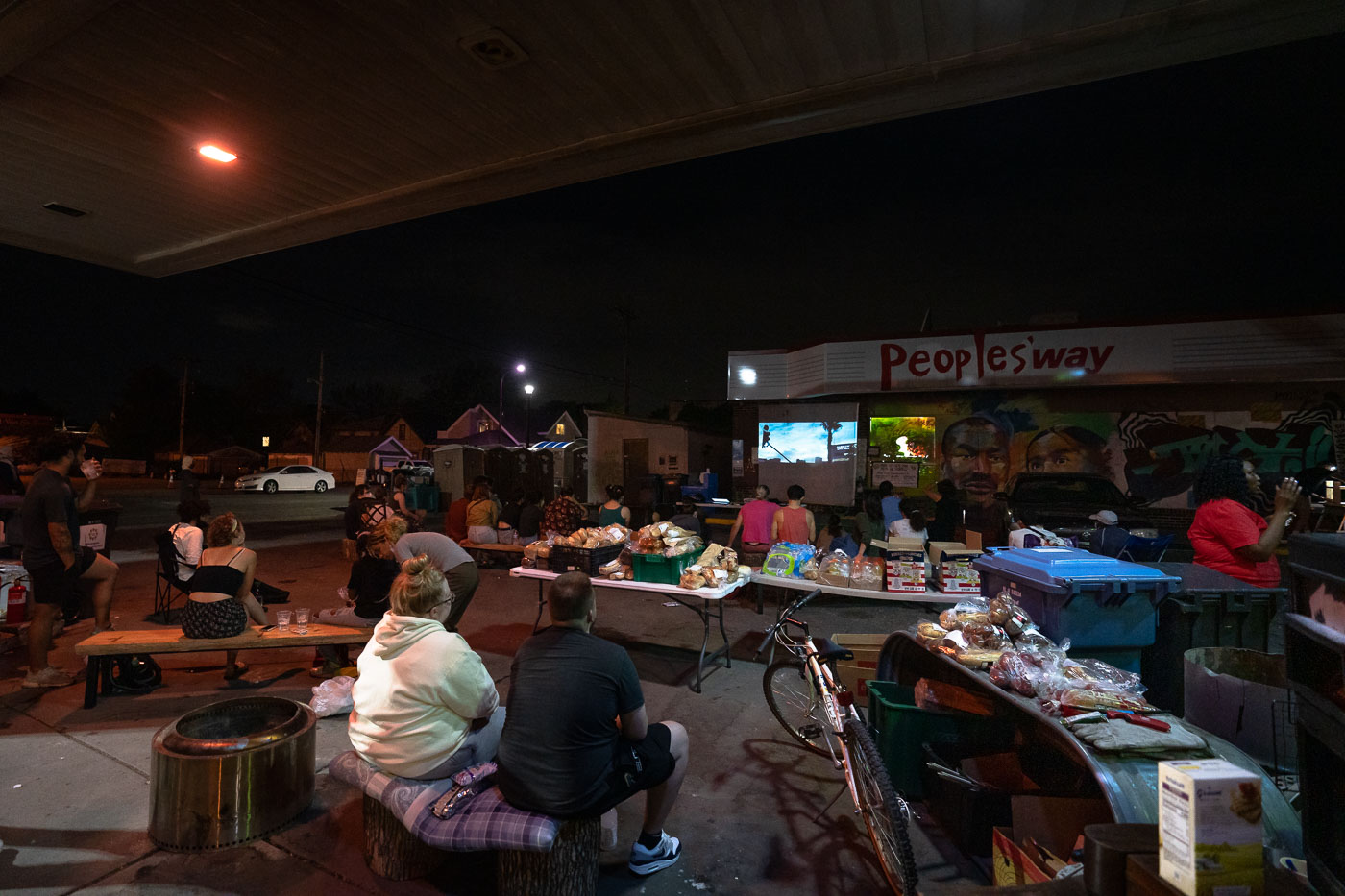
Movie screening at George Floyd Square People's Way
Community members gather at The People's Way in George Floyd Square, Minneapolis, for an outdoor screening of the documentary "Mayor." This gathering reflects the ongoing use of the space as a community hub and a site of cultural and political expression, following the murder of George Floyd in 2020. The area, formerly known as the intersection of 38th Street and Chicago Avenue, became a focal point for protests and a symbol of resistance. The People's Way itself is a testament to the community's efforts to reclaim and repurpose public space for collective use and dialogue.

Movie Screening at George Floyd Square’s People’s Way

Daunte Wright mural on West Lake Street
A mural honoring Daunte Wright adorns the exterior of Minnesota Food Grocery on West Lake Street in Minneapolis. The mural appeared following the killing of Daunte Wright by police in nearby Brooklyn Center in April 2021, an event that sparked protests and unrest in the Twin Cities.

Daunte Wright Mural at Minnesota Food Grocery, West Lake Street

All Are Welcome here at Urban Outfitters
A Black Lives Matter statement is posted on the door of an Urban Outfitters store in Minneapolis. The notice states that store staff reject racial injustice and that all are welcome, placing the retailer among businesses that publicly aligned themselves with racial-equity protests after the murder of George Floyd in Minneapolis in May 2020. Made about a year later, the posting shows how such statements remained part of storefront messaging in the city in May 2021.

Urban Outfitters Minneapolis: Black Lives Matter Statement

Midtown Corner redevelopment progress
Construction continues on the Midtown Corner apartment building in Minneapolis, which was damaged during the May 2020 riots. The building, located in South Minneapolis, was under construction when it was set ablaze. The current work signifies the rebuilding and continuation of development in the area following the unrest.

Midtown Corner construction, Minneapolis

Everything Must Go sign on a Minneapolis police station
A banner reading "Everything Must Go!!!" is displayed on the fencing surrounding the Minneapolis Police Third Precinct building. The precinct was heavily damaged during protests following the murder of George Floyd in May 2020.

Minneapolis Police 3rd Precinct: “Everything Must Go” Banner
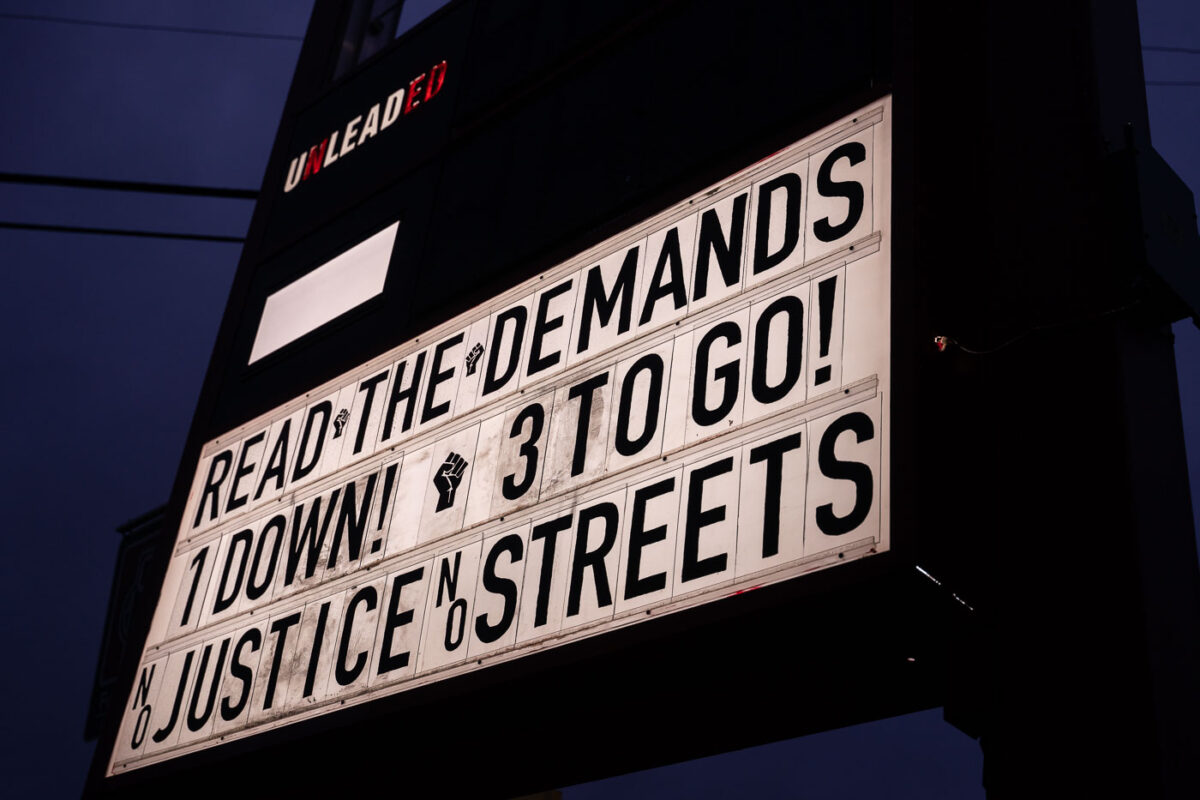
Read the Demands at George Floyd Square
A sign at George Floyd Square in Minneapolis reads "READ THE DEMANDS, 1 DOWN 3 TO GO! & JUSTICE 4 STREETS." This message reflects the ongoing activism and demands for justice following the murder of George Floyd in May 2020. The square, established in the summer of 2020, became a focal point for protests against racial injustice and police brutality.

George Floyd Square: “Read the Demands, 1 Down 3 to Go!”

Roller skating at George Floyd Square
The "Roll Skate Bounce" event took place at George Floyd Square in Minneapolis, a location that became a focal point for protests and community organizing following the murder of George Floyd in May 2020. The square, formerly known as the intersection of 38th Street and Chicago Avenue, was transformed into a space for remembrance, activism, and community gatherings.

Roll Skate Bounce event at George Floyd Square, Minneapolis
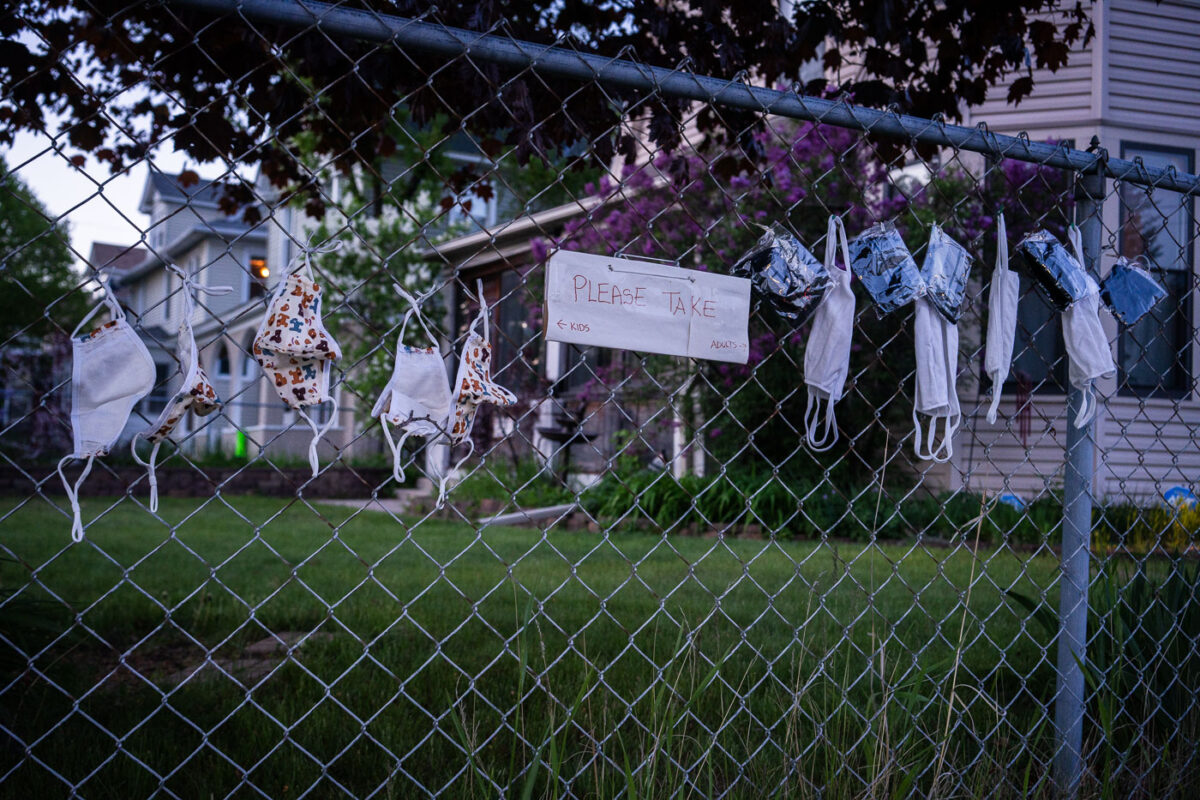
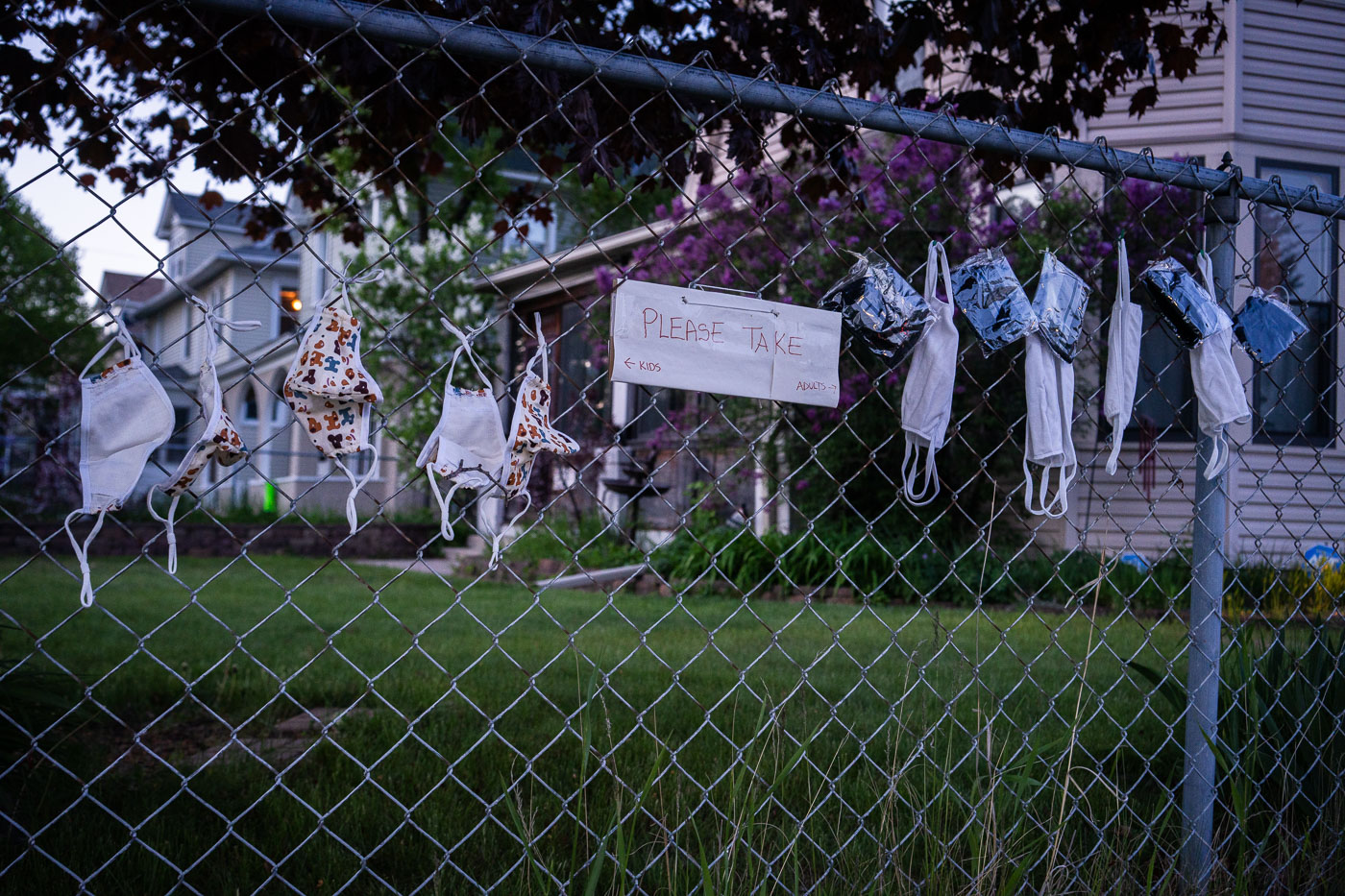
Free face masks on South Minneapolis fence
During the COVID-19 pandemic and the period of civil unrest following the murder of George Floyd in Minneapolis, residents offered mutual aid to their neighbors. This photograph shows a collection of free face masks hung on a chain-link fence in South Minneapolis, with a sign indicating they are available for anyone to take. The gesture reflects a community's response to public health needs and social solidarity during a challenging time.

Free face masks offered on South Minneapolis fence
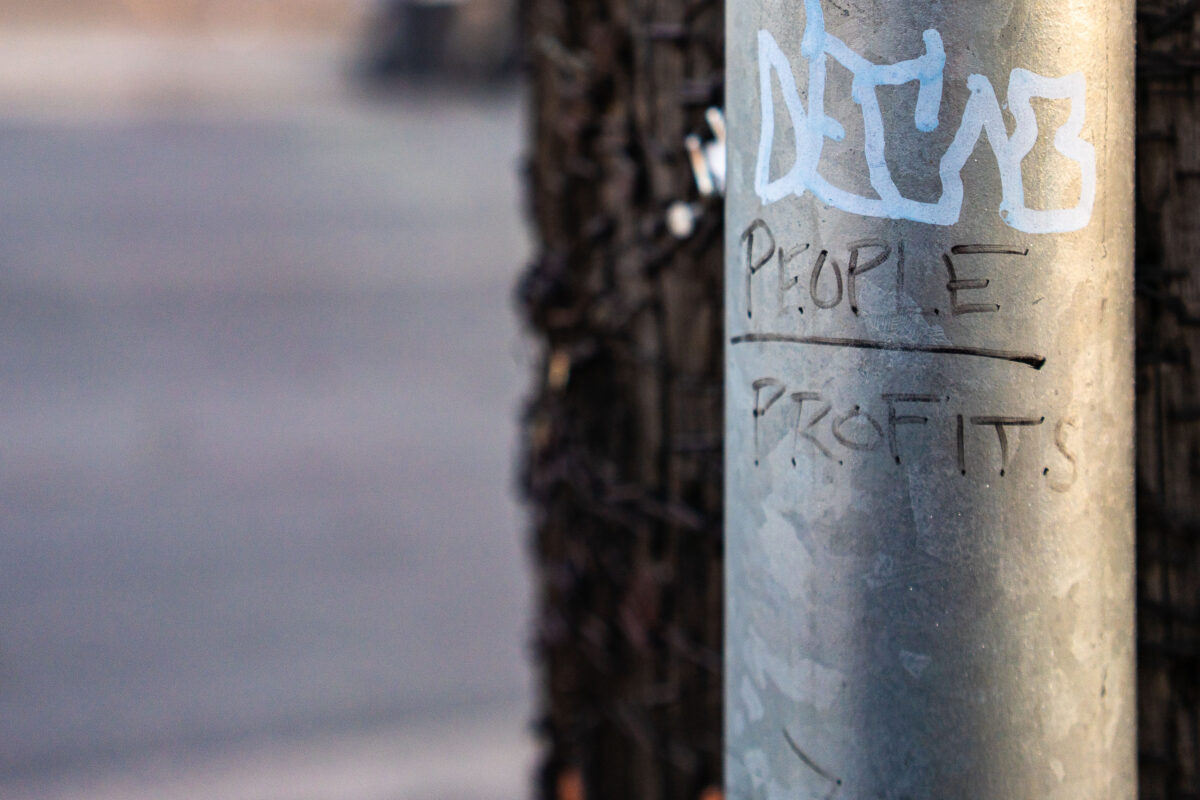
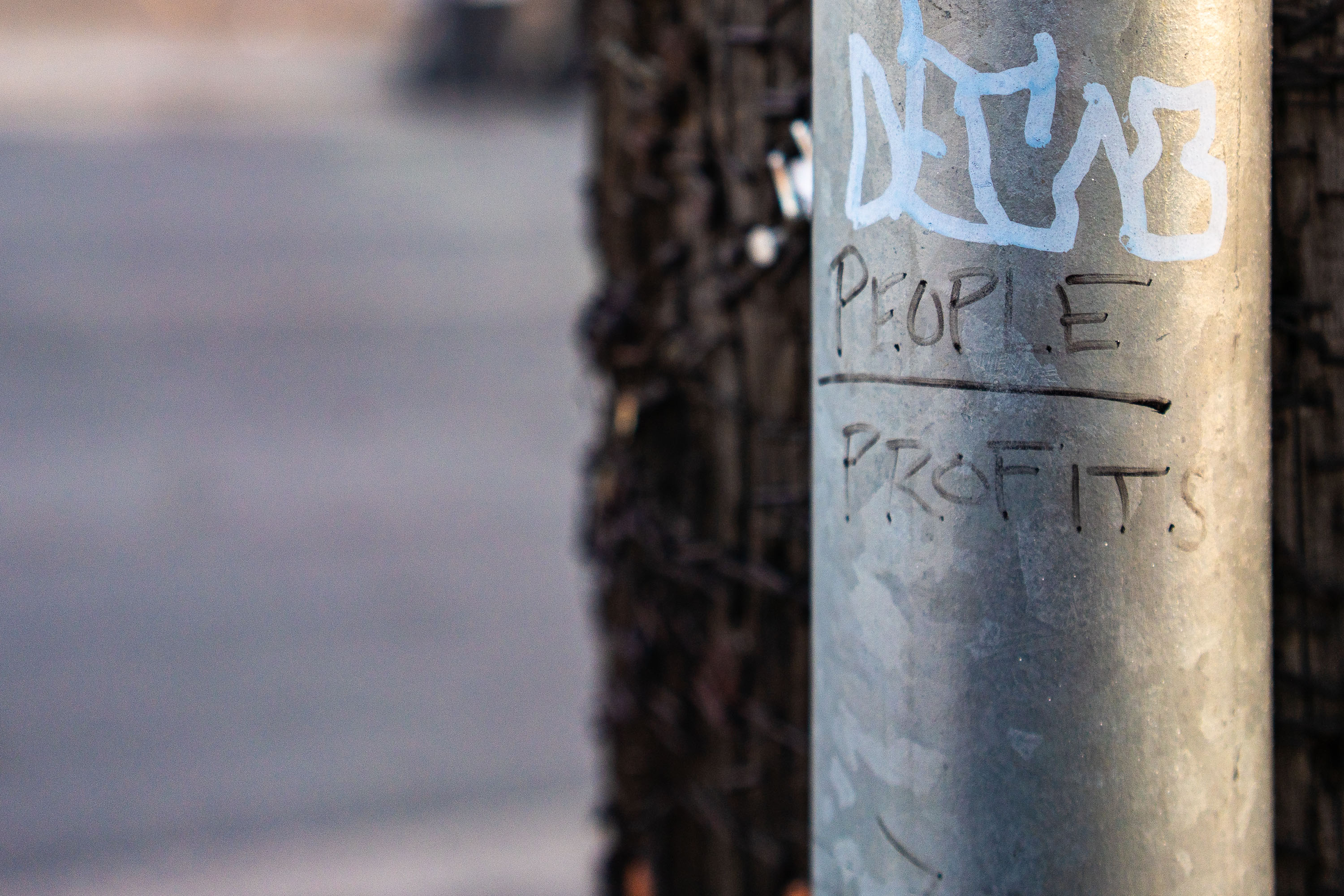
People Over Profit graffiti on a metal utility pole in South Minneapolis.
People Over Profit graffiti appears on a metal utility pole in South Minneapolis. A separate tag is painted above the handwritten words on the same pole.

People Over Profit Graffiti on Utility Pole, South Minneapolis

Pro Palestine protesters march in downtown Minneapolis
Protesters marched through downtown Minneapolis in solidarity with Palestine. The mural on the brick building reads, "Love is Love, Injustice Anywhere Threatens Justice Everywhere. Science is Real. Water is Life. Women's Rights are Human Rights. When Black Lives Matter, Then All Lives Will Matter. Kindness is Everything."

Pro-Palestine Protest March in Downtown Minneapolis

Pro Palestine march through downtown Minneapolis
A large crowd gathered for a Pro-Palestine march on Chicago Avenue in downtown Minneapolis. Participants carried signs and flags, expressing solidarity with Palestine. This event reflects ongoing global dialogues and local activism concerning the Israeli-Palestinian conflict.

Pro-Palestine March on Chicago Ave, Downtown Minneapolis
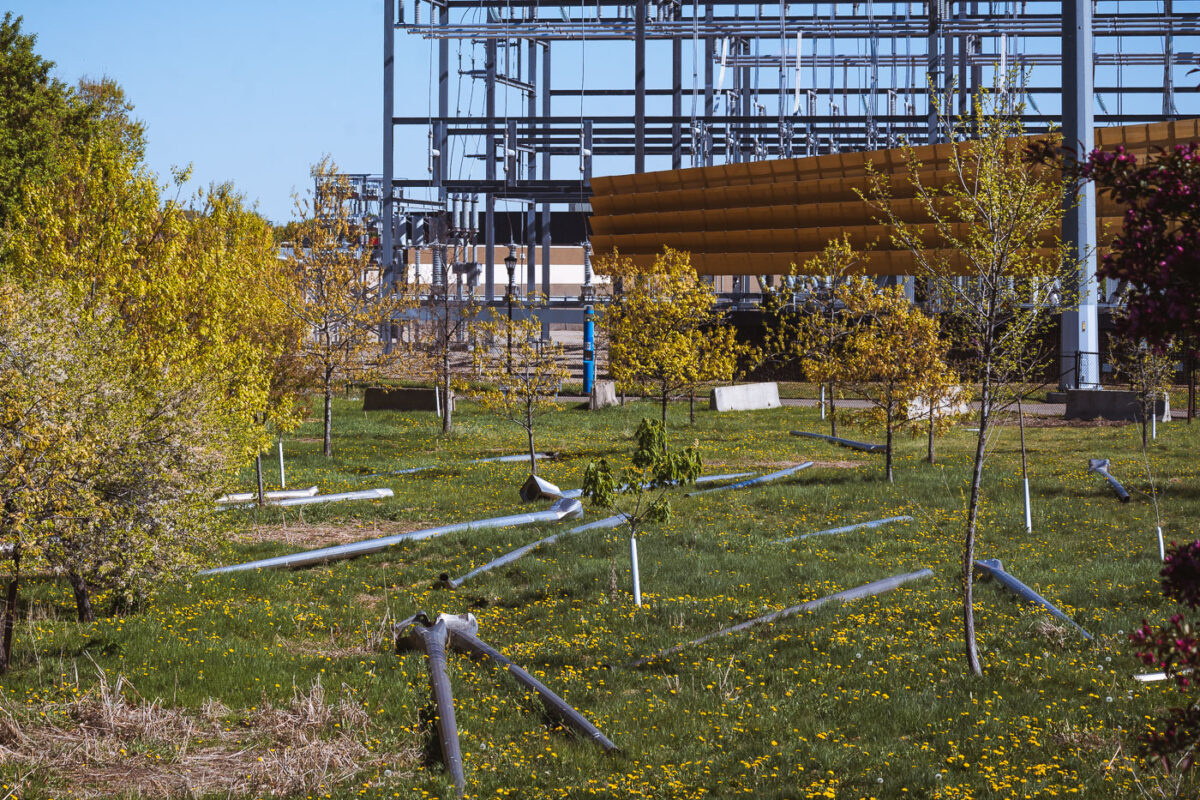
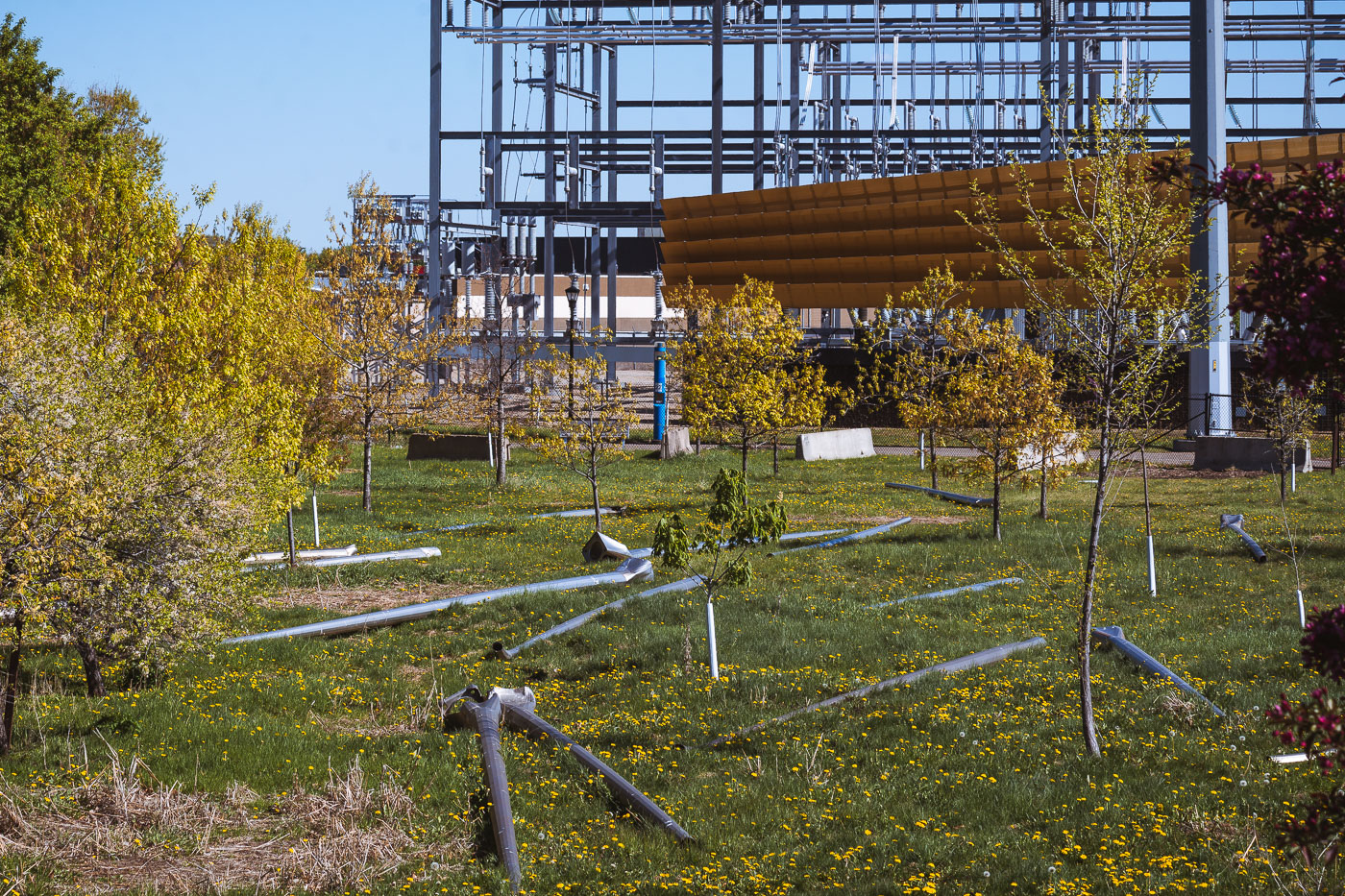
Former homeless encampment site in Minneapolis with street poles installed in the grass.
Former homeless encampment site in Minneapolis with street poles installed in the grass. The area is adjacent to a large steel-framed structure under construction. Metro Transit Police signage is visible on the site.

Street poles at former encampment site, Minneapolis
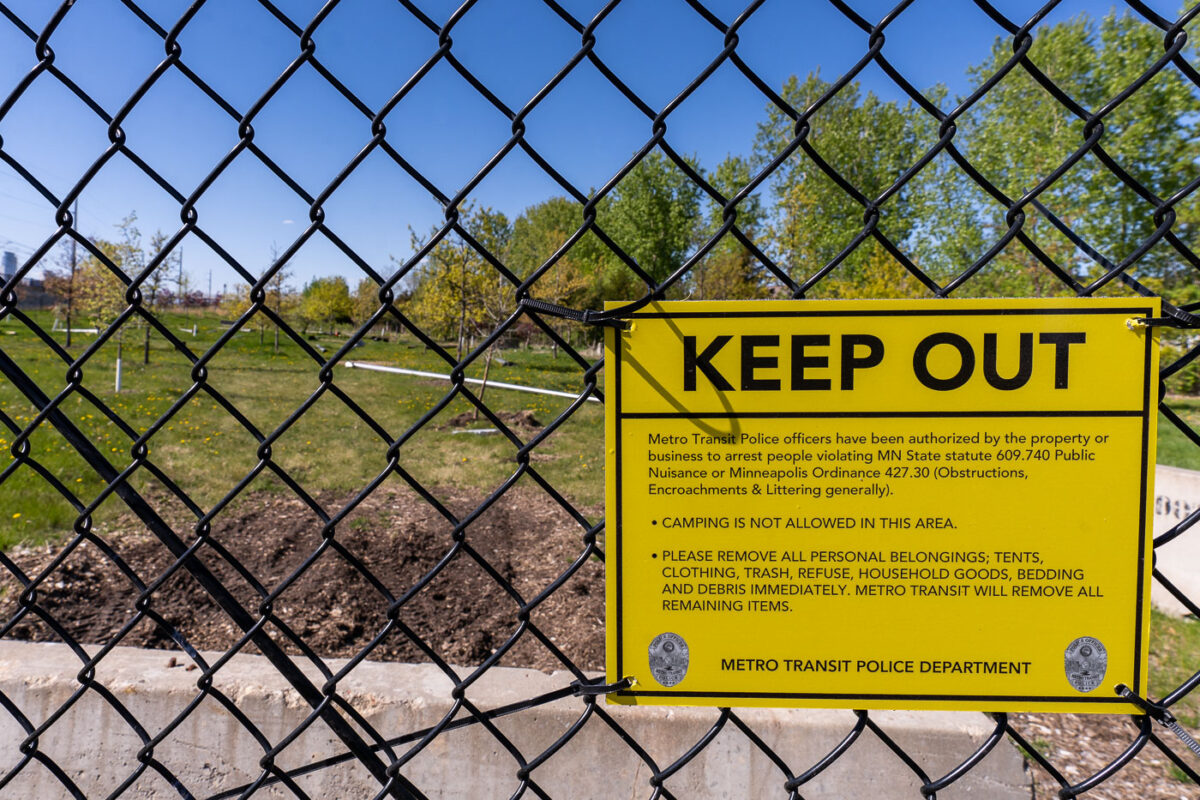
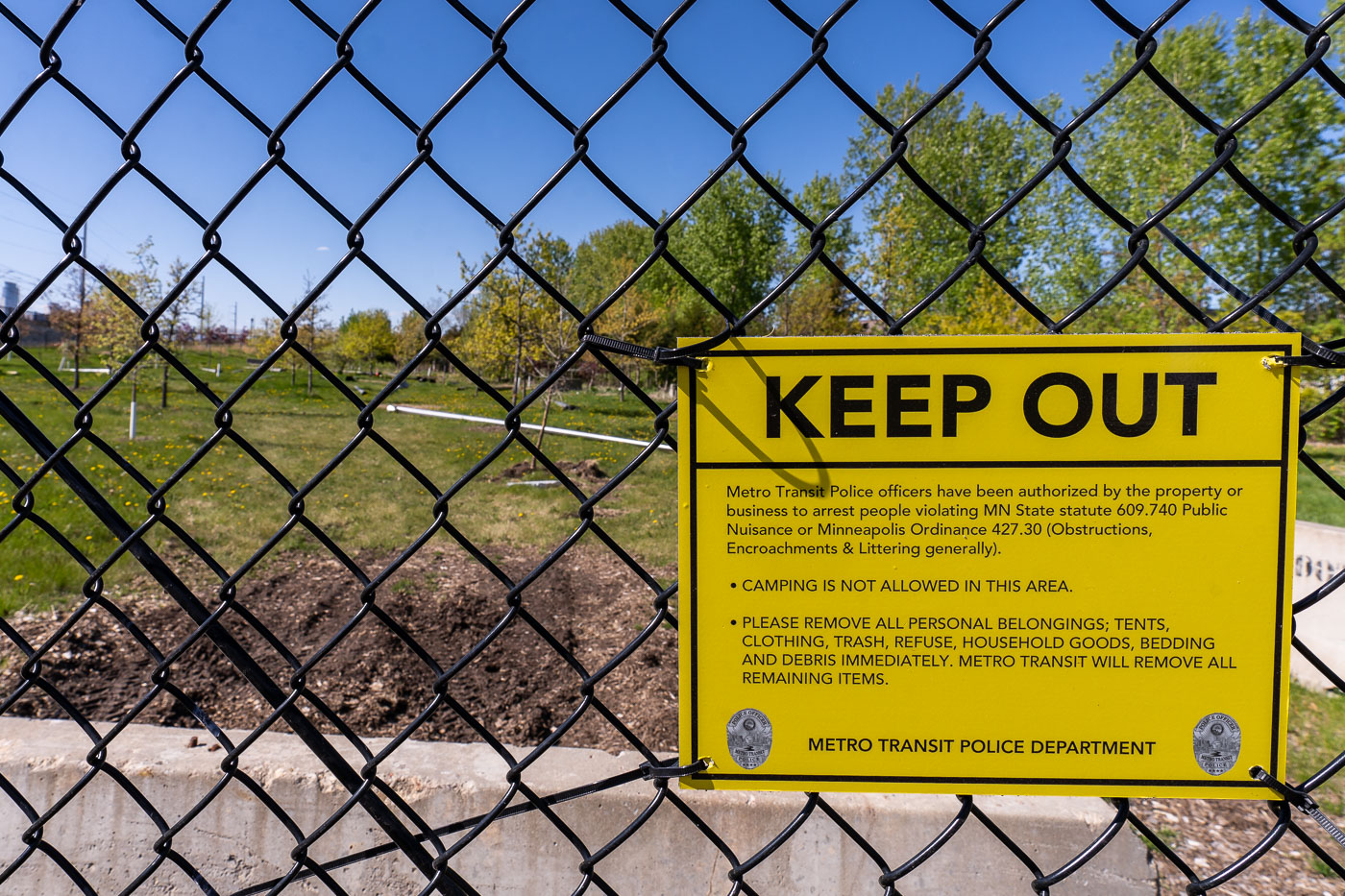
Metro Transit Police keep out sign on a fenced lot in Minneapolis.
Metro Transit Police in Minneapolis posted a notice prohibiting camping and requiring removal of personal belongings from the fenced area. The sign states that remaining items will be removed by Metro Transit and cites Minnesota public nuisance and Minneapolis obstruction ordinances.

Metro Transit Police keep out sign, Minneapolis
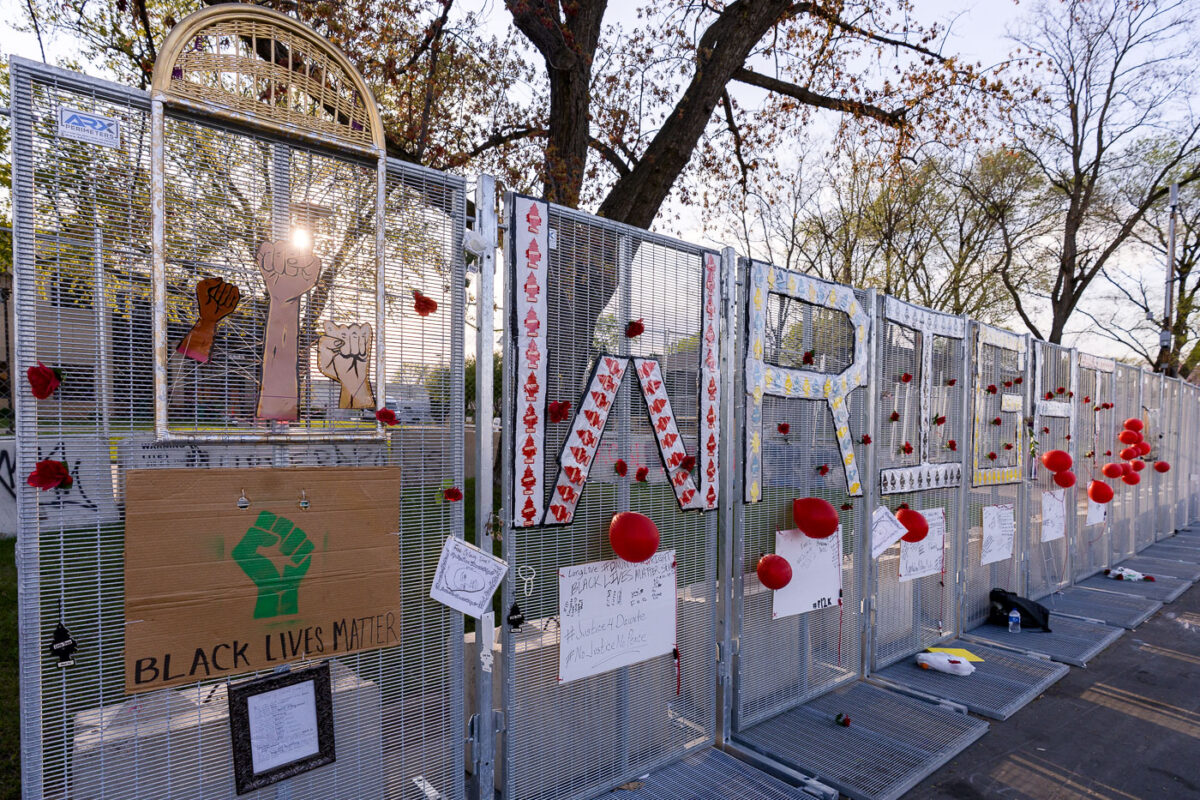
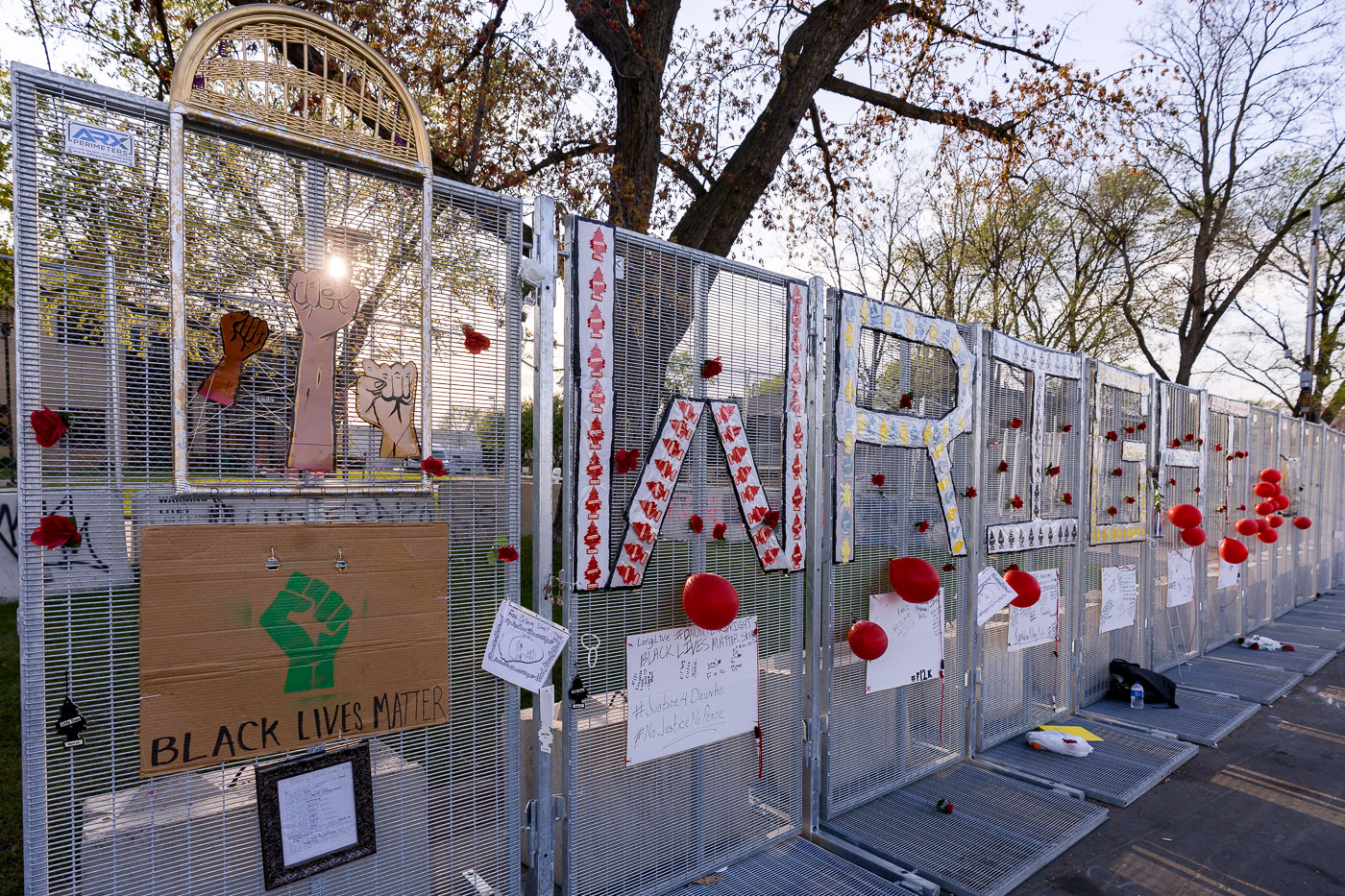
Protest signs around Brooklyn Center police station
Temporary security fencing surrounds the Brooklyn Center Police Department in Brooklyn Center, Minnesota, following the death of Daunte Wright in April 2021. The fencing, erected to manage crowds and secure the building, became a canvas for public expression.

Brooklyn Center Police Station Fencing with Protest Signs
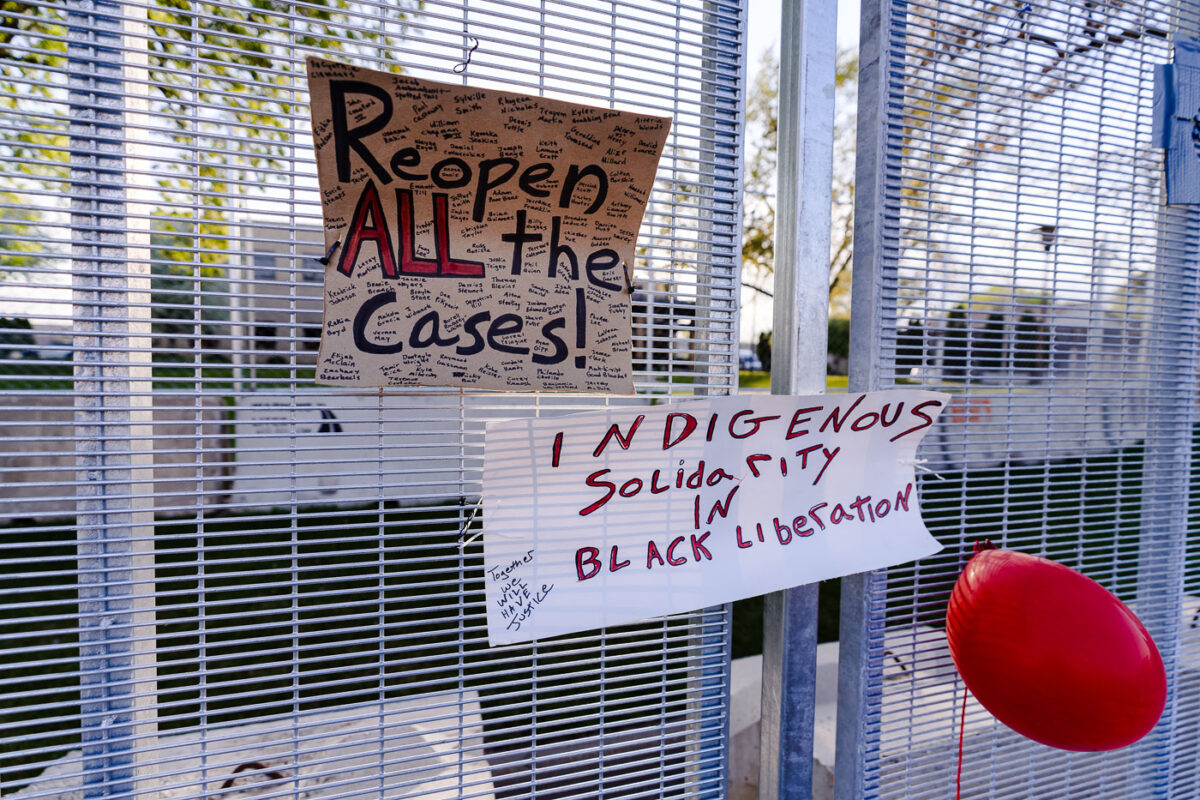
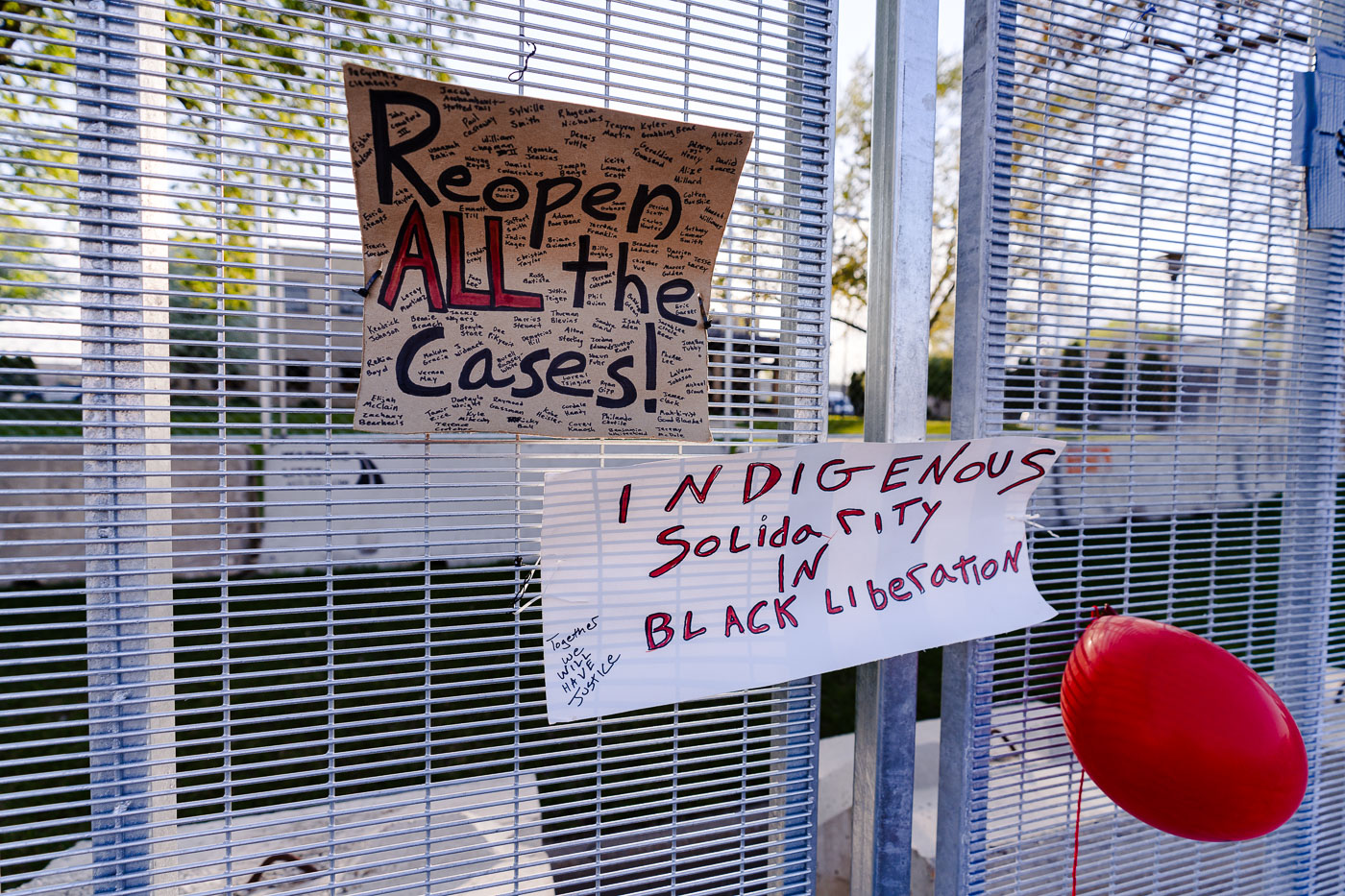
Indigenous Solidarity In Black Liberation protest sign
A sign reading "INDIGENOUS SOLIDARITY IN BLACK LIBERATION" is attached to security fencing outside the Brooklyn Center Police Department. The sign, along with another listing names under the heading "REOPEN ALL THE CASES!", appeared following the death of Daunte Wright.

Indigenous Solidarity in Black Liberation Protest Sign, Brooklyn Center
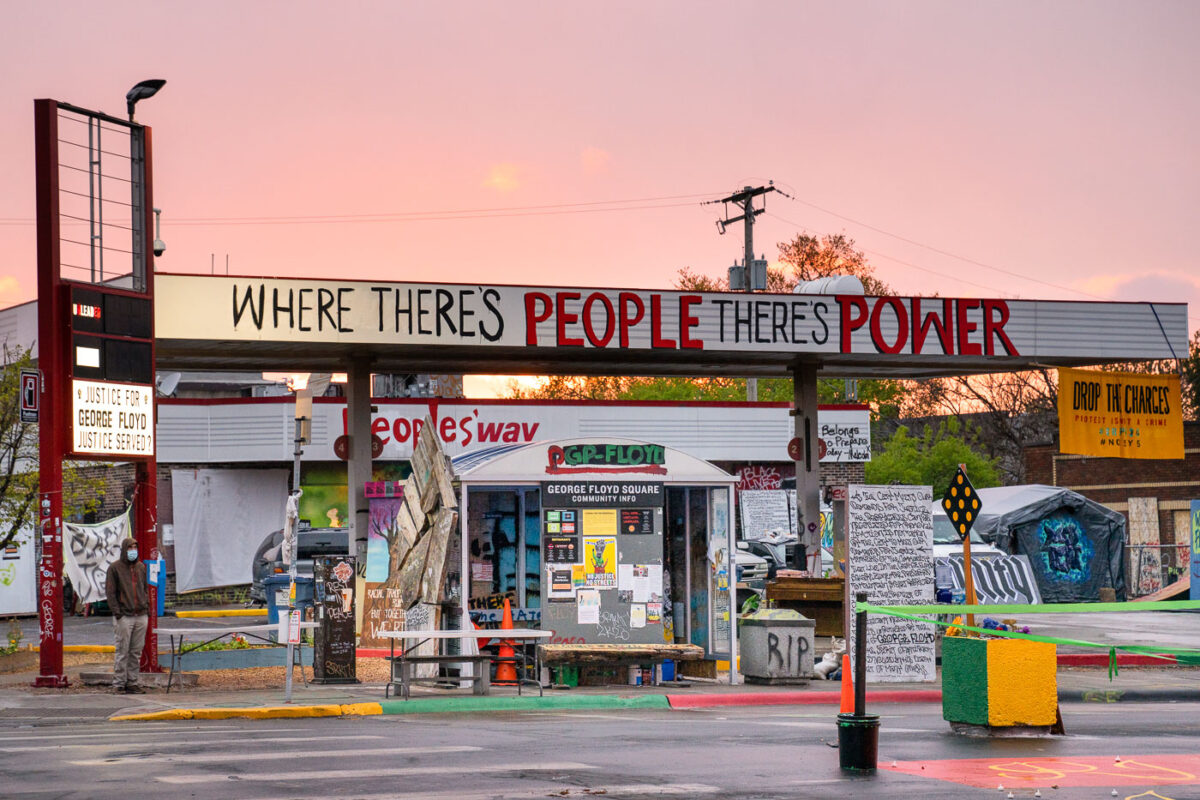
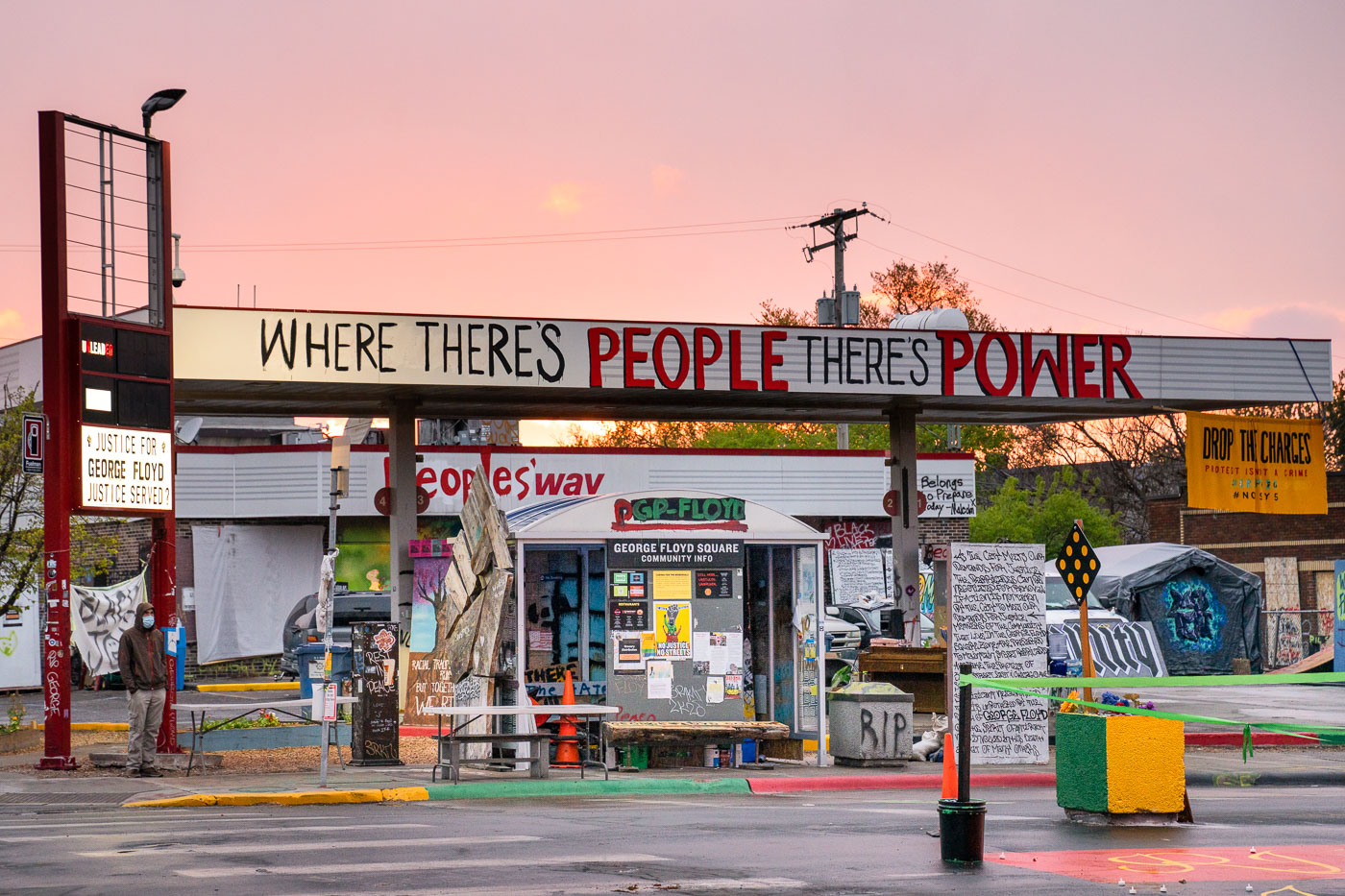
Sun sets behind The Peoples Way at George Floyd Square
The Peoples Way at George Floyd Square in Minneapolis. The area has been a place of protest since the May 2020 killing of George Floyd by Minneapolis Police officers.

George Floyd Square at Sunset, Minneapolis
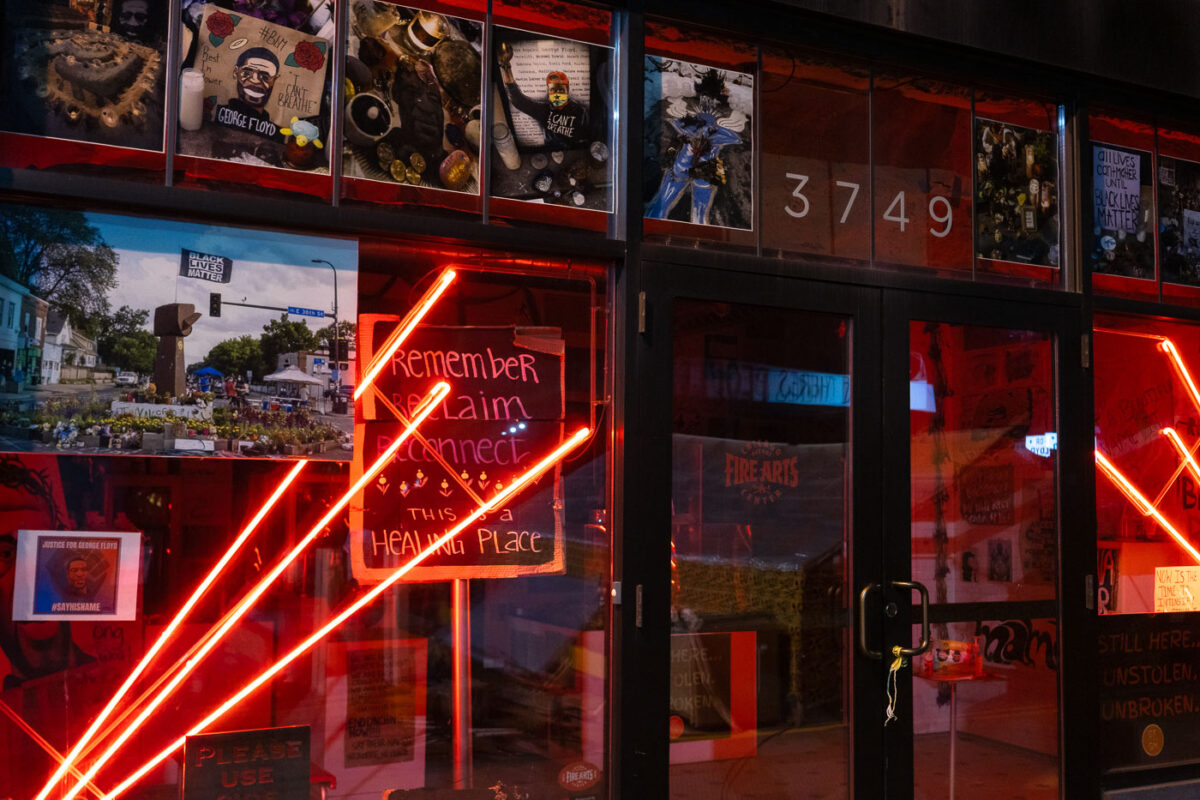
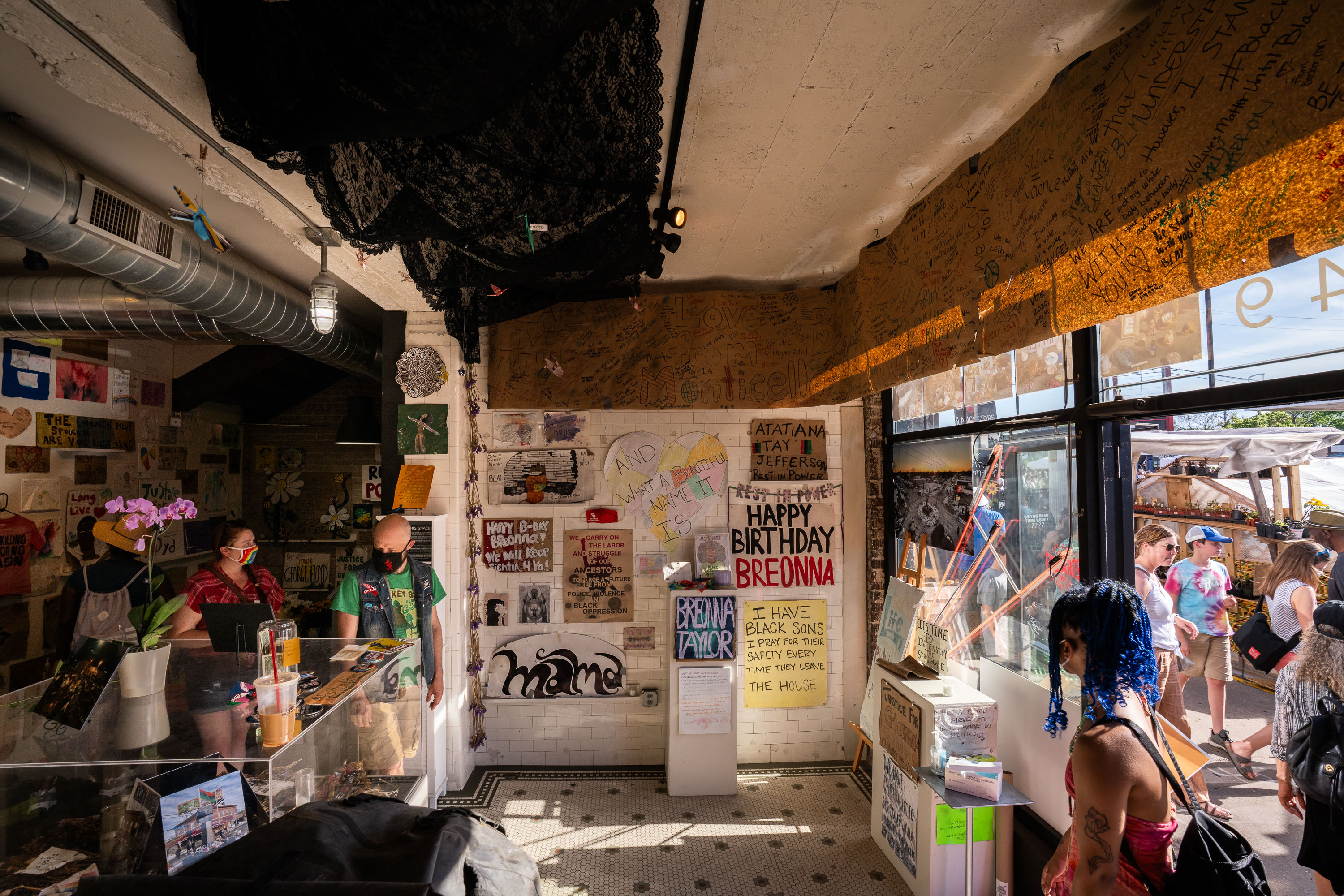
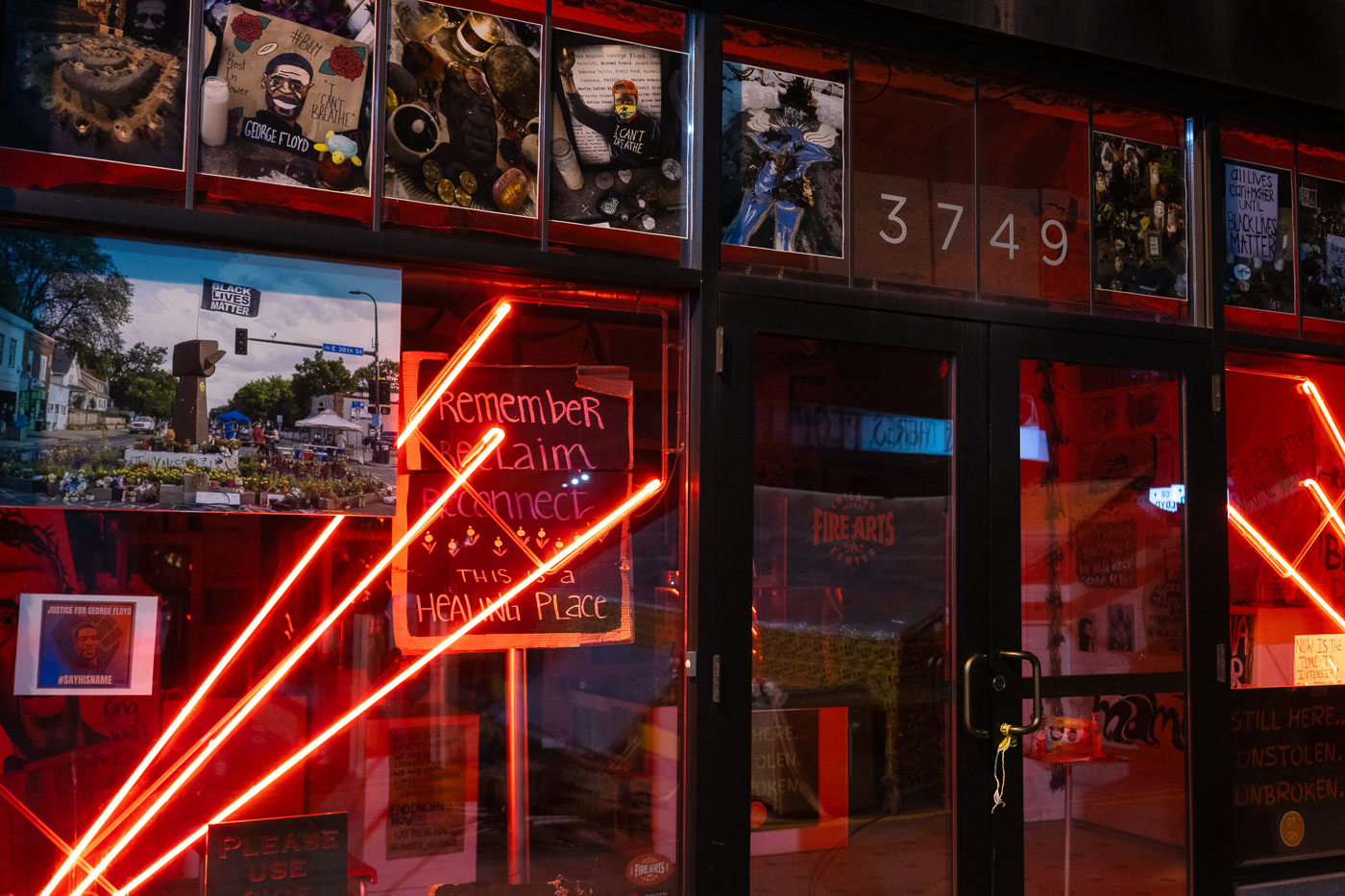
Fire Arts Center in George Floyd Square in May 2021
The Fire Arts Center, located at 3749 Chicago Avenue in South Minneapolis, became a focal point for community expression following the murder of George Floyd in 2020. The center's storefront displays tributes and messages related to the Black Lives Matter movement and the ongoing fight for justice. The surrounding area, known as George Floyd Square, transformed into a memorial and gathering space, reflecting the community's response to racial injustice and police brutality.

Fire Arts Center at George Floyd Square, Minneapolis

Gandhi Mahal property in South Minneapolis
Straw fencing surrounds the former Gandhi Mahal building in South Minneapolis, a site impacted by the unrest following the murder of George Floyd in 2020.

Gandhi Mahal, South Minneapolis: Fencing and Messages
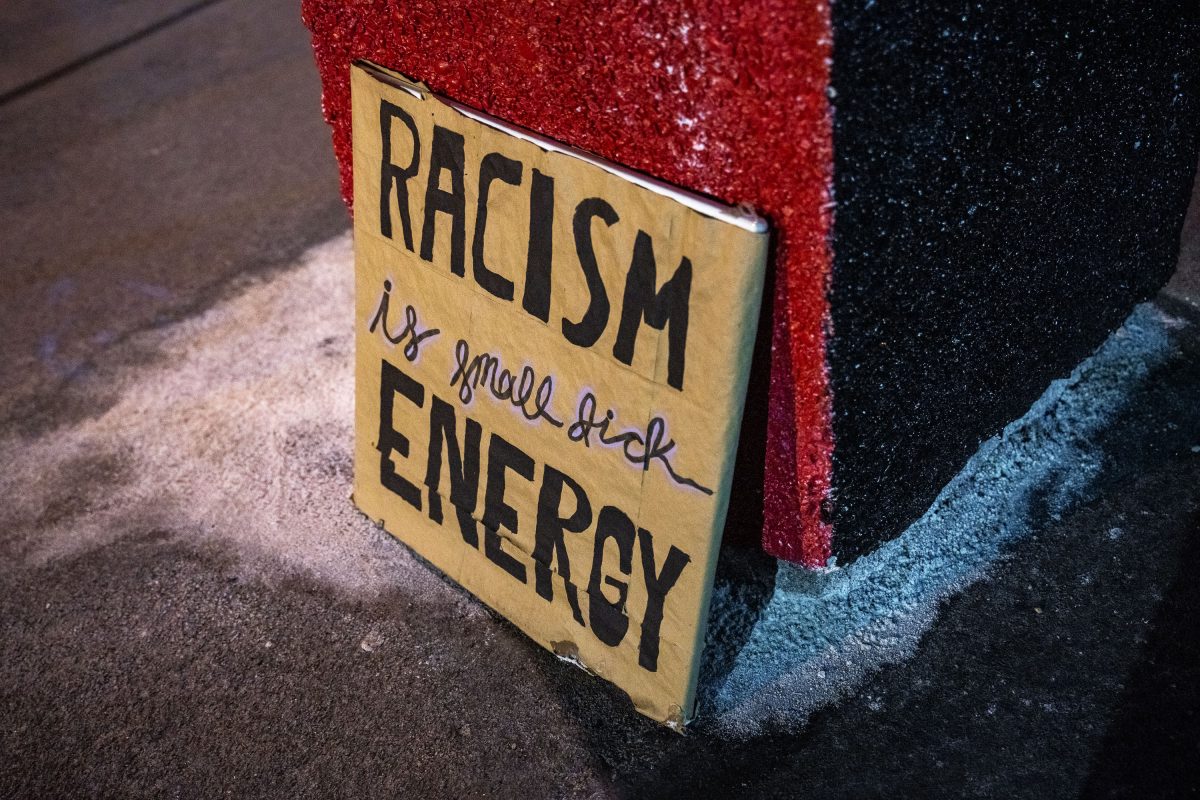
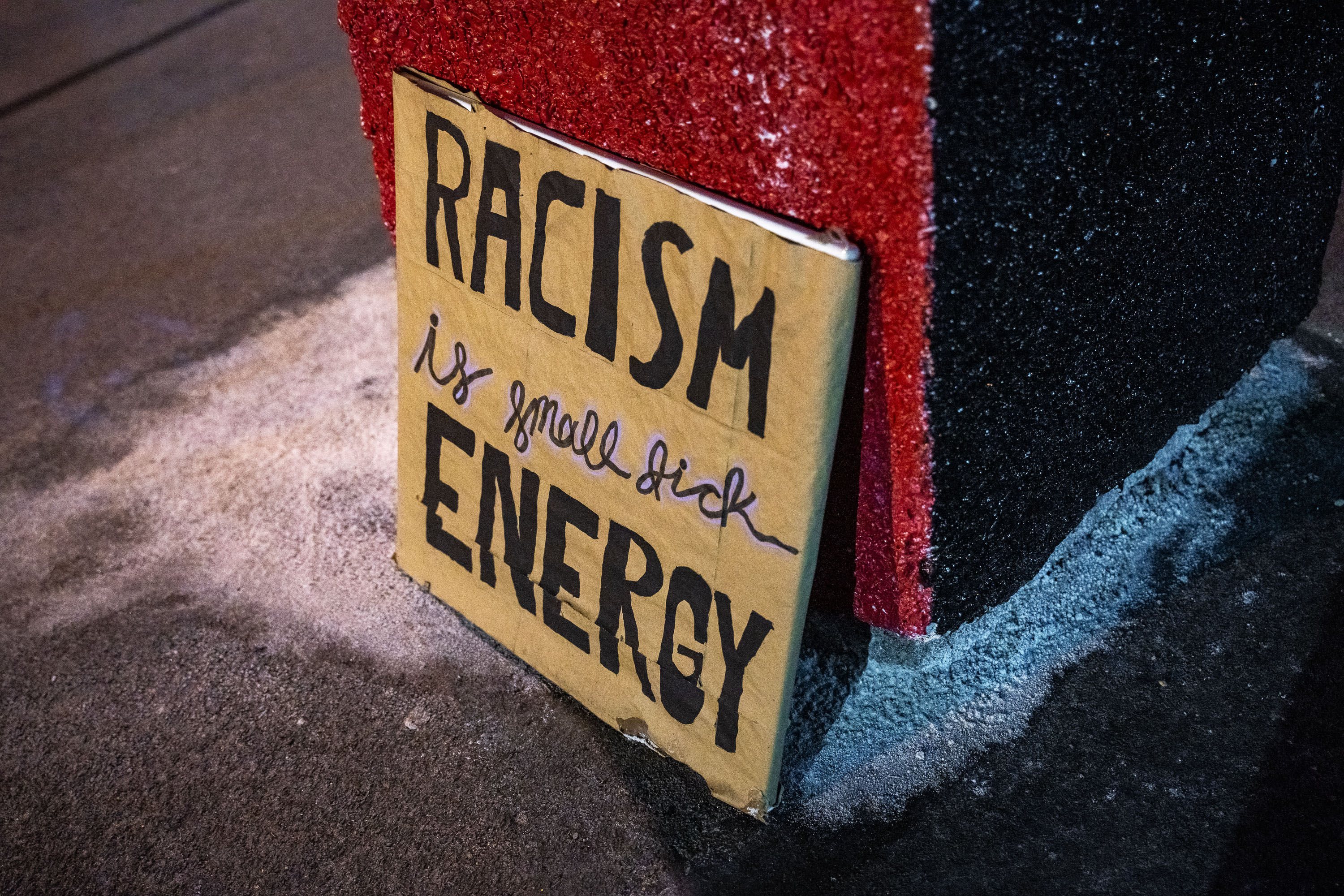
Handwritten sign reading "Racism is small dick energy" placed at George Floyd Square in Minneapolis.
George Floyd Square sits at the intersection of 38th Street and Chicago Avenue in Minneapolis, at the site where George Floyd died in police custody on May 25, 2020. Following his death, the intersection became a self-sustained memorial and protest gathering space, with residents barricading traffic and maintaining art installations, murals, and handwritten signs. Many of the signs left at the square address racism and police violence directly, reflecting the ongoing activism centered at the site. The square remained under community control for over a year before the city moved to reopen it to vehicle traffic in 2021.

Handwritten Protest Sign, George Floyd Square, Minneapolis
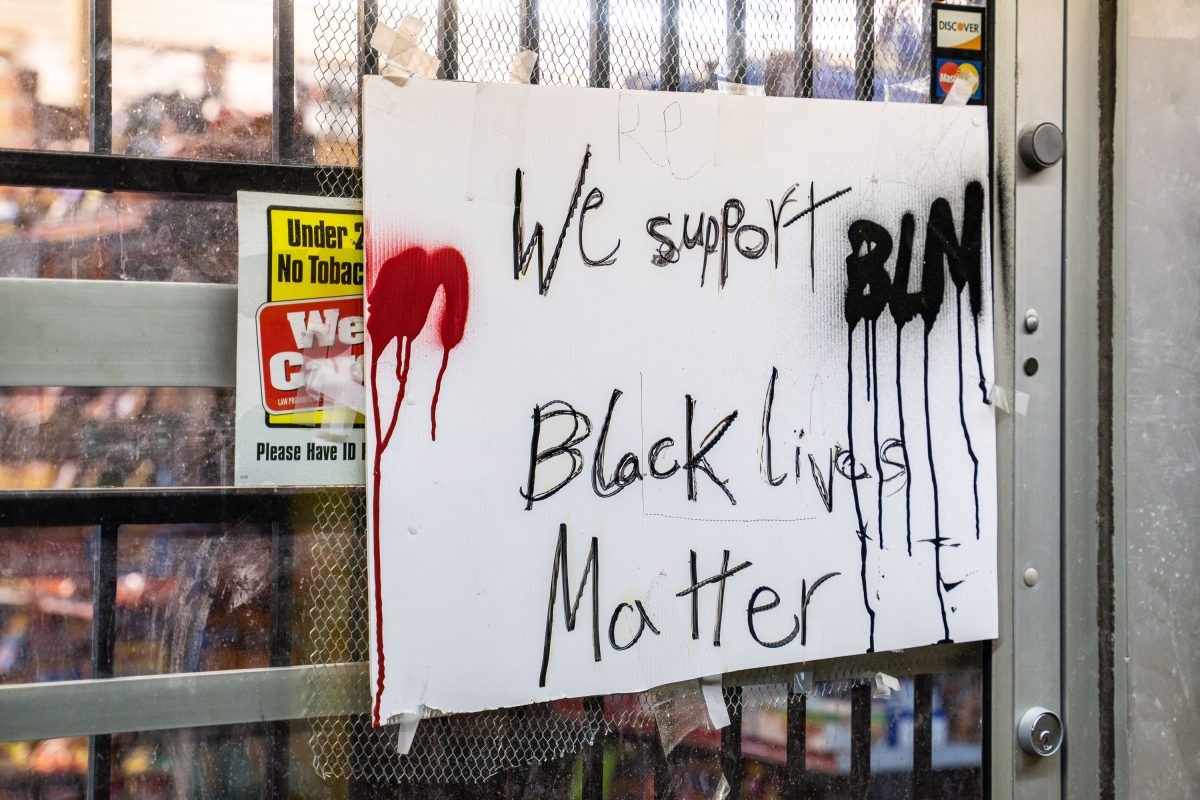
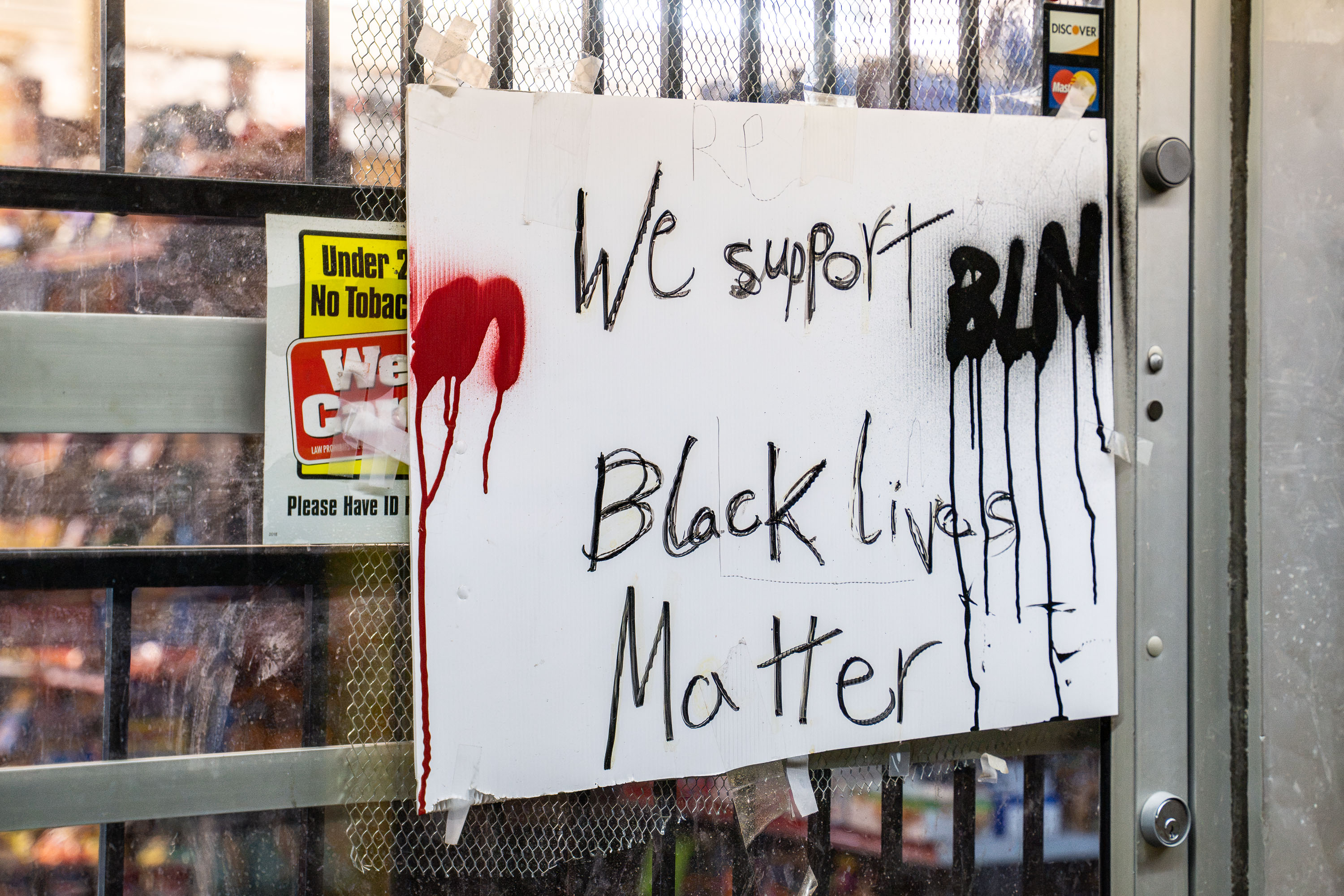
Hand-written sign reading "we support BLM Black Lives Matter" taped to a Minneapolis corner store window.
Corner stores across Minneapolis displayed handmade signs like this one, declaring support for Black Lives Matter, following the police killing of George Floyd in May 2020. Many small business owners posted such messages on their storefronts and security gates during the unrest and protests that followed, both as an expression of solidarity and, in some cases, as a way to prevent damage to their property. Stores in the Lake Street and South Minneapolis corridors, close to the site of Floyd's death, were especially likely to carry these markings well into 2021.

“We Support BLM” Sign on Corner Store Security Gate, Minneapolis

Wendy's being rebuilt after riots
A worker installs equipment inside the nearly completed Wendy's restaurant in South Minneapolis, nearly one year after the building was destroyed by fire during civil unrest in the summer of 2020. The phrase "Blood on His Hands" is visible on the construction barrier out front.

South Minneapolis Wendy’s Rebuild Nears Completion
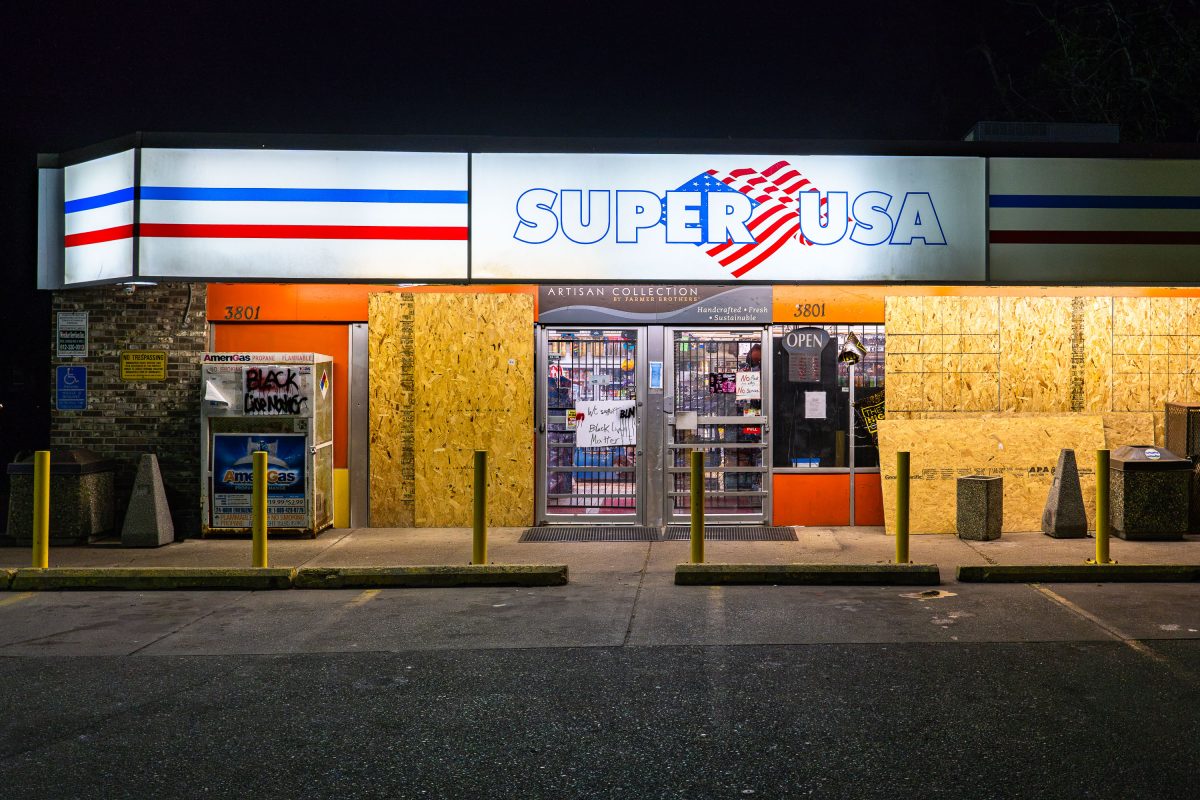
Super USA corner store in Minneapolis boarded with yellow plywood at night.
Super USA convenience store at 3801 Minnehaha Avenue in South Minneapolis.

Boarded Up Super USA Convenience Store, Minneapolis

Cliffs Erie mine gate near Babbitt, Minnesota, with a private property no trespassing sign.
Cliffs Erie mine gate near Babbitt, Minnesota, marks a restricted access point to company mining property. The sign identifies the site as property of Cliffs Erie LLC and warns against trespassing. Babbitt is located on Minnesota’s Iron Range, a region associated with taconite mining and processing.
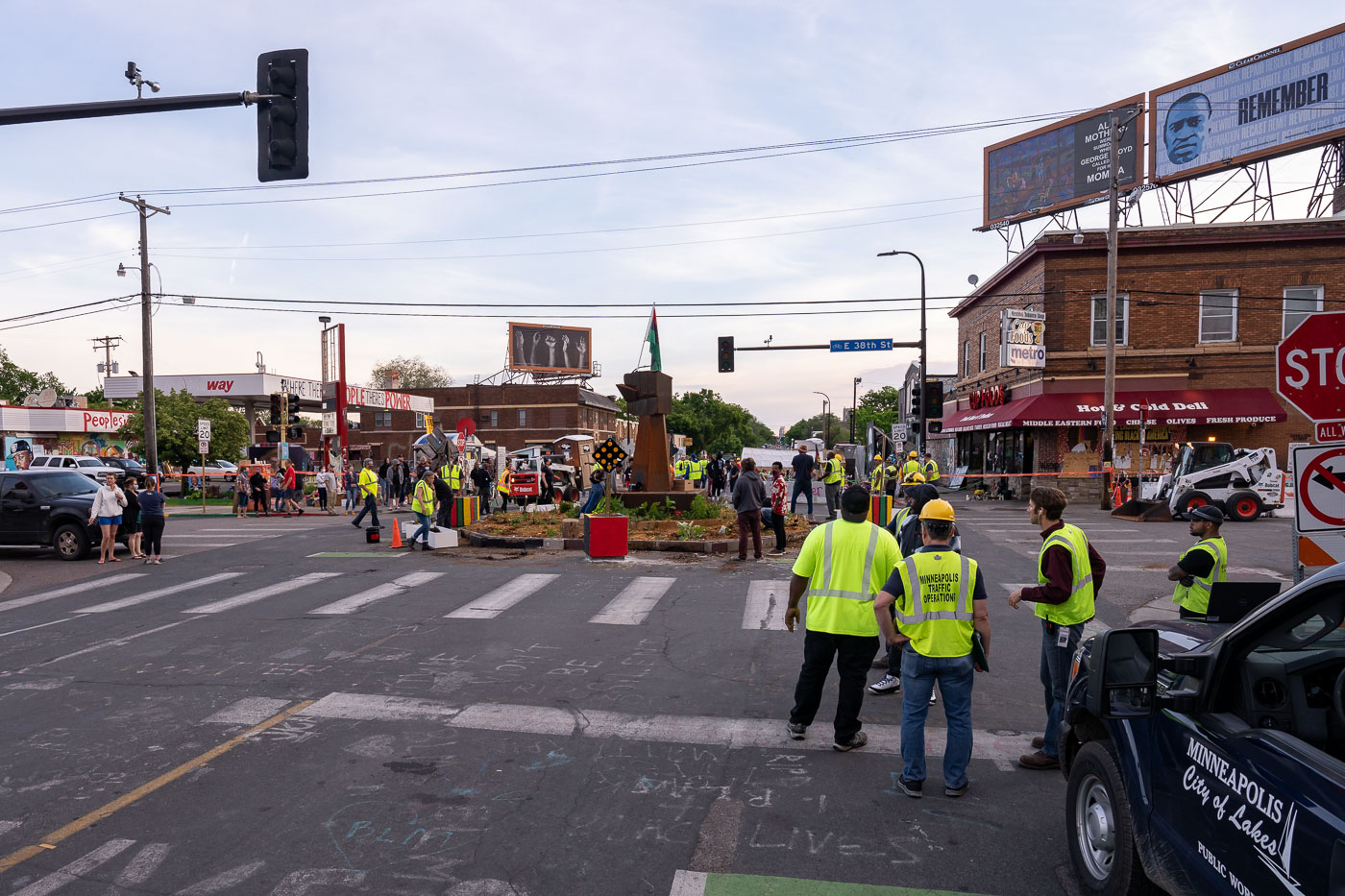
Cliffs Erie Mine Gate near Babbitt, Minnesota

PolyMet Mining NorthMet Project sign along a road in Minnesota's Iron Range.
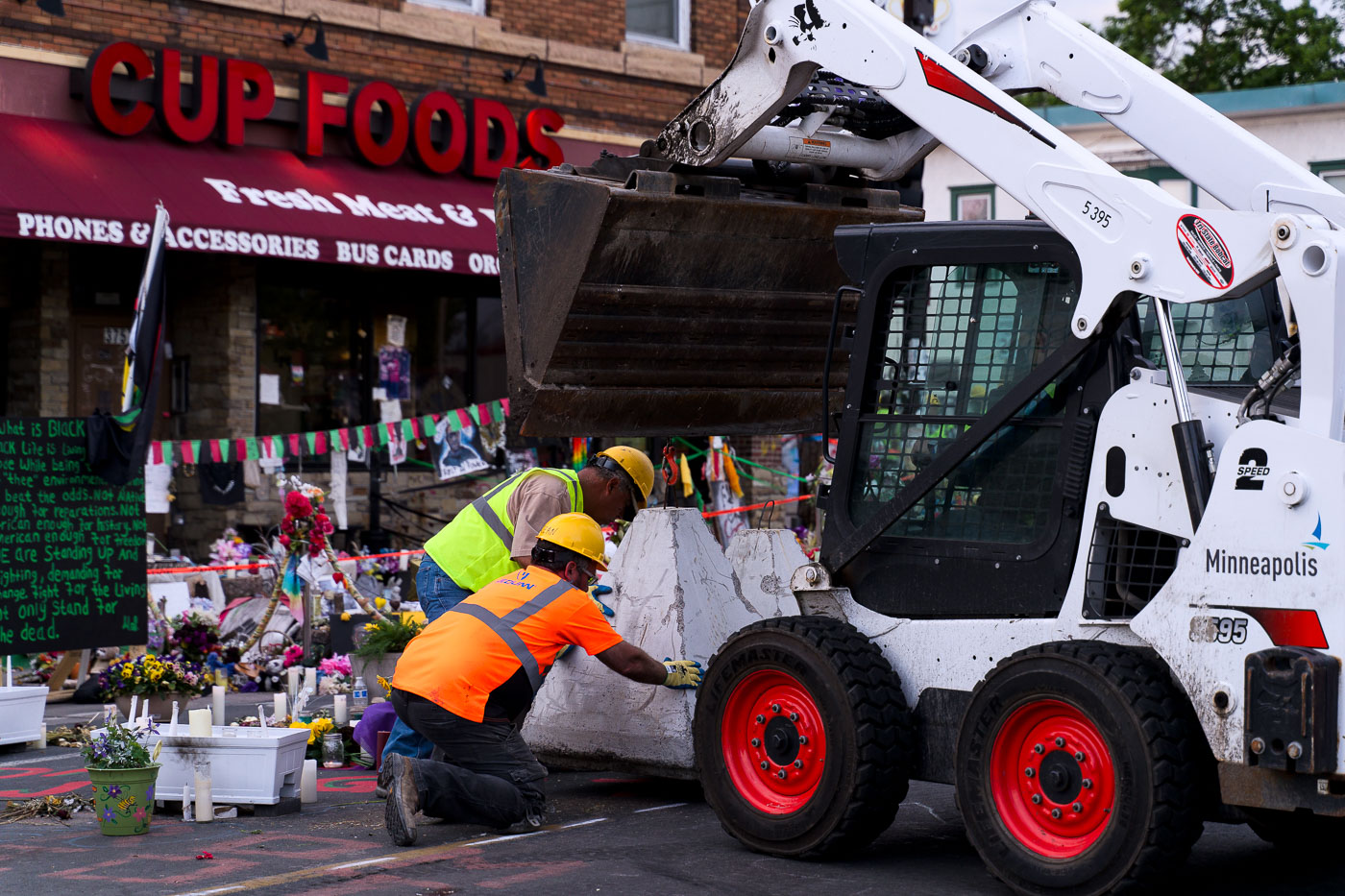
A roadside sign for the PolyMet Mining NorthMet Project stands along a paved road in the Iron Range of northern Minnesota. The weathered sign also names Cliffs Erie LLC, and a small speed limit sign is posted farther down the road.
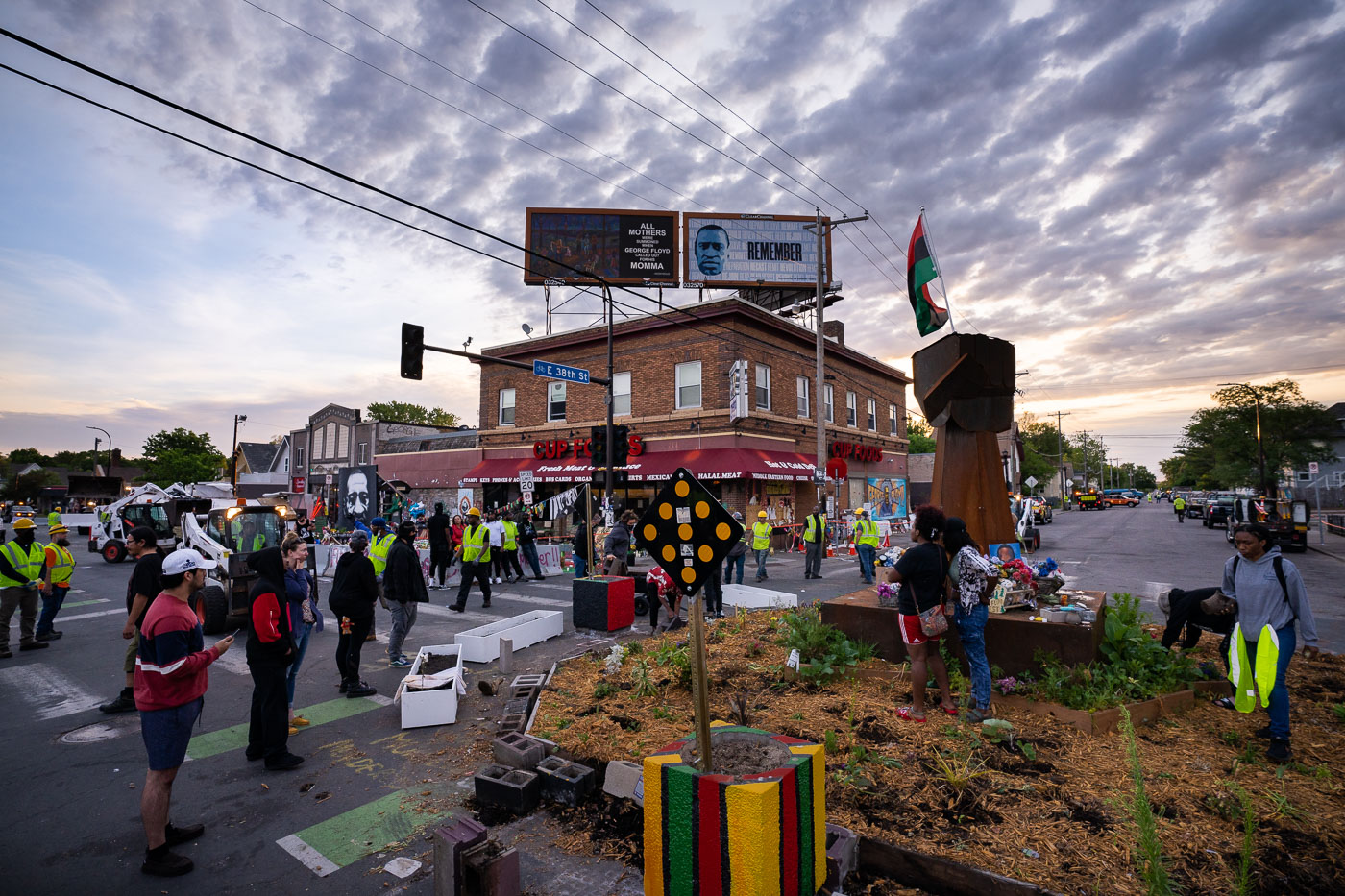
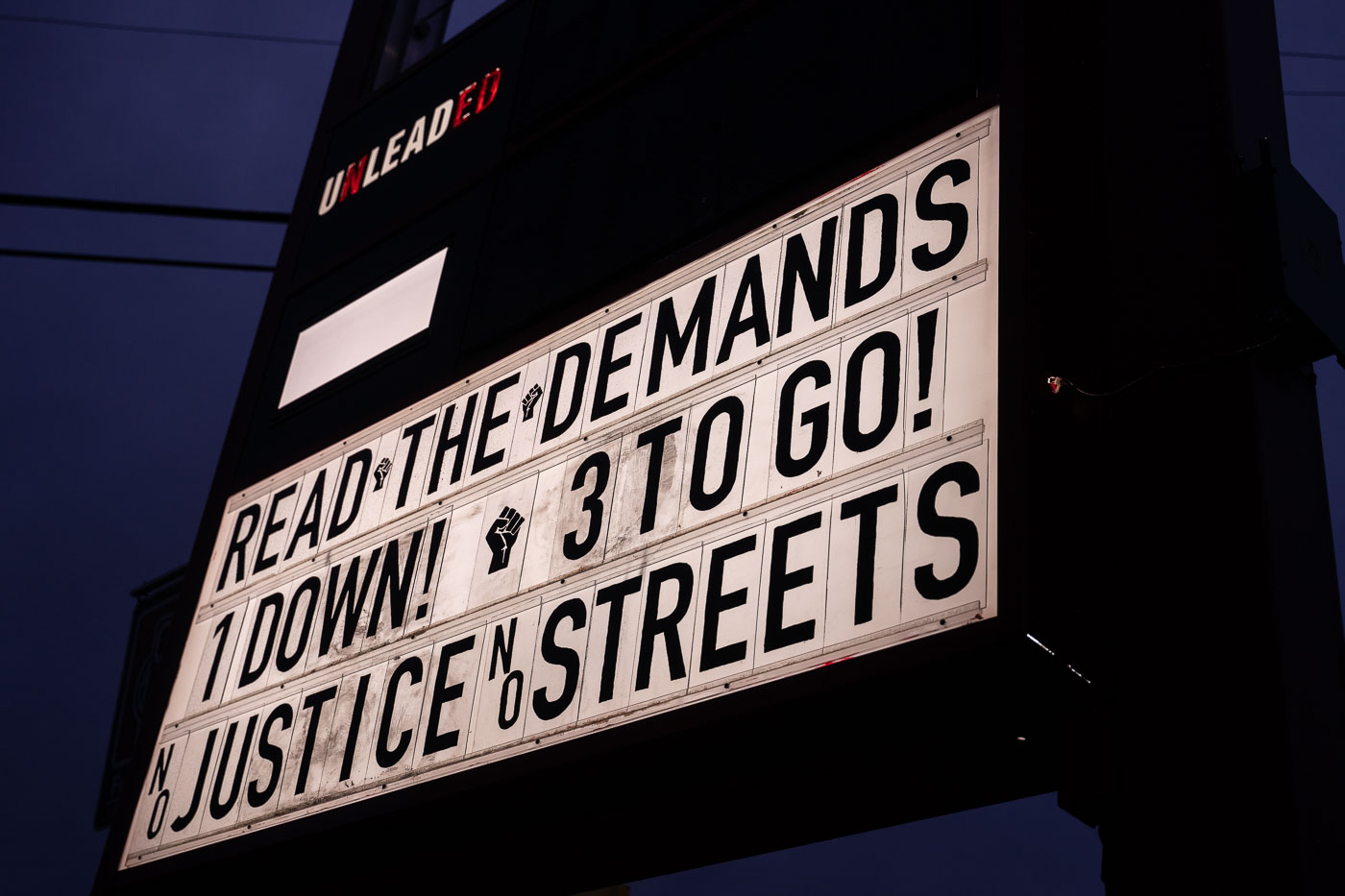
PolyMet Mining and Cliffs Erie Sign on the NorthMet Project Road
LTV Steel Mining Company sign along a gravel road in Babbitt, Minnesota.
The LTV Steel Mining Company sign stands along a gravel road in Babbitt, Minnesota. The sign marks the entrance to the former mining complex on the Iron Range.

LTV Steel Mining Company Entrance Near Babbitt

Ely State Theater on E Sheridan St. in Ely, Minnesota, with a marquee and downtown storefronts.
Ely State Theater at 238 E Sheridan St. in Ely, Minnesota, is a historic downtown movie theater. The theater’s marquee anchors one side of Sheridan Street in the city’s commercial district.

Ely State Theater, Ely, Minnesota

Dumbbell Road in Superior National Forest near Isabella, Minnesota, beside a still pond and forest trees.
Dumbbell Road runs through Superior National Forest near Isabella, Minnesota. A still pond reflects the surrounding conifers and leafless trees under a partly cloudy sky.

Dumbbell Road near Isabella, Minnesota
Island River at sunset in Superior National Forest, with storm clouds over reflected water.
Island River in Minnesota’s Superior National Forest at sunset. Dark storm clouds hang over the wetland landscape while the low sun reflects in the water.

Island River Sunset, Superior National Forest
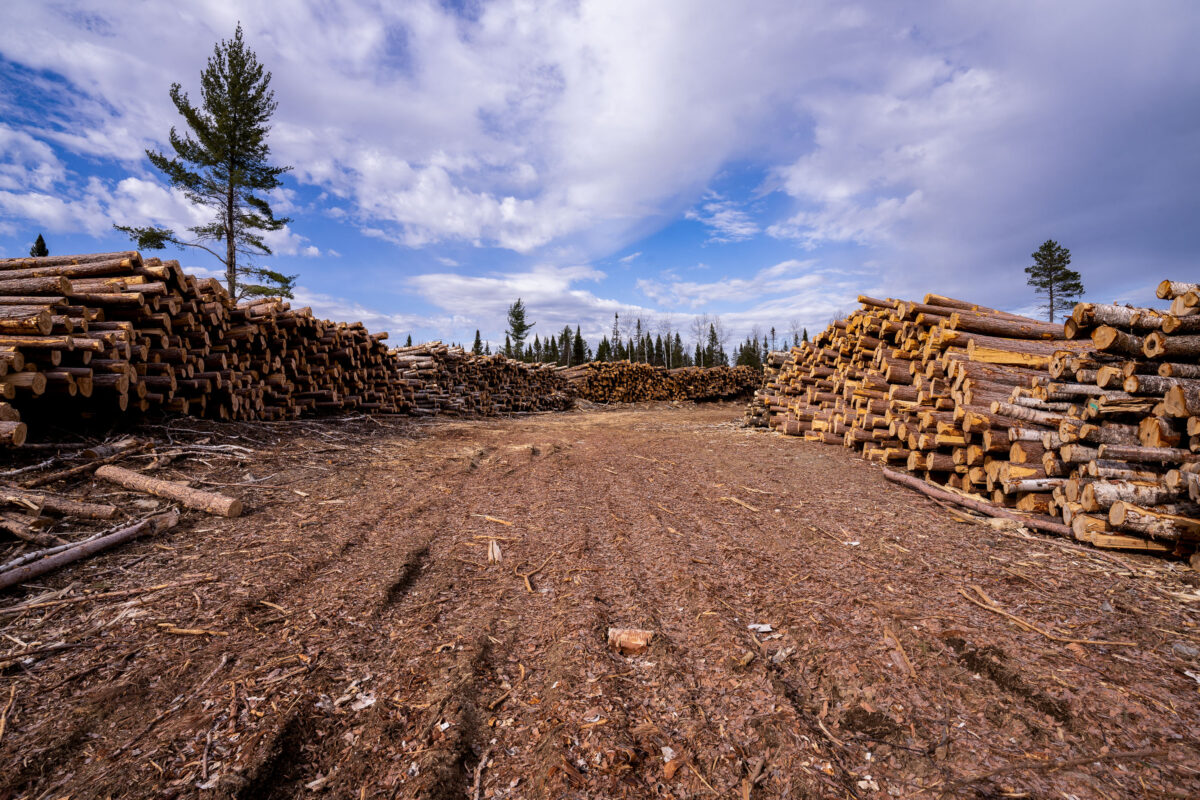
Log piles in Superior National Forest near Isabella, Minnesota, with clearing and conifers
Log piles in Superior National Forest in Stony River Township near Isabella, Minnesota. Cut timber is stacked in a clearing, with access tracks running between the piles and conifers along the edge of the site.

Log Piles in Superior National Forest