Protest

1,697 photos · 2008–2026

1,697 photographs tagged Protest, 2008–2026.
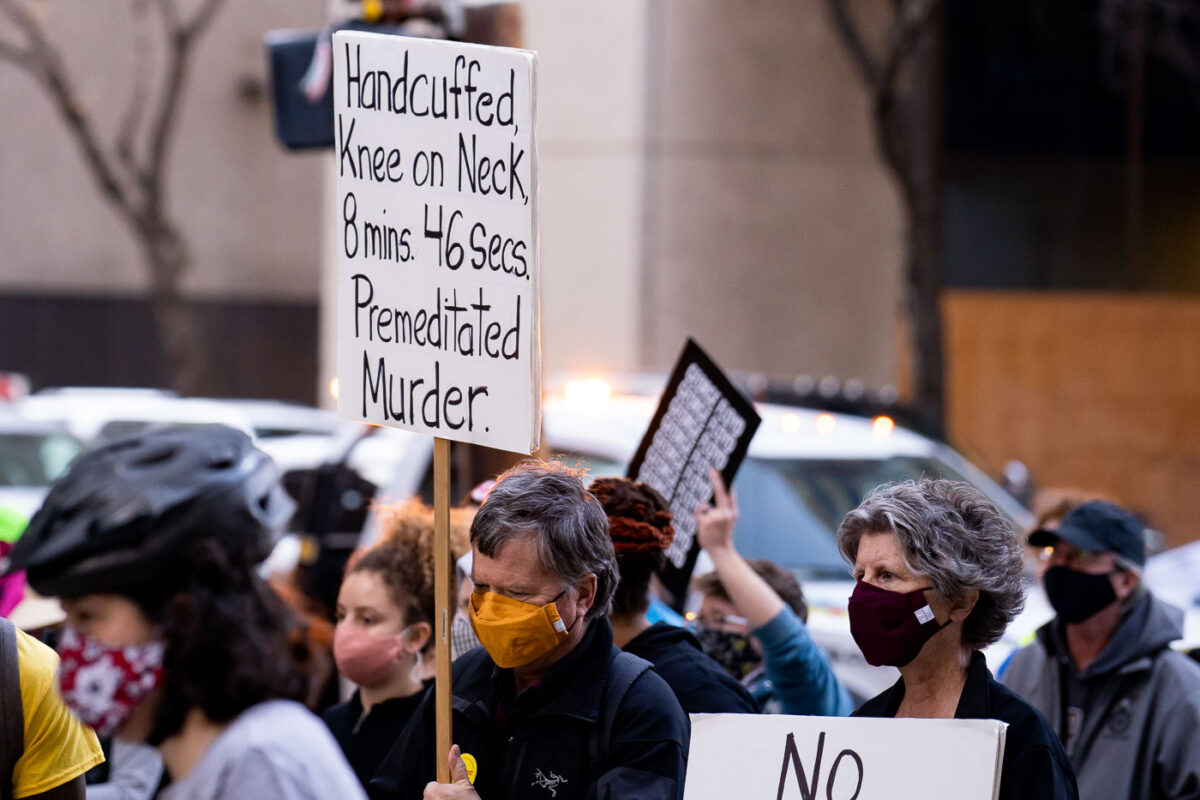
Handcuffed Knee on Neck 8 Minutes 46 Secs Premeditated Murder
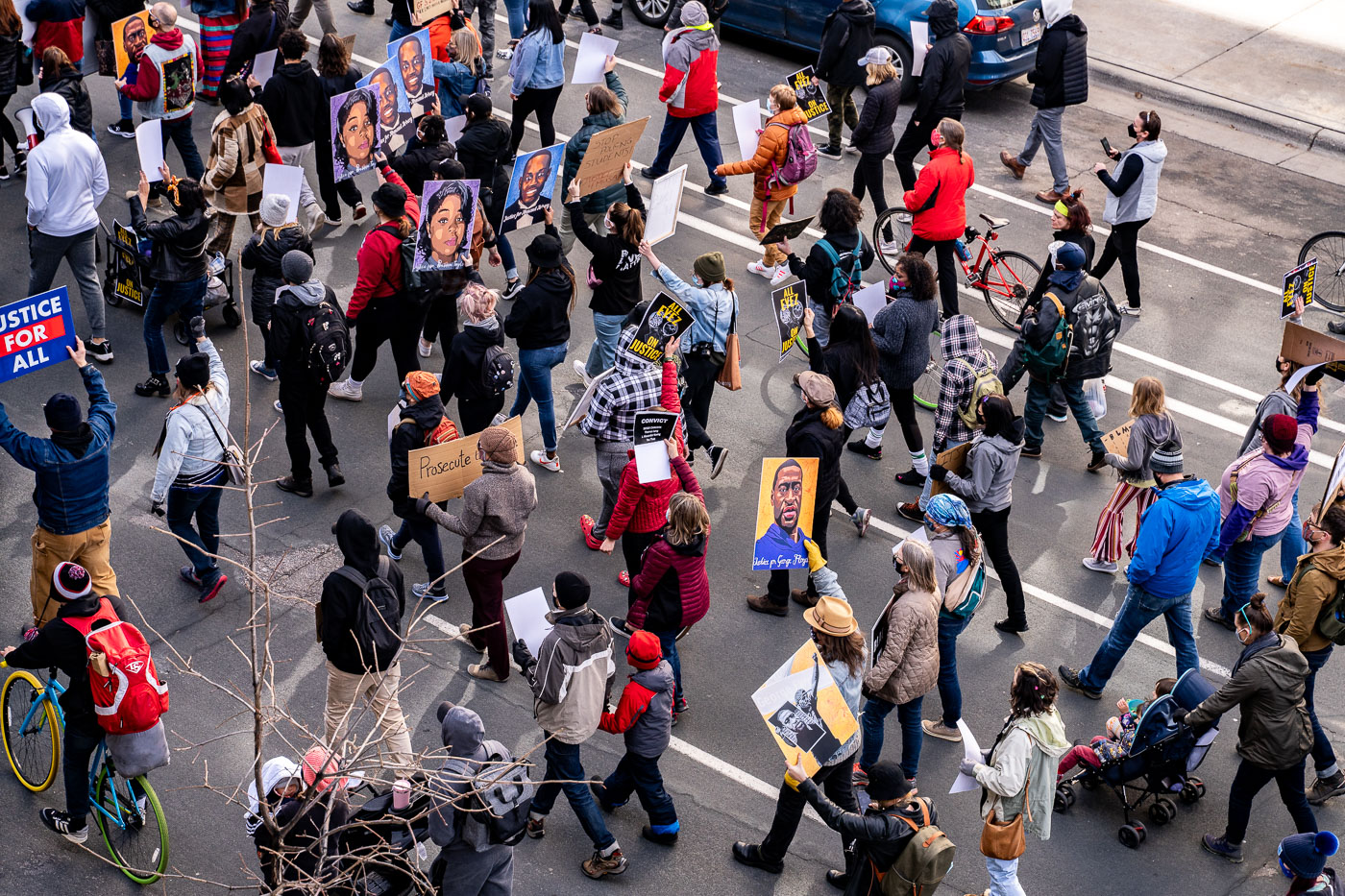
Protesters gathered in Downtown Minneapolis on March 29, 2021, the day opening statements began in the murder trial of former police officer Derek Chauvin. Chauvin was accused of killing George Floyd on May 25, 2020, after a video showed him kneeling on Floyd's neck for over eight minutes. The protest highlighted the duration of the restraint and the circumstances surrounding Floyd's death, which sparked widespread demonstrations against police brutality and racial injustice.

Minneapolis Protest: Chauvin Trial Begins, Signs Detail Floyd Murder
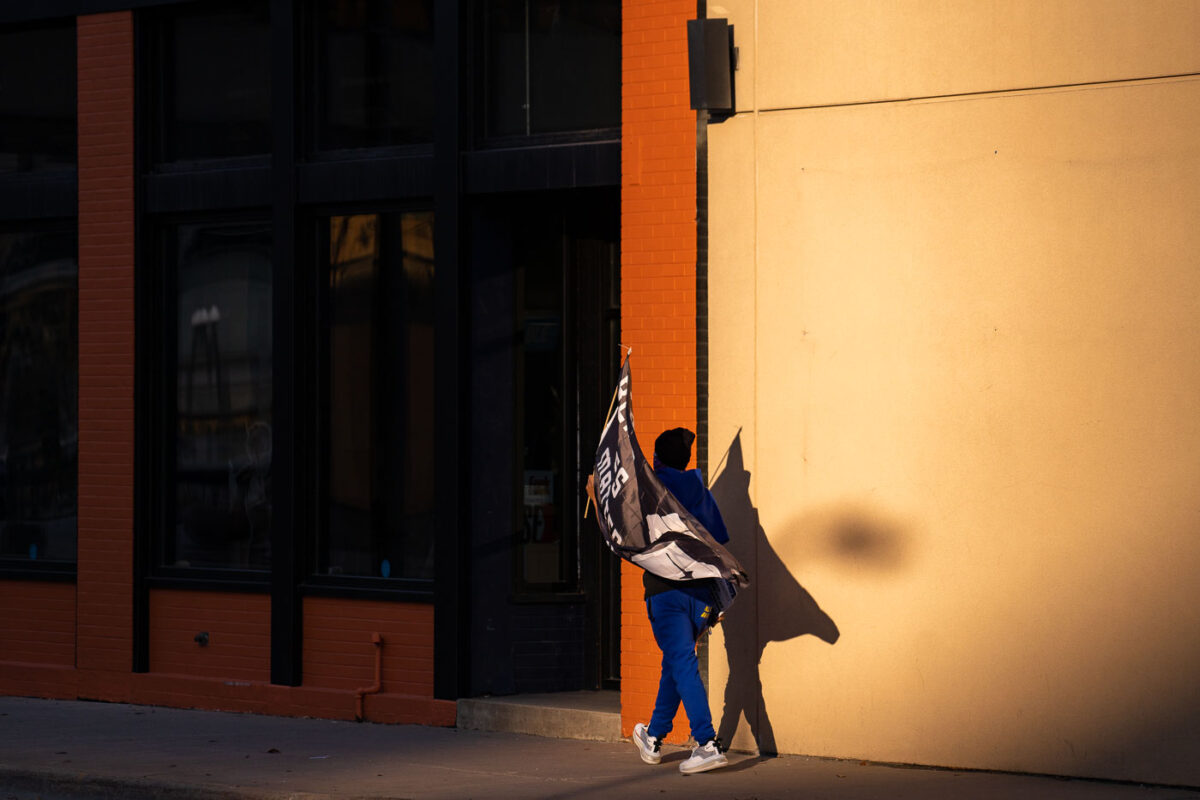
Man with a Black Lives Matter flag in downtown Minneapolis
A protestor carries a Black Lives Matter flag through Downtown Minneapolis on March 8, 2021, the day opening statements began in the trial of Derek Chauvin. Chauvin, a former Minneapolis police officer, was accused of murdering George Floyd on May 25, 2020, an event that sparked widespread protests against police brutality and racial injustice. The trial took place in Hennepin County District Court, with significant public attention and ongoing demonstrations in the city.

Minneapolis: BLM protestor walks during Chauvin trial opening statements
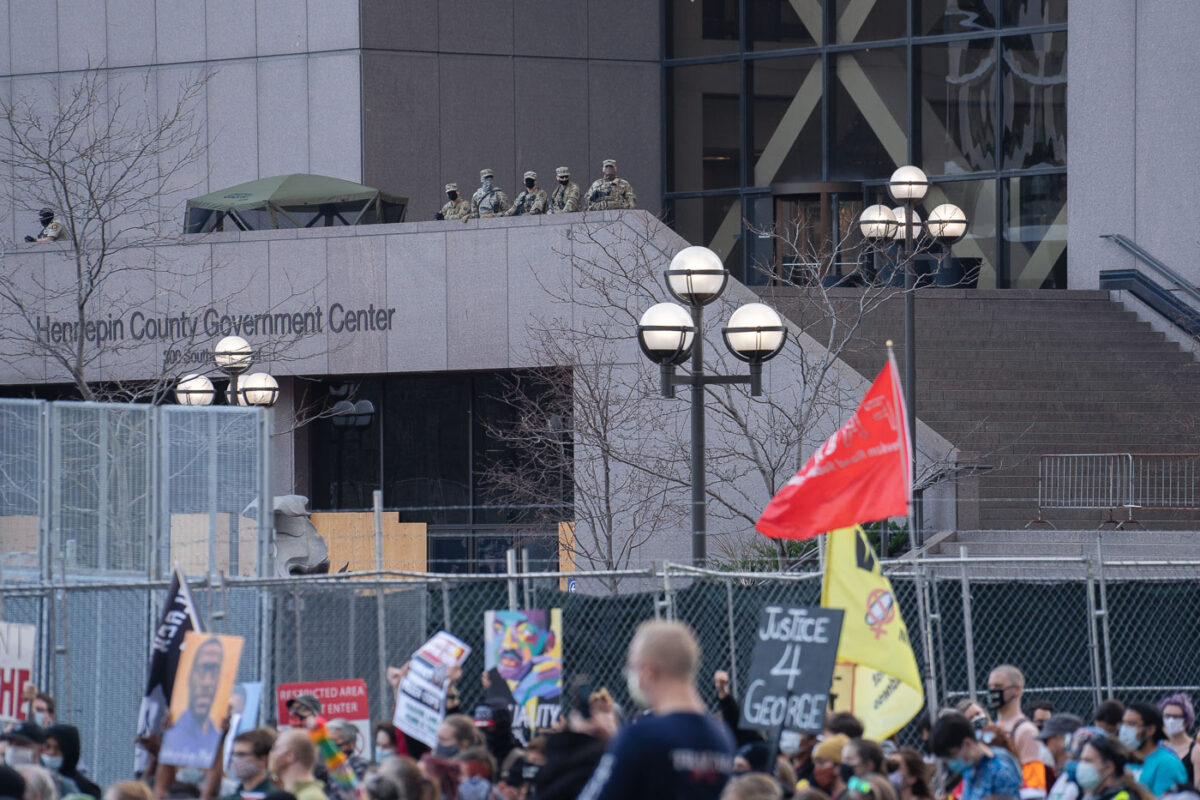
Hennepin County police look down on protesters at Chauvin trial
On March 8, 2021, protesters gathered outside the Hennepin County Government Center in Minneapolis to rally and march on the day opening statements began in the trial of Derek Chauvin. Chauvin, a former Minneapolis police officer, was accused of murdering George Floyd on May 25, 2020. The building, located at 300 South Sixth Street, serves as the seat of county government and houses courtrooms and administrative offices. Security forces, including National Guard members, were visible on the building's upper levels, and barricades were erected around the perimeter.

Hennepin County Government Center: Police observe Chauvin trial protest
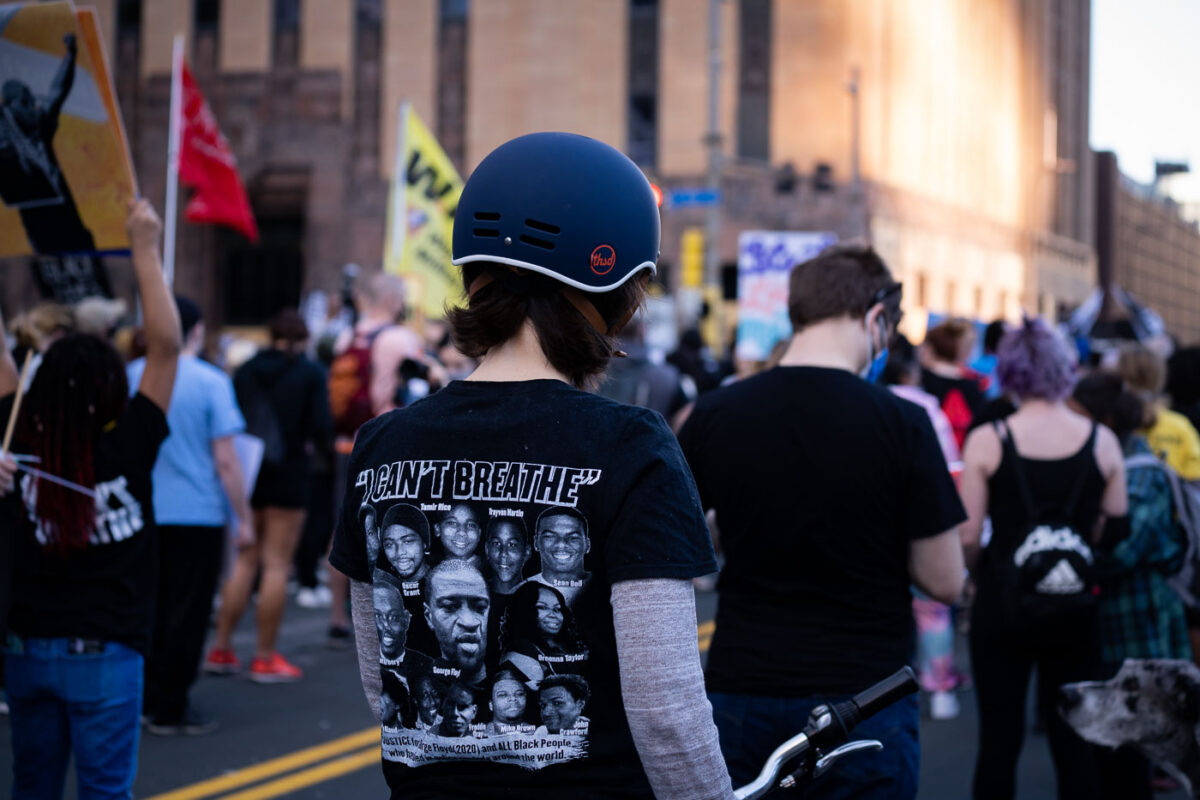
Protester with I Cant Breathe shirt on at start of George Floyd trial
Protesters gathered in Downtown Minneapolis on March 8, 2021, the day opening statements began in the trial of Derek Chauvin, the former police officer accused of murdering George Floyd on May 25, 2020. The shirt worn by the individual in the foreground displays "I Can't Breathe" along with portraits of Floyd and other Black individuals who died in encounters with law enforcement. This protest was part of a broader movement demanding justice for Floyd and accountability for police brutality.

Minneapolis Protest for George Floyd Trial
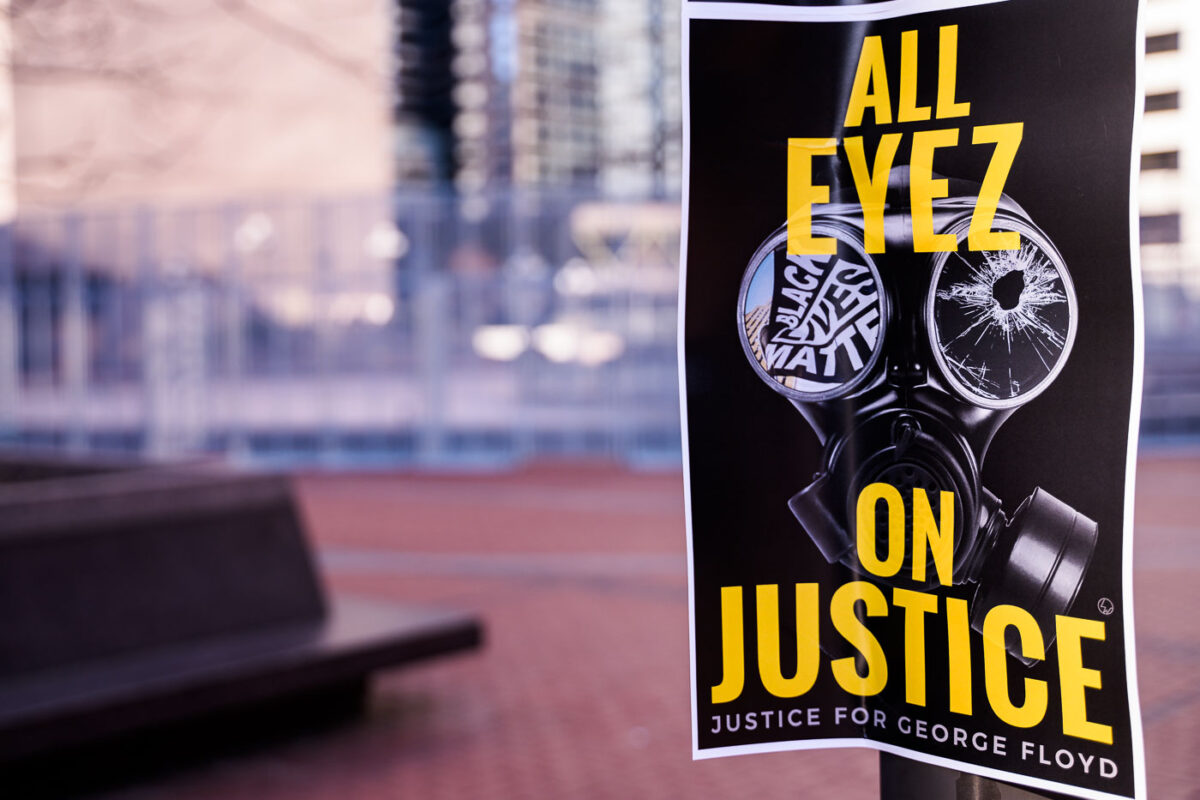
All Eyez on Justice protest sign
A protest sign reading "All Eyez On Justice" with the subtitle "Justice for George Floyd" is displayed outside the Hennepin County Courthouse in Minneapolis. The sign features a gas mask with a shattered lens, symbolizing the urgency and severity of the call for justice. This image was taken on March 29, 2021, during the trial of Derek Chauvin, the former Minneapolis police officer charged with the murder of George Floyd. The protest and subsequent trial drew national and international attention to issues of police brutality and racial injustice.

All Eyez on Justice protest sign for George Floyd, Minneapolis
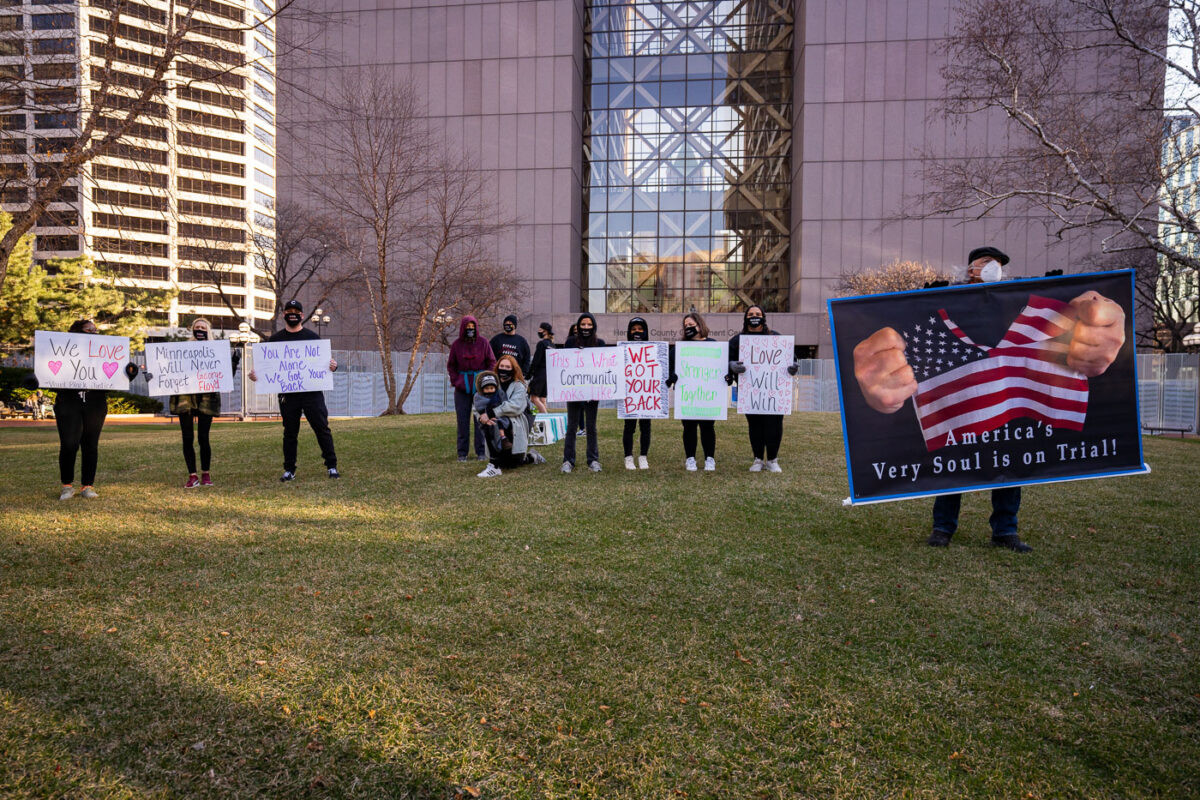
Opening Statement Protest in downtown Minneapolis
Protesters gathered outside the Hennepin County Government Center in Minneapolis on March 29, 2021, as opening statements began in the murder trial of former police officer Derek Chauvin. The trial followed the death of George Floyd, who died in police custody in Minneapolis in May 2020, sparking widespread protests against police brutality. The signs held by the demonstrators reflect sentiments of community support and a call for justice, with one banner stating, "America's Very Soul is on Trial!" The Hennepin County Government Center serves as a key judicial and administrative hub for the county.

Minneapolis Protest Outside Hennepin County Government Center
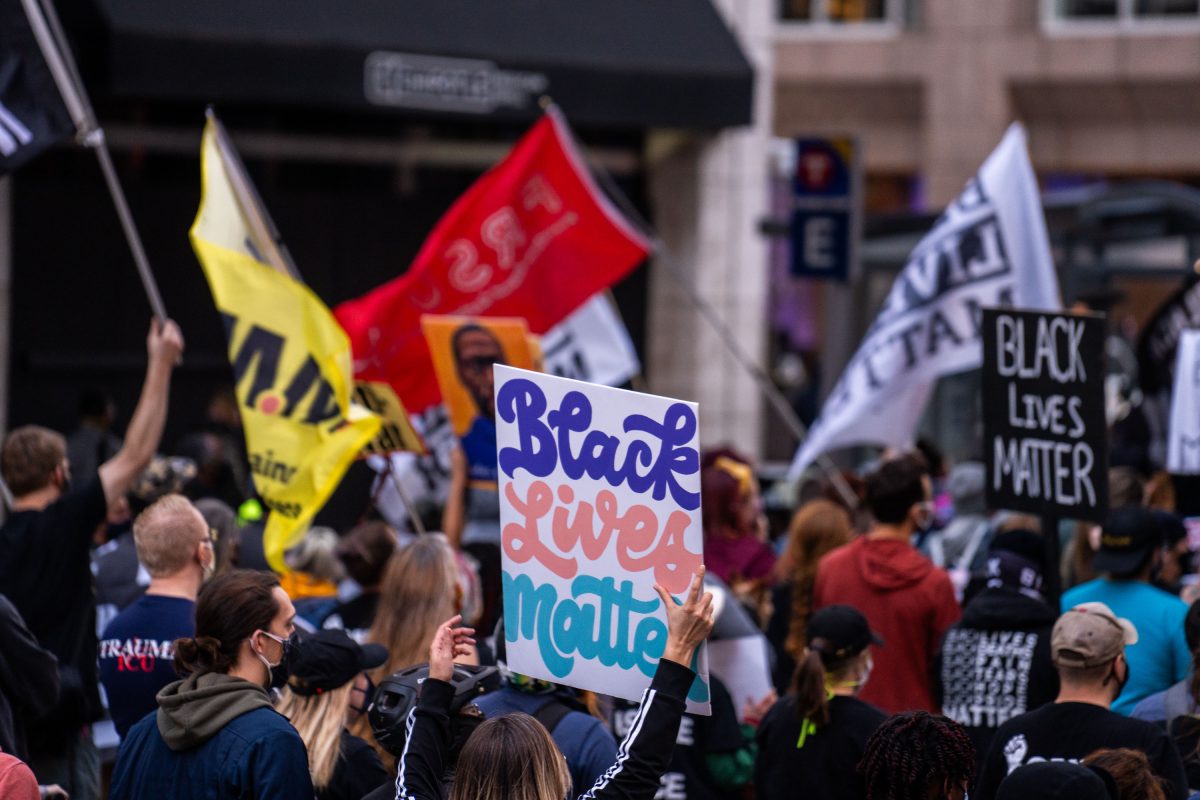
Chauvin Trial Opening Statements Protest and March, Minneapolis
Protesters gathered in downtown Minneapolis on March 29, 2021, the day opening statements began in the trial of Derek Chauvin, the former Minneapolis police officer charged in the killing of George Floyd. Floyd died on May 25, 2020, after Chauvin knelt on his neck during an arrest, an incident that sparked demonstrations across the country. The trial was held at the Hennepin County Government Center, just blocks from where marchers carried signs and flags through the city's downtown streets. Chauvin was later convicted on charges of second-degree unintentional murder, third-degree murder, and second-degree manslaughter.

Chauvin Trial Opening Statements Protest and March, Minneapolis

Protest day before Chauvin trial opening statements
Protesters march through downtown Minneapolis on March 7, 2021, the day before opening statements in the trial of Derek Chauvin. The former Minneapolis police officer was charged with murder and manslaughter in the death of George Floyd, an incident that occurred in the same city in May 2020. The marchers carried signs with images of Floyd and messages calling for justice, reflecting the widespread public outcry and demands for police accountability that followed Floyd's death.

Minneapolis Protest Day Before Chauvin Trial Opening Statements

George Floyd Square Greenhouse in March 2021
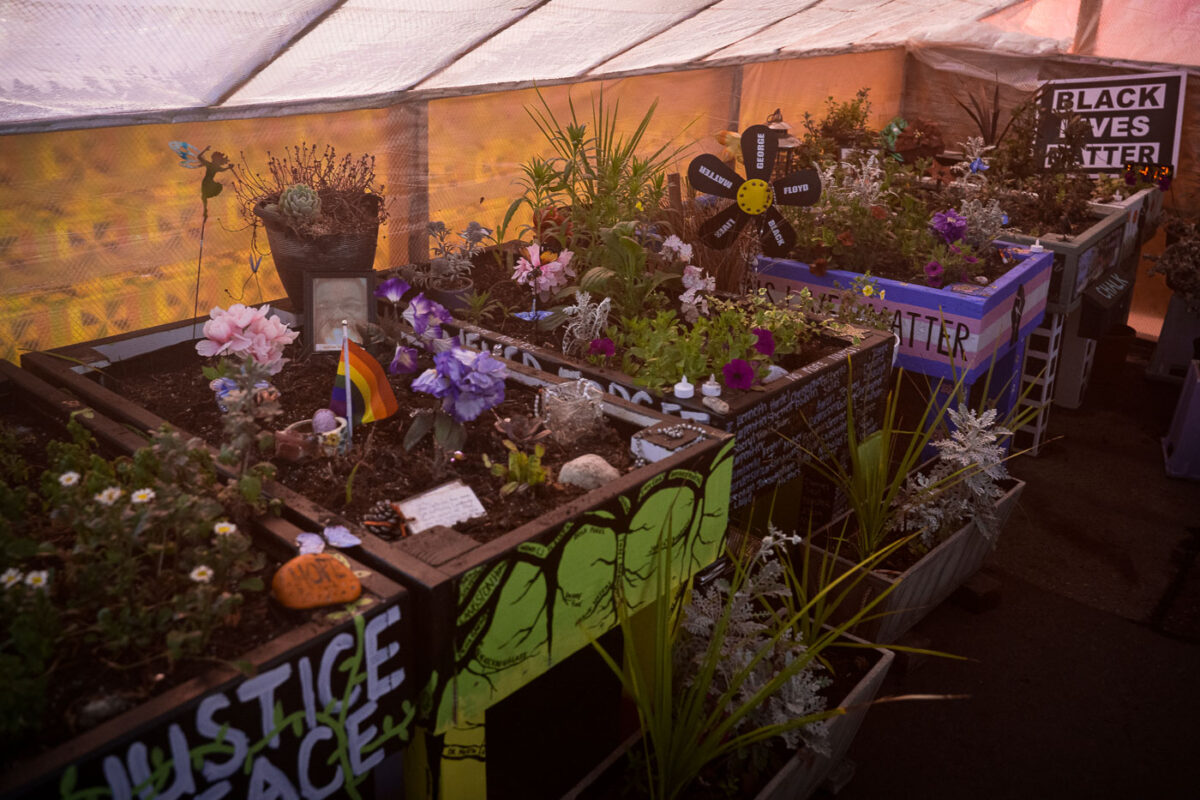
A greenhouse at George Floyd Square in Minneapolis, March 2021, served as a space for cultivating plants and flowers through the winter months. The square became a focal point for protests and activism following the murder of George Floyd in May 2020. This structure, adorned with signs and tributes such as "Black Lives Matter" and "Justice for George Floyd," reflects the community's ongoing commitment to remembrance and social justice.

George Floyd Square Greenhouse, Minneapolis, March 2021

George Floyd mural at Cup Foods in Minneapolis
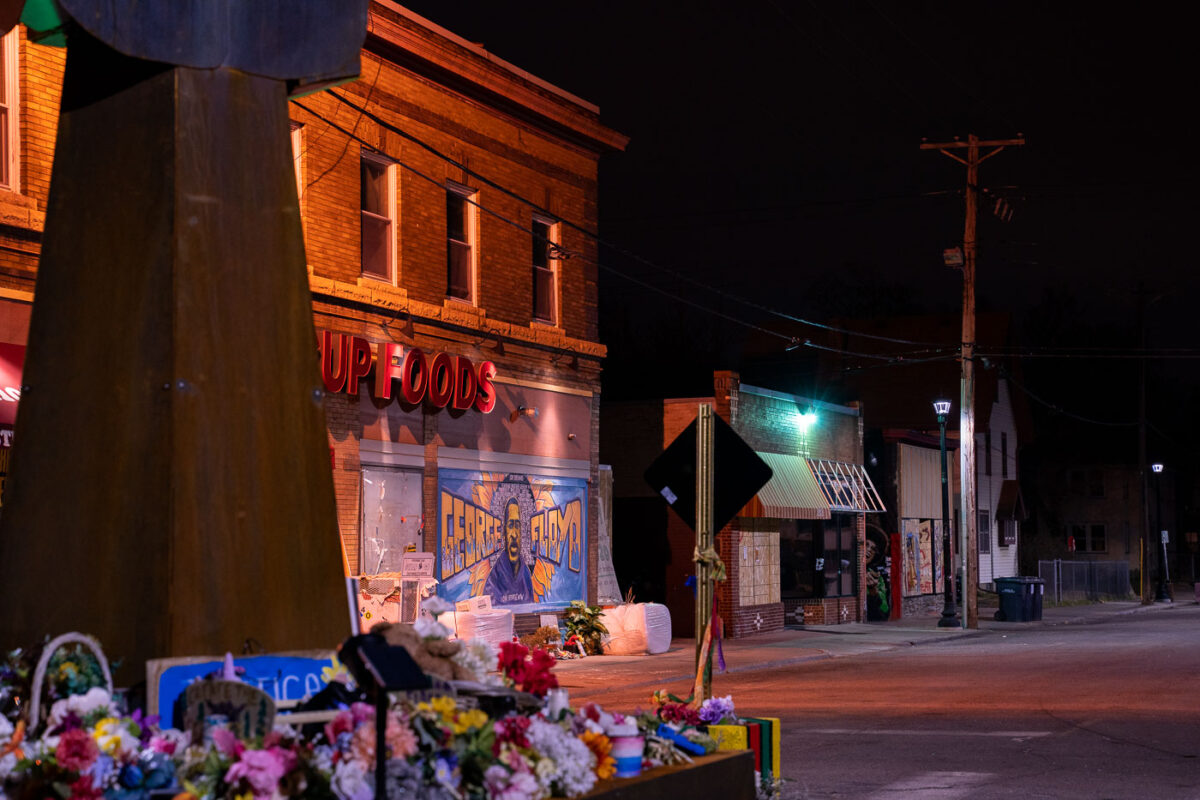
The George Floyd Memorial mural, located at Cup Foods on the corner of 38th Street and Chicago Avenue in South Minneapolis, was created in the aftermath of George Floyd's murder in May 2020. The mural serves as a focal point for remembrance and protest, situated at the epicenter of the "George Floyd Square" autonomous zone established by activists. This site became a significant gathering place for demonstrations and a symbol of the broader Black Lives Matter movement.

George Floyd Mural at Cup Foods, Minneapolis

Fist at George Floyd Square in March 2021
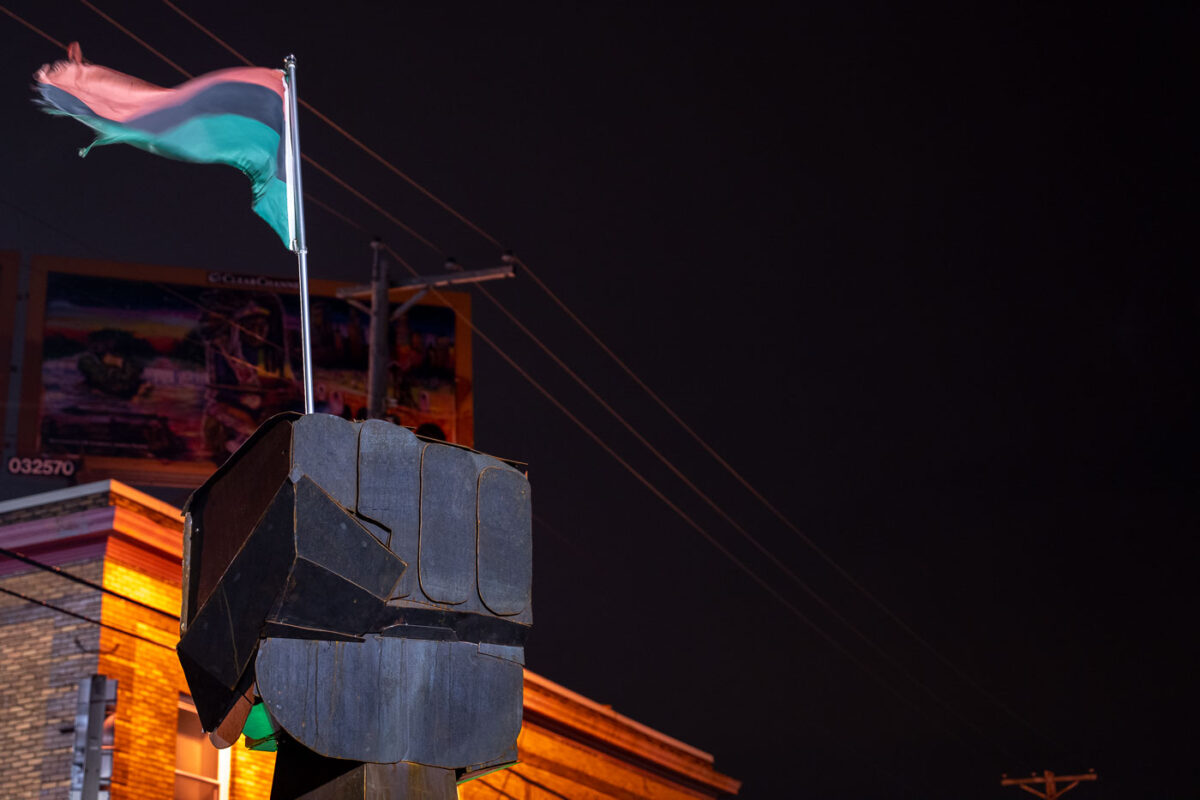
A raised fist sculpture and the Pan-African flag fly at George Floyd Square in Minneapolis in March 2021. The square, located at the intersection of Chicago Avenue and 38th Street, became a focal point for protests following the murder of George Floyd by Minneapolis police officer Derek Chauvin in May 2020. The area was occupied by protesters for an extended period, transforming it into a space for community gathering and activism. The fist and flag symbolize Black Power and solidarity, reflecting the ongoing movement for racial justice.

George Floyd Square Fist and Pan-African Flag, March 2021

Radisson RED behind boards in downtown Minneapolis
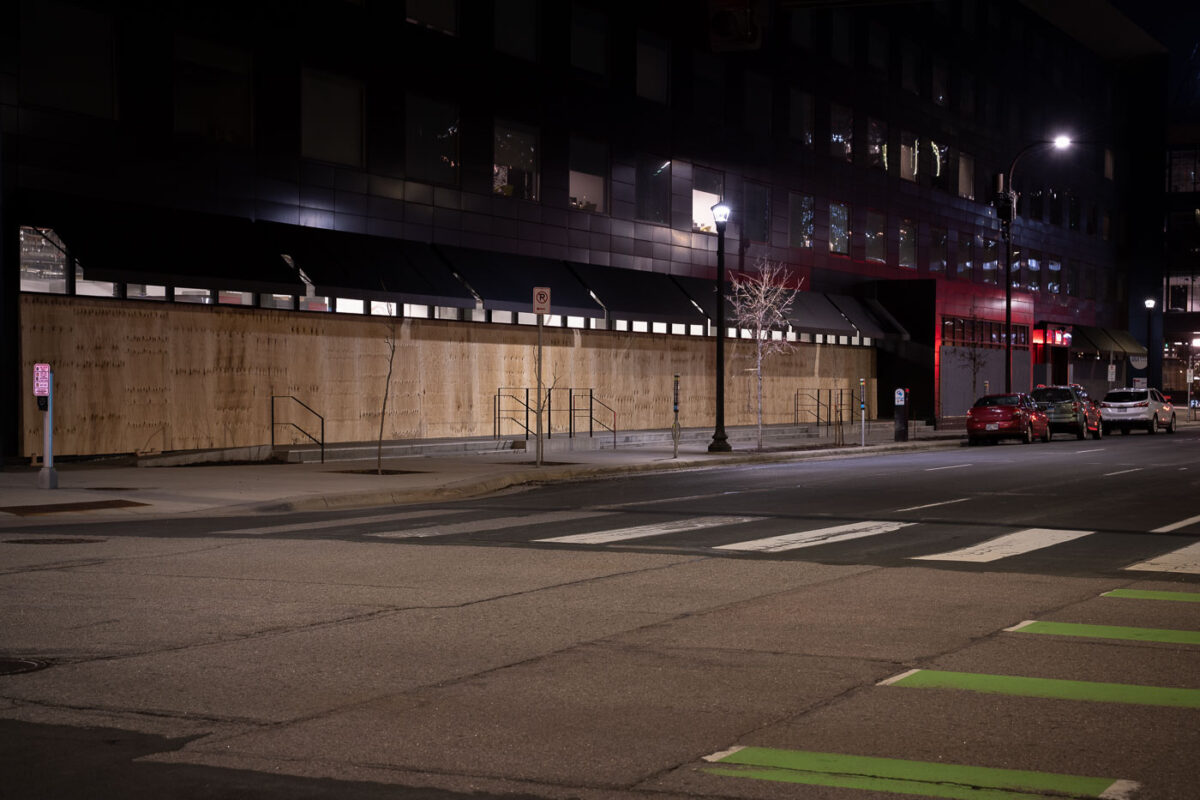
The Radisson RED Hotel in downtown Minneapolis is shown boarded up at night. This temporary measure was implemented following the civil unrest and protests that occurred in the city in the spring of 2020. The plywood covering the building's facade served to protect the property from potential damage during a period of heightened social and political tension. The hotel, located in the heart of the city, is a contemporary lodging establishment known for its unique design and amenities.

Radisson RED Hotel Boarded Up Downtown Minneapolis

Items at George Floyd Square
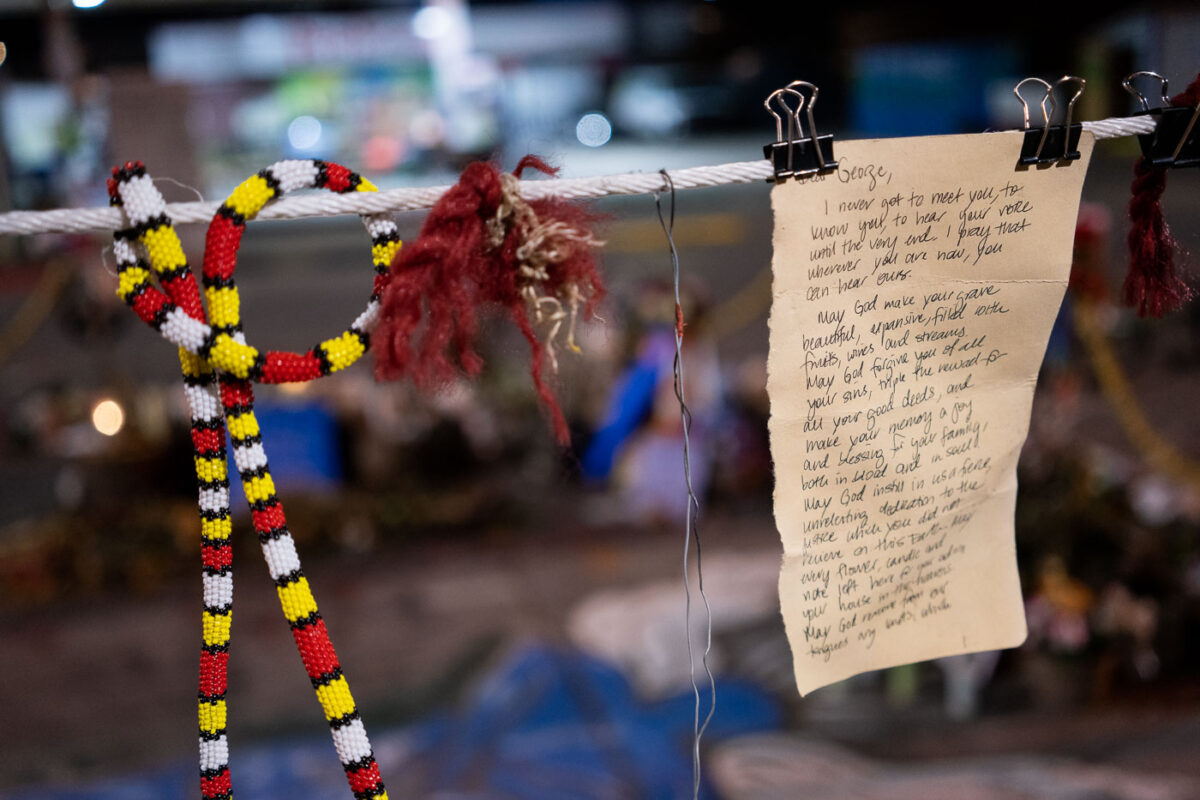
A handwritten letter and beaded necklaces are displayed at George Floyd Square in Minneapolis, a site that became a focal point for protests following the murder of George Floyd in May 2020. The area, located at the intersection of 38th Street and Chicago Avenue, was occupied by protesters for months. This memorial serves as a space for remembrance, reflection, and continued activism related to racial justice and police brutality.

Letter and beads at George Floyd Square, Minneapolis

Think about how many werent filmed at George Floyd Square
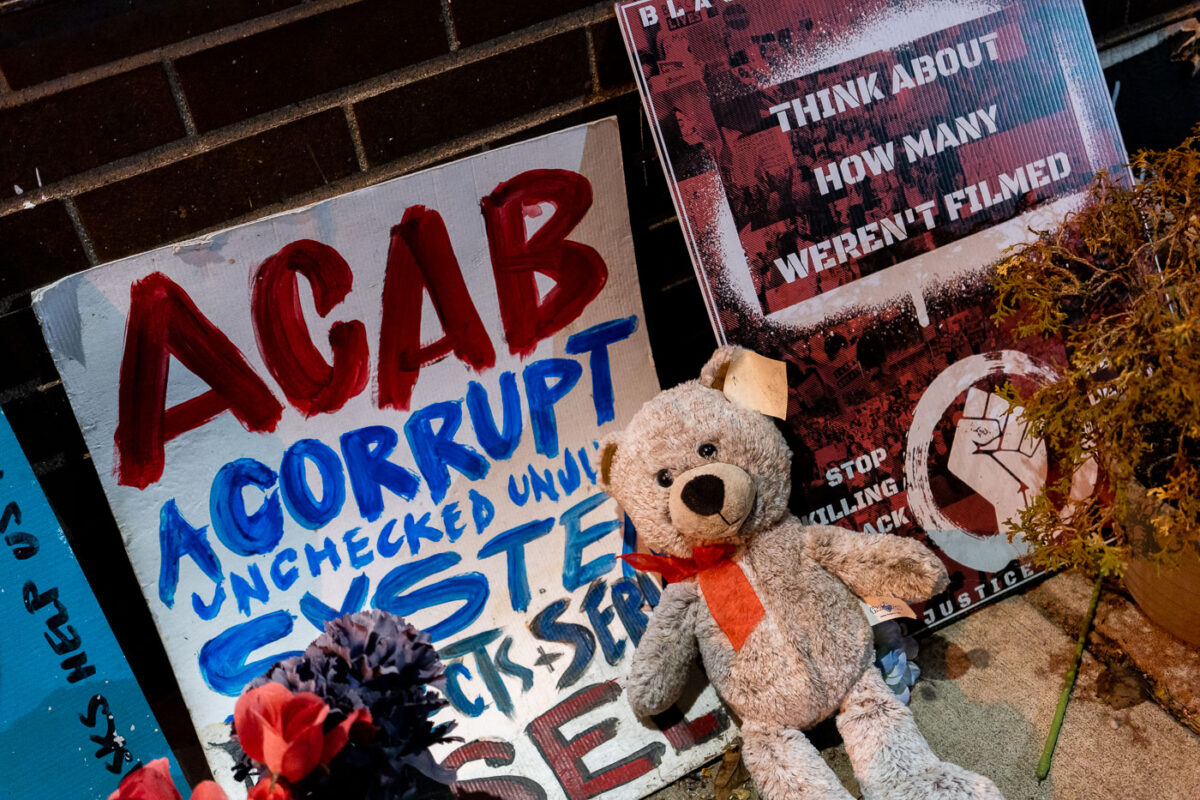
Protest signs, including one reading "ACAB" (All Cops Are Bastards) and another with the slogan "THINK ABOUT HOW MANY WEREN'T FILMED," are displayed near Cup Foods in George Floyd Square, Minneapolis. A teddy bear and flowers are placed as tributes. This area became a focal point for protests following the murder of George Floyd in May 2020, and has since been a site of ongoing activism and community organizing. The signs reflect sentiments expressed during the Minneapolis Uprising and subsequent movements advocating for police reform and racial justice.

George Floyd Square: ACAB protest signs and teddy bear

George Floyd mural on Chicago Ave March 2021
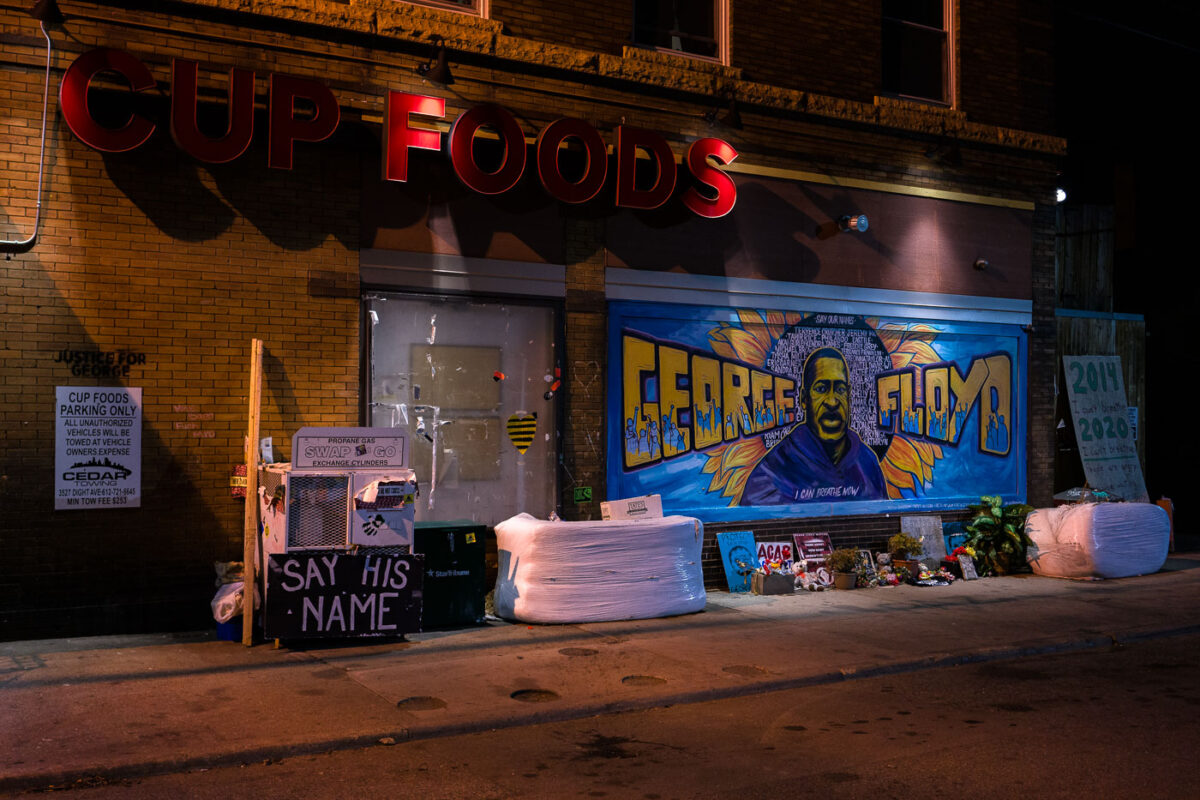
A mural honoring George Floyd is displayed on the exterior of Cup Foods in South Minneapolis, the site where Floyd was killed in May 2020. The mural, painted on the 38th Street side of the store, features Floyd's portrait and the names of other Black individuals who have died due to police brutality. The area around the mural has become a memorial, with flowers, signs, and other tributes placed on the sidewalk. This location, often referred to as George Floyd Square, became a focal point for protests and activism following Floyd's death.

George Floyd Mural at Cup Foods, Minneapolis

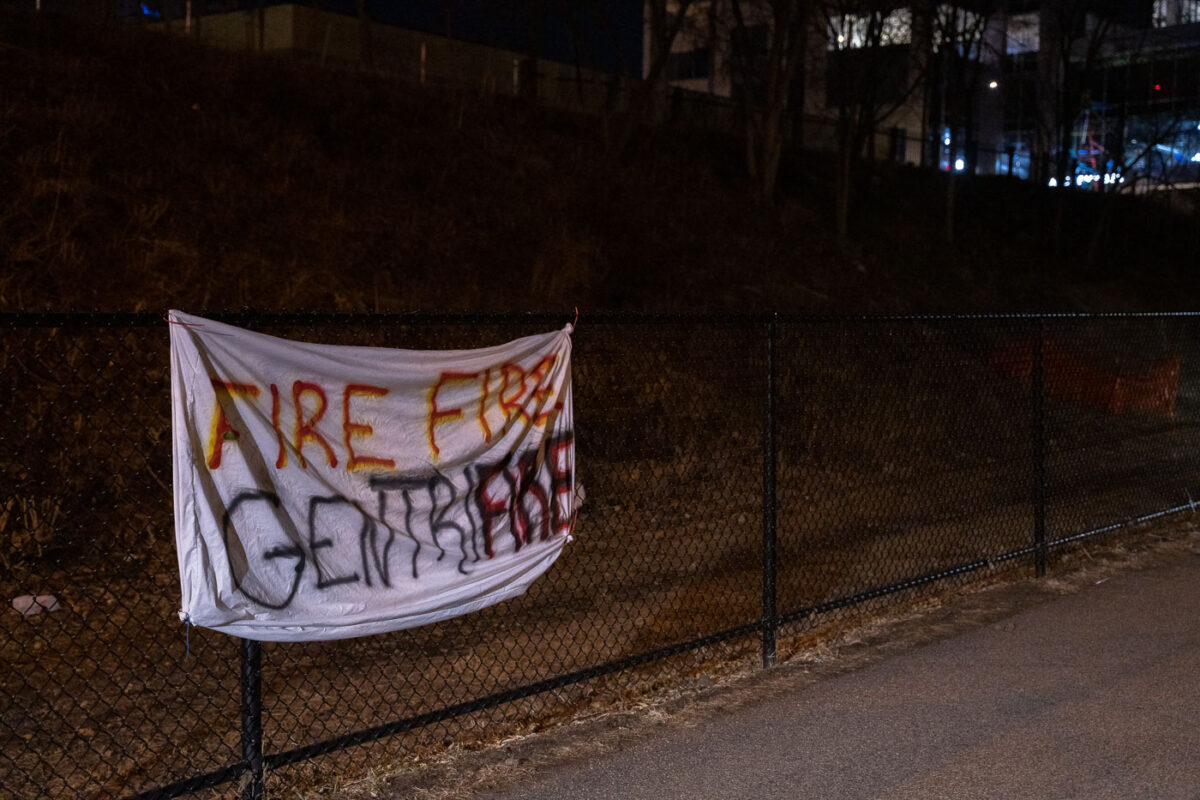
Fire Fire Gentrifire Protest sign
A protest sign reading "Fire Fire Gentrifire" is displayed on a fence along the Midtown Greenway in Minneapolis.

Midtown Greenway Protest Sign: Fire Fire Gentrifire

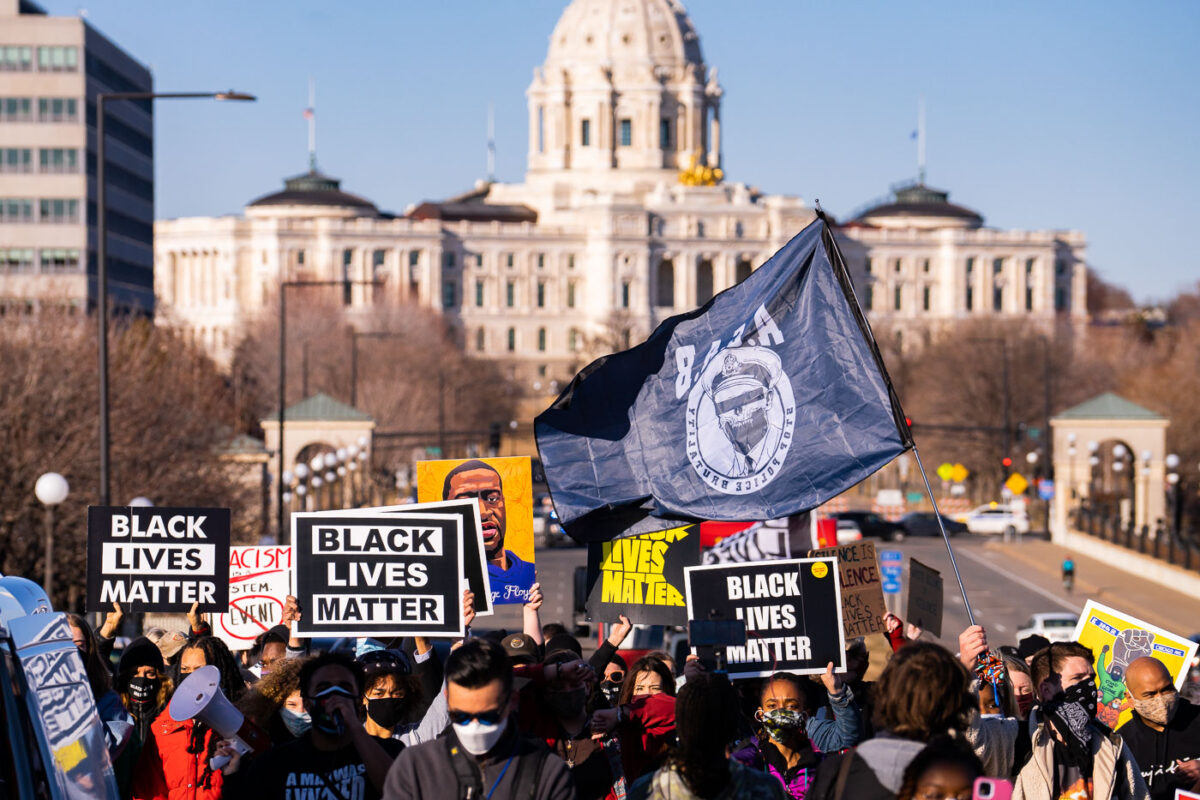
Protesters march at Minnesota State Capitol March 2021
Protesters gathered at the Minnesota State Capitol in St. Paul in March 2021 to demand justice for George Floyd and an end to police brutality. The demonstration occurred nearly a year after Floyd's murder by Minneapolis police, an event that sparked widespread protests across the nation and globally. The Minnesota State Capitol building, completed in 1905, serves as the seat of government for the state and is a prominent landmark in the Twin Cities.

Black Lives Matter Protest at Minnesota State Capitol, March 2021

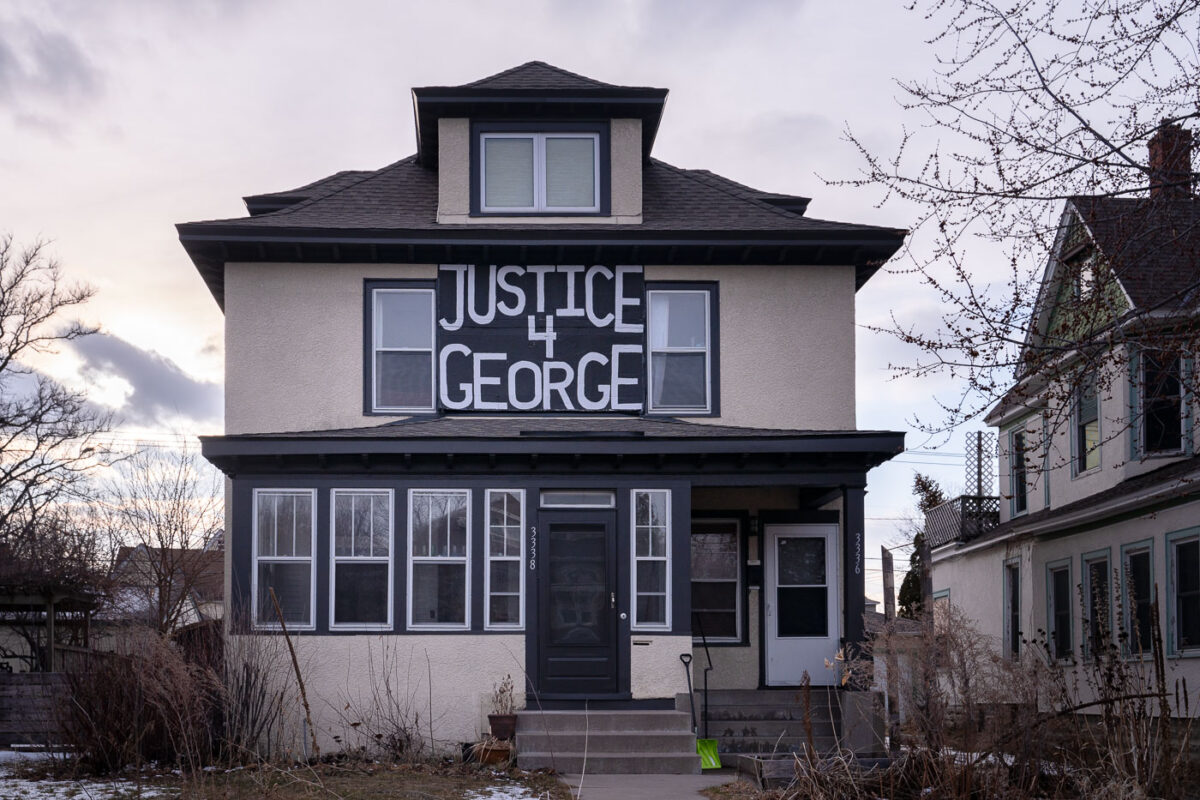
Justice 4 George sign on Minneapolis home
A sign reading "Justice 4 George" is displayed on a home at 3338 21st Avenue South in Minneapolis. This message reflects the widespread public outcry and protests that followed the murder of George Floyd, a Black man who died in police custody in Minneapolis in May 2020. The sign serves as a visible statement of solidarity and a demand for accountability within the community. The Minneapolis Uprising, sparked by Floyd's death, brought national and international attention to issues of racial injustice and police brutality.

Justice 4 George sign on Minneapolis home, 3338 21st Ave S

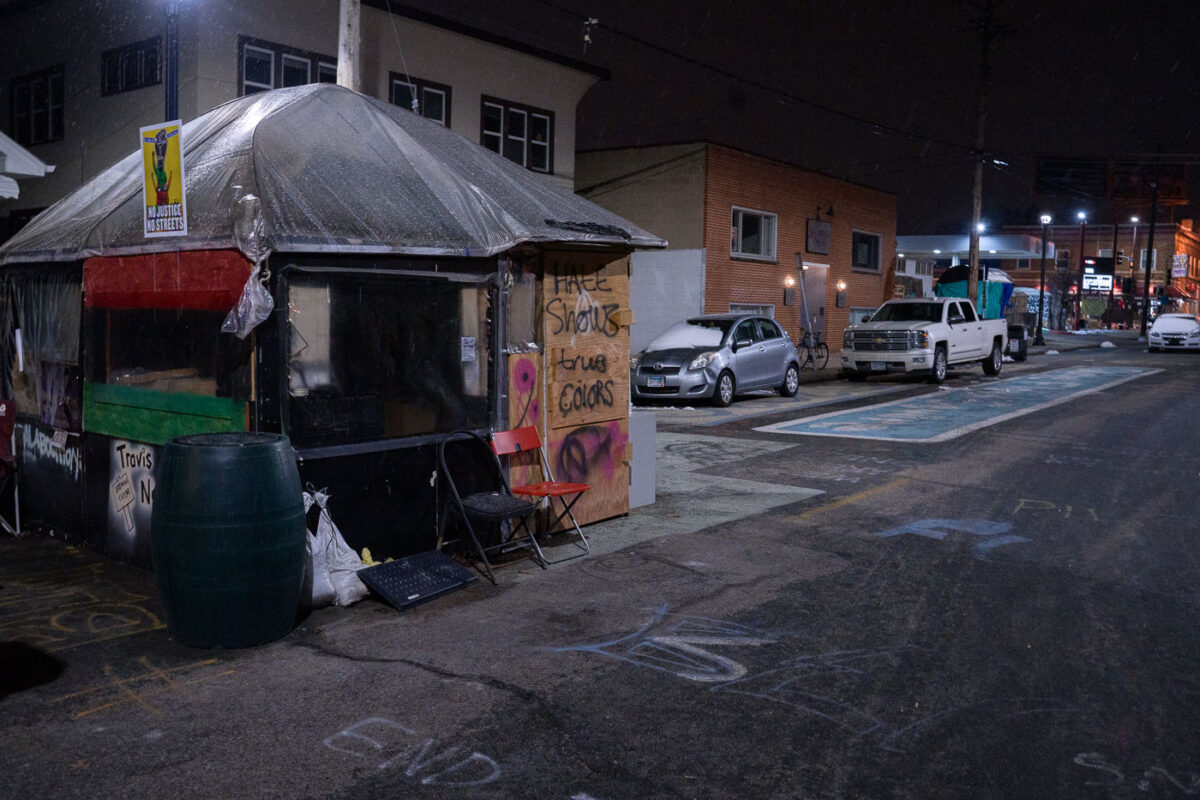
George Floyd Square Warming Shelter
A temporary warming shelter was erected at George Floyd Square in Minneapolis in March 2021, near the barricades that had been established following the murder of George Floyd. This structure provided refuge during cold weather for individuals present at the occupied space. The square, a focal point of protests and activism, was transformed into a community space after Floyd's death in May 2020. The shelter's presence highlights the ongoing community organizing and mutual aid efforts within the protest zone.

George Floyd Square Warming Shelter, Minneapolis, March 2021

George Floyd Square Community Info
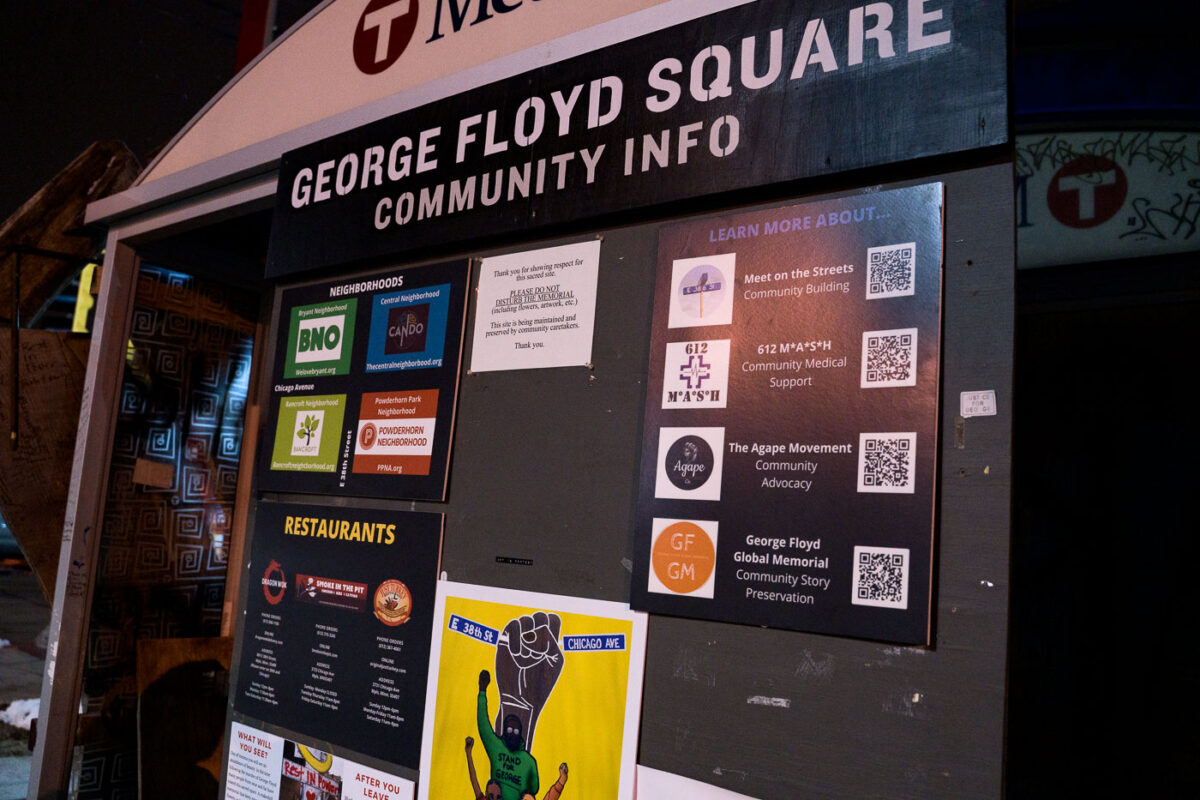
The "George Floyd Square Community Info" board, photographed on March 16, 2021, served as a central hub for information and resources within the occupied zone in Minneapolis. The board lists various neighborhood organizations, community services like medical support and advocacy groups, and local restaurants. It also includes a "Please Do Not Disturb the Memorial" notice, indicating the site's designation as a sacred space maintained by community caretakers. The "George Floyd Global Memorial Community Story Preservation" section highlights efforts to document and preserve the history of the site and the events that led to its establishment.

George Floyd Square Community Info Board, Minneapolis

Protest in the snow outside Chauvin trial in Minneapolis
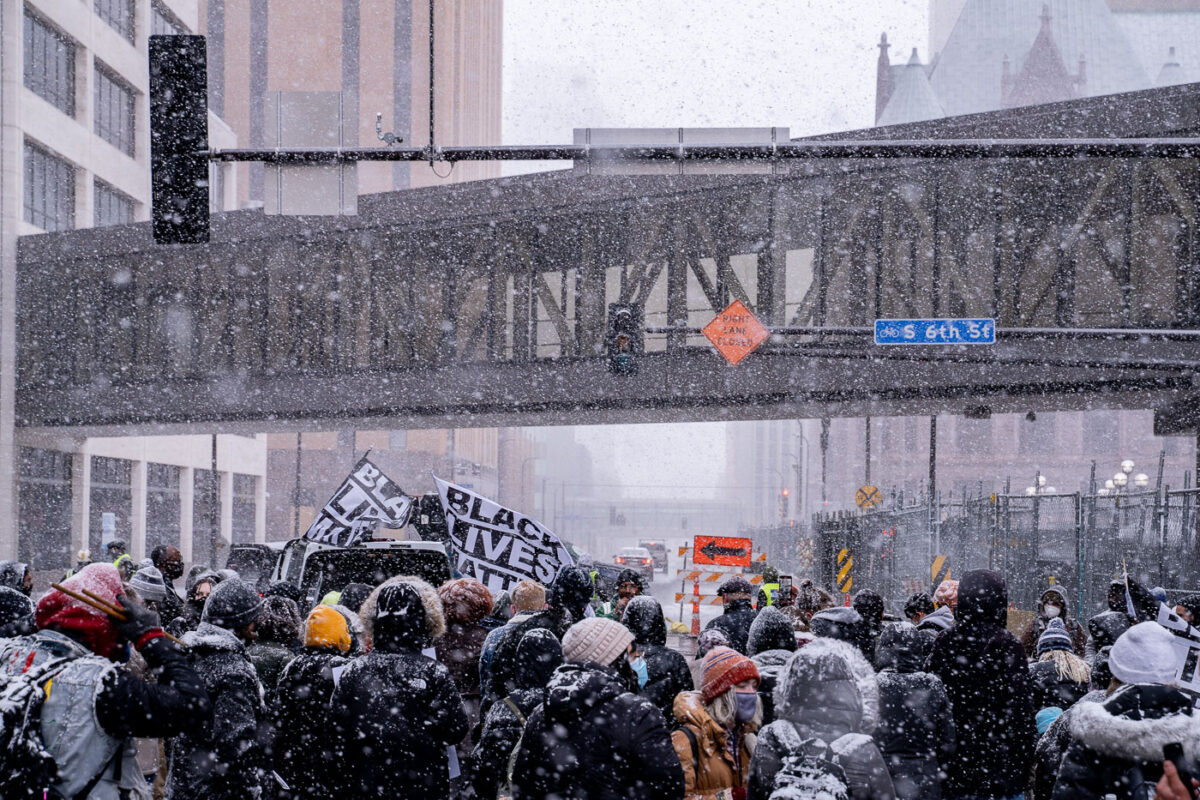
Protesters gathered in downtown Minneapolis during a snowstorm outside the Hennepin County Government Center. The demonstration occurred during the trial of Derek Chauvin, the former Minneapolis police officer charged in the death of George Floyd. The "Black Lives Matter" flags visible indicate the protest's alignment with the movement advocating for racial justice and police accountability.

Minneapolis Protest in Snow Outside Chauvin Trial

Protest looks at National Guard officers during Chauvin trial
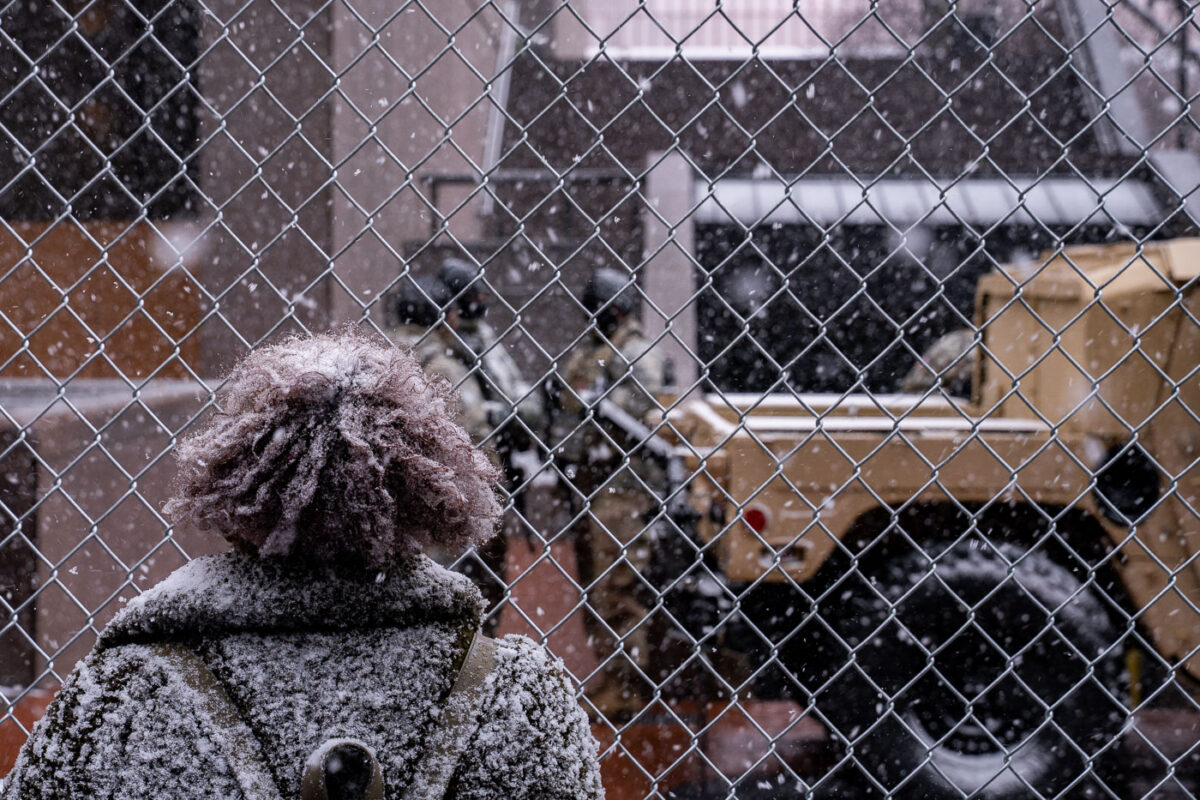
During the trial of former Minneapolis Police Officer Derek Chauvin, protesters gathered outside the Hennepin County Government Center. The trial, which began in March 2021, concerned the murder of George Floyd on May 25, 2020. The presence of the National Guard and barricades indicated the heightened security measures in place due to the potential for civil unrest, a concern amplified by the ongoing protests and the Minneapolis Uprising that followed Floyd's death.

Minneapolis: Protesters face National Guard during Chauvin trial

Snow falls at Hennepin County Courthouse with protesters
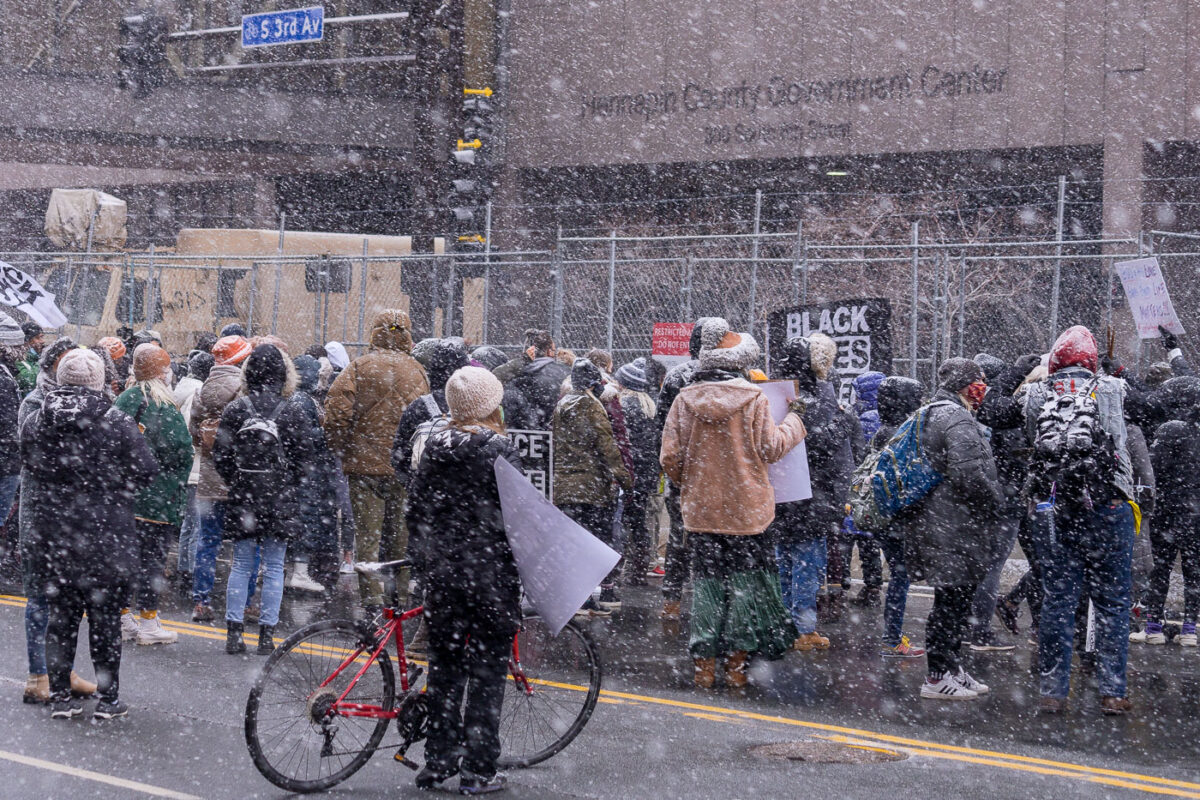
Protesters gathered in falling snow outside the Hennepin County Government Center in Minneapolis, demanding a fair jury selection process in the trial of Derek Chauvin. Chauvin, a former Minneapolis police officer, was accused of murdering George Floyd on May 25, 2020. The government center serves as a primary administrative and judicial hub for Hennepin County. This protest occurred during the trial, highlighting public scrutiny of the justice system.

Protesters March in Snow at Hennepin County Government Center

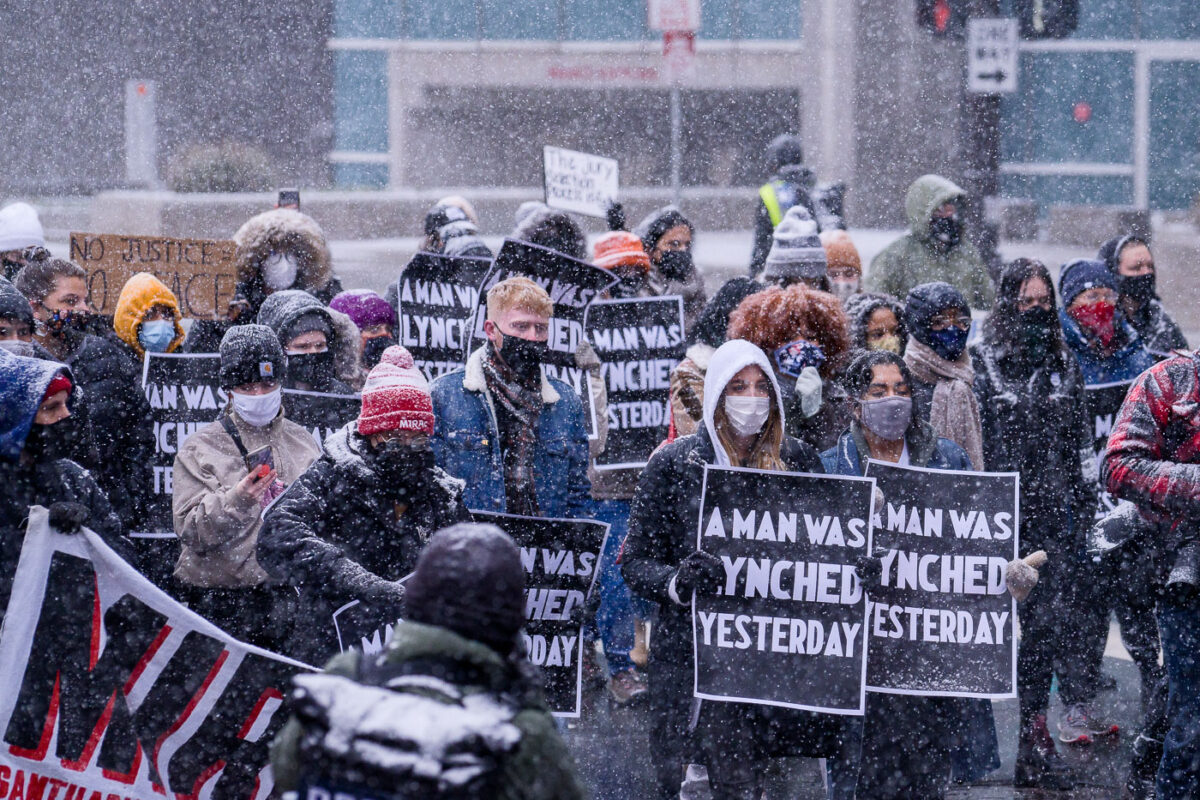
A Man Was Lynched Yesterday Protest Signs
Protesters gathered outside the Hennepin County Government Center in Minneapolis during a snowstorm. The courthouse was the site of the Derek Chauvin murder trial, who was charged in the death of George Floyd. Signs carried by the protesters read "A Man Was Lynched Yesterday," referencing the ongoing racial injustice and police brutality protests that followed Floyd's murder on May 25, 2020.

Minneapolis Protest: “A Man Was Lynched Yesterday” Signs

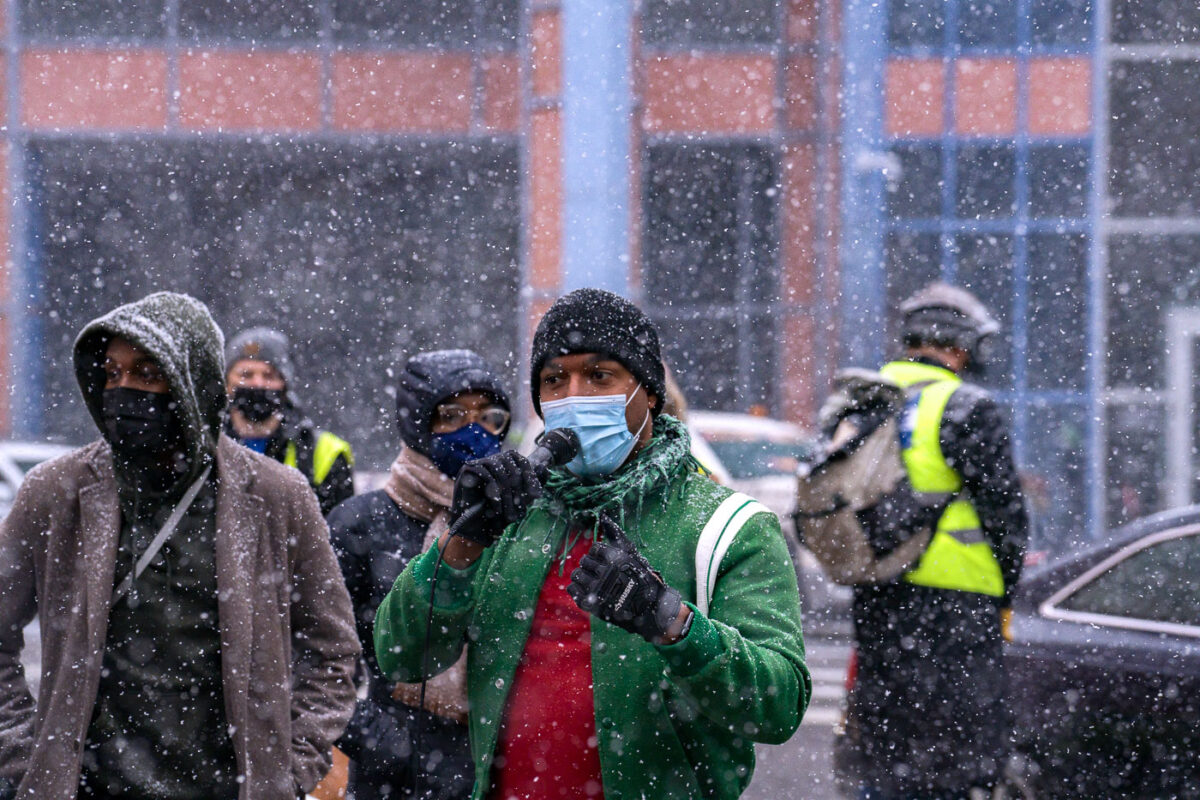
Toussaint Morrison speaks outside Chauvin trial
Toussaint Morrison addresses a crowd during a protest in Minneapolis on March 15, 2021. The protest occurred during the trial of Derek Chauvin, the former Minneapolis police officer charged in the murder of George Floyd. The trial, which began on March 8, 2021, brought renewed attention to racial injustice and police brutality in the United States. This event was part of a series of demonstrations that took place across the country following Floyd's death in May 2020.

Toussaint Morrison speaks at Minneapolis protest during Chauvin trial

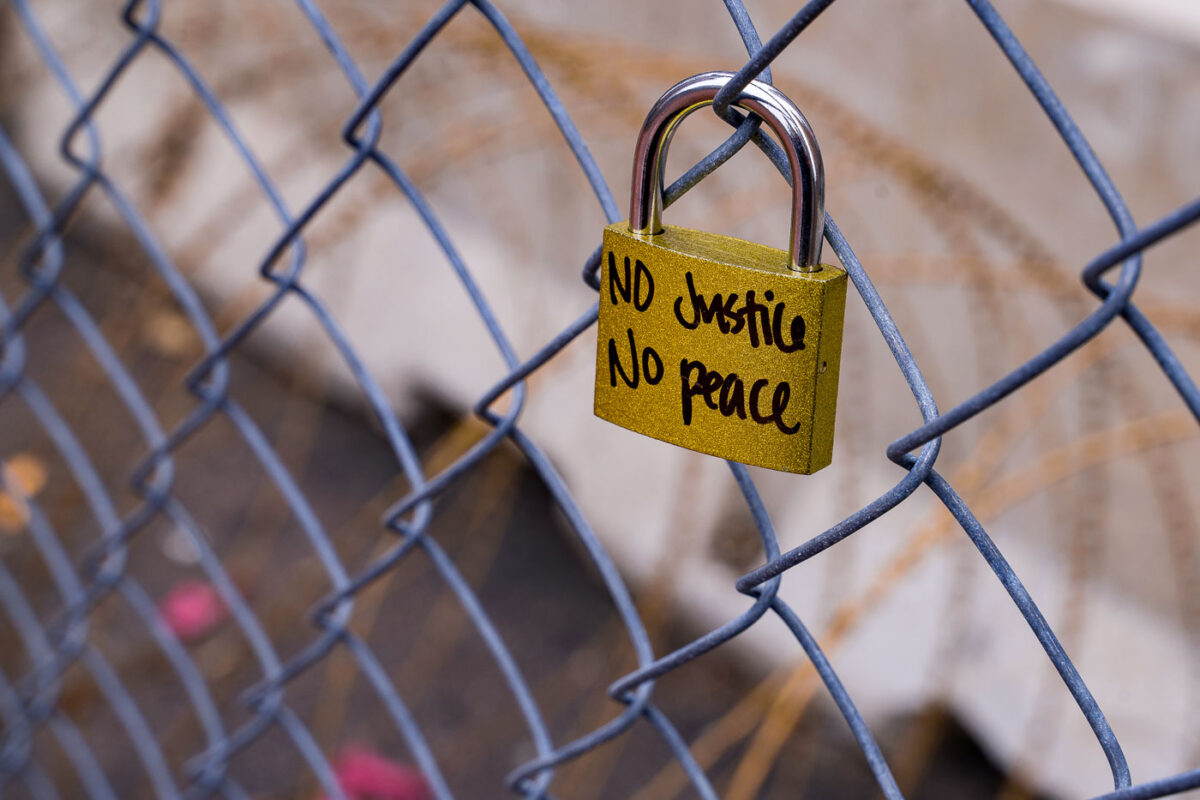
No Justice No Peace lock at Chauvin trial
A padlock inscribed with "No justice, No peace" is affixed to a chain-link fence surrounding the Hennepin County Government Center in Minneapolis. This security measure was in place during the 2021 trial of Derek Chauvin, a former Minneapolis police officer charged with the murder of George Floyd. The trial, held in the same building, drew significant public attention and protests related to racial justice and police brutality.

Minneapolis: Lock on fence at Hennepin County Government Center during Chauvin trial

Theres Blood In These Streets mirror art
Mirrored panels bearing protest messages, including "There's Blood In These Streets" and "No Justice No Peace," are displayed outside the Hennepin County Government Center in Minneapolis. The courthouse was the site of the trial for Derek Chauvin, a former Minneapolis police officer charged in the death of George Floyd on May 25, 2020. The messages reflect the ongoing protests and calls for justice that followed Floyd's murder and highlighted systemic issues within law enforcement.

Minneapolis: Mirror Art at Hennepin County Government Center During Chauvin Trial

Signs on fencing around burned Minneapolis police station
Protest signs adorn the exterior of the former Minneapolis Police Third Precinct building, which was set ablaze during the unrest following the May 25th death of George Floyd. The signs, including messages such as "Justice for George Floyd," "Defund the Police," and "Black Lives are Sacred," reflect the sentiments of the community and the broader movement for racial justice. The precinct, a symbol of law enforcement in the neighborhood, became a focal point of protests and a site of significant destruction. The presence of these signs on the barricaded structure serves as a visual testament to the events of spring and summer 2020.

Minneapolis Police 3rd Precinct Fencing with Protest Signs

Roses in blood art installation at Chauvin trial
Roses, some appearing to be stained with red paint to resemble blood, were placed in a puddle outside the Hennepin County Government Center in Minneapolis. This installation occurred during the trial of Derek Chauvin, a former Minneapolis police officer charged with the murder of George Floyd. The trial, held in April 2021, drew significant national attention to issues of police brutality and racial justice.

Roses in paint outside Hennepin County Government Center during Chauvin trial
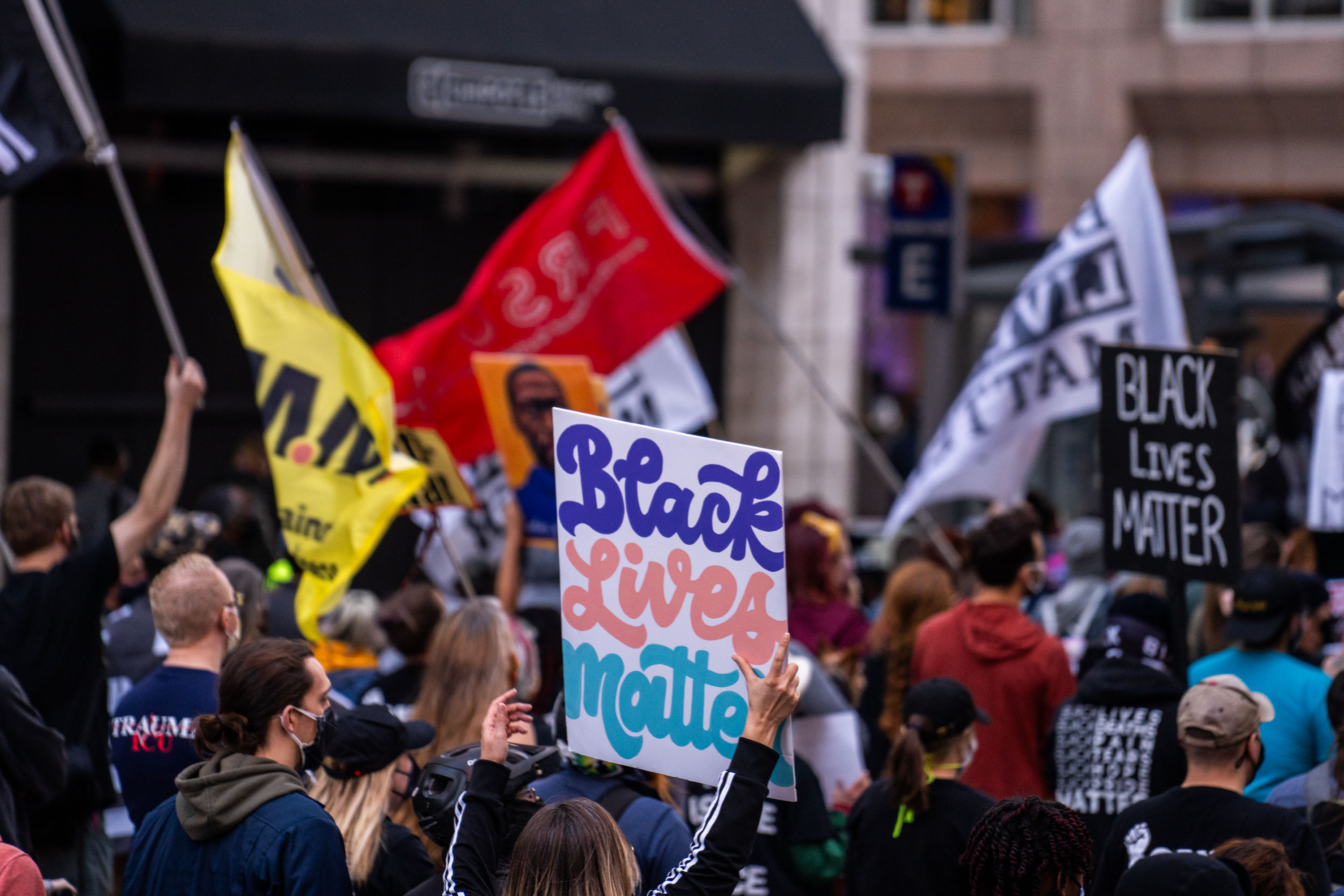
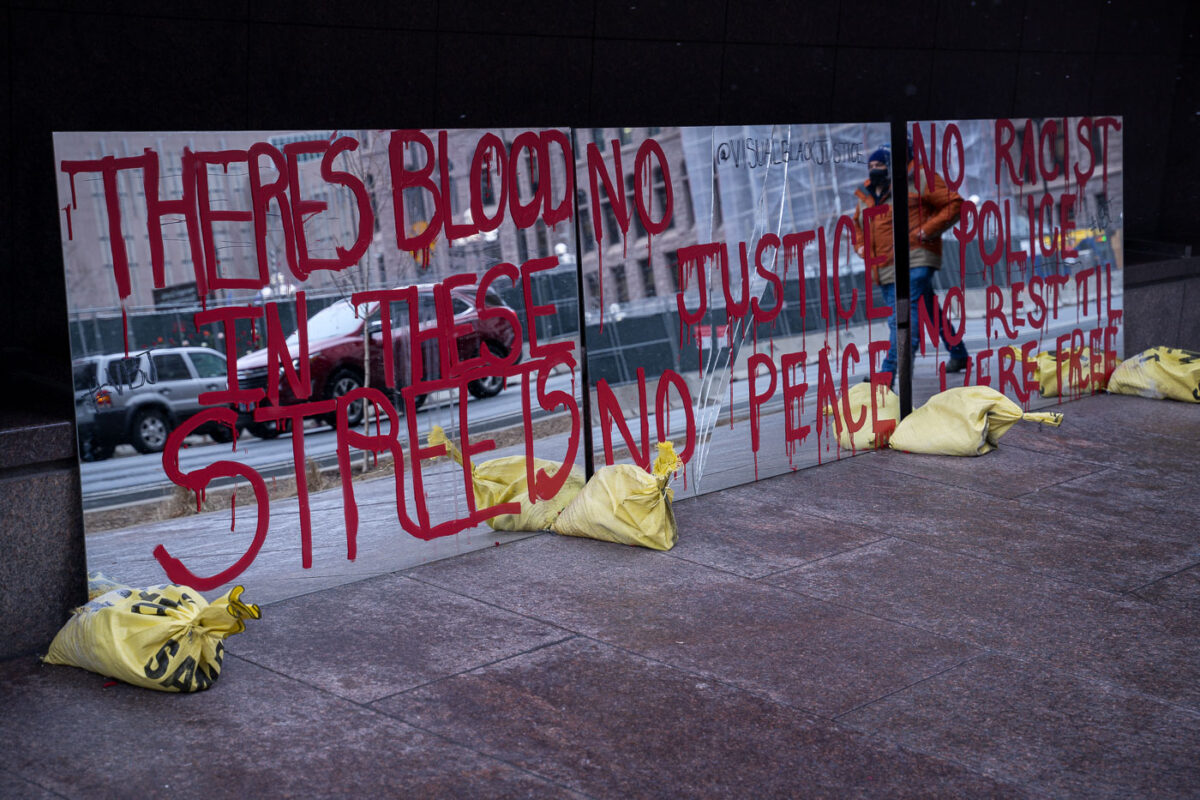
Reflect art installation outside Chauvin trial
An art installation reading "REFLECT" stands outside the Hennepin County Government Center in Minneapolis. The installation was present during the trial of Derek Chauvin, a former Minneapolis police officer charged with the murder of George Floyd on May 25, 2020. The trial, which began on March 8, 2021, drew significant public attention and protests related to police brutality and racial justice. The "REFLECT" installation, along with scattered roses and protest signs, served as a visual reminder of the ongoing discourse surrounding Floyd's death and its broader implications.

Reflect art installation outside Hennepin County Government Center

Protesters with mirrors and flowers outside Chauvin trial
Flowers and mirrors are placed on the street outside the Hennepin County Government Center in Minneapolis, Minnesota. This display occurred during the period of protests and unrest following the murder of George Floyd in May 2020 and the subsequent trial of Derek Chauvin. The mirrors, some bearing red paint, likely symbolize reflection and accountability, while the flowers serve as a memorial to victims of police brutality. The Hennepin County Government Center was a focal point for many demonstrations during this time.

Flowers and mirrors outside Hennepin County Government Center

Bringing In the National Guard flyer
A sign posted on a chain-link fence surrounding the Hennepin County Government Center in Minneapolis reads "Bringing in the National Guard. What Could Possibly Go Wrong?" The poster includes a photograph from the Kent State shootings on May 4, 1970, where the Ohio National Guard fired on unarmed students during a protest. This juxtaposition of historical imagery with the contemporary presence of the National Guard in Minneapolis, likely during the protests following the murder of George Floyd, serves as a pointed commentary on the potential for state-sanctioned violence. The inclusion of flowers suggests a memorial or a somber reflection on the events.

Hennepin County Government Center: National Guard Sign

Black Lives Matter chalk on black boards
Messages of protest and solidarity are chalked onto boarded-up windows of a building near the Hennepin County Government Center in Minneapolis. The messages, including "Justice for George Floyd," "Stop Killing Us," and "Black Lives Matter," were created in the context of the trial of former Minneapolis Police Officer Derek Chauvin. Chauvin was charged with murder in the death of George Floyd on May 25, 2020, an event that sparked widespread protests against police brutality and racial injustice.

Minneapolis: BLM messages on boarded-up building near Chauvin trial

Minnesota National Guard outside Hennepin Courthouse
A member of the Minnesota National Guard stands in front of a military vehicle outside the Hennepin County Government Center in Minneapolis. This deployment occurred during a period of heightened tension and unrest in the city, following the murder of George Floyd and the subsequent trial of Derek Chauvin. The National Guard was activated to support local law enforcement and maintain order amidst widespread protests against police brutality. The Hennepin County Government Center, a prominent civic building in downtown Minneapolis, served as a focal point during these events.

Minnesota National Guard at Hennepin County Government Center

Justice 4 George Floyd and All Stolen Lives in Minneapolis
A large crowd gathered in downtown Minneapolis on March 8, 2021, to protest the murder of George Floyd and demand justice. The protest occurred outside the Hennepin County Government Center on the morning of the first day of the trial for former Minneapolis police officer Derek Chauvin. Chauvin was charged with second-degree murder and manslaughter in connection with Floyd's death on May 25, 2020. The "Black Lives Matter" movement gained significant momentum following Floyd's death, highlighting issues of police brutality and racial injustice.

Minneapolis Protest for George Floyd and Stolen Lives

Protesters march through downtown at start of Chauvin trial
A large crowd gathered in downtown Minneapolis for a protest related to the trial of Derek Chauvin, the former Minneapolis Police Officer charged in the murder of George Floyd on May 25, 2020. The protest took place outside the Hennepin County Government Center prior to the start of the trial. Many carried signs with messages such as "Justice for George Floyd," "Convict Killer Cops," and "Black Lives Matter," reflecting the broader movement against police brutality and racial injustice.

Protesters march downtown Minneapolis for Derek Chauvin trial

George Floyd pins being sold outside courthouse
Pins commemorating George Floyd and bearing the slogan "I Can't Breathe" are displayed for sale outside the Hennepin County Courthouse in Minneapolis. This location was the site of the trial of Derek Chauvin, the former Minneapolis police officer convicted of Floyd's murder in April 2021. The sale of such merchandise reflects the broader cultural and political impact of Floyd's death and the subsequent Black Lives Matter movement, which gained significant momentum following the incident in May 2020. The courthouse itself is a significant civic building in downtown Minneapolis, serving as a central hub for legal proceedings in the county.

George Floyd Pins Sold Outside Hennepin County Courthouse

Minneapolis is under military occupation
Protesters gathered outside the Hennepin County Government Center in Minneapolis on March 8, 2021, the day the Derek Chauvin murder trial began. The sign, held by a protester, reads "Minneapolis is under military occupation," reflecting the sentiment of many during the widespread protests against police brutality that followed George Floyd's murder. The trial itself was a focal point for ongoing activism and calls for justice and accountability within the Minneapolis community and beyond.

Minneapolis Protest Sign: “Minneapolis is under military occupation”

Protester writes with chaulk at Chauvin trial
During the trial of Derek Chauvin, a protester writes messages in chalk outside the Hennepin County Courthouse in Minneapolis. The trial, which began in March 2021, centered on the murder of George Floyd, a Black man who died in police custody. The courthouse and surrounding areas became a focal point for protests and demonstrations related to police brutality and racial justice. The chalk messages serve as a form of public expression and a visual record of the community's response to the ongoing legal proceedings and broader social issues.

Chalk message at Hennepin County Courthouse during Chauvin trial

Protesters behind security fencing at Chauvin trial
Protesters gathered outside the Hennepin County Government Center in Minneapolis during the trial of Derek Chauvin. The courthouse was surrounded by security fencing, a measure implemented due to the high-profile nature of the trial and concerns about potential unrest. The trial, which began in March 2021, stemmed from the murder of George Floyd by Minneapolis police officer Derek Chauvin in May 2020. Protests against police brutality and racial injustice, often under the banner of Black Lives Matter, had been ongoing in Minneapolis and across the nation since Floyd's death.

Protesters at Hennepin County Government Center during Chauvin Trial

Police are the problem protest sign
Protesters gathered outside the Hennepin County Government Center in Minneapolis on March 8, 2021, during the trial of Derek Chauvin. The trial concerned the murder of George Floyd, an event that sparked widespread protests and calls for police reform. This sign, "Police Are The Problem," reflects the sentiment of many demonstrators who questioned law enforcement practices and accountability. The presence of the light rail train in the background highlights the urban setting of the protest, a common backdrop for public gatherings in Minneapolis.

Minneapolis Protest: “Police Are The Problem” Sign at Chauvin Trial

Large protest in Minneapolis at start of Chauvin trial
Protesters gathered outside the Hennepin County Government Center in Minneapolis on March 8, 2021, awaiting the start of the trial for former police officer Derek Chauvin. Chauvin was charged with murder and manslaughter in the death of George Floyd on May 25, 2020, an event that sparked widespread protests against police brutality and racial injustice. The Hennepin County Government Center serves as a key administrative and judicial hub for the county, and its proximity to the site of Floyd's murder made it a focal point for demonstrations.

Minneapolis Protest Outside Hennepin County Government Center

Abolish Police and Prisons protest sign
Protesters gathered outside the Hennepin County Government Center in Minneapolis on March 8, 2021, ahead of the Derek Chauvin trial. Chauvin, a former Minneapolis police officer, was charged in the murder of George Floyd on May 25, 2020. The sign "Abolish Police + Prisons" reflects a central demand of the Black Lives Matter movement, which gained widespread attention following Floyd's death and has continued to advocate for systemic reform of law enforcement and the justice system.

Minneapolis Protest: Abolish Police and Prisons Sign

The World Is Watching protest in Minneapolis
Protesters gathered outside the Hennepin County Government Center in Minneapolis on March 8, 2021, the morning of the Derek Chauvin trial. Chauvin, a former Minneapolis police officer, was charged with the murder of George Floyd on May 25, 2020. The banner reads "Justice 4 George Floyd & All Stolen Lives. The World Is Watching." This event highlights the broader Black Lives Matter movement and calls for accountability in cases of police brutality.

Minneapolis Protest for George Floyd Outside Hennepin County Government Center

Convict all 4 killer cops protest signs in Minneapolis
A memorial for George Floyd outside the Hennepin County Government Center in Minneapolis on March 7, 2021. The memorial features "Justice for All" signs, "Black Lives Matter" messages, and numerous lit candles, placed during the trial of Derek Chauvin. This site became a focal point for protests and tributes following Floyd's murder in May 2020. The "Justice for All" and "My Life Matters" signs reflect the broader movement for racial justice and accountability that emerged from the event.

Minneapolis George Floyd Memorial: “Justice for All” Signs

Military vehicles behind razor wire for Chauvin murder trial
National Guard vehicles are positioned outside the Hennepin County Government Center in Minneapolis during the overnight hours. The presence of military vehicles and barricades indicates heightened security measures, likely in response to the civil unrest and protests that occurred in the city. These events were largely sparked by the murder of George Floyd and the subsequent trial of Derek Chauvin, highlighting the complex relationship between law enforcement, the National Guard, and public demonstrations in urban environments.

National Guard vehicles at Hennepin County Government Center

Protesters put hands up outside courthouse during Chauvin trial
Protesters gather outside the Hennepin County Government Center in Minneapolis on March 7, 2021. The demonstration occurred the day before the start of jury selection in the trial of Derek Chauvin, the former Minneapolis police officer charged with the murder of George Floyd on May 25, 2020. The government center is a prominent civic building in downtown Minneapolis, serving as the seat of county government and a site for significant public events and protests.

Protesters raise fists outside Hennepin County Government Center, Minneapolis

George Floyd protest sign being placed on fence
A protester affixes a poster bearing the name "George Floyd" repeatedly to security fencing outside the Hennepin County Government Center. This location served as a focal point during the trial of Derek Chauvin, the police officer convicted of murdering George Floyd in May 2020. The protests that followed Floyd's death brought widespread attention to issues of racial injustice and police brutality. The fencing was erected to secure the government center during the high-profile trial, reflecting the heightened tensions and public engagement surrounding the proceedings.

George Floyd protest sign at Hennepin County Government Center

Protesters enter a secured area around Chauvin trial
Protesters approach the Hennepin County Government Center in Minneapolis, Minnesota, during the trial of Derek Chauvin. The "Cage," a temporary security perimeter constructed with chain-link fencing, plywood, and barbed wire, was erected around the courthouse to manage crowds and ensure safety. This measure was implemented in response to widespread protests against police brutality and racial injustice that followed the murder of George Floyd in May 2020. The "Justice for All" signs carried by some individuals reflect the broader movement's demands for accountability and systemic change.

Protesters enter security perimeter at Hennepin County Government Center

George Floyd Rest In Power protest sign
A protester holds a sign reading "GEORGE FLOYD REST IN POWER" during a march in Minneapolis. The sign also lists the names of other individuals who died due to police brutality, including Eric Garner, Michael Brown, Tamir Rice, Breonna Taylor, and Philando Castile. This protest occurred during the trial of Derek Chauvin, the Minneapolis police officer convicted of murdering George Floyd. The sign serves as a memorial and a statement against racial injustice and police violence.

Minneapolis Protest Sign: George Floyd Rest In Power

Dismantle White Supremacy protest
Thousands marched in Downtown Minneapolis on March 7, 2021, the day before the start of jury selection in the trial of former Minneapolis Police officer Derek Chauvin. Chauvin was charged with the murder of George Floyd on May 25, 2020, an event that sparked widespread protests against police brutality and white supremacy. The marchers carried signs with messages such as "Dismantle White Supremacy" and "We Need Justice," reflecting the ongoing calls for racial equity and accountability.

Minneapolis Protest: Dismantle White Supremacy, March for Justice

Police are tools of white supremacy
Thousands marched in downtown Minneapolis the day before jury selection began in the trial of former police officer Derek Chauvin. Chauvin was charged with the murder of George Floyd on May 25, 2020, an event that sparked widespread protests against police brutality and racial injustice. The marchers carried signs with messages such as "Police = Tools of White Supremacy" and "Dismantle White Supremacy," reflecting the broader movement for Black Lives Matter. The protests highlighted deep-seated issues of systemic racism and police accountability in the United States.

Minneapolis Protest: “Police = Tools of White Supremacy” Sign

Thousands march at start of Chauvin trial
Thousands of protestors marched near the Hennepin County Government Center in Minneapolis on March 7, 2021. The march occurred the day before the start of jury selection in the trial of former Minneapolis police officer Derek Chauvin, who was charged with the murder of George Floyd on May 25, 2020. The event was part of ongoing protests against police brutality and racial injustice that followed Floyd's death.

Protestors march near Hennepin County Government Center, Minneapolis

Protesters in downtown Minneapolis in March 2021
A protest march took place in downtown Minneapolis on March 7, 2021, the day before Derek Chauvin's trial for the murder of George Floyd began. Participants carried a scroll listing over 470 names of individuals killed by Minnesota police officers. Organizers highlighted that Chauvin was involved in five of those cases, underscoring the broader issue of police brutality. The march proceeded from the Hennepin County Government Center down Hennepin Avenue, drawing attention to systemic issues of racial injustice and police accountability.

Minneapolis Protest for George Floyd Victims March 2021

Defund White Supremacy protest sign
Protesters gather outside the Hennepin County Government Center in downtown Minneapolis on March 7, 2021, during a march and rally held the day before jury selection began in the trial of former Minneapolis police officer Derek Chauvin for the murder of George Floyd. Demonstrators carry signs calling for justice for Floyd and denouncing white supremacy, while many participants wear masks during the ongoing COVID-19 pandemic. The Government Center was a regular assembly point for demonstrations tied to Floyd’s killing on May 25, 2020, and to court proceedings in the Chauvin case.

Minneapolis Protest: Defund White Supremacy Sign

Thousands march at the start of Derek Chauvin trial
Thousands marched in downtown Minneapolis on March 7, 2021, the day before jury selection began in the trial of Derek Chauvin. The former Minneapolis police officer was charged with the murder of George Floyd, who died on May 25, 2020, sparking widespread protests against police brutality and racial injustice. The marchers carried signs and a casket adorned with flowers, symbolizing their grief and demand for accountability.

Minneapolis Protest for George Floyd, Trial Begins

St Paul Justice 4 George march protest signs
Protesters gathered in St. Paul, Minnesota, to demand justice for George Floyd. The "Justice 4 George" sign reflects the widespread outrage and calls for accountability following Floyd's murder by Minneapolis police officer Derek Chauvin. This event was part of a larger movement protesting police brutality and racial injustice across the United States.

St. Paul Protest for George Floyd Justice

I Kneel To Stand For protest sign
Protesters gathered outside the Minnesota Governor's Residence in St. Paul, holding signs that expressed solidarity with various marginalized groups. The rally occurred during the trial of Derek Chauvin, a former Minneapolis police officer whose murder conviction stemmed from the killing of George Floyd. The signs reflect broader concerns about police violence and systemic injustices, advocating for the rights of Black and Brown individuals, veterans, Native Americans, immigrants, and victims of domestic violence, among others. The "I Kneel to Stand For" message highlights a commitment to social justice and equality.

Protester Holds Sign at Minnesota Governor’s Residence Rally

Protesters hold hands up outside Governor Tim Walzs Residence
Protesters gathered outside a residence in Minneapolis, Minnesota, on March 19, 2021, to demand justice for victims of police violence. The protest occurred during the trial of Derek Chauvin, the former Minneapolis police officer charged in the murder of George Floyd. The demonstration aimed to raise awareness and advocate for systemic changes in policing.

Minneapolis Protest for Police Violence Victims

Protesters at Tim Walz residence in March 2021
Protesters gathered outside the Minnesota Governor's Residence in St. Paul, holding signs and raising fists in solidarity with victims of police brutality. The "Welcome to Minneapolis" hoodie worn by one individual, along with imagery referencing the "3rd Precinct" and "Shut Down Line 3," suggests a connection to broader social justice movements in the region. The signs depict Philando Castile and another unidentified victim, highlighting specific instances of police violence that have fueled public outcry and calls for reform.

Protest at MN Governor’s Residence for Police Brutality Victims

Toshira Garraway speaks outside Tim Walz's residence
Toshira Garraway speaks at a protest outside the Governor's residence, advocating for justice for victims of police violence. The gathering, which included family members of those affected, highlighted cases such as George Floyd, Ahmaud Arbery, and Jaffort Smith. These protests gained prominence following the murder of George Floyd in Minneapolis and subsequent nationwide demonstrations against police brutality and racial injustice. The event underscores the ongoing efforts by activists and families to seek accountability and systemic change within law enforcement.

Toshira Garraway speaks at protest outside Governor’s residence

Together we will stop Line 3
Protesters gathered in St. Paul, Minnesota, to rally against the Line 3 pipeline project. The sign visible reads "Together We Will Kill the Black Snake Stop Line 3," referencing the pipeline's nickname and the environmental concerns associated with its construction. This protest occurred during a period of heightened activism and legal challenges surrounding the pipeline's development, which has been a significant point of contention due to its potential impact on Indigenous lands and water resources in Minnesota.

Protesters Rally Against Line 3 Pipeline in St. Paul

Justice for George Floyd Trial in 3 days
A sign at George Floyd Square in Minneapolis reads "Justice for George Floyd. Trial in 3 days." The square, located at the intersection of Chicago Avenue and East 38th Street, became a focal point for protests following the murder of George Floyd in May 2020. The sign's message reflects the anticipation of the trial of Derek Chauvin, the officer accused of Floyd's murder, which began on March 8, 2021. A banner with the words "BLACK TAX" is also visible, indicating the ongoing activism and community organizing within the square.

George Floyd Square: Trial in 3 Days Sign

Michelle Gross speaks at Hennepin County Government Center
Michelle Gross speaks to a crowd at the Hennepin County Government Center announcing plans to protest the start of the Derek Chauvin murder trial.

Michelle Gross speaks at Hennepin County Government Center

Nekima Levy Armstrong at 2021 rally
Nekima Levy Armstrong, a prominent activist, speaks at a press conference held outside the Hennepin County Government Center in Downtown Minneapolis on February 25, 2021. The conference announced a March 8th protest, with participants expressing their determination to demand justice and change despite perceived fortifications around government buildings. The signs held by attendees call for the conviction of Derek Chauvin and justice for George Floyd and other victims, reflecting the ongoing protests and calls for accountability following the murder of George Floyd. On May 25, 2020, Minneapolis police officer Derek Chauvin murdered 46-year-old George Floyd during an arrest outside Cup Foods at the intersection of 38th Street and Chicago Avenue in south Minneapolis. Video recorded by bystanders showed Chauvin kneeling on Floyd’s neck for more than nine minutes while Floyd repeatedly said he could not breathe. Three other Minneapolis police officers - J. Alexander Kueng, Thomas Lane, and Tou Thao — were also present during the arrest and later faced criminal charges for their roles in Floyd’s death. Floyd’s murder sparked protests and civil unrest across Minneapolis and around the world, leading to widespread demonstrations against police violence, major policy debates on policing, and the conviction of Chauvin on murder and manslaughter charges in 2021.

Nekima Levy Armstrong at Downtown Minneapolis Protest

Michelle Gross speaks prior to Derek Chauvin Trial
Michelle Gross speaks at a press conference outside the Hennepin County Government Center in Minneapolis on February 25, 2021. Activists gathered to announce a protest planned for that day, demanding justice and change in the wake of the Derek Chauvin trial. The signs held by attendees called for the conviction of Chauvin and justice for George Floyd. On May 25, 2020, Minneapolis police officer Derek Chauvin murdered 46-year-old George Floyd during an arrest outside Cup Foods at the intersection of 38th Street and Chicago Avenue in south Minneapolis. Video recorded by bystanders showed Chauvin kneeling on Floyd’s neck for more than nine minutes while Floyd repeatedly said he could not breathe. Three other Minneapolis police officers - J. Alexander Kueng, Thomas Lane, and Tou Thao — were also present during the arrest and later faced criminal charges for their roles in Floyd’s death. Floyd’s murder sparked protests and civil unrest across Minneapolis and around the world, leading to widespread demonstrations against police violence, major policy debates on policing, and the conviction of Chauvin on murder and manslaughter charges in 2021.

Michelle Gross speaks at press conference before Derek Chauvin Trial

Community Control of MPD
A protester holds a sign reading "COMMUNITY CONTROL OF MPD" outside the Hennepin County Government Center in Minneapolis on February 25, 2021. The protest was announced for March 8th, coinciding with the start of the Derek Chauvin trial. This event highlights ongoing calls for police reform and community oversight of law enforcement in Minneapolis, a movement that gained significant momentum following the murder of George Floyd in 2020. On May 25, 2020, Minneapolis police officer Derek Chauvin murdered 46-year-old George Floyd during an arrest outside Cup Foods at the intersection of 38th Street and Chicago Avenue in south Minneapolis. Video recorded by bystanders showed Chauvin kneeling on Floyd’s neck for more than nine minutes while Floyd repeatedly said he could not breathe. Three other Minneapolis police officers - J. Alexander Kueng, Thomas Lane, and Tou Thao — were also present during the arrest and later faced criminal charges for their roles in Floyd’s death. Floyd’s murder sparked protests and civil unrest across Minneapolis and around the world, leading to widespread demonstrations against police violence, major policy debates on policing, and the conviction of Chauvin on murder and manslaughter charges in 2021.

Minneapolis Protest for Community Control of MPD

Barricaded streets around George Floyd Square
Barricades remain at George Floyd Square in Minneapolis, a space that became a focal point for protests following the murder of George Floyd in May 2020. The square, located at the intersection of Chicago Avenue and 38th Street, was occupied by protesters for months, transforming it into a community hub and a symbol of the movement for racial justice.

Barricades at George Floyd Square, Minneapolis

George Floyd Square and Malcolm X
A young person places flowers on a memorial at George Floyd Square in Minneapolis on February 21, 2021. The square, established in the wake of George Floyd's murder in May 2020, has become a site of protest and remembrance. The gathering also honored Malcolm X, a prominent figure in the Civil Rights Movement, and explorer Matthew Henson, who was part of the first expedition to reach the North Pole. The event, which included the GFS Liberation Loppet, served as a moment to reflect on Black liberation movements and historical figures. On May 25, 2020, Minneapolis police officer Derek Chauvin murdered 46-year-old George Floyd during an arrest outside Cup Foods at the intersection of 38th Street and Chicago Avenue in south Minneapolis. Video recorded by bystanders showed Chauvin kneeling on Floyd’s neck for more than nine minutes while Floyd repeatedly said he could not breathe. Three other Minneapolis police officers - J. Alexander Kueng, Thomas Lane, and Tou Thao — were also present during the arrest and later faced criminal charges for their roles in Floyd’s death. Floyd’s murder sparked protests and civil unrest across Minneapolis and around the world, leading to widespread demonstrations against police violence, major policy debates on policing, and the conviction of Chauvin on murder and manslaughter charges in 2021.

George Floyd Square: Remembering Malcolm X in Winter

Remembering Malcolm X at George Floyd Square
A gathering took place at George Floyd Square in Minneapolis to commemorate the anniversary of Malcolm X's assassination and discuss Black liberation movements. The event also coincided with the GFS Liberation Loppet, an event honoring explorer Matthew Henson, who is credited by some with being the first to reach the North Pole. The "Peoples Way" mural is visible on the building behind the attendees, a reference to the community's renaming of the intersection after George Floyd's murder. The "George Floyd Trial In 15 Days" sign on the Speedway gas station highlights the ongoing legal proceedings related to his death.

George Floyd Square Gathering for Malcolm X Anniversary

Save the Boards protest on Lake Street in Minneapolis
Protesters marched down Lake Street in Minneapolis on February 21, 2021, organized by Save The Boards to Memorialize the Movement and Visual Black Justice. The group demanded federal action to abolish the death penalty, reopen all police brutality cases, and defund or demilitarize police departments.

Save the Boards protest on Lake Street, Minneapolis

George Floyd Trial in 21 Days
George Floyd Square in Minneapolis, is shown 21 days before the start of the trial of Derek Chauvin, the former Minneapolis police officer charged in Floyd's death. The intersection of 38th Street and Chicago Avenue became a focal point for protests and activism following Floyd's murder in May 2020. The area has been transformed into a memorial and a space for community gathering, marked by tributes and art. On May 25, 2020, Minneapolis police officer Derek Chauvin murdered 46-year-old George Floyd during an arrest outside Cup Foods at the intersection of 38th Street and Chicago Avenue in south Minneapolis. Video recorded by bystanders showed Chauvin kneeling on Floyd’s neck for more than nine minutes while Floyd repeatedly said he could not breathe. Three other Minneapolis police officers - J. Alexander Kueng, Thomas Lane, and Tou Thao — were also present during the arrest and later faced criminal charges for their roles in Floyd’s death. Floyd’s murder sparked protests and civil unrest across Minneapolis and around the world, leading to widespread demonstrations against police violence, major policy debates on policing, and the conviction of Chauvin on murder and manslaughter charges in 2021.

George Floyd Trial Countdown at 38th and Chicago, Minneapolis

Community Building Is Revolutionary
A bench at George Floyd Square in Minneapolis bears the inscription "Community building is revolutionary." This message reflects the spirit of the autonomous zone established in the summer of 2020 following the murder of George Floyd. On May 25, 2020, Minneapolis police officer Derek Chauvin murdered 46-year-old George Floyd during an arrest outside Cup Foods at the intersection of 38th Street and Chicago Avenue in south Minneapolis. Video recorded by bystanders showed Chauvin kneeling on Floyd’s neck for more than nine minutes while Floyd repeatedly said he could not breathe. Three other Minneapolis police officers - J. Alexander Kueng, Thomas Lane, and Tou Thao — were also present during the arrest and later faced criminal charges for their roles in Floyd’s death. Floyd’s murder sparked protests and civil unrest across Minneapolis and around the world, leading to widespread demonstrations against police violence, major policy debates on policing, and the conviction of Chauvin on murder and manslaughter charges in 2021.

George Floyd Square: “Community Building Is Revolutionary” Bench

We want soup for my family and yours
Protesters march in St. Paul, Minnesota, holding a banner that reads "We want SOUP FOR MY FAMILY and YOURS." The banner features stylized figures and a vibrant color scheme, contrasting with the overcast sky and urban backdrop. This protest likely relates to social justice issues, possibly advocating for food security or economic relief, as suggested by the slogan. The presence of the Minneapolis Uprising keywords indicates a connection to broader social movements in the region.

St. Paul Protest: “We want soup for my family and yours” banner

Concrete Barricades in the snow at George Floyd Square
Barricades at George Floyd Square in Minneapolis on January 23, 2021, during a snowfall. This area became a protest zone following the murder of George Floyd in May 2020. The barricades, adorned with messages such as "RESPECT ONE ANOTHER" and "YOU ARE NOW ENTERING THE FREE STATE OF GEORGE FLOYD," signify the community's assertion of control and memorialization of the event. The "RESIDENTS ONLY" signs indicate restricted access, reflecting the self-governance established by protesters.

George Floyd Square Barricades in Snow, Minneapolis

George Floyd Memorial under heavy snow
George Floyd Square in Minneapolis, Minnesota, on January 23, 2021, during a snowfall. This site, located at the intersection of East 38th Street and Chicago Avenue, became a focal point for protests following the murder of George Floyd in May 2020. The area, often referred to as the George Floyd Memorial, has been maintained by activists and community members as a space for remembrance and continued activism. The memorial features numerous tributes, including flowers, signs, and personal items, placed amidst the snow.

George Floyd Memorial in Minneapolis Under Snow

George Floyd Trial in 44 Days
The former Speedway gas station at the intersection of 38th Street and Chicago Avenue in Minneapolis, now known as George Floyd Square, served as a focal point for protests following George Floyd's murder in May 2020. The sign displays "GEORGE FLOYD TRIAL IN 44 DAYS," indicating the proximity to the Derek Chauvin trial. This location became a symbol of the Minneapolis Uprising and a community-organized space, referred to as "The People's Way," where residents asserted their presence and demands for justice. The "BLACK JOY" banner visible in the image reflects the ongoing cultural and social significance of the square amidst the backdrop of legal proceedings and community activism.

George Floyd Trial Countdown at 38th and Chicago, Minneapolis

George Floyd Square during a snowstorm
The George Floyd Square Memorial, located at the intersection of Chicago Avenue and East 38th Street in Minneapolis, Minnesota, stands as a testament to the protests and uprisings that followed the murder of George Floyd in May 2020. This site, which was occupied by protesters for over a year, has become a permanent memorial and a gathering place for community remembrance and activism. The memorial features various tributes, including flowers, candles, and artwork, arranged around a central monument. Despite the winter snow, the site remains a significant location for reflecting on racial justice and police brutality.

George Floyd Square Memorial in Snow, Minneapolis

Minneapolis Park and Rec George Floyd Square
A sign marking George Floyd Square stands in the snow at the intersection of Chicago Avenue and East 38th Street in Minneapolis. This location became a focal point for protests and activism following the murder of George Floyd in May 2020. The square, initially an occupied protest zone, has since been transformed into a memorial and community space, reflecting ongoing efforts to address racial injustice and police brutality. The repurposed Minneapolis Park & Recreation Board sign signifies the area's transition and its enduring importance as a site of remembrance and civic engagement.

Minneapolis Park & Rec Sign at George Floyd Square in Snow

The Police Are The Biggest Gang in America
A protester holds a sign reading "THE POLICE ARE THE BIGGEST GANG IN AMERICA" attributed to Tupac, during a march on Inauguration Day in Minneapolis. The march, which began at South High School and proceeded to the Minneapolis Police 3rd Precinct, was organized to advocate for community control of the police and for President Biden to reverse Trump-era environmental policies. This event occurred amidst ongoing national discussions about policing and environmental justice.

Minneapolis Protest: “Police Are The Biggest Gang” Sign

Protesters at 3rd Precinct on Inauguration Day
Protesters gathered outside the Minneapolis Police Third Precinct on Inauguration Day, January 20, 2021. The precinct had been a focal point of protests following the murder of George Floyd in May 2020 and was subsequently set ablaze. This demonstration occurred less than three weeks after Dolal Idd was killed by Minneapolis Police during a firearm sting, an incident that reignited tensions and calls for police reform.

Protesters at Minneapolis Police 3rd Precinct on Inauguration Day

Protesters outside Minneapolis police station on Inauguration Day
Protesters gathered outside the Minneapolis Police Third Precinct on Inauguration Day, January 20, 2021, to advocate for community control of the police. The precinct had been set ablaze during protests following the murder of George Floyd in May 2020 and was still under reconstruction. This demonstration occurred less than three weeks after the fatal police shooting of Dolal Idd, an event that further fueled tensions and calls for police reform in Minneapolis.

Minneapolis Police 3rd Precinct Protest on Inauguration Day

Protesters on Inauguration Day in Minneapolis
On Inauguration Day, January 20, 2021, approximately 100 protesters marched through Minneapolis. The march began at South High School and proceeded to the 3rd Precinct police station. Demonstrators voiced demands for President Biden to reverse Trump-era environmental policies and called for community control of the police. The march took place on Lake Street, a major thoroughfare in South Minneapolis that has been a site of significant activism and community organizing.

Minneapolis Protesters March on Inauguration Day

Minnesota State Patrol surround the State Capitol
Minnesota State Patrol officers are stationed at the Minnesota State Capitol in St. Paul on January 6, 2021. The presence of law enforcement followed reports of potential protests, occurring on the same day as the insurrection at the U.S. Capitol in Washington, D.C. The Minnesota State Capitol building, designed by architect Cass Gilbert, was completed in 1905 and serves as the seat of government for the state of Minnesota.

Minnesota State Patrol at State Capitol Amidst Protest Reports

National Guard Vehicle at Minnesota State Capitol
A Minnesota National Guard Humvee is parked near the Minnesota State Capitol in St. Paul during a period of civil unrest. The presence of military vehicles at the state capitol complex often indicates heightened security measures in response to protests or other public safety concerns. The Minnesota State Capitol building, completed in 1905, serves as the seat of government for the state of Minnesota and is a significant historical landmark.

National Guard Humvee at Minnesota State Capitol in Snow

Trump supporters and heavy security at MN State Capitol
Minnesota State Patrol officers, including members of the Special Response Team, are stationed at the Minnesota State Capitol in St. Paul. This presence was in response to reports of potential protests following the January 6th, 2021, insurrection at the U.S. Capitol. The image shows officers in tactical gear and an armored vehicle, indicating a heightened security posture. The presence of individuals associated with a "Stop The Steal" rally, as suggested by the keywords, underscores the political tensions of the period.

MN State Patrol Guards Capitol Amidst Protest Following Jan 6th

Heavily secure MN State Capitol during Stop The Steal protest
Minnesota State Patrol officers stand guard at the Minnesota State Capitol in St. Paul on January 6, 2021. The presence of law enforcement was in response to reports of potential protests following the insurrection at the U.S. Capitol building in Washington D.C. that same day. The "Stop The Steal" movement, which falsely claimed widespread fraud in the 2020 presidential election, organized rallies across the country.

MN State Capitol security during Stop The Steal protest

4 Protesters at a Stop The Steal rally in St Paul
Minnesota State Patrol officers stand guard at the Minnesota State Capitol in St. Paul on January 6, 2021. The presence of law enforcement was in response to reports of potential protests following the insurrection at the U.S. Capitol building in Washington D.C. that same day. The image shows a small group of individuals, some holding signs, gathered near the Knute Nelson monument on the Capitol grounds.

Protesters at Minnesota State Capitol, St. Paul

Major General Shawn Manke at State Capitol
Minnesota National Guard members stand near a Humvee at the Minnesota State Capitol in St. Paul. The heightened security was in response to threats of violence at state capitols nationwide following the January 6, 2021, attack on the U.S. Capitol. A small pro-Trump rally was also taking place at the Minnesota State Capitol that day. The presence of multiple law enforcement agencies, including the National Guard, underscored the tense atmosphere and concerns for public safety.

Minnesota National Guard at State Capitol Amidst High Security

Stop The Steal Rally at the MN State Capitol
Security forces, including the National Guard, State Patrol, and local law enforcement, were present at the Minnesota State Capitol in St. Paul during a pro-Trump rally. The event, which drew approximately 20 attendees, occurred amidst heightened security concerns following reports of potential violence at state capitols nationwide. The presence of multiple law enforcement agencies underscored the tense political climate of the time, particularly in the context of the "Stop the Steal" movement and its aftermath.

Pro-Trump Rally Security at MN State Capitol

Open carry of guns around a State Capitol protest
Armed individuals walk near the Minnesota State Capitol building in St. Paul. The presence of armed citizens at a pro-Trump rally, estimated at 20 attendees, occurred amidst heightened security. Law enforcement agencies, including Ramsey County, St. Paul Police, DNR Conservation Officers, State Patrol, and the National Guard, were deployed due to concerns about potential violence at state capitols nationwide.

Armed individuals near Minnesota State Capitol protest

Minnesota Conservation Officer at the State Capitol
Minnesota Conservation Officers, identifiable by their uniforms and insignia, are seen on duty in the snow at the Minnesota State Capitol. The officers are equipped with protective gear and firearms, indicating a security presence during a period of unrest or heightened alert. The Minnesota State Capitol building, located in Saint Paul, serves as the seat of government for the state and is a significant historical landmark.

Minnesota Conservation Officers Guard State Capitol in Snow

MN State Capitol surrounded by State Troopers
Minnesota law enforcement officers are stationed outside the Minnesota State Capitol building in Saint Paul, Minnesota. This image was taken approximately ten days after the January 6, 2021, attack on the United States Capitol in Washington, D.C., during which a mob of supporters of then-President Donald Trump attempted to overturn the results of the 2020 presidential election. The heightened security presence at state capitols across the country reflected concerns about potential further unrest.

MN State Capitol Security Amidst Snow
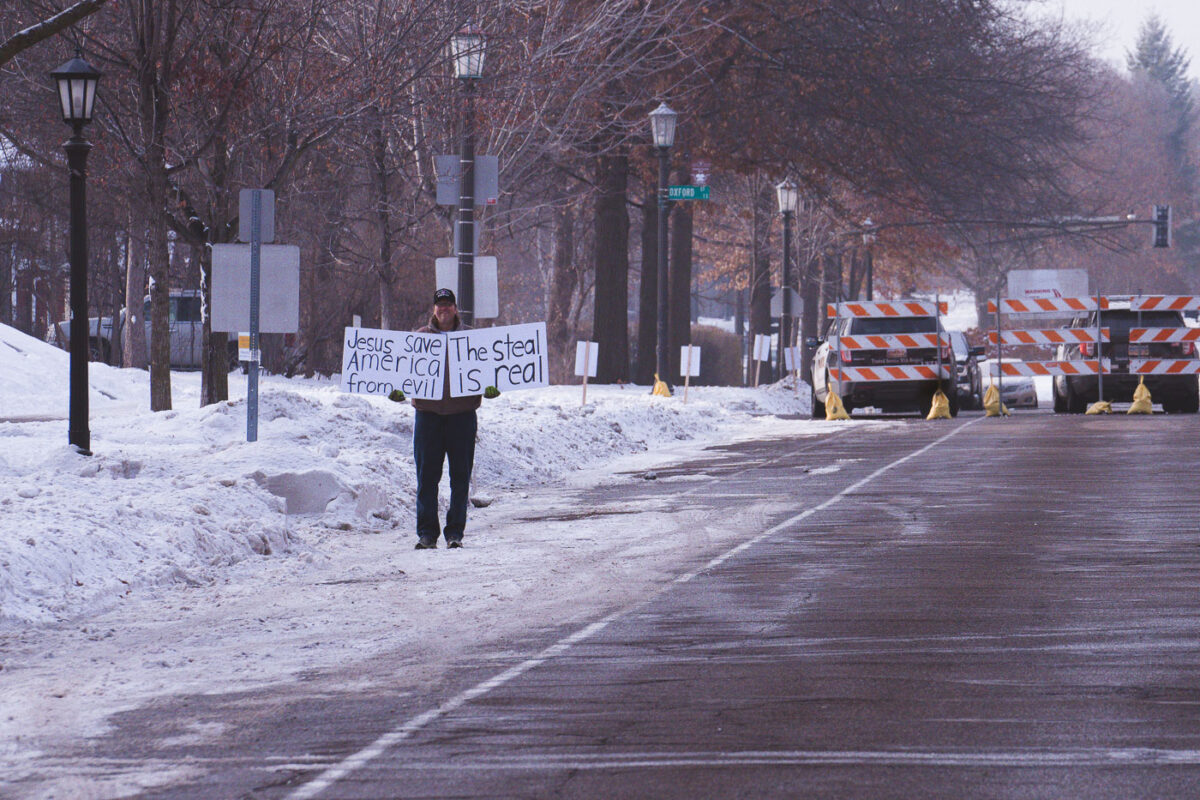
Jesus Save America From Evil protest sign
A lone protester stands outside the Minnesota Governor's Residence in St. Paul, holding a sign that reads "Jesus save America from evil. The steal is real." This message references the "Stop the Steal" movement, which falsely claimed widespread fraud in the 2020 United States presidential election. The presence of barricades and police vehicles suggests a security response, possibly related to ongoing political tensions or protests in the area. The Minnesota Governor's Residence serves as the official home and principal workplace of the state's governor.

Protester with “Jesus Save America” sign at MN Governor’s Residence
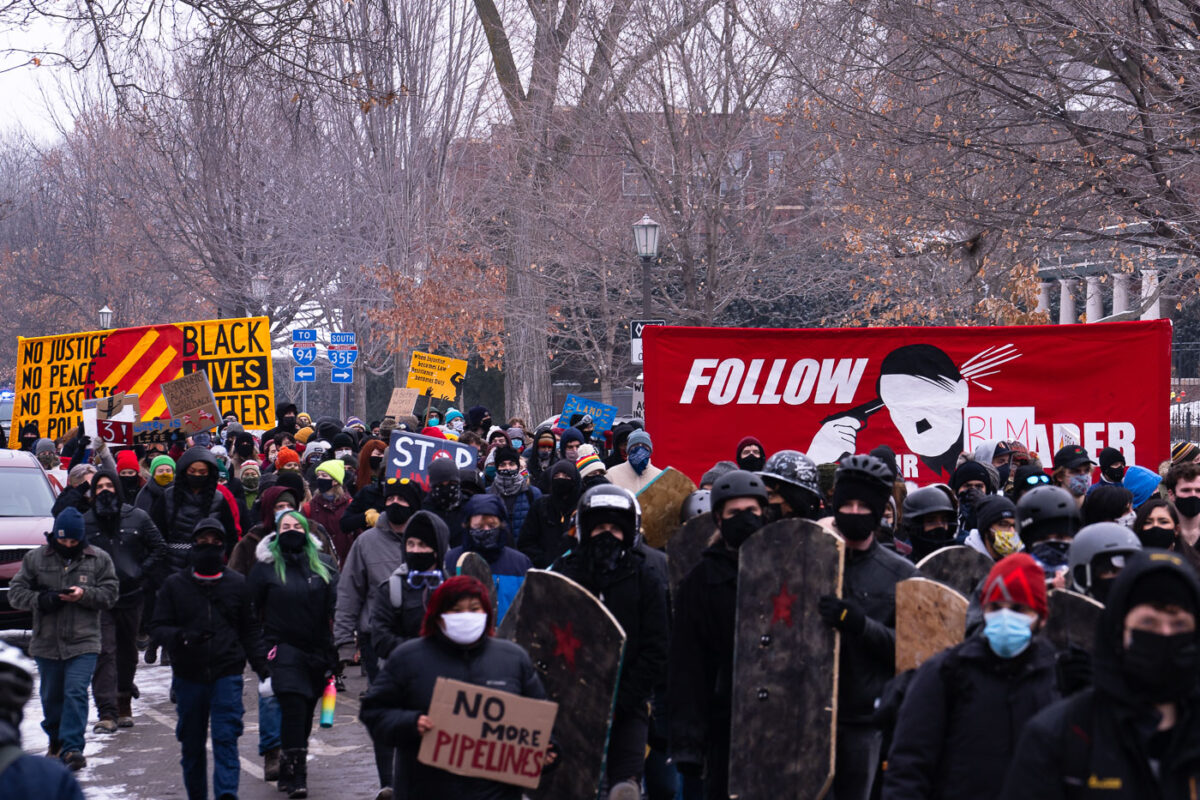
Protesters with shields arrive at a Stop The Steal protest
Protesters marched through St. Paul, Minnesota, carrying signs with slogans such as "Cash not Covid," "No More Pipelines," and "Black Lives Matter." The march, which occurred during a period of widespread social unrest and public health concerns, brought together various activist groups. The "No More Pipelines" signs indicate opposition to fossil fuel infrastructure projects, a common theme in environmental activism. The presence of "Black Lives Matter" banners highlights the ongoing movement for racial justice.

St. Paul Protest: “Cash not Covid” and “No More Pipelines” Signs
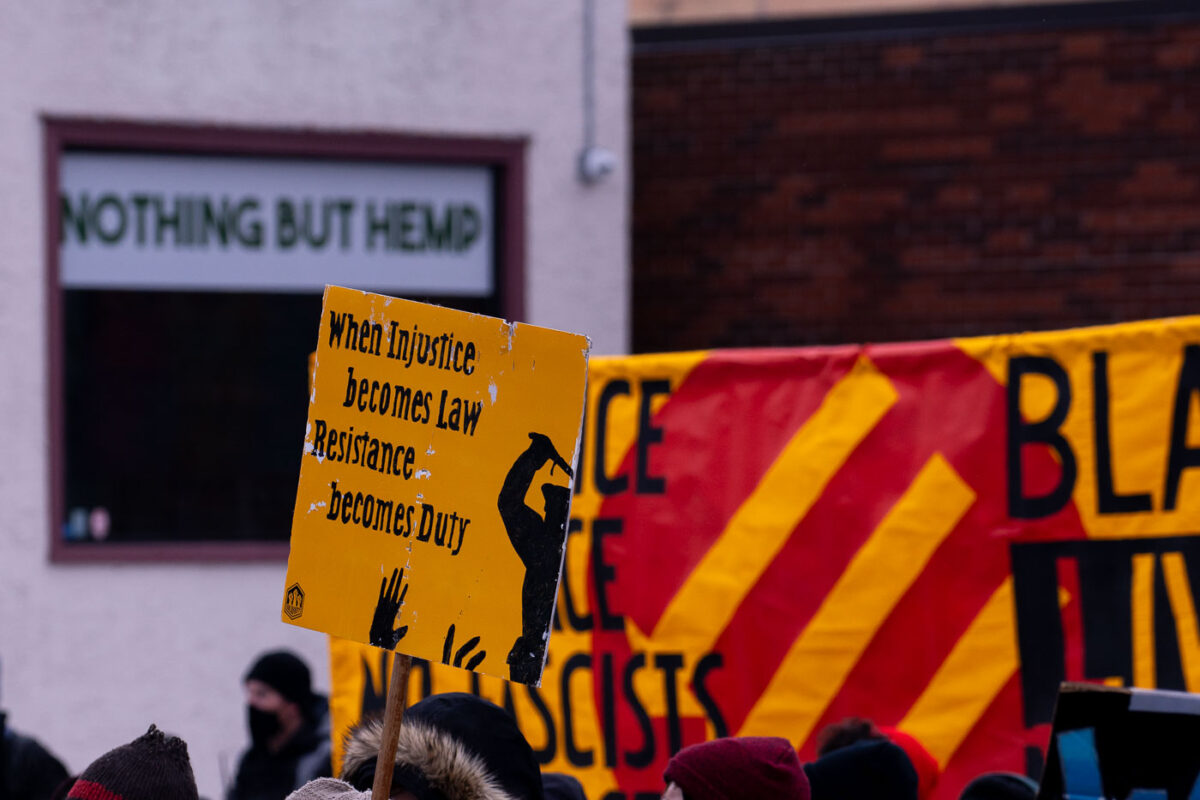
Counter Protest at Stop The Steal Rally in Minnesota
A protester holds a sign reading "When Injustice becomes Law Resistance becomes Duty" during a march in St. Paul, Minnesota. The sign's message reflects a sentiment of civil disobedience in response to perceived legal injustices. In the background, a banner displays "BLACK LIVES MATTER" and slogans such as "COMMUNITY NOT COPS" and "PEOPLE NOT PIPELINES," indicating the protest's alignment with broader social justice movements. The presence of these messages suggests the event was a counter-protest or a demonstration related to the Minneapolis Uprising and ongoing calls for police reform and racial equity.

St. Paul Counter Protest: “When Injustice Becomes Law” Sign
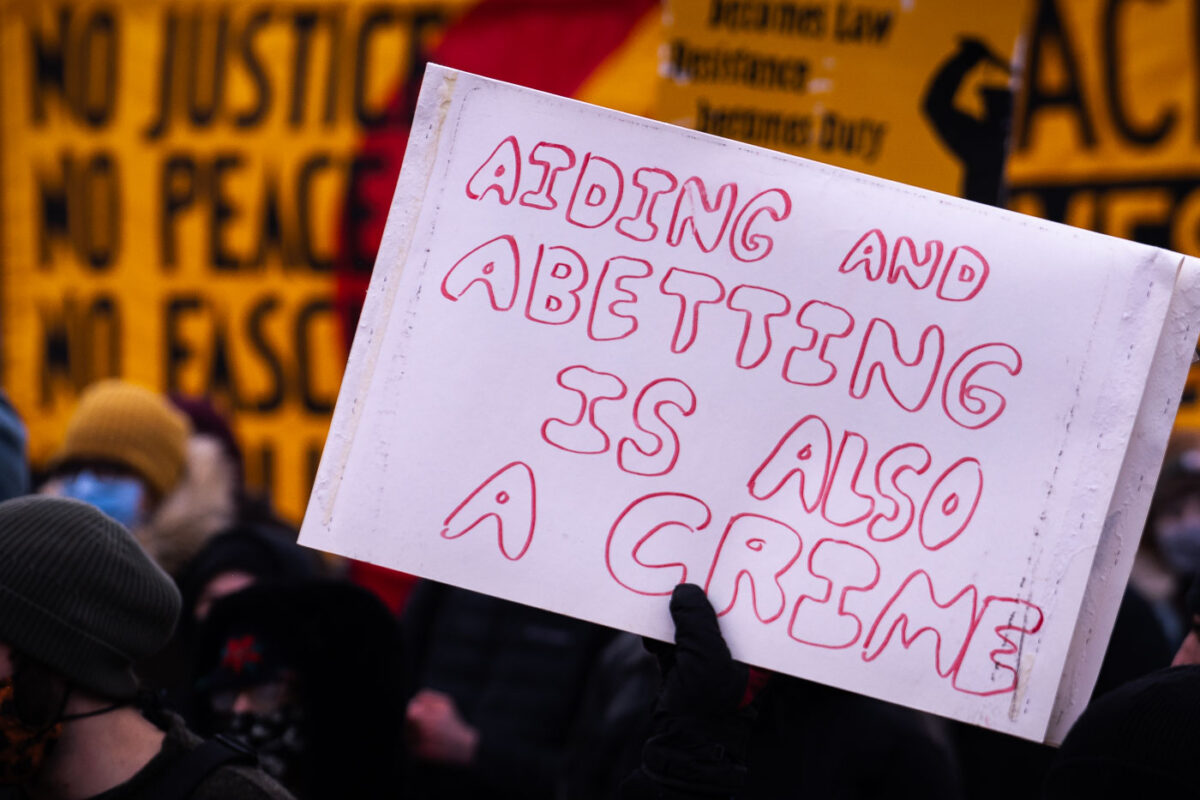
Counter protesters at a Stop The Steal rally in 2021
Protesters gathered in St. Paul, Minnesota, for "The People's March," carrying signs with slogans such as "Aiding and Abetting is Also a Crime." The marchers advocated for various causes, including "Cash not covid," "Community not cops," "People not pipelines," and "Politics without proud boys." The event was part of broader movements like Black Lives Matter and the Minneapolis Uprising, reflecting ongoing social and political activism in the region. The signs and chants indicate a complex set of grievances and demands related to public health, policing, environmental concerns, and political polarization.

St. Paul Protest: “Aiding and Abetting is Also a Crime” Sign
Counter protesters arrive at a Stop The Steal protest
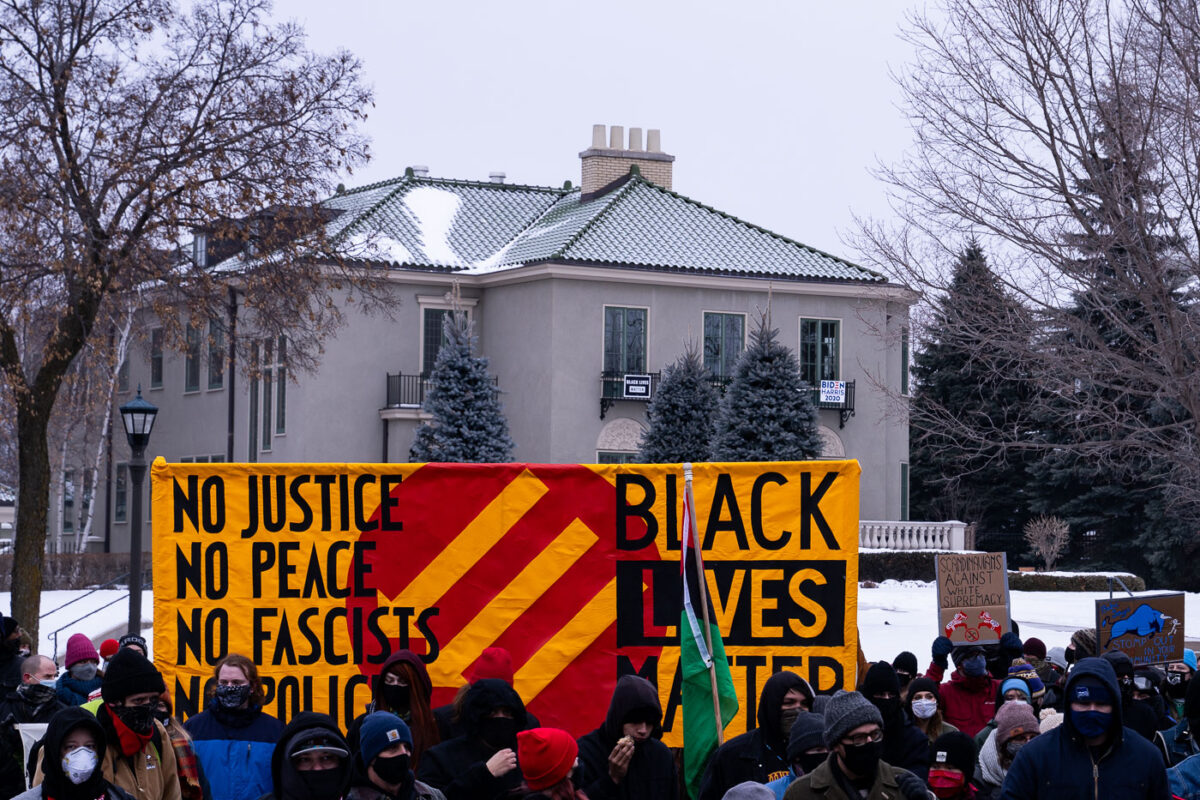
Counter-protesters gathered outside the Minnesota Governor's Residence in St. Paul, carrying banners with slogans such as "No Justice, No Peace, No Fascists, No Cops" and "Black Lives Matter." The event, referred to as "The People's March," also featured signs advocating for "Cash not covid," "Community not cops," "People not pipelines," and "Politics without proud boys." This demonstration occurred amidst broader national movements advocating for racial justice and against police brutality, as well as political events surrounding the 2020 election.

Counter protesters at Minnesota Governor’s Residence, St. Paul
Protesters with signs at a Stop Line 3 protest in St Paul
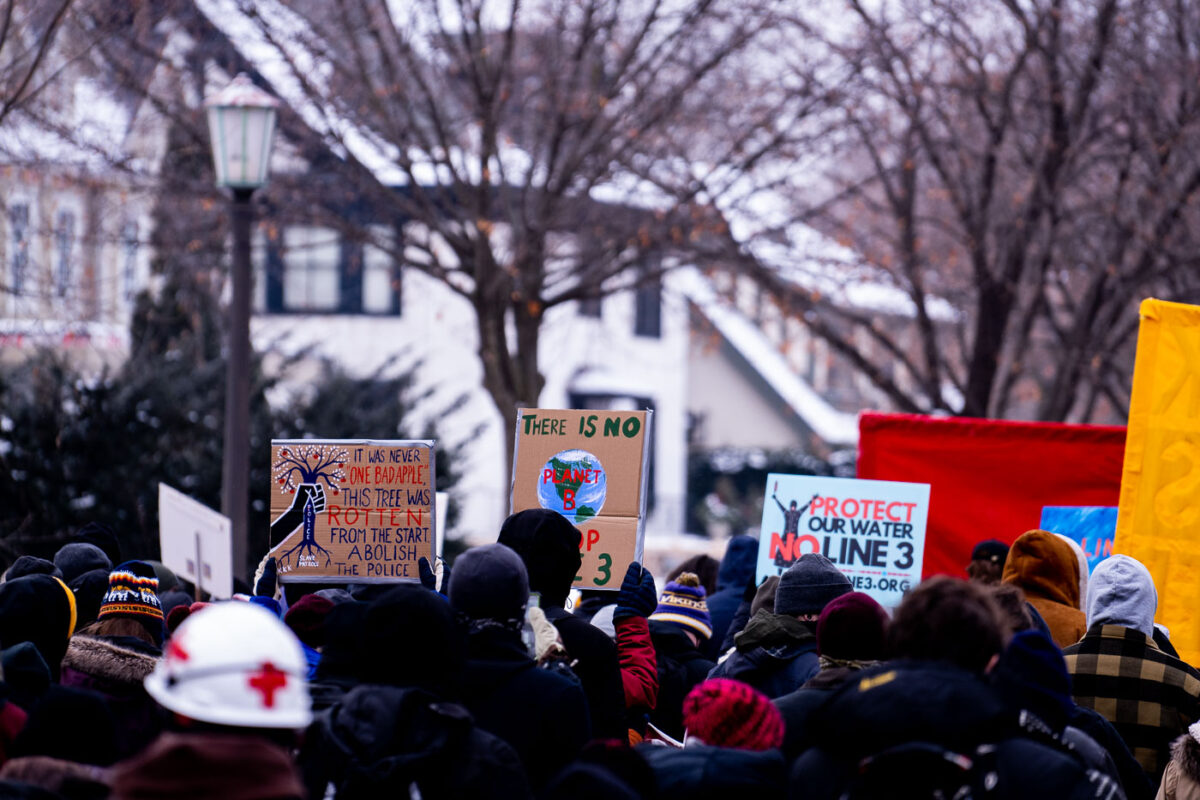
Protesters gathered in St. Paul, Minnesota, to voice opposition to the Line 3 pipeline project. Signs carried by the marchers included slogans such as "Protect Our Water, No Line 3," "Cash not covid," and "People not pipelines." The protest occurred near the Minnesota Governor's Residence, highlighting concerns about environmental impact and indigenous rights related to the pipeline's construction. The Line 3 pipeline, intended to transport oil from Alberta, Canada, to Superior, Wisconsin, has faced significant opposition from environmental groups and Indigenous communities concerned about potential water contamination and treaty violations.

Protestors March Against Line 3 Pipeline in St. Paul
Black Lives Matter protesters at a Stop The Steal rally on January 6
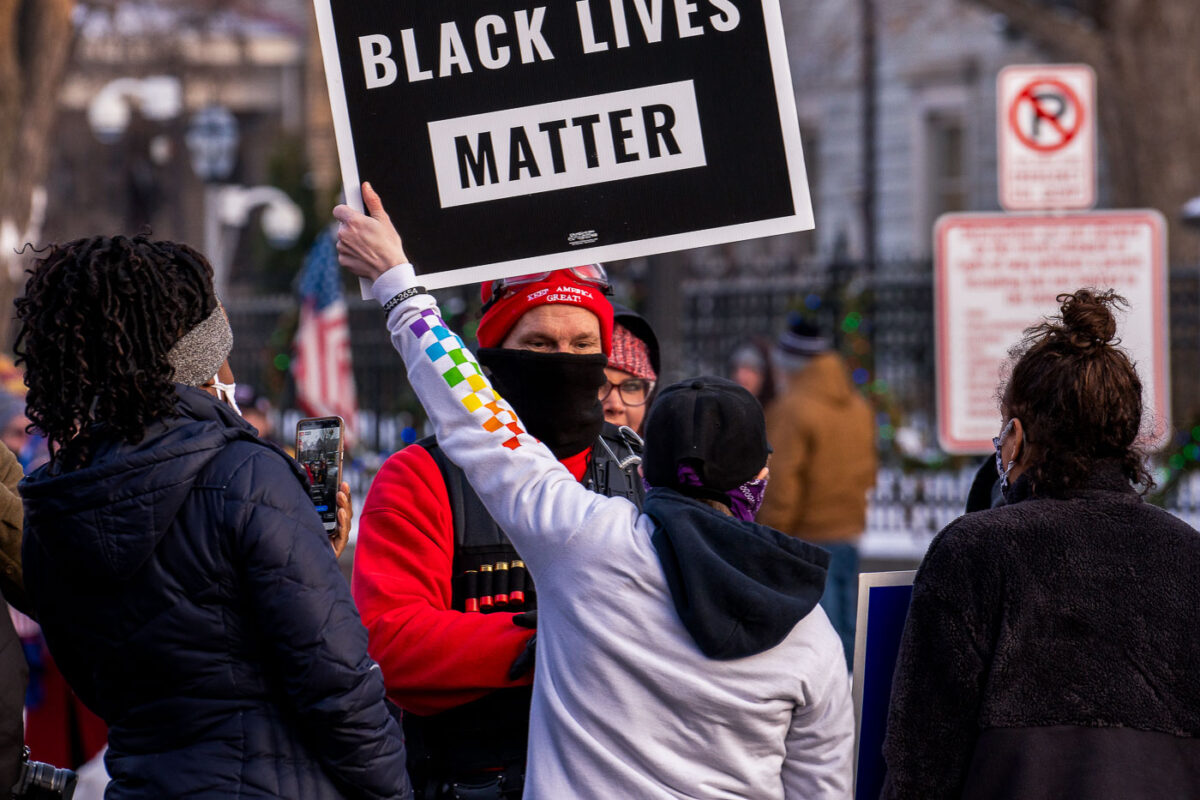
Protesters gathered outside the Minnesota Governor's Residence in St. Paul on January 6, 2021. The "Black Lives Matter" sign indicates solidarity with the movement, while other individuals present appear to be Trump supporters, some wearing "Keep America Great" attire. This event occurred on the same day as the "Storm The Capitol" rally in Washington D.C., and counter-protests were also present at the Minnesota State Capitol. The Minnesota Governor's Residence serves as the official home and workplace for the state's governor.

Black Lives Matter Protestors at Minnesota Governor’s Residence
Minnesota Stop The Steal protest on January 6
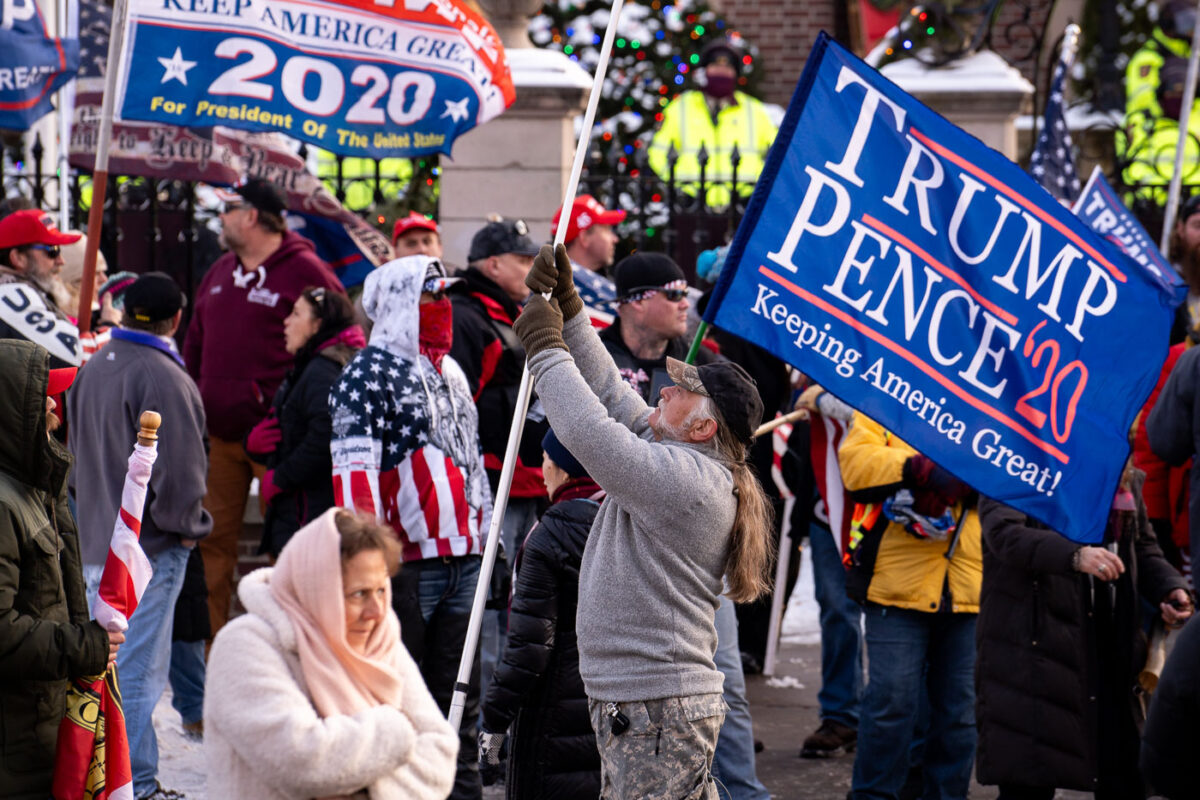
Supporters of then-President Donald Trump gathered outside the Minnesota Governor's Residence in St. Paul on January 6, 2021. The protest followed a "Storm The Capitol" event held earlier that day at the Minnesota State Capitol building. This event was part of a broader national effort by Trump supporters to contest the results of the 2020 presidential election. The Governor's Residence serves as the official home of the state's chief executive.

Protesters at Minnesota Governor’s Residence with Trump Flags
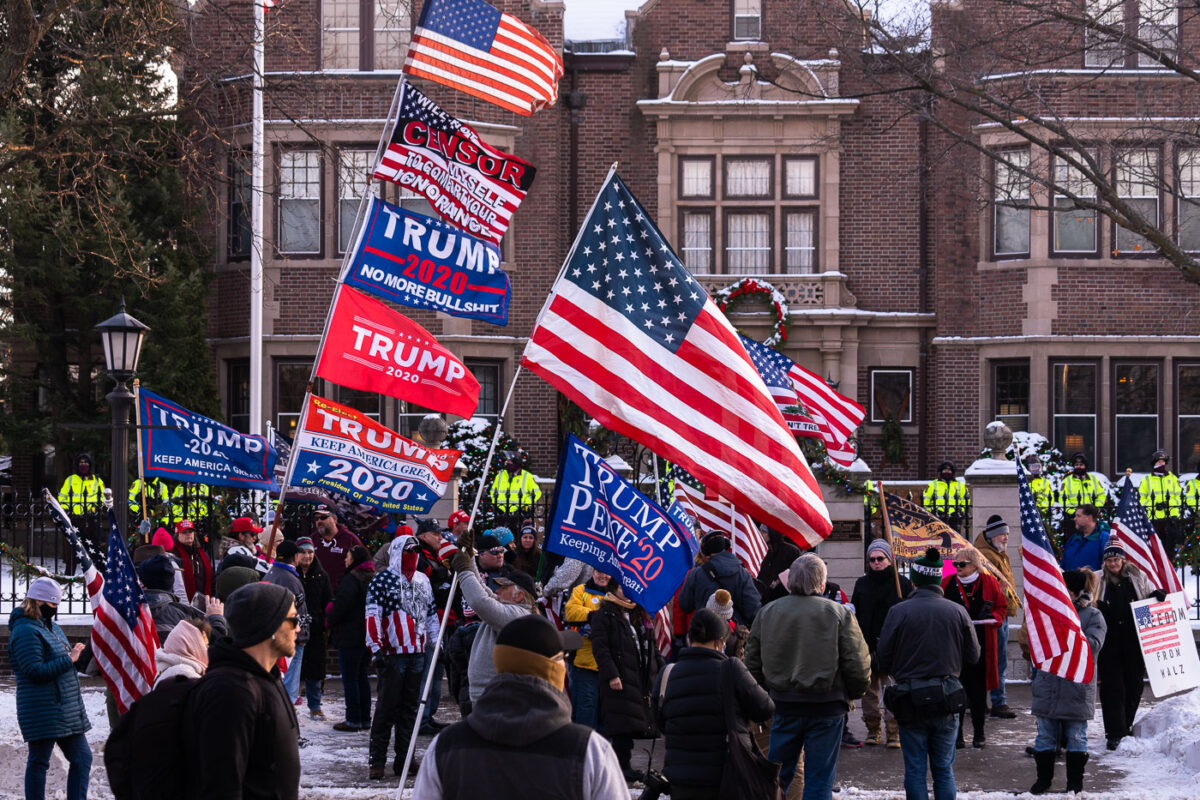
Protesters at Minnesota Governor's Mansion on January 6th
Protesters gathered outside the Minnesota Governor's Residence in St. Paul on January 6, 2021, the same day a mob attacked the U.S. Capitol. The "Stop the Steal" movement, which falsely claimed widespread fraud in the 2020 presidential election, organized protests across the country. Minnesota State Patrol officers are visible, and Governor Tim Walz later stated that his son was removed from the residence due to safety concerns amid the protest.

Protesters at Minnesota Governor’s Mansion on Jan 6
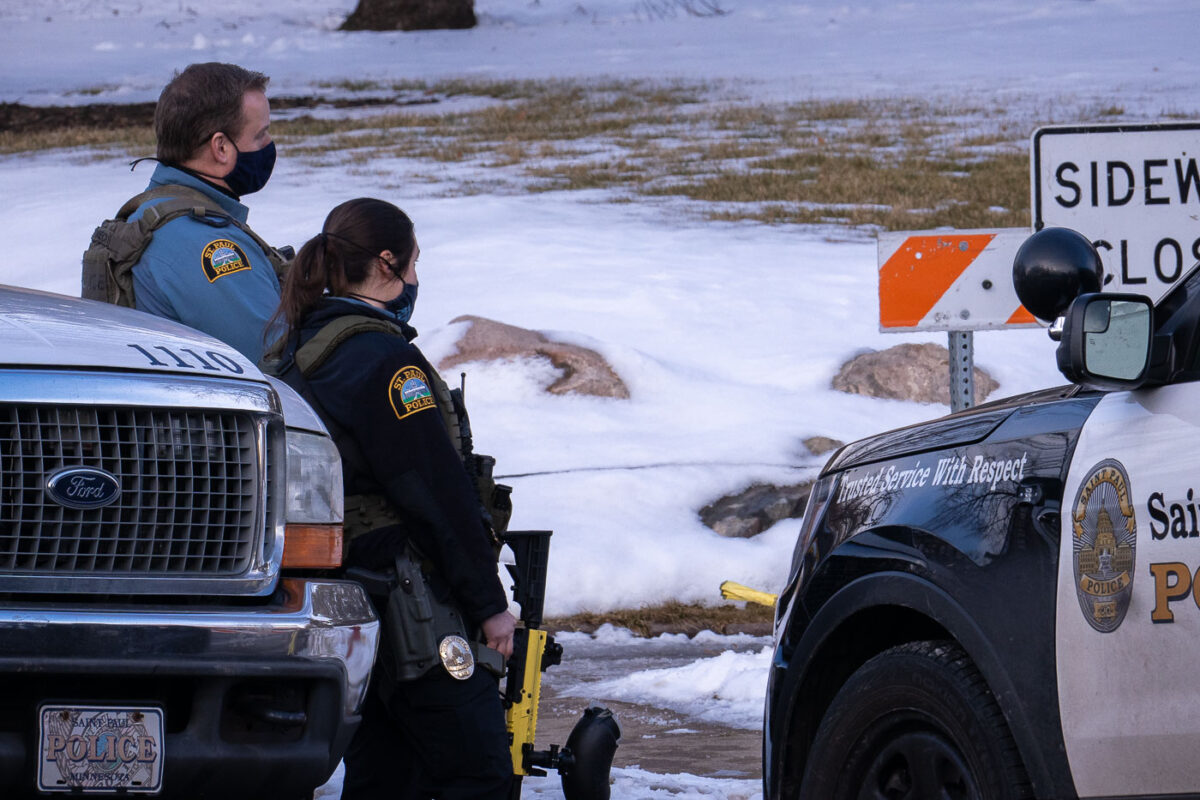
St Paul Police with less lethal weapons at Governor Mansion
St. Paul Police officers, equipped with less-lethal weapons, are stationed near the Minnesota Governor's Residence on January 6, 2021. This date marked a national day of unrest, with supporters of then-President Donald Trump gathering at the Minnesota State Capitol for a "Storm The Capitol" event. The presence of law enforcement near the Governor's Residence suggests a response to potential disruptions or security concerns related to the events unfolding in the state and across the country.

St. Paul Police with less lethal weapons near Governor’s Residence Jan 6
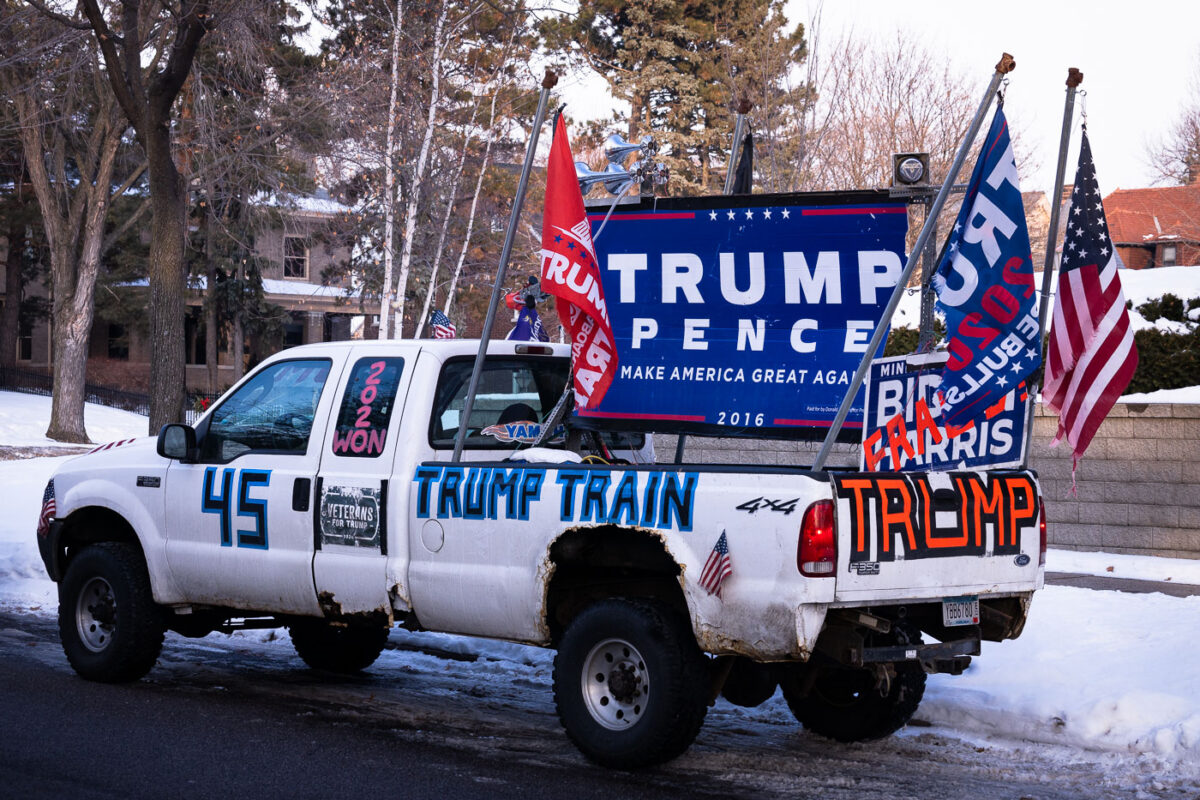
Trump Train Truck on January 6
A "Trump Train" truck, adorned with "Trump Pence 2016" and "Make America Great Again" banners, American flags, and "45" painted on its side, is parked near the Minnesota Governor's Residence. This gathering occurred following a "Storm The Capitol" event at the Minnesota State Capitol on January 6, 2021. The "Trump Train" phenomenon involved supporters organizing convoys and rallies to express political support, particularly during election cycles and significant political events. The presence of such vehicles and gatherings highlights the mobilization and visible expression of political sentiment among certain groups.

Trump Train Truck at Minnesota Governor’s Residence, Jan 6
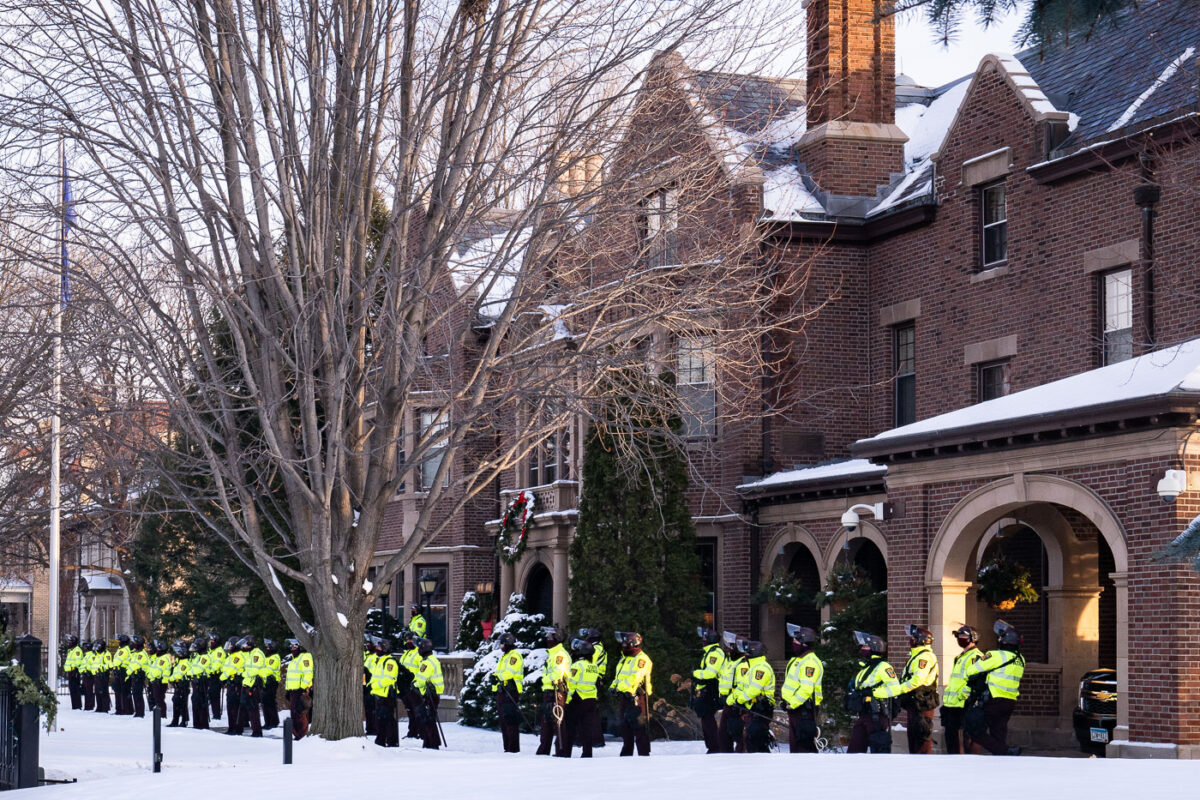
Riot police surround Minnesota's Governor's Mansion on January 6
Minnesota State Patrol officers stand outside the Governor's Mansion in St. Paul on January 6, 2021. The presence of law enforcement at the official residence coincided with protests and unrest across the country, including the attack on the U.S. Capitol. Governor Tim Walz later stated that the State Patrol entered the mansion to remove his son due to safety concerns amid the national events.

Minnesota State Patrol at Governor’s Mansion Jan 6
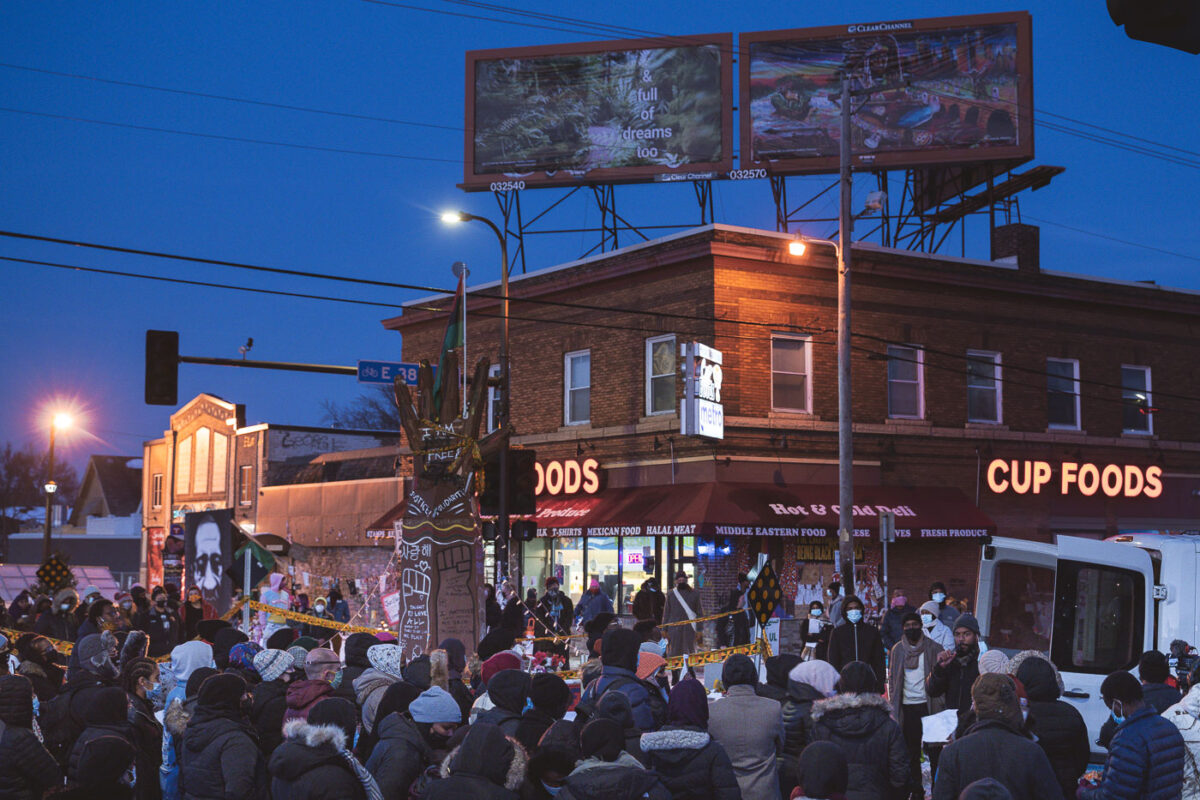
Dolal Idd protest at George Floyd Square
Protesters gathered at George Floyd Square in South Minneapolis on January 1, 2021, to demand justice for Dolal Idd. Idd was killed by Minneapolis Police on December 30, 2020, during a traffic stop, marking the first police killing in the city since George Floyd's death in May 2020. The square, located at the intersection of Cedar Avenue and 38th Street, became a focal point for activism and community organizing following Floyd's murder.

Protest for Dolal Idd at George Floyd Square, Minneapolis
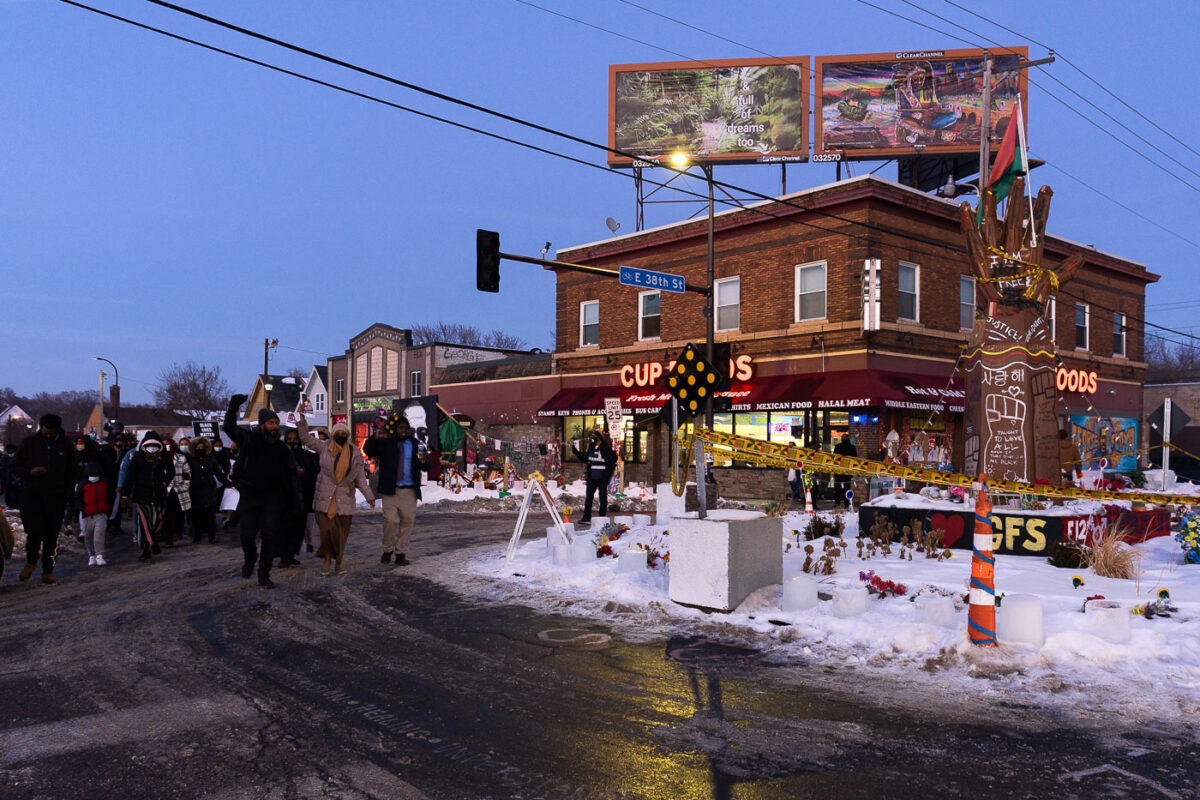
Protesters arrive at George Floyd Square in January 2021
Protesters march towards George Floyd Square in Minneapolis in January 2021. The square, established in the summer of 2020 following the murder of George Floyd, became a focal point for racial justice activism. This march originated from the site where Dolal Idd was killed by police approximately one mile away, highlighting ongoing concerns about police brutality and systemic racism in the city. The area around George Floyd Square has been transformed into a memorial and a space for community organizing.

Protesters march to George Floyd Square, Minneapolis, January 2021
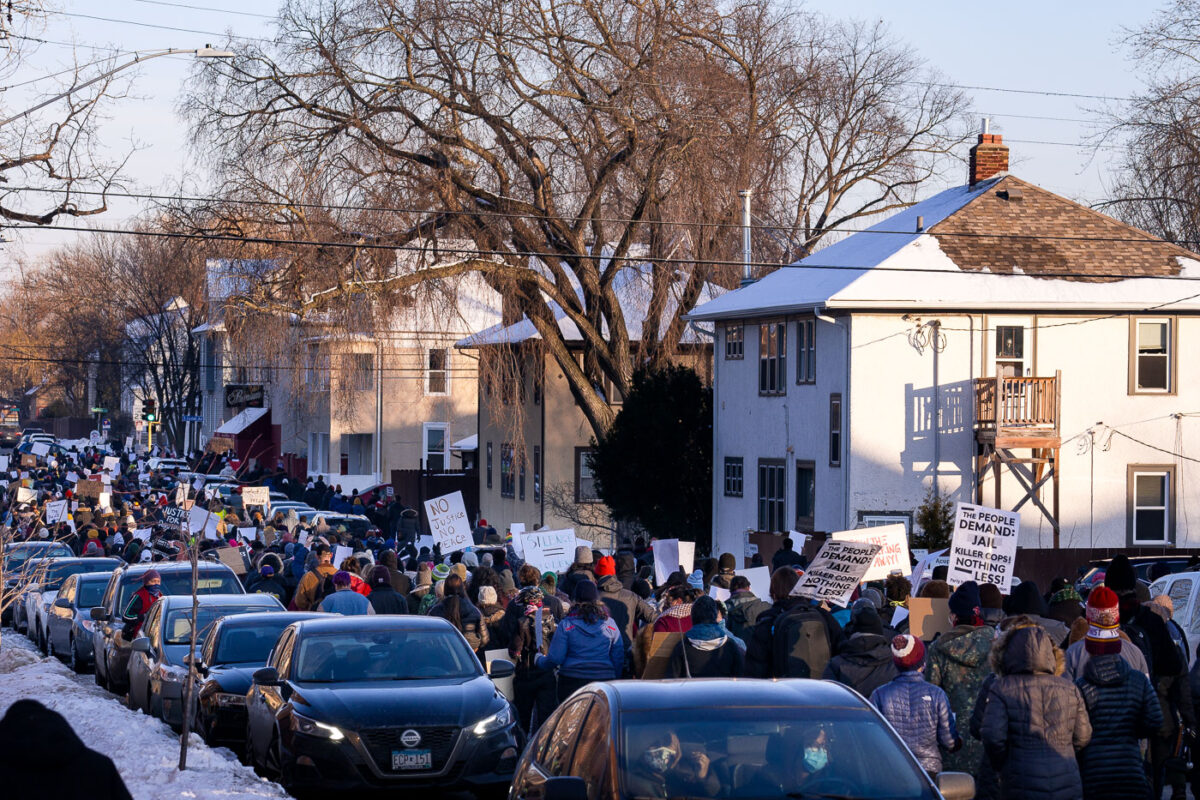
Justice for Dolal Idd march through Minneapolis
Protesters gathered on Cedar Avenue in South Minneapolis on January 3, 2021, to demand justice for Dolal Idd. Idd was killed by Minneapolis Police officers on December 30, 2020, during a traffic stop. This incident marked the first police killing in the city since George Floyd's death in May 2020, which had ignited widespread protests and calls for police reform. The gathering on Cedar Avenue reflected ongoing community concerns about police accountability and racial justice.

Minneapolis Protest for Dolal Idd at Cedar Ave
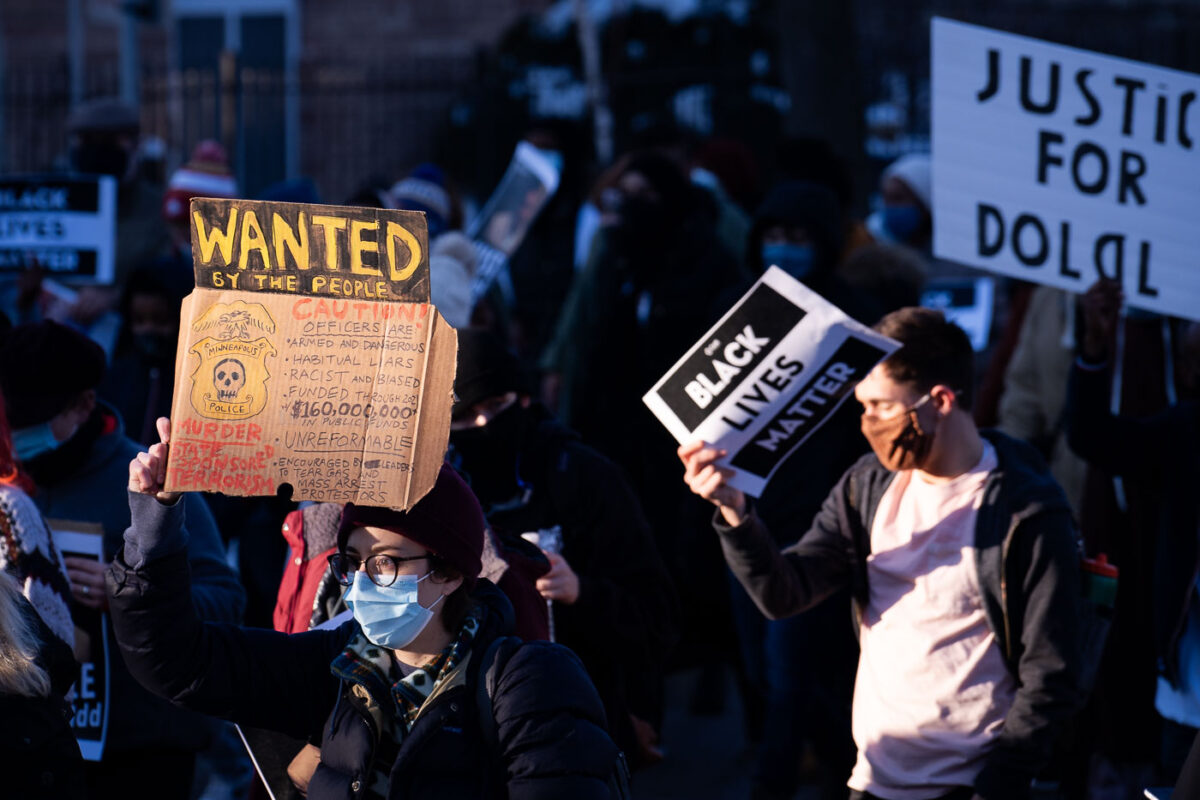
Protesters march after Dolal Idd death
Protesters gathered at Cedar Avenue and 36th Street in South Minneapolis to demand justice for Dolal Idd. Idd was killed by Minneapolis Police on December 30, 2020, during a traffic stop. This incident marked the first police-involved killing in Minneapolis since George Floyd's death approximately one mile away on May 25, 2020. The protest highlights ongoing concerns about police conduct and accountability within the city.

Minneapolis Protest for Dolal Idd, Cedar & 36th
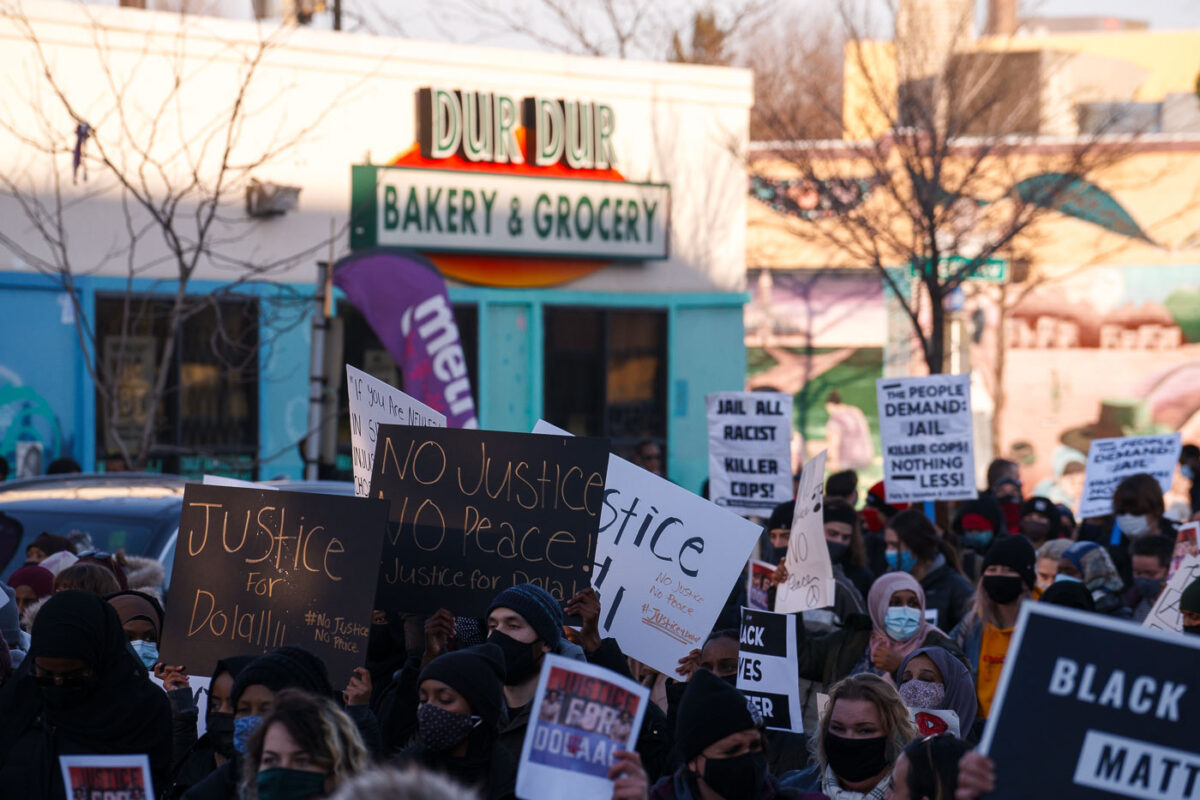
Dolal Idd rally January 3 2021 Minneapolis
Protesters gathered outside the Dur Dur Bakery & Grocery at Cedar Avenue and 36th Street in South Minneapolis on January 3, 2021, to demand justice for Dolal Idd. Idd, a Somali-American man, was killed by Minneapolis Police officers on December 30, 2020, during a traffic stop. This incident marked the first police-involved killing in Minneapolis since the murder of George Floyd in May 2020, occurring less than a mile from that location. The protest highlighted ongoing concerns about police brutality and racial injustice in the city.

Minneapolis Protest for Dolal Idd, January 3, 2021
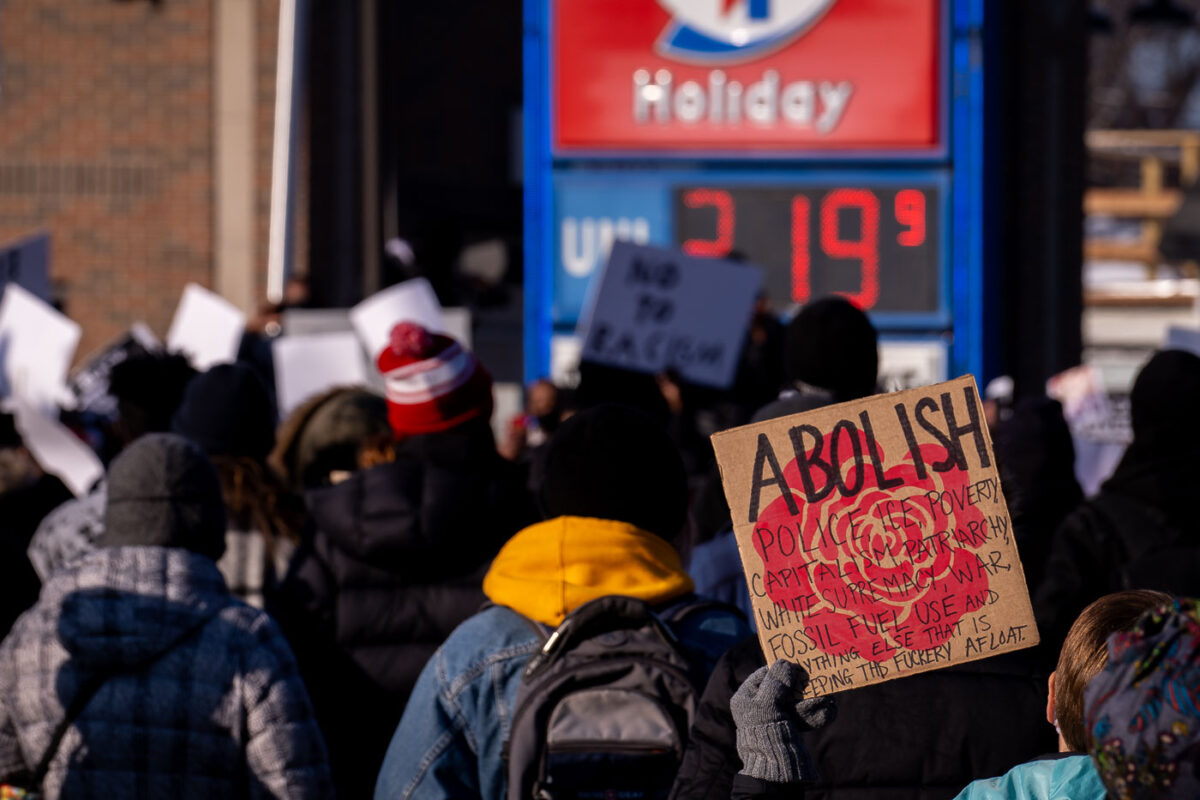
Abolish Police Ice Poverty protest sign
Protesters gathered outside a Holiday Gas station in South Minneapolis on January 1, 2021, to protest the killing of Dolal Idd. Idd was shot and killed by Minneapolis Police on December 30, 2020, during a traffic stop. This protest occurred approximately one mile from where George Floyd was killed by police on May 25, 2020, and was part of a broader movement calling for police abolition and justice for victims of police brutality. The sign reads "Abolish Police, Ice, Poverty, Capitalism, Patriarchy, White Supremacy, War, Fossil Fuel Use and Anything Else That Is Keeping This Fuckery Afloat."

Abolish Police Ice Poverty protest sign

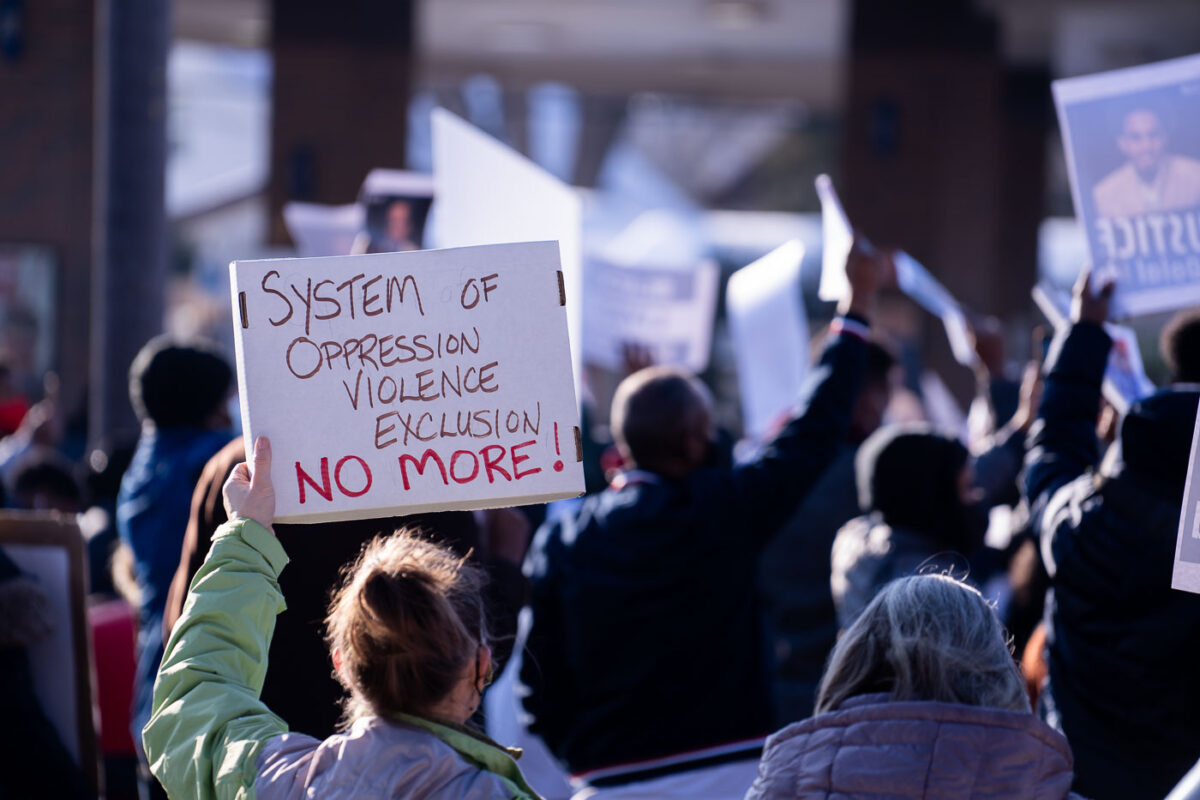
System of Oppression Violence Exclusion Protest Sign
Protesters gathered at Cedar Avenue and 36th Street in South Minneapolis on December 31, 2020, to demand justice for Dolal Idd. Idd was killed by Minneapolis Police officers during a traffic stop on December 30, 2020. This incident marked the first police-involved killing in Minneapolis since the death of George Floyd in May 2020. The protest, held outside a Holiday Gas station, reflected ongoing community concerns about police conduct and accountability.

Protest for Dolal Idd at Cedar & 36th, Minneapolis
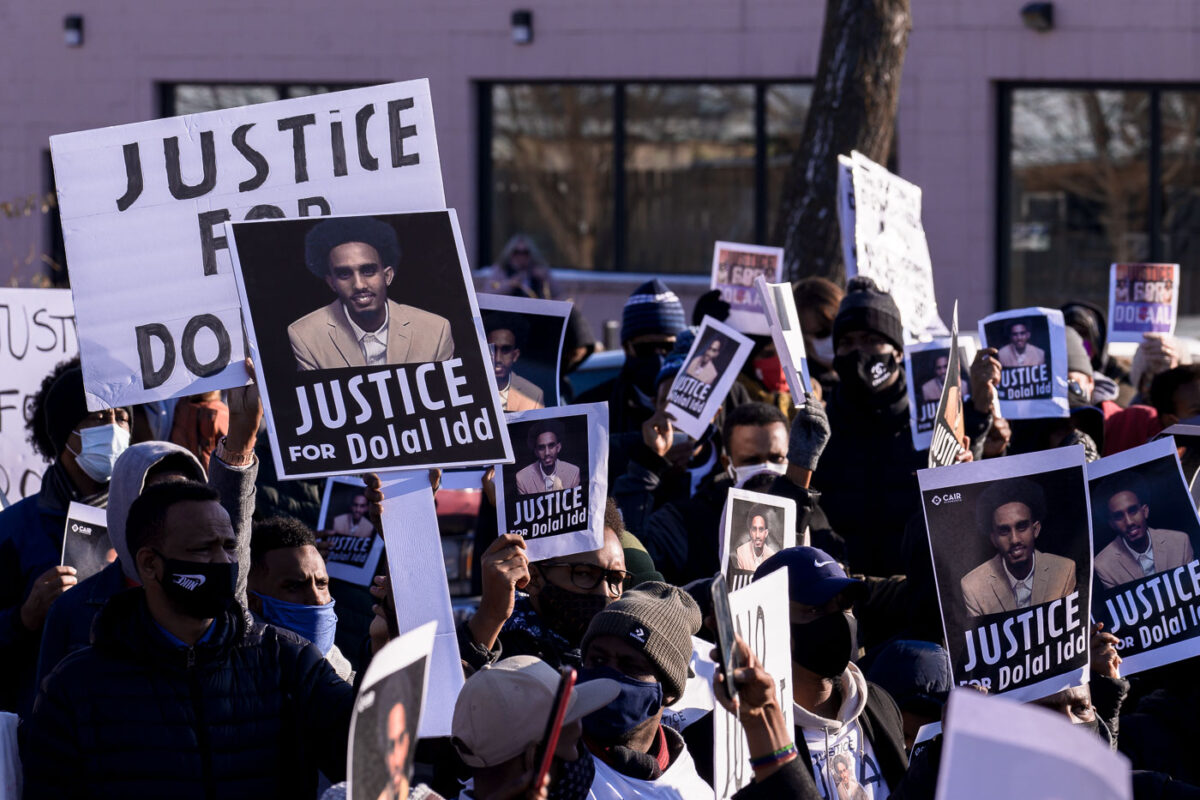
Justice for Dolal Idd protest signs
Protesters gathered outside the Holiday Gas station at Cedar Avenue and 36th Avenue South in Minneapolis, seeking justice for Dolal Idd. Idd, a Somali-American man, was killed by Minneapolis Police officers on December 30, 2020, during a traffic stop. This incident marked the first police-involved killing in Minneapolis since the murder of George Floyd in May 2020, occurring less than a mile away. The protest highlighted ongoing concerns about police conduct and accountability within the city.

Minneapolis Protest for Dolal Idd Justice
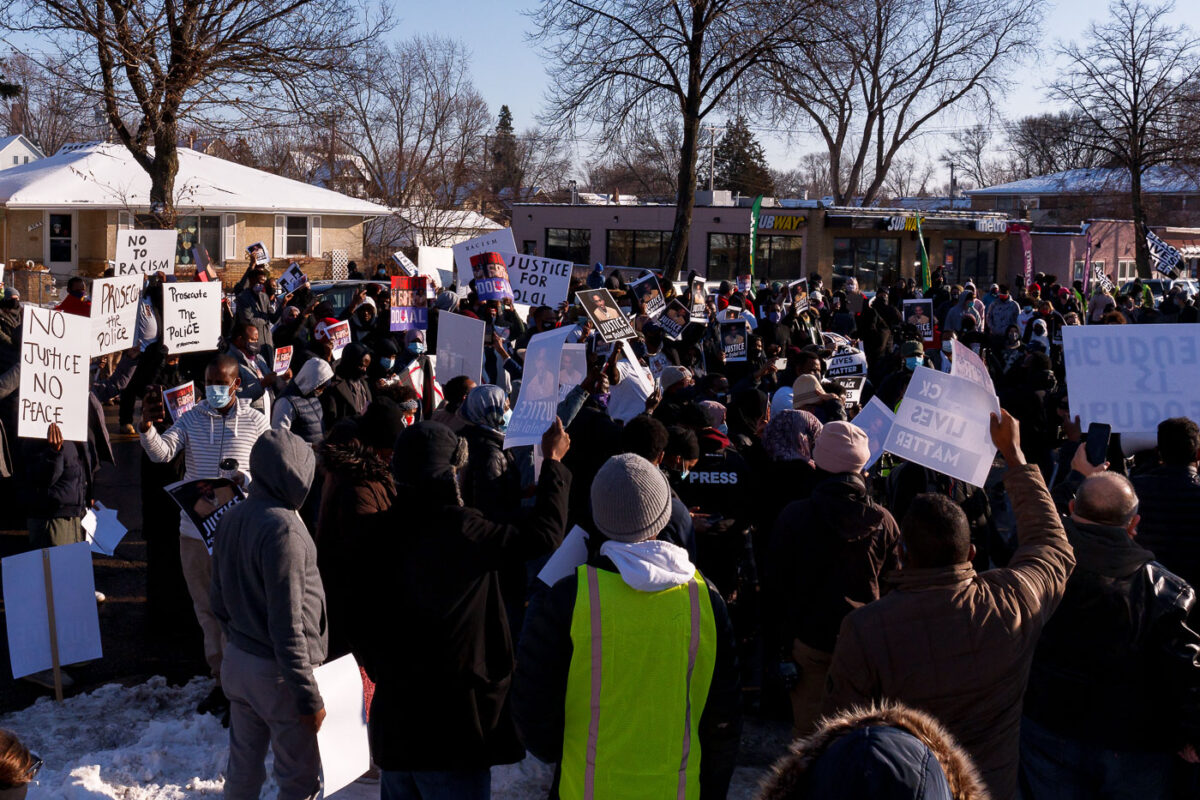
Dolal Idd Protest on Cedar Avenue
Protesters gathered on Cedar Avenue in South Minneapolis on January 3, 2021, to demand justice for Dolal Idd. Idd was killed by Minneapolis Police officers on December 30, 2020, during a traffic stop. This incident marked the first police-involved killing in the city since the death of George Floyd in May 2020. The protest, held outside a Holiday Gas station, drew approximately a thousand participants carrying signs with messages such as "Justice for Dolal Idd" and "No Justice No Peace."

Protest for Dolal Idd at Cedar Ave, South Minneapolis
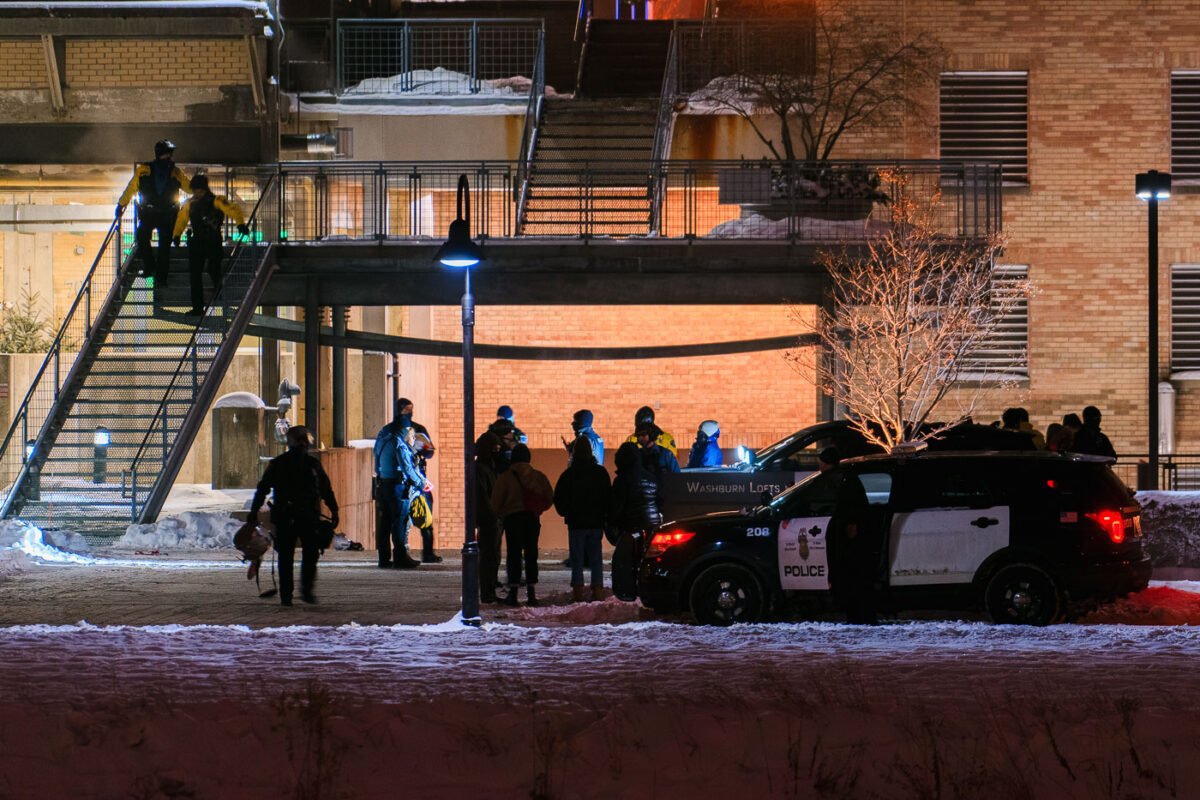
Minneapolis Police arrest 40 at Noise Demo protest
Minneapolis Police arrested approximately 40 individuals on New Year's Eve at Mill Ruins Park during an annual "Noise Demonstration." This protest, part of a nationwide movement, called for the abolition of prisons and expressed solidarity with incarcerated individuals. The demonstration took place in downtown Minneapolis, a location with a rich history tied to the city's milling industry and now a public space.

Minneapolis Police Arrest 40 at Noise Demo Protest
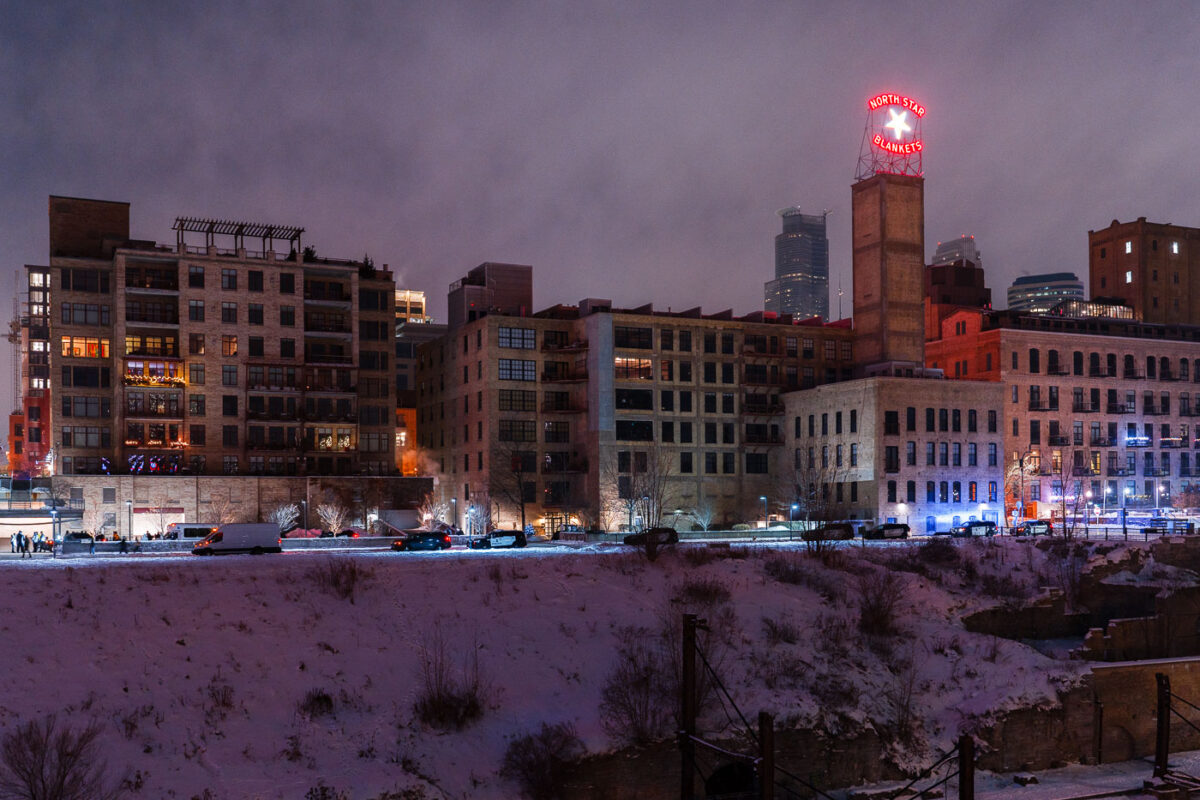
Minneapolis Police arrest 40 at New Years Eve protest
On New Year's Eve, Minneapolis Police arrested approximately 40 individuals at Mill Ruins Park during a "Noise Demonstration." This annual protest calls for the abolition of prisons and expresses solidarity with incarcerated people. The Mill Ruins Park area, located in downtown Minneapolis, is a historic site that was once the heart of the city's flour milling industry, with remnants of its industrial past visible in the ruins and repurposed brick buildings that now house residences and businesses.

Minneapolis Police Arrest 40 at New Year’s Eve Protest
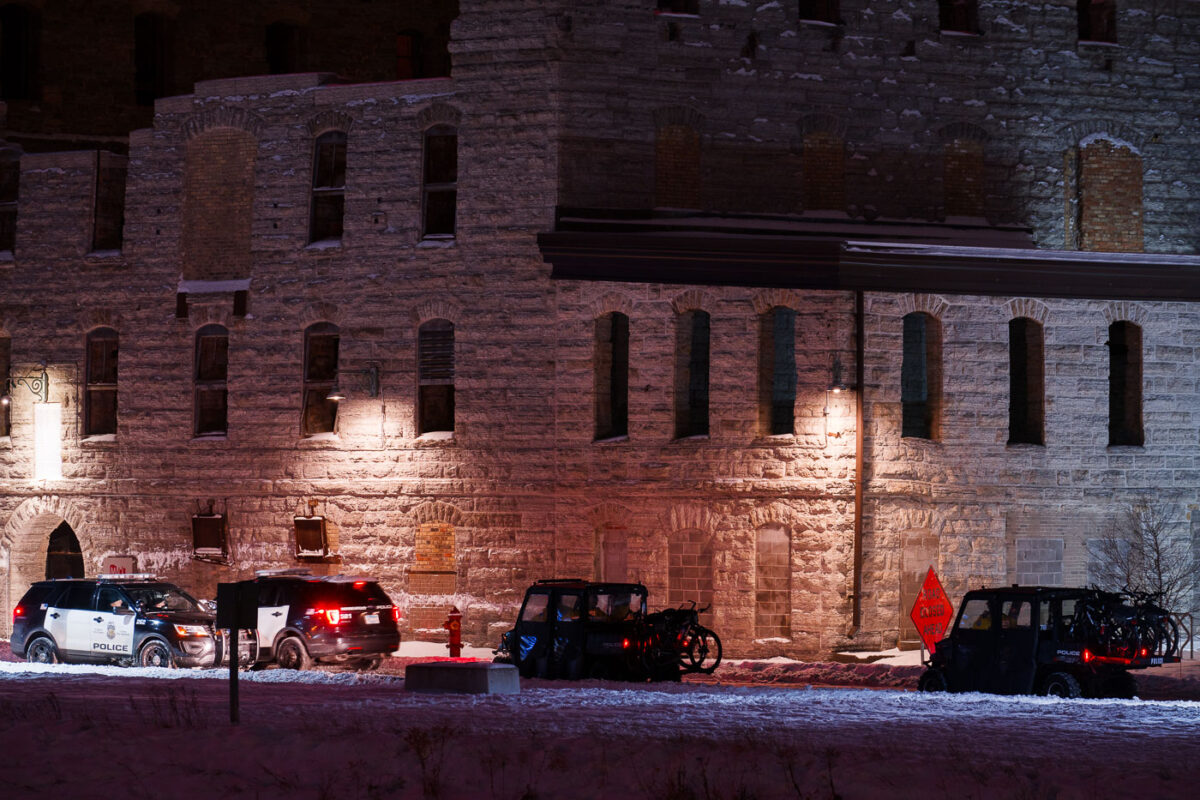
Mnneapolis police make arrest at Noise Demo protest
Police vehicles are present at Mill Ruins Park in Minneapolis on New Year's Eve, following a protest. Approximately 100 individuals gathered in response to a nationwide call to protest the imprisonment of state inmates. The protest escalated when the jail was spray-painted, leading to a significant police response involving Minneapolis Police, State Patrol, Golden Valley PD, and Hennepin Sheriffs, resulting in numerous arrests. Mill Ruins Park, located on the Mississippi River, is a historic site that was once the heart of Minneapolis's flour milling industry.

Minneapolis Police Arrests at Noise Demo Protest, Mill Ruins Park
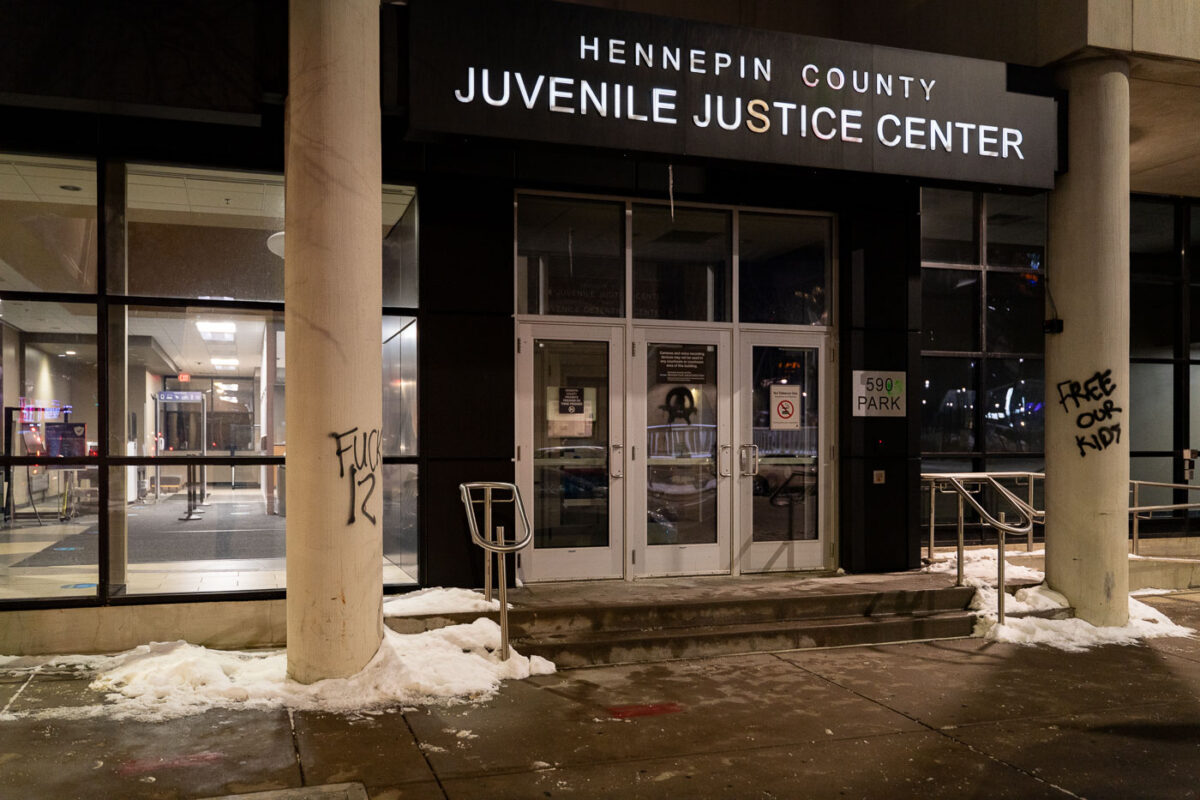
Anarchist Graffiti on Hennepin County Juvenile Justice center
On New Year's Eve, approximately one hundred individuals gathered for a nationwide call to protest in support of those incarcerated by the state. The Minneapolis Police Department, State Patrol, Golden Valley Police Department, and Hennepin County Sheriff's Office, along with aerial surveillance, responded to the Hennepin County Juvenile Justice Center. This response occurred after the building was spray-painted with graffiti, leading to the arrest of dozens of participants. The graffiti visible on the building's pillars includes the phrases "Fuck 12" and "Free Our Kids," reflecting anti-police sentiment and concern for youth in the justice system.

Minneapolis Juvenile Justice Center Graffiti and Protest Site
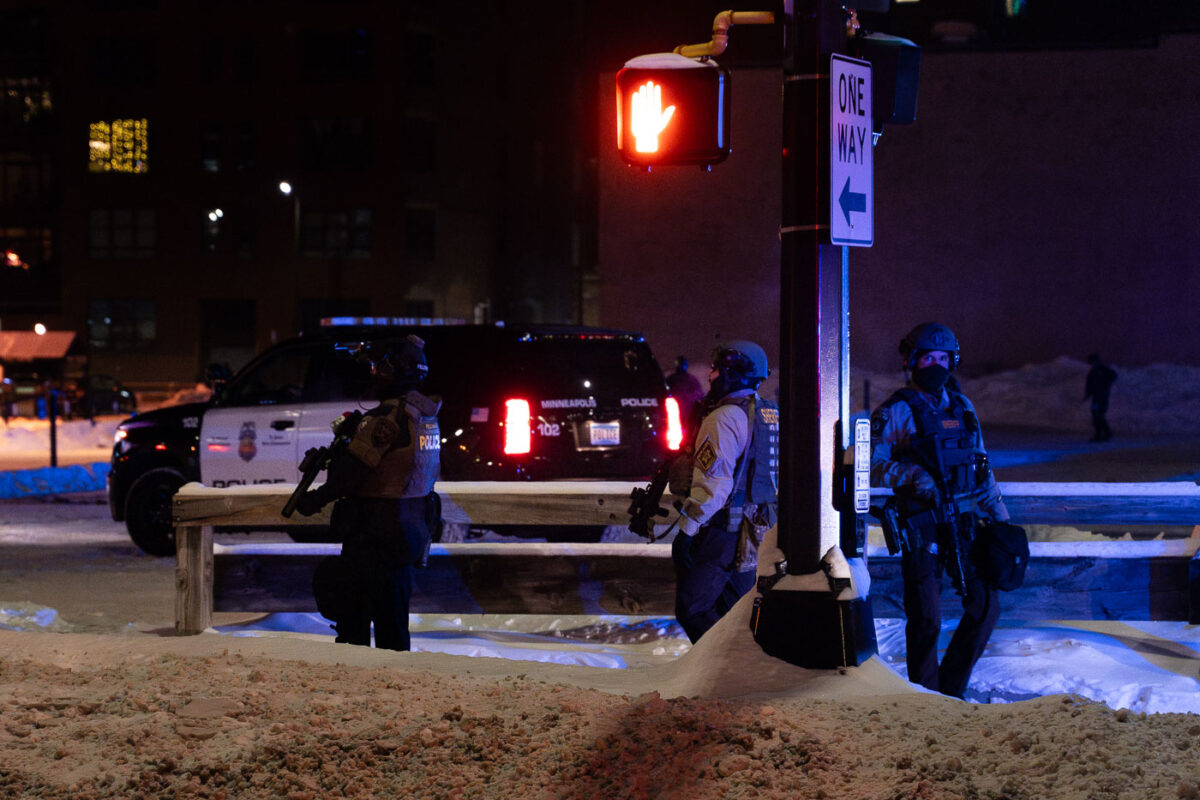
Police look for protesters on new years
On New Year's Eve, approximately 100 individuals gathered in Downtown Minneapolis for a nationwide protest supporting those imprisoned by the state. Following an incident where the Hennepin County Jail was spray-painted, multiple law enforcement agencies, including Minneapolis Police, State Patrol, Golden Valley Police Department, and Hennepin County Sheriffs, responded to the area. This coordinated response, which included state aerial surveillance, led to the arrest of dozens of participants.

Minneapolis Police & Hennepin Sheriff Respond to Noise Demo
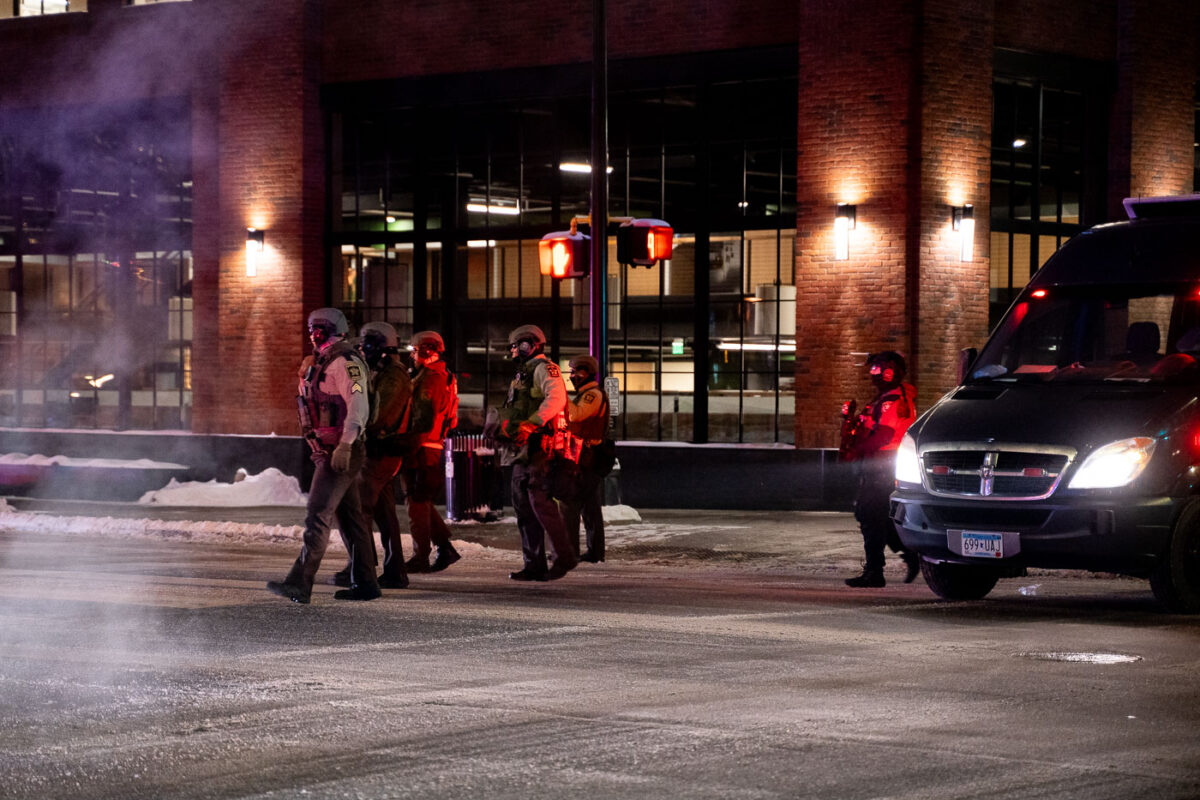
Police at new years eve protest
Hennepin County Sheriff's Department deputies are present in Downtown Minneapolis during a New Year's Eve protest. This event was part of an annual nationwide "Noise Protest" organized to call for the abolishing of prisons and to stand in solidarity with incarcerated individuals. The protest in Minneapolis led to approximately 40 arrests, reflecting ongoing public engagement with issues of criminal justice and incarceration.

Hennepin County Sheriff at Minneapolis New Year’s Eve Protest