Wisconsin

325 photos · 2008–2026

325 photographs tagged Wisconsin, 2008–2026.

Fox News at the 2024 Republican National Convention in Milwaukee
A large banner featuring Fox News personalities and the "DEMOCRACY 24" slogan adorns the network's broadcast headquarters in downtown Milwaukee during the 2024 Republican National Convention. Located at Vel R. Phillips Avenue and Juneau Avenue, the building served as a central hub for the network's coverage of the event.

Fox News RNC 2024 Broadcast HQ, Milwaukee

2024 RNC Herb Kohl Way and FOX News
A Fox News banner displaying "Democracy" and "America is Watching" is visible on the exterior of Fiserv Forum. The banner was displayed during the 2024 Republican National Convention held in Milwaukee. A street sign for "Herb Kohl Way" is positioned in front of the large media display. Herb Kohl Way is a street named in honor of the former U.S. Senator and businessman who represented Wisconsin.

2024 RNC: Fox News Banner and Herb Kohl Way Sign

2024 RNC Laura Ingraham Watters FOX News banner
A large digital billboard displays a Fox News advertisement featuring personalities Laura Ingraham and Jesse Watters. The banner, promoting "Democracy 24" and the slogan "America is Watching," was displayed in Milwaukee during the 2024 Republican National Convention. This advertisement reflects the media's prominent role in covering and shaping political discourse during major national events. The convention itself was a significant political gathering, marking a key moment in the electoral cycle.

Fox News Banner with Ingraham and Watters at 2024 RNC in Milwaukee

America First and Turning Point Action at 2024 RNC
Banners for the America First Policy Institute and Turning Point Action are displayed near the central hub of the 2024 Republican National Convention in Milwaukee. The "America First Works" and "Knock Doors, Win Elections" slogans highlight the convention's emphasis on grassroots organizing and nationalist policy. This pavilion served as a strategic base for conservative advocacy groups promoting a platform aligned with the "America First" political movement.

America First Pavilion at 2024 RNC in Milwaukee

Turning Point Action at Republican National Convention
Turning Point Action, a conservative youth organization, erected large banners with slogans such as "Knock Doors, Win Elections" and "Chase Ballots, Save America" on the exterior of the Drink Wisconsinbly Pub in Milwaukee. The pub is situated across from the Fiserv Forum, the venue for the 2024 Republican National Convention. The branding reflects the organization's focus on voter mobilization and election integrity efforts.

Turning Point Action Branding at Drink Wisconsinbly, Milwaukee

2024 Republicans on Fiserv Forum in Milwaukee
The Fiserv Forum in Milwaukee, Wisconsin, is adorned with branding for the 2024 Republican National Convention. This multi-purpose arena, which opened in 2018, serves as the home for the Milwaukee Bucks of the National Basketball Association and the Marquette Golden Eagles men's basketball team. Its selection as the venue for the Republican National Convention highlights its modern infrastructure and capacity to host large-scale national events. The convention is scheduled to take place in July 2024, drawing political attention and significant logistical planning to the city.

2024 Republican National Convention banner on Fiserv Forum, Milwaukee

RNC 2024 Turning Point USA Welcome to Milwaukee
Banners welcome attendees to Milwaukee for the 2024 Republican National Convention, with "Turning Point Action" signage displayed prominently. The Fiserv Forum, visible in the background, served as the primary venue for the convention. Turning Point Action, a conservative youth organization founded by Charlie Kirk, is a significant presence in conservative activism, often organizing events and campaigns to promote its agenda.

Milwaukee Welcomes RNC 2024 with Turning Point Action Banners

2024 RNC Turning Point Action at The New Fashioned
Turning Point Action, a conservative youth organization, displayed branding at The New Fashioned bar during the 2024 Republican National Convention in Milwaukee. The bar is located across from the Fiserv Forum, the venue for the convention. The banners welcome attendees to Milwaukee and advertise food and drinks, while also prominently featuring the Turning Point Action logo. This placement highlights the organization's presence and engagement with the political event.

Turning Point Action at The New Fashioned, Milwaukee RNC

RNC media boxes outside Fiserv Forum in Milwaukee during the 2024 convention
Media boxes line an outdoor concourse at Fiserv Forum in Milwaukee during the 2024 Republican National Convention. The temporary structure is branded for the convention and set up alongside the arena for press coverage.

Republican National Convention media boxes at Fiserv Forum

RNC 2024 Media Row sign beside a brick building in Milwaukee
A large sign for Media Row at the 2024 Republican National Convention stands beside a brick building in Milwaukee. The display welcomes press coverage for the event and names Wisconsin Media Row.

RNC 2024 Media Row Sign, Milwaukee

Welcome Future Fake Electors at Penzeys
A sign reading "Welcome Future Fake Electors" is displayed in the window of Penzey's in Milwaukee. This message appeared shortly before the 2024 Republican National Convention was scheduled to convene in the city. The sign reflects a protest against the potential for electoral manipulation and the political climate surrounding the convention.

Penzey’s Milwaukee Window Protest Before the 2024 RNC

Paradise Lagoon pool complex at Noah's Ark Waterpark in Wisconsin Dells with waterslides and yellow play structures.
Noah's Ark Waterpark opened in 1979 along Highway 12/23 in Wisconsin Dells and has grown into the largest waterpark in the United States, spanning roughly 70 acres. Paradise Lagoon is one of its pool complexes, combining artificial rock formations with multiple slide chutes that feed into a shared pool. The park operates seasonally from Memorial Day through Labor Day and includes dozens of slides, plus wave pools and lazy rivers elsewhere on the property. Wisconsin Dells promotes itself as the "Waterpark Capital of the World," a claim built in part on attractions like Noah's Ark.

Paradise Lagoon’s Slide Pool at Noah’s Ark Waterpark

Time Warp enclosed tube waterslide at Noah's Ark Waterpark in Wisconsin Dells, Wisconsin.
Noah's Ark Waterpark in Wisconsin Dells opened in 1979 and calls itself the largest waterpark in the United States, covering roughly 70 acres with dozens of slides and attractions. The park sits along Wisconsin Dells Parkway in a region that markets itself as the "Waterpark Capital of the World." Time Warp is one of the park's enclosed tube slides, sending riders through a fully covered chute rather than an open flume, a design common among thrill slides built at the park through the 1990s and 2000s.

Enclosed Tube Slide at Noah’s Ark Waterpark

Red-and-white water slides at Noah's Ark Waterpark in Wisconsin Dells, Wisconsin.
Noah's Ark Waterpark in Wisconsin Dells opened in 1979 and has since expanded into the largest waterpark in the United States, spanning roughly 70 acres. Its slide collection includes dozens of rides built from fiberglass, ranging from steep speed slides to looping body slides like the ones splashing down into these plunge pools. The park anchors Wisconsin Dells' identity as the self-proclaimed "Waterpark Capital of the World," a title the city has held since waterparks began multiplying along its main strip in the late 20th century.

Body Slides Splashing Down at Noah’s Ark Waterpark

Colorful waterslides at Noah's Ark Waterpark in Wisconsin Dells, Wisconsin.
Noah's Ark Waterpark opened in 1979 and has expanded into the largest waterpark in the United States, spanning roughly 70 acres. The park's slide towers rise above multi-level wooden support structures, a common design for tube and body slides that need height to generate speed and drop. Wisconsin Dells promotes itself as the "Waterpark Capital of the World," a title tied directly to the concentration of large parks like this one along the Wisconsin Dells Parkway.

Waterslide Towers at Noah’s Ark Waterpark in Wisconsin Dells

Tadpole Bay children's water play area at Noah's Ark Waterpark features ark-themed structures with animal carvings and shallow
Tadpole Bay is the children's splash area at Noah's Ark Waterpark in Wisconsin Dells, a park that bills itself as America's largest waterpark. The zero-depth zone centers on an ark-themed structure topped with carved animal figures — elephants, giraffes, gorillas — nodding to the biblical Noah's Ark story behind the park's name. Noah's Ark opened in 1979 and has since expanded to more than 70 acres of slides and pools. Tadpole Bay keeps things scaled down for younger kids, with shallow water, small slides and spray features set apart from the park's bigger thrill rides.

Tadpole Bay Splash Zone at Noah’s Ark Waterpark

Blue admission wristbands for Noah's Ark Waterpark in Wisconsin Dells displaying park name and operational restrictions.
Noah's Ark Waterpark opened in 1979 and calls itself America's largest waterpark, spread across more than 70 acres in Wisconsin Dells. These paper wristbands the day's admission credential, printed with terms limiting entry to public operating hours and excluding parking, cabanas, food and beverage, and special events. The park is part of the Wilderness Territory resort complex, which also includes indoor and outdoor lodging tied to the same admission system.

Paper Admission Bands for Noah’s Ark Waterpark
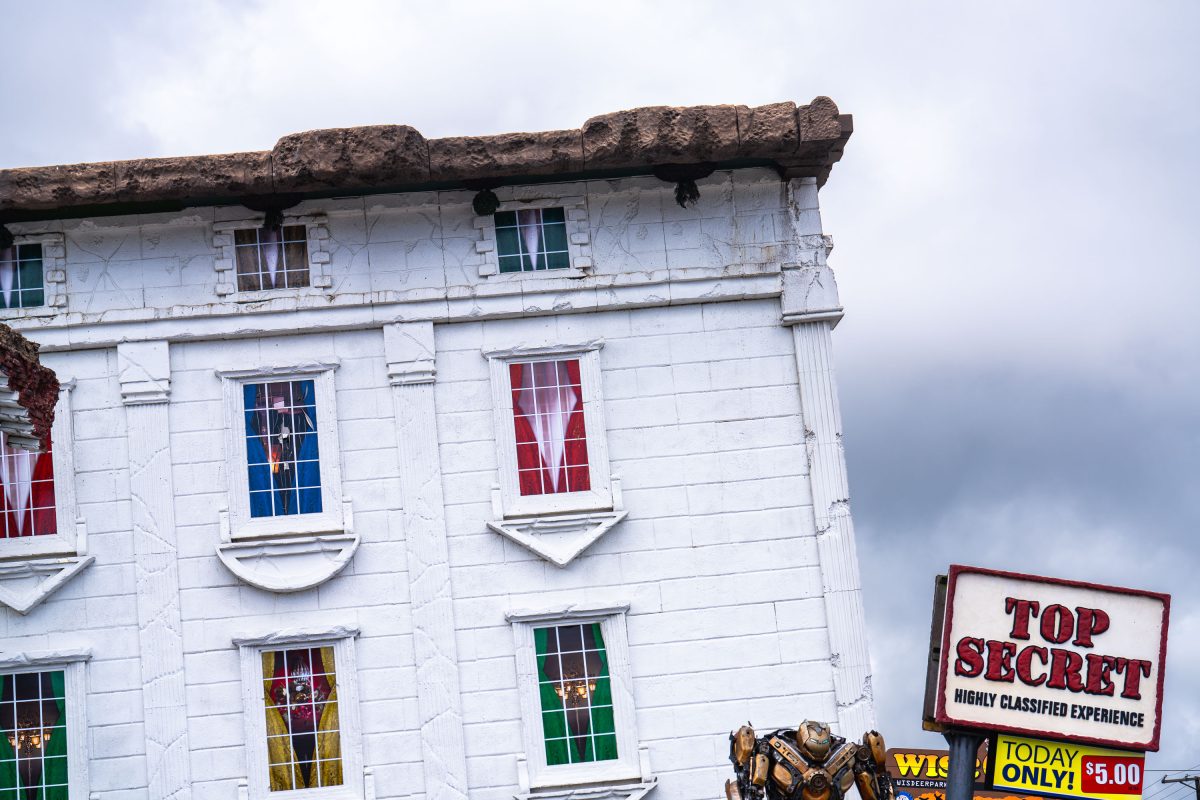
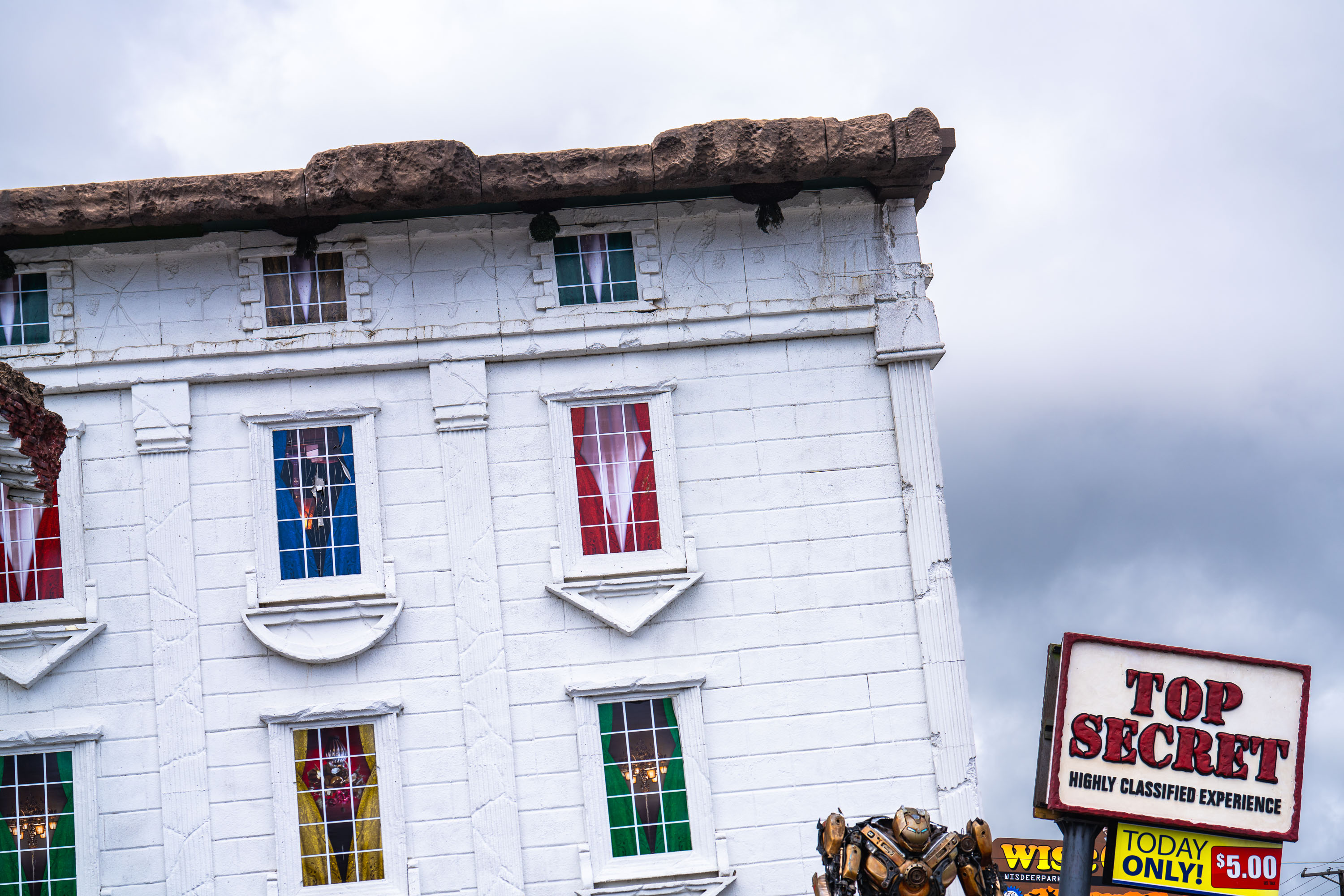
Upside-down white building facade with colorful windows and "Top Secret" sign on the Wisconsin Dells strip.
The "Top Secret" attraction in Wisconsin Dells is built as an upside-down house, with its roofline and foundation reversed so the structure appears to stand on its eaves. Admission is advertised at five dollars, billed as a "highly classified experience." The attraction is one of several novelty buildings along the Wisconsin Dells strip designed around optical tricks rather than historical architecture.

“Top Secret” Upside-Down House in Wisconsin Dells
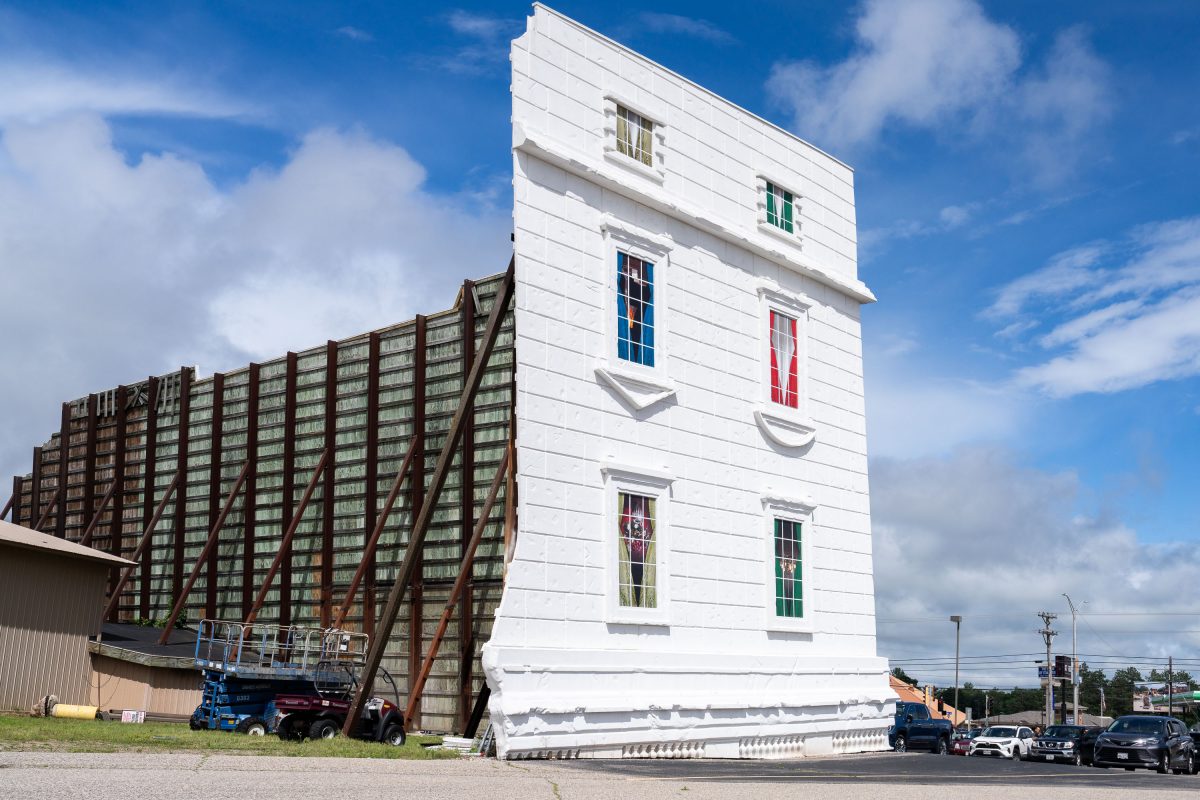
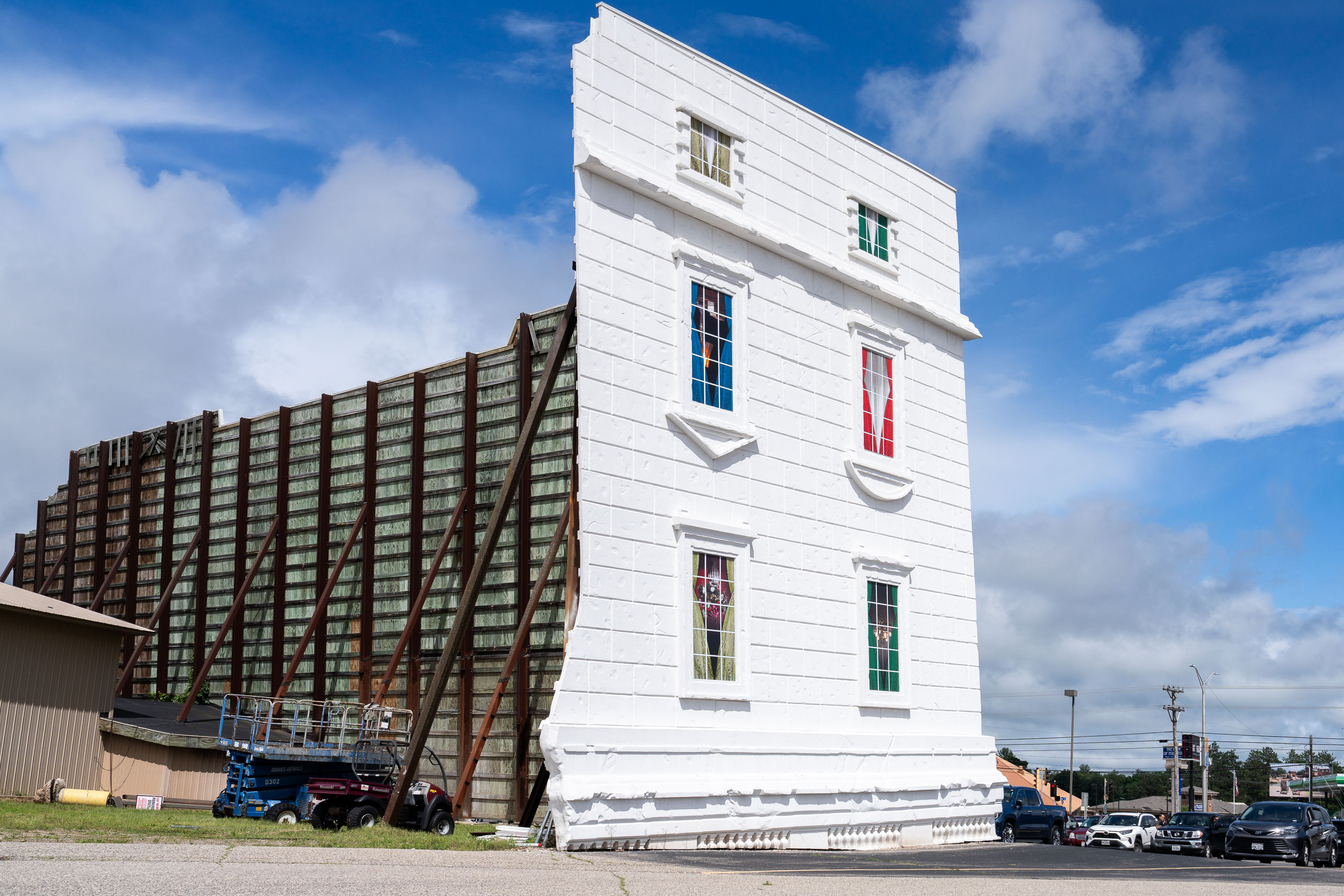
White tilted tower roadside attraction with colorful windows along Wisconsin Dells strip.
The tilted white tower along Wisconsin Dells Parkway is a novelty facade built to mimic a leaning building, part of a roadside tradition of eye-catching structures meant to pull in passing tourists. Wisconsin Dells has marketed itself as a vacation destination since the late 1800s, when H.H. Bennett's images of the Wisconsin River gorge drew early sightseers to the area. That tourism economy later expanded into water parks and novelty architecture built to be noticed from the road rather than entered or lived in. Structures like this one function as informal landmarks, helping travelers orient themselves among the dense strip of motels and attractions along the parkway.

Tilted Tower Facade Along Wisconsin Dells Parkway
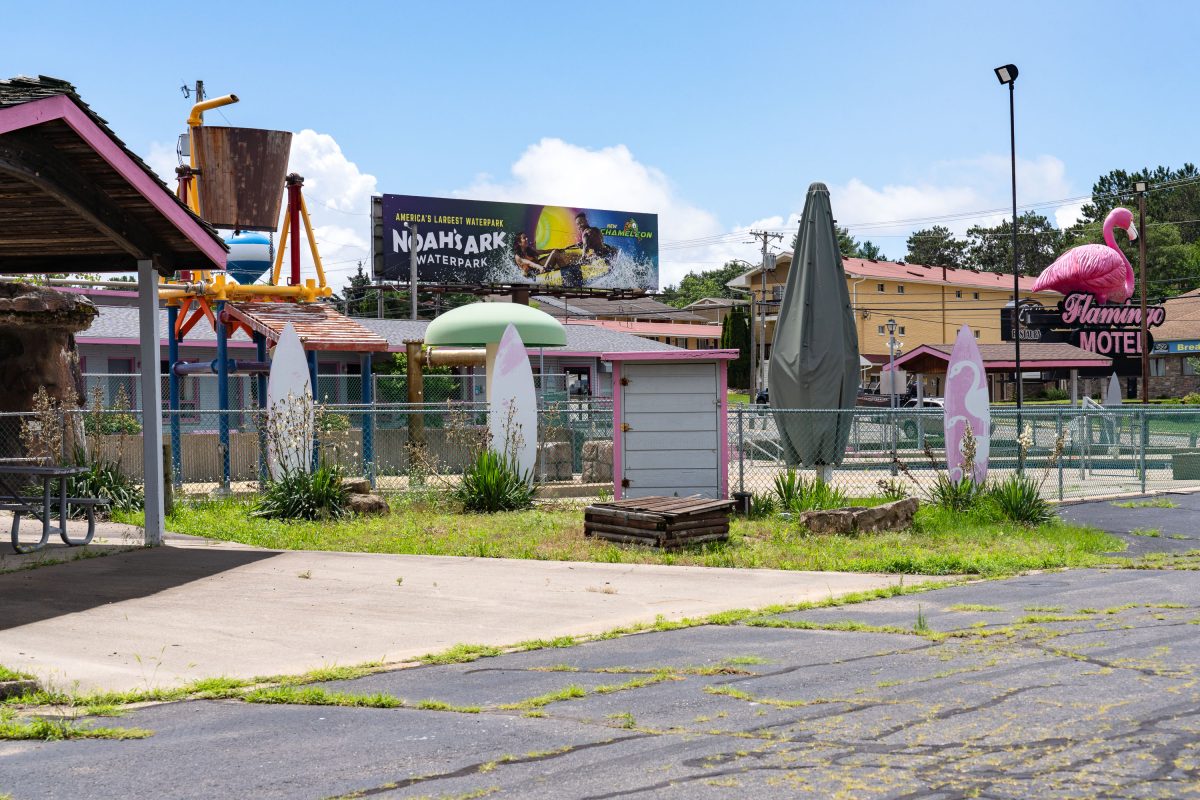
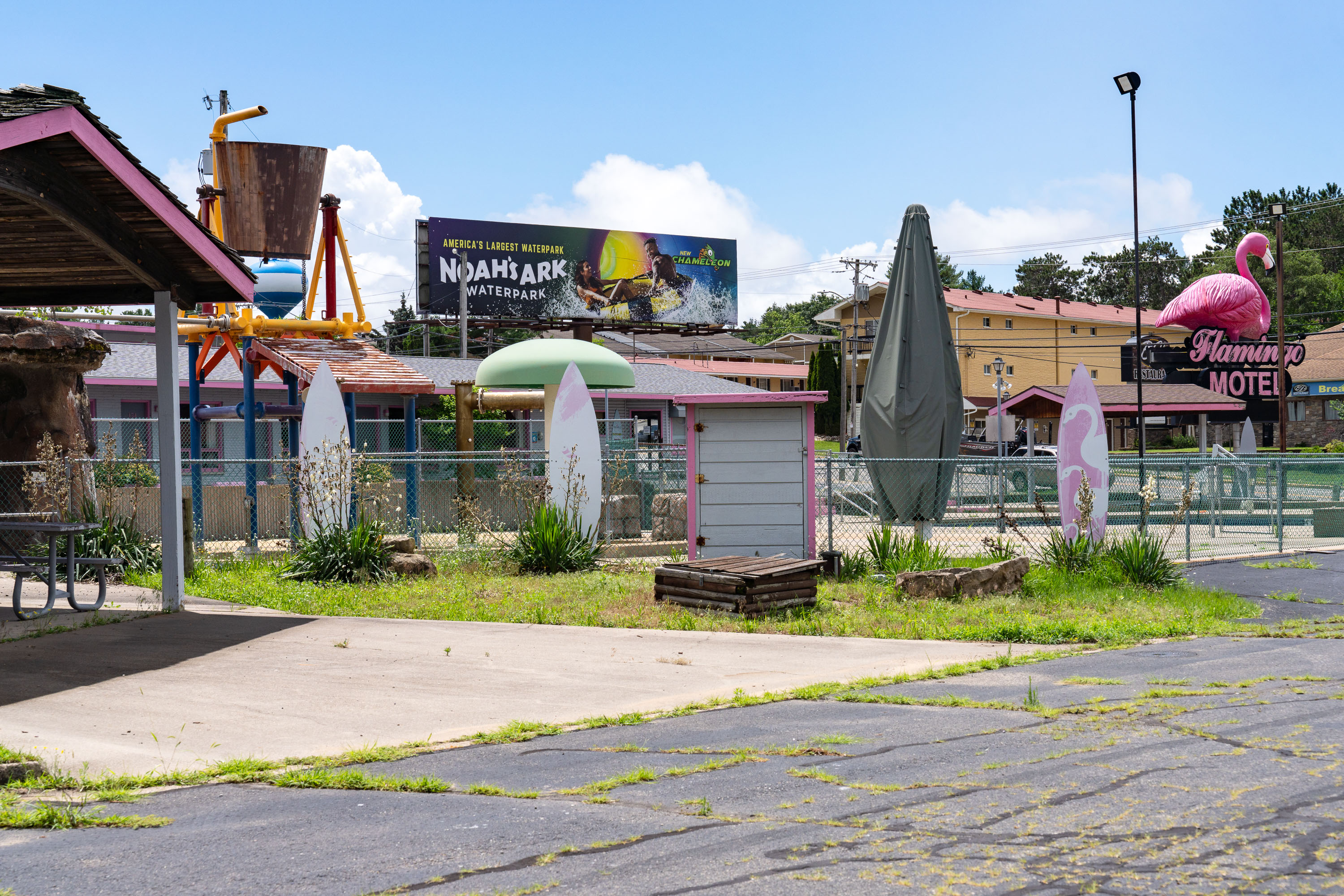
Flamingo Motel in Wisconsin Dells with pink neon sign, vintage structures, and Noah's Ark Waterpark billboard visible behind the property.
The Flamingo Motel sits along the strip in Wisconsin Dells, a stretch of Highway 12 lined with vintage motor lodges built to catch travelers heading to the area's waterparks and attractions. Its pink flamingo sign is a holdover from the mid-20th-century roadside motel era that once defined the Dells as a Midwest vacation destination. Noah's Ark Waterpark, advertised on the billboard behind the property, bills itself as America's largest waterpark and draws much of the tourist traffic that motels like the Flamingo were built to serve.

Flamingo Motel’s Faded Pool Area Near Noah’s Ark Waterpark
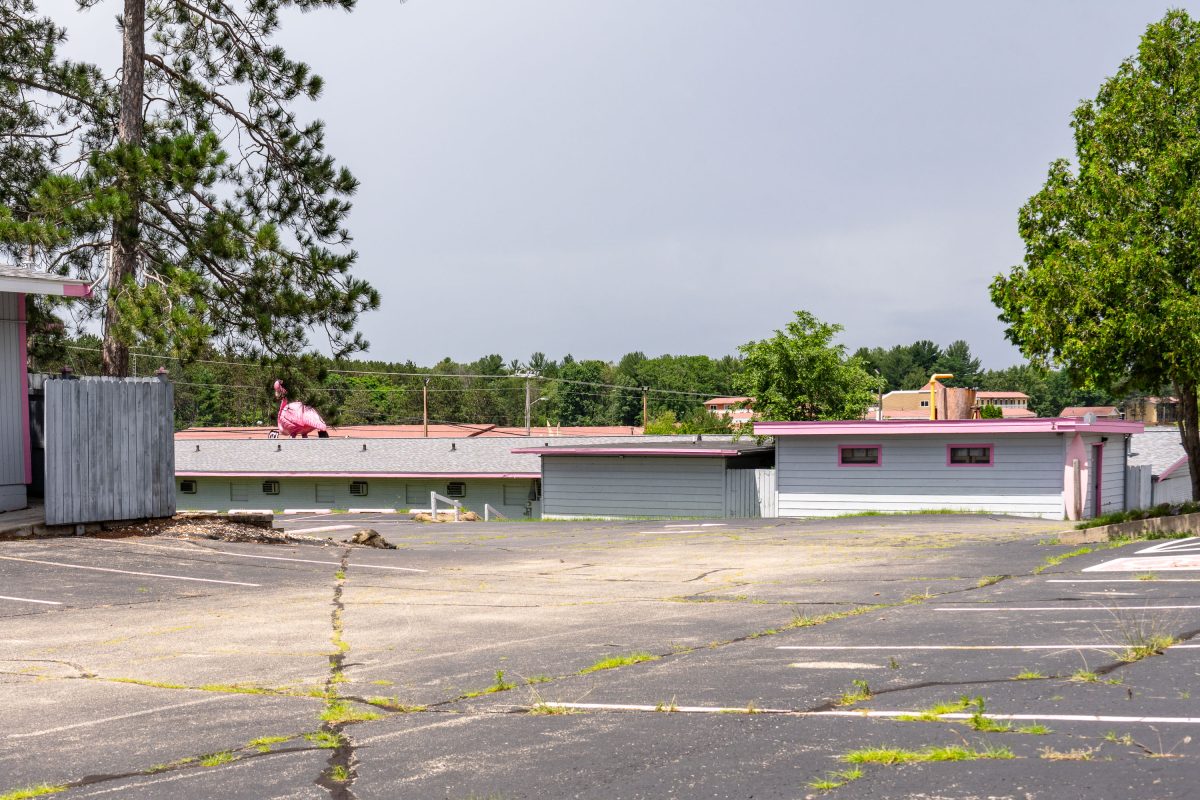
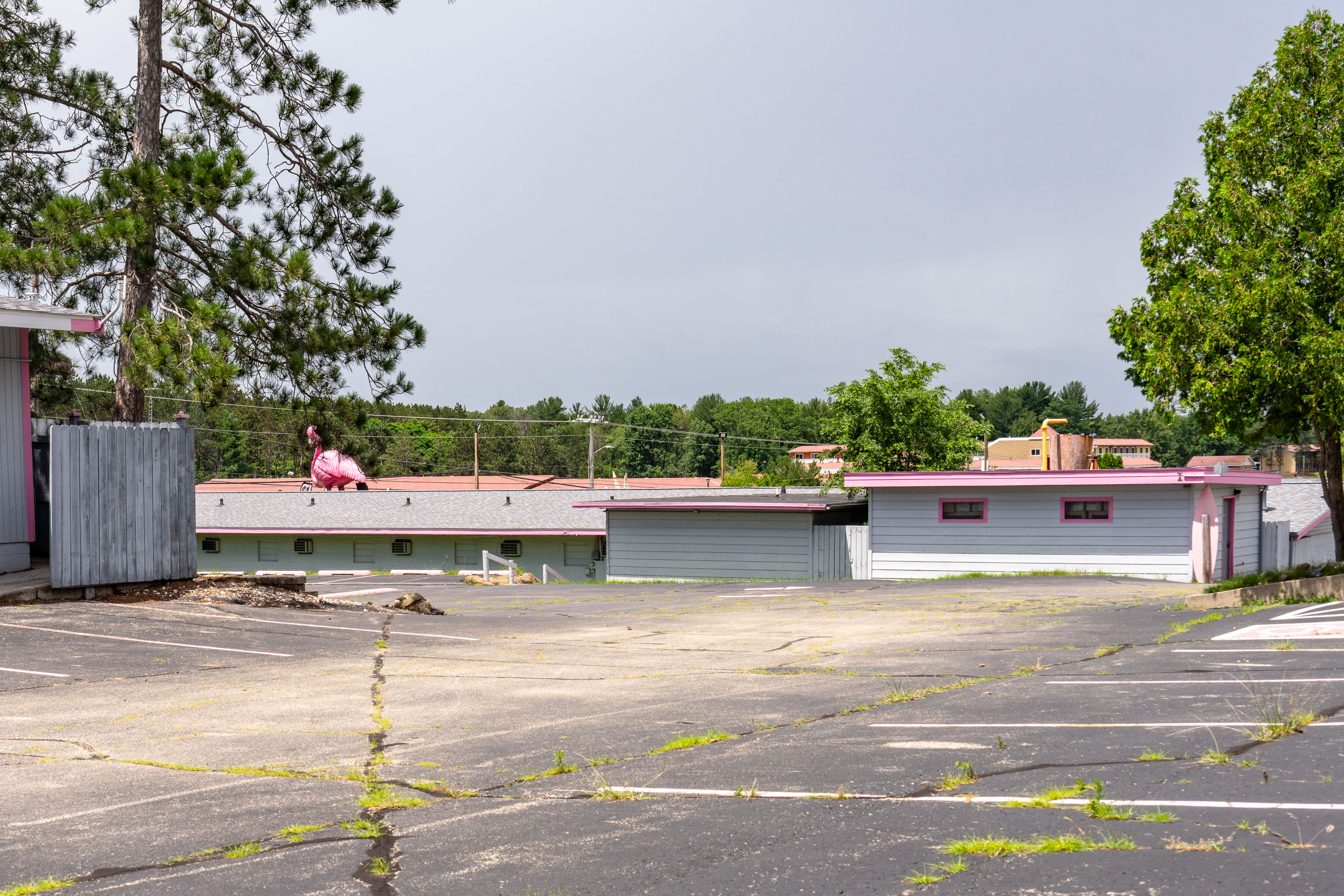
Abandoned Flamingo Motel in Wisconsin Dells with pink-roofed guest wings and empty parking lot overgrown with weeds.
The Flamingo Motel sits along the Wisconsin Dells strip, a stretch of Highway 12 once lined with mid-century motor courts built to serve the tourist boom that followed the rise of the Dells as a vacation destination in the 1950s and '60s. Its low-slung guest room wings, pink-and-gray trim, and rooftop flamingo sculpture reflect the theme-driven roadside architecture that defined the area's early motel row. Many of these independent motels closed or were demolished as larger waterpark resorts came to dominate Dells tourism starting in the 1980s and '90s. The cracked, empty parking lot points to the property's closure, one of several vintage motor lodges left standing but vacant along the corridor.

Empty Parking Lot at the Flamingo Motel in Wisconsin Dells
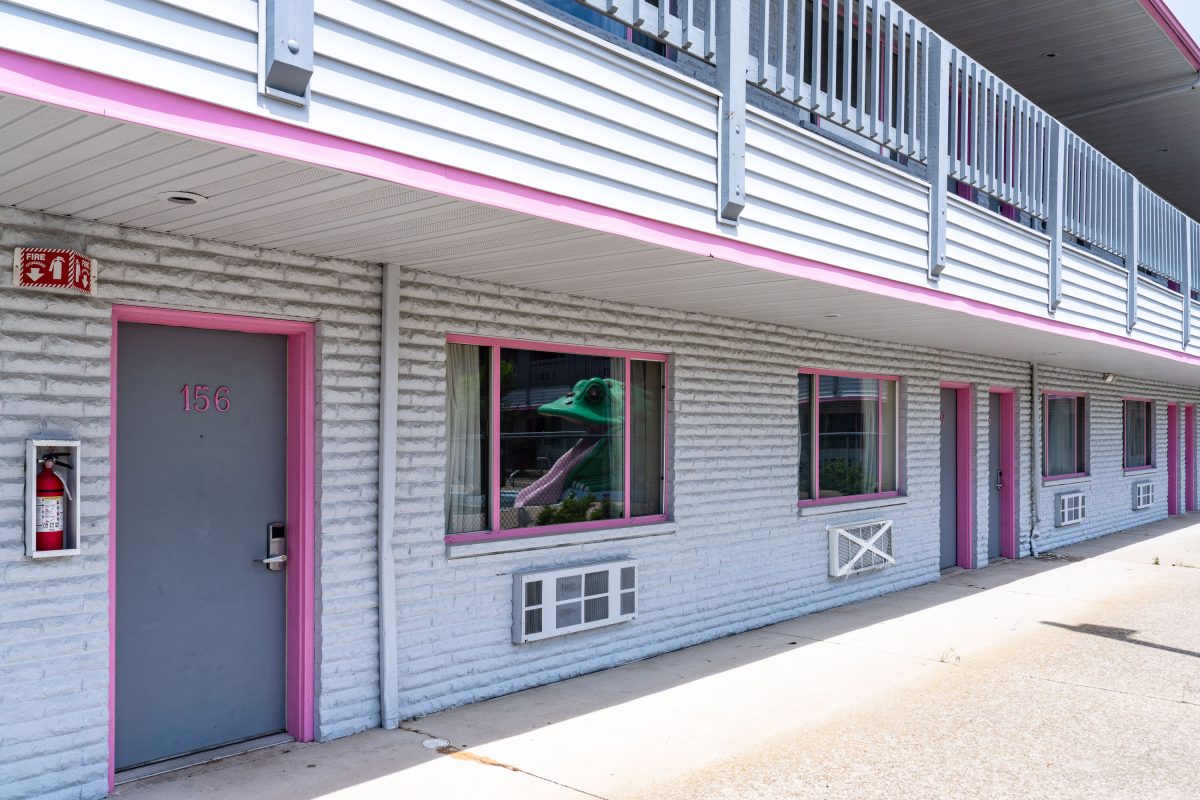
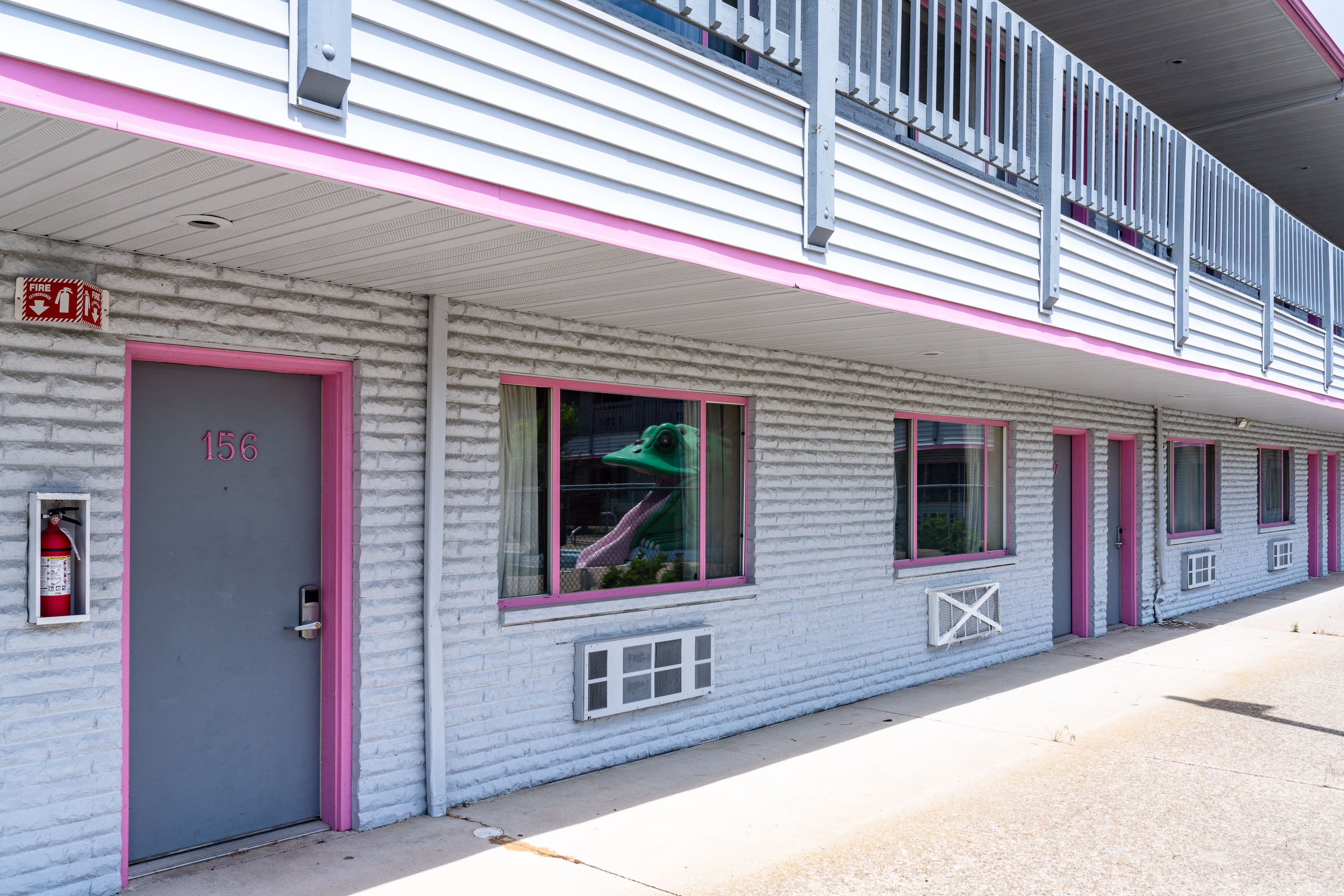
The Flamingo Hotel, a mid-century motel in Wisconsin Dells, features pink-trimmed windows and doors on its light blue brick facade.
The Flamingo Hotel sits along the strip of mid-century motels that once defined tourist lodging in Wisconsin Dells, a resort town built around the Wisconsin River's sandstone gorges. Properties like this one catered to family roadrip travelers through the mid-to-late 20th century, when the Dells marketed itself heavily on roadside attractions and themed motor inns. Many of these older motels have since closed as newer waterpark resorts drew visitors elsewhere in town and bought up and demolished the motels.

Stuffed Animal in a Window at the Flamingo Motel
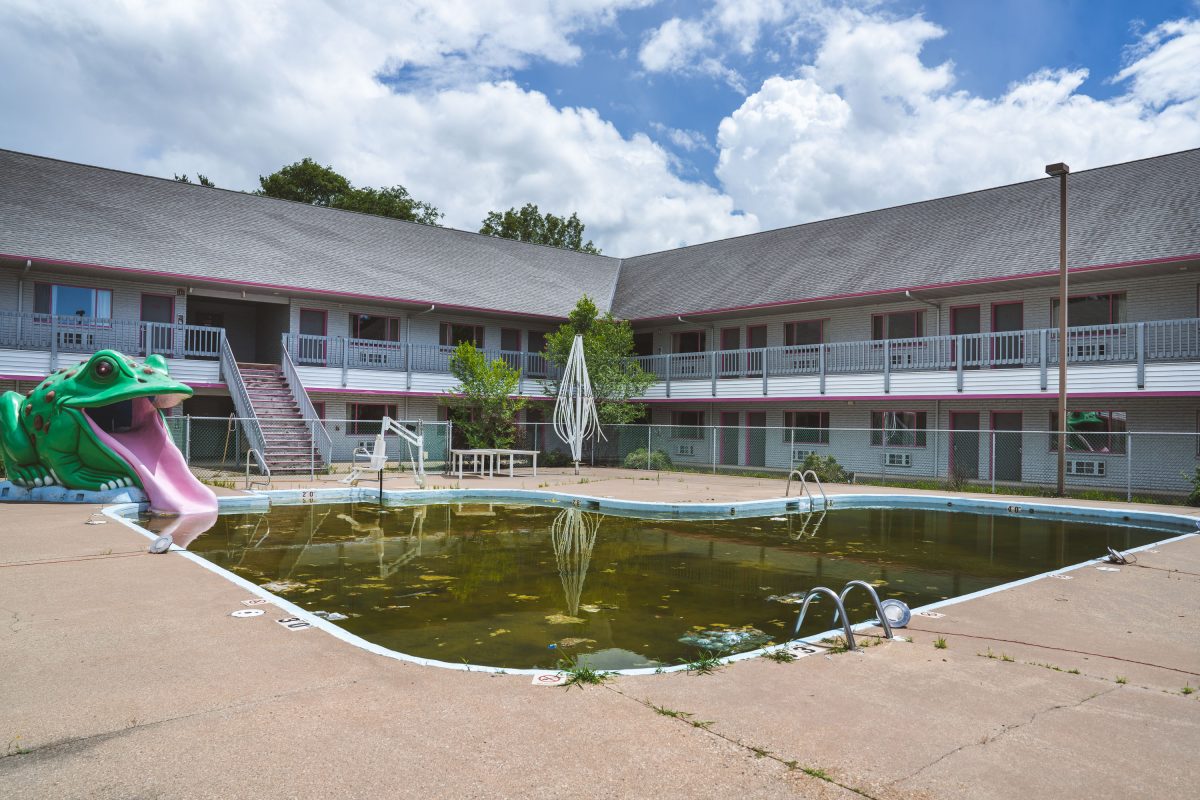
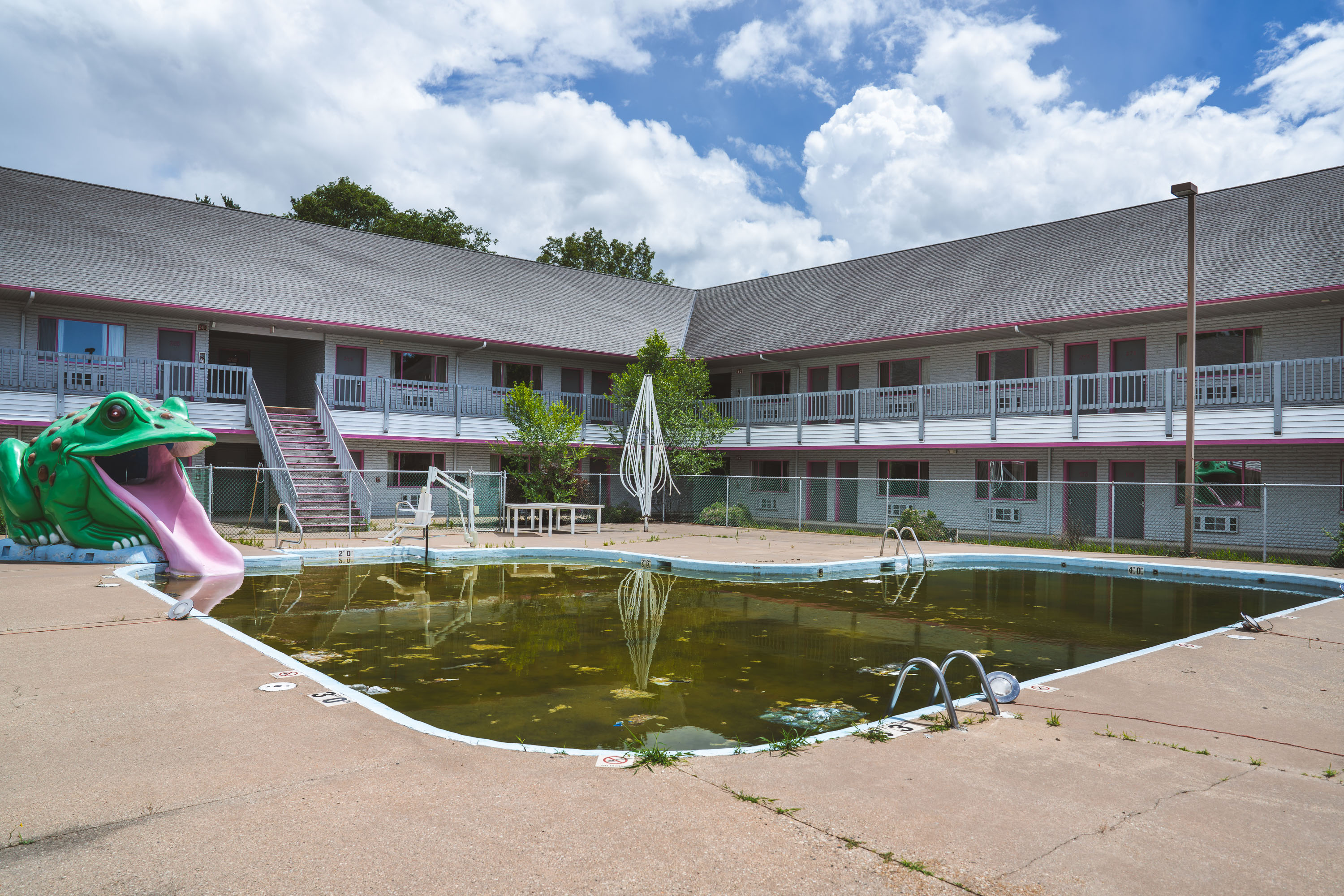
Abandoned swimming pool with stagnant water at the Flamingo Hotel in Wisconsin Dells, surrounded by vacant two-story motel buildings.
The Flamingo Hotel sits along the Wisconsin Dells strip, a stretch of Highway 12 built up through the mid-20th century with roadside motels catering to tourists visiting the area's rock formations and water attractions. The property has since closed.

Green Frog Slide by a Drained Pool at the Flamingo Hotel

Sneaky Pete's Wild West dinner show marquee illuminated at night in Wisconsin Dells.
Sneaky Pete's Wild West Dinner Show is a dinner theater in Wisconsin Dells, Wisconsin, built around a fictional outlaw character named Sneaky Pete, complete with "Wanted" posters detailing his supposed crimes. The show pairs a live stage performance with a served meal, a format shared by several entertainment venues along the town's main tourist strip. That strip runs along Highway 12 and 13, the corridor where Wisconsin Dells concentrates its themed restaurants and family attractions.

Sneaky Pete’s Wild West Dinner Show at Night in Wisconsin Dells

Political fortune-telling machine featuring a Trump figure in a suit and red tie in Wisconsin Dells arcade.
This coin-operated fortune-teller borrows its format from Zoltar, the animatronic mystic popularized by the 1988 film "Big," in which a boardwalk machine grants a boy's wish to become an adult. Novelty arcade manufacturers later built countless variations on that design, replacing the original turbaned figure with celebrities, cartoon characters, and political figures, as seen in this Trump-themed version. These machines typically accept coins or bills and respond with a short routine of moving arms and lips before printing a fortune card. Wisconsin Dells, a tourist town dense with arcades and novelty attractions, is a natural home for machines like this one.

“Trump Tells All” Zoltar-Style Fortune Machine in Wisconsin Dells

Ghost Molly's Showboat Saloon, a karaoke bar on the main strip in Wisconsin Dells, features red awnings and neon signage.
Ghost Molly's Showboat Saloon operates on the main downtown strip of Wisconsin Dells, a tourist town on the Wisconsin River. The bar advertises karaoke nights on its marquee, one of several themed nightlife spots clustered along the same block. Wisconsin Dells built its identity on waterparks and family attractions by day, but its downtown strip fills with bars and karaoke venues once the sun goes down.

Karaoke Sign at Ghost Molly’s Showboat Saloon in Wisconsin Dells
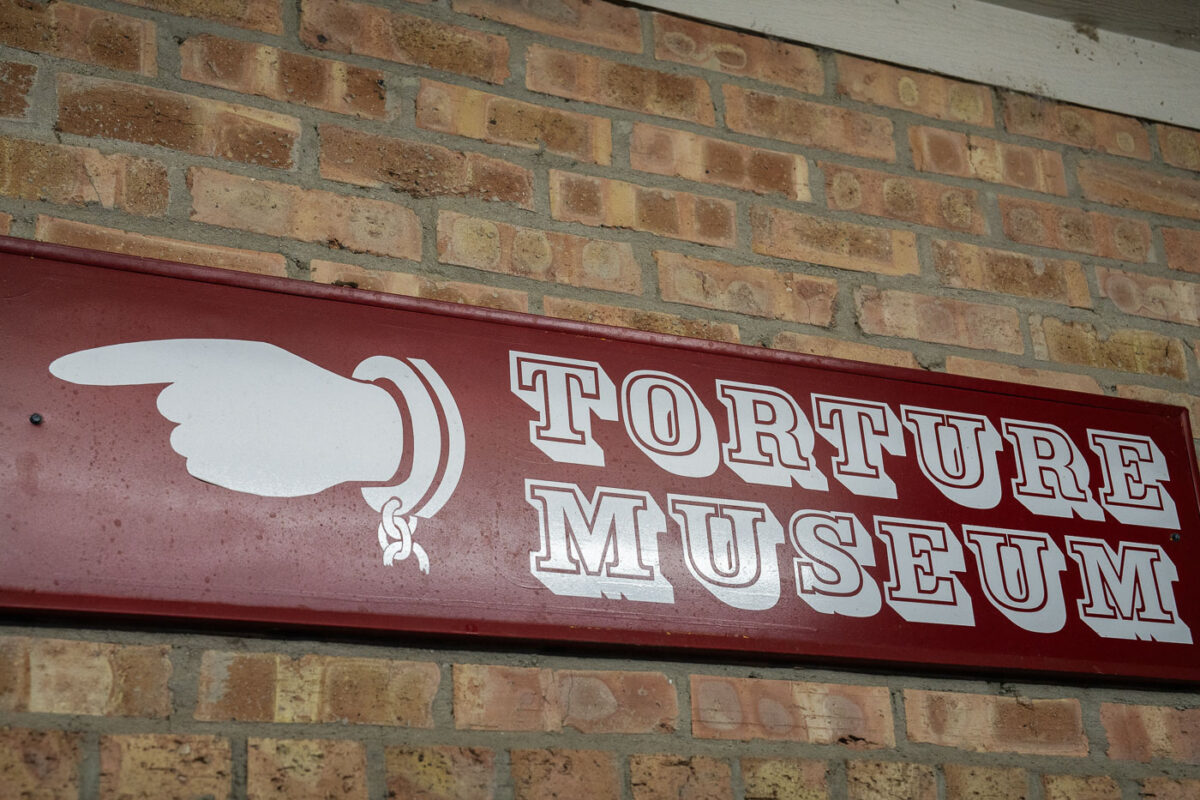
Torture Museum sign with white hand pointing icon on red background mounted on brick wall in Wisconsin Dells.
The Torture Museum is one of several novelty attractions along the main tourist strip in Wisconsin Dells, a city whose downtown economy has centered on tourism since the mid-20th century. Storefront museums of this kind typically display replicas of medieval and early modern devices — racks, iron maidens, stocks — paired with placards describing their historical use. Wisconsin Dells draws several million visitors annually, and its commercial strip mixes water parks with wax museums, haunted houses, and similar paid attractions competing for foot traffic.

Sign Pointing to the Torture Museum in Wisconsin Dells

Fireworks burst above the Rise of Icarus waterslide tower at Mt. Olympus Water and Theme Park during Fourth of July celebrations
Mt. Olympus Water and Theme Park in Wisconsin Dells launched its Fourth of July fireworks display in 2024, just weeks after opening The Rise of Icarus waterslide. The ride's tower stands 145 feet tall, making it the tallest water slide structure in North America. Mt. Olympus opened in 1998 and has grown into one of the largest combined indoor-outdoor waterpark and theme park complexes in the country.

Fourth of July Fireworks Over The Rise of Icarus at Mt. Olympus

Fireworks burst above the Rise of Icarus waterslide at Mt. Olympus Water & Theme Park during Fourth of July celebrations in
The Rise of Icarus is a 145-foot waterslide tower at Mt. Olympus Water & Theme Park in Wisconsin Dells. Mt. Olympus stages a Fourth of July fireworks display over the ride each year, timing the show to detonate directly above the slide's structure. The park, themed around Greek mythology, combines indoor and outdoor water attractions and counts among the larger water parks in an area that markets itself as the water park capital of the world.

Fireworks Burst Over the Rise of Icarus Waterslide in Wisconsin Dells

Fireworks burst above the Rise of Icarus waterslide tower at Mt. Olympus Water & Theme Park in Wisconsin Dells.
The Rise of Icarus opened in June 2024 at Mt. Olympus Water & Theme Park in Wisconsin Dells, billed as the tallest waterslide in the United States at 145 feet. Riders climb the tower's stairs before dropping through its enclosed slide, which winds around the structure's central frame. Mt. Olympus has staged Fourth of July fireworks over its riverside grounds for years, drawing crowds along the Wisconsin Dells strip. In 2024, the park kept its Independence Day show on schedule even as weather forced postponements at other area resorts.

Fireworks Burst Behind the Rise of Icarus at Mt. Olympus

Fireworks explode above The Rise of Icarus waterslide at Mt. Olympus Water & Theme Park in Wisconsin Dells.
The Rise of Icarus opened at Mt. Olympus Water & Theme Park in Wisconsin Dells in 2024, rising 145 feet and billed as the tallest waterslide in the United States. Riders climb the tower's stairs before dropping through its enclosed spiral chute to a splashdown pool below. Mt. Olympus marked the slide's debut with its annual Fourth of July fireworks show, a tradition the park has staged for decades over its skyline of mock Greek temples and roller coasters.

Fireworks Over the Rise of Icarus at Mt. Olympus

Original Wisconsin Dells Fudge storefront on Broadway in downtown Wisconsin Dells.
Broadway forms the main tourist strip of downtown Wisconsin Dells, running a few blocks from the Wisconsin River. Original Wisconsin Dells Fudge occupies a storefront on the 100 Block, marked by a marquee-style sign that's become a familiar landmark along the street. Fudge shops have operated on Broadway since the mid-20th century, part of the walkable retail core that developed alongside the town's water parks and river-boat tours. Wisconsin Dells draws millions of visitors a year, and Broadway's shops see their heaviest foot and vehicle traffic during the summer season.

Evening Traffic on Broadway Near the Wis Dells Fudge Sign

The District outdoor entertainment complex in Wisconsin Dells features dining, a converted bus stage, and riverside views.
The District is an outdoor dining and entertainment venue in downtown Wisconsin Dells, built around a shipping-container storefront and a converted vintage bus used as a stage for live music. A painted mural depicting the region's sandstone bluffs covers the adjacent building, a nod to the rock formations along the Wisconsin River that have drawn tourists to the area since the 19th century. The venue sits near a rail corridor that once served the logging and tourism traffic central to the Dells' development. It operates seasonally, combining food vendors, bars, and a performance stage for visitors during the area's peak summer tourist months.

Live Music Night at The District in Wisconsin Dells

Large Lego City diorama with model train track at Buffalo Phil's Pizza & Grille in Wisconsin Dells.
Buffalo Phil's Pizza & Grille built its dining room around a sprawling Lego City diorama, with miniature buildings, vehicles, and streetscapes wrapping the seating area. A model train delivers food to tables, running on track that loops through and around the Lego layout. Diners can watch the trains pass fire stations, city blocks, and other Lego structures while they wait for their orders.

Lego City Diorama and Model Train at Buffalo Phil’s, Wisconsin Dells
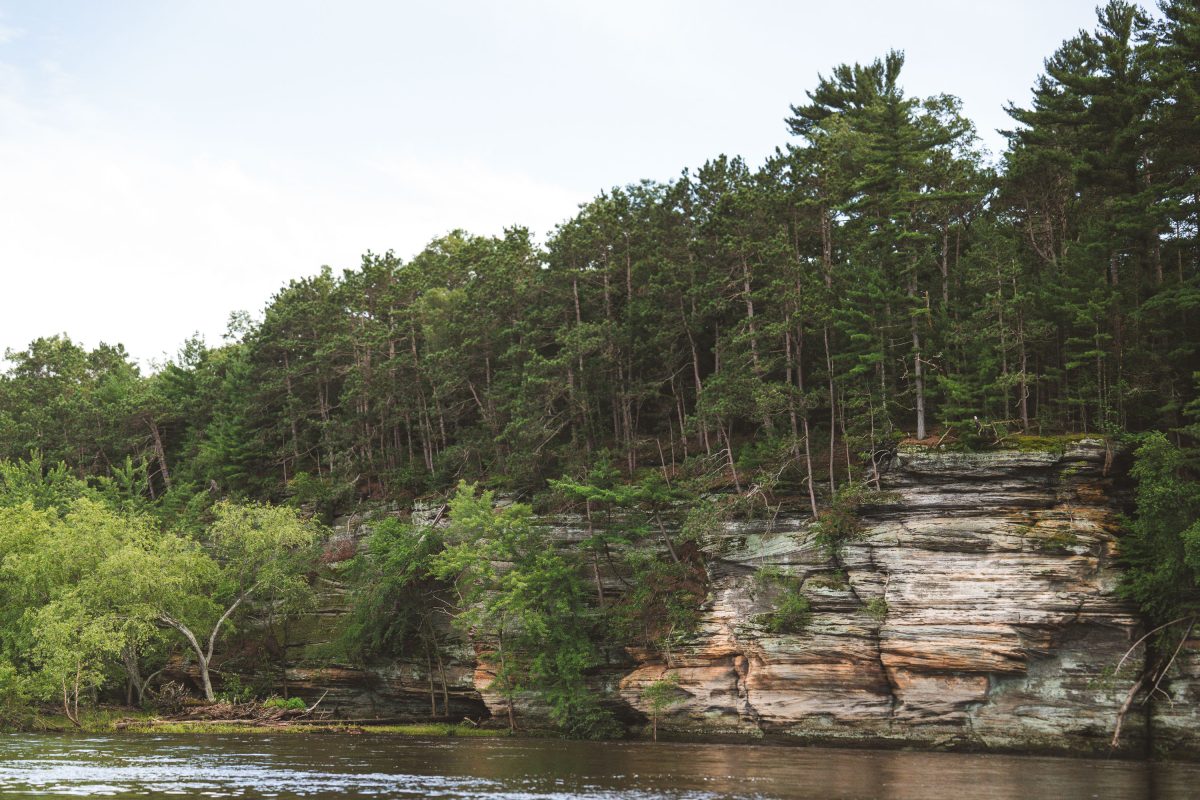
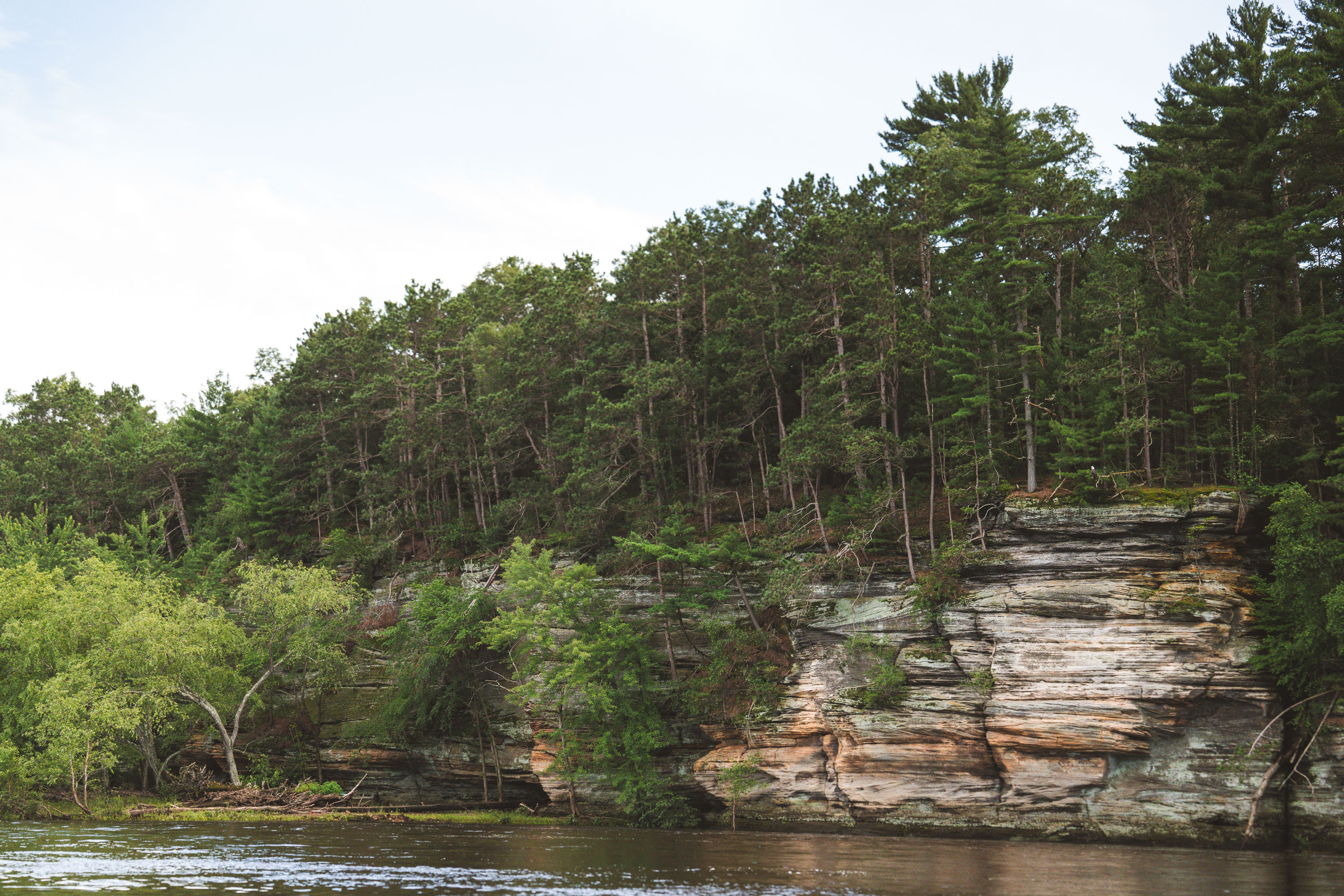
Sandstone bluffs with layered rock formations line the Wisconsin River near Wisconsin Dells.
The Wisconsin River cut these sandstone bluffs over thousands of years, exposing layers of Cambrian-era rock laid down roughly 500 million years ago. The bluffs sit along the Wisconsin Dells, a stretch of river between Wisconsin Dells and Lake Delton known for its exposed sandstone canyons and rock formations. Meltwater from the last ice age widened the river channel here, stripping away softer rock and leaving the banded layers now visible along the shoreline. Pine and hardwood forest covers the bluffs above the waterline, part of the mixed woodland typical of this section of the river.

Sandstone Bluffs of the Wisconsin Dells

Operator at the helm of an amphibious DUKW tour vehicle on the Wisconsin River near Wisconsin Dells.
The Original Wisconsin Ducks runs amphibious DUKW vehicles on the Wisconsin River near Wisconsin Dells. The DUKW was designed in 1942 by General Motors for the U.S. Army, built to ferry troops and supplies between ship and shore during World War II. Wisconsin Dells businessman Mel Flath began operating surplus military DUKWs on local waterways in 1946, starting what became one of the country's longest-running duck tour operations. Drivers steer the vehicles from an open rear cockpit, guiding each boat between river channels and wooded trail routes cut into the area's sandstone bluffs.

Driver at the Helm of a Wisconsin Ducks DUKW on the Wisconsin River

Three DUKW amphibious tour vehicles parked along a forested trail with a "Duck Trail" warning sign in Wisconsin Dells.
DUKW amphibious vehicles, nicknamed "Ducks," were built by General Motors during World War II to carry troops and supplies from ship to shore. Wisconsin Dells operators began converting surplus military Ducks into sightseeing vehicles in 1946, running them over wooded trails and into the Wisconsin River to combine road and water travel in one trip. The six-wheel-drive vehicles still follow marked routes through the forest, like the one posted here, before entering the water. Several companies continue to operate DUKW fleets in the Dells, making it one of the longest-running Duck tour destinations in the country.

DUKW Tour Vehicles Queue on the Duck Trail in Wisconsin Dells

Magestic Star Casino Boat in Wisconsin
The Magestic Star casino boat sitting at Bay Shipbuilding in Sturgeon Bay, Wisconsin. The boat was docked for decades in Gary, Indiana before closing in 2021 after new Indiana legislation allowed for land-based casinos.

Magestic Star Casino Boat in Wisconsin
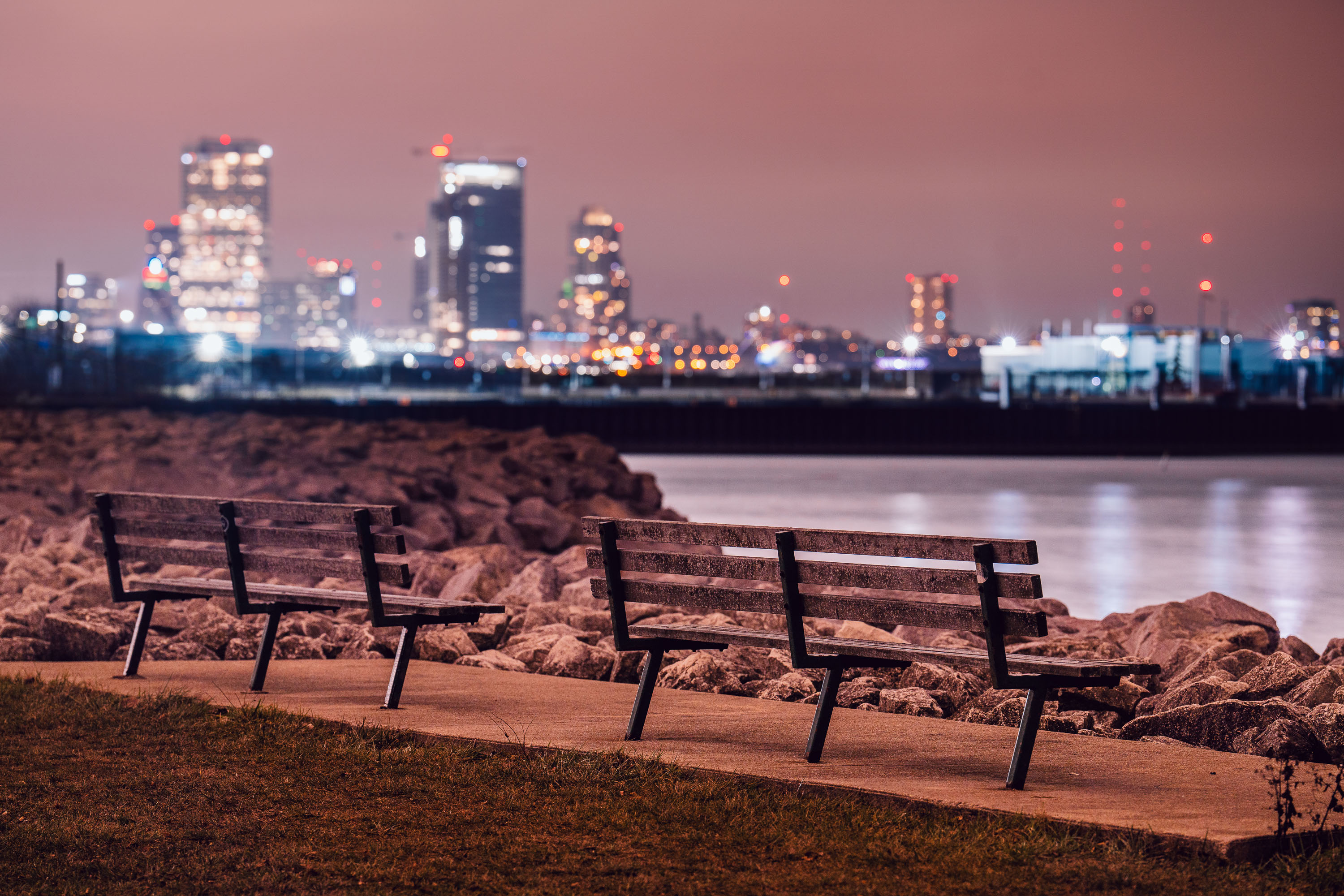
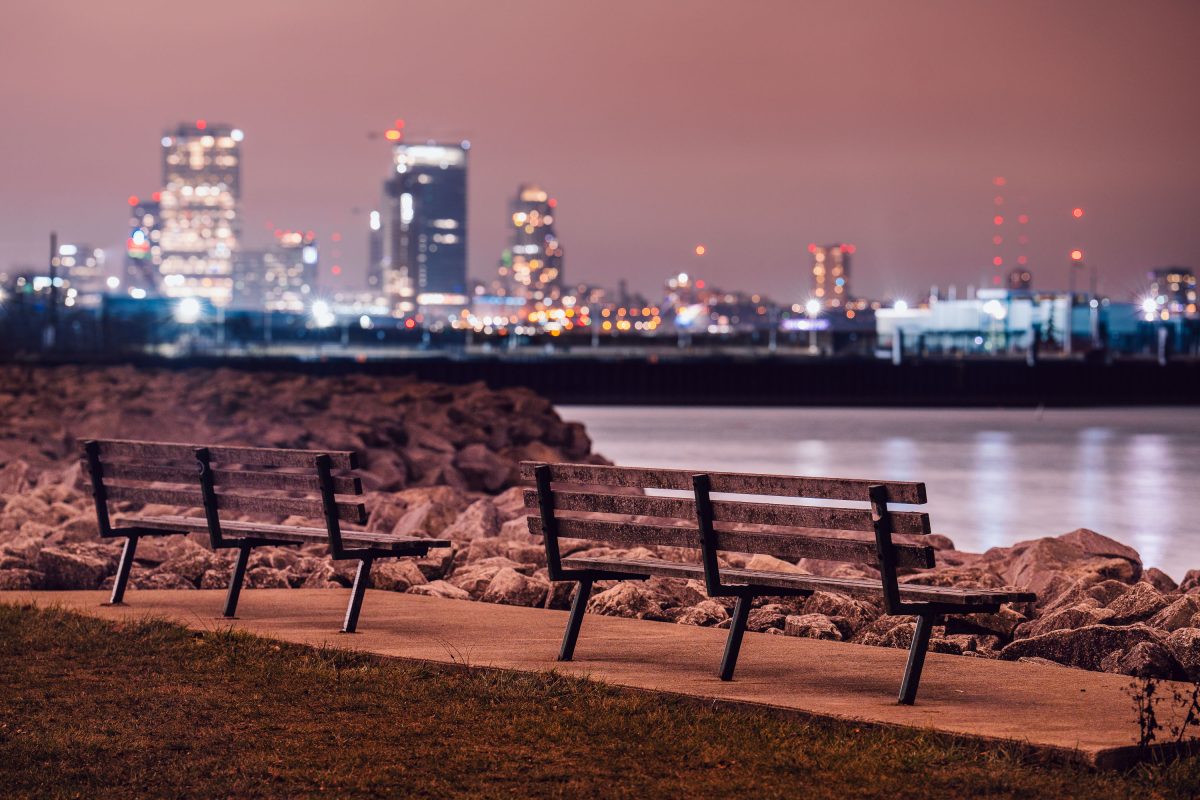
Wooden benches on Milwaukee's lakefront face the city skyline across Lake Michigan at dusk.
Milwaukee sits on the western shore of Lake Michigan, the only Great Lake located entirely within the United States. The lake covers about 22,300 square miles and reaches depths near 925 feet, ranking second among the five Great Lakes by volume. Riprap and paved paths like this one run along much of Milwaukee's lakefront, part of a long-running effort to control erosion while keeping the shoreline open to the public. The downtown skyline across the water grew up largely in the 20th century as Milwaukee developed into a shipping and manufacturing center on the lake.

Lakefront Benches Facing the Milwaukee Skyline at Night
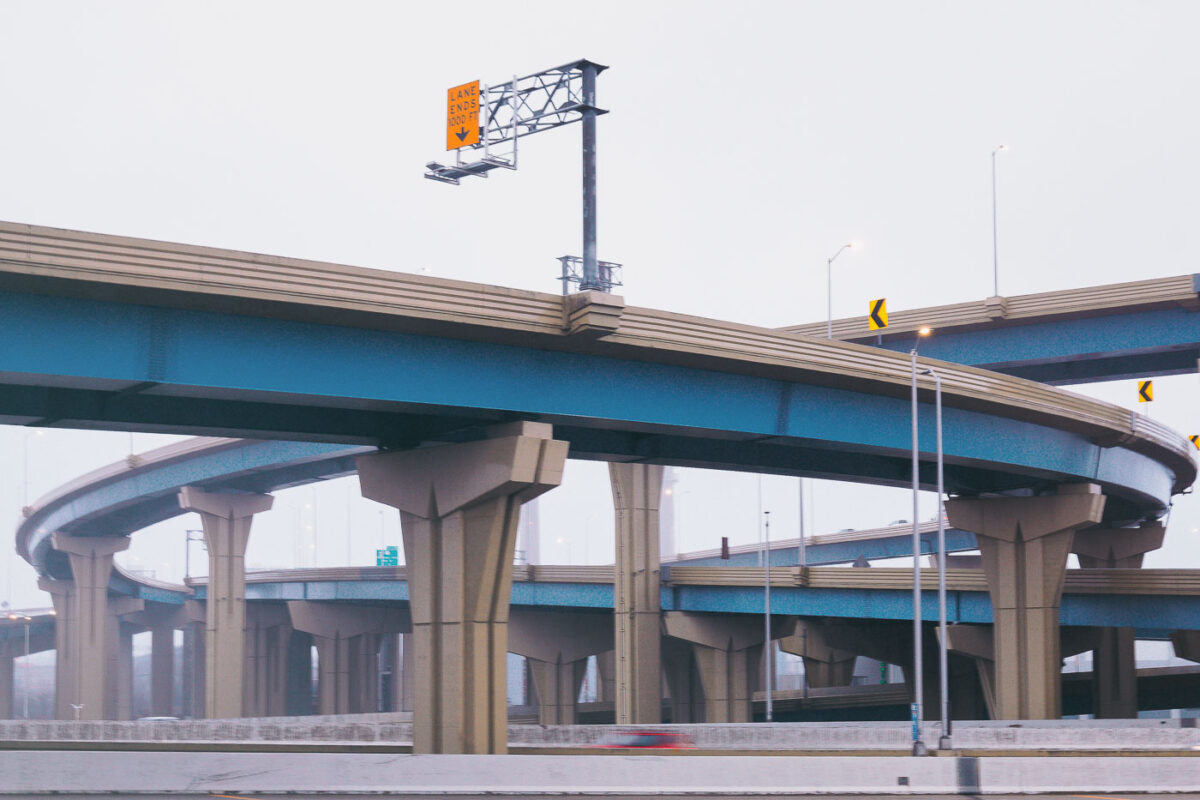
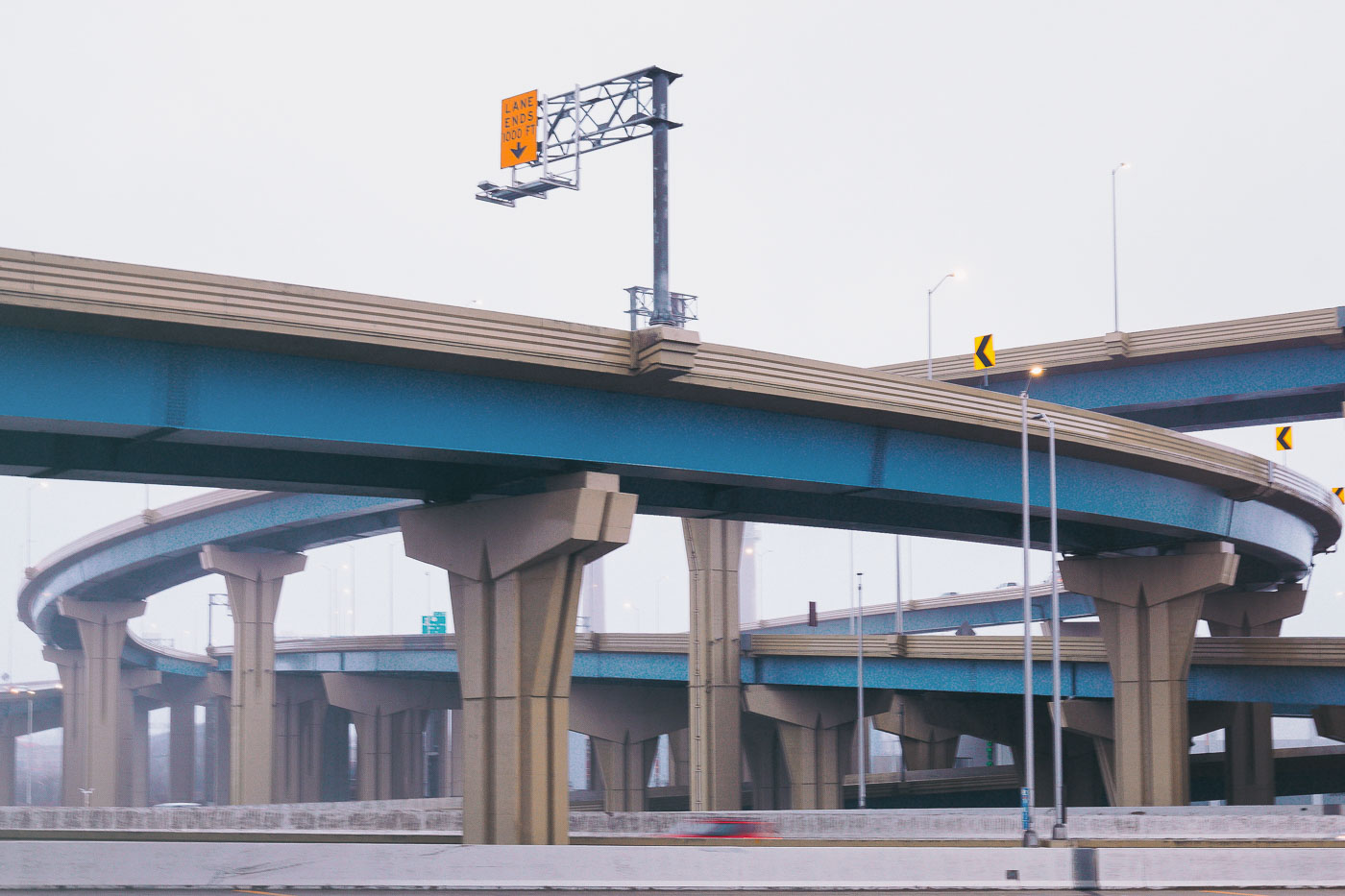
Multi-level highway ramps and concrete support columns of Milwaukee's Marquette Interchange.
The Marquette Interchange links Interstate 43, Interstate 94, and Interstate 794 at the edge of downtown Milwaukee. The current structure opened in 2008, replacing a cloverleaf design that had carried traffic since 1968. At $810 million, the rebuild was the largest public works project in Wisconsin history at the time. It now carries roughly 300,000 vehicles a day, ranking it among the busiest interchanges in the state.

Elevated Ramps at Milwaukee’s Marquette Interchange
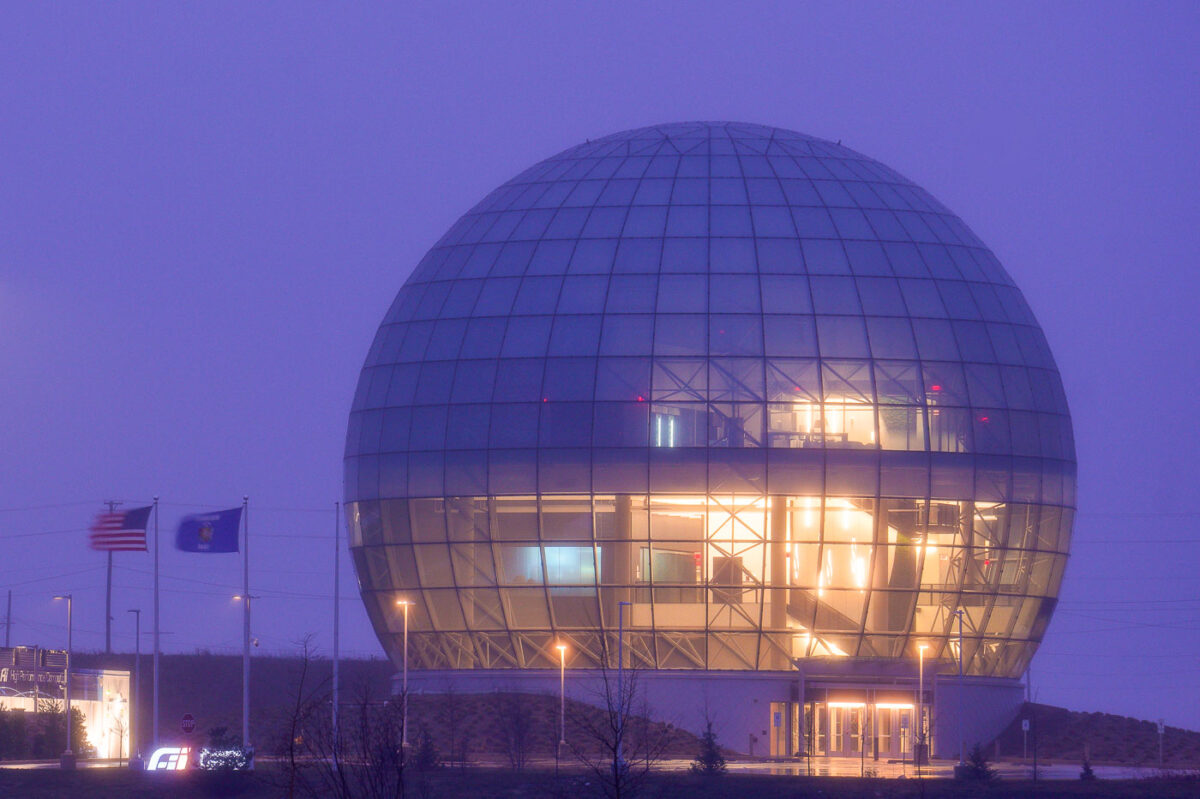
Spherical glass data center building at the Foxconn campus in Mount Pleasant, Wisconsin.
Foxconn's spherical data center sits within the Wisconsin Valley Science and Technology Park in Mount Pleasant. The company signed a 2017 agreement with the state promising a massive LCD manufacturing campus in exchange for billions of dollars in incentives. That manufacturing plan was later scaled back dramatically, and Foxconn shifted its focus to smaller ventures, including data centers and other tech-related projects on the site. The globe-shaped building has become one of the few completed structures from the original campus plan.

Spherical Data Center at Foxconn Campus, Mount Pleasant
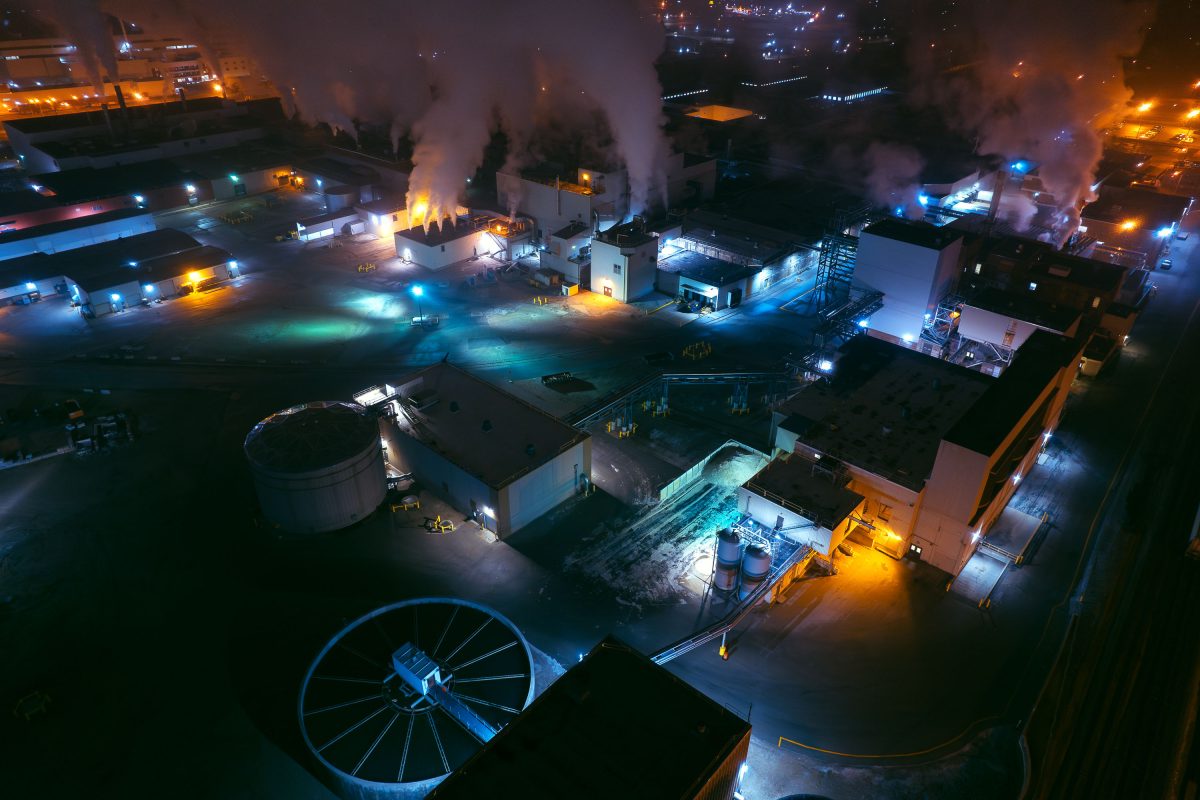
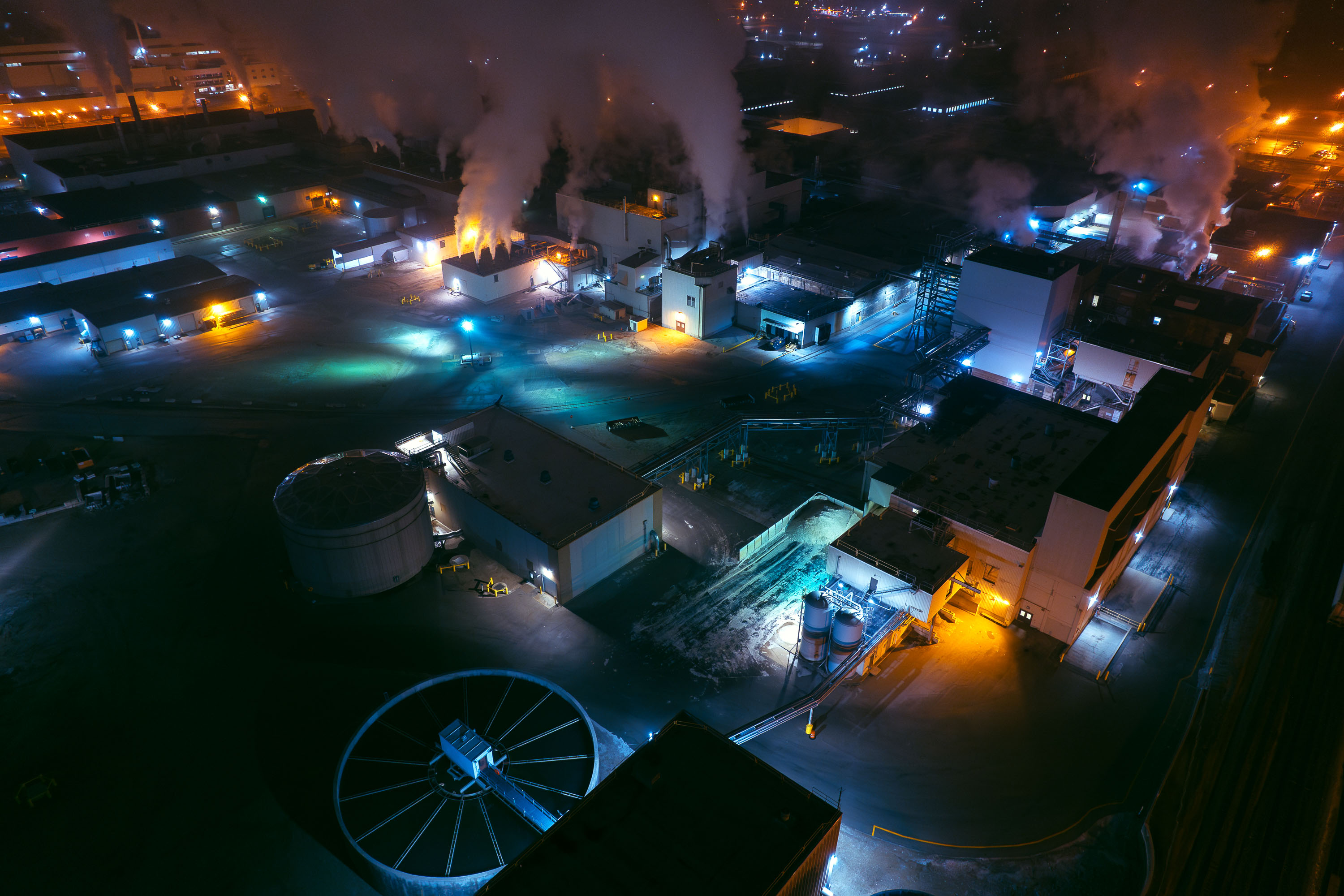
Procter & Gamble Charmin paper mill in Green Bay, Wisconsin, emits steam plumes at night with illuminated industrial structures and storage tanks.
Procter & Gamble's Green Bay facility produces Charmin toilet paper, part of a tissue operation the company built up after acquiring the Charmin Paper Company in 1957. The plant sits along the Fox River, a corridor that has anchored paper manufacturing in the region for well over a century thanks to easy access to water and rail transport. Round-the-clock production is typical at mills of this scale, where steam stacks and drying operations run continuously to keep pace with national distribution demands.

Night Shift at the P&G Charmin Plant in Green Bay

Sydney’s Fresh Eggs Shack, a roadside egg stand in rural Wisconsin, sits beside a dead-end road.
Sydney’s Fresh Eggs Shack is a roadside egg stand in rural Wisconsin. It sells fresh eggs directly from the producer, a common form of small-scale farm retail in agricultural areas. A dead-end road sign marks the stand’s location on a lightly traveled road.

Sydney’s Fresh Eggs Shack, Rural Wisconsin
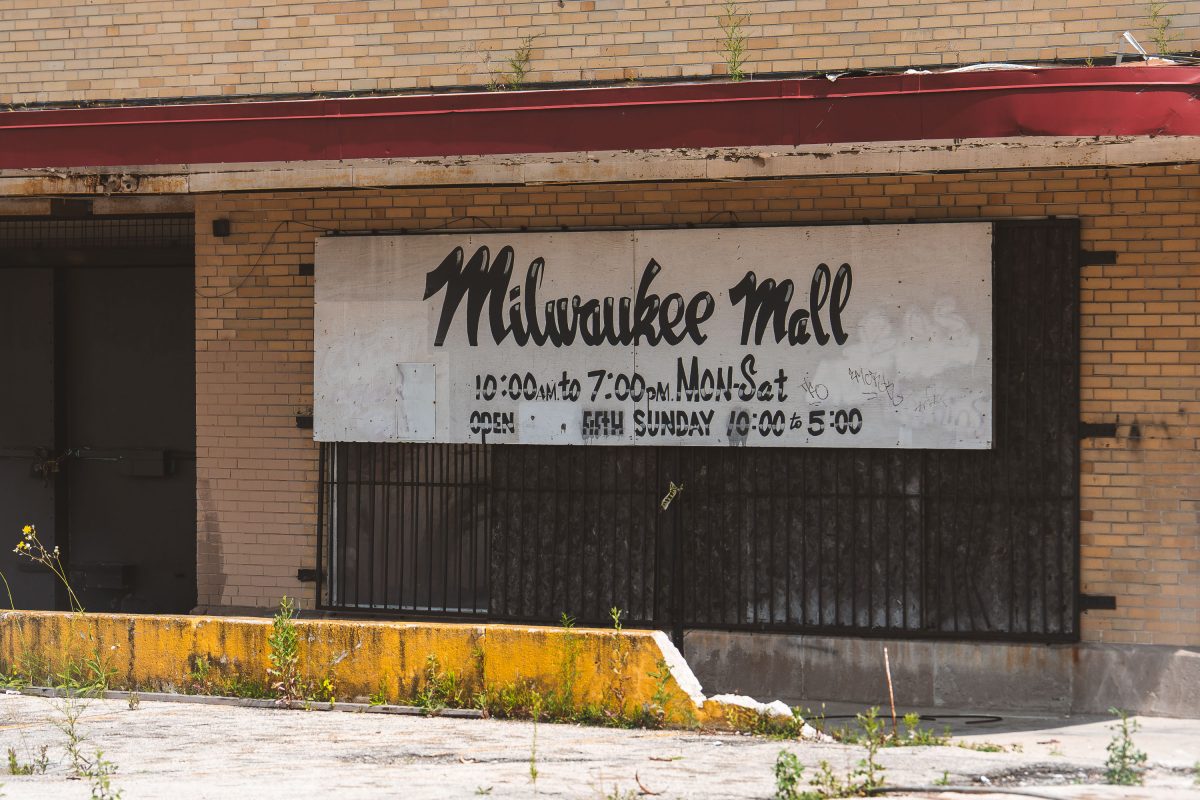
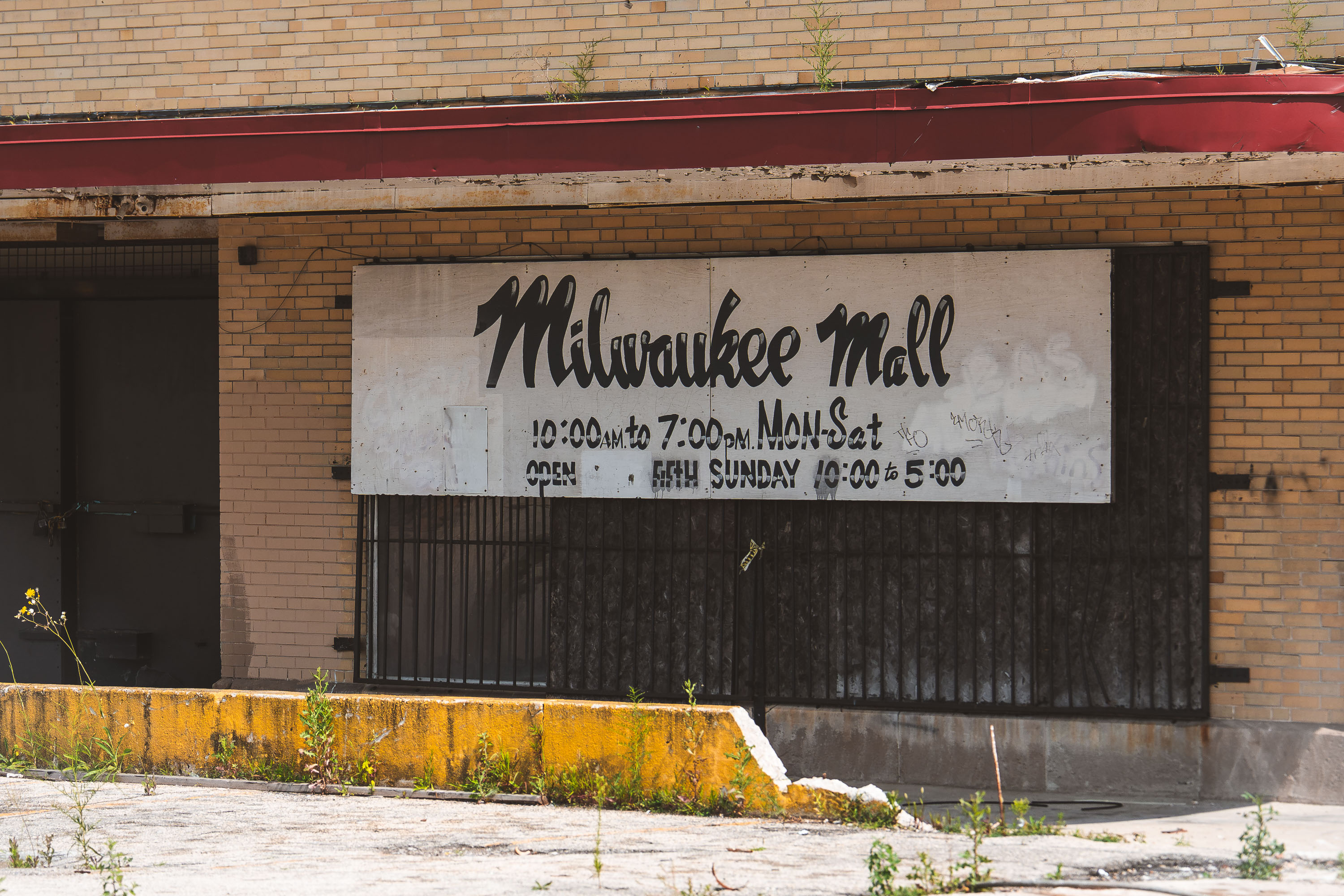
Abandoned Milwaukee Mall storefront with faded signage on a brick building in Milwaukee, Wisconsin.
The Milwaukee Mall sign still hangs on a vacant storefront in Milwaukee, its painted hours for Monday through Saturday and the fifth Sunday of the month barely legible. Weeds now grow through the cracked pavement and curb in front of the closed, barred entrance.

Faded “Milwaukee Mall” Sign on a Shuttered Storefront
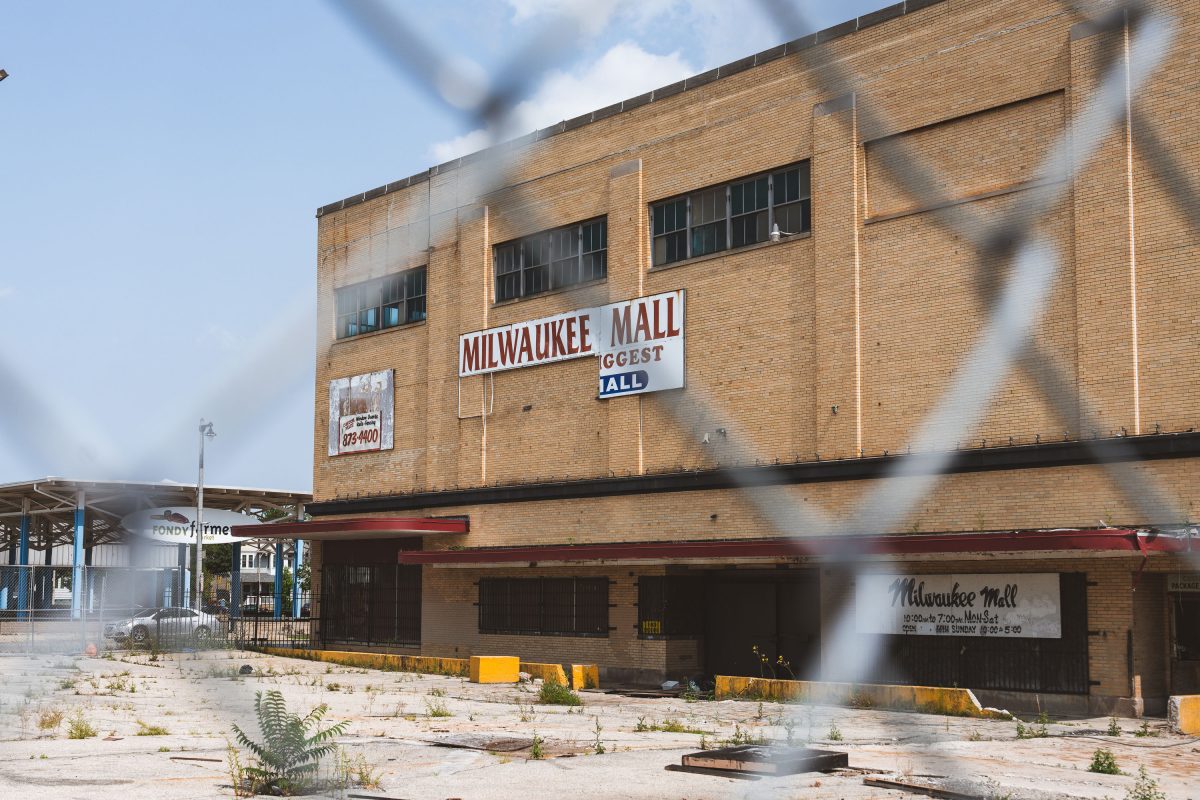
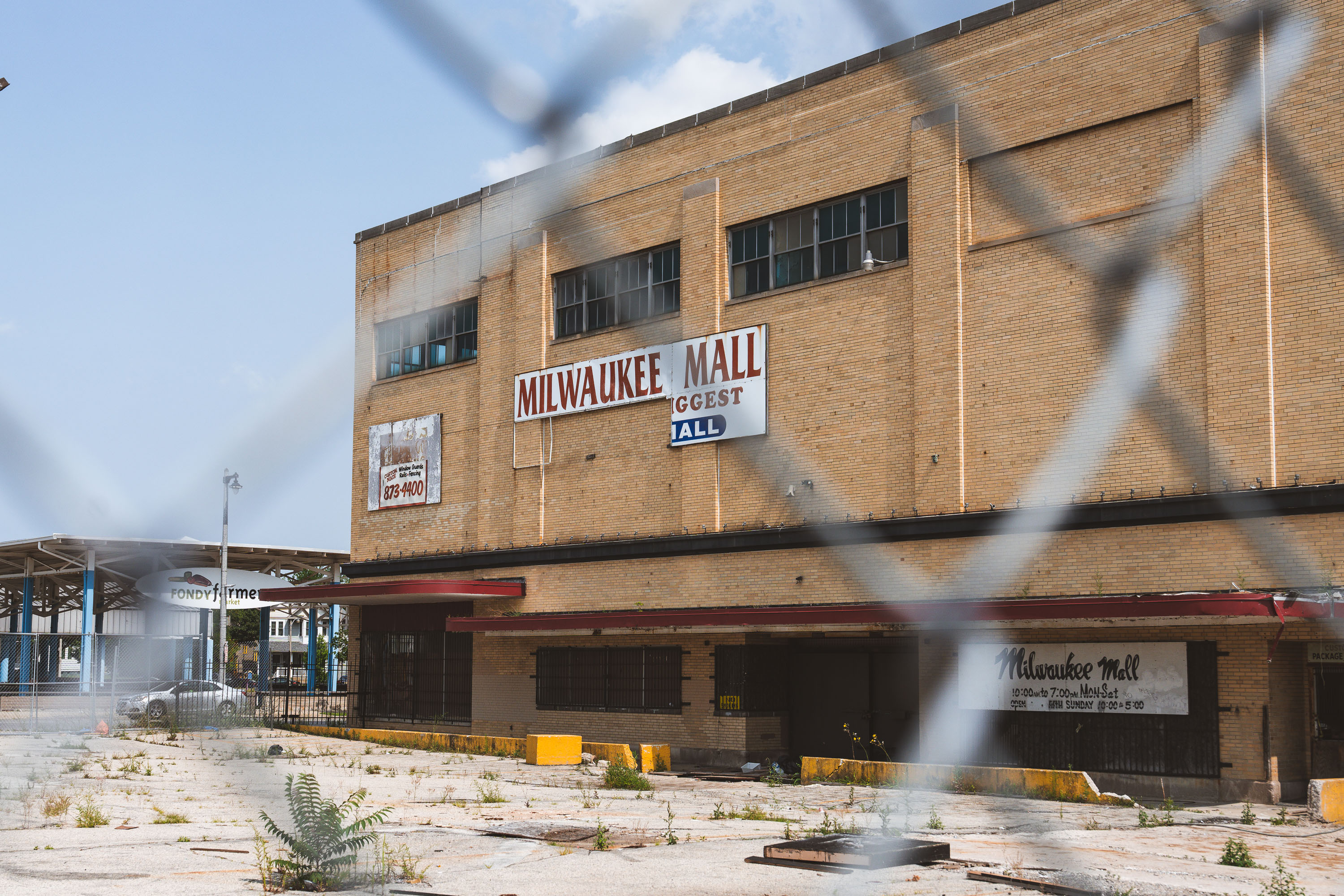
The abandoned Milwaukee Mall building in Wisconsin stands vacant with boarded windows and overgrown pavement.
Milwaukee Mall is a shuttered shopping building in Milwaukee, Wisconsin, its old signage still reading "Milwaukee Mall" and "Biggest Mall" above the empty storefronts. The parking lot sits cracked and overgrown with weeds, and the property is fenced off from the street.

Milwaukee Mall Sits Vacant Behind a Chain Link Fence
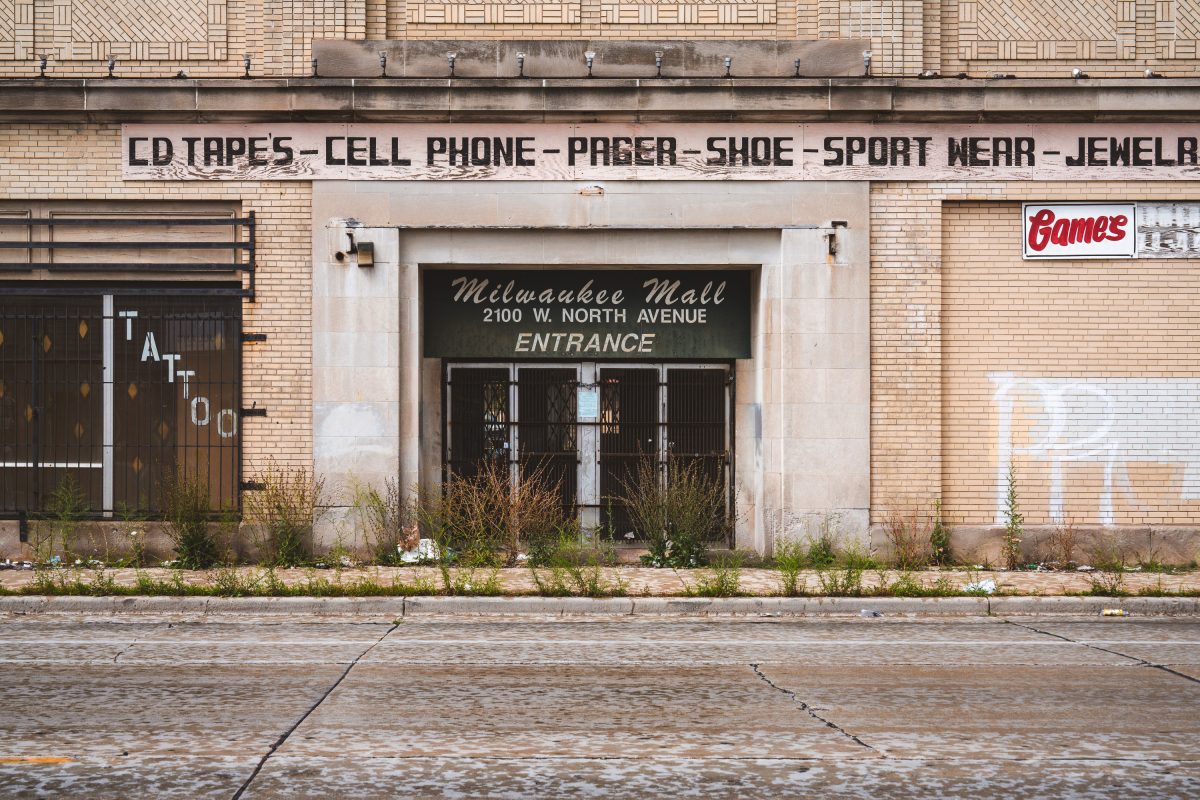
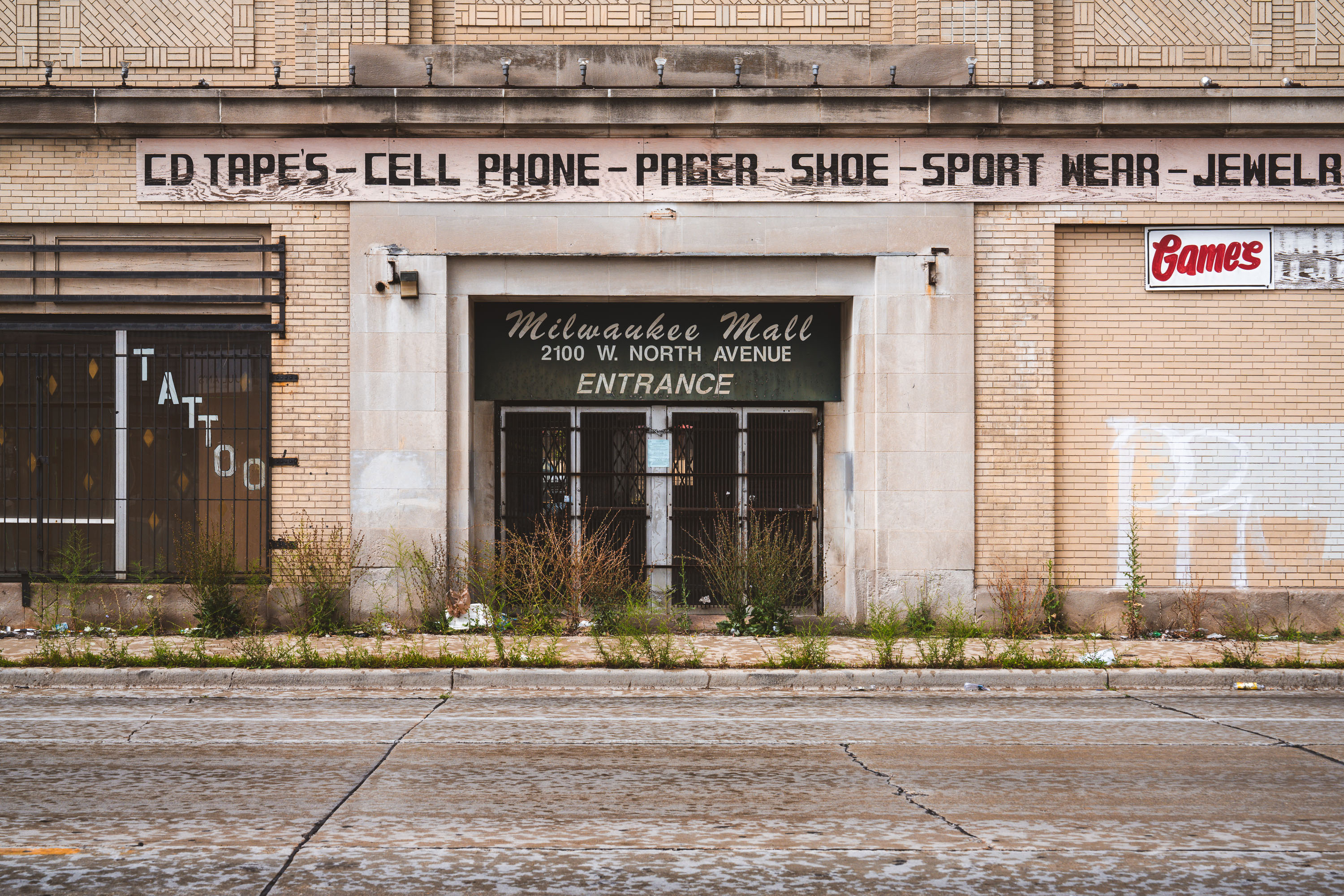
Boarded entrance to Milwaukee Mall at 2100 W.
The Milwaukee Mall sits at 2100 West North Avenue on Milwaukee's north side. Faded lettering above the entrance once listed tenants selling CDs, cell phones, pagers, shoes, sportswear, and jewelry, the kind of mix typical of a small indoor retail arcade rather than a large shopping center. The entrance is now gated shut, with weeds growing through the sidewalk in front of it.

Gated Entrance to the Shuttered Milwaukee Mall on West North Avenue
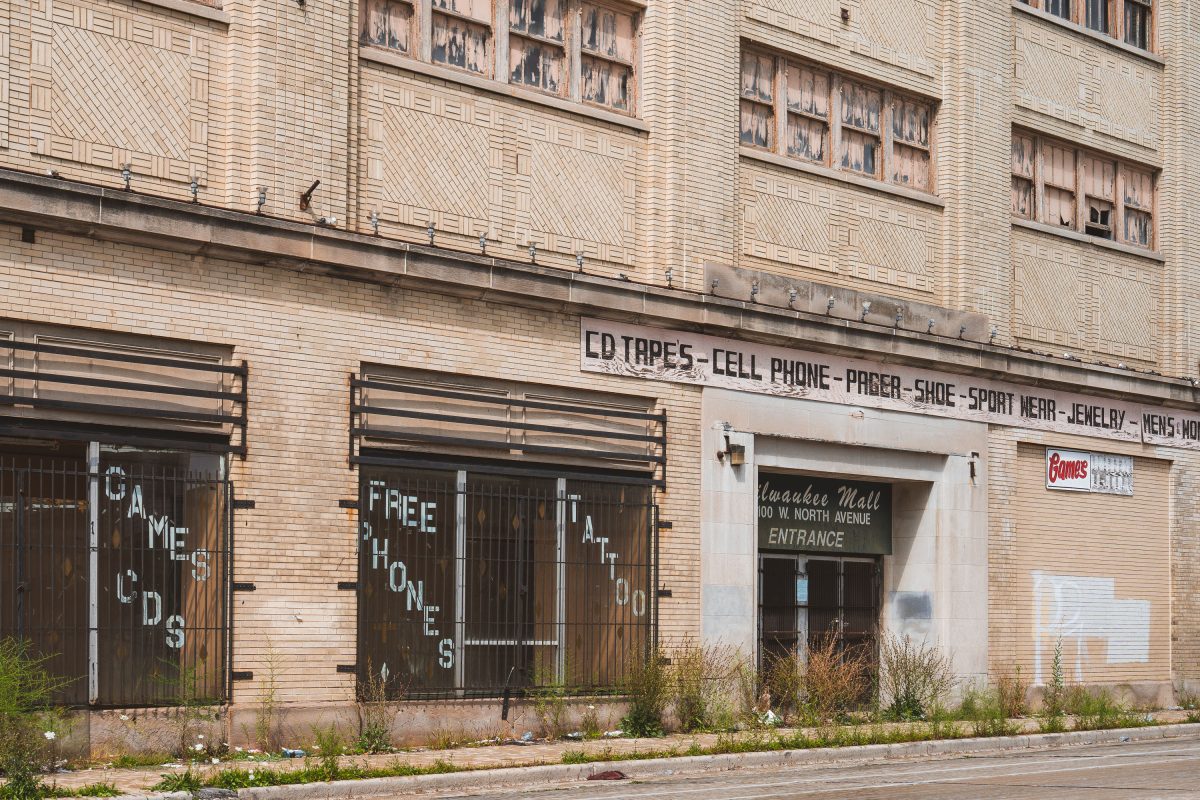
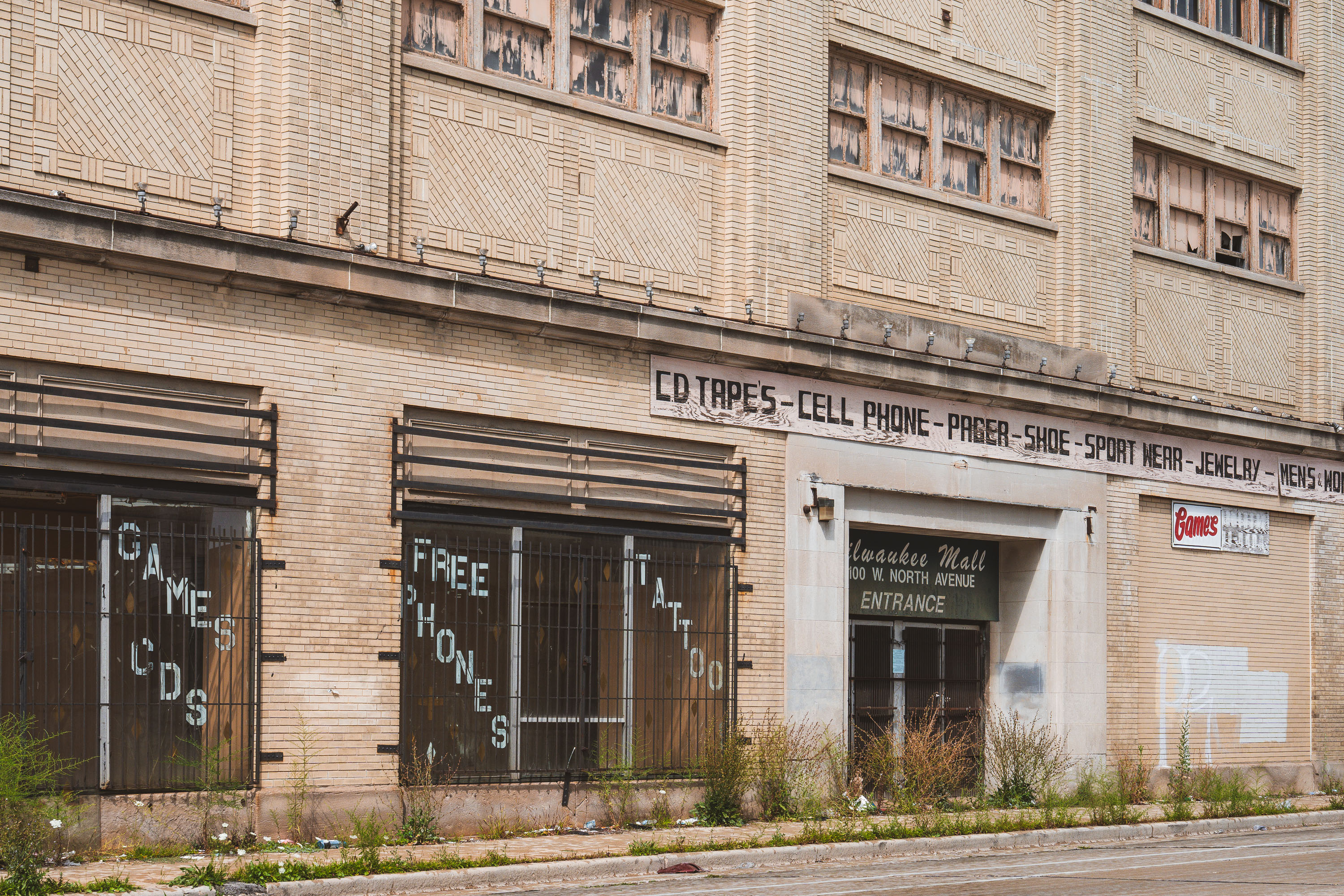
Abandoned storefront of Milwaukee Mall with boarded windows and faded signage on brick facade.
The Milwaukee Mall is a shuttered commercial building at 2100 West North Avenue in Milwaukee. Hand painted signs for CDs, phones, and tattoos cover its boarded storefronts, and old lettering above the entrance still lists former tenants like a shoe shop and a pager and cell phone dealer.

Boarded Storefronts at the Milwaukee Mall on North Avenue
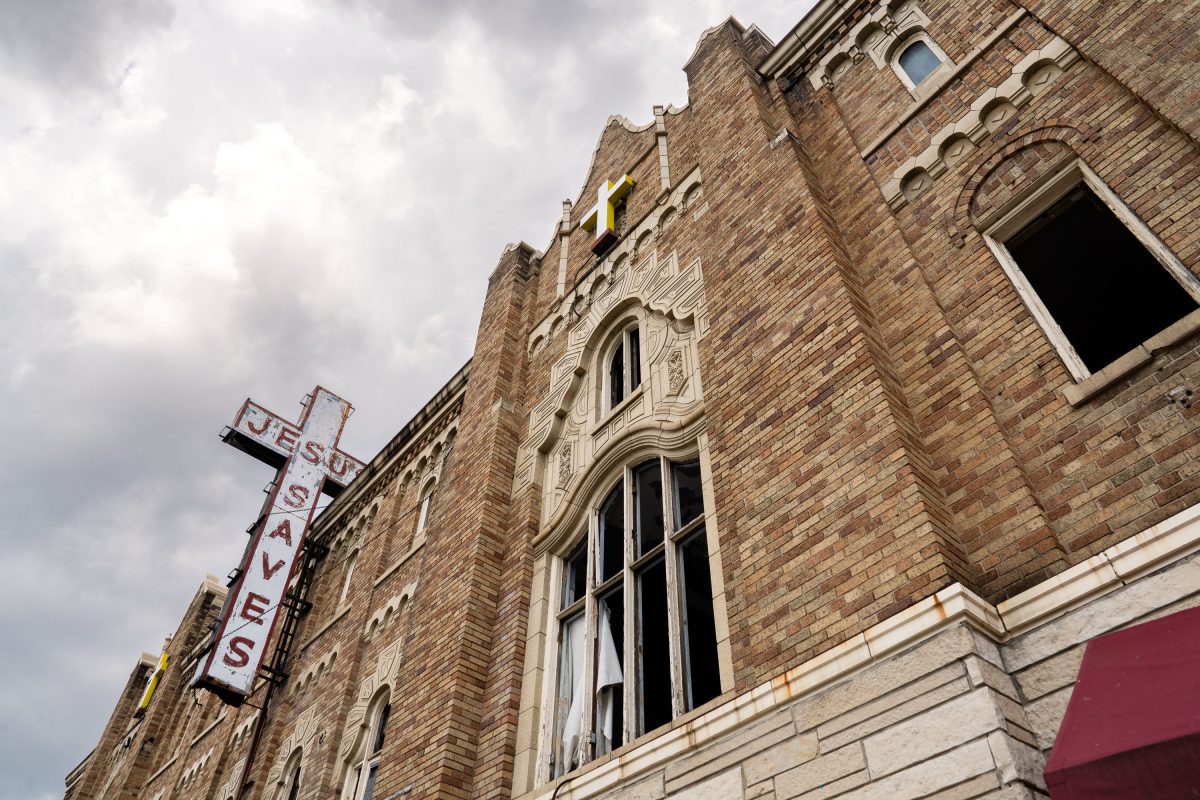
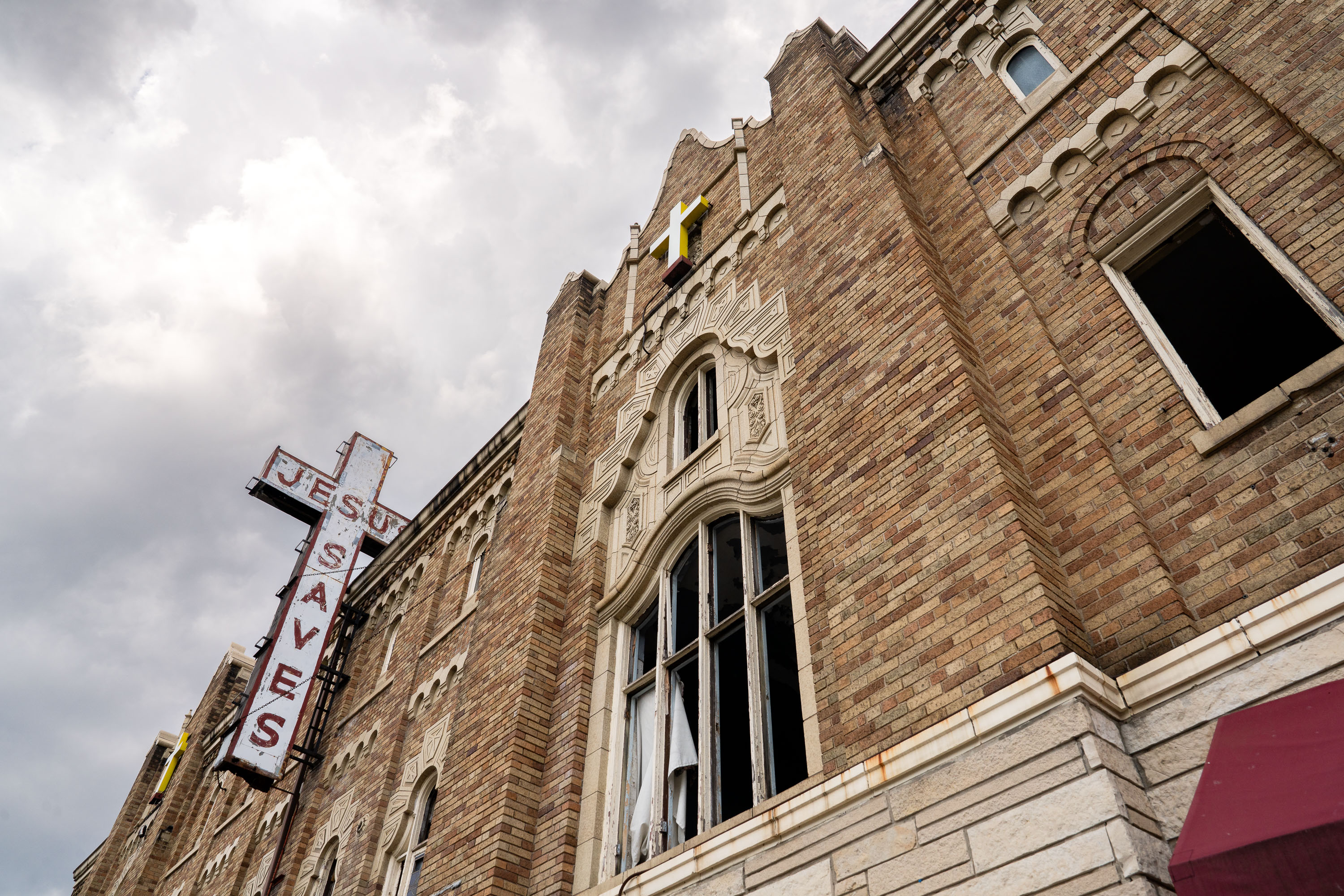
Abandoned brick church with "Jesus Saves" sign on facade in Milwaukee, Wisconsin.
Formerly the Zenith Theater, the long abandoned church still shows off it's Gothic Revival brickwork and arched window openings.

“Jesus Saves” Cross at Abandoned Church in Milwaukee
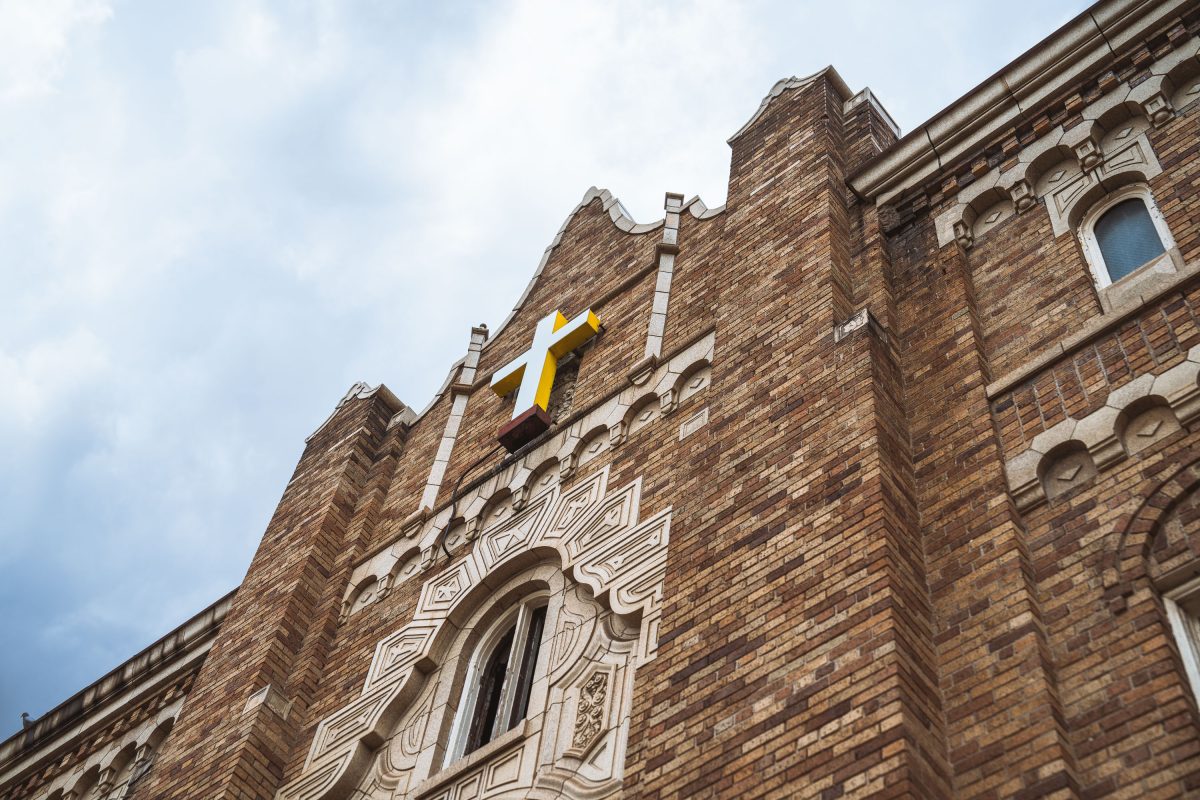
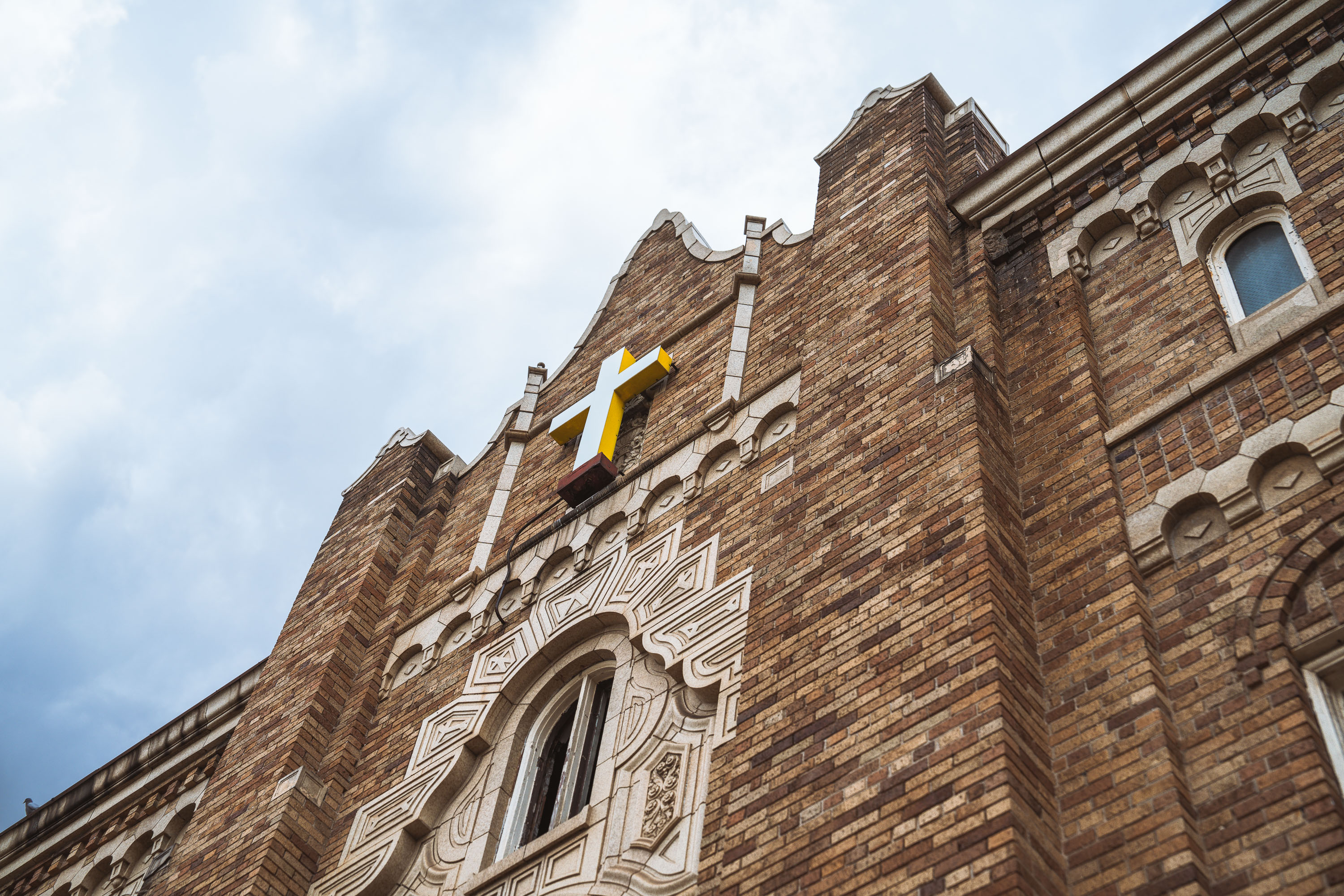
A yellow cross mounted on the brick facade of the abandoned Zenith Theater in Milwaukee.
This building on Milwaukee's south side once housed the Zenith Theater before being converted into a church.

Former Zenith Theater Building in Milwaukee
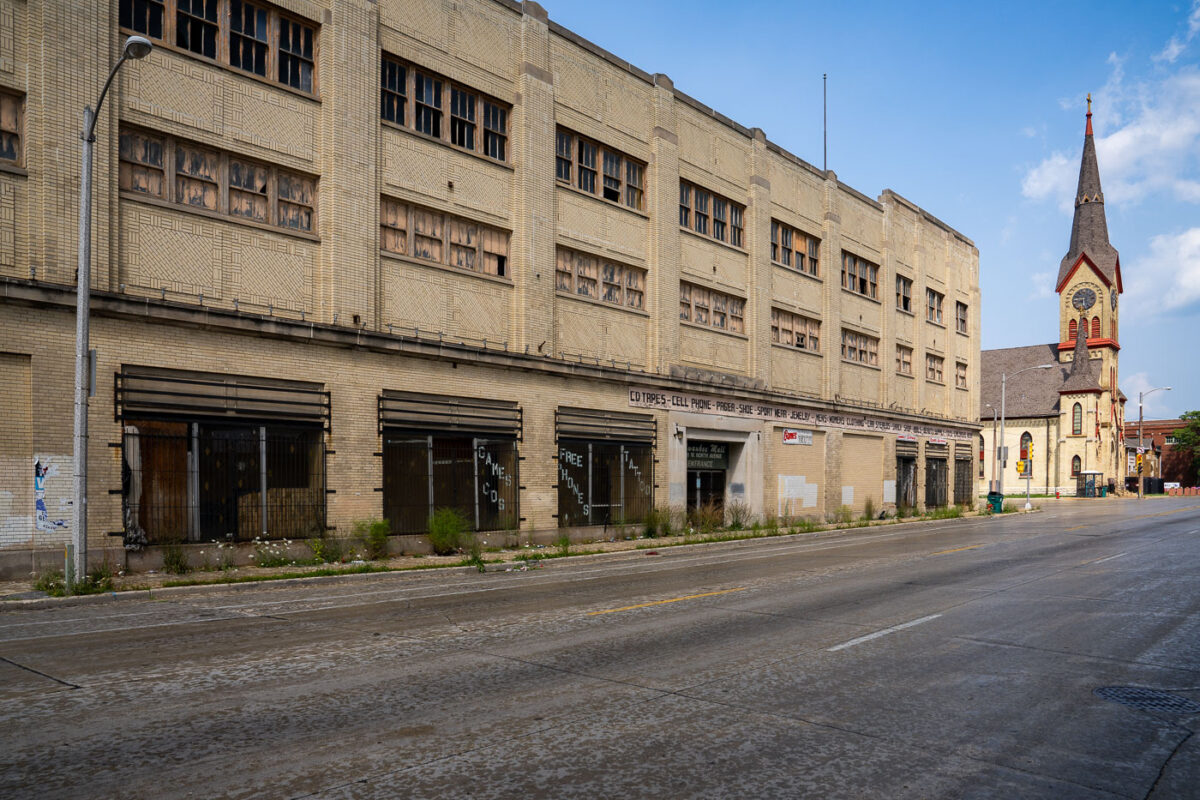
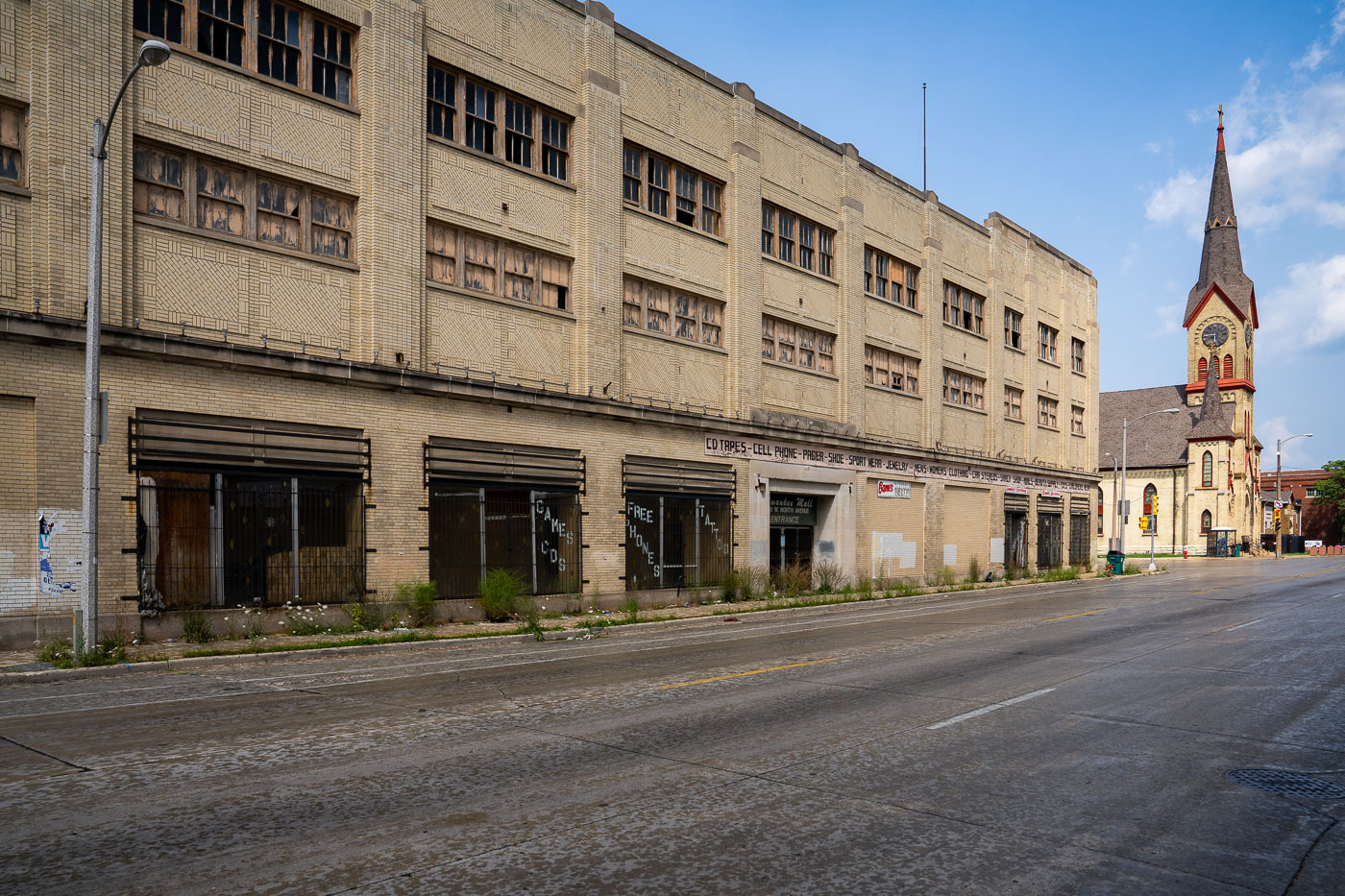
Vacant Milwaukee Mall building with boarded storefronts and neighboring church steeple on North Avenue.
Milwaukee Mall sits empty along West North Avenue, its ground-floor bays fronted by metal security grates and faded signs once advertising phone cards, jewelry, and clothing. The building operated for years as a discount retail arcade before closing, leaving its upper-floor windows broken out or boarded over. Nearby stands a church spire with a working clock, part of the older commercial corridor that once anchored this stretch of North Avenue.

Empty Storefronts of Milwaukee Mall on North Avenue
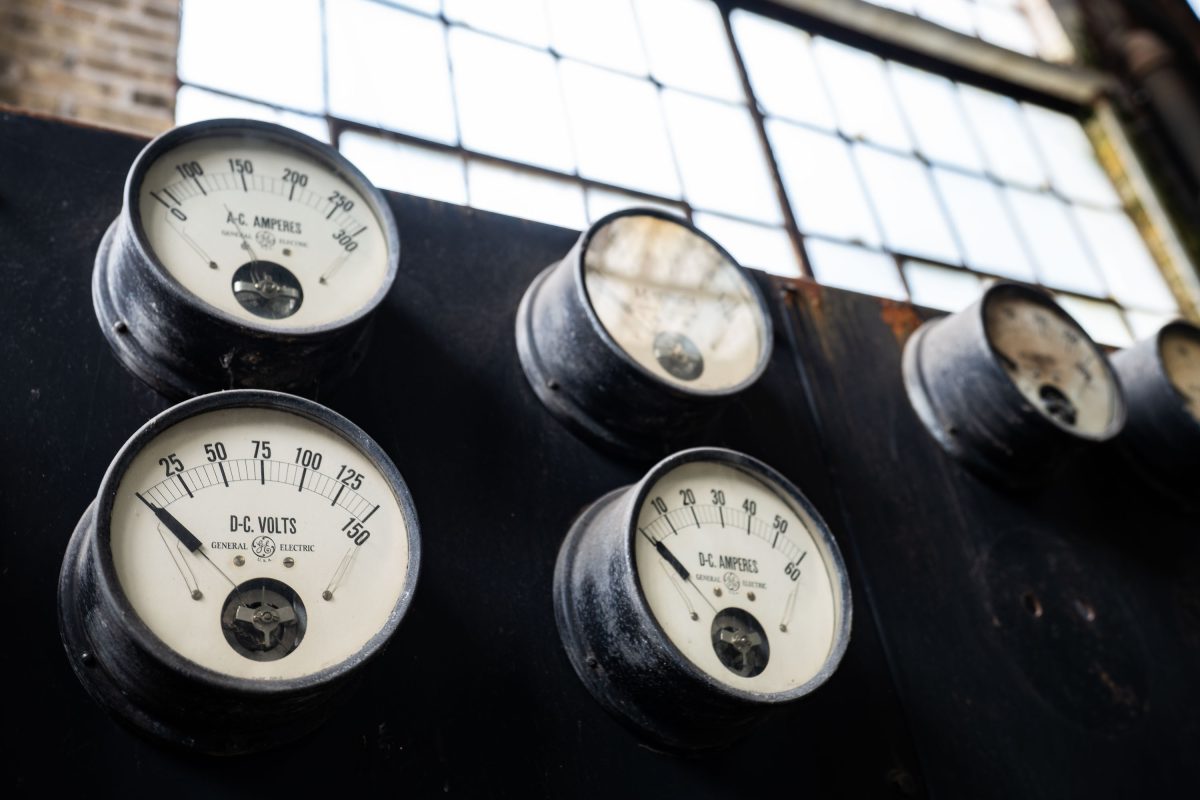
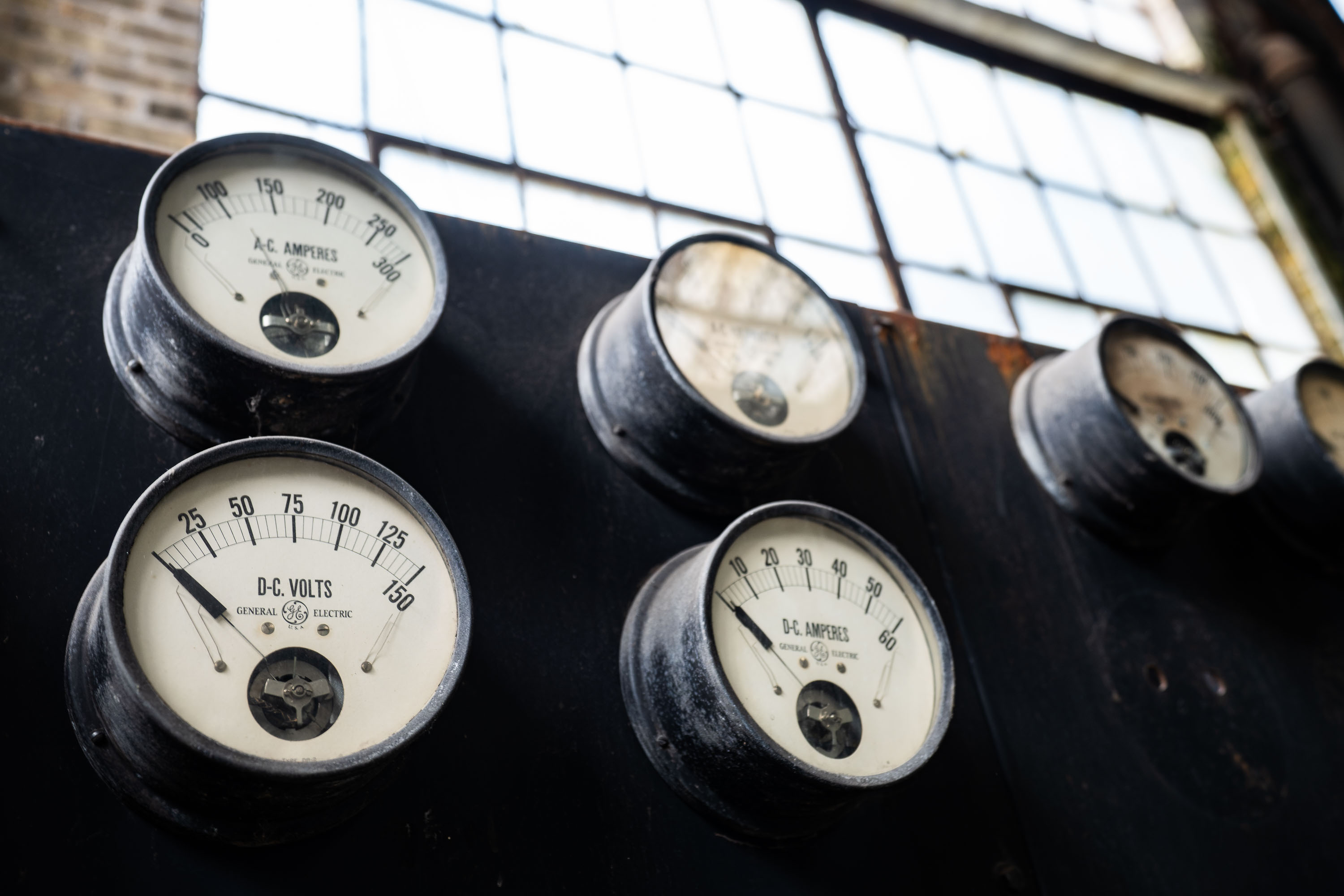
Vintage General Electric analog gauges measuring electrical current and voltage mounted on a control panel at the abandoned Filer
The Filer & Stowell Company operated as a Milwaukee manufacturer of steam engines, sawmill machinery, and industrial equipment beginning in the late 19th century. General Electric switchboard gauges like these — measuring D-C volts and both A-C and D-C amperes — were standard equipment for monitoring power distribution on factory floors before solid-state instrumentation replaced analog dial panels in the mid-20th century. The plant's electrical control stations would have regulated current to heavy machinery used in producing engines and mill equipment. Filer & Stowell's Milwaukee operations wound down over the decades following World War II, part of a broader decline in the city's heavy manufacturing base.

D-C Volts and Amperes Gauges at Filer & Stowell Factory
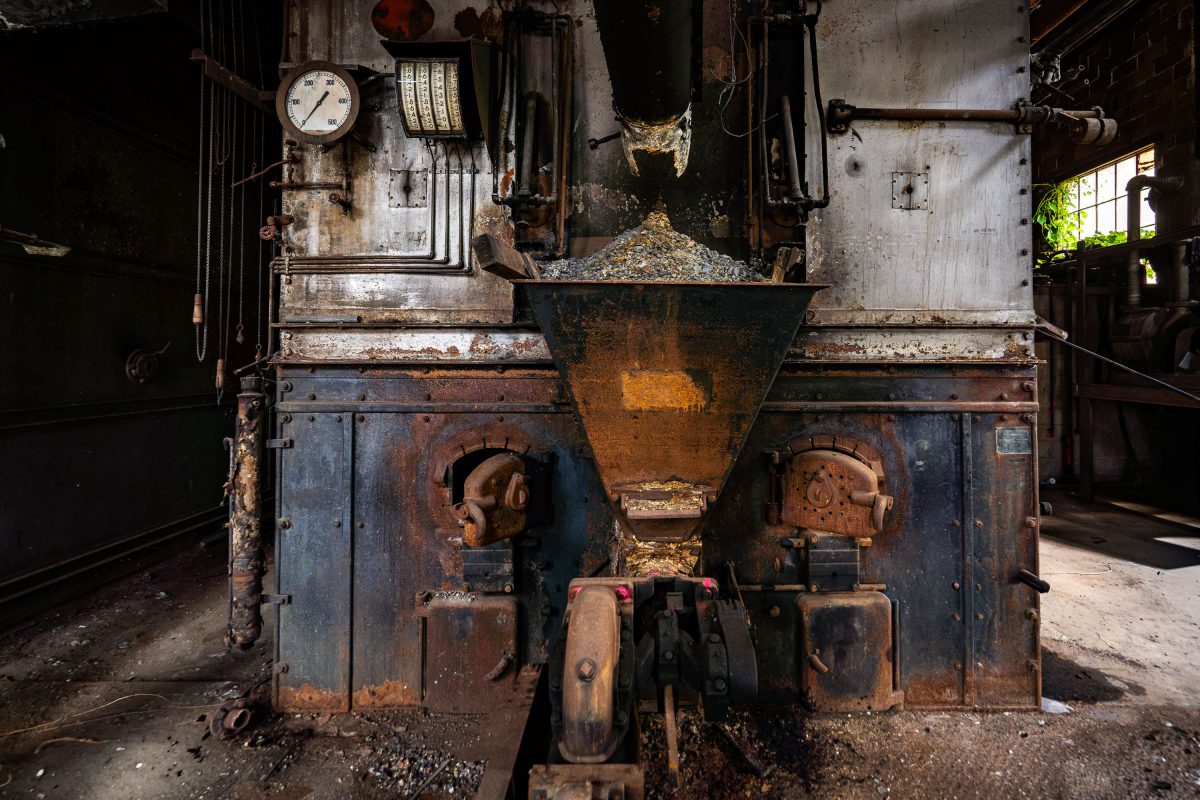
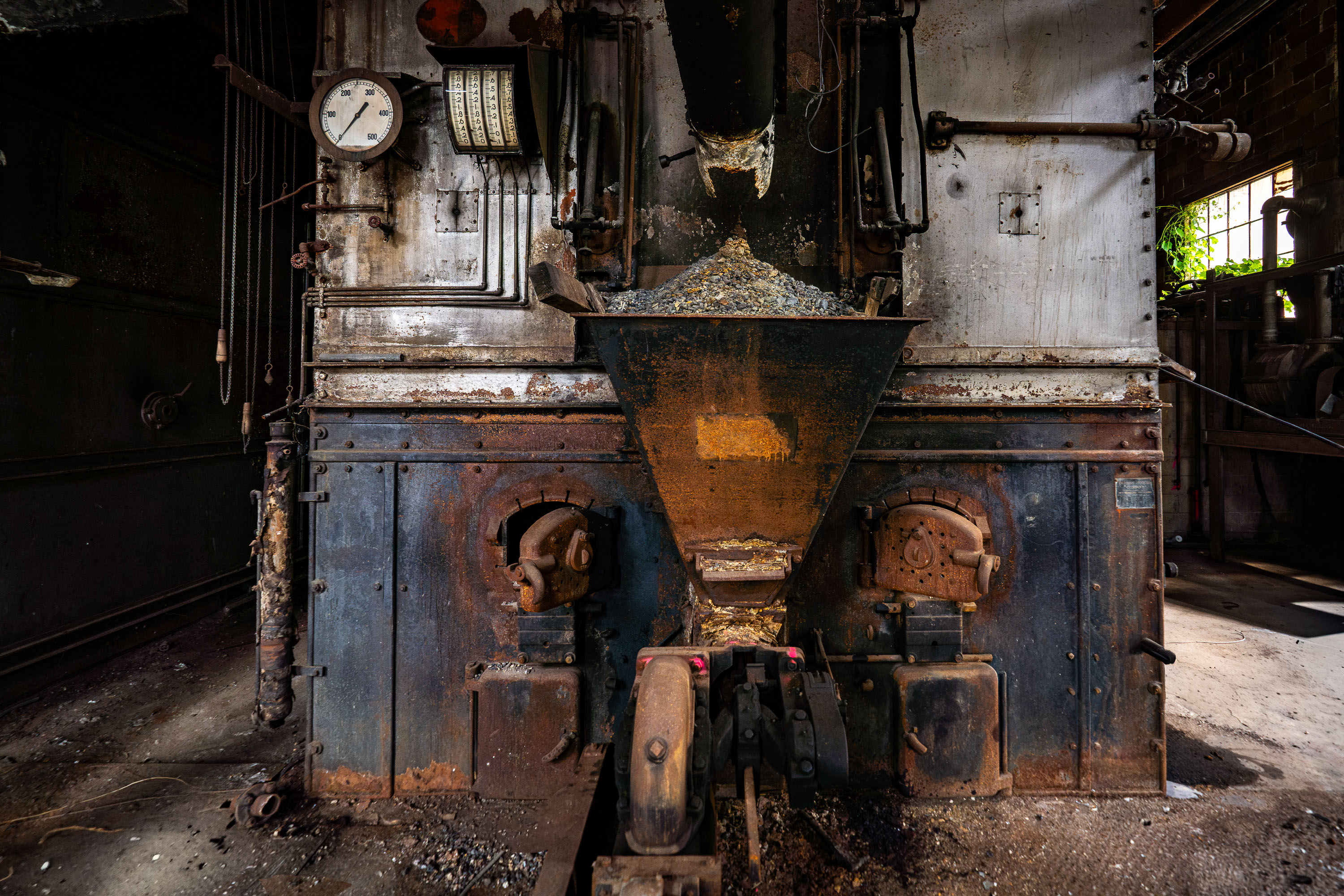
Rusted coal-fed boiler hopper at the abandoned Filer & Stowell Factory in Milwaukee.
The Filer & Stowell Company operated this Milwaukee plant for over a century, manufacturing steam engines, sawmill machinery, and heavy industrial equipment after its founding in 1877. Boilers like this one supplied the steam power that ran the factory's production lines before electrification became standard in American manufacturing. The hopper fed coal directly into the firebox, a design common to industrial boilers built through the early 20th century. Filer & Stowell shut down its Milwaukee operations decades ago, leaving much of the original equipment in place inside the building.

Twin Firebox Doors on a Boiler at Filer & Stowell
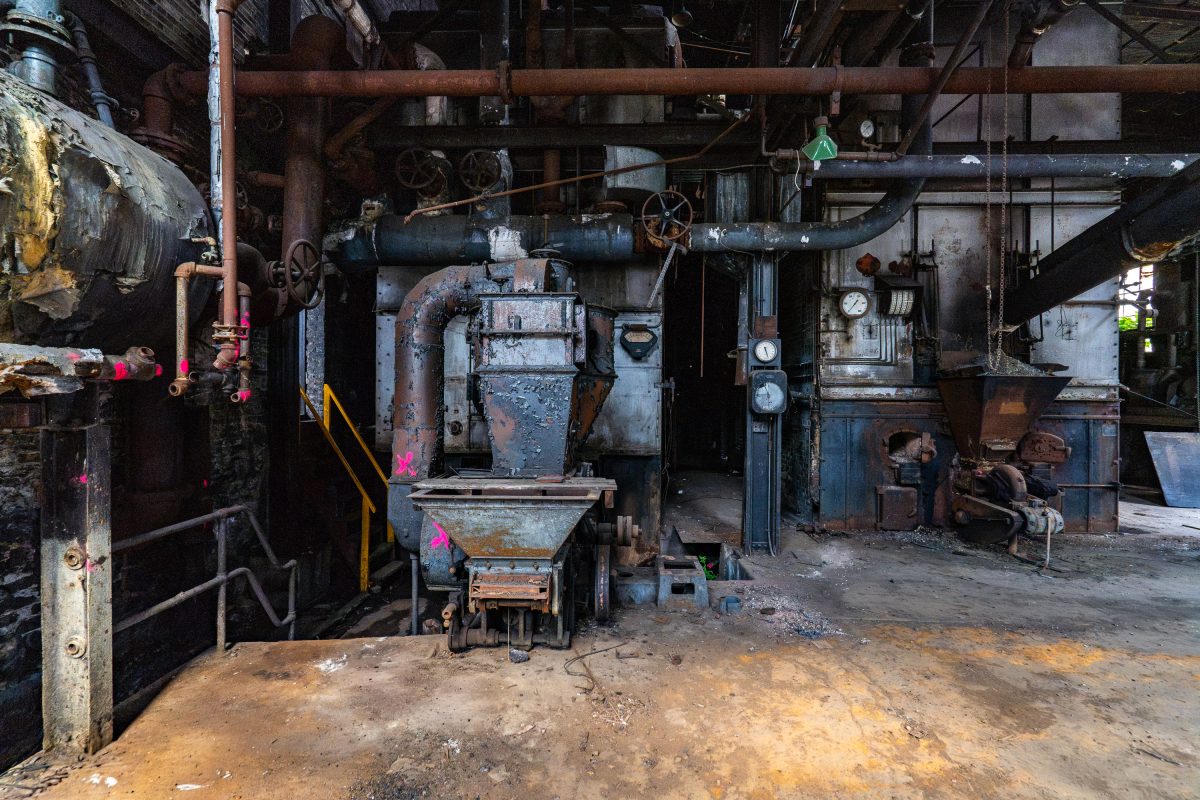
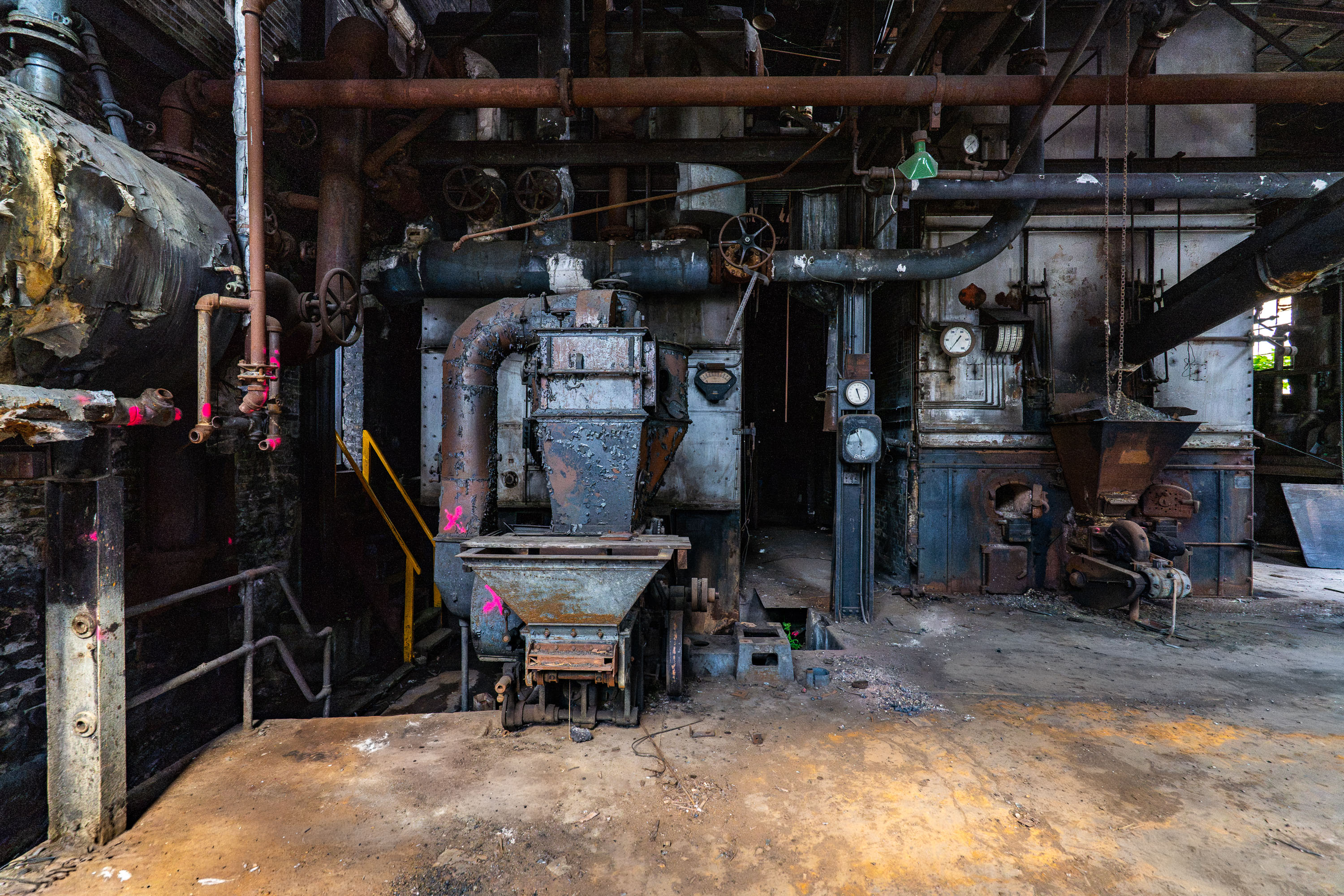
Abandoned boiler room at Filer & Stowell Factory in Milwaukee with coal furnaces, pressure gauges, and steam pipes.
The Filer & Stowell Company operated this Milwaukee plant for over a century, manufacturing steam engines, sawmill machinery, and heavy industrial equipment after its founding in 1877. The boiler room's coal hoppers, pressure gauges, handwheel valves, and overhead pipe network supplied the steam power needed to run production machinery throughout the factory. Fireboxes visible along the far wall accepted coal fed from the hoppers below, a design common to industrial plants built through the early 20th century. Filer & Stowell's Milwaukee operations wound down decades ago, leaving much of the original boiler equipment abandoned in place inside the building.

Coal Hopper and Pressure Gauges at the Filer & Stowell Boiler Room
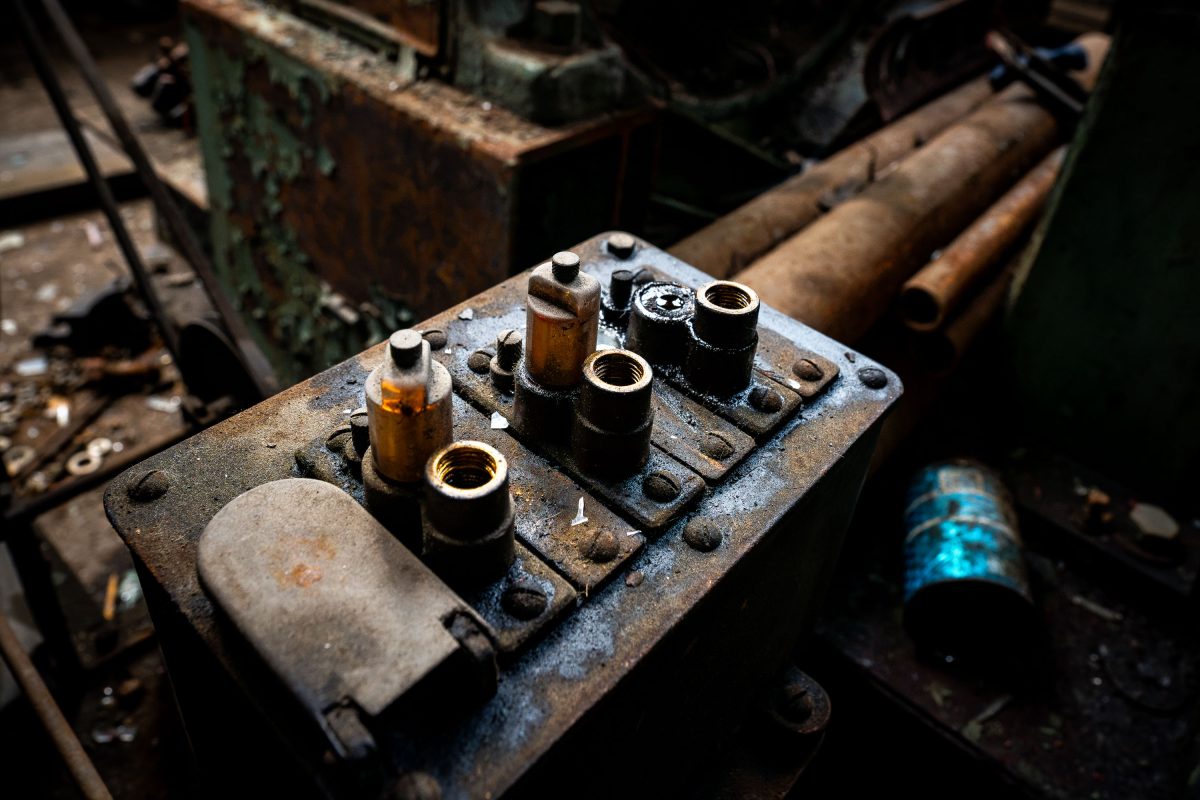
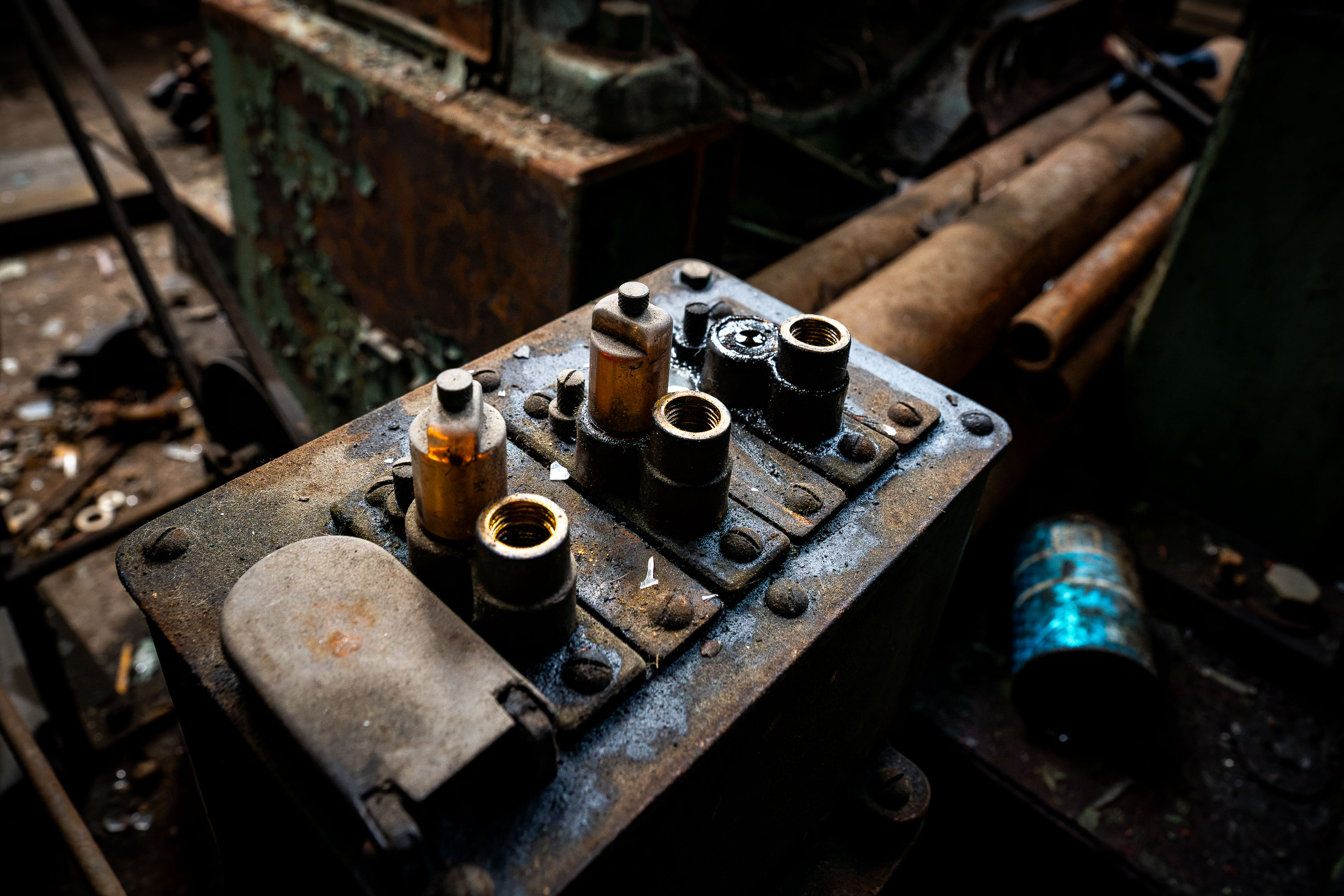
Corroded industrial control panel with brass fittings and valve connections at abandoned Filer & Stowell Factory in Milwaukee.
The Filer & Stowell Company operated for more than a century as a Milwaukee manufacturer of heavy industrial equipment, including sawmill machinery, steam engines, and ice-making systems.

Corroded Valve Fittings at the Filer & Stowell Factory
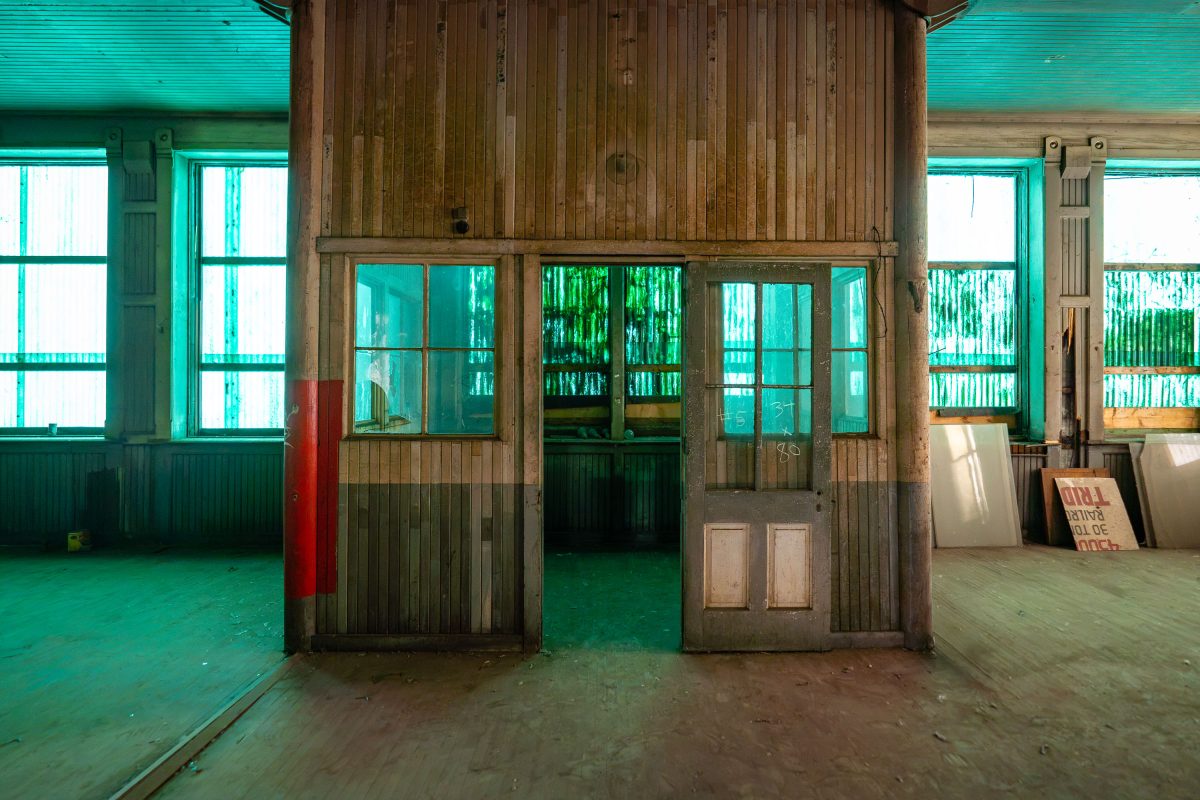
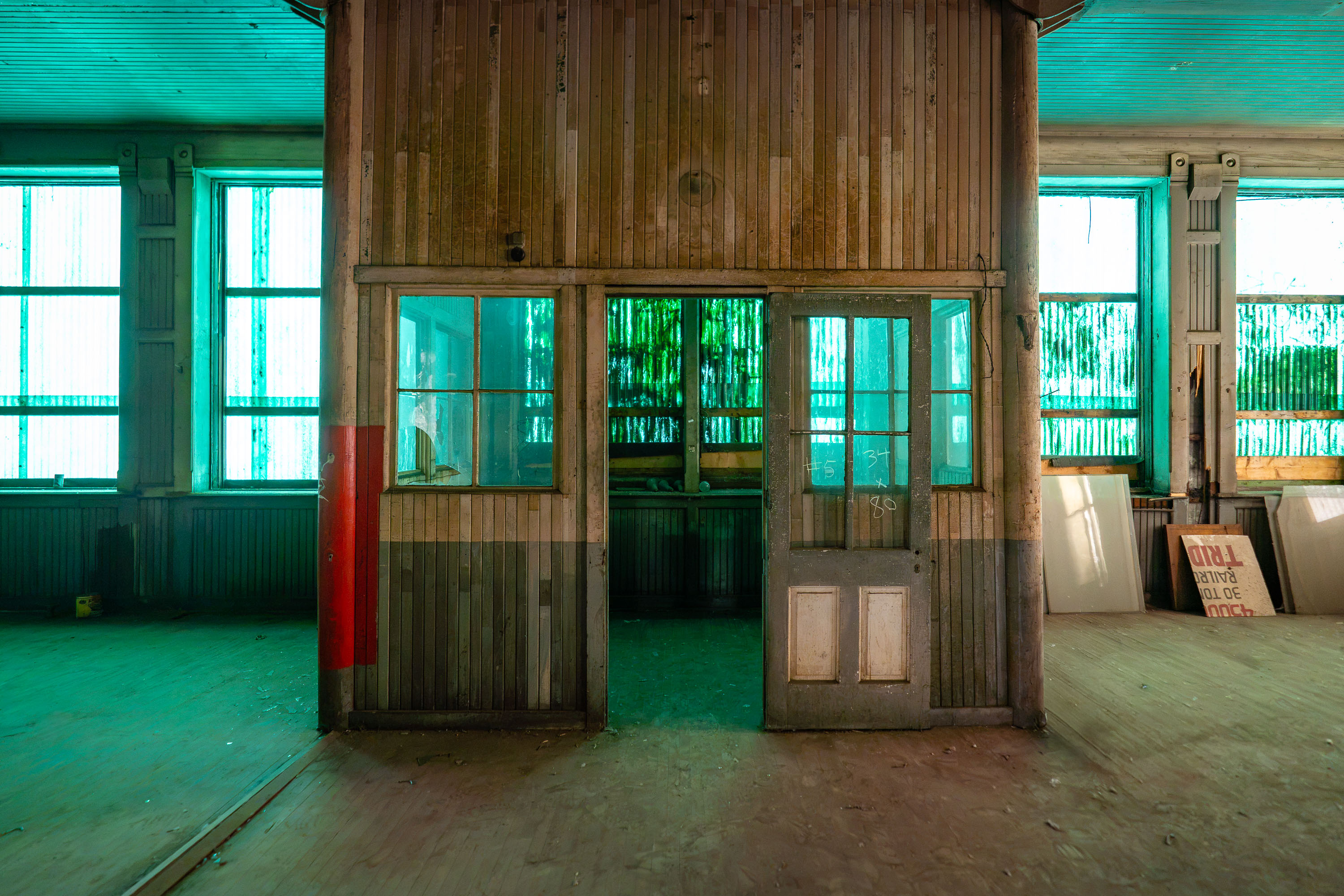
Abandoned Filer & Stowell Factory interior in Milwaukee showing wooden partitions and turquoise-painted industrial space.
The Filer & Stowell Company trace its roots to a Milwaukee, Wisconsin firm established in the 1870s, built on the earlier ironworks of Albert Filer and William Stowell. The company became a major manufacturer of sawmill machinery, steam engines, and later hydraulic elevators and industrial equipment, shipping products across the country from its Milwaukee works. Its factory buildings housed both production floors and administrative offices to manage the firm's manufacturing and sales operations.

Office Windows and Doorway at the Filer & Stowell Factory
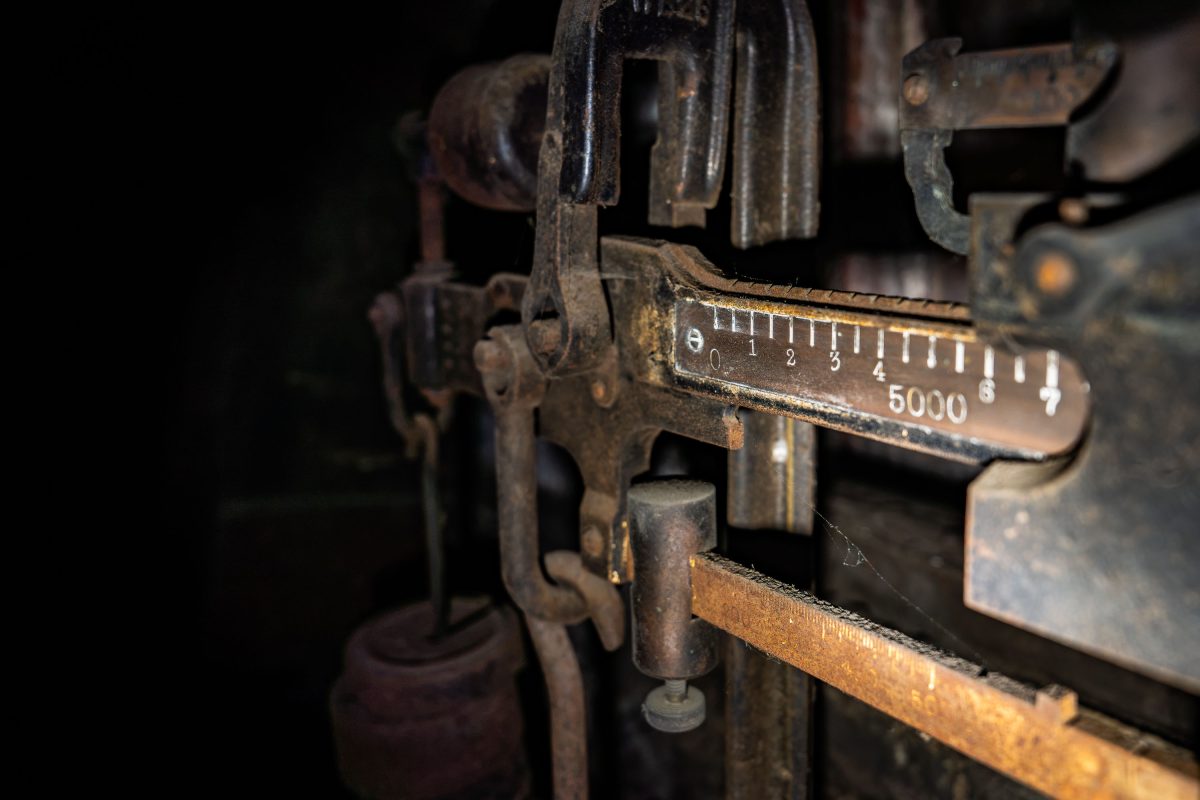
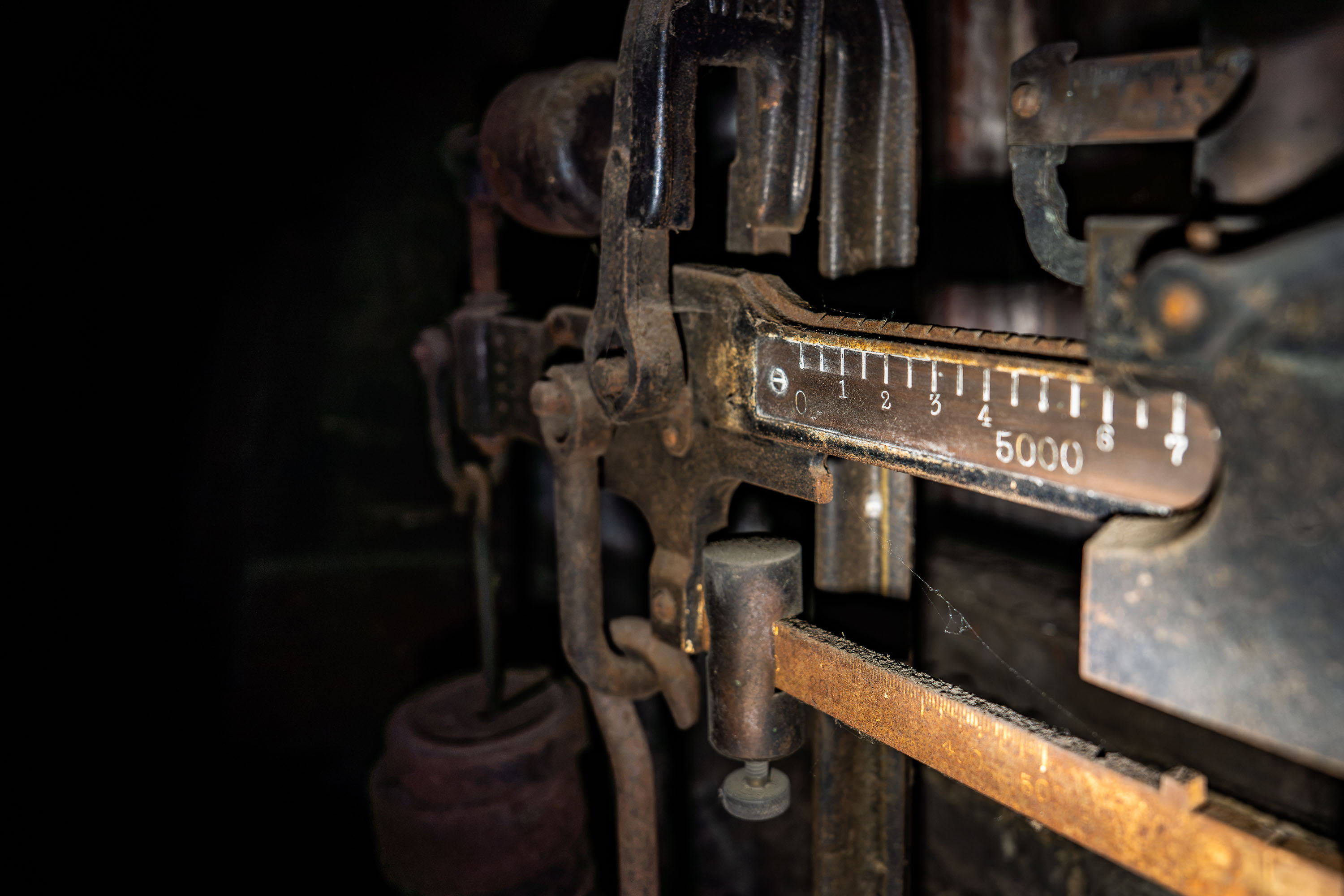
Corroded platform scale beam with 5000-pound capacity marking inside abandoned Filer & Stowell factory, Milwaukee.
Filer & Stowell Company operated as a heavy-machinery manufacturer in Milwaukee, Wisconsin, founded in the 1870s to build steam engines, sawmill equipment, and industrial machinery for lumber and metalworking operations across the Midwest. The company's factory complex produced large-capacity components, including weighing and measuring equipment rated for thousands of pounds, reflecting the scale of industrial materials handled on site. Filer & Stowell remained a significant Milwaukee industrial employer into the 20th century before changes in manufacturing demand reshaped its operations.

Rusted Scale Beam Inside the Filer & Stowell Factory
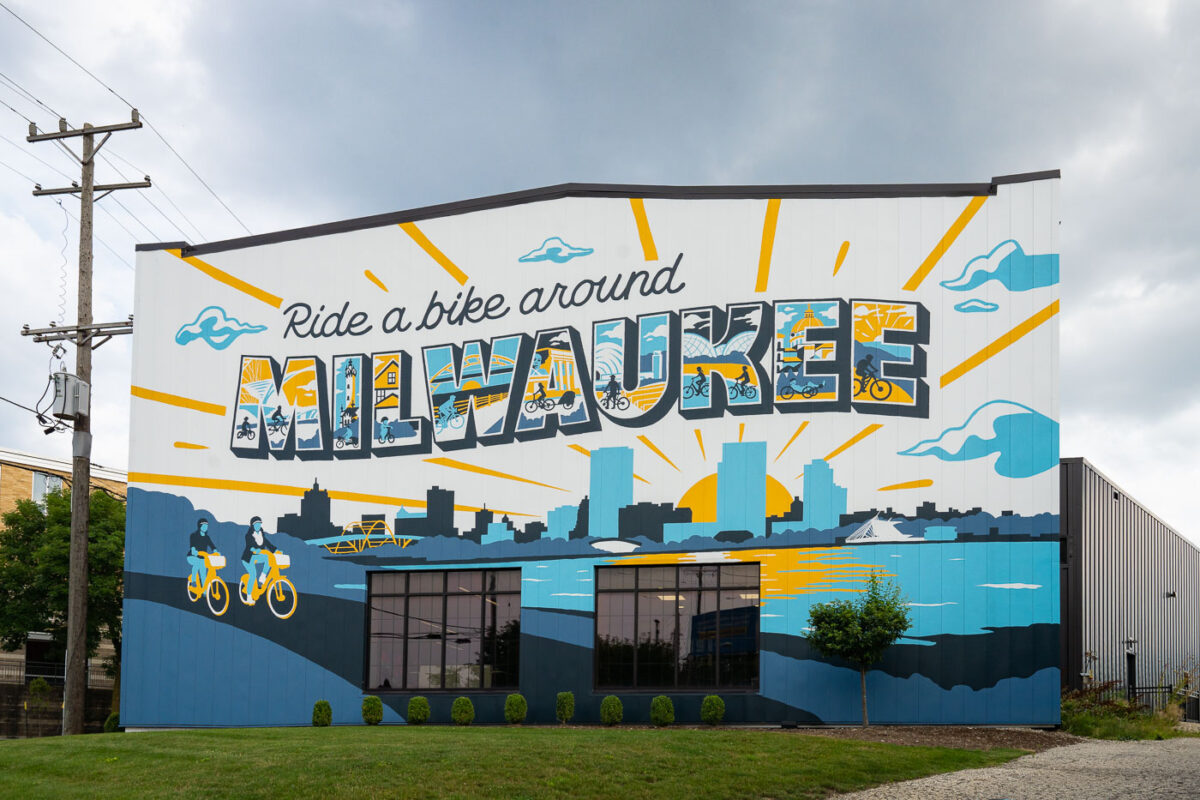
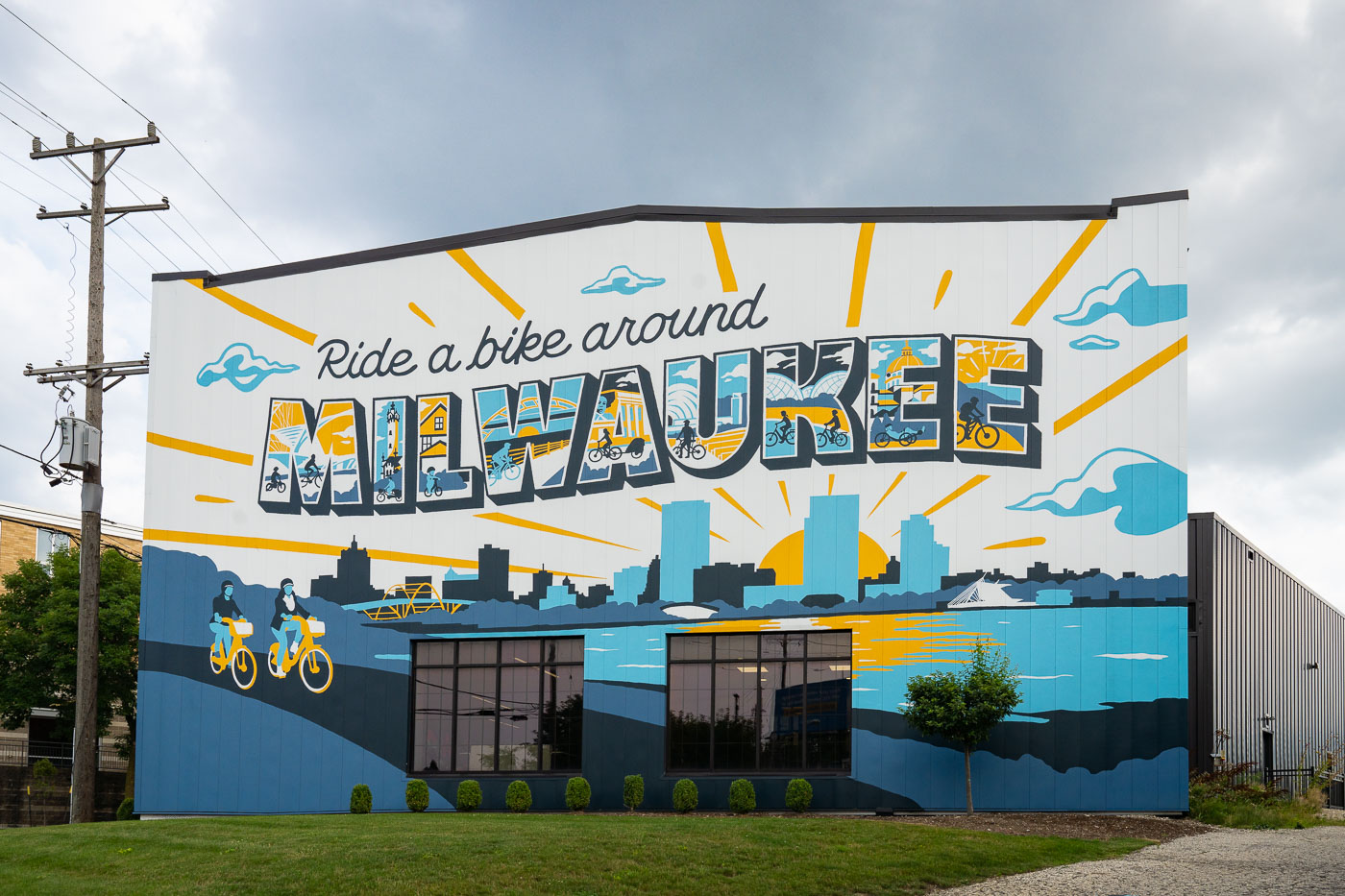
"Ride a Bike Around Milwaukee" mural on Wheel & Sprocket storefront featuring city skyline and cyclists.
The mural reads "Ride a Bike Around Milwaukee" in bold lettering above a stylized rendering of the city's downtown skyline and the Hoan Bridge along the lakefront. It covers the exterior wall of a Wheel & Sprocket store, a bicycle retailer that traces its origins to a single Milwaukee-area shop opened in 1973. Cyclists depicted throughout the design echo the city's network of bike paths, including the Oak Leaf Trail, and its Bublr Bikes share program, which launched in 2014 with stations concentrated in and around downtown Milwaukee.

“Ride a Bike Around Milwaukee” Mural on a Wheel & Sprocket Storefront

Mushroomhead vocalist in elaborate horned mask performs at Rock Fest in Cadott, Wisconsin.
Mushroomhead, a band known for its theatrical masks and aggressive sound, performed at Rock Fest in Cadott, Wisconsin, on July 13, 2023. Rock Fest is an annual music festival held in Cadott, Wisconsin, that typically features a lineup of hard rock and heavy metal bands. The festival has been a significant event for fans of these genres in the Midwest since its inception. This performance by Mushroomhead highlights the festival's commitment to showcasing prominent artists within the metal music scene.

Mushroomhead Guitarist in Horned Mask, Rock Fest, Cadott, WI

Mushroomhead vocalist in horned mask performs at Rock Fest in Cadott, Wisconsin, July 2023.
Mushroomhead, a band known for its theatrical masks and aggressive sound, performed at Rock Fest in Cadott, Wisconsin, on July 13, 2023. Rock Fest is an annual music festival held in Cadott, Wisconsin, that typically features a lineup of hard rock and heavy metal bands. The festival has been a significant event for fans of these genres in the Midwest since its inception. This performance took place amidst atmospheric lighting and what appears to be rain or stage effects, contributing to the band's intense stage presence.

Mushroomhead Masked Singer in Pyro Haze at Rock Fest, Cadott, WI

Mushroomhead vocalist in horned mask performs with microphone at Rock Fest Cadott Wisconsin.
Mushroomhead, a band known for its distinctive masks and aggressive musical style, performed at Rock Fest in Cadott, Wisconsin, on July 13, 2023. Rock Fest is an annual music festival held in Cadott, Wisconsin, that typically features a lineup of hard rock and heavy metal bands. The festival has been a significant event in the region for many years, drawing fans of the genre from across the country. This performance by Mushroomhead was part of their touring schedule, showcasing their elaborate stage presence and energetic live show to the festival's attendees.

Mushroomhead Vocalist in Mask, Rock Fest, Cadott, WI

Mushroomhead vocalist in elaborate horned mask performs at Rock Fest in Cadott, Wisconsin, July 2023.
Mushroomhead, a heavy metal band known for their elaborate masks and costumes, performed at Rock Fest in Cadott, Wisconsin, on July 13, 2023. Rock Fest is an annual music festival held in Cadott, Wisconsin, which typically features a lineup of hard rock and heavy metal bands. The festival has been a significant event in the region for many years, drawing fans of the genre from across the country. This performance took place during the festival's 2023 iteration, continuing its tradition of hosting prominent artists within the rock music scene.

Mushroomhead Masked Performer in Smoke, Rock Fest, Cadott, WI

Mushroomhead performer singing on stage at Rock Fest in Cadott, Wisconsin, surrounded by pyrotechnics and stage lighting.
Mushroomhead performed at Rock Fest in Cadott, Wisconsin, on July 13, 2023. Rock Fest is an annual music festival held in Cadott, Wisconsin, known for featuring a variety of rock and metal bands. The festival has been a significant event in the region's music calendar since its inception, drawing thousands of fans each year. This performance by Mushroomhead, a band recognized for their distinctive masks and theatrical stage presence, was part of the festival's lineup.

Masked Vocalist of Mushroomhead, Rock Fest, Cadott, WI

Mushroomhead performer in elaborate costume at Rock Fest, Cadott, Wisconsin, July 2023.
Mushroomhead performed at Rock Fest in Cadott, Wisconsin, on July 13, 2023. Rock Fest is an annual music festival that has been held in Cadott since 2004, drawing thousands of attendees to the Chippewa Valley for a multi-day celebration of rock and heavy metal music. The festival is one of the largest of its kind in the Midwest, contributing significantly to the local economy and cultural landscape of the region. This performance by Mushroomhead, known for their elaborate costumes and energetic stage presence, was part of the festival's diverse lineup.

Mushroomhead Drummer with Pyro, Rock Fest, Cadott, WI

Mushroomhead performs at Rock Fest in Cadott, Wisconsin, with masked vocalist and bassist on stage under red lighting.
Mushroomhead, a masked metal band known for their theatrical performances, played at Rock Fest in Cadott, Wisconsin, on July 13, 2023. Rock Fest is an annual music festival held in Cadott, Wisconsin, that typically features a lineup of hard rock and heavy metal bands. The festival has been a significant event for fans of these genres in the Midwest since its inception. The band's performance, characterized by energetic stage presence and distinctive masks, is a hallmark of their live shows.

Mushroomhead Bassist Leaps On Stage at Rock Fest, Cadott, WI

Mushroomhead bassist wearing horned mask performs at Rock Fest in Cadott, Wisconsin.
Mushroomhead, a band known for its distinctive masks and theatrical performances, played at Rock Fest in Cadott, Wisconsin, on July 13, 2023. Rock Fest is an annual music festival that has been held in Cadott since 2004, drawing thousands of fans of rock and heavy metal music. The festival provides a platform for both established and emerging artists within the genre. This performance by Mushroomhead, a band formed in Cleveland, Ohio, in 1993, highlights their continued presence in the live music circuit.

Mushroomhead Bassist Performs at Rock Fest, Cadott, WI

Mushroomhead and splashes at Rock Fest 2023
Drummer for the band Mushroomhead performs at Rock Fest in Cadott, Wisconsin, on July 13, 2023. Rock Fest is an annual music festival held in Cadott, Wisconsin, known for featuring a variety of rock and metal bands. The festival has been a significant event in the region's music calendar since its inception, drawing thousands of attendees each year. This performance highlights the energetic and theatrical style often associated with Mushroomhead's live shows.

Mushroomhead drummer at Rock Fest, Cadott, WI – July 13, 2023

Mushroomhead guitarist and mask Rock Fest 2023
Mushroomhead, a band known for its theatrical masks and aggressive sound, performed at Rock Fest in Cadott, Wisconsin, on July 13, 2023. Rock Fest is an annual music festival held in Cadott, Wisconsin, that typically features a lineup of hard rock and heavy metal bands. The festival has been a significant event for fans of these genres in the Midwest since its inception. This performance by Mushroomhead was part of their touring schedule, bringing their distinctive visual and musical style to the festival's audience.

Mushroomhead Rock Fest, Cadott, WI – July 13, 2023

Mushroomhead guitarist at Rock Fest 2023
Mushroomhead, a band known for its theatrical masks and aggressive sound, performed at Rock Fest in Cadott, Wisconsin, on July 13, 2023. Rock Fest is an annual music festival held in Cadott, Wisconsin, that typically features a lineup of hard rock and heavy metal bands. The festival has been a significant event in the region for many years, drawing fans of the genre from across the country. This performance by Mushroomhead highlights the festival's continued role in showcasing prominent artists within the heavy metal music scene.

Mushroomhead at Rock Fest July 13, 2023

Masked mushroomhead singer
Mushroomhead, a band known for its theatrical masks and aggressive sound, performed at Rock Fest in Cadott, Wisconsin, on July 13, 2023. Rock Fest is an annual music festival held in Cadott, Wisconsin, that typically features a lineup of hard rock and heavy metal bands. The festival has been a significant event in the region's music calendar, drawing fans from across the Midwest. This performance by Mushroomhead highlights the festival's commitment to showcasing prominent artists within the metal genre.

Mushroomhead performs at Rock Fest

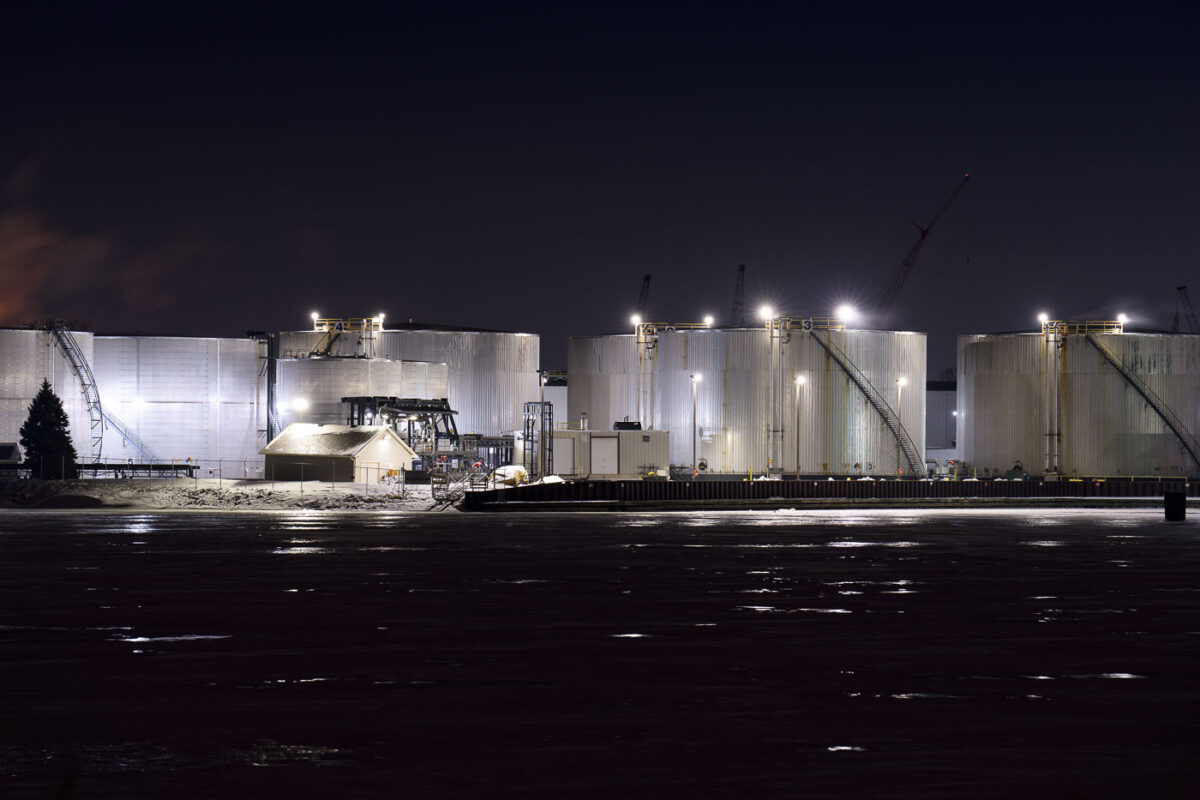
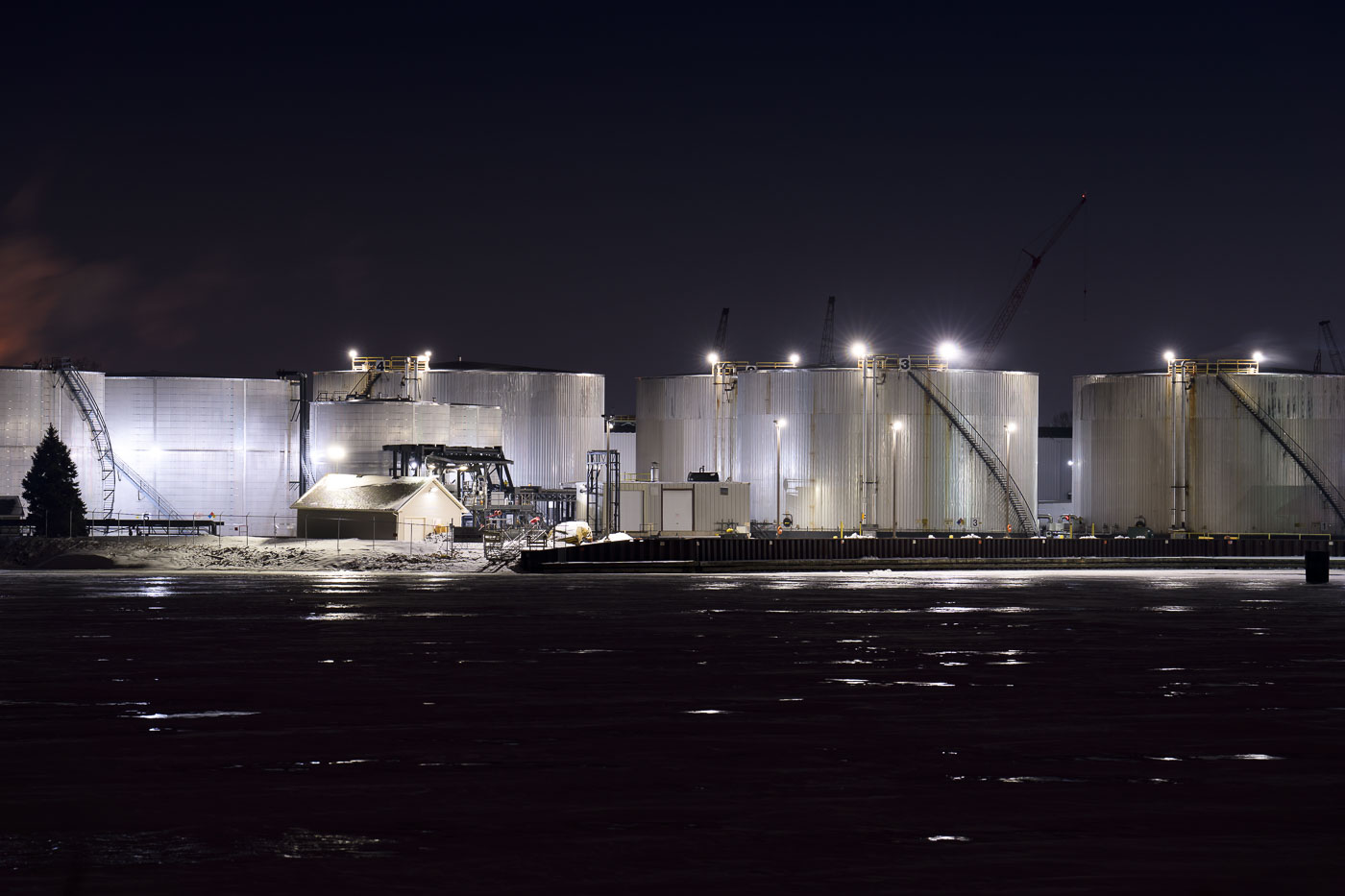
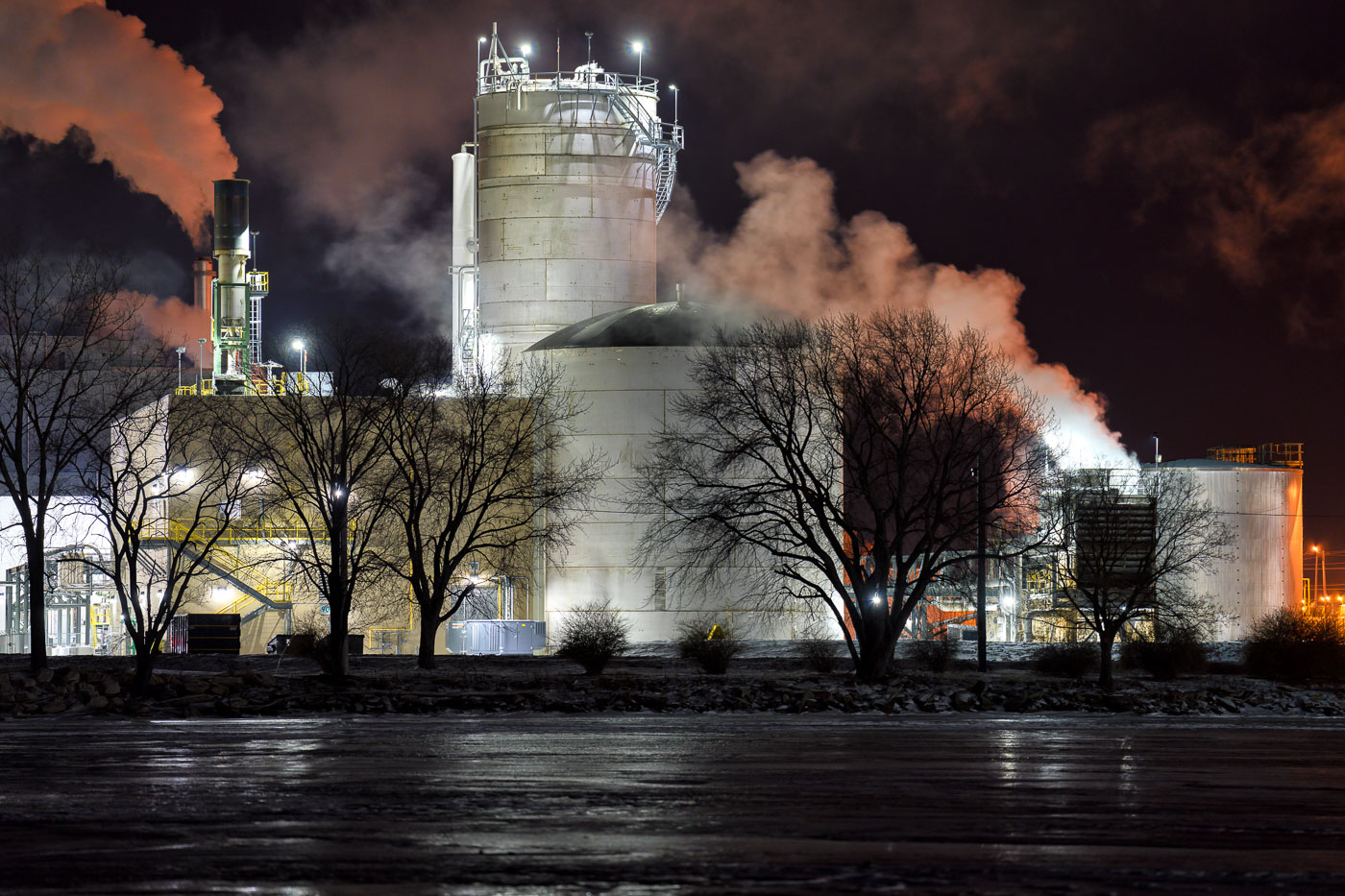
Storage tanks at Construction Resources Management in Green Bay, Wisconsin, illuminated on a winter night.
Large cylindrical storage tanks at Construction Resources Management, Inc. line the west bank of the Fox River in Green Bay, Wisconsin. Viewed from across the frozen river on a winter night, the facility is illuminated by perimeter lighting that reflects faintly off the ice. The site serves regional construction and materials operations, part of the industrial corridor that has long defined the waterfront between downtown Green Bay and the port district.

Storage Tanks Along the Fox River

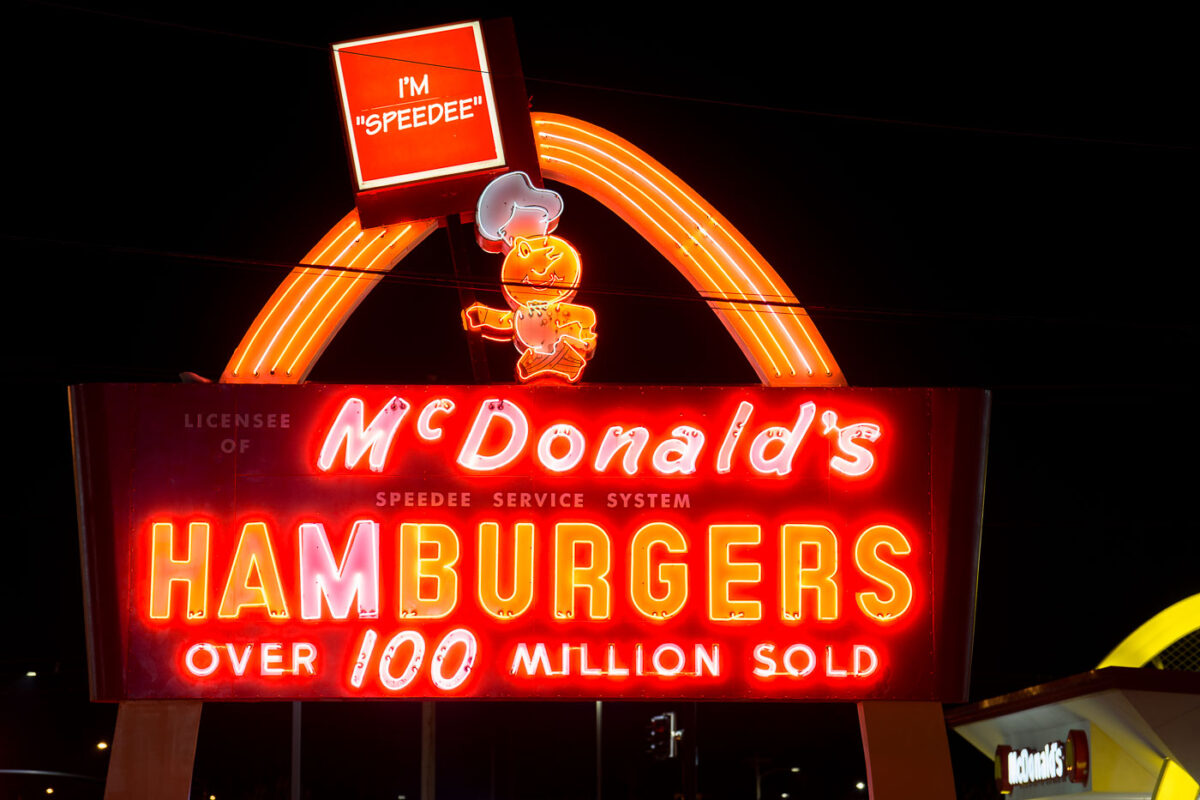
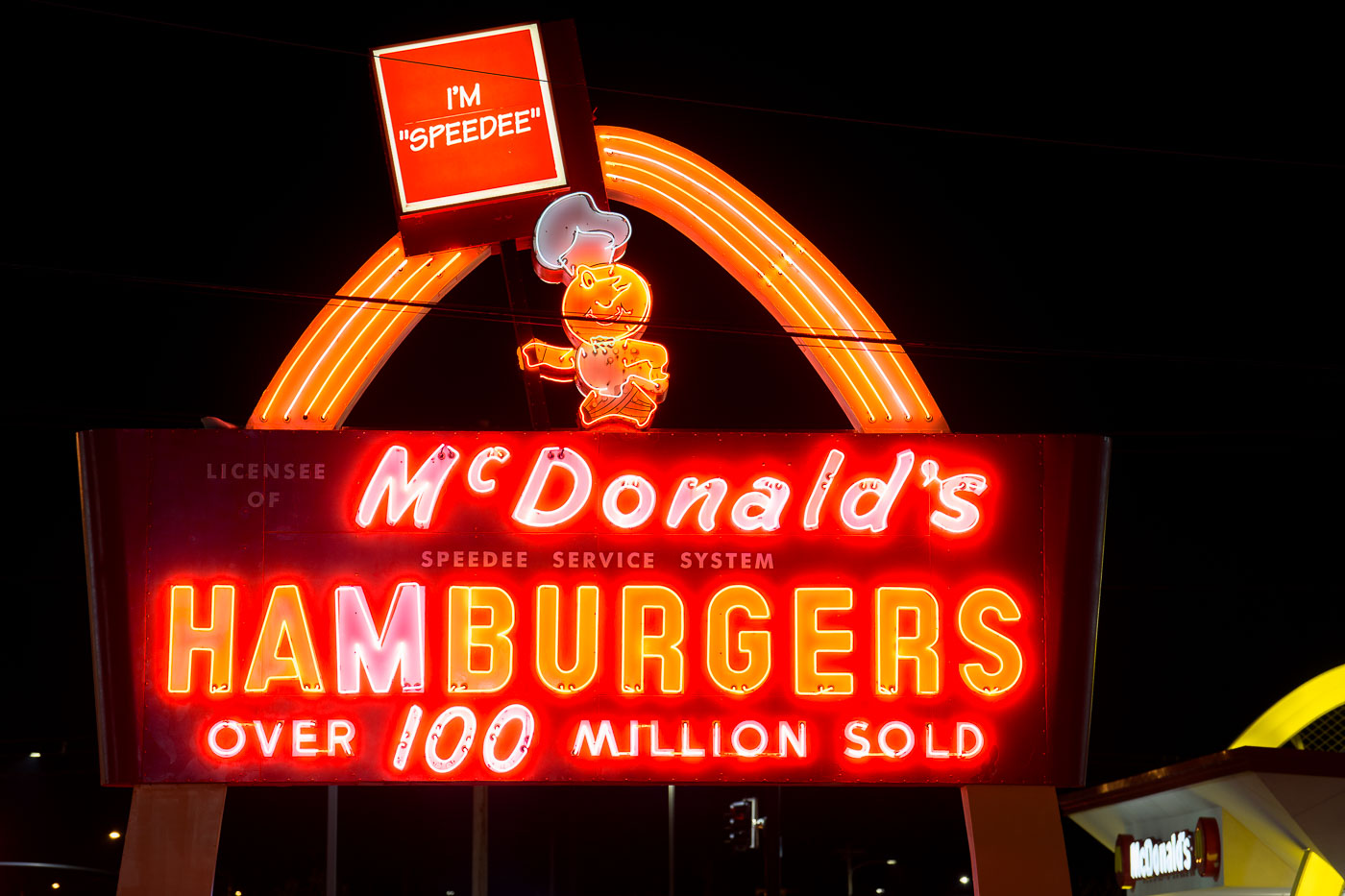
Vintage McDonald's neon sign with "Speedee" mascot in Green Bay, Wisconsin.
One of the few surviving original McDonald’s neon signs still standing in the United States is located in Green Bay, Wisconsin. Installed during the era before the Golden Arches fully defined the brand, the sign features “Speedee,” the chain’s early mascot introduced in the 1950s to promote the company’s streamlined “Speedee Service System.” The illuminated red-and-yellow marquee—advertising hamburgers and boasting “Over 100 Million Sold”—reflects the rapid national expansion of the franchise during its formative years. Today it serves as both a functioning restaurant sign and a preserved piece of mid-century fast-food history.

Vintage McDonald’s “Speedee” Sign in Green Bay
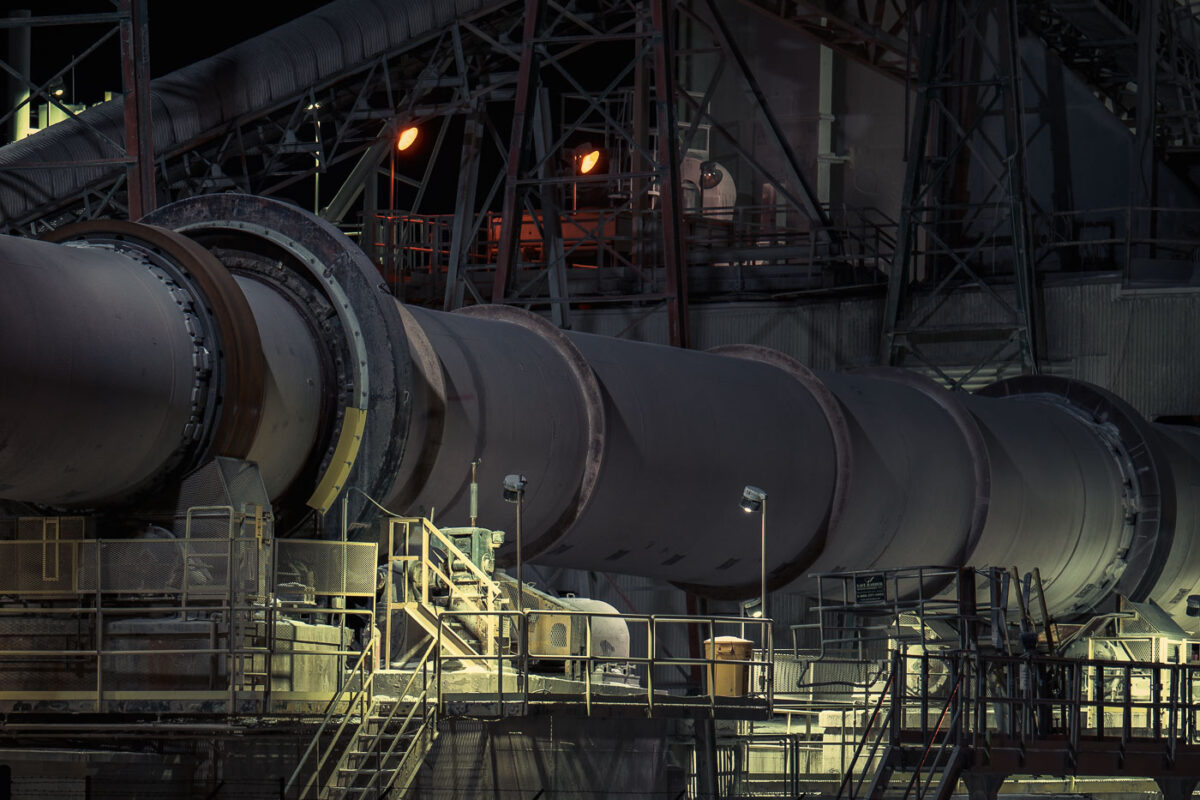
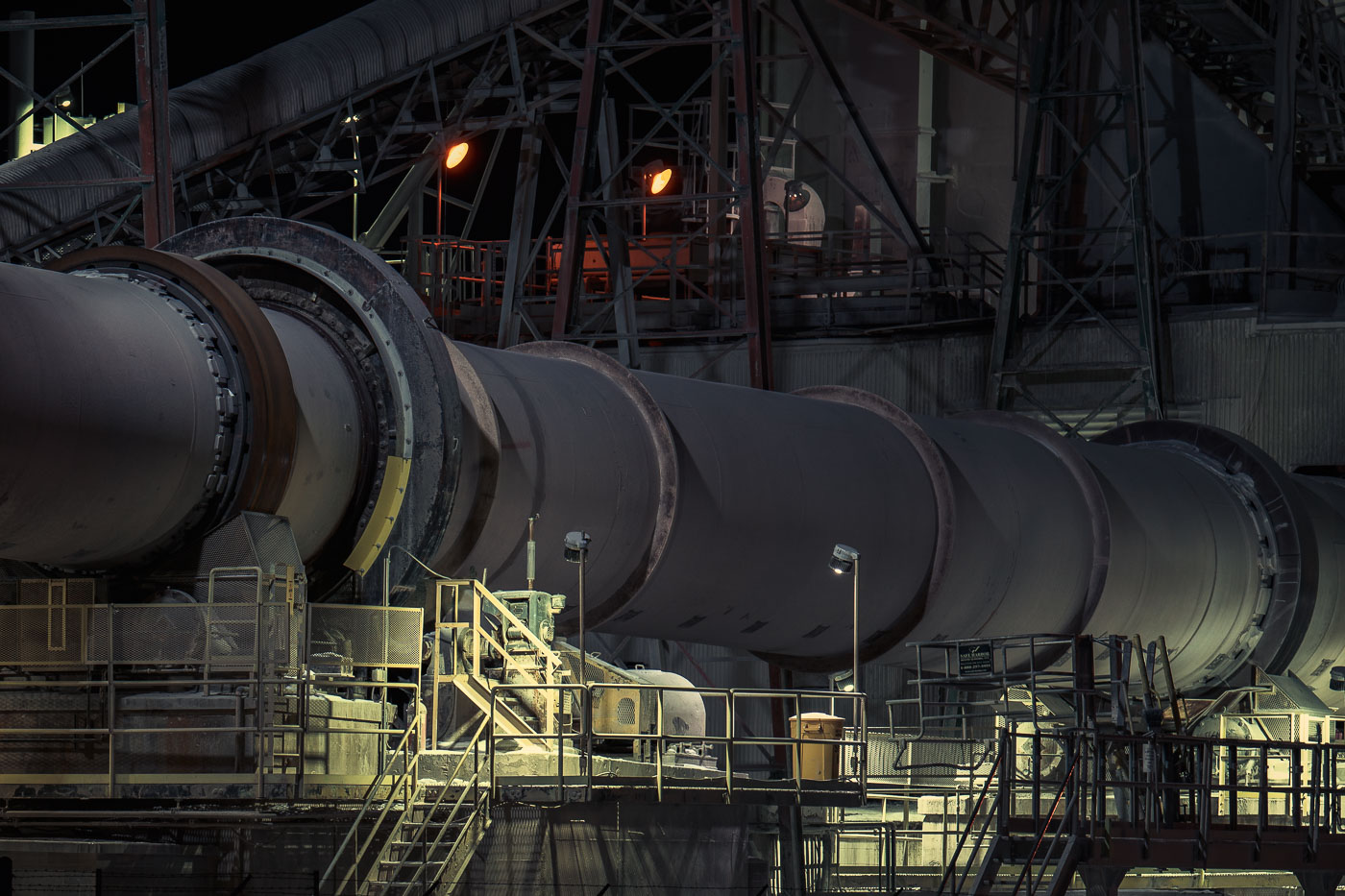
Rotary kiln system at the Graymont lime plant in Green Bay, Wisconsin, at night.
A section of the rotary kiln system at the Graymont lime plant in Green Bay, Wisconsin, captured at night under maintenance and work lights. The massive rotating kiln—central to the calcination process that transforms limestone into high-purity lime—runs along a network of elevated platforms, access stairs, and steel supports. The orange glow from overhead lamps highlights the heat-intensive nature of kiln operations, while the surrounding catwalks and conveyors reflect the layered engineering required to keep the continuous production line moving.

Rotary Kiln System at the Graymont Lime Plant
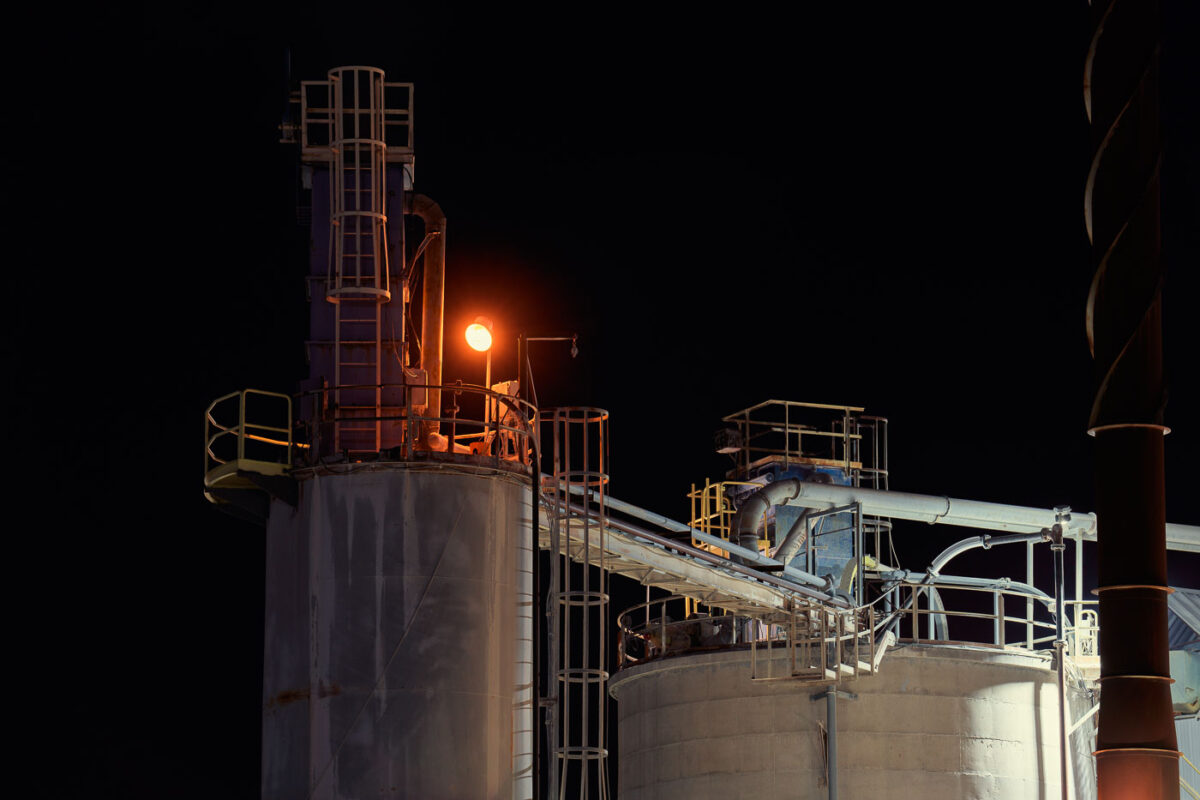
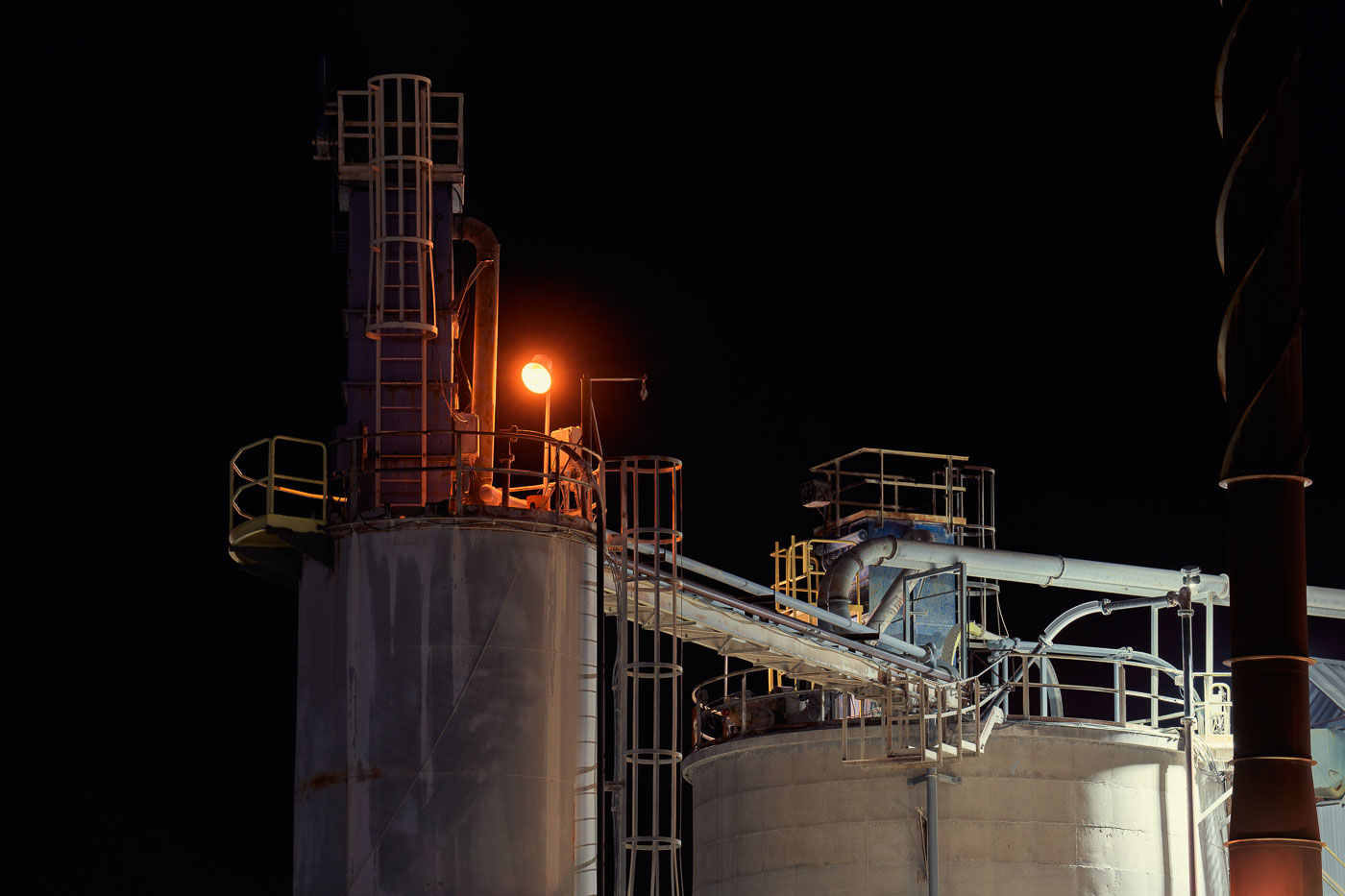
Lime silos and transfer systems at the Graymont plant in Green Bay, Wisconsin, illuminated at night.
Illuminated by a single amber work light, the upper platforms and transfer pipes of the Graymont lime plant in Green Bay, Wisconsin stand out against the night sky. The cylindrical storage silos are connected by enclosed conveyor and piping systems that move processed lime between different stages of production. Catwalks, ladders, and pipe supports trace the geometry of an industrial site that has long supplied lime for regional steelmaking, water treatment, and construction uses.

Lime Silos and Transfer Systems at Night
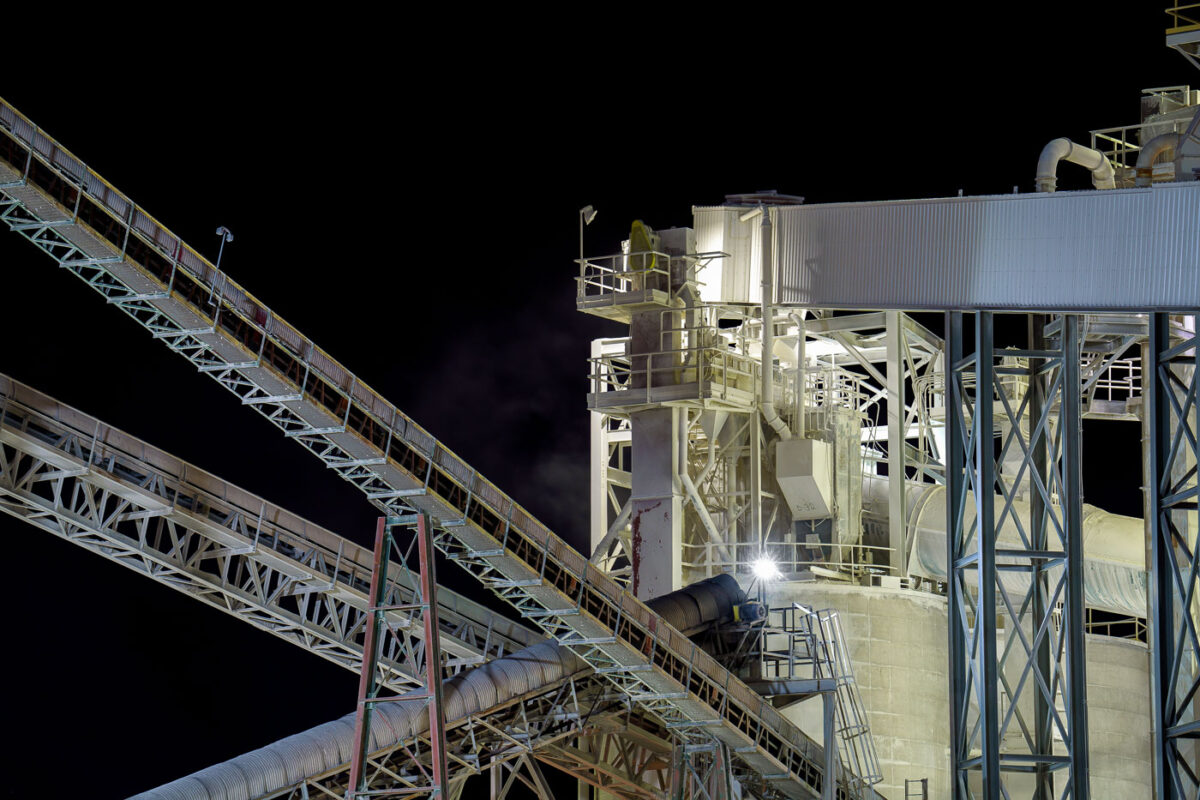
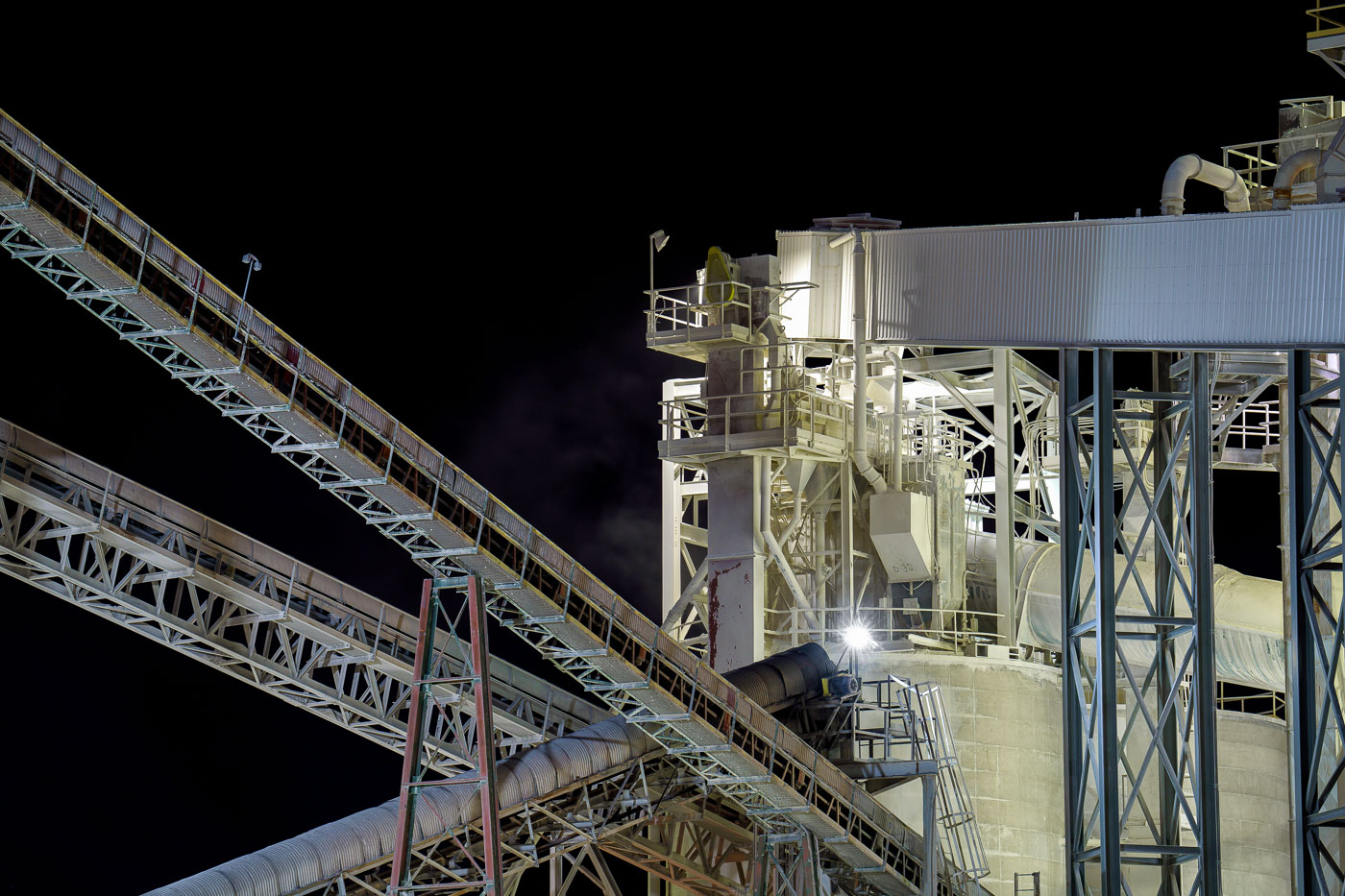
Conveyor towers and processing equipment at the Graymont lime plant in Green Bay, Wisconsin at night.
A detailed nighttime view of the conveyor towers and processing equipment at the Graymont lime plant in Green Bay, Wisconsin. The illuminated catwalks, ducts, and steel trusses highlight the facility’s continuous material-handling system, where crushed limestone moves through enclosed conveyors toward the plant’s kilns and storage silos. Fine dust, visible in the lights near the upper platforms, reflects the industrial character of a site that has served the region’s construction and manufacturing sectors for decades.

Lime Processing Infrastructure at Night
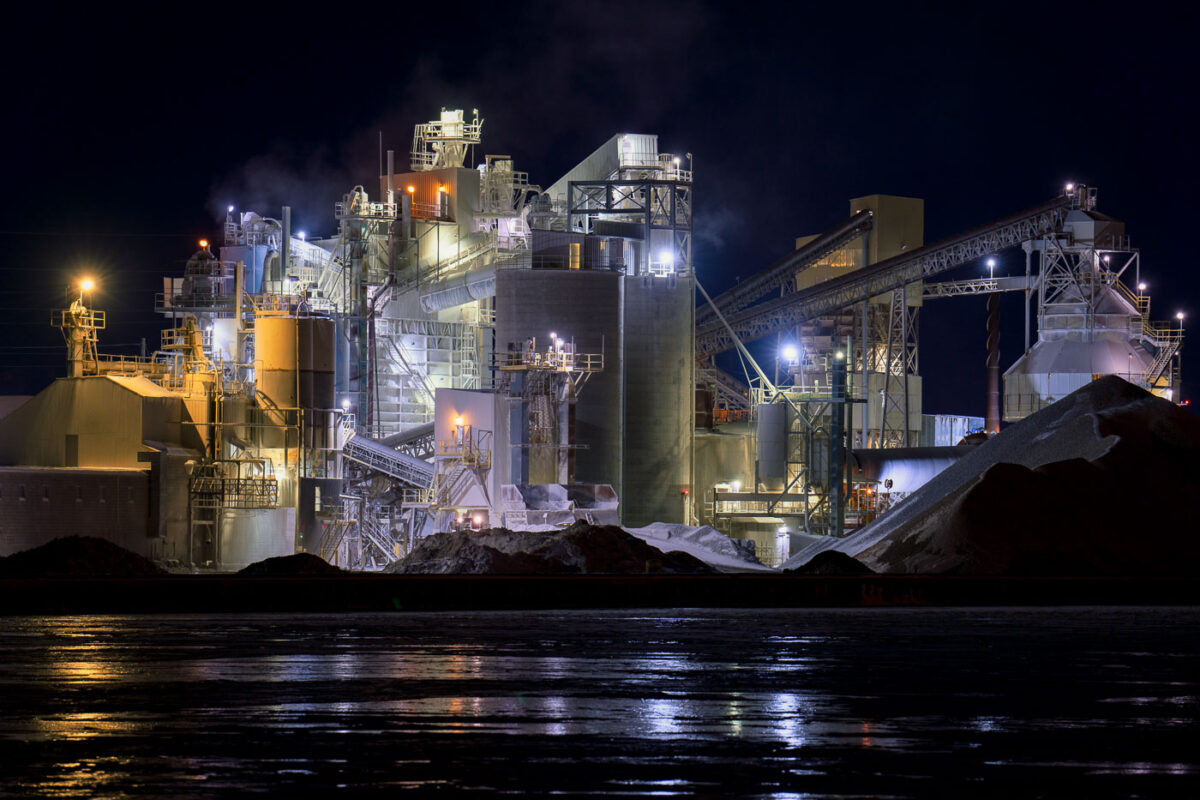
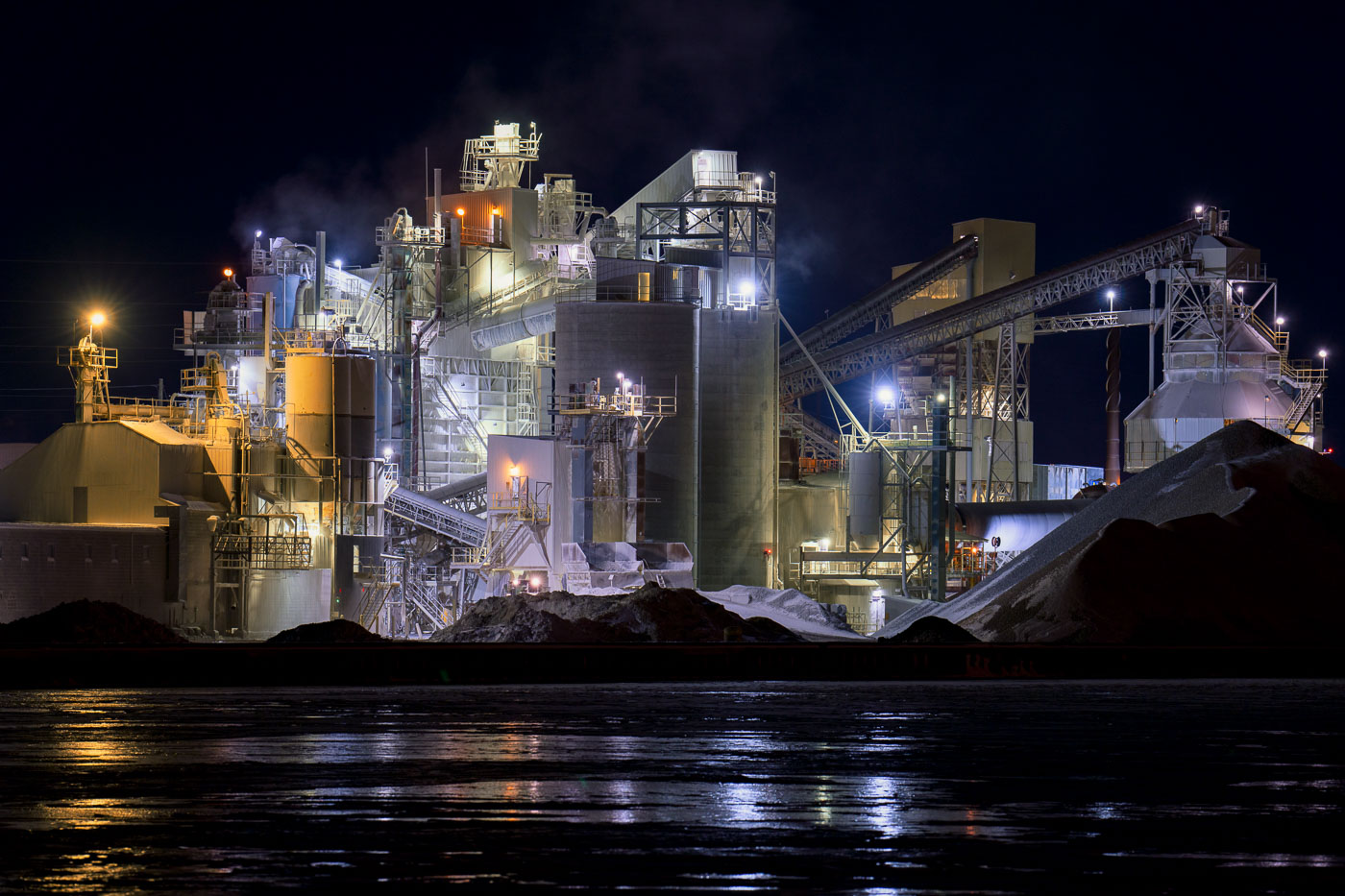
The Graymont lime plant operates at night along the Fox River in Green Bay, Wisconsin, with lights reflecting on the frozen water.
The Graymont lime processing plant along the Fox River in Green Bay, Wisconsin, illuminated during nighttime operations. The facility’s network of silos, conveyors, and dust-collection towers stands out against the dark sky, with steam drifting from active kilns and processing units. Reflections from the plant’s industrial lighting shimmer across the frozen river surface, highlighting the site’s role in the region’s long-standing manufacturing and mineral production corridor.

Graymont Lime Plant on the Fox River, Green Bay
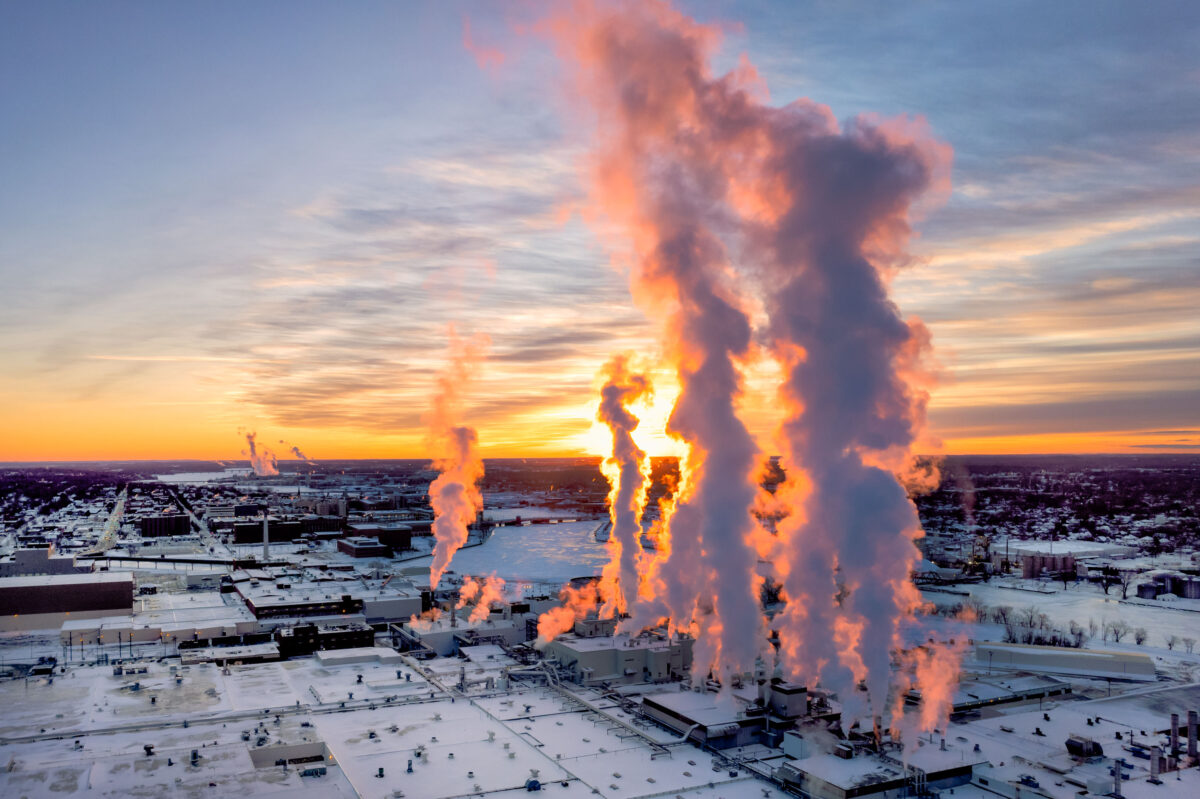
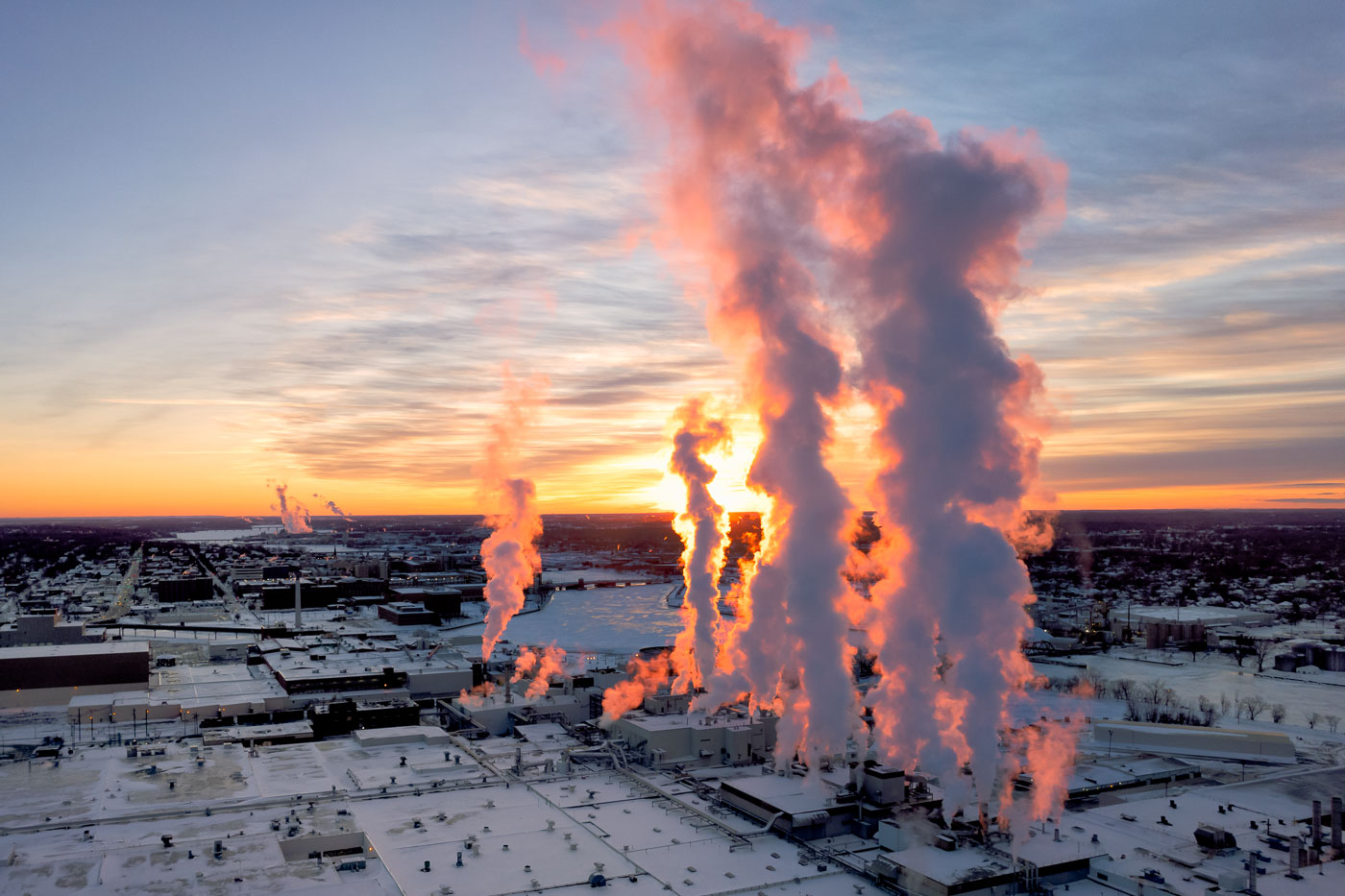
Procter & Gamble paper mill in Green Bay, Wisconsin releases steam columns at sunrise over the frozen Fox River.
The Procter & Gamble plant on Quincy Street began as the Charmin Paper Mills, founded in Green Bay in 1892 and acquired by P&G in 1957. The site sits along the Fox River and remains one of the company's primary manufacturing locations for Charmin bathroom tissue and Bounty paper towels. Steam from the mill's process stacks is a routine byproduct of pulp and paper production, most visible on cold mornings when it condenses in the winter air. Green Bay's paper industry dates to the 19th century, when the Fox River's flow made it an early center for mills converting wood pulp into finished paper goods.

Steam Plumes Over the P&G Paper Mill on Green Bay’s Fox River
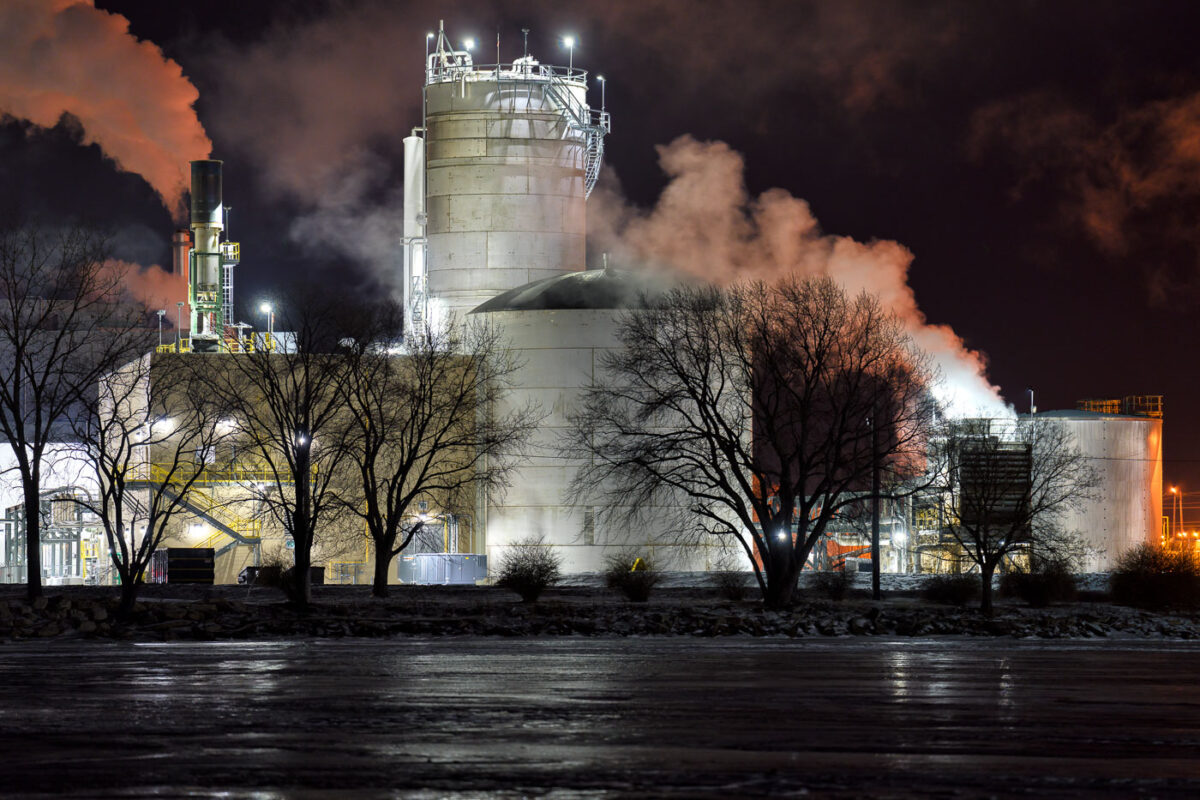
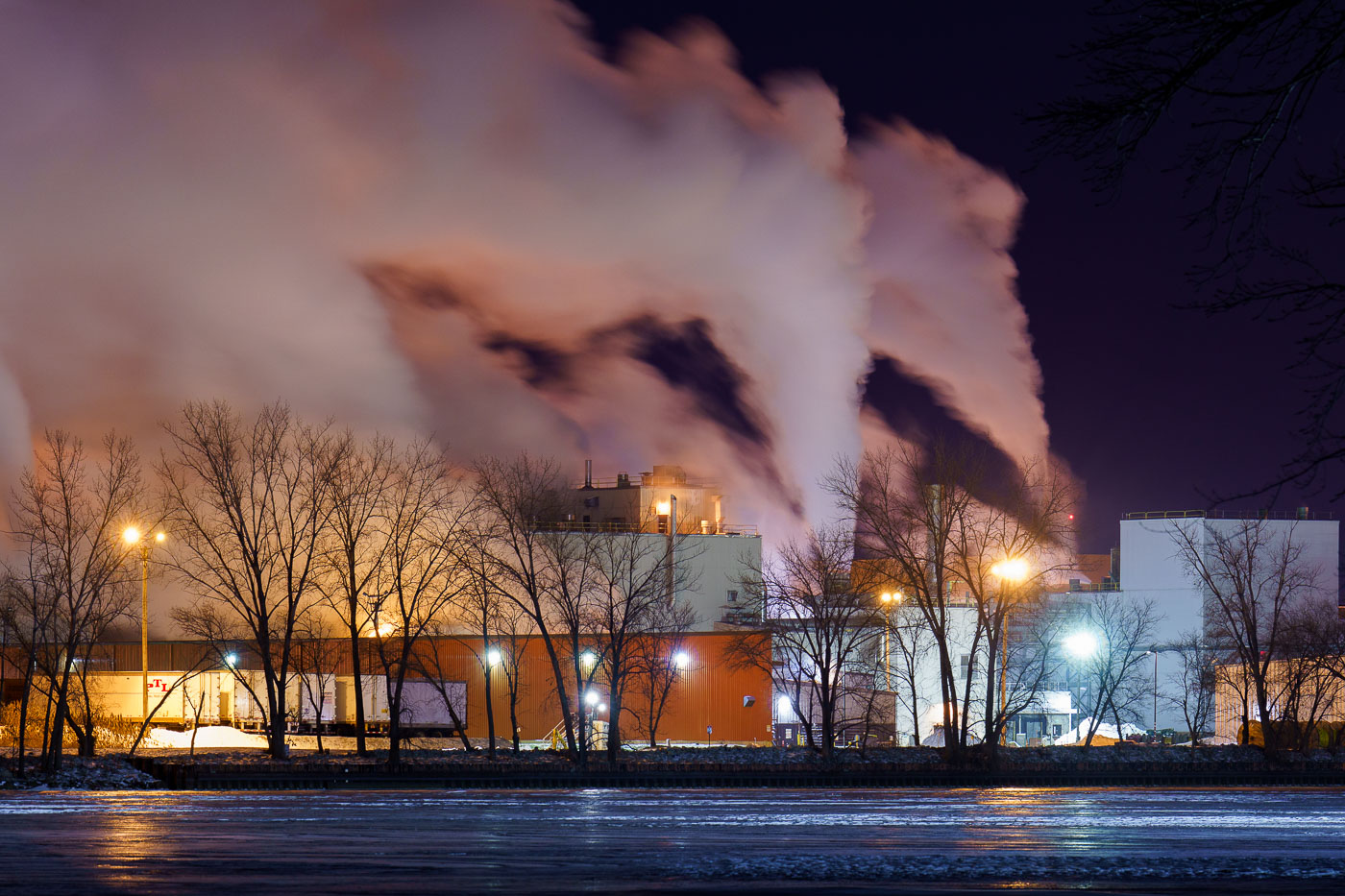
Green Bay Packaging's modern paper mill on the Fox River in Wisconsin emits steam plumes into the winter night sky.
Green Bay Packaging's recycled paper mill sits along the Fox River in Green Bay, Wisconsin. The company completed this containerboard mill in 2021, replacing an older facility and consolidating production into a single advanced plant designed to cut water and energy use. The mill produces recycled containerboard used in corrugated packaging, drawing on the company's long history as a family-owned packaging manufacturer based in Green Bay. Steam from its process operations is a routine byproduct of papermaking, generated by the heat required to pulp and dry recycled fiber into new board.

Winter Steam at the Green Bay Packaging Mill
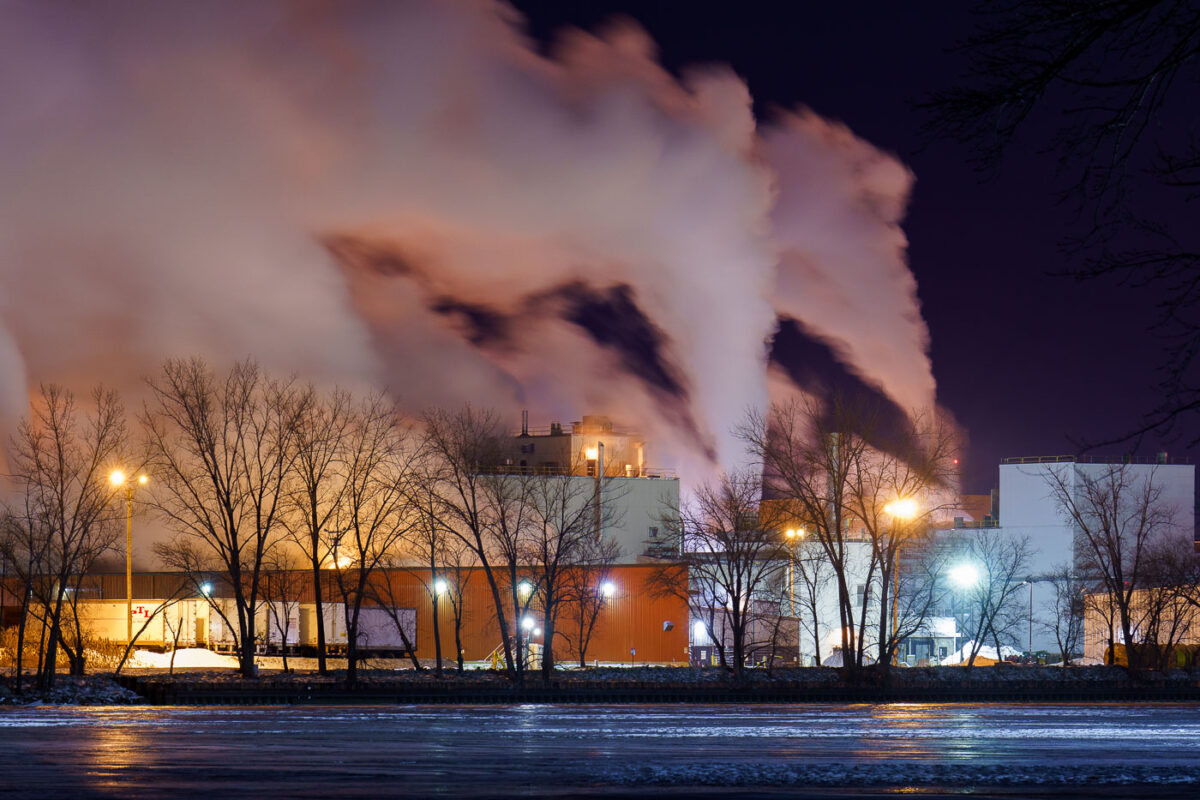
Green Bay Packaging mill on the Fox River in Wisconsin releases steam into the winter night sky.
Green Bay Packaging's recycled paper mill sits on the Fox River in Green Bay, Wisconsin. The company completed the $500 million facility in 2021, replacing a containerboard mill that had operated on the site for more than seven decades. The new mill was built to use recycled fiber as its primary raw material while cutting water and energy use compared to the plant it replaced. Green Bay Packaging is an employee-owned company that has operated in the city since 1933.

Winter Steam Over Green Bay Packaging’s Fox River Mill
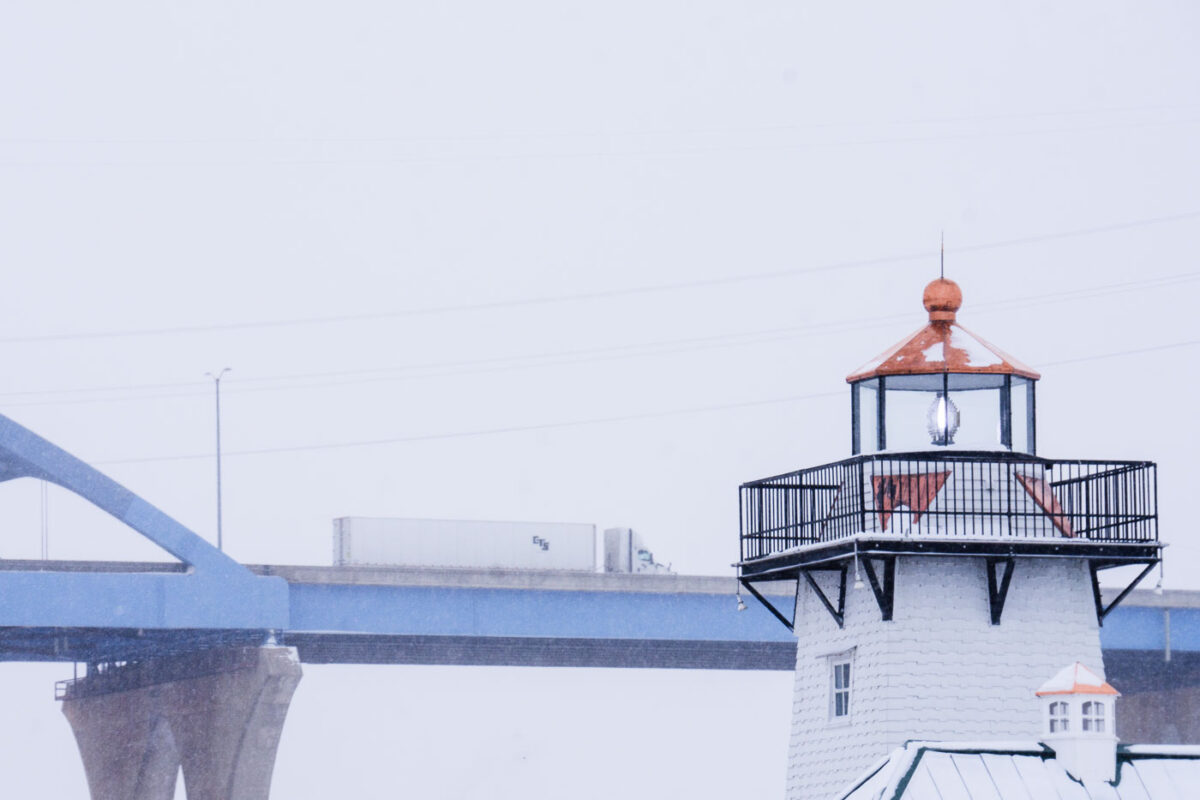
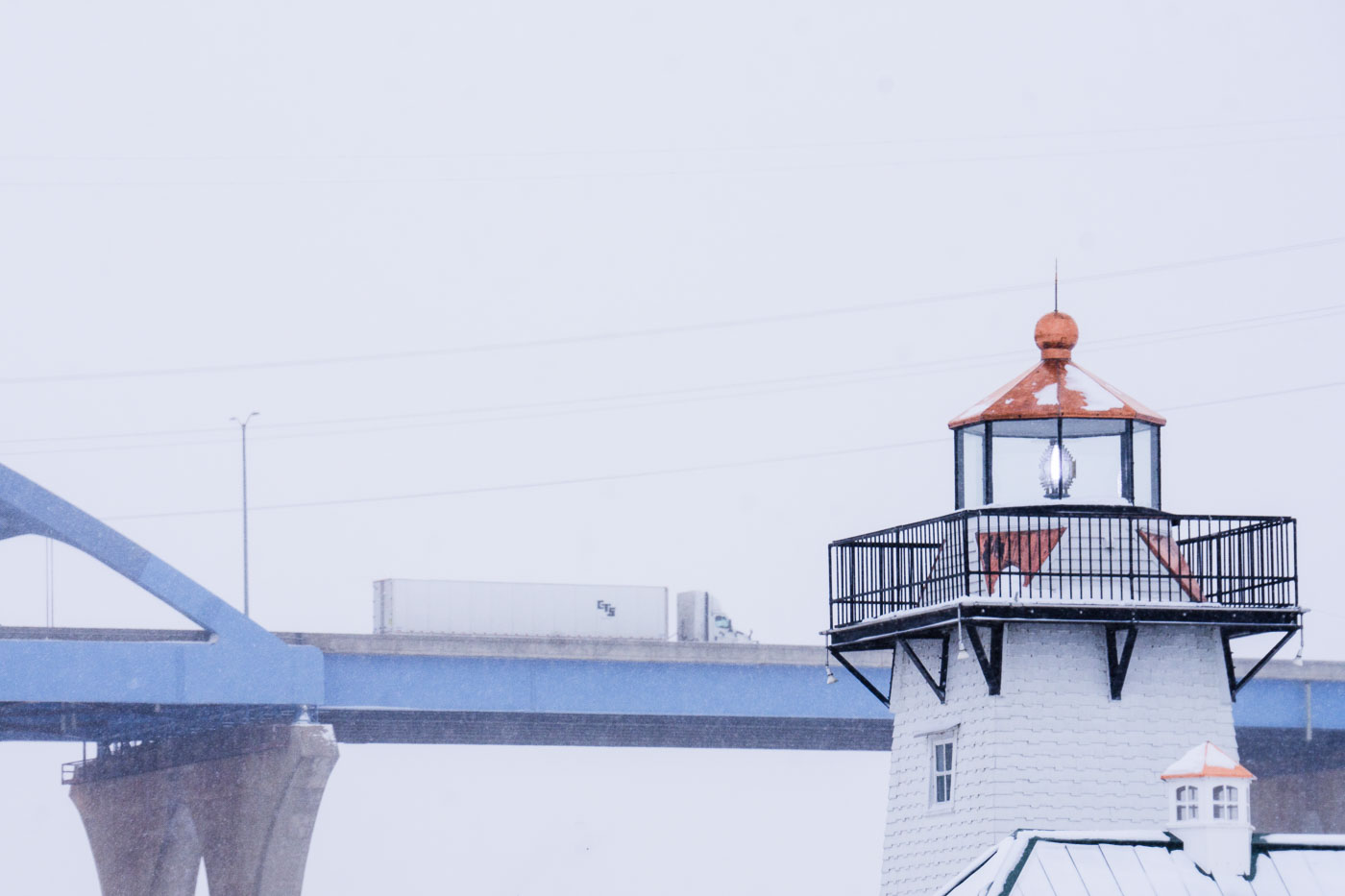
A tractor-trailer crosses the Leo Frigo Memorial Bridge in Green Bay, Wisconsin, during a snowstorm, with a lighthouse in the foreground.
A CTS tractor-trailer crosses the Leo Frigo Memorial Bridge—locally known as the Tower Drive Bridge—during a winter snowstorm in Green Bay, Wisconsin. In the foreground, the familiar shingled lighthouse structure along the riverfront stands out against the white sky, its lantern room partially frosted as lake-effect snow drifts through the scene. The contrast between the elevated highway and the shoreline landmark highlights the mix of transportation corridors that define Green Bay’s industrial waterfront.

Winter Traffic on the Leo Frigo Bridge
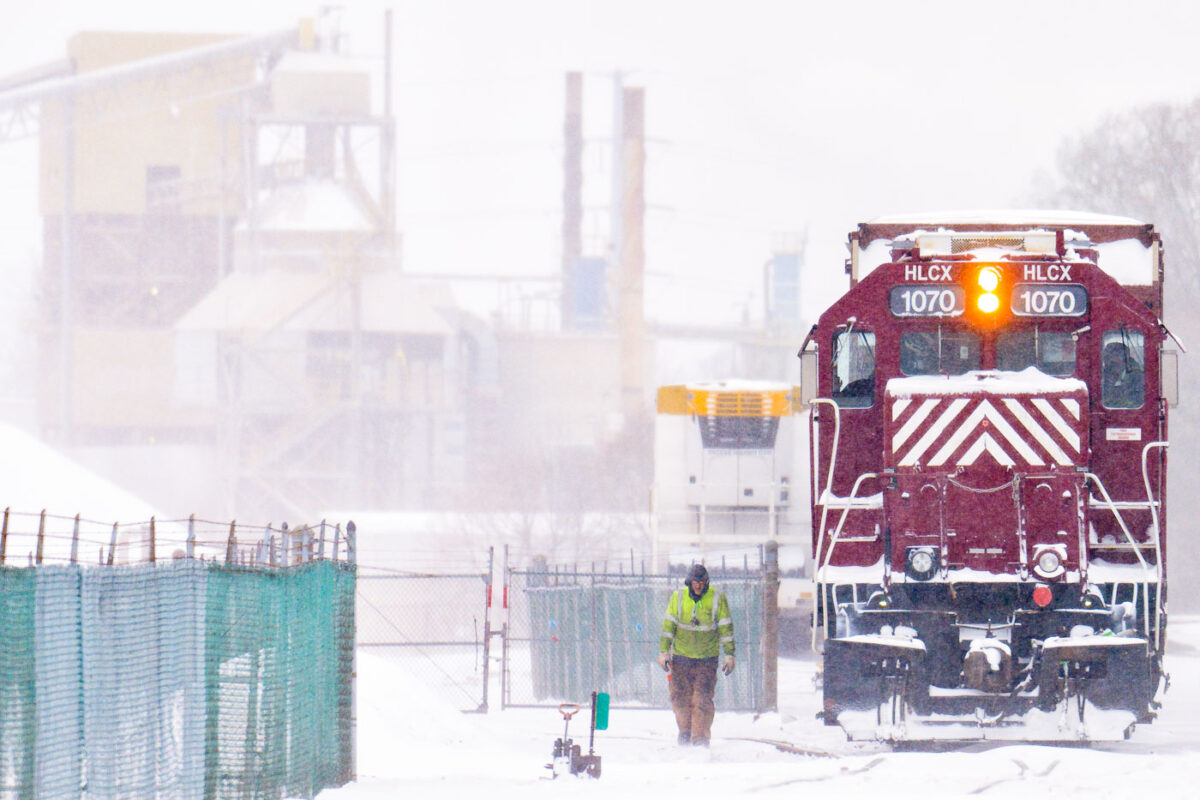
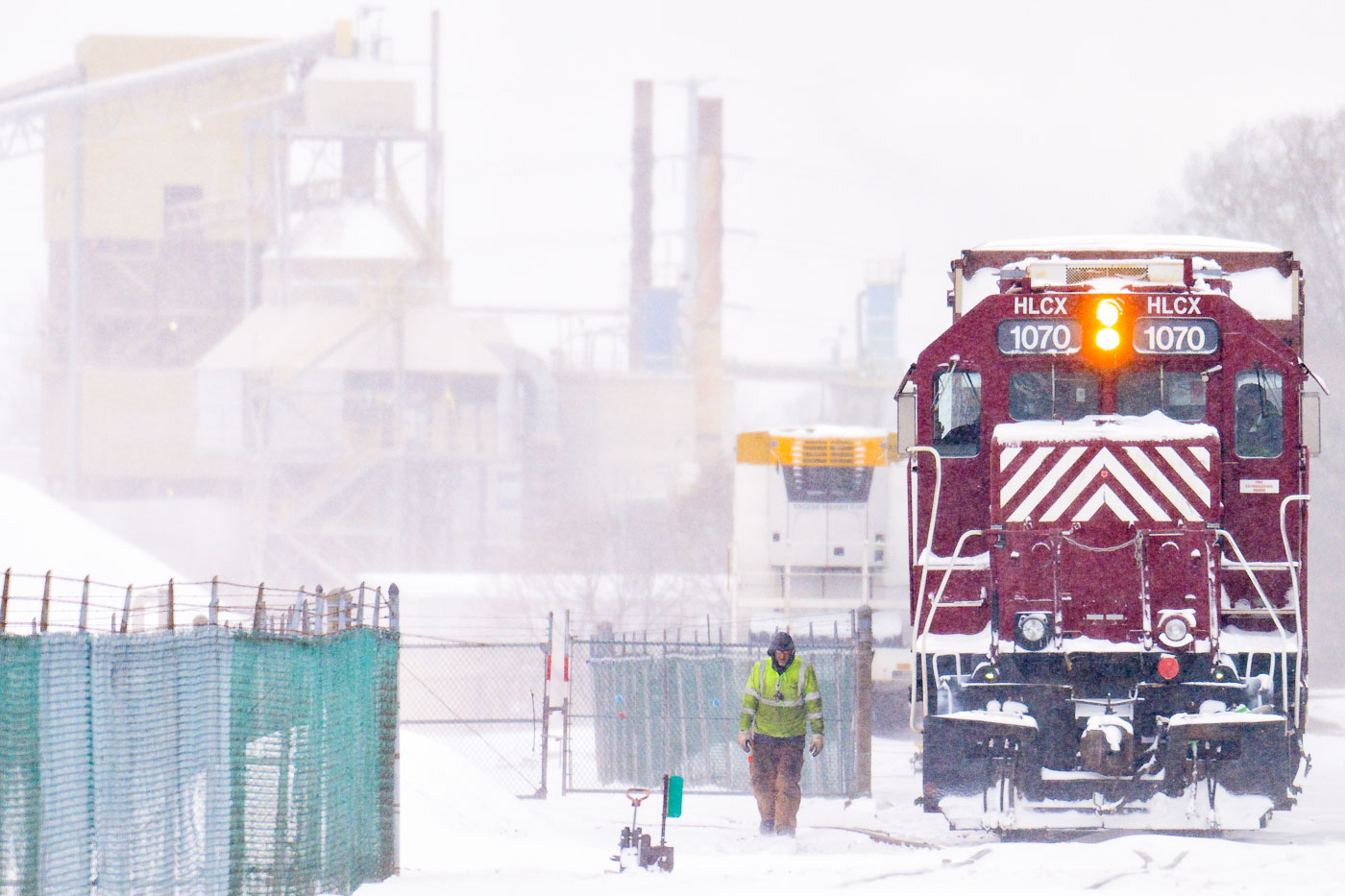
A freight crew member walks near a train during a snowstorm in Green Bay, Wisconsin.
A freight crew member walks alongside HLCX 1070 during a heavy snowstorm at Quincy Street and Eastman Avenue in Green Bay, Wisconsin. The locomotive’s headlights cut through the blowing snow as operations continue despite low visibility and freezing conditions. Industrial structures in the background fade into the whiteout, highlighting how rail work persists year-round across the region’s manufacturing and transportation corridors.

Freight Crew Working Through a Green Bay Snowstorm
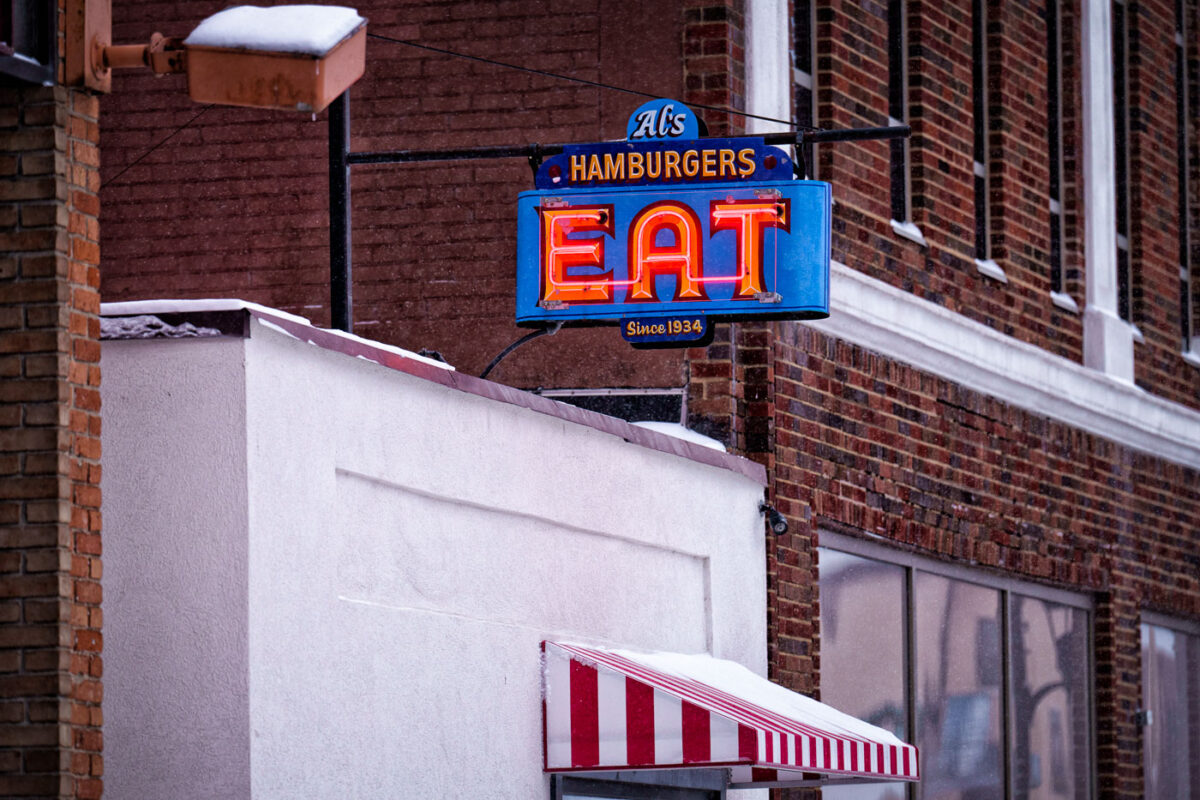
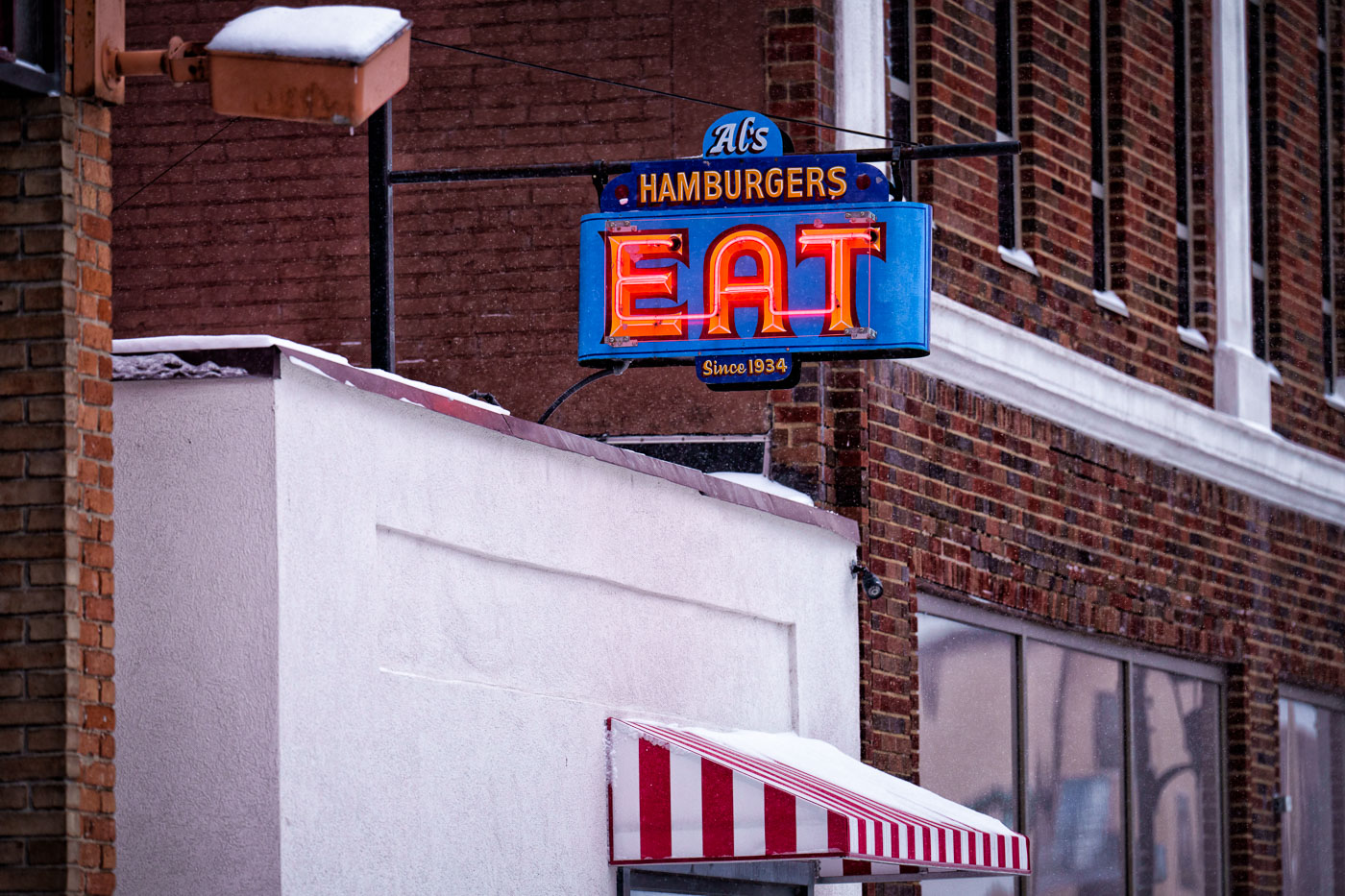
Al's Hamburgers neon sign in Green Bay during winter snowfall.
The glowing neon “EAT” sign at Al’s Hamburgers stands out against the snowy backdrop of winter in Minneapolis. The sign, with its bright mid-century colors and bold lettering, has been part of the business’s identity since the diner opened in 1934. Its classic styling reflects the era when small neighborhood restaurants relied on eye-catching storefront signs to draw in passing traffic. Light snow gathers on the striped awning below, adding a seasonal layer to one of the area’s longstanding local landmarks.

Al’s Hamburgers Neon EAT Sign, Green Bay Winter
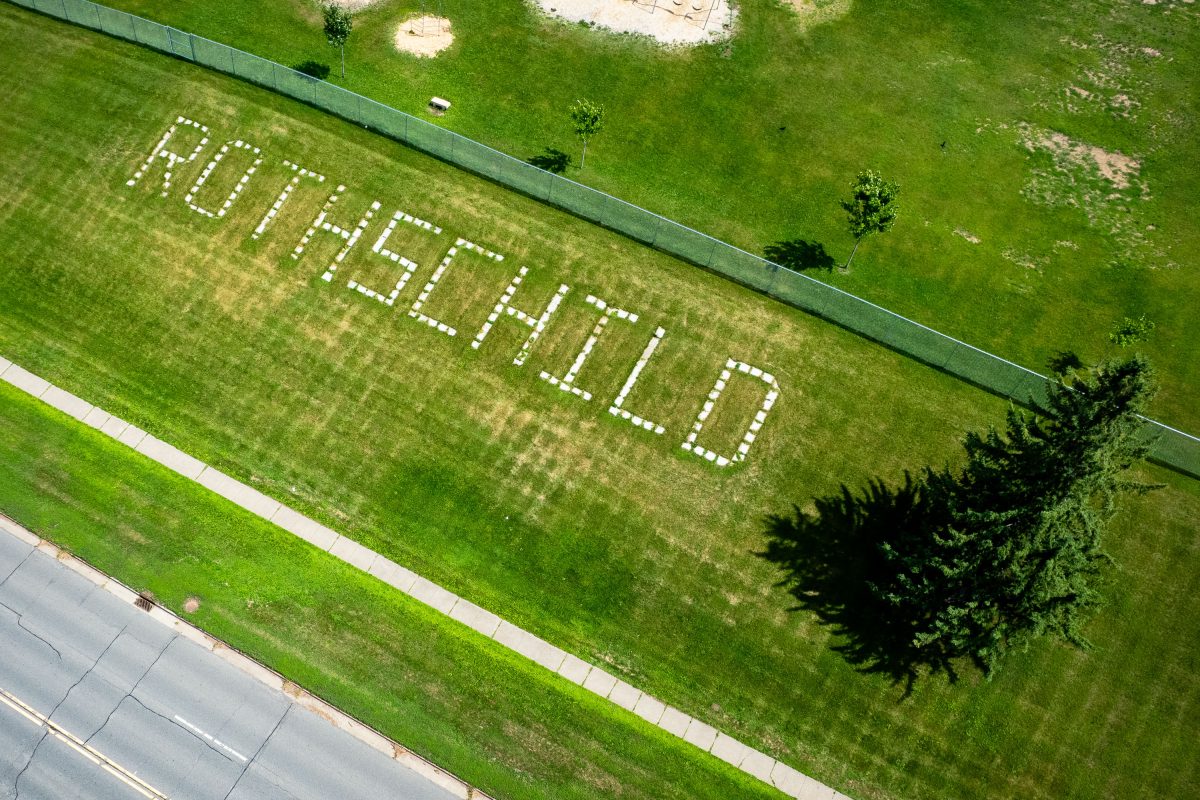
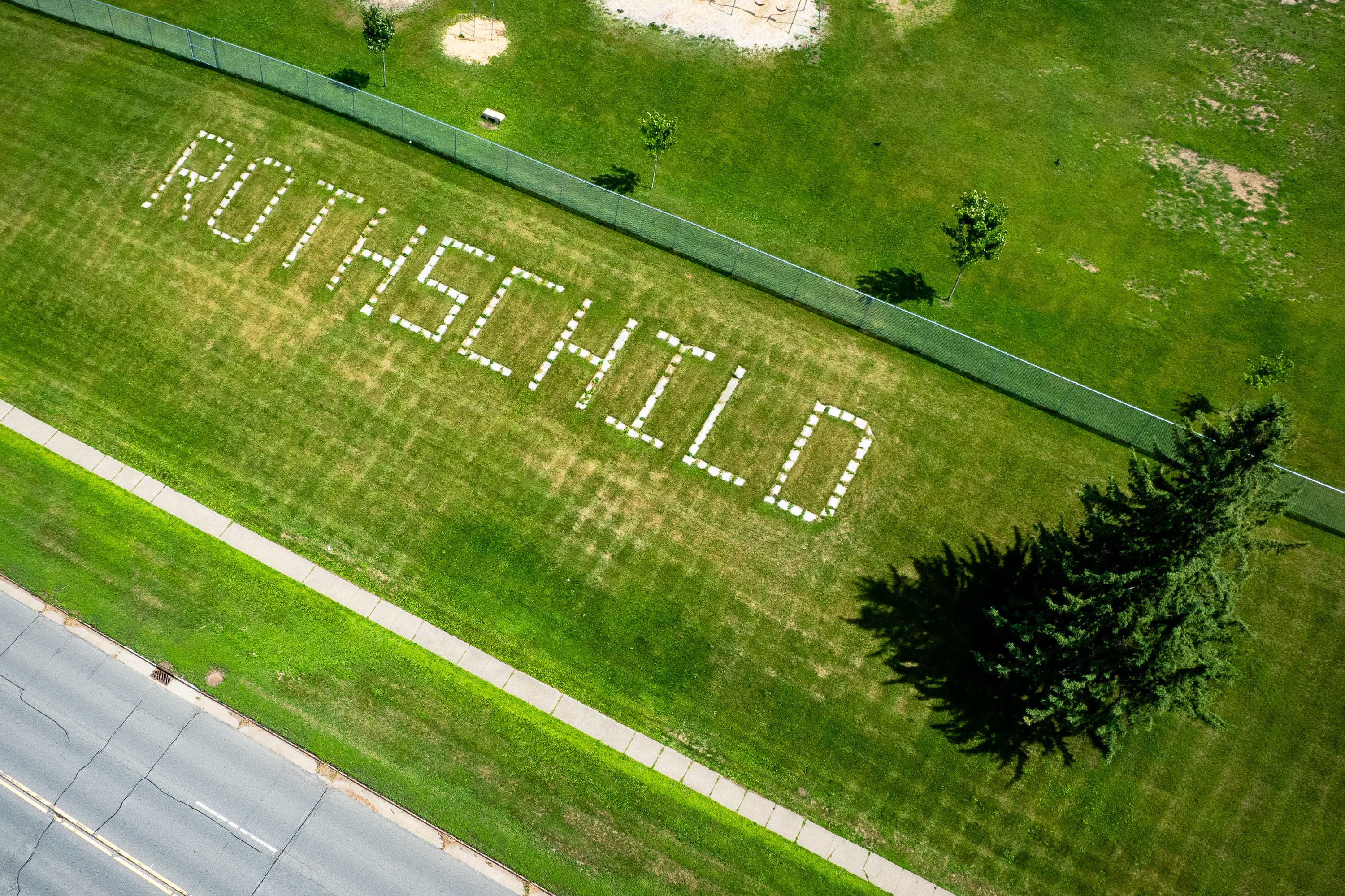
Large white letters spelling "Rothschild" laid out on a lawn in Rothschild, Wisconsin.
Rothschild is a village in Marathon County, Wisconsin, located along the Wisconsin River just south of Wausau. It was incorporated in 1912 and named for the Rothschild family, whose paper milling interests helped establish the community. The village's population has hovered around 5,200 in recent census counts.

Rothschild Village Name Spelled Out in Lawn Lettering

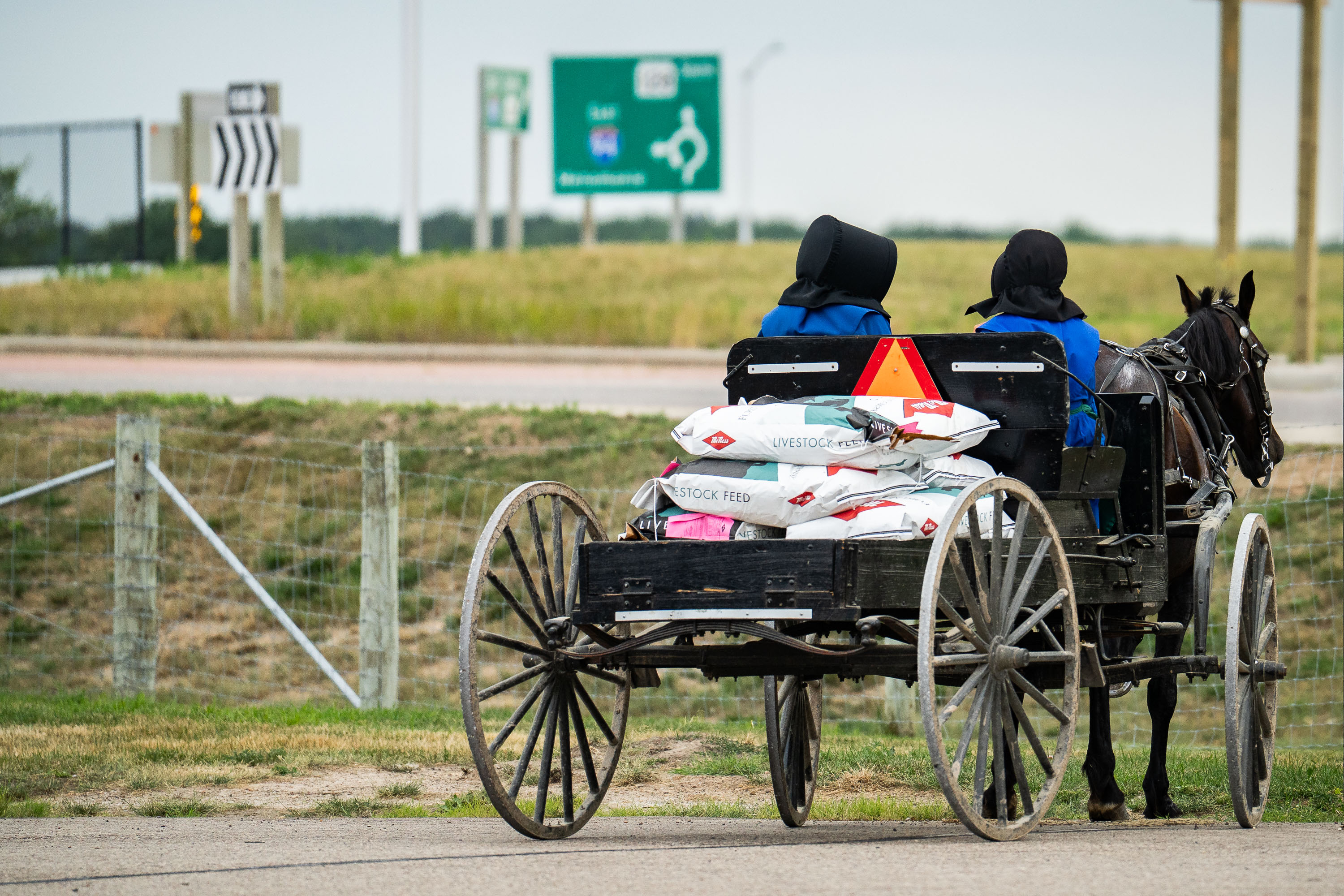
Two Amish girls in a horse-drawn buggy loaded with livestock feed on a rural Wisconsin road.
Amish families across Wisconsin rely on horse-drawn buggies for daily transportation, a practice rooted in their rejection of automobiles and modern conveniences tied to worldly influence. The buggies, typically built by local Amish craftsmen, are designed for practical use—hauling feed, supplies, and family members between farms and town. Livestock feed sacks, like the ones often loaded onto flatbed buggies, are a common sight on rural roads near Amish settlements, where farming remains the primary livelihood. Wisconsin is home to one of the largest Amish populations in the United States, with communities concentrated in counties such as Vernon, Monroe, and Wausau.

Two Amish Girls Hauling Feed by Buggy, Rural Wisconsin
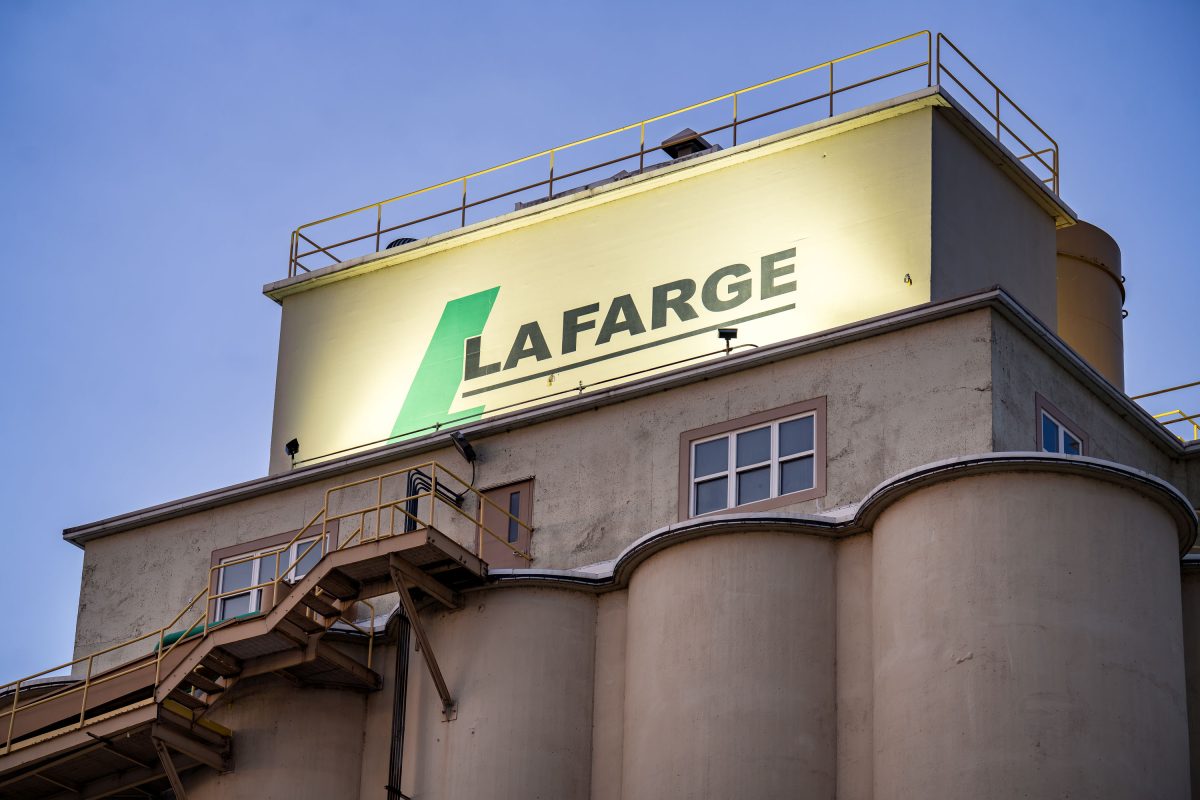
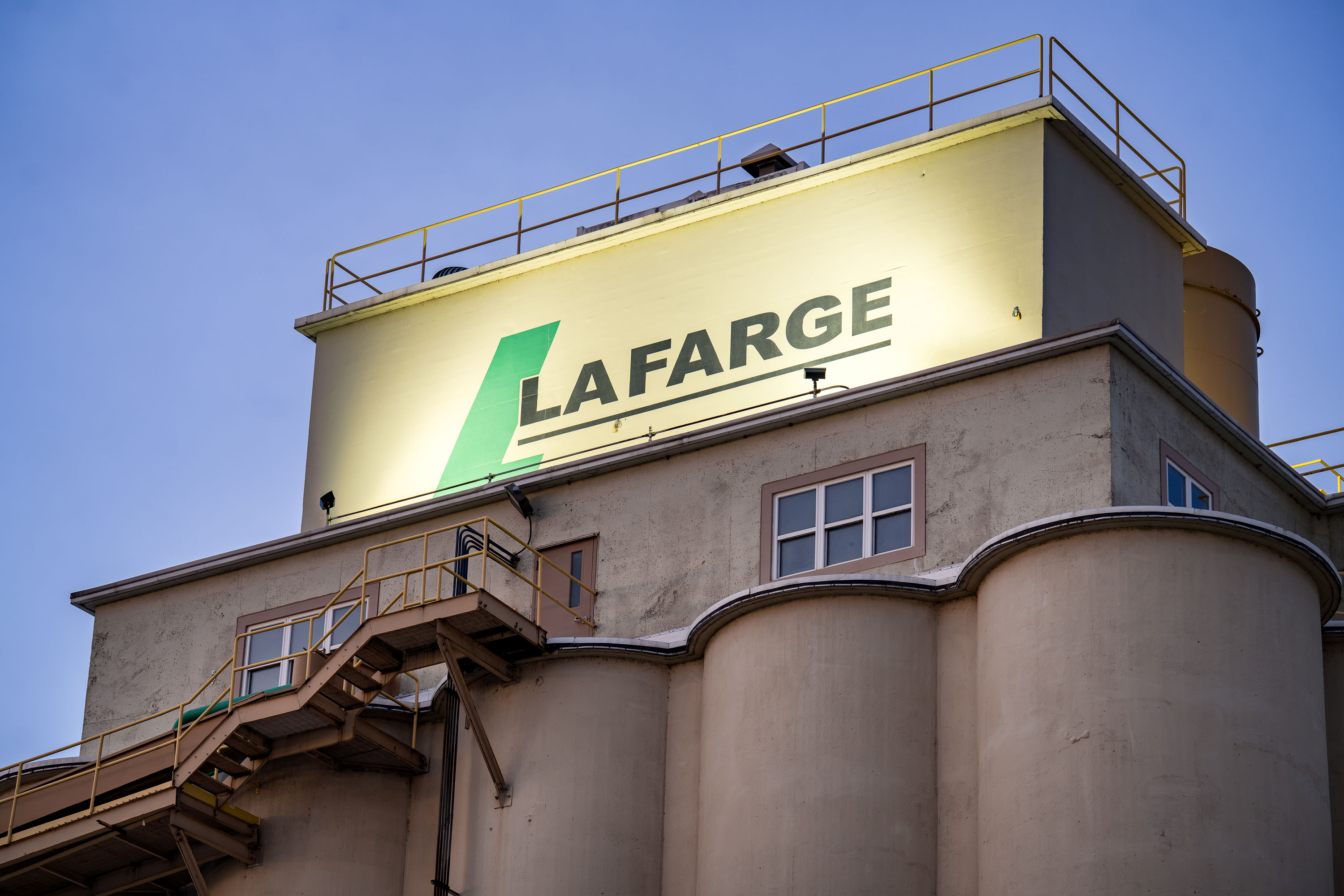
Lafarge cement facility with storage silos and rooftop sign in Green Bay, Wisconsin.
Lafarge operates a cement facility in Green Bay, Wisconsin, part of the company's network of production and distribution sites along the Great Lakes. The site includes storage silos used to hold cement and related materials before shipment. Lafarge, now part of Holcim following a 2015 merger, is one of the largest building materials producers in the world.

Lafarge Cement Facility, Green Bay

Tangen Drugs sign and storefronts along Washington Street in downtown St. Croix Falls, Wisconsin.
Washington Street runs through the commercial core of St. Croix Falls, Wisconsin, a small city on the St. Croix River in Polk County. Tangen Drugs has long operated as a local pharmacy along this stretch of downtown storefronts. The street carries Wisconsin Highway 35 through town, linking the business district to the surrounding river valley.

Tangen Drugs on Washington Street, St. Croix Falls

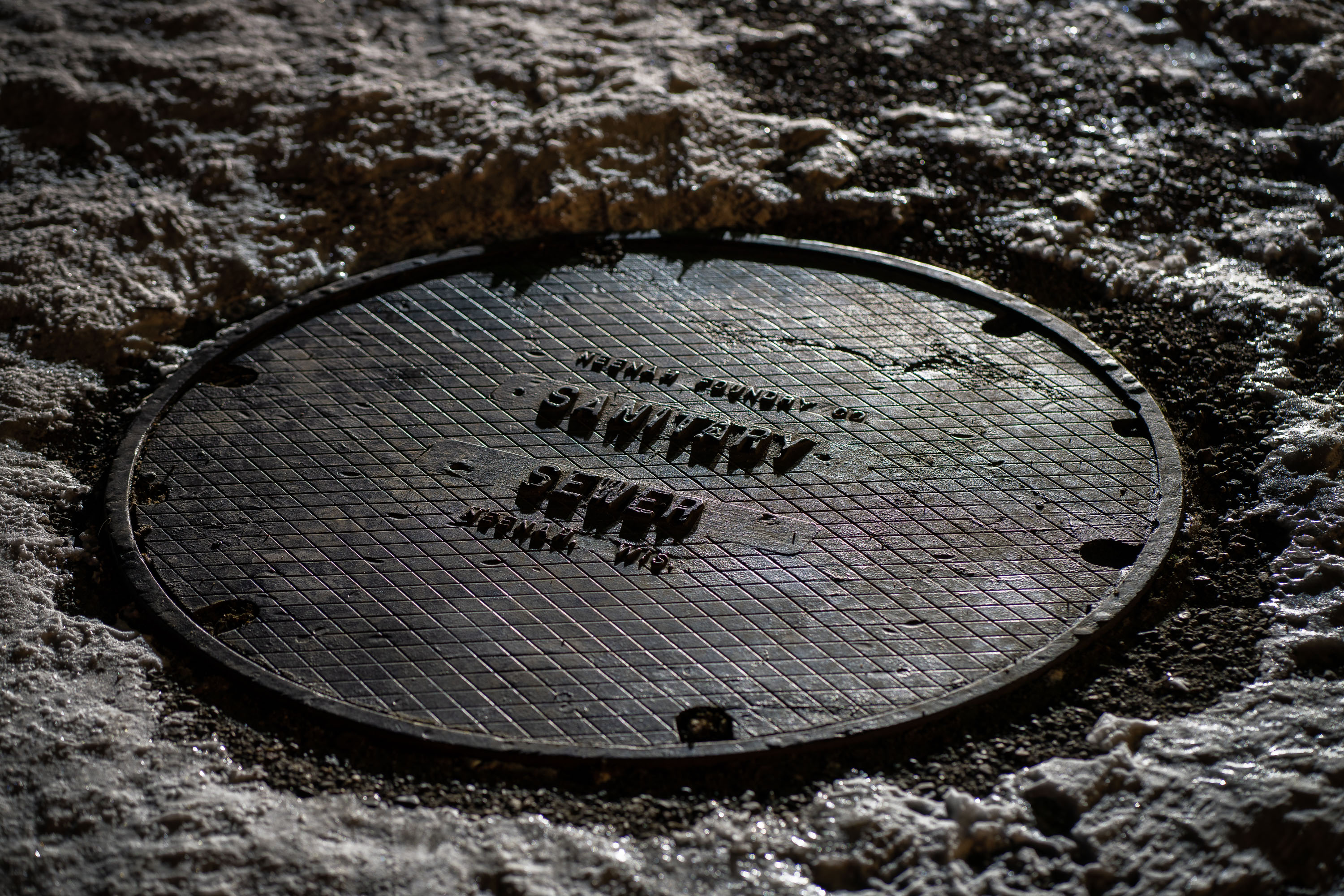
Neenah Foundry sanitary sewer manhole cover in Minneapolis snow.
This cast iron sewer cover in Minneapolis was made by Neenah Foundry Co. of Neenah, Wisconsin. Its crosshatched surface and raised lettering mark it as part of the city's sanitary sewer system, built to carry traffic loads while covering underground access points.

A Neenah Foundry Sewer Cover in Minneapolis Snow

Campaign signs supporting Donald Trump for 2024 and "Trump Won" are displayed on a fence in Freedom, Wisconsin, September 2021.
In September 2021, a residential property in Freedom, Wisconsin, displayed a series of campaign signs supporting Donald Trump. The signs reflect ongoing political engagement and support for Trump's potential future candidacies, with messages referencing "Trump 2024" and "Trump Won." The presence of these signs in a suburban Wisconsin neighborhood indicates the continued visibility of his political movement in the state. This display occurred during a period of active political discourse following the 2020 election and in anticipation of future political contests.

Trump Campaign Signs in Freedom, Wisconsin – September 2021

Political Yard Signs in a Residential Neighborhood, 2024 Election Season
A row of political signs displayed along a residential fence during the 2024 U.S. election cycle. The banners, supporting former President Donald Trump and expressing opposition to President Joe Biden, reflect the increasing visibility of partisan messaging in everyday public and suburban spaces. Throughout the Upper Midwest and many parts of the country, large-format yard signs and roadside banners became common ways for homeowners to express political allegiance ahead of the election. The use of oversized, commercially printed campaign signs grew significantly after the 2016 and 2020 elections, coinciding with the rise of direct-to-consumer political merchandise and online storefronts selling non-official campaign materials. Residential displays like this illustrate how political identity has increasingly blended into street-level visual culture, especially in communities where private property is used as a platform for ongoing political messaging outside traditional election windows.

Political Yard Signs in a Residential Neighborhood, 2024 Election Season
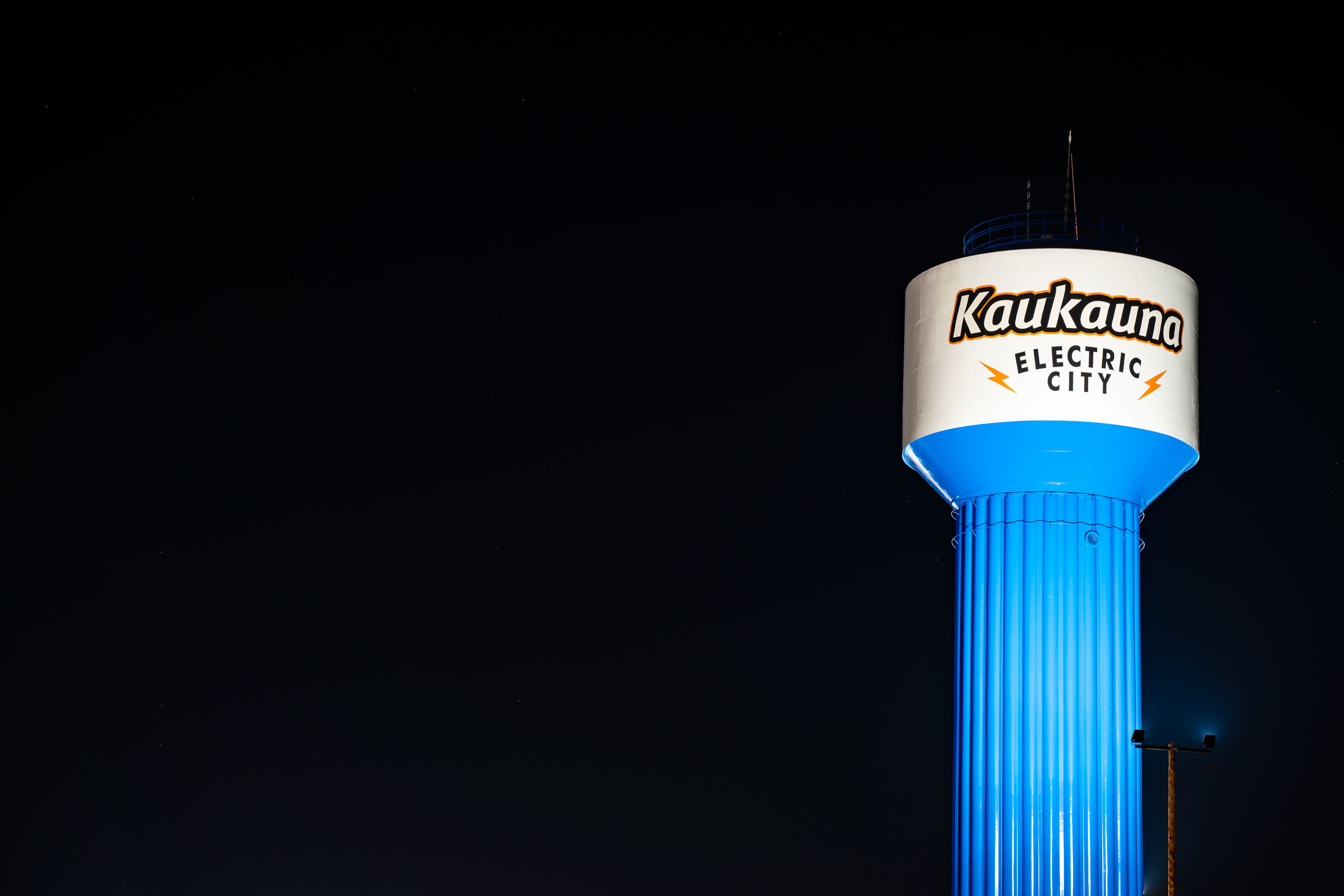
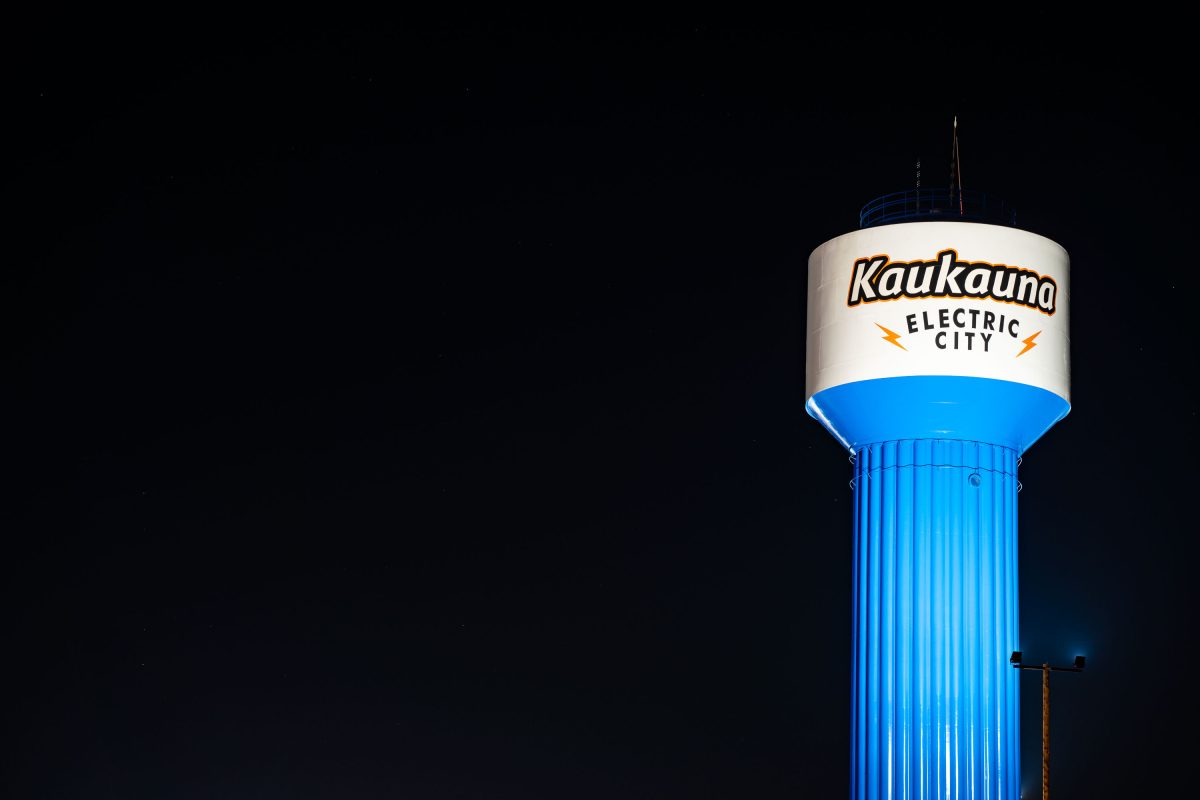
Water tower reading "Kaukauna Electric City" against a night sky in Kaukauna, Wisconsin.
Kaukauna, Wisconsin, operates its own municipal electric utility, one of roughly 80 publicly owned power systems in the state and a source of the city's "Electric City" nickname. That name appears on the municipal water tower, which stores water for the city's distribution system. Kaukauna's utility dates to the 1880s, when the city built hydroelectric facilities along the Fox River to supply power locally rather than relying on a private company. The Fox River through Kaukauna once carried more hydroelectric dams in close succession than almost any other stretch of river in the country, a legacy tied directly to the city's electric identity.

Kaukauna Municipal Water Tower, Wisconsin

Fans downtown after Bucks win NBA Championship
Milwaukee celebrated the Milwaukee Bucks' NBA Championship victory in 2021 with a parade through the city's downtown streets. This event marked the team's first championship since 1971, drawing large crowds to the Deer District and surrounding areas. The parade featured players and staff, including this vehicle adorned with the Bucks' logo, as they shared the championship with the city's fans.

Fan Celebrates Atop a Truck During the Bucks Championship Parade

Milwaukee bus NBA CHAMPS
A transit bus displays "NBA CHAMPS!" on its electronic sign, celebrating the Milwaukee Bucks' victory. The bus, part of the Milwaukee County Transit System, is seen at night in the Deer District, a neighborhood surrounding the Fiserv Forum. This championship marks the Bucks' first NBA title since 1971, concluding a significant season for the team and the city.

“NBA Champs!” on a Milwaukee Transit Bus in the Deer District

Fans jump in river after winning NBA Championship
A person jumps from a bridge into the Milwaukee River as crowds gather in the Deer District to celebrate the Milwaukee Bucks' NBA Championship win. This victory marked the team's first championship since 1971.

Fan Leaps Into Milwaukee River During Bucks Title Celebration

Milwaukee Bucks wins NBA Championship
Thousands gathered in Milwaukee's Deer District to celebrate the Milwaukee Bucks' NBA Championship victory in 2021. This marked the franchise's first championship since 1971, ending a 50-year drought. The Deer District, a mixed-use development adjacent to Fiserv Forum, serves as a central hub for sports and entertainment events, drawing large crowds for significant games and celebrations.

Crowds Outside The Mecca Sports Bar During Bucks Title Celebration

Fireworks explode over Fiserv Forum in Milwaukee, celebrating the Milwaukee Bucks' 2021 NBA Championship win. A large crowd gathers in the Deer District for the event.
Fireworks illuminate the night sky above Fiserv Forum in Milwaukee, celebrating the Milwaukee Bucks' NBA Championship victory in 2021. This win marked the franchise's first championship since 1971, ending a 50-year drought. The Fiserv Forum, which opened in 2018, serves as the home arena for the Bucks and is a central feature of the Deer District, a mixed-use development designed to revitalize the area surrounding the arena.

Crowd Watches Fireworks Over Fiserv Forum in the Deer District

Deer district after Bucks win NBA Championship
Milwaukee's Deer District, a vibrant entertainment and sports complex, pulsed with energy as fans gathered to celebrate the Milwaukee Bucks' NBA Championship victory in 2021. This win marked the franchise's first championship since 1971.

Crowds Outside Fiserv Forum After the Bucks’ 2021 NBA Title

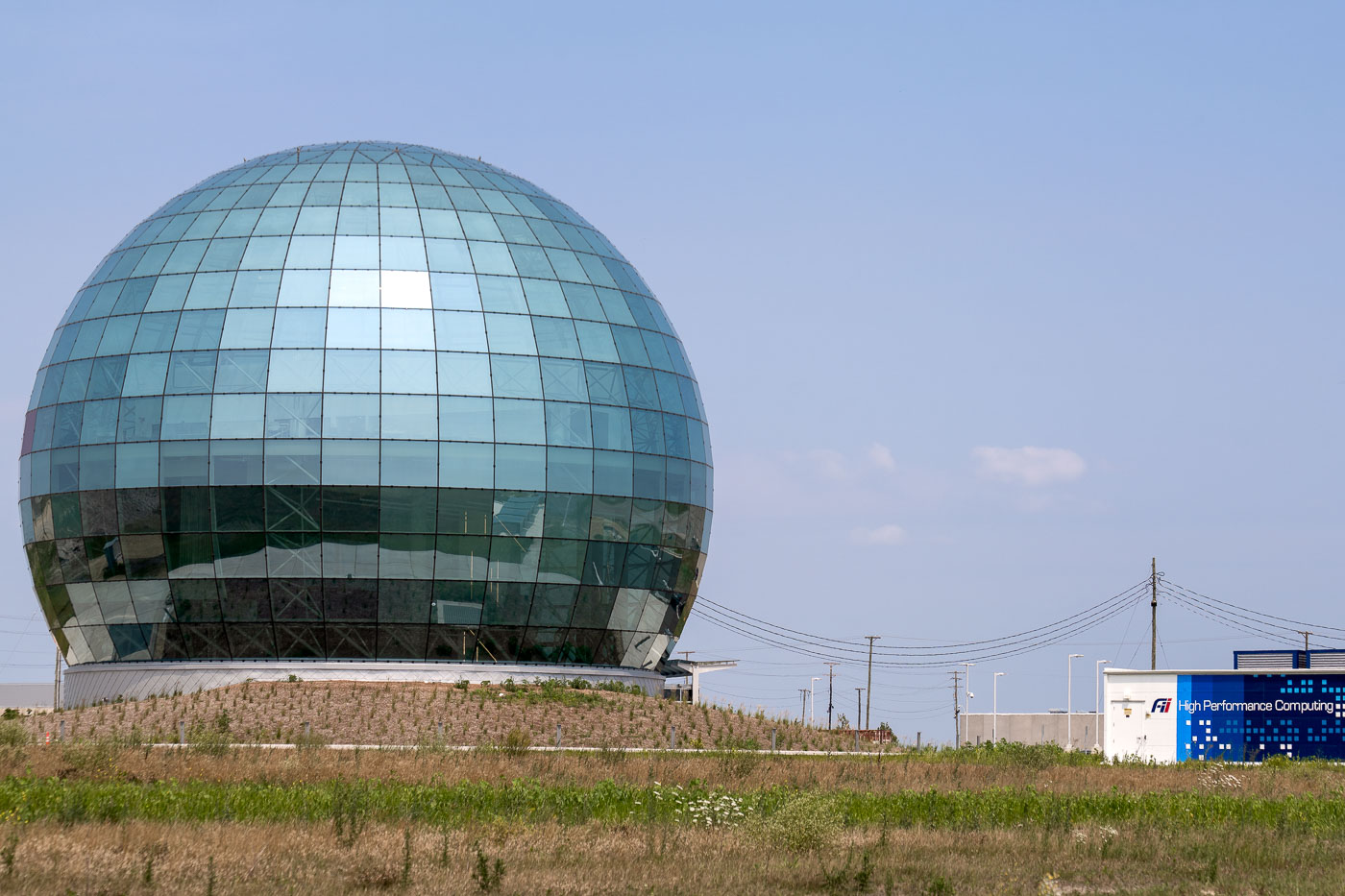
Foxconn's spherical glass data center with mirrored blue-green panels in Mount Pleasant, Wisconsin.
Foxconn's spherical building in Mount Pleasant, Wisconsin, opened in 2020 as part of the company's Wisconn Valley Science and Technology Park, a project announced in 2017 as a multibillion-dollar LCD manufacturing campus. Standing about 80 feet tall, the globe now functions as a data and network operations center rather than the factory space originally planned for the site. It sits along Wisconn Valley Way near Interstate 94, close to Foxconn's other buildings at the Mount Pleasant campus, including the company's electric vehicle assembly facility. The project marked one of the largest foreign direct investment announcements in Wisconsin history, though Foxconn later scaled back its original manufacturing plans for the location.

Foxconn’s Spherical Building Along Wisconn Valley Way

Foxconn Innovation Center in Mount Pleasant, Wisconsin, featuring modern architecture with glass dome data center and American
The low-rise building at the center of this entrance sits within Foxconn's Wisconn Valley campus in Mount Pleasant, operated by Foxconn Industrial Internet, or Fii. The company shifted its stated plans here from Gen 10.5 LCD panel manufacturing to a broader mix of research, electronics assembly, and light manufacturing after the original 2017 agreement with the state was renegotiated in 2021. The glass sphere nearby was built as a data center and multimedia showcase space rather than a manufacturing facility. Wisconn Valley Way, the campus's main access road, was constructed as part of the roughly $3 billion in state and local infrastructure commitments tied to the project.

Entrance to Foxconn’s Fii Building in Mount Pleasant
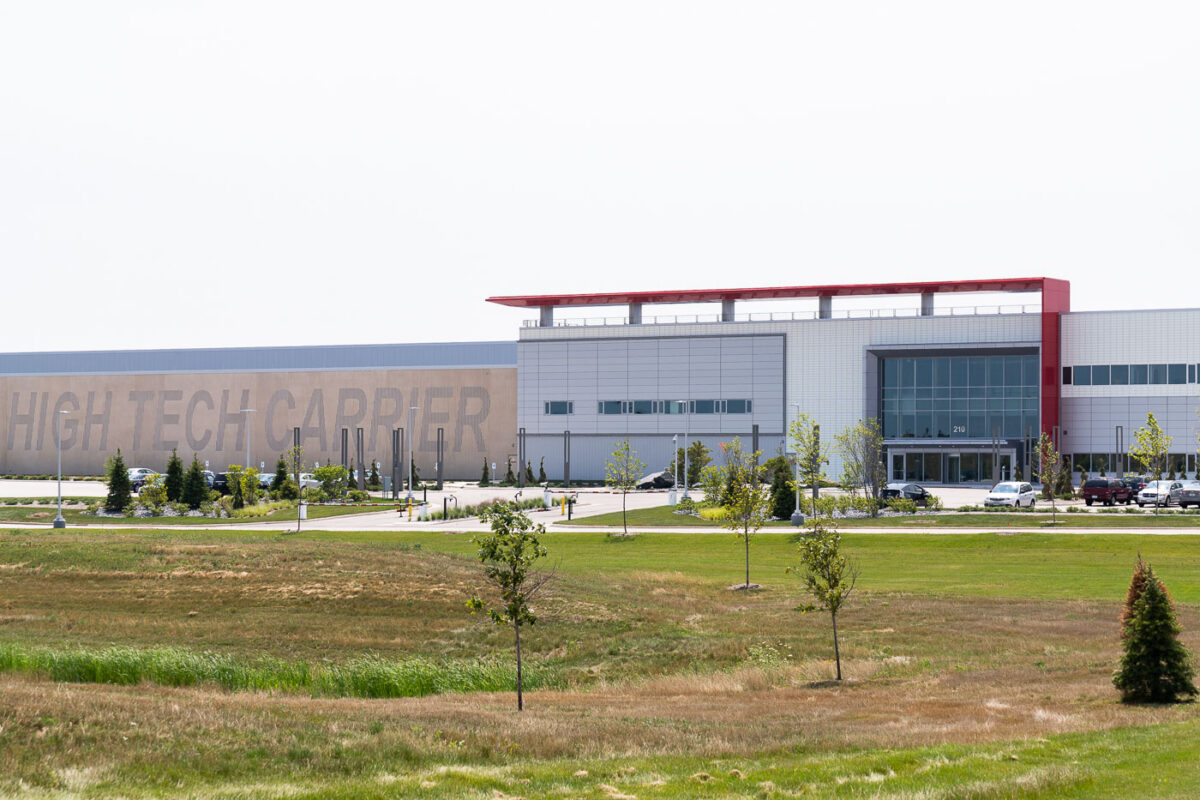
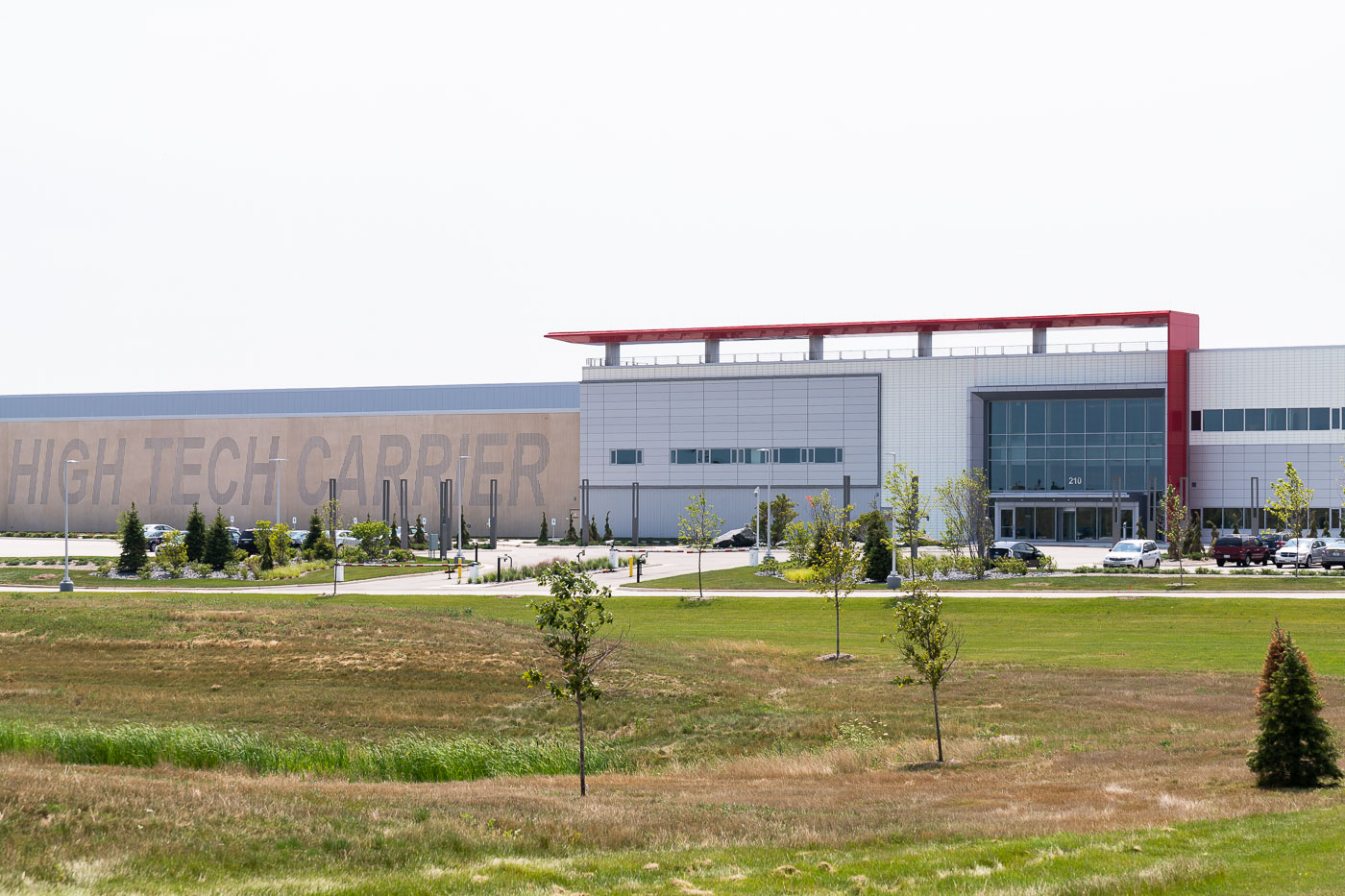
Foxconn High Tech Carrier facility in Mount Pleasant, Wisconsin, featuring modern industrial architecture with a red steel canopy.
The "High Tech Carrier" building is part of the Foxconn Industrial Internet complex in Mount Pleasant, Wisconsin, developed following the company's 2017 agreement with the state to build an LCD manufacturing campus. Foxconn later scaled back those plans, shifting its stated focus toward smaller electronics and server assembly rather than large-scale display production. The surrounding Wisconn Valley Science and Technology Park was designed to house multiple Foxconn-affiliated buildings along I-94 near Racine County.

“High Tech Carrier” Building at Foxconn’s Mount Pleasant Campus

Foxconn directional sign at Gate 2 entrance, Mount Pleasant, Wisconsin facility.
Foxconn Technology Group broke ground on this Mount Pleasant site in 2018 after signing a 2017 agreement with the state of Wisconsin that pledged a $10 billion investment and promised up to 13,000 jobs. The project sits within the Wisconn Valley Science and Technology Park, a roughly 3,000-acre development the state assembled through eminent domain and tax incentives. Foxconn originally proposed a Generation 10.5 LCD fabrication plant, a scale of manufacturing it had previously built only in China, but repeatedly revised the plans downward over subsequent years. The campus now includes smaller assembly and data operations rather than the large-panel display plant first announced, and employment has remained well below initial projections.

Gate 2 Entrance Sign at Foxconn’s Mount Pleasant Campus
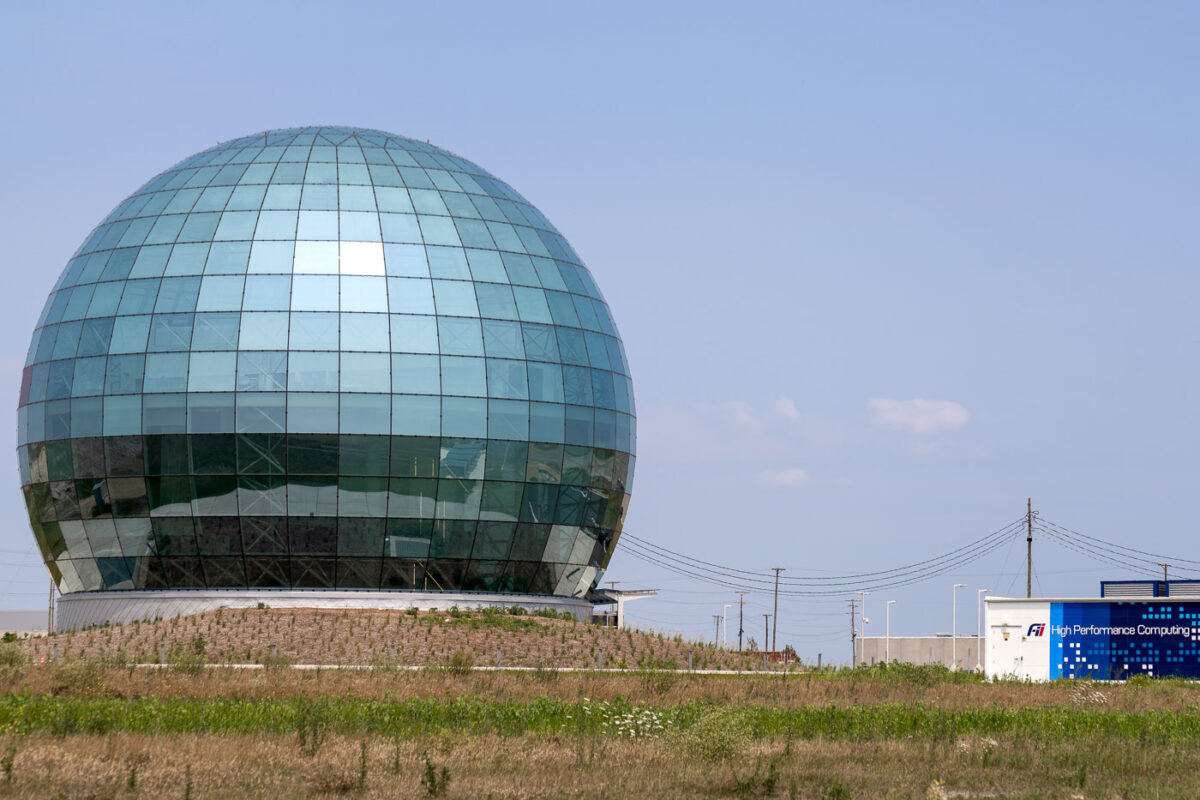
Spherical glass dome structure at Foxconn facility in Mount Pleasant, Wisconsin.
The glass sphere sits at the center of Foxconn Industrial Internet's campus along Braun Road in Mount Pleasant, part of the Wisconn Valley Science and Technology Park. Foxconn built the orb-shaped structure around 2019 as the architectural centerpiece and entrance to its planned Gen 10.5 LCD fabrication campus, a project originally announced in 2017 with state and local incentives exceeding $3 billion. That manufacturing plan was later abandoned, and Foxconn Industrial Internet (FII) repurposed the surrounding buildings for data center and high-performance computing operations instead. The company has used the globe building for administrative offices and as a showcase space rather than for the large-scale electronics manufacturing it was first designed to support.

The Glass Sphere at Foxconn’s Wisconn Valley Science and Technology Park
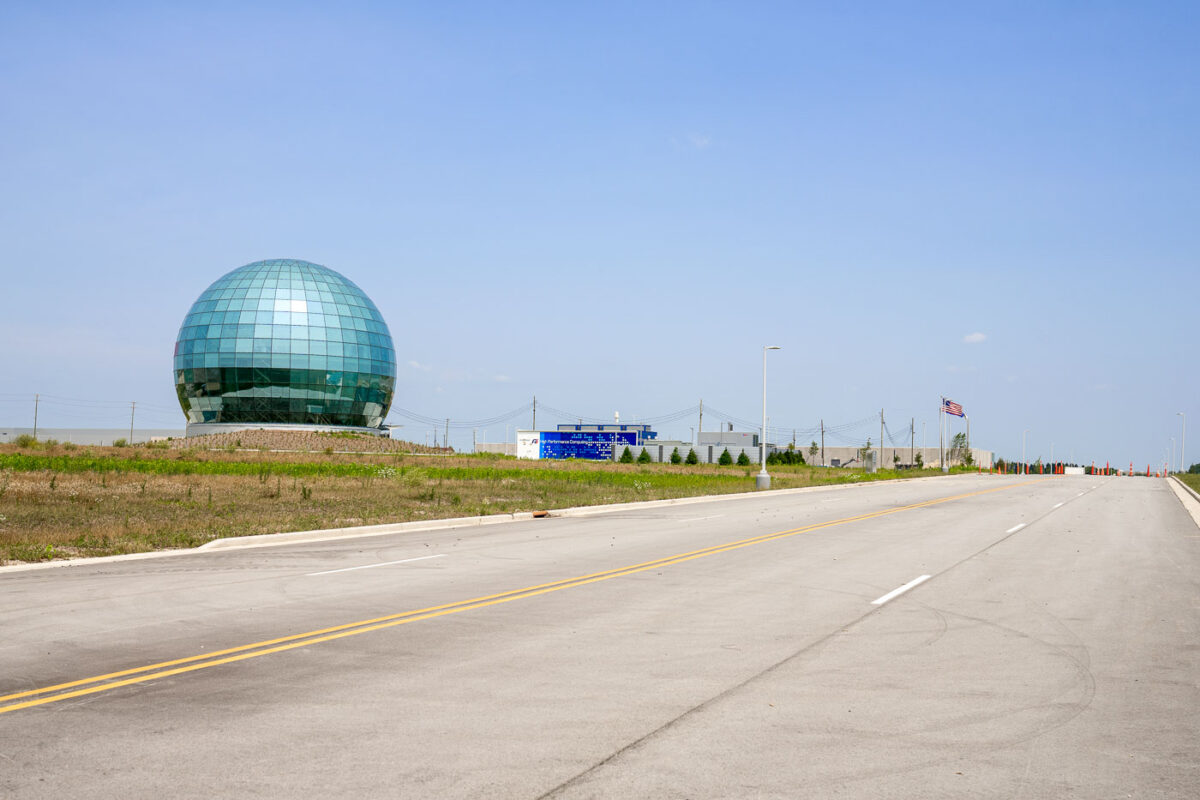
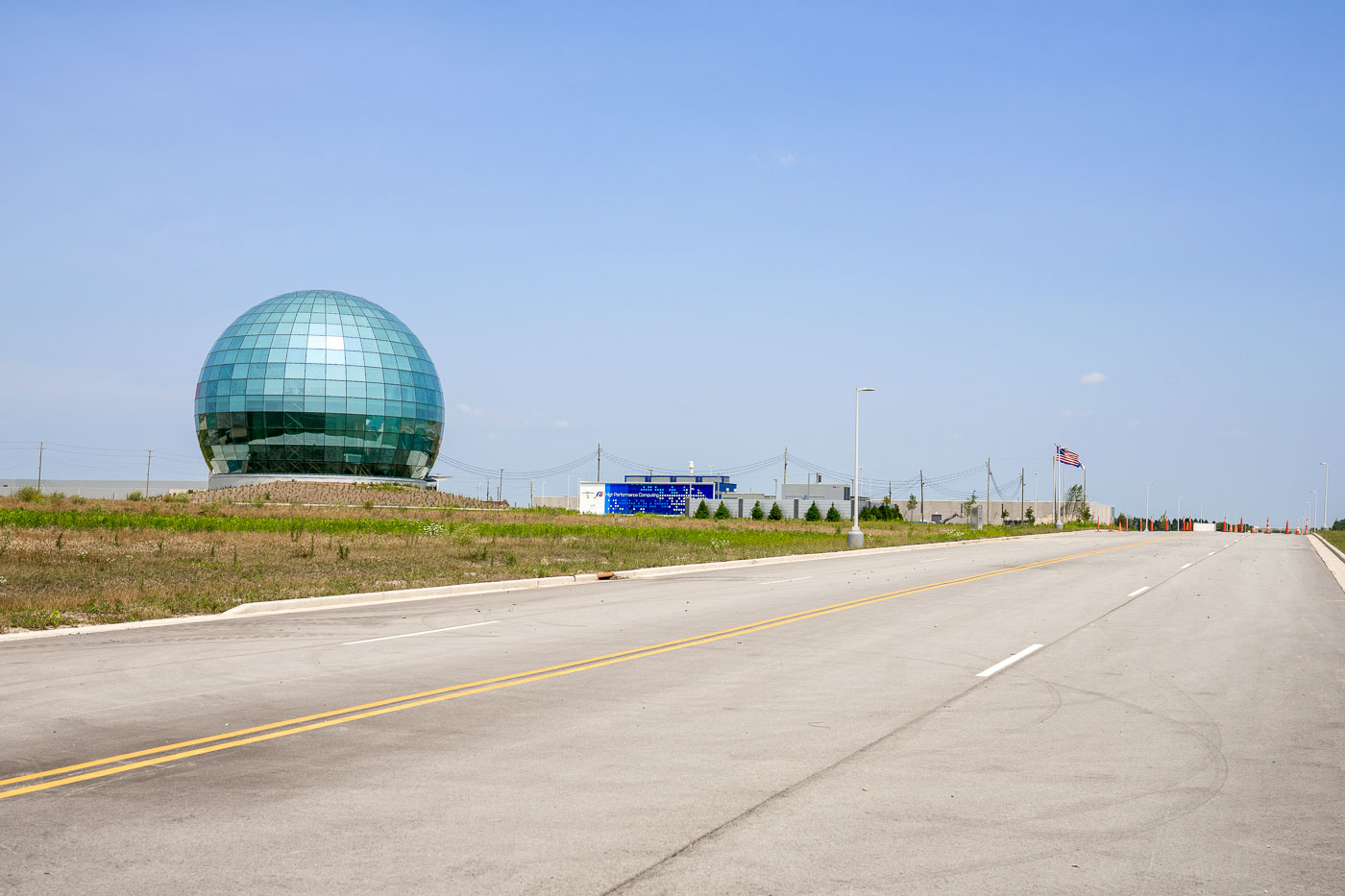
The Foxconn mirrored-glass globe facility on Wisconn Valley Way in Mount Pleasant, Wisconsin.
The mirrored-glass sphere sits along Wisconn Valley Way, a road built to serve the Foxconn Technology Group development in Mount Pleasant. Foxconn and the state of Wisconsin struck a deal in 2017 for a manufacturing campus originally billed as a Gen 10.5 LCD panel plant, a project that carried more than $3 billion in state and local incentives. The plan was scaled back repeatedly in the years that followed, and the site has since housed smaller-scale assembly and data operations rather than the large LCD fabrication facility first announced.

Mirrored Globe Along Wisconn Valley Way in Mount Pleasant
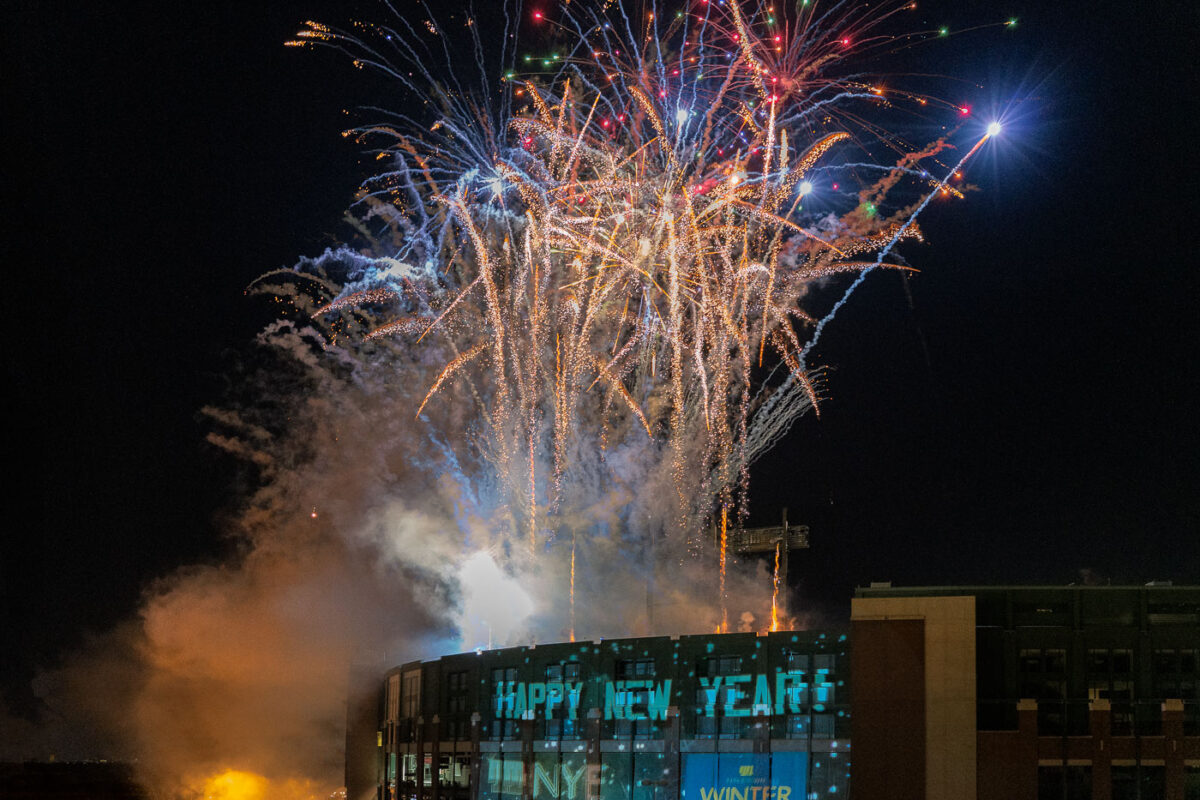
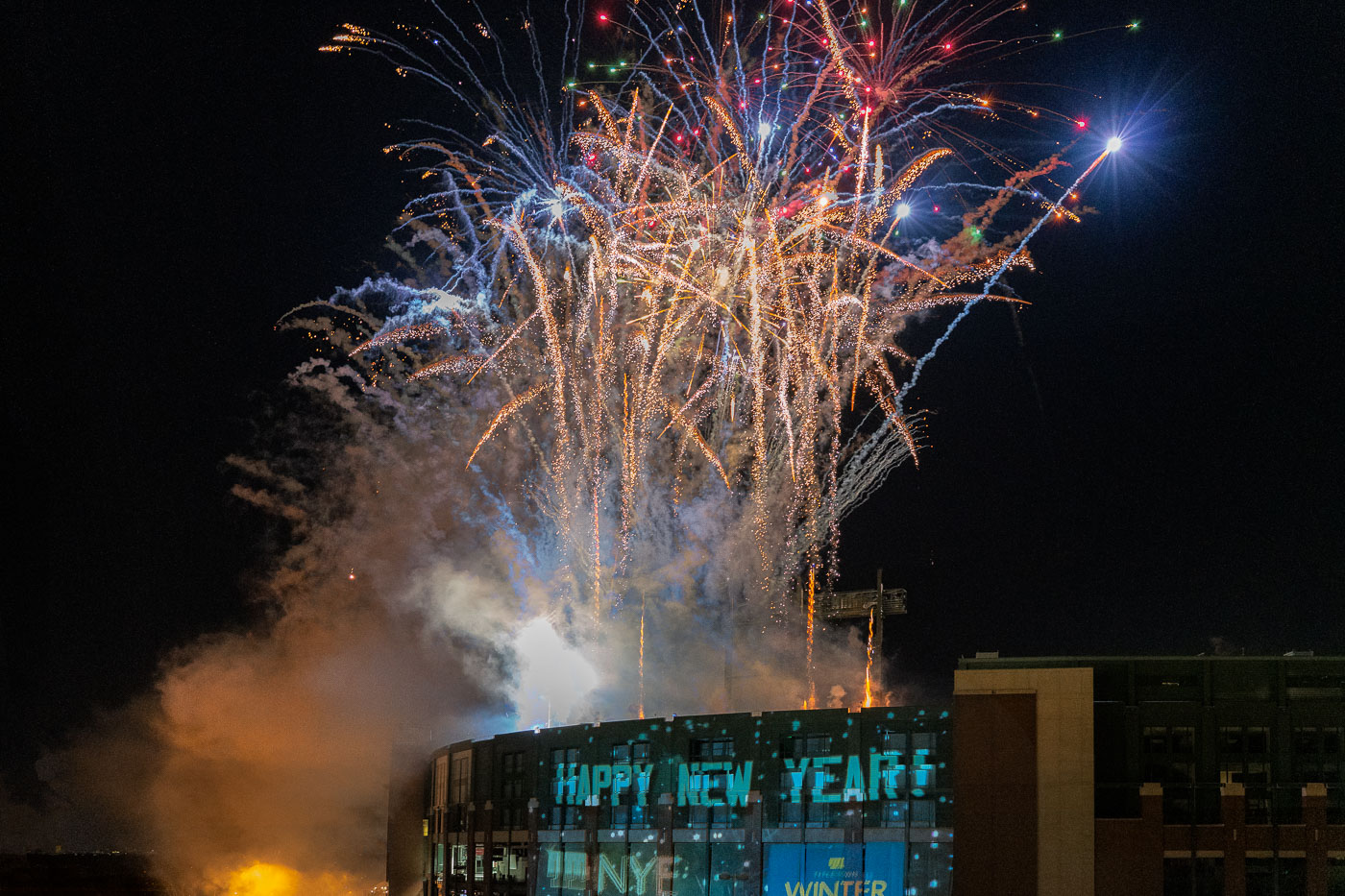
Fireworks explode over Lambeau Field in Ashwaubenon, Wisconsin, during a New Year's Eve celebration.
Fireworks illuminate the night sky above Lambeau Field in Ashwaubenon, Wisconsin, during a New Year's Eve celebration. The stadium, home to the NFL's Green Bay Packers, displayed "HAPPY NEW YEAR" and "WINTER" on its facade. This event marks a public tradition of ushering in the new year with pyrotechnics.

New Years Eve Fireworks at Lambeau Field

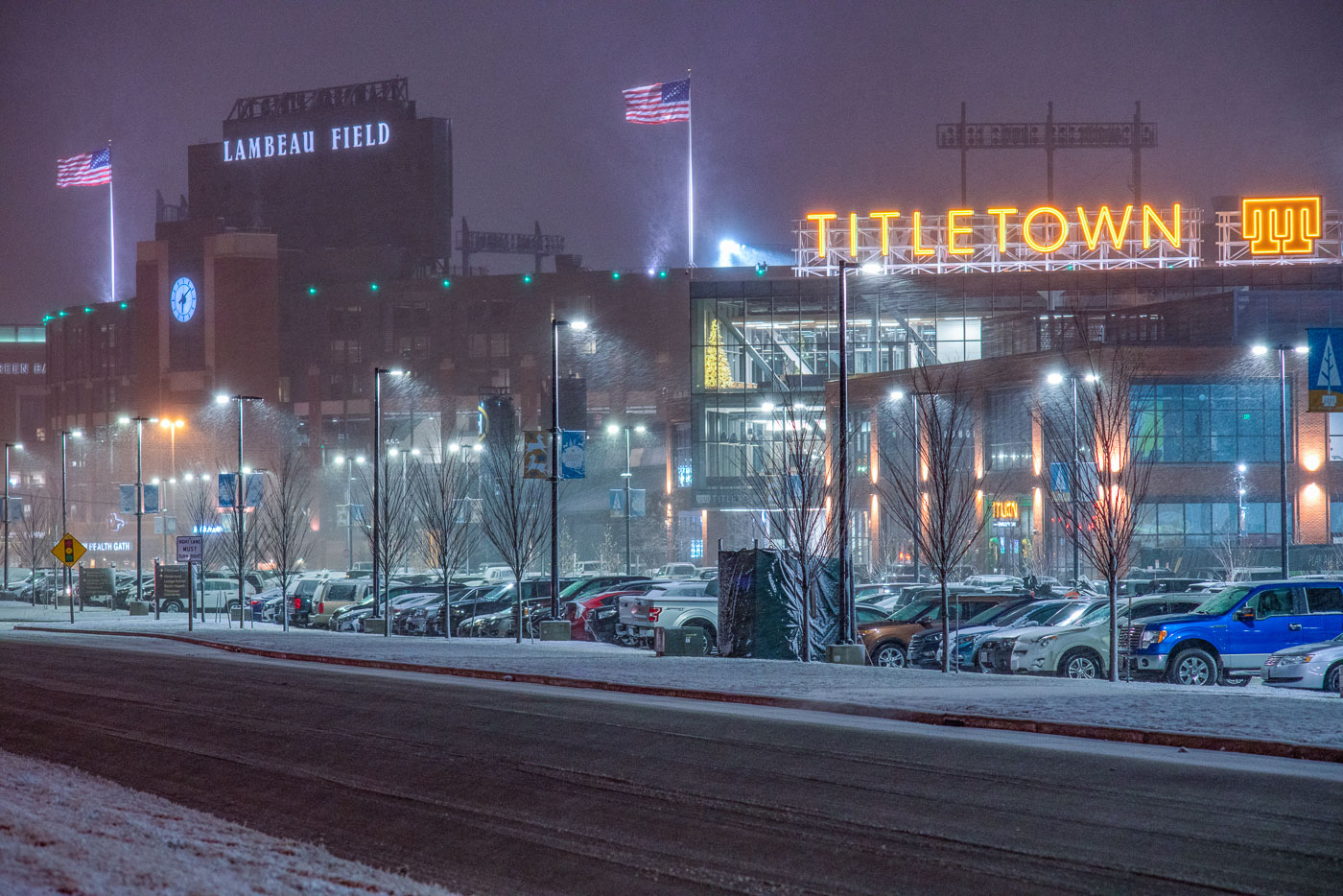
Lambeau Field and Titletown District in Green Bay, Wisconsin, during a snowstorm.
Lambeau Field and the Titletown District in Green Bay, Wisconsin, are seen during a snowstorm. The stadium, home to the Green Bay Packers, is illuminated by its iconic signage, while the surrounding Titletown entertainment district also displays its neon lights. The scene captures the urban environment and infrastructure of the area under winter weather conditions.

Lambeau Field and Titletown District in Snowstorm
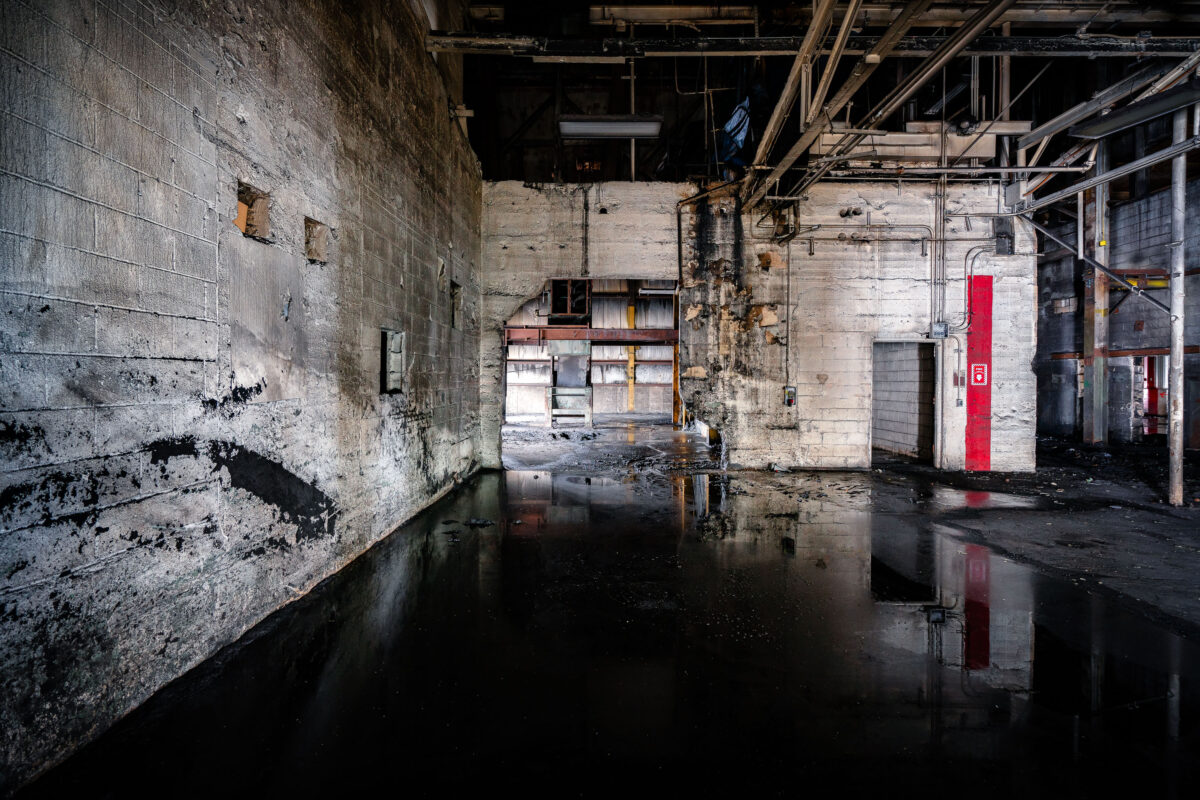
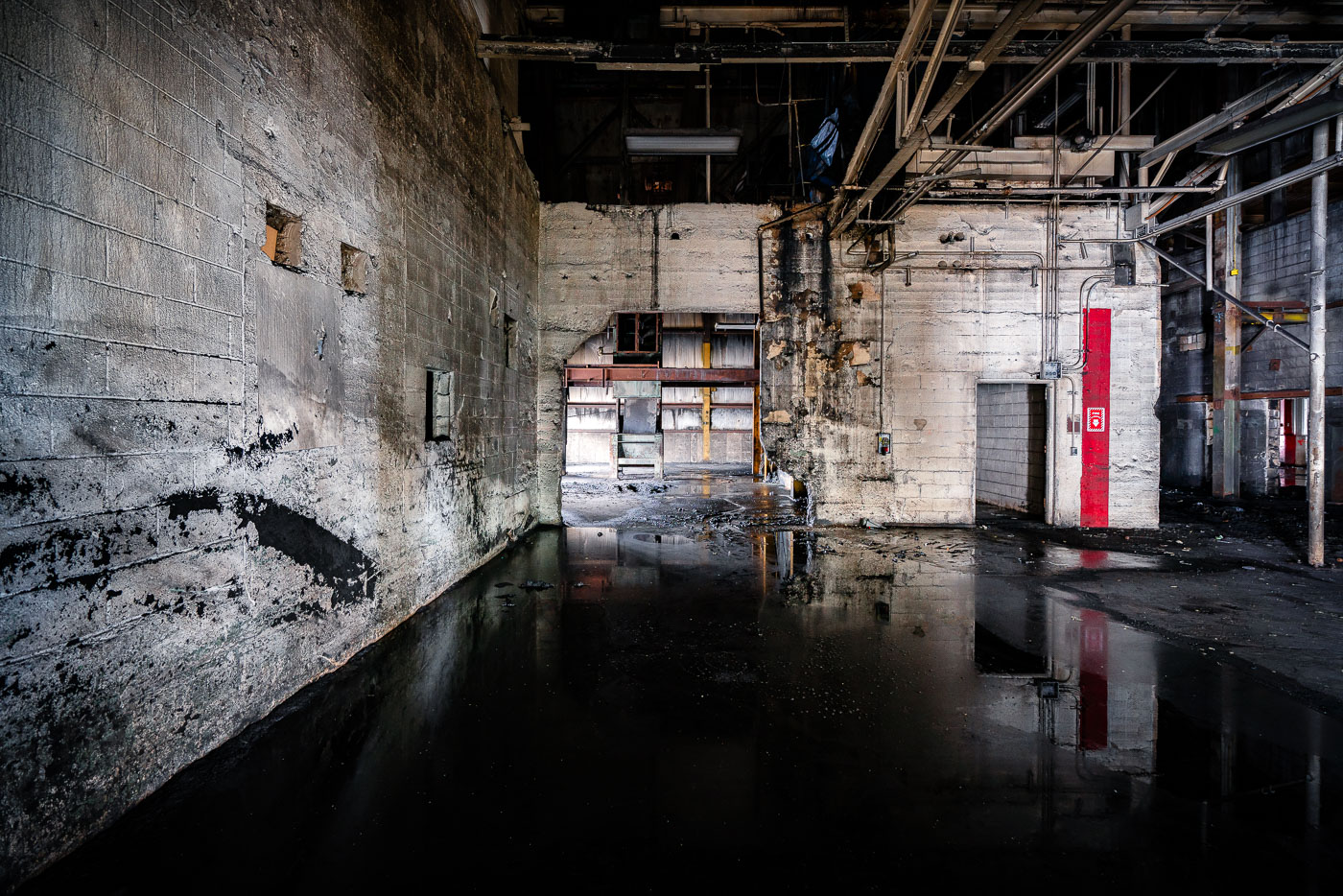
Brillion Iron Works foundry interior in Brillion, Wisconsin, with water on the floor.
Brillion Iron Works foundry in Brillion, Wisconsin. The iron foundry closed in 2016 and was demolished in 2019.

Brillion Iron Works foundry interior, Wisconsin
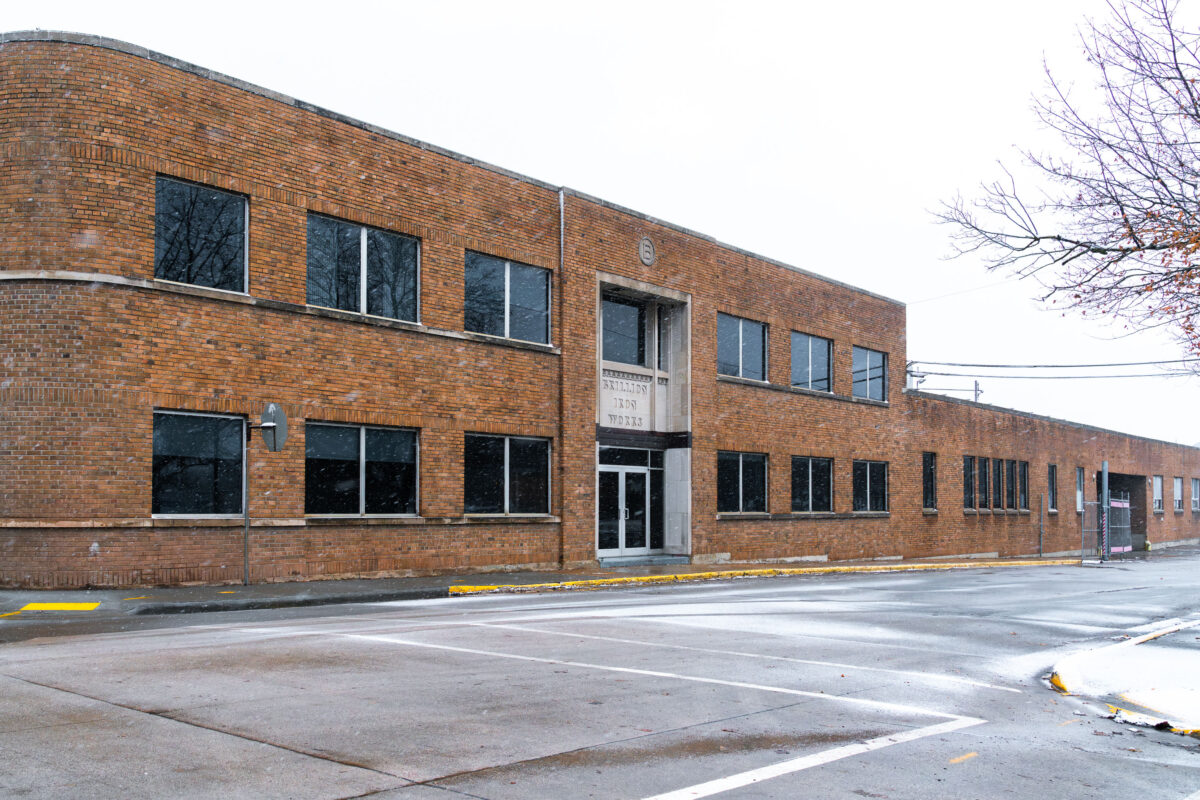
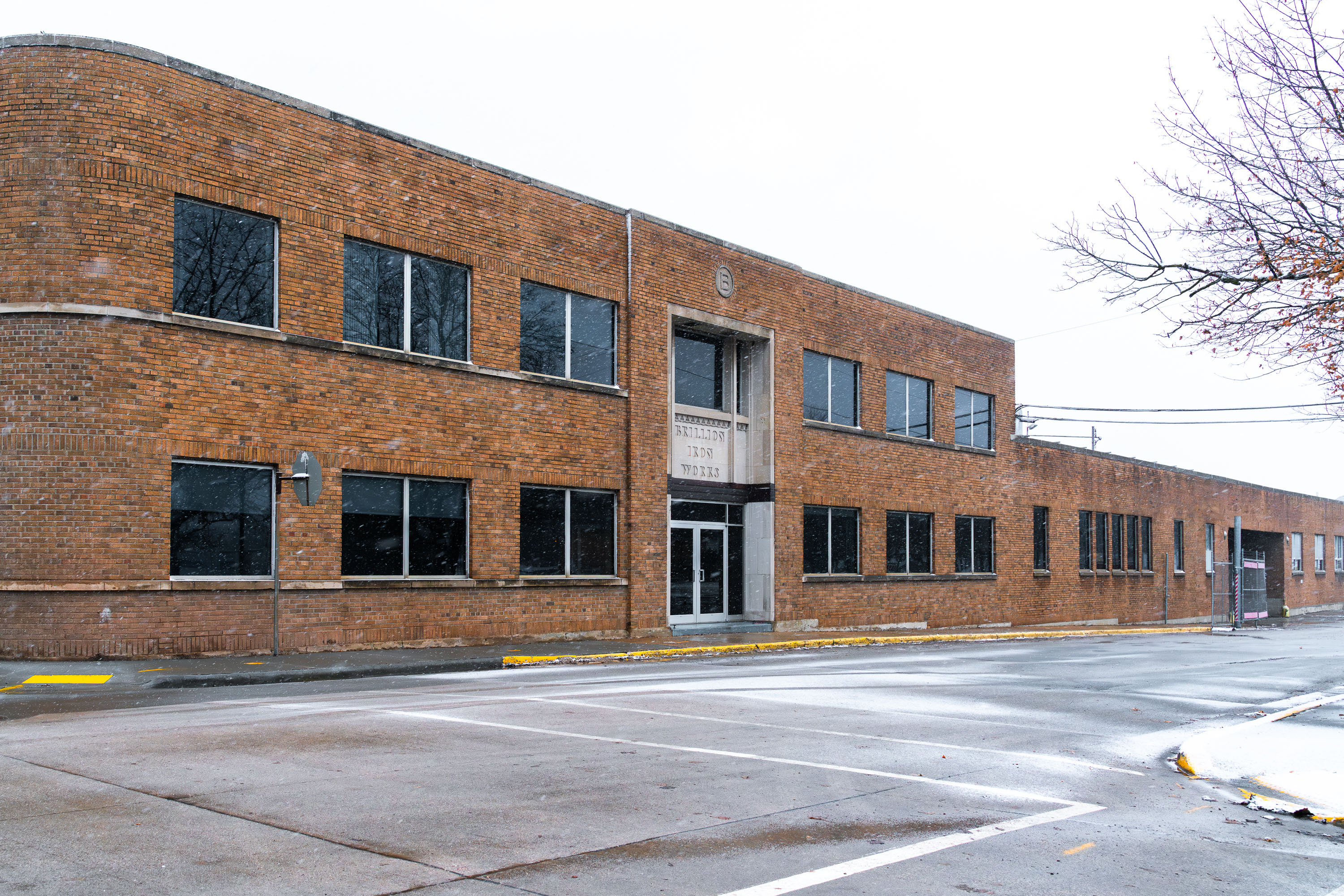
Brick foundry building with white entrance doors and rows of windows in Brillion, Wisconsin.
Brillion Iron Works operated as a gray-iron foundry in Brillion, Wisconsin, casting parts for agricultural and heavy machinery manufacturers for much of the 20th century. The plant was one of the town's largest employers before it closed in 2016. The building was later razed, ending nearly a century of use on the site.

Brillion Iron Works Foundry, Brillion, Wisconsin
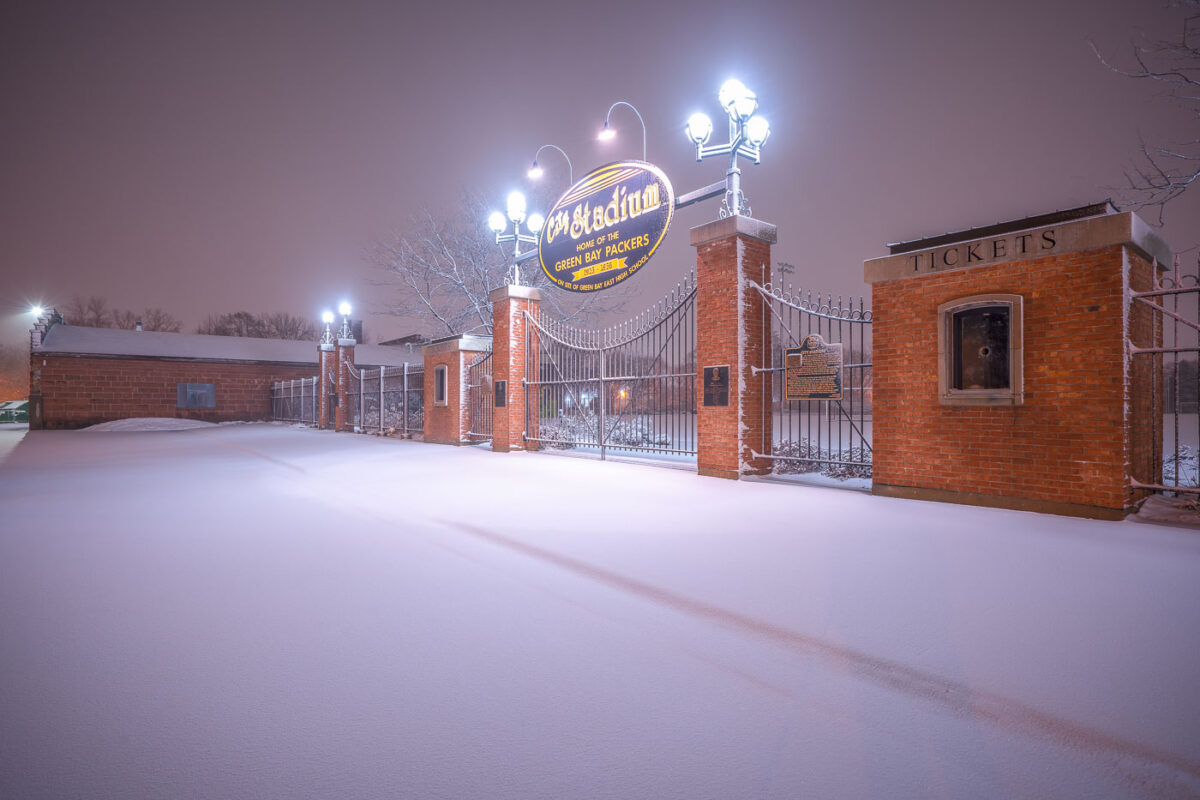
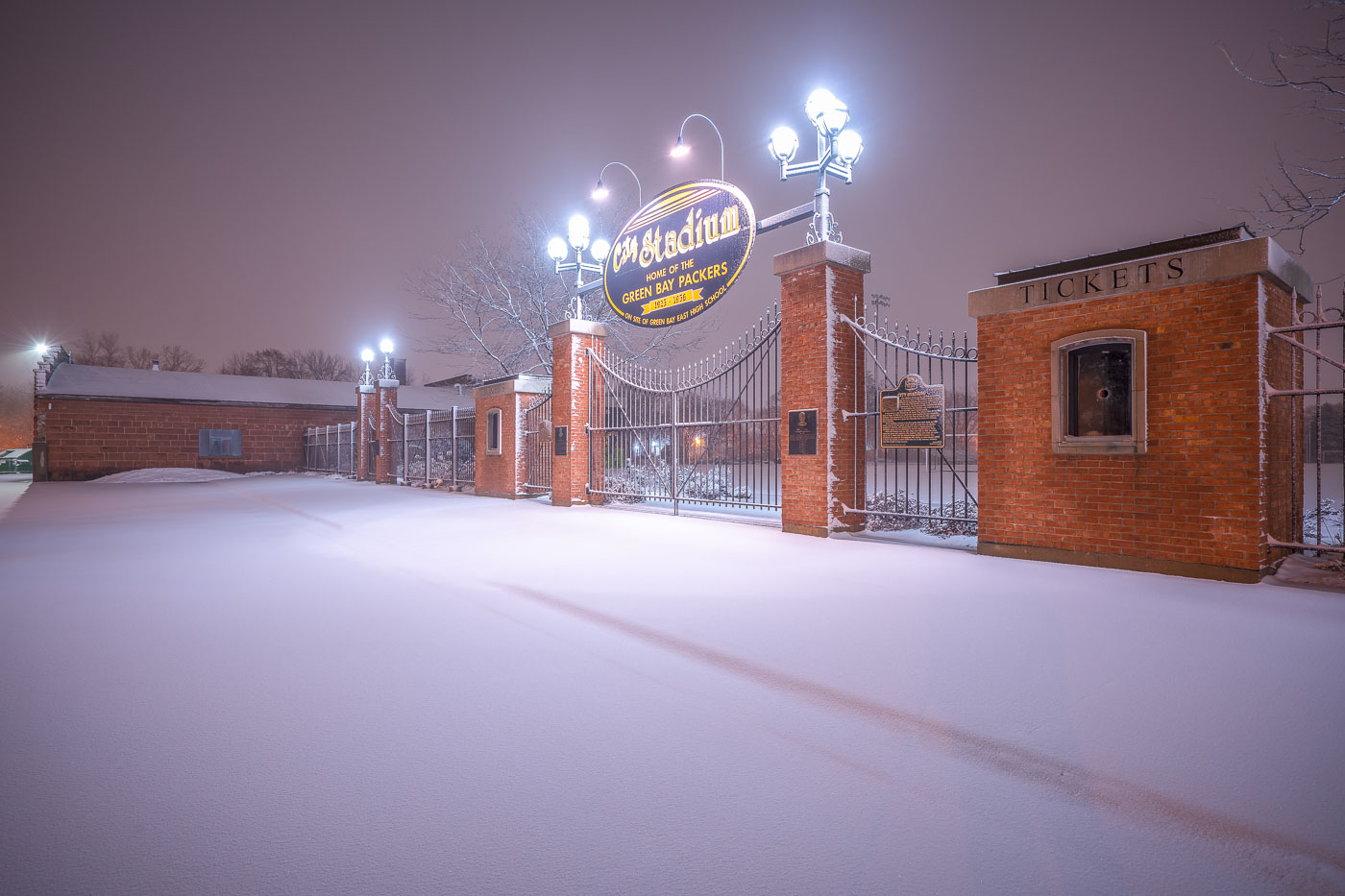
City Stadium entrance gates in Green Bay, Wisconsin, in winter, former home of the Green Bay Packers 1925-1956.
The entrance gates to City Stadium in Green Bay, Wisconsin, are pictured here in winter. This stadium served as the home field for the Green Bay Packers, an NFL team, from 1925 to 1956. The site of City Stadium is now occupied by Green Bay East High School. The stadium was a significant venue for professional football during its operational years, hosting numerous games that contributed to the Packers' early history and legacy.

City Stadium Entrance, Green Bay Packers Home 1925-1956
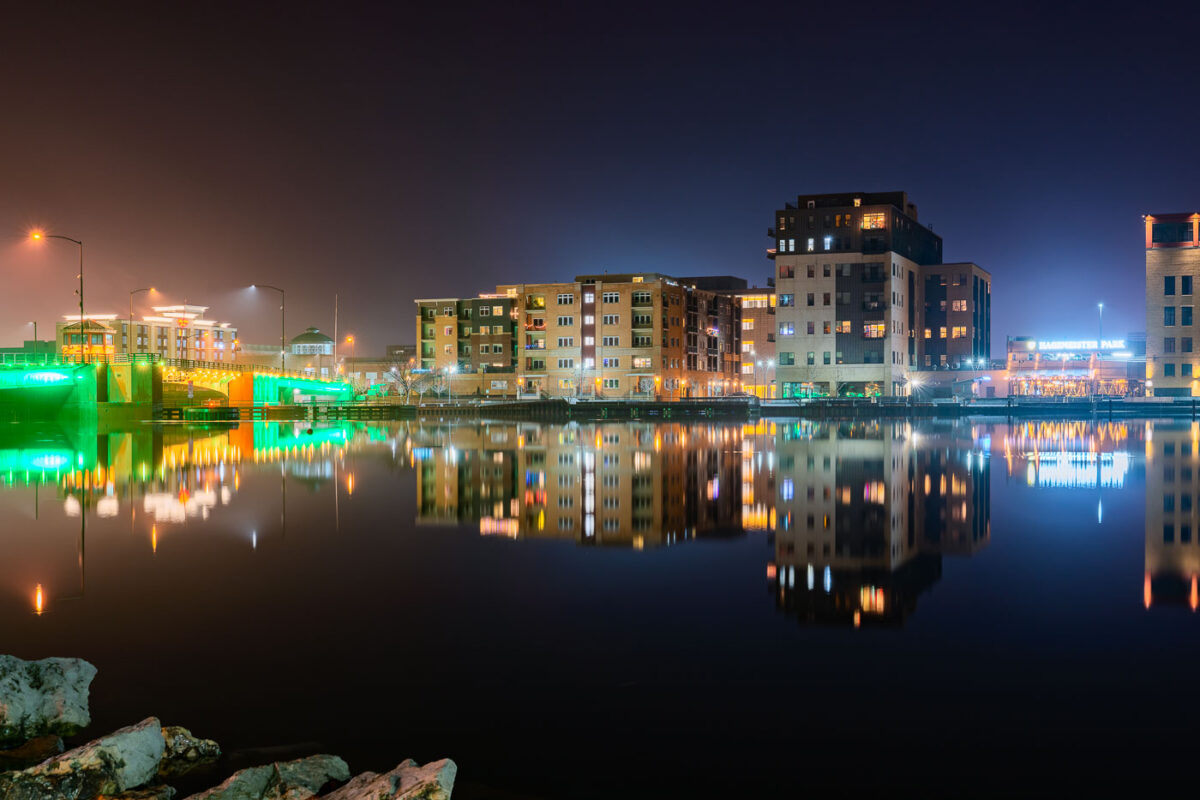
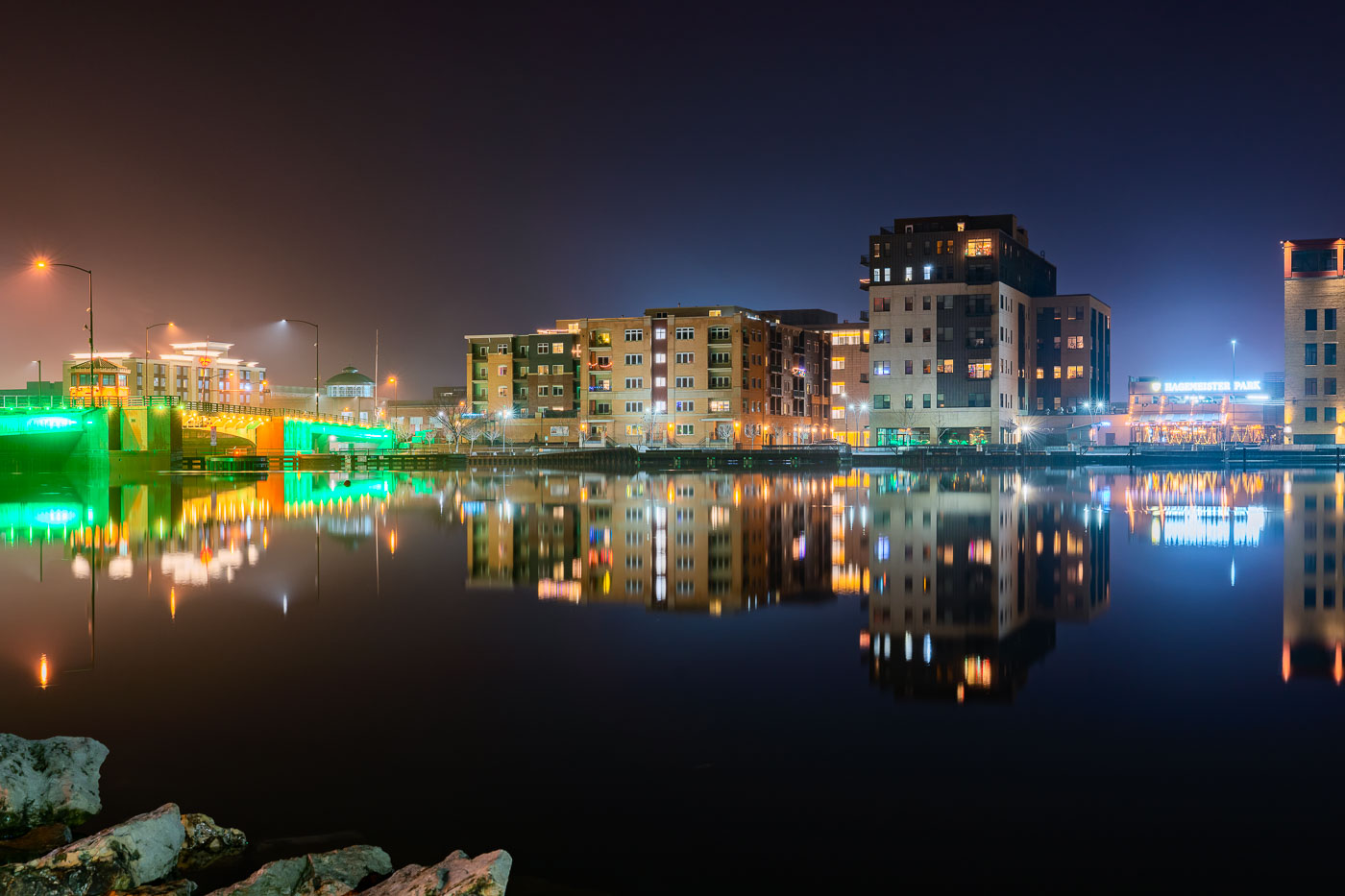
Illuminated downtown Green Bay buildings mirrored in still Fox River waters at night.
The Fox River separates downtown Green Bay from the city's east side before emptying into the bay of Green Bay on Lake Michigan a few miles north. The Main Street Bridge, a lift span built in 1931, carries traffic across the river here and connects the downtown core to neighborhoods on the opposite bank. Hagemeister Park, a mixed-use riverfront development along the east shore, takes its name from the former Hagemeister Brewing Company, which operated on the site for much of the 20th century. The apartment and condominium buildings along the west bank were built as part of downtown Green Bay's riverfront redevelopment in the 2000s and 2010s.

Main Street Bridge and Fox River Skyline, Green Bay

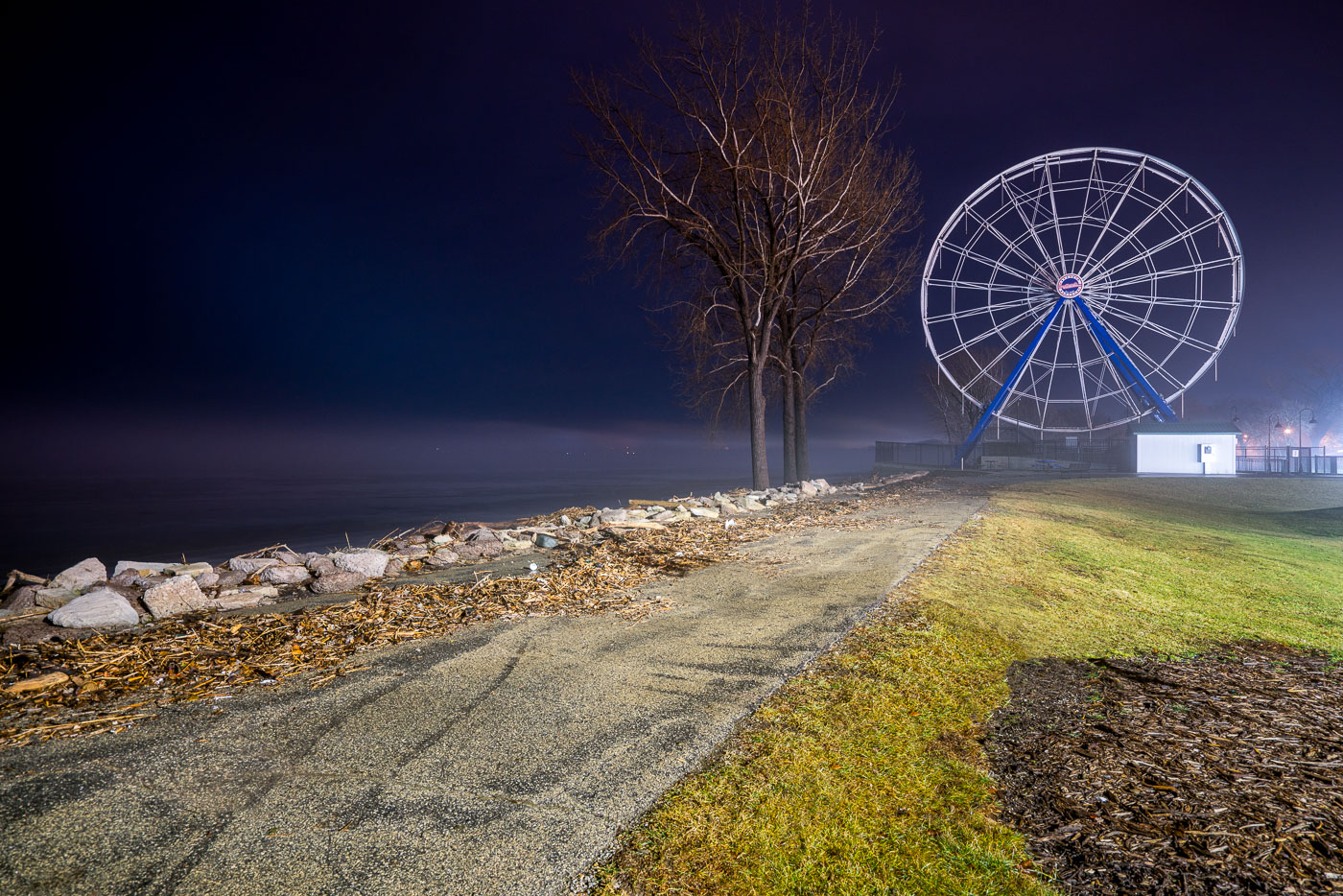
Illuminated Ferris wheel at Bay Beach Amusement Park in Green Bay, Wisconsin, at night with fog nearby.
Bay Beach Amusement Park sits along the shore of Green Bay in Green Bay, Wisconsin, and has operated since 1892, making it one of the oldest amusement parks in the country. The City of Green Bay's Parks, Recreation and Forestry Department runs the park, which charges no general admission — visitors instead buy tickets for individual rides, a model the park has used for more than a century. Its ferris wheel is one of more than 30 rides on the grounds, most added during expansions in the 1990s and 2000s. The park sits adjacent to Bay Beach Wildlife Sanctuary, a separate city-run nature preserve along the same shoreline.

Ferris Wheel, Bay Beach Amusement Park, Green Bay

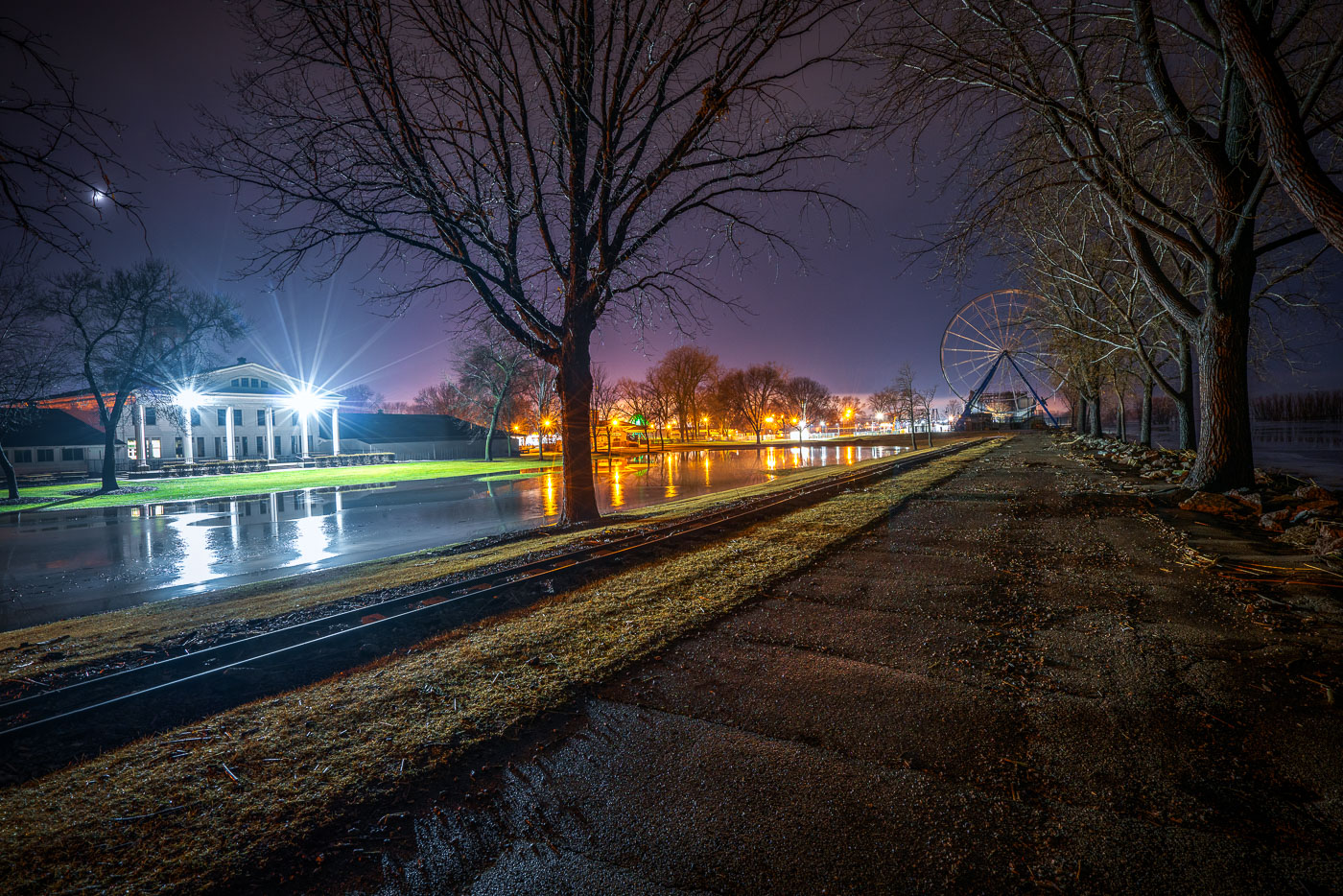
Bay Beach Amusement Park's illuminated main building and ferris wheel at dusk with frozen water in foreground, Green Bay
Bay Beach Amusement Park sits along the shoreline of Green Bay on Green Bay, Wisconsin's east side, at the mouth of the Fox River. The city has operated the park since 1892, and it remains one of the few municipally run amusement parks in the country, offering free admission with tickets sold per ride. The park's pavilion building, dating to the 1940s, hosts community gatherings and overlooks the water's edge. Its Ferris wheel is one of more than two dozen rides on the grounds, which draw upward of a million visitors each year.

Flooded Grounds at Bay Beach Amusement Park, Green Bay

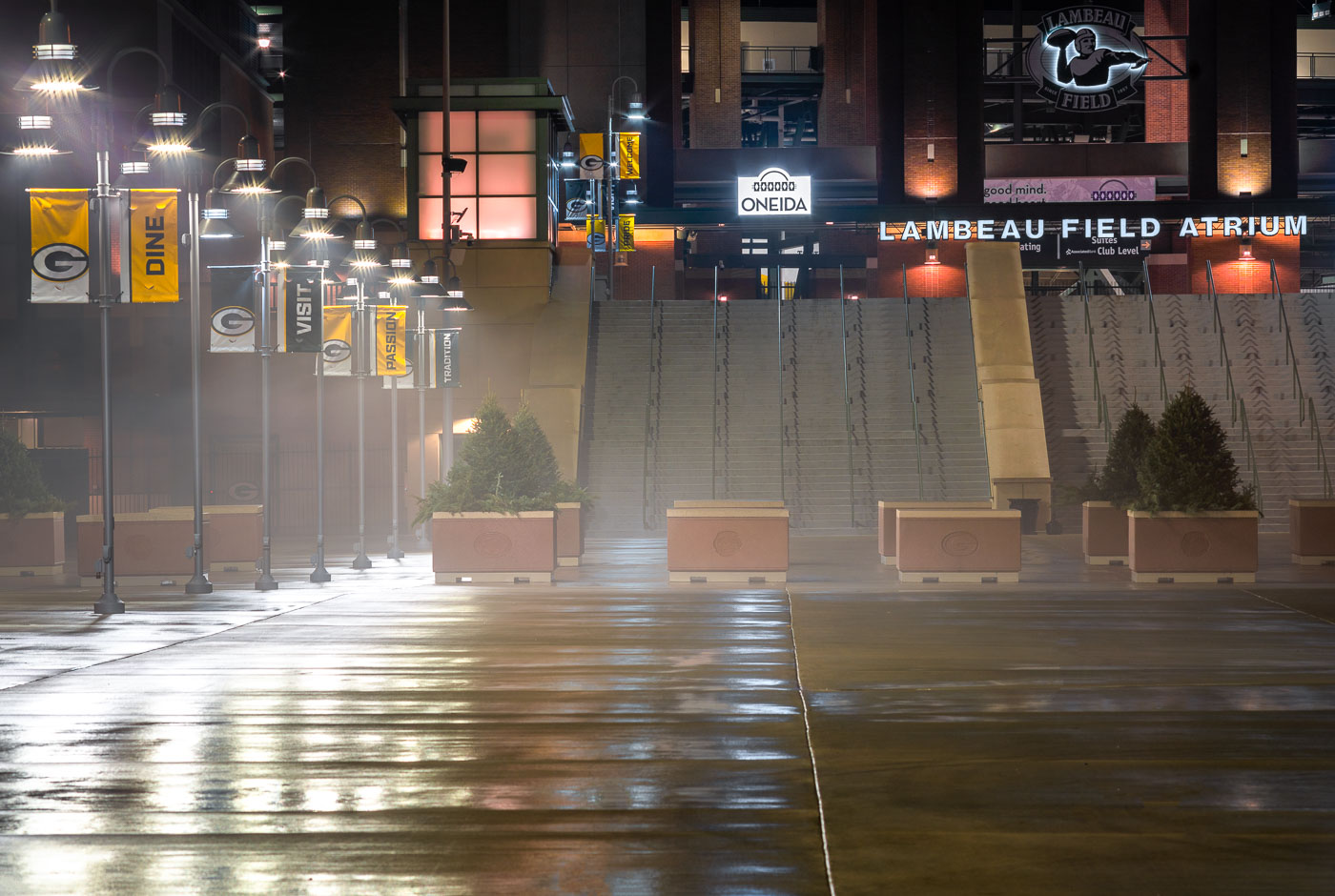
The Oneida Nation entrance at Lambeau Field Atrium in Green Bay, Wisconsin, at night.
The Oneida Nation entrance at Lambeau Field Atrium in Green Bay, Wisconsin, is a prominent feature connecting fans to the historic stadium. The atrium serves as a year-round destination, housing amenities and offering access to premium seating and event spaces. This entrance highlights the long-standing partnership between the Oneida Nation, a federally recognized Native American tribe, and the Green Bay Packers.

Oneida Nation Entrance, Lambeau Field Atrium
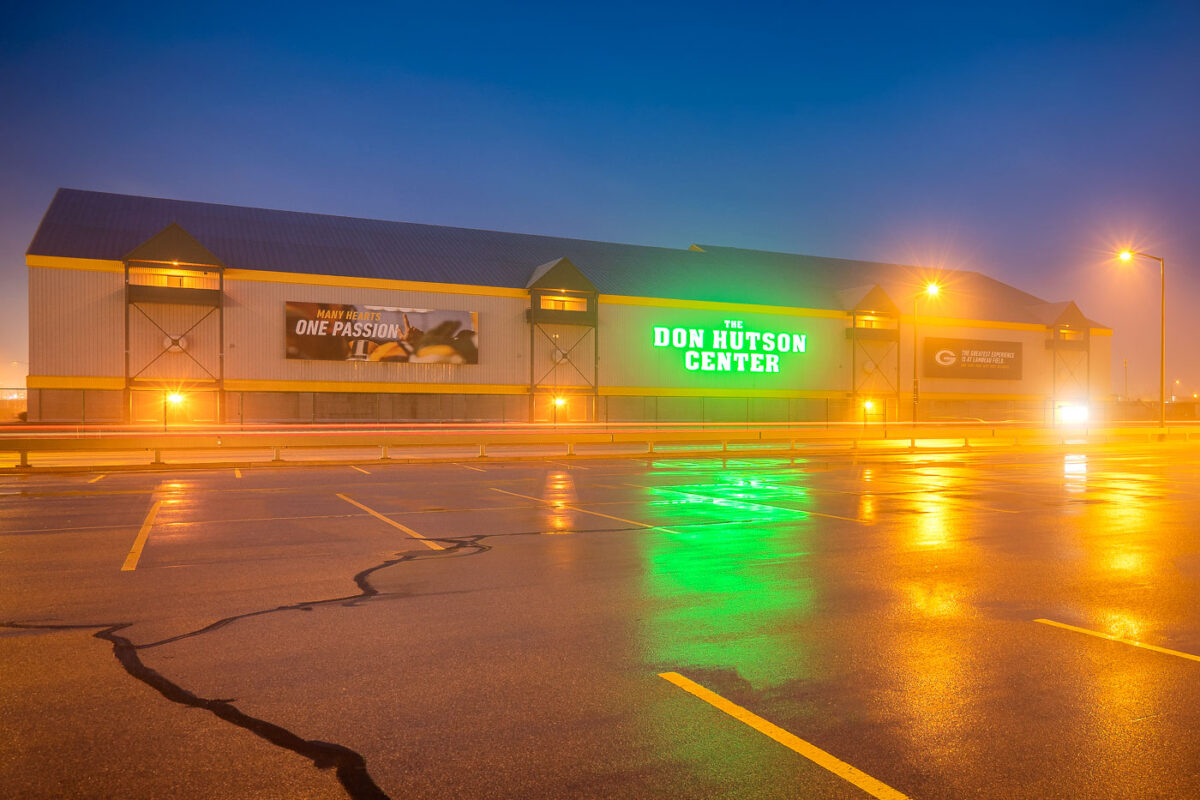
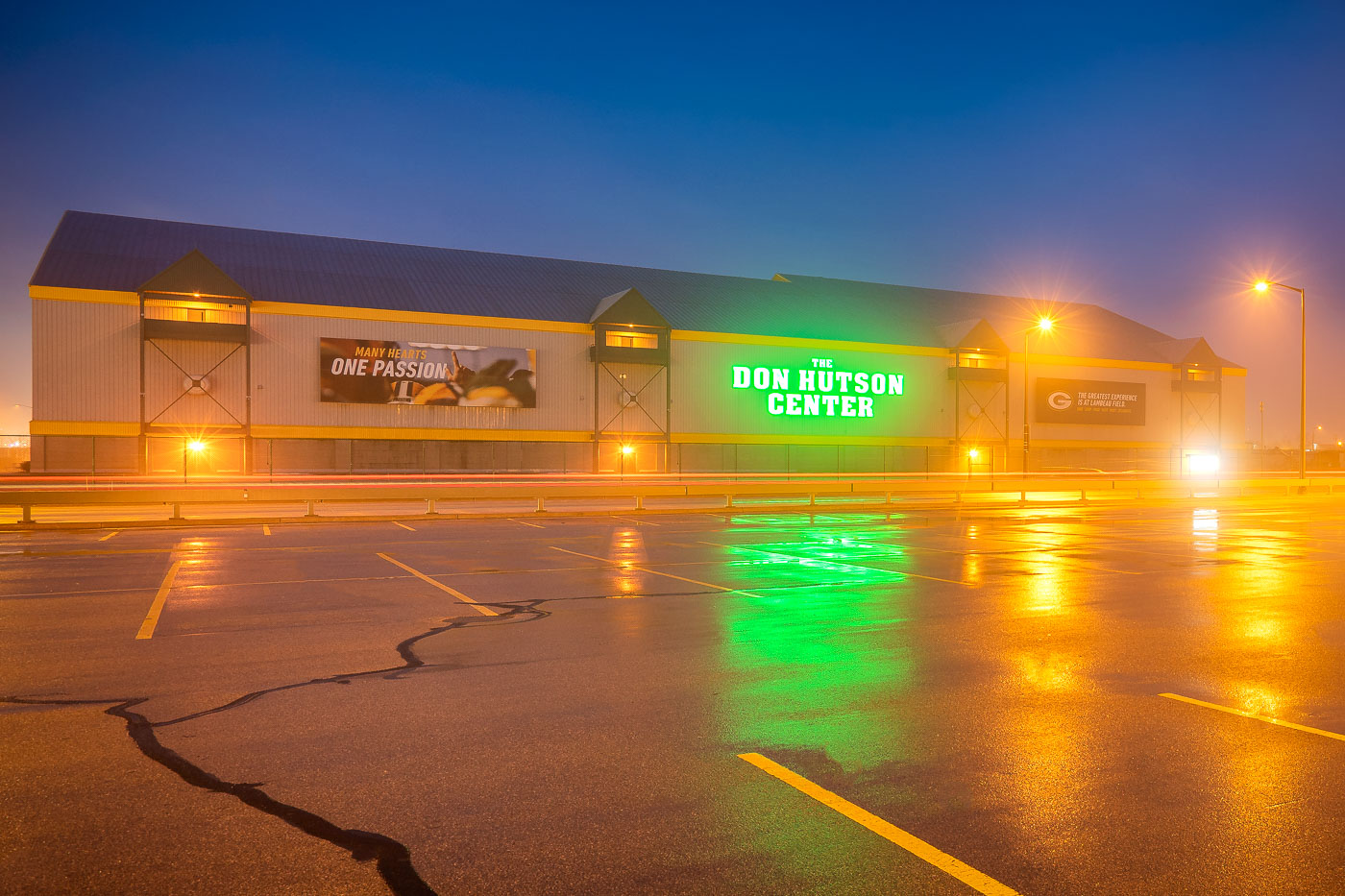
The Don Hutson Center in Green Bay, Wisconsin, at dusk.
The Don Hutson Center in Green Bay, Wisconsin, is the indoor practice facility for the Green Bay Packers. Constructed in 2003 and named after Hall of Fame receiver Don Hutson, it is located adjacent to Lambeau Field. The facility provides a climate-controlled environment for team training and practice sessions, ensuring operations can continue regardless of weather conditions.

Don Hutson Center, Green Bay, WI

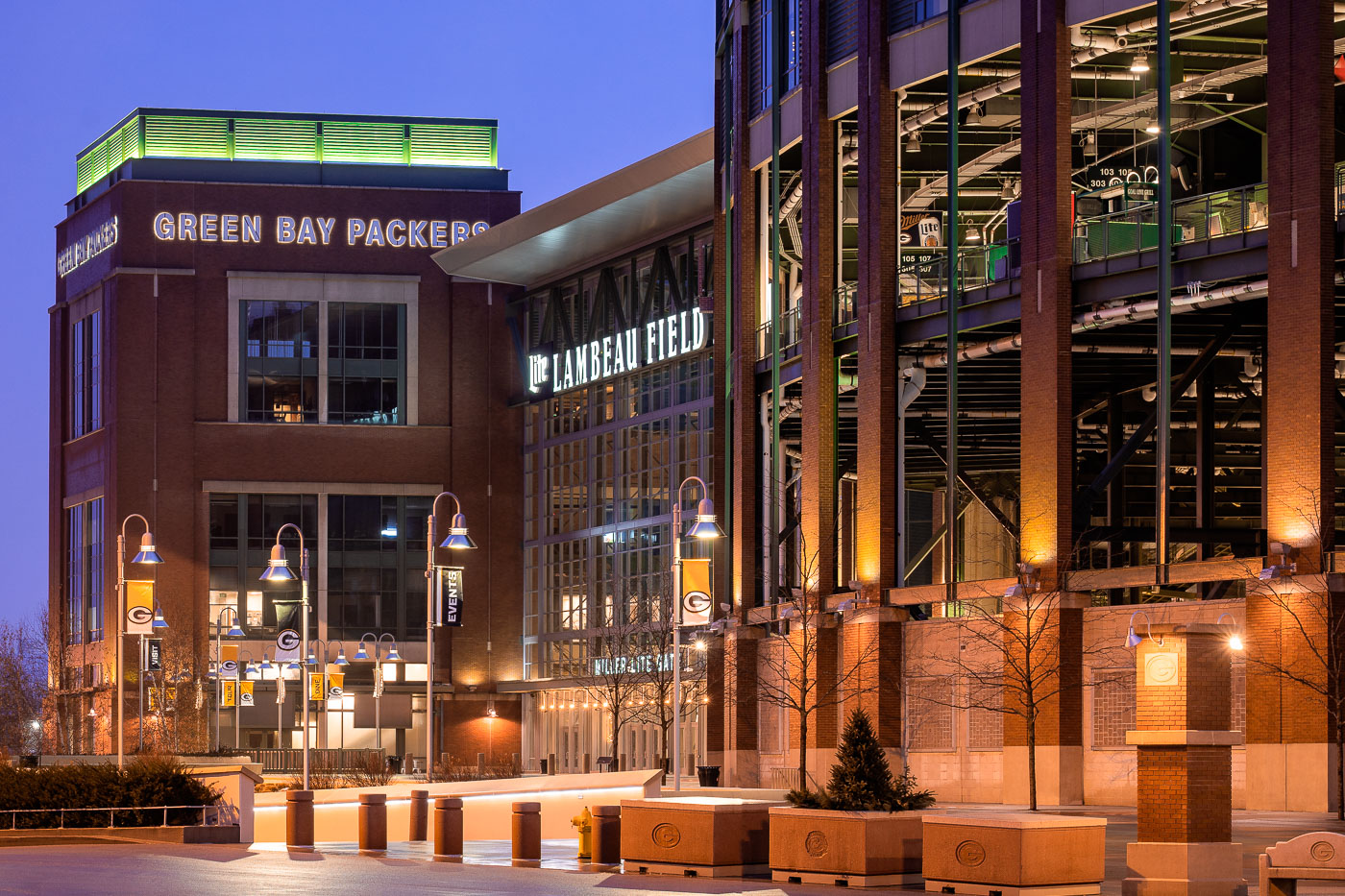
The Lambeau Field Atrium in Green Bay, Wisconsin, is illuminated at night.
The Lambeau Field Atrium in Green Bay, Wisconsin, is illuminated at night. Opened in 2003, the Atrium is an expansion of Lambeau Field, the oldest continuously operating NFL stadium, built in 1957. It serves as a year-round hub for the Green Bay Packers, housing team offices, a store, a restaurant, and event spaces.

Lambeau Field Atrium at Night, Green Bay
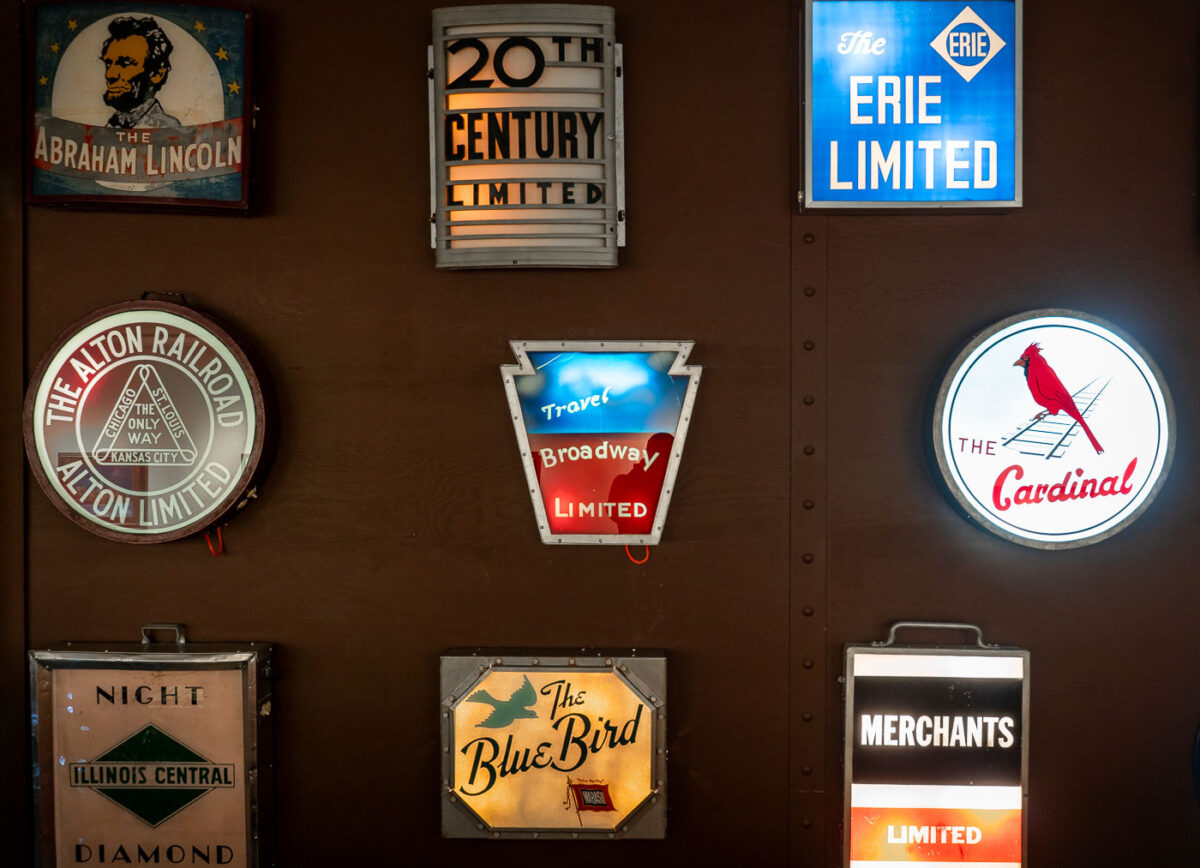
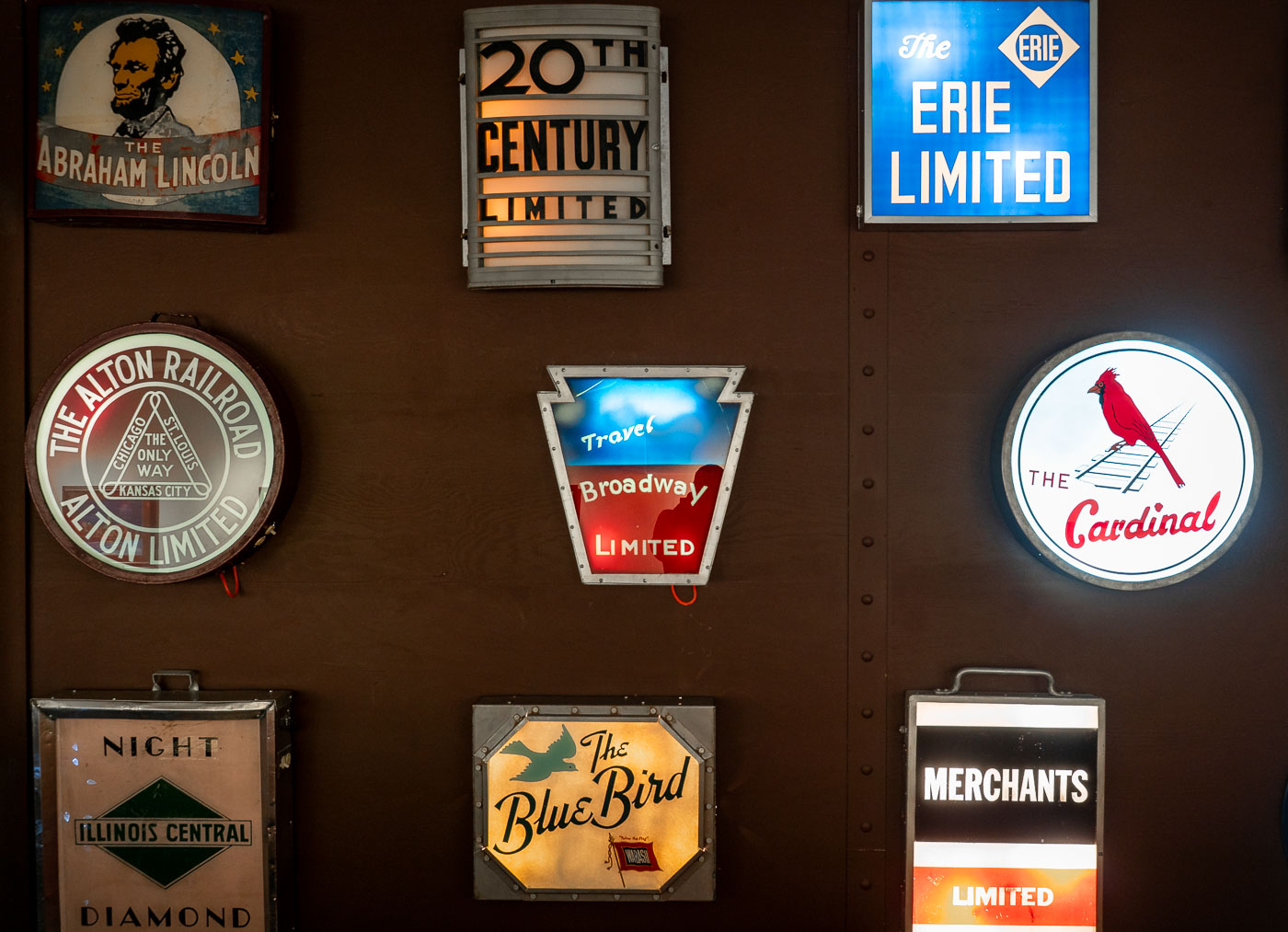
Illuminated drumhead signs for historic trains like the Abraham Lincoln and 20th Century Limited at the National Railroad Museum in Green Bay, Wisconsin.
A collection of illuminated drumhead signs from various historic American passenger trains is displayed at the National Railroad Museum in Green Bay, Wisconsin. These signs, once mounted on the observation cars of luxury and express trains, served as both branding and navigational aids. Featured are signs for notable routes such as the New York Central's "20th Century Limited," the Pennsylvania Railroad's "Broadway Limited," and the Alton Railroad's "Abraham Lincoln" and "Blue Bird," which connected Chicago and St. Louis.

Green Bay Railroad Museum: Historic Train Drumhead Signs
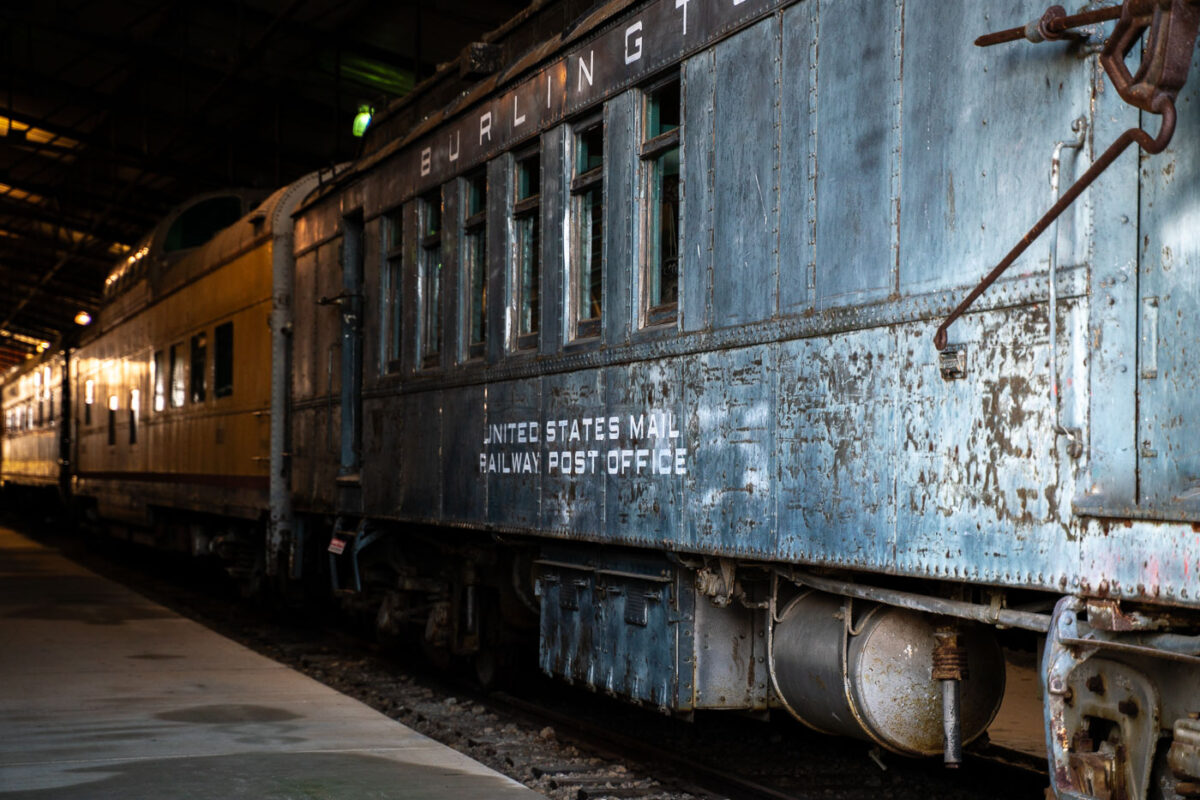
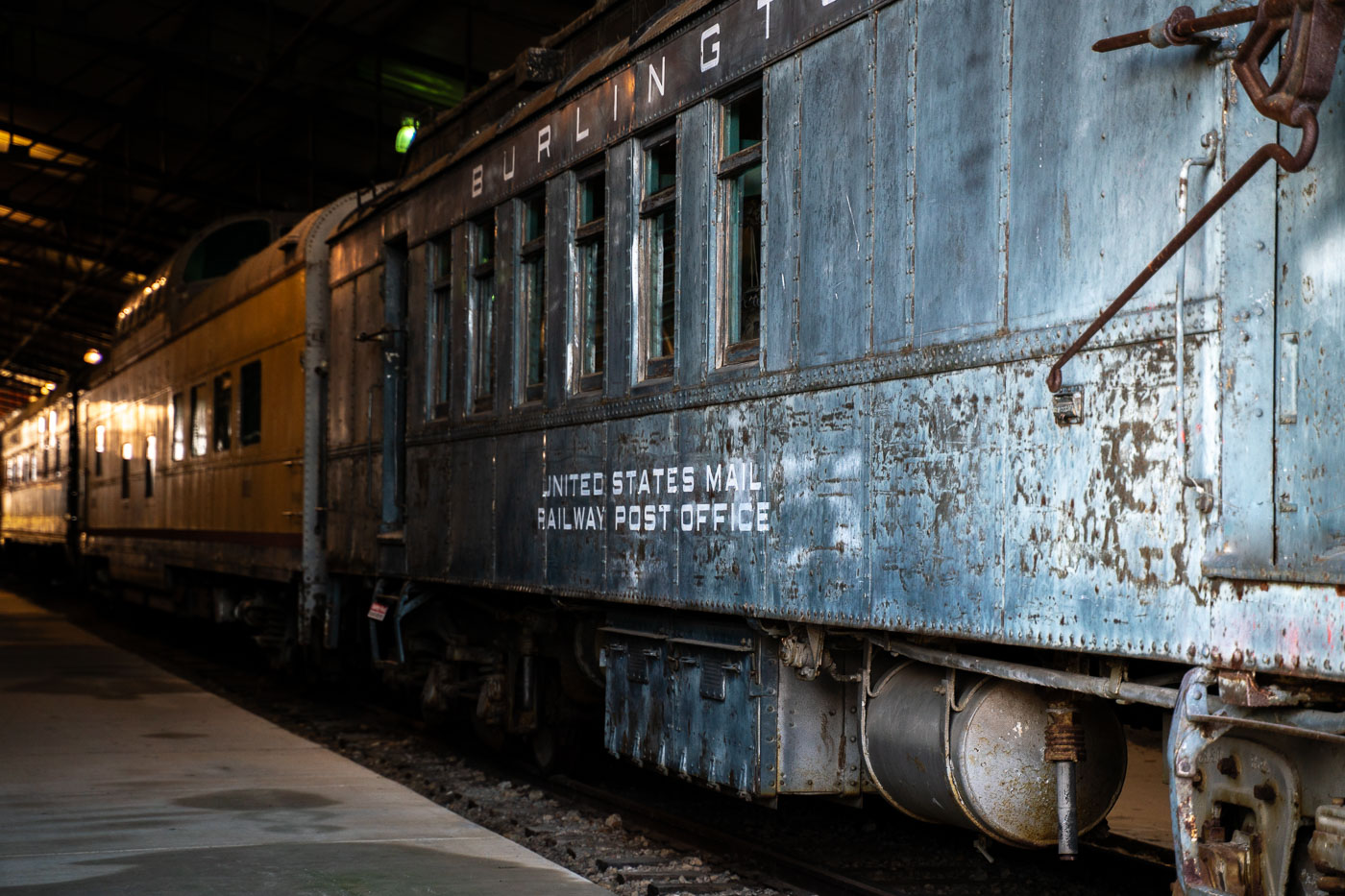
Burlington Railway Post Office Car at the National Railroad Museum in Green Bay, Wisconsin.
This Burlington Railway Post Office Car, preserved at the National Railroad Museum in Green Bay, Wisconsin, represents a vital piece of American postal history. These specialized railcars were essential for the efficient sorting and transportation of mail across the country during the late 19th and 20th centuries. Mail clerks would sort letters and packages en route, significantly speeding up delivery times compared to traditional methods. The "United States Mail Railway Post Office" lettering clearly indicates its former function. The car's presence at the museum highlights the critical role railroads played in connecting communities and facilitating commerce through the postal service.

Burlington Railway Post Office Car, National Railroad Museum, Green Bay, WI

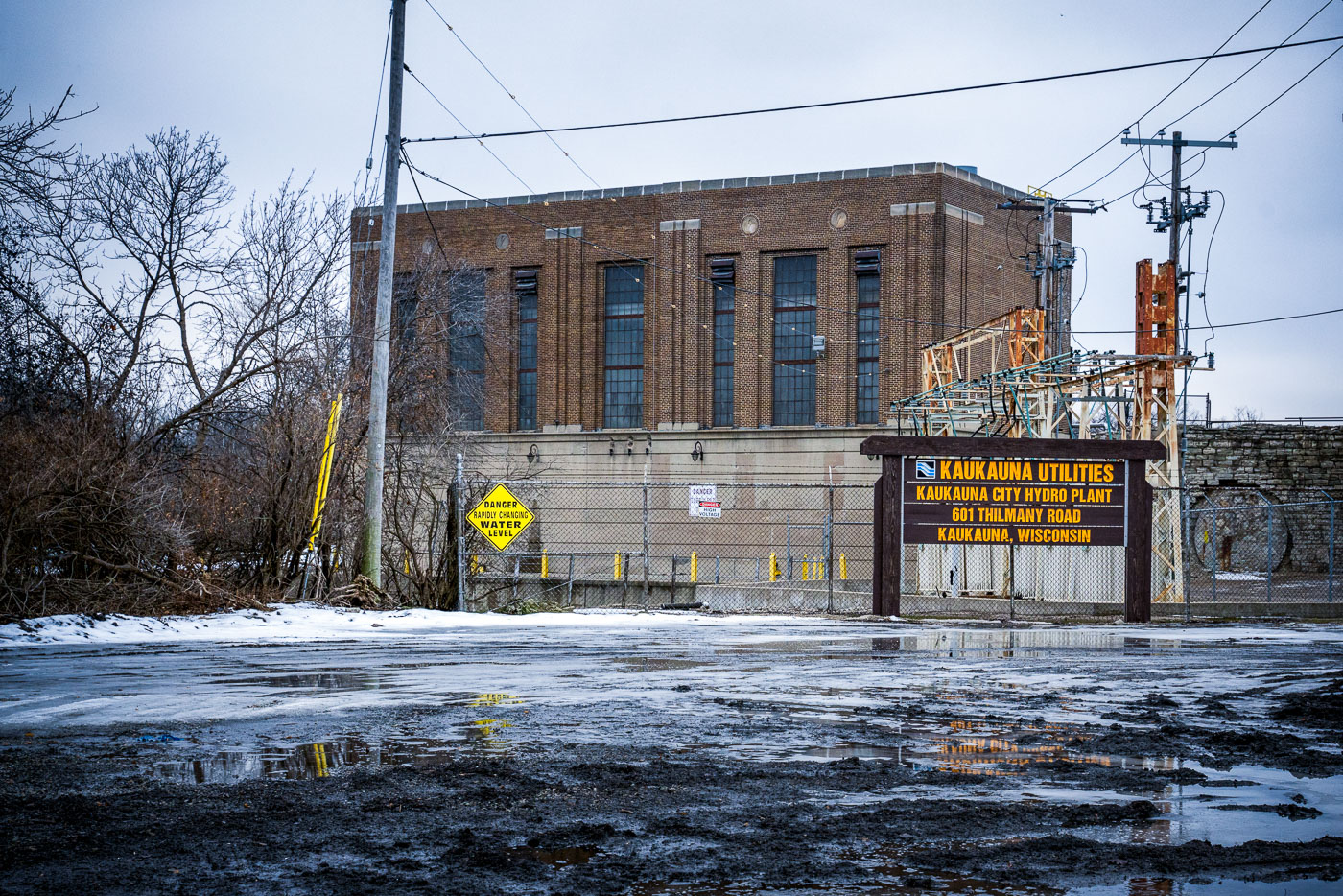
The Kaukauna City Hydro Plant, operated by Kaukauna Utilities, is located on the Fox River in Kaukauna, Wisconsin. The facility generates renewable hydroelectric power for the community.
Kaukauna Utilities' Kaukauna City Hydro Plant sits at 601 Thilmany Road along the Fox River in Kaukauna, Wisconsin. The municipal utility uses the river's drop through the city — once a center of papermaking powered by the same waterway — to generate electricity for local distribution.

Kaukauna Utilities Hydro Plant, Wisconsin

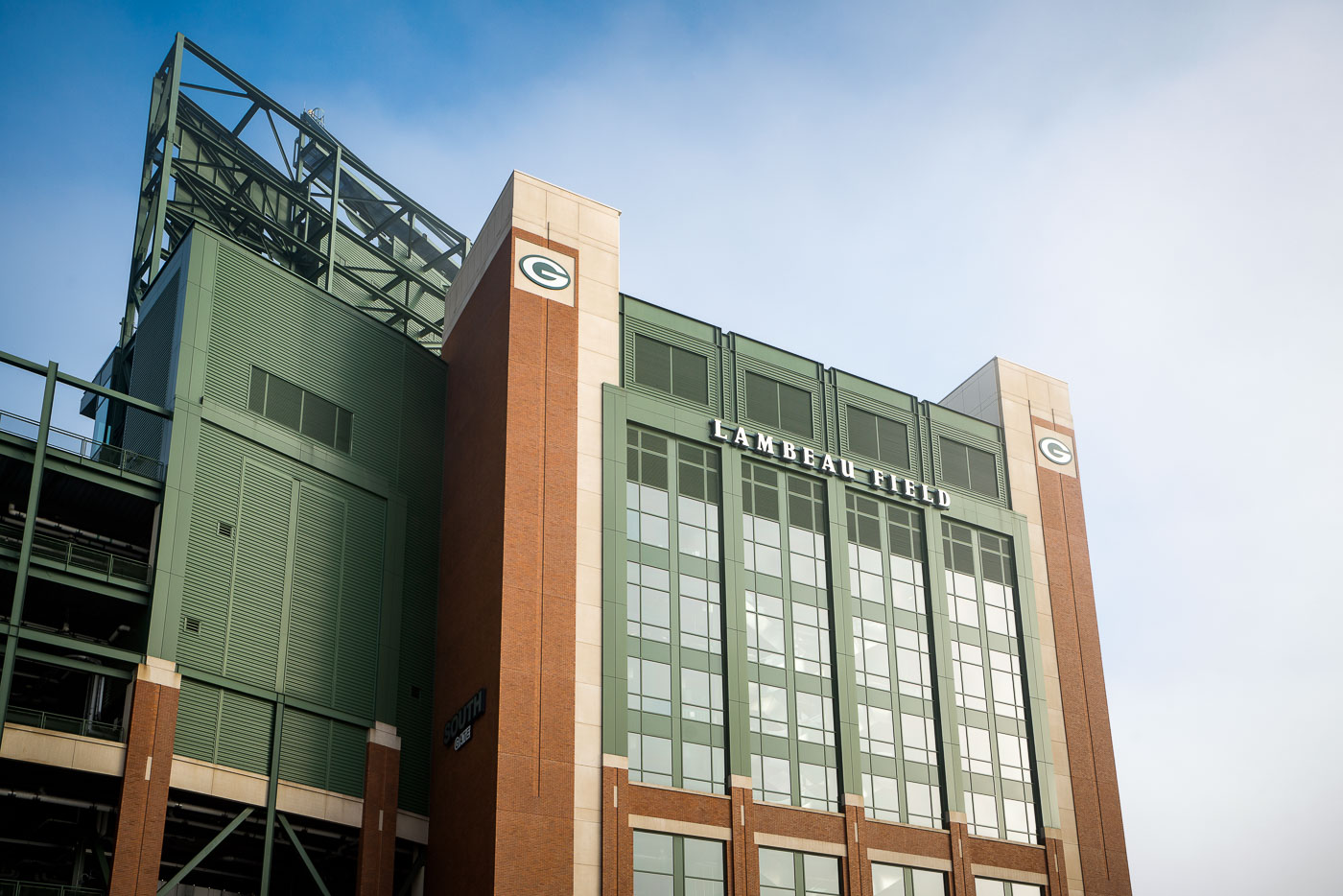
Lambeau Field stadium exterior in Green Bay, Wisconsin, home of the Green Bay Packers NFL team.
Lambeau Field in Green Bay, Wisconsin, is the home stadium of the Green Bay Packers NFL team. Opened in 1957, it is one of the oldest and most historic stadiums in the league. The stadium has undergone numerous renovations and expansions to modernize its facilities and accommodate its fanbase. It is known for its passionate supporters and its significant role in professional football history.

Lambeau Field exterior, Green Bay

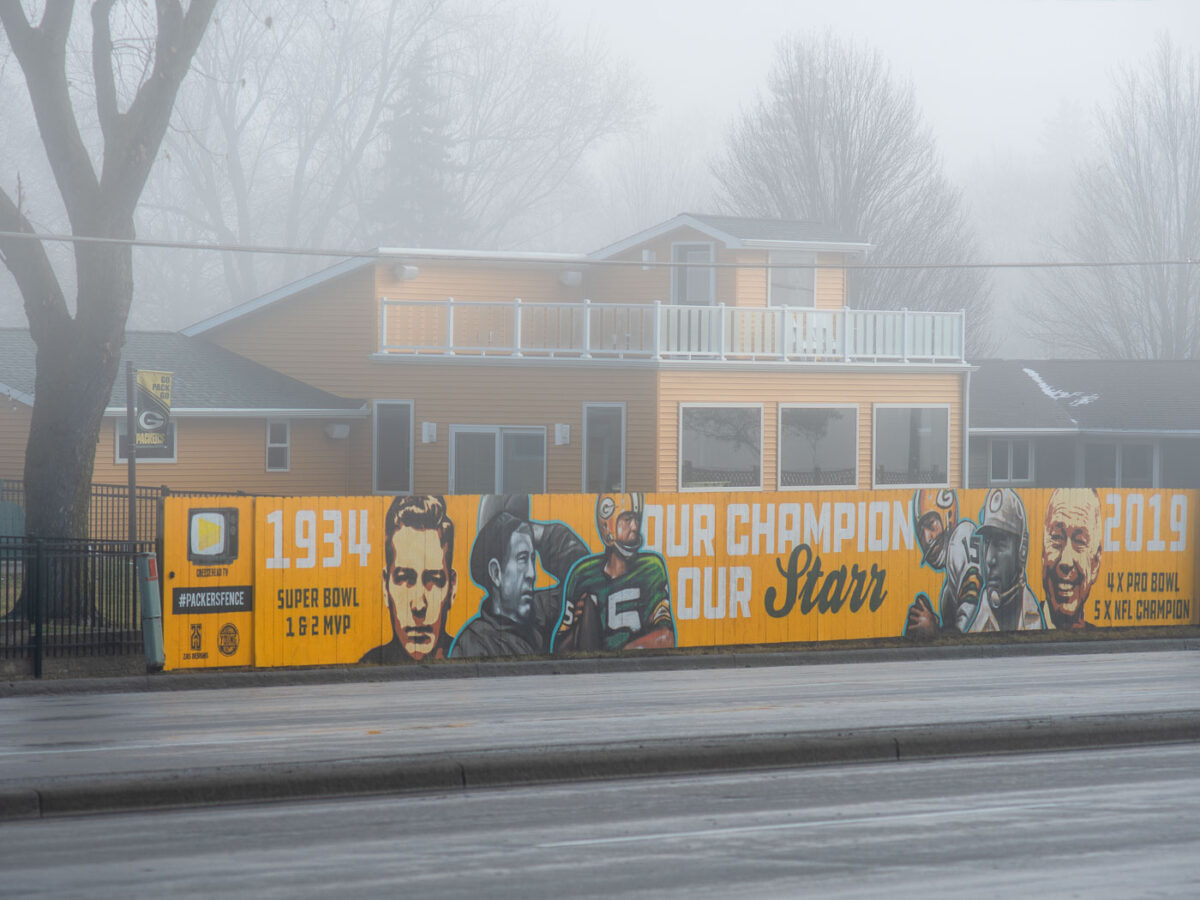
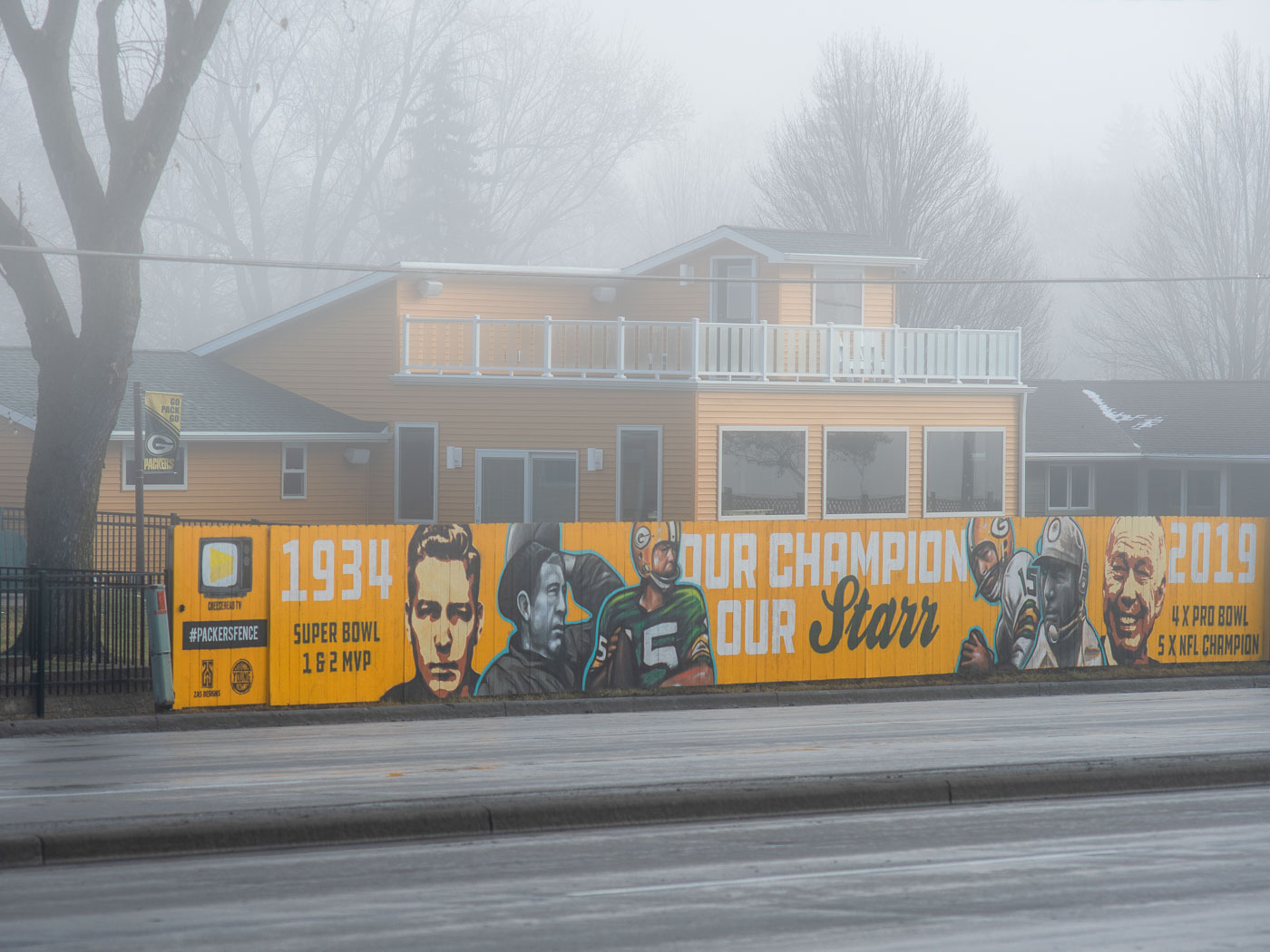
Green Bay Packers mural featuring Bart Starr and team champions on a fence across from Lambeau Field in Green Bay, Wisconsin.
A mural celebrating the Green Bay Packers is displayed on a fence across from Lambeau Field in Green Bay, Wisconsin. The artwork features quarterback Bart Starr, along with other team champions and significant dates, including "1934 SUPER BOWL 1 & 2 MVP" and "2019 5 X NFL CHAMPION." This mural serves as a tribute to the team's enduring legacy and its connection to the community.

Packers Mural at Lambeau Field, Green Bay
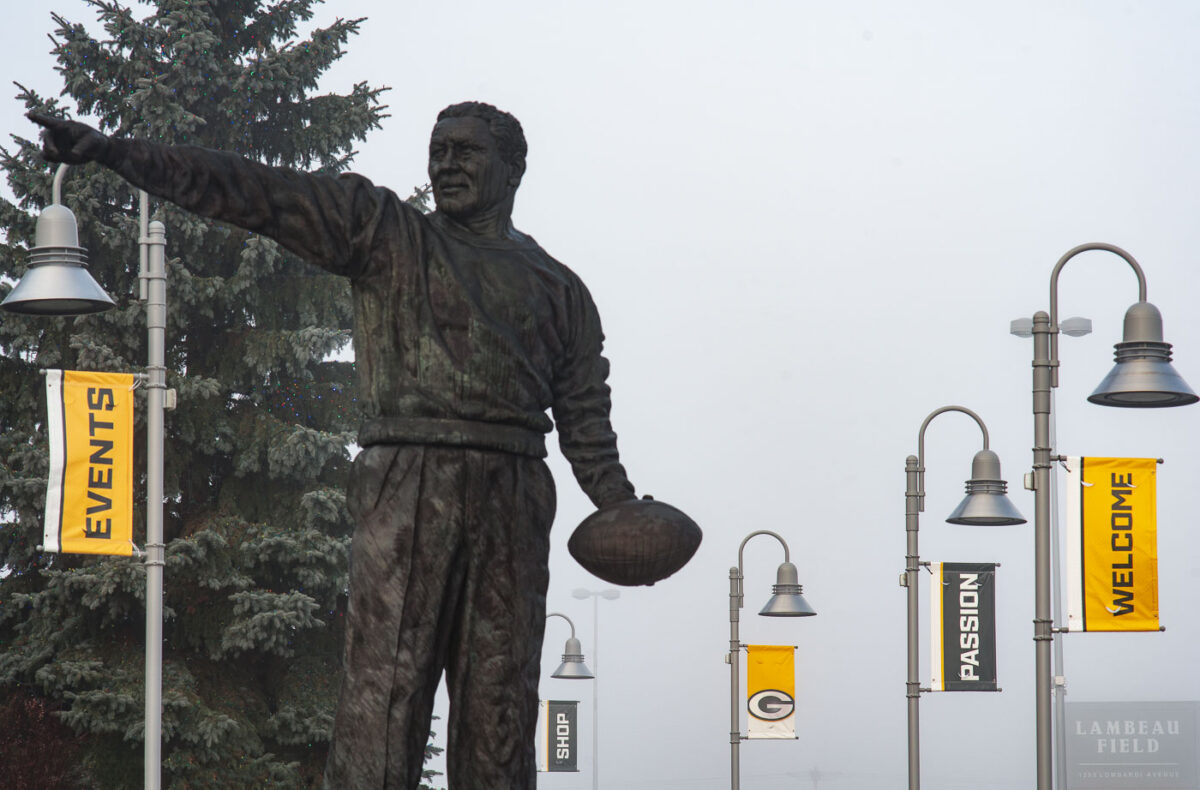
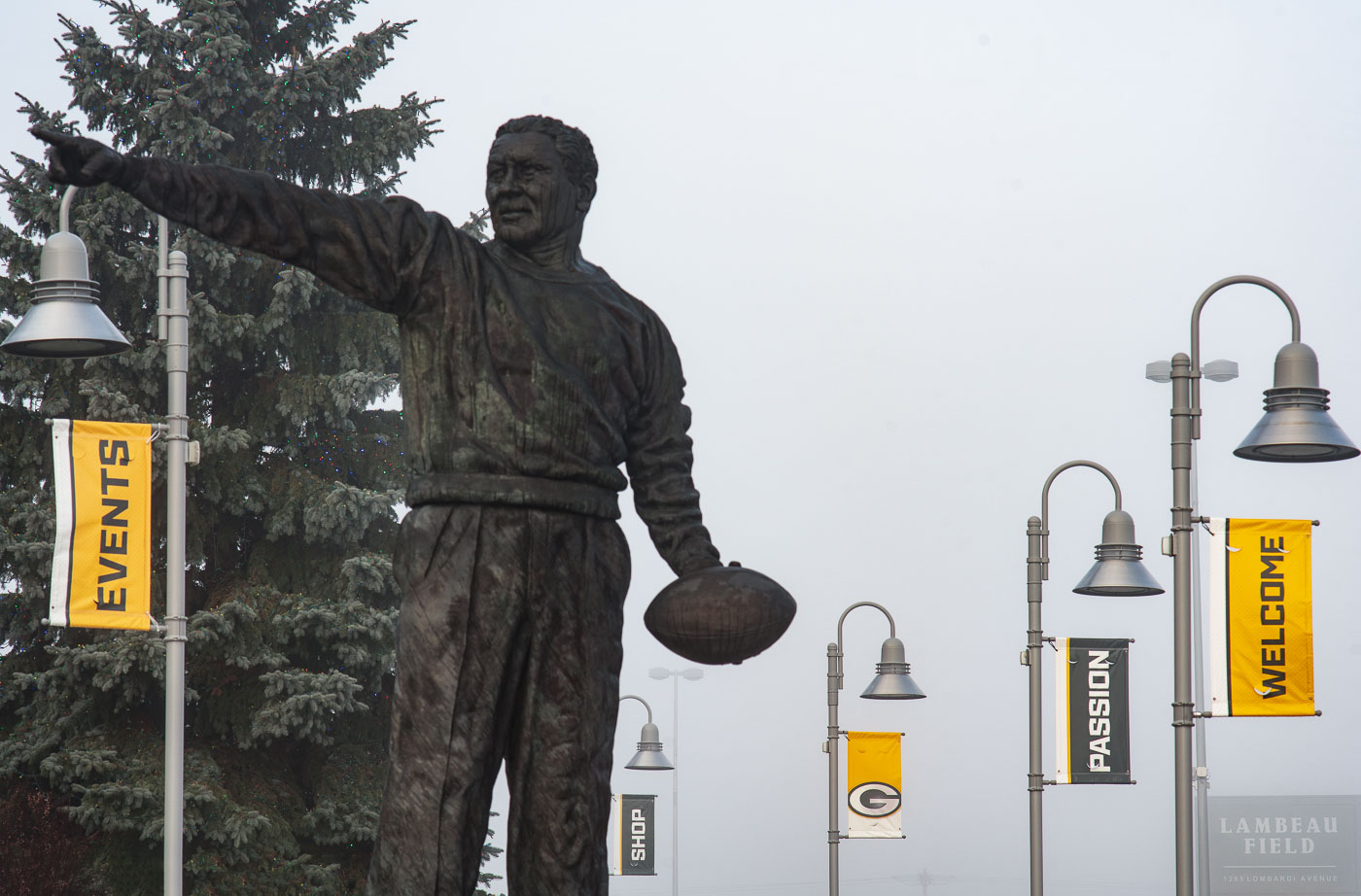
The Curly Lambeau statue holding a football stands outside Lambeau Field in Green Bay, Wisconsin.
The statue of Curly Lambeau, founder and first coach of the Green Bay Packers, stands outside Lambeau Field in Green Bay, Wisconsin. Lambeau Field, named after him, is one of the oldest and most historic stadiums in the National Football League. Opened in 1957, it has been the home of the Packers for over six decades. The stadium is renowned for its passionate fanbase and its often frigid playing conditions, contributing to its legendary status in professional football.

Curly Lambeau Statue at Lambeau Field

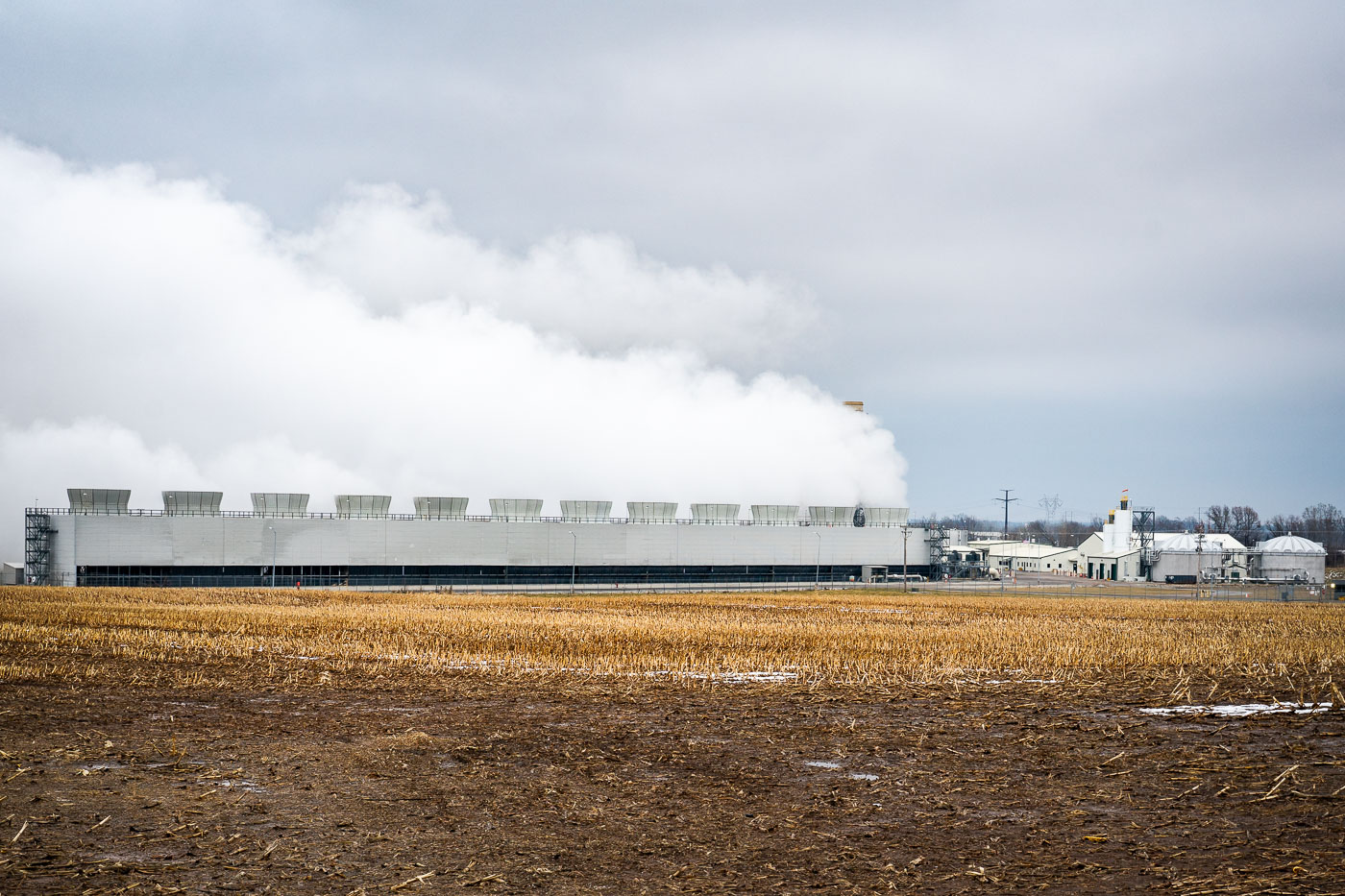
Fox Energy Center natural gas power plant viewed from agricultural land near Kaukauna, Wisconsin.
The Fox Energy Center sits near Kaukauna, Wisconsin, along the Fox River valley. Wisconsin Public Service operates the natural gas-fired plant, which came online in 2005 to serve the utility's northeastern Wisconsin customers.

Fox Energy Center Beyond a Harvested Cornfield
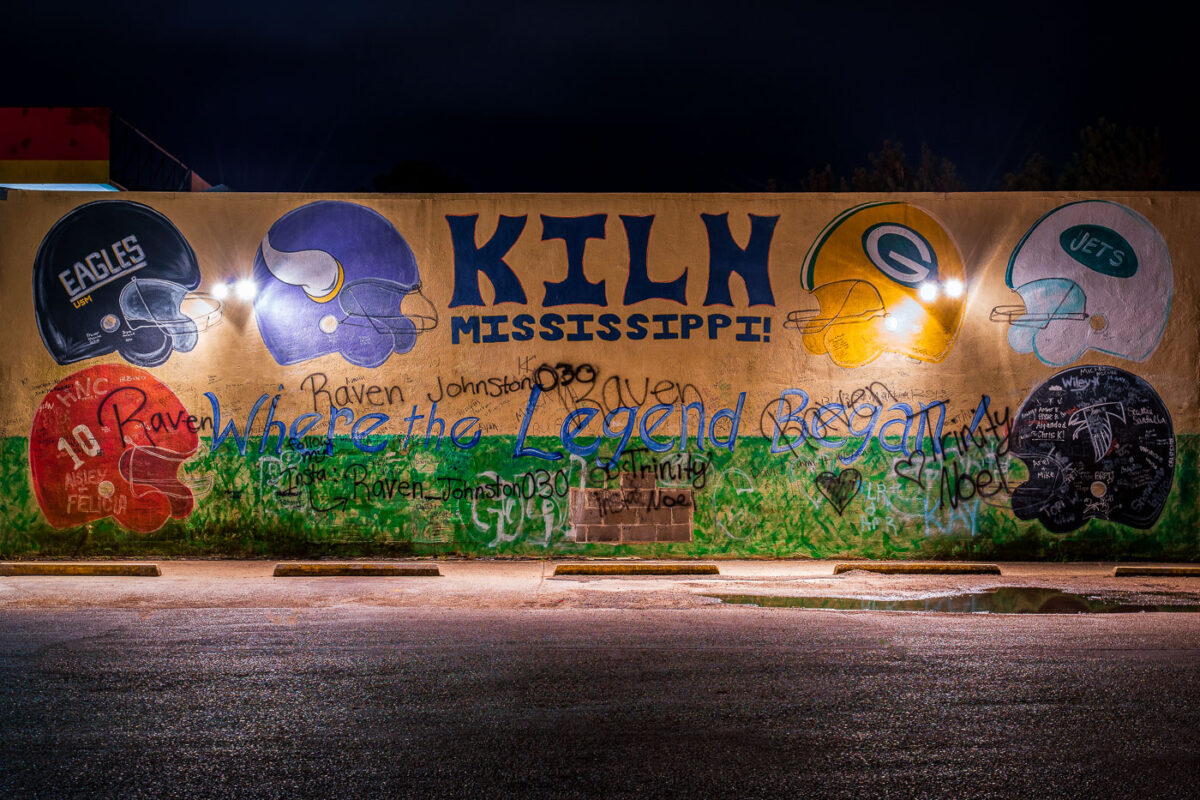
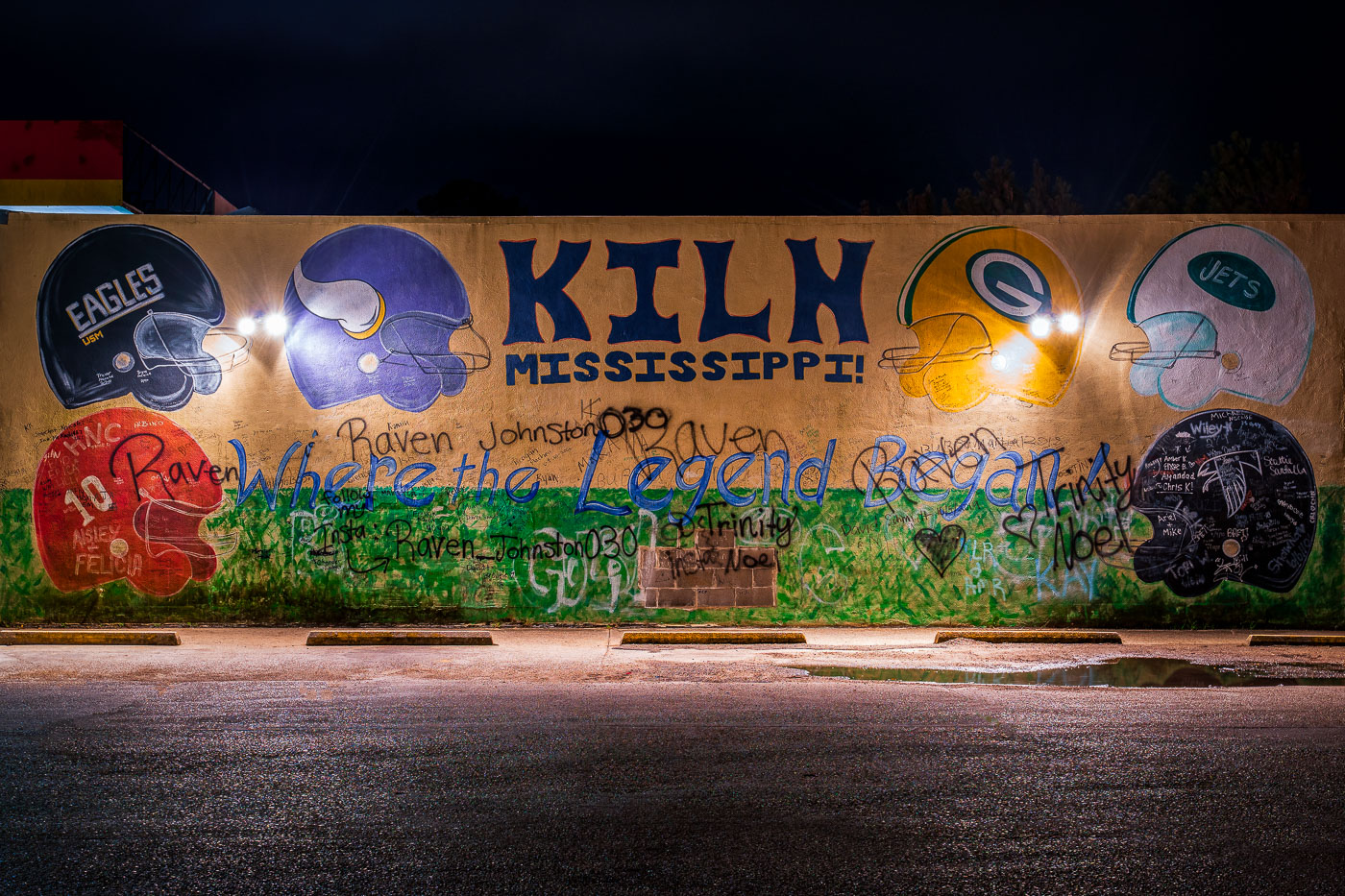
Brett Favre helmet mural in Kiln, Mississippi displays painted NFL team helmets honoring the quarterback's career.
Kiln, Mississippi, is the hometown of Brett Favre, the Hall of Fame quarterback who grew up here before starring at Hancock High School. This roadside mural marks that connection, pairing helmets from the four NFL teams Favre played for — the Atlanta Falcons, Green Bay Packers, Minnesota Vikings, and New York Jets — with the phrase "Where the Legend Began." Favre spent the bulk of his career with the Packers, where he won a Super Bowl following the 1996 season and set numerous passing records before later stints in Minnesota and with the Jets. The small unincorporated community, part of Hancock County near the Mississippi Gulf Coast, has leaned into its association with Favre as a point of local identity.

“Where the Legend Began” Mural in Kiln, Mississippi