Wisconsin

325 photos · 2008–2026

325 photographs tagged Wisconsin, 2008–2026.

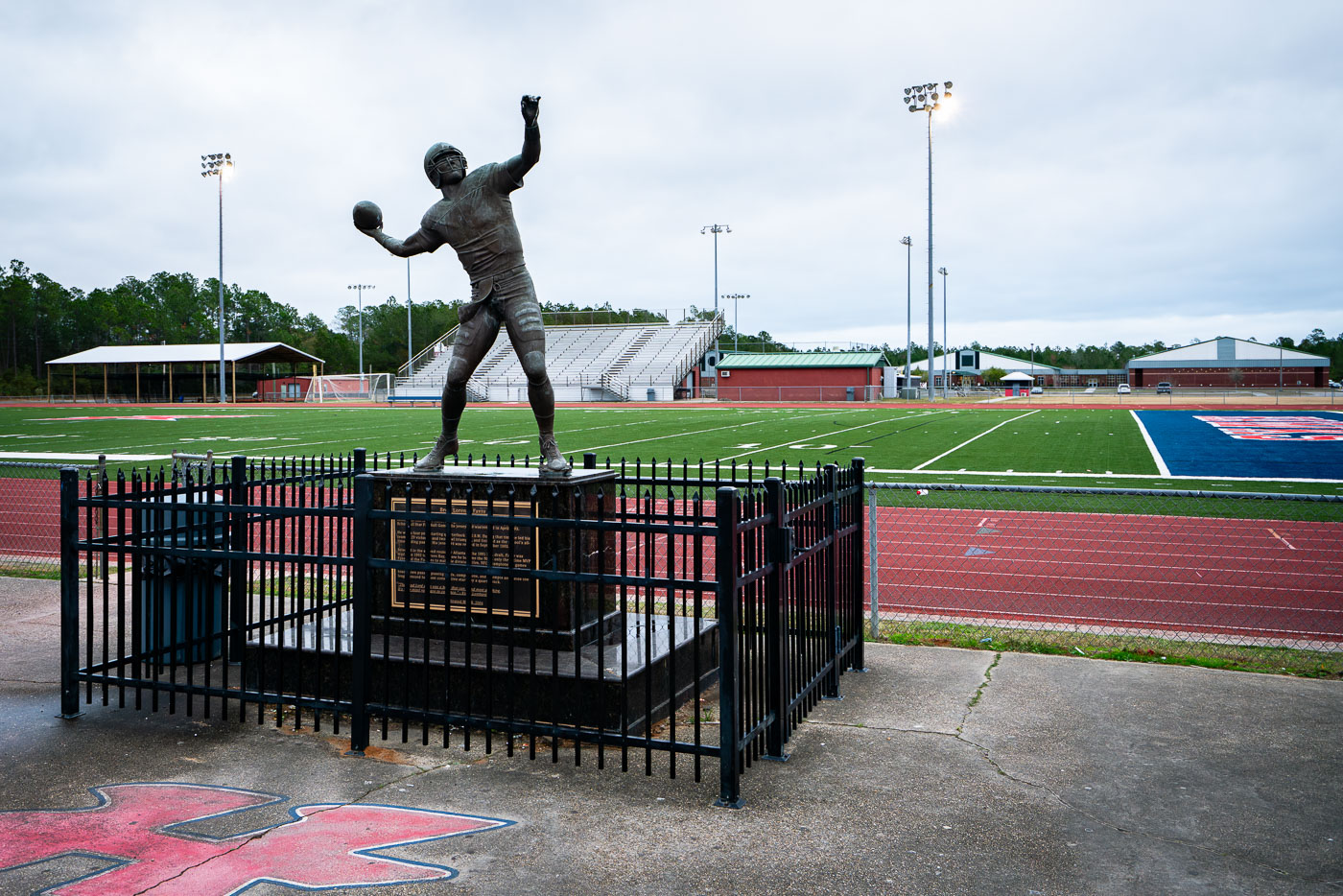
Bronze statue of Brett Favre at Hancock High School football stadium in Kiln, Mississippi.
Brett Favre grew up in Kiln and starred at Hancock North Central High School before his college career at Southern Mississippi and his NFL run with the Green Bay Packers, Atlanta Falcons, New York Jets, and Minnesota Vikings. He was inducted into the Pro Football Hall of Fame in 2016. The bronze statue on the school grounds depicts him in throwing form and stands enclosed by a wrought-iron fence beside the football stadium's track and field.

Brett Favre Statue Overlooking the Field at Hancock High School
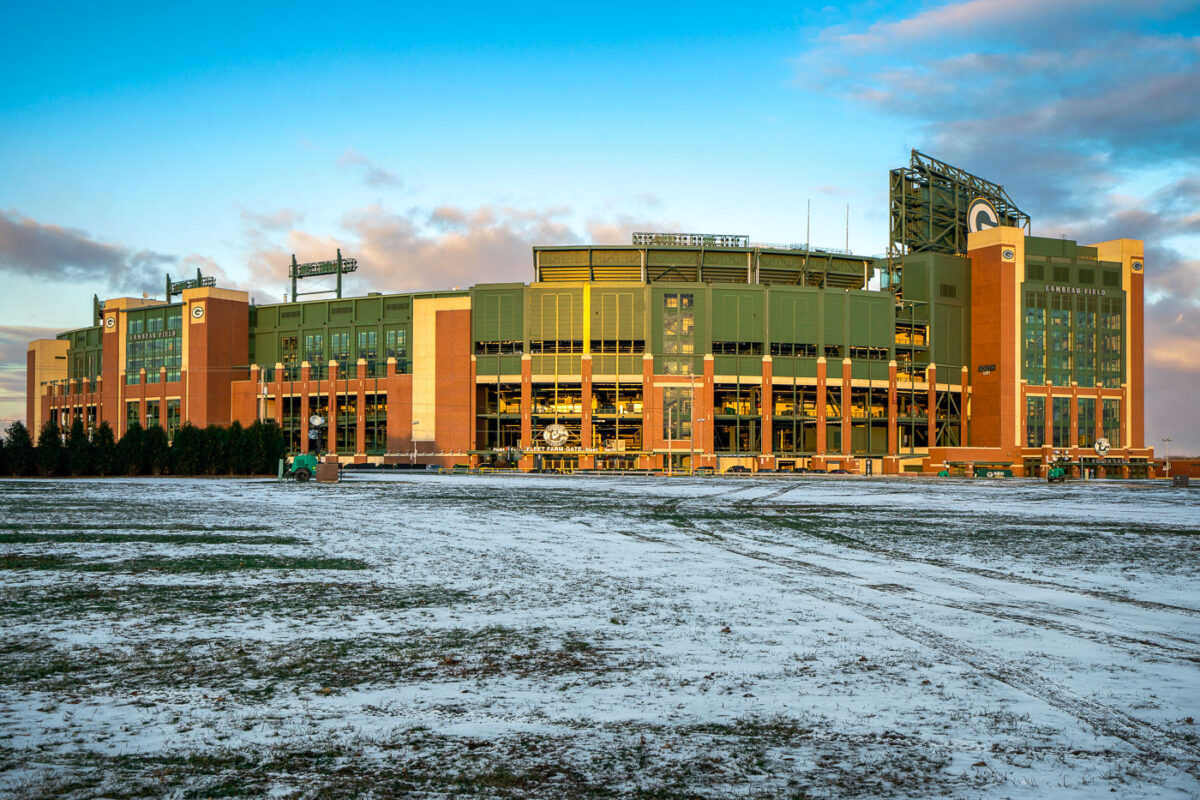
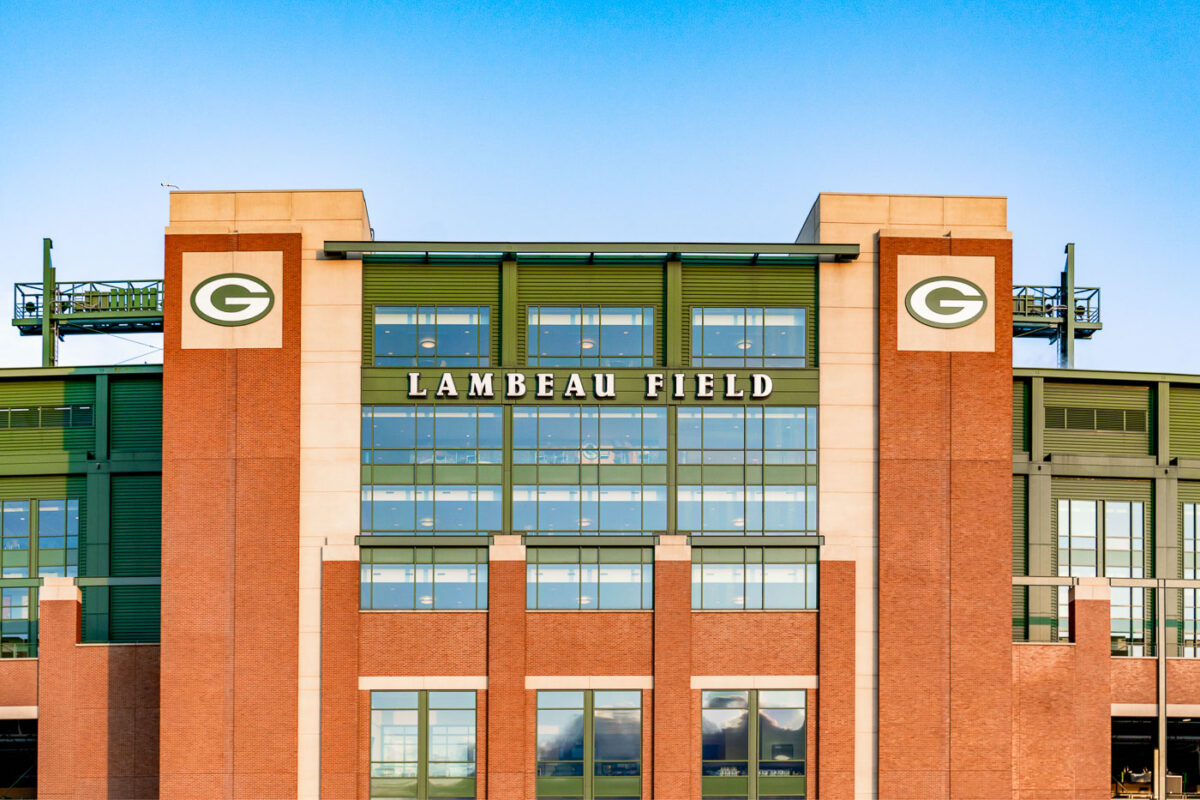
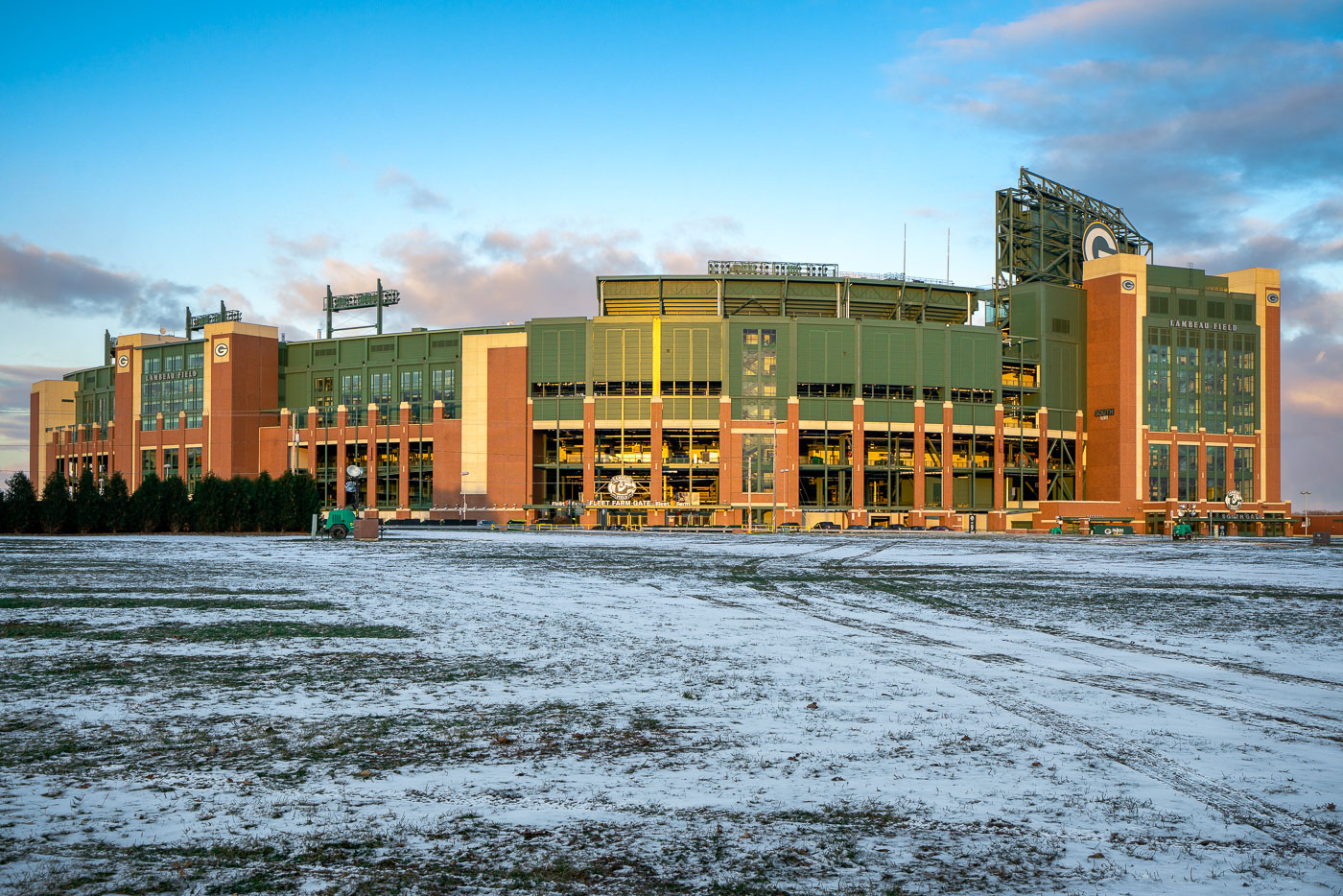
Lambeau Field in Ashwaubenon, Wisconsin, the home of the Green Bay Packers, under a cloudy sky.
Lambeau Field in Ashwaubenon, Wisconsin, is the home stadium of the Green Bay Packers. Opened in 1957, it is the second-oldest stadium in the National Football League. The stadium has undergone numerous renovations and expansions throughout its history. It remains a significant landmark for professional football and the local community.

Lambeau Field, Ashwaubenon Wisconsin

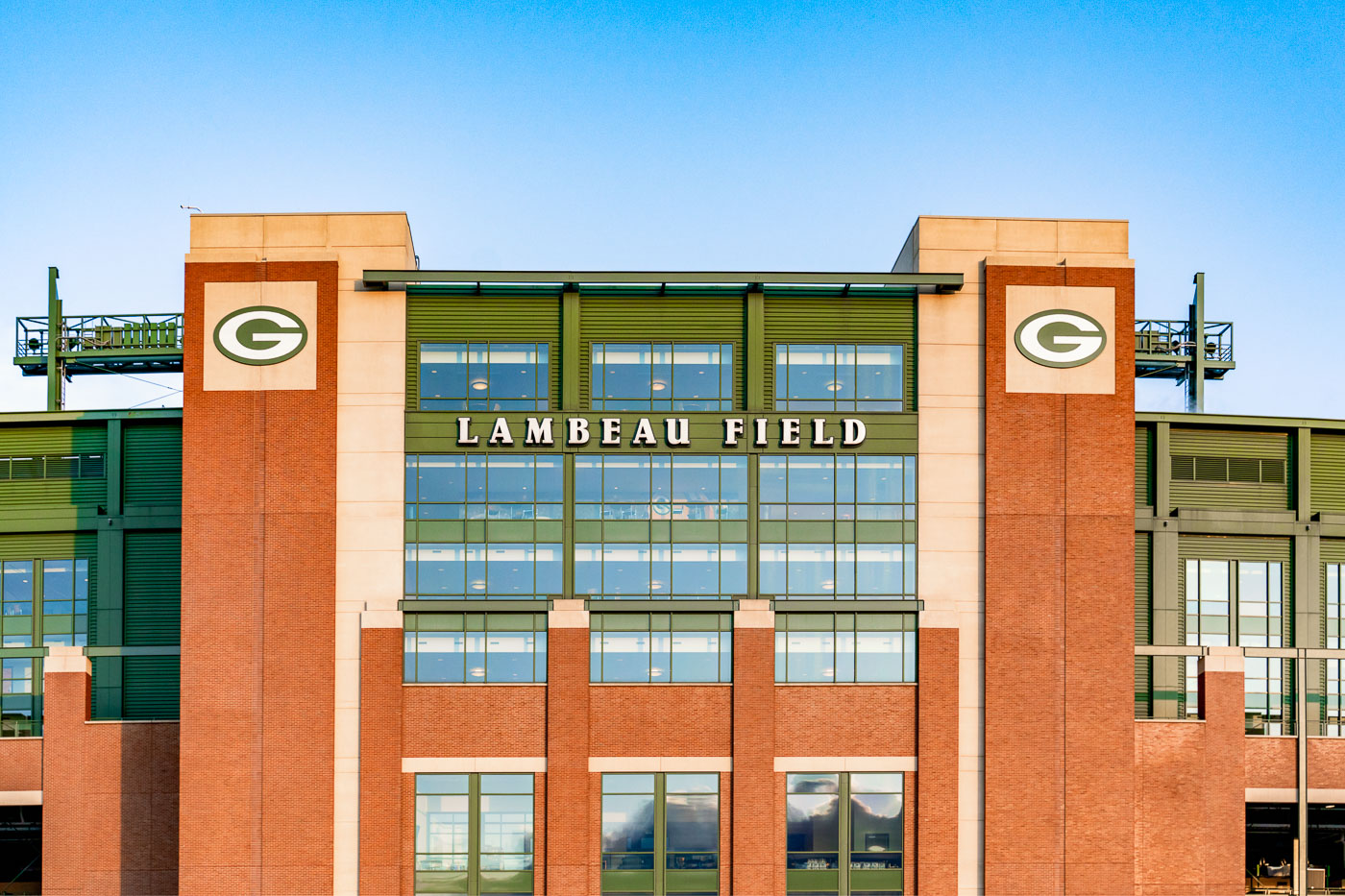
Lambeau Field in Green Bay, Wisconsin, home of the Green Bay Packers NFL team.
Lambeau Field in Green Bay, Wisconsin, is the home stadium of the Green Bay Packers. Opened in 1957, it is the second-oldest stadium in the NFL and is known for its historic significance. The stadium has undergone renovations and expansions to accommodate modern amenities and increased capacity.

Lambeau Field, Green Bay

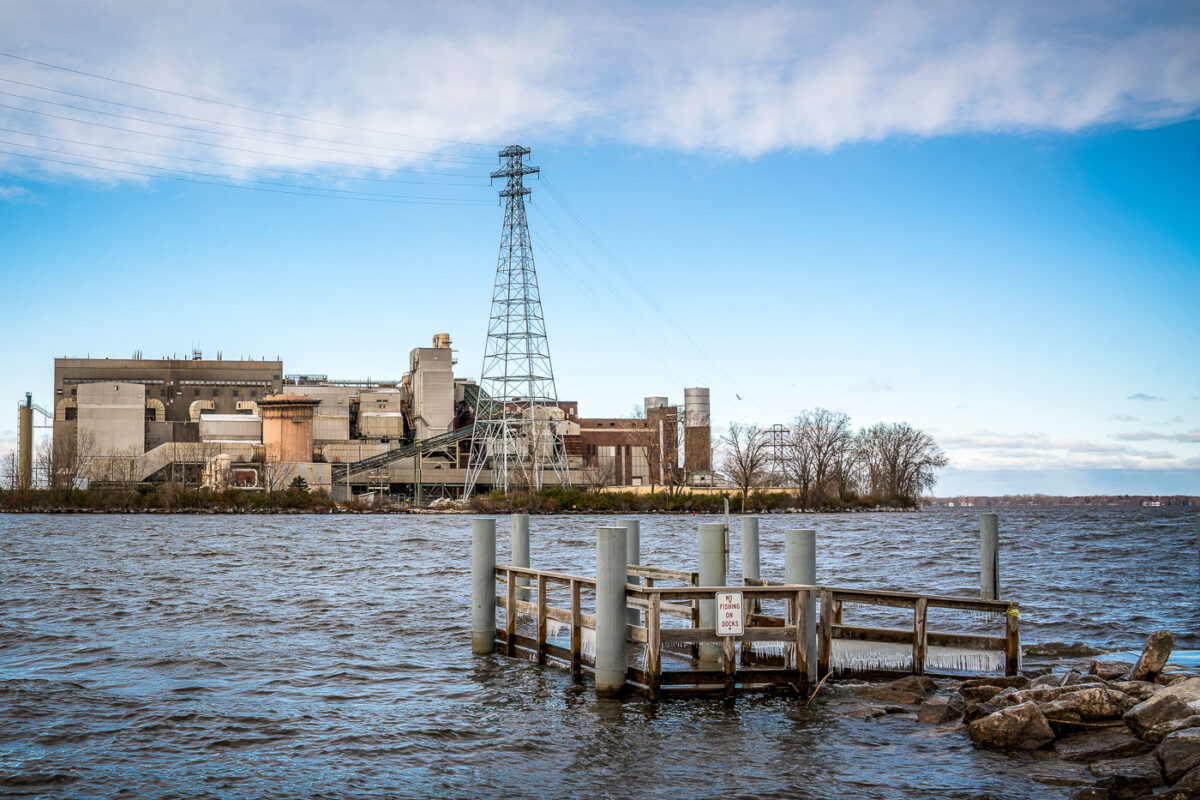
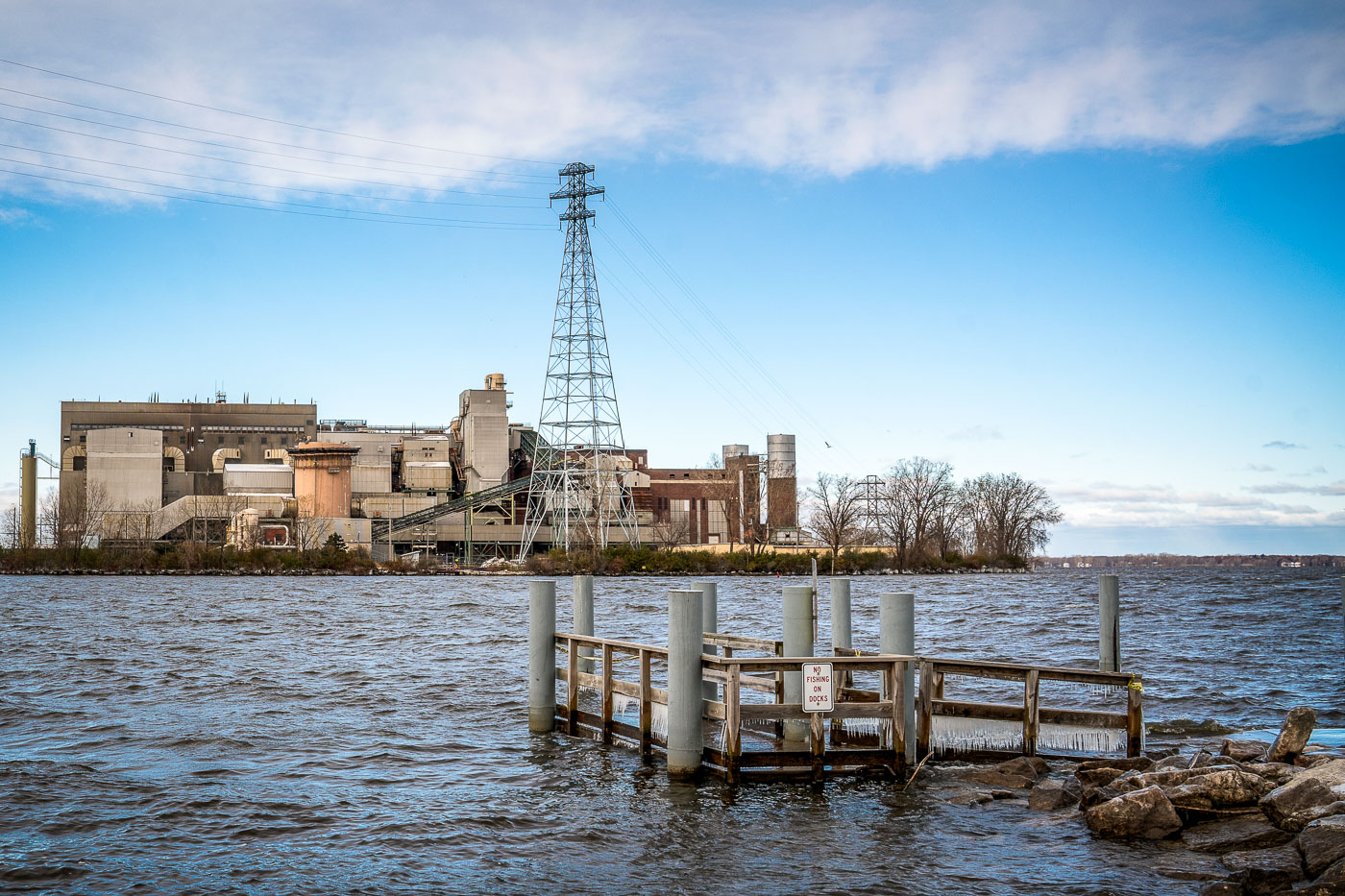
The J. P. Pulliam Generating Station on the Fox River in Green Bay, Wisconsin, with a dock in the foreground.
The J. P. Pulliam Generating Station, located on the Fox River in Green Bay, Wisconsin, was a significant industrial facility for electricity generation. Named after former Wisconsin Public Service Corporation president John Page Pulliam, the plant primarily utilized sub-bituminous coal, with natural gas as a backup fuel. Decommissioned in 2018, its coal-fired units ceased operation, leaving only a natural gas unit active. The station was connected to the regional power grid via 138 kV and 69 kV transmission lines, underscoring its role in supplying power to the area.

Pulliam Power Plant, Green Bay, Wisconsin

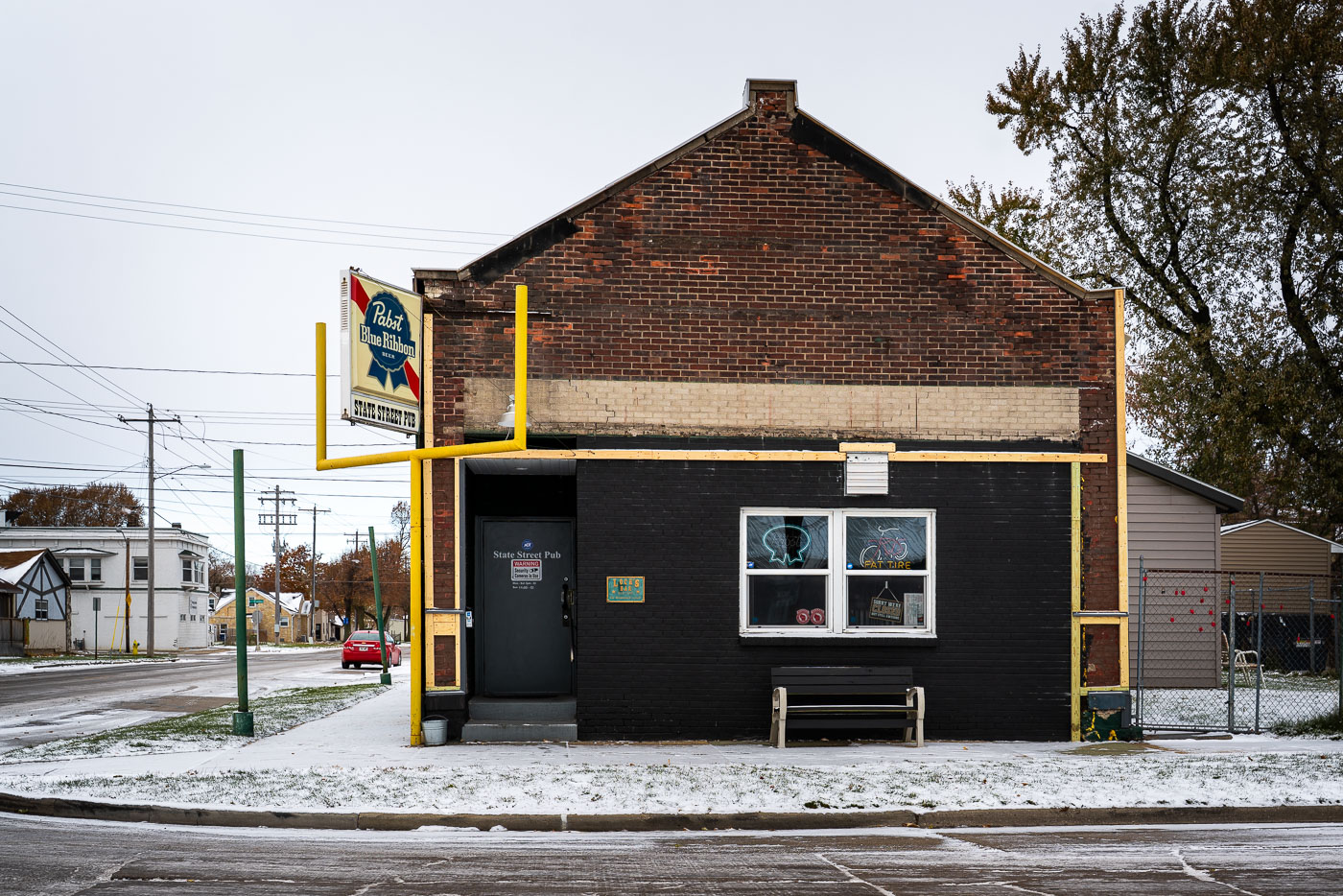
State Street Pub at 1238 State Street in Green Bay, Wisconsin, with a Pabst Blue Ribbon sign.
State Street Pub, a dive bar located at 1238 State Street in Green Bay, Wisconsin, is known for its association with Pabst Blue Ribbon beer and its popularity as a "Packers Bar." The establishment serves as a neighborhood gathering place, reflecting the local culture and community spirit of Green Bay. Its exterior, featuring a prominent Pabst sign and brick facade, indicates a long-standing presence in the urban environment.

State Street Pub, Green Bay, WI: Pabst Blue Ribbon Bar
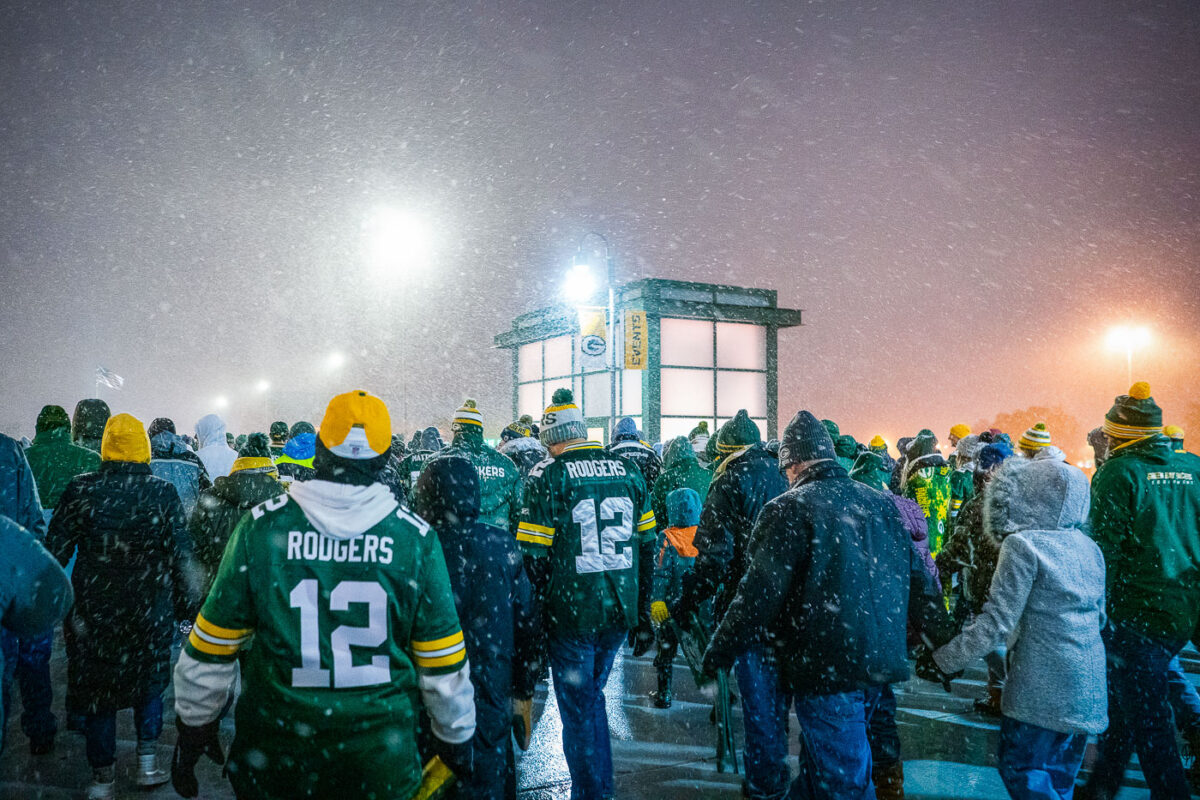
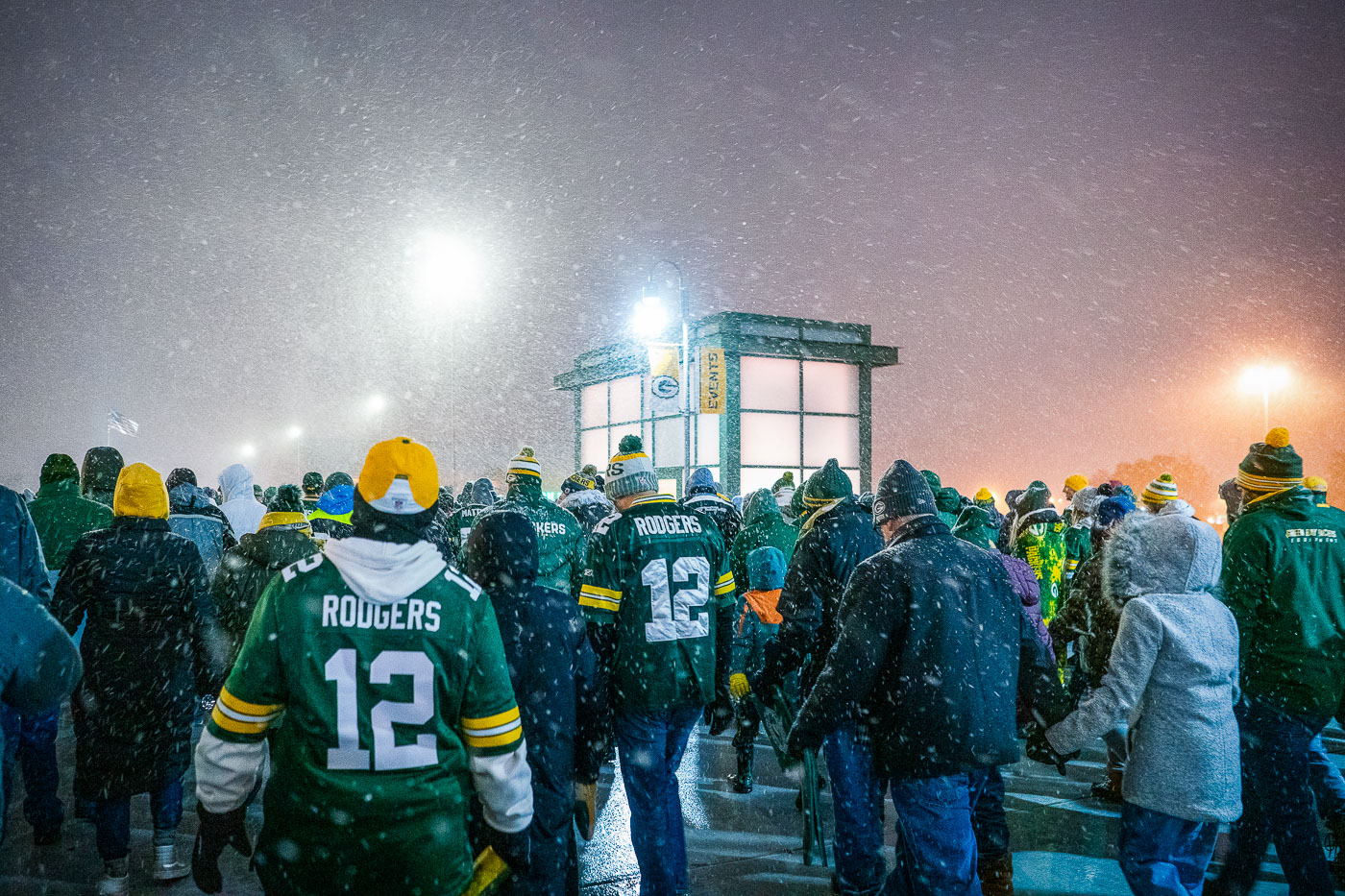
Green Bay Packers fans leave Lambeau Field in Wisconsin during snowfall.
Lambeau Field has been home to the Green Bay Packers since 1957, making it the oldest continuously used stadium in the NFL. The stadium seats more than 81,000 and sits at 1265 Lombardi Avenue, named for former head coach Vince Lombardi. Games here often continue through heavy snow and sub-zero temperatures, conditions that gave the 1967 NFL Championship its nickname, the Ice Bowl. The Packers remain the only community-owned franchise in major American professional sports, with shareholders numbering in the hundreds of thousands.

Packers Fans Leaving Lambeau Field in a Snowstorm

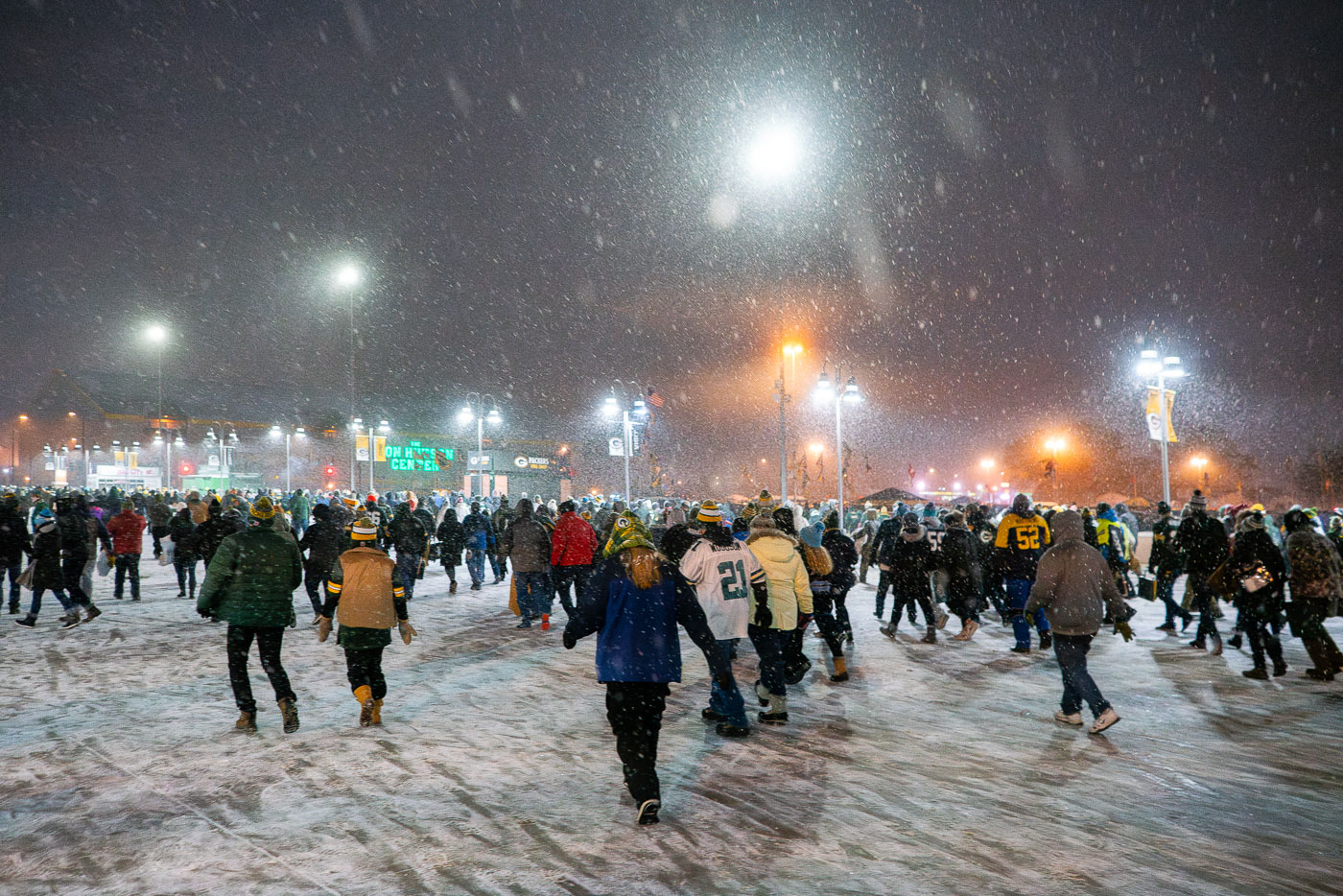
Crowds of spectators leave Lambeau Field in Green Bay, Wisconsin during heavy snowfall.
Lambeau Field has served as the home of the Green Bay Packers since 1957, making it the oldest stadium still in continuous use in the NFL. Named for Packers founder and longtime coach Curly Lambeau, the stadium now holds more than 81,000 fans following a series of expansions completed in 2013. Its open-air bowl and northern Wisconsin location have earned it the nickname "the Frozen Tundra," a reputation tied to famous cold-weather games including the 1967 Ice Bowl. The Packers are the only publicly owned franchise in the NFL, with shares held by more than 360,000 stockholders, and Lambeau Field remains the centerpiece of the team's year-round operations in Green Bay.

Lambeau Field Crowd Exits After Night Game in Snow, Green Bay
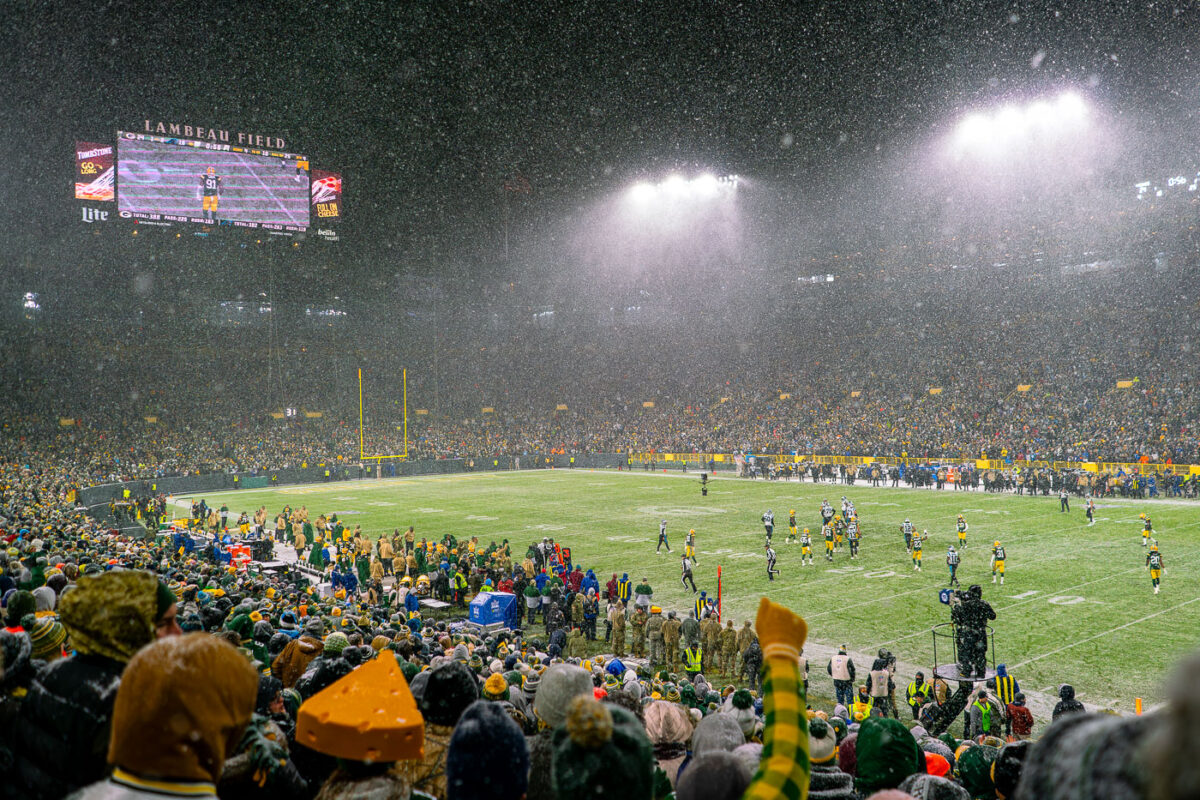
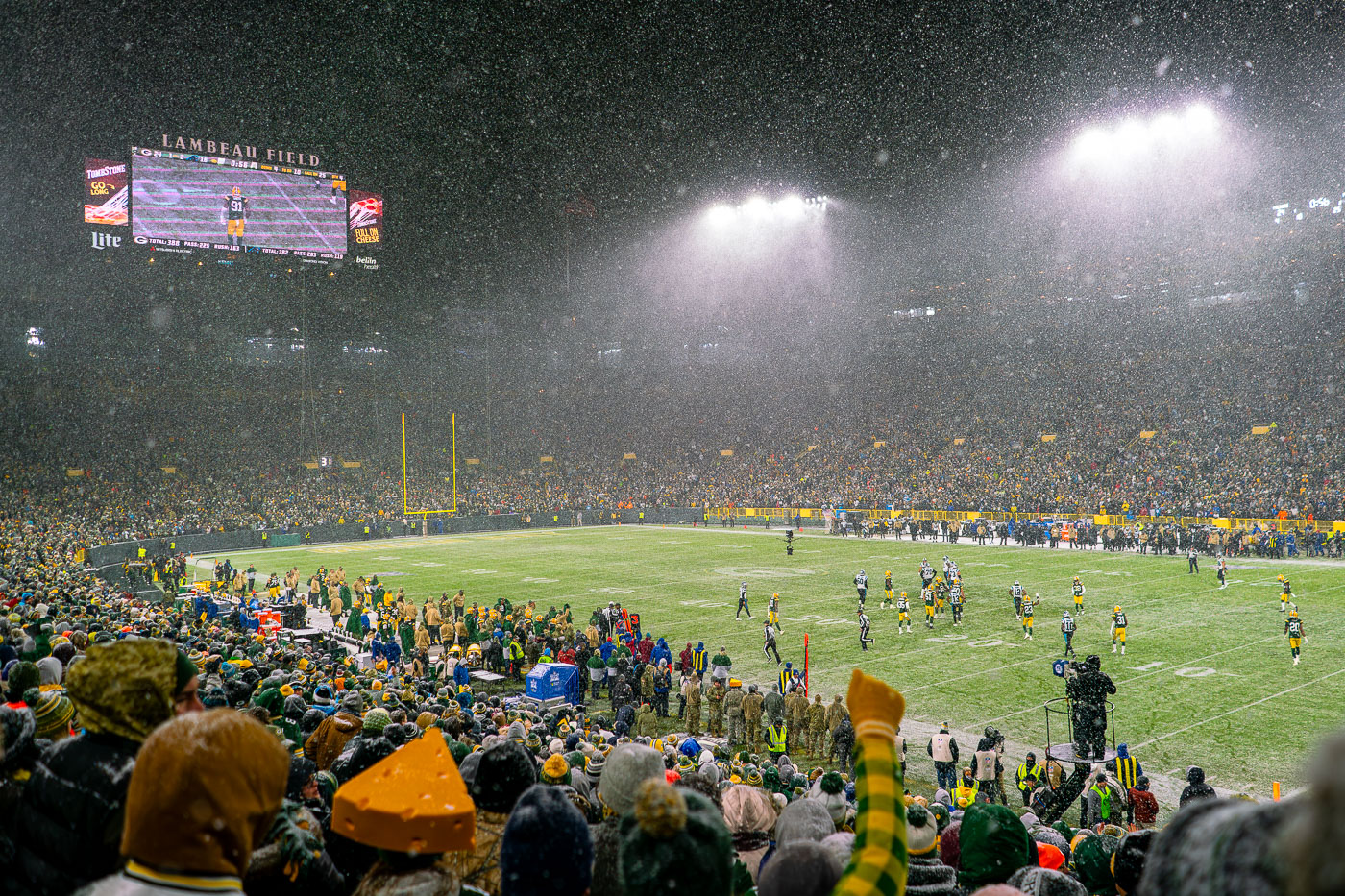
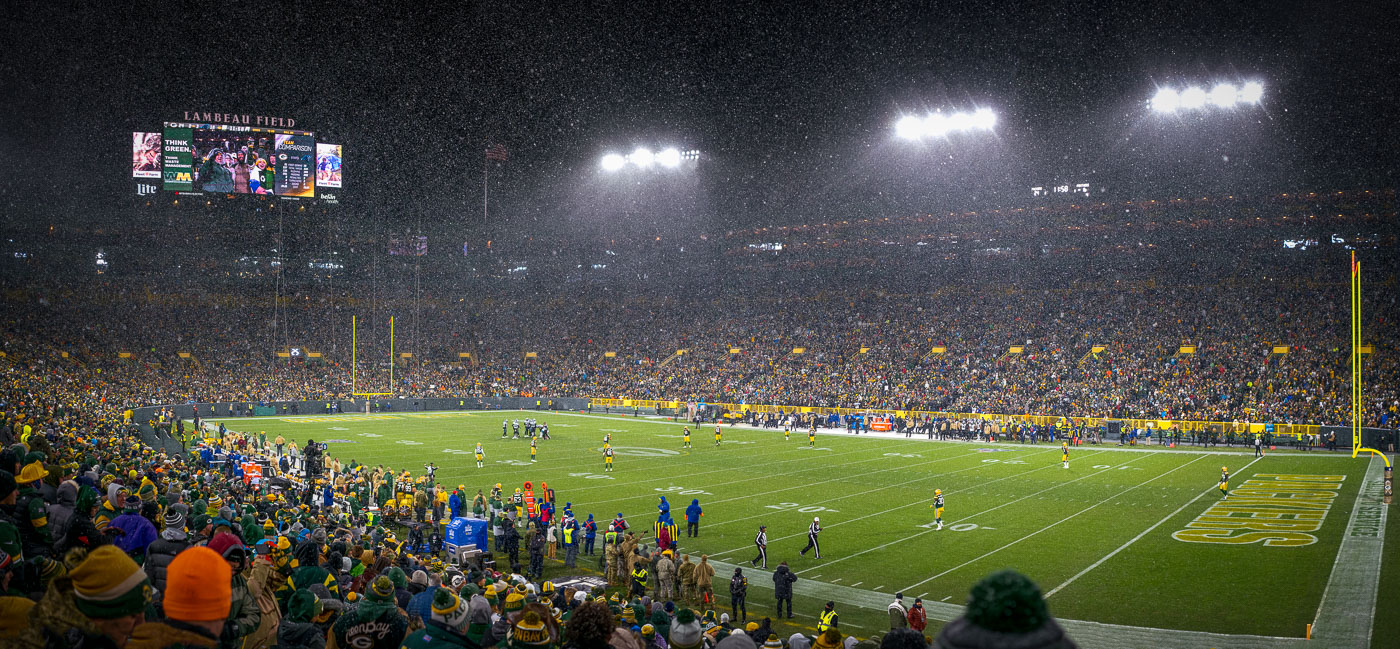
Snowfall at Lambeau Field in Green Bay during an NFL game between the Packers and Panthers.
Snow falls on Lambeau Field during an NFL game between the Green Bay Packers and the Carolina Panthers in Green Bay, Wisconsin. Opened in 1957, Lambeau Field is one of the oldest and most historic stadiums in the league, renowned for its cold-weather games. The Packers secured a 24-16 victory in this matchup amidst heavy snowfall.

Snowfall at Lambeau Field, Green Bay

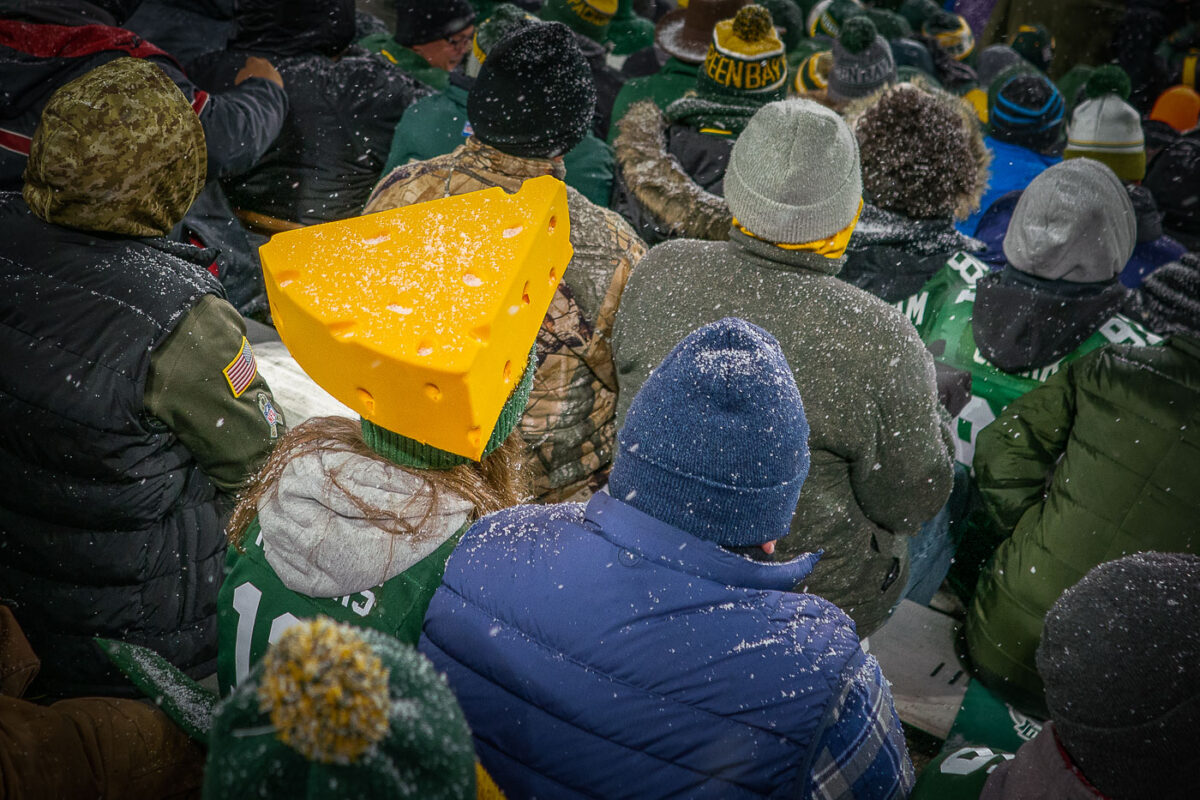
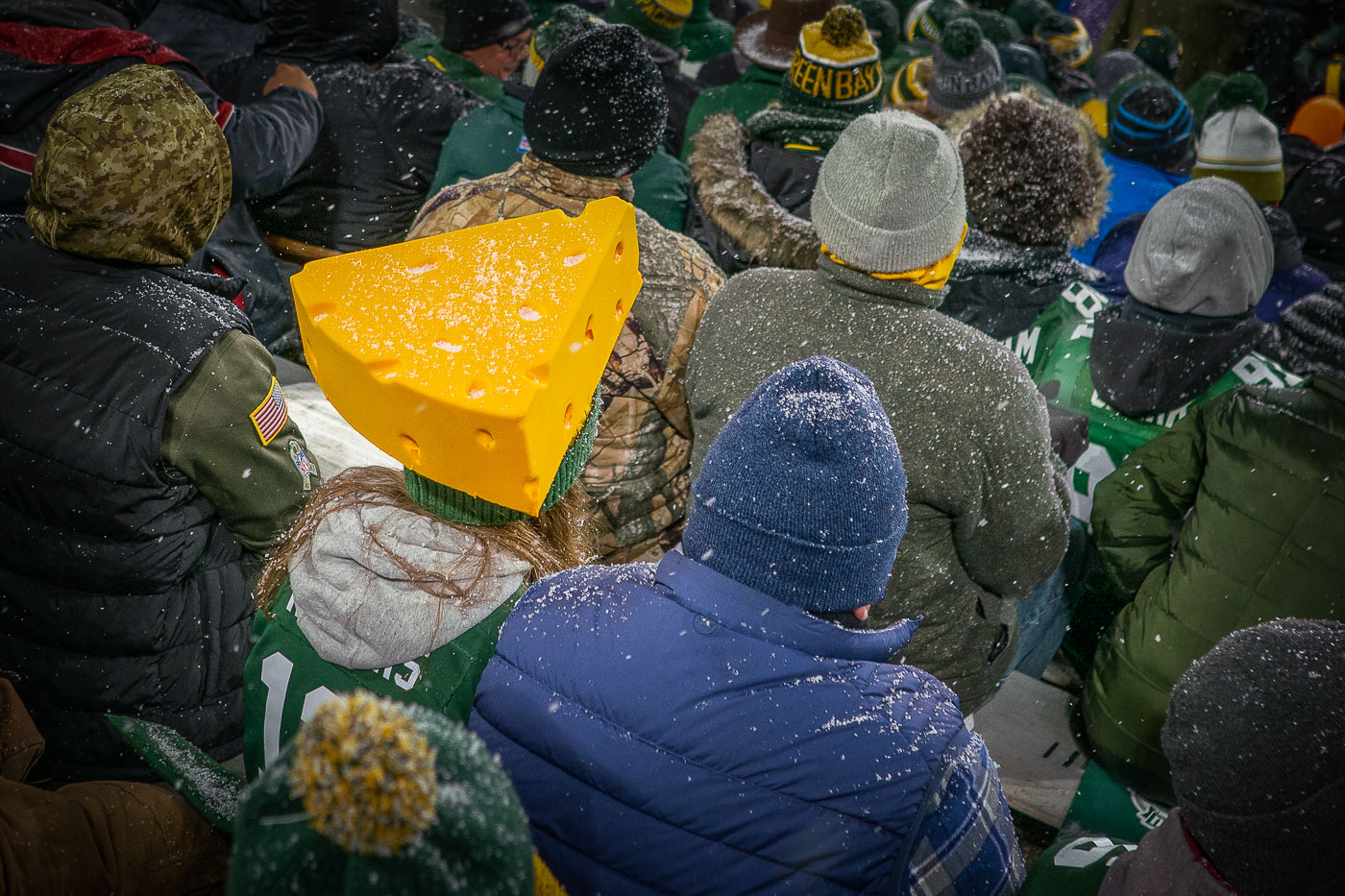
A fan wearing a Cheesehead hat braves snowfall at Lambeau Field in Green Bay, Wisconsin.
A fan wearing a "Cheesehead" hat braves snowfall at Lambeau Field in Green Bay, Wisconsin. The Green Bay Packers have played at the stadium, known for its cold-weather games, since 1957. This image captures fan dedication during a game where the Packers defeated the Carolina Panthers 24-16.

Fan in Snow at Lambeau Field

Snow falls on Lambeau Field in Green Bay, Wisconsin, during an NFL game between the Packers and the Panthers.
Snow falls on Lambeau Field in Green Bay, Wisconsin, during an NFL game between the Packers and the Panthers. The stadium, a historic venue for American football, is filled with spectators braving the cold weather to watch the game. The scoreboard displays game statistics and advertisements, typical of a professional sporting event.

Packers vs Panthers at Lambeau Field in Snow

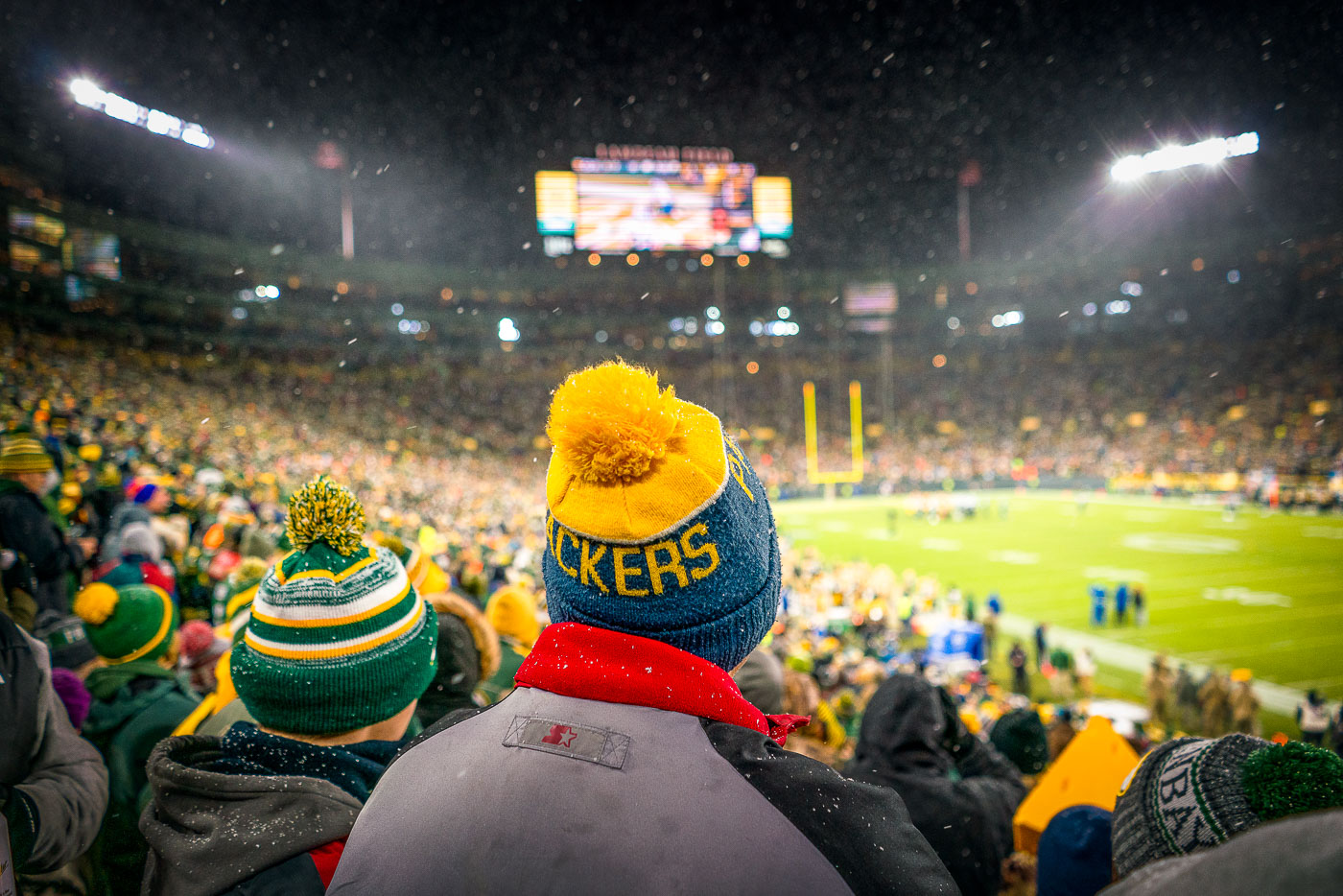
Green Bay Packers fans in snow at Lambeau Field, Wisconsin.
Fans wearing Green Bay Packers gear brave snowy conditions at Lambeau Field in Green Bay, Wisconsin. The stadium, opened in 1957, is one of the oldest in the National Football League and is known for its passionate fanbase and ability to host games in extreme weather.

Packers Fan in Snow at Lambeau Field

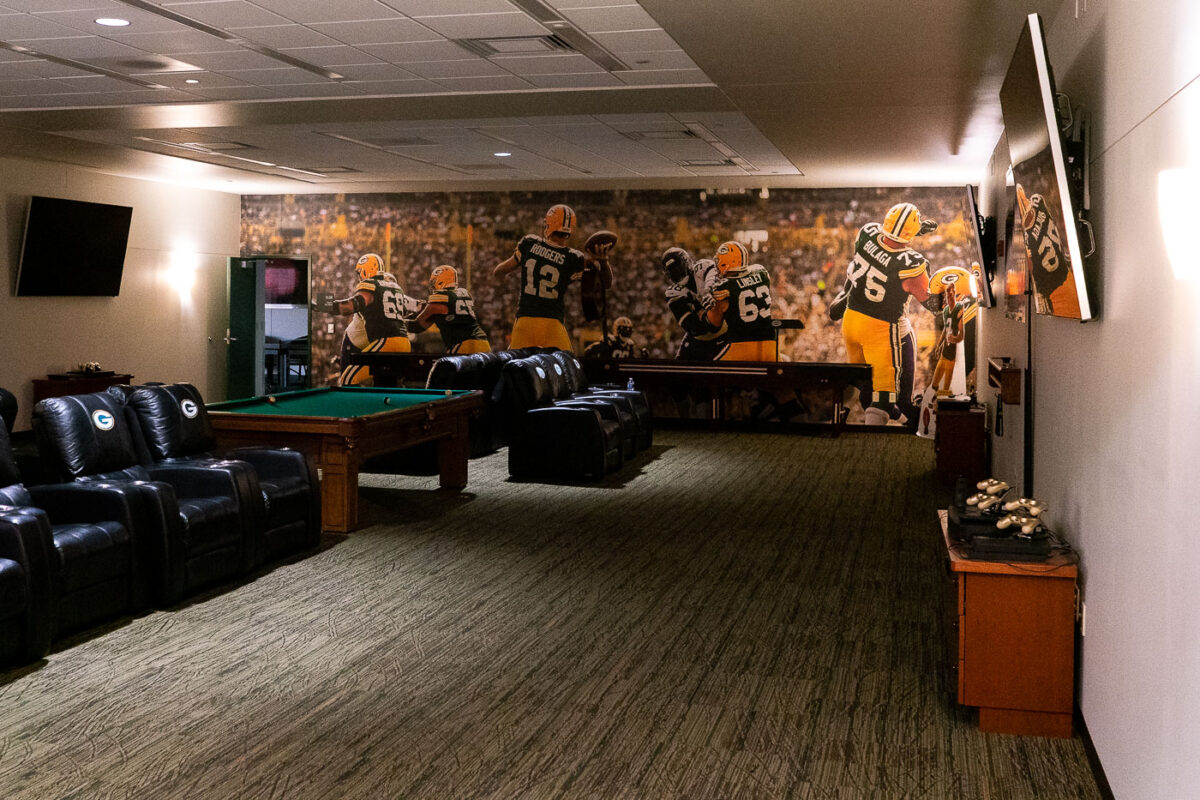
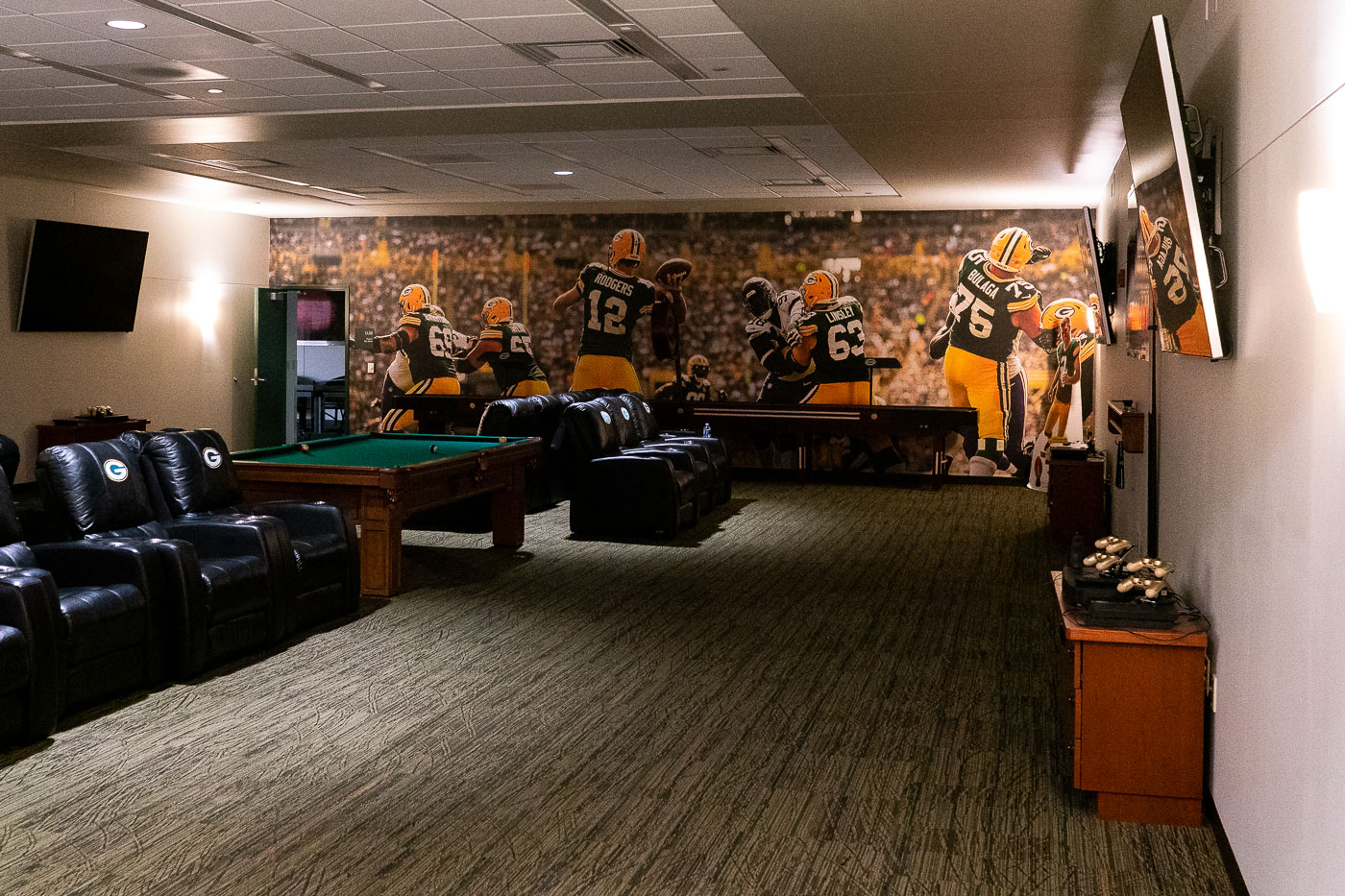
Green Bay Packers players lounge with pool table, leather seating, and large-scale player murals on the wall.
The Green Bay Packers' administrative offices and locker facilities sit inside Lambeau Field, at 1265 Lombardi Avenue in Green Bay, Wisconsin. This lounge, part of the team's headquarters complex, is used by players for downtime between practices and meetings. Wall-sized photo murals depict Packers stars including quarterback Aaron Rodgers and offensive lineman T.J. Lang, both key figures on the roster during the 2010s. Lambeau Field, opened in 1957 and named for team founder Curly Lambeau, has undergone several expansions and renovations, including additions to the administrative and locker-room areas that house spaces like this one. The Packers are the only publicly owned, nonprofit franchise in major American professional sports, with headquarters operations tied directly to the stadium rather than a separate practice facility.

Players Lounge, Green Bay Packers Headquarters, Lambeau Field

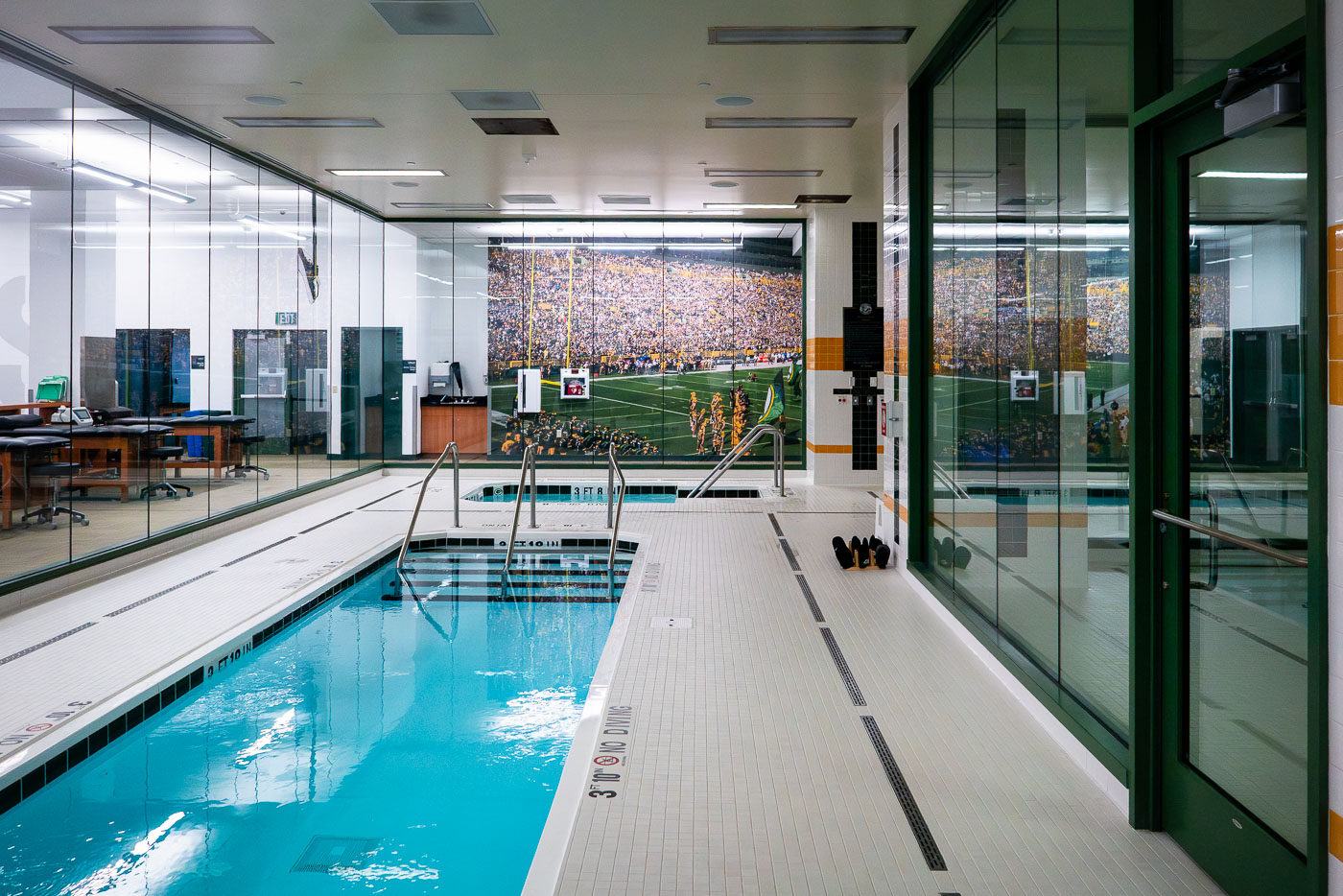
Green Bay Packers indoor swimming and rehabilitation facility with Lambeau Field mural.
The hydrotherapy pool sits inside the Don Hutson Center at Green Bay Packers headquarters in Green Bay, Wisconsin, part of the team's training and rehabilitation facilities adjacent to Lambeau Field. Players use the pool for post-practice recovery and physical therapy, with underwater treadmills and varying depths supporting joint-friendly conditioning. A mural of Lambeau Field's stands covers the wall facing the pool, tying the space to the stadium a short walk away. The Packers, the NFL's only publicly owned franchise, have played at Lambeau Field since 1957.

Hydrotherapy Pool, Green Bay Packers Headquarters

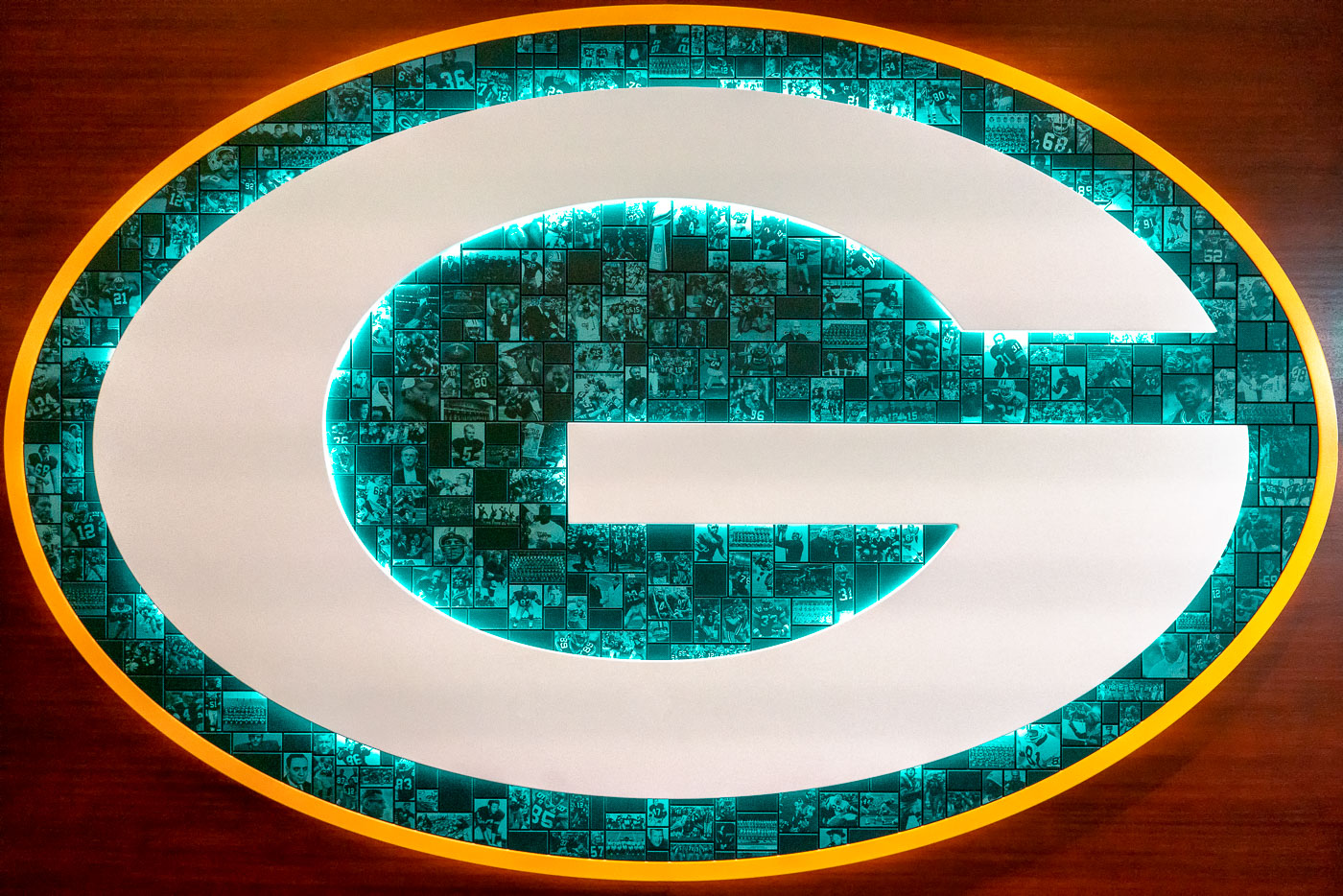
Green Bay Packers "G" mosaic at Lambeau Field in Green Bay, Wisconsin, composed of historical team photographs.
A mosaic featuring the Green Bay Packers' "G" logo is displayed within the team's player facility at Lambeau Field in Green Bay, Wisconsin. The logo is composed of numerous small photographs, each depicting moments and figures from the team's history. This installation serves as a visual tribute to the franchise's legacy, celebrating its players, coaches, and significant achievements. Lambeau Field is one of the oldest and most storied venues in the National Football League.

Packers “G” Mosaic at Lambeau Field

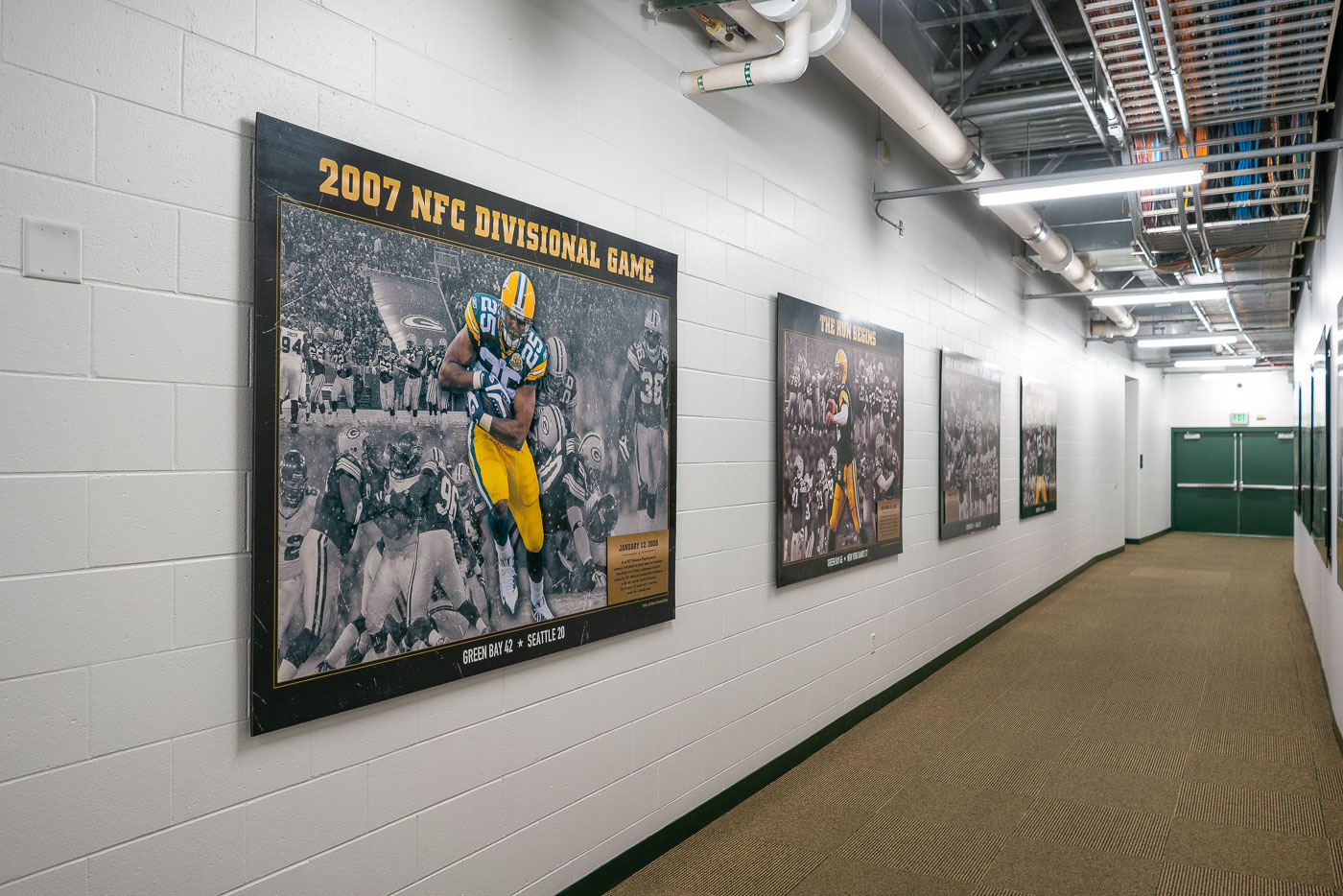
Hallway at Lambeau Field with framed photos of Green Bay Packers history, including the 2007 NFC Divisional Game.
A hallway at Lambeau Field, the Green Bay Packers' home stadium, displays framed photographs commemorating significant team moments. The hallway serves as a passage within the team's headquarters, featuring images that document the team's history and achievements. One prominent photograph captures the "2007 NFC Divisional Game" between the Green Bay Packers and the Seattle Seahawks, a game the Packers won 42-20. Another image highlights "The Run Begins," likely referencing a pivotal moment or season for the team.

Players Hallway at Lambeau Field

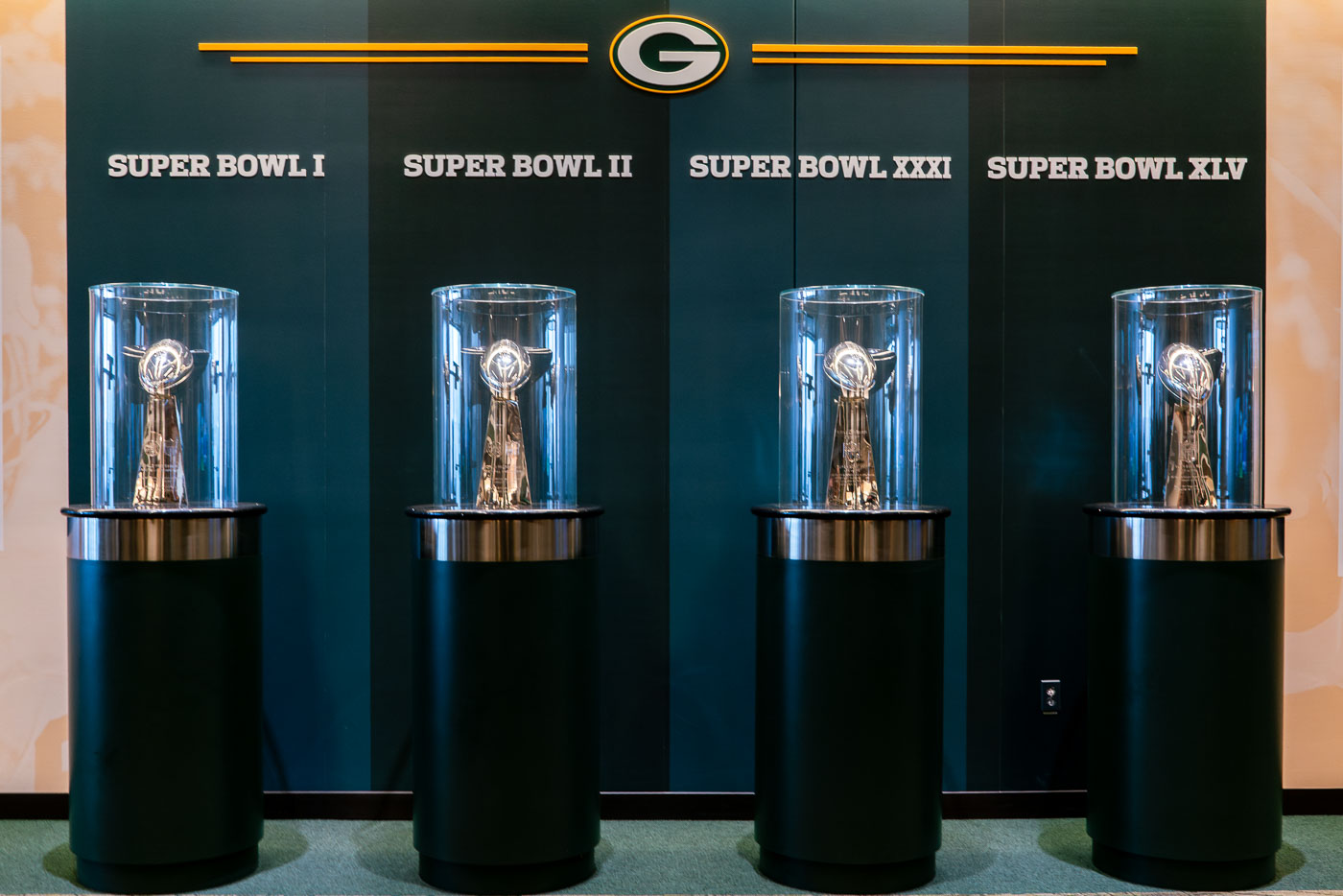
Green Bay Packers Super Bowl trophies displayed at Lambeau Field in Green Bay, Wisconsin.
The Vince Lombardi Trophies awarded to the Green Bay Packers for their Super Bowl victories are displayed at Lambeau Field in Green Bay, Wisconsin. The trophies represent championships won in Super Bowl I (1967), Super Bowl II (1968), Super Bowl XXXI (1997), and Super Bowl XLV (2011). Lambeau Field, the Packers' home stadium since 1957, is one of the oldest and most historic venues in the NFL.

Green Bay Packers Super Bowl Trophies at Lambeau Field

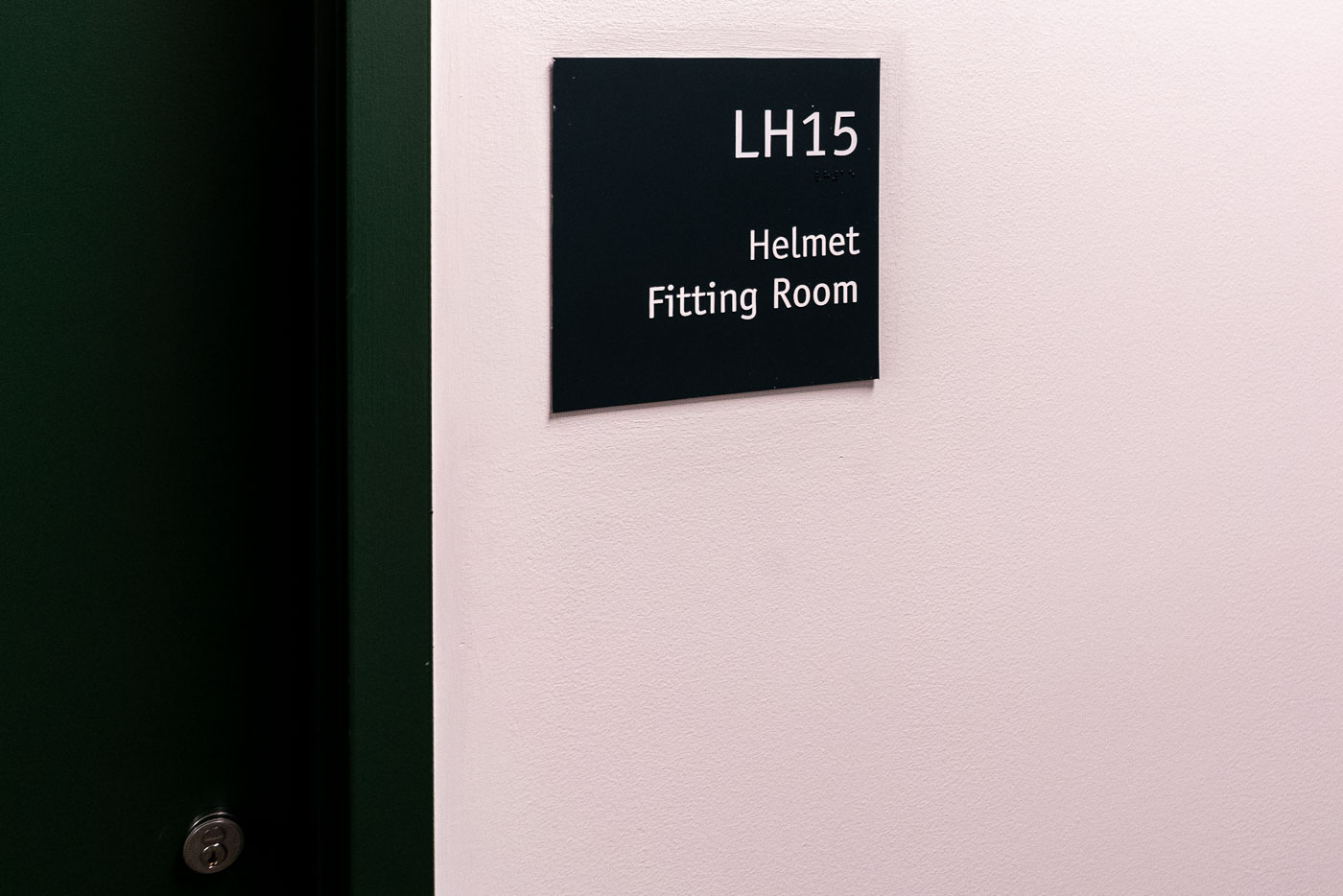
Sign for Helmet Fitting Room LH15 at Lambeau Field in Green Bay.
The Helmet Fitting Room, designated LH15, is located within the Green Bay Packers Headquarters at Lambeau Field. This facility ensures players are properly outfitted with protective helmets, underscoring the team's commitment to player safety. Lambeau Field, the historic home of the Packers since 1957, has undergone numerous renovations to maintain its status as a premier NFL stadium.

Lambeau Field Helmet Fitting Room LH15

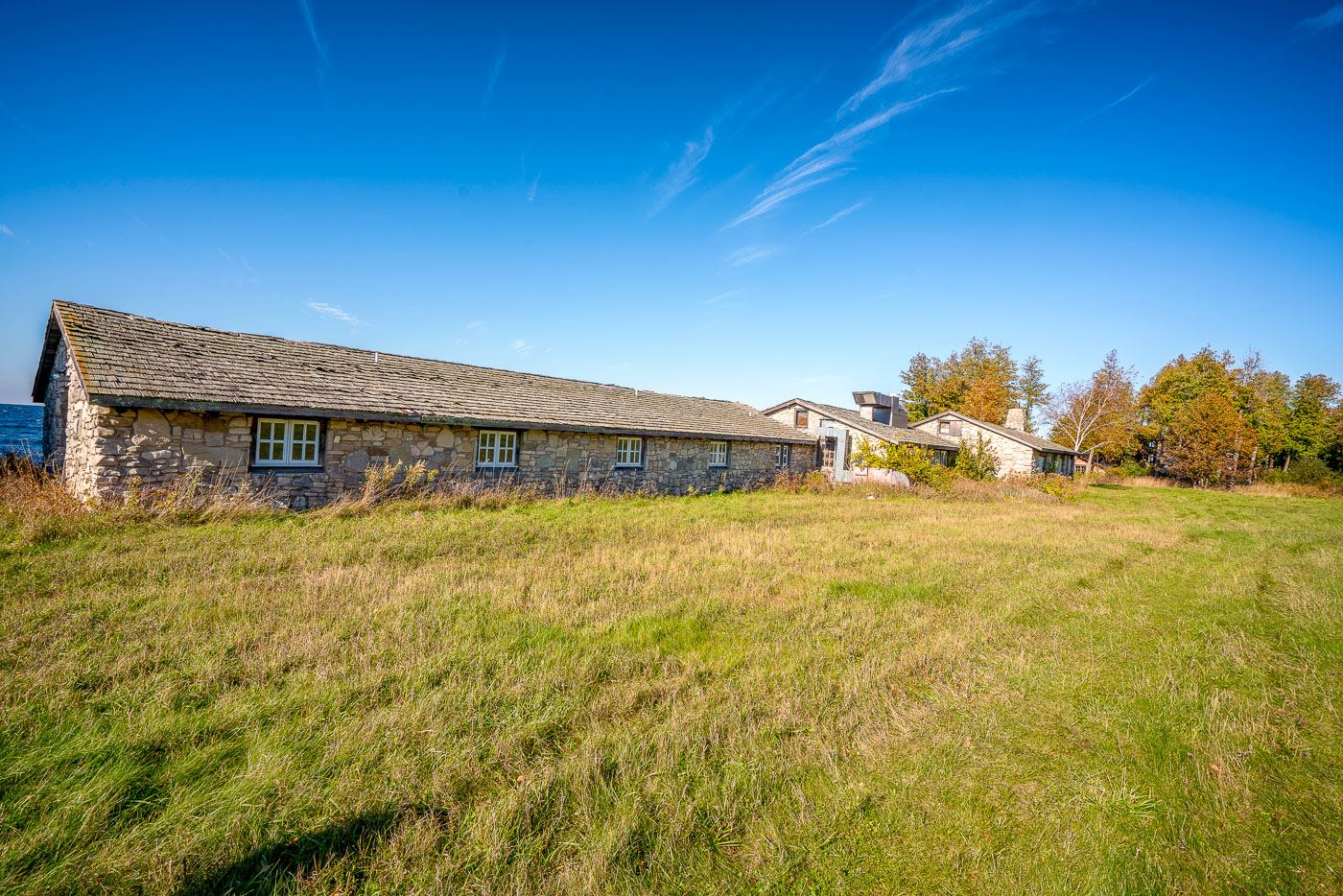
Abandoned Chateau Hutter on the Shore of Sturgeon Bay
Built in the early 1930s, Chateau Hutter was originally envisioned as a European-style resort and winery overlooking Sturgeon Bay in Door County, Wisconsin. The stone building, designed with locally quarried limestone and heavy timber framing, has long been abandoned but still stands as a striking relic of pre-war leisure architecture. Its location on a bluff above Lake Michigan and its craftsmanship make it one of the region’s most enigmatic remnants of early tourism development.

Abandoned Chateau Hutter on the Shore of Sturgeon Bay

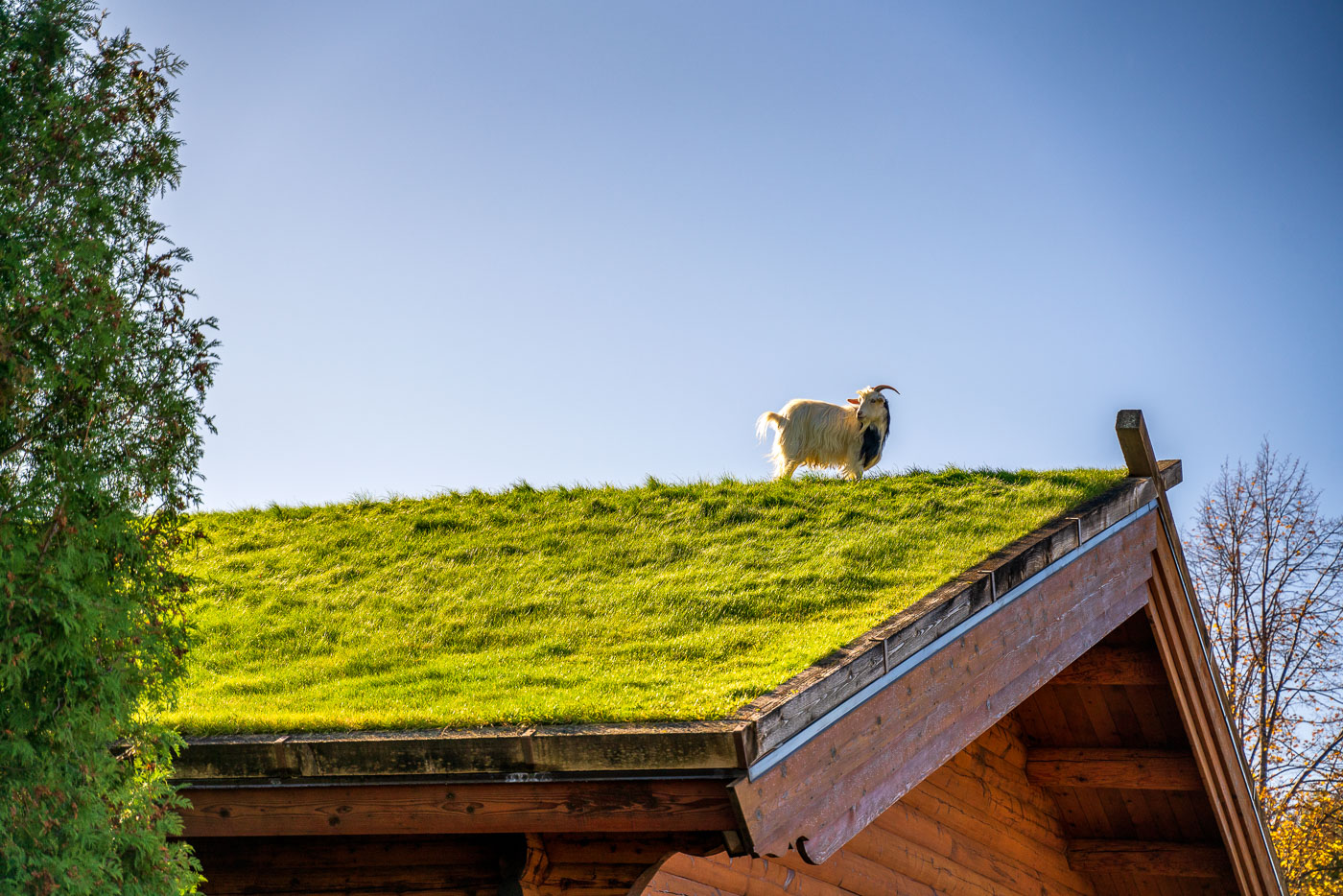
Goat grazing on the moss-covered sod roof of Al Johnson's Swedish Restaurant in Sister Bay, Wisconsin.
Al Johnson's Swedish Restaurant in Sister Bay has kept goats on its sod roof since the early 1970s, an idea credited to Al Johnson and a Swedish visitor named Lars Larson who suggested the Scandinavian touch. The roof itself dates to the restaurant's 1973 expansion, built with a grass-and-sod covering typical of rural Norwegian and Swedish building traditions. The goats spend warm months on the roof and are moved to a nearby pasture during winter. Their rooftop presence has made the restaurant one of the most ed stops in Door County, drawing visitors as much for the animals as for the Swedish menu below.

A Goat Atop Al Johnson’s Sod Roof in Sister Bay
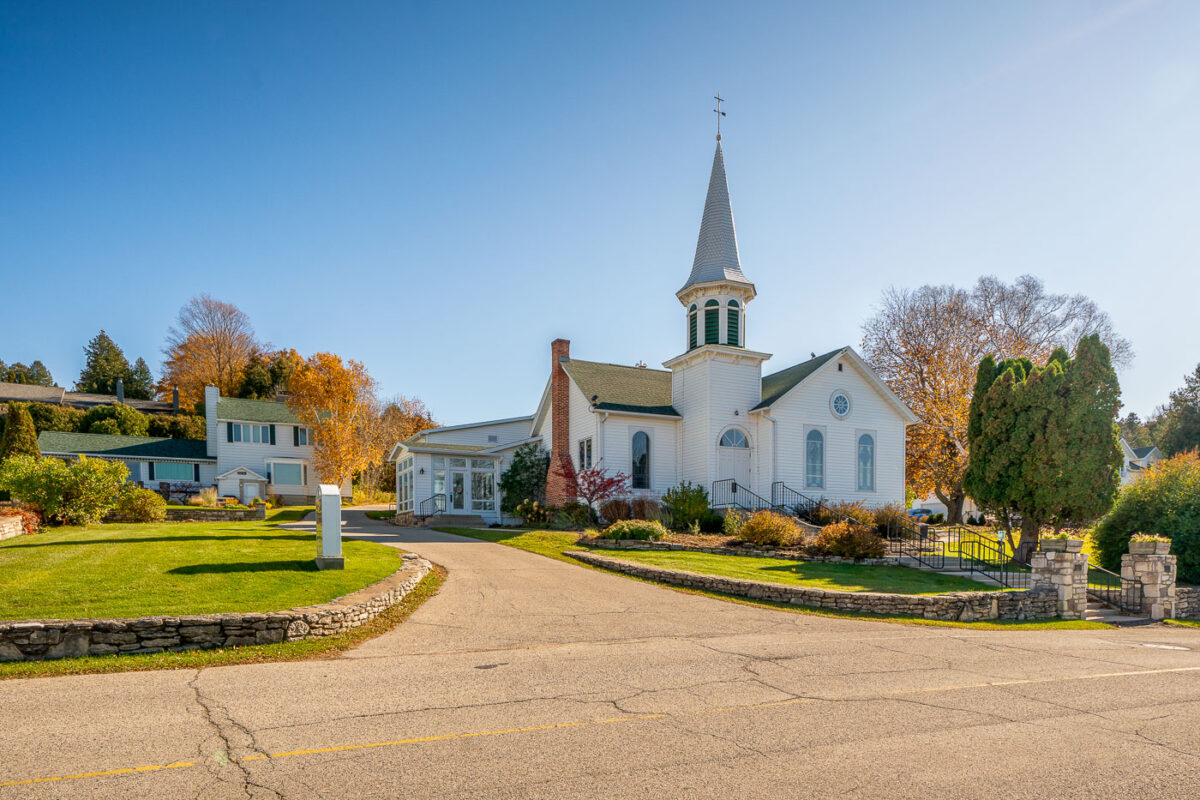
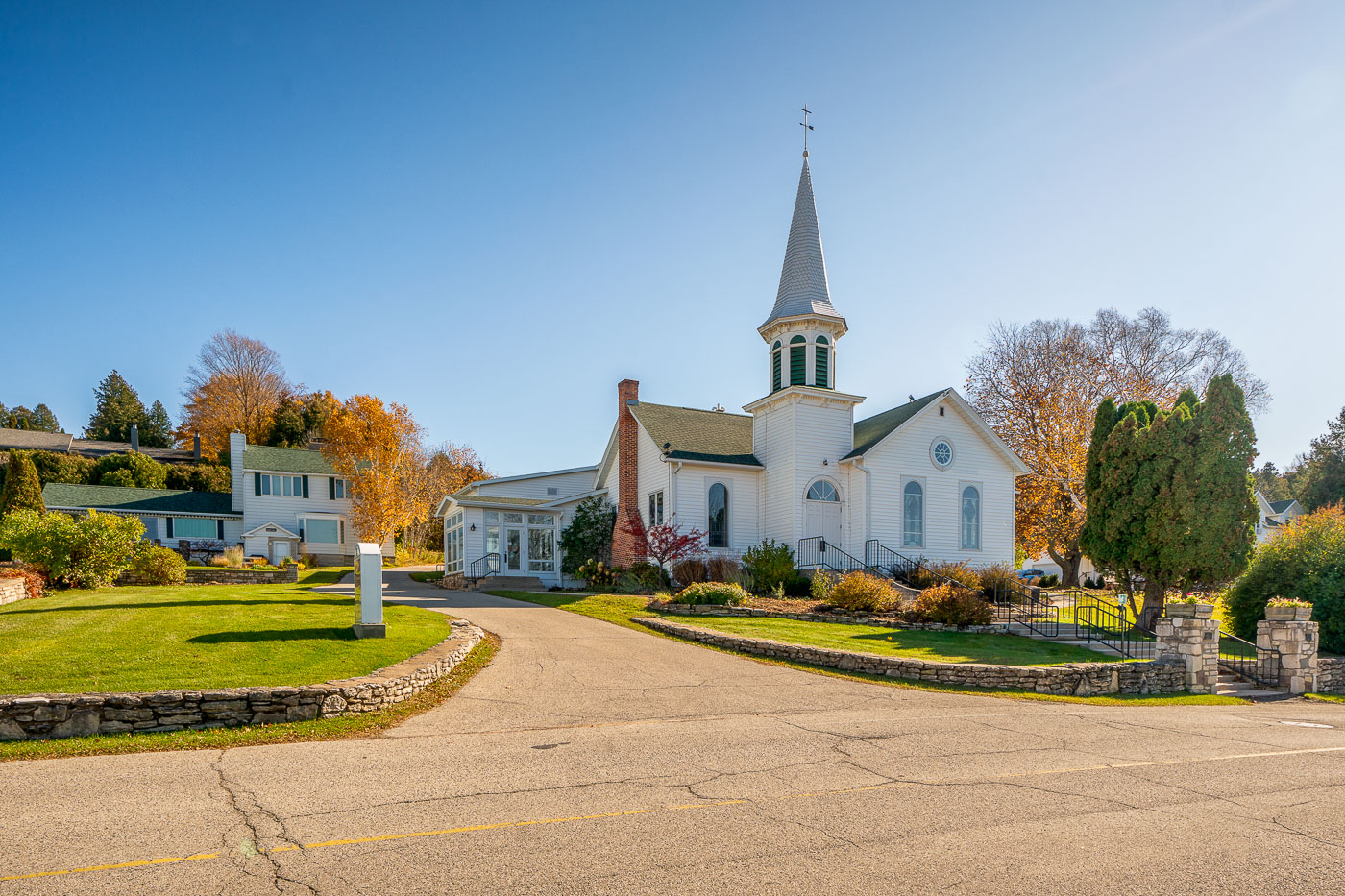
Ephraim Moravian Church, a white clapboard steeple church, stands in Ephraim, Wisconsin, overlooking Eagle Harbor.
Ephraim Moravian Church stands at the center of Ephraim, Wisconsin, overlooking Eagle Harbor on the Door County peninsula. The congregation formed in 1853 when Norwegian immigrants, led by Reverend Andreas Iverson, settled the area and established the Moravian community that gave the village its name. Built soon after in the same era, the church has served as the spiritual center for one of the few Moravian settlements in the Midwest. It is part of the Ephraim Historic District, listed on the National Register of Historic Places in 1988.

Moravian Church of Ephraim, Door County, Wisconsin
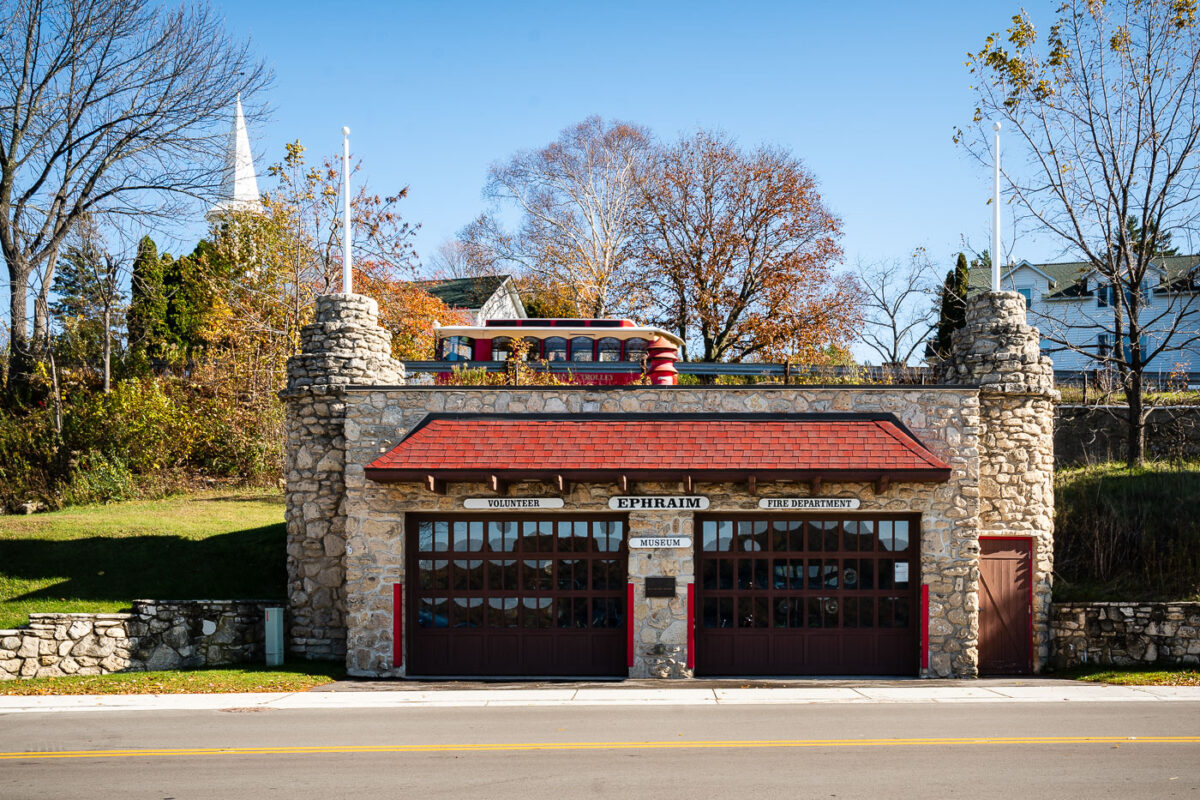
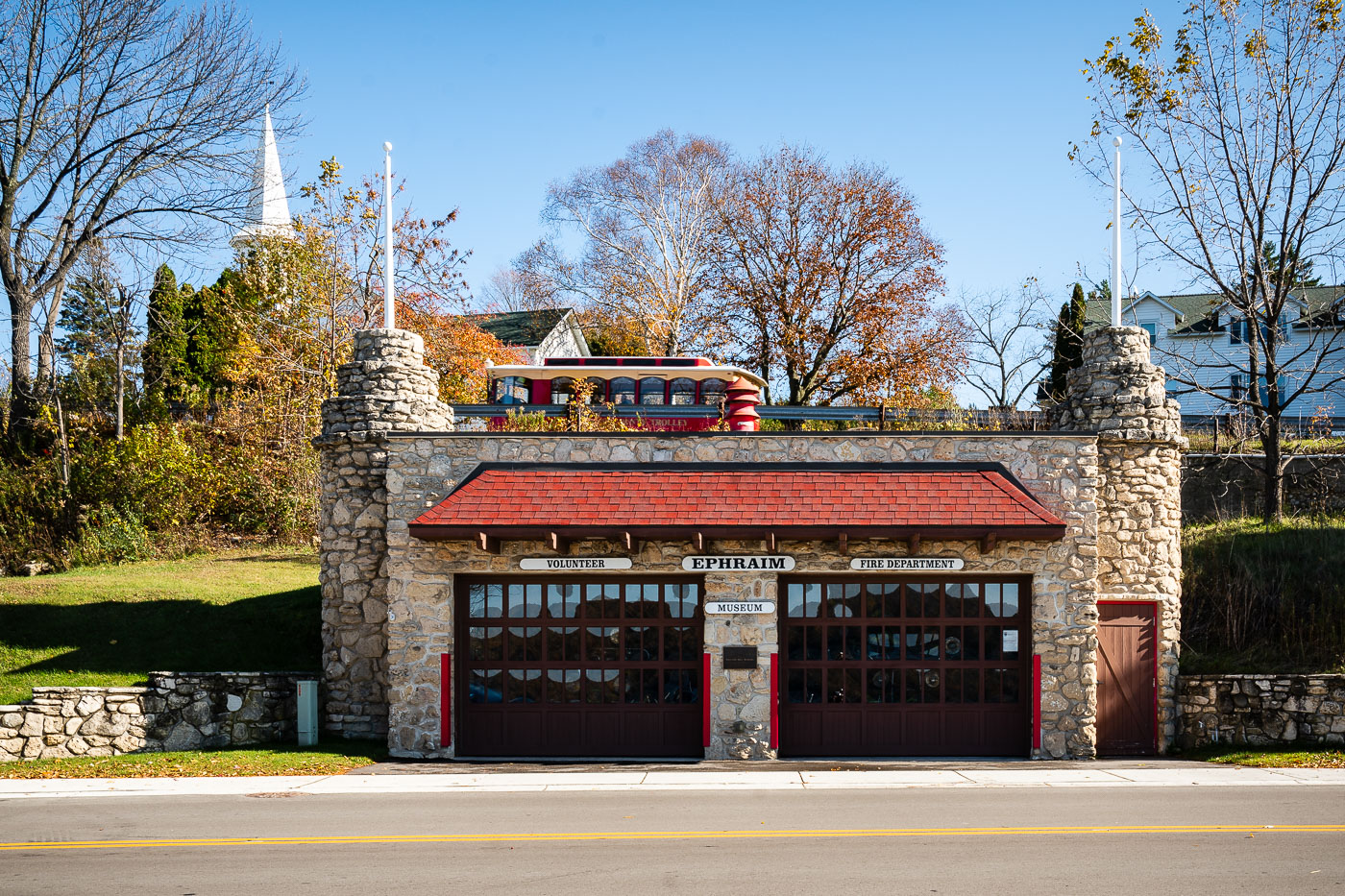
Historic stone fire department museum with red doors in Ephraim, Wisconsin.
The Ephraim Fire Department Museum occupies a stone firehouse built to house the village's volunteer fire company, a fixture of this Door County community on the Green Bay shoreline. The building's twin arched bays once sheltered fire apparatus before the department moved to updated quarters, leaving the original structure to be preserved as a museum. Ephraim's volunteer fire service dates back to the early 20th century, when local residents organized to protect the resort village's wood-frame cottages and inns. The museum now displays vintage firefighting equipment tied to the village's history, including antique hose carts and early motorized trucks. Ephraim itself was founded in 1853 by Moravian settlers, and the fire company grew alongside the town as it developed into a summer destination.

Stone Firehouse of the Ephraim Fire Department Museum
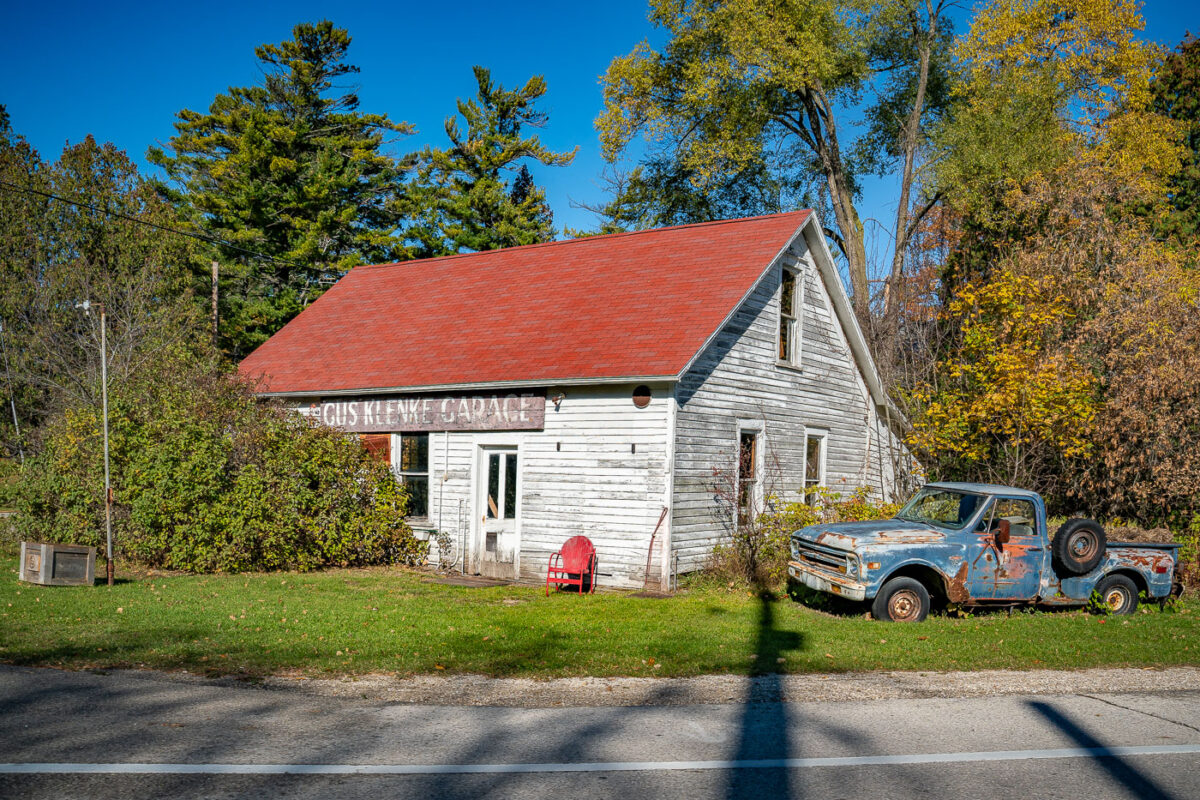
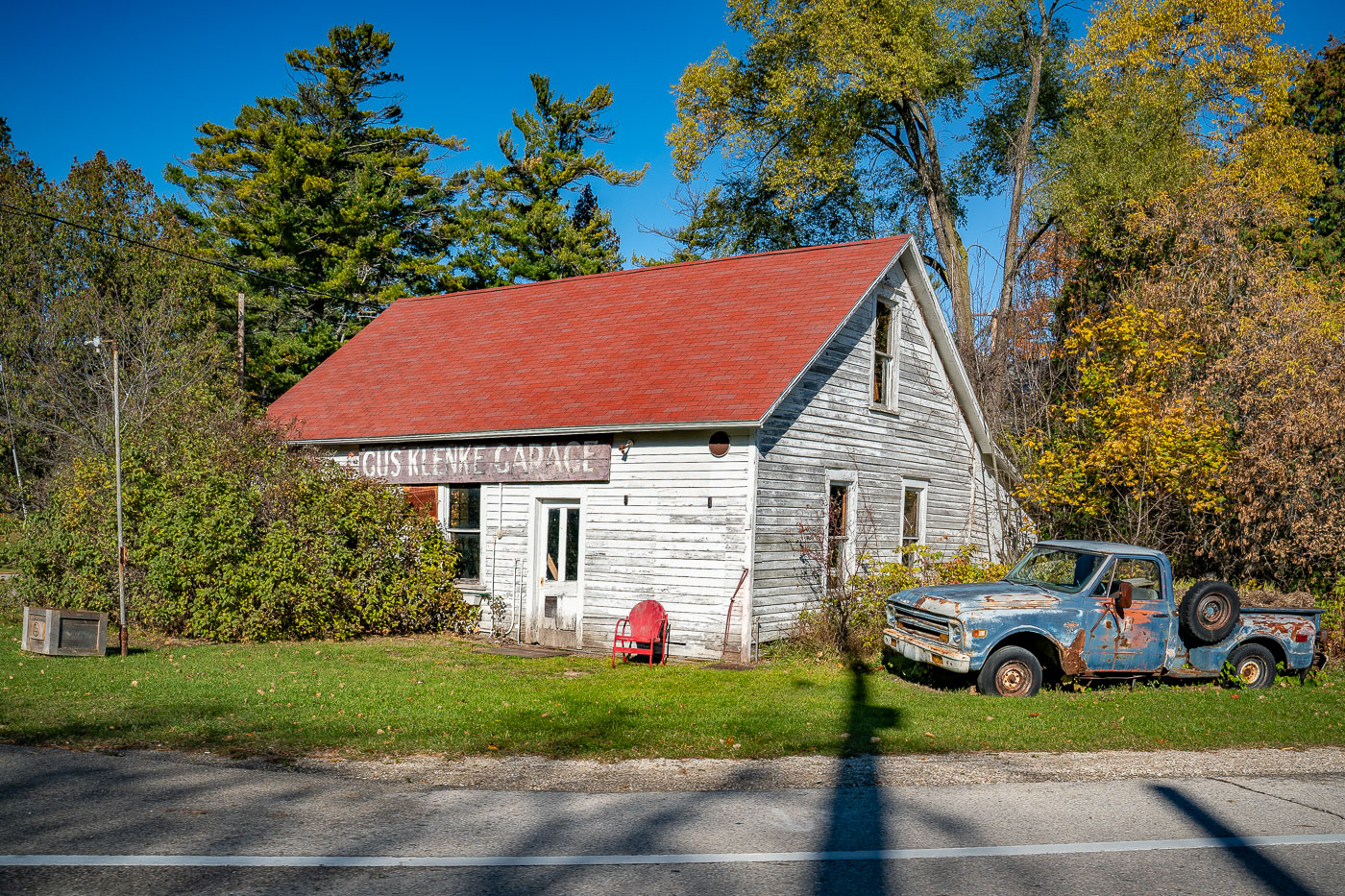
Abandoned Chevrolet pickup truck parked beside Gus Klenke Garage, a former Standard Oil station in Ellison Bay, Door County
Gus Klenke Garage in Ellison Bay, Door County, occupies a building that once served as a Standard Oil station. Gus Klenke built a reputation for mechanical skill, repairing farm equipment with scrap metal he salvaged himself. The Klenke family also rented out cottages and sold honey from bees kept on the property. The site once held a cheese factory, linking the garage to the area's earlier agricultural economy.

Rusted Chevy Truck Beside the Gus Klenke Garage in Ellison Bay
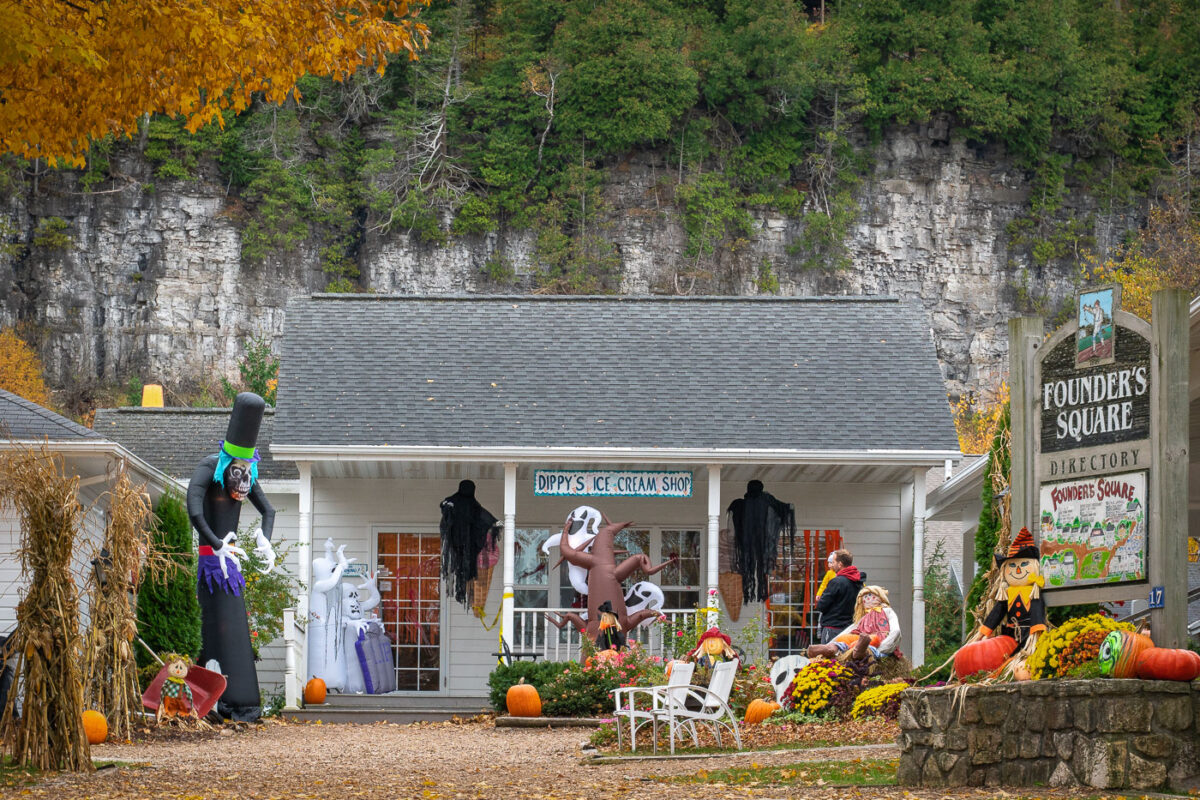
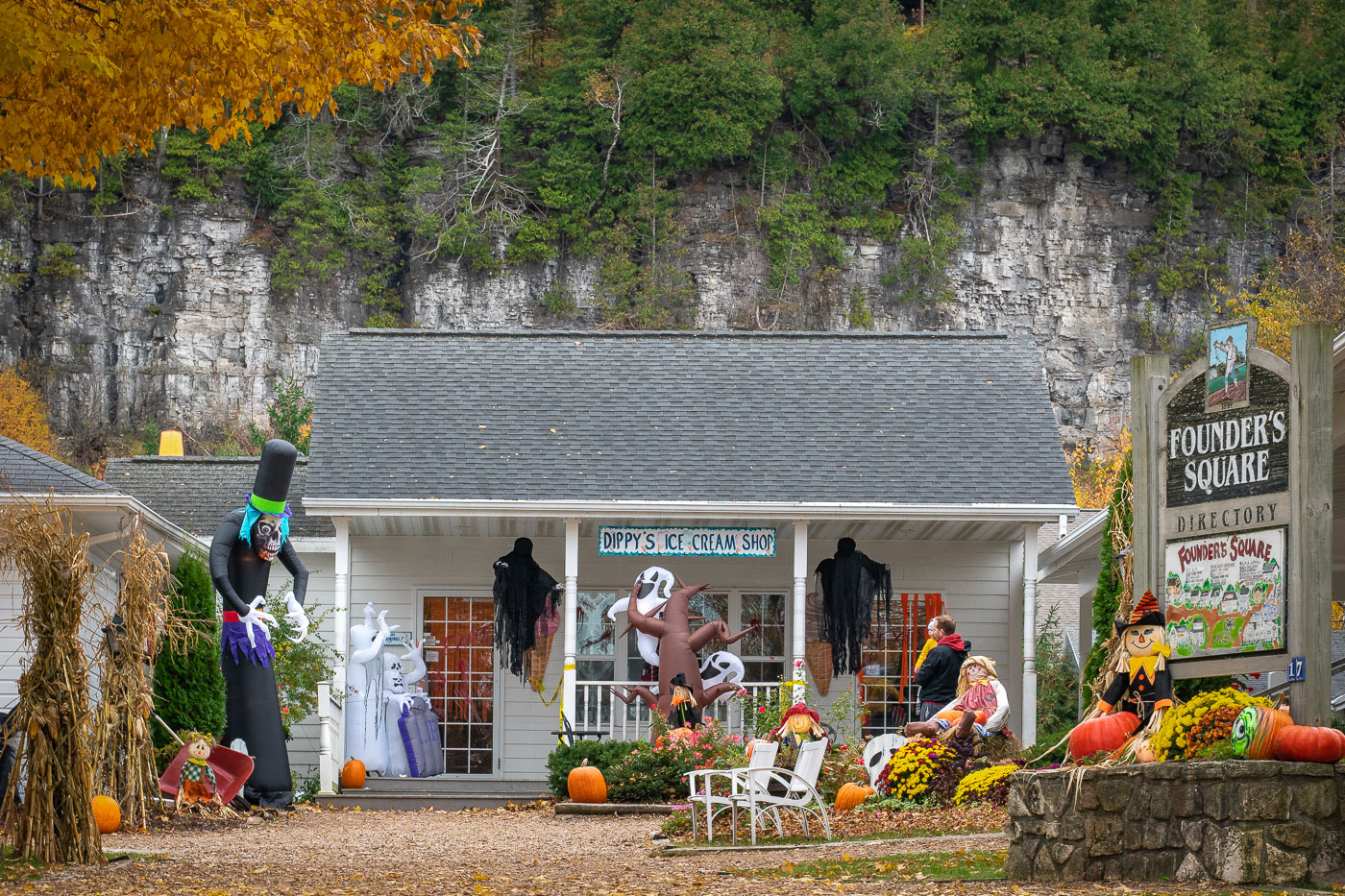
Dippy's Ice Cream Shop in Fish Creek, Wisconsin, decorated with Halloween inflatables and pumpkins beside limestone cliffs.
Dippy's Ice Cream Shop sits within Founder's Square, a cluster of shops along Highway 42 in Fish Creek, Wisconsin, set against the limestone bluffs that rise along this stretch of the Door County shoreline. Fish Creek was platted in the 1850s and grew as a lumber and shipping port before becoming one of the peninsula's early tourist villages. Founder's Square takes its name from the site's association with the town's original settlers and now houses a mix of seasonal businesses catering to visitors. Each October, shop owners in the square put out Halloween displays alongside pumpkins and mums to mark the transition into the fall tourist season.

Halloween at Dippy’s Ice Cream Shop in Founder’s Square, Fish Creek

Arcola High Bridge near Stillwater
Located near Stillwater, the Soo Line High Bridge was built in 1910 and is on the National Register of Historic Places.

Arcola High Bridge – Stillwater, MN

Arcola High Bridge spanning forested valley with graffiti-covered steel structure and railing.
The Arcola High Bridge carries rail traffic across the St. Croix River near Marine on St. Croix, Minnesota. Built in 1911 by the Wisconsin Central Railway, the steel trestle rises about 185 feet above the river and runs roughly 2,682 feet across the valley. It was added to the National Register of Historic Places in 1980 for its engineering significance. The line later passed to the Soo Line Railroad and remains part of the Canadian National Railway network today.

Arcola High Bridge Trestle, St. Croix River, Minnesota
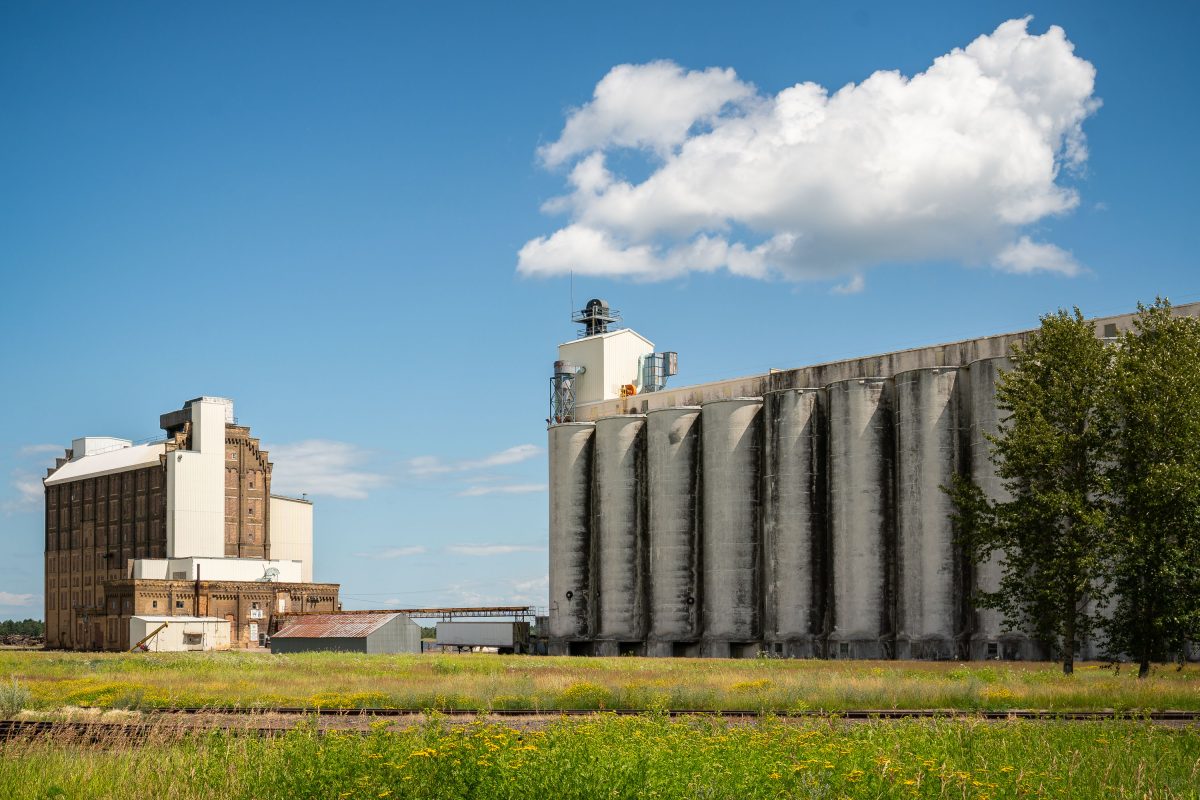
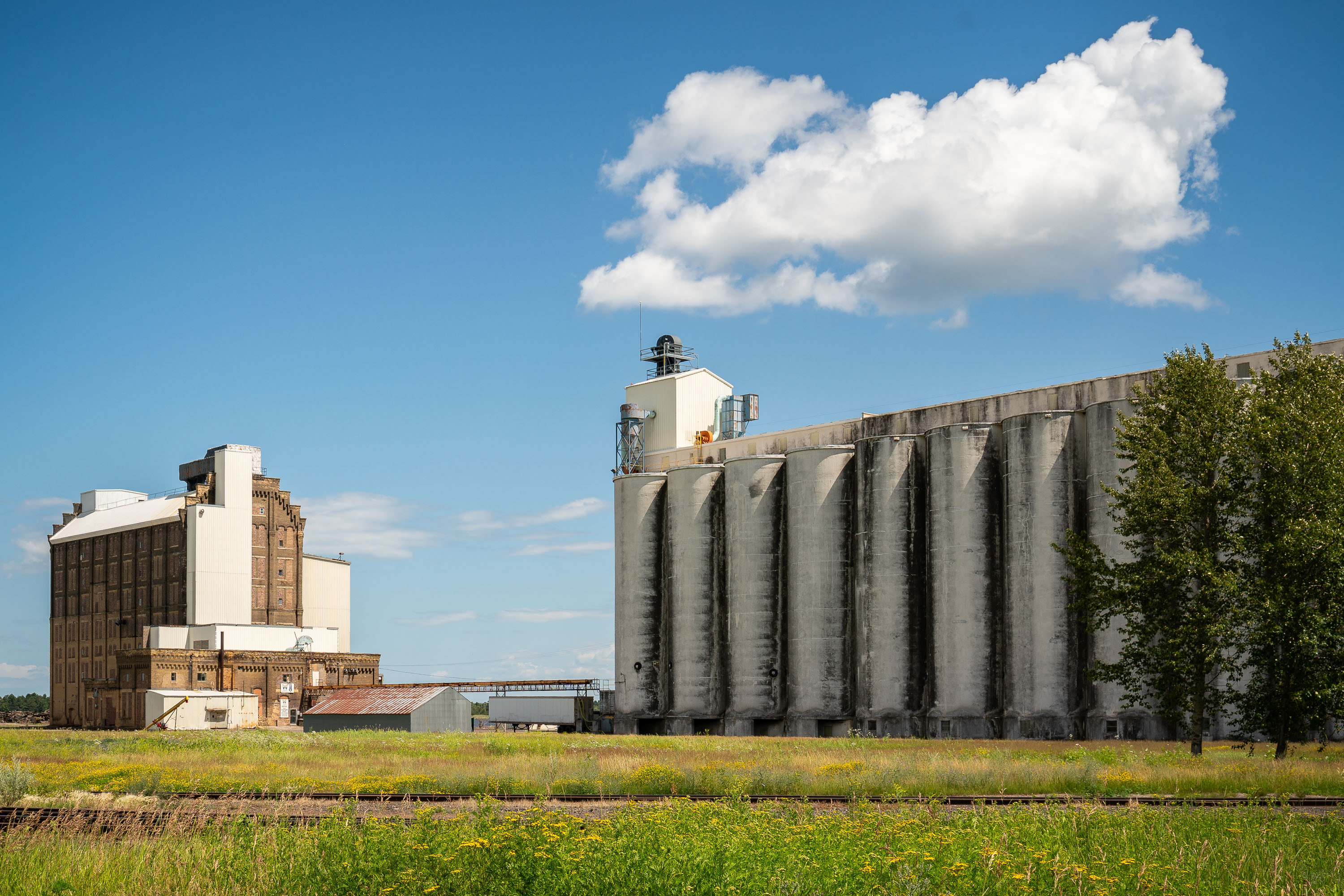
Hansen-Mueller grain elevator complex in Superior, Wisconsin, with concrete silos and historic brick structures beside railroad
Hansen-Mueller Co., a grain merchandiser headquartered in Omaha, Nebraska, operates this elevator complex along the Superior, Wisconsin waterfront. The facility stores wheat, corn, soybeans, and other grain shipped in by rail from farms across the upper Midwest before it's loaded onto lake freighters bound for ports on the Great Lakes and beyond. Superior's deepwater harbor, connected to the Atlantic via the St. Lawrence Seaway, has made it a key transfer point for agricultural exports since the early 20th century.

Hansen-Mueller Grain Elevator Complex, Superior, Wisconsin
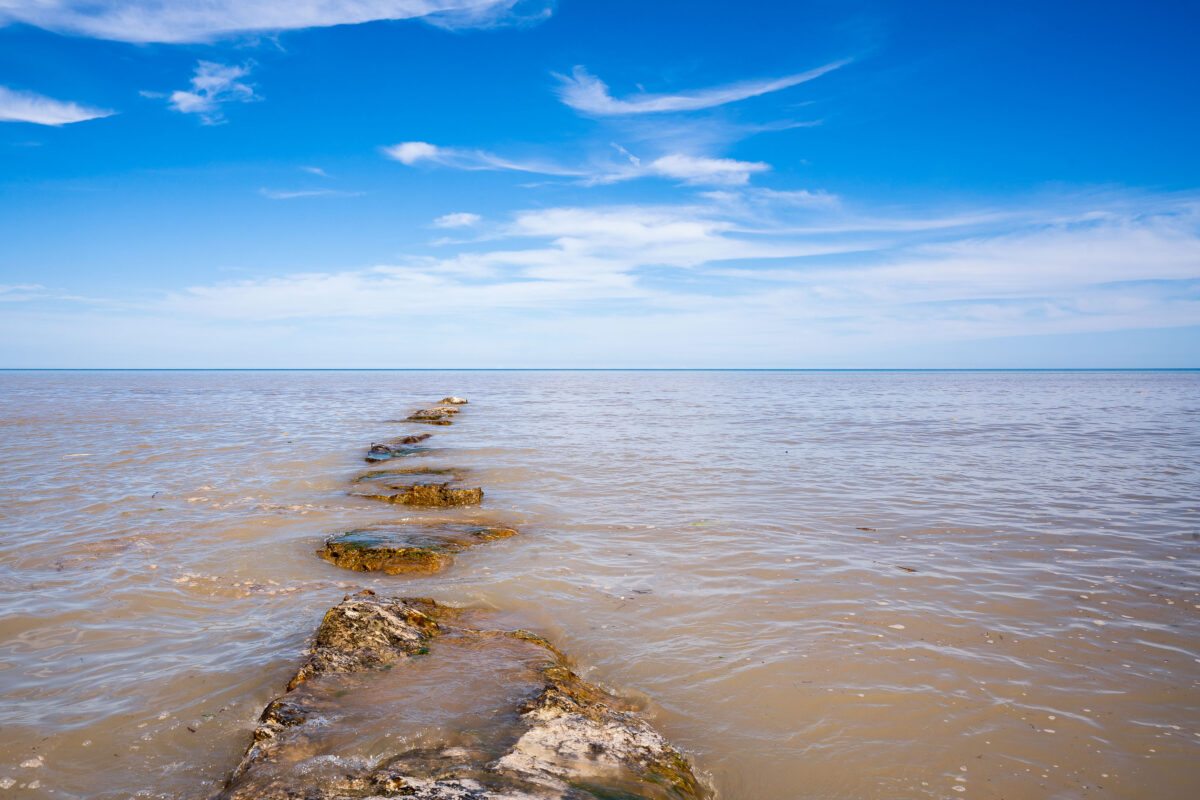
Submerged rocks extend into Lake Michigan's shallow waters under blue sky.
The Kewaunee Power Station, a former nuclear power plant, is situated on the shores of Lake Michigan in Kewaunee, Wisconsin. Constructed in the early 1970s, it was one of the state's early nuclear facilities, designed to generate electricity for the region. The plant ceased operations in 2013 and has since been undergoing decommissioning. The image captures the lake's shoreline near the former plant, with a line of submerged rocks extending into the water.

Submerged Rock Line Leading Into Lake Michigan Near Kewaunee
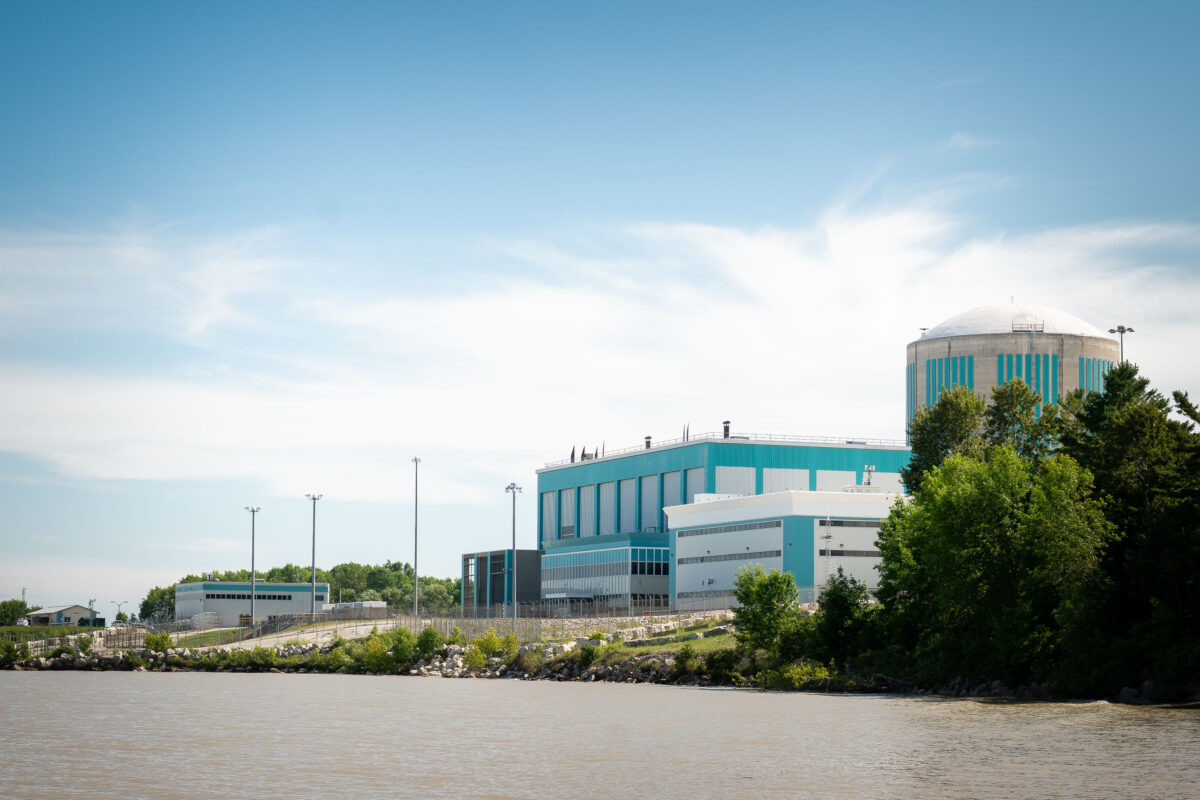
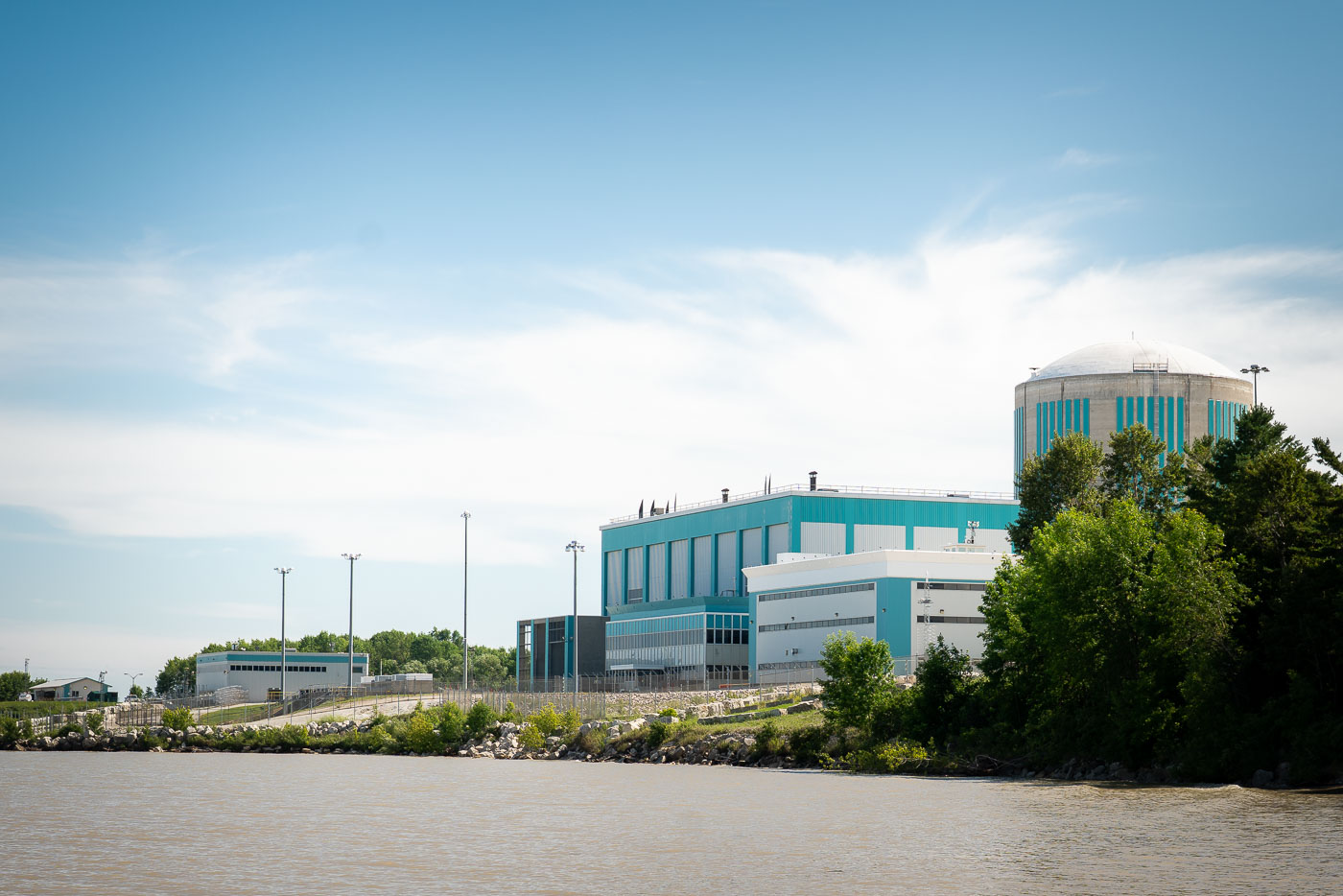
Kewaunee Nuclear Power Plant stands on Lake Michigan shoreline in Wisconsin, permanently closed since 2013.
Kewaunee Power Station in the Town of Carlton, Wisconsin, stands on the Lake Michigan shoreline southeast of Green Bay. The single-reactor nuclear generating station began commercial operation in 1974 and was the fourth nuclear power plant built in Wisconsin. Dominion Energy permanently shut down the plant on May 7, 2013, citing unfavorable market conditions, including low wholesale electricity prices linked to inexpensive natural gas. By 2019, the reactor and auxiliary buildings remained in place on the 900-acre site as the facility continued through decommissioning.

Kewaunee Power Station Along the Shoreline Near Carlton, Wisconsin
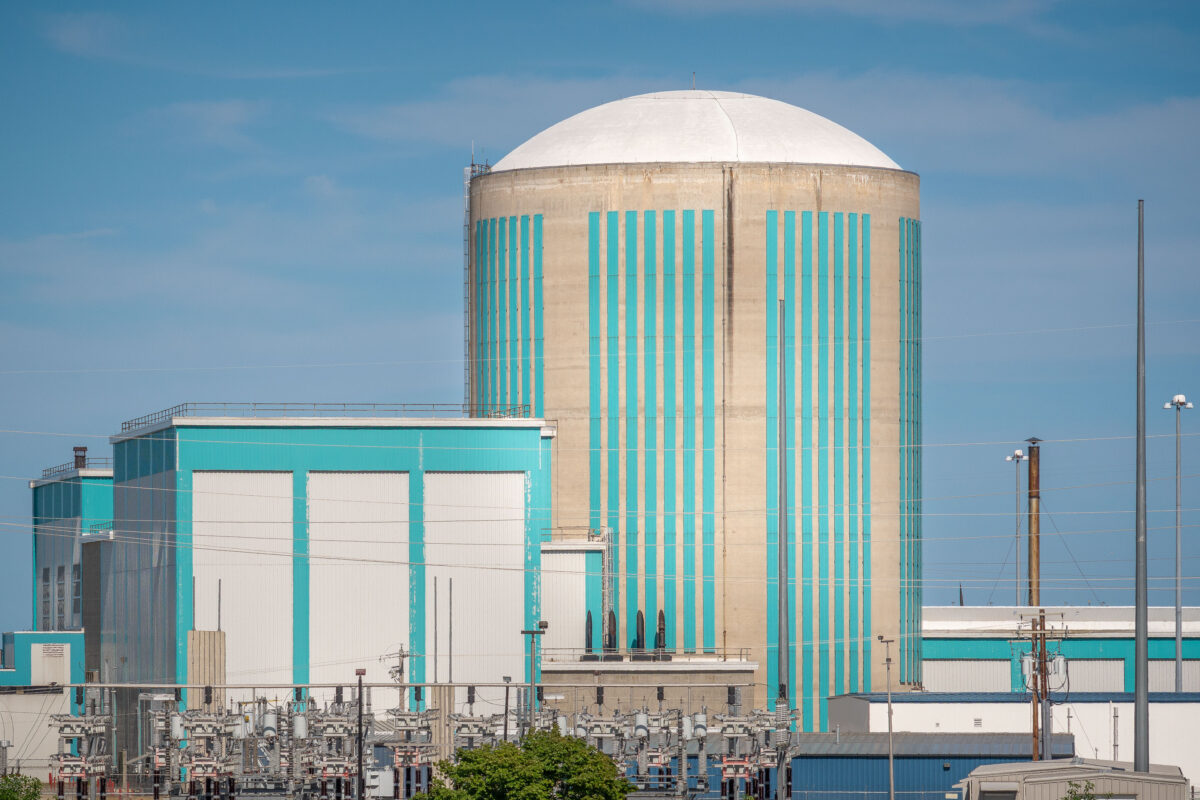
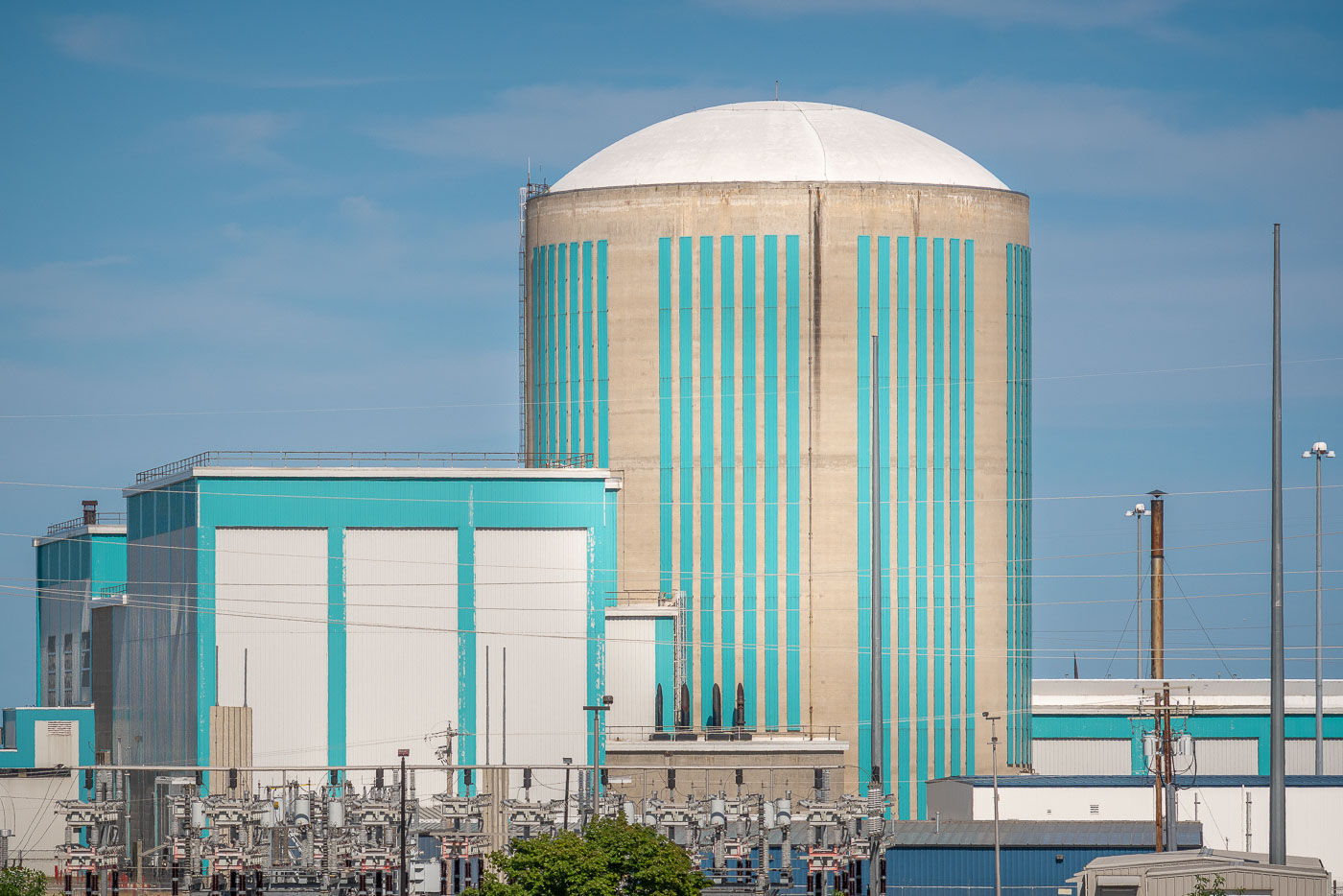
Kewaunee Nuclear Power Plant's turquoise-striped containment dome and cooling structures on Lake Michigan's Wisconsin shoreline.
Kewaunee Power Station sits on the Lake Michigan shoreline in Carlton, Wisconsin, just south of the town of Kewaunee. The single-unit pressurized water reactor began commercial operation in 1974, built and originally operated by Wisconsin Public Service Corporation. Dominion Energy later took over the plant before its owners shut it down in 2013, citing economics rather than safety concerns. The containment structure, with its rounded dome and reinforced concrete walls, housed the reactor vessel that once generated enough electricity to power hundreds of thousands of homes. In 2022, ownership transferred to NorthStar Group for decommissioning, a process that includes dismantling the reactor systems and eventually restoring the site.

Reactor Containment Building at Kewaunee Power Station
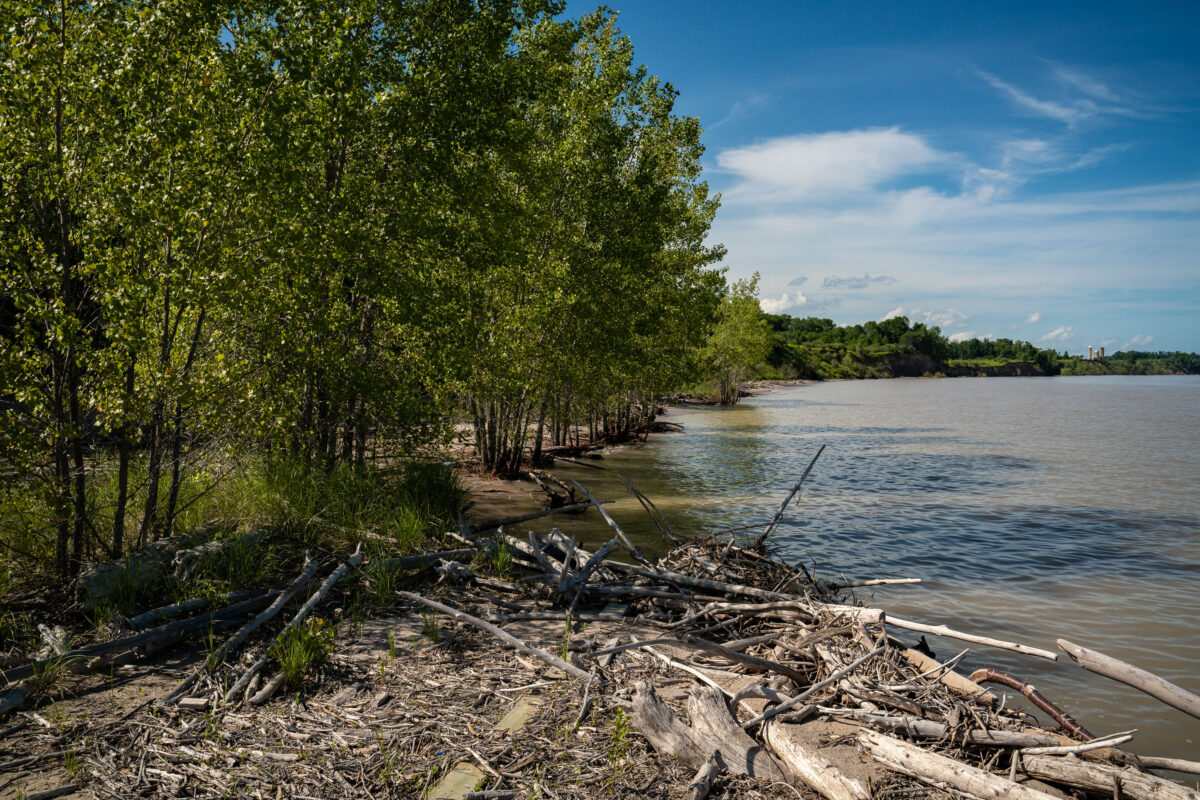
Driftwood and fallen trees line Lake Michigan's shore near Kewaunee, Wisconsin.
Lake Michigan's shoreline near Kewaunee, Wisconsin, collects driftwood carried in by wind and current action along the western shore. The Kewaunee Power Station sits a few miles south of town on this same shoreline, a single-unit pressurized water reactor that began commercial operation in 1974. Dominion Energy operated the plant until its closure in 2013; NorthStar Group Services has since managed its decommissioning. The reactor generated roughly 574 megawatts of electricity during its operating years, drawing cooling water from the lake it sits beside.

Treeline and Driftwood on Lake Michigan’s Shore Near Kewaunee
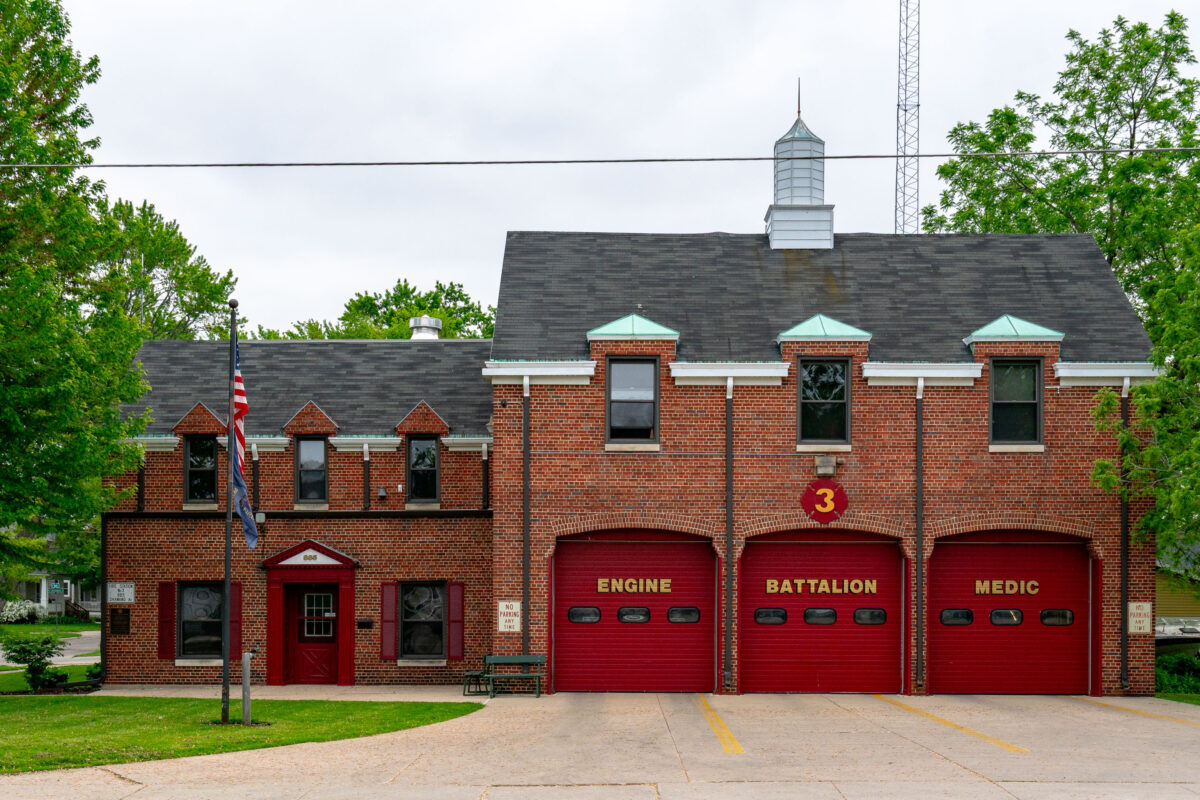
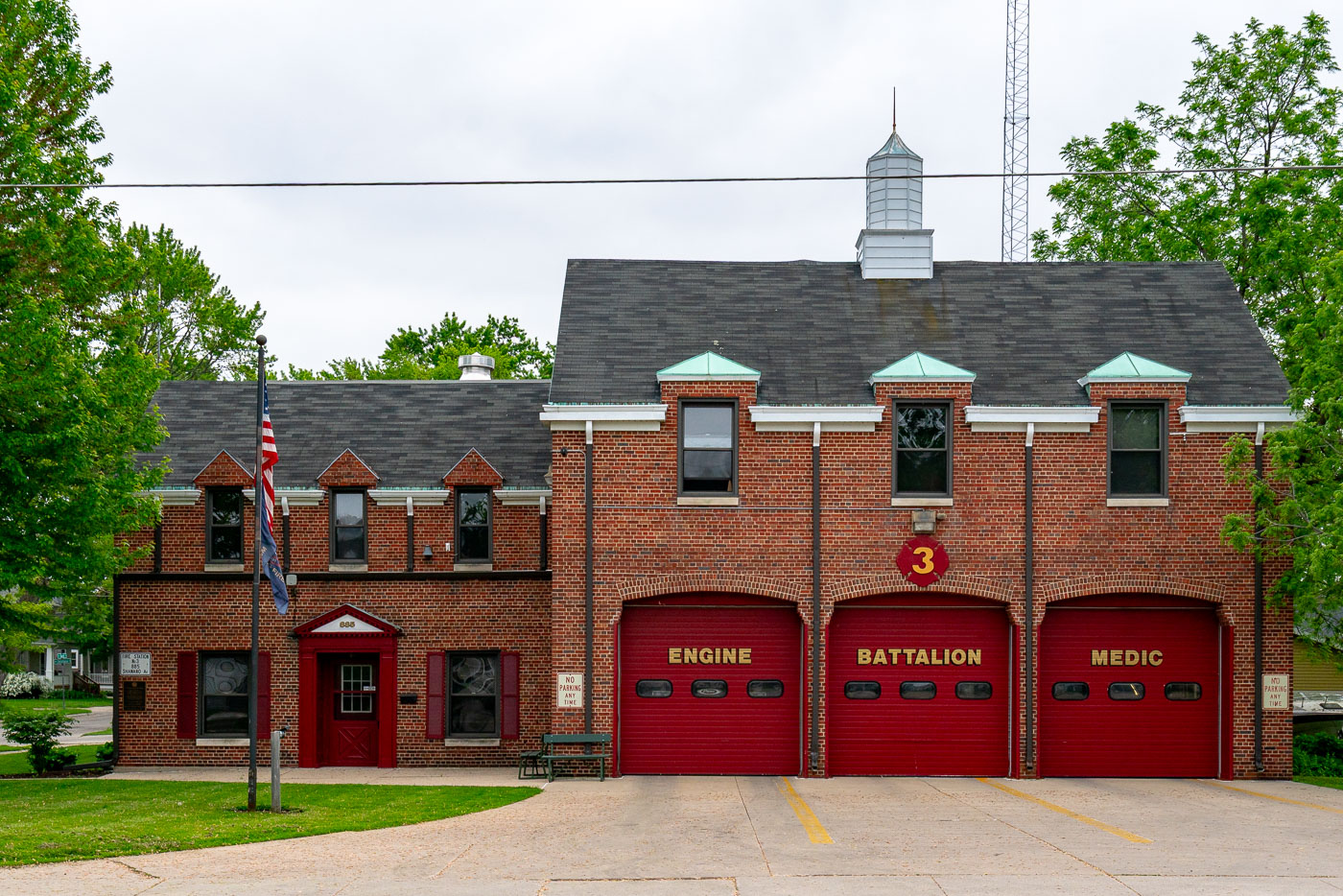
Green Bay Fire Station No. 3 at 885 Shawano Avenue, Wisconsin, features red brick and arched bay doors for engine, battalion, and medic units.
Green Bay Fire Station No. 3, located at 885 Shawano Avenue in Green Bay, Wisconsin, is a testament to mid-20th-century civic architecture. Constructed with a red brick façade, the station features prominent arched bay doors for its engine, battalion chief, and medic units. This facility has long served the west side of Green Bay, providing essential emergency response services to both residential and commercial districts. Its design reflects a period when public buildings prioritized both robust functionality and enduring aesthetic qualities.

Green Bay Fire Station No. 3, Shawano Ave, Wisconsin
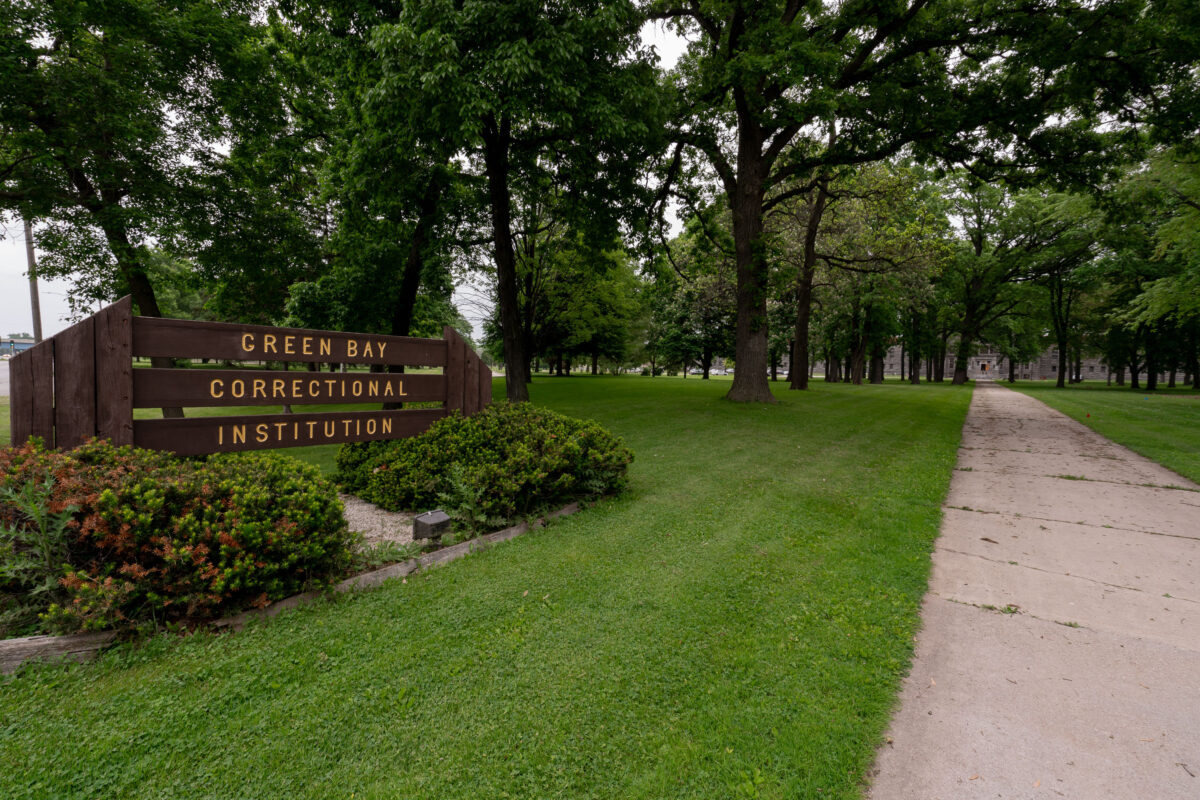
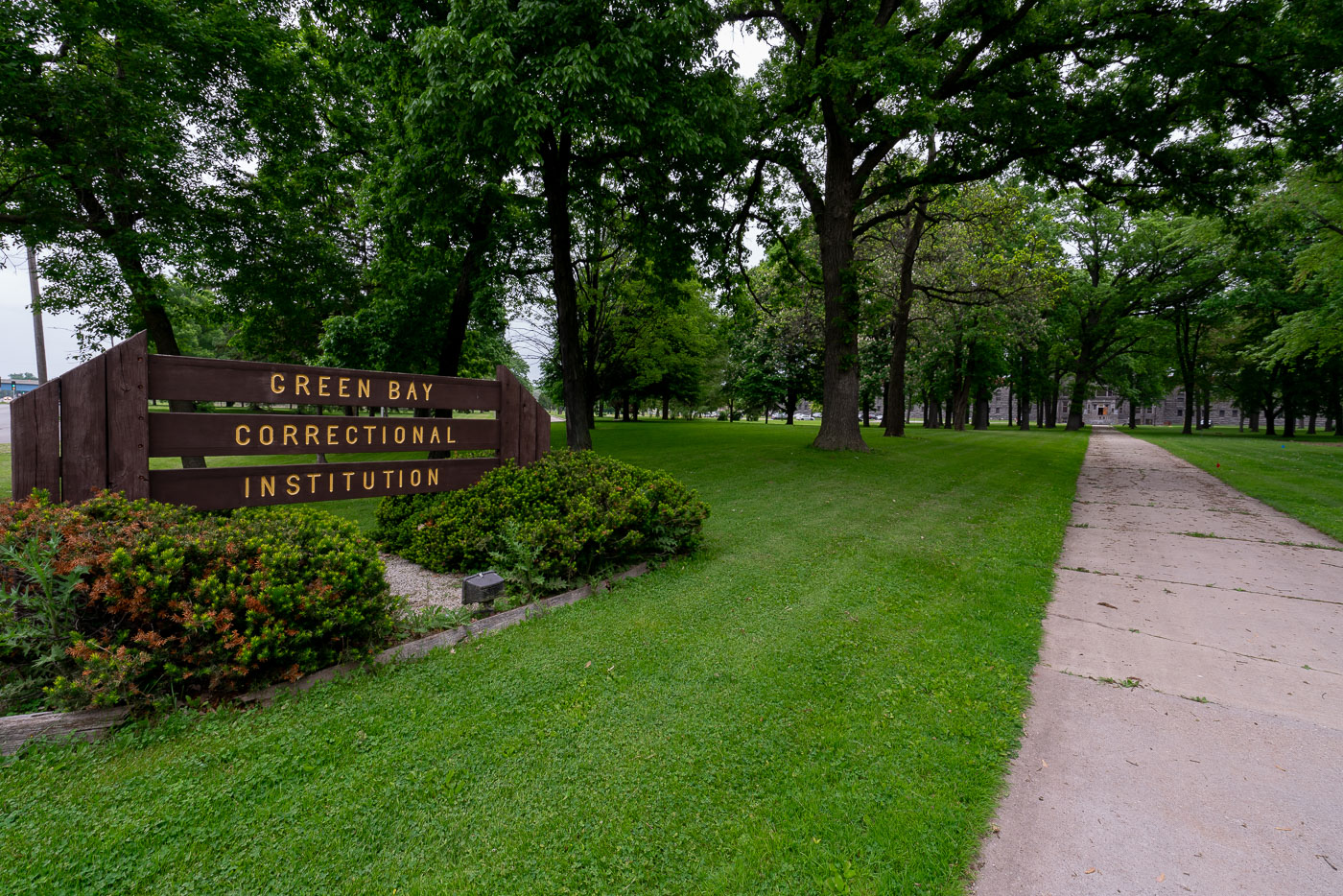
The entrance sign for Green Bay Correctional Institution in Allouez, Wisconsin, stands beside a pathway leading to the historic prison building.
The entrance to the Green Bay Correctional Institution in Allouez, Wisconsin, is marked by a wooden sign. Established in 1898 as the Wisconsin State Reformatory, this facility is one of the state's oldest correctional institutions. Its original design reflected late 19th-century penological philosophies emphasizing reform, with spacious grounds and classical stone architecture. The institution continues to operate under the Wisconsin Department of Corrections, serving as a significant site in the state's correctional history and architectural record.

Green Bay Correctional Institution Entrance, Allouez, Wisconsin
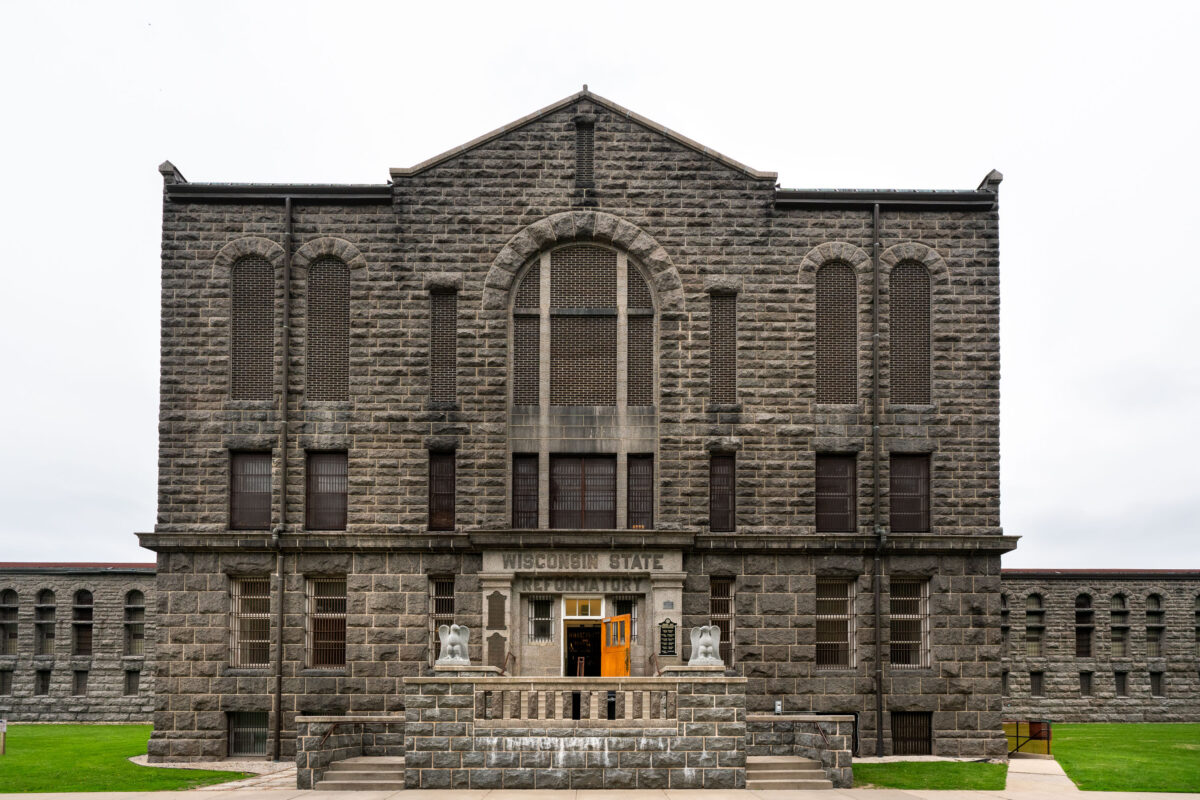
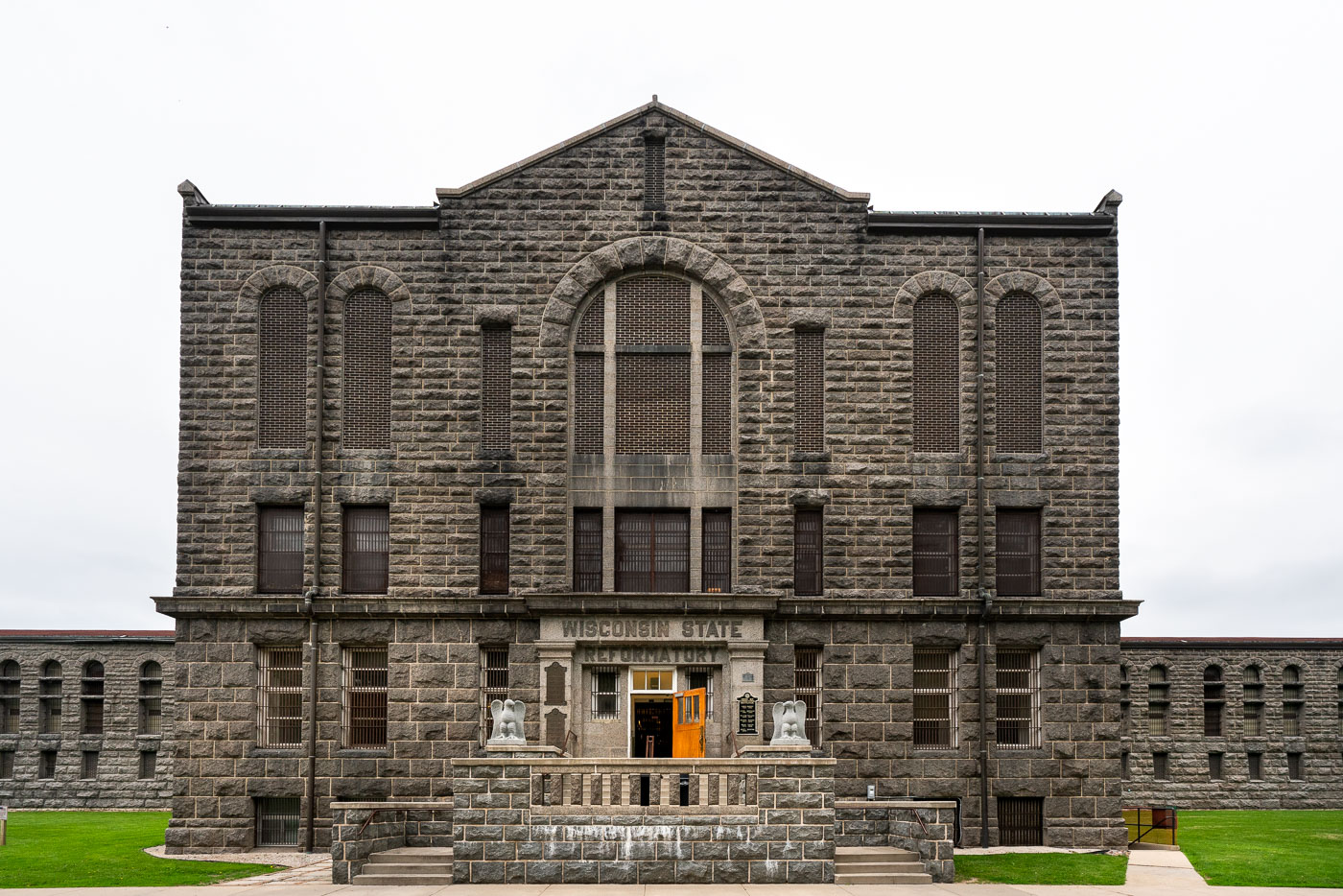
Wisconsin State Reformatory Main Entrance in Green Bay, a 19th-century correctional architecture example.
The Wisconsin State Reformatory, established in 1898 in Green Bay, is a significant example of late 19th-century correctional architecture. Constructed from locally quarried gray limestone, its Romanesque Revival style, characterized by fortress-like symmetry and heavy masonry, was intended to convey authority. The institution was designed with progressive ideals of the era, aiming for rehabilitation over punishment. The building, which still bears its original nameplate, represents a notable surviving example of penal architecture from Wisconsin's early history.

Wisconsin State Reformatory Main Entrance, Green Bay
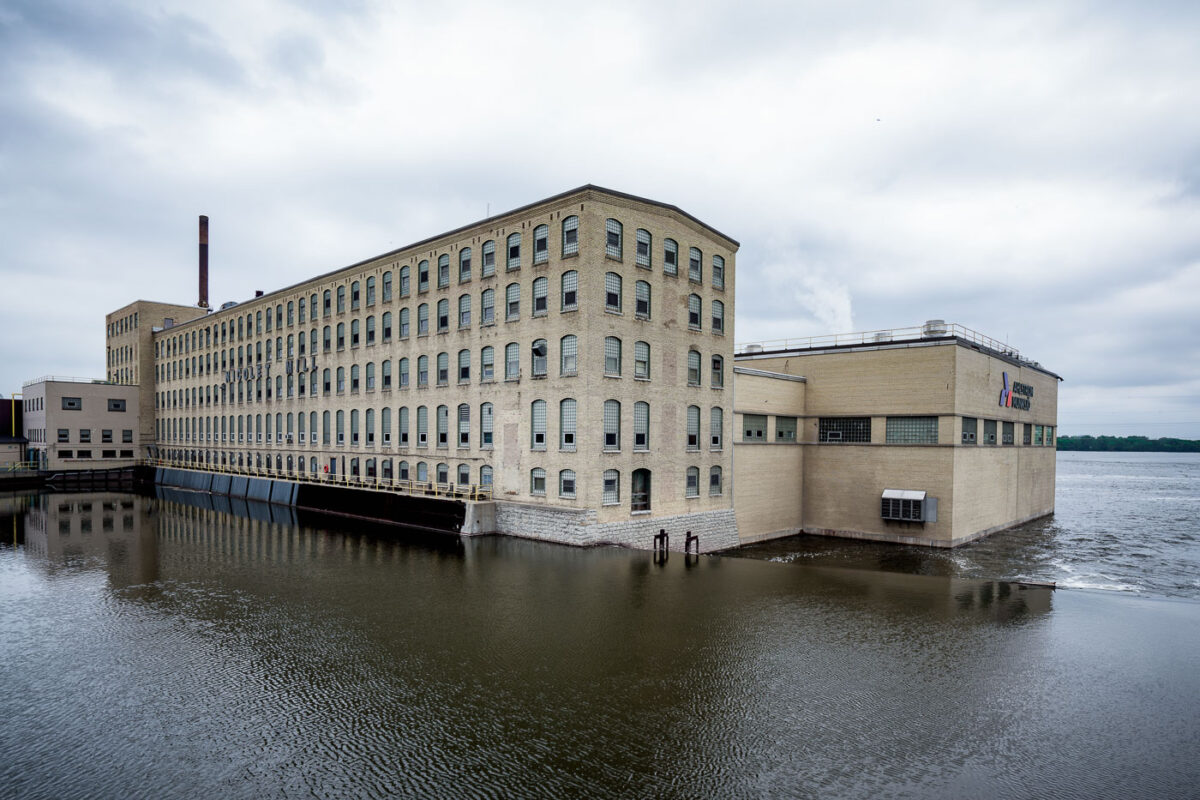
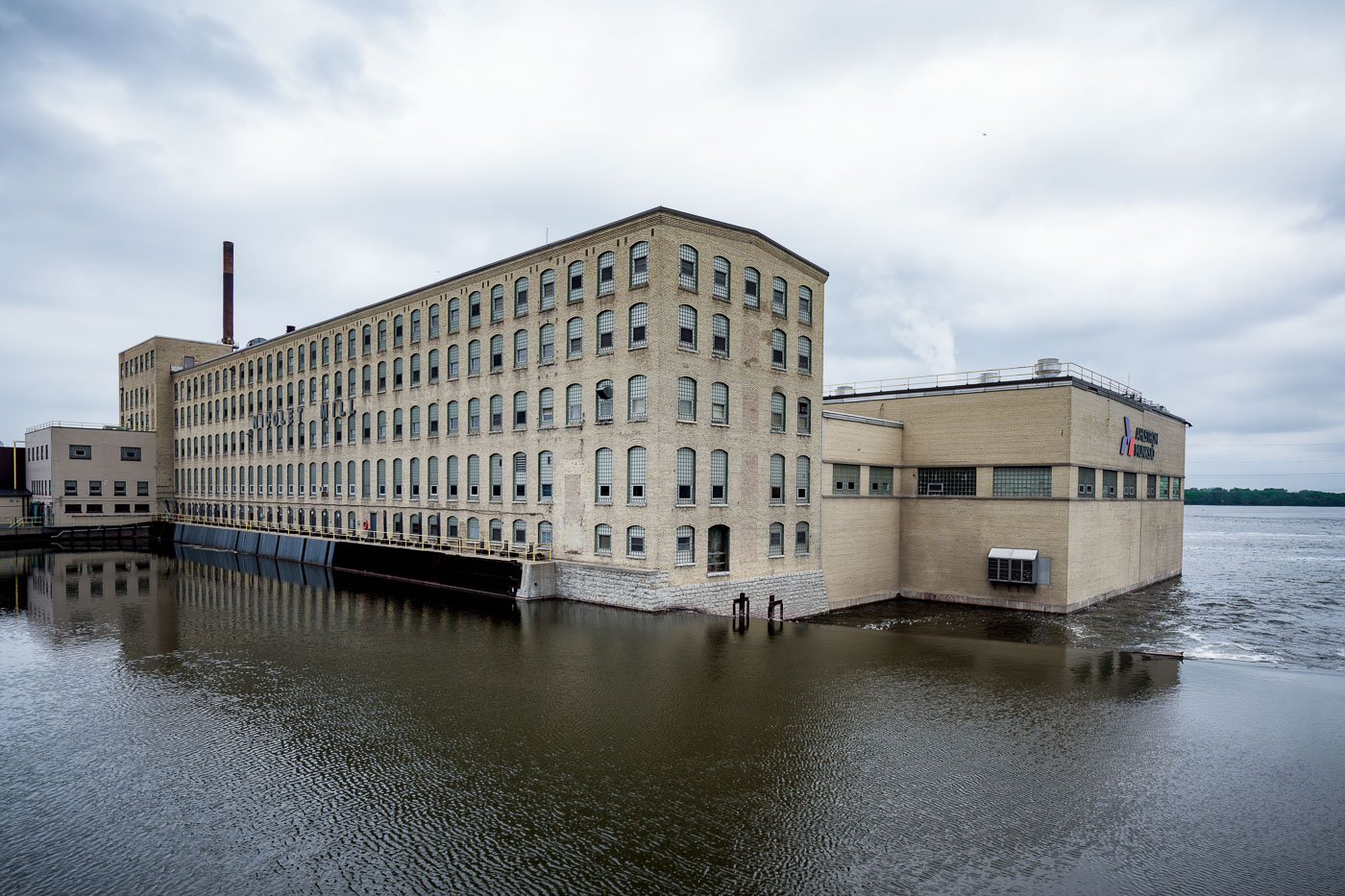
Nicolet Mill, a brick paper manufacturing facility, sits on the Fox River in De Pere, Wisconsin.
The Nicolet Mill traces its roots to 1904, when the Nicolet Paper Company began producing specialty papers along the Fox River in De Pere. The site became part of Ahlstrom-Munksjö after a 2017 merger between Finland's Munksjö and France's Ahlstrom Corporation, and it continues to manufacture specialty papers, including release liners and other technical grades. De Pere sits within the Fox River Valley, a stretch of Wisconsin once known as "Paper Valley" for having one of the highest concentrations of paper mills per mile anywhere in the world, powered by the river's series of locks and dams. The mill remains one of the valley's longest continuously operating paper-production sites.

Ahlstrom-Munksjö’s Nicolet Mill on the Fox River in De Pere
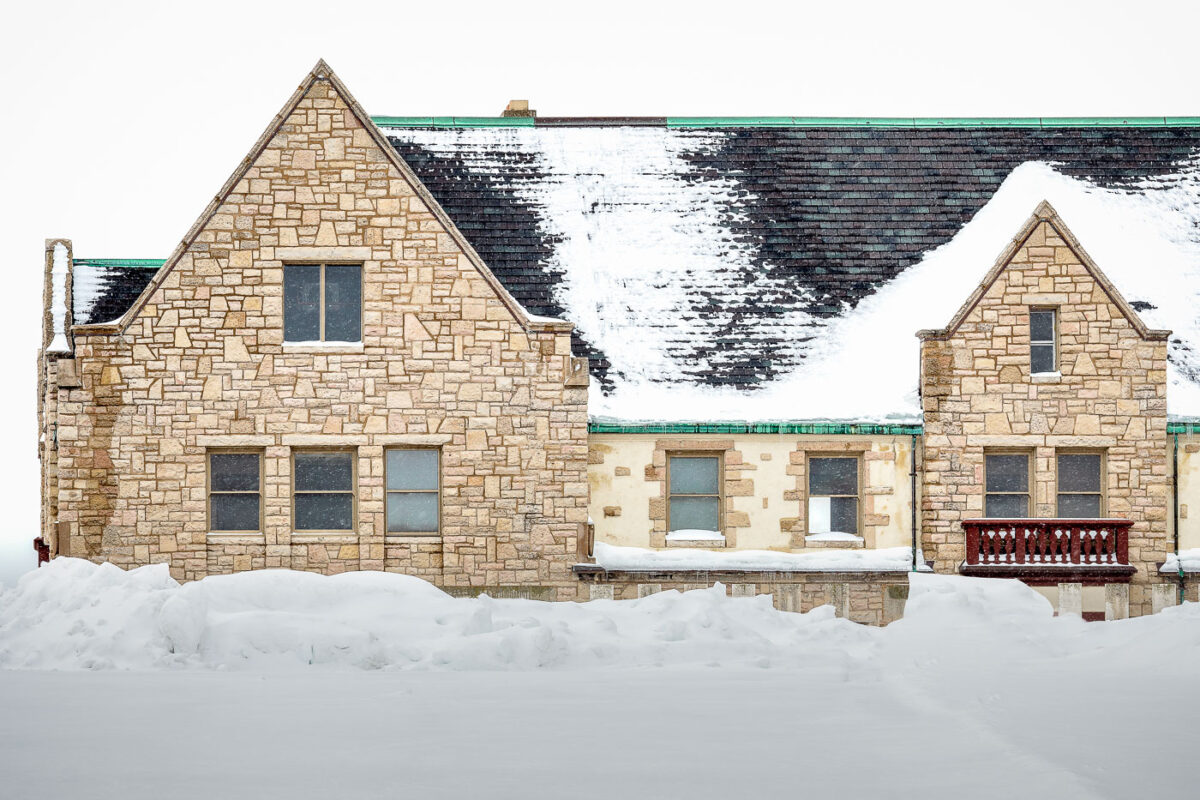
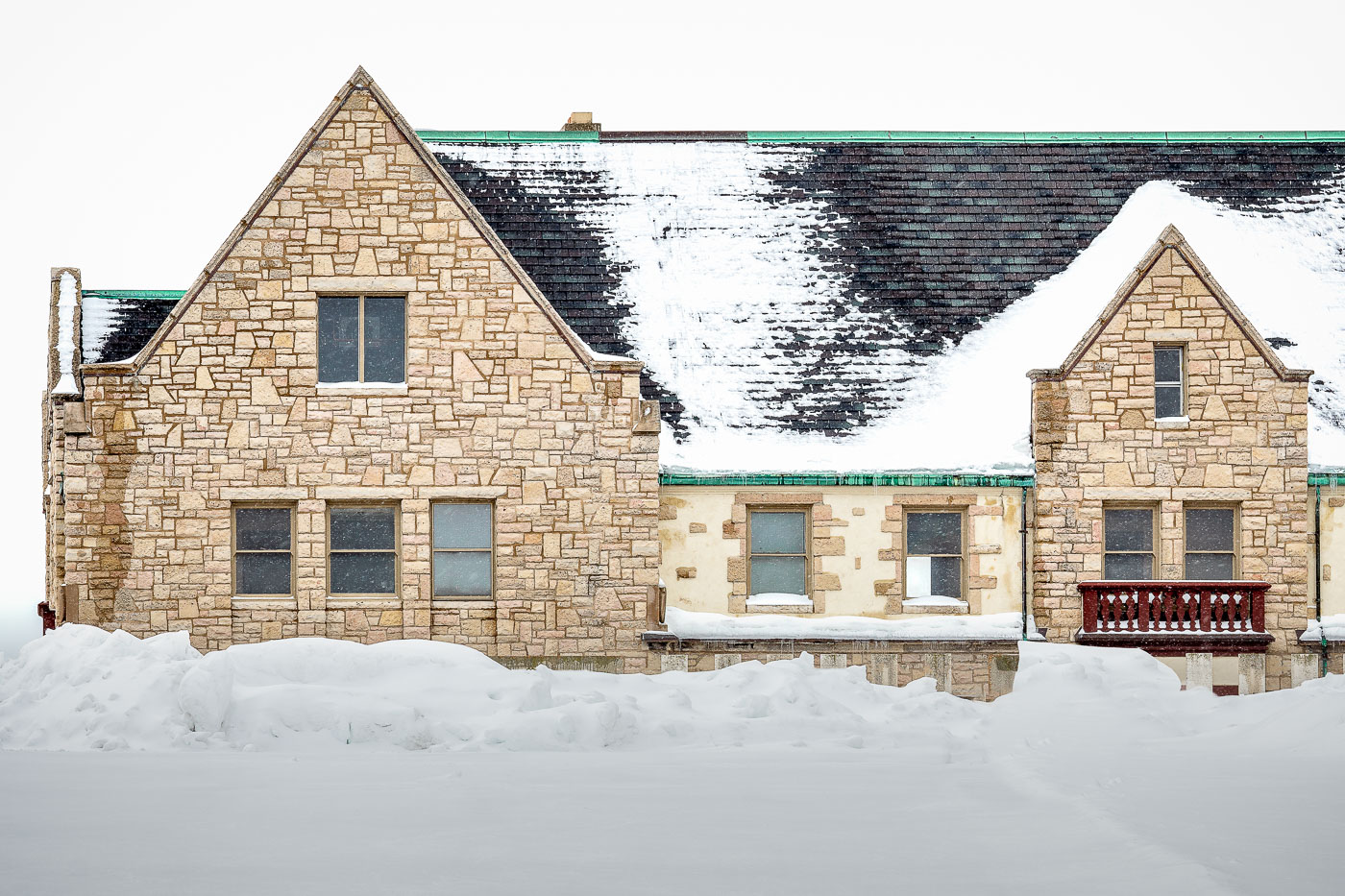
The historic YMCA building in Green Bay, Wisconsin, covered in snow during winter.
The downtown YMCA in Green Bay, Wisconsin, was constructed in 1924 and is listed on the National Register of Historic Places. Originally built to serve as a community center and lodging for young men, the YMCA provided facilities for physical fitness, education, and social activities. Its stone construction and architectural style reflect the period of its construction. The building continues to serve its community, offering programs and services to residents of Green Bay.

Downtown Green Bay YMCA in Winter Snow
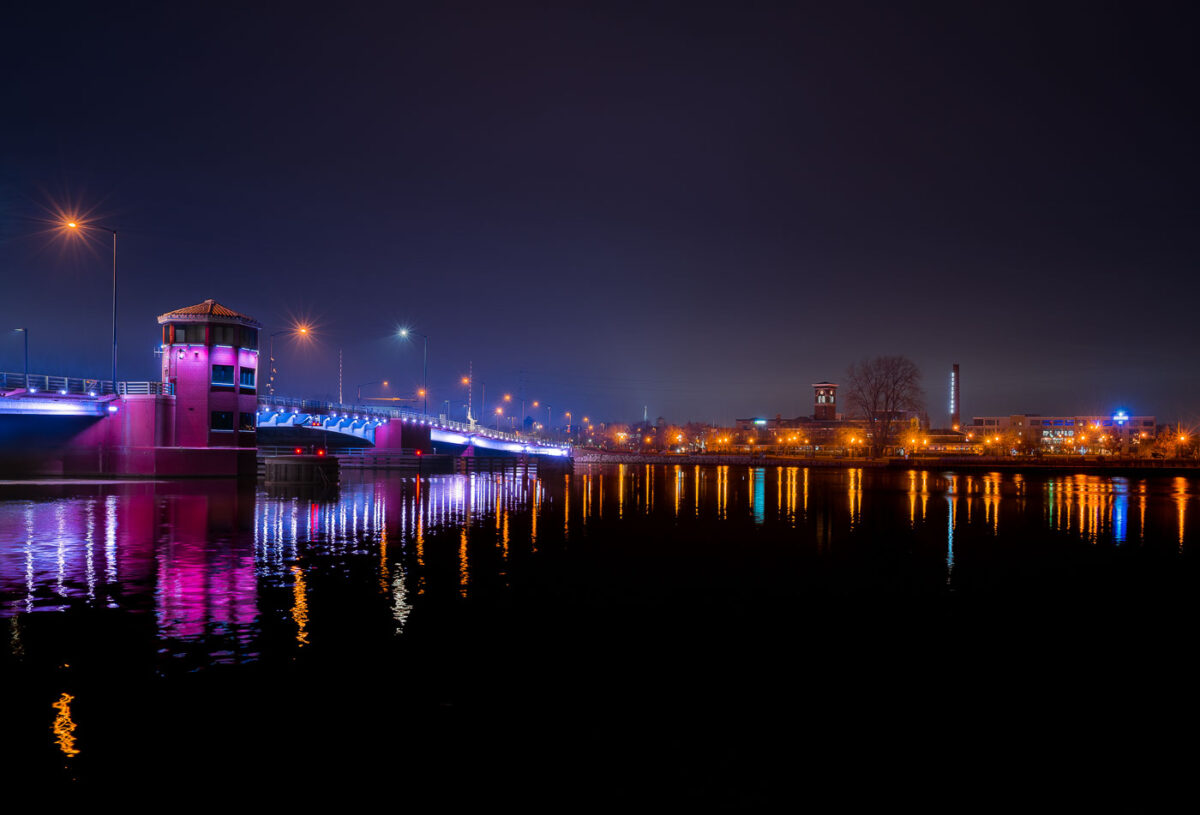
Walnut Street Bridge lit at night over the Fox River in downtown Green Bay, Wisconsin.
The Walnut Street Bridge carries traffic across the Fox River in downtown Green Bay, Wisconsin. It's a double-leaf bascule drawbridge, built to open and let vessels pass between the Fox River and the bay of Green Bay, part of the connected Great Lakes waterway. The bridge links Walnut Street on the city's east and west sides near the river's mouth. It remains one of several movable spans crossing the Fox River through downtown Green Bay.

Walnut Street Bascule Bridge, Green Bay

Rail bridge over the Fox River near Green Bay, Wisconsin
A rail bridge over the Fox River in Allouez, Wisconsin.

Allouez Wisconsin Rail Bridge

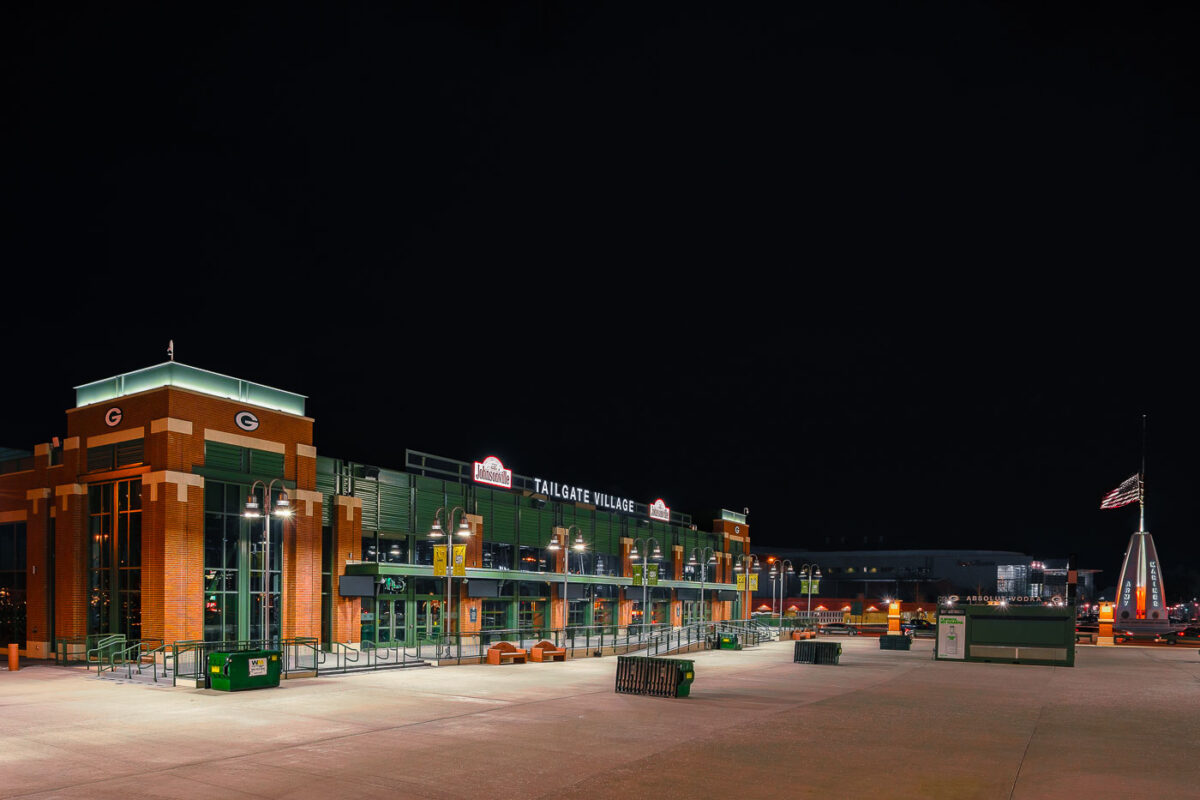
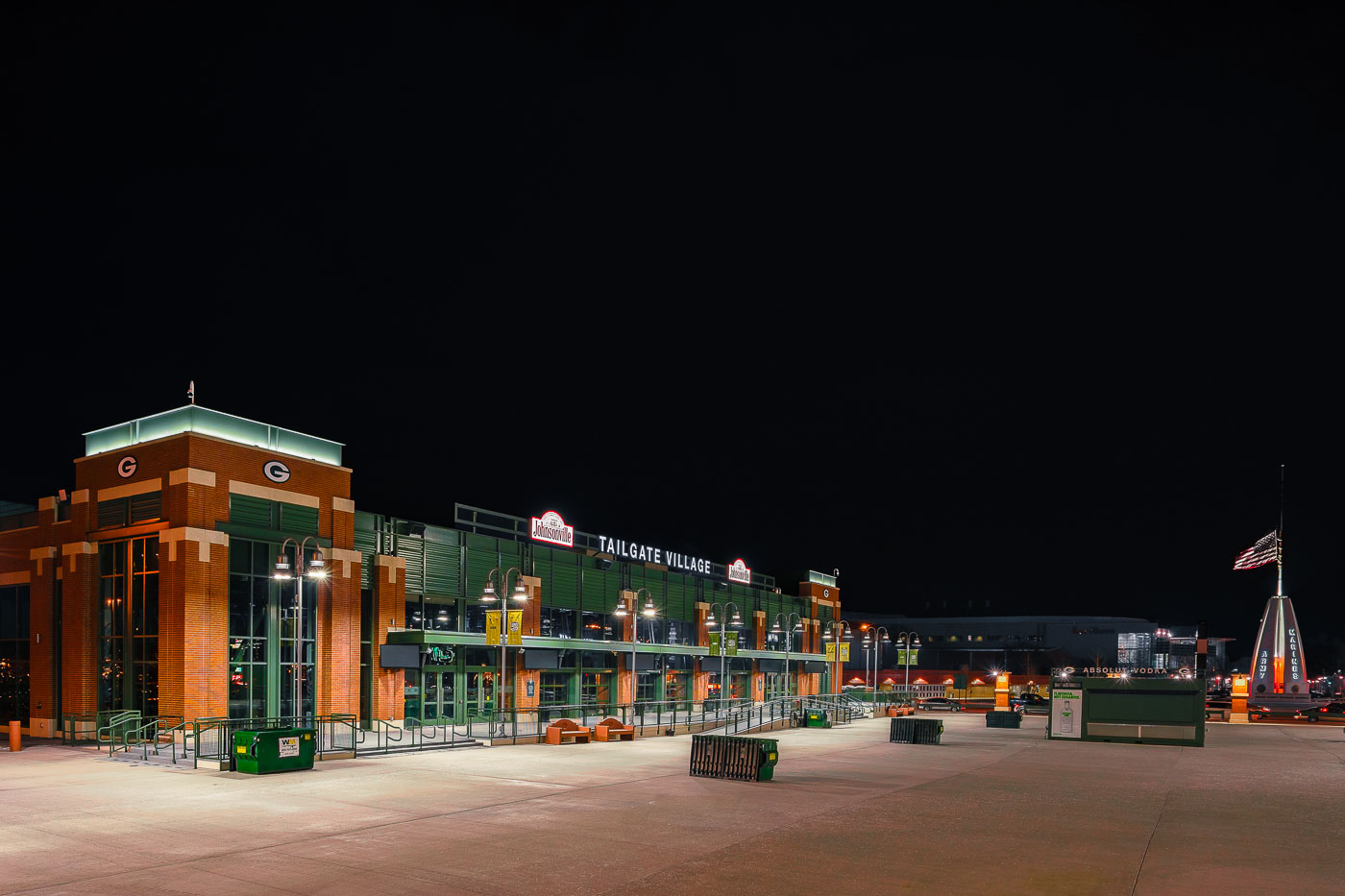
Tailgate Village at Lambeau Field in Green Bay, Wisconsin, features concessions and an American flag memorial.
Tailgate Village, adjacent to Lambeau Field in Green Bay, Wisconsin, is a gathering space for Green Bay Packers fans. The area features concessions and entertainment options, serving as a hub for pre-game festivities. The "Johnsonville" signage indicates a sponsorship, common in modern sports venues. An American flag flies atop a memorial structure in the background, honoring military service.

Tailgate Village at Lambeau Field

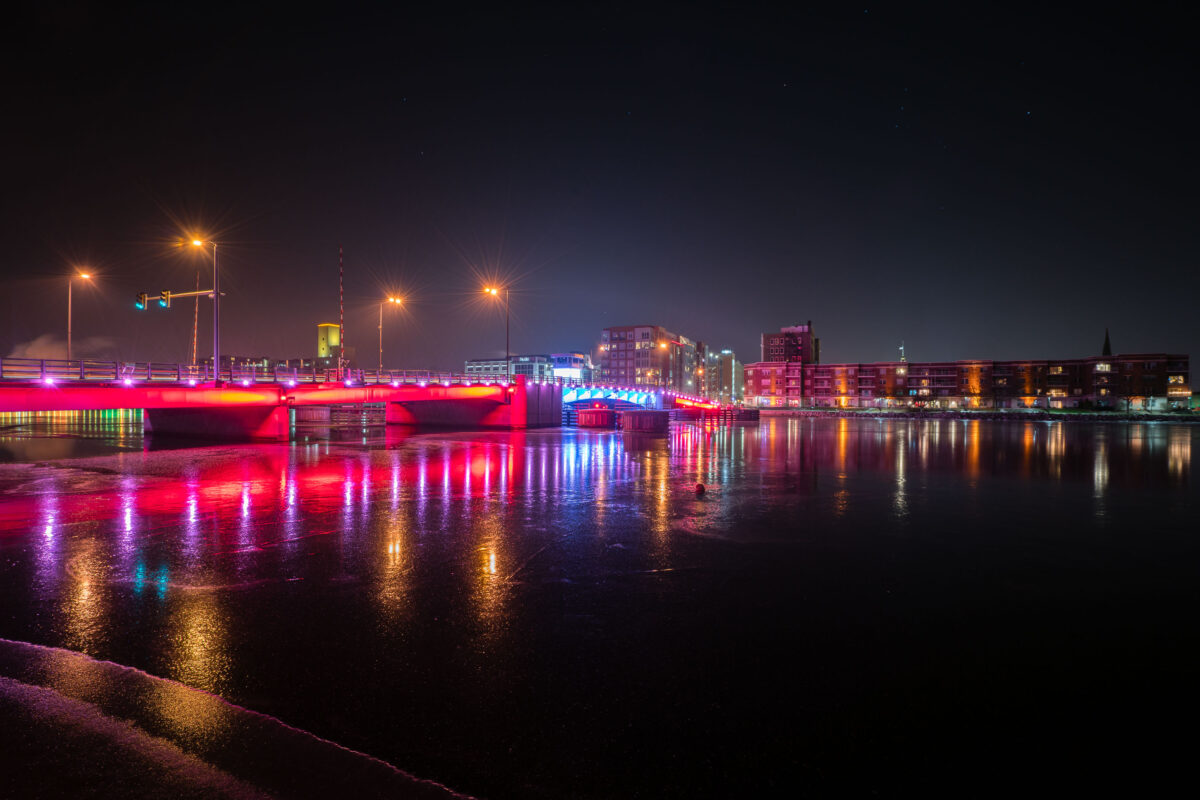
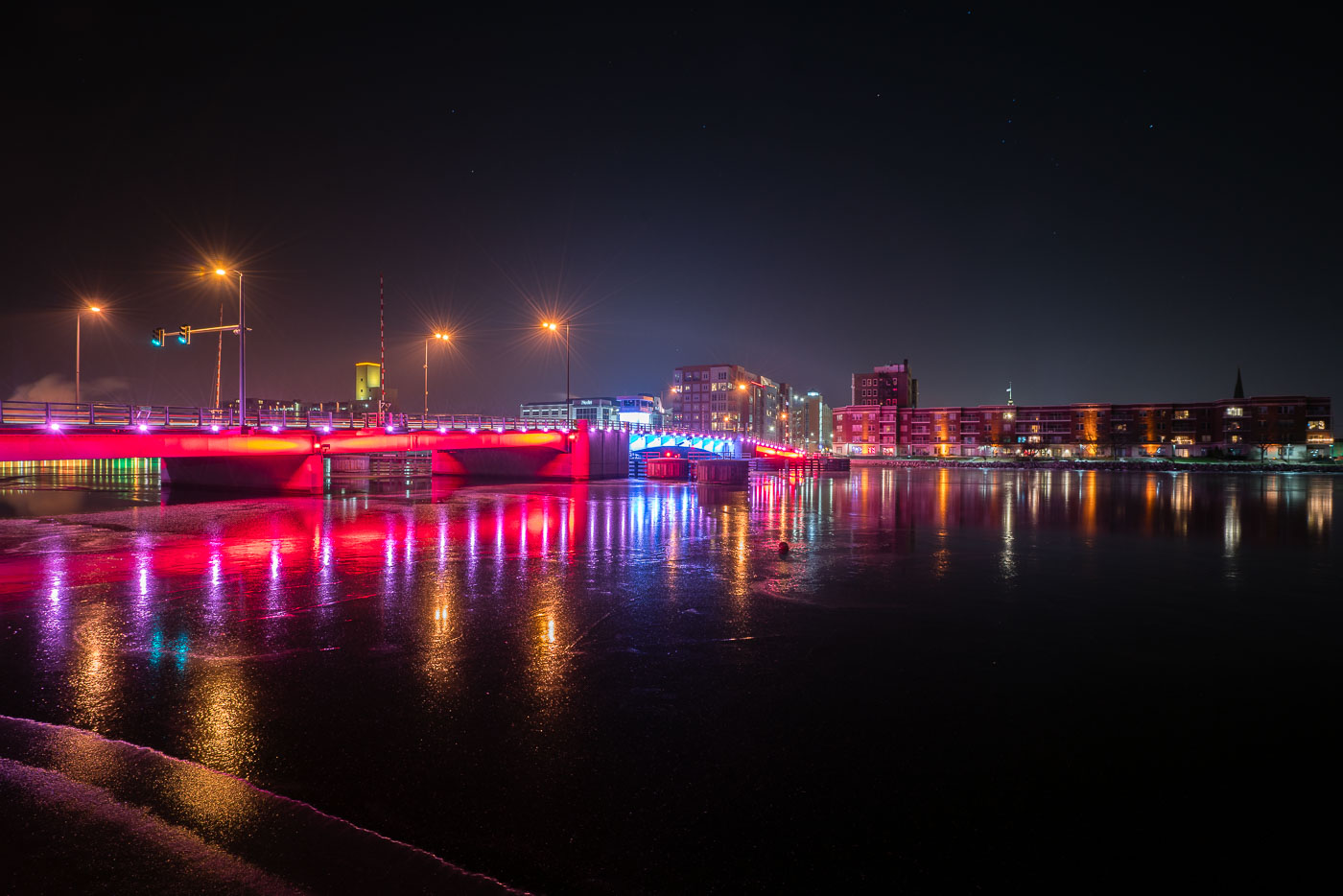
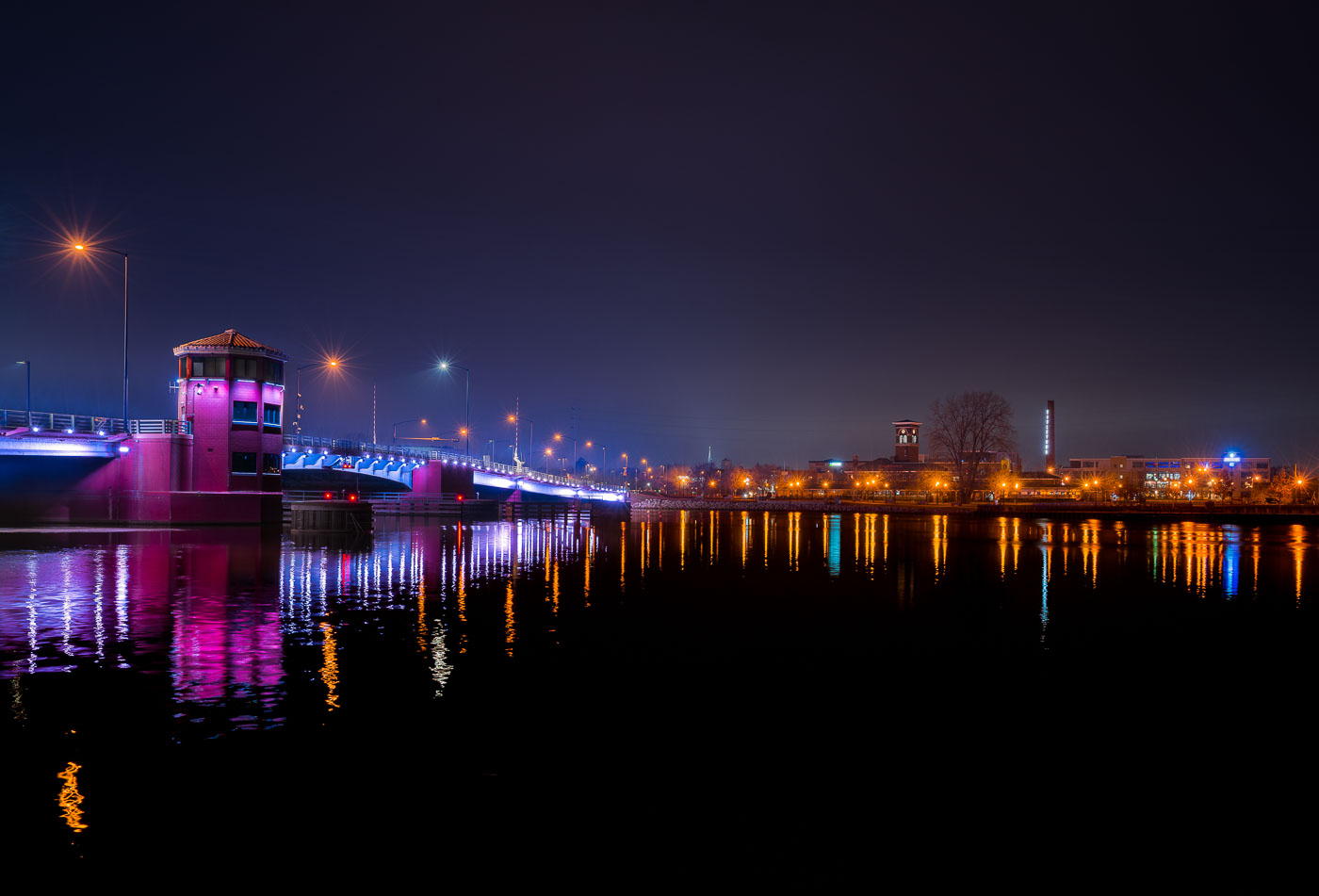
Mason Street Bridge with colorful LED lighting spans the Fox River in downtown Green Bay, Wisconsin.
The Mason Street Bridge carries traffic across the Fox River in downtown Green Bay, Wisconsin, linking the city's east and west sides near the CityDeck riverfront park. Wisconsin's Department of Transportation maintains the crossing, which replaced an earlier span on the same site. The bridge is a double-leaf bascule design, built to open for river traffic passing between Lake Michigan's Green Bay and the upstream Fox River channel. Its color-changing LED system, added as part of a broader downtown riverfront lighting effort, is used to mark holidays, sports events, and civic occasions throughout the year.

Mason Street Bridge over the Fox River, Green Bay
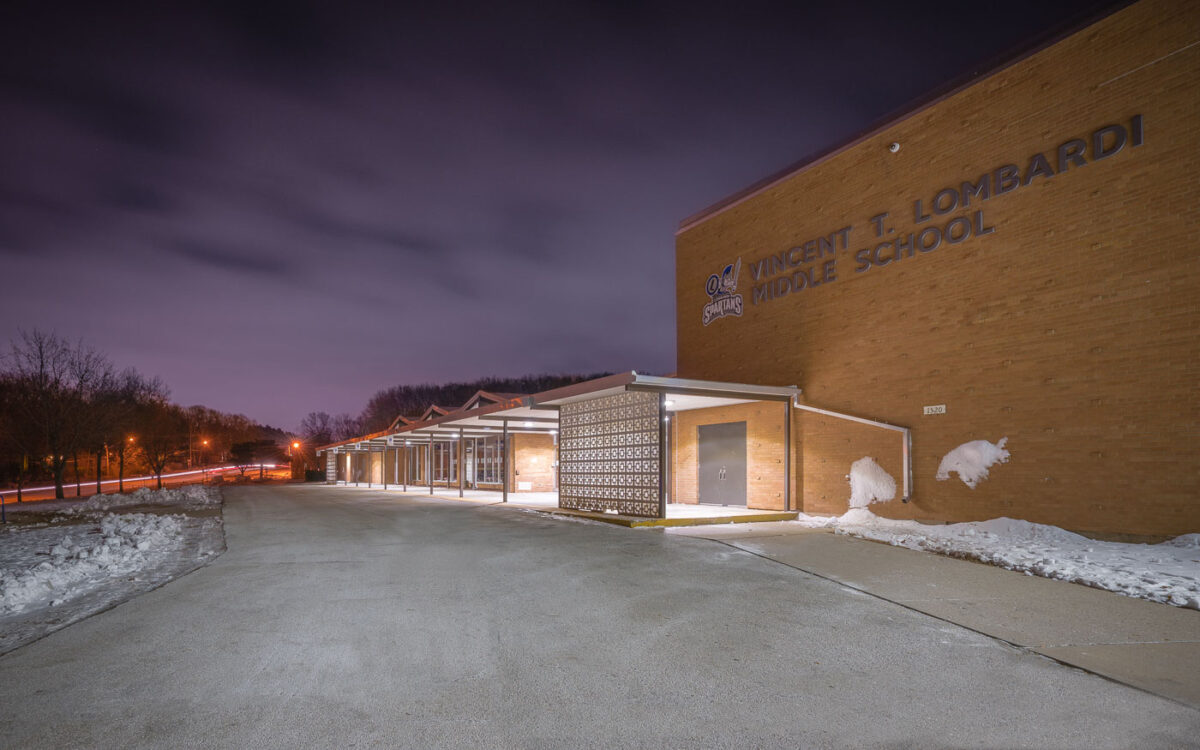
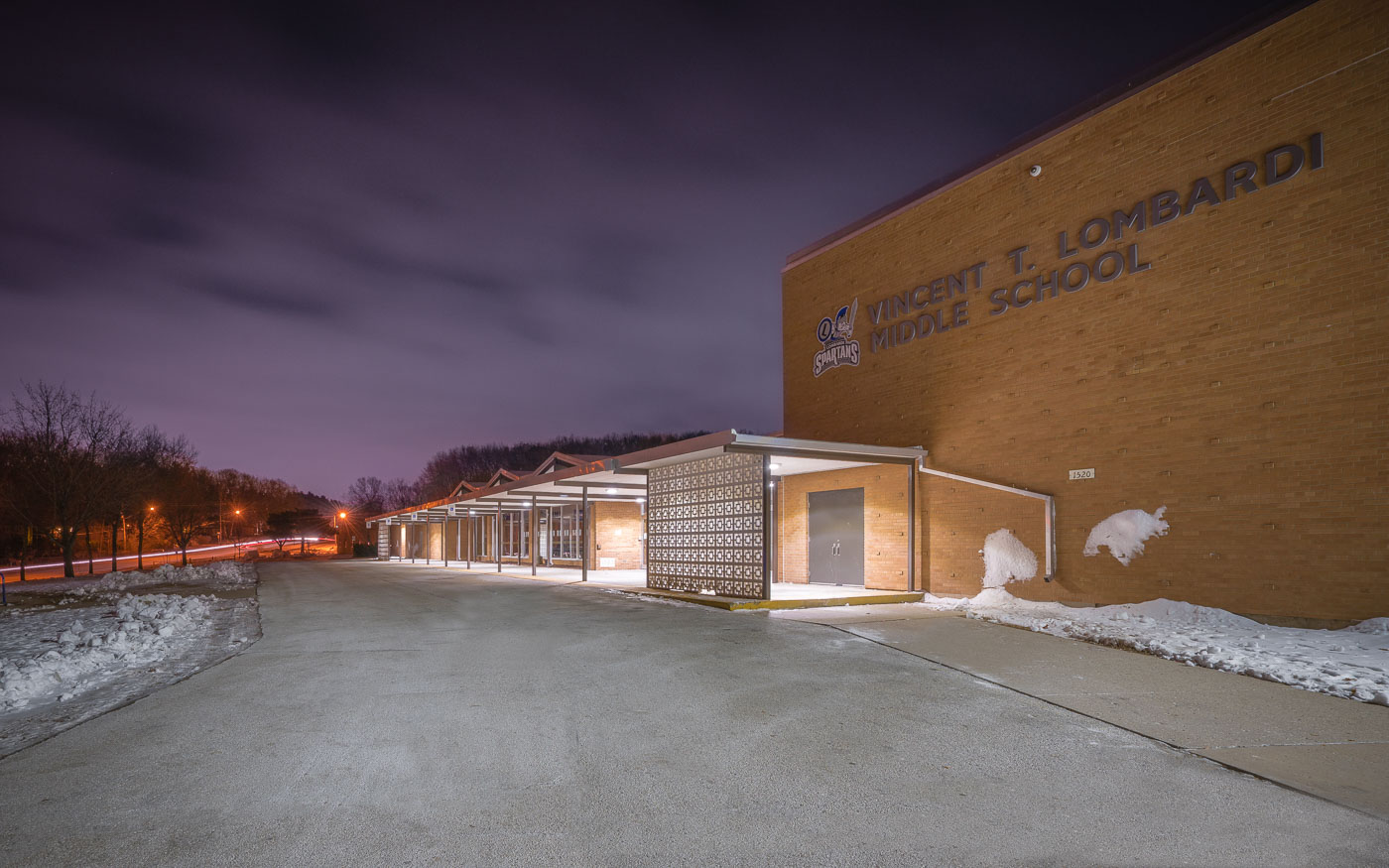
Exterior entrance of Vincent T. Lombardi Middle School illuminated at night in Green Bay, Wisconsin.
Vincent T. Lombardi Middle School sits on Green Bay's far west side, named for the Packers coach who led the team to five NFL championships in the 1960s. The school falls under the Green Bay Area Public School District and serves students in grades six through eight. Its athletic teams compete as the Spartans.
Vince Lombardi Middle School Entrance at Night, Green Bay

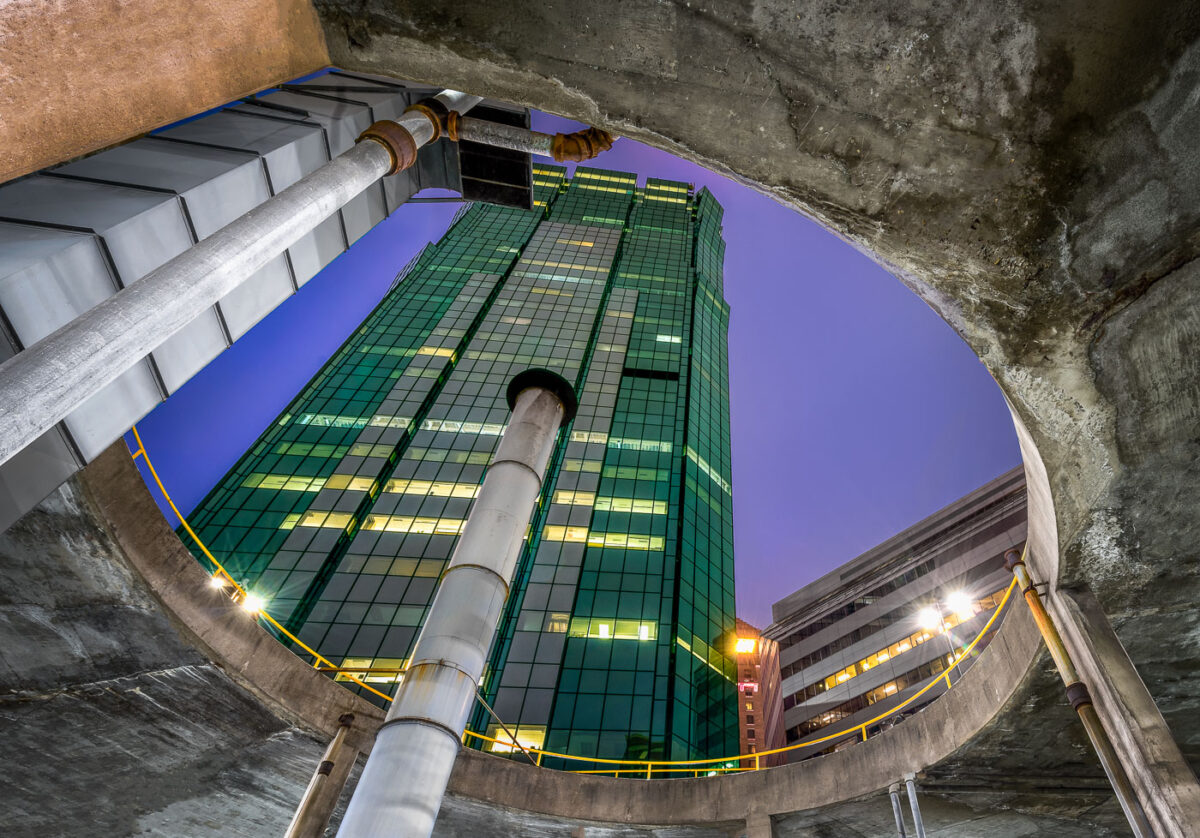
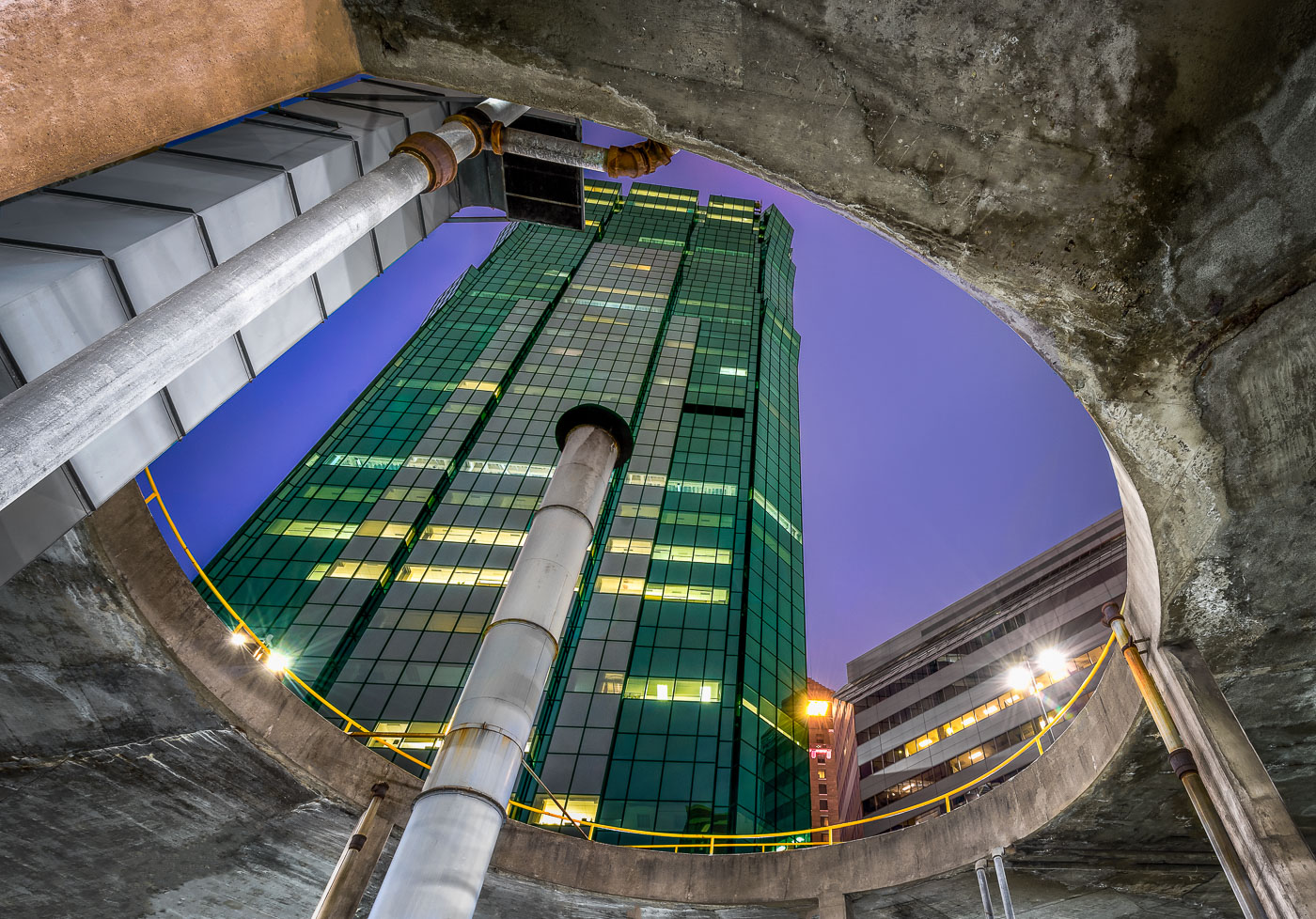
AT&T Tower in downtown Minneapolis rises above a parking ramp.
AT&T Tower, Minneapolis, rises above a downtown parking ramp. The building is a prominent office tower in the city’s central business district.

AT&T Tower, Minneapolis

Concrete grain elevators of the Peavey terminal rise against the night sky in Superior, Wisconsin.
The Peavey Company, founded by Frank H. Peavey in the late 1800s, grew into one of the largest grain trading and storage operations in the United States. Superior, Wisconsin, sits at the westernmost point of Lake Superior and developed into a major grain-shipping port in the early 20th century, linking Midwest wheat farms to Great Lakes freighter traffic. Concrete elevators like this one were built to store grain in bulk before loading onto ships bound for mills and markets farther east. The Twin Ports of Superior and Duluth once ranked among the busiest grain-handling centers on the Great Lakes.

Peavey Grain Terminal, Superior, Wisconsin

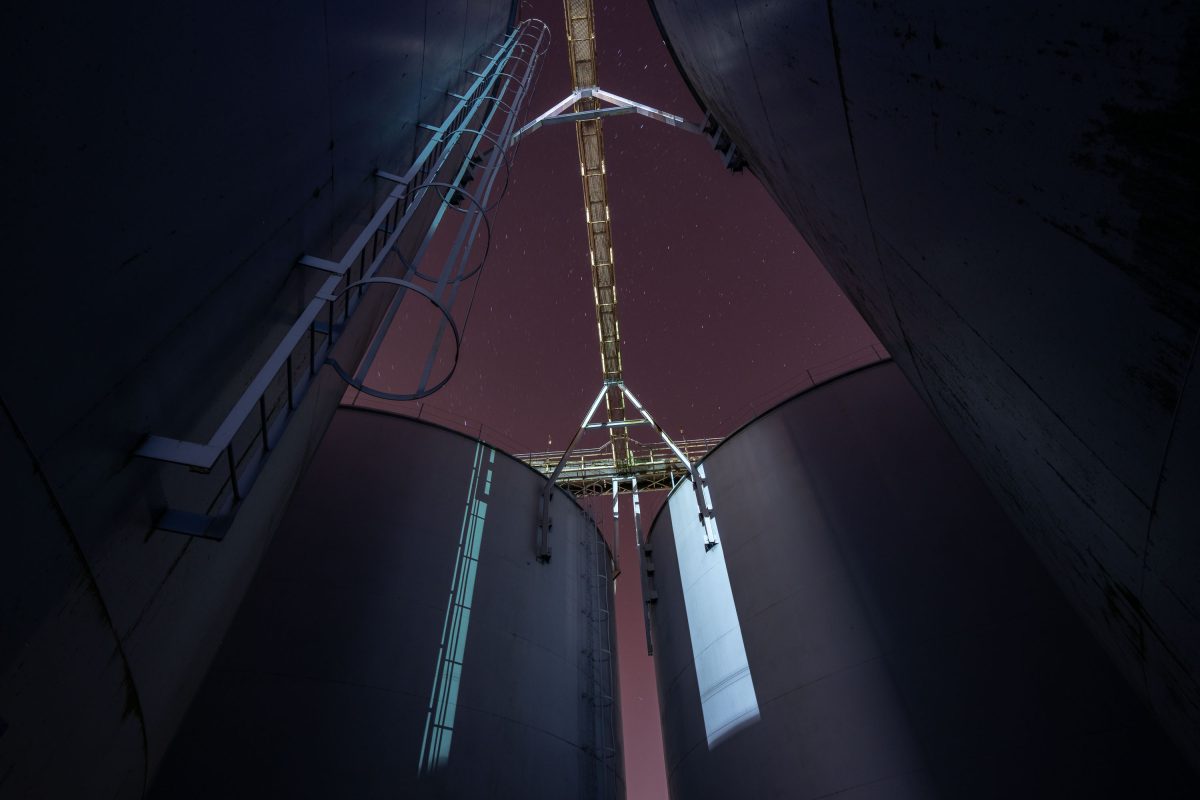
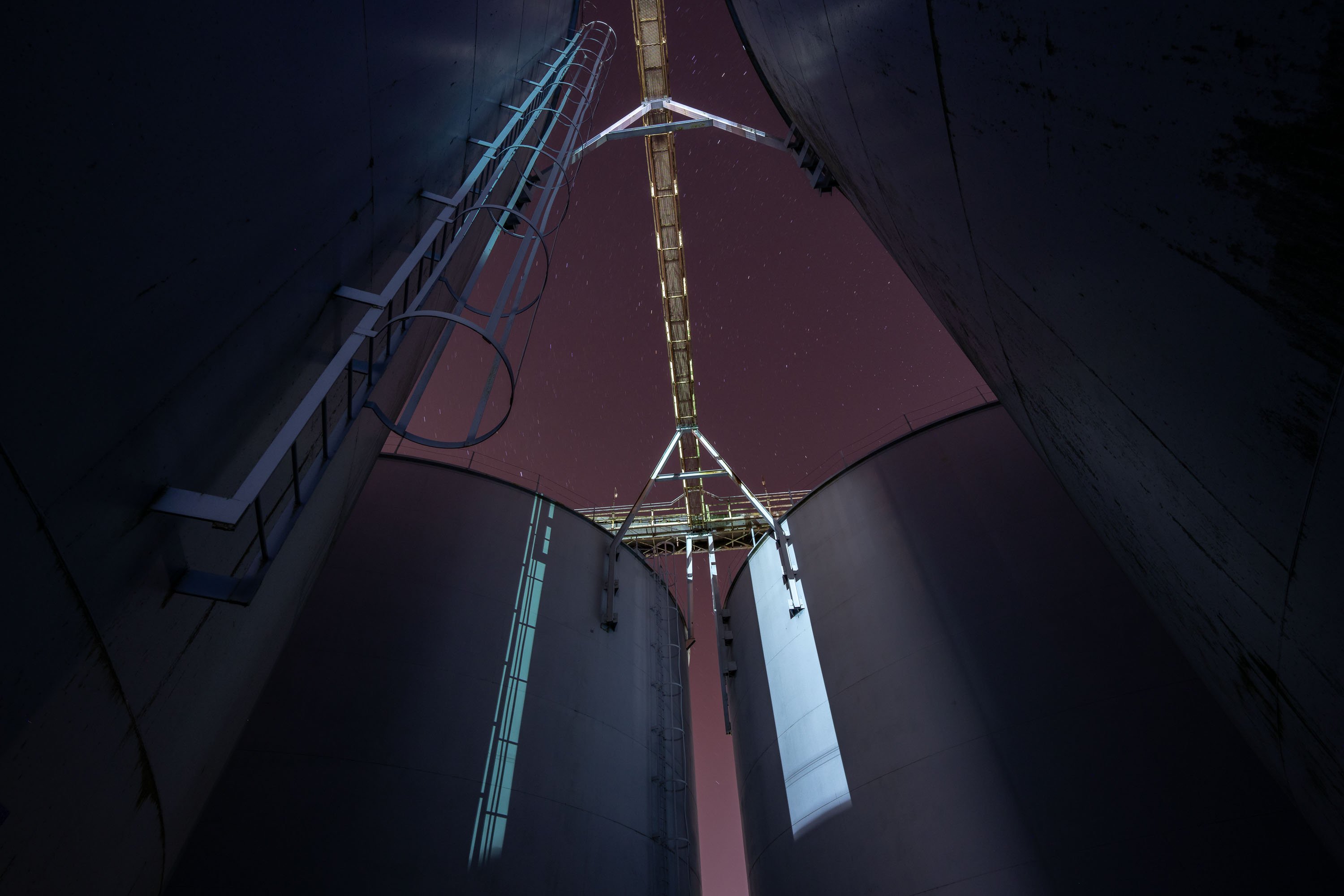
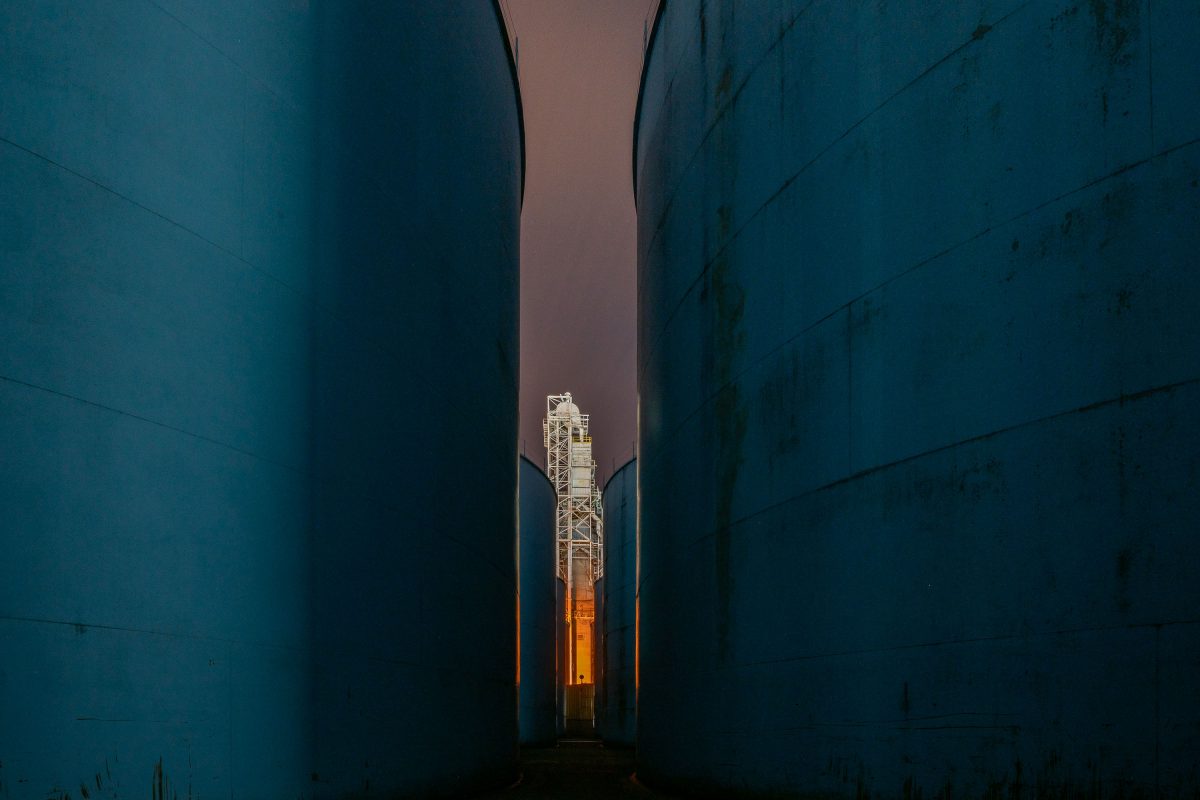
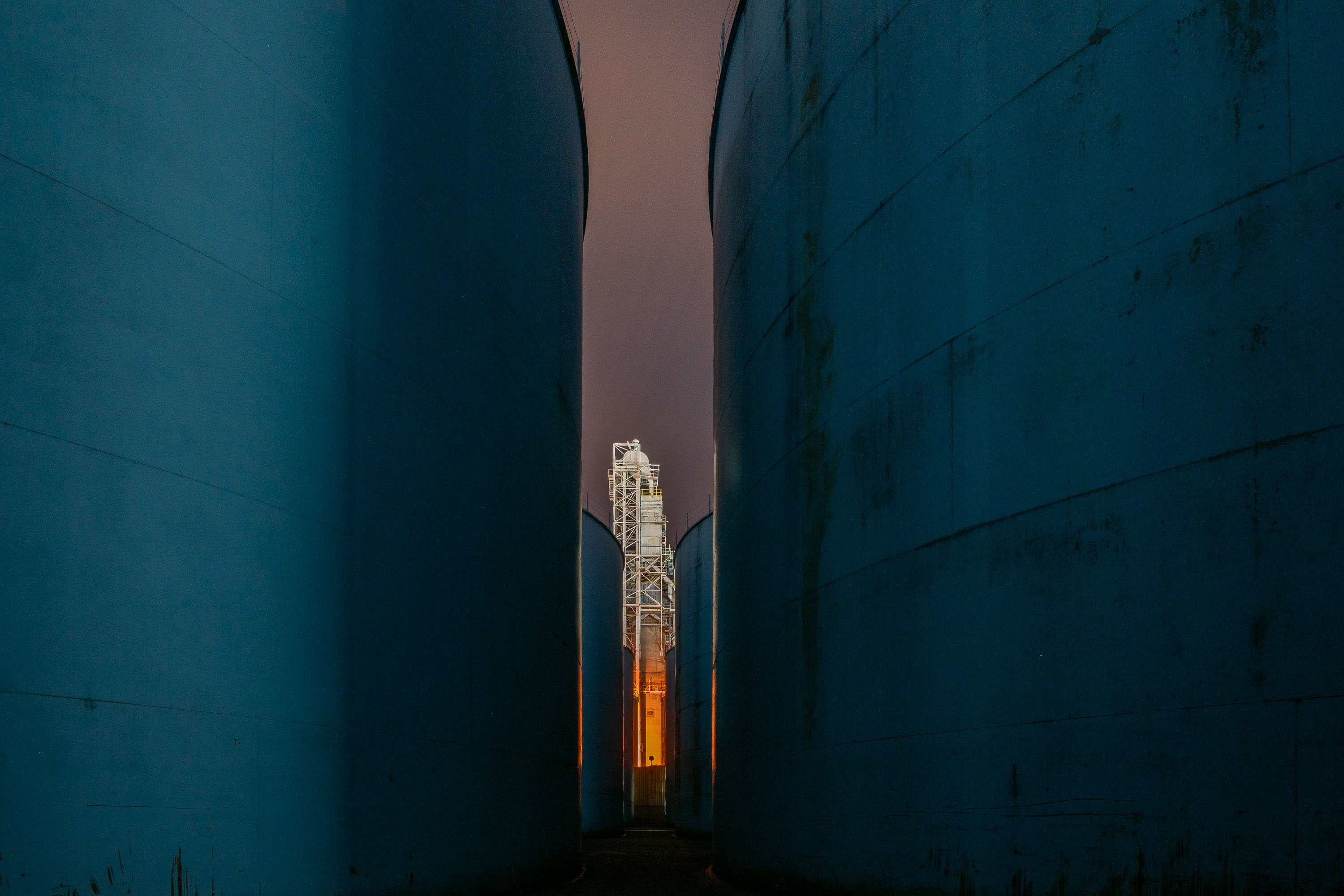
Steel grain storage tanks at a Peavey elevator complex in Superior, Wisconsin, with an industrial structure visible between them.
This grain storage complex sits along the Superior, Wisconsin waterfront on Lake Superior's Twin Ports. The Peavey Company operated grain elevators here to store wheat and other grain shipped by rail from the northern plains for transfer onto lake freighters.

Grain Elevator Storage Tanks at Peavey, Superior, Wisconsin

CHS Grain Elevators, Superior, Wisconsin
CHS grain elevators in Superior, Wisconsin, stand along a waterway in the Port of Duluth-Superior. The facility is part of the harbor's grain-handling and bulk shipping infrastructure on the western end of Lake Superior.

CHS Grain Elevators in Superior, Wisconsin

CHS grain elevators illuminated at night along Lake Superior's western shore in Superior, Wisconsin.
CHS Grain Elevators in Superior, Wisconsin, are part of the Port of Superior’s grain-handling facilities. The complex stores and transfers grain for shipment by rail and vessel on the western shore of Lake Superior.

CHS Grain Elevators at Night in Superior

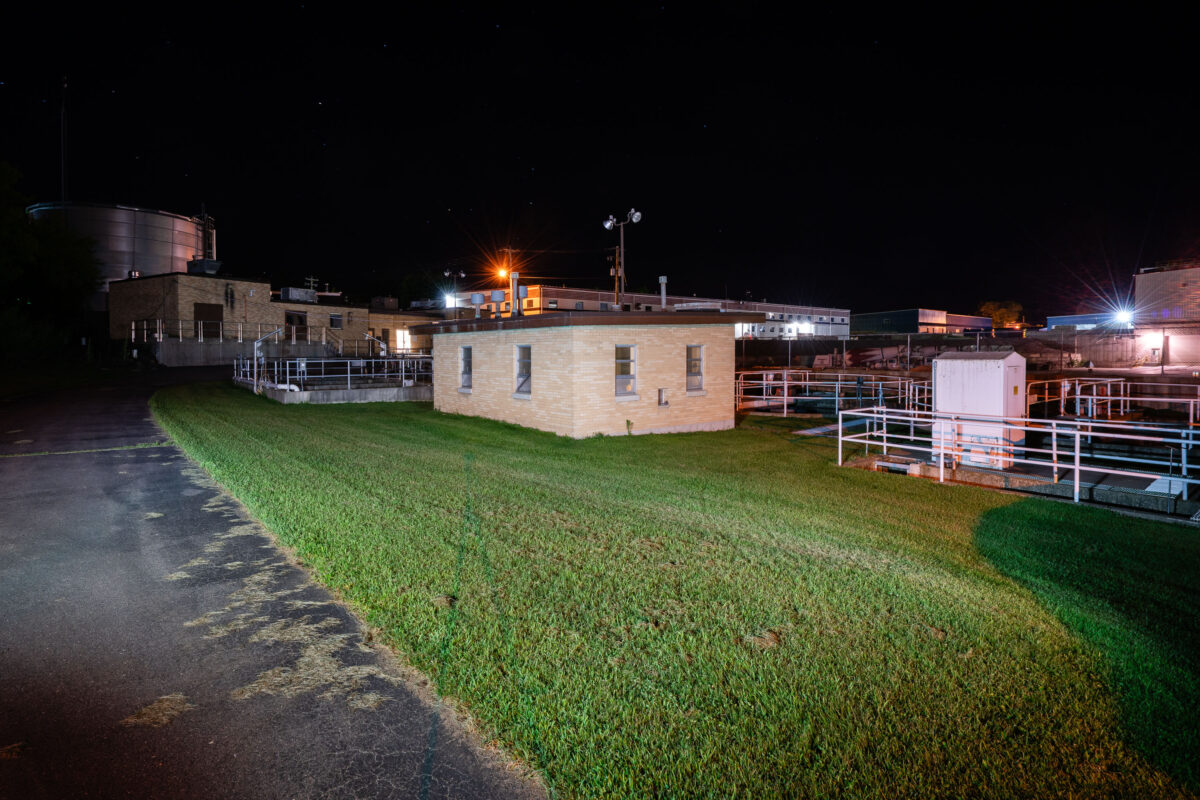
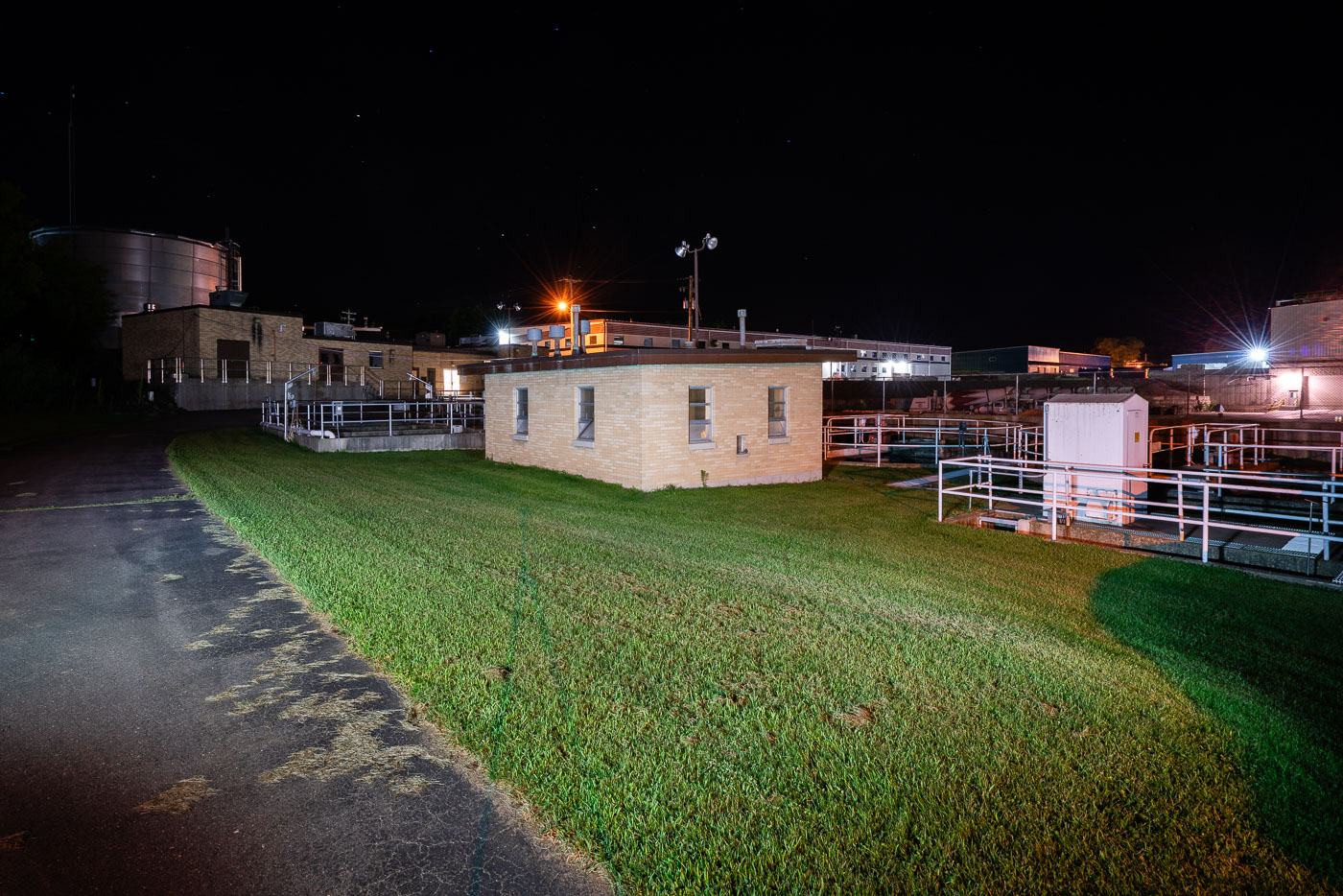
Marathon City Wastewater Treatment Plant in Wisconsin illuminated at night with treatment basins, service buildings, and storage infrastructure.
Marathon City Wastewater Treatment Plant in Marathon City, Wisconsin, with treatment basins, service buildings, and a large storage tank illuminated during overnight operations. The municipal facility processes the village’s wastewater through a series of treatment stages designed to remove solids, organic matter, and other pollutants before treated effluent is released under state and federal permit requirements. Plants of this type operate continuously to manage residential and commercial sewage and to protect downstream water quality.

Night Operations at Marathon City’s Wastewater Treatment Plant

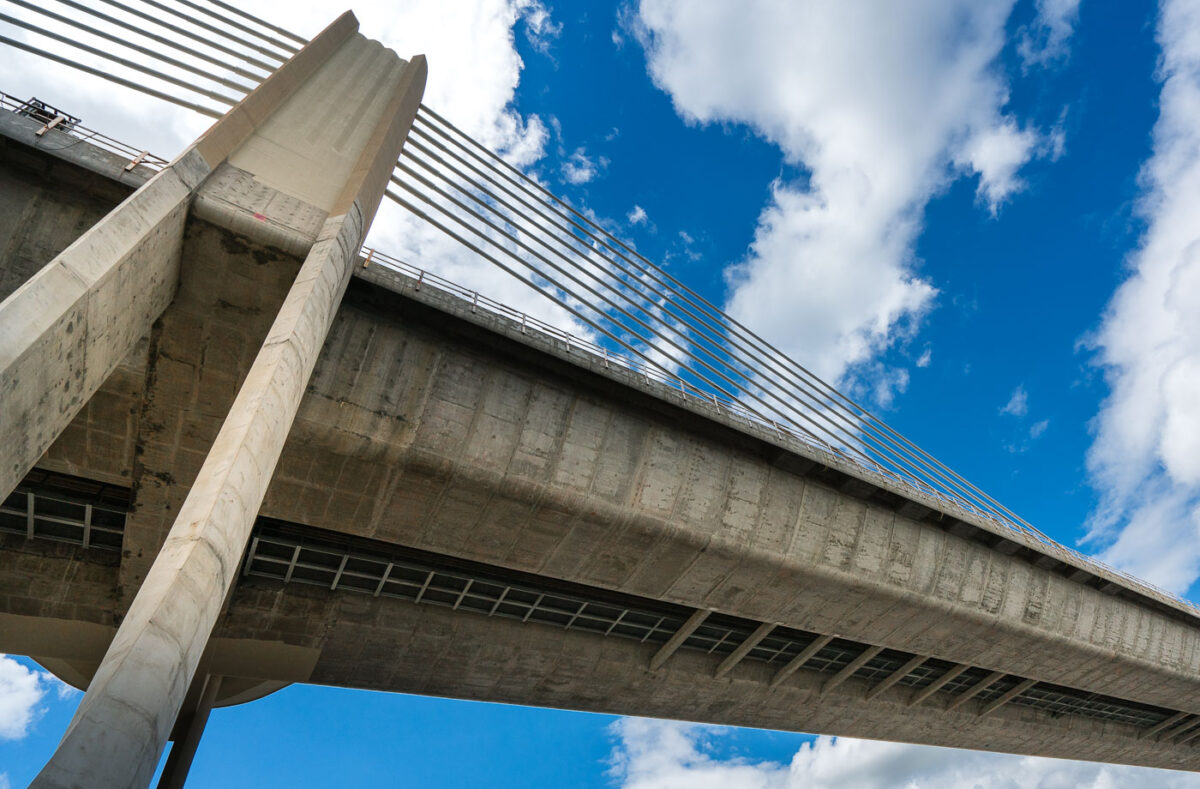
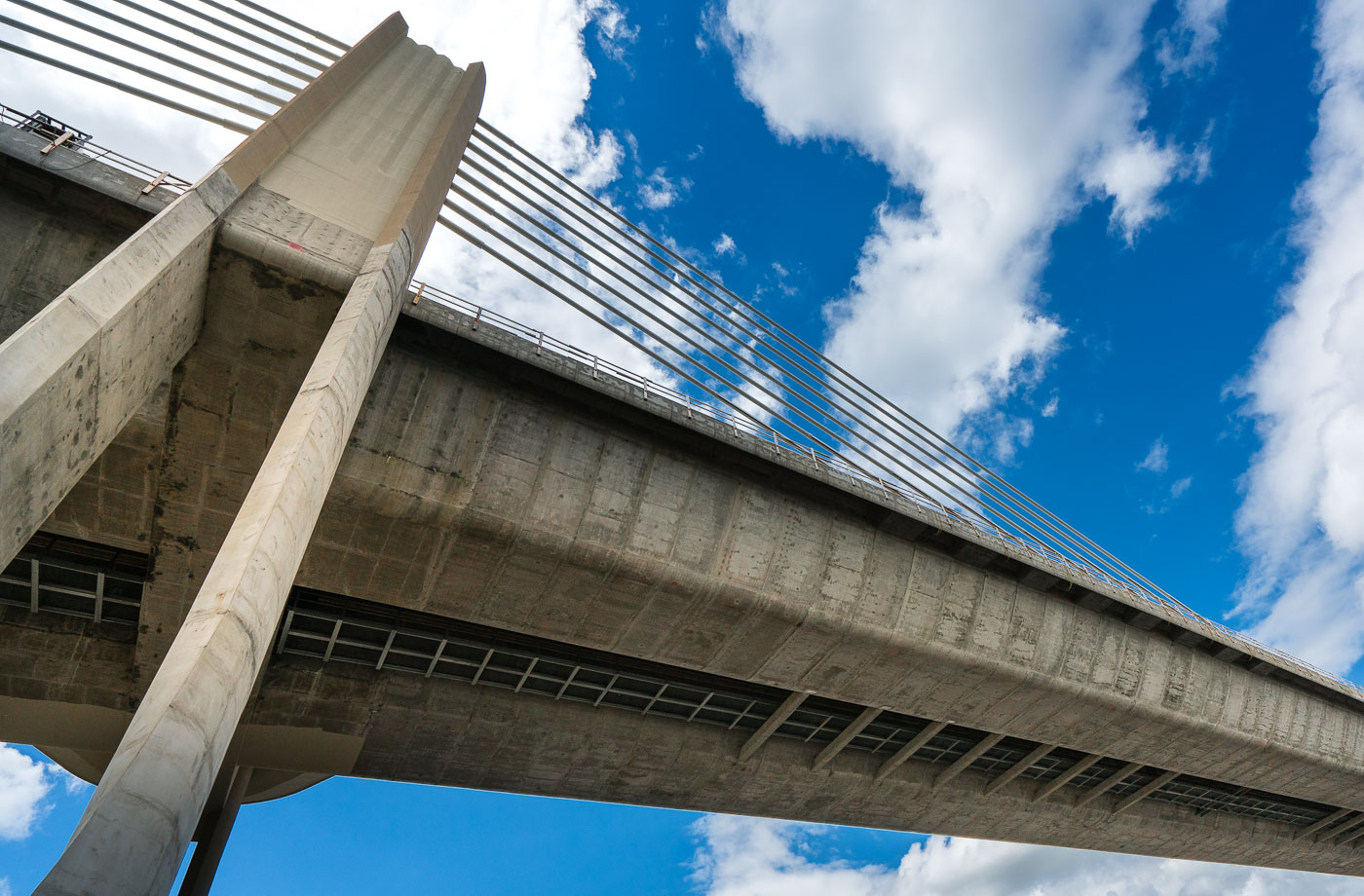
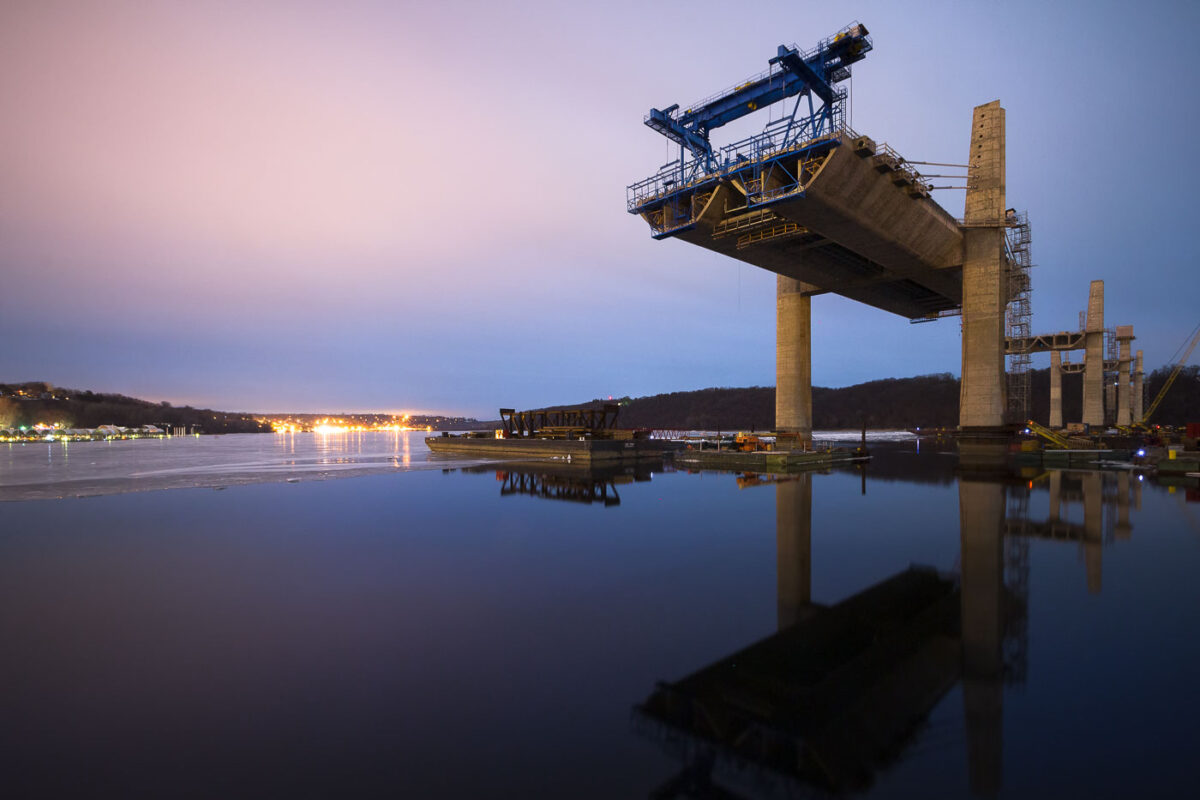
St. Croix Crossing Bridge over the St. Croix River between Oak Park Heights, Minnesota, and St. Joseph, Wisconsin
The St. Croix Crossing, an extradosed bridge, connects Oak Park Heights, Minnesota, and St. Joseph, Wisconsin, across the St. Croix River. Completed in 2017, it replaced an aging bridge and significantly improved traffic flow by carrying Minnesota State Highway 36 and Wisconsin State Highway 64. The structure features four lanes of traffic and a dedicated bike and pedestrian path on its north side, enhancing connectivity and accessibility between the two states.

St. Croix Crossing Bridge: Minnesota-Wisconsin Connection

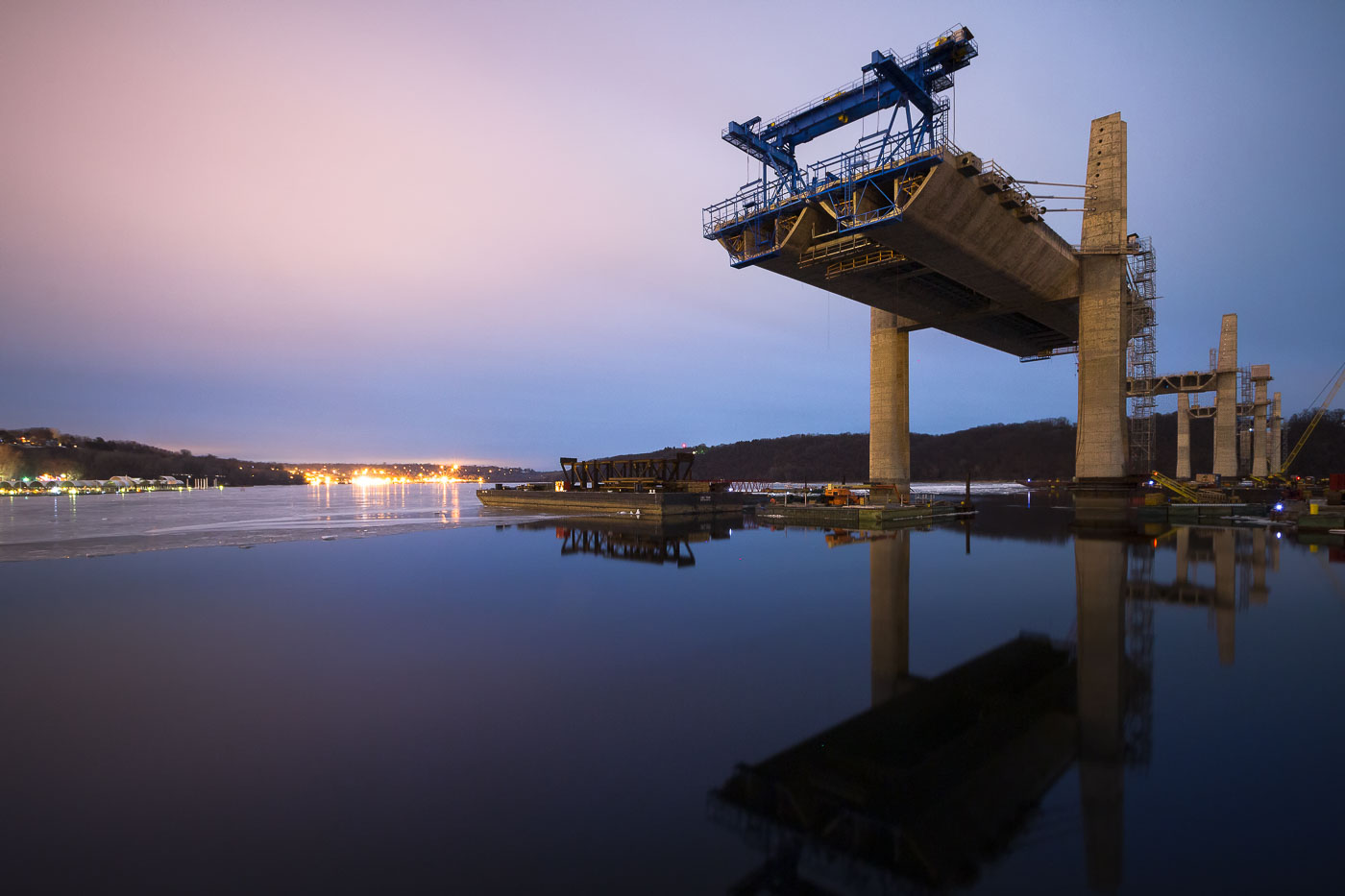
St. Croix Crossing bridge under construction over the St. Croix River in Stillwater, Minnesota.
St. Croix Crossing bridge construction in Stillwater, Minnesota, continues over the St. Croix River. The new span is being built to replace the older Stillwater Lift Bridge as a cross-river transportation link between Minnesota and Wisconsin.

St. Croix Crossing Bridge Under Construction, Stillwater

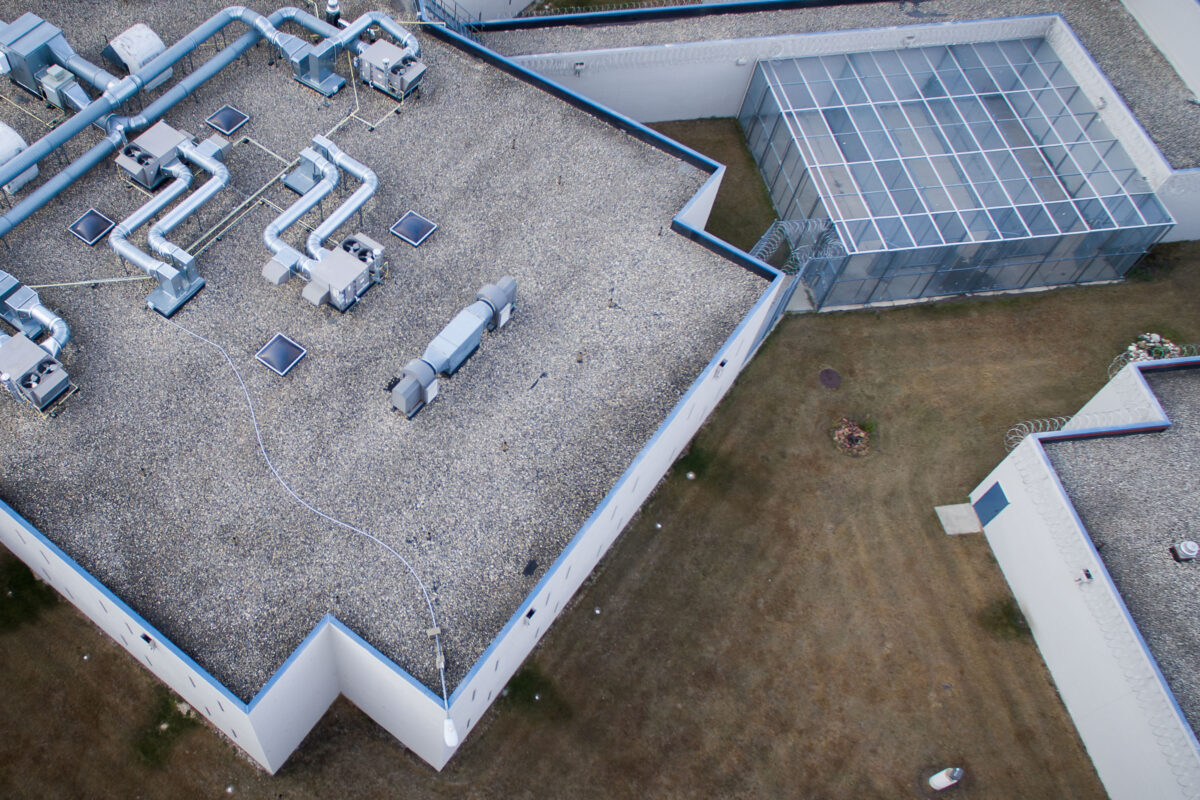
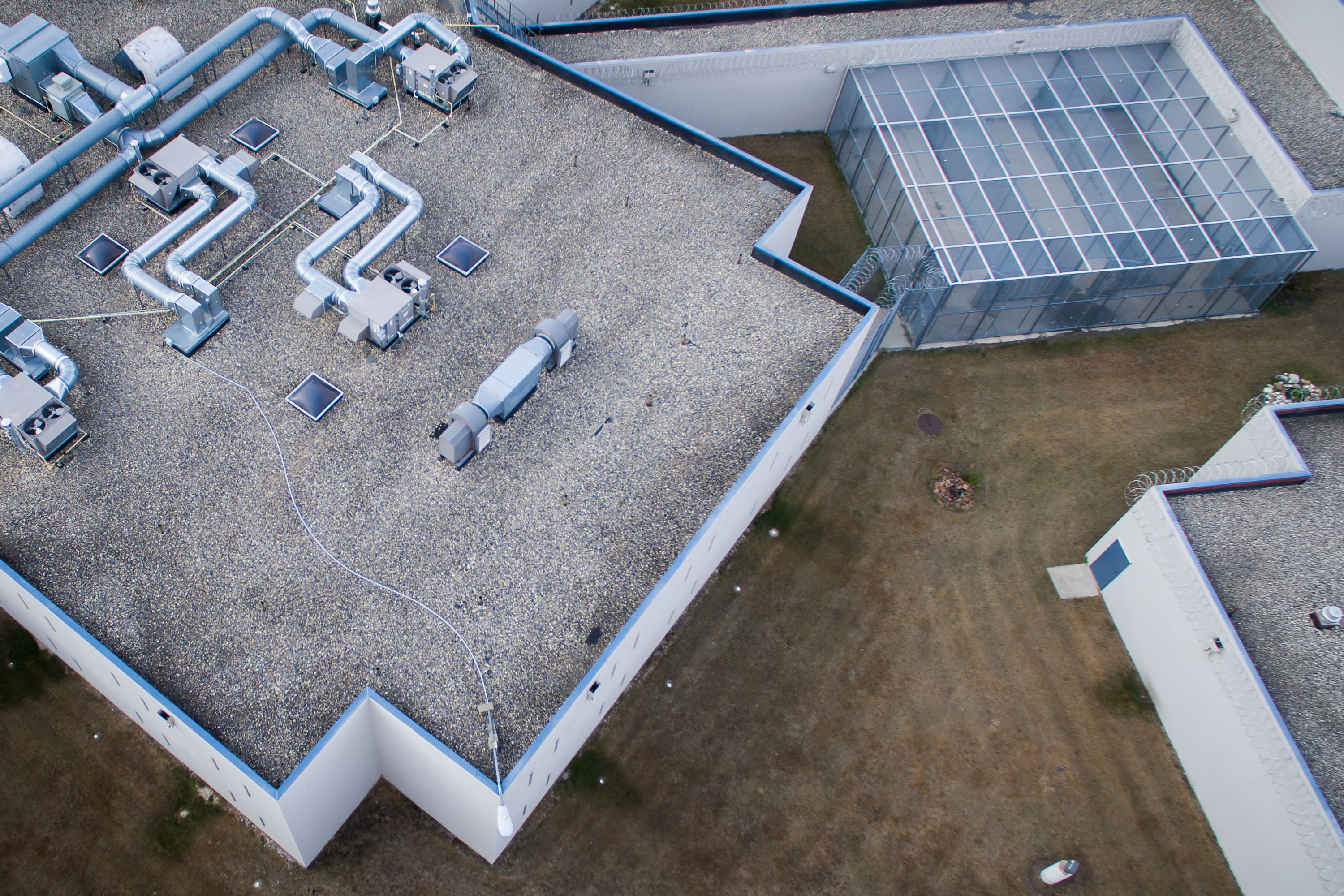
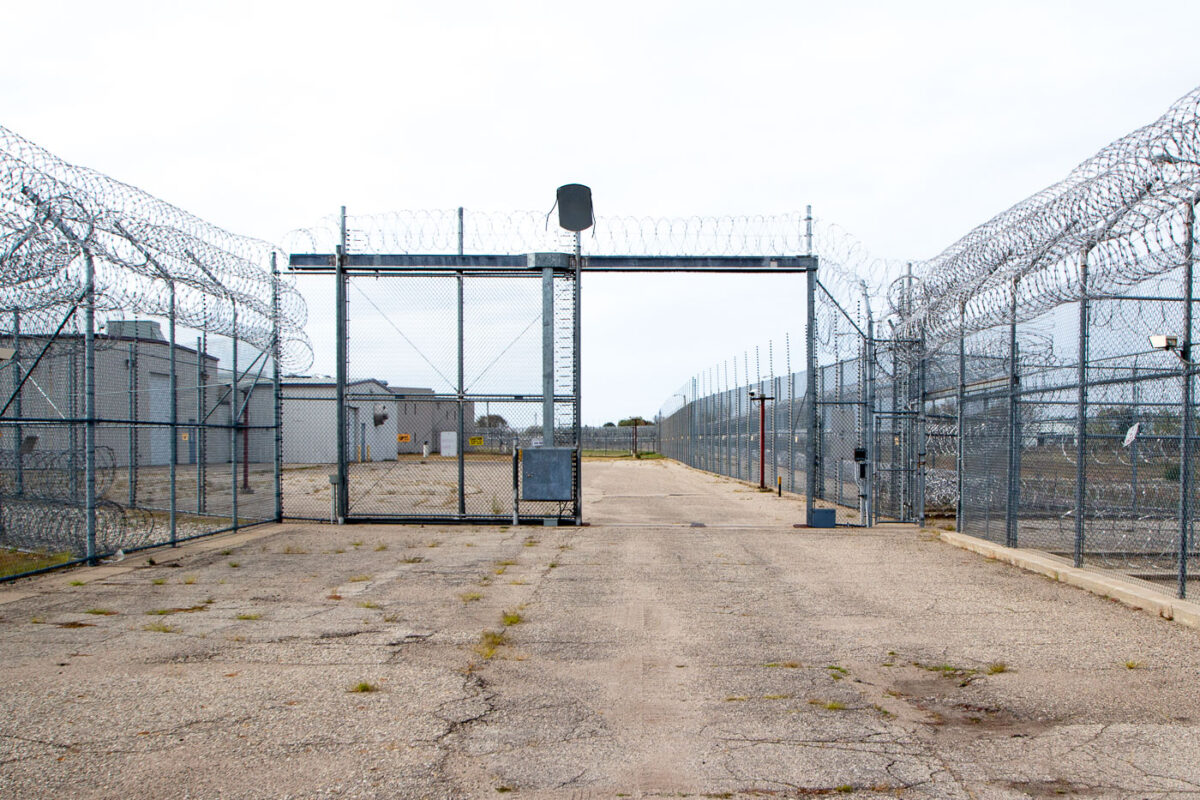
Aerial view of recreation yard at CoreCivic Prairie Correctional Facility in Appleton, Minnesota, showing HVAC equipment, solar
The CoreCivic Prairie Correctional Facility in Appleton, Minnesota. The 1,600-bed facility has been closed since 2010. It's being considered by the federal government for use as an Immigration and Customs Enforcement (ICE) detention center.

Aerial View of Rooftop HVAC Units at the Prairie Correctional Facility

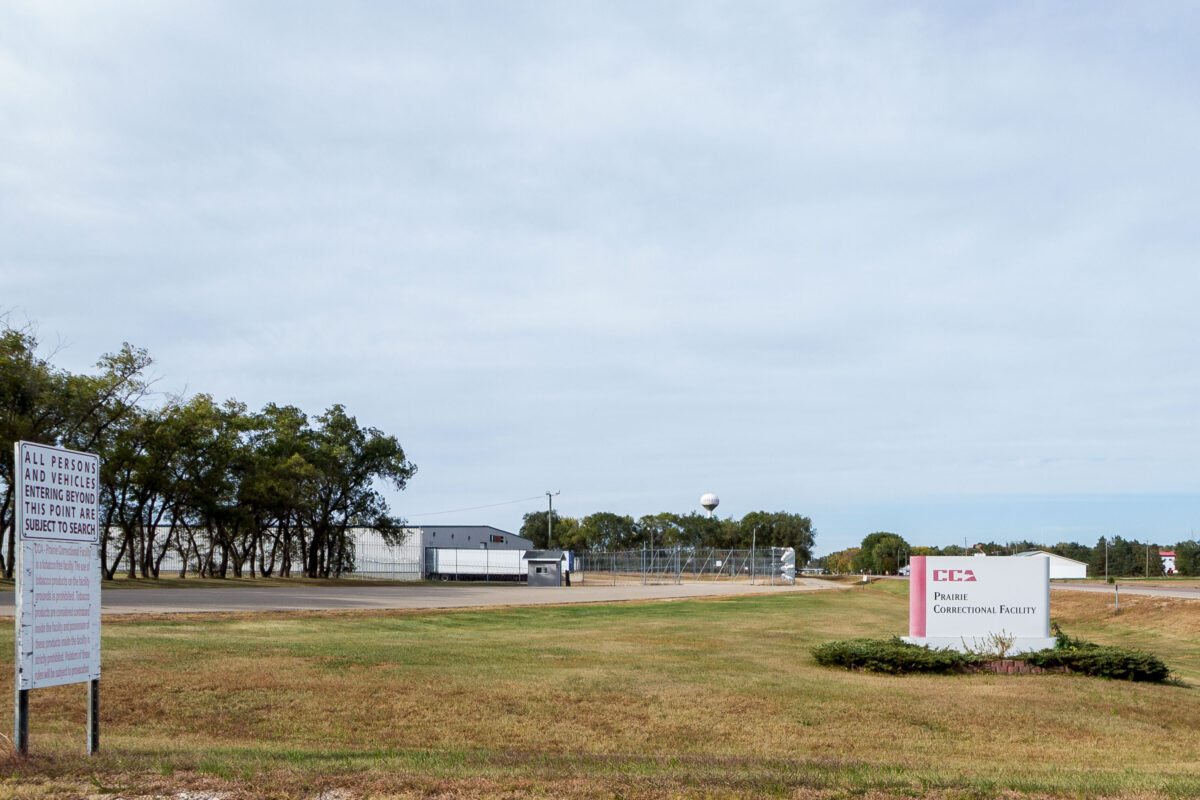
Prairie Correctional Facility entrance sign and grounds in Appleton, Minnesota.
The CoreCivic Prairie Correctional Facility in Appleton, Minnesota. The 1,600-bed facility has been closed since 2010. It's being considered by the federal government for use as an Immigration and Customs Enforcement (ICE) detention center.

Warning Sign Near the Prairie Correctional Facility Entrance

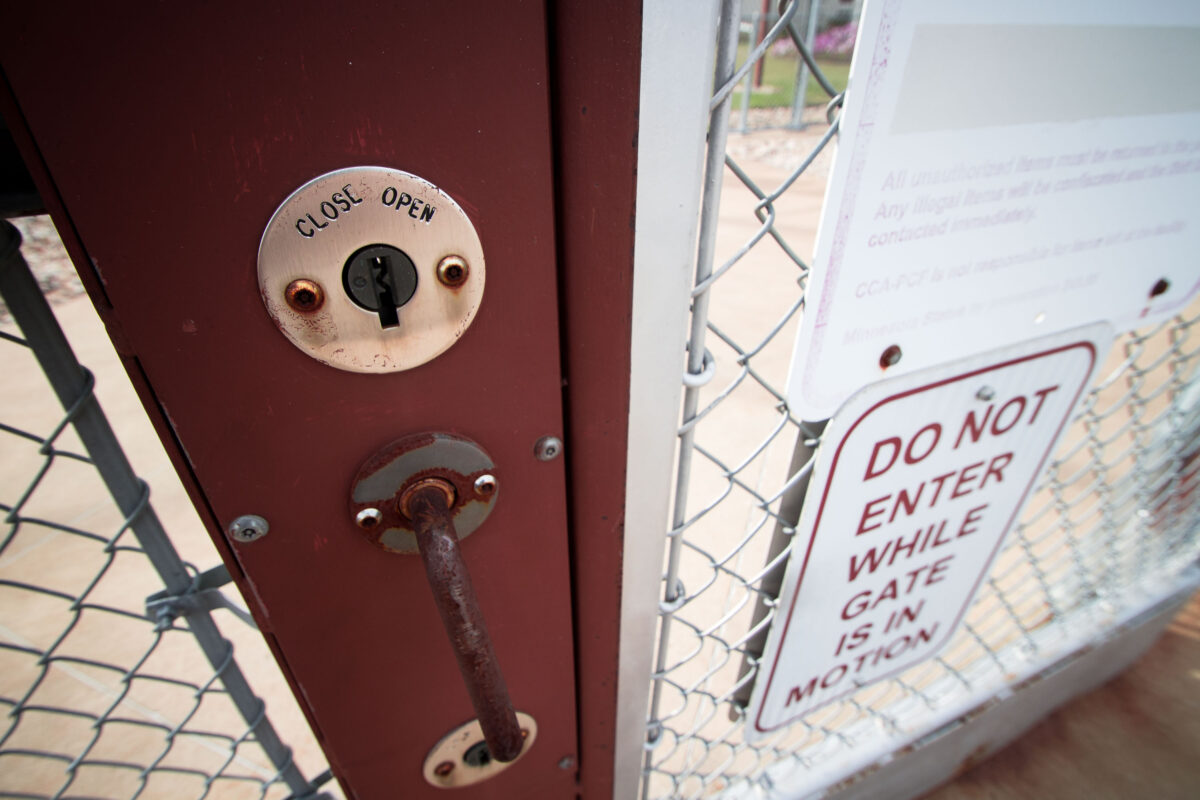
Close and open switch on burgundy metal gate at Prairie Correctional Facility in Appleton, Minnesota.
Razor wire and security fencing surround the Prairie Correctional Facility in Appleton, Minnesota. The 1,600-bed facility has been closed since 2010. It's being considered by the federal government for use as an Immigration and Customs Enforcement (ICE) detention center.

“Do Not Enter While Gate Is in Motion” Sign at Prairie Correctional Facility

Razor wire and chain-link security fencing enclose the Prairie Correctional Facility in Appleton, Minnesota.
Razor wire and security fencing surround the Prairie Correctional Facility in Appleton, Minnesota. The 1,600-bed facility has been closed since 2010. It's being considered by the federal government for use as an Immigration and Customs Enforcement (ICE) detention center.

Razor Wire Fencing at the Prairie Correctional Facility in Appleton

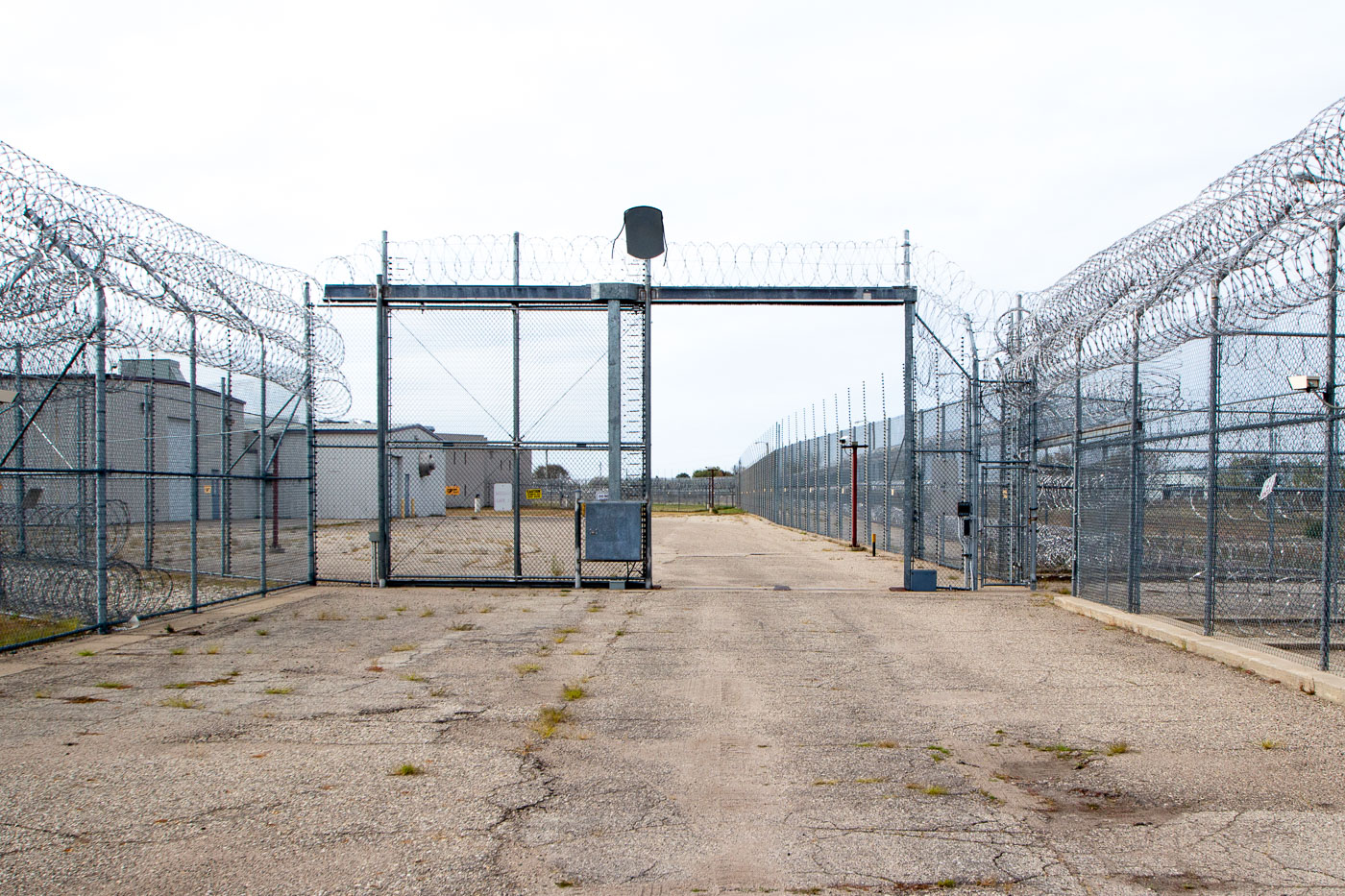
Entrance gate with razor wire fencing at Prairie Correctional Facility in Appleton, Minnesota.
The entrance to the Prairie Correctional Facility in Appleton, Minnesota, a 1,600-bed correctional institution that ceased operations in 2010. The facility may re-open as a Immigration and Customs Enforcement (ICE) detention center.

Security Gate at Prairie Correctional Facility in Appleton

Prairie Correctional Facility entrance gate with razor wire fencing in Appleton, Minnesota.
Razor wire and security fencing surround the Prairie Correctional Facility in Appleton, Minnesota. The 1,600-bed facility has been closed since 2010. It's being considered by the federal government for use as an Immigration and Customs Enforcement (ICE) detention center.

Security Gate at the Prairie Correctional Facility in Appleton

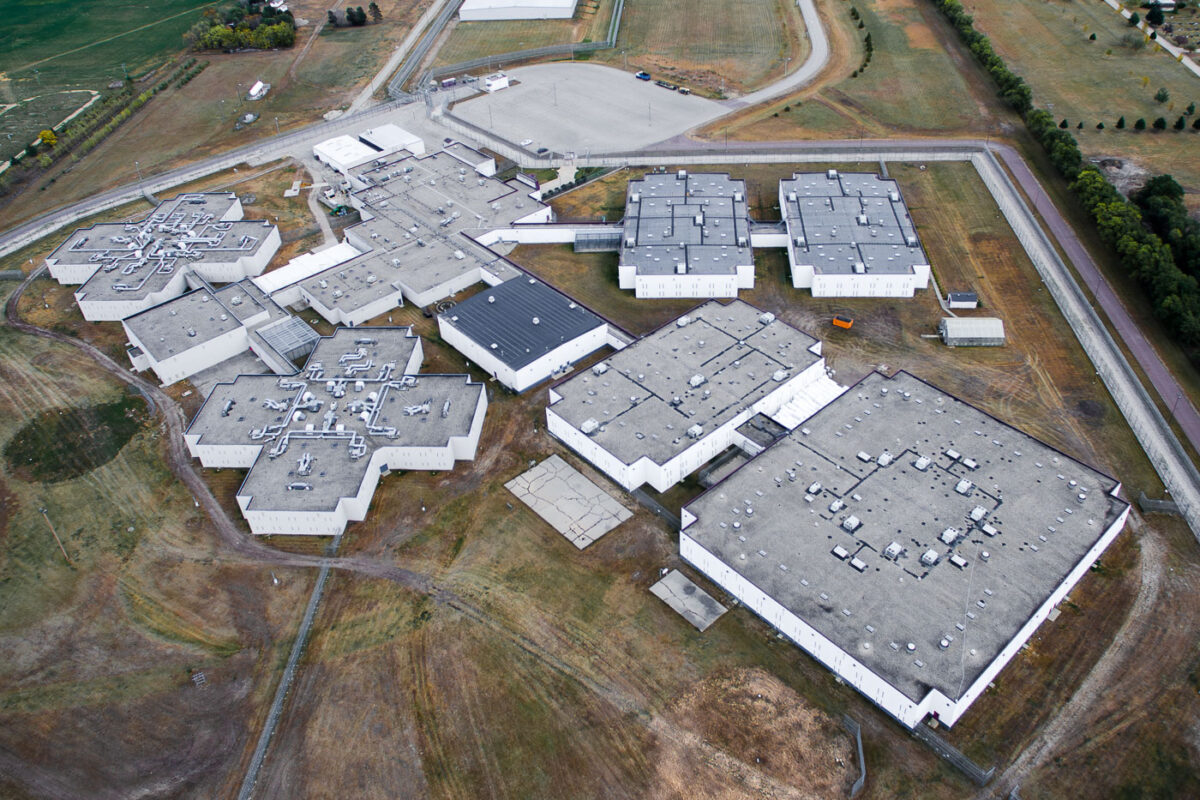
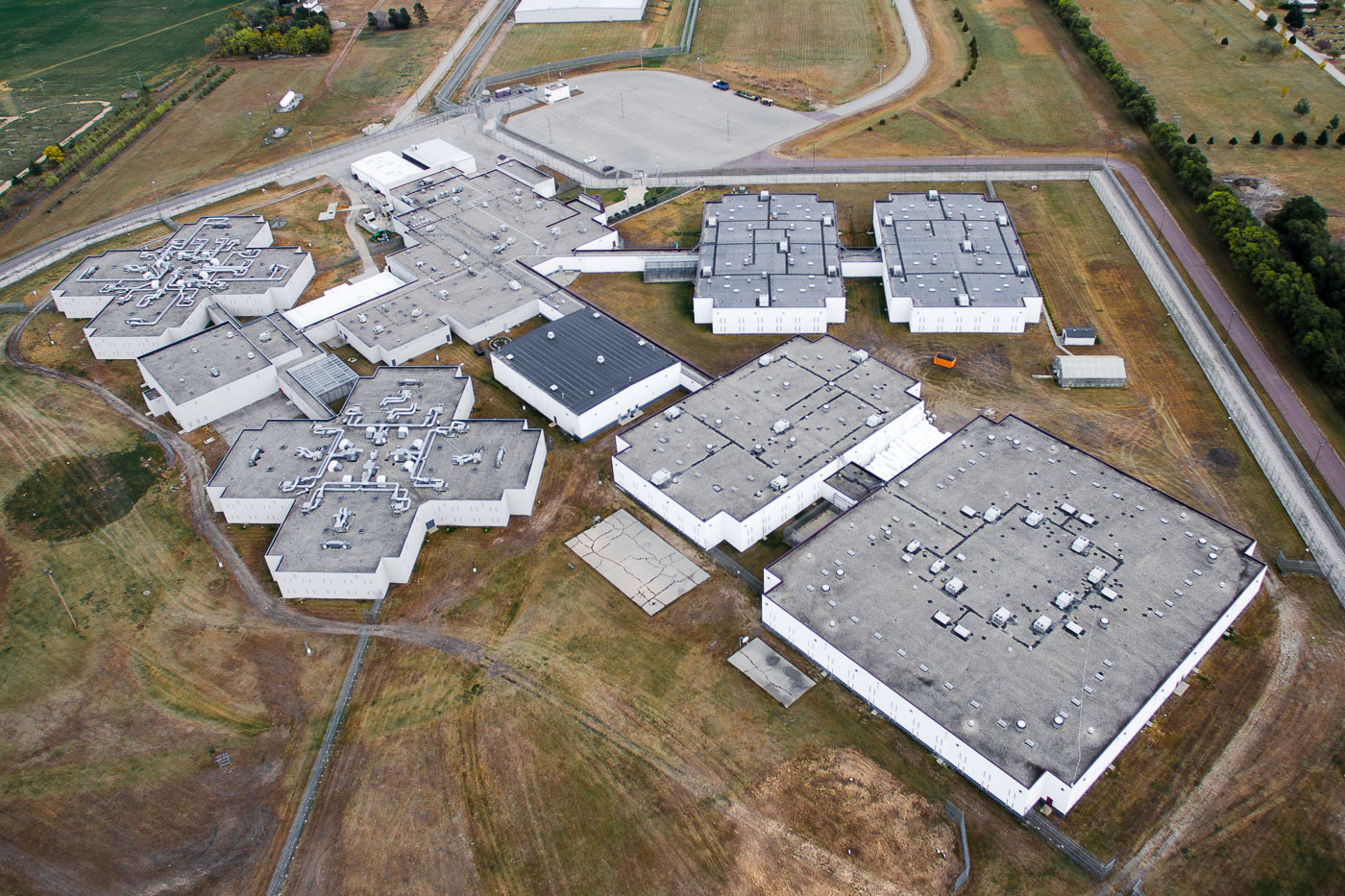
Aerial view of Prairie Correctional Facility, a closed private prison complex in Appleton, Minnesota, showing multiple buildings
The CoreCivic Prairie Correctional Facility in Appleton, Minnesota. The 1,600-bed facility has been closed since 2010. It's being considered by the federal government for use as an Immigration and Customs Enforcement (ICE) detention center.

Aerial View of the Prairie Correctional Facility in Appleton

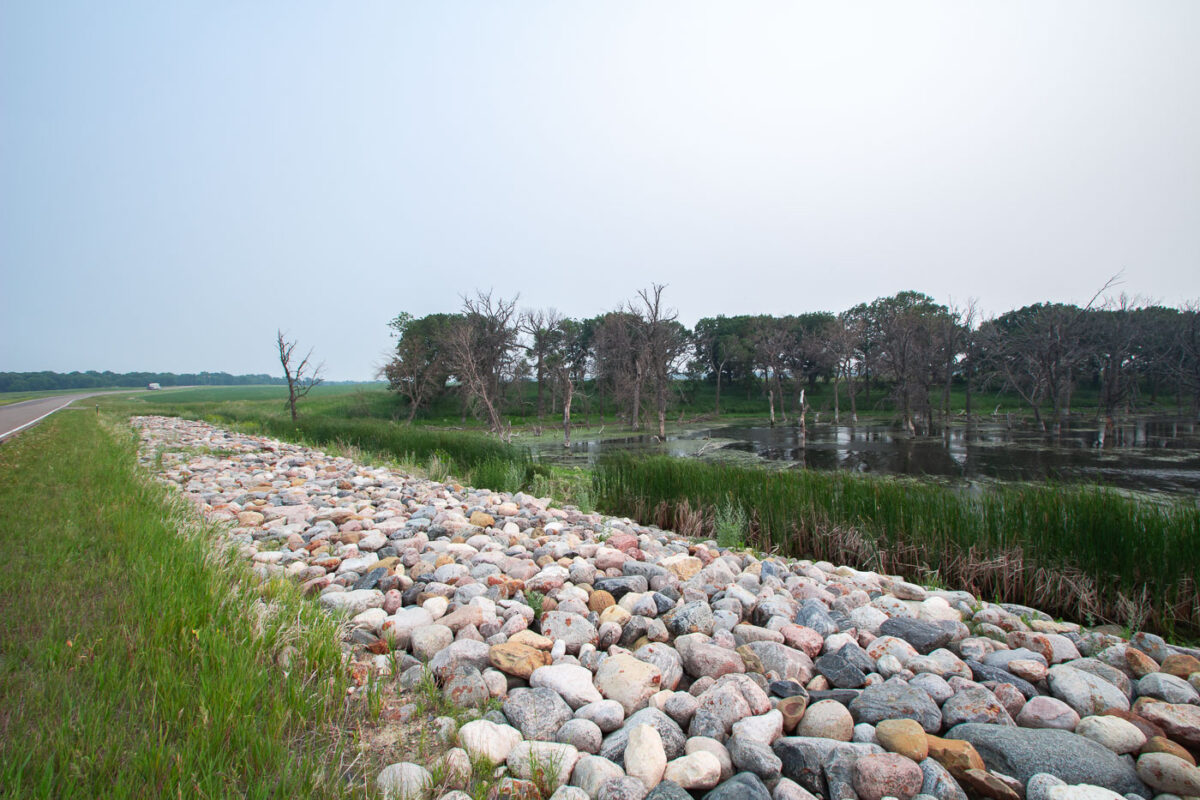
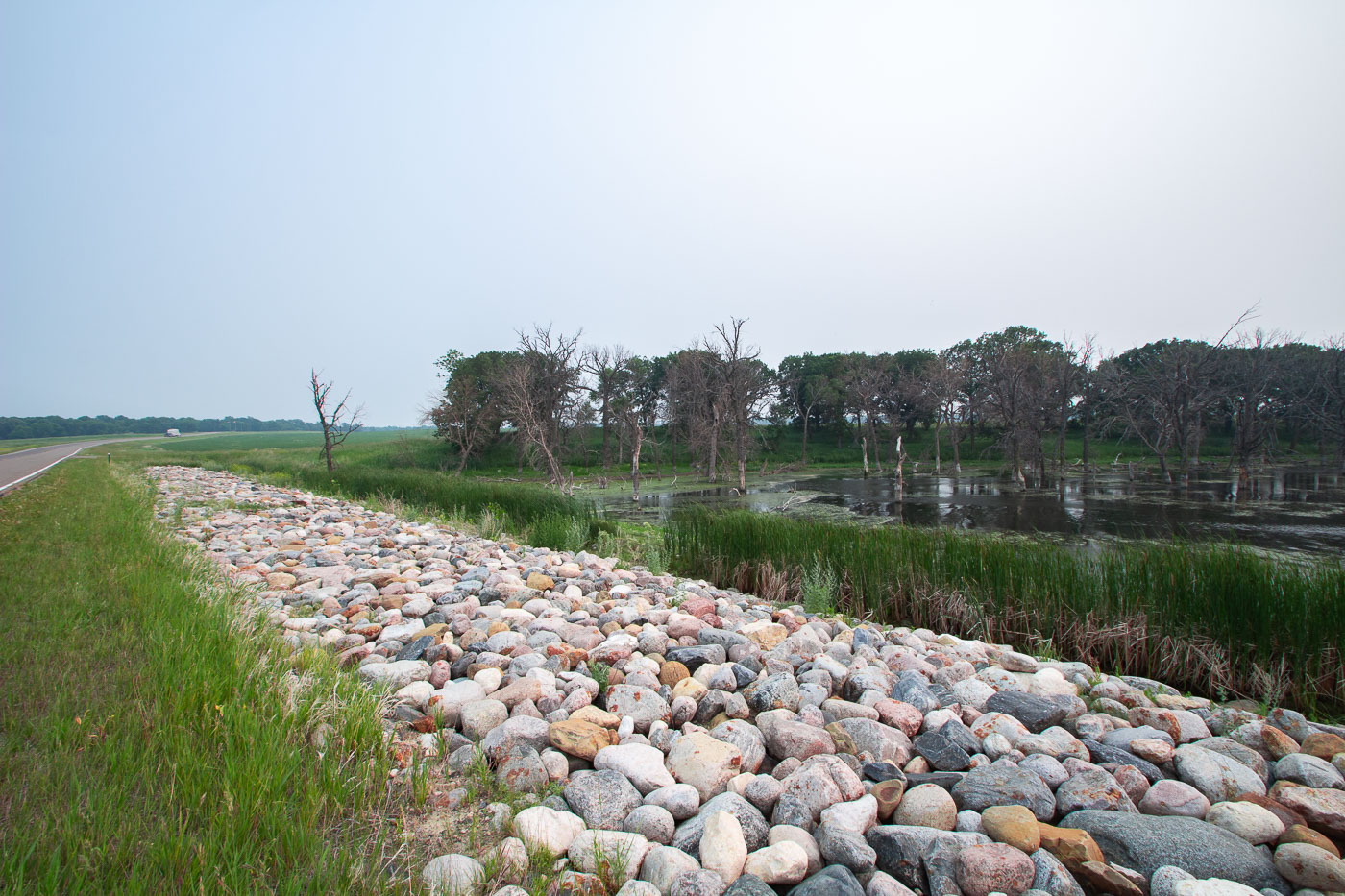
Stone riprap reinforces the shoreline of Devils Lake State Park in North Dakota, adjacent to wetland habitat.
Devils Lake has no natural outlet, so its water levels rise and fall based on precipitation and runoff rather than draining to a river system. Over the past three decades the lake has expanded dramatically, flooding farmland, roads, and stands of trees that once stood on dry ground — visible here as the bare, dead trunks standing in standing water. Riprap like this is placed along roadbeds and embankments around the lake to slow erosion from wave action as the shoreline continues to shift. Devils Lake State Park sits along the lake's edge in Ramsey County and includes wetland habitat used by migratory waterfowl.

Riprap Embankment Along Devils Lake, North Dakota

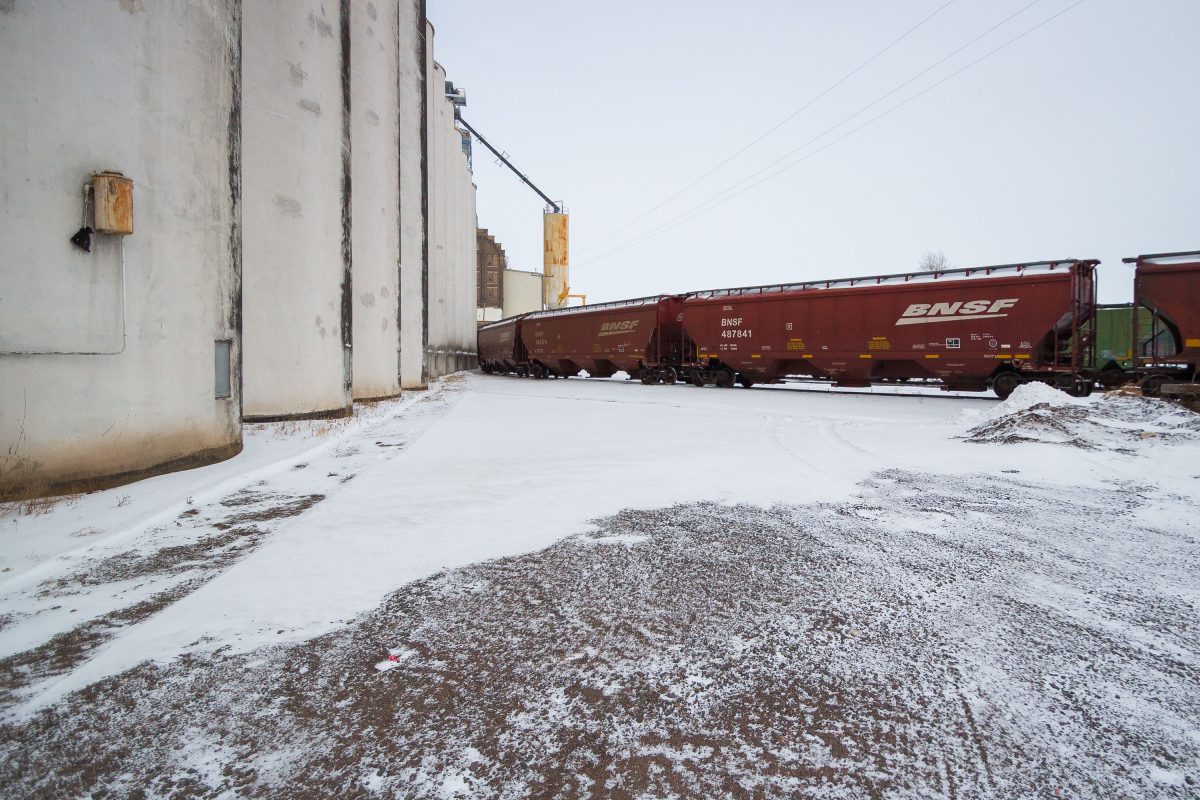
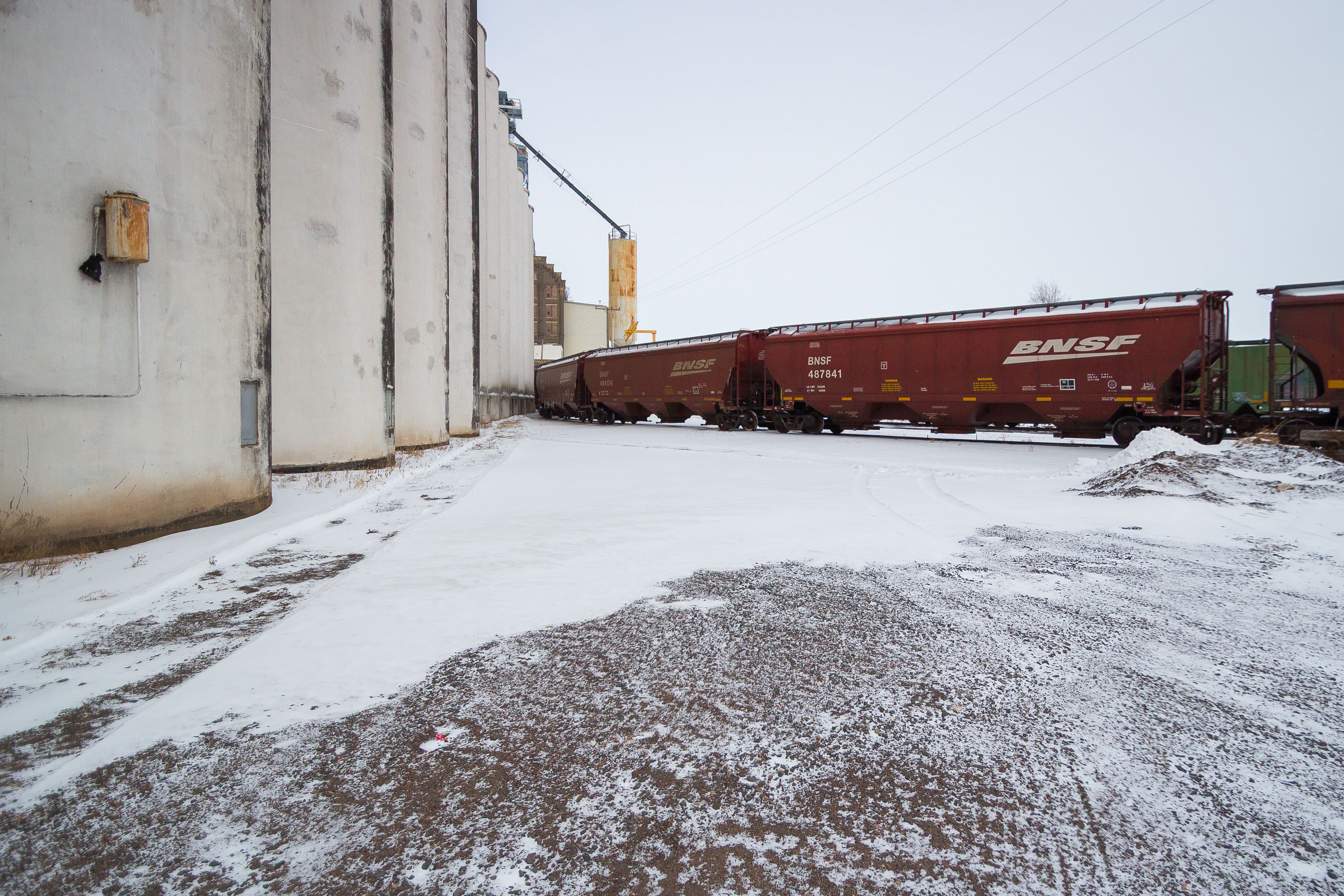
BNSF freight cars parked beside Hansen-Mueller Grain Elevator in snow-covered Superior, Wisconsin.
Hansen-Mueller Grain Elevator in Superior, Wisconsin, is a grain storage and transfer facility on Superior Bay. BNSF freight cars move commodities through the complex by rail for shipment to regional and export markets.

BNSF Hopper Cars at the Hansen-Mueller Grain Elevator in Superior

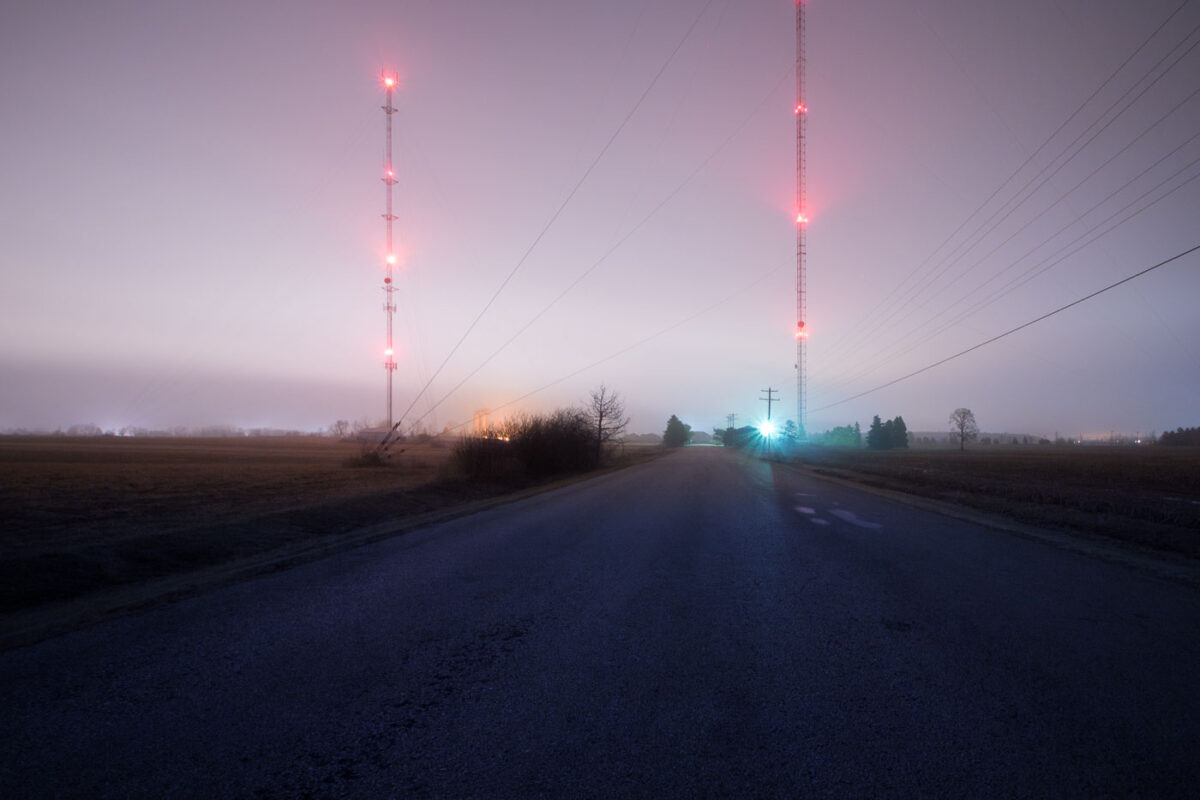
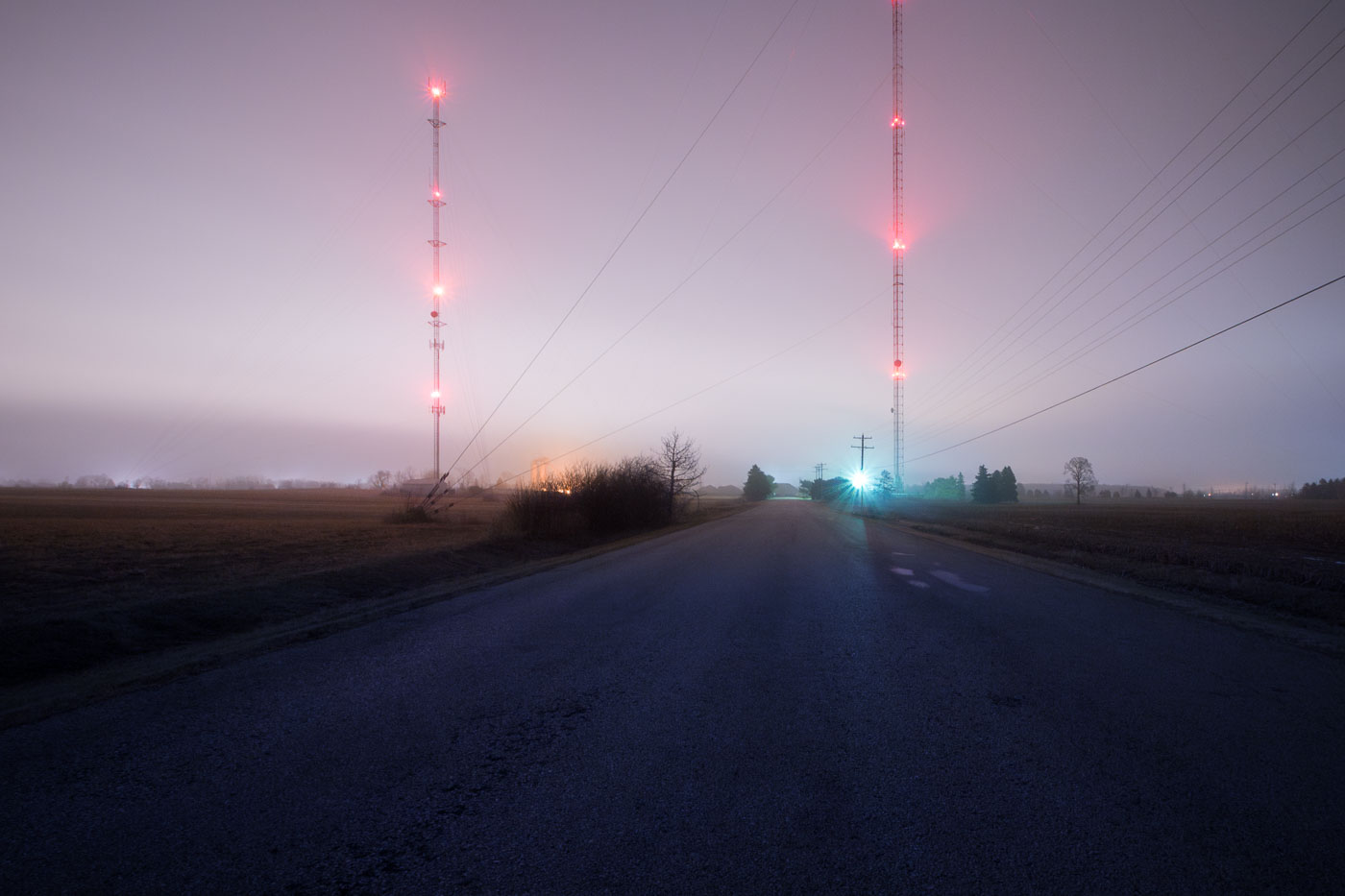
Radio and TV towers on Video Lane in De Pere, Wisconsin, illuminated by red warning lights in the foggy night.
Radio and television towers stand tall on Video Lane in De Pere, Wisconsin, their red warning lights piercing the foggy night. These structures are essential for broadcasting signals across the Green Bay area, serving as critical communication infrastructure. The presence of multiple towers in this location highlights its historical importance as a hub for media transmission in the region. Their functional purpose continues today, facilitating the distribution of radio and television programming to a wide audience.
Radio and TV Towers on Video Lane, De Pere, Wisconsin at Night

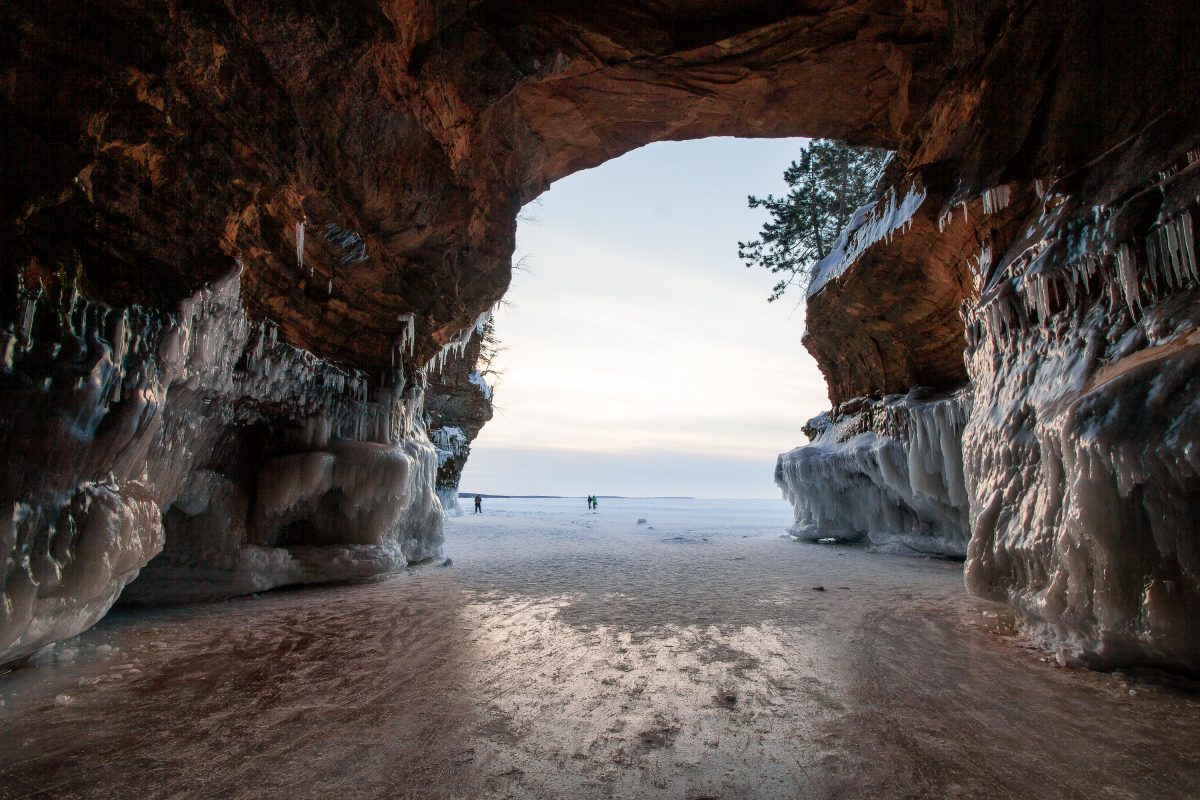
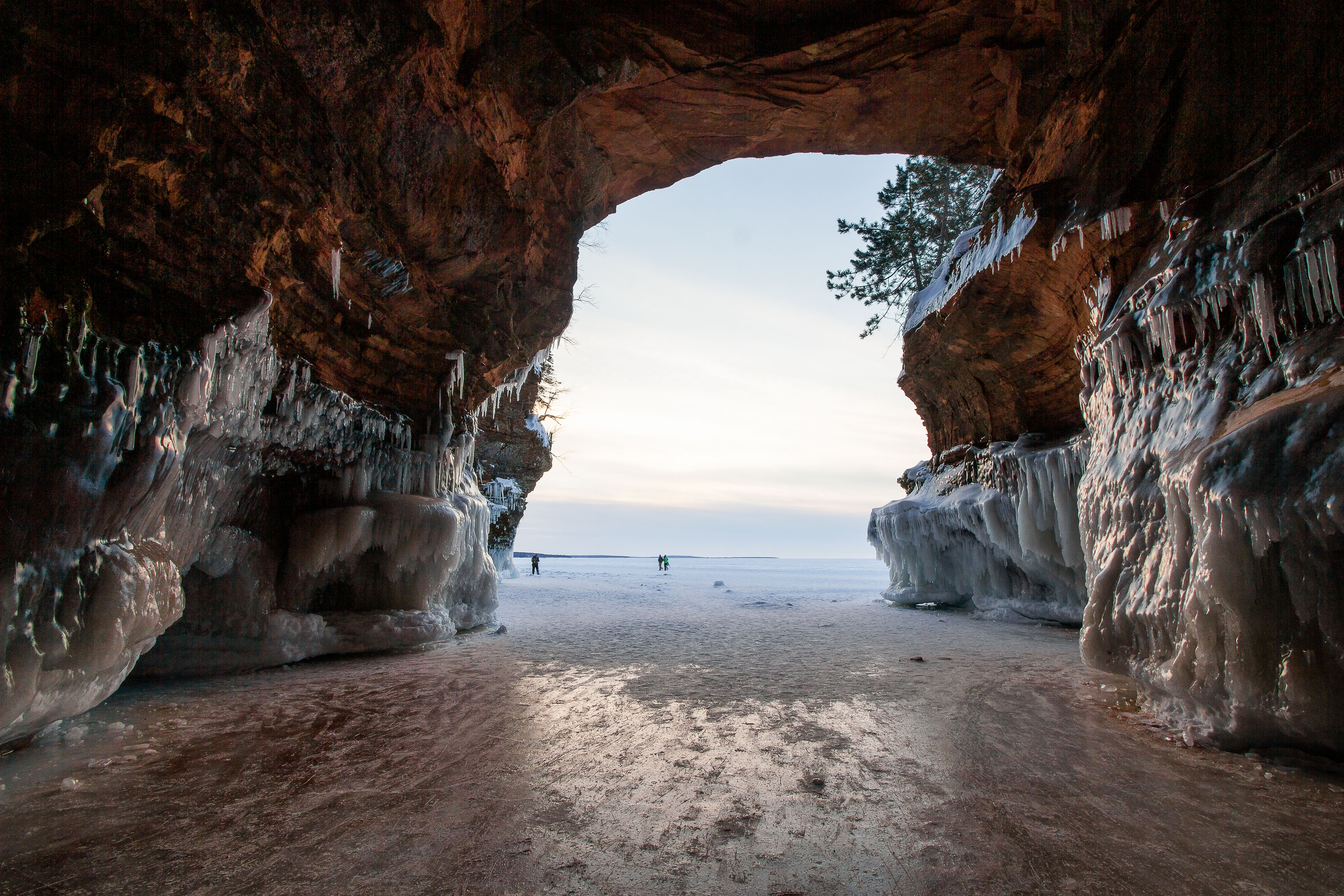
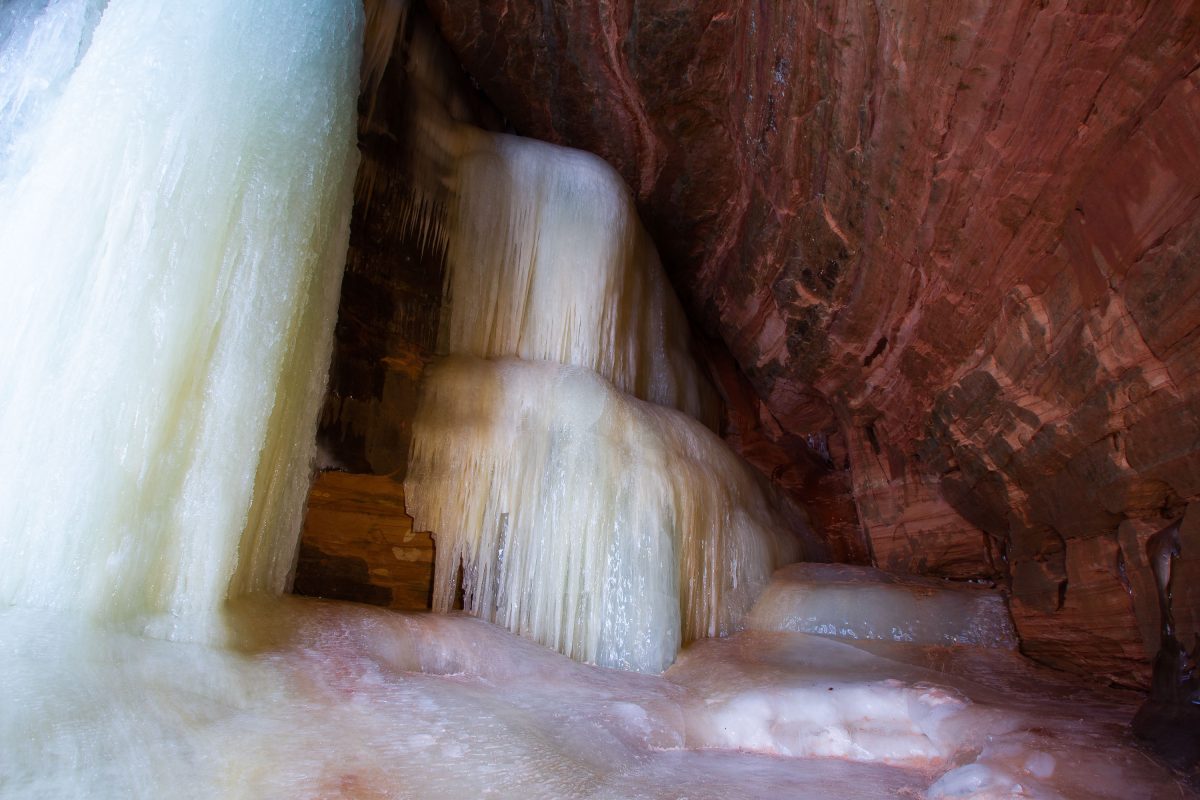
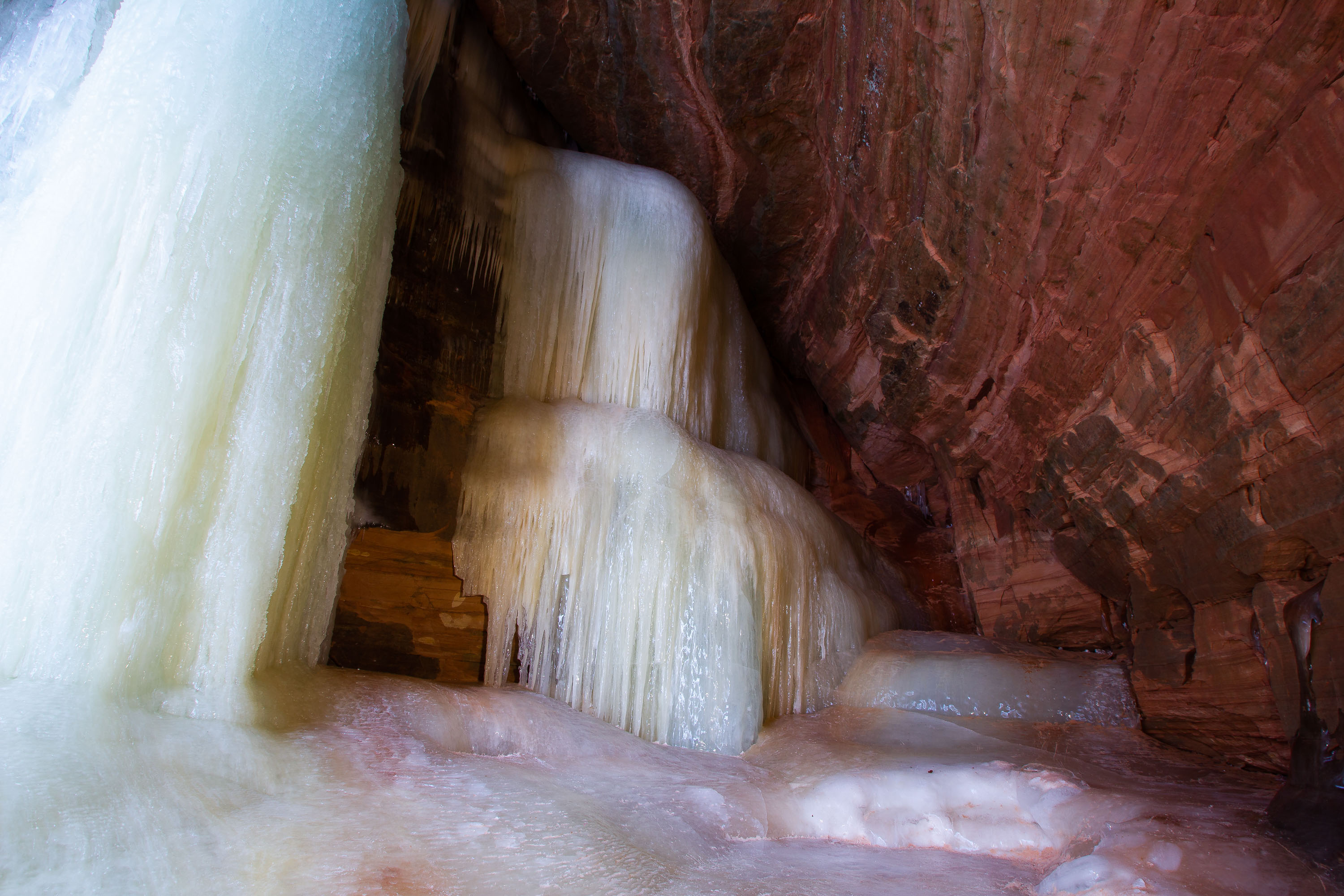
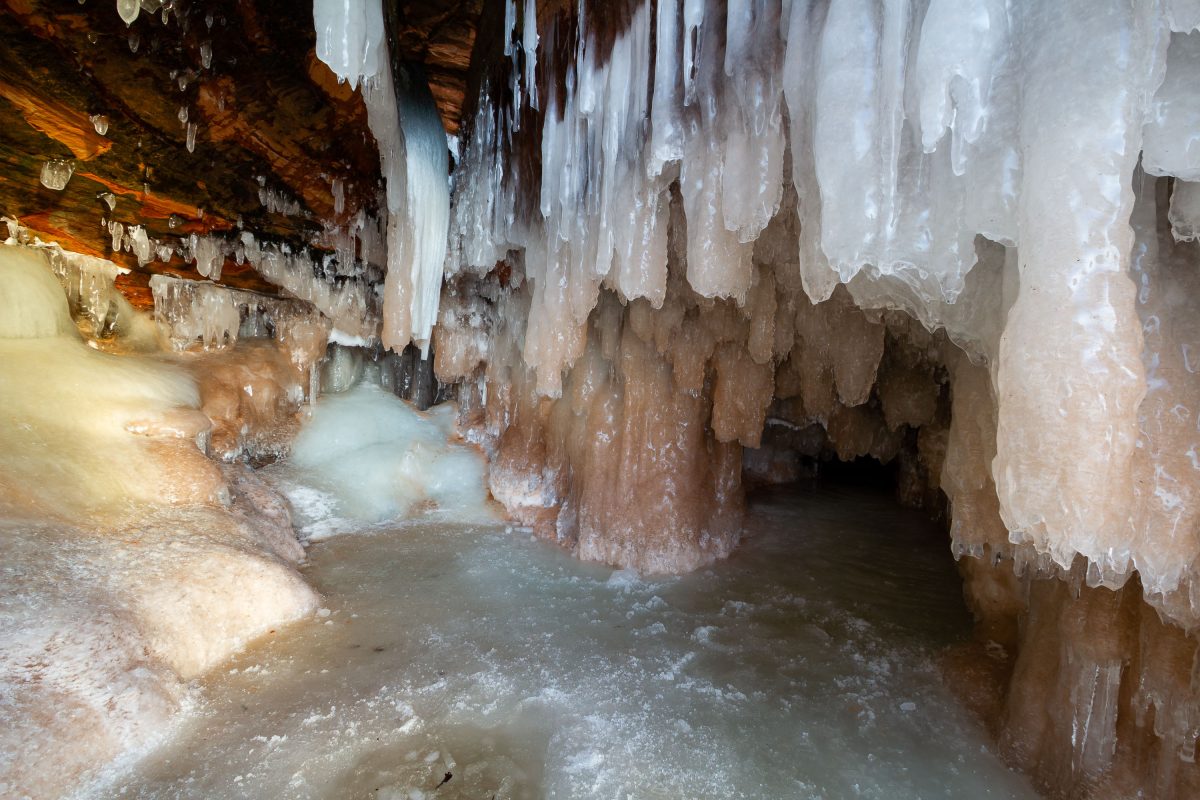
Icicles line sandstone walls of the mainland sea caves at Apostle Islands National Lakeshore, Lake Superior.
The mainland sea caves are sandstone formations along Lake Superior within Apostle Islands National Lakeshore in Wisconsin. In winter, when the lake ice is stable, visitors can walk onto the ice to view the caves' frozen icicle formations from the shoreline. The National Park Service manages access to the caves and issues advisories based on ice conditions each season.

Mainland Sea Caves, Apostle Islands National Lakeshore

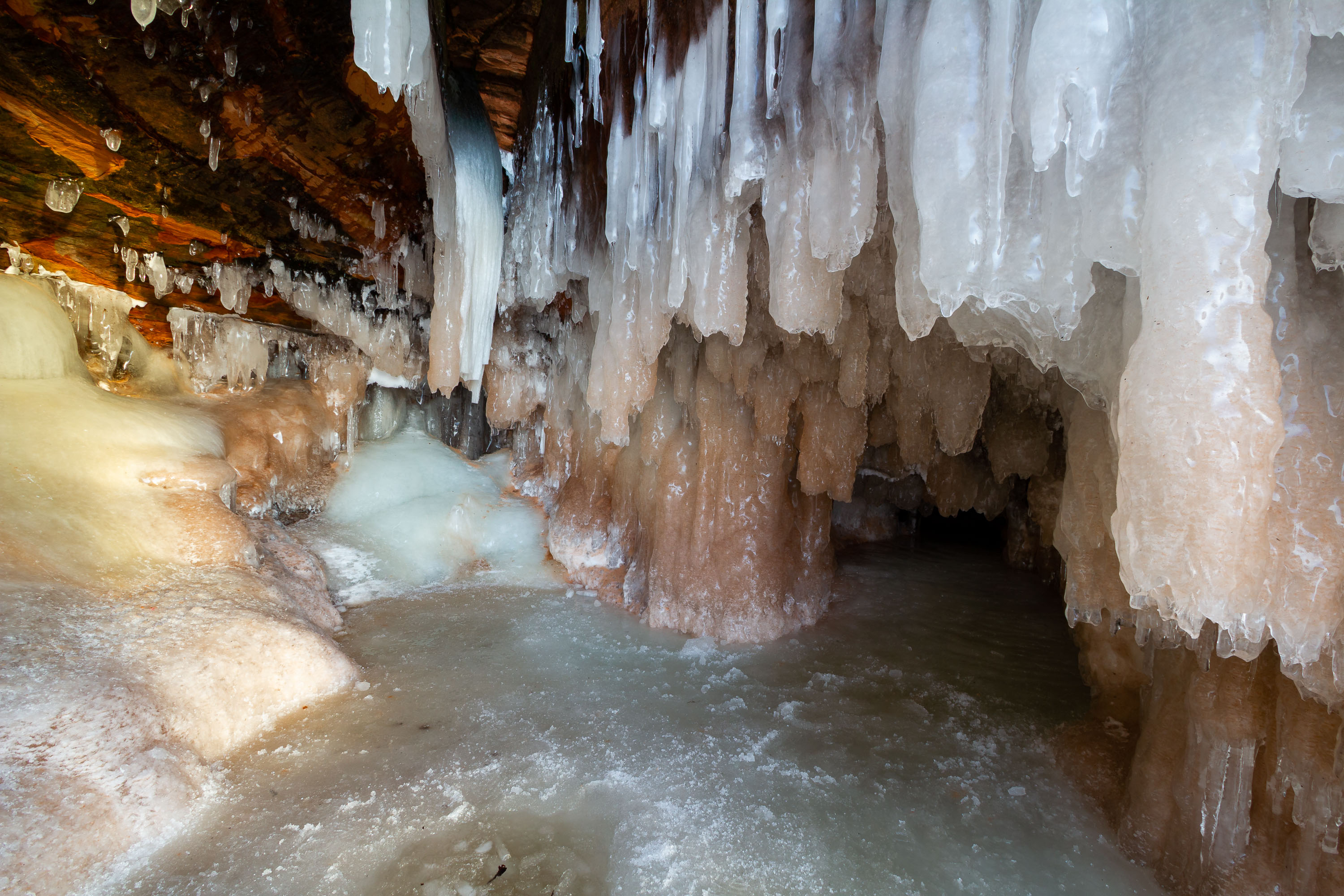
Frozen ice formations coat sandstone walls inside the Apostle Islands Mainland Sea Caves on Lake Superior.
Frozen seepage forms ice curtains inside the Apostle Islands National Lakeshore Mainland Sea Caves along Lake Superior in Wisconsin. The sandstone caves are accessible on foot only when winter ice on the lake is thick enough to support visitors.

Frozen Ice Formations, Apostle Islands Mainland Sea Caves

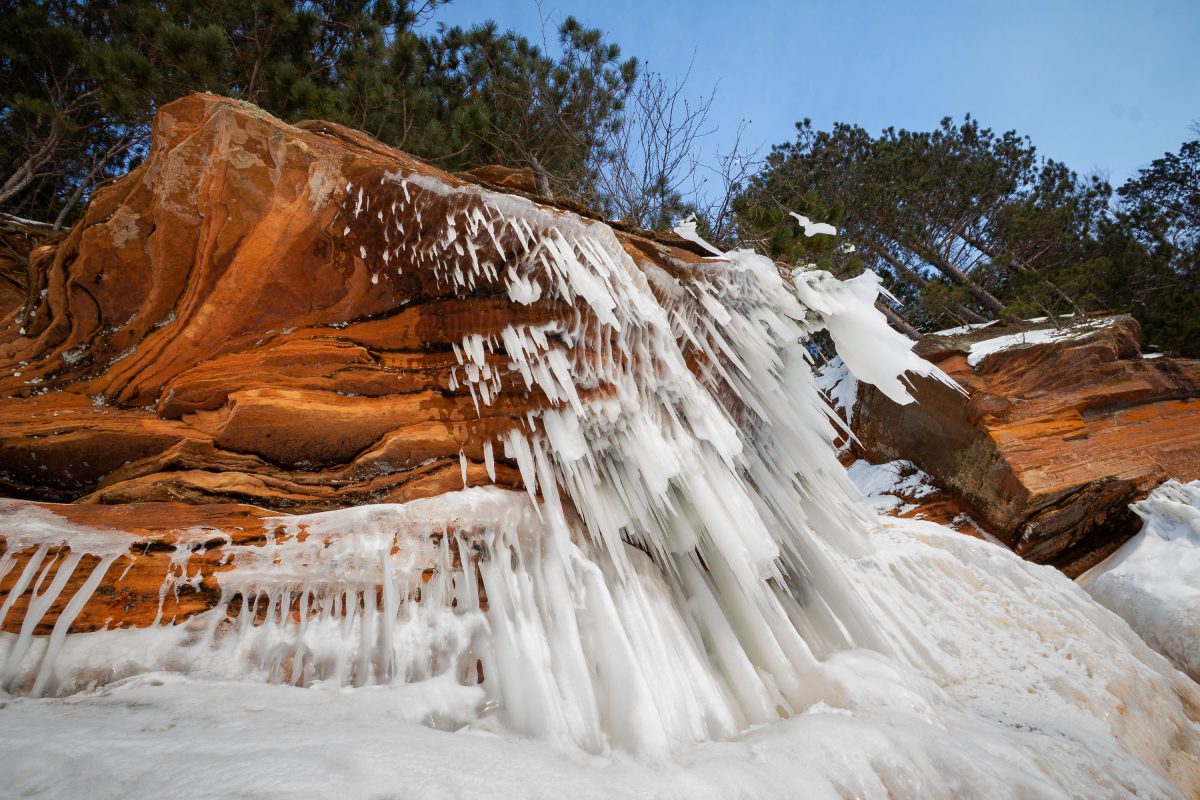
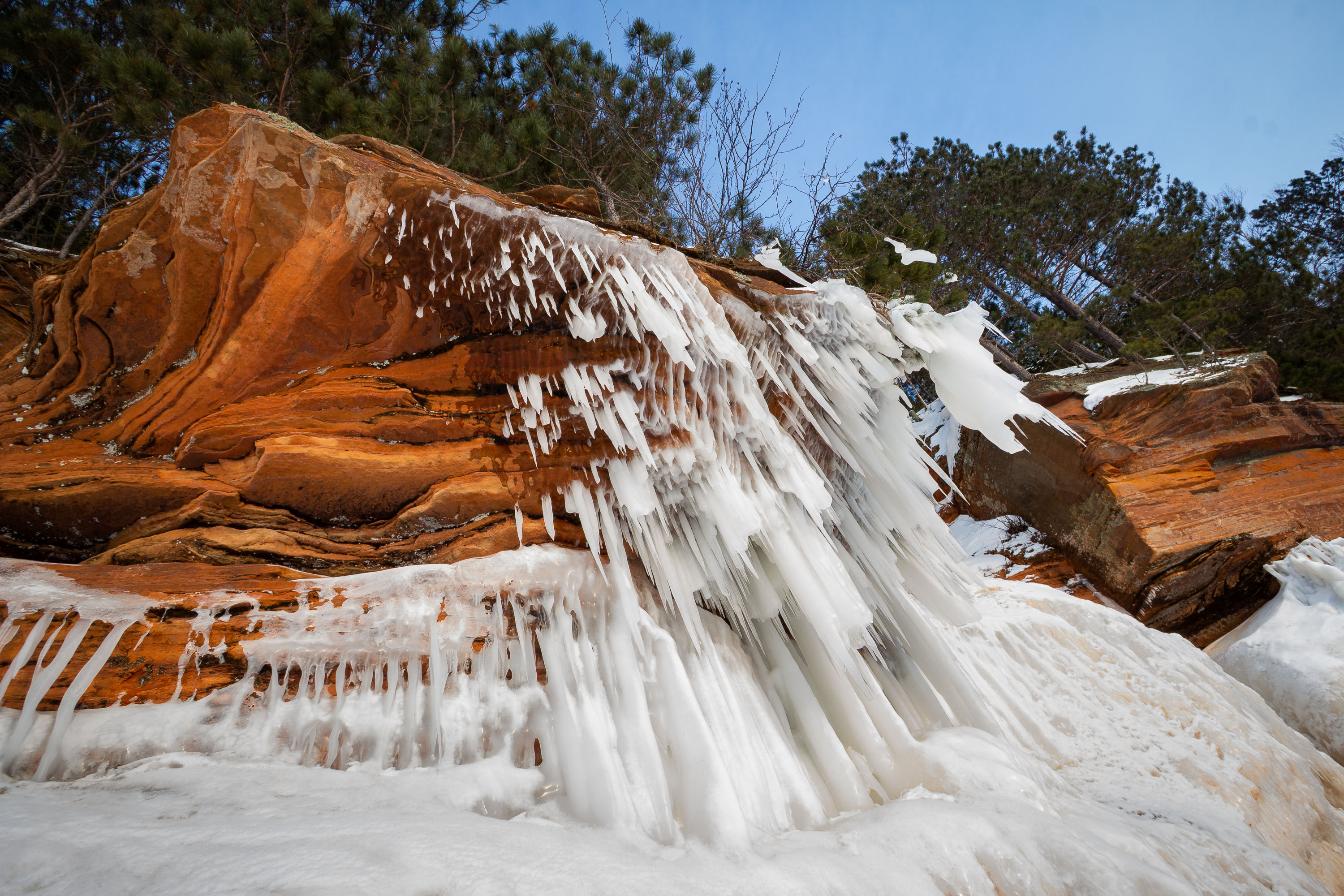
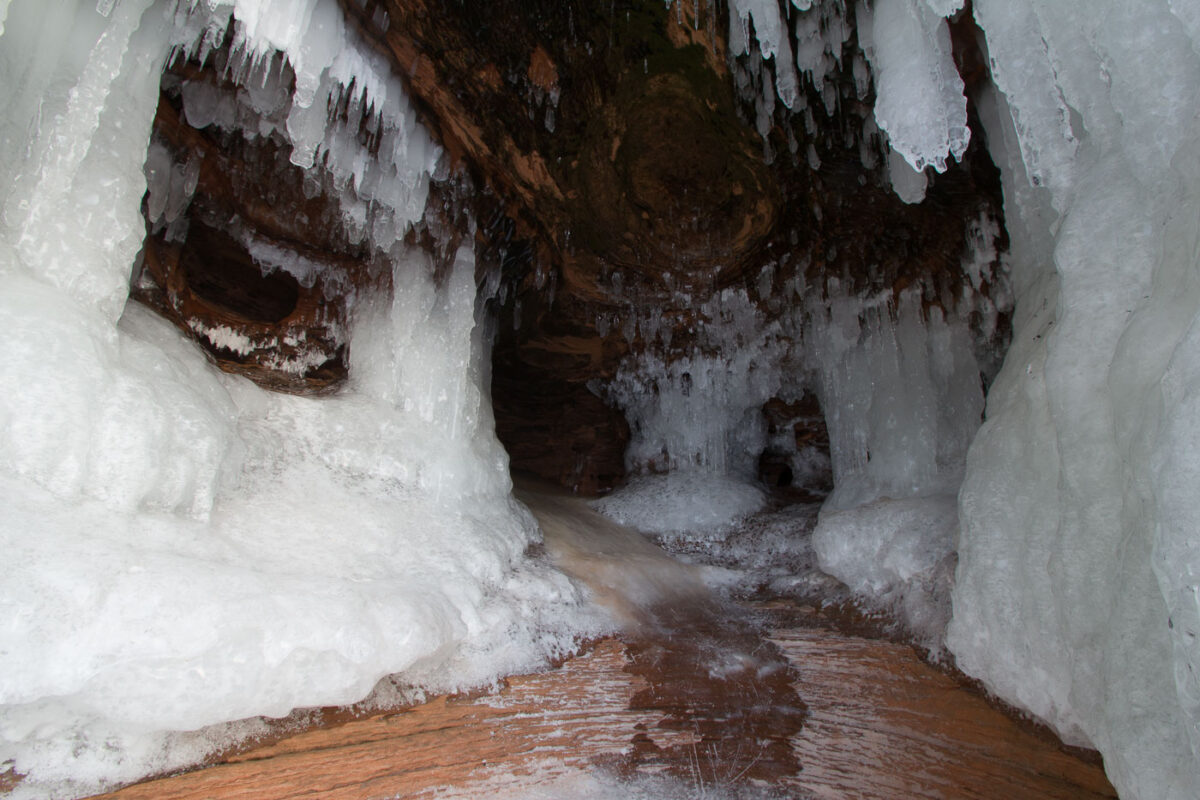
Ice-covered sandstone cliffs at the Apostle Islands National Lakeshore mainland sea caves on Lake Superior.
Ice formations coat sandstone cliffs at the mainland sea caves of Apostle Islands National Lakeshore on Lake Superior. The caves, located along the shoreline near Bayfield, Wisconsin, are accessible on foot when lake ice is thick enough to support visitors.

Frozen Sea Caves, Apostle Islands National Lakeshore

Icicles and ice formations coat sandstone walls inside a frozen sea cave at Apostle Islands National Lakeshore.
The mainland sea caves are located along the Lake Superior shoreline within Apostle Islands National Lakeshore near Cornucopia, Wisconsin. The caves form in sandstone eroded by wave action, and in winter, meltwater freezes into icicles and ice formations along the cave walls and ceilings.

Icicle Formations, Mainland Sea Caves, Apostle Islands

Ice formations in a cave along the shore of Lake Superior at Apostle Islands National Lakeshore, Wisconsin, February 2014.
During the winter of 2014, the Apostle Islands National Lakeshore in Wisconsin experienced a period of extreme cold, leading to the formation of spectacular ice caves along the mainland shore. These natural formations are created when waves freeze onto the sandstone cliffs, and dripping water from above forms icicles and ice curtains. The caves are a temporary natural phenomenon, accessible only when Lake Superior freezes over sufficiently to allow safe passage. Their ephemeral beauty draws visitors who brave the cold to witness these unique geological structures before they melt with the spring thaw.

Apostle Islands Ice Formations, February 2014

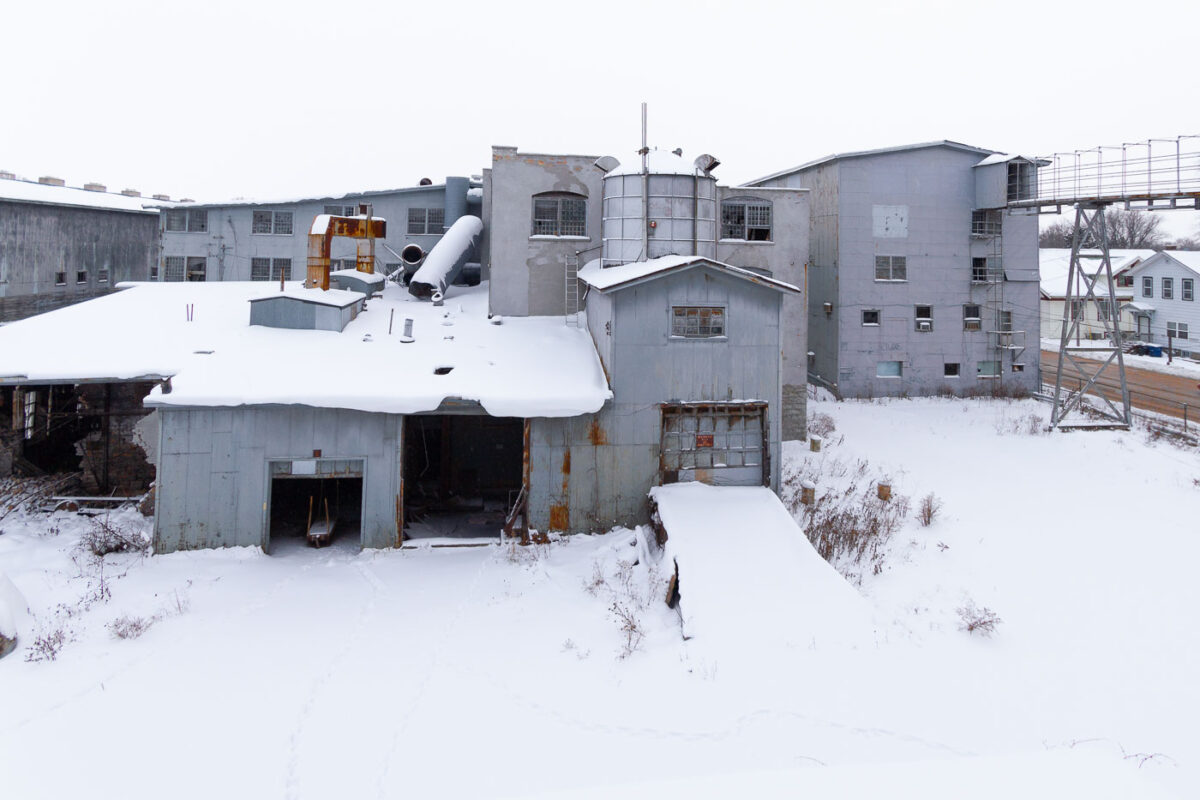
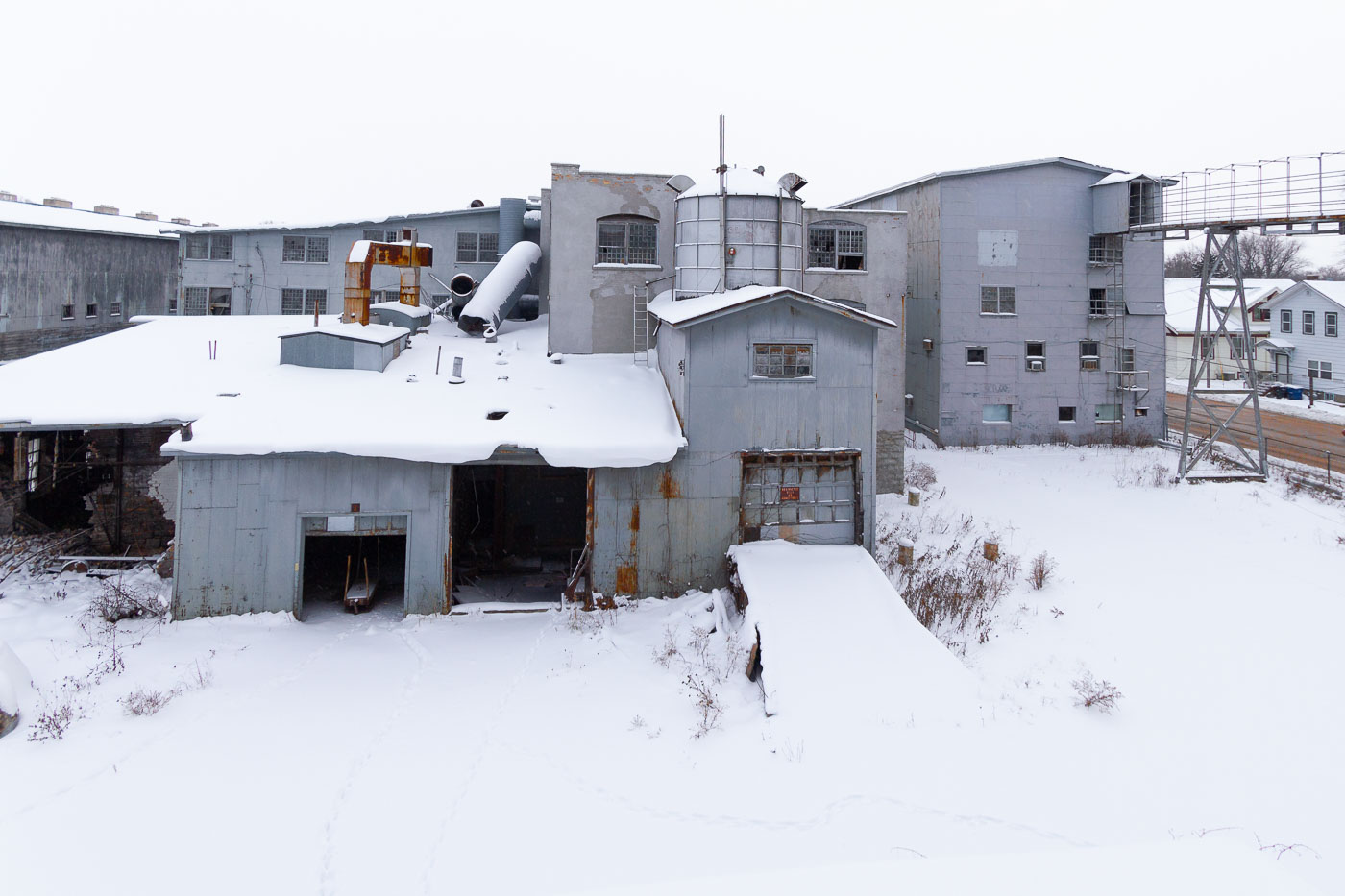
The abandoned Buckstaff Furniture Factory in Oshkosh, Wisconsin, covered in snow. The early 20th-century structure was a significant regional employer.
The former Buckstaff Furniture Factory in Oshkosh, Wisconsin, stands abandoned and covered in snow. Established in the early 20th century, the factory was a significant employer in the region, producing furniture for decades. Its industrial architecture, characterized by large, utilitarian structures and extensive piping, reflects the manufacturing processes it once housed. The factory's closure marked a shift in Oshkosh's economic landscape, leaving behind this imposing structure as a reminder of its industrial past.

Buckstaff Furniture Factory, Oshkosh, Wisconsin in Winter

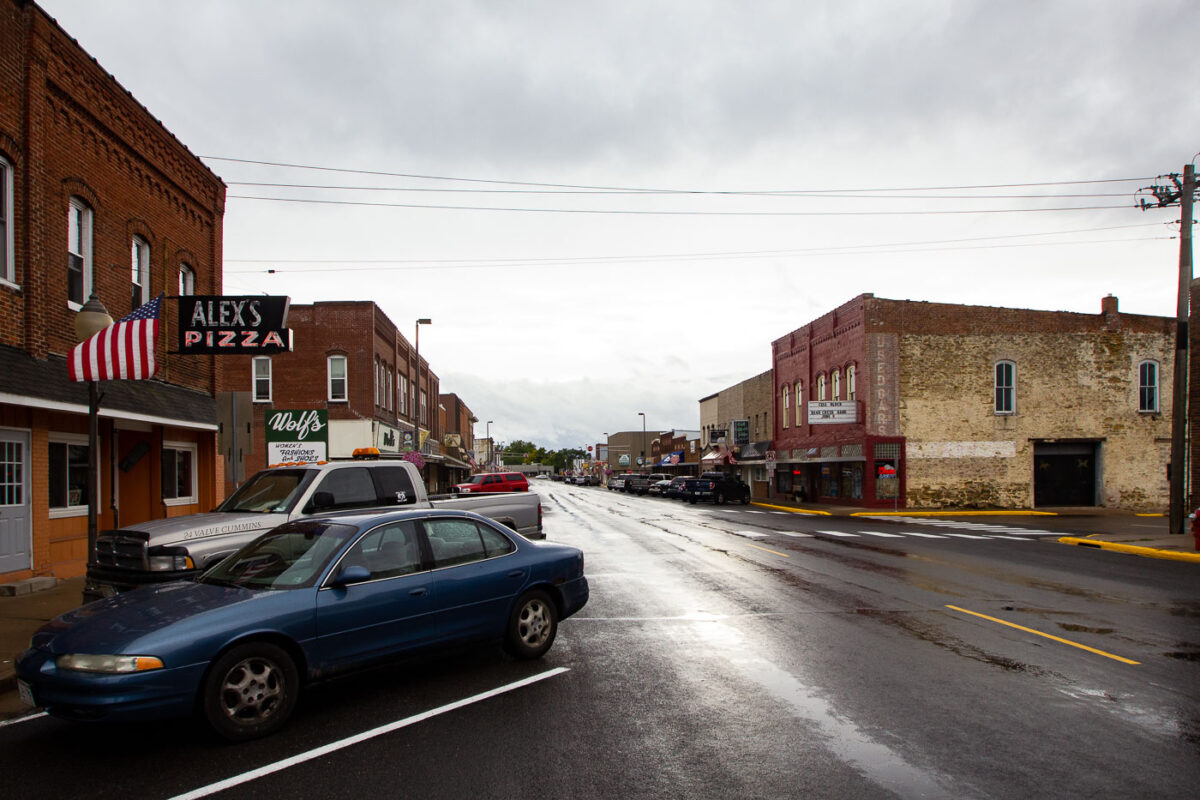
Alex's Pizza on Main Street in Durand, Wisconsin, a commercial street lined with early 20th-century brick buildings.
Alex's Pizza is a long-standing establishment on Main Street in Durand, Wisconsin. The brick buildings lining the street, typical of early 20th-century commercial architecture, house various local businesses. Main Street serves as the primary commercial and social artery for Durand, reflecting the typical development of small Midwestern towns. The presence of businesses like Alex's Pizza highlights the enduring role of local eateries in community life.

Alex’s Pizza and Main Street, Durand Wisconsin

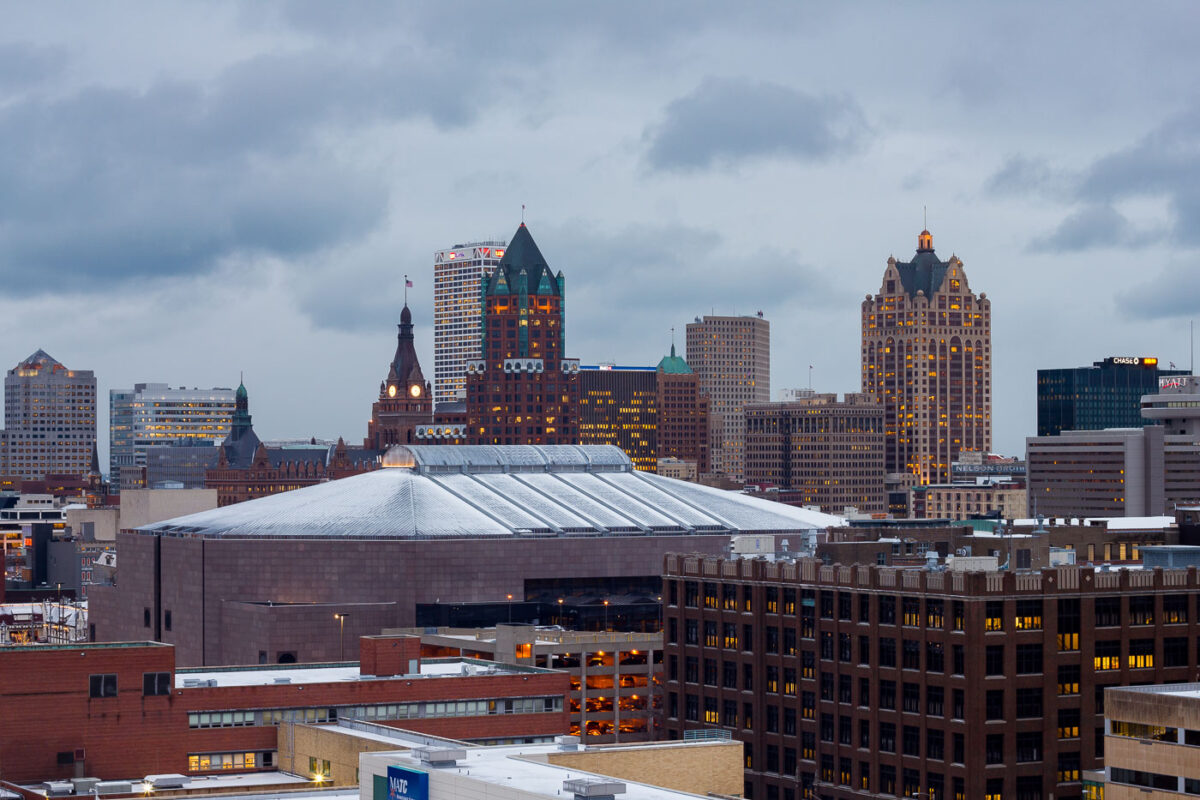
Milwaukee skyline featuring the Bradley Center arena, US Bank Center tower, and City Hall clock tower.
Milwaukee City Hall, completed in 1895 in the Romanesque Revival style, once held the title of tallest habitable building in the United States outside New York City, and its clock tower remains a defining piece of the downtown skyline. The U.S. Bank Center, finished in 1973, stands 601 feet tall across 42 floors and ranks among the tallest buildings in Wisconsin. The Bradley Center opened in 1988 as the home arena for the Milwaukee Bucks and Marquette University's men's basketball team, built with funding from the Pettit family in honor of Bradley Corporation founder Harry Lynde Bradley. The Bucks played there until 2018, when the team moved into the newly built Fiserv Forum and the arena was later demolished.

Milwaukee City Hall’s Clock Tower Rises Above the Bradley Center

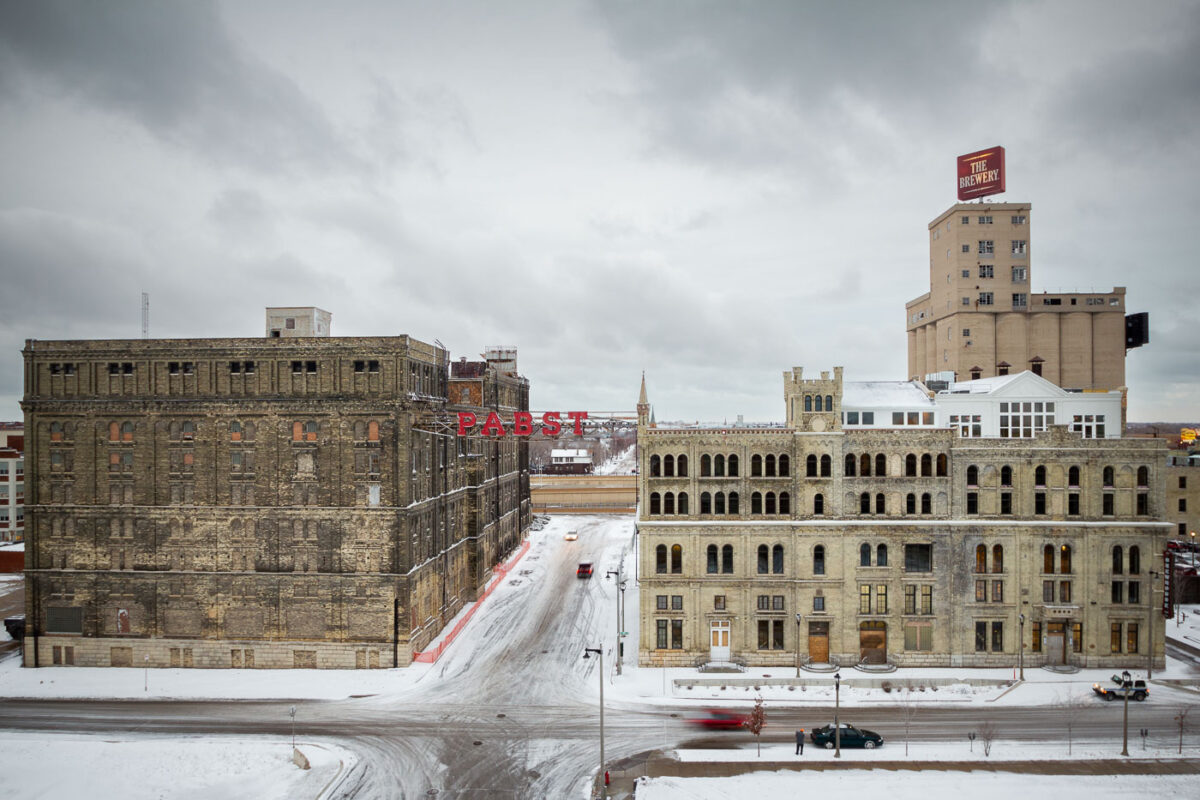
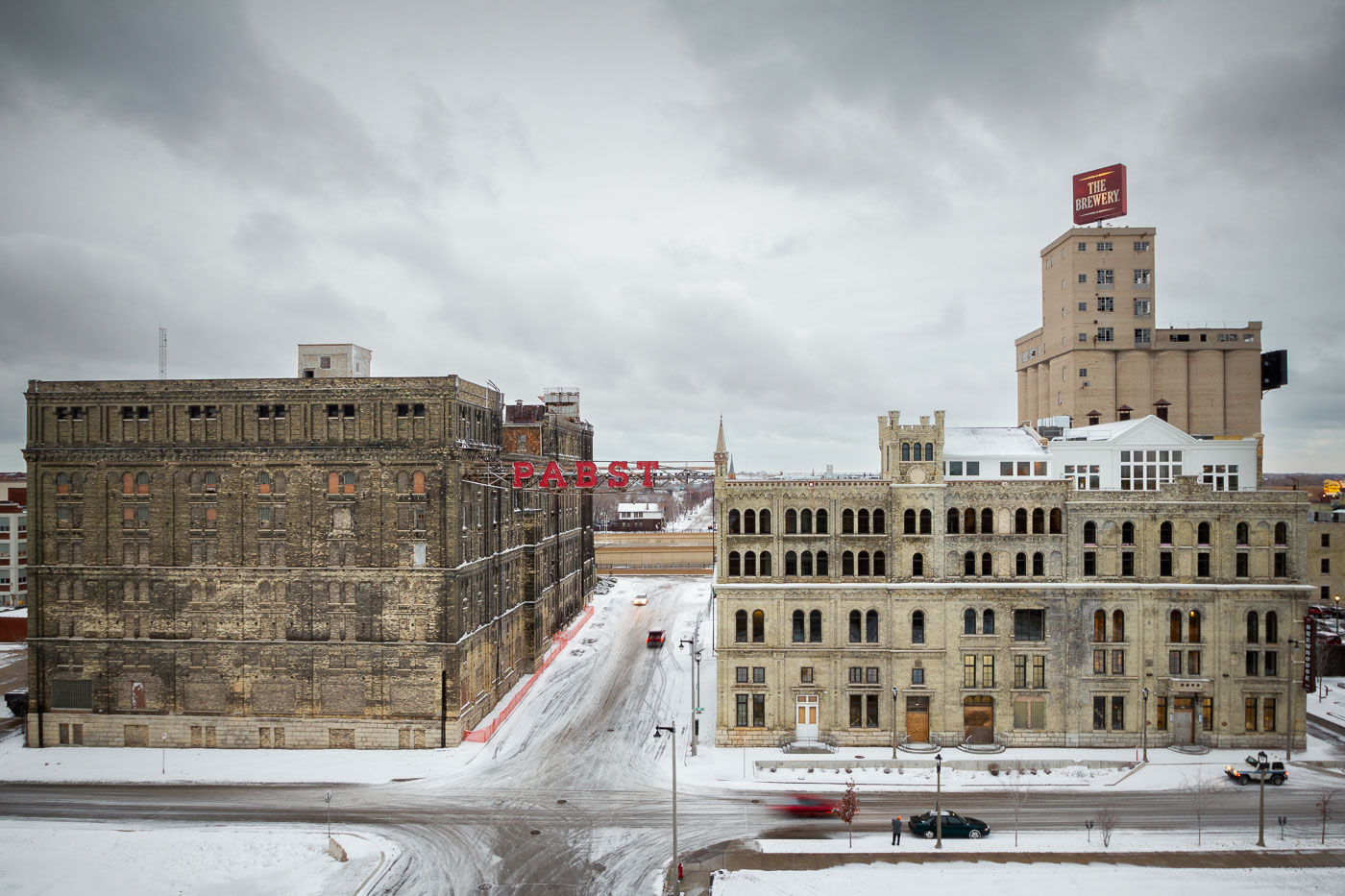
Pabst Brewery Complex buildings in snow-covered Milwaukee, with grain elevator and brewery tower visible.
The Pabst Brewing Company built this complex on Milwaukee's near west side starting in the 1860s, expanding it in stages as Pabst grew into the largest brewer in the United States by the late 19th century. The "Pabst" lettering on the old grain elevator and "The Brewery" sign atop the tower date from that era of continuous production. Pabst closed the Milwaukee brewery in 1996, ending more than 130 years of brewing at the site. The 21-acre complex, listed on the National Register of Historic Places, has since been redeveloped as a mixed-use district with offices, apartments, and a hotel occupying several of the former industrial buildings.

The Former Pabst Brewing Complex in Milwaukee

Abandoned brick house in Egg Harbor, Wisconsin, with a deteriorating roof and boarded windows.
Abandoned brick house in Egg Harbor, Wisconsin. The two-story brick residence has a late 19th- or early 20th-century appearance and is now in poor condition with a deteriorated roof and boarded or broken openings. Its form is consistent with a rural dwelling built during Door County’s early settlement period.

Abandoned brick house in Egg Harbor, Wisconsin

Lake Michigan at sunset in Door County, Wisconsin.
Lake Michigan, Door County, Wisconsin, at sunset. The view looks across the lake from the Door County shoreline, where the peninsula forms the eastern edge of Wisconsin between Green Bay and the open waters of Lake Michigan.
Door County Lake Michigan Sunset

St. Croix Meadows Dog Track in Hudson, Wisconsin, with cylindrical towers and rainbow bands.
St. Croix Meadows Dog Track in Hudson, Wisconsin, was a greyhound racing facility that opened in 1986. The track operated for more than two decades before closing in 2009 and later being demolished.

St. Croix Meadows Dog Track, Hudson, Wisconsin

Banbury Place elevated walkway in Eau Claire, Wisconsin, with steel supports and enclosed span.
Banbury Place in Eau Claire, Wisconsin, includes this elevated walkway connecting former industrial buildings. The structure is part of the Banbury Place complex, a former manufacturing site adapted from earlier industrial use. Its steel supports and enclosed span are typical of utilitarian plant architecture.

Banbury Place Walkway Span, Eau Claire, Wisconsin

The weathered sign for the 45 Outdoor Theater in New London, Wisconsin, a remnant of mid-20th century roadside entertainment, stands as a visual marker of a past era.
The weathered sign for the 45 Outdoor Theater in New London, Wisconsin, is a remnant of mid-20th century roadside entertainment. The "45" likely referred to its location along U.S. Highway 45, a common practice for drive-in theaters that sought to attract travelers. Originally a popular community gathering spot, the theater has long since ceased operations, leaving its prominent, rusting signage as a visual marker of a past era. The sign's current state of decay speaks to the decline of drive-in theaters and the changing landscape of entertainment.

45 Outdoor Theater Sign, New London, Wisconsin

Abandoned 45 Outdoor Theatre sign in New London, Wisconsin, advertising storage available with a phone number and "Entrance" visible.
This weathered sign in New London, Wisconsin, once advertised the "45 Outdoor Theatre" and currently offers "Storage Available Now." The sign's dilapidated condition and the presence of a phone number suggest a long period of disuse, likely indicating the closure of the outdoor theater. Such roadside theaters were popular entertainment venues across America, offering a unique cultural experience before the rise of multiplex cinemas.

45 Outdoor Theatre Sign, New London, Wisconsin

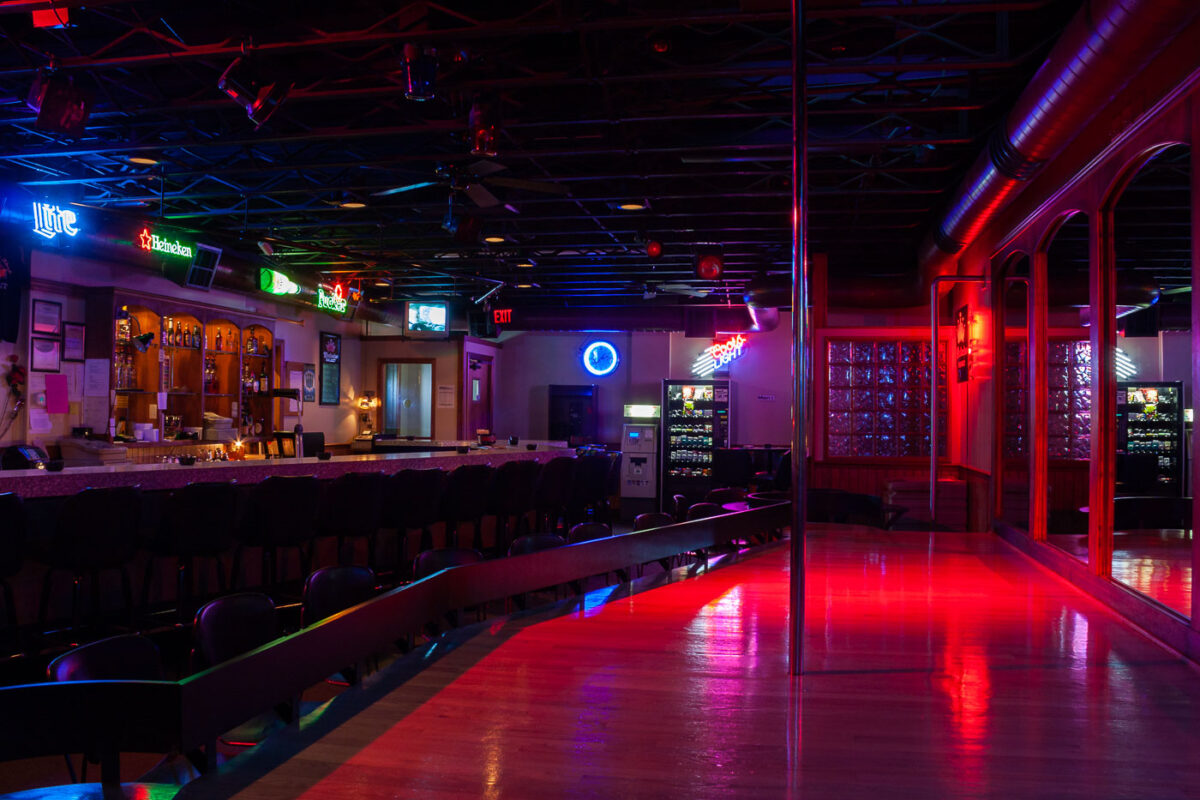
Body Shop strip club interior in Green Bay with bar seating and a small stage.
The Body Shop strip club interior in Green Bay, Wisconsin, includes a bar, customer seating, and a small performance stage. Mirrored wall panels, dancer poles, wall-mounted televisions, and colored neon fixtures are part of the nightclub layout.

Body Shop Stage and Bar Interior, Green Bay
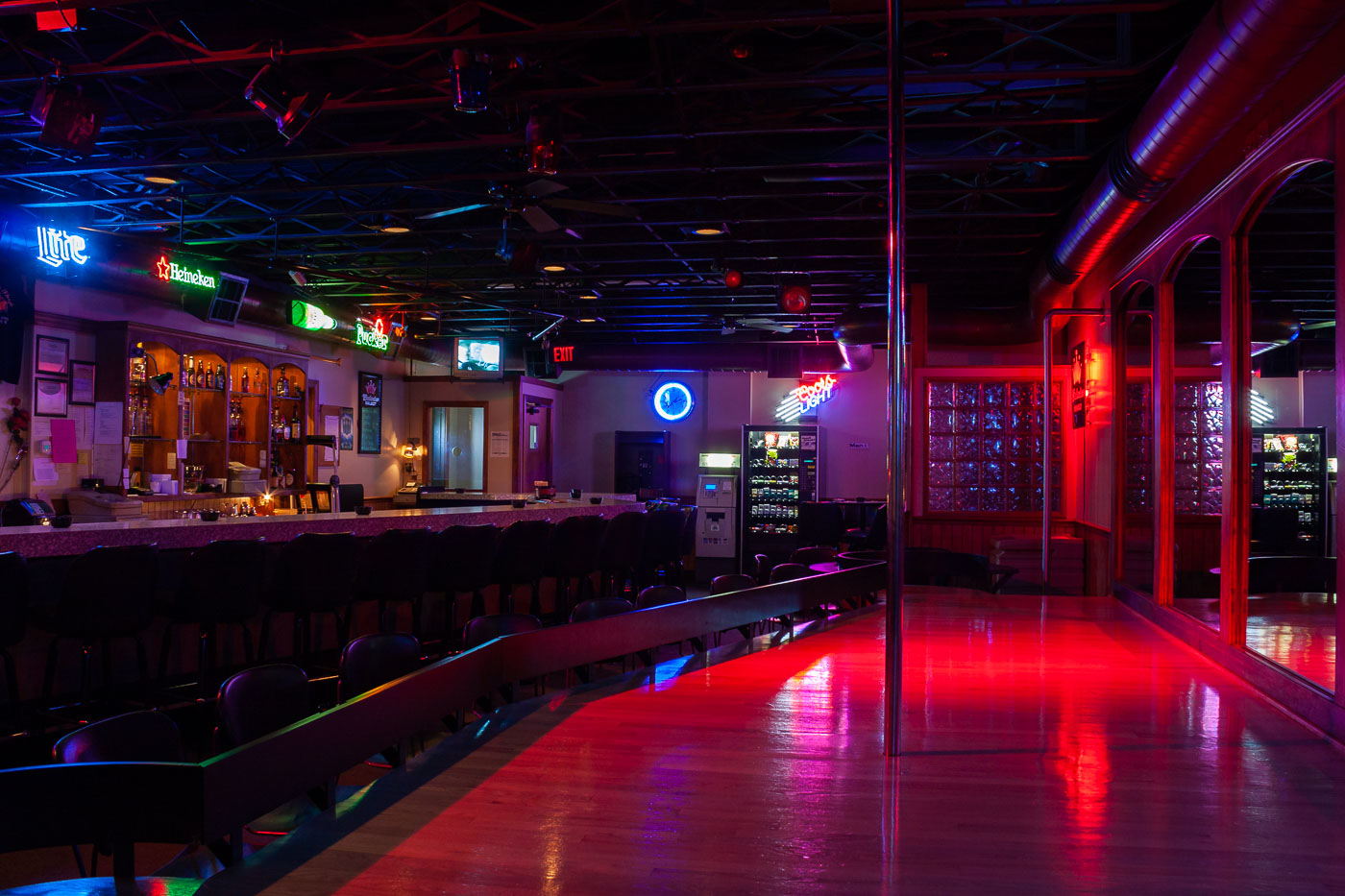
Interior of the Body Shop strip club in Green Bay, Wisconsin, featuring a bar, stage, and neon beer signs.
The interior of the Body Shop, a strip club located in Green Bay, Wisconsin. The establishment featured a prominent bar area, seating, and a central stage with a pole for performances. Neon signs advertising beer brands like Miller Lite and Heineken are visible, typical of such venues. The club has since been demolished, marking the end of an era for this particular entertainment establishment in Green Bay.

Body Shop Strip Club Interior, Green Bay, Wisconsin

Farmers Elevator grain handling complex in Wisconsin with a tall elevator tower and attached sheds.
Farmers Elevator in Wisconsin is a grain storage and handling complex with a tall elevator house and attached metal-sided sheds. The facility was used to receive grain from nearby farms, store it in bins, and transfer it for shipment. The rooftop sign identifies the complex as Farmers Elevator.

Farmers Elevator Grain Handling Complex, Wisconsin

Weathered wooden Farmers Elevator grain tower with rooftop sign in rural Wisconsin.
Farmers Elevator grain towers like this one once anchored small farming communities across the rural Midwest, providing local growers a place to weigh, store, and sell their harvest. Built mostly of wood with corrugated metal siding, these structures used a system of buckets and chutes to lift grain into tall storage bins before rail or truck shipment. Many operated as farmer-owned cooperatives, giving members a stake in local grain pricing rather than relying solely on distant markets. Though modern steel and concrete elevators have replaced most of them, a number of these wooden towers still stand across Wisconsin's countryside, often abandoned or repurposed.

Farmers Elevator Grain Tower, Rural Wisconsin

Lake Michigan at sunset from the Wisconsin shoreline with low shrubs along the water.
Lake Michigan along the Wisconsin shoreline at sunset is part of the Great Lakes system. The lake borders Wisconsin, Illinois, Indiana, and Michigan. It is a major Midwestern freshwater body used for shipping, water supply, fishing, and recreation.

Lake Michigan at Sunset, Wisconsin Shore

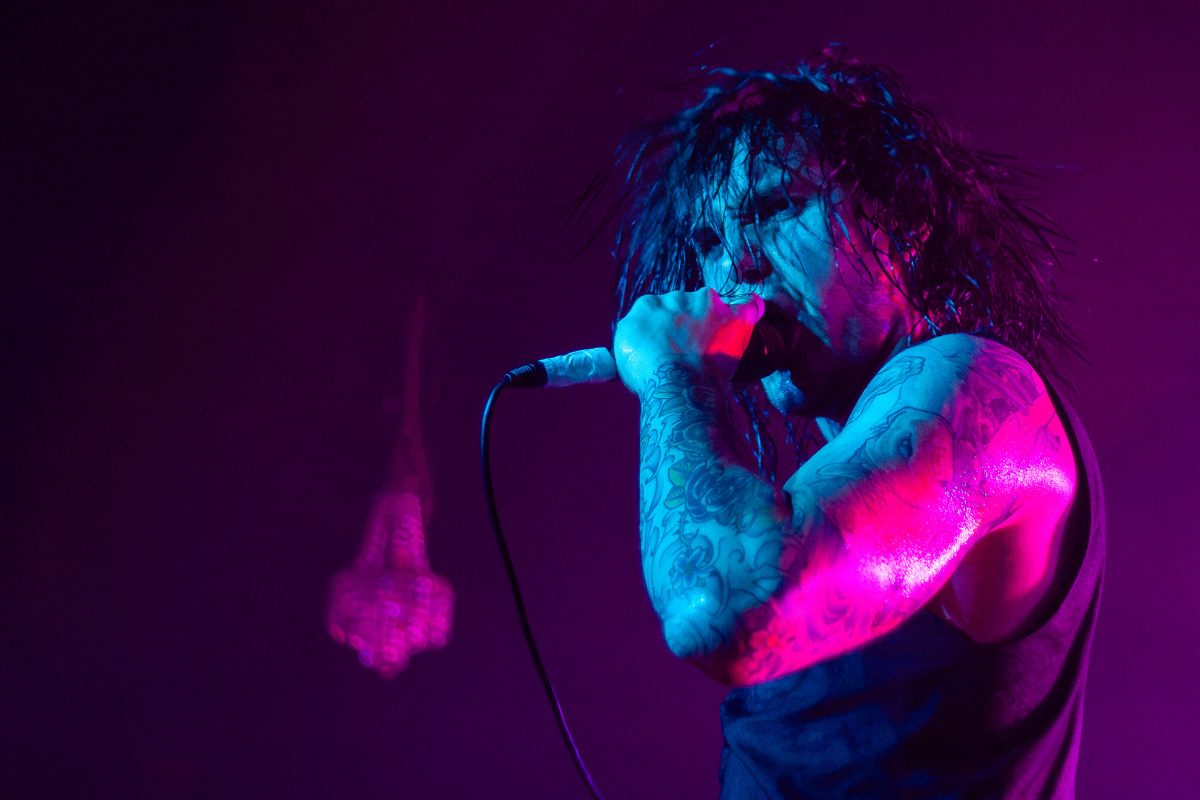
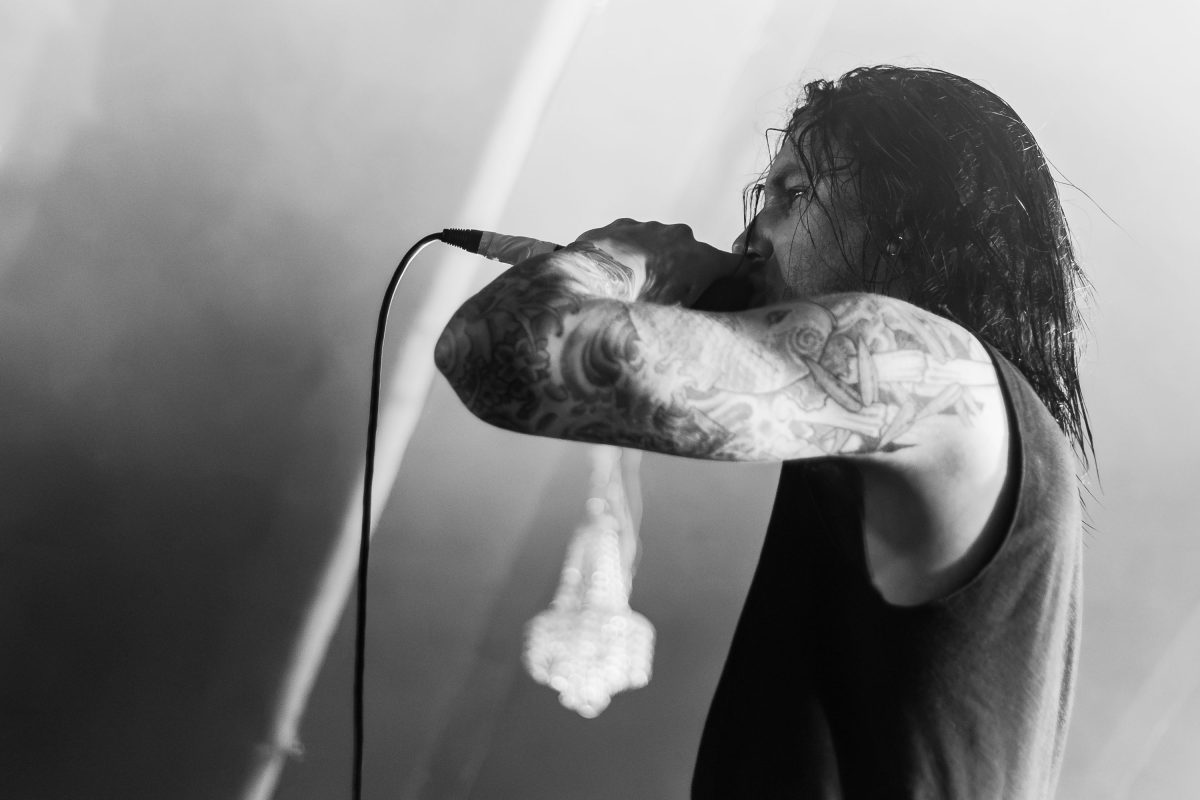
Tim Lambesis performing at the microphone during an As I Lay Dying concert.
Tim Lambesis fronts As I Lay Dying, the metalcore band he co-founded in San Diego in 2000. The group built its reputation through albums like "Frail Words Collapse" (2003) and "Shadows Are Security" (2005), touring extensively on the strength of a sound blending melodic death metal with hardcore breakdowns. This performance took place at the Riverside Ballroom, a longtime concert venue in Green Bay, Wisconsin. Lambesis remained the band's vocalist until his arrest in 2013, after which As I Lay Dying went on hiatus before later reuniting.

Tim Lambesis of As I Lay Dying, Riverside Ballroom, Green Bay
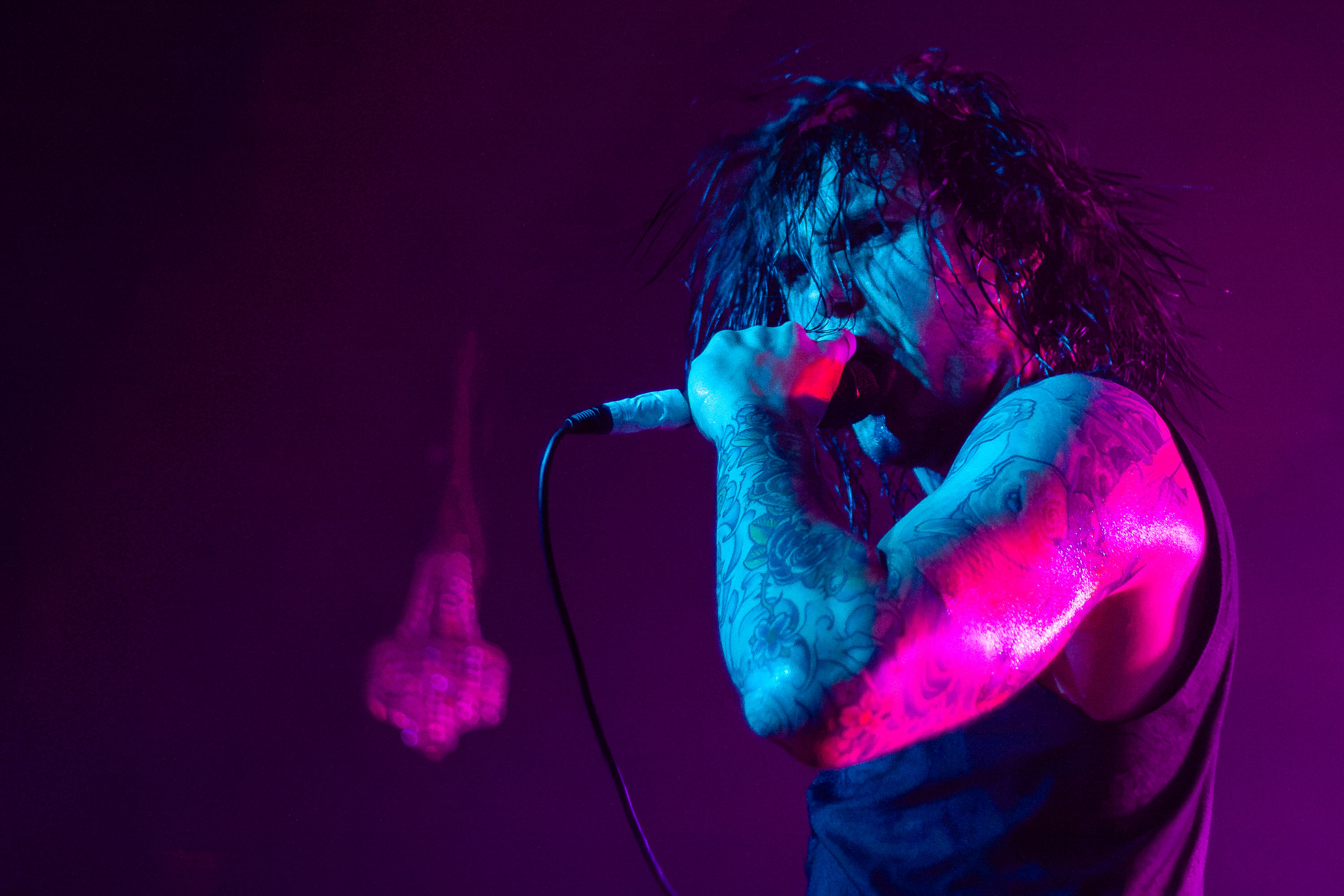
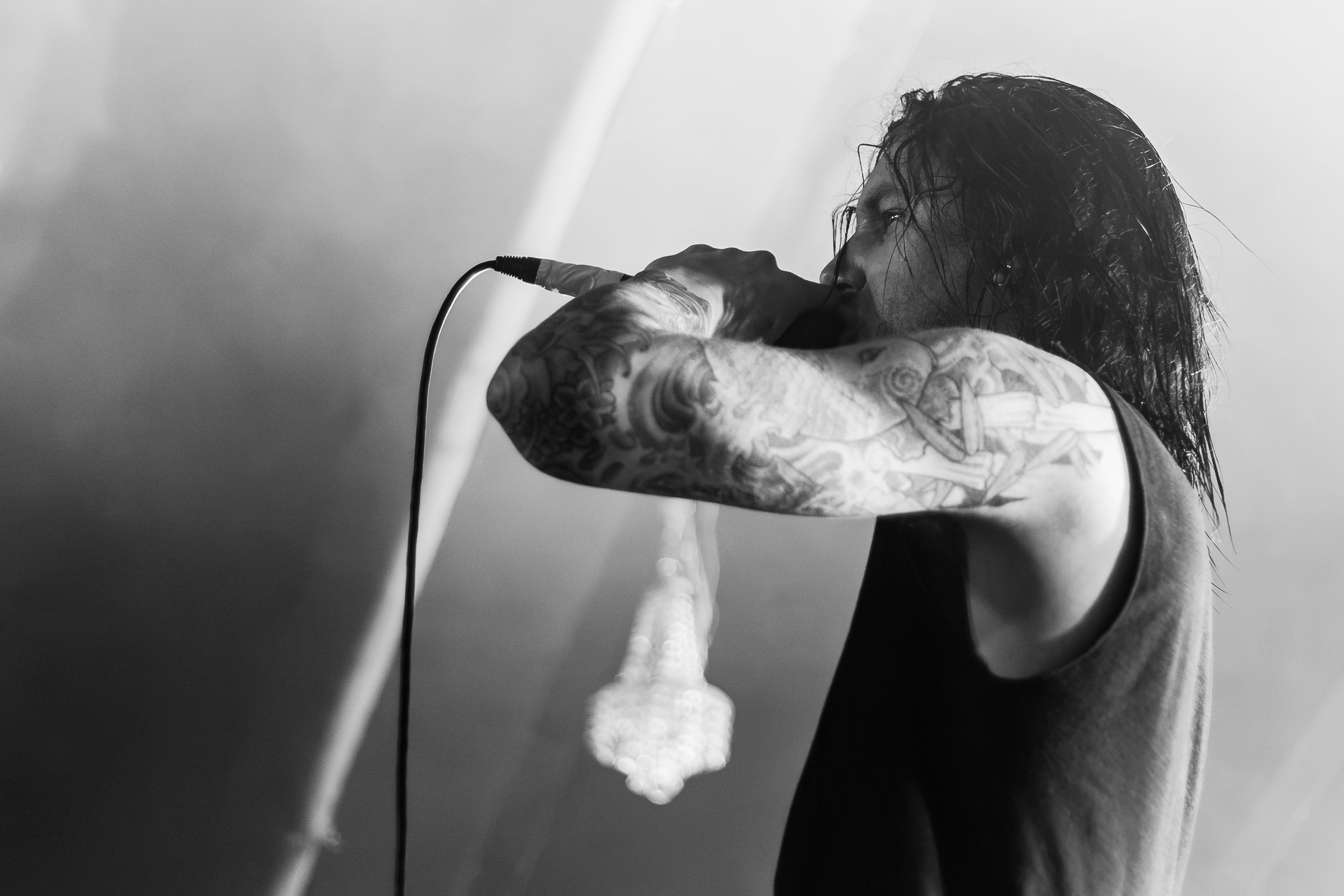
Tim Lambesis performs with As I Lay Dying at Riverside Ballroom in Green Bay.
Tim Lambesis fronted As I Lay Dying, the San Diego metalcore band he co-founded in 2000 and led as chief songwriter and vocalist for more than a decade. The group built its following on albums like "Frail Words Collapse" (2003) and "An Ocean Between Us" (2007), the latter earning a Grammy nomination for Best Metal Performance. Lambesis stepped away from the band in 2013 amid legal troubles, and As I Lay Dying went on hiatus before reuniting years later with him back on vocals.

Tim Lambesis performs at the Riverside Ballroom in Green Bay
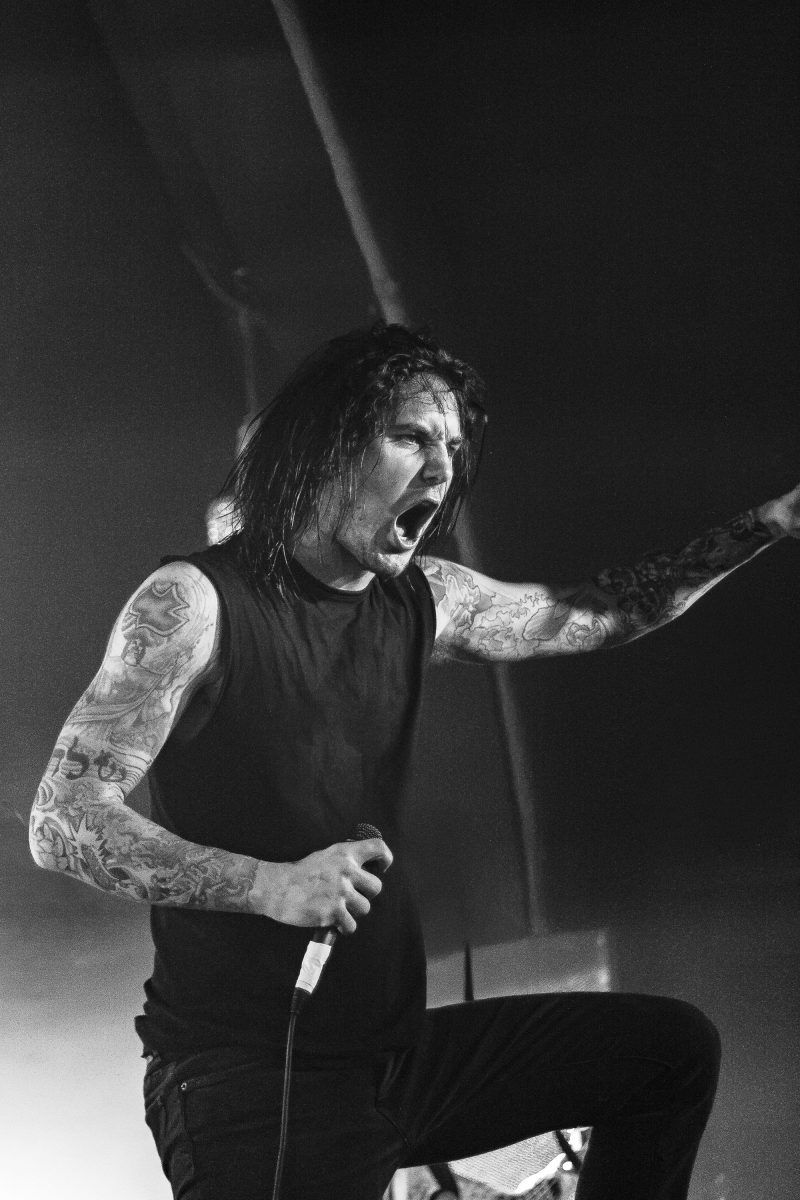
Tattooed musician singing into microphone at live hardcore metal performance.
As I Lay Dying, the metalcore band formed in San Diego in 2000, built its reputation on albums like "Frail Words Collapse" (2003) and "An Ocean Between Us" (2007), the latter earning a Grammy nomination. Tim Lambesis fronted the group through this era, touring heavily behind a sound that mixed hardcore breakdowns with melodic death-metal riffing. The band would continue recording and touring until Lambesis's 2013 arrest halted its momentum, with As I Lay Dying eventually resuming activity years later.

Tim Lambesis of As I Lay Dying in Green Bay
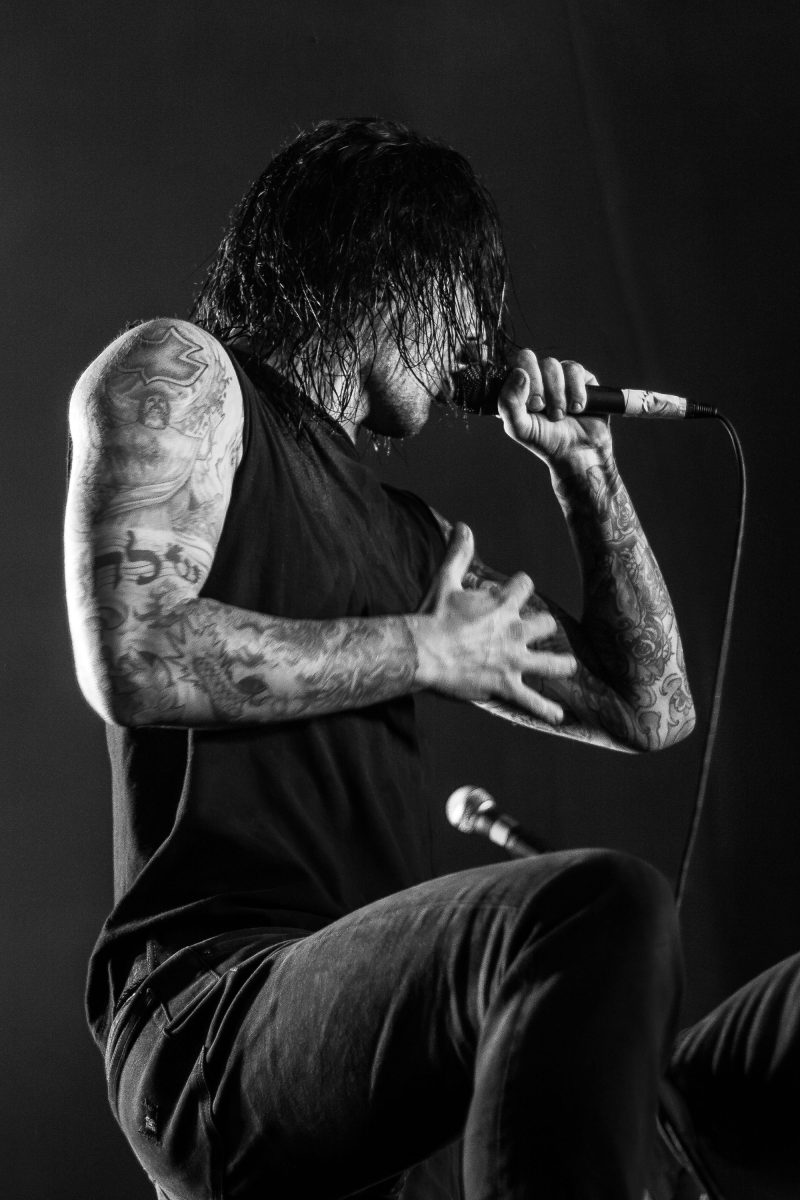
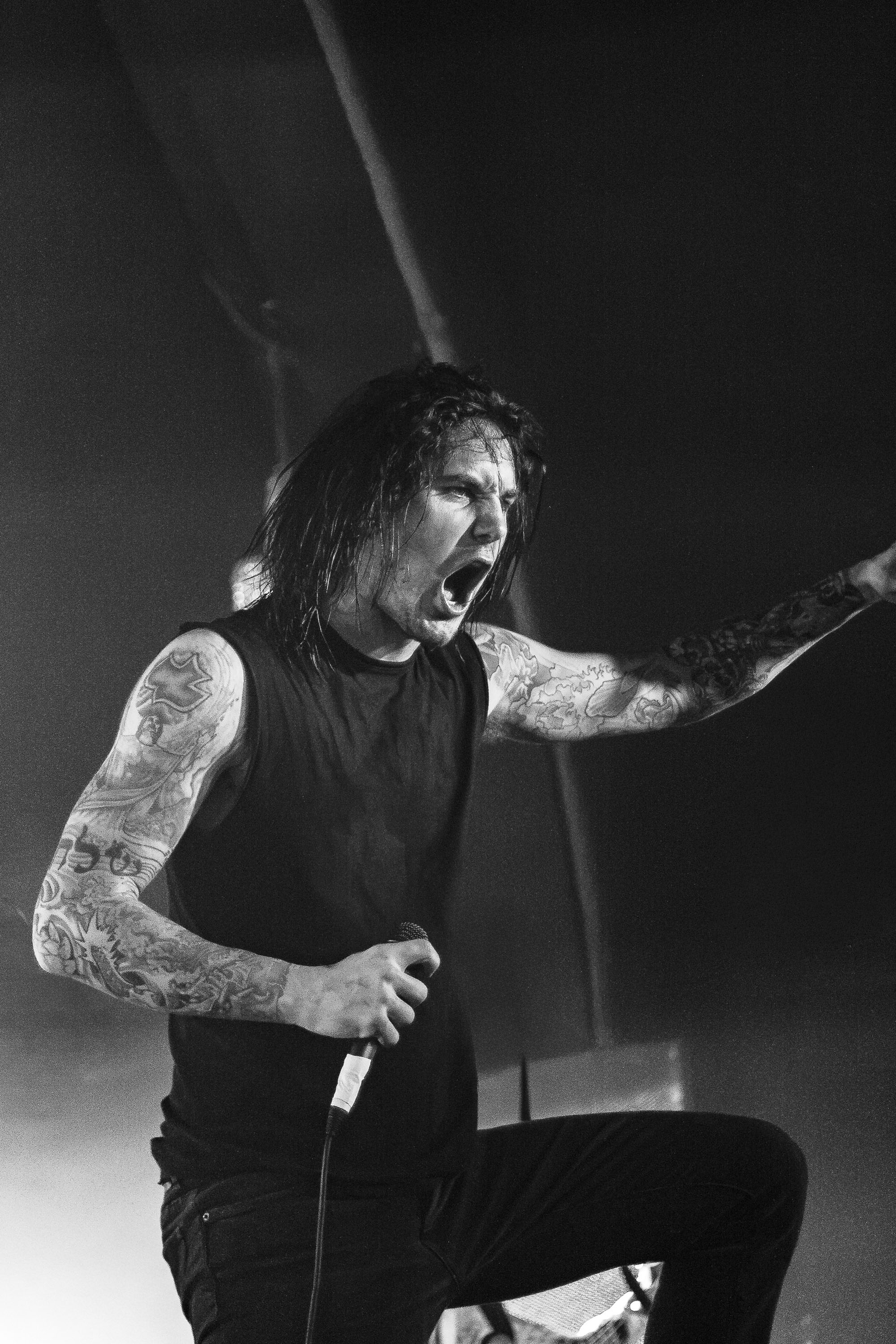
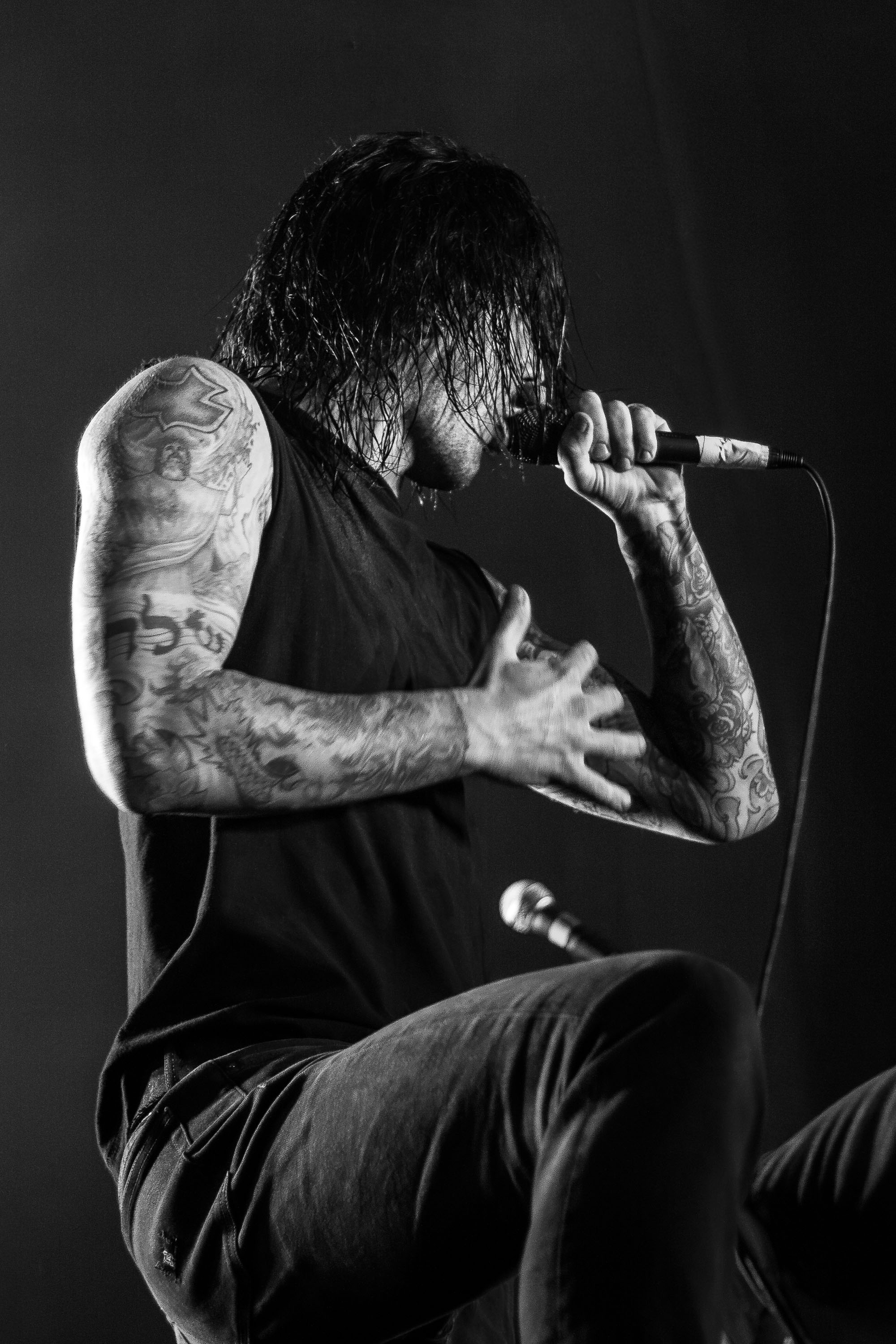
Tim Lambesis performs at the microphone during an As I Lay Dying concert at Riverside Ballroom in Green Bay.
Tim Lambesis fronts As I Lay Dying, the Southern California metalcore band he co-founded in 2000 and led as vocalist for over a decade. The group built its reputation through albums like "Frail Words Collapse" and "An Ocean Between Us," the latter earning a Grammy nomination in 2008. This performance took place at the Riverside Ballroom in Green Bay, a longtime concert venue that has hosted touring rock and metal acts for decades.

Tim Lambesis with As I Lay Dying at Riverside Ballroom in Green Bay
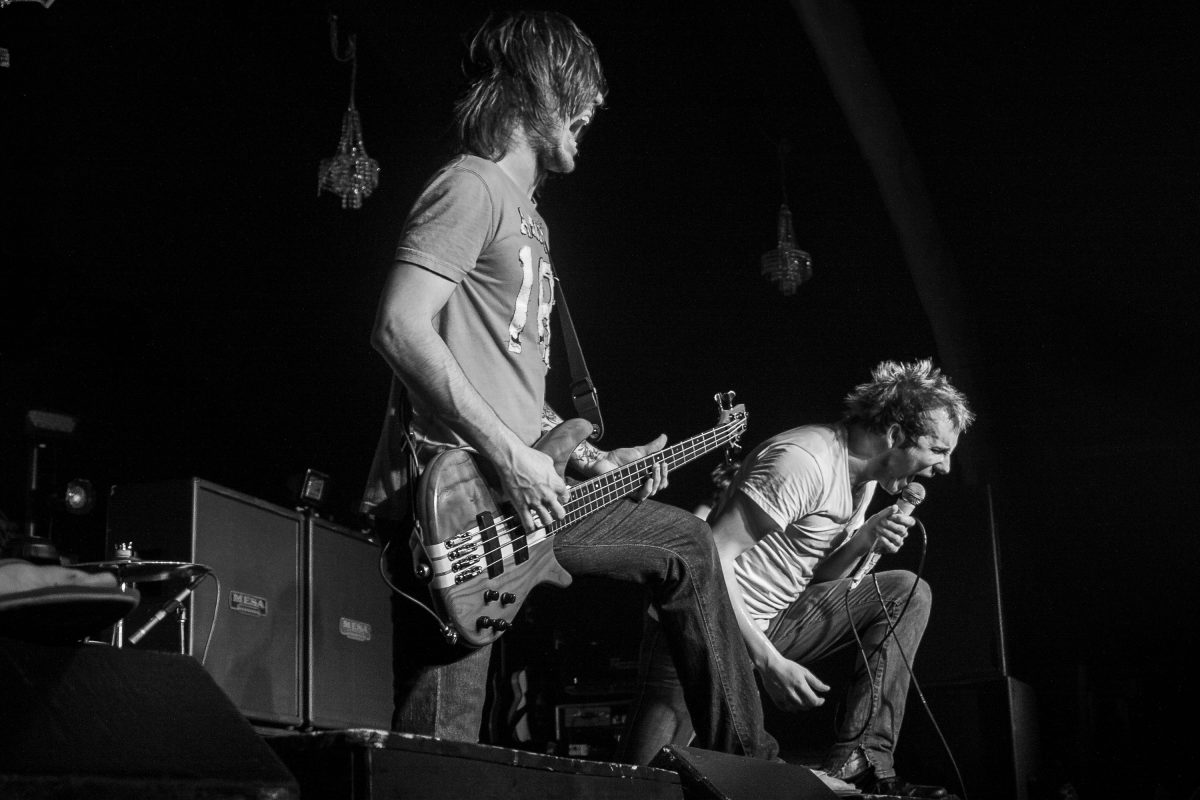
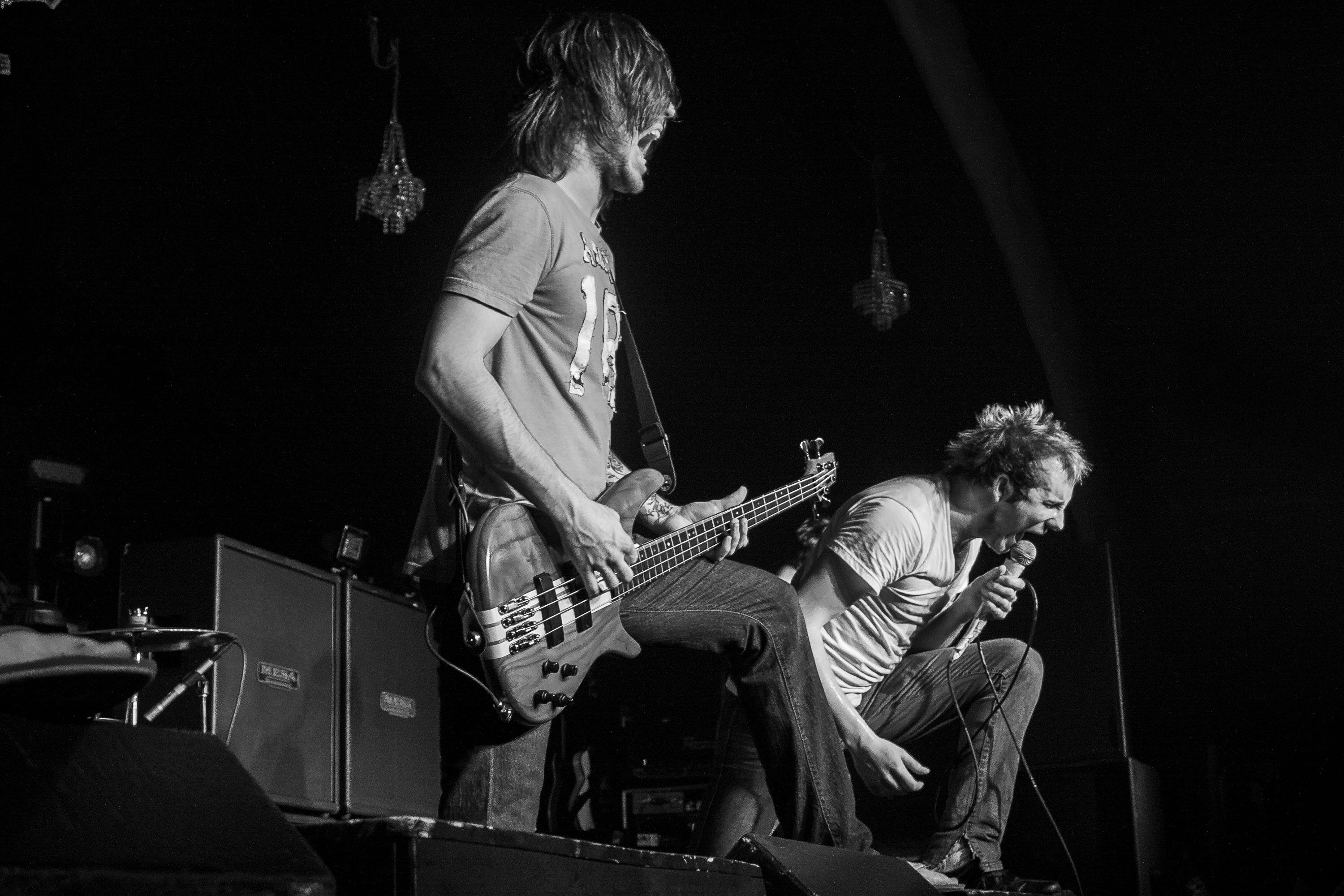
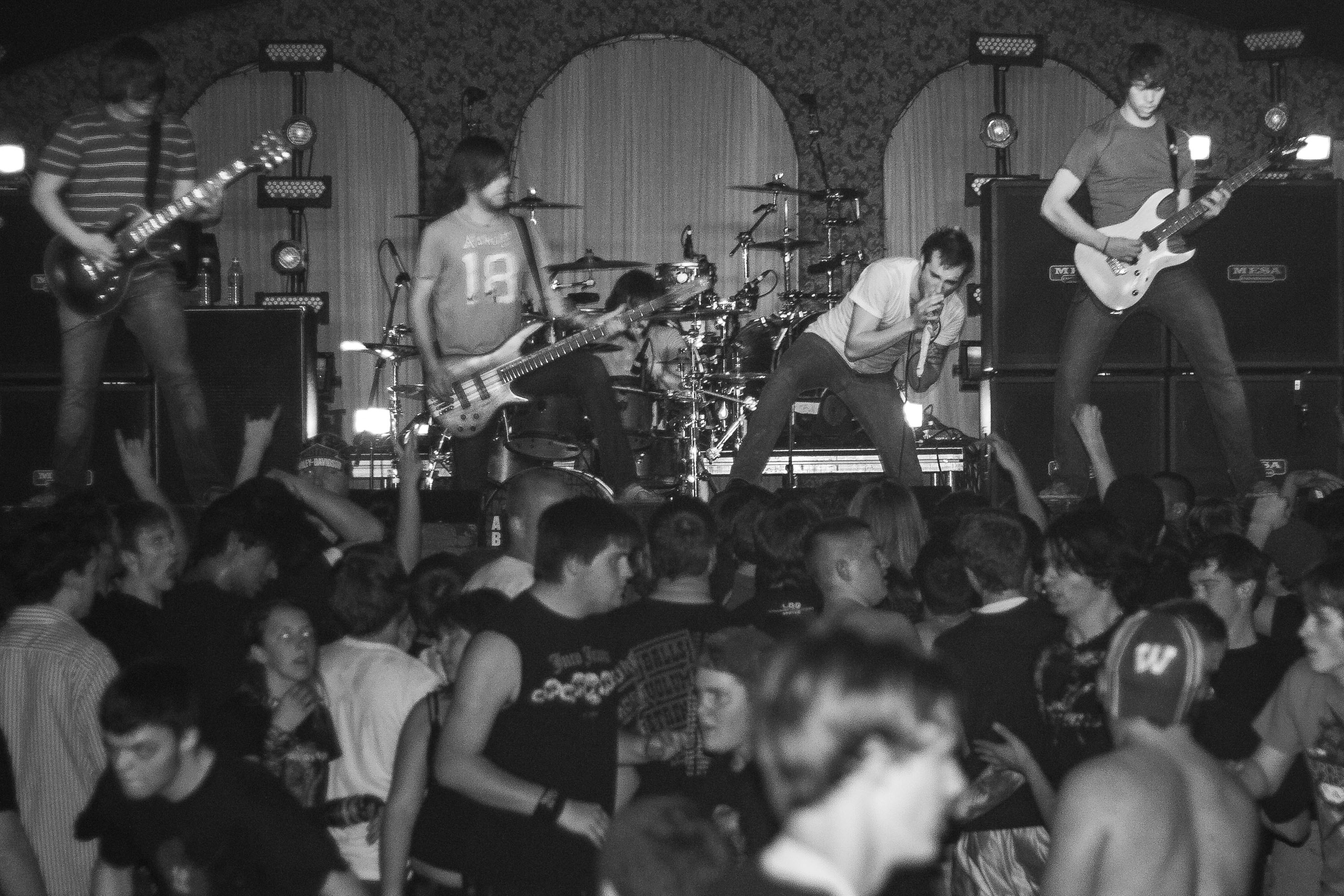
Bassist and vocalist perform with August Burns Red at Riverside Ballroom in Green Bay, Wisconsin.
August Burns Red performed at the Riverside Ballroom in Green Bay, Wisconsin, a venue that has hosted touring rock and metal acts for decades. The band, formed in 2003 in Lancaster County, Pennsylvania, built its reputation through relentless touring and a sound rooted in metalcore. Bassist Dustin Davidson and vocalist Jake Luhrs anchored the group's live shows during this era, with Luhrs known for his dual vocal style blending screams and clean singing.

August Burns Red at the Riverside Ballroom in Green Bay, 2008
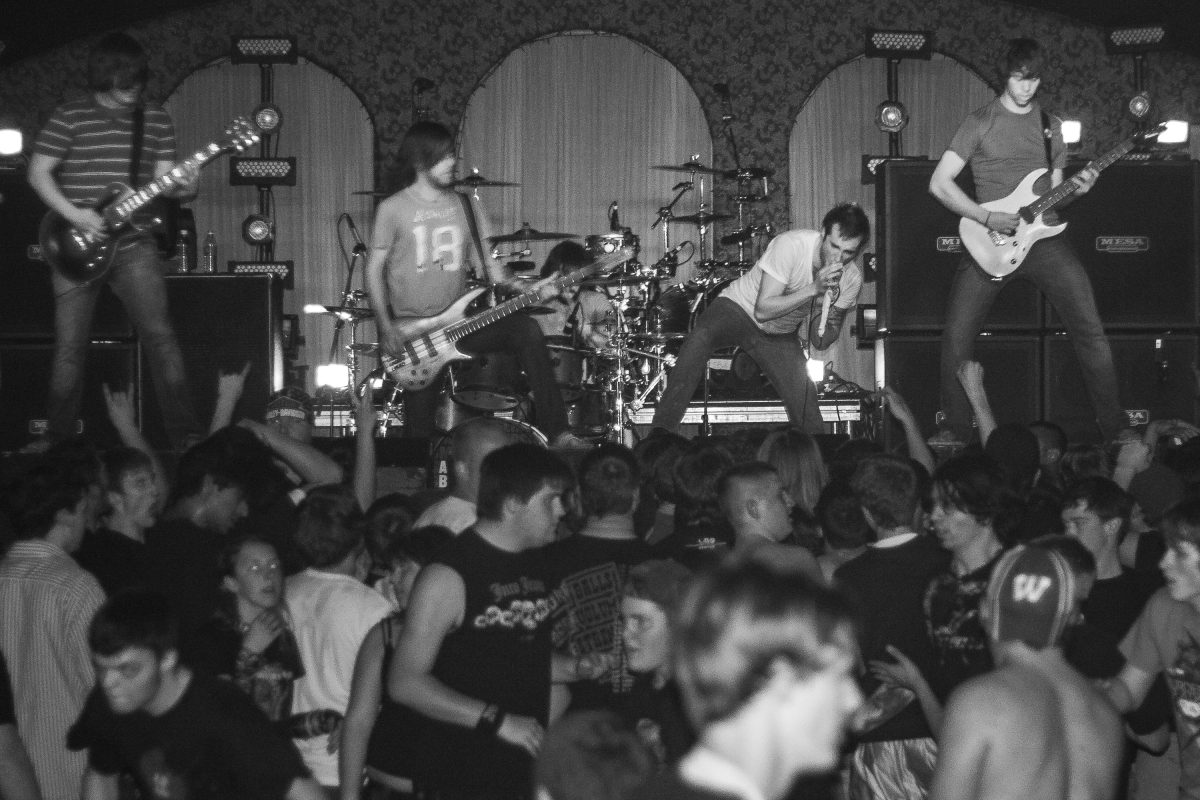
August Burns Red performs at the Riverside Ballroom in Green Bay, Wisconsin.
August Burns Red played the Riverside Ballroom in Green Bay, Wisconsin, on May 7, 2008. The Lancaster, Pennsylvania metalcore band formed in 2003 and had released its debut album, "Thrill Seeker," the previous year on Solid State Records. The Riverside Ballroom, a longtime music venue on the city's east side, has hosted touring acts across genres for decades, drawing crowds from throughout northeastern Wisconsin.

August Burns Red at the Riverside Ballroom in Green Bay, Wisconsin
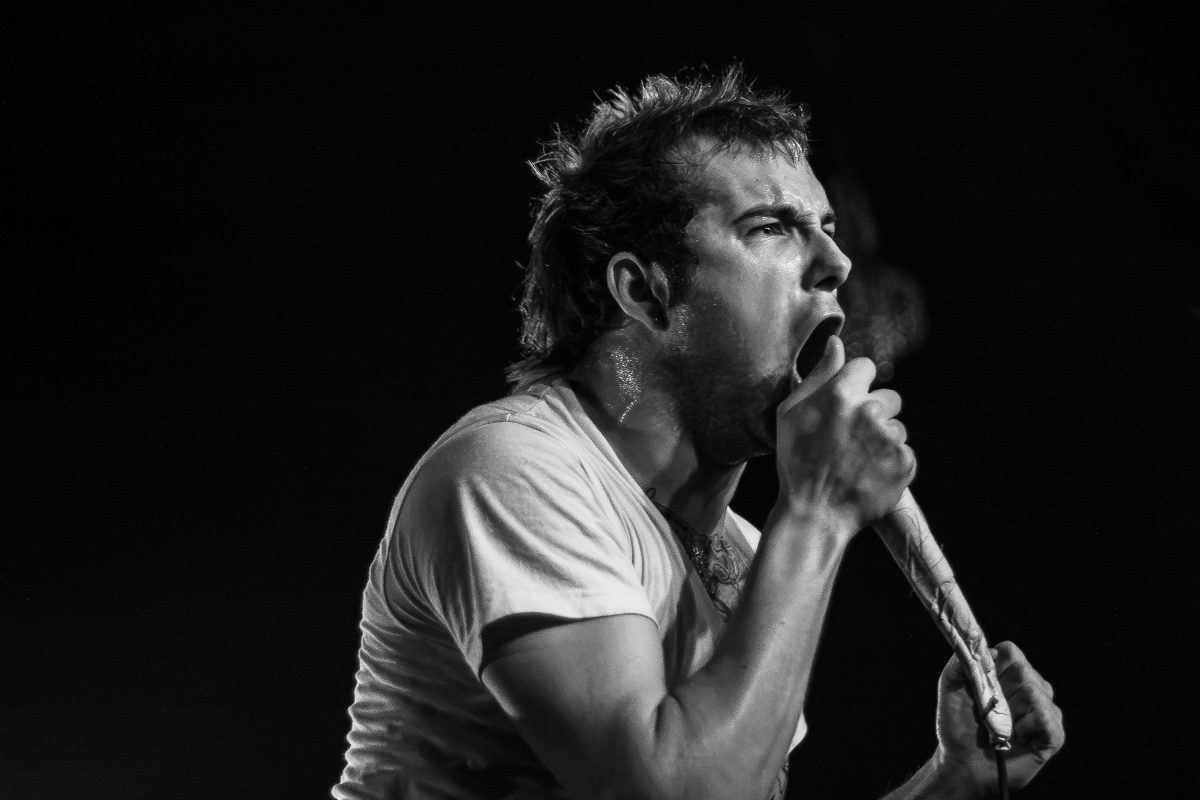
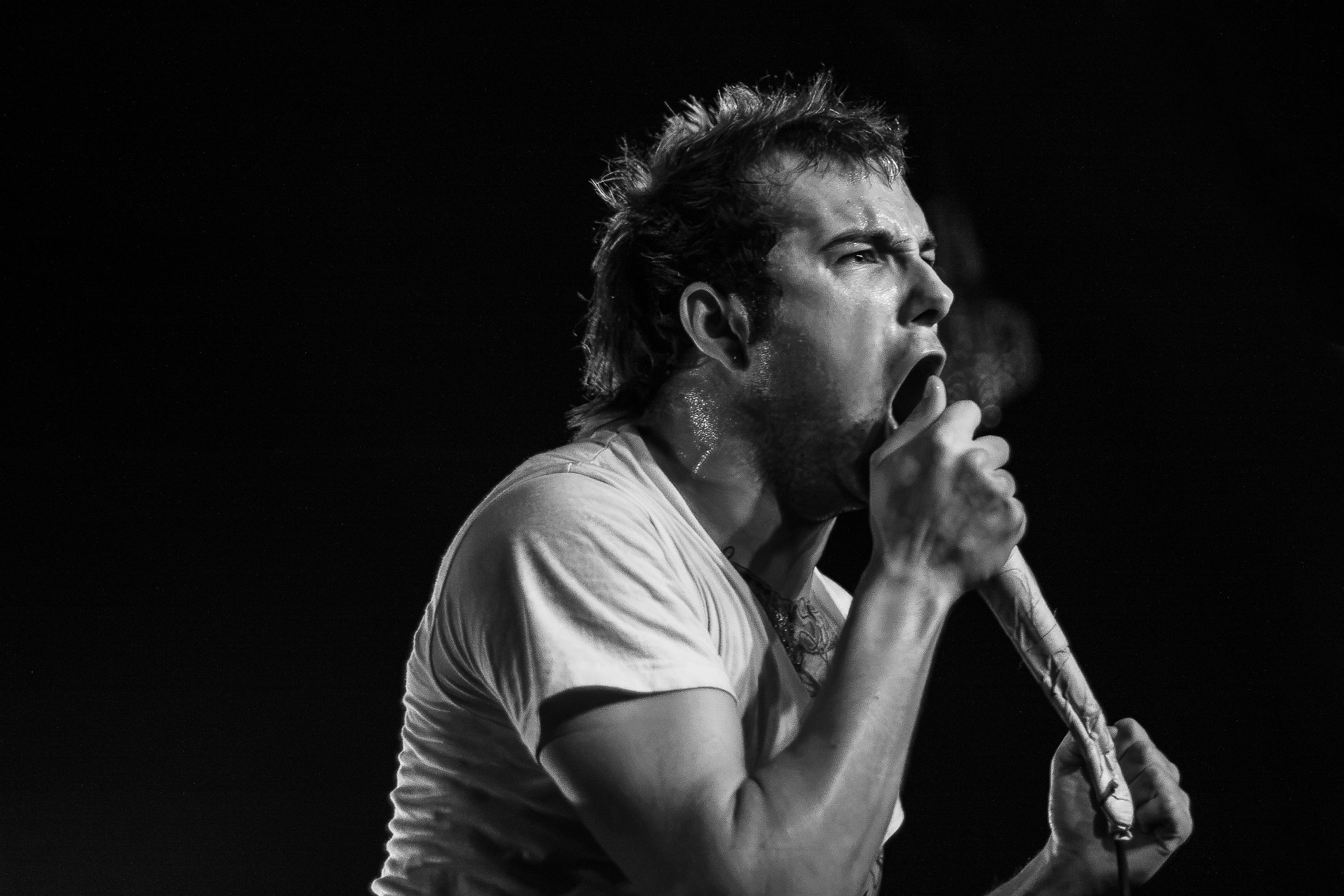
Jake Luhrs of August Burns Red performs at the Riverside Ballroom in Green Bay, Wisconsin.
Jake Luhrs fronts August Burns Red, a metalcore band formed in Lancaster, Pennsylvania, in 2003. Luhrs joined as lead vocalist in 2005 and has since become known for the band's technical breakdowns and Christian-influenced lyrical themes. This performance took place May 7, 2008, at the Riverside Ballroom in Green Bay, Wisconsin, a venue that has hosted touring rock and metal acts for decades. August Burns Red had released their debut album, "Thrill Seeker," in 2005, building a following in the metalcore well before their later Grammy-nominated work.

Jake Luhrs of August Burns Red in Green Bay, Wisconsin