Minnesota

5,829 photos · 2008–2026

5,829 photographs tagged Minnesota, 2008–2026.
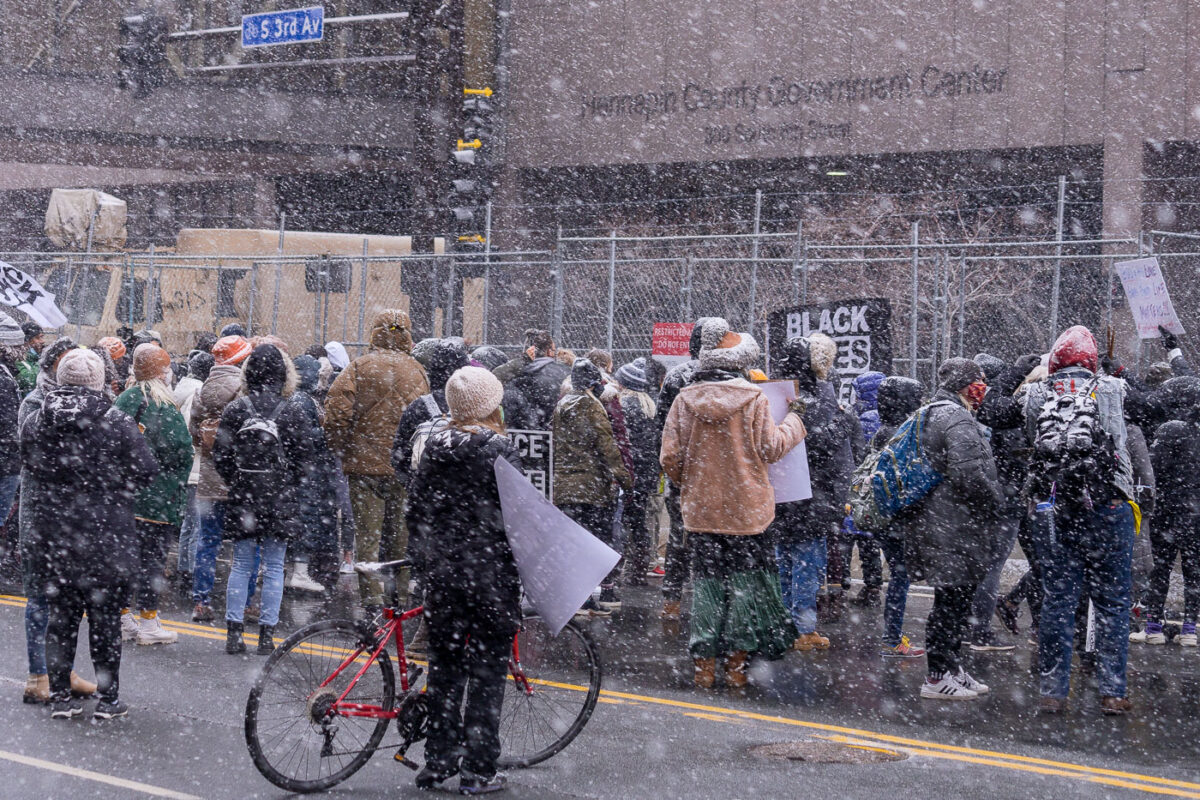
Snow falls at Hennepin County Courthouse with protesters
Protesters gathered in falling snow outside the Hennepin County Government Center in Minneapolis, demanding a fair jury selection process in the trial of Derek Chauvin. Chauvin, a former Minneapolis police officer, was accused of murdering George Floyd on May 25, 2020. The government center serves as a primary administrative and judicial hub for Hennepin County. This protest occurred during the trial, highlighting public scrutiny of the justice system.

Protesters March in Snow at Hennepin County Government Center
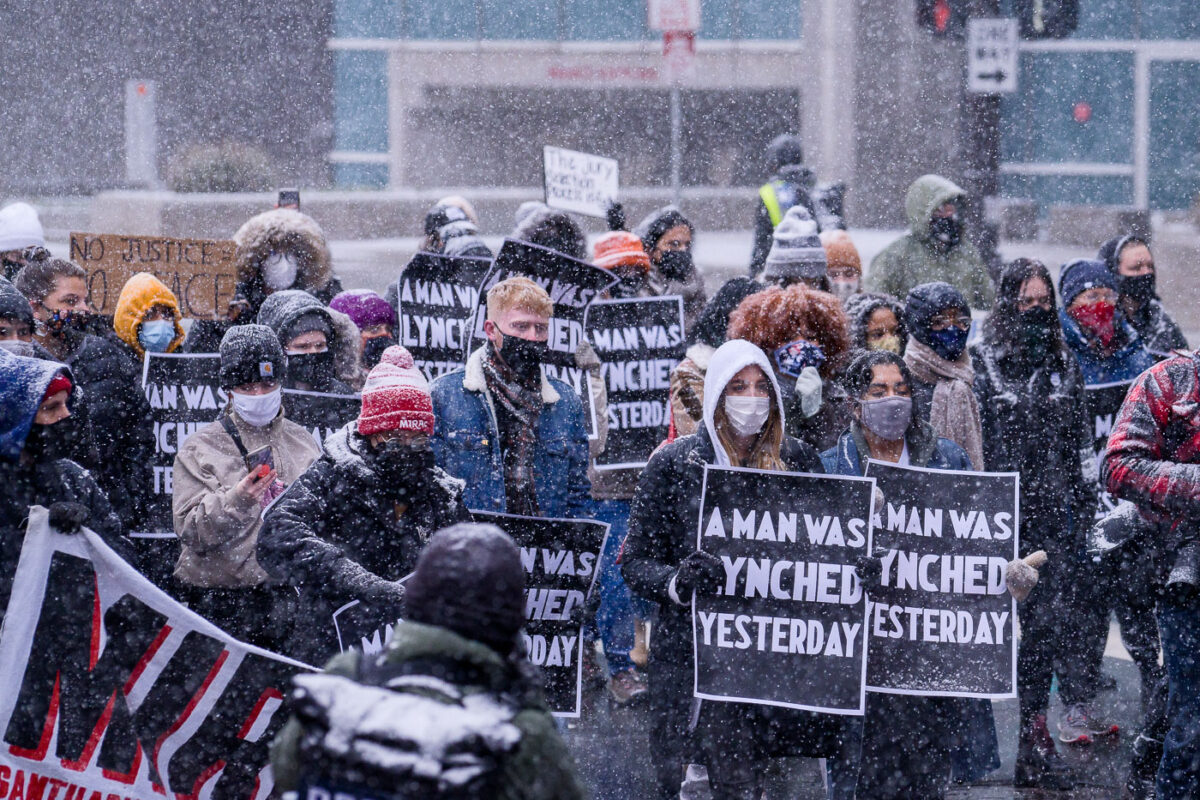
A Man Was Lynched Yesterday Protest Signs
Protesters gathered outside the Hennepin County Government Center in Minneapolis during a snowstorm. The courthouse was the site of the Derek Chauvin murder trial, who was charged in the death of George Floyd. Signs carried by the protesters read "A Man Was Lynched Yesterday," referencing the ongoing racial injustice and police brutality protests that followed Floyd's murder on May 25, 2020.

Minneapolis Protest: “A Man Was Lynched Yesterday” Signs
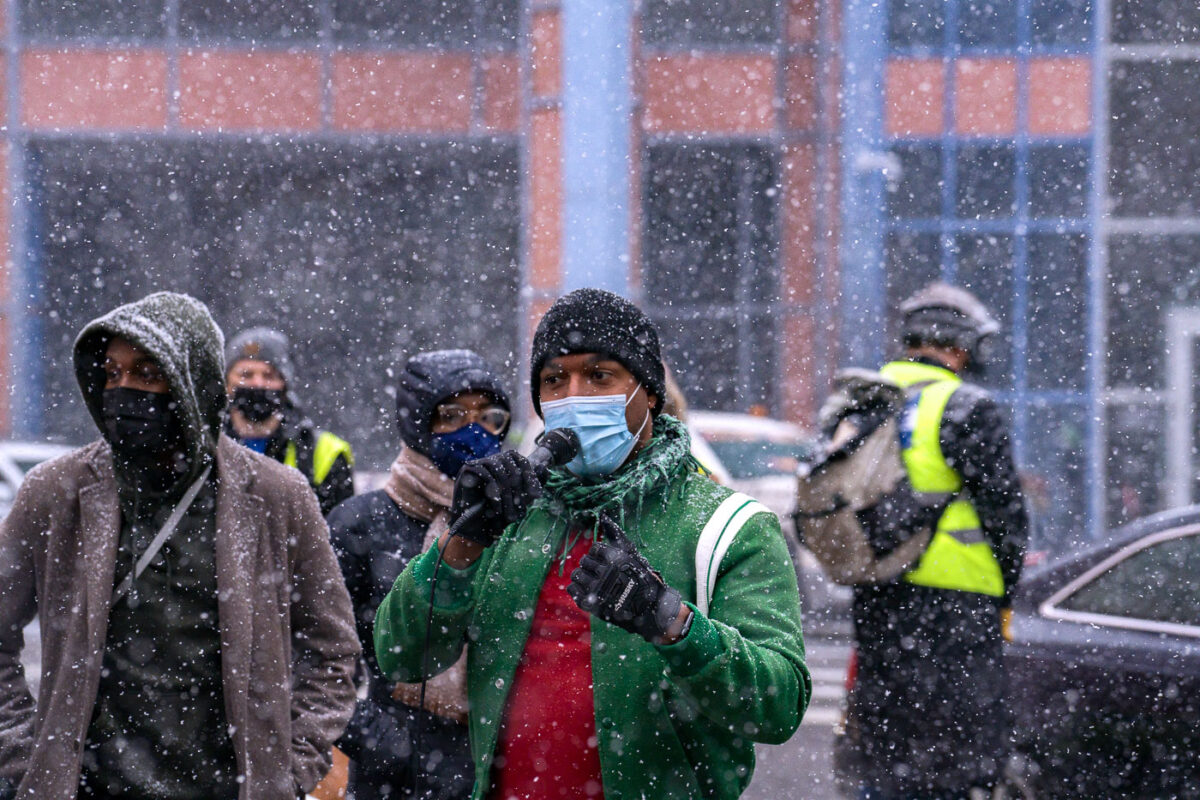
Toussaint Morrison speaks outside Chauvin trial
Toussaint Morrison addresses a crowd during a protest in Minneapolis on March 15, 2021. The protest occurred during the trial of Derek Chauvin, the former Minneapolis police officer charged in the murder of George Floyd. The trial, which began on March 8, 2021, brought renewed attention to racial injustice and police brutality in the United States. This event was part of a series of demonstrations that took place across the country following Floyd's death in May 2020.

Toussaint Morrison speaks at Minneapolis protest during Chauvin trial
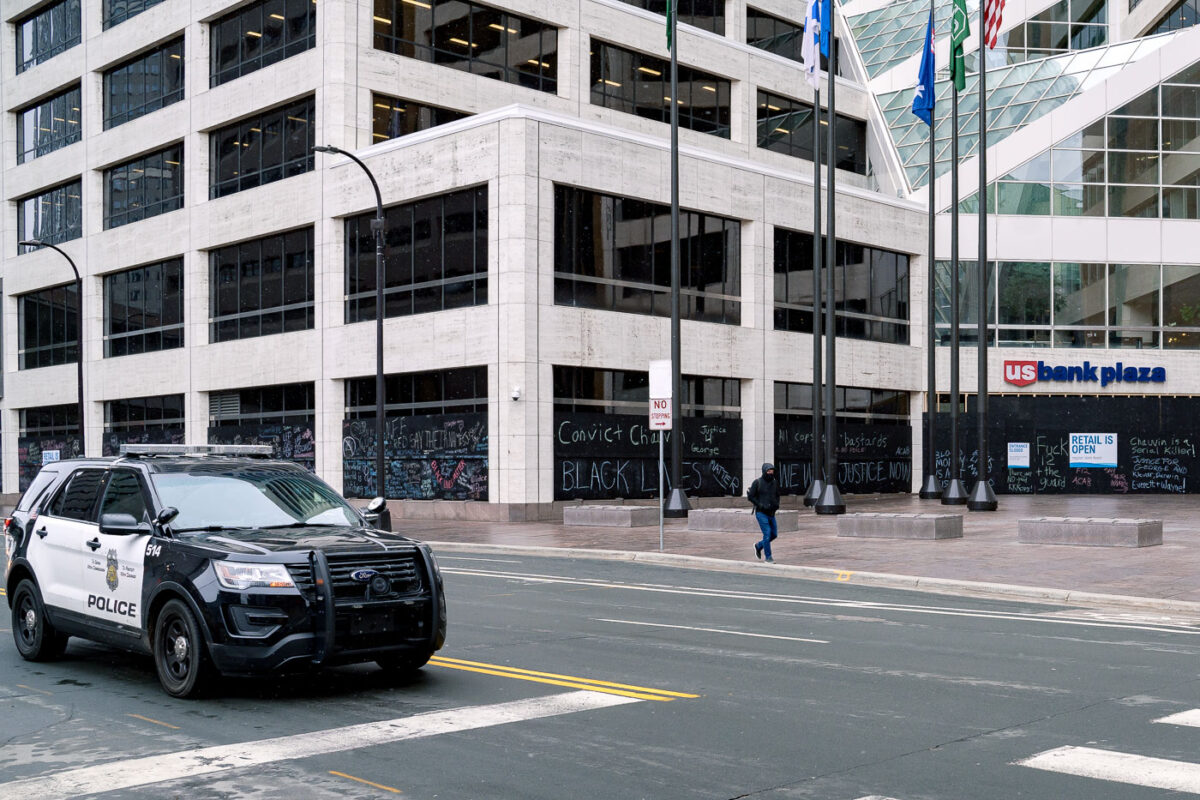
Minneapolis Police officer drives by US Bank Plaza
A Minneapolis Police vehicle is parked on 3rd Avenue in Downtown Minneapolis, adjacent to the US Bank Plaza. The plaza's windows and ground-level facade have been boarded up and covered with graffiti, including messages related to the Black Lives Matter movement and the Derek Chauvin trial. This scene reflects the heightened tensions and public response in Minneapolis following the murder of George Floyd in May 2020. The presence of the police car and the boarded-up buildings indicate the city's efforts to manage and respond to the widespread protests and civil unrest that occurred during that period.

Minneapolis Police car at boarded US Bank Plaza
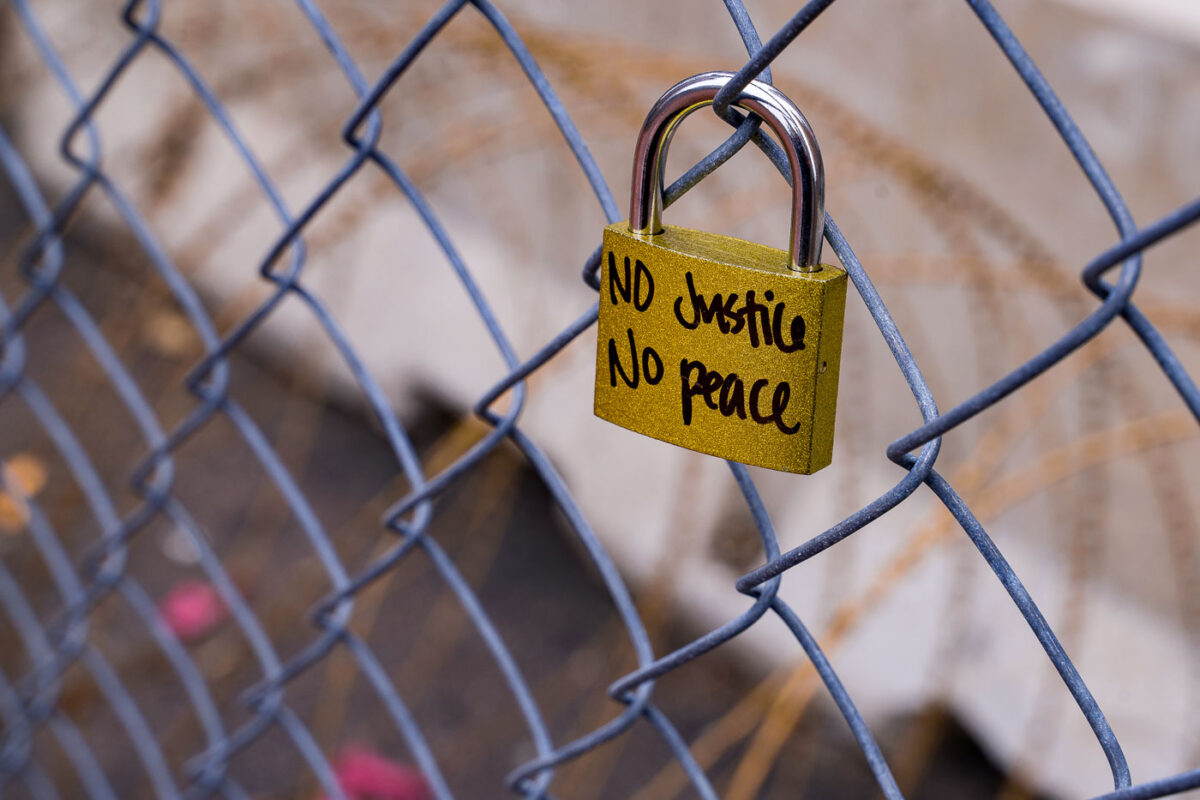
No Justice No Peace lock at Chauvin trial
A padlock inscribed with "No justice, No peace" is affixed to a chain-link fence surrounding the Hennepin County Government Center in Minneapolis. This security measure was in place during the 2021 trial of Derek Chauvin, a former Minneapolis police officer charged with the murder of George Floyd. The trial, held in the same building, drew significant public attention and protests related to racial justice and police brutality.

Minneapolis: Lock on fence at Hennepin County Government Center during Chauvin trial
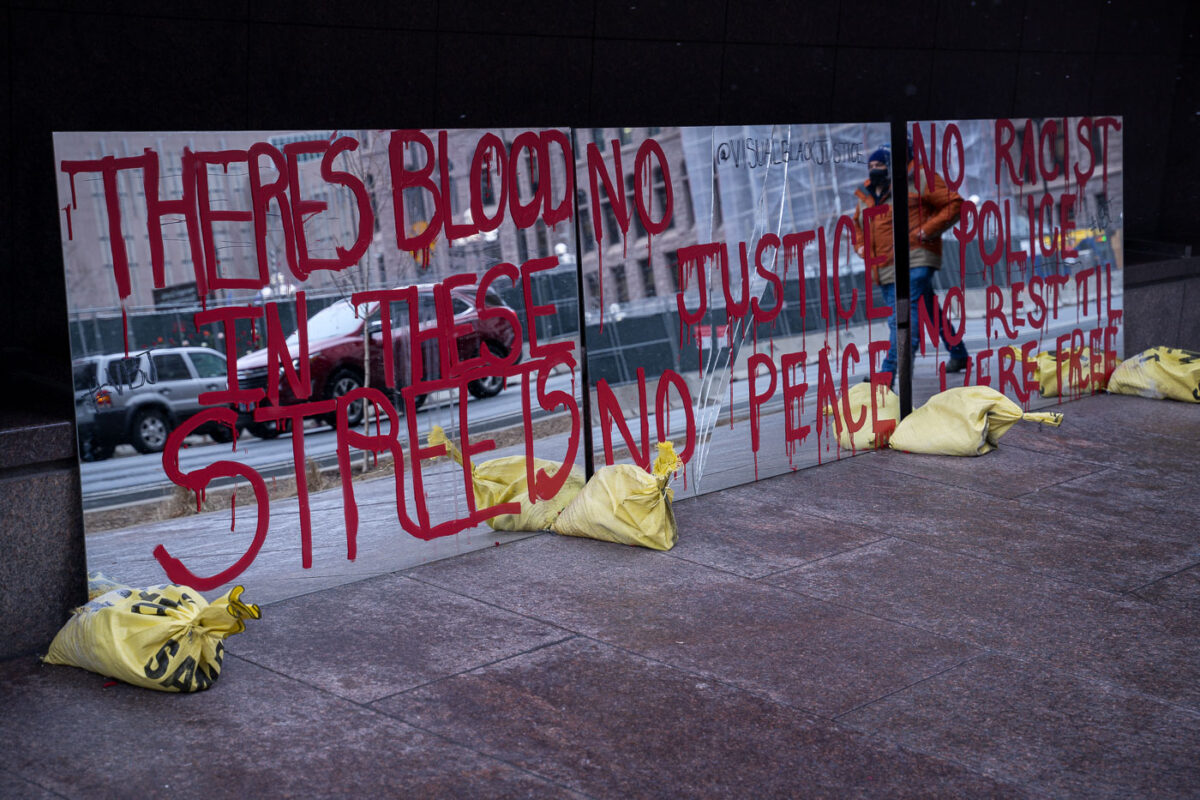
Theres Blood In These Streets mirror art
Mirrored panels bearing protest messages, including "There's Blood In These Streets" and "No Justice No Peace," are displayed outside the Hennepin County Government Center in Minneapolis. The courthouse was the site of the trial for Derek Chauvin, a former Minneapolis police officer charged in the death of George Floyd on May 25, 2020. The messages reflect the ongoing protests and calls for justice that followed Floyd's murder and highlighted systemic issues within law enforcement.

Minneapolis: Mirror Art at Hennepin County Government Center During Chauvin Trial
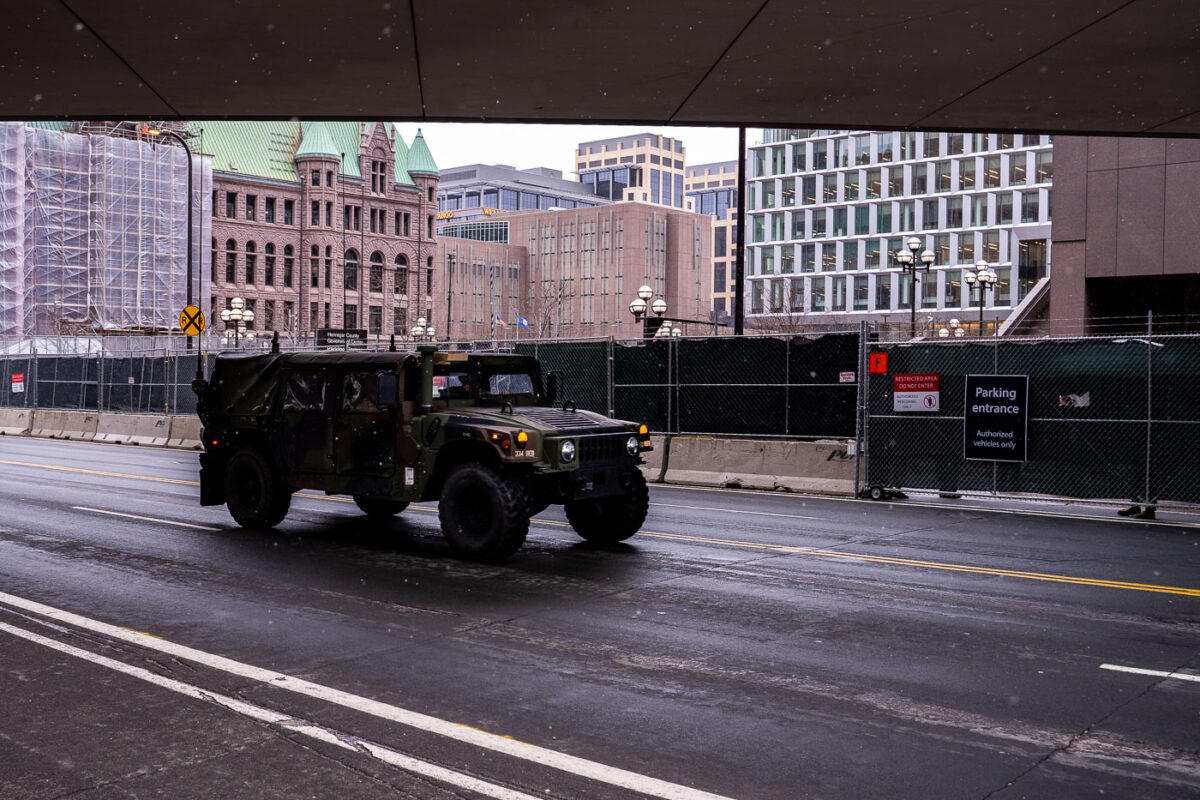
National Guard military vehicle outside Chauvin trial
A Minnesota National Guard vehicle is parked near the Hennepin County Government Center in Minneapolis. The courthouse was the site of the trial for Derek Chauvin, the former Minneapolis police officer charged in the May 25, 2020, murder of George Floyd. The presence of military vehicles underscored the heightened security and tension surrounding the trial, which began in March 2021.

National Guard vehicle near Hennepin County Government Center, Minneapolis
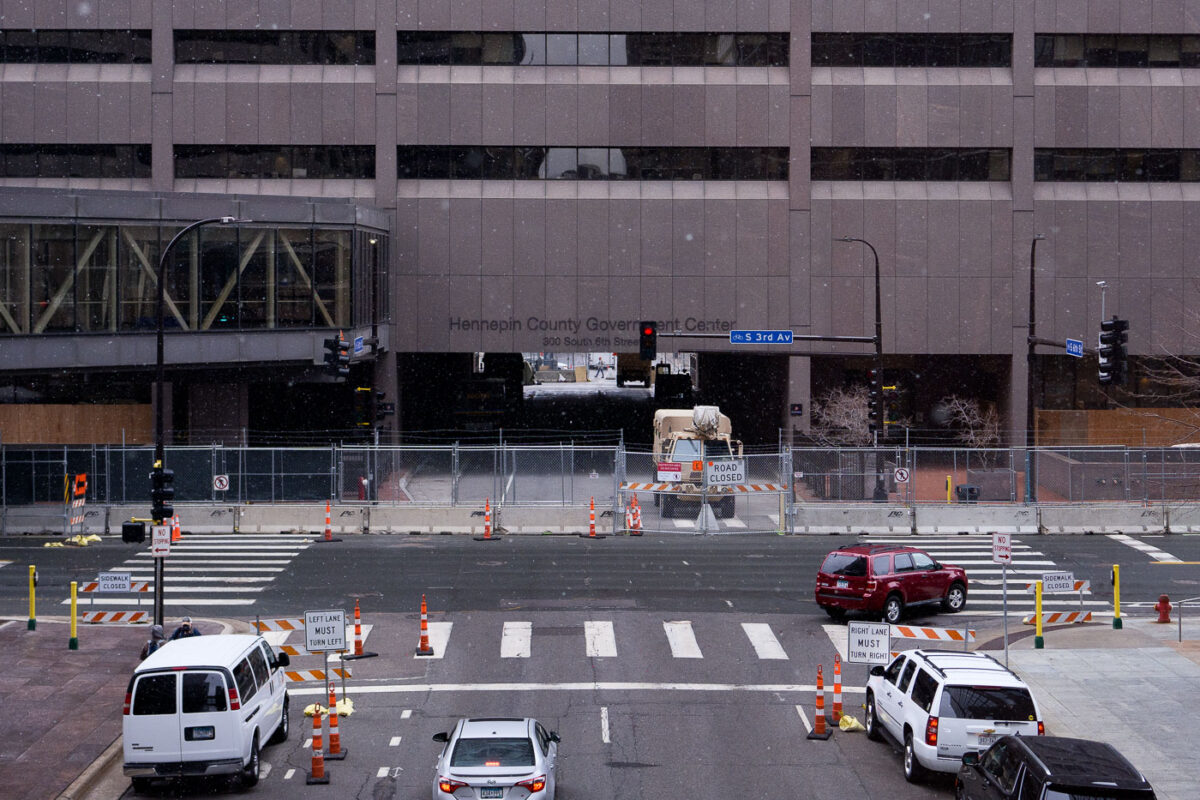
Hennepin County Courthouse Derek Chauvin Security
The Hennepin County Government Center in Minneapolis, Minnesota, served as the courthouse for the trial of Derek Chauvin, the former police officer charged in the death of George Floyd. The incident occurred on May 25, 2020, in South Minneapolis, sparking widespread protests and national attention. The building, completed in 1977, houses county administrative offices and courtrooms, functioning as a central hub for local government operations. During the trial, security measures were significantly heightened around the courthouse, reflecting the gravity of the proceedings and the public interest they generated.

Hennepin County Government Center during Derek Chauvin Trial
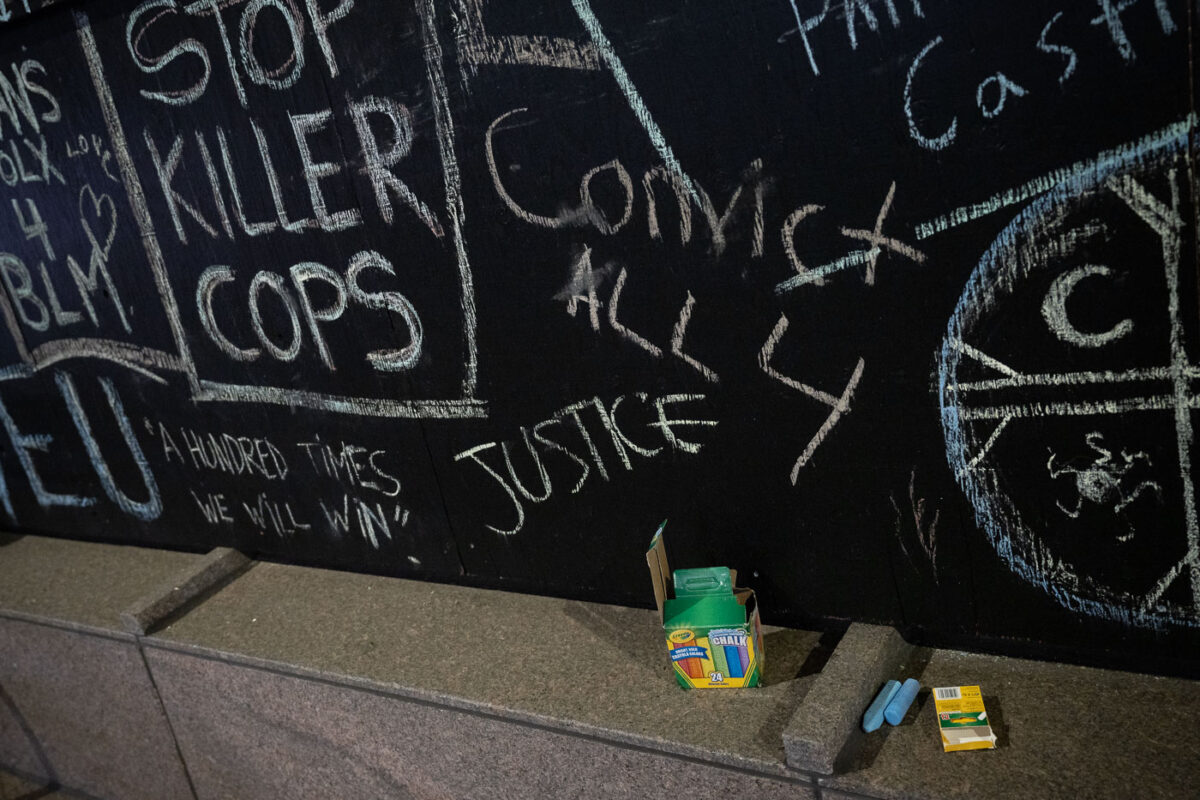
Chalk outside US Bank Plaza boards
Chalk messages, including "Stop Killer Cops" and "Justice," were written on a wall outside the Hennepin County Government Center in Minneapolis during the trial of Derek Chauvin. The trial, which began in March 2021, stemmed from the May 25, 2020 murder of George Floyd. The messages reflect the public sentiment and activism surrounding the case, which gained national and international attention.

Chalk messages outside Minneapolis courthouse during Chauvin trial
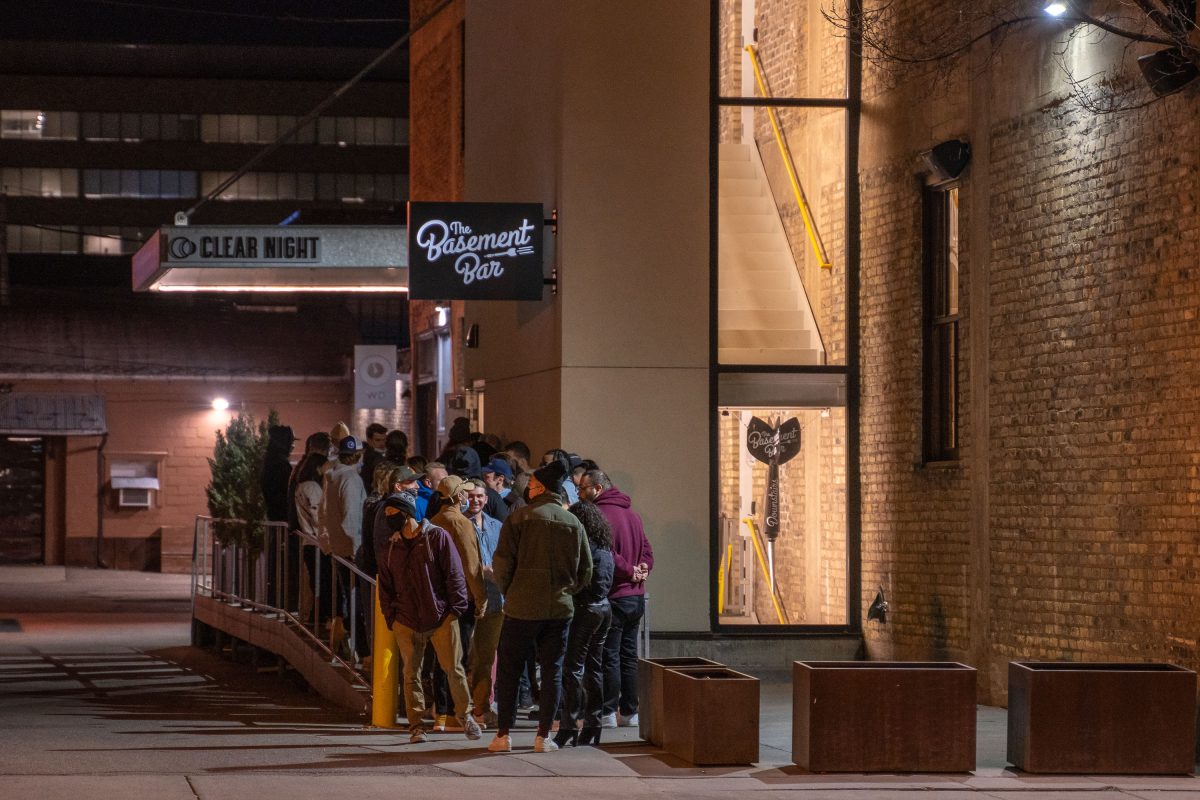
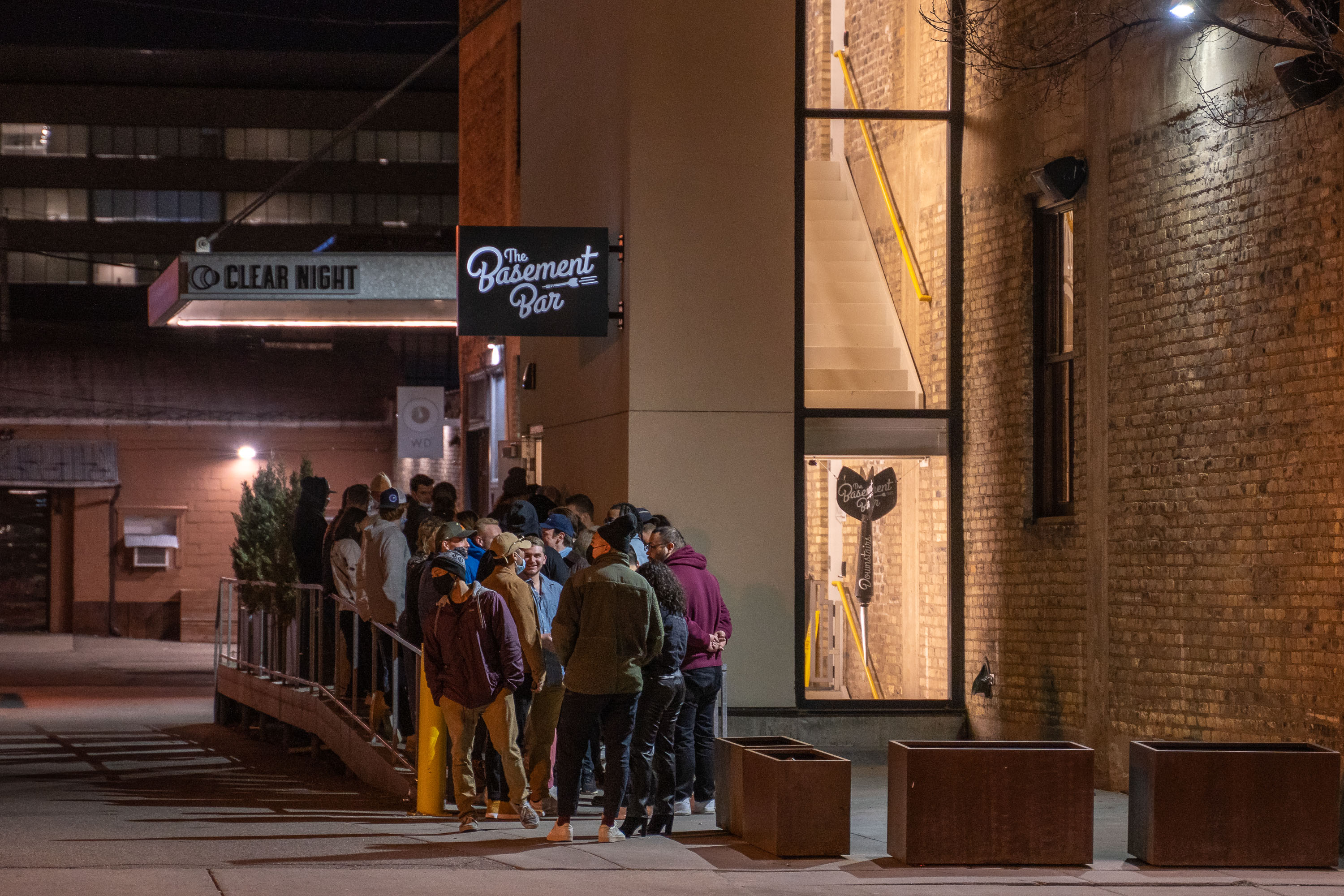
People in line outside The Basement Bar in Minneapolis's North Loop neighborhood.
Patrons stand in line to get into The Basement Bar in the Minneapolis North Loop.

Line Outside The Basement Bar in North Loop

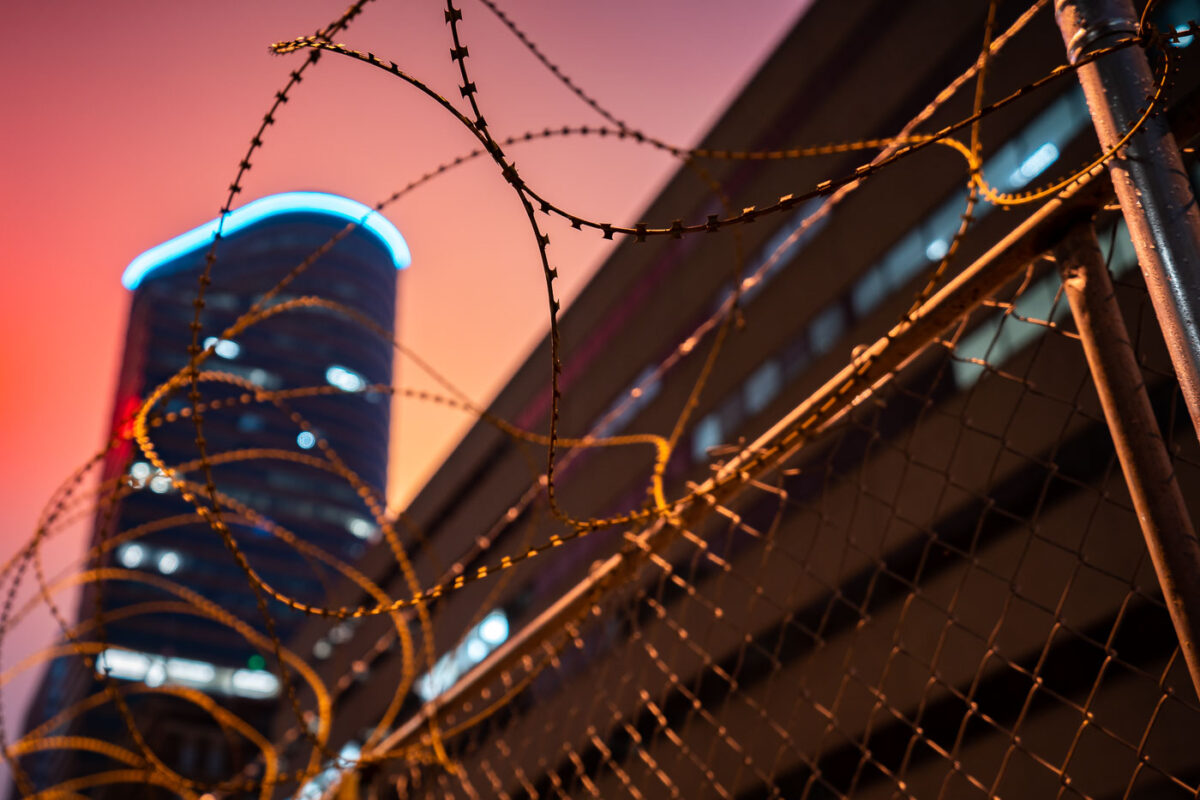
Razor wire around downtown Minneapolis police station
Razor wire surrounds the Minneapolis Police Third Precinct building in March 2021. This security measure was installed following protests and unrest that occurred in the city in the preceding year. The precinct, located in the Powderhorn neighborhood of Minneapolis, served as a focal point during periods of civil disturbance. The temporary fortification highlights the heightened security measures implemented to protect police facilities during times of social unrest.

Razor Wire at Minneapolis Police Third Precinct, March 2021

Demolition of riot burned Wells Fargo Bank
Demolition work is underway at the former Wells Fargo Bank building on Nicollet Avenue in Minneapolis, photographed on March 3, 2021. The structure was significantly damaged during civil unrest that followed the murder of George Floyd in May 2020. The building's destruction represents a physical manifestation of the widespread damage and subsequent rebuilding efforts in the city's commercial districts.

Minneapolis Wells Fargo Bank Demolition After George Floyd Riots

Signs on fencing around burned Minneapolis police station
Protest signs adorn the exterior of the former Minneapolis Police Third Precinct building, which was set ablaze during the unrest following the May 25th death of George Floyd. The signs, including messages such as "Justice for George Floyd," "Defund the Police," and "Black Lives are Sacred," reflect the sentiments of the community and the broader movement for racial justice. The precinct, a symbol of law enforcement in the neighborhood, became a focal point of protests and a site of significant destruction. The presence of these signs on the barricaded structure serves as a visual testament to the events of spring and summer 2020.

Minneapolis Police 3rd Precinct Fencing with Protest Signs

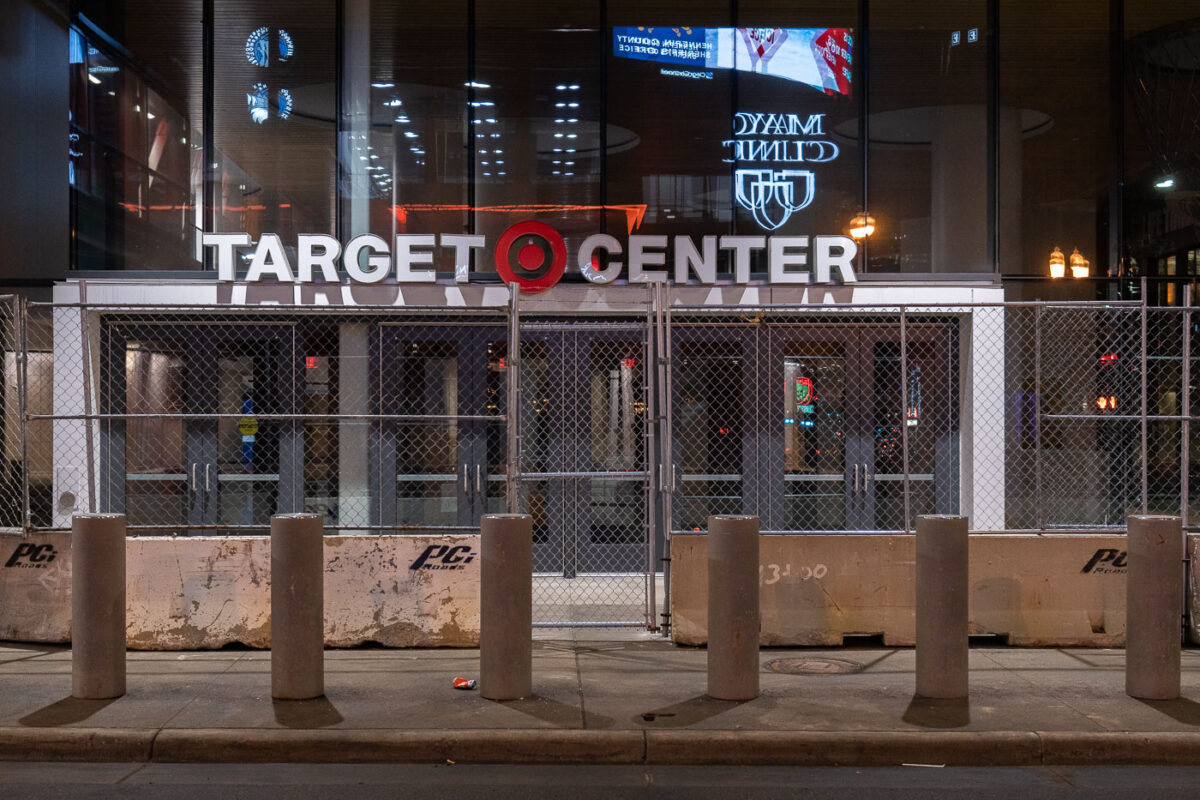
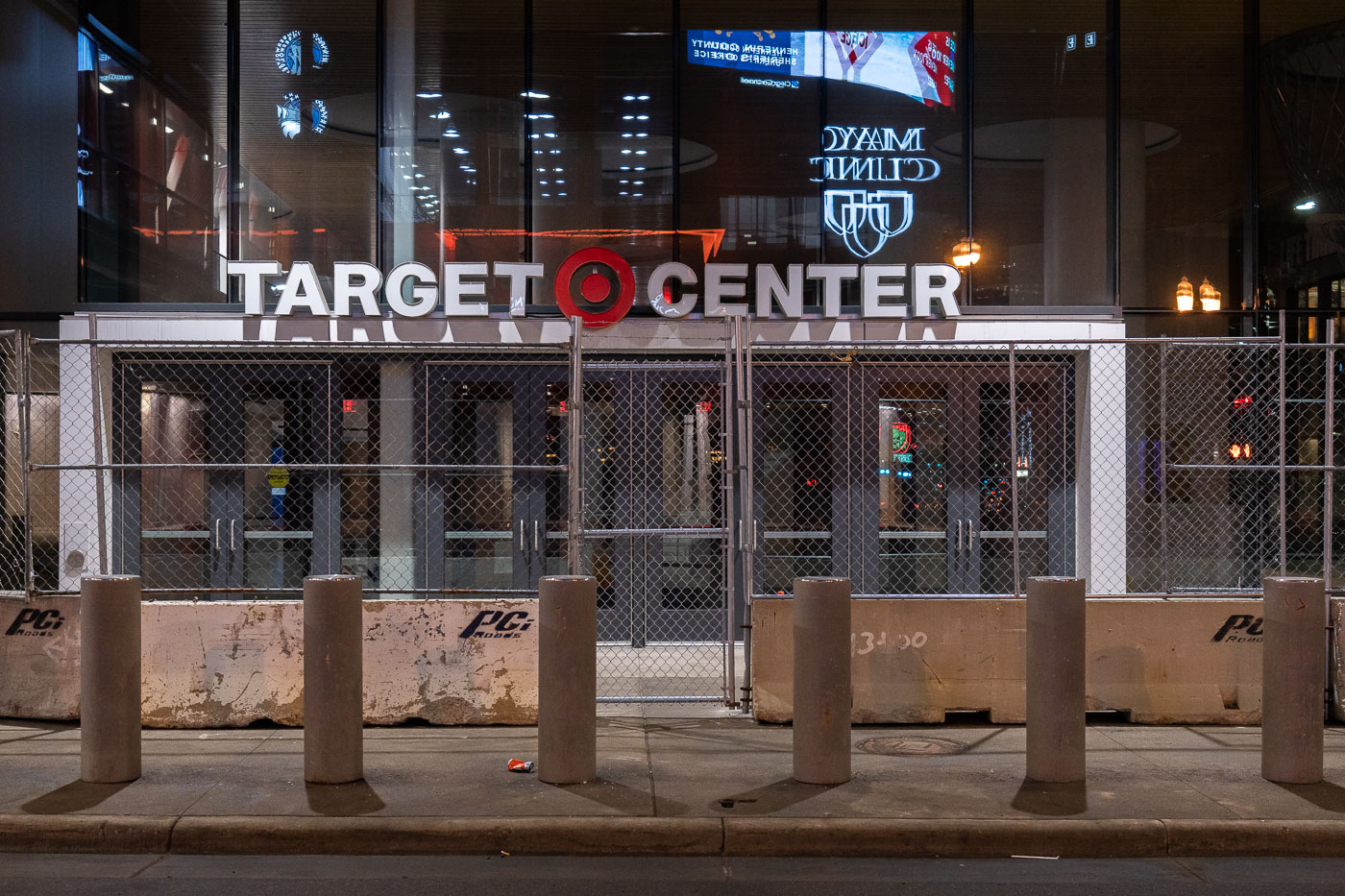
Target Center behind security fencing during Chauvin trial
The Target Center in Minneapolis, a multi-purpose arena, was secured with fencing and concrete barriers during the trial of Derek Chauvin in April 2021. This measure was implemented to enhance security and prevent potential unrest, mirroring precautions taken at other city-owned properties. The arena, which hosts sporting events and concerts, became a focal point of heightened security due to its proximity to the courthouse and the national attention surrounding the trial.

Target Center secured with fencing during Chauvin trial

Minneapolis police 1st precinct security door
The Minneapolis Police Department's 1st Precinct building, located in Downtown Minneapolis, is shown with a newly installed security door. This retractable barrier is designed to slide down and cover the building's windows, enhancing security. The installation of such measures reflects the heightened security concerns and the department's response to events such as the Minneapolis Uprising, which significantly impacted the city and its public institutions.

Minneapolis Police 1st Precinct Security Door Installation

Boarded up Ace Hardware on Nicollet Ave
The Frattallone's Ace Hardware store on Nicollet Avenue in Minneapolis is boarded up, likely in response to the civil unrest that followed the murder of George Floyd in May 2020. The plywood covering the storefront and the red spray-painted "ACE HARDWARE" graffiti indicate damage or a need for protection. This location, like many businesses in the area, experienced damage during the protests and riots. The presence of the "EXIT" signs and the NFPA 704 hazard diamond on the plywood suggest the store was operational prior to being boarded up.

Boarded Ace Hardware on Nicollet Ave, Minneapolis

Roses in blood art installation at Chauvin trial
Roses, some appearing to be stained with red paint to resemble blood, were placed in a puddle outside the Hennepin County Government Center in Minneapolis. This installation occurred during the trial of Derek Chauvin, a former Minneapolis police officer charged with the murder of George Floyd. The trial, held in April 2021, drew significant national attention to issues of police brutality and racial justice.

Roses in paint outside Hennepin County Government Center during Chauvin trial

Reflect art installation outside Chauvin trial
An art installation reading "REFLECT" stands outside the Hennepin County Government Center in Minneapolis. The installation was present during the trial of Derek Chauvin, a former Minneapolis police officer charged with the murder of George Floyd on May 25, 2020. The trial, which began on March 8, 2021, drew significant public attention and protests related to police brutality and racial justice. The "REFLECT" installation, along with scattered roses and protest signs, served as a visual reminder of the ongoing discourse surrounding Floyd's death and its broader implications.

Reflect art installation outside Hennepin County Government Center

Protesters with mirrors and flowers outside Chauvin trial
Flowers and mirrors are placed on the street outside the Hennepin County Government Center in Minneapolis, Minnesota. This display occurred during the period of protests and unrest following the murder of George Floyd in May 2020 and the subsequent trial of Derek Chauvin. The mirrors, some bearing red paint, likely symbolize reflection and accountability, while the flowers serve as a memorial to victims of police brutality. The Hennepin County Government Center was a focal point for many demonstrations during this time.

Flowers and mirrors outside Hennepin County Government Center

Bringing In the National Guard flyer
A sign posted on a chain-link fence surrounding the Hennepin County Government Center in Minneapolis reads "Bringing in the National Guard. What Could Possibly Go Wrong?" The poster includes a photograph from the Kent State shootings on May 4, 1970, where the Ohio National Guard fired on unarmed students during a protest. This juxtaposition of historical imagery with the contemporary presence of the National Guard in Minneapolis, likely during the protests following the murder of George Floyd, serves as a pointed commentary on the potential for state-sanctioned violence. The inclusion of flowers suggests a memorial or a somber reflection on the events.

Hennepin County Government Center: National Guard Sign

Black Lives Matter chalk on black boards
Messages of protest and solidarity are chalked onto boarded-up windows of a building near the Hennepin County Government Center in Minneapolis. The messages, including "Justice for George Floyd," "Stop Killing Us," and "Black Lives Matter," were created in the context of the trial of former Minneapolis Police Officer Derek Chauvin. Chauvin was charged with murder in the death of George Floyd on May 25, 2020, an event that sparked widespread protests against police brutality and racial injustice.

Minneapolis: BLM messages on boarded-up building near Chauvin trial

Justice for George Floyd chalk on boards
Following the murder of George Floyd by Minneapolis police officers in May 2020, protests erupted across the city and the nation. In response to potential unrest, businesses and public buildings, including the US Bank Building in downtown Minneapolis, were boarded up. This photograph shows the building's facade covered with plywood, adorned with chalk messages reflecting the sentiments of the time. Slogans such as "Justice for George Floyd," "Black Lives Matter," and "Stop Killing Us" are visible, alongside calls to "Abolish MPD" and "Hold Police Accountable." The messages also reference "8:46," the duration of Floyd's fatal encounter with police, and "White Supremacy is the Real Pandemic." The "Retail is Open" sign indicates that despite the surrounding social upheaval, some businesses continued to operate.

Minneapolis US Bank Building boarded with protest messages

Minnesota National Guard outside Hennepin Courthouse
A member of the Minnesota National Guard stands in front of a military vehicle outside the Hennepin County Government Center in Minneapolis. This deployment occurred during a period of heightened tension and unrest in the city, following the murder of George Floyd and the subsequent trial of Derek Chauvin. The National Guard was activated to support local law enforcement and maintain order amidst widespread protests against police brutality. The Hennepin County Government Center, a prominent civic building in downtown Minneapolis, served as a focal point during these events.

Minnesota National Guard at Hennepin County Government Center

Justice 4 George Floyd and All Stolen Lives in Minneapolis
A large crowd gathered in downtown Minneapolis on March 8, 2021, to protest the murder of George Floyd and demand justice. The protest occurred outside the Hennepin County Government Center on the morning of the first day of the trial for former Minneapolis police officer Derek Chauvin. Chauvin was charged with second-degree murder and manslaughter in connection with Floyd's death on May 25, 2020. The "Black Lives Matter" movement gained significant momentum following Floyd's death, highlighting issues of police brutality and racial injustice.

Minneapolis Protest for George Floyd and Stolen Lives

Protesters march through downtown at start of Chauvin trial
A large crowd gathered in downtown Minneapolis for a protest related to the trial of Derek Chauvin, the former Minneapolis Police Officer charged in the murder of George Floyd on May 25, 2020. The protest took place outside the Hennepin County Government Center prior to the start of the trial. Many carried signs with messages such as "Justice for George Floyd," "Convict Killer Cops," and "Black Lives Matter," reflecting the broader movement against police brutality and racial injustice.

Protesters march downtown Minneapolis for Derek Chauvin trial

George Floyd pins being sold outside courthouse
Pins commemorating George Floyd and bearing the slogan "I Can't Breathe" are displayed for sale outside the Hennepin County Courthouse in Minneapolis. This location was the site of the trial of Derek Chauvin, the former Minneapolis police officer convicted of Floyd's murder in April 2021. The sale of such merchandise reflects the broader cultural and political impact of Floyd's death and the subsequent Black Lives Matter movement, which gained significant momentum following the incident in May 2020. The courthouse itself is a significant civic building in downtown Minneapolis, serving as a central hub for legal proceedings in the county.

George Floyd Pins Sold Outside Hennepin County Courthouse

Minneapolis is under military occupation
Protesters gathered outside the Hennepin County Government Center in Minneapolis on March 8, 2021, the day the Derek Chauvin murder trial began. The sign, held by a protester, reads "Minneapolis is under military occupation," reflecting the sentiment of many during the widespread protests against police brutality that followed George Floyd's murder. The trial itself was a focal point for ongoing activism and calls for justice and accountability within the Minneapolis community and beyond.

Minneapolis Protest Sign: “Minneapolis is under military occupation”

Protester writes with chaulk at Chauvin trial
During the trial of Derek Chauvin, a protester writes messages in chalk outside the Hennepin County Courthouse in Minneapolis. The trial, which began in March 2021, centered on the murder of George Floyd, a Black man who died in police custody. The courthouse and surrounding areas became a focal point for protests and demonstrations related to police brutality and racial justice. The chalk messages serve as a form of public expression and a visual record of the community's response to the ongoing legal proceedings and broader social issues.

Chalk message at Hennepin County Courthouse during Chauvin trial

Protesters behind security fencing at Chauvin trial
Protesters gathered outside the Hennepin County Government Center in Minneapolis during the trial of Derek Chauvin. The courthouse was surrounded by security fencing, a measure implemented due to the high-profile nature of the trial and concerns about potential unrest. The trial, which began in March 2021, stemmed from the murder of George Floyd by Minneapolis police officer Derek Chauvin in May 2020. Protests against police brutality and racial injustice, often under the banner of Black Lives Matter, had been ongoing in Minneapolis and across the nation since Floyd's death.

Protesters at Hennepin County Government Center during Chauvin Trial

Police are the problem protest sign
Protesters gathered outside the Hennepin County Government Center in Minneapolis on March 8, 2021, during the trial of Derek Chauvin. The trial concerned the murder of George Floyd, an event that sparked widespread protests and calls for police reform. This sign, "Police Are The Problem," reflects the sentiment of many demonstrators who questioned law enforcement practices and accountability. The presence of the light rail train in the background highlights the urban setting of the protest, a common backdrop for public gatherings in Minneapolis.

Minneapolis Protest: “Police Are The Problem” Sign at Chauvin Trial

Large protest in Minneapolis at start of Chauvin trial
Protesters gathered outside the Hennepin County Government Center in Minneapolis on March 8, 2021, awaiting the start of the trial for former police officer Derek Chauvin. Chauvin was charged with murder and manslaughter in the death of George Floyd on May 25, 2020, an event that sparked widespread protests against police brutality and racial injustice. The Hennepin County Government Center serves as a key administrative and judicial hub for the county, and its proximity to the site of Floyd's murder made it a focal point for demonstrations.

Minneapolis Protest Outside Hennepin County Government Center

Abolish Police and Prisons protest sign
Protesters gathered outside the Hennepin County Government Center in Minneapolis on March 8, 2021, ahead of the Derek Chauvin trial. Chauvin, a former Minneapolis police officer, was charged in the murder of George Floyd on May 25, 2020. The sign "Abolish Police + Prisons" reflects a central demand of the Black Lives Matter movement, which gained widespread attention following Floyd's death and has continued to advocate for systemic reform of law enforcement and the justice system.

Minneapolis Protest: Abolish Police and Prisons Sign

The World Is Watching protest in Minneapolis
Protesters gathered outside the Hennepin County Government Center in Minneapolis on March 8, 2021, the morning of the Derek Chauvin trial. Chauvin, a former Minneapolis police officer, was charged with the murder of George Floyd on May 25, 2020. The banner reads "Justice 4 George Floyd & All Stolen Lives. The World Is Watching." This event highlights the broader Black Lives Matter movement and calls for accountability in cases of police brutality.

Minneapolis Protest for George Floyd Outside Hennepin County Government Center

National Guard in front of courthouse Derek Chauvin Trial
National Guard members stand security outside the Hennepin County Government Center in Minneapolis on March 7, 2021. This deployment occurred during the trial of Derek Chauvin, the former Minneapolis police officer charged in the murder of George Floyd. The presence of the National Guard was a response to concerns about potential unrest and protests related to the high-profile trial. The Hennepin County Government Center serves as a central hub for county administration and judicial proceedings.

National Guard at Hennepin County Courthouse, Derek Chauvin Trial

Armed National Guard outside the Derek Chauvin murder trial
National Guard soldiers stand outside the Hennepin County Government Center in Minneapolis on March 7, 2021. Their presence was in response to the ongoing trial of Derek Chauvin, the former Minneapolis police officer charged in the murder of George Floyd. The trial, which began in March 2021, drew significant public attention and protests, leading to heightened security measures in the city.

National Guard outside Hennepin County Government Center, Minneapolis

Convict all 4 killer cops protest signs in Minneapolis
A memorial for George Floyd outside the Hennepin County Government Center in Minneapolis on March 7, 2021. The memorial features "Justice for All" signs, "Black Lives Matter" messages, and numerous lit candles, placed during the trial of Derek Chauvin. This site became a focal point for protests and tributes following Floyd's murder in May 2020. The "Justice for All" and "My Life Matters" signs reflect the broader movement for racial justice and accountability that emerged from the event.

Minneapolis George Floyd Memorial: “Justice for All” Signs

Military vehicles behind razor wire for Chauvin murder trial
National Guard vehicles are positioned outside the Hennepin County Government Center in Minneapolis during the overnight hours. The presence of military vehicles and barricades indicates heightened security measures, likely in response to the civil unrest and protests that occurred in the city. These events were largely sparked by the murder of George Floyd and the subsequent trial of Derek Chauvin, highlighting the complex relationship between law enforcement, the National Guard, and public demonstrations in urban environments.

National Guard vehicles at Hennepin County Government Center

Military vehicles arrive for Derek Chauvin murder trial
Members of the Minnesota National Guard were deployed to secure the Hennepin County Government Center in Minneapolis during the trial of Derek Chauvin in April 2021. The trial followed the murder of George Floyd in May 2020, which sparked widespread protests and unrest in the city. The government center, a prominent civic building in downtown Minneapolis, was fortified with fencing and security personnel to prevent potential disturbances during the highly publicized legal proceedings. The presence of military forces underscored the heightened tensions and the perceived need for enhanced security measures in the city.

National Guard at Hennepin County Government Center during Chauvin trial

Hennepin County Government Center Security March 2021
Security measures were heightened around the Hennepin County Government Center in Minneapolis in March 2021. This increased security was in place due to the ongoing murder trial of Derek Chauvin, the former police officer whose actions led to the death of George Floyd. The trial, held within the courthouse, drew significant national attention and prompted concerns about public safety and potential unrest. The presence of barriers and personnel underscored the sensitive nature of the proceedings and the broader context of the Minneapolis Uprising that followed Floyd's death.

Hennepin County Courthouse Security, Minneapolis, March 2021

Heavy security outside Derek Chauvin trial
Minnesota National Guard members stand behind fencing at the Hennepin County Government Center in Minneapolis. This security presence was established during the trial of Derek Chauvin, the former Minneapolis police officer charged in the murder of George Floyd. The trial, which began in March 2021, drew significant public attention and heightened security measures around the courthouse. The presence of the National Guard underscored the tense atmosphere and concerns about potential unrest following the widely publicized events of George Floyd's death.

National Guard at Hennepin County Government Center during Chauvin trial

Protesters put hands up outside courthouse during Chauvin trial
Protesters gather outside the Hennepin County Government Center in Minneapolis on March 7, 2021. The demonstration occurred the day before the start of jury selection in the trial of Derek Chauvin, the former Minneapolis police officer charged with the murder of George Floyd on May 25, 2020. The government center is a prominent civic building in downtown Minneapolis, serving as the seat of county government and a site for significant public events and protests.

Protesters raise fists outside Hennepin County Government Center, Minneapolis

George Floyd protest sign being placed on fence
A protester affixes a poster bearing the name "George Floyd" repeatedly to security fencing outside the Hennepin County Government Center. This location served as a focal point during the trial of Derek Chauvin, the police officer convicted of murdering George Floyd in May 2020. The protests that followed Floyd's death brought widespread attention to issues of racial injustice and police brutality. The fencing was erected to secure the government center during the high-profile trial, reflecting the heightened tensions and public engagement surrounding the proceedings.

George Floyd protest sign at Hennepin County Government Center

Protesters enter a secured area around Chauvin trial
Protesters approach the Hennepin County Government Center in Minneapolis, Minnesota, during the trial of Derek Chauvin. The "Cage," a temporary security perimeter constructed with chain-link fencing, plywood, and barbed wire, was erected around the courthouse to manage crowds and ensure safety. This measure was implemented in response to widespread protests against police brutality and racial injustice that followed the murder of George Floyd in May 2020. The "Justice for All" signs carried by some individuals reflect the broader movement's demands for accountability and systemic change.

Protesters enter security perimeter at Hennepin County Government Center

George Floyd Rest In Power protest sign
A protester holds a sign reading "GEORGE FLOYD REST IN POWER" during a march in Minneapolis. The sign also lists the names of other individuals who died due to police brutality, including Eric Garner, Michael Brown, Tamir Rice, Breonna Taylor, and Philando Castile. This protest occurred during the trial of Derek Chauvin, the Minneapolis police officer convicted of murdering George Floyd. The sign serves as a memorial and a statement against racial injustice and police violence.

Minneapolis Protest Sign: George Floyd Rest In Power

Dismantle White Supremacy protest
Thousands marched in Downtown Minneapolis on March 7, 2021, the day before the start of jury selection in the trial of former Minneapolis Police officer Derek Chauvin. Chauvin was charged with the murder of George Floyd on May 25, 2020, an event that sparked widespread protests against police brutality and white supremacy. The marchers carried signs with messages such as "Dismantle White Supremacy" and "We Need Justice," reflecting the ongoing calls for racial equity and accountability.

Minneapolis Protest: Dismantle White Supremacy, March for Justice

Police are tools of white supremacy
Thousands marched in downtown Minneapolis the day before jury selection began in the trial of former police officer Derek Chauvin. Chauvin was charged with the murder of George Floyd on May 25, 2020, an event that sparked widespread protests against police brutality and racial injustice. The marchers carried signs with messages such as "Police = Tools of White Supremacy" and "Dismantle White Supremacy," reflecting the broader movement for Black Lives Matter. The protests highlighted deep-seated issues of systemic racism and police accountability in the United States.

Minneapolis Protest: “Police = Tools of White Supremacy” Sign

Security Boards going up at Marshalls
In anticipation of the Derek Chauvin murder trial, storefronts in downtown Minneapolis were boarded up as a security measure. The image shows workers installing plywood over the windows of a Marshalls store, with a Minneapolis Police Department vehicle parked nearby. This preparation reflected concerns about potential unrest and property damage, echoing events that followed the murder of George Floyd in the same city in 2020.

Minneapolis Marshalls Boarded Up for Chauvin Trial Security

Thousands march at start of Chauvin trial
Thousands of protestors marched near the Hennepin County Government Center in Minneapolis on March 7, 2021. The march occurred the day before the start of jury selection in the trial of former Minneapolis police officer Derek Chauvin, who was charged with the murder of George Floyd on May 25, 2020. The event was part of ongoing protests against police brutality and racial injustice that followed Floyd's death.

Protestors march near Hennepin County Government Center, Minneapolis

Protesters in downtown Minneapolis in March 2021
A protest march took place in downtown Minneapolis on March 7, 2021, the day before Derek Chauvin's trial for the murder of George Floyd began. Participants carried a scroll listing over 470 names of individuals killed by Minnesota police officers. Organizers highlighted that Chauvin was involved in five of those cases, underscoring the broader issue of police brutality. The march proceeded from the Hennepin County Government Center down Hennepin Avenue, drawing attention to systemic issues of racial injustice and police accountability.

Minneapolis Protest for George Floyd Victims March 2021

Defund White Supremacy protest sign
Protesters gather outside the Hennepin County Government Center in downtown Minneapolis on March 7, 2021, during a march and rally held the day before jury selection began in the trial of former Minneapolis police officer Derek Chauvin for the murder of George Floyd. Demonstrators carry signs calling for justice for Floyd and denouncing white supremacy, while many participants wear masks during the ongoing COVID-19 pandemic. The Government Center was a regular assembly point for demonstrations tied to Floyd’s killing on May 25, 2020, and to court proceedings in the Chauvin case.

Minneapolis Protest: Defund White Supremacy Sign

Protesters sit during a march at start of Chauvin trial
Protesters gathered in downtown Minneapolis during the trial of Derek Chauvin, the police officer accused in the murder of George Floyd. The march and subsequent sit-in occurred in April 2021, reflecting ongoing activism and demands for justice following Floyd's death in May 2020. The event highlighted the community's continued engagement with issues of racial inequality and police accountability.

Protesters sit during Chauvin trial march in Minneapolis

Thousands march at the start of Derek Chauvin trial
Thousands marched in downtown Minneapolis on March 7, 2021, the day before jury selection began in the trial of Derek Chauvin. The former Minneapolis police officer was charged with the murder of George Floyd, who died on May 25, 2020, sparking widespread protests against police brutality and racial injustice. The marchers carried signs and a casket adorned with flowers, symbolizing their grief and demand for accountability.

Minneapolis Protest for George Floyd, Trial Begins

St Paul Justice 4 George march protest signs
Protesters gathered in St. Paul, Minnesota, to demand justice for George Floyd. The "Justice 4 George" sign reflects the widespread outrage and calls for accountability following Floyd's murder by Minneapolis police officer Derek Chauvin. This event was part of a larger movement protesting police brutality and racial injustice across the United States.

St. Paul Protest for George Floyd Justice

I Kneel To Stand For protest sign
Protesters gathered outside the Minnesota Governor's Residence in St. Paul, holding signs that expressed solidarity with various marginalized groups. The rally occurred during the trial of Derek Chauvin, a former Minneapolis police officer whose murder conviction stemmed from the killing of George Floyd. The signs reflect broader concerns about police violence and systemic injustices, advocating for the rights of Black and Brown individuals, veterans, Native Americans, immigrants, and victims of domestic violence, among others. The "I Kneel to Stand For" message highlights a commitment to social justice and equality.

Protester Holds Sign at Minnesota Governor’s Residence Rally

Protesters hold hands up outside Governor Tim Walzs Residence
Protesters gathered outside a residence in Minneapolis, Minnesota, on March 19, 2021, to demand justice for victims of police violence. The protest occurred during the trial of Derek Chauvin, the former Minneapolis police officer charged in the murder of George Floyd. The demonstration aimed to raise awareness and advocate for systemic changes in policing.

Minneapolis Protest for Police Violence Victims

Protesters at Tim Walz residence in March 2021
Protesters gathered outside the Minnesota Governor's Residence in St. Paul, holding signs and raising fists in solidarity with victims of police brutality. The "Welcome to Minneapolis" hoodie worn by one individual, along with imagery referencing the "3rd Precinct" and "Shut Down Line 3," suggests a connection to broader social justice movements in the region. The signs depict Philando Castile and another unidentified victim, highlighting specific instances of police violence that have fueled public outcry and calls for reform.

Protest at MN Governor’s Residence for Police Brutality Victims

Toshira Garraway speaks outside Tim Walz's residence
Toshira Garraway speaks at a protest outside the Governor's residence, advocating for justice for victims of police violence. The gathering, which included family members of those affected, highlighted cases such as George Floyd, Ahmaud Arbery, and Jaffort Smith. These protests gained prominence following the murder of George Floyd in Minneapolis and subsequent nationwide demonstrations against police brutality and racial injustice. The event underscores the ongoing efforts by activists and families to seek accountability and systemic change within law enforcement.

Toshira Garraway speaks at protest outside Governor’s residence

Together we will stop Line 3
Protesters gathered in St. Paul, Minnesota, to rally against the Line 3 pipeline project. The sign visible reads "Together We Will Kill the Black Snake Stop Line 3," referencing the pipeline's nickname and the environmental concerns associated with its construction. This protest occurred during a period of heightened activism and legal challenges surrounding the pipeline's development, which has been a significant point of contention due to its potential impact on Indigenous lands and water resources in Minnesota.

Protesters Rally Against Line 3 Pipeline in St. Paul

Justice for George Floyd Trial in 3 days
A sign at George Floyd Square in Minneapolis reads "Justice for George Floyd. Trial in 3 days." The square, located at the intersection of Chicago Avenue and East 38th Street, became a focal point for protests following the murder of George Floyd in May 2020. The sign's message reflects the anticipation of the trial of Derek Chauvin, the officer accused of Floyd's murder, which began on March 8, 2021. A banner with the words "BLACK TAX" is also visible, indicating the ongoing activism and community organizing within the square.

George Floyd Square: Trial in 3 Days Sign

Special operation officers outside Derek Chauvin trial
A Hennepin County Sheriff's Special Operations vehicle is visible behind security fencing and concrete barriers outside the Hennepin County Government Center in Minneapolis. The building served as the courthouse for the trial of Derek Chauvin, the former Minneapolis police officer charged in the murder of George Floyd. The trial, which began in March 2021, drew significant public attention and necessitated heightened security measures in the downtown area. The presence of the Special Operations vehicle underscores the security protocols implemented during this high-profile legal proceeding.

Hennepin County Sheriff Special Operations Vehicle at Derek Chauvin Trial

National Guard Armory in Minnesota
Minnesota National Guard vehicles are staged at The Armory in Minneapolis in anticipation of potential civil unrest. This deployment occurred in May 2021, following the conviction of former Minneapolis police officer Derek Chauvin for the murder of George Floyd. The Armory, a historic building completed in 1936, has served as a military facility and a public venue. Its large drill hall and surrounding grounds have historically been used for military training and public gatherings, making it a strategic location for staging resources during times of heightened public tension.

Minnesota National Guard Vehicles at The Armory, Minneapolis

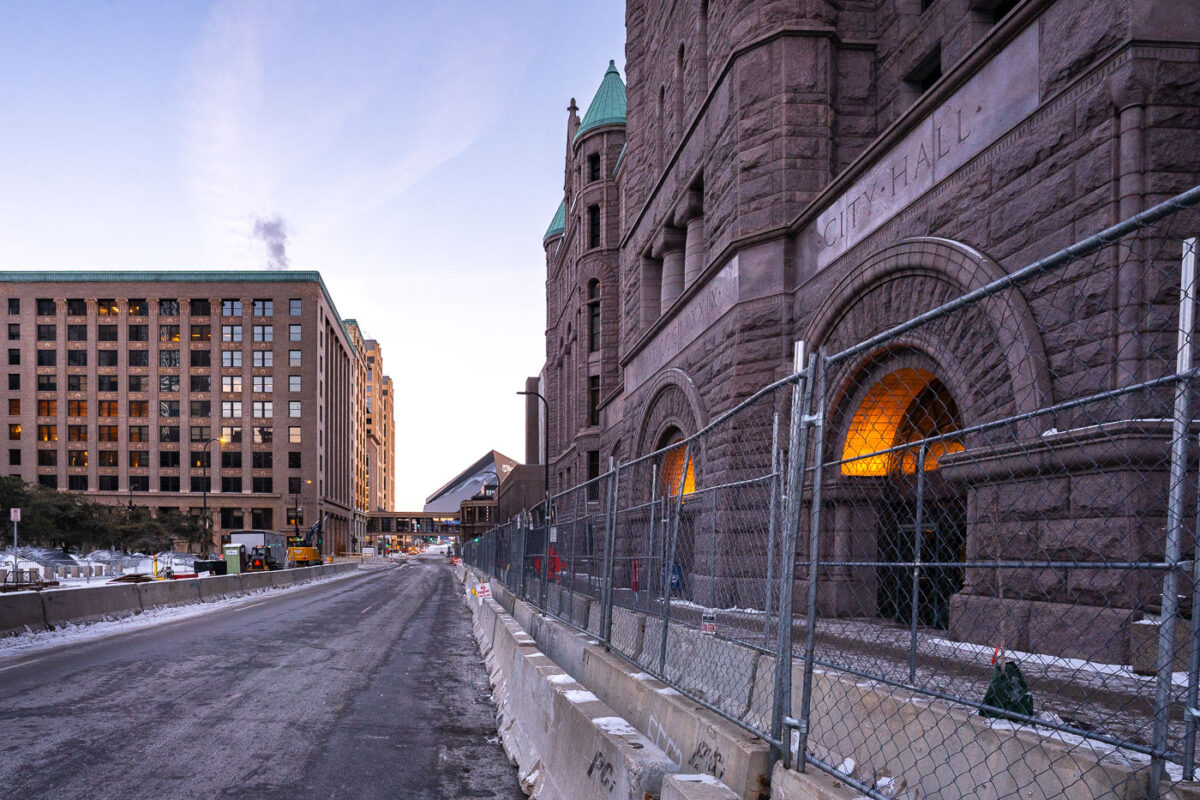
Minneapolis City Hall's arched stone entrance secured behind chain link fencing and orange construction barriers.
Minneapolis City Hall, downtown Minneapolis. Barricades and temporary security structures were installed at the building entrance before the start of the Derek Chauvin trial.

Fenced-Off Archways at Minneapolis City Hall at Night

Red and white restricted area sign and detailed use of public spaces regulations posted on chain link fencing at Hennepin County Government Center.
Signage indicating a restricted area and "Authorized Personnel Only" is posted on secure fencing surrounding the Hennepin County Government Center in Minneapolis.

“Do Not Enter” Signs on Fencing at Hennepin County Government Center

Derek Chauvin Razor Wire at Hennepin Courthouse
Razor wire fencing, a security measure, surrounds the Hennepin County Government Center in Minneapolis. This installation was part of Operation Safety Net, a multi-agency effort to provide security during the Derek Chauvin murder trial. The trial, which began with jury selection on March 8, 2021, followed the death of George Floyd and subsequent protests. On May 25, 2020, Minneapolis police officer Derek Chauvin murdered 46-year-old George Floyd during an arrest outside Cup Foods at the intersection of 38th Street and Chicago Avenue in south Minneapolis. Video recorded by bystanders showed Chauvin kneeling on Floyd’s neck for more than nine minutes while Floyd repeatedly said he could not breathe. Three other Minneapolis police officers - J. Alexander Kueng, Thomas Lane, and Tou Thao — were also present during the arrest and later faced criminal charges for their roles in Floyd’s death. Floyd’s murder sparked protests and civil unrest across Minneapolis and around the world, leading to widespread demonstrations against police violence, major policy debates on policing, and the conviction of Chauvin on murder and manslaughter charges in 2021.

Razor Wire Security at Hennepin Courthouse, Minneapolis

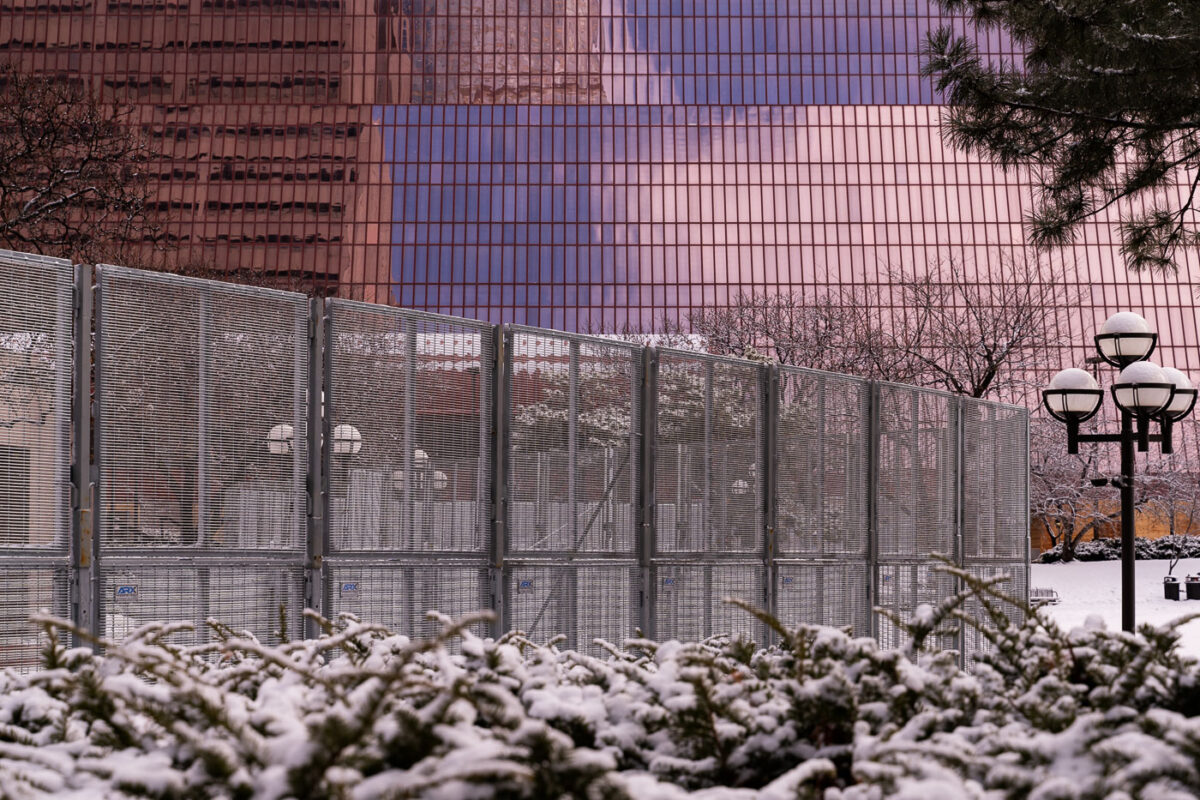
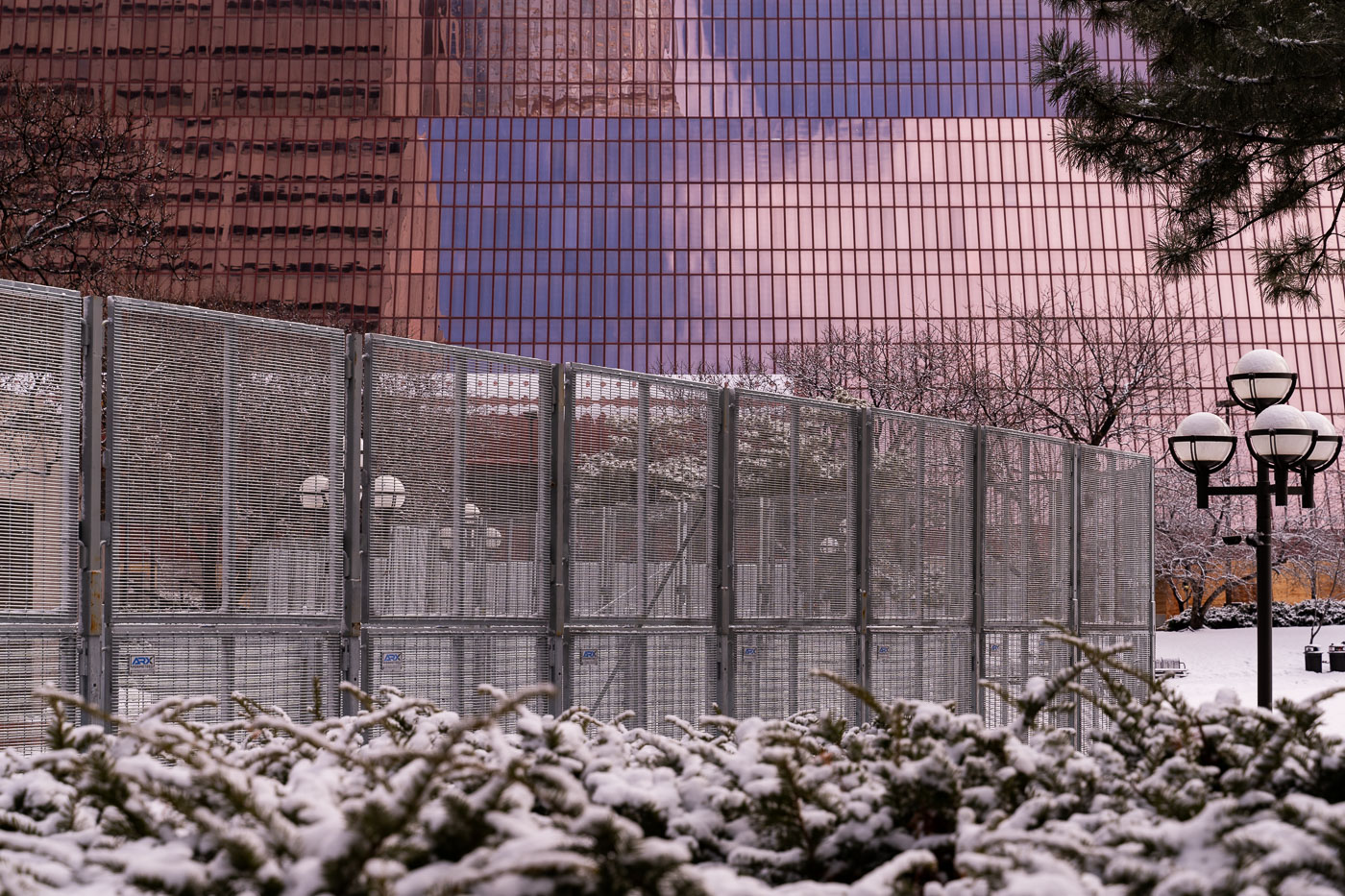
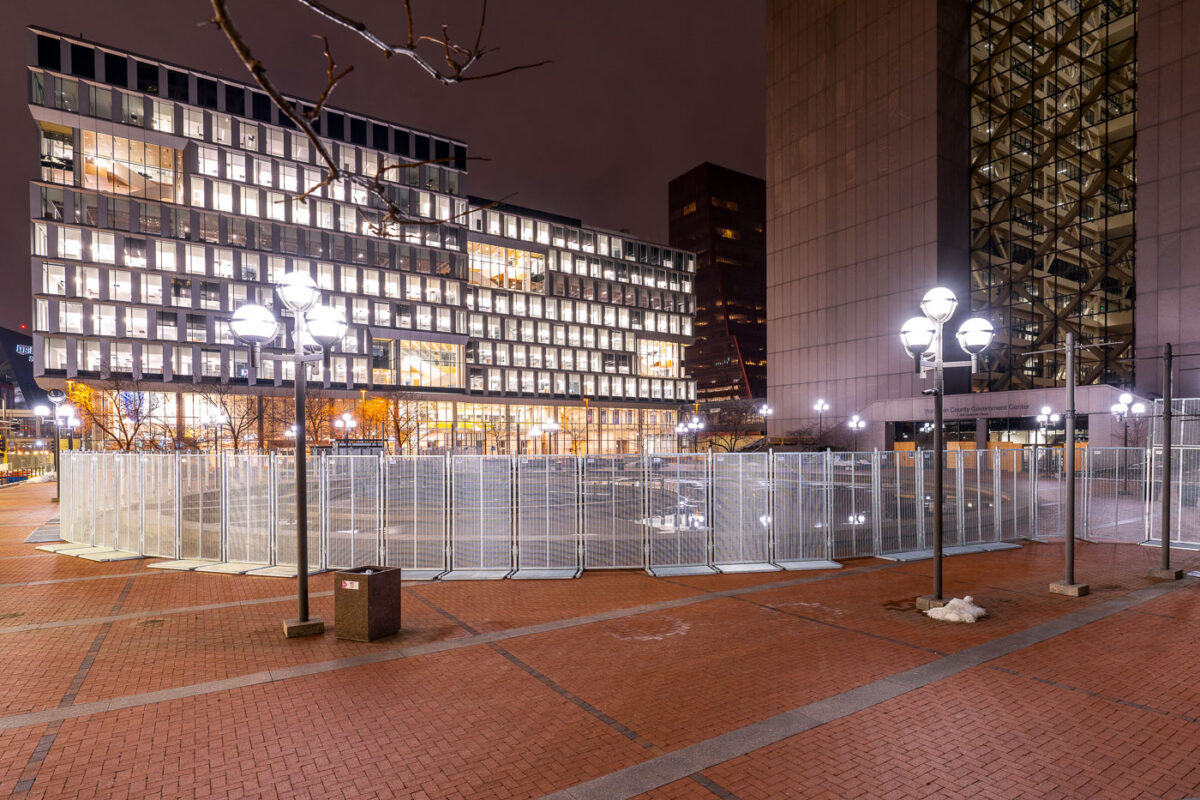
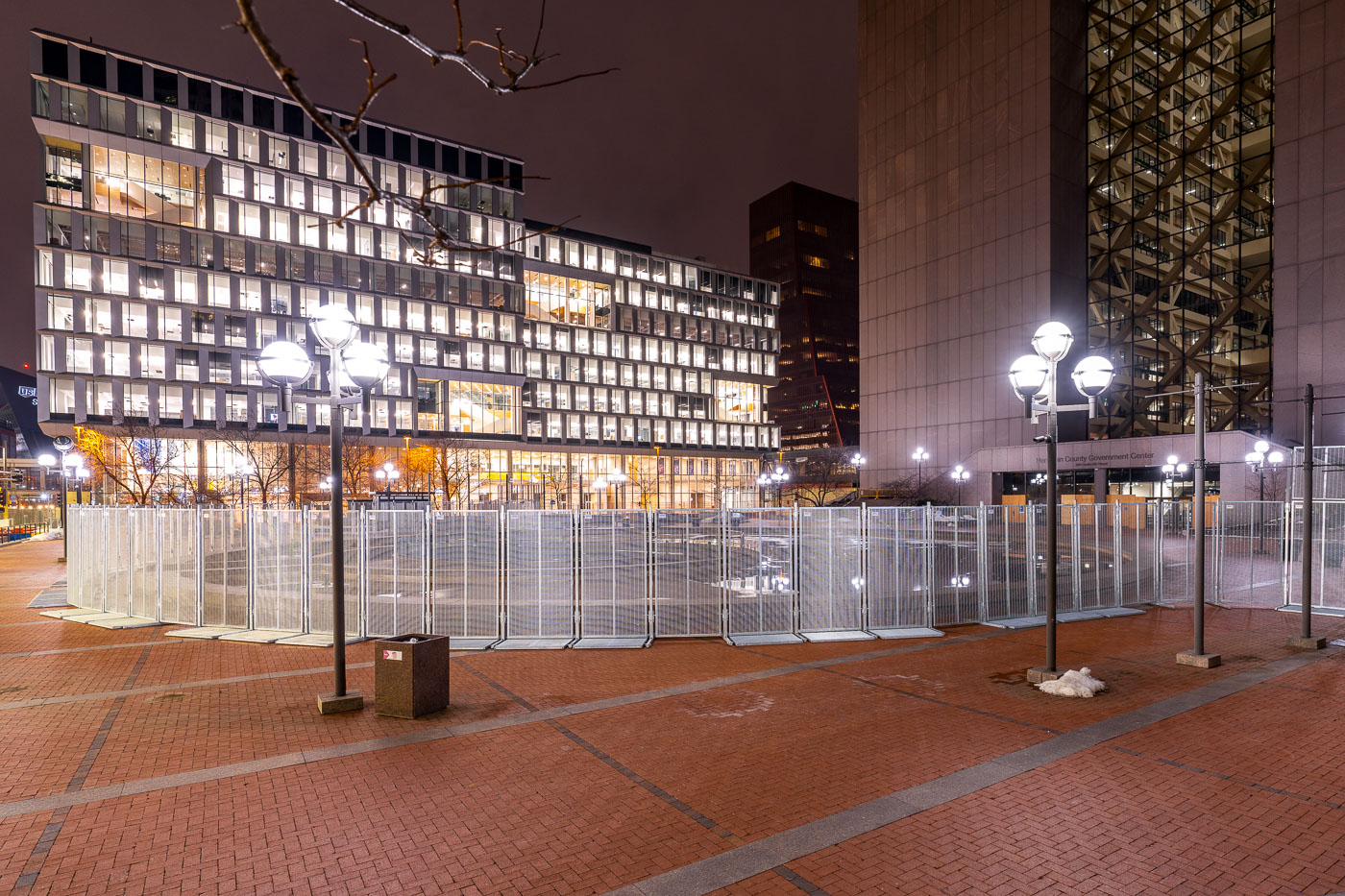
APX Perimeters fencing at Derek Chauvin murder trial
Temporary fencing by APX Perimeters surrounds the Hennepin County Government Center in Minneapolis, in anticipation of the Derek Chauvin murder trial. The installation of this security measure was part of Operation Safety Net, a multi-agency response to ensure public safety during the trial and potential unrest following the death of George Floyd. Jury selection was scheduled to begin on March 8, 2021, making the courthouse a focal point of national attention.

APX Perimeters Fencing at Hennepin County Government Center, Minneapolis

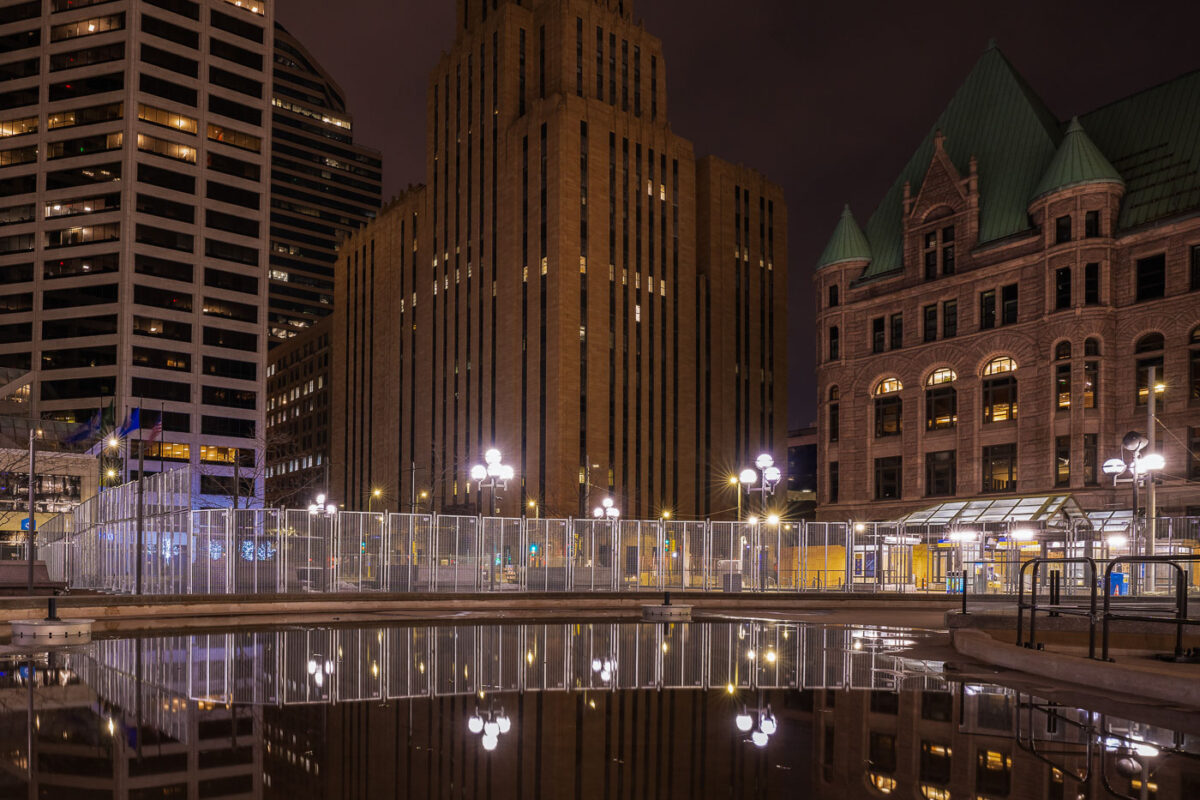
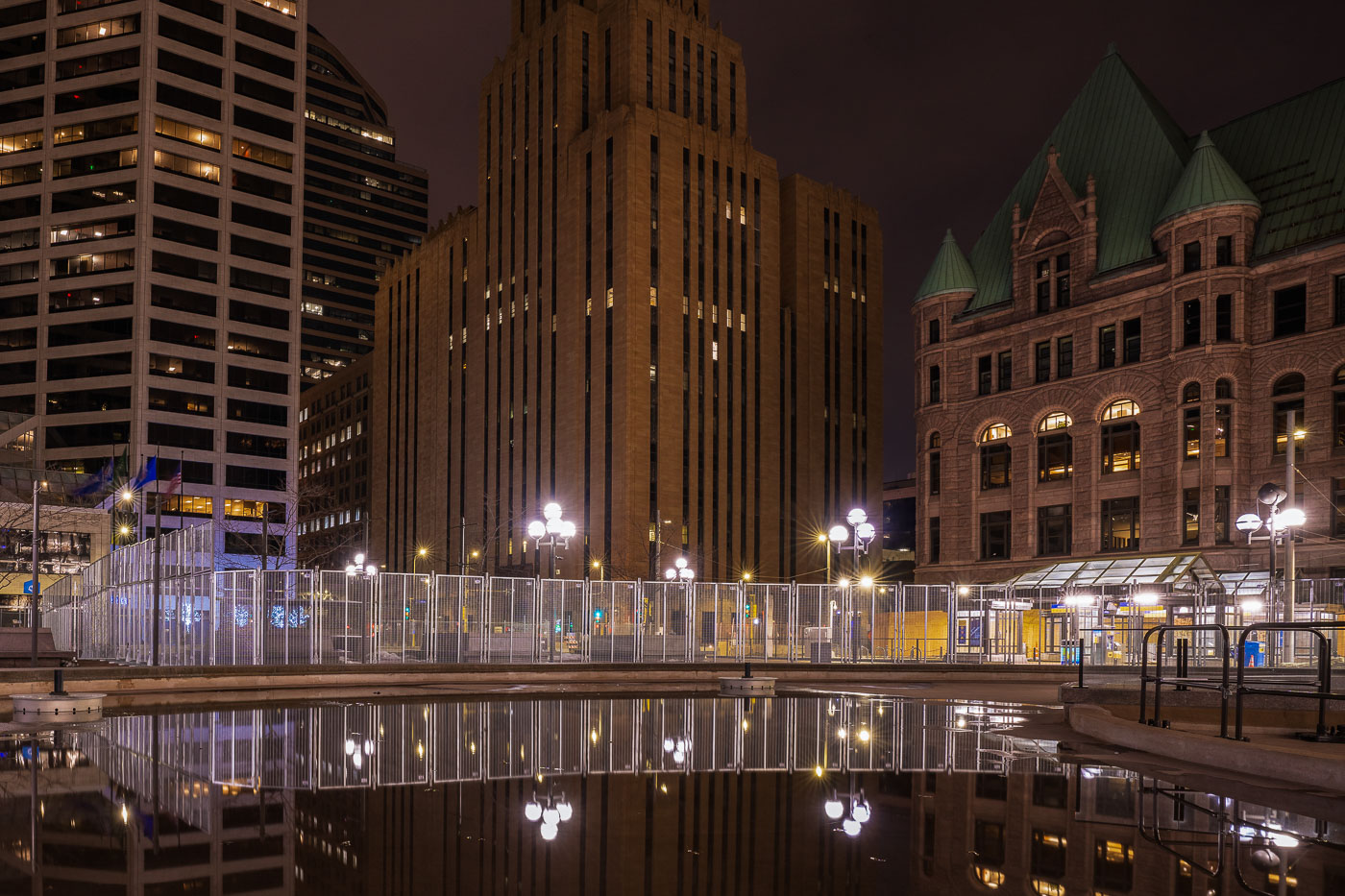
Reflections outside Minneapolis City Hall and Government Center
Security fencing surrounds the Hennepin County Government Center in Minneapolis, Minnesota, in anticipation of the Derek Chauvin murder trial. The trial, which began jury selection on March 8, 2021, followed the death of George Floyd and subsequent protests. The fencing, part of Operation Safety Net, was installed to secure the courthouse and surrounding areas during the high-profile legal proceedings. On May 25, 2020, Minneapolis police officer Derek Chauvin murdered 46-year-old George Floyd during an arrest outside Cup Foods at the intersection of 38th Street and Chicago Avenue in south Minneapolis. Video recorded by bystanders showed Chauvin kneeling on Floyd’s neck for more than nine minutes while Floyd repeatedly said he could not breathe. Three other Minneapolis police officers - J. Alexander Kueng, Thomas Lane, and Tou Thao — were also present during the arrest and later faced criminal charges for their roles in Floyd’s death. Floyd’s murder sparked protests and civil unrest across Minneapolis and around the world, leading to widespread demonstrations against police violence, major policy debates on policing, and the conviction of Chauvin on murder and manslaughter charges in 2021.

Minneapolis Courthouse Fencing for Chauvin Trial

Hennepin County Government Center Derek Chauvin Trial Security
Temporary security fencing is erected around the Hennepin County Government Center in Minneapolis on February 28, 2021, in anticipation of the Derek Chauvin murder trial. The installation of this fencing, part of Operation Safety Net, was a measure to secure the courthouse and manage potential public gatherings during the high-profile trial, which began jury selection on March 8, 2021. The courthouse complex, a significant piece of Brutalist architecture in downtown Minneapolis, was the site of the trial for the death of George Floyd, an event that sparked widespread protests and unrest. On May 25, 2020, Minneapolis police officer Derek Chauvin murdered 46-year-old George Floyd during an arrest outside Cup Foods at the intersection of 38th Street and Chicago Avenue in south Minneapolis. Video recorded by bystanders showed Chauvin kneeling on Floyd’s neck for more than nine minutes while Floyd repeatedly said he could not breathe. Three other Minneapolis police officers - J. Alexander Kueng, Thomas Lane, and Tou Thao — were also present during the arrest and later faced criminal charges for their roles in Floyd’s death. Floyd’s murder sparked protests and civil unrest across Minneapolis and around the world, leading to widespread demonstrations against police violence, major policy debates on policing, and the conviction of Chauvin on murder and manslaughter charges in 2021.

Hennepin County Government Center: Trial Security Fencing

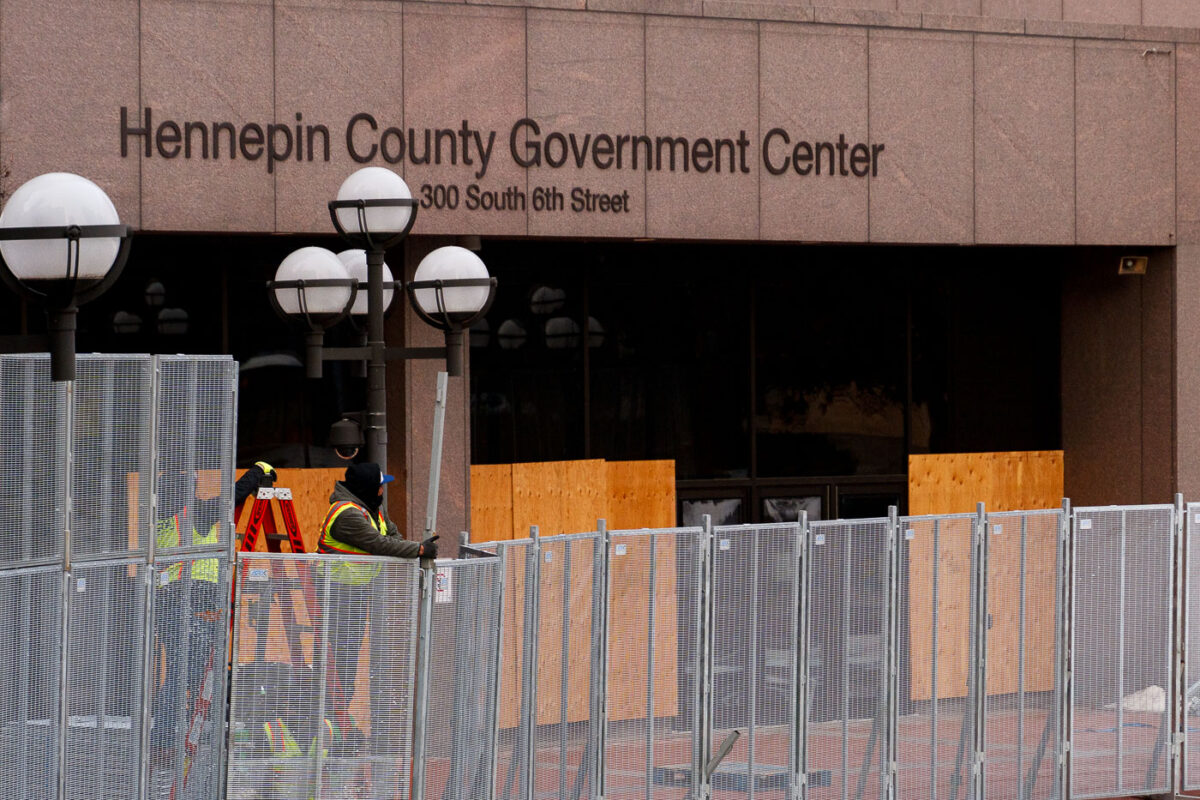
Workers installing security fencing at courthouse for Chauvin trial
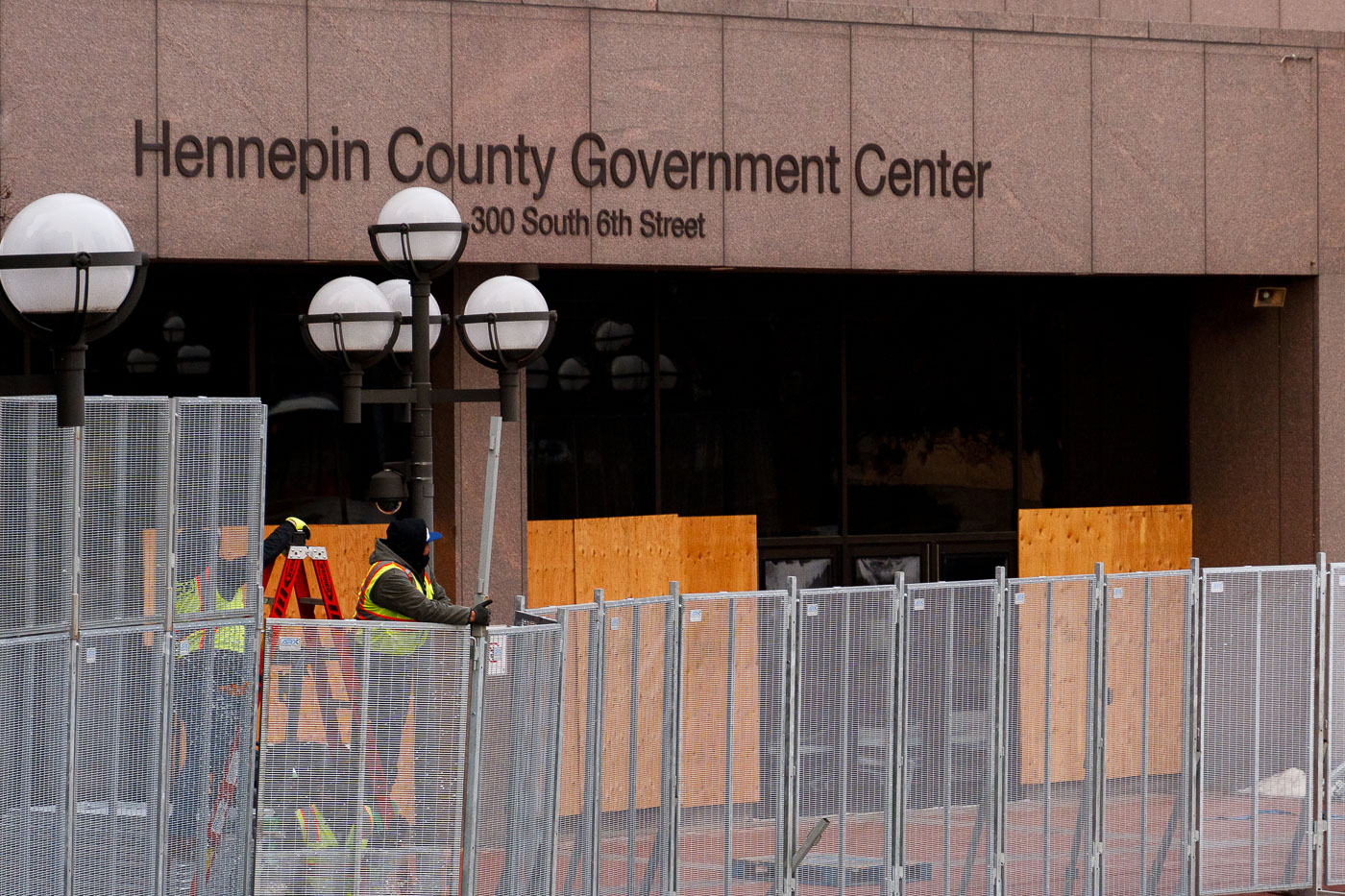
Temporary fencing is being installed around the Hennepin County Government Center in Minneapolis, located at 300 South 6th Street. This security measure was put in place in anticipation of the trial of Derek Chauvin, a former Minneapolis police officer. On May 25, 2020, Minneapolis police officer Derek Chauvin murdered 46-year-old George Floyd during an arrest outside Cup Foods at the intersection of 38th Street and Chicago Avenue in south Minneapolis. Video recorded by bystanders showed Chauvin kneeling on Floyd’s neck for more than nine minutes while Floyd repeatedly said he could not breathe. Three other Minneapolis police officers - J. Alexander Kueng, Thomas Lane, and Tou Thao — were also present during the arrest and later faced criminal charges for their roles in Floyd’s death. Floyd’s murder sparked protests and civil unrest across Minneapolis and around the world, leading to widespread demonstrations against police violence, major policy debates on policing, and the conviction of Chauvin on murder and manslaughter charges in 2021.

Hennepin County Government Center Security Fencing Installation

Michelle Gross speaks at Hennepin County Government Center
Michelle Gross speaks to a crowd at the Hennepin County Government Center announcing plans to protest the start of the Derek Chauvin murder trial.

Michelle Gross speaks at Hennepin County Government Center

Nekima Levy Armstrong at 2021 rally
Nekima Levy Armstrong, a prominent activist, speaks at a press conference held outside the Hennepin County Government Center in Downtown Minneapolis on February 25, 2021. The conference announced a March 8th protest, with participants expressing their determination to demand justice and change despite perceived fortifications around government buildings. The signs held by attendees call for the conviction of Derek Chauvin and justice for George Floyd and other victims, reflecting the ongoing protests and calls for accountability following the murder of George Floyd. On May 25, 2020, Minneapolis police officer Derek Chauvin murdered 46-year-old George Floyd during an arrest outside Cup Foods at the intersection of 38th Street and Chicago Avenue in south Minneapolis. Video recorded by bystanders showed Chauvin kneeling on Floyd’s neck for more than nine minutes while Floyd repeatedly said he could not breathe. Three other Minneapolis police officers - J. Alexander Kueng, Thomas Lane, and Tou Thao — were also present during the arrest and later faced criminal charges for their roles in Floyd’s death. Floyd’s murder sparked protests and civil unrest across Minneapolis and around the world, leading to widespread demonstrations against police violence, major policy debates on policing, and the conviction of Chauvin on murder and manslaughter charges in 2021.

Nekima Levy Armstrong at Downtown Minneapolis Protest

Michelle Gross speaks prior to Derek Chauvin Trial
Michelle Gross speaks at a press conference outside the Hennepin County Government Center in Minneapolis on February 25, 2021. Activists gathered to announce a protest planned for that day, demanding justice and change in the wake of the Derek Chauvin trial. The signs held by attendees called for the conviction of Chauvin and justice for George Floyd. On May 25, 2020, Minneapolis police officer Derek Chauvin murdered 46-year-old George Floyd during an arrest outside Cup Foods at the intersection of 38th Street and Chicago Avenue in south Minneapolis. Video recorded by bystanders showed Chauvin kneeling on Floyd’s neck for more than nine minutes while Floyd repeatedly said he could not breathe. Three other Minneapolis police officers - J. Alexander Kueng, Thomas Lane, and Tou Thao — were also present during the arrest and later faced criminal charges for their roles in Floyd’s death. Floyd’s murder sparked protests and civil unrest across Minneapolis and around the world, leading to widespread demonstrations against police violence, major policy debates on policing, and the conviction of Chauvin on murder and manslaughter charges in 2021.

Michelle Gross speaks at press conference before Derek Chauvin Trial

Community Control of MPD
A protester holds a sign reading "COMMUNITY CONTROL OF MPD" outside the Hennepin County Government Center in Minneapolis on February 25, 2021. The protest was announced for March 8th, coinciding with the start of the Derek Chauvin trial. This event highlights ongoing calls for police reform and community oversight of law enforcement in Minneapolis, a movement that gained significant momentum following the murder of George Floyd in 2020. On May 25, 2020, Minneapolis police officer Derek Chauvin murdered 46-year-old George Floyd during an arrest outside Cup Foods at the intersection of 38th Street and Chicago Avenue in south Minneapolis. Video recorded by bystanders showed Chauvin kneeling on Floyd’s neck for more than nine minutes while Floyd repeatedly said he could not breathe. Three other Minneapolis police officers - J. Alexander Kueng, Thomas Lane, and Tou Thao — were also present during the arrest and later faced criminal charges for their roles in Floyd’s death. Floyd’s murder sparked protests and civil unrest across Minneapolis and around the world, leading to widespread demonstrations against police violence, major policy debates on policing, and the conviction of Chauvin on murder and manslaughter charges in 2021.

Minneapolis Protest for Community Control of MPD

CourtTV broadcast van parked outside Hennepin County Government Center during Derek Chauvin trial coverage in February 2021.
CourtTV van outside the Hennepin County Government Center in downtown Minneapolis. The broadcast vehicle was stationed near the courthouse during coverage of the Derek Chauvin trial in February 2021.

Court TV Satellite Truck Parked at Night Near Hennepin County Government Center

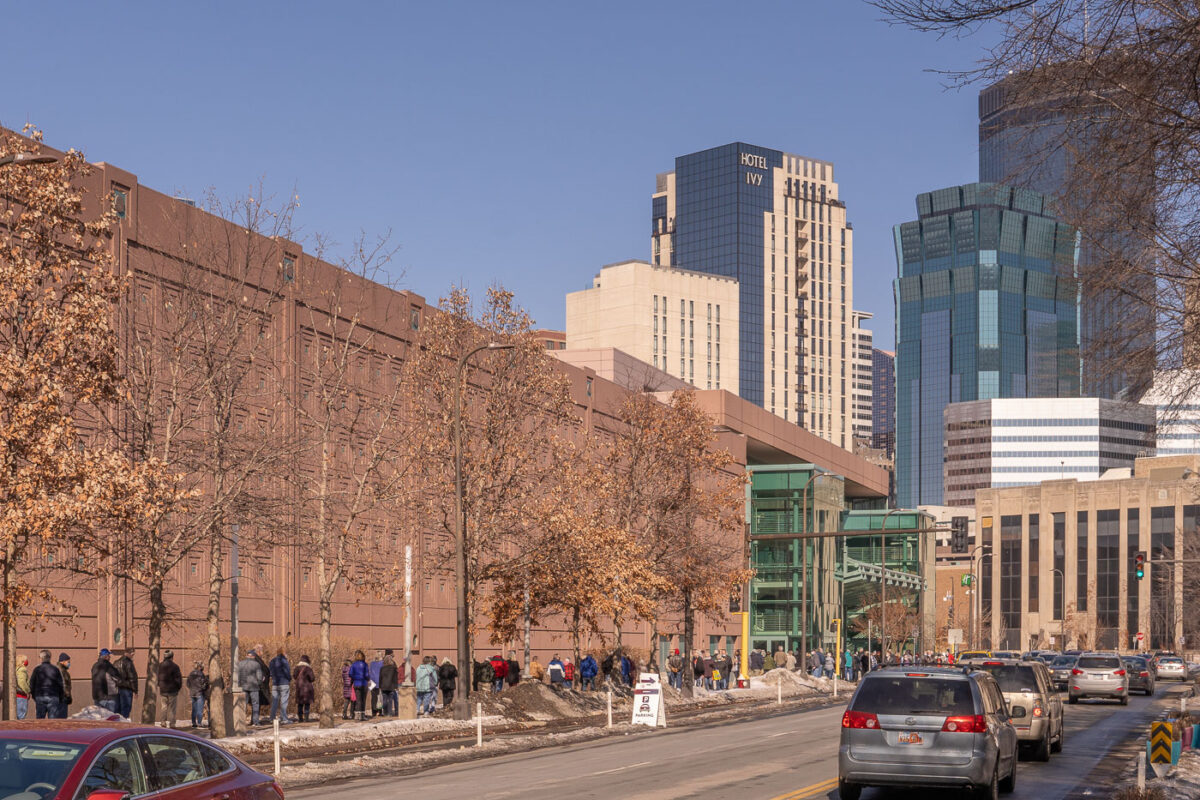
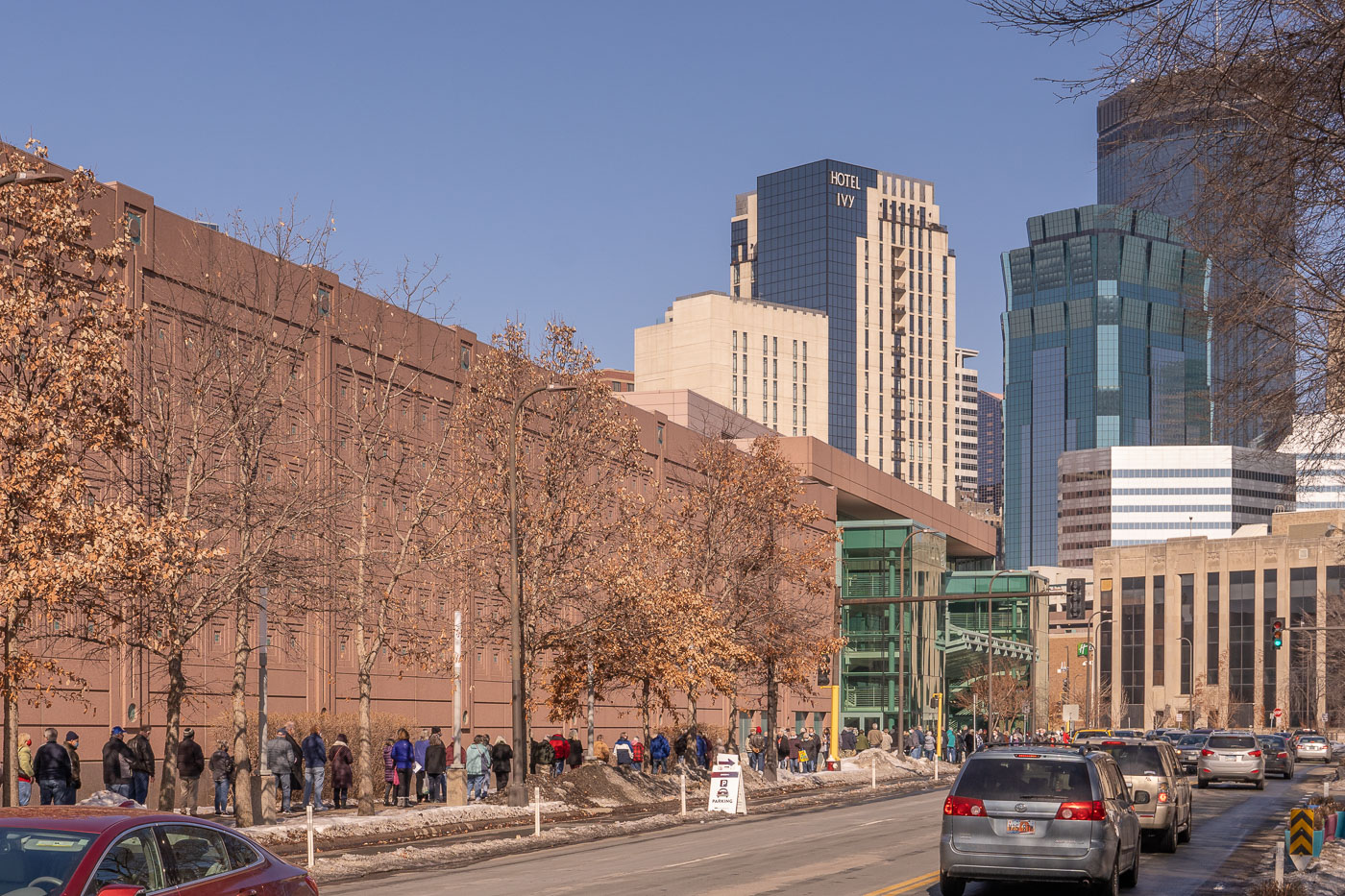
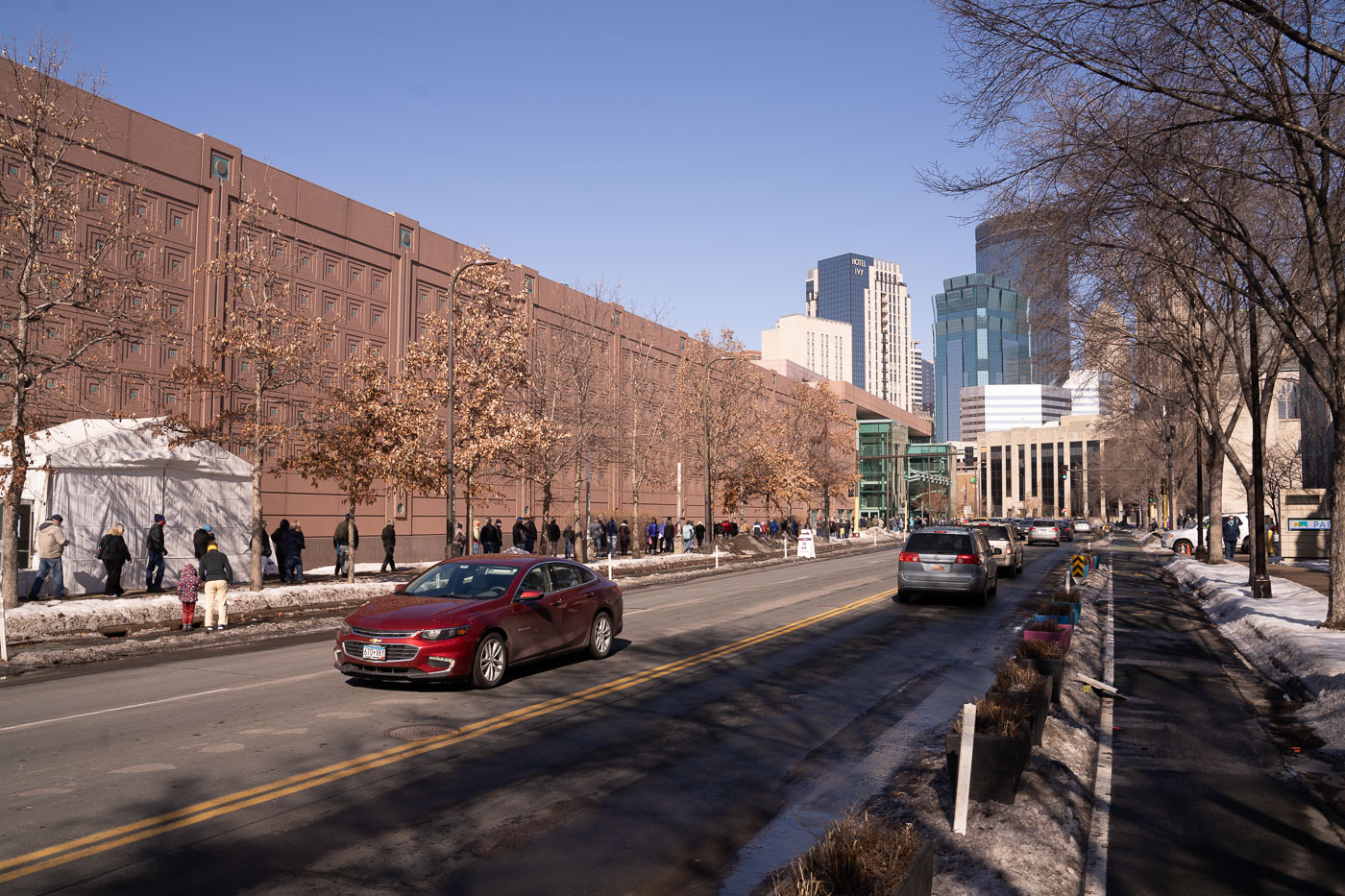
COVID vaccine line outside Minneapolis Convention Center in downtown Minneapolis.
Minneapolis Convention Center in downtown Minneapolis, Minnesota. People wait in line outside the venue for COVID-19 vaccinations during the winter 2021 rollout. The convention center was used as a mass vaccination site as public health agencies expanded access to the vaccine.

COVID vaccine line at Minneapolis Convention Center

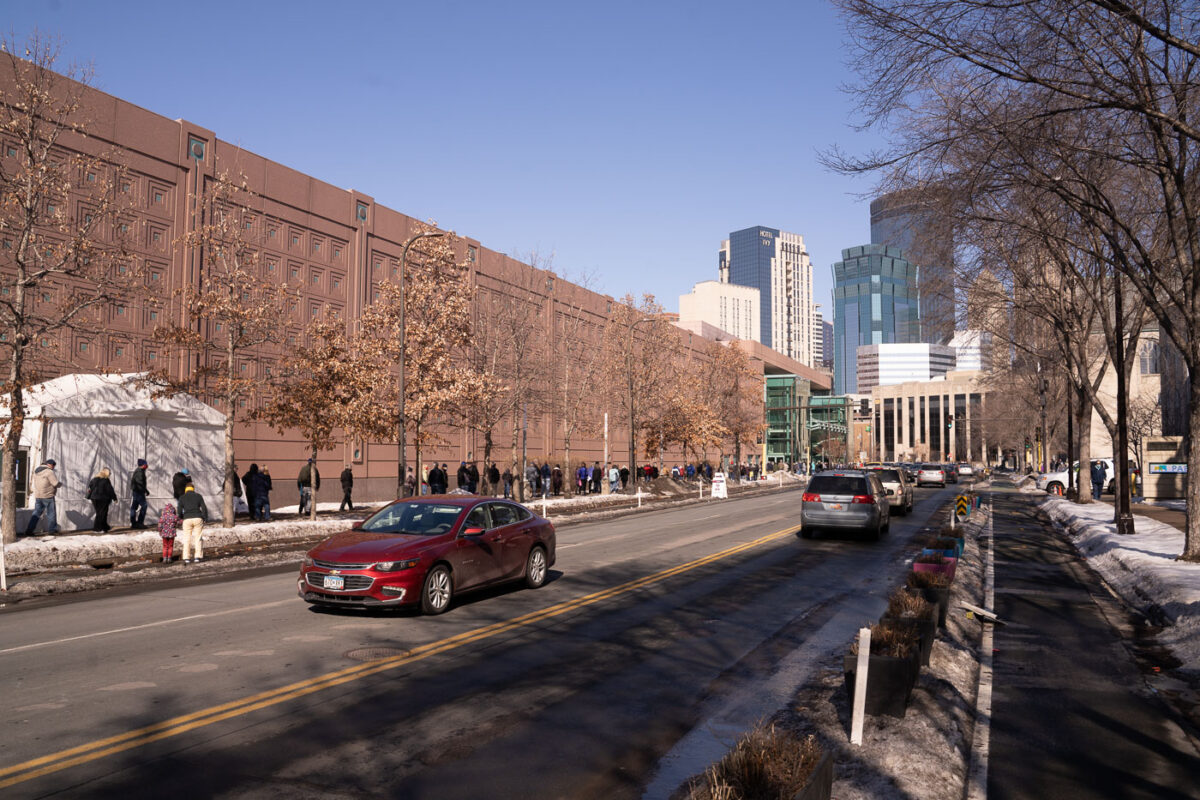
Minneapolis Convention Center in downtown Minneapolis with people waiting outside for COVID-19 vaccines.
Minneapolis Convention Center in downtown Minneapolis, Minnesota, during a COVID-19 vaccination event. People wait outside the building for vaccine appointments along the street beside the convention center.

Minneapolis Convention Center COVID-19 Vaccine Line

Barricades at the Hennepin County Public Safety Facility
Security barricades and fencing surround the Hennepin County Public Safety Facility in Minneapolis on February 24, 2021 in anticipation of the Derek Chauvin murder trial. The extensive security measures, including concrete barriers and razor wire, were implemented to manage potential protests and ensure the safety of the courthouse and surrounding areas. On May 25, 2020, Minneapolis police officer Derek Chauvin murdered 46-year-old George Floyd during an arrest outside Cup Foods at the intersection of 38th Street and Chicago Avenue in south Minneapolis. Video recorded by bystanders showed Chauvin kneeling on Floyd’s neck for more than nine minutes while Floyd repeatedly said he could not breathe. Three other Minneapolis police officers - J. Alexander Kueng, Thomas Lane, and Tou Thao — were also present during the arrest and later faced criminal charges for their roles in Floyd’s death. Floyd’s murder sparked protests and civil unrest across Minneapolis and around the world, leading to widespread demonstrations against police violence, major policy debates on policing, and the conviction of Chauvin on murder and manslaughter charges in 2021.

Hennepin County Jail Barricades for Chauvin Trial

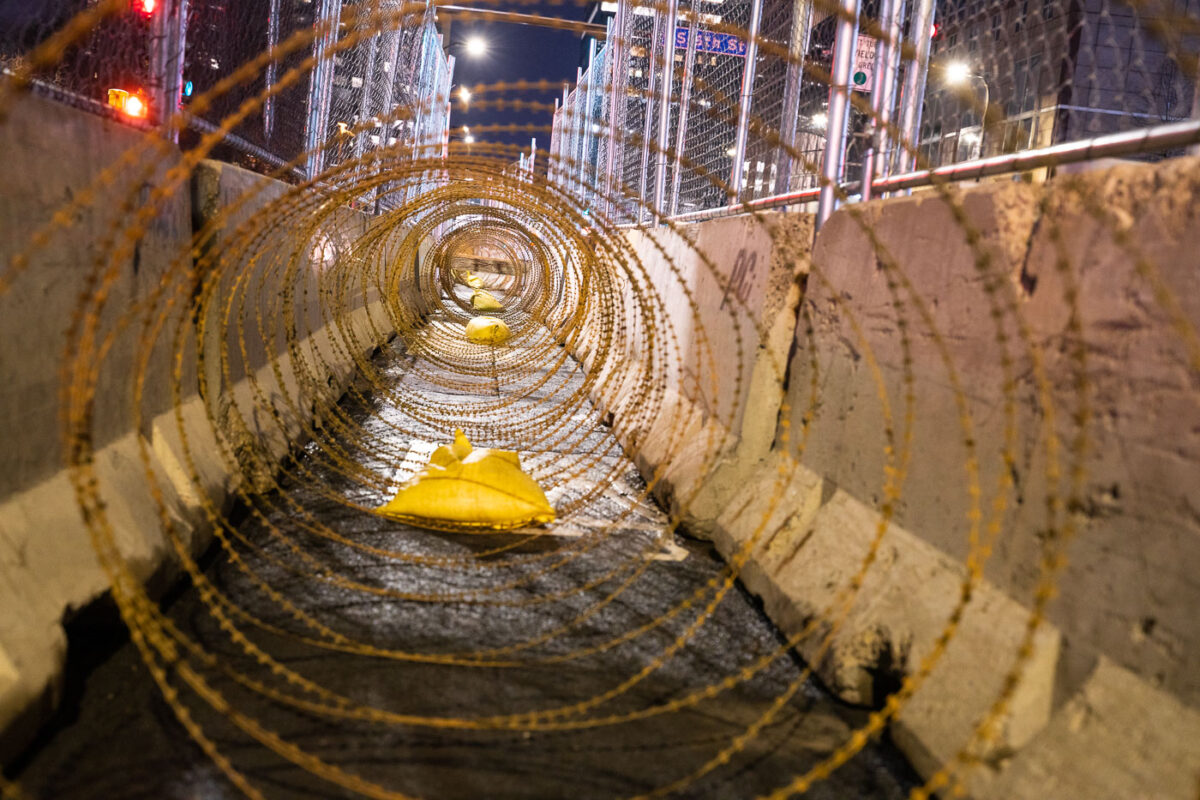
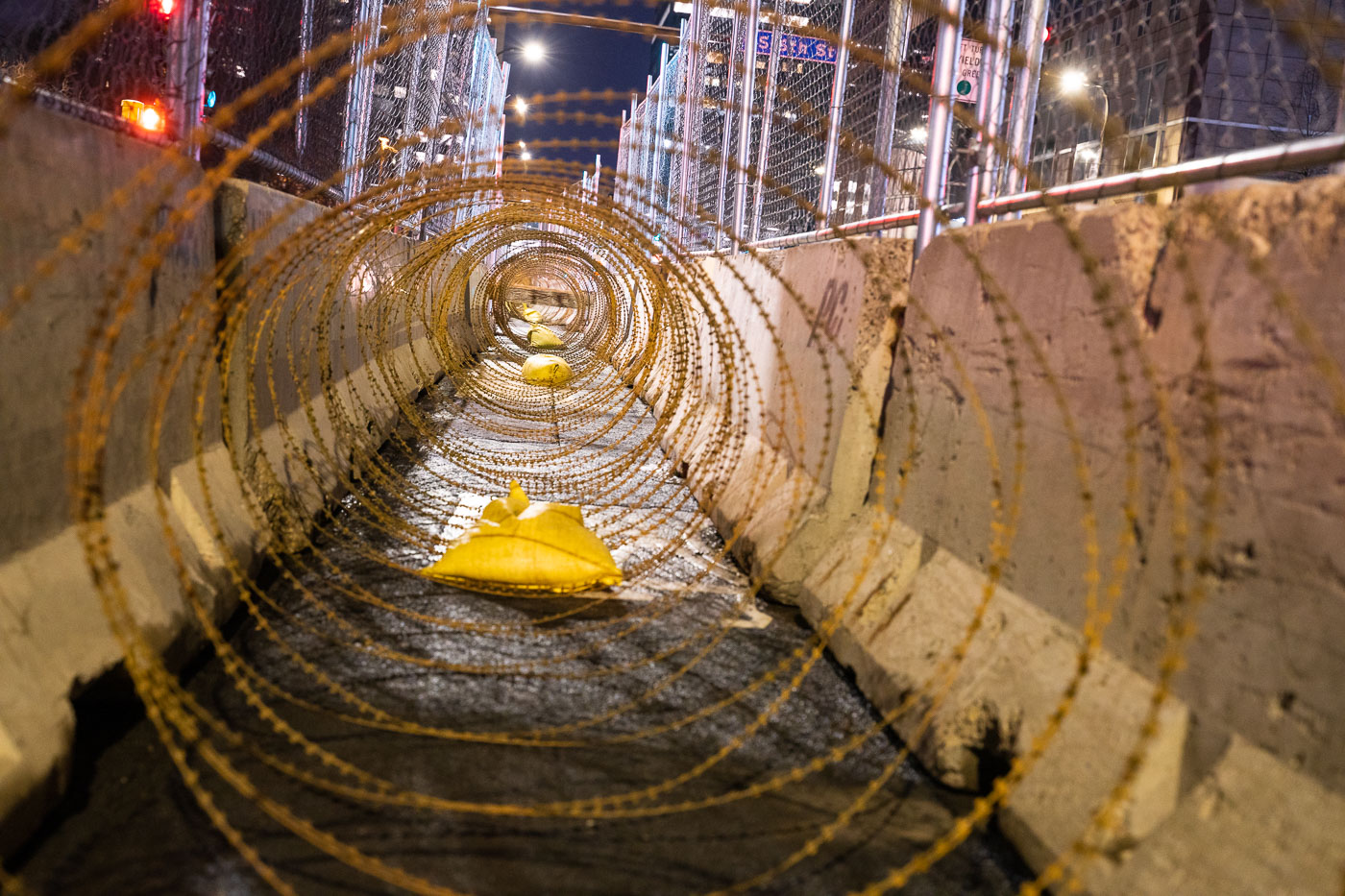
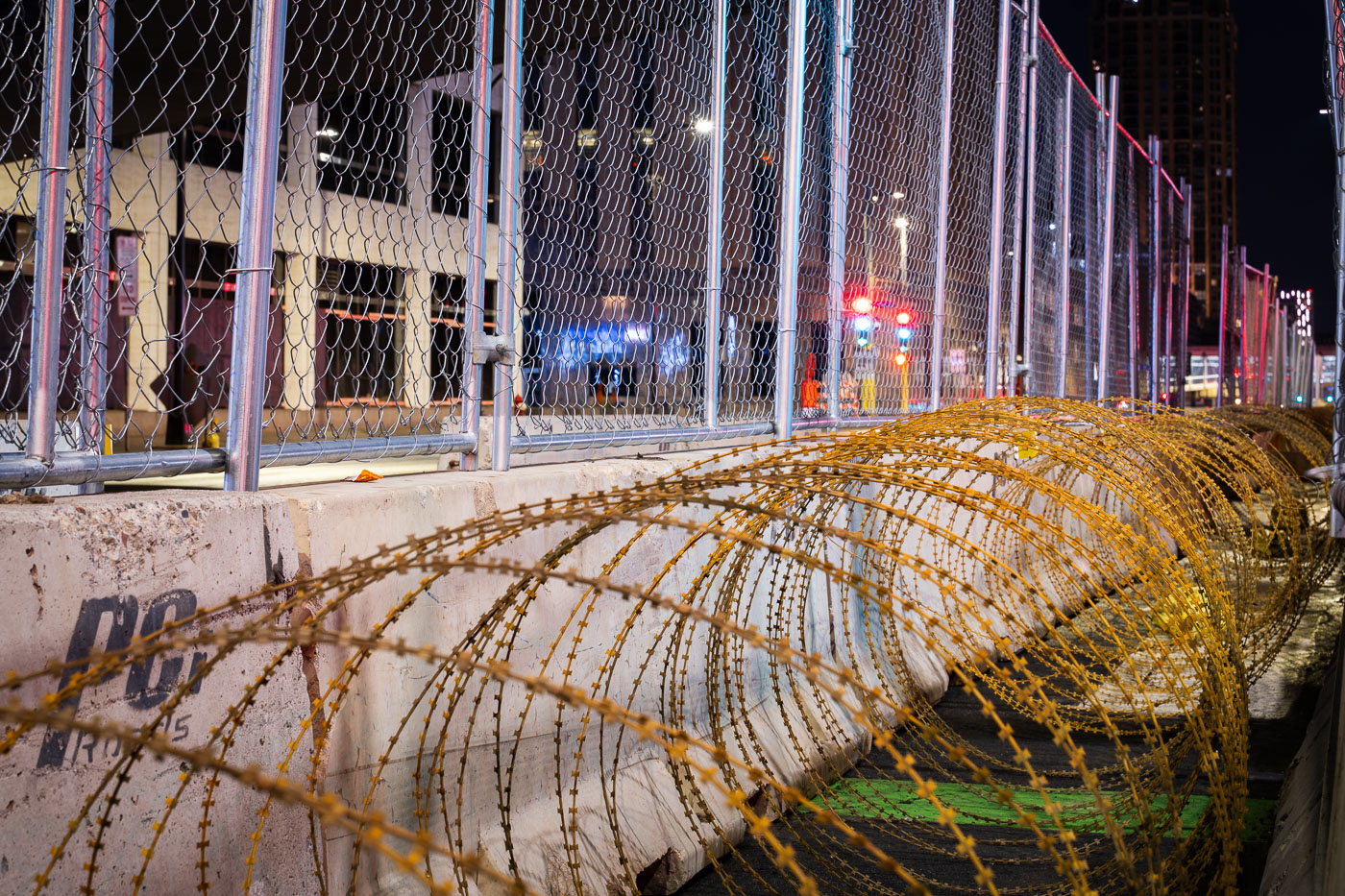
Yellow security tape and chain-link fencing create a tunnel-like corridor outside Hennepin County Government Center in downtown Minneapolis at night.
Razor wire and concrete barriers form a secured corridor outside the Hennepin County Government Center in downtown Minneapolis. The government center houses county courts and administrative offices. Temporary fencing and barricades were installed around the complex during security preparations in early 2021.

Coiled Razor Wire Lines a Barricaded Walkway at Night in Minneapolis

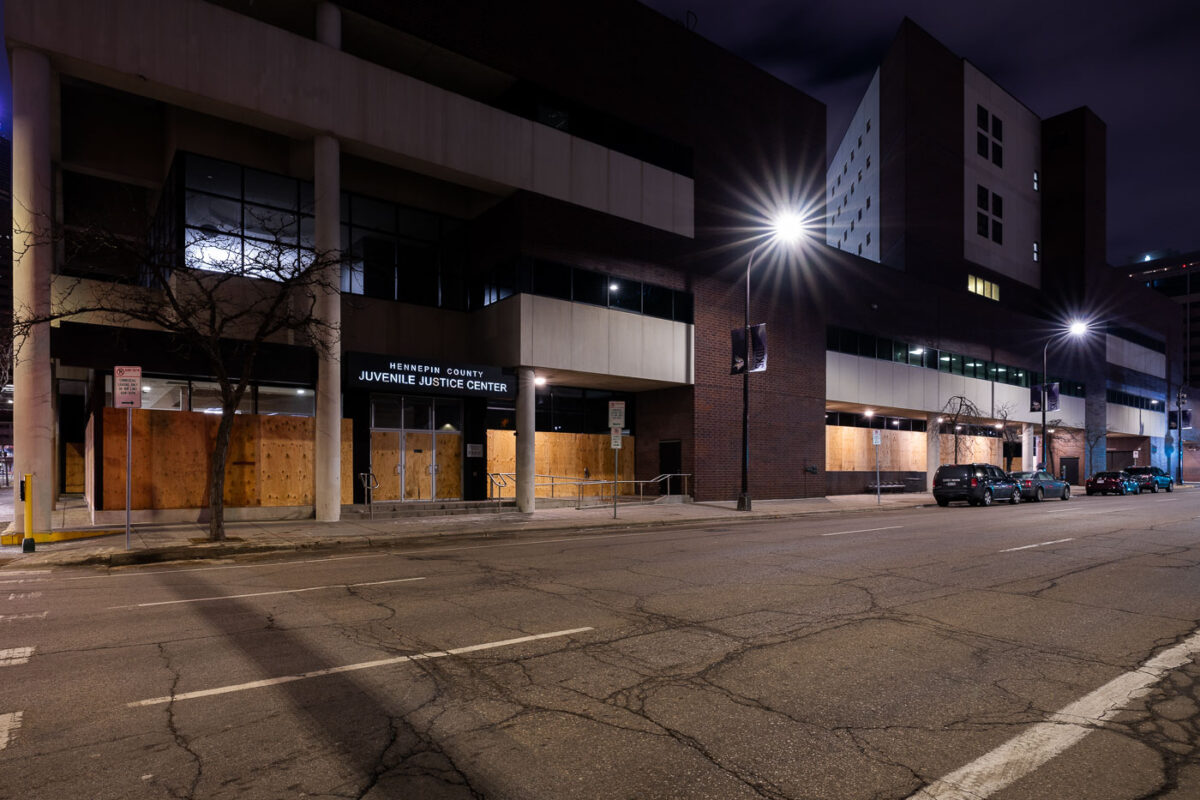
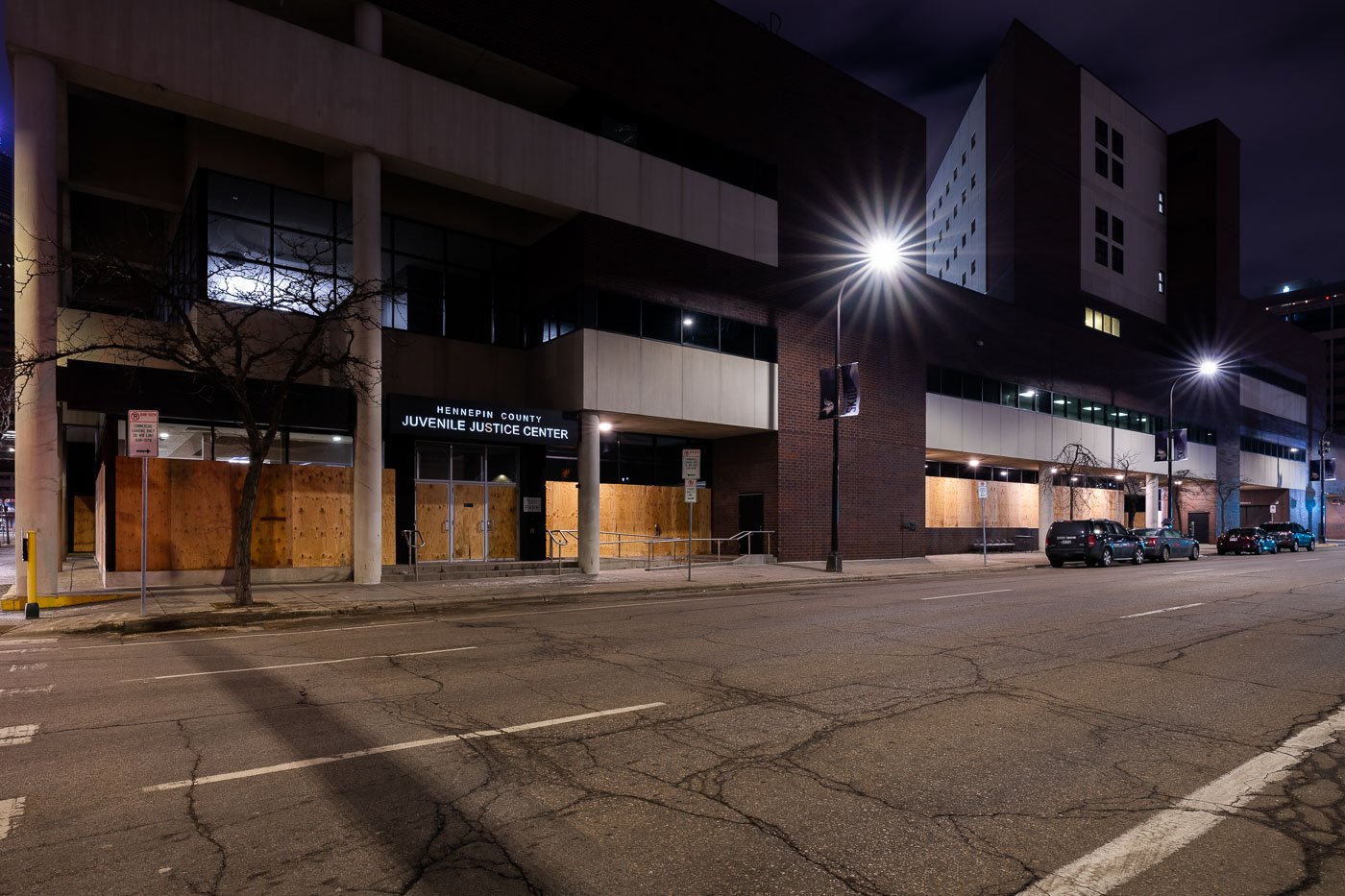
Hennepin County Juvenile Justice Center in downtown Minneapolis boarded with plywood panels during February 2021 trial security preparations.
The Hennepin County Juvenile Justice Center in downtown Minneapolis is shown boarded up in anticipation of the Derek Chauvin trial in April 2021. The building, located at 590 Park Avenue, serves as a courthouse for juvenile legal proceedings. The extensive boarding and security measures were implemented in response to concerns about potential unrest and protests stemming from the trial, which followed the murder of George Floyd in May 2020.

Plywood Covers Entrances at the Hennepin County Juvenile Justice Center

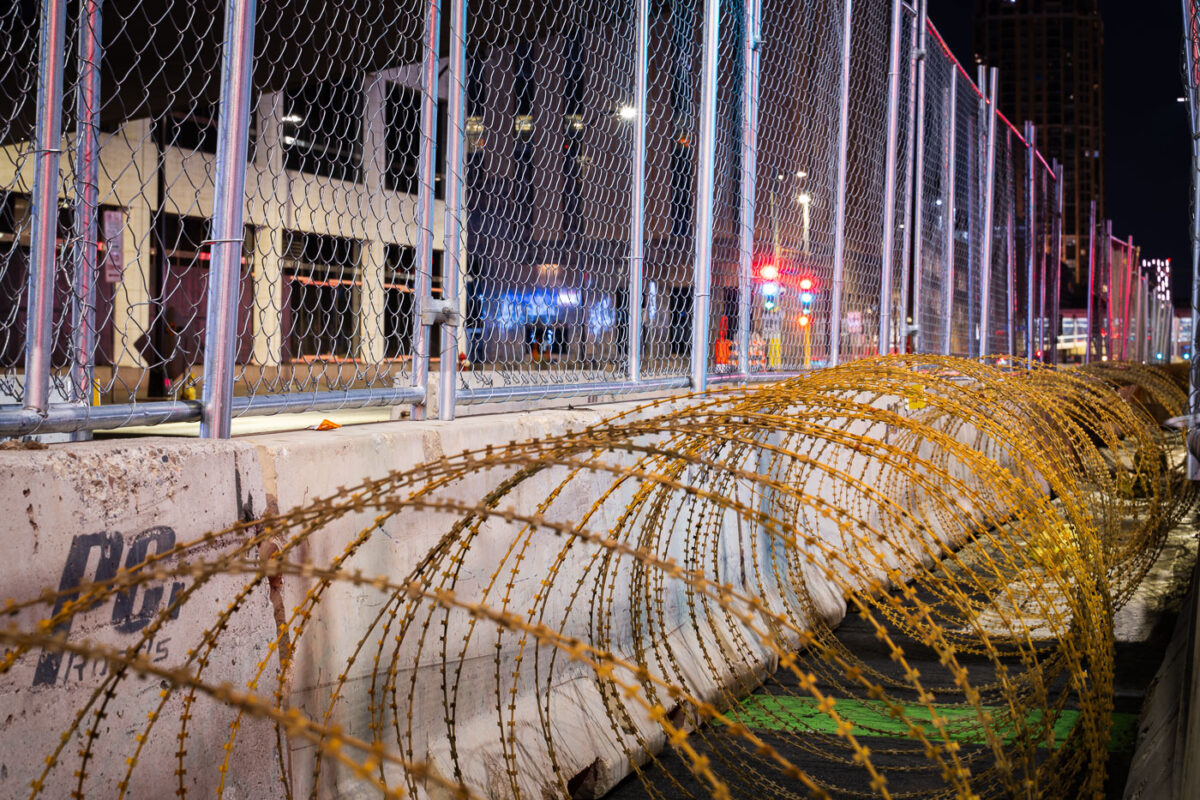
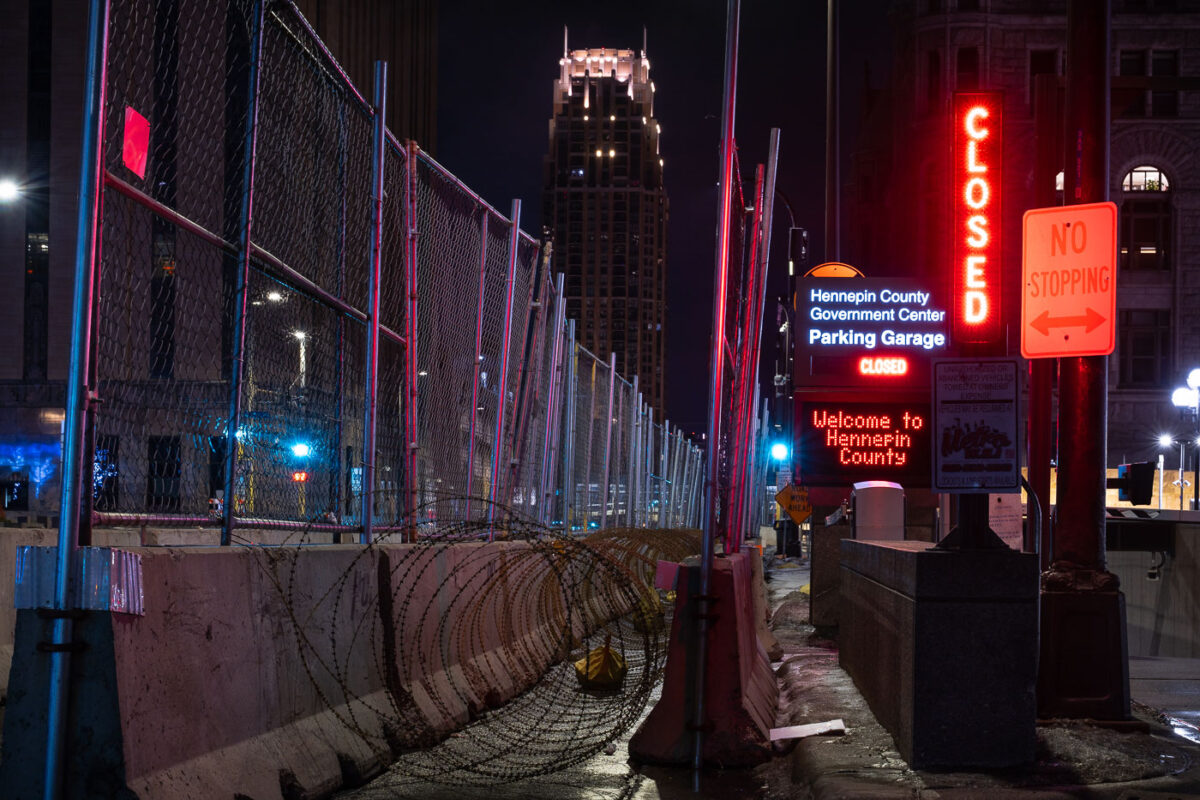
Yellow mesh security fencing and razor wire surround the Hennepin County Government Center during Derek Chauvin trial preparations in downtown Minneapolis.
Security measures, including razor wire and concrete barriers, were erected around the Hennepin County Government Center in Minneapolis in anticipation of the Derek Chauvin trial. On May 25, 2020, Minneapolis police officer Derek Chauvin murdered 46-year-old George Floyd during an arrest outside Cup Foods at the intersection of 38th Street and Chicago Avenue in south Minneapolis. Video recorded by bystanders showed Chauvin kneeling on Floyd’s neck for more than nine minutes while Floyd repeatedly said he could not breathe. Three other Minneapolis police officers - J. Alexander Kueng, Thomas Lane, and Tou Thao — were also present during the arrest and later faced criminal charges for their roles in Floyd’s death. Floyd’s murder sparked protests and civil unrest across Minneapolis and around the world, leading to widespread demonstrations against police violence, major policy debates on policing, and the conviction of Chauvin on murder and manslaughter charges in 2021.

Razor Wire Lines a Concrete Barrier Near Minneapolis City Hall at Night

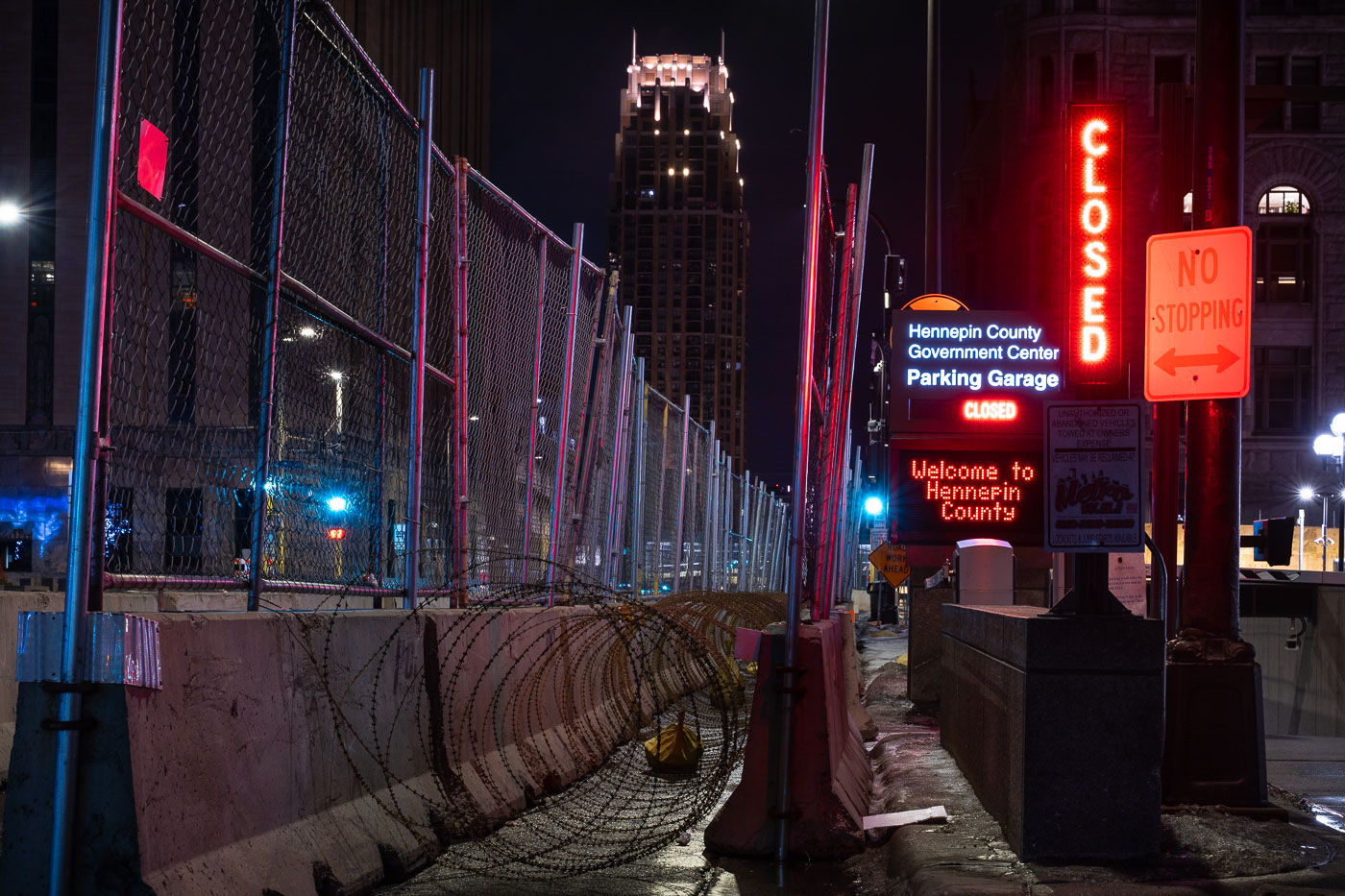
Razor wire fencing secures the Hennepin County Government Center in downtown Minneapolis during trial security preparations in February 2021.
Razor wire fencing is installed around the Hennepin County Government Center in Minneapolis, Minnesota. This security measure was put in place in anticipation of the Derek Chauvin trial, which was scheduled to begin less than two weeks after this photograph was taken. The trial stemmed from the death of George Floyd, whose killing by Chauvin in May 2020 sparked widespread protests and unrest in Minneapolis and across the nation.

“Closed” Parking Garage Sign Near Hennepin County Government Center at Night

Who's running for mayor newspaper
A discarded newspaper, featuring an article about the Minneapolis mayoral race, lies in the snow outside the Hennepin County Government Center. The article, titled "Who's running for Mayor of Minneapolis?", highlights the candidates and the political landscape of the city.

Wet Newspaper on Snow: Minneapolis Mayoral Race

Minneapolis Police Second Precinct Chauvin Security
Security fencing and concrete barriers surround the Minneapolis Police 2nd Precinct in northeast Minneapolis on February 23, 2021. This measure was implemented in anticipation of the Derek Chauvin murder trial in 2021. The precinct building itself, constructed in 1911, has served as a law enforcement facility for over a century. The heightened security reflects the significant public attention and potential for unrest surrounding the trial, which followed the murder of George Floyd. On May 25, 2020, Minneapolis police officer Derek Chauvin murdered 46-year-old George Floyd during an arrest outside Cup Foods at the intersection of 38th Street and Chicago Avenue in south Minneapolis. Video recorded by bystanders showed Chauvin kneeling on Floyd’s neck for more than nine minutes while Floyd repeatedly said he could not breathe. Three other Minneapolis police officers - J. Alexander Kueng, Thomas Lane, and Tou Thao — were also present during the arrest and later faced criminal charges for their roles in Floyd’s death. Floyd’s murder sparked protests and civil unrest across Minneapolis and around the world, leading to widespread demonstrations against police violence, major policy debates on policing, and the conviction of Chauvin on murder and manslaughter charges in 2021.

Minneapolis Police 2nd Precinct Security Ahead of Chauvin Trial

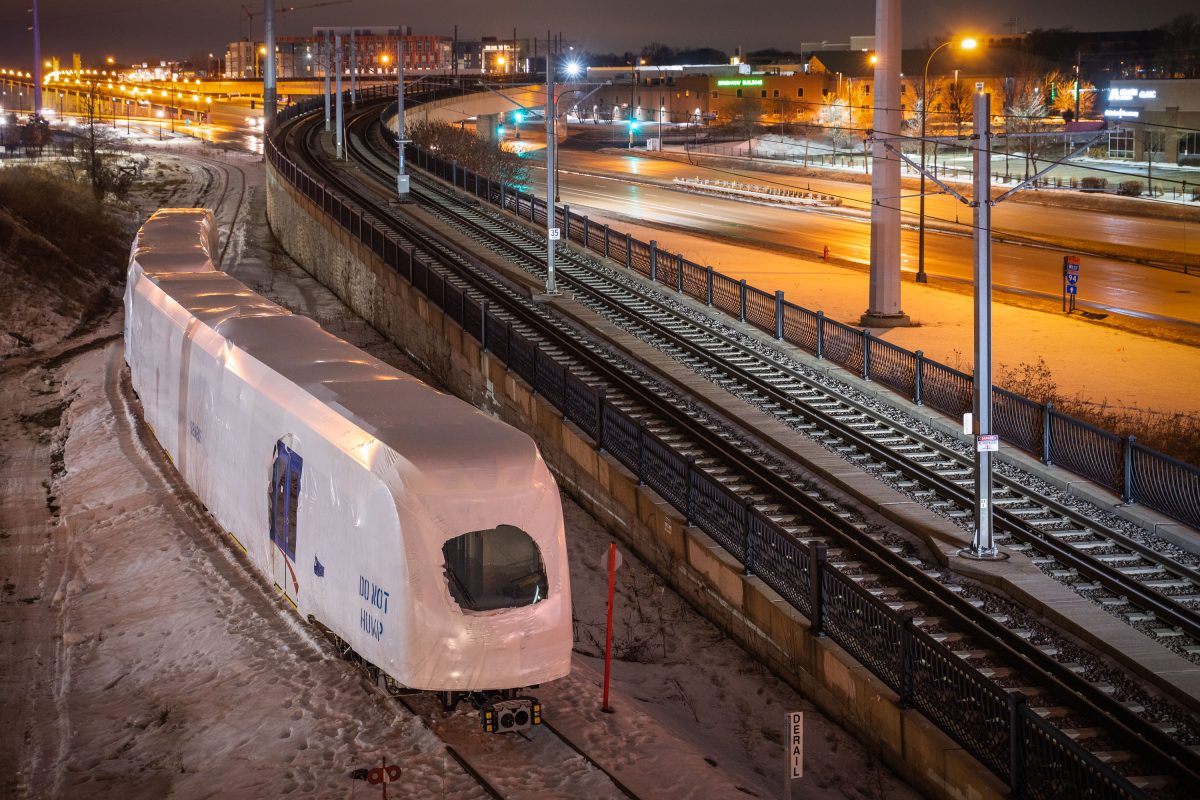
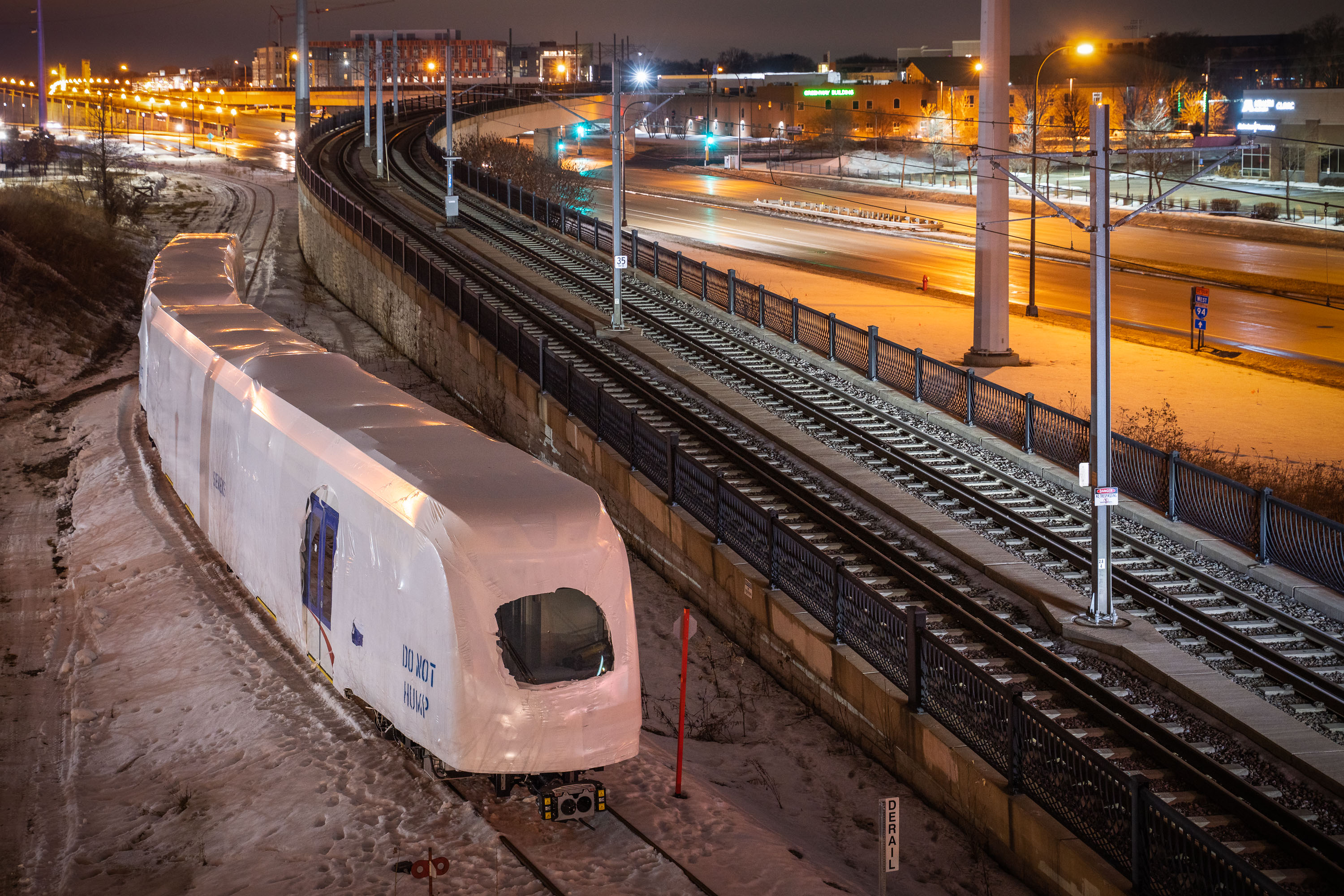
New Siemens light rail vehicle wrapped in protective covering on Metro Transit Blue Line tracks in Minneapolis.
A newly delivered Siemens light rail vehicle sits wrapped in protective covering on the Metro Transit Blue Line tracks in Minneapolis. The car is part of an order of new LRVs built to expand and modernize the region's light rail fleet, which serves the Hiawatha corridor and connects to planned Southwest LRT service.

Shrink-Wrapped Siemens LRV Awaits Delivery on Blue Line Tracks

Chris Hawkey Avoid STD's Billboard
Billboard in downtown Minneapolis that reads: Avoid STD's Get Checked Regularly Paid for by Chris Hawkey

Chris Hawkey Avoid STD’s Billboard

Concrete barriers line a snowy downtown Minneapolis street at night near the Hennepin County Medical Examiner's Office during trial security preparations.
Concrete barricaded shown on February 22, 2021 around the Hennepin County Medical Examiner's Office in downtown Minneapolis in anticipation of the Derek Chauvin murder trial. On May 25, 2020, Minneapolis police officer Derek Chauvin murdered 46-year-old George Floyd during an arrest outside Cup Foods at the intersection of 38th Street and Chicago Avenue in south Minneapolis. Video recorded by bystanders showed Chauvin kneeling on Floyd’s neck for more than nine minutes while Floyd repeatedly said he could not breathe. Three other Minneapolis police officers - J. Alexander Kueng, Thomas Lane, and Tou Thao — were also present during the arrest and later faced criminal charges for their roles in Floyd’s death. Floyd’s murder sparked protests and civil unrest across Minneapolis and around the world, leading to widespread demonstrations against police violence, major policy debates on policing, and the conviction of Chauvin on murder and manslaughter charges in 2021.

Concrete Barriers Outside the Hennepin County Medical Examiner’s Office

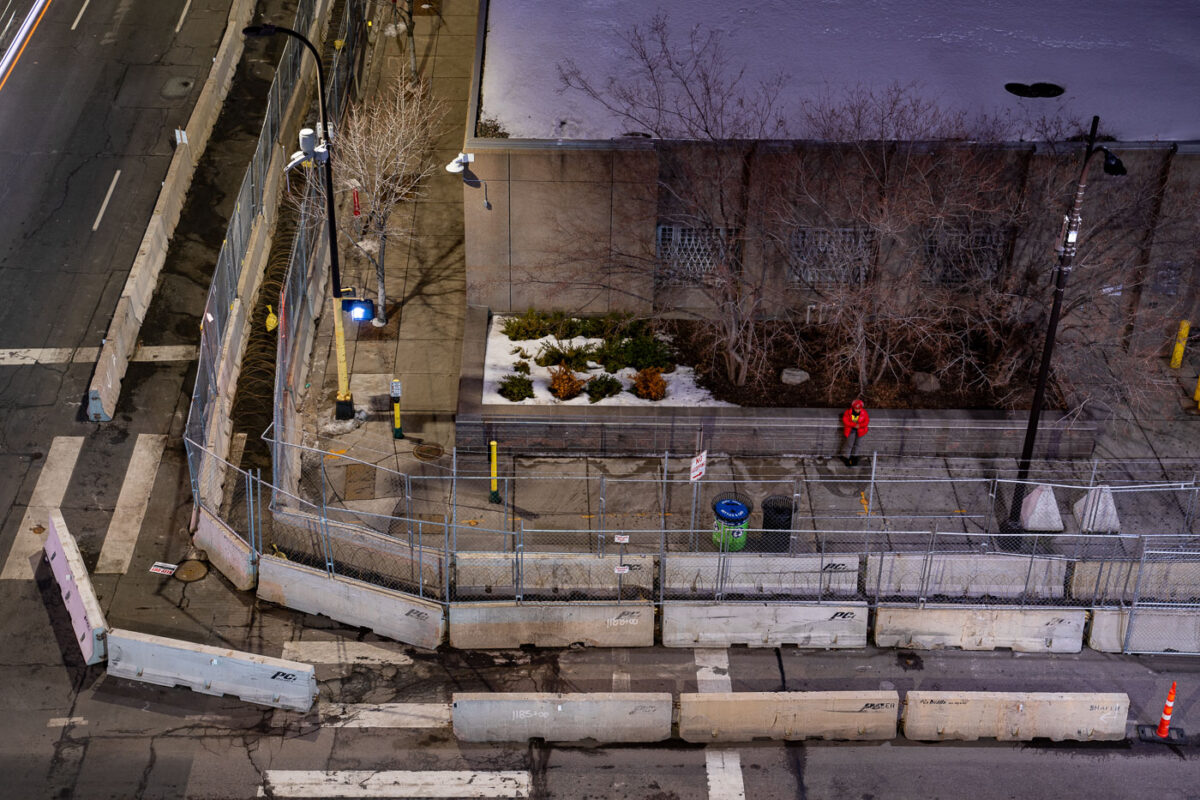
Hennepin County Jail surrounded by chain link security fencing and metal poles at night in downtown Minneapolis.
Hennepin County Jail in downtown Minneapolis was surrounded by temporary security fencing in February 2021. Additional barriers were installed around government buildings in the area before the Derek Chauvin trial. The jail is part of the Hennepin County public safety and court complex.

Razor Wire Fencing Outside Hennepin County Jail at Night

Barricaded streets around George Floyd Square
Barricades remain at George Floyd Square in Minneapolis, a space that became a focal point for protests following the murder of George Floyd in May 2020. The square, located at the intersection of Chicago Avenue and 38th Street, was occupied by protesters for months, transforming it into a community hub and a symbol of the movement for racial justice.

Barricades at George Floyd Square, Minneapolis

George Floyd Square and Malcolm X
A young person places flowers on a memorial at George Floyd Square in Minneapolis on February 21, 2021. The square, established in the wake of George Floyd's murder in May 2020, has become a site of protest and remembrance. The gathering also honored Malcolm X, a prominent figure in the Civil Rights Movement, and explorer Matthew Henson, who was part of the first expedition to reach the North Pole. The event, which included the GFS Liberation Loppet, served as a moment to reflect on Black liberation movements and historical figures. On May 25, 2020, Minneapolis police officer Derek Chauvin murdered 46-year-old George Floyd during an arrest outside Cup Foods at the intersection of 38th Street and Chicago Avenue in south Minneapolis. Video recorded by bystanders showed Chauvin kneeling on Floyd’s neck for more than nine minutes while Floyd repeatedly said he could not breathe. Three other Minneapolis police officers - J. Alexander Kueng, Thomas Lane, and Tou Thao — were also present during the arrest and later faced criminal charges for their roles in Floyd’s death. Floyd’s murder sparked protests and civil unrest across Minneapolis and around the world, leading to widespread demonstrations against police violence, major policy debates on policing, and the conviction of Chauvin on murder and manslaughter charges in 2021.

George Floyd Square: Remembering Malcolm X in Winter

Remembering Malcolm X at George Floyd Square
A gathering took place at George Floyd Square in Minneapolis to commemorate the anniversary of Malcolm X's assassination and discuss Black liberation movements. The event also coincided with the GFS Liberation Loppet, an event honoring explorer Matthew Henson, who is credited by some with being the first to reach the North Pole. The "Peoples Way" mural is visible on the building behind the attendees, a reference to the community's renaming of the intersection after George Floyd's murder. The "George Floyd Trial In 15 Days" sign on the Speedway gas station highlights the ongoing legal proceedings related to his death.

George Floyd Square Gathering for Malcolm X Anniversary

Save the Boards protest on Lake Street in Minneapolis
Protesters marched down Lake Street in Minneapolis on February 21, 2021, organized by Save The Boards to Memorialize the Movement and Visual Black Justice. The group demanded federal action to abolish the death penalty, reopen all police brutality cases, and defund or demilitarize police departments.

Save the Boards protest on Lake Street, Minneapolis

Minneapolis Police 5th Precinct in February 2021
The Minneapolis Police Fifth Precinct is shown on February 19, 2021 surrounded by security barriers. These barriers have been a consistent presence around the precinct since the murder of George Floyd in May 2020, reflecting the heightened security measures in place following widespread protests and civil unrest. On May 25, 2020, Minneapolis police officer Derek Chauvin murdered 46-year-old George Floyd during an arrest outside Cup Foods at the intersection of 38th Street and Chicago Avenue in south Minneapolis. Video recorded by bystanders showed Chauvin kneeling on Floyd’s neck for more than nine minutes while Floyd repeatedly said he could not breathe. Three other Minneapolis police officers - J. Alexander Kueng, Thomas Lane, and Tou Thao — were also present during the arrest and later faced criminal charges for their roles in Floyd’s death. Floyd’s murder sparked protests and civil unrest across Minneapolis and around the world, leading to widespread demonstrations against police violence, major policy debates on policing, and the conviction of Chauvin on murder and manslaughter charges in 2021.

Minneapolis Police 5th Precinct with Security Barriers, February 2021

Historic Minneapolis City Hall stands behind security fencing and plywood boards during Derek Chauvin trial preparations in February 2021.
Minneapolis City Hall and the Hennepin County Government Center are shown fortified with security fencing and boarded-up windows. This measure was implemented in anticipation of the Derek Chauvin murder trial in 2021, reflecting heightened security concerns surrounding the proceedings.

South 6th Street Barricades Before the Chauvin Trial

Shops Are Open sign on Lake Street February 2021
Shops on Lake Street in Minneapolis are shown with a OPEN sign on February 18, 2021 after significant damage sustained during civil unrest in the summer of 2020. The unrest followed the murder of George Floyd on May 25, 2020, and led to widespread protests and property destruction across the city. On May 25, 2020, Minneapolis police officer Derek Chauvin murdered 46-year-old George Floyd during an arrest outside Cup Foods at the intersection of 38th Street and Chicago Avenue in south Minneapolis. Video recorded by bystanders showed Chauvin kneeling on Floyd’s neck for more than nine minutes while Floyd repeatedly said he could not breathe. Three other Minneapolis police officers - J. Alexander Kueng, Thomas Lane, and Tou Thao — were also present during the arrest and later faced criminal charges for their roles in Floyd’s death. Floyd’s murder sparked protests and civil unrest across Minneapolis and around the world, leading to widespread demonstrations against police violence, major policy debates on policing, and the conviction of Chauvin on murder and manslaughter charges in 2021.

Lake Street Shops Reopen After Unrest, Minneapolis

Wells Fargo after Minneapolis riots
The Wells Fargo Bank branch on Nicollet Avenue in South Minneapolis shown on February 18, 2021 shows damage from fires that occurred during the unrest following the murder of George Floyd in May 2020. The building, located across from the Minneapolis Police Fifth Precinct, sustained significant damage, with boarded-up windows and evidence of burning along its lower facade. On May 25, 2020, Minneapolis police officer Derek Chauvin murdered 46-year-old George Floyd during an arrest outside Cup Foods at the intersection of 38th Street and Chicago Avenue in south Minneapolis. Video recorded by bystanders showed Chauvin kneeling on Floyd’s neck for more than nine minutes while Floyd repeatedly said he could not breathe. Three other Minneapolis police officers - J. Alexander Kueng, Thomas Lane, and Tou Thao — were also present during the arrest and later faced criminal charges for their roles in Floyd’s death. Floyd’s murder sparked protests and civil unrest across Minneapolis and around the world, leading to widespread demonstrations against police violence, major policy debates on policing, and the conviction of Chauvin on murder and manslaughter charges in 2021.

Wells Fargo Nicollet Ave, Minneapolis, after 2020 unrest

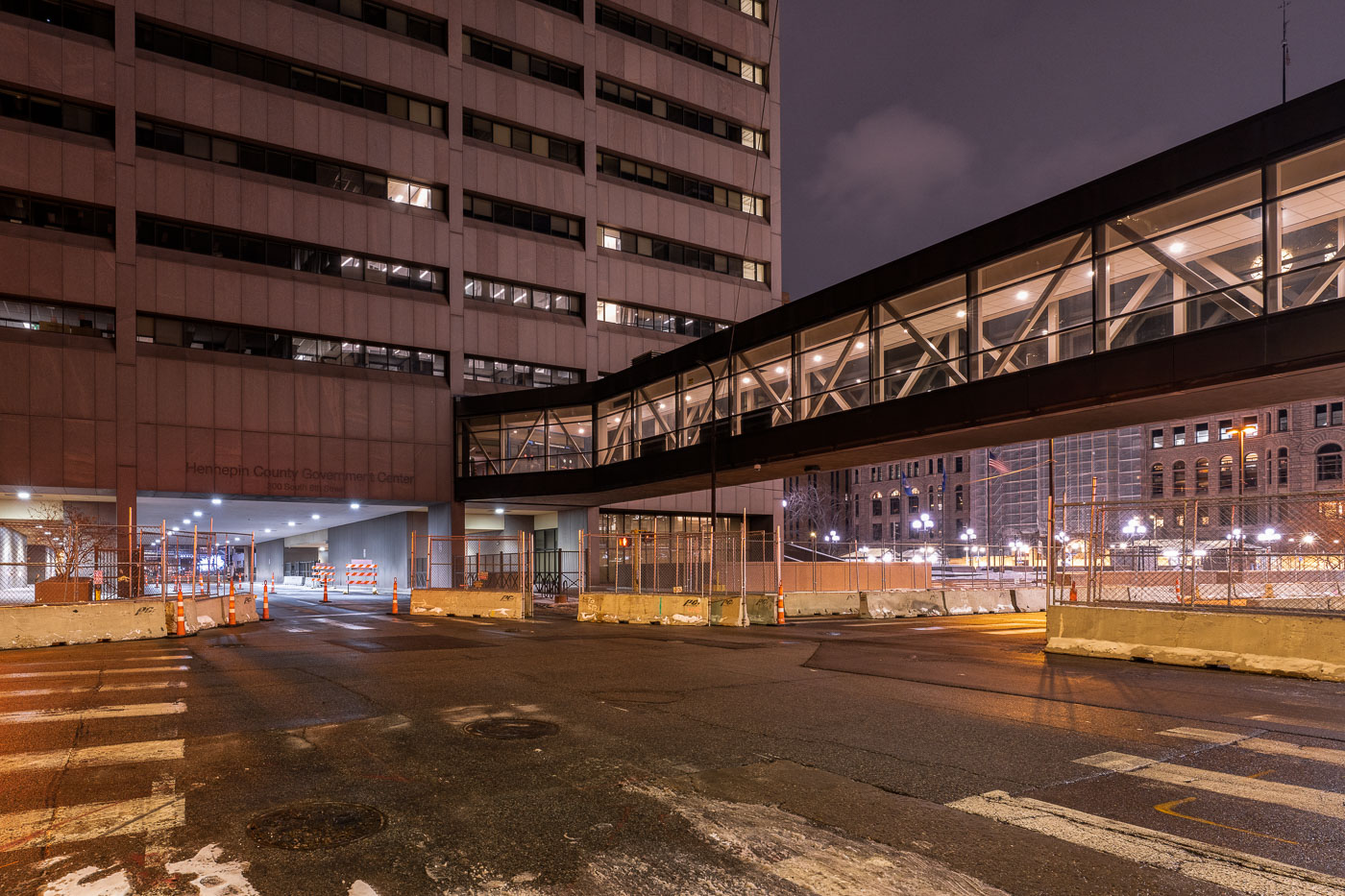
Hennepin County Government Center with overhead skyway and concrete barriers lining the street at night in downtown Minneapolis.
Hennepin County Government Center in downtown Minneapolis is surrounded by temporary fencing and concrete barriers. The county complex houses courts and county offices, and was under expanded security in early 2021 ahead of the Derek Chauvin trial. A skyway connects the Government Center to adjacent buildings above the secured street level.

Skyway Over a Barricaded Street at Hennepin County Government Center

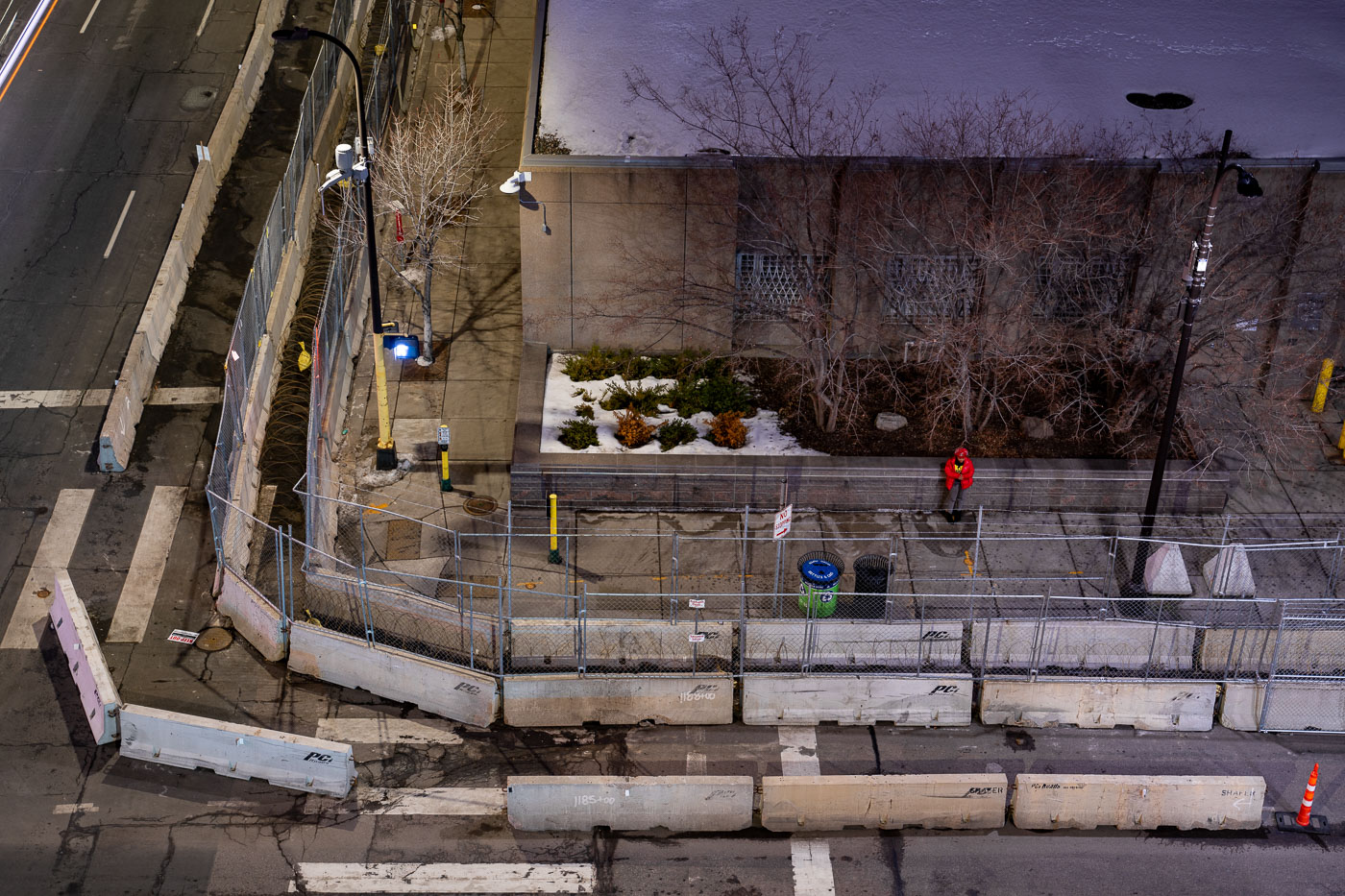
Hennepin County Jail surrounded by temporary metal fencing and concrete barriers during February 2021 security preparations in downtown Minneapolis.
Hennepin County Jail, Minneapolis. Temporary fencing and concrete barriers surround the jail complex in downtown Minneapolis during security preparations tied to the Derek Chauvin trial in February 2021. The jail stands next to the Hennepin County Government Center campus.

Aerial View of Hennepin County Jail Security Barriers Before Chauvin Trial

Hennepin County Government Center entrance secured with orange traffic cones, concrete barriers, and chain-link fencing during trial security preparations in February 2021.
Temporary security barricades are erected on February 18, 2021 around the Hennepin County Government Center at 300 South 6th Street in Minneapolis. These measures were put in place in anticipation of the trial of Derek Chauvin, the former police officer charged in the May 2020 murder of George Floyd. On May 25, 2020, Minneapolis police officer Derek Chauvin murdered 46-year-old George Floyd during an arrest outside Cup Foods at the intersection of 38th Street and Chicago Avenue in south Minneapolis. Video recorded by bystanders showed Chauvin kneeling on Floyd’s neck for more than nine minutes while Floyd repeatedly said he could not breathe. Three other Minneapolis police officers - J. Alexander Kueng, Thomas Lane, and Tou Thao — were also present during the arrest and later faced criminal charges for their roles in Floyd’s death. Floyd’s murder sparked protests and civil unrest across Minneapolis and around the world, leading to widespread demonstrations against police violence, major policy debates on policing, and the conviction of Chauvin on murder and manslaughter charges in 2021.

Concrete Barriers Line South 6th Street Before the Chauvin Trial

Cub Foods grand opening after riots
The Cub Foods store in South Minneapolis is shown here during its grand reopening after being damaged during the civil unrest following the death of George Floyd in May 2020. This grocery store, a vital community resource, is located a block from the Minneapolis Police Department's 3rd precinct station, which was a focal point of protests. The reopening signifies a step towards recovery and rebuilding for the neighborhood.

Cub Foods Grand Opening in South Minneapolis After Riots

Midtown Corner rebuild after Minneapolis riots
Construction continues on the Midtown Corner apartment building in Minneapolis during the winter of 2020. The six-story structure, located a block from the Minneapolis Police Department's Third Precinct, was still under construction when it sustained damage during civil unrest in the summer of 2020.

Midtown Corner Rebuild, Minneapolis, Winter 2020

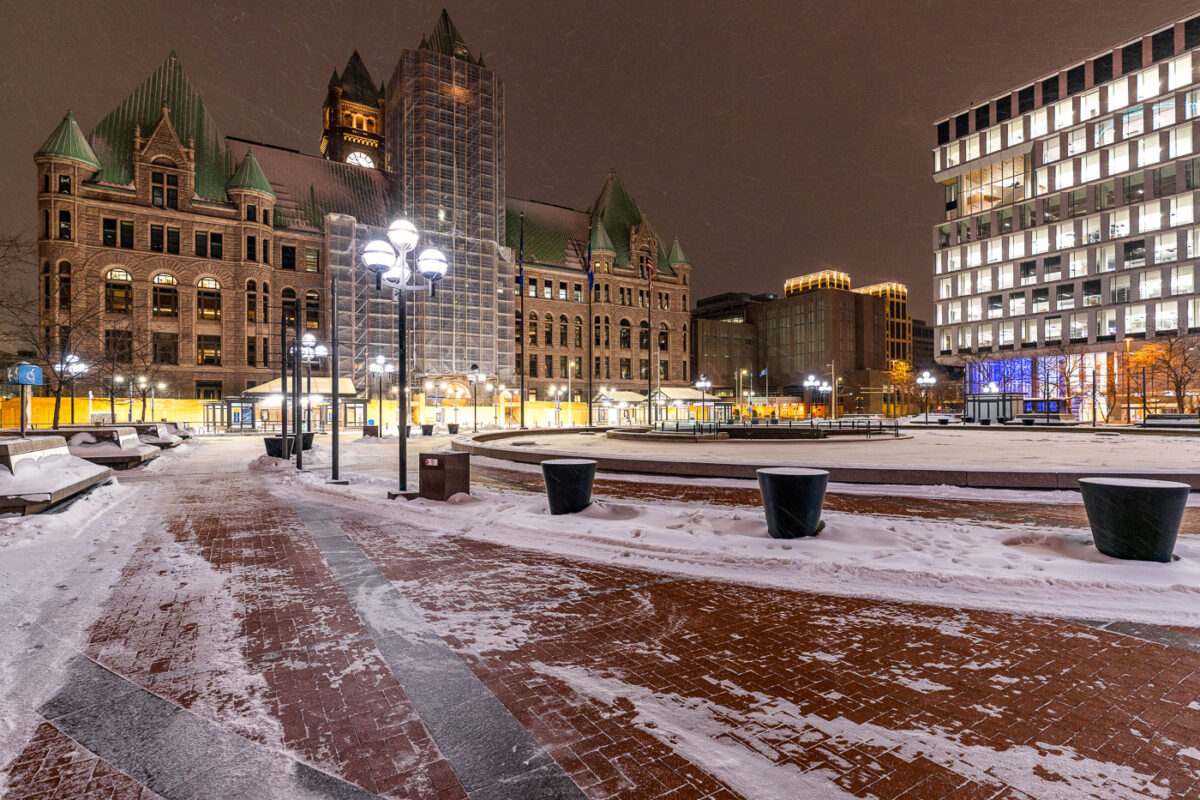
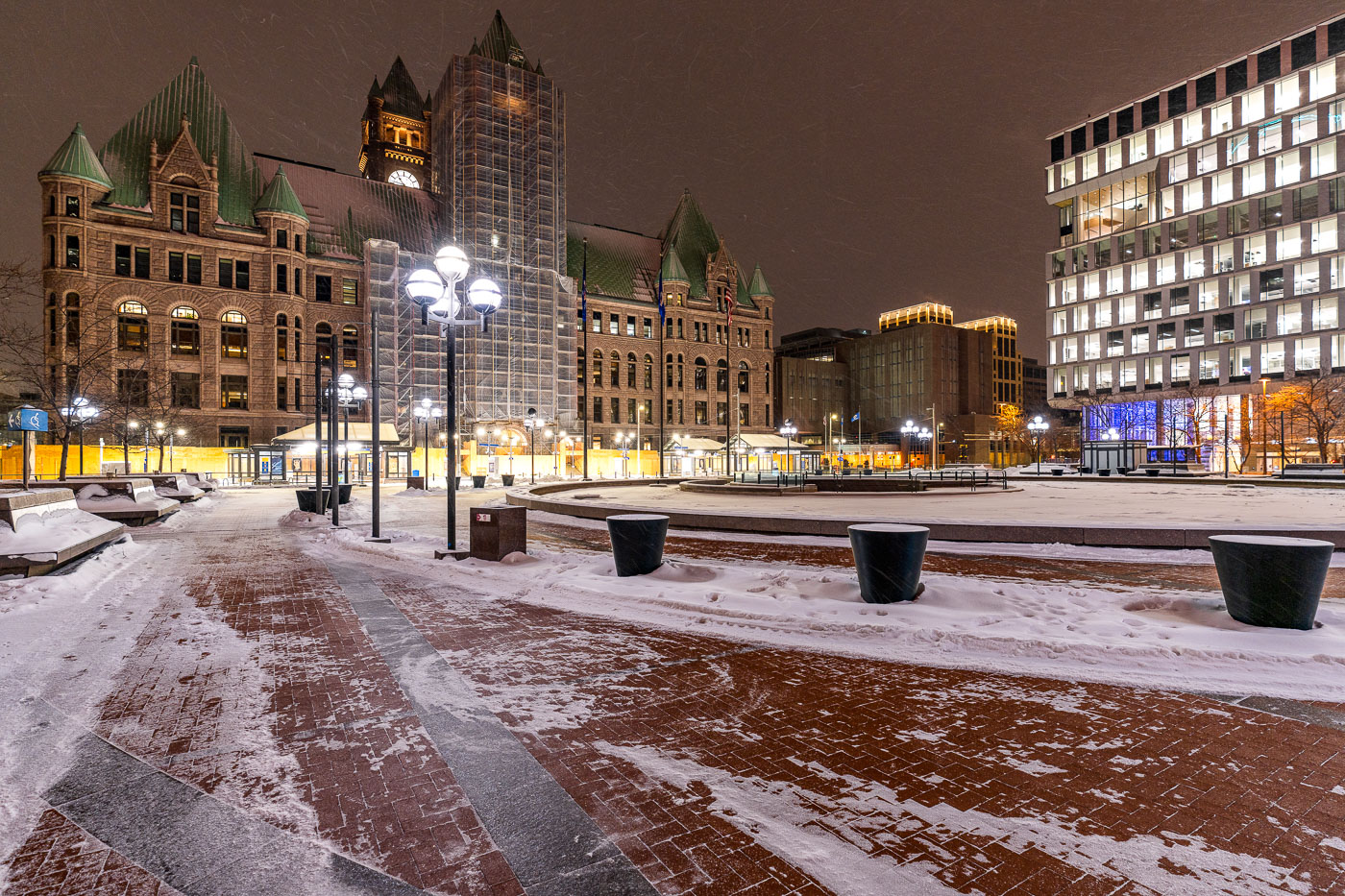
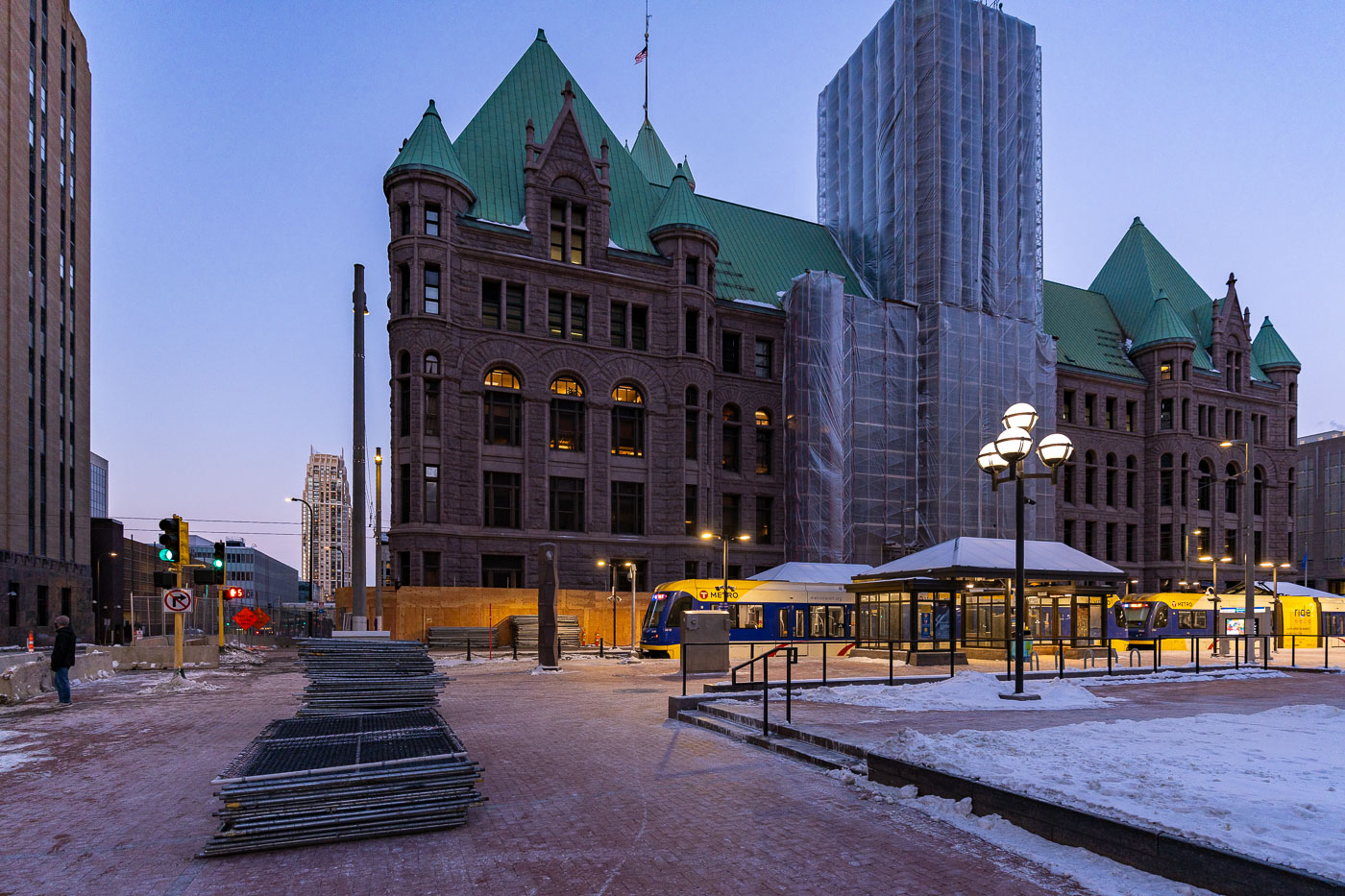
Snowstorm and Minneapolis City Hall prior to Chauvin trial
Minneapolis City Hall and Hennepin County Government Center are seen under snowfall as security preparations are underway for the Derek Chauvin trial. This measure reflects the heightened security concerns surrounding the trial of the former police officer accused in the death of George Floyd, which occurred in Minneapolis.

Minneapolis City Hall in Snow Before Chauvin Trial Security

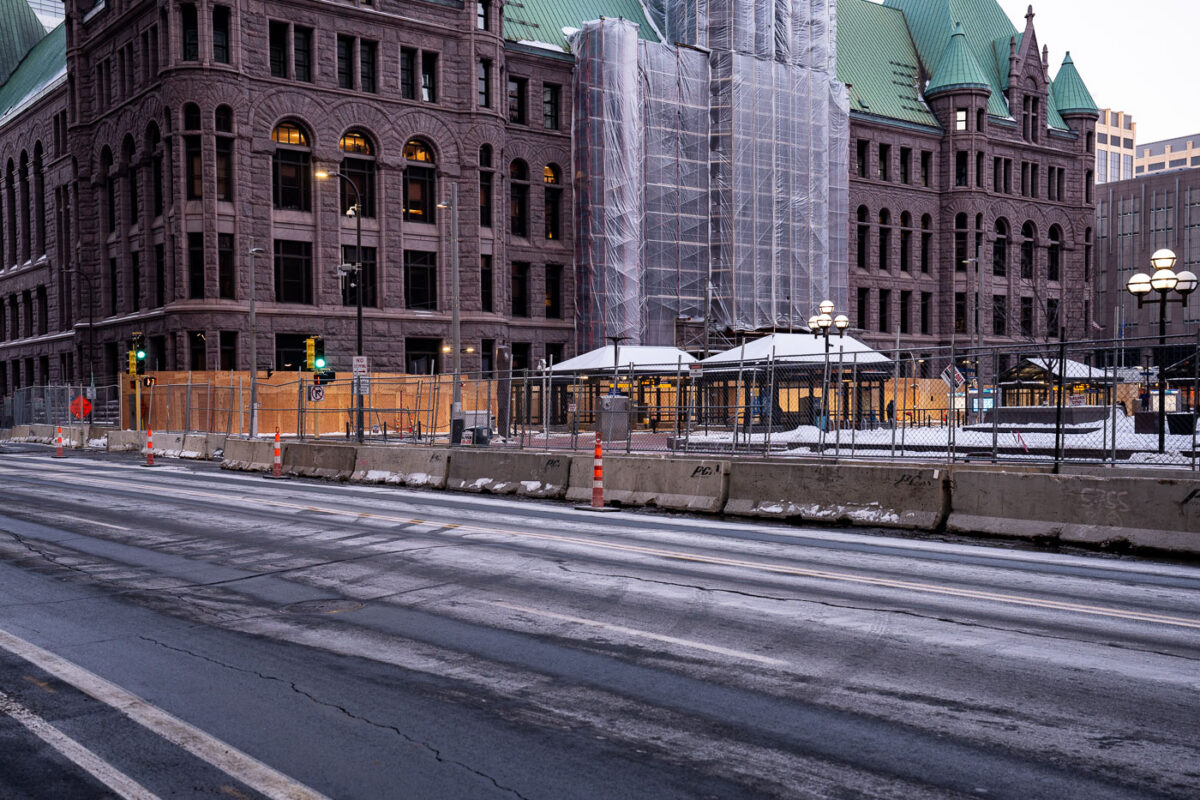
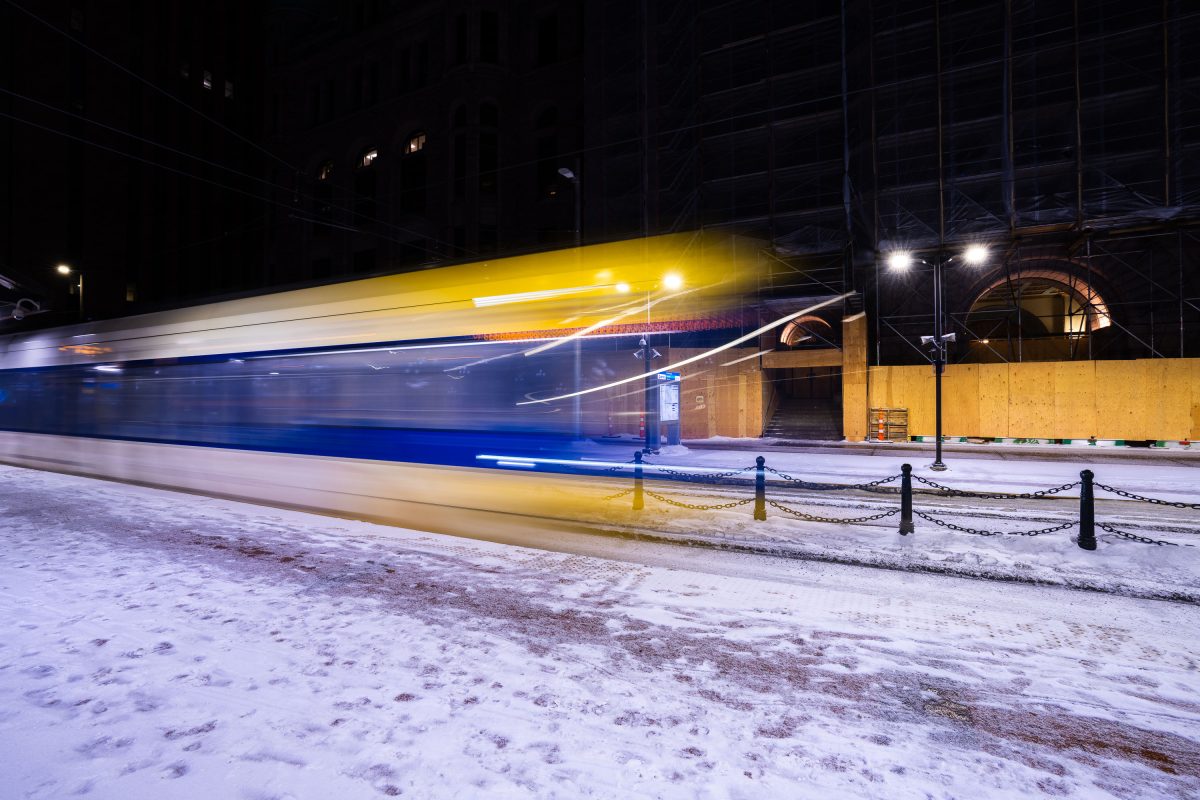
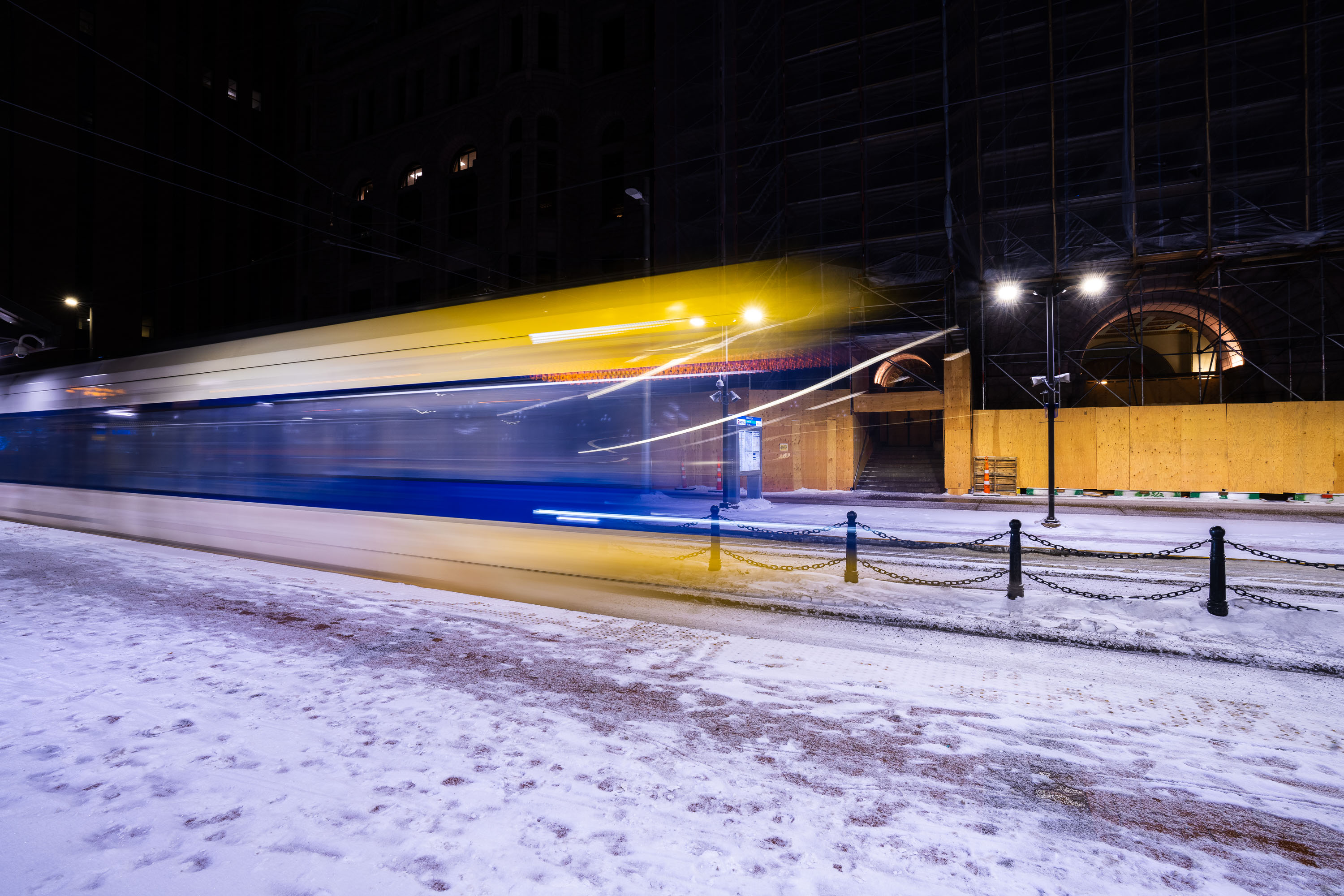
Metro Transit light rail train in motion passes Minneapolis City Hall during exterior renovation work.
A METRO light rail train passes Minneapolis City Hall in downtown Minneapolis, which was undergoing exterior renovation and scaffolding work at the time.

Light Rail Streaks Past City Hall Scaffolding in Snow

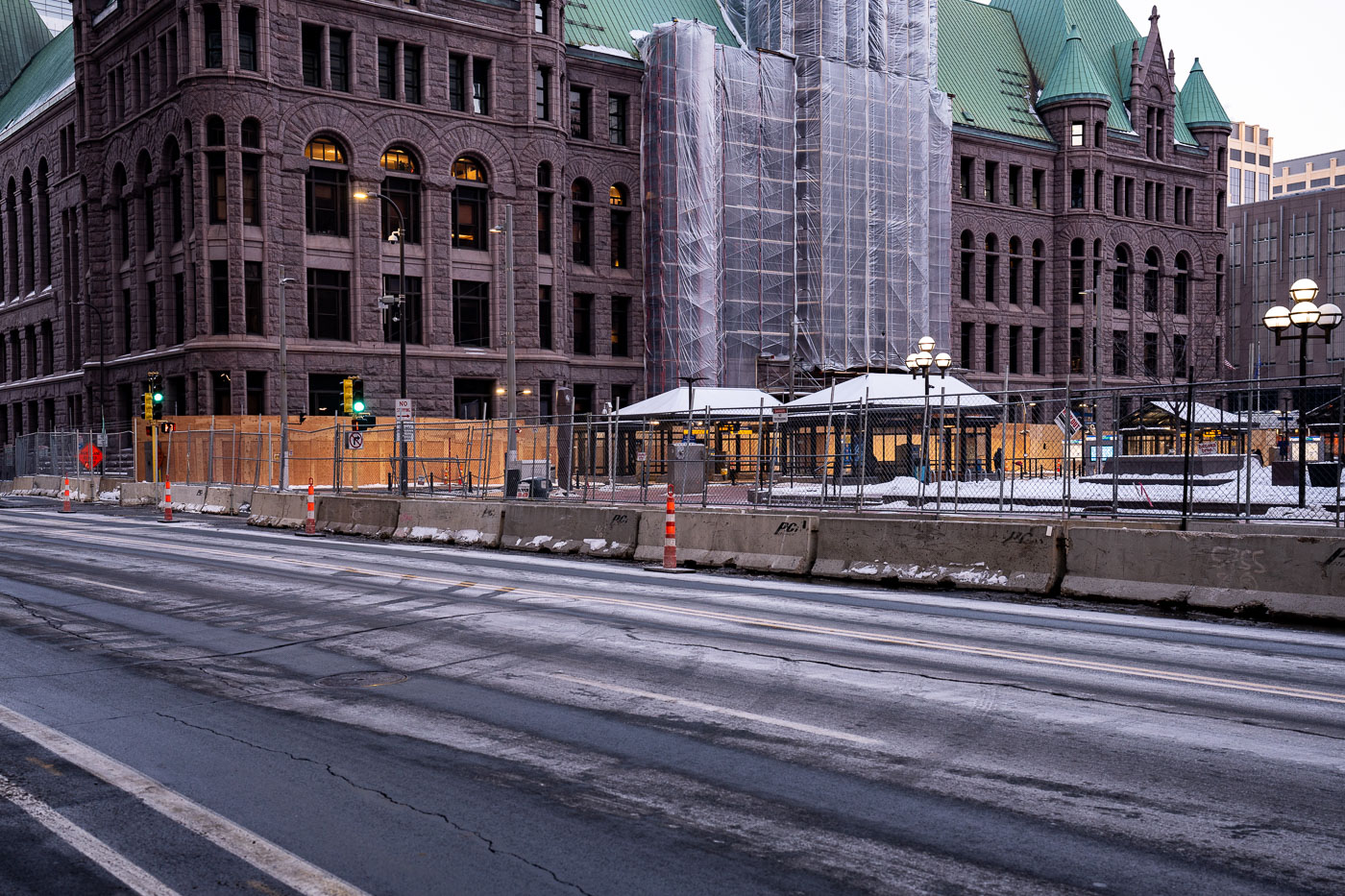
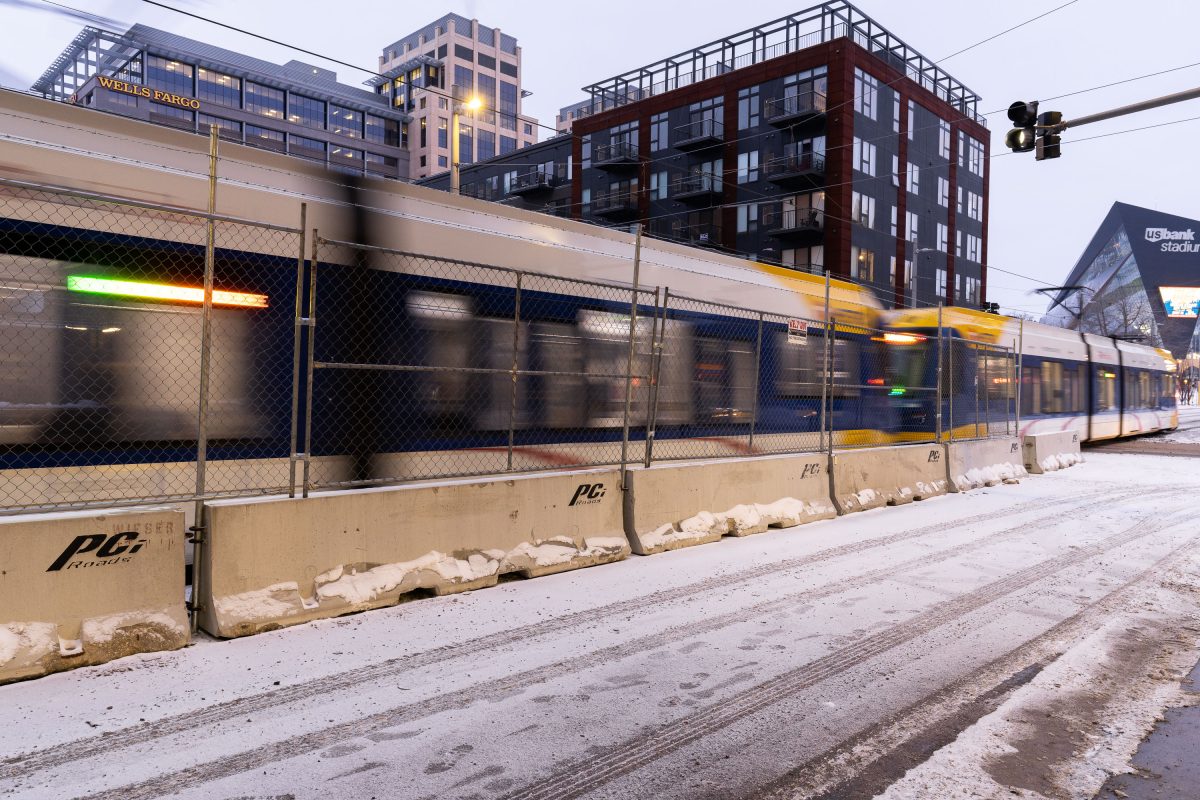
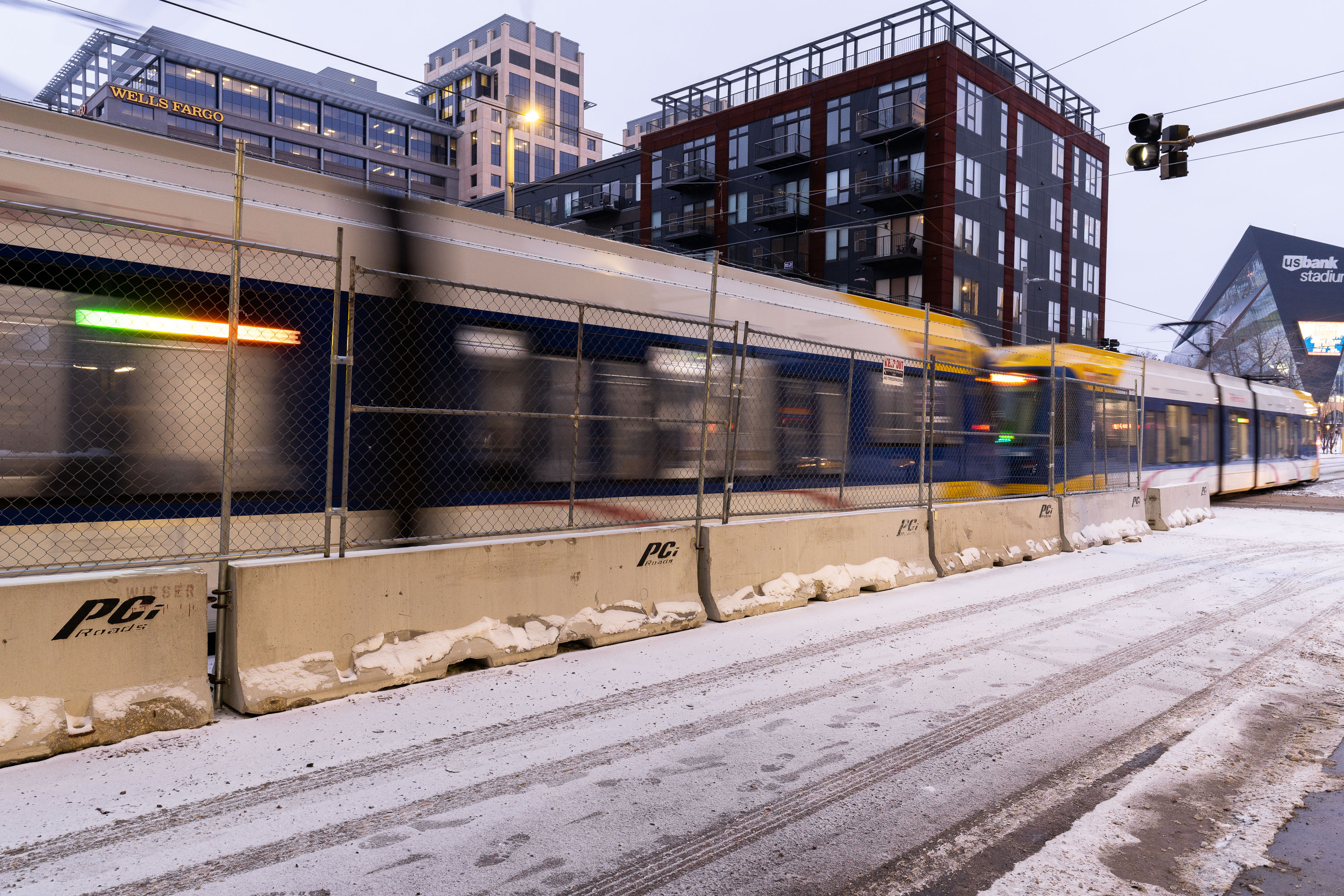
Metro Transit light rail train passes security fencing along South 5th Street near US Bank Stadium in downtown Minneapolis during winter.
A Metro Transit light rail train passes along South 5th Street near US Bank Stadium in downtown Minneapolis. This stretch of track serves the METRO Blue and Green Lines, connecting downtown to the stadium, Nicollet Mall, and surrounding neighborhoods.

Light Rail Passing Security Fencing Near US Bank Stadium in Snow

Hennepin County Government Center in downtown Minneapolis, a brick and glass civic building at 300 South 6th Street.
Hennepin County Government Center in downtown Minneapolis houses county courts and administrative offices.

Looking Up at the Hennepin County Government Center Towers

Hennepin County Government Center's ground-floor windows and entrances boarded with plywood during February 2021 security preparations.
The Hennepin County Government Center in downtown Minneapolis has plywood covering several ground-floor windows and entrances. The county courthouse complex was being secured in February 2021 ahead of the Derek Chauvin trial in the death of George Floyd. The building stands at 300 South 6th Street.

Plywood Covers Windows at Hennepin County Government Center Ahead of Chauvin Trial

Minneapolis City Hall with its distinctive clock tower stands behind security barriers and snow-covered streets during winter.
Minneapolis City Hall in downtown Minneapolis shown in February 2021. Security fencing going up around buildings in the area in preperation for the Derek Chauvin trial.

Snowy Morning Near Minneapolis City Hall
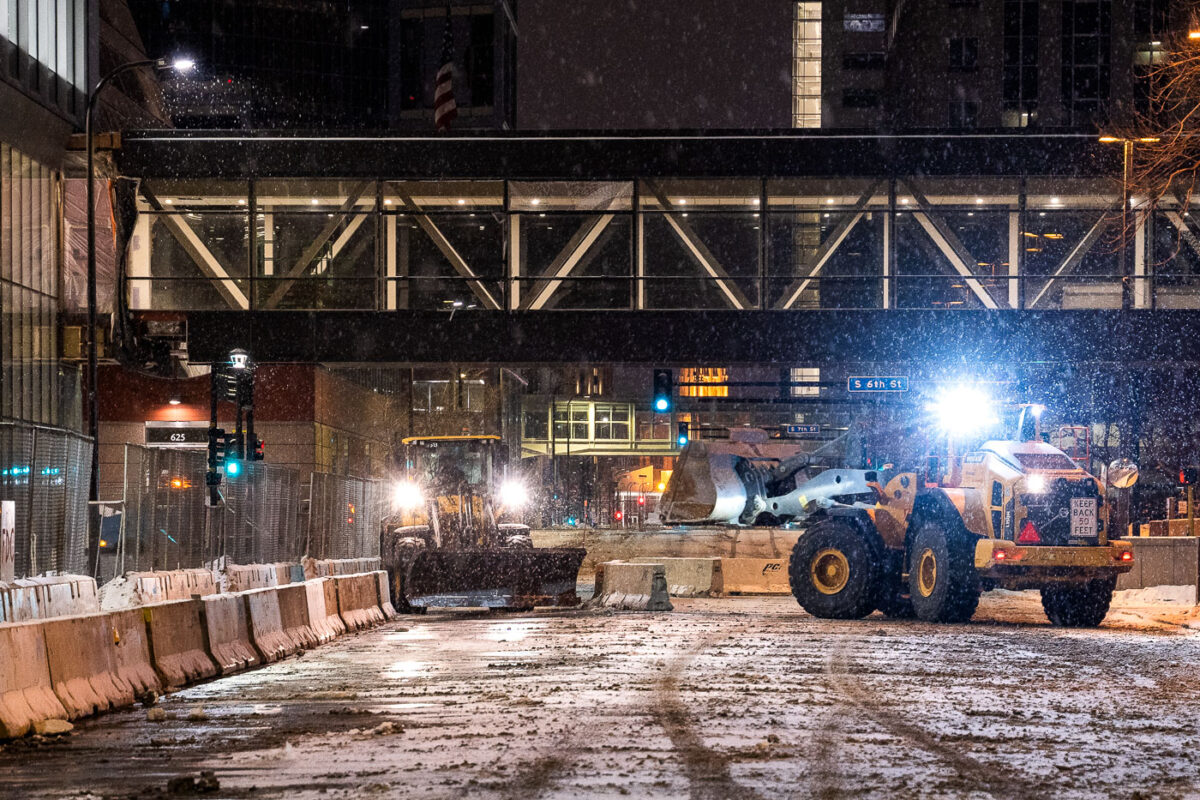
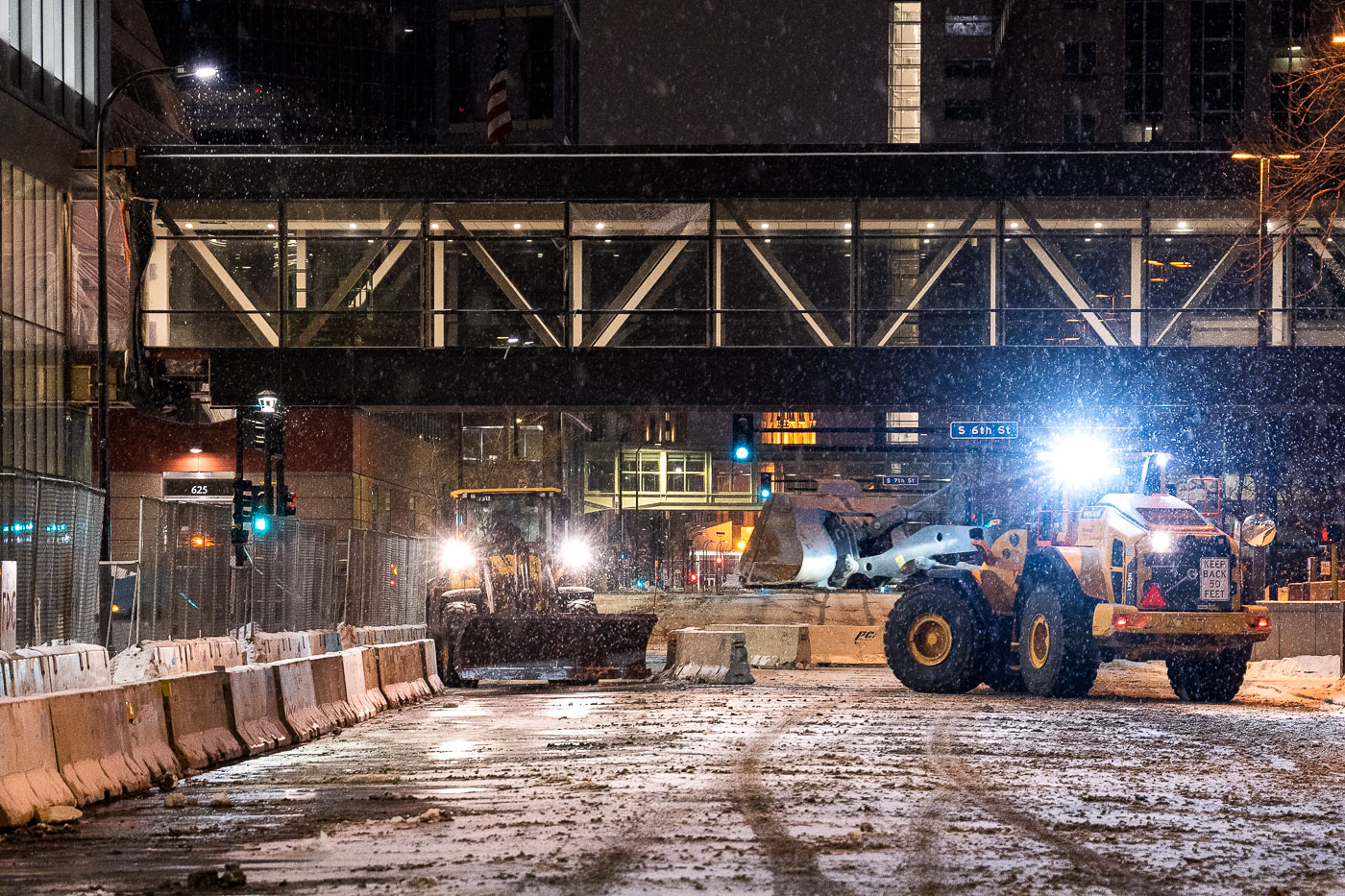
A front-end loader removes concrete barriers from a snowy downtown Minneapolis street at night near City Hall during trial security preparations.
Public Works vehicles install jersey barriers around government buildings in Minneapolis in anticipation of the Derek Chauvin trial. On May 25, 2020, Minneapolis police officer Derek Chauvin murdered 46-year-old George Floyd during an arrest outside Cup Foods at the intersection of 38th Street and Chicago Avenue in south Minneapolis. Video recorded by bystanders showed Chauvin kneeling on Floyd’s neck for more than nine minutes while Floyd repeatedly said he could not breathe. Three other Minneapolis police officers - J. Alexander Kueng, Thomas Lane, and Tou Thao — were also present during the arrest and later faced criminal charges for their roles in Floyd’s death. Floyd’s murder sparked protests and civil unrest across Minneapolis and around the world, leading to widespread demonstrations against police violence, major policy debates on policing, and the conviction of Chauvin on murder and manslaughter charges in 2021.

Front-End Loaders Install Jersey Barriers on South 6th Street at Night
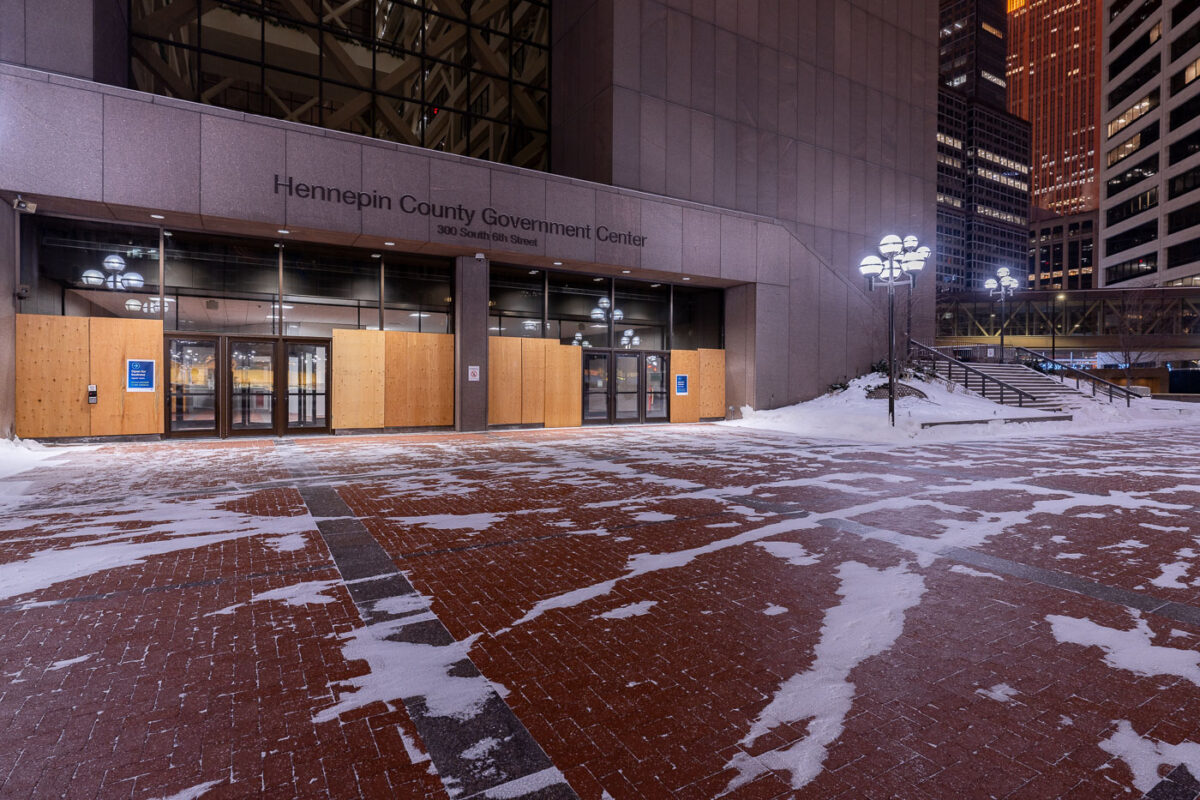
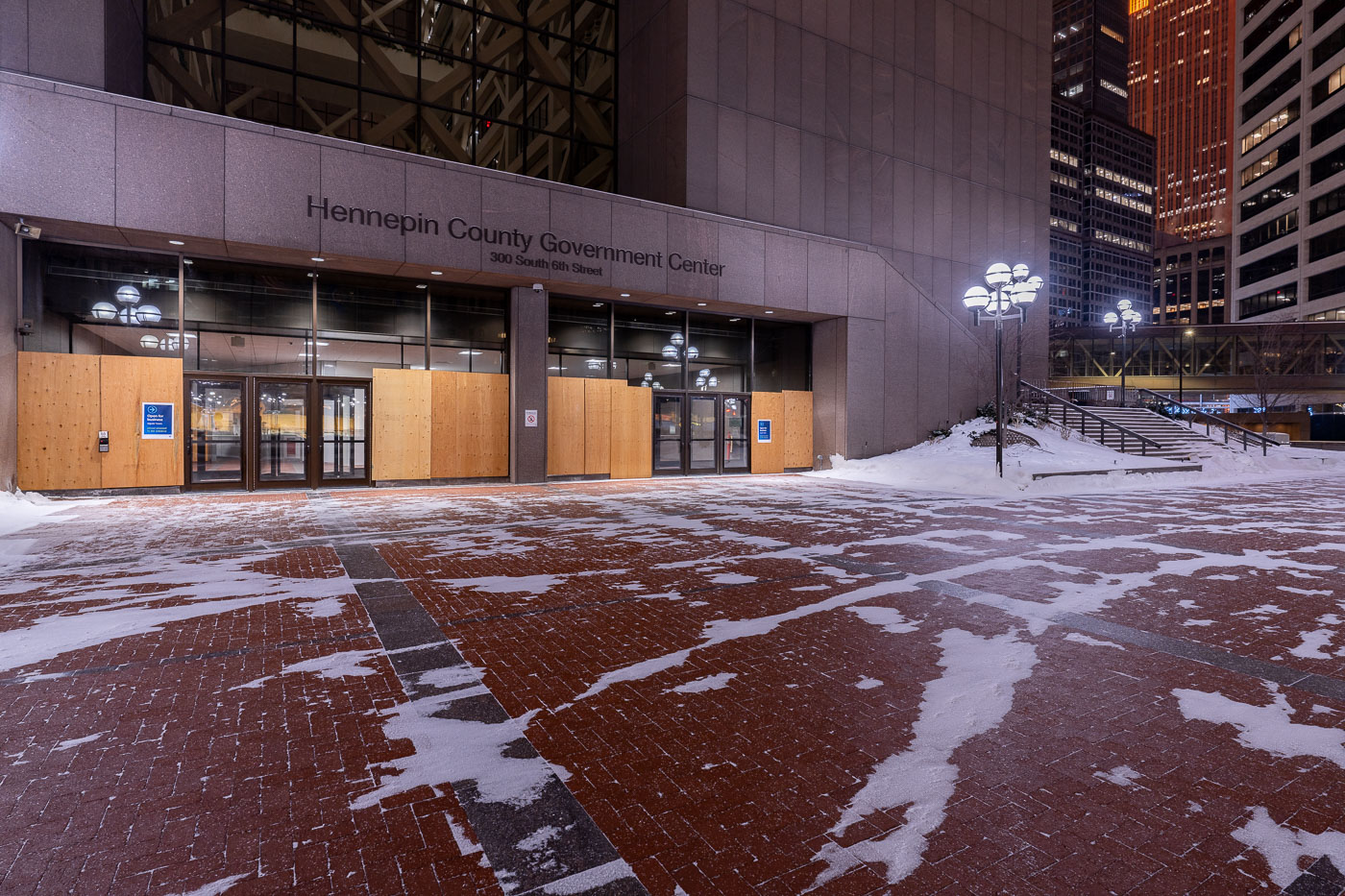
Hennepin County Government Center at 300 South 6th Street boarded with plywood panels during winter.
The Hennepin County Government Center in downtown Minneapolis was boarded up in anticipation of the Derek Chauvin trial in March 2021. The building, located at 300 South 6th Street, houses county government offices and courtrooms.

Snowy Entrance at Hennepin County Government Center After Dark
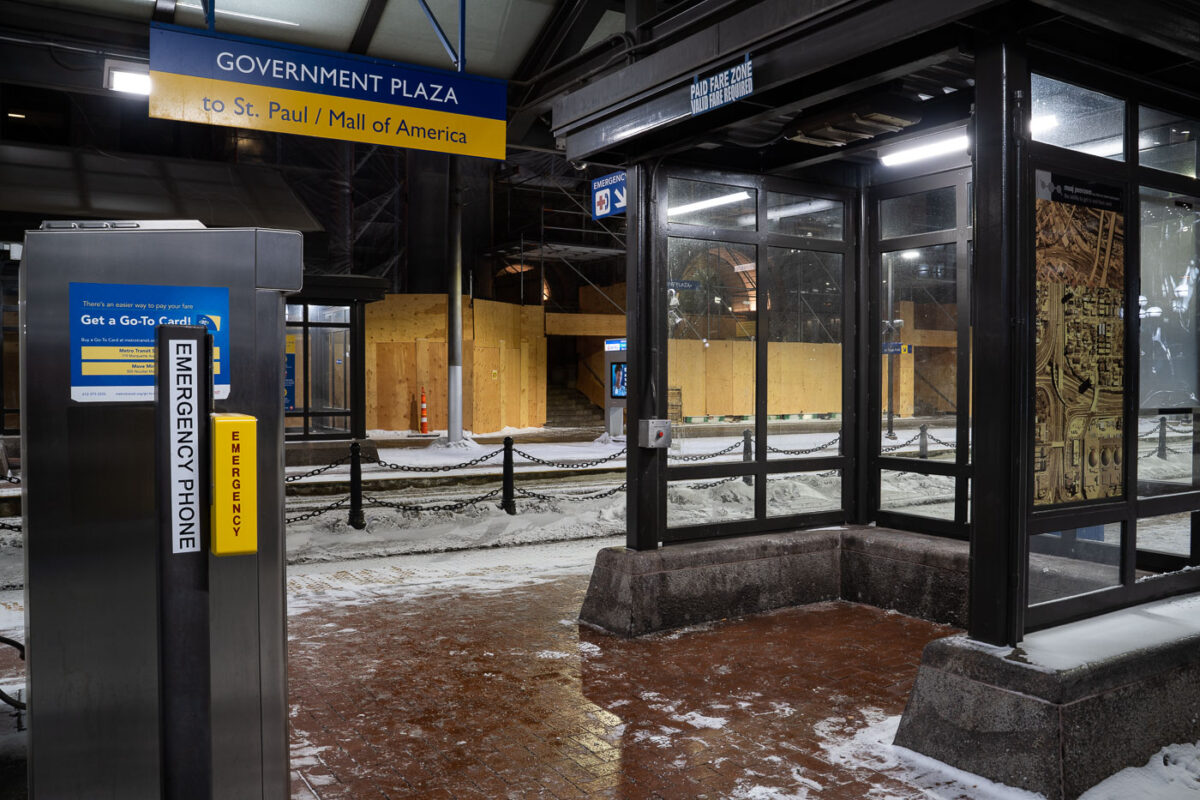
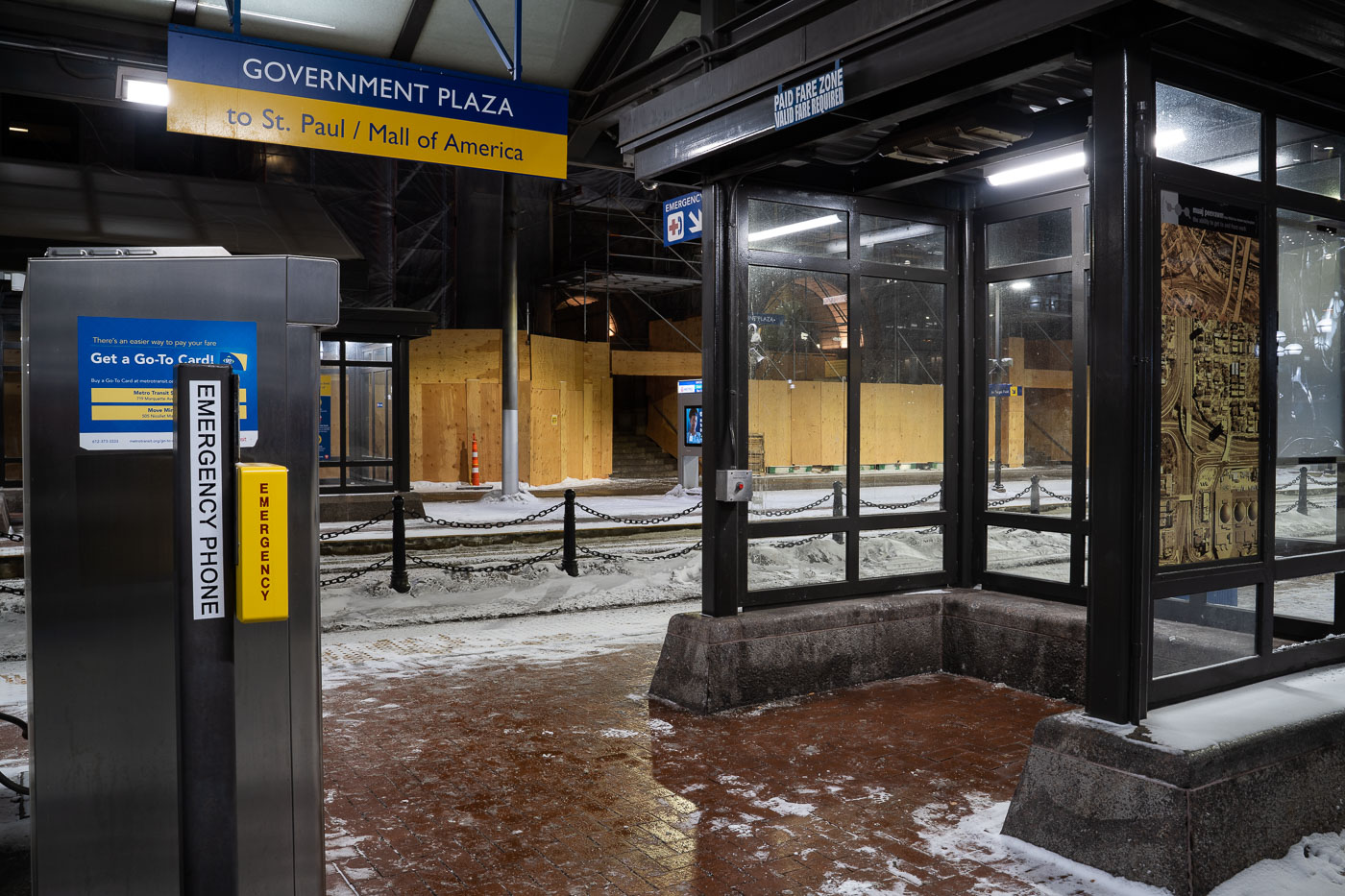
Government Plaza station entrance in downtown Minneapolis with plywood barriers and Metro Transit platform signage.
Government Plaza station in downtown Minneapolis serves Metro Transit Blue and Green Line trains. The platform signage directs riders toward St. Paul and the Mall of America. Plywood barriers were installed around parts of the station area in February 2021 during heightened security measures tied to the Derek Chauvin trial.

Government Plaza station entrance, Minneapolis

Minneapolis City Hall secured with chain-link fencing and concrete barriers in winter.
Fencing and barricades begin going up around Minneapolis City Hall. The layers of fencing and barriers are going up with 20 days remaining before jury selection begins in the George Floyd Trial.

Security Fencing Goes Up Along Minneapolis City Hall at Dusk
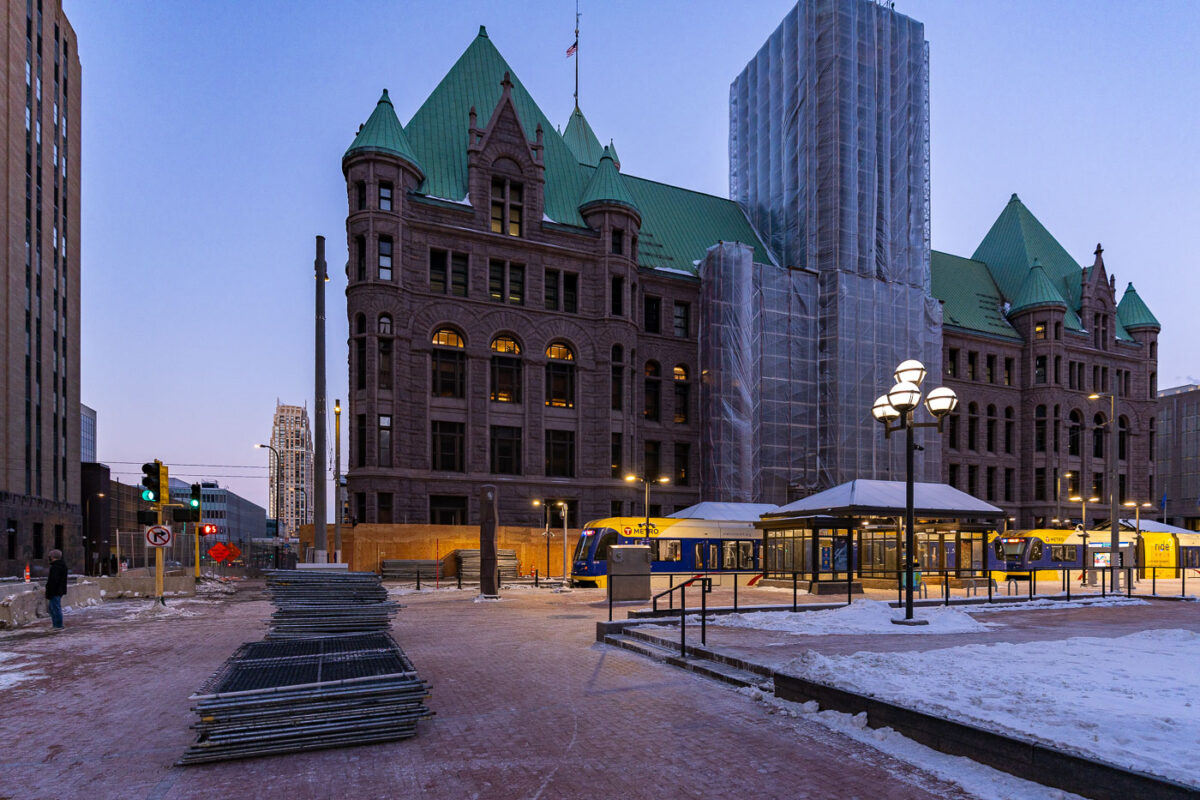
Minneapolis City Hall and Hennepin County Government Center surrounded by security fencing and barricades in February 2021.
Fencing and barricades surround Minneapolis City Hall and the Hennepin County Government Center in downtown Minneapolis on February 16, 2021. These security measures were installed in anticipation of the Derek Chauvin murder trial, which began on March 8, 2021. On May 25, 2020, Minneapolis police officer Derek Chauvin murdered 46-year-old George Floyd during an arrest outside Cup Foods at the intersection of 38th Street and Chicago Avenue in south Minneapolis. Video recorded by bystanders showed Chauvin kneeling on Floyd’s neck for more than nine minutes while Floyd repeatedly said he could not breathe. Three other Minneapolis police officers - J. Alexander Kueng, Thomas Lane, and Tou Thao — were also present during the arrest and later faced criminal charges for their roles in Floyd’s death. Floyd’s murder sparked protests and civil unrest across Minneapolis and around the world, leading to widespread demonstrations against police violence, major policy debates on policing, and the conviction of Chauvin on murder and manslaughter charges in 2021.

METRO Green Line Station at Minneapolis City Hall During Winter
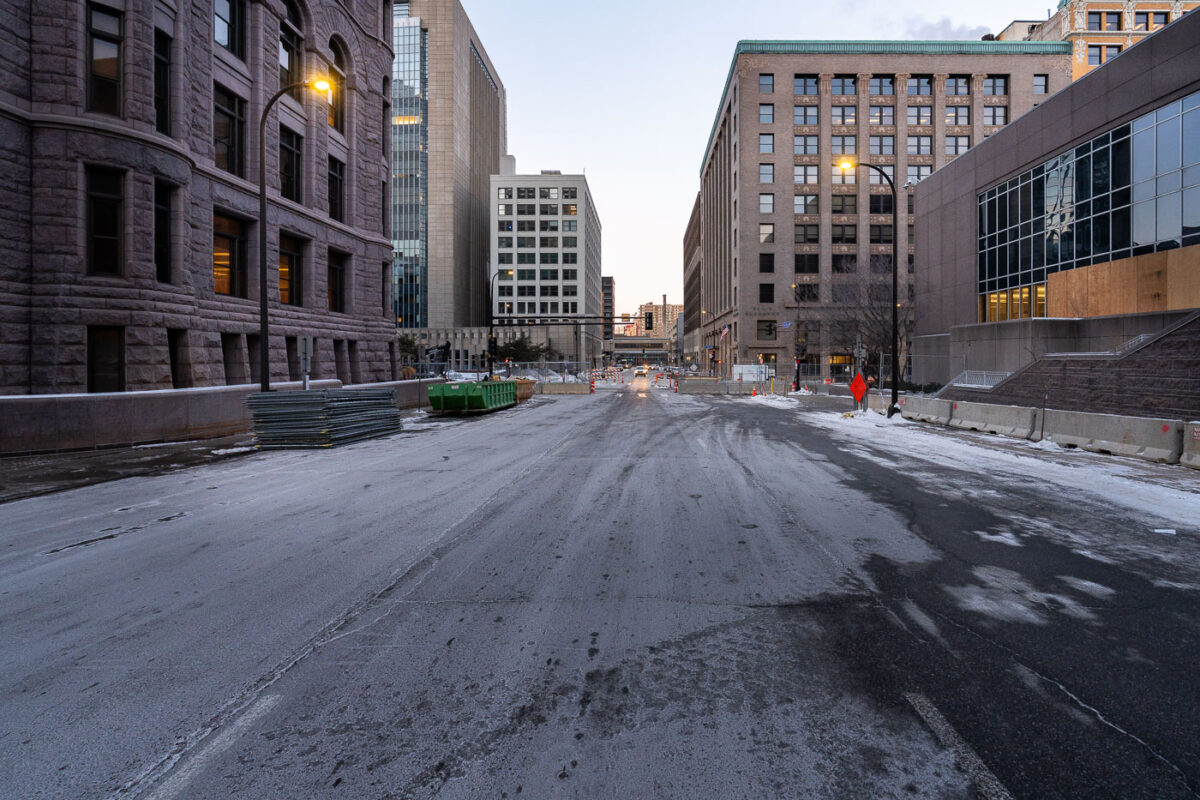
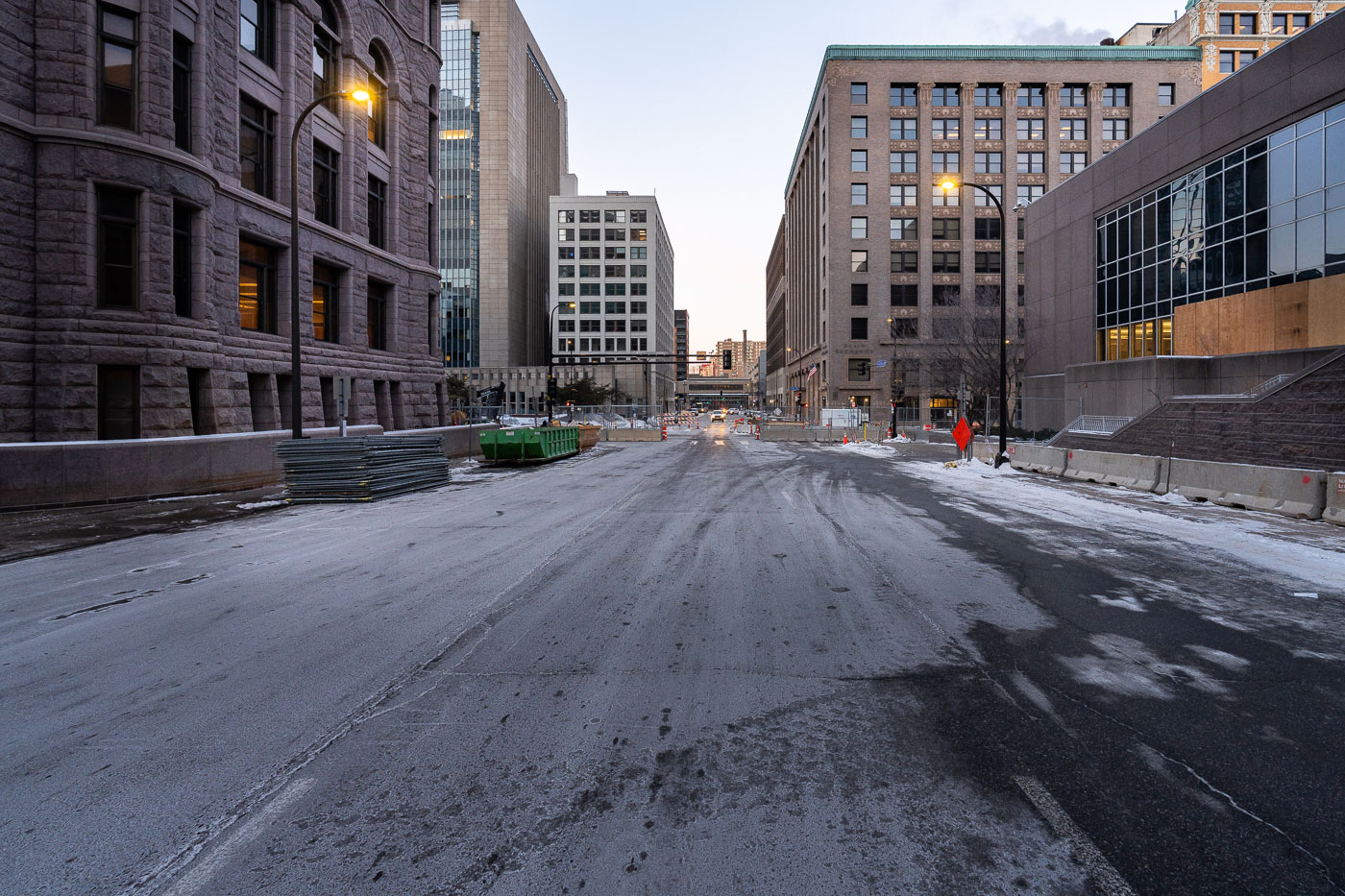
Snow-covered street lined with historic and modern buildings, security fencing, and barriers surrounding Minneapolis City Hall.
Security fencing and concrete barriers surround Minneapolis City Hall and the Hennepin County Jail in anticipation of the Derek Chauvin murder trial.

Empty Downtown Minneapolis Street Before the Chauvin Trial
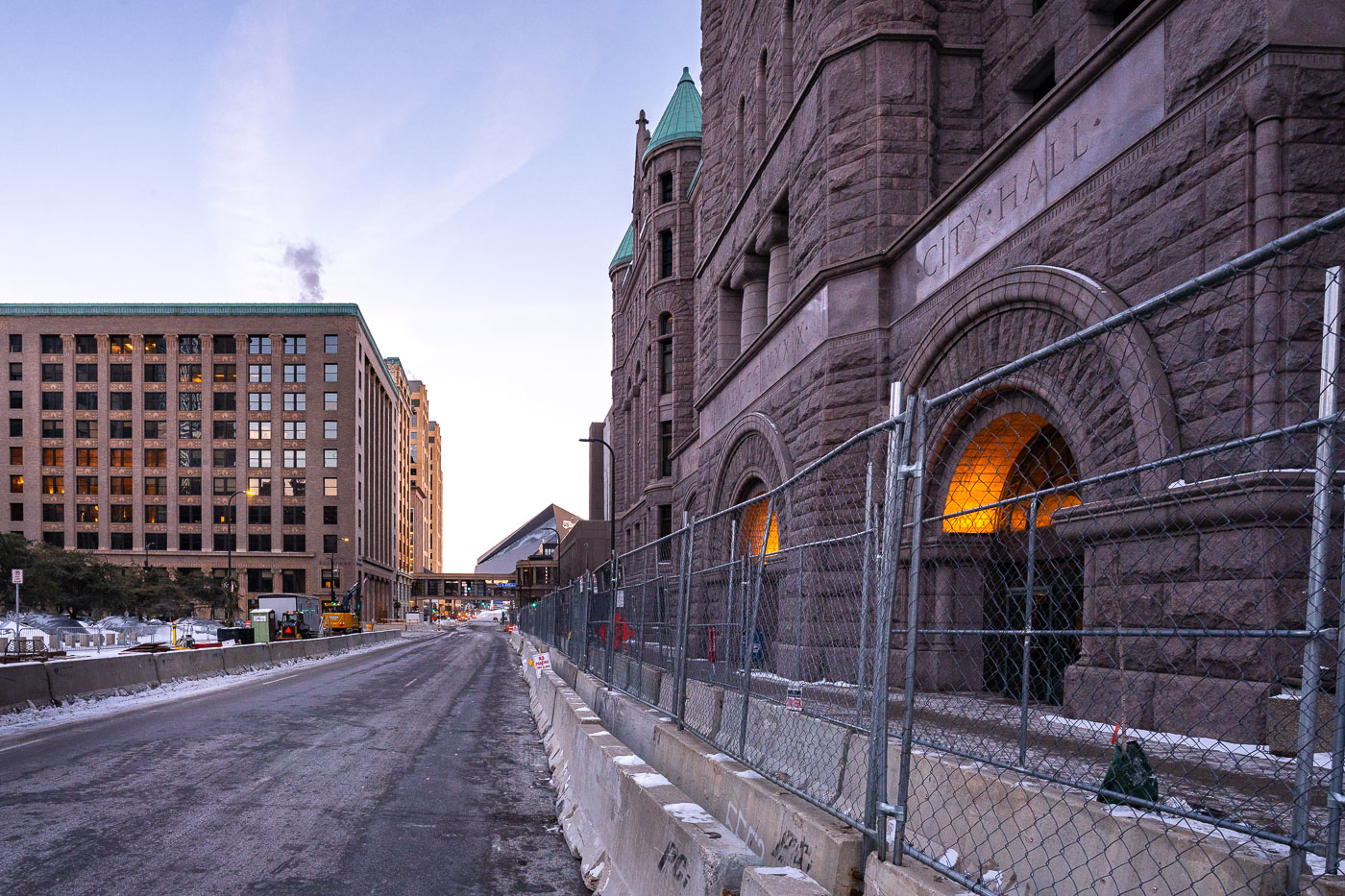
Metal fencing and concrete barriers surround Minneapolis City Hall's stone facade during preparations for the Derek Chauvin trial.
Fencing and barricades begin going up around downtown locations with Derek Chauvin trial just 20 days away.

Fourth Avenue Fenced Off Outside Minneapolis City Hall

George Floyd Trial in 21 Days
George Floyd Square in Minneapolis, is shown 21 days before the start of the trial of Derek Chauvin, the former Minneapolis police officer charged in Floyd's death. The intersection of 38th Street and Chicago Avenue became a focal point for protests and activism following Floyd's murder in May 2020. The area has been transformed into a memorial and a space for community gathering, marked by tributes and art. On May 25, 2020, Minneapolis police officer Derek Chauvin murdered 46-year-old George Floyd during an arrest outside Cup Foods at the intersection of 38th Street and Chicago Avenue in south Minneapolis. Video recorded by bystanders showed Chauvin kneeling on Floyd’s neck for more than nine minutes while Floyd repeatedly said he could not breathe. Three other Minneapolis police officers - J. Alexander Kueng, Thomas Lane, and Tou Thao — were also present during the arrest and later faced criminal charges for their roles in Floyd’s death. Floyd’s murder sparked protests and civil unrest across Minneapolis and around the world, leading to widespread demonstrations against police violence, major policy debates on policing, and the conviction of Chauvin on murder and manslaughter charges in 2021.

George Floyd Trial Countdown at 38th and Chicago, Minneapolis

Ice and snow at George Floyd Square
A large mural of George Floyd's face is displayed at George Floyd Square in South Minneapolis during the winter of 2021. The square, located at the intersection of Chicago Avenue and 38th Street, became a focal point for protests and activism following Floyd's murder by police in May 2020. The area has since been transformed into a memorial and community space, marked by various artworks, signs, and tributes, including this mural. On May 25, 2020, Minneapolis police officer Derek Chauvin murdered 46-year-old George Floyd during an arrest outside Cup Foods at the intersection of 38th Street and Chicago Avenue in south Minneapolis. Video recorded by bystanders showed Chauvin kneeling on Floyd’s neck for more than nine minutes while Floyd repeatedly said he could not breathe. Three other Minneapolis police officers - J. Alexander Kueng, Thomas Lane, and Tou Thao — were also present during the arrest and later faced criminal charges for their roles in Floyd’s death. Floyd’s murder sparked protests and civil unrest across Minneapolis and around the world, leading to widespread demonstrations against police violence, major policy debates on policing, and the conviction of Chauvin on murder and manslaughter charges in 2021.

George Floyd Square Mural in Winter, Minneapolis
MyPillow retail storefront at 343 displaying promotional signage and merchandise in windows.
MyPillow is a Minnesota-based bedding and home goods company founded by Mike Lindell in 2004. The company's retail storefront at 343 in Chaska sells pillows, mattress toppers, and other bedding products alongside promotional bundles tied to Lindell's other ventures, including his published memoir. MyPillow's headquarters and manufacturing operations are based in Chaska, and the company has said it employs hundreds of workers at its Minnesota facilities. During the COVID-19 pandemic, MyPillow briefly shifted part of its production to manufacture face masks.

MyPillow, Chaska Minnesota

MyPillow corporate headquarters building entrance illuminated at night in Chaska, Minnesota.
MyPillow is headquartered in Chaska, Minnesota, a city about 20 miles southwest of Minneapolis. The company was founded in 2004 by Mike Lindell, who developed and patented the MyPillow foam pillow design. MyPillow grew from a small startup into a major direct-to-consumer bedding brand, expanding its product line to include sheets, mattress toppers, and slippers. The Chaska facility serves as the company's corporate office and distribution base for its manufacturing and sales operations.

MyPillow Corporate Headquarters at Night, Chaska
Cup Foods at Chicago and 38th Street.
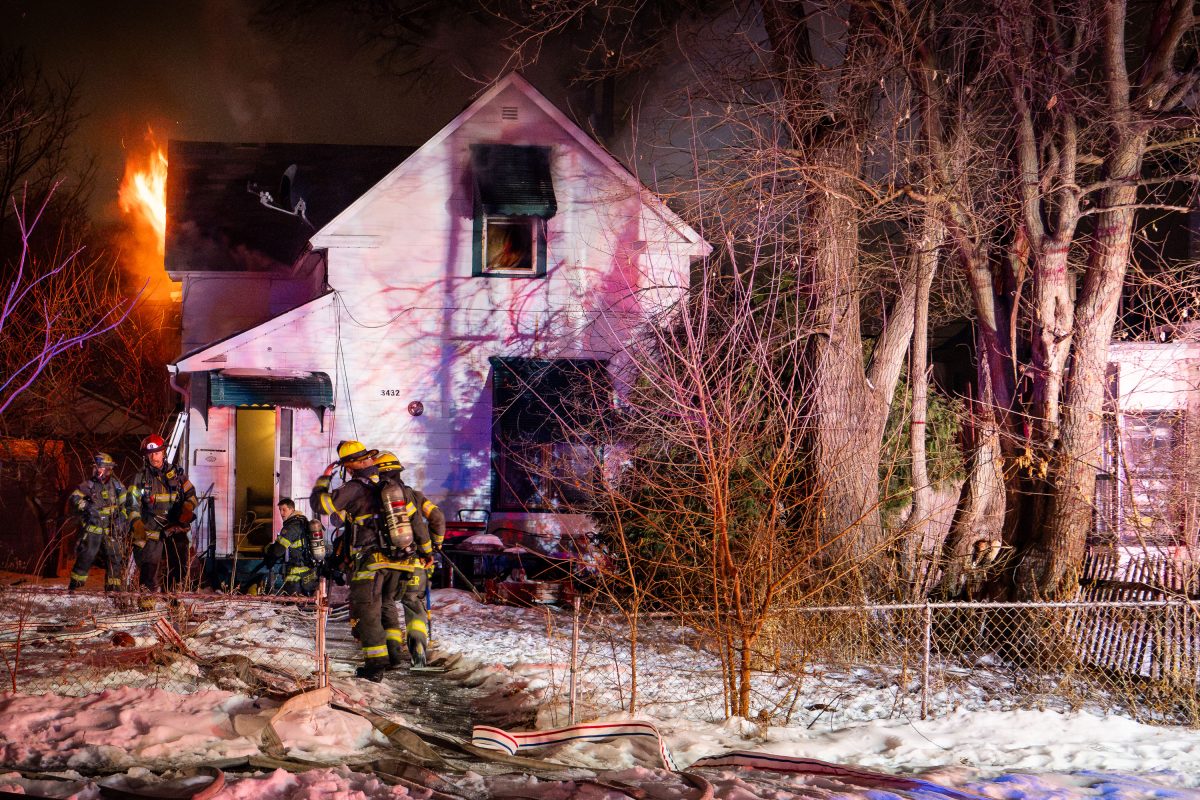
Inside Cup Foods as seen from George Floyd Square. George Floyd was inside Cup Foods prior to his murder in May 2020.

Cup Foods at Chicago and 38th Street.
Firefighters respond to a residential house fire in Minneapolis on a snowy winter night.
A house fire in south Minneapolis displaced four residents on the night of February 3, 2021. Crews from the Minneapolis Fire Department responded to contain the blaze during a stretch of below-freezing temperatures typical of a Minnesota winter.

South Minneapolis House Fire Displaces Four Residents

I Cant Breathe George Floyd Memorial during ice storm
The George Floyd Memorial, located at the intersection of Chicago Avenue and 38th Street in Minneapolis, is a site of remembrance and protest. Following George Floyd's murder by police in May 2020, this area became a focal point for demonstrations against racial injustice and police brutality. The memorial features art, tributes, and the prominent phrase "I Can't Breathe," a reference to Floyd's final words.

George Floyd Memorial Ice and Snow, Minneapolis

Community Building Is Revolutionary
A bench at George Floyd Square in Minneapolis bears the inscription "Community building is revolutionary." This message reflects the spirit of the autonomous zone established in the summer of 2020 following the murder of George Floyd. On May 25, 2020, Minneapolis police officer Derek Chauvin murdered 46-year-old George Floyd during an arrest outside Cup Foods at the intersection of 38th Street and Chicago Avenue in south Minneapolis. Video recorded by bystanders showed Chauvin kneeling on Floyd’s neck for more than nine minutes while Floyd repeatedly said he could not breathe. Three other Minneapolis police officers - J. Alexander Kueng, Thomas Lane, and Tou Thao — were also present during the arrest and later faced criminal charges for their roles in Floyd’s death. Floyd’s murder sparked protests and civil unrest across Minneapolis and around the world, leading to widespread demonstrations against police violence, major policy debates on policing, and the conviction of Chauvin on murder and manslaughter charges in 2021.

George Floyd Square: “Community Building Is Revolutionary” Bench