Minneapolis

5,178 photos · 2008–2026

5,178 photographs tagged Minneapolis, 2008–2026.
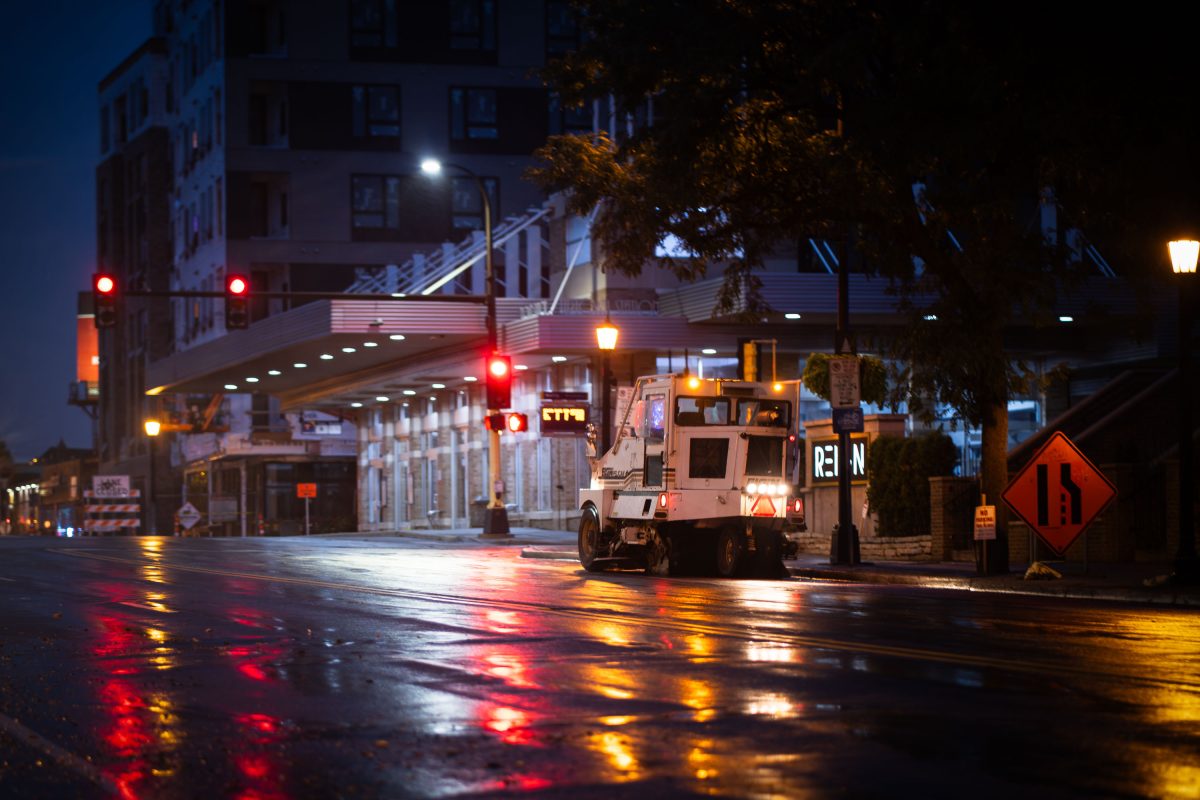
Street Sweeper on Hennepin Ave in Uptown Minneapolis
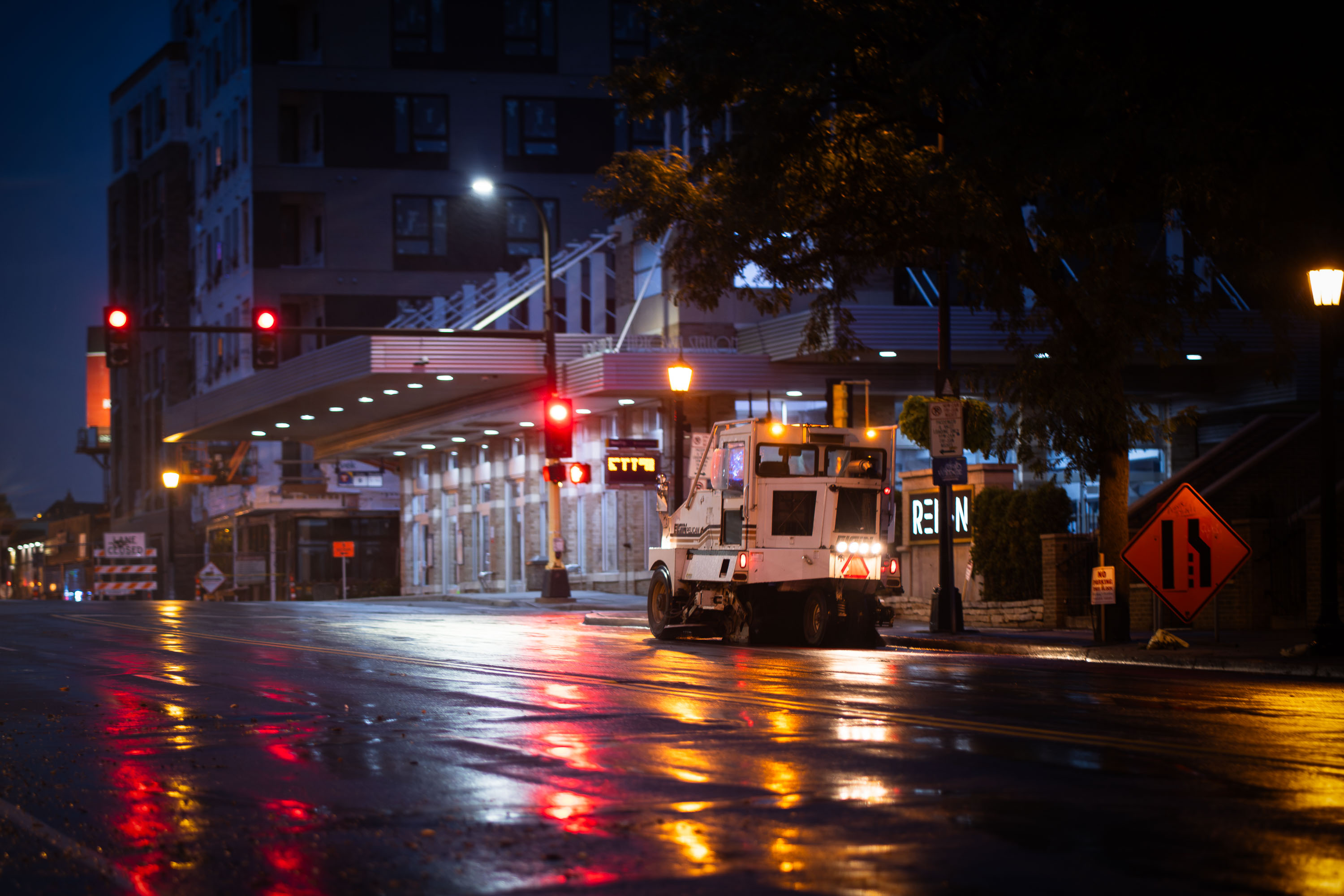
A street sweeper in Uptown Minneapolis seen in August 2022.

Street Sweeper on Hennepin Ave in Uptown Minneapolis

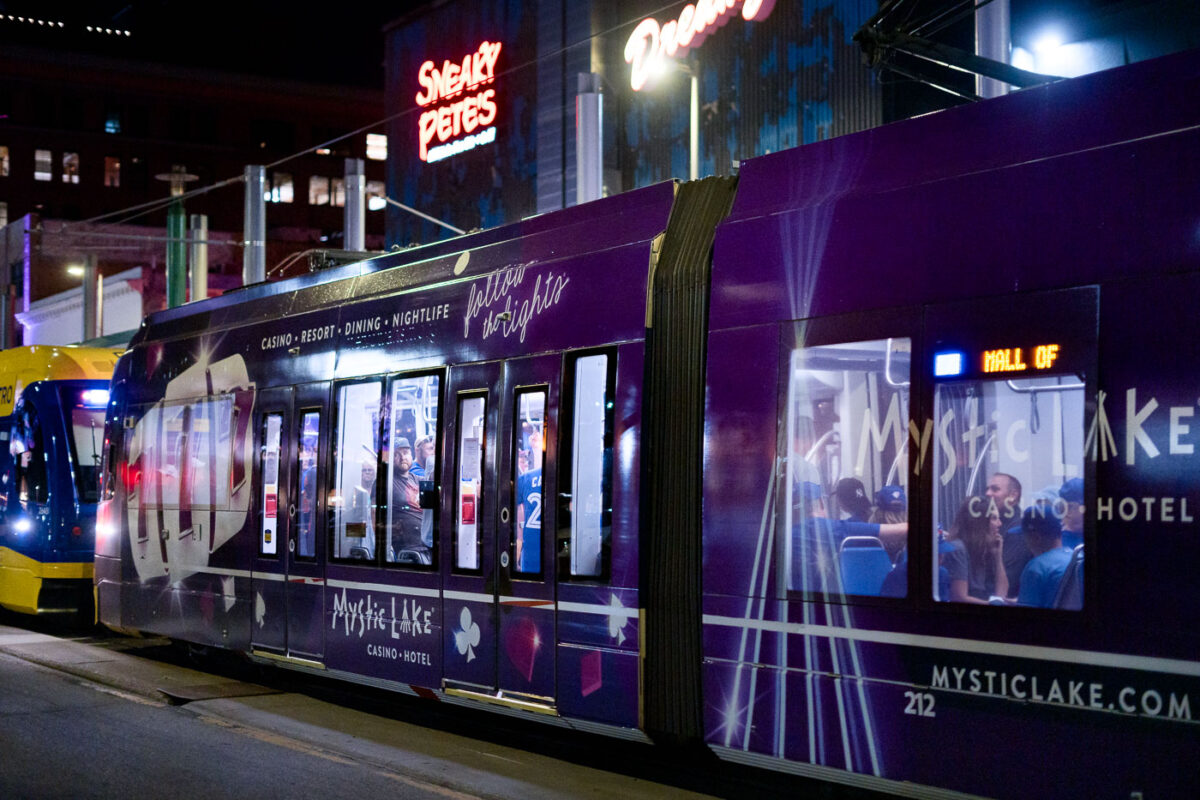
Mystic Lake wrapped light rail train and Sneaky Petes bar in Downtown Minneapolis
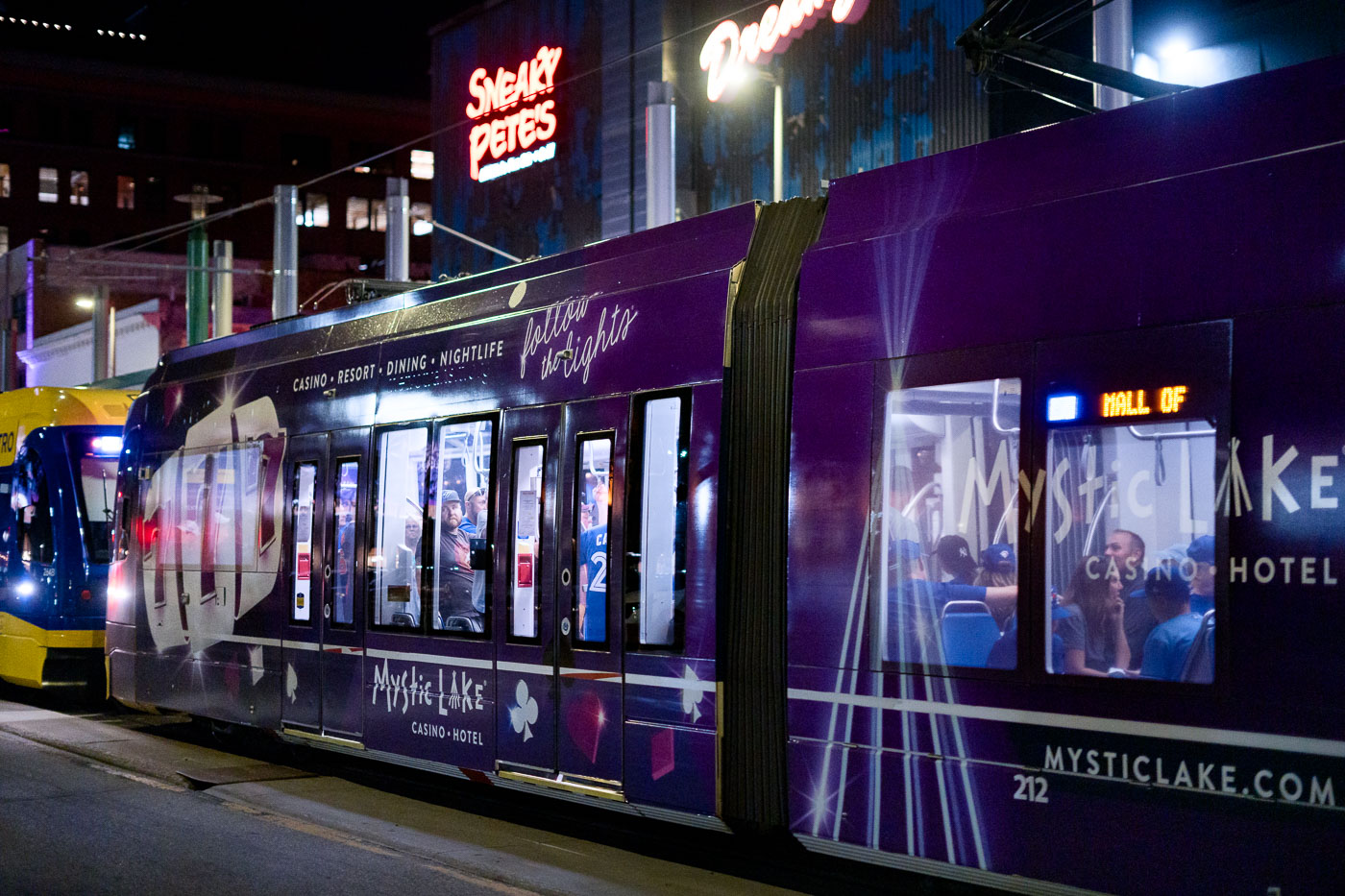
A light rail train branded for the Mystic Lake Casino & Hotel stops at the Warehouse District-Hennepin station in Minneapolis. The station serves the Green Line, which connects downtown Minneapolis and St. Paul, and is a popular transit point for events in the Warehouse District.

Mystic Lake Casino Train at Warehouse District Station

Armed police officers stationed outside of Target Field in Minneapolis
Hennepin County Sheriff's officers stand with rifles outside Target Field in Minneapolis.

Hennepin County Sheriff’s Officers with Rifles, Target Field Security
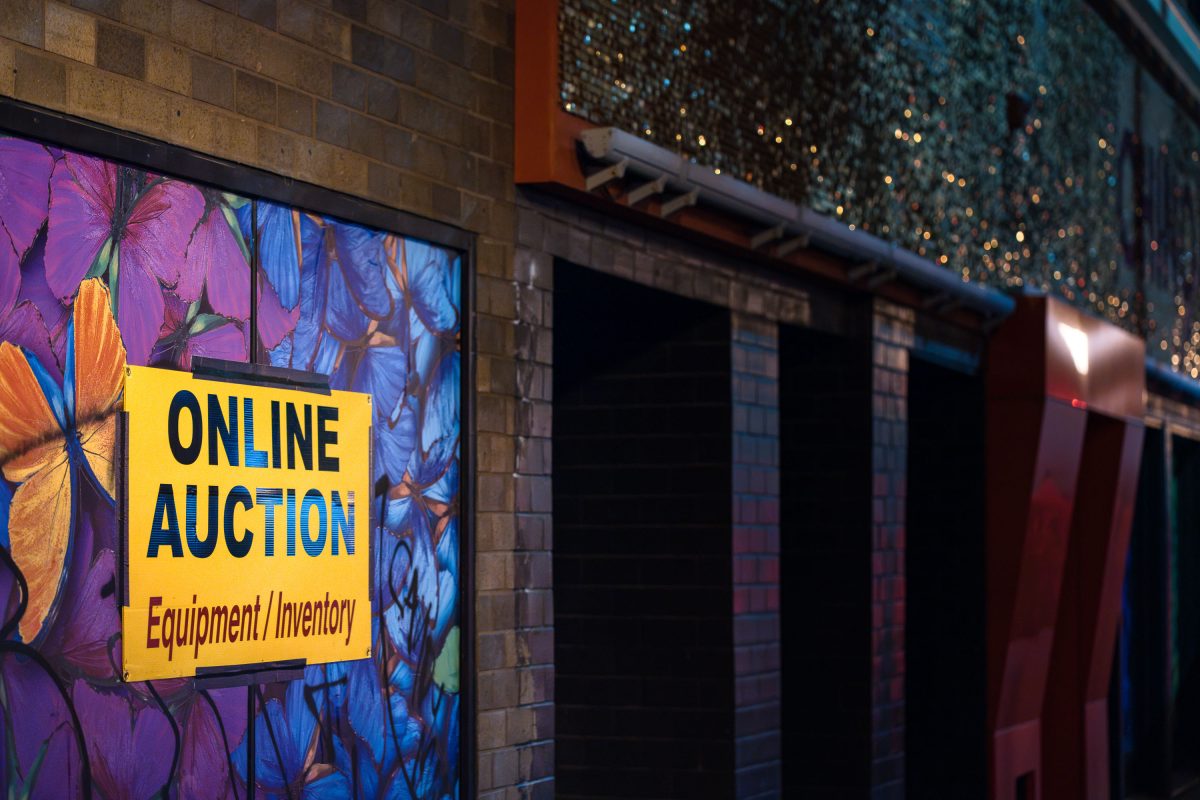
Online auction sign at former Chino Latino restaurant on Hennepin Ave
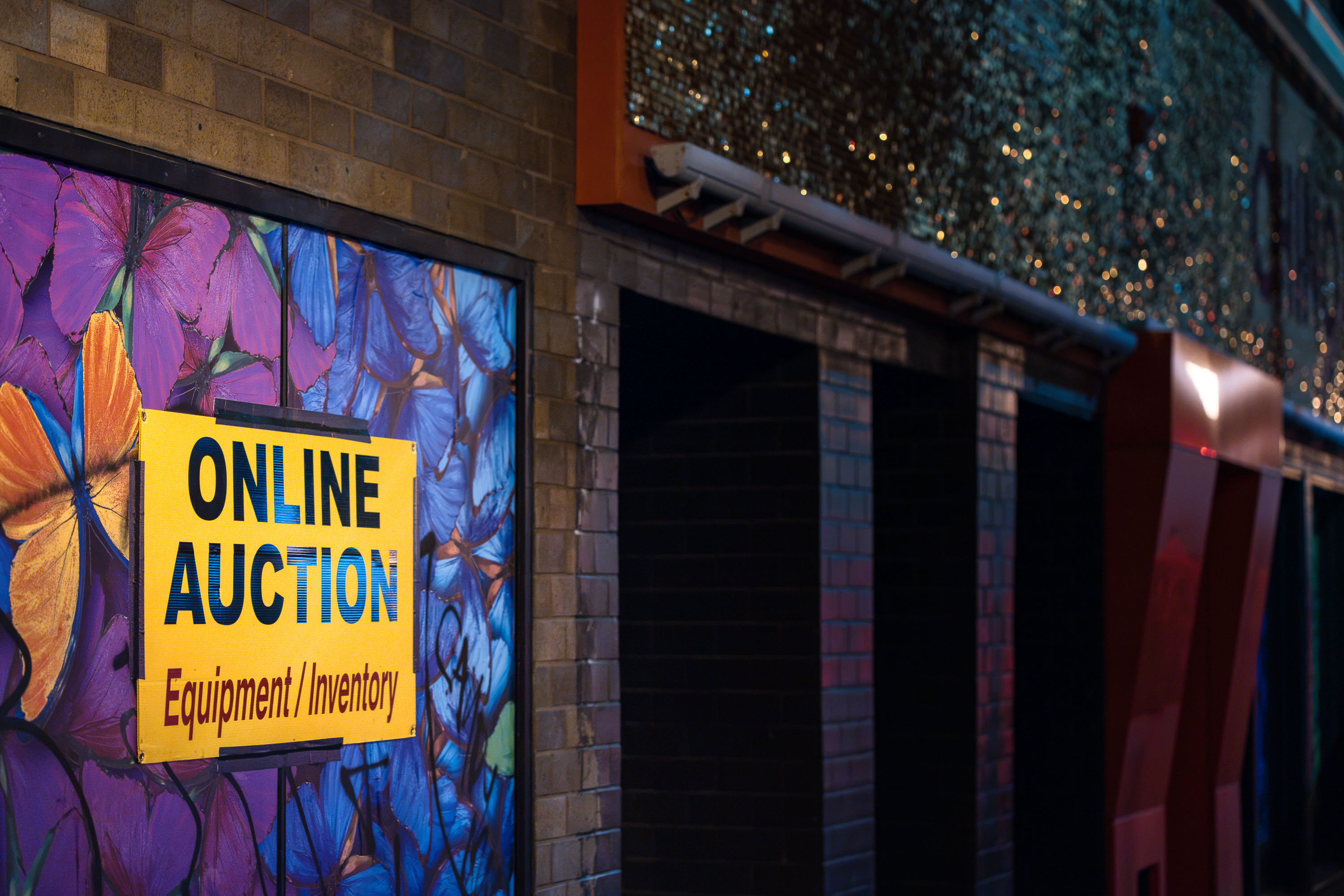
Online Auction sign on the former Chino Latino restaurant in Uptown Minneapolis.

Online auction sign at former Chino Latino restaurant on Hennepin Ave

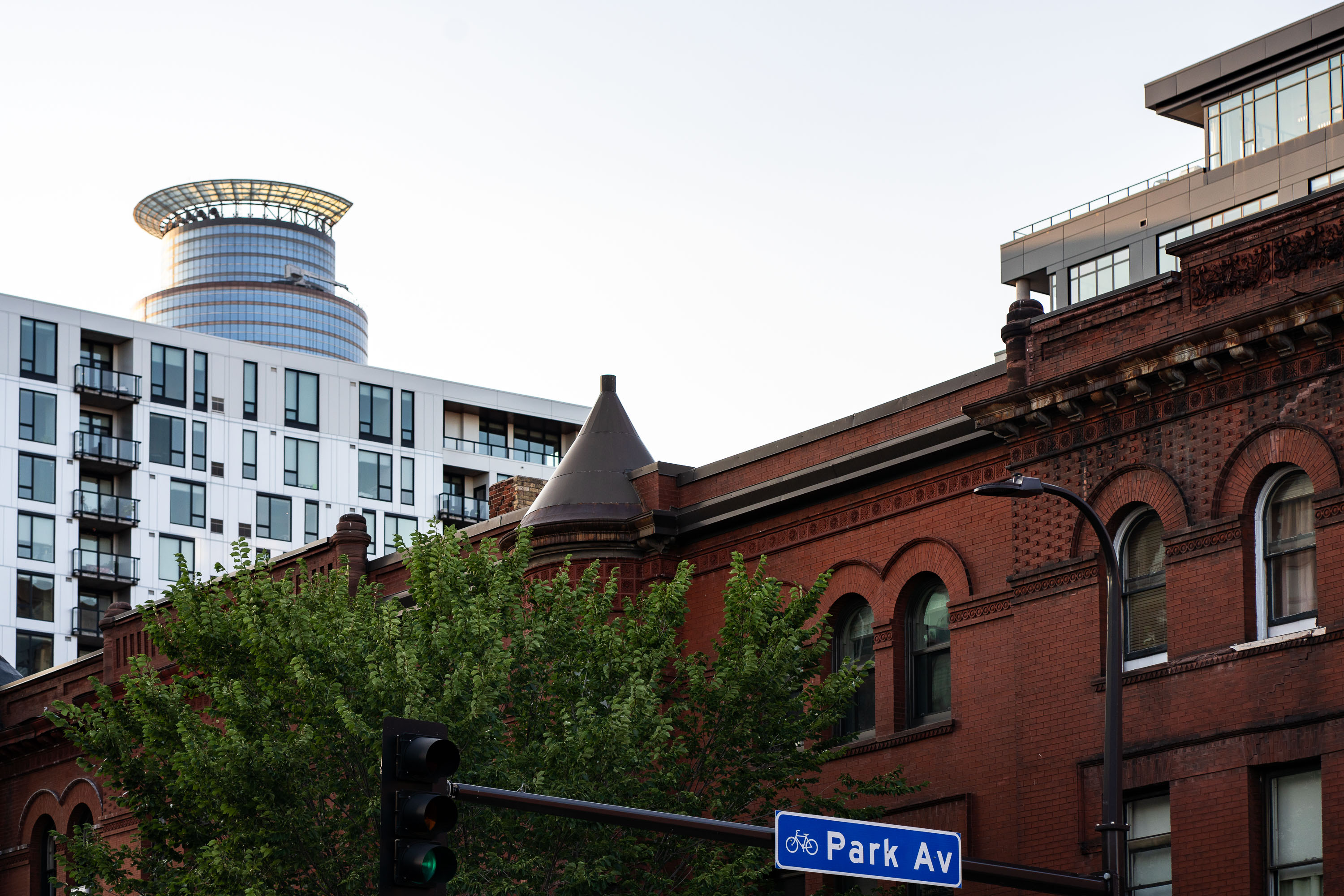
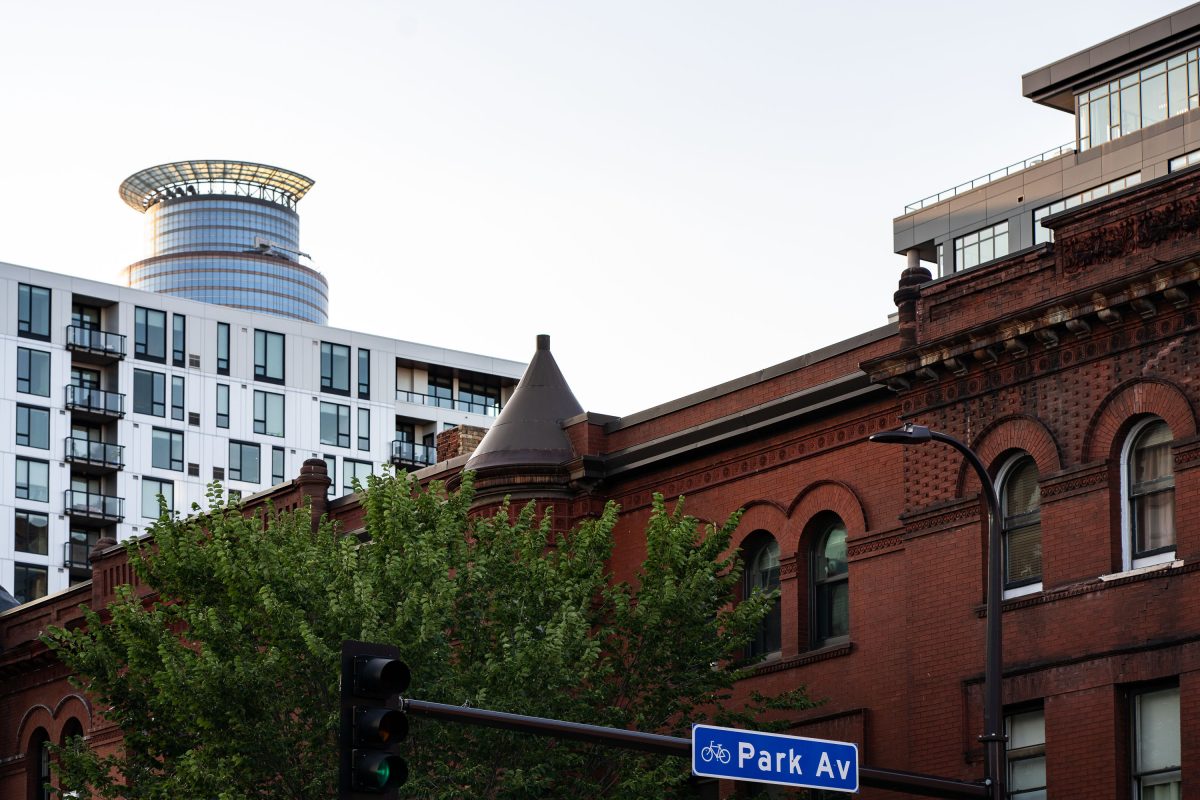
Park Ave and the Capella Tower in Downtown Minneapolis
Park Avenue sign in Downtown Minneapolis with the Capella Tower in the background.

Park Ave and the Capella Tower in Downtown Minneapolis

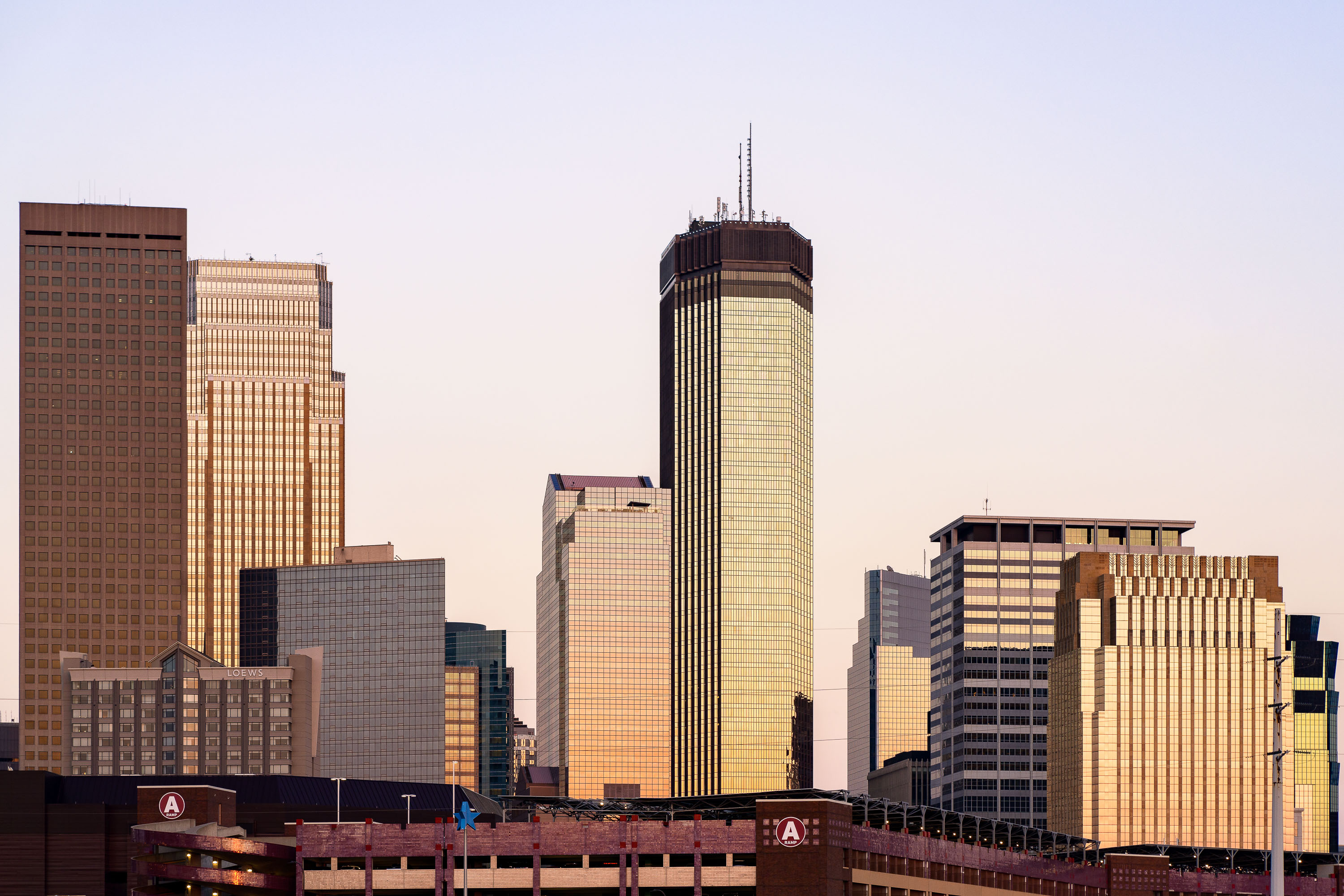
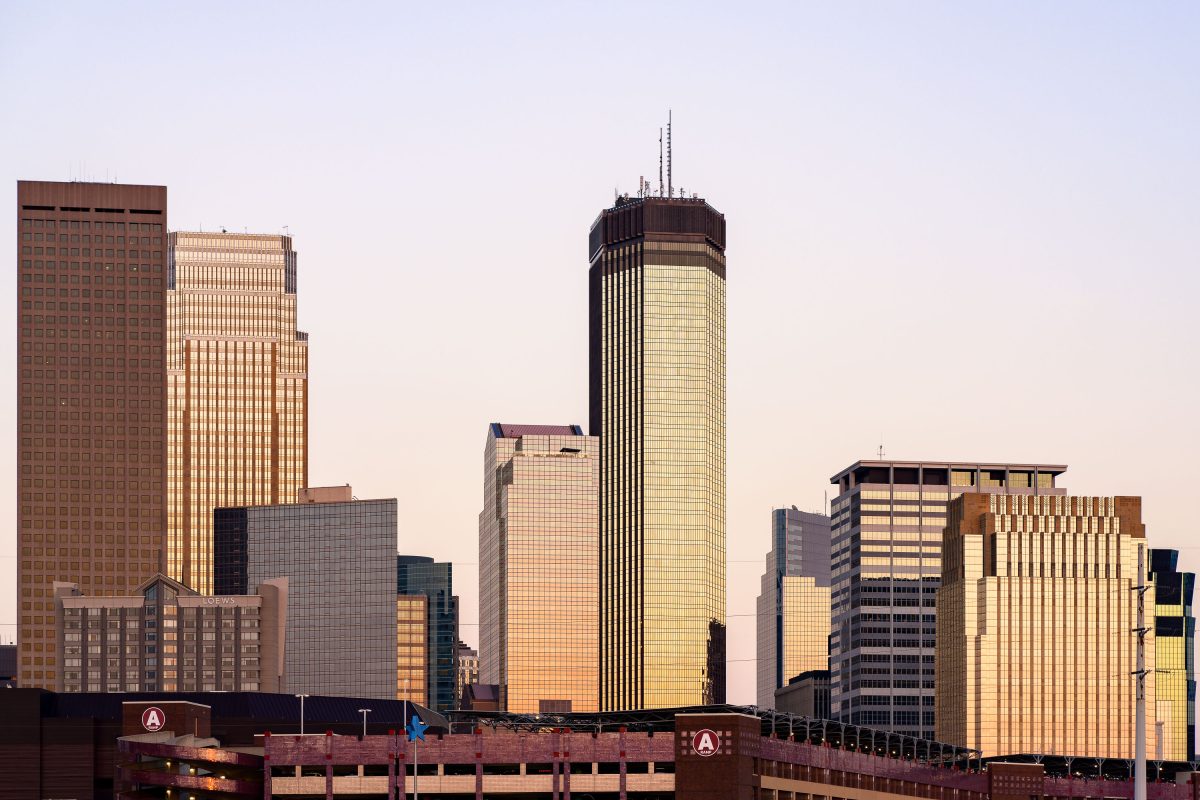
The IDS Center towers above downtown Minneapolis at sunset, with Ramp A parking structure in the foreground.
The IDS Center rises at the center of the Minneapolis skyline, completed in 1972 to a design by Philip Johnson and John Burgee. At 792 feet and 57 stories, it remains the tallest building in Minnesota, topped with an antenna spire that adds to its height. The tower's Crystal Court atrium connects it to the city's Skyway system, a network of enclosed pedestrian bridges linking downtown buildings. Ramp A, a municipal parking structure near Target Field, sits in the foreground along the western edge of downtown.

IDS Center Glows at Sunset Above Ramp A

City of Minneapolis Department of Public Works Royalston Maintenance Facility with downtown skyline behind it.
The Royalston Maintenance Facility houses operations for the City of Minneapolis Department of Public Works, supporting fleet and street maintenance for the surrounding downtown area. The facility sits near the Royalston Avenue corridor, a light-industrial section northwest of downtown that has increasingly given way to residential and mixed-use redevelopment.

Royalston Maintenance Facility with Downtown Minneapolis Skyline
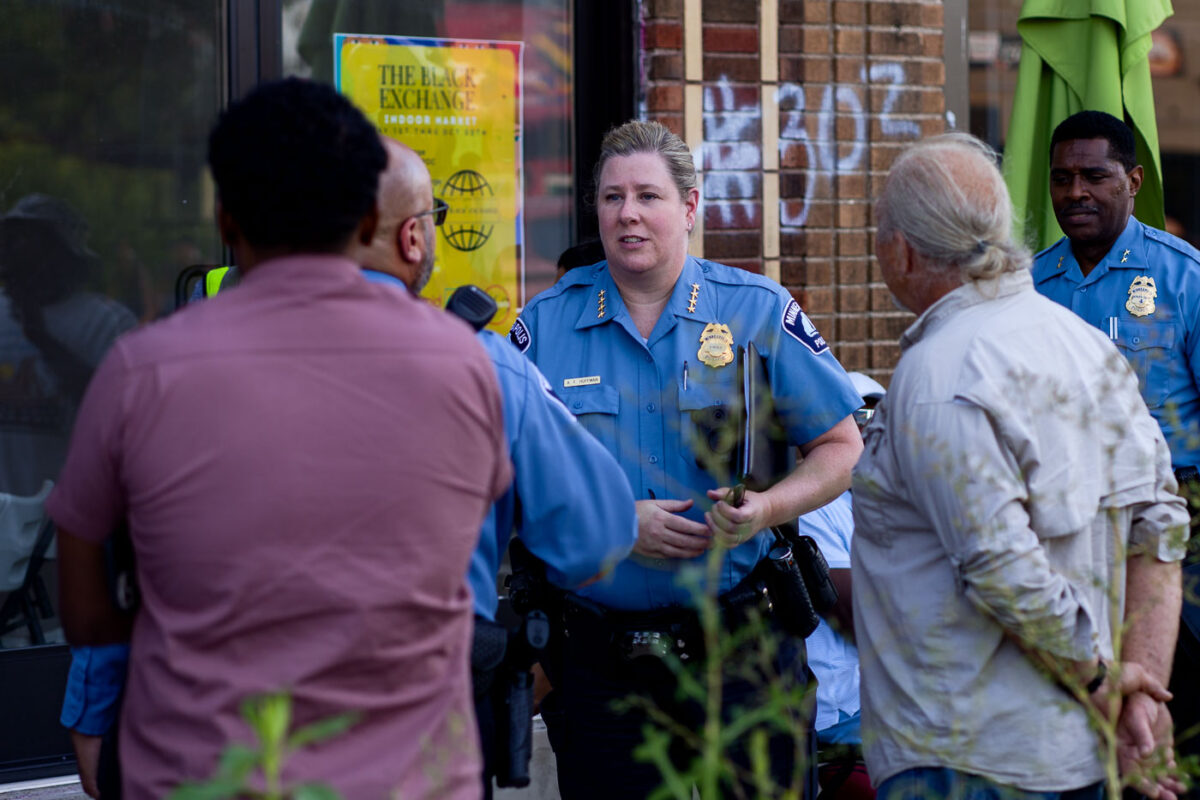
Interim Minneapolis Police Chief Amelia Huffman at George Floyd Square
Interim Minneapolis Police Chief Amelia Huffman attended a "Community Conversation" on public safety at George Floyd Square. The forum, held in the area that became a focal point for protests following the murder of George Floyd in May 2020, also included candidates for Hennepin County Attorney. This event aimed to foster dialogue between law enforcement and the community amidst ongoing discussions about public safety and policing in Minneapolis.

Interim Police Chief Huffman at George Floyd Square
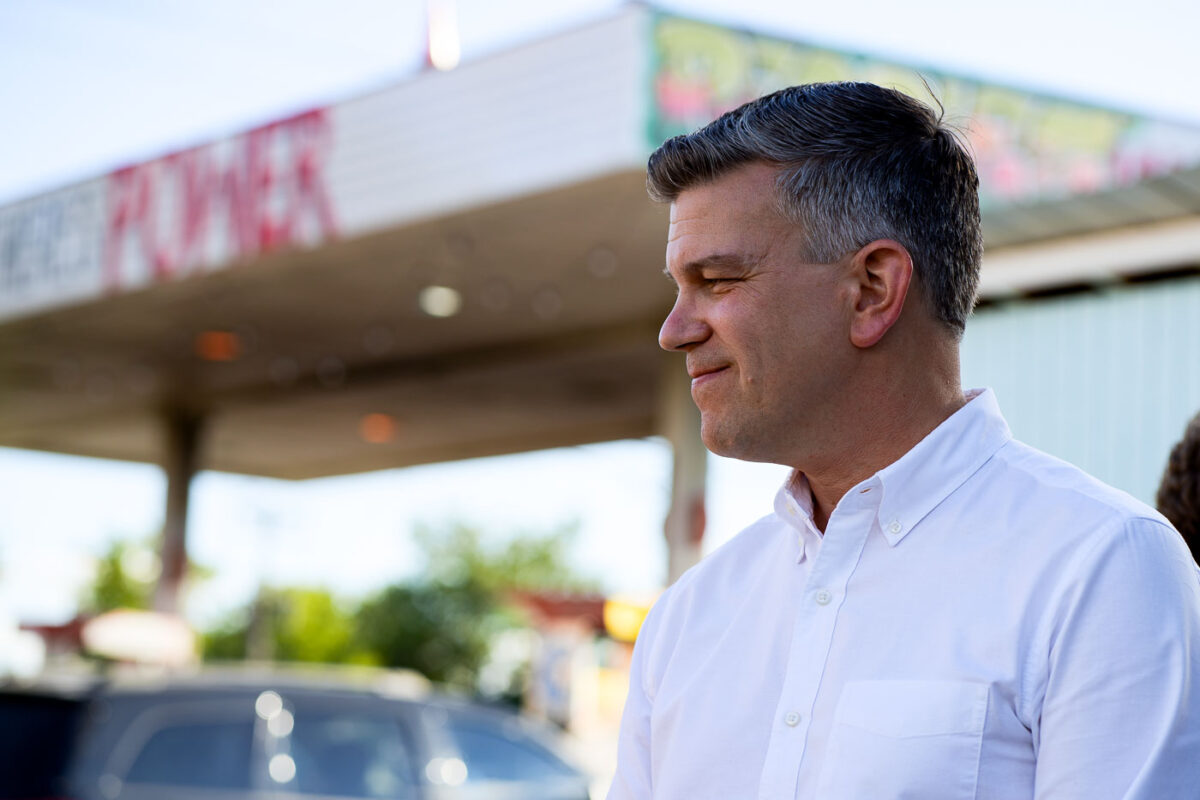
Hennepin County Attorney candidate Ryan Winkler at George Floyd Square
Ryan Winkler, a candidate for Hennepin County Attorney, attended a public safety discussion at George Floyd Square in Minneapolis. The event, titled "Community Conversation - Let's talk about public safety," featured Winkler alongside other candidates and the interim Chief of Police. George Floyd Square has been a significant site of protest and community organizing since the murder of George Floyd in May 2020, and discussions about public safety are particularly relevant in this context.

Ryan Winkler at George Floyd Square Public Safety Talk
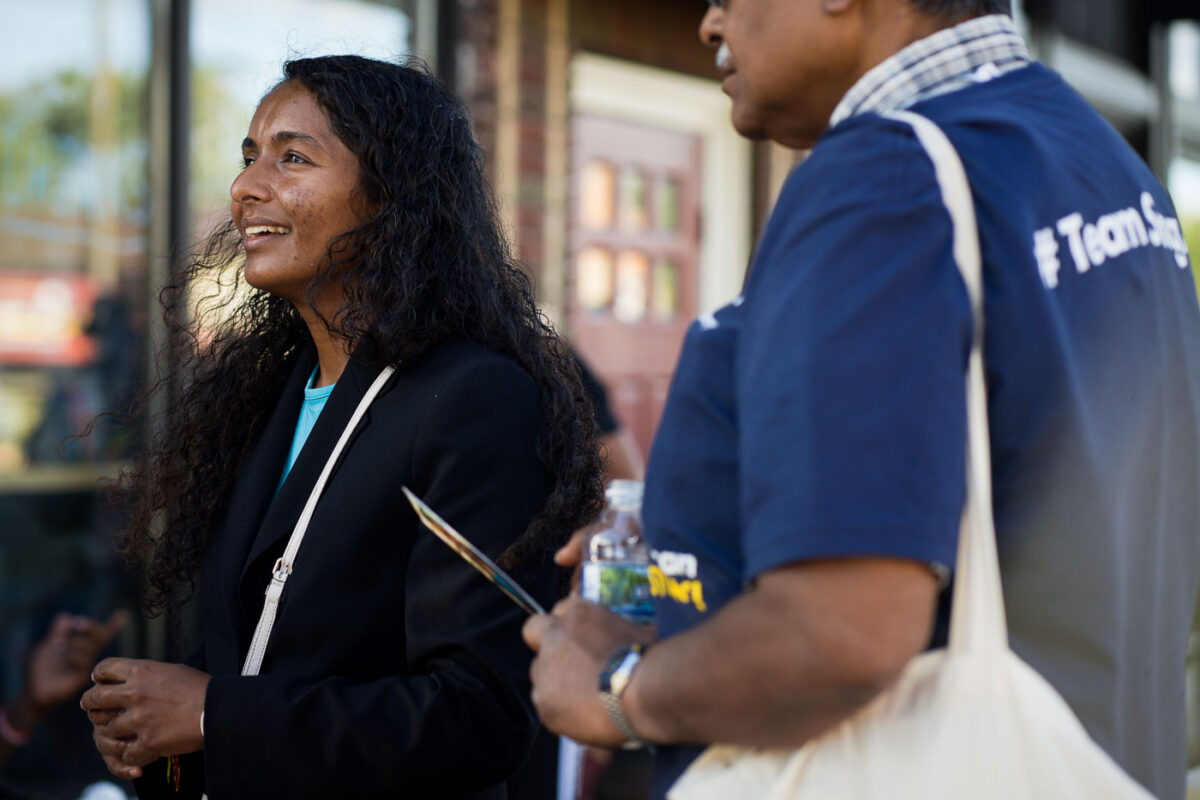
Saraswati Singh at George Floyd Square
Saraswati Singh, a candidate for Hennepin County Attorney, attended a public safety forum at George Floyd Square. The event, titled "Community Conversation - Let's talk about public safety," brought together candidates and the interim Chief of Police to discuss community concerns. George Floyd Square has been a significant site of public gathering and activism since the murder of George Floyd in May 2020, serving as a focal point for discussions on justice and public safety in Minneapolis.

Saraswati Singh at George Floyd Square Public Safety Forum

White Silence is Violence mural on a garage door in South Minneapolis
This mural, located on a garage door in South Minneapolis, reads "White Silence is Violence." The phrase emerged as a slogan during the Minneapolis Uprising in 2020, following the murder of George Floyd. It critiques the inaction and complicity of white individuals and institutions in the face of racial injustice and police brutality. The mural serves as a public statement and a visual reminder of the ongoing struggle for racial equity.

Minneapolis “White Silence is Violence” Mural

Free Palestine mural on the side of a Minneapolis corner store
A corner store in South Minneapolis displays flags representing Palestine and the United States. The "Free Palestine" message, painted alongside the Palestinian flag, reflects solidarity and political sentiment.

South Minneapolis Corner Store: Palestine and US Flags

Stop Cops written on a bus shelter in Uptown Minneapolis
Graffiti reading "Stop Cops!" is visible on the glass of a former bus shelter at George Floyd Square in Minneapolis. This location became a focal point for protests and activism following the murder of George Floyd in May 2020.

Stop Cops! Graffiti on George Floyd Square Bus Shelter

Cyclist at Hennepin Avenue and Lake Street in Minneapolis at dusk.
A cyclist navigates the intersection of Hennepin Avenue and Lake Street in Minneapolis's Uptown neighborhood at dusk.

Uptown Art Fair Banner Over Hennepin Avenue at Dusk

Moxy Hotel tabletops in Minneapolis display Prince's "Purple Rain" and Dessa's "Chime" album artwork under purple lighting.
The Moxy Hotel on Lake Street in Uptown Minneapolis features tabletops adorned with album art from local artists Prince and Dessa. The "Purple Rain" album cover by Prince, a Minneapolis native, and Dessa's "Chime" album are prominently displayed.

“Purple Rain” and “Chime” Album Art Tables at the Moxy Hotel
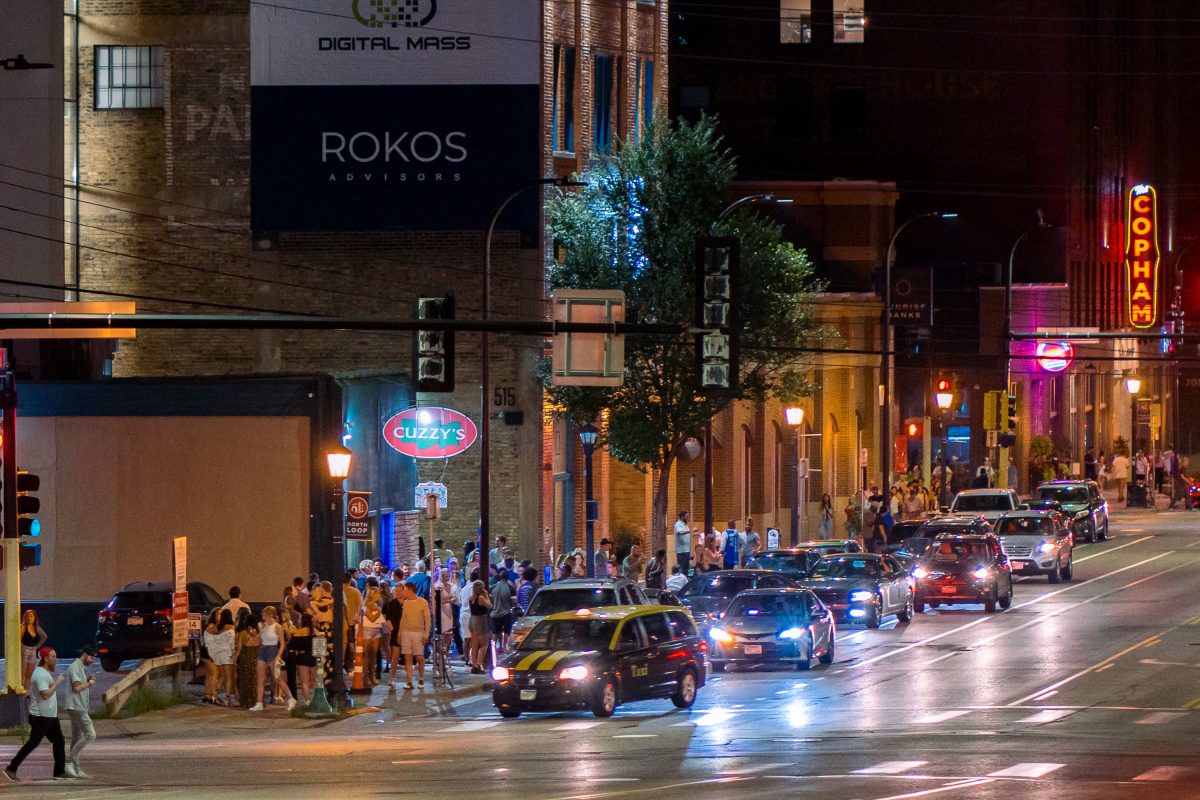
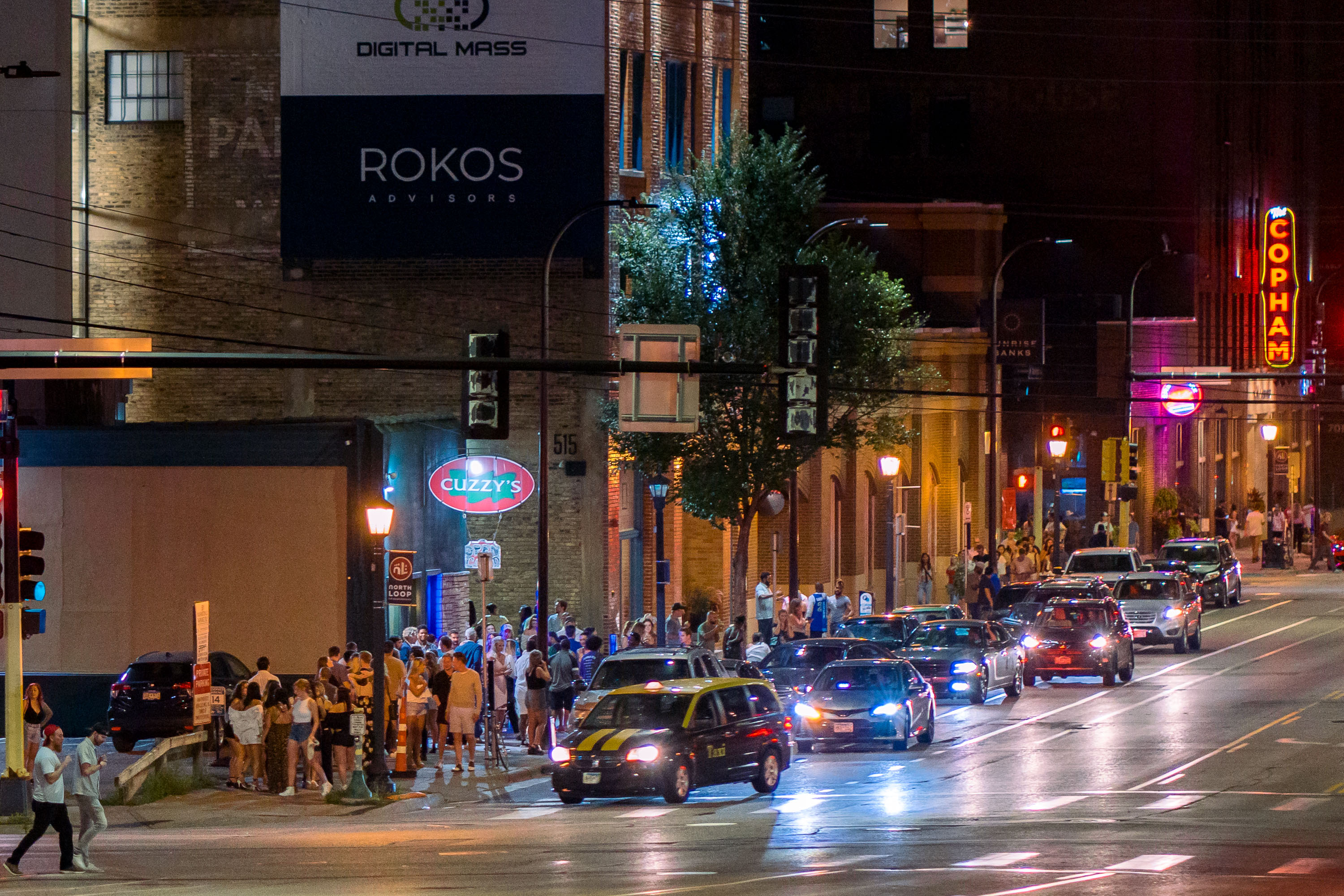
Crowds outside bars on Washington Avenue in Minneapolis North Loop at night.
Washington Avenue in Minneapolis's North Loop district is a popular nightlife destination, as seen by the crowds gathered outside bars and establishments on a summer evening. The North Loop, historically a warehouse district, has transformed into a vibrant area for entertainment and dining, while retaining much of its early 20th-century industrial architecture. This street, a key artery in the neighborhood, bustles with activity, showcasing the area's contemporary appeal amidst buildings that speak to its past as a center for commerce and industry.

Minneapolis North Loop: Crowds on Washington Ave at Night
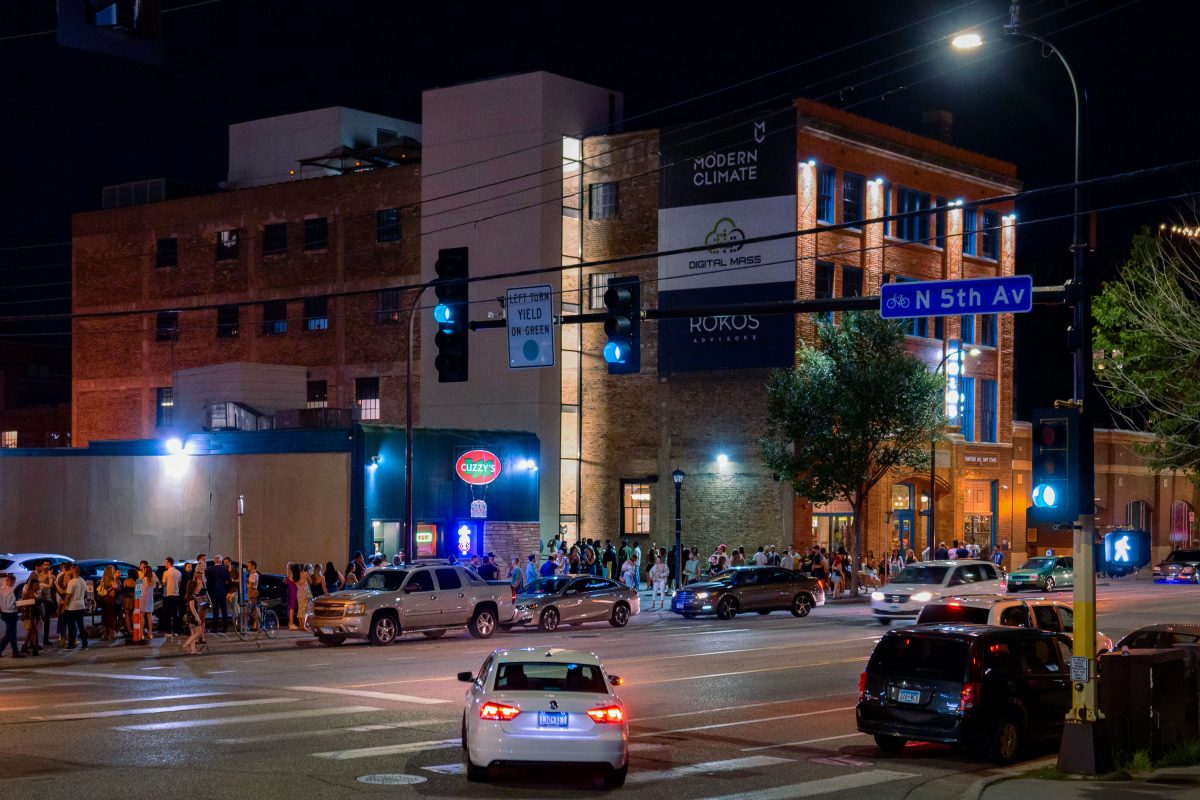
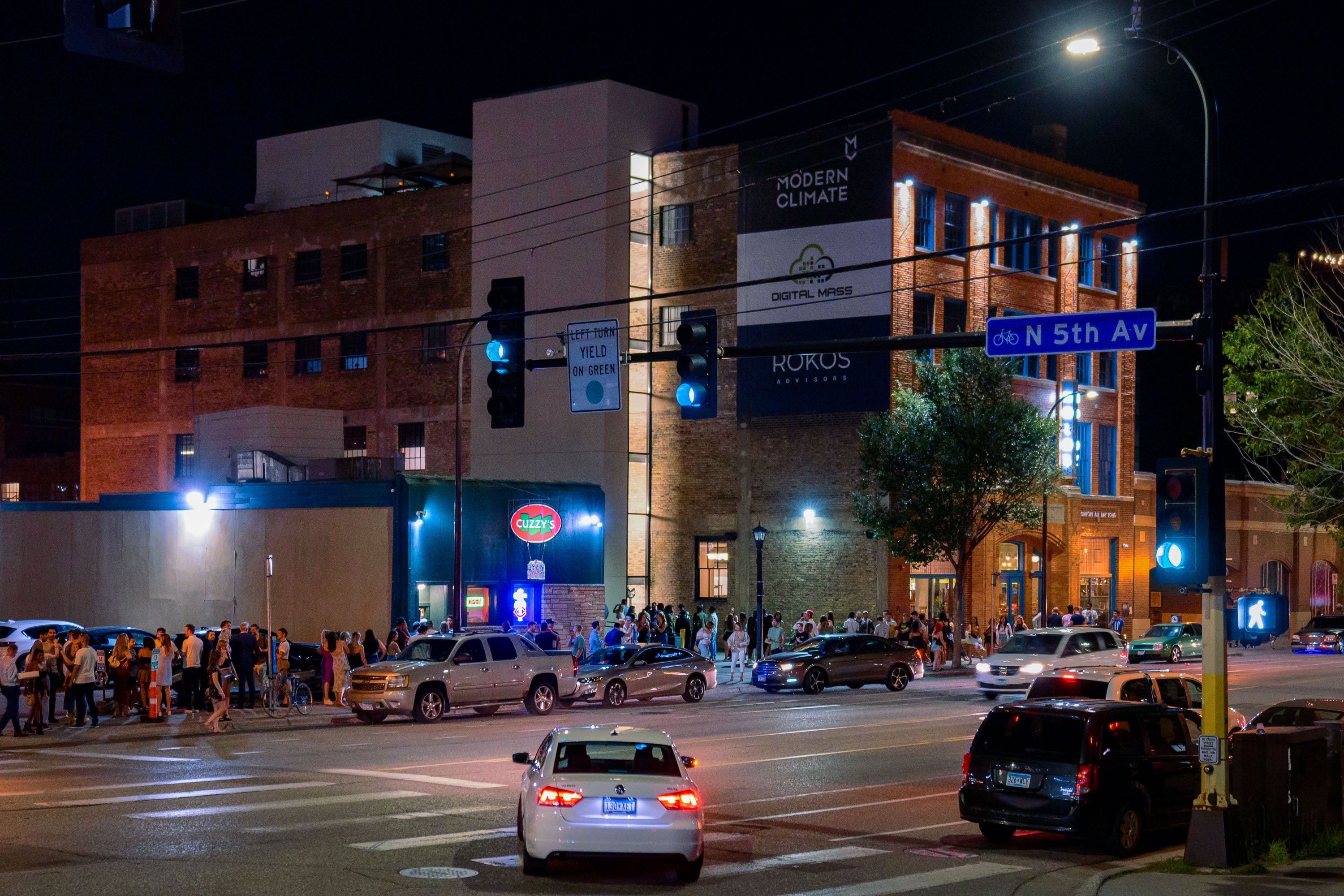
Night traffic and crowds at Washington Avenue and North 5th Avenue in downtown Minneapolis.
Washington Avenue and North 5th Avenue in Minneapolis at night is a vibrant commercial and social hub. The area's brick buildings, reflecting historical architecture, house modern businesses such as "Cuzzy's," "Modern Climate," and "Digital Mass." This intersection is a significant thoroughfare, connecting parts of downtown Minneapolis. It also holds historical significance as a focal point during the 2020 Minneapolis Uprising.

Minneapolis: Washington Ave & N 5th Ave at Night

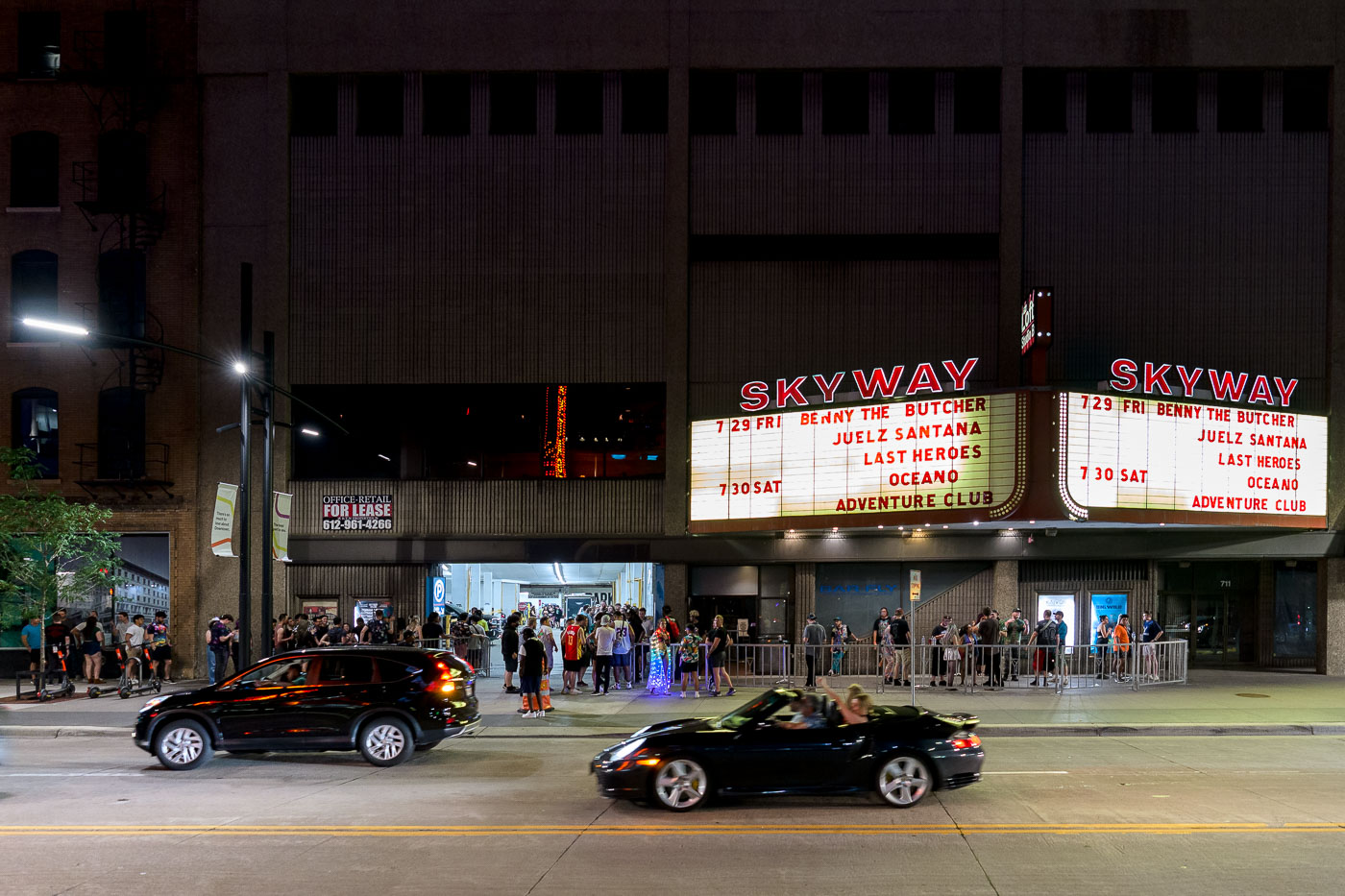
Skyway Theatre marquee in downtown Minneapolis advertising Benny the Butcher, Juelz Santana, Last Heroes and Oceano.
The Skyway Theatre in downtown Minneapolis is shown on the night of July 30, 2022, with concertgoers lined up outside the venue on Hennepin Avenue. The marquee advertises performances by Benny the Butcher and Juelz Santana on Friday, July 29, and by Last Heroes, Oceano, and Adventure Club on Saturday, July 30. Operated as a live music and event venue in the city center, the theater is part of Minneapolis's downtown entertainment district.

Skyway Theatre Minneapolis: Benny the Butcher, Last Heroes, Oceano
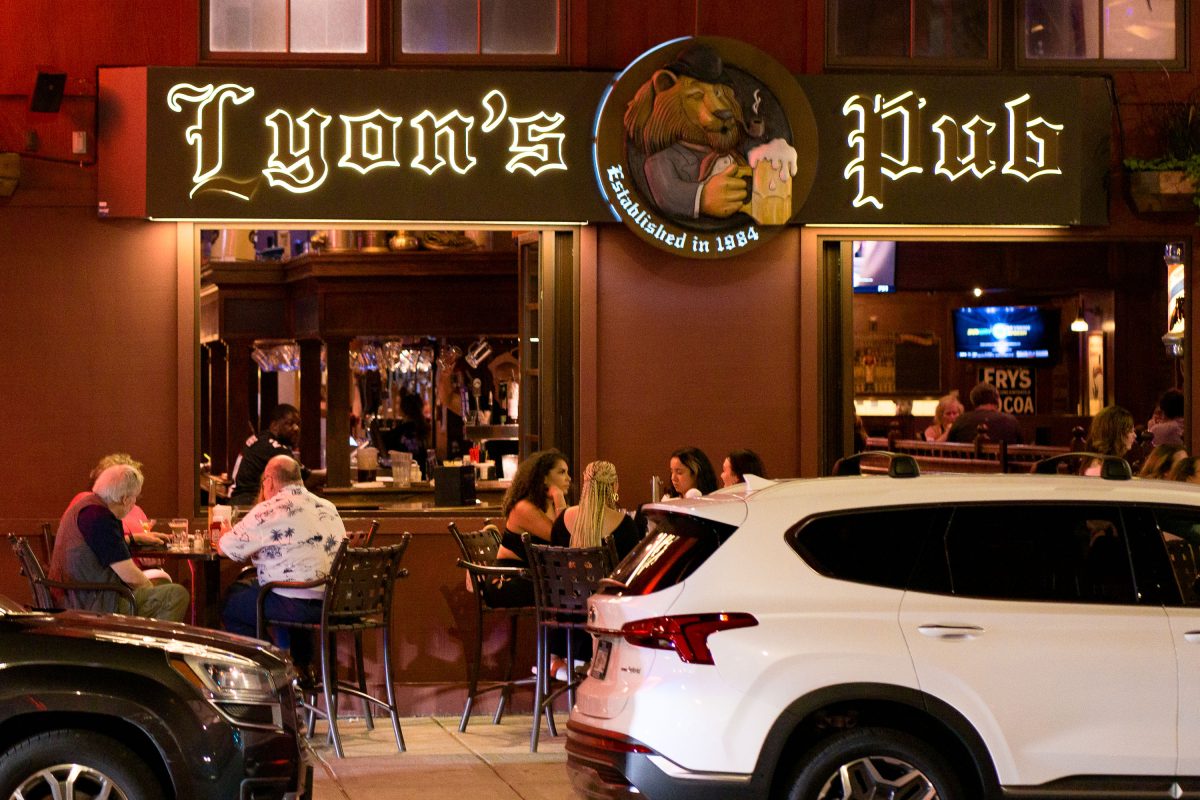
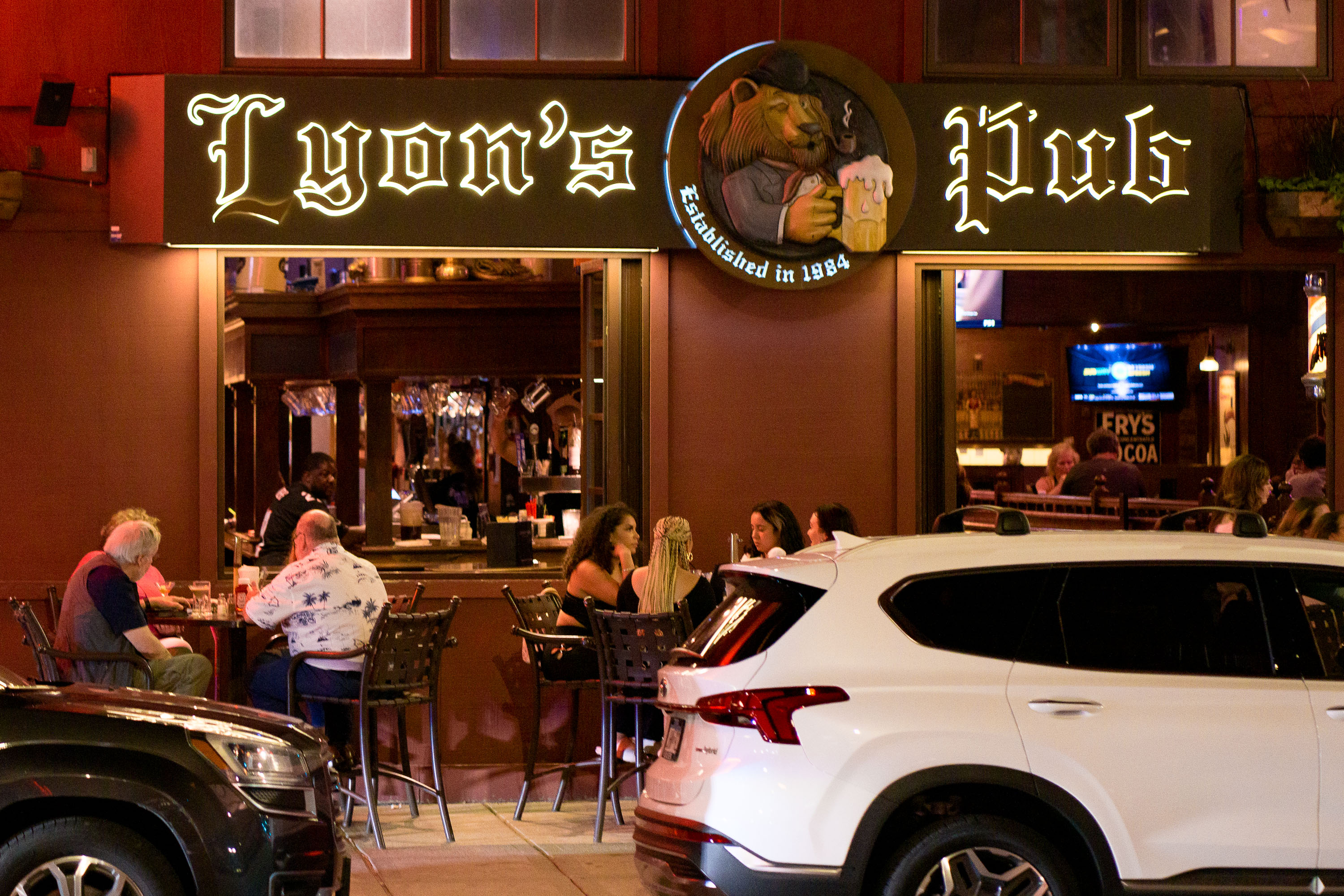
Lyon's Pub in downtown Minneapolis with patrons at outdoor tables at night.
Patrons outside the Lyon's Pub in Downtown Minneapolis as seen in July 2022.

Lyon’s Pub in Downtown Minneapolis in July 2022
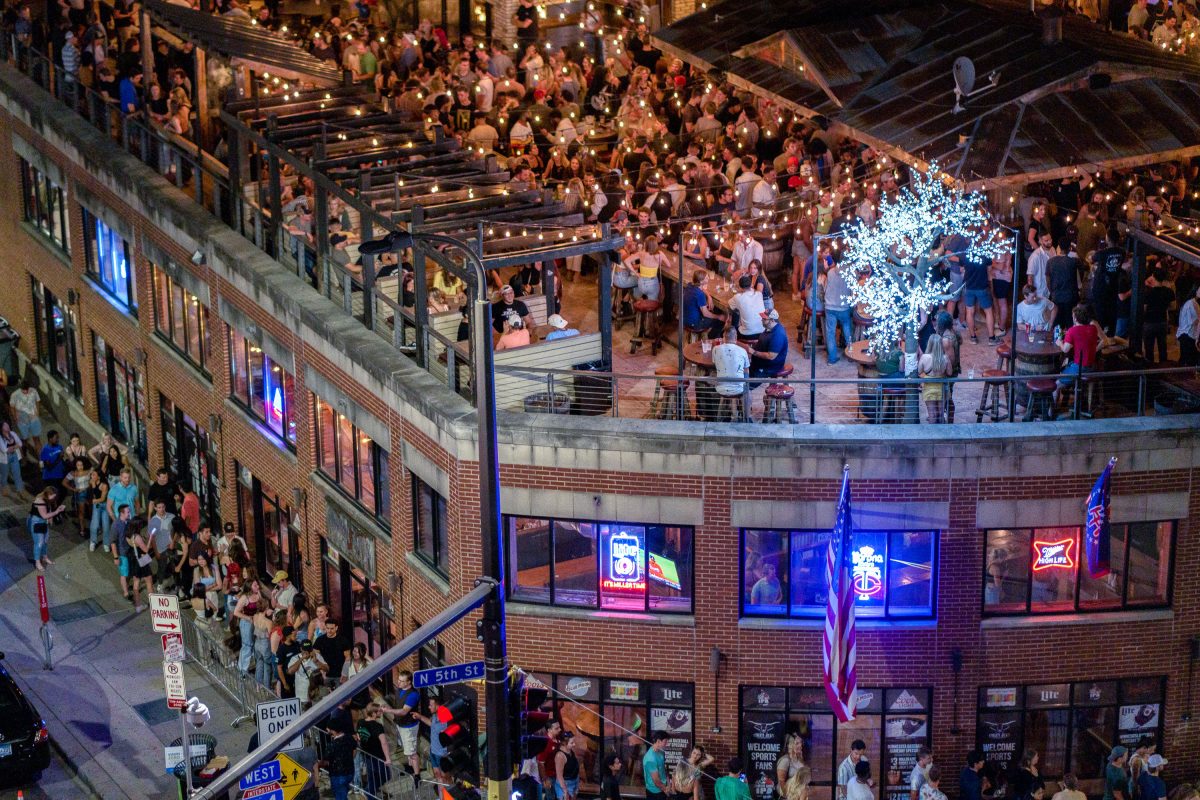
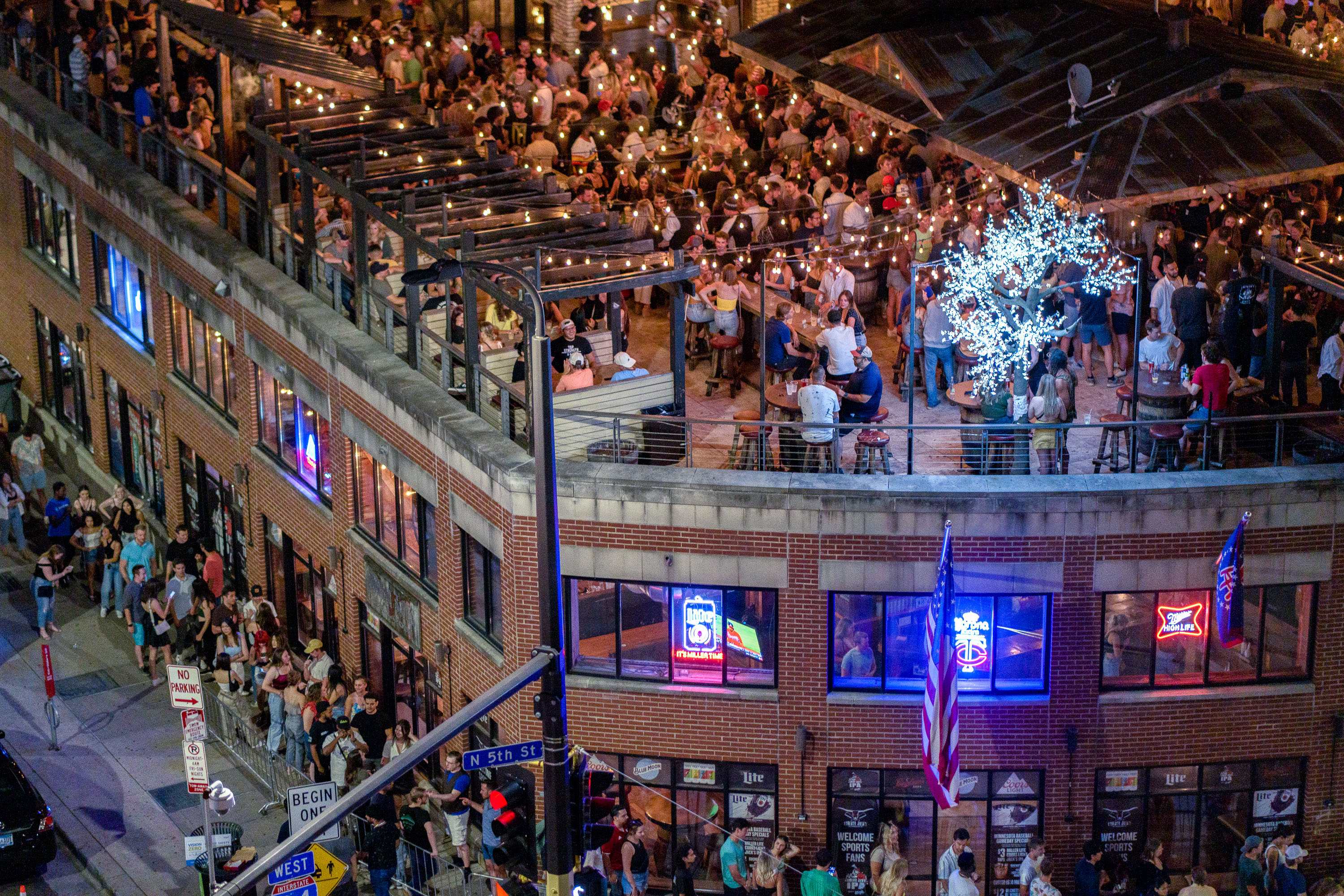
Crowds at Cowboy Jack's rooftop bar in downtown Minneapolis on a summer night.
In July 2022, patrons filled the multi-level outdoor seating area of Cowboy Jack's, a bar in downtown Minneapolis, Minnesota. The establishment, illuminated by string lights, was a hub of activity during a period of resurgence for the city's nightlife following the 2020 Minneapolis Uprising. This event significantly impacted the downtown area, and the return of public gatherings at venues like Cowboy Jack's marked a step towards normalcy.

Cowboy Jack’s, Downtown Minneapolis, July 2022

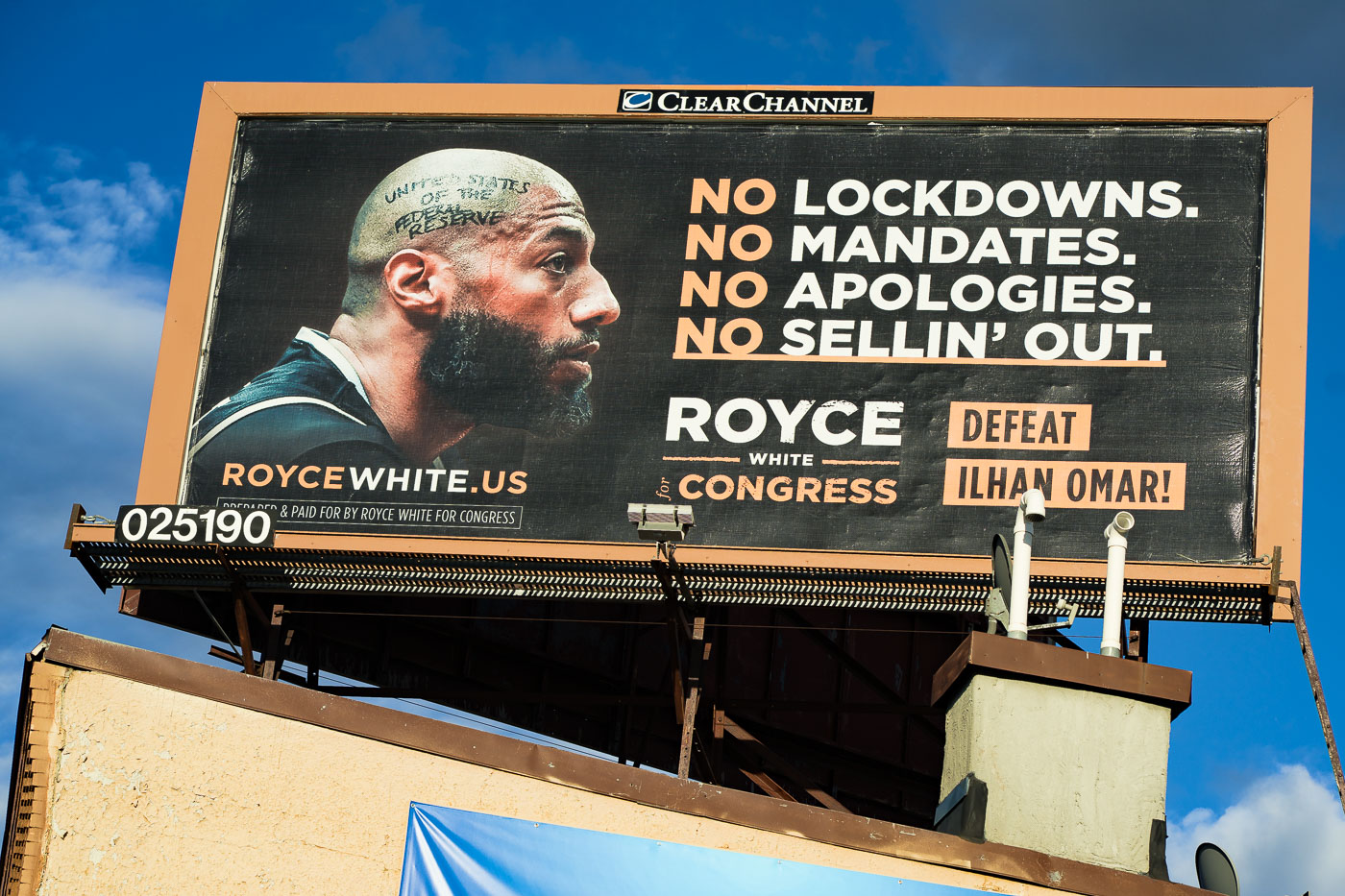
Royce White campaign billboard on Lake Street in Minneapolis targeting Ilhan Omar.
A billboard on Lake Street in Minneapolis promotes Royce White's campaign for Congress, directly challenging incumbent Ilhan Omar. The advertisement features slogans such as "NO LOCKDOWNS. NO MANDATES. NO APOLOGIES. NO SELLIN' OUT." and "DEFEAT ILHAN OMAR!". Paid for by Royce White for Congress, this billboard was a visible element of the political discourse in Minneapolis during the election cycle. The imagery on the billboard includes White's portrait with text on his head referencing "UNITED STATES OF THE FEDERAL RESERVE."

Royce White for Congress Billboard, Lake Street, Minneapolis

Private Armed Security on Girard, Uptown Minneapolis
Armed security walks down Girard Ave in Uptown Minneapolis in July 2022.

Private Armed Security on Girard, Uptown Minneapolis

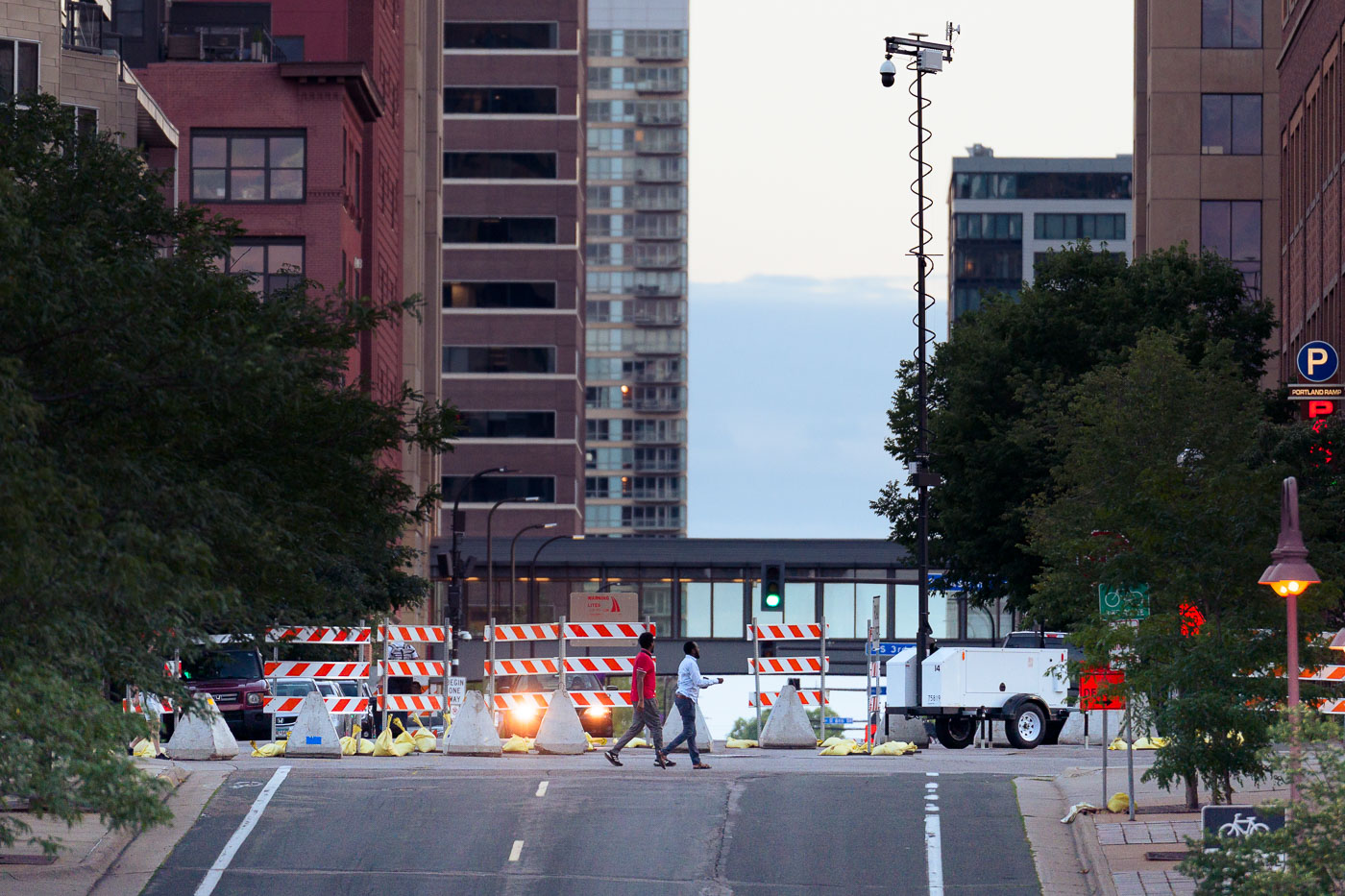
Street barriers and a surveillance camera in Minneapolis's Mill District at dusk.
Concrete barriers and a surveillance camera are positioned in Minneapolis's Mill District, a measure reportedly implemented to deter "hot rodders." The presence of these security installations, alongside temporary construction barriers, indicates a response to concerns about public safety or unauthorized vehicle access. The Mill District, characterized by its historic industrial architecture and recent redevelopment, has also been a site of significant public events, including the Minneapolis Uprising, which may have influenced the deployment of such security infrastructure.

Minneapolis Mill District: Barriers and Surveillance Camera
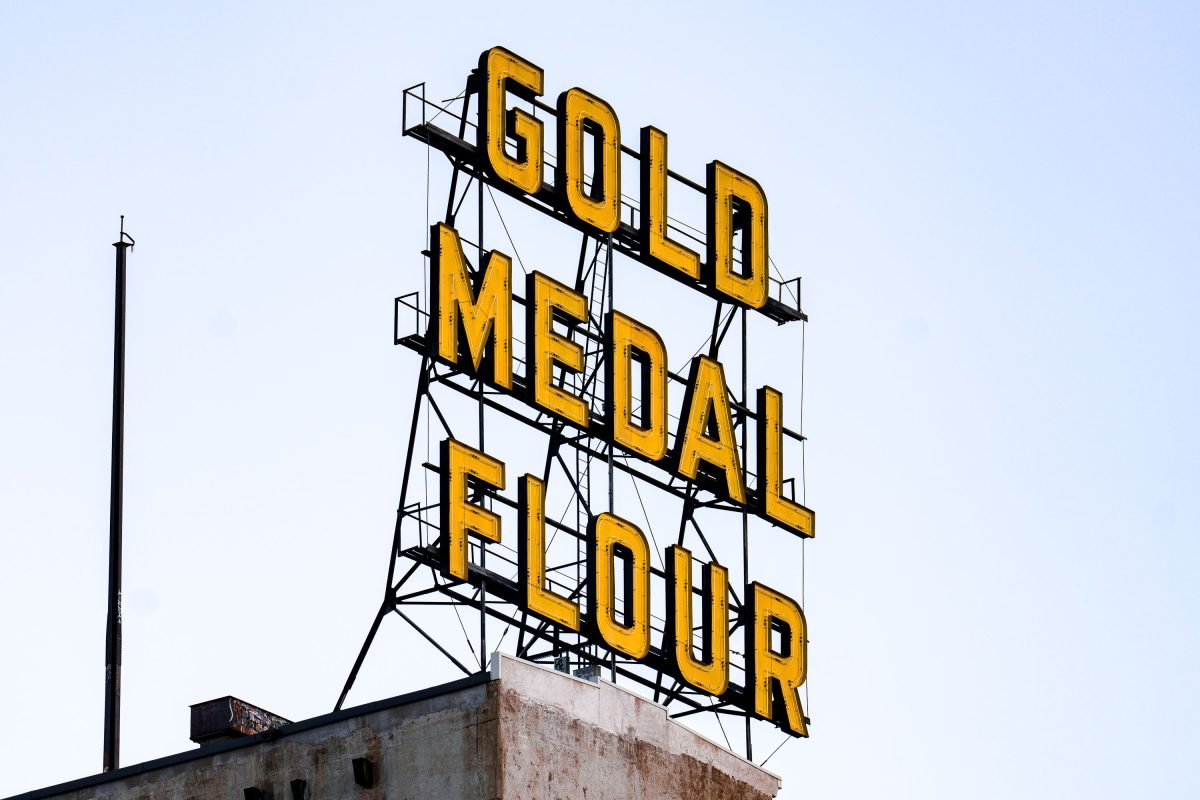
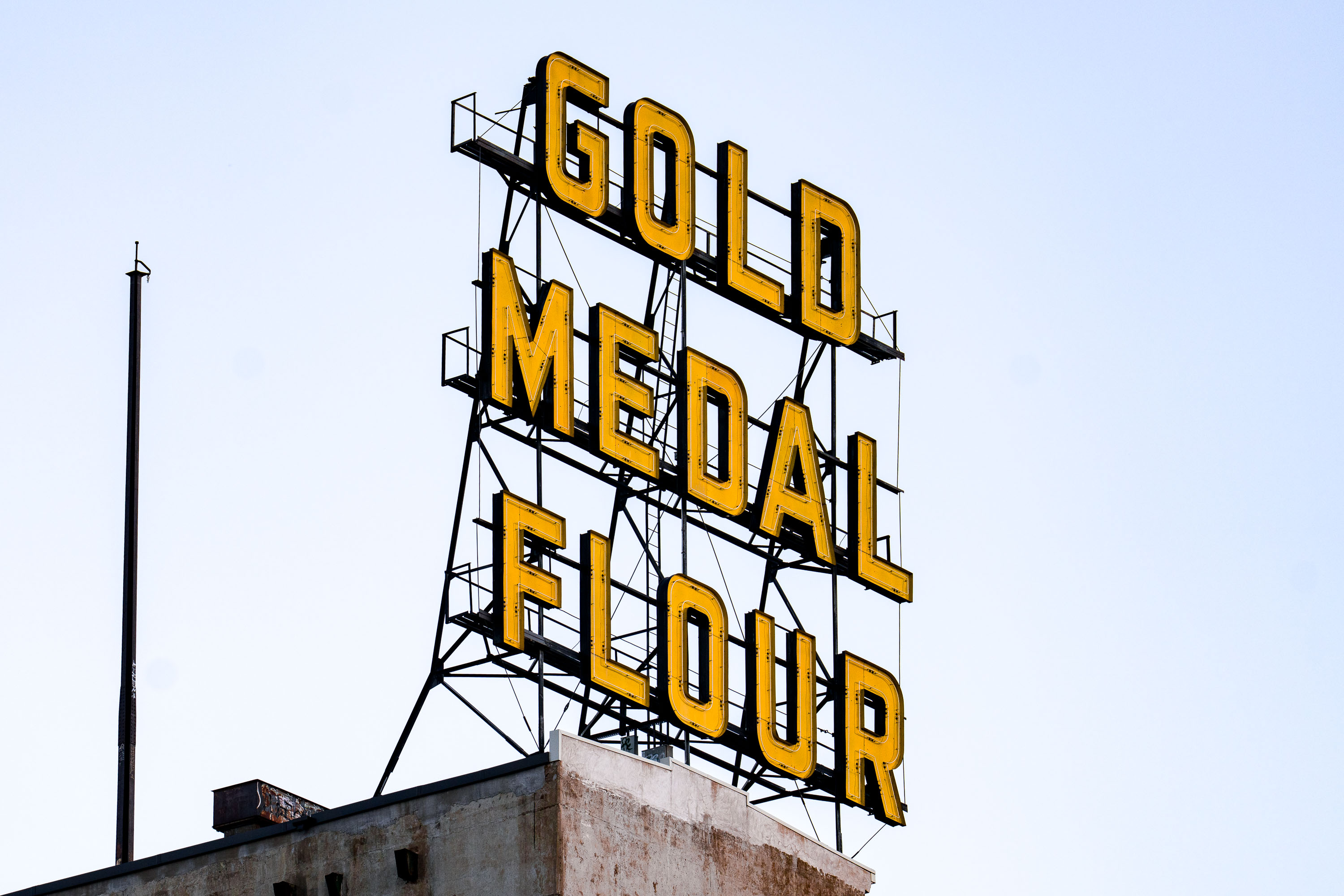
Gold Medal Flour neon sign atop a grain elevator in downtown Minneapolis.
The Gold Medal Flour sign marks the former Washburn-Crosby Company mill complex along the Mississippi River in Minneapolis. Washburn-Crosby, a predecessor of General Mills, adopted the Gold Medal name in 1880 after its flour won top honors at a Millers' International Exhibition in Cincinnati. The rooftop sign has stood above the mill district since the early 20th century, a period when Minneapolis produced more flour than any other city in the world. The surrounding complex, including the Washburn A Mill, is now preserved as part of the Mill City Museum and the St. Anthony Falls Historic District.

Gold Medal Flour Sign, Mississippi Riverfront, Minneapolis

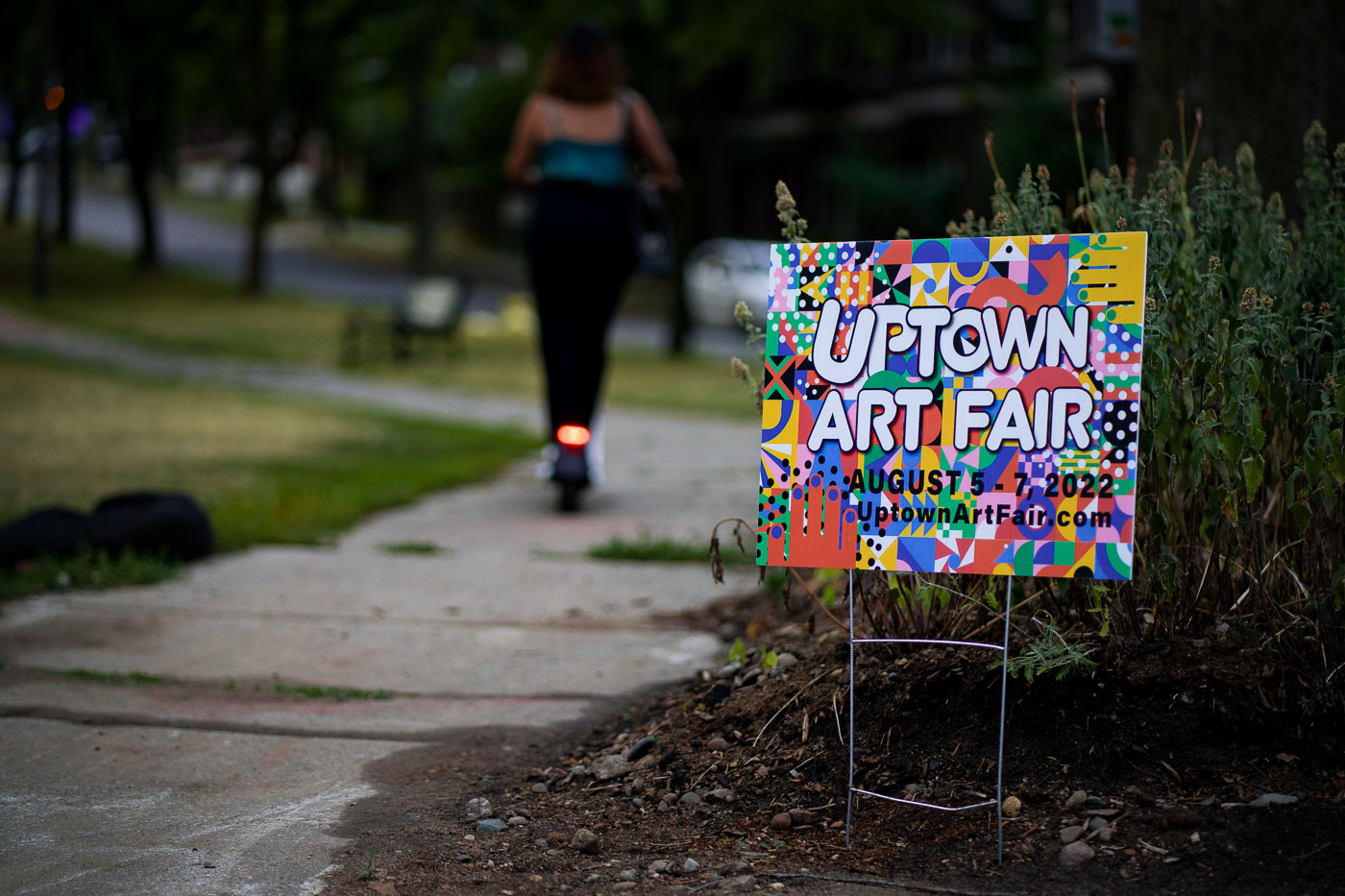
Uptown Art Fair sign on a Minneapolis sidewalk with a scooter rider in the background.
A sign announces the Uptown Art Fair in Minneapolis, which took place from August 5-7, 2022. This annual event is a juried exhibition that draws artists and visitors from across the country to the Uptown neighborhood. The fair has been a significant cultural fixture in Minneapolis, contributing to the area's reputation as a vibrant arts district and drawing substantial crowds.

Uptown Art Fair Sign, Minneapolis, August 2022

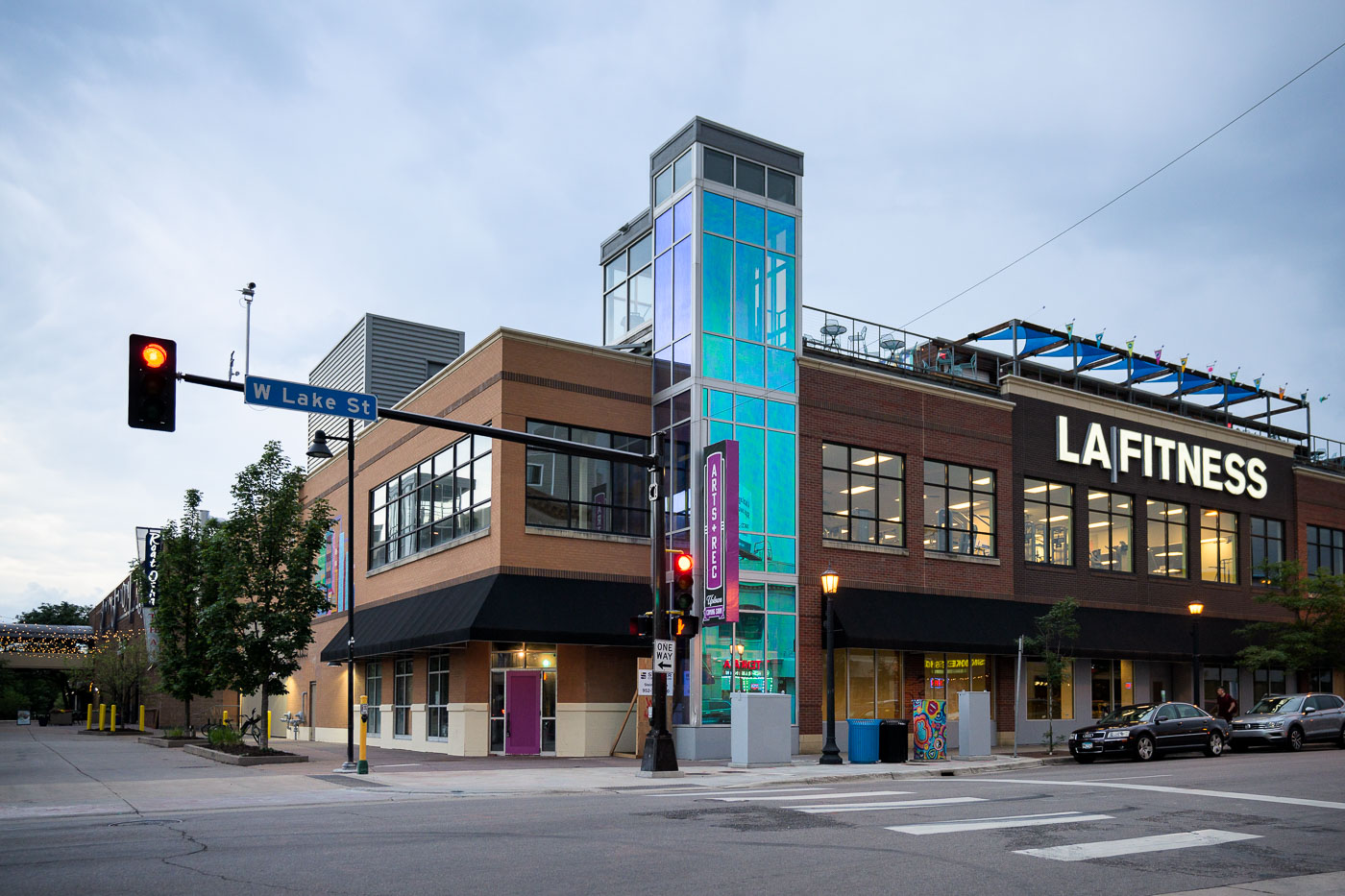
LA Fitness and Arts + Rec inside Seven Points on West Lake Street in Minneapolis's Uptown neighborhood.
LA Fitness and Arts + Rec inside the Seven Points building at West Lake Street in the Uptown neighborhood of Minneapolis.

LA Fitness and Arts + Rec at Seven Points on West Lake Street

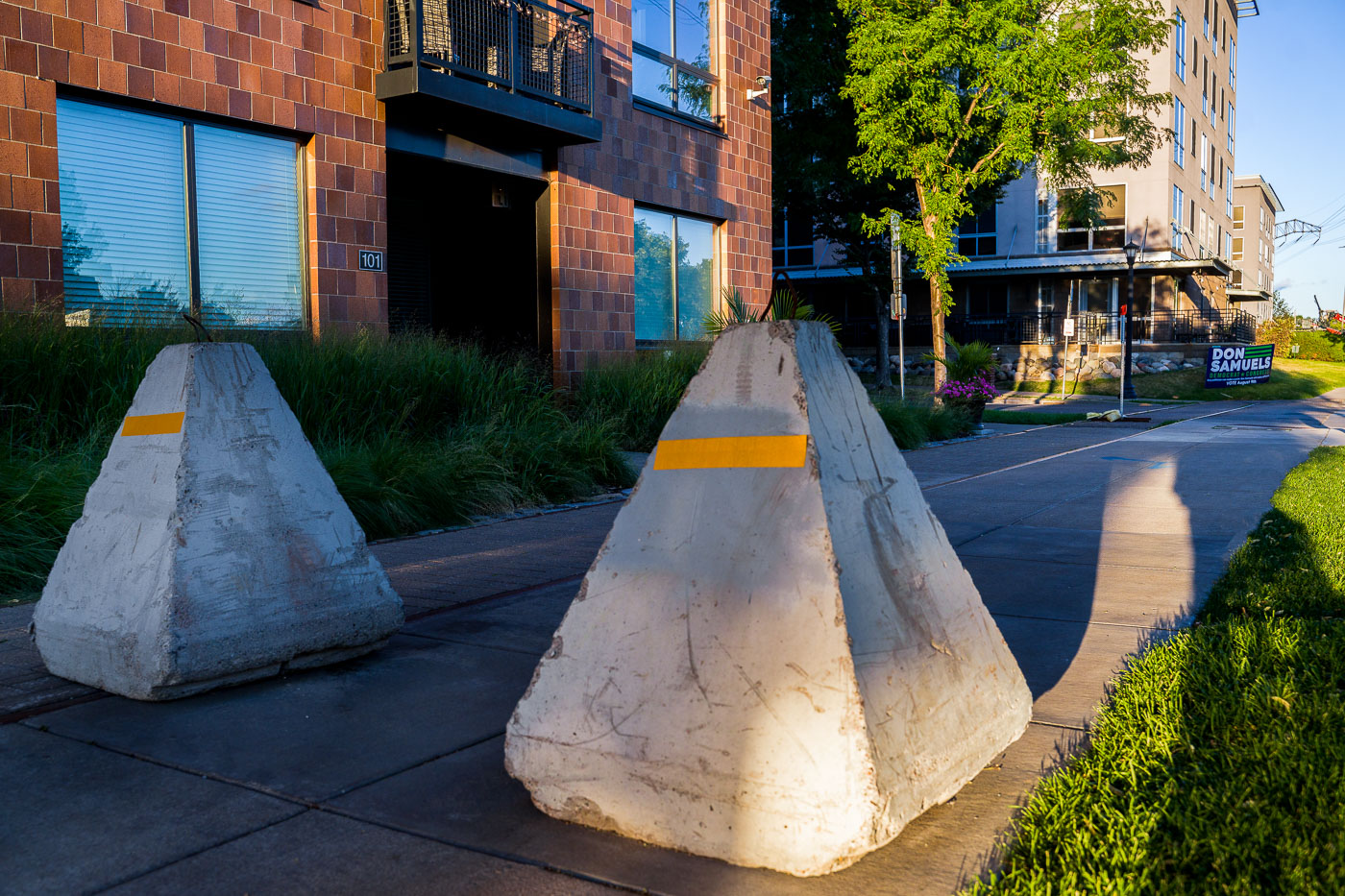
Concrete barricades beside an apartment building near Stone Arch Bridge in Minneapolis, July 2022.
Concrete barricades are placed near the Stone Arch Bridge in Minneapolis, July 2022. These barriers were installed following public safety concerns and incidents that occurred on July 4th, 2022, a date often associated with large gatherings and past unrest in the city. The presence of these security measures reflects ongoing efforts to manage public spaces and ensure safety during periods of heightened activity. A campaign sign for Don Samuels, a candidate for Congress, is visible in the background, indicating the political climate of the area at the time.

Minneapolis: Barricades Near Stone Arch Bridge, July 2022

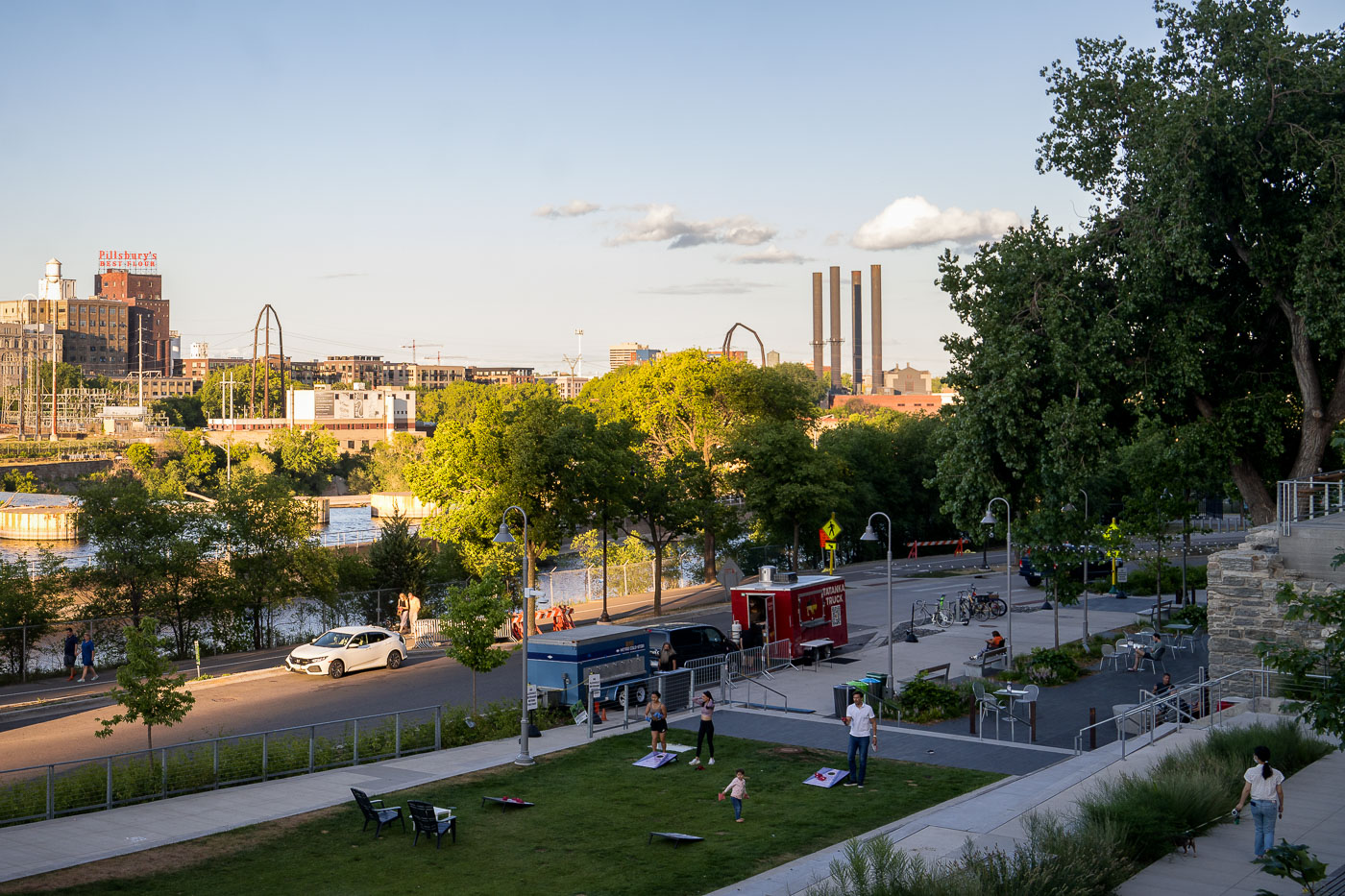
Food truck and lawn games near Stone Arch Bridge in Minneapolis.
The Stone Arch Bridge, originally constructed in 1883 for the Great Northern Railway, now serves as a pedestrian walkway across the Mississippi River in Minneapolis. The bridge offers views of the city's historic mill district, an area that was once the industrial center of Minneapolis. Today, the surrounding riverfront has been redeveloped into a public park, attracting visitors with amenities like food trucks and lawn games, such as cornhole, transforming the former industrial zone into a vibrant urban gathering space.

Minneapolis Stone Arch Bridge area with food trucks and games
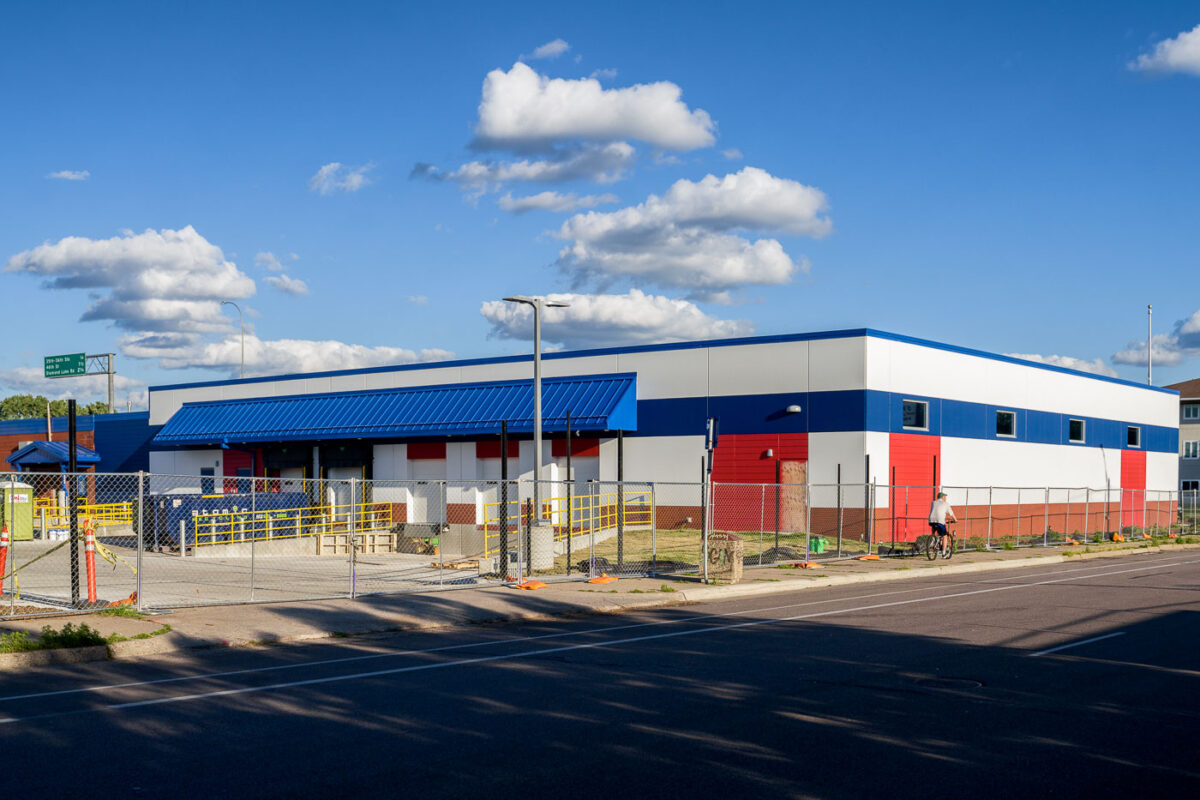
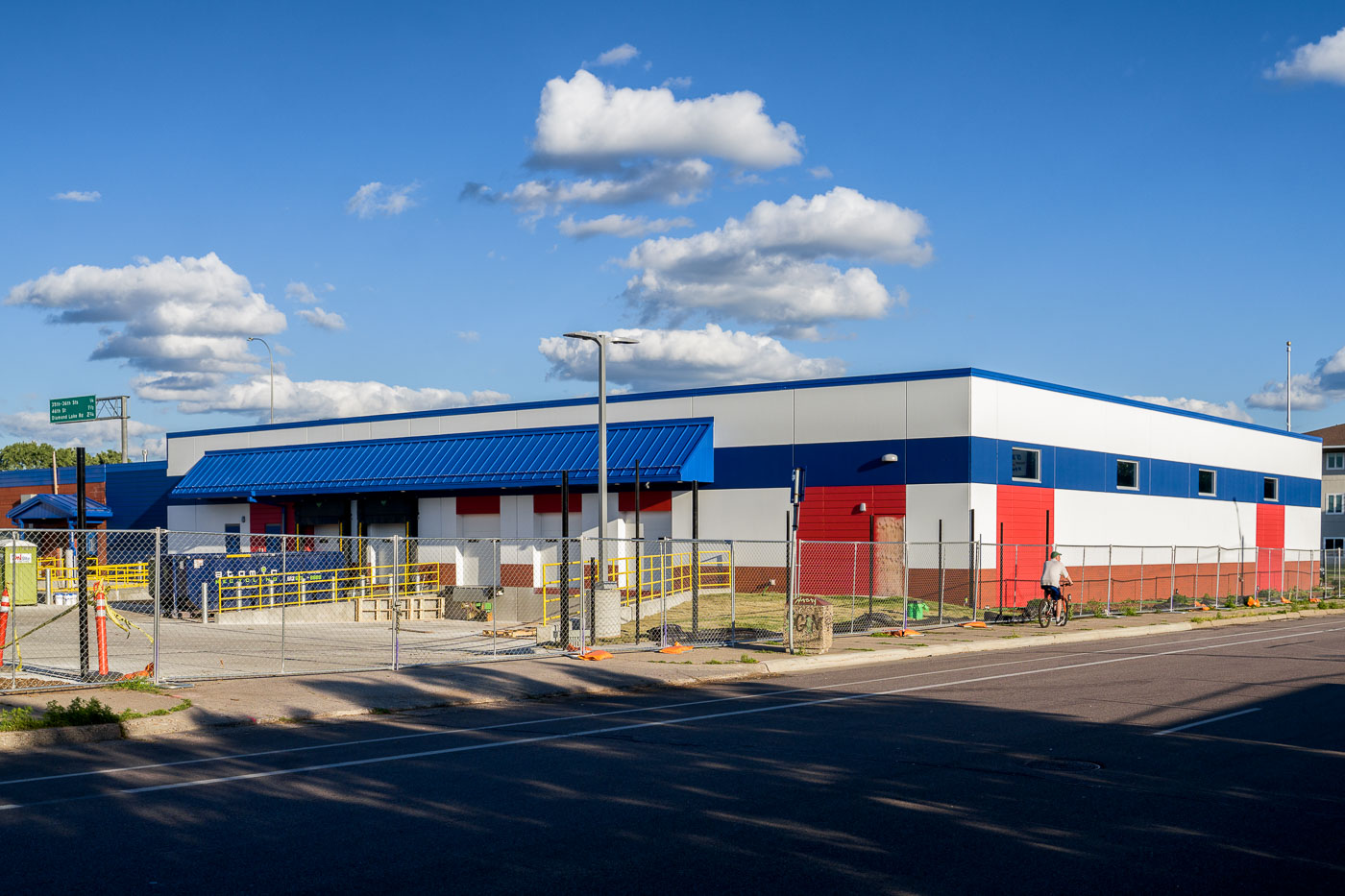
Rebuilt USPS Lake Street Station in South Minneapolis behind a chain-link fence.
The rebuilt USPS Lake Street Station in South Minneapolis is shown here, a structure that was destroyed during the unrest following the murder of George Floyd in 2020. The post office serves as a critical community resource, providing essential postal services to residents and businesses in the surrounding neighborhoods. Its reconstruction represents a commitment to restoring public infrastructure and supporting the ongoing recovery of the Lake Street corridor.

Rebuilt USPS Lake Street Station, South Minneapolis
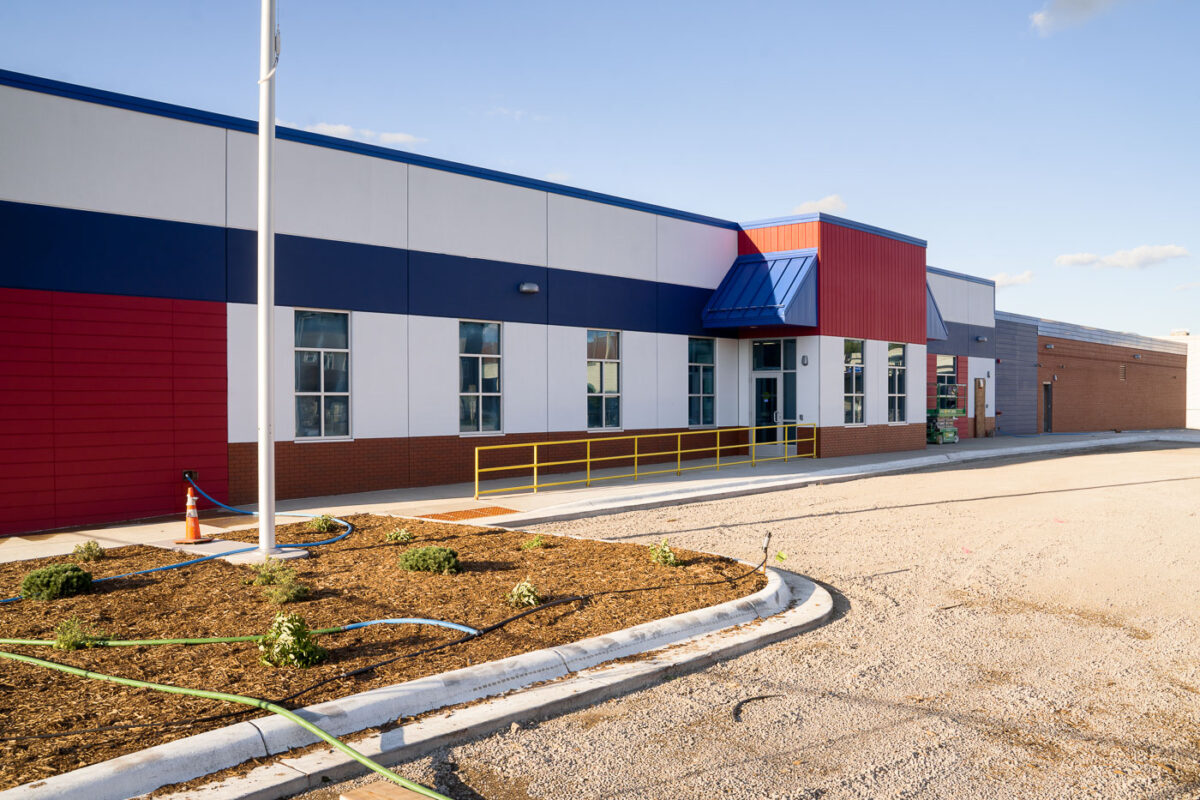
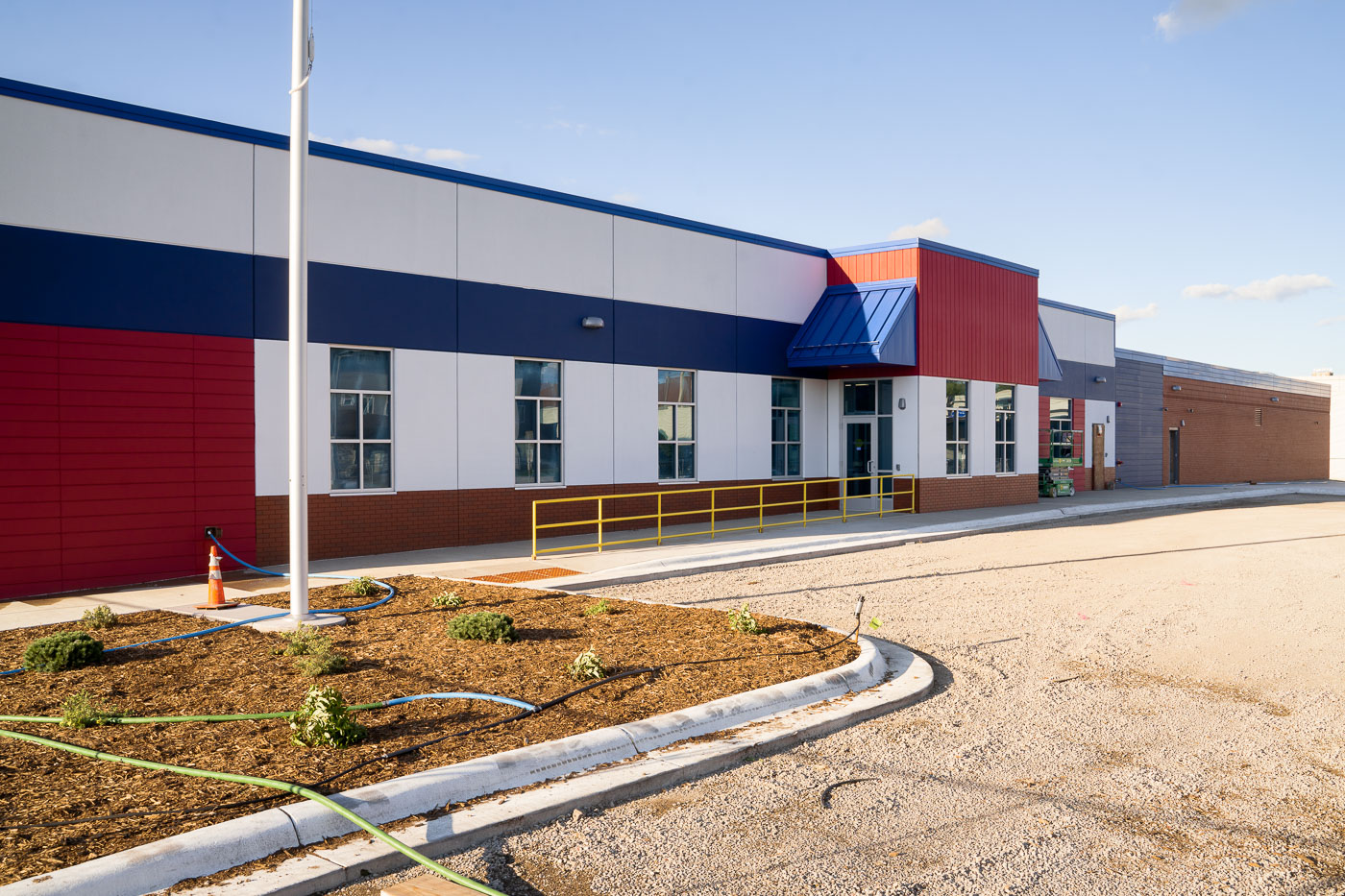
Rebuilt USPS Lake Street Station in South Minneapolis, with new facade and entry ramp.
The USPS Lake Street Station in South Minneapolis, rebuilt after its destruction during the 2020 unrest following the murder of George Floyd, serves as a critical community resource. This facility provides essential postal services to residents and businesses in the surrounding neighborhoods. Its reconstruction represents a commitment to restoring public infrastructure and supporting the ongoing recovery of the Lake Street corridor.

USPS Post Office Gets Rebuilt

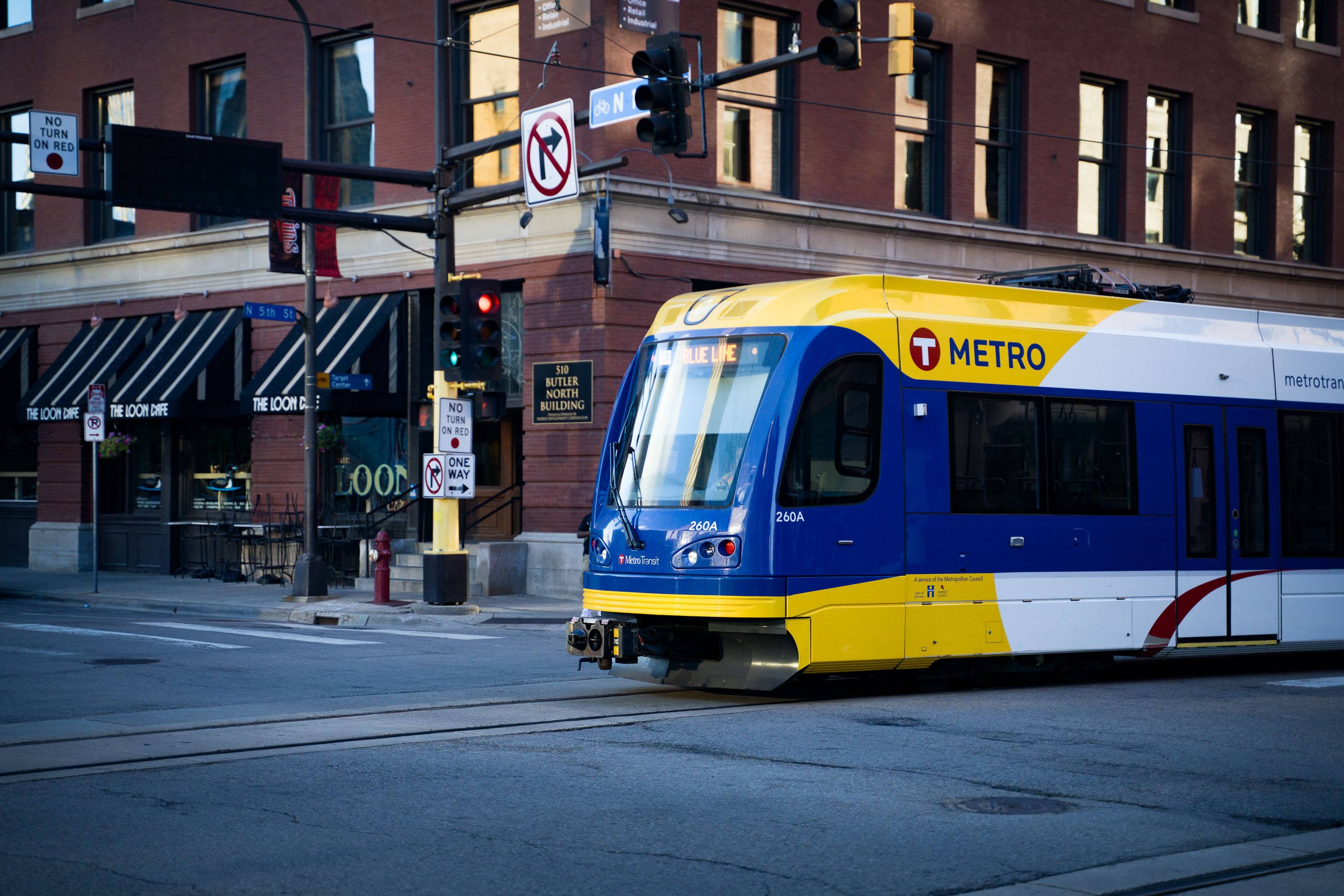
Metro Transit blue line light rail train travels through downtown Minneapolis warehouse district near fifth street.
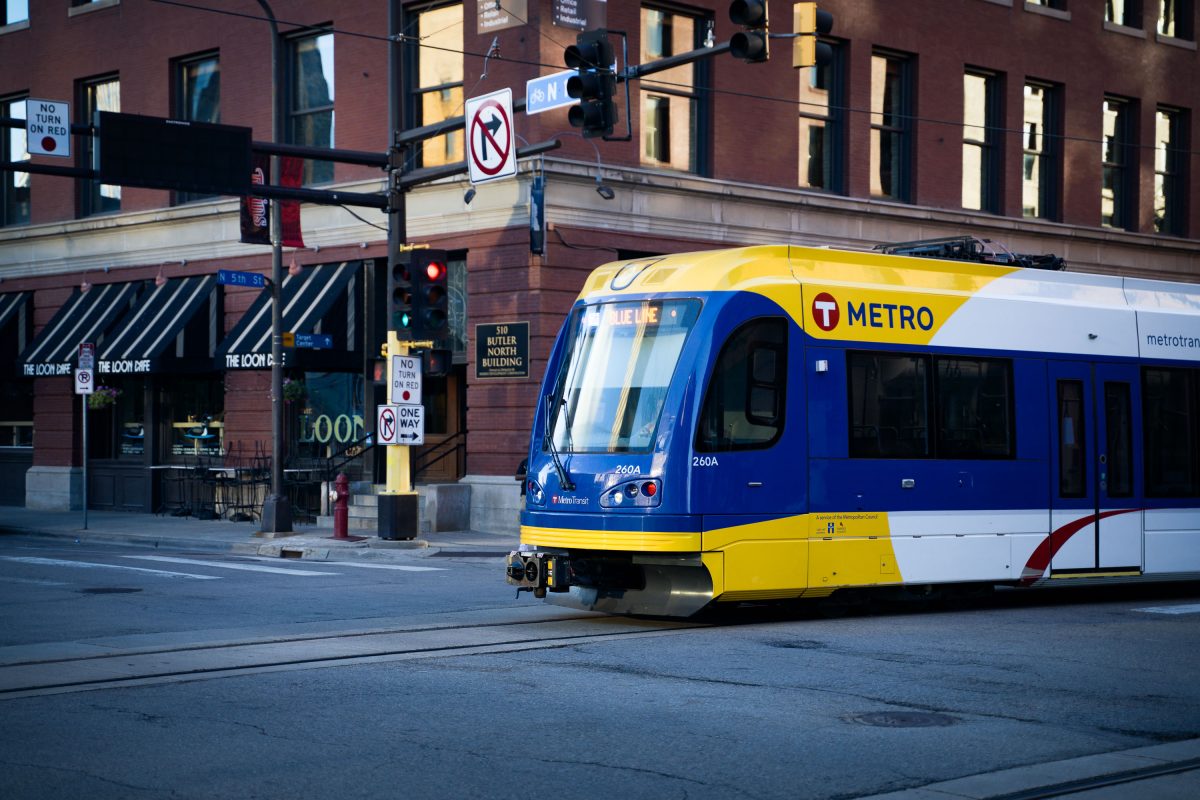
A METRO Blue Line light rail train travels through the Warehouse District in downtown Minneapolis. Operated by Metro Transit, the Blue Line connects downtown Minneapolis to the Mall of America and Minneapolis–Saint Paul International Airport via the Hiawatha corridor.

Blue Line Train Turning onto North 5th Street, Minneapolis
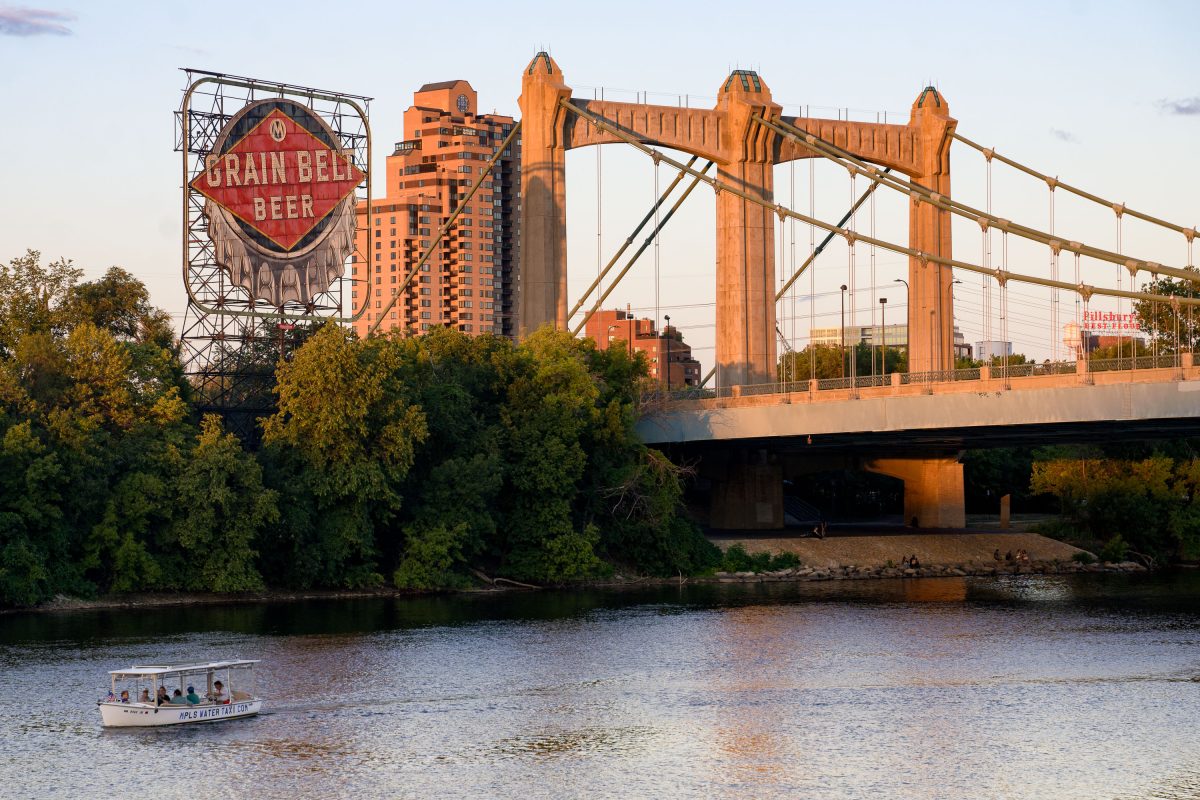
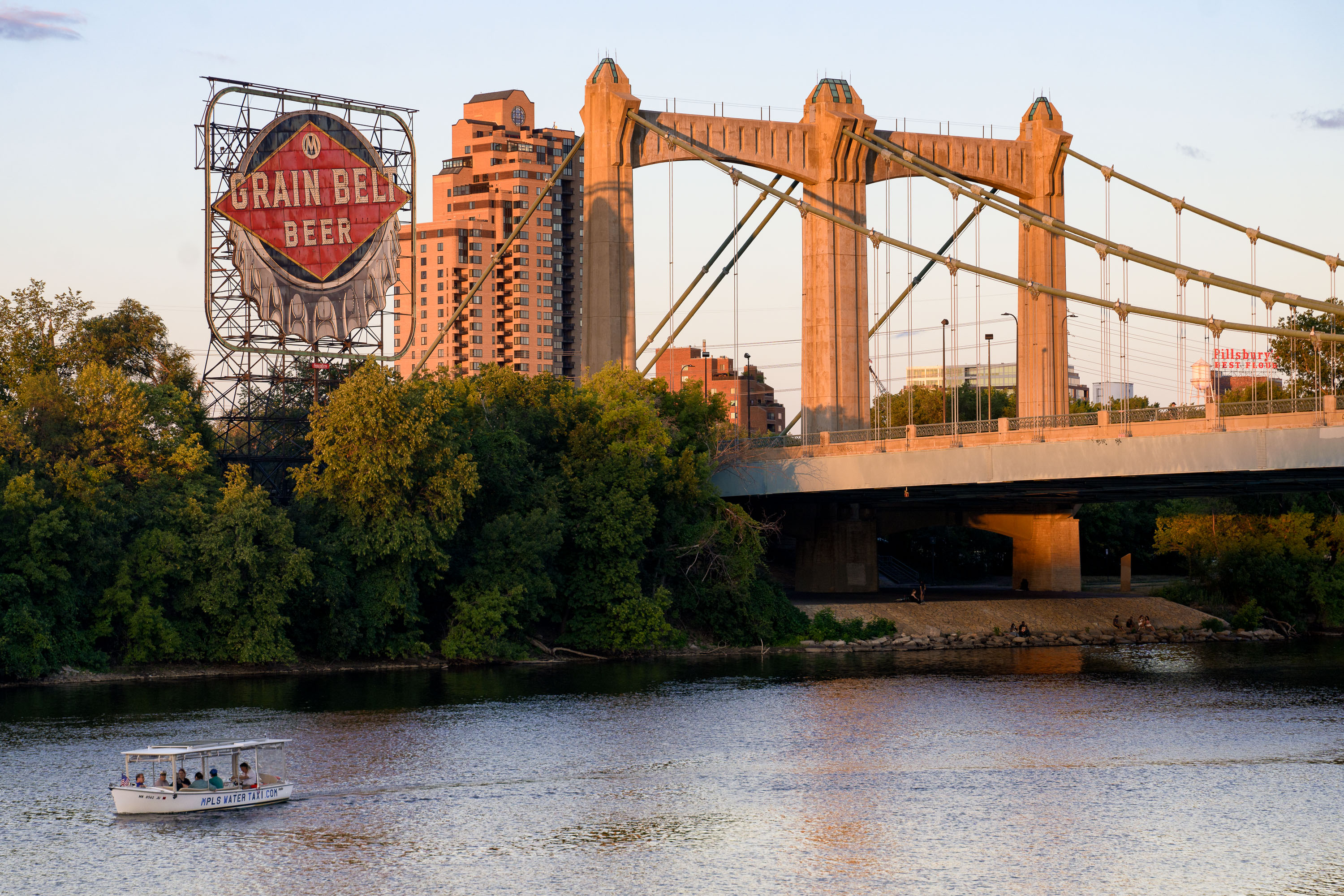
Water taxi on the Mississippi River below Hennepin Avenue Bridge and the Grain Belt sign in Minneapolis.
A water taxi travels on the Mississippi River in Minneapolis, passing under the Hennepin Avenue Bridge. Completed in 1929, the bridge is a significant example of early 20th-century infrastructure. The historic Grain Belt Beer sign, a remnant of the area's industrial past, is visible in the background, alongside modern residential buildings. The Mississippi River remains a vital transportation corridor, with services like the water taxi continuing its historical role.

Minneapolis Water Taxi, Hennepin Ave Bridge, Grain Belt Sign
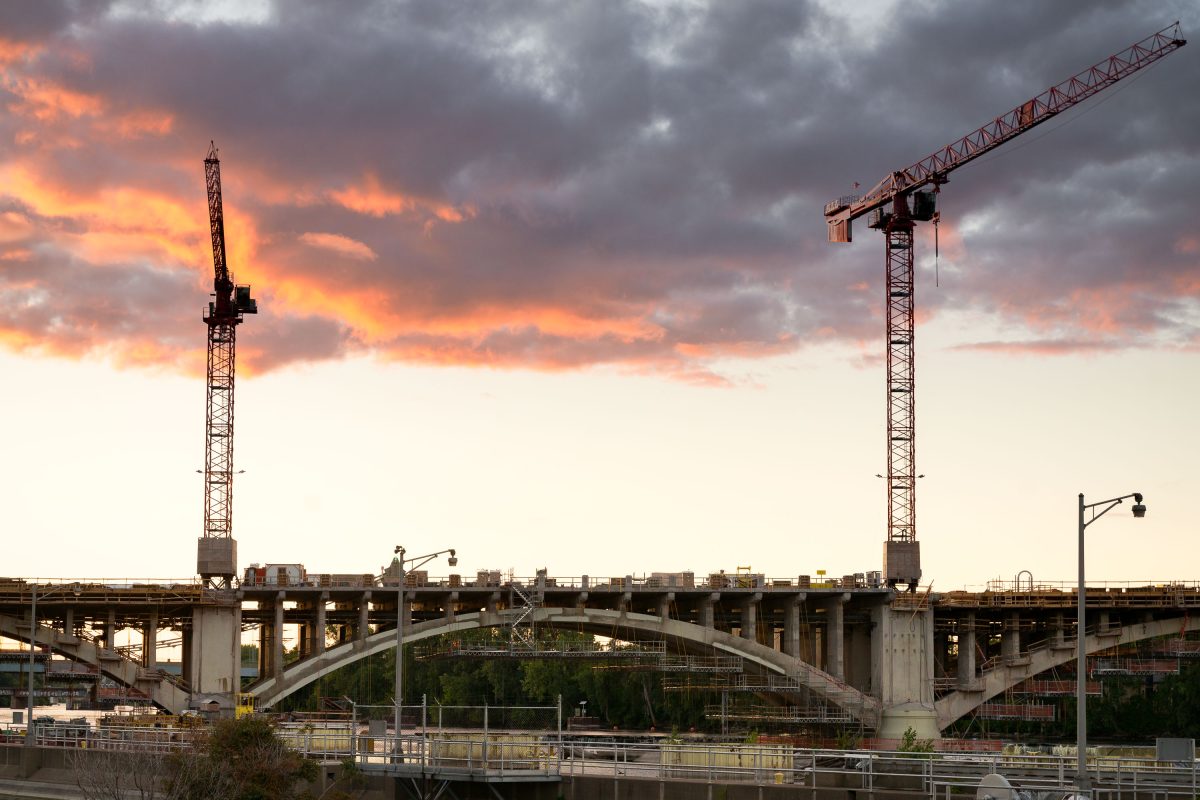
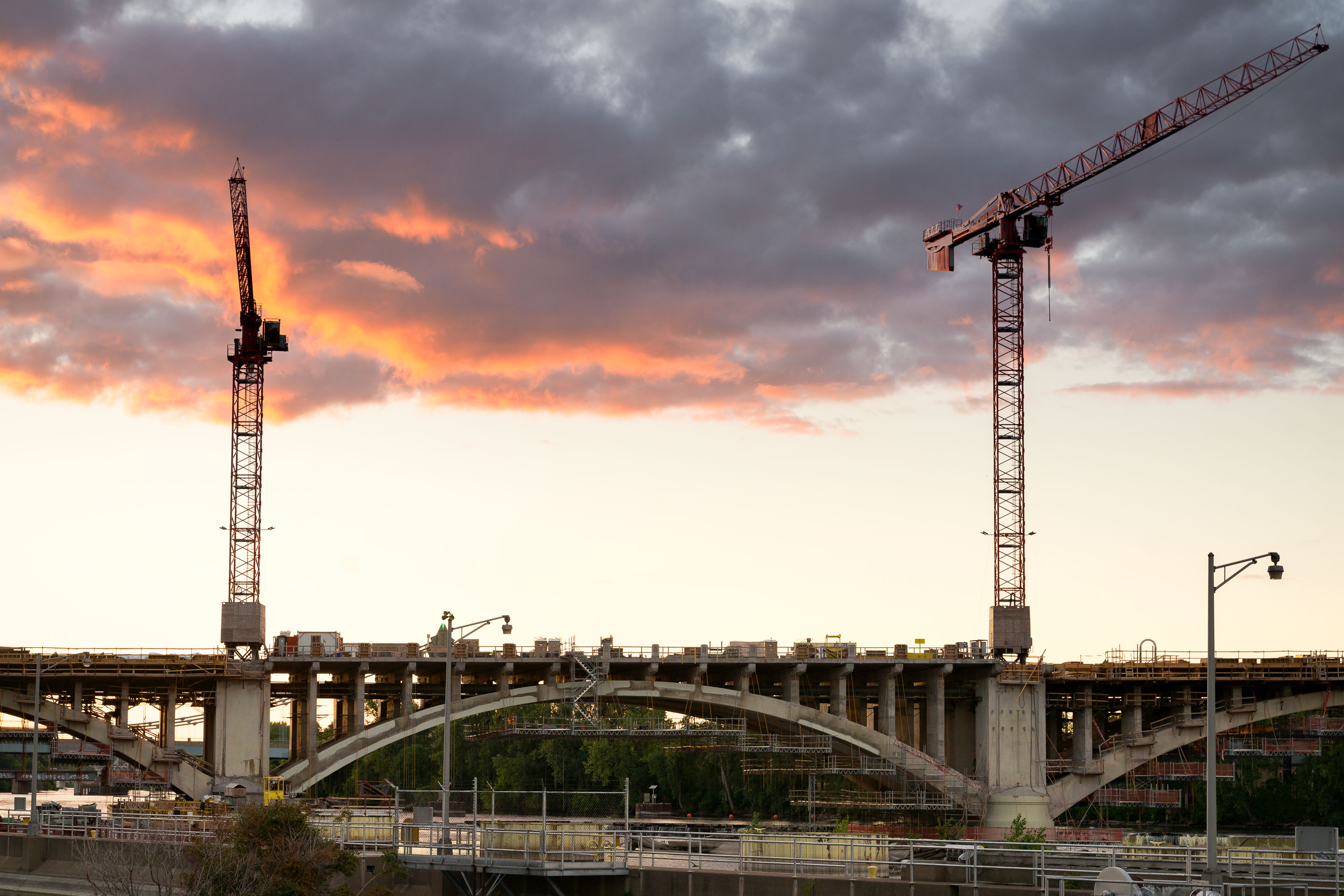
Third Avenue Bridge under construction in Minneapolis at sunset with two cranes.
Construction cranes are visible over the Third Avenue Bridge in Minneapolis during a sunset. This bridge is a critical link between downtown Minneapolis and the Northeast community, spanning the Mississippi River. The ongoing reconstruction project aims to modernize the structure, which was originally built in the early 20th century and has served as a key piece of the city's transportation network.

Third Avenue Bridge Construction, Minneapolis Sunset

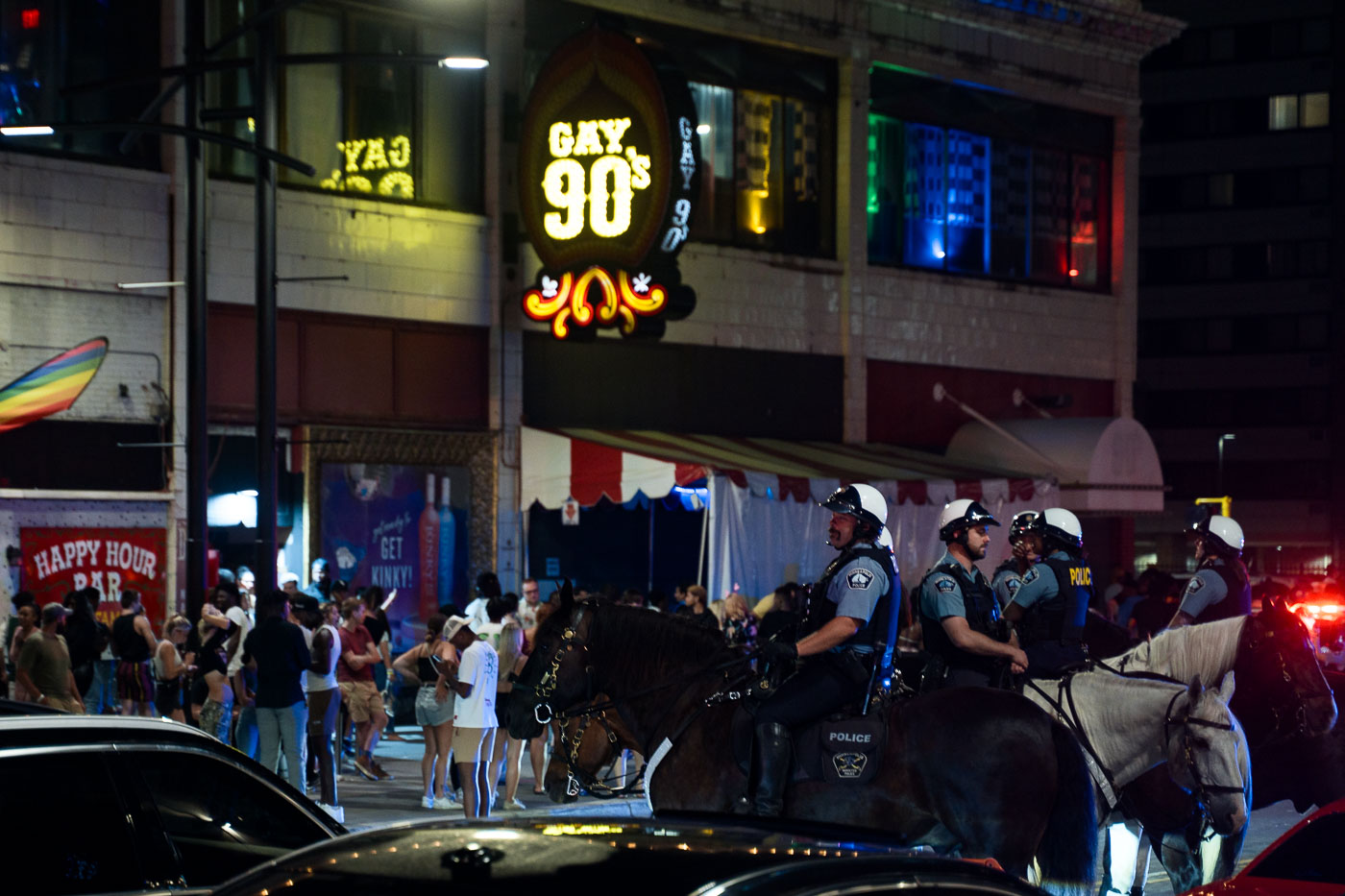
Mounted police outside the Gay 90's bar in downtown Minneapolis at night.
Mounted police officers are seen outside the Gay 90's bar in Minneapolis on July 24, 2022. The Gay 90's is a long-standing LGBTQ+ establishment in the city's downtown area, known for its nightlife. The presence of mounted police is common during public events or gatherings to maintain order and ensure safety. This image was taken during a period of heightened social awareness in Minneapolis following the murder of George Floyd in 2020, though the specific reason for the police presence on this particular night is not specified.

Mounted Police Outside Gay 90s Bar, Minneapolis 07/24/22

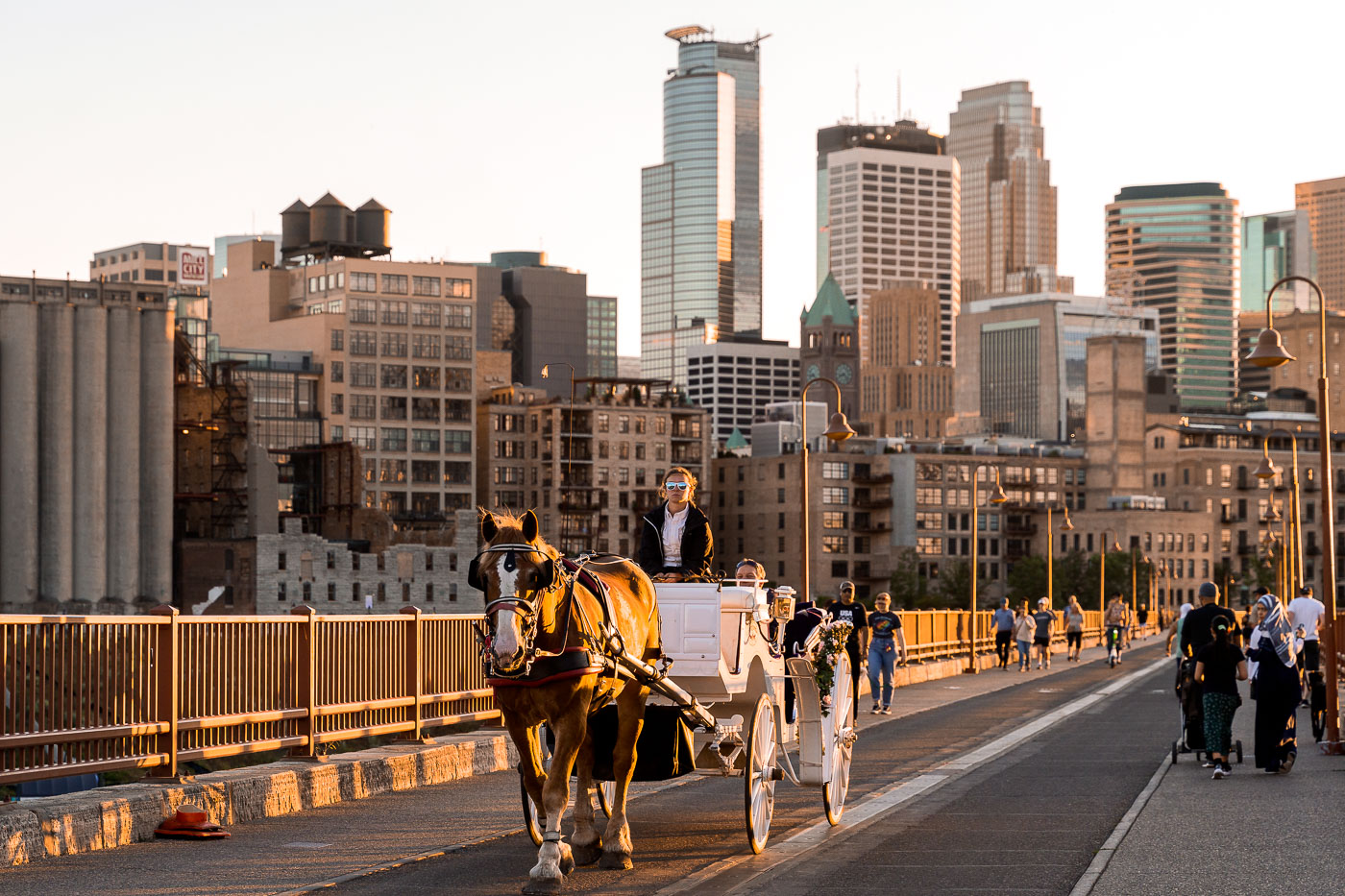
A horse-drawn carriage travels across the Stone Arch Bridge in Minneapolis with the city skyline in the background.
A horse-drawn carriage traverses the Stone Arch Bridge in Minneapolis, with the city's downtown skyline in the background. Constructed in 1883, the bridge originally served as a railway bridge for the Great Northern Railway before its conversion to a pedestrian and bicycle path, reopening in 1994.

Carriage Ride at Sunset on Stone Arch Bridge

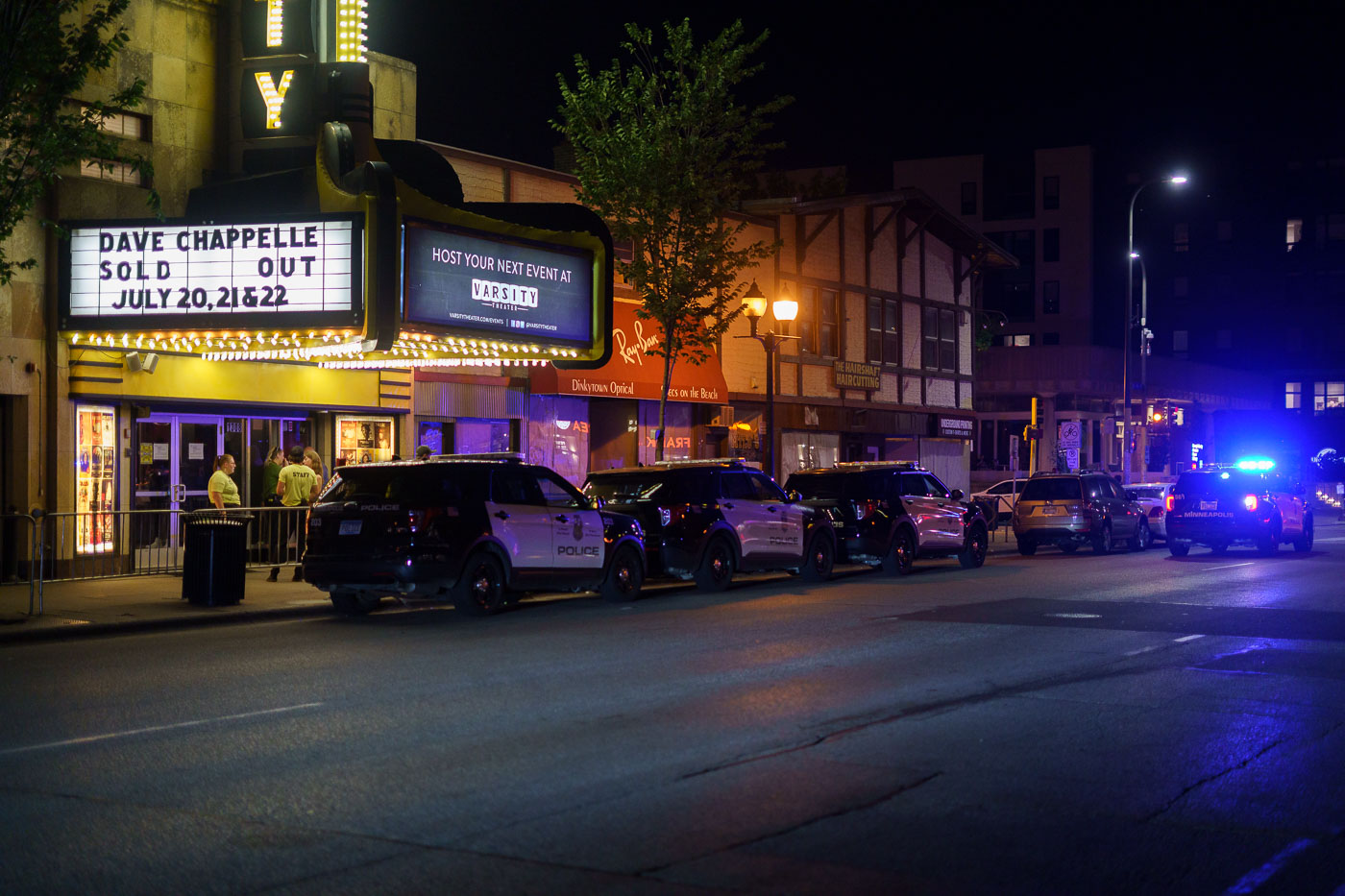
Police cars outside Varsity Theater in Minneapolis during Dave Chappelle shows.
Police vehicles were stationed outside the Varsity Theater in Minneapolis on July 20, 2022, during the first night of a sold-out engagement by comedian Dave Chappelle. The Varsity Theater, a historic venue in the Dinkytown neighborhood, has a long-standing reputation for hosting live performances and film screenings. The visible police presence suggests a heightened security measure, possibly in response to past controversies surrounding Chappelle's performances or general public safety concerns.

Dave Chappelle Show, Police Cars at Varsity Theater, Minneapolis

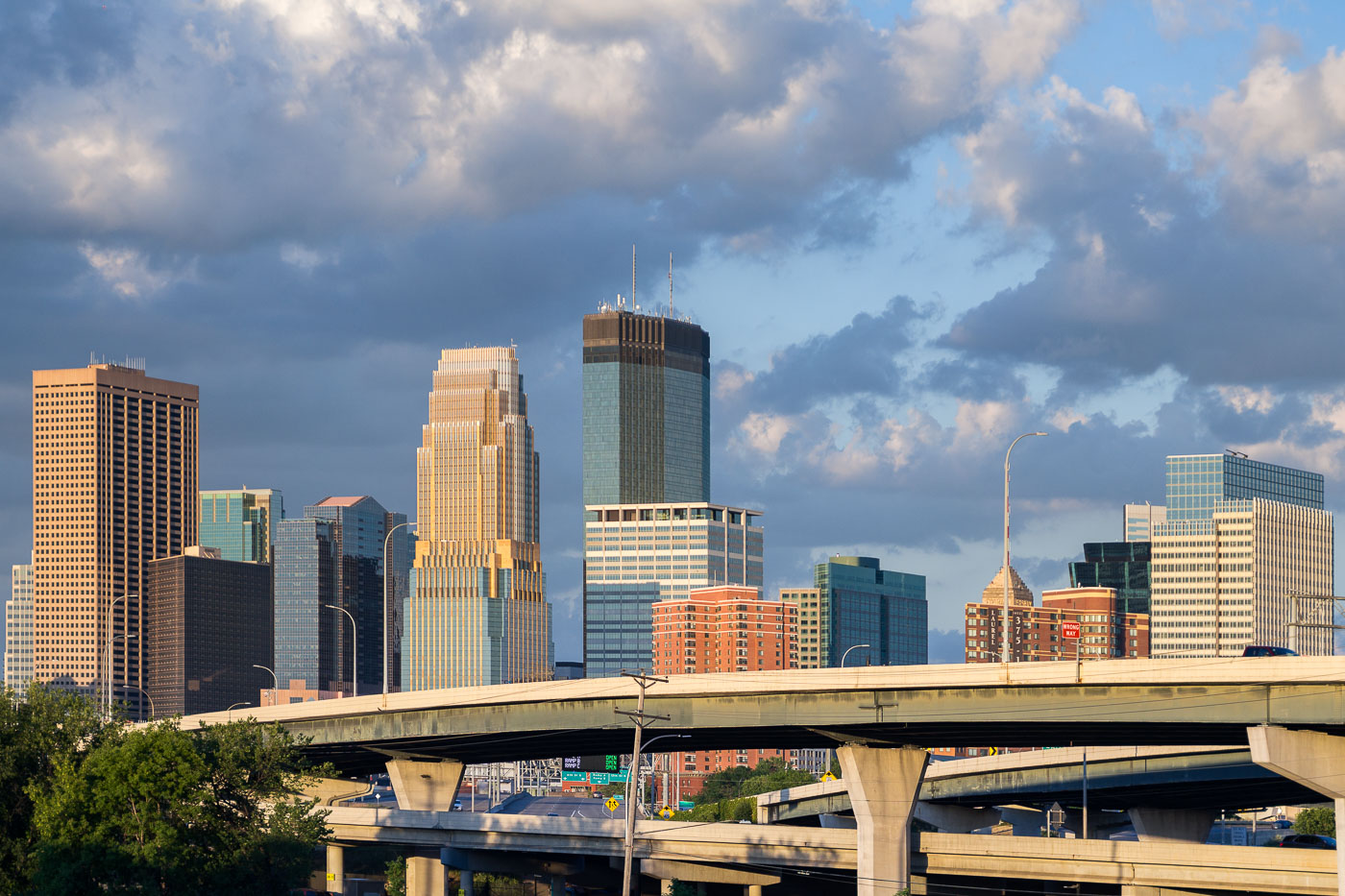
Minneapolis skyline behind I-35W overpasses near downtown.
The Minneapolis skyline rises behind the elevated overpasses of Interstate 35W, a major north-south freeway. This complex network of concrete structures, viewed from the Cedar Lake Trail, facilitates regional transportation and connects the city's central business district with surrounding areas. The construction of I-35W, completed in stages from the 1960s through the 1990s, significantly reshaped the urban environment and continues to serve as a vital artery for commerce and daily commutes in the Twin Cities metropolitan area.

Minneapolis Skyline and I-35W Overpasses
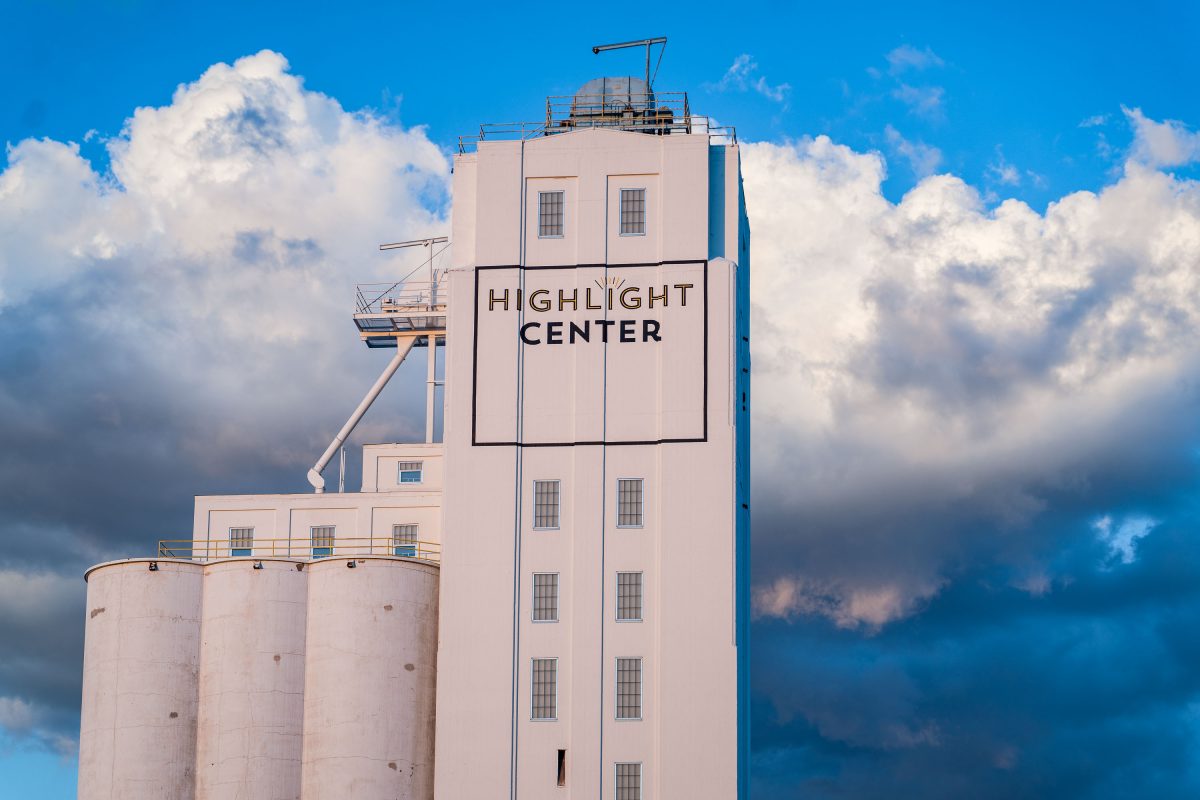
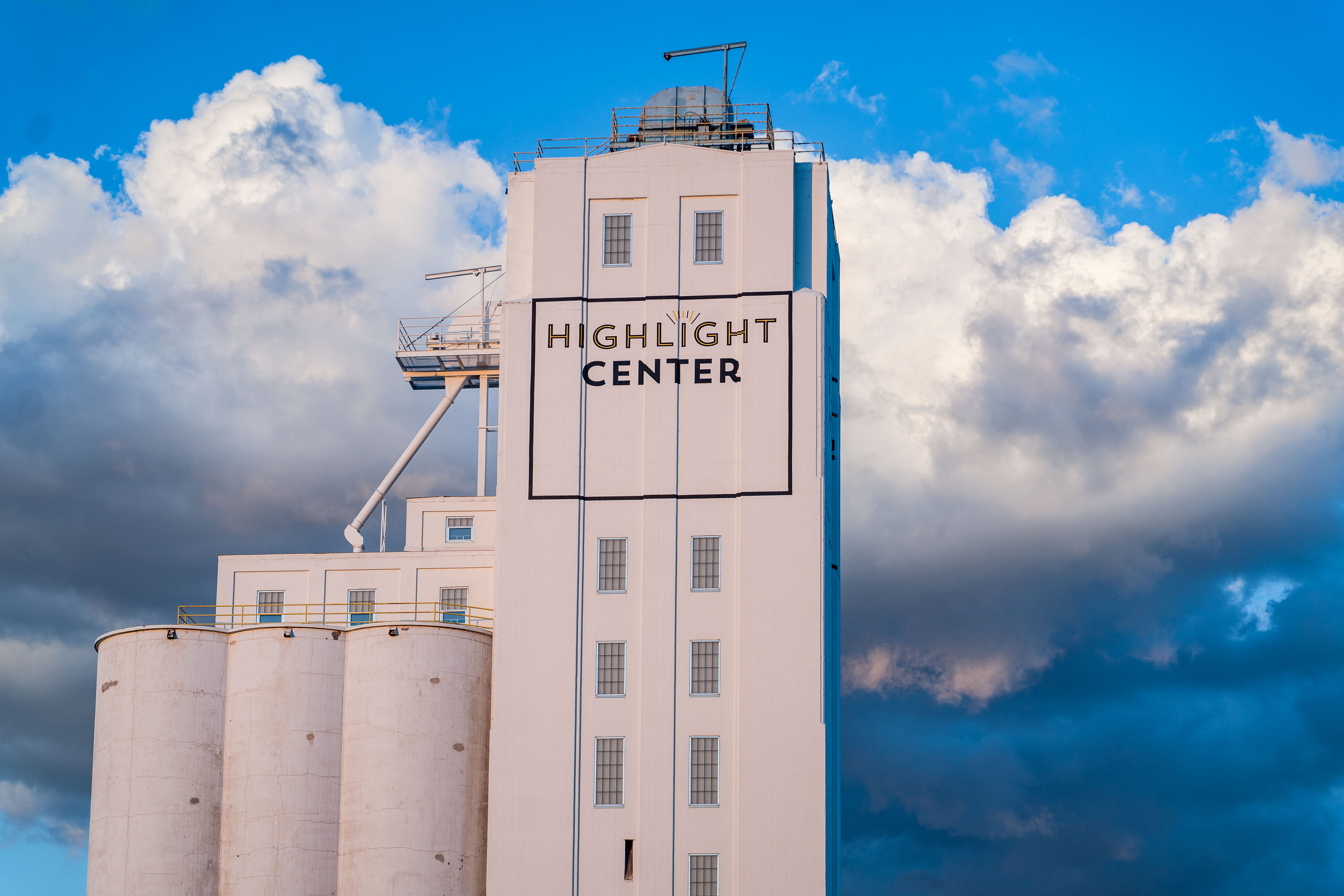
Highlight Center, a repurposed General Mills grain elevator facility in Northeast Minneapolis.
The Highlight Center occupies a former grain elevator complex in Northeast Minneapolis, built to store and process grain for regional milling operations. General Mills once operated the facility as part of its industrial network before the property fell out of use for agricultural processing. Developers later converted the concrete silos and headhouse into commercial office and creative space, retaining the original structure's tanks and tower as the building's defining architecture.

Highlight Center Grain Elevator, Northeast Minneapolis
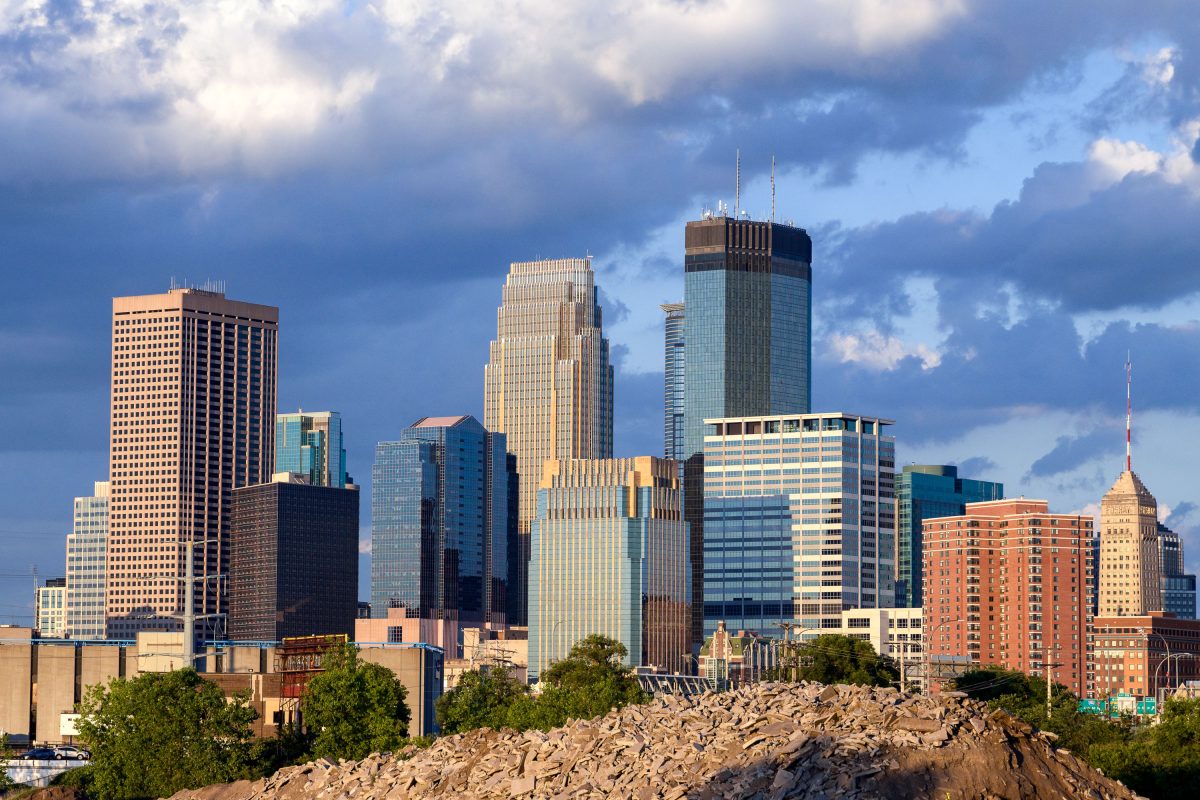
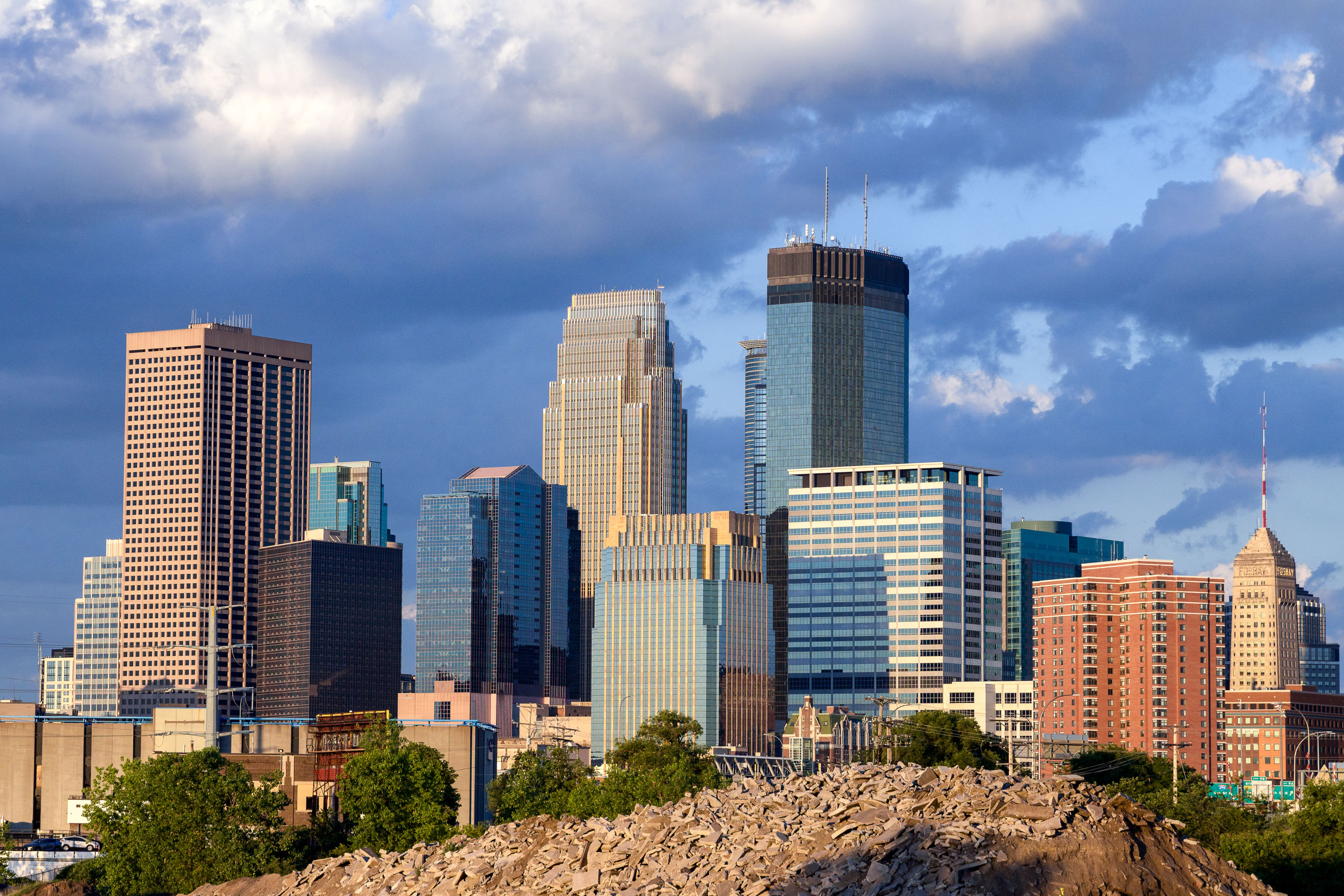
Minneapolis downtown skyline viewed from Van White Memorial Boulevard, showing the IDS Center and surrounding high-rise towers.
The view of Downtown Minneapolis from Van White Memorial Blvd near the Cedar Lake Trail.

Minneapolis Skyline As Seen Near Cedar Lake Trail
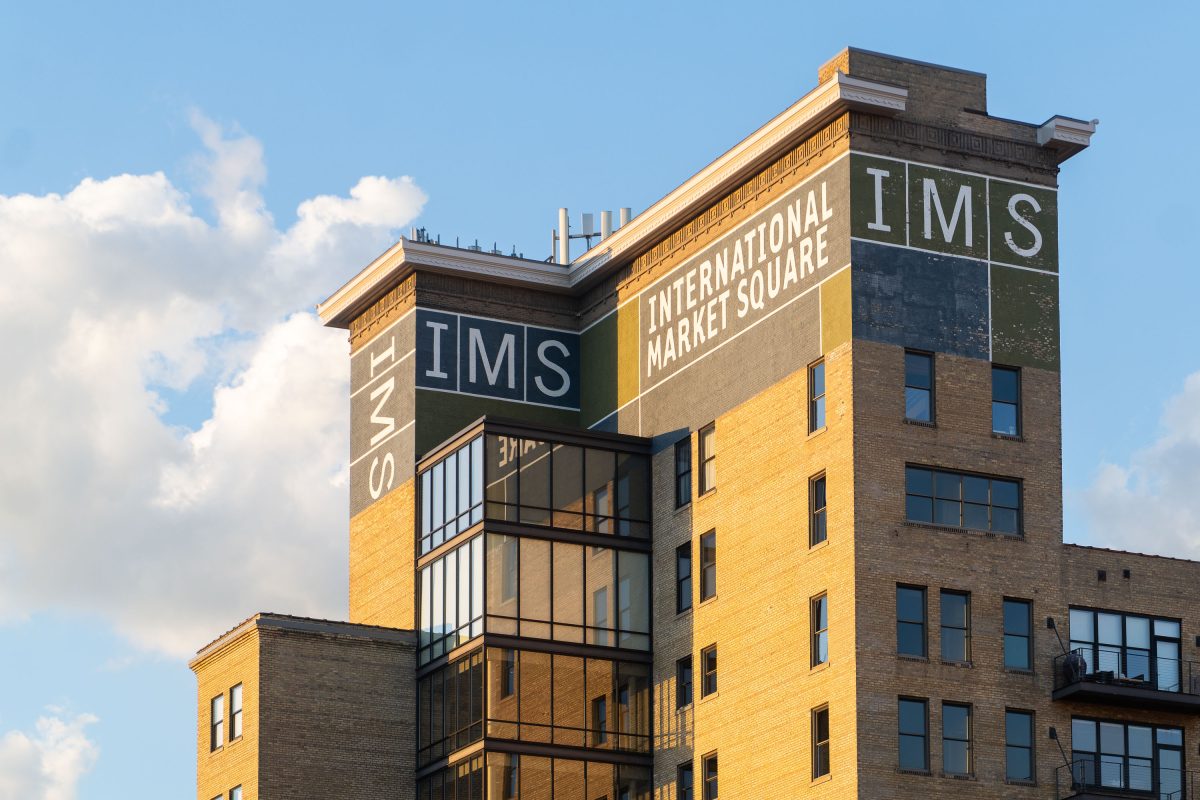
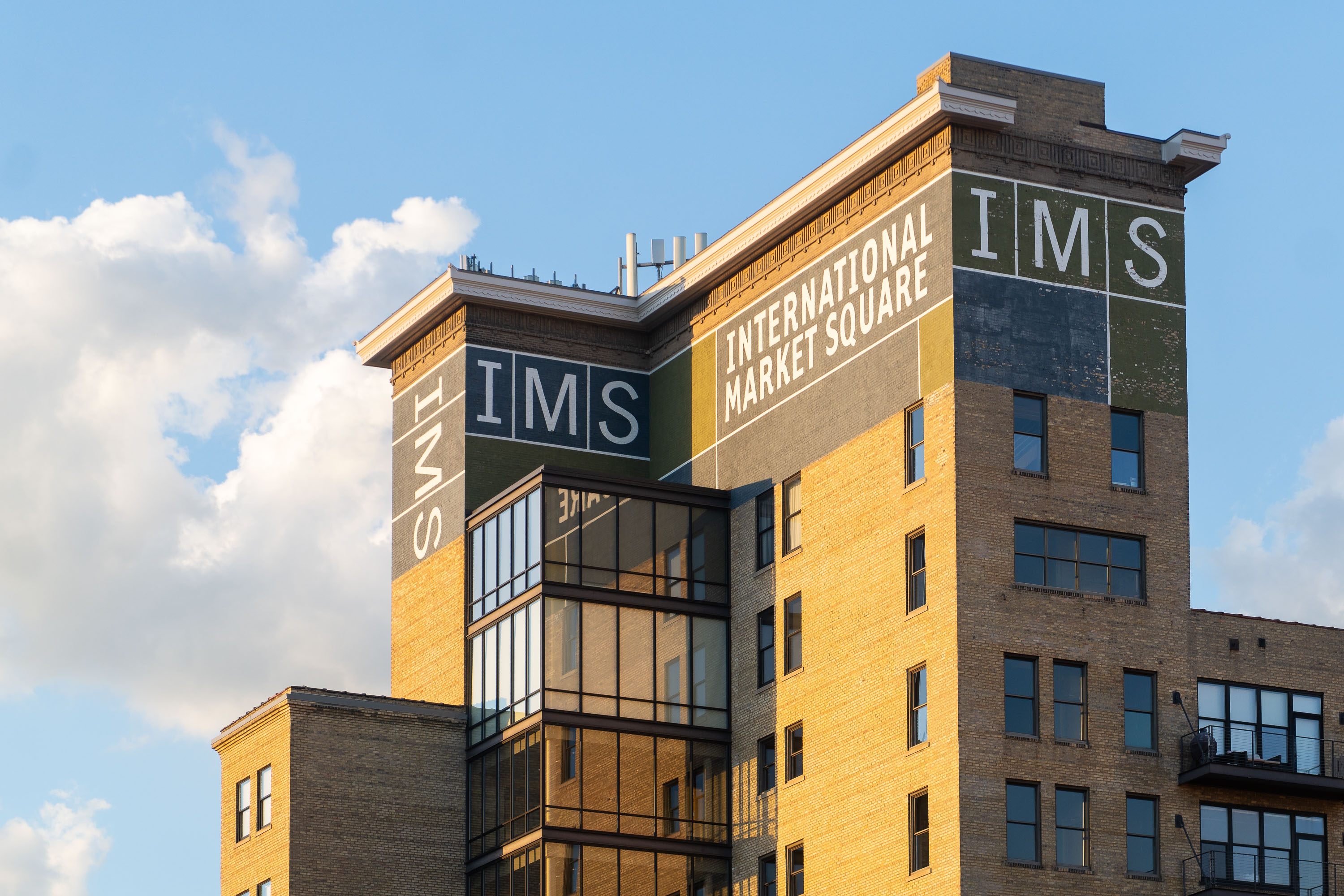
International Market Square building with yellow brick facade and IMS signage in Minneapolis.
International Market Square occupies a former Munsingwear factory at 275 Market Street in Minneapolis's North Loop. Built in 1912 for the underwear and apparel manufacturer, the building was converted in 1985 into a wholesale design center for furniture, textiles and home décor showrooms. It's listed on the National Register of Historic Places and today houses design firms, architecture offices and trade showrooms open to the public during Minneapolis's biannual design events. The rooftop signage spelling out "IMS" and "International Market Square" was added as part of the 1980s redevelopment, marking the building's shift from manufacturing to design commerce.

IMS Building, International Market Square, North Loop Minneapolis

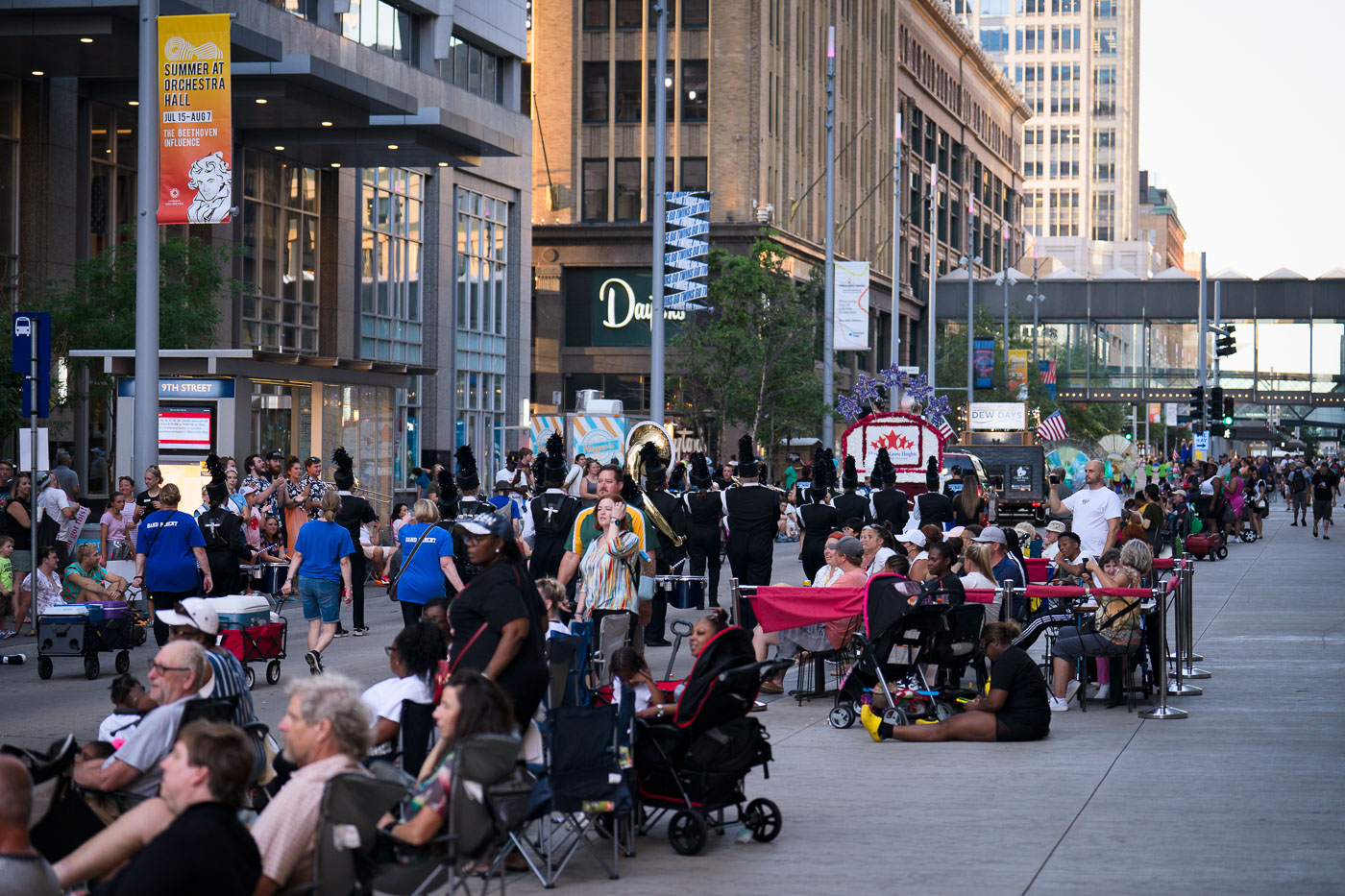
Marching band in the Minneapolis Torchlight Parade on Nicollet Mall, Minneapolis.
A marching band performs during the Minneapolis Torchlight Parade on Nicollet Mall on July 20, 2022. Nicollet Mall, a pedestrian promenade in downtown Minneapolis, serves as a primary venue for public events and celebrations. The mall's design facilitates large gatherings, and parades like this one are a recurring feature, underscoring its role in the city's cultural and civic life. The presence of spectators and performers highlights the mall's function as a central space for community engagement.

Minneapolis Torchlight Parade on Nicollet Mall, July 20, 2022

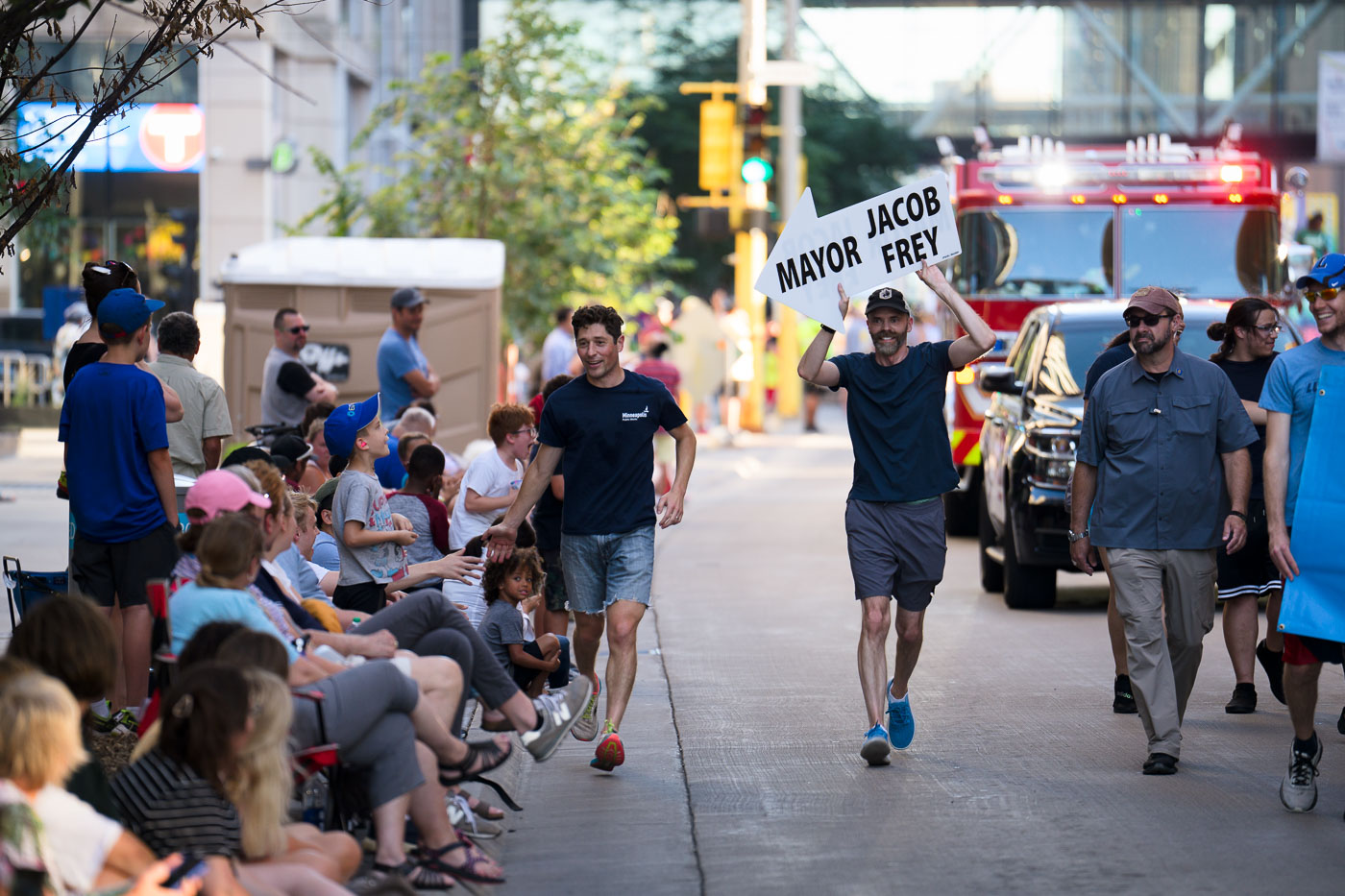
Mayor Jacob Frey walks in the Minneapolis Torchlight Parade as a supporter carries a sign ahead of him.
Mayor Jacob Frey participates in the annual Minneapolis Torchlight Parade on July 20, 2022. This event is a central part of the Minneapolis Aquatennial, a summer festival that highlights the city's connection to its waterways. The parade, which winds through downtown Minneapolis, traditionally includes community groups, local businesses, and elected officials, fostering civic pride and community engagement.

Mayor Jacob Frey at Minneapolis Torchlight Parade 07/20/22

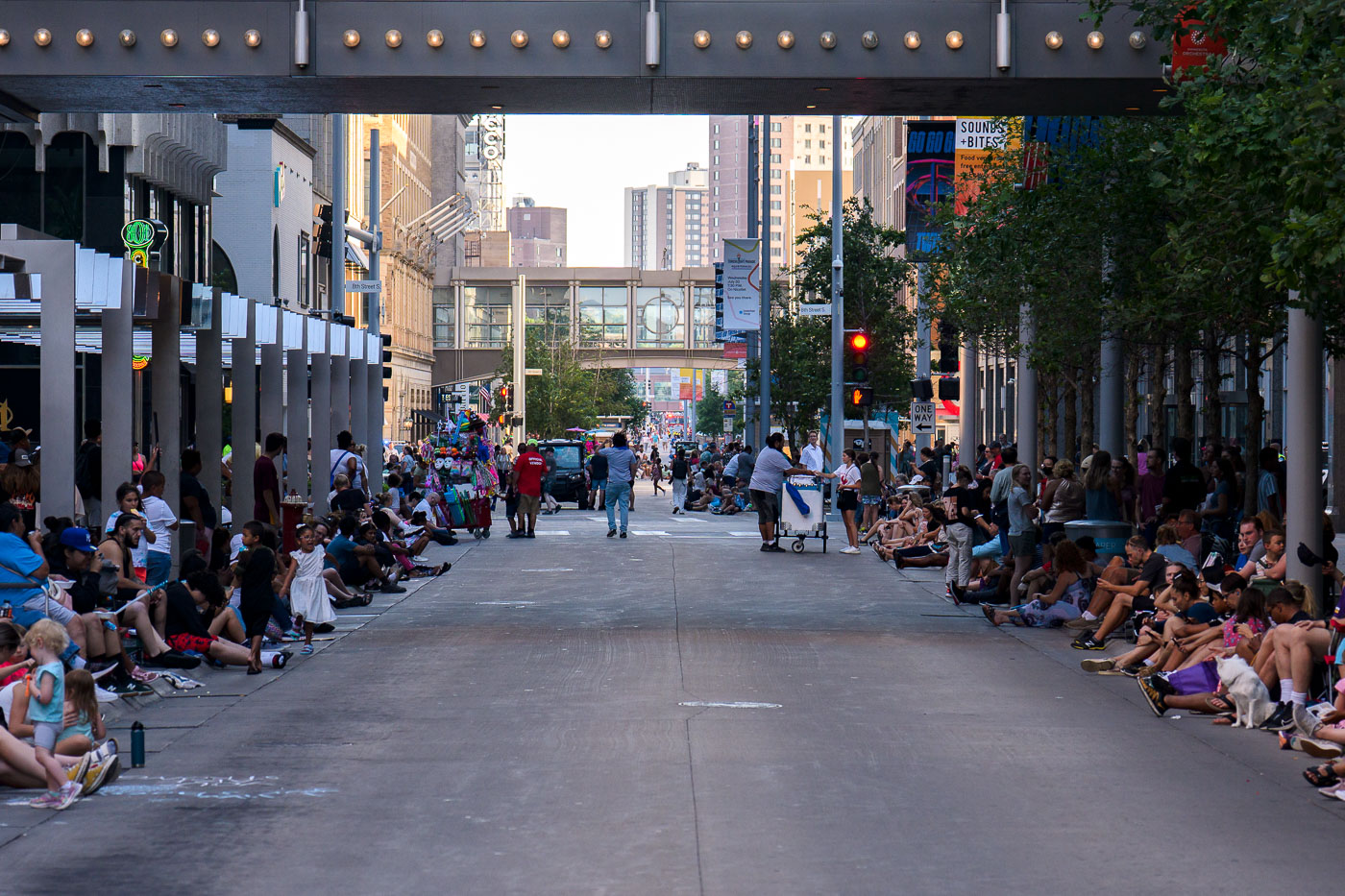
Crowds line Nicollet Mall in downtown Minneapolis before the Torchlight Parade.
On July 20, 2022, crowds gathered along Nicollet Mall in downtown Minneapolis for the annual Torchlight Parade. This event, a traditional precursor to the Minnesota State Fair, transforms the pedestrian mall into a vibrant public space. Nicollet Mall, a central thoroughfare for commerce and community events, has been a focal point for Minneapolis's urban life since its pedestrianization in the 1960s. The parade route highlights the city's community spirit and provides a lively atmosphere for residents and visitors.

Minneapolis Torchlight Parade on Nicollet Mall, July 20, 2022

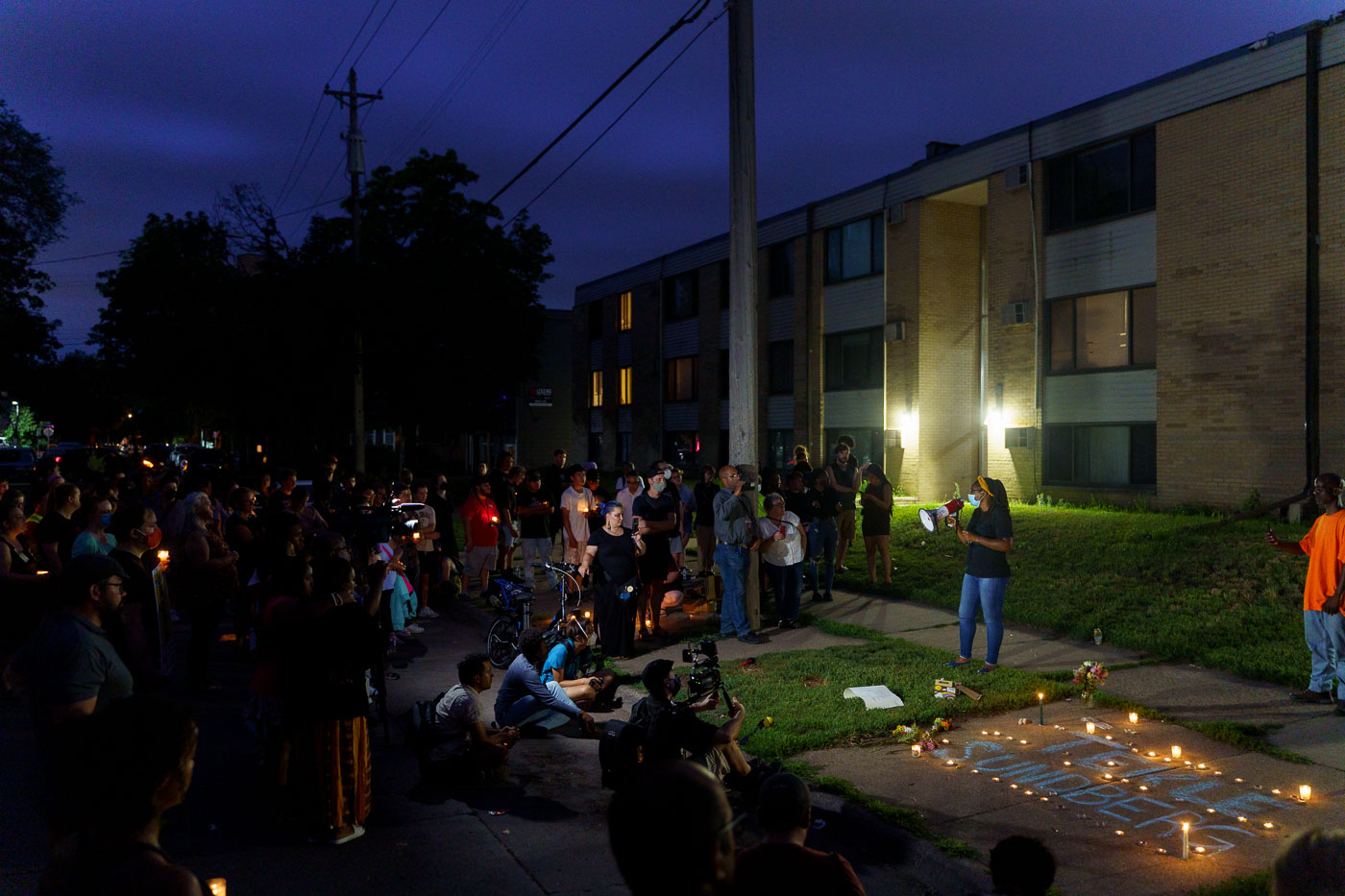
Candlelight vigil outside Tekle Sundberg's Minneapolis apartment building on July 14, 2022.
On July 14, 2022, a vigil was held outside the Minneapolis apartment building where Tekle Sundberg died during a police standoff. Attendees gathered with candles and flowers, illuminating a chalk message on the sidewalk that read "TEKLE SUNDBERG." Marcia Howard addressed the crowd at the site of Sundberg's death. This event occurred amidst ongoing public discourse and protests concerning police conduct and accountability.

Minneapolis Vigil for Tekle Sundberg, July 14, 2022

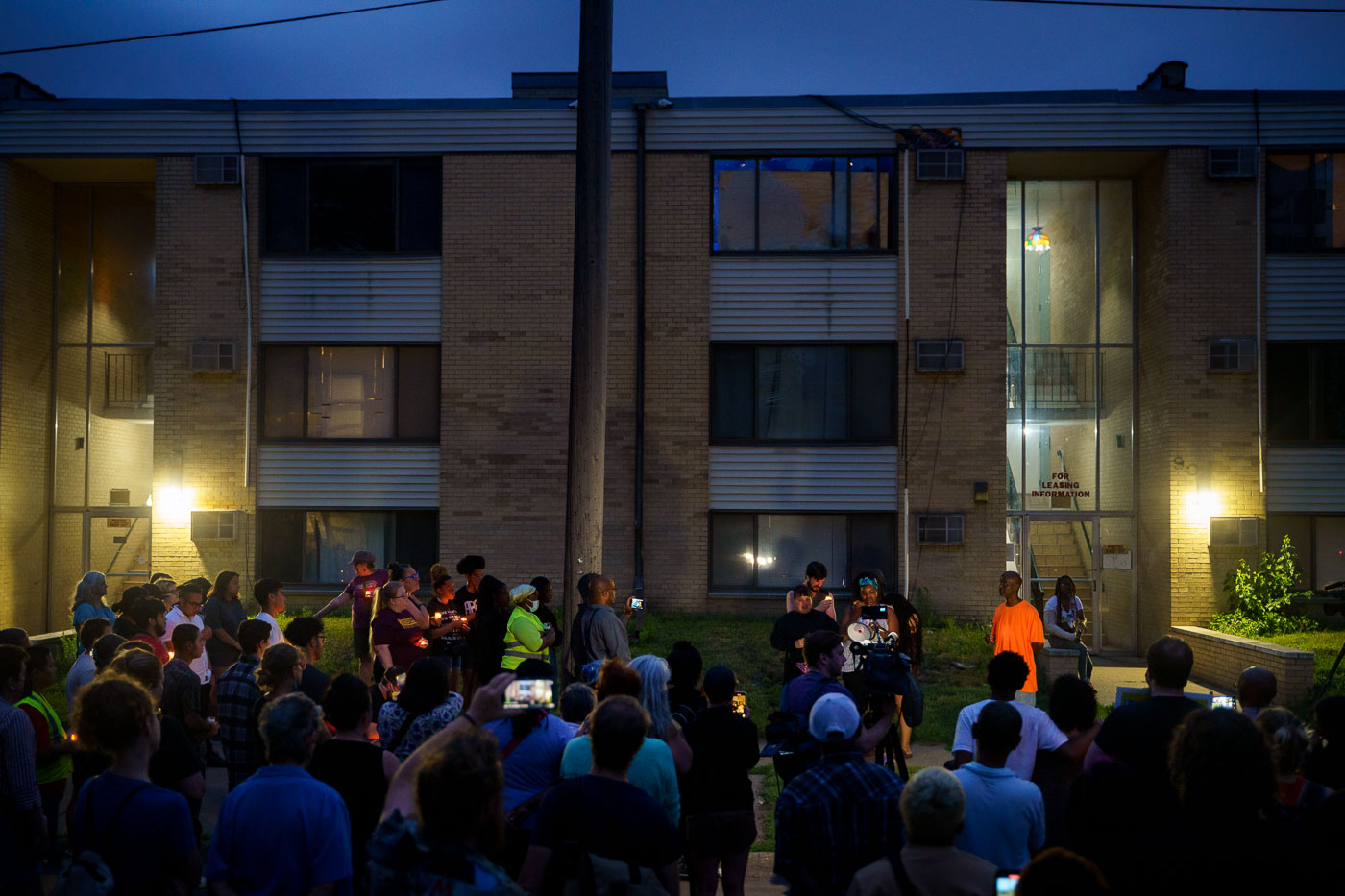
Candlelight vigil outside a Minneapolis apartment building after the police killing of Tekle Sundberg.
A vigil was held on July 14, 2022, outside the Minneapolis apartment building where Tekle Sundberg was fatally shot by police. Community members gathered at dusk, many holding candles, to honor Sundberg and express concerns about police conduct. The event took place in the wake of Sundberg's death, reflecting ongoing tensions and calls for accountability within the city.

Minneapolis Protest for Tekle Sundberg at Apartment Building, July 14, 2022

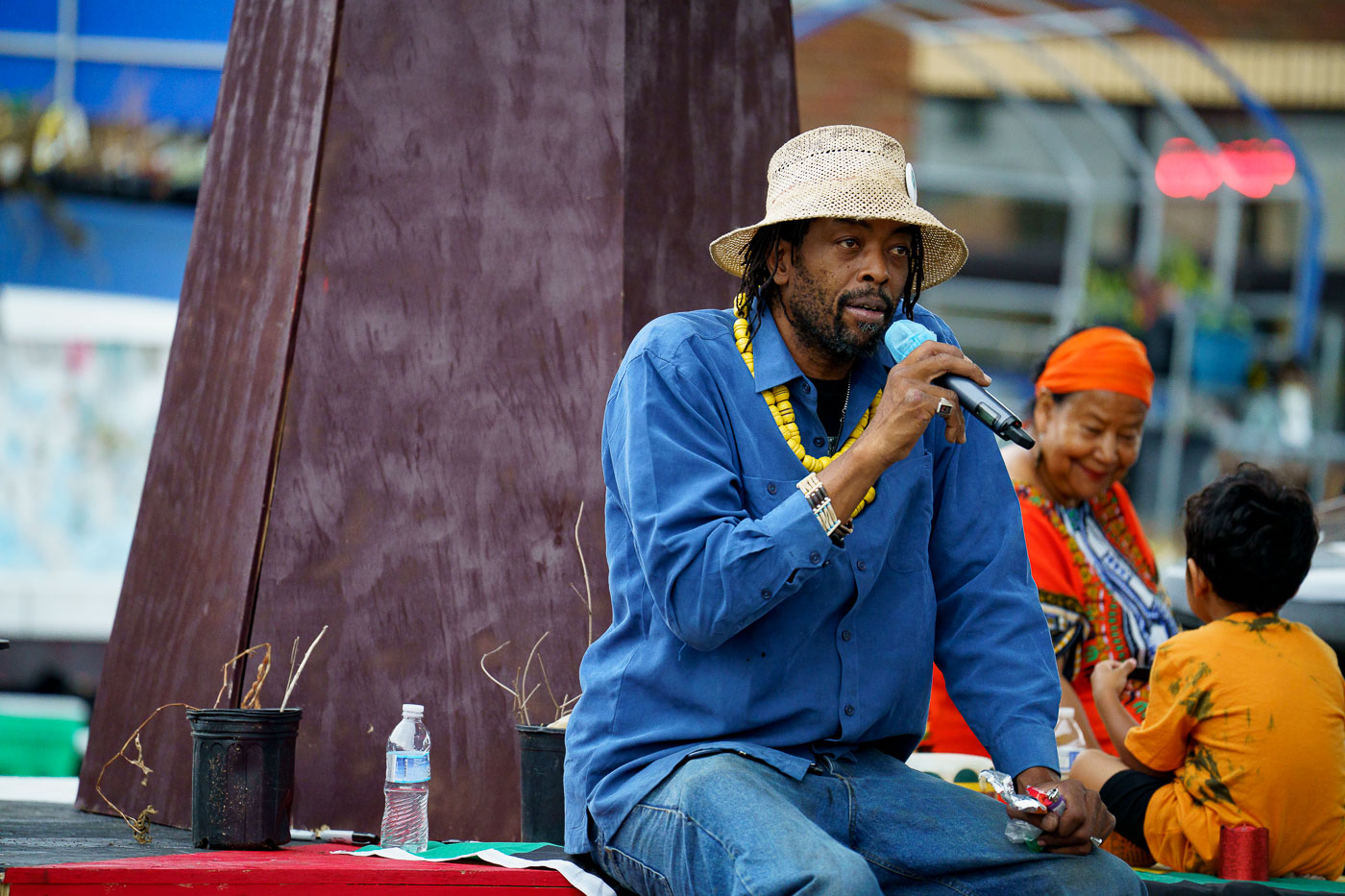
Jay Webb speaks at George Floyd Square in Minneapolis during an Akron solidarity rally.
A rally for solidarity with Akron was held at George Floyd Square in Minneapolis, Minnesota. Speakers, including George Floyd's aunt Angela Harrelson and community member Jay Webb, addressed the crowd about community and solidarity with Jayland Walker, who was killed by police in Akron, Ohio. Artists were present, working on a raised fist sculpture intended for Akron, symbolizing shared struggles and support.

Jay Webb speaks at George Floyd Square, Akron Solidarity

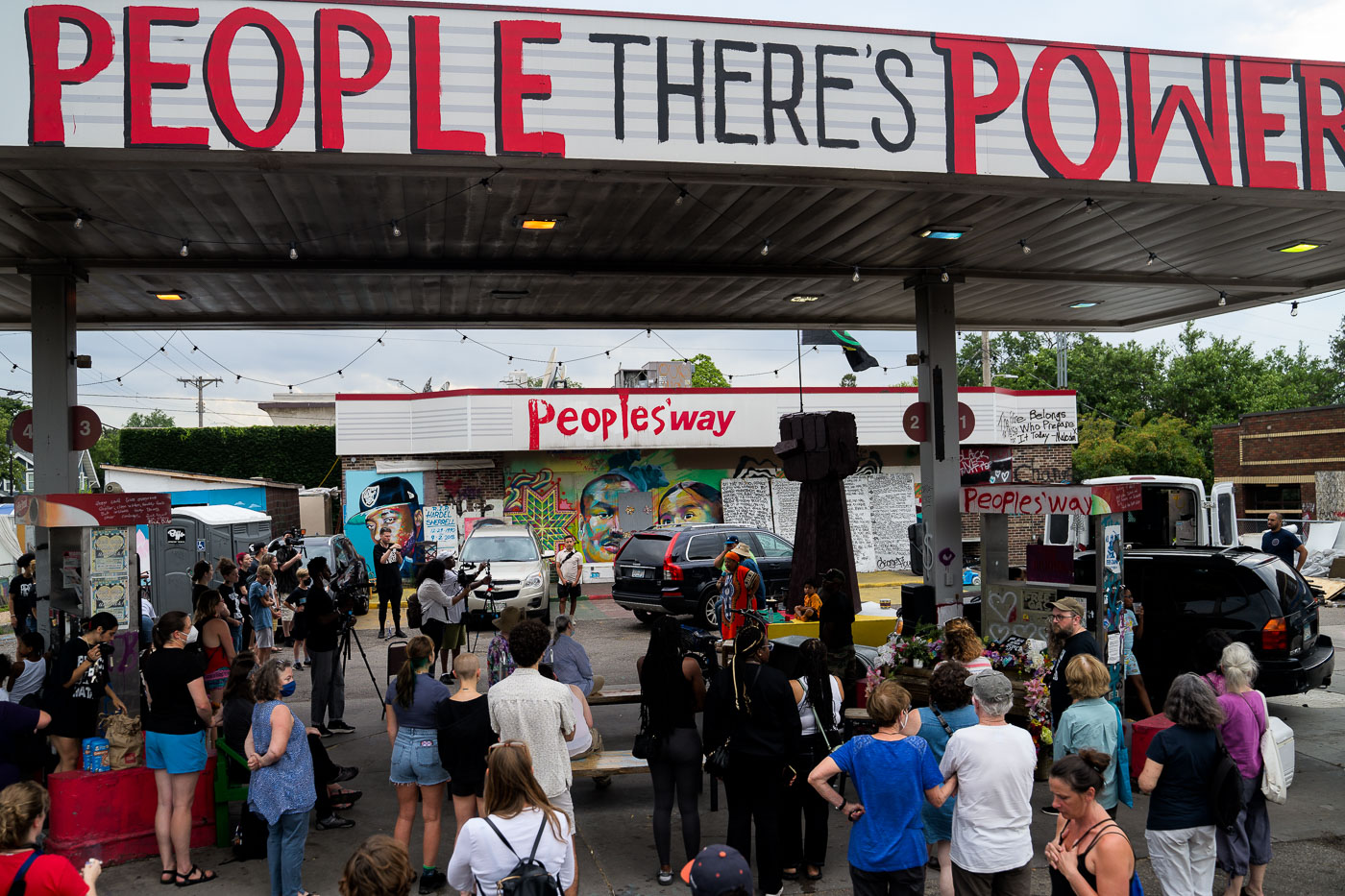
Rally at George Floyd Square in Minneapolis beneath a “People There’s Power” canopy sign.
A rally for solidarity with Akron was held at George Floyd Square in Minneapolis, Minnesota, a site that has become a focal point for protest and community organizing since the murder of George Floyd in 2020. Speakers, including George Floyd's aunt Angela Harrelson, addressed the crowd, expressing solidarity with Jayland Walker, who was killed by police in Akron, Ohio. Artists were present, working on a raised fist sculpture intended for Akron, symbolizing shared struggles and support. The event took place at the "Peoples Way" gas station, which has been transformed into a space for activism and remembrance.

George Floyd Square Rally for Akron Solidarity

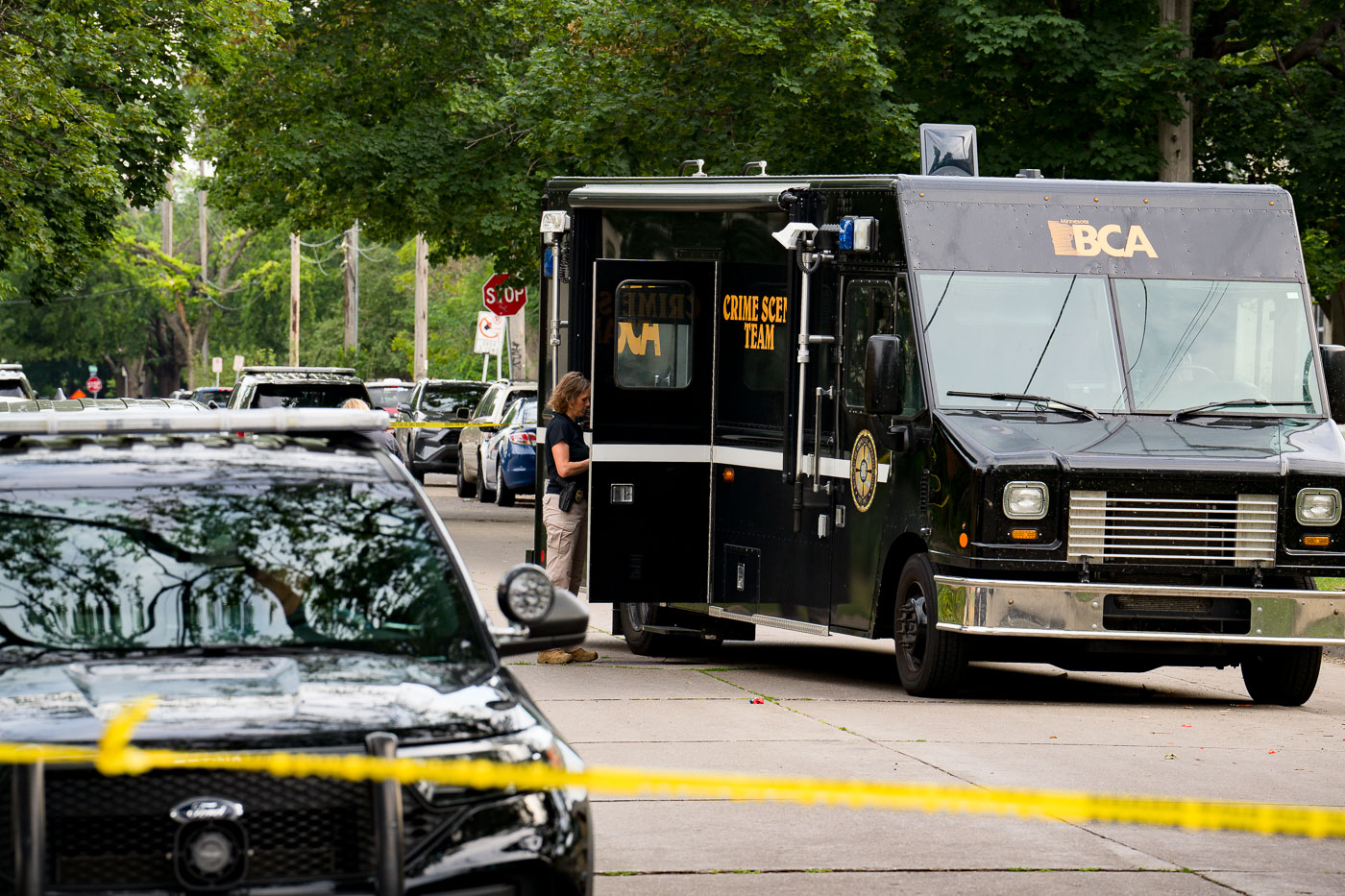
Minnesota BCA Crime Scene Team investigates an officer-involved shooting in Minneapolis on July 14, 2022.
The Minnesota Bureau of Criminal Apprehension (BCA) Crime Scene Team investigates an officer-involved shooting that occurred on July 14, 2022, in Minneapolis. The BCA is the state's primary agency for investigating such incidents, ensuring an independent and thorough review. This investigation is crucial for accountability and understanding the events that transpired. The presence of the crime scene unit underscores the seriousness of the incident and the commitment to gathering evidence.

Minnesota BCA Investigates Officer-Involved Shooting in Minneapolis

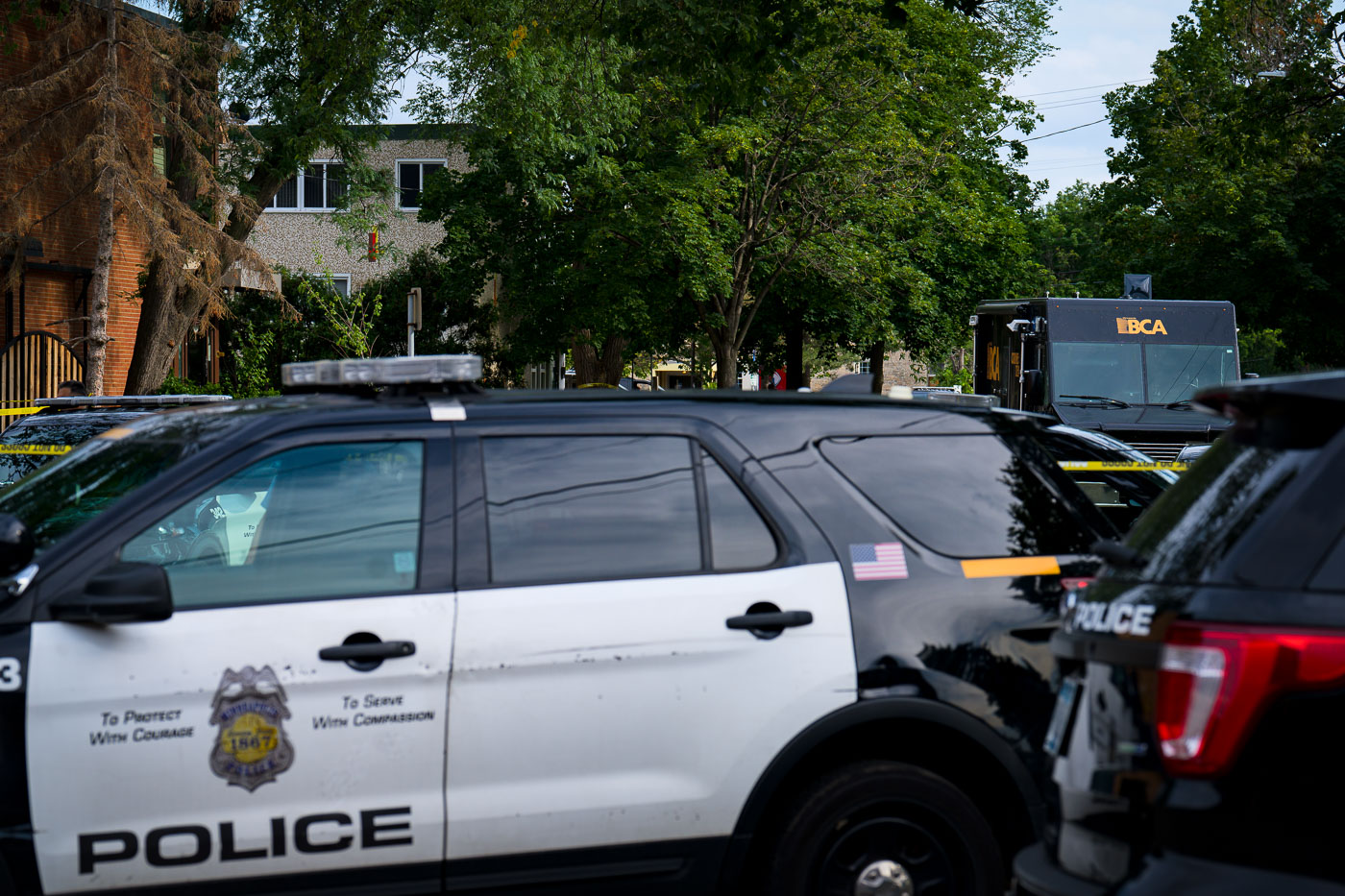
Police SUVs and a BCA truck at an officer-involved shooting investigation in Minneapolis.
The Minnesota Bureau of Criminal Apprehension (BCA) investigated an officer-involved shooting on July 14, 2022, in Minneapolis, which resulted in the death of Tekle Sundberg. Police vehicles and a BCA investigation truck are present at the location, marked with yellow police tape. This incident occurred in a period of heightened scrutiny of police conduct in Minneapolis, following the murder of George Floyd in 2020.

Minneapolis: BCA Investigates Officer-Involved Shooting July 14, 2022

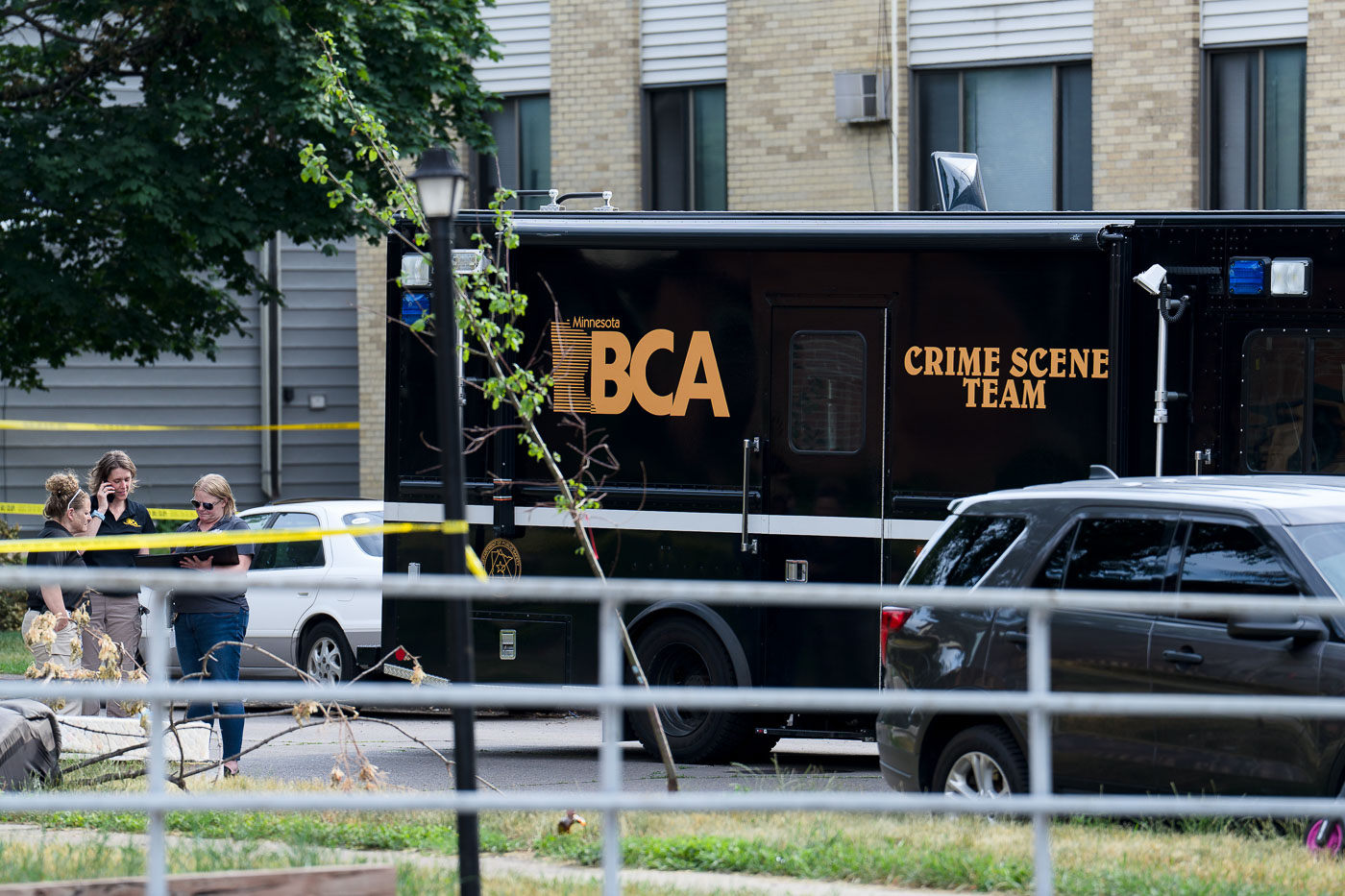
Minnesota BCA investigators beside a crime lab truck in South Minneapolis on July 14, 2022.
Minnesota Bureau of Criminal Apprehension (BCA) crime scene investigators responded to South Minneapolis on July 14, 2022. The BCA's presence was in response to an officer-involved shooting death. This incident occurred within a year of the 2020 Minneapolis Uprising, which followed the murder of George Floyd and led to increased scrutiny of law enforcement conduct in the city.

BCA Crime Scene Team in South Minneapolis, July 14, 2022
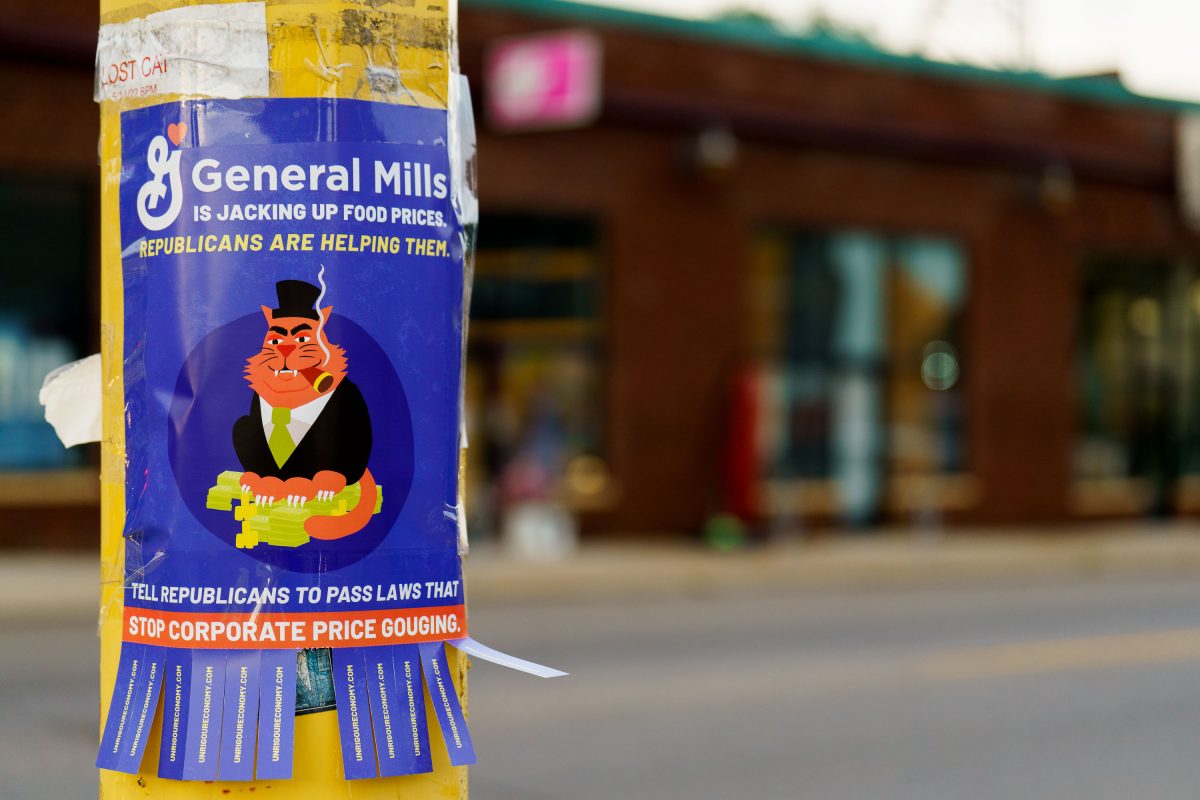
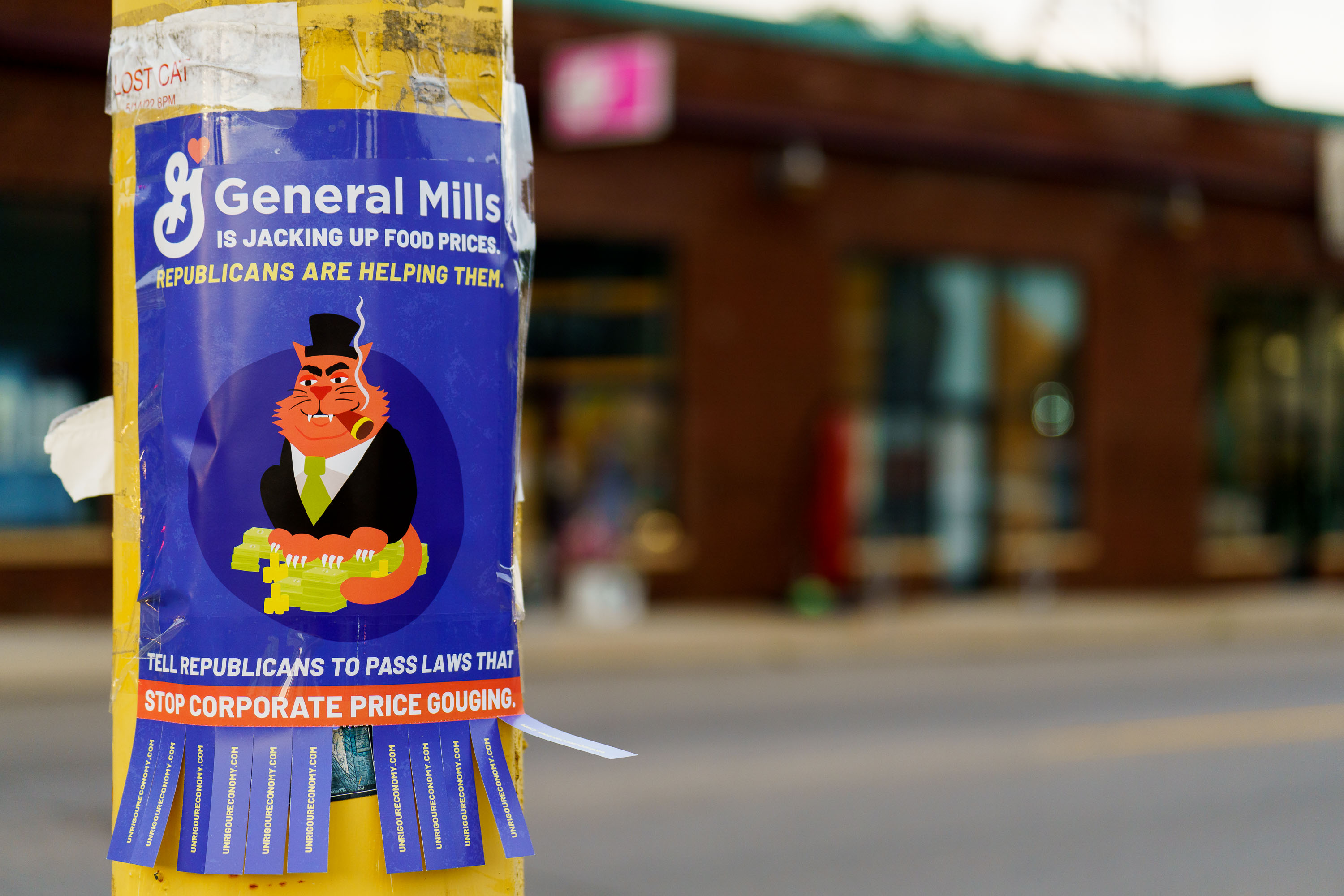
General Mills Price-Gouging Flyer, South Minneapolis
General Mills, founded in 1928 and based in Golden Valley, Minnesota, ranks among the largest packaged food companies in the world, with brands including Cheerios, Betty Crocker, and Pillsbury. The company has faced public criticism over food pricing amid broader inflation debates in the United States since 2021. Tags attached to this flyer point to UnRig the Economy, a campaign that pushes for legislation targeting corporate pricing practices.

General Mills Price-Gouging Flyer, South Minneapolis

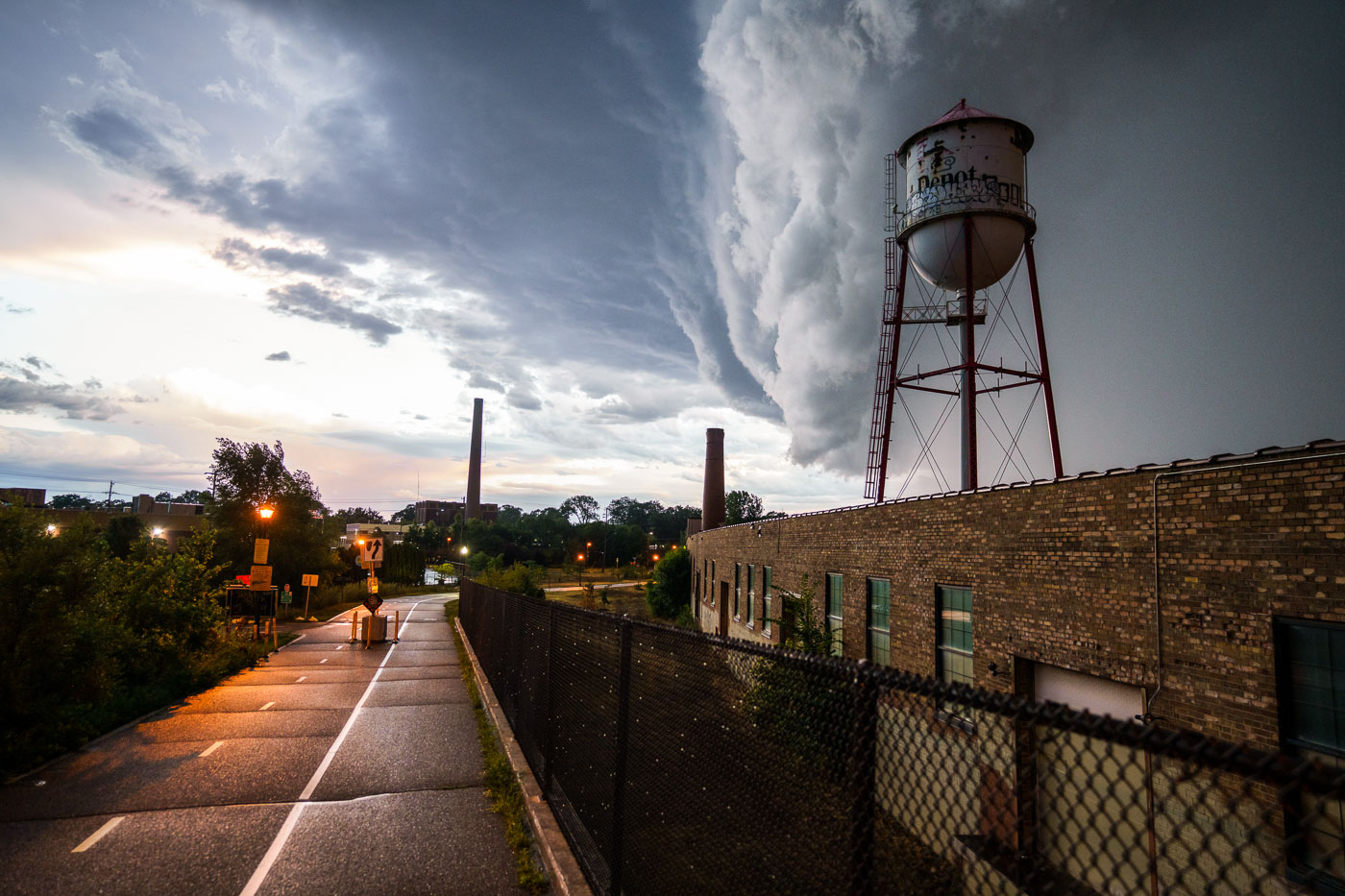
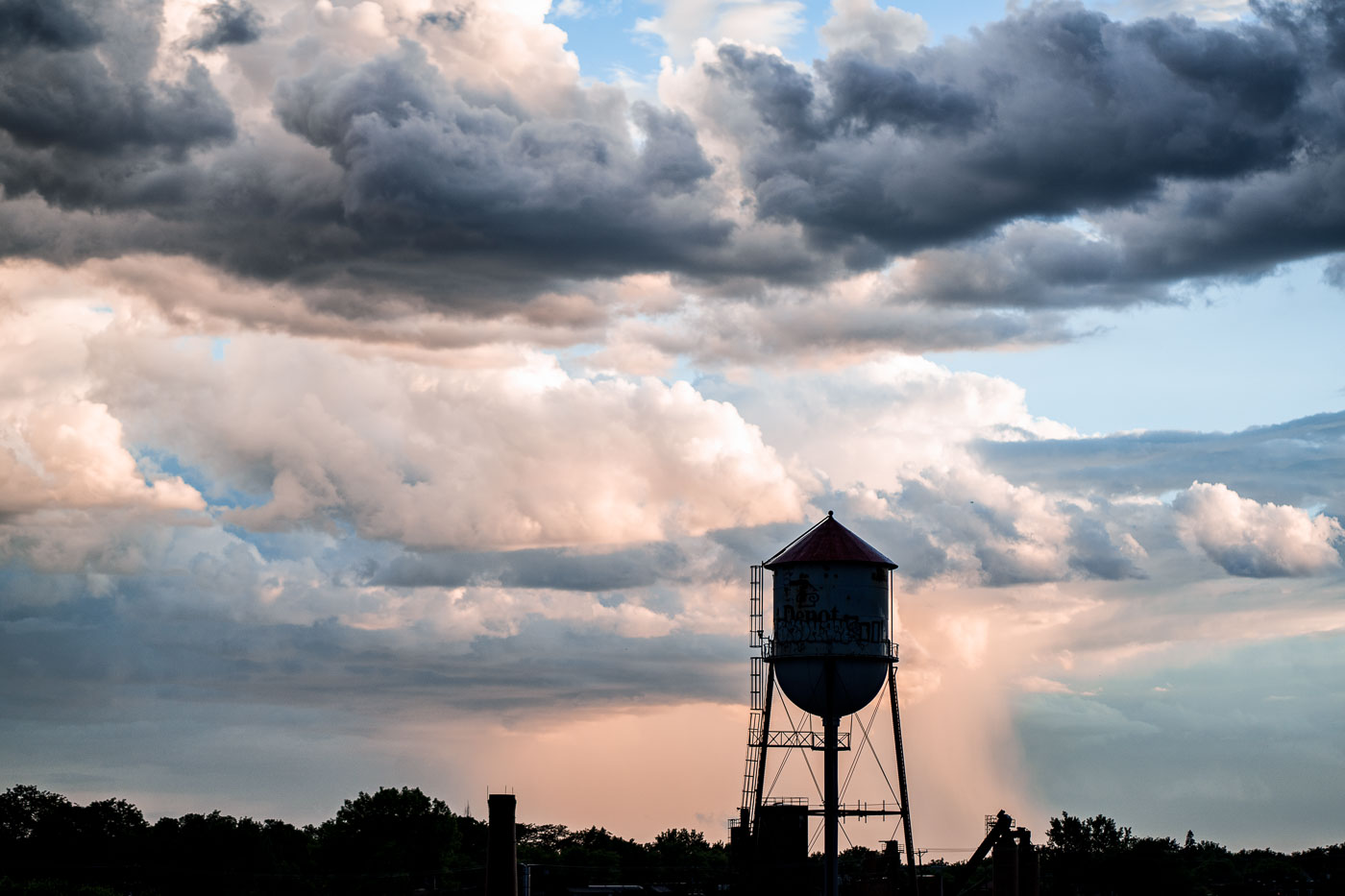
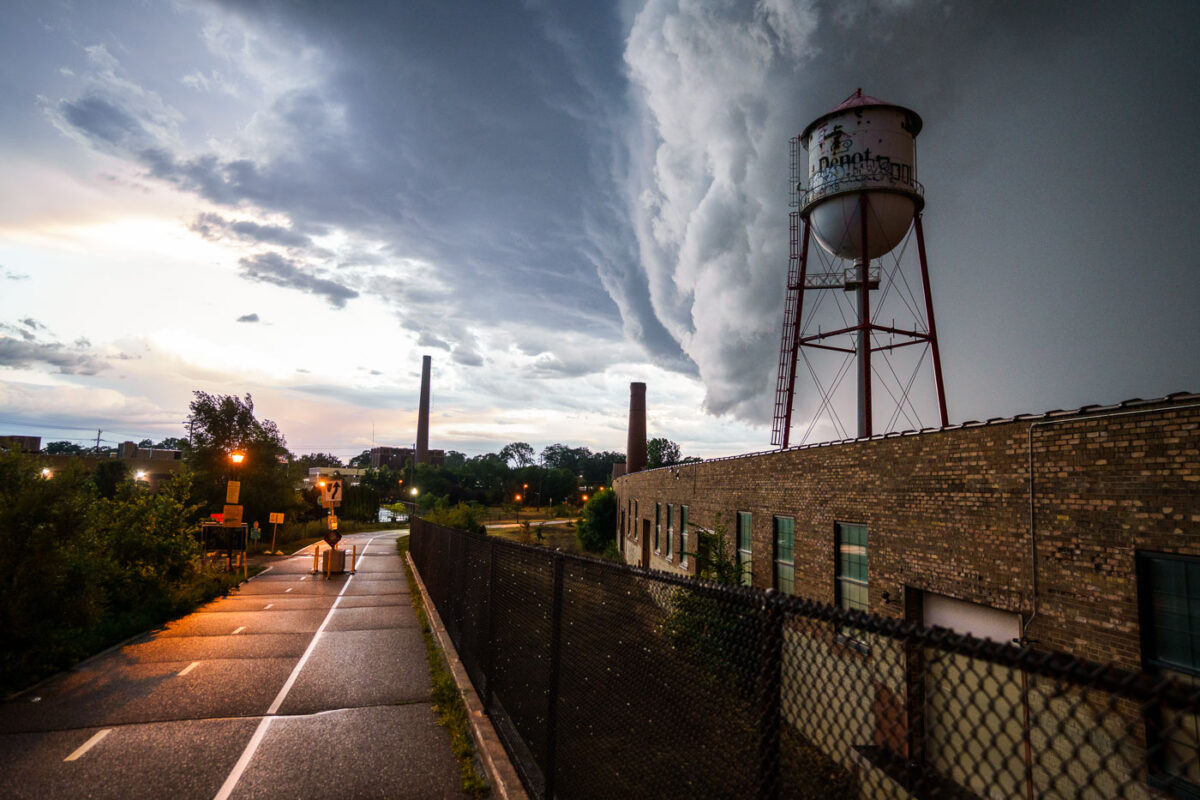
Depot water tower in Minneapolis beneath a thunderstorm over the Roof Depot site.
A massive storm front approaches Minneapolis on July 12, 2022, casting dark clouds over the city's industrial landscape. The photograph features a prominent water tower, labeled "Depot," and a brick industrial building, likely part of a former manufacturing or processing facility given the presence of smokestacks in the background. Water towers like this were essential for providing water pressure for industrial processes and fire suppression in urban and industrial areas. This particular tower, with its distinctive "Depot" marking, may have served a specific industrial complex or transportation hub within Minneapolis.

Minneapolis Depot Water Tower Under Storm Clouds
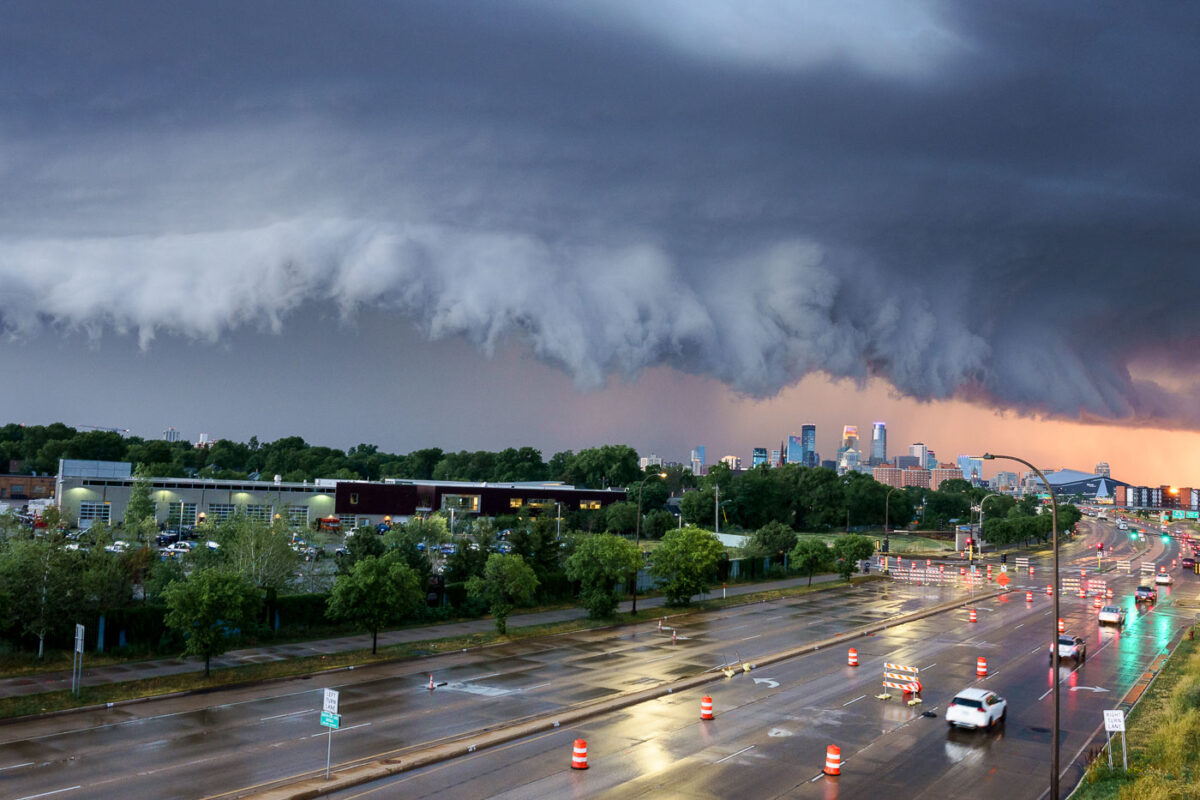
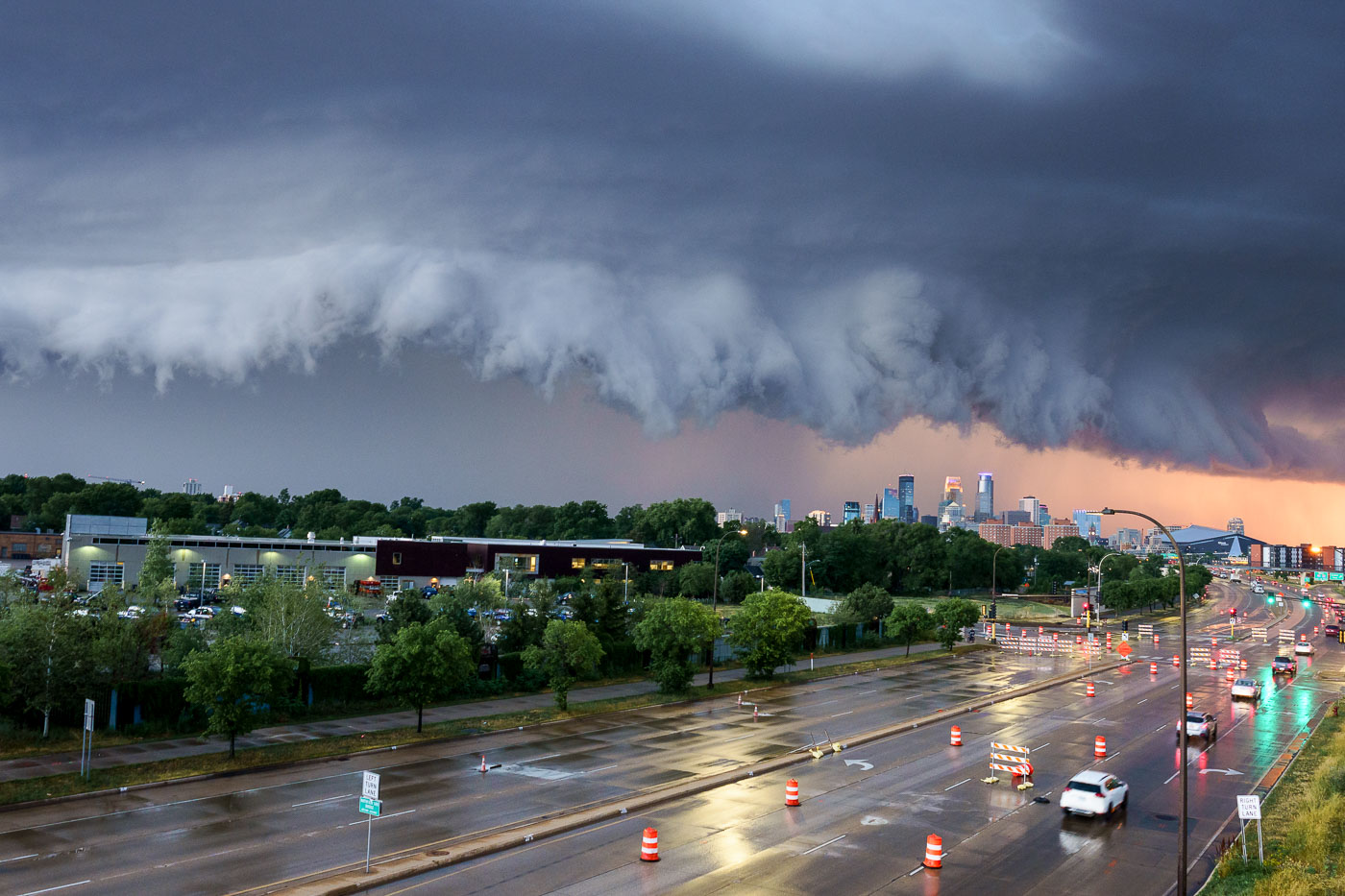
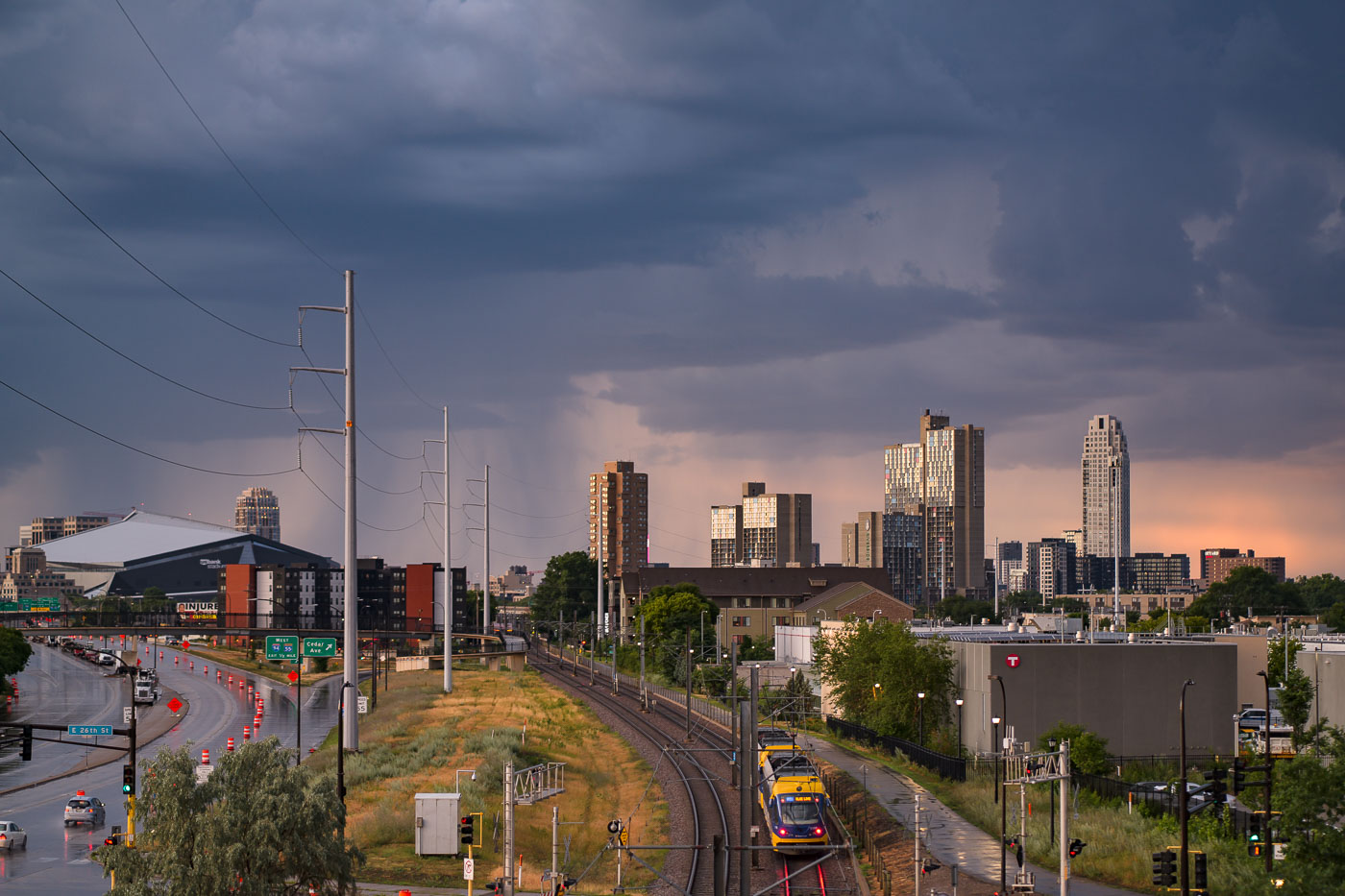
Storm clouds over downtown Minneapolis above a wet roadway after rain.
A severe thunderstorm approaches the Minneapolis skyline on July 12, 2022. The city's downtown core, with its characteristic modern architecture, is visible in the distance under a dramatic, dark cloud formation. The foreground shows a wet roadway, indicating recent rainfall, with traffic continuing despite the approaching weather. This image captures a moment of atmospheric intensity over a major Midwestern urban center, highlighting the dynamic relationship between weather and the built environment.

Minneapolis Thunderstorm Approaching Downtown July 12 2022
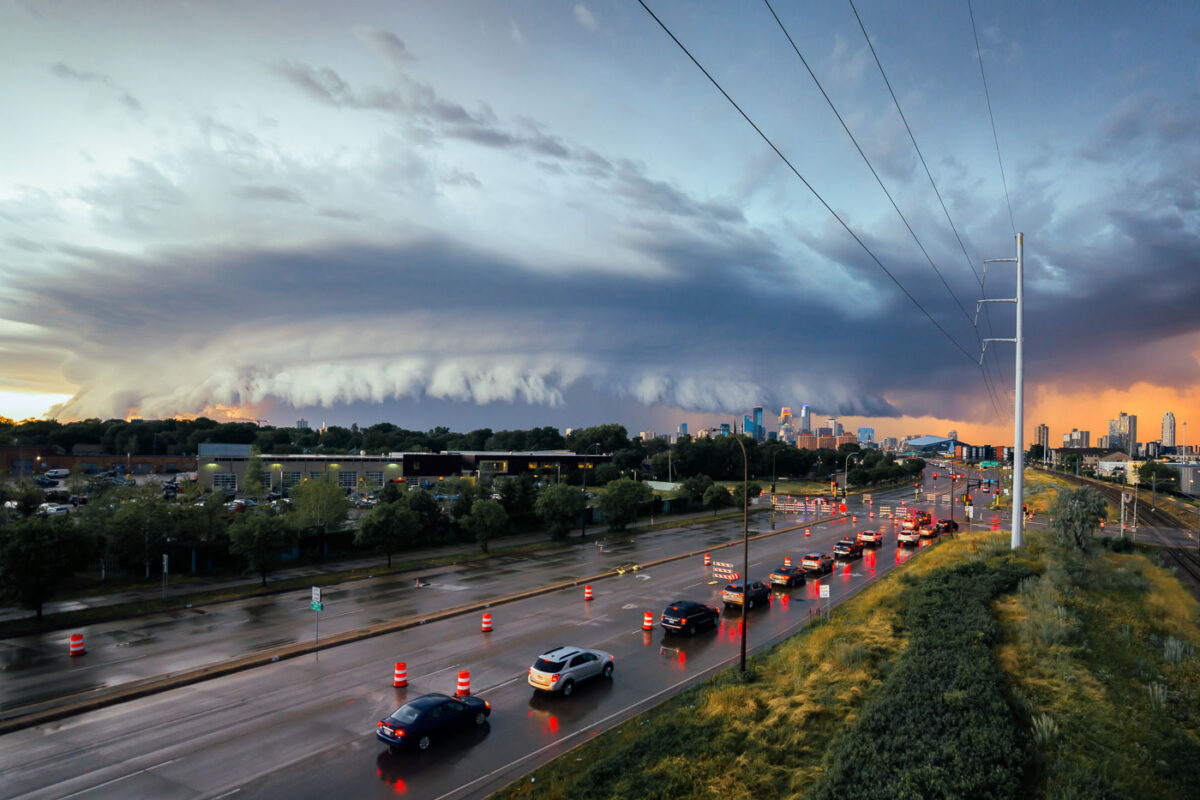
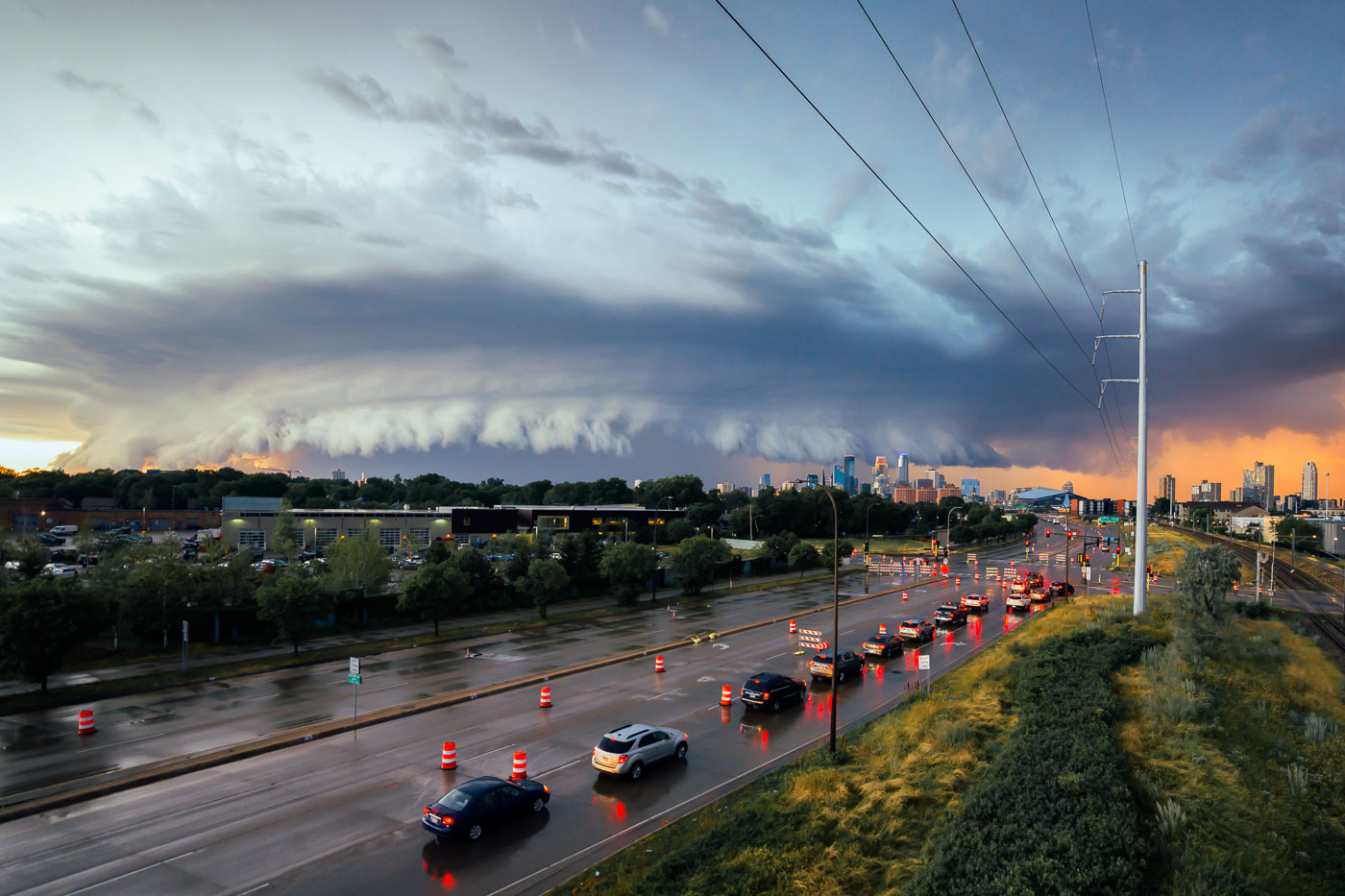
Storm clouds over Minneapolis, Minnesota, above wet traffic lanes and the downtown skyline.
A powerful storm front approaches Minneapolis, Minnesota, on July 12, 2022. The image captures the city's skyline under a dramatic sky, with traffic moving along a wet highway. The presence of construction barrels suggests ongoing infrastructure work, a common characteristic of urban environments. This type of weather event is typical for the region during the summer months, impacting daily life and transportation.

Minneapolis Storm Clouds Over Highway and Skyline
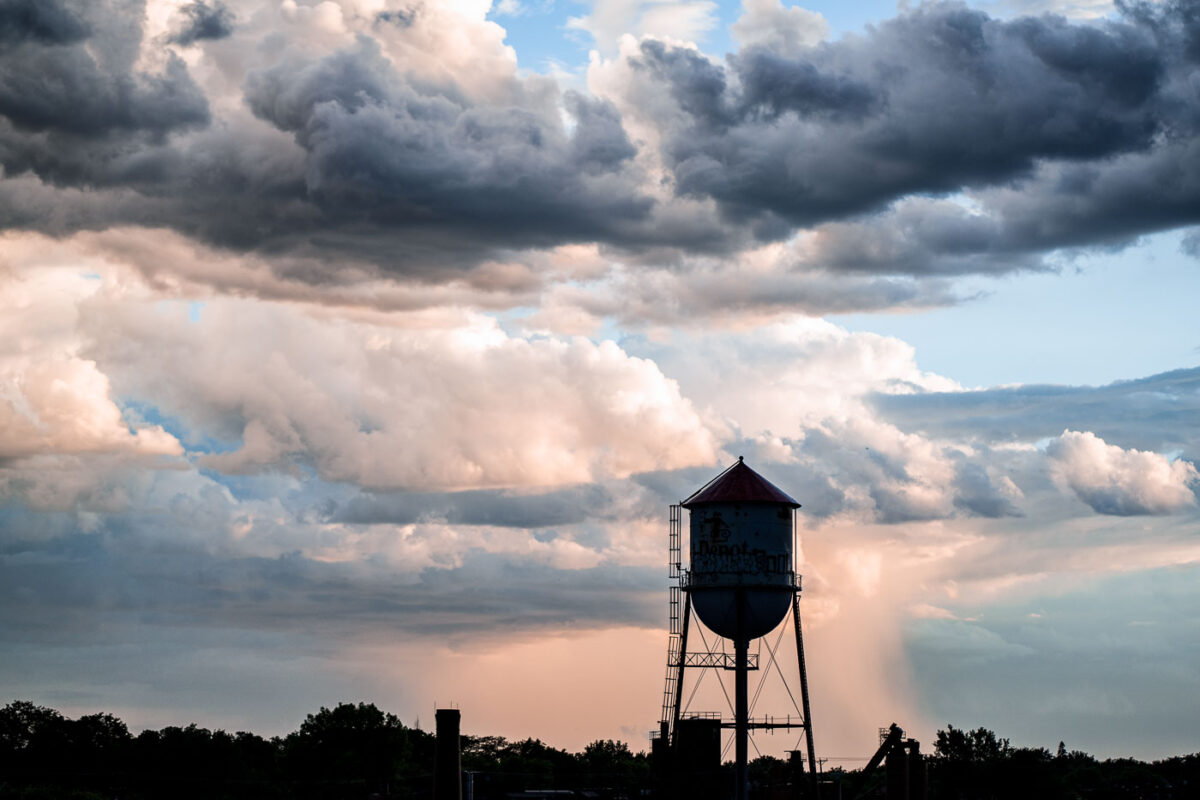
Roof Depot water tower in Minneapolis beneath dark clouds and distant rain.
The Roof Depot water tower stands silhouetted against a dramatic sky in Minneapolis. Water towers like this one were essential for providing consistent water pressure to industrial and residential areas, particularly before the widespread adoption of modern pumping systems. This structure, likely built in the early to mid-20th century, served the needs of the surrounding industrial district. Its presence signifies a period of significant urban and industrial development in Minneapolis.

Roof Depot Water Tower Under Stormy Skies, Minneapolis
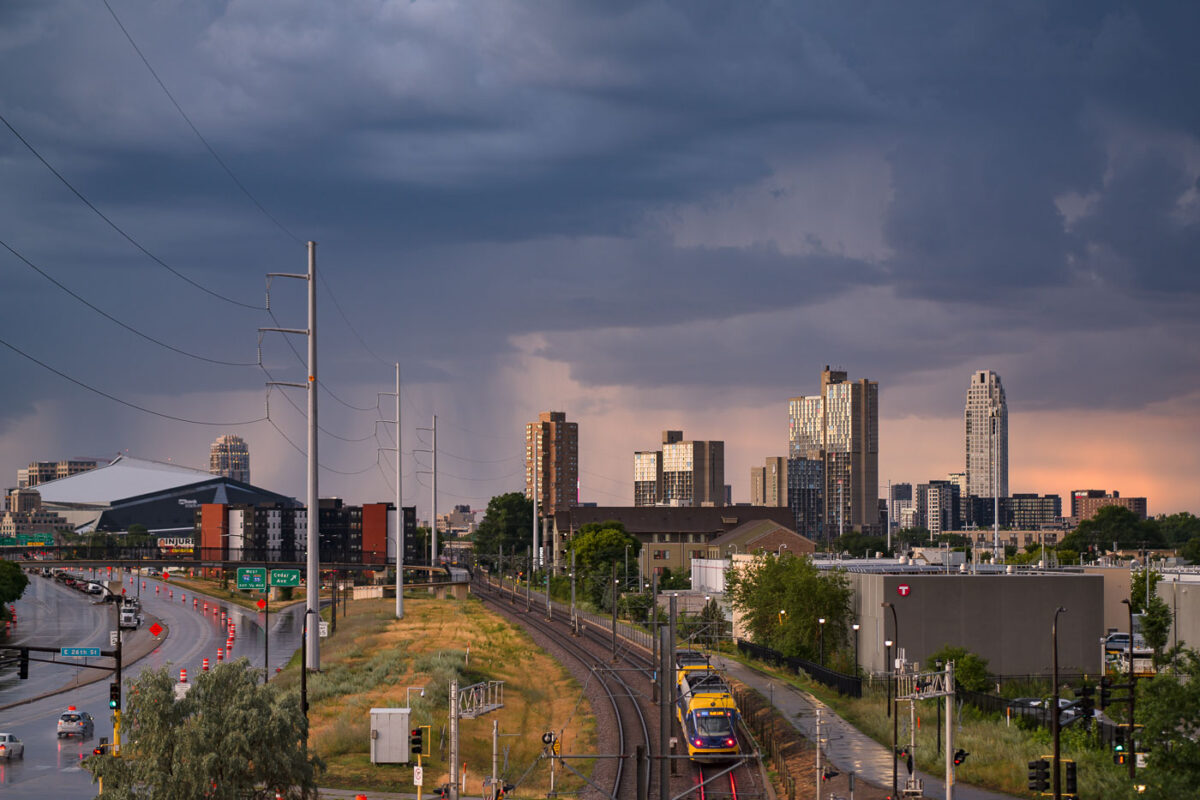
Metro Blue Line train near U.S. Bank Stadium in Minneapolis under storm clouds.
Storm clouds loom over the Minneapolis skyline on July 12, 2022, with the U.S. Bank Stadium visible on the left. The image also features the Metro Blue Line light rail, a key component of public transit in the Twin Cities. Opened in 2004, the Blue Line connects Minneapolis-Saint Paul International Airport and the Mall of America to downtown Minneapolis, serving as a vital link for commuters and visitors. The infrastructure facilitates access to the city's core employment centers and cultural attractions.

Minneapolis: Light Rail Under Storm Clouds Near US Bank Stadium
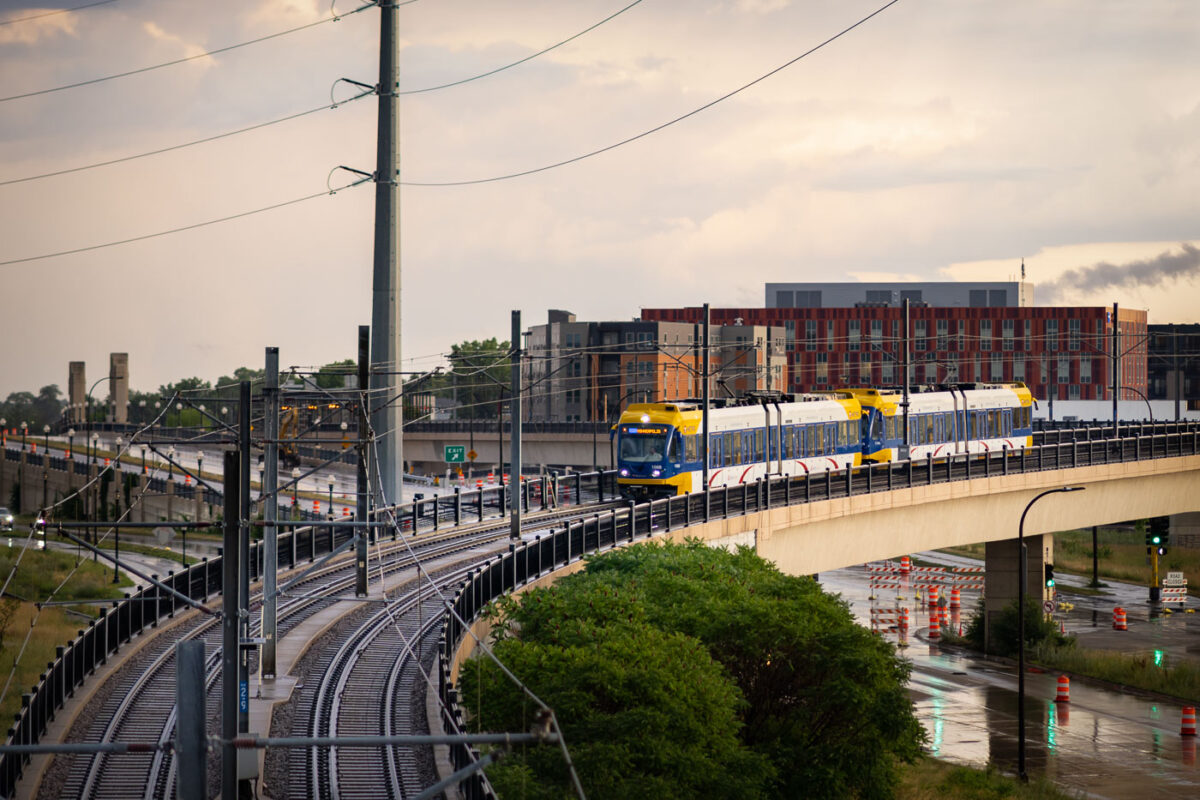
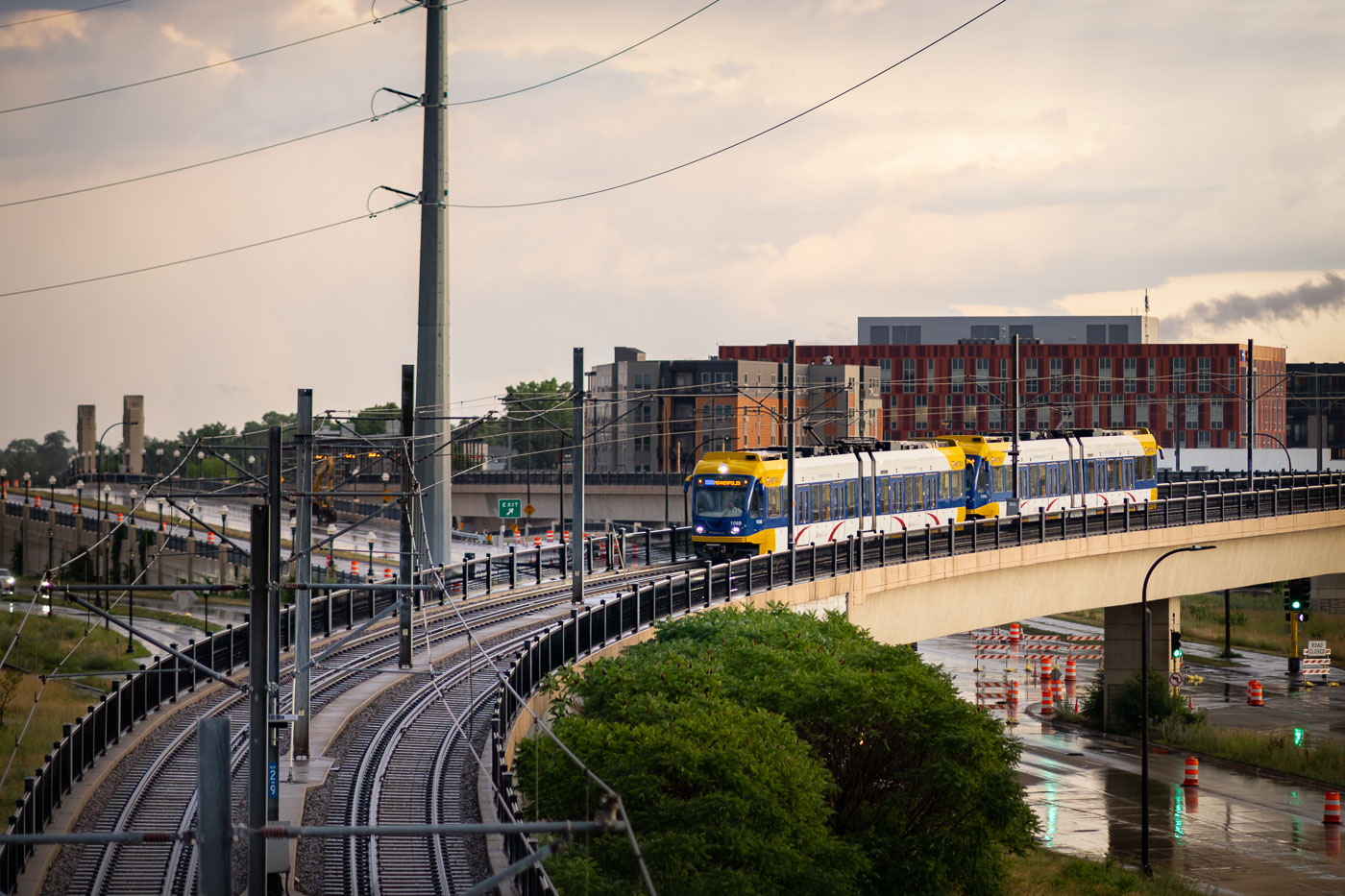
Metro Transit Blue Line train on an elevated track in Minneapolis after rain.
A Metro Transit Blue Line light rail train operates on an elevated track in Minneapolis. Opened in 2004, the Blue Line connects Minneapolis and Saint Paul, with extensions serving the Minneapolis-Saint Paul International Airport and northern suburbs. This elevated segment provides a dedicated right-of-way, ensuring efficient transit operations above street traffic. The light rail system is a crucial element of public transportation in the Twin Cities, linking residential areas with business districts and cultural attractions.

Minneapolis Blue Line Light Rail on Elevated Track

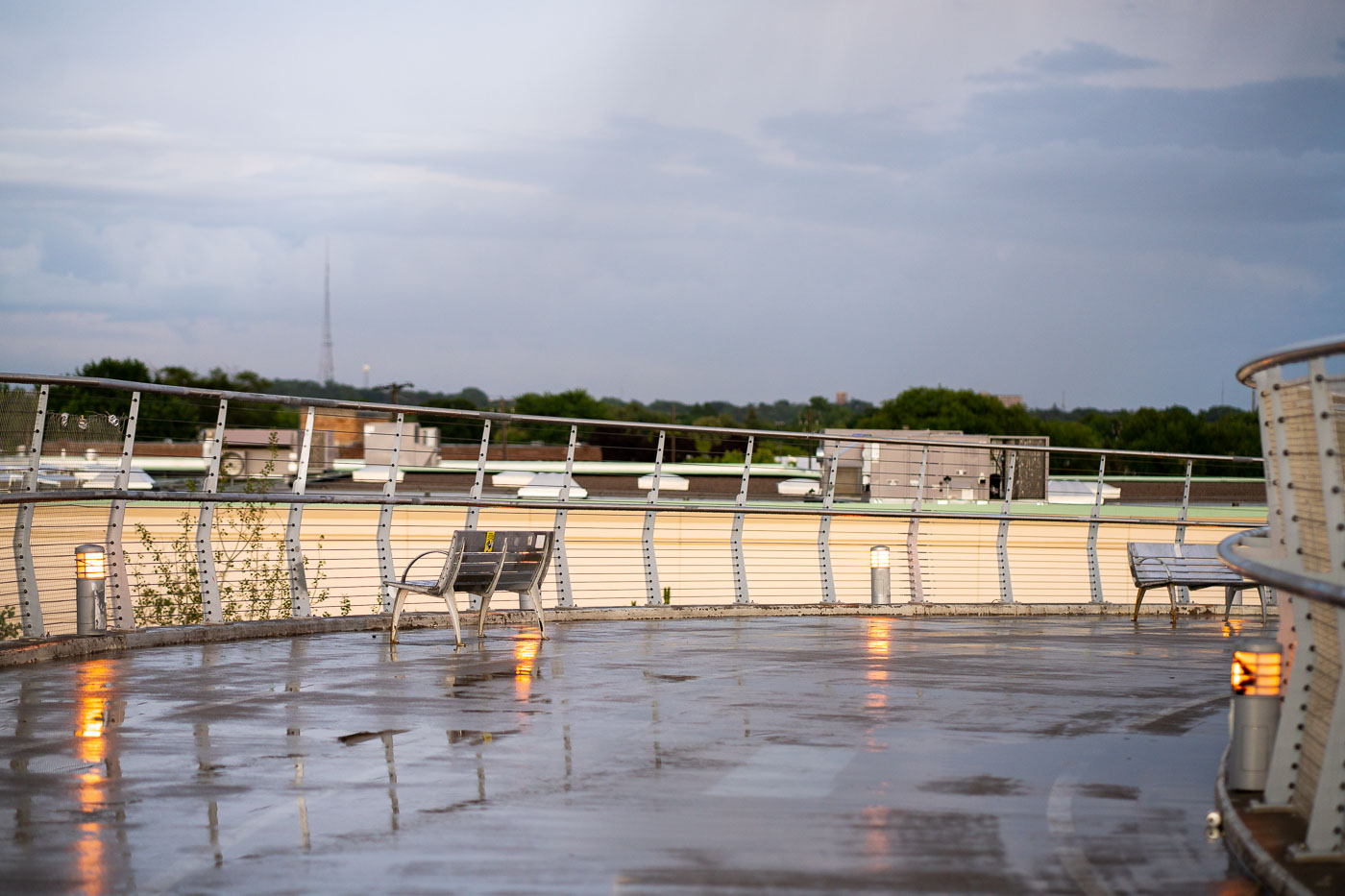
Wet deck on the Martin Olav Sabo Bridge in Minneapolis after rain.
The Martin Olav Sabo Bridge in Minneapolis, also known as the "Hiawatha Line Bridge," is a pedestrian and bicycle bridge that opened in 2002. It spans the Hiawatha Avenue Light Rail corridor, connecting the Longfellow and Cooper neighborhoods and serving as a crucial link for non-motorized transit. The bridge's design includes aesthetic features like integrated lighting and seating areas, intended to enhance the user experience. The "wet deck" in the title refers to the bridge's surface, glistening with reflections after recent rain.

Martin Olav Sabo Bridge, Minneapolis: Wet Deck After Rain
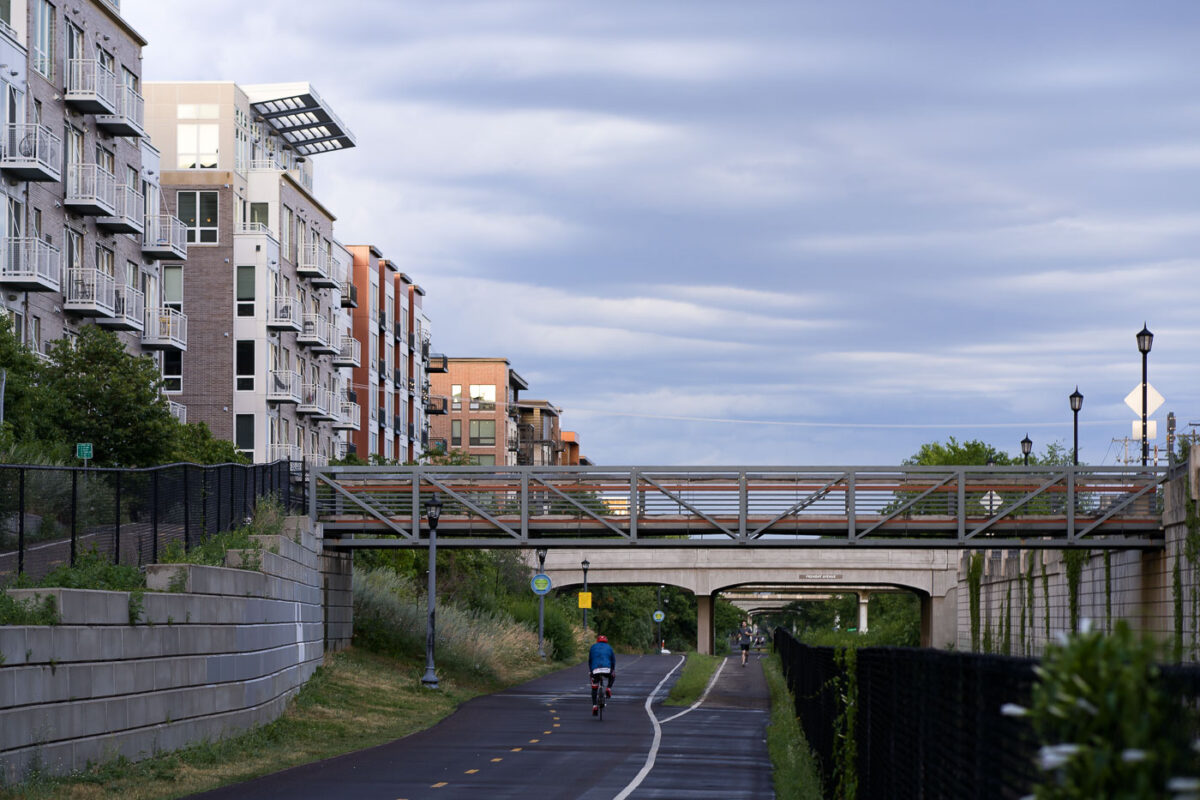
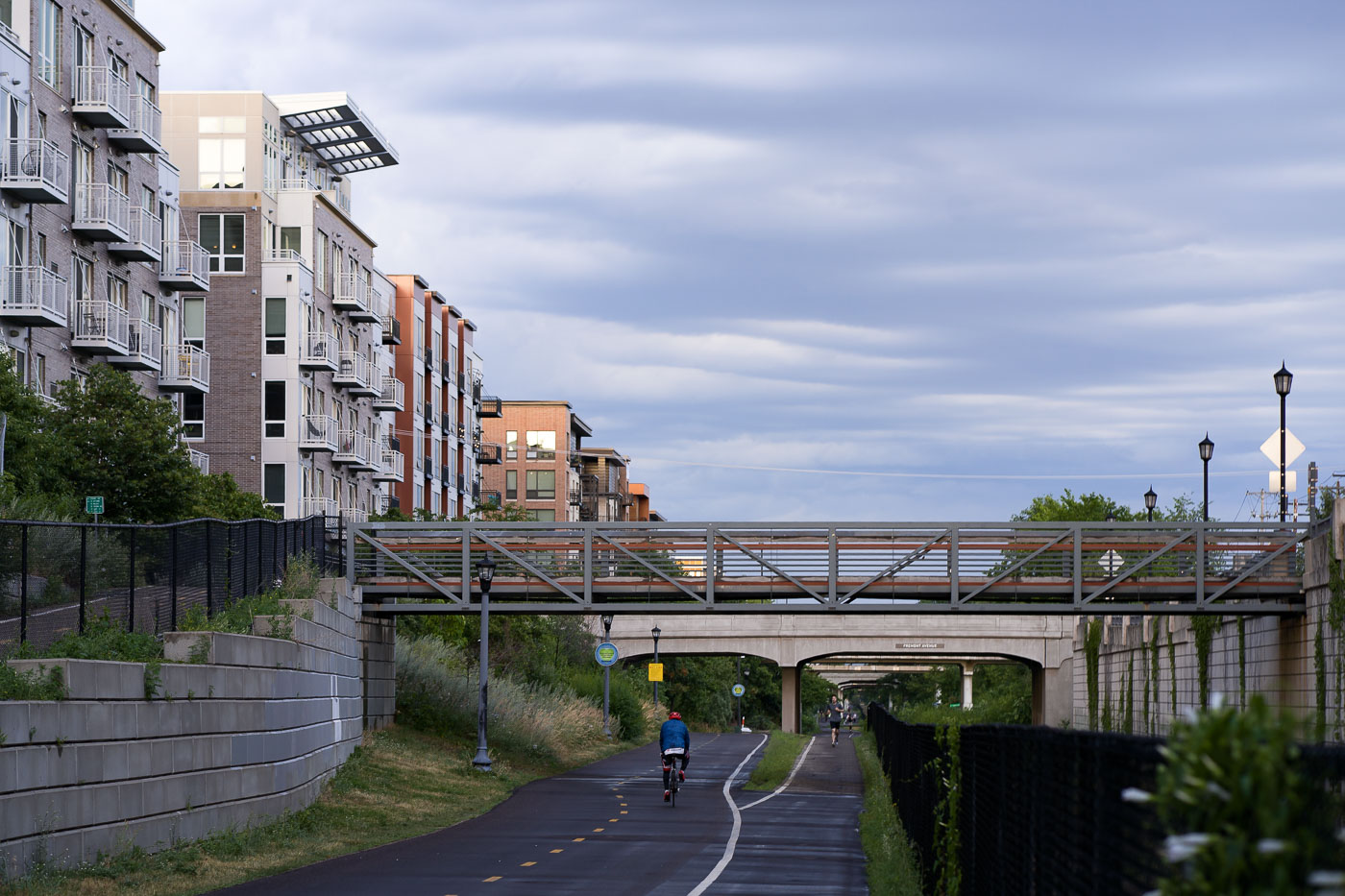
Cyclist on the Midtown Greenway in Minneapolis below a pedestrian bridge and apartment buildings.
The Midtown Greenway in Minneapolis is a 5.5-mile-long trail developed on a former railroad corridor, providing a vital artery for cyclists and pedestrians through the city. Adjacent apartment buildings, constructed in recent years, demonstrate the integration of modern residential development with the trail's active use. A pedestrian bridge spans the greenway, connecting neighborhoods and enhancing access to this popular urban path.

Midtown Greenway, Minneapolis: Pedestrian Bridge and Apartments
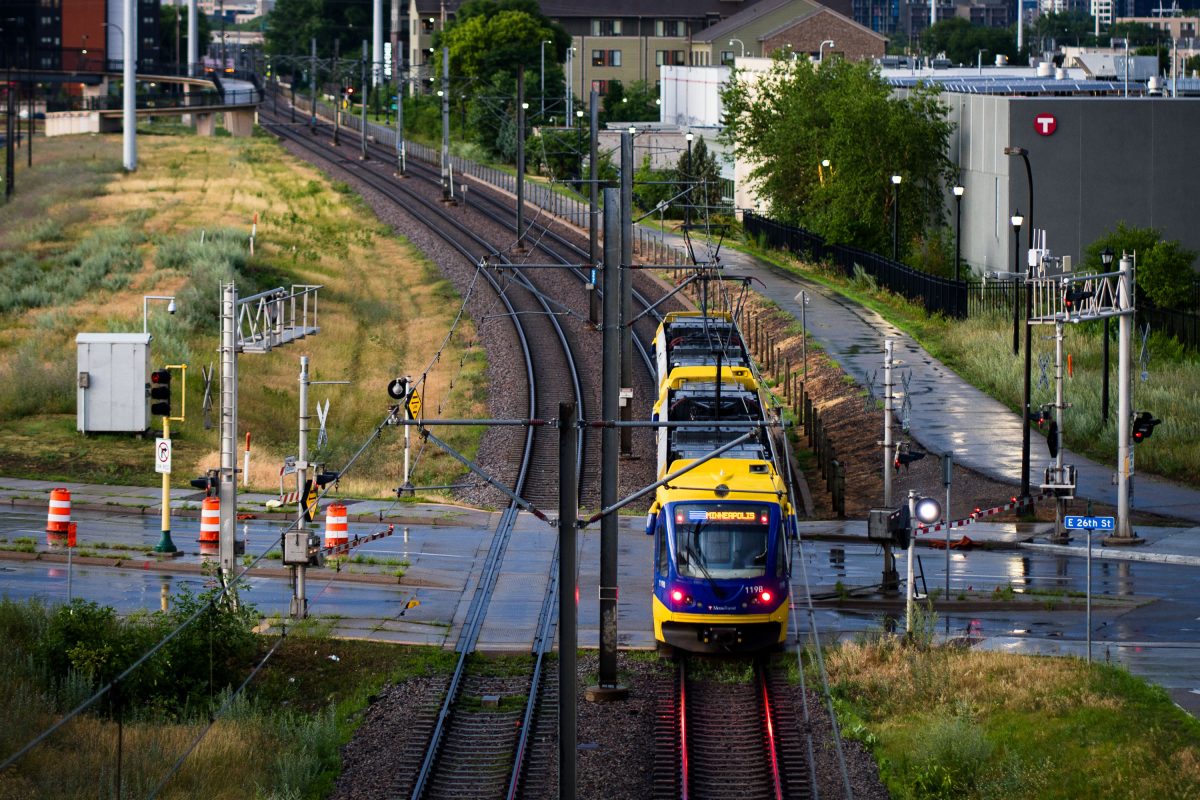
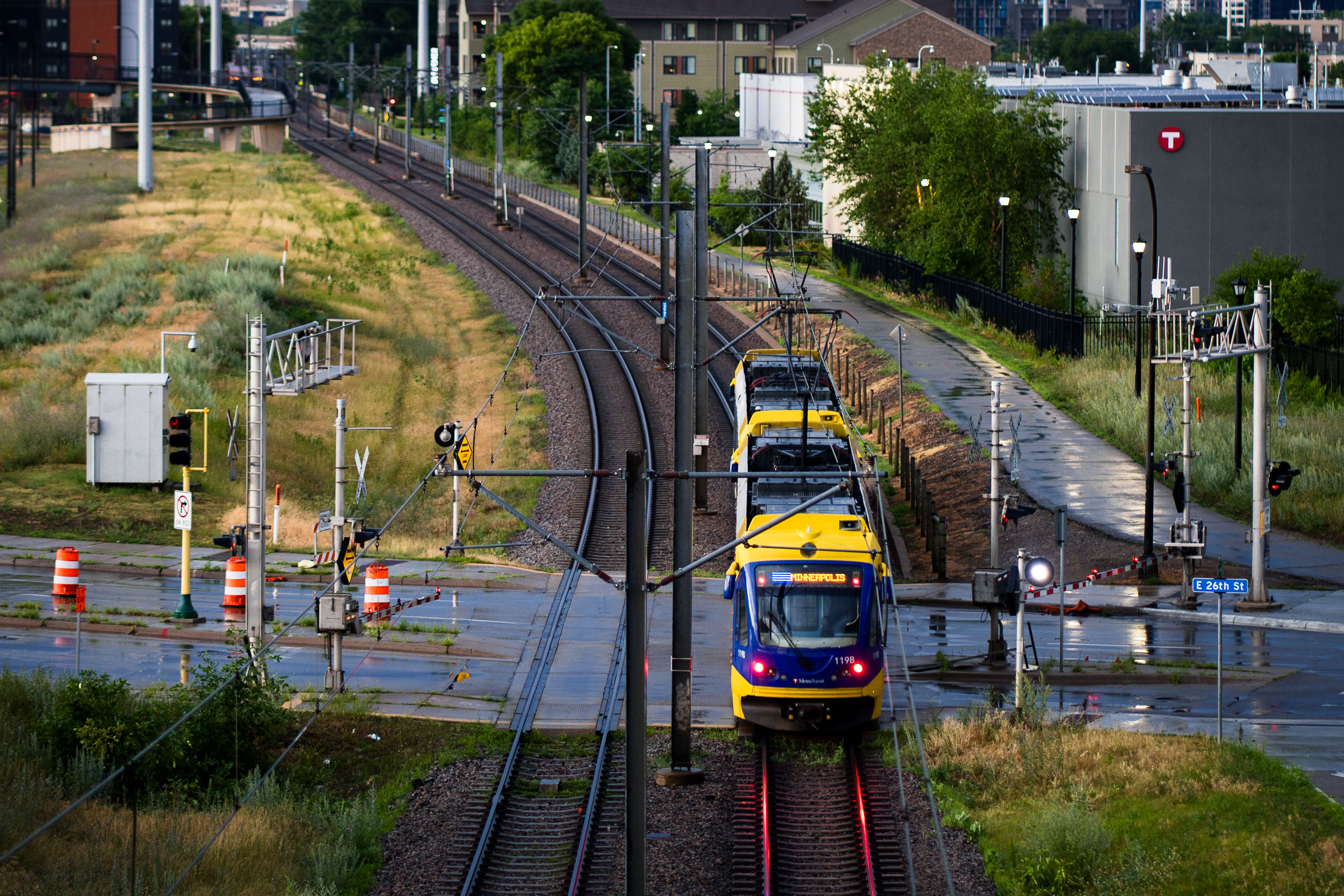
Metro Transit Blue Line light rail train approaching E 26th Street grade crossing in Minneapolis with signal equipment and wet pavement.
A METRO Blue Line light rail train approaches the E 26th Street grade crossing near downtown Minneapolis. The Blue Line, operated by Metro Transit, connects downtown Minneapolis to the Mall of America and Minneapolis–Saint Paul International Airport along a corridor of shared rail and street-level crossings.

Blue Line Train Approaching the E 26th Street Crossing
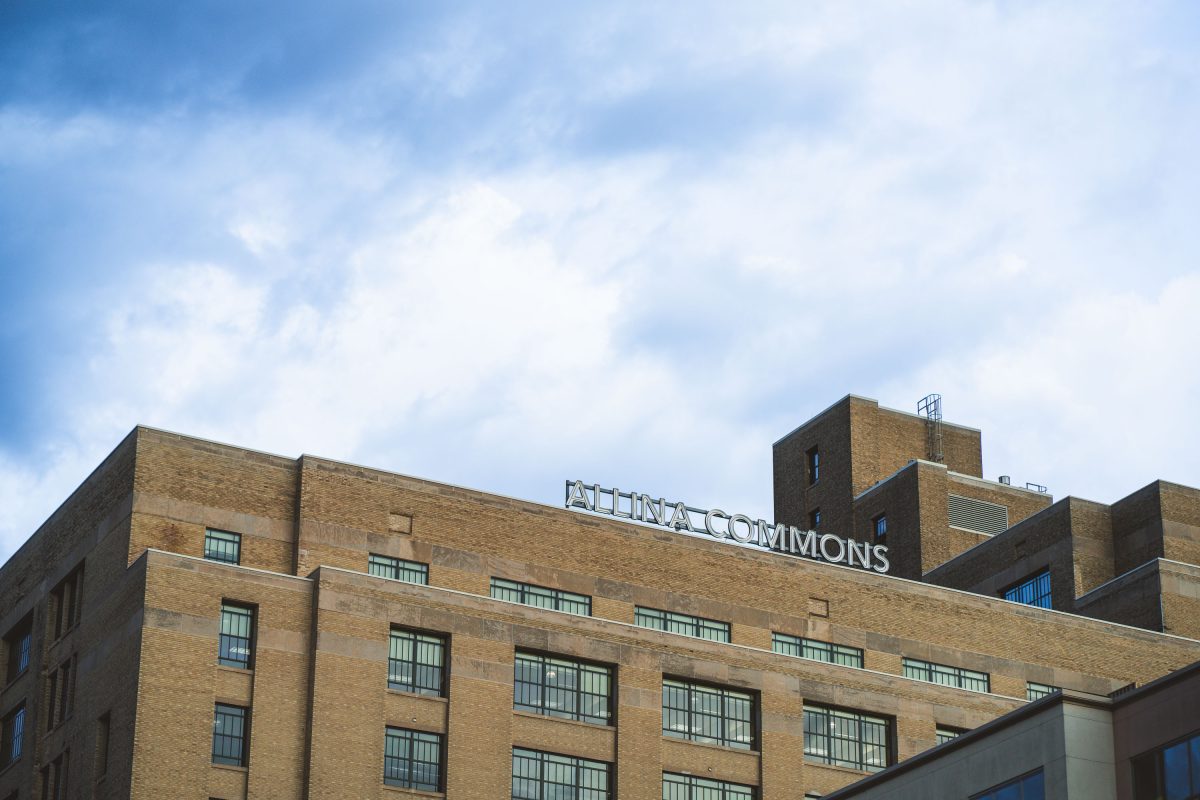
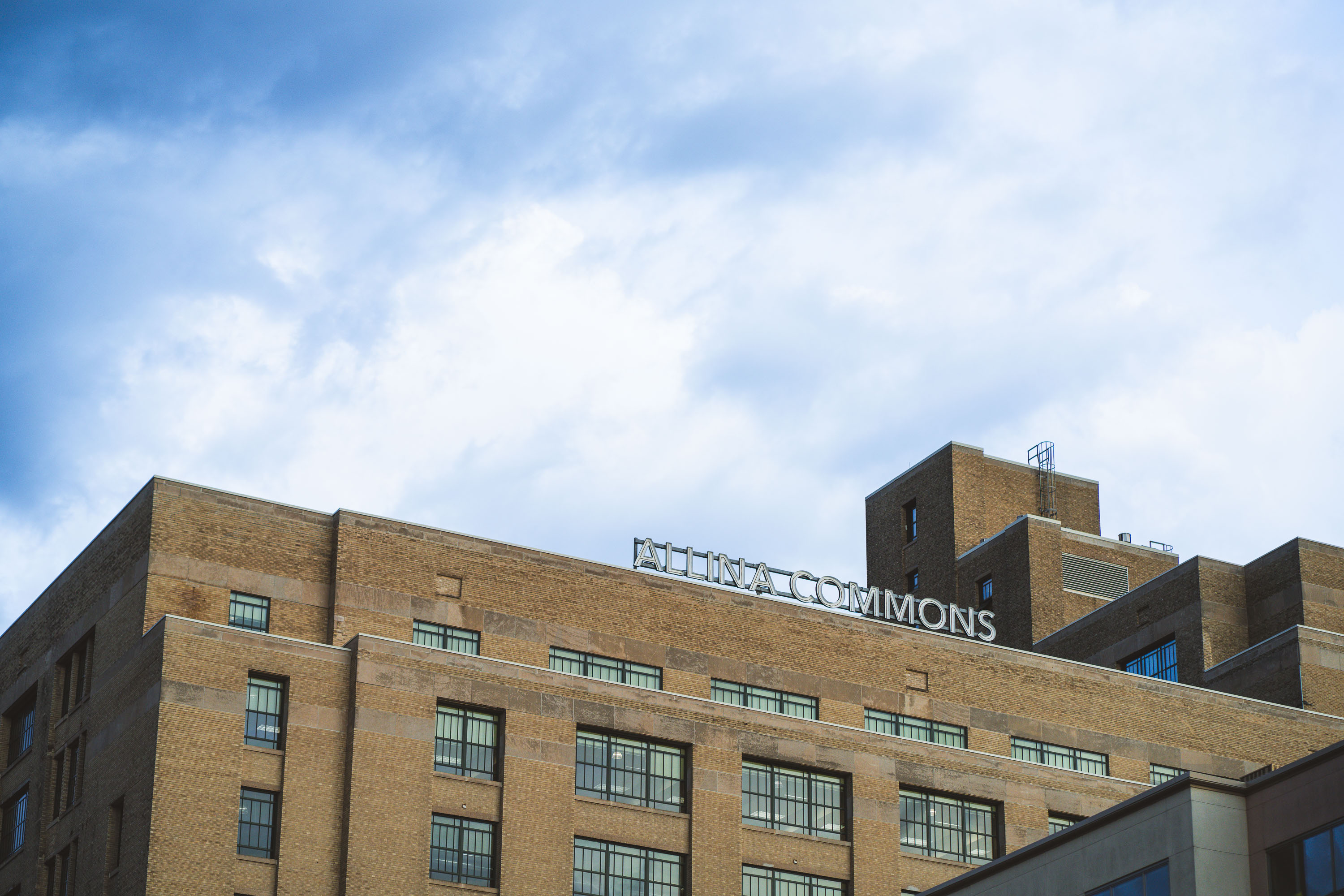
Allina Commons building with brick facade and rooftop signage in Minneapolis.
Allina Commons occupies part of the Midtown Exchange building at 2845 Chicago Avenue in Minneapolis, a structure originally built in 1928 as the Sears, Roebuck and Co. Minneapolis Mail Order House and Retail Store. Architect George C. Nimmons designed the original complex, which once served as a regional distribution hub for Sears catalog orders. Developers redeveloped the property in 2006, converting the roughly 1.2-million-square-foot building into a mixed-use complex that today includes Allina Health's corporate offices, a Sheraton hotel, condominiums, and the Midtown Global Market. The building is listed on the National Register of Historic Places.

Allina Commons at Midtown Exchange, Minneapolis

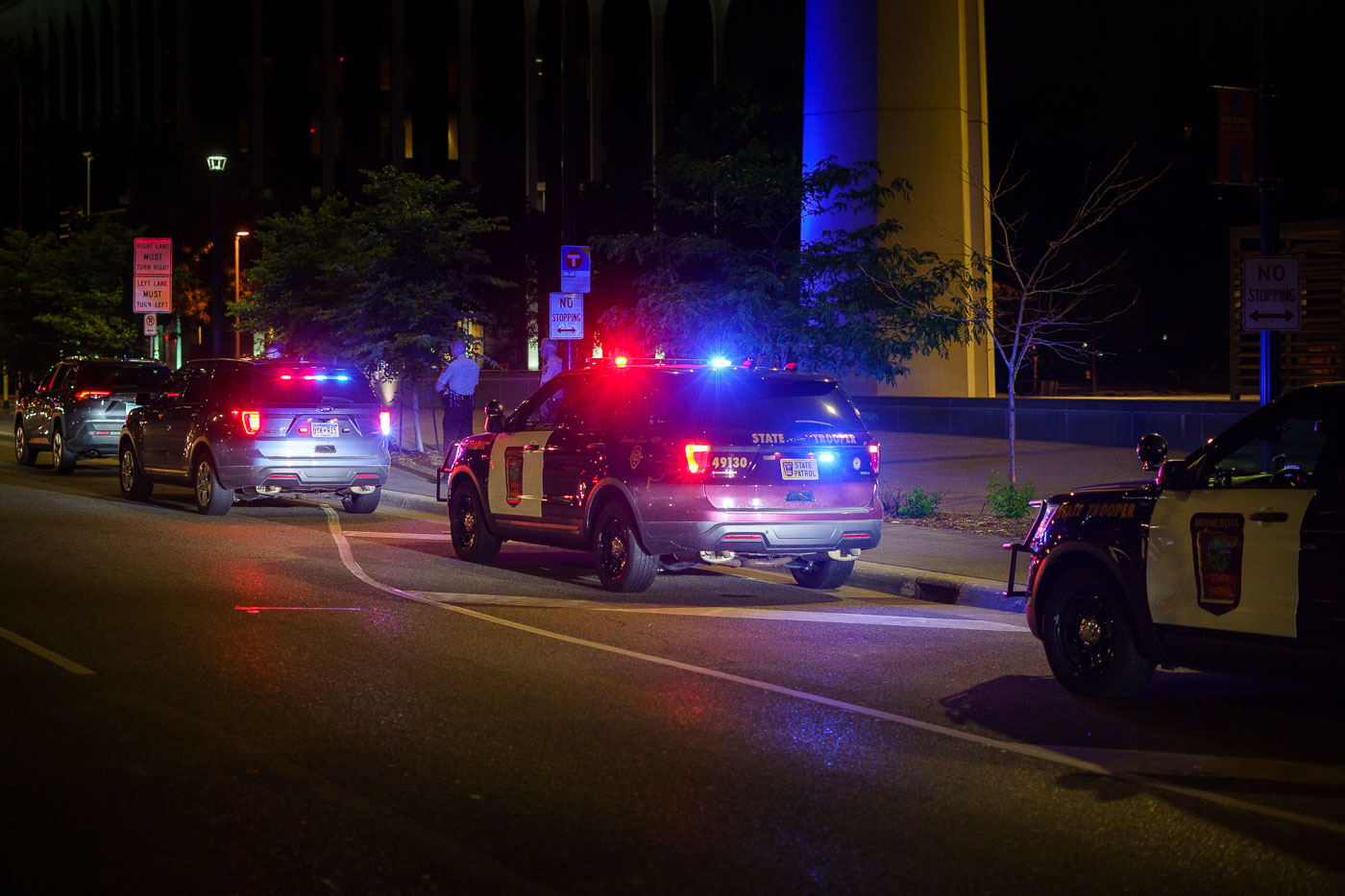
Minnesota State Patrol vehicles parked in downtown Minneapolis at night.
Minnesota State Patrol vehicles are parked on a street in downtown Minneapolis at night. The increased presence of State Patrol and local police vehicles in the city became notable during periods of civil unrest. This image was taken during a time of heightened public attention and increased law enforcement presence in Minneapolis due to protests and demonstrations.

Minnesota State Patrol Cars Downtown Minneapolis Night
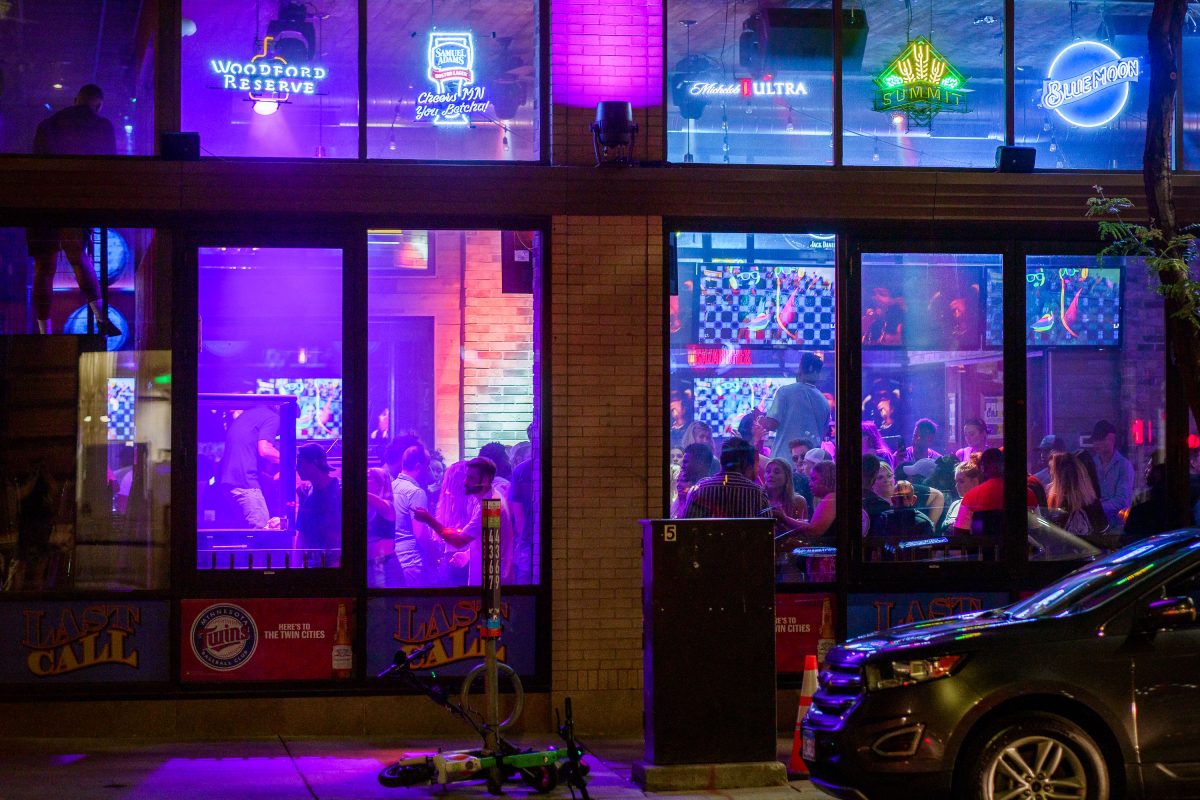
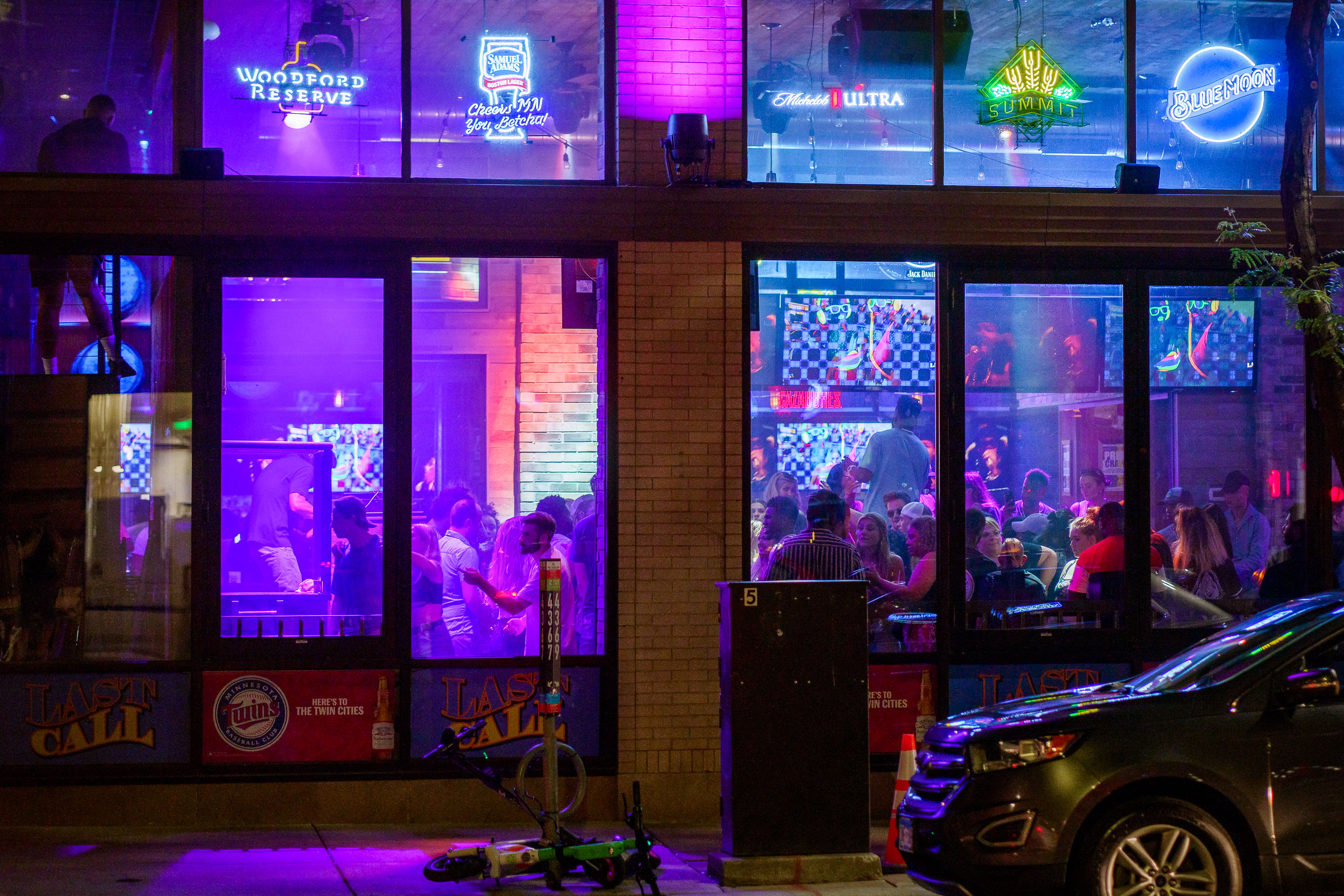
Last Call nightclub in downtown Minneapolis with neon beer signs and a crowded interior at night.
Last Call nightclub in downtown Minneapolis, Minnesota, is shown operating late at night in July 2022. The venue’s street-facing windows reveal a crowded interior, multiple television screens, and beer-brand neon signs, identifying it as part of the Warehouse District nightlife corridor. The business was active more than two years after the citywide unrest that followed the murder of George Floyd in May 2020.

Minneapolis Nightclub, July 2022: Neon Signs & Last Call

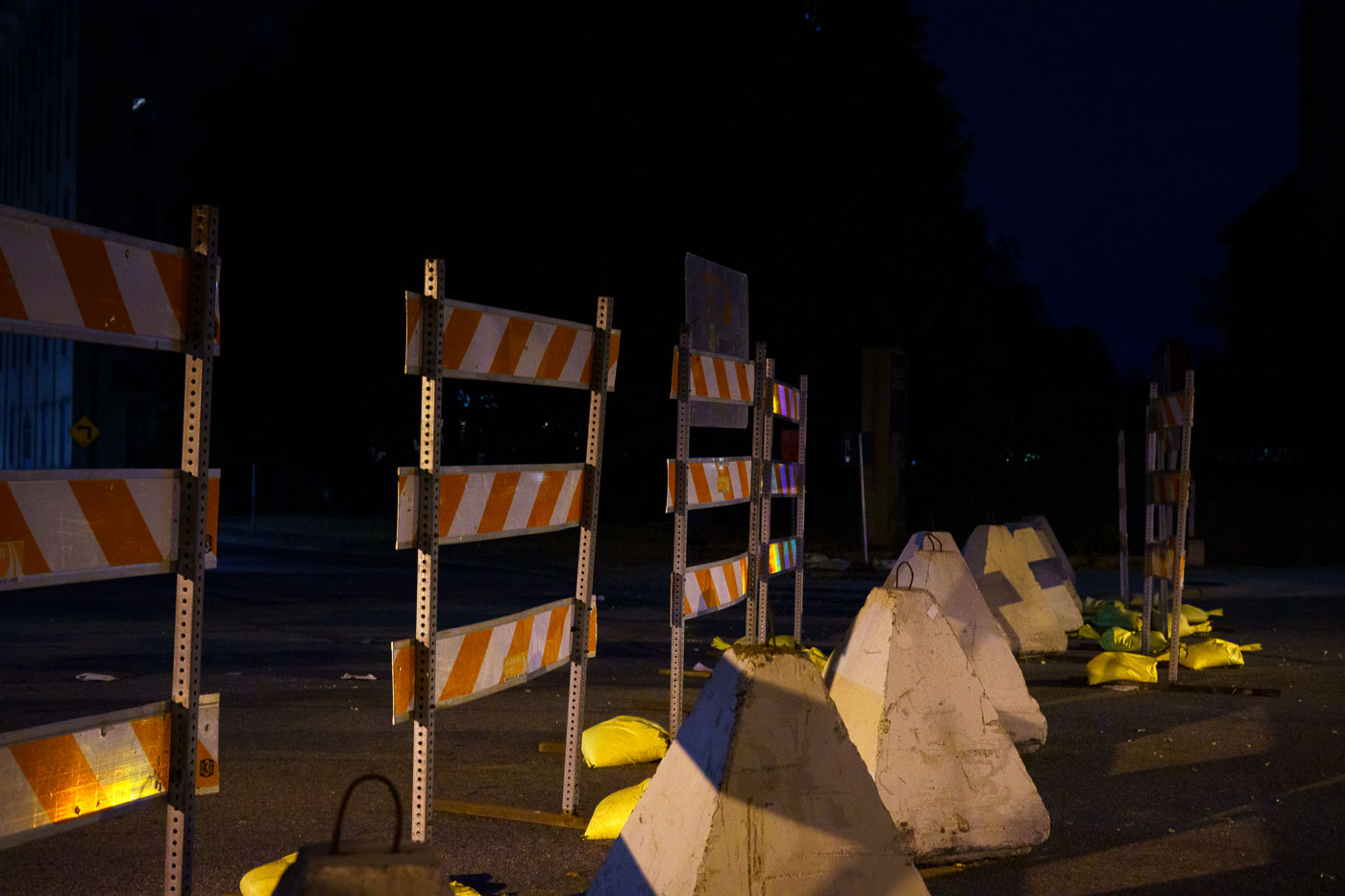
Barricades and concrete barriers on a downtown Minneapolis street at night.
Temporary barricades and concrete barriers were deployed in downtown Minneapolis following multiple weekends of unauthorized "hot rodder takeovers." These events, characterized by large groups of vehicles performing stunts, raised public safety concerns and caused significant traffic disruptions. The city's response aimed to restrict vehicle access and prevent further disturbances in the downtown core, thereby restoring order and ensuring the safety of pedestrians and residents.

Minneapolis Downtown Barricades After Hot Rodder Takeovers

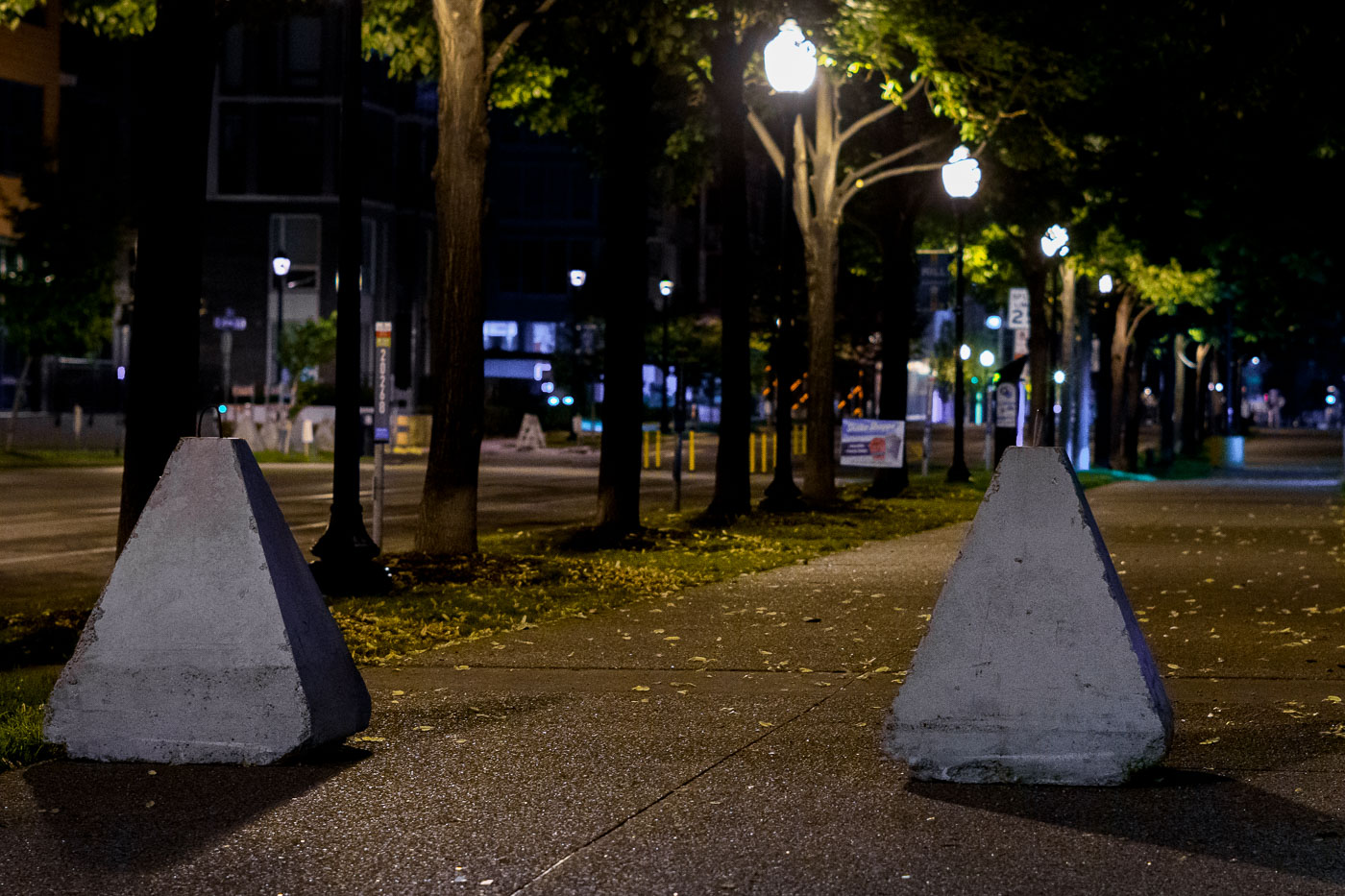
Concrete barricades on a downtown Minneapolis sidewalk at night.
Concrete barricades line a sidewalk in downtown Minneapolis, a measure implemented by city officials following disruptive "hot rodder takeovers." These events, characterized by large gatherings of vehicles and public disturbances, led to the deployment of traffic control measures to prevent vehicles from accessing pedestrian areas. The barricades served as a physical deterrent, aiming to restore order and public safety in the urban environment. This response reflects the city's efforts to manage public spaces in response to unsanctioned vehicular events.

Minneapolis Downtown Barricades After Hot Rodder Events

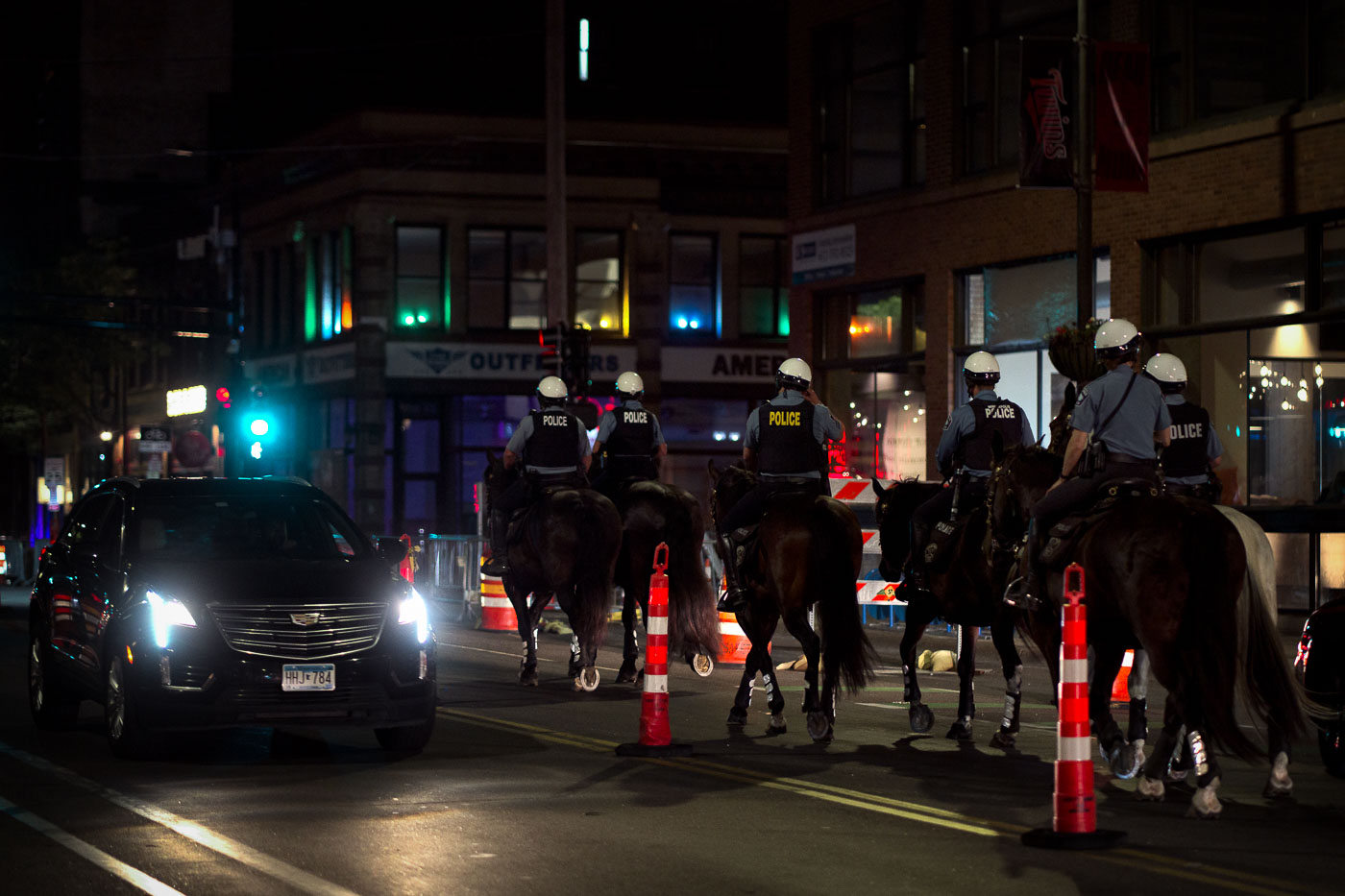
Minneapolis Police mounted patrol officers on Nicollet Mall at night.
Minneapolis Police Mounted Patrol officers on horseback patrol Nicollet Mall at night. This unit is frequently deployed for crowd management and public order during events and protests in the downtown area. Nicollet Mall, a significant pedestrian thoroughfare in Minneapolis, is lined with businesses and cultural institutions. The mounted patrol's presence serves as a visible deterrent and provides mobility in dense urban settings during public gatherings or civil unrest.

Minneapolis Police Mounted Patrol on Nicollet Mall at Night

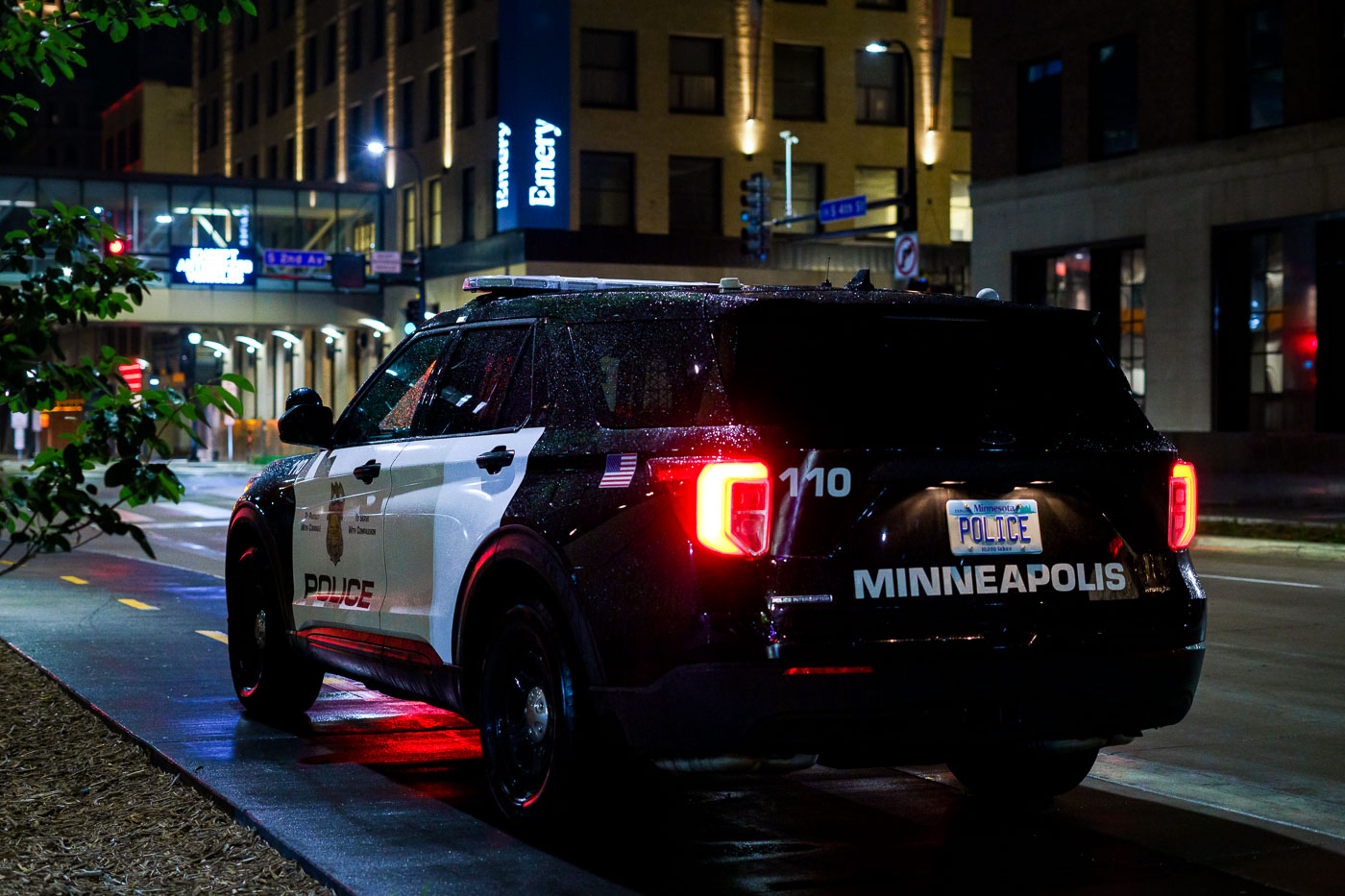
Minneapolis police SUV on 7th Street South near the Emery Hotel in downtown Minneapolis at night.
A Minneapolis Police Department SUV is parked on 7th Street South in downtown Minneapolis, adjacent to a protected bike lane and the Emery Hotel. The hotel’s skyway connection is visible above the street, identifying the block as part of Minneapolis’s downtown skyway network, which links hotels, offices, and other buildings across the central business district. The marked squad vehicle and city location place the vehicle within routine street patrol and enforcement operations in the downtown core.

Minneapolis Police Squad Car on 7th Street South

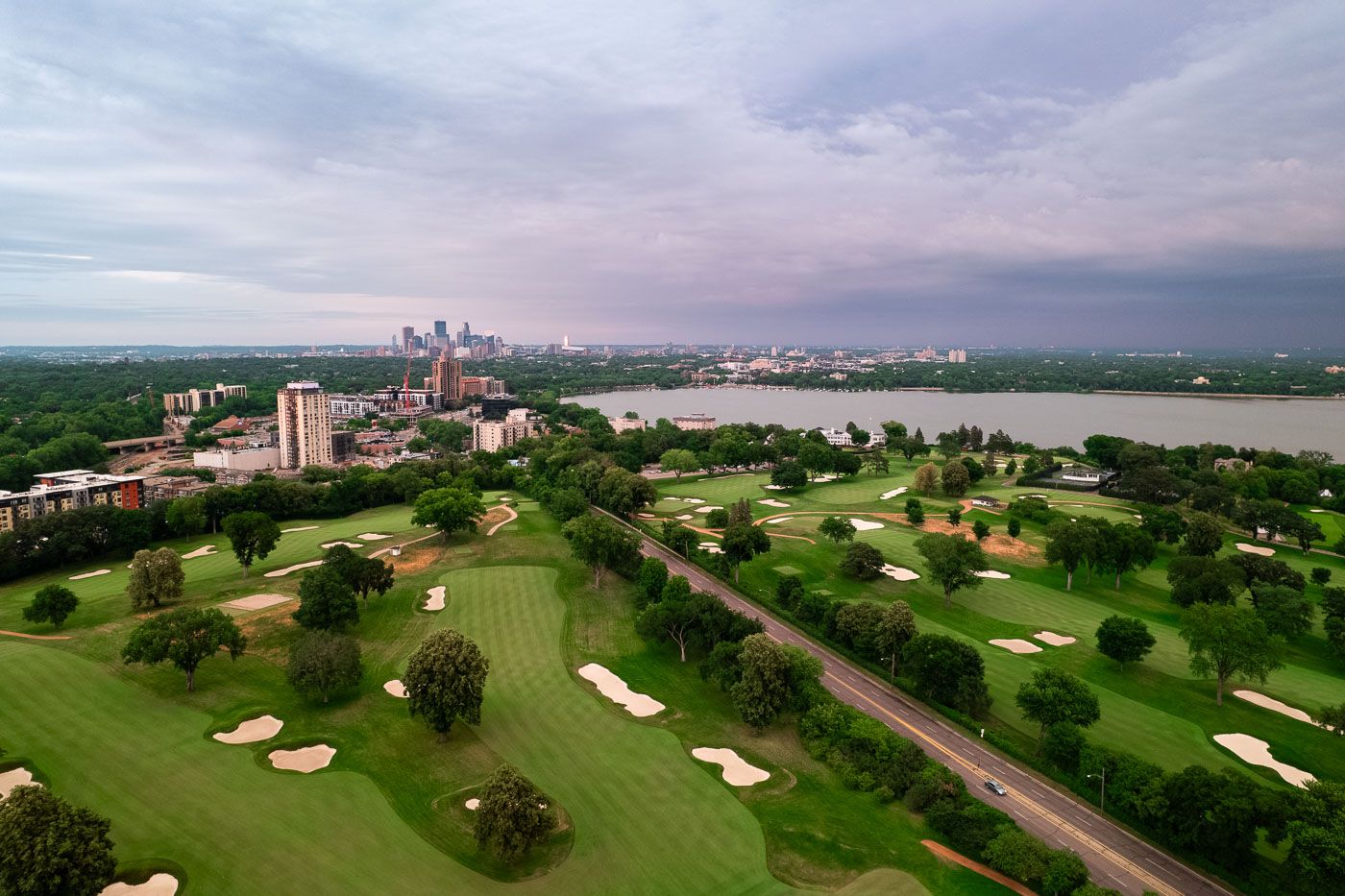
Minikahda Club golf course in Minneapolis with Bde Maka Ska and downtown skyline in background.
Minikahda Club Golf Course in Minneapolis is a private 18-hole golf course on the city’s southwest side. The course overlooks Lake Harriet and the Minneapolis skyline.

Minikahda Club and Bde Maka Ska with Minneapolis Skyline

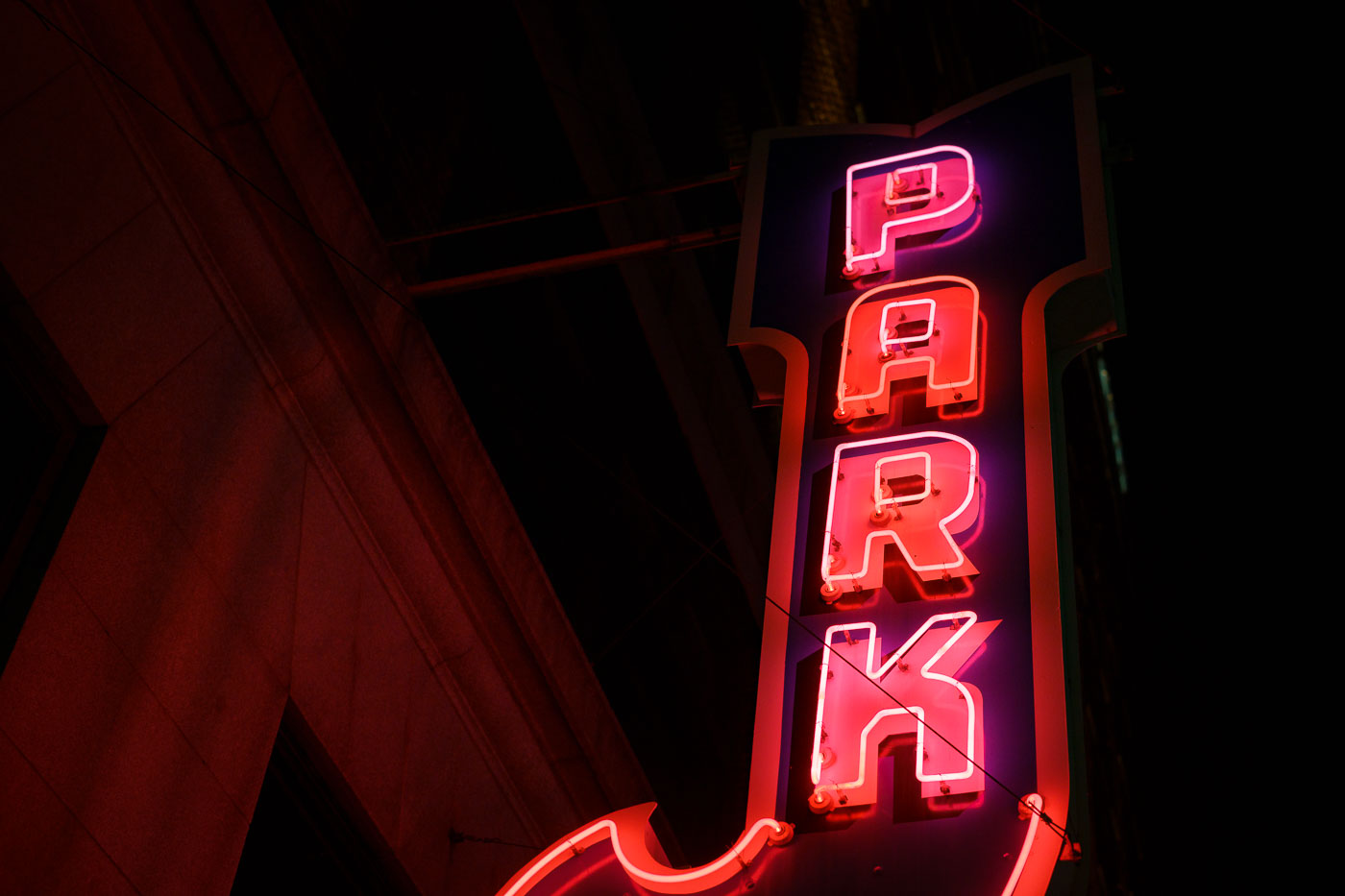
Vintage Neon “Park” Sign in Downtown Minneapolis
A classic vertical “PARK” marquee glows in red and magenta neon, marking one of downtown Minneapolis’s older parking structures that date back to the mid-20th century. These illuminated signs were once a staple of the city’s core, guiding drivers through the dense commercial grid before digital wayfinding and modern garages became standard. Many of these vintage markers survive as quiet architectural artifacts, attached to early high-rise buildings constructed during the postwar retail boom. Their hand-bent tubing and heavy steel housings reflect a period when neon craftsmanship was central to the city’s nighttime identity, especially along corridors near Nicollet Avenue, Hennepin Avenue, and the warehouse district.

Vintage Neon “Park” Sign in Downtown Minneapolis

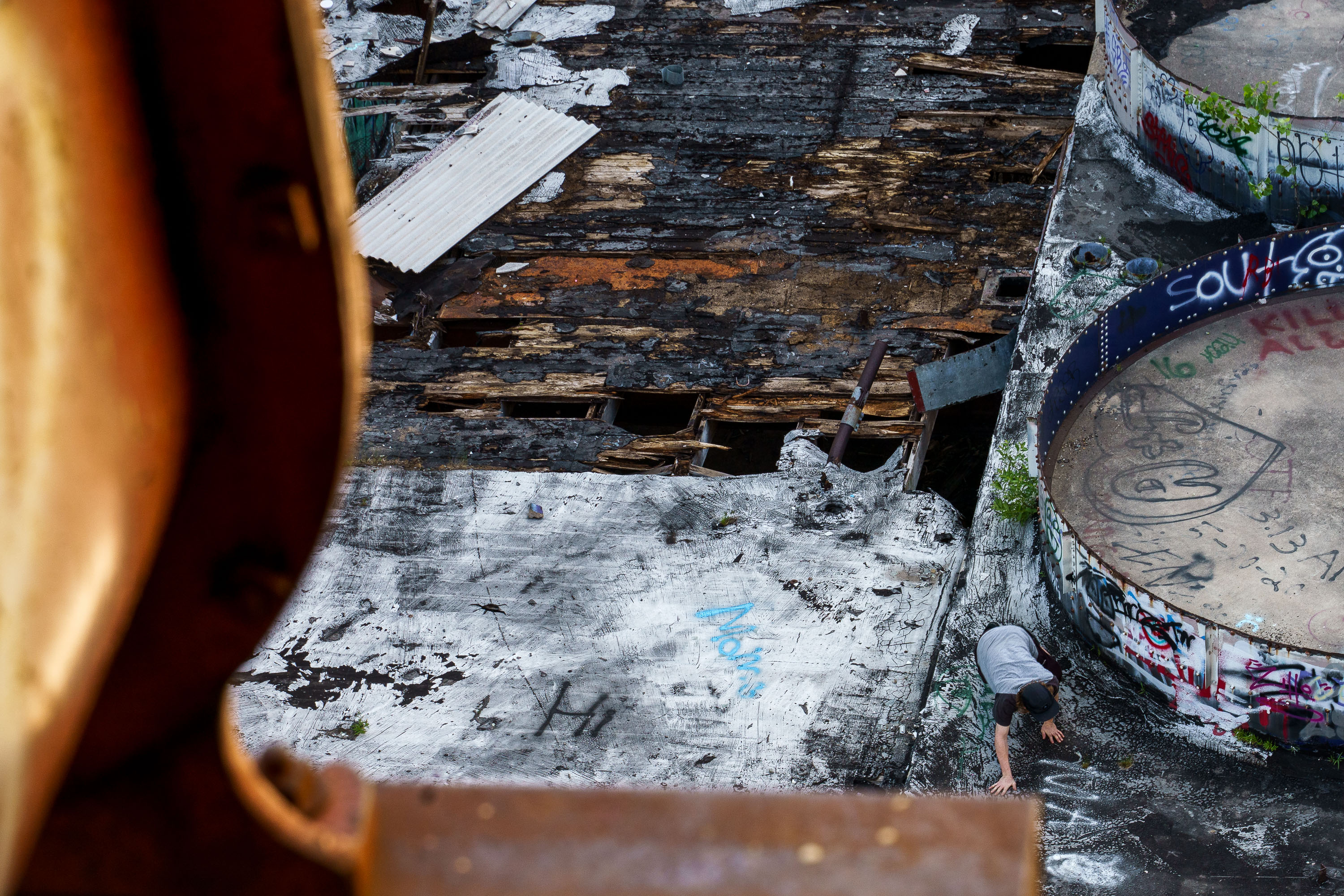
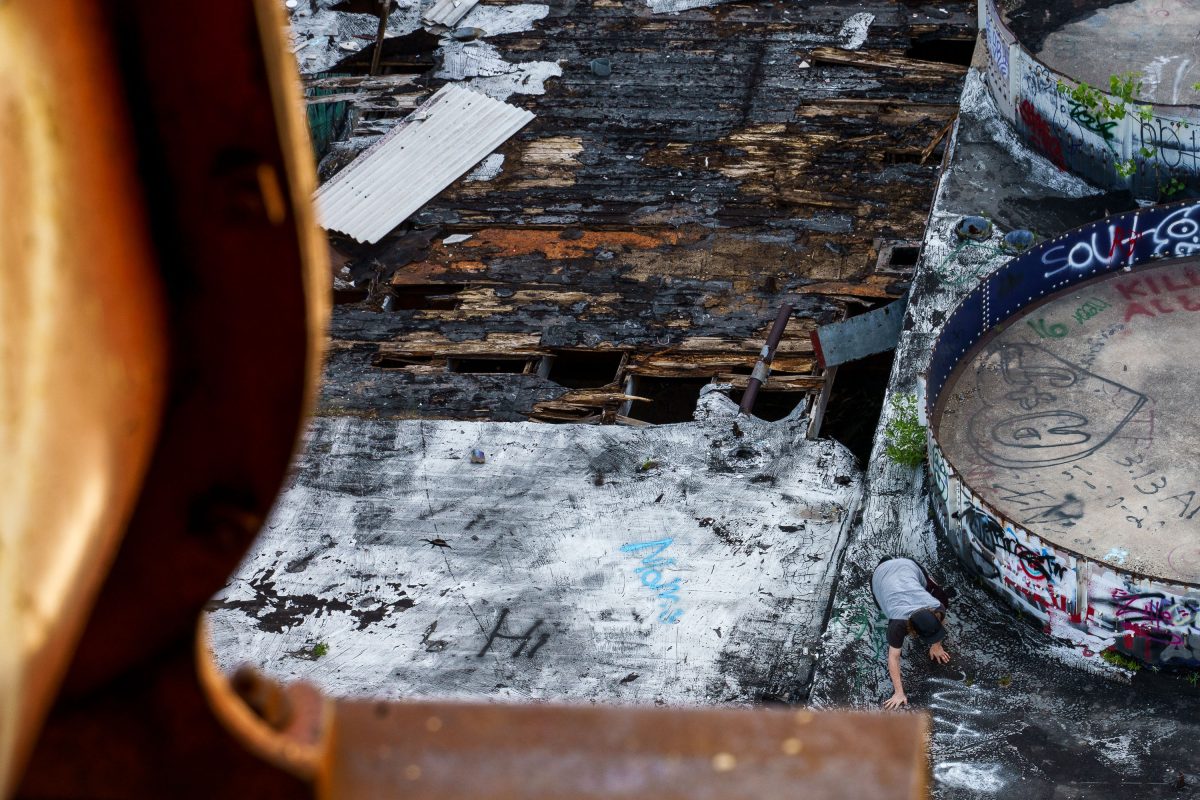
Abandoned Fruen Mill grain elevator in Minneapolis shows deteriorated wooden floors and graffitied concrete structures from above.
Fruen Mill sits along Bassett Creek near Van White Memorial Boulevard in Minneapolis, built in the 1870s by William Fruen to grind flour and later feed. The mill operated for roughly a century before closing, and the property has stood vacant for decades since. Fire has since gutted sections of the structure, leaving charred timbers and collapsed decking exposed to the elements. Over the years the abandoned mill has drawn graffiti artists and urban explorers, its concrete surfaces layered with tags and murals. The site remains privately owned and undeveloped, a holdover industrial ruin within the city's Bassett Creek corridor.

Burned Rooftop, Fruen Mill, Minneapolis
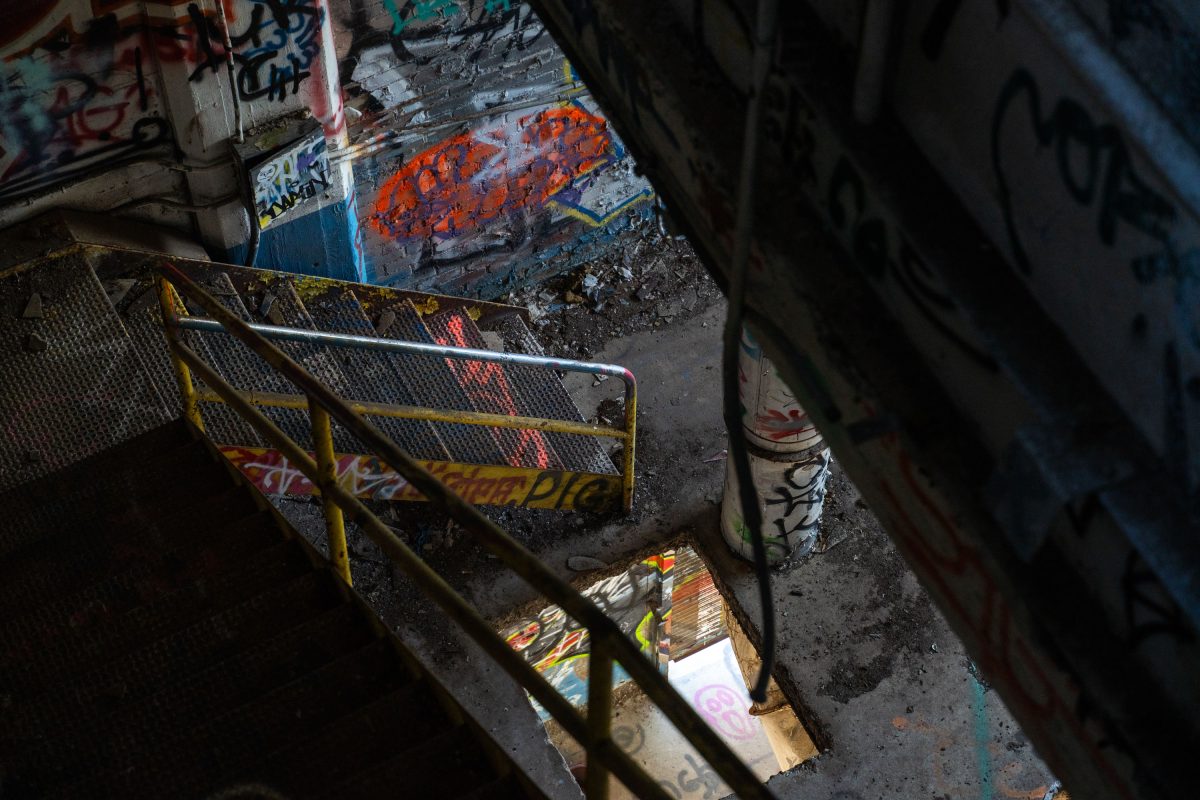
Graffitied metal staircase inside the abandoned Fruen Mill grain elevator in Minneapolis.
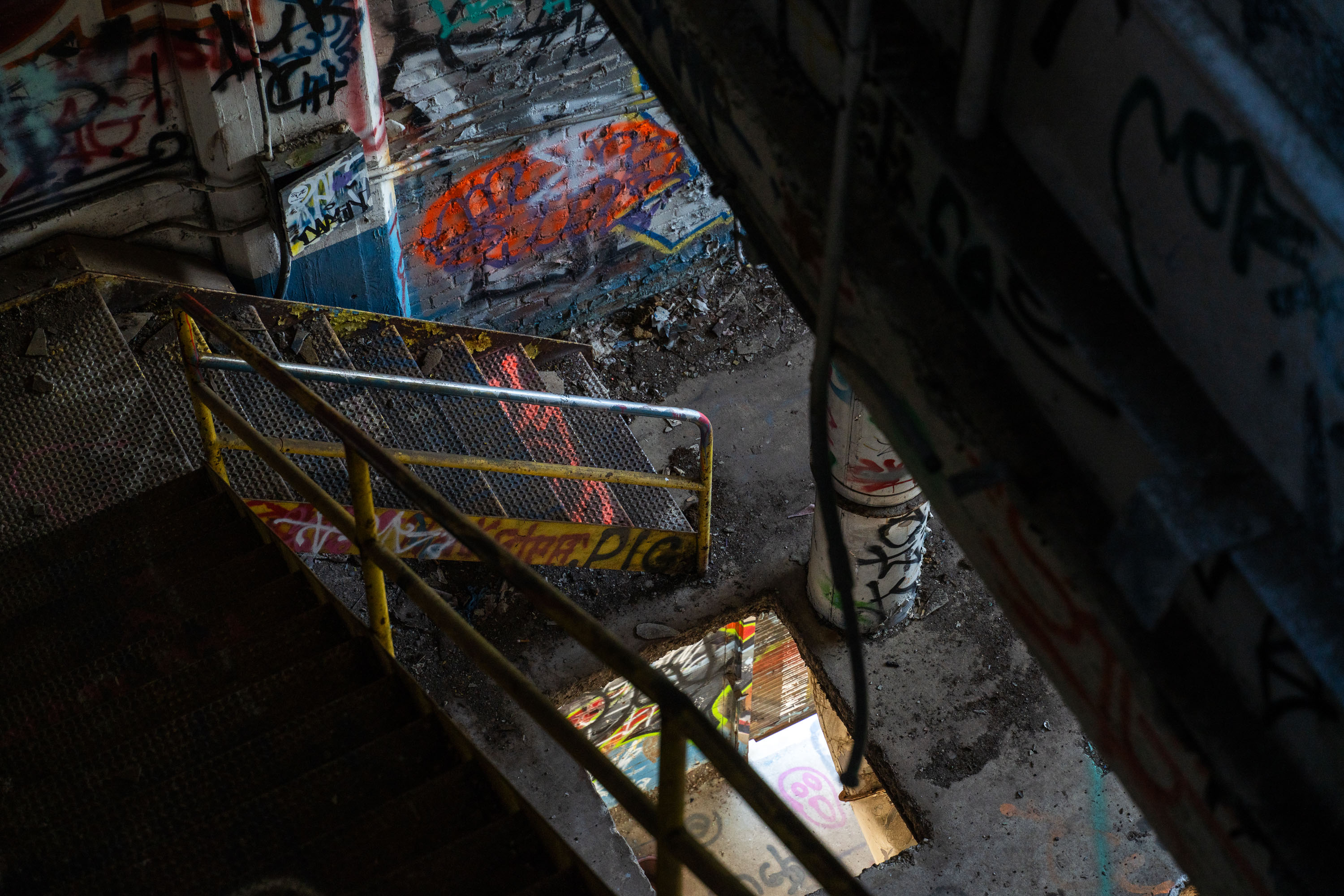
Fruen Mill sits along Bassett's Creek in the Bryn Mawr neighborhood of Minneapolis, one of the city's earlier flour-milling operations before larger mills along the Mississippi took over the industry. The building has stood vacant for decades and has become a well-known spot for graffiti writers and urban explorers, its interior stairwells and landings layered with decades of paint.

Graffiti-Covered Stairwell, Fruen Mill, Minneapolis
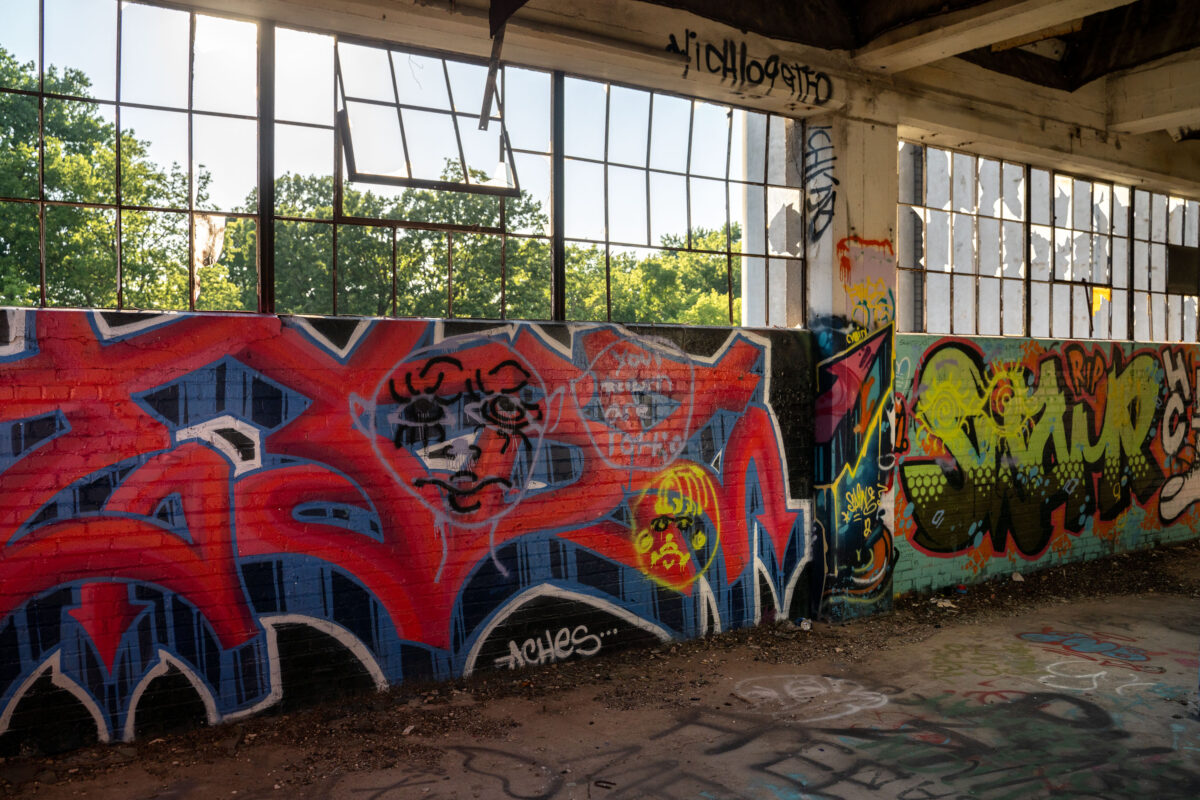
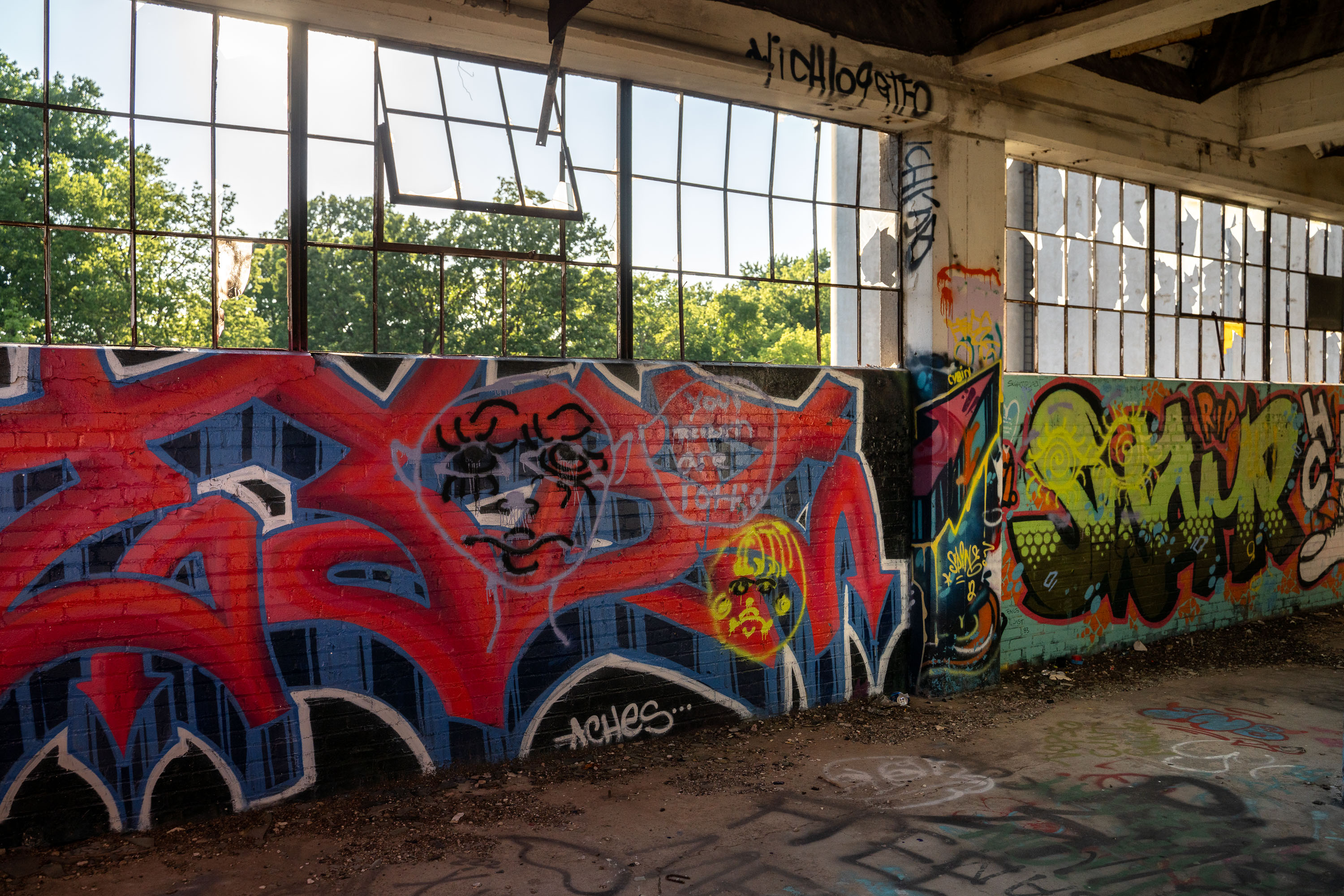
Colorful graffiti murals cover brick walls inside the abandoned Fruen Mill in Minneapolis.
Inside the long abandoned Fruen Mill in Minneapolis, Minnesota. The Fruen Mill is a historic industrial complex along Bassett Creek in Minneapolis. William H. Fruen established a workshop at the site in 1872, manufacturing screws and waterwheel governors, and began milling grain using water power in 1894. The business grew into a major cereal producer and was among the earliest manufacturers of breakfast cereals in Minneapolis. A fire destroyed the original mill and workshop in 1920, and much of the surviving complex dates from the rebuilding that followed. The mill was eventually sold to ConAgra in 1971 and ceased operations, leaving the complex as one of the remaining landmarks of the industrial history of Bassett Creek. (

Graffiti-Covered Silo Tower Overlooking Downtown Minneapolis, Fruen Mill

Building Blocks Minneapolis Police sign in South Minneapolis.
A Building Blocks Minneapolis Police sign in South Minneapolis. The neighborhood safety program recognizes blocks that work with the Minneapolis Police Department on crime prevention and community watch efforts.

Minneapolis Police Building Blocks sign

Deshaun Hill shirt hangs at George Floyd Square
A blue jersey with the name "D. HILL" and the number "9" hangs at George Floyd Square in Minneapolis. This memorial honors Deshaun Hill, a 15-year-old who was fatally shot on February 9, 2021, while walking home from school.

Deshaun Hill Jersey at George Floyd Square, Minneapolis
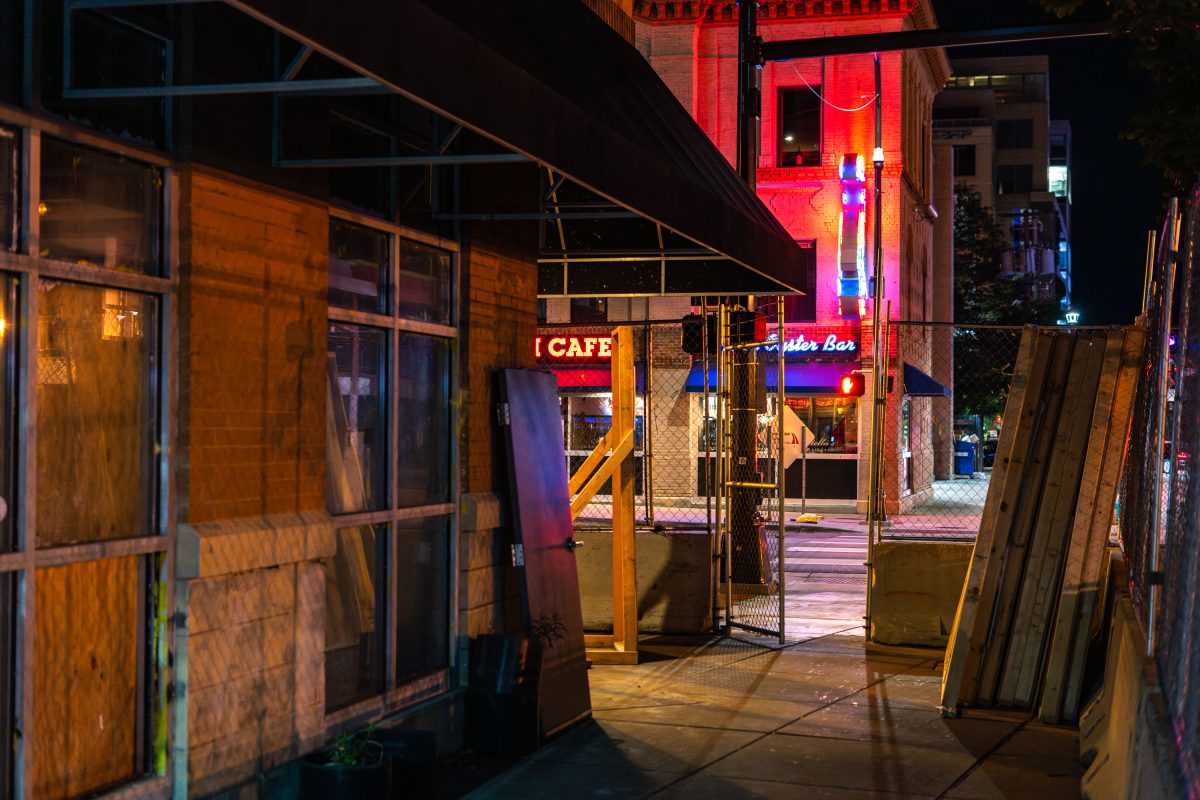
Boards and fencing at Seven Points Mall in Uptown Minneapolis
Boards and fencing around Seven Points Mall in Uptown Minneapolis. The boards and fencing were installed following protest that followed the June 2021 killing of Winston Smith. On June 3, 2021, members of a U.S. Marshals Service fugitive task force fatally shot 32-year-old Winston “Boogie” Smith Jr. on the top level of a parking ramp in Minneapolis’ Uptown neighborhood while attempting to arrest him on a felony warrant. Authorities said Smith fired a handgun from inside his vehicle during the encounter, while family members and activists questioned the official account and demanded the release of additional evidence. The killing led to weeks of protests, street occupations, and confrontations with police in Uptown, becoming another major flashpoint in Minneapolis during the period following the murder of George Floyd. Earlier in the day Minneapolis city officials along with The Agape Movement coordinated to open the streets that had been closed at George Floyd Square since his murder.

Boards and fencing at Seven Points Mall in Uptown Minneapolis

All Black Lives Matter mural
A mural located on the exterior of a building at 40th Street in South Minneapolis. The artwork features multiple signs with messages such as "All Black Lives Matter," "No Justice No Peace," "This is Indigenous Land," and "Protect Trans Lives."

South Minneapolis Mural: “All Black Lives Matter” and “No Justice No Peace”

Metro Inn Motel on Lyndale Avenue South in Minneapolis, with office and guest rooms.
Metro Inn Motel on Lyndale Avenue South in Minneapolis. The roadside motel includes an office and guest rooms arranged around a small parking lot.

Metro Inn Motel, Lyndale Avenue South, Minneapolis

Anthony Middle School building in Minneapolis with a courtyard garden and tall brick chimney.
Anthony Middle School Building, Minneapolis. The school is part of Minneapolis Public Schools and includes a community garden area in the courtyard. It is located on the city's northeast side.

Anthony Middle School Building, Minneapolis

South Minneapolis park with a pool, playground, and tennis courts.
A neighborhood park in South Minneapolis includes a swimming pool, playground, and tennis courts. The park sits along a tree-lined residential street and provides recreational space for the surrounding area.

South Minneapolis Park with Pool and Playground

“Abort Supreme Court” graffiti is painted on a wall along the Midtown Greenway in Minneapolis.
“Abort Supreme Court” graffiti appears on a wall along the Midtown Greenway in Minneapolis on June 26, 2022. The message references the U.S. Supreme Court two days after its Dobbs v. Jackson Women’s Health Organization decision overturned Roe v. Wade. The Midtown Greenway is a grade-separated bicycle and pedestrian corridor built in a former railroad trench through south Minneapolis.

Abort Supreme Court Graffiti, Midtown Greenway

Graffiti, Art, Martin Olav Sabo Bridge, Minneapolis
Graffiti on the Martin Olav Sabo Bridge in Minneapolis reads, "Theres more to life than being really, really ridiculously good at graffiti. Not really..."

Martin Olav Sabo Bridge Graffiti, Minneapolis

Brit's Pub neon sign on Nicollet Mall in Minneapolis advertises Newcastle Brown Ale.
Brit's Pub on Nicollet Mall in Minneapolis is a British-style bar and restaurant in downtown Minneapolis. Its neon signage advertises Newcastle Brown Ale.

Brit’s Pub neon sign, Nicollet Mall, Minneapolis
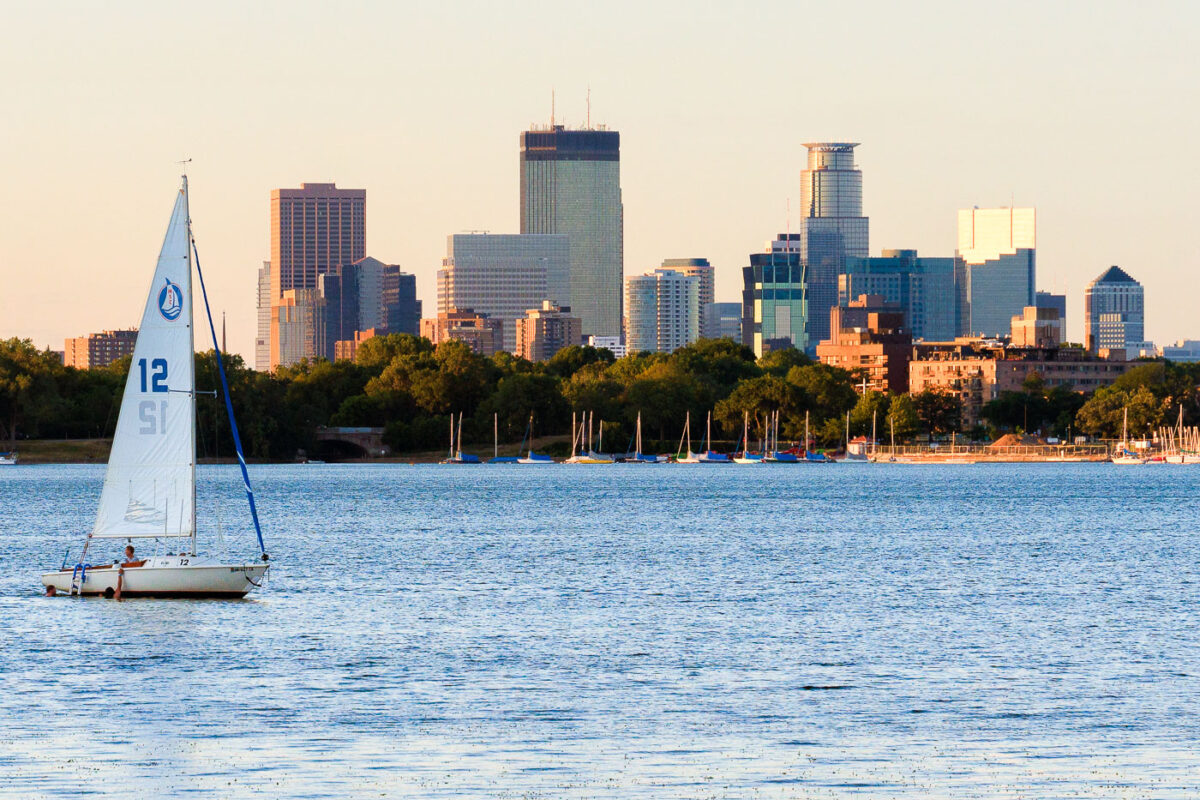
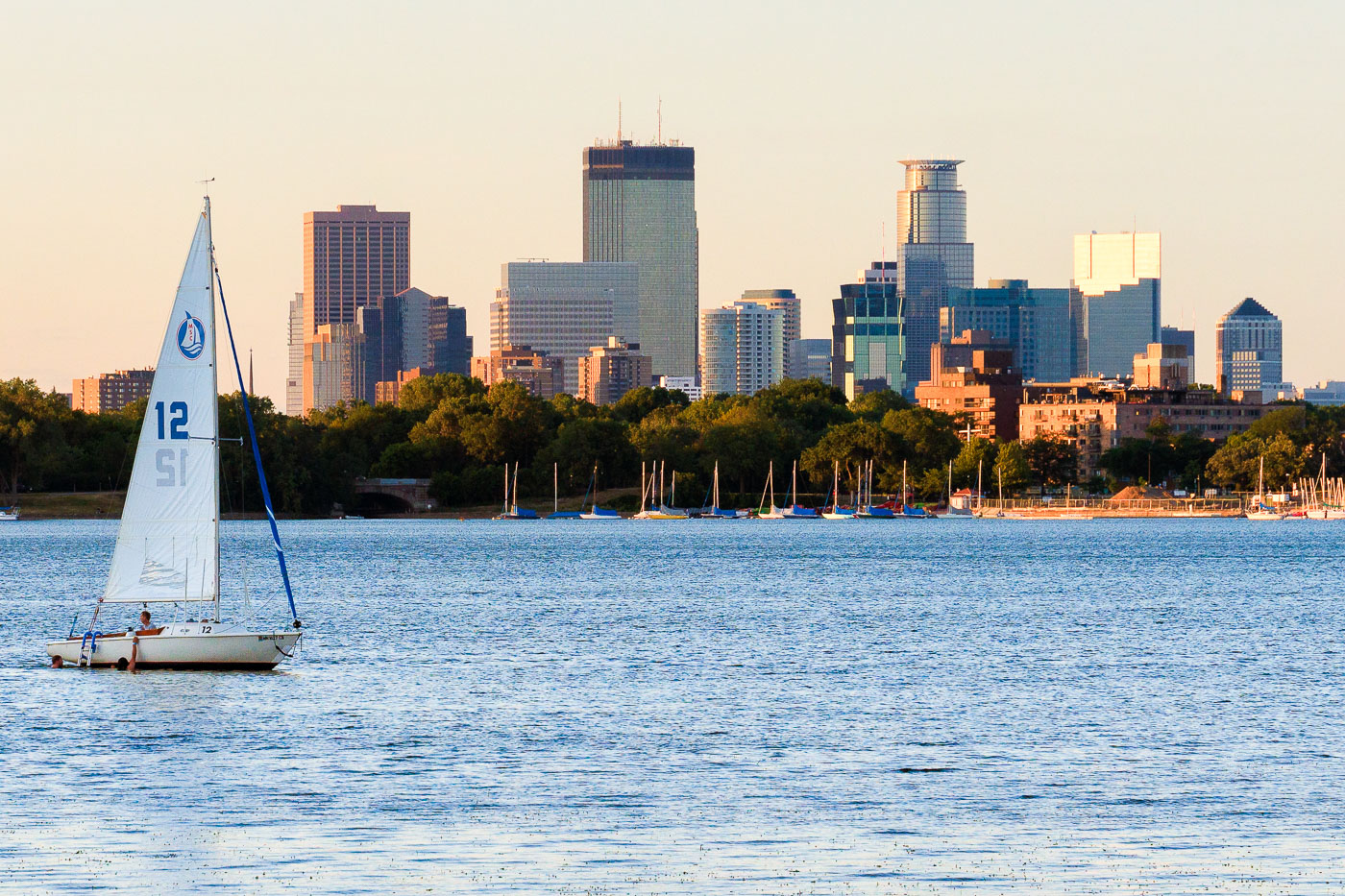
Sailboat with white sail numbered 12 on Bde Maka Ska lake with Minneapolis skyline beyond.
A sailboat is on Bde Maka Ska in Minneapolis with the downtown skyline in the background.

Sailboat on Bde Maka Ska Beneath the Minneapolis Skyline

Nice Ride bike rentals rack in Minneapolis
Nice Ride bike share stations are visible in front of a graffiti-covered wall in South Minneapolis. The mural features vibrant spray paint, including the words "TOBACCO SHOP" painted in large block letters above a more abstract, colorful graffiti tag.

Nice Ride Bikes by Graffiti Mural, South Minneapolis

Buses are currently not in service at Alice Rainville Place
A digital display at the Alice Rainville Place bus stop in Minneapolis indicates that "Buses are currently not in service." The stop, located in downtown Minneapolis, serves Metro Transit routes.

Alice Rainville Place Bus Stop, Minneapolis: Buses Not In Service

Boulders outside Supervalu store in South Minneapolis
Large concrete debris has been placed in front of a vacant Supervalu store on Lake Street in South Minneapolis. This measure was implemented to deter individuals experiencing homelessness from sheltering at the site.

Boulders Block Vacant Supervalu in South Minneapolis
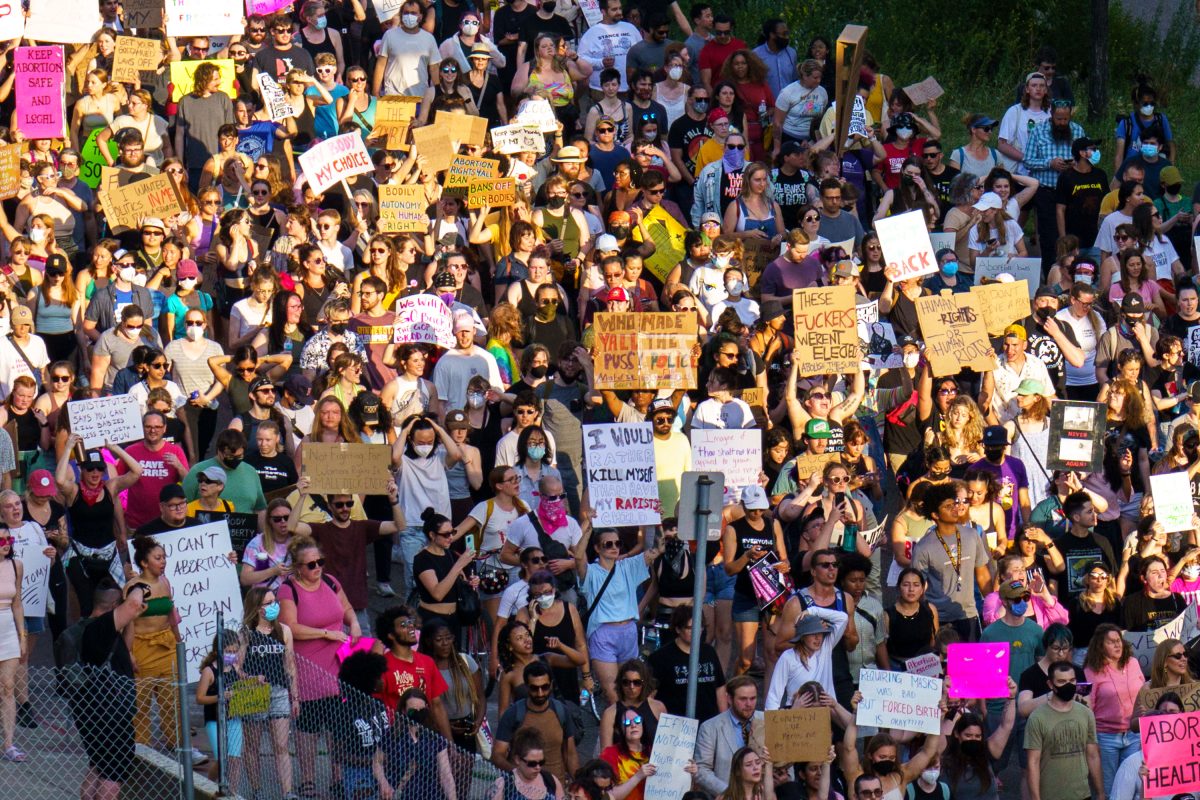
Crowd marches with handmade signs during an abortion rights protest in downtown Minneapolis, Minnesota.
Crowds filled the streets of downtown Minneapolis on June 24, 2022, hours after the U.S. Supreme Court issued its ruling in Dobbs v. Jackson Women's Health Organization, overturning the 1973 decision in Roe v. Wade that had established a constitutional right to abortion. The 6-3 ruling returned regulation of abortion to individual states, and Minnesota's constitution continued to protect abortion access under a 1995 state supreme court decision, Doe v. Gomez. Marchers carried hand-lettered signs referencing bodily autonomy and reproductive rights as they moved through the city in the hours following the announcement.

Protest Signs at Abortion Rights March, Downtown Minneapolis
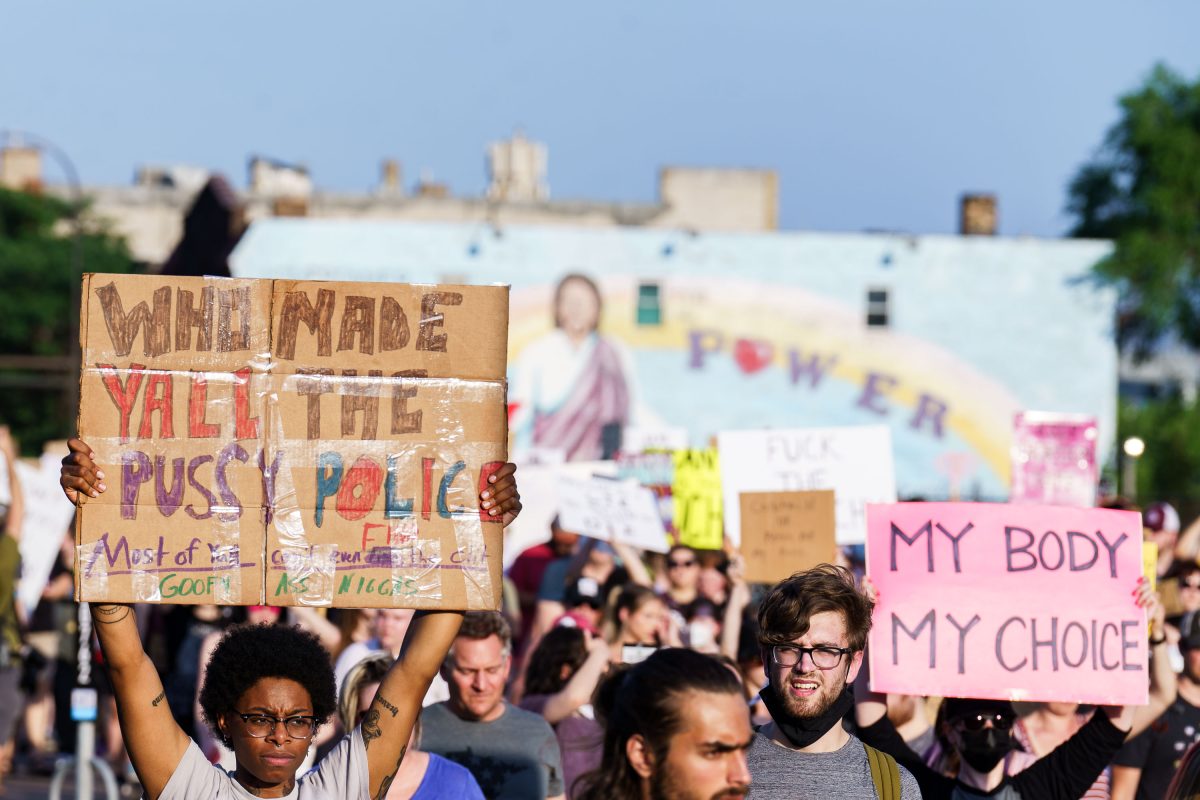
Protesters hold hand-lettered signs during an abortion rights march in downtown Minneapolis, Minnesota.
Protesters gathered in downtown Minneapolis on June 24, 2022, the day the U.S. Supreme Court issued its ruling in Dobbs v. Jackson Women's Health Organization, overturning the 1973 Roe v. Wade decision that had established a constitutional right to abortion. The march drew students, including participants from the University of Minnesota, along with residents from across the Twin Cities. Hand-lettered signs carried by demonstrators addressed abortion access and bodily autonomy. Minneapolis has hosted large-scale public marches in its downtown core in response to major national court rulings and political events.

Abortion Rights March, Downtown Minneapolis June 2022

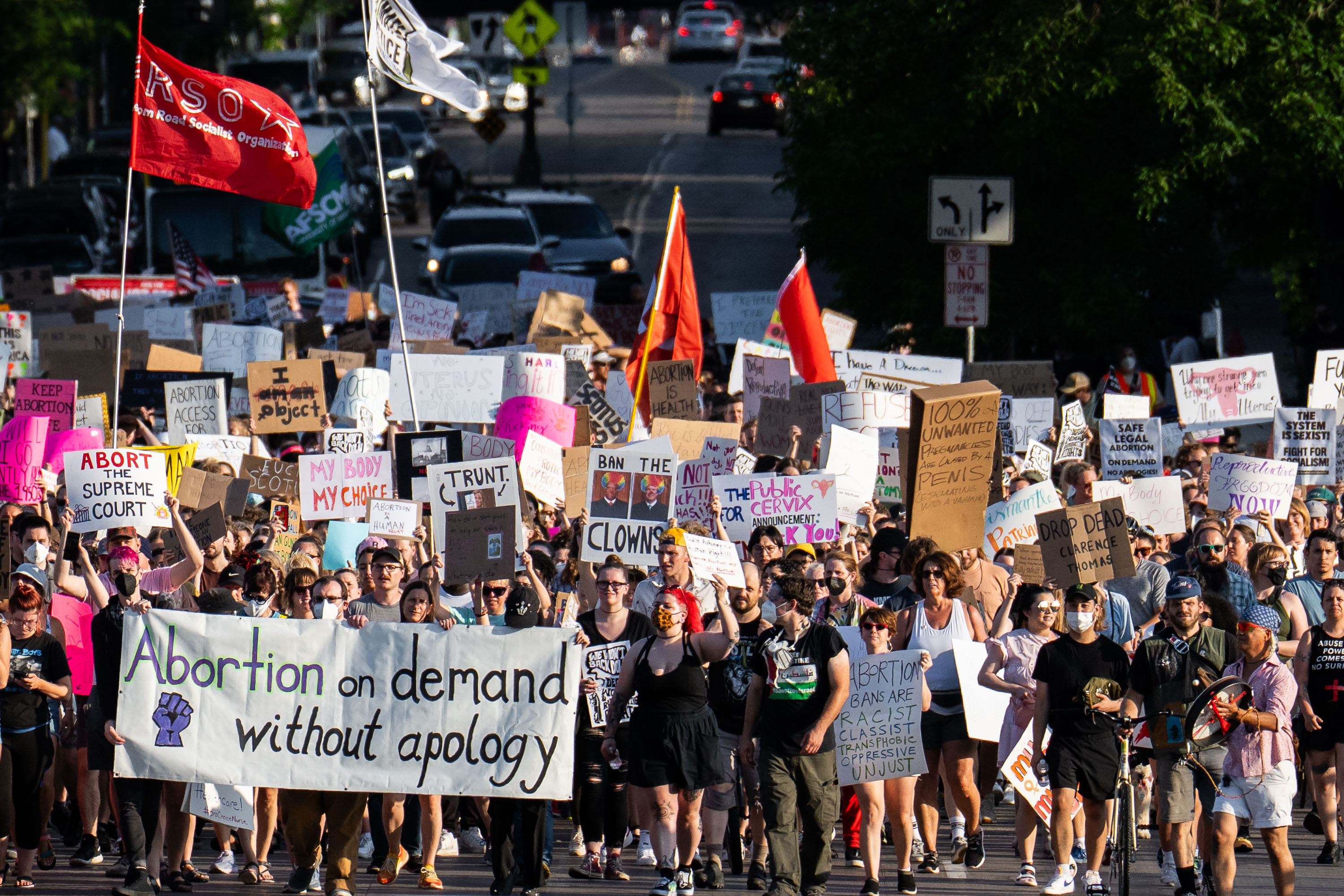
Crowd marches through downtown Minneapolis holding signs protesting the Supreme Court's reversal of Roe v. Wade.
Demonstrators gathered in downtown Minneapolis on June 24, 2022, hours after the U.S. Supreme Court issued its ruling in Dobbs v. Jackson Women's Health Organization, which overturned the 1973 precedent set by Roe v. Wade. The decision returned regulation of abortion access to individual states, prompting immediate marches in cities across the country. Minneapolis, home to a large student population tied to the University of Minnesota, saw crowds carrying hand-lettered signs referencing reproductive rights and bodily autonomy. Minnesota state law at the time continued to protect abortion access, a distinction organizers highlighted during the march.

Protecty Abortion Rights March in Minneapolis
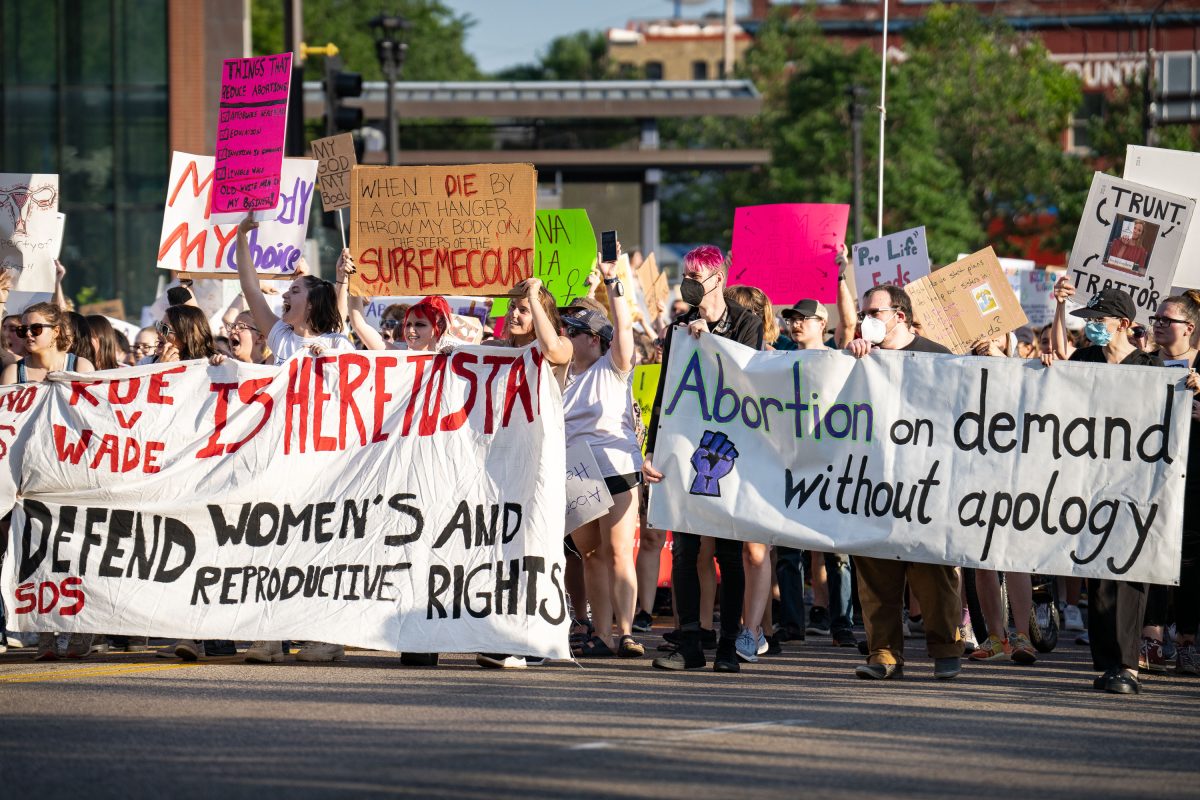
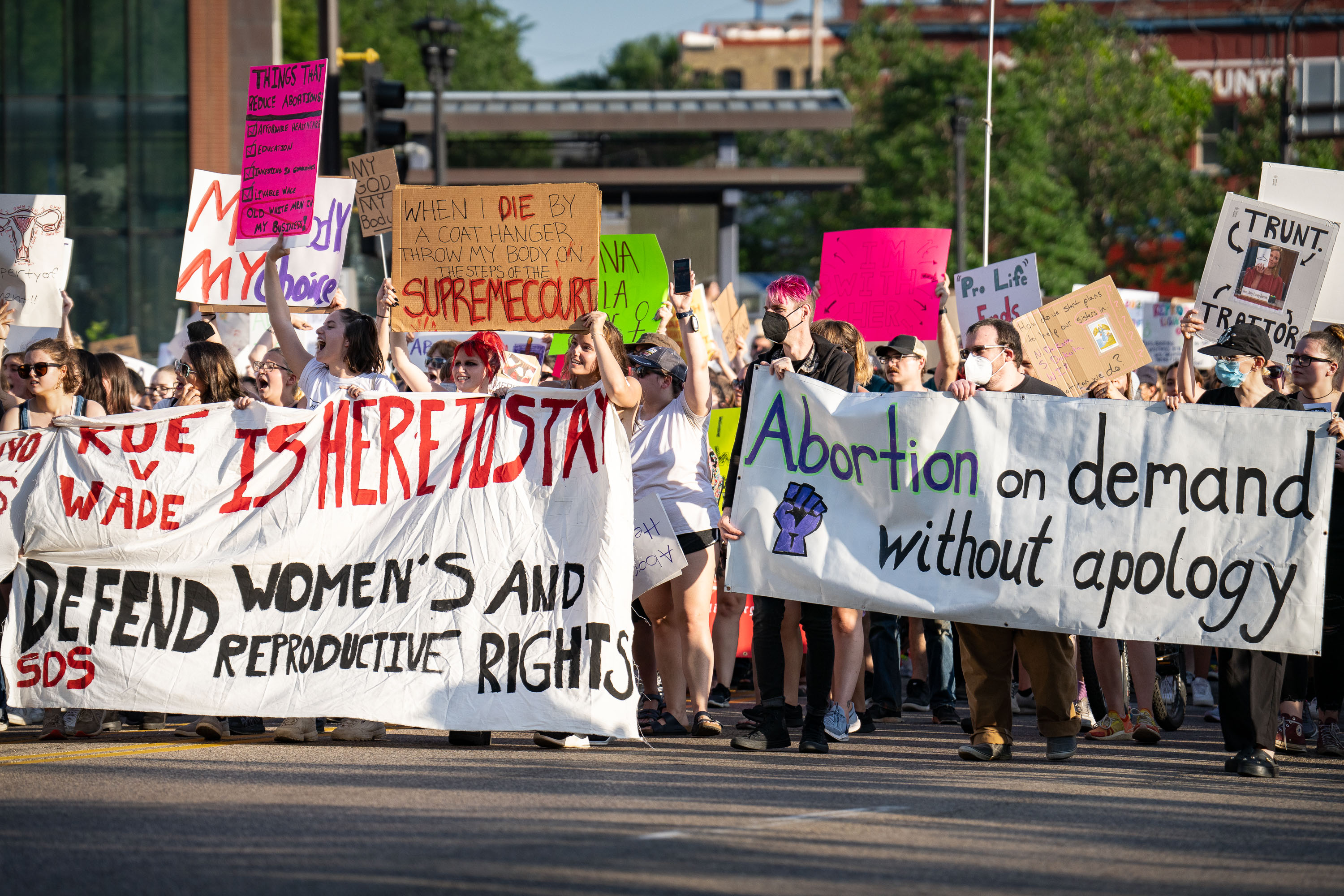
Demonstrators carry banners and signs supporting abortion rights during a march through downtown Minneapolis.
Demonstrators marched through downtown Minneapolis on June 24, 2022, the day the Supreme Court issued its decision in Dobbs v. Jackson Women's Health Organization, overturning the 1973 Roe v. Wade ruling that had established a constitutional right to abortion. The decision returned regulatory authority over abortion to individual states. Minnesota's state constitution, as interpreted in the 1995 case Doe v. Gomez, continues to protect abortion access independent of federal precedent. Groups identifying with Students for a Democratic Society were among those present, carrying hand-painted banners through the city's downtown corridor.

Abortion Rights March Down Downtown Minneapolis Street
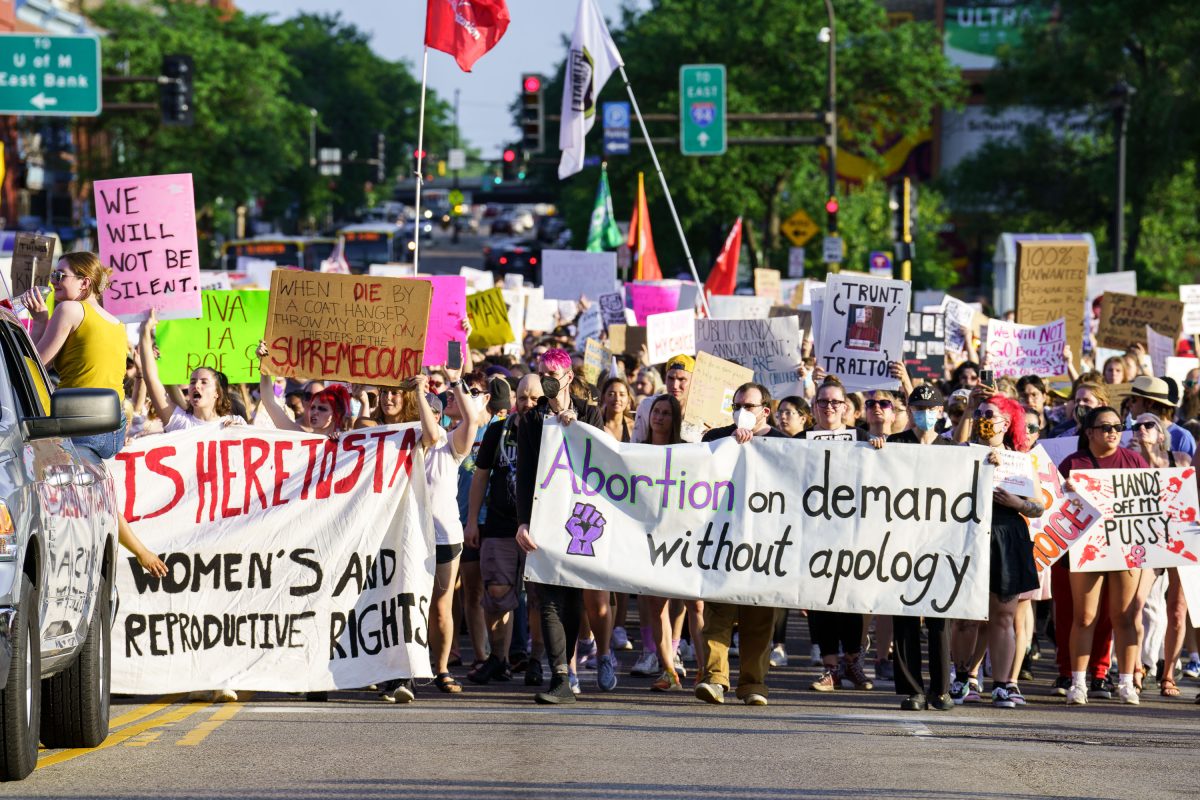
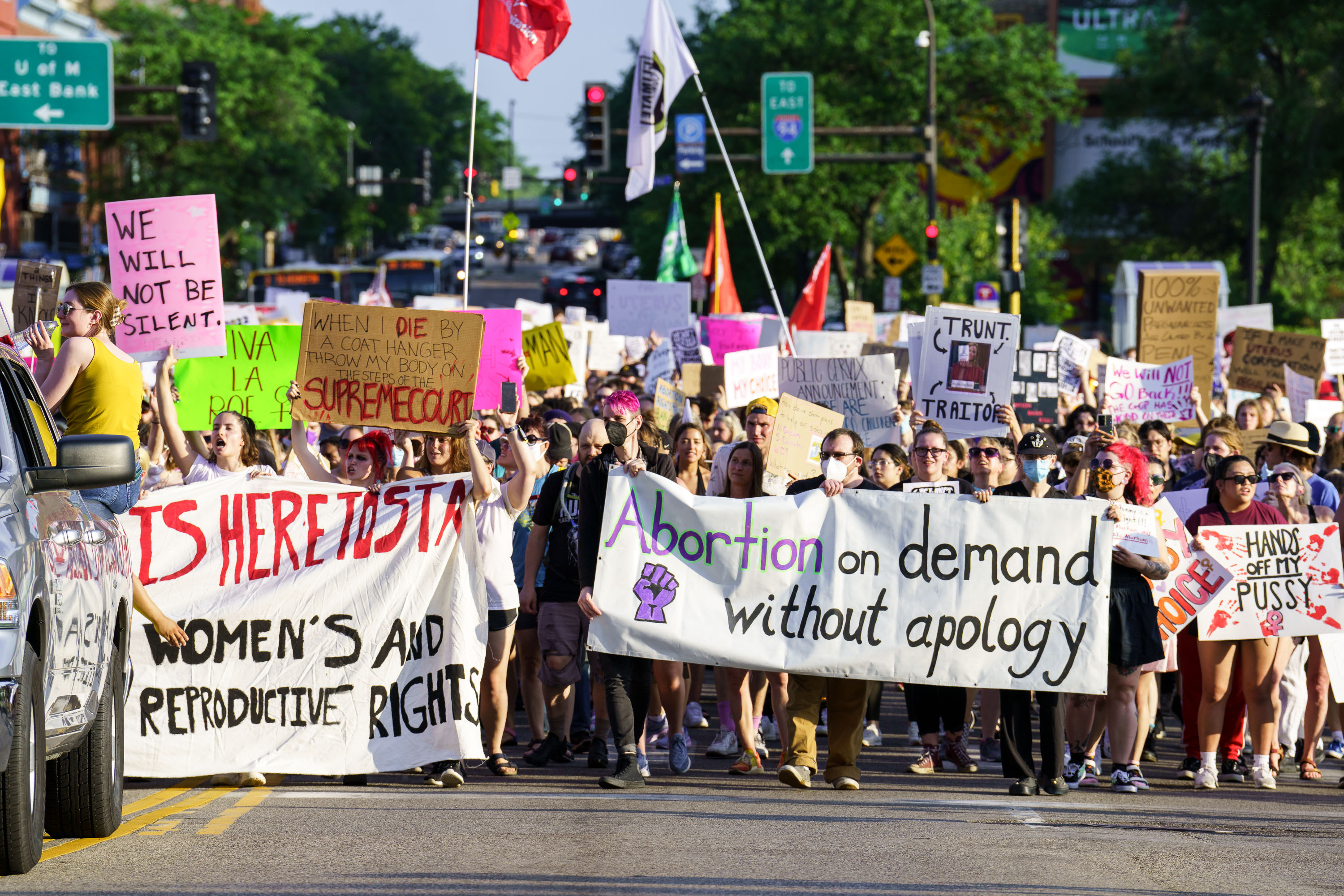
Protesters march through downtown Minneapolis carrying banners for abortion rights after the 2022 Roe v. Wade ruling.
The march took place in downtown Minneapolis on June 24, 2022, hours after the U.S. Supreme Court issued its ruling in Dobbs v. Jackson Women's Health Organization, overturning the 1973 Roe v. Wade decision that had established a constitutional right to abortion. The ruling returned regulation of abortion to individual states, prompting similar protests in cities across the country that same day.

Abortion Rights March After Dobbs Ruling, Minneapolis
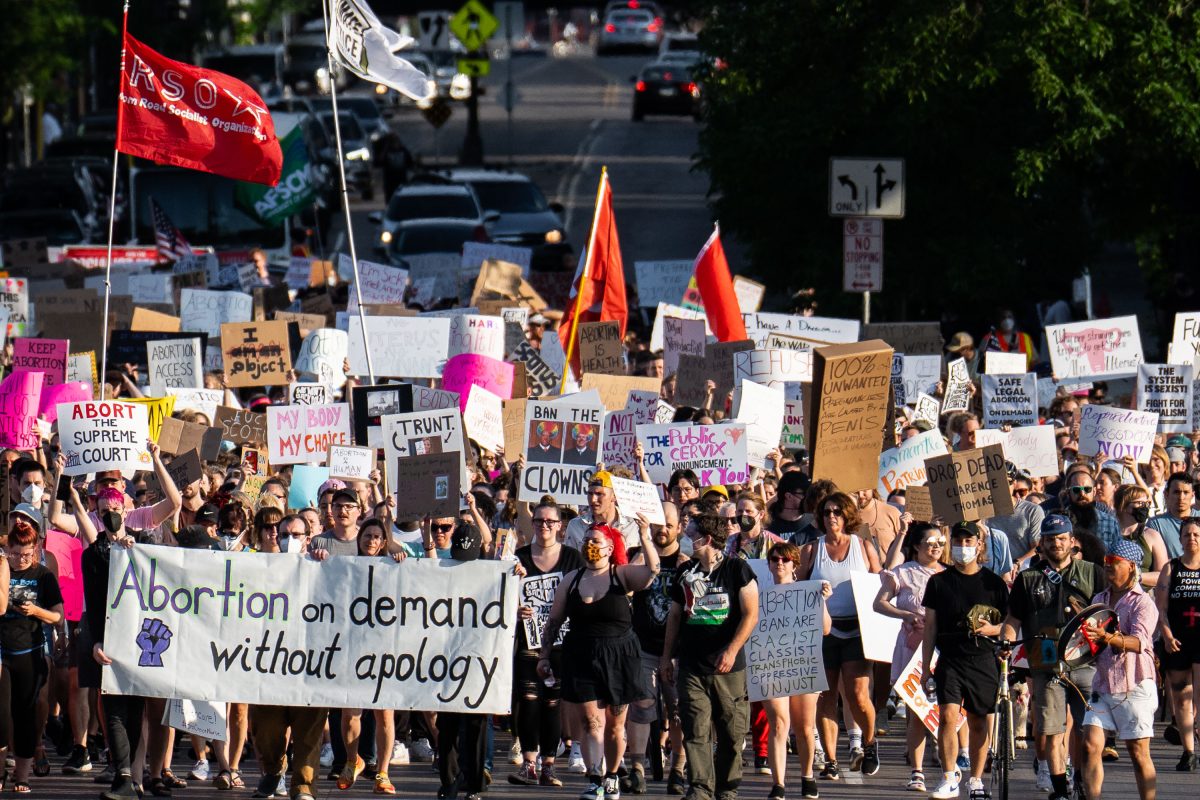
Crowd marches through downtown Minneapolis carrying signs protesting the Supreme Court's reversal of Roe v. Wade.
Demonstrators filled the streets of downtown Minneapolis on June 24, 2022, the day the U.S. Supreme Court overturned Roe v. Wade. The 1973 ruling had established a constitutional right to abortion, and its reversal in Dobbs v. Jackson Women's Health Organization returned abortion regulation to individual states. Minnesota law continued to protect abortion access after the decision, making the state a for activists from surrounding areas with new restrictions.

Abortion Rights March, Downtown Minneapolis
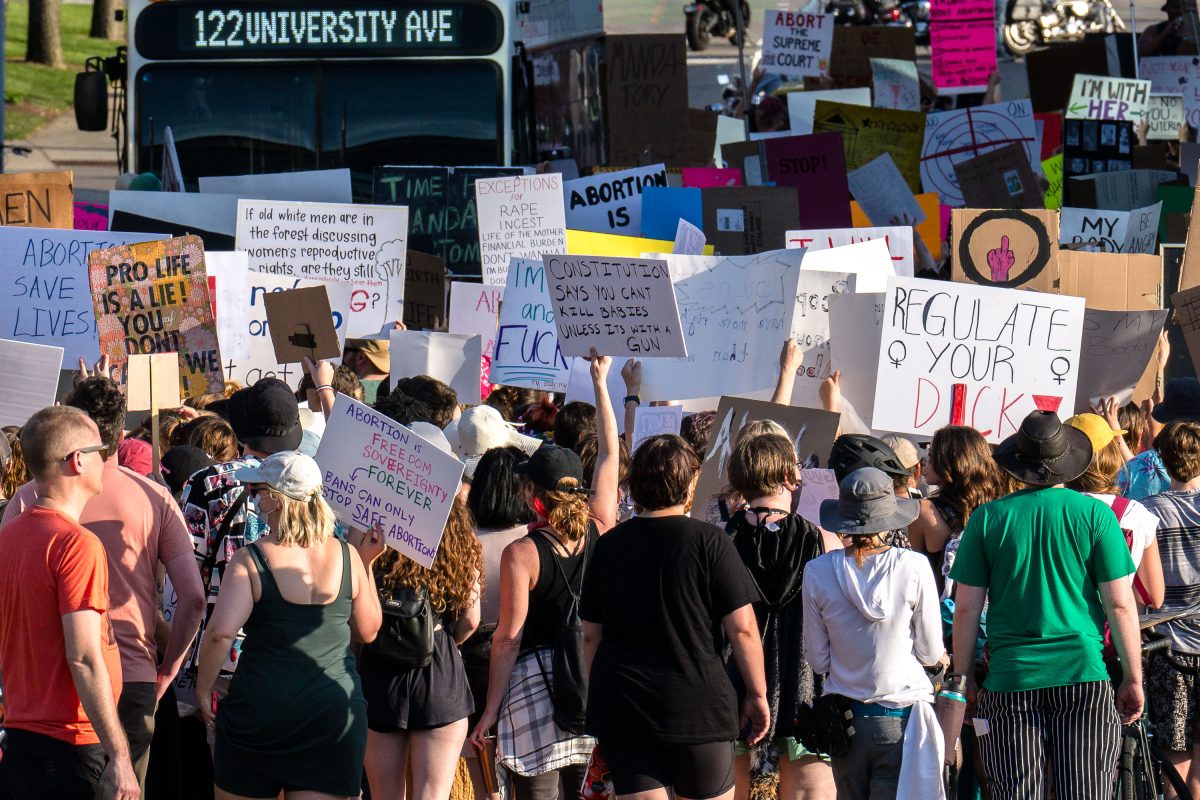
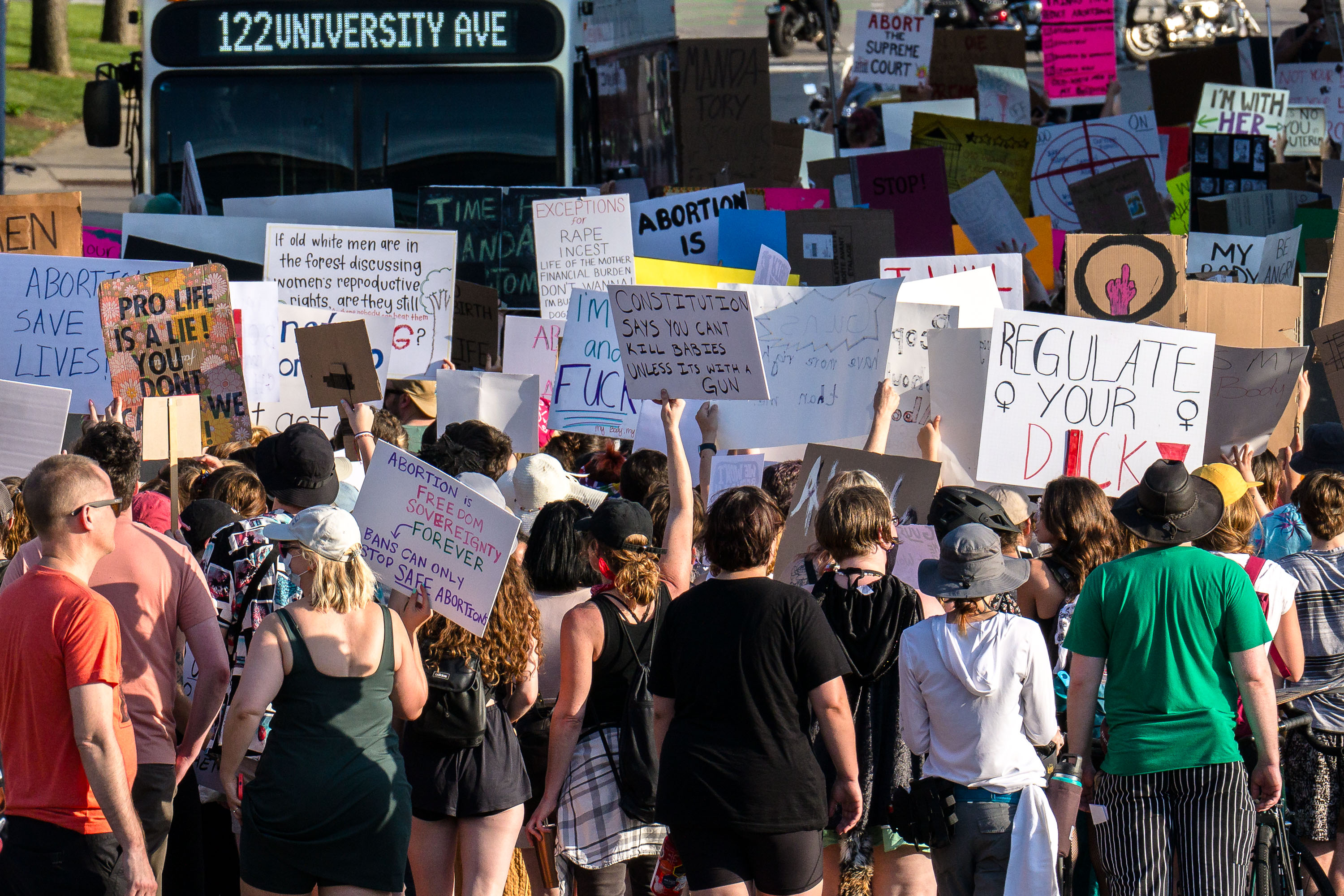
Crowd marches with handmade signs on University Avenue in Minneapolis during a 2022 abortion rights protest.
Demonstrators gathered in Minneapolis on June 24, 2022, the day the U.S. Supreme Court issued its decision in Dobbs v. Jackson Women's Health Organization, overturning the 1973 Roe v. Wade ruling that had established a constitutional right to abortion. The march moved along University Avenue, a corridor that runs through the University of Minnesota campus and connects downtown Minneapolis to Saint Paul. Marchers carried handmade signs referencing the Constitution, the Supreme Court, and reproductive rights, a common feature of rallies organized in cities nationwide that same week. Similar demonstrations took place in dozens of U.S. cities within hours of the ruling's release.

Abortion Rights March, University Avenue, Minneapolis
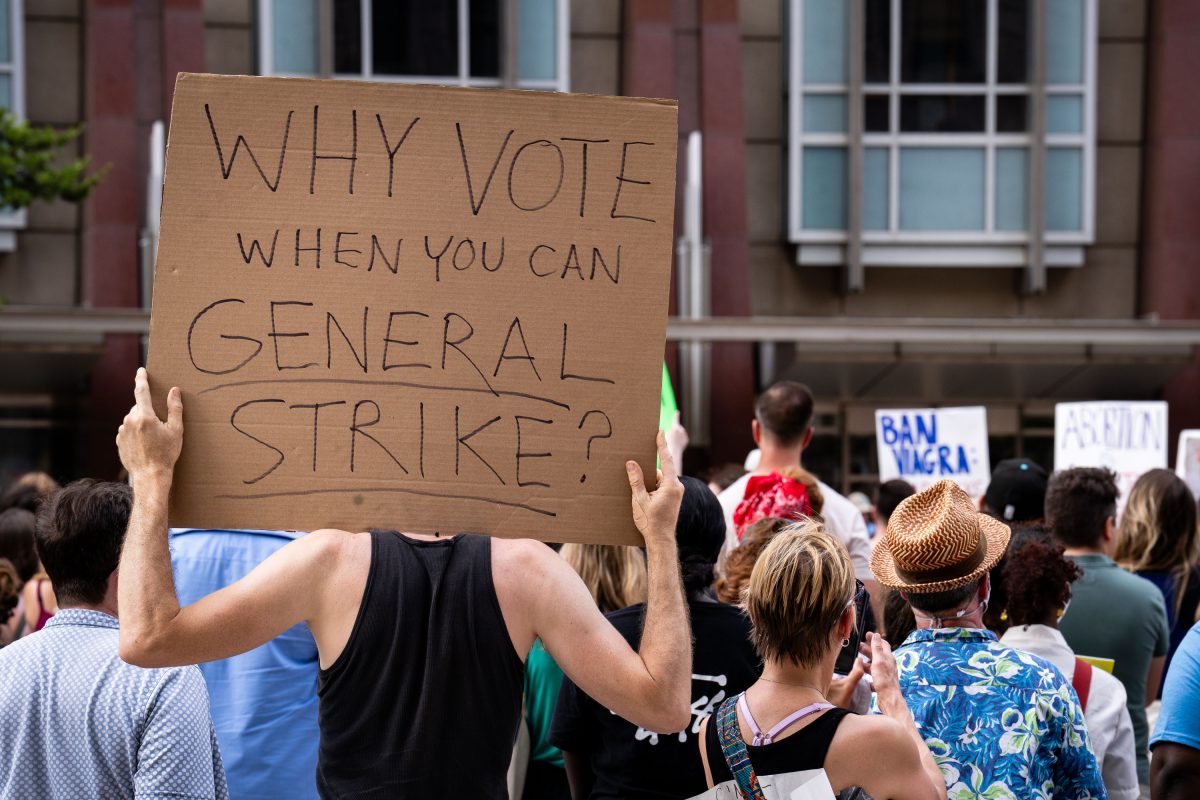
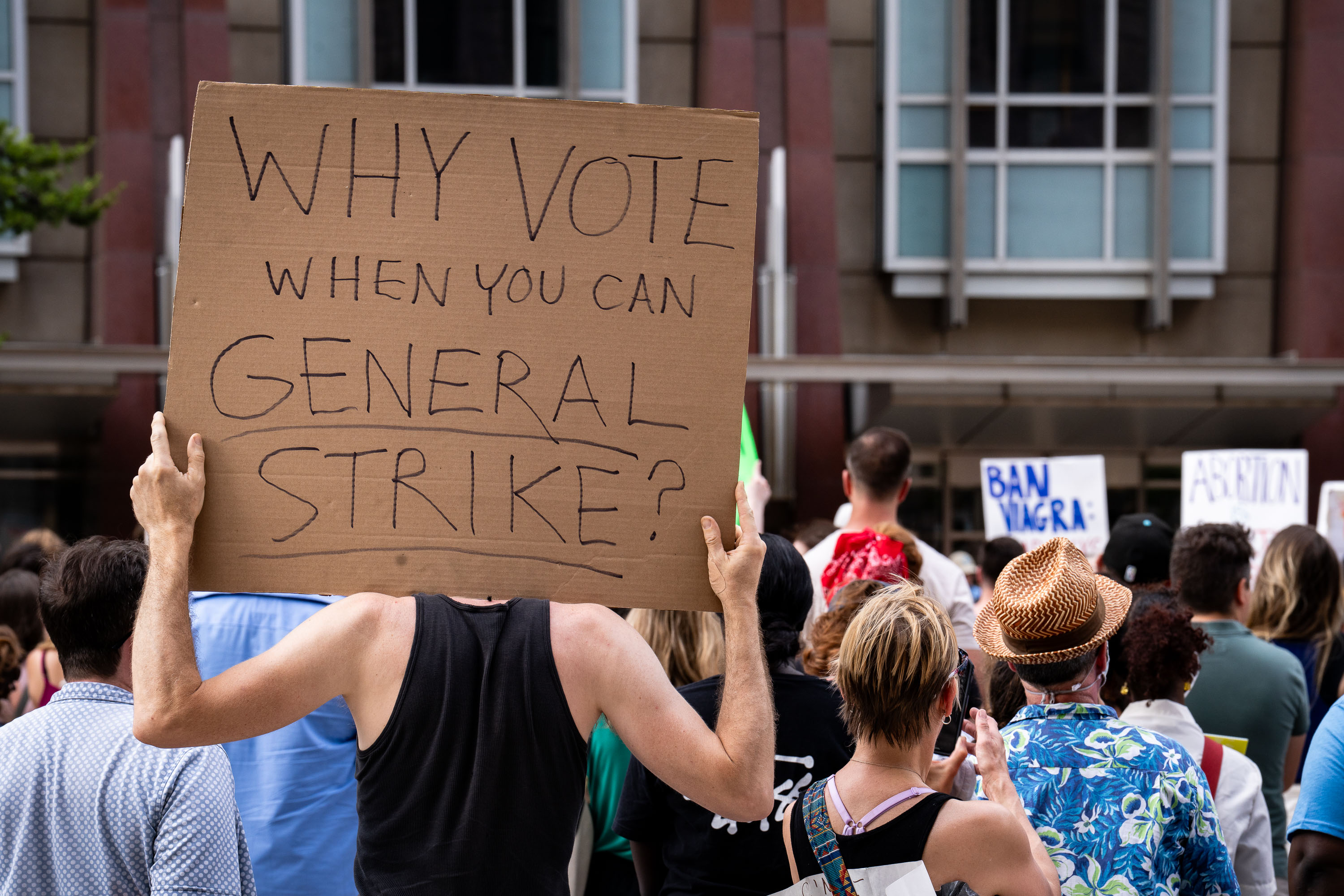
Protester holds a cardboard sign reading "Why Vote When You Can General Strike?" during an abortion rights march in downtown
The U.S. Supreme Court overturned Roe v. Wade on June 24, 2022, ending the constitutional right to abortion established in 1973. Crowds gathered in downtown Minneapolis that day as part of nationwide demonstrations responding to the ruling. Minnesota law continued to protect abortion access after the decision, a status affirmed separately by the state's courts and legislature.

General Strike Protest Sign, Downtown Minneapolis
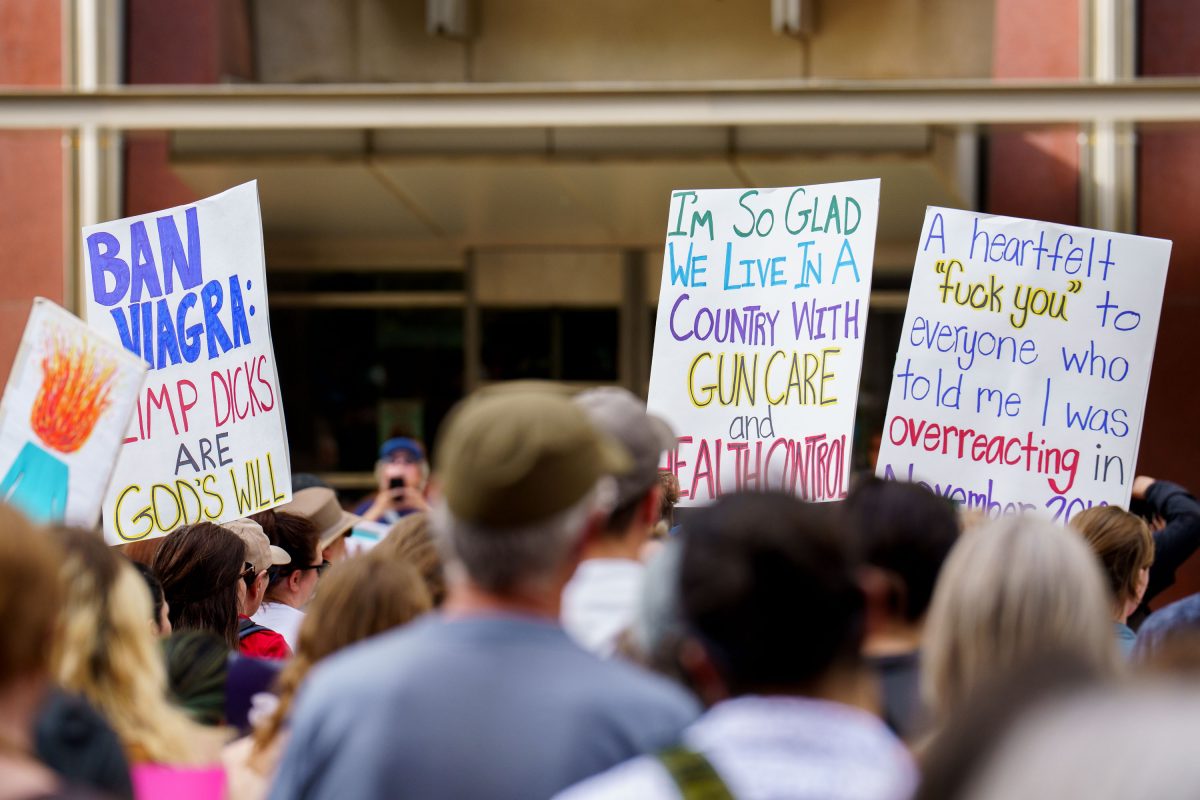
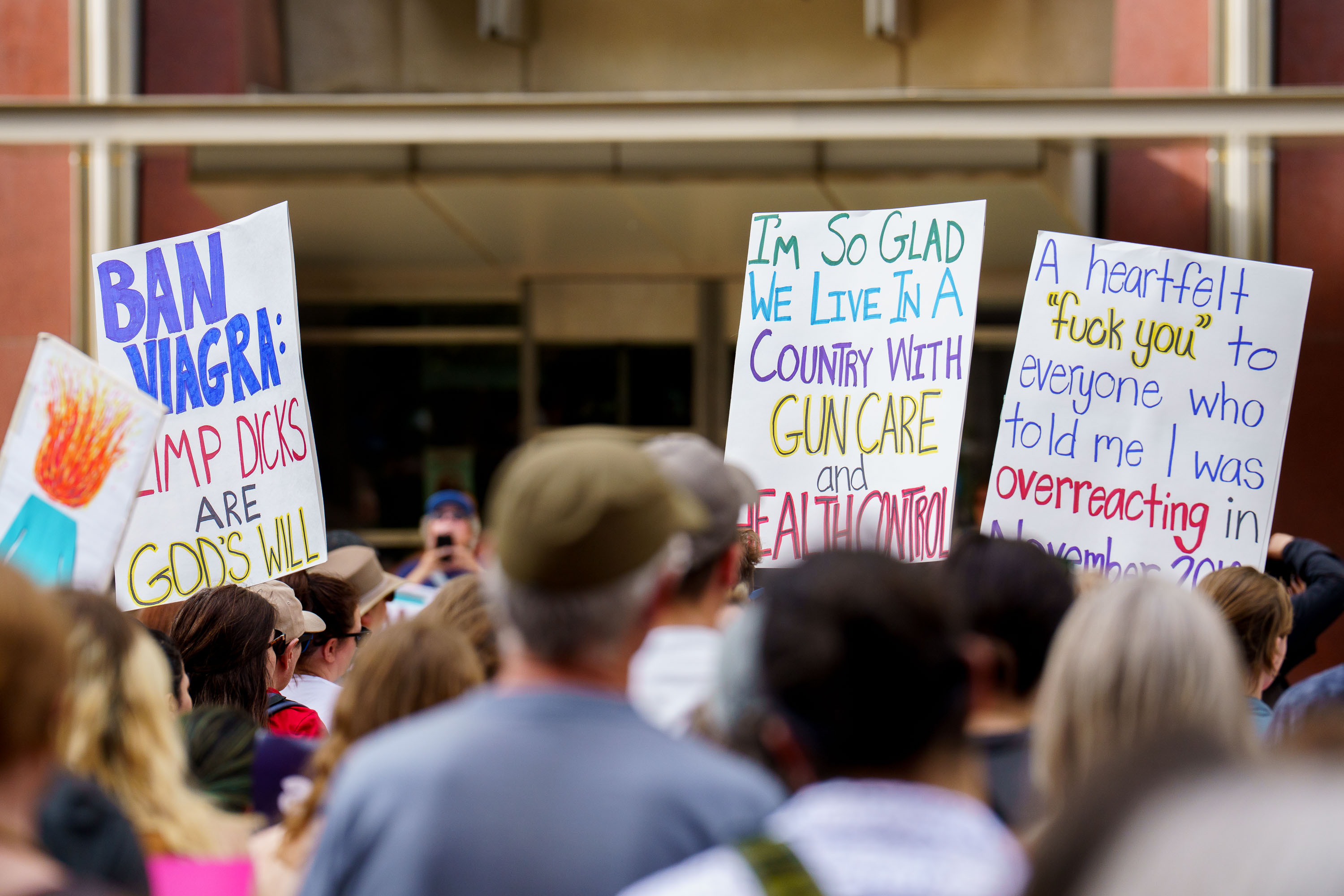
Protesters hold hand-lettered signs about abortion rights and gun control during a downtown Minneapolis demonstration.
Demonstrators gathered in downtown Minneapolis on June 24, 2022, the day the U.S. Supreme Court overturned Roe v. Wade in Dobbs v. Jackson Women's Health Organization. The 1973 Roe decision had established a constitutional right to abortion, and its reversal returned regulation of the procedure to individual states. Minnesota law continued to protect abortion access after the ruling, a status affirmed by the state's Supreme Court in a separate 1995 case, Doe v. Gomez. Crowds carrying hand-lettered signs assembled near government buildings in the city's downtown core, a common gathering point for organized marches and rallies in the Twin Cities.

Abortion Rights Protest Signs, Downtown Minneapolis

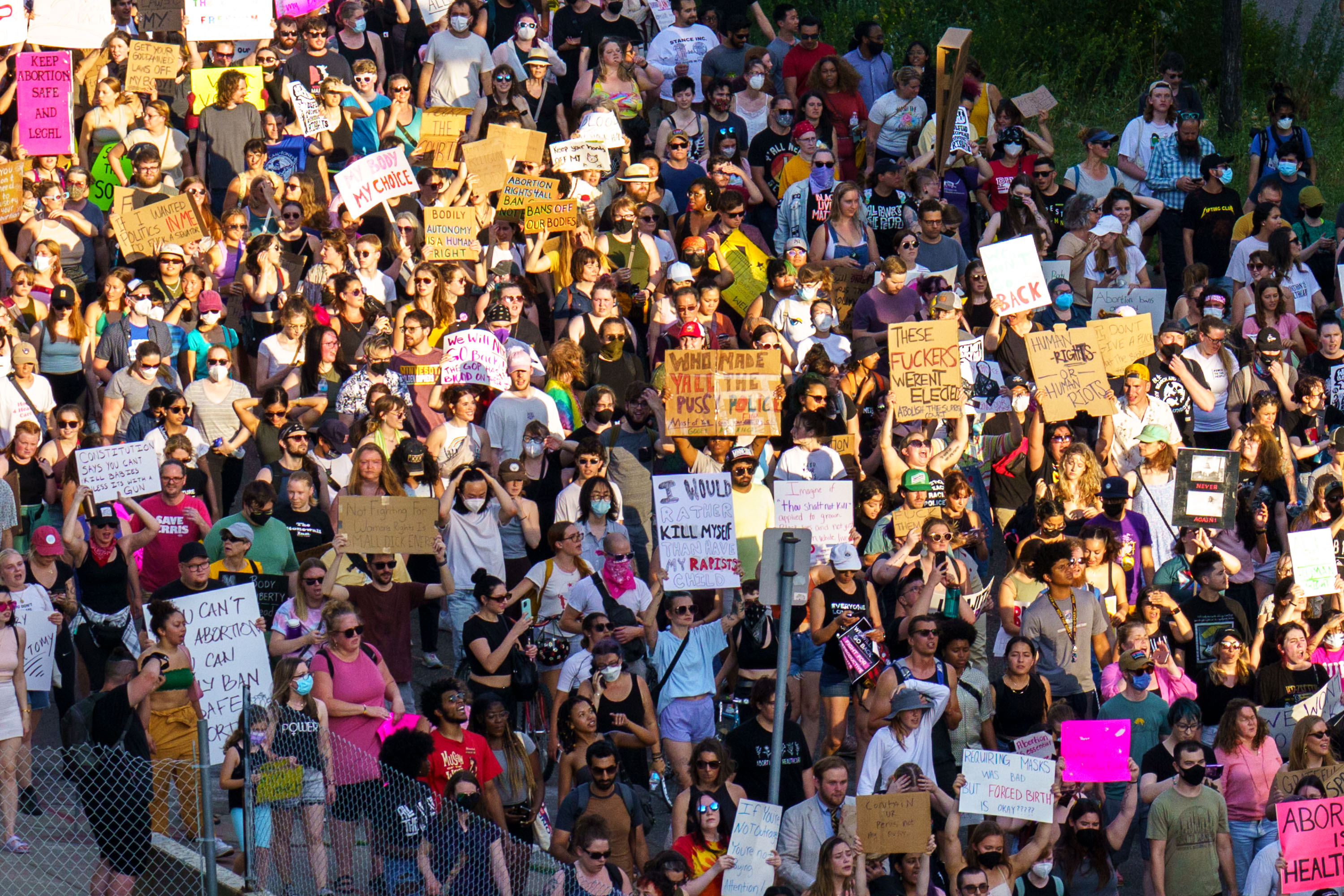
Looking down at protesters marching in Minneapolis after Roe V Wade is overturned
Protesters march through Minneapolis on June 24, 2020, following the Supreme Court's decision to overturn Roe v. Wade. This event occurred amidst widespread national protests against the ruling, which eliminated the constitutional right to abortion.

Minneapolis Abortion Rights Protest, June 24, 2020

Protesters with signs after roe v wade is overturned by supreme court
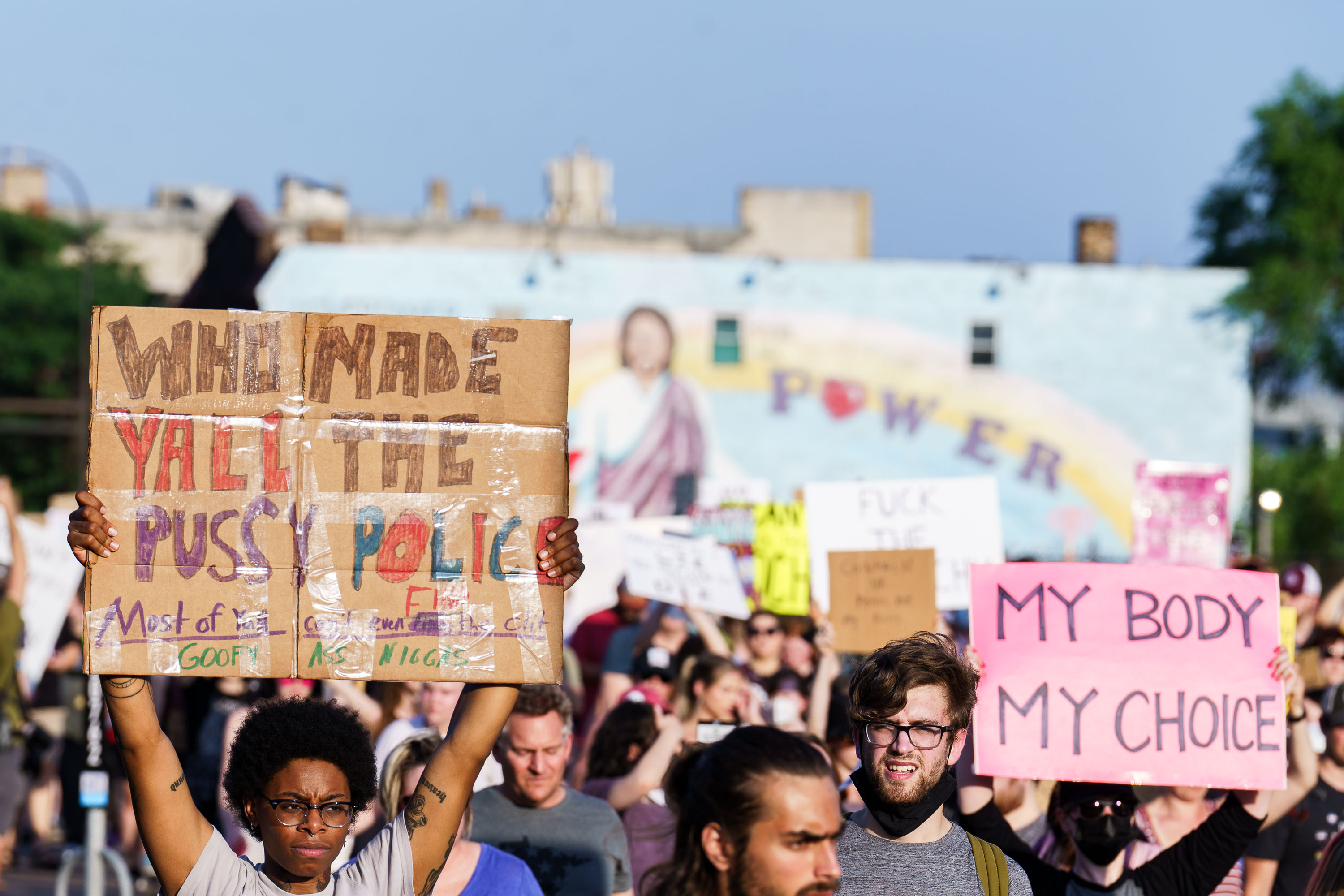
Protesters gathered in Minneapolis on June 24, 2020, to march for reproductive rights following the Supreme Court's decision to overturn Roe v. Wade. The mural in the background, featuring "LOVEPOWER CHURCH" and a depiction of Jesus, provided a backdrop to the demonstration. This event was part of a nationwide response to the ruling, which eliminated the constitutional right to abortion and returned the authority to regulate or ban the procedure to individual states.

Minneapolis Protestors March for Reproductive Rights

Protesters with signs marching in Minneapolis after Roe V Wade is overturned
Protesters gathered in Minneapolis on June 24, 2020, to express their opposition to the Supreme Court's decision to overturn Roe v. Wade. The ruling eliminated the constitutional right to abortion, which had been in place for nearly 50 years. This protest, part of a larger national response, highlighted concerns about reproductive justice and women's rights.

Minneapolis Roe v. Wade Protest, June 24, 2020

Protesters marching in Minneapolis after Roe V Wade
A large crowd of protesters gathered on the University of Minnesota campus in Minneapolis on June 24, 2020. The march occurred in response to the Supreme Court's decision to overturn Roe v. Wade, which had established the constitutional right to abortion.

Roe V Wade Protest at University of Minnesota, Minneapolis

Roe V Wade protest and march in Downtown Minneapolis
Protesters gathered in South Dakota on June 24, 2022, following the Supreme Court's decision to overturn Roe v. Wade. The ruling eliminated the constitutional right to abortion, returning the authority to regulate or ban the procedure to individual states.

Protestors gather for Roe v. Wade decision in South Dakota

Roe V Wade Protest Sign in Minneapolis
Protesters march in Minneapolis on June 24th, 2020 following the Supreme Court overturning Roe V. Wade.

Roe V Wade Protest Sign in Minneapolis

Brits Pub in Downtown Minneapolis on a mid summer evening
Brit's Pub, a British-themed establishment, is located on Nicollet Mall in downtown Minneapolis. The pub, established in 1990, features Union Jack flags and signage for Summit Brewing and Harp Lager.

Brit’s Pub, Union Jack Flags, Nicollet Mall, Minneapolis

Completed mural at the Target Store in South Minneapolis
This mural adorns the exterior of the Target store located across from the former third precinct in Minneapolis. Following the 2020 unrest, Target committed to commissioning local artists to create permanent murals reflecting the Lake Street community's themes of rootedness, change, resilience, healing, growth, renewal, and togetherness. Seven artists contributed to this artwork, which serves as a visual representation of the neighborhood's spirit and its aspirations for recovery and unity.

Target East Lake Street Mural: Resilience and Community

Mural with the George Floyd Fist at Target on East Lake Street in Minneapolis
This mural adorns the exterior of the Target store on Lake Street in Minneapolis, located across from the third precinct. Commissioned as part of the store's reopening plan after the 2020 Minneapolis Uprising, the artwork was co-created by seven local artists.

Lake Street Minneapolis Target Mural: Resilience and Renewal
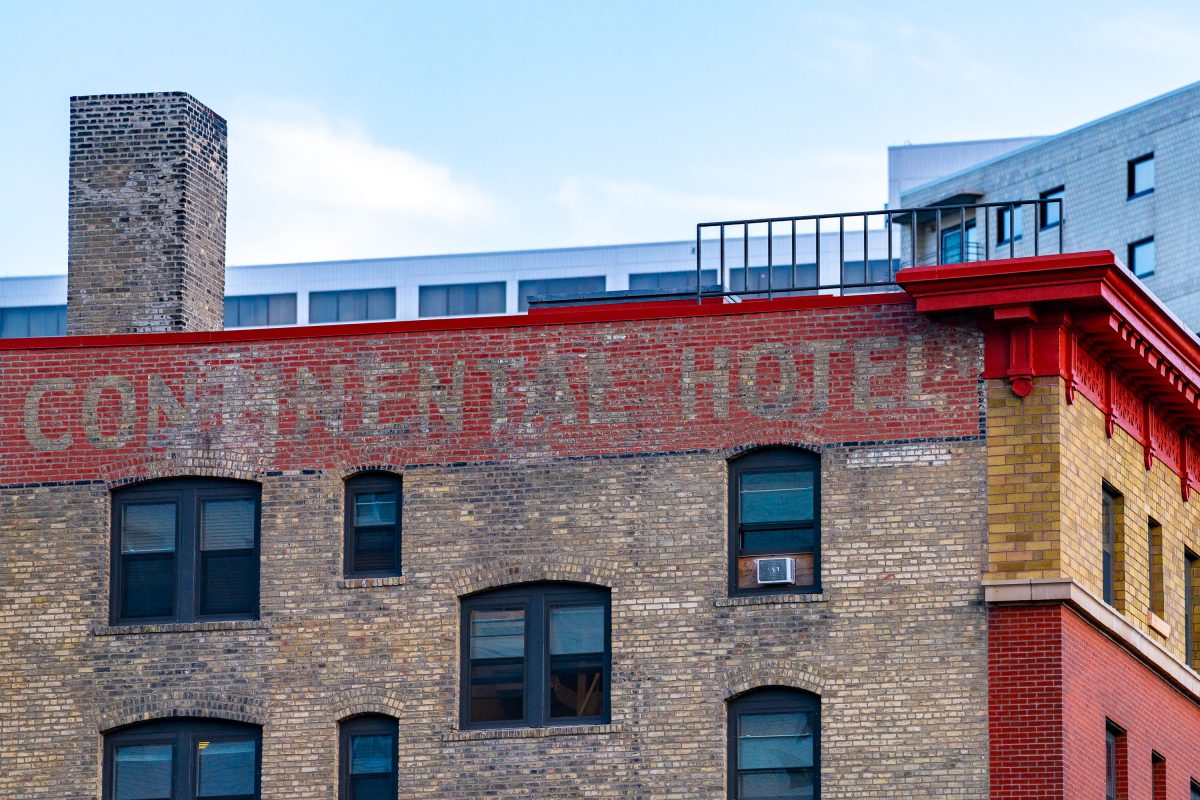
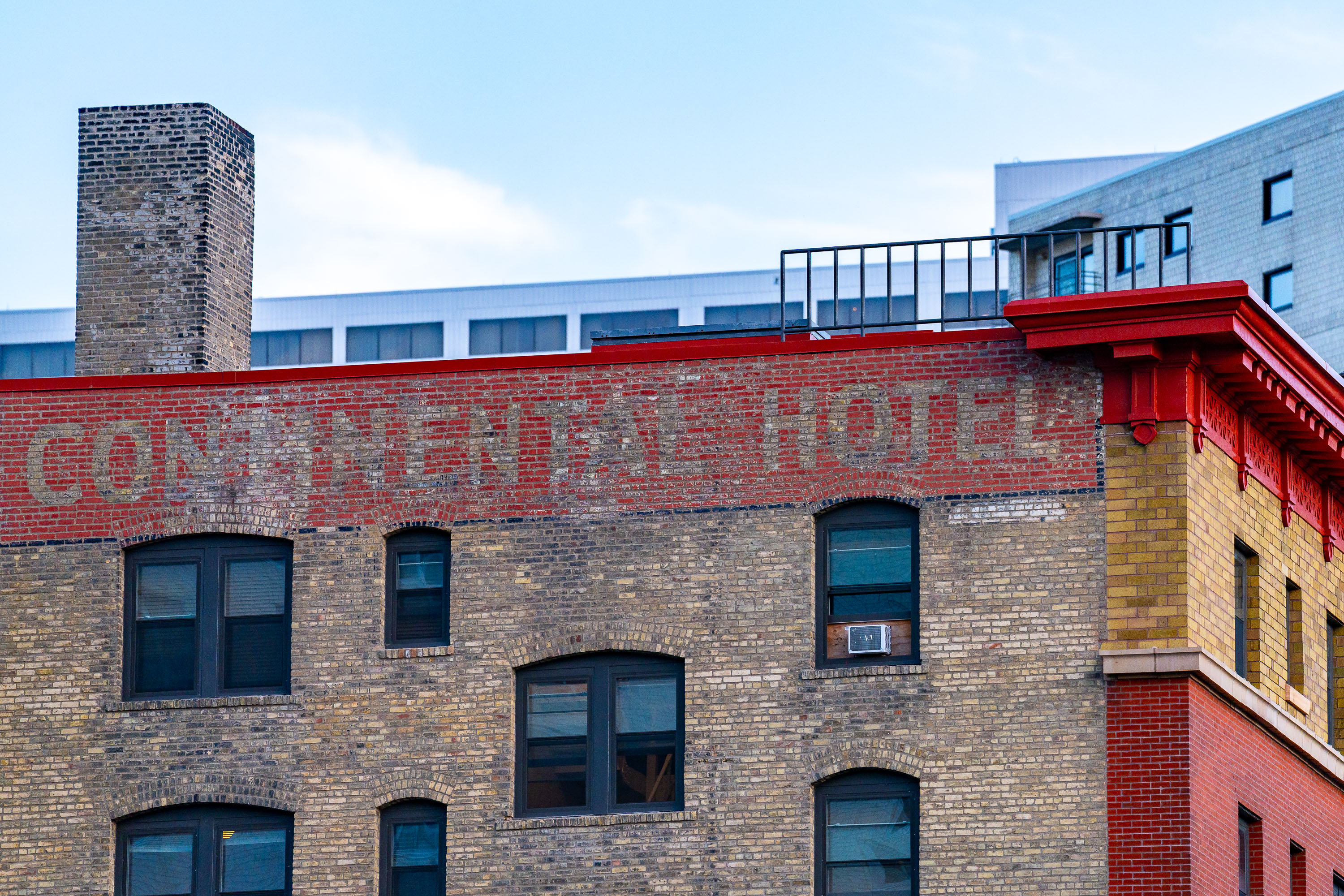
Continental Hotel, a low-income housing building in downtown Minneapolis with red brick and faded ghost signage.
The Continental Hotel building stands in downtown Minneapolis, its faded painted sign still spelling out the name across the brick parapet. The building now serves as low-income housing. Ghost signs like this one, painted directly onto brick rather than mounted as separate signage, were common advertising methods for hotels and businesses in the late 19th and early 20th centuries.

Continental Hotel Ghost Sign, Downtown Minneapolis
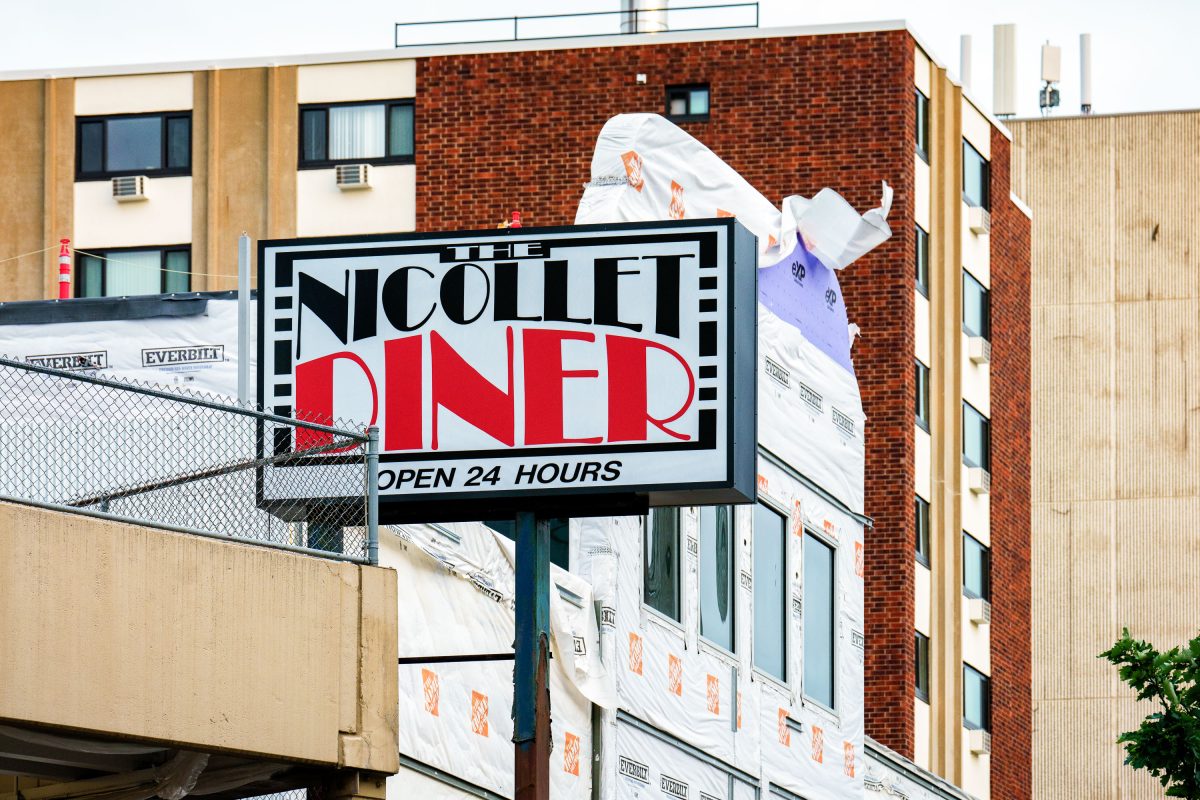
The Nicollet Diner sign in Downtown Minneapolis
Nicollet Diner sign at it's new space on Nicollet Mall that is set to open in Summer 2022.

The Nicollet Diner sign in Downtown Minneapolis

Pride flags hanging at a church in Loring Park Minneapolis
Saint Mark's Episcopal Cathedral in Minneapolis's Loring Park neighborhood displays Pride flags and a rainbow-painted staircase. The cathedral, a prominent example of Gothic Revival architecture, was consecrated in 1911. It serves as a spiritual center for its congregation and a landmark within the city. The display of Pride symbols signifies the cathedral's support for the LGBTQ+ community, reflecting a broader trend of religious institutions embracing inclusivity.

Pride Flags at Saint Mark’s Episcopal Cathedral, Minneapolis
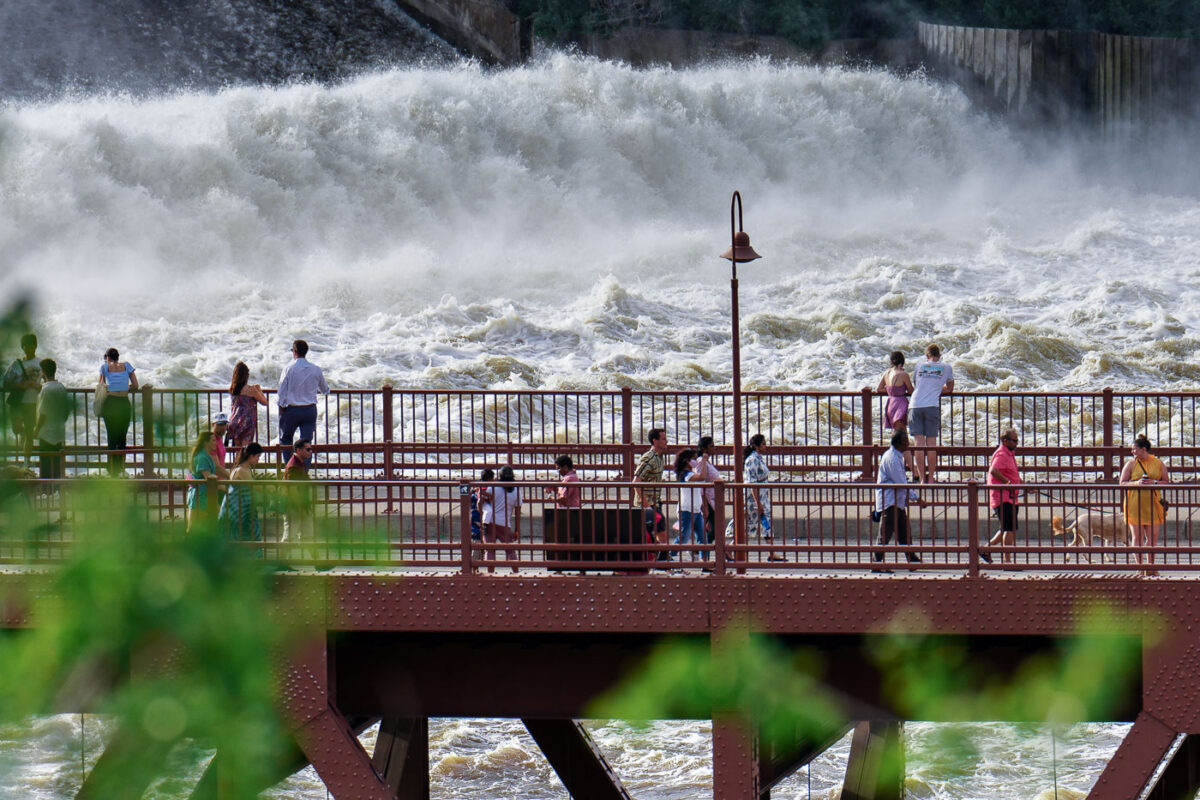
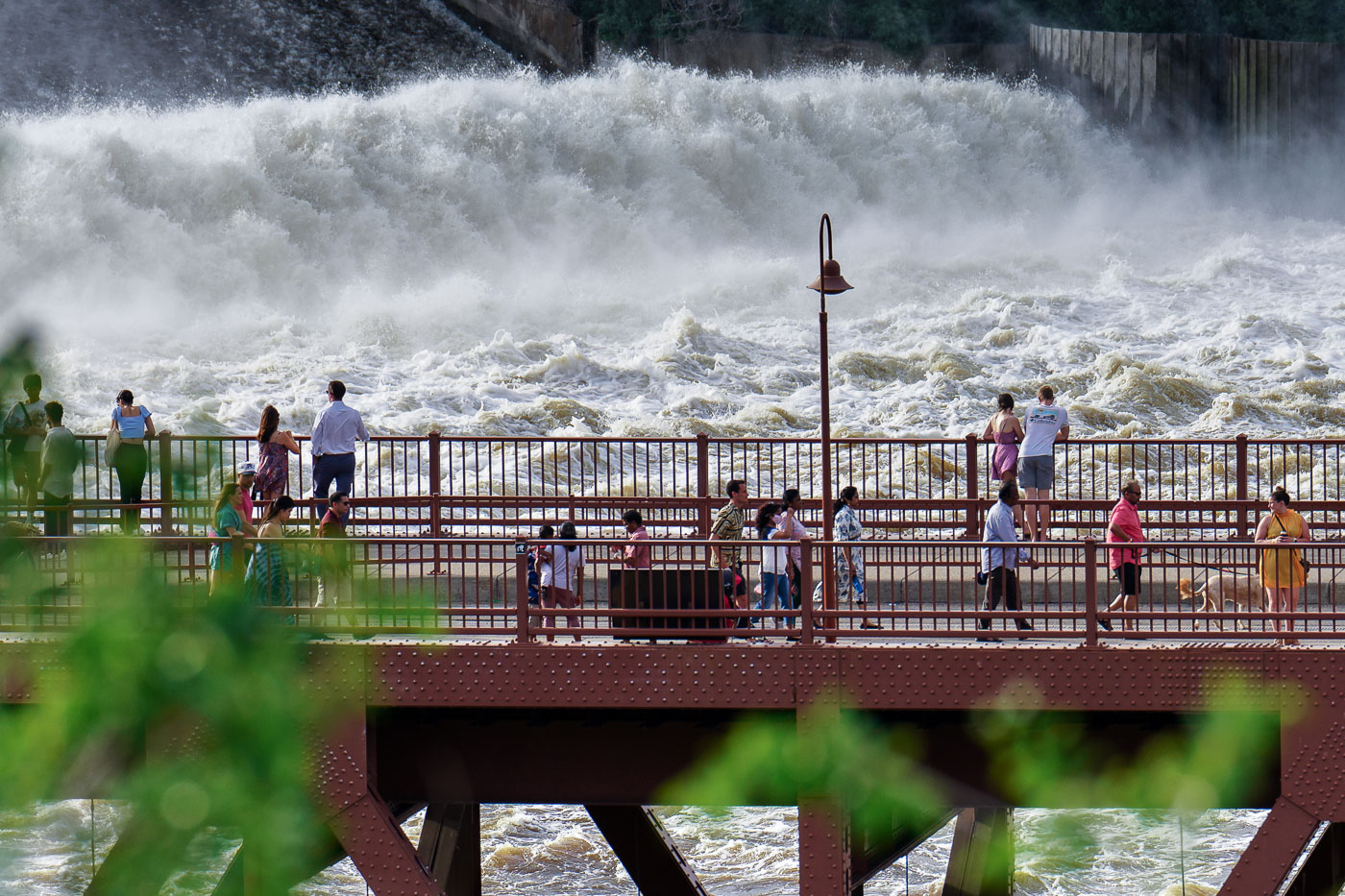
St Anthony Falls in downtown Minneapolis on a summer day
People gather on the Stone Arch Bridge in Minneapolis to observe the powerful flow of St. Anthony Falls on the Mississippi River. Originally constructed in 1883 for the Great Northern Railway, the Stone Arch Bridge is the only arched bridge made of stone-faced concrete in the United States. It was later converted into a pedestrian and bicycle bridge, offering unique views of the river and the historic flour milling district. The falls themselves were once the site of extensive milling operations, powered by the river's force, and remain a significant natural and historical landmark within the city.

People on Stone Arch Bridge watching St. Anthony Falls, Minneapolis

Booths setup at the Stone Arch Festival in Downtown Minneapolis
Booths are set up for the Stone Arch Festival in downtown Minneapolis, an annual event that celebrates art and culture along the Mississippi River. The festival takes place in the historic St. Anthony Falls district, adjacent to the Stone Arch Bridge, a landmark originally built for railroad use in 1883. This area has transformed from an industrial hub to a vibrant public space, hosting numerous community events throughout the year. The festival showcases local artists, craftspeople, and food vendors, drawing large crowds to the riverfront.

Stone Arch Festival Booths Downtown Minneapolis

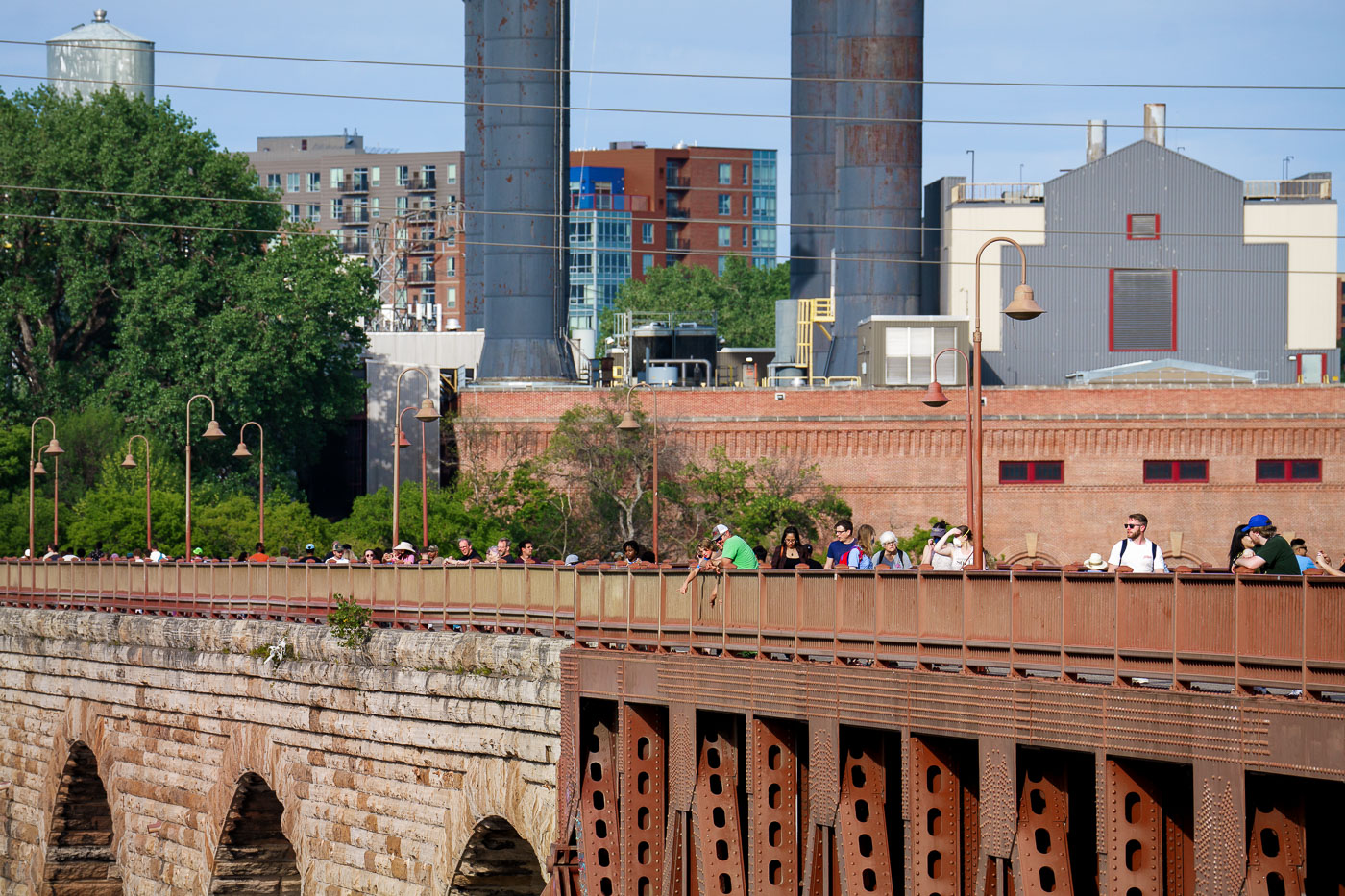
People walk and gather on the Stone Arch Bridge spanning the Mississippi River in Minneapolis, with historic brick industrial buildings and mill smokestacks visible in the background.
The Stone Arch Bridge spans the Mississippi River in downtown Minneapolis, linking the city's east and west banks near St. Anthony Falls. Built in 1883 by railroad magnate James J. Hill for his Great Northern Railway, it was the only span of its kind on the upper Mississippi, built with 23 stone and granite arches to carry trains rather than road traffic. The bridge now serves as a pedestrian and bicycle crossing within the Mississippi Mile trail system.

Pedestrians Crossing the Stone Arch Bridge in Minneapolis

North High School mural in North Minneapolis
This mural, located on the exterior wall of North High School in North Minneapolis. The artwork, titled "Our Matters: Opportunity, Belonging, Peace, Change," features themes of student empowerment, social justice, and community resilience.

North High School Mural: Opportunity, Belonging, Peace, Change

Memorial for children in Minneapolis who died from gunfire
This memorial, located in North Minneapolis, honors children lost to gun violence following the death of 6-year-old Aniya Allen in May 2021, who was killed by stray gunfire.

Minneapolis Memorial for Children Lost to Gun Violence

Full patio at Graze in the Minneapolis North Loop
The rooftop patio of Graze Provisions + Libations in Minneapolis's North Loop neighborhood is a popular gathering spot. Located in a rapidly developing area of the city, the North Loop has transformed from a warehouse district into a vibrant urban environment with numerous restaurants, bars, and residential buildings. Graze, established in 2015, contributes to this transformation by offering a contemporary dining and social experience.

Graze Rooftop Patio, North Loop Minneapolis

Parking garage with graffiti in Uptown Minneapolis 161
Graffiti memorializing Deona Marie is visible on a parking garage along Lake Street in Minneapolis. The area had been a site of protests following the June 2021 killing of Winston Smith by a federal task force. Ten days after Smith's death, Deona Marie was killed when a vehicle drove through protest barricades on Lake Street.

Lake Street, Minneapolis: “Deona Marie” Graffiti on Parking Garage
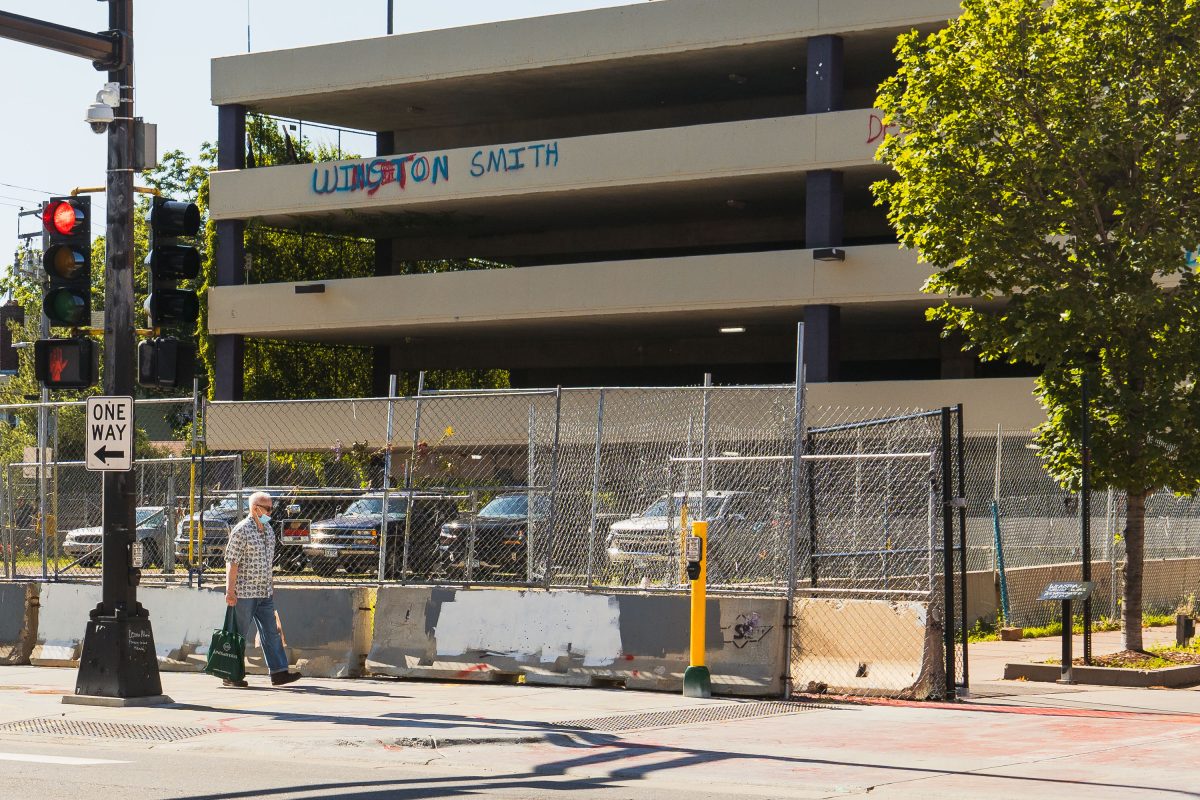
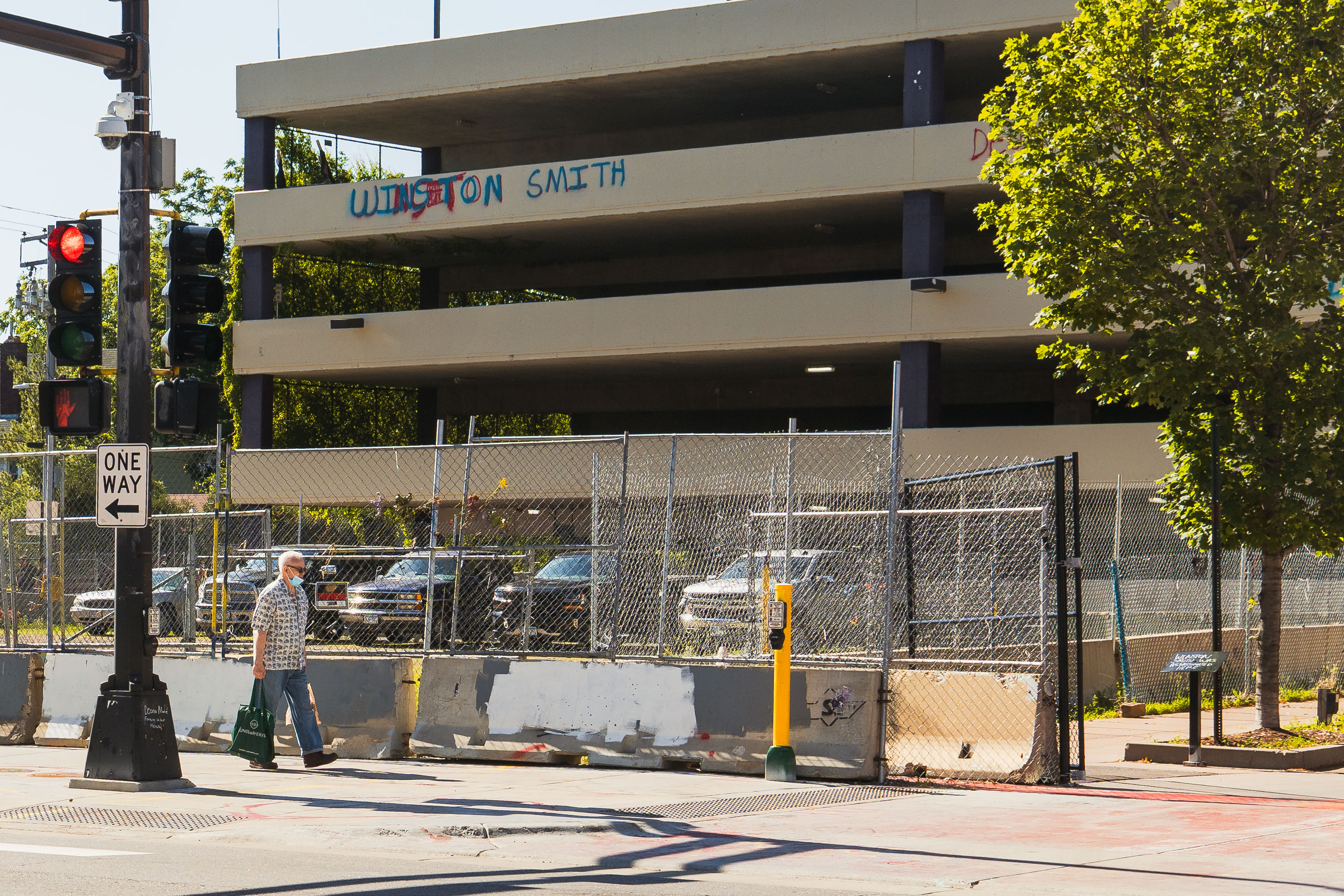
Graffiti reading "Winston Smith" on a concrete parking ramp at Seven Points Mall in Minneapolis.
Winston Smith's name is painted on the parking ramp at Seven Points Mall in Uptown Minneapolis, where Minneapolis police and U.S. Marshals fatally shot him in June 2020. Deona Marie Knajdek was killed by a driver near the ramp in June 2021 while protesting his death, and the intersection saw weeks of protest that summer.

Winston Smith’s Name Painted on the Seven Points Mall Ramp
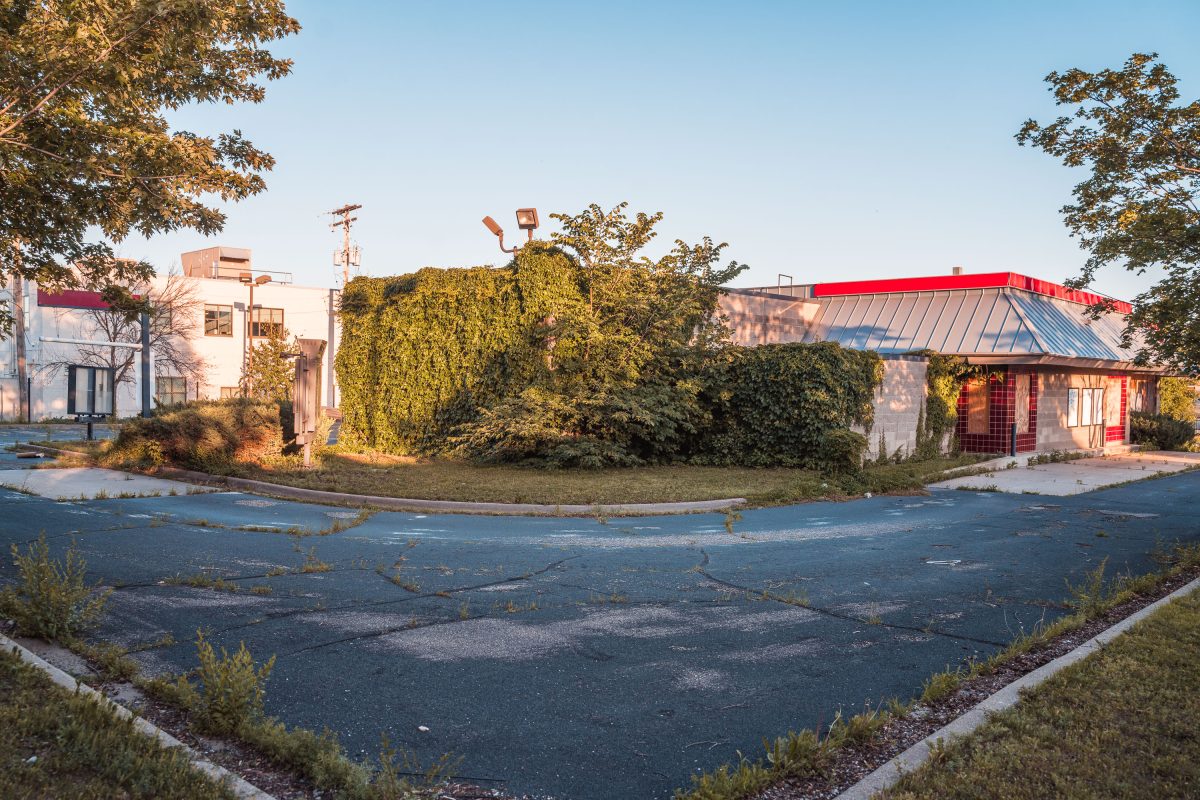
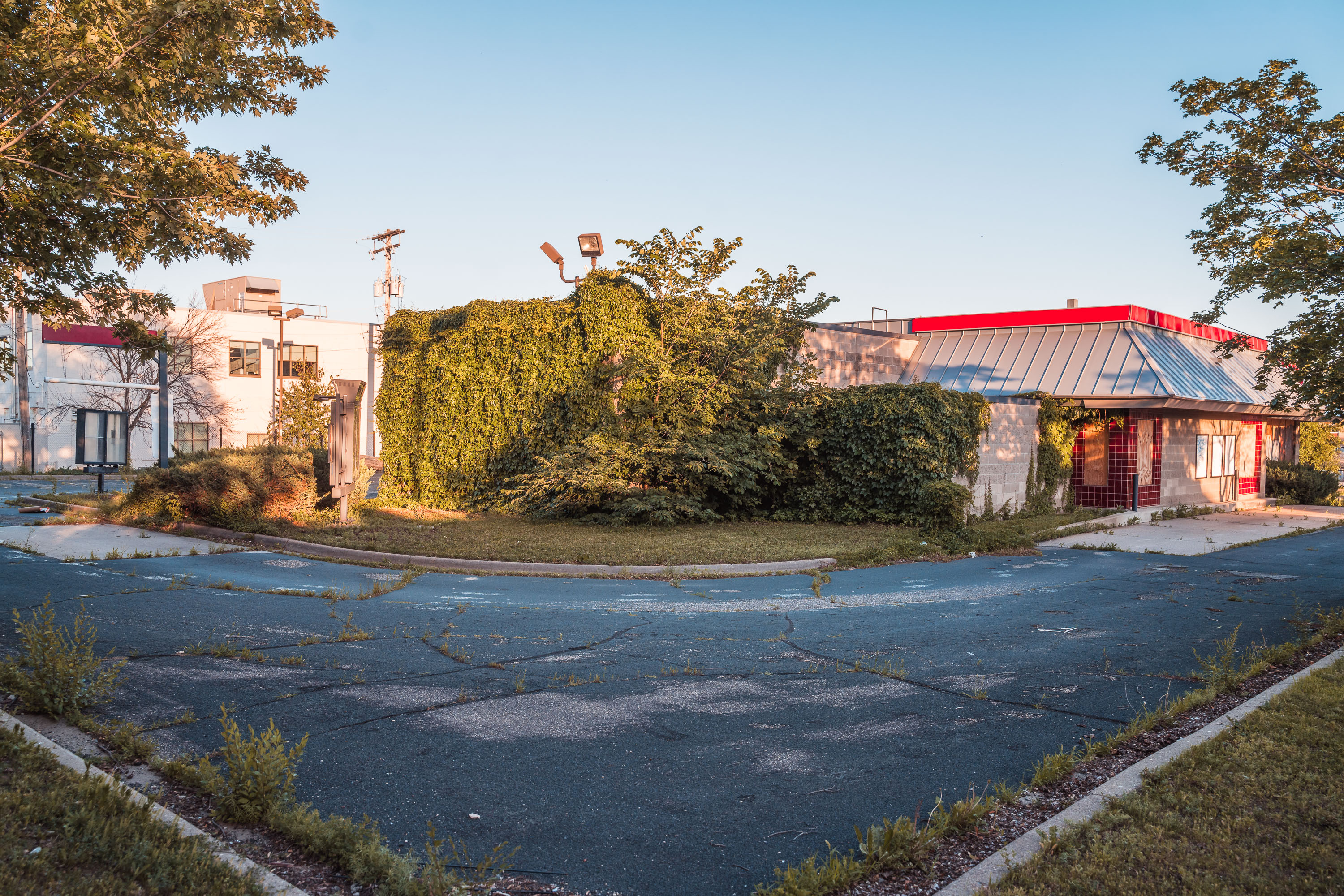
Abandoned Burger KIng in North Minneapolis
An abandoned Burger King in North Minneapolis.

Abandoned Burger KIng in North Minneapolis

MPD HQ graffiti in Minneapolis
Graffiti reading "MPD HQ" is spray-painted onto a portable toilet. MPD referring to the Minneapolis Police department.

Minneapolis Porta Potty Graffiti: MPD HQ

This is our city mural in south minneapolis
This mural, featuring anatomical figures and the phrase "This Is Our City," is located on the side of a chiropractor's building in Minneapolis.

Minneapolis Mural: “This Is Our City” on Chiropractor Building
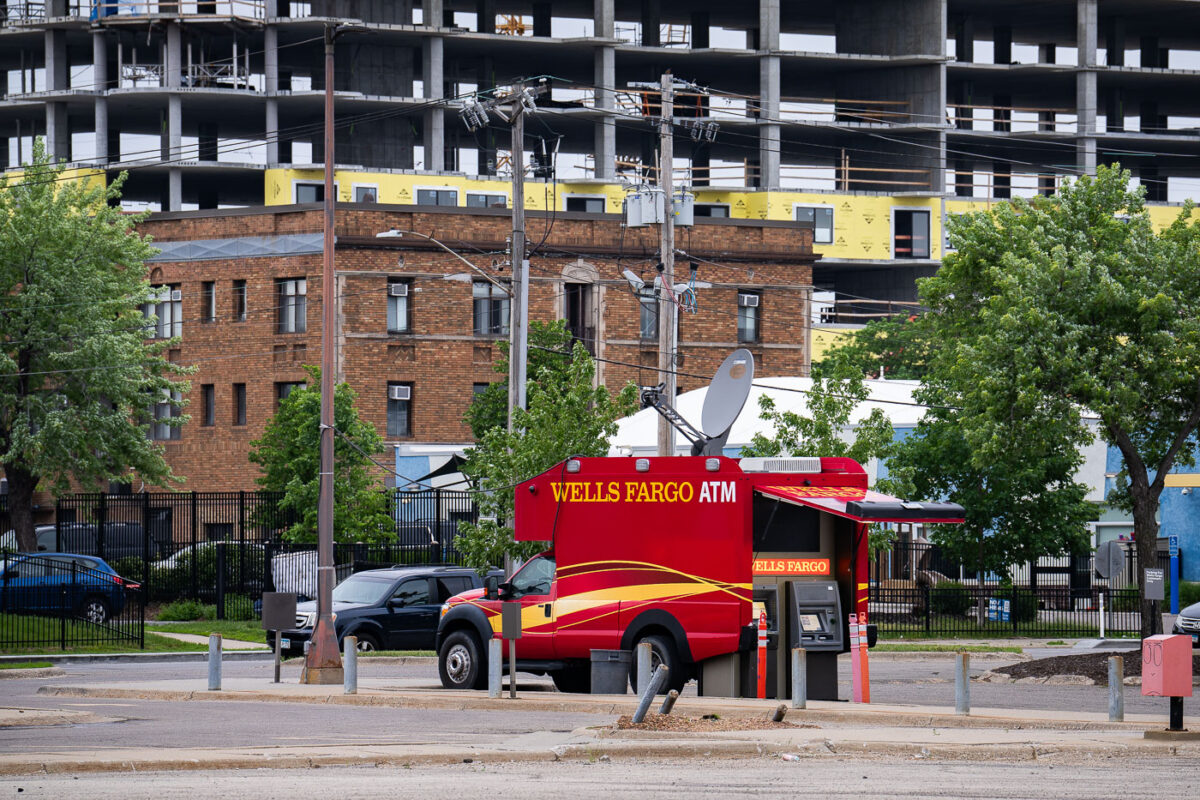
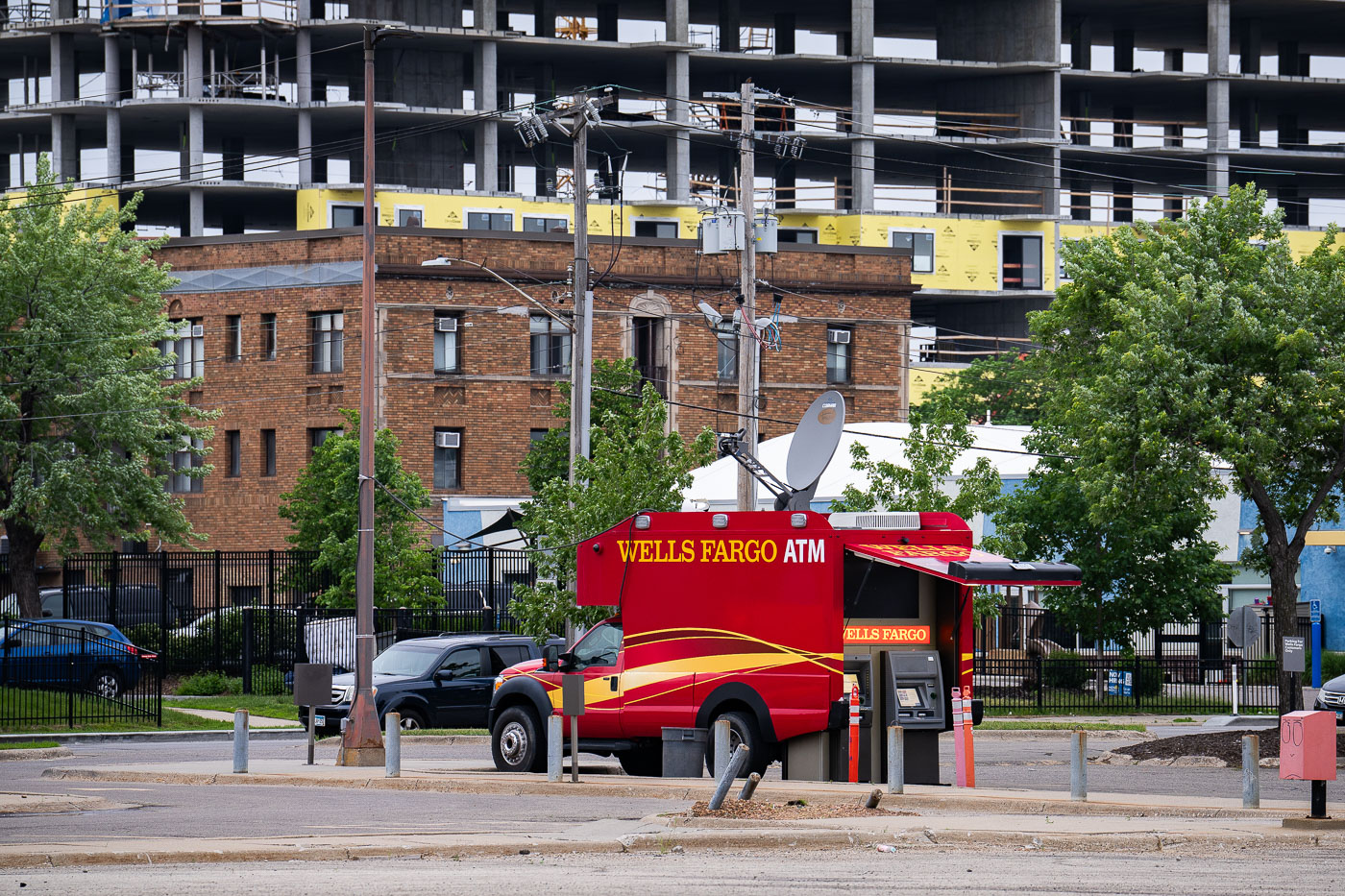
Mobile wells fargo atm in South Minneapolis with construction
A Wells Fargo mobile ATM is stationed at the former site of a Wells Fargo bank branch in South Minneapolis. The surrounding area shows a mix of older brick buildings and a new multi-story structure under construction. This mobile unit provides banking services following the closure of the bank that was destroyed during the 2020 protests that followed the murder of George Floyd.

Wells Fargo Mobile ATM at Former Bank Site, South Minneapolis
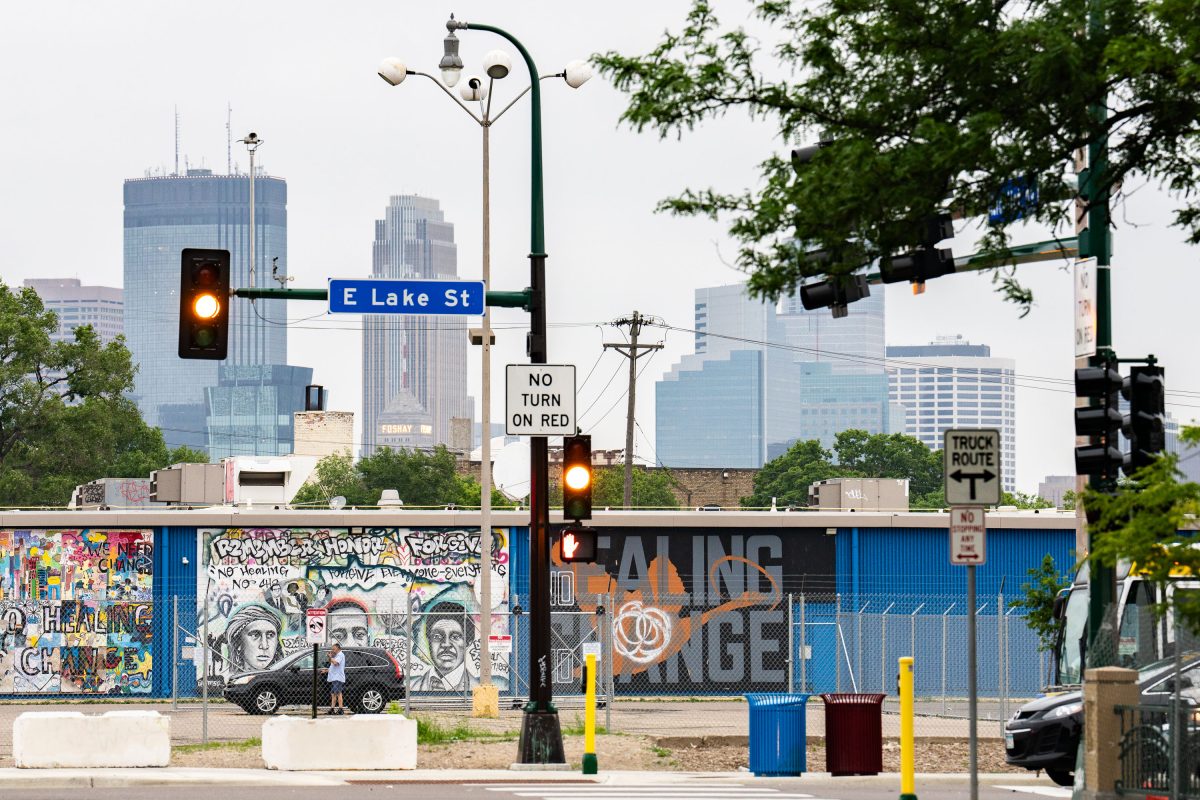
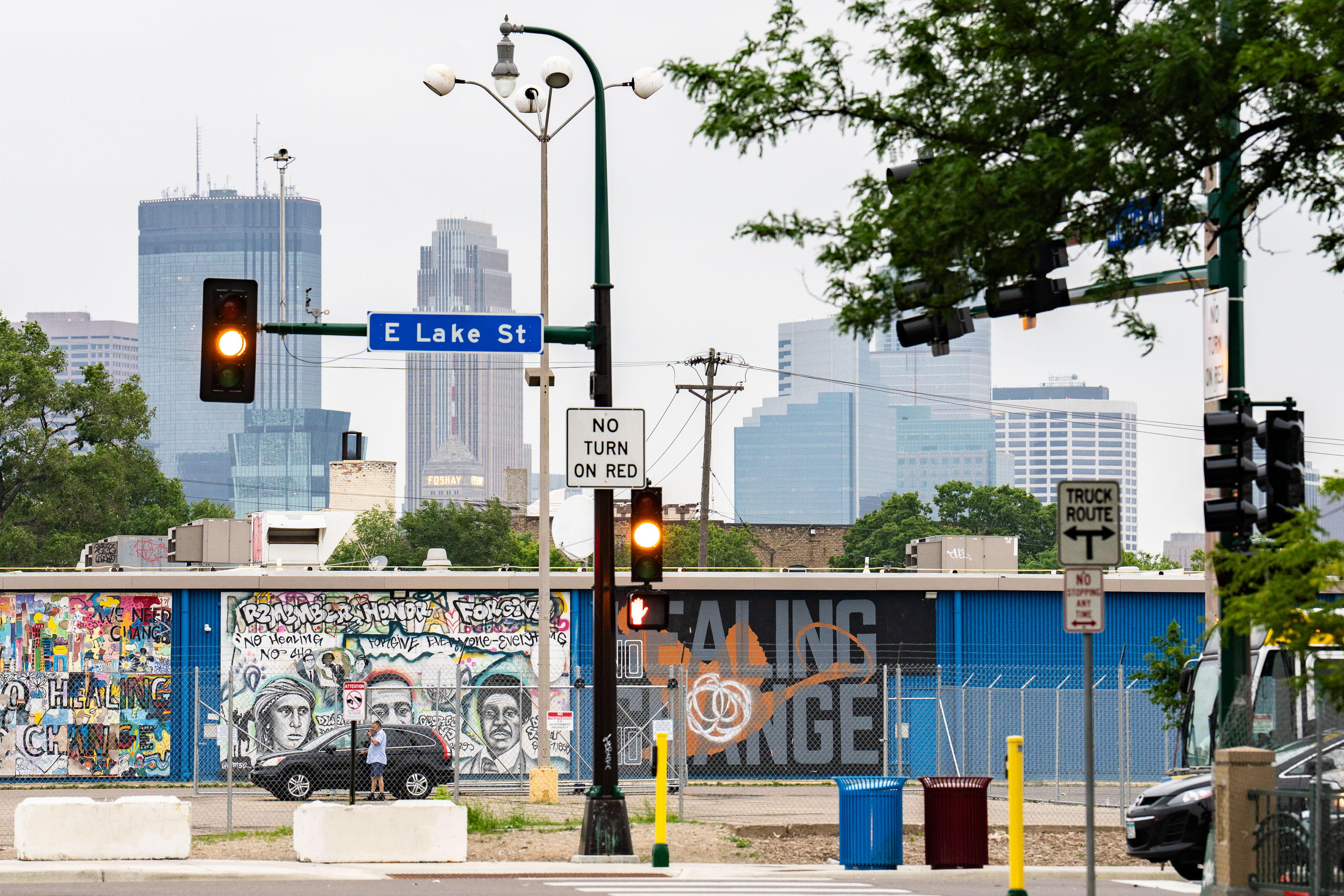
Mural boards covering a former K-Mart and grocery store on Lake Street in Minneapolis, with downtown skyscrapers visible beyond.
The downtown Minneapolis skyline includes the IDS Center, completed in 1972 at 792 feet and the tallest building in Minnesota, and the Foshay Tower, built in 1929 at 447 feet with an observation deck near its top. Mural boards now cover the fence around the former Kmart and grocery store site at Lake Street and Nicollet Avenue, demolished in 2022.

Mural Boards and the Downtown Minneapolis Skyline on Lake Street

© 1996–2026 Chad Davis