Barricade

76 photos · 2020–2026

76 photographs tagged Barricade, 2020–2026.

School bus passes street barricades marked "ICE OUT" in South Minneapolis during immigration protest.
A school bus drives by street barricades reading "ICE OUT" in South Minneapolis. The barricades were built in neighborhoods as reminders to ICE agents they are not wanted as well as slowing their erratic driving.

School Bus Passes “ICE Out” Barricades in South Minneapolis
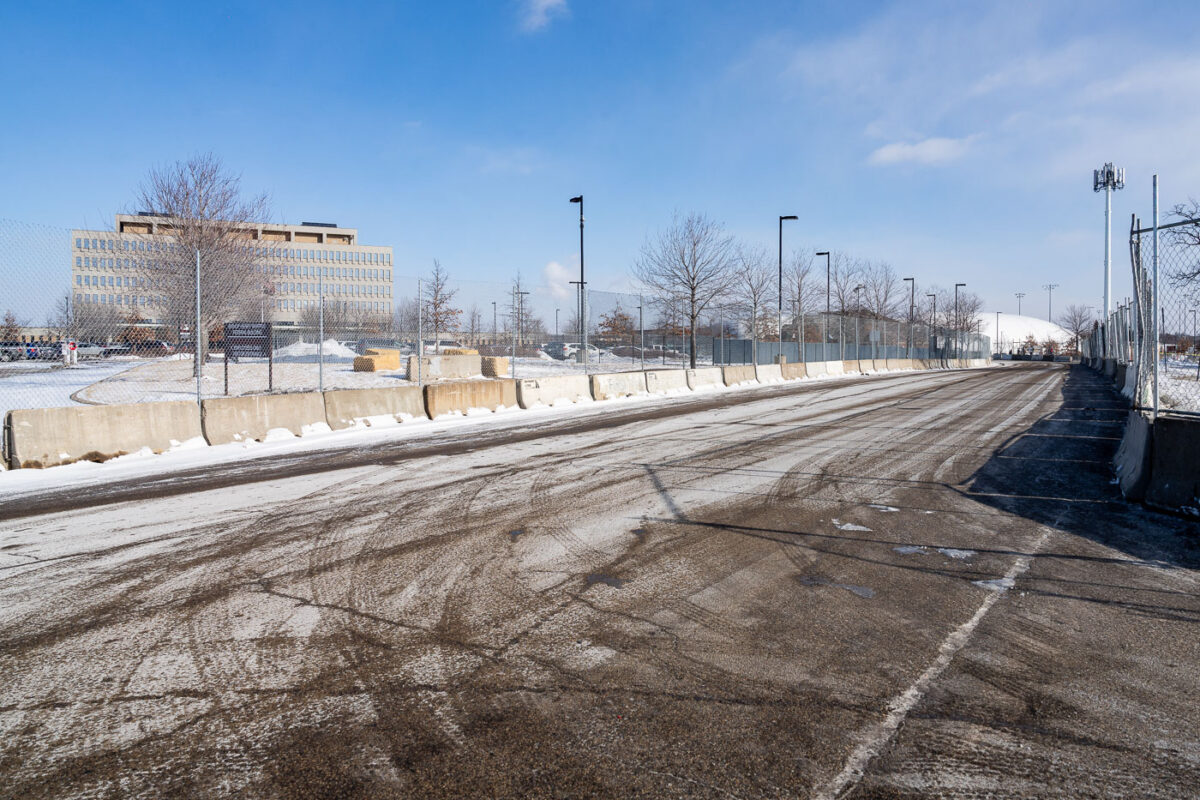
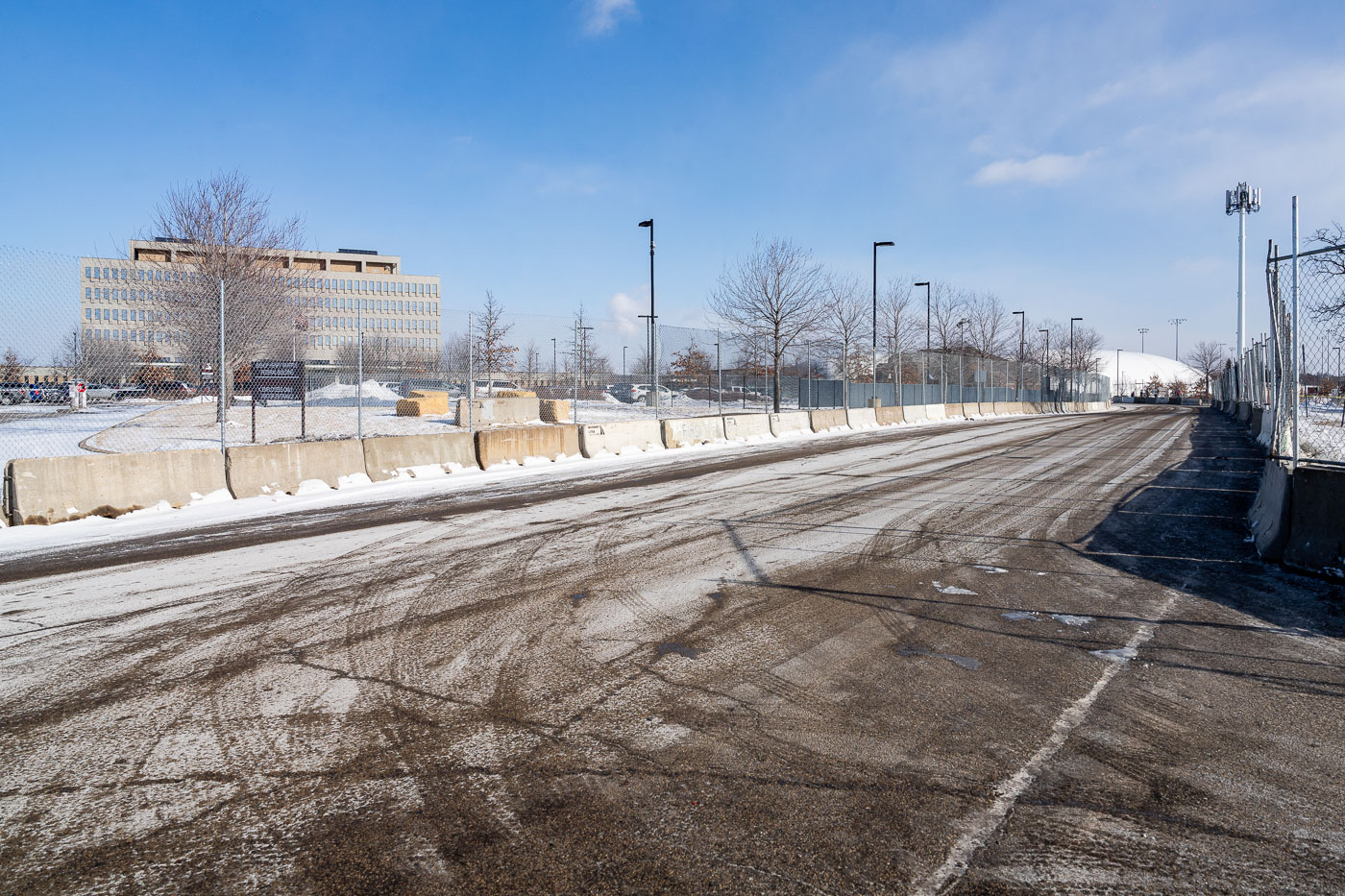
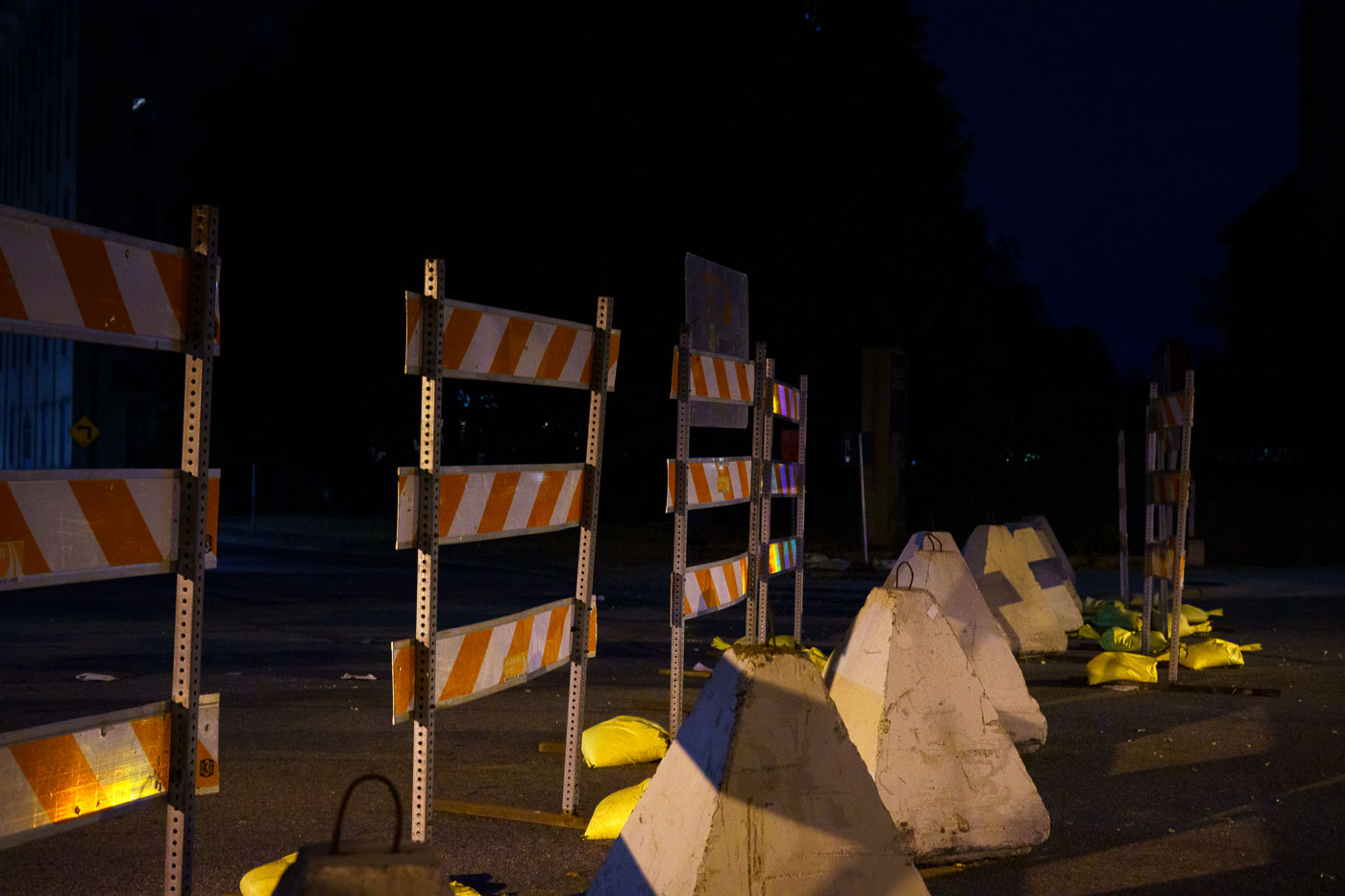
Security fencing and concrete barriers surround the Whipple Building in Minneapolis, a facility used by ICE.
Security fencing and concrete barriers surround the Whipple Building in Minneapolis, a facility that has been utilized by Immigration and Customs Enforcement (ICE) as a detention center and operational base. The building's use by ICE has been a focal point for protests and activism, particularly during operations like "Operation Metro Surge."

Perimeter Road Outside the Whipple Federal Building, Minneapolis

MnDOT concrete barriers line S 9th Street in Minneapolis beside a freeway sound wall.
MnDOT concrete barriers line the grassy edge of S 9th Street in Minneapolis. The barriers are intended to discourage camping along the corridor.

MNDOT Concrete Barriers on S 9th Street, Minneapolis
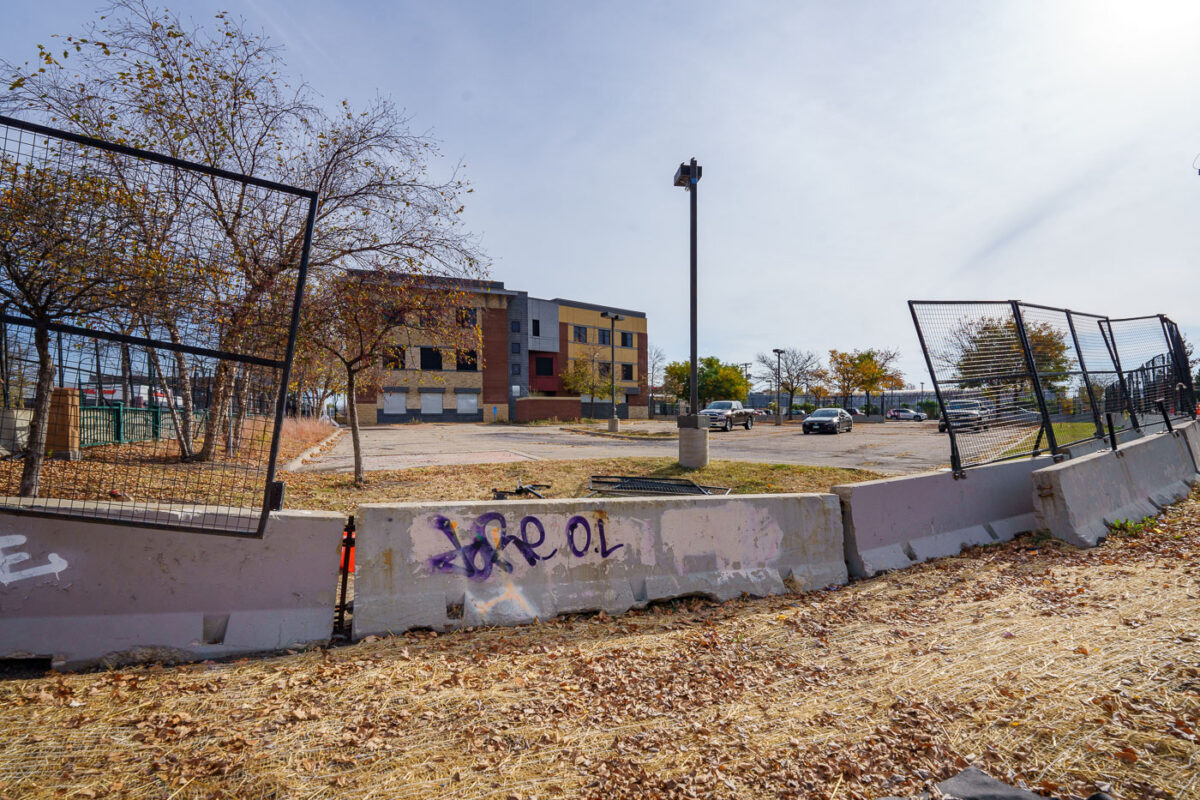
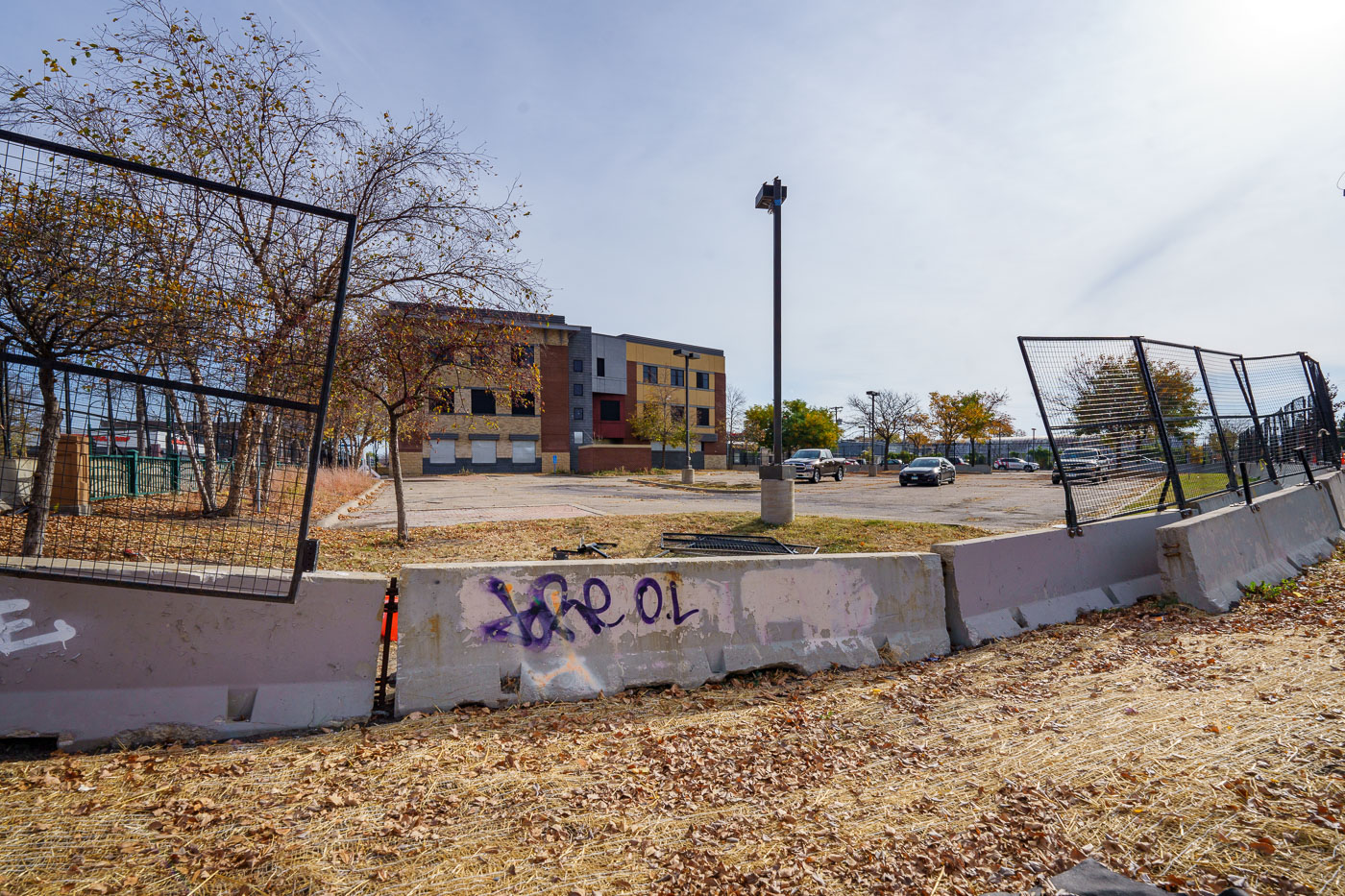
Concrete barriers and metal fencing surround the Minneapolis Police Third Precinct building site undergoing redevelopment.
Construction fencing and concrete barriers surround the Minneapolis Police Third Precinct building, which is undergoing redevelopment. The precinct was damaged by fire during protests following the murder of George Floyd in May 2020. The city plans to transform the site into a "Democracy Center" intended to house election services and community spaces.

Concrete Barriers Around the Third Precinct Construction Site
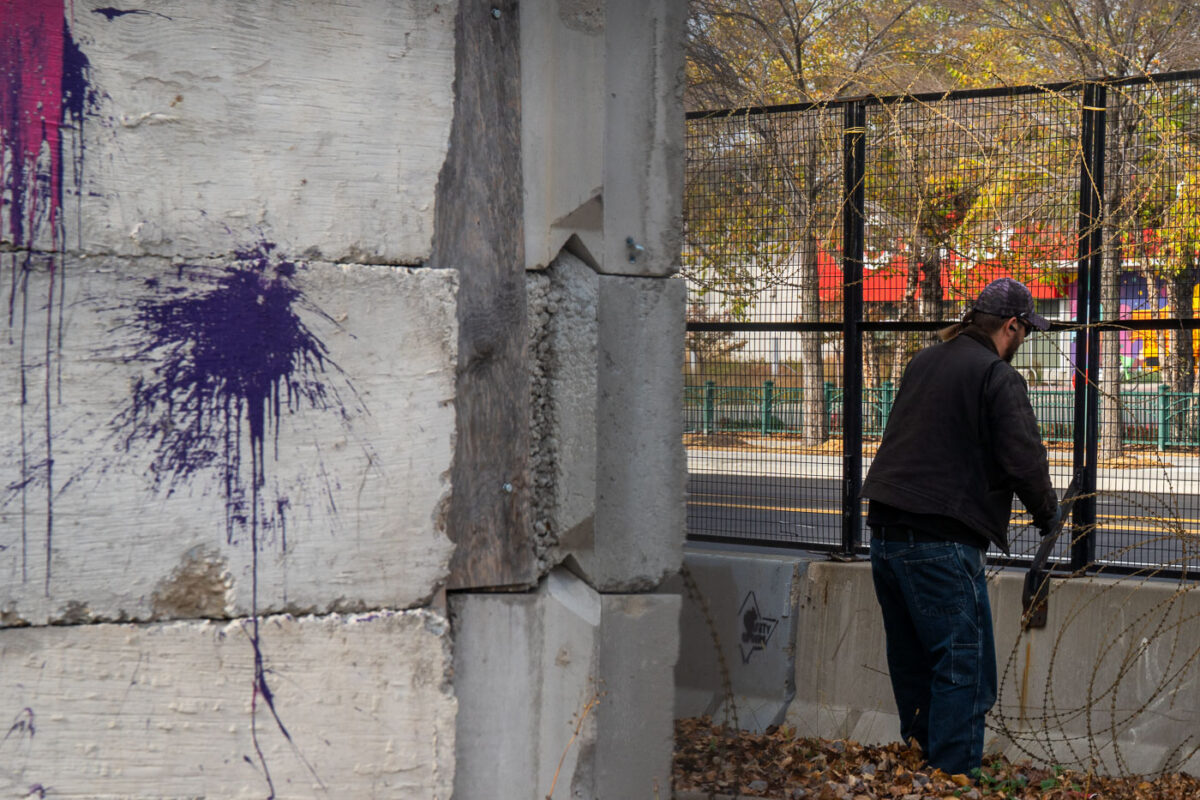
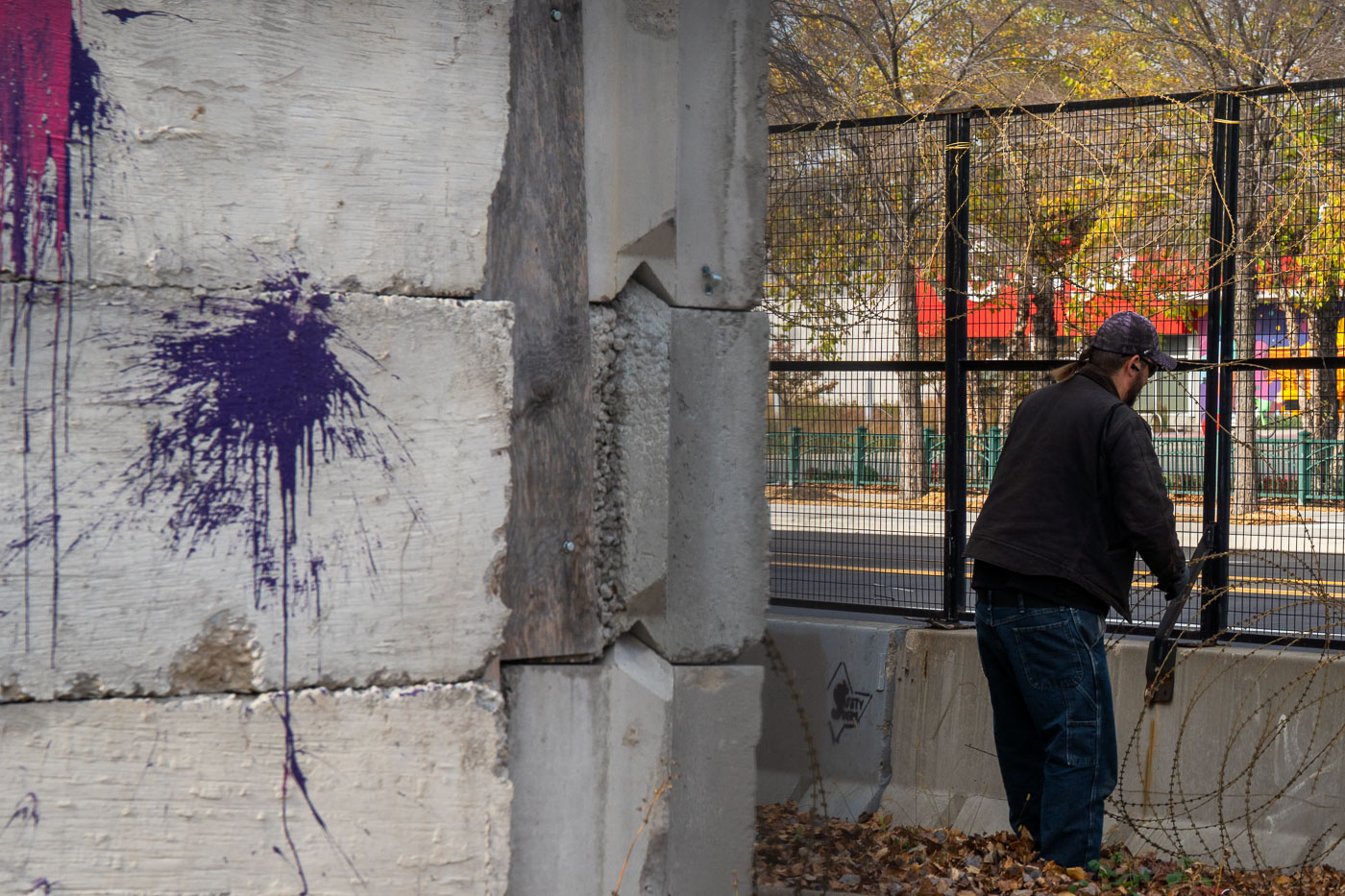
Worker removes razor wire barriers from the Minneapolis Police Department's Third Precinct building exterior.
Workers remove razor wire from the exterior of the Minneapolis Police Department's Third Precinct building. The precinct was heavily damaged by fire during protests following the murder of George Floyd in May 2020.

Clearing Razor Wire Outside Minneapolis Third Precinct
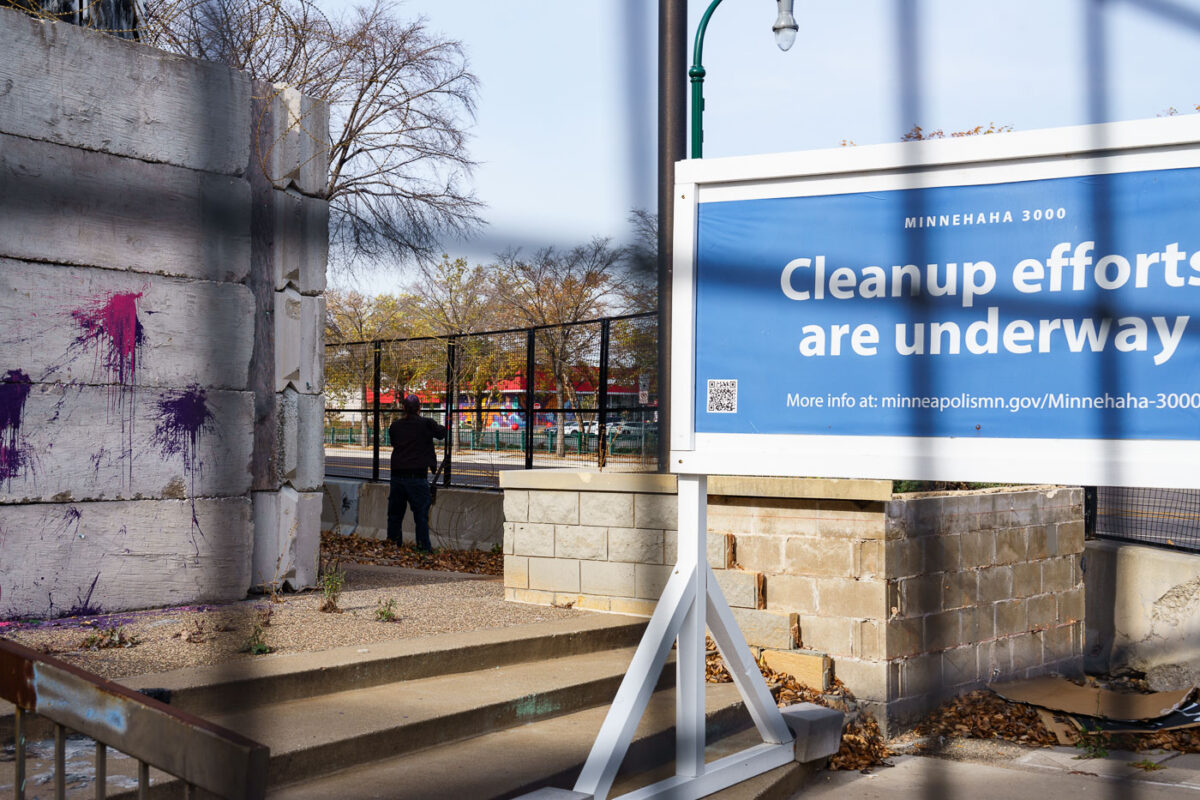
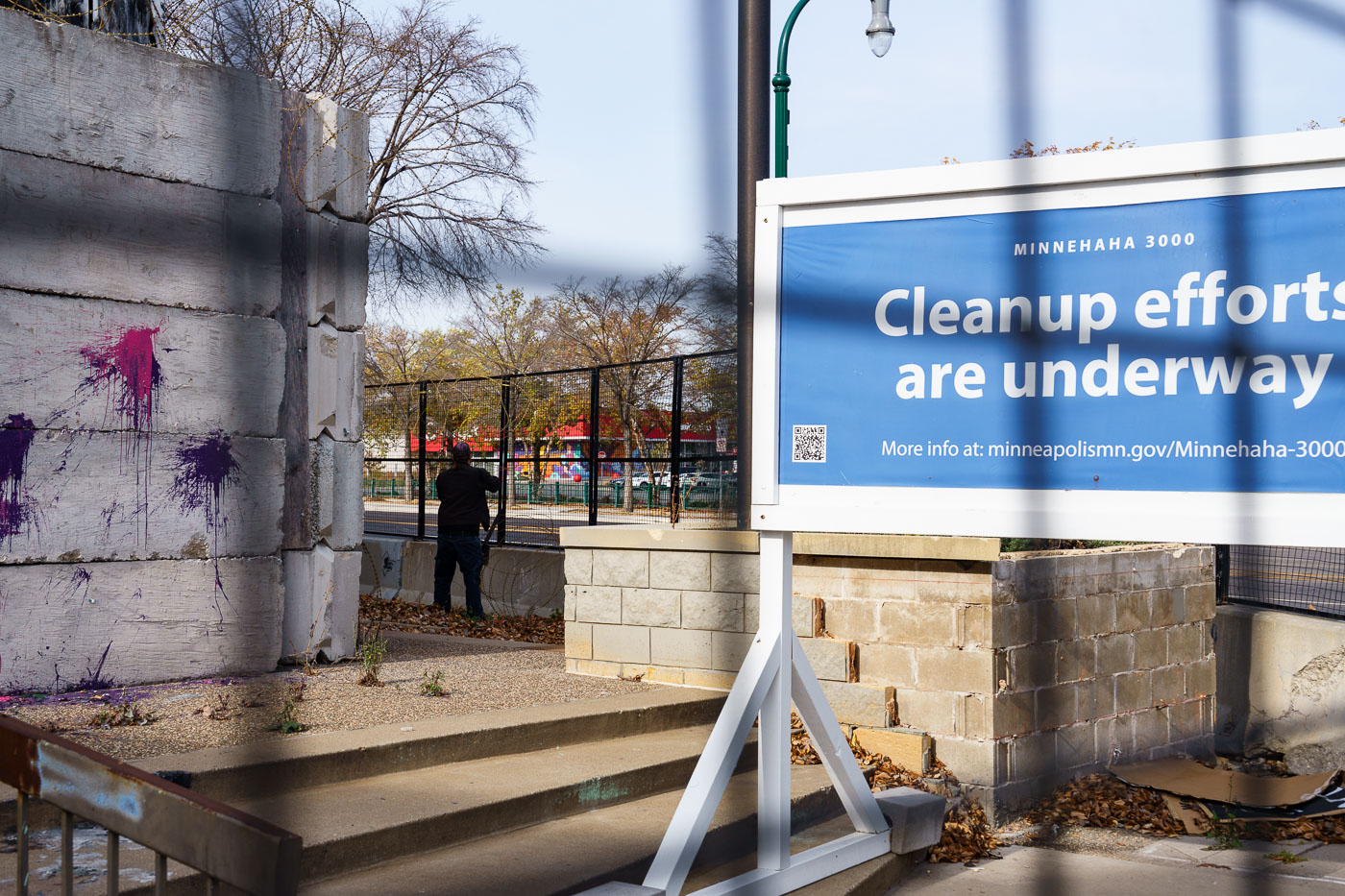
A blue sign announces "Cleanup efforts are underway" at the Minneapolis Police Department's Third Precinct building surrounded by concrete barricades and razor wire.
Workers remove razor wire from the Minneapolis Police Department's Third Precinct building, which was damaged during protests following the murder of George Floyd in 2020. The precinct was subsequently fortified with concrete barricades and razor wire.

“Cleanup Efforts Are Underway” Sign at the Minneapolis 3rd Precinct

2024 RNC Concrete Barricades Arrive
Concrete Jersey barriers, essential for security and traffic management, are transported through Milwaukee in preparation for the 2024 Republican National Convention. These precast concrete structures are commonly deployed to create temporary barriers, control vehicle access, and delineate secure zones during large-scale public events. Their arrival signifies the logistical preparations underway for the convention, which is expected to draw significant attention and require extensive security measures in the city.

Milwaukee: 2024 RNC Concrete Barricades Arrive
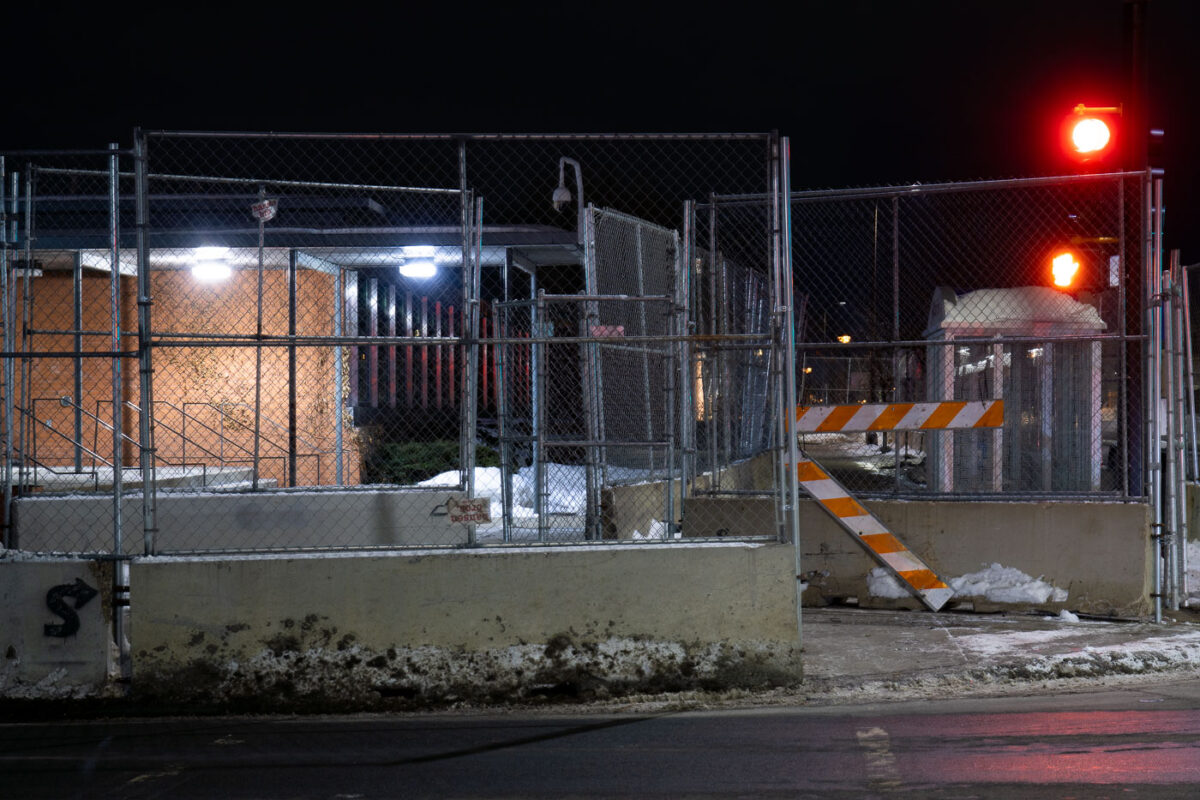
Minneapolis Police 5th Precinct surrounded by security fencing and concrete barriers at night.
Minneapolis Police 5th Precinct in Minneapolis is surrounded by security fencing and concrete barriers.

Fenced Entrance at Minneapolis Police 5th Precinct at Night

Barricades and concrete barriers on a downtown Minneapolis street at night.
Temporary barricades and concrete barriers were deployed in downtown Minneapolis following multiple weekends of unauthorized "hot rodder takeovers." These events, characterized by large groups of vehicles performing stunts, raised public safety concerns and caused significant traffic disruptions. The city's response aimed to restrict vehicle access and prevent further disturbances in the downtown core, thereby restoring order and ensuring the safety of pedestrians and residents.

Minneapolis Downtown Barricades After Hot Rodder Takeovers

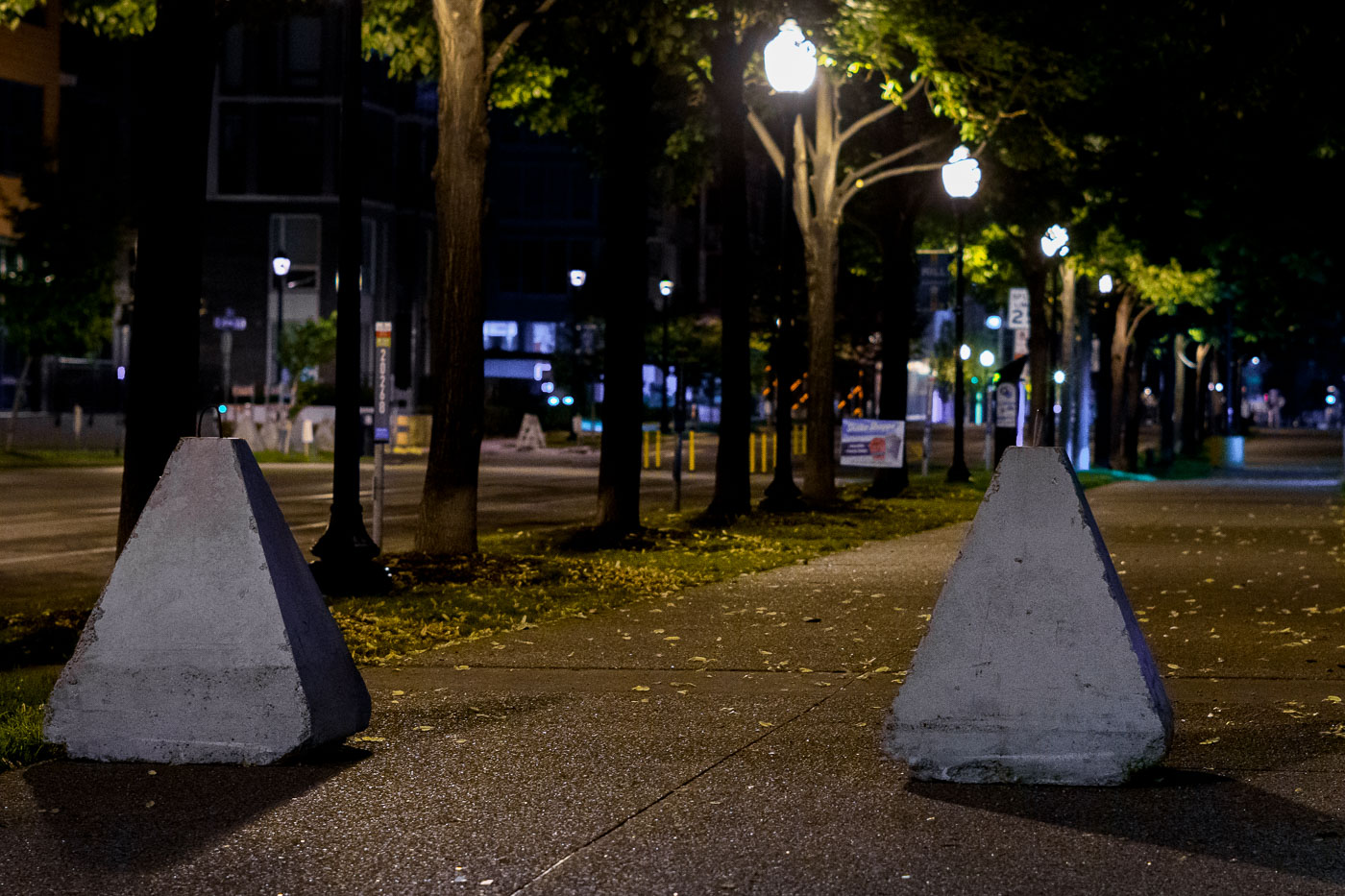
Concrete barricades on a downtown Minneapolis sidewalk at night.
Concrete barricades line a sidewalk in downtown Minneapolis, a measure implemented by city officials following disruptive "hot rodder takeovers." These events, characterized by large gatherings of vehicles and public disturbances, led to the deployment of traffic control measures to prevent vehicles from accessing pedestrian areas. The barricades served as a physical deterrent, aiming to restore order and public safety in the urban environment. This response reflects the city's efforts to manage public spaces in response to unsanctioned vehicular events.

Minneapolis Downtown Barricades After Hot Rodder Events

Security fencing on Lake Street at Seven Points Mall
Security fencing surrounds the Seven Points Mall on Lake Street in Minneapolis, following damage sustained during protests in the summer of 2020. The fencing and concrete barriers were erected to protect the property and control access to the area.

Security fencing at Seven Points Mall, Lake Street, Minneapolis

Barricades outside Minneapolis Police 5th Precinct in South Minneapolis at night.
The Minneapolis Police Department's 5th Precinct is shown barricaded at night, surrounded by temporary fencing and concrete barriers. This measure was put in place during periods of civil unrest in Minneapolis, notably following the murder of George Floyd in May 2020. The precinct, located in South Minneapolis, serves as a key law enforcement hub for the area. The presence of barricades highlights the heightened security and the impact of public demonstrations on municipal infrastructure.

Minneapolis Police 5th Precinct Barricaded at Night

No Answers No Streets at Murphy Ranks Memorial
A banner reading "NO ANSWER NO JUSTICE" hangs from a barricade at night in George Floyd Square, located at the intersection of Chicago Avenue and 38th Street in Minneapolis. This area became a focal point of protests and community organizing following the murder of George Floyd in May 2020. The square, established by protesters, served as a space for remembrance, activism, and community engagement for several months. The Murphy Ranks Memorial, visible in the background, is one of many tributes that emerged within the square.

George Floyd Square: Murphy Ranks Memorial Banner at Night

Barricade bags at George Floyd Square 2021
Barricades constructed from lawn and leaf bags line the street at George Floyd Square in Minneapolis. This area, located at the intersection of 38th Street and Chicago Avenue, became a focal point of protests following the murder of George Floyd in May 2020. After the city cleared official barricades, community members erected these makeshift barriers to maintain control of the space. The bags, filled with soil or sand, served to block vehicle access and demarcate the autonomous zone established by activists.

George Floyd Square barricades made of lawn bags at night
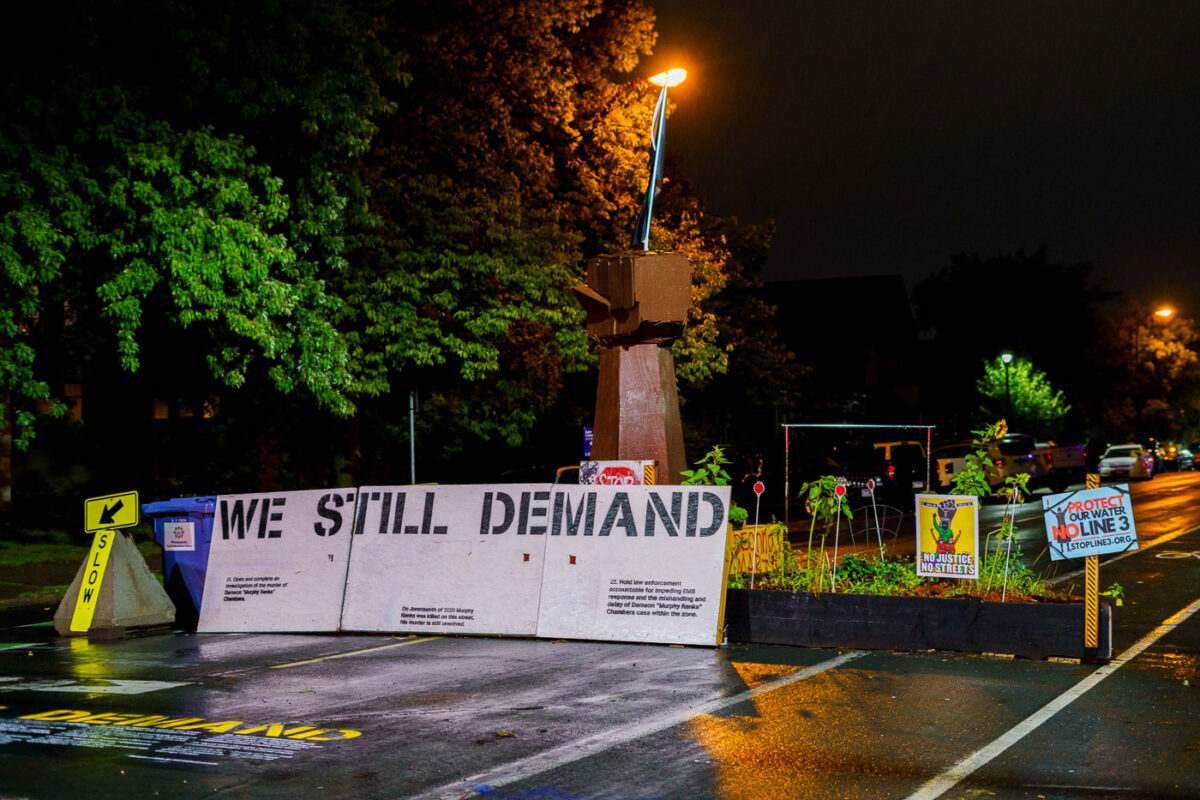
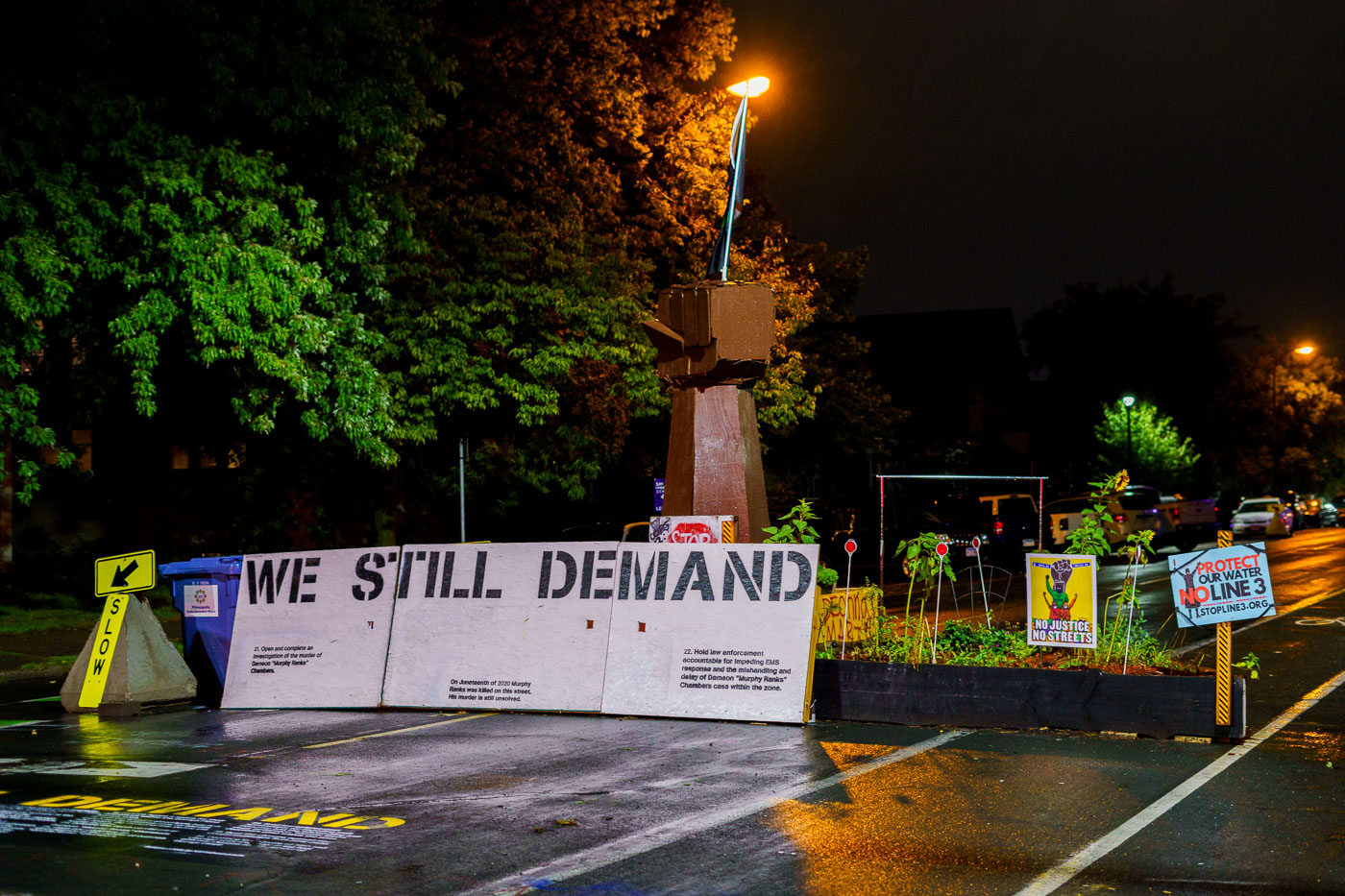
Rain falls at George Floyd Square
Barricades line Chicago Avenue in Minneapolis's George Floyd Square in August 2021, over a year after the murder of George Floyd. The barricades, erected by community members, served to protect the occupied space. Signs on the barricades reflect ongoing demands for justice, including accountability for law enforcement and opposition to the Line 3 pipeline. The "We Still Demand" message underscores the continued activism and the unresolved issues that fueled the protests.

George Floyd Square Barricade, Minneapolis, August 2021
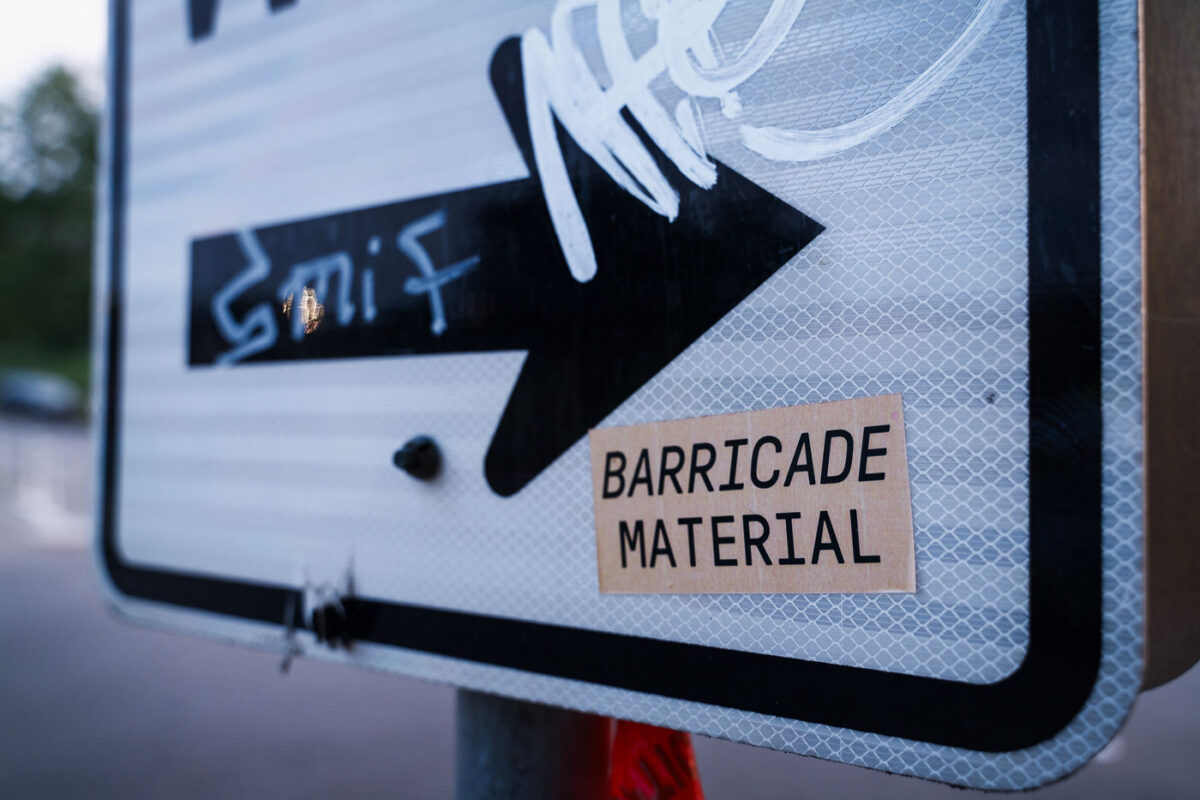
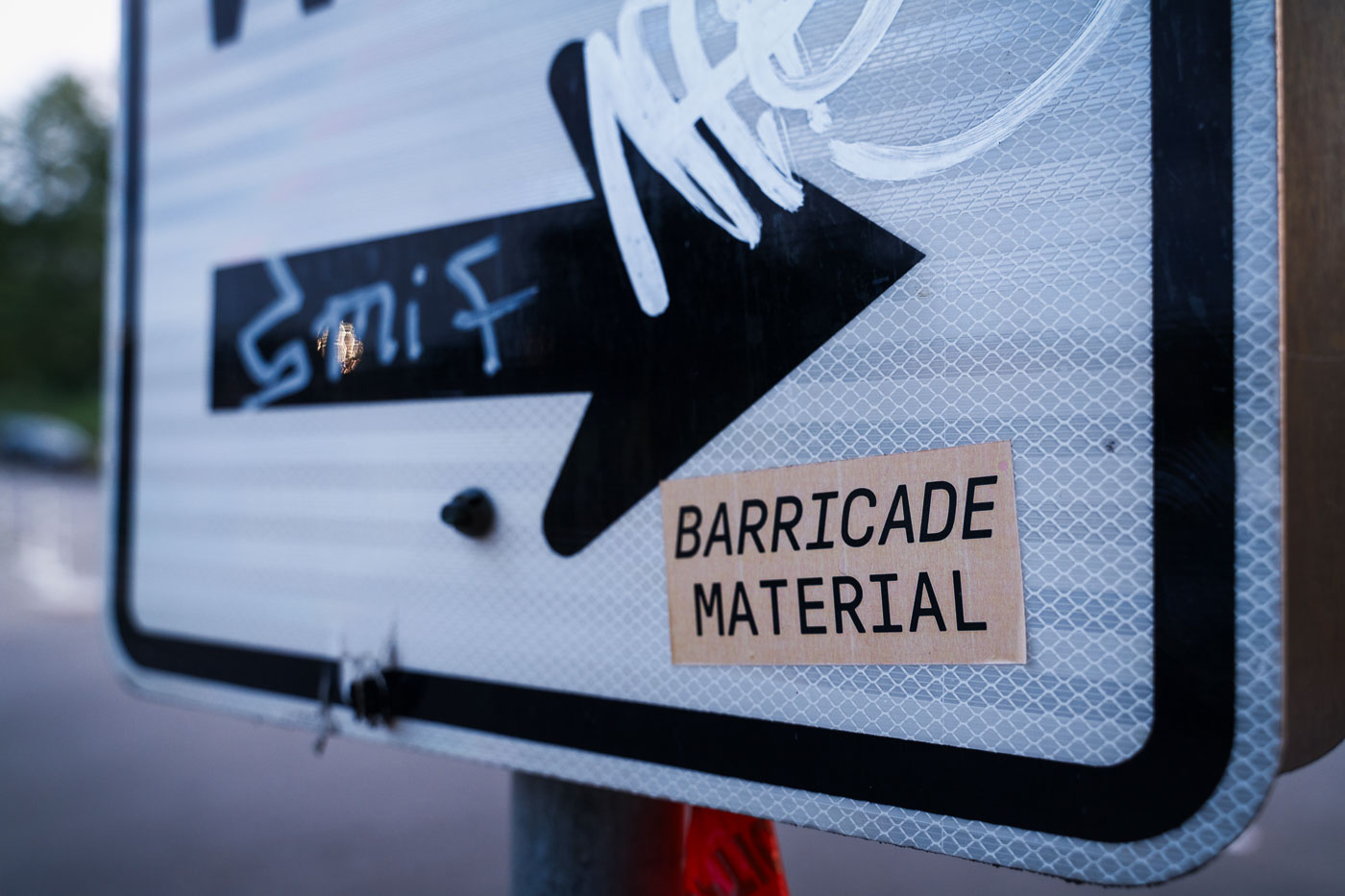
Barricade Material sticker in Minneapolis
A sticker on a street sign in Minneapolis reads "BARRICADE MATERIAL." This reflects the resourcefulness employed during the 2020 civil unrest, when a wide variety of objects were repurposed to create barricades. The unrest followed the murder of George Floyd.

Minneapolis: “Barricade Material” Sticker on Sign
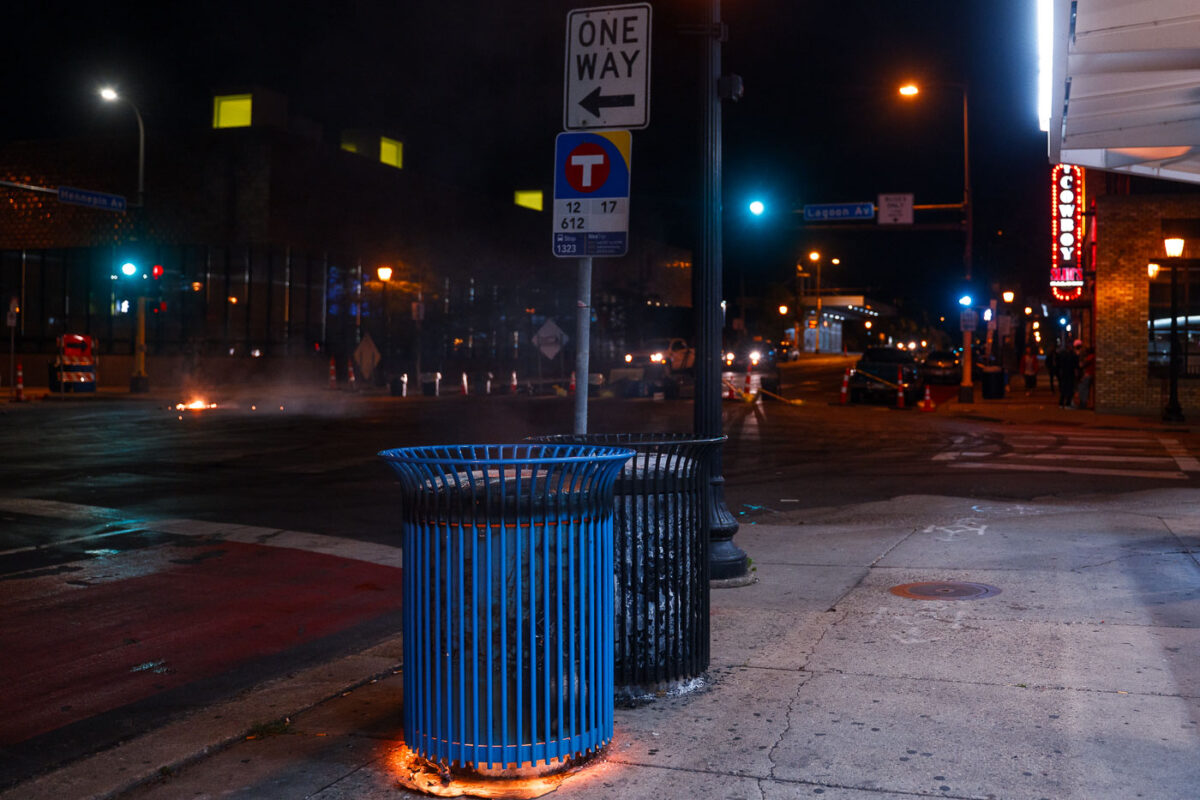
Dumpster Fires in Uptown Minneapolis
Fires burn at the intersection of Hennepin Avenue and Lagoon Avenue in Uptown Minneapolis on June 3, 2021, following protests. The unrest occurred in the days after Winston Smith, a Black man, was killed by police.

Uptown Minneapolis: Fire at Hennepin & Lagoon after protests
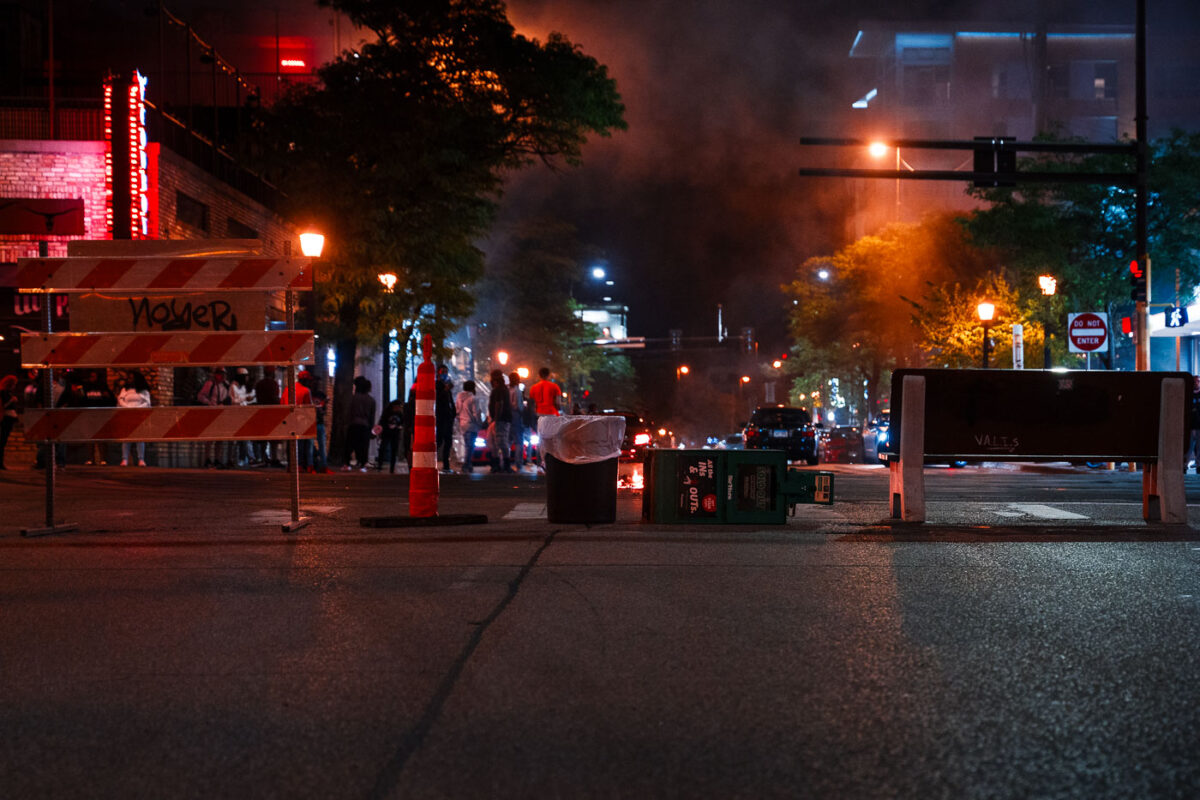
Barricaded Streets in Uptown Minneapolis July 2021
Barricades were erected at the intersection of Hennepin Avenue and Lagoon Avenue in Minneapolis's Uptown neighborhood during the unrest that followed the killing of Winston Smith.

Barricades at Hennepin Ave and Lagoon Ave, Uptown Minneapolis
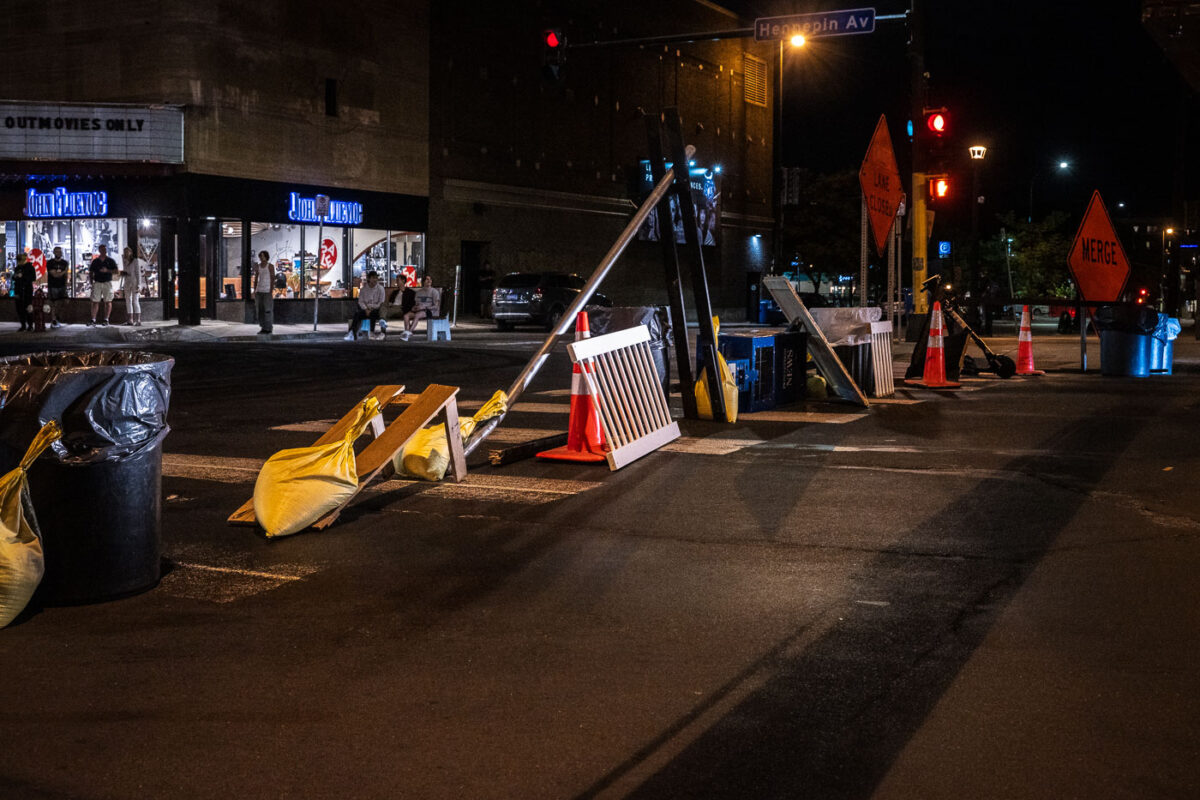
Barricades on Hennepin and Lagoon in Minneapolis
Barricades were erected at the intersection of Hennepin Avenue and Lagoon Avenue in Minneapolis's Uptown neighborhood during protests following the killing of WInston Smith and illicit street racing.

Barricades at Hennepin Ave and Lagoon Ave, Uptown Minneapolis

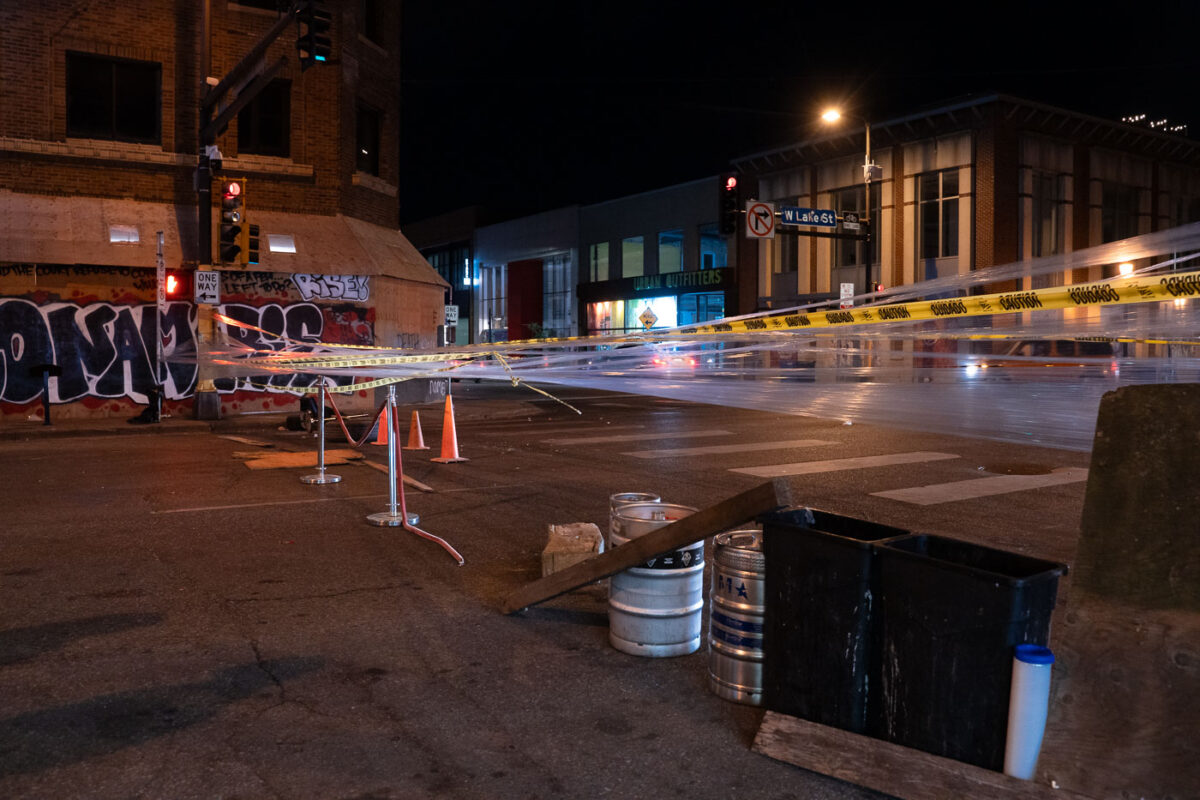
Barricades and caution tape block Lake Street at Hennepin Avenue in Minneapolis at night.
Street barricades are visible at the intersection of Hennepin Avenue and Lake Street in Minneapolis, following protests in August 2021. These protests were sparked by the deaths of Winston Smith and Deona Marie. On June 3, 2021, members of a U.S. Marshals Service fugitive task force fatally shot 32-year-old Winston “Boogie” Smith Jr. on the top level of a parking ramp in Minneapolis’ Uptown neighborhood while attempting to arrest him on a felony warrant. Authorities said Smith fired a handgun from inside his vehicle during the encounter, while family members and activists questioned the official account and demanded the release of additional evidence. The killing led to weeks of protests, street occupations, and confrontations with police in Uptown, becoming another major flashpoint in Minneapolis during the period following the murder of George Floyd. Earlier in the day Minneapolis city officials along with The Agape Movement coordinated to open the streets that had been closed at George Floyd Square since his murder. On June 13, 2021, 31-year-old Deona Marie Knajdek was killed when a driver accelerated into a group of demonstrators gathered in Minneapolis’ Uptown neighborhood during ongoing protests over the killing of Winston “Boogie” Smith Jr. Protesters had blocked the intersection of West Lake Street and Girard Avenue with vehicles and barricades when Nicholas Kraus drove a Jeep Cherokee into the crowd at high speed, killing Knajdek and injuring several others. Kraus was later charged with second-degree murder, two counts of second-degree assault with a dangerous weapon, and criminal vehicular operation. In 2023, he pleaded guilty to murder and assault charges and was sentenced to more than 20 years in prison for the attack.

Barricades on Lake Street, Minneapolis, During Protests
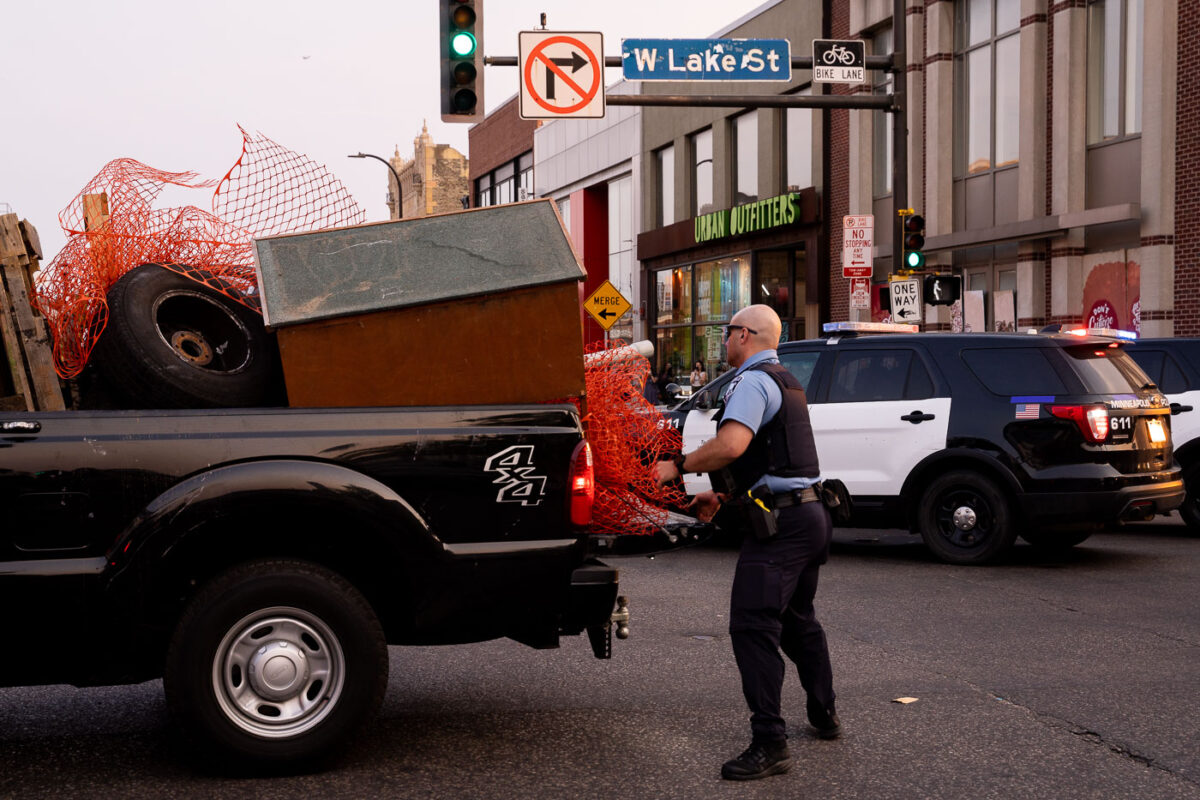
Minneapolis police officer removes barricade materials from a pickup on W Lake St in Minneapolis
Minneapolis police officers remove materials used by protesters to construct barricades on West Lake Street. The protests followed the deaths of Winston Smith on June 3rd and Deona Marie on June 13th. On June 3, 2021, members of a U.S. Marshals Service fugitive task force fatally shot 32-year-old Winston “Boogie” Smith Jr. on the top level of a parking ramp in Minneapolis’ Uptown neighborhood while attempting to arrest him on a felony warrant. Authorities said Smith fired a handgun from inside his vehicle during the encounter, while family members and activists questioned the official account and demanded the release of additional evidence. The killing led to weeks of protests, street occupations, and confrontations with police in Uptown, becoming another major flashpoint in Minneapolis during the period following the murder of George Floyd. Earlier in the day Minneapolis city officials along with The Agape Movement coordinated to open the streets that had been closed at George Floyd Square since his murder. On June 13, 2021, 31-year-old Deona Marie Knajdek was killed when a driver accelerated into a group of demonstrators gathered in Minneapolis’ Uptown neighborhood during ongoing protests over the killing of Winston “Boogie” Smith Jr. Protesters had blocked the intersection of West Lake Street and Girard Avenue with vehicles and barricades when Nicholas Kraus drove a Jeep Cherokee into the crowd at high speed, killing Knajdek and injuring several others. Kraus was later charged with second-degree murder, two counts of second-degree assault with a dangerous weapon, and criminal vehicular operation. In 2023, he pleaded guilty to murder and assault charges and was sentenced to more than 20 years in prison for the attack.

Minneapolis Police Remove Protest Barricade Materials on W Lake St
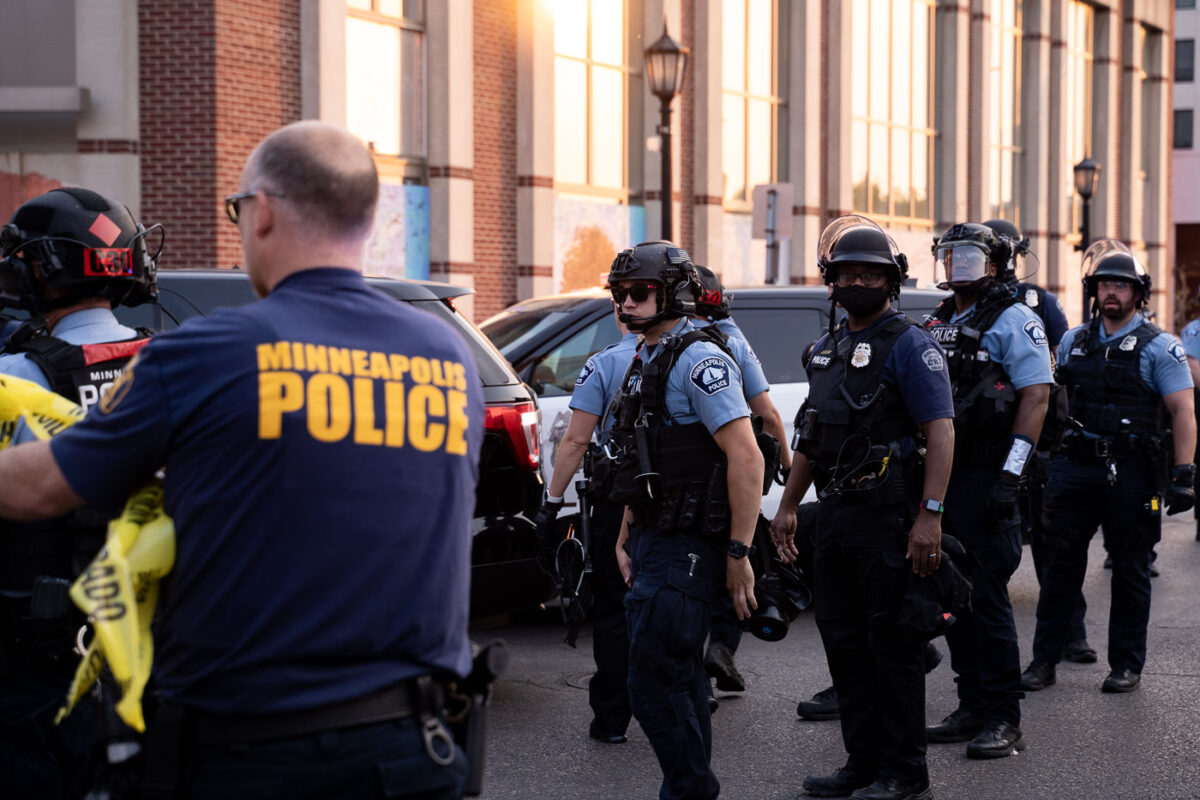
Minneapolis police officers stand near barricades on Lake Street in Uptown Minneapolis.
Minneapolis Police officers clear street barricades on Lake Street in Uptown Minneapolis. These barricades were erected following the killings of Winston Smith and Deona Marie in June 2021. On June 3, 2021, members of a U.S. Marshals Service fugitive task force fatally shot 32-year-old Winston “Boogie” Smith Jr. on the top level of a parking ramp in Minneapolis’ Uptown neighborhood while attempting to arrest him on a felony warrant. Authorities said Smith fired a handgun from inside his vehicle during the encounter, while family members and activists questioned the official account and demanded the release of additional evidence. The killing led to weeks of protests, street occupations, and confrontations with police in Uptown, becoming another major flashpoint in Minneapolis during the period following the murder of George Floyd. Earlier in the day Minneapolis city officials along with The Agape Movement coordinated to open the streets that had been closed at George Floyd Square since his murder. On June 13, 2021, 31-year-old Deona Marie Knajdek was killed when a driver accelerated into a group of demonstrators gathered in Minneapolis’ Uptown neighborhood during ongoing protests over the killing of Winston “Boogie” Smith Jr. Protesters had blocked the intersection of West Lake Street and Girard Avenue with vehicles and barricades when Nicholas Kraus drove a Jeep Cherokee into the crowd at high speed, killing Knajdek and injuring several others. Kraus was later charged with second-degree murder, two counts of second-degree assault with a dangerous weapon, and criminal vehicular operation. In 2023, he pleaded guilty to murder and assault charges and was sentenced to more than 20 years in prison for the attack.

Minneapolis Police Clear Barricades on Lake Street
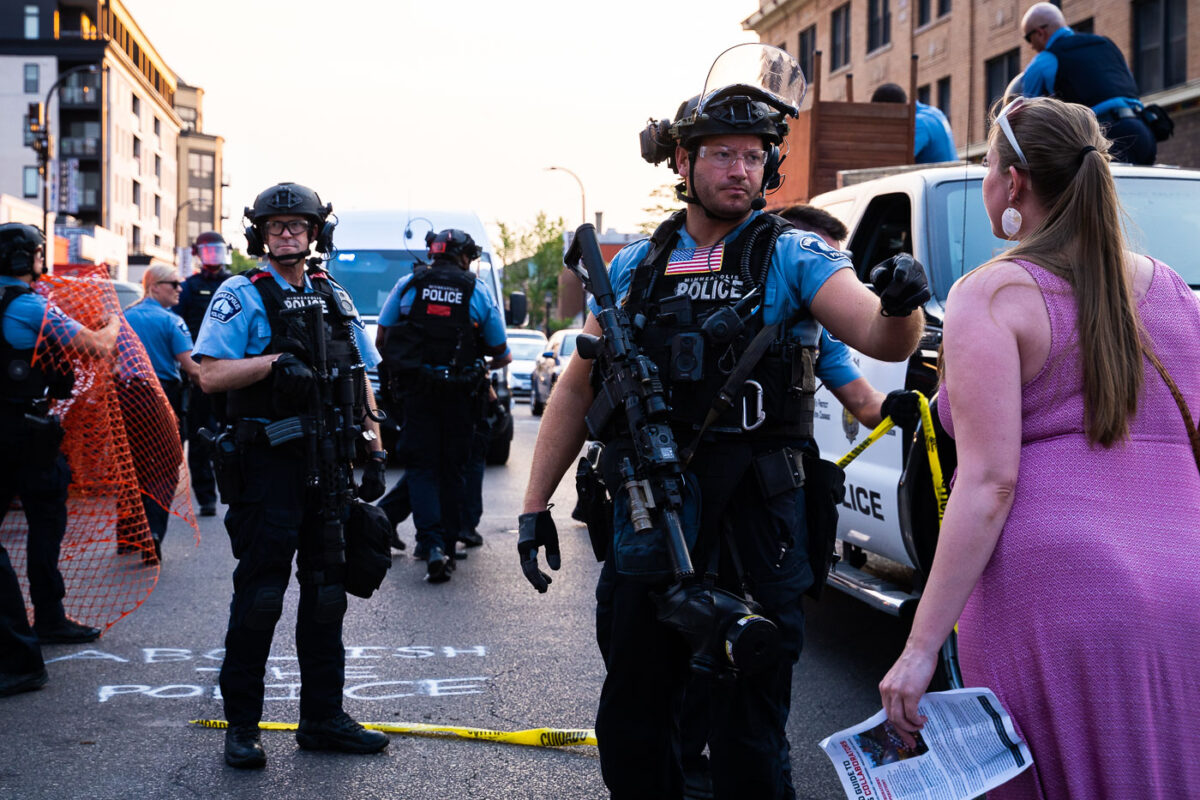
Minneapolis police officers clear protesters and barricades at Lake Street and Hennepin Avenue.
Minneapolis Police officers clear protesters and barricades from the intersection of Lake Street and Hennepin Avenue. The protests began following the deaths of Winston Smith on June 3rd and Deona Marie on June 13th. On June 3, 2021, members of a U.S. Marshals Service fugitive task force fatally shot 32-year-old Winston “Boogie” Smith Jr. on the top level of a parking ramp in Minneapolis’ Uptown neighborhood while attempting to arrest him on a felony warrant. Authorities said Smith fired a handgun from inside his vehicle during the encounter, while family members and activists questioned the official account and demanded the release of additional evidence. The killing led to weeks of protests, street occupations, and confrontations with police in Uptown, becoming another major flashpoint in Minneapolis during the period following the murder of George Floyd. Earlier in the day Minneapolis city officials along with The Agape Movement coordinated to open the streets that had been closed at George Floyd Square since his murder. On June 13, 2021, 31-year-old Deona Marie Knajdek was killed when a driver accelerated into a group of demonstrators gathered in Minneapolis’ Uptown neighborhood during ongoing protests over the killing of Winston “Boogie” Smith Jr. Protesters had blocked the intersection of West Lake Street and Girard Avenue with vehicles and barricades when Nicholas Kraus drove a Jeep Cherokee into the crowd at high speed, killing Knajdek and injuring several others. Kraus was later charged with second-degree murder, two counts of second-degree assault with a dangerous weapon, and criminal vehicular operation. In 2023, he pleaded guilty to murder and assault charges and was sentenced to more than 20 years in prison for the attack.

Minneapolis Police Clear Protest Site at Lake and Hennepin
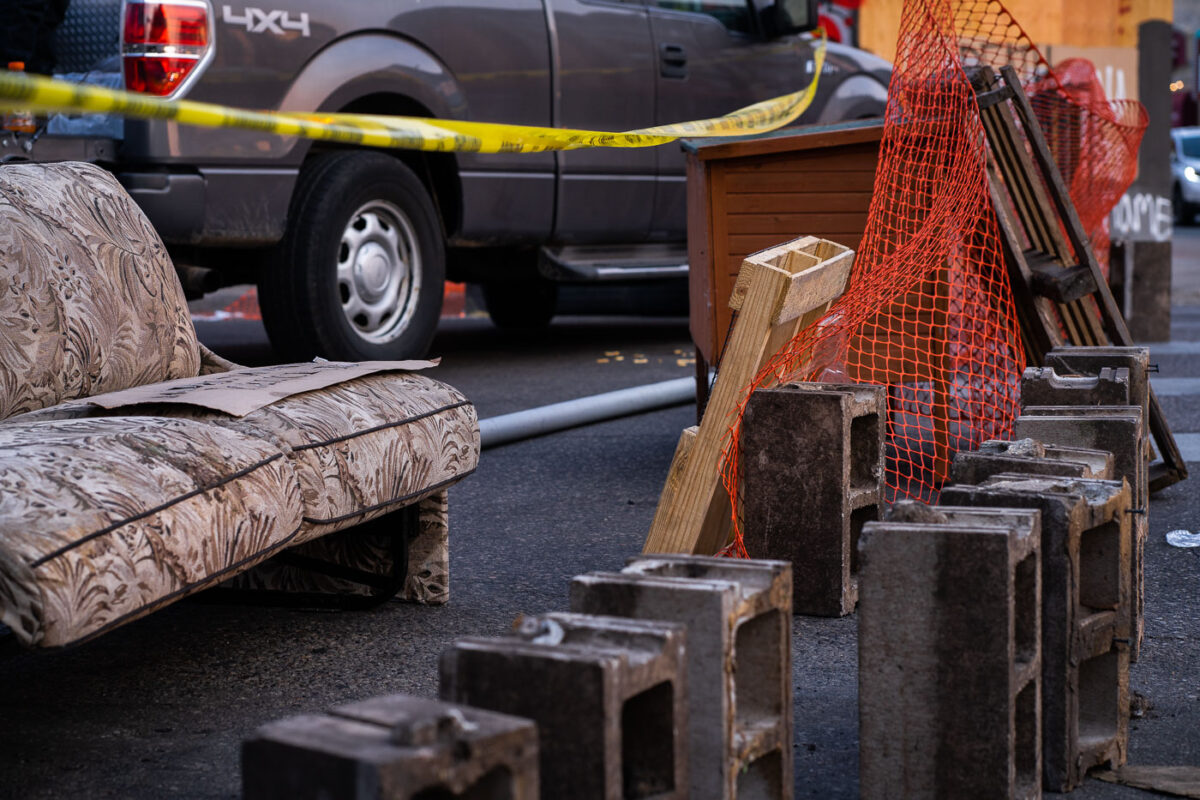
Concrete blocks, furniture and caution tape form a barricade on a street in Minneapolis.
Barricades constructed from concrete blocks, furniture, and construction materials are visible on Lake Street in Uptown Minneapolis on June 16, 2021. These barriers were erected by protesters following the June 3rd killing of Winston Smith by law enforcement and the killing of Deona Marie. On June 3, 2021, members of a U.S. Marshals Service fugitive task force fatally shot 32-year-old Winston “Boogie” Smith Jr. on the top level of a parking ramp in Minneapolis’ Uptown neighborhood while attempting to arrest him on a felony warrant. Authorities said Smith fired a handgun from inside his vehicle during the encounter, while family members and activists questioned the official account and demanded the release of additional evidence. The killing led to weeks of protests, street occupations, and confrontations with police in Uptown, becoming another major flashpoint in Minneapolis during the period following the murder of George Floyd. Earlier in the day Minneapolis city officials along with The Agape Movement coordinated to open the streets that had been closed at George Floyd Square since his murder. On June 13, 2021, 31-year-old Deona Marie Knajdek was killed when a driver accelerated into a group of demonstrators gathered in Minneapolis’ Uptown neighborhood during ongoing protests over the killing of Winston “Boogie” Smith Jr. Protesters had blocked the intersection of West Lake Street and Girard Avenue with vehicles and barricades when Nicholas Kraus drove a Jeep Cherokee into the crowd at high speed, killing Knajdek and injuring several others. Kraus was later charged with second-degree murder, two counts of second-degree assault with a dangerous weapon, and criminal vehicular operation. In 2023, he pleaded guilty to murder and assault charges and was sentenced to more than 20 years in prison for the attack.

Uptown Minneapolis: Barricades on Lake Street
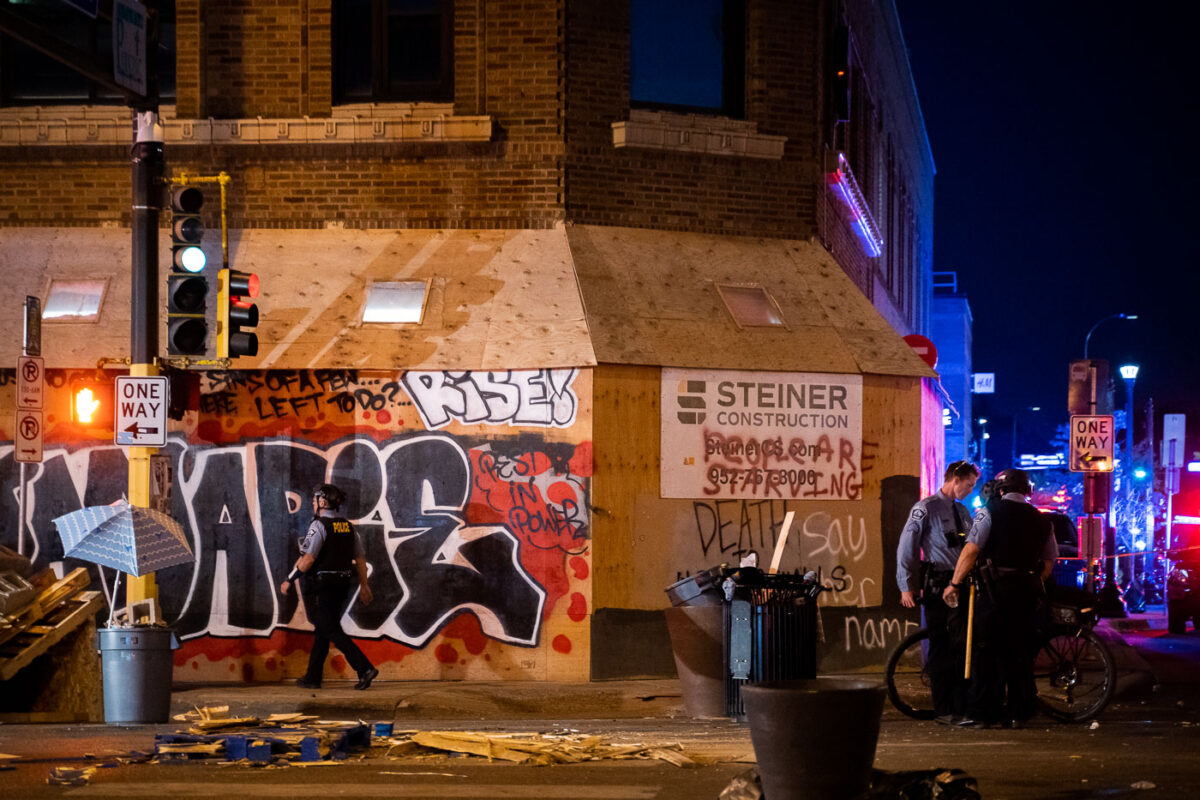
Minneapolis police officers stand by a boarded-up, graffiti-covered building at Lake Street and Hennepin Avenue at night.
Minneapolis Police officers clear barricades at the intersection of Lake Street and Hennepin Avenue. This area was the site of protests that began on June 3rd, following the killings of Winston Smith and Deona Marie. On June 3, 2021, members of a U.S. Marshals Service fugitive task force fatally shot 32-year-old Winston “Boogie” Smith Jr. on the top level of a parking ramp in Minneapolis’ Uptown neighborhood while attempting to arrest him on a felony warrant. Authorities said Smith fired a handgun from inside his vehicle during the encounter, while family members and activists questioned the official account and demanded the release of additional evidence. The killing led to weeks of protests, street occupations, and confrontations with police in Uptown, becoming another major flashpoint in Minneapolis during the period following the murder of George Floyd. Earlier in the day Minneapolis city officials along with The Agape Movement coordinated to open the streets that had been closed at George Floyd Square since his murder. On June 13, 2021, 31-year-old Deona Marie Knajdek was killed when a driver accelerated into a group of demonstrators gathered in Minneapolis’ Uptown neighborhood during ongoing protests over the killing of Winston “Boogie” Smith Jr. Protesters had blocked the intersection of West Lake Street and Girard Avenue with vehicles and barricades when Nicholas Kraus drove a Jeep Cherokee into the crowd at high speed, killing Knajdek and injuring several others. Kraus was later charged with second-degree murder, two counts of second-degree assault with a dangerous weapon, and criminal vehicular operation. In 2023, he pleaded guilty to murder and assault charges and was sentenced to more than 20 years in prison for the attack.

Minneapolis Police Clear Barricades at Lake Street and Hennepin Avenue
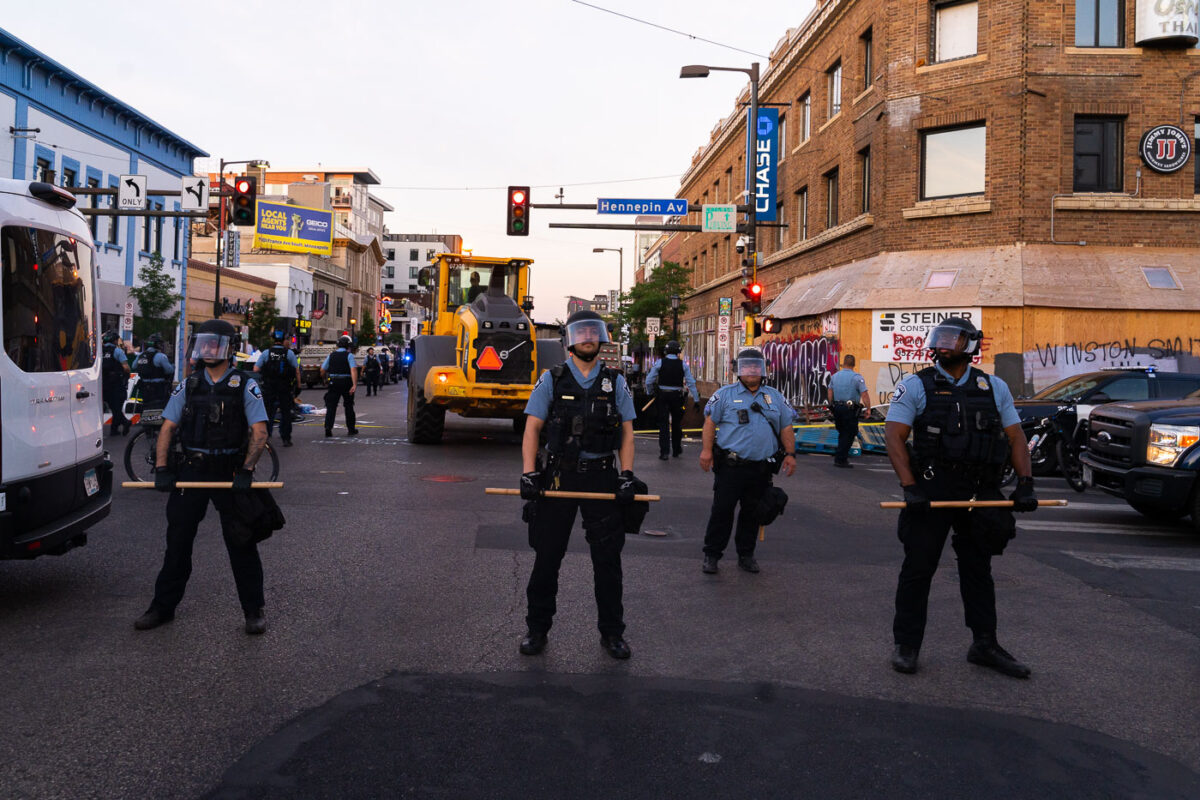
Minneapolis police officers stand in formation on Hennepin Avenue at Lake Street.
Minneapolis Police officers stand in formation on Hennepin Avenue at Lake Street in Uptown Minneapolis on June 15, 2021. This comes after protesters had been blocking the roads following the killings of Winston Smith and Deona Marie. On June 3, 2021, members of a U.S. Marshals Service fugitive task force fatally shot 32-year-old Winston “Boogie” Smith Jr. on the top level of a parking ramp in Minneapolis’ Uptown neighborhood while attempting to arrest him on a felony warrant. Authorities said Smith fired a handgun from inside his vehicle during the encounter, while family members and activists questioned the official account and demanded the release of additional evidence. The killing led to weeks of protests, street occupations, and confrontations with police in Uptown, becoming another major flashpoint in Minneapolis during the period following the murder of George Floyd. Earlier in the day Minneapolis city officials along with The Agape Movement coordinated to open the streets that had been closed at George Floyd Square since his murder. On June 13, 2021, 31-year-old Deona Marie Knajdek was killed when a driver accelerated into a group of demonstrators gathered in Minneapolis’ Uptown neighborhood during ongoing protests over the killing of Winston “Boogie” Smith Jr. Protesters had blocked the intersection of West Lake Street and Girard Avenue with vehicles and barricades when Nicholas Kraus drove a Jeep Cherokee into the crowd at high speed, killing Knajdek and injuring several others. Kraus was later charged with second-degree murder, two counts of second-degree assault with a dangerous weapon, and criminal vehicular operation. In 2023, he pleaded guilty to murder and assault charges and was sentenced to more than 20 years in prison for the attack.

Minneapolis Police at Hennepin Ave and Lake St Protest Zone
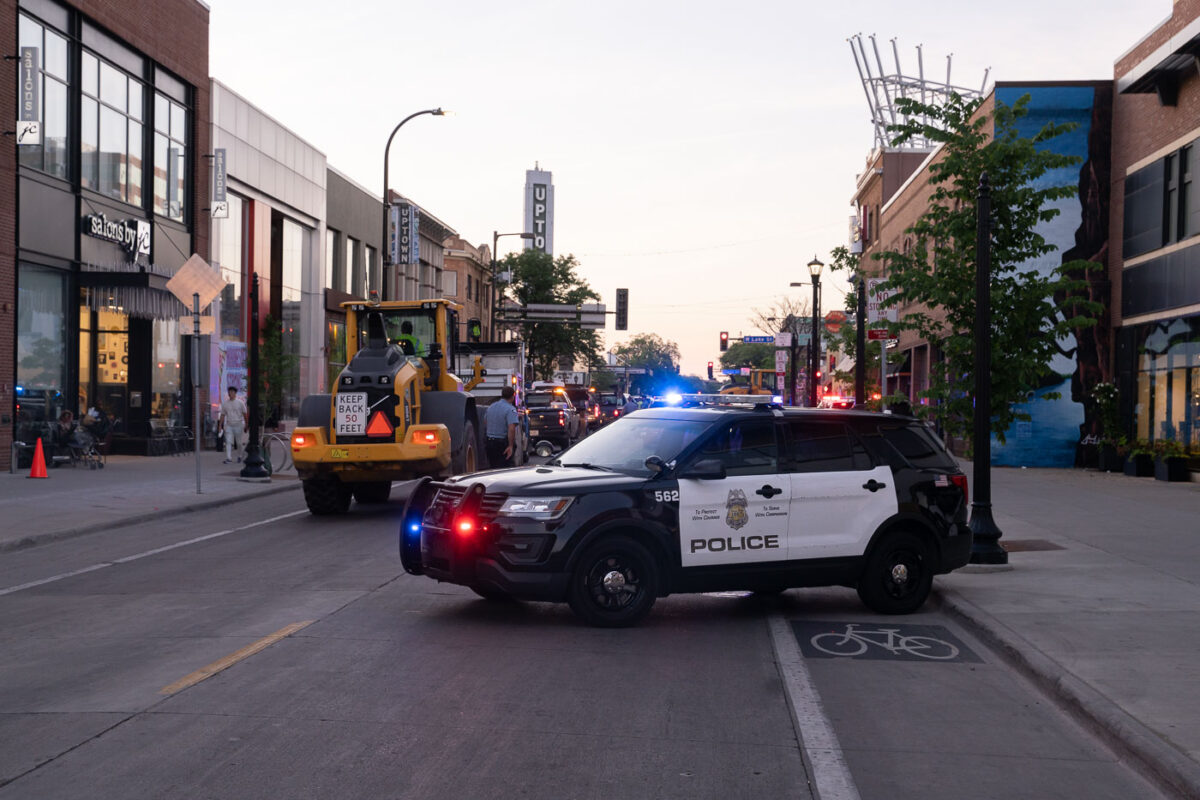
Police SUV and loader block Hennepin Avenue in Minneapolis as crews clear barricades.
Minneapolis Public Works and Police cleared barricades from Hennepin Avenue on June 23, 2021. The barricades had been erected by protesters following the law enforcement shooting death of Winston Smith on June 3, 2021. The clearing operation involved a front-end loader and police vehicles, indicating a significant effort to reopen the street. On June 3, 2021, members of a U.S. Marshals Service fugitive task force fatally shot 32-year-old Winston “Boogie” Smith Jr. on the top level of a parking ramp in Minneapolis’ Uptown neighborhood while attempting to arrest him on a felony warrant. Authorities said Smith fired a handgun from inside his vehicle during the encounter, while family members and activists questioned the official account and demanded the release of additional evidence. The killing led to weeks of protests, street occupations, and confrontations with police in Uptown, becoming another major flashpoint in Minneapolis during the period following the murder of George Floyd. Earlier in the day Minneapolis city officials along with The Agape Movement coordinated to open the streets that had been closed at George Floyd Square since his murder. On June 13, 2021, 31-year-old Deona Marie Knajdek was killed when a driver accelerated into a group of demonstrators gathered in Minneapolis’ Uptown neighborhood during ongoing protests over the killing of Winston “Boogie” Smith Jr. Protesters had blocked the intersection of West Lake Street and Girard Avenue with vehicles and barricades when Nicholas Kraus drove a Jeep Cherokee into the crowd at high speed, killing Knajdek and injuring several others. Kraus was later charged with second-degree murder, two counts of second-degree assault with a dangerous weapon, and criminal vehicular operation. In 2023, he pleaded guilty to murder and assault charges and was sentenced to more than 20 years in prison for the attack.

Minneapolis Public Works and Police Clear Hennepin Ave Barricades
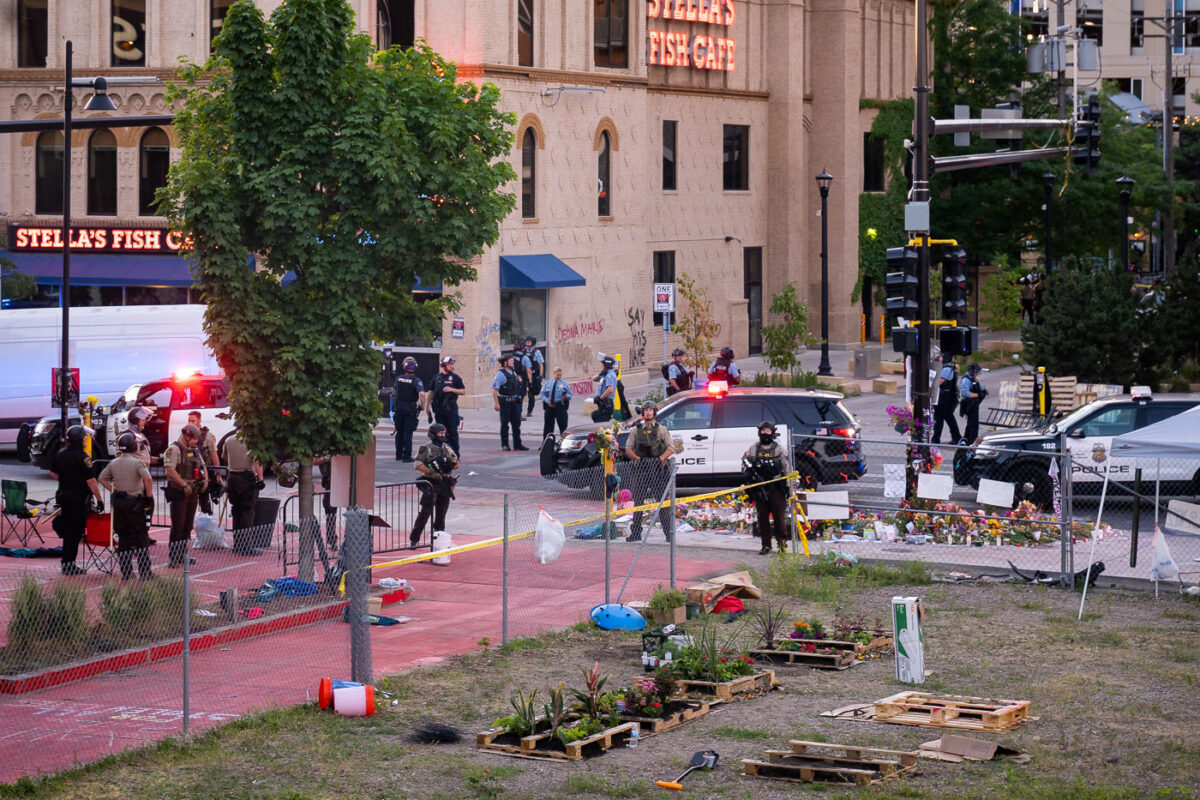
Police clear a memorial garden on Lake Street in Minneapolis near Stella’s Fish Cafe.
Law enforcement officers are present at a memorial garden on Lake Street in Minneapolis, established following the killing of Winston Smith on June 3rd by officers serving a warrant as part of a Federal Task Force. The memorial also honors Deona Marie, who was killed on June 13th when a driver struck protesters. On June 3, 2021, members of a U.S. Marshals Service fugitive task force fatally shot 32-year-old Winston “Boogie” Smith Jr. on the top level of a parking ramp in Minneapolis’ Uptown neighborhood while attempting to arrest him on a felony warrant. Authorities said Smith fired a handgun from inside his vehicle during the encounter, while family members and activists questioned the official account and demanded the release of additional evidence. The killing led to weeks of protests, street occupations, and confrontations with police in Uptown, becoming another major flashpoint in Minneapolis during the period following the murder of George Floyd. Earlier in the day Minneapolis city officials along with The Agape Movement coordinated to open the streets that had been closed at George Floyd Square since his murder. On June 13, 2021, 31-year-old Deona Marie Knajdek was killed when a driver accelerated into a group of demonstrators gathered in Minneapolis’ Uptown neighborhood during ongoing protests over the killing of Winston “Boogie” Smith Jr. Protesters had blocked the intersection of West Lake Street and Girard Avenue with vehicles and barricades when Nicholas Kraus drove a Jeep Cherokee into the crowd at high speed, killing Knajdek and injuring several others. Kraus was later charged with second-degree murder, two counts of second-degree assault with a dangerous weapon, and criminal vehicular operation. In 2023, he pleaded guilty to murder and assault charges and was sentenced to more than 20 years in prison for the attack.

Minneapolis Police Clear Winston Smith Memorial Garden on Lake Street
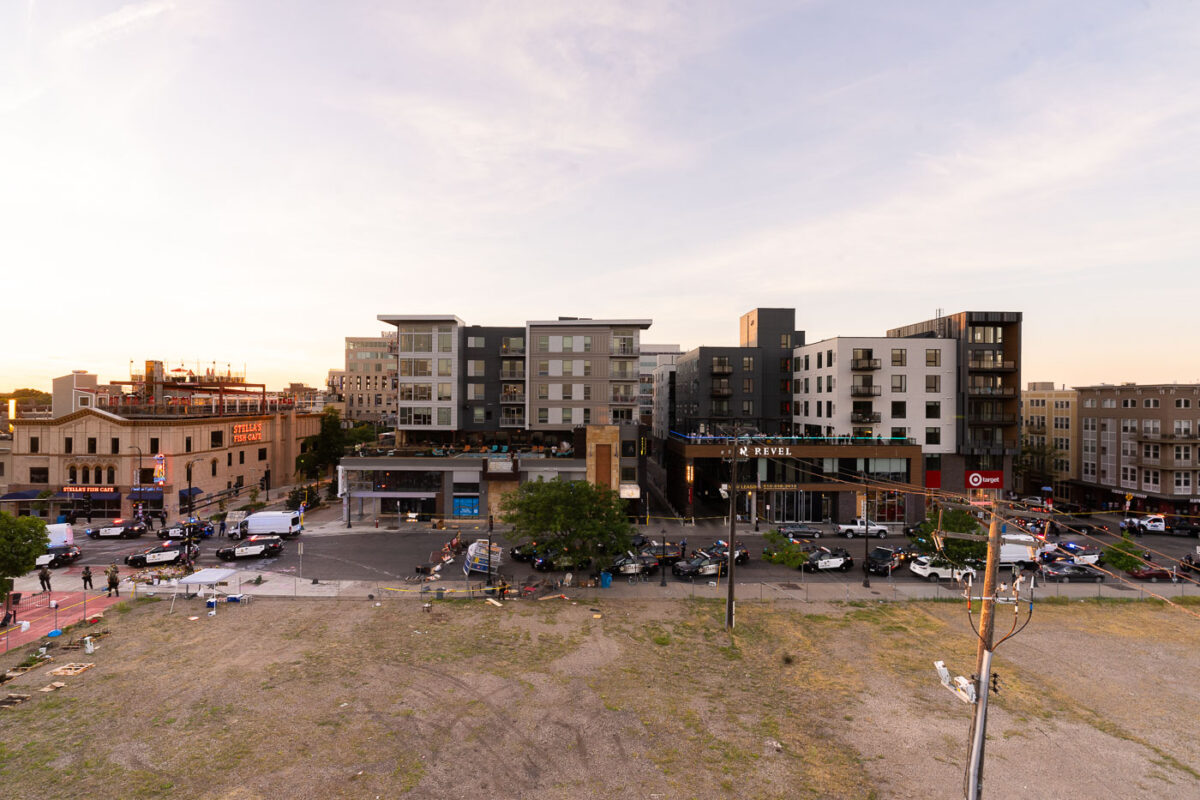
Police cars line Lake Street in Uptown Minneapolis near barricades and memorials at dusk.
Police vehicles are present on Lake Street in Uptown Minneapolis, near the site of protests that followed the killings of Winston Smith and Deona Marie in June 2021. On June 3, 2021, members of a U.S. Marshals Service fugitive task force fatally shot 32-year-old Winston “Boogie” Smith Jr. on the top level of a parking ramp in Minneapolis’ Uptown neighborhood while attempting to arrest him on a felony warrant. Authorities said Smith fired a handgun from inside his vehicle during the encounter, while family members and activists questioned the official account and demanded the release of additional evidence. The killing led to weeks of protests, street occupations, and confrontations with police in Uptown, becoming another major flashpoint in Minneapolis during the period following the murder of George Floyd. Earlier in the day Minneapolis city officials along with The Agape Movement coordinated to open the streets that had been closed at George Floyd Square since his murder. On June 13, 2021, 31-year-old Deona Marie Knajdek was killed when a driver accelerated into a group of demonstrators gathered in Minneapolis’ Uptown neighborhood during ongoing protests over the killing of Winston “Boogie” Smith Jr. Protesters had blocked the intersection of West Lake Street and Girard Avenue with vehicles and barricades when Nicholas Kraus drove a Jeep Cherokee into the crowd at high speed, killing Knajdek and injuring several others. Kraus was later charged with second-degree murder, two counts of second-degree assault with a dangerous weapon, and criminal vehicular operation. In 2023, he pleaded guilty to murder and assault charges and was sentenced to more than 20 years in prison for the attack.

Police presence at Uptown Minneapolis protest zone, Lake Street
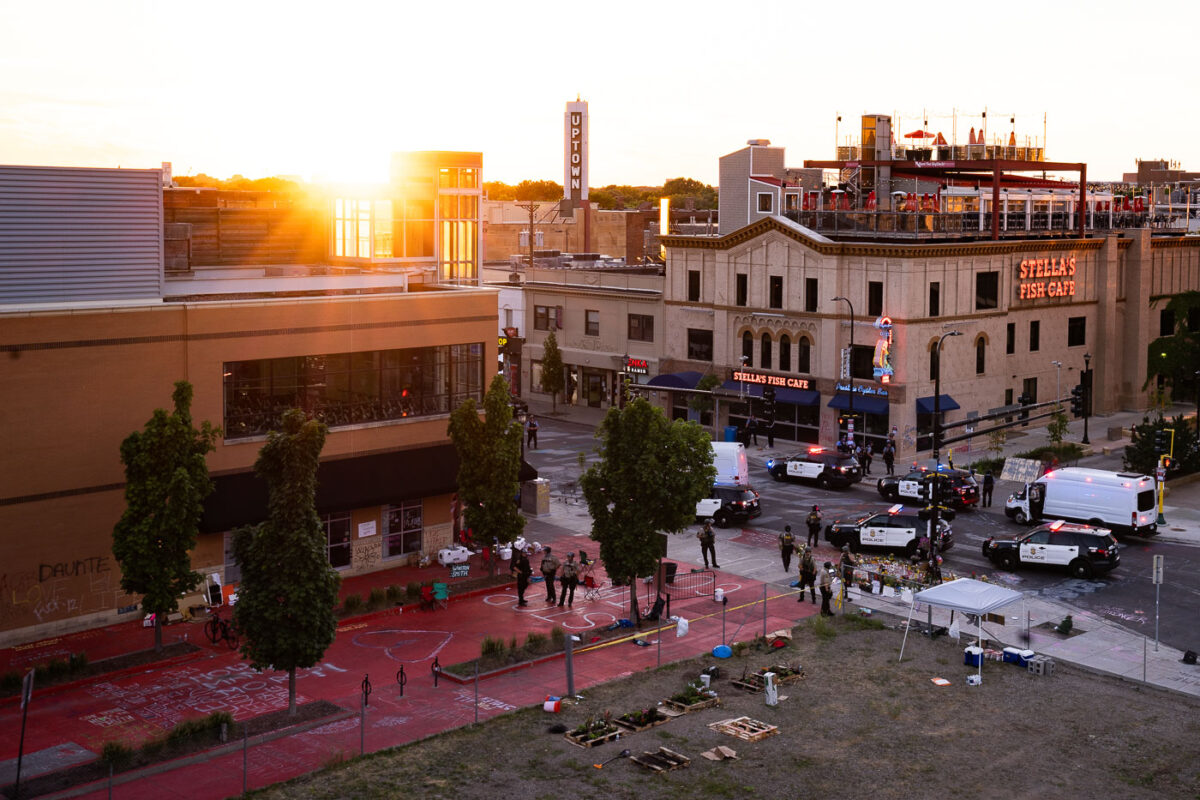
Police clear a memorial site outside Stella's Fish Cafe on Lake Street in Minneapolis at sunset.
Minneapolis Police cleared the Deona Marie Memorial site at sunset on July 10, 2020. Protesters had gathered at the site, located in the Uptown neighborhood, following the killings of Winston Smith on June 3 and Deona Marie on June 13. On June 3, 2021, members of a U.S. Marshals Service fugitive task force fatally shot 32-year-old Winston “Boogie” Smith Jr. on the top level of a parking ramp in Minneapolis’ Uptown neighborhood while attempting to arrest him on a felony warrant. Authorities said Smith fired a handgun from inside his vehicle during the encounter, while family members and activists questioned the official account and demanded the release of additional evidence. The killing led to weeks of protests, street occupations, and confrontations with police in Uptown, becoming another major flashpoint in Minneapolis during the period following the murder of George Floyd. Earlier in the day Minneapolis city officials along with The Agape Movement coordinated to open the streets that had been closed at George Floyd Square since his murder. On June 13, 2021, 31-year-old Deona Marie Knajdek was killed when a driver accelerated into a group of demonstrators gathered in Minneapolis’ Uptown neighborhood during ongoing protests over the killing of Winston “Boogie” Smith Jr. Protesters had blocked the intersection of West Lake Street and Girard Avenue with vehicles and barricades when Nicholas Kraus drove a Jeep Cherokee into the crowd at high speed, killing Knajdek and injuring several others. Kraus was later charged with second-degree murder, two counts of second-degree assault with a dangerous weapon, and criminal vehicular operation. In 2023, he pleaded guilty to murder and assault charges and was sentenced to more than 20 years in prison for the attack.

Minneapolis Police Clear Deona Marie Memorial Site at Sunset
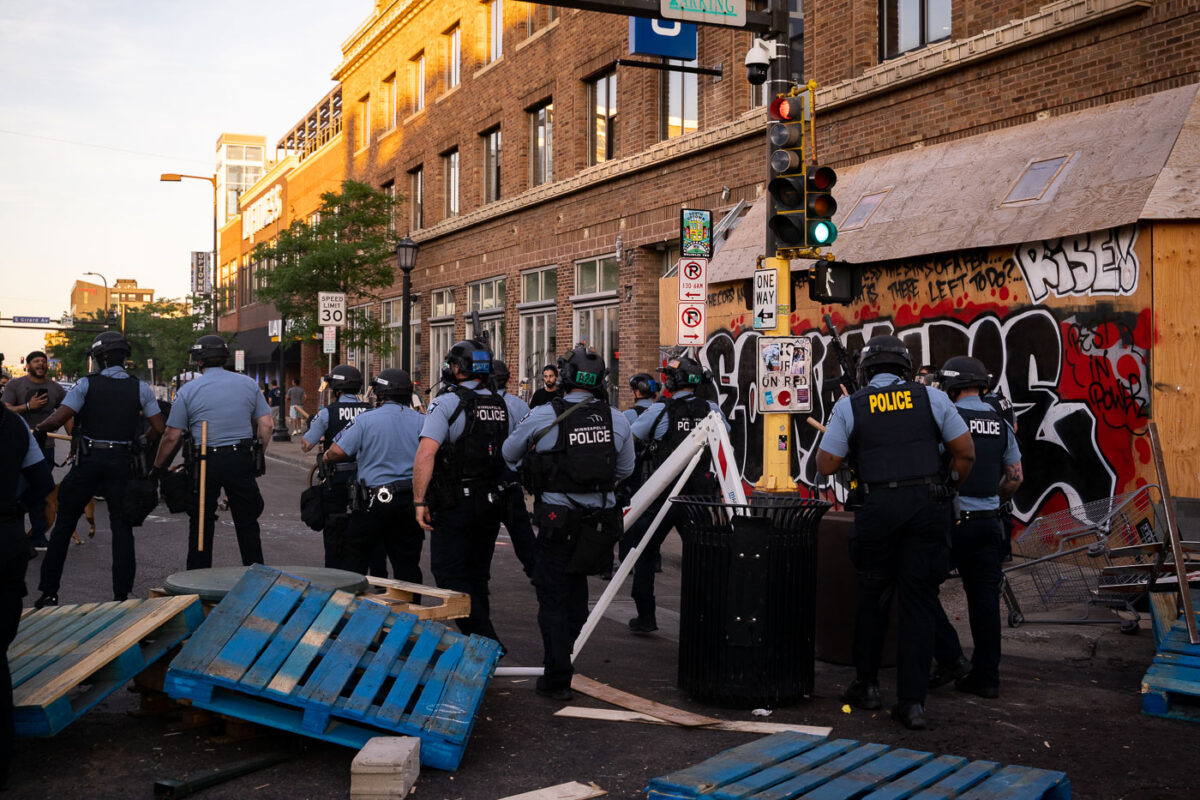
Minneapolis police officers stand by dismantled barricades in Uptown during a protest.
Minneapolis Police officers dismantle barricades in the Uptown neighborhood on July 14, 2021. The dismantling occurred during protests following the deaths of Winston Smith on June 3 and Deona Marie on June 13. On June 3, 2021, members of a U.S. Marshals Service fugitive task force fatally shot 32-year-old Winston “Boogie” Smith Jr. on the top level of a parking ramp in Minneapolis’ Uptown neighborhood while attempting to arrest him on a felony warrant. Authorities said Smith fired a handgun from inside his vehicle during the encounter, while family members and activists questioned the official account and demanded the release of additional evidence. The killing led to weeks of protests, street occupations, and confrontations with police in Uptown, becoming another major flashpoint in Minneapolis during the period following the murder of George Floyd. Earlier in the day Minneapolis city officials along with The Agape Movement coordinated to open the streets that had been closed at George Floyd Square since his murder. On June 13, 2021, 31-year-old Deona Marie Knajdek was killed when a driver accelerated into a group of demonstrators gathered in Minneapolis’ Uptown neighborhood during ongoing protests over the killing of Winston “Boogie” Smith Jr. Protesters had blocked the intersection of West Lake Street and Girard Avenue with vehicles and barricades when Nicholas Kraus drove a Jeep Cherokee into the crowd at high speed, killing Knajdek and injuring several others. Kraus was later charged with second-degree murder, two counts of second-degree assault with a dangerous weapon, and criminal vehicular operation. In 2023, he pleaded guilty to murder and assault charges and was sentenced to more than 20 years in prison for the attack.

Minneapolis Police clear protest barricades in Uptown
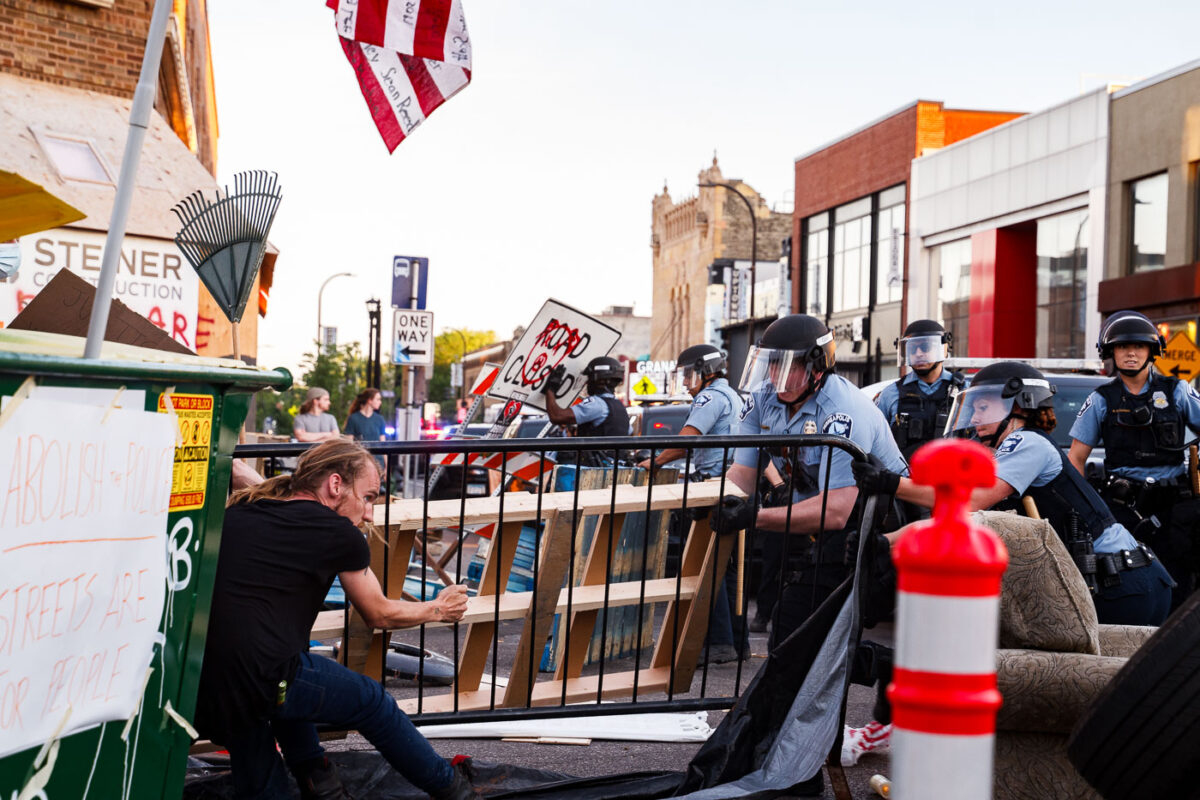
Minneapolis police clear barricades on Lake Street during protests.
Minneapolis Police officers clear street barricades at the intersection of Lake Street and Hennepin Avenue on June 15, 2021. Protesters had closed of the streets protesting the killings of Winston Smith and Deona Marie. On June 3, 2021, members of a U.S. Marshals Service fugitive task force fatally shot 32-year-old Winston “Boogie” Smith Jr. on the top level of a parking ramp in Minneapolis’ Uptown neighborhood while attempting to arrest him on a felony warrant. Authorities said Smith fired a handgun from inside his vehicle during the encounter, while family members and activists questioned the official account and demanded the release of additional evidence. The killing led to weeks of protests, street occupations, and confrontations with police in Uptown, becoming another major flashpoint in Minneapolis during the period following the murder of George Floyd. Earlier in the day Minneapolis city officials along with The Agape Movement coordinated to open the streets that had been closed at George Floyd Square since his murder. On June 13, 2021, 31-year-old Deona Marie Knajdek was killed when a driver accelerated into a group of demonstrators gathered in Minneapolis’ Uptown neighborhood during ongoing protests over the killing of Winston “Boogie” Smith Jr. Protesters had blocked the intersection of West Lake Street and Girard Avenue with vehicles and barricades when Nicholas Kraus drove a Jeep Cherokee into the crowd at high speed, killing Knajdek and injuring several others. Kraus was later charged with second-degree murder, two counts of second-degree assault with a dangerous weapon, and criminal vehicular operation. In 2023, he pleaded guilty to murder and assault charges and was sentenced to more than 20 years in prison for the attack.

Minneapolis Police Clear Barricades Amidst Winston Smith Protests
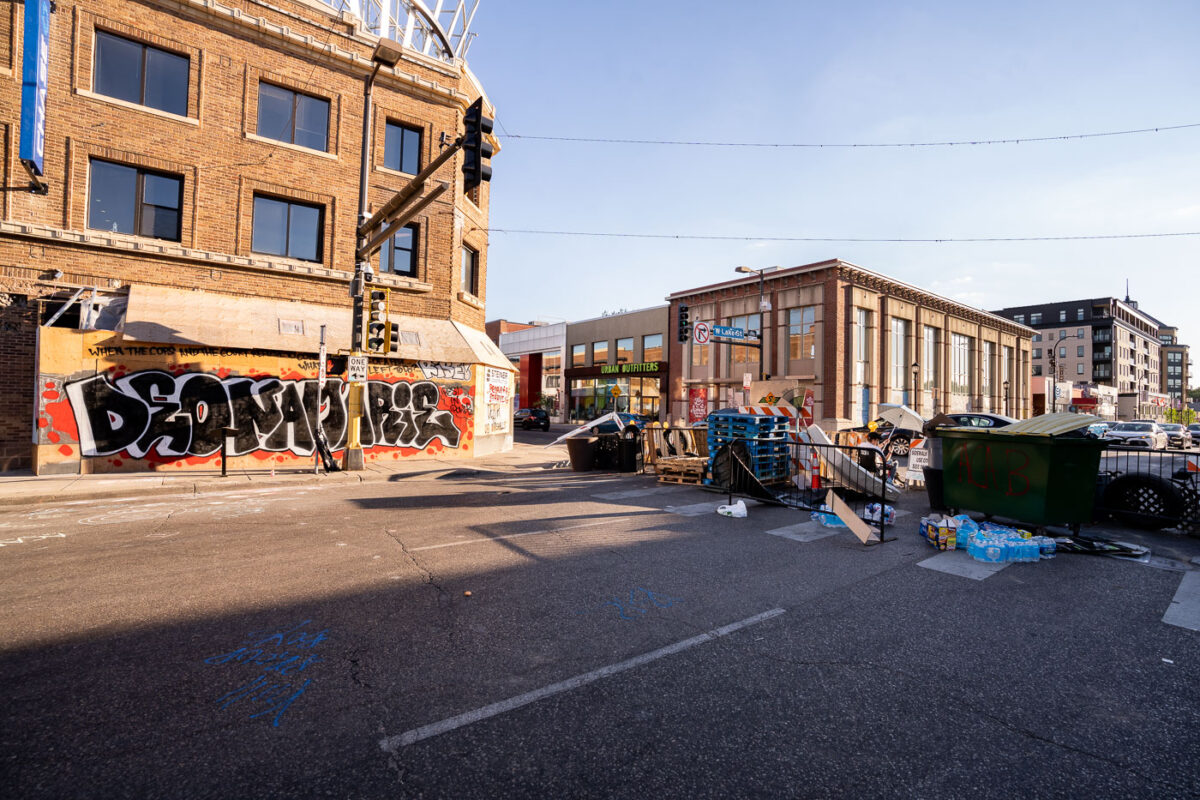
Graffiti-covered barricades at Hennepin Avenue and Lake Street in Minneapolis.
Street barricades are visible at the intersection of Hennepin Avenue and Lake Street in Minneapolis on June 15, 2021. These barricades were erected following significant unrest in the area following the killing of Winston Smith. On June 3, 2021, members of a U.S. Marshals Service fugitive task force fatally shot 32-year-old Winston “Boogie” Smith Jr. on the top level of a parking ramp in Minneapolis’ Uptown neighborhood while attempting to arrest him on a felony warrant. Authorities said Smith fired a handgun from inside his vehicle during the encounter, while family members and activists questioned the official account and demanded the release of additional evidence. The killing led to weeks of protests, street occupations, and confrontations with police in Uptown, becoming another major flashpoint in Minneapolis during the period following the murder of George Floyd. Earlier in the day Minneapolis city officials along with The Agape Movement coordinated to open the streets that had been closed at George Floyd Square since his murder. On June 13, 2021, 31-year-old Deona Marie Knajdek was killed when a driver accelerated into a group of demonstrators gathered in Minneapolis’ Uptown neighborhood during ongoing protests over the killing of Winston “Boogie” Smith Jr. Protesters had blocked the intersection of West Lake Street and Girard Avenue with vehicles and barricades when Nicholas Kraus drove a Jeep Cherokee into the crowd at high speed, killing Knajdek and injuring several others. Kraus was later charged with second-degree murder, two counts of second-degree assault with a dangerous weapon, and criminal vehicular operation. In 2023, he pleaded guilty to murder and assault charges and was sentenced to more than 20 years in prison for the attack.

Street Barricades at Hennepin Ave & Lake St, Minneapolis
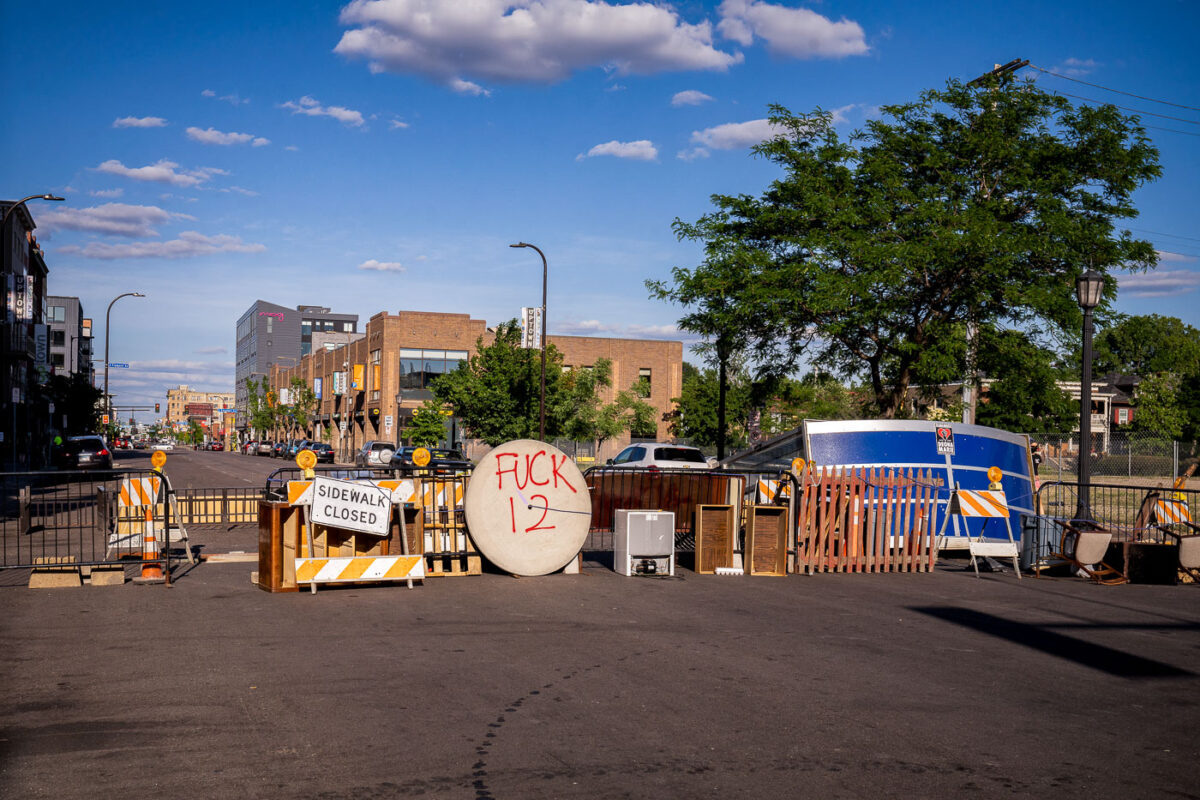
Barricades block Lake Street in Uptown Minneapolis, including a sign reading “FUCK 12.”
Barricades line Lake Street in Uptown Minneapolis, June 2020, during the protests following the murder of George Floyd. The barricades, some bearing messages like "FUCK 12," were erected by protesters to block off streets and create autonomous zones. Nearby, memorials for Winston Smith and Deona Marie Knajdek, both killed by law enforcement in early June 2020, were visible. On June 3, 2021, members of a U.S. Marshals Service fugitive task force fatally shot 32-year-old Winston “Boogie” Smith Jr. on the top level of a parking ramp in Minneapolis’ Uptown neighborhood while attempting to arrest him on a felony warrant. Authorities said Smith fired a handgun from inside his vehicle during the encounter, while family members and activists questioned the official account and demanded the release of additional evidence. The killing led to weeks of protests, street occupations, and confrontations with police in Uptown, becoming another major flashpoint in Minneapolis during the period following the murder of George Floyd. Earlier in the day Minneapolis city officials along with The Agape Movement coordinated to open the streets that had been closed at George Floyd Square since his murder. On June 13, 2021, 31-year-old Deona Marie Knajdek was killed when a driver accelerated into a group of demonstrators gathered in Minneapolis’ Uptown neighborhood during ongoing protests over the killing of Winston “Boogie” Smith Jr. Protesters had blocked the intersection of West Lake Street and Girard Avenue with vehicles and barricades when Nicholas Kraus drove a Jeep Cherokee into the crowd at high speed, killing Knajdek and injuring several others. Kraus was later charged with second-degree murder, two counts of second-degree assault with a dangerous weapon, and criminal vehicular operation. In 2023, he pleaded guilty to murder and assault charges and was sentenced to more than 20 years in prison for the attack.

Lake Street Barricades, Uptown Minneapolis, June 2020
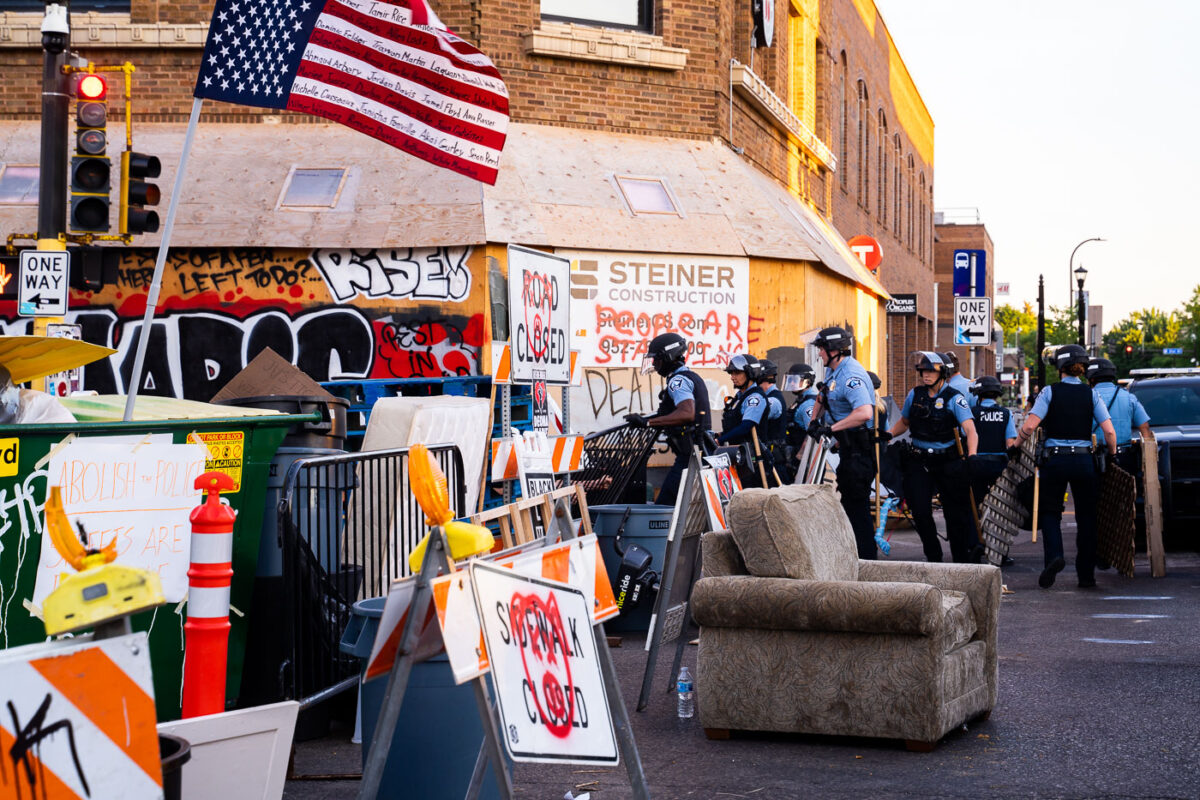
Police clear barricades on Lake Street in Minneapolis beside a boarded-up storefront and protest signs.
Minneapolis Police officers clear barricades on Lake Street on June 15, 2021. The barricades were erected in the aftermath of protests and unrest following the deaths of Winston Smith and Deona Marie. On June 3, 2021, members of a U.S. Marshals Service fugitive task force fatally shot 32-year-old Winston “Boogie” Smith Jr. on the top level of a parking ramp in Minneapolis’ Uptown neighborhood while attempting to arrest him on a felony warrant. Authorities said Smith fired a handgun from inside his vehicle during the encounter, while family members and activists questioned the official account and demanded the release of additional evidence. The killing led to weeks of protests, street occupations, and confrontations with police in Uptown, becoming another major flashpoint in Minneapolis during the period following the murder of George Floyd. Earlier in the day Minneapolis city officials along with The Agape Movement coordinated to open the streets that had been closed at George Floyd Square since his murder. On June 13, 2021, 31-year-old Deona Marie Knajdek was killed when a driver accelerated into a group of demonstrators gathered in Minneapolis’ Uptown neighborhood during ongoing protests over the killing of Winston “Boogie” Smith Jr. Protesters had blocked the intersection of West Lake Street and Girard Avenue with vehicles and barricades when Nicholas Kraus drove a Jeep Cherokee into the crowd at high speed, killing Knajdek and injuring several others. Kraus was later charged with second-degree murder, two counts of second-degree assault with a dangerous weapon, and criminal vehicular operation. In 2023, he pleaded guilty to murder and assault charges and was sentenced to more than 20 years in prison for the attack.

Police Clear Protest Barricades on Lake Street in Uptown
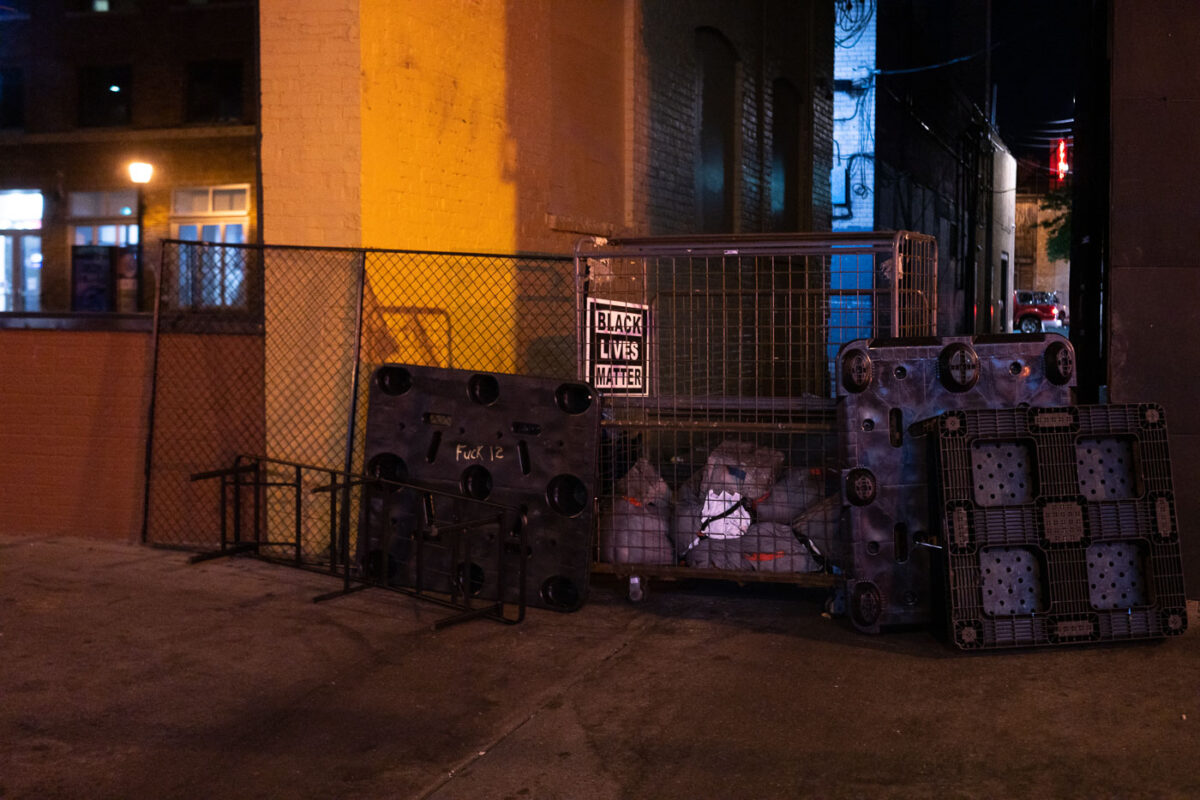
Barricades and a Black Lives Matter sign on Lake Street in Minneapolis at night.
Barricades and a "Black Lives Matter" sign are visible on Lake Street in Minneapolis, a location that became a site of protest following the death of Winston Smith. On June 3, 2021, members of a U.S. Marshals Service fugitive task force fatally shot 32-year-old Winston “Boogie” Smith Jr. on the top level of a parking ramp in Minneapolis’ Uptown neighborhood while attempting to arrest him on a felony warrant. Authorities said Smith fired a handgun from inside his vehicle during the encounter, while family members and activists questioned the official account and demanded the release of additional evidence. The killing led to weeks of protests, street occupations, and confrontations with police in Uptown, becoming another major flashpoint in Minneapolis during the period following the murder of George Floyd. Earlier in the day Minneapolis city officials along with The Agape Movement coordinated to open the streets that had been closed at George Floyd Square since his murder. On June 13, 2021, 31-year-old Deona Marie Knajdek was killed when a driver accelerated into a group of demonstrators gathered in Minneapolis’ Uptown neighborhood during ongoing protests over the killing of Winston “Boogie” Smith Jr. Protesters had blocked the intersection of West Lake Street and Girard Avenue with vehicles and barricades when Nicholas Kraus drove a Jeep Cherokee into the crowd at high speed, killing Knajdek and injuring several others. Kraus was later charged with second-degree murder, two counts of second-degree assault with a dangerous weapon, and criminal vehicular operation. In 2023, he pleaded guilty to murder and assault charges and was sentenced to more than 20 years in prison for the attack.

Barricades and “Black Lives Matter” sign on Lake Street, Minneapolis
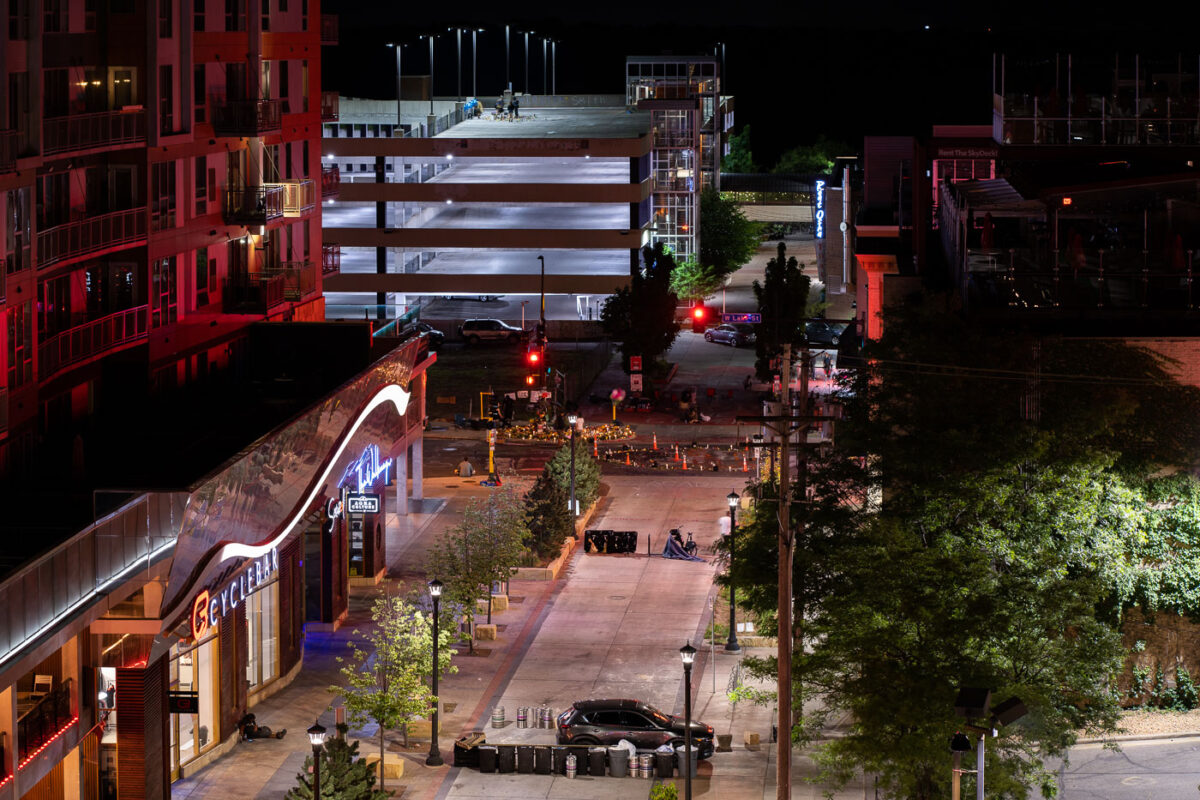
Memorial candles and barricades mark Lake Street and Girard Avenue in Minneapolis at night.
A memorial for Deona Marie is visible at the intersection of Lake Street and Girard Avenue in Minneapolis. Protesters have maintained a presence at this location since the law enforcement shooting death of Winston Smith on June 3, 2021, and the subsequent killing of Deona Marie on June 13, 2021, when Nicholas Kraus drove his vehicle into a crowd of demonstrators. On June 13, 2021, 31-year-old Deona Marie Knajdek was killed when a driver accelerated into a group of demonstrators gathered in Minneapolis’ Uptown neighborhood during ongoing protests over the killing of Winston “Boogie” Smith Jr. Protesters had blocked the intersection of West Lake Street and Girard Avenue with vehicles and barricades when Nicholas Kraus drove a Jeep Cherokee into the crowd at high speed, killing Knajdek and injuring several others. Kraus was later charged with second-degree murder, two counts of second-degree assault with a dangerous weapon, and criminal vehicular operation. In 2023, he pleaded guilty to murder and assault charges and was sentenced to more than 20 years in prison for the attack. On June 3, 2021, members of a U.S. Marshals Service fugitive task force fatally shot 32-year-old Winston “Boogie” Smith Jr. on the top level of a parking ramp in Minneapolis’ Uptown neighborhood while attempting to arrest him on a felony warrant. Authorities said Smith fired a handgun from inside his vehicle during the encounter, while family members and activists questioned the official account and demanded the release of additional evidence. The killing led to weeks of protests, street occupations, and confrontations with police in Uptown, becoming another major flashpoint in Minneapolis during the period following the murder of George Floyd. Earlier in the day Minneapolis city officials along with The Agape Movement coordinated to open the streets that had been closed at George Floyd Square since his murder.

Minneapolis Protest Site: Lake St & Girard Ave Night
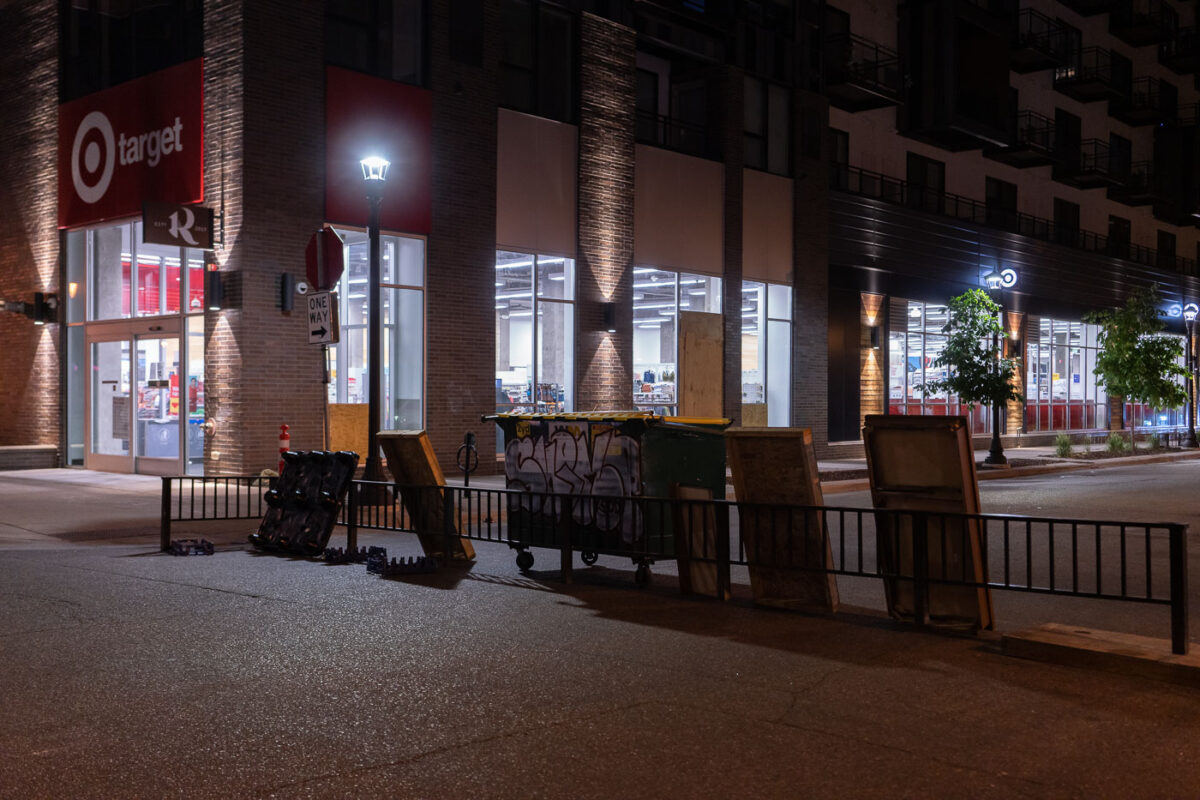
Barricades block a Target store on Lake Street in Minneapolis at night.
Barricades are placed in front of a Target store on Lake Street in Minneapolis. Protesters established these barricades to "hold space" following the death of Winston Smith on June 3rd. On June 3, 2021, members of a U.S. Marshals Service fugitive task force fatally shot 32-year-old Winston “Boogie” Smith Jr. on the top level of a parking ramp in Minneapolis’ Uptown neighborhood while attempting to arrest him on a felony warrant. Authorities said Smith fired a handgun from inside his vehicle during the encounter, while family members and activists questioned the official account and demanded the release of additional evidence. The killing led to weeks of protests, street occupations, and confrontations with police in Uptown, becoming another major flashpoint in Minneapolis during the period following the murder of George Floyd. Earlier in the day Minneapolis city officials along with The Agape Movement coordinated to open the streets that had been closed at George Floyd Square since his murder.

Barricades at Target on Lake Street, Minneapolis
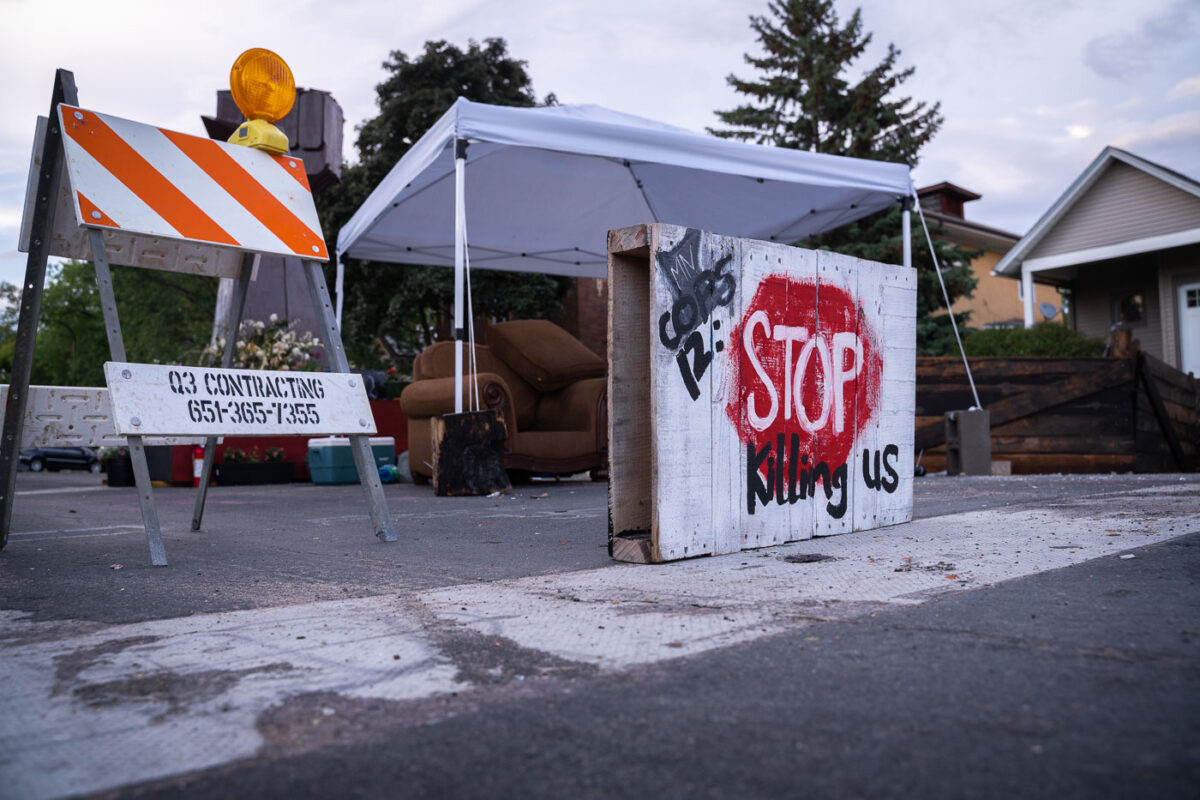
Barricade with "Stop Killing Us" sign at George Floyd Square in Minneapolis.
Barricades, including a hand-painted sign reading "STOP Killing Us," have been erected at George Floyd Square in Minneapolis. These barriers appeared after the city cleared earlier barricades on June 3rd, following the murder of George Floyd. On May 25, 2020, Minneapolis police officer Derek Chauvin murdered 46-year-old George Floyd during an arrest outside Cup Foods at the intersection of 38th Street and Chicago Avenue in south Minneapolis. Video recorded by bystanders showed Chauvin kneeling on Floyd’s neck for more than nine minutes while Floyd repeatedly said he could not breathe. Three other Minneapolis police officers - J. Alexander Kueng, Thomas Lane, and Tou Thao — were also present during the arrest and later faced criminal charges for their roles in Floyd’s death. Floyd’s murder sparked protests and civil unrest across Minneapolis and around the world, leading to widespread demonstrations against police violence, major policy debates on policing, and the conviction of Chauvin on murder and manslaughter charges in 2021.

George Floyd Square Barricade: Stop Killing Us
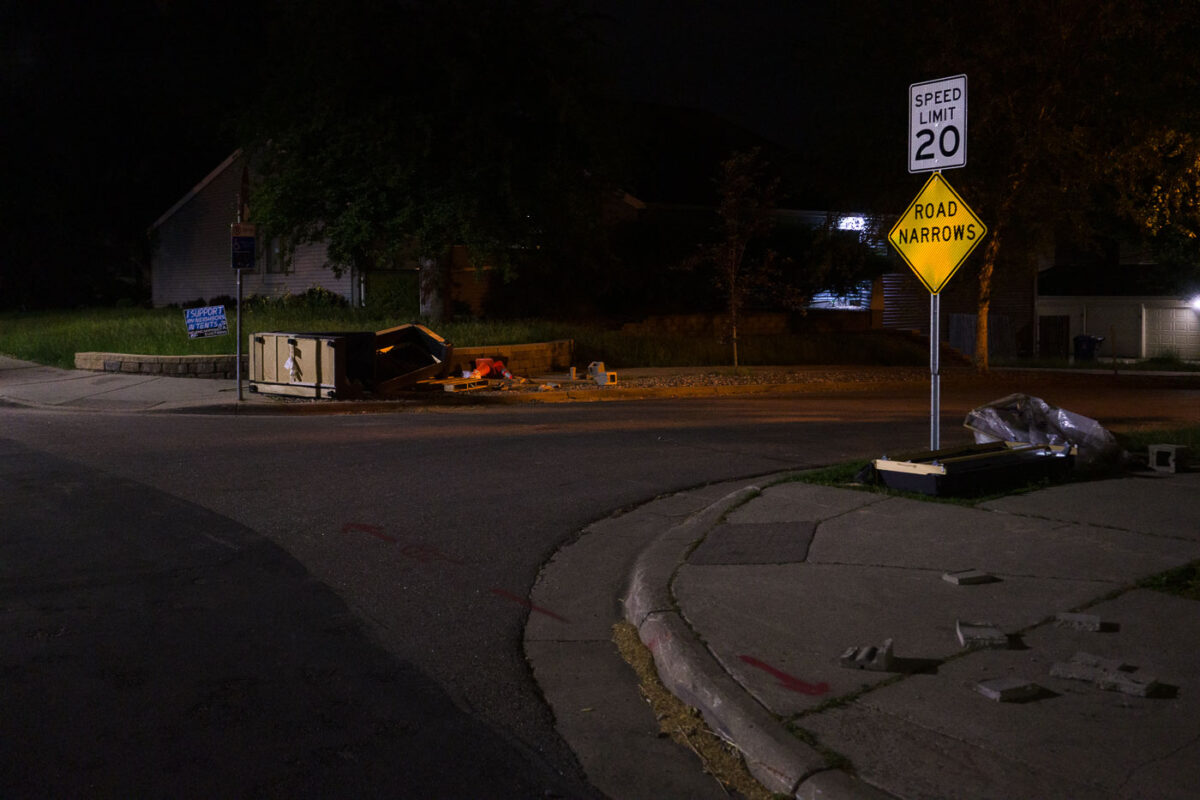
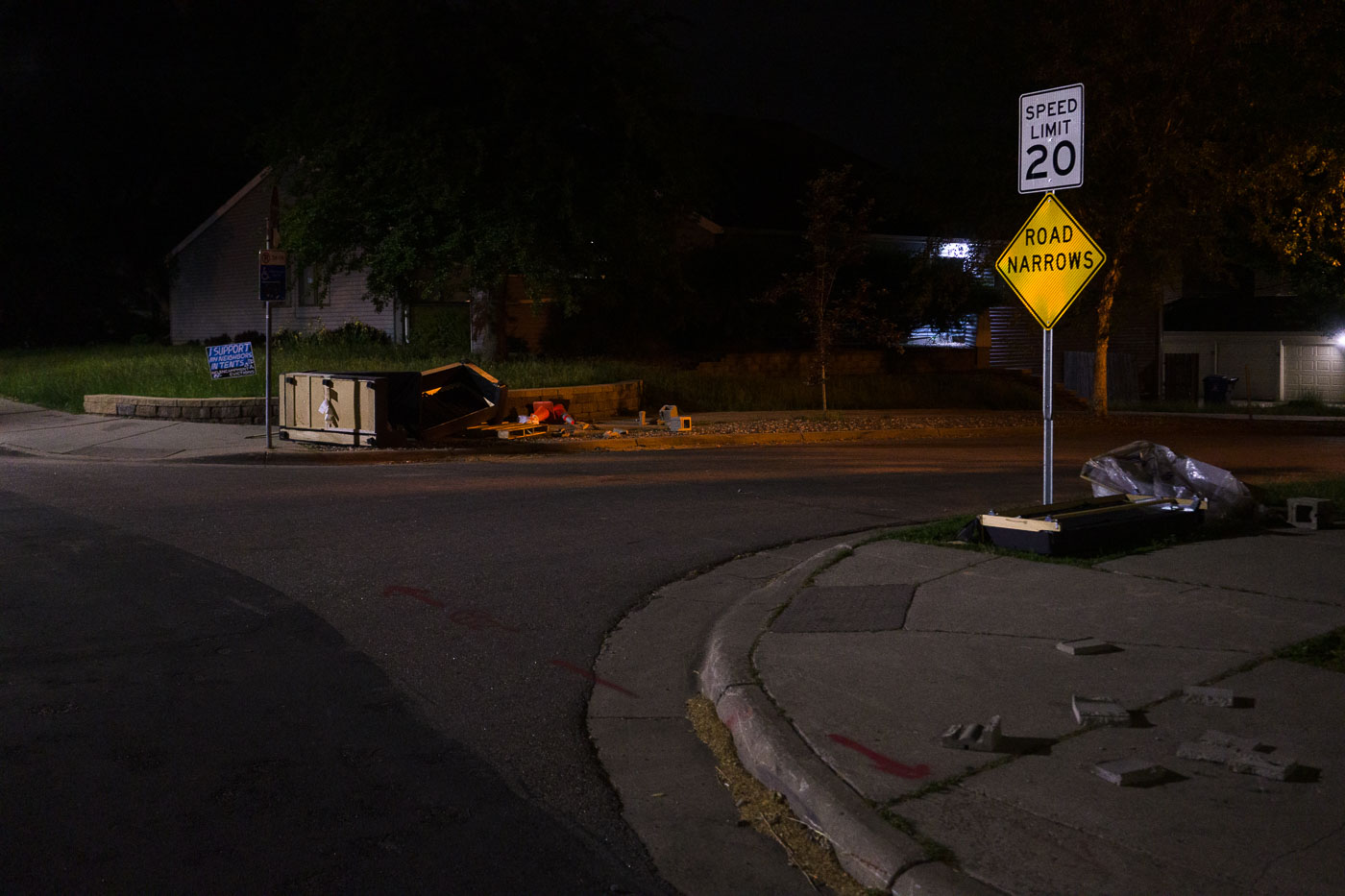
Debris and road signs at George Floyd Square in Minneapolis at night after barricades were removed.
Debris litters the intersection of East 37th Street and Chicago Avenue in Minneapolis, known as George Floyd Square. The city had recently removed concrete barricades that had been in place for over a year, reopening the street to vehicular traffic. The square became a focal point for protests and community organizing following the murder of George Floyd in May 2020. A sign visible in the background reads "I SUPPORT MY NEIGHBORS IN TENTS. NO ENCAMPMENT. NO EVICTIONS." On May 25, 2020, Minneapolis police officer Derek Chauvin murdered 46-year-old George Floyd during an arrest outside Cup Foods at the intersection of 38th Street and Chicago Avenue in south Minneapolis. Video recorded by bystanders showed Chauvin kneeling on Floyd’s neck for more than nine minutes while Floyd repeatedly said he could not breathe. Three other Minneapolis police officers - J. Alexander Kueng, Thomas Lane, and Tou Thao — were also present during the arrest and later faced criminal charges for their roles in Floyd’s death. Floyd’s murder sparked protests and civil unrest across Minneapolis and around the world, leading to widespread demonstrations against police violence, major policy debates on policing, and the conviction of Chauvin on murder and manslaughter charges in 2021.

George Floyd Square: Barricades Removed, Debris Remains
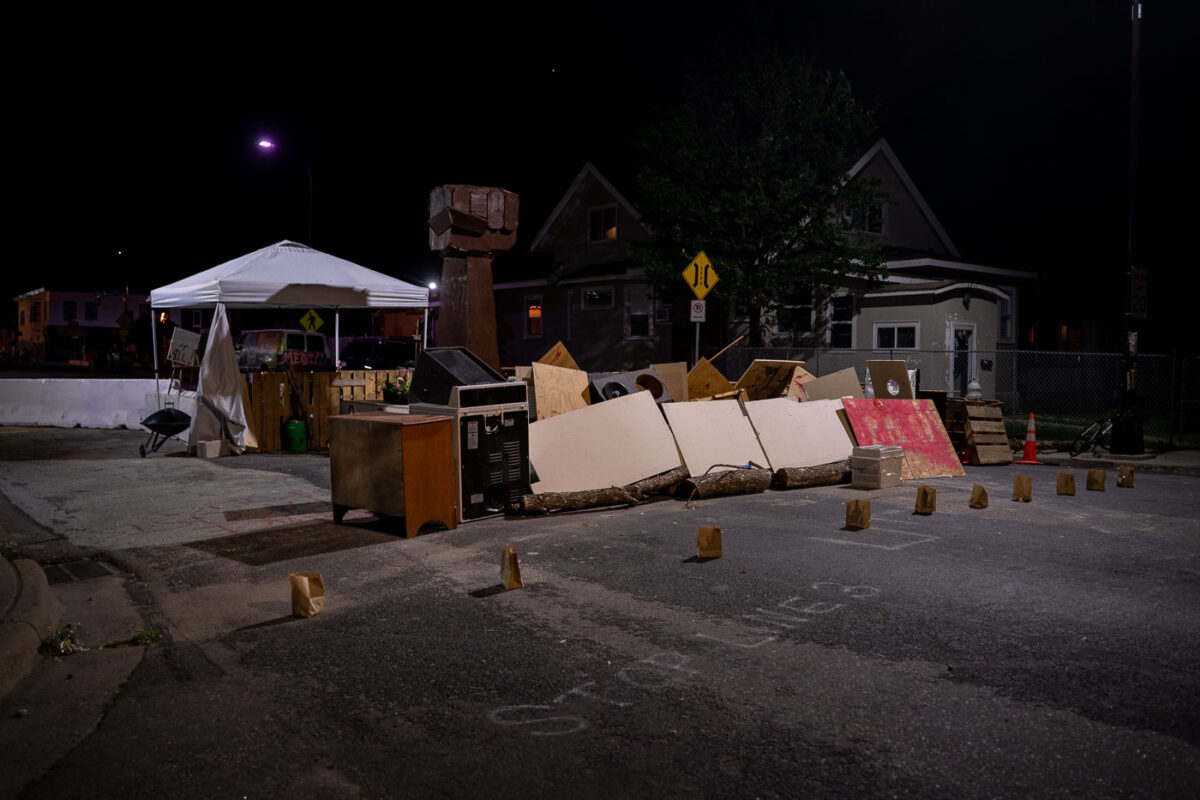
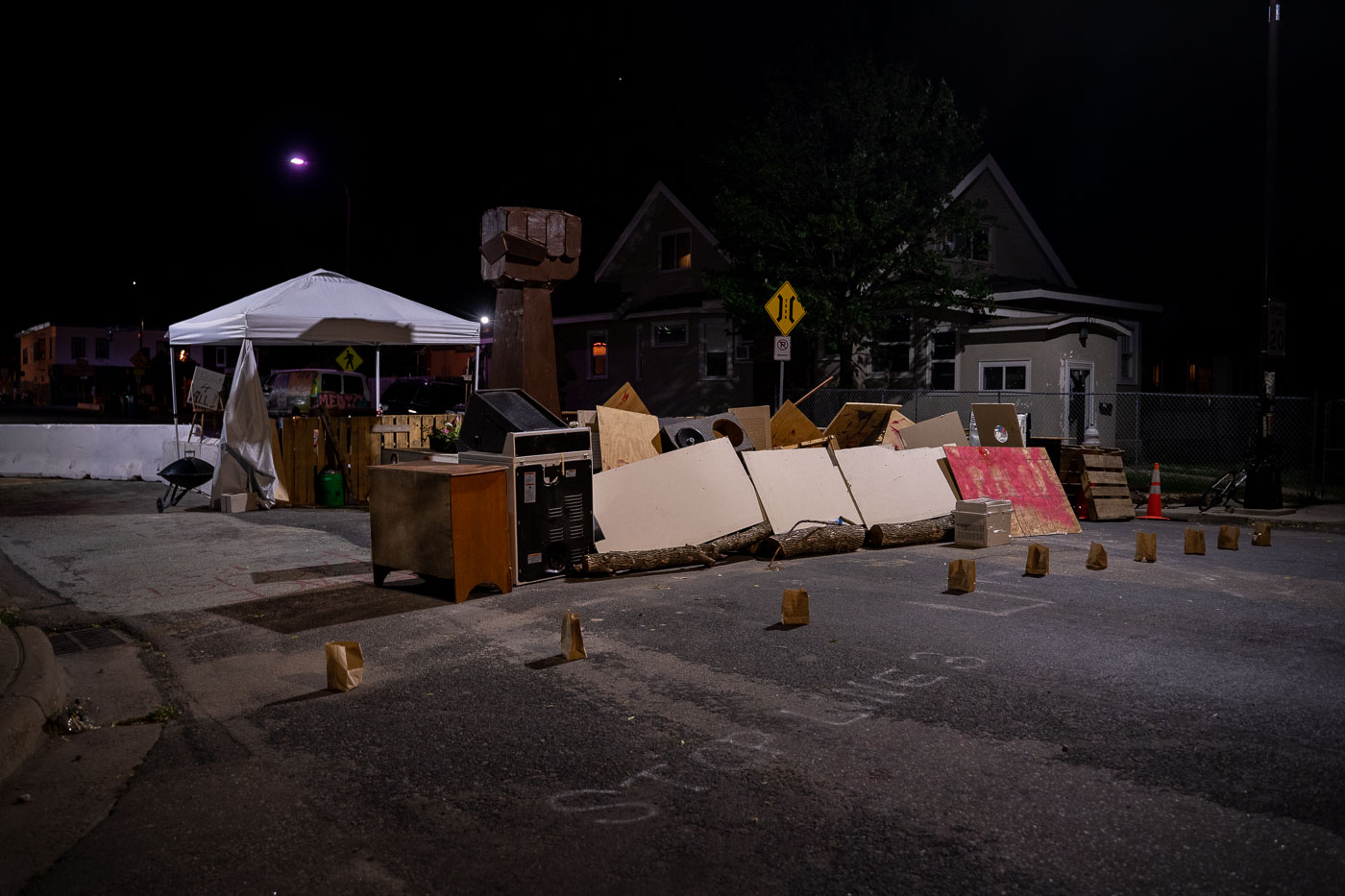
Barricades and a tent at George Floyd Square in Minneapolis at night.
Street barricades constructed from salvaged materials at the perimeter of George Floyd Square in South Minneapolis. The square, established in the wake of George Floyd's murder in May 2020, became a site of protest and community organizing. These barricades were erected after city officials removed earlier barriers, an attempt to reclaim the space for vehicular traffic that was met with renewed community resistance. On May 25, 2020, Minneapolis police officer Derek Chauvin murdered 46-year-old George Floyd during an arrest outside Cup Foods at the intersection of 38th Street and Chicago Avenue in south Minneapolis. Video recorded by bystanders showed Chauvin kneeling on Floyd’s neck for more than nine minutes while Floyd repeatedly said he could not breathe. Three other Minneapolis police officers - J. Alexander Kueng, Thomas Lane, and Tou Thao — were also present during the arrest and later faced criminal charges for their roles in Floyd’s death. Floyd’s murder sparked protests and civil unrest across Minneapolis and around the world, leading to widespread demonstrations against police violence, major policy debates on policing, and the conviction of Chauvin on murder and manslaughter charges in 2021.

George Floyd Square Barricades, South Minneapolis
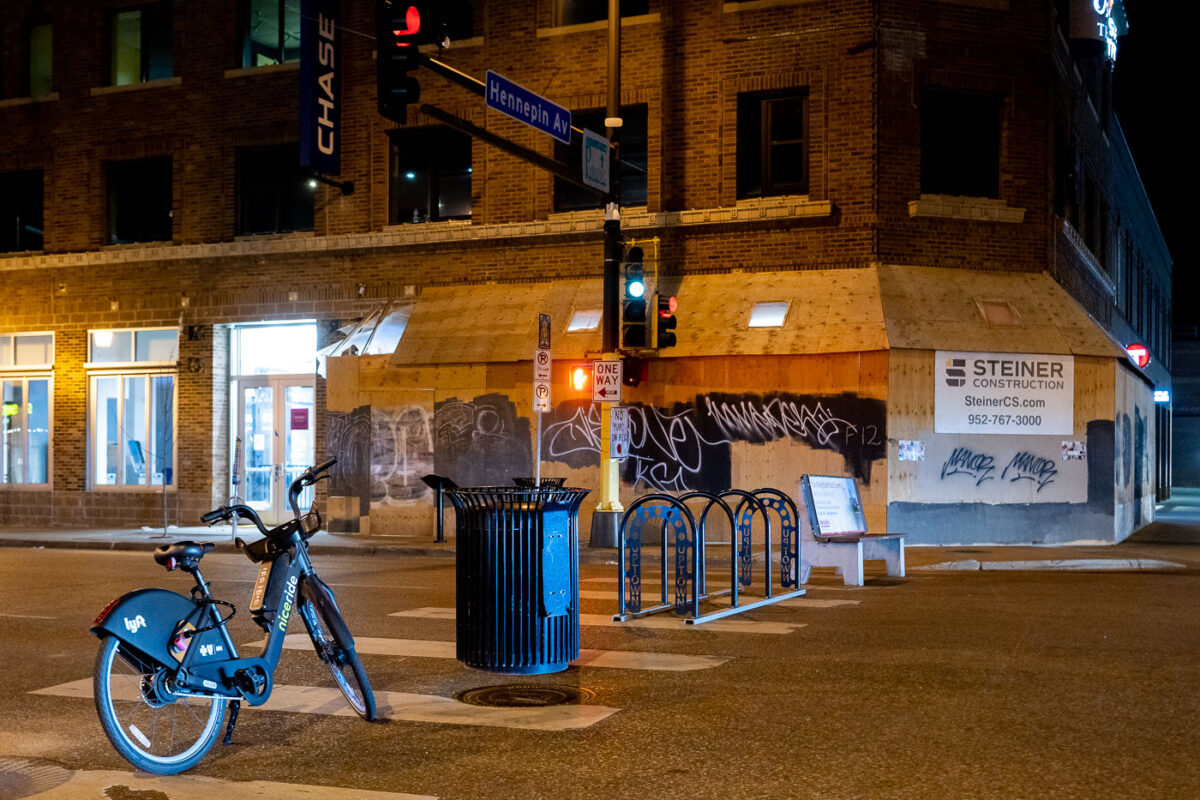
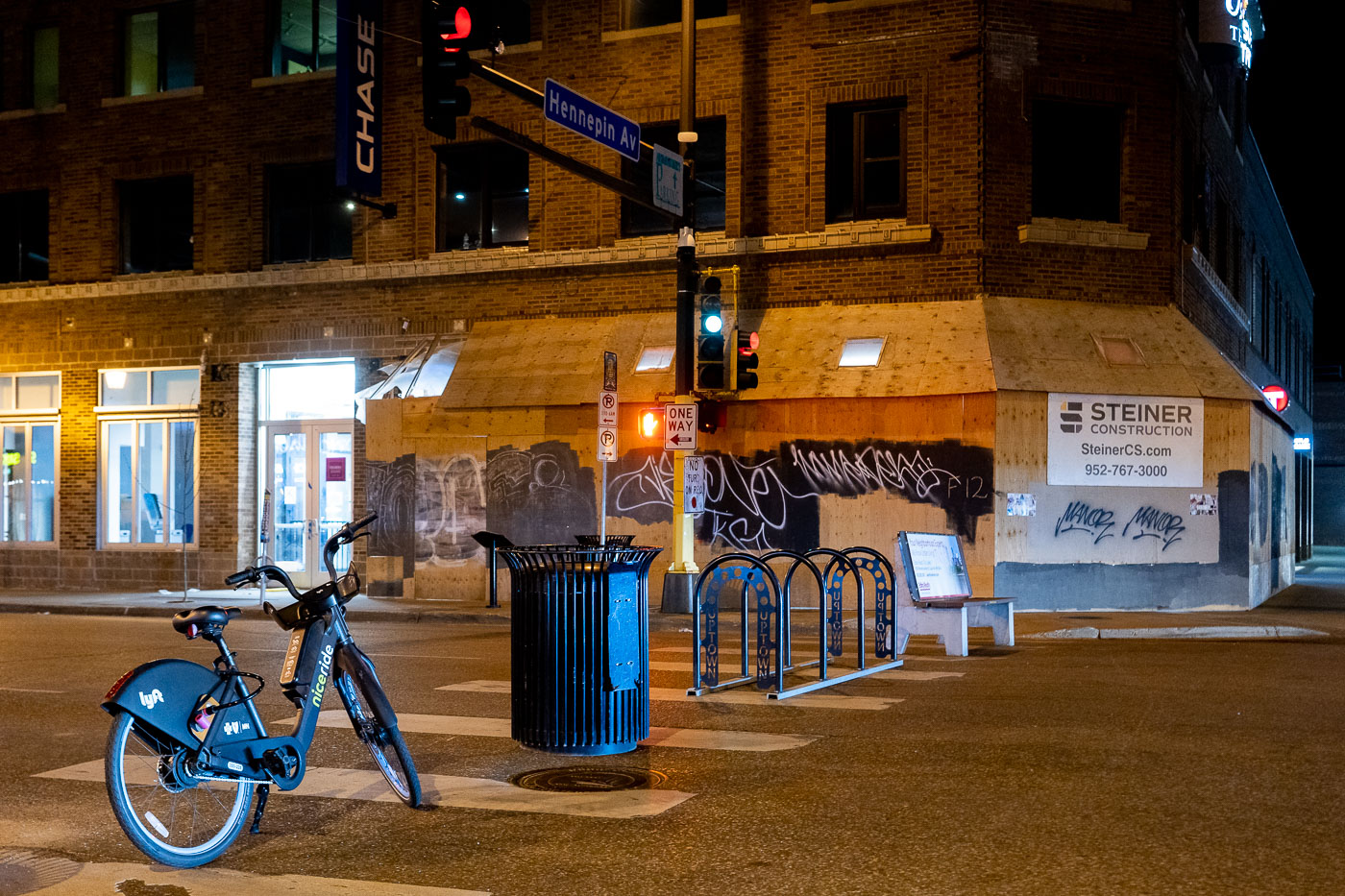
Makeshift barricades and a rental bike at Hennepin Avenue and Lake Street in Minneapolis at night
Makeshift barricades, including a bicycle, garbage can, and bike rack, were placed on Lake Street at Hennepin Avenue in Minneapolis. These barriers were erected during continuing protests following the law enforcement shooting death of Winston Smith on June 3rd. On June 3, 2021, members of a U.S. Marshals Service fugitive task force fatally shot 32-year-old Winston “Boogie” Smith Jr. on the top level of a parking ramp in Minneapolis’ Uptown neighborhood while attempting to arrest him on a felony warrant. Authorities said Smith fired a handgun from inside his vehicle during the encounter, while family members and activists questioned the official account and demanded the release of additional evidence. The killing led to weeks of protests, street occupations, and confrontations with police in Uptown, becoming another major flashpoint in Minneapolis during the period following the murder of George Floyd. Earlier in the day Minneapolis city officials along with The Agape Movement coordinated to open the streets that had been closed at George Floyd Square since his murder.

Makeshift Barricades on Lake Street, Minneapolis
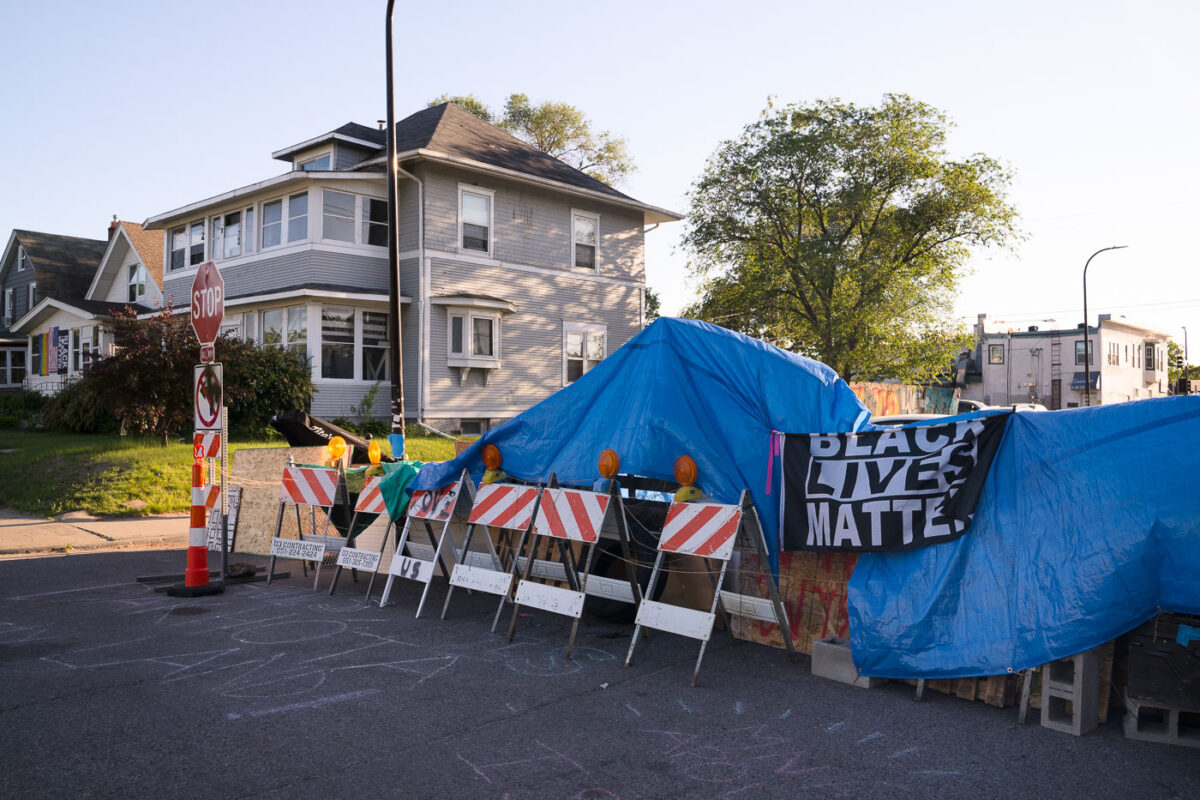
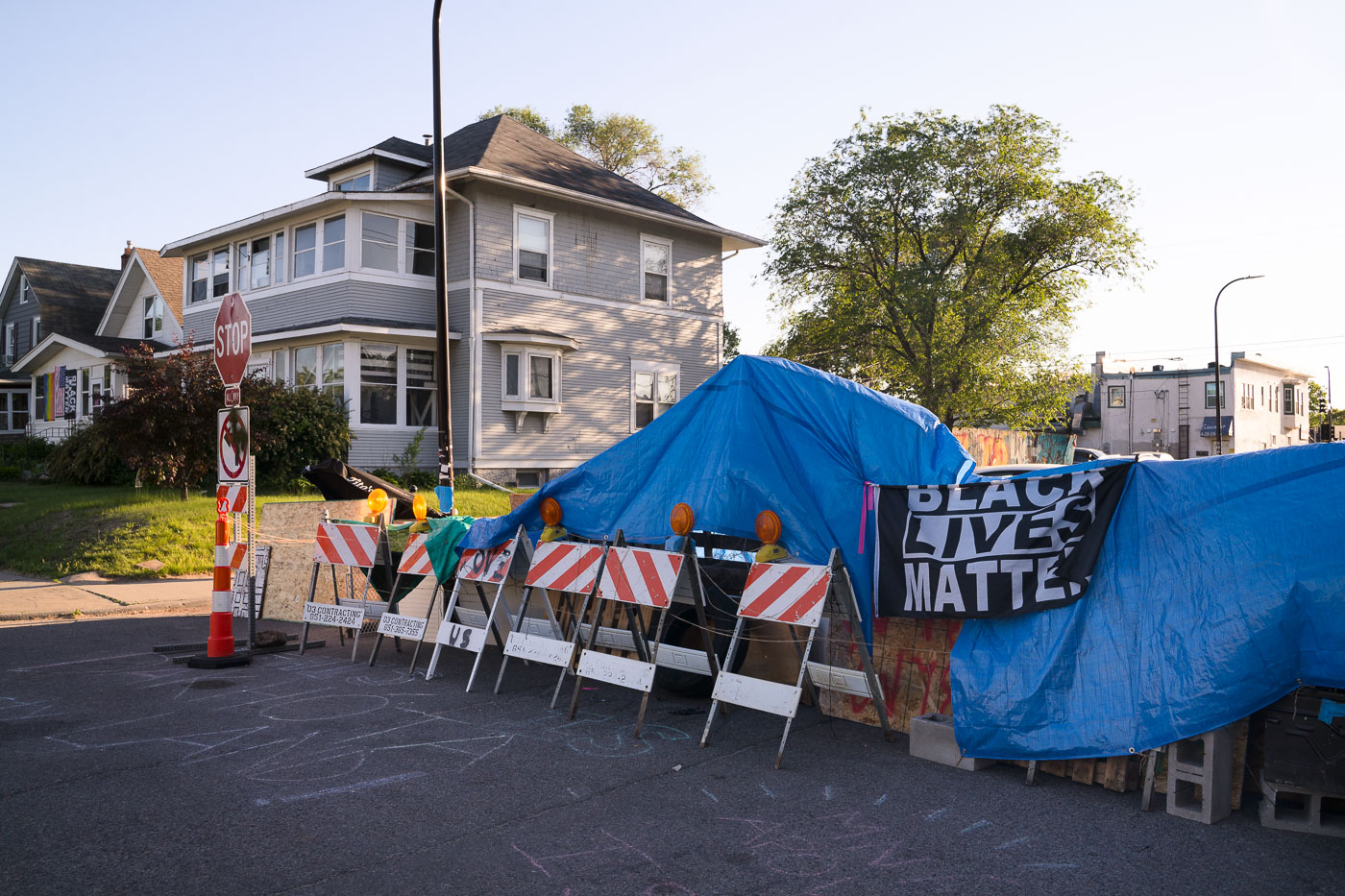
Barricades with a Black Lives Matter banner at George Floyd Square in Minneapolis
Barricades, including a Black Lives Matter banner, at George Floyd Square in Minneapolis. The square, located at the intersection of 38th Street and Elliott Avenue, was established as an autonomous zone following the murder of George Floyd in May 2020. City workers removed the barricades the day before this photograph was taken, marking a significant moment in the ongoing occupation and its eventual dismantling. On May 25, 2020, Minneapolis police officer Derek Chauvin murdered 46-year-old George Floyd during an arrest outside Cup Foods at the intersection of 38th Street and Chicago Avenue in south Minneapolis. Video recorded by bystanders showed Chauvin kneeling on Floyd’s neck for more than nine minutes while Floyd repeatedly said he could not breathe. Three other Minneapolis police officers - J. Alexander Kueng, Thomas Lane, and Tou Thao — were also present during the arrest and later faced criminal charges for their roles in Floyd’s death. Floyd’s murder sparked protests and civil unrest across Minneapolis and around the world, leading to widespread demonstrations against police violence, major policy debates on policing, and the conviction of Chauvin on murder and manslaughter charges in 2021.

George Floyd Square Barricades with BLM Banner, Minneapolis
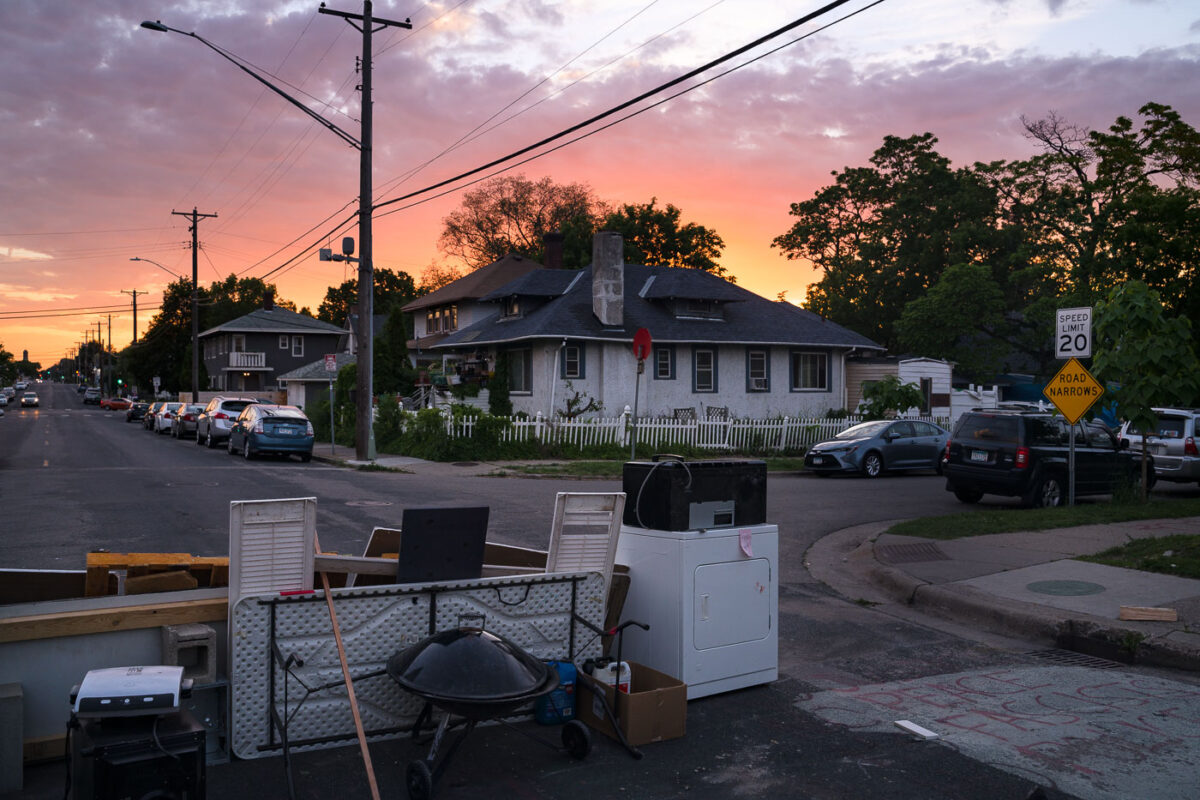
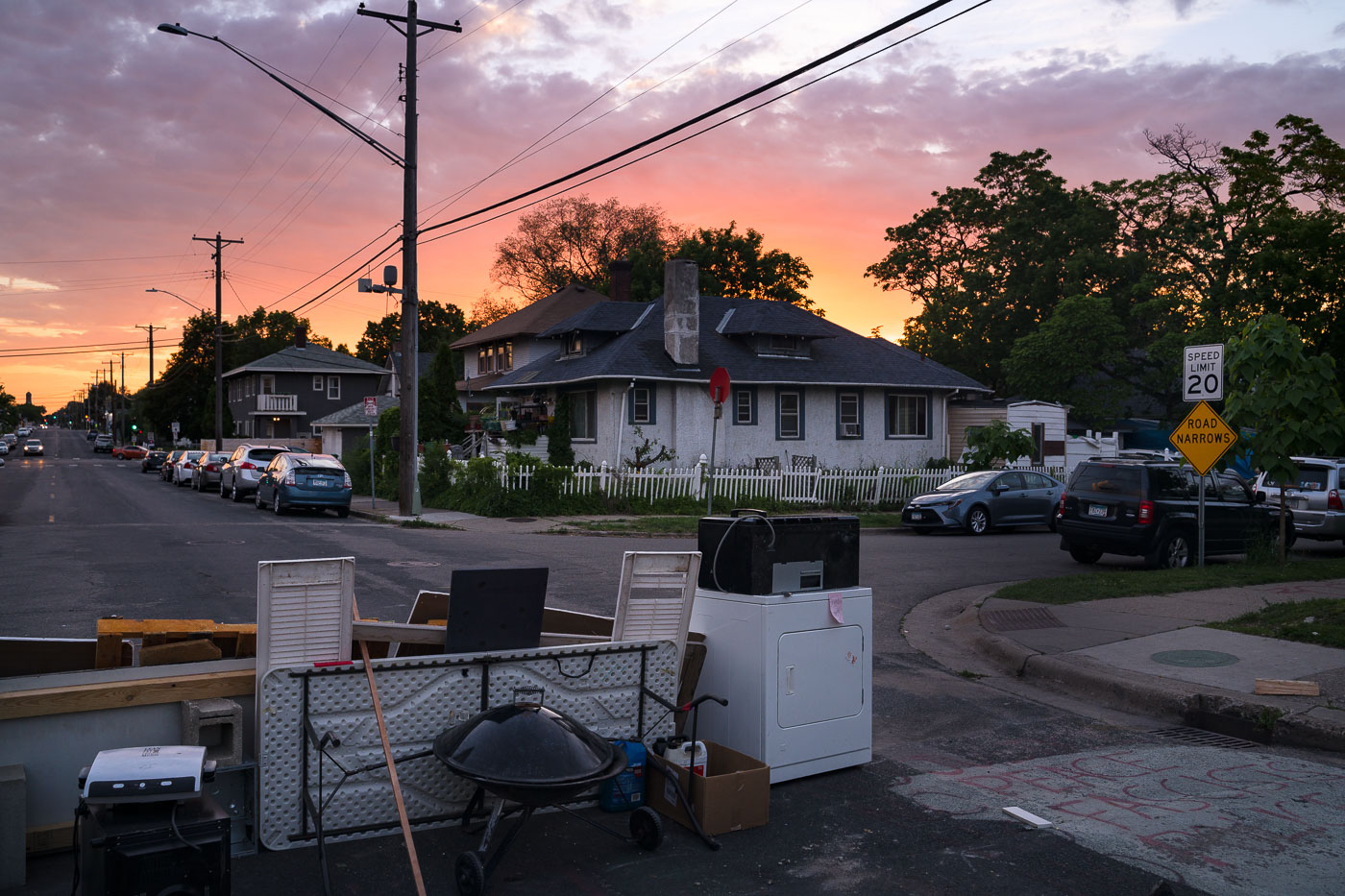
Barricades and household items block a Minneapolis street at sunset near George Floyd Square.
Barricades are re-established at George Floyd Square in Minneapolis at sunset on June 3, 2021, following an earlier clearing by the city. The square, located at the intersection of 38th Street and Chicago Avenue, became a focal point of protests and community organizing after the murder of George Floyd in May 2020. The community established autonomous zones and erected barricades to control access and create a space for remembrance and activism. On May 25, 2020, Minneapolis police officer Derek Chauvin murdered 46-year-old George Floyd during an arrest outside Cup Foods at the intersection of 38th Street and Chicago Avenue in south Minneapolis. Video recorded by bystanders showed Chauvin kneeling on Floyd’s neck for more than nine minutes while Floyd repeatedly said he could not breathe. Three other Minneapolis police officers - J. Alexander Kueng, Thomas Lane, and Tou Thao — were also present during the arrest and later faced criminal charges for their roles in Floyd’s death. Floyd’s murder sparked protests and civil unrest across Minneapolis and around the world, leading to widespread demonstrations against police violence, major policy debates on policing, and the conviction of Chauvin on murder and manslaughter charges in 2021.

George Floyd Square Barricades at Sunset, Minneapolis
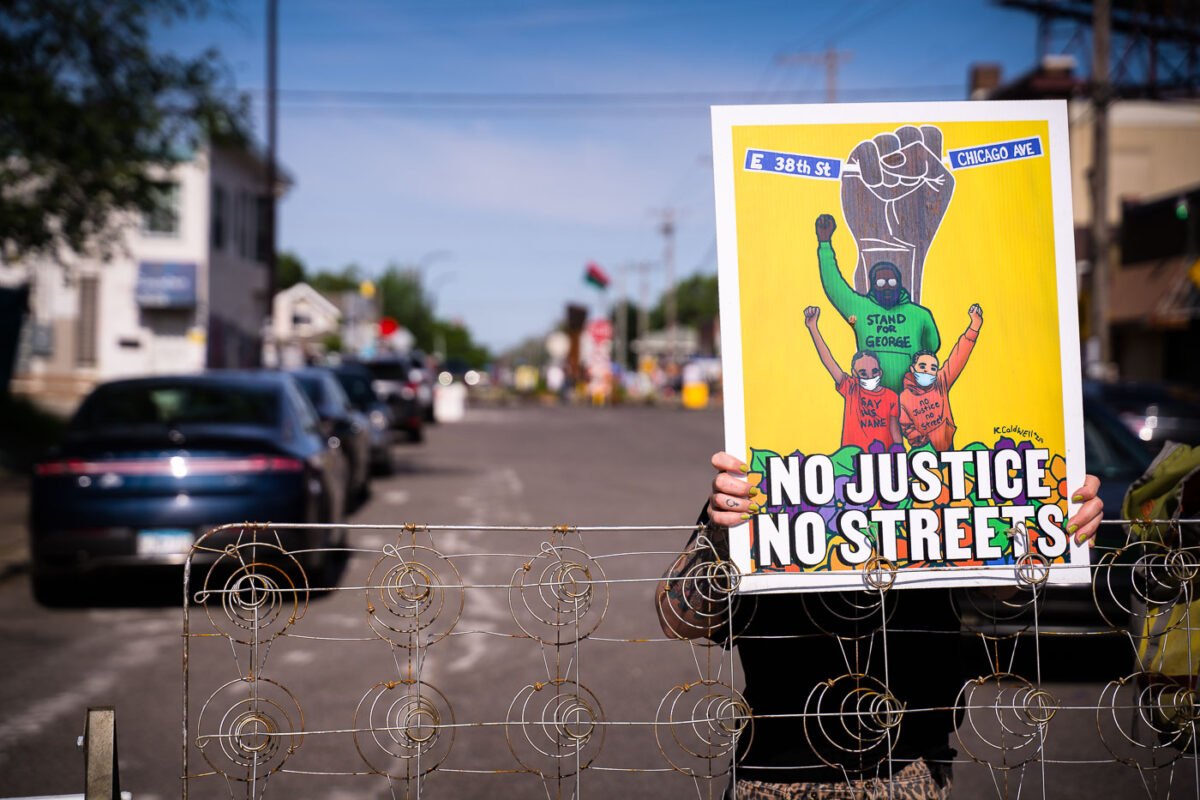
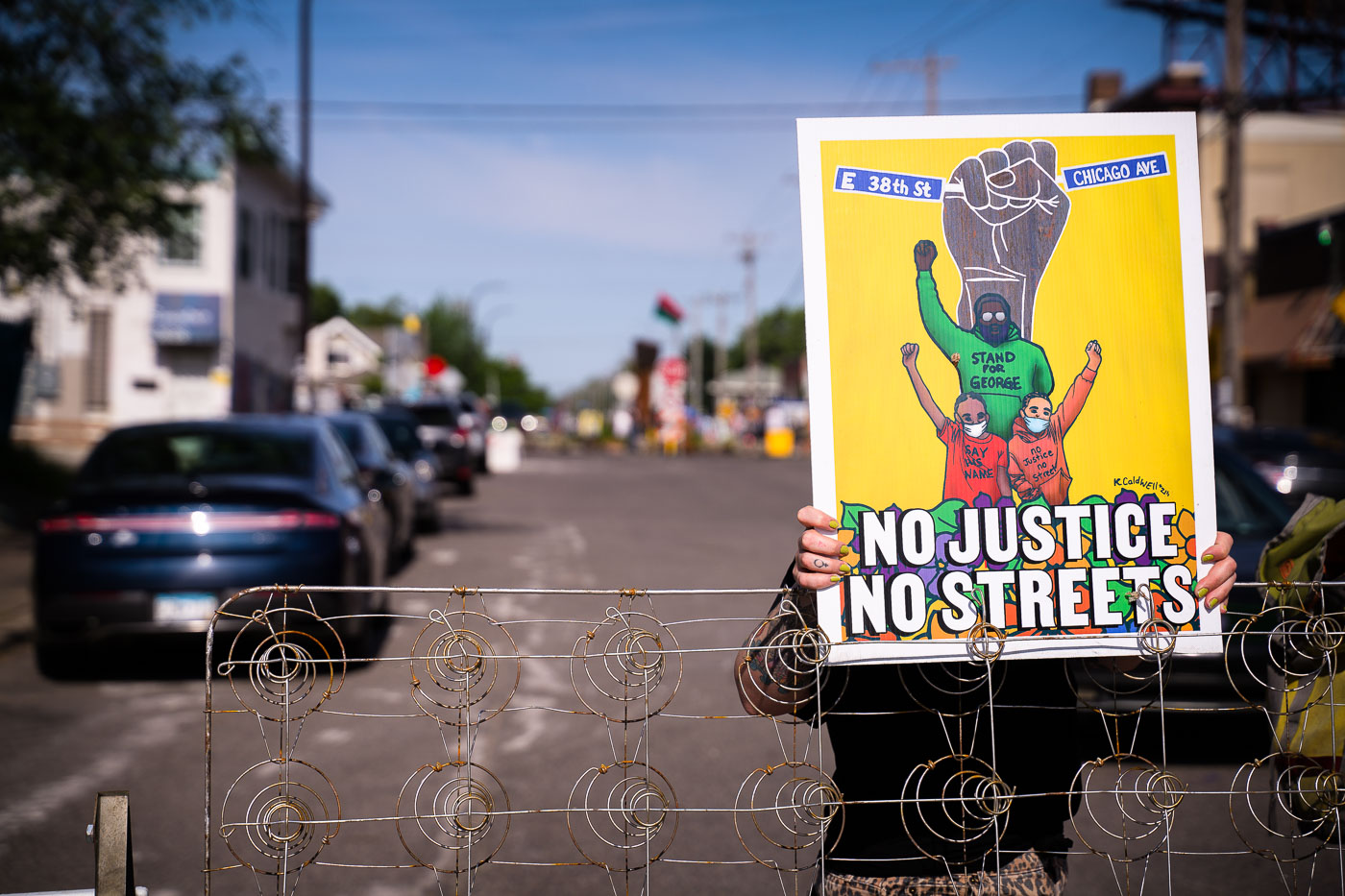
Person holds a “No Justice No Streets” sign at George Floyd Square in Minneapolis.
A protestor holds a "No Justice No Streets" sign at George Floyd Square in Minneapolis. The square, located at the intersection of East 38th Street and Chicago Avenue, became a focal point for protests following the murder of George Floyd in May 2020. For over a year, activists maintained barricades around the area, transforming it into a community space and a symbol of resistance. This image was taken on June 3, 2021, the day the city began efforts to dismantle the barricades and reopen the streets. On May 25, 2020, Minneapolis police officer Derek Chauvin murdered 46-year-old George Floyd during an arrest outside Cup Foods at the intersection of 38th Street and Chicago Avenue in south Minneapolis. Video recorded by bystanders showed Chauvin kneeling on Floyd’s neck for more than nine minutes while Floyd repeatedly said he could not breathe. Three other Minneapolis police officers - J. Alexander Kueng, Thomas Lane, and Tou Thao — were also present during the arrest and later faced criminal charges for their roles in Floyd’s death. Floyd’s murder sparked protests and civil unrest across Minneapolis and around the world, leading to widespread demonstrations against police violence, major policy debates on policing, and the conviction of Chauvin on murder and manslaughter charges in 2021.

George Floyd Square barricade protest sign
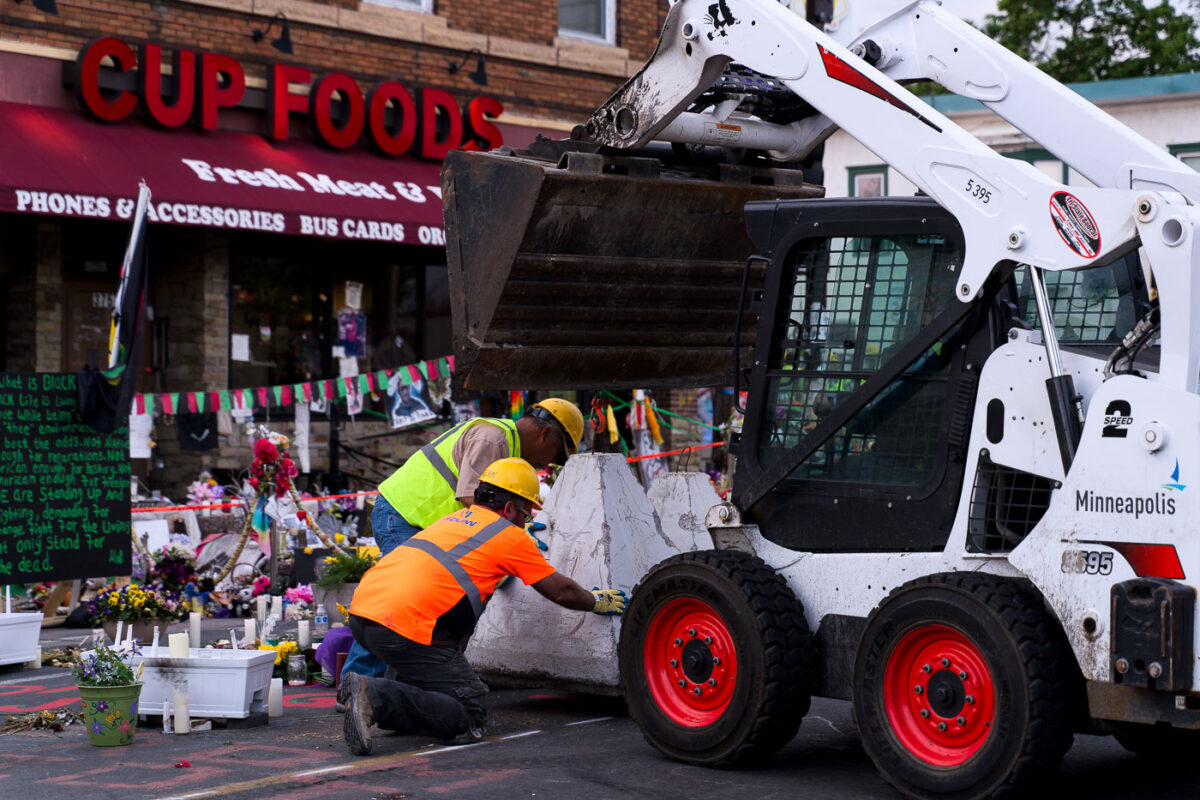
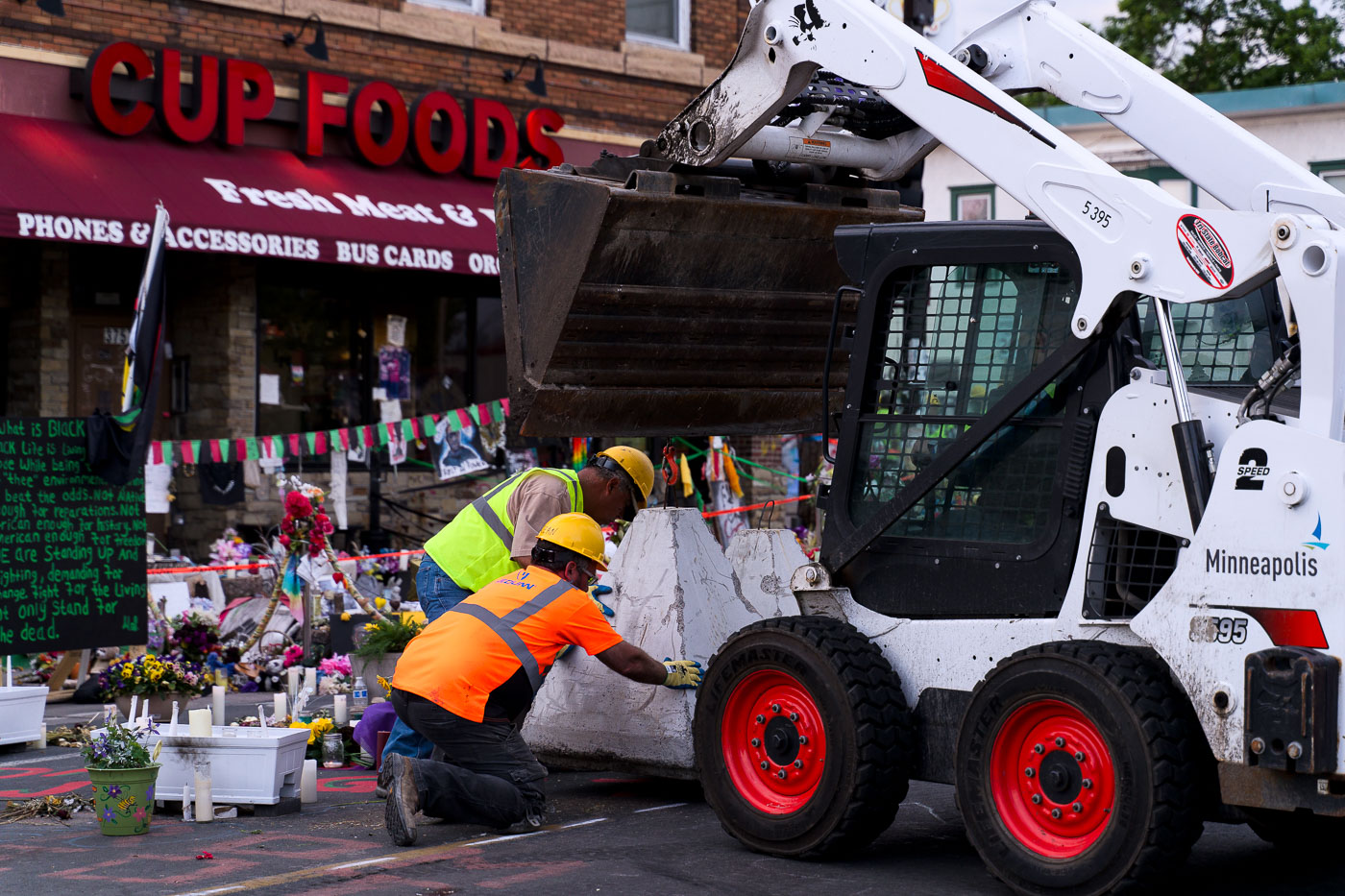
Minneapolis workers move concrete barricades at George Floyd Square outside Cup Foods.
Minneapolis Public Works employees place concrete barricades around George Floyd Square, a protest zone established after the murder of George Floyd by Minneapolis police. The square, located at the intersection of 38th Street and Chicago Avenue, became a focal point for demonstrations against racial injustice and police brutality. The area has been maintained by activists and community members as a memorial and a space for continued activism since May 2020. On the morning of June 3, 2021, city officials along with the Agape Movement coordinated to remove the street barricades and open the square to vehicular traffic. On May 25, 2020, Minneapolis police officer Derek Chauvin murdered 46-year-old George Floyd during an arrest outside Cup Foods at the intersection of 38th Street and Chicago Avenue in south Minneapolis. Video recorded by bystanders showed Chauvin kneeling on Floyd’s neck for more than nine minutes while Floyd repeatedly said he could not breathe. Three other Minneapolis police officers - J. Alexander Kueng, Thomas Lane, and Tou Thao — were also present during the arrest and later faced criminal charges for their roles in Floyd’s death. Floyd’s murder sparked protests and civil unrest across Minneapolis and around the world, leading to widespread demonstrations against police violence, major policy debates on policing, and the conviction of Chauvin on murder and manslaughter charges in 2021.

Minneapolis Public Works places barricades at George Floyd Square
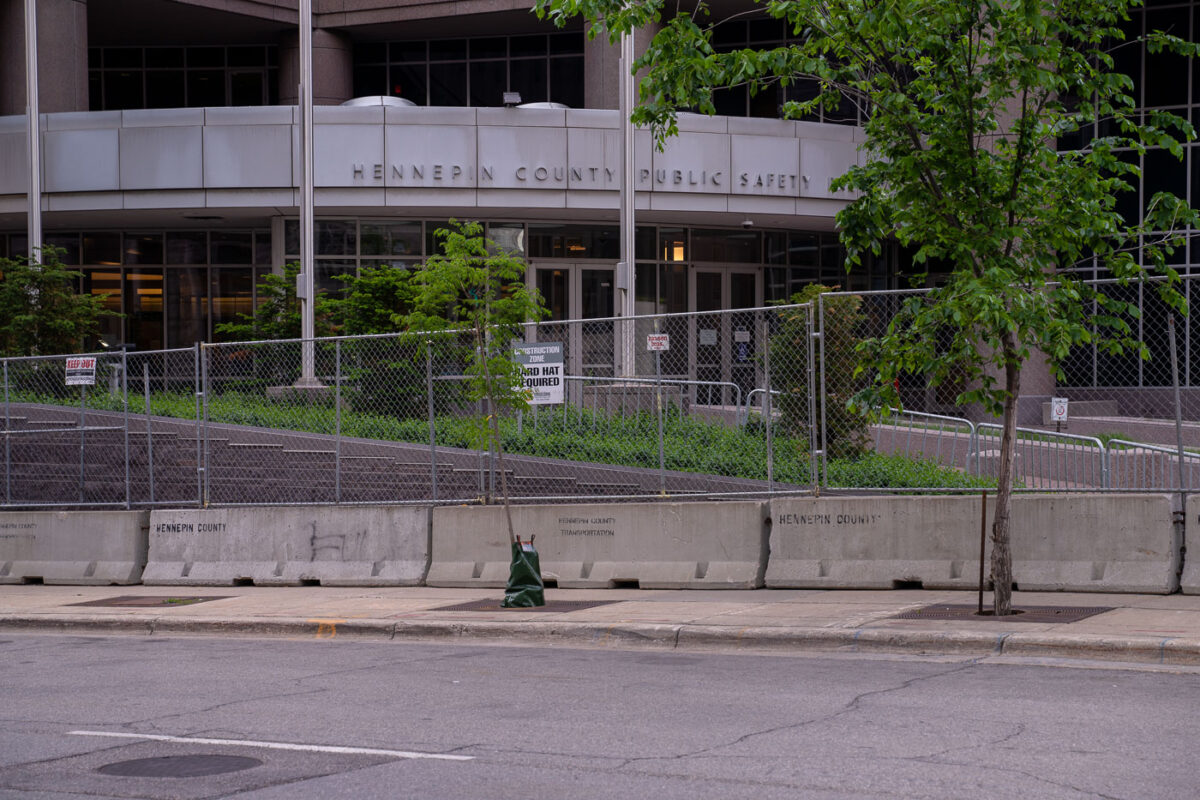
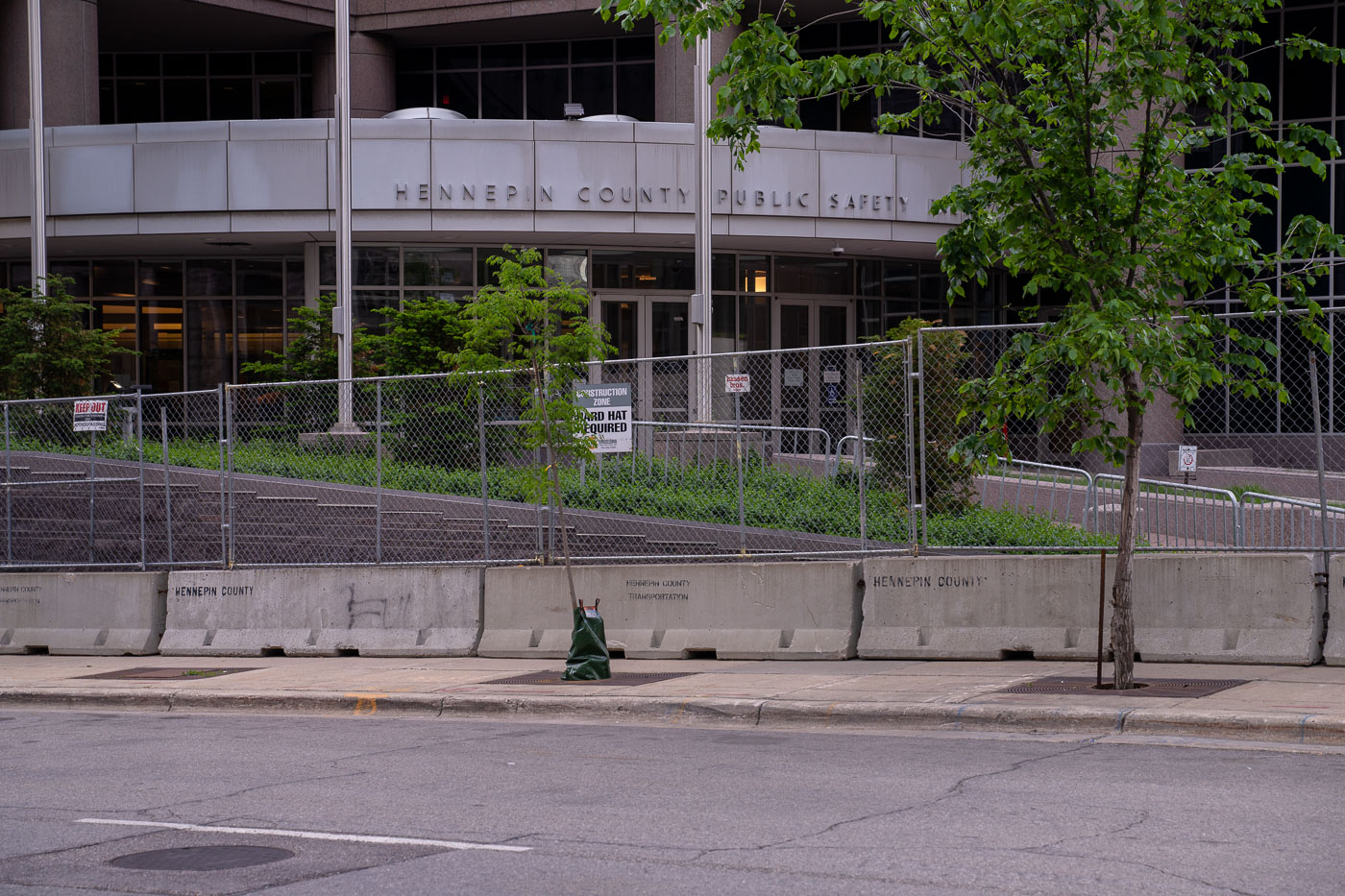
Hennepin County Public Safety Facility in Minneapolis behind fencing and concrete barriers
The Hennepin County Public Safety Facility in Downtown Minneapolis, which houses the county jail, is shown with security fencing and concrete barriers. These measures were installed in anticipation of the Derek Chauvin murder trial in 2021, reflecting heightened security concerns in the city following the murder of George Floyd. On May 25, 2020, Minneapolis police officer Derek Chauvin murdered 46-year-old George Floyd during an arrest outside Cup Foods at the intersection of 38th Street and Chicago Avenue in south Minneapolis. Video recorded by bystanders showed Chauvin kneeling on Floyd’s neck for more than nine minutes while Floyd repeatedly said he could not breathe. Three other Minneapolis police officers - J. Alexander Kueng, Thomas Lane, and Tou Thao — were also present during the arrest and later faced criminal charges for their roles in Floyd’s death. Floyd’s murder sparked protests and civil unrest across Minneapolis and around the world, leading to widespread demonstrations against police violence, major policy debates on policing, and the conviction of Chauvin on murder and manslaughter charges in 2021.

Hennepin County Public Safety Facility with Security Fencing, Minneapolis
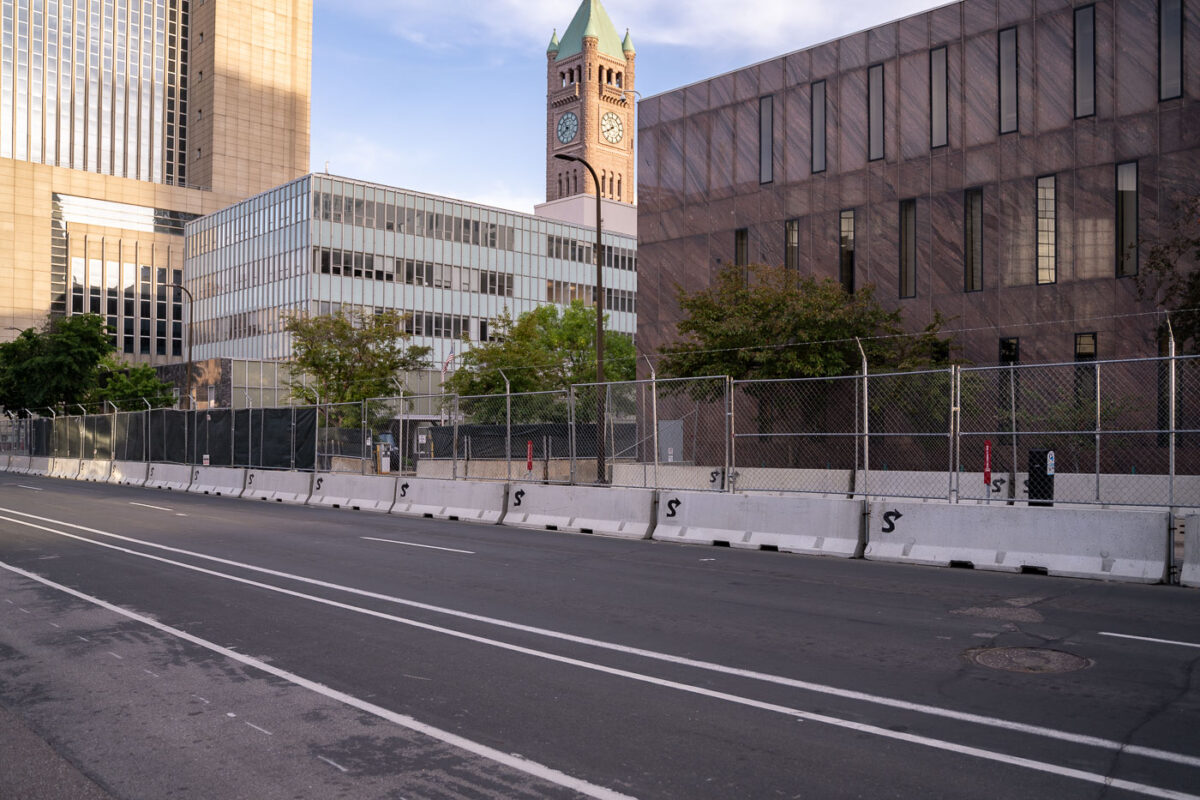
Temporary barricades line a downtown Minneapolis street near the Third Precinct and City Hall.
Temporary barricades surround the Minneapolis Police Department's Third Precinct station, which was relocated after the original building was destroyed by fire during the 2020 Minneapolis Uprising. On May 25, 2020, Minneapolis police officer Derek Chauvin murdered 46-year-old George Floyd during an arrest outside Cup Foods at the intersection of 38th Street and Chicago Avenue in south Minneapolis. Video recorded by bystanders showed Chauvin kneeling on Floyd’s neck for more than nine minutes while Floyd repeatedly said he could not breathe. Three other Minneapolis police officers - J. Alexander Kueng, Thomas Lane, and Tou Thao — were also present during the arrest and later faced criminal charges for their roles in Floyd’s death. Floyd’s murder sparked protests and civil unrest across Minneapolis and around the world, leading to widespread demonstrations against police violence, major policy debates on policing, and the conviction of Chauvin on murder and manslaughter charges in 2021.

Barricades at Temporary Minneapolis Police 3rd Precinct
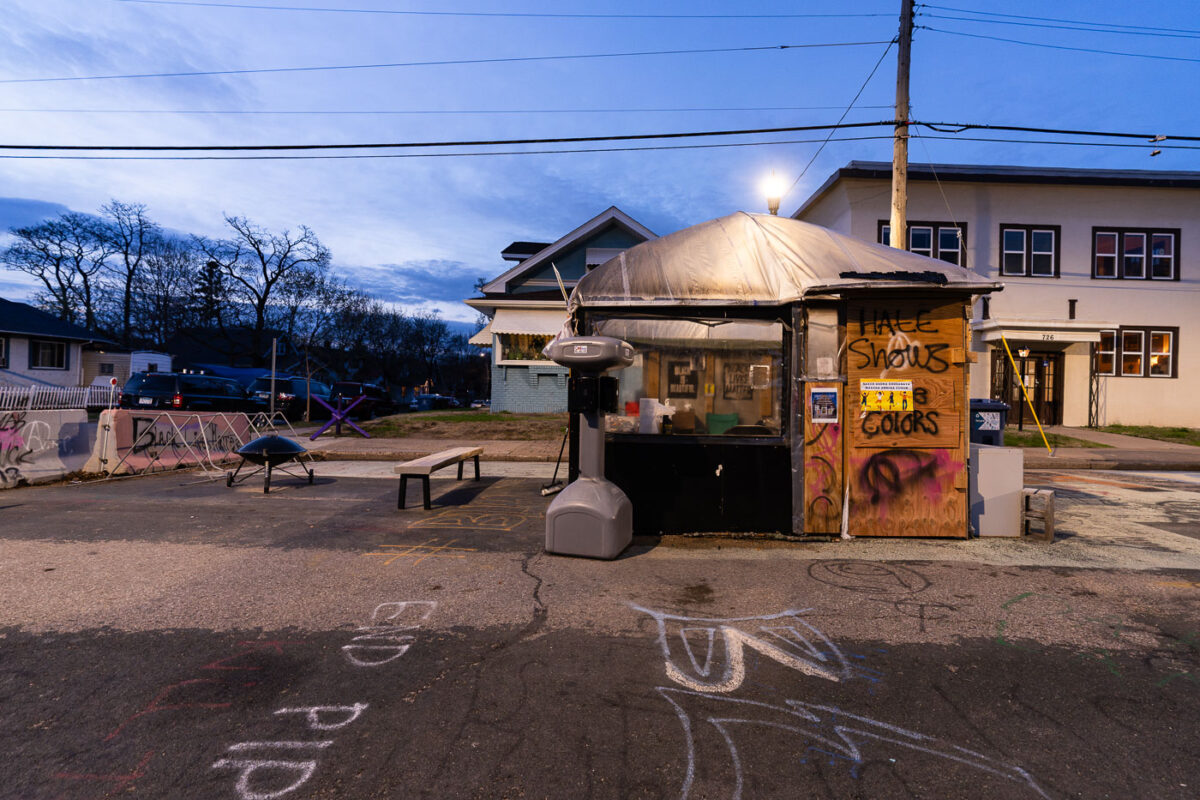
Warming station and barricades at George Floyd Square in Minneapolis.
George Floyd Square in Minneapolis was the site of a protest encampment following the murder of George Floyd in May 2020. This image from April 2021 shows a warming station and barricades that were erected by protesters to control access to the area. The square, located at the intersection of 38th Street and Chicago Avenue, became a symbol of the uprising and a space for community organizing and mutual aid. The warming station provided shelter and resources to those present, while the barricades served to protect the occupied space from external interference.

George Floyd Square Warming Station and Barricade, Minneapolis
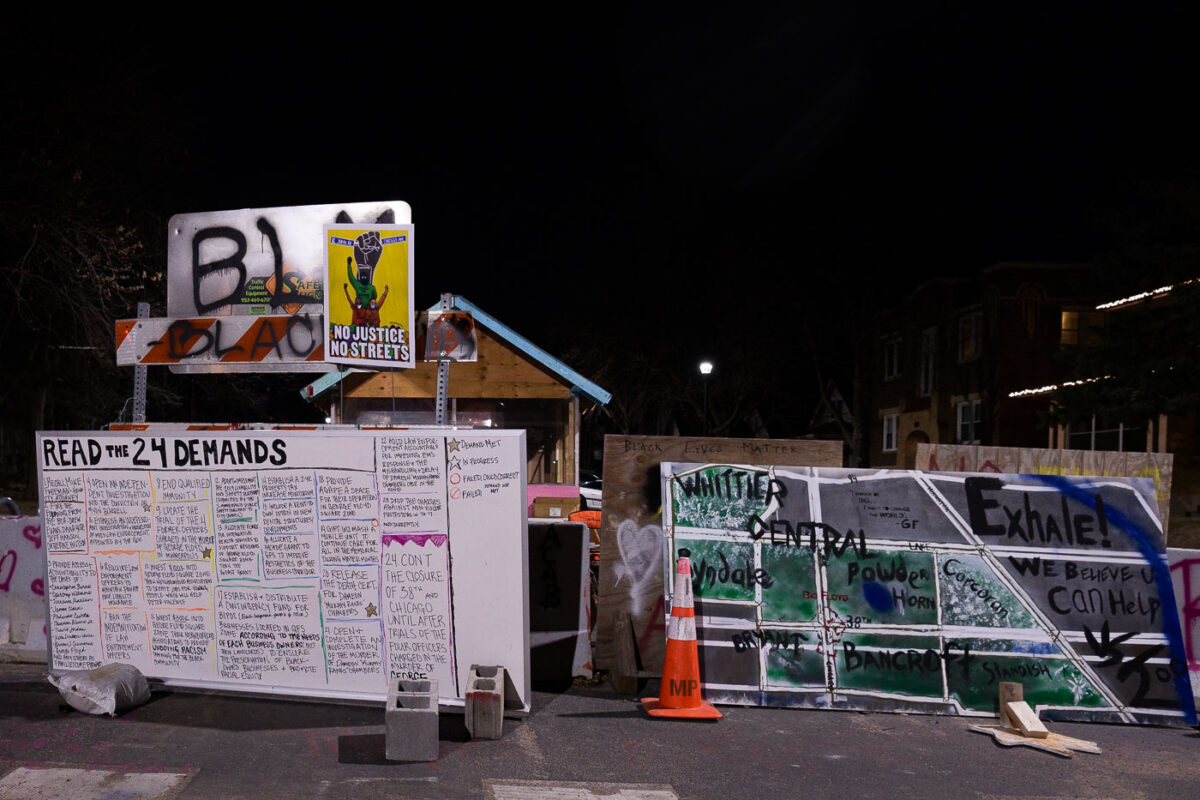
George Floyd Square 24 Demands Sign
Barricades at George Floyd Square in Minneapolis display "The 24 Demands" in March 2021, a list of policy changes and actions sought by activists following the murder of George Floyd. The demands cover a range of issues including accountability for law enforcement, community investment, and the closure of the intersection of 38th Street and Chicago Avenue until the trials of the officers involved. This area became a focal point for protests and community organizing in the wake of Floyd's death, with activists establishing a zone to advocate for systemic change.

George Floyd Square: The 24 Demands on Barricades
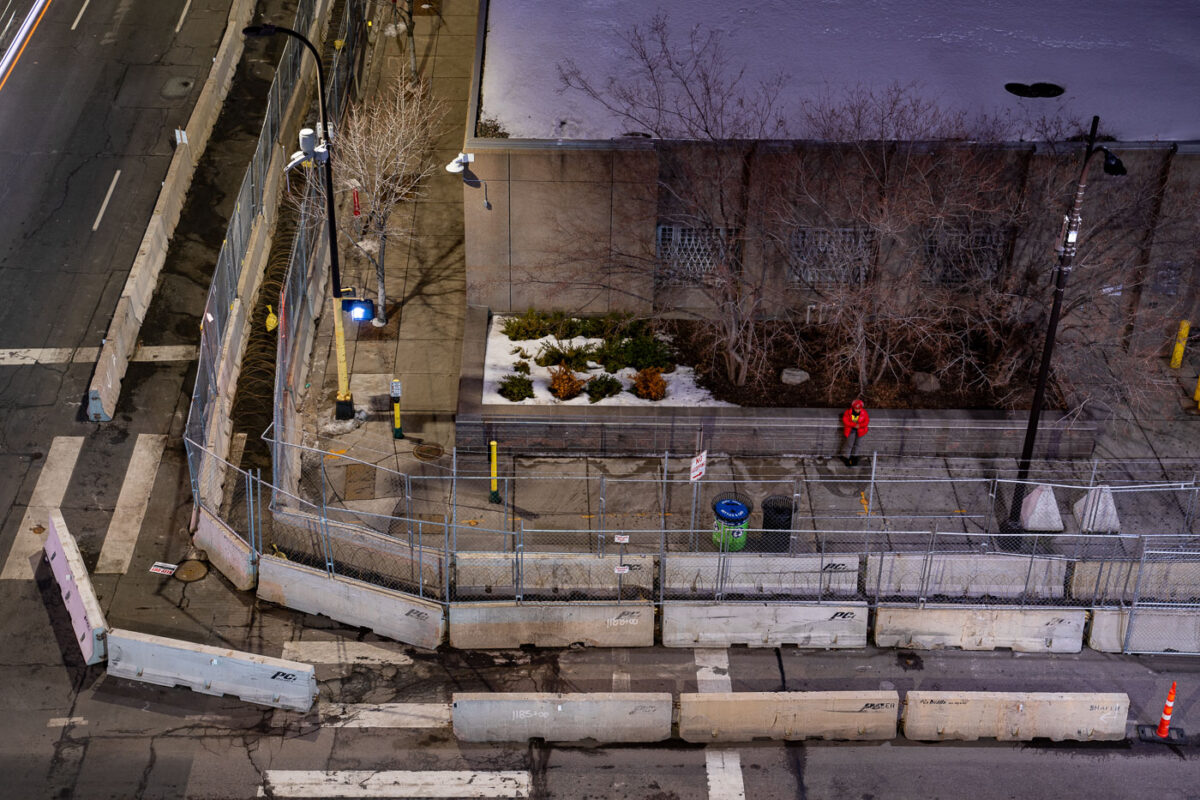
Barricades at the Hennepin County Public Safety Facility
Security barricades and fencing surround the Hennepin County Public Safety Facility in Minneapolis on February 24, 2021 in anticipation of the Derek Chauvin murder trial. The extensive security measures, including concrete barriers and razor wire, were implemented to manage potential protests and ensure the safety of the courthouse and surrounding areas. On May 25, 2020, Minneapolis police officer Derek Chauvin murdered 46-year-old George Floyd during an arrest outside Cup Foods at the intersection of 38th Street and Chicago Avenue in south Minneapolis. Video recorded by bystanders showed Chauvin kneeling on Floyd’s neck for more than nine minutes while Floyd repeatedly said he could not breathe. Three other Minneapolis police officers - J. Alexander Kueng, Thomas Lane, and Tou Thao — were also present during the arrest and later faced criminal charges for their roles in Floyd’s death. Floyd’s murder sparked protests and civil unrest across Minneapolis and around the world, leading to widespread demonstrations against police violence, major policy debates on policing, and the conviction of Chauvin on murder and manslaughter charges in 2021.

Hennepin County Jail Barricades for Chauvin Trial

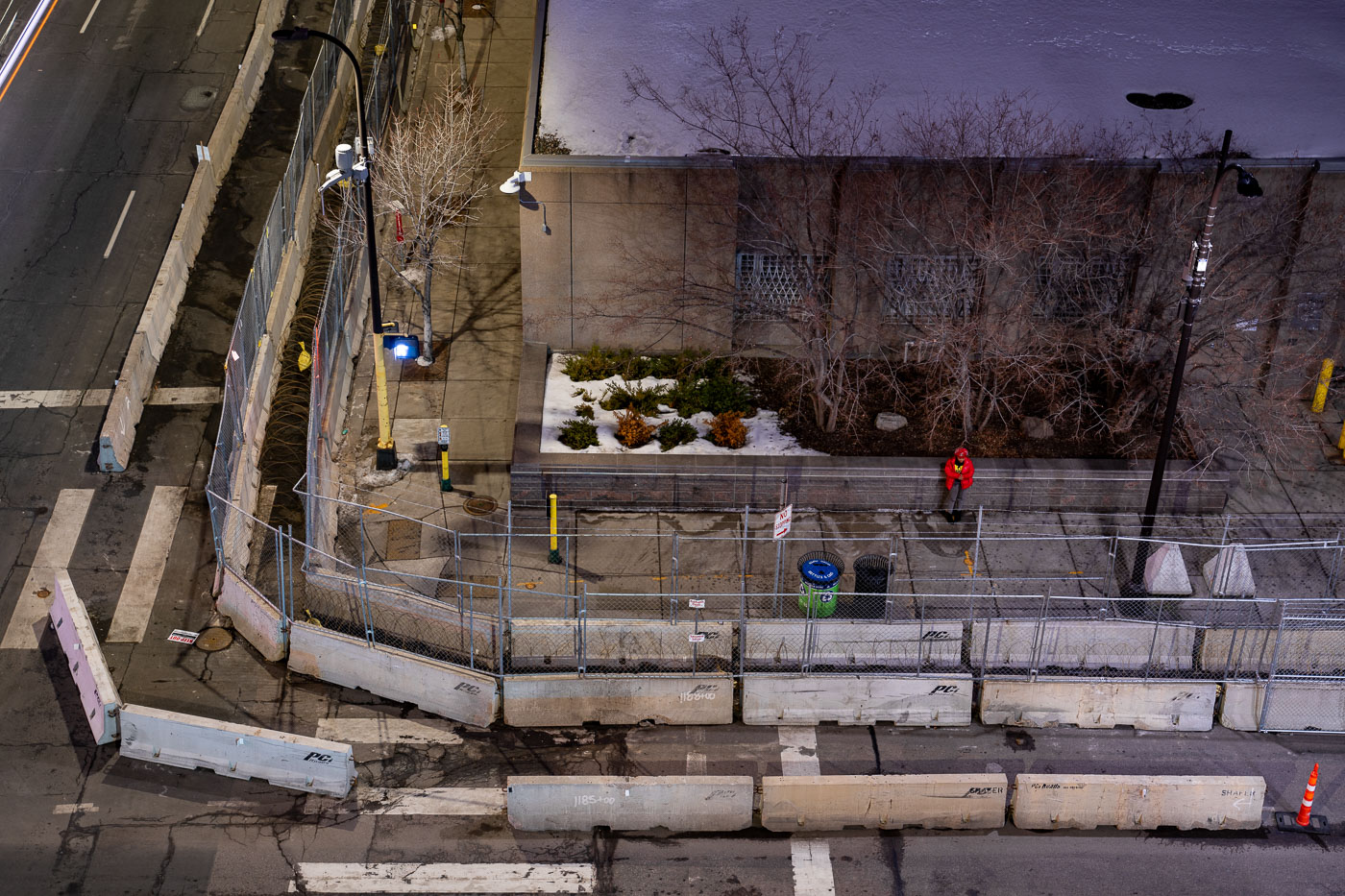
Concrete barriers line a snowy downtown Minneapolis street at night near the Hennepin County Medical Examiner's Office during trial security preparations.
Concrete barricaded shown on February 22, 2021 around the Hennepin County Medical Examiner's Office in downtown Minneapolis in anticipation of the Derek Chauvin murder trial. On May 25, 2020, Minneapolis police officer Derek Chauvin murdered 46-year-old George Floyd during an arrest outside Cup Foods at the intersection of 38th Street and Chicago Avenue in south Minneapolis. Video recorded by bystanders showed Chauvin kneeling on Floyd’s neck for more than nine minutes while Floyd repeatedly said he could not breathe. Three other Minneapolis police officers - J. Alexander Kueng, Thomas Lane, and Tou Thao — were also present during the arrest and later faced criminal charges for their roles in Floyd’s death. Floyd’s murder sparked protests and civil unrest across Minneapolis and around the world, leading to widespread demonstrations against police violence, major policy debates on policing, and the conviction of Chauvin on murder and manslaughter charges in 2021.

Concrete Barriers Outside the Hennepin County Medical Examiner’s Office

Barricaded streets around George Floyd Square
Barricades remain at George Floyd Square in Minneapolis, a space that became a focal point for protests following the murder of George Floyd in May 2020. The square, located at the intersection of Chicago Avenue and 38th Street, was occupied by protesters for months, transforming it into a community hub and a symbol of the movement for racial justice.

Barricades at George Floyd Square, Minneapolis
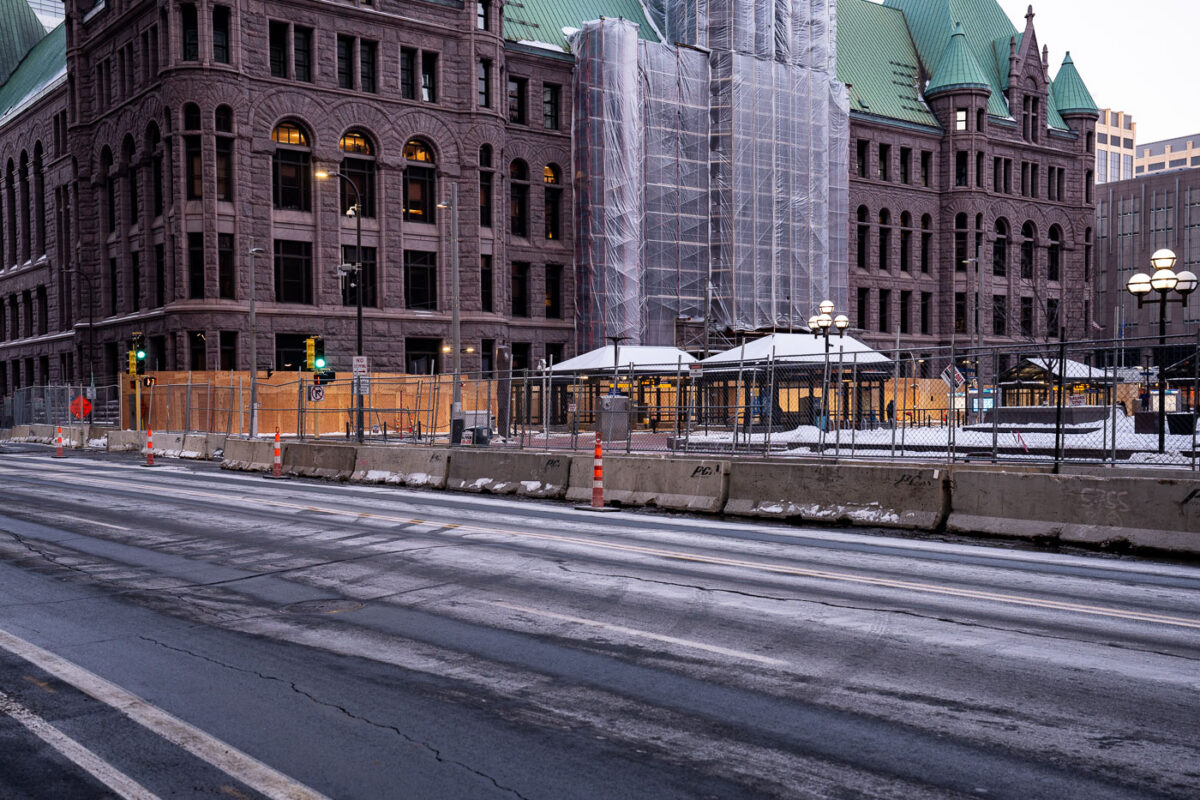
Historic Minneapolis City Hall stands behind security fencing and plywood boards during Derek Chauvin trial preparations in February 2021.
Minneapolis City Hall and the Hennepin County Government Center are shown fortified with security fencing and boarded-up windows. This measure was implemented in anticipation of the Derek Chauvin murder trial in 2021, reflecting heightened security concerns surrounding the proceedings.

South 6th Street Barricades Before the Chauvin Trial

Hennepin County Government Center entrance secured with orange traffic cones, concrete barriers, and chain-link fencing during trial security preparations in February 2021.
Temporary security barricades are erected on February 18, 2021 around the Hennepin County Government Center at 300 South 6th Street in Minneapolis. These measures were put in place in anticipation of the trial of Derek Chauvin, the former police officer charged in the May 2020 murder of George Floyd. On May 25, 2020, Minneapolis police officer Derek Chauvin murdered 46-year-old George Floyd during an arrest outside Cup Foods at the intersection of 38th Street and Chicago Avenue in south Minneapolis. Video recorded by bystanders showed Chauvin kneeling on Floyd’s neck for more than nine minutes while Floyd repeatedly said he could not breathe. Three other Minneapolis police officers - J. Alexander Kueng, Thomas Lane, and Tou Thao — were also present during the arrest and later faced criminal charges for their roles in Floyd’s death. Floyd’s murder sparked protests and civil unrest across Minneapolis and around the world, leading to widespread demonstrations against police violence, major policy debates on policing, and the conviction of Chauvin on murder and manslaughter charges in 2021.

Concrete Barriers Line South 6th Street Before the Chauvin Trial
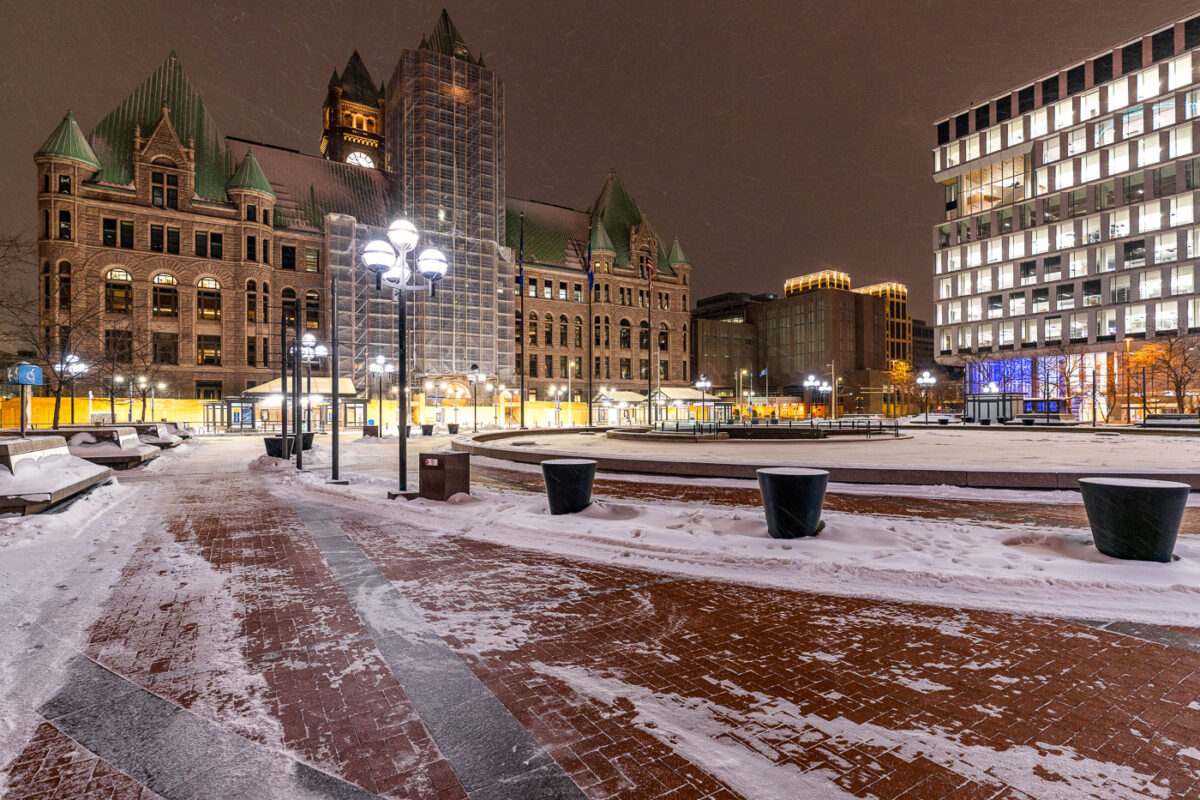
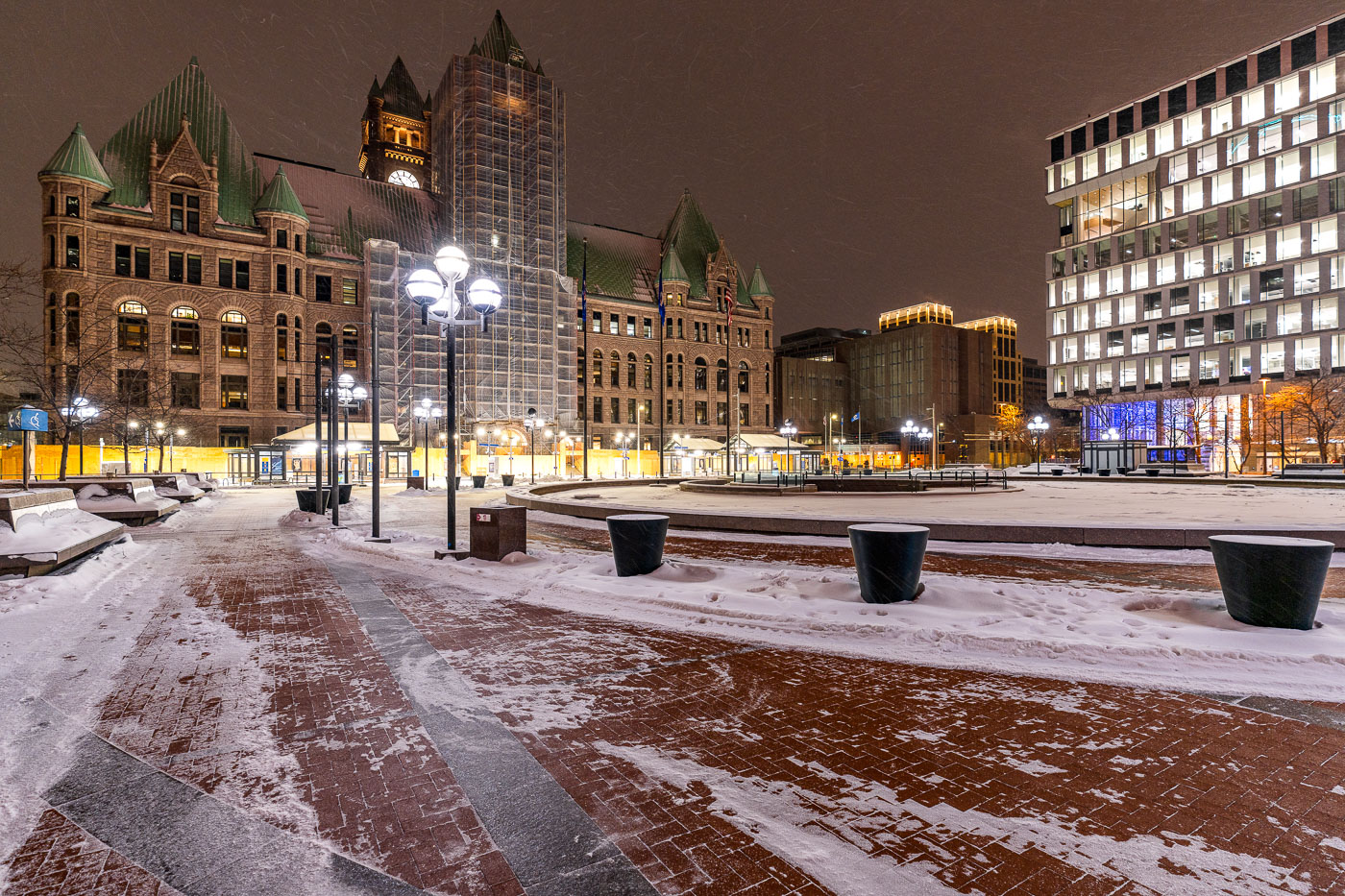
Snowstorm and Minneapolis City Hall prior to Chauvin trial
Minneapolis City Hall and Hennepin County Government Center are seen under snowfall as security preparations are underway for the Derek Chauvin trial. This measure reflects the heightened security concerns surrounding the trial of the former police officer accused in the death of George Floyd, which occurred in Minneapolis.

Minneapolis City Hall in Snow Before Chauvin Trial Security
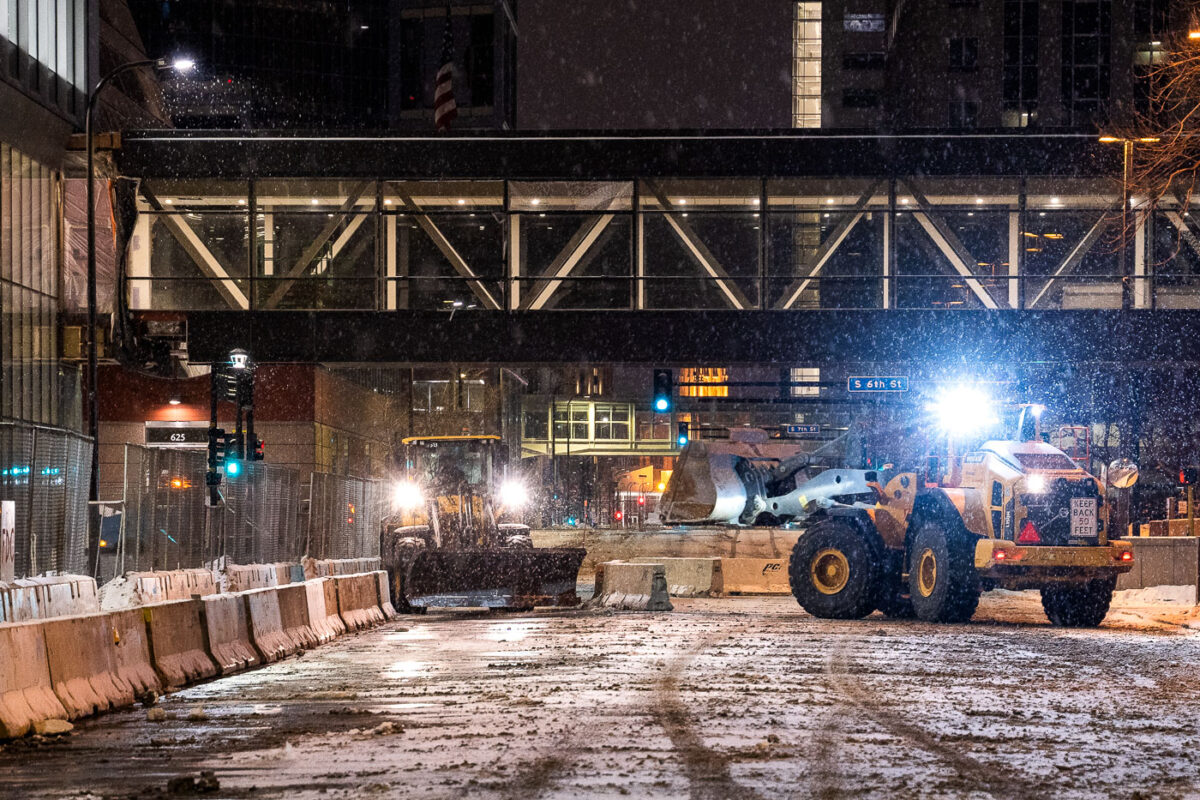
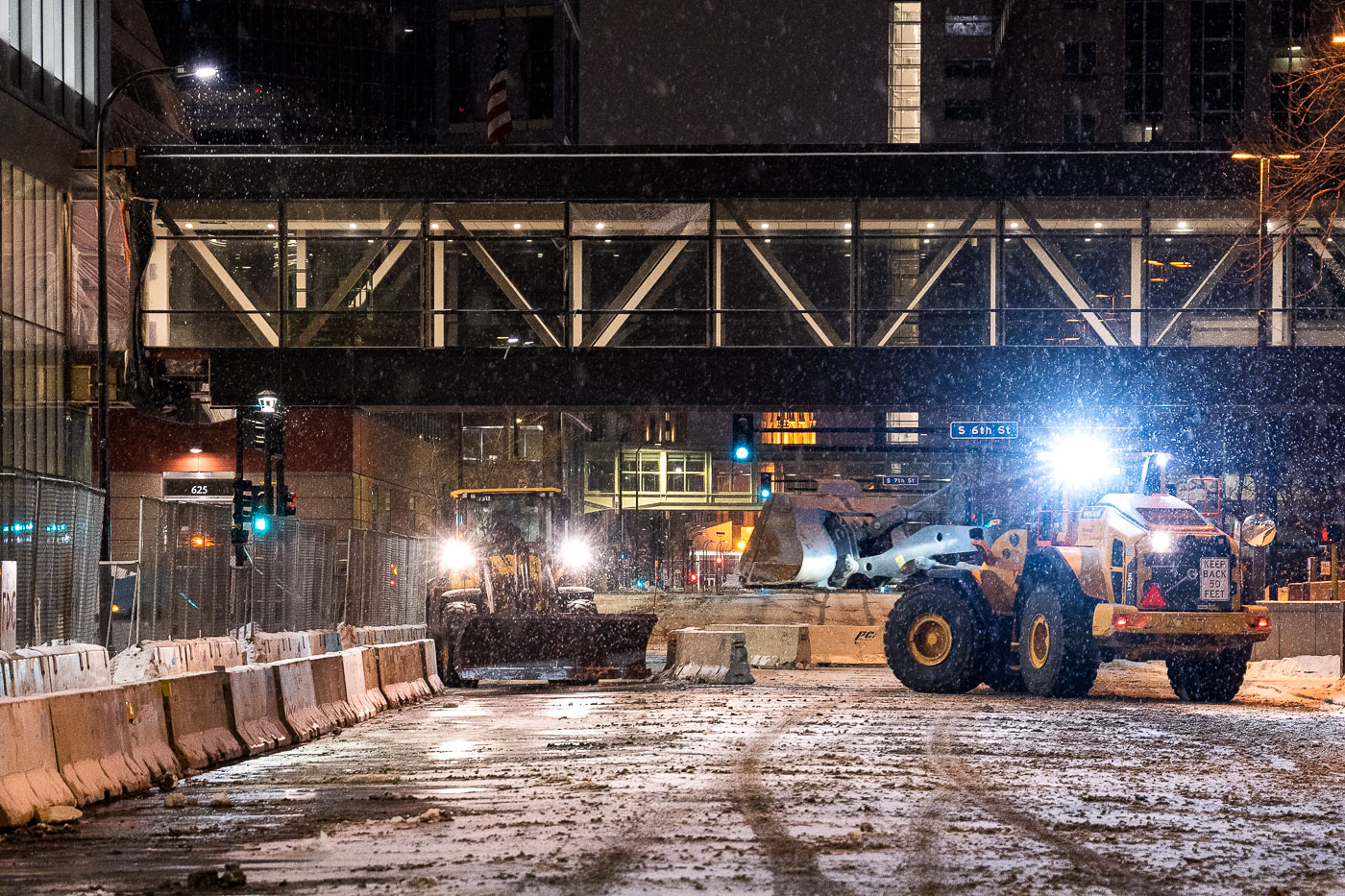
A front-end loader removes concrete barriers from a snowy downtown Minneapolis street at night near City Hall during trial security preparations.
Public Works vehicles install jersey barriers around government buildings in Minneapolis in anticipation of the Derek Chauvin trial. On May 25, 2020, Minneapolis police officer Derek Chauvin murdered 46-year-old George Floyd during an arrest outside Cup Foods at the intersection of 38th Street and Chicago Avenue in south Minneapolis. Video recorded by bystanders showed Chauvin kneeling on Floyd’s neck for more than nine minutes while Floyd repeatedly said he could not breathe. Three other Minneapolis police officers - J. Alexander Kueng, Thomas Lane, and Tou Thao — were also present during the arrest and later faced criminal charges for their roles in Floyd’s death. Floyd’s murder sparked protests and civil unrest across Minneapolis and around the world, leading to widespread demonstrations against police violence, major policy debates on policing, and the conviction of Chauvin on murder and manslaughter charges in 2021.

Front-End Loaders Install Jersey Barriers on South 6th Street at Night
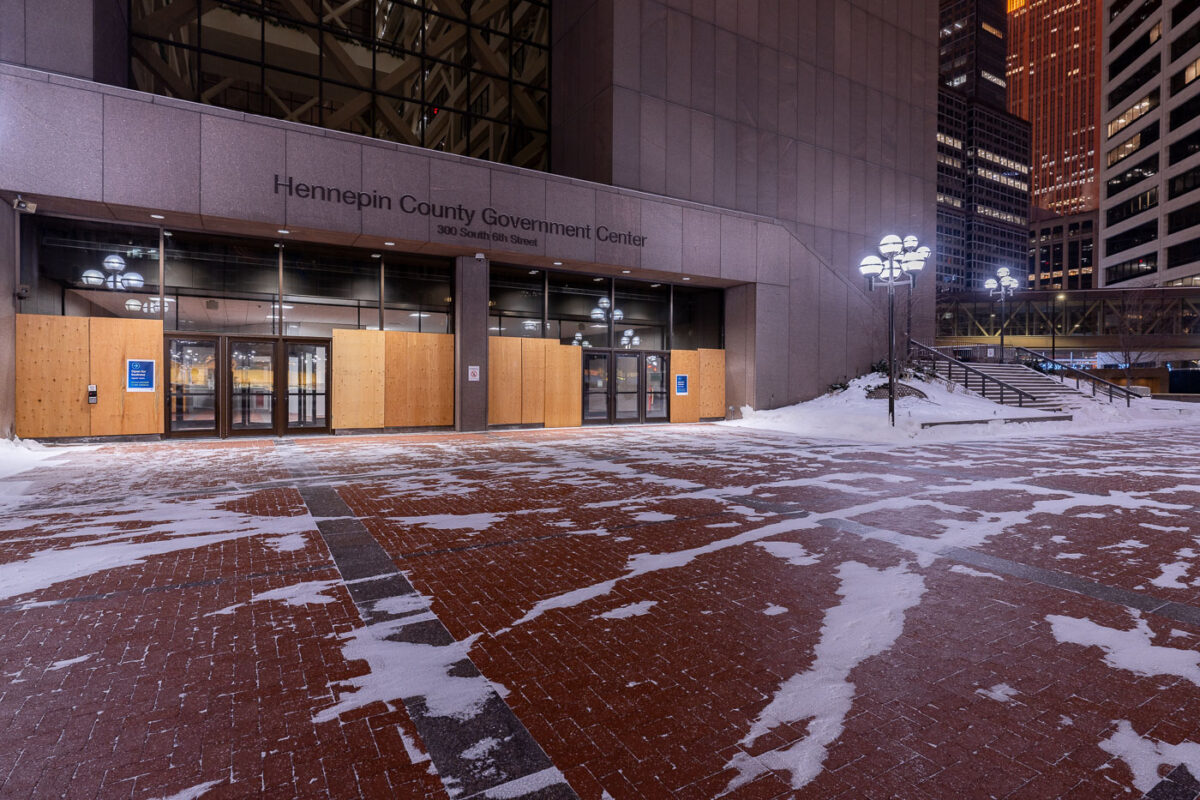
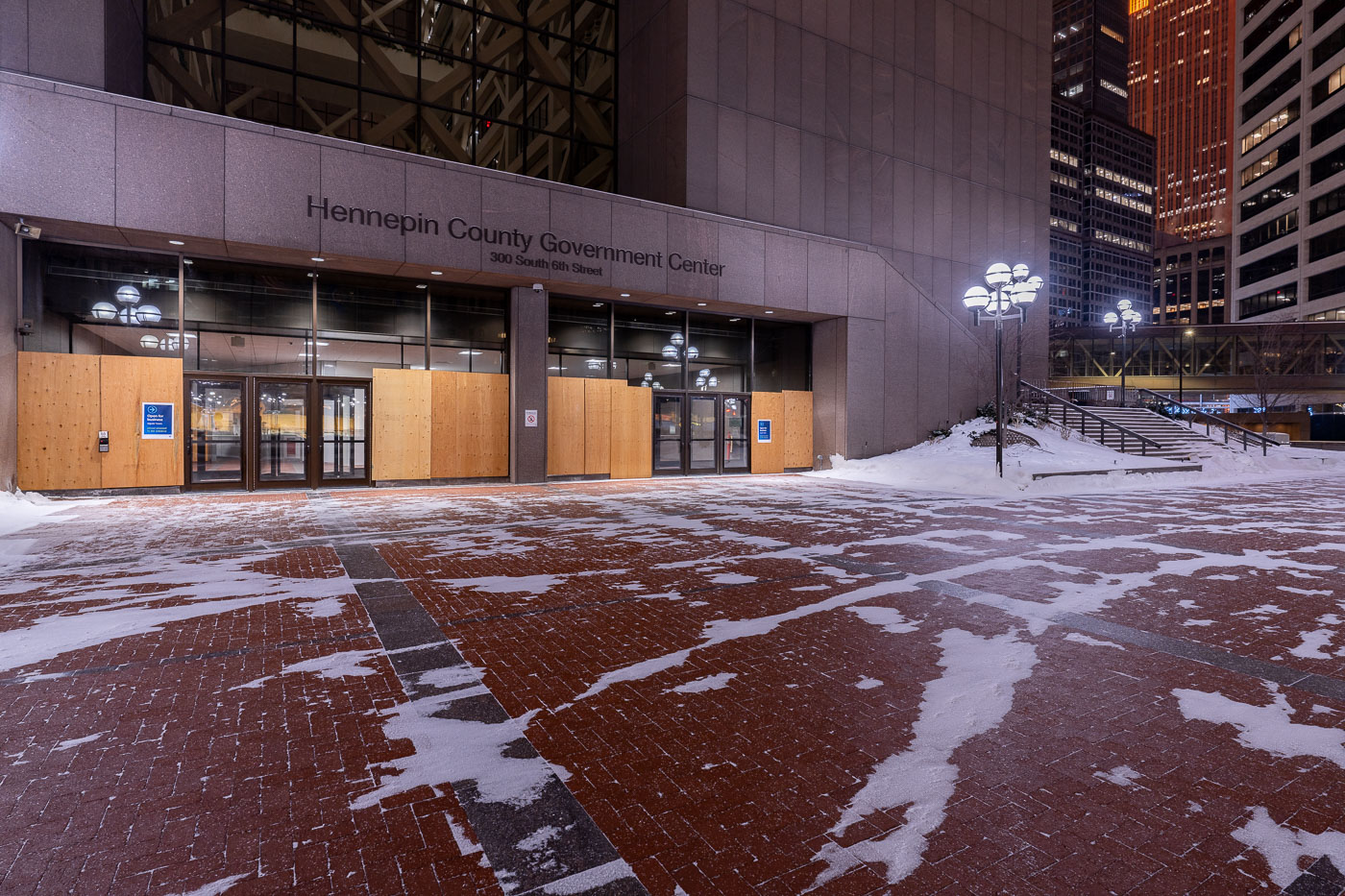
Hennepin County Government Center at 300 South 6th Street boarded with plywood panels during winter.
The Hennepin County Government Center in downtown Minneapolis was boarded up in anticipation of the Derek Chauvin trial in March 2021. The building, located at 300 South 6th Street, houses county government offices and courtrooms.

Snowy Entrance at Hennepin County Government Center After Dark
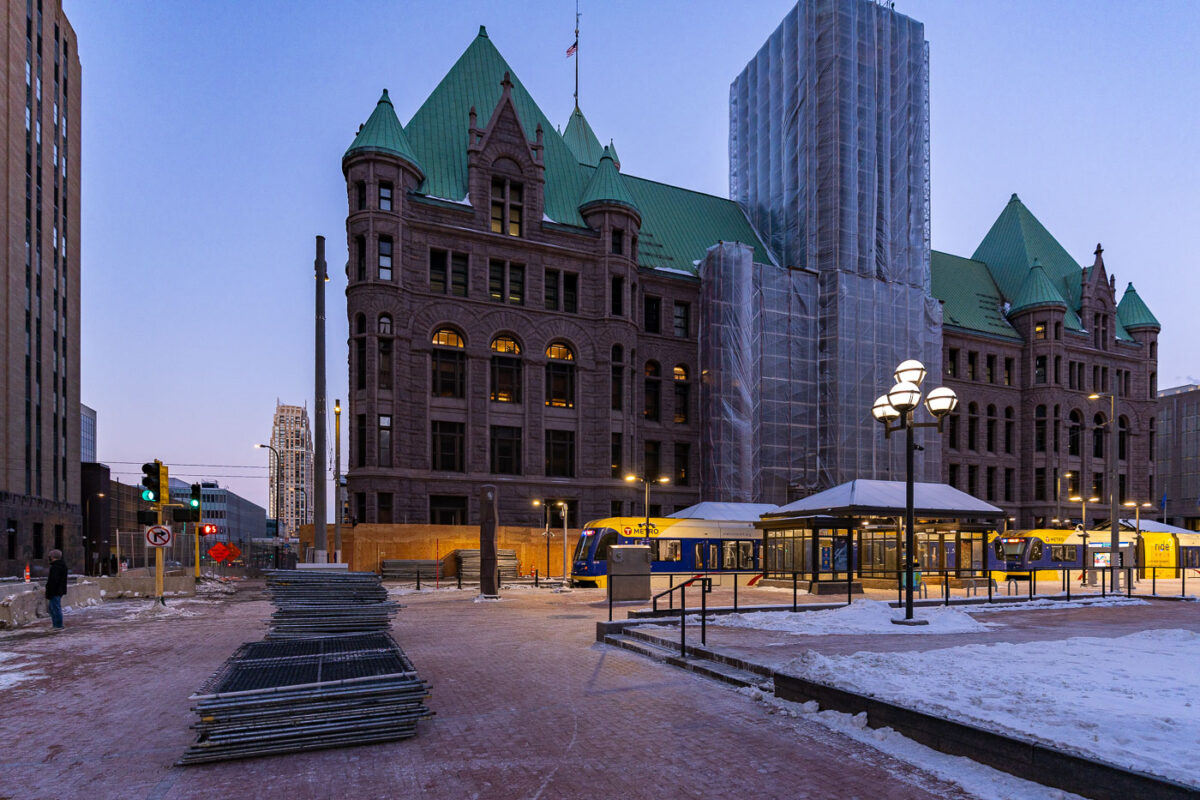
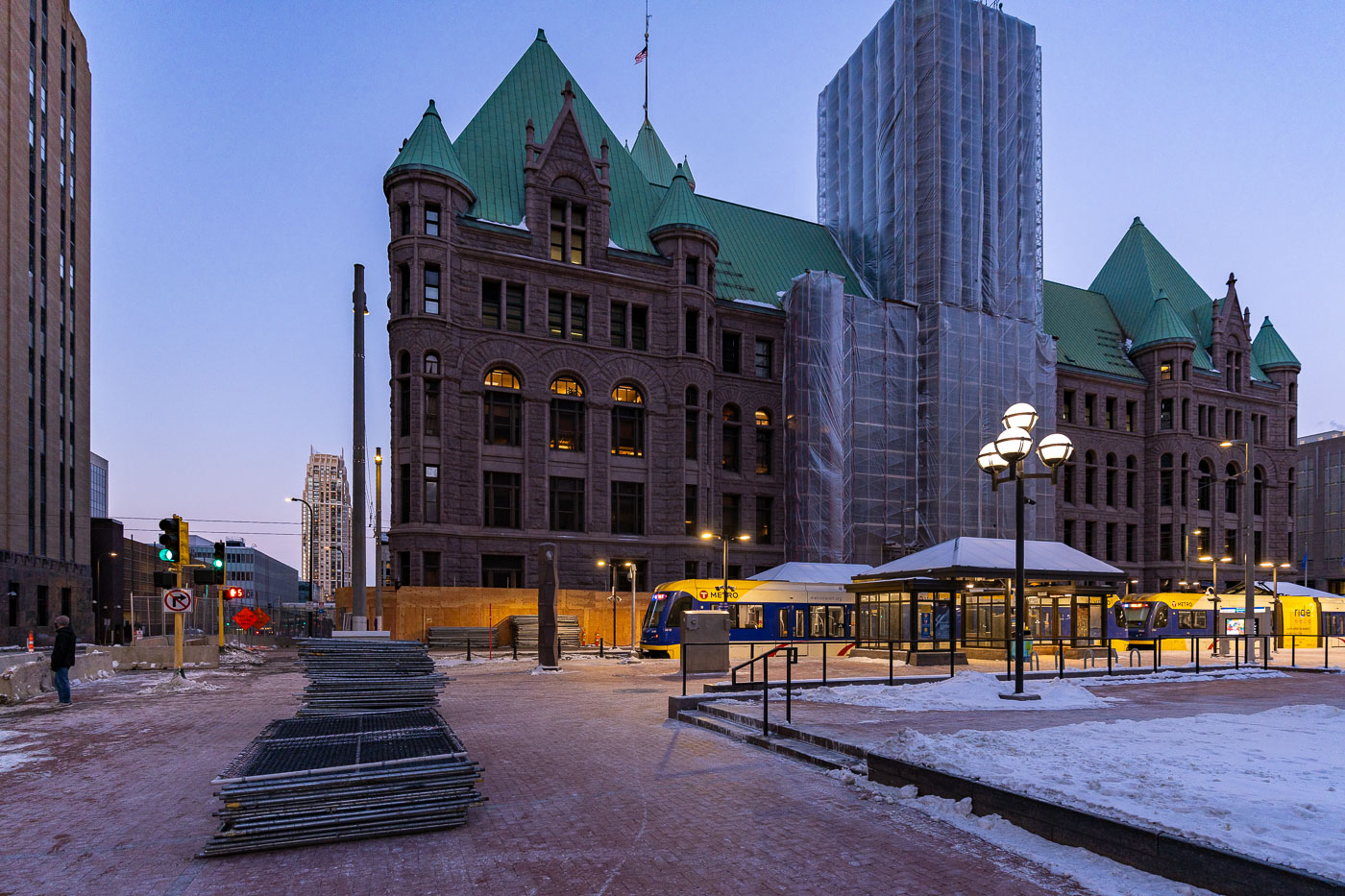
Minneapolis City Hall and Hennepin County Government Center surrounded by security fencing and barricades in February 2021.
Fencing and barricades surround Minneapolis City Hall and the Hennepin County Government Center in downtown Minneapolis on February 16, 2021. These security measures were installed in anticipation of the Derek Chauvin murder trial, which began on March 8, 2021. On May 25, 2020, Minneapolis police officer Derek Chauvin murdered 46-year-old George Floyd during an arrest outside Cup Foods at the intersection of 38th Street and Chicago Avenue in south Minneapolis. Video recorded by bystanders showed Chauvin kneeling on Floyd’s neck for more than nine minutes while Floyd repeatedly said he could not breathe. Three other Minneapolis police officers - J. Alexander Kueng, Thomas Lane, and Tou Thao — were also present during the arrest and later faced criminal charges for their roles in Floyd’s death. Floyd’s murder sparked protests and civil unrest across Minneapolis and around the world, leading to widespread demonstrations against police violence, major policy debates on policing, and the conviction of Chauvin on murder and manslaughter charges in 2021.

METRO Green Line Station at Minneapolis City Hall During Winter
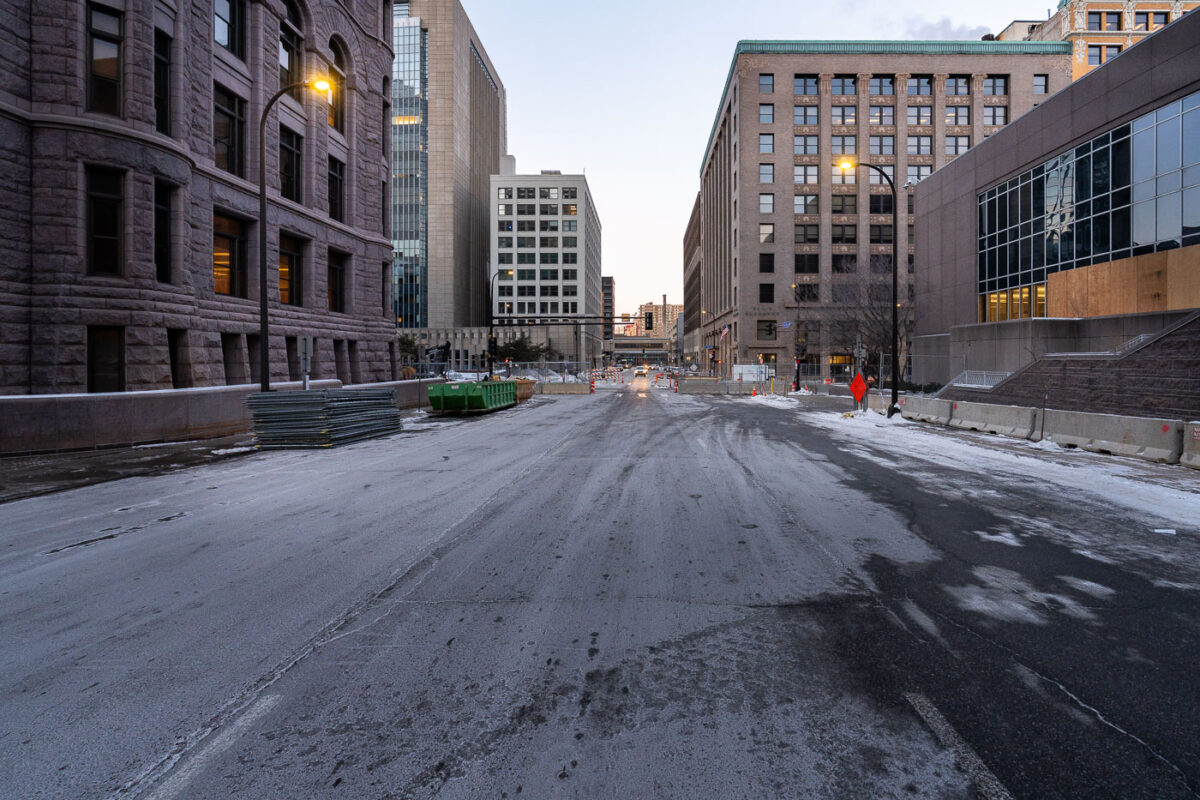
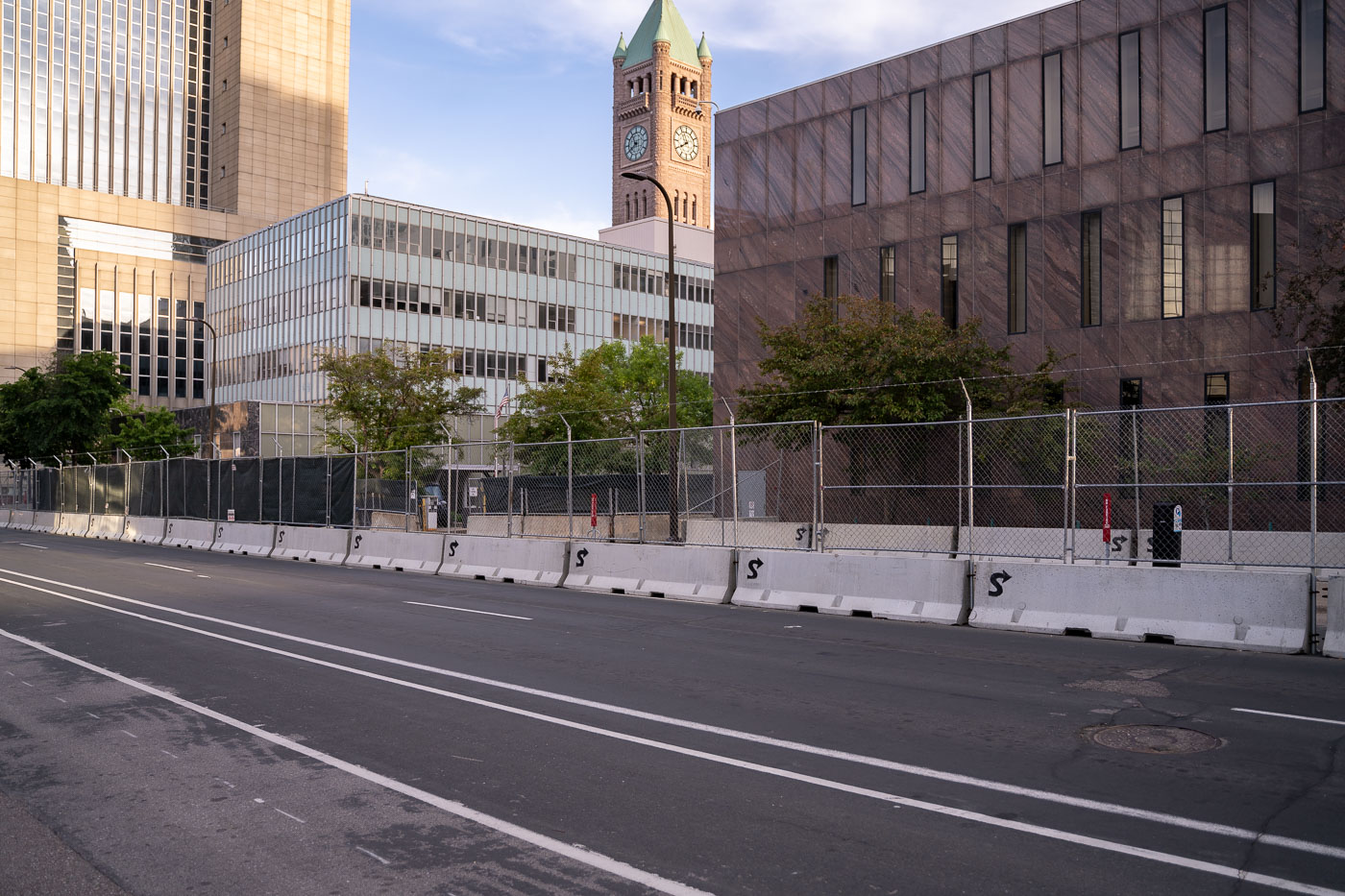
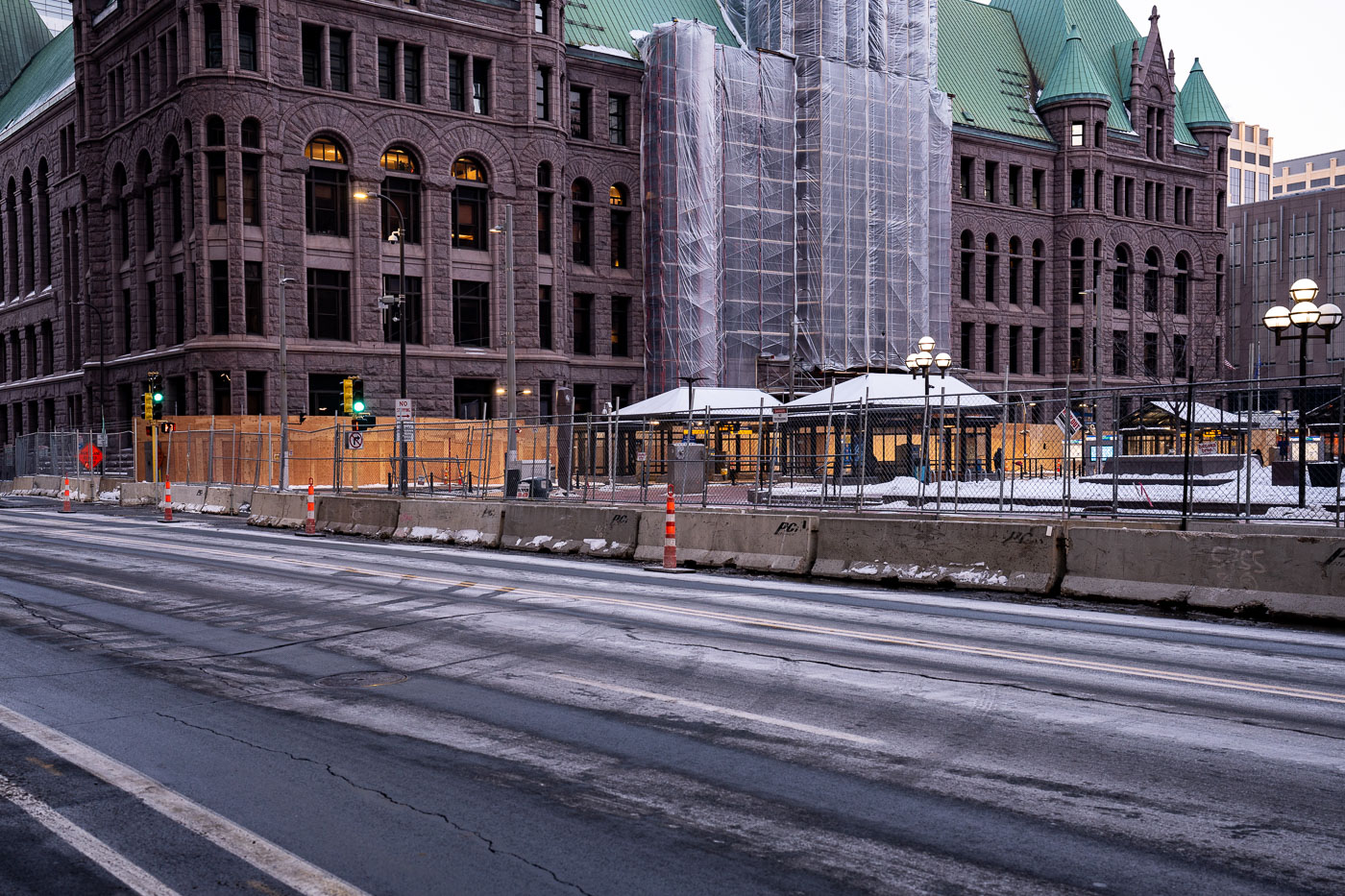
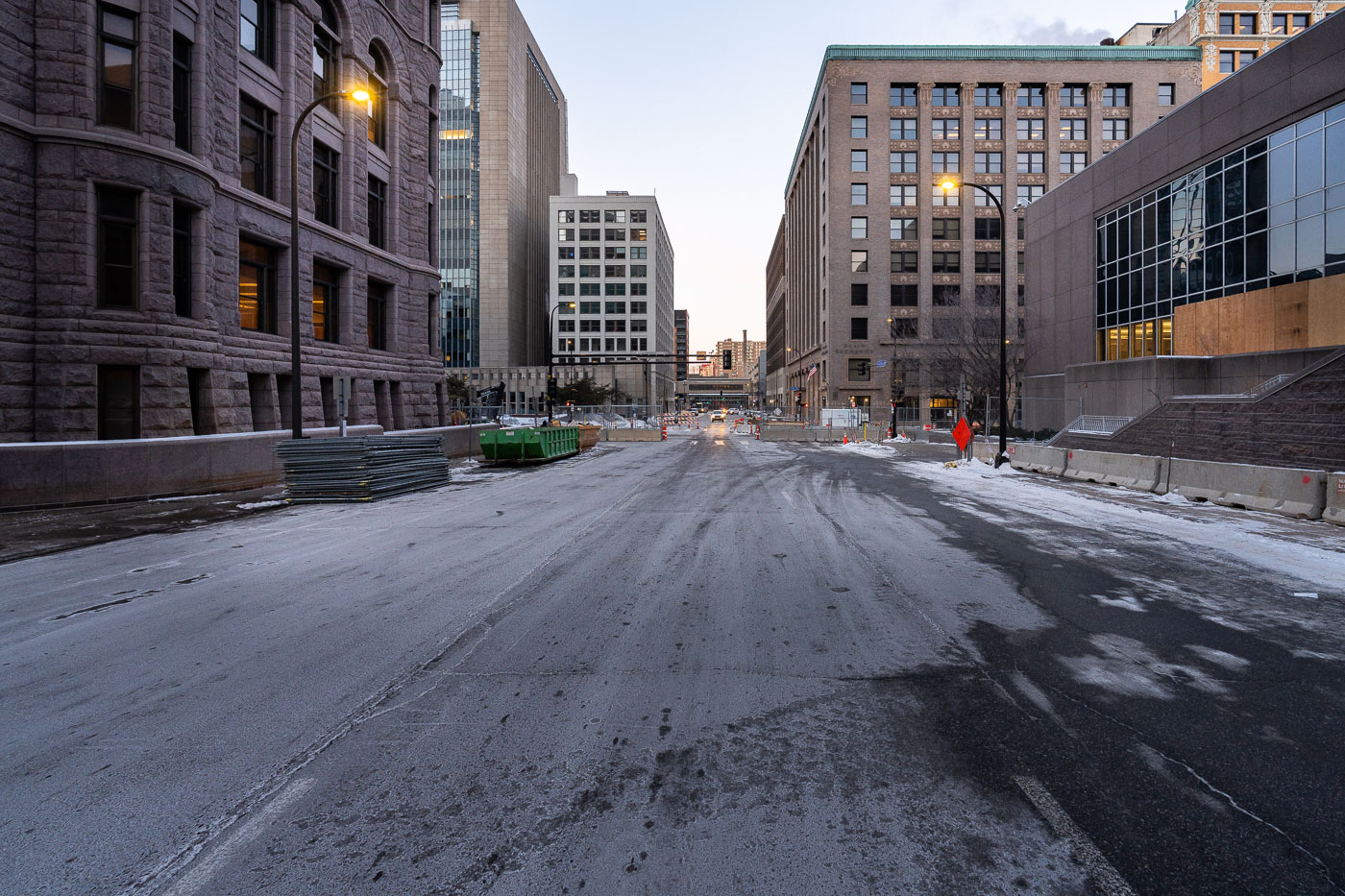
Snow-covered street lined with historic and modern buildings, security fencing, and barriers surrounding Minneapolis City Hall.
Security fencing and concrete barriers surround Minneapolis City Hall and the Hennepin County Jail in anticipation of the Derek Chauvin murder trial.

Empty Downtown Minneapolis Street Before the Chauvin Trial
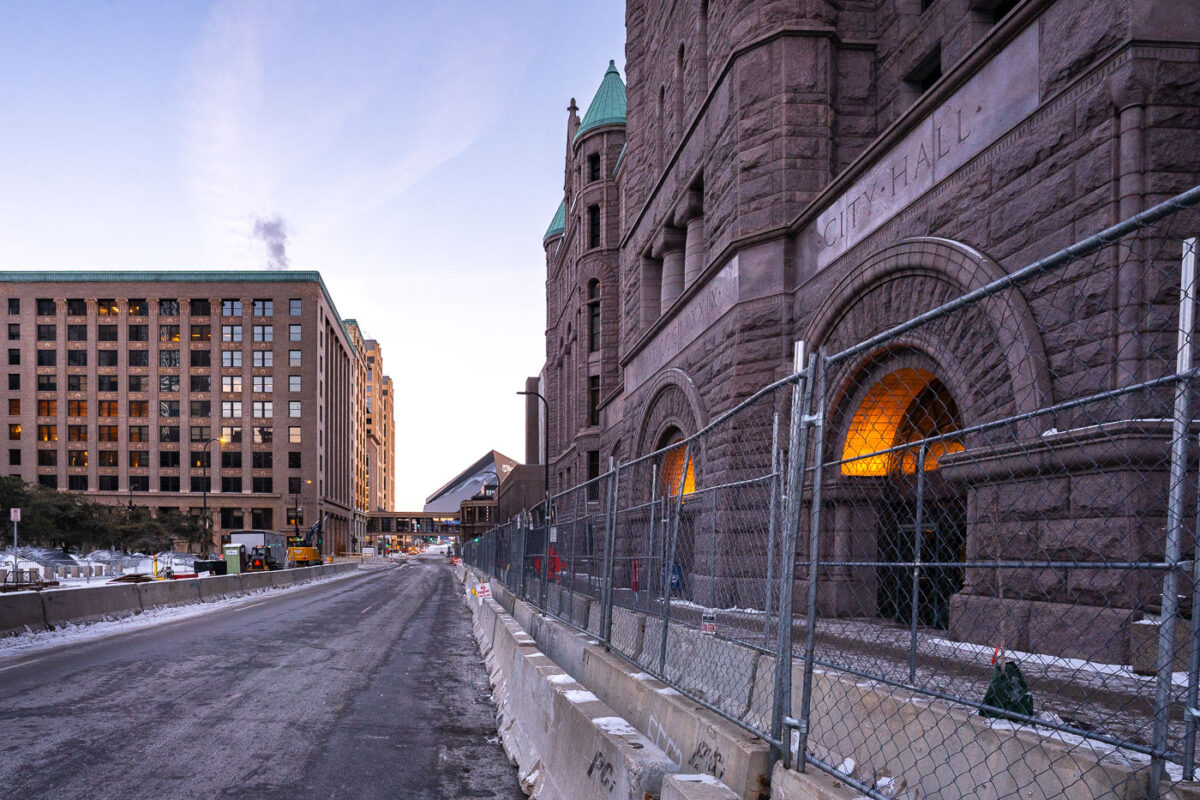
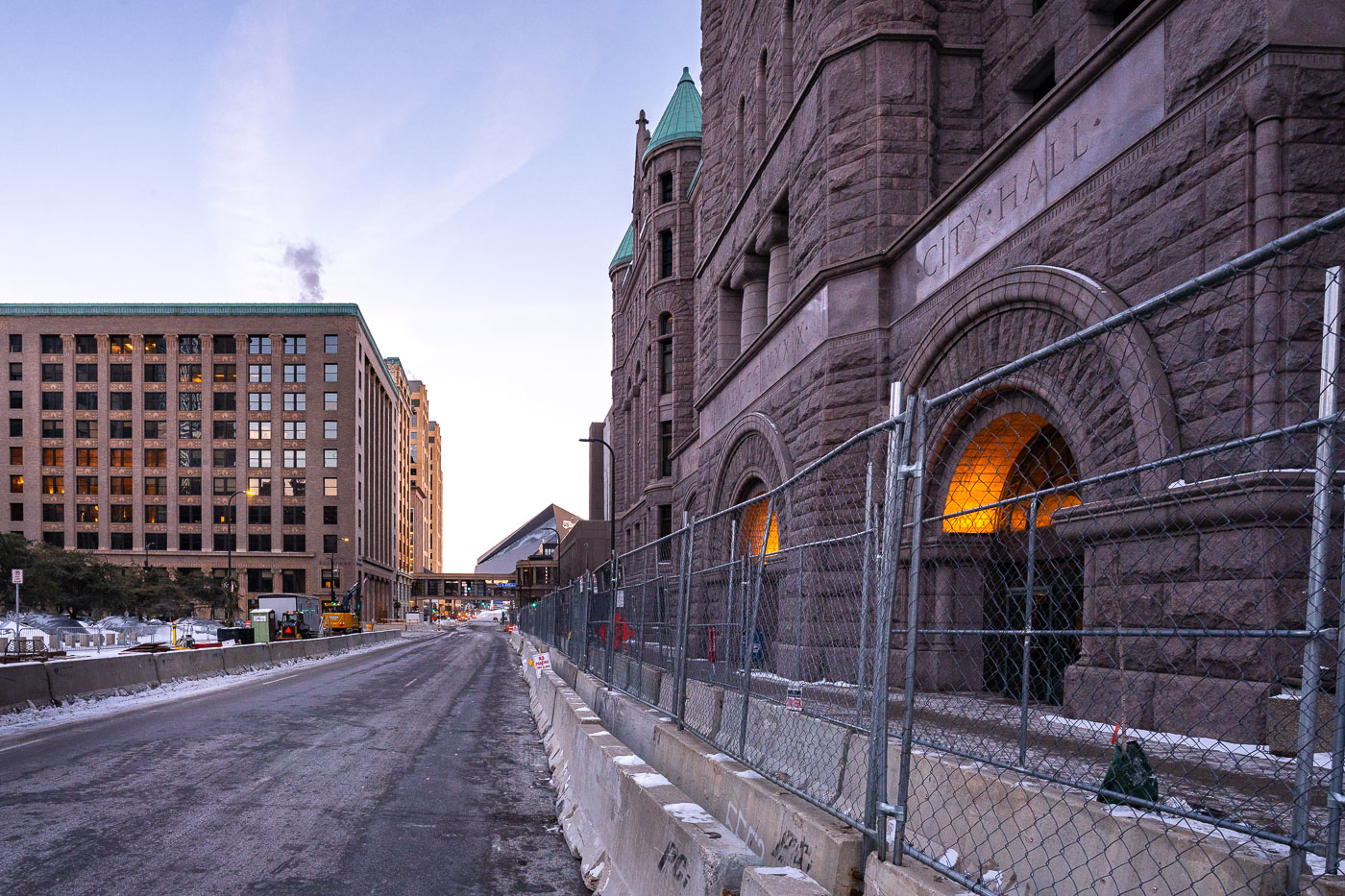
Metal fencing and concrete barriers surround Minneapolis City Hall's stone facade during preparations for the Derek Chauvin trial.
Fencing and barricades begin going up around downtown locations with Derek Chauvin trial just 20 days away.

Fourth Avenue Fenced Off Outside Minneapolis City Hall

Concrete Barricades in the snow at George Floyd Square
Barricades at George Floyd Square in Minneapolis on January 23, 2021, during a snowfall. This area became a protest zone following the murder of George Floyd in May 2020. The barricades, adorned with messages such as "RESPECT ONE ANOTHER" and "YOU ARE NOW ENTERING THE FREE STATE OF GEORGE FLOYD," signify the community's assertion of control and memorialization of the event. The "RESIDENTS ONLY" signs indicate restricted access, reflecting the self-governance established by protesters.

George Floyd Square Barricades in Snow, Minneapolis
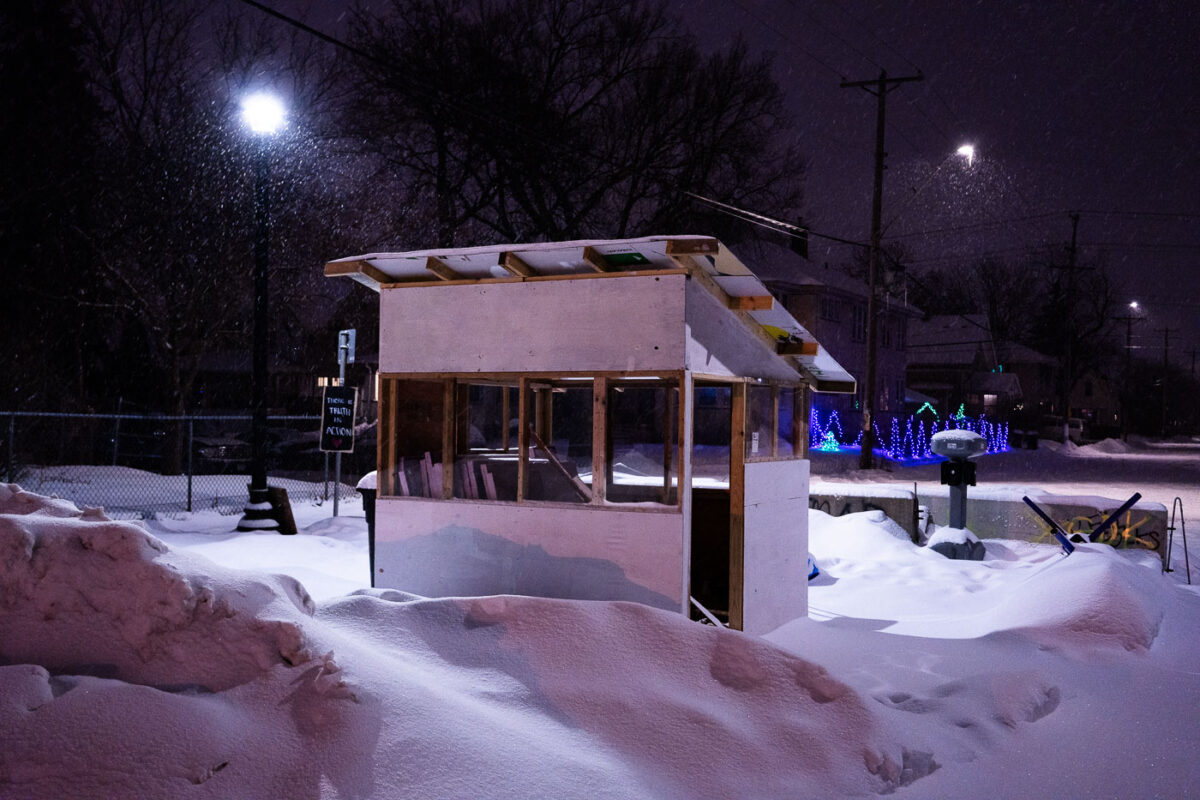
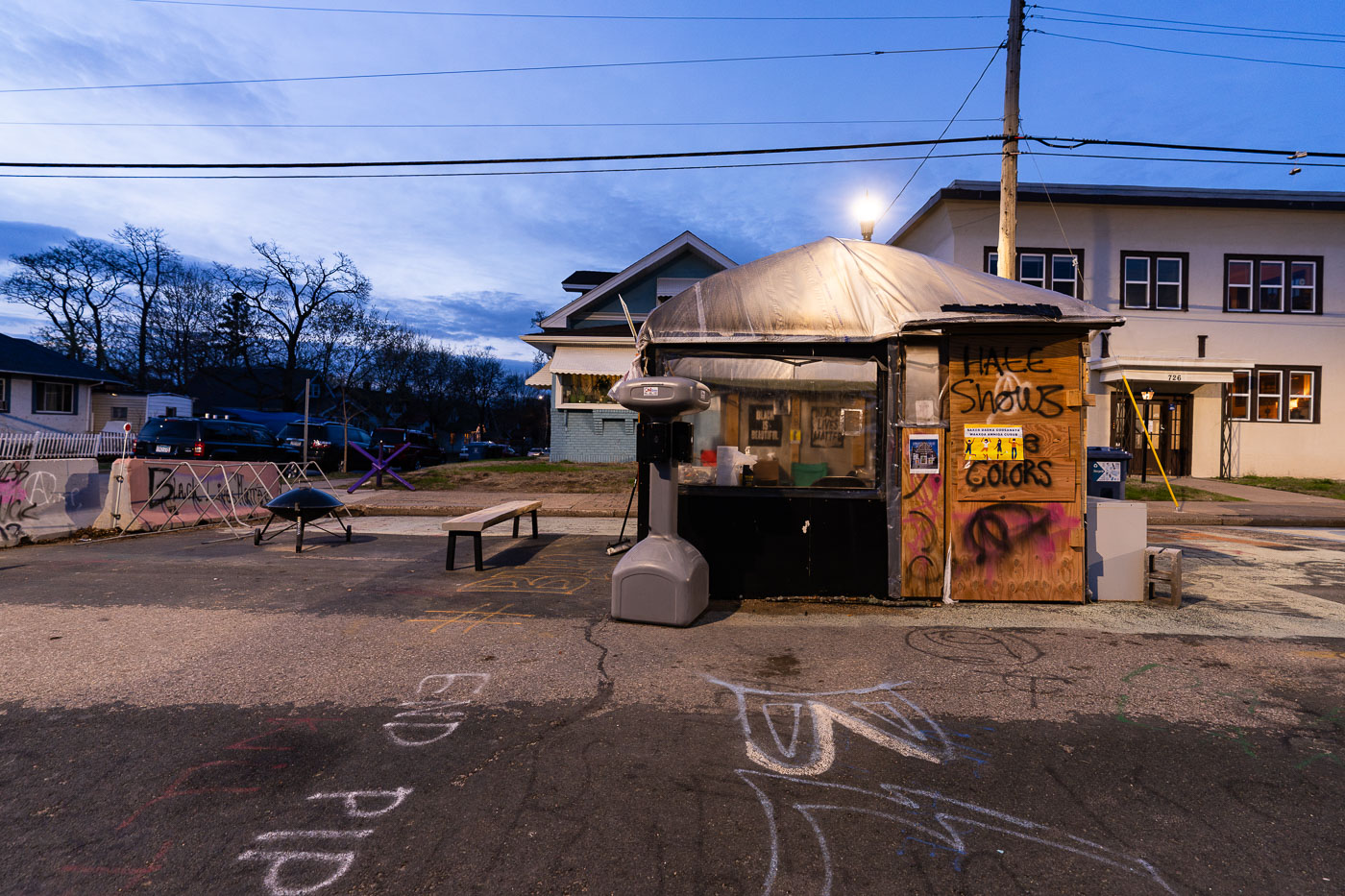
Warming huts at George Floyd Square
A winter warming hut stands amidst snow and barricades at George Floyd Square in Minneapolis. This site, located at the intersection of 38th Street and Chicago Avenue, became a protest zone and memorial following the murder of George Floyd on May 25, 2020. Community members constructed structures like this warming hut to provide shelter and support for those maintaining the memorial and protest presence, especially during the cold Minnesota winters.

George Floyd Square Winter Warming Hut

Hennepin County Public Safety Facility in downtown Minneapolis barricaded at night with graffiti on a street sign.
The Hennepin County Public Safety Facility in downtown Minneapolis is shown at night behind metal barricades, traffic barrels, and stacked crowd-control fencing. Plywood covers the building’s ground-level windows and doors, and graffiti reading “fuck MPD” is written on the back of a street sign in the foreground. The county complex houses jail and court functions, and the security measures visible here were in place in September 2020 after protests in the area.
“Fuck MPD” Graffiti Outside Hennepin County Public Safety Facility

1st Precinct Police Station with painted concrete barricades
The Minneapolis Police First Precinct police station in downtown Minneapolis is fortified with concrete blocks. These security measures were implemented following the widespread protests and civil unrest that occurred in Minneapolis in May 2020, sparked by the murder of George Floyd. The concrete blocks serve as a protective barrier for the station, which is a critical piece of civic infrastructure responsible for law enforcement operations in the city's central district. The presence of these barricades reflects a period of heightened security and ongoing community tensions in the urban environment.

Minneapolis Police First Precinct, Barricaded with Blocks
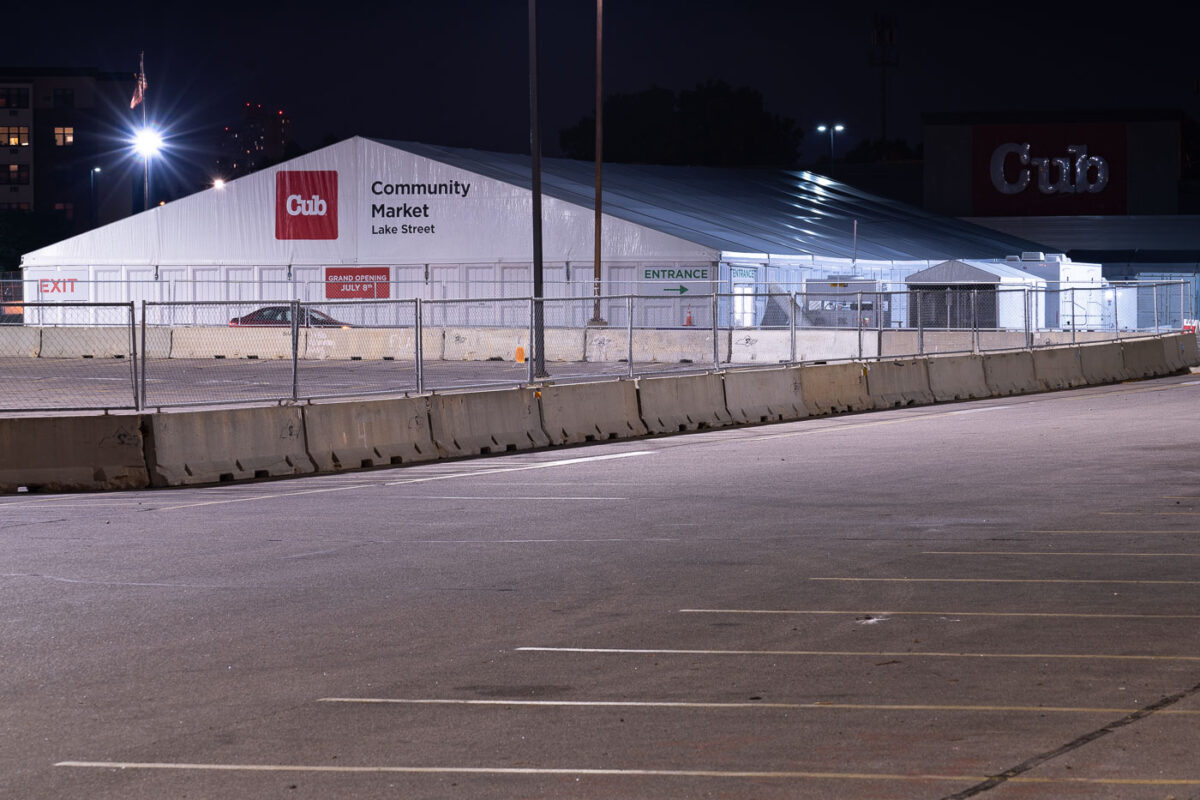
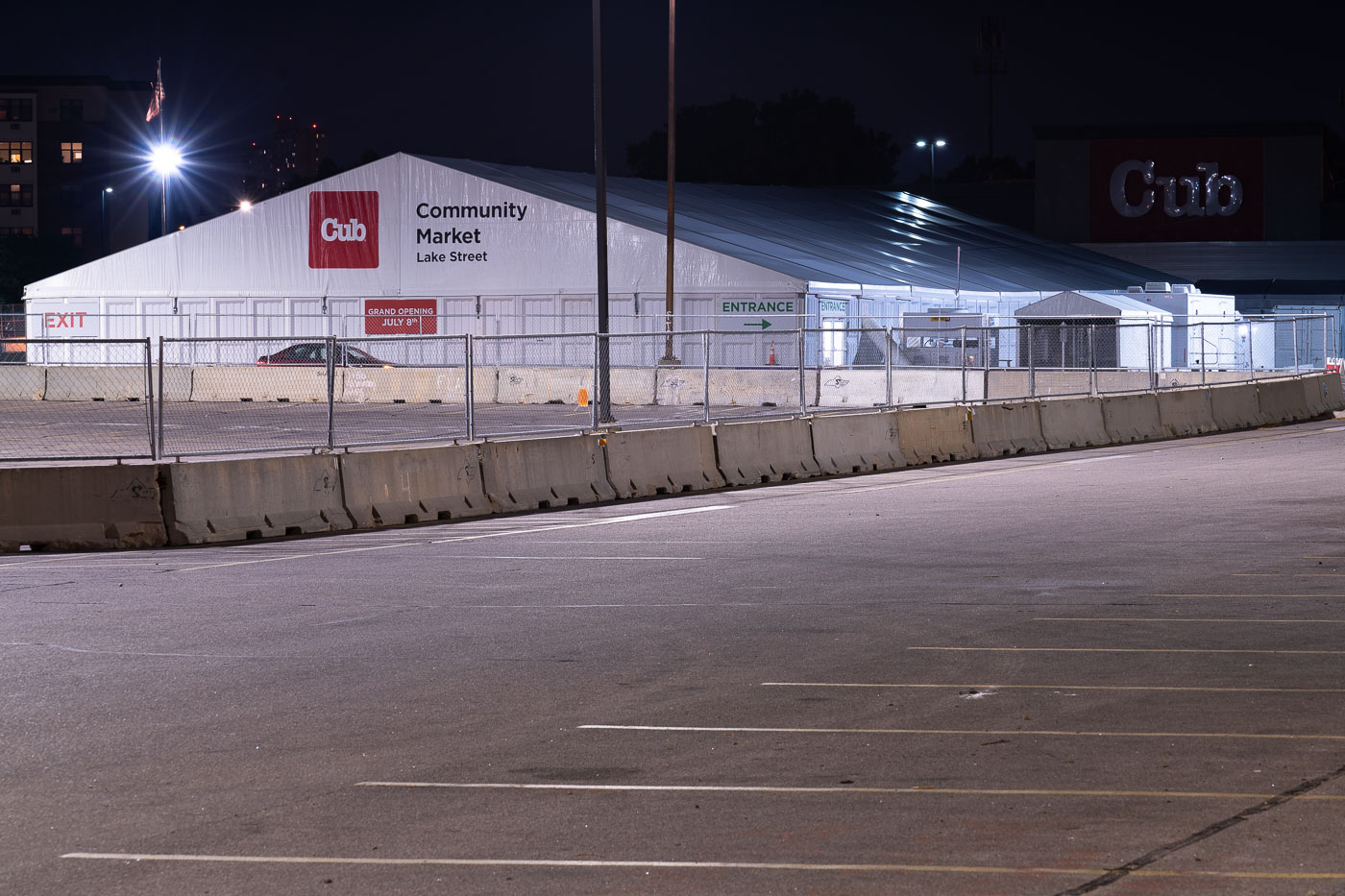
Cub Community Market tent on East Lake Street in Minneapolis before its July 8 opening.
Cub Community Market on East Lake Street in Minneapolis was a temporary grocery store established after the nearby Cub Foods was damaged by fire in May 2020. The tent market provided interim food access while the permanent store was rebuilt. A sign at the site announced a July 8 grand opening.

Cub Community Market, East Lake Street Minneapolis
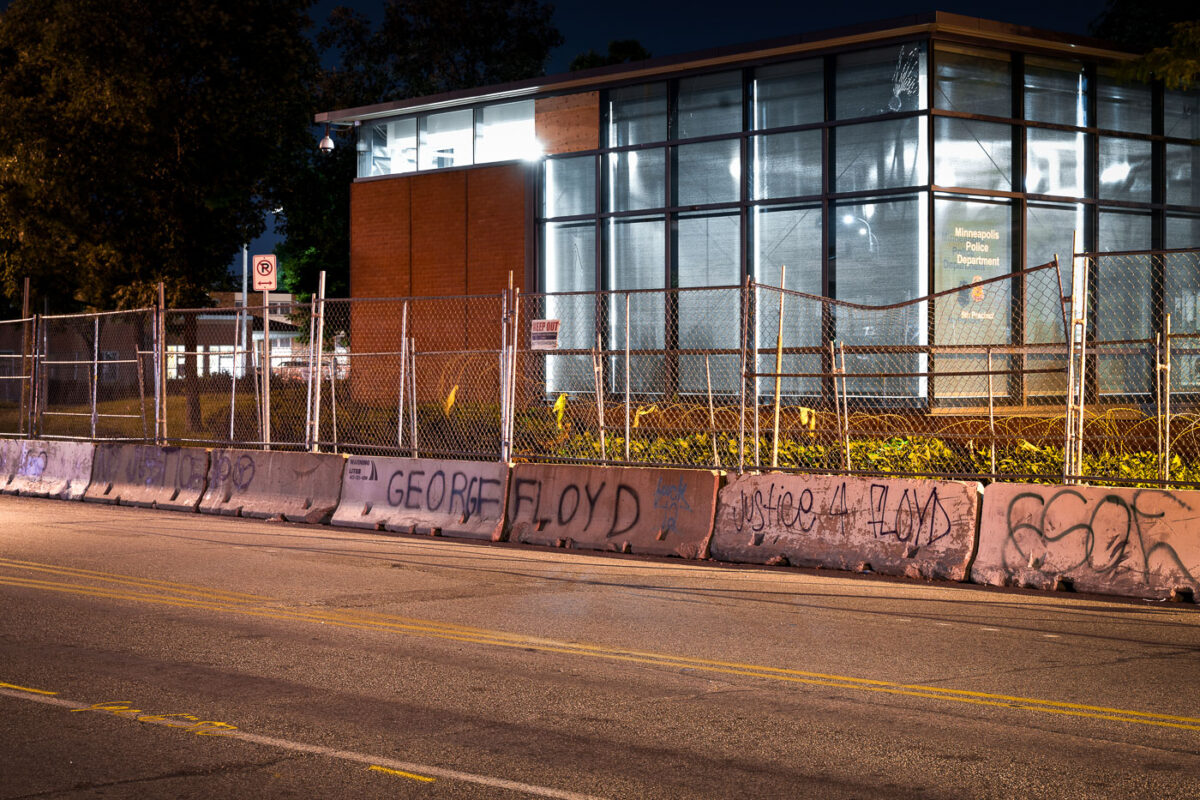
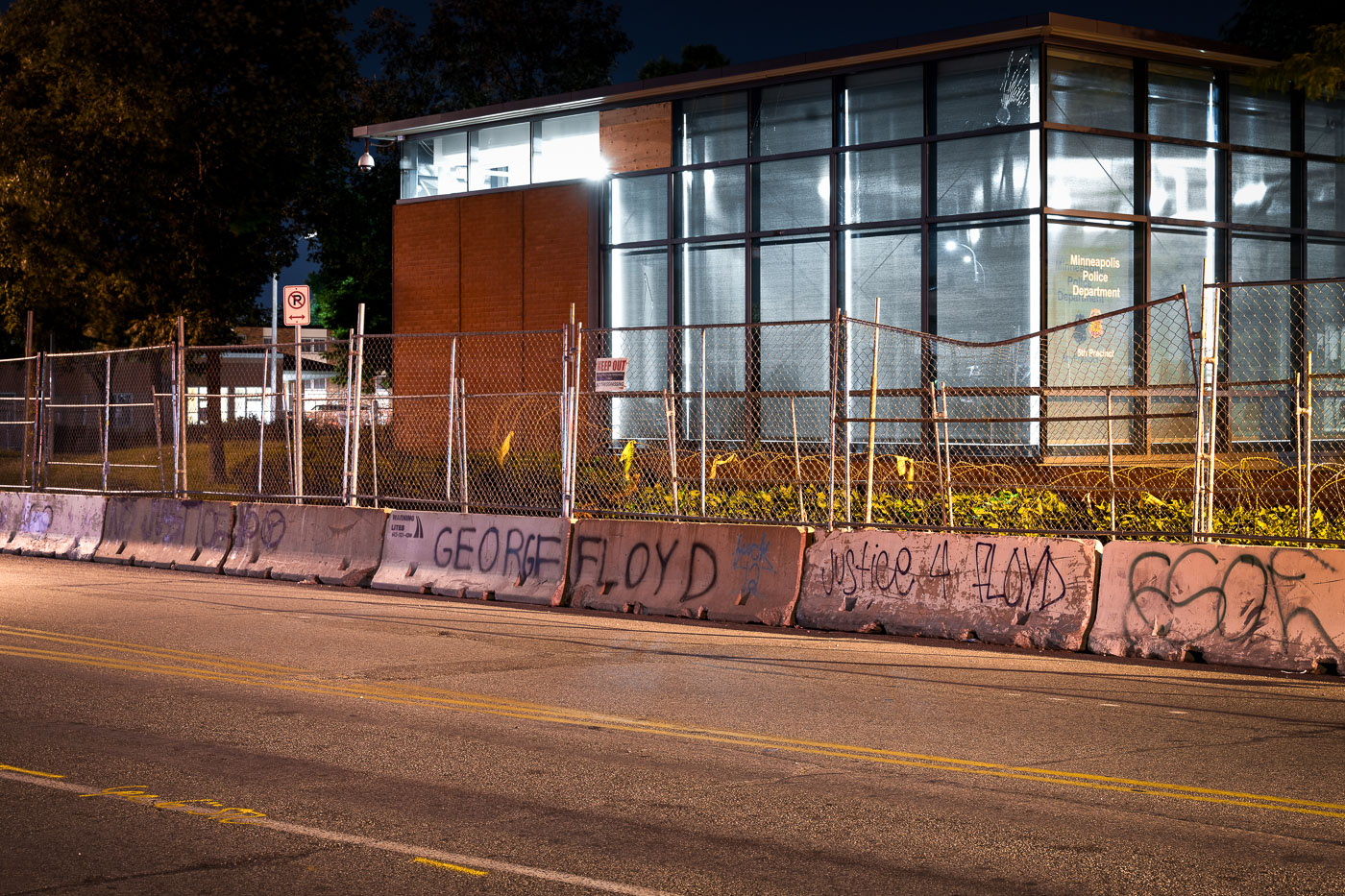
Minneapolis Police 5th Precinct behind barricades and razor wire in south Minneapolis, June 2020.
The Minneapolis Police Department’s 5th Precinct in south Minneapolis is shown behind concrete barricades, chain-link fencing, and razor wire in June 2020. Graffiti on the barriers includes “GEORGE FLOYD” and “Justice 4 Floyd,” linking the fortifications to the unrest that followed Floyd’s murder by Minneapolis police. The temporary security perimeter turned the station and the street in front of it into a heavily controlled area during that period.

Minneapolis Police 5th Precinct, George Floyd Barricades
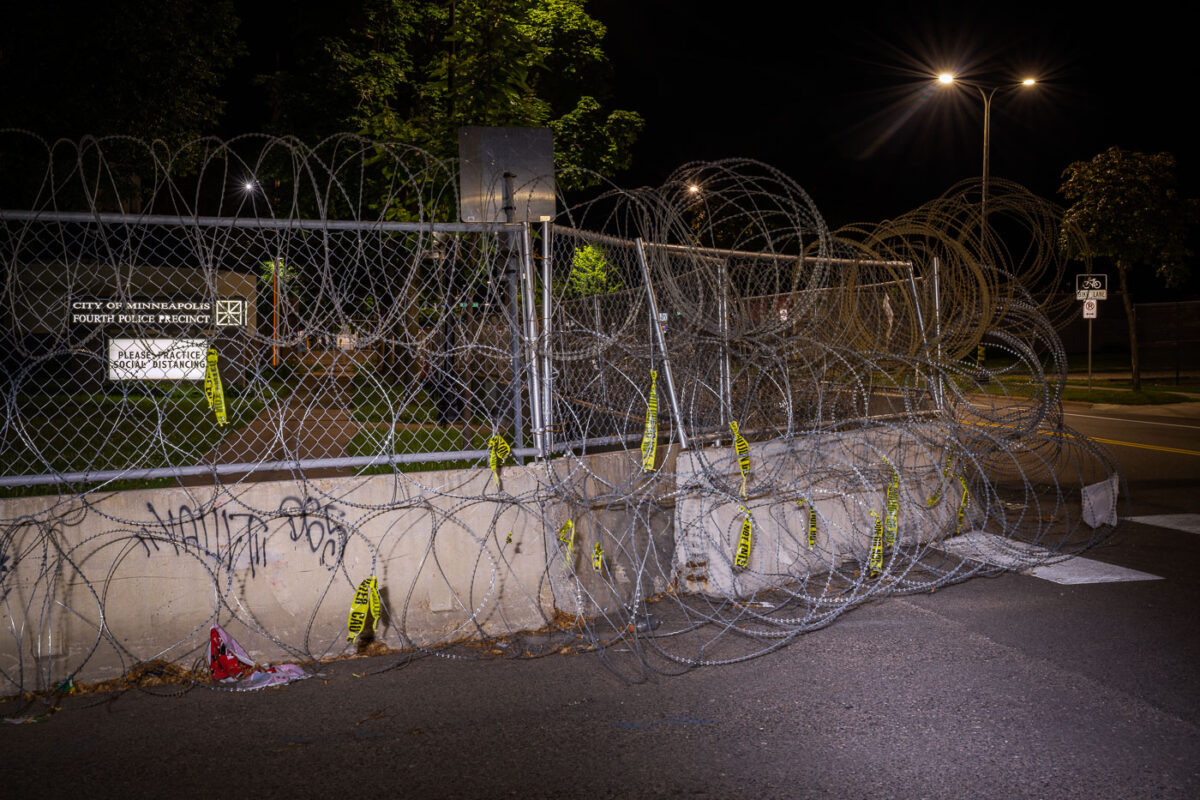
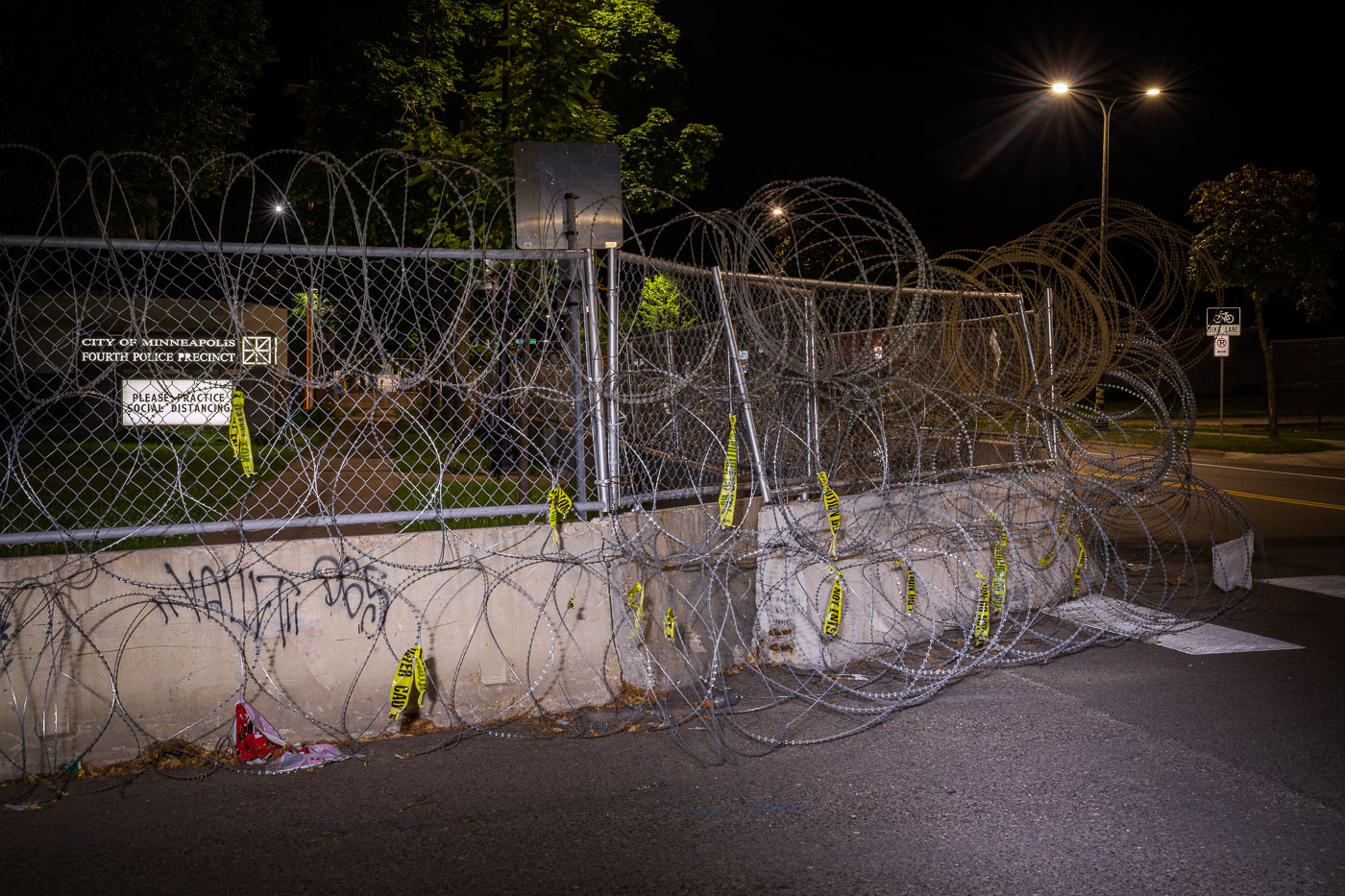
Razor wire and concrete barricades outside Minneapolis Police Fourth Precinct in North Minneapolis at night.
The Minneapolis Police Department’s Fourth Precinct in North Minneapolis is shown behind chain-link fencing, concrete barricades, and extensive coils of razor wire on June 23, 2020. The added security surrounded the police station in the weeks after the murder of George Floyd and the protests that followed across Minneapolis. A sign on the fence reading “PLEASE PRACTICE SOCIAL DISTANCING” places the fortifications within the concurrent COVID-19 pandemic.

Minneapolis Police 4th Precinct Razor Wire & Barricades
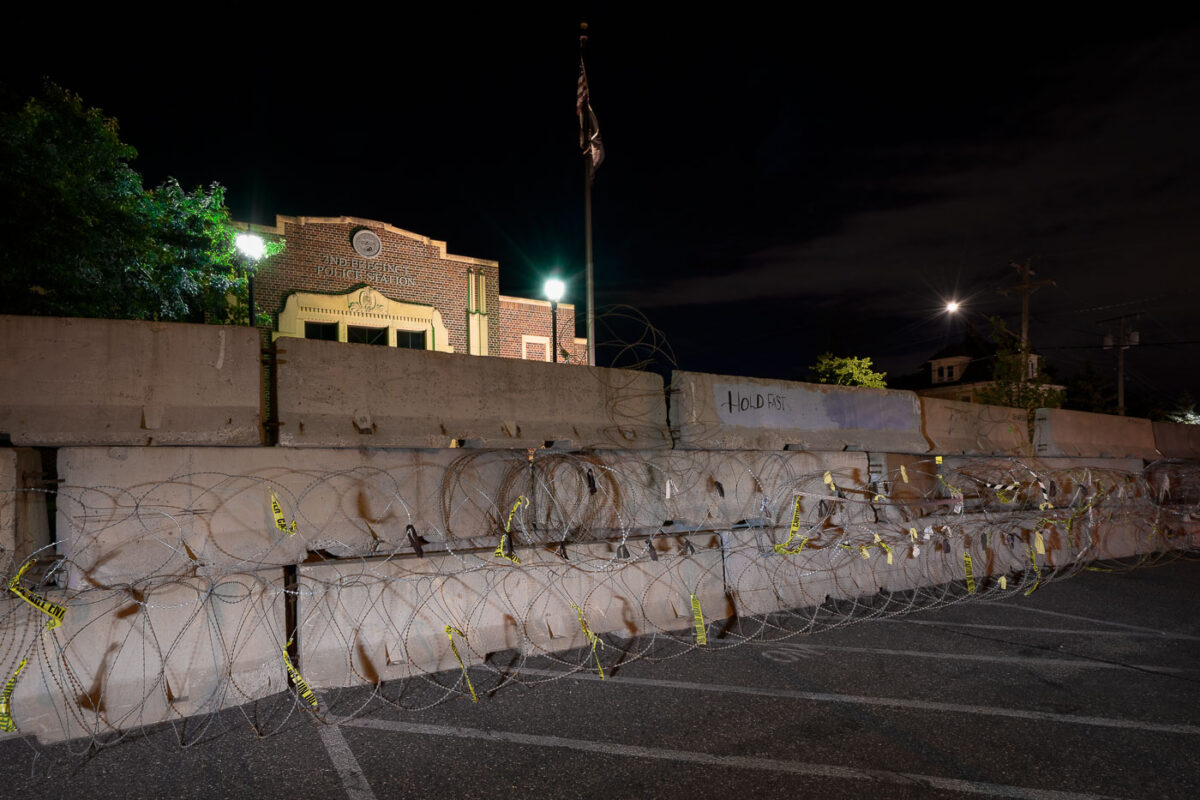
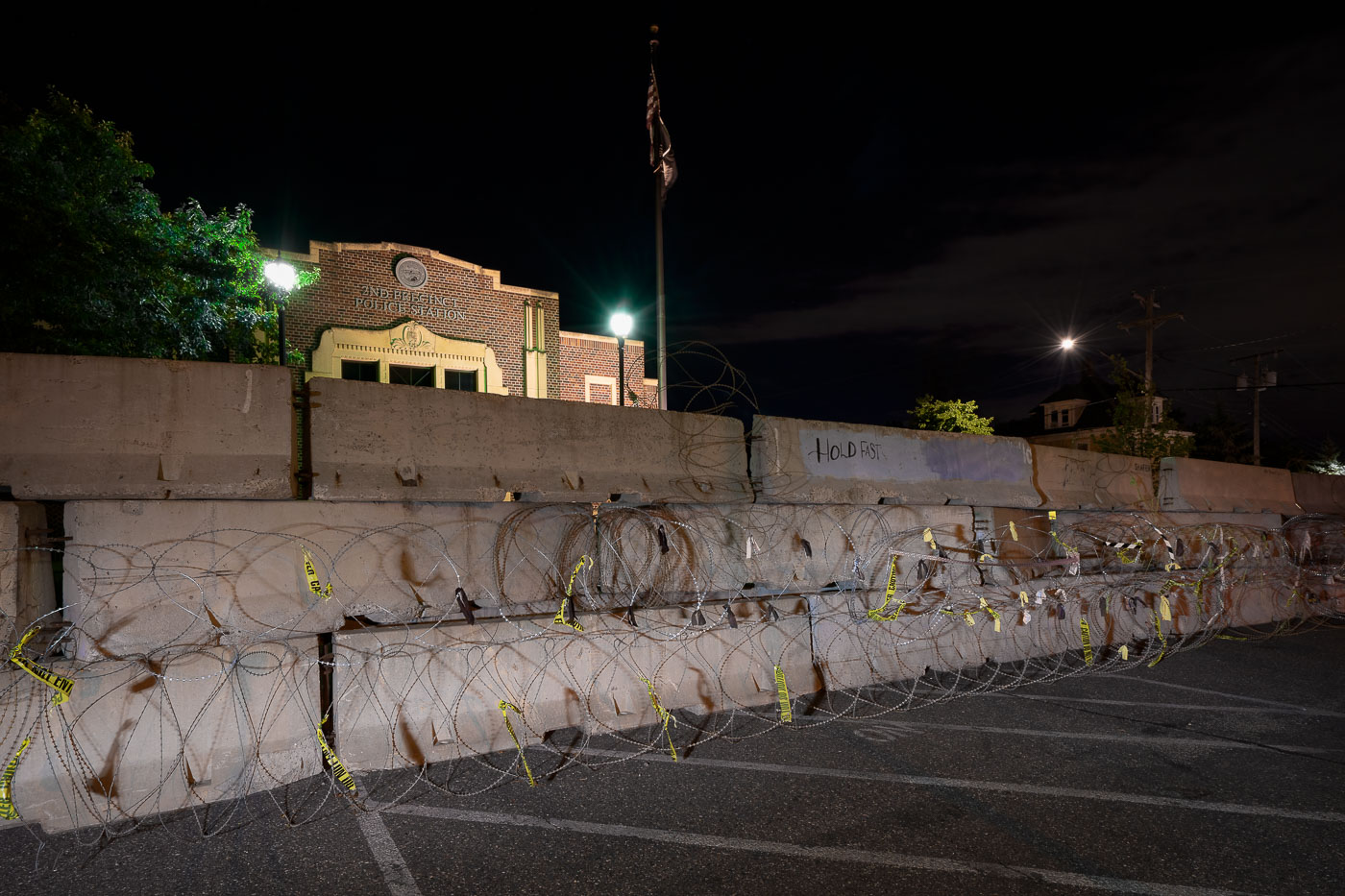
Minneapolis Police 2nd Precinct in Northeast Minneapolis behind concrete barricades and razor wire, June 2020.
The Minneapolis Police Department Second Precinct station in Northeast Minneapolis is shown behind stacked concrete barricades and coils of razor wire on June 23, 2020. The security perimeter was erected after protests and unrest following the murder of George Floyd in May 2020. Graffiti reading “Hold Fast” is visible on one of the barriers in front of the station.

Minneapolis Police 2nd Precinct with Razor Wire & Barricades
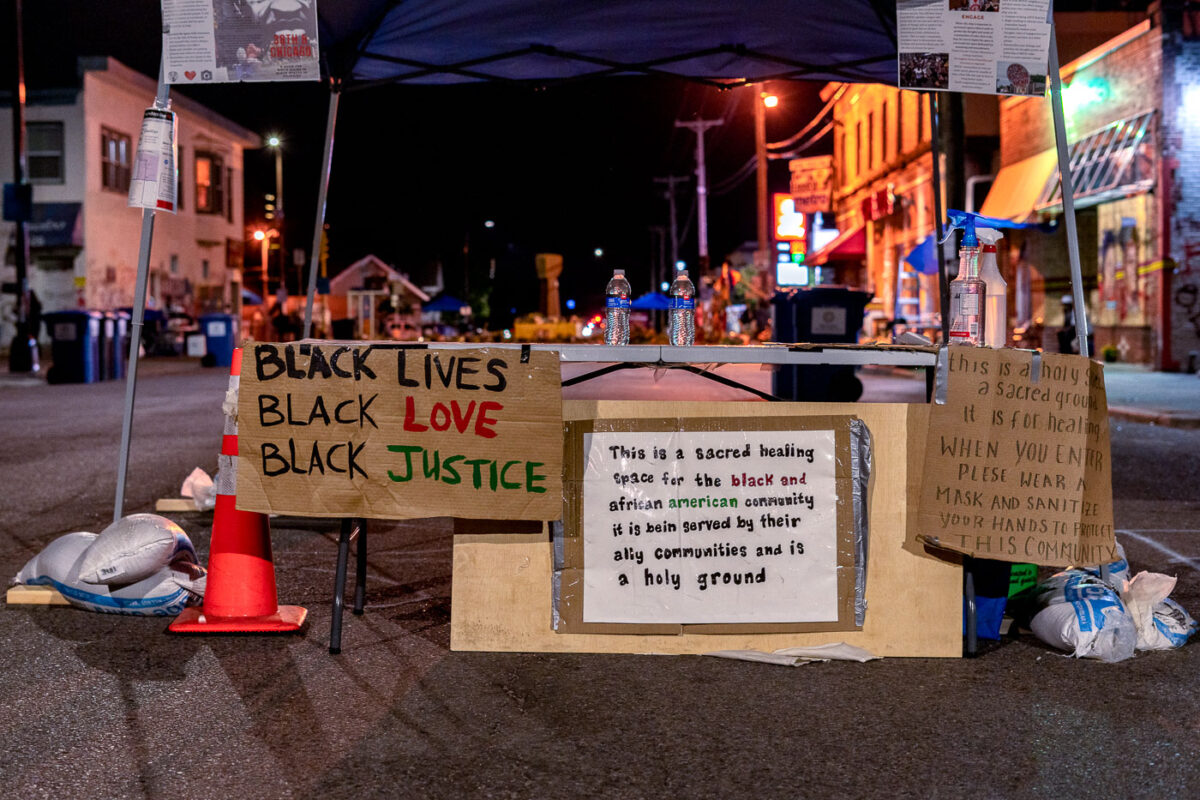
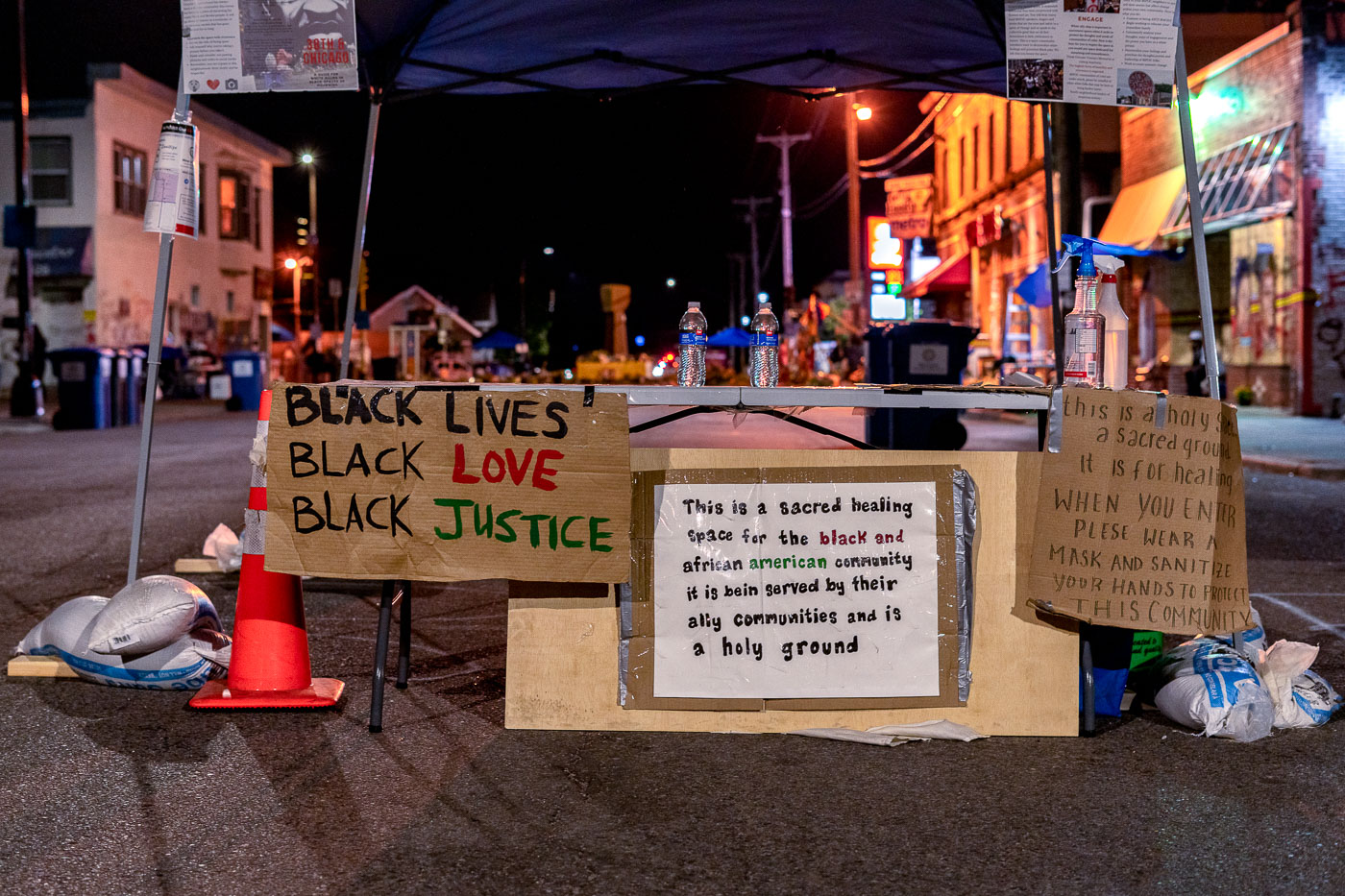
Welcome table at George Floyd Square in Minneapolis with signs reading “Black Lives, Black Love, Black Justice.”
A welcome table at George Floyd Square in Minneapolis stands at the crossroads of East 38th Street and Chicago Avenue, where a memorial and community healing space formed after George Floyd was killed by police in May 2020. Hand-lettered signs on the table read “Black Lives, Black Love, Black Justice” and describe the area as sacred ground for the Black and African American community and their allies.

George Floyd Square Welcome Table, Healing Space
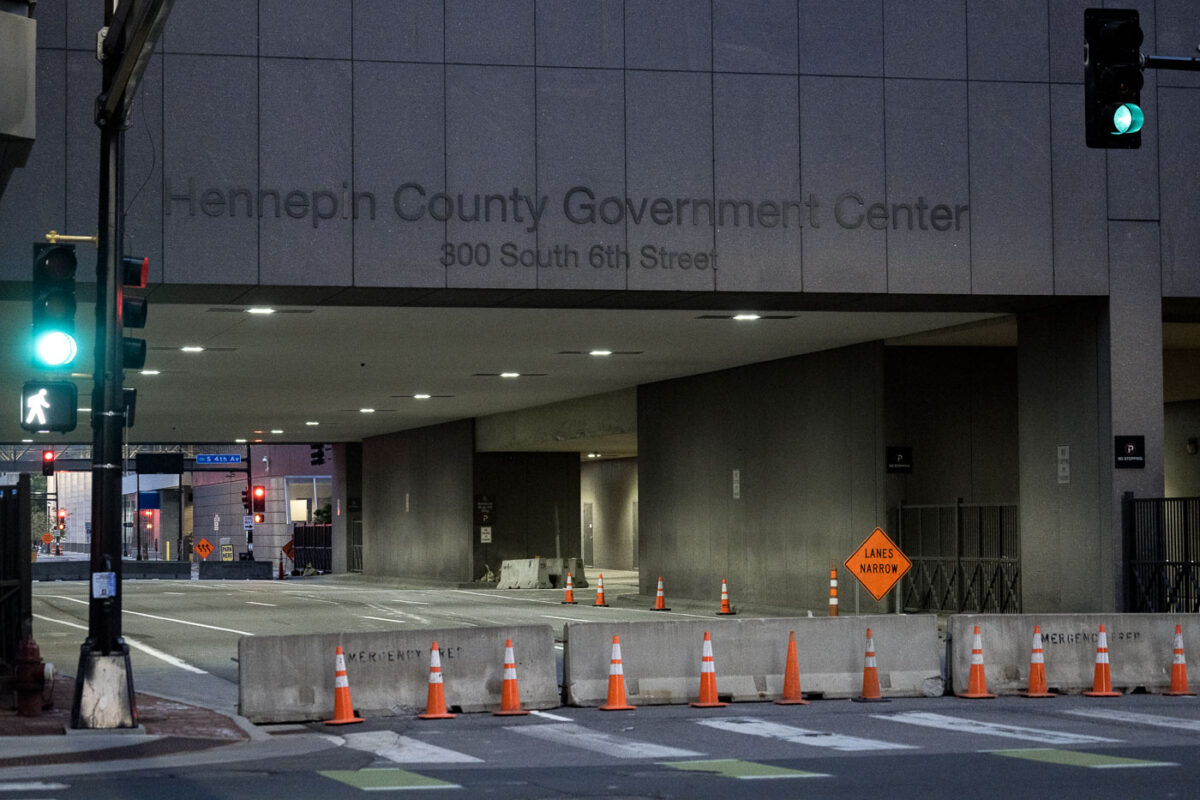
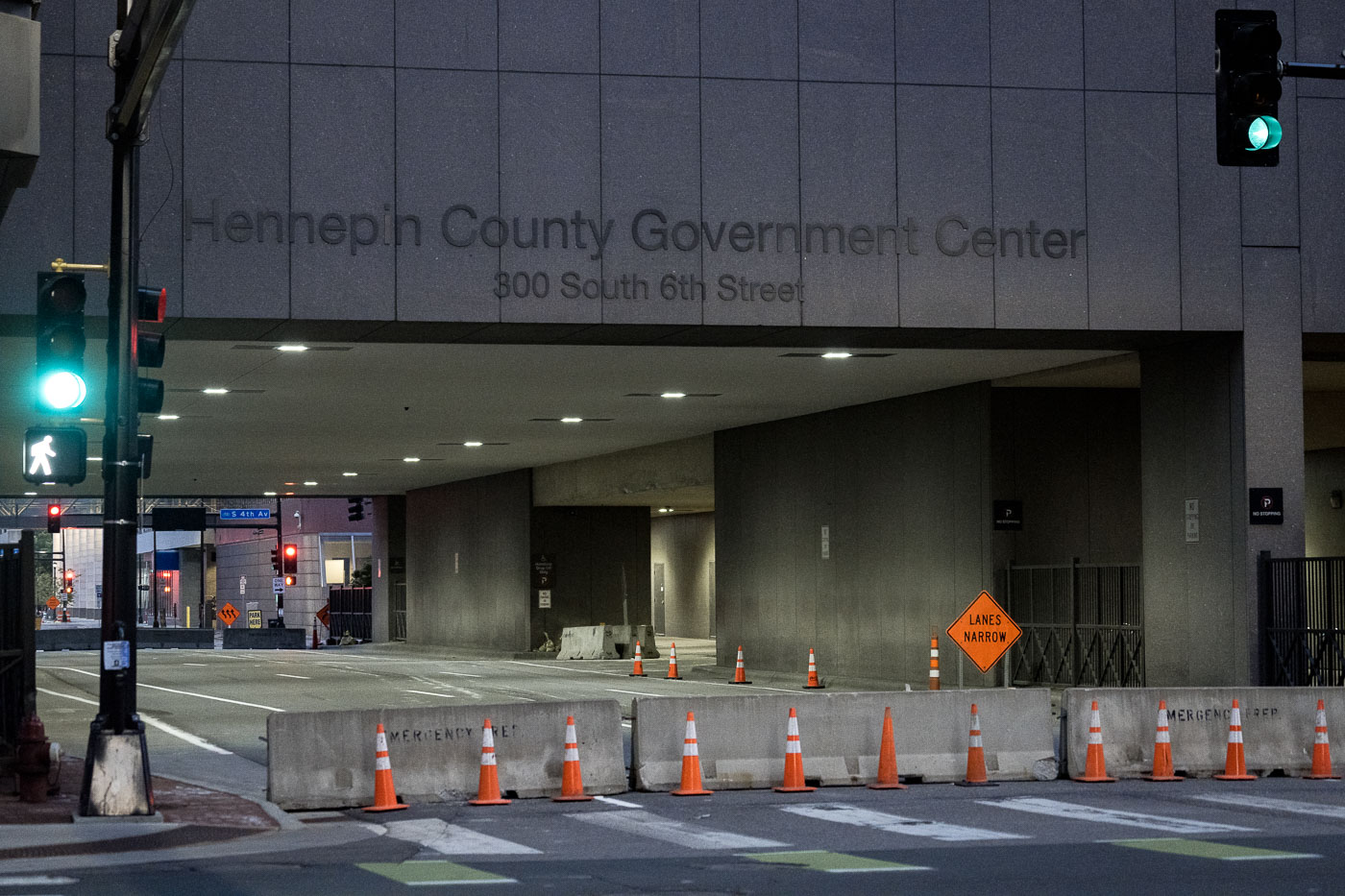
Barricades outside the Hennepin County Government Center on South 6th Street in downtown Minneapolis during curfew.
The Hennepin County Government Center at 300 South 6th Street in downtown Minneapolis is barricaded with concrete barriers and traffic cones across the street outside the building. The county complex houses administrative offices and courts, and the road restrictions appear to have been put in place during the nighttime security measures that accompanied the citywide curfew in early June 2020. The curfew followed protests after the police killing of George Floyd.

Hennepin County Government Center Barricades, Minneapolis Curfew
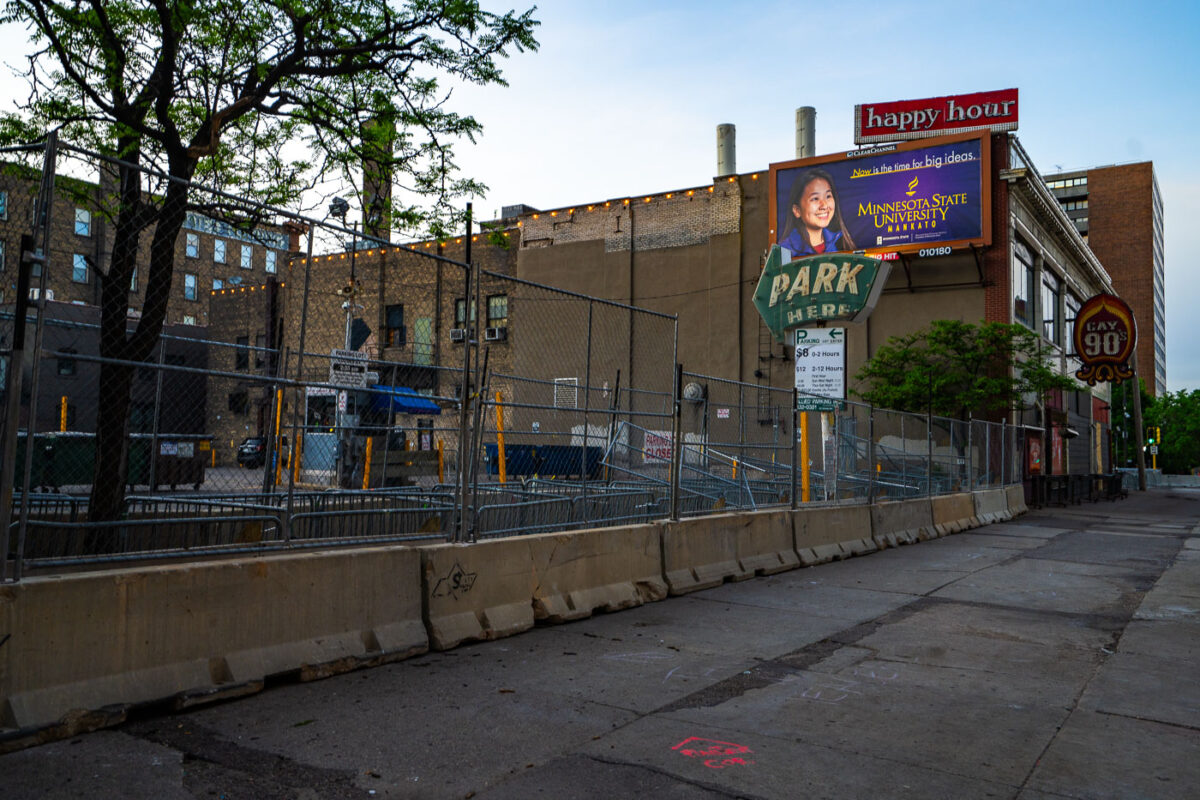
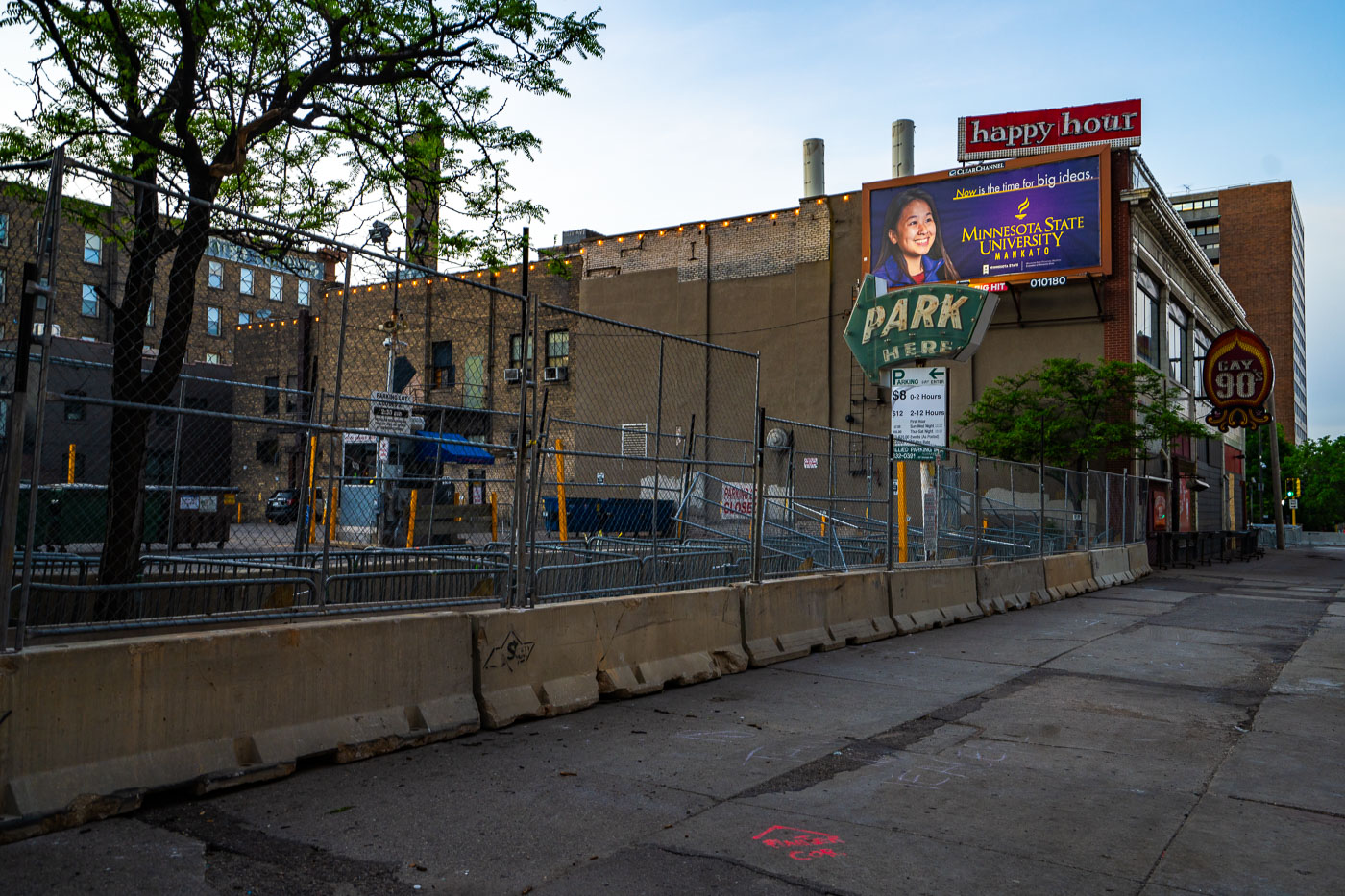
Concrete barricades and chain-link fencing on Hennepin Avenue near Minneapolis Police 1st Precinct, June 2020.
Concrete barricades and chain-link fencing line Hennepin Avenue in downtown Minneapolis near the Minneapolis Police 1st Precinct. The barriers were installed in late May and early June 2020 after protests followed the killing of George Floyd. In this block, temporary security measures surround parking lots and building frontages, reflecting the tightened perimeter around the precinct and nearby businesses.

Concrete barricades surround Downtown Minneapolis 1st Precinct
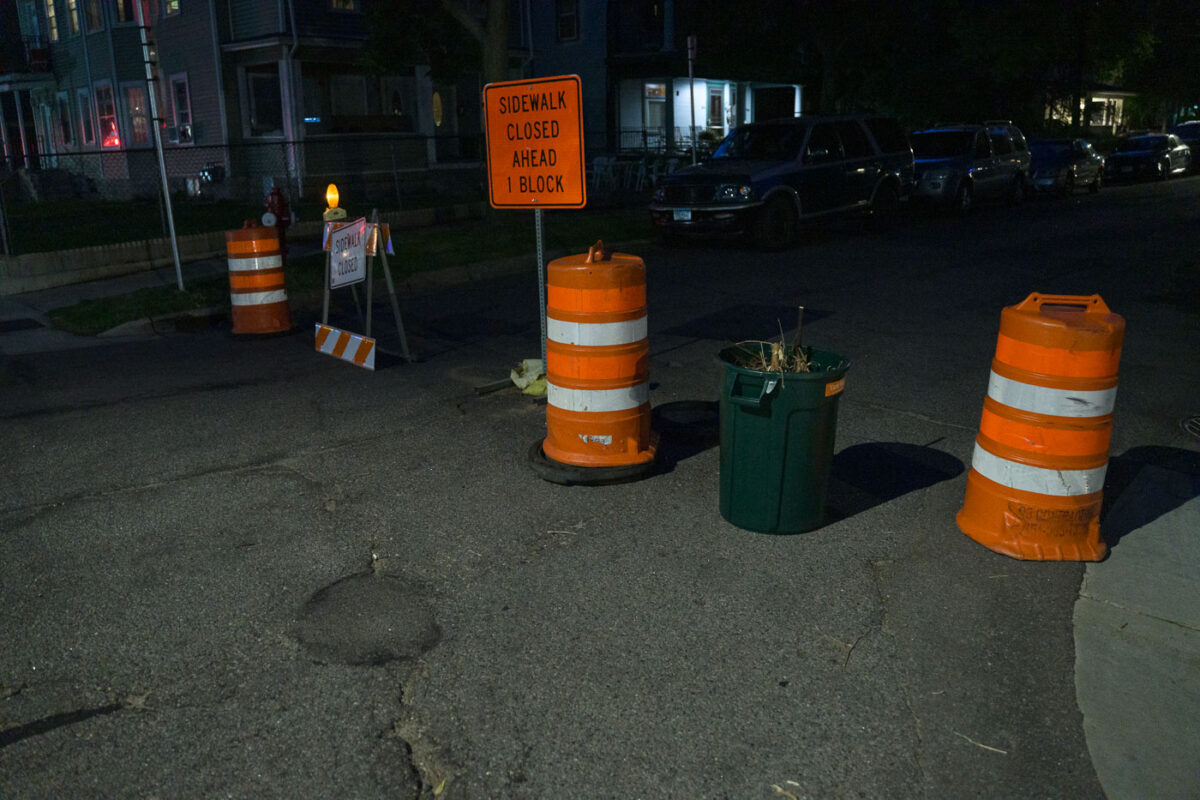
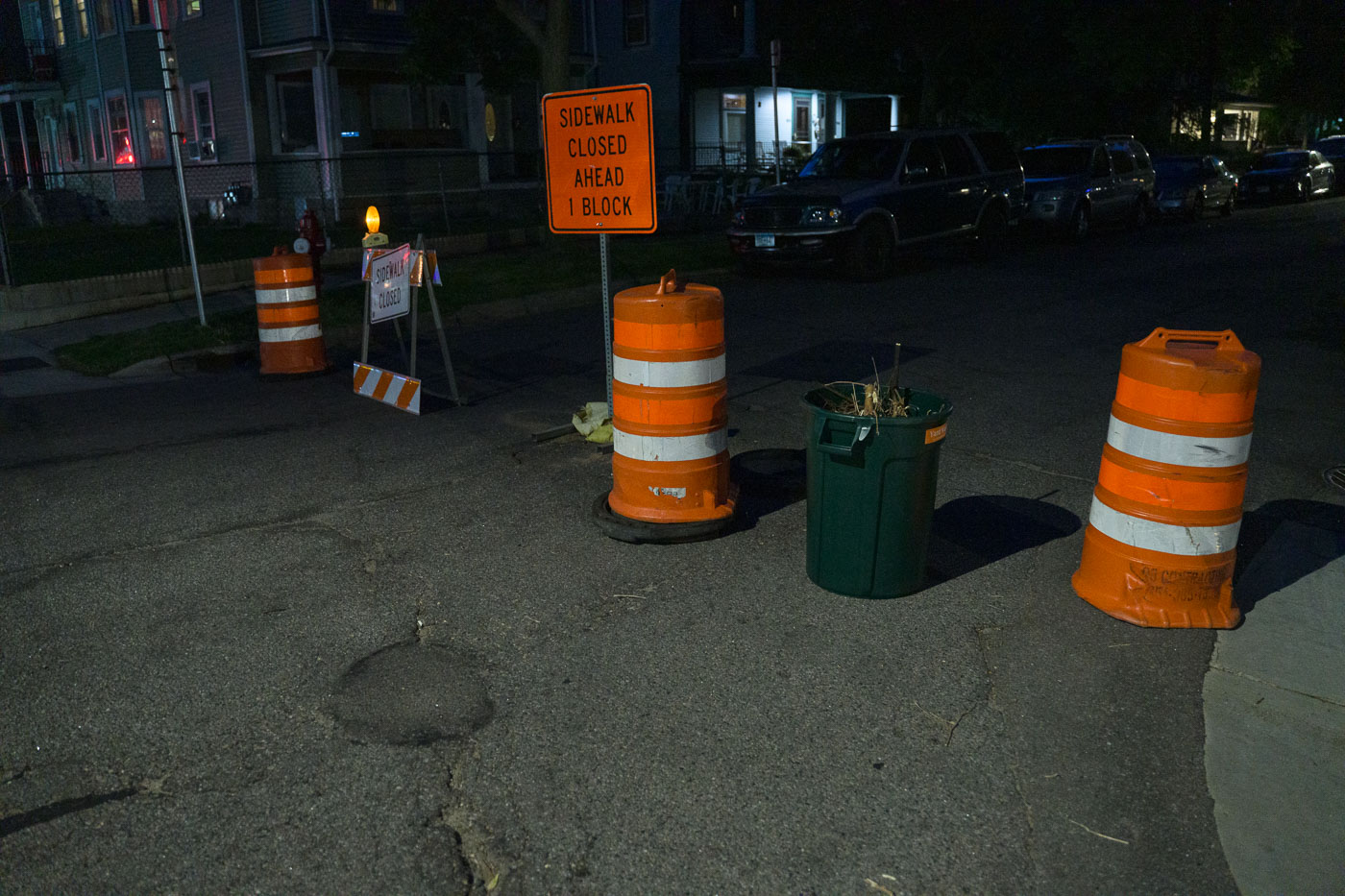
Makeshift barricades on a South Minneapolis street during the George Floyd unrest in June 2020.
Makeshift barricades on a residential street in South Minneapolis block traffic during the unrest following the killing of George Floyd in late May and early June 2020. The barriers consist of orange traffic barrels, official roadwork signs reading “Sidewalk Closed Ahead 1 Block,” and a household yard-waste bin placed across the roadway at night. Residents in parts of South Minneapolis set up street closures like these to restrict vehicle access and create controlled neighborhood entry points during the period of protests and unrest.

Residential Street Barricades, South Minneapolis, June 2020

Smoldering debris blocks Lake Street in Minneapolis after overnight unrest.
Debris and small smoldering fires block Lake Street in Minneapolis on the morning of May 30, 2020, with boarded storefronts and damaged buildings lining the corridor. The photograph shows the aftermath of unrest that followed the killing of George Floyd, when businesses and streets along this major South Minneapolis commercial route sustained extensive fire and impact damage. Smoke rises from burned material in the roadway as the street remains largely empty at daybreak.

Lake Street Fire Debris, Minneapolis

Emergency vehicles on Minnehaha Avenue in Minneapolis near AutoZone and Minnehaha Liquors during protests.
Emergency vehicles and police line Minnehaha Avenue in Minneapolis near the AutoZone and Minnehaha Liquors stores on the night of May 27, 2020. The photograph shows firefighters working beside a fire truck, officers in riot gear farther down the street, and debris scattered across the roadway during protests following the killing of George Floyd. This commercial stretch of South Minneapolis became one of the most heavily affected areas during the unrest.

Minneapolis Uprising: AutoZone & Minnehaha Liquors

Protesters near a small fire on Minnehaha Avenue in Minneapolis at night.
Protesters stand near a small fire and improvised barricades on Minnehaha Avenue in Minneapolis on the night of May 27, 2020. The photograph was made during demonstrations that followed the death of George Floyd, with smoke, fencing, and street obstructions visible along the roadway. Emergency lights are visible in the background as people move around the blocked-off street.

Minnehaha Ave Protest Fire, Minneapolis