Street Barricades

50 photos · 2021–2026

50 photographs tagged Street Barricades, 2021–2026.
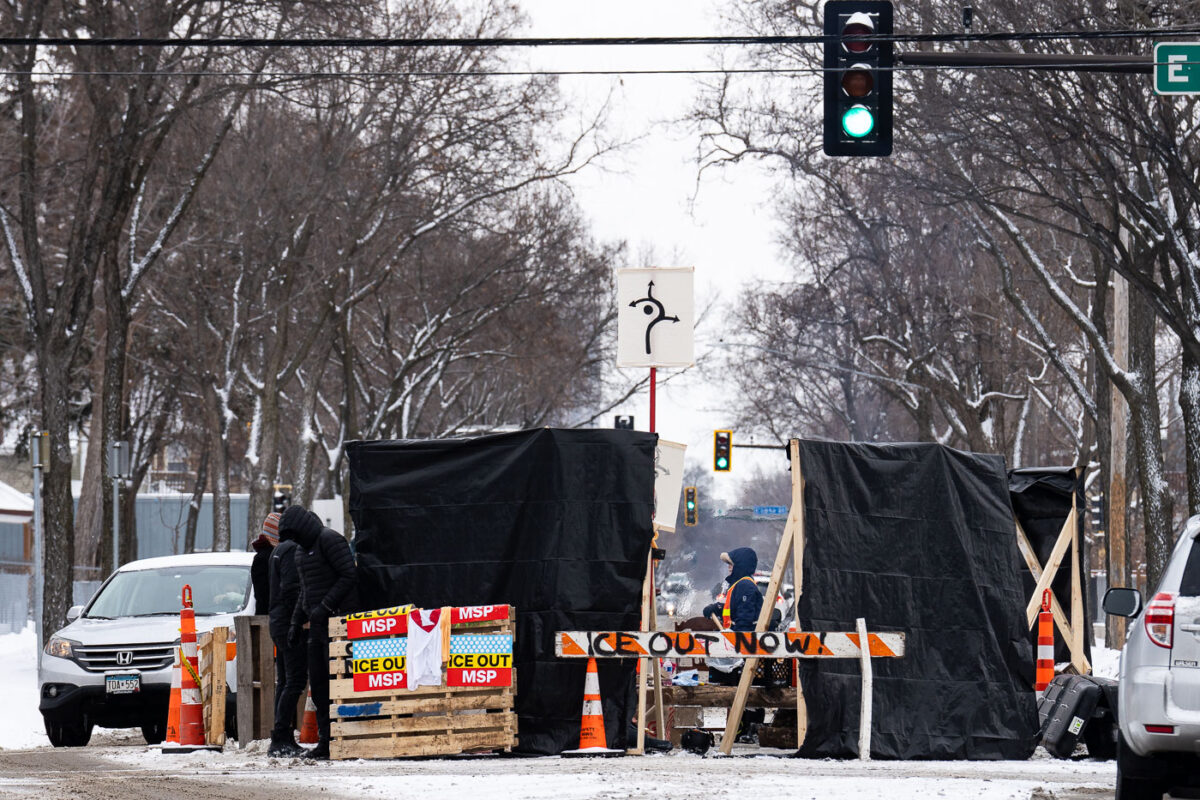
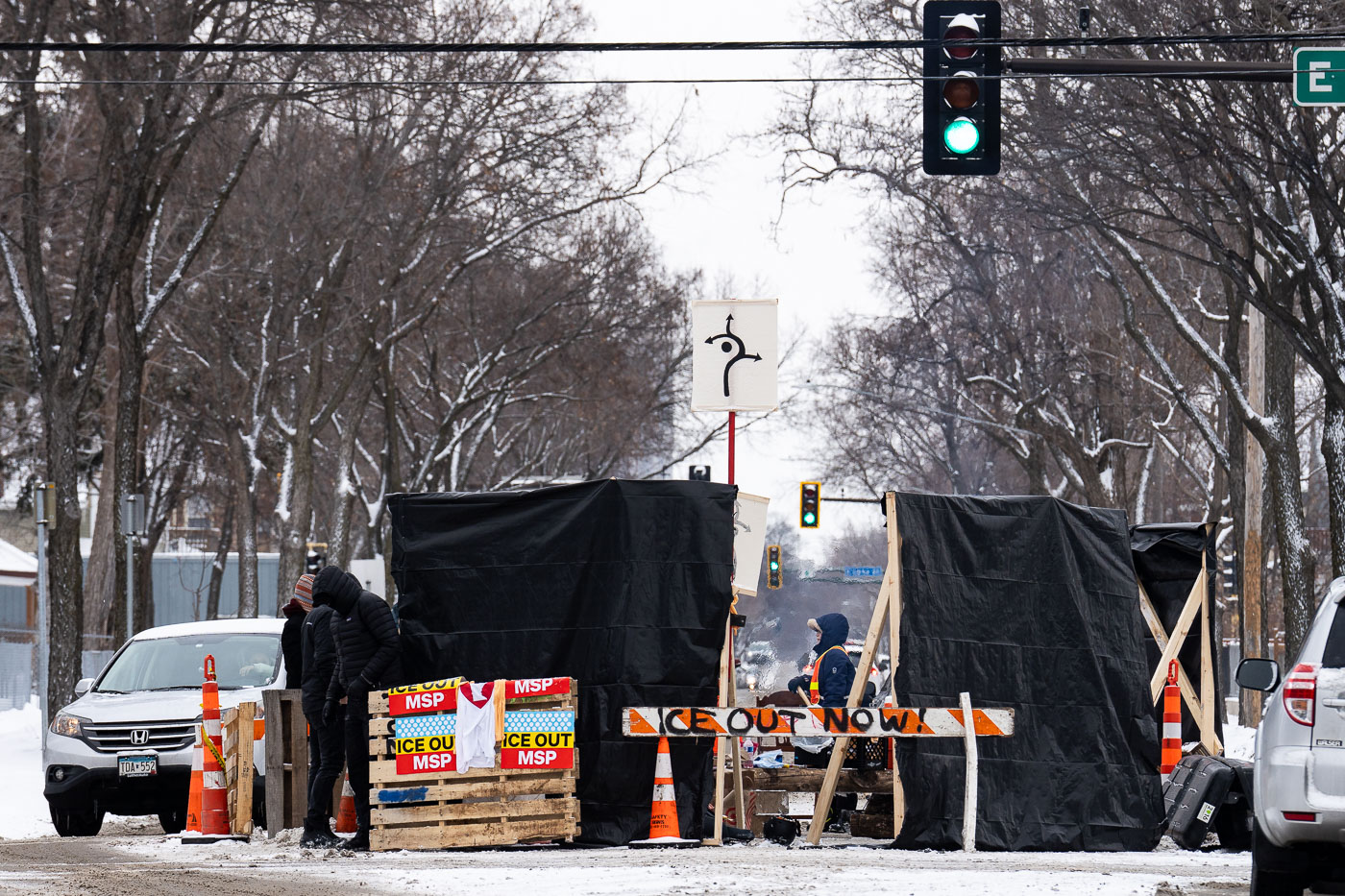
Protesters erect a filter blockade on Cedar Avenue in Minneapolis opposing ICE operations.
On February 1, 2026, protesters in South Minneapolis established "filter blockades" on Cedar Avenue as part of Operation Metro Surge. These makeshift structures, resembling roundabouts, were erected to facilitate community organizing and monitor traffic in opposition to Immigration and Customs Enforcement (ICE) operations. Signs such as "ICE OUT MSP" clearly communicated the local sentiment against ICE's presence in the city.

“Ice Out MSP” Filter Blockade on Cedar Avenue
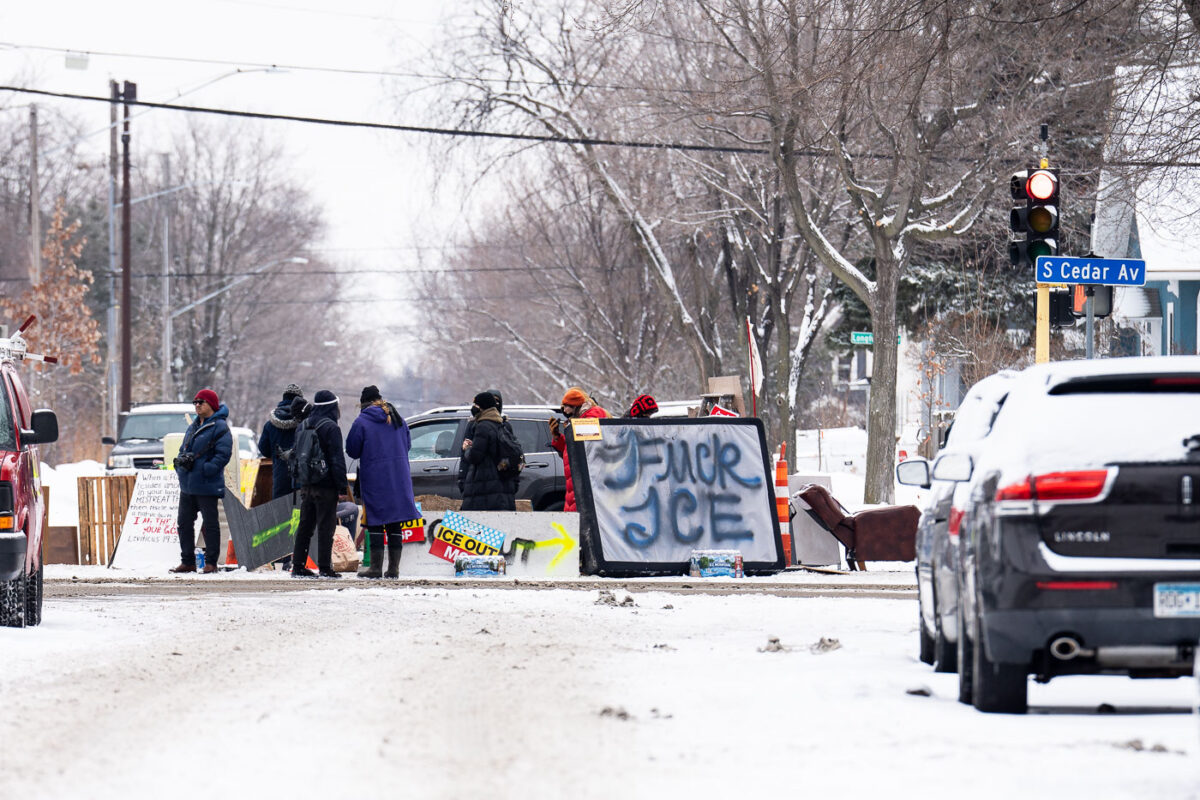
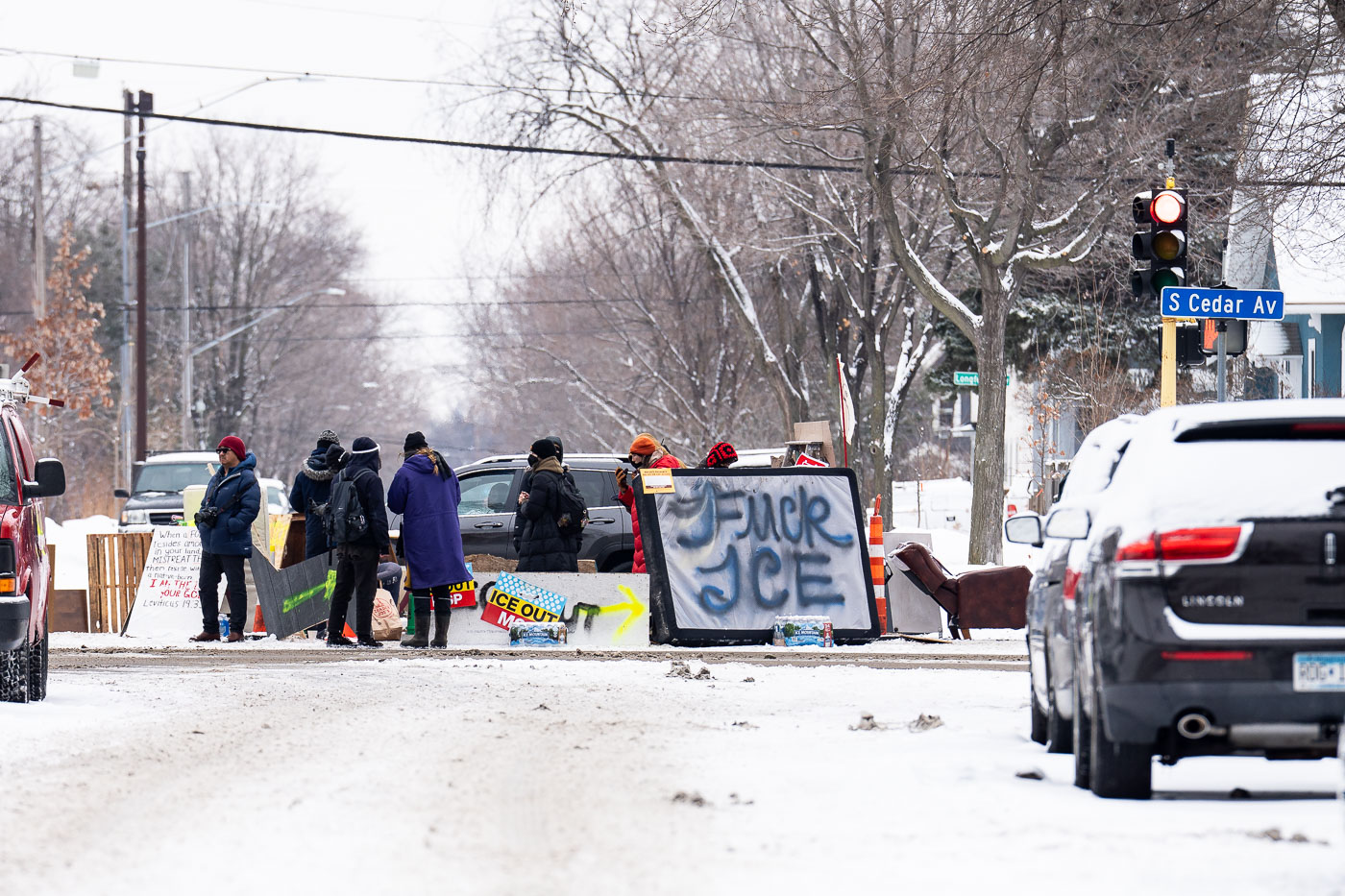
Protesters at a filter blockade on S Cedar Ave in Minneapolis protest ICE operations.
On February 1, 2026, residents of South Minneapolis established a "filter blockade" on Cedar Avenue, creating a roundabout-like structure. This protest aimed to strategize against the presence and operations of Immigration and Customs Enforcement (ICE) in the area.

Minneapolis Filter Blockade on S Cedar Ave Protests ICE
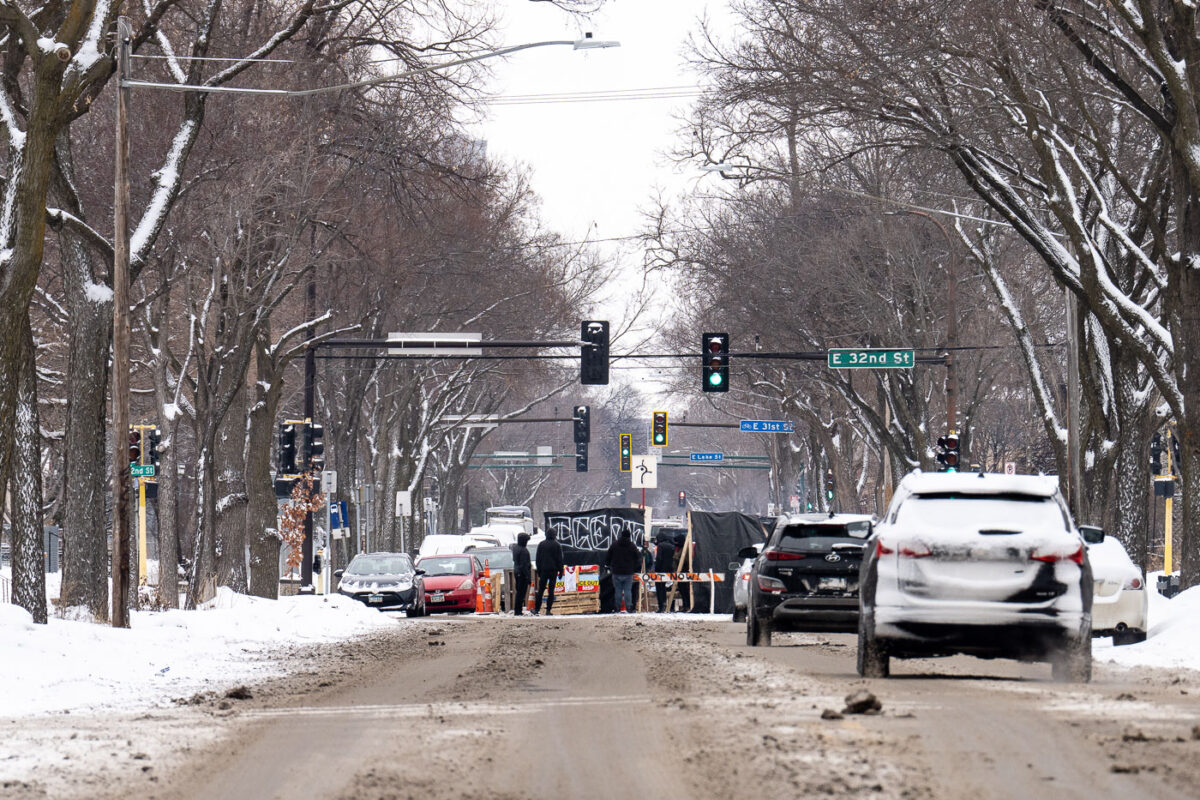
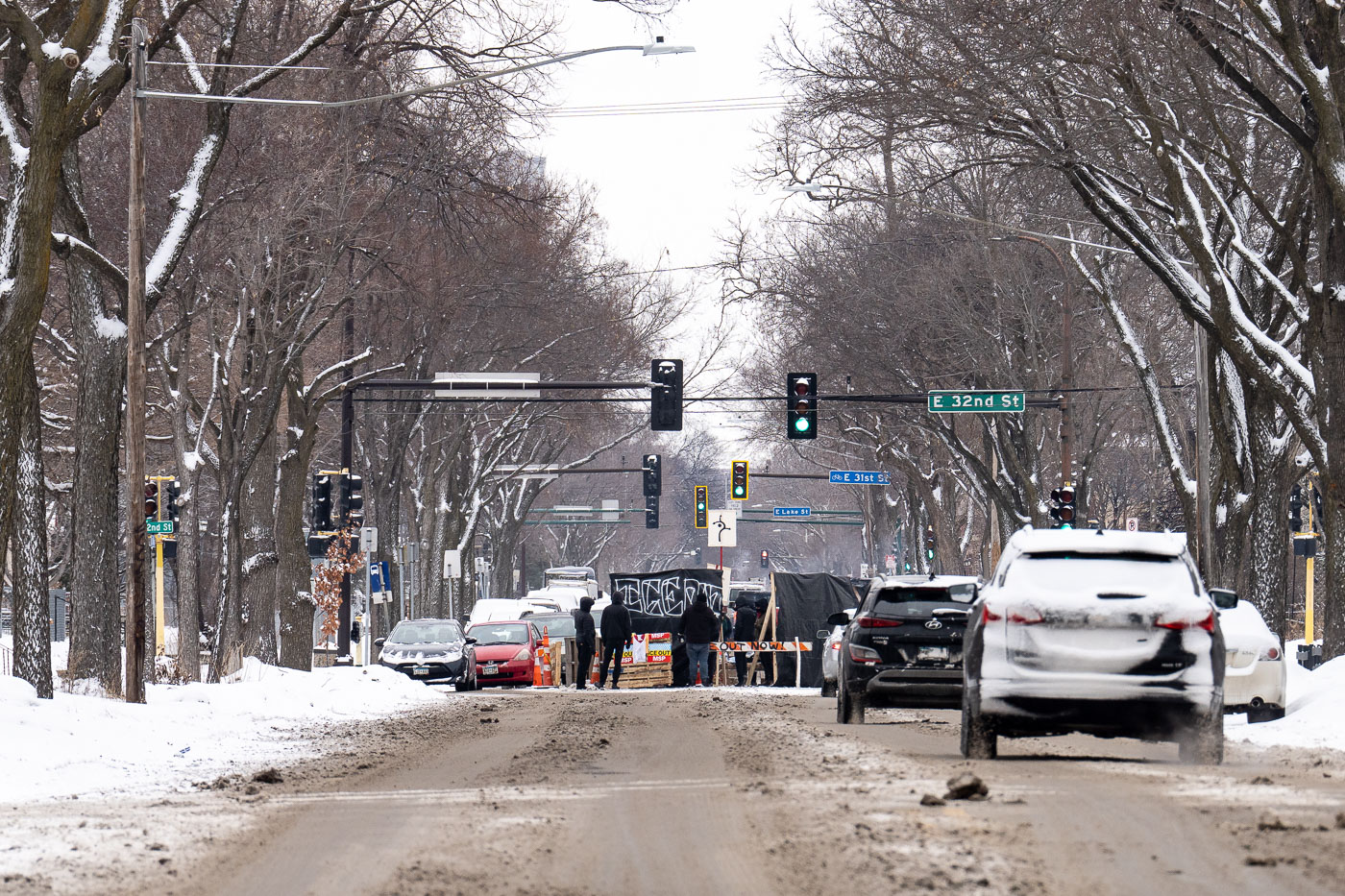
Protesters block Cedar Avenue in Minneapolis with makeshift barriers against ICE operations.
On February 1, 2026, residents of South Minneapolis established "filter blockades" on Cedar Avenue. These makeshift barriers, resembling roundabouts, were organized to strategize against Immigration and Customs Enforcement (ICE) operations and to monitor incoming traffic. The protest aimed to unite neighbors in opposition to ICE activities within the community.

Filter Blockade on Cedar Ave in Minneapolis
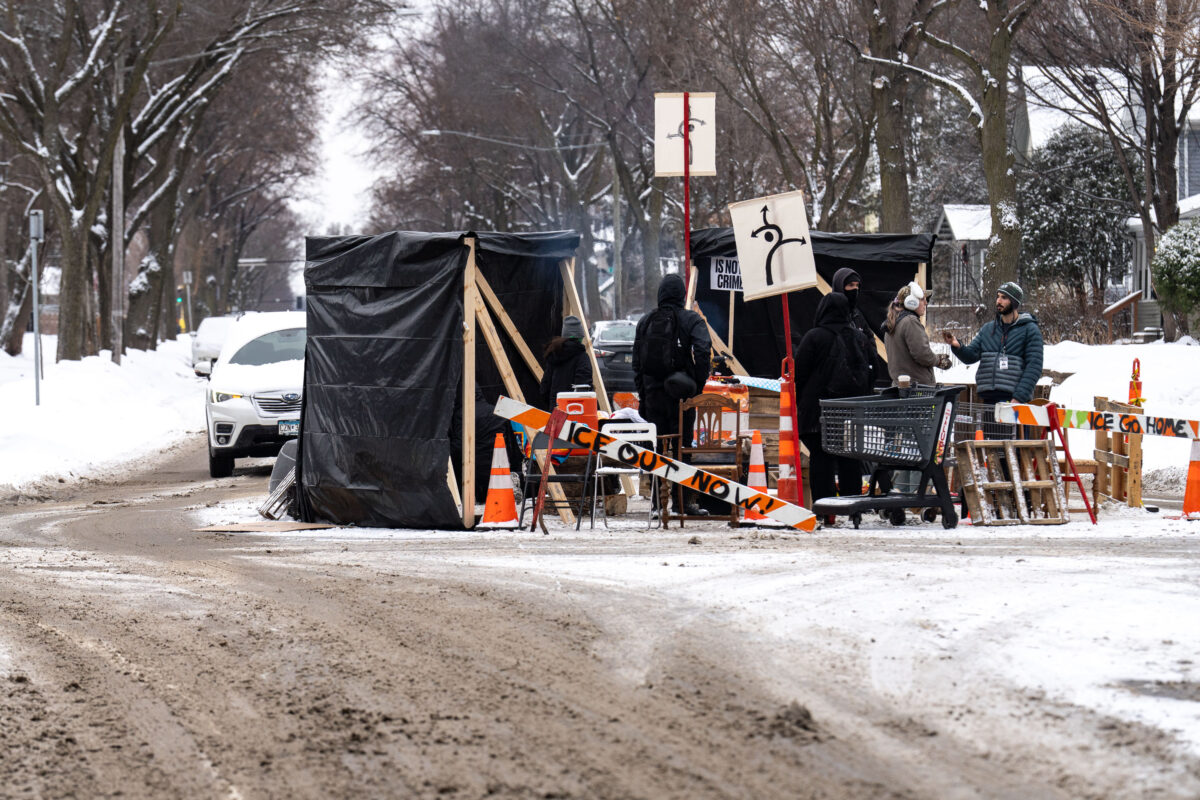
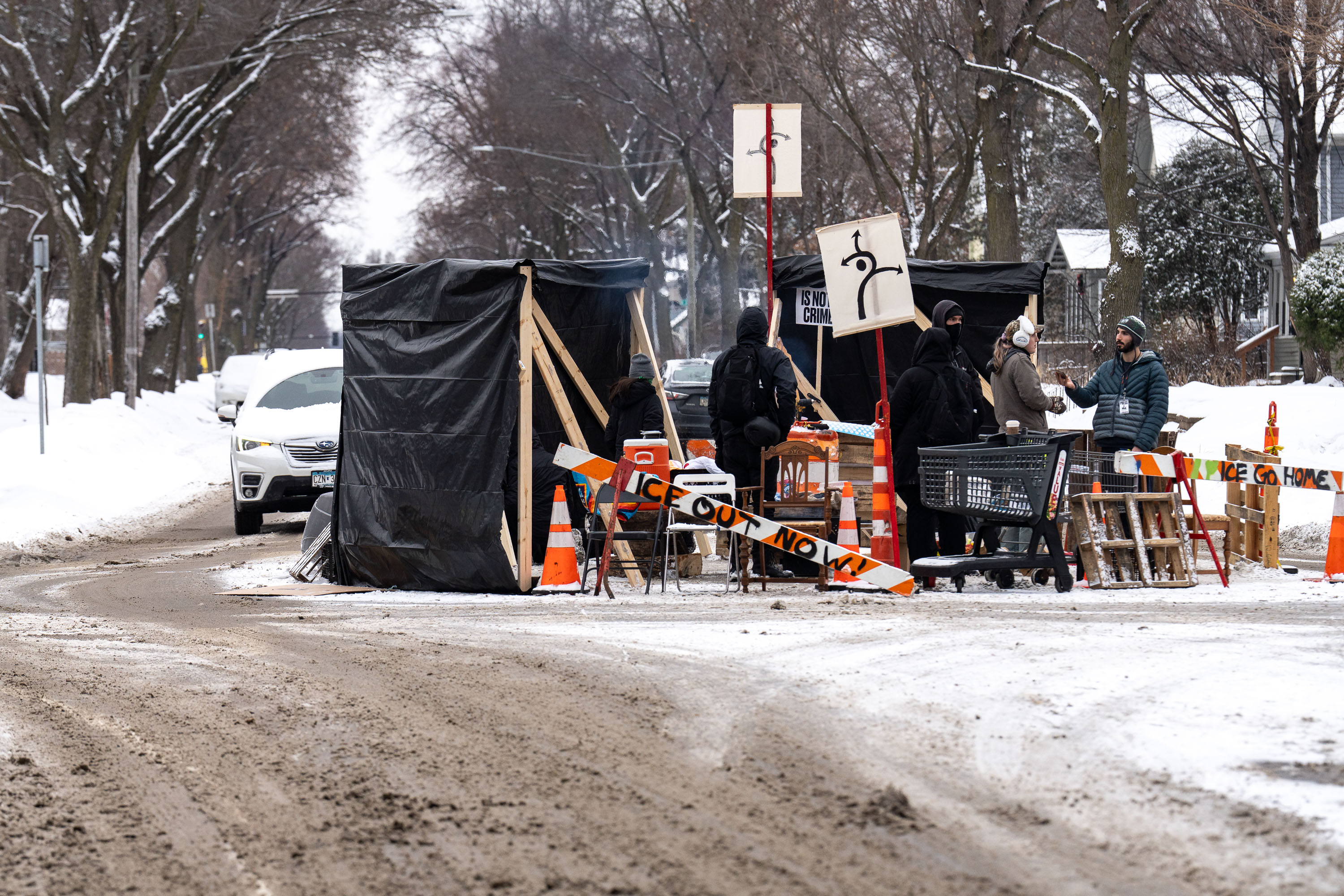
Filter Blockade in South Minneapolis on February 1
Some in South Minneapolis have created what they call “filter blockades” on Cedar Ave. A handout says the roundabout like blockade is meant to bring neighbors together to strategize against ICE while also identifying traffic coming into the area. Minneapolis February 1, 2026

“Ice Out Now” Filter Blockade on Cedar Avenue
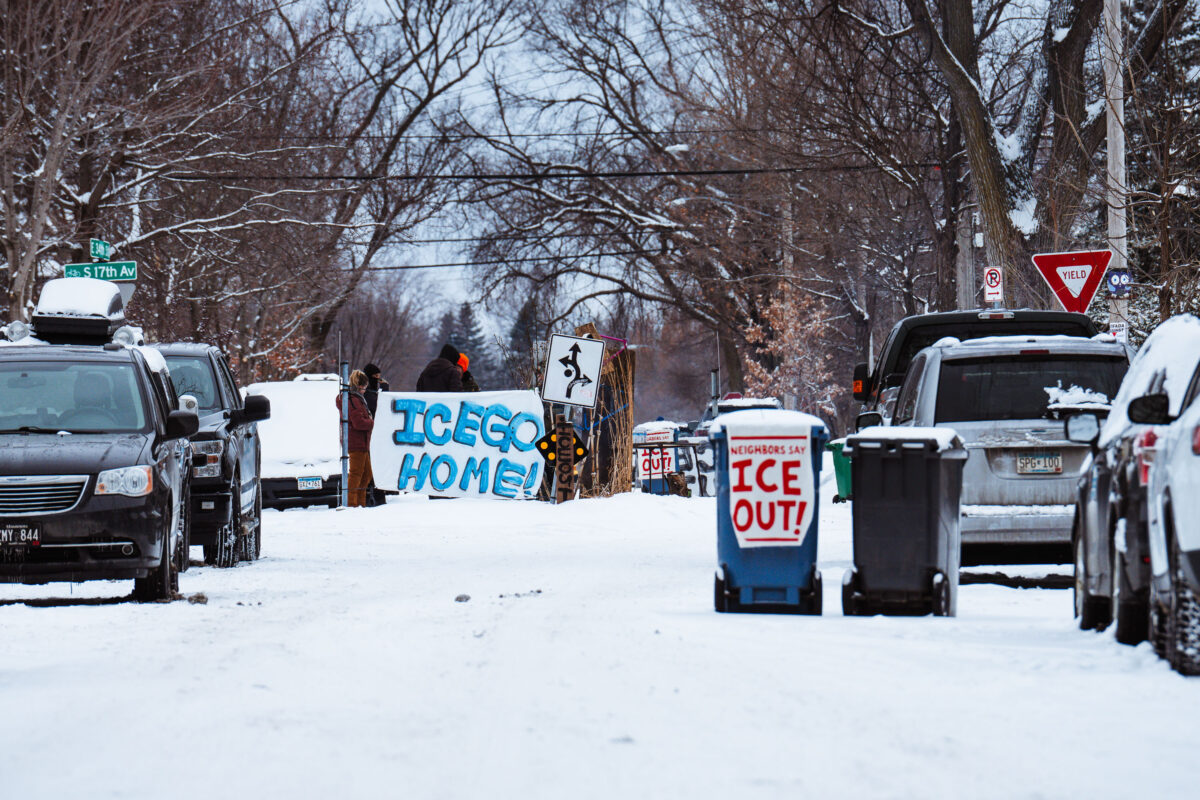
Filter blockade in South Minneapolis
Some in South Minneapolis have created what they call “filter blockades” on Cedar Ave. A handout says the roundabout like blockade is meant to bring neighbors together to strategize against ICE while also identifying traffic coming into the area. Minneapolis February 1, 2026

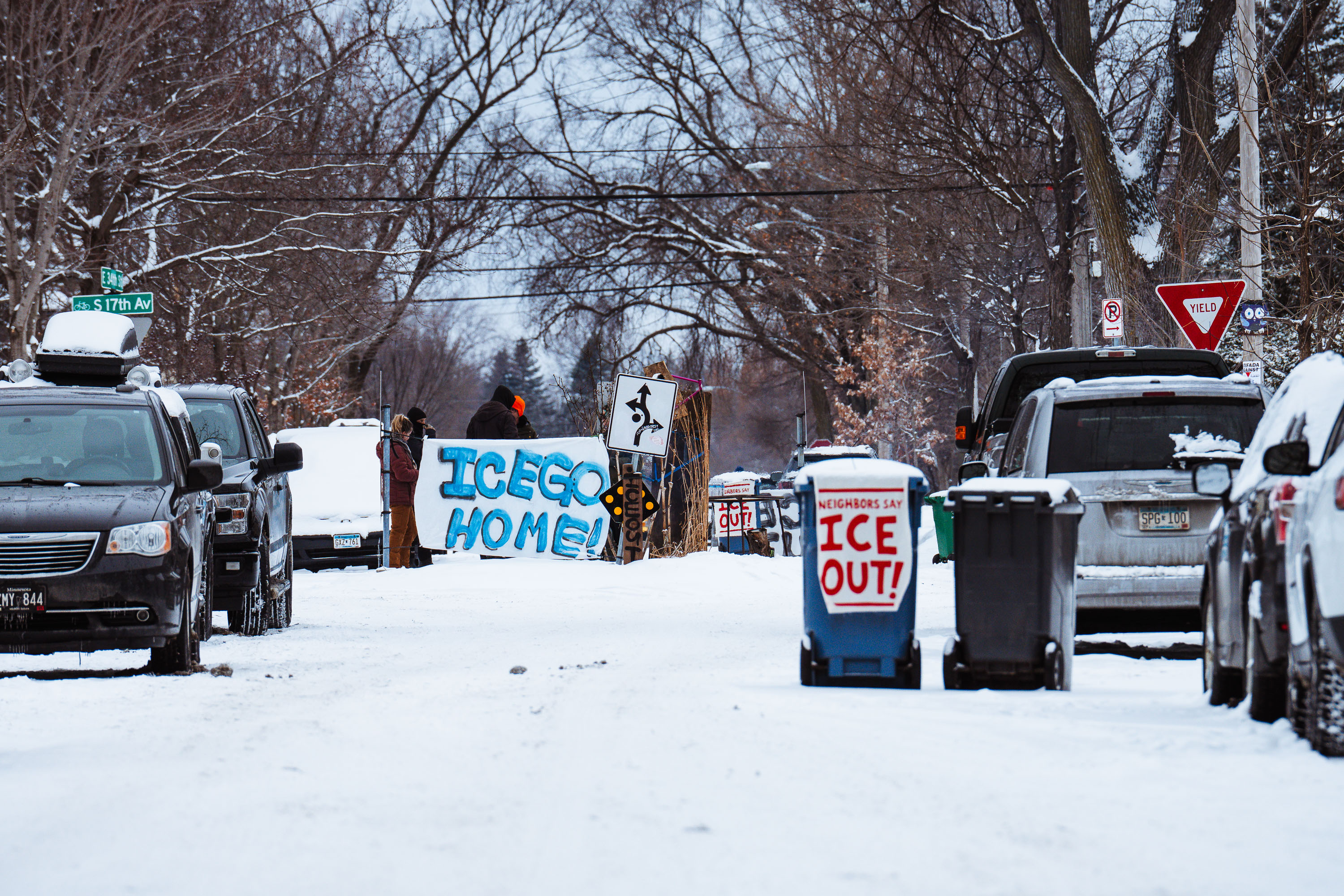
“ICE Go Home” Sign at South 17th Avenue Filter Blockade

Street barricades with "ICE OUT" signage in South Minneapolis, Minnesota, during winter.
Temporary street barricades are erected in South Minneapolis to slow down ICE vehicles that continue to speed through residential neighborhoods.

“Ice Out” Barricades on a Quiet South Minneapolis Street

Signs reading "NEIGHBORS SAY ICE OUT!" are posted on 10th Avenue South in Minneapolis during protests against ICE operations.
Signs reading "NEIGHBORS SAY ICE OUT!" are posted on 10th Avenue South in Minneapolis during Operation Metro Surge to slow down ICE vehicles.

“Neighbors Say ICE Out!” Signs Along 10th Avenue South

Street barricades made of dumpsters and tires line Nicollet Avenue in Minneapolis near a memorial for Alex Pretti.
Street barricades line Nicollet Avenue in Minneapolis following the killing of Alex Pretti by Border Patrol agents. The barricades, constructed from dumpsters, tires, and fencing, were erected in the vicinity of a makeshift memorial for Pretti. On January 24, 2026, federal immigration agents fatally shot 37-year-old Alex Pretti during Operation Metro Surge in Minneapolis. Pretti, an intensive care nurse at the Minneapolis VA Health Care System, was killed during an encounter connected to large-scale federal immigration enforcement operations taking place across the Twin Cities. Video recorded by bystanders and witnesses at the scene quickly circulated online and contradicted portions of the initial federal account of the shooting, leading to public outrage and demands for the release of additional evidence. Video showed that Pretti was armed and was shot and killed an after he was disarmed. Pretti’s death sparked days of protests, marches, and confrontations with law enforcement in Minneapolis as demonstrators condemned the federal operation and called for accountability. The shooting became a major flashpoint in ongoing national debates over immigration enforcement, federal policing powers, and the use of force during domestic operations. As of this writing, no one has been held responsible for the killing.

“ACAB” Graffiti on Barricades Near Alex Pretti Memorial, Minneapolis

Barricades and graffiti on Nicollet Avenue in Minneapolis after a protest.
Barricades and graffiti mark Nicollet Avenue in Minneapolis following a protest. The street was blocked off after Alex Pretti was killed earlier in the day by Border Patrol officers during Operation Metro Surge. On January 24, 2026, federal immigration agents fatally shot 37-year-old Alex Pretti during Operation Metro Surge in Minneapolis. Pretti, an intensive care nurse at the Minneapolis VA Health Care System, was killed during an encounter connected to large-scale federal immigration enforcement operations taking place across the Twin Cities. Video recorded by bystanders and witnesses at the scene quickly circulated online and contradicted portions of the initial federal account of the shooting, leading to public outrage and demands for the release of additional evidence. Video showed that Pretti was armed and was shot and killed an after he was disarmed. Pretti’s death sparked days of protests, marches, and confrontations with law enforcement in Minneapolis as demonstrators condemned the federal operation and called for accountability. The shooting became a major flashpoint in ongoing national debates over immigration enforcement, federal policing powers, and the use of force during domestic operations. As of this writing, no one has been held responsible for the killing.

“Fuck MPD” Spray-Painted on a Dumpster Near Nicollet Avenue

Protesters gathered on Nicollet Avenue in Minneapolis to demonstrate against ICE.
Protesters gathered on Nicollet Avenue in Minneapolis to demonstrate against the actions of Immigration and Customs Enforcement (ICE). The protest occurred on the same day that Alex Pretti was killed by Border Patrol officers in Minneapolis, marking the second death and third shooting by federal agents in the city that month. On January 24, 2026, federal immigration agents fatally shot 37-year-old Alex Pretti during Operation Metro Surge in Minneapolis. Pretti, an intensive care nurse at the Minneapolis VA Health Care System, was killed during an encounter connected to large-scale federal immigration enforcement operations taking place across the Twin Cities. Video recorded by bystanders and witnesses at the scene quickly circulated online and contradicted portions of the initial federal account of the shooting, leading to public outrage and demands for the release of additional evidence. Video showed that Pretti was armed and was shot and killed an after he was disarmed. Pretti’s death sparked days of protests, marches, and confrontations with law enforcement in Minneapolis as demonstrators condemned the federal operation and called for accountability. The shooting became a major flashpoint in ongoing national debates over immigration enforcement, federal policing powers, and the use of force during domestic operations. As of this writing, no one has been held responsible for the killing.

Barricades Block Nicollet Avenue During ICE Protest in Minneapolis

Protesters on Nicollet Avenue in Minneapolis carry signs after the Alex Pretti shooting.
Protesters gathered on Nicollet Avenue in Minneapolis following the shooting death of Alex Pretti by Border Patrol officers. The incident occurred during Operation Metro Surge, a federal immigration enforcement operation. Pretti was the second person killed by federal agents in Minneapolis within a month. On January 24, 2026, federal immigration agents fatally shot 37-year-old Alex Pretti during Operation Metro Surge in Minneapolis. Pretti, an intensive care nurse at the Minneapolis VA Health Care System, was killed during an encounter connected to large-scale federal immigration enforcement operations taking place across the Twin Cities. Video recorded by bystanders and witnesses at the scene quickly circulated online and contradicted portions of the initial federal account of the shooting, leading to public outrage and demands for the release of additional evidence. Video showed that Pretti was armed and was shot and killed an after he was disarmed. Pretti’s death sparked days of protests, marches, and confrontations with law enforcement in Minneapolis as demonstrators condemned the federal operation and called for accountability. The shooting became a major flashpoint in ongoing national debates over immigration enforcement, federal policing powers, and the use of force during domestic operations. As of this writing, no one has been held responsible for the killing.

“Impeach Trump” Sign Near Barricades on Nicollet Avenue, Minneapolis

Street barricades on Nicollet Avenue in Minneapolis after the killing of Alex Pretti.
Street barricades, including overturned trash receptacles and wooden pallets, were erected on Nicollet Avenue in Minneapolis following the killing of Alex Pretty by an ICE agent on January 24, 2026. On January 24, 2026, federal immigration agents fatally shot 37-year-old Alex Pretti during Operation Metro Surge in Minneapolis. Pretti, an intensive care nurse at the Minneapolis VA Health Care System, was killed during an encounter connected to large-scale federal immigration enforcement operations taking place across the Twin Cities. Video recorded by bystanders and witnesses at the scene quickly circulated online and contradicted portions of the initial federal account of the shooting, leading to public outrage and demands for the release of additional evidence. Video showed that Pretti was armed and was shot and killed an after he was disarmed. Pretti’s death sparked days of protests, marches, and confrontations with law enforcement in Minneapolis as demonstrators condemned the federal operation and called for accountability. The shooting became a major flashpoint in ongoing national debates over immigration enforcement, federal policing powers, and the use of force during domestic operations. As of this writing, no one has been held responsible for the killing.

Trash Bins and Pallets Barricade Nicollet Avenue in Minneapolis

Red and white "Lil' Dipper" ice cream truck parked on Portland Avenue near Renee Good Memorial barricades in Minneapolis.
An ice cream truck, "Lil' Dipper," is parked on Portland Avenue in Minneapolis, near street barricades. The barricades were put up on the blocks surrounding the Renee Good Memorial. Eyewitnesses and video later confirmed Renee Good was shot and killed by ICE agent Jonathan Ross.

“Lil’ Dipper” Ice Cream Truck Near the Renee Good Memorial

Street barricades made of debris line Portland Avenue in Minneapolis the day after an ICE killing.
Street barricades line Portland Avenue in Minneapolis, the day after Renee Good was killed by an Immigration and Customs Enforcement (ICE) agent.

Street Barricades on Portland Avenue After Renee Good’s Death

People chop ice near Renee Good Memorial
Neighbors chopping large patches of ice near street barricades at the Renee Good Memorial.

Neighbors Break Up Street Ice Near Renee Good Memorial

A protest sign reading "Film The Fascists" is displayed on Portland Avenue in Minneapolis near street barricades.
A protest sign reads "Dear Press, Your Painting Cameras at the Wrong People. FILM THE FASCISTS." The sign is made of weathered plywood and spray-painted in red. It is positioned near street barricades on Portland Avenue, near the Renee Good Memorial.

“Film the Fascists” Sign at Renée Good Memorial Barricades

Wooden pallet barricades with "ICE Out" banners block a Minneapolis street during an immigration protest.
Street barricades, constructed from wooden pallets, block Portland Avenue in Minneapolis. Banners reading "ICE Out" are draped across the barricades, indicating a protest against the U.S. Immigration and Customs Enforcement agency. The barricades were erected near the Renee Good Memorial.

Pallet Barricades Reading “ICE Out” on Portland Avenue, Minneapolis

Street barricades on Portland Avenue in Minneapolis after the killing of Renee Good by an ICE agent.
Street barricades on Portland Avenue in Minneapolis following the killing of Renee Good by an Immigration and Customs Enforcement (ICE) agent. The barricades were put up on the blocks around the Renee Good Memorial. On January 7, 2026, 37-year-old Renée Nicole Good was fatally shot by an Immigration and Customs Enforcement agent during a federal immigration enforcement operation in south Minneapolis. Video recorded by bystanders showed Good attempting to drive away as agents surrounded her vehicle before an ICE agent fired multiple shots into the SUV.

Traffic Checkpoint Near Renee Good Memorial in Minneapolis

Red graffiti reading "ICE KILLS" is spray-painted on a snowbank along Portland Avenue in Minneapolis.
The words "ICE KILLS" are spray-painted in red onto a snowbank along Portland Avenue in Minneapolis near where Renee Good was killed by an ICE agent. On January 7, 2026, 37-year-old Renée Nicole Good was fatally shot by an Immigration and Customs Enforcement agent during a federal immigration enforcement operation in south Minneapolis. Video recorded by bystanders showed Good attempting to drive away as agents surrounded her vehicle before an ICE agent fired multiple shots into the SUV.

“ICE KILLS” Spray-Painted on a Snowbank on Portland Avenue

George Floyd Square Murphy Ranks Barricades
The Murphy Ranks memorial at George Floyd Square on Chicago Avenue in Minneapolis, Minnesota, is seen after an attempt by Minneapolis Public Works to clear the area. This memorial, along with barricades and other elements, became a focal point of community expression and remembrance following the murder of George Floyd in May 2020. The area evolved into a space for protest and public gathering, reflecting the ongoing impact of the Minneapolis Uprising.

George Floyd Square: Murphy Ranks Memorial After Cleanup Attempt

Barricade bags at George Floyd Square 2021
Barricades constructed from lawn and leaf bags line the street at George Floyd Square in Minneapolis. This area, located at the intersection of 38th Street and Chicago Avenue, became a focal point of protests following the murder of George Floyd in May 2020. After the city cleared official barricades, community members erected these makeshift barriers to maintain control of the space. The bags, filled with soil or sand, served to block vehicle access and demarcate the autonomous zone established by activists.

George Floyd Square barricades made of lawn bags at night
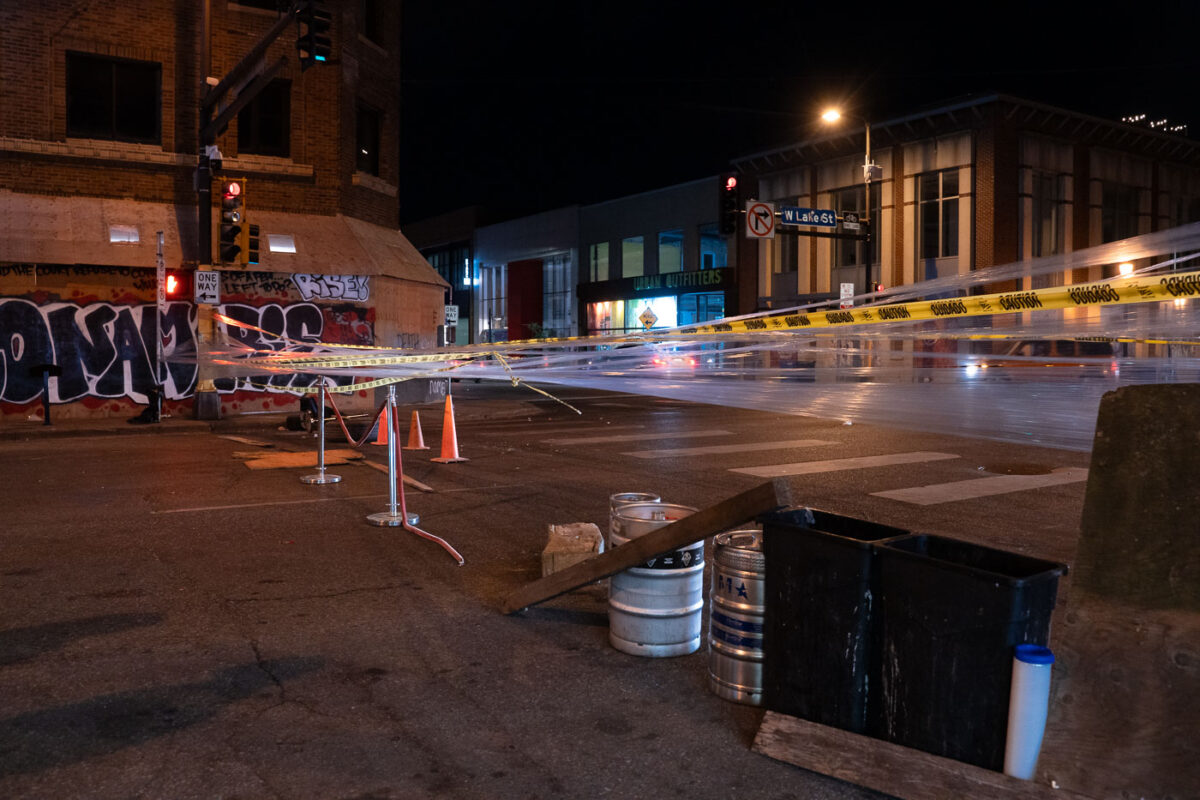
Barricades and caution tape block Lake Street at Hennepin Avenue in Minneapolis at night.
Street barricades are visible at the intersection of Hennepin Avenue and Lake Street in Minneapolis, following protests in August 2021. These protests were sparked by the deaths of Winston Smith and Deona Marie. On June 3, 2021, members of a U.S. Marshals Service fugitive task force fatally shot 32-year-old Winston “Boogie” Smith Jr. on the top level of a parking ramp in Minneapolis’ Uptown neighborhood while attempting to arrest him on a felony warrant. Authorities said Smith fired a handgun from inside his vehicle during the encounter, while family members and activists questioned the official account and demanded the release of additional evidence. The killing led to weeks of protests, street occupations, and confrontations with police in Uptown, becoming another major flashpoint in Minneapolis during the period following the murder of George Floyd. Earlier in the day Minneapolis city officials along with The Agape Movement coordinated to open the streets that had been closed at George Floyd Square since his murder. On June 13, 2021, 31-year-old Deona Marie Knajdek was killed when a driver accelerated into a group of demonstrators gathered in Minneapolis’ Uptown neighborhood during ongoing protests over the killing of Winston “Boogie” Smith Jr. Protesters had blocked the intersection of West Lake Street and Girard Avenue with vehicles and barricades when Nicholas Kraus drove a Jeep Cherokee into the crowd at high speed, killing Knajdek and injuring several others. Kraus was later charged with second-degree murder, two counts of second-degree assault with a dangerous weapon, and criminal vehicular operation. In 2023, he pleaded guilty to murder and assault charges and was sentenced to more than 20 years in prison for the attack.

Barricades on Lake Street, Minneapolis, During Protests
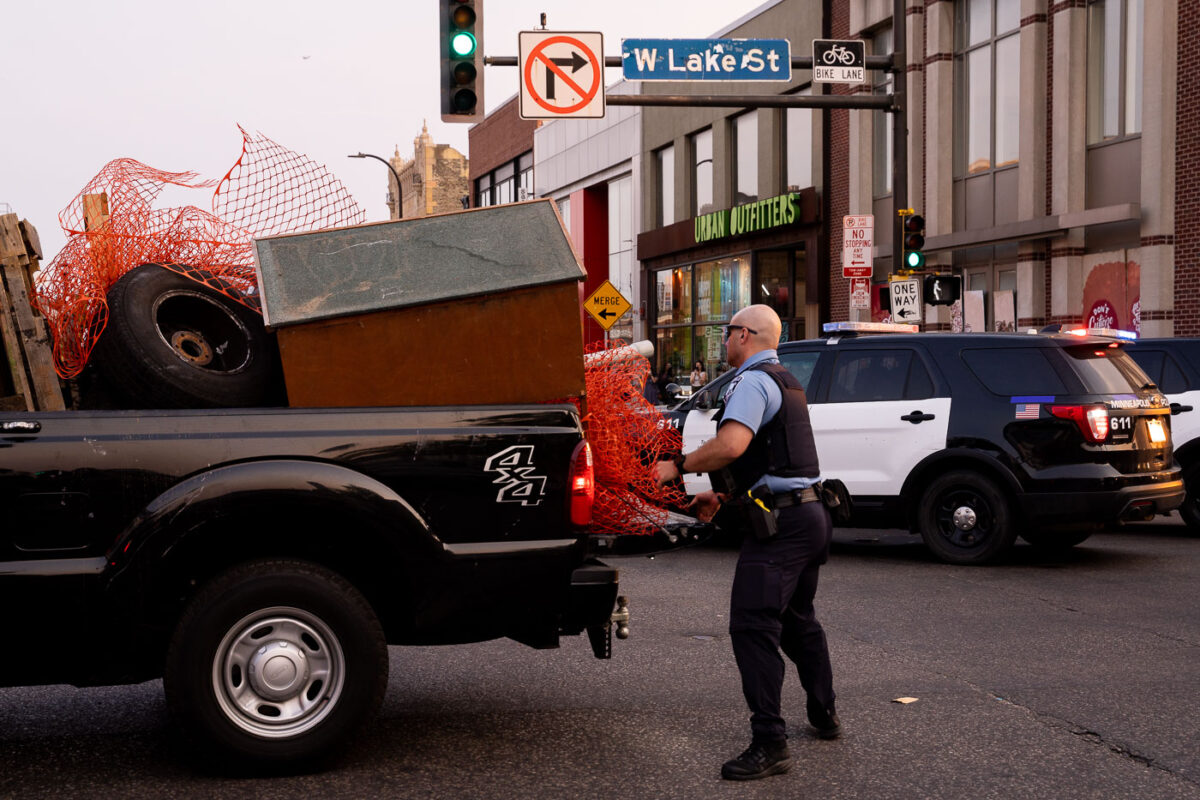
Minneapolis police officer removes barricade materials from a pickup on W Lake St in Minneapolis
Minneapolis police officers remove materials used by protesters to construct barricades on West Lake Street. The protests followed the deaths of Winston Smith on June 3rd and Deona Marie on June 13th. On June 3, 2021, members of a U.S. Marshals Service fugitive task force fatally shot 32-year-old Winston “Boogie” Smith Jr. on the top level of a parking ramp in Minneapolis’ Uptown neighborhood while attempting to arrest him on a felony warrant. Authorities said Smith fired a handgun from inside his vehicle during the encounter, while family members and activists questioned the official account and demanded the release of additional evidence. The killing led to weeks of protests, street occupations, and confrontations with police in Uptown, becoming another major flashpoint in Minneapolis during the period following the murder of George Floyd. Earlier in the day Minneapolis city officials along with The Agape Movement coordinated to open the streets that had been closed at George Floyd Square since his murder. On June 13, 2021, 31-year-old Deona Marie Knajdek was killed when a driver accelerated into a group of demonstrators gathered in Minneapolis’ Uptown neighborhood during ongoing protests over the killing of Winston “Boogie” Smith Jr. Protesters had blocked the intersection of West Lake Street and Girard Avenue with vehicles and barricades when Nicholas Kraus drove a Jeep Cherokee into the crowd at high speed, killing Knajdek and injuring several others. Kraus was later charged with second-degree murder, two counts of second-degree assault with a dangerous weapon, and criminal vehicular operation. In 2023, he pleaded guilty to murder and assault charges and was sentenced to more than 20 years in prison for the attack.

Minneapolis Police Remove Protest Barricade Materials on W Lake St
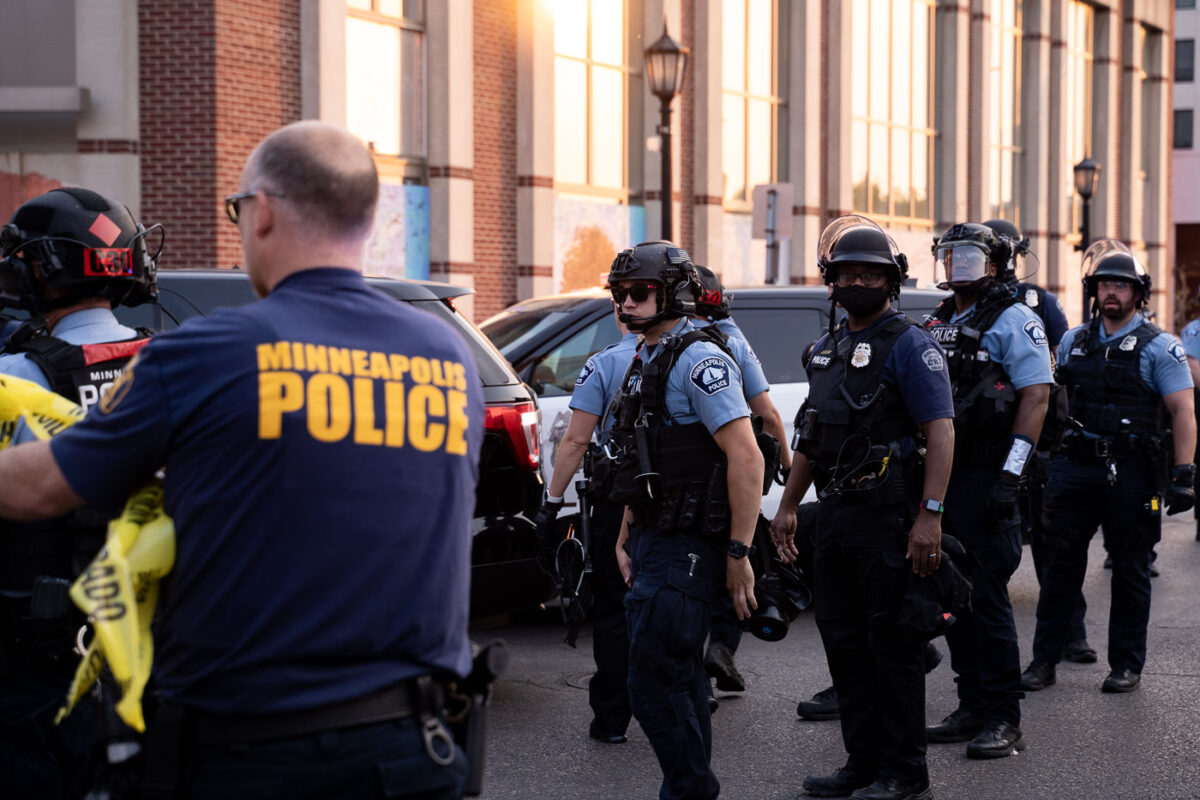
Minneapolis police officers stand near barricades on Lake Street in Uptown Minneapolis.
Minneapolis Police officers clear street barricades on Lake Street in Uptown Minneapolis. These barricades were erected following the killings of Winston Smith and Deona Marie in June 2021. On June 3, 2021, members of a U.S. Marshals Service fugitive task force fatally shot 32-year-old Winston “Boogie” Smith Jr. on the top level of a parking ramp in Minneapolis’ Uptown neighborhood while attempting to arrest him on a felony warrant. Authorities said Smith fired a handgun from inside his vehicle during the encounter, while family members and activists questioned the official account and demanded the release of additional evidence. The killing led to weeks of protests, street occupations, and confrontations with police in Uptown, becoming another major flashpoint in Minneapolis during the period following the murder of George Floyd. Earlier in the day Minneapolis city officials along with The Agape Movement coordinated to open the streets that had been closed at George Floyd Square since his murder. On June 13, 2021, 31-year-old Deona Marie Knajdek was killed when a driver accelerated into a group of demonstrators gathered in Minneapolis’ Uptown neighborhood during ongoing protests over the killing of Winston “Boogie” Smith Jr. Protesters had blocked the intersection of West Lake Street and Girard Avenue with vehicles and barricades when Nicholas Kraus drove a Jeep Cherokee into the crowd at high speed, killing Knajdek and injuring several others. Kraus was later charged with second-degree murder, two counts of second-degree assault with a dangerous weapon, and criminal vehicular operation. In 2023, he pleaded guilty to murder and assault charges and was sentenced to more than 20 years in prison for the attack.

Minneapolis Police Clear Barricades on Lake Street
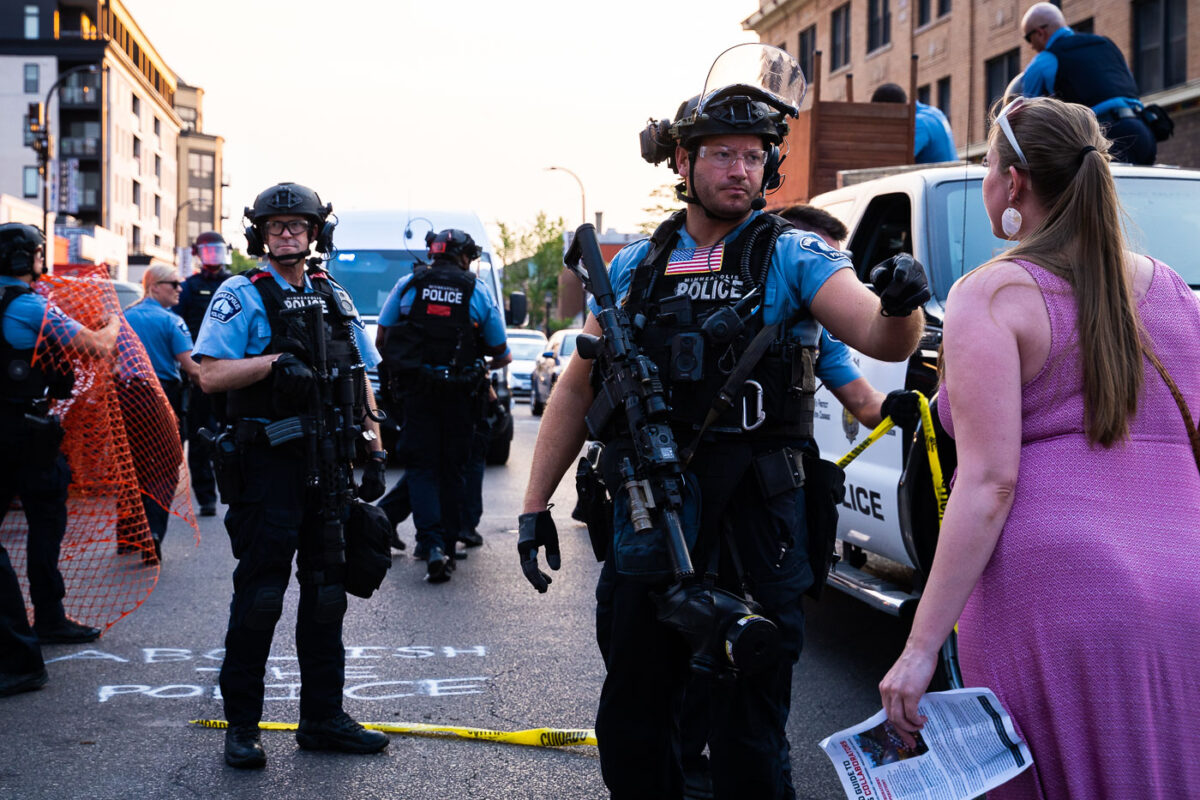
Minneapolis police officers clear protesters and barricades at Lake Street and Hennepin Avenue.
Minneapolis Police officers clear protesters and barricades from the intersection of Lake Street and Hennepin Avenue. The protests began following the deaths of Winston Smith on June 3rd and Deona Marie on June 13th. On June 3, 2021, members of a U.S. Marshals Service fugitive task force fatally shot 32-year-old Winston “Boogie” Smith Jr. on the top level of a parking ramp in Minneapolis’ Uptown neighborhood while attempting to arrest him on a felony warrant. Authorities said Smith fired a handgun from inside his vehicle during the encounter, while family members and activists questioned the official account and demanded the release of additional evidence. The killing led to weeks of protests, street occupations, and confrontations with police in Uptown, becoming another major flashpoint in Minneapolis during the period following the murder of George Floyd. Earlier in the day Minneapolis city officials along with The Agape Movement coordinated to open the streets that had been closed at George Floyd Square since his murder. On June 13, 2021, 31-year-old Deona Marie Knajdek was killed when a driver accelerated into a group of demonstrators gathered in Minneapolis’ Uptown neighborhood during ongoing protests over the killing of Winston “Boogie” Smith Jr. Protesters had blocked the intersection of West Lake Street and Girard Avenue with vehicles and barricades when Nicholas Kraus drove a Jeep Cherokee into the crowd at high speed, killing Knajdek and injuring several others. Kraus was later charged with second-degree murder, two counts of second-degree assault with a dangerous weapon, and criminal vehicular operation. In 2023, he pleaded guilty to murder and assault charges and was sentenced to more than 20 years in prison for the attack.

Minneapolis Police Clear Protest Site at Lake and Hennepin
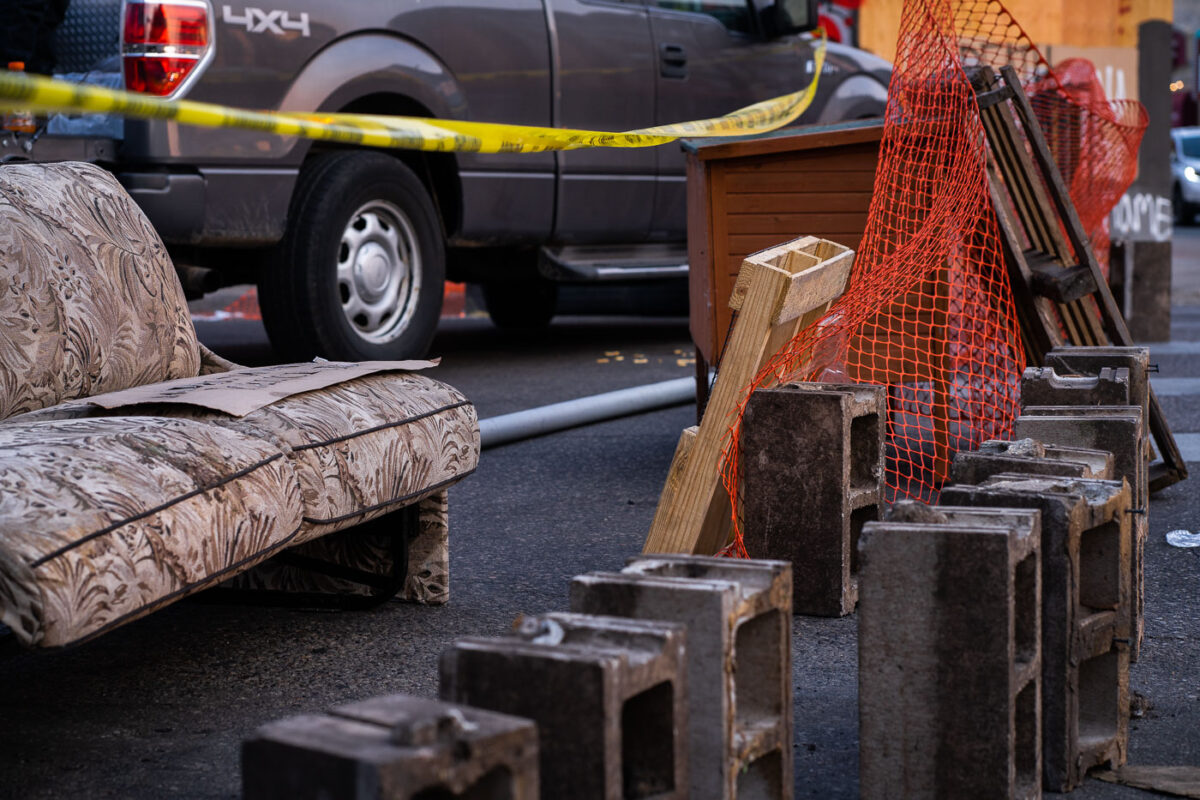
Concrete blocks, furniture and caution tape form a barricade on a street in Minneapolis.
Barricades constructed from concrete blocks, furniture, and construction materials are visible on Lake Street in Uptown Minneapolis on June 16, 2021. These barriers were erected by protesters following the June 3rd killing of Winston Smith by law enforcement and the killing of Deona Marie. On June 3, 2021, members of a U.S. Marshals Service fugitive task force fatally shot 32-year-old Winston “Boogie” Smith Jr. on the top level of a parking ramp in Minneapolis’ Uptown neighborhood while attempting to arrest him on a felony warrant. Authorities said Smith fired a handgun from inside his vehicle during the encounter, while family members and activists questioned the official account and demanded the release of additional evidence. The killing led to weeks of protests, street occupations, and confrontations with police in Uptown, becoming another major flashpoint in Minneapolis during the period following the murder of George Floyd. Earlier in the day Minneapolis city officials along with The Agape Movement coordinated to open the streets that had been closed at George Floyd Square since his murder. On June 13, 2021, 31-year-old Deona Marie Knajdek was killed when a driver accelerated into a group of demonstrators gathered in Minneapolis’ Uptown neighborhood during ongoing protests over the killing of Winston “Boogie” Smith Jr. Protesters had blocked the intersection of West Lake Street and Girard Avenue with vehicles and barricades when Nicholas Kraus drove a Jeep Cherokee into the crowd at high speed, killing Knajdek and injuring several others. Kraus was later charged with second-degree murder, two counts of second-degree assault with a dangerous weapon, and criminal vehicular operation. In 2023, he pleaded guilty to murder and assault charges and was sentenced to more than 20 years in prison for the attack.

Uptown Minneapolis: Barricades on Lake Street
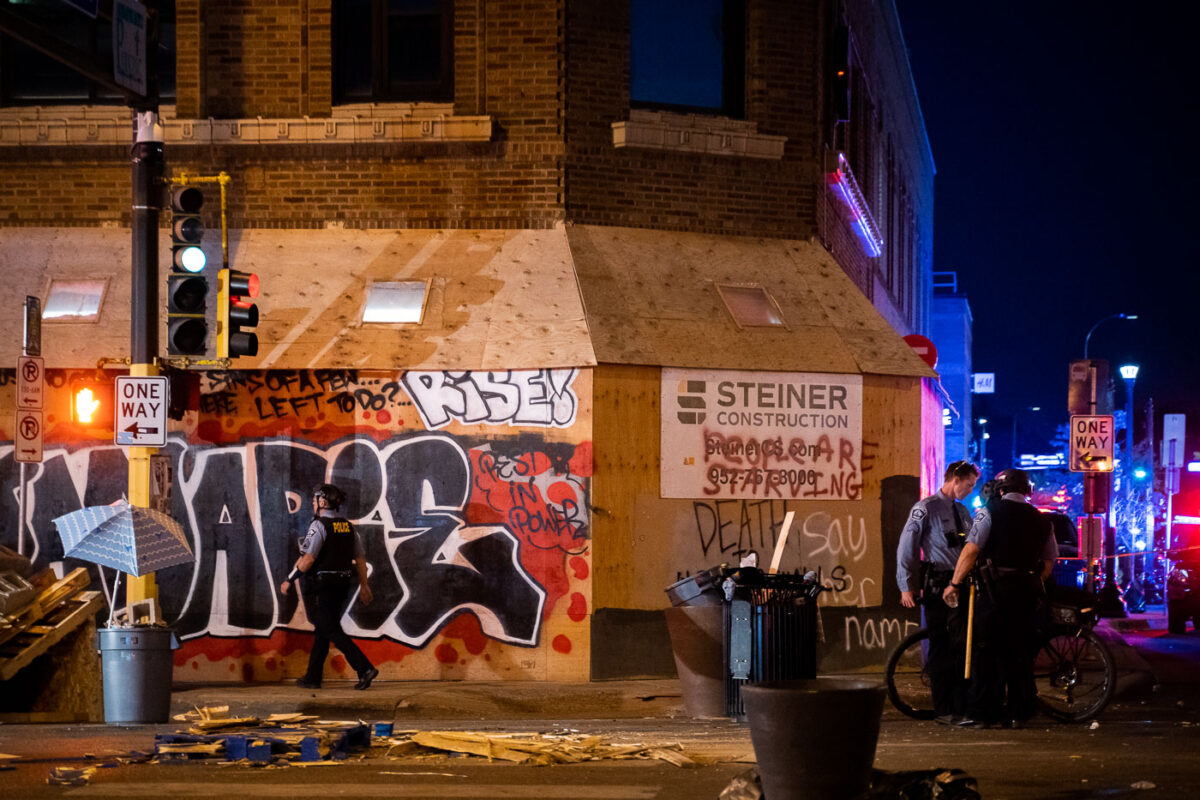
Minneapolis police officers stand by a boarded-up, graffiti-covered building at Lake Street and Hennepin Avenue at night.
Minneapolis Police officers clear barricades at the intersection of Lake Street and Hennepin Avenue. This area was the site of protests that began on June 3rd, following the killings of Winston Smith and Deona Marie. On June 3, 2021, members of a U.S. Marshals Service fugitive task force fatally shot 32-year-old Winston “Boogie” Smith Jr. on the top level of a parking ramp in Minneapolis’ Uptown neighborhood while attempting to arrest him on a felony warrant. Authorities said Smith fired a handgun from inside his vehicle during the encounter, while family members and activists questioned the official account and demanded the release of additional evidence. The killing led to weeks of protests, street occupations, and confrontations with police in Uptown, becoming another major flashpoint in Minneapolis during the period following the murder of George Floyd. Earlier in the day Minneapolis city officials along with The Agape Movement coordinated to open the streets that had been closed at George Floyd Square since his murder. On June 13, 2021, 31-year-old Deona Marie Knajdek was killed when a driver accelerated into a group of demonstrators gathered in Minneapolis’ Uptown neighborhood during ongoing protests over the killing of Winston “Boogie” Smith Jr. Protesters had blocked the intersection of West Lake Street and Girard Avenue with vehicles and barricades when Nicholas Kraus drove a Jeep Cherokee into the crowd at high speed, killing Knajdek and injuring several others. Kraus was later charged with second-degree murder, two counts of second-degree assault with a dangerous weapon, and criminal vehicular operation. In 2023, he pleaded guilty to murder and assault charges and was sentenced to more than 20 years in prison for the attack.

Minneapolis Police Clear Barricades at Lake Street and Hennepin Avenue
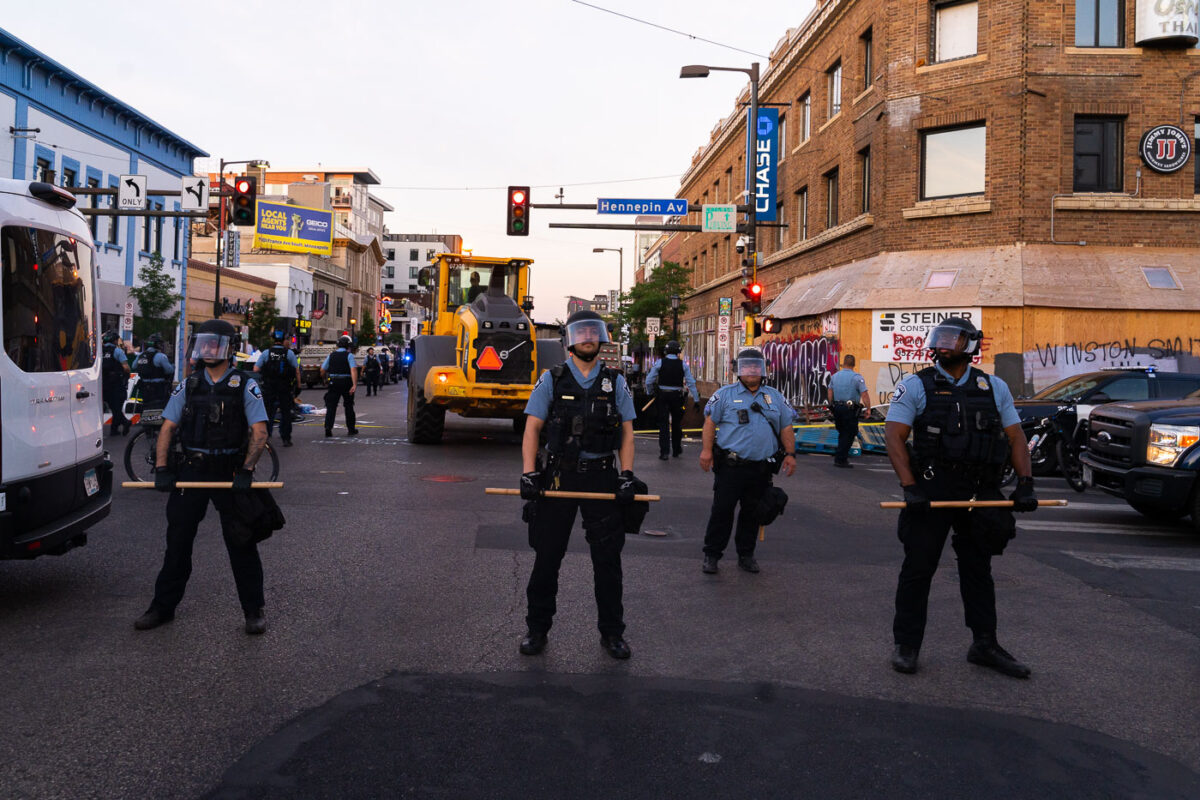
Minneapolis police officers stand in formation on Hennepin Avenue at Lake Street.
Minneapolis Police officers stand in formation on Hennepin Avenue at Lake Street in Uptown Minneapolis on June 15, 2021. This comes after protesters had been blocking the roads following the killings of Winston Smith and Deona Marie. On June 3, 2021, members of a U.S. Marshals Service fugitive task force fatally shot 32-year-old Winston “Boogie” Smith Jr. on the top level of a parking ramp in Minneapolis’ Uptown neighborhood while attempting to arrest him on a felony warrant. Authorities said Smith fired a handgun from inside his vehicle during the encounter, while family members and activists questioned the official account and demanded the release of additional evidence. The killing led to weeks of protests, street occupations, and confrontations with police in Uptown, becoming another major flashpoint in Minneapolis during the period following the murder of George Floyd. Earlier in the day Minneapolis city officials along with The Agape Movement coordinated to open the streets that had been closed at George Floyd Square since his murder. On June 13, 2021, 31-year-old Deona Marie Knajdek was killed when a driver accelerated into a group of demonstrators gathered in Minneapolis’ Uptown neighborhood during ongoing protests over the killing of Winston “Boogie” Smith Jr. Protesters had blocked the intersection of West Lake Street and Girard Avenue with vehicles and barricades when Nicholas Kraus drove a Jeep Cherokee into the crowd at high speed, killing Knajdek and injuring several others. Kraus was later charged with second-degree murder, two counts of second-degree assault with a dangerous weapon, and criminal vehicular operation. In 2023, he pleaded guilty to murder and assault charges and was sentenced to more than 20 years in prison for the attack.

Minneapolis Police at Hennepin Ave and Lake St Protest Zone
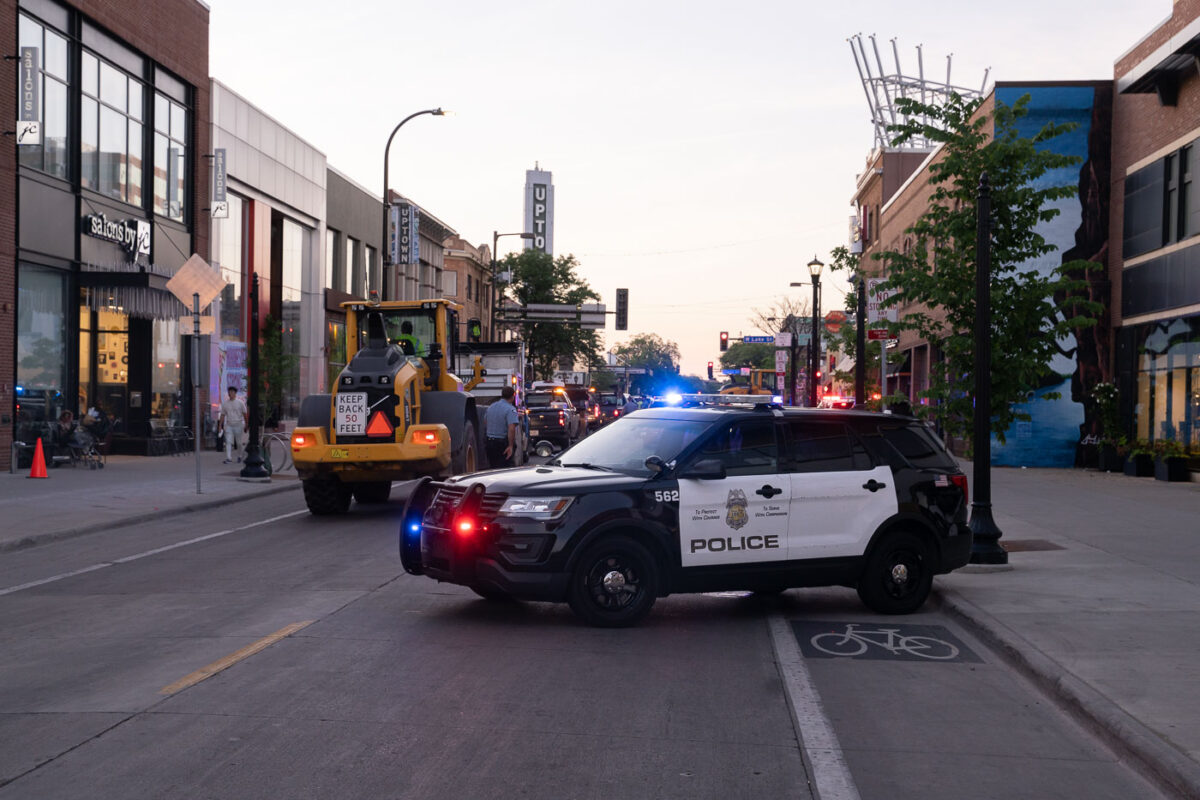
Police SUV and loader block Hennepin Avenue in Minneapolis as crews clear barricades.
Minneapolis Public Works and Police cleared barricades from Hennepin Avenue on June 23, 2021. The barricades had been erected by protesters following the law enforcement shooting death of Winston Smith on June 3, 2021. The clearing operation involved a front-end loader and police vehicles, indicating a significant effort to reopen the street. On June 3, 2021, members of a U.S. Marshals Service fugitive task force fatally shot 32-year-old Winston “Boogie” Smith Jr. on the top level of a parking ramp in Minneapolis’ Uptown neighborhood while attempting to arrest him on a felony warrant. Authorities said Smith fired a handgun from inside his vehicle during the encounter, while family members and activists questioned the official account and demanded the release of additional evidence. The killing led to weeks of protests, street occupations, and confrontations with police in Uptown, becoming another major flashpoint in Minneapolis during the period following the murder of George Floyd. Earlier in the day Minneapolis city officials along with The Agape Movement coordinated to open the streets that had been closed at George Floyd Square since his murder. On June 13, 2021, 31-year-old Deona Marie Knajdek was killed when a driver accelerated into a group of demonstrators gathered in Minneapolis’ Uptown neighborhood during ongoing protests over the killing of Winston “Boogie” Smith Jr. Protesters had blocked the intersection of West Lake Street and Girard Avenue with vehicles and barricades when Nicholas Kraus drove a Jeep Cherokee into the crowd at high speed, killing Knajdek and injuring several others. Kraus was later charged with second-degree murder, two counts of second-degree assault with a dangerous weapon, and criminal vehicular operation. In 2023, he pleaded guilty to murder and assault charges and was sentenced to more than 20 years in prison for the attack.

Minneapolis Public Works and Police Clear Hennepin Ave Barricades
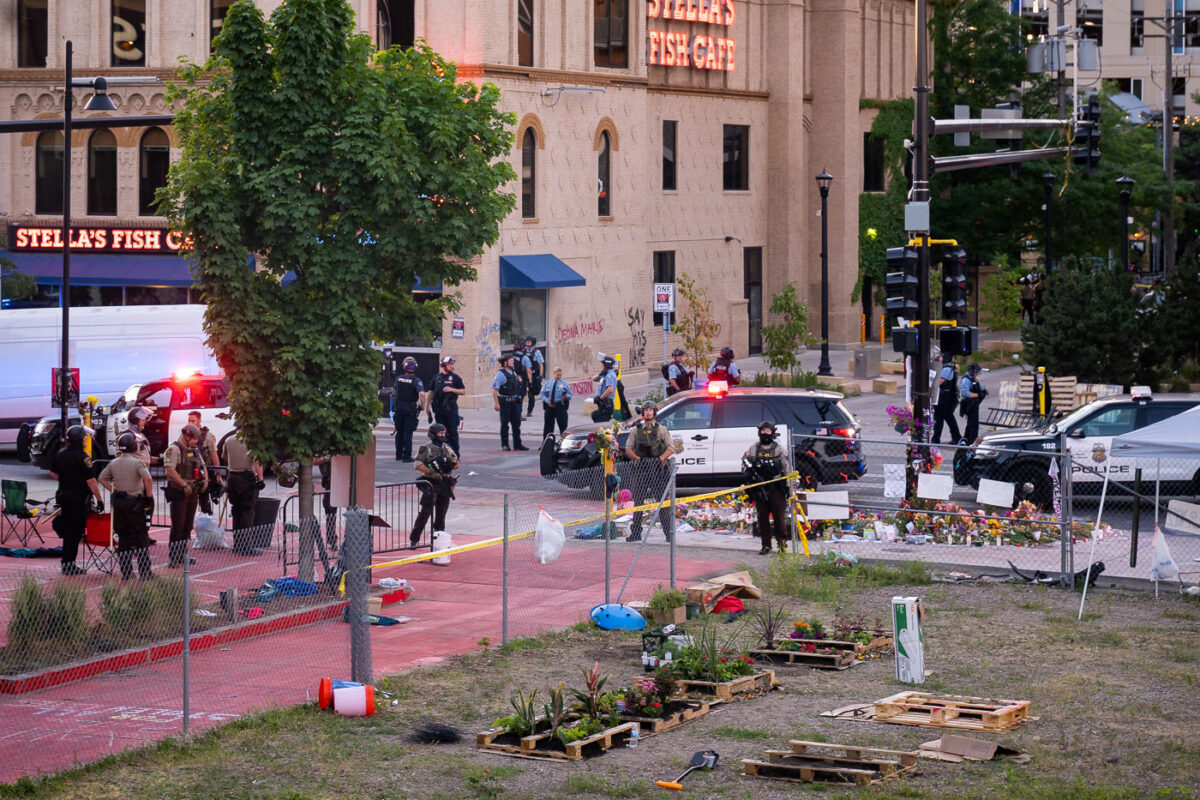
Police clear a memorial garden on Lake Street in Minneapolis near Stella’s Fish Cafe.
Law enforcement officers are present at a memorial garden on Lake Street in Minneapolis, established following the killing of Winston Smith on June 3rd by officers serving a warrant as part of a Federal Task Force. The memorial also honors Deona Marie, who was killed on June 13th when a driver struck protesters. On June 3, 2021, members of a U.S. Marshals Service fugitive task force fatally shot 32-year-old Winston “Boogie” Smith Jr. on the top level of a parking ramp in Minneapolis’ Uptown neighborhood while attempting to arrest him on a felony warrant. Authorities said Smith fired a handgun from inside his vehicle during the encounter, while family members and activists questioned the official account and demanded the release of additional evidence. The killing led to weeks of protests, street occupations, and confrontations with police in Uptown, becoming another major flashpoint in Minneapolis during the period following the murder of George Floyd. Earlier in the day Minneapolis city officials along with The Agape Movement coordinated to open the streets that had been closed at George Floyd Square since his murder. On June 13, 2021, 31-year-old Deona Marie Knajdek was killed when a driver accelerated into a group of demonstrators gathered in Minneapolis’ Uptown neighborhood during ongoing protests over the killing of Winston “Boogie” Smith Jr. Protesters had blocked the intersection of West Lake Street and Girard Avenue with vehicles and barricades when Nicholas Kraus drove a Jeep Cherokee into the crowd at high speed, killing Knajdek and injuring several others. Kraus was later charged with second-degree murder, two counts of second-degree assault with a dangerous weapon, and criminal vehicular operation. In 2023, he pleaded guilty to murder and assault charges and was sentenced to more than 20 years in prison for the attack.

Minneapolis Police Clear Winston Smith Memorial Garden on Lake Street
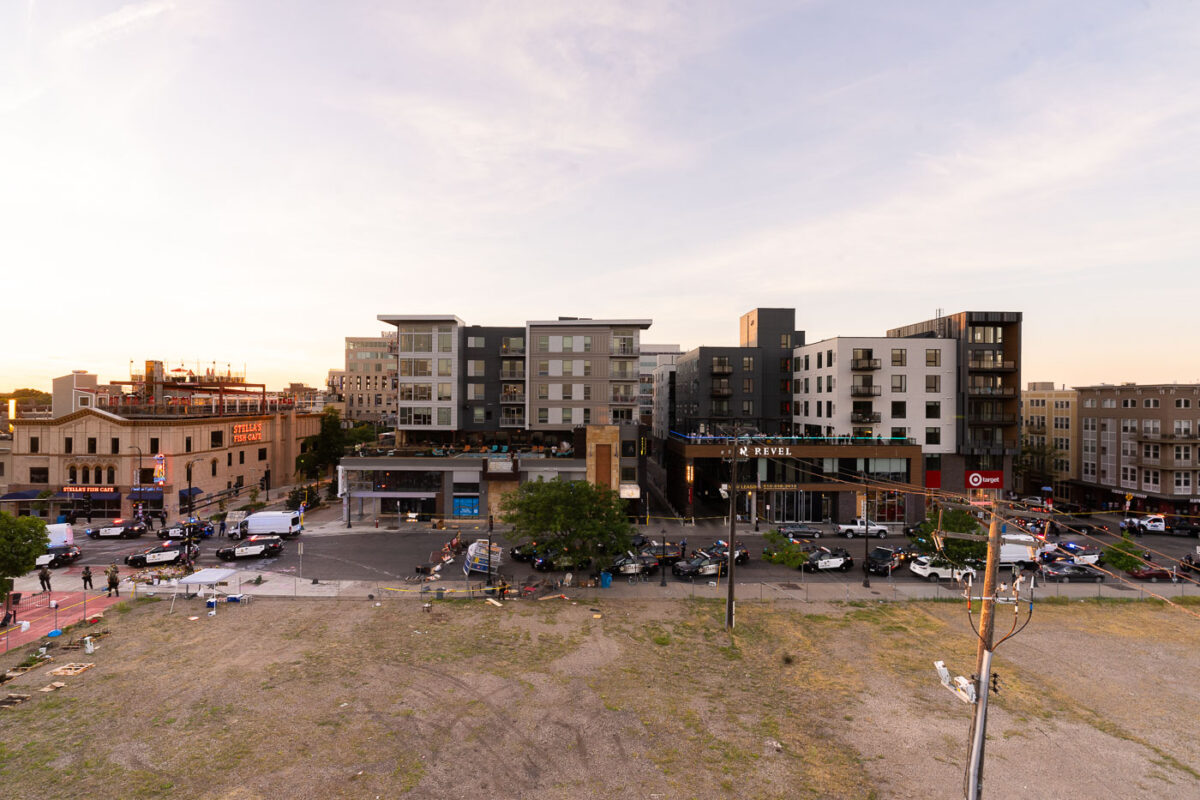
Police cars line Lake Street in Uptown Minneapolis near barricades and memorials at dusk.
Police vehicles are present on Lake Street in Uptown Minneapolis, near the site of protests that followed the killings of Winston Smith and Deona Marie in June 2021. On June 3, 2021, members of a U.S. Marshals Service fugitive task force fatally shot 32-year-old Winston “Boogie” Smith Jr. on the top level of a parking ramp in Minneapolis’ Uptown neighborhood while attempting to arrest him on a felony warrant. Authorities said Smith fired a handgun from inside his vehicle during the encounter, while family members and activists questioned the official account and demanded the release of additional evidence. The killing led to weeks of protests, street occupations, and confrontations with police in Uptown, becoming another major flashpoint in Minneapolis during the period following the murder of George Floyd. Earlier in the day Minneapolis city officials along with The Agape Movement coordinated to open the streets that had been closed at George Floyd Square since his murder. On June 13, 2021, 31-year-old Deona Marie Knajdek was killed when a driver accelerated into a group of demonstrators gathered in Minneapolis’ Uptown neighborhood during ongoing protests over the killing of Winston “Boogie” Smith Jr. Protesters had blocked the intersection of West Lake Street and Girard Avenue with vehicles and barricades when Nicholas Kraus drove a Jeep Cherokee into the crowd at high speed, killing Knajdek and injuring several others. Kraus was later charged with second-degree murder, two counts of second-degree assault with a dangerous weapon, and criminal vehicular operation. In 2023, he pleaded guilty to murder and assault charges and was sentenced to more than 20 years in prison for the attack.

Police presence at Uptown Minneapolis protest zone, Lake Street
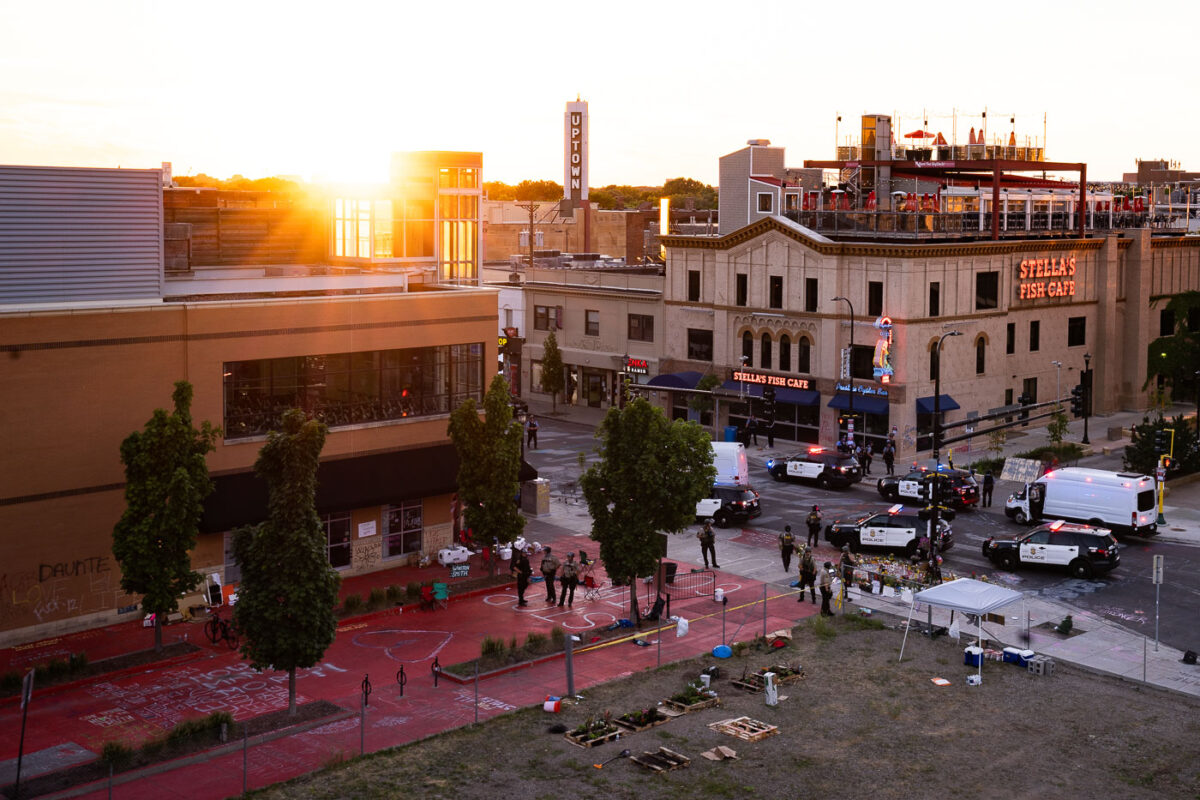
Police clear a memorial site outside Stella's Fish Cafe on Lake Street in Minneapolis at sunset.
Minneapolis Police cleared the Deona Marie Memorial site at sunset on July 10, 2020. Protesters had gathered at the site, located in the Uptown neighborhood, following the killings of Winston Smith on June 3 and Deona Marie on June 13. On June 3, 2021, members of a U.S. Marshals Service fugitive task force fatally shot 32-year-old Winston “Boogie” Smith Jr. on the top level of a parking ramp in Minneapolis’ Uptown neighborhood while attempting to arrest him on a felony warrant. Authorities said Smith fired a handgun from inside his vehicle during the encounter, while family members and activists questioned the official account and demanded the release of additional evidence. The killing led to weeks of protests, street occupations, and confrontations with police in Uptown, becoming another major flashpoint in Minneapolis during the period following the murder of George Floyd. Earlier in the day Minneapolis city officials along with The Agape Movement coordinated to open the streets that had been closed at George Floyd Square since his murder. On June 13, 2021, 31-year-old Deona Marie Knajdek was killed when a driver accelerated into a group of demonstrators gathered in Minneapolis’ Uptown neighborhood during ongoing protests over the killing of Winston “Boogie” Smith Jr. Protesters had blocked the intersection of West Lake Street and Girard Avenue with vehicles and barricades when Nicholas Kraus drove a Jeep Cherokee into the crowd at high speed, killing Knajdek and injuring several others. Kraus was later charged with second-degree murder, two counts of second-degree assault with a dangerous weapon, and criminal vehicular operation. In 2023, he pleaded guilty to murder and assault charges and was sentenced to more than 20 years in prison for the attack.

Minneapolis Police Clear Deona Marie Memorial Site at Sunset
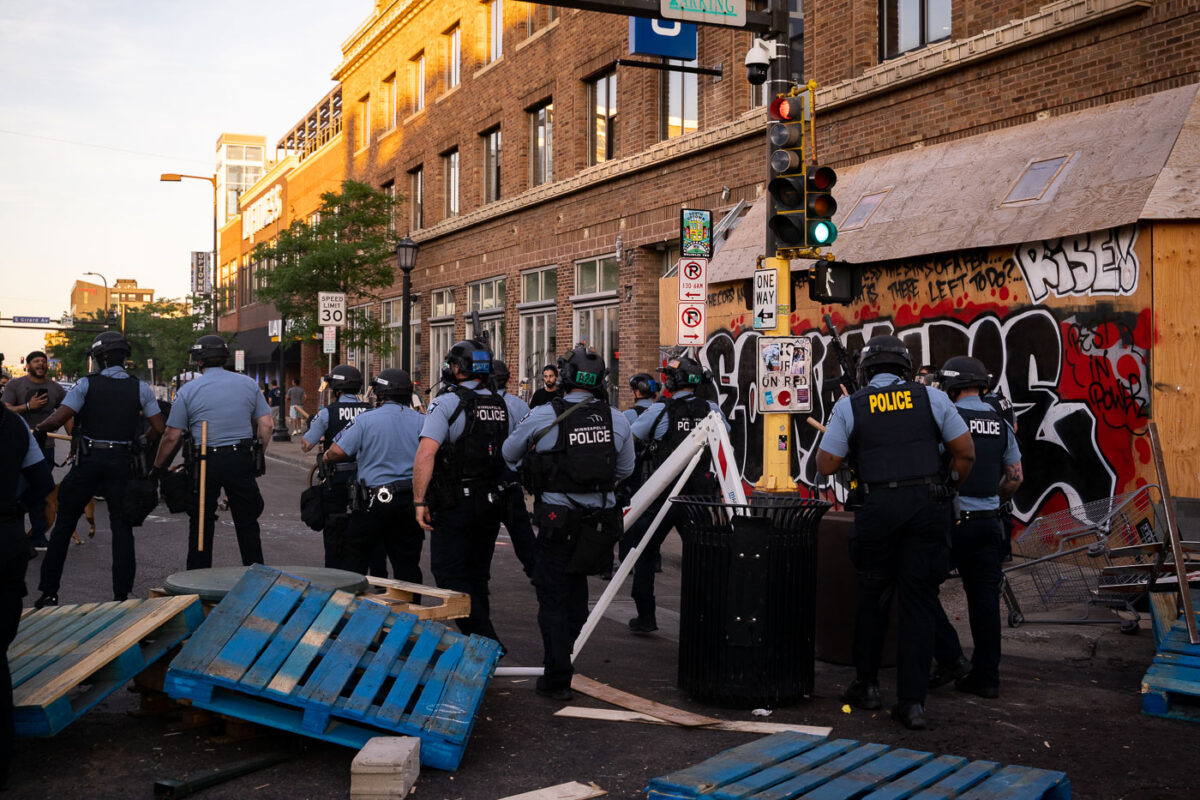
Minneapolis police officers stand by dismantled barricades in Uptown during a protest.
Minneapolis Police officers dismantle barricades in the Uptown neighborhood on July 14, 2021. The dismantling occurred during protests following the deaths of Winston Smith on June 3 and Deona Marie on June 13. On June 3, 2021, members of a U.S. Marshals Service fugitive task force fatally shot 32-year-old Winston “Boogie” Smith Jr. on the top level of a parking ramp in Minneapolis’ Uptown neighborhood while attempting to arrest him on a felony warrant. Authorities said Smith fired a handgun from inside his vehicle during the encounter, while family members and activists questioned the official account and demanded the release of additional evidence. The killing led to weeks of protests, street occupations, and confrontations with police in Uptown, becoming another major flashpoint in Minneapolis during the period following the murder of George Floyd. Earlier in the day Minneapolis city officials along with The Agape Movement coordinated to open the streets that had been closed at George Floyd Square since his murder. On June 13, 2021, 31-year-old Deona Marie Knajdek was killed when a driver accelerated into a group of demonstrators gathered in Minneapolis’ Uptown neighborhood during ongoing protests over the killing of Winston “Boogie” Smith Jr. Protesters had blocked the intersection of West Lake Street and Girard Avenue with vehicles and barricades when Nicholas Kraus drove a Jeep Cherokee into the crowd at high speed, killing Knajdek and injuring several others. Kraus was later charged with second-degree murder, two counts of second-degree assault with a dangerous weapon, and criminal vehicular operation. In 2023, he pleaded guilty to murder and assault charges and was sentenced to more than 20 years in prison for the attack.

Minneapolis Police clear protest barricades in Uptown
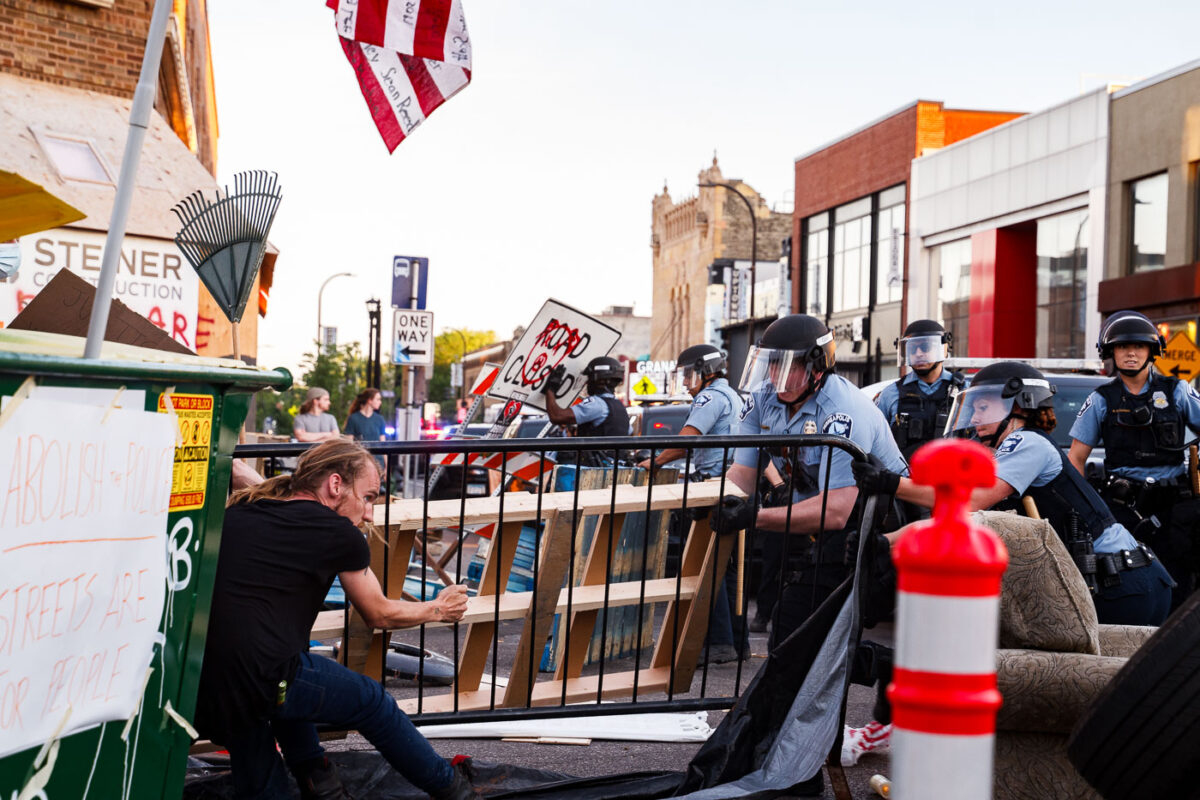
Minneapolis police clear barricades on Lake Street during protests.
Minneapolis Police officers clear street barricades at the intersection of Lake Street and Hennepin Avenue on June 15, 2021. Protesters had closed of the streets protesting the killings of Winston Smith and Deona Marie. On June 3, 2021, members of a U.S. Marshals Service fugitive task force fatally shot 32-year-old Winston “Boogie” Smith Jr. on the top level of a parking ramp in Minneapolis’ Uptown neighborhood while attempting to arrest him on a felony warrant. Authorities said Smith fired a handgun from inside his vehicle during the encounter, while family members and activists questioned the official account and demanded the release of additional evidence. The killing led to weeks of protests, street occupations, and confrontations with police in Uptown, becoming another major flashpoint in Minneapolis during the period following the murder of George Floyd. Earlier in the day Minneapolis city officials along with The Agape Movement coordinated to open the streets that had been closed at George Floyd Square since his murder. On June 13, 2021, 31-year-old Deona Marie Knajdek was killed when a driver accelerated into a group of demonstrators gathered in Minneapolis’ Uptown neighborhood during ongoing protests over the killing of Winston “Boogie” Smith Jr. Protesters had blocked the intersection of West Lake Street and Girard Avenue with vehicles and barricades when Nicholas Kraus drove a Jeep Cherokee into the crowd at high speed, killing Knajdek and injuring several others. Kraus was later charged with second-degree murder, two counts of second-degree assault with a dangerous weapon, and criminal vehicular operation. In 2023, he pleaded guilty to murder and assault charges and was sentenced to more than 20 years in prison for the attack.

Minneapolis Police Clear Barricades Amidst Winston Smith Protests
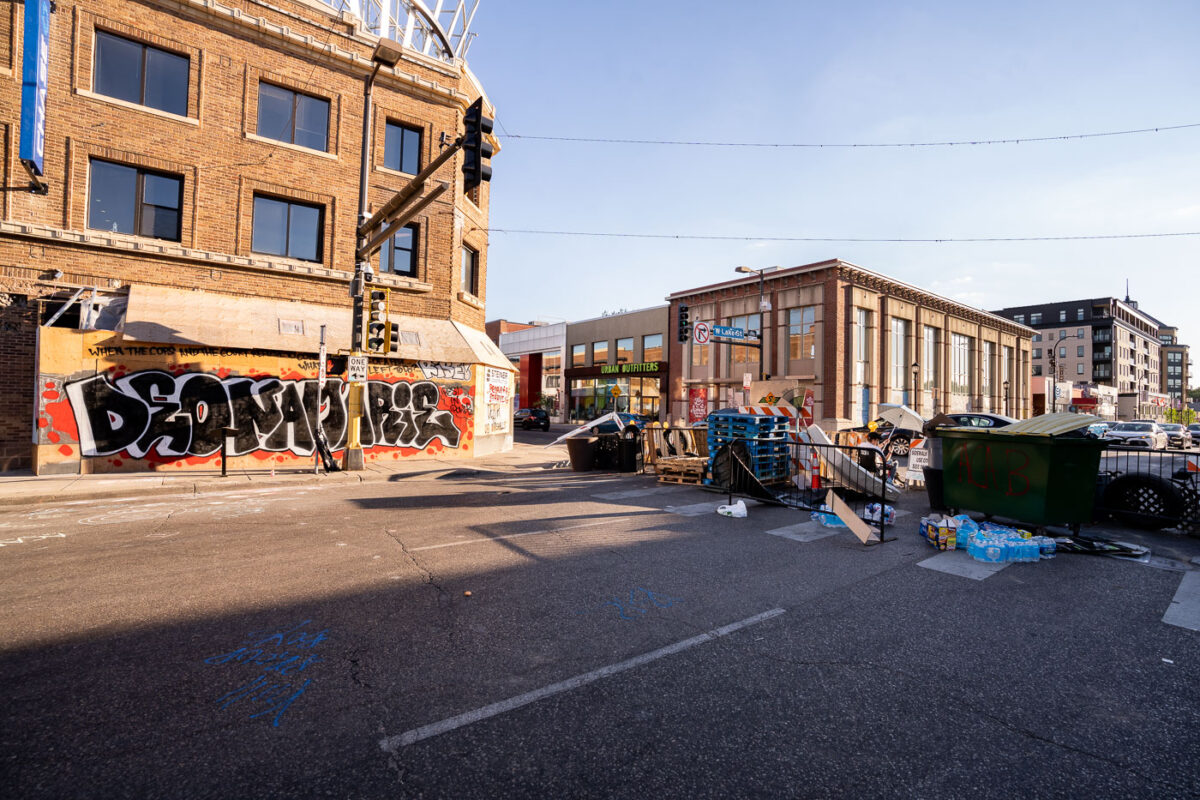
Graffiti-covered barricades at Hennepin Avenue and Lake Street in Minneapolis.
Street barricades are visible at the intersection of Hennepin Avenue and Lake Street in Minneapolis on June 15, 2021. These barricades were erected following significant unrest in the area following the killing of Winston Smith. On June 3, 2021, members of a U.S. Marshals Service fugitive task force fatally shot 32-year-old Winston “Boogie” Smith Jr. on the top level of a parking ramp in Minneapolis’ Uptown neighborhood while attempting to arrest him on a felony warrant. Authorities said Smith fired a handgun from inside his vehicle during the encounter, while family members and activists questioned the official account and demanded the release of additional evidence. The killing led to weeks of protests, street occupations, and confrontations with police in Uptown, becoming another major flashpoint in Minneapolis during the period following the murder of George Floyd. Earlier in the day Minneapolis city officials along with The Agape Movement coordinated to open the streets that had been closed at George Floyd Square since his murder. On June 13, 2021, 31-year-old Deona Marie Knajdek was killed when a driver accelerated into a group of demonstrators gathered in Minneapolis’ Uptown neighborhood during ongoing protests over the killing of Winston “Boogie” Smith Jr. Protesters had blocked the intersection of West Lake Street and Girard Avenue with vehicles and barricades when Nicholas Kraus drove a Jeep Cherokee into the crowd at high speed, killing Knajdek and injuring several others. Kraus was later charged with second-degree murder, two counts of second-degree assault with a dangerous weapon, and criminal vehicular operation. In 2023, he pleaded guilty to murder and assault charges and was sentenced to more than 20 years in prison for the attack.

Street Barricades at Hennepin Ave & Lake St, Minneapolis
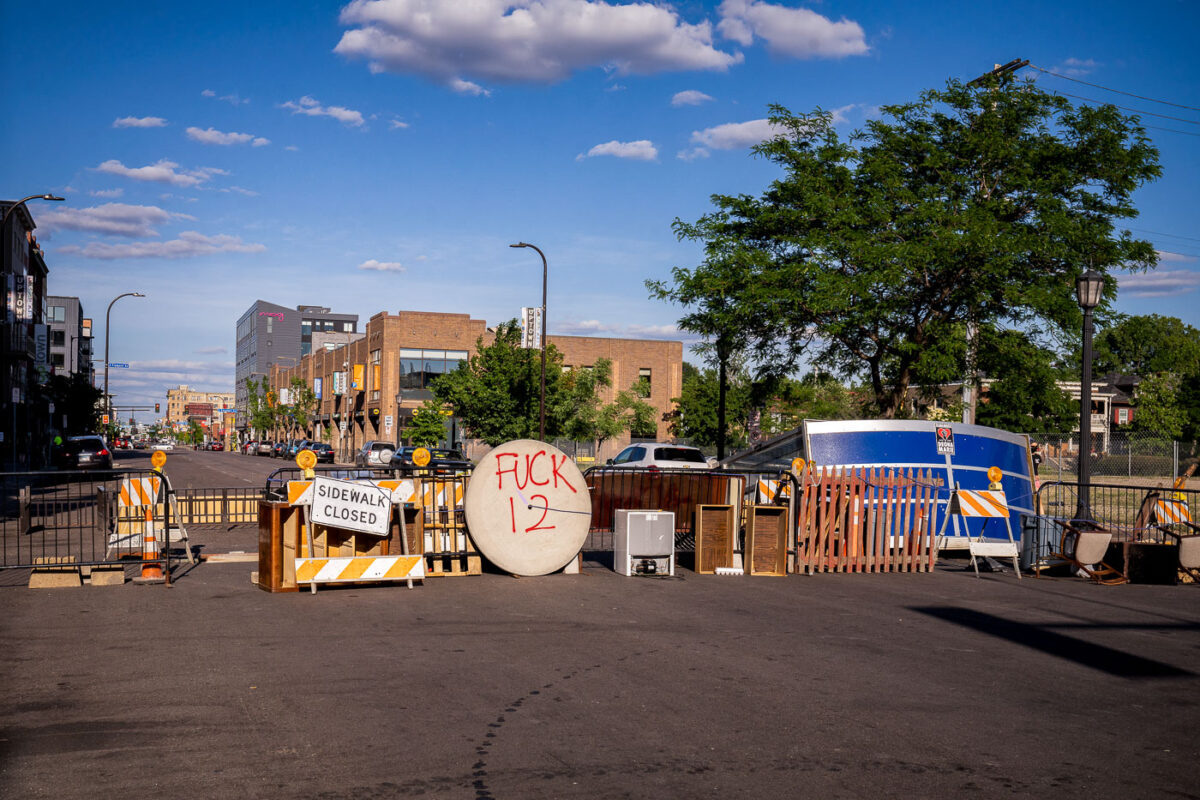
Barricades block Lake Street in Uptown Minneapolis, including a sign reading “FUCK 12.”
Barricades line Lake Street in Uptown Minneapolis, June 2020, during the protests following the murder of George Floyd. The barricades, some bearing messages like "FUCK 12," were erected by protesters to block off streets and create autonomous zones. Nearby, memorials for Winston Smith and Deona Marie Knajdek, both killed by law enforcement in early June 2020, were visible. On June 3, 2021, members of a U.S. Marshals Service fugitive task force fatally shot 32-year-old Winston “Boogie” Smith Jr. on the top level of a parking ramp in Minneapolis’ Uptown neighborhood while attempting to arrest him on a felony warrant. Authorities said Smith fired a handgun from inside his vehicle during the encounter, while family members and activists questioned the official account and demanded the release of additional evidence. The killing led to weeks of protests, street occupations, and confrontations with police in Uptown, becoming another major flashpoint in Minneapolis during the period following the murder of George Floyd. Earlier in the day Minneapolis city officials along with The Agape Movement coordinated to open the streets that had been closed at George Floyd Square since his murder. On June 13, 2021, 31-year-old Deona Marie Knajdek was killed when a driver accelerated into a group of demonstrators gathered in Minneapolis’ Uptown neighborhood during ongoing protests over the killing of Winston “Boogie” Smith Jr. Protesters had blocked the intersection of West Lake Street and Girard Avenue with vehicles and barricades when Nicholas Kraus drove a Jeep Cherokee into the crowd at high speed, killing Knajdek and injuring several others. Kraus was later charged with second-degree murder, two counts of second-degree assault with a dangerous weapon, and criminal vehicular operation. In 2023, he pleaded guilty to murder and assault charges and was sentenced to more than 20 years in prison for the attack.

Lake Street Barricades, Uptown Minneapolis, June 2020
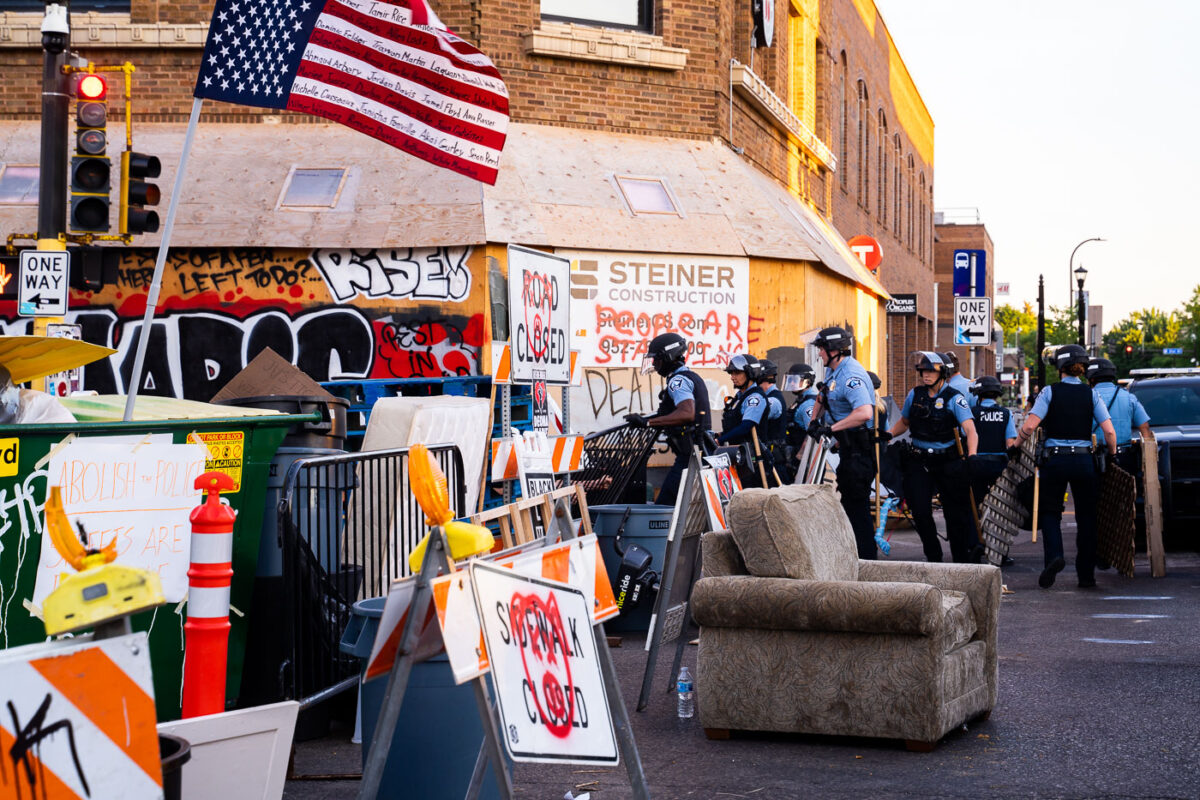
Police clear barricades on Lake Street in Minneapolis beside a boarded-up storefront and protest signs.
Minneapolis Police officers clear barricades on Lake Street on June 15, 2021. The barricades were erected in the aftermath of protests and unrest following the deaths of Winston Smith and Deona Marie. On June 3, 2021, members of a U.S. Marshals Service fugitive task force fatally shot 32-year-old Winston “Boogie” Smith Jr. on the top level of a parking ramp in Minneapolis’ Uptown neighborhood while attempting to arrest him on a felony warrant. Authorities said Smith fired a handgun from inside his vehicle during the encounter, while family members and activists questioned the official account and demanded the release of additional evidence. The killing led to weeks of protests, street occupations, and confrontations with police in Uptown, becoming another major flashpoint in Minneapolis during the period following the murder of George Floyd. Earlier in the day Minneapolis city officials along with The Agape Movement coordinated to open the streets that had been closed at George Floyd Square since his murder. On June 13, 2021, 31-year-old Deona Marie Knajdek was killed when a driver accelerated into a group of demonstrators gathered in Minneapolis’ Uptown neighborhood during ongoing protests over the killing of Winston “Boogie” Smith Jr. Protesters had blocked the intersection of West Lake Street and Girard Avenue with vehicles and barricades when Nicholas Kraus drove a Jeep Cherokee into the crowd at high speed, killing Knajdek and injuring several others. Kraus was later charged with second-degree murder, two counts of second-degree assault with a dangerous weapon, and criminal vehicular operation. In 2023, he pleaded guilty to murder and assault charges and was sentenced to more than 20 years in prison for the attack.

Police Clear Protest Barricades on Lake Street in Uptown
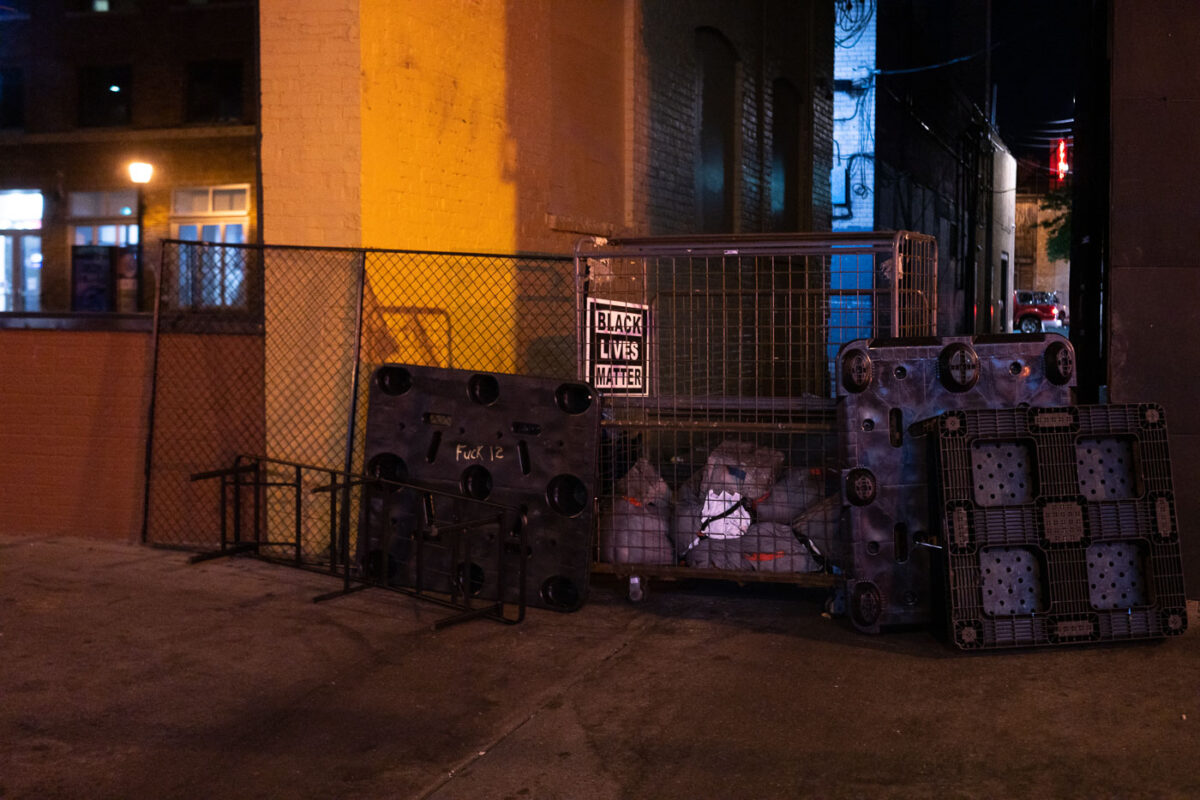
Barricades and a Black Lives Matter sign on Lake Street in Minneapolis at night.
Barricades and a "Black Lives Matter" sign are visible on Lake Street in Minneapolis, a location that became a site of protest following the death of Winston Smith. On June 3, 2021, members of a U.S. Marshals Service fugitive task force fatally shot 32-year-old Winston “Boogie” Smith Jr. on the top level of a parking ramp in Minneapolis’ Uptown neighborhood while attempting to arrest him on a felony warrant. Authorities said Smith fired a handgun from inside his vehicle during the encounter, while family members and activists questioned the official account and demanded the release of additional evidence. The killing led to weeks of protests, street occupations, and confrontations with police in Uptown, becoming another major flashpoint in Minneapolis during the period following the murder of George Floyd. Earlier in the day Minneapolis city officials along with The Agape Movement coordinated to open the streets that had been closed at George Floyd Square since his murder. On June 13, 2021, 31-year-old Deona Marie Knajdek was killed when a driver accelerated into a group of demonstrators gathered in Minneapolis’ Uptown neighborhood during ongoing protests over the killing of Winston “Boogie” Smith Jr. Protesters had blocked the intersection of West Lake Street and Girard Avenue with vehicles and barricades when Nicholas Kraus drove a Jeep Cherokee into the crowd at high speed, killing Knajdek and injuring several others. Kraus was later charged with second-degree murder, two counts of second-degree assault with a dangerous weapon, and criminal vehicular operation. In 2023, he pleaded guilty to murder and assault charges and was sentenced to more than 20 years in prison for the attack.

Barricades and “Black Lives Matter” sign on Lake Street, Minneapolis
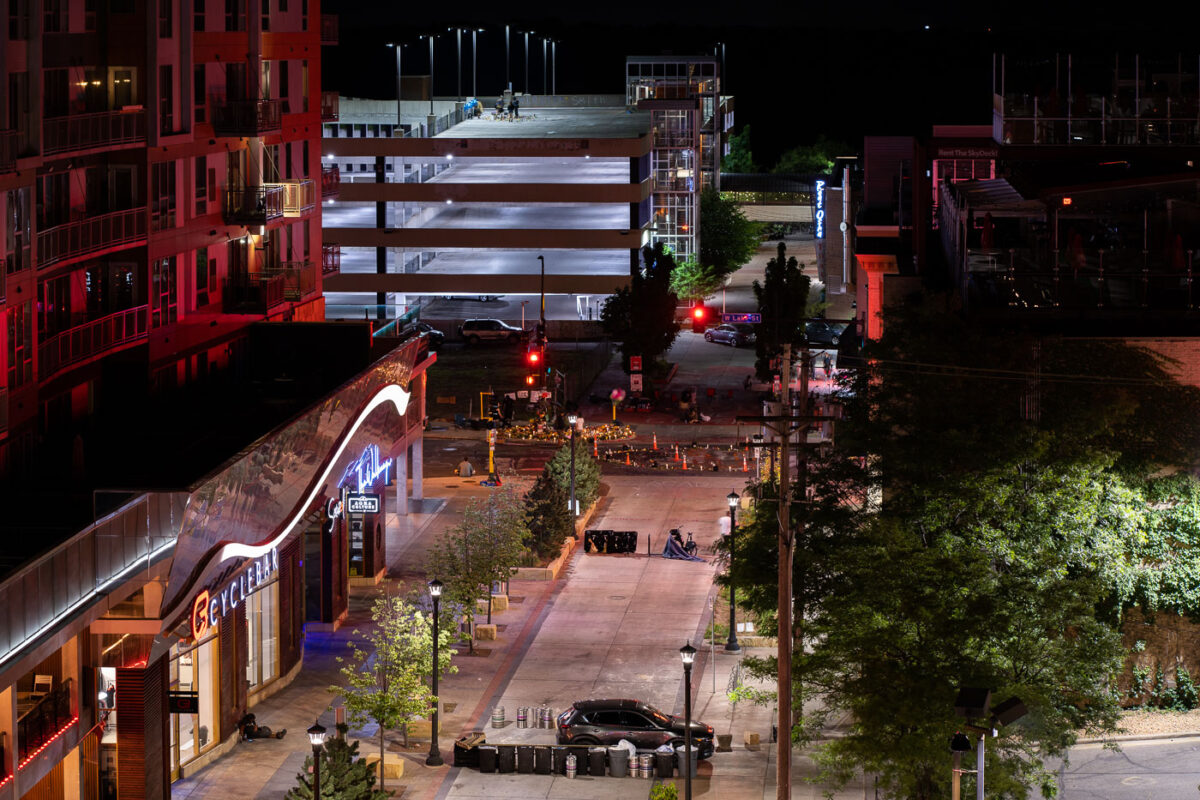
Memorial candles and barricades mark Lake Street and Girard Avenue in Minneapolis at night.
A memorial for Deona Marie is visible at the intersection of Lake Street and Girard Avenue in Minneapolis. Protesters have maintained a presence at this location since the law enforcement shooting death of Winston Smith on June 3, 2021, and the subsequent killing of Deona Marie on June 13, 2021, when Nicholas Kraus drove his vehicle into a crowd of demonstrators. On June 13, 2021, 31-year-old Deona Marie Knajdek was killed when a driver accelerated into a group of demonstrators gathered in Minneapolis’ Uptown neighborhood during ongoing protests over the killing of Winston “Boogie” Smith Jr. Protesters had blocked the intersection of West Lake Street and Girard Avenue with vehicles and barricades when Nicholas Kraus drove a Jeep Cherokee into the crowd at high speed, killing Knajdek and injuring several others. Kraus was later charged with second-degree murder, two counts of second-degree assault with a dangerous weapon, and criminal vehicular operation. In 2023, he pleaded guilty to murder and assault charges and was sentenced to more than 20 years in prison for the attack. On June 3, 2021, members of a U.S. Marshals Service fugitive task force fatally shot 32-year-old Winston “Boogie” Smith Jr. on the top level of a parking ramp in Minneapolis’ Uptown neighborhood while attempting to arrest him on a felony warrant. Authorities said Smith fired a handgun from inside his vehicle during the encounter, while family members and activists questioned the official account and demanded the release of additional evidence. The killing led to weeks of protests, street occupations, and confrontations with police in Uptown, becoming another major flashpoint in Minneapolis during the period following the murder of George Floyd. Earlier in the day Minneapolis city officials along with The Agape Movement coordinated to open the streets that had been closed at George Floyd Square since his murder.

Minneapolis Protest Site: Lake St & Girard Ave Night
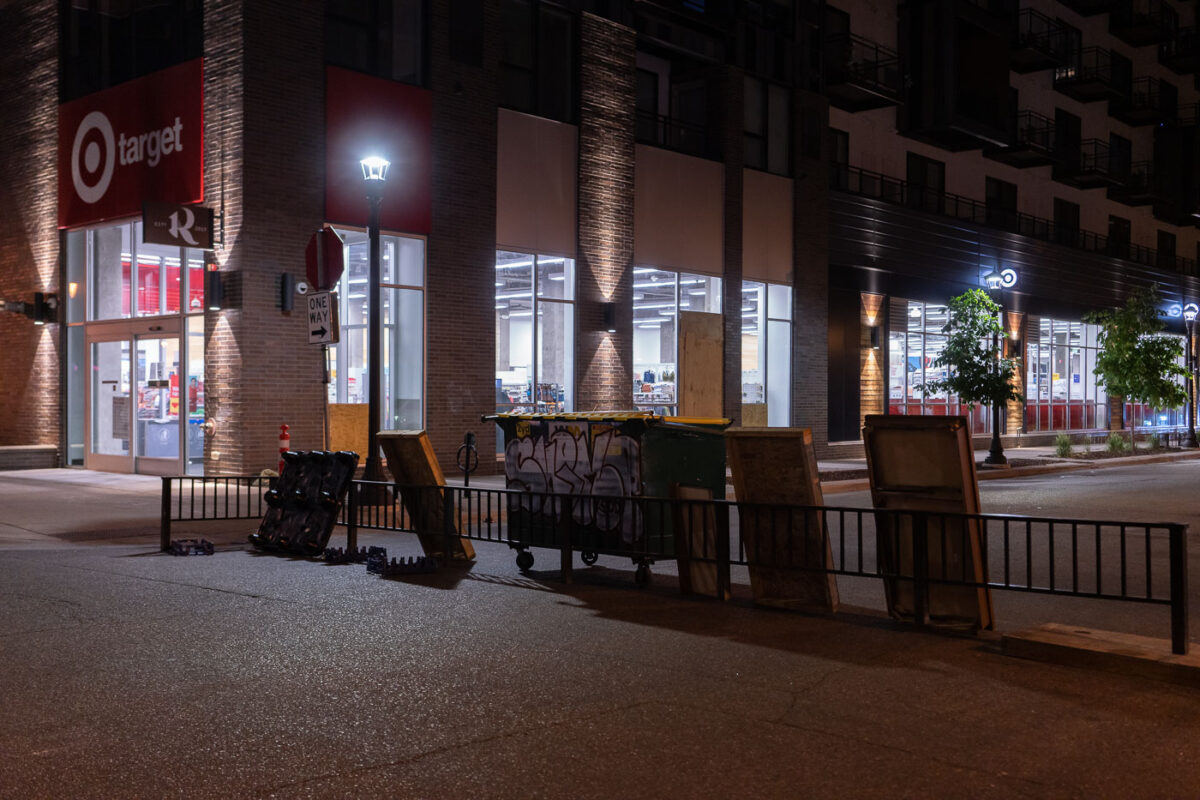
Barricades block a Target store on Lake Street in Minneapolis at night.
Barricades are placed in front of a Target store on Lake Street in Minneapolis. Protesters established these barricades to "hold space" following the death of Winston Smith on June 3rd. On June 3, 2021, members of a U.S. Marshals Service fugitive task force fatally shot 32-year-old Winston “Boogie” Smith Jr. on the top level of a parking ramp in Minneapolis’ Uptown neighborhood while attempting to arrest him on a felony warrant. Authorities said Smith fired a handgun from inside his vehicle during the encounter, while family members and activists questioned the official account and demanded the release of additional evidence. The killing led to weeks of protests, street occupations, and confrontations with police in Uptown, becoming another major flashpoint in Minneapolis during the period following the murder of George Floyd. Earlier in the day Minneapolis city officials along with The Agape Movement coordinated to open the streets that had been closed at George Floyd Square since his murder.

Barricades at Target on Lake Street, Minneapolis
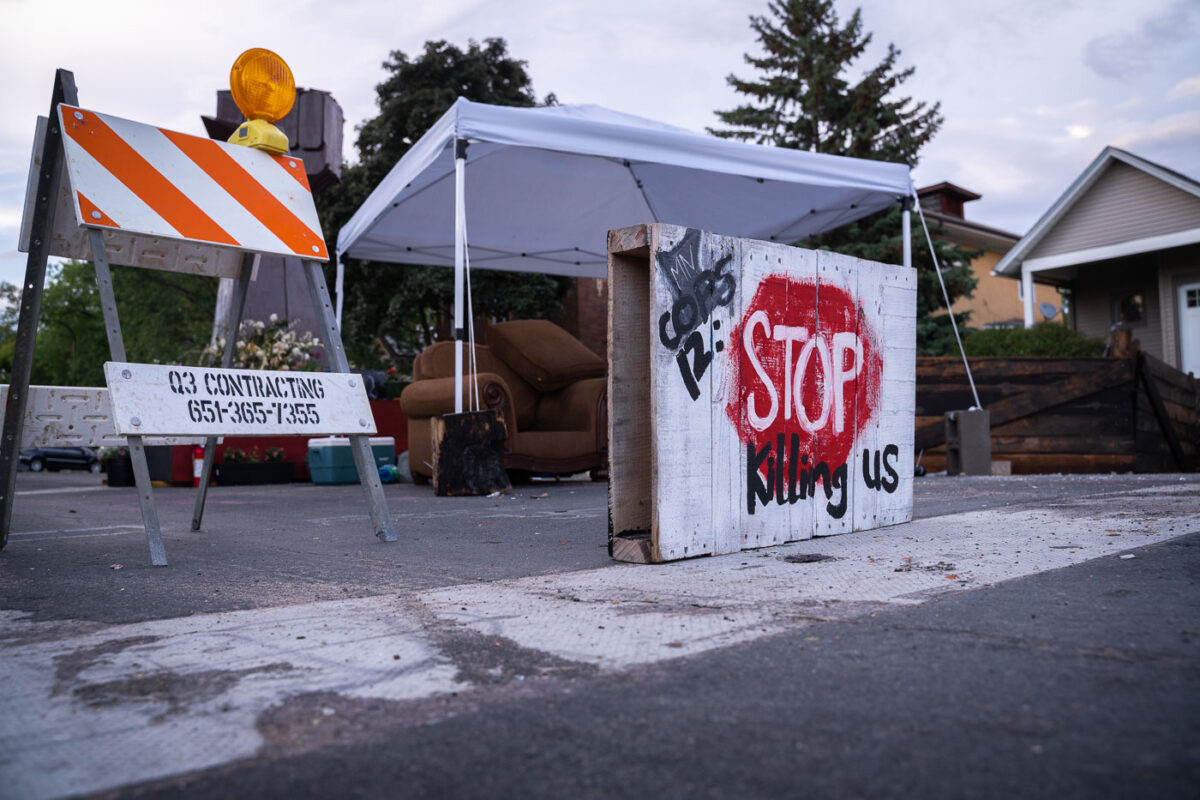
Barricade with "Stop Killing Us" sign at George Floyd Square in Minneapolis.
Barricades, including a hand-painted sign reading "STOP Killing Us," have been erected at George Floyd Square in Minneapolis. These barriers appeared after the city cleared earlier barricades on June 3rd, following the murder of George Floyd. On May 25, 2020, Minneapolis police officer Derek Chauvin murdered 46-year-old George Floyd during an arrest outside Cup Foods at the intersection of 38th Street and Chicago Avenue in south Minneapolis. Video recorded by bystanders showed Chauvin kneeling on Floyd’s neck for more than nine minutes while Floyd repeatedly said he could not breathe. Three other Minneapolis police officers - J. Alexander Kueng, Thomas Lane, and Tou Thao — were also present during the arrest and later faced criminal charges for their roles in Floyd’s death. Floyd’s murder sparked protests and civil unrest across Minneapolis and around the world, leading to widespread demonstrations against police violence, major policy debates on policing, and the conviction of Chauvin on murder and manslaughter charges in 2021.

George Floyd Square Barricade: Stop Killing Us
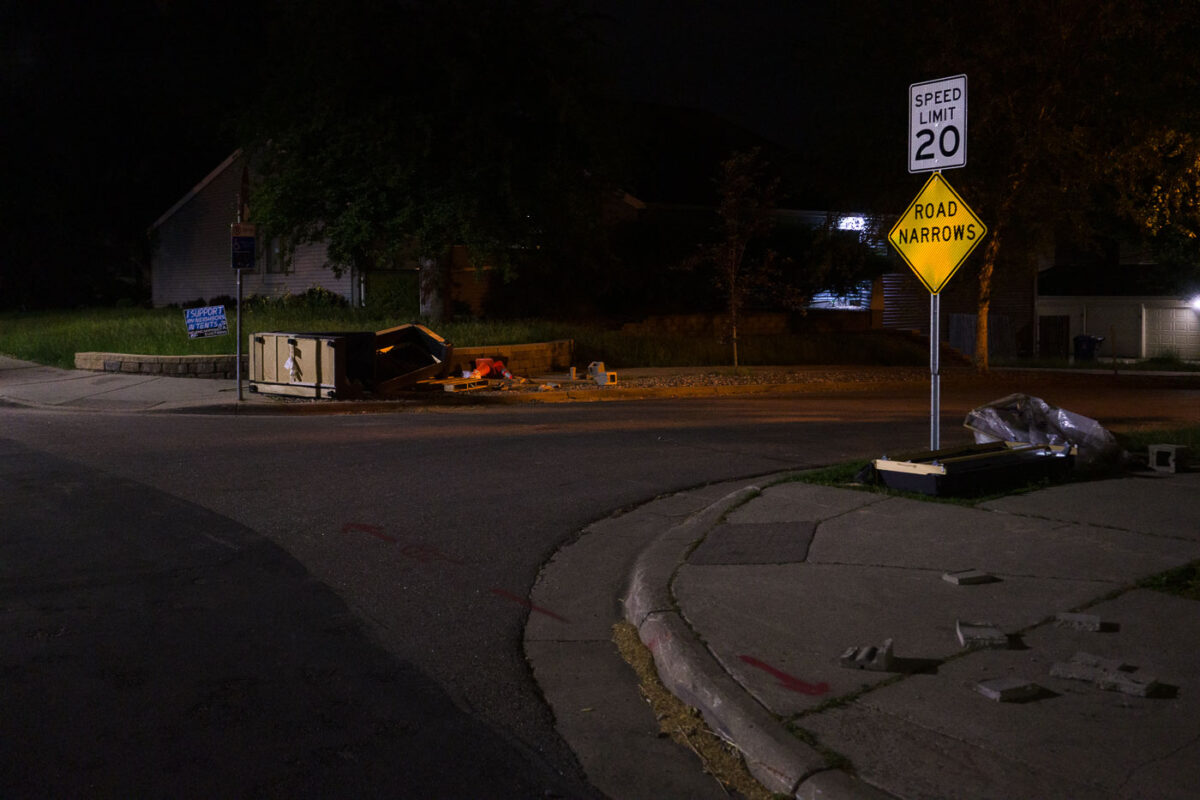
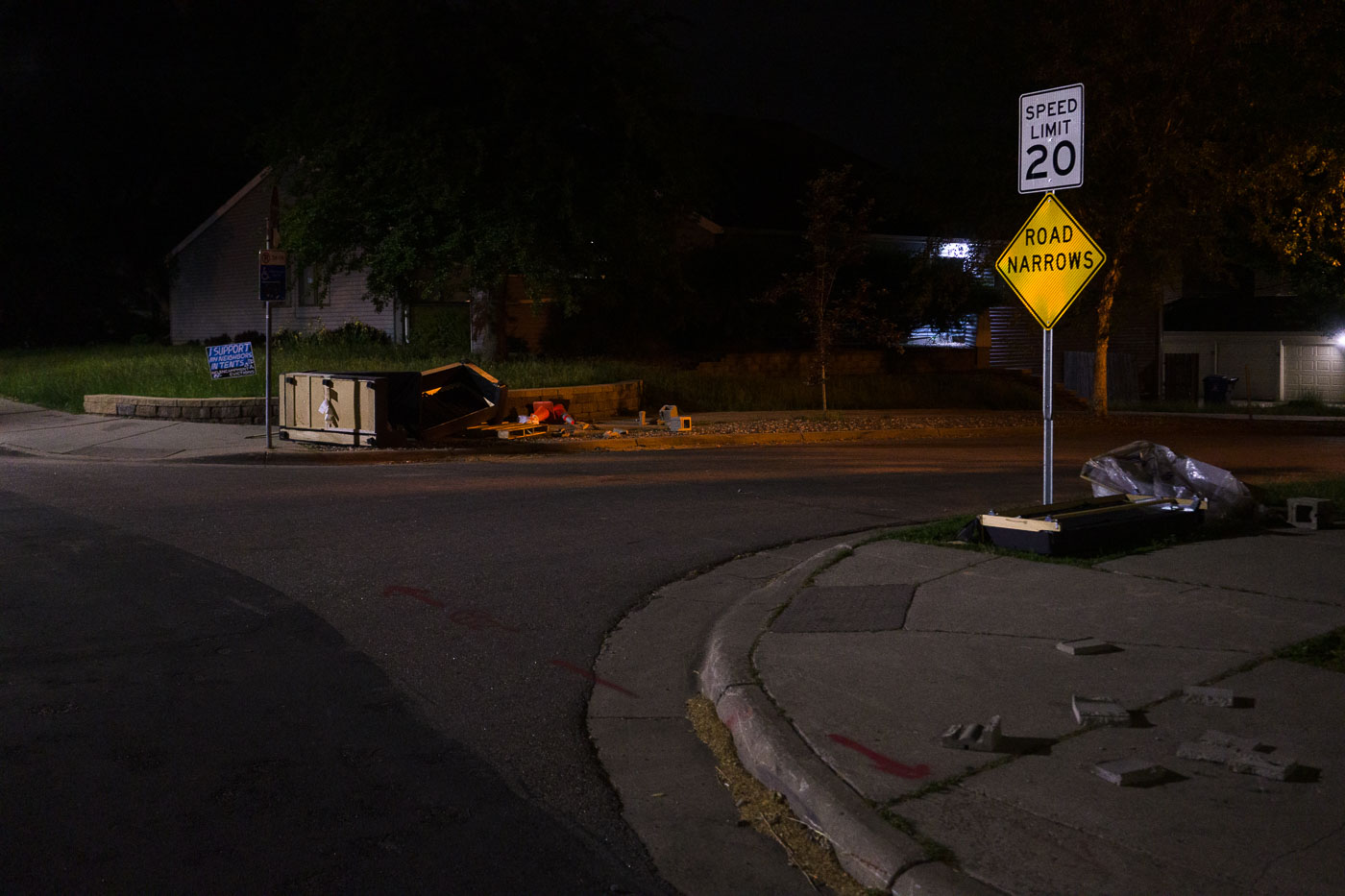
Debris and road signs at George Floyd Square in Minneapolis at night after barricades were removed.
Debris litters the intersection of East 37th Street and Chicago Avenue in Minneapolis, known as George Floyd Square. The city had recently removed concrete barricades that had been in place for over a year, reopening the street to vehicular traffic. The square became a focal point for protests and community organizing following the murder of George Floyd in May 2020. A sign visible in the background reads "I SUPPORT MY NEIGHBORS IN TENTS. NO ENCAMPMENT. NO EVICTIONS." On May 25, 2020, Minneapolis police officer Derek Chauvin murdered 46-year-old George Floyd during an arrest outside Cup Foods at the intersection of 38th Street and Chicago Avenue in south Minneapolis. Video recorded by bystanders showed Chauvin kneeling on Floyd’s neck for more than nine minutes while Floyd repeatedly said he could not breathe. Three other Minneapolis police officers - J. Alexander Kueng, Thomas Lane, and Tou Thao — were also present during the arrest and later faced criminal charges for their roles in Floyd’s death. Floyd’s murder sparked protests and civil unrest across Minneapolis and around the world, leading to widespread demonstrations against police violence, major policy debates on policing, and the conviction of Chauvin on murder and manslaughter charges in 2021.

George Floyd Square: Barricades Removed, Debris Remains
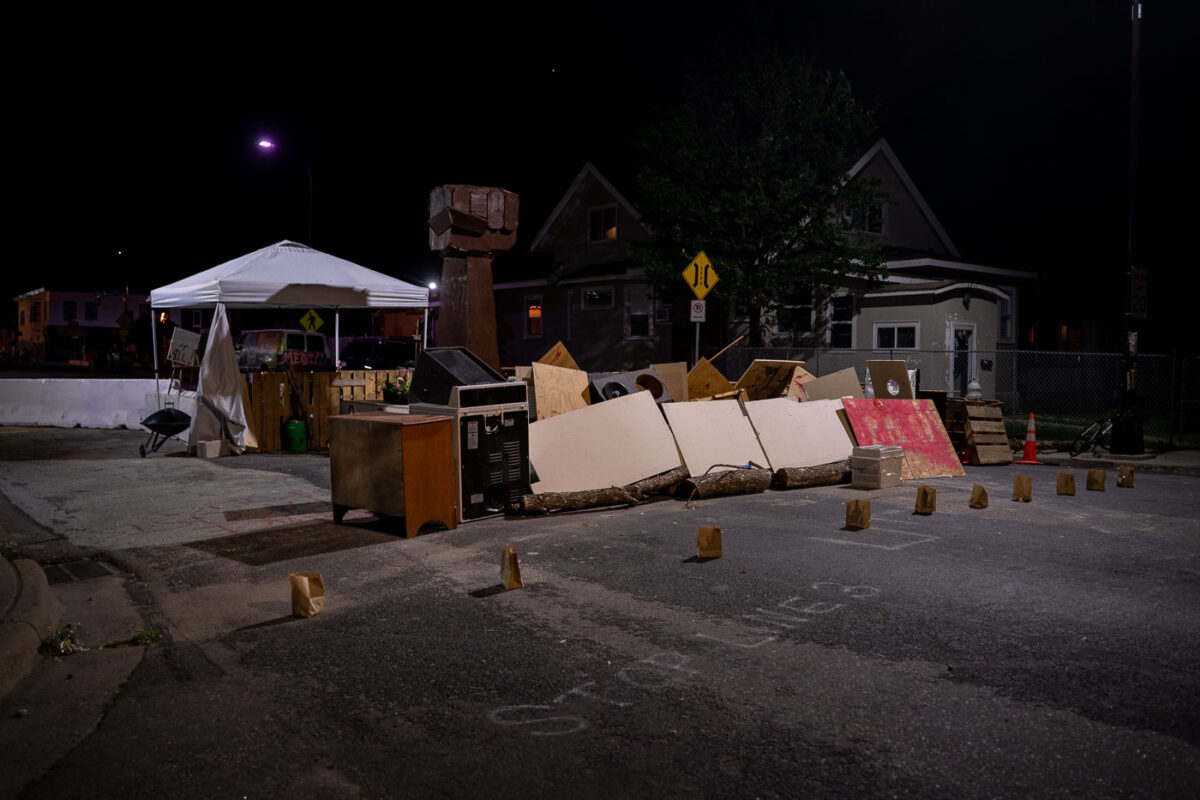
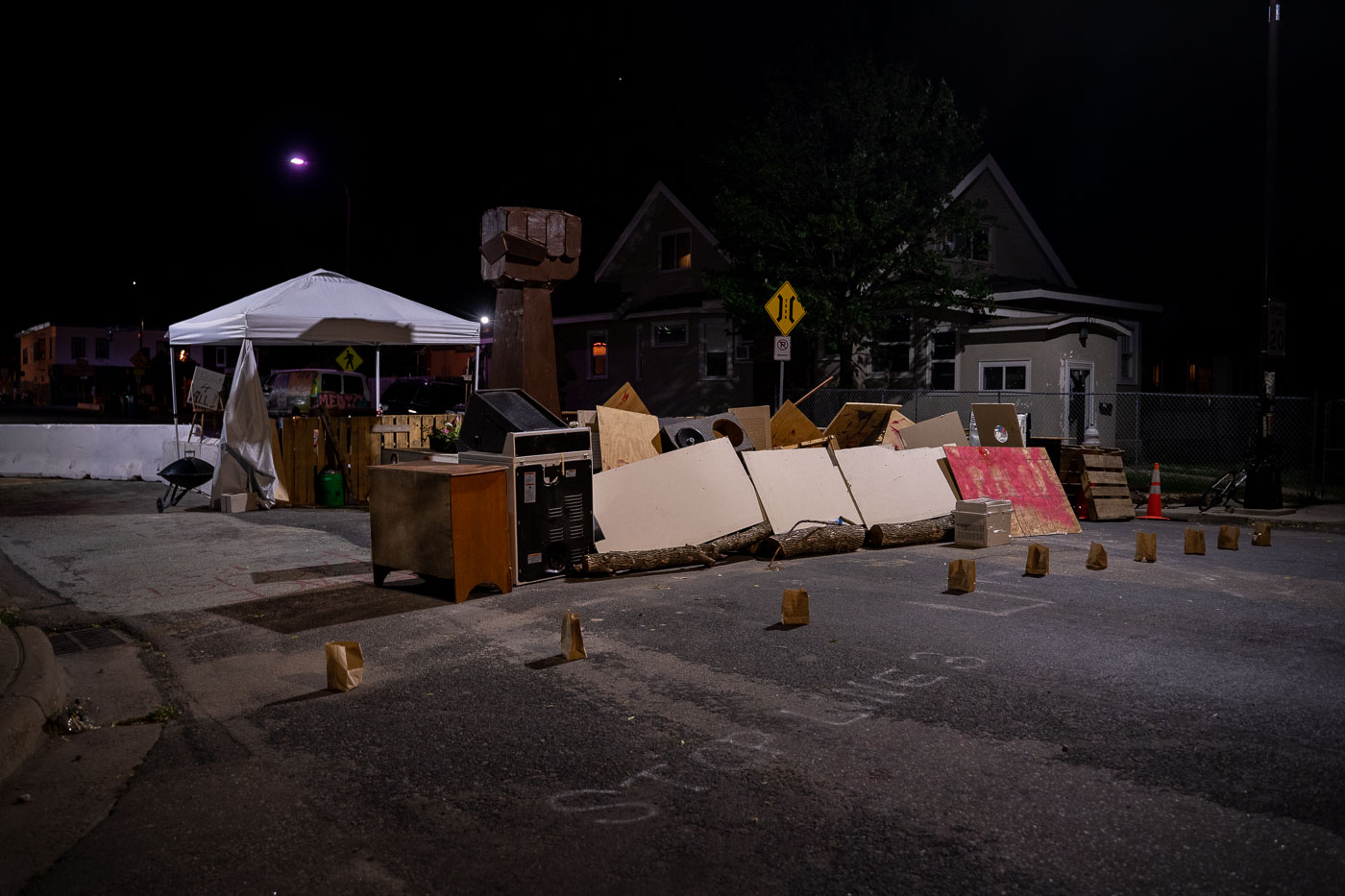
Barricades and a tent at George Floyd Square in Minneapolis at night.
Street barricades constructed from salvaged materials at the perimeter of George Floyd Square in South Minneapolis. The square, established in the wake of George Floyd's murder in May 2020, became a site of protest and community organizing. These barricades were erected after city officials removed earlier barriers, an attempt to reclaim the space for vehicular traffic that was met with renewed community resistance. On May 25, 2020, Minneapolis police officer Derek Chauvin murdered 46-year-old George Floyd during an arrest outside Cup Foods at the intersection of 38th Street and Chicago Avenue in south Minneapolis. Video recorded by bystanders showed Chauvin kneeling on Floyd’s neck for more than nine minutes while Floyd repeatedly said he could not breathe. Three other Minneapolis police officers - J. Alexander Kueng, Thomas Lane, and Tou Thao — were also present during the arrest and later faced criminal charges for their roles in Floyd’s death. Floyd’s murder sparked protests and civil unrest across Minneapolis and around the world, leading to widespread demonstrations against police violence, major policy debates on policing, and the conviction of Chauvin on murder and manslaughter charges in 2021.

George Floyd Square Barricades, South Minneapolis
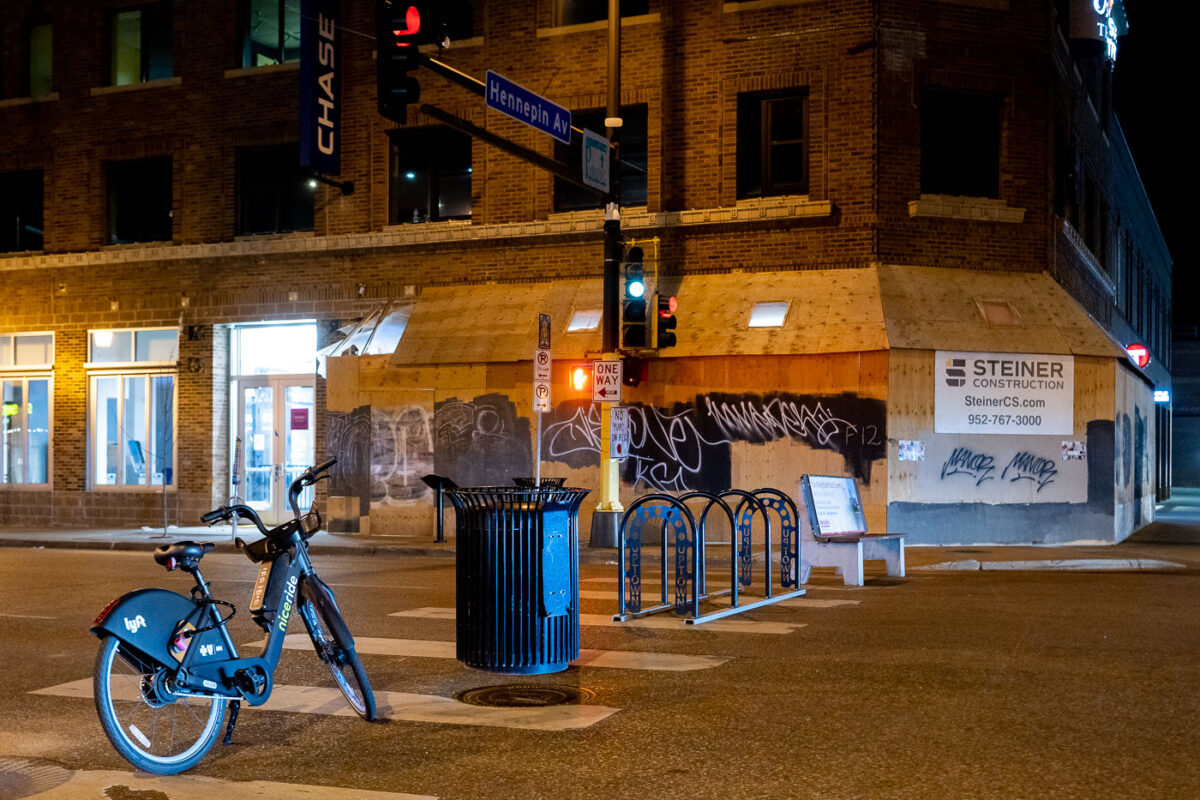
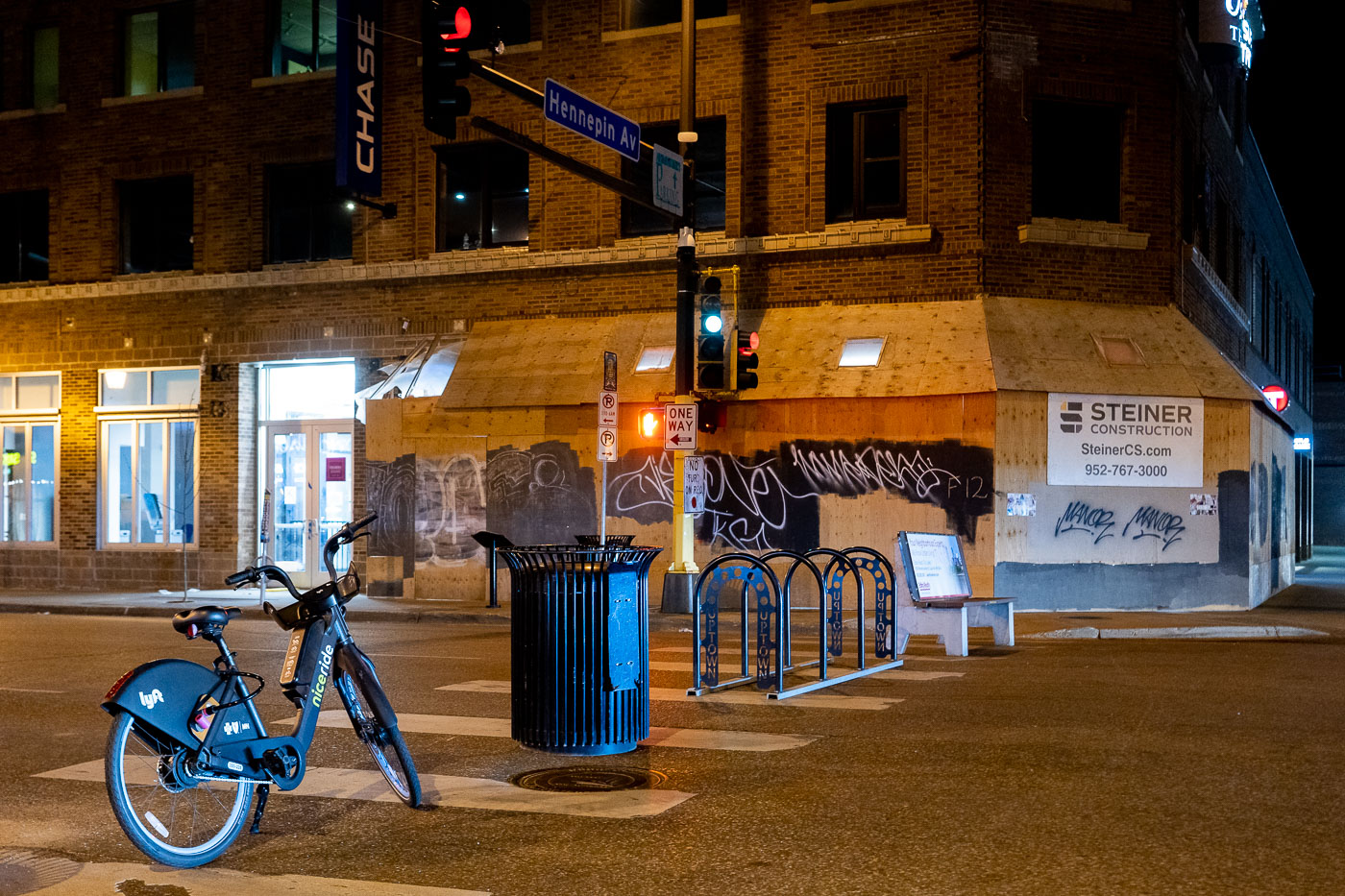
Makeshift barricades and a rental bike at Hennepin Avenue and Lake Street in Minneapolis at night
Makeshift barricades, including a bicycle, garbage can, and bike rack, were placed on Lake Street at Hennepin Avenue in Minneapolis. These barriers were erected during continuing protests following the law enforcement shooting death of Winston Smith on June 3rd. On June 3, 2021, members of a U.S. Marshals Service fugitive task force fatally shot 32-year-old Winston “Boogie” Smith Jr. on the top level of a parking ramp in Minneapolis’ Uptown neighborhood while attempting to arrest him on a felony warrant. Authorities said Smith fired a handgun from inside his vehicle during the encounter, while family members and activists questioned the official account and demanded the release of additional evidence. The killing led to weeks of protests, street occupations, and confrontations with police in Uptown, becoming another major flashpoint in Minneapolis during the period following the murder of George Floyd. Earlier in the day Minneapolis city officials along with The Agape Movement coordinated to open the streets that had been closed at George Floyd Square since his murder.

Makeshift Barricades on Lake Street, Minneapolis
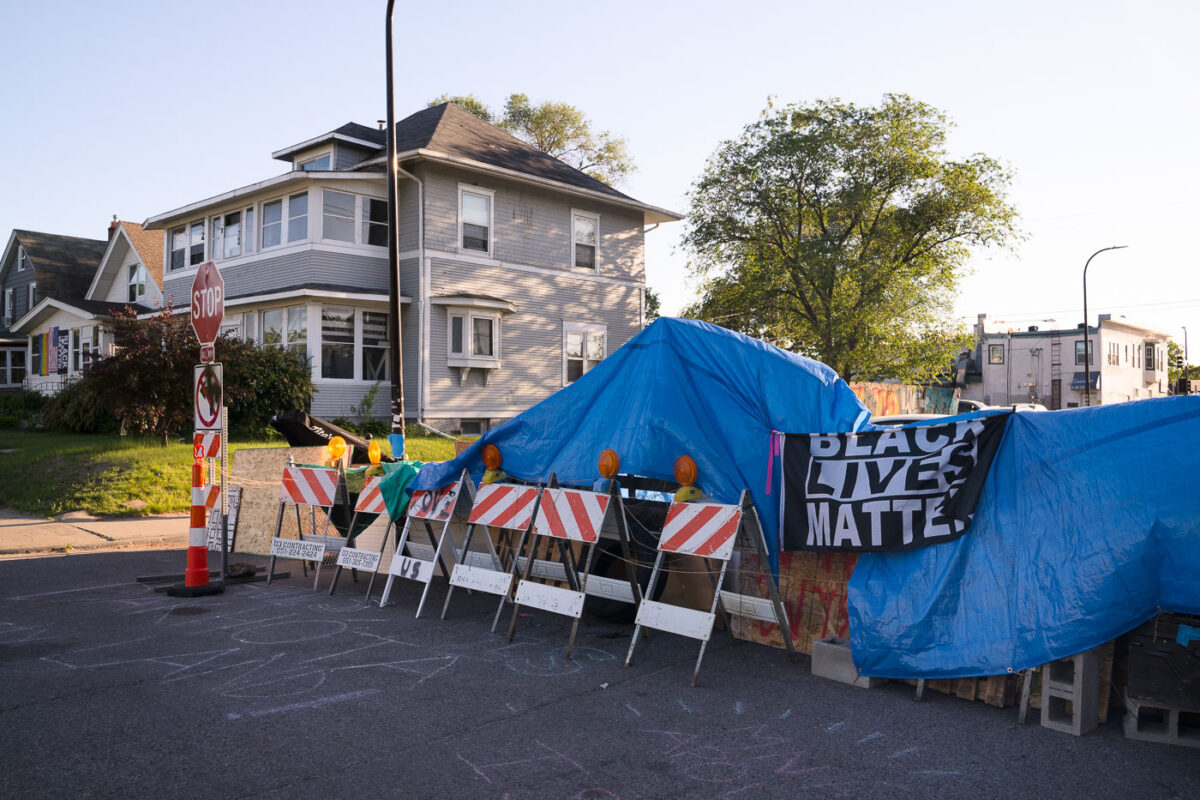
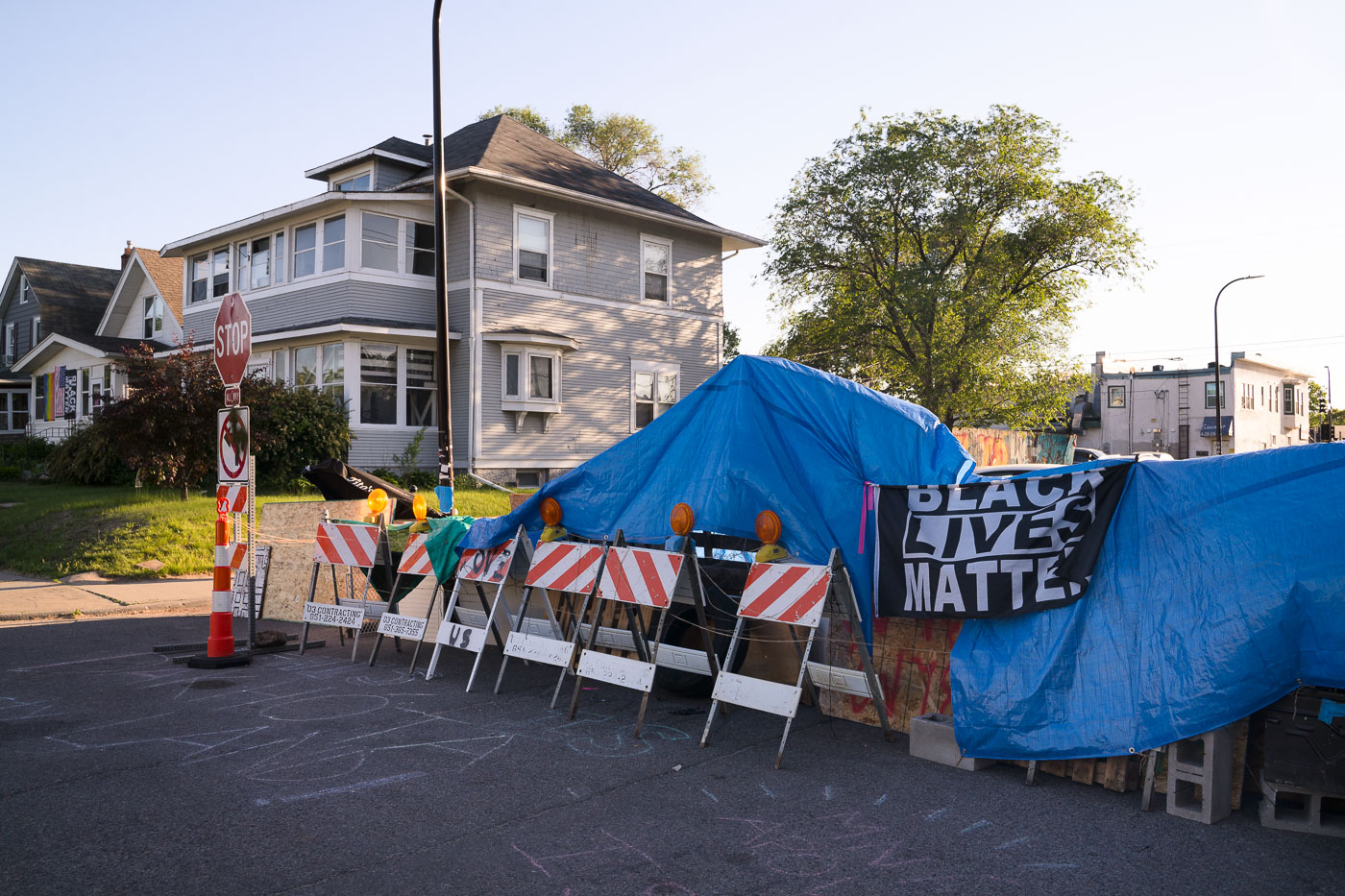
Barricades with a Black Lives Matter banner at George Floyd Square in Minneapolis
Barricades, including a Black Lives Matter banner, at George Floyd Square in Minneapolis. The square, located at the intersection of 38th Street and Elliott Avenue, was established as an autonomous zone following the murder of George Floyd in May 2020. City workers removed the barricades the day before this photograph was taken, marking a significant moment in the ongoing occupation and its eventual dismantling. On May 25, 2020, Minneapolis police officer Derek Chauvin murdered 46-year-old George Floyd during an arrest outside Cup Foods at the intersection of 38th Street and Chicago Avenue in south Minneapolis. Video recorded by bystanders showed Chauvin kneeling on Floyd’s neck for more than nine minutes while Floyd repeatedly said he could not breathe. Three other Minneapolis police officers - J. Alexander Kueng, Thomas Lane, and Tou Thao — were also present during the arrest and later faced criminal charges for their roles in Floyd’s death. Floyd’s murder sparked protests and civil unrest across Minneapolis and around the world, leading to widespread demonstrations against police violence, major policy debates on policing, and the conviction of Chauvin on murder and manslaughter charges in 2021.

George Floyd Square Barricades with BLM Banner, Minneapolis
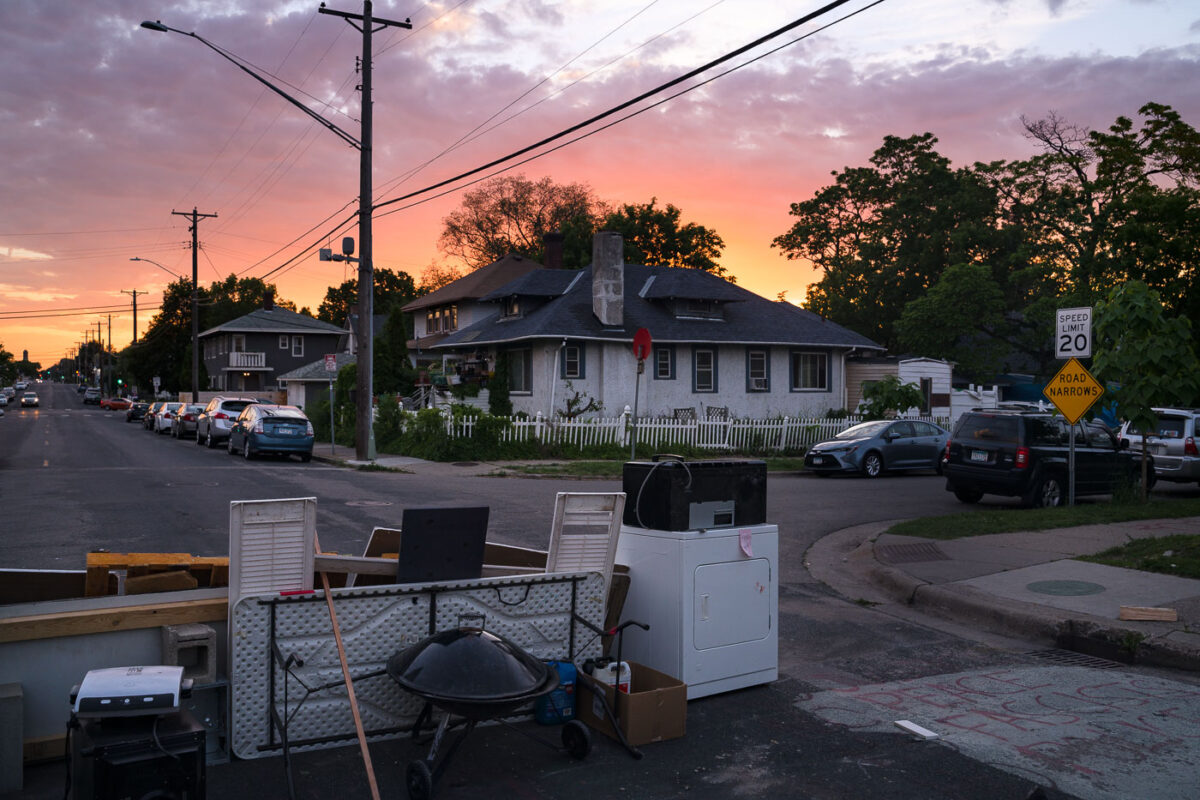
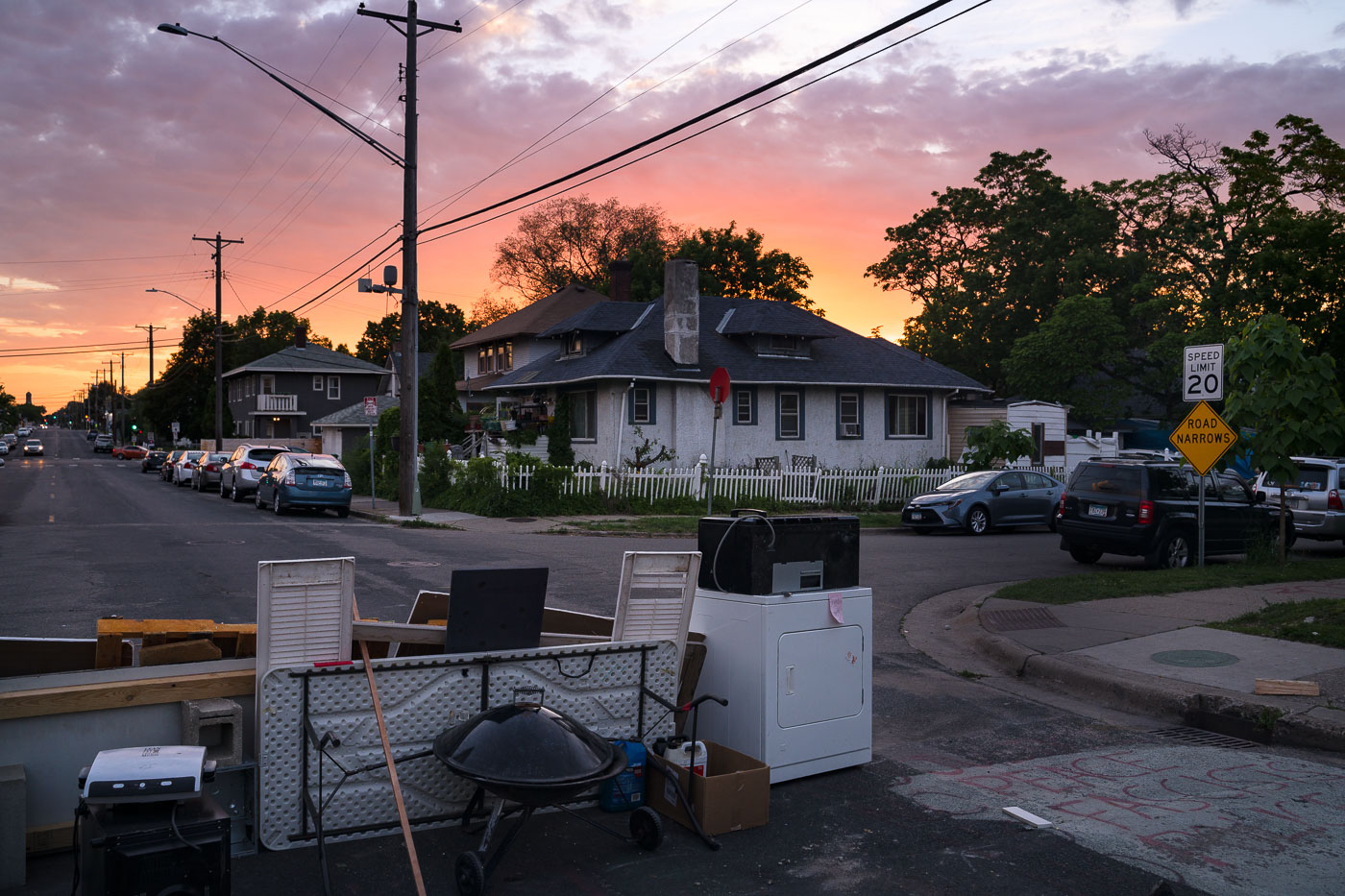
Barricades and household items block a Minneapolis street at sunset near George Floyd Square.
Barricades are re-established at George Floyd Square in Minneapolis at sunset on June 3, 2021, following an earlier clearing by the city. The square, located at the intersection of 38th Street and Chicago Avenue, became a focal point of protests and community organizing after the murder of George Floyd in May 2020. The community established autonomous zones and erected barricades to control access and create a space for remembrance and activism. On May 25, 2020, Minneapolis police officer Derek Chauvin murdered 46-year-old George Floyd during an arrest outside Cup Foods at the intersection of 38th Street and Chicago Avenue in south Minneapolis. Video recorded by bystanders showed Chauvin kneeling on Floyd’s neck for more than nine minutes while Floyd repeatedly said he could not breathe. Three other Minneapolis police officers - J. Alexander Kueng, Thomas Lane, and Tou Thao — were also present during the arrest and later faced criminal charges for their roles in Floyd’s death. Floyd’s murder sparked protests and civil unrest across Minneapolis and around the world, leading to widespread demonstrations against police violence, major policy debates on policing, and the conviction of Chauvin on murder and manslaughter charges in 2021.

George Floyd Square Barricades at Sunset, Minneapolis
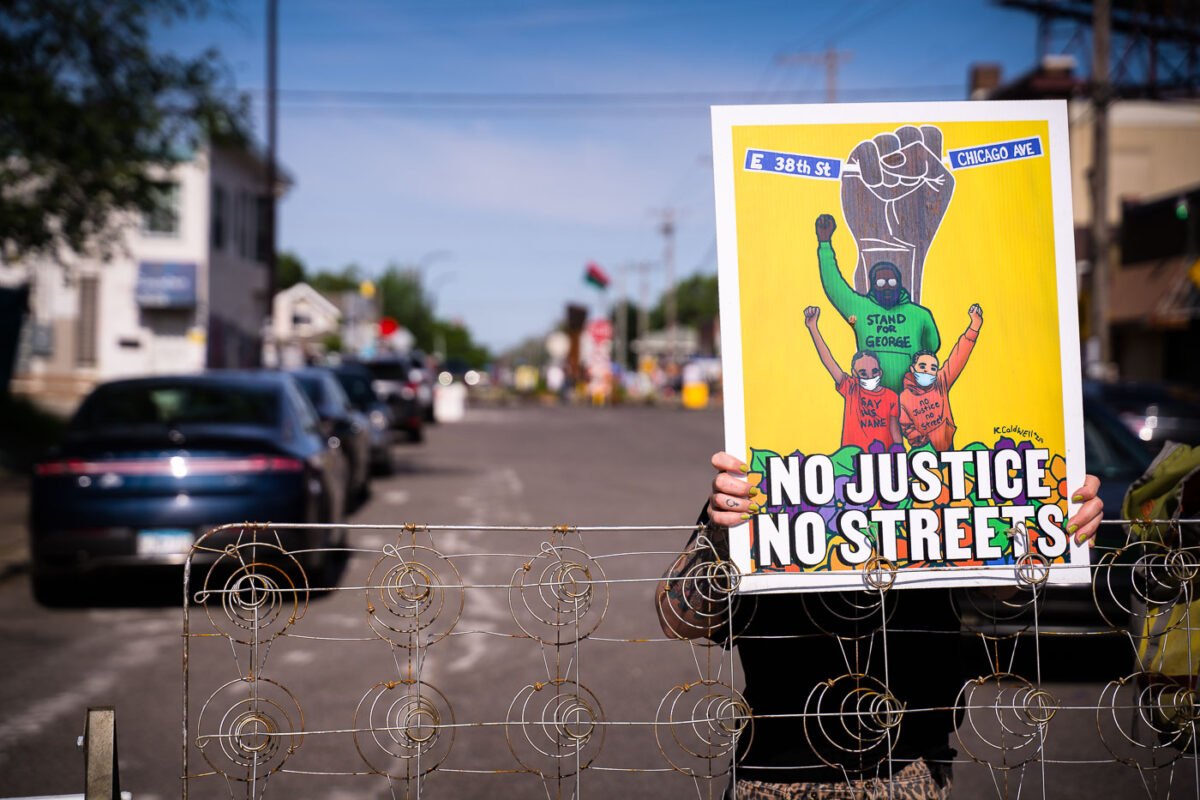
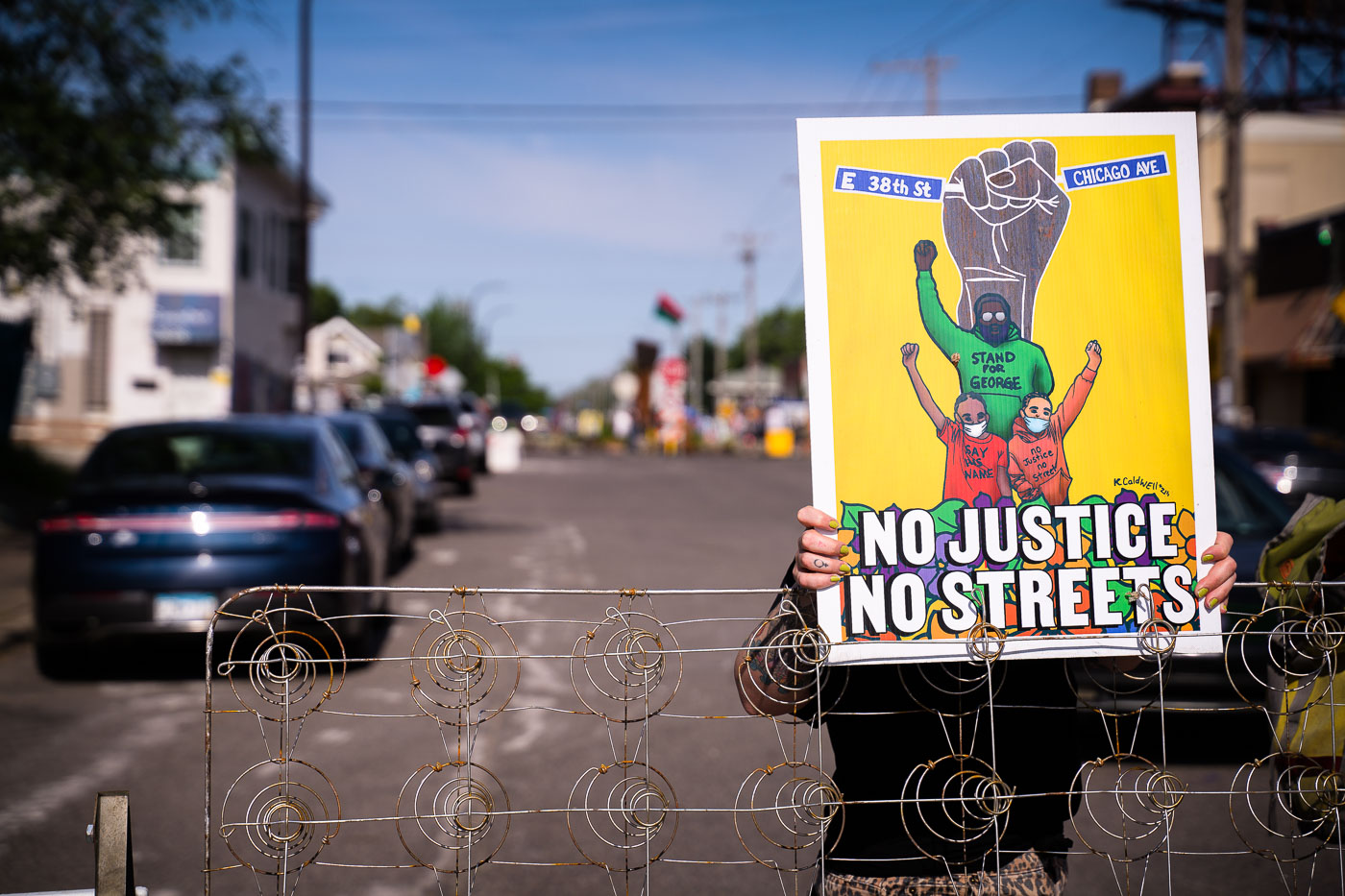
Person holds a “No Justice No Streets” sign at George Floyd Square in Minneapolis.
A protestor holds a "No Justice No Streets" sign at George Floyd Square in Minneapolis. The square, located at the intersection of East 38th Street and Chicago Avenue, became a focal point for protests following the murder of George Floyd in May 2020. For over a year, activists maintained barricades around the area, transforming it into a community space and a symbol of resistance. This image was taken on June 3, 2021, the day the city began efforts to dismantle the barricades and reopen the streets. On May 25, 2020, Minneapolis police officer Derek Chauvin murdered 46-year-old George Floyd during an arrest outside Cup Foods at the intersection of 38th Street and Chicago Avenue in south Minneapolis. Video recorded by bystanders showed Chauvin kneeling on Floyd’s neck for more than nine minutes while Floyd repeatedly said he could not breathe. Three other Minneapolis police officers - J. Alexander Kueng, Thomas Lane, and Tou Thao — were also present during the arrest and later faced criminal charges for their roles in Floyd’s death. Floyd’s murder sparked protests and civil unrest across Minneapolis and around the world, leading to widespread demonstrations against police violence, major policy debates on policing, and the conviction of Chauvin on murder and manslaughter charges in 2021.

George Floyd Square barricade protest sign
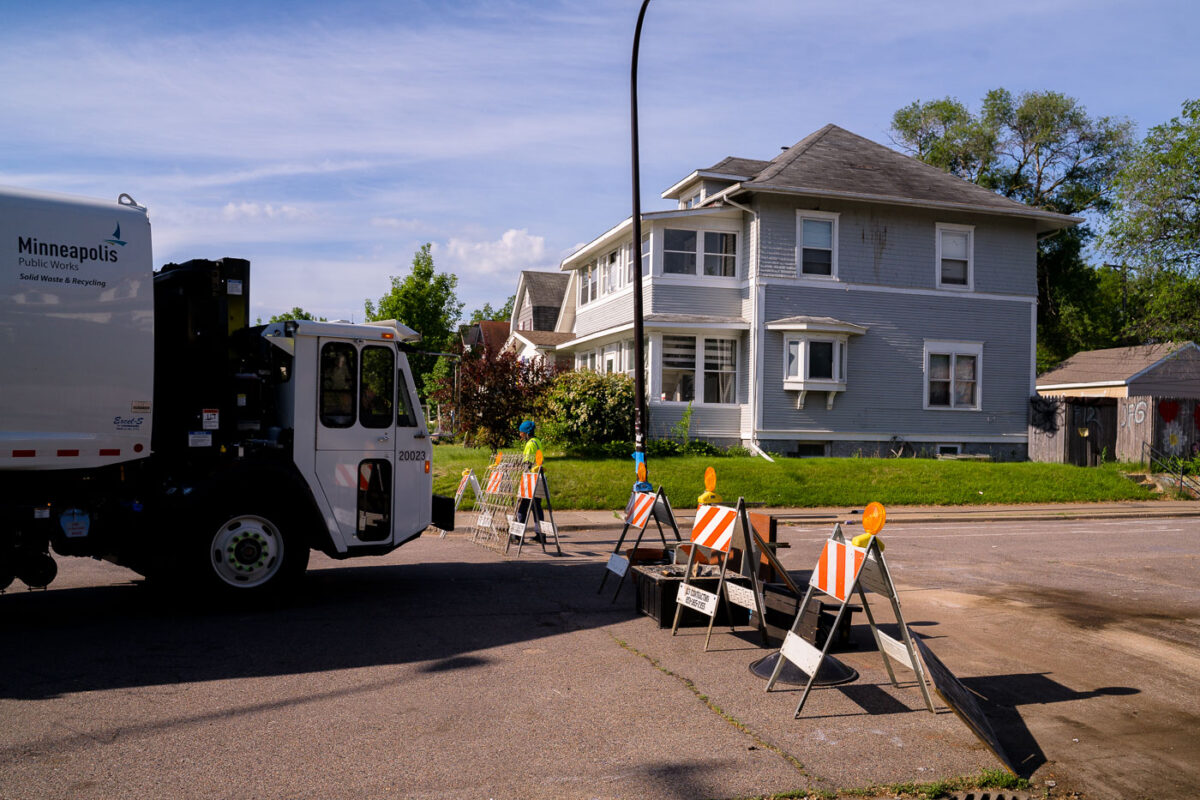
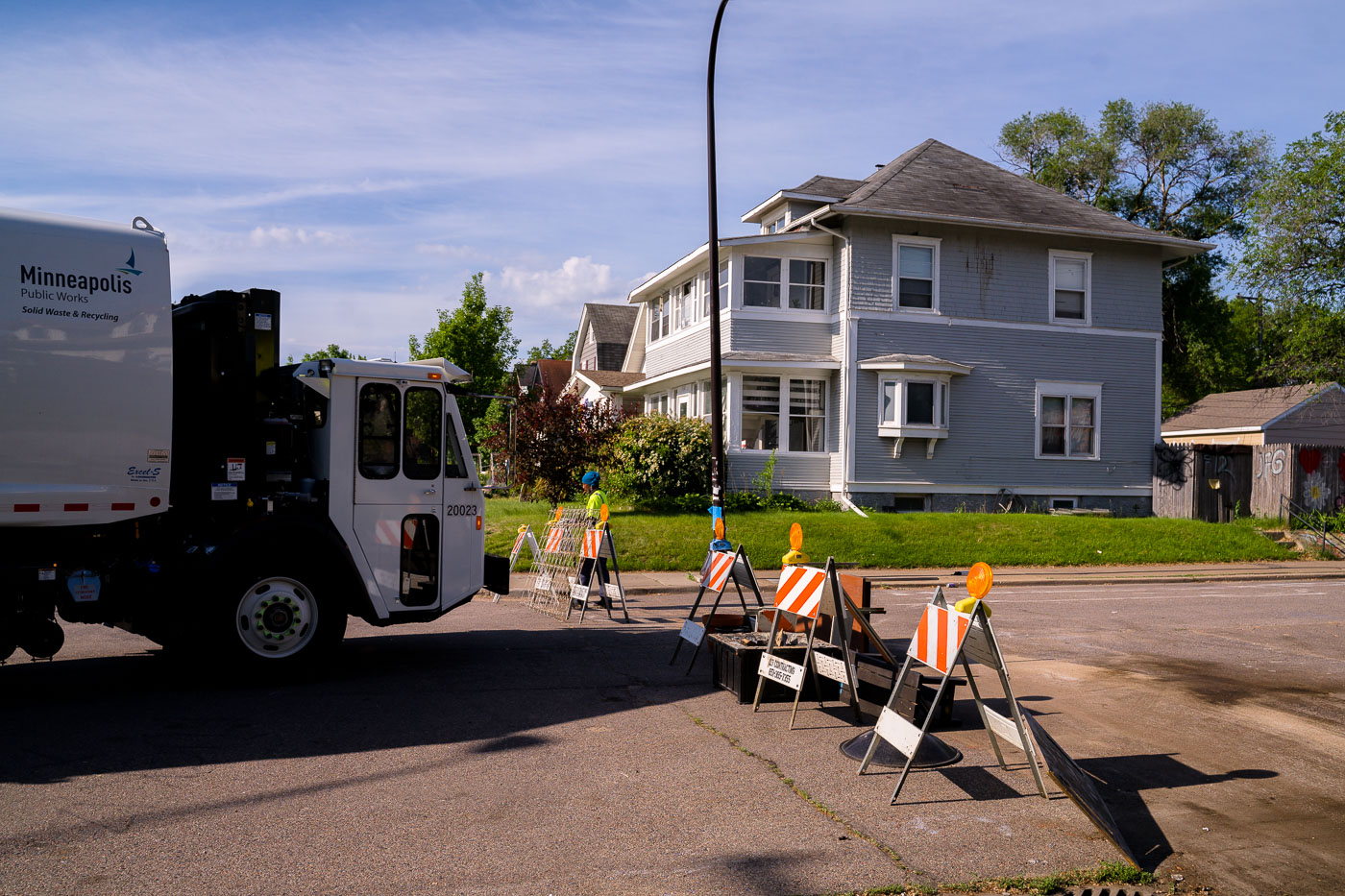
Minneapolis Public Works truck removes barricades at George Floyd Square in South Minneapolis.
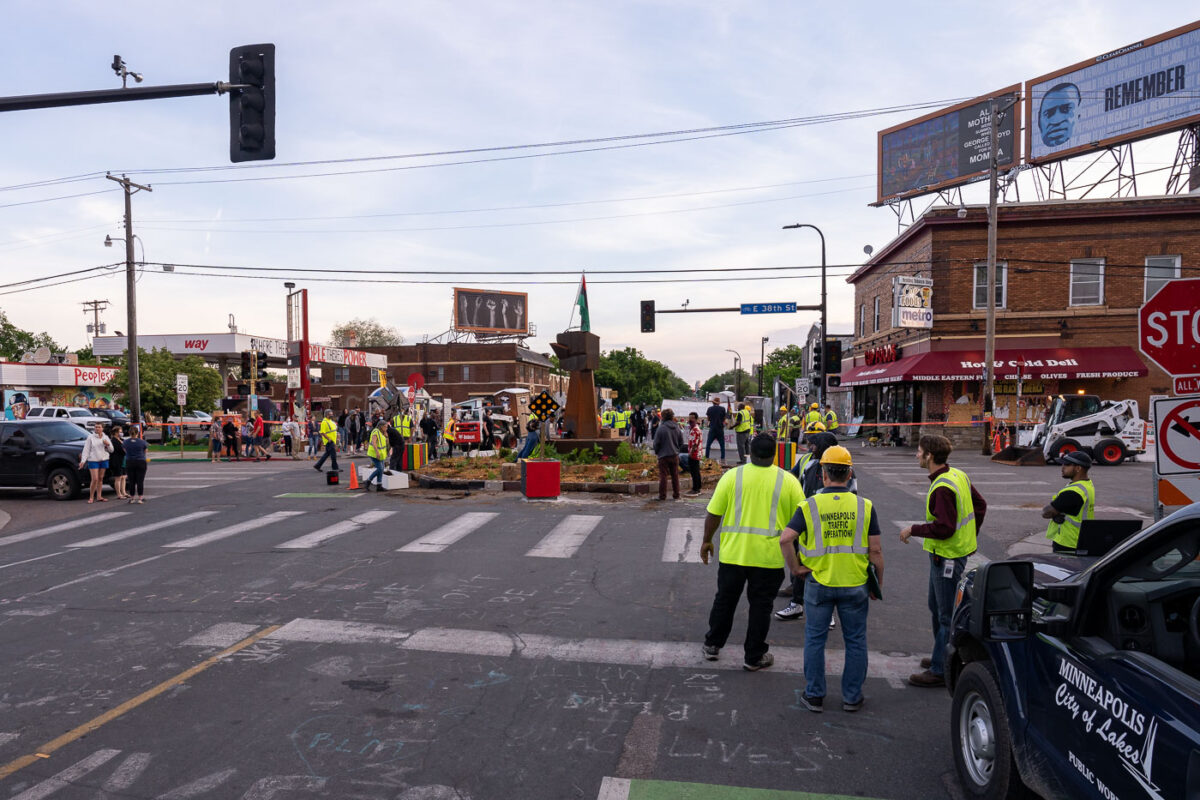
Minneapolis Public Works crews remove barricades from George Floyd Square, also known as the intersection of 38th Street and Chicago Avenue in South Minneapolis on June 3, 2021. The square became a focal point for protests and community organizing following the murder of George Floyd in May 2020. For over two years, the intersection was largely controlled by protesters and community members, who established it as a space for remembrance and activism. The removal of these barricades by city officials marked a significant moment in the ongoing efforts to reclaim public space and restore traffic flow. On May 25, 2020, Minneapolis police officer Derek Chauvin murdered 46-year-old George Floyd during an arrest outside Cup Foods at the intersection of 38th Street and Chicago Avenue in south Minneapolis. Video recorded by bystanders showed Chauvin kneeling on Floyd’s neck for more than nine minutes while Floyd repeatedly said he could not breathe. Three other Minneapolis police officers - J. Alexander Kueng, Thomas Lane, and Tou Thao — were also present during the arrest and later faced criminal charges for their roles in Floyd’s death. Floyd’s murder sparked protests and civil unrest across Minneapolis and around the world, leading to widespread demonstrations against police violence, major policy debates on policing, and the conviction of Chauvin on murder and manslaughter charges in 2021.

Minneapolis Public Works removes barricades at George Floyd Square
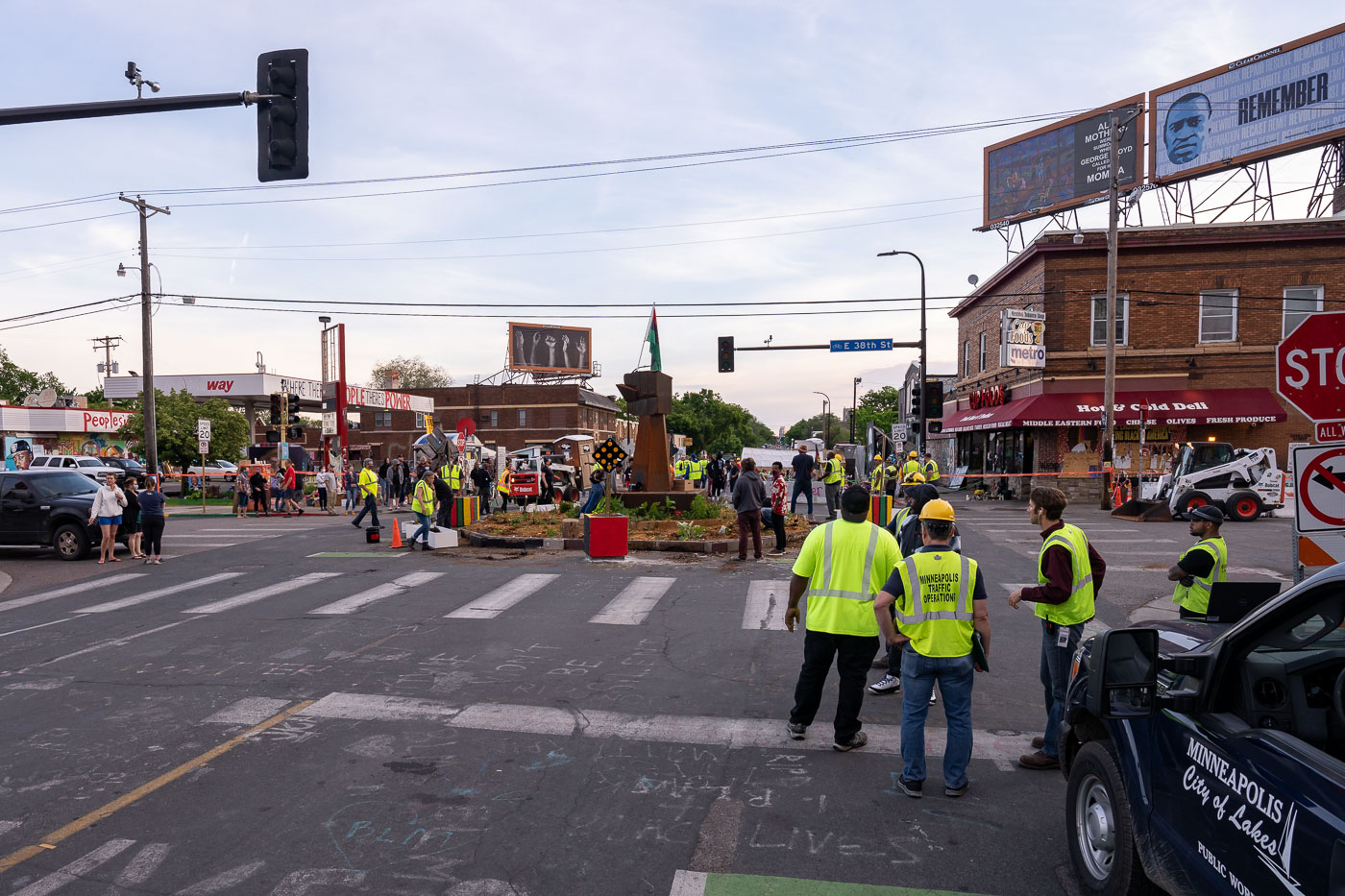
Minneapolis Public Works crews remove barricades at George Floyd Square in Minneapolis.
Minneapolis Public Works crews began dismantling barricades at George Floyd Square on June 3, 2021. The intersection of 38th Street and Chicago Avenue had been occupied by protesters and transformed into a community space since the murder of George Floyd by Minneapolis police on May 25, 2020. The "autonomous zone" became a focal point for racial justice protests and a memorial to Floyd, featuring art, gardens, and community gatherings. On May 25, 2020, Minneapolis police officer Derek Chauvin murdered 46-year-old George Floyd during an arrest outside Cup Foods at the intersection of 38th Street and Chicago Avenue in south Minneapolis. Video recorded by bystanders showed Chauvin kneeling on Floyd’s neck for more than nine minutes while Floyd repeatedly said he could not breathe. Three other Minneapolis police officers - J. Alexander Kueng, Thomas Lane, and Tou Thao — were also present during the arrest and later faced criminal charges for their roles in Floyd’s death. Floyd’s murder sparked protests and civil unrest across Minneapolis and around the world, leading to widespread demonstrations against police violence, major policy debates on policing, and the conviction of Chauvin on murder and manslaughter charges in 2021.

Minneapolis Public Works Remove Barricades at George Floyd Square
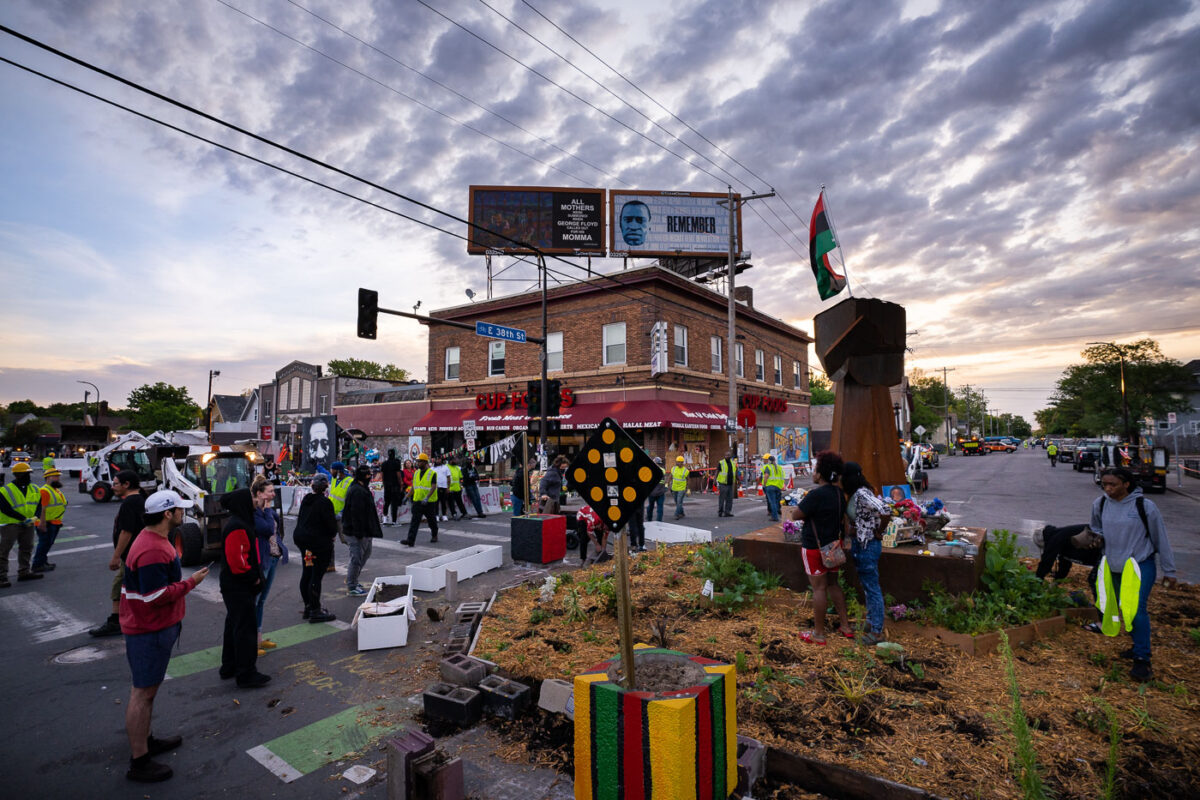
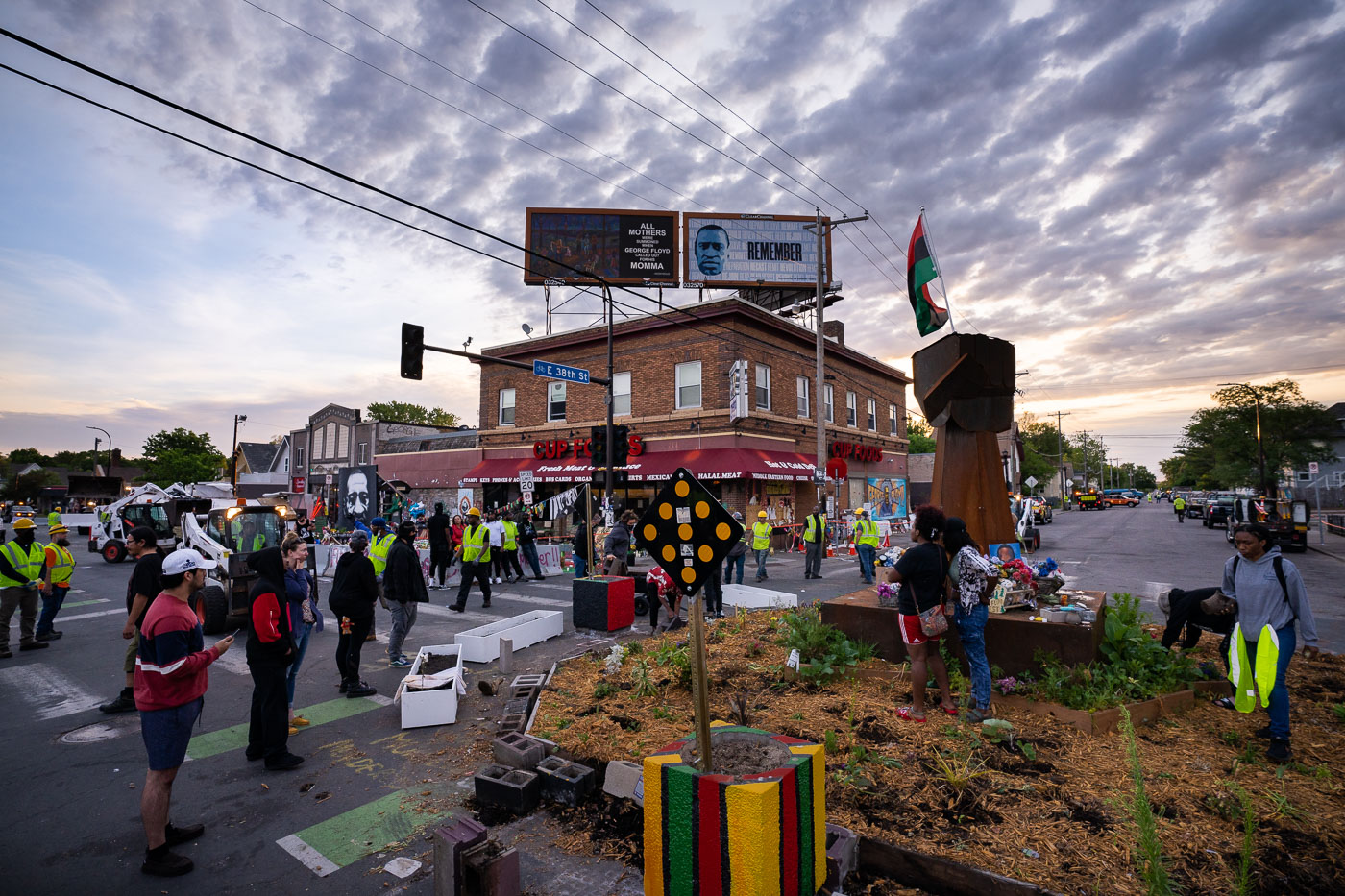
People gather at George Floyd Square in Minneapolis as workers reopen East 38th Street to traffic.
City employees began reopening George Floyd Square to vehicle traffic on June 3, 2021, nearly a year after the intersection was closed following the murder of George Floyd. The square, located at the intersection of East 38th Street and Chicago Avenue in Minneapolis, became a focal point for protests against racial injustice and police brutality. It was transformed into a community space with memorials, art, and gardens, serving as a symbol of resistance and a gathering place for activism. On May 25, 2020, Minneapolis police officer Derek Chauvin murdered 46-year-old George Floyd during an arrest outside Cup Foods at the intersection of 38th Street and Chicago Avenue in south Minneapolis. Video recorded by bystanders showed Chauvin kneeling on Floyd’s neck for more than nine minutes while Floyd repeatedly said he could not breathe. Three other Minneapolis police officers — J. Alexander Kueng, Thomas Lane, and Tou Thao — were also present during the arrest and later faced criminal charges for their roles in Floyd’s death. Floyd’s murder sparked protests and civil unrest across Minneapolis and around the world, leading to widespread demonstrations against police violence, major policy debates on policing, and the conviction of Chauvin on murder and manslaughter charges in 2021.

Minneapolis: George Floyd Square Reopened to Traffic