Hennepin Ave Window Sign, Minneapolis
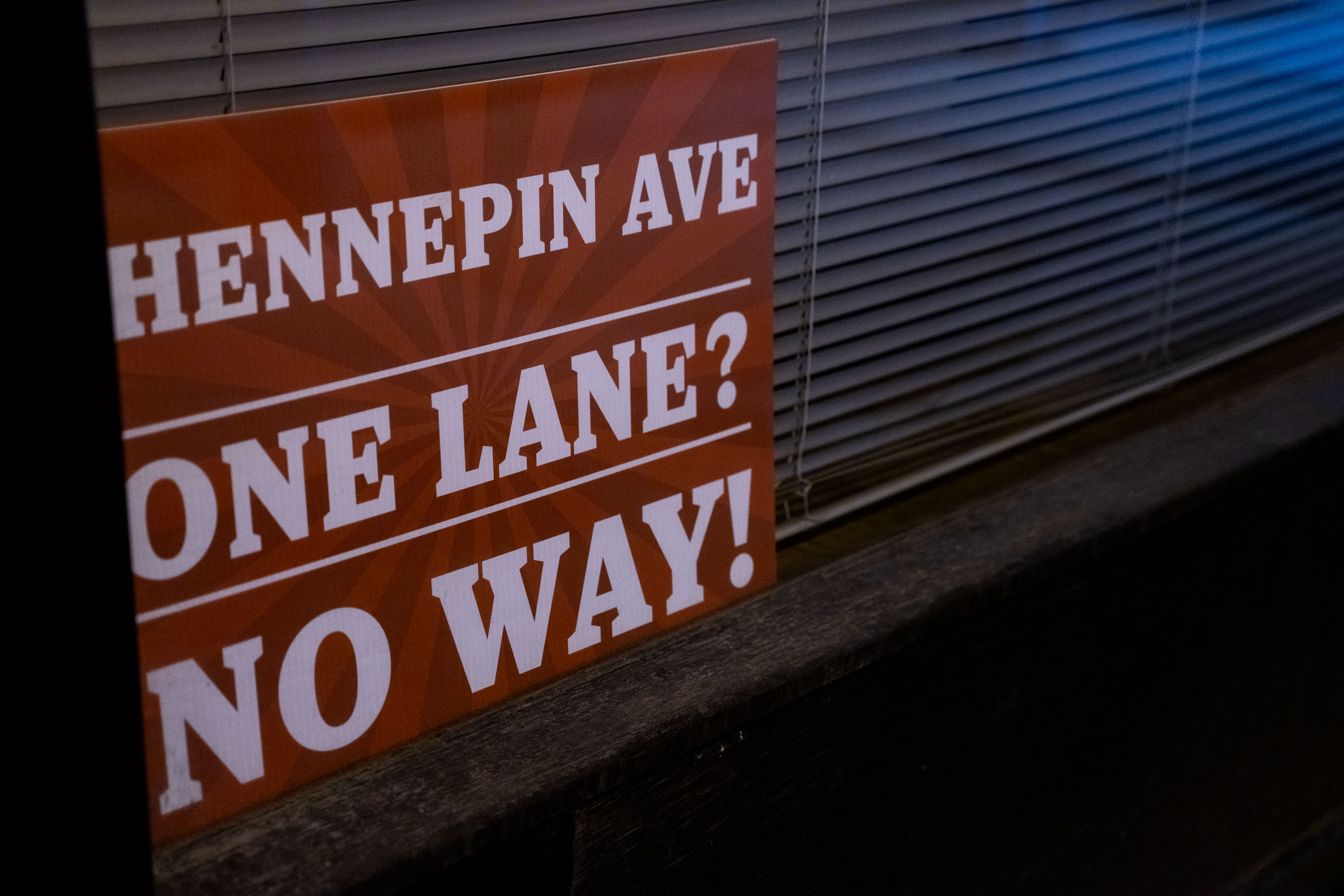
A sign in a window reading “Hennepin Ave. One Lane? No Way!”
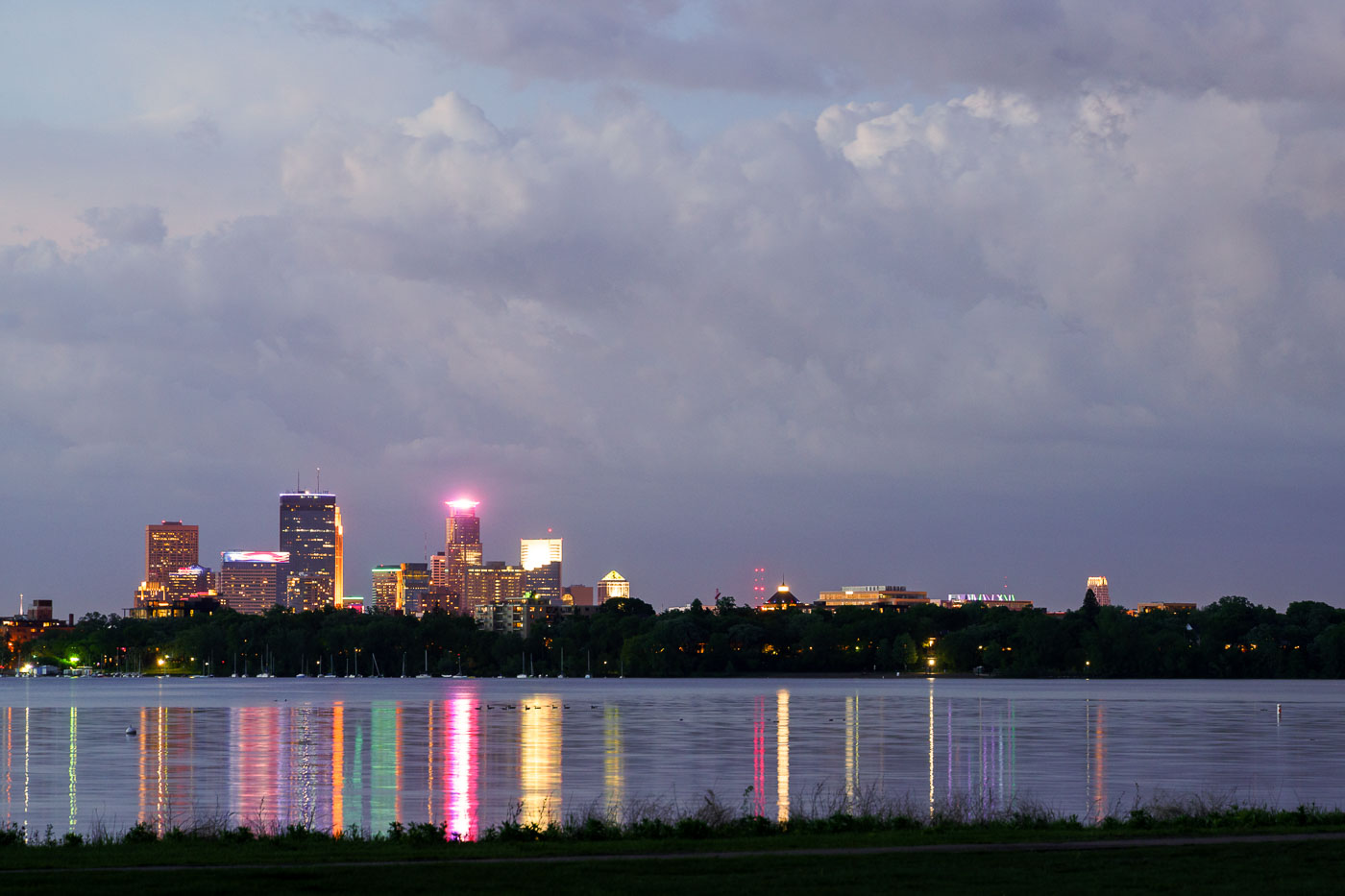
Minneapolis as seen near Thomas Beach on Bde Maka Ska.
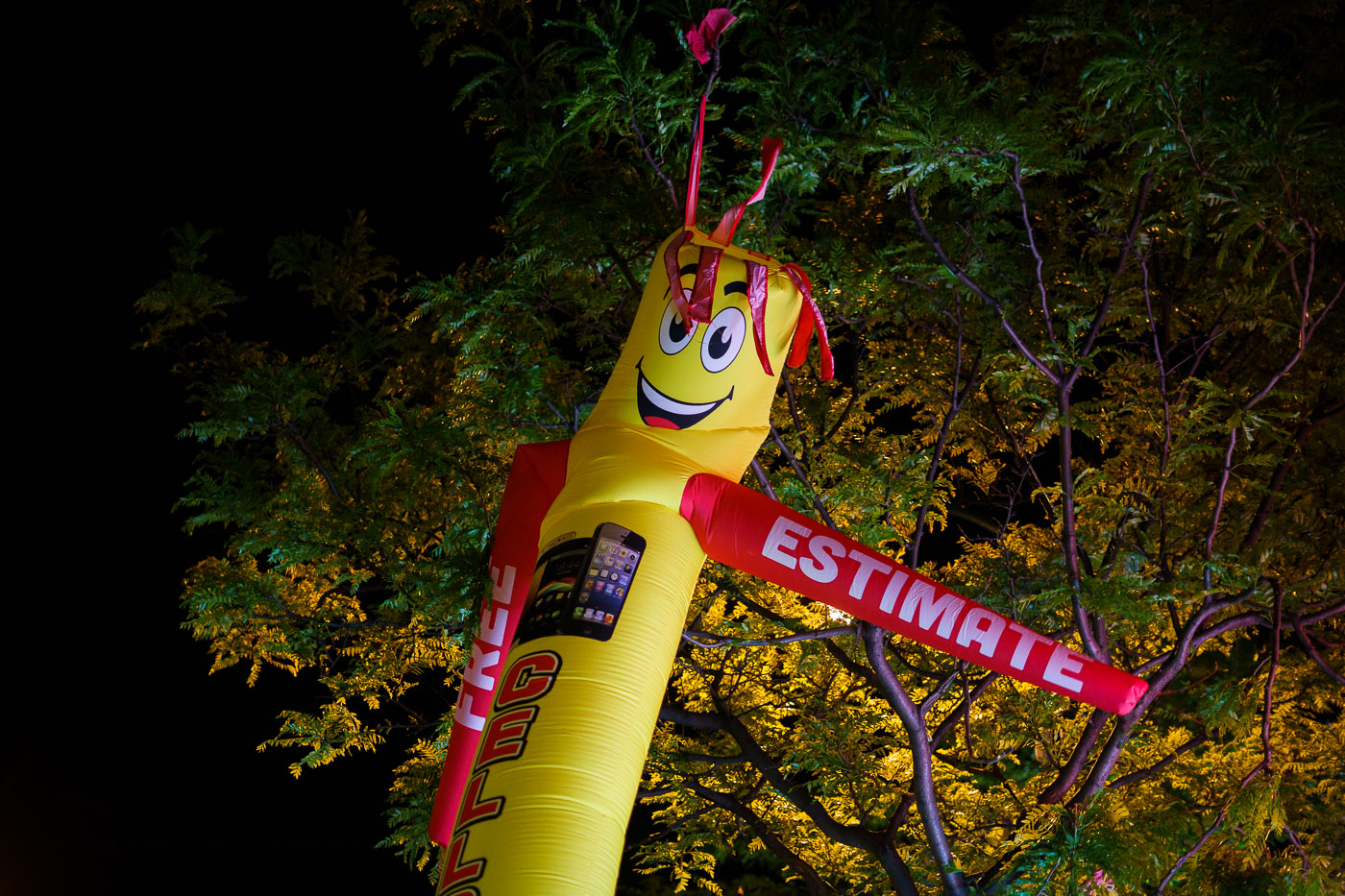
A blow up advertisement thing in front of a store in Minneapolis.
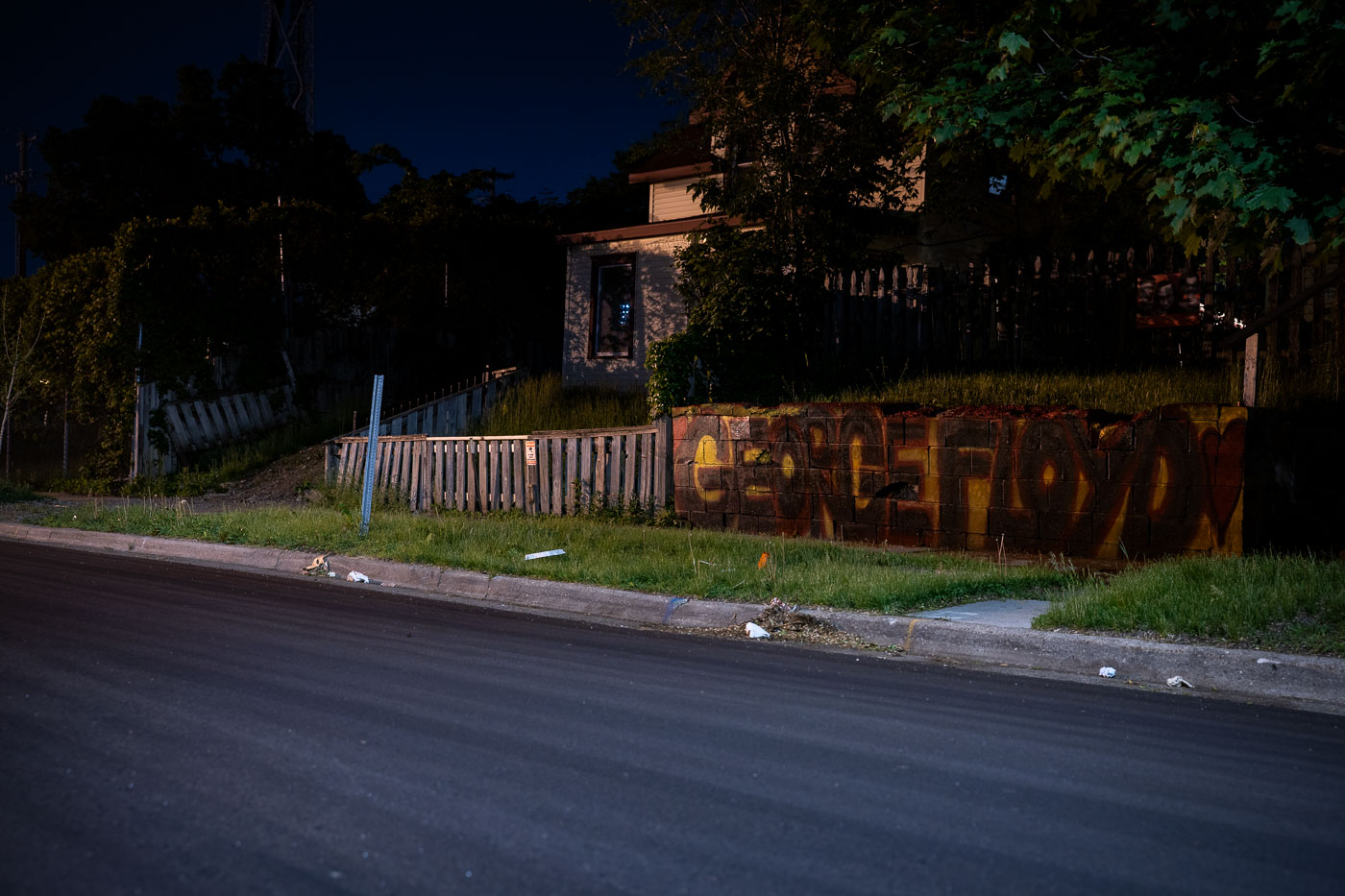
A George Floyd mural on a retaining wall in South Minneapolis.
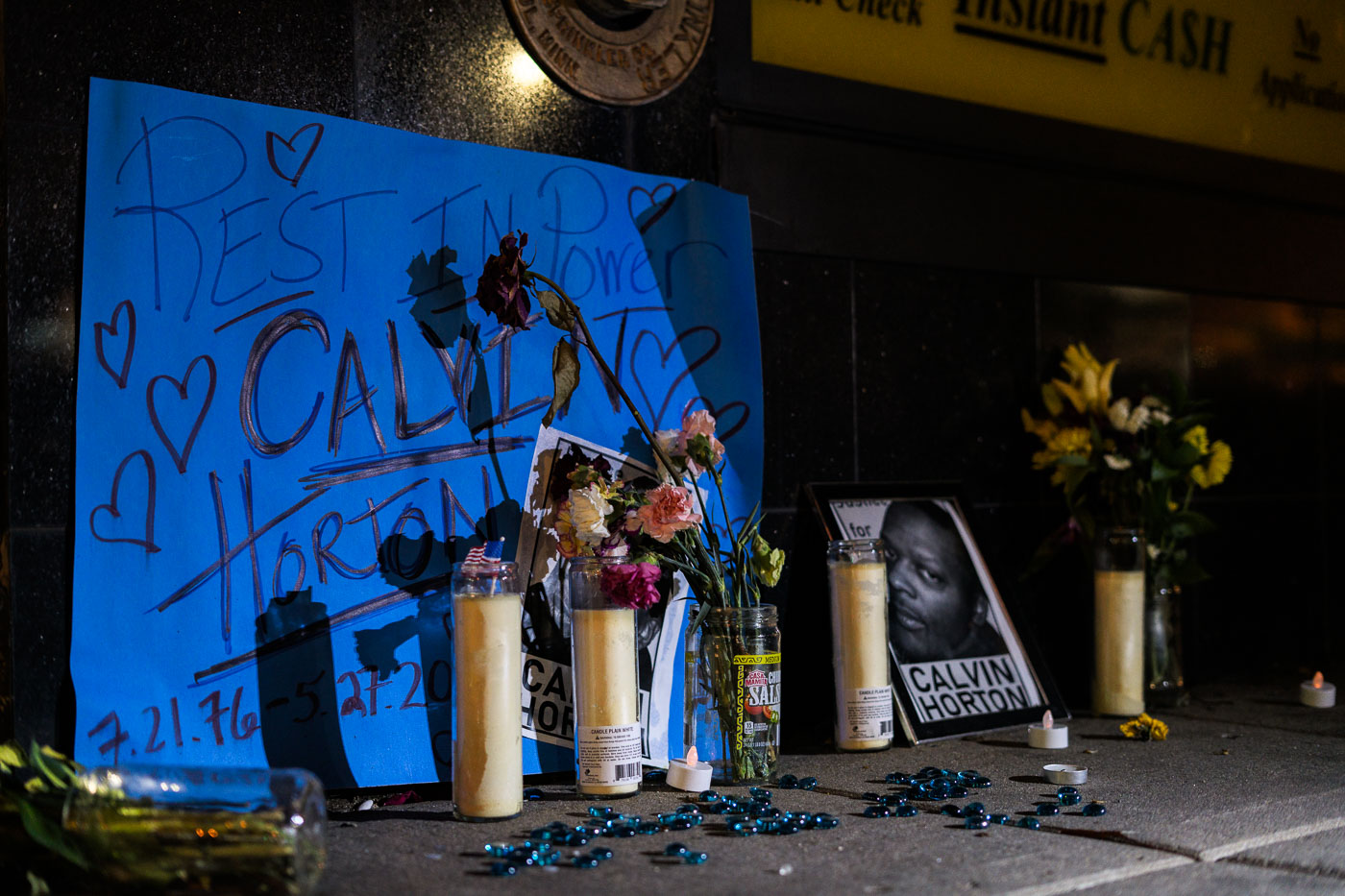
A memorial for Calvin Horton on the 2 year anniversary of his death.
He was shot and killed during looting following the May 25th murder of George Floyd.
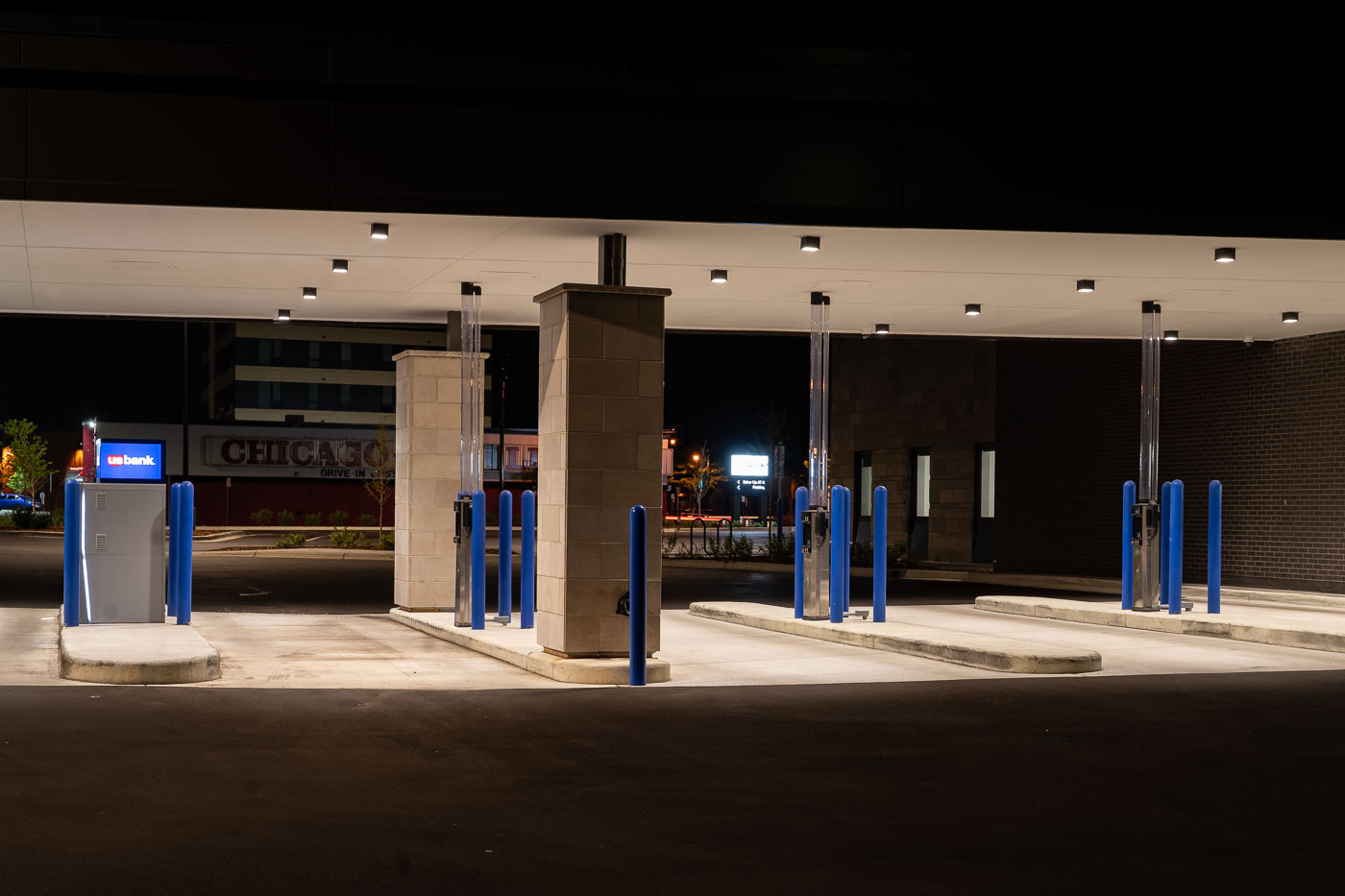
The newly rebuilt US Bank building on Lake street. The bank was destroyed during riots following the May 25th, 2020 murder of George Floyd.
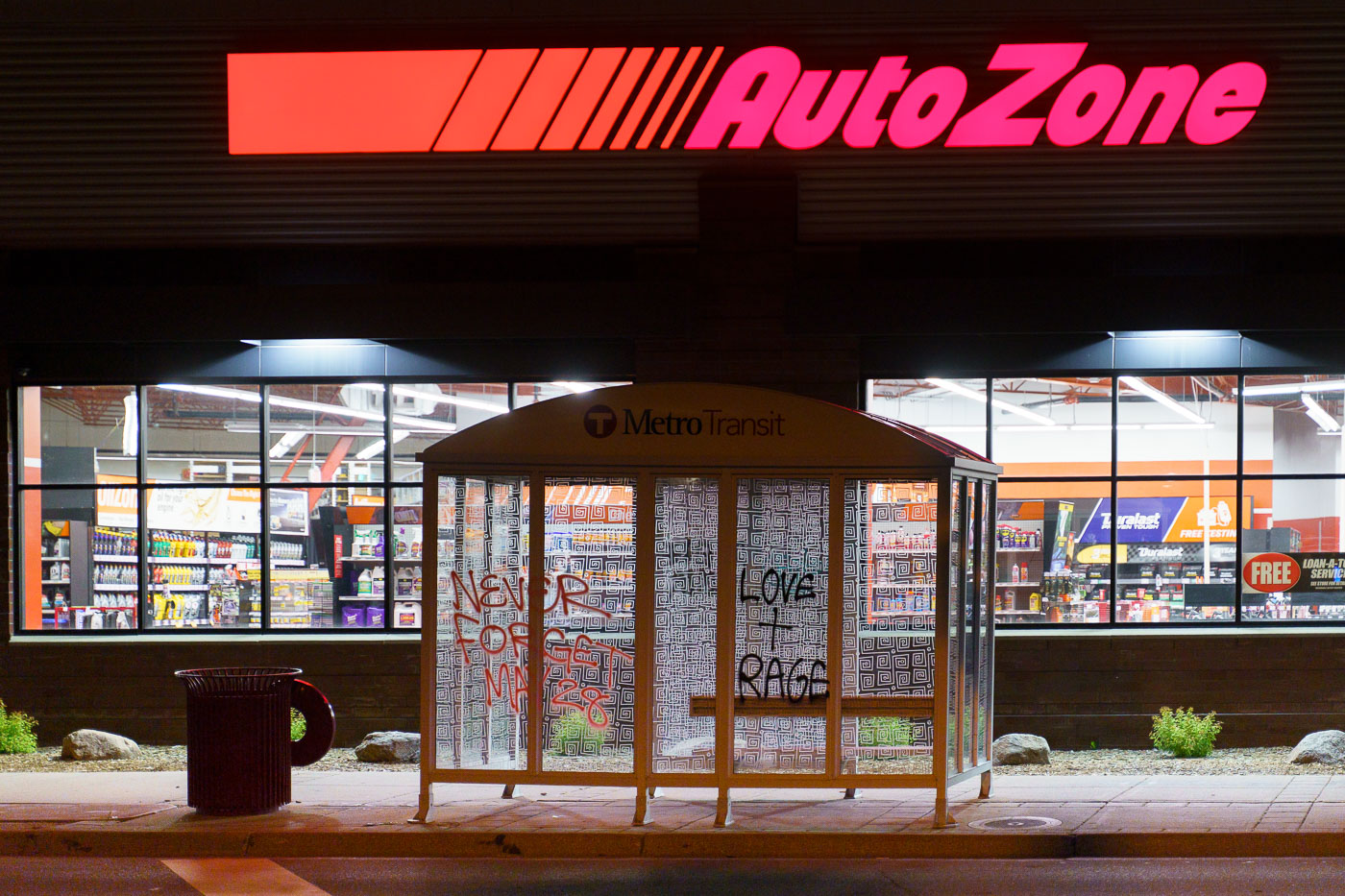
Graffiti on a bus shelter across from the Minneapolis police third precinct on the 2nd anniversary of the Minneapolis police station being burned following the murder of George Floyd.
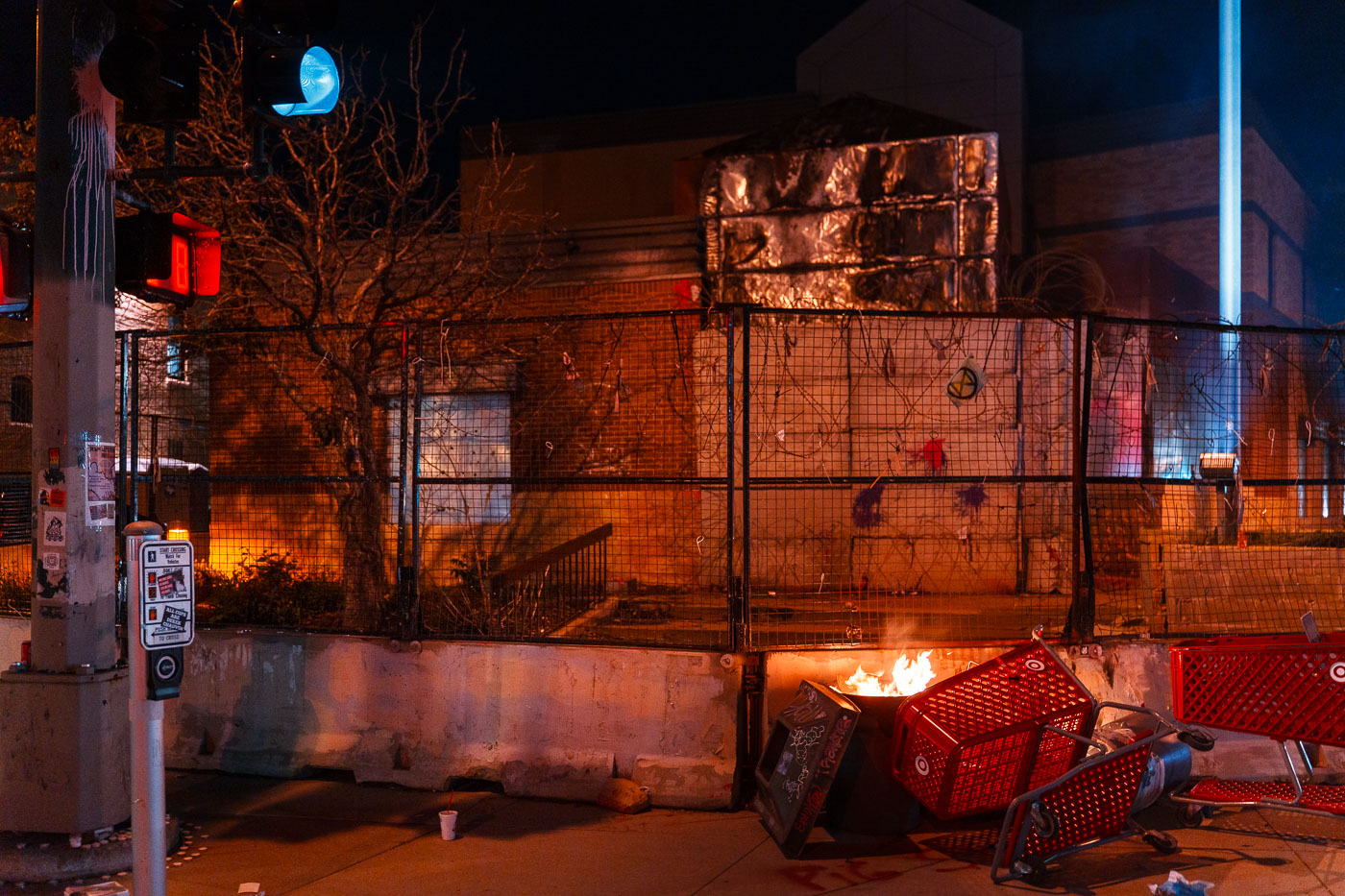
Protesters marched with a banner reading “Remember May 28th” to the third precinct tonight where fireworks were sent up and shopping carts were set on fire before moving on.
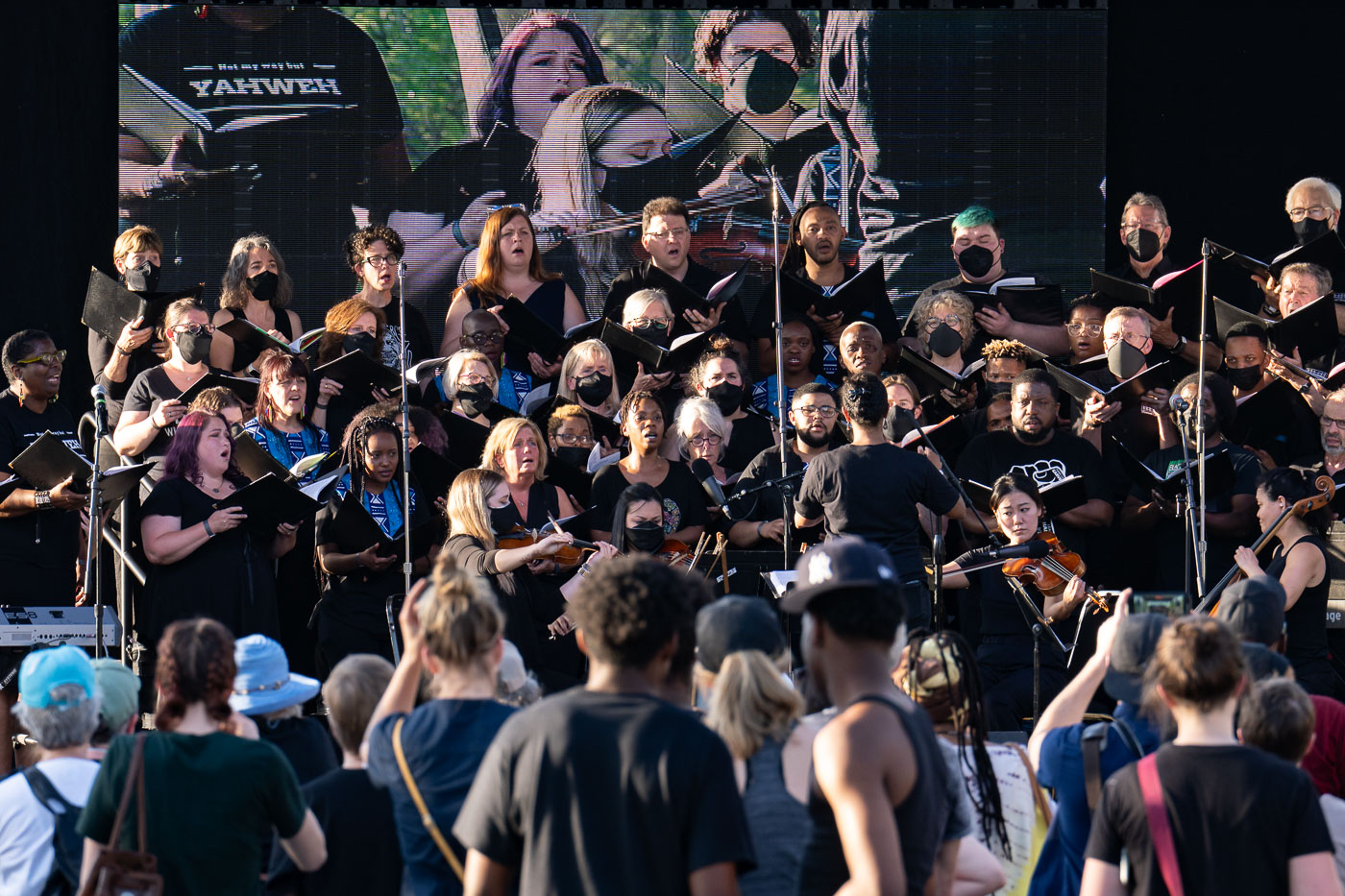
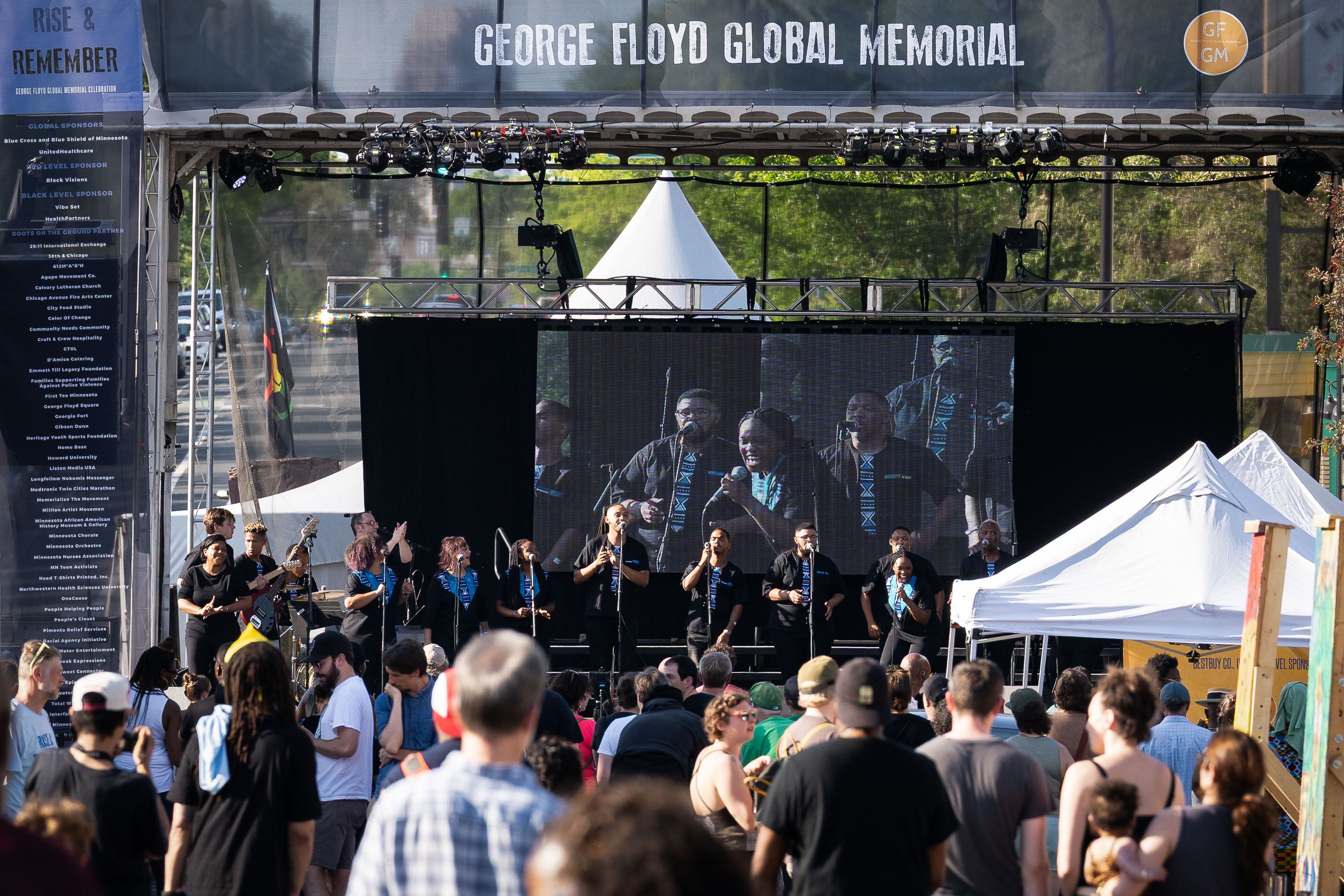
Music at the “Rise and Remember” festival at George Floyd Square.
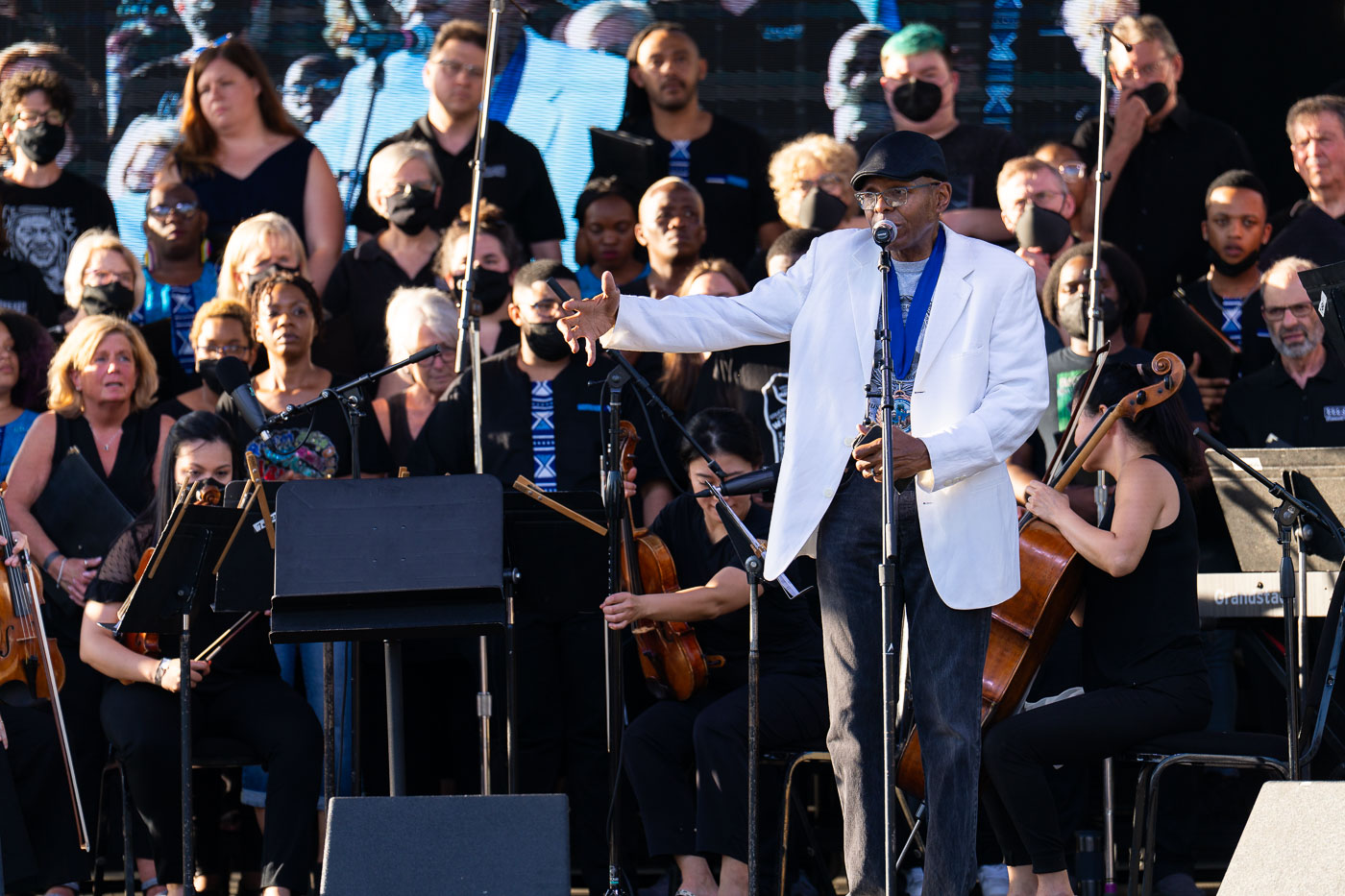
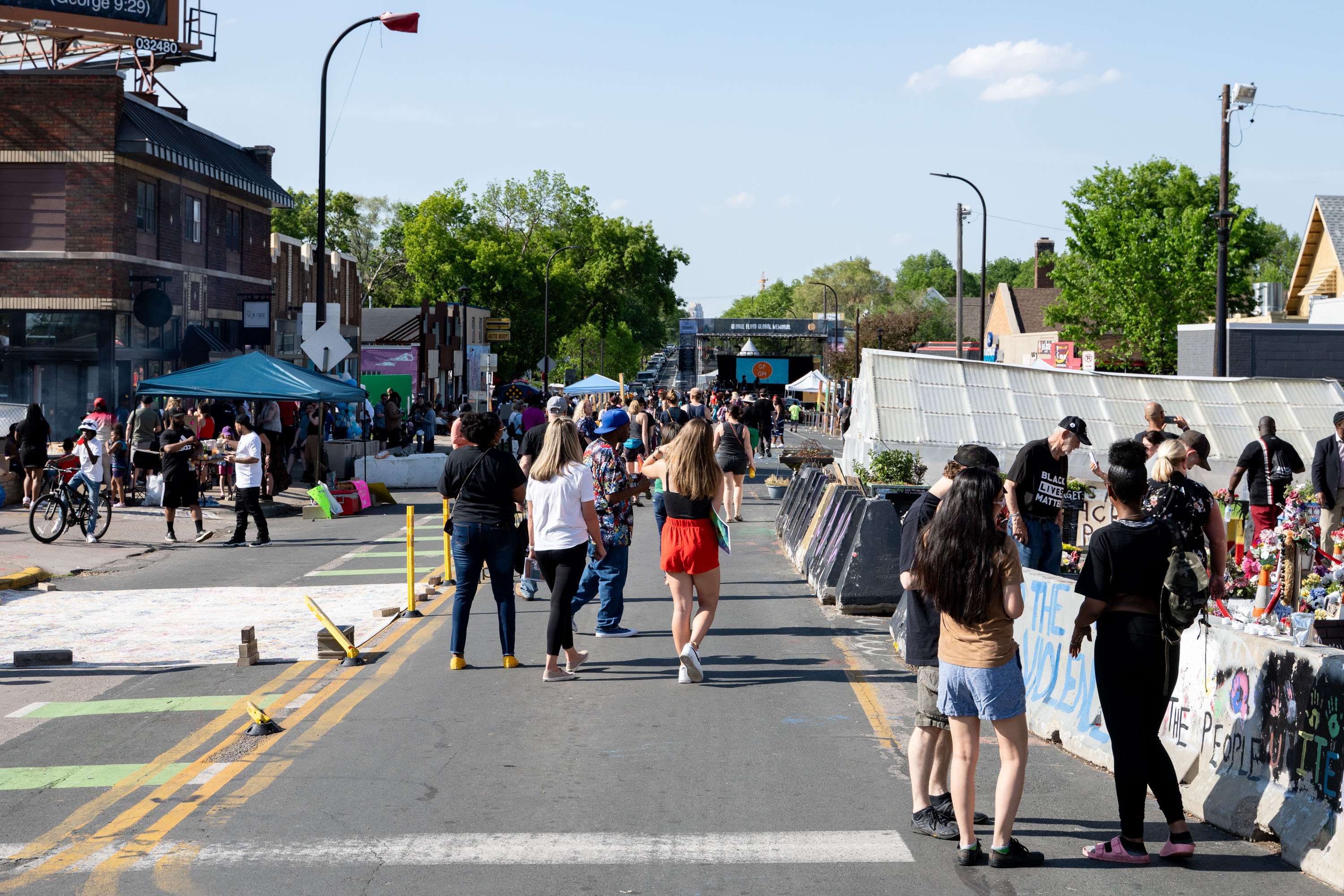
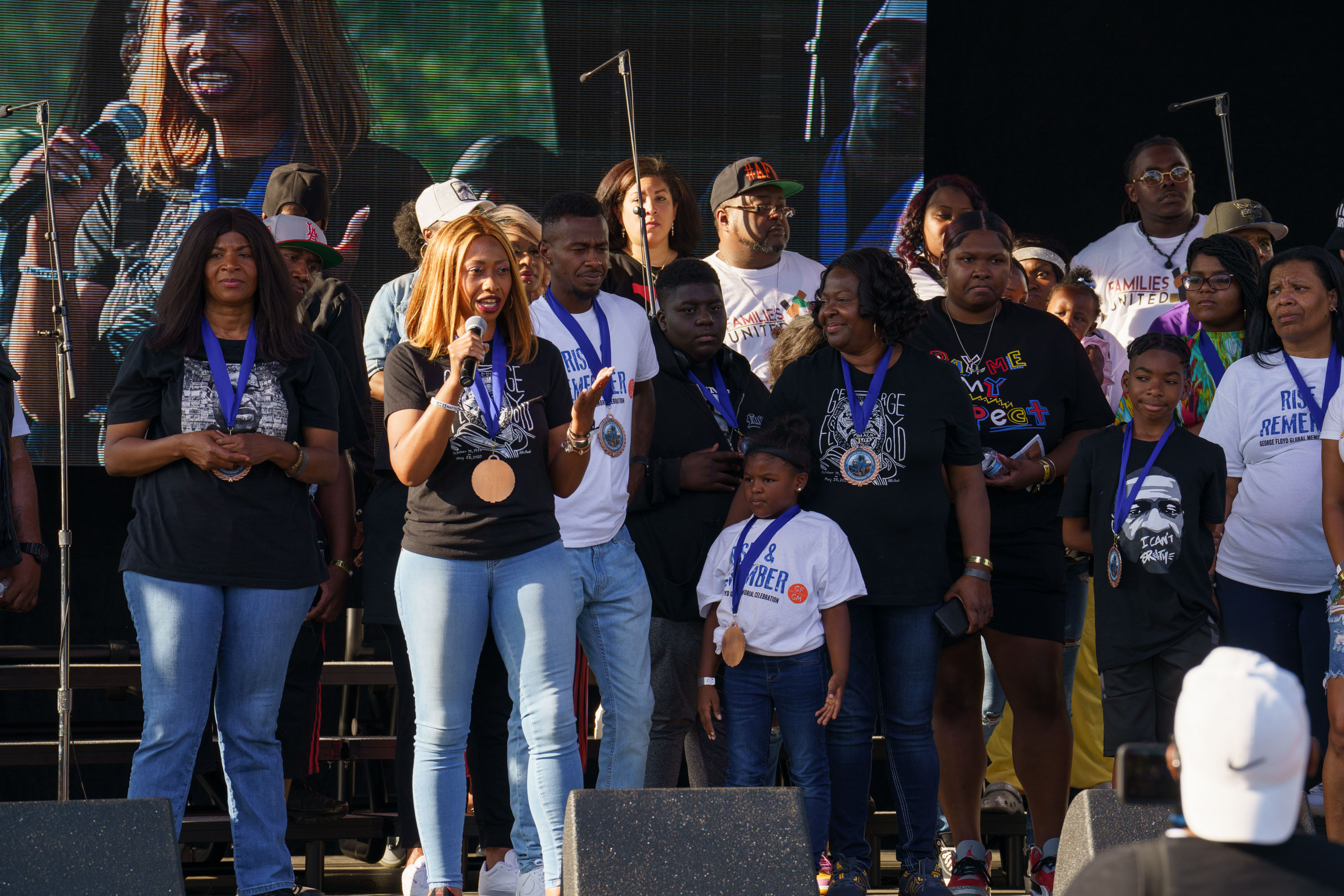
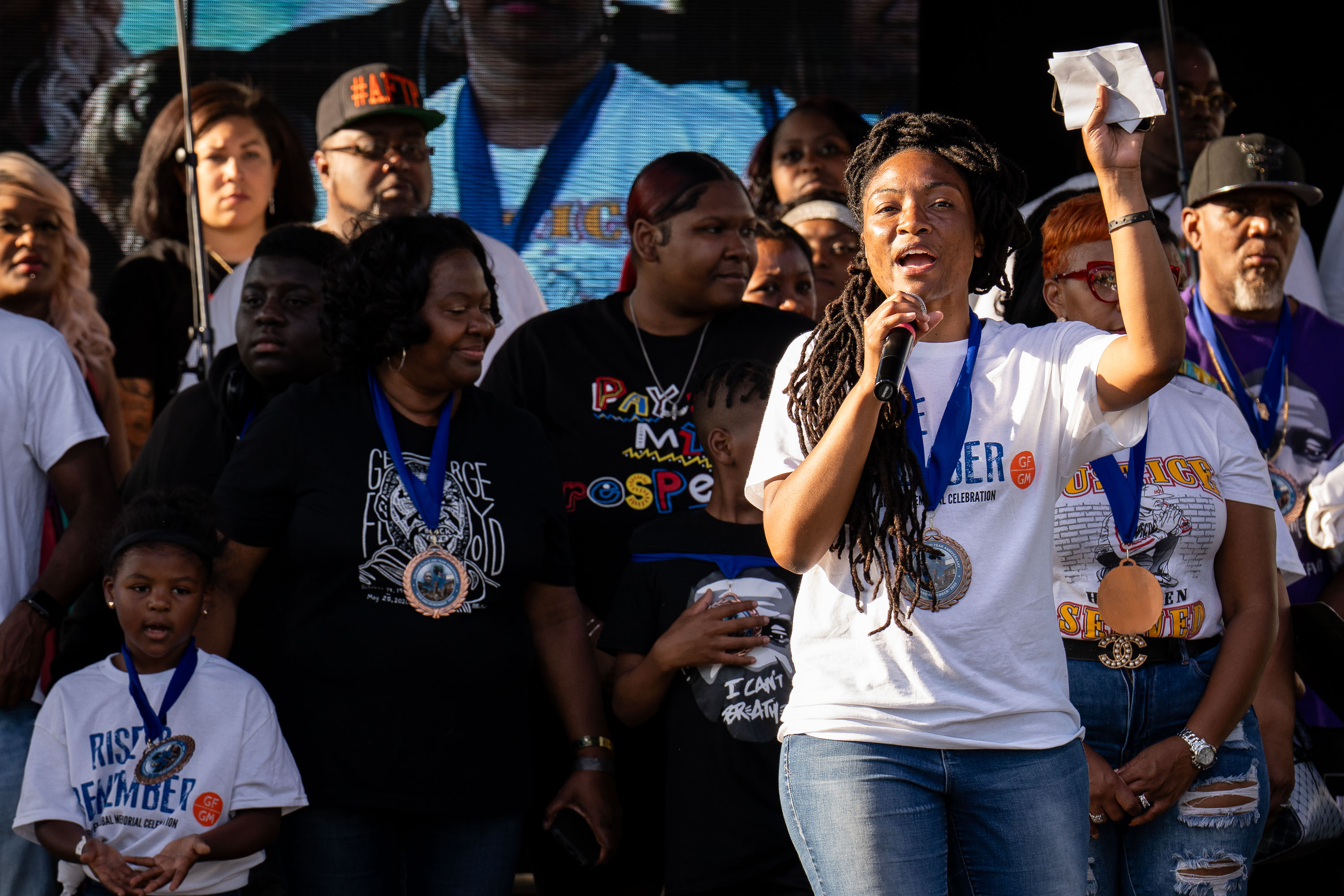
The “Rise and Remember” festival at George Floyd Square.
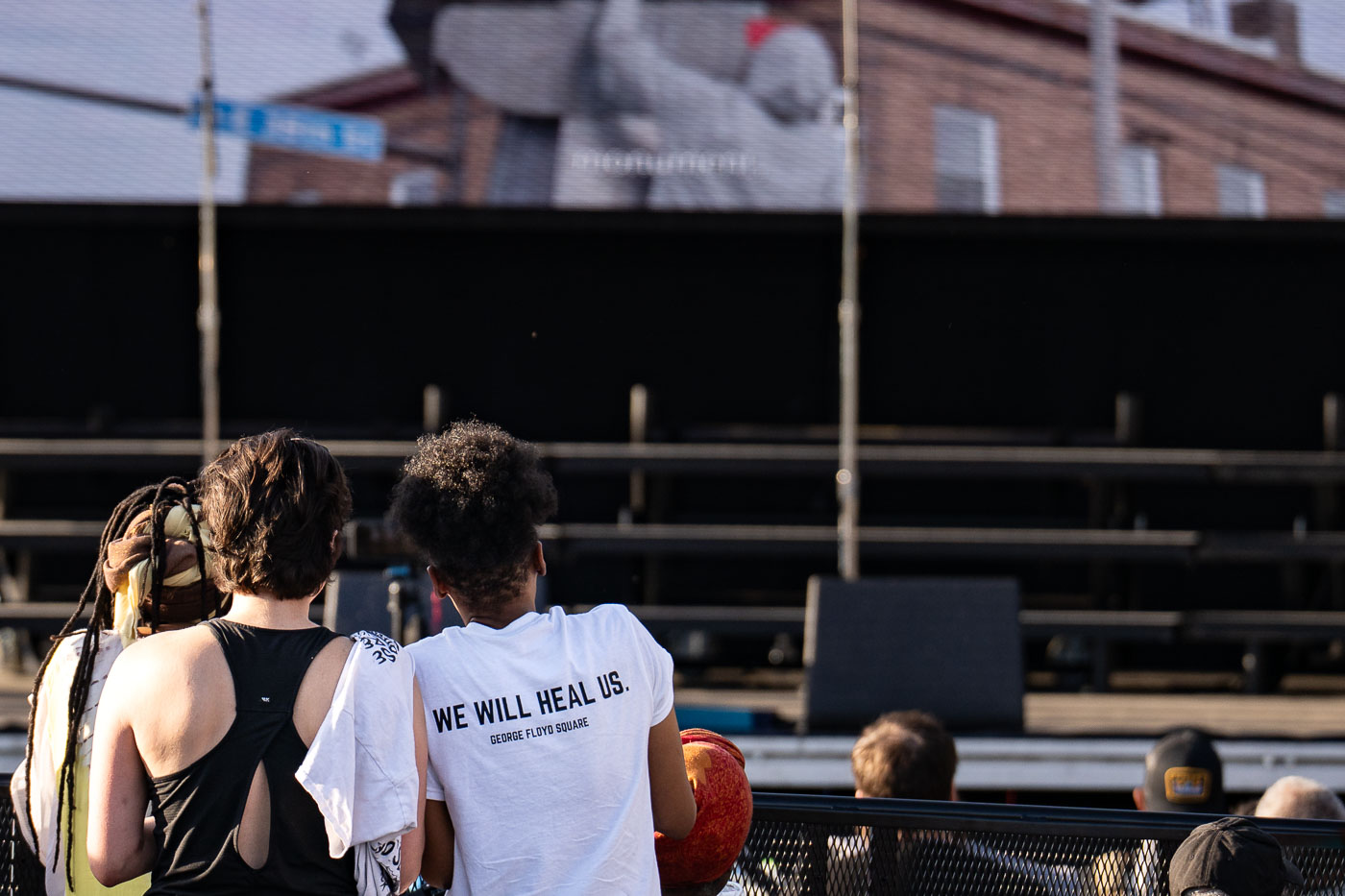
A short trailer for the documentary “The People’s Way” being shown during the “Rise and Remember” festival at George Floyd Square.
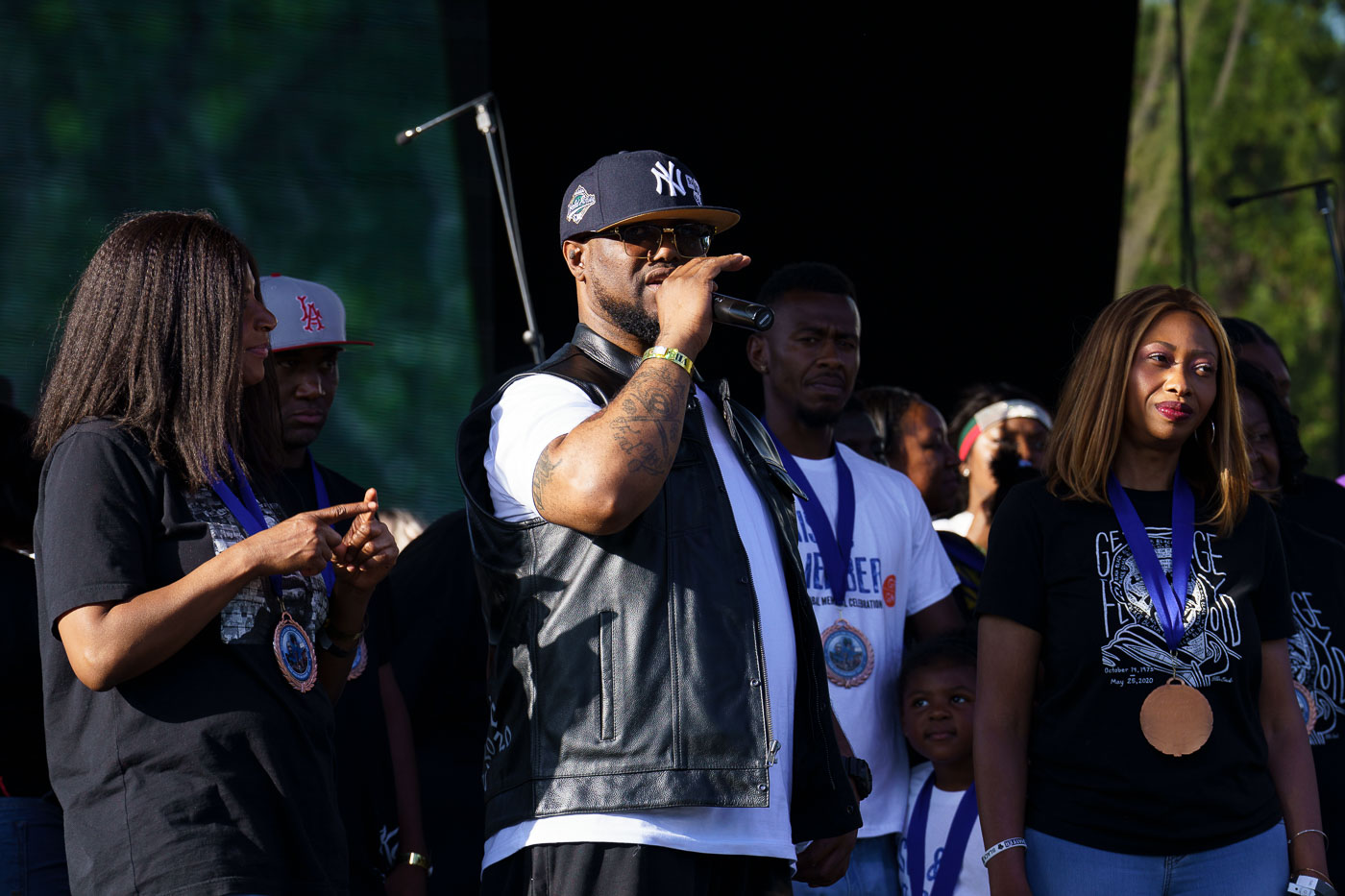
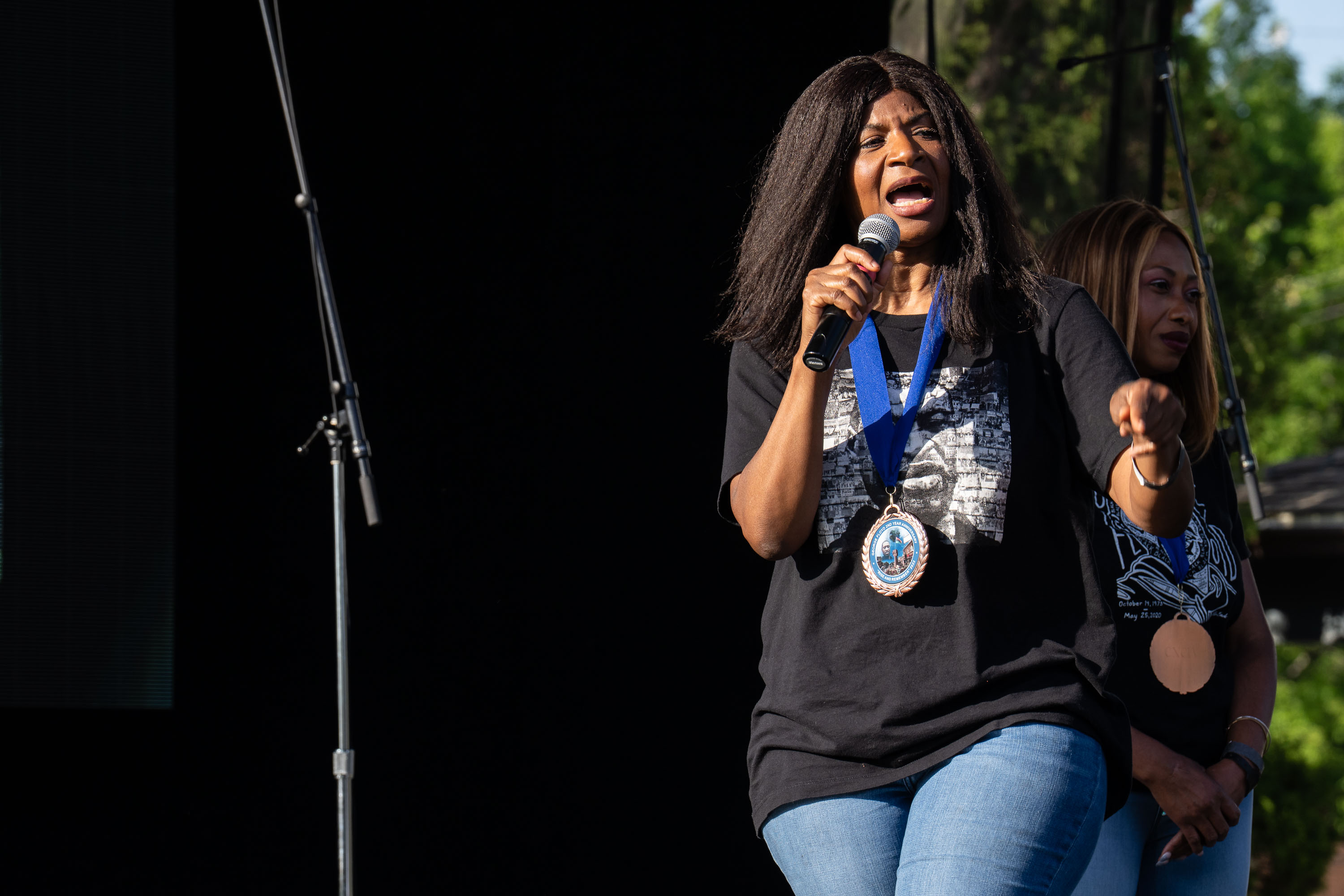
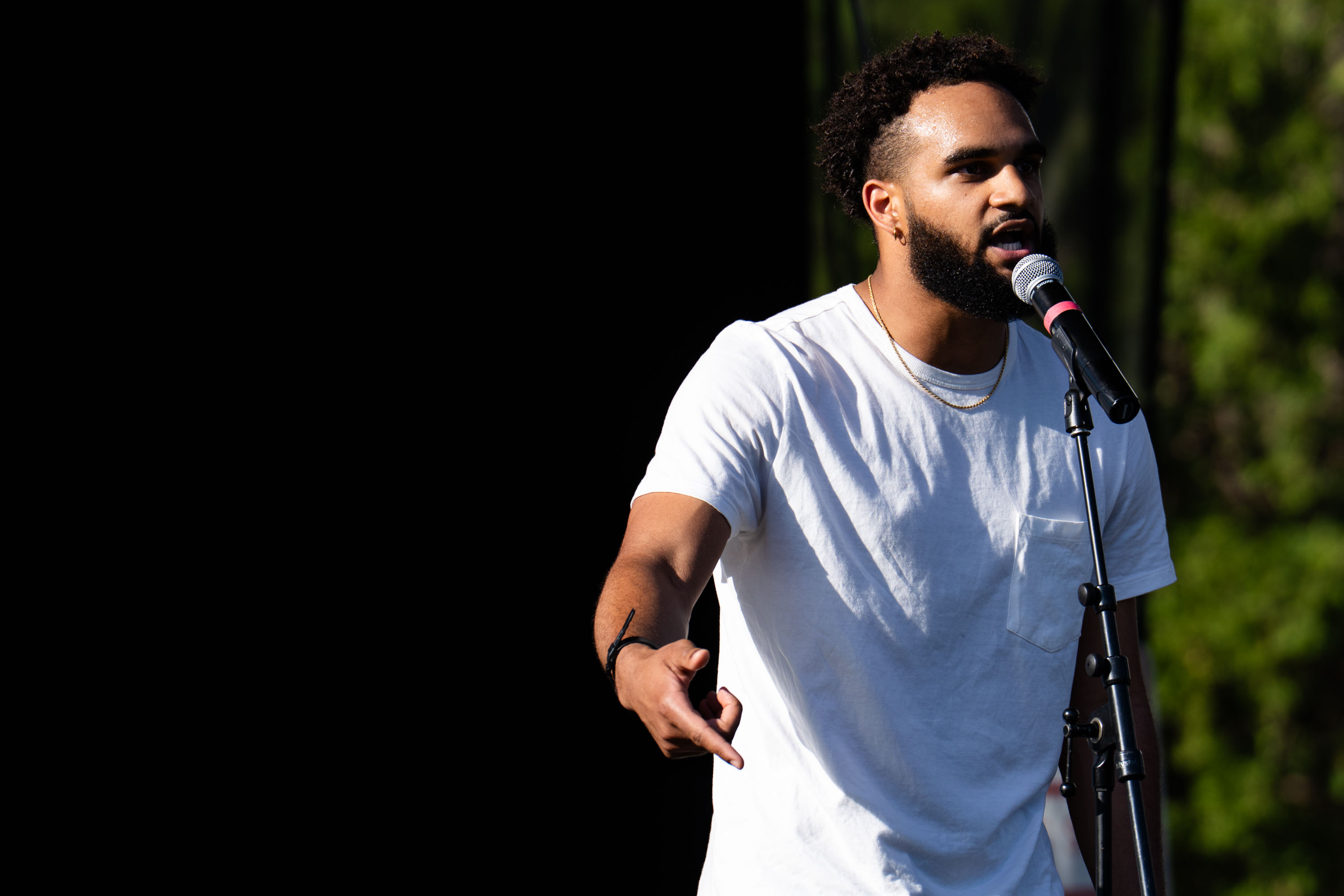
Terrence Floyd, the brother of George Floyd, speaks to the crowd at the Rise & Remember at George Floyd Square.
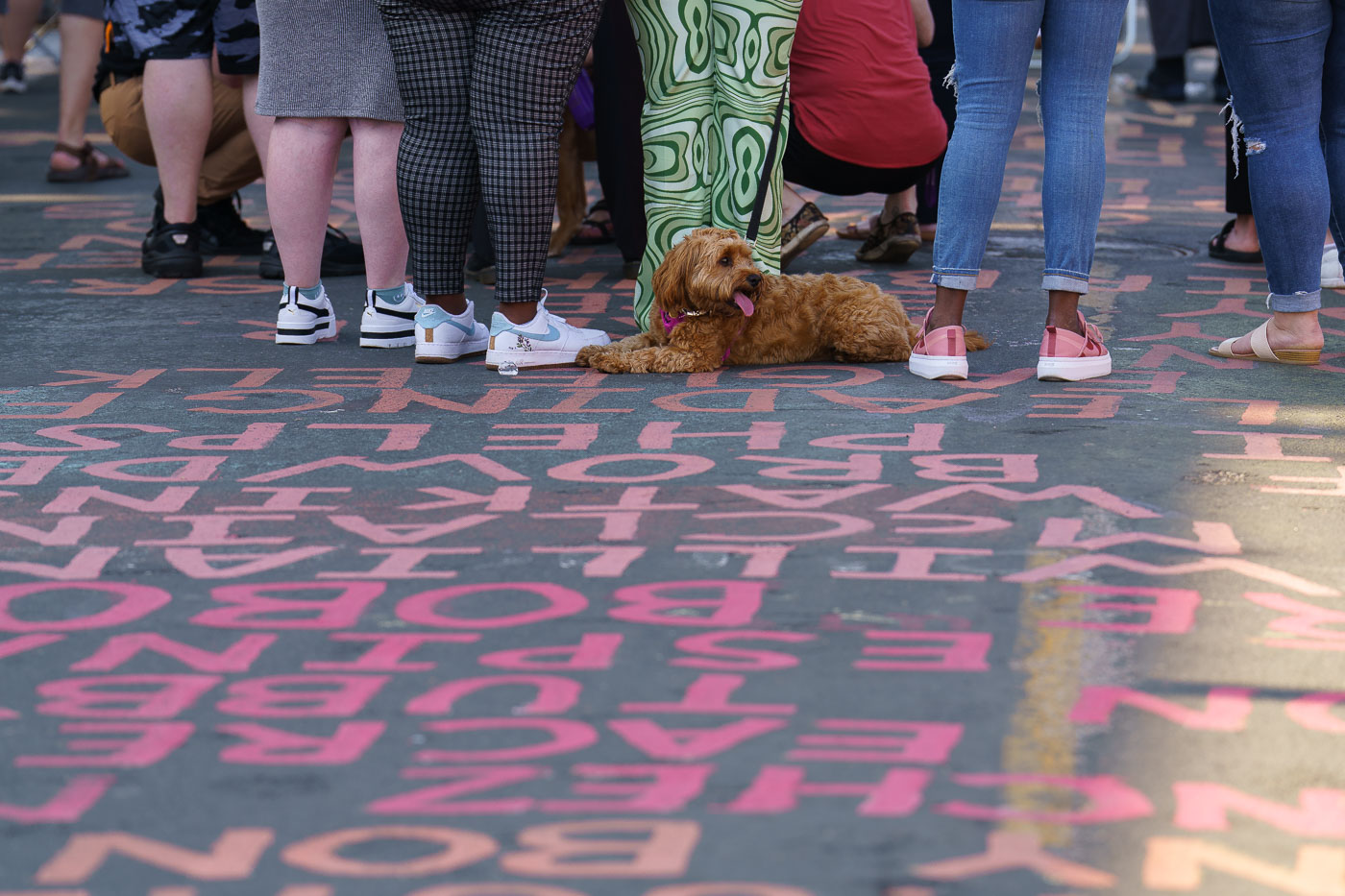
A dog on the painted streets at George Floyd Square during the “Rise and Remember” festival.
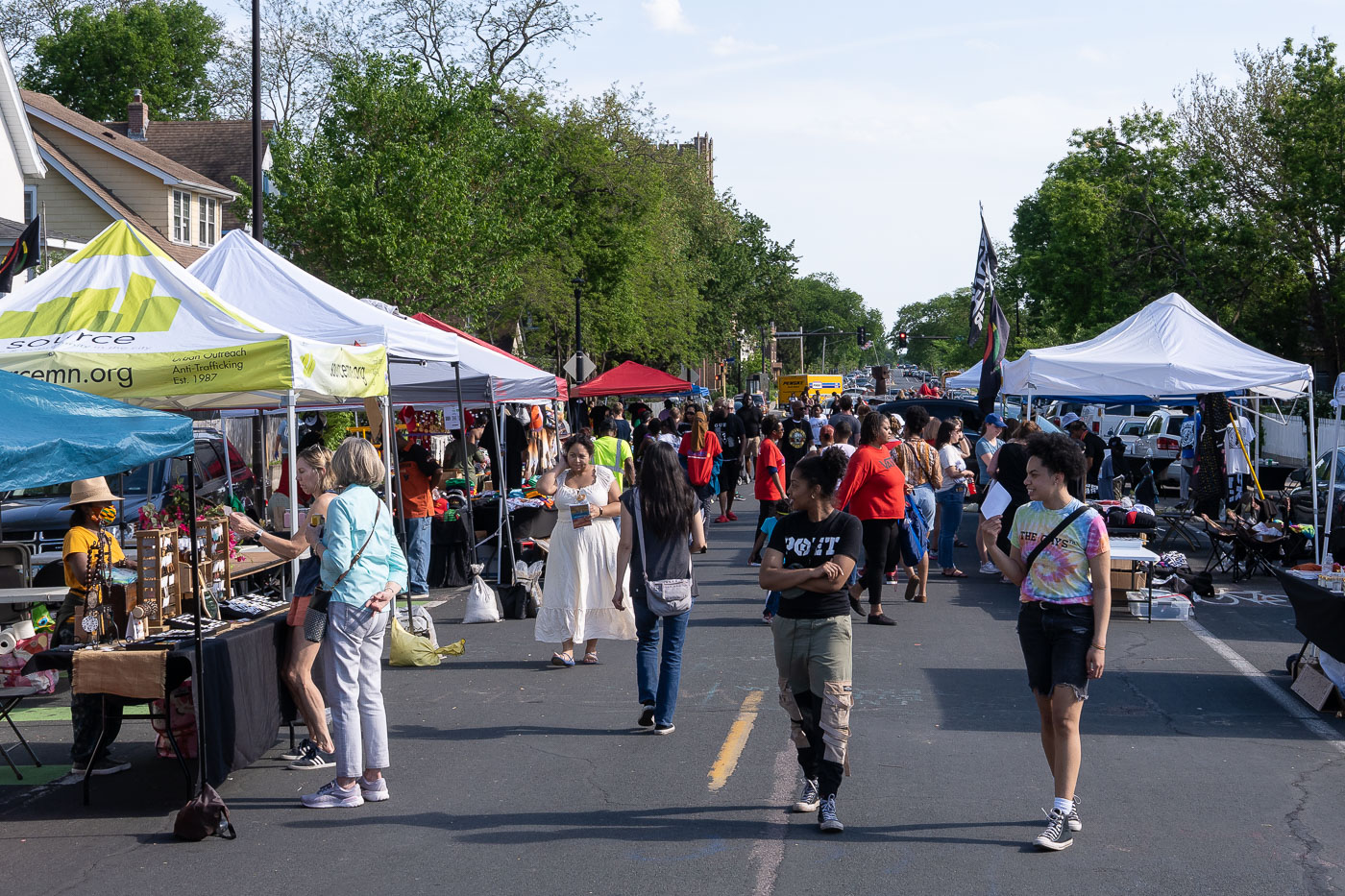
The “Rise and Remember” festival at George Floyd Square.
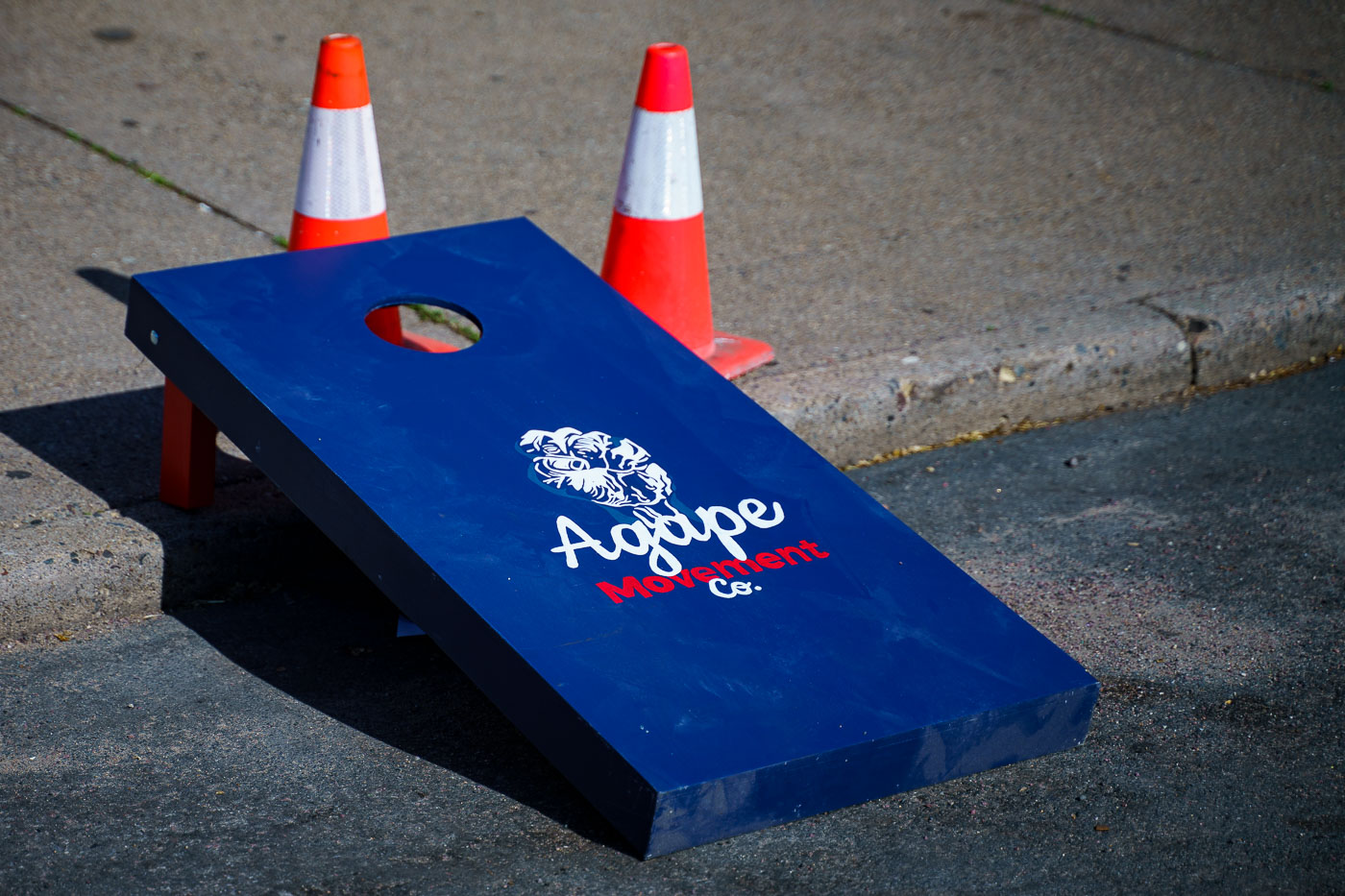
The game bags with Agape Movement Co. marked on it.
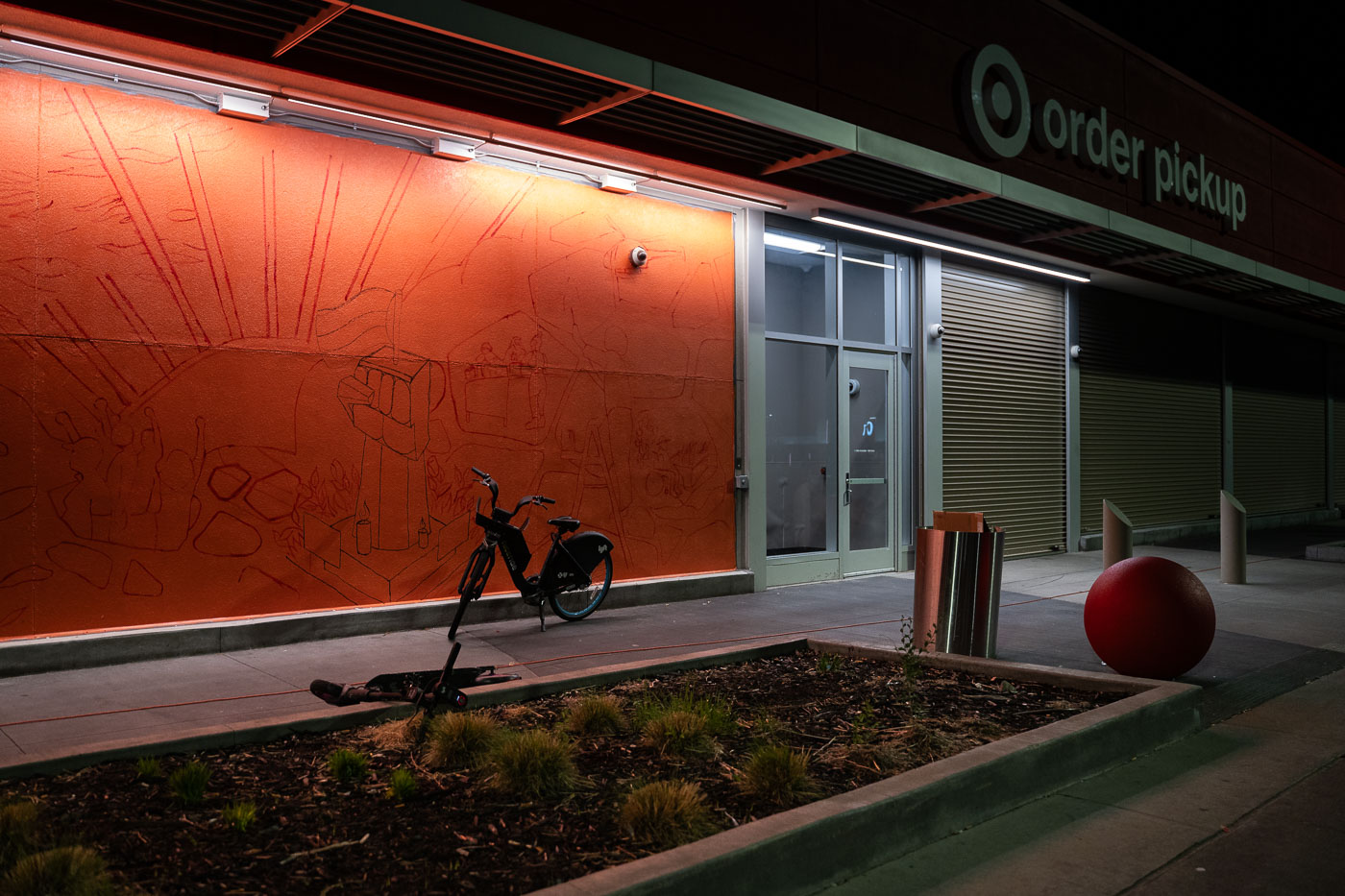
A mural being sketched out on the side of Target on East Lake Street.
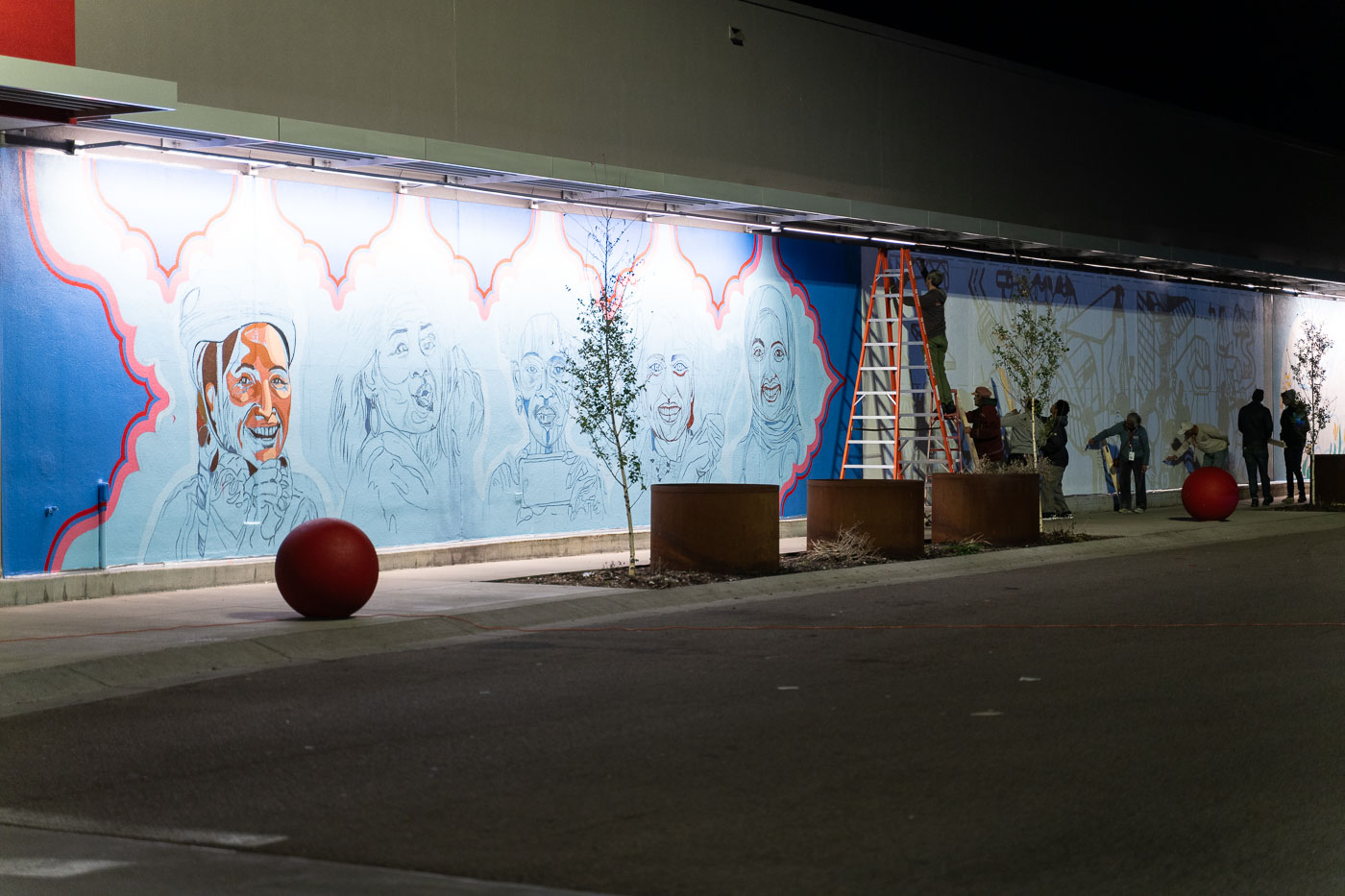
Artists working on a new mural at the Target Store on East Lake Street in Minneapolis. The store across the street from the Minneapolis Police third precinct police station was heavily damaged following the May 25, 2020 murder of George Floyd by Minneapolis police officer Derek Chauvin.
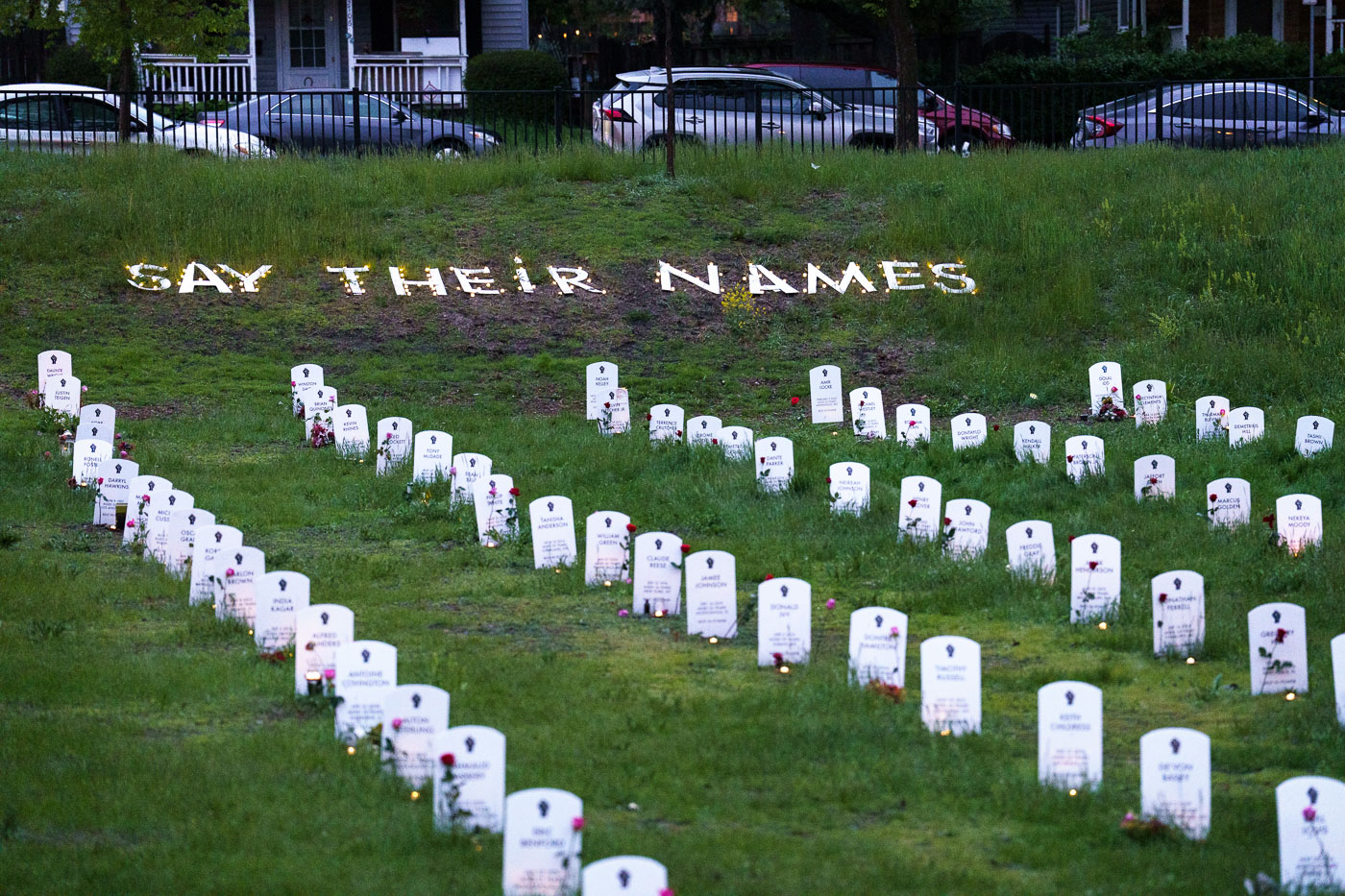
Candles at Say Their Names Cemetery on the 2nd anniversary of the murder of George Floyd.
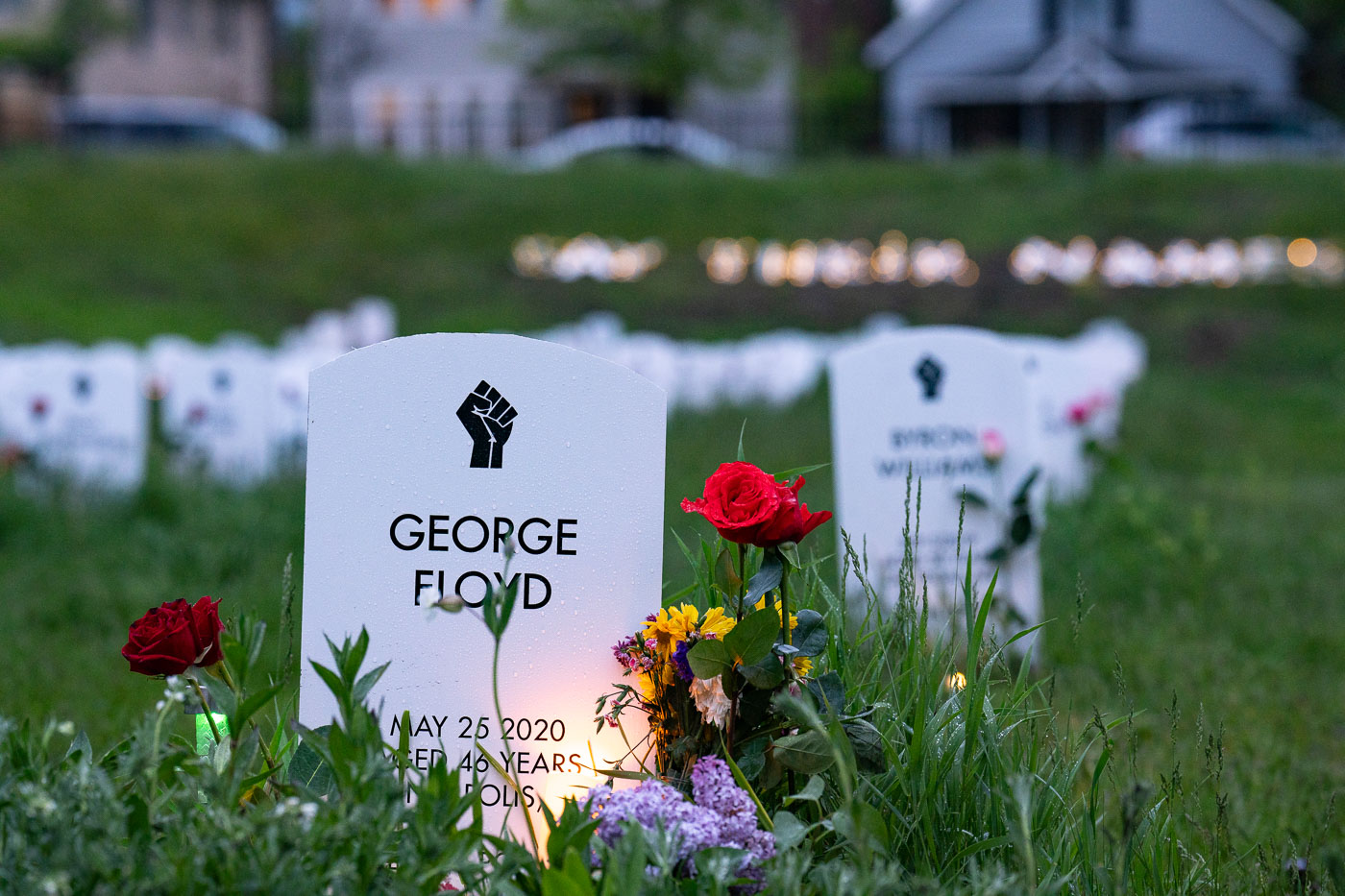
George Floyd marker at Say Their Names Cemetery near George Floyd Square on the 2nd anniversary of his murder.
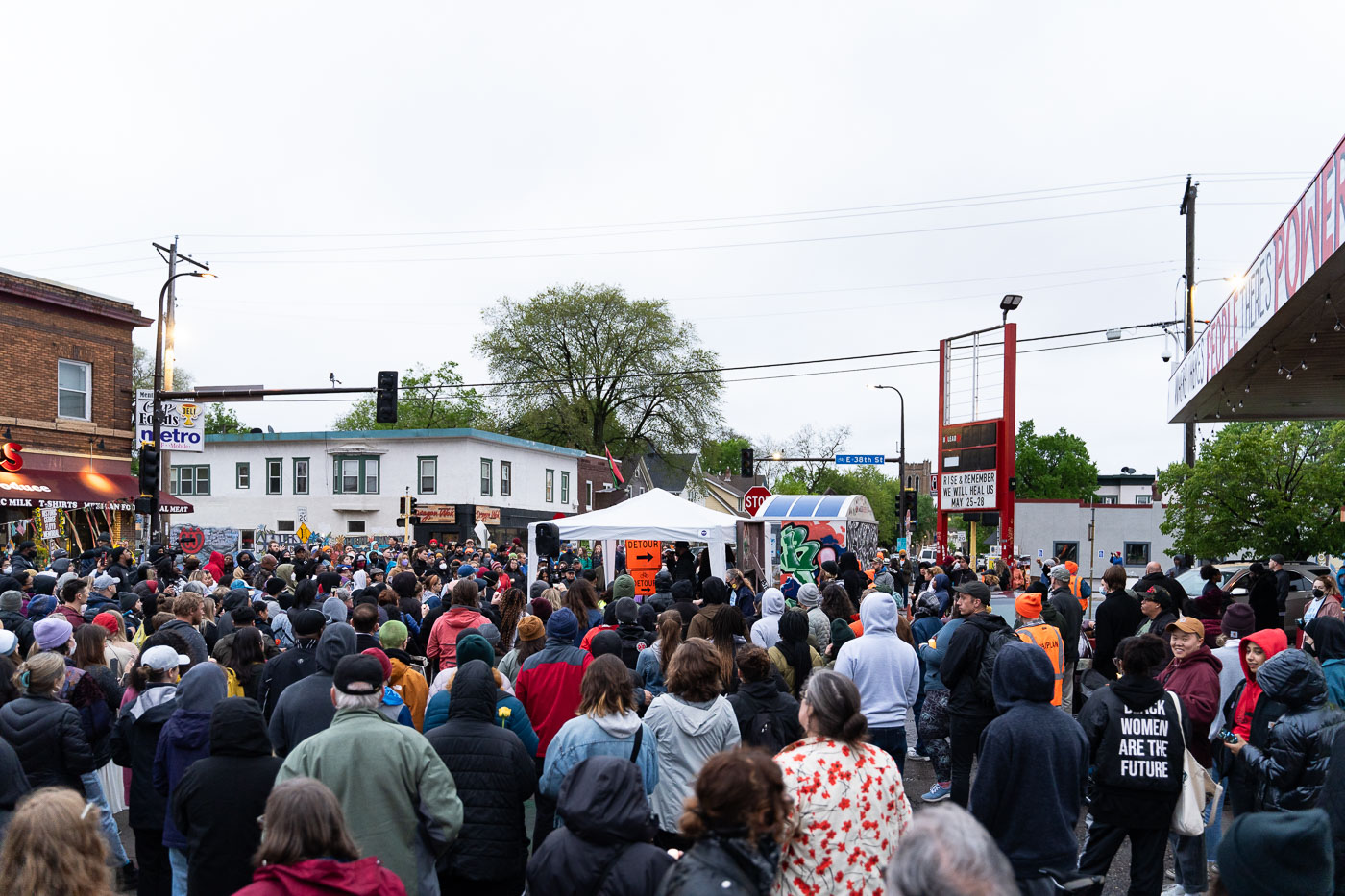
Crowd gathers at George Floyd Square on the 2 year anniversary of the murder of George Floyd.
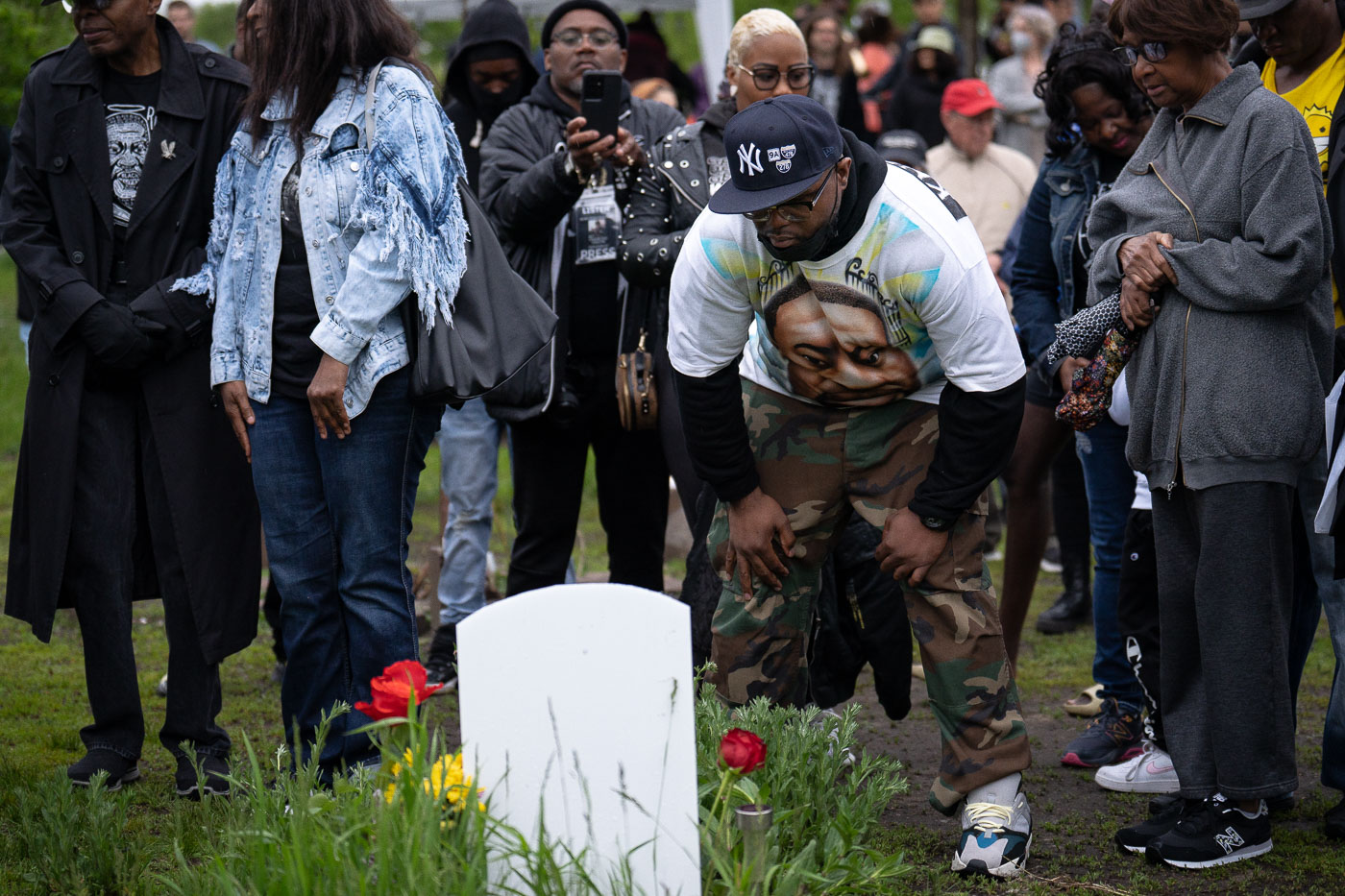
Terrence Floyd, George Floyd’s Brother, at Say Their Names Cemetery during an Angelversary Candlelight Vigil.
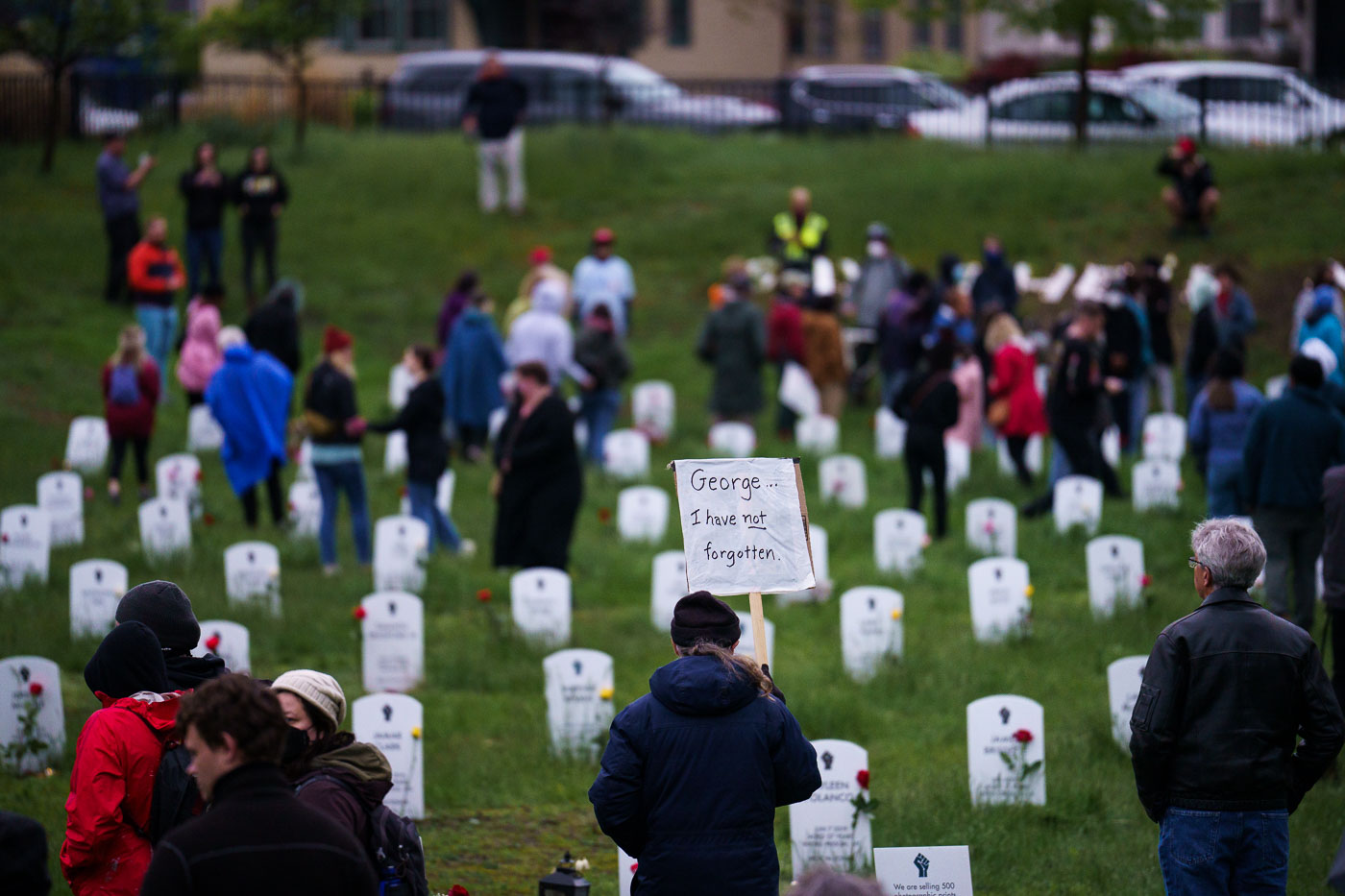
On the 2 year anniversary of his murder and a couple weeks after the commemorative street name was changed to George Perry Floyd Square, a sign was revealed. Afterwards the community held an Angelversary Candlelight Vigil at Say Their Names Cemetery.
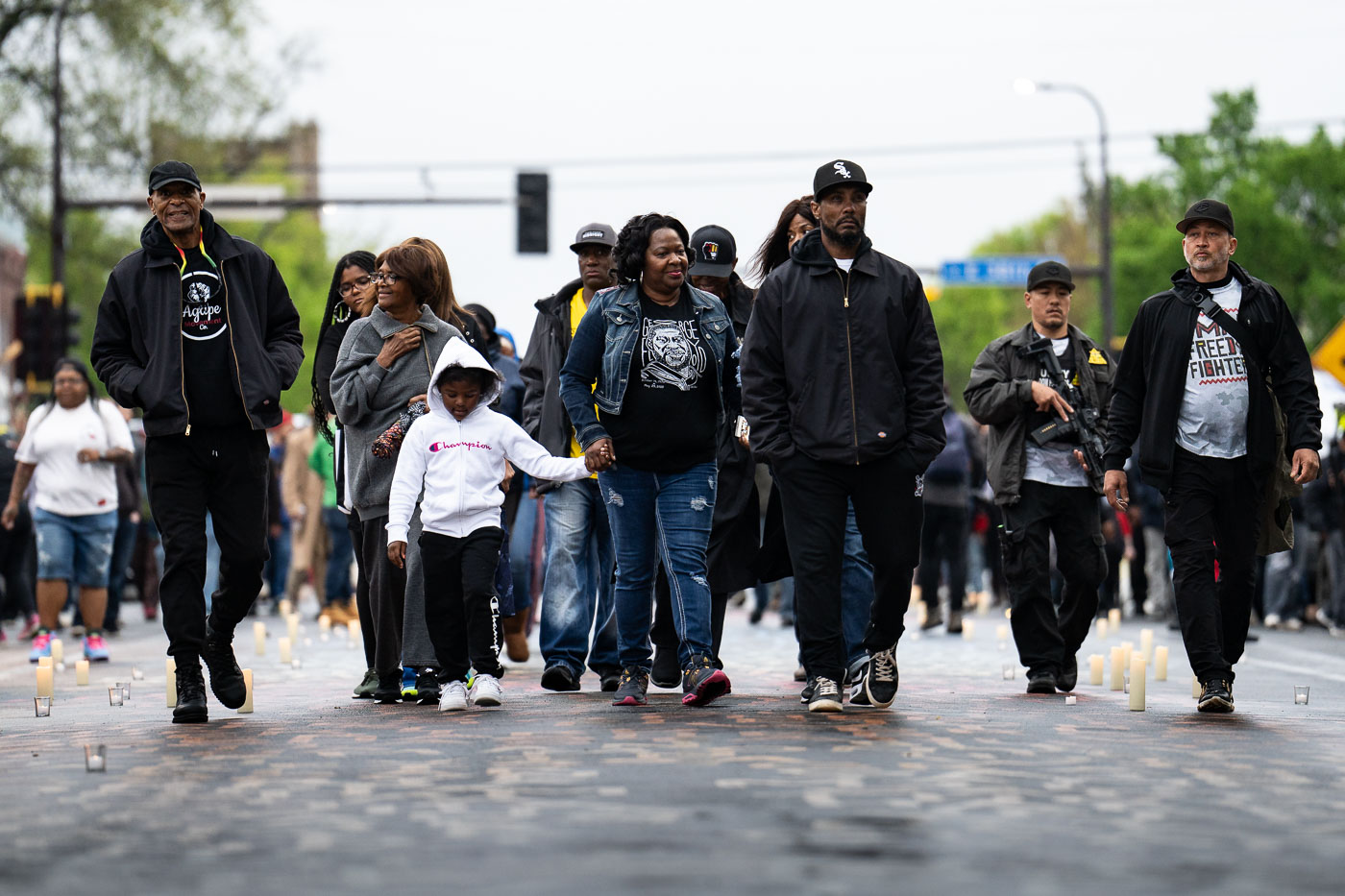
Steve Floyd with Agape Movement walks down Chicago Avenue during the 2nd anniversary of the murder of George Floyd.
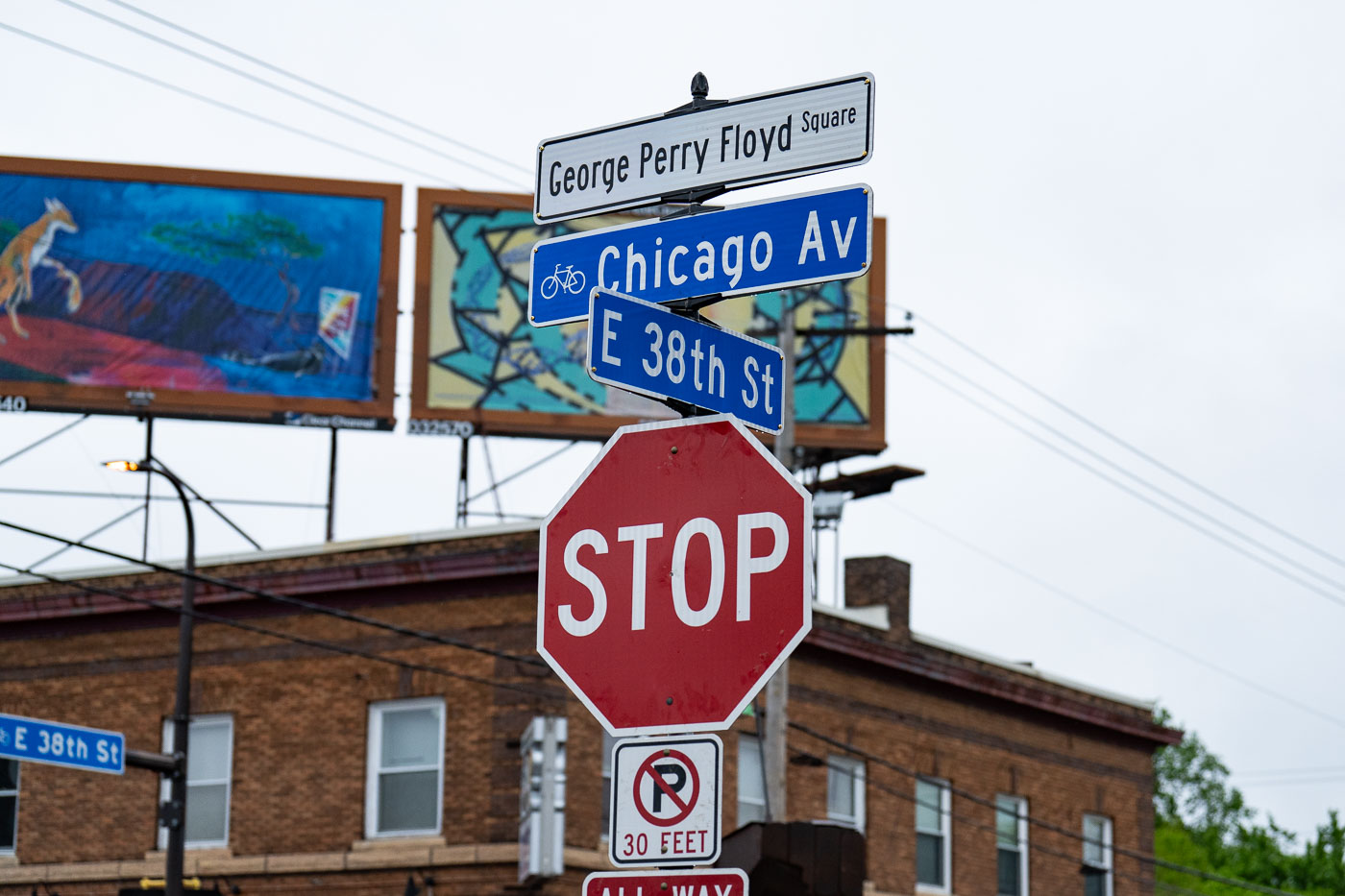
On the 2 year anniversary of George Floyd's murder and a couple weeks after the commemorative street name was changed to George Perry Floyd Square, a sign was revealed.
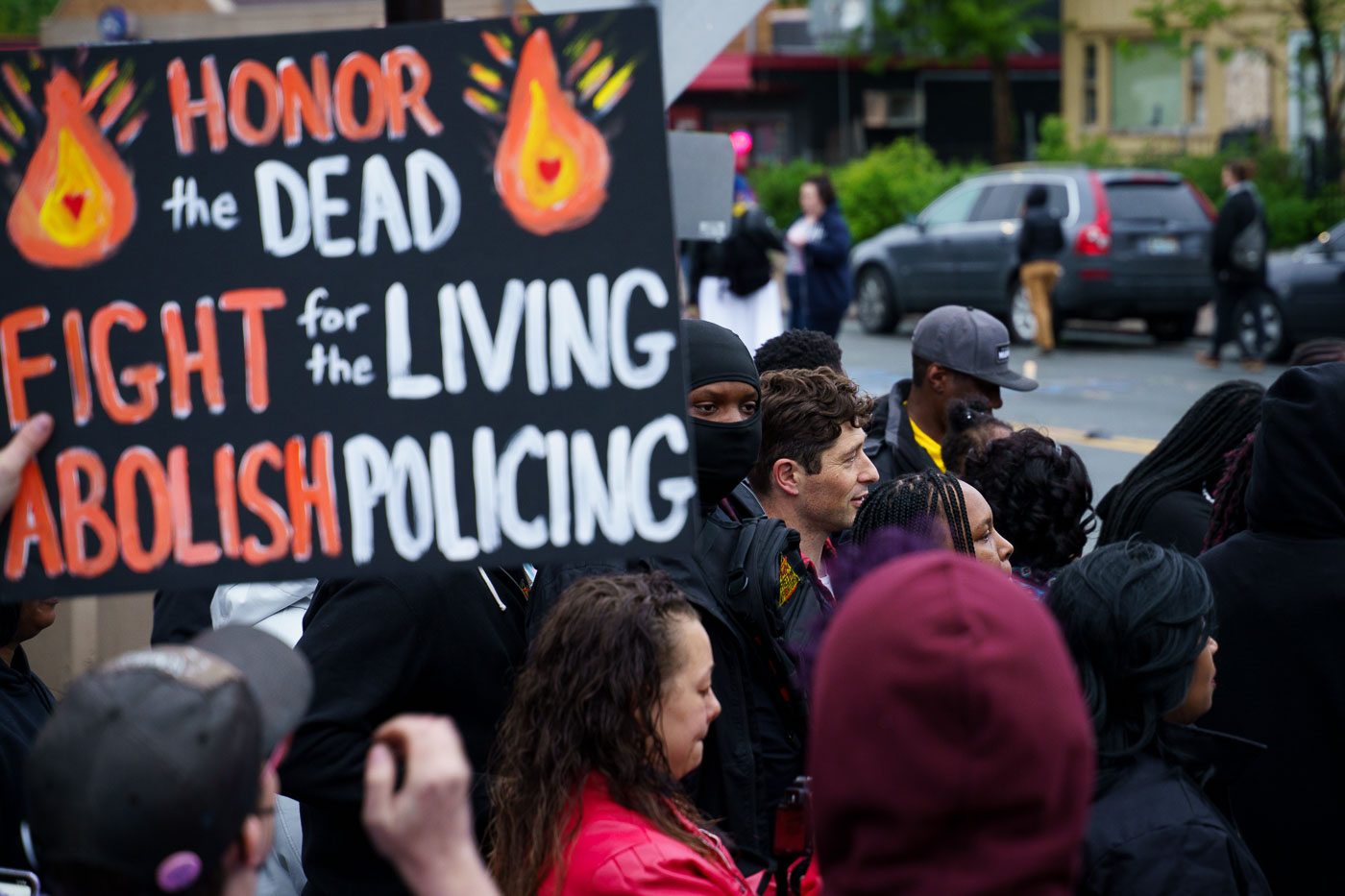
Mayor Jacob Frey and members of The Agape Movement at George Floyd Square in May 2022.
On the 2 year anniversary of his murder and a couple weeks after the commemorative street name was changed to George Perry Floyd Square, a sign was revealed.
Afterwards the community held an Angelversary Candlelight Vigil at Say Their Names Cemetery.
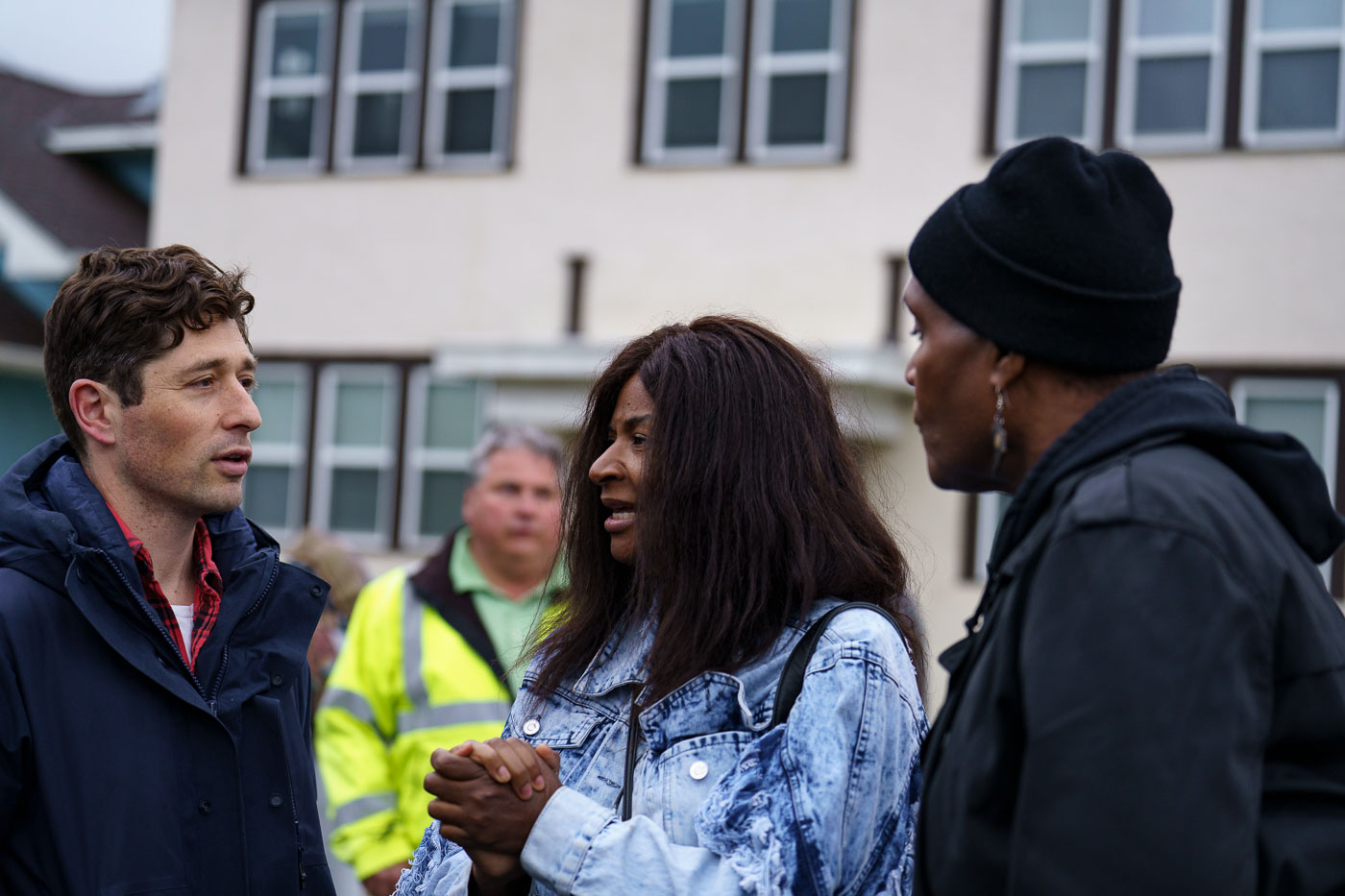
Minneapolis Mayor Jacob Frey meets with George Floyd’s aunt Angela Harrelson and Minneapolis City Council President Andrea Jenkins at George Floyd Square.
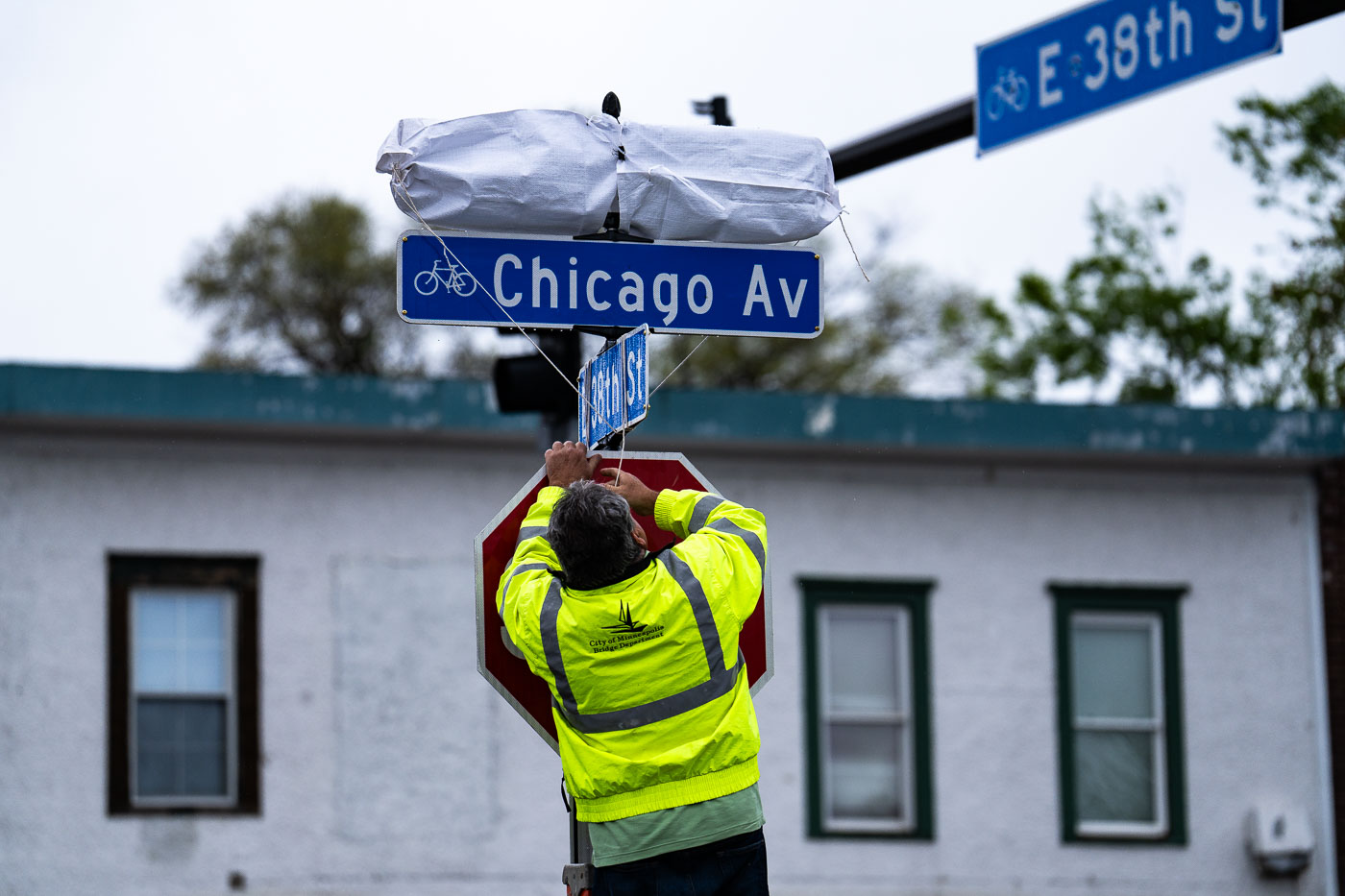
On the 2 year anniversary of his murder and a couple weeks after the commemorative street name was changed to George Perry Floyd Square, a sign was revealed.
Afterwards the community held an Angelversary Candlelight Vigil at the Say Their Names Cemetery memorial.
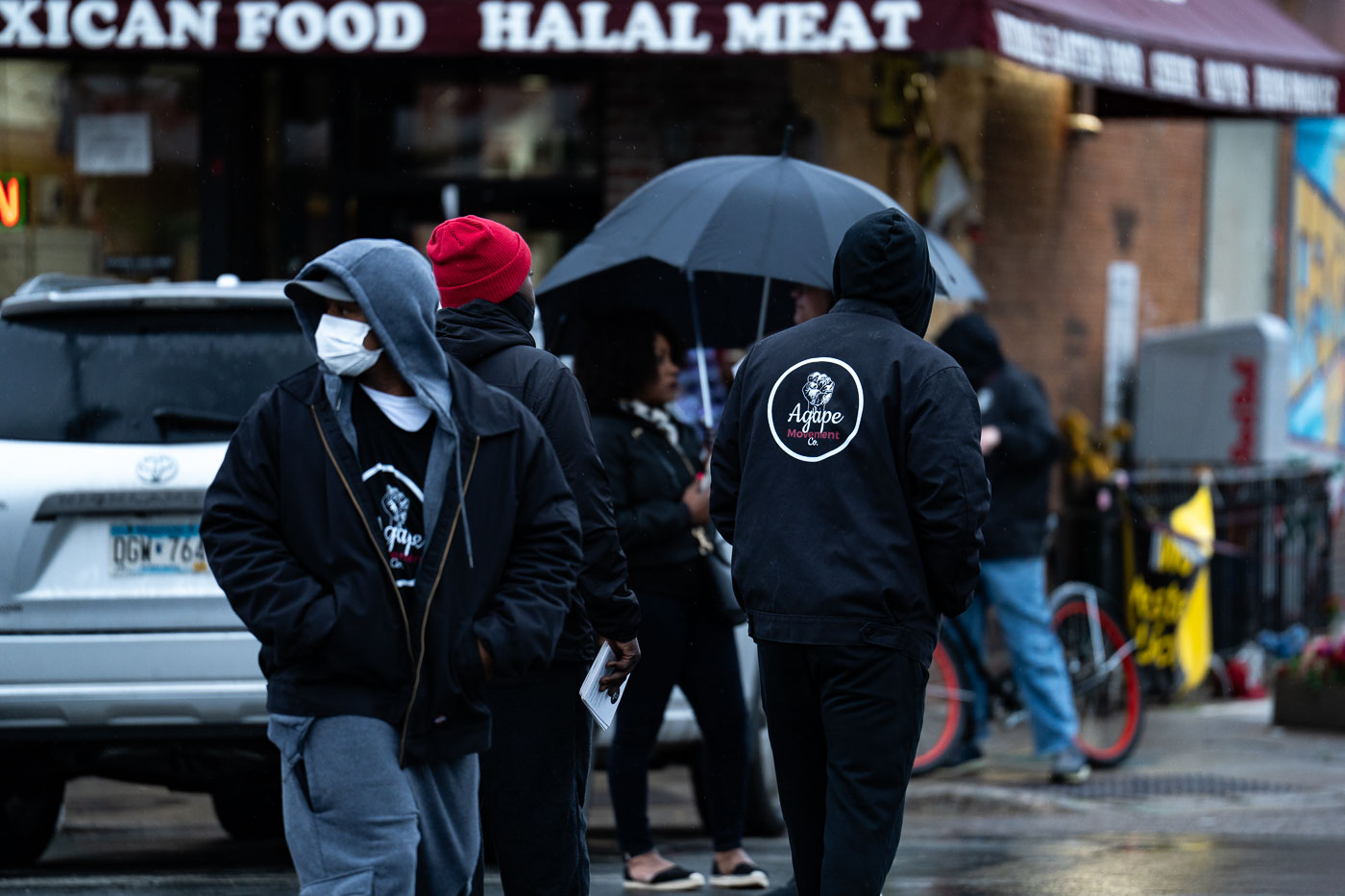
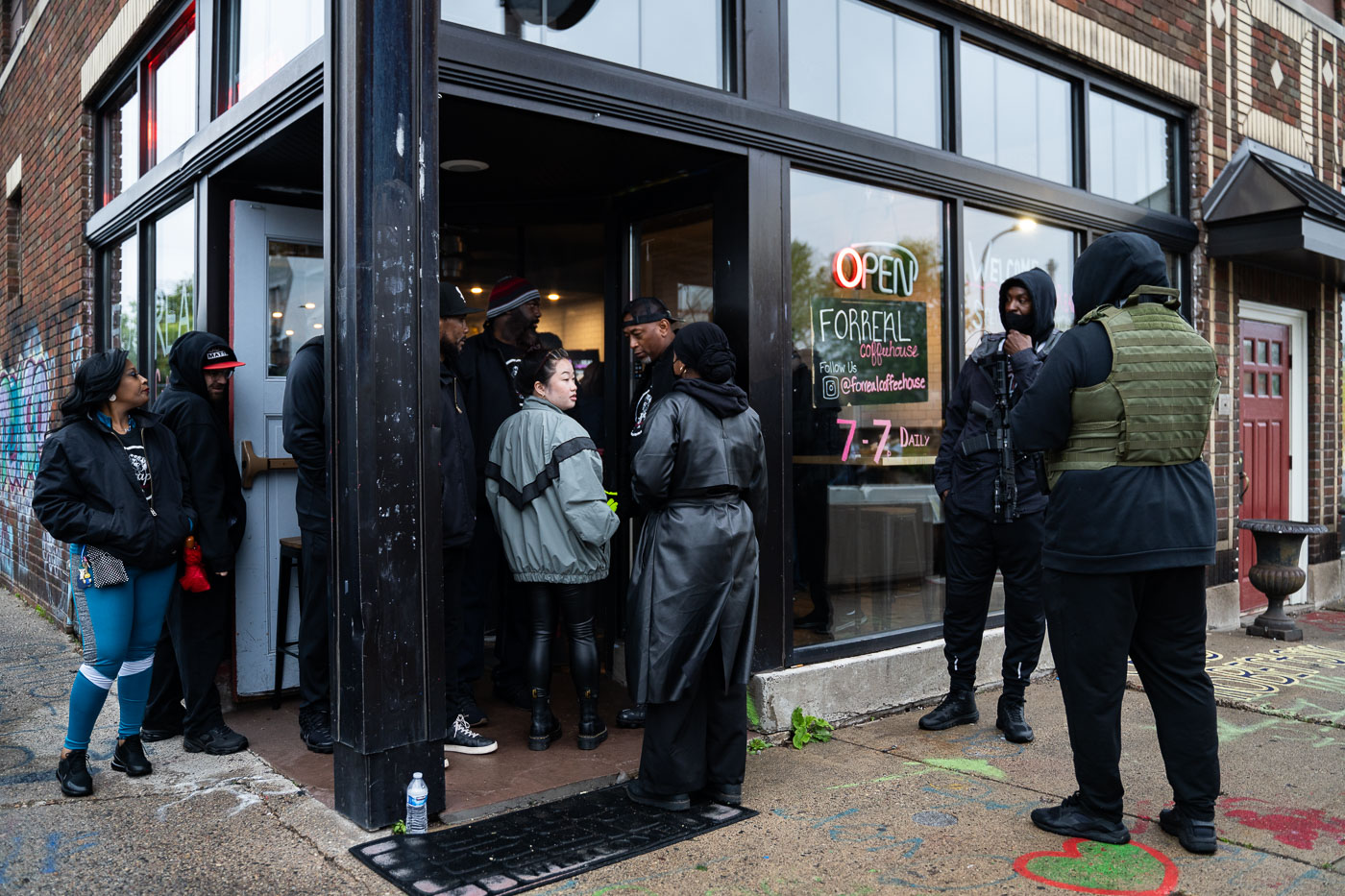
Agape Movement members at George Floyd Square on May 25th, 2022. One year prior the city coordinated with the group to remove barricades at the square.
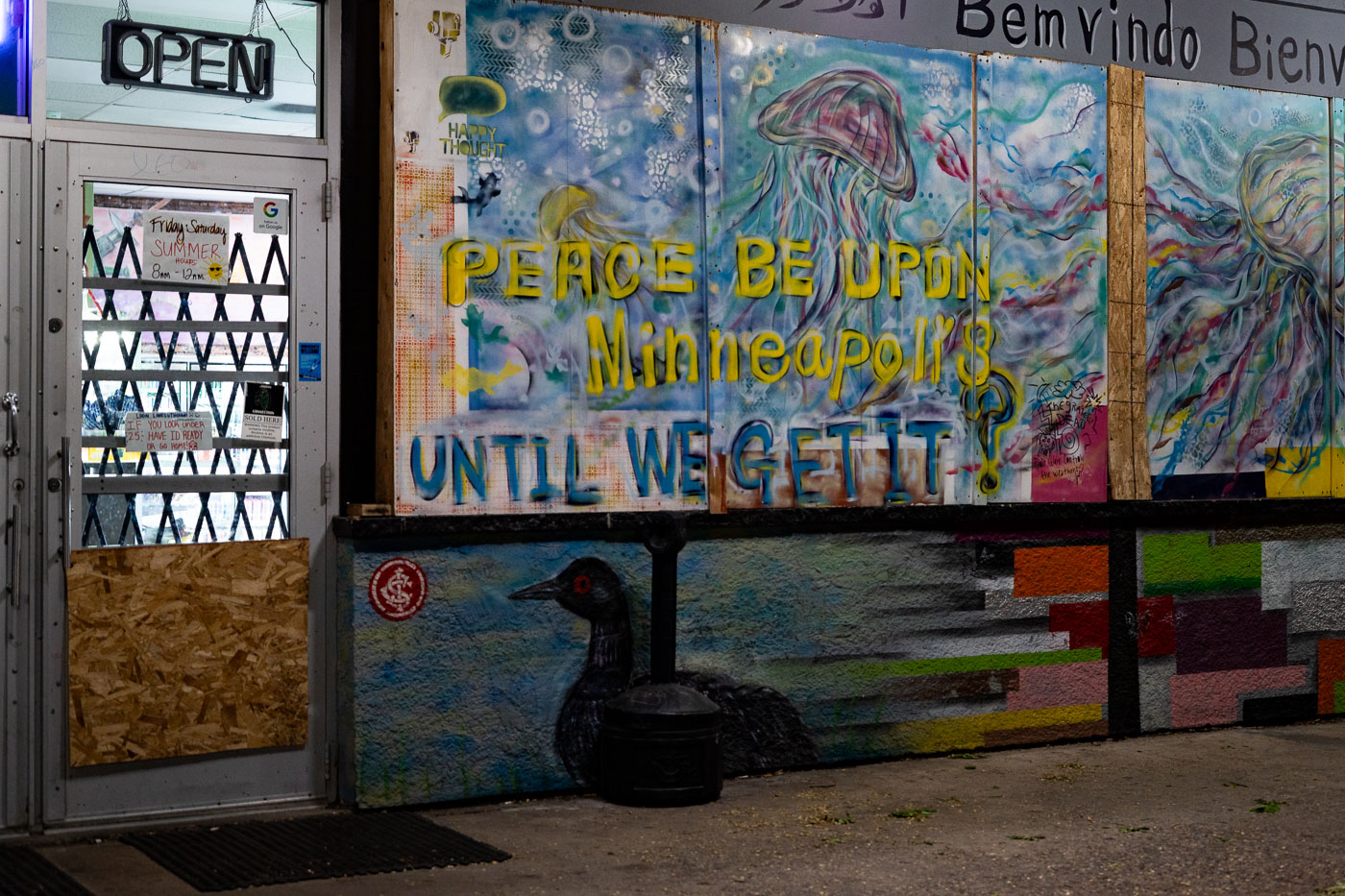
A mural on boards covering the windows at the Loon Smoke Shop on Lyndale Ave in Minneapolis.
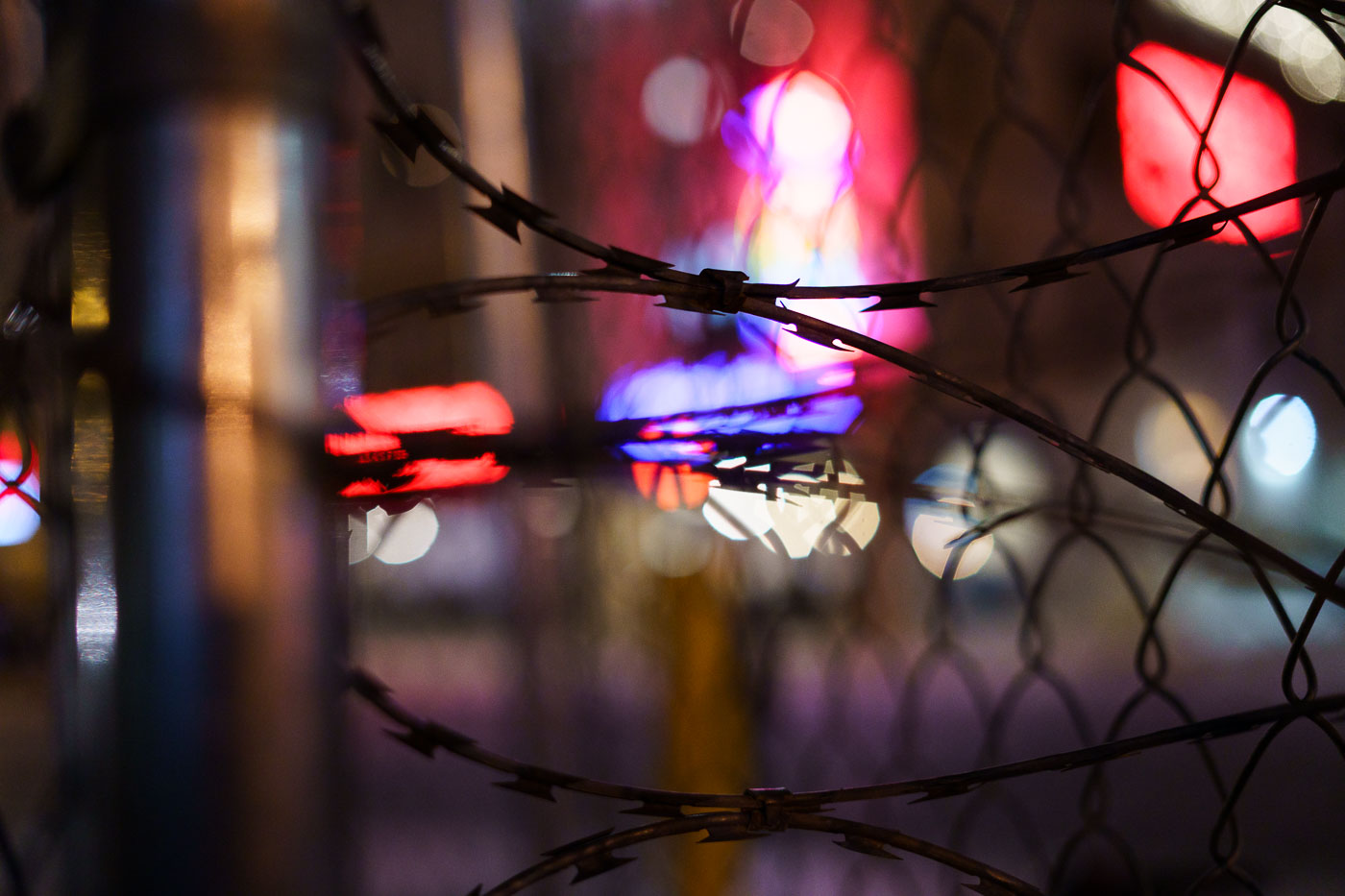
Razor wire on fencing around a parking ramp at Lake Street and Girard Ave in Uptown Minneapolis.
The area was home to protests following the shooting death of Winston Smith at the top of the ramp by a federal task force.
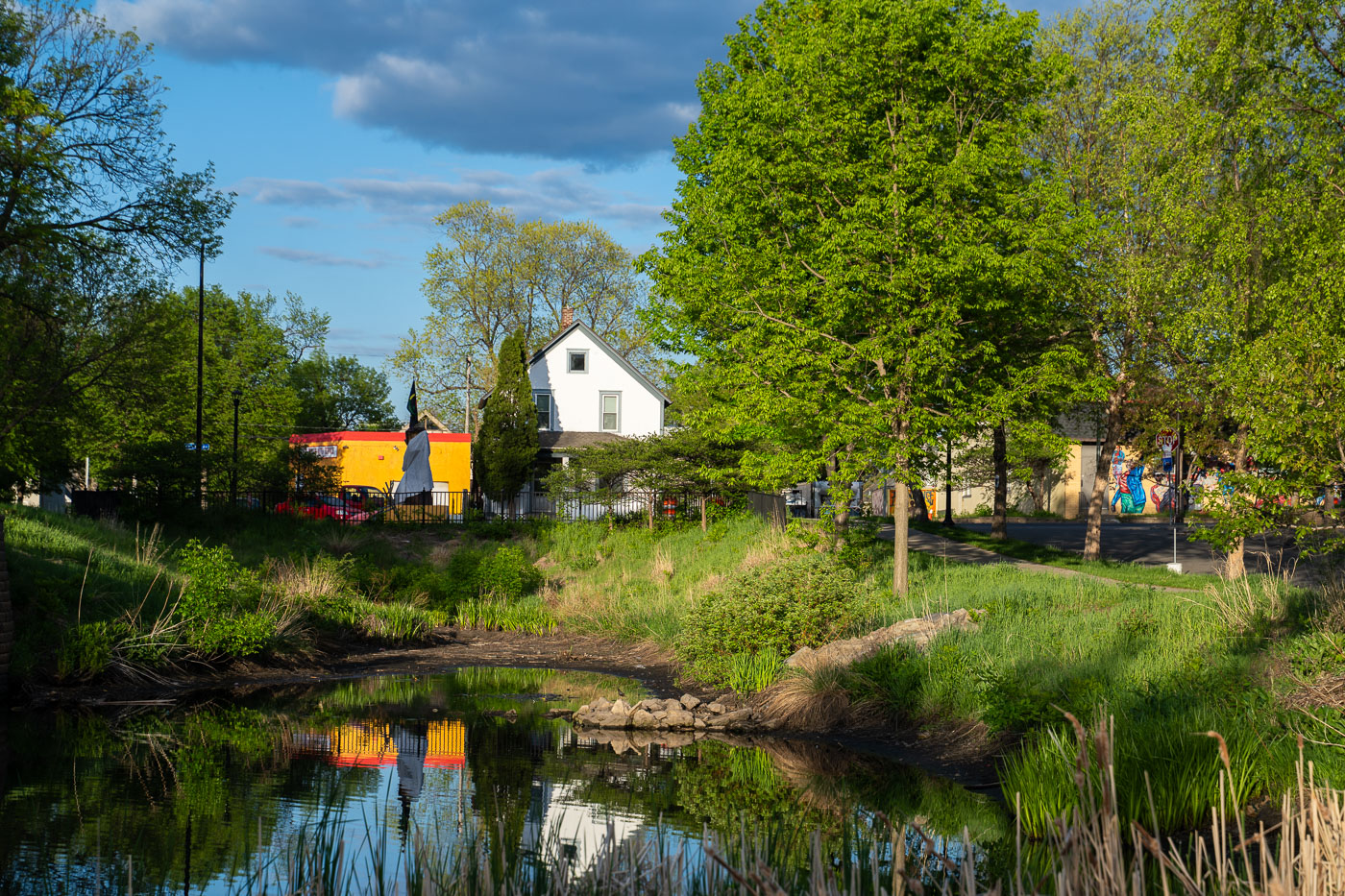
Pond near George Floyd Square and Say Their Names Cemetery. The area has been a place of protest since the May 25, 2020 murder of George Floyd.
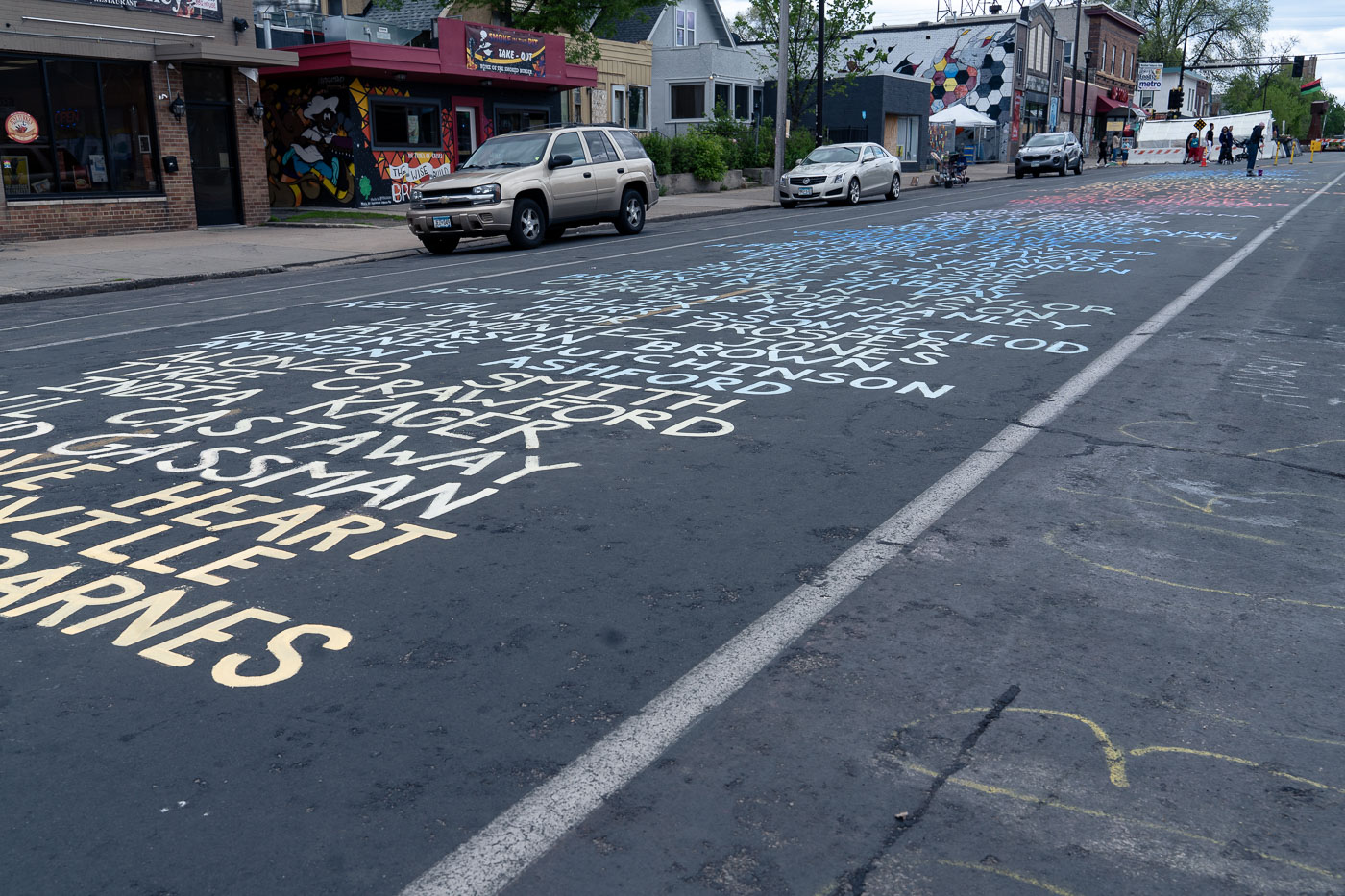
The names of those who’ve been killed by police being repainted on Chicago Avenue.
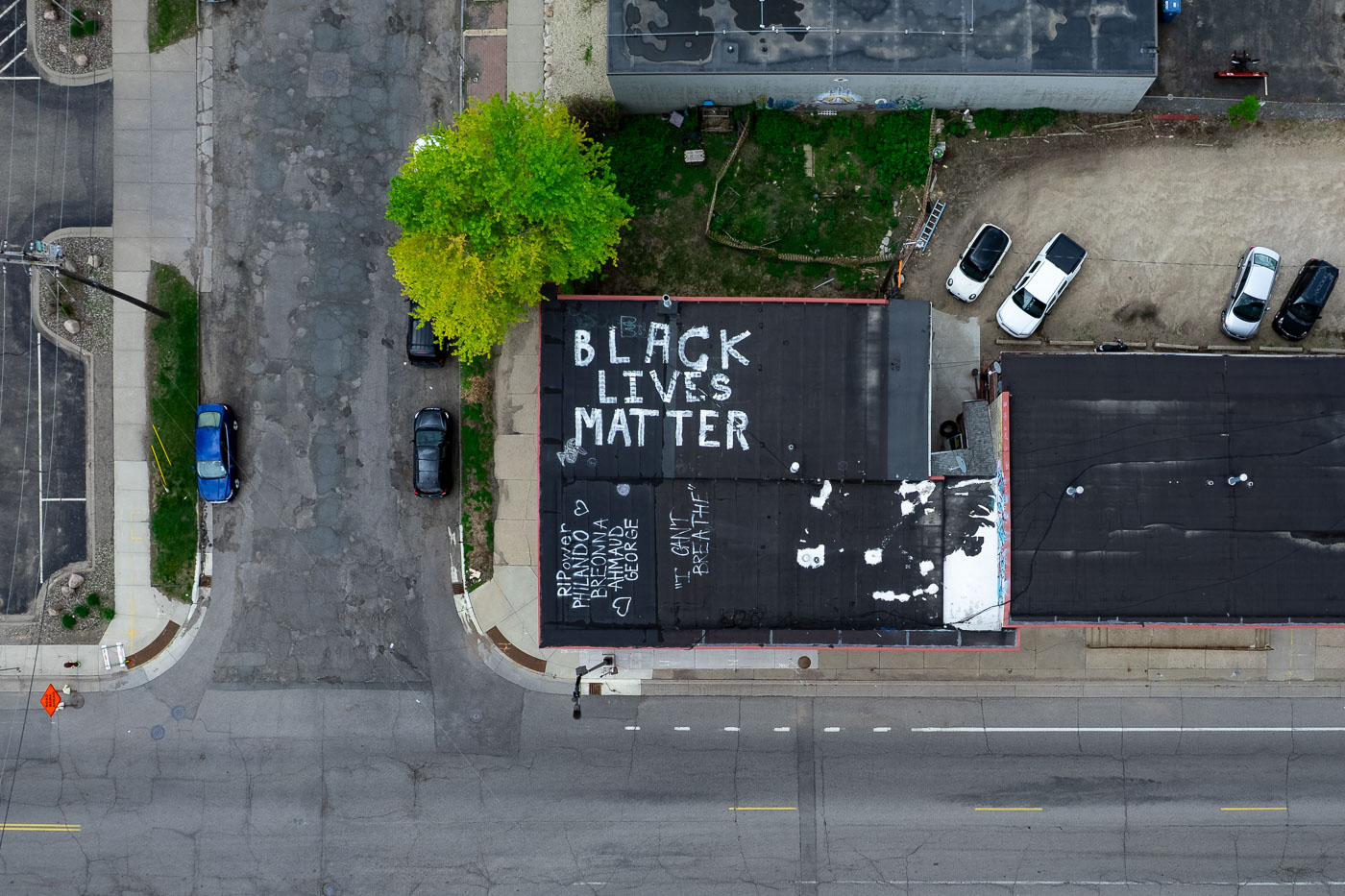
An apartment building with “Black Lives Matter” on the roof.
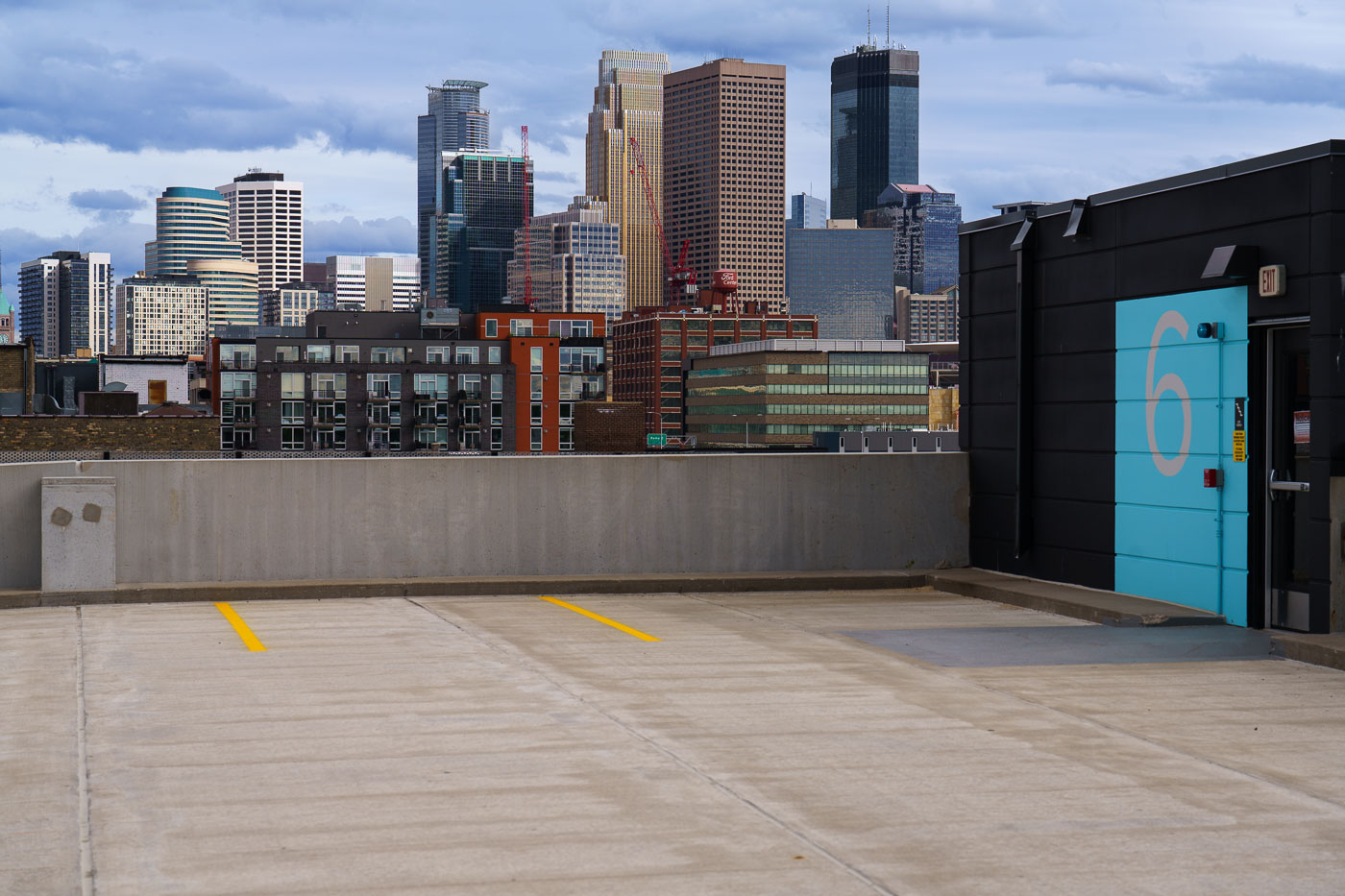
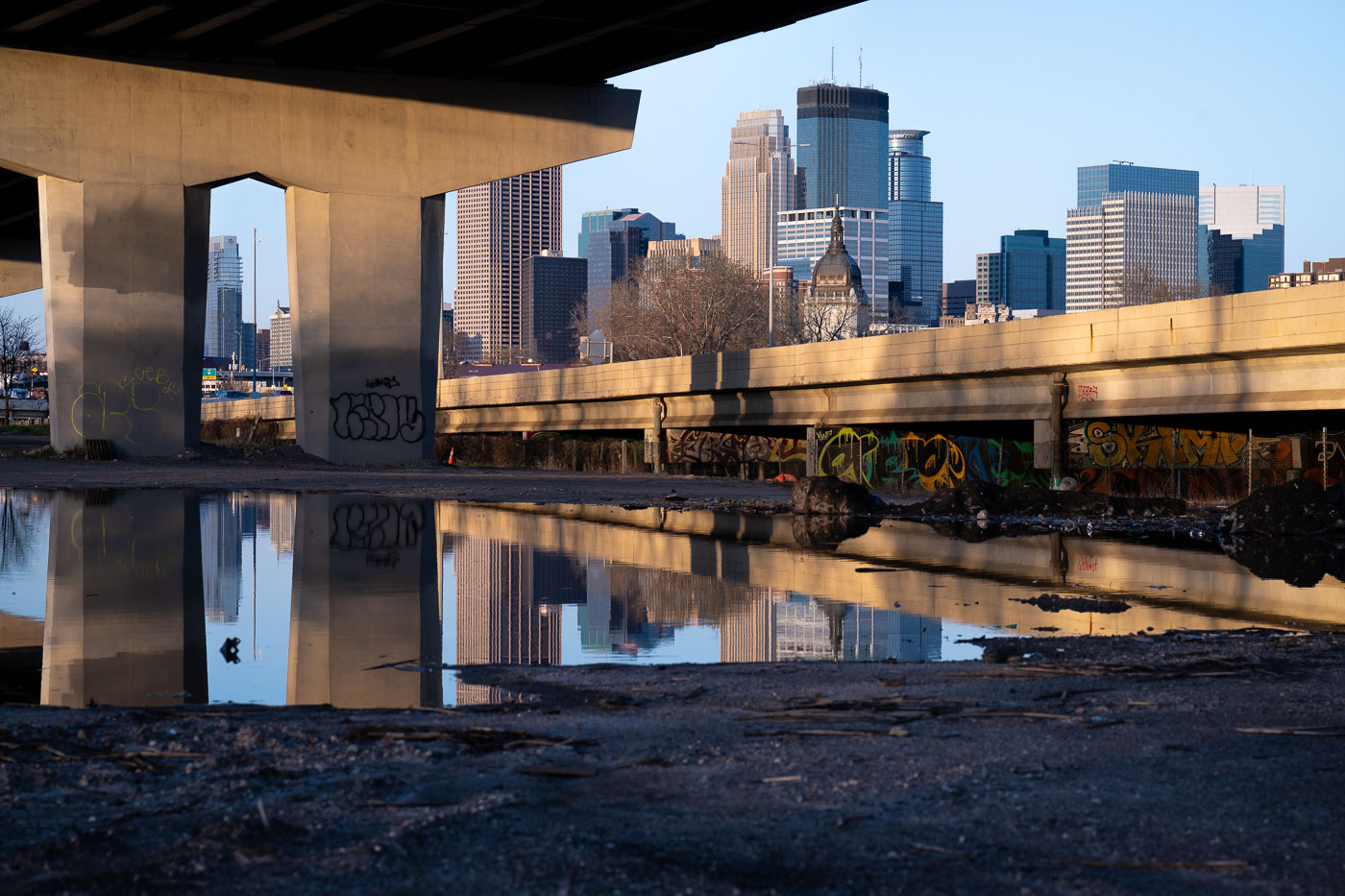
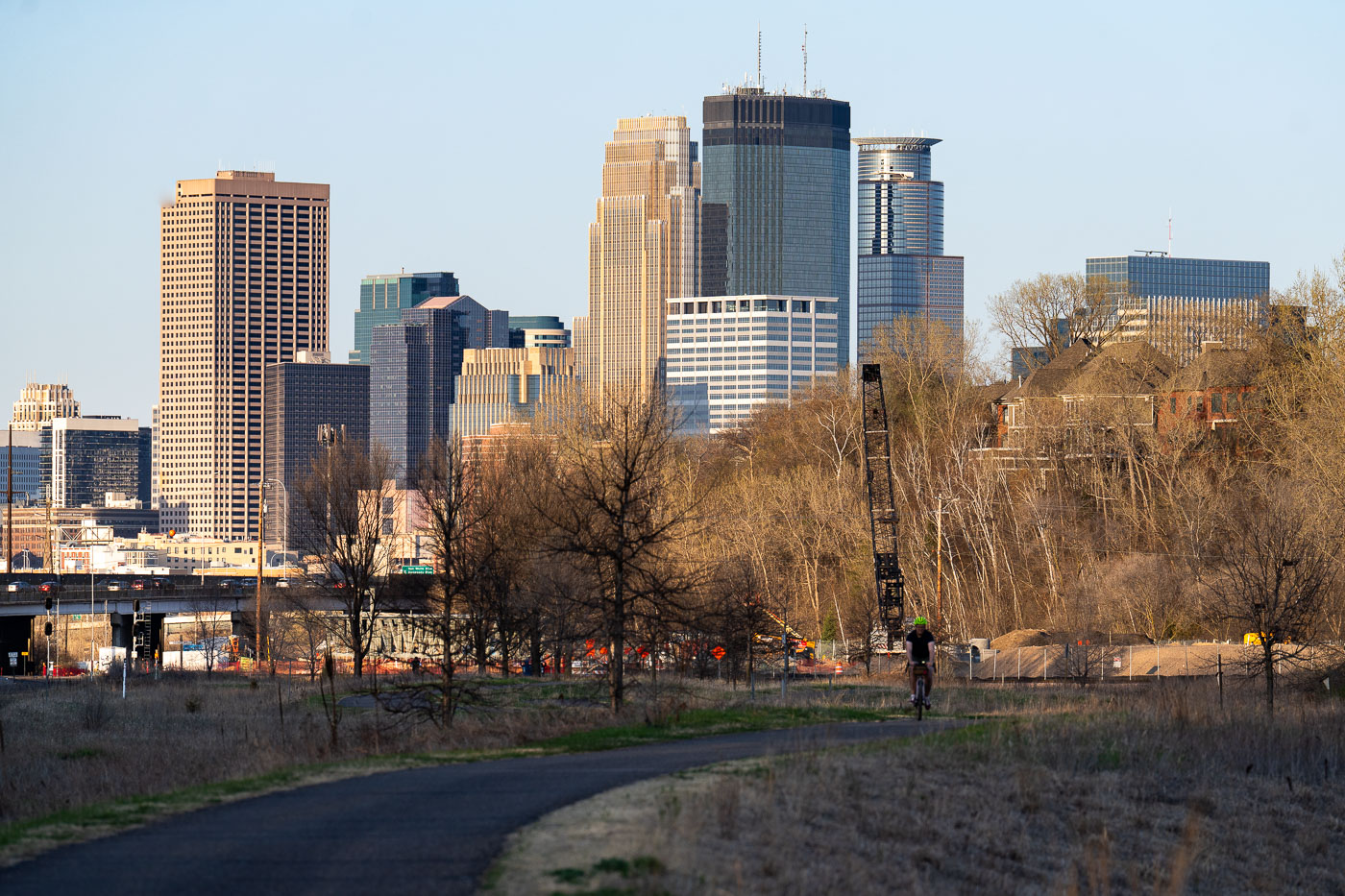
Minneapolis Skyline as seen from a parking garage on 10th Street in the North Loop, Downtown Minneapolis.
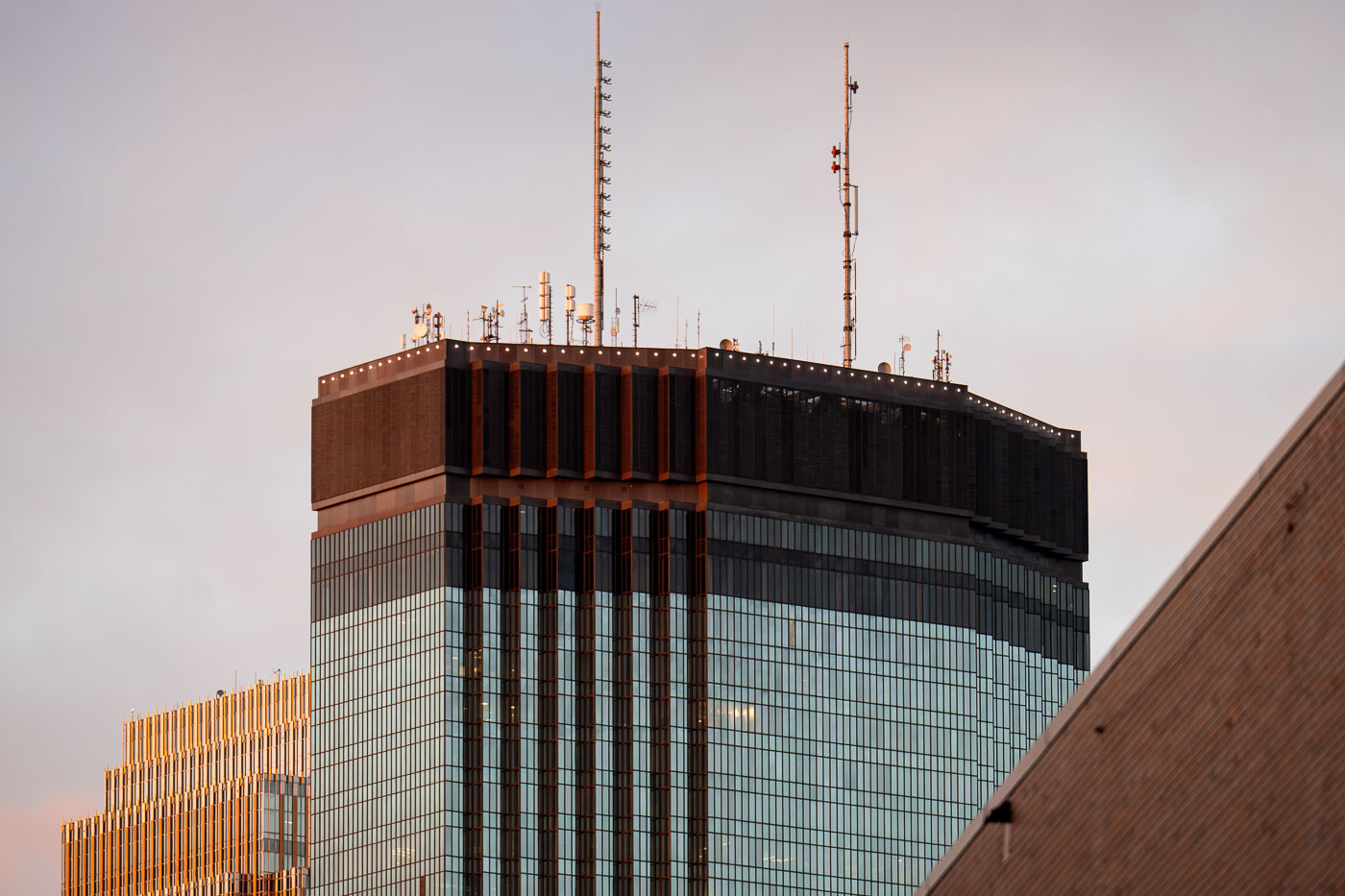
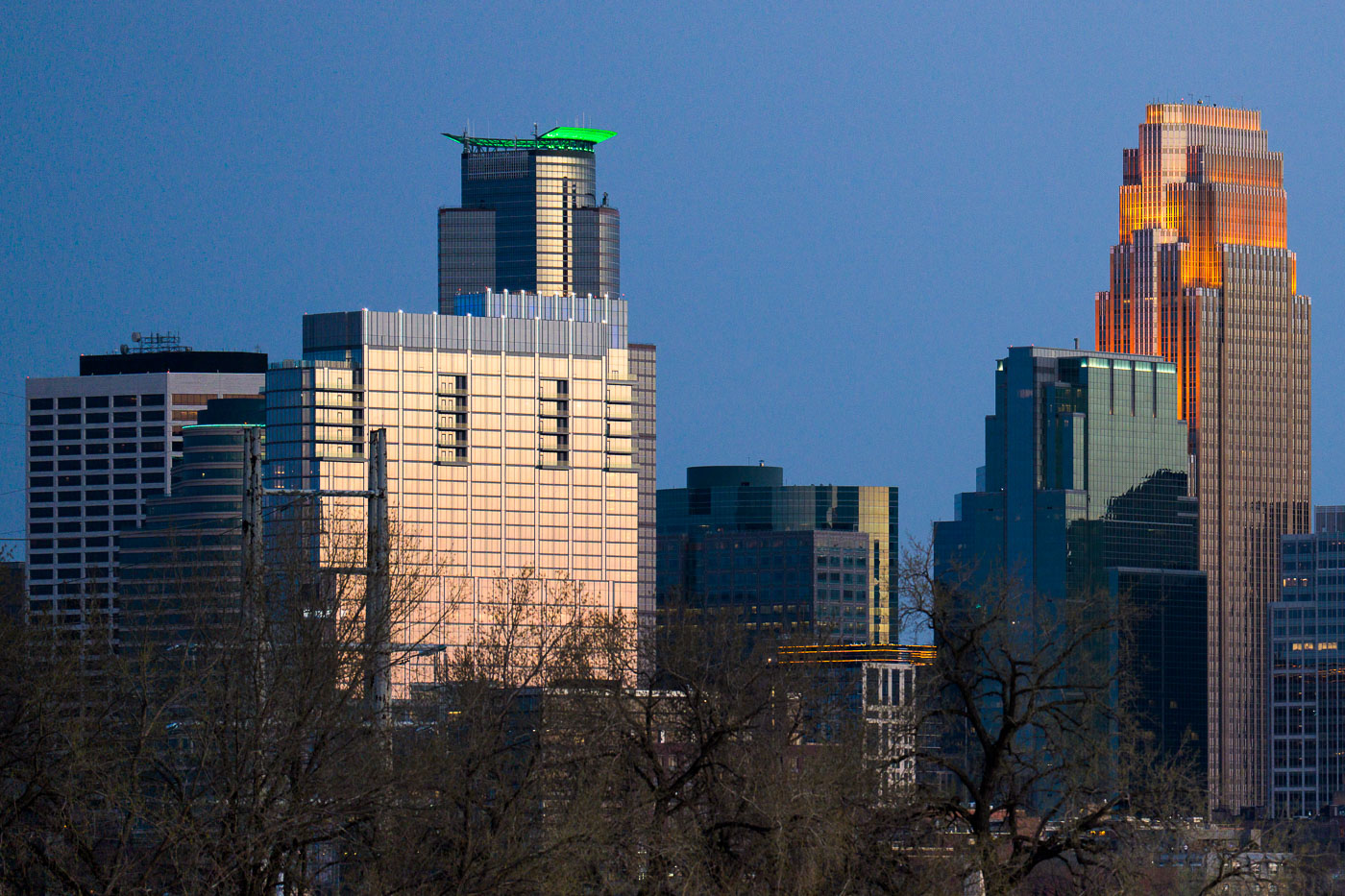
The IDS Center rises into the evening light in downtown Minneapolis, its rooftop antennas silhouetted against a soft autumn sky. Designed by Philip Johnson and John Burgee and completed in 1972, the 792-foot tower remains the tallest building in Minnesota. The dark mechanical crown houses HVAC systems and broadcast transmitters, while the curtain wall’s reflective glass panels catch the last warm tones of sunset alongside the adjacent RBC Gateway Tower.
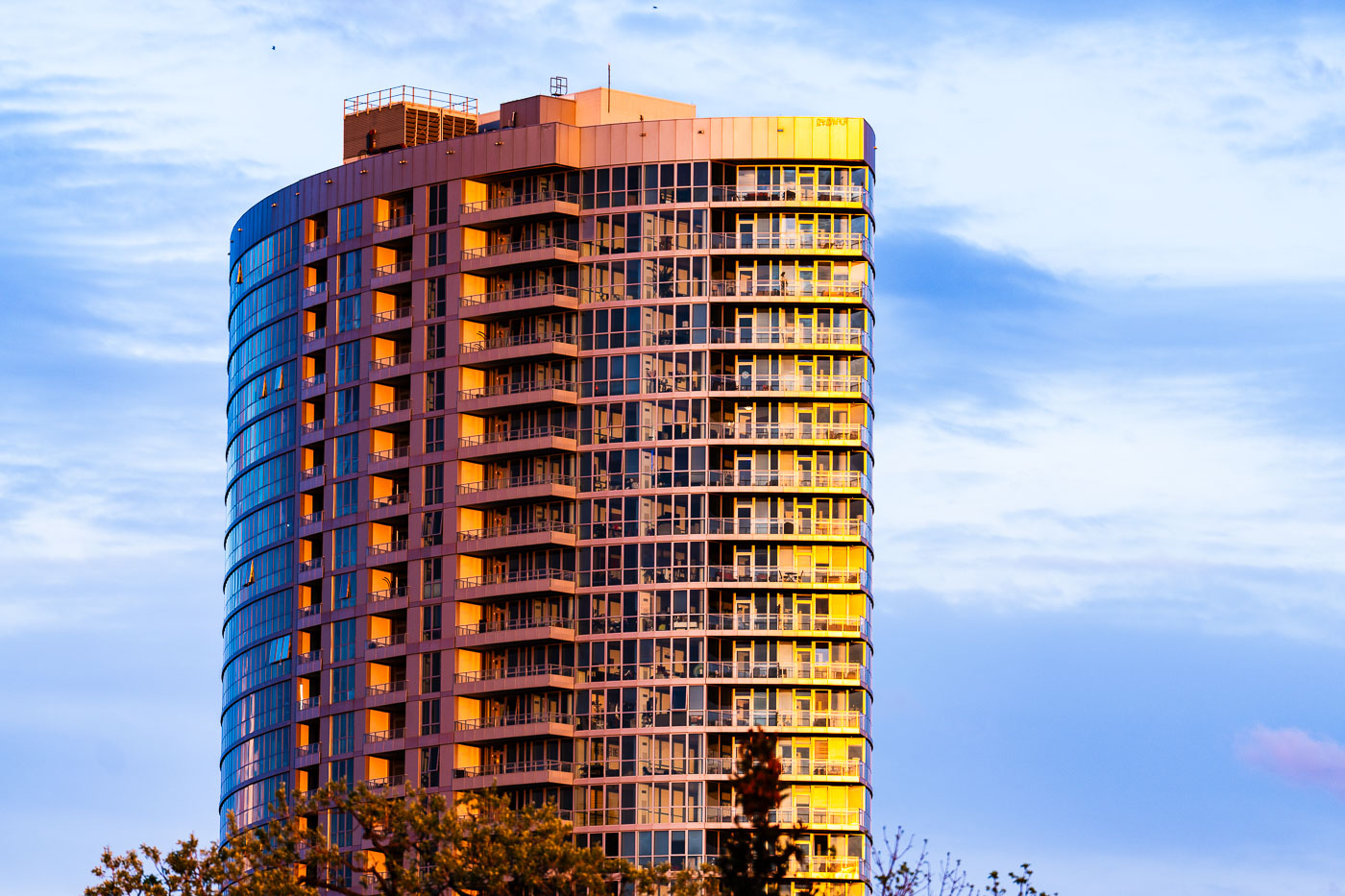
Sunset reflections on LPM Apartment tower in Loring Park, Minneapolis.
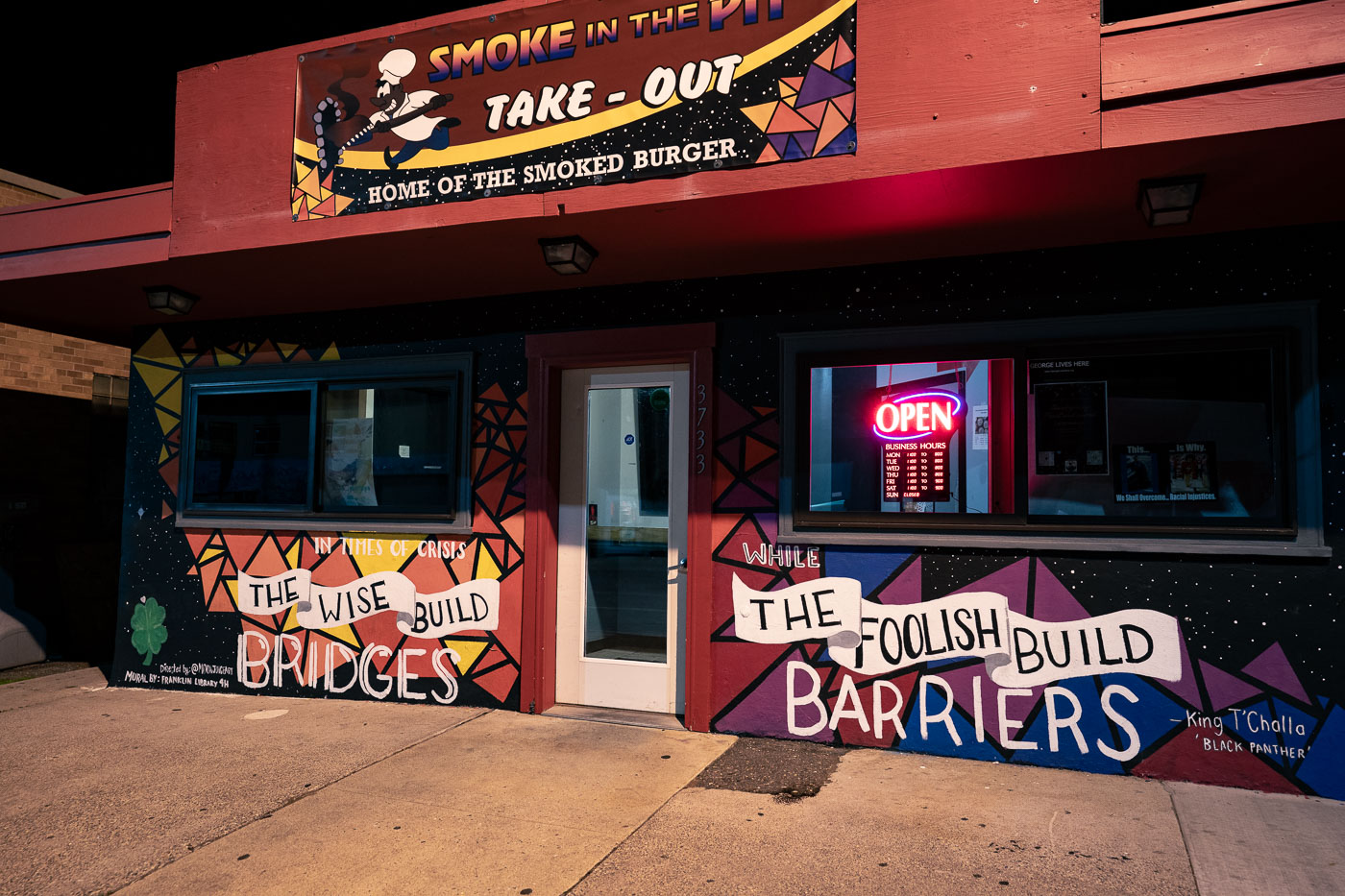
Smoke In The Pit Restaurant on Chicago Avenue in George Floyd Square.
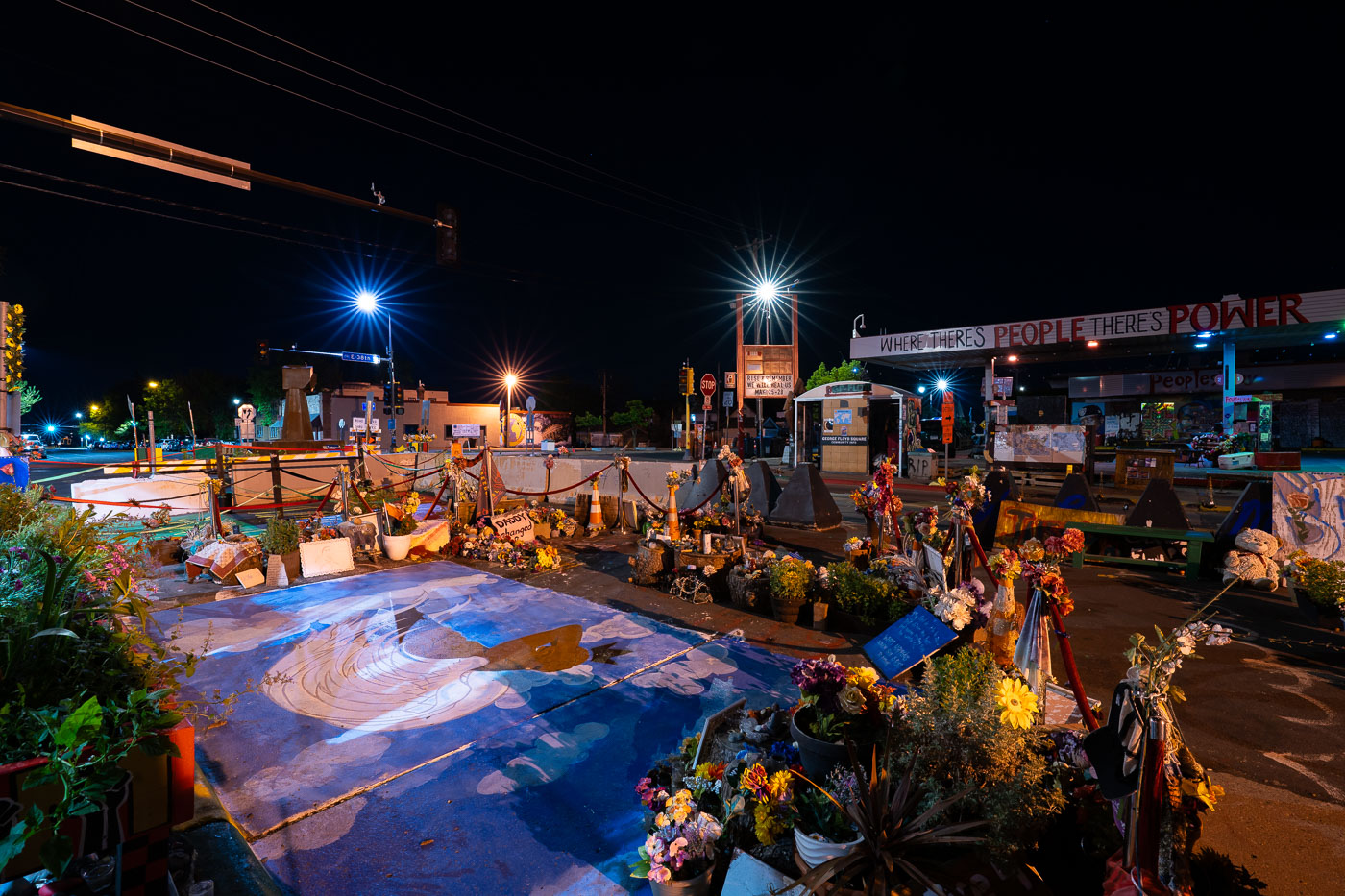
The George Floyd Memorial at George Floyd Square on May 19, 2022.
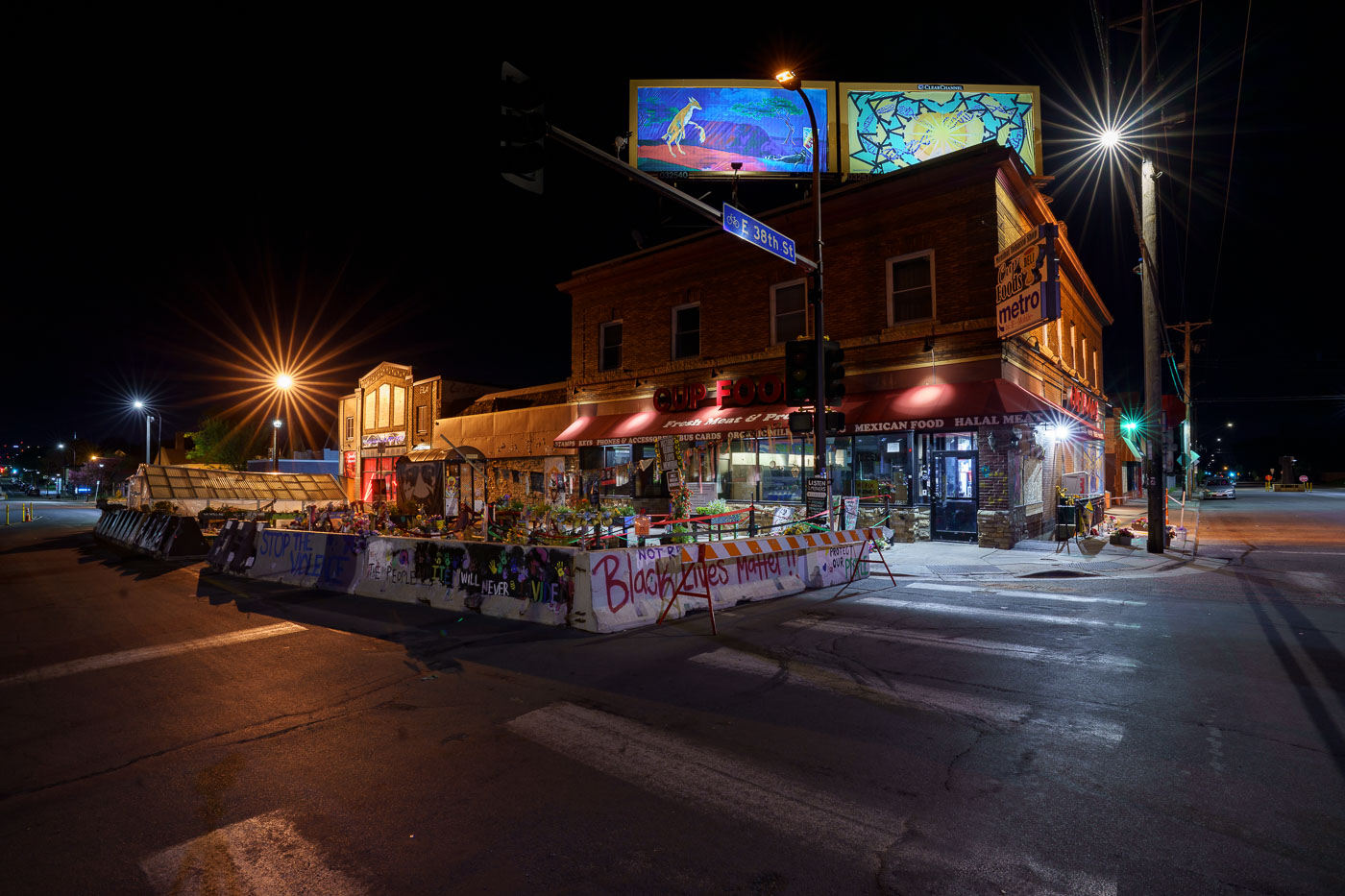
The George Floyd Memorial at George Floyd Square in May 2025. The area has been a place of protest since the May 25, 2020 murder of George Floyd.
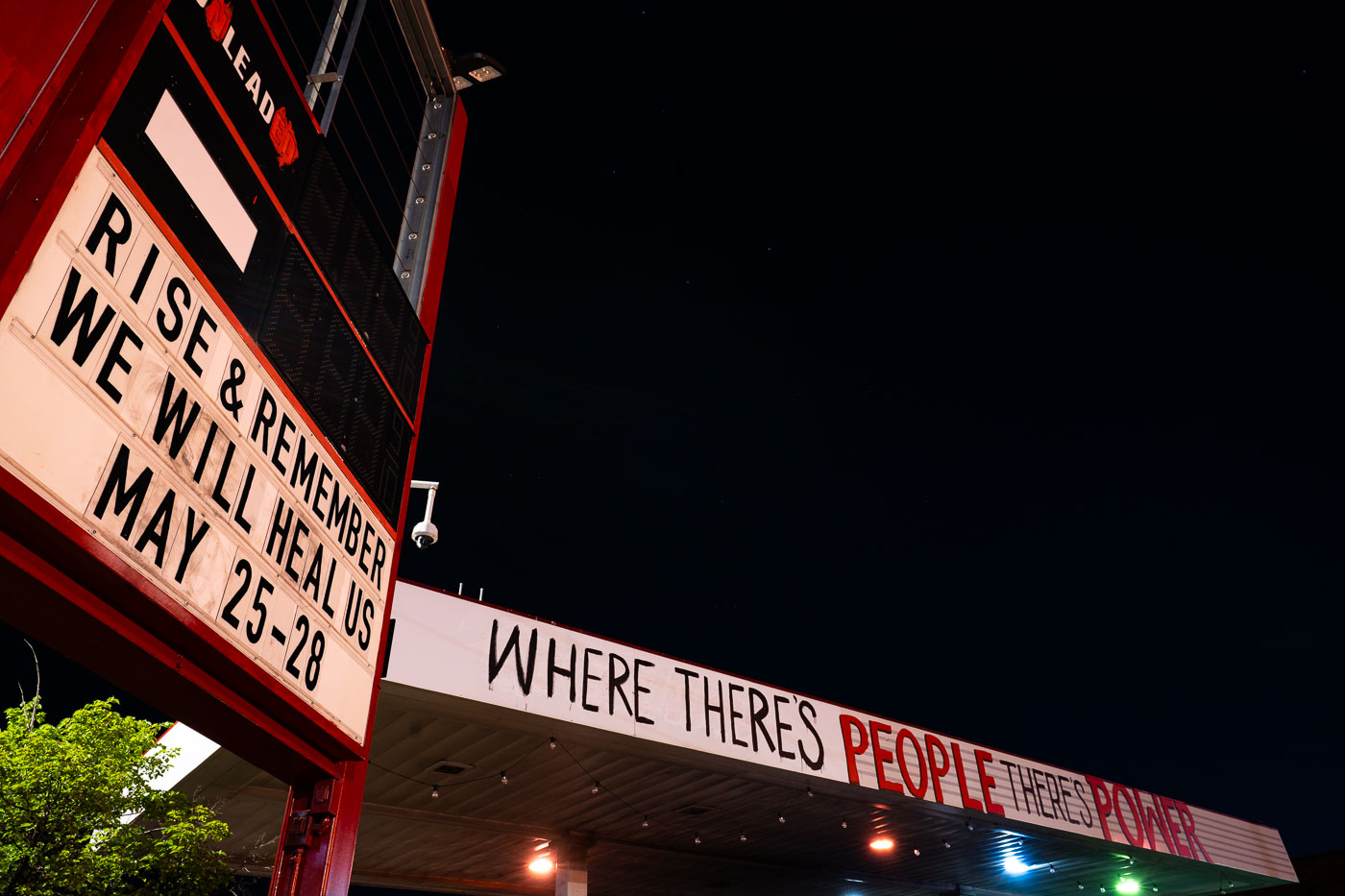
Notice about “Rise & Remember” at George Floyd Square. The event is held on the anniversary of George Floyd’s murder.
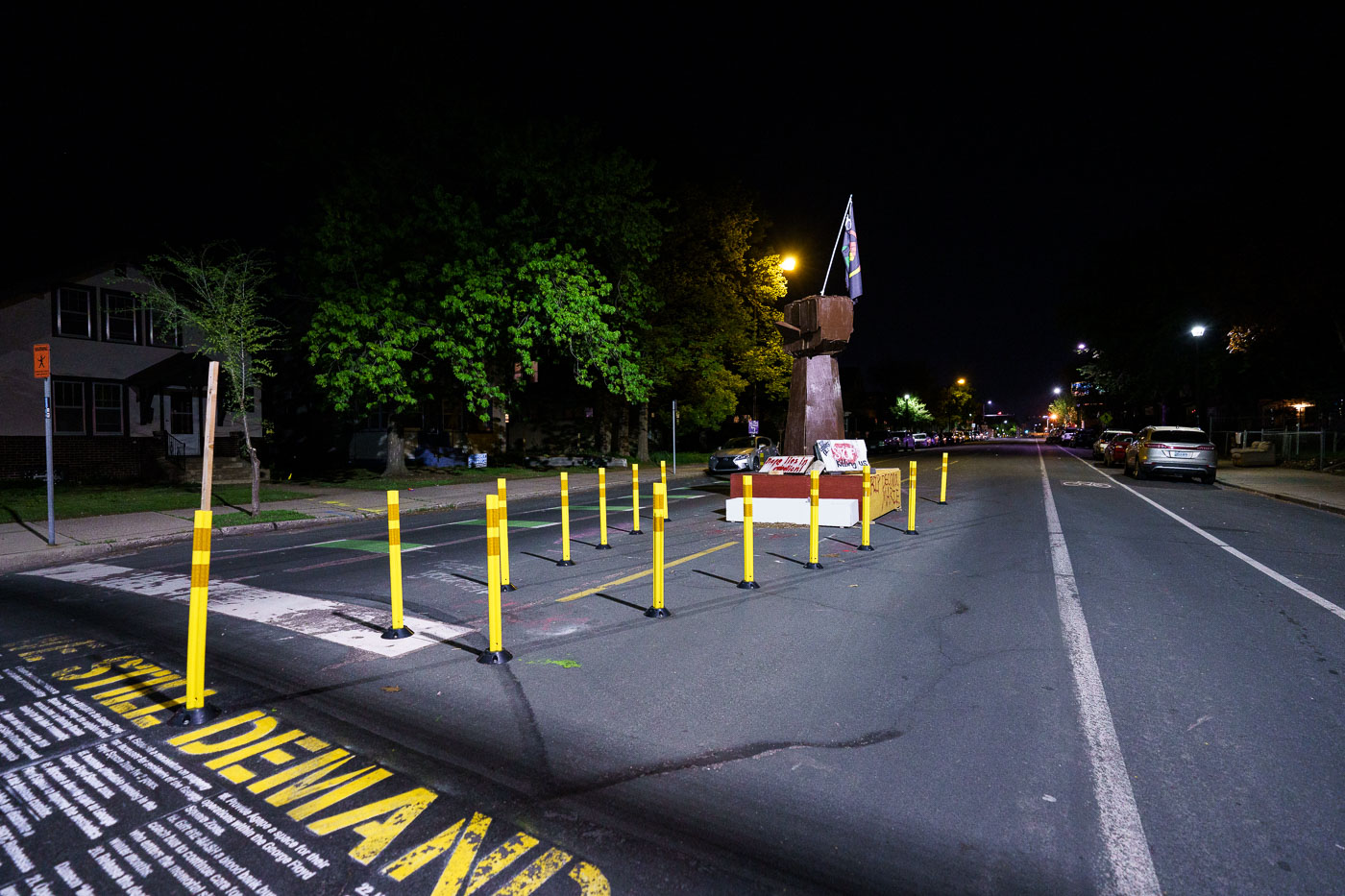
The raised first at 39th Street and Chicago Avenue in George Floyd Square. The area has been a place of protest since the May 25, 2020 murder of George Floyd.
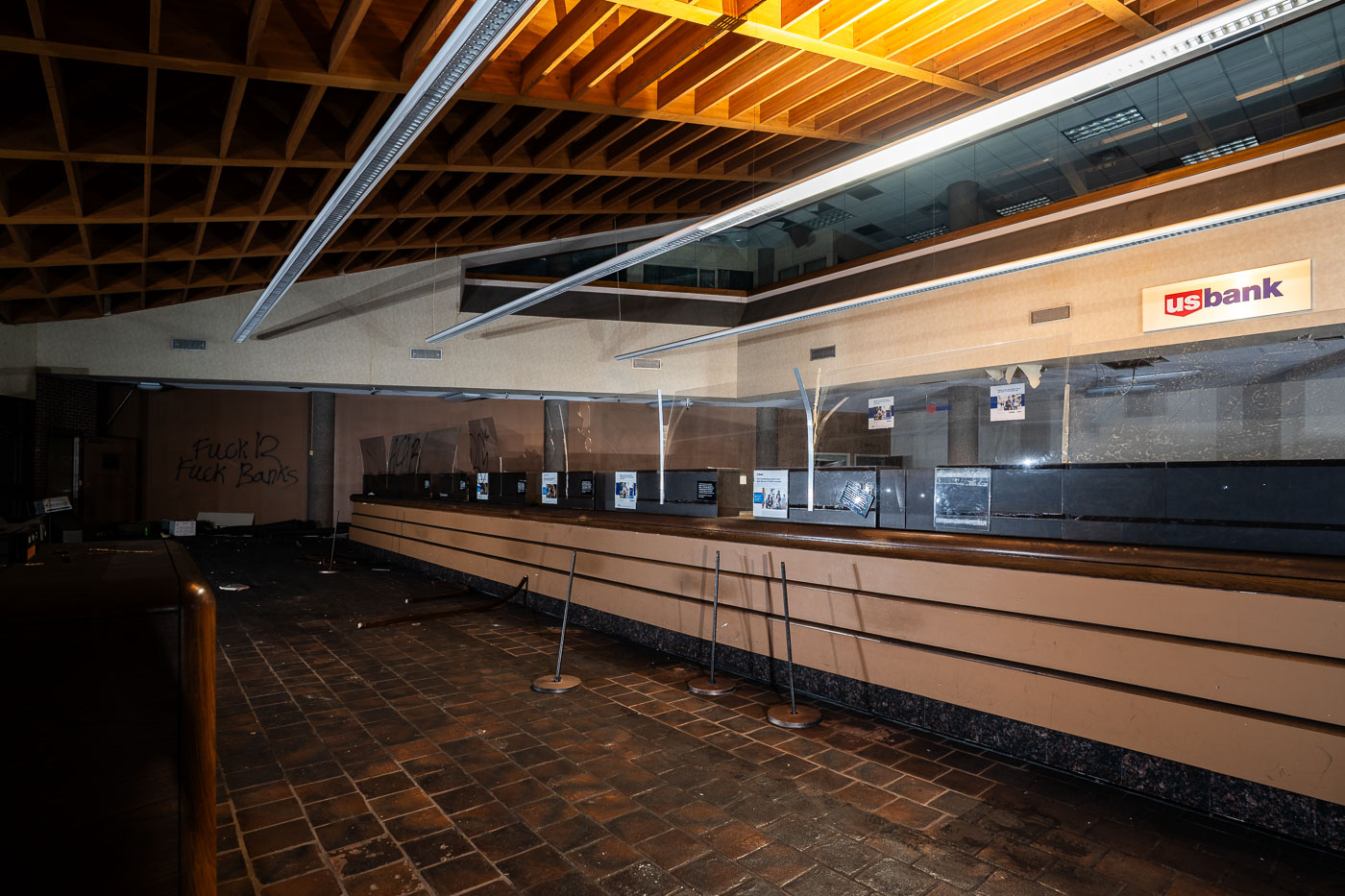
The front counter at a US Bank building in Minneapolis. The bank was destroyed following the May 25, 2020 murder of George Floyd by Minneapolis police officer Derek Chauvin.
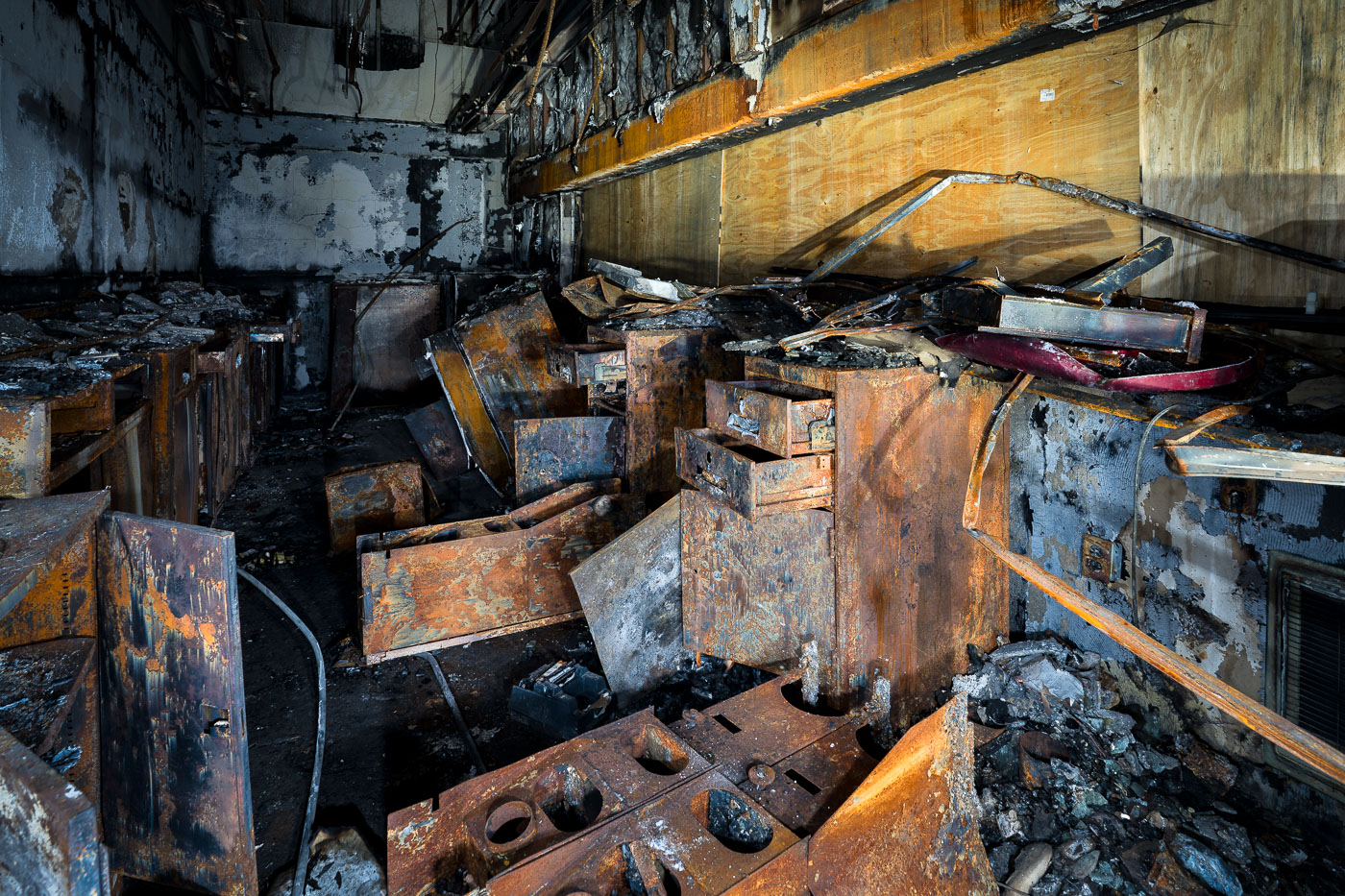
Fire damage at a US Bank building in Minneapolis. The building was destroyed following the May 25, 2020 murder of George Floyd by Minneapolis police officer Derek Chauvin.

Vault inside a fire damaged US Bank vault. The bank was destroyed during riots following the May 25, 2020 murder of George Floyd by Minneapolis police officer Derek Chauvin.
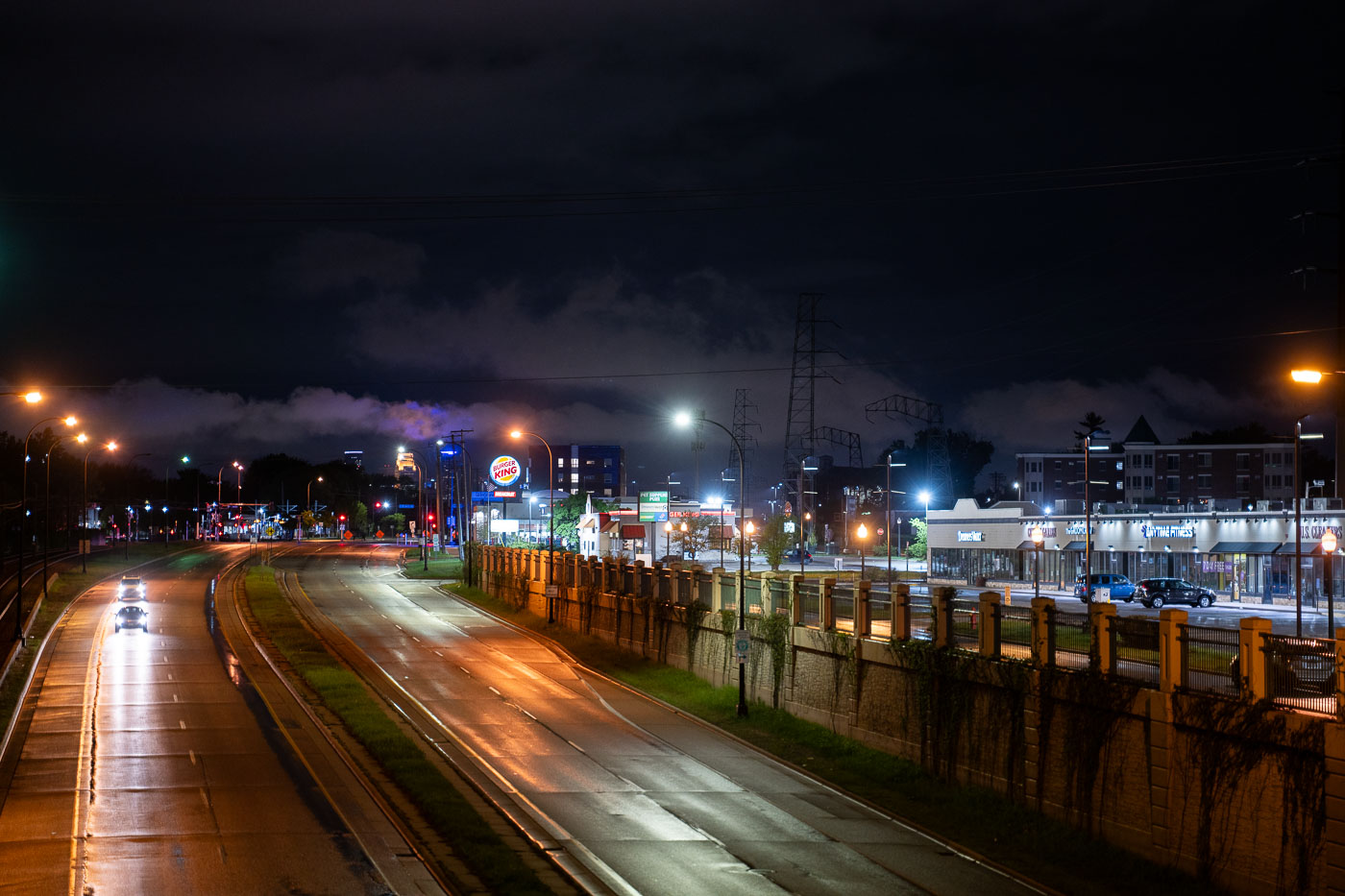
Looking down Hiawatha Avenue in South Minneapolis in May 2022.
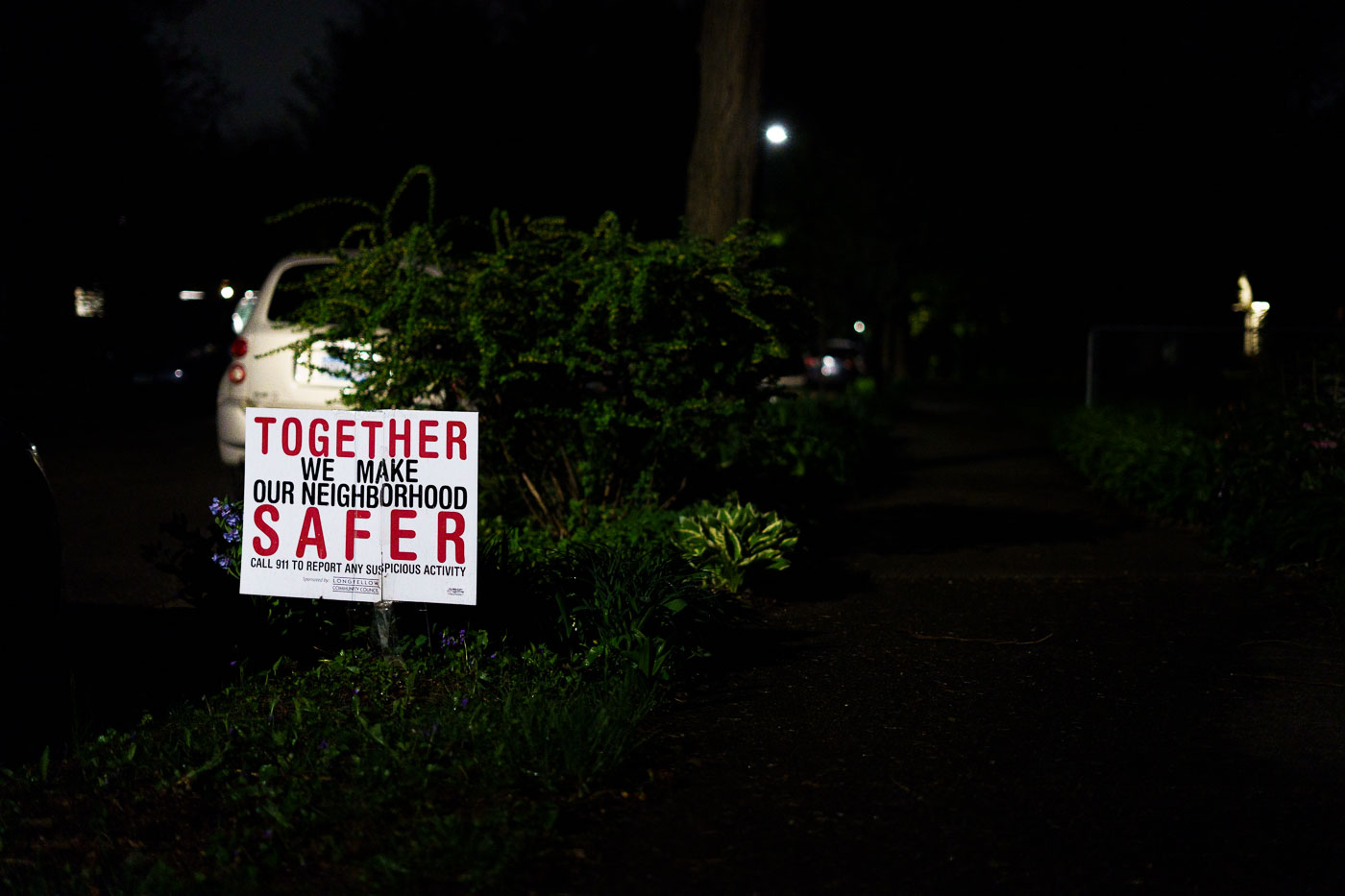
A yard sign reading “Together we make our neighborhood safer” in South Minneapolis.
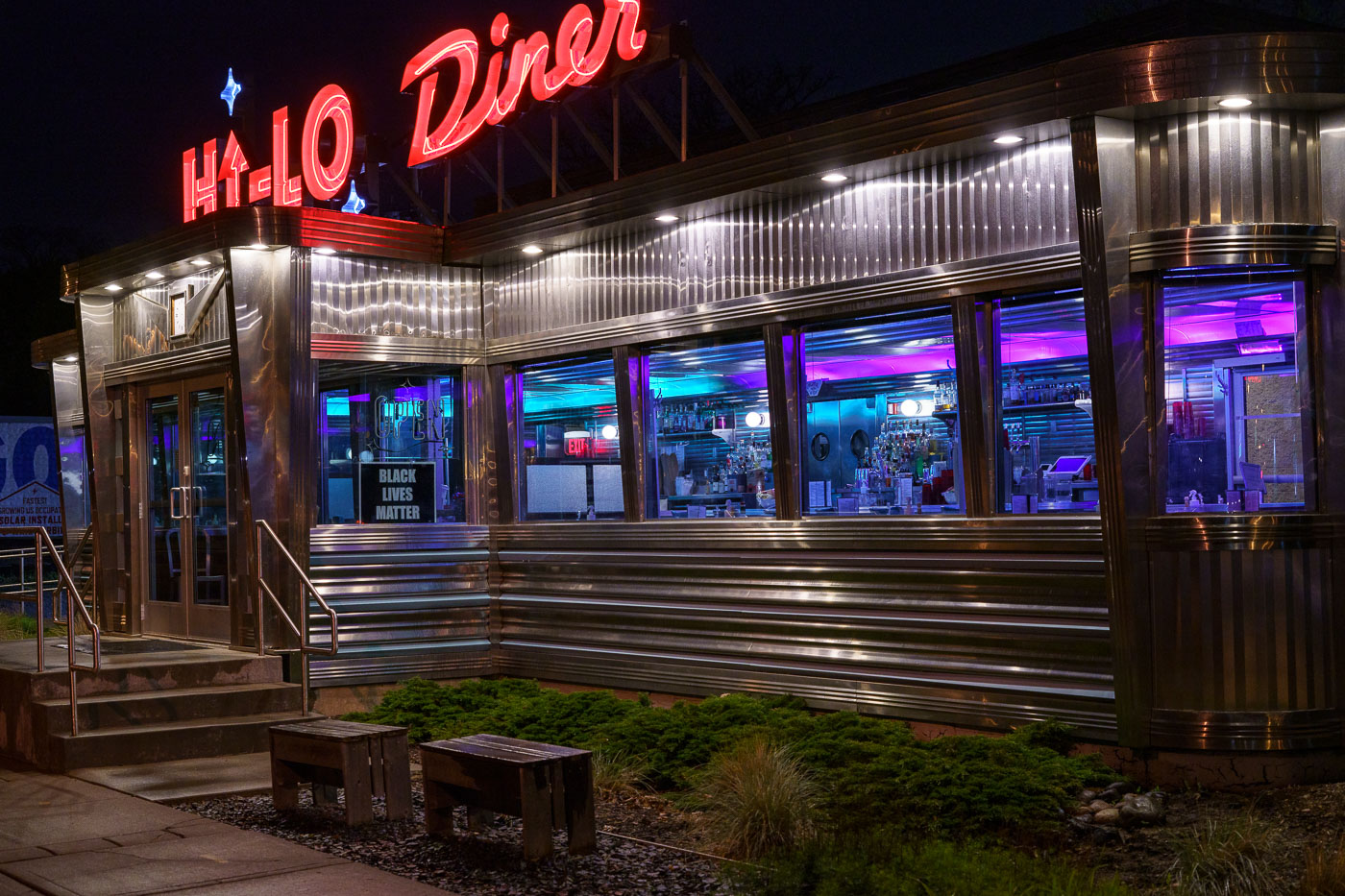
The Hi-Lo Diner’s stainless-steel façade and glowing neon sign stand out against the night along East Lake Street, where one of Minneapolis’s most recognizable retro landmarks continues to operate inside a restored 1950s Fodero dining car. The interior’s purple and blue lighting reflects off the ribbed metal siding, giving the building the classic mid-century glow that made roadside diners iconic across the United States.
Originally built in New Jersey, this particular dining car was transported to Minnesota and fully refurbished before reopening in 2016. Its presence on Lake Street connects several eras of the corridor’s history—from early automobile culture and mid-century roadside design to Lake Street’s longstanding role as a diverse commercial spine lined with independent businesses, bars, and restaurants. Today, the Hi-Lo remains both a neighborhood gathering spot and a small architectural artifact representing the golden age of American diners.
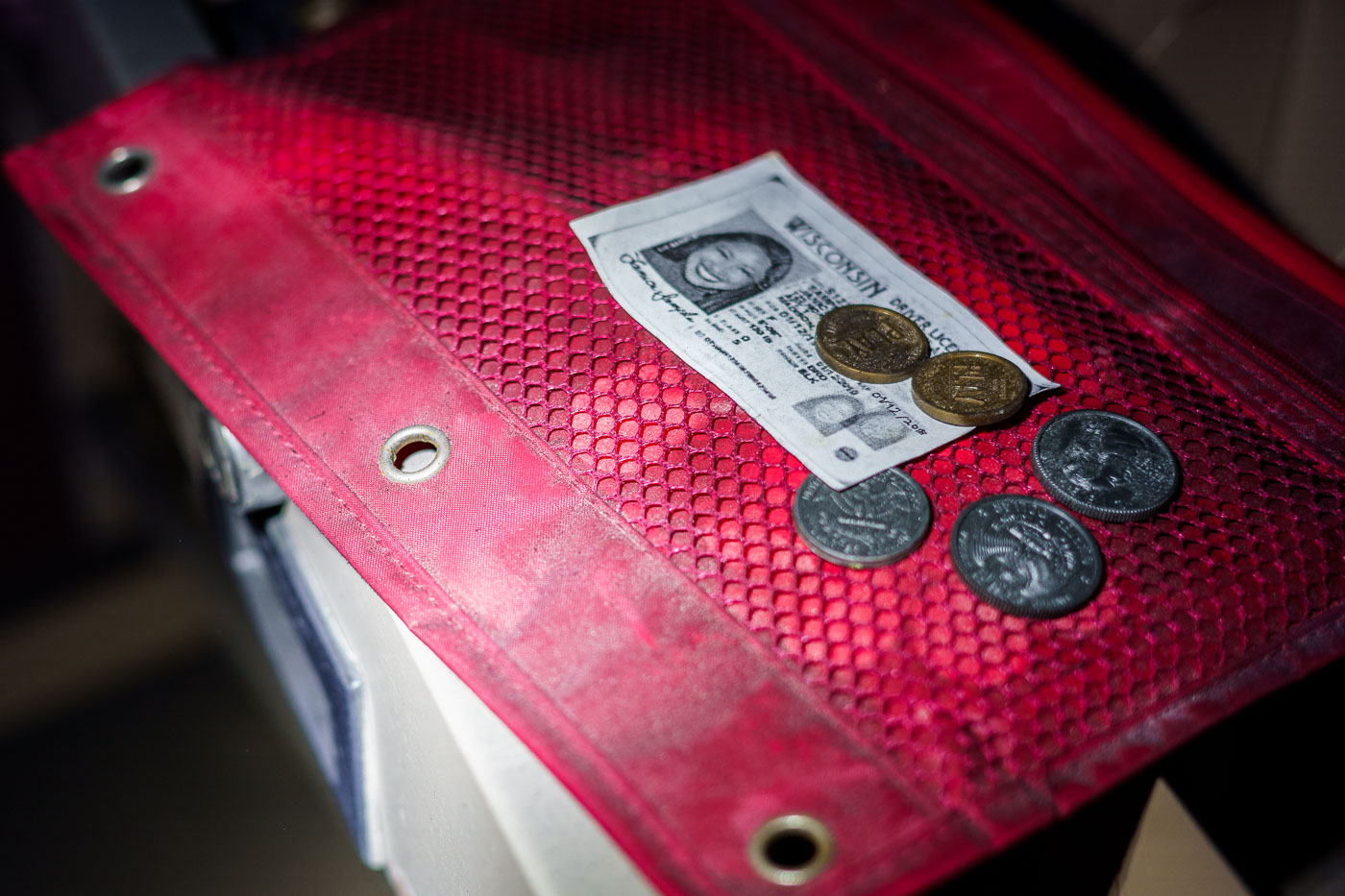
Training money left behind in the basement of the riot destroyed former US Bank building on Lake Street.

A vault in the riot destroyed US Bank on Lake Street.

Lake Chipotle in Uptown Minneapolis. The Chipotle parking space
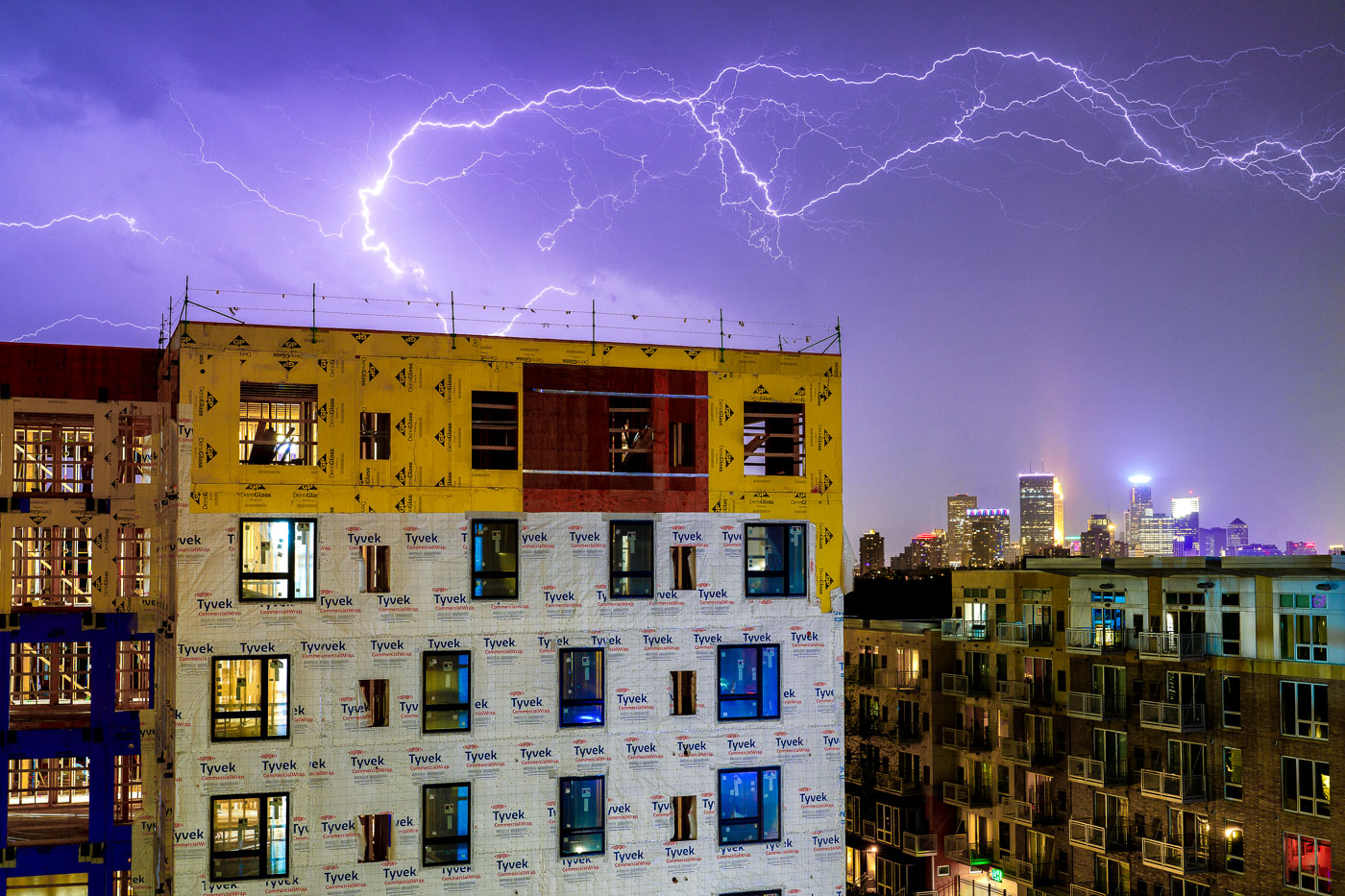
A storm moves in over a large development in Uptown Minneapolis.
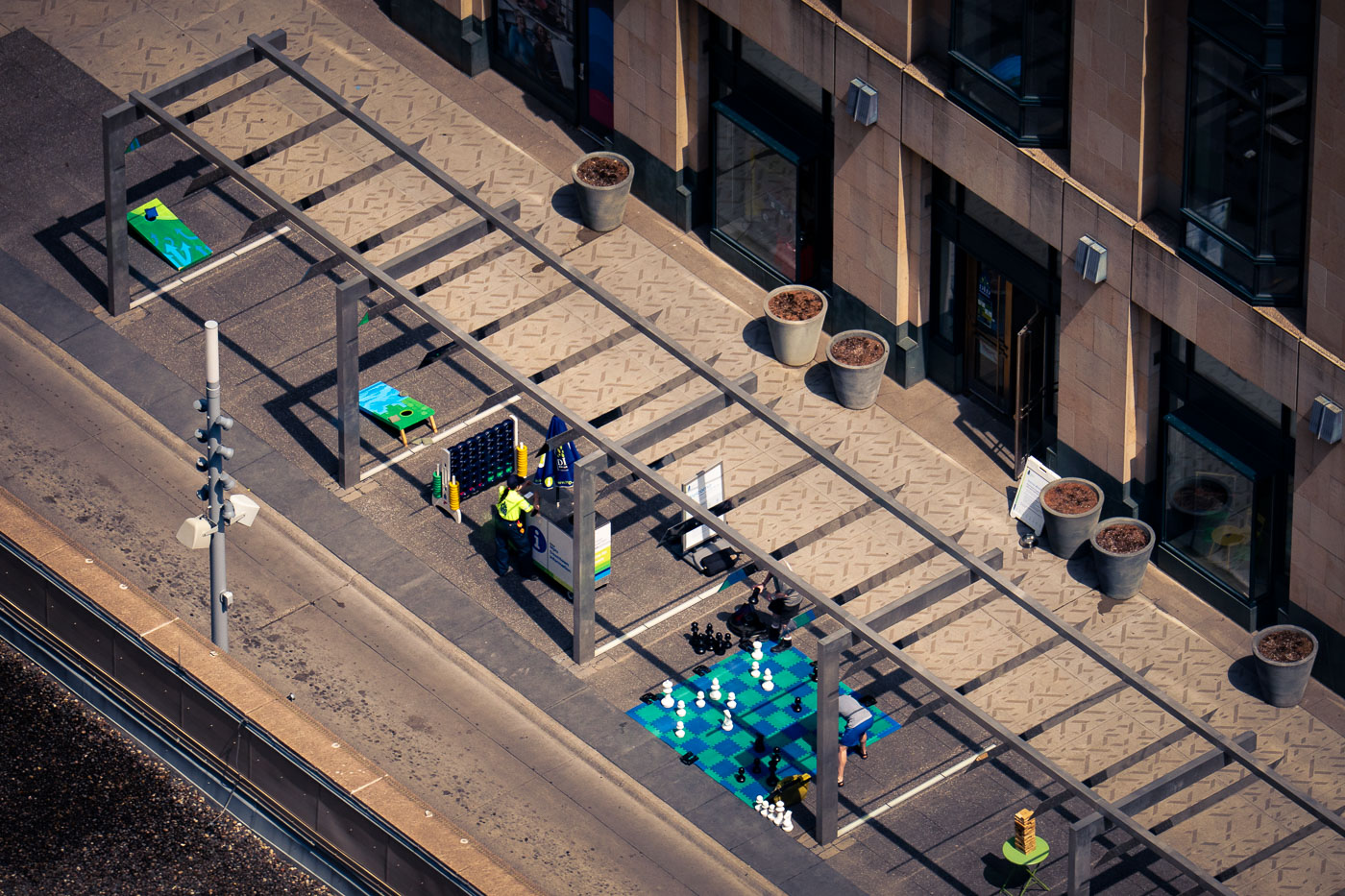
Chess being played on Nicollet Mall in Minneapolis.
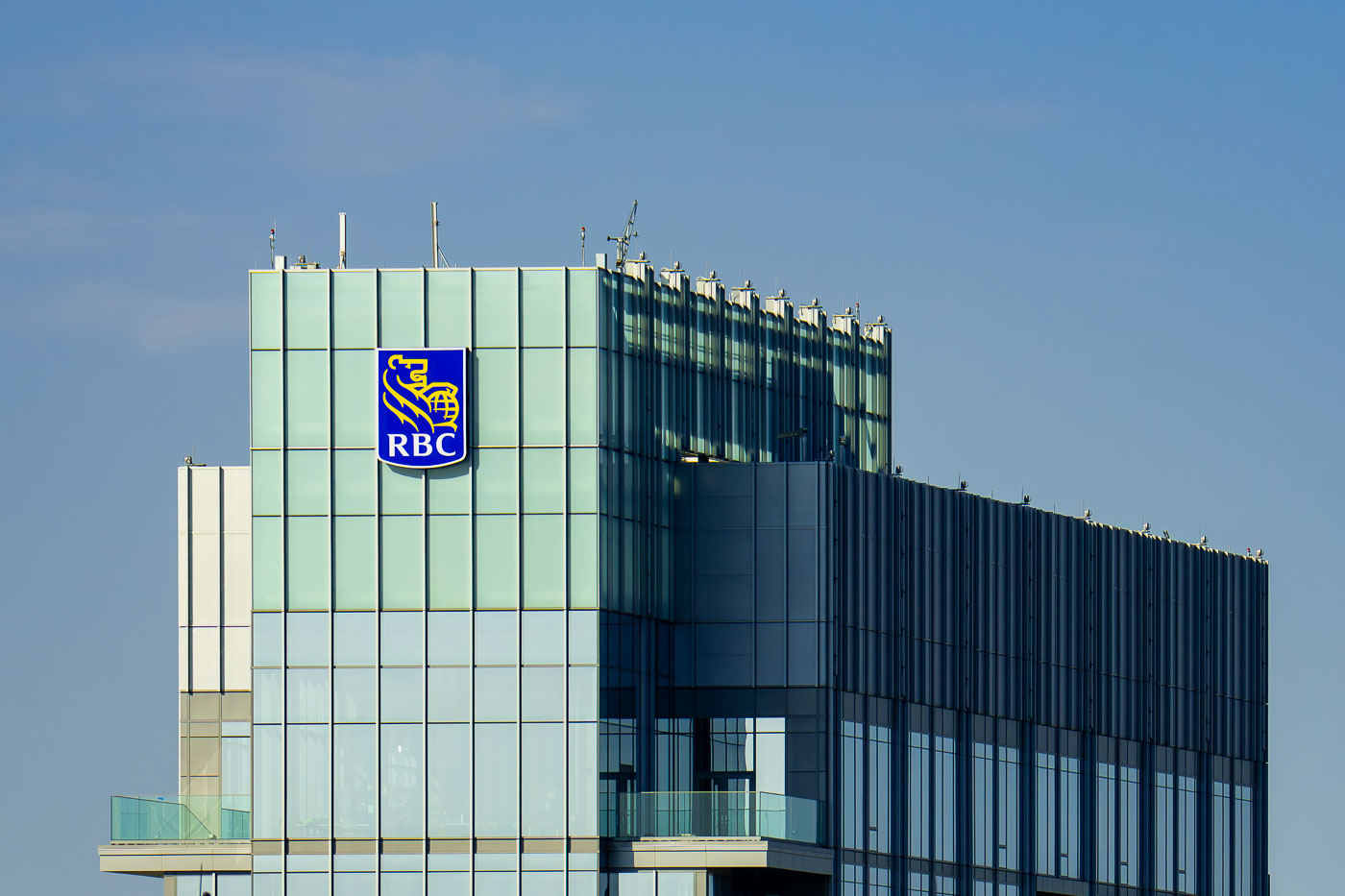
The newly opened RBC Gateway building in downtown Minneapolis.
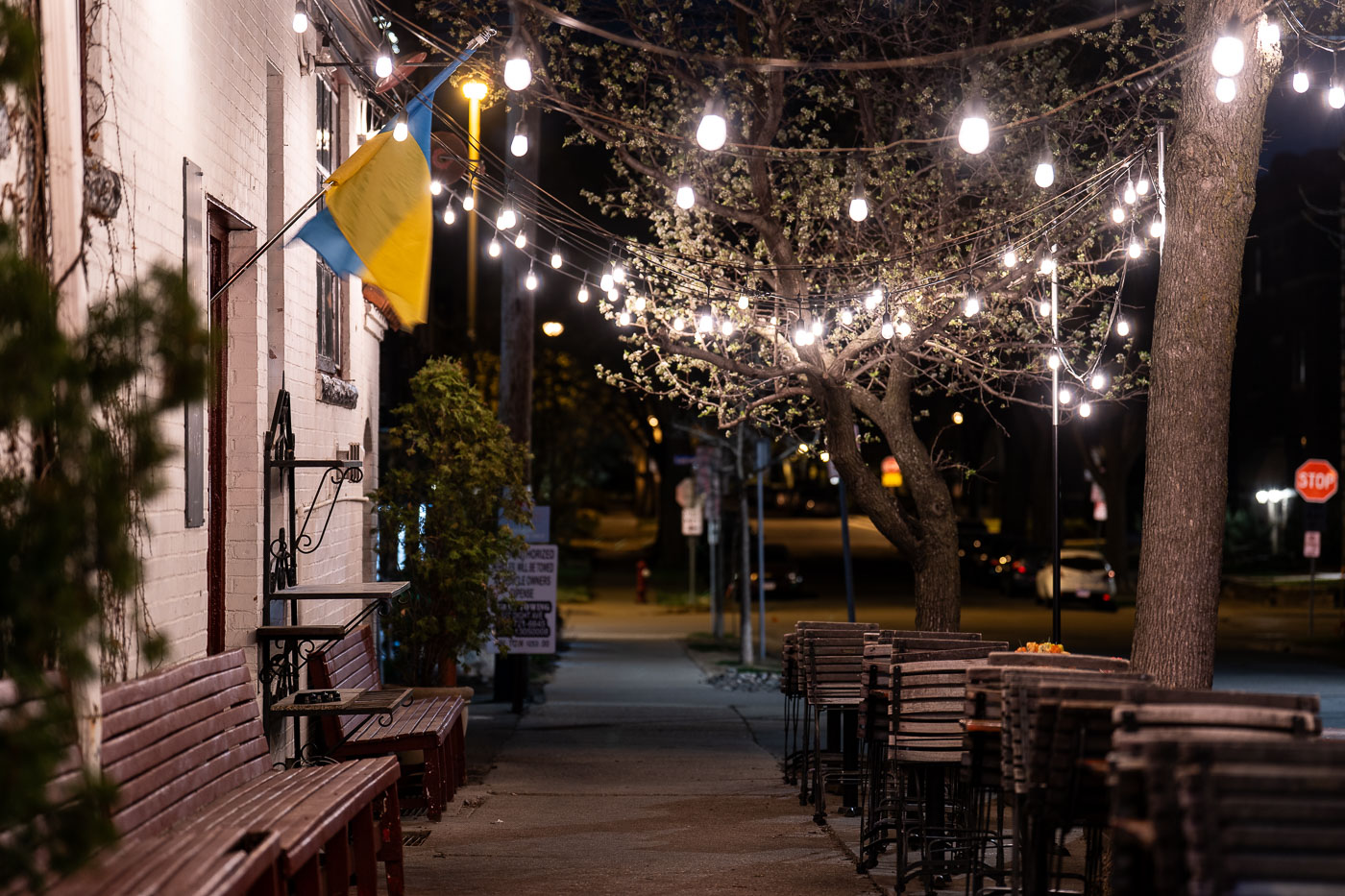
Chairs outside a restaurant in Uptown Minneapolis.
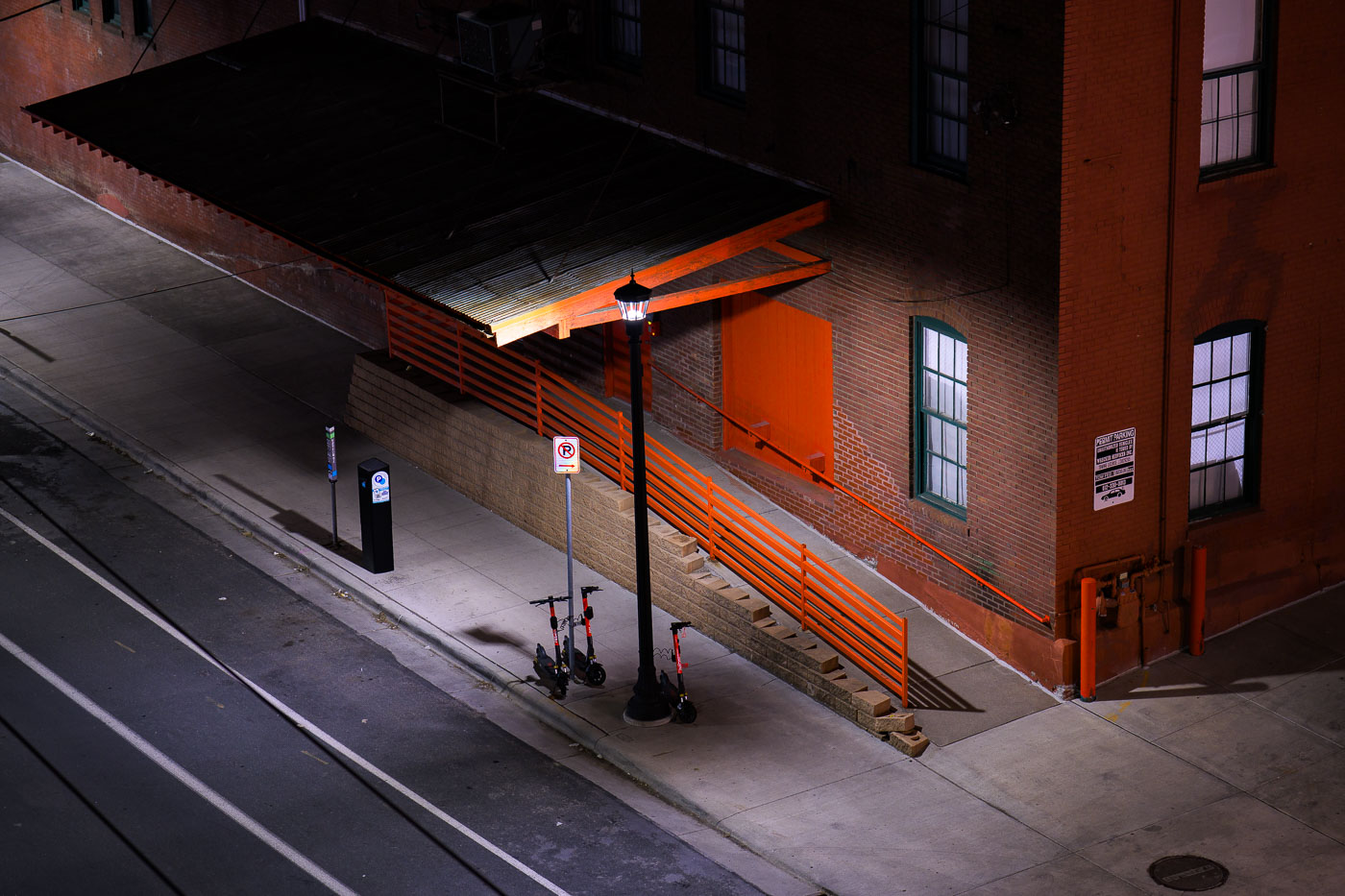
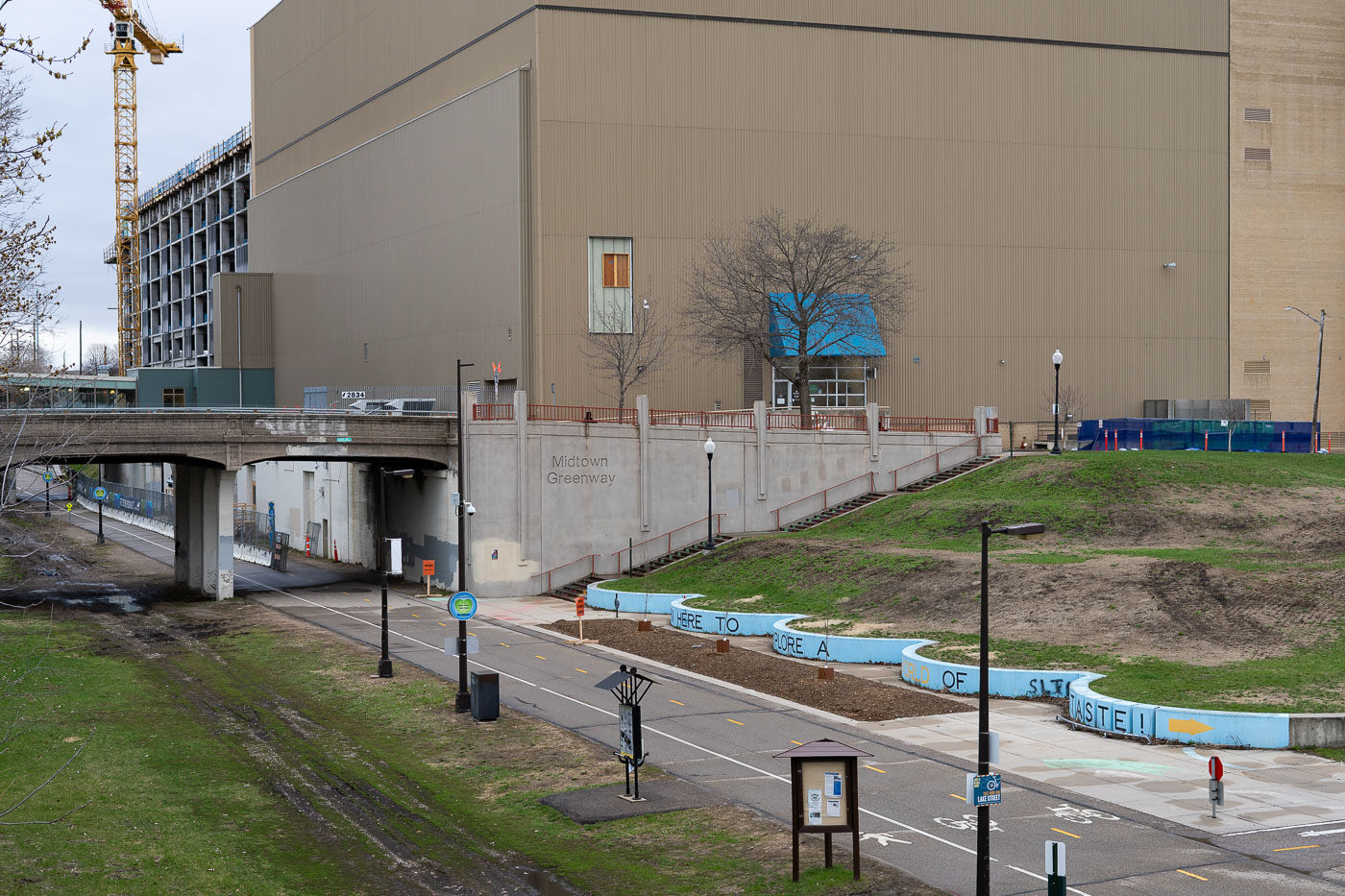
Public Storage building in the North Loop, Downtown Minneapolis.
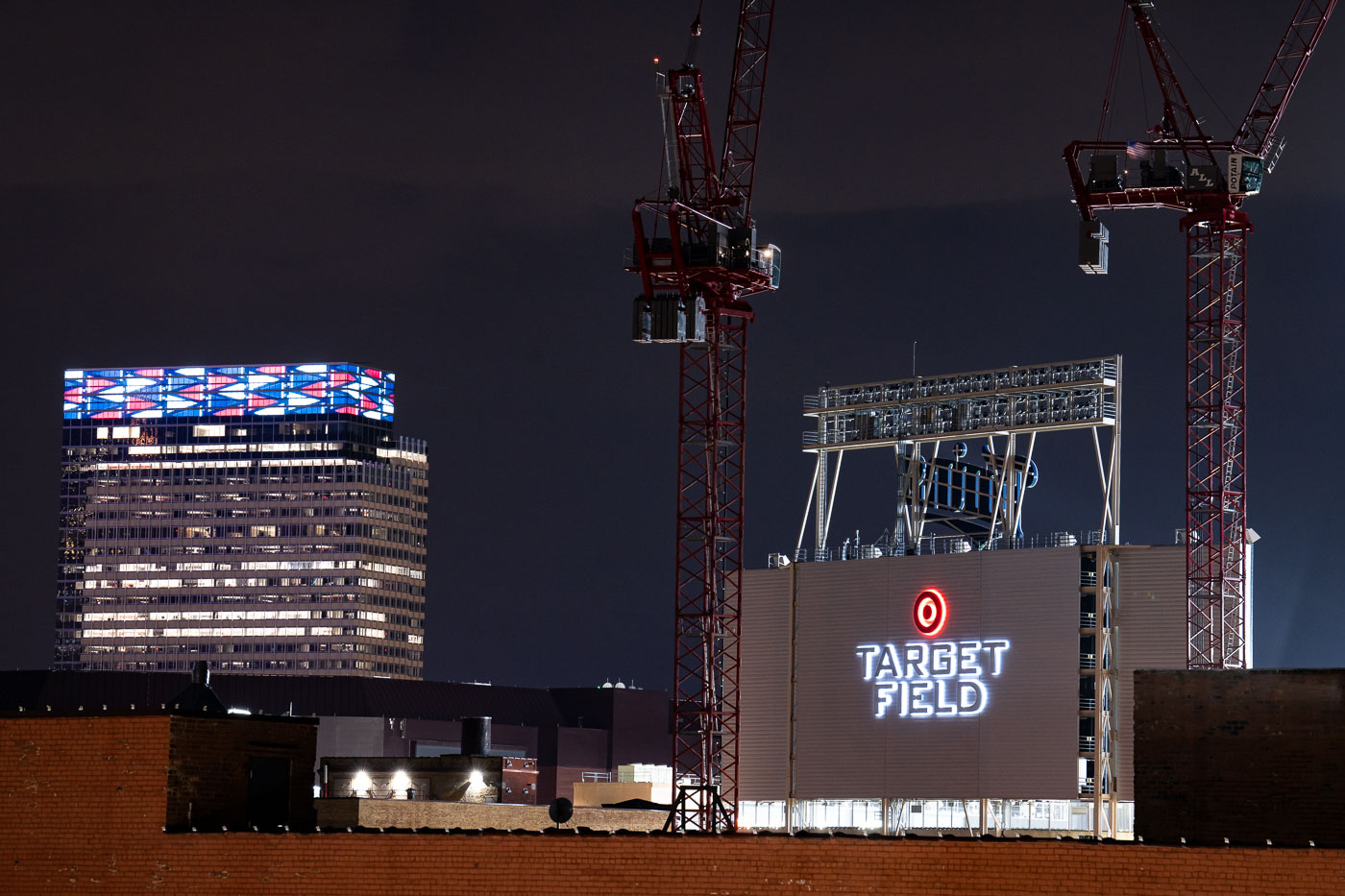
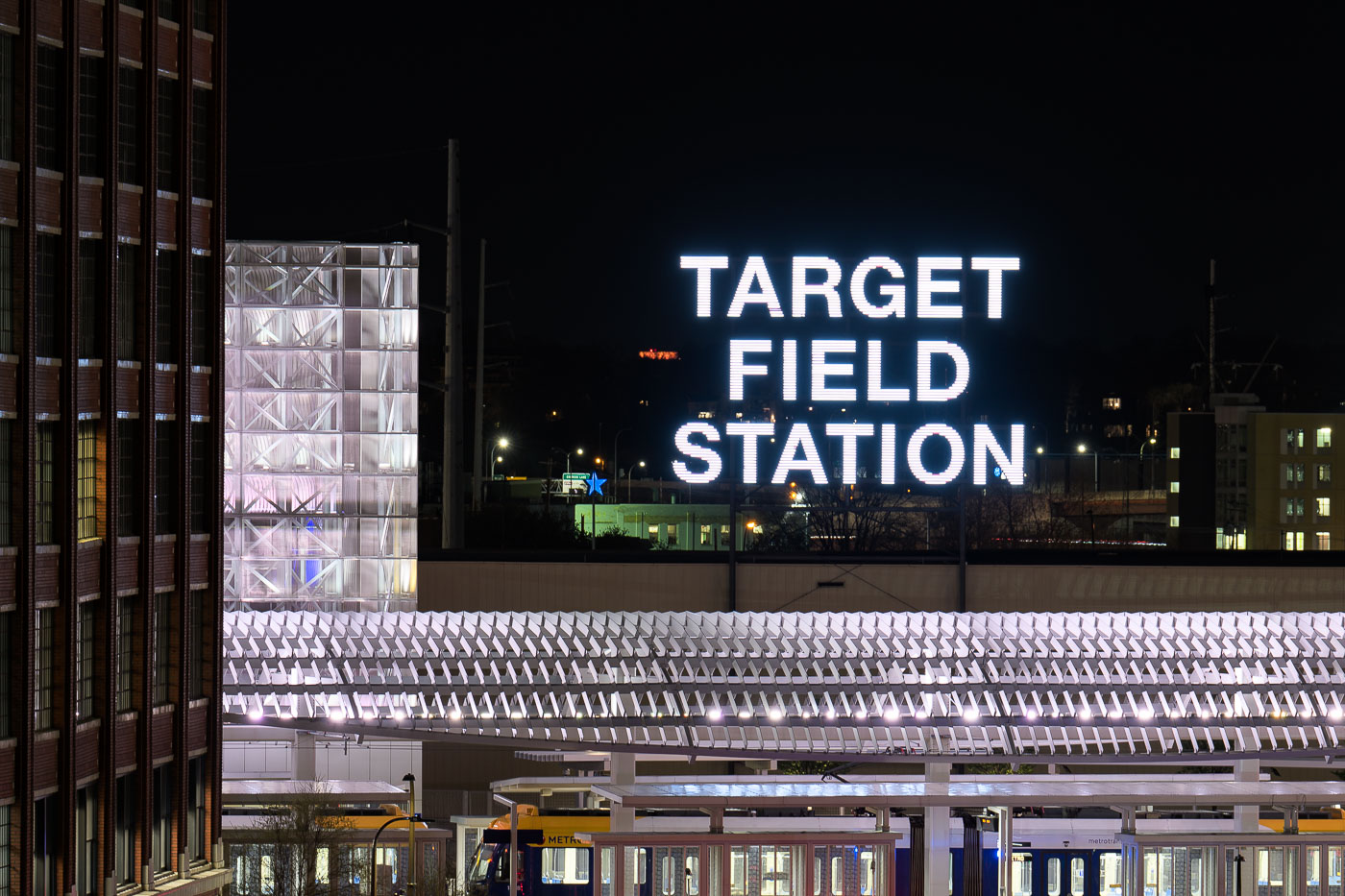
Target Field in Minneapolis as seen from the North Loop with construction cranes.
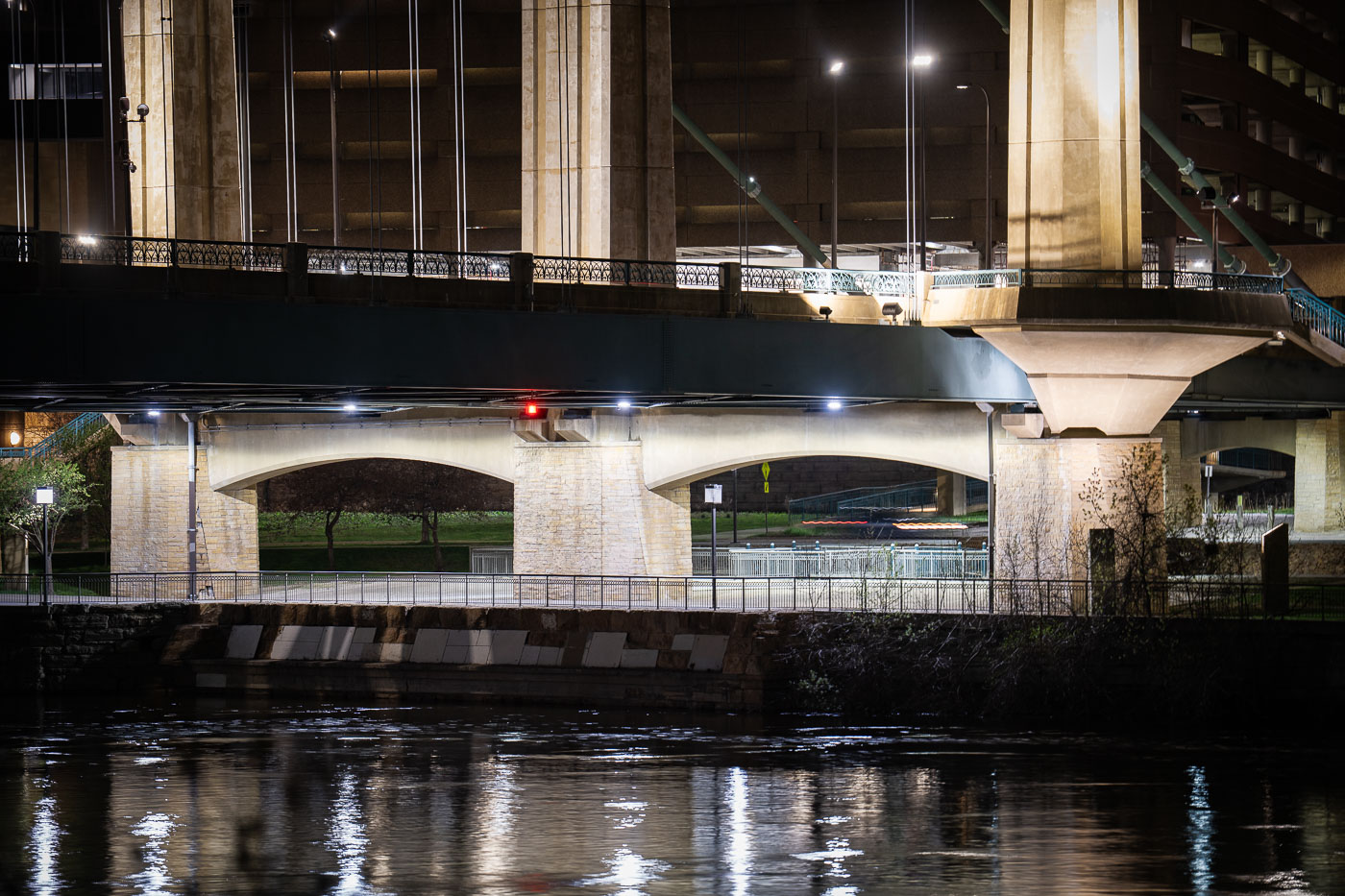
The Mississippi River and the Hennepin Avenue Bridge in Downtown Minneapolis.
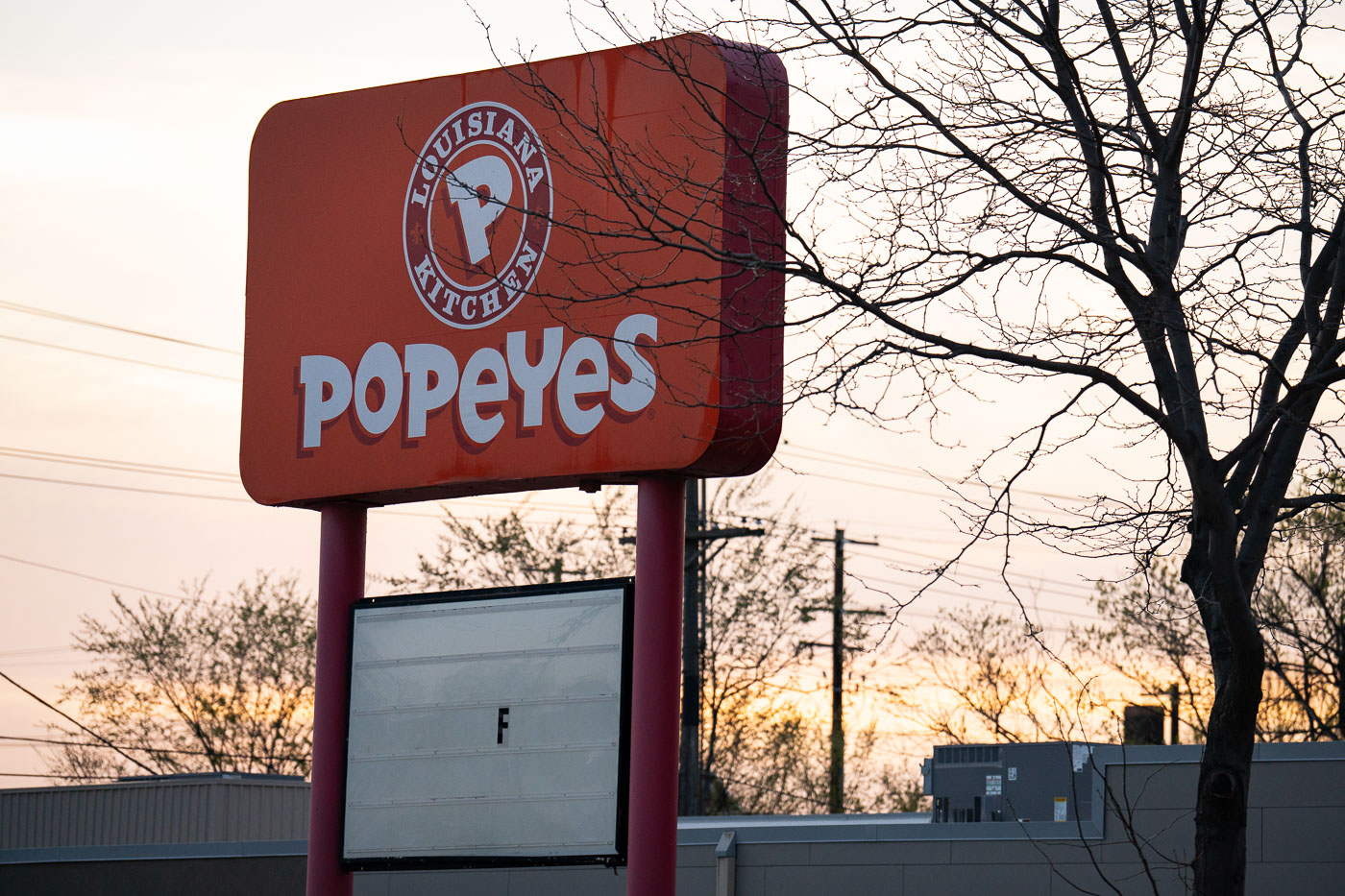
A Popeyes Louisiana Kitchen sign on Chicago Avenue in Minneapolis. The building was destroyed during the Minneapolis Uprising.
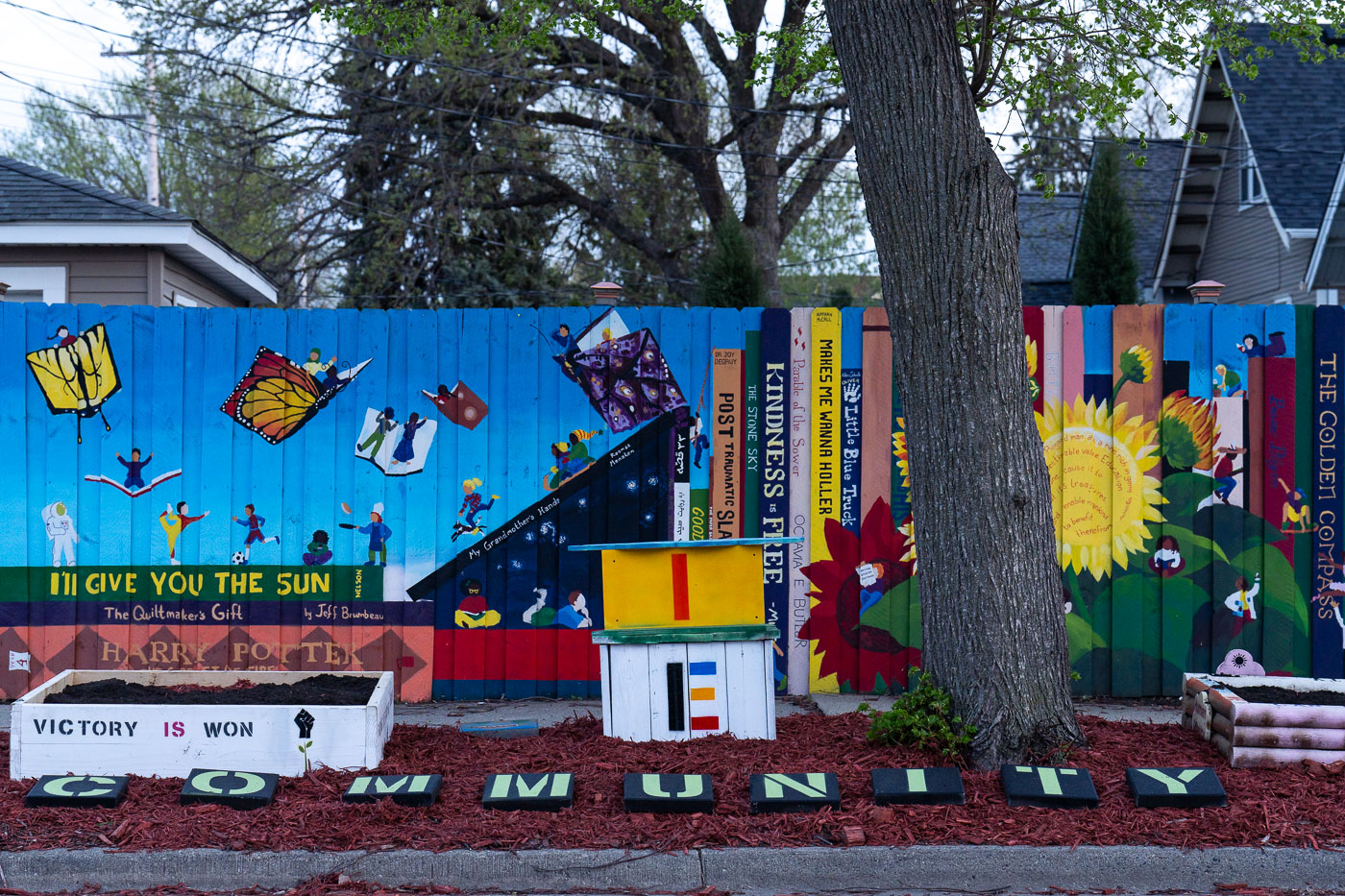
An art installation on fencing near George Floyd Square in South Minneapolis.
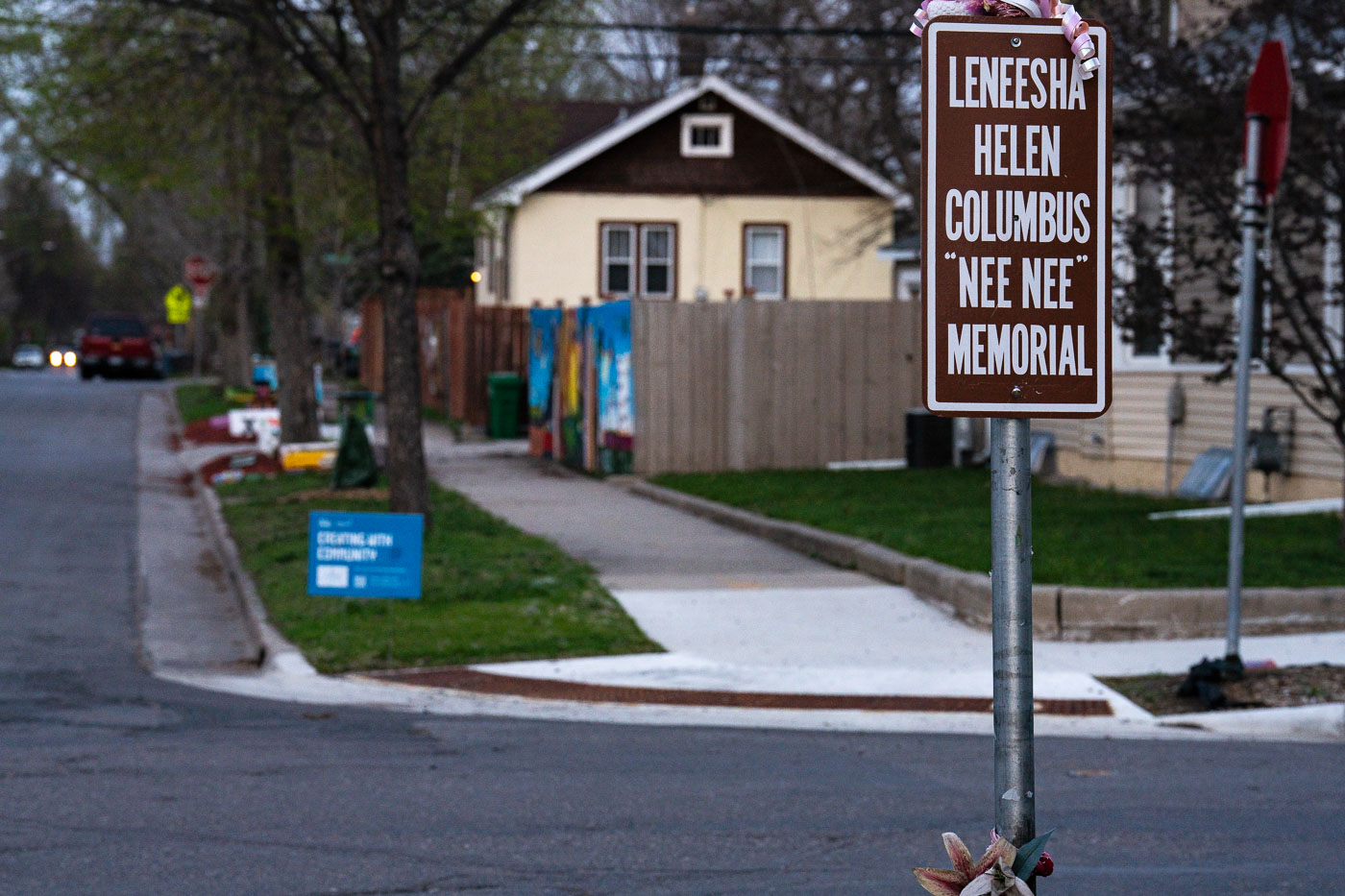
A memorial for Leneesha Helen Columbus Memorial who was shot and killed in South Minneapolis in July 2020.
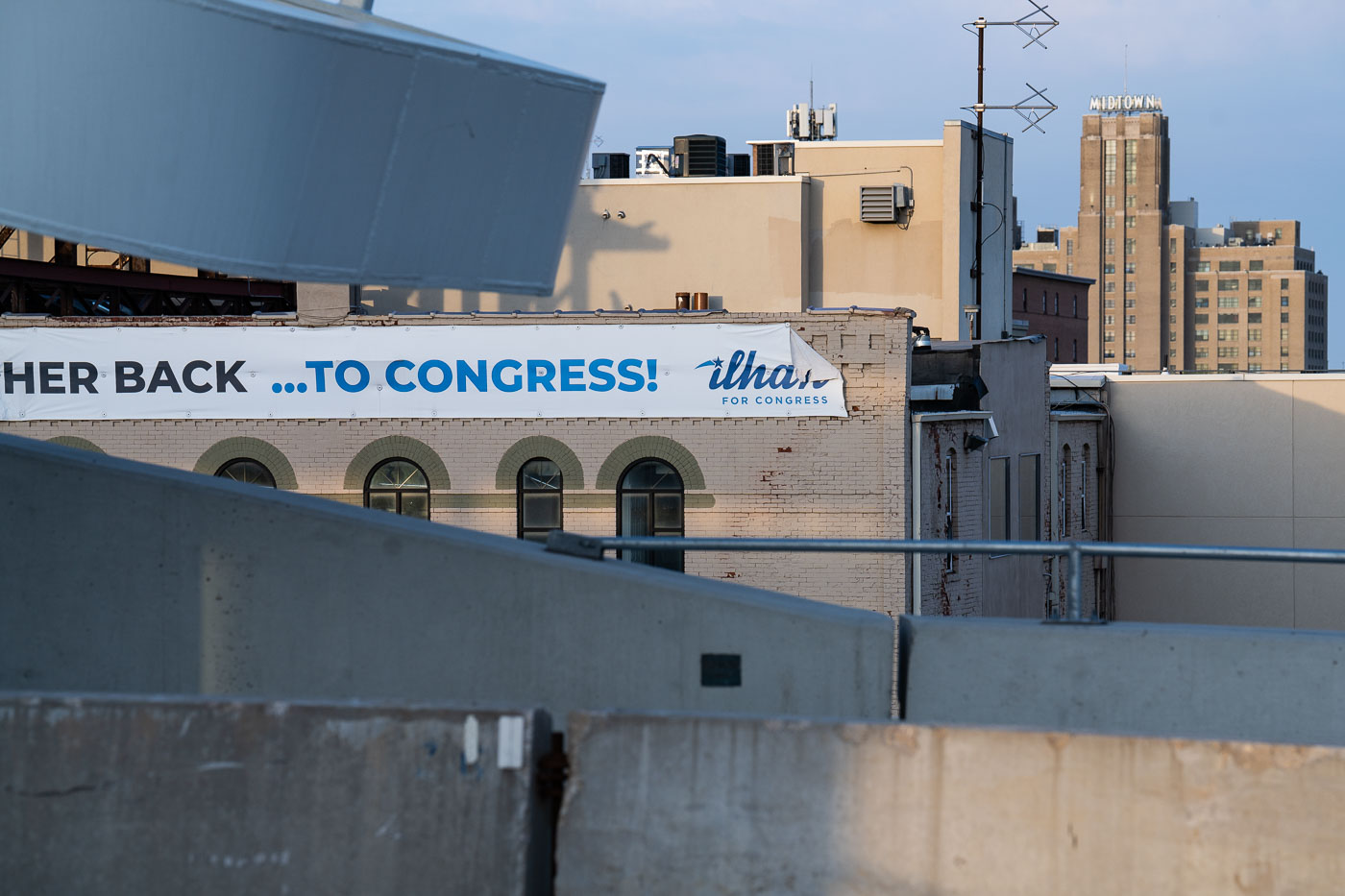
An Ilhan Omar banner on the side of a Lake Street building in South Minneapolis.
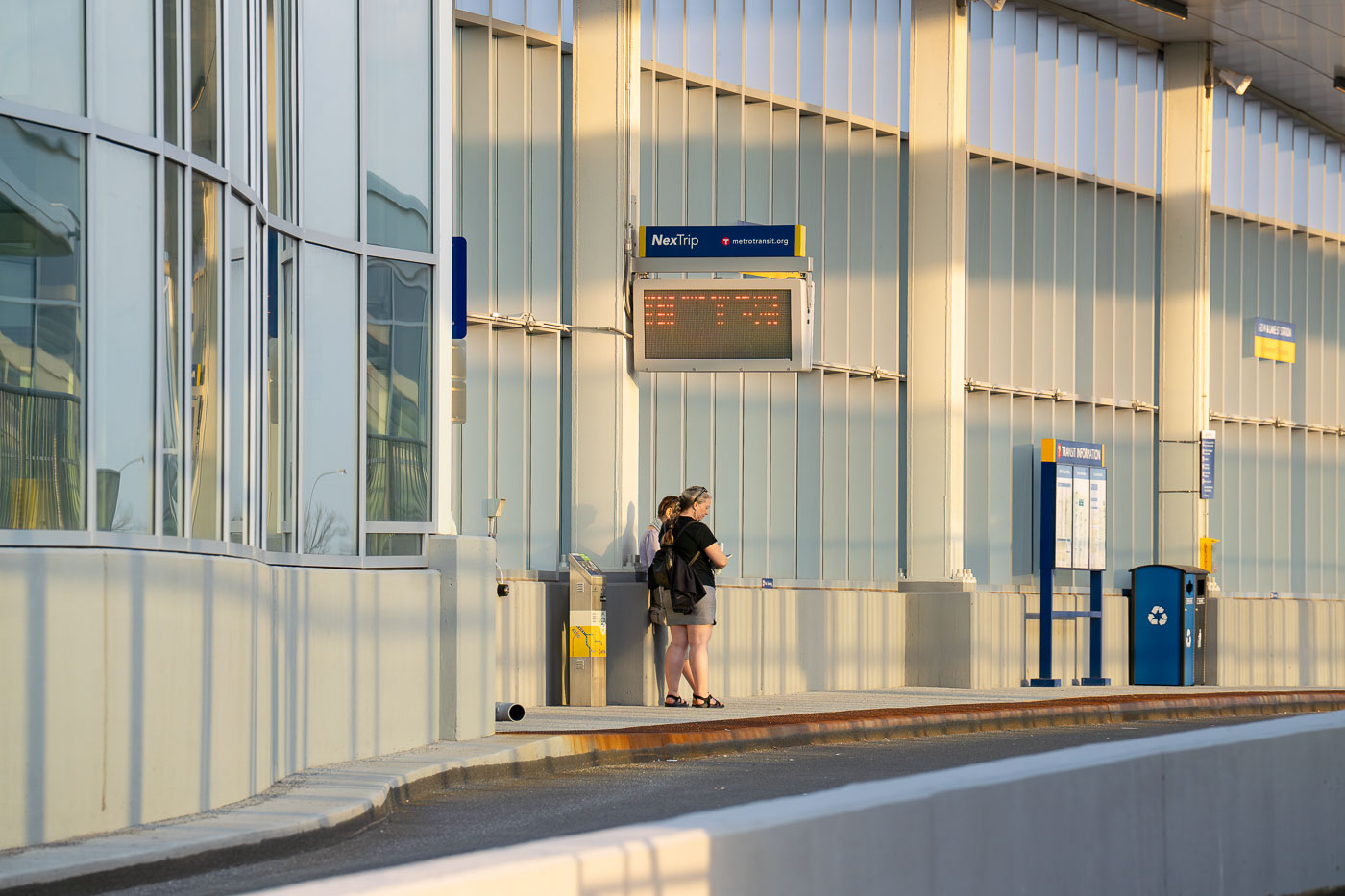
Commuters wait on the northbound platform of the I-35W & Lake Street Transit Station in Minneapolis. The elevated structure, completed in 2021 as part of the Orange Line bus rapid transit project, sits above the freeway’s center median and features glass curtain walls, enclosed waiting areas, and real-time NexTrip displays. Evening sunlight highlights the aluminum framing and sound-barrier panels that shield the station from traffic noise below.
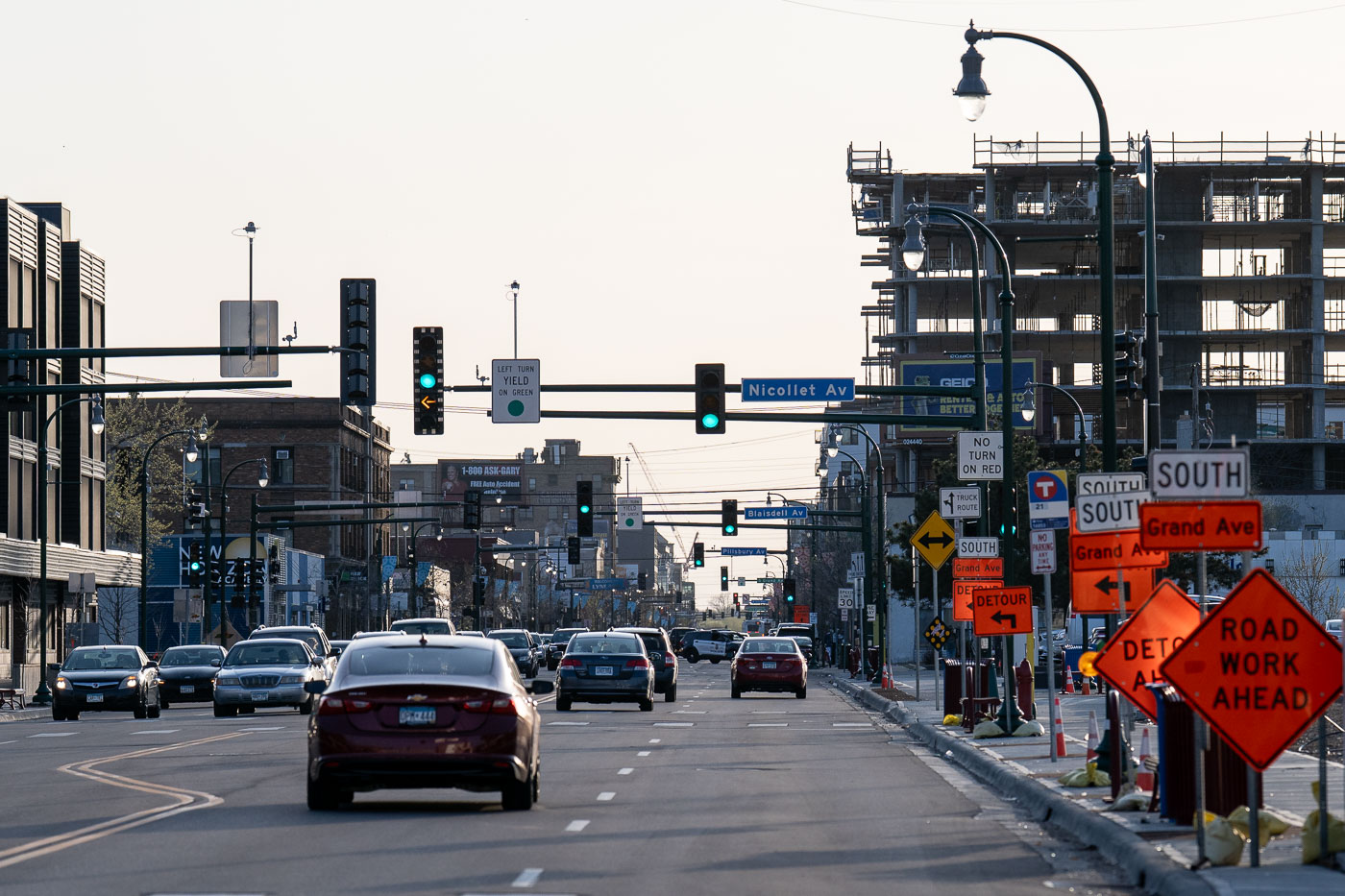
Traffic on Lake Street in Minneapolis on May 10, 2022.
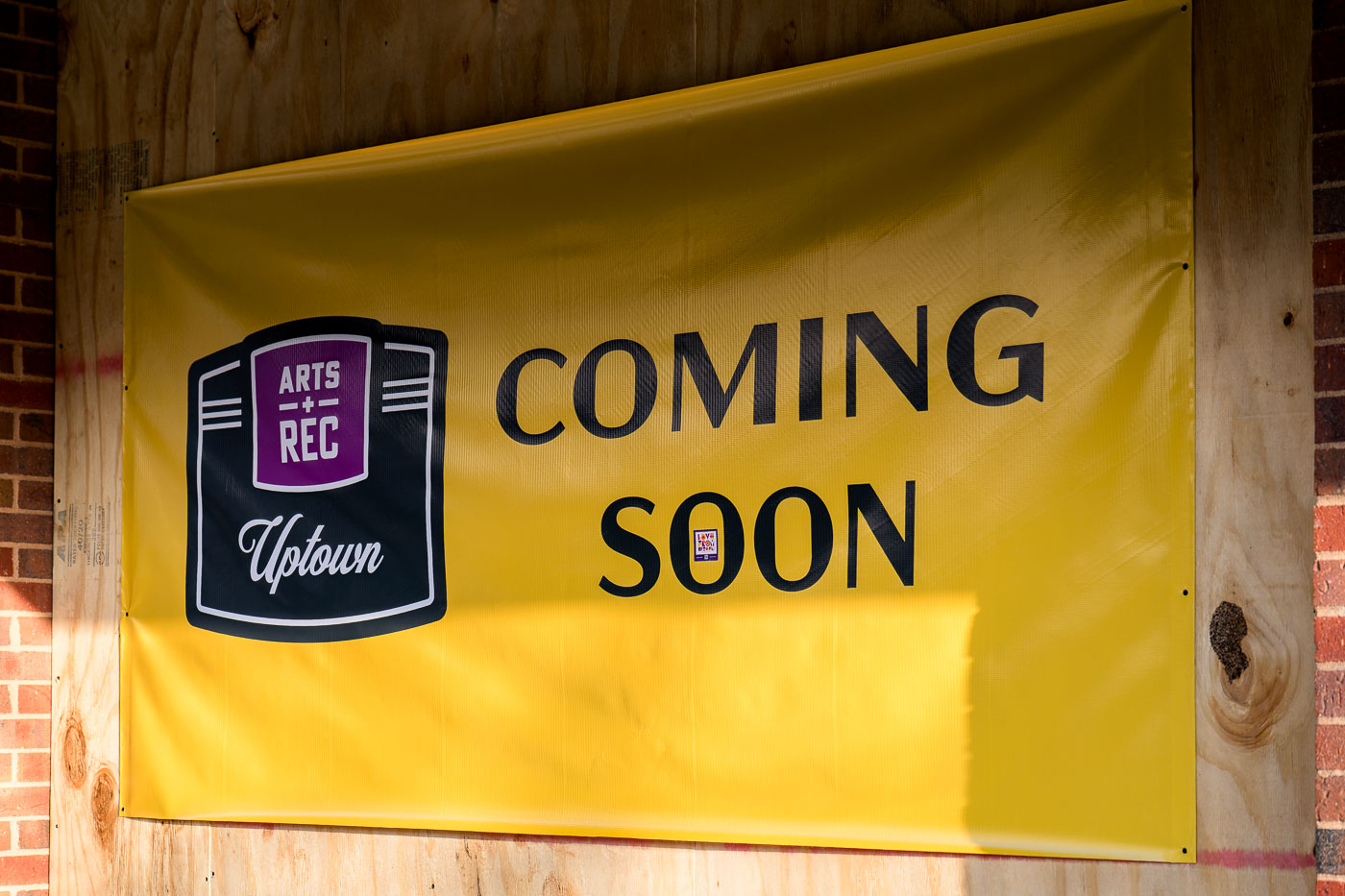
Signage for a new business that describes itself as a “brand new art-focused experiential concept and restaurant.” up in the former Libertine Bar space in Seven Points Mall.

The Wells Fargo Tower and IDS Center in downtown Minneapolis.
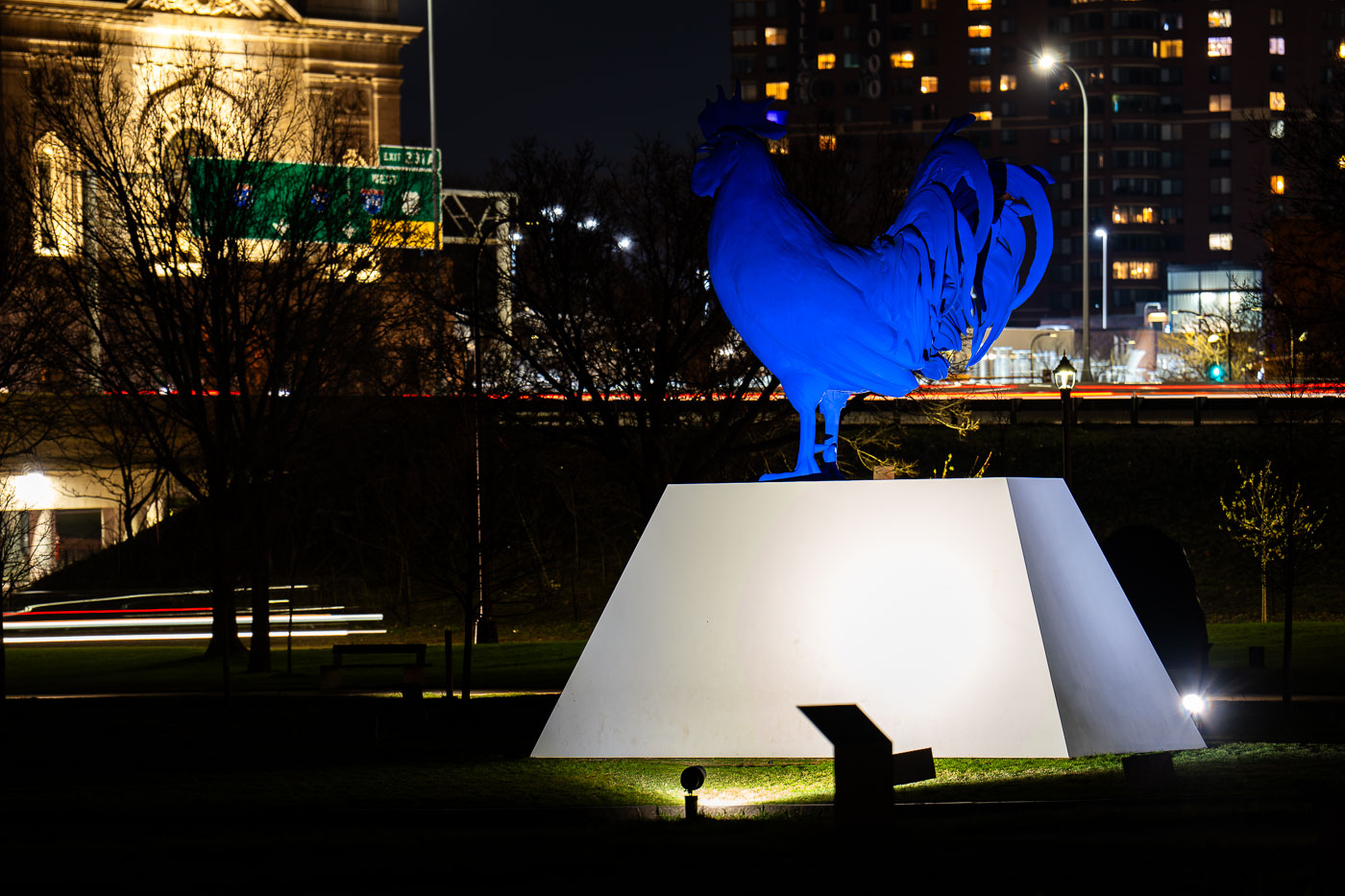
The sculpture “Hahn/Cock” by Katharina Fritsch, illuminated at night outside the Walker Art Center in Minneapolis. The ultramarine rooster, cast in fiberglass and steel, stands on a concrete plinth overlooking Hennepin Avenue and Interstate 94. Installed in 2017 as part of the Minneapolis Sculpture Garden redesign, the piece contrasts sharply against the warm façade of the Basilica of St. Mary and the light trails of evening traffic below.
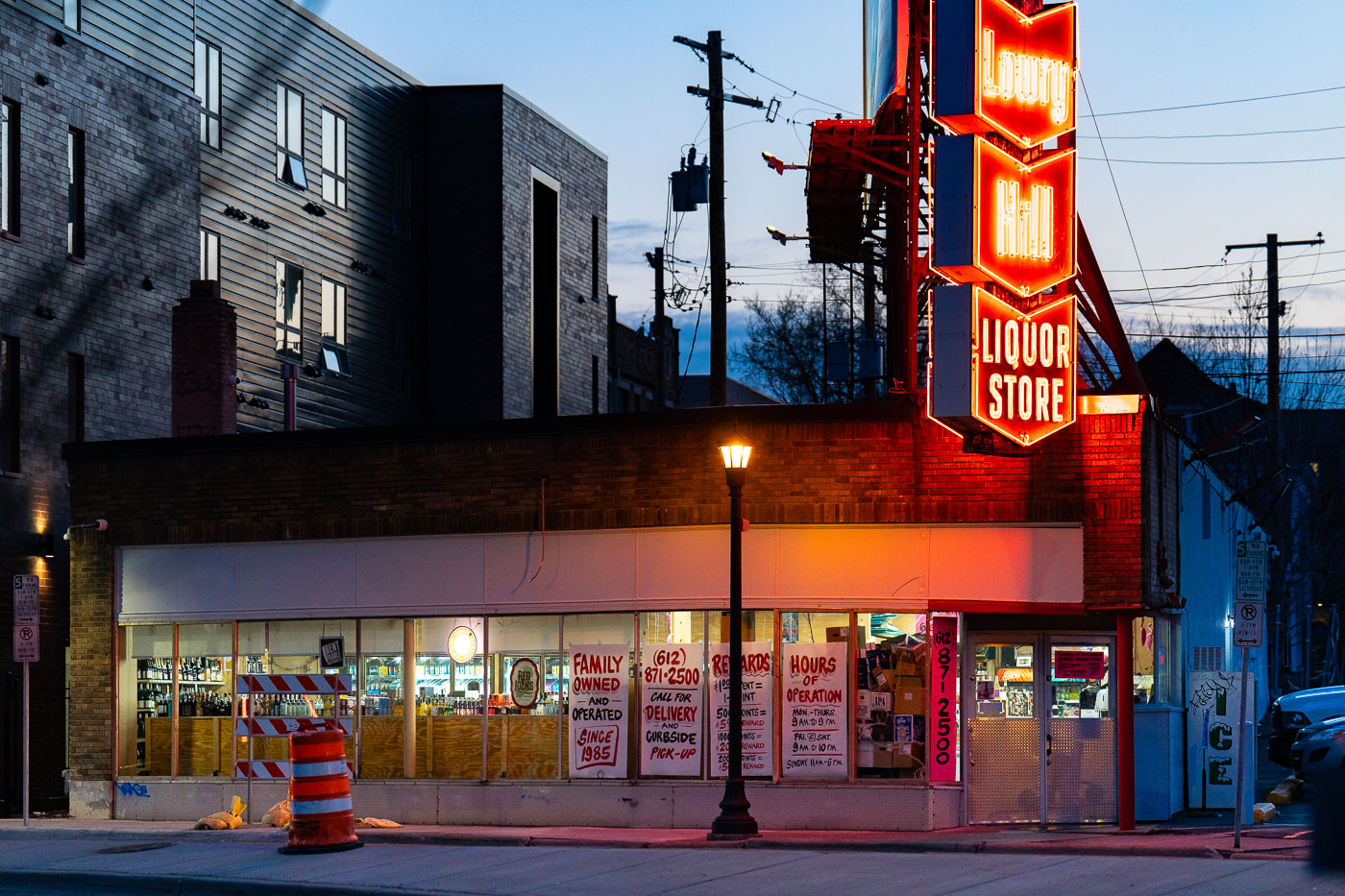
Lowry Hill Liquor Store on Hennepin Ave in Minneapolis.
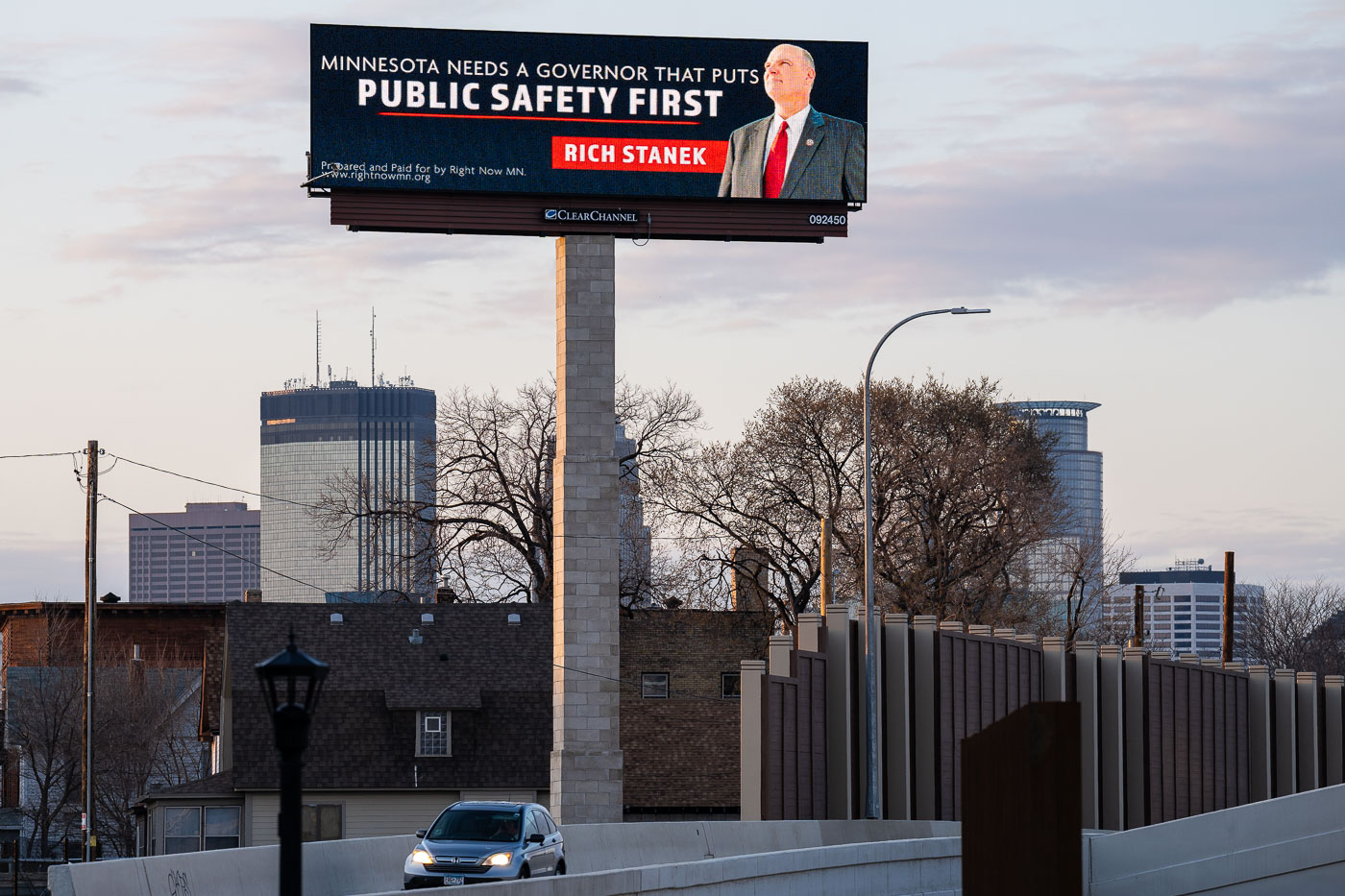
A billboard for former Hennepin County Sheriff Rich Stanek who is running for Governor of Minnesota.
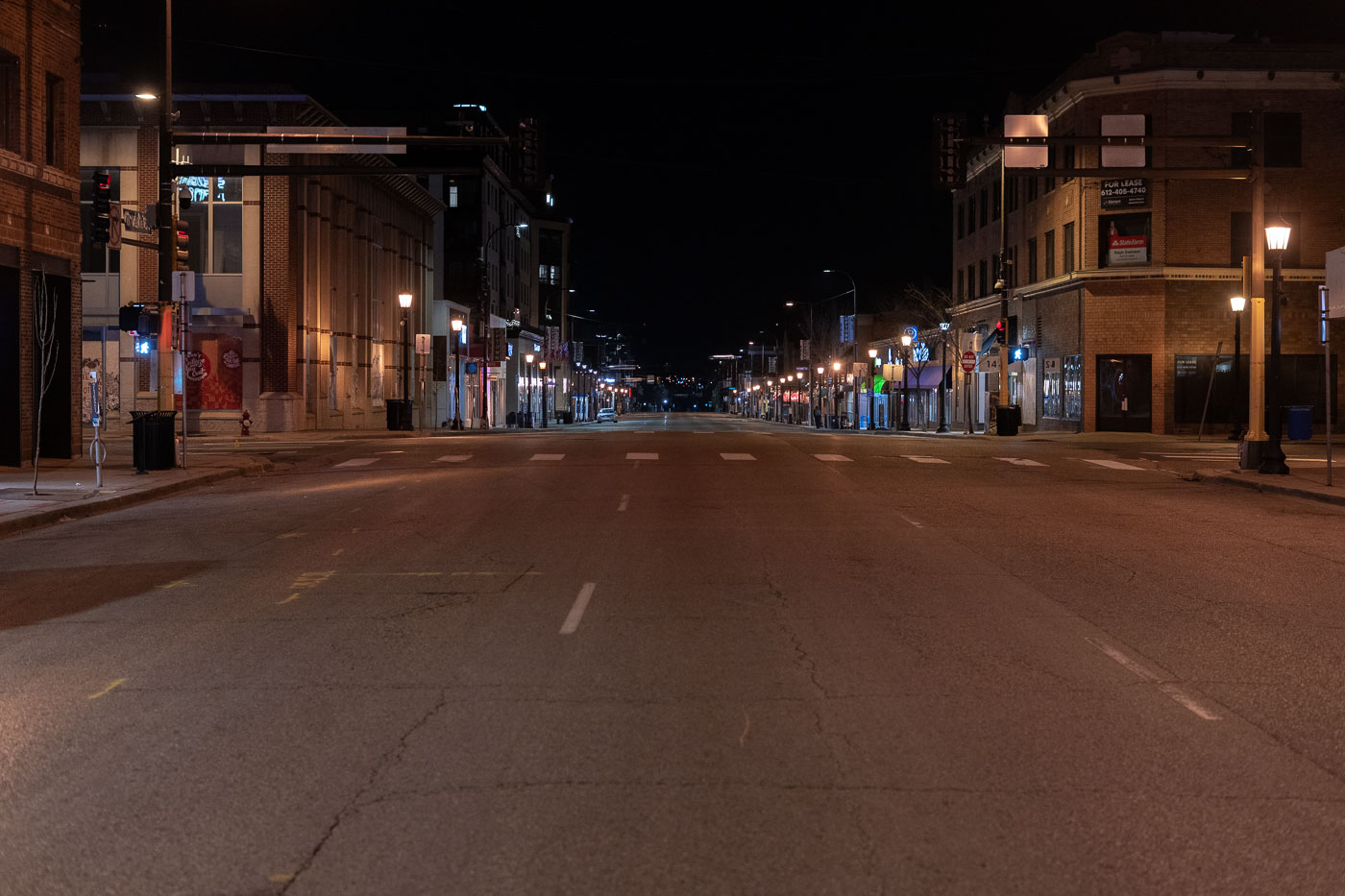
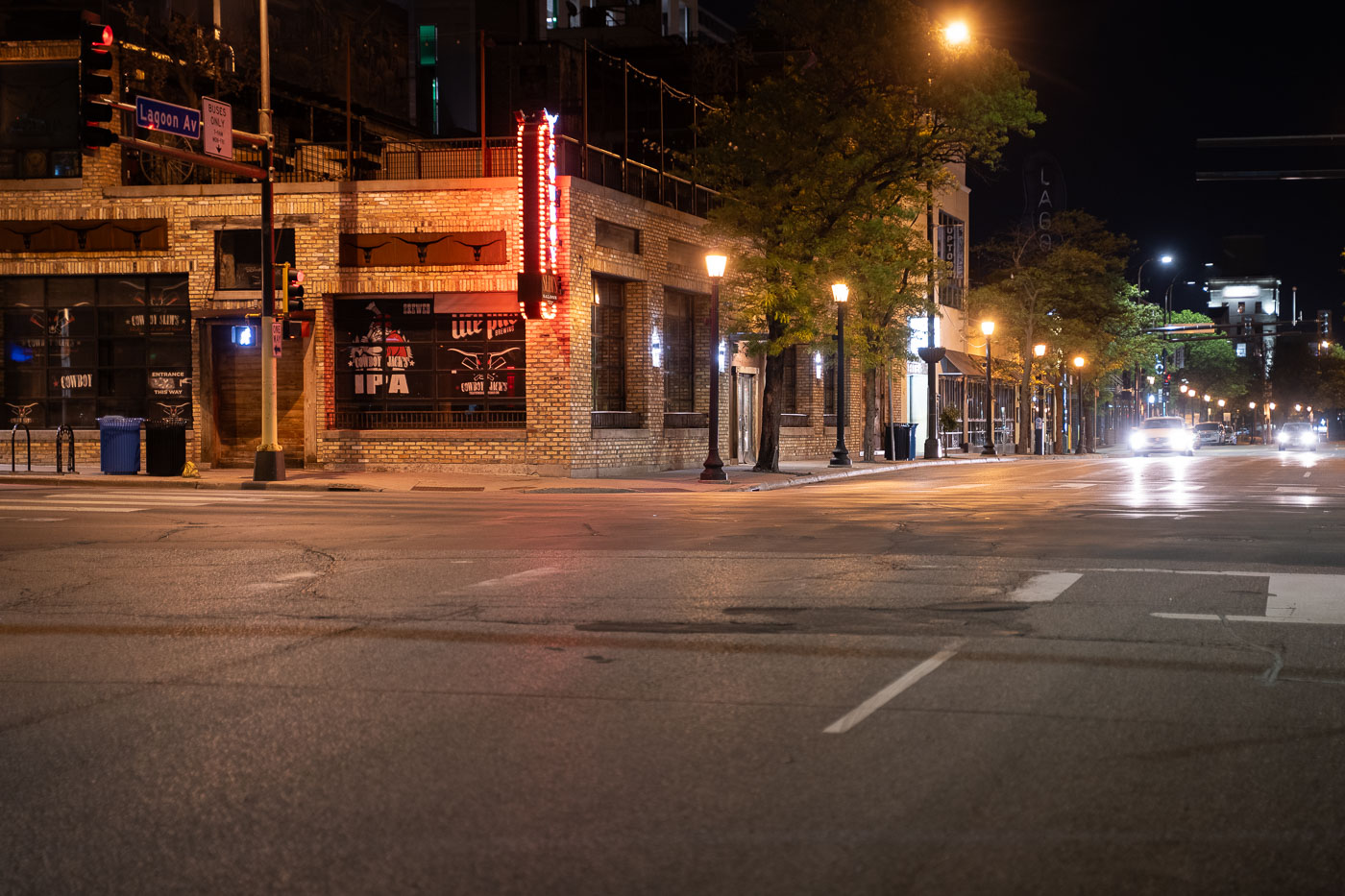
Lake Street and Hennepin Avenue in Uptown Minneapolis in May 2022
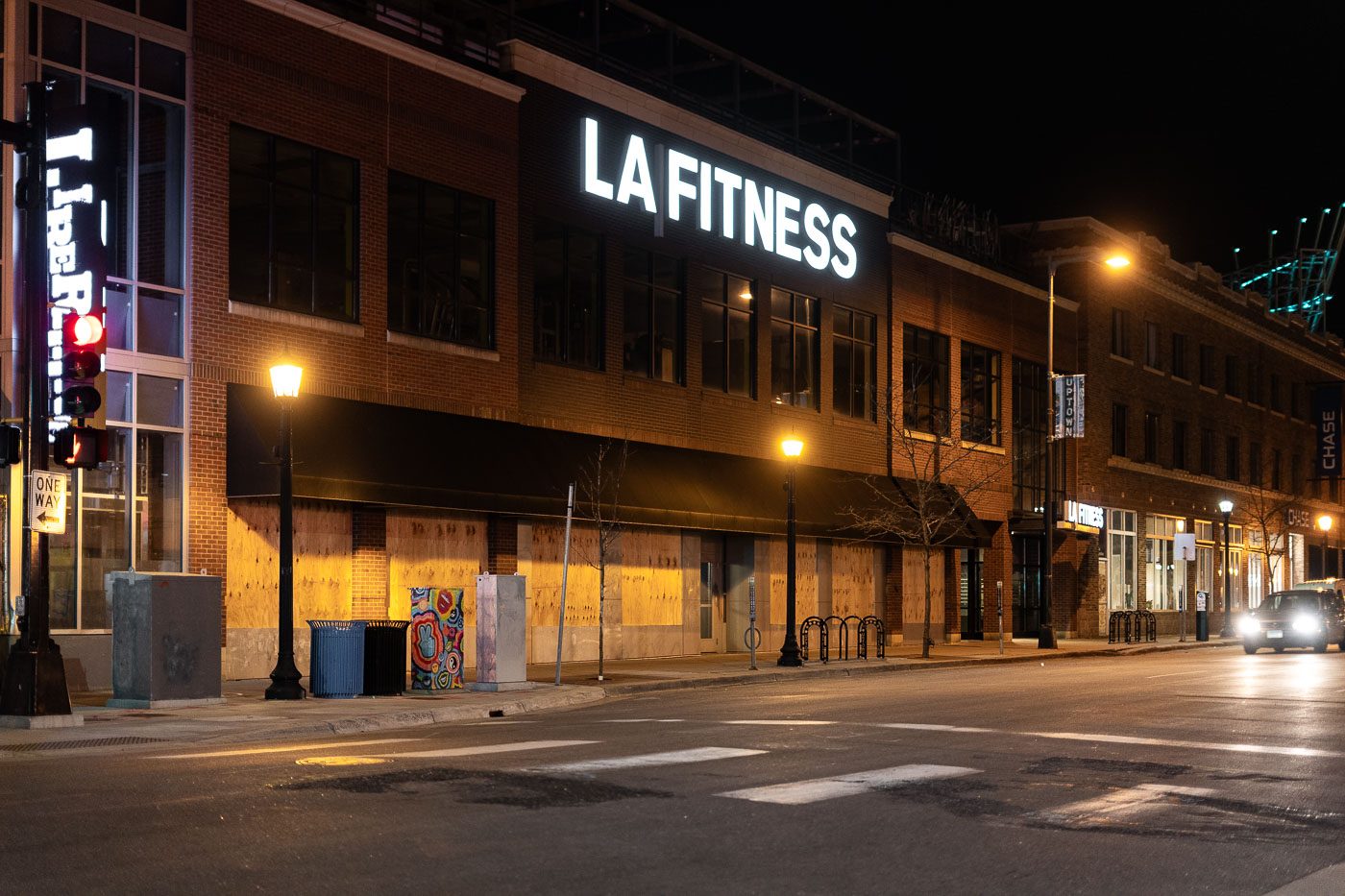
LA Fitness at a boarded up Seven Points Mall on Lake Street in Uptown Minneapolis.
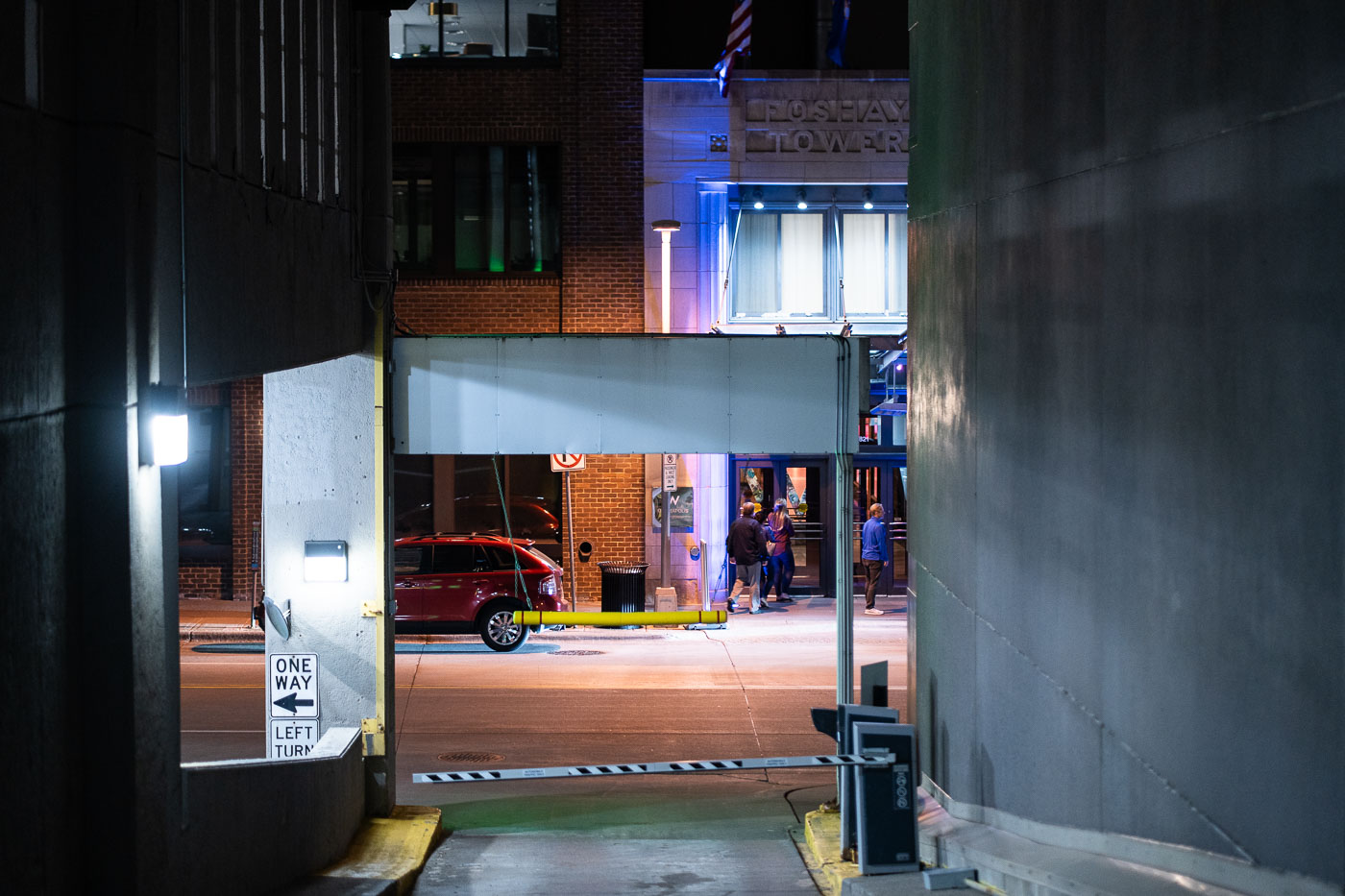
Entrance to the W Hotel in Downtown Minneapolis as seen from across the street.
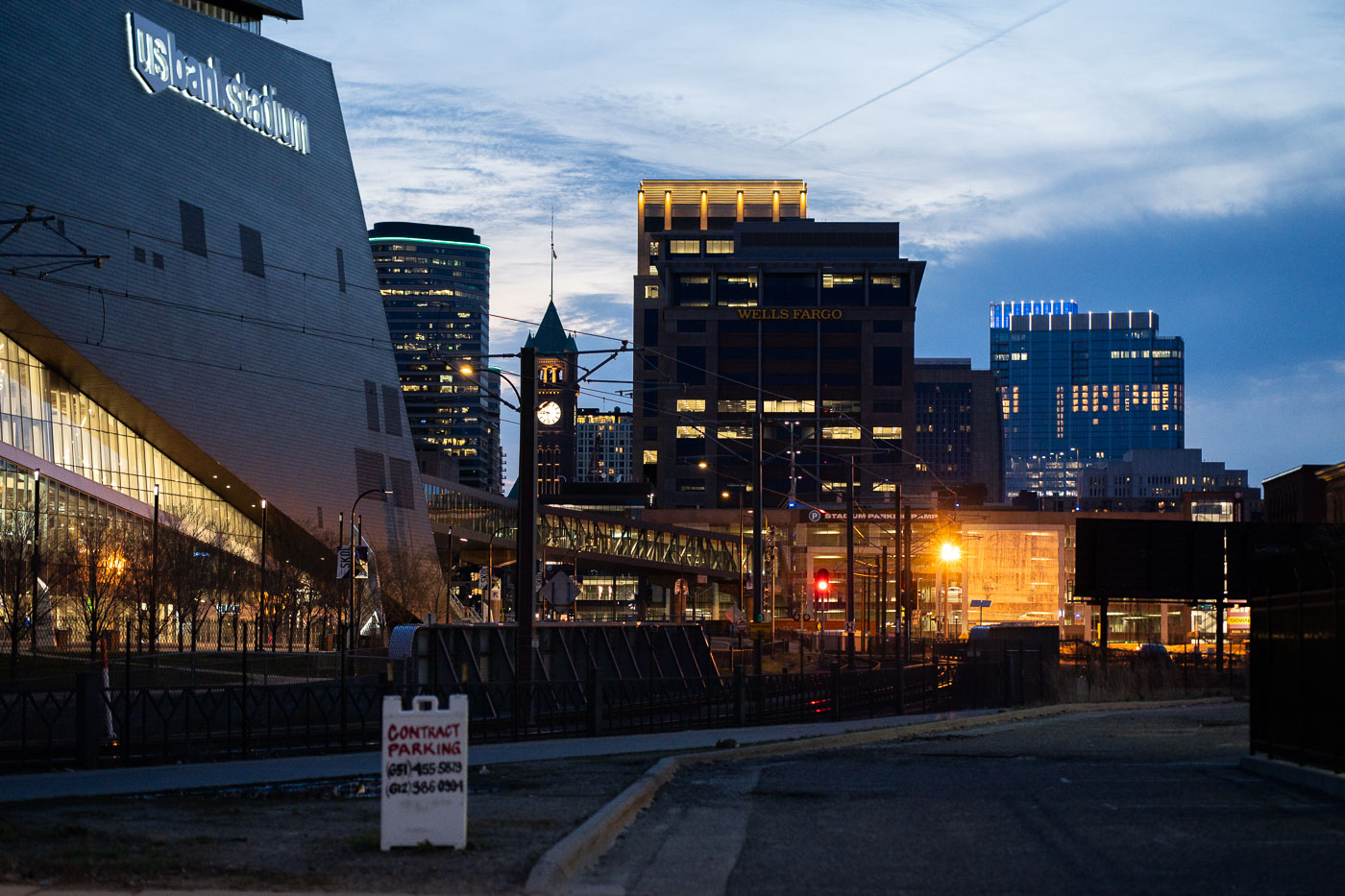
US Bank Stadium during blue hour in downtown Minneapolis.
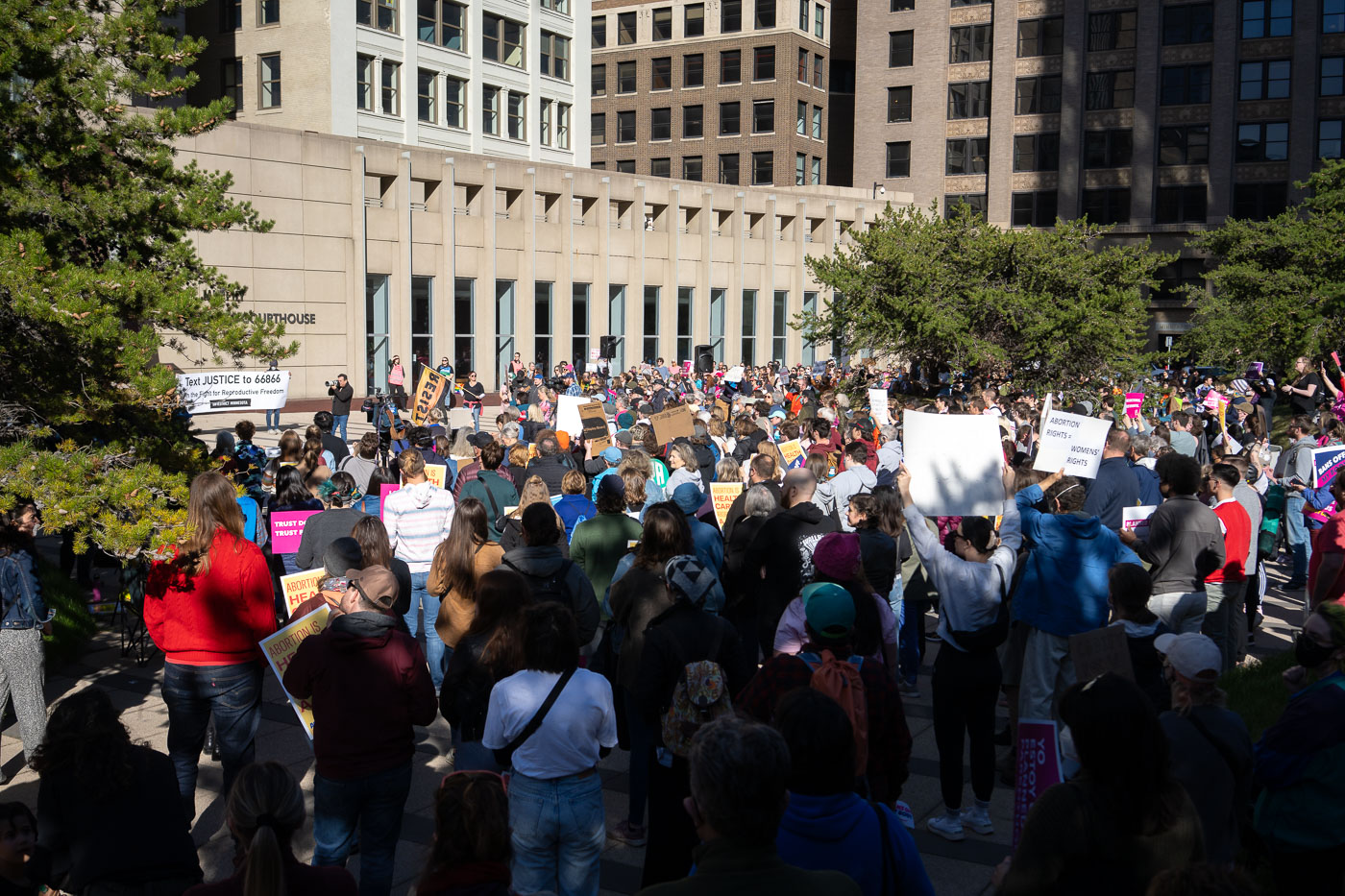
Protesters gather at the federal courthouse in downtown Minneapolis in support of abortion rights.
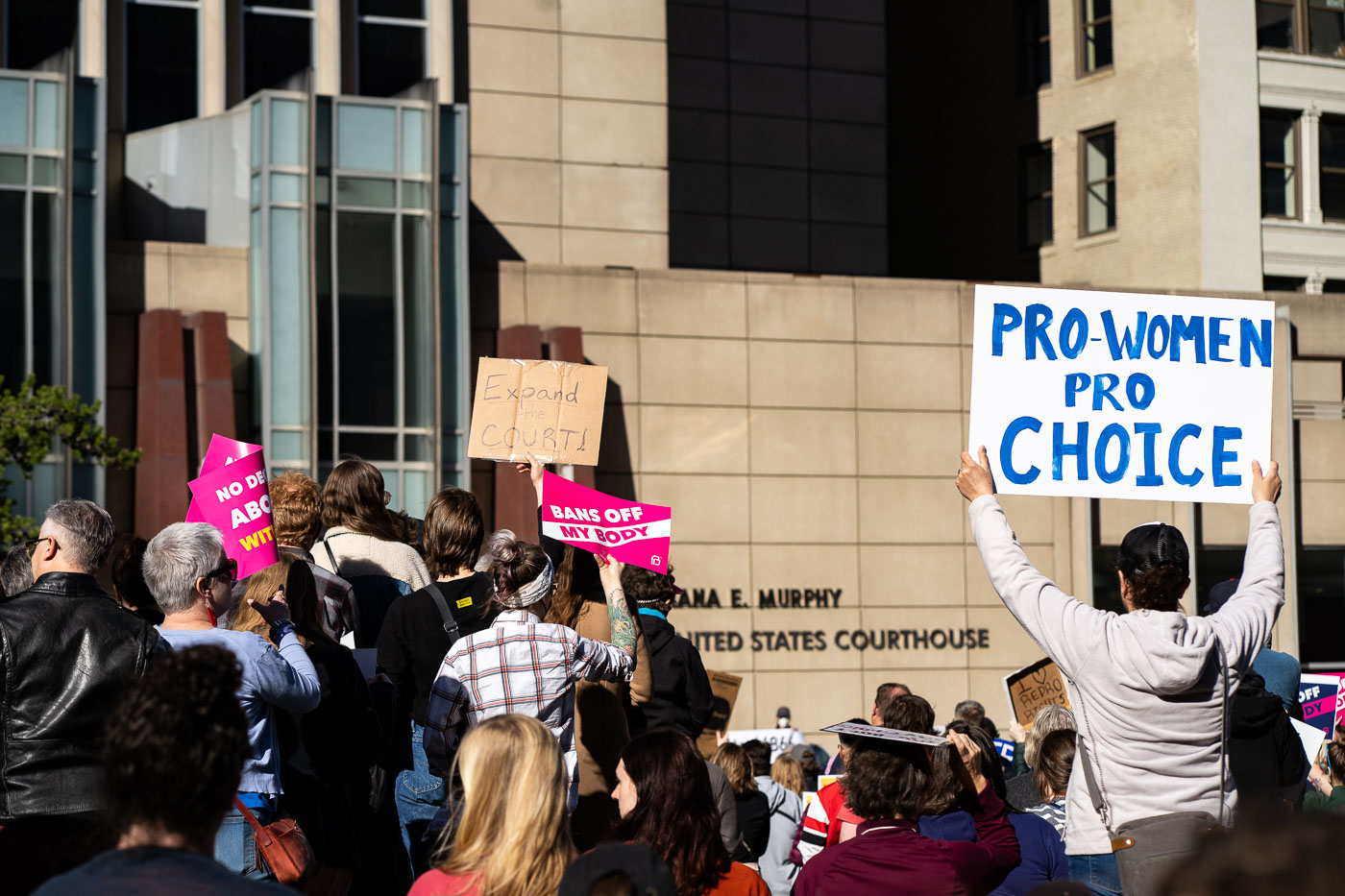
Protesters gather at the Federal Courthouse in downtown Minneapolis in support of abortion rights.
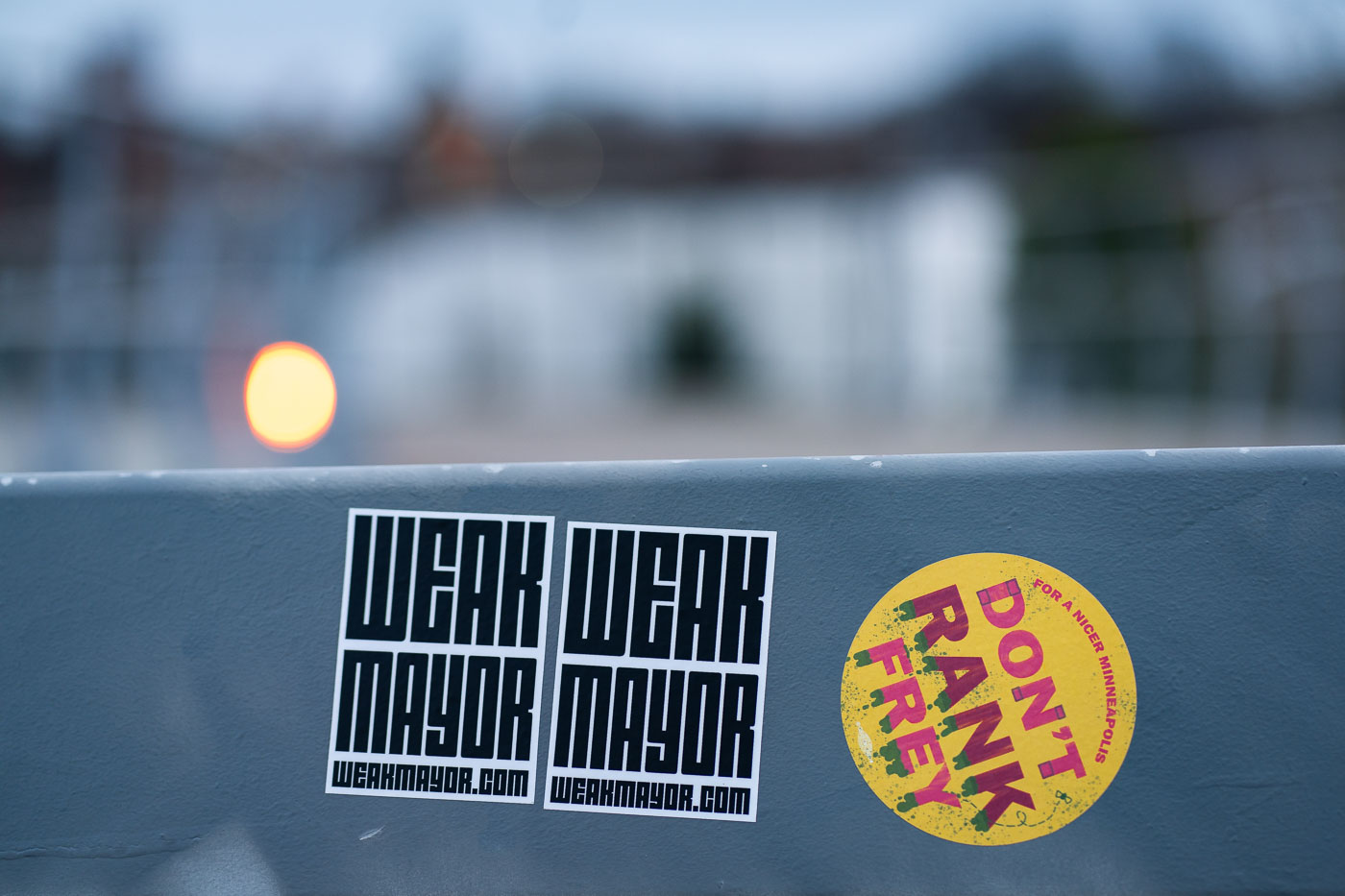
Stickers referring to Minneapolis Mayor Jacob Frey. Reading “Weak Mayor” and “Don’t Rank Frey”.
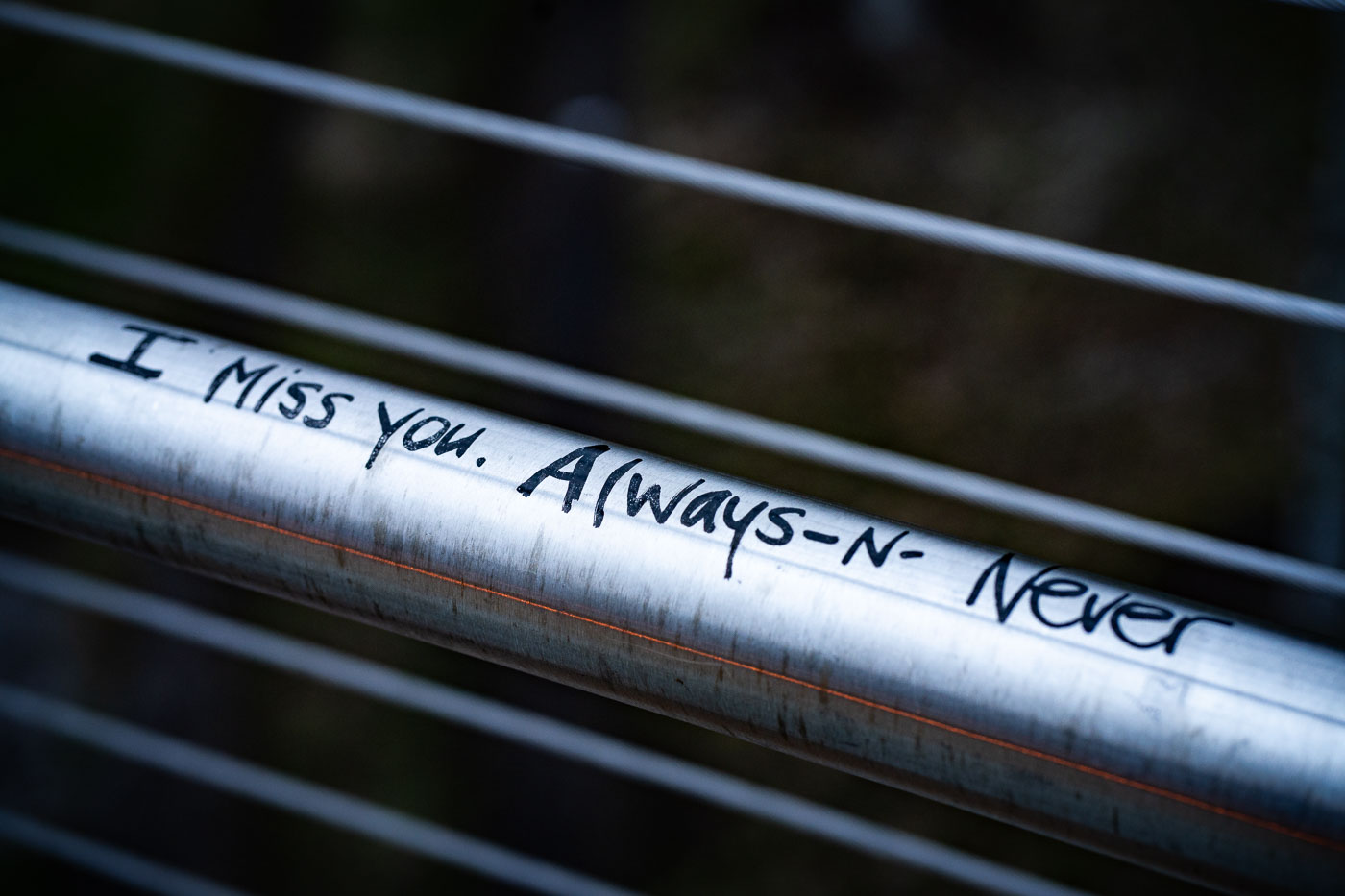
Graffiti found on the Martin Olav Sabo bridge that reads: “I miss you. Always -N- Never.
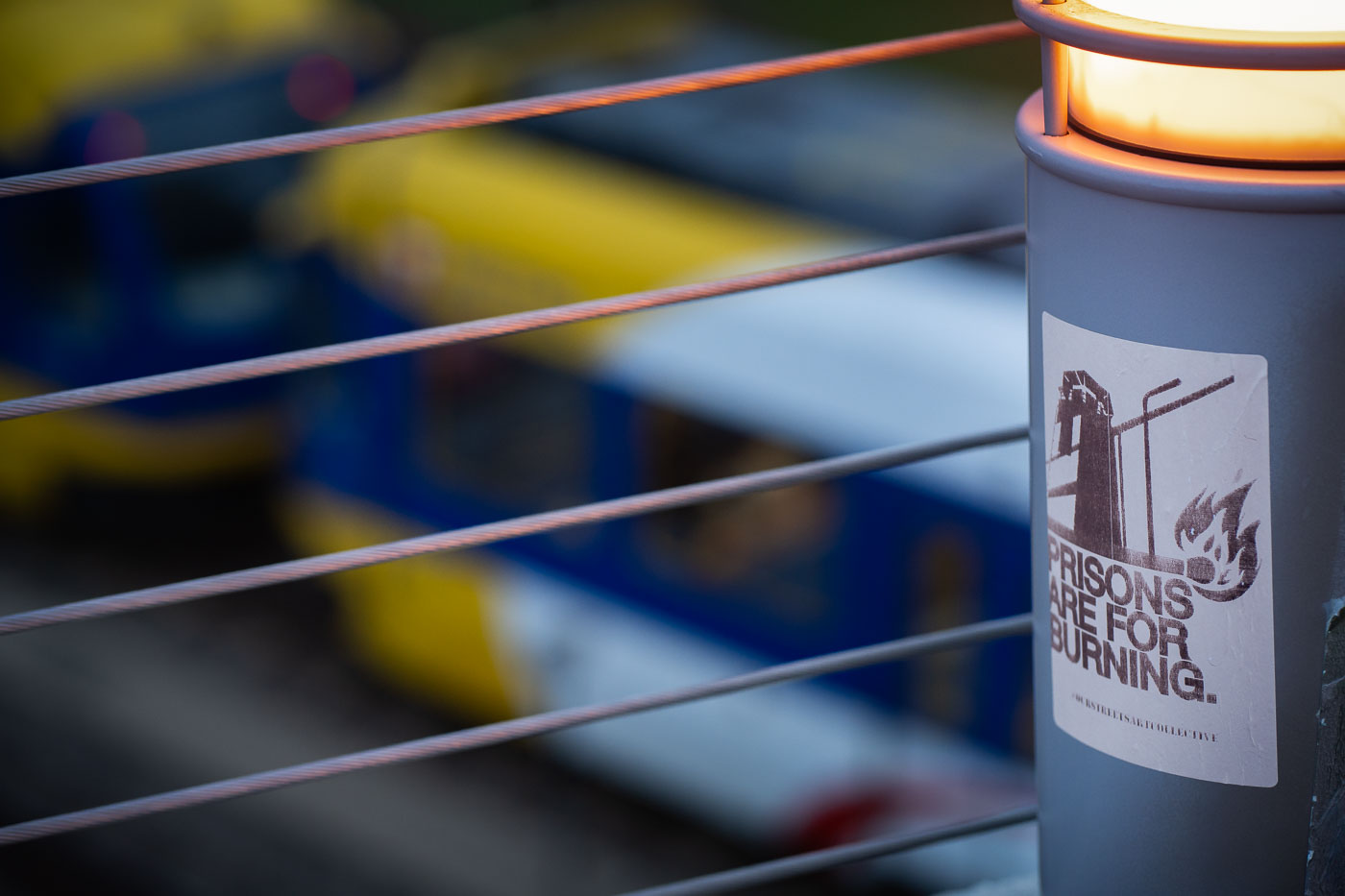
A sticker reading "Prisons are for burning." found on a bike trail in Minneapolis.
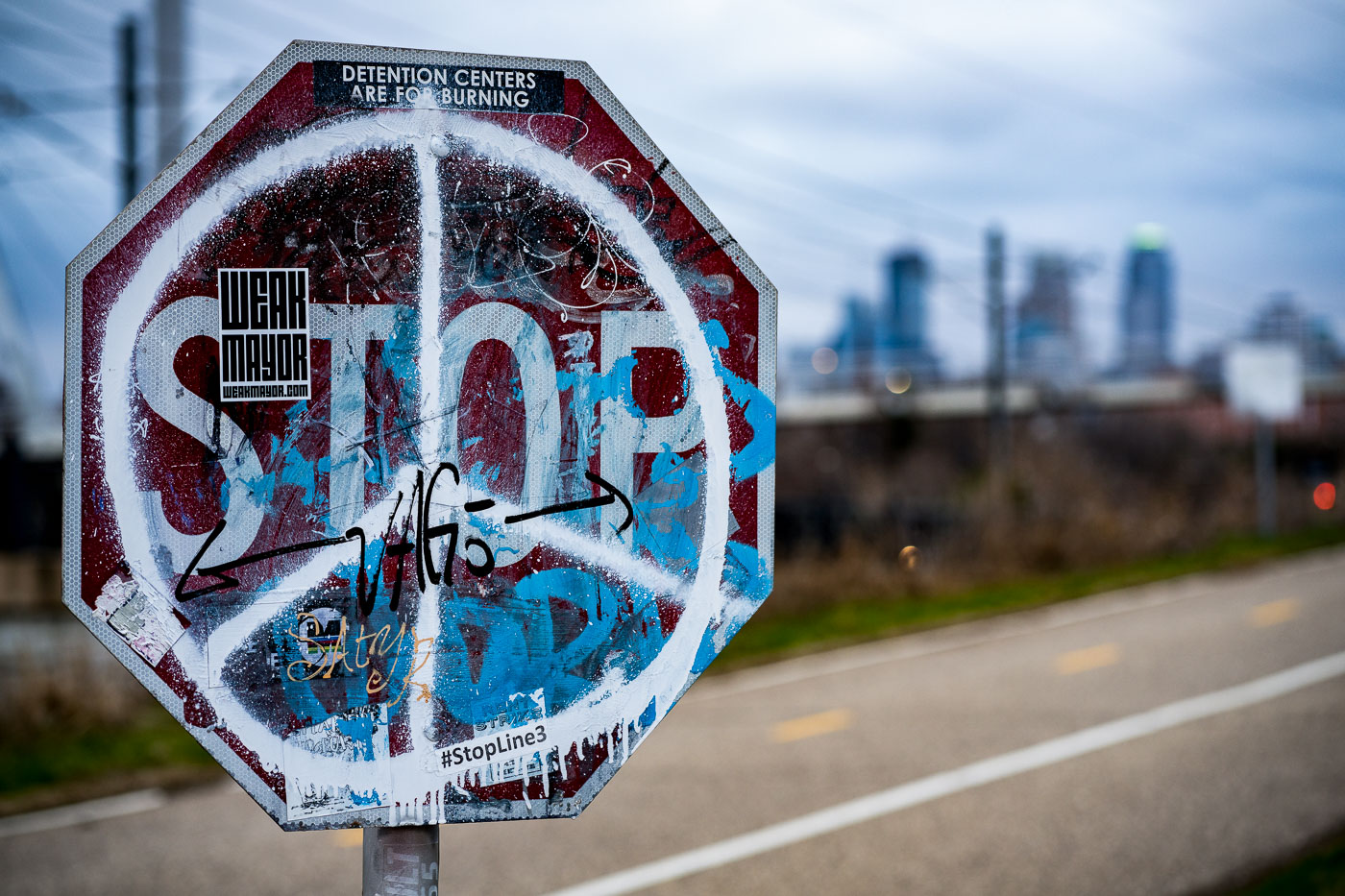
Weak Mayor, Stop Line 3, Detention Centers are for burning stickers on a stop sign in Minneapolis.
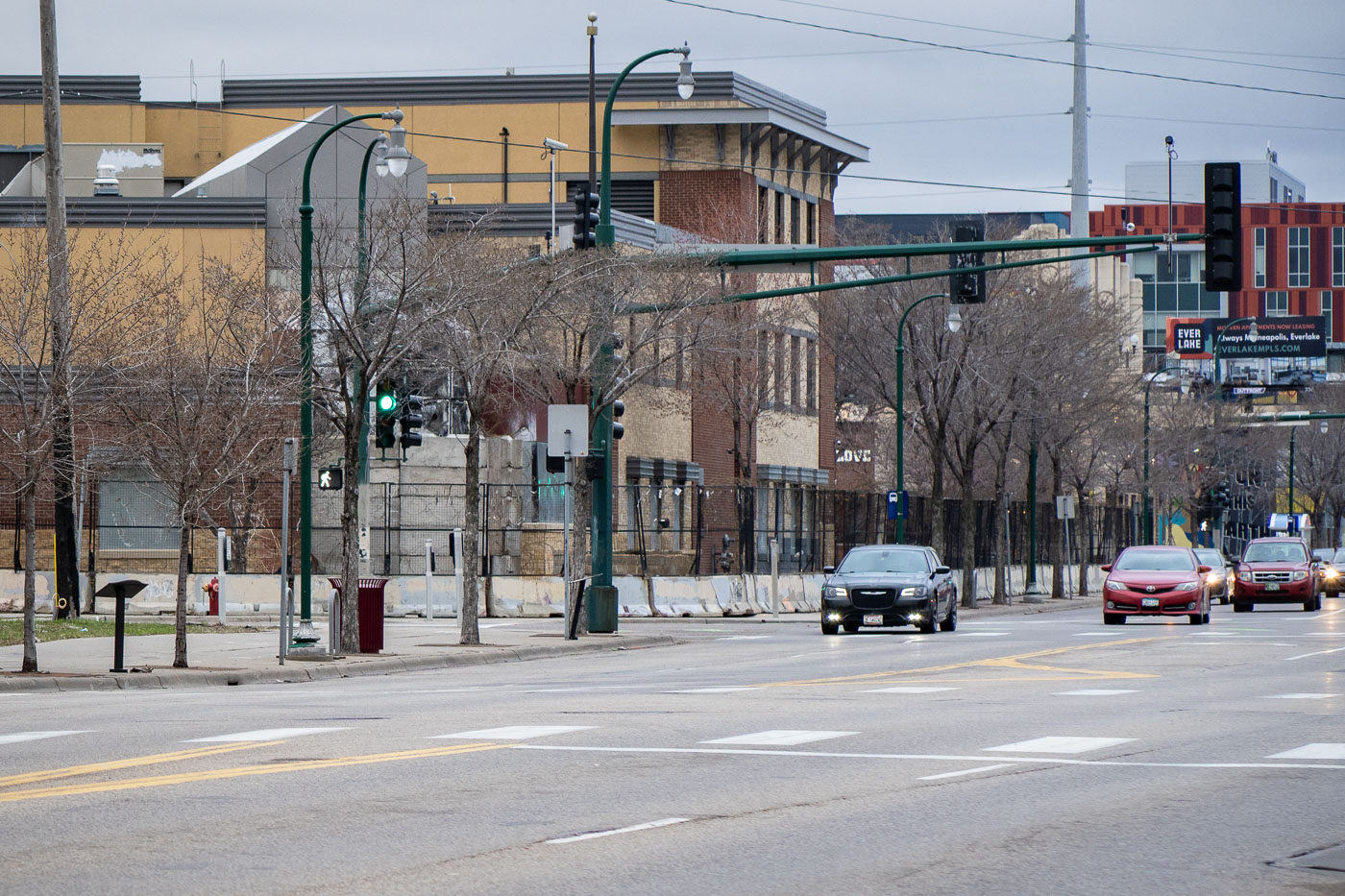
The Minneapolis police third precinct police station around fencing. The police station, which was burned by protesters in May 2020, has sat vacant and fortified ever since.
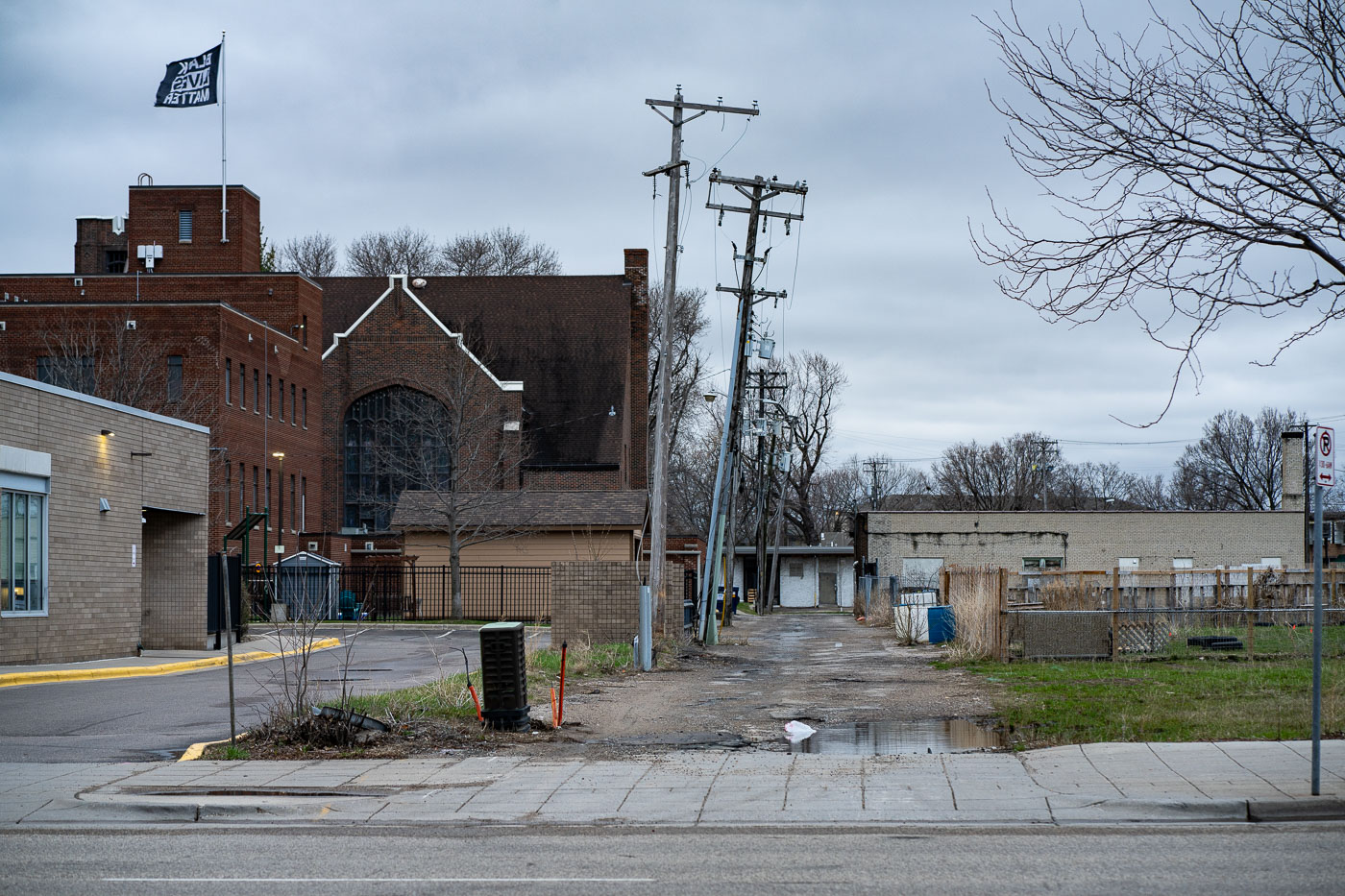
A “Black Lives Matter” flag flies at the top of a church near the Minneapolis police third precinct that burned in May 2020.
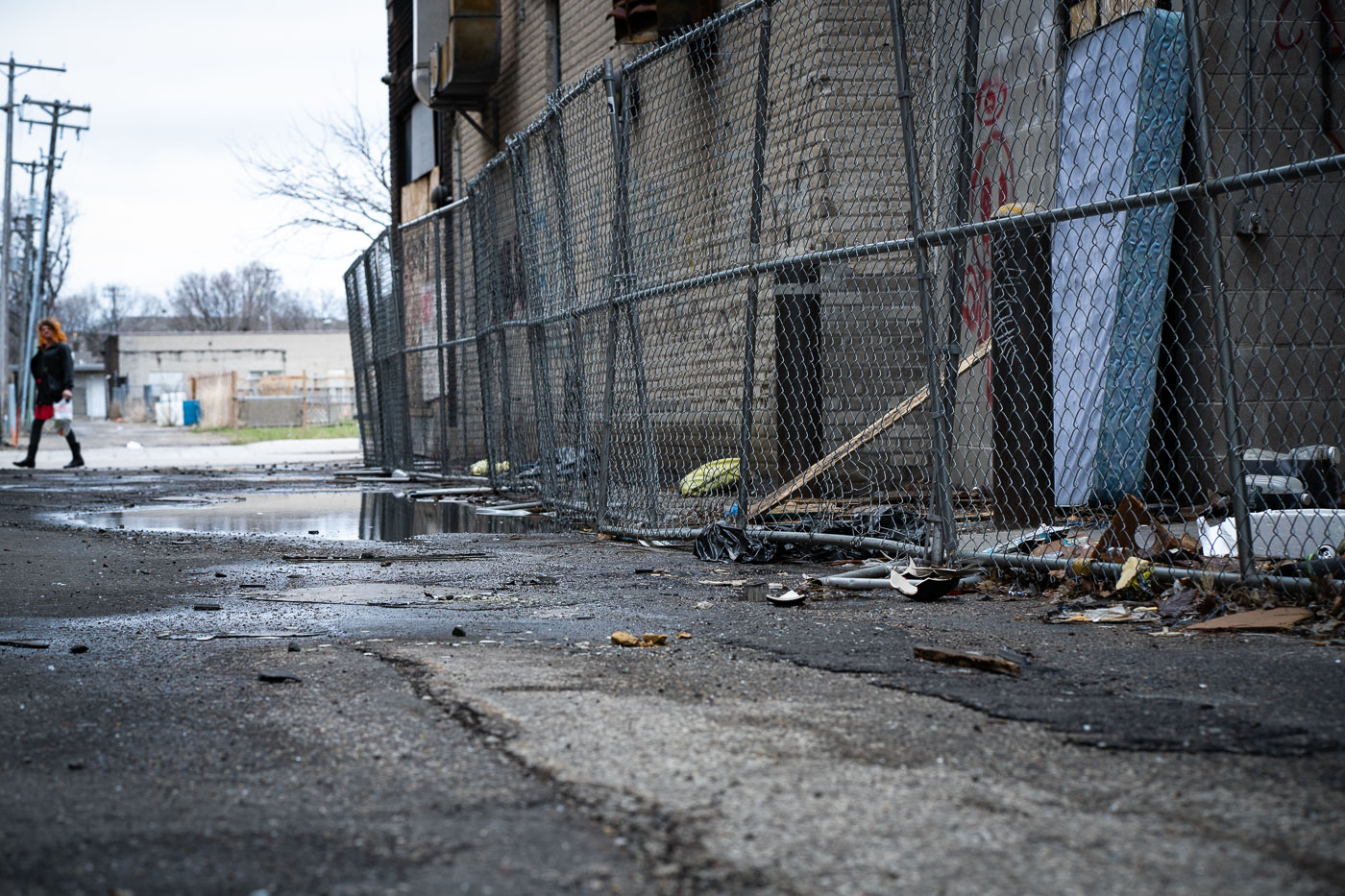
The alley next to the fire damaged Coliseum Building. The building was burned during days of protests following the May 25th, 2020 death of George Floyd.
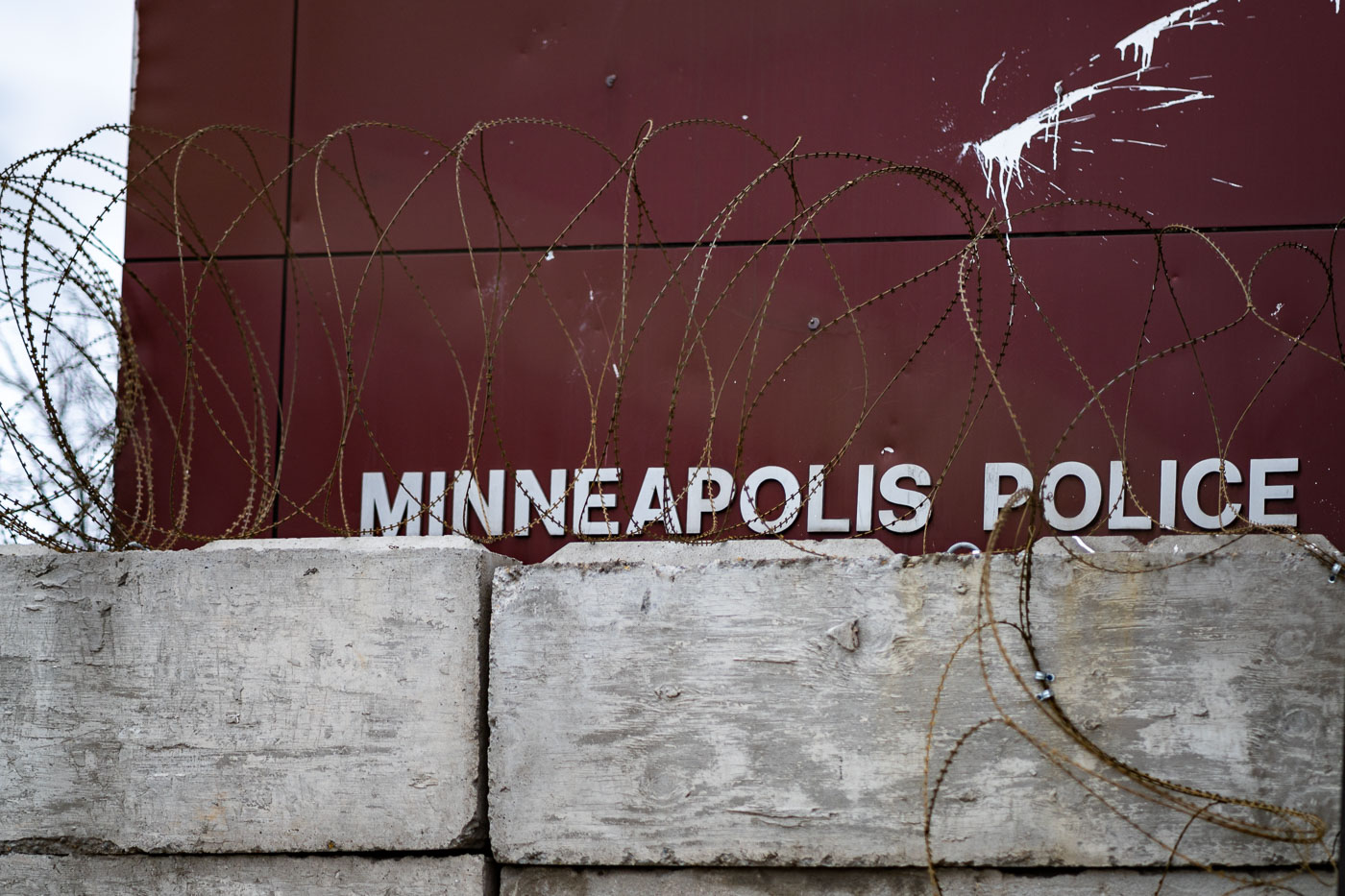
The Minneapolis Police third precinct building on May 1, 2022. The building was burned by protesters following the May 25, 2020 murder of George Floyd by Minneapolis police officer Derek Chauvin.
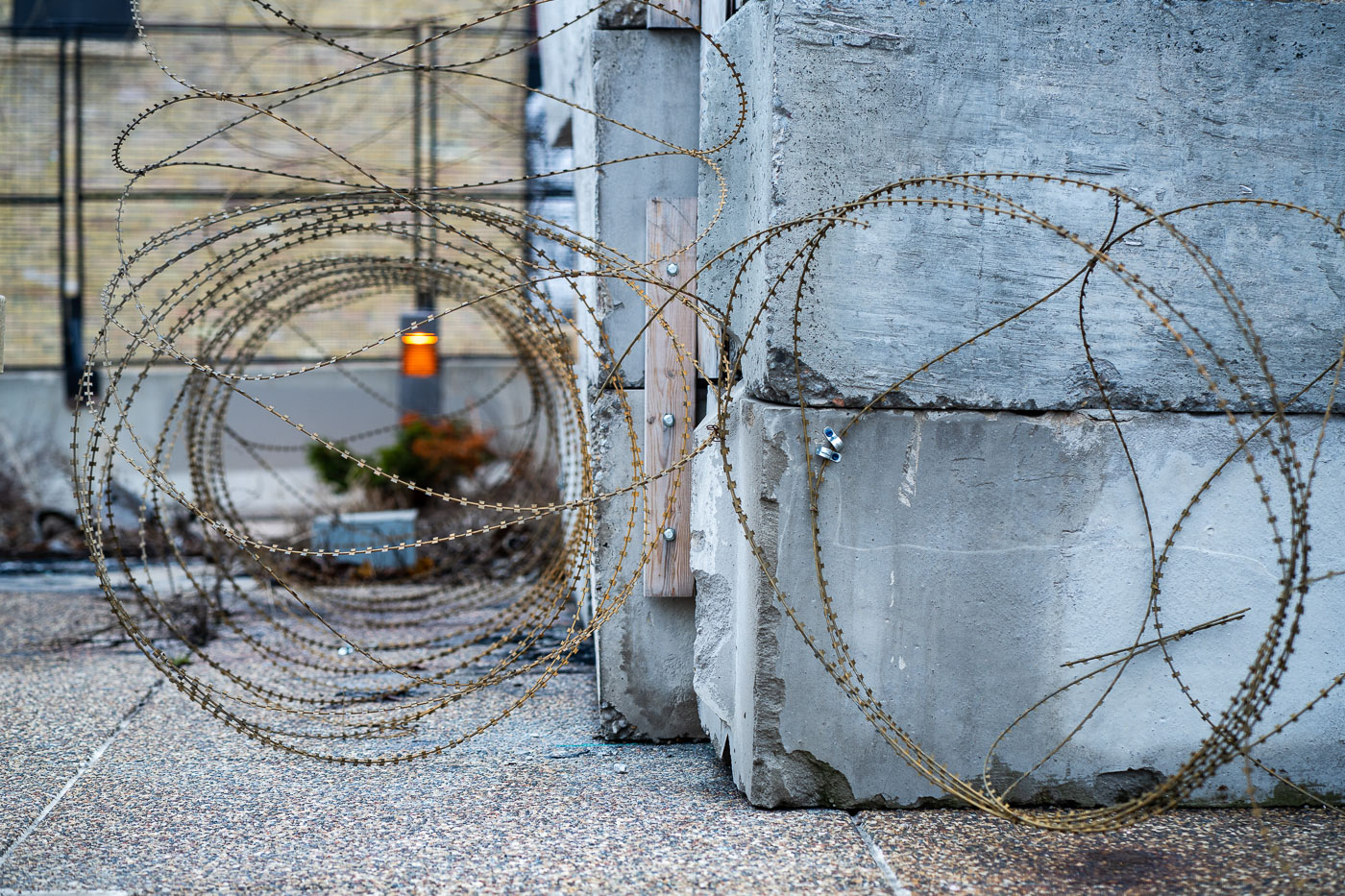
Razor wire around the concrete blocks at the burned Minneapolis 3rd Precinct police station.
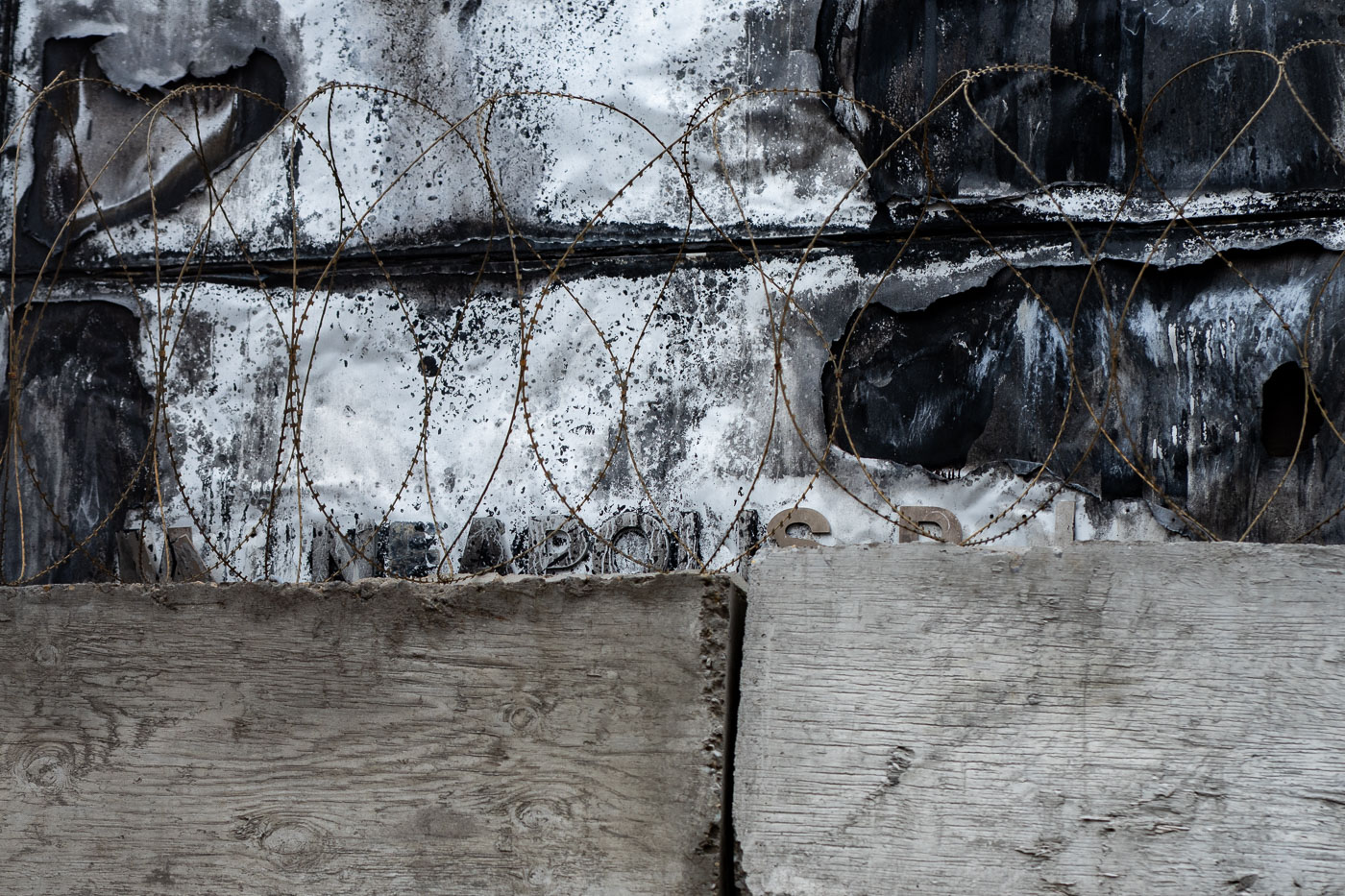
Concrete blocks and razor wire up against the former entrance of the Minneapolis Police 3rd precinct police station. The station was burned by protesters following the May 25, 2020 murder of George Floyd.
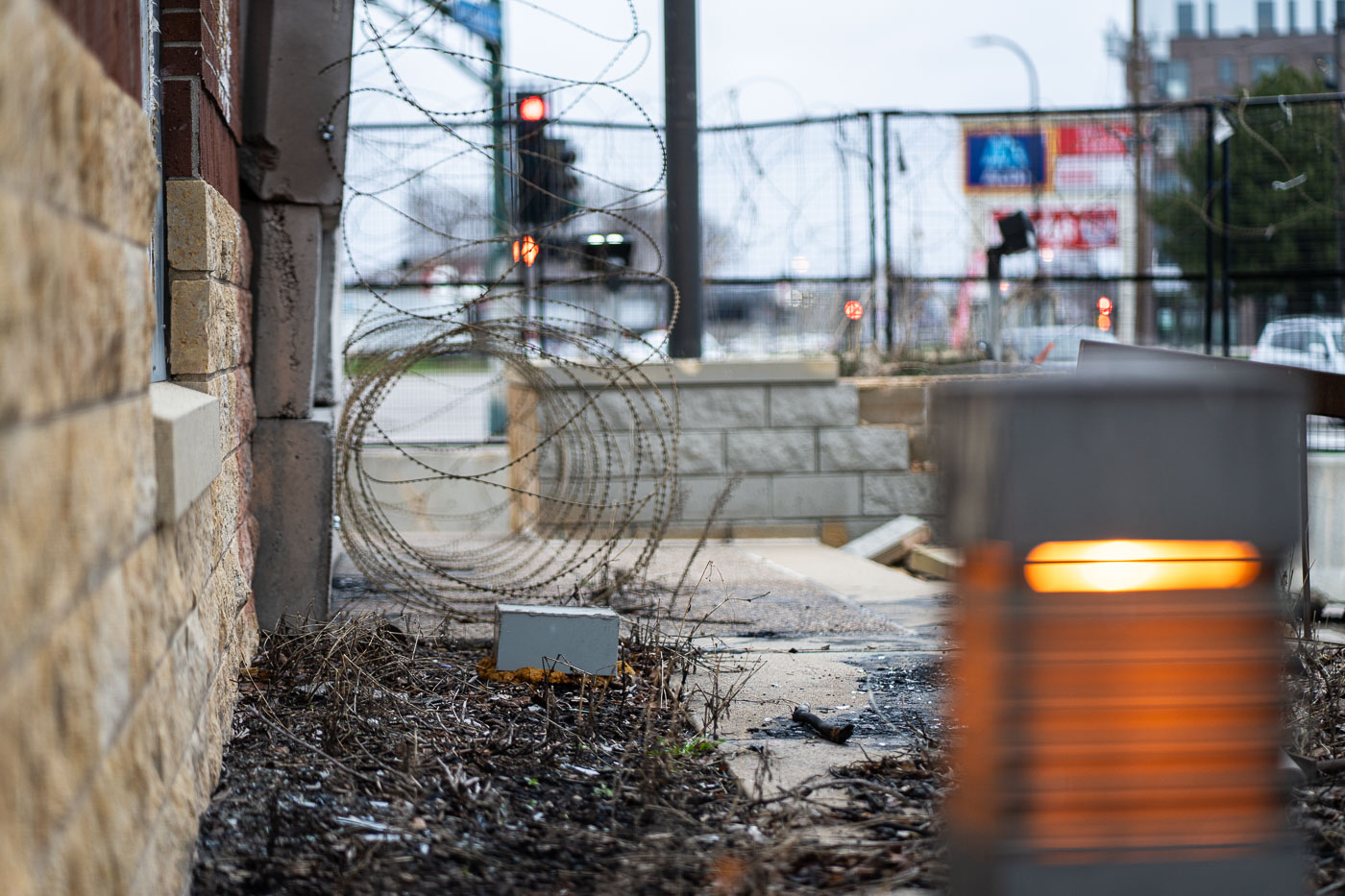
As we near 2 years since the Minneapolis police evacuated the third precinct police station, the property and building has still seen no significant changes. Quite a few of the damaged/destroyed nearby buildings, including the Everlake apartment building, have been rebuilt and reopened
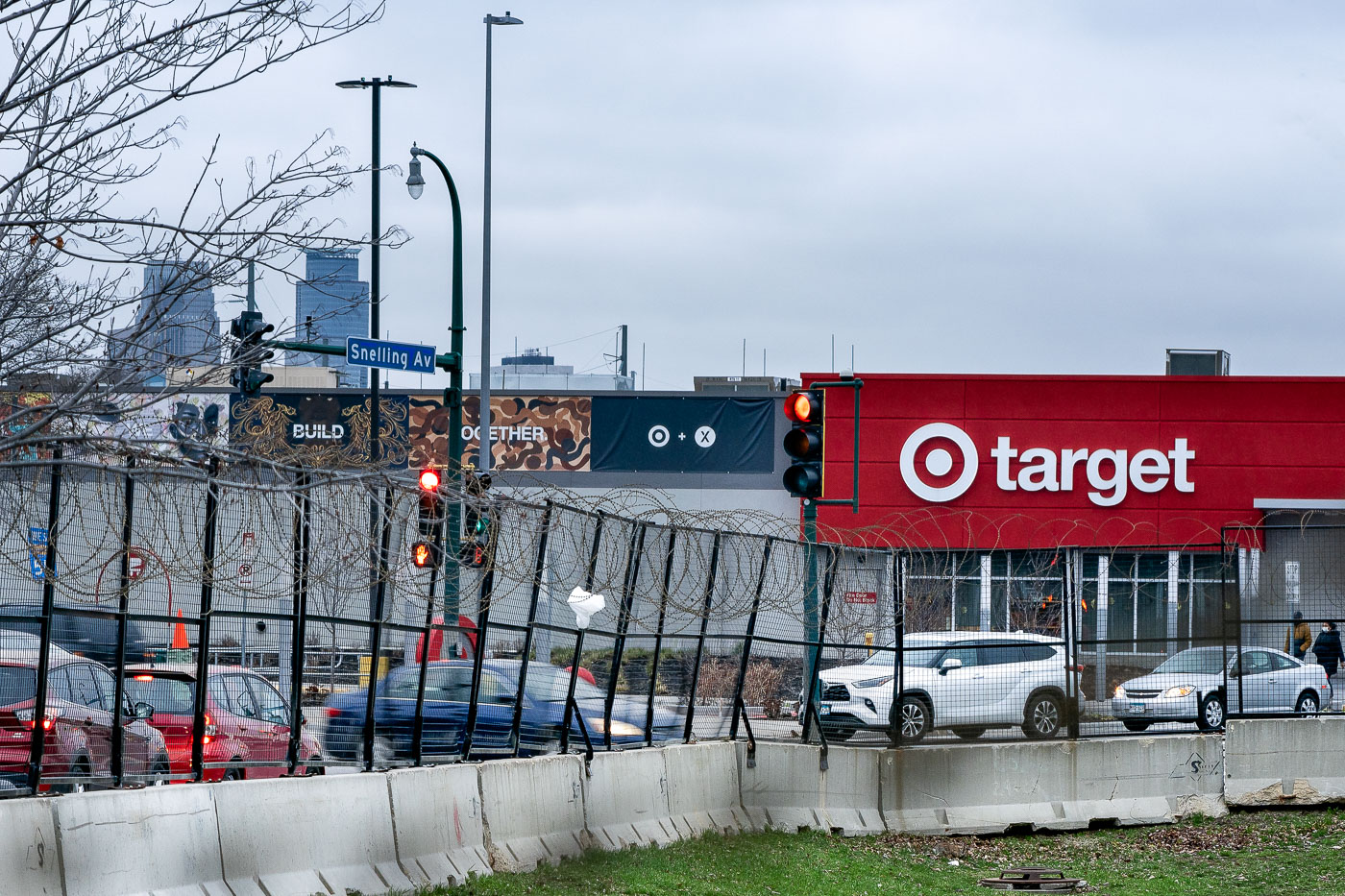
Razor wire surrounding the Minneapolis Police Third precinct parking lot. Target can been seen across the street.
The Target was rebuilt after suffering damage during the riots that followed the May 25, 2020 murder of George Floyd by the Minneapolis police.
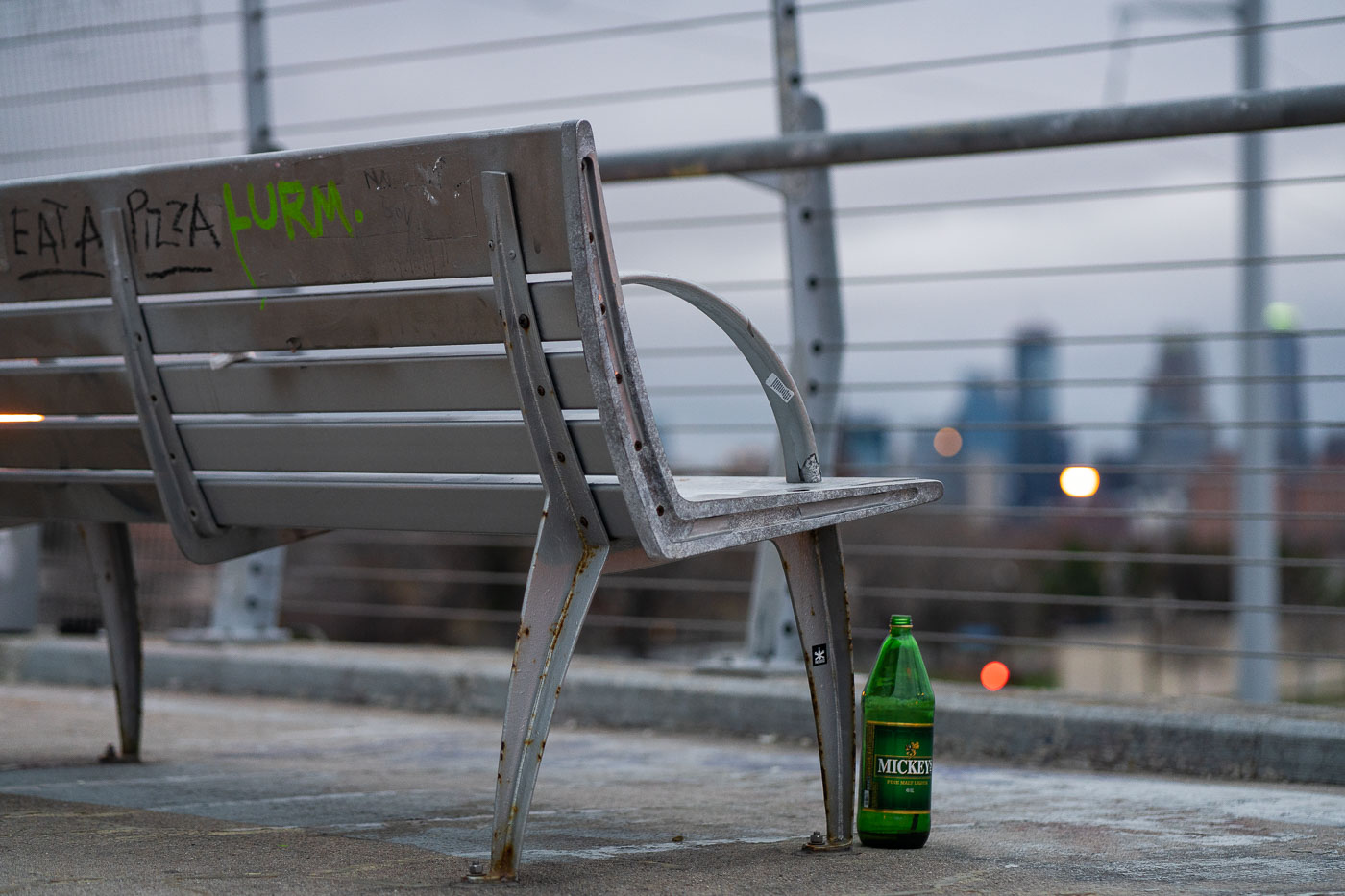
A weathered metal bench sits along one of Minneapolis’s elevated pedestrian and bicycle bridges, its frame showing rust from years of exposure to winter salt and freeze–thaw cycles. The skyline appears in the distance—soft, cool, and out of focus—giving the bench a quiet vantage point over the city. Graffiti tags on the slats and a discarded green Mickey’s bottle beneath the seat add small traces of everyday use, hinting at how these bridges serve not just as transportation corridors but as informal social spaces.
Many of the city’s long-span pedestrian bridges, especially those built over rail corridors and highways, were added during the late 20th century to connect neighborhoods divided by infrastructure. Despite their utilitarian design, they often become familiar landmarks for runners, cyclists, and residents crossing between neighborhoods at dusk, when the muted lights of downtown begin to glow against the evening sky.
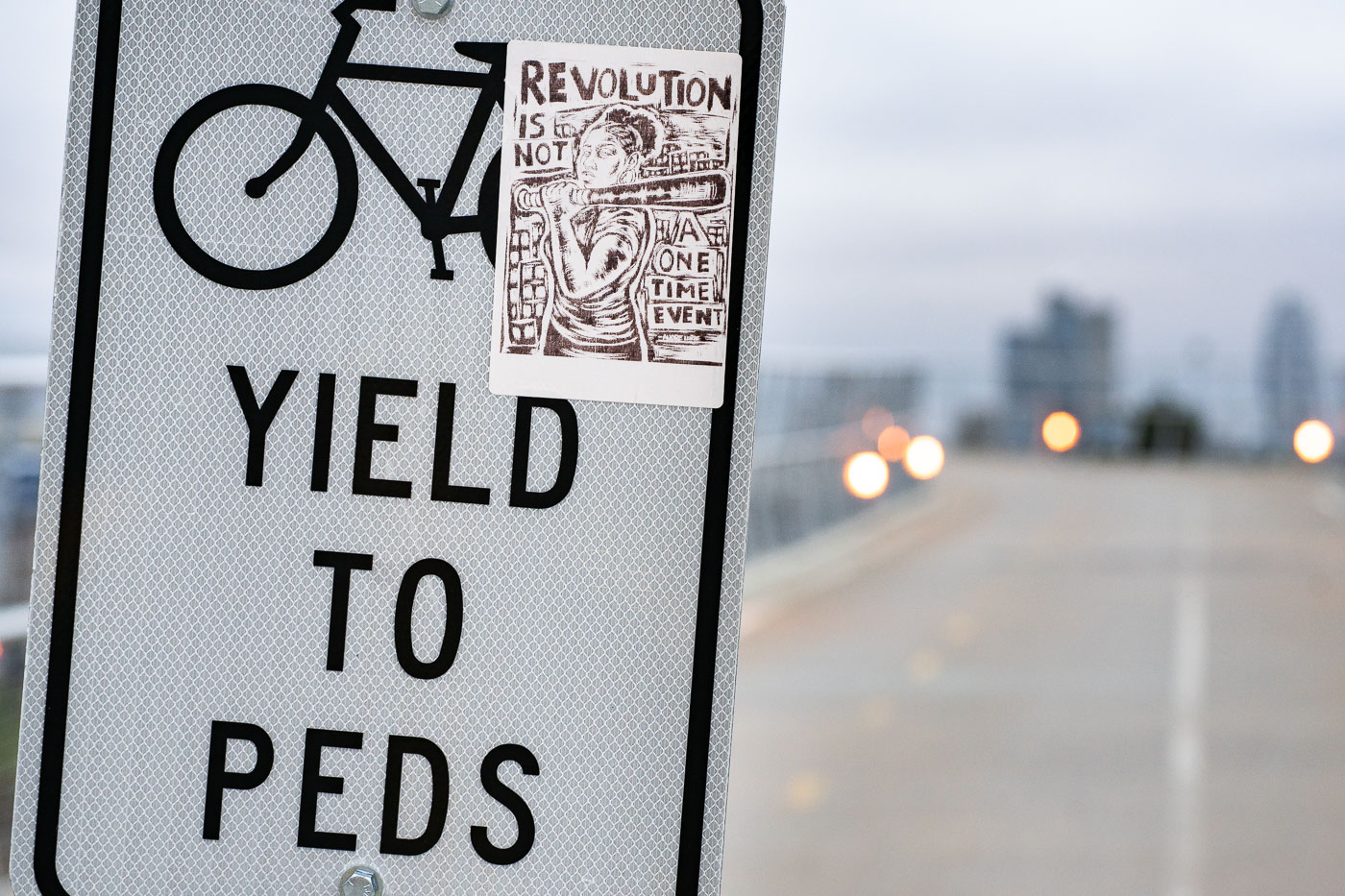
A small protest sticker reading “Revolution is not a one-time event” has been placed on a “Yield to Peds” sign along a Minneapolis bike and pedestrian bridge. The bold, woodcut-style illustration echoes the city’s activist visual culture, where handmade graphics, mutual-aid posters, and political stickers have become common markers in public space since 2020. The sign stands near a long, elevated path, with downtown’s skyline softly out of focus in the distance—an everyday setting layered with the quiet reminders of ongoing organizing and civic expression.
Seen along many commuter routes, stickers like this often circulate through local art networks and community print studios, becoming part of a broader landscape of grassroots messaging that blends into the city’s infrastructure: crosswalk poles, trail markers, bridge signs, and bike lanes. The placement here reflects how Minneapolis’s trail system frequently doubles as a corridor not only for transportation but also for political communication and neighborhood identity.
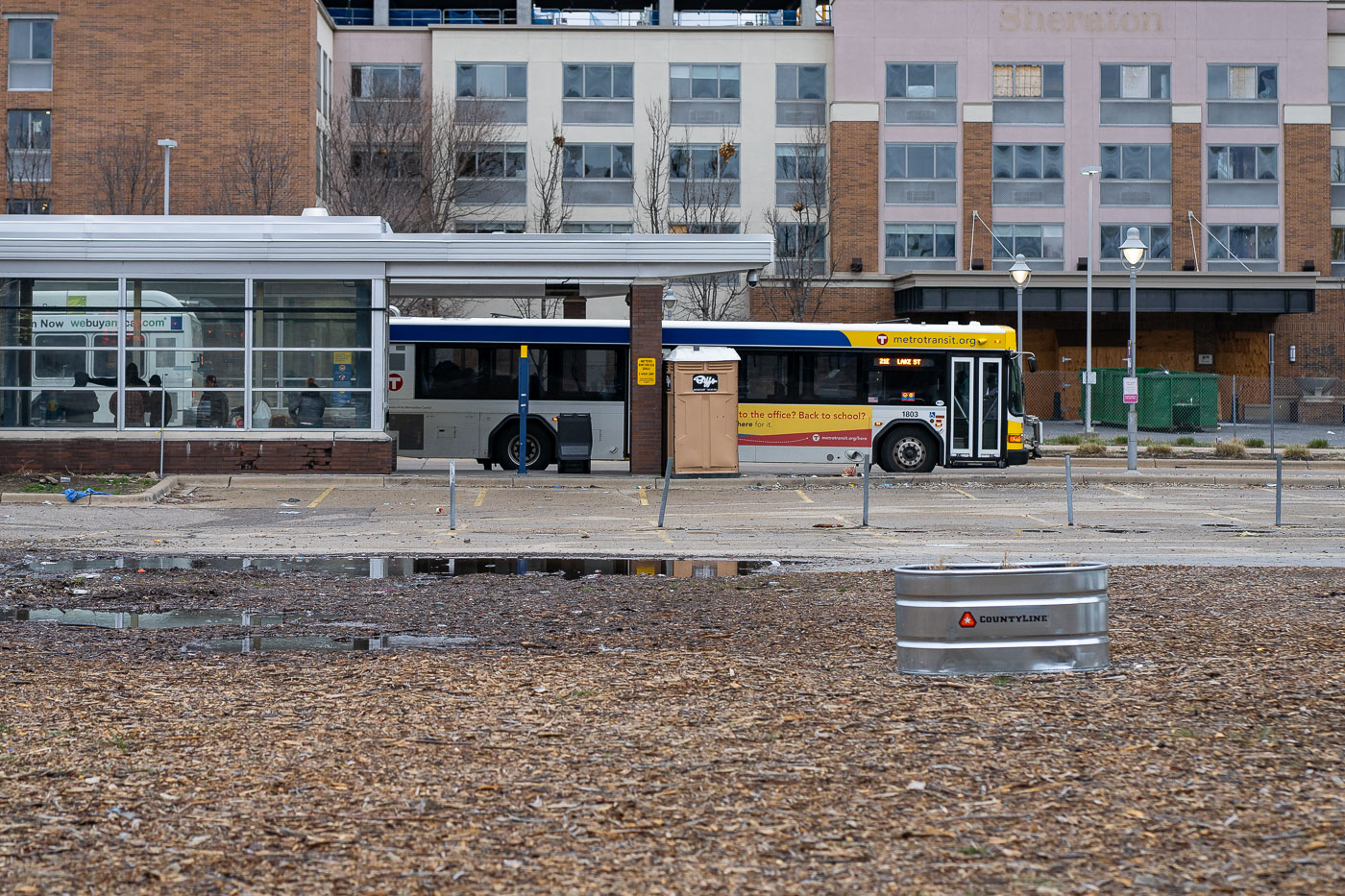
The Chicago Lake Transit Center in South Minneapolis.
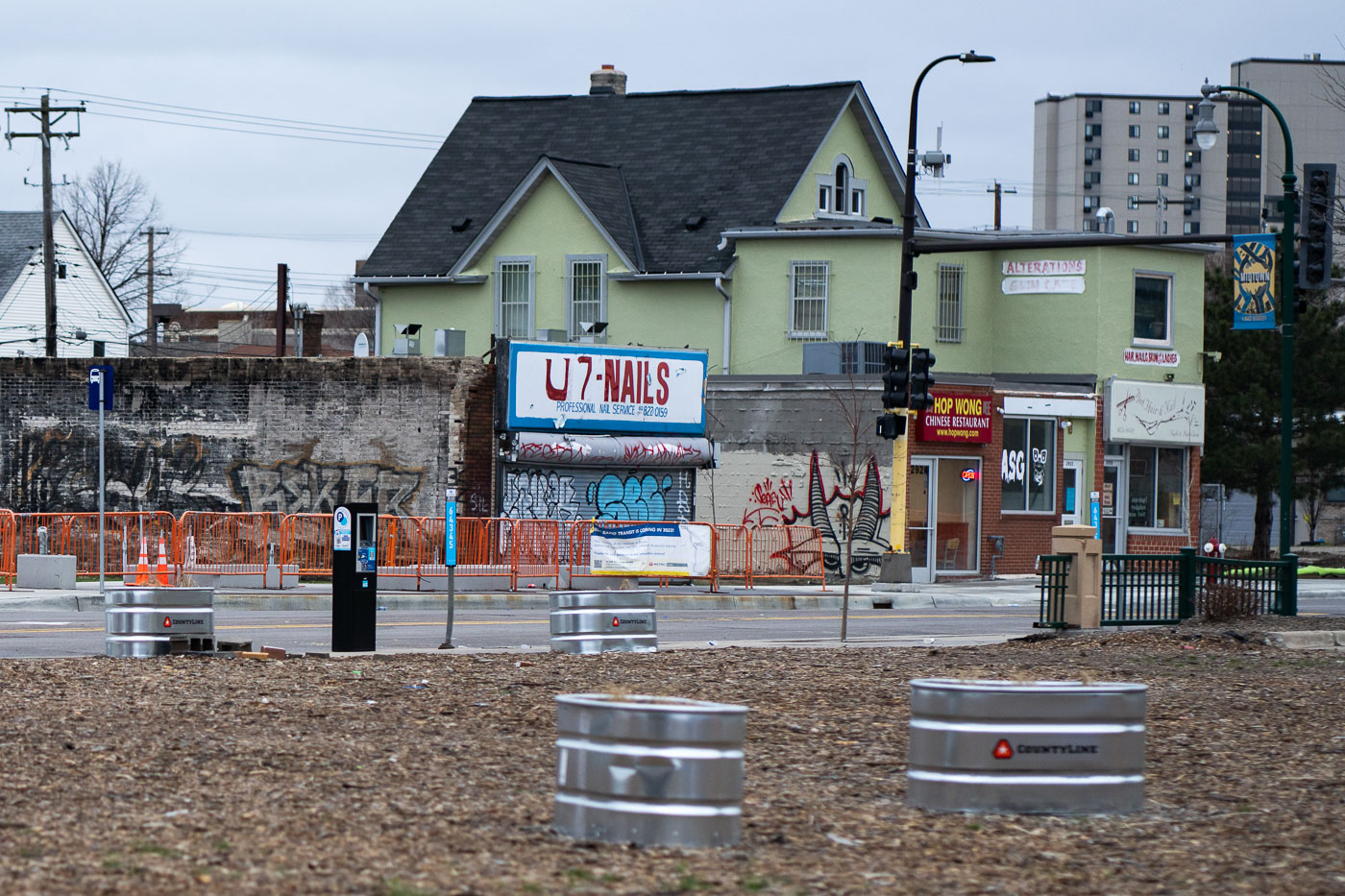
Graffiti on shutters over U7 Nails on Chicago Avenue in Minneapolis.
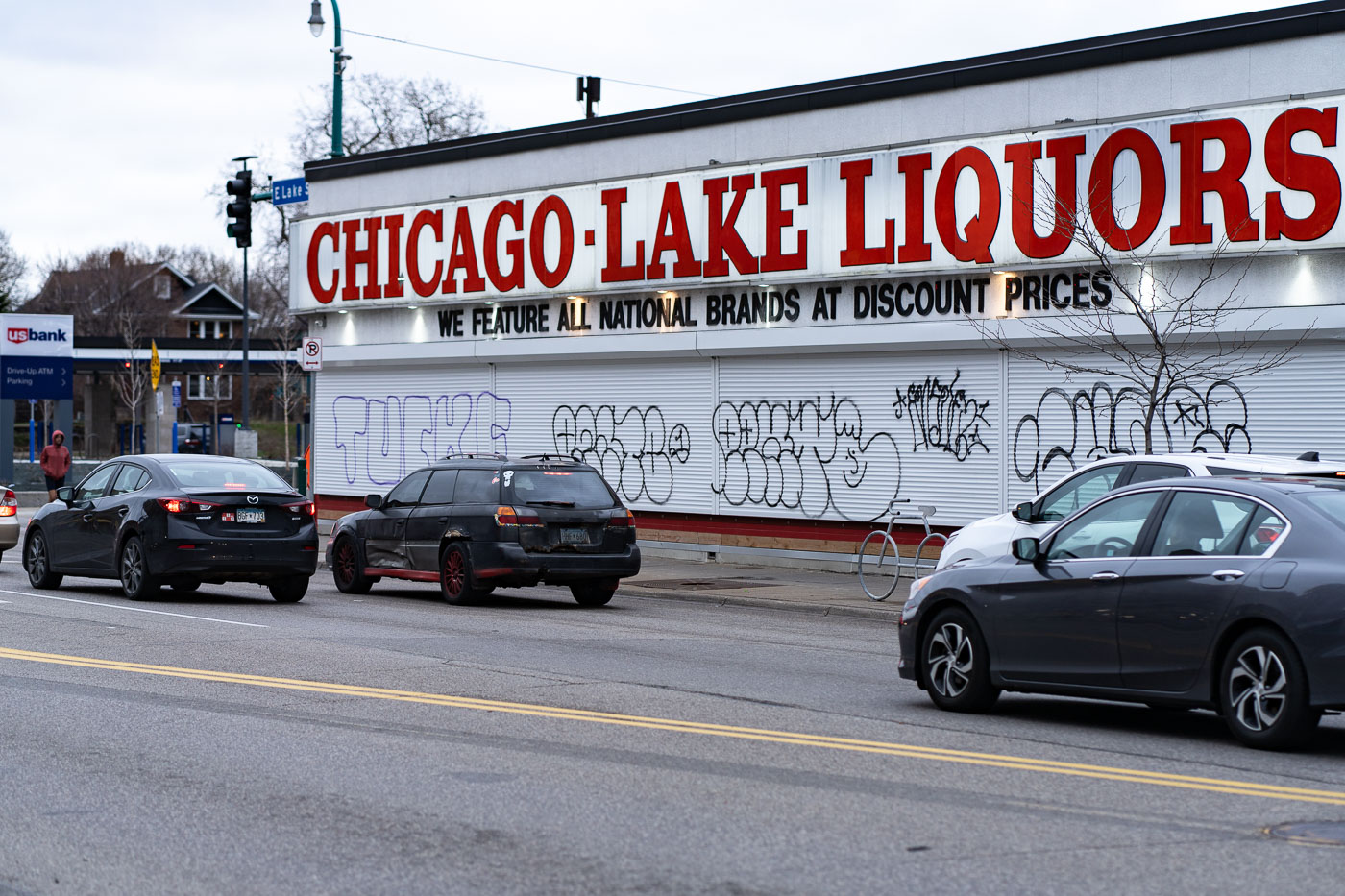
Graffiti on metal shutters covering the windows of Chicago Lake Liquors on Lake Street in Minneapolis.
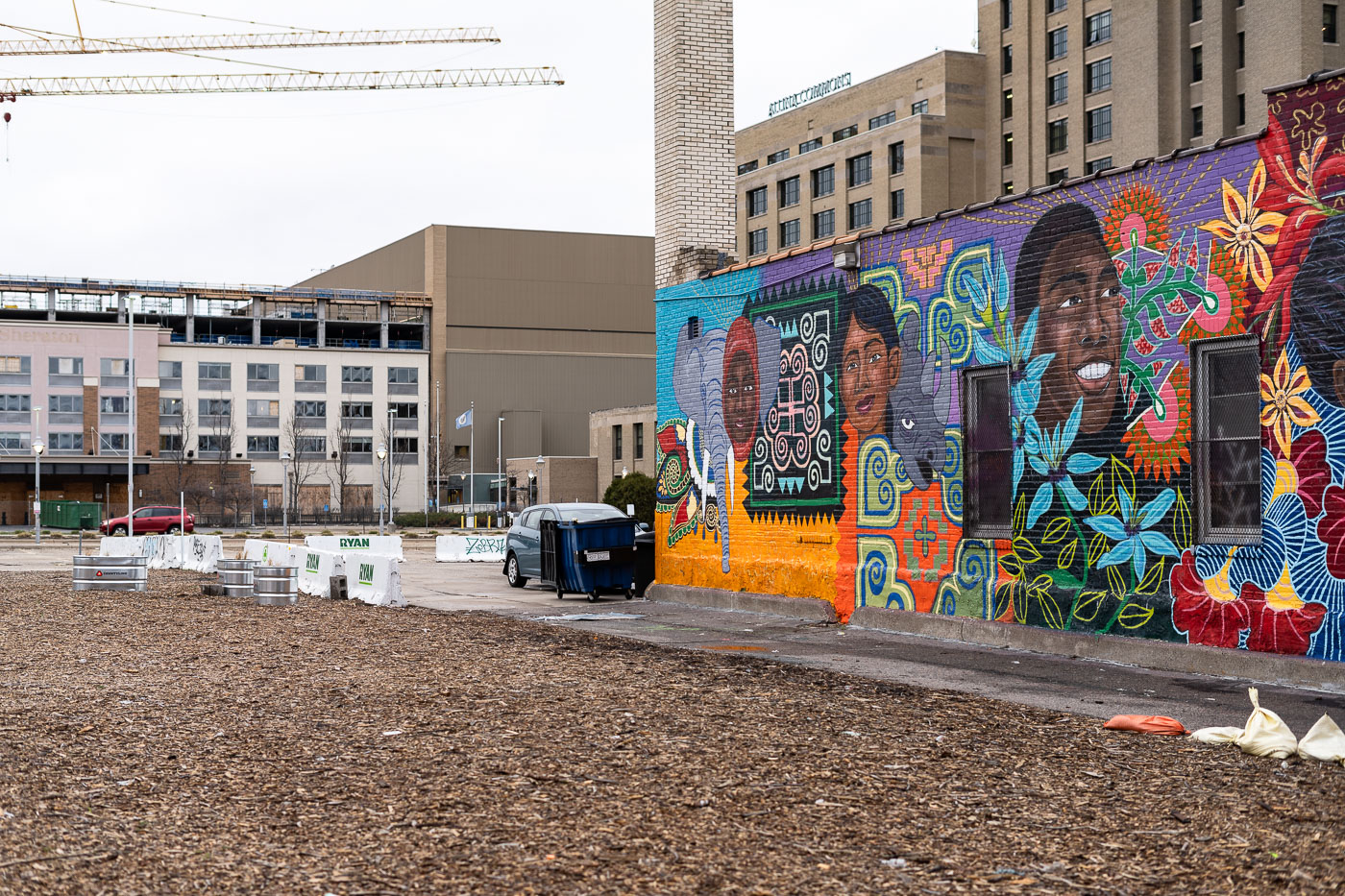
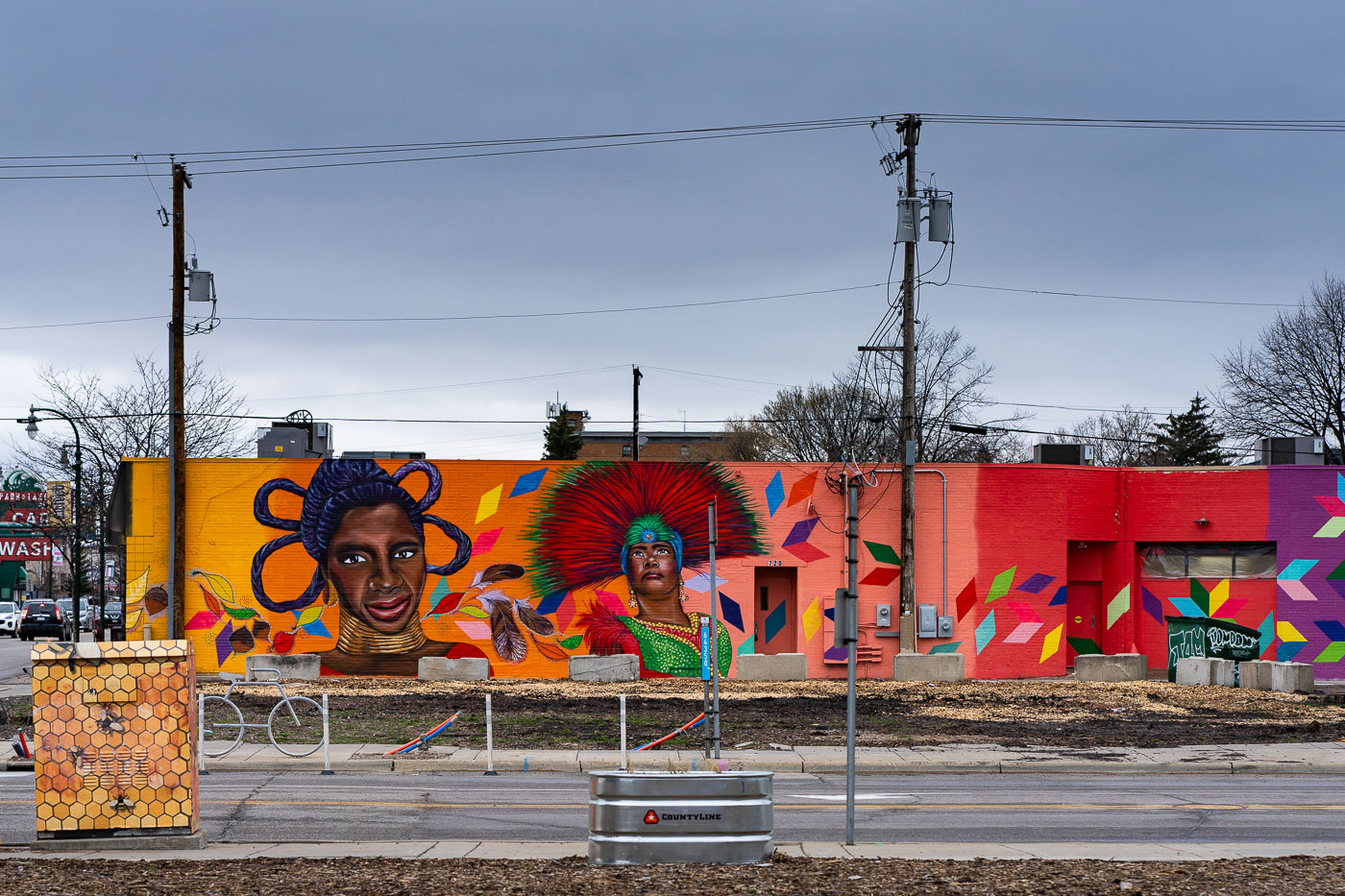
A mural by artist Melodee Strong on the side of a building on Lake Street.