Razor Wire

27 photos · 2020–2024

27 photographs tagged Razor Wire, 2020–2024.
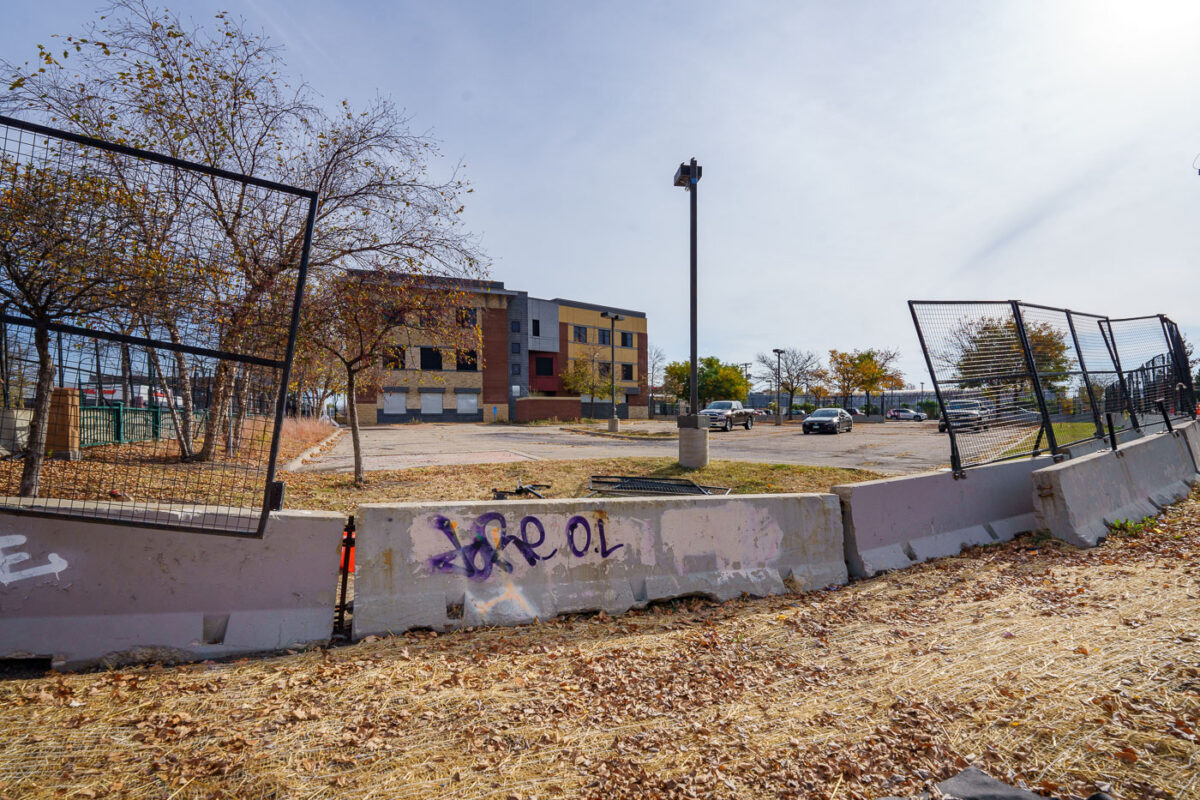
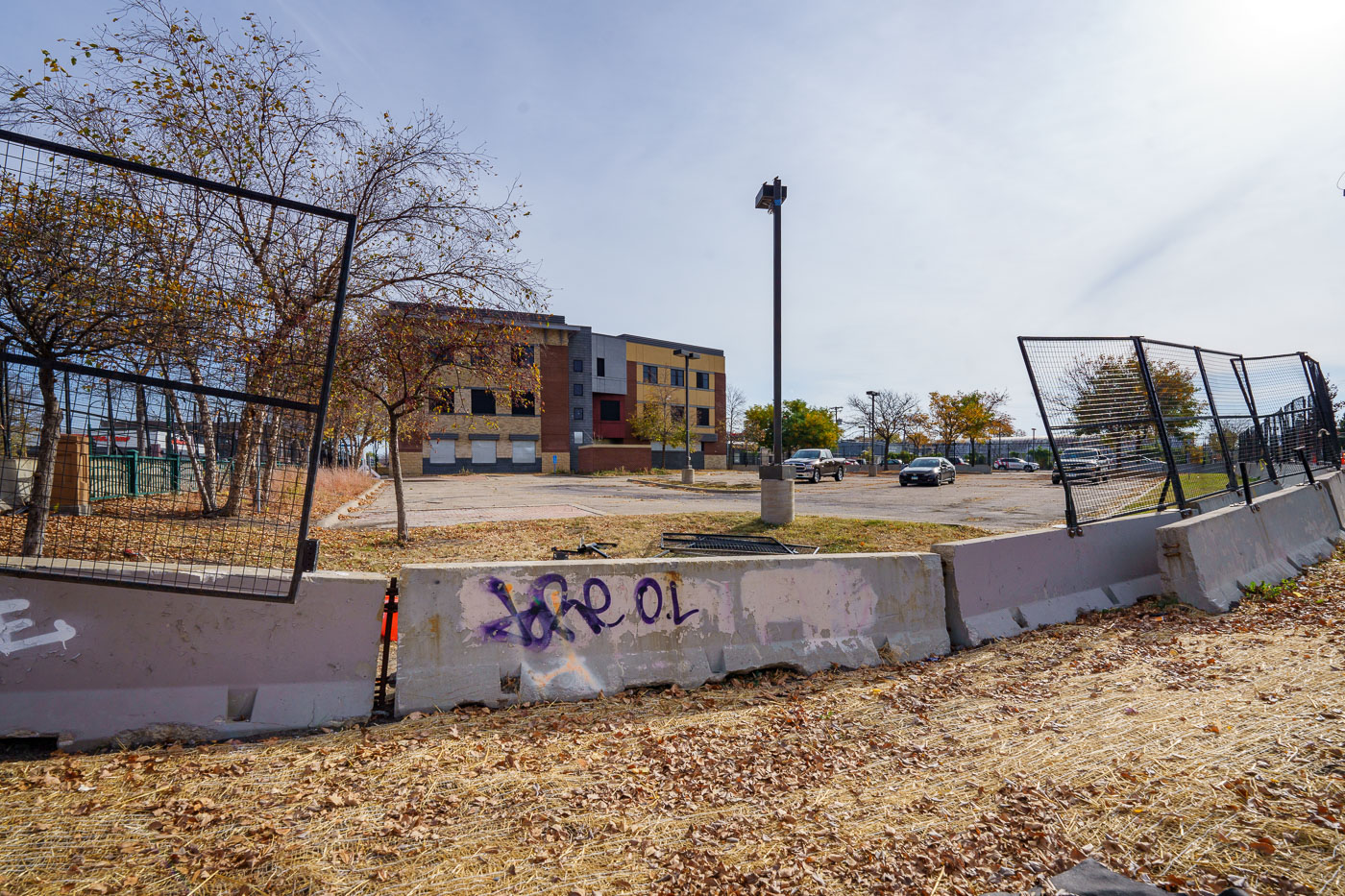
Concrete barriers and metal fencing surround the Minneapolis Police Third Precinct building site undergoing redevelopment.
Construction fencing and concrete barriers surround the Minneapolis Police Third Precinct building, which is undergoing redevelopment. The precinct was damaged by fire during protests following the murder of George Floyd in May 2020. The city plans to transform the site into a "Democracy Center" intended to house election services and community spaces.

Concrete Barriers Around the Third Precinct Construction Site
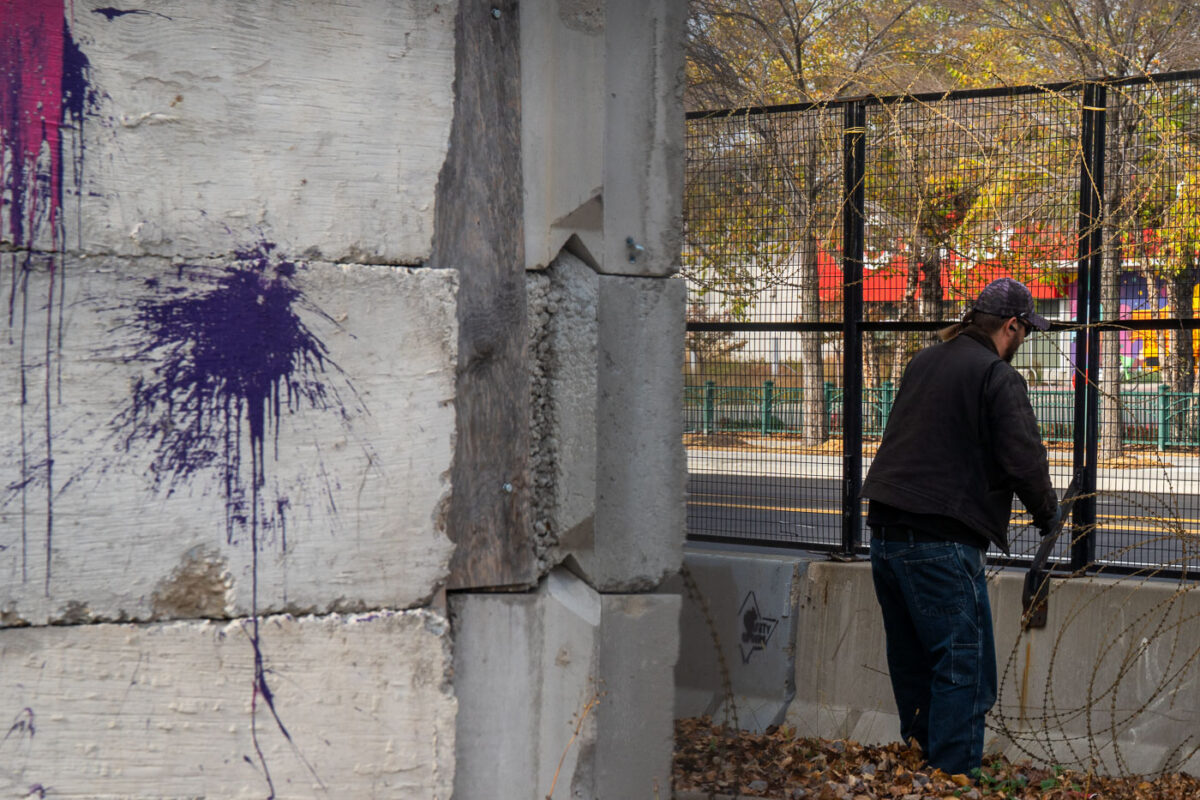
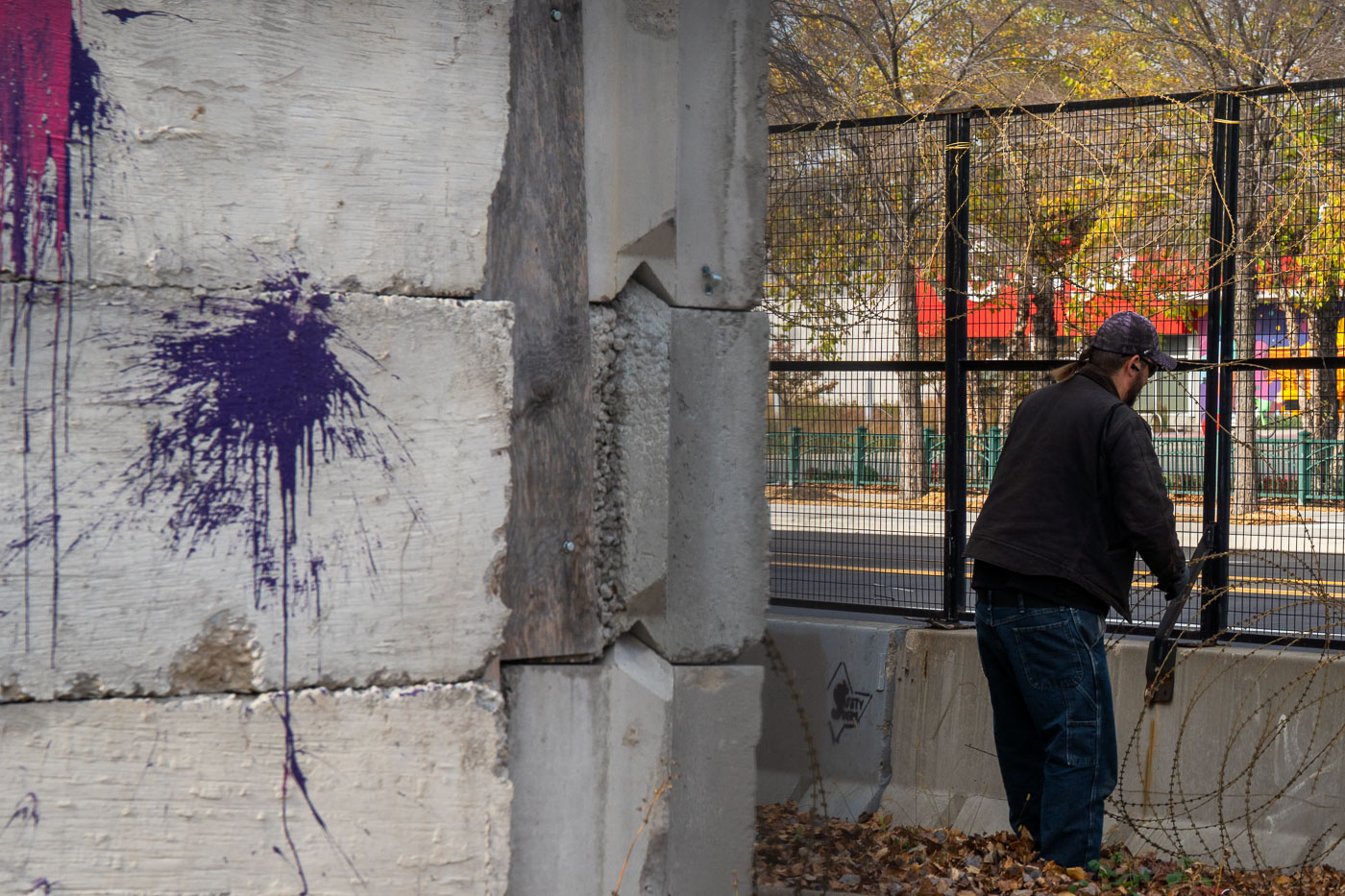
Worker removes razor wire barriers from the Minneapolis Police Department's Third Precinct building exterior.
Workers remove razor wire from the exterior of the Minneapolis Police Department's Third Precinct building. The precinct was heavily damaged by fire during protests following the murder of George Floyd in May 2020.

Clearing Razor Wire Outside Minneapolis Third Precinct
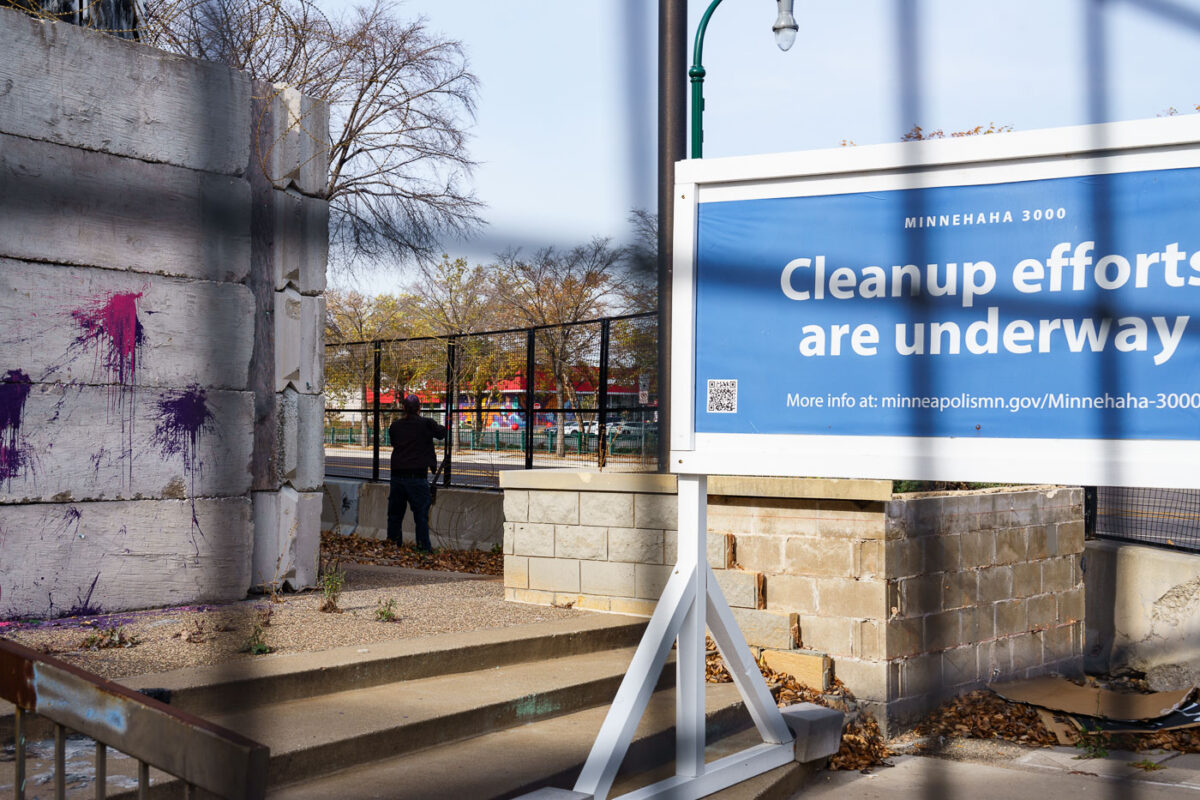
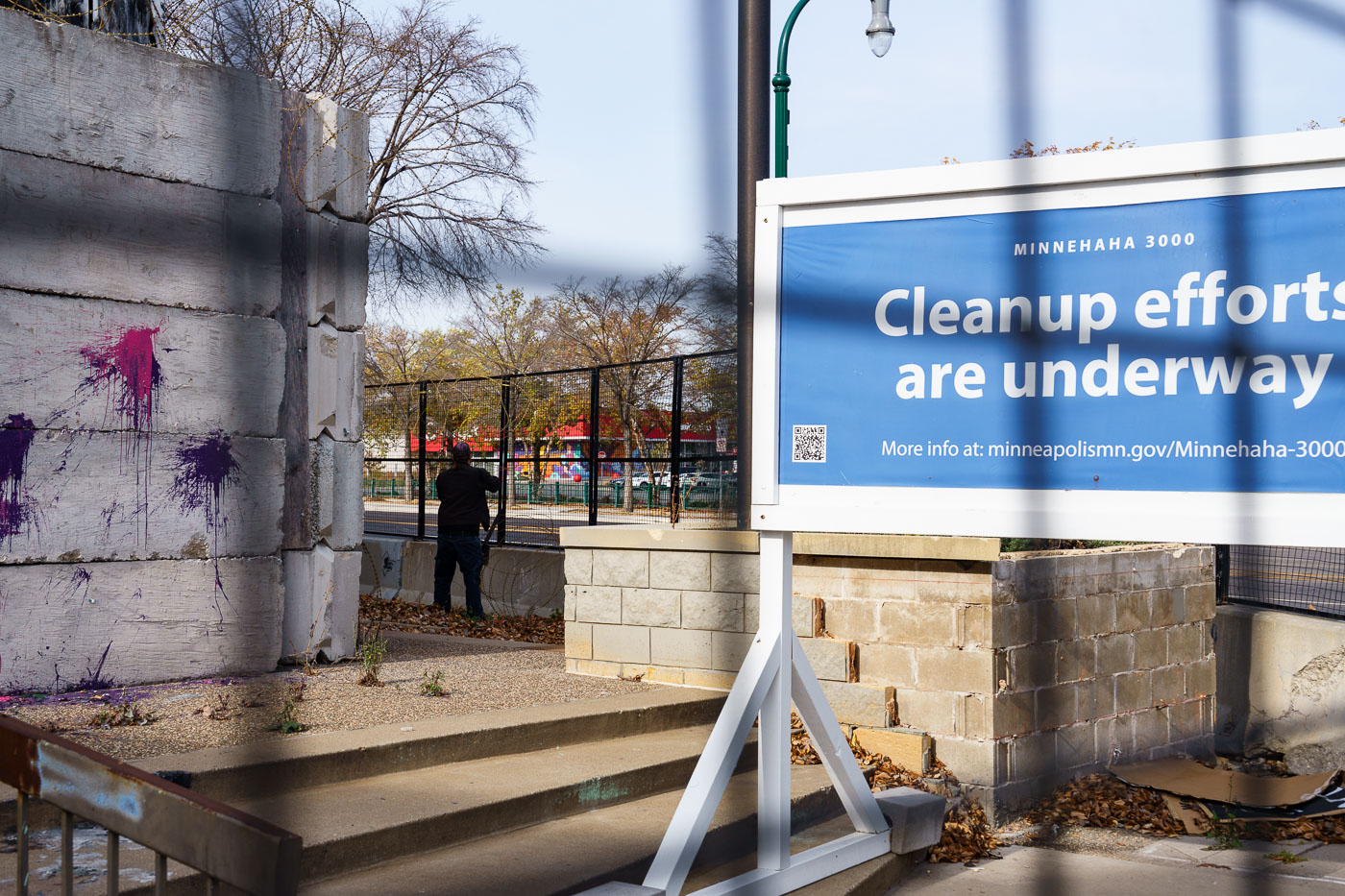
A blue sign announces "Cleanup efforts are underway" at the Minneapolis Police Department's Third Precinct building surrounded by concrete barricades and razor wire.
Workers remove razor wire from the Minneapolis Police Department's Third Precinct building, which was damaged during protests following the murder of George Floyd in 2020. The precinct was subsequently fortified with concrete barricades and razor wire.

“Cleanup Efforts Are Underway” Sign at the Minneapolis 3rd Precinct

Minneapolis Police 3rd Precinct building surrounded by razor wire fencing and concrete barricades on Lake Street.
Razor wire and concrete barricades continue to surround the former Minneapolis Police 3rd Precinct building on Lake Street. The station was significantly damaged by fire during protests in May 2020 following the murder of George Floyd.

Razor Wire Fencing Along the Former 3rd Precinct on Lake Street

Public signage on a Minneapolis building announces cleanup efforts are underway for the former police third precinct station.
Signage at the former Minneapolis Police Third Precinct station, located on Lake Street, announces "Cleanup efforts are underway." This precinct was a focal point during the civil unrest following the murder of George Floyd in May 2020, and the building sustained significant damage.

“Minnehaha 3000” Sign at the Former 3rd Precinct, Minneapolis
Razor wire around parking ramp in Uptown Minneapolis May 2022
Razor wire fences surround a parking ramp at Lake Street and Girard Avenue in Uptown Minneapolis. This security measure was installed following protests that occurred in the area after the shooting death of Winston Smith by a federal task force at the top of the ramp. The incident sparked significant unrest and demonstrations in the neighborhood.

Razor Wire on Parking Garage, Uptown Minneapolis
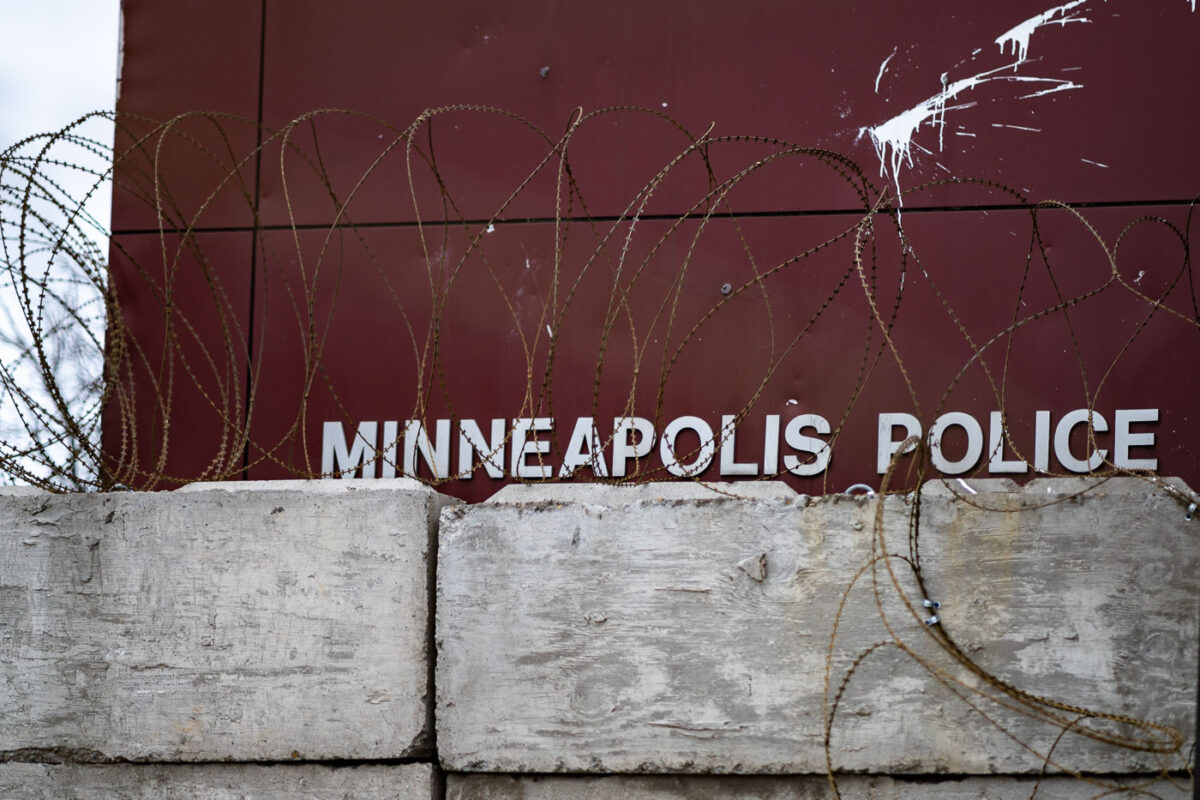
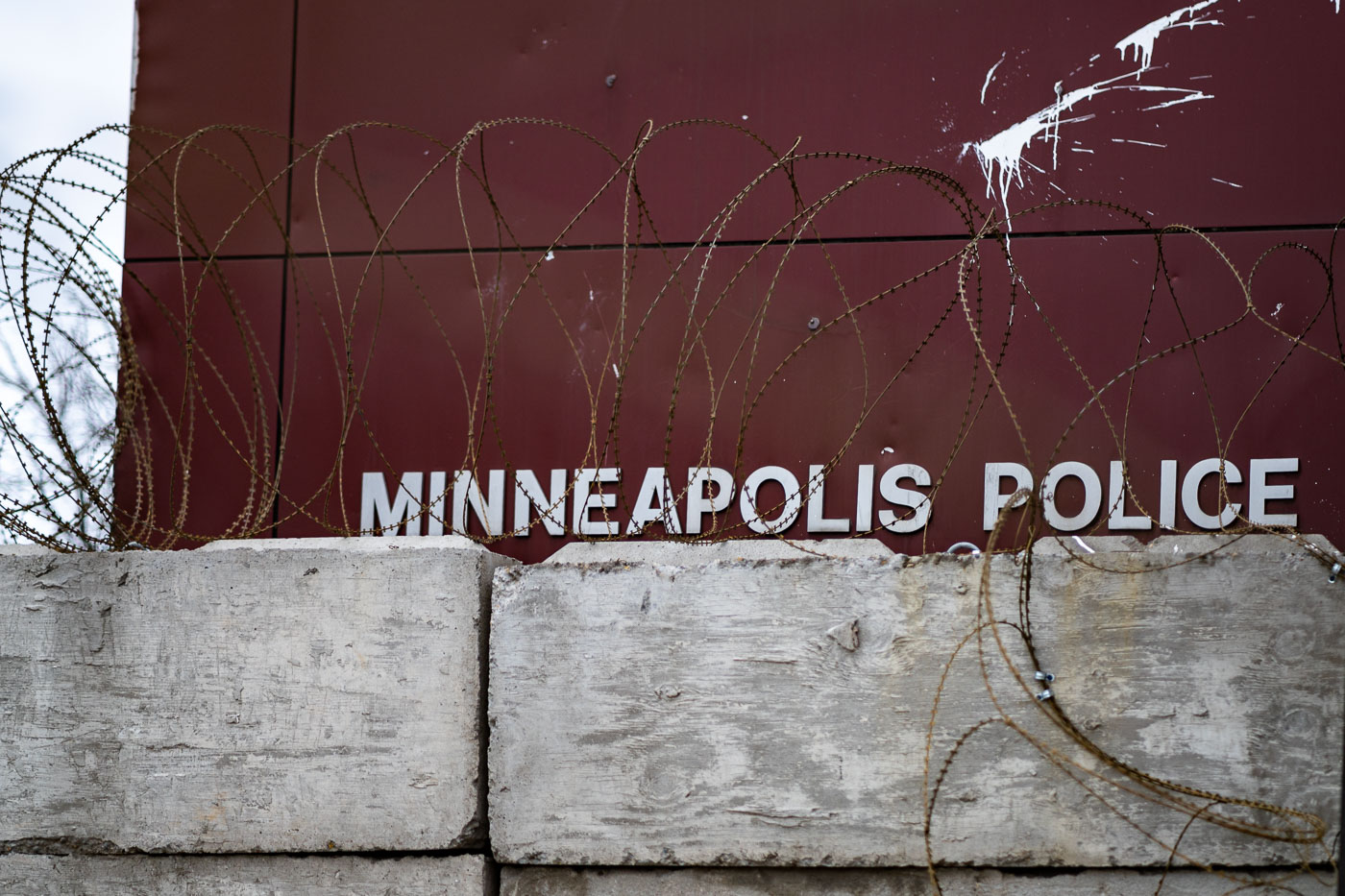
Minneapolis police sign on the burned 3rd precinct police station
The Minneapolis Police third precinct building, located on Lake Street, is shown on May 1, 2022, fortified with concrete barriers and razor wire. This structure was significantly damaged by fire during protests that followed the murder of George Floyd by Minneapolis police officer Derek Chauvin on May 25, 2020.

Minneapolis Police 3rd Precinct After Uprising
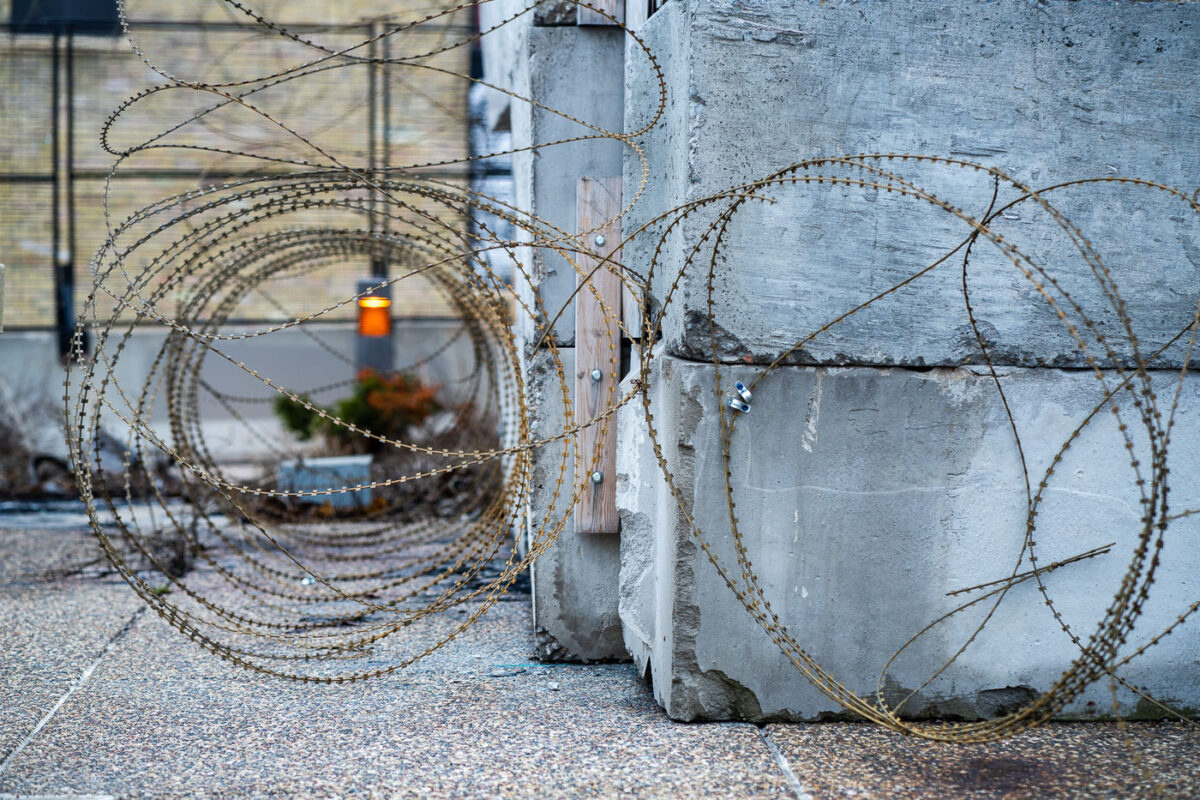
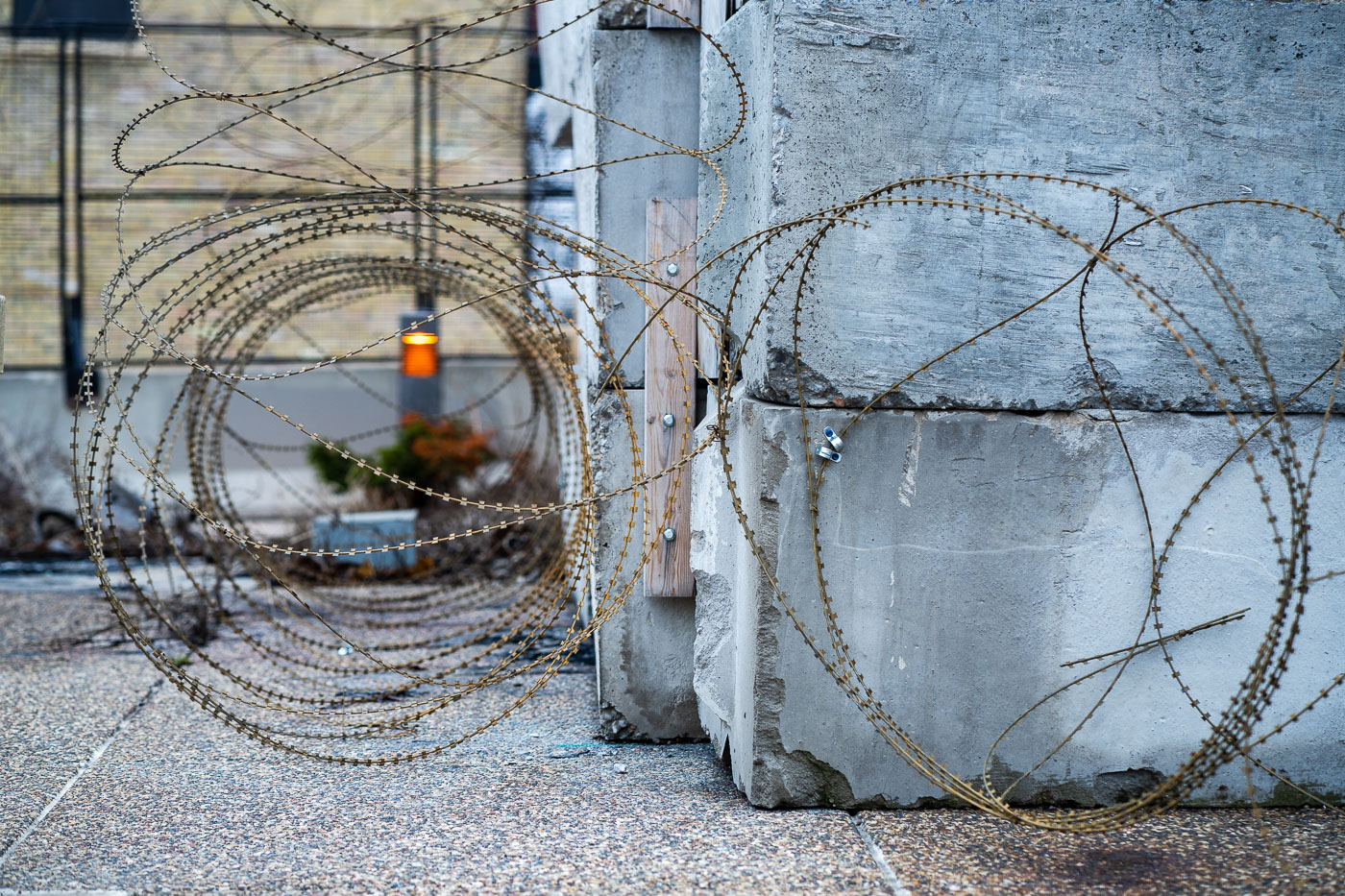
Razor wire and concrete blocks outside the door of the burned Minneapolis police station
Razor wire and concrete barriers surround the exterior of the Minneapolis 3rd Precinct police station, which was damaged during protests in the summer of 2020. The station, located on Lake Street in Minneapolis, was a focal point of unrest following the murder of George Floyd.

Razor wire security at burned Minneapolis 3rd Precinct police station
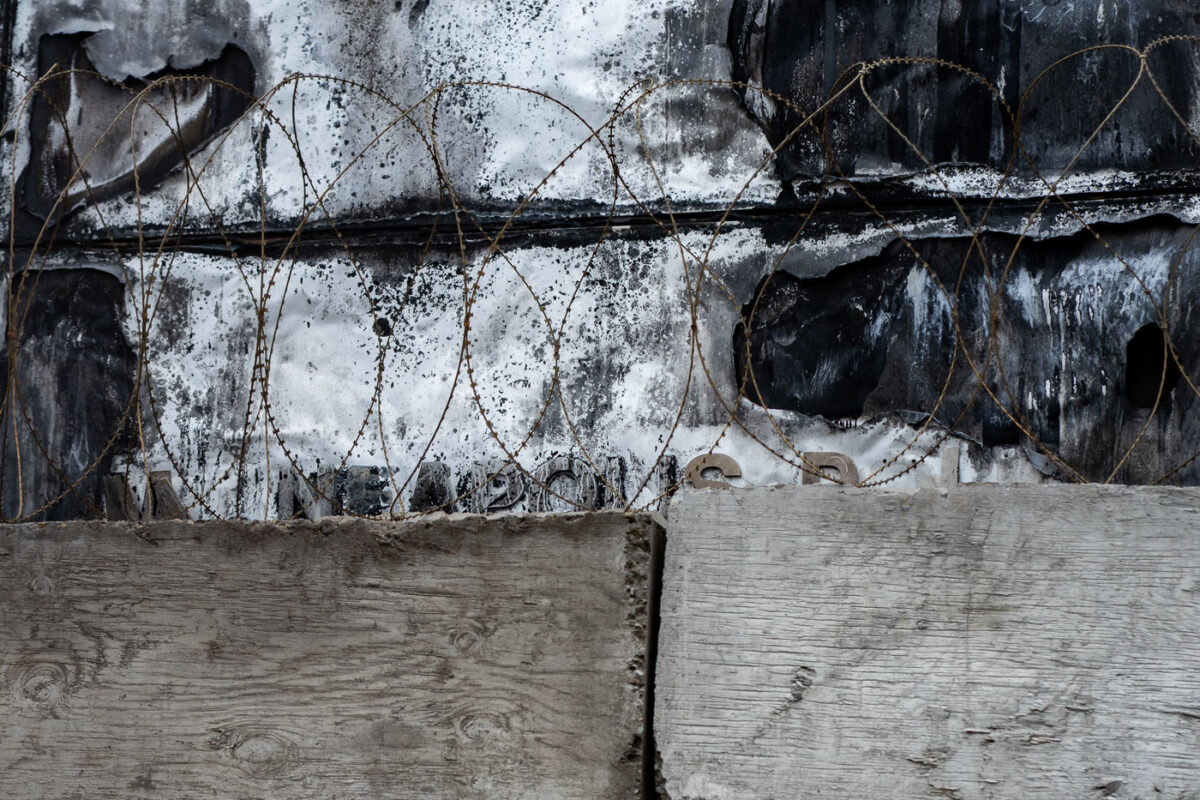
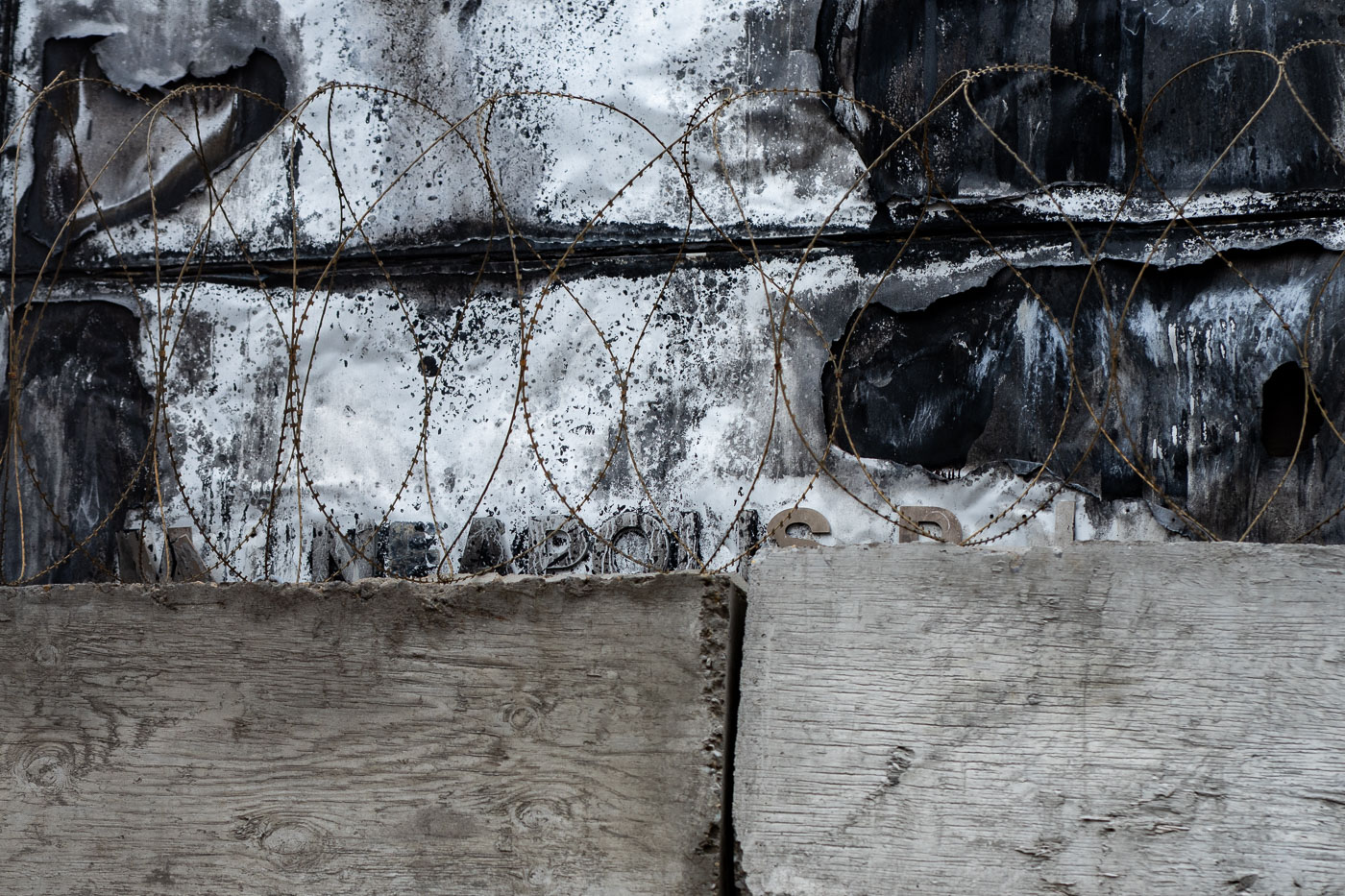
Concrete blocks over doors of burned police station in Minneapolis
Concrete blocks and razor wire secure the former entrance of the Minneapolis Police 3rd Precinct station following its damage during protests on May 28, 2020. The precinct, located on Lake Street in Minneapolis, was set ablaze by protesters in the aftermath of the murder of George Floyd on May 25, 2020. The incident marked a significant moment in the widespread unrest that followed Floyd's death, highlighting public anger towards police conduct and systemic injustice.

Minneapolis Police 3rd Precinct: Burned, Barricaded
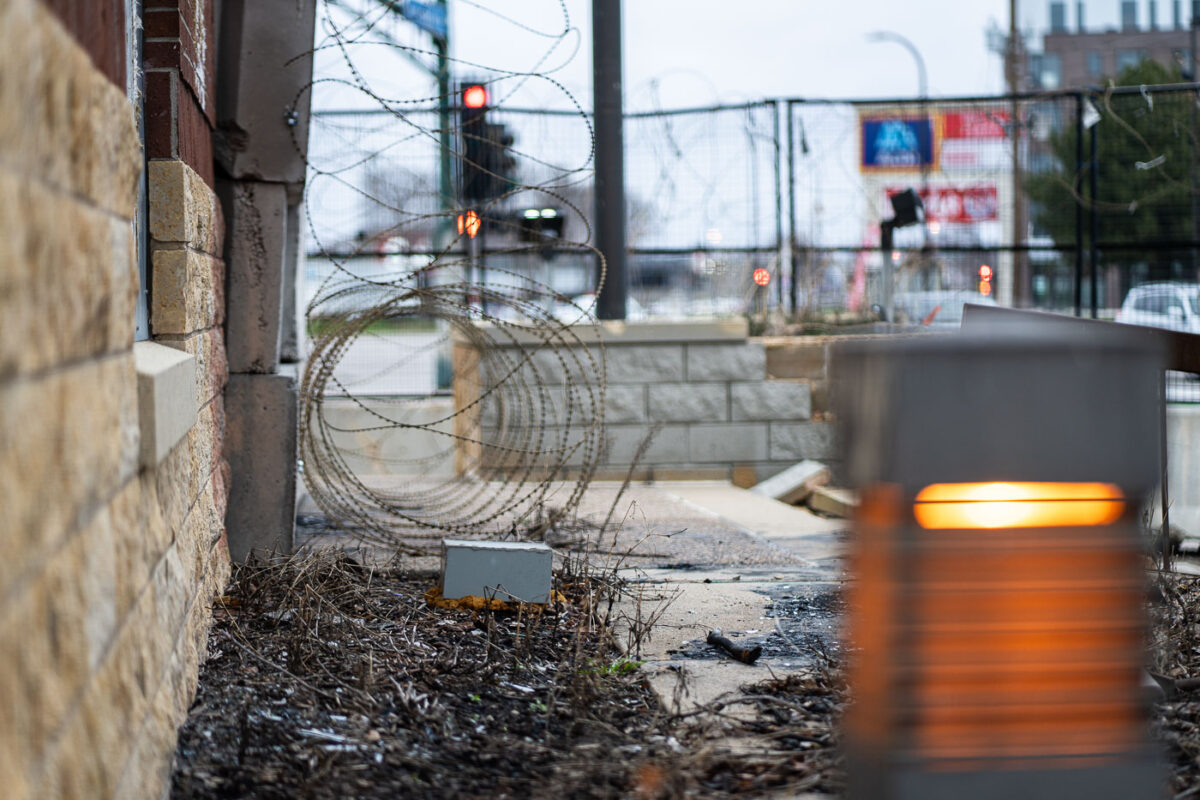
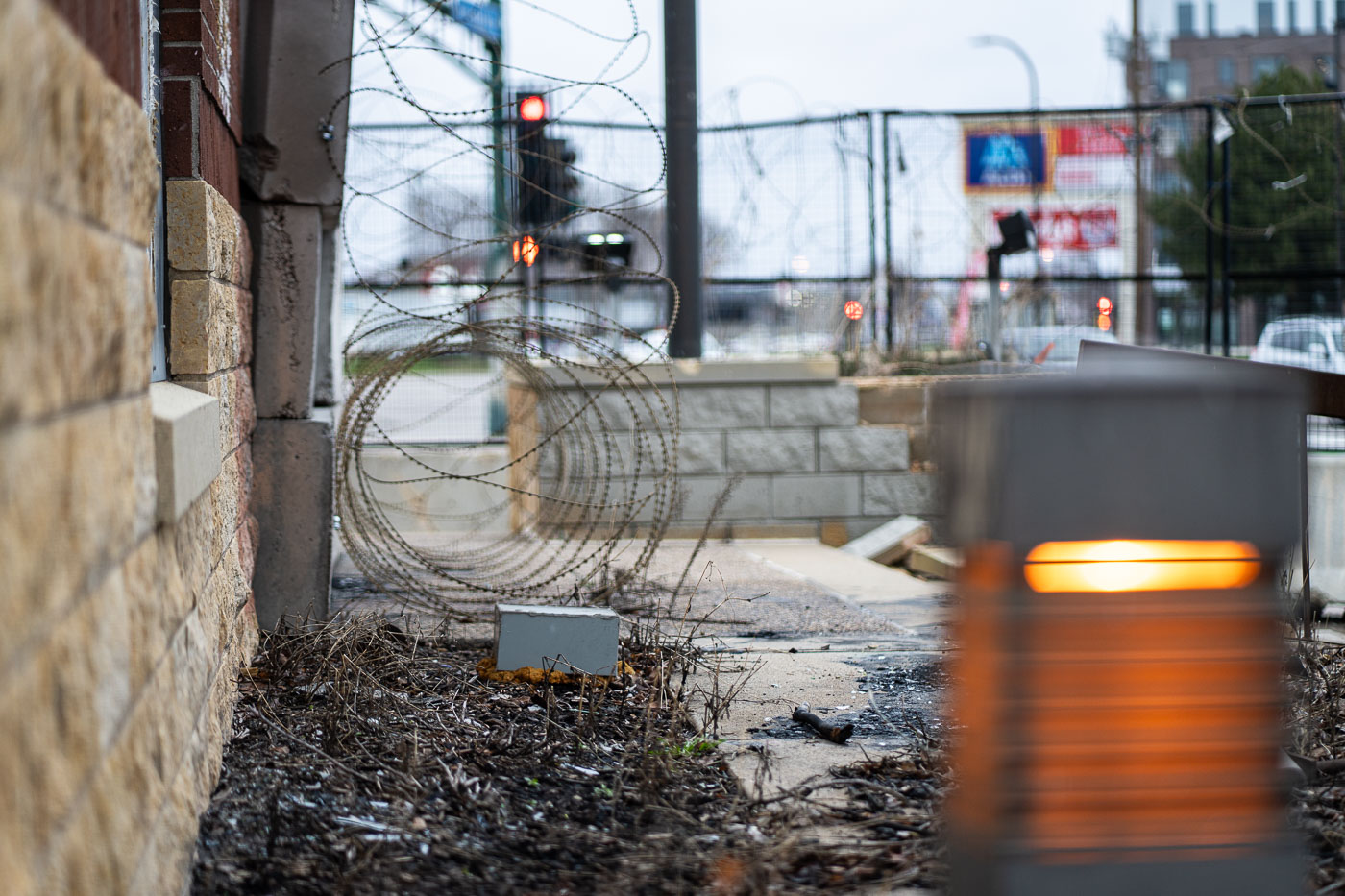
Razor wire at burned Minneapolis police station May 2022
Razor wire continues to surround the Minneapolis Police Department's 3rd Precinct building nearly two years after its evacuation. The precinct was abandoned by police in June 2020 following protests and unrest in the wake of George Floyd's murder. While surrounding structures, such as the Everlake apartment building on Lake Street, have since been rebuilt and reopened, the 3rd Precinct building itself has undergone no significant changes.

Razor wire surrounds Minneapolis Police 3rd Precinct, two years later
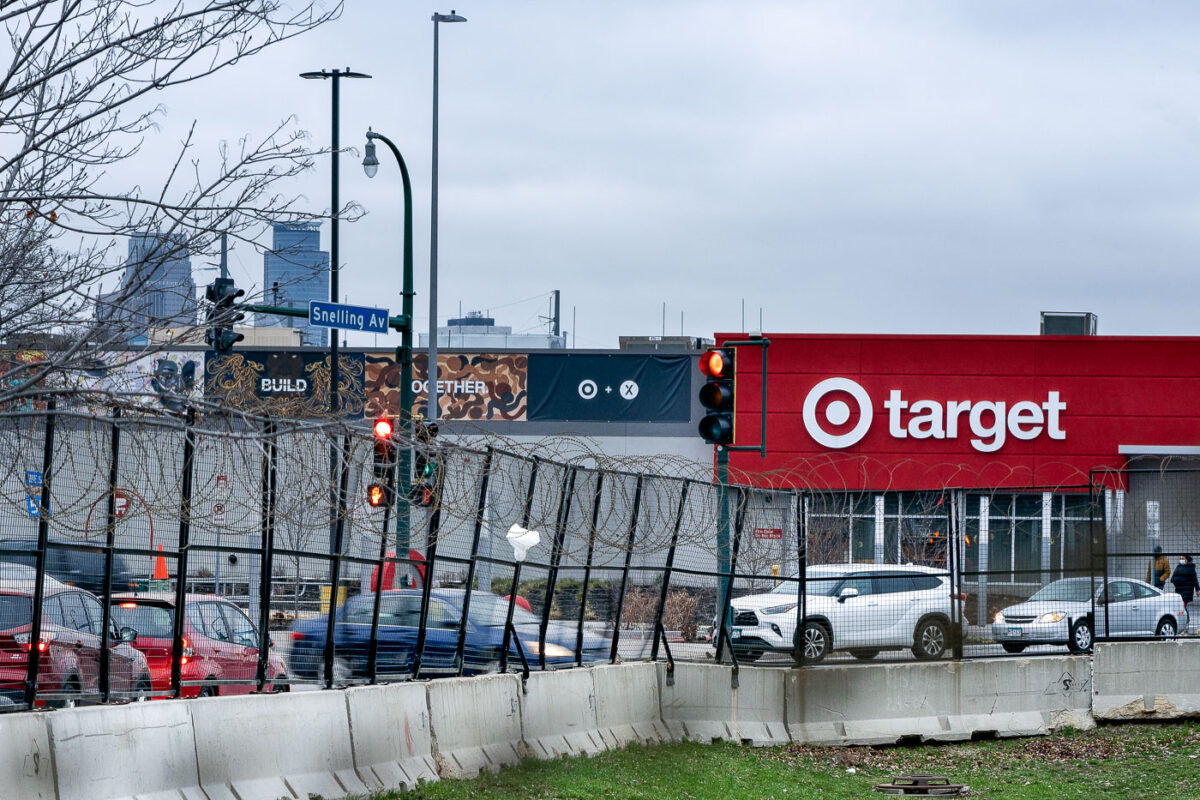
Razor wire surrounding parking lot of the burned Minneapolis police station
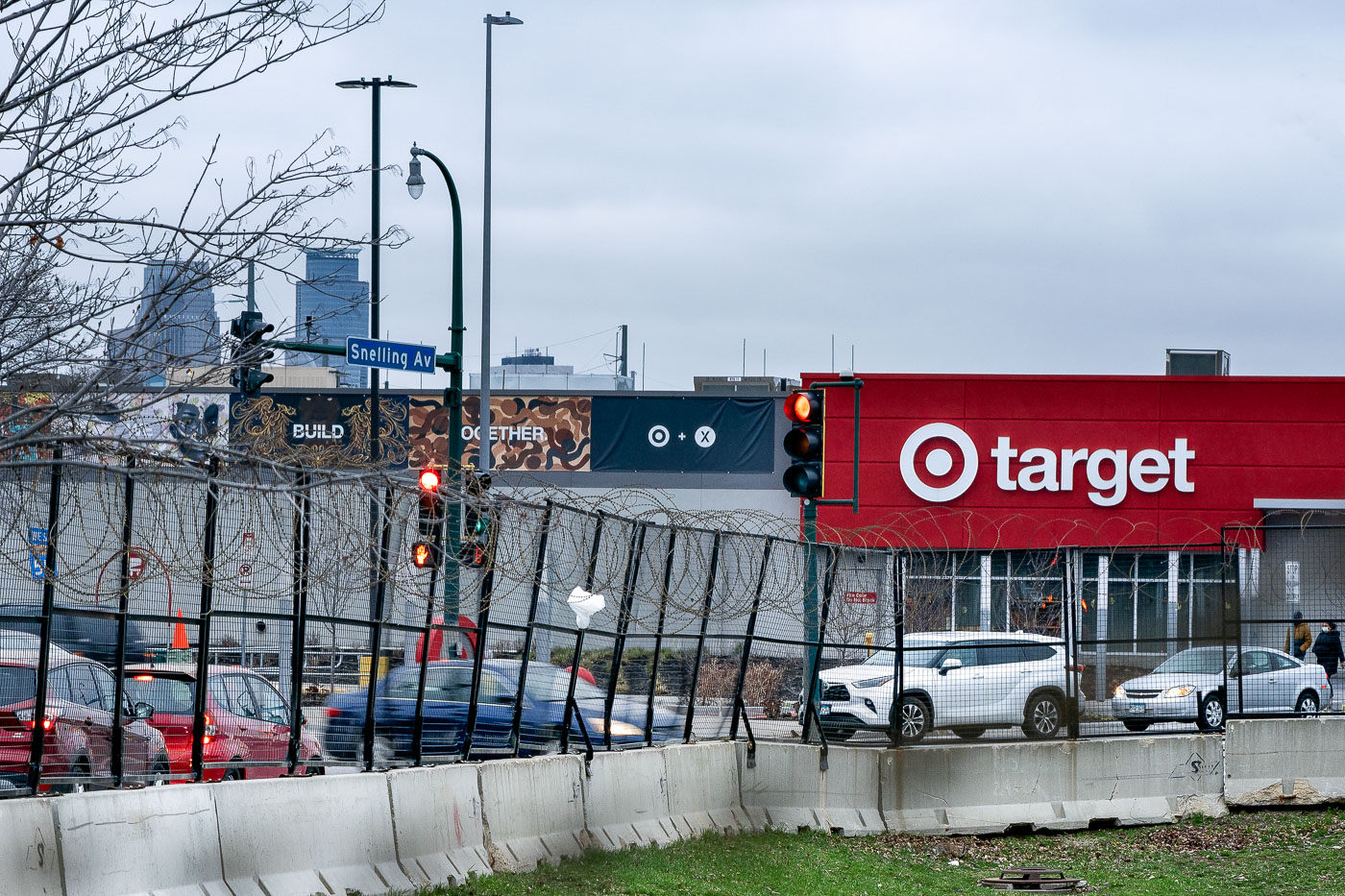
Razor wire encircles the Minneapolis Police Third Precinct parking lot, with a Target store visible across Snelling Avenue. This Target store was rebuilt after sustaining damage during the civil unrest that followed the murder of George Floyd by Minneapolis police on May 25, 2020. The precinct and surrounding businesses became focal points during the protests and riots that occurred in the aftermath.

Minneapolis Police 3rd Precinct Razor Wire and Target Store
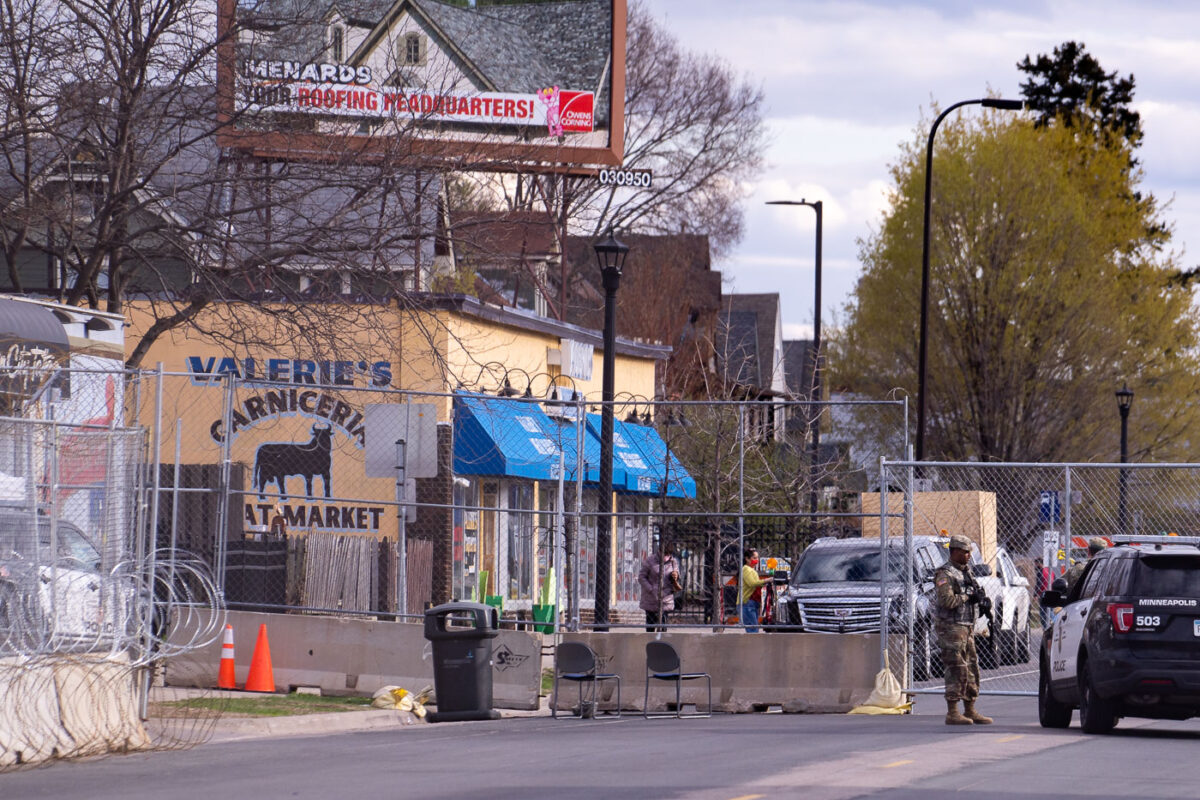
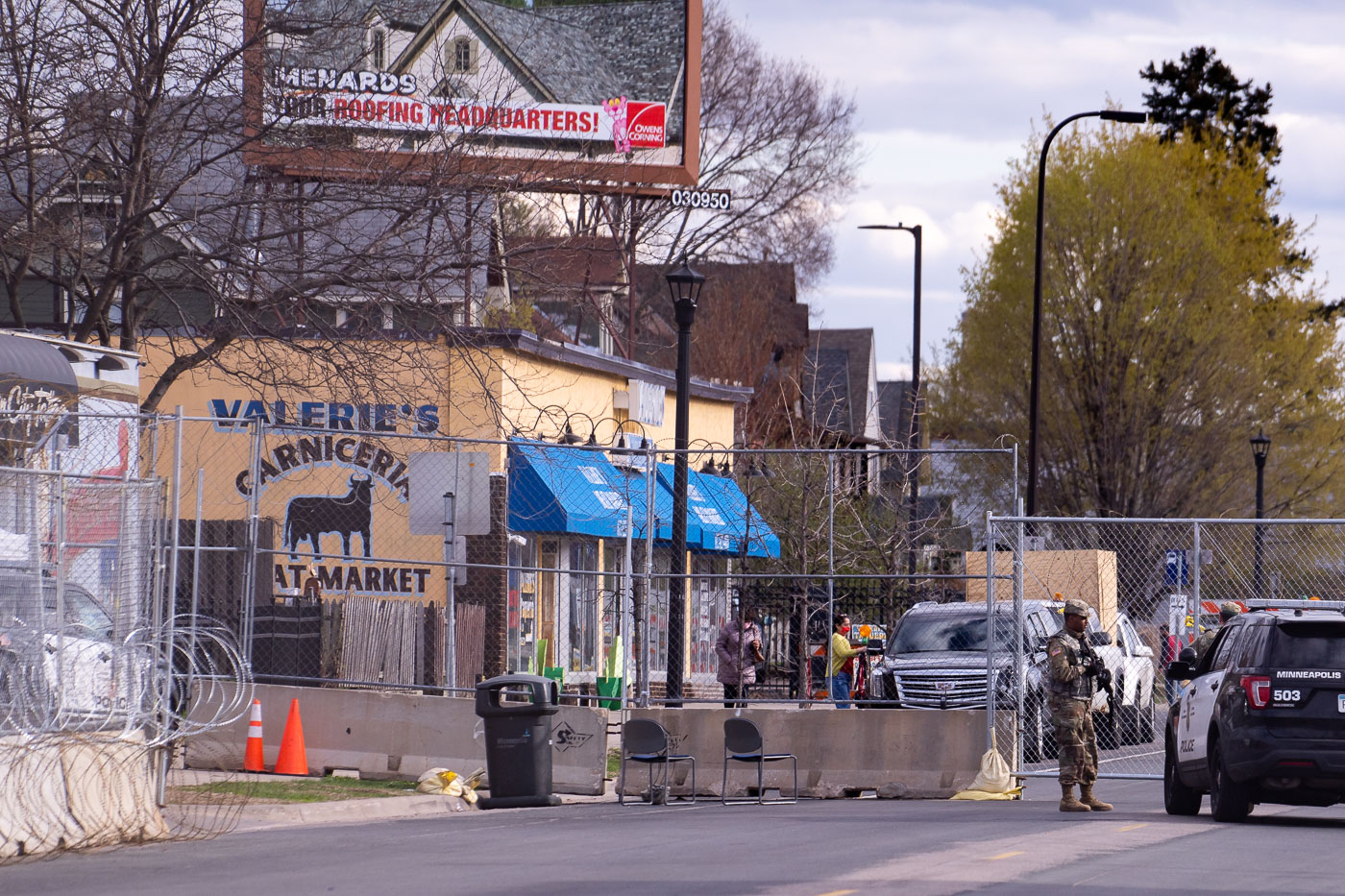
National Guard and police at Minneapolis Fifth Precinct behind fencing and razor wire.
National Guard soldiers and Minneapolis Police officers secure the perimeter of the Minneapolis Police Fifth Precinct in South Minneapolis. The precinct was fortified with concrete barriers and razor wire in response to widespread protests and civil unrest that followed the killing of George Floyd in May 2020 and the subsequent trial of Officer Derek Chauvin. The presence of the National Guard was a visible symbol of the state's response to maintain order during a period of intense public scrutiny and activism.

National Guard at Minneapolis Police Fifth Precinct
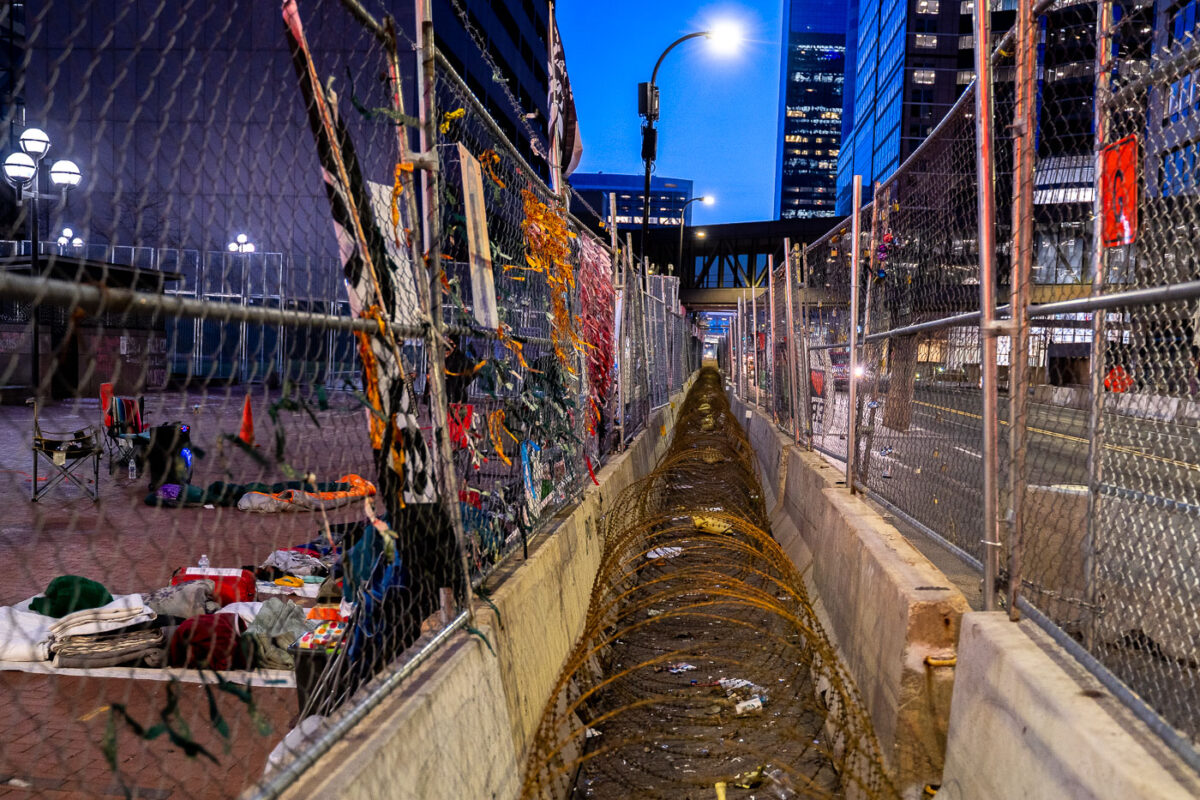
Razor wire and protest signs at Hennepin County Government Center in Minneapolis during the Derek Chauvin trial.
Razor wire and protest signs surround the Hennepin County Government Center in Minneapolis during the trial of Derek Chauvin. The security measures were put in place following the death of George Floyd on May 25, 2020, and the subsequent protests. The area has become a focal point for demonstrations, with protesters decorating the fencing with signs and ribbons, indicating a continuous occupation of the space.

Minneapolis Government Center: Razor wire and protest signs
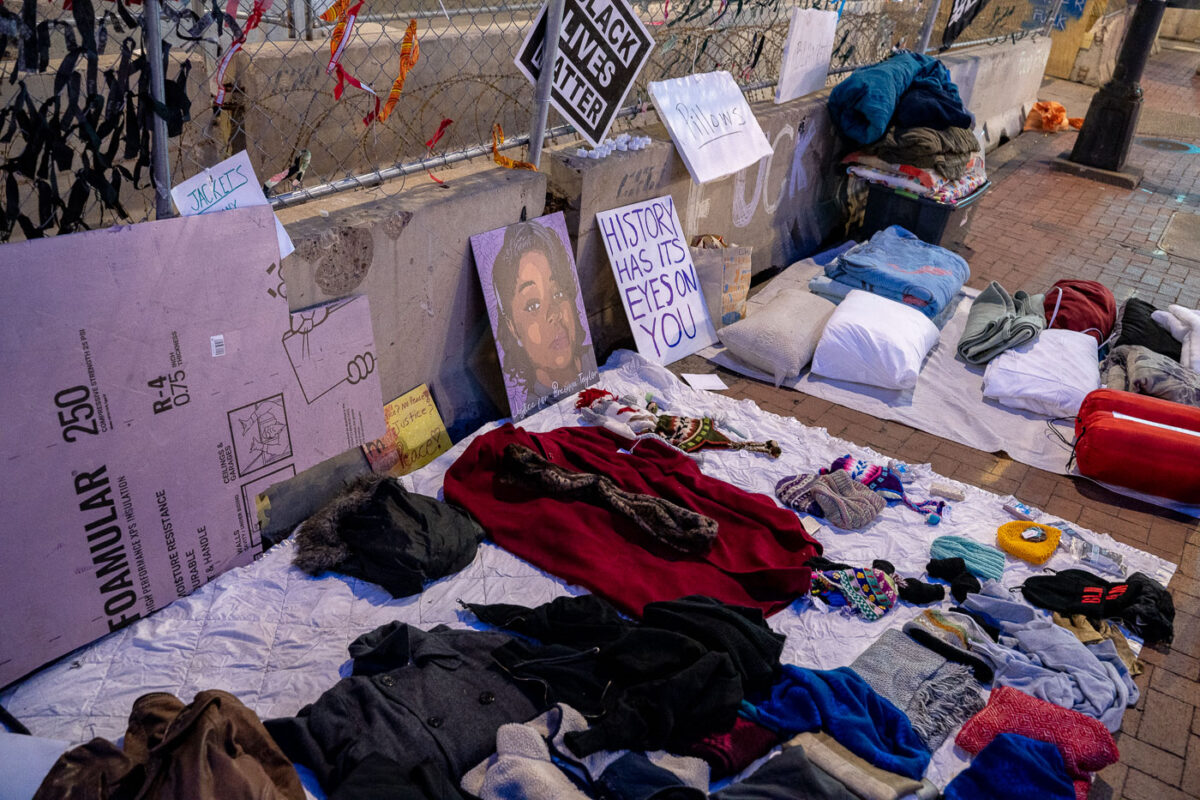
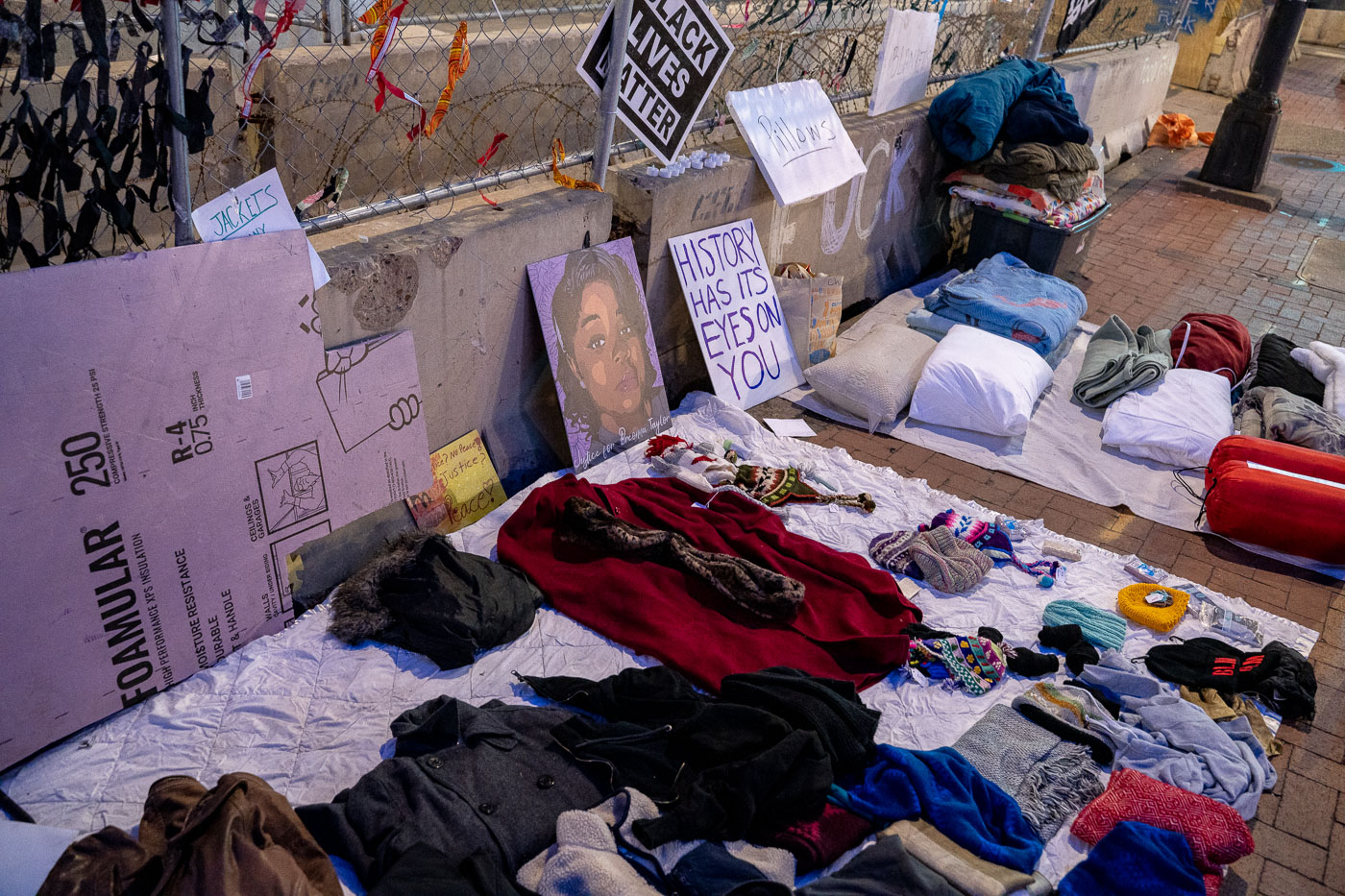
Blankets and clothing for protesters at Hennepin County Government Center in Minneapolis.
Supplies including blankets, pillows, and jackets were made available to protesters occupying the Hennepin County Government Center in Minneapolis. The occupation occurred during the 2021 Derek Chauvin trial, a period of heightened activism following the murder of George Floyd. The presence of these supplies highlights the sustained nature of the protest and the community's efforts to support those participating. The "Black Lives Matter" signs and portraits of victims of police brutality, such as Breonna Taylor, underscore the movement's core demands for racial justice and police accountability.

Minneapolis: Supplies for protesters at Hennepin County Government Center

Razor wire at Minneapolis police 2nd precinct
The Minneapolis Police Department's 2nd Precinct is shown fortified with razor wire and concrete barriers. This security measure was implemented in anticipation of potential unrest during the trial of Derek Chauvin, who was accused of the murder of George Floyd. The precinct, located in the Powderhorn neighborhood of Minneapolis, became a focal point during the widespread protests that followed Floyd's death in May 2020. The extensive security measures reflect the heightened tensions and the city's efforts to protect public buildings and maintain order during a period of significant social and political upheaval.

Minneapolis Police 2nd Precinct Barricaded with Razor Wire
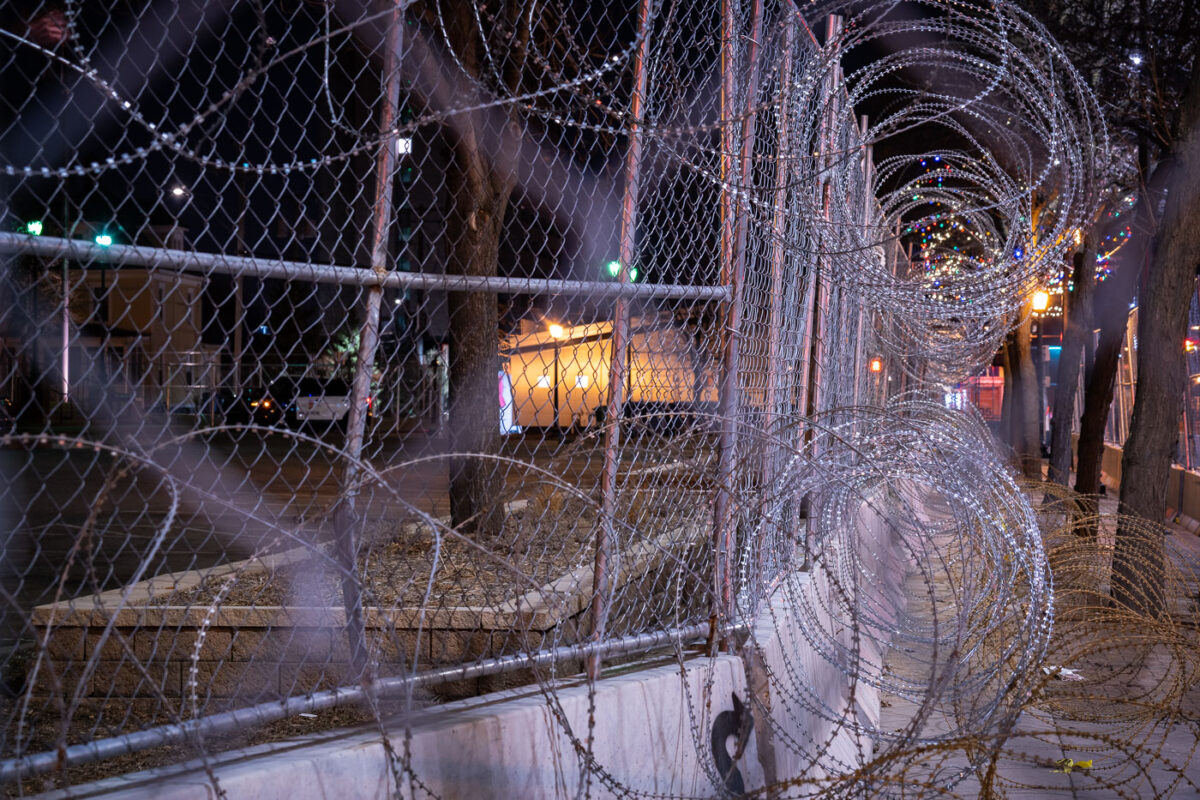
Minneapolis police behind razor wire in Northeast Minneapolis
The Minneapolis Police 2nd Precinct is shown fortified with razor wire and chain-link fencing. This security measure was implemented during the period surrounding the Derek Chauvin murder trial in 2021. The precinct, located in Minneapolis, Minnesota, serves as a key law enforcement facility for the city's north side. The extensive use of razor wire reflects the heightened security concerns and the volatile atmosphere in the city during that time, following widespread protests and unrest.

Minneapolis Police 2nd Precinct Barricaded with Razor Wire

Razor wire around downtown Minneapolis police station
Razor wire surrounds the Minneapolis Police Third Precinct building in March 2021. This security measure was installed following protests and unrest that occurred in the city in the preceding year. The precinct, located in the Powderhorn neighborhood of Minneapolis, served as a focal point during periods of civil disturbance. The temporary fortification highlights the heightened security measures implemented to protect police facilities during times of social unrest.

Razor Wire at Minneapolis Police Third Precinct, March 2021

Derek Chauvin Razor Wire at Hennepin Courthouse
Razor wire fencing, a security measure, surrounds the Hennepin County Government Center in Minneapolis. This installation was part of Operation Safety Net, a multi-agency effort to provide security during the Derek Chauvin murder trial. The trial, which began with jury selection on March 8, 2021, followed the death of George Floyd and subsequent protests. On May 25, 2020, Minneapolis police officer Derek Chauvin murdered 46-year-old George Floyd during an arrest outside Cup Foods at the intersection of 38th Street and Chicago Avenue in south Minneapolis. Video recorded by bystanders showed Chauvin kneeling on Floyd’s neck for more than nine minutes while Floyd repeatedly said he could not breathe. Three other Minneapolis police officers - J. Alexander Kueng, Thomas Lane, and Tou Thao — were also present during the arrest and later faced criminal charges for their roles in Floyd’s death. Floyd’s murder sparked protests and civil unrest across Minneapolis and around the world, leading to widespread demonstrations against police violence, major policy debates on policing, and the conviction of Chauvin on murder and manslaughter charges in 2021.

Razor Wire Security at Hennepin Courthouse, Minneapolis
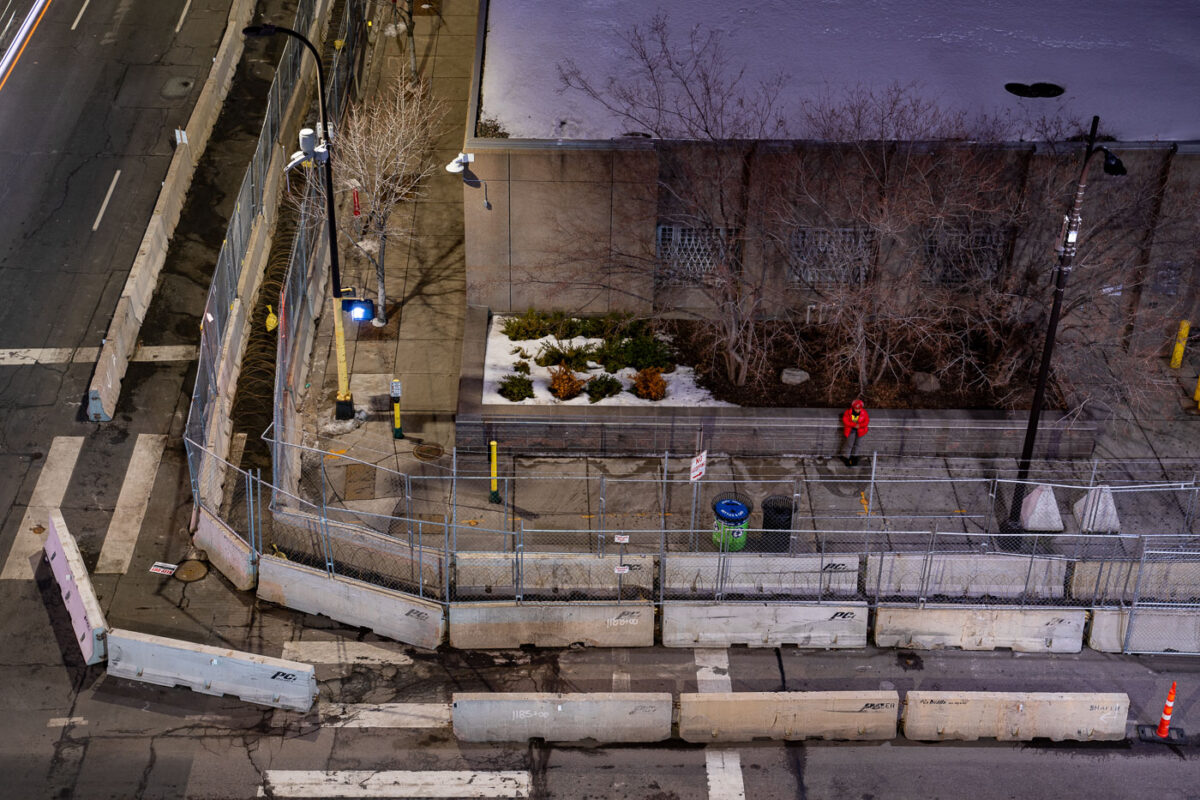
Barricades at the Hennepin County Public Safety Facility
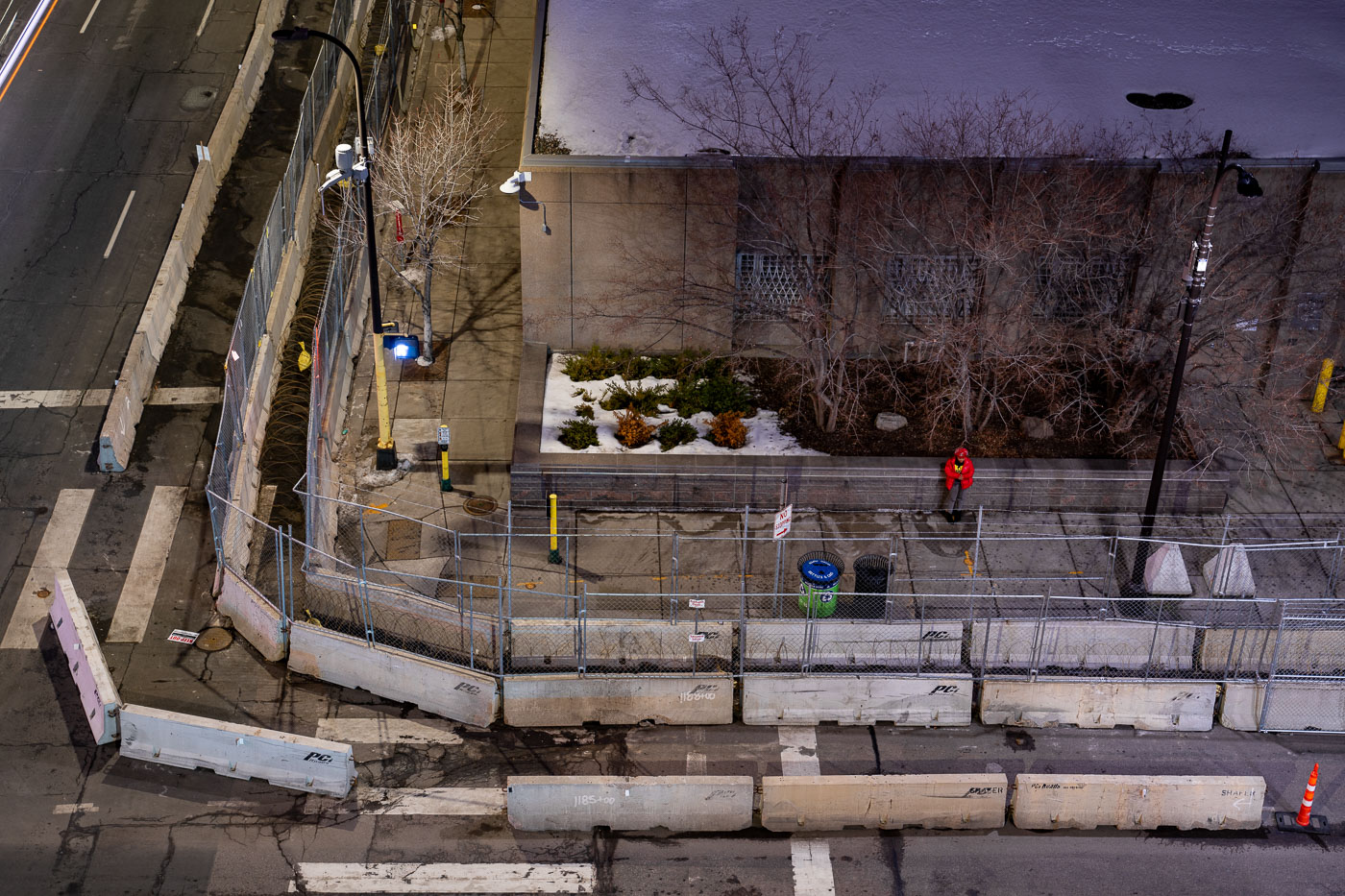
Security barricades and fencing surround the Hennepin County Public Safety Facility in Minneapolis on February 24, 2021 in anticipation of the Derek Chauvin murder trial. The extensive security measures, including concrete barriers and razor wire, were implemented to manage potential protests and ensure the safety of the courthouse and surrounding areas. On May 25, 2020, Minneapolis police officer Derek Chauvin murdered 46-year-old George Floyd during an arrest outside Cup Foods at the intersection of 38th Street and Chicago Avenue in south Minneapolis. Video recorded by bystanders showed Chauvin kneeling on Floyd’s neck for more than nine minutes while Floyd repeatedly said he could not breathe. Three other Minneapolis police officers - J. Alexander Kueng, Thomas Lane, and Tou Thao — were also present during the arrest and later faced criminal charges for their roles in Floyd’s death. Floyd’s murder sparked protests and civil unrest across Minneapolis and around the world, leading to widespread demonstrations against police violence, major policy debates on policing, and the conviction of Chauvin on murder and manslaughter charges in 2021.

Hennepin County Jail Barricades for Chauvin Trial
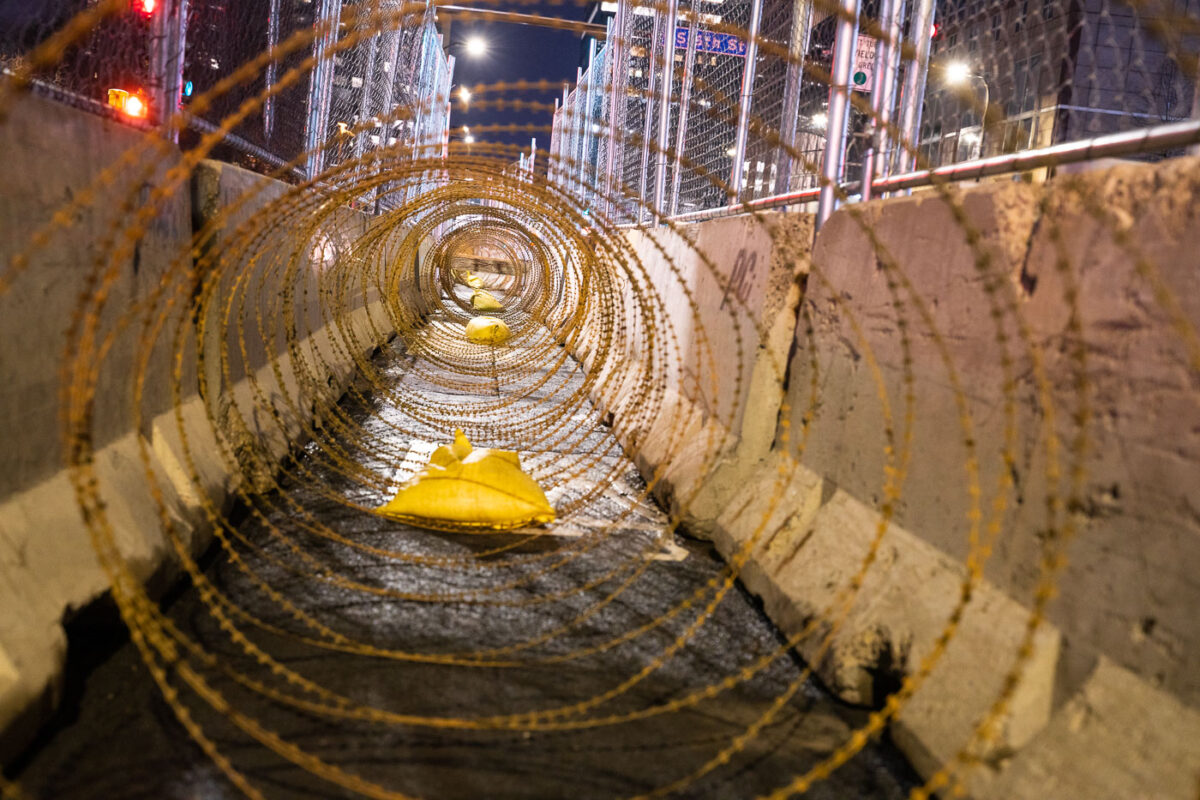
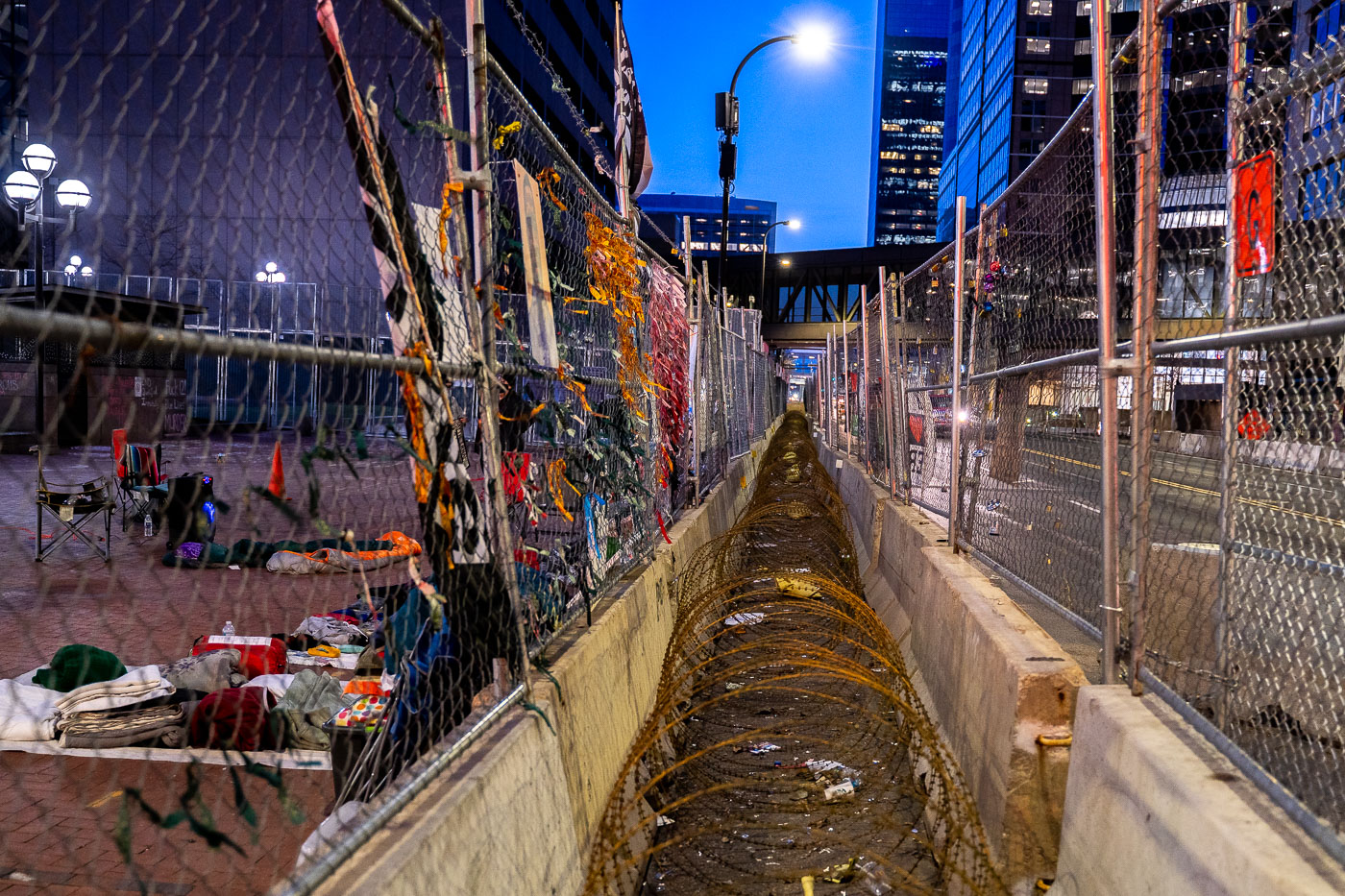
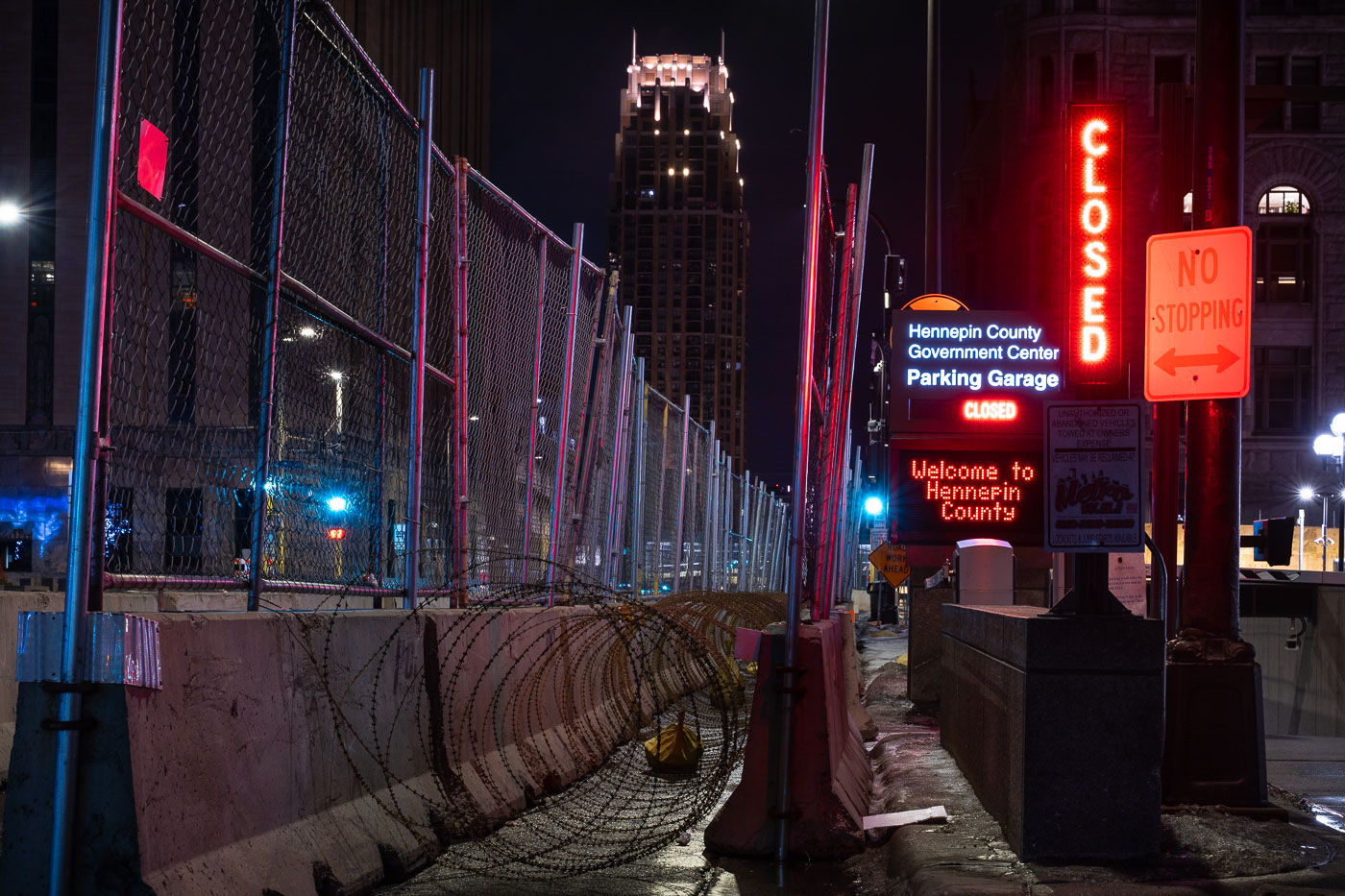
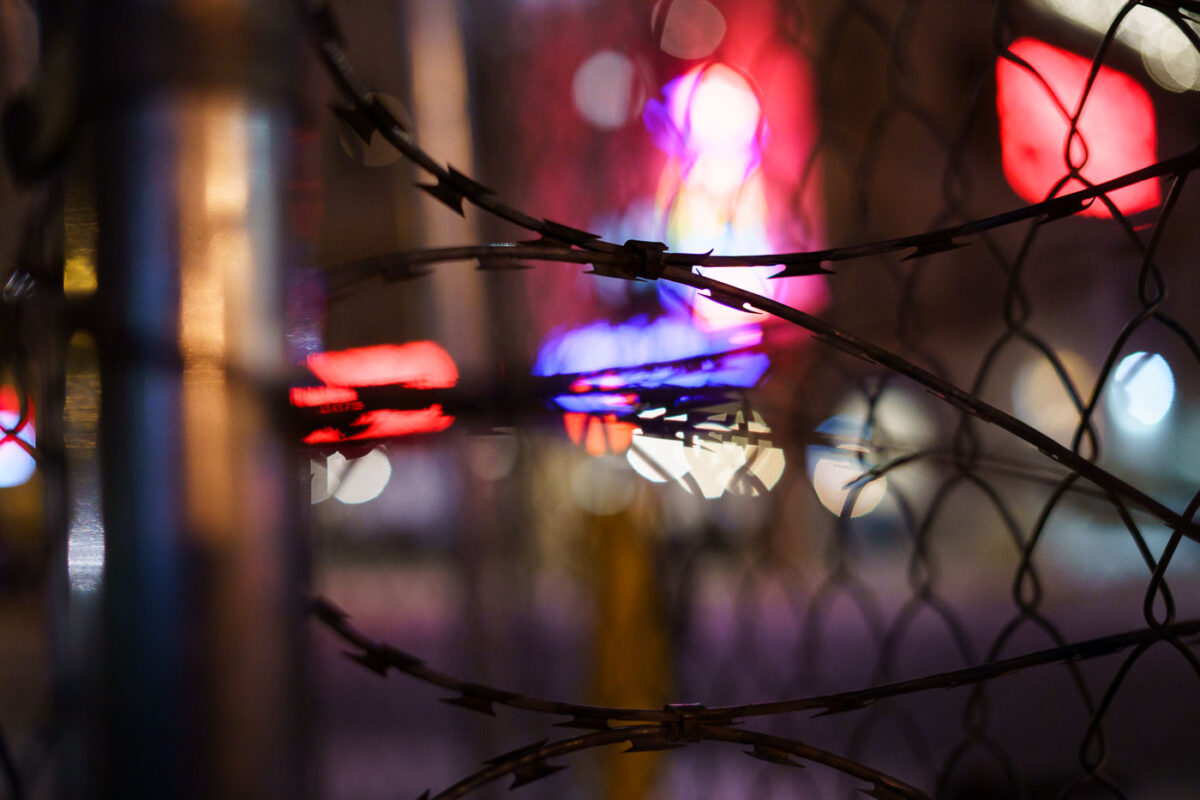
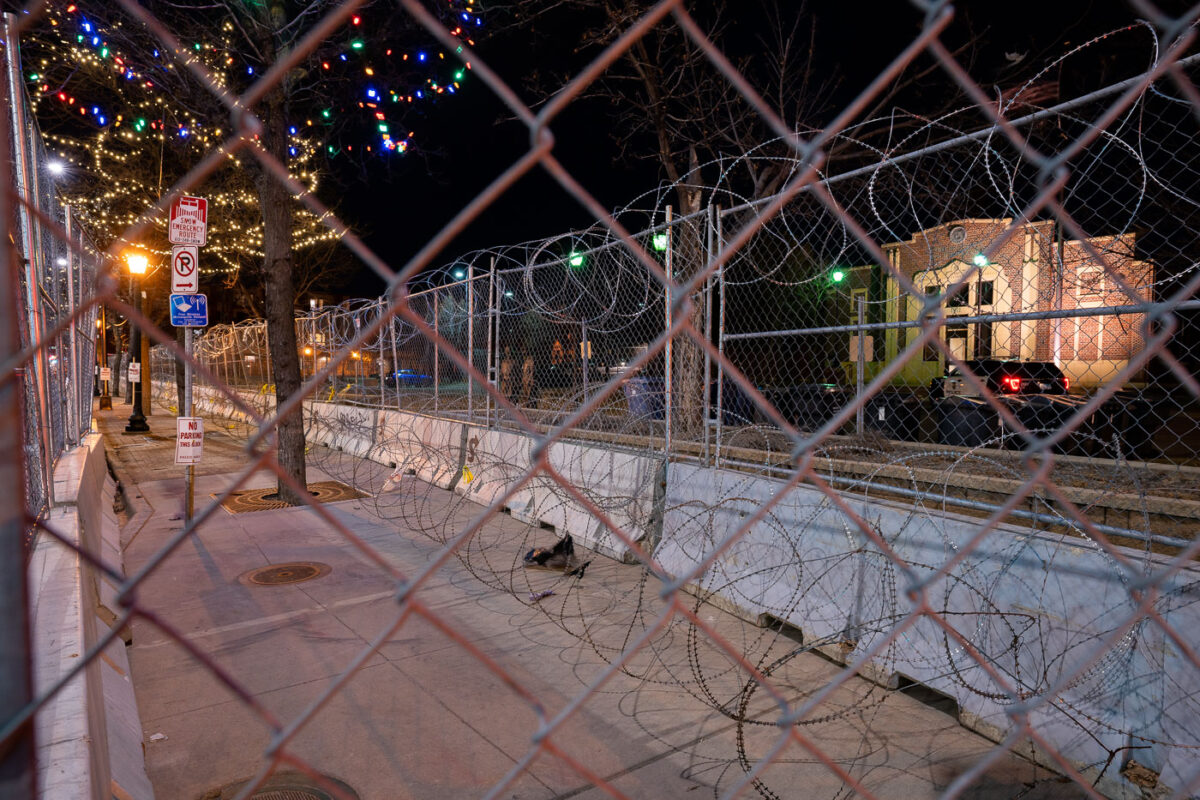
Yellow security tape and chain-link fencing create a tunnel-like corridor outside Hennepin County Government Center in downtown Minneapolis at night.
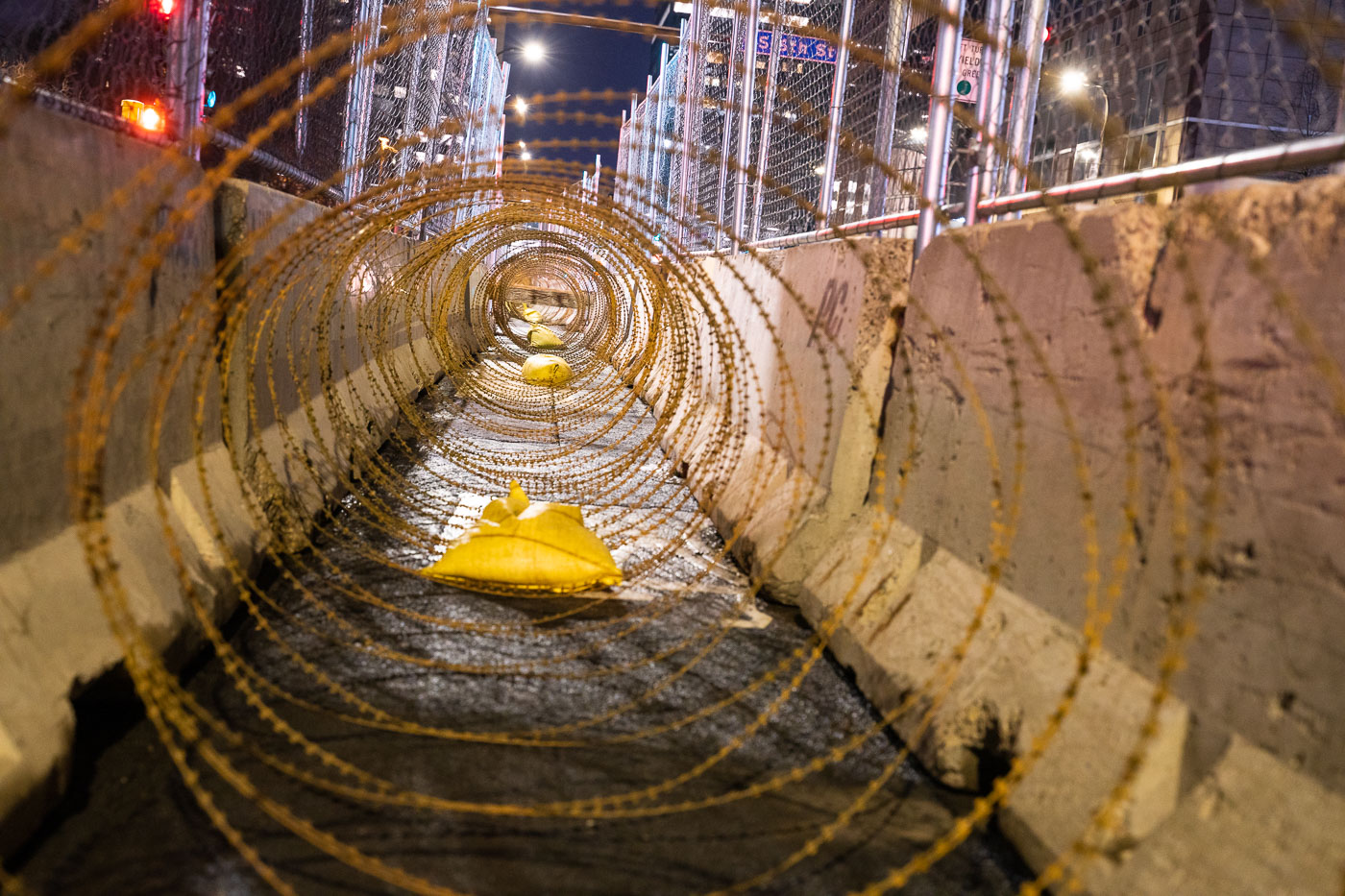
Razor wire and concrete barriers form a secured corridor outside the Hennepin County Government Center in downtown Minneapolis. The government center houses county courts and administrative offices. Temporary fencing and barricades were installed around the complex during security preparations in early 2021.

Coiled Razor Wire Lines a Barricaded Walkway at Night in Minneapolis
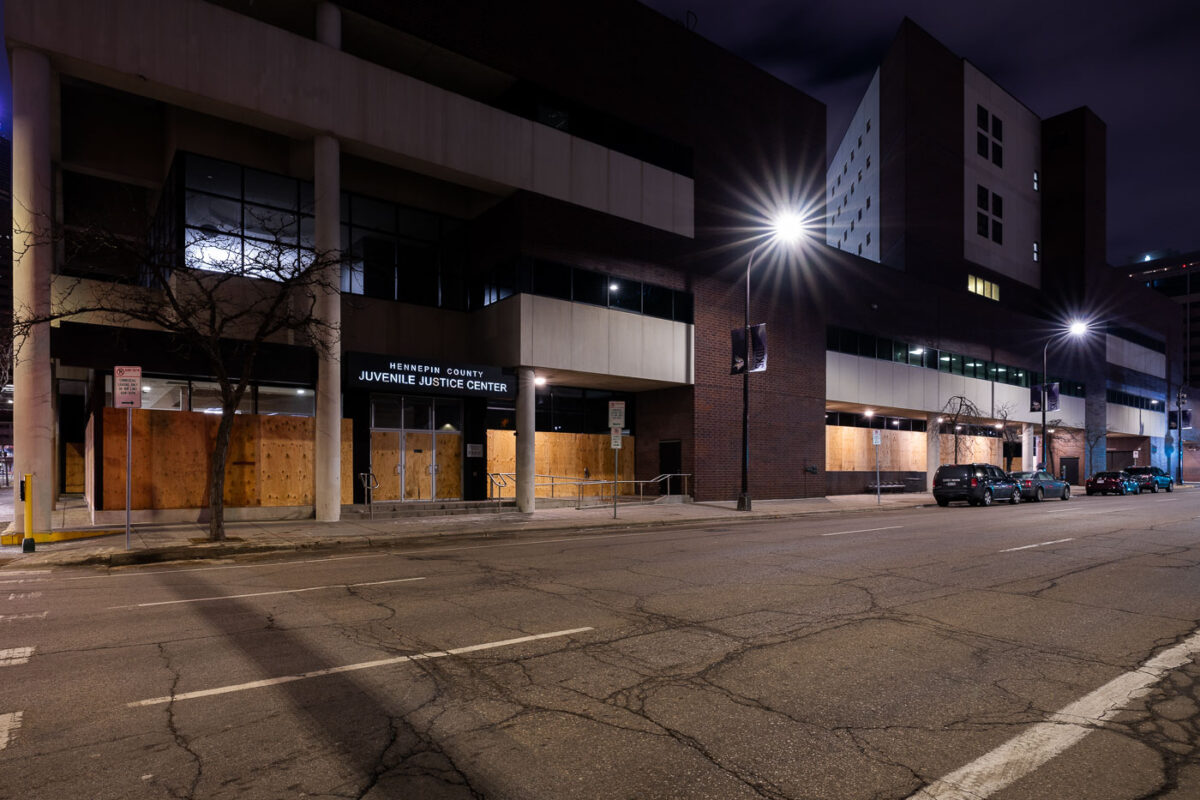
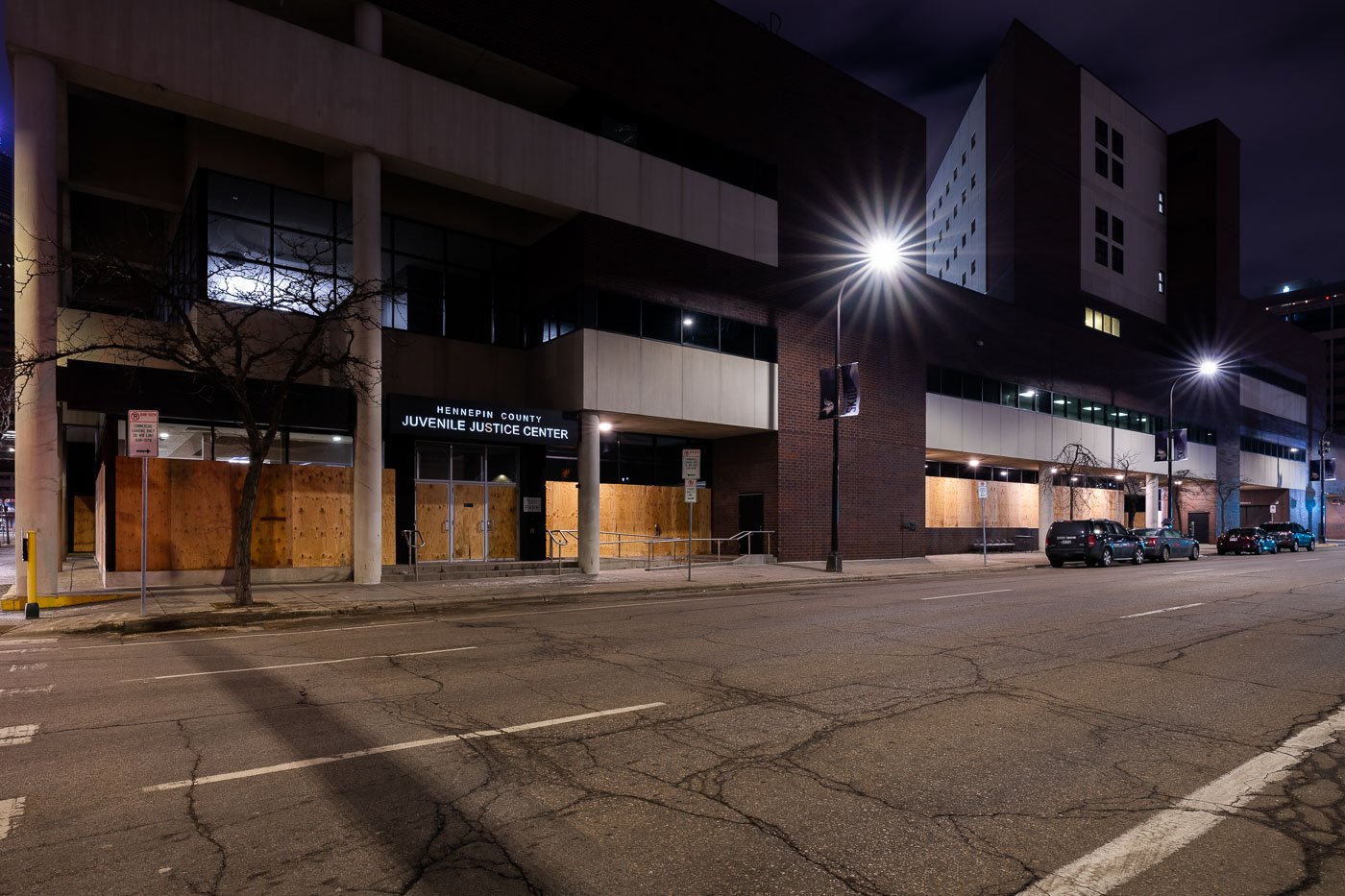
Hennepin County Juvenile Justice Center in downtown Minneapolis boarded with plywood panels during February 2021 trial security preparations.
The Hennepin County Juvenile Justice Center in downtown Minneapolis is shown boarded up in anticipation of the Derek Chauvin trial in April 2021. The building, located at 590 Park Avenue, serves as a courthouse for juvenile legal proceedings. The extensive boarding and security measures were implemented in response to concerns about potential unrest and protests stemming from the trial, which followed the murder of George Floyd in May 2020.
Plywood Covers Entrances at the Hennepin County Juvenile Justice Center

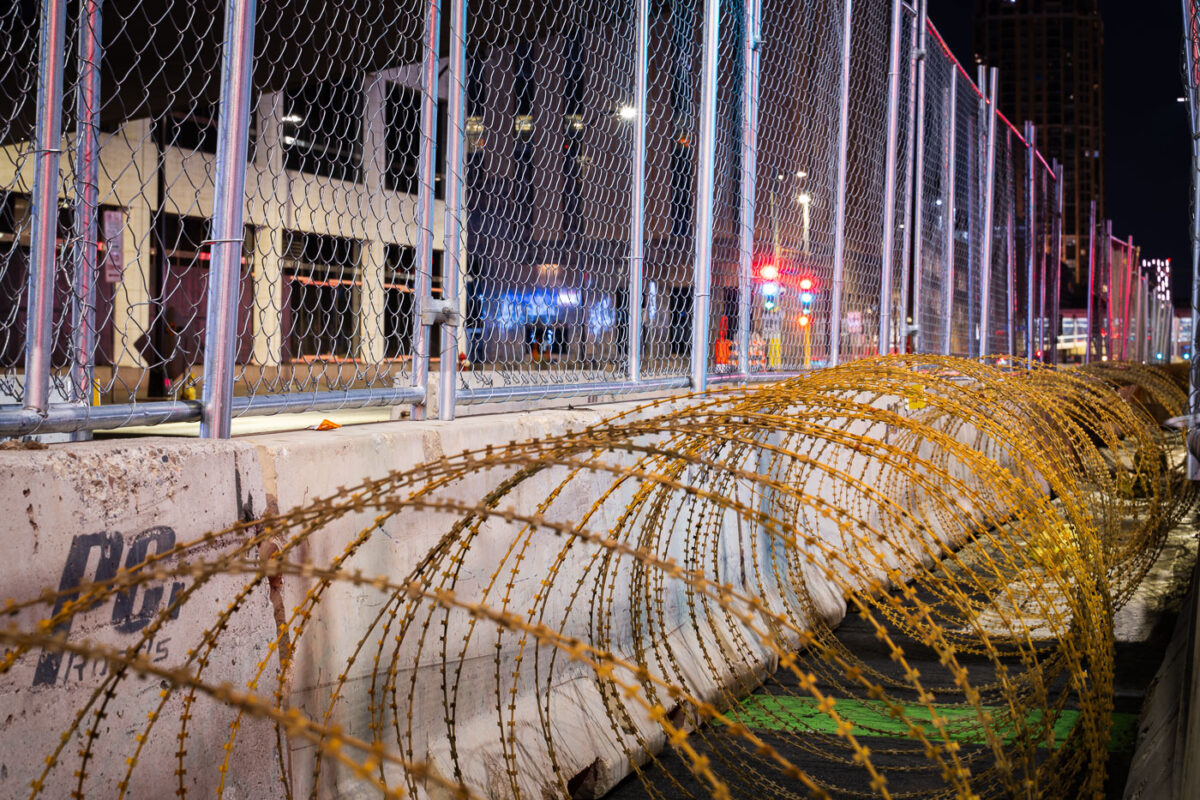
Yellow mesh security fencing and razor wire surround the Hennepin County Government Center during Derek Chauvin trial preparations in downtown Minneapolis.
Security measures, including razor wire and concrete barriers, were erected around the Hennepin County Government Center in Minneapolis in anticipation of the Derek Chauvin trial. On May 25, 2020, Minneapolis police officer Derek Chauvin murdered 46-year-old George Floyd during an arrest outside Cup Foods at the intersection of 38th Street and Chicago Avenue in south Minneapolis. Video recorded by bystanders showed Chauvin kneeling on Floyd’s neck for more than nine minutes while Floyd repeatedly said he could not breathe. Three other Minneapolis police officers - J. Alexander Kueng, Thomas Lane, and Tou Thao — were also present during the arrest and later faced criminal charges for their roles in Floyd’s death. Floyd’s murder sparked protests and civil unrest across Minneapolis and around the world, leading to widespread demonstrations against police violence, major policy debates on policing, and the conviction of Chauvin on murder and manslaughter charges in 2021.

Razor Wire Lines a Concrete Barrier Near Minneapolis City Hall at Night
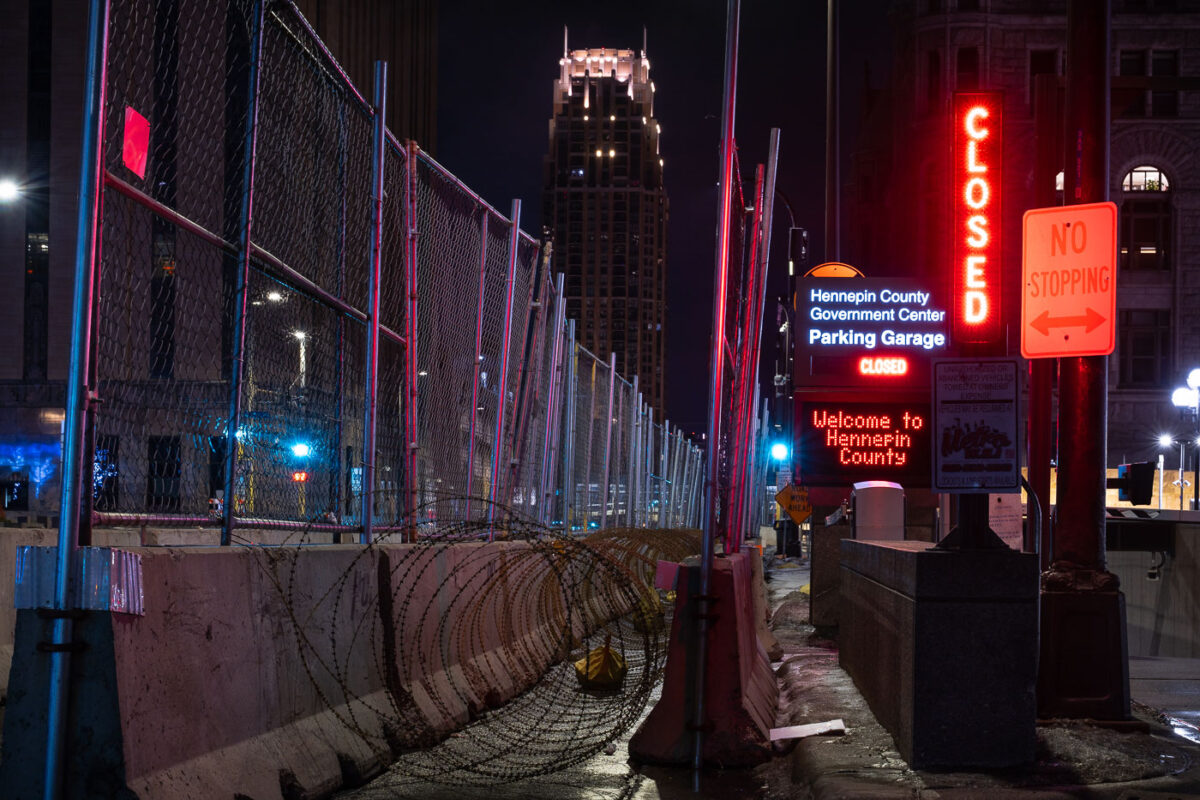
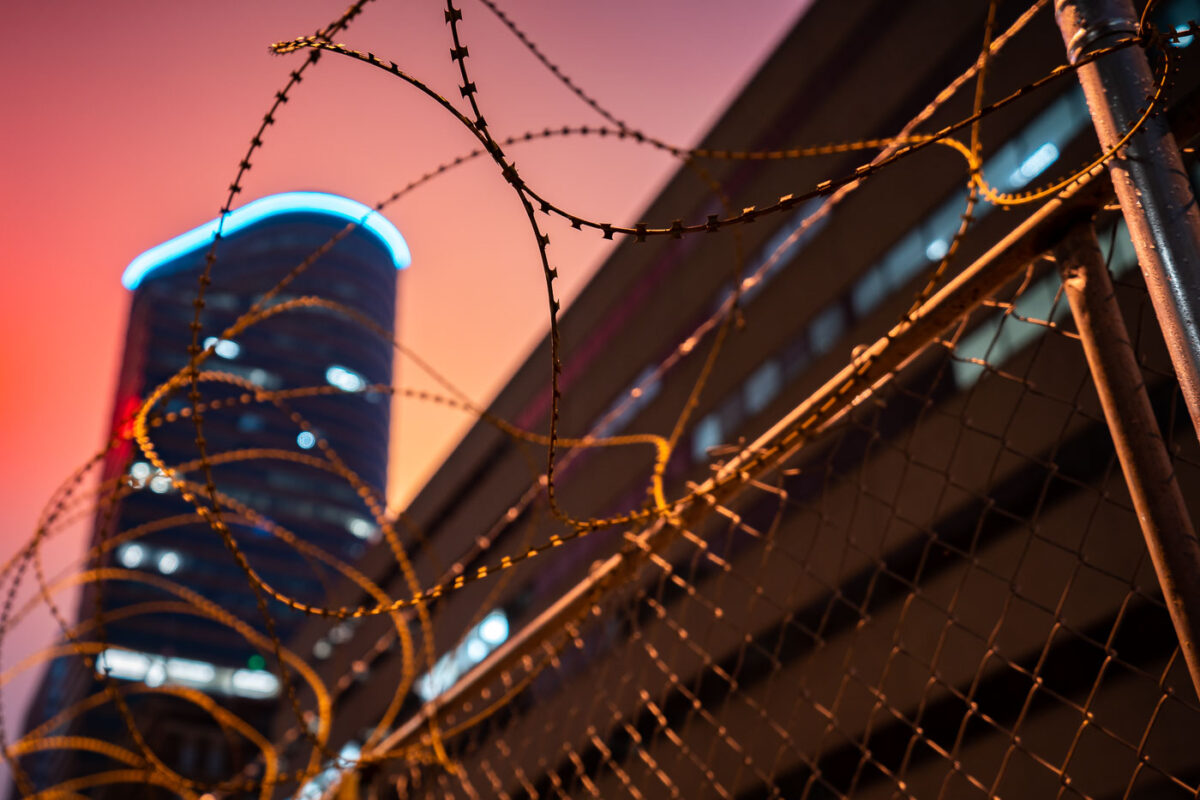
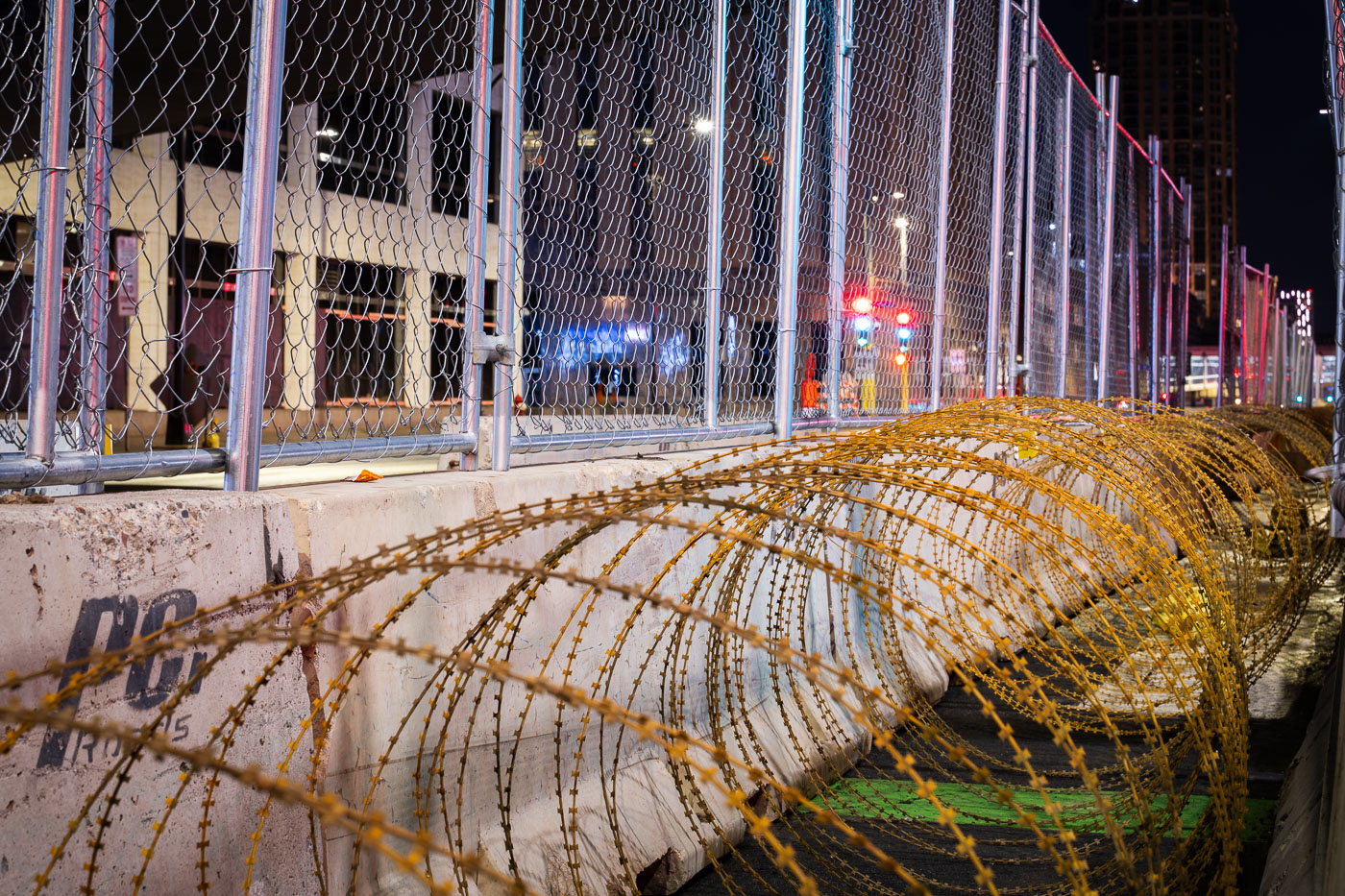
Razor wire fencing secures the Hennepin County Government Center in downtown Minneapolis during trial security preparations in February 2021.
Razor wire fencing is installed around the Hennepin County Government Center in Minneapolis, Minnesota. This security measure was put in place in anticipation of the Derek Chauvin trial, which was scheduled to begin less than two weeks after this photograph was taken. The trial stemmed from the death of George Floyd, whose killing by Chauvin in May 2020 sparked widespread protests and unrest in Minneapolis and across the nation.

“Closed” Parking Garage Sign Near Hennepin County Government Center at Night
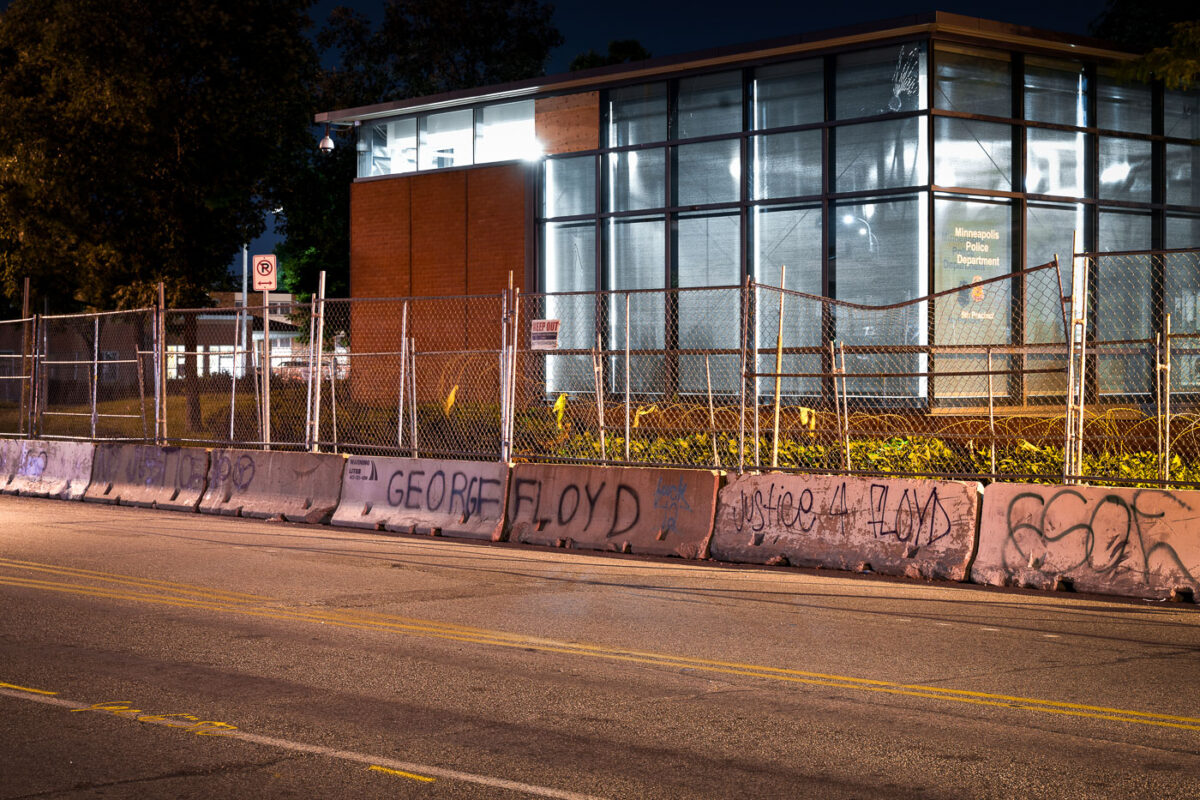
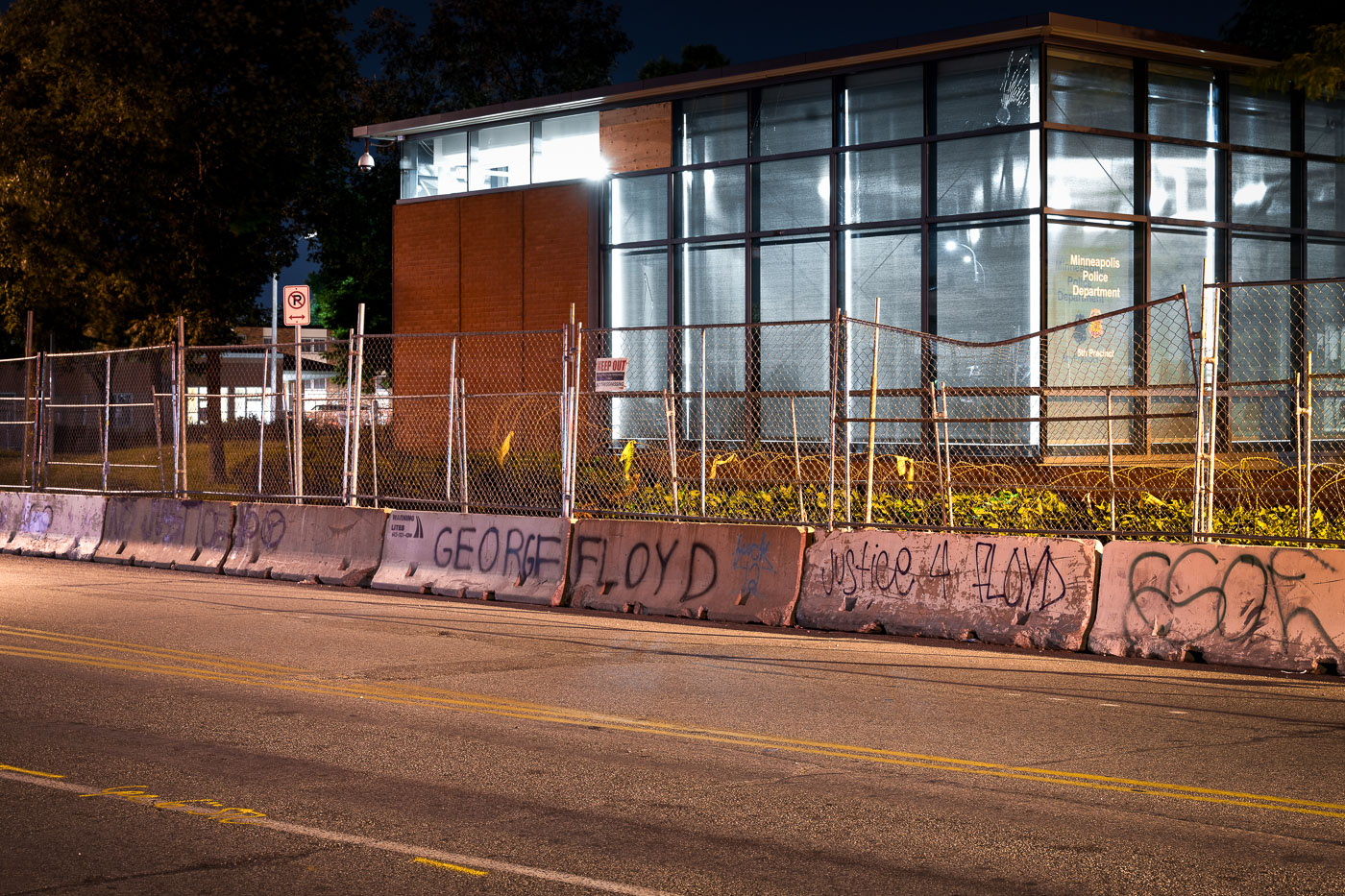
Minneapolis Police 5th Precinct behind barricades and razor wire in south Minneapolis, June 2020.
The Minneapolis Police Department’s 5th Precinct in south Minneapolis is shown behind concrete barricades, chain-link fencing, and razor wire in June 2020. Graffiti on the barriers includes “GEORGE FLOYD” and “Justice 4 Floyd,” linking the fortifications to the unrest that followed Floyd’s murder by Minneapolis police. The temporary security perimeter turned the station and the street in front of it into a heavily controlled area during that period.

Minneapolis Police 5th Precinct, George Floyd Barricades
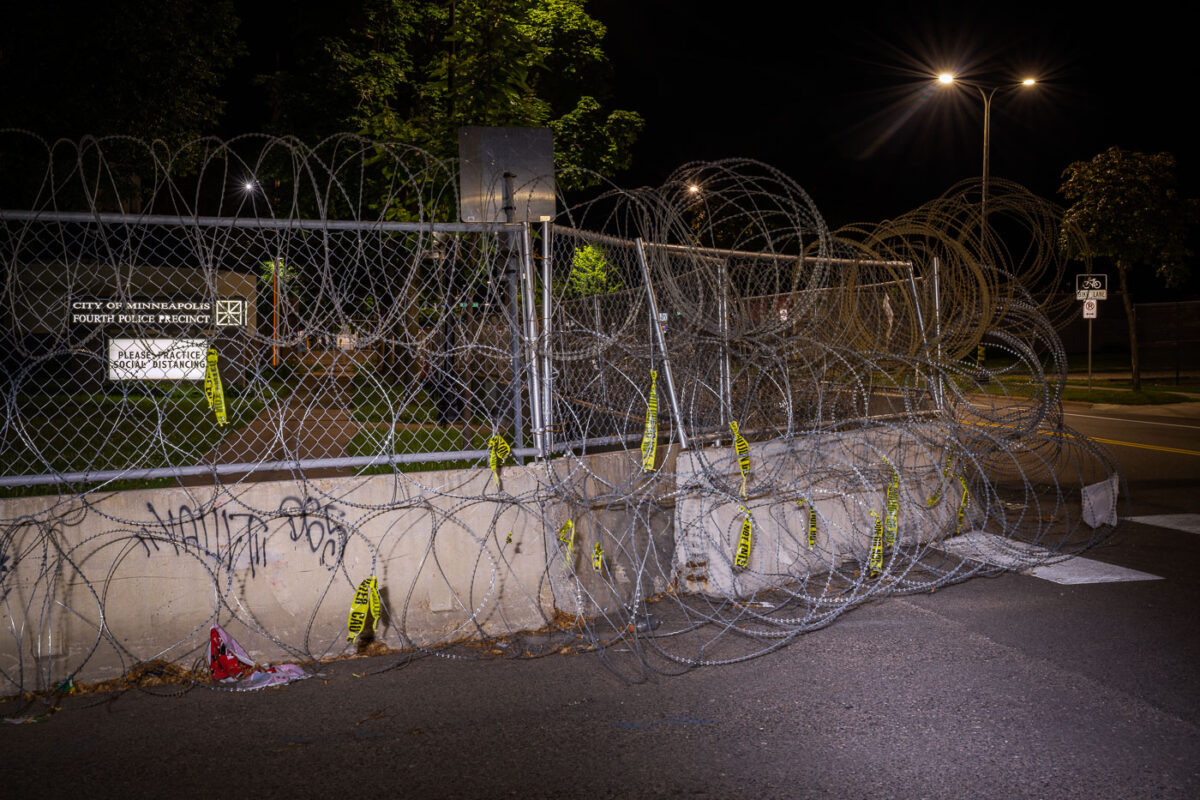
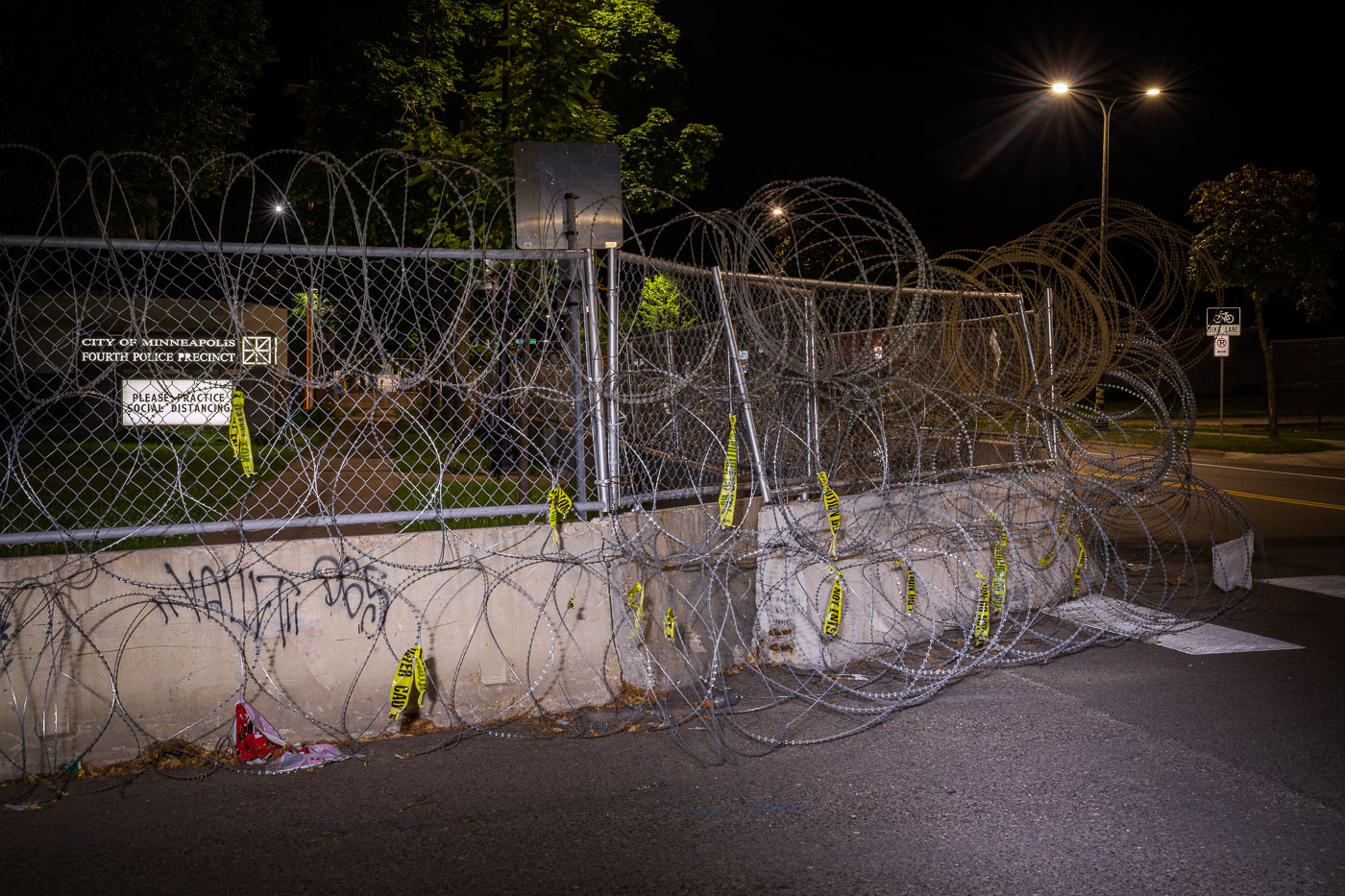
Razor wire and concrete barricades outside Minneapolis Police Fourth Precinct in North Minneapolis at night.
The Minneapolis Police Department’s Fourth Precinct in North Minneapolis is shown behind chain-link fencing, concrete barricades, and extensive coils of razor wire on June 23, 2020. The added security surrounded the police station in the weeks after the murder of George Floyd and the protests that followed across Minneapolis. A sign on the fence reading “PLEASE PRACTICE SOCIAL DISTANCING” places the fortifications within the concurrent COVID-19 pandemic.

Minneapolis Police 4th Precinct Razor Wire & Barricades
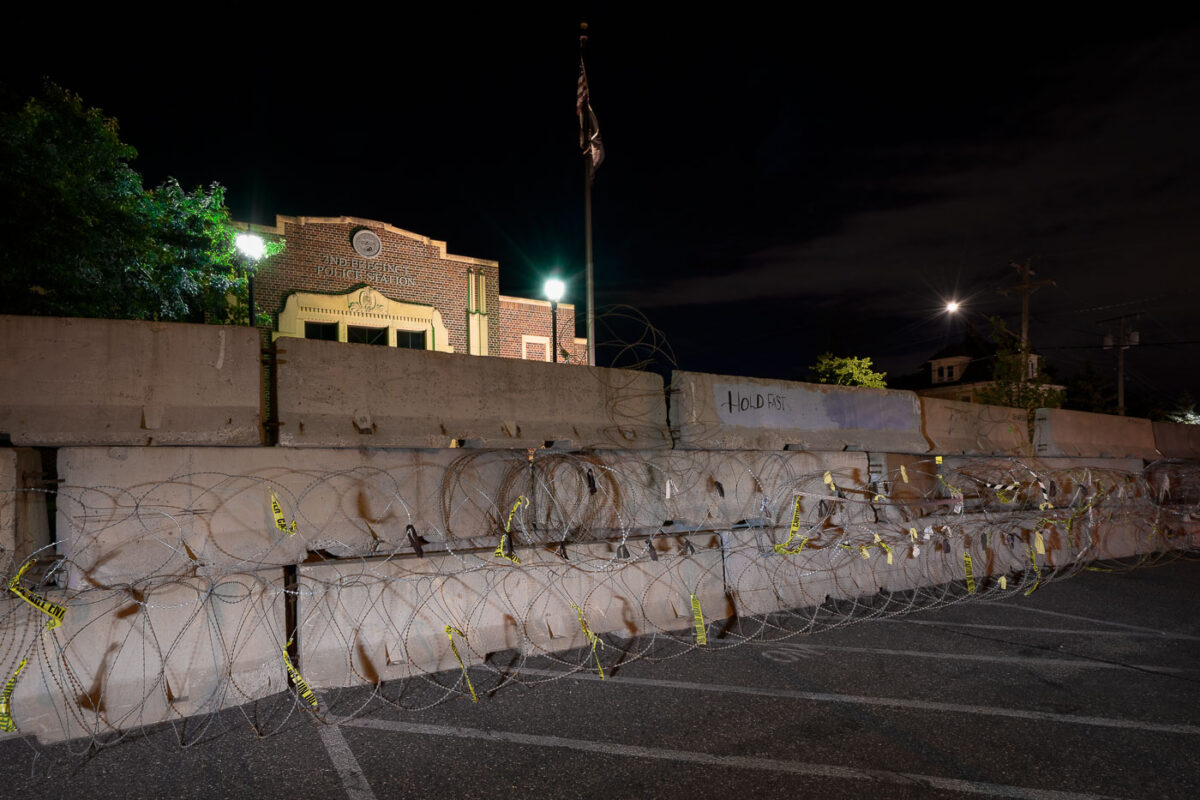
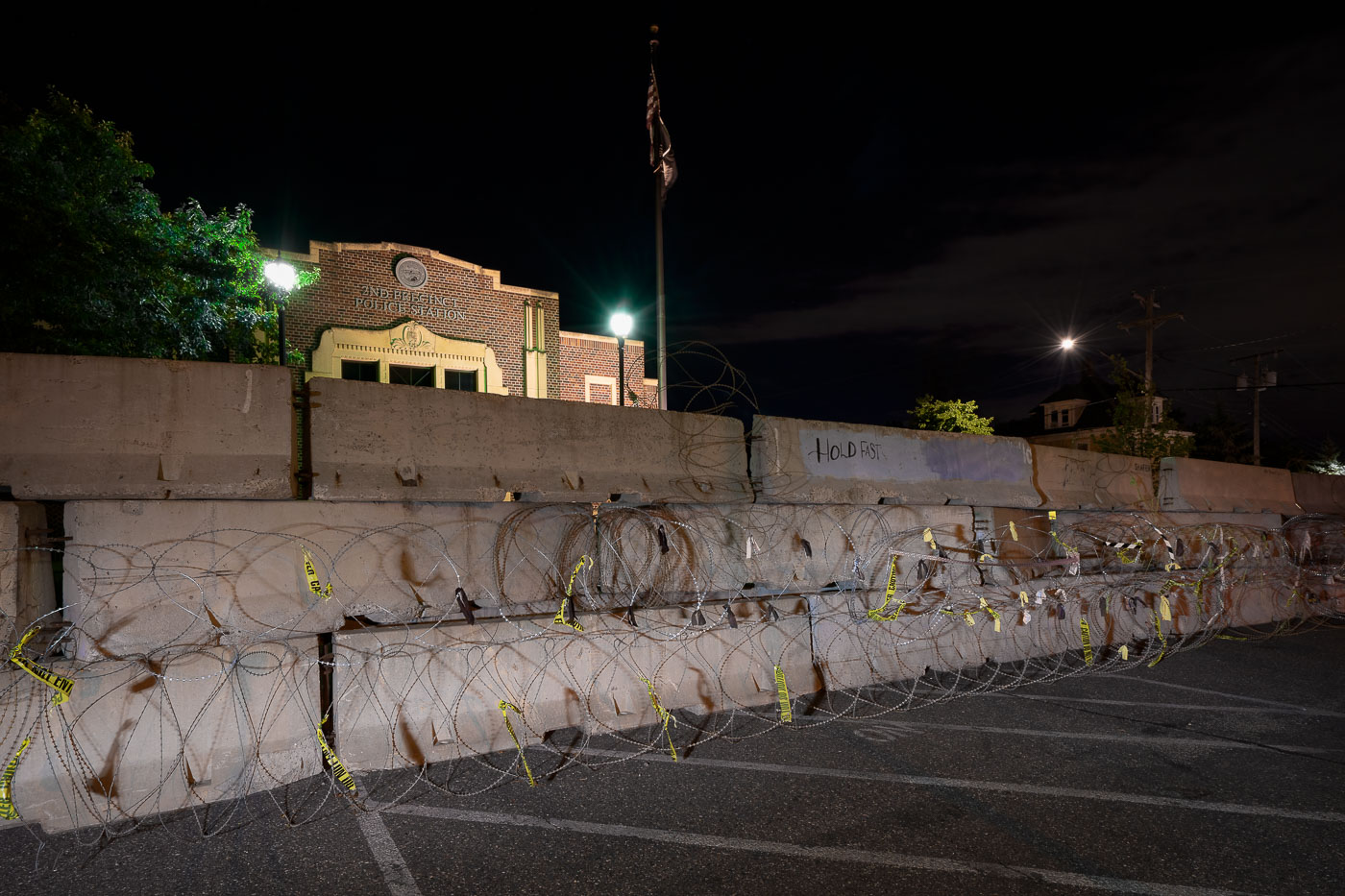
Minneapolis Police 2nd Precinct in Northeast Minneapolis behind concrete barricades and razor wire, June 2020.
The Minneapolis Police Department Second Precinct station in Northeast Minneapolis is shown behind stacked concrete barricades and coils of razor wire on June 23, 2020. The security perimeter was erected after protests and unrest following the murder of George Floyd in May 2020. Graffiti reading “Hold Fast” is visible on one of the barriers in front of the station.

Minneapolis Police 2nd Precinct with Razor Wire & Barricades
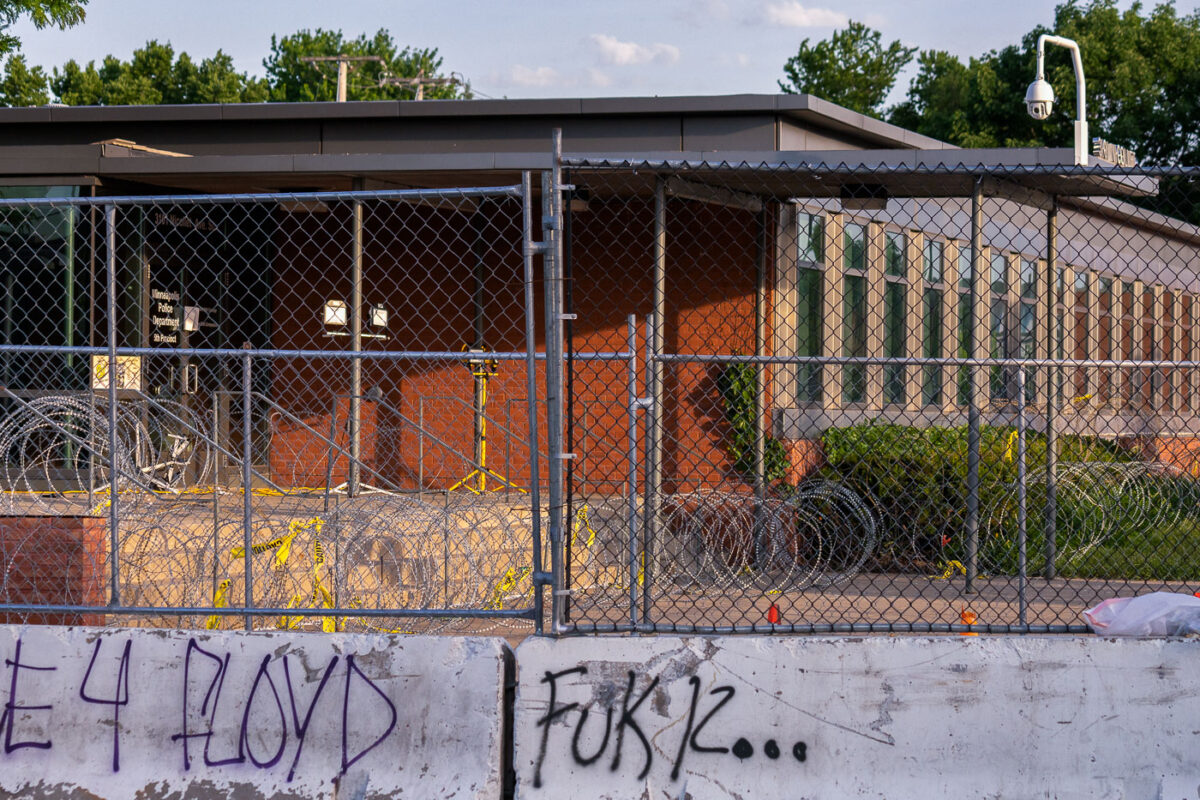
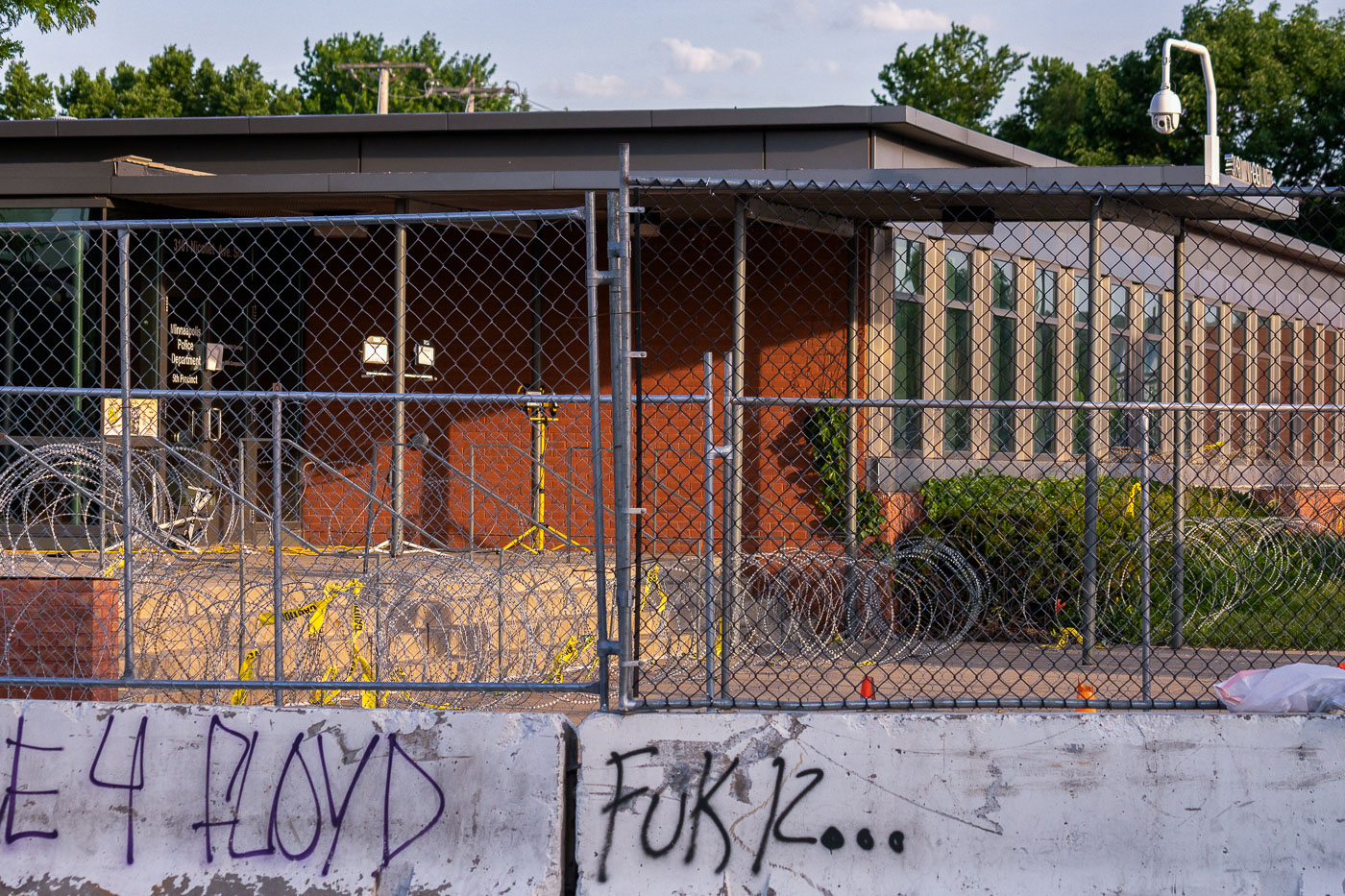
Minneapolis Police 5th Precinct on Nicollet Avenue behind fencing, razor wire, and graffiti-covered barriers.
The Minneapolis Police Department’s 5th Precinct station at 3101 Nicollet Avenue South in Minneapolis is surrounded by chain-link fencing, razor wire, and concrete barriers marked with graffiti. The image was made in June 2020, weeks after protests followed the killing of George Floyd and prompted added security at police facilities across the city.

Minneapolis Police 5th Precinct: Razor Wire & Graffiti