Fencing

49 photos · 2019–2026

49 photographs tagged Fencing, 2019–2026.
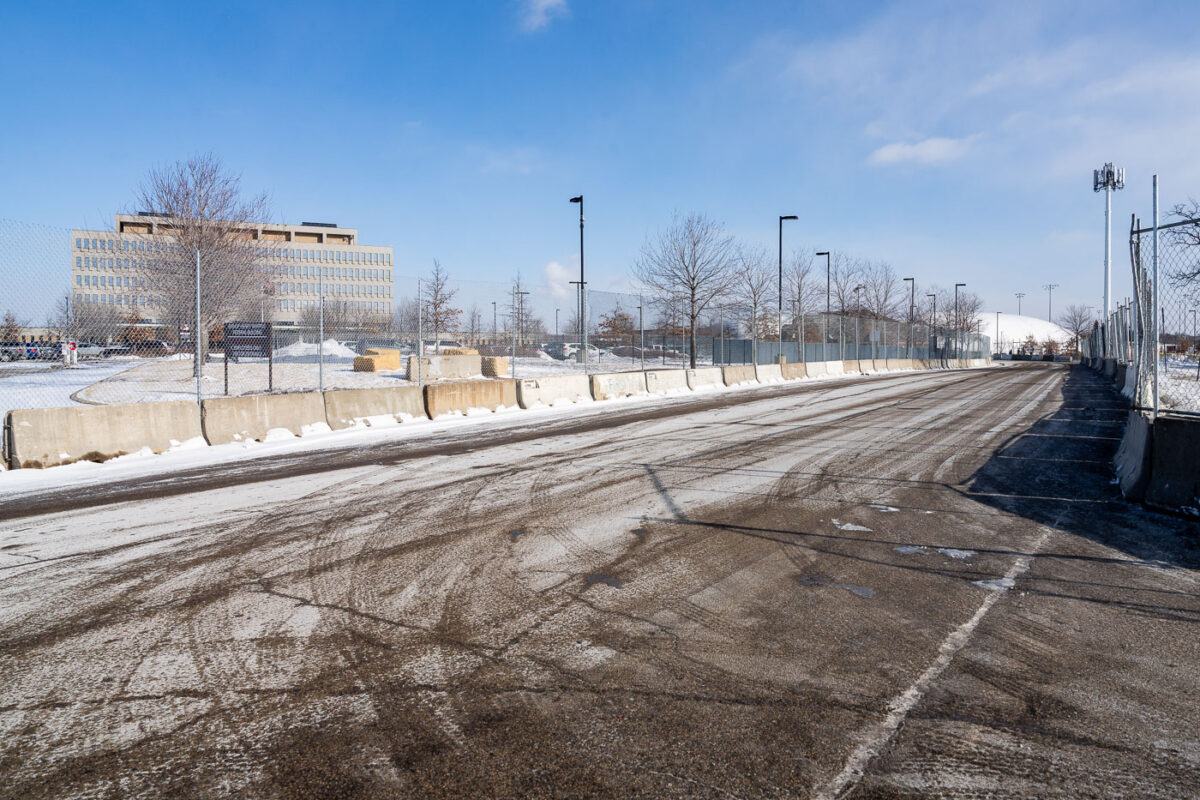
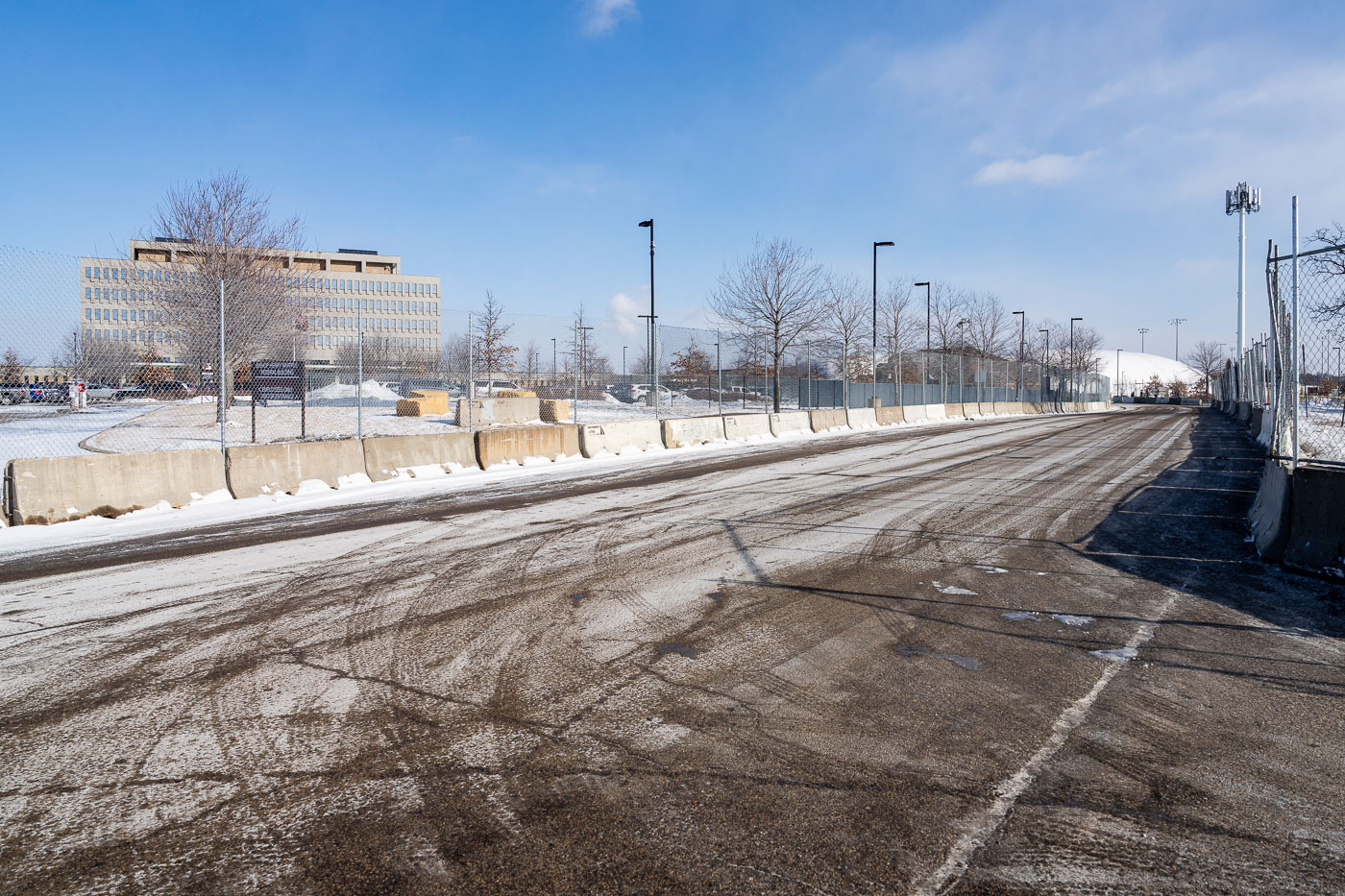
Security fencing and concrete barriers surround the Whipple Building in Minneapolis, a facility used by ICE.
Security fencing and concrete barriers surround the Whipple Building in Minneapolis, a facility that has been utilized by Immigration and Customs Enforcement (ICE) as a detention center and operational base. The building's use by ICE has been a focal point for protests and activism, particularly during operations like "Operation Metro Surge."

Perimeter Road Outside the Whipple Federal Building, Minneapolis
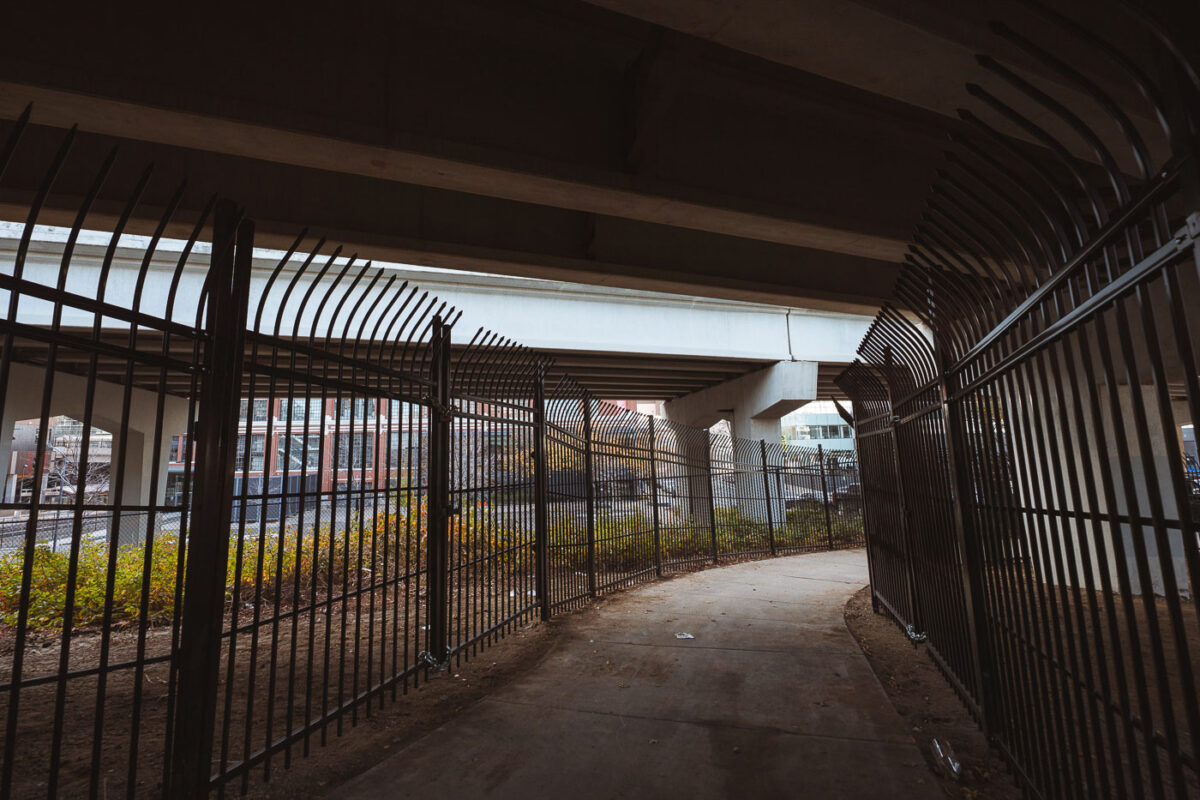
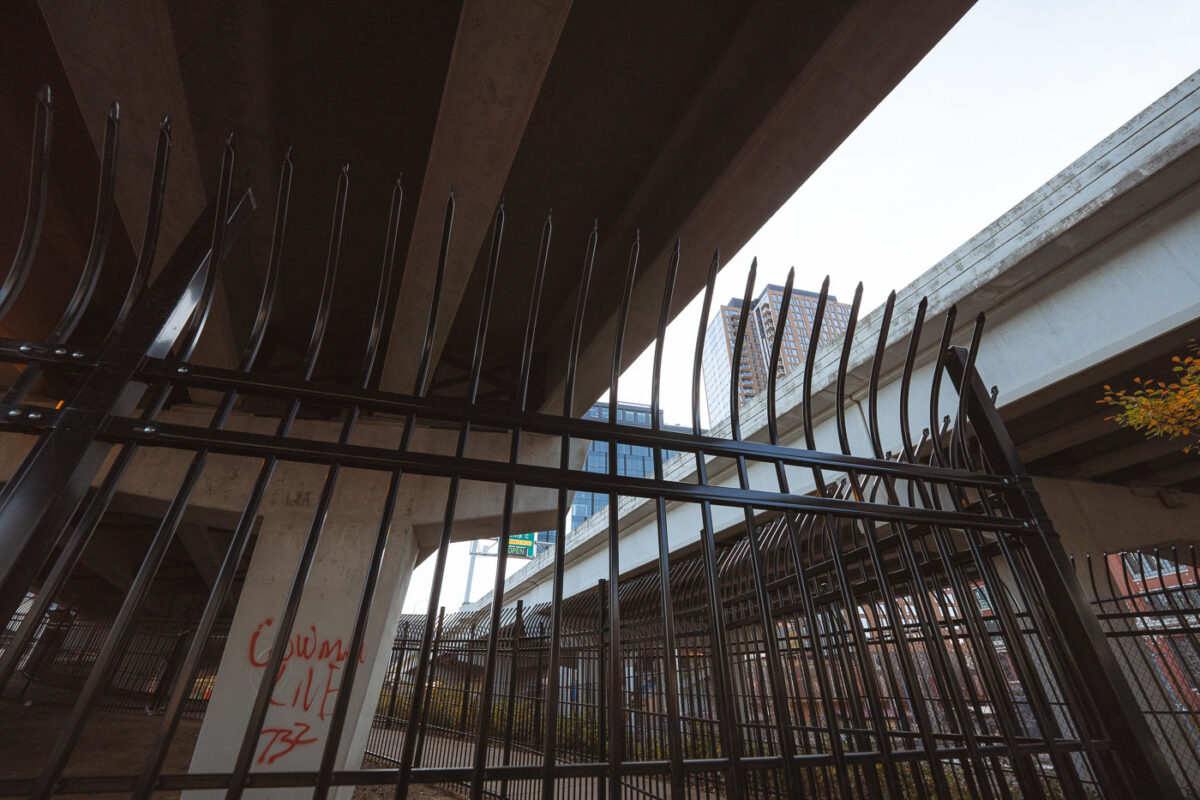
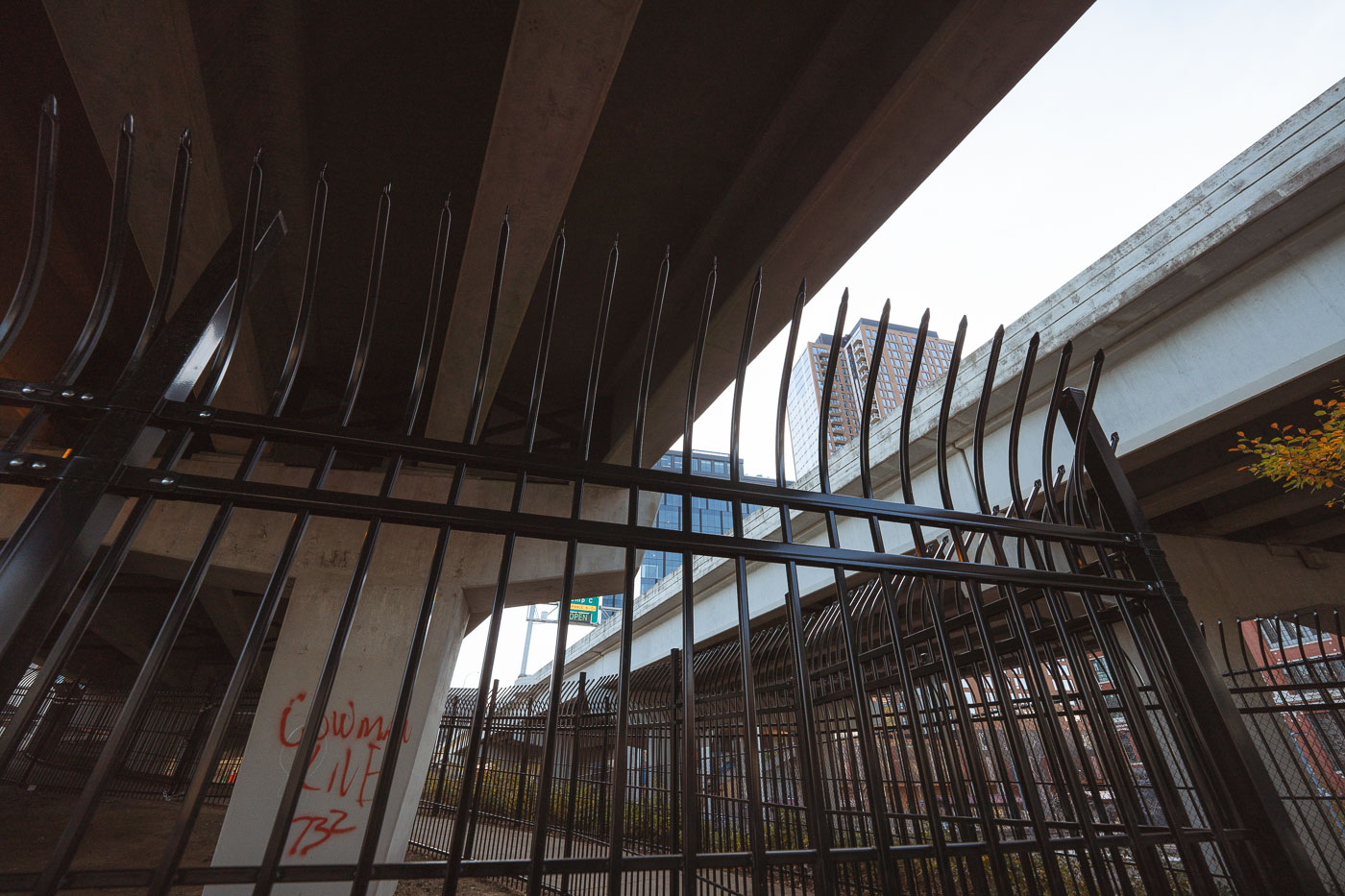
Fencing under I94 in North Loop Minneapolis
New fencing dropped in the North Loop on N 5th Ave and I-94. It's too bad, was a fun spot to watch trains. Could see the Light Rail, Northstar Line and freight trains from under this bridge.

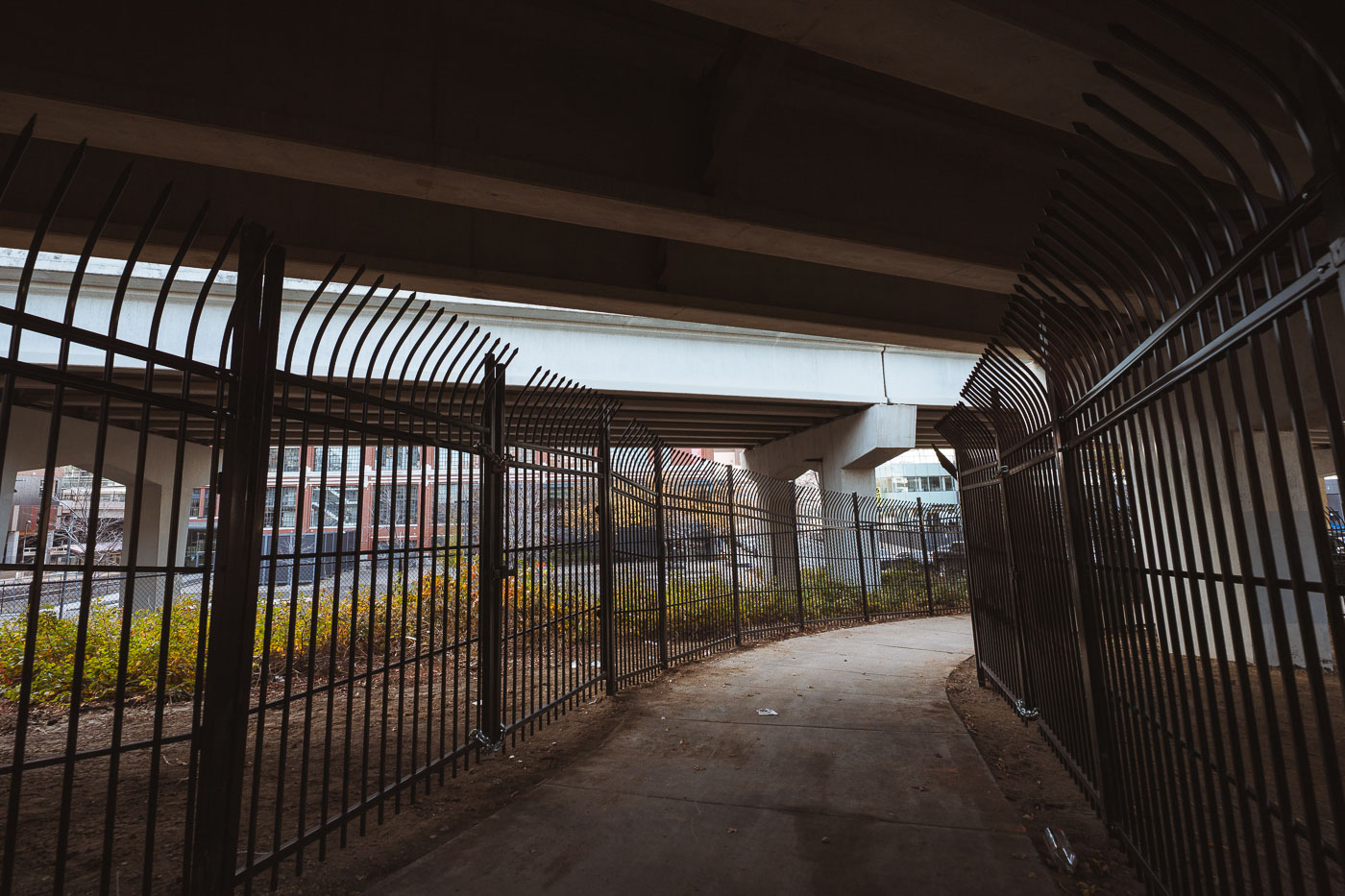
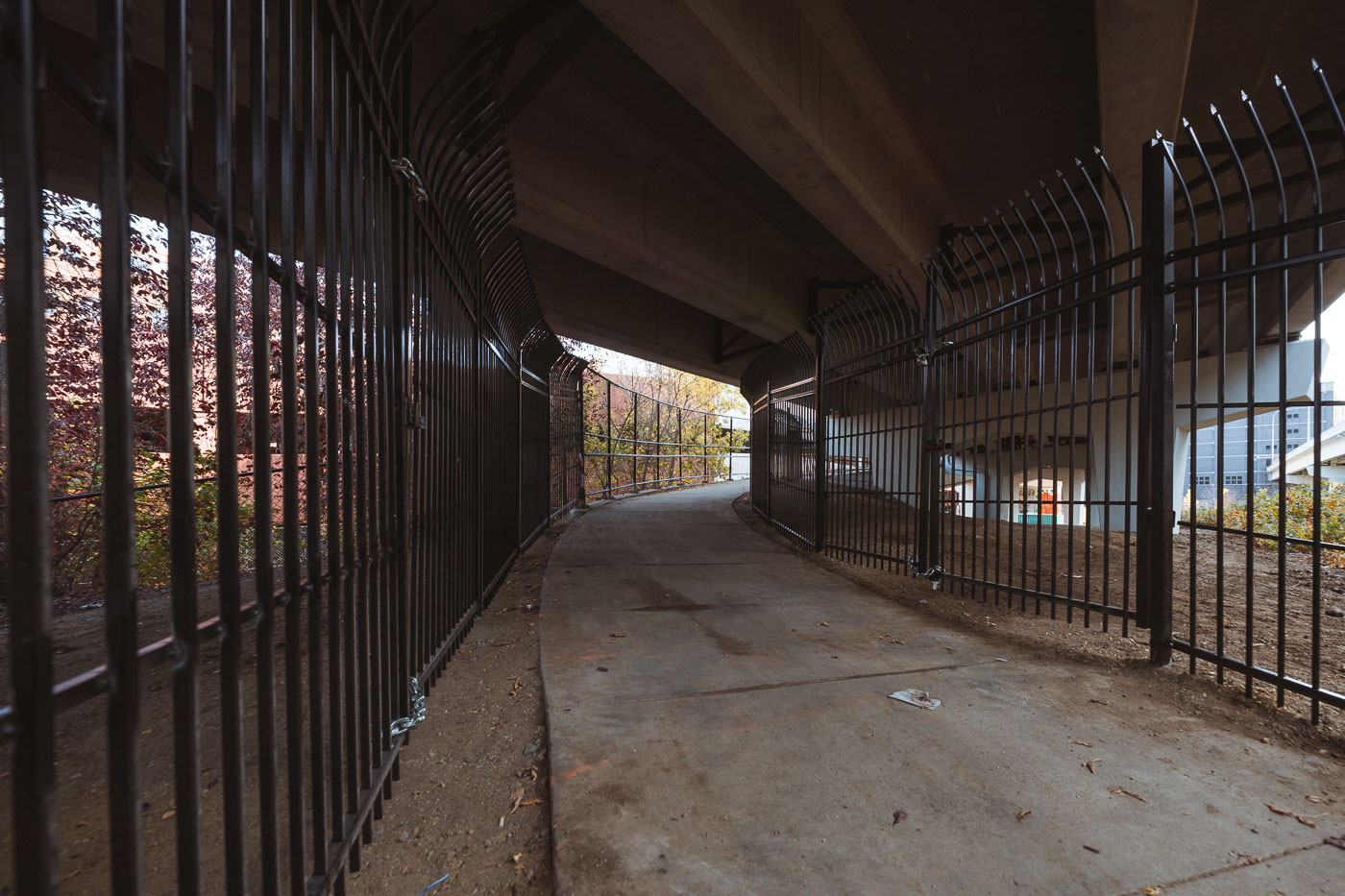
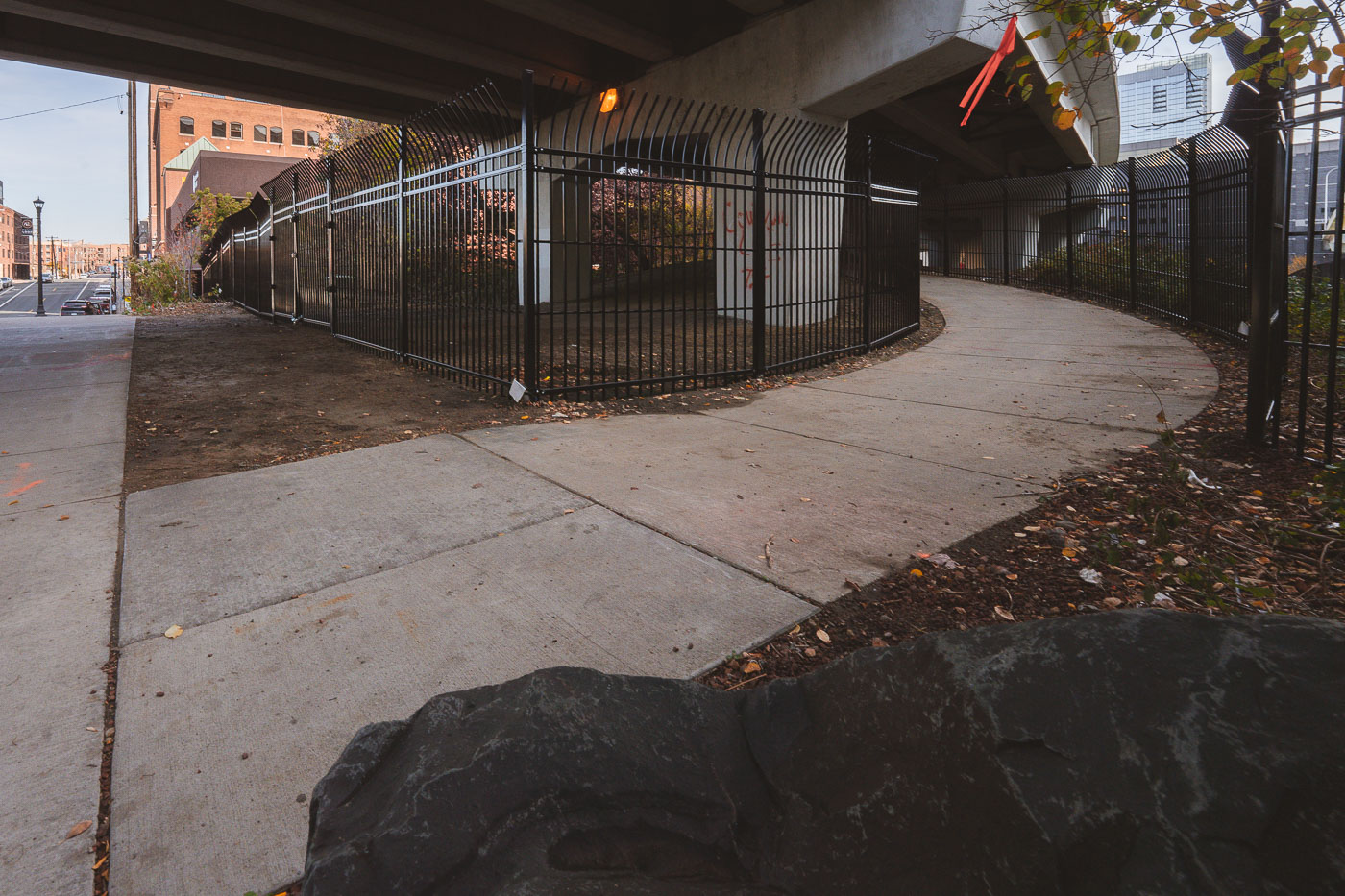
Fencing under I-94 in North Loop Minneapolis
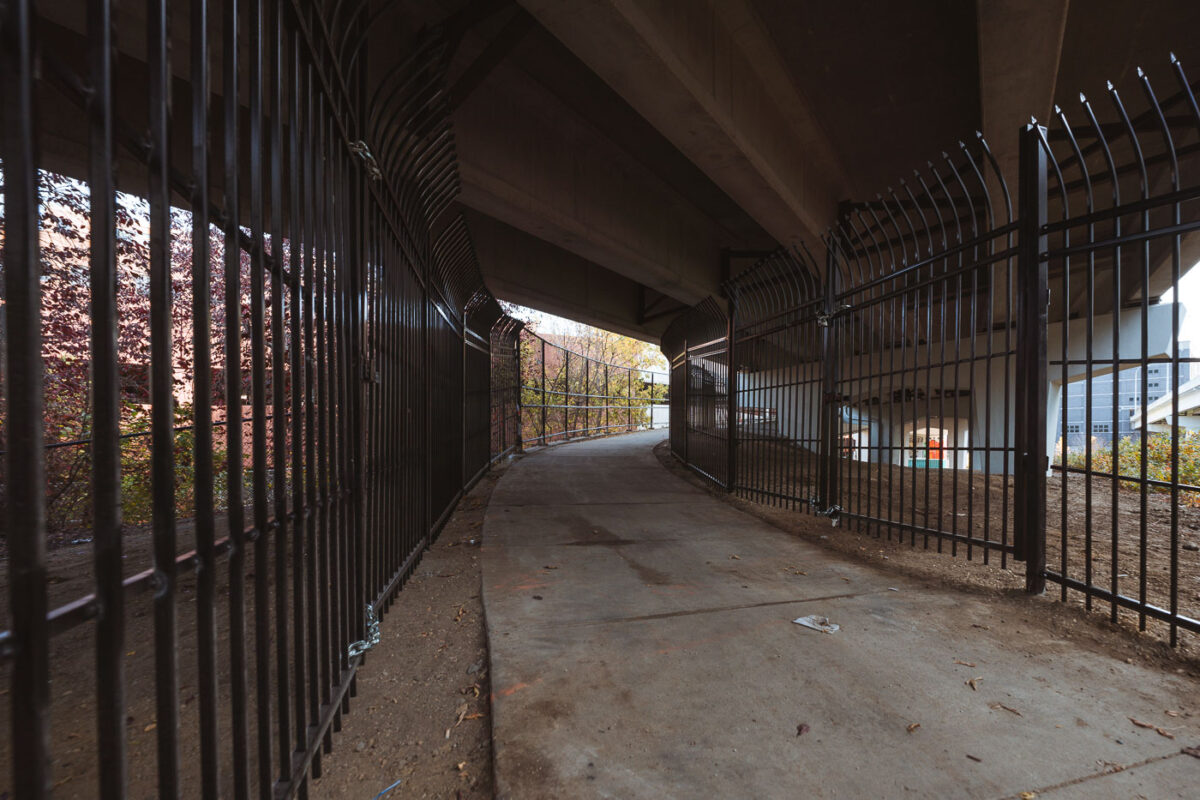
Walkway between fencing under I94
New fencing dropped in the North Loop on N 5th Ave and I-94. It's too bad, was a fun spot to watch trains. Could see the Light Rail, Northstar Line and freight trains from under this bridge.

Walkway between fencing under I-94

New security fencing installed below Interstate 94 in Minneapolis's North Loop neighborhood blocks views of passing trains.
New fencing has been installed below Interstate 94 in Minneapolis's North Loop neighborhood, near the intersection of N 5th Ave and I-94. This area previously offered views of the Light Rail, Northstar Line, and freight trains passing under the bridge. The installation of this security fencing came after removing encampments.

Spiked Security Fencing Under I-94 in the North Loop
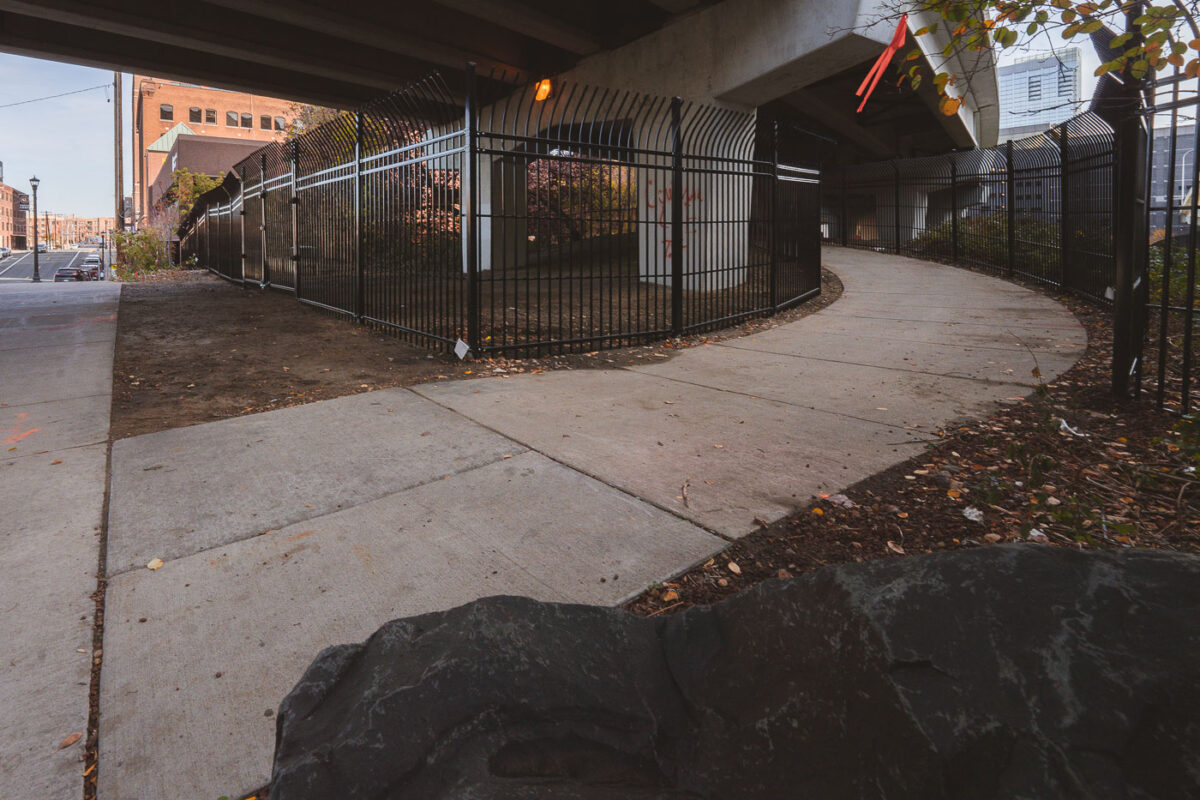
New black metal fencing installed by MNDOT along Interstate 94 beneath a concrete overpass in Minneapolis's North Loop neighborhood.
New fencing has been installed by the Minnesota Department of Transportation (MNDOT) along Interstate 94 in Minneapolis's North Loop neighborhood. This barrier, located near N 5th Avenue, restricts access to an area previously accessible from beneath the bridge. This spot was a popular vantage point for observing freight trains, the Metro Green Line light rail, and the Northstar Line commuter rail.

Fenced-Off Walkway Beneath I-94 in the North Loop
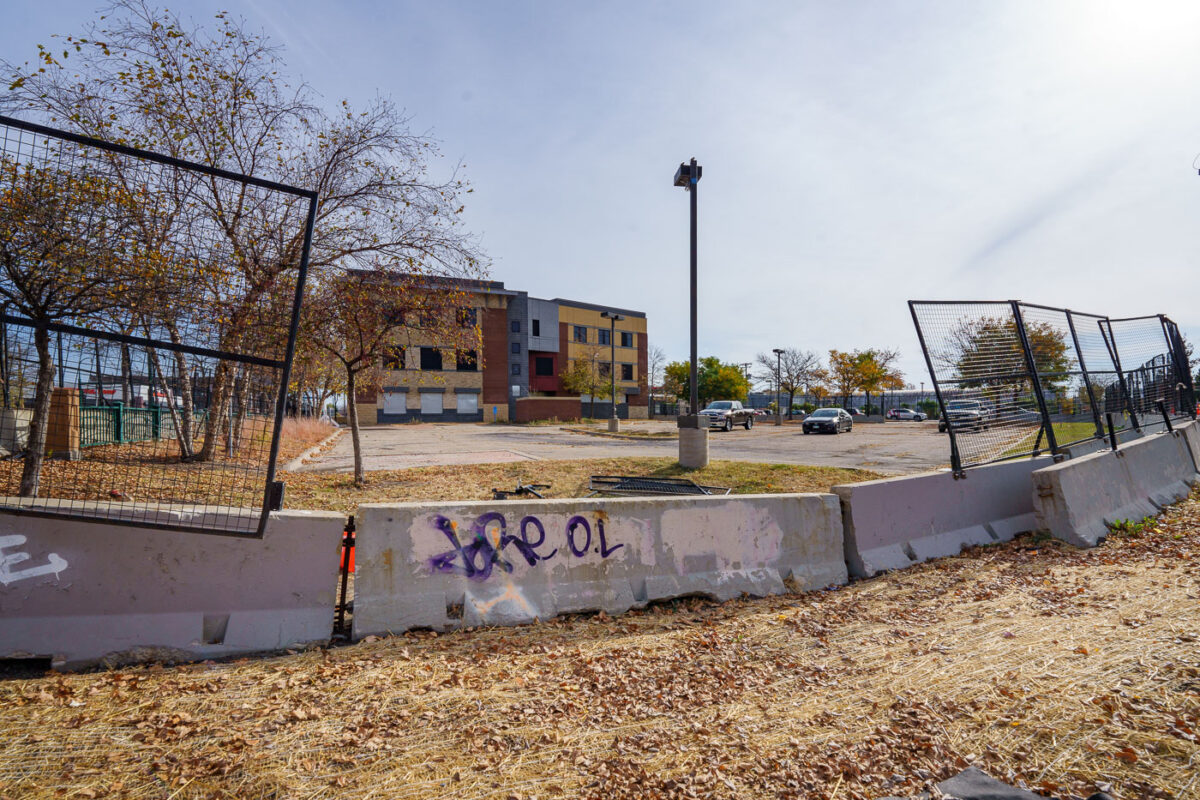
Concrete barriers and metal fencing surround the Minneapolis Police Third Precinct building site undergoing redevelopment.
Construction fencing and concrete barriers surround the Minneapolis Police Third Precinct building, which is undergoing redevelopment. The precinct was damaged by fire during protests following the murder of George Floyd in May 2020. The city plans to transform the site into a "Democracy Center" intended to house election services and community spaces.

Concrete Barriers Around the Third Precinct Construction Site
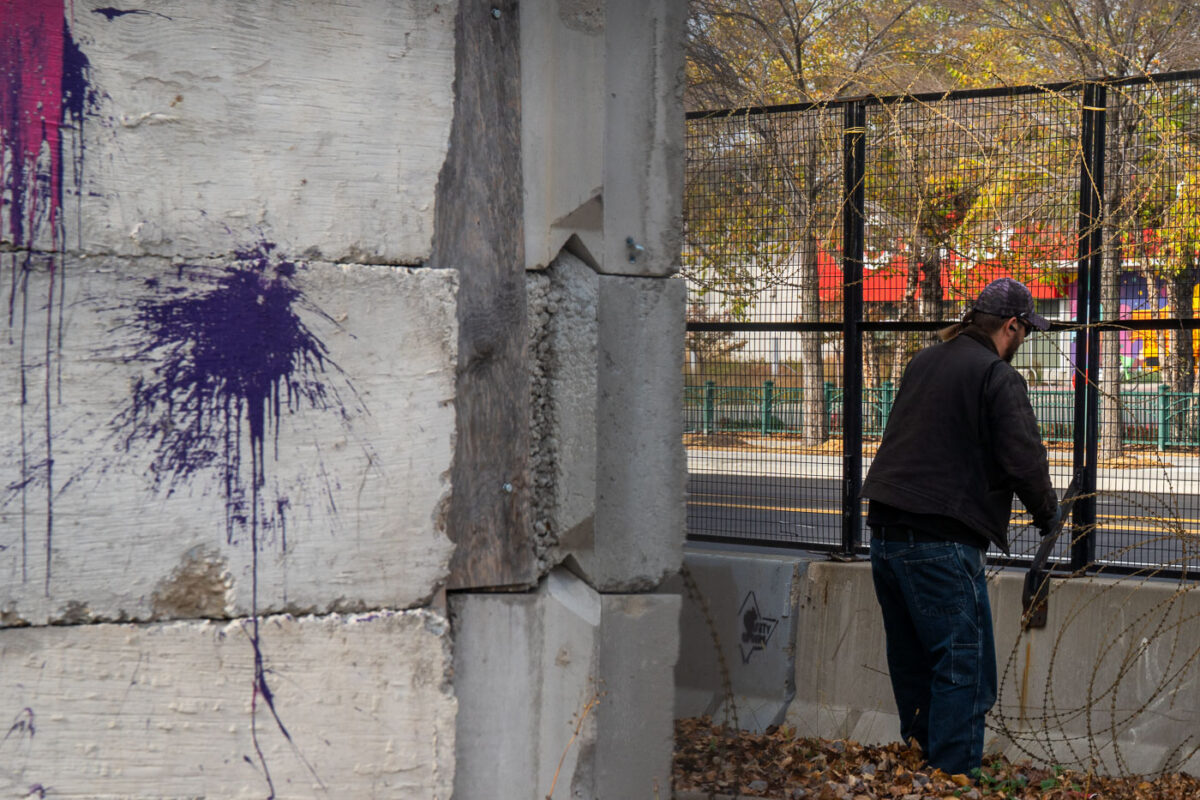
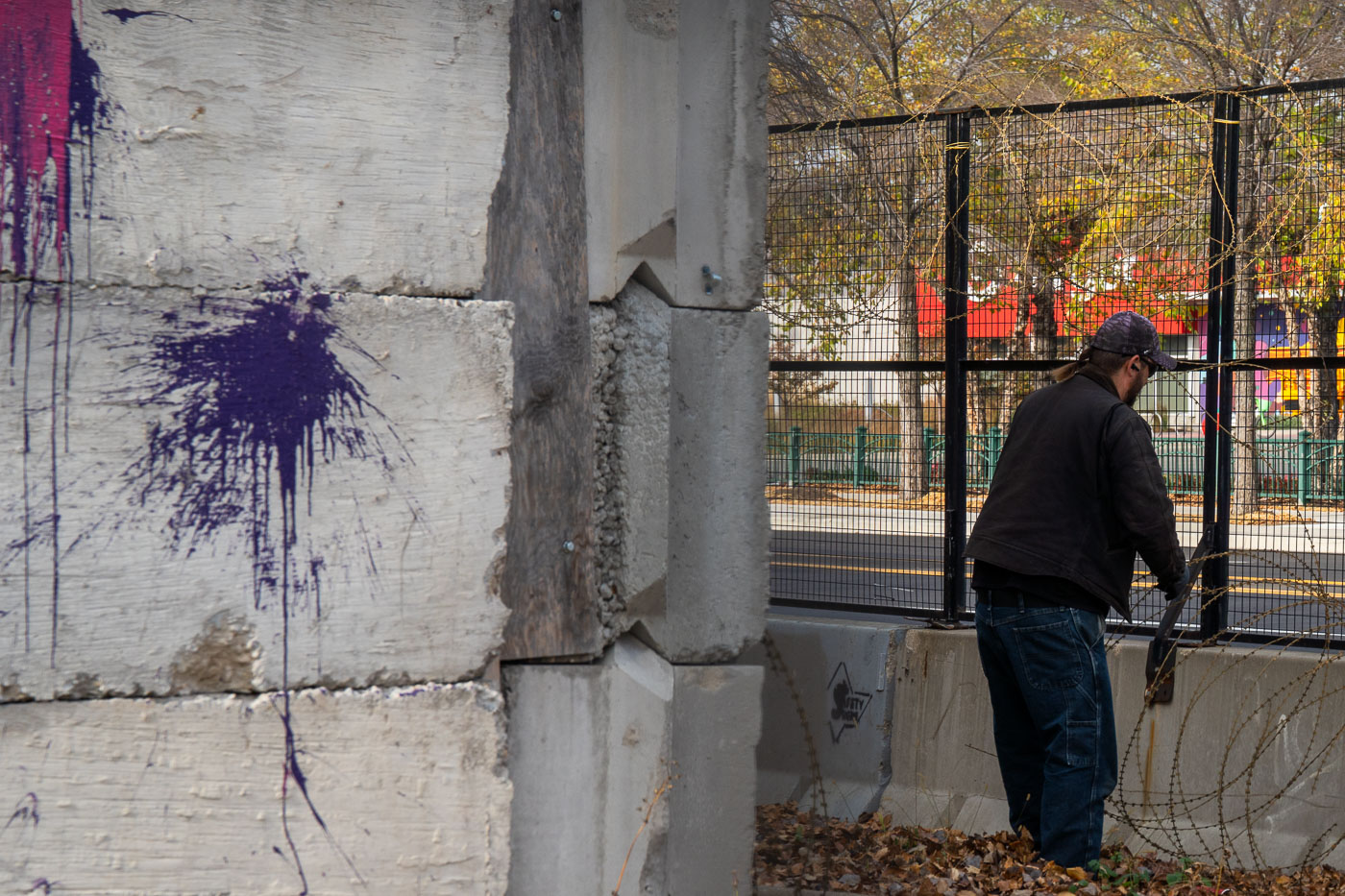
Worker removes razor wire barriers from the Minneapolis Police Department's Third Precinct building exterior.
Workers remove razor wire from the exterior of the Minneapolis Police Department's Third Precinct building. The precinct was heavily damaged by fire during protests following the murder of George Floyd in May 2020.

Clearing Razor Wire Outside Minneapolis Third Precinct
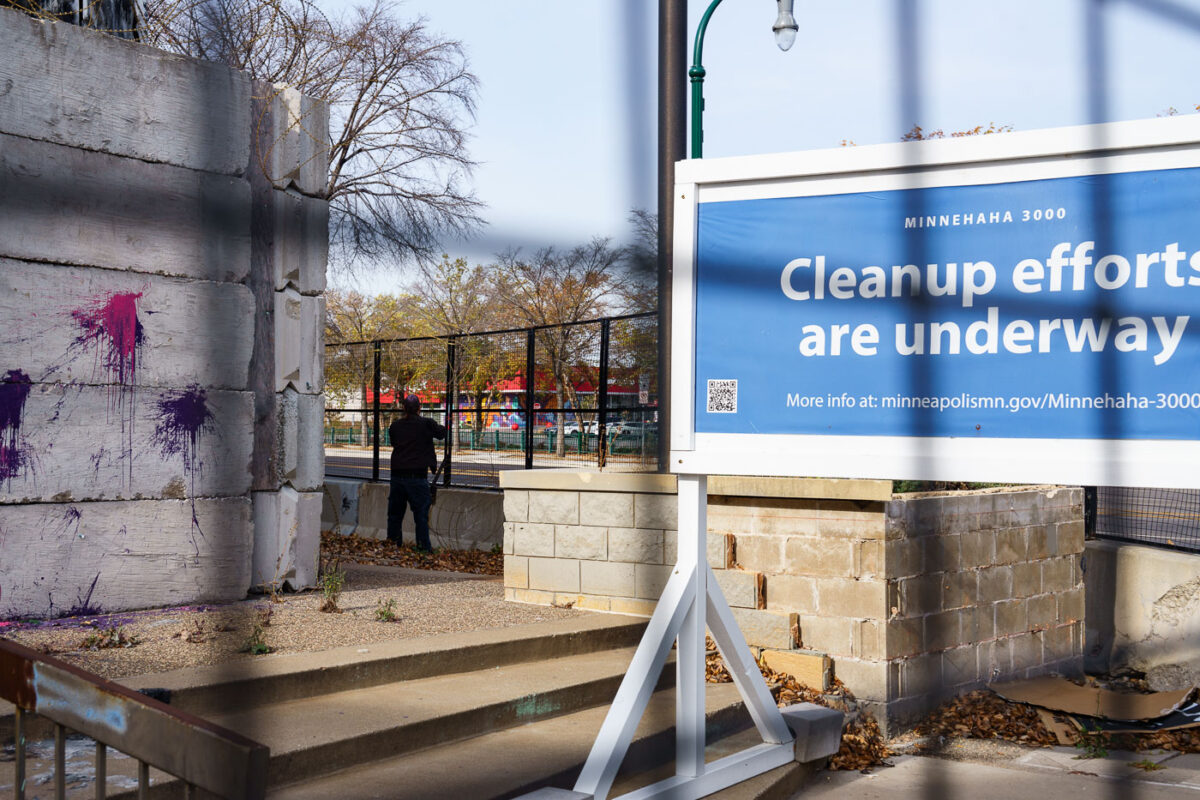
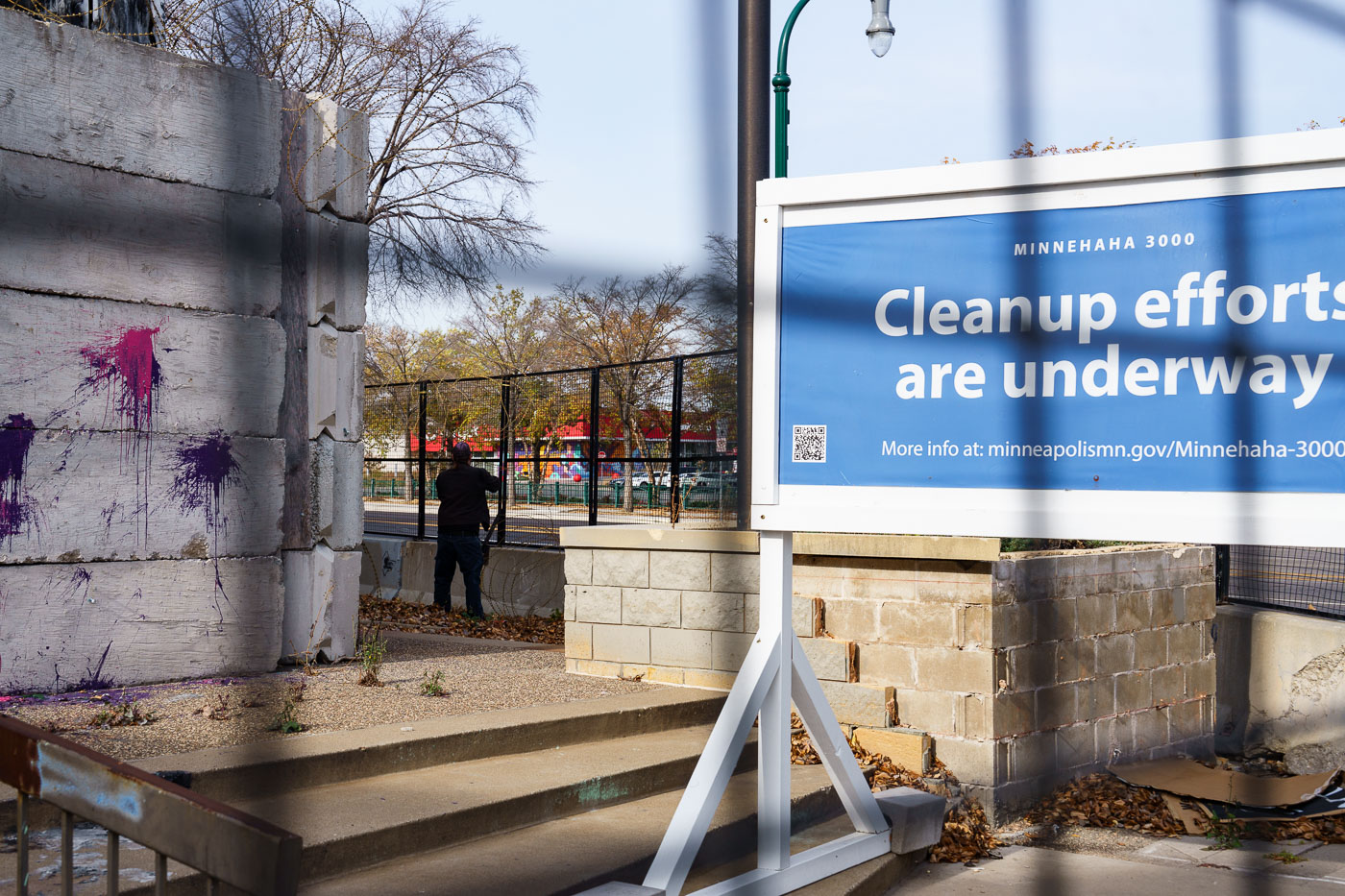
A blue sign announces "Cleanup efforts are underway" at the Minneapolis Police Department's Third Precinct building surrounded by concrete barricades and razor wire.
Workers remove razor wire from the Minneapolis Police Department's Third Precinct building, which was damaged during protests following the murder of George Floyd in 2020. The precinct was subsequently fortified with concrete barricades and razor wire.

“Cleanup Efforts Are Underway” Sign at the Minneapolis 3rd Precinct
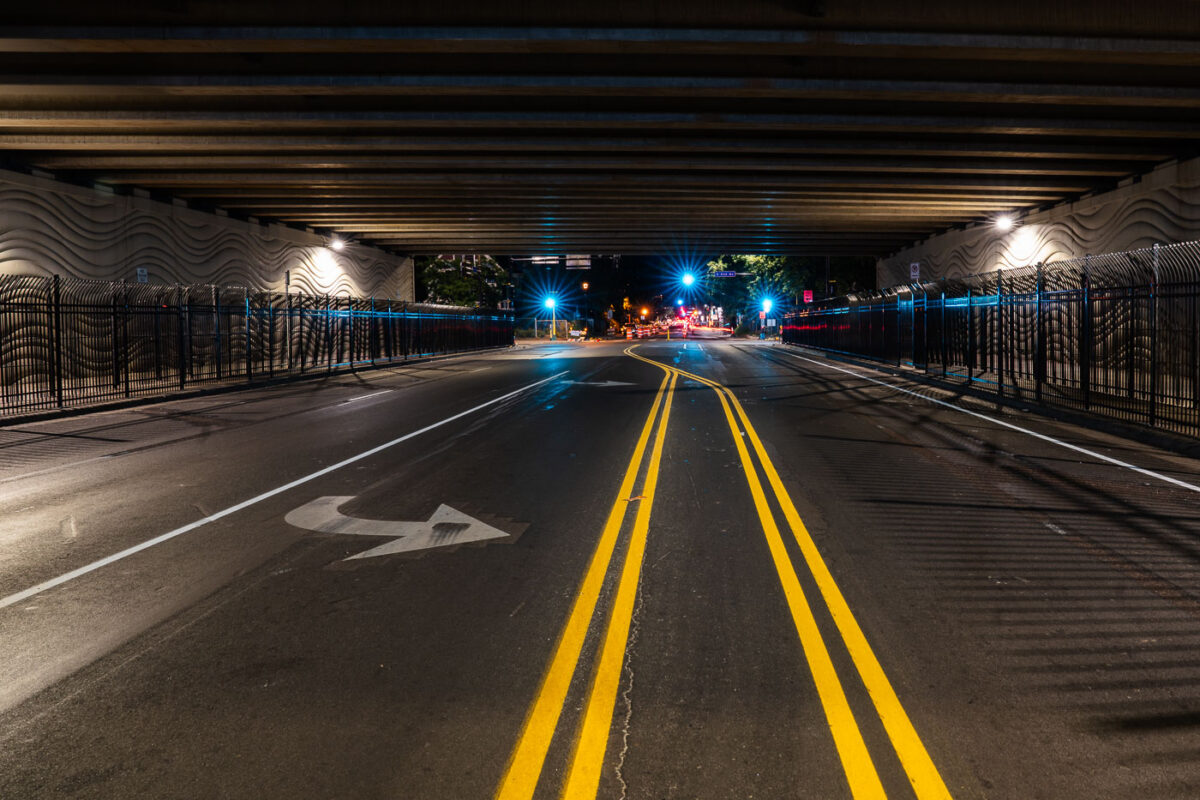
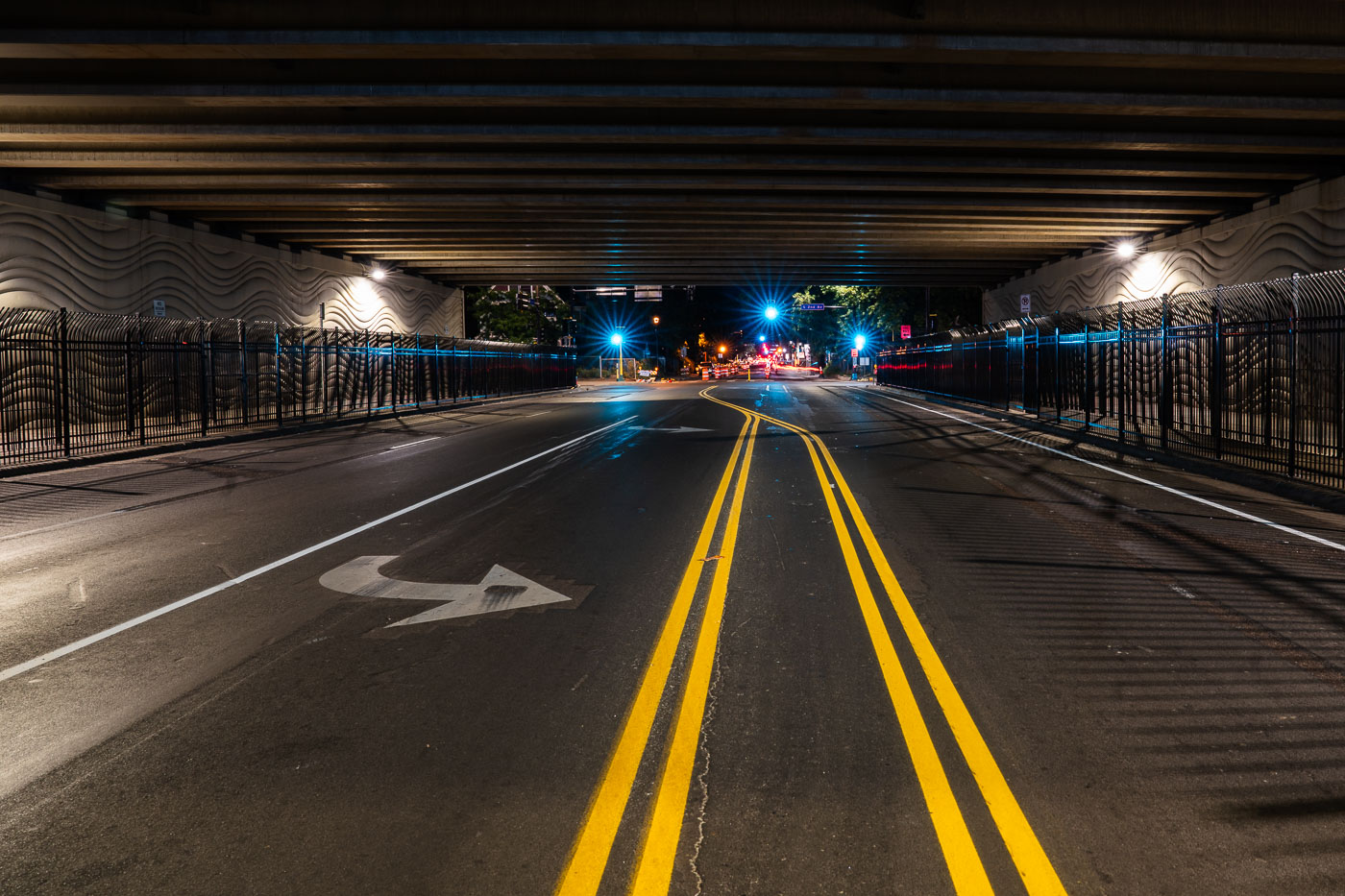
Fenced sidewalks and road markings on East 31st Street in Minneapolis at night under an underpass.
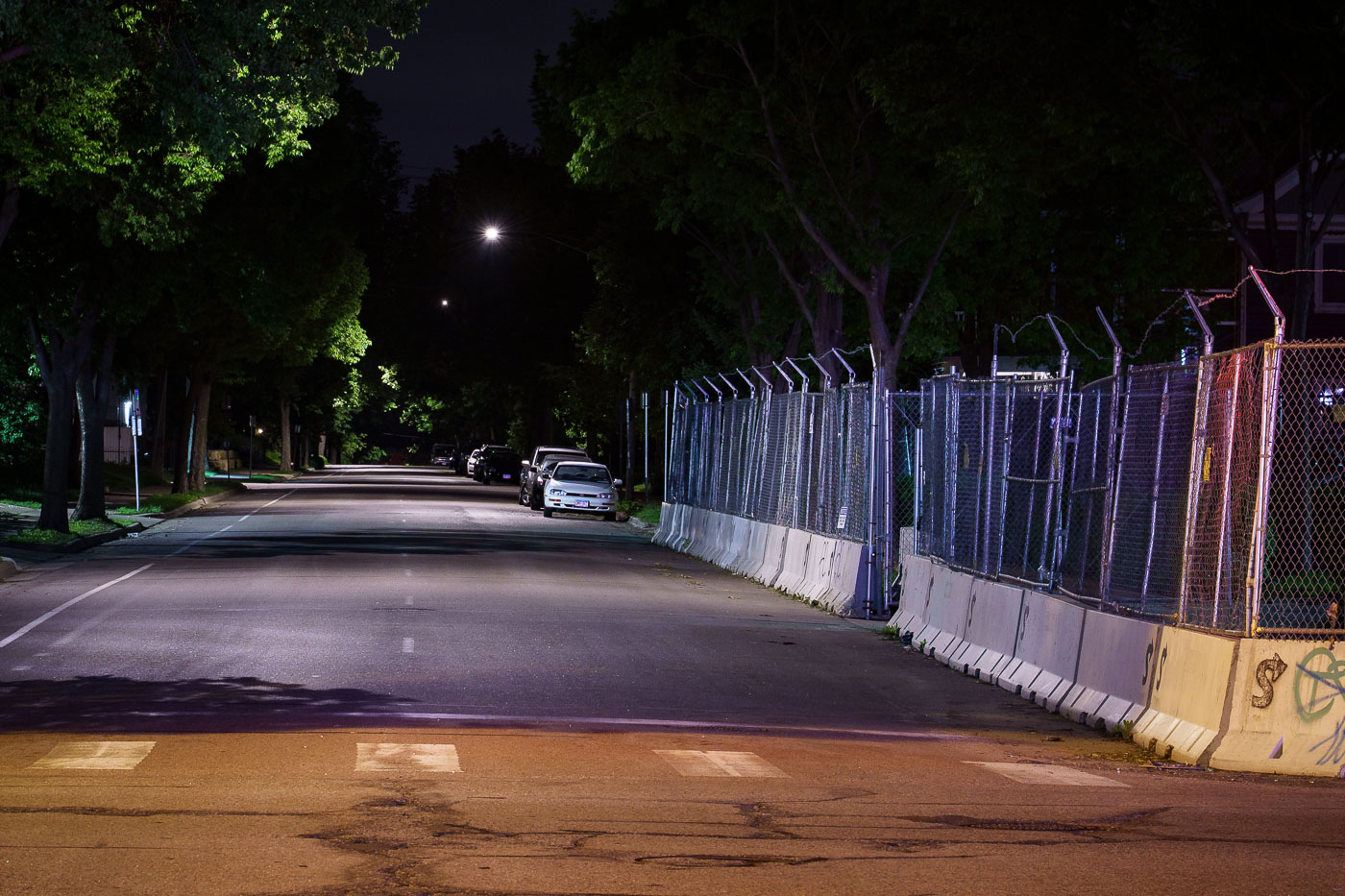
Fencing was installed by the Minnesota Department of Transportation (MNDOT) along E 31st Street in Minneapolis. This barrier was erected following the removal of an encampment that had been established in the area.

Night Traffic Lights Under the E 31st Street Overpass, Minneapolis
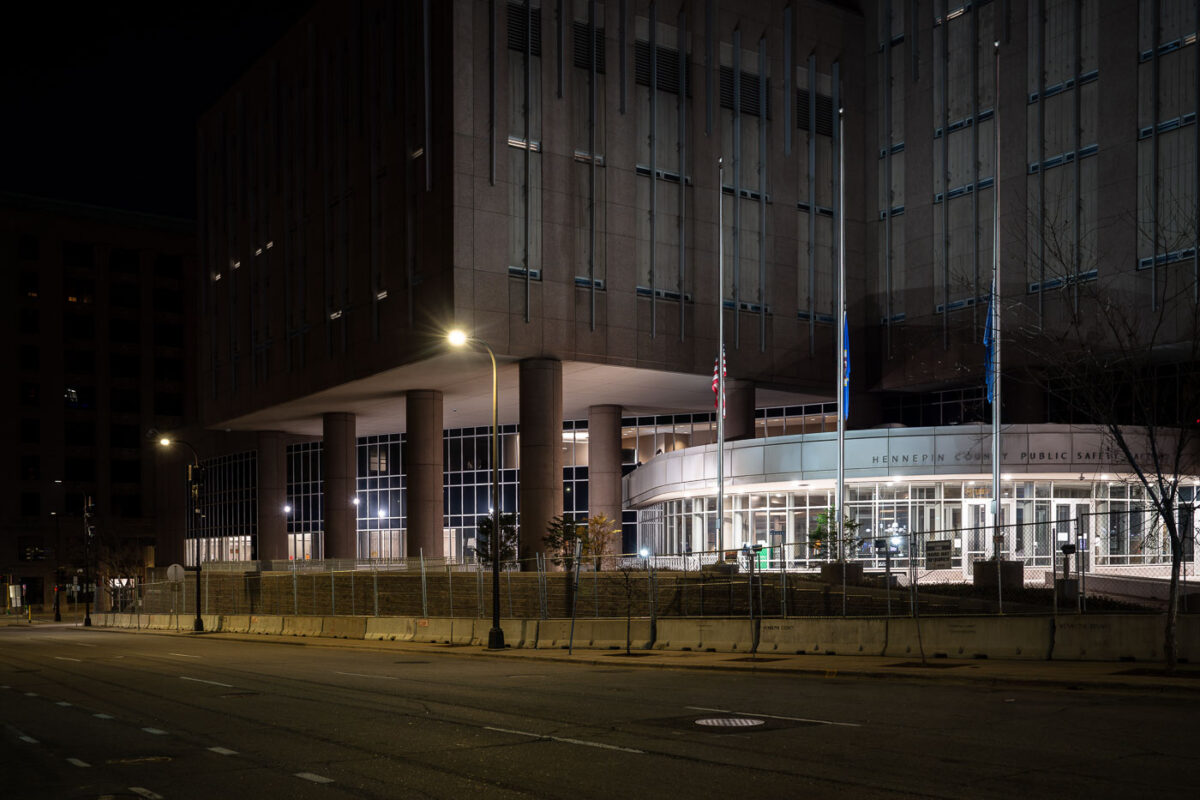
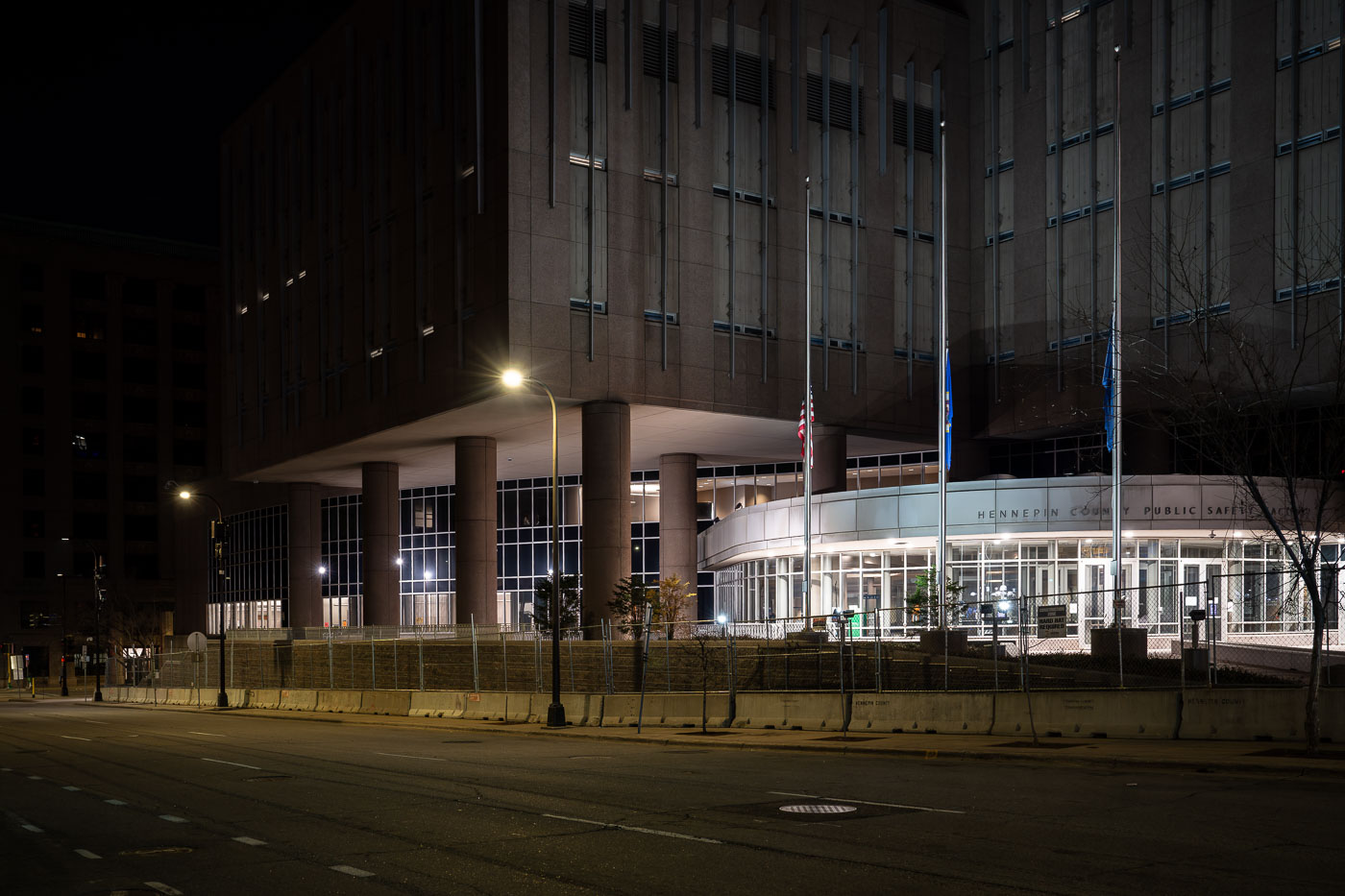
Hennepin Public Safety Building in April 2023
The Hennepin County Public Safety Facility in Downtown Minneapolis, photographed in April 2023, is a central hub for county law enforcement and judicial operations. The building houses the Hennepin County Sheriff's Office, the county jail, and court facilities, serving as a critical component of the justice system for the region.

Hennepin County Public Safety Facility, Minneapolis, April 2023
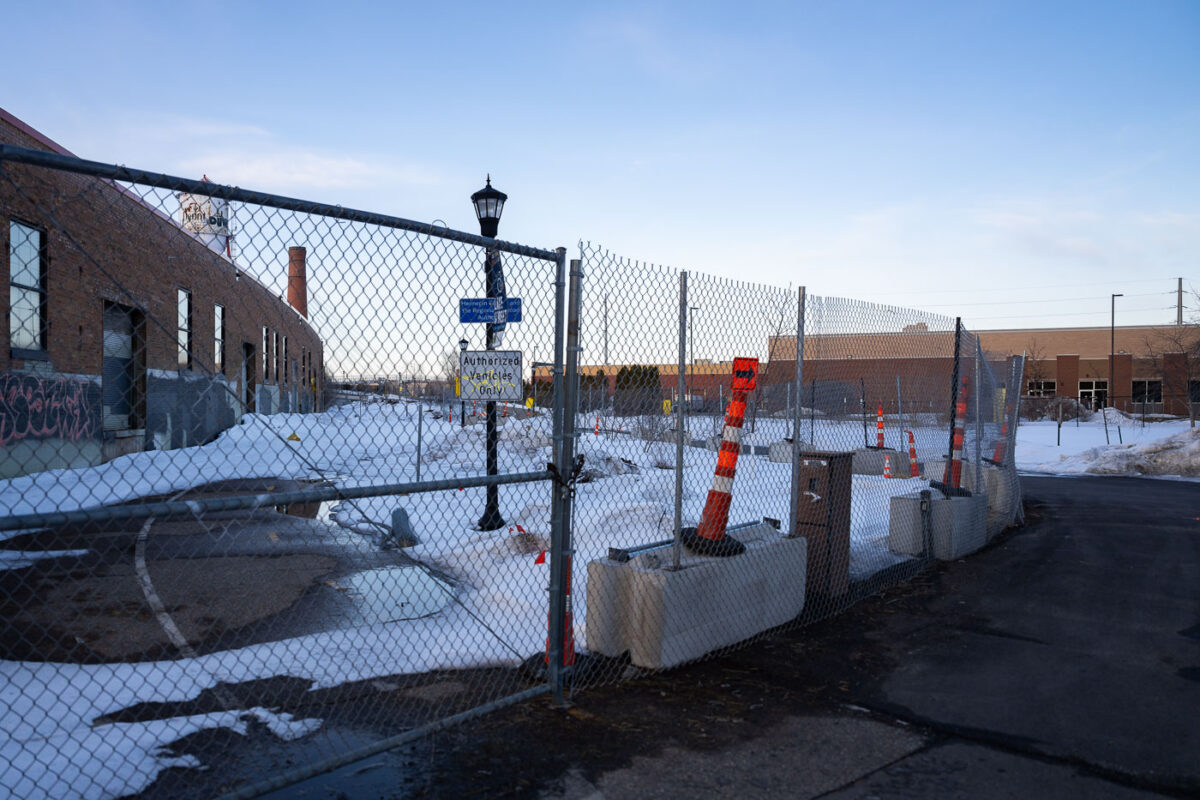
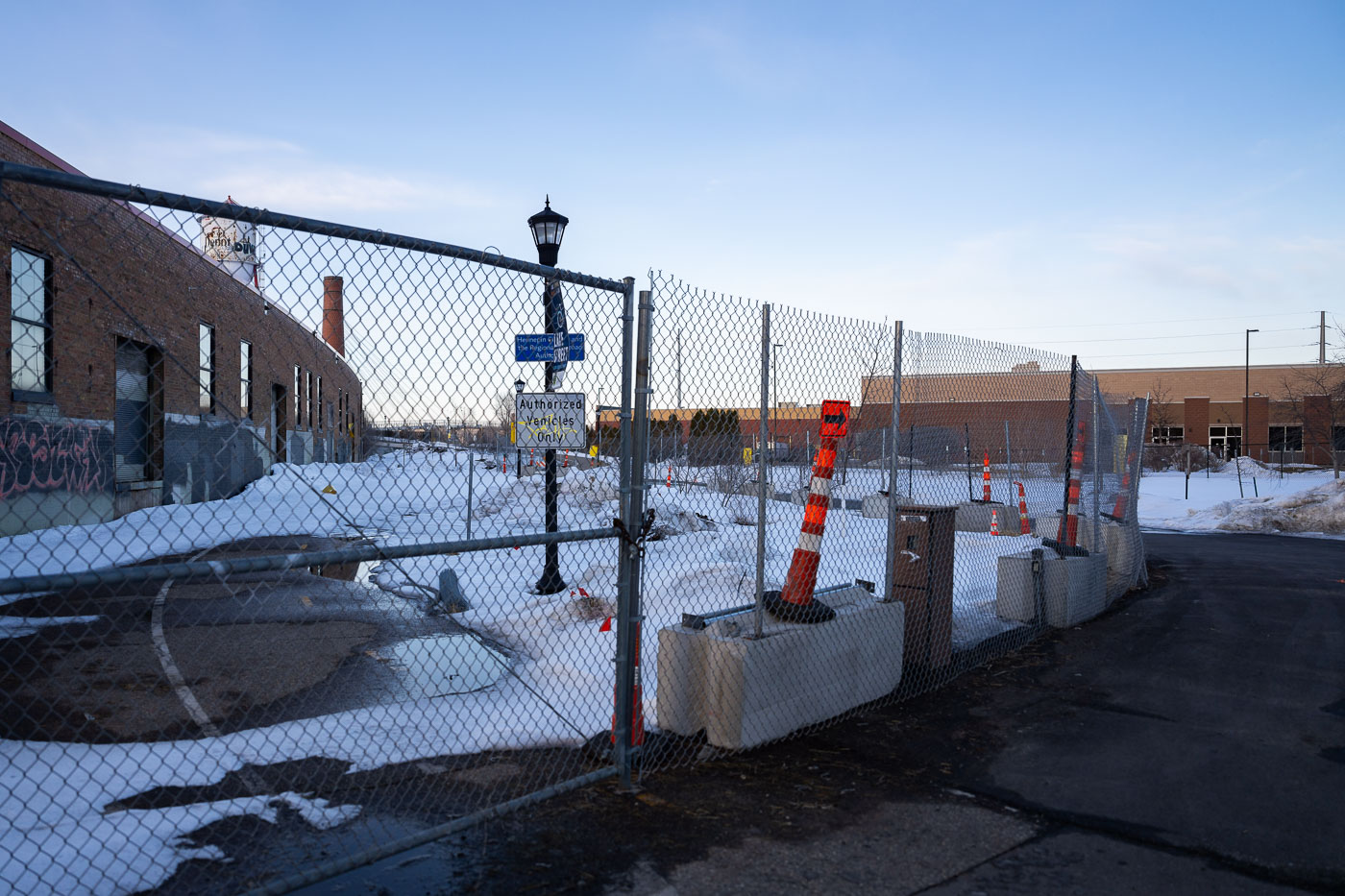
Fenced Roof Depot building site in South Minneapolis viewed from the Midtown Greenway in winter.
Fenced off Roof Depot building in South Minneapolis as seen from the Midtown Greenway.

Roof Depot Site Fenced Off Along the Midtown Greenway
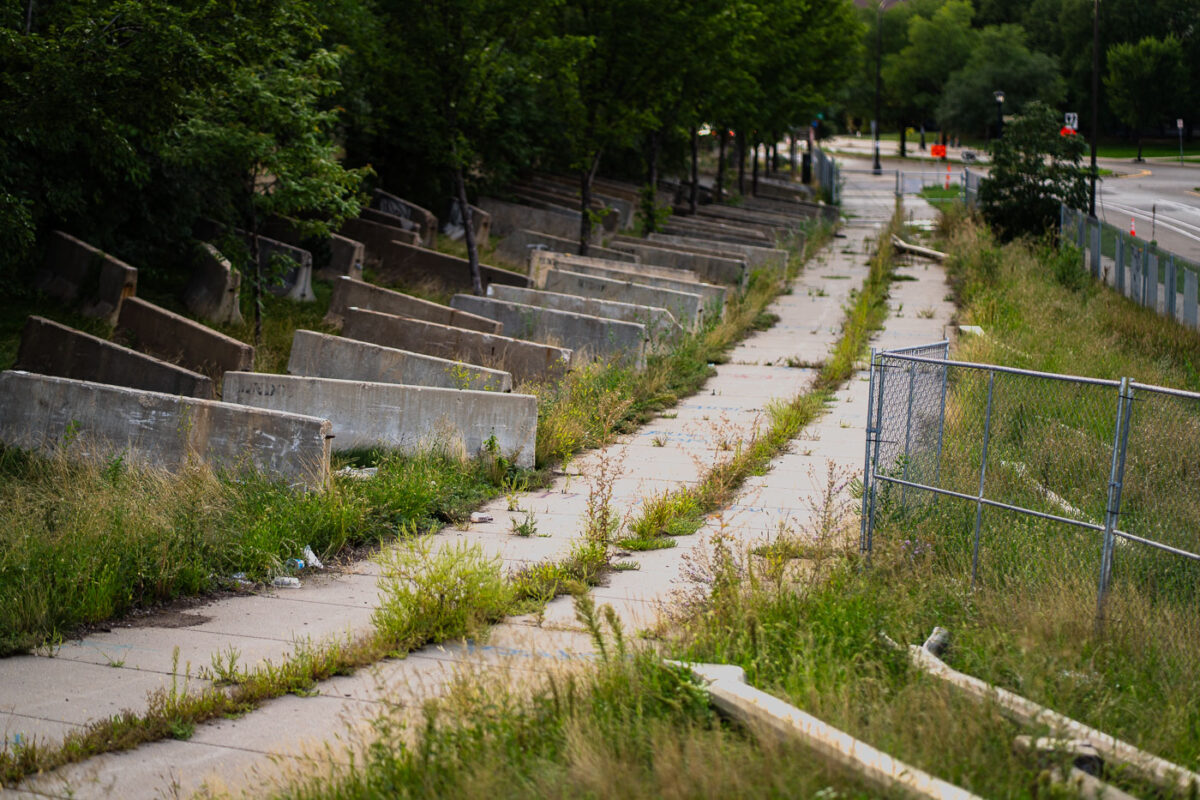
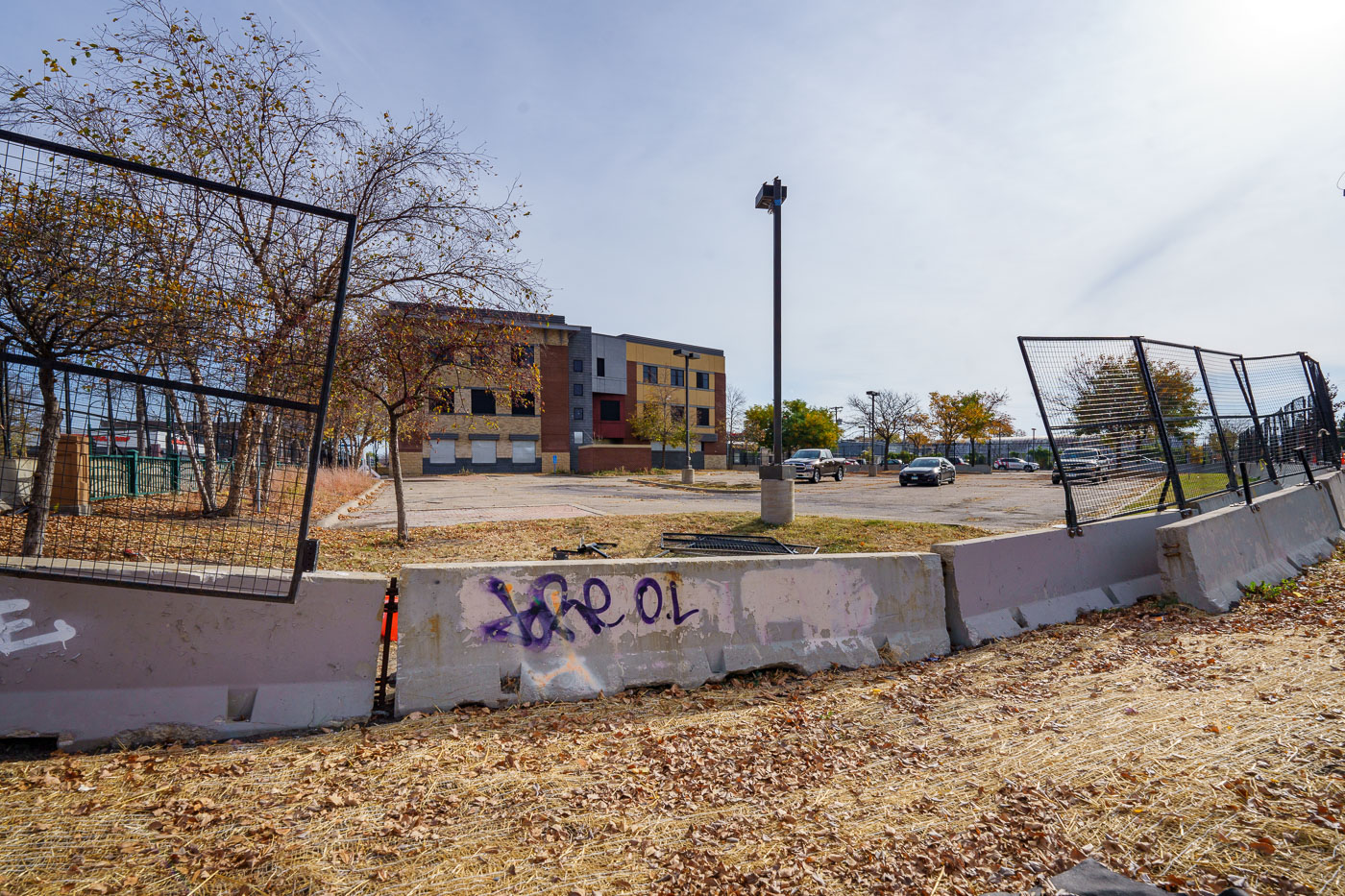
Closed Little Earth Trail in Minneapolis
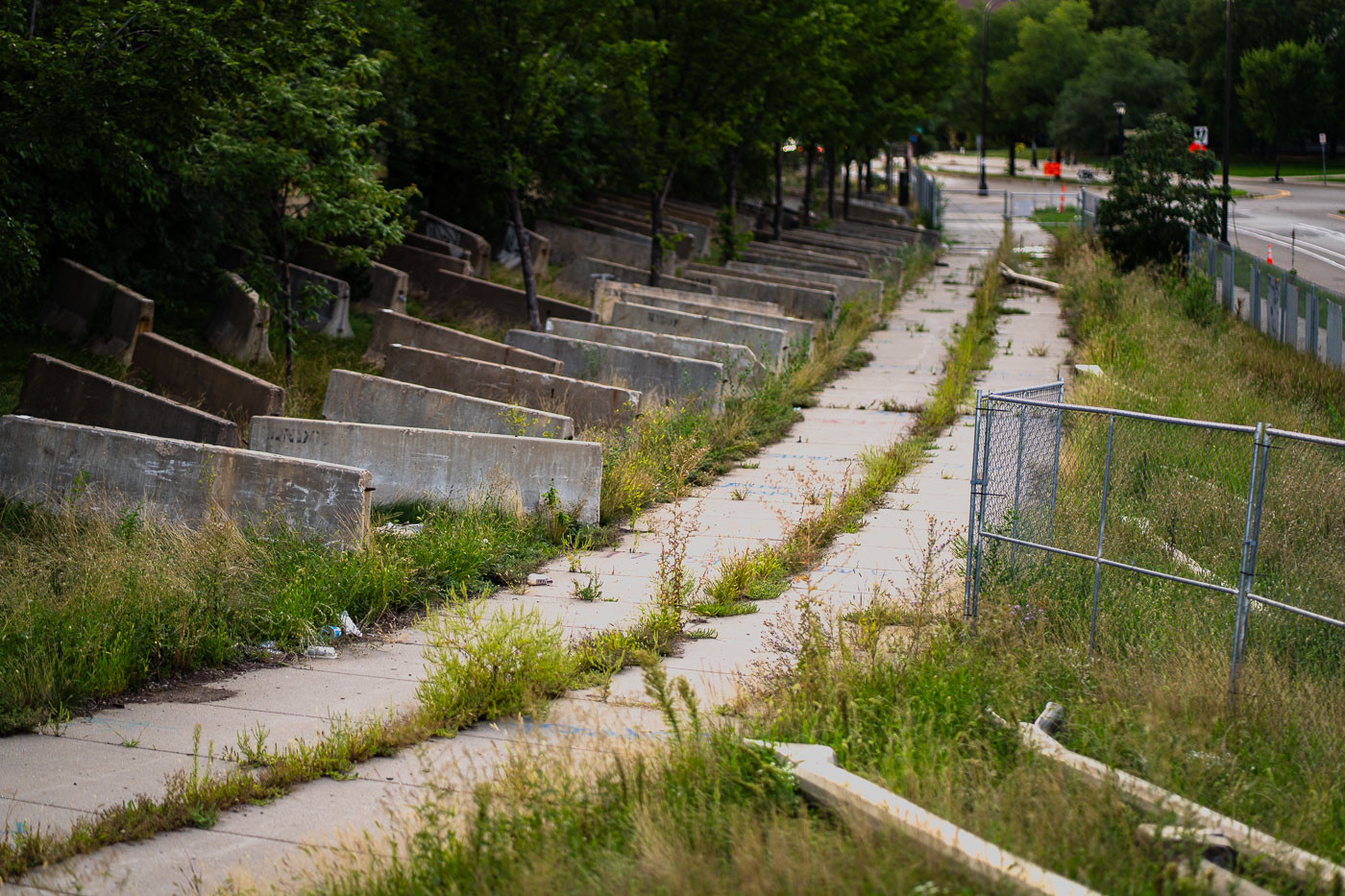
The Little Earth Trail in Minneapolis remains closed, marked by concrete barriers and fencing. This closure followed the return of encampments to the "Wall of Forgotten Natives" area, a site where individuals experiencing homelessness had gathered since 2018. The city's action in 2020, which included erecting fencing and barriers, also resulted in the accumulation of discarded street poles and concrete barricades, leaving the trail inaccessible.

Minneapolis: Little Earth Trail closed with concrete barriers
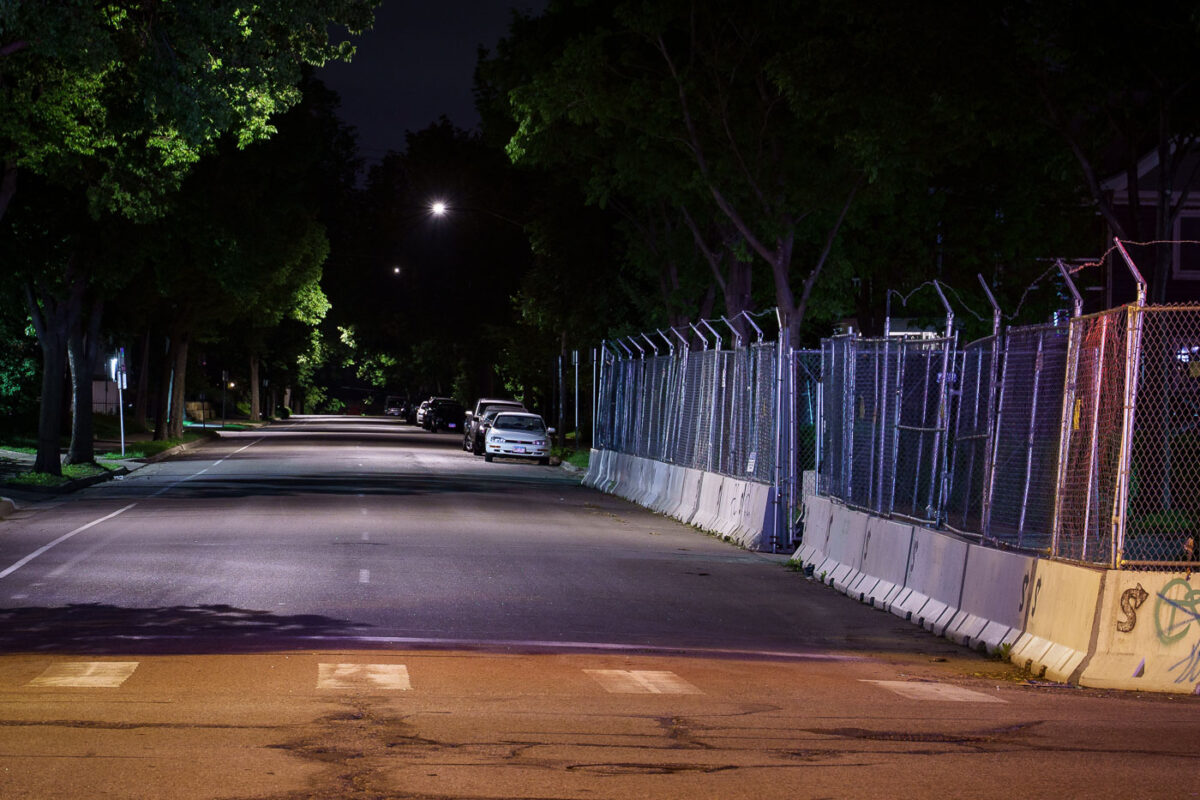
Minneapolis Police Fifth Precinct Chauvin Trial Security
Security fencing and concrete barriers were erected around the Minneapolis Police Department's 5th Precinct station during the trial of Derek Chauvin in 2021.

Minneapolis Police 5th Precinct Security Fencing During Chauvin Trial
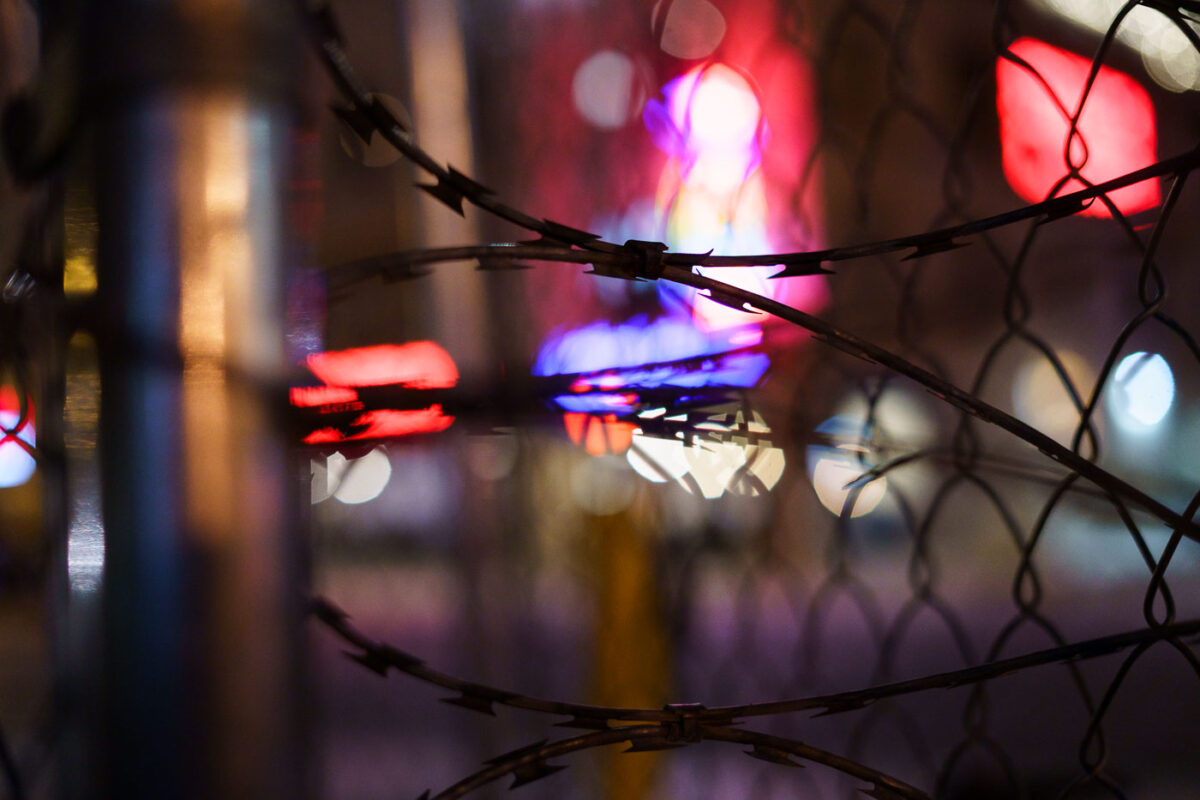
Razor wire around parking ramp in Uptown Minneapolis May 2022
Razor wire fences surround a parking ramp at Lake Street and Girard Avenue in Uptown Minneapolis. This security measure was installed following protests that occurred in the area after the shooting death of Winston Smith by a federal task force at the top of the ramp. The incident sparked significant unrest and demonstrations in the neighborhood.

Razor Wire on Parking Garage, Uptown Minneapolis
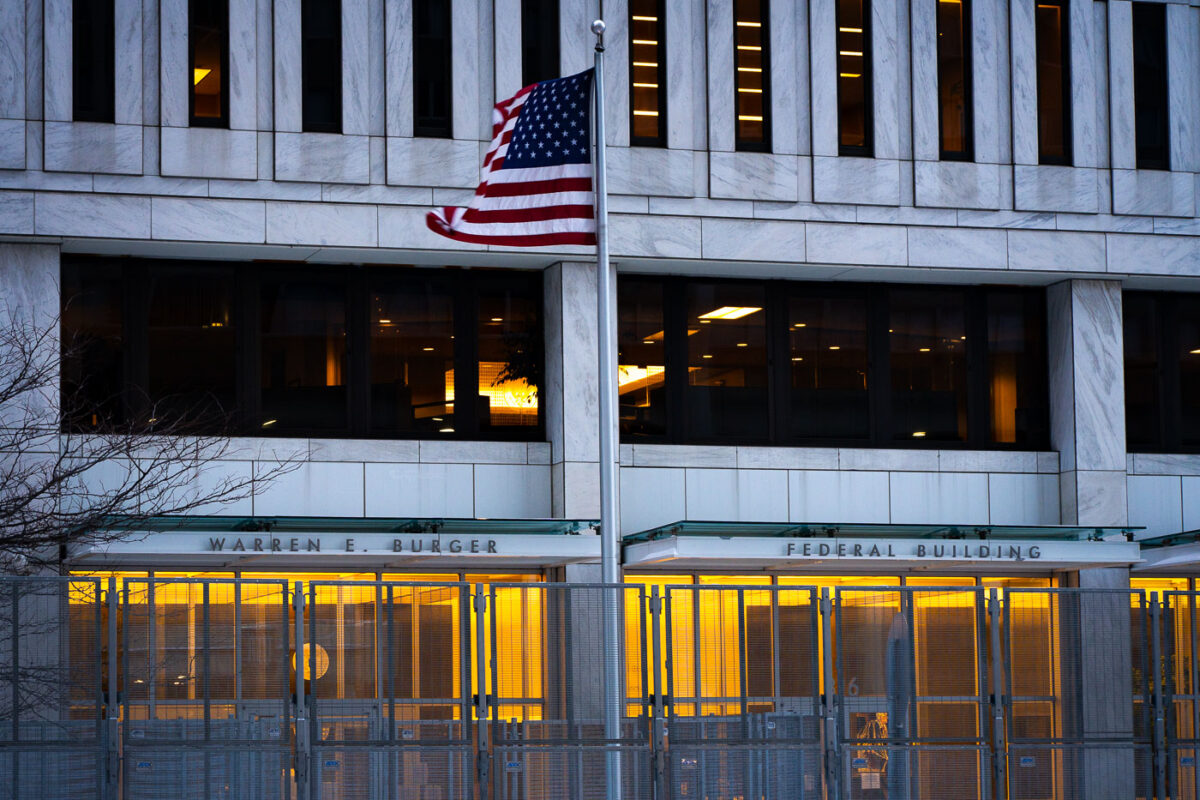
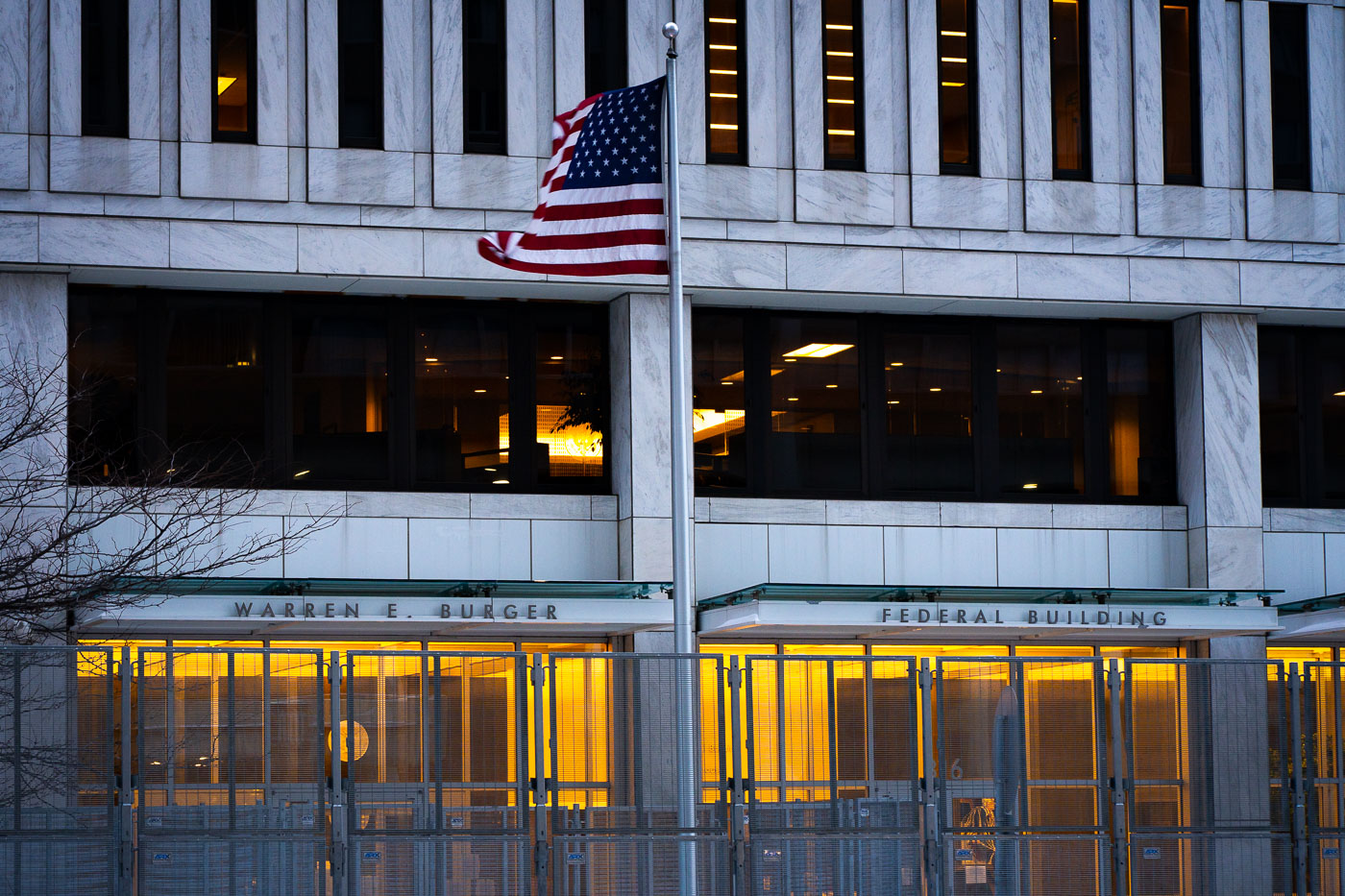
Flag at Warren Burger Federal Building
An American flag flies outside the Warren E. Burger Federal Building in St. Paul, Minnesota. This federal courthouse, named after former Chief Justice of the United States Warren E. Burger, serves as a key judicial center for the district. The photograph was taken on Day 3 of the federal trial where former Minneapolis police officers Thou Thao, J Alexander Kueng, and Thomas Lane were accused of violating George Floyd's civil rights. This high-profile trial followed the widespread protests and calls for justice that arose after Floyd's death.

American Flag, Warren E. Burger Federal Building, St. Paul Trial
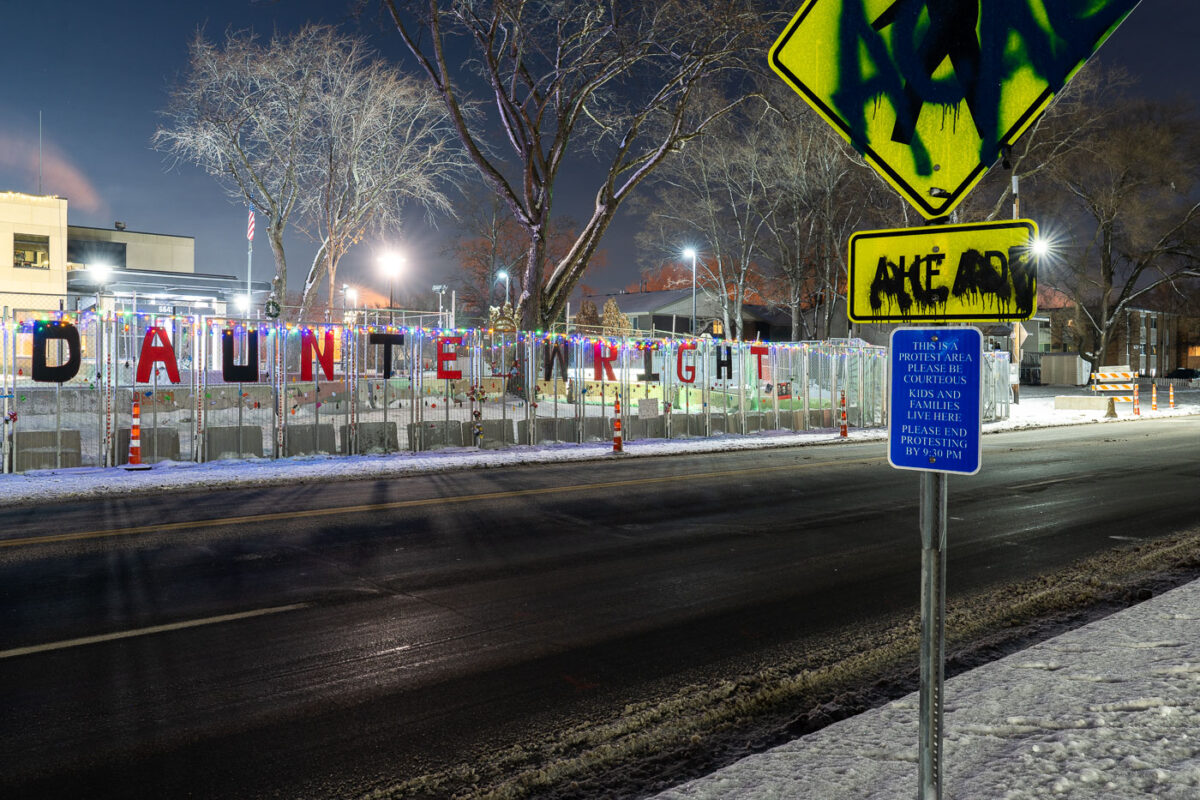
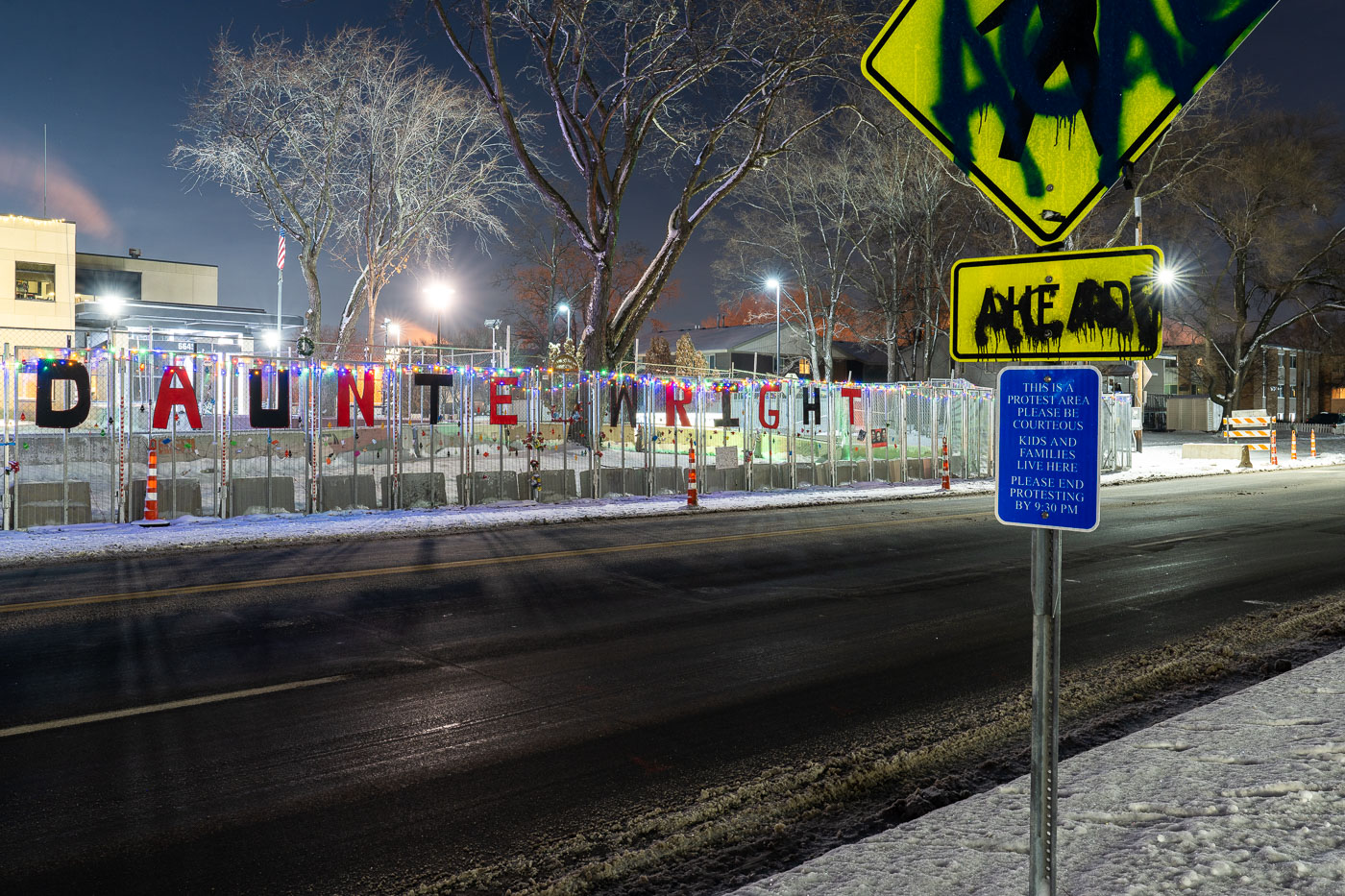
Daunte Wright on Brookly Center PD fencing
The Daunte Wright Memorial, illuminated by holiday lights, stands behind temporary fencing and concrete barriers in Brooklyn Center, Minnesota. This memorial marks the site where Daunte Wright was fatally shot by Brooklyn Center Police Officer Kim Potter on April 11, 2021. The area, adjacent to the Brooklyn Center Police Department, became a focal point for protests and remembrance in the days and months following Wright's death, particularly as the trial for Officer Potter commenced. A sign indicates the designated protest area and requests that demonstrations conclude by 9:30 PM, acknowledging the presence of local families and children.

Brooklyn Center: Daunte Wright Memorial with Protest Area Sign
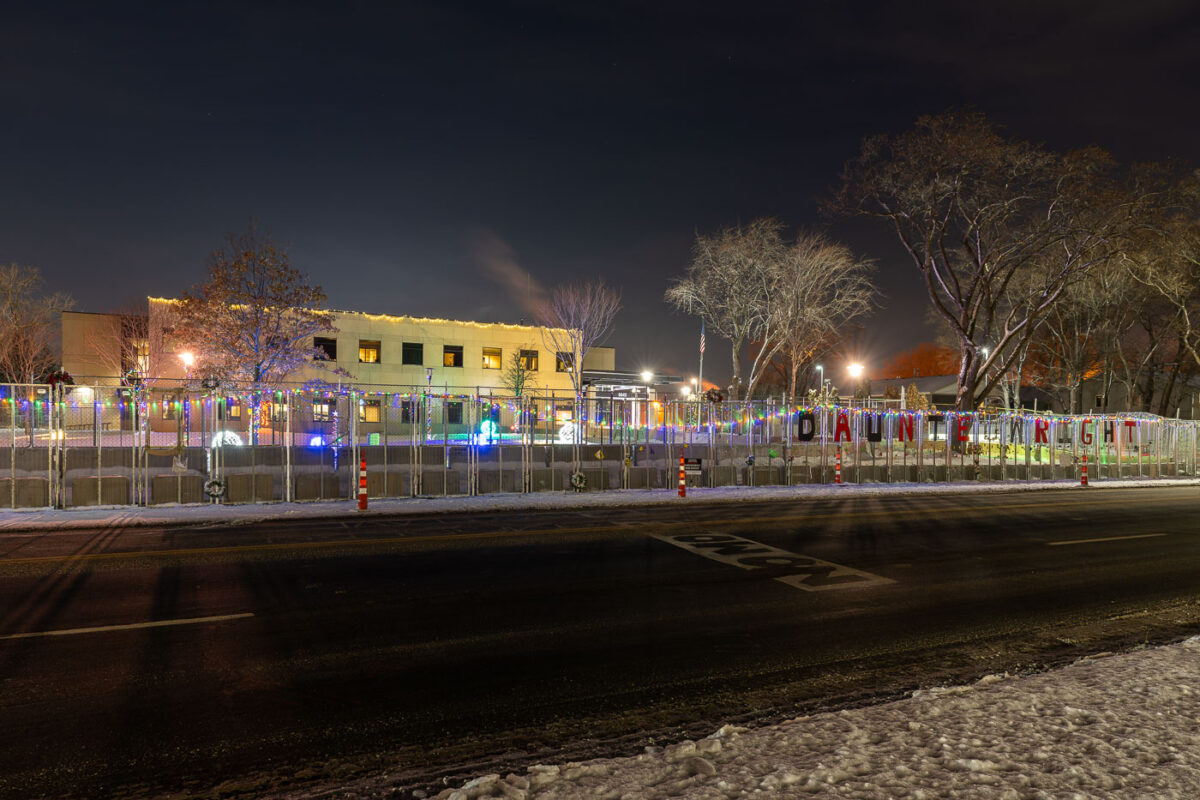
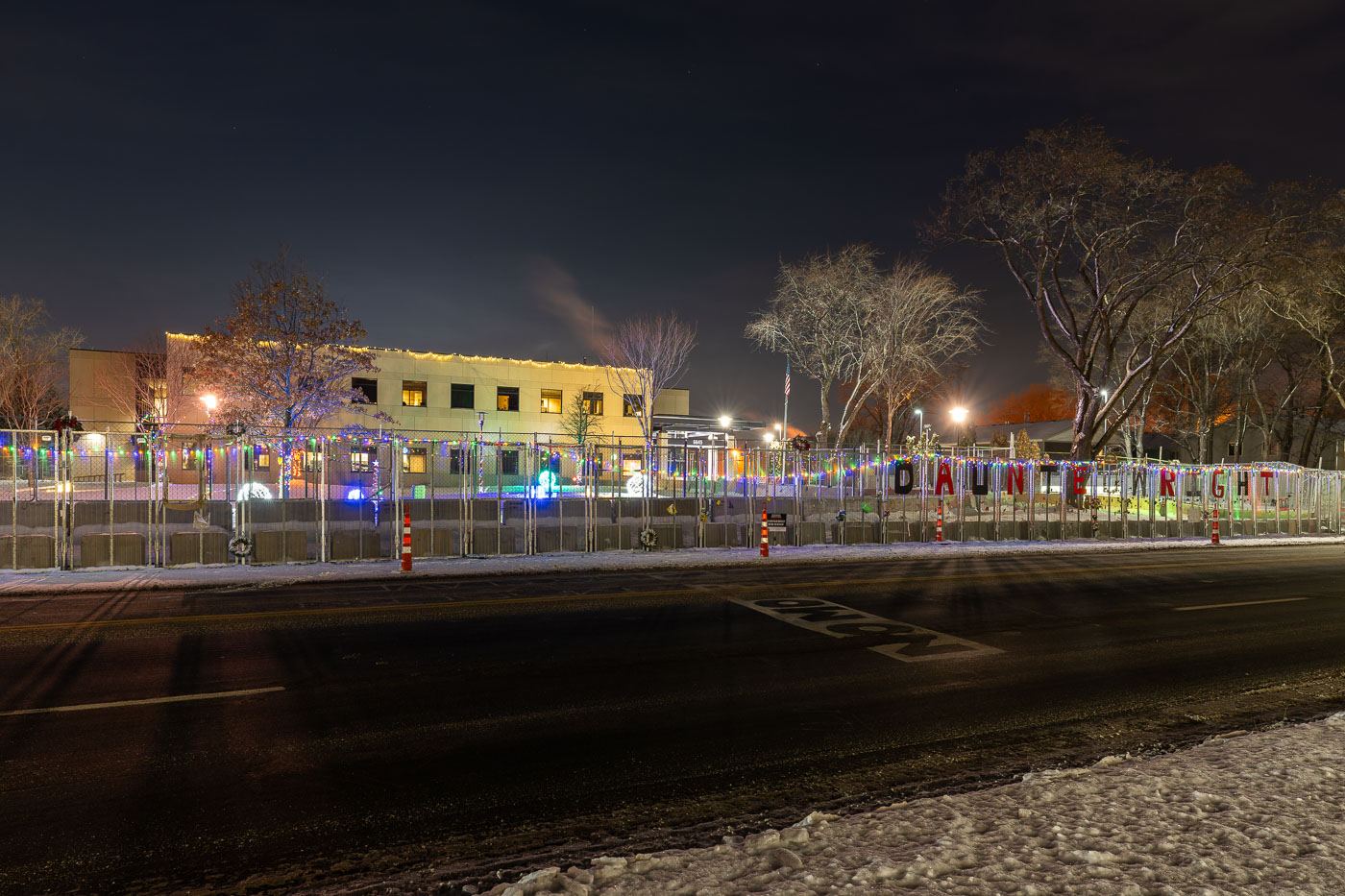
Daunte Wright and Christmas Lights at Brooklyn Center PD
A temporary fence, adorned with holiday lights and bearing the name "DAUNTE WRIGHT," stands as a memorial outside the Brooklyn Center Police Department. This memorial was erected following the fatal shooting of Daunte Wright by an officer on April 11, 2021, an event that triggered significant protests and unrest in the Minneapolis area. The fencing, along with ARX perimeters and barricades, also served as a visible symbol of the security measures in place during the period leading up to the opening statements in the Kim Potter manslaughter trial. The memorial serves as a somber reminder of the incident and its profound impact on the community.

Brooklyn Center Police Dept. Memorial Fence for Daunte Wright
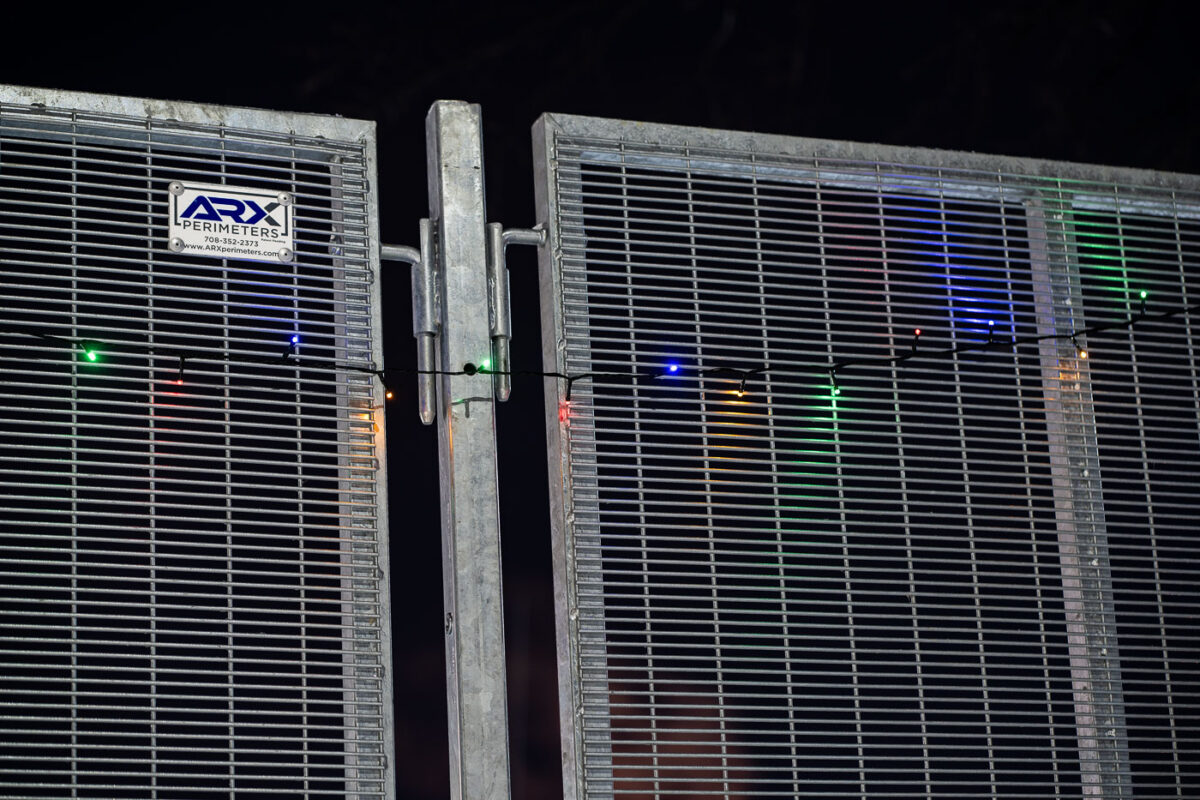
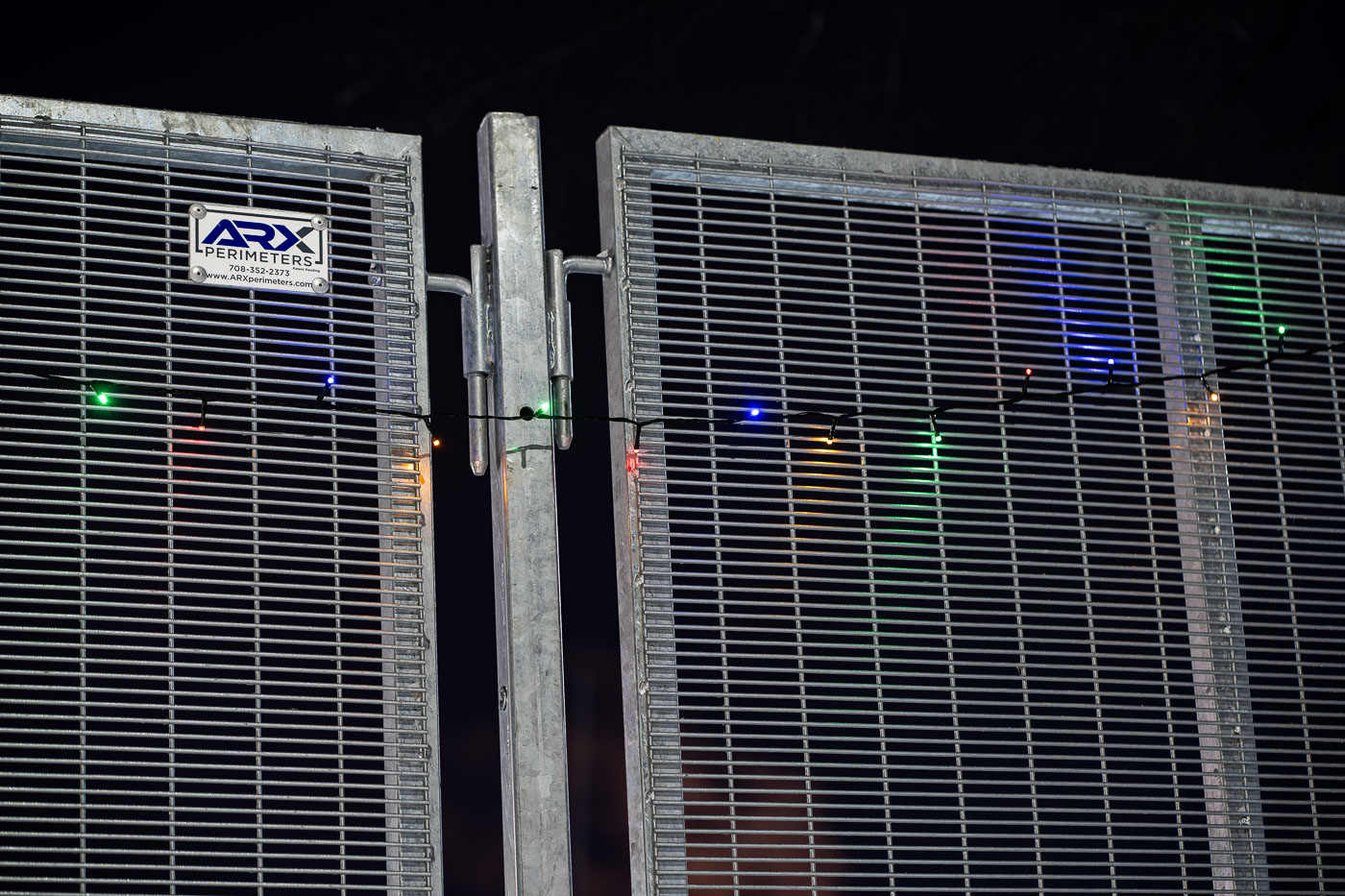
Holiday lights on police department fencing
Temporary fencing, manufactured by ARX Perimeters, surrounds the Brooklyn Center Police Department in Brooklyn Center, Minnesota. The security measures were installed following the shooting death of Daunte Wright by a police officer in April 2021, which led to widespread protests and unrest in the area. The fencing remained in place through the holiday season, adorned with decorative lights.

Brooklyn Center Police Station Fencing with Holiday Lights
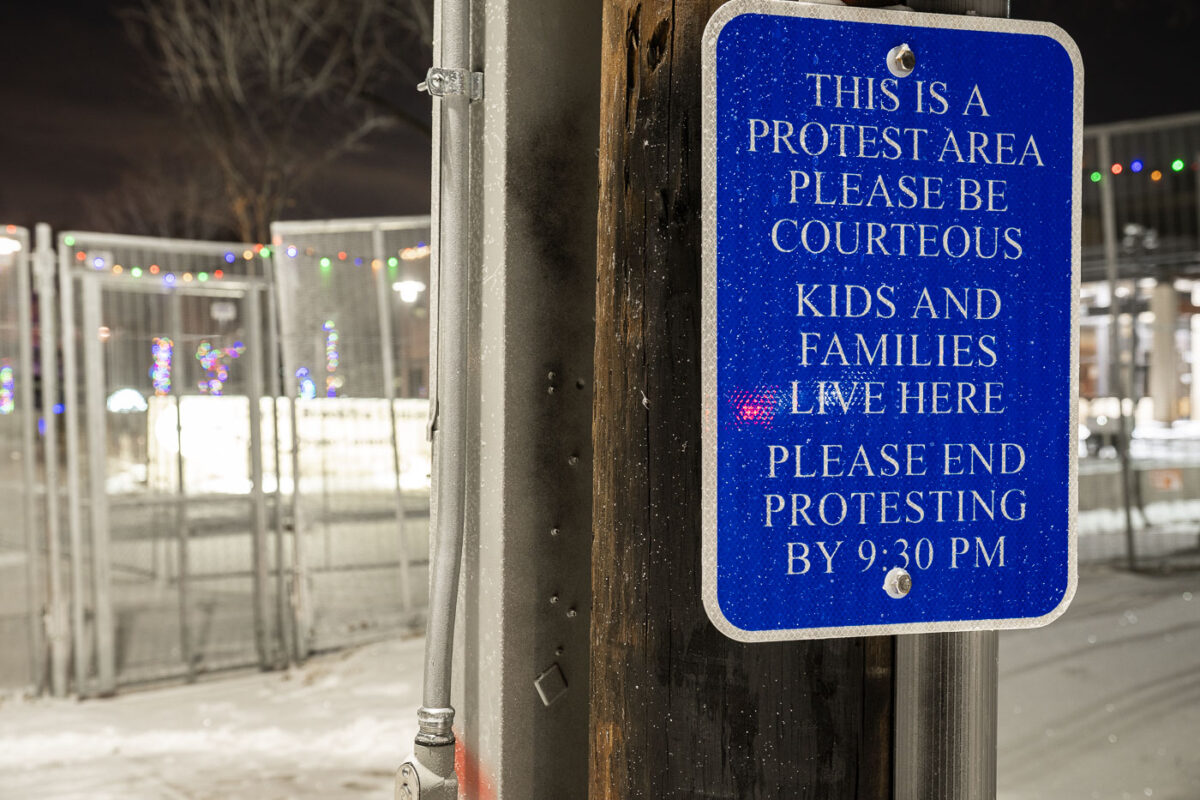
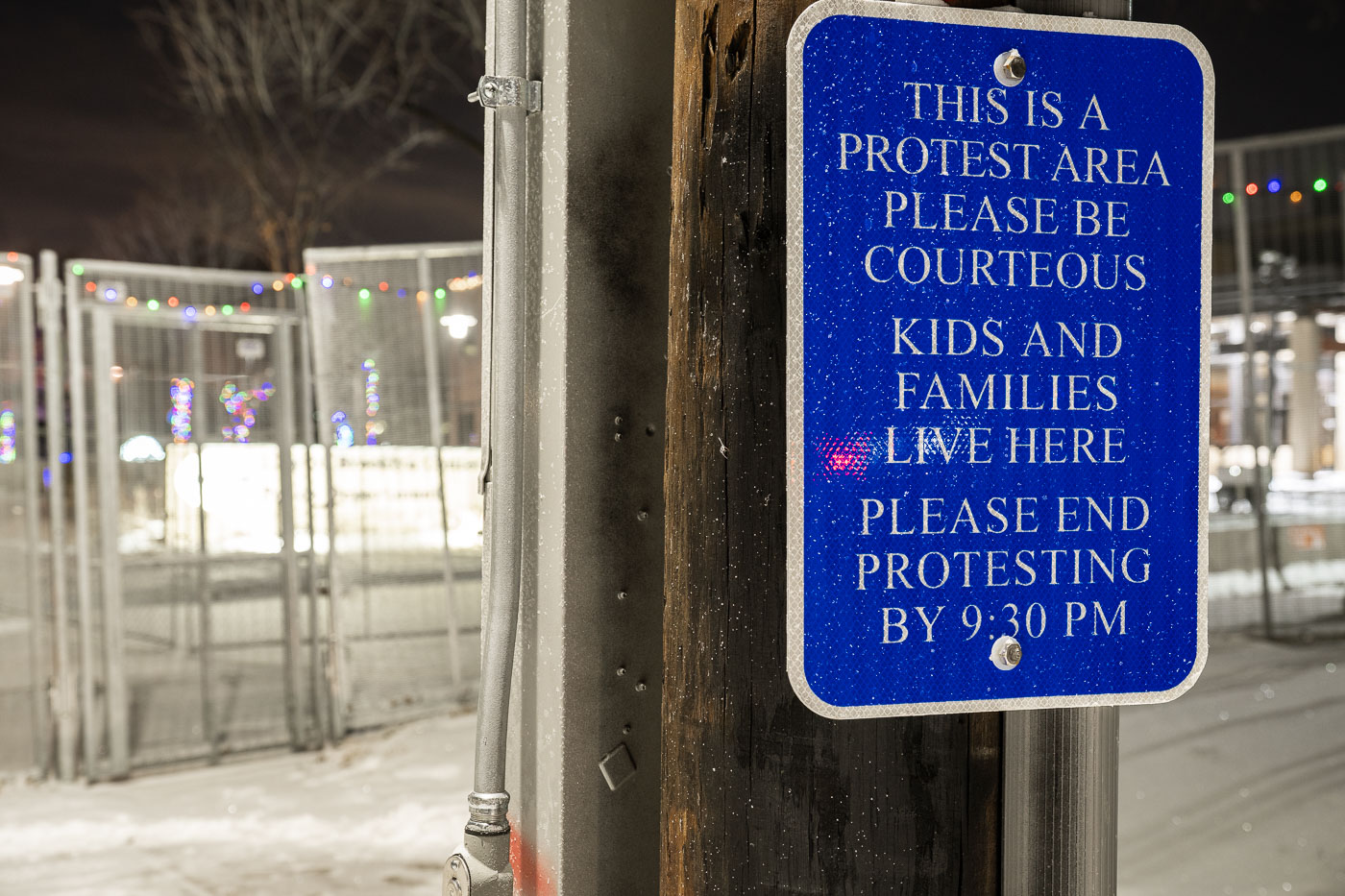
Brooklyn Center Police Protest Area Sign
A sign outside the Brooklyn Center Police Department in Brooklyn Center, Minnesota, designates a protest area and requests that demonstrations conclude by 9:30 PM. The sign also appeals for courtesy, noting that children and families reside nearby. This measure was implemented following protests that occurred in April 2021 after the death of Daunte Wright. The fencing in the background indicates the area was secured during periods of unrest.

Brooklyn Center Police Protest Area Sign – End by 9:30 PM
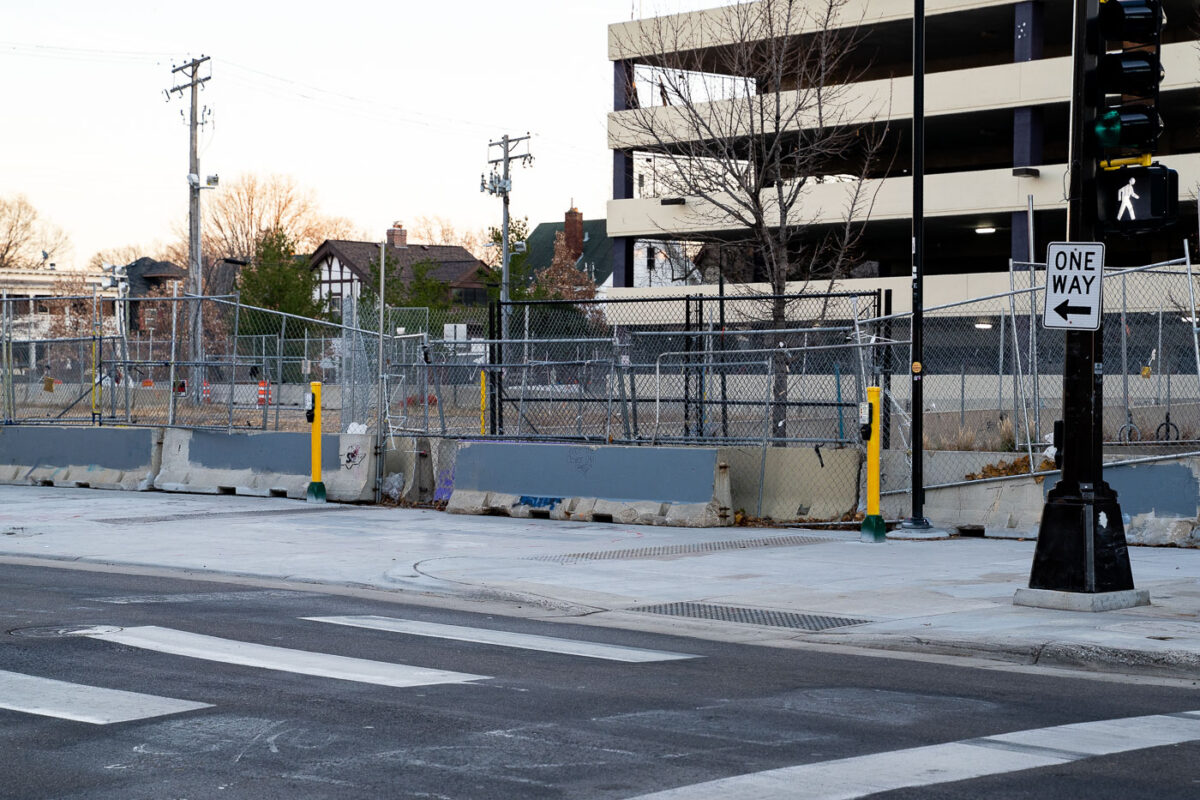
Security fencing around Seven Points Mall in November 2021
Temporary security fencing and concrete barriers were erected around the Lake & Girard parking garage in Minneapolis in November 2021. This structure, adjacent to Seven Points Mall, was the site where Winston Smith Jr. was killed by law enforcement in June 2021. The security measures were implemented following protests and unrest in the city, reflecting a heightened security presence in the area.

Seven Points Mall Parking Garage Security Fencing, Minneapolis
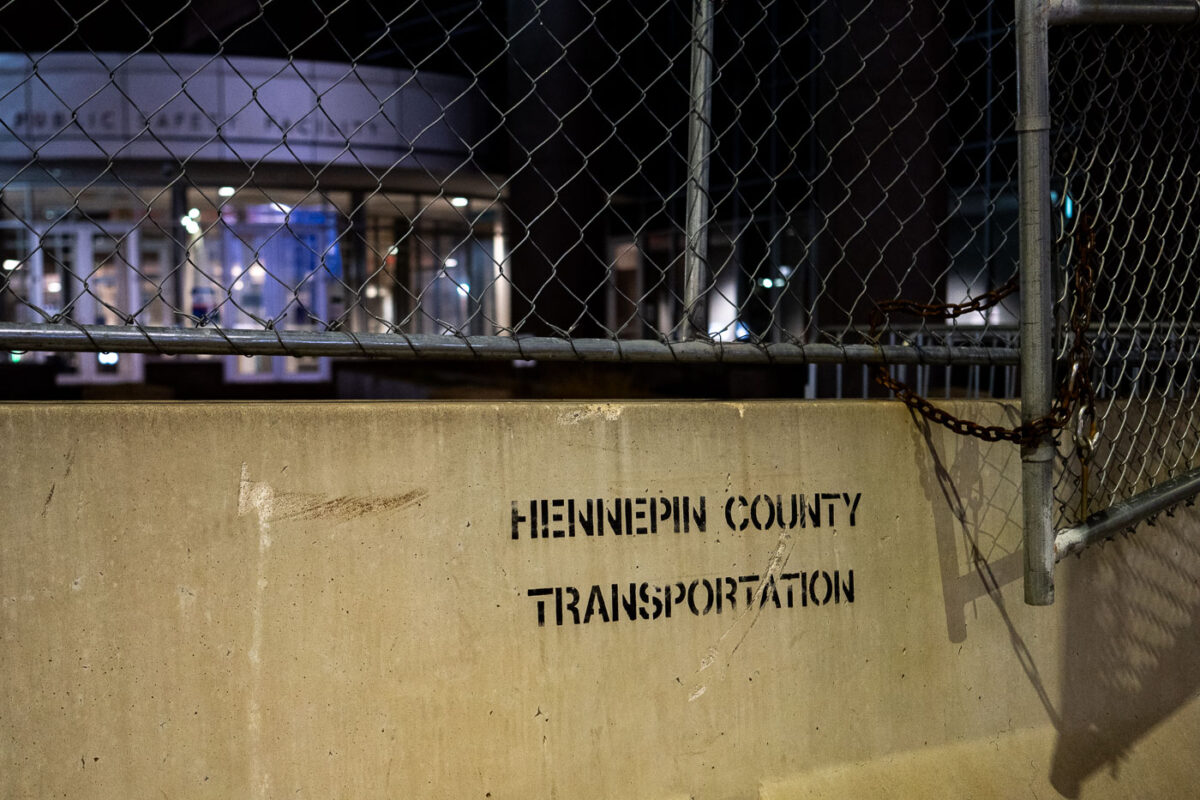
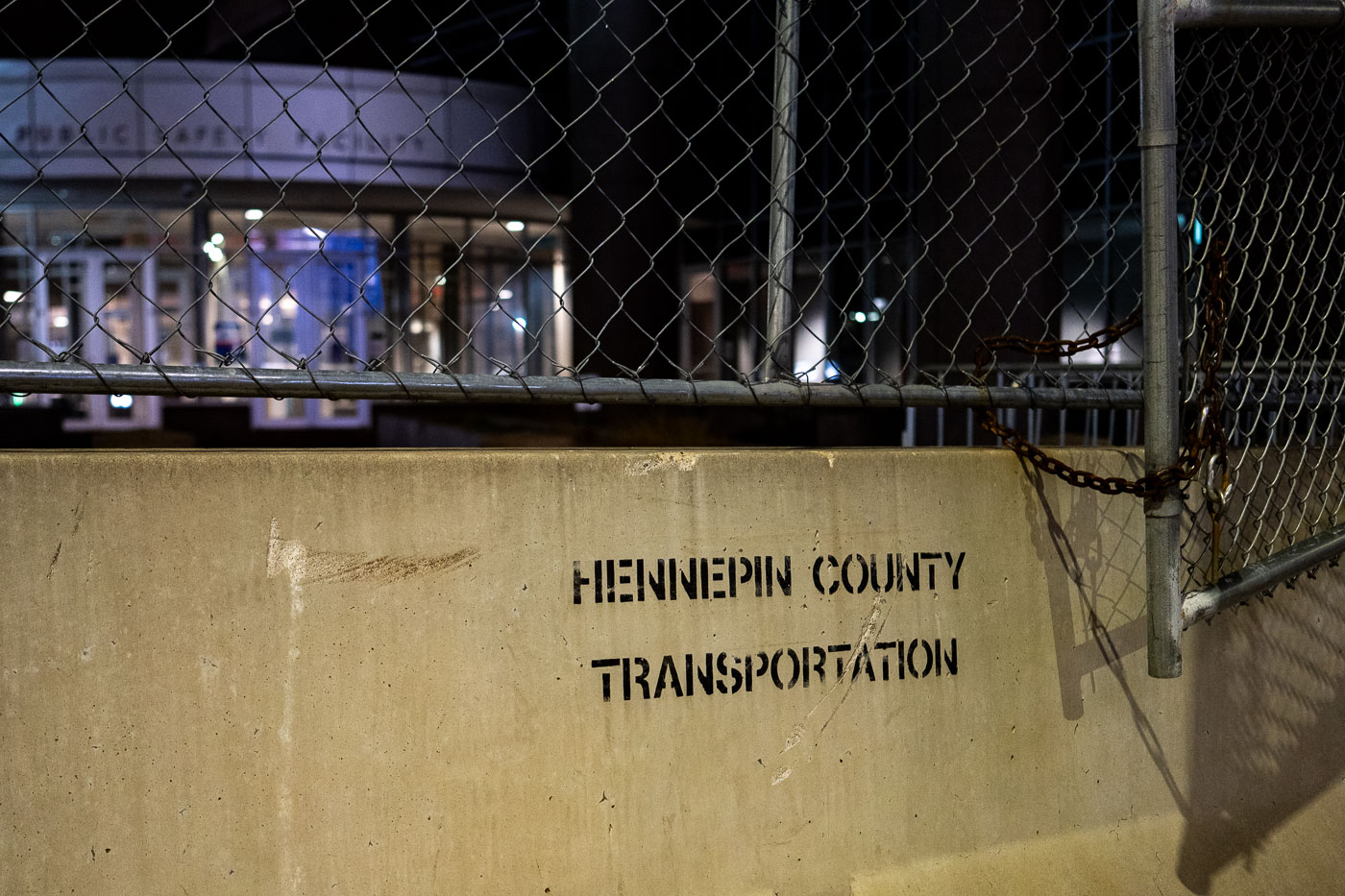
Fencing around Hennepin Public Safety Facility
Security fencing surrounds the Hennepin County Jail in downtown Minneapolis, as seen prior to the Kim Potter trial. The fencing was erected in anticipation of protests related to the trial of Kim Potter, who was accused of killing Daunte Wright. The concrete barrier in the foreground is marked "Hennepin County Transportation," indicating its proximity to transportation infrastructure or facilities managed by the county.

Hennepin County Jail Security Fencing, Minneapolis
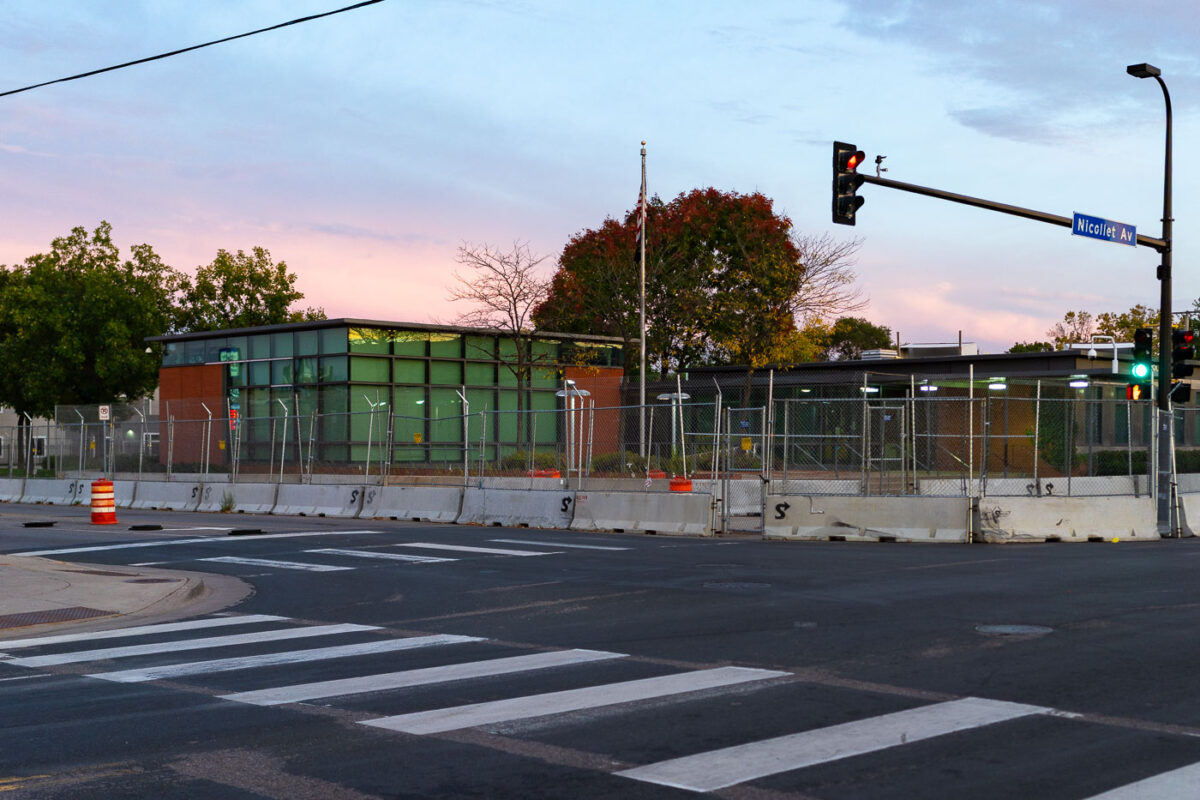
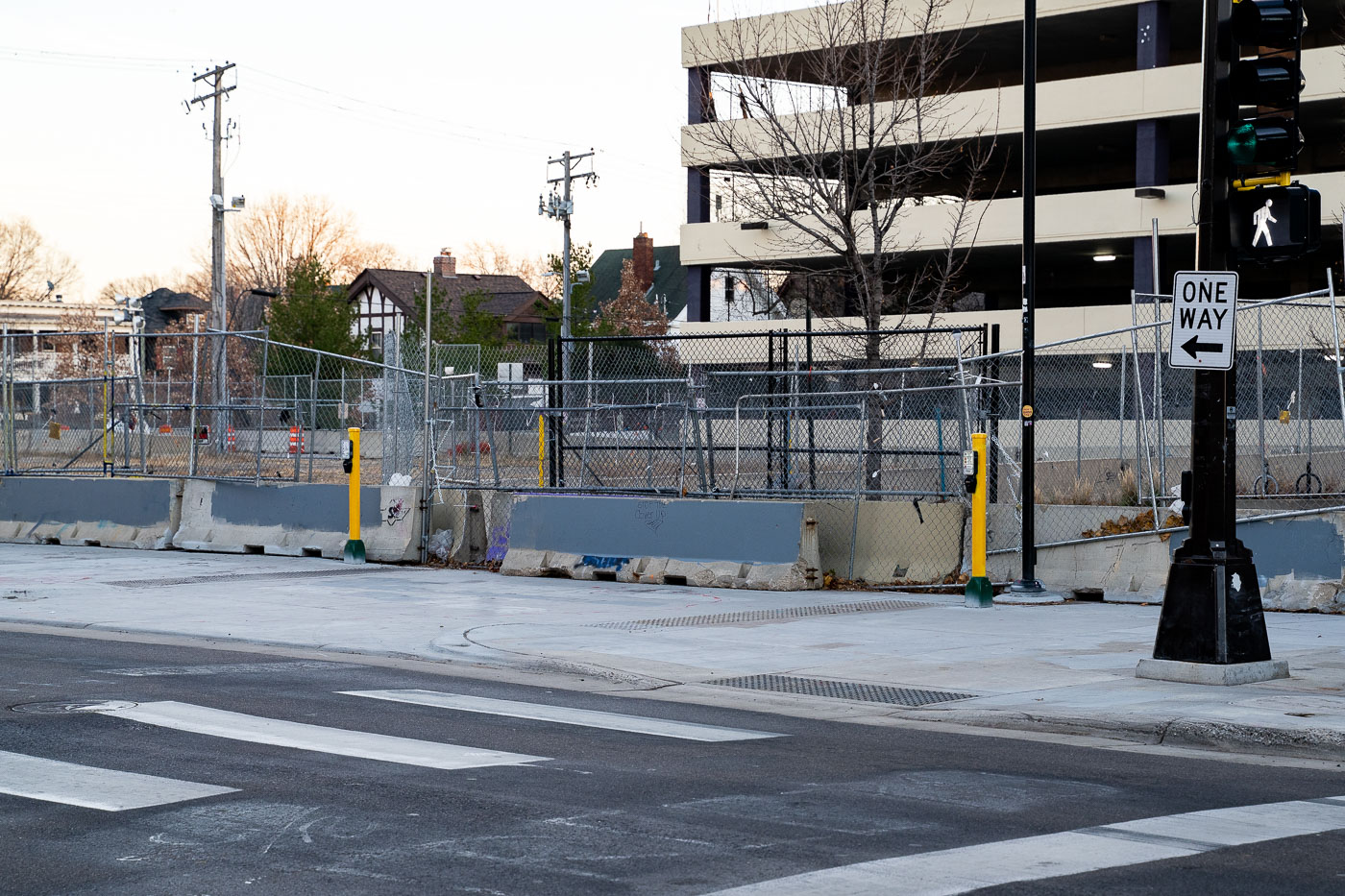
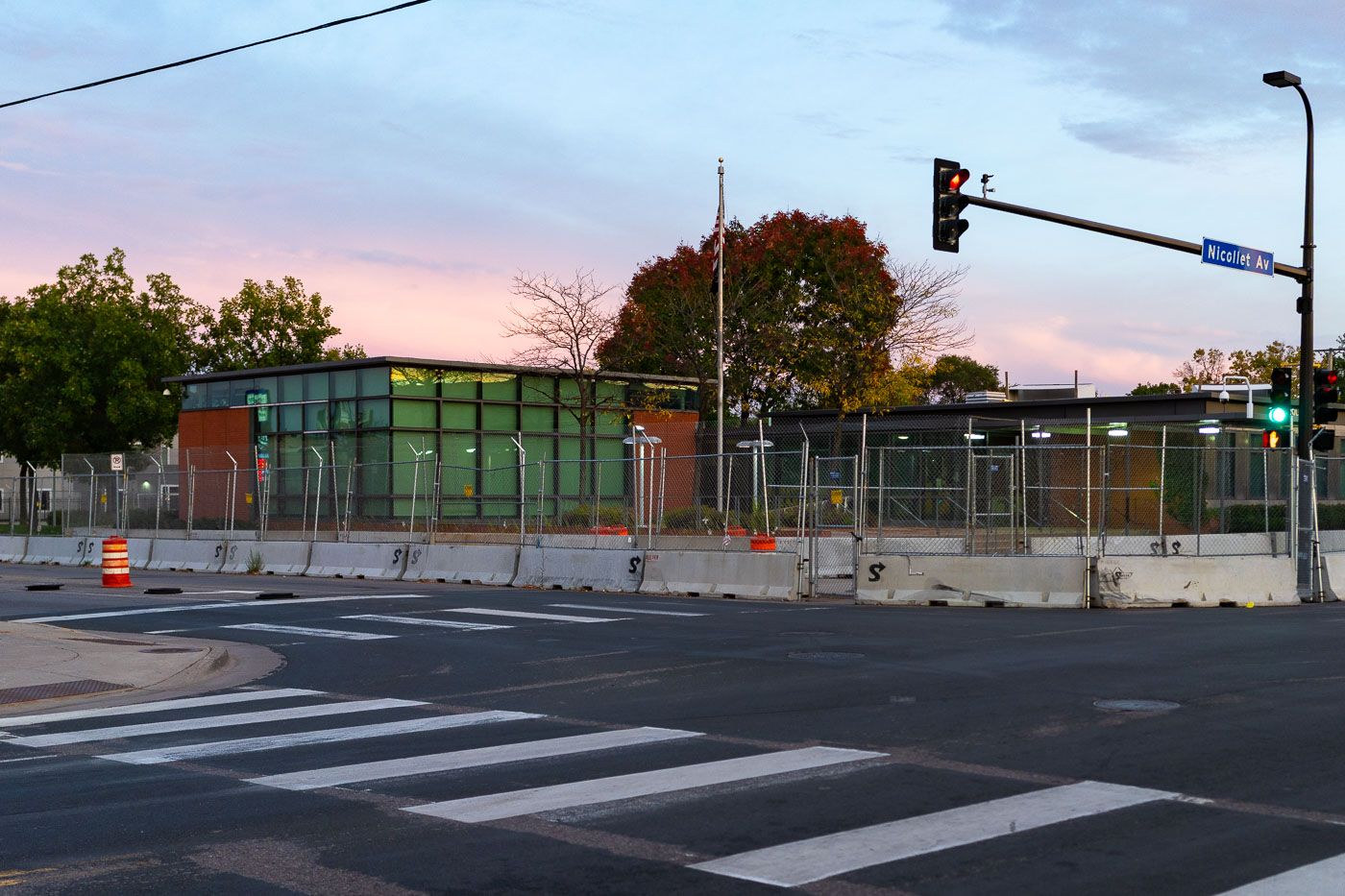
Minneapolis Police Fifth Precinct fencing and barricades
Security fencing and concrete barricades surround the Minneapolis Police Fifth Precinct building on Nicollet Avenue. The precinct is a key law enforcement facility in the city, and its security measures were heightened following the civil unrest in the summer of 2020. The barricades and fencing are indicative of the increased security protocols implemented to protect police facilities and maintain order in the surrounding urban environment. The presence of these measures highlights the complex relationship between law enforcement and the community in Minneapolis.

Minneapolis Police 5th Precinct Fencing and Barricades on Nicollet Ave
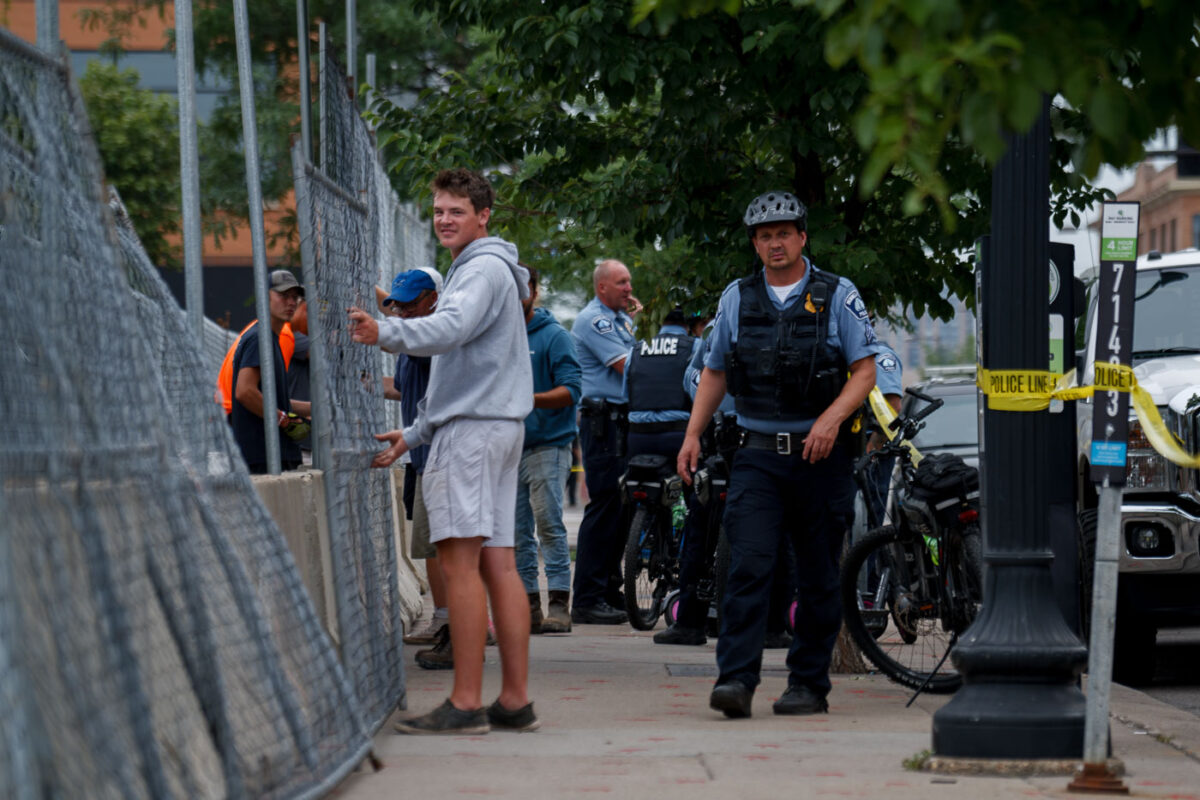
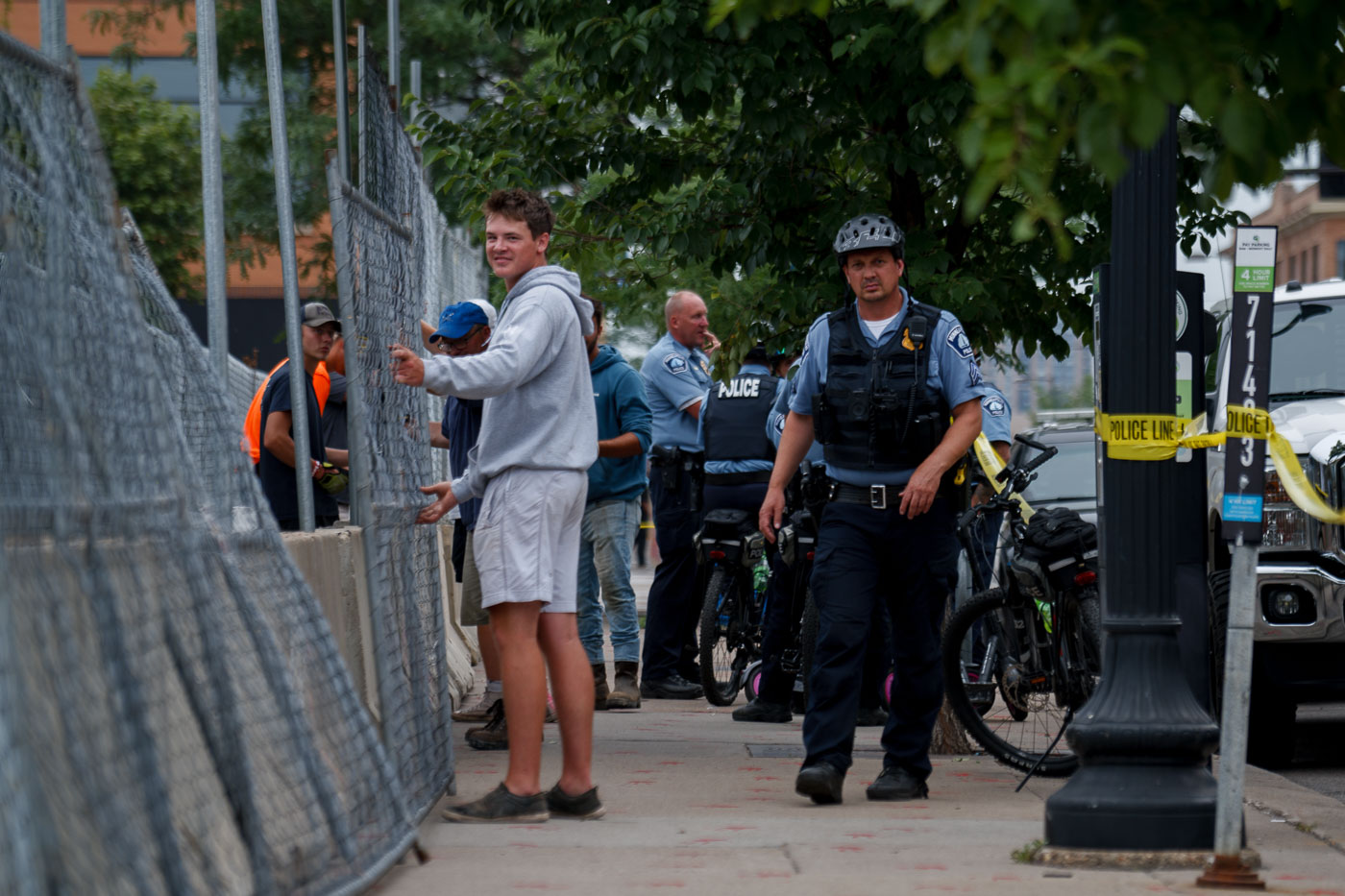
Fencing goes up at Winston Smith protest site
Minneapolis Police and private security cleared the lot at the former Wince Marie Memorial Garden on July 17, 2021, and erected fencing. This action followed a protest related to Winston Smith, whose death in June 2021 sparked demonstrations in the city. The site had been occupied by activists who established a "guerrilla garden" in memory of Smith.

Fencing goes up at Winston Smith protest site
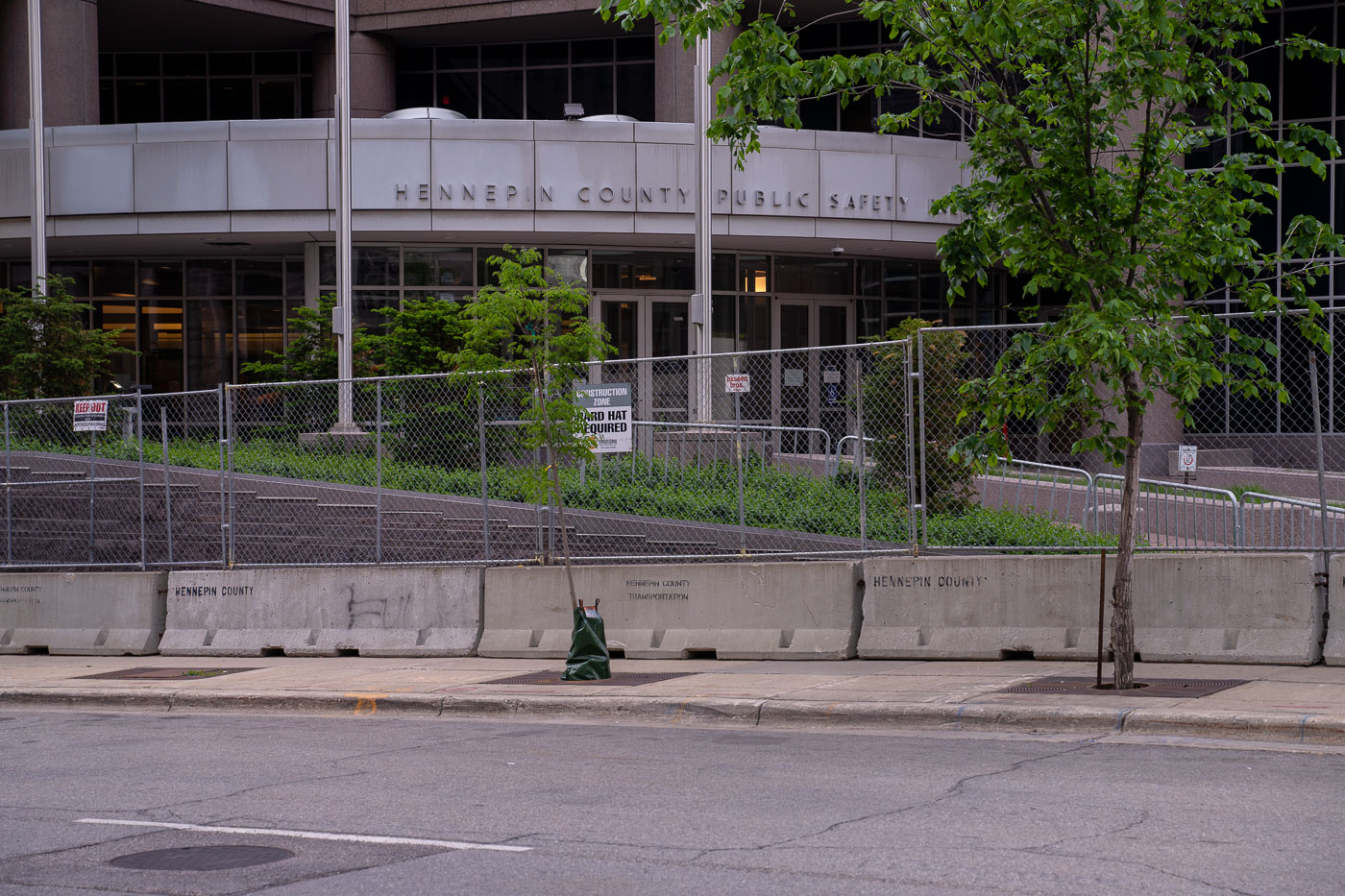
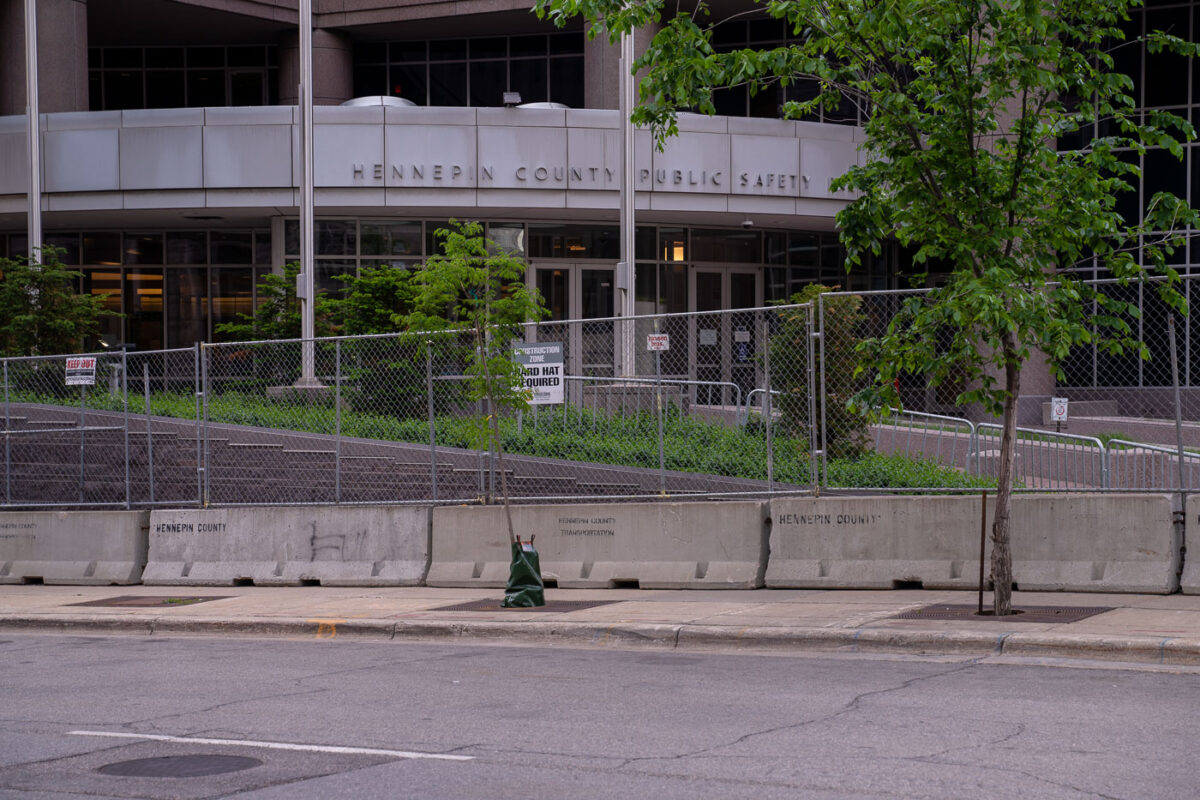
Hennepin County Public Safety Facility in Minneapolis behind fencing and concrete barriers
The Hennepin County Public Safety Facility in Downtown Minneapolis, which houses the county jail, is shown with security fencing and concrete barriers. These measures were installed in anticipation of the Derek Chauvin murder trial in 2021, reflecting heightened security concerns in the city following the murder of George Floyd. On May 25, 2020, Minneapolis police officer Derek Chauvin murdered 46-year-old George Floyd during an arrest outside Cup Foods at the intersection of 38th Street and Chicago Avenue in south Minneapolis. Video recorded by bystanders showed Chauvin kneeling on Floyd’s neck for more than nine minutes while Floyd repeatedly said he could not breathe. Three other Minneapolis police officers - J. Alexander Kueng, Thomas Lane, and Tou Thao — were also present during the arrest and later faced criminal charges for their roles in Floyd’s death. Floyd’s murder sparked protests and civil unrest across Minneapolis and around the world, leading to widespread demonstrations against police violence, major policy debates on policing, and the conviction of Chauvin on murder and manslaughter charges in 2021.

Hennepin County Public Safety Facility with Security Fencing, Minneapolis
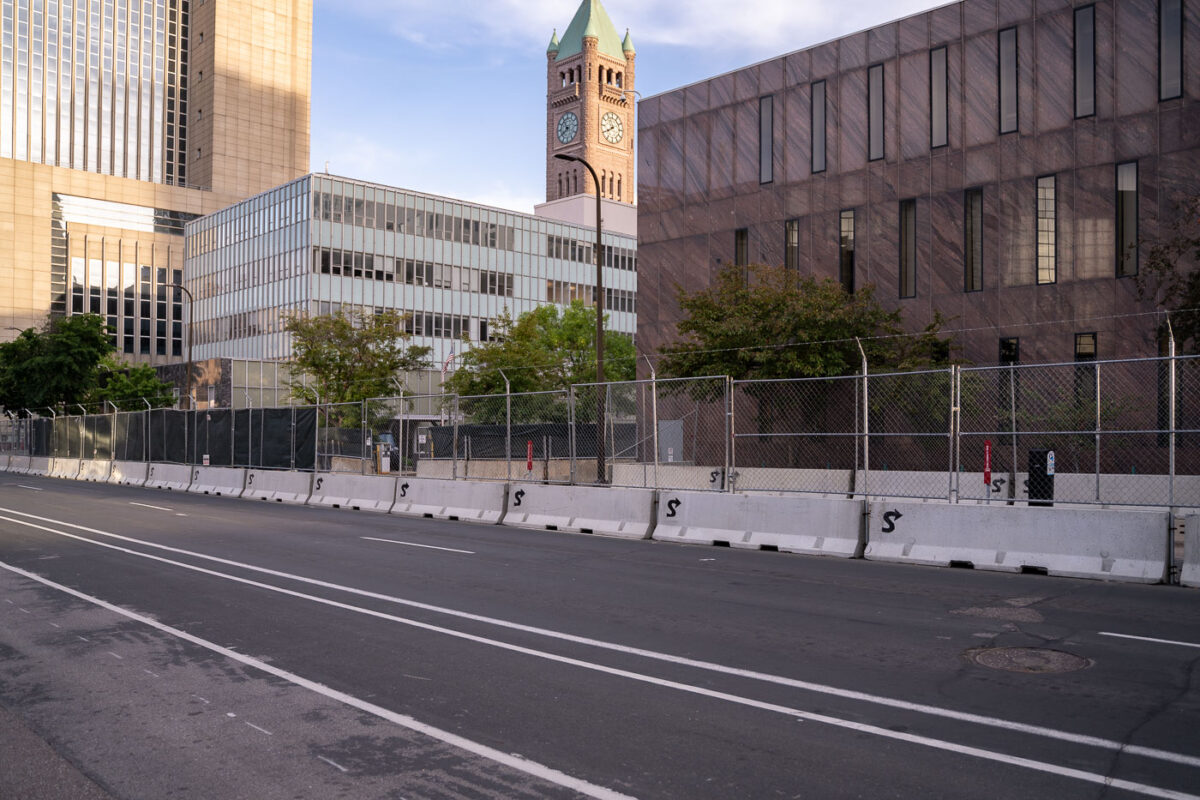
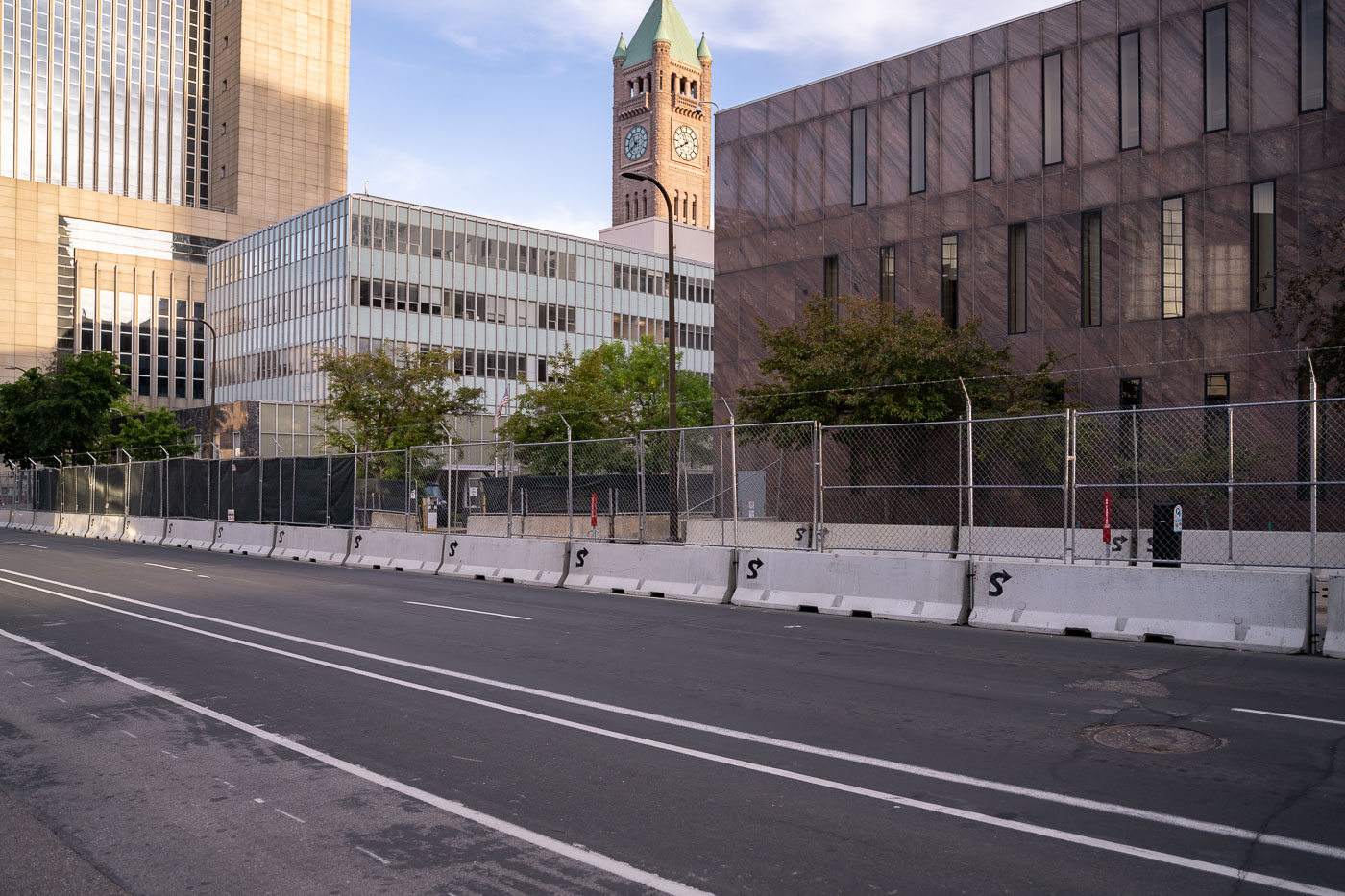
Temporary barricades line a downtown Minneapolis street near the Third Precinct and City Hall.
Temporary barricades surround the Minneapolis Police Department's Third Precinct station, which was relocated after the original building was destroyed by fire during the 2020 Minneapolis Uprising. On May 25, 2020, Minneapolis police officer Derek Chauvin murdered 46-year-old George Floyd during an arrest outside Cup Foods at the intersection of 38th Street and Chicago Avenue in south Minneapolis. Video recorded by bystanders showed Chauvin kneeling on Floyd’s neck for more than nine minutes while Floyd repeatedly said he could not breathe. Three other Minneapolis police officers - J. Alexander Kueng, Thomas Lane, and Tou Thao — were also present during the arrest and later faced criminal charges for their roles in Floyd’s death. Floyd’s murder sparked protests and civil unrest across Minneapolis and around the world, leading to widespread demonstrations against police violence, major policy debates on policing, and the conviction of Chauvin on murder and manslaughter charges in 2021.

Barricades at Temporary Minneapolis Police 3rd Precinct
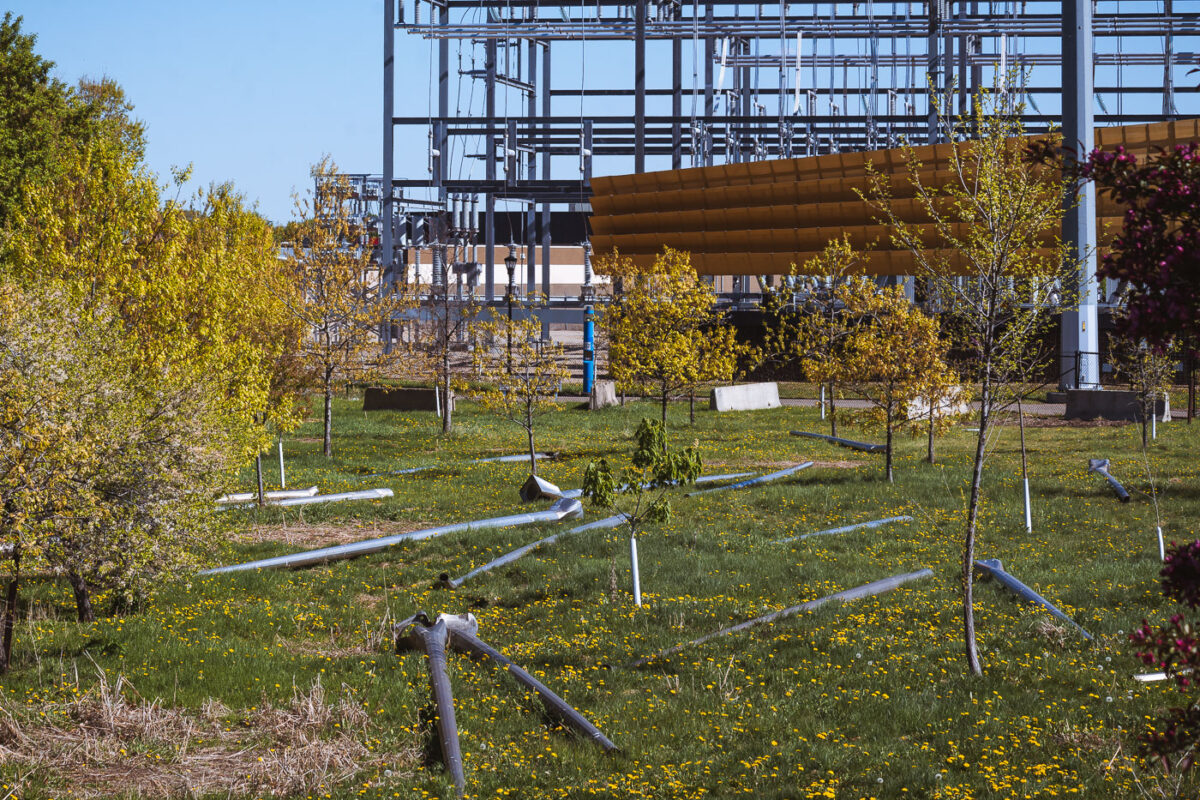
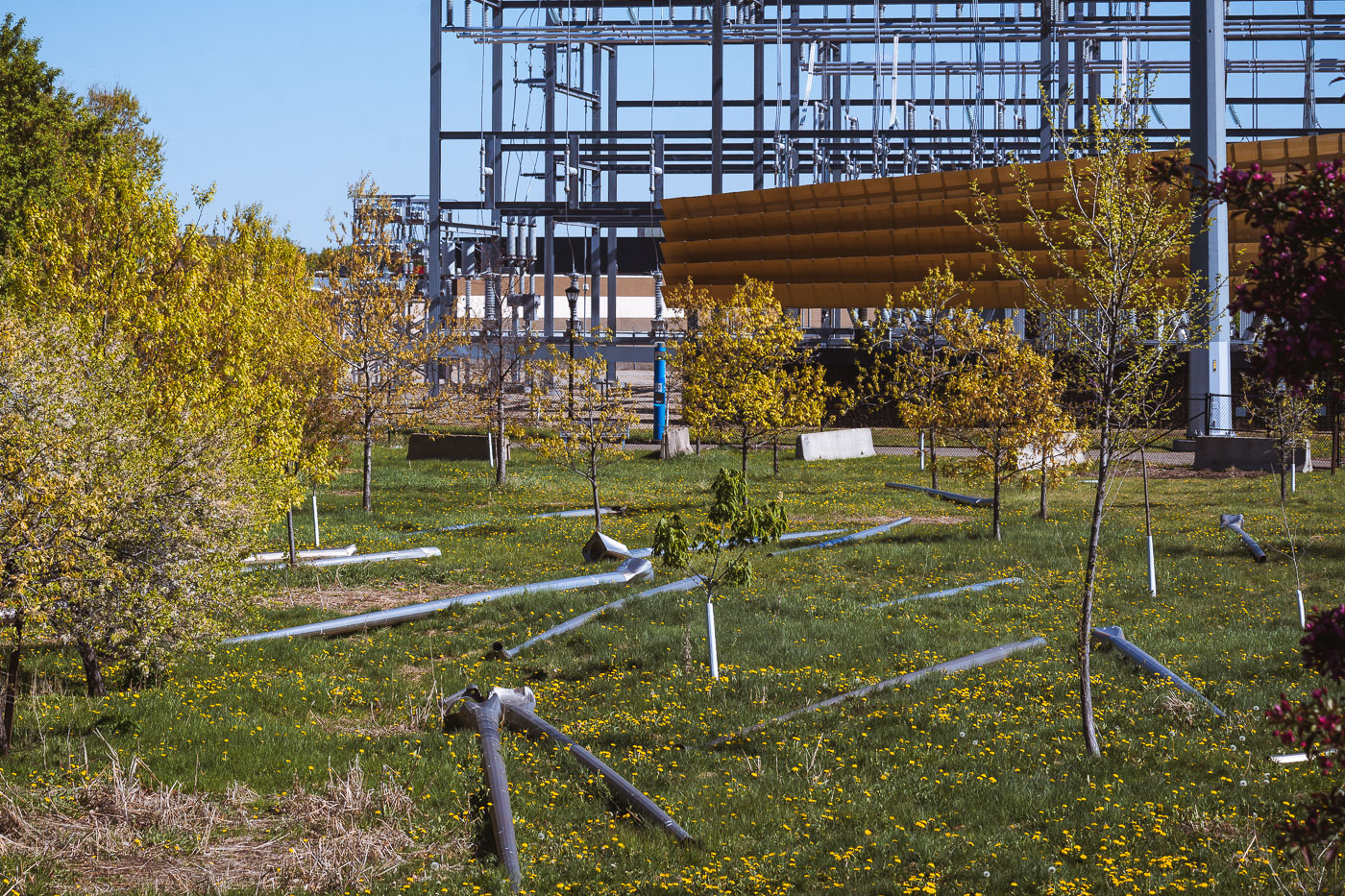
Former homeless encampment site in Minneapolis with street poles installed in the grass.
Former homeless encampment site in Minneapolis with street poles installed in the grass. The area is adjacent to a large steel-framed structure under construction. Metro Transit Police signage is visible on the site.

Street poles at former encampment site, Minneapolis
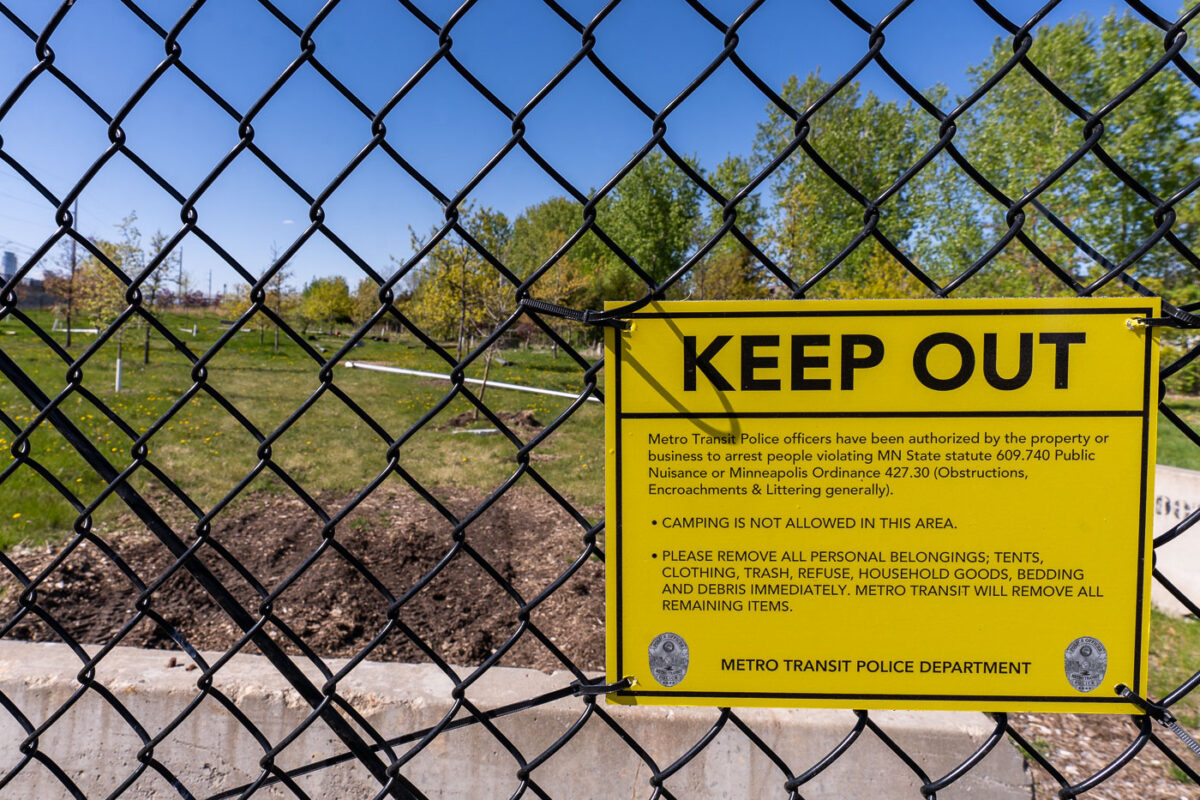
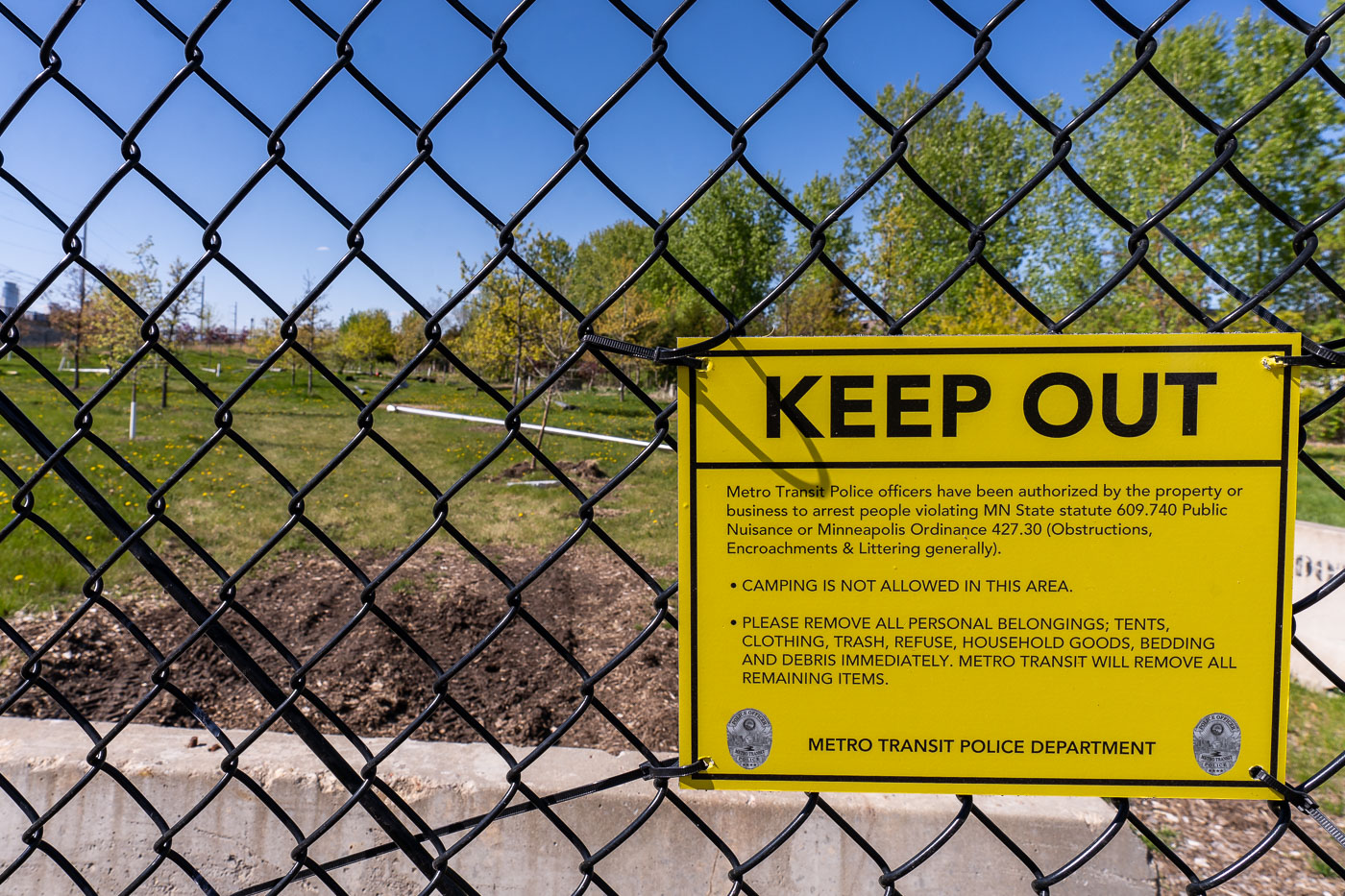
Metro Transit Police keep out sign on a fenced lot in Minneapolis.
Metro Transit Police in Minneapolis posted a notice prohibiting camping and requiring removal of personal belongings from the fenced area. The sign states that remaining items will be removed by Metro Transit and cites Minnesota public nuisance and Minneapolis obstruction ordinances.

Metro Transit Police keep out sign, Minneapolis
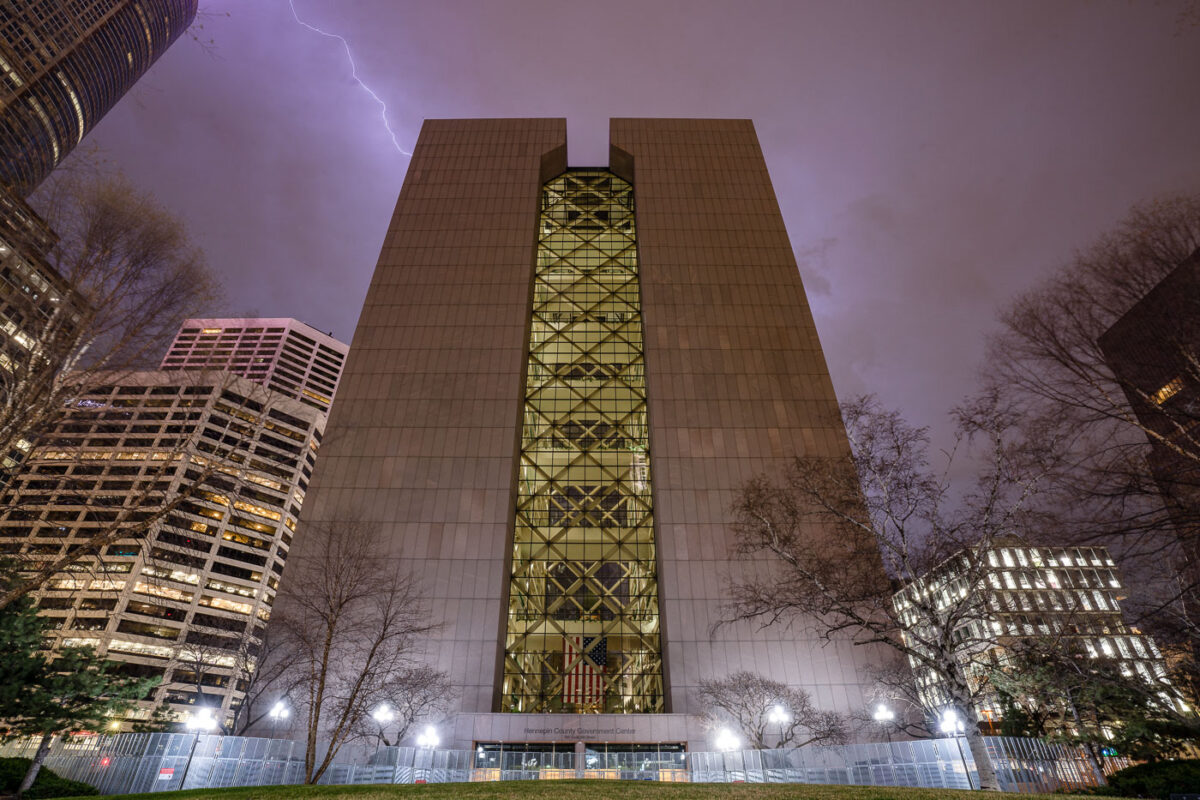
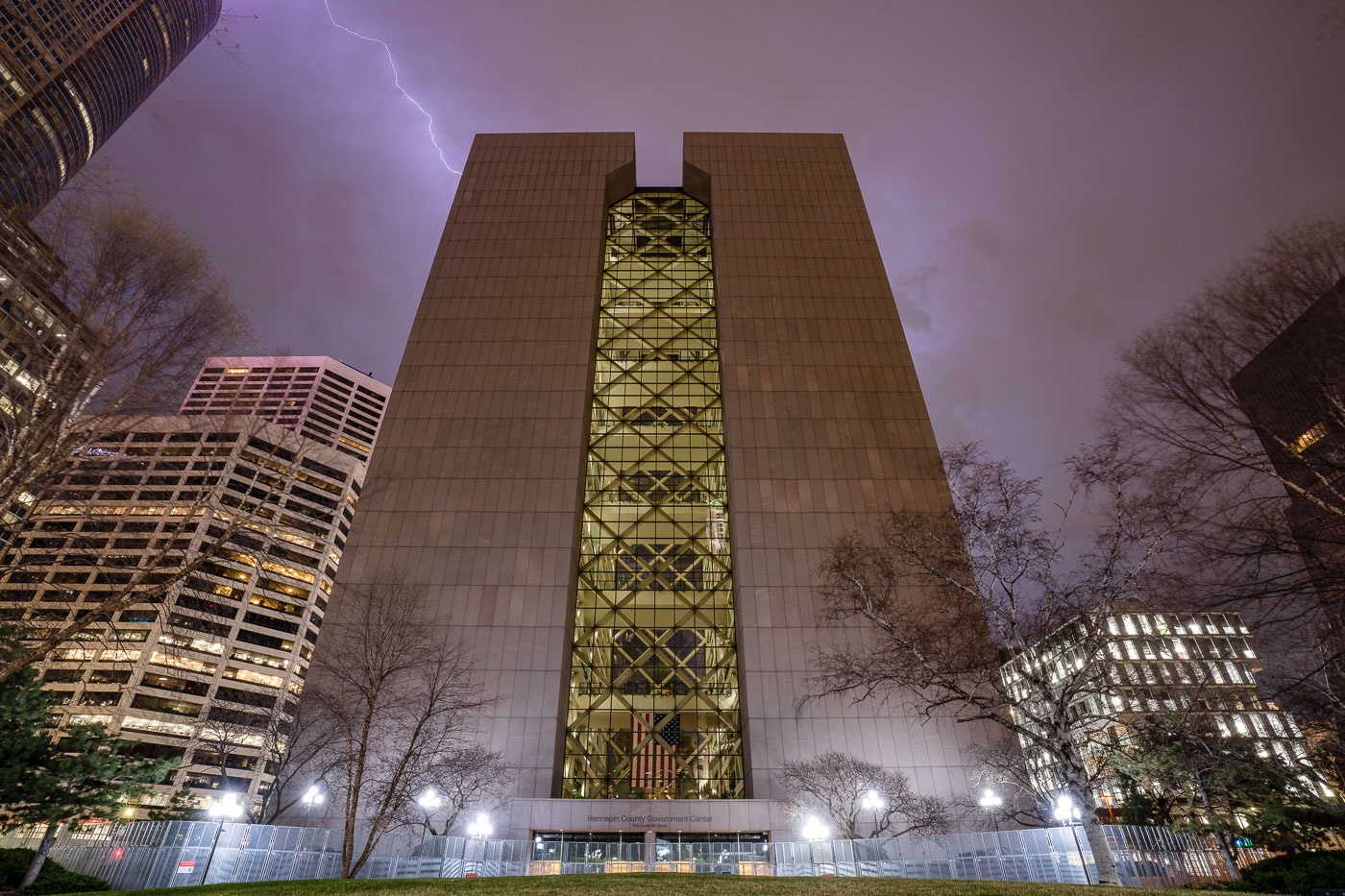
Lightning over Hennepin County Government Center in Minneapolis during the Derek Chauvin trial.
Lightning strikes the Hennepin County Government Center in Minneapolis during the trial of Derek Chauvin. The building, completed in 1977, serves as the primary administrative center for Hennepin County. During the trial for the murder of George Floyd, which took place in spring 2021, the courthouse was surrounded by extensive security fencing. The trial and its aftermath were significant events in the ongoing national conversation about racial justice and policing.

Lightning strikes Hennepin County Government Center during Chauvin trial
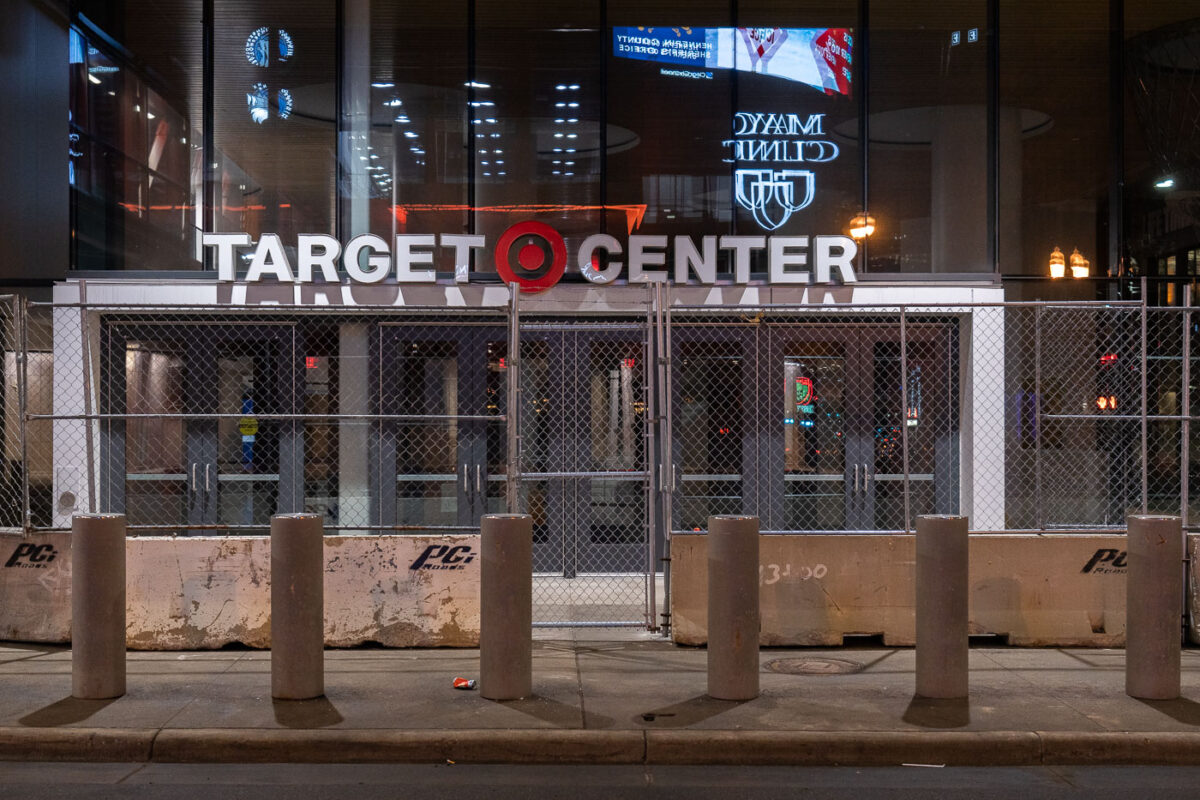
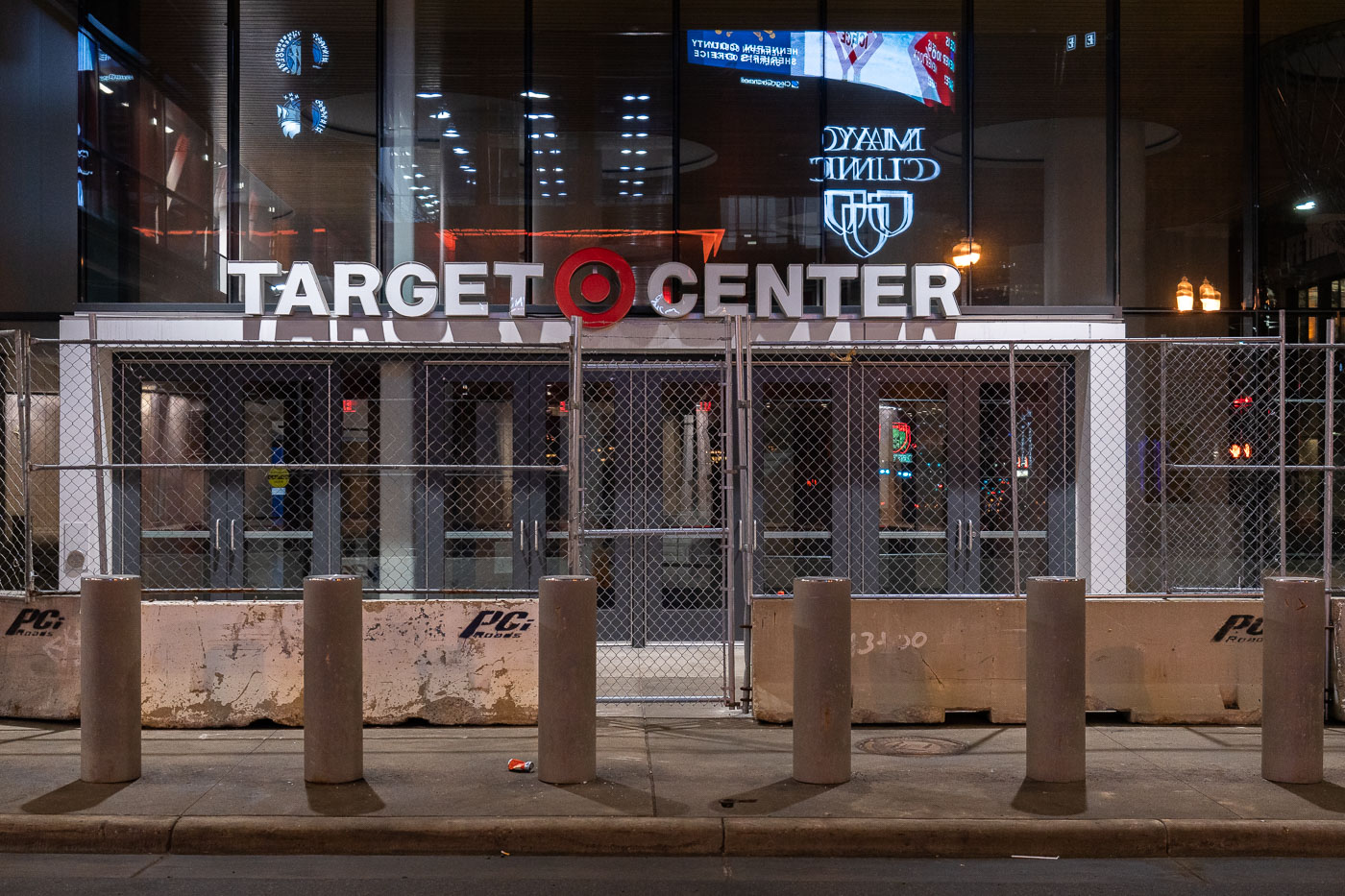
Target Center behind security fencing during Chauvin trial
The Target Center in Minneapolis, a multi-purpose arena, was secured with fencing and concrete barriers during the trial of Derek Chauvin in April 2021. This measure was implemented to enhance security and prevent potential unrest, mirroring precautions taken at other city-owned properties. The arena, which hosts sporting events and concerts, became a focal point of heightened security due to its proximity to the courthouse and the national attention surrounding the trial.

Target Center secured with fencing during Chauvin trial

Derek Chauvin Razor Wire at Hennepin Courthouse
Razor wire fencing, a security measure, surrounds the Hennepin County Government Center in Minneapolis. This installation was part of Operation Safety Net, a multi-agency effort to provide security during the Derek Chauvin murder trial. The trial, which began with jury selection on March 8, 2021, followed the death of George Floyd and subsequent protests. On May 25, 2020, Minneapolis police officer Derek Chauvin murdered 46-year-old George Floyd during an arrest outside Cup Foods at the intersection of 38th Street and Chicago Avenue in south Minneapolis. Video recorded by bystanders showed Chauvin kneeling on Floyd’s neck for more than nine minutes while Floyd repeatedly said he could not breathe. Three other Minneapolis police officers - J. Alexander Kueng, Thomas Lane, and Tou Thao — were also present during the arrest and later faced criminal charges for their roles in Floyd’s death. Floyd’s murder sparked protests and civil unrest across Minneapolis and around the world, leading to widespread demonstrations against police violence, major policy debates on policing, and the conviction of Chauvin on murder and manslaughter charges in 2021.

Razor Wire Security at Hennepin Courthouse, Minneapolis
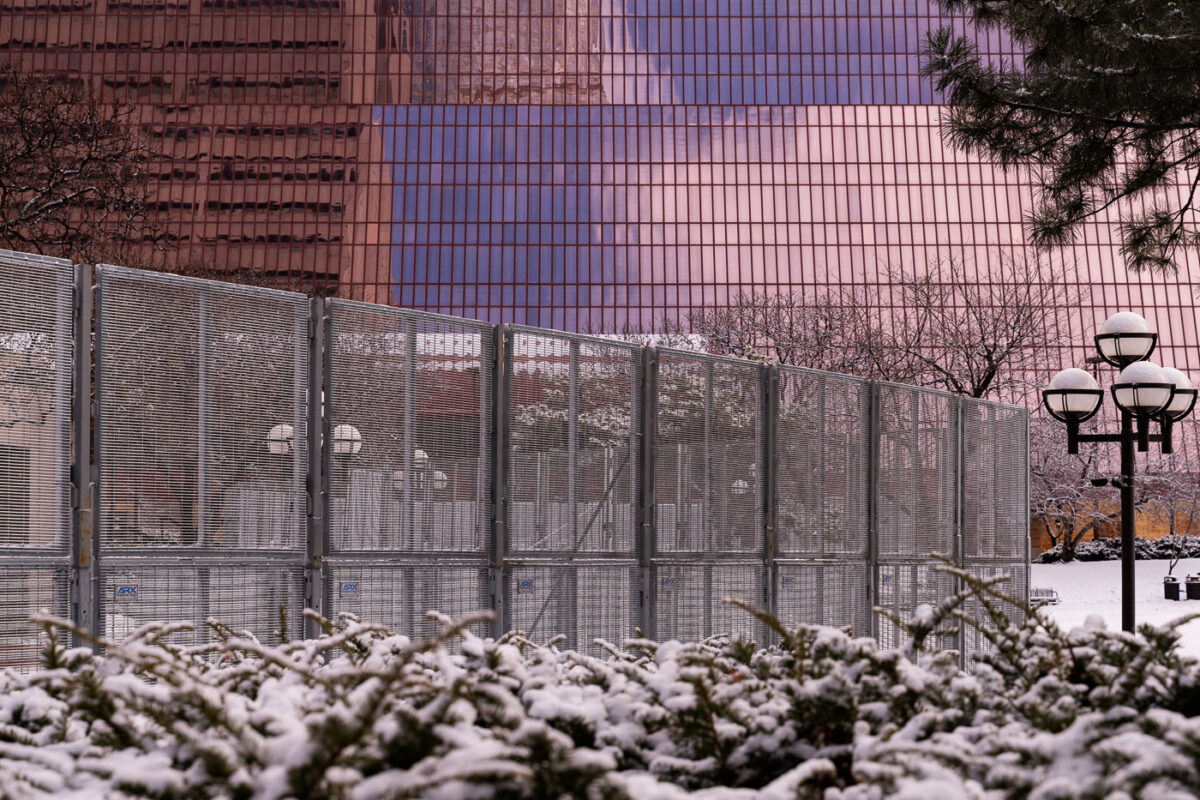
APX Perimeters fencing at Derek Chauvin murder trial
Temporary fencing by APX Perimeters surrounds the Hennepin County Government Center in Minneapolis, in anticipation of the Derek Chauvin murder trial. The installation of this security measure was part of Operation Safety Net, a multi-agency response to ensure public safety during the trial and potential unrest following the death of George Floyd. Jury selection was scheduled to begin on March 8, 2021, making the courthouse a focal point of national attention.

APX Perimeters Fencing at Hennepin County Government Center, Minneapolis
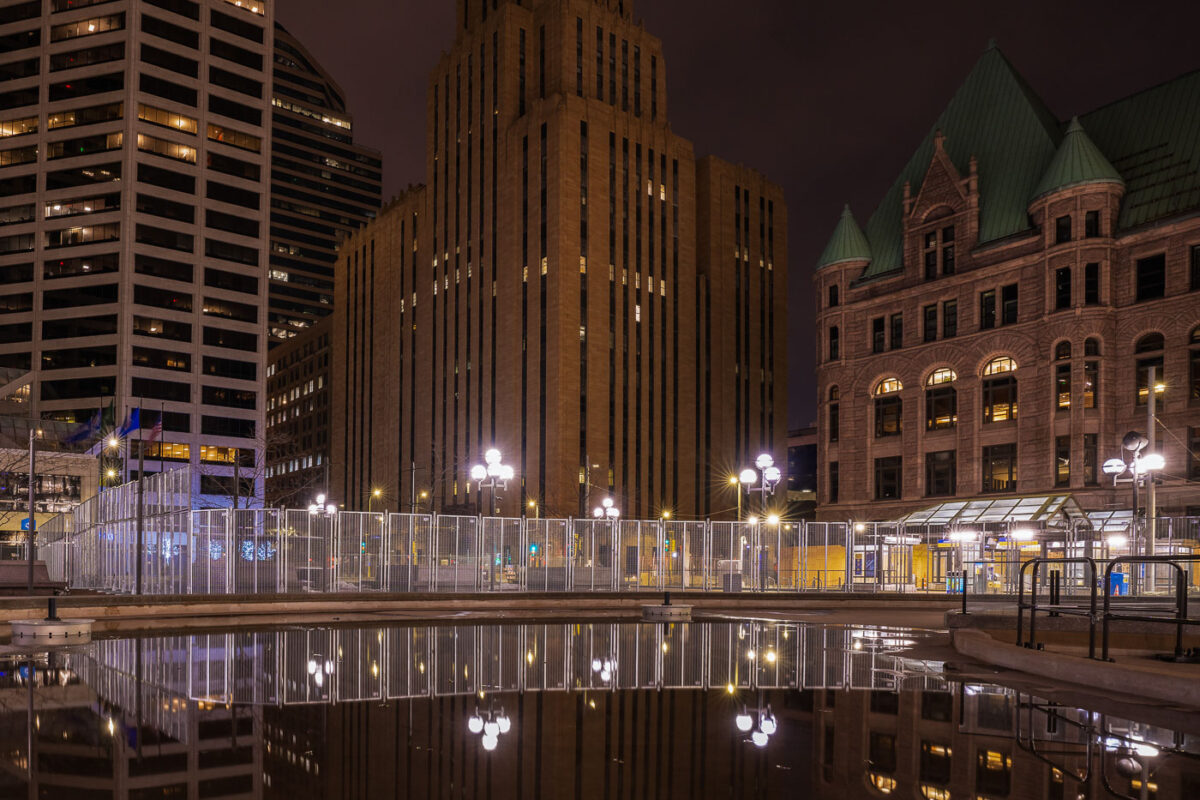
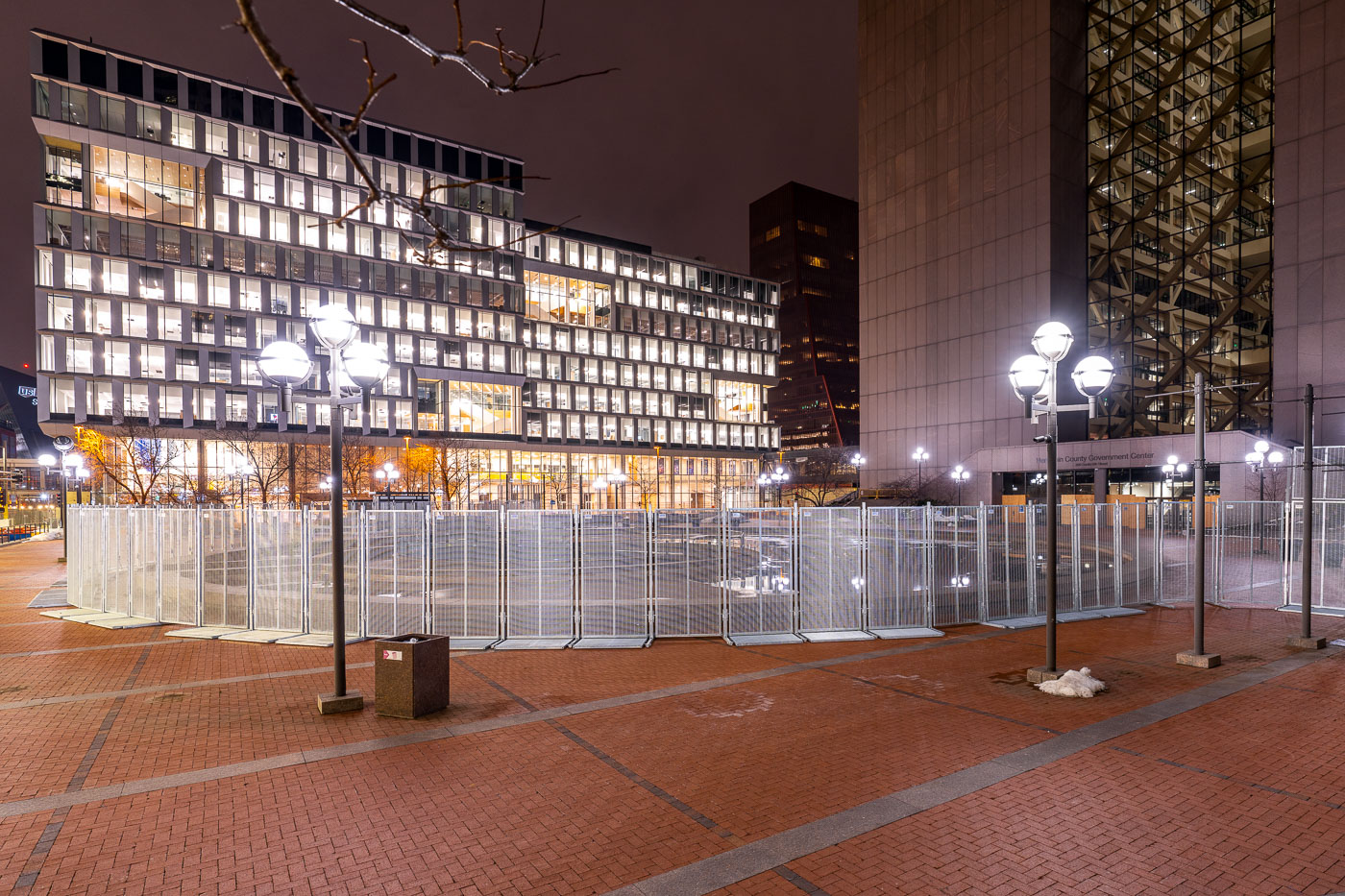
Reflections outside Minneapolis City Hall and Government Center
Security fencing surrounds the Hennepin County Government Center in Minneapolis, Minnesota, in anticipation of the Derek Chauvin murder trial. The trial, which began jury selection on March 8, 2021, followed the death of George Floyd and subsequent protests. The fencing, part of Operation Safety Net, was installed to secure the courthouse and surrounding areas during the high-profile legal proceedings. On May 25, 2020, Minneapolis police officer Derek Chauvin murdered 46-year-old George Floyd during an arrest outside Cup Foods at the intersection of 38th Street and Chicago Avenue in south Minneapolis. Video recorded by bystanders showed Chauvin kneeling on Floyd’s neck for more than nine minutes while Floyd repeatedly said he could not breathe. Three other Minneapolis police officers - J. Alexander Kueng, Thomas Lane, and Tou Thao — were also present during the arrest and later faced criminal charges for their roles in Floyd’s death. Floyd’s murder sparked protests and civil unrest across Minneapolis and around the world, leading to widespread demonstrations against police violence, major policy debates on policing, and the conviction of Chauvin on murder and manslaughter charges in 2021.

Minneapolis Courthouse Fencing for Chauvin Trial
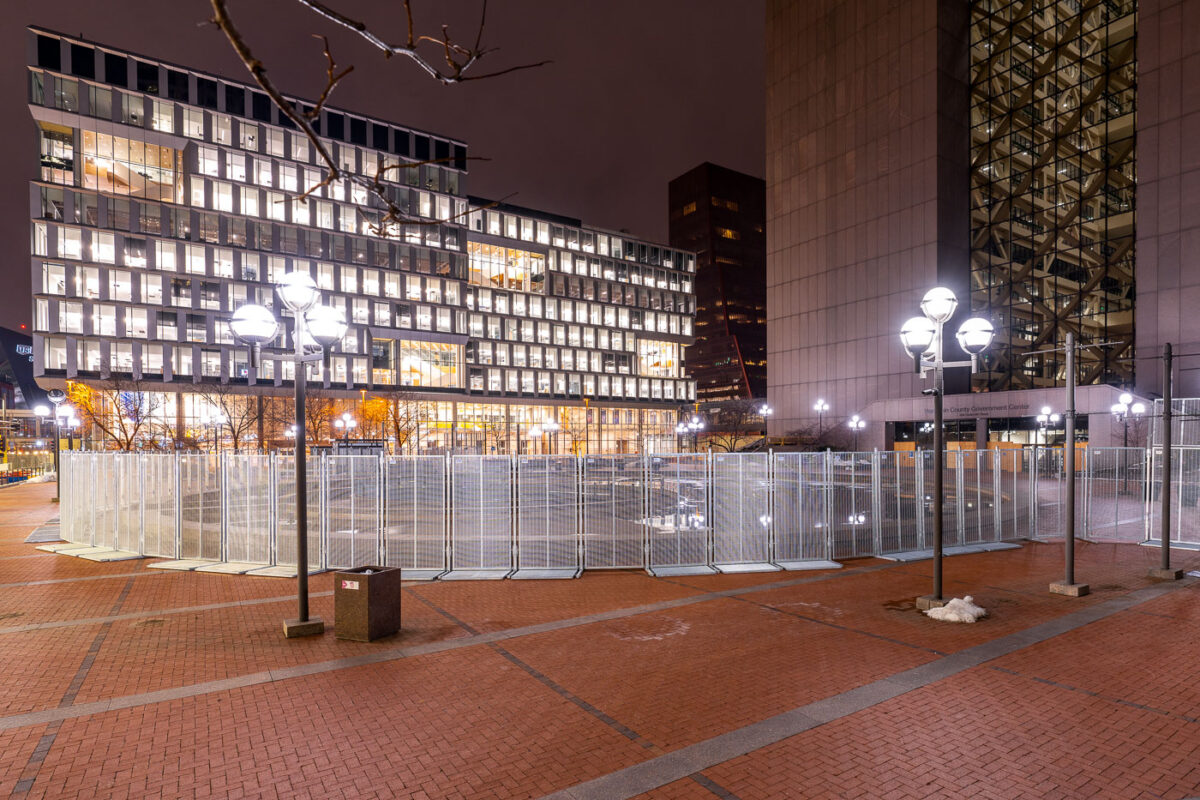
Hennepin County Government Center Derek Chauvin Trial Security
Temporary security fencing is erected around the Hennepin County Government Center in Minneapolis on February 28, 2021, in anticipation of the Derek Chauvin murder trial. The installation of this fencing, part of Operation Safety Net, was a measure to secure the courthouse and manage potential public gatherings during the high-profile trial, which began jury selection on March 8, 2021. The courthouse complex, a significant piece of Brutalist architecture in downtown Minneapolis, was the site of the trial for the death of George Floyd, an event that sparked widespread protests and unrest. On May 25, 2020, Minneapolis police officer Derek Chauvin murdered 46-year-old George Floyd during an arrest outside Cup Foods at the intersection of 38th Street and Chicago Avenue in south Minneapolis. Video recorded by bystanders showed Chauvin kneeling on Floyd’s neck for more than nine minutes while Floyd repeatedly said he could not breathe. Three other Minneapolis police officers - J. Alexander Kueng, Thomas Lane, and Tou Thao — were also present during the arrest and later faced criminal charges for their roles in Floyd’s death. Floyd’s murder sparked protests and civil unrest across Minneapolis and around the world, leading to widespread demonstrations against police violence, major policy debates on policing, and the conviction of Chauvin on murder and manslaughter charges in 2021.

Hennepin County Government Center: Trial Security Fencing
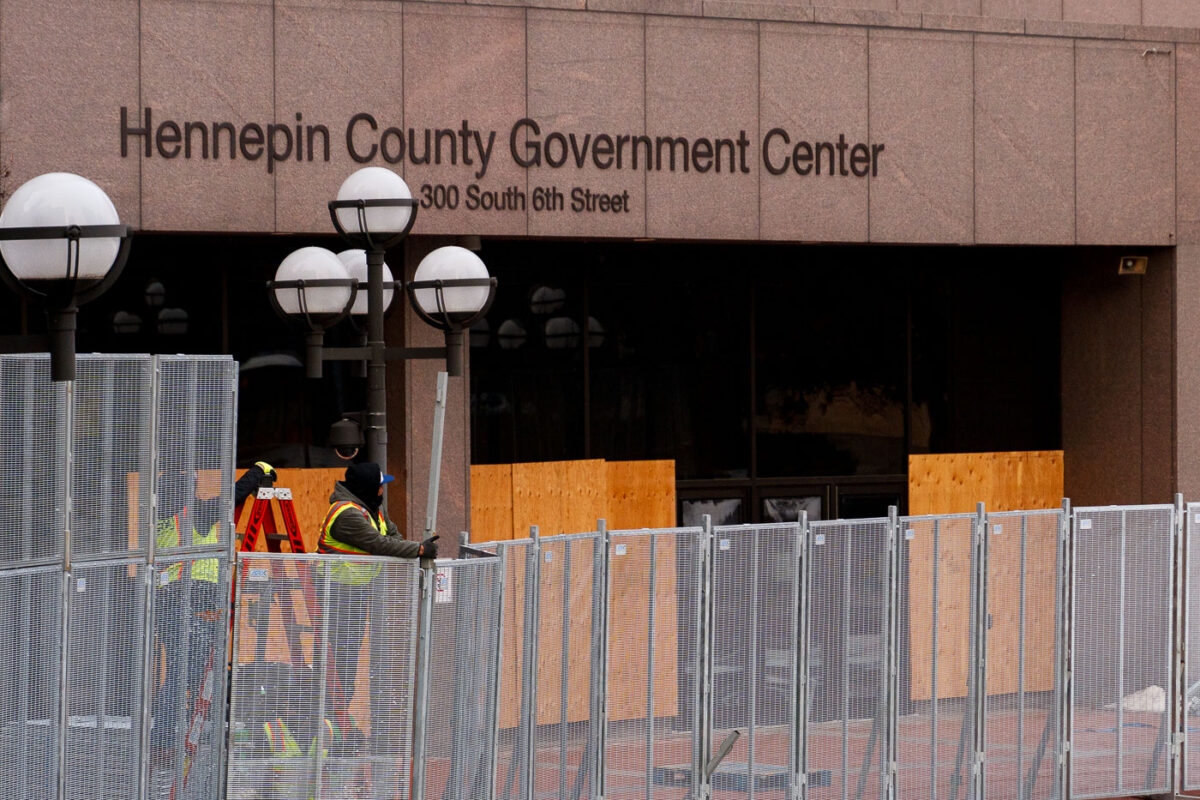
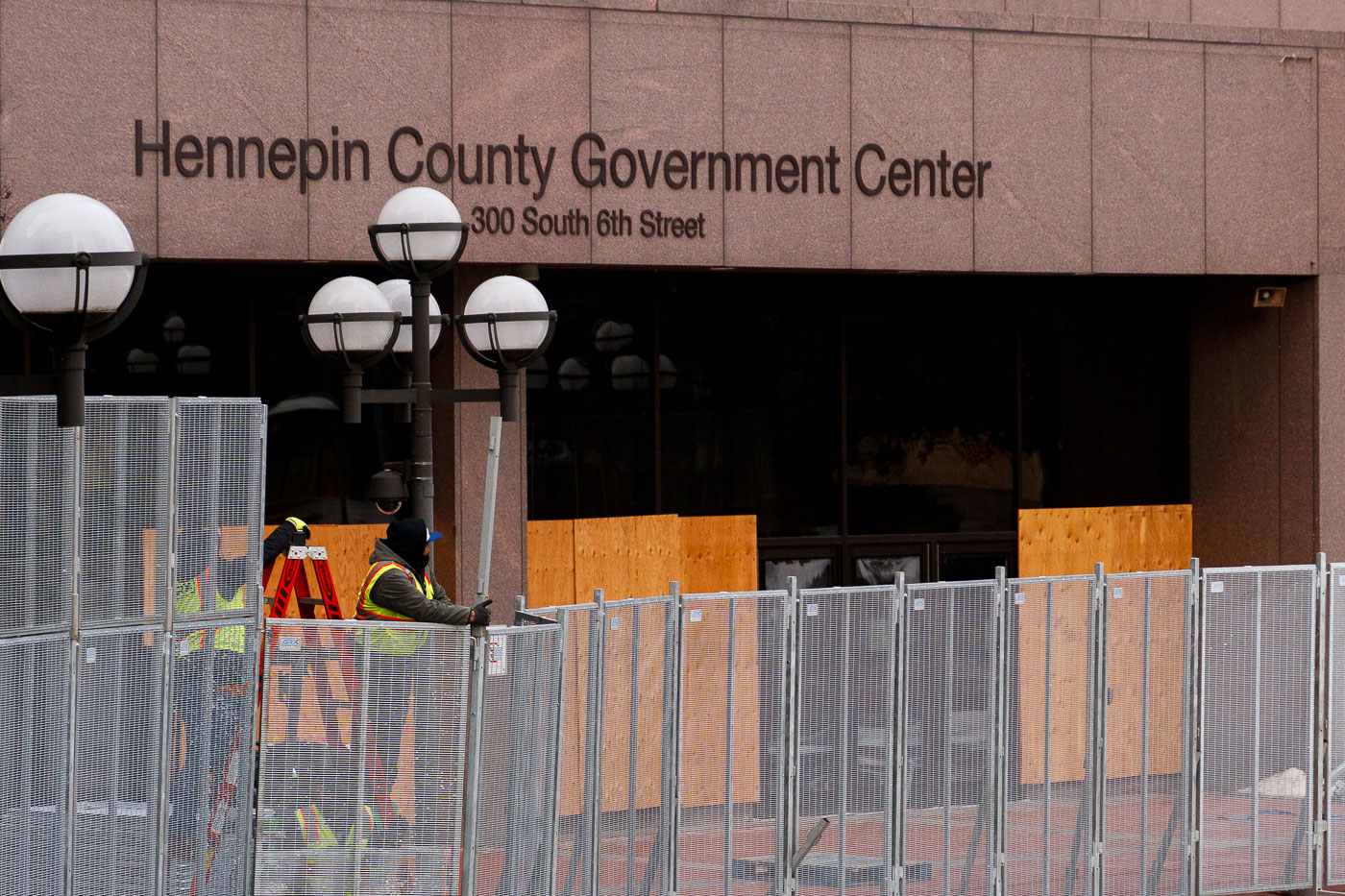
Workers installing security fencing at courthouse for Chauvin trial
Temporary fencing is being installed around the Hennepin County Government Center in Minneapolis, located at 300 South 6th Street. This security measure was put in place in anticipation of the trial of Derek Chauvin, a former Minneapolis police officer. On May 25, 2020, Minneapolis police officer Derek Chauvin murdered 46-year-old George Floyd during an arrest outside Cup Foods at the intersection of 38th Street and Chicago Avenue in south Minneapolis. Video recorded by bystanders showed Chauvin kneeling on Floyd’s neck for more than nine minutes while Floyd repeatedly said he could not breathe. Three other Minneapolis police officers - J. Alexander Kueng, Thomas Lane, and Tou Thao — were also present during the arrest and later faced criminal charges for their roles in Floyd’s death. Floyd’s murder sparked protests and civil unrest across Minneapolis and around the world, leading to widespread demonstrations against police violence, major policy debates on policing, and the conviction of Chauvin on murder and manslaughter charges in 2021.

Hennepin County Government Center Security Fencing Installation
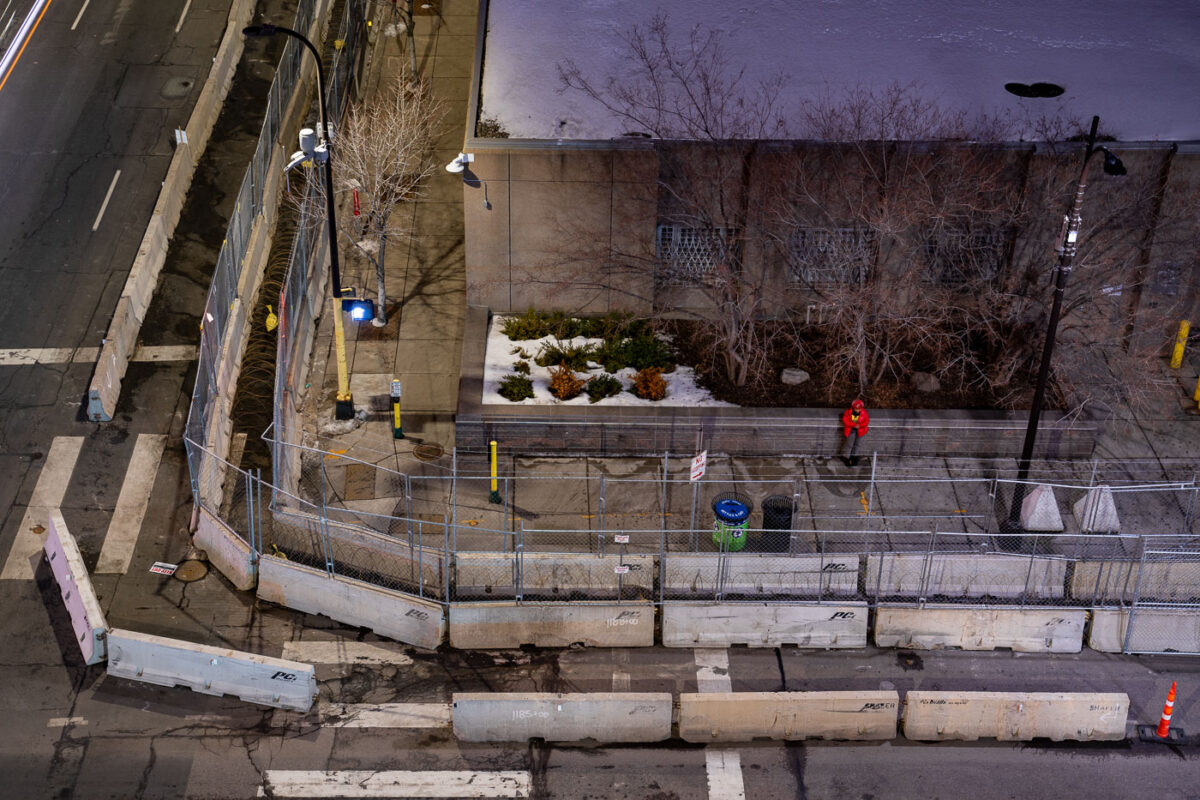
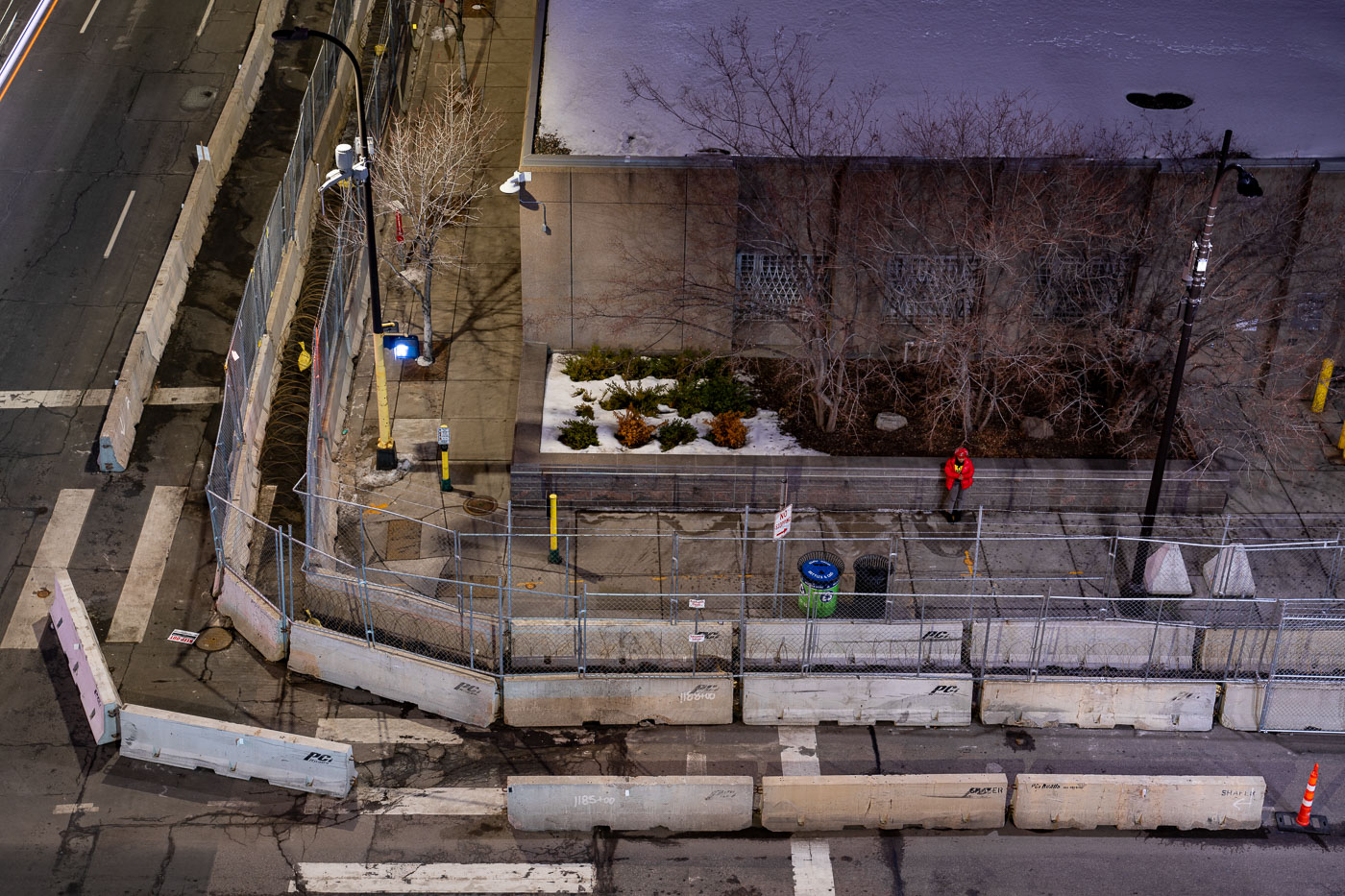
Barricades at the Hennepin County Public Safety Facility
Security barricades and fencing surround the Hennepin County Public Safety Facility in Minneapolis on February 24, 2021 in anticipation of the Derek Chauvin murder trial. The extensive security measures, including concrete barriers and razor wire, were implemented to manage potential protests and ensure the safety of the courthouse and surrounding areas. On May 25, 2020, Minneapolis police officer Derek Chauvin murdered 46-year-old George Floyd during an arrest outside Cup Foods at the intersection of 38th Street and Chicago Avenue in south Minneapolis. Video recorded by bystanders showed Chauvin kneeling on Floyd’s neck for more than nine minutes while Floyd repeatedly said he could not breathe. Three other Minneapolis police officers - J. Alexander Kueng, Thomas Lane, and Tou Thao — were also present during the arrest and later faced criminal charges for their roles in Floyd’s death. Floyd’s murder sparked protests and civil unrest across Minneapolis and around the world, leading to widespread demonstrations against police violence, major policy debates on policing, and the conviction of Chauvin on murder and manslaughter charges in 2021.

Hennepin County Jail Barricades for Chauvin Trial
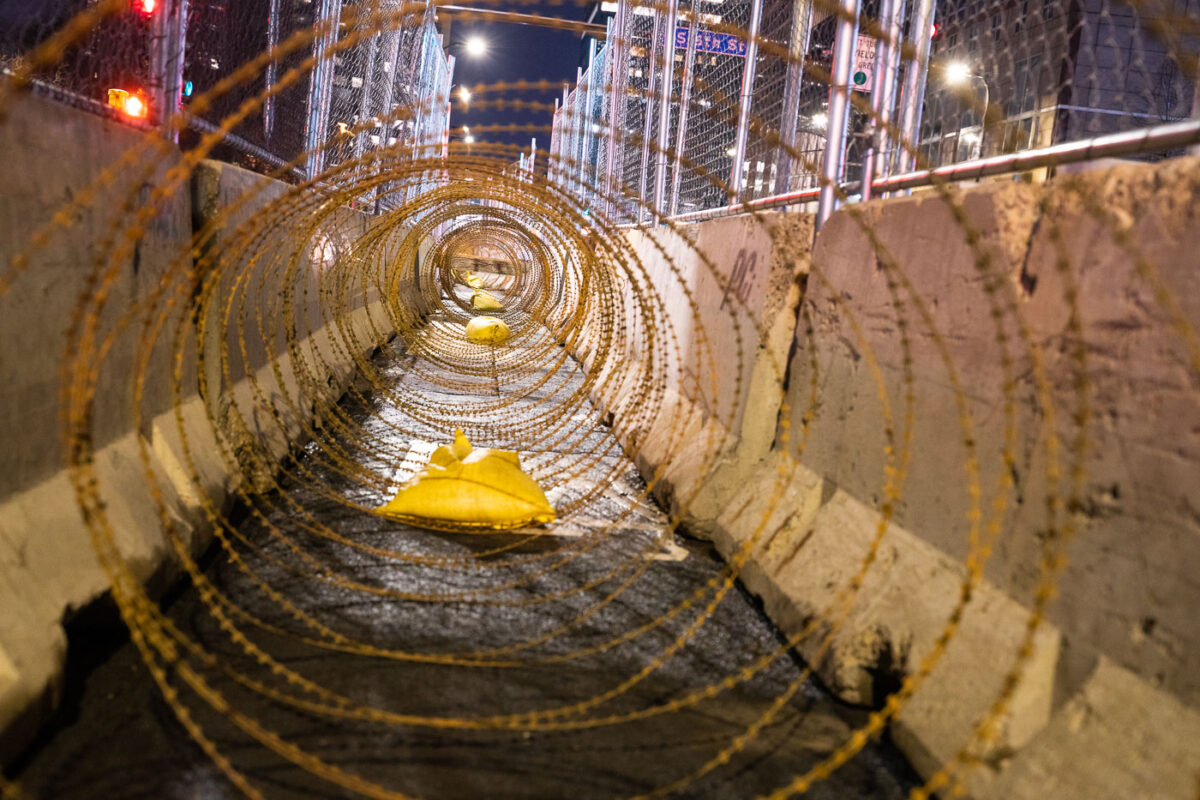
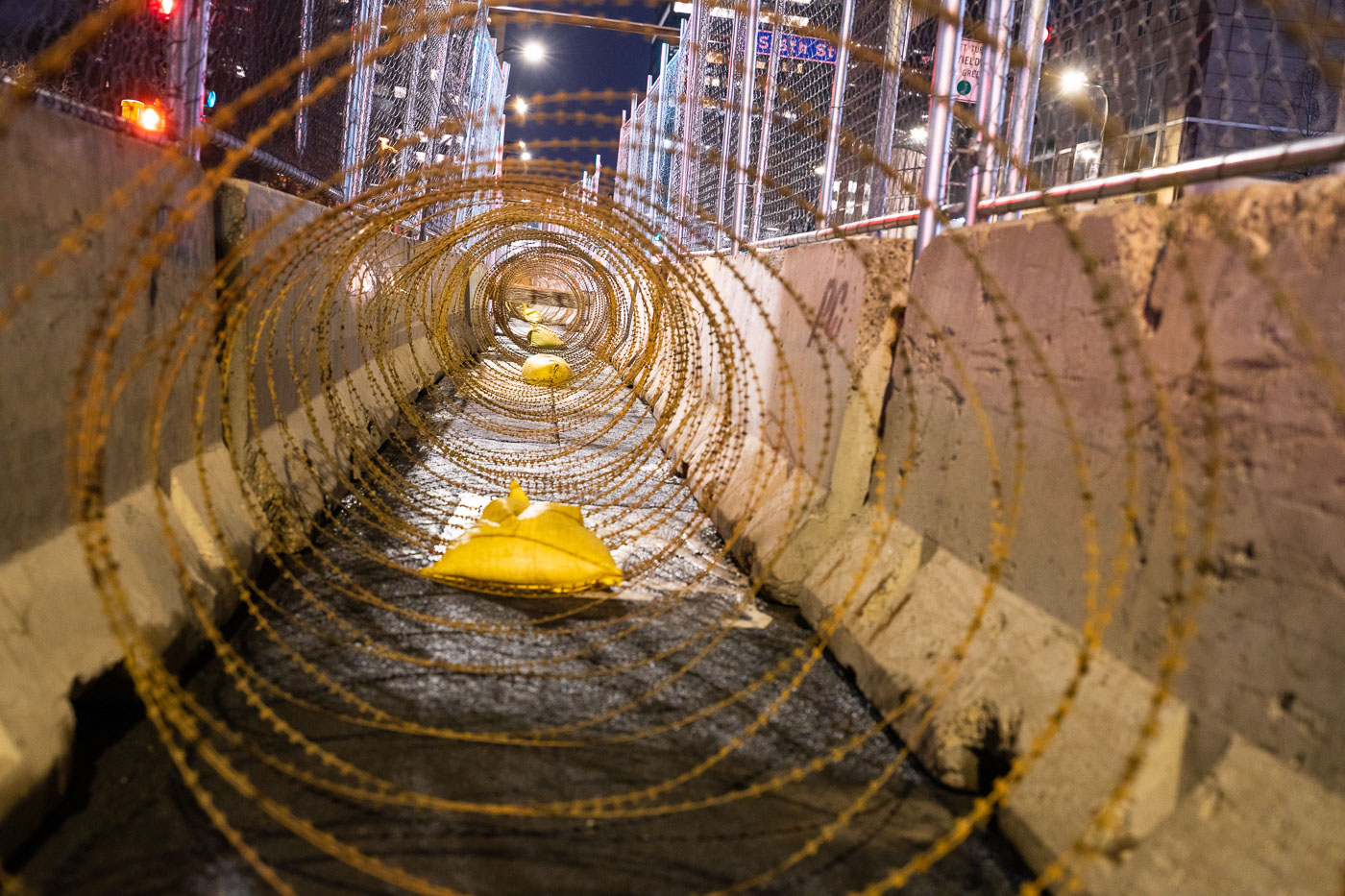
Yellow security tape and chain-link fencing create a tunnel-like corridor outside Hennepin County Government Center in downtown Minneapolis at night.
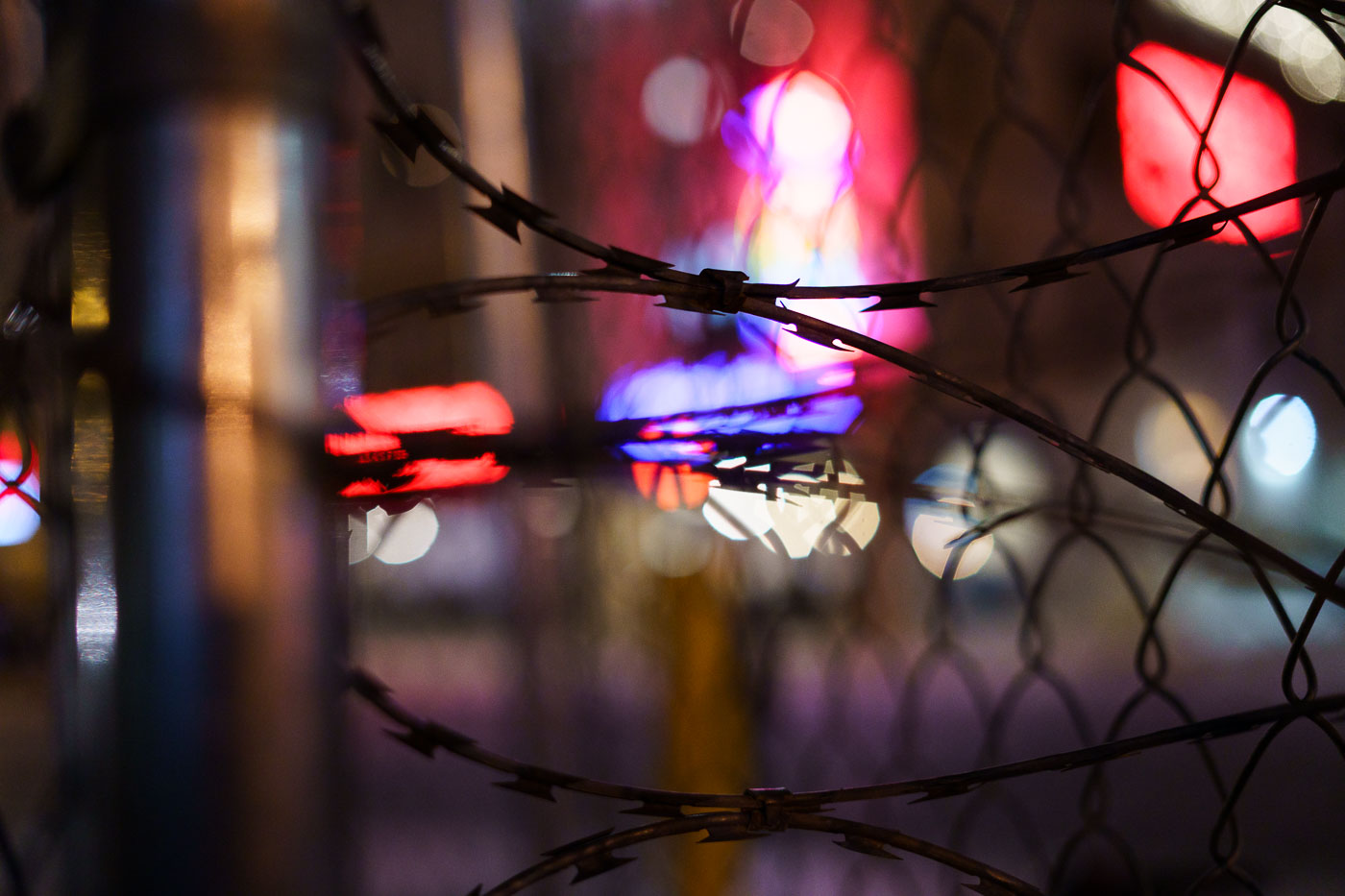
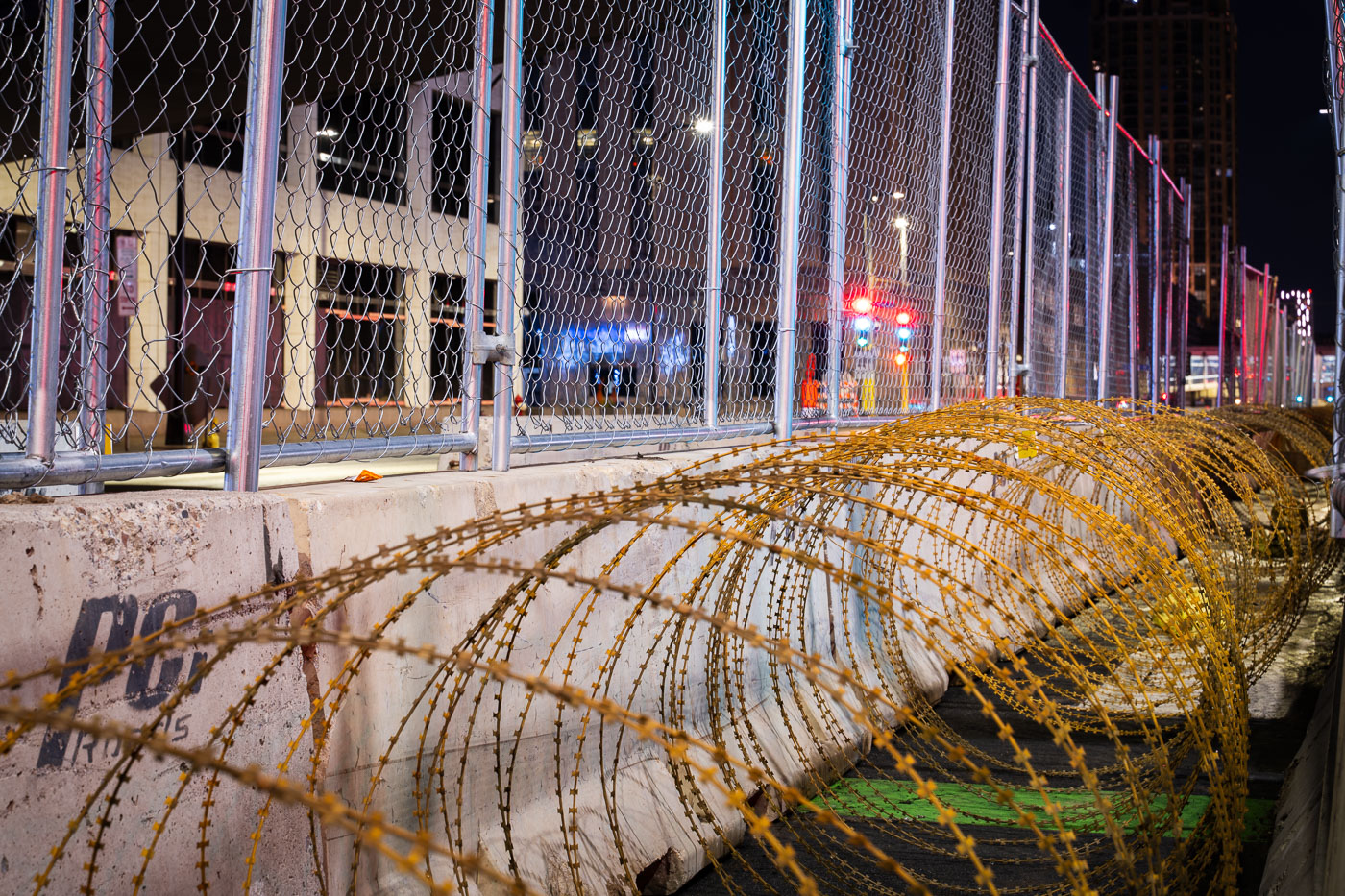
Razor wire and concrete barriers form a secured corridor outside the Hennepin County Government Center in downtown Minneapolis. The government center houses county courts and administrative offices. Temporary fencing and barricades were installed around the complex during security preparations in early 2021.

Coiled Razor Wire Lines a Barricaded Walkway at Night in Minneapolis
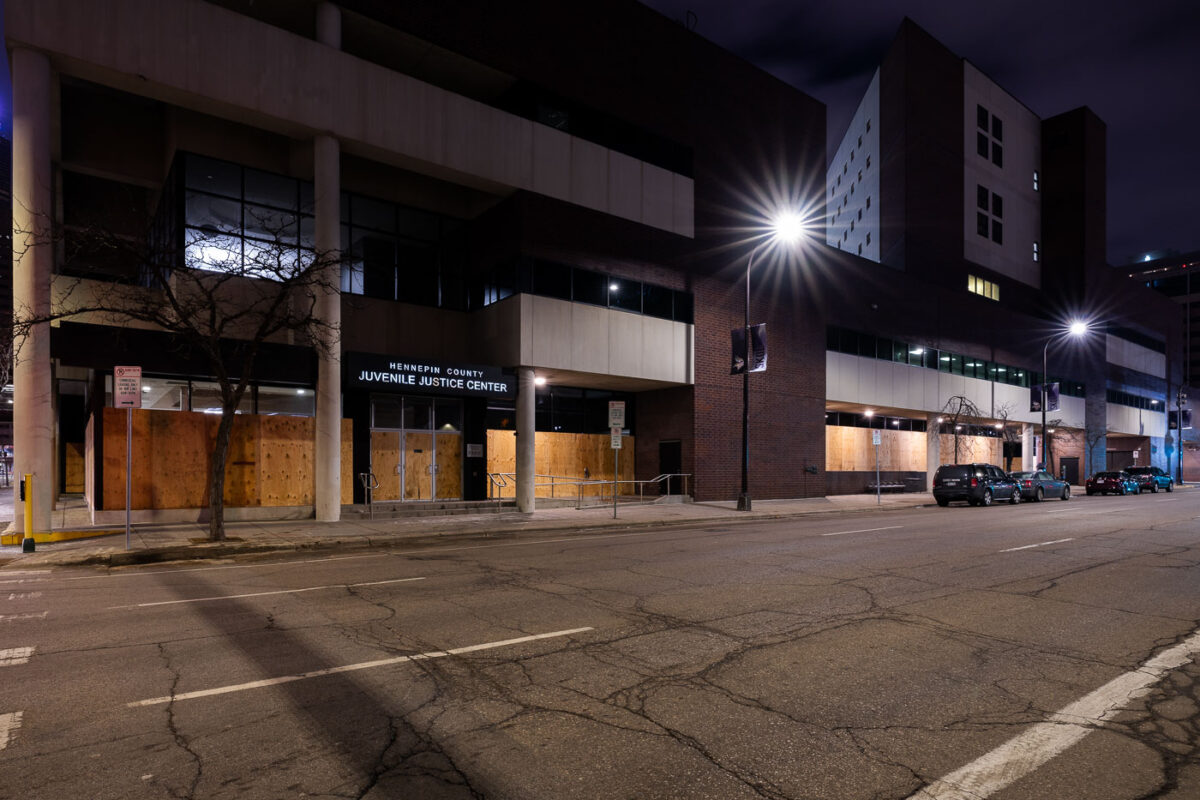
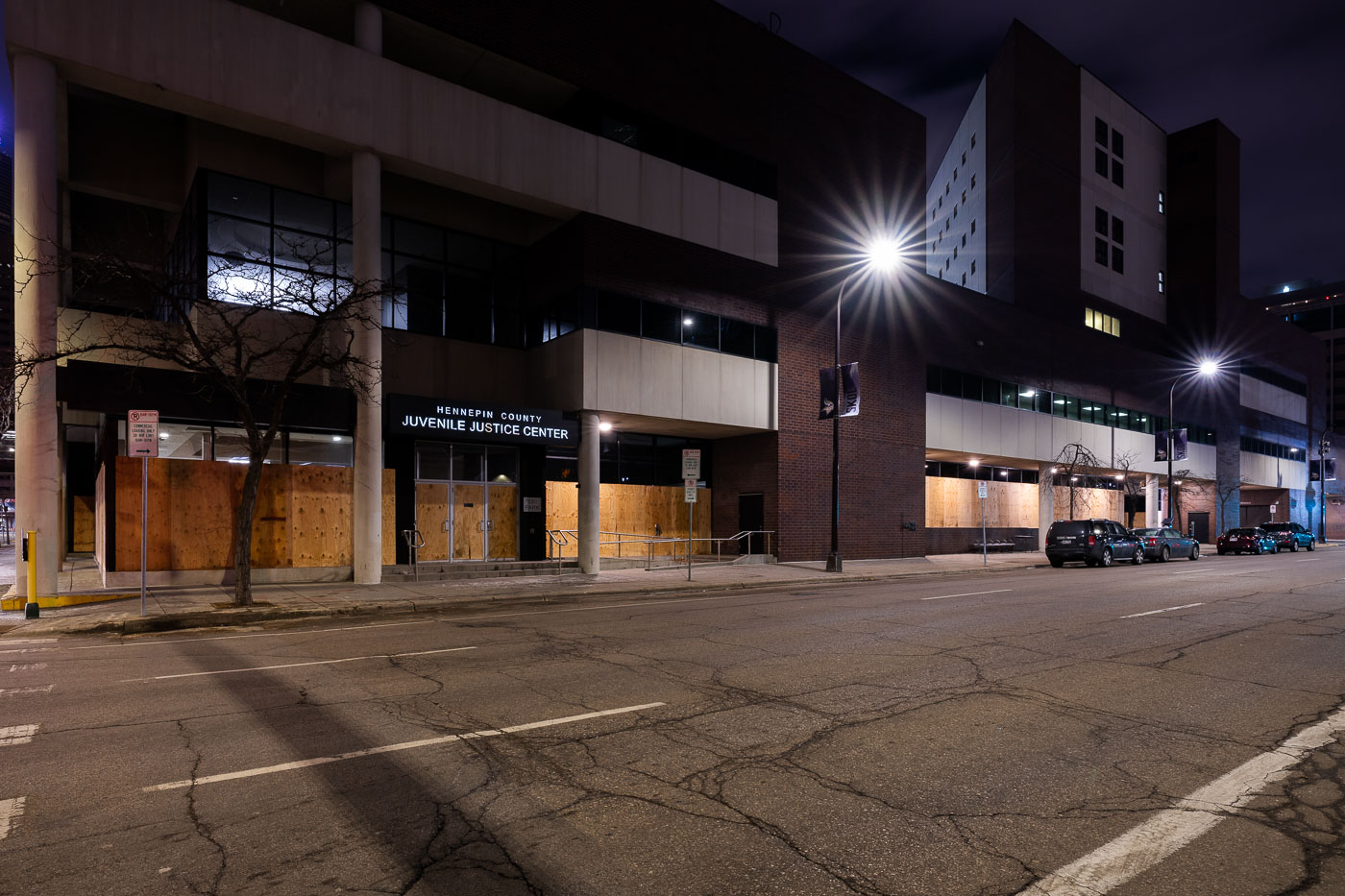
Hennepin County Juvenile Justice Center in downtown Minneapolis boarded with plywood panels during February 2021 trial security preparations.
The Hennepin County Juvenile Justice Center in downtown Minneapolis is shown boarded up in anticipation of the Derek Chauvin trial in April 2021. The building, located at 590 Park Avenue, serves as a courthouse for juvenile legal proceedings. The extensive boarding and security measures were implemented in response to concerns about potential unrest and protests stemming from the trial, which followed the murder of George Floyd in May 2020.
Plywood Covers Entrances at the Hennepin County Juvenile Justice Center

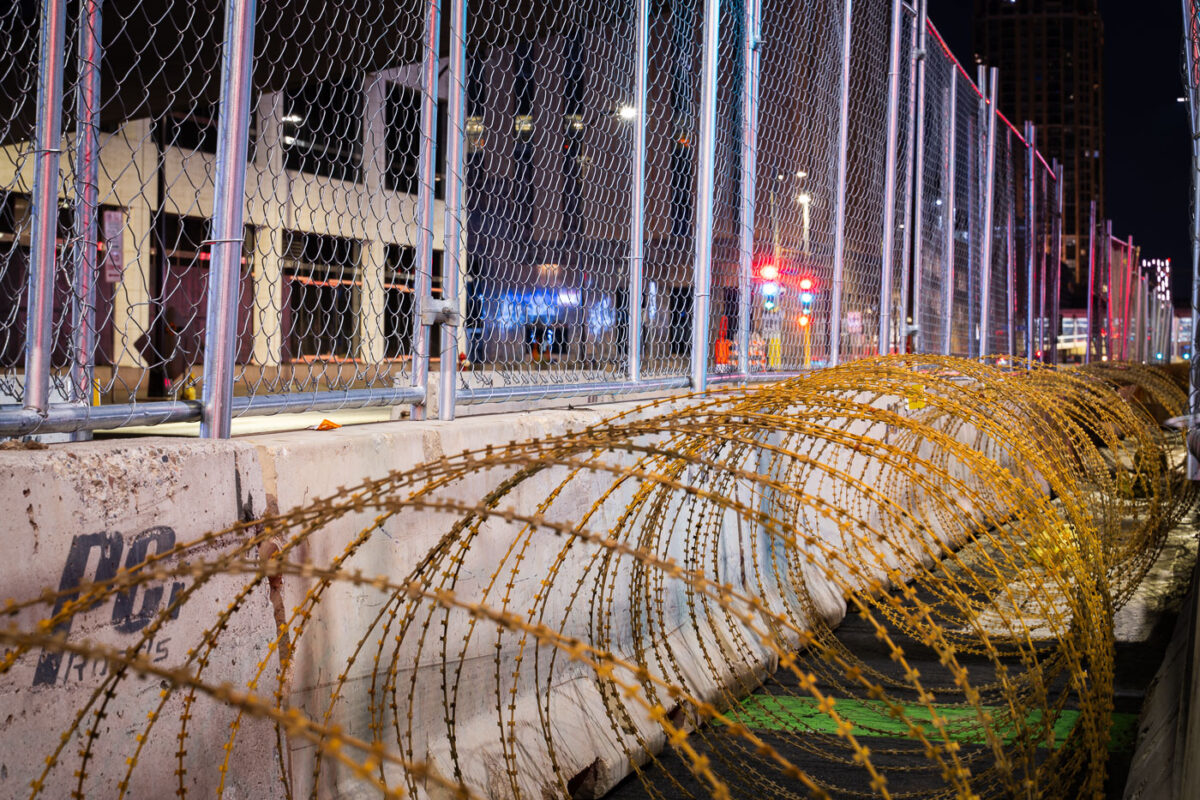
Yellow mesh security fencing and razor wire surround the Hennepin County Government Center during Derek Chauvin trial preparations in downtown Minneapolis.
Security measures, including razor wire and concrete barriers, were erected around the Hennepin County Government Center in Minneapolis in anticipation of the Derek Chauvin trial. On May 25, 2020, Minneapolis police officer Derek Chauvin murdered 46-year-old George Floyd during an arrest outside Cup Foods at the intersection of 38th Street and Chicago Avenue in south Minneapolis. Video recorded by bystanders showed Chauvin kneeling on Floyd’s neck for more than nine minutes while Floyd repeatedly said he could not breathe. Three other Minneapolis police officers - J. Alexander Kueng, Thomas Lane, and Tou Thao — were also present during the arrest and later faced criminal charges for their roles in Floyd’s death. Floyd’s murder sparked protests and civil unrest across Minneapolis and around the world, leading to widespread demonstrations against police violence, major policy debates on policing, and the conviction of Chauvin on murder and manslaughter charges in 2021.

Razor Wire Lines a Concrete Barrier Near Minneapolis City Hall at Night
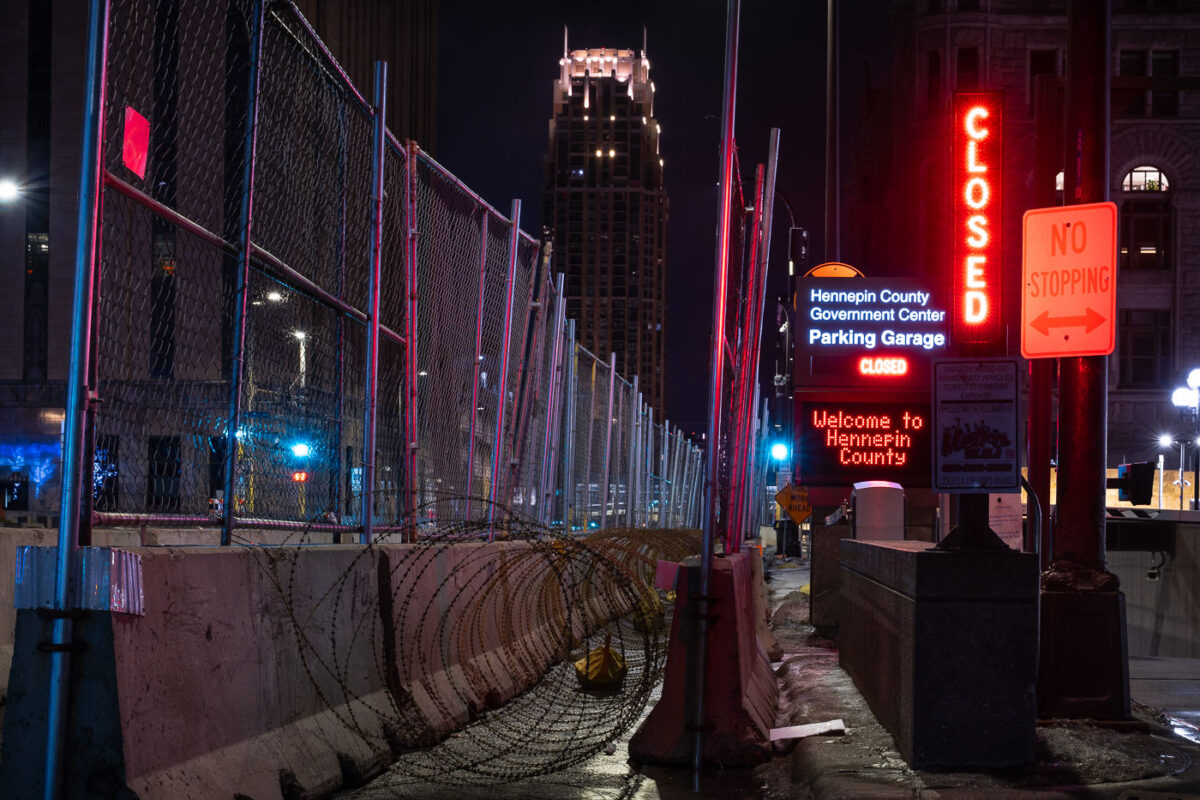
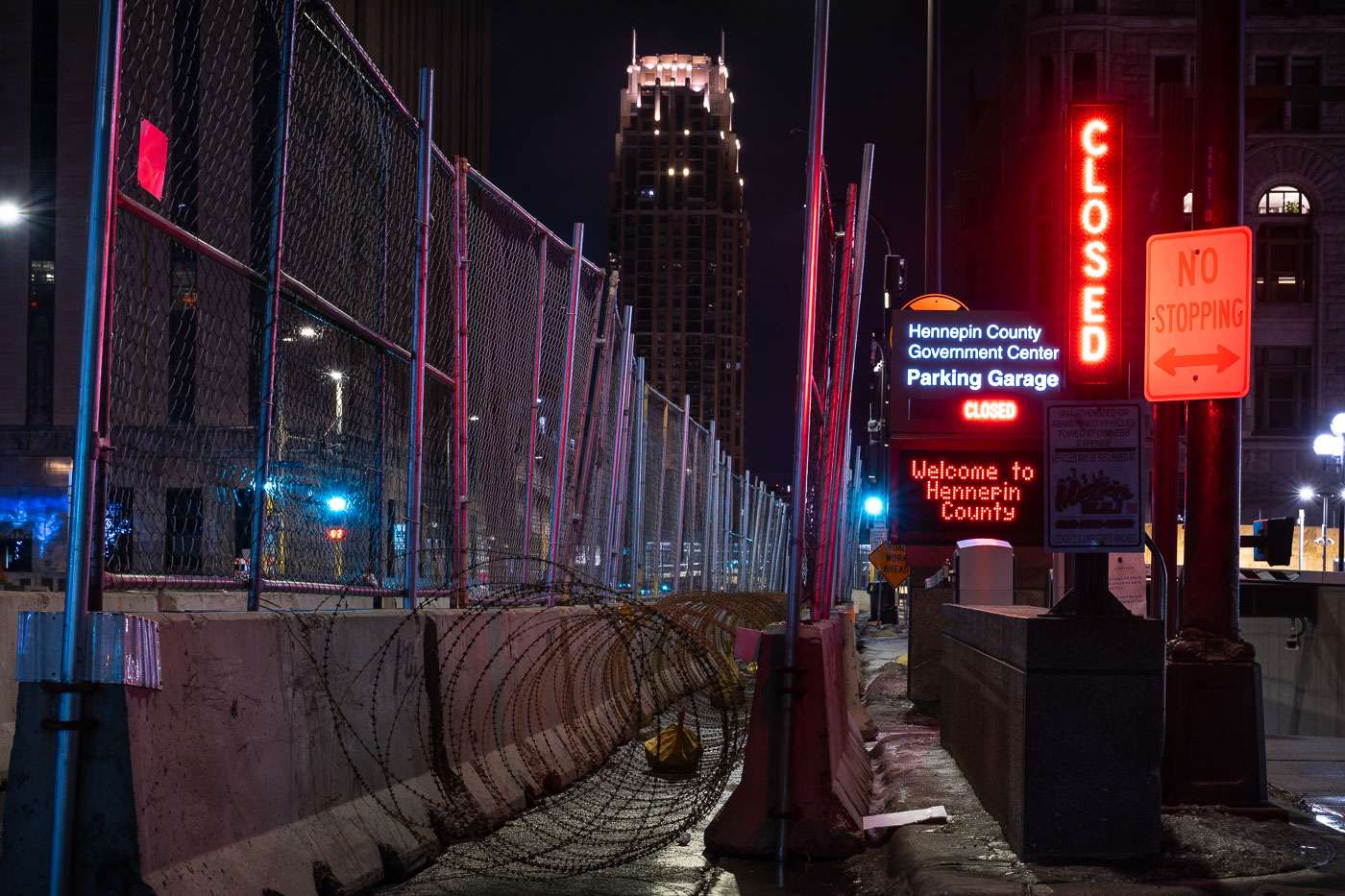
Razor wire fencing secures the Hennepin County Government Center in downtown Minneapolis during trial security preparations in February 2021.
Razor wire fencing is installed around the Hennepin County Government Center in Minneapolis, Minnesota. This security measure was put in place in anticipation of the Derek Chauvin trial, which was scheduled to begin less than two weeks after this photograph was taken. The trial stemmed from the death of George Floyd, whose killing by Chauvin in May 2020 sparked widespread protests and unrest in Minneapolis and across the nation.

“Closed” Parking Garage Sign Near Hennepin County Government Center at Night
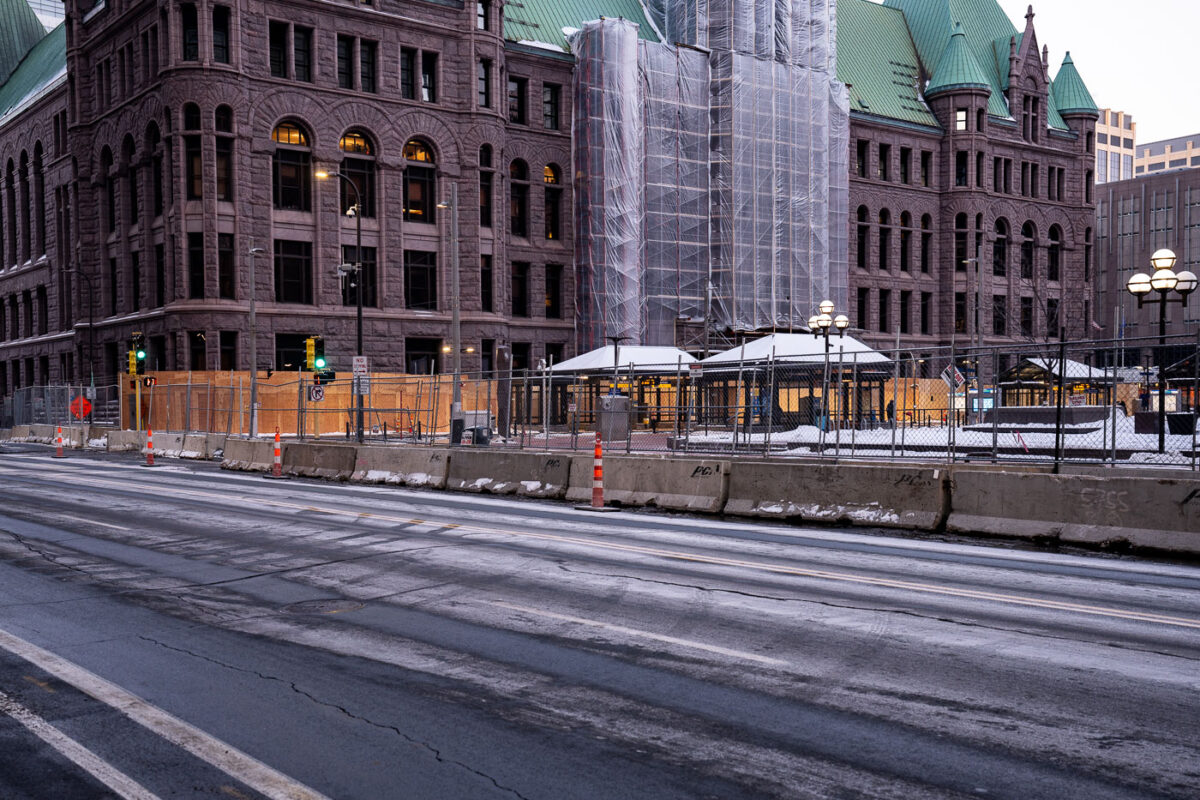
Historic Minneapolis City Hall stands behind security fencing and plywood boards during Derek Chauvin trial preparations in February 2021.
Minneapolis City Hall and the Hennepin County Government Center are shown fortified with security fencing and boarded-up windows. This measure was implemented in anticipation of the Derek Chauvin murder trial in 2021, reflecting heightened security concerns surrounding the proceedings.

South 6th Street Barricades Before the Chauvin Trial
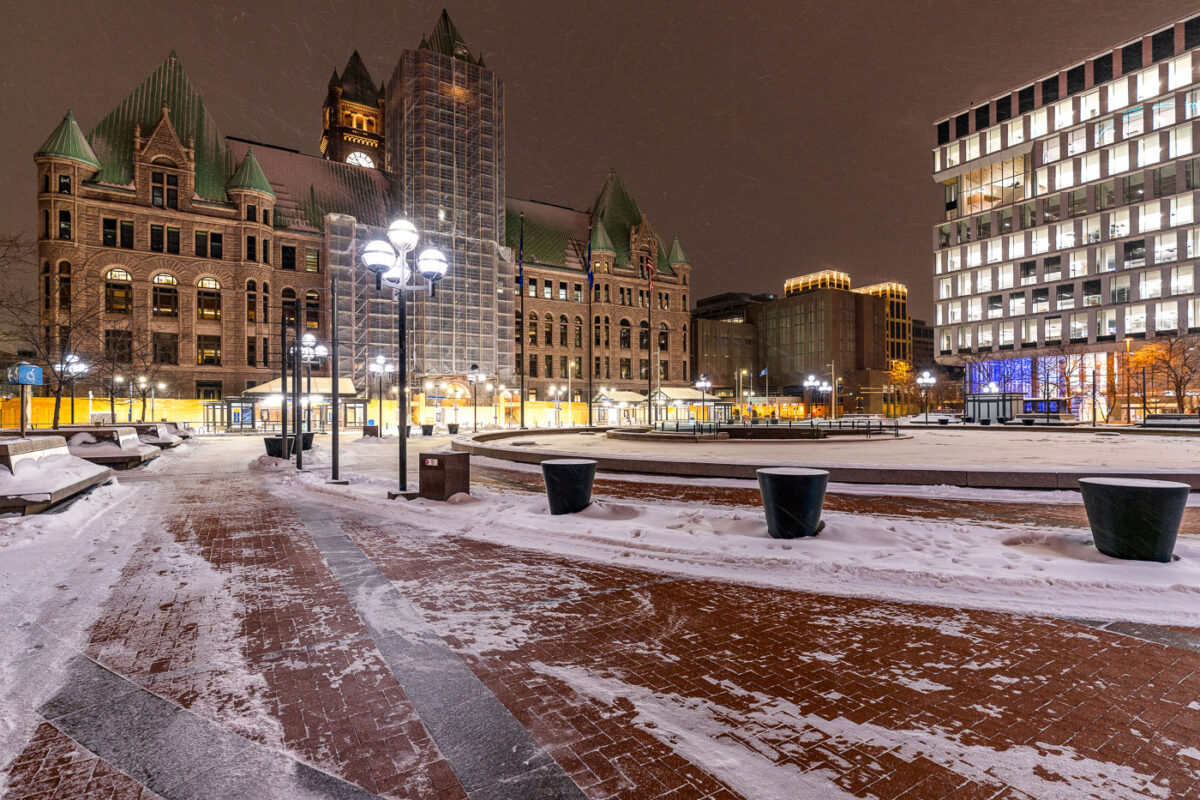
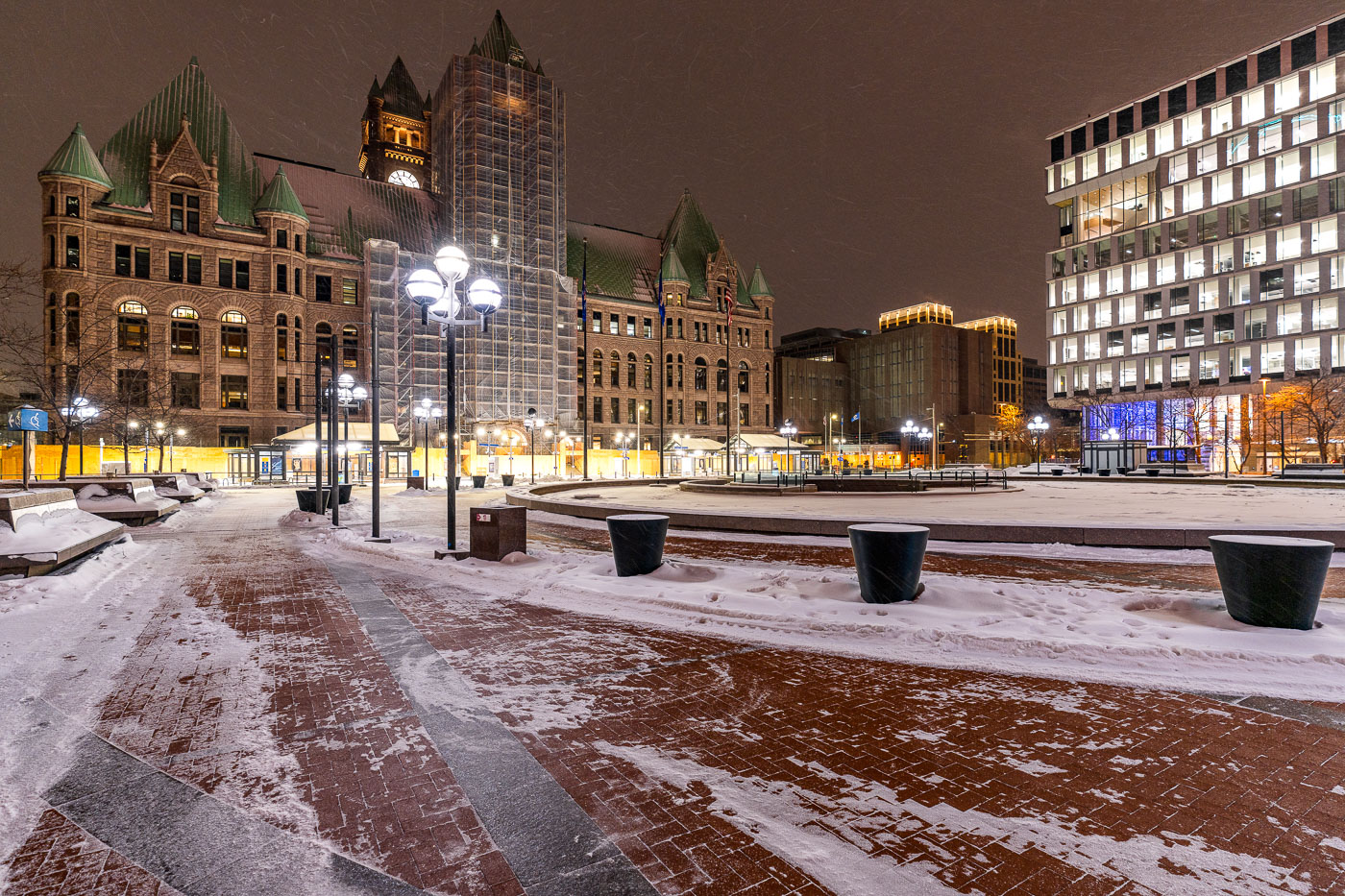
Snowstorm and Minneapolis City Hall prior to Chauvin trial
Minneapolis City Hall and Hennepin County Government Center are seen under snowfall as security preparations are underway for the Derek Chauvin trial. This measure reflects the heightened security concerns surrounding the trial of the former police officer accused in the death of George Floyd, which occurred in Minneapolis.

Minneapolis City Hall in Snow Before Chauvin Trial Security
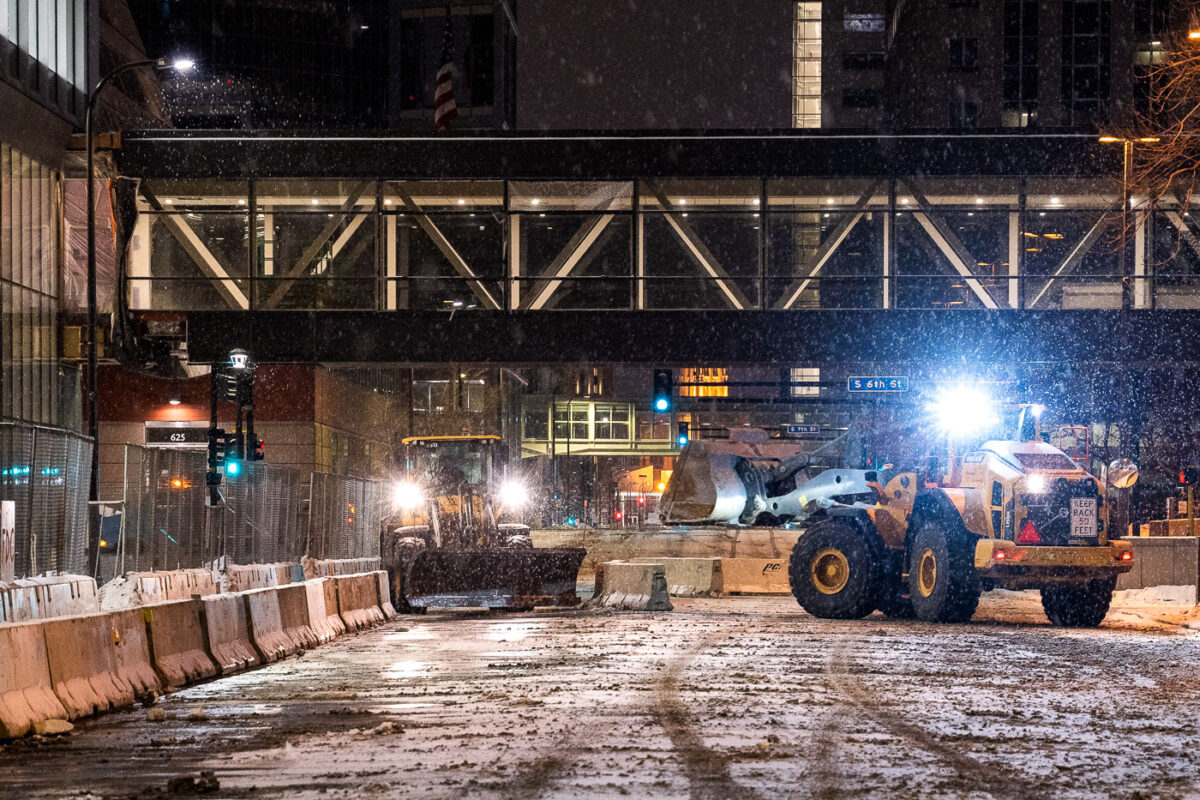
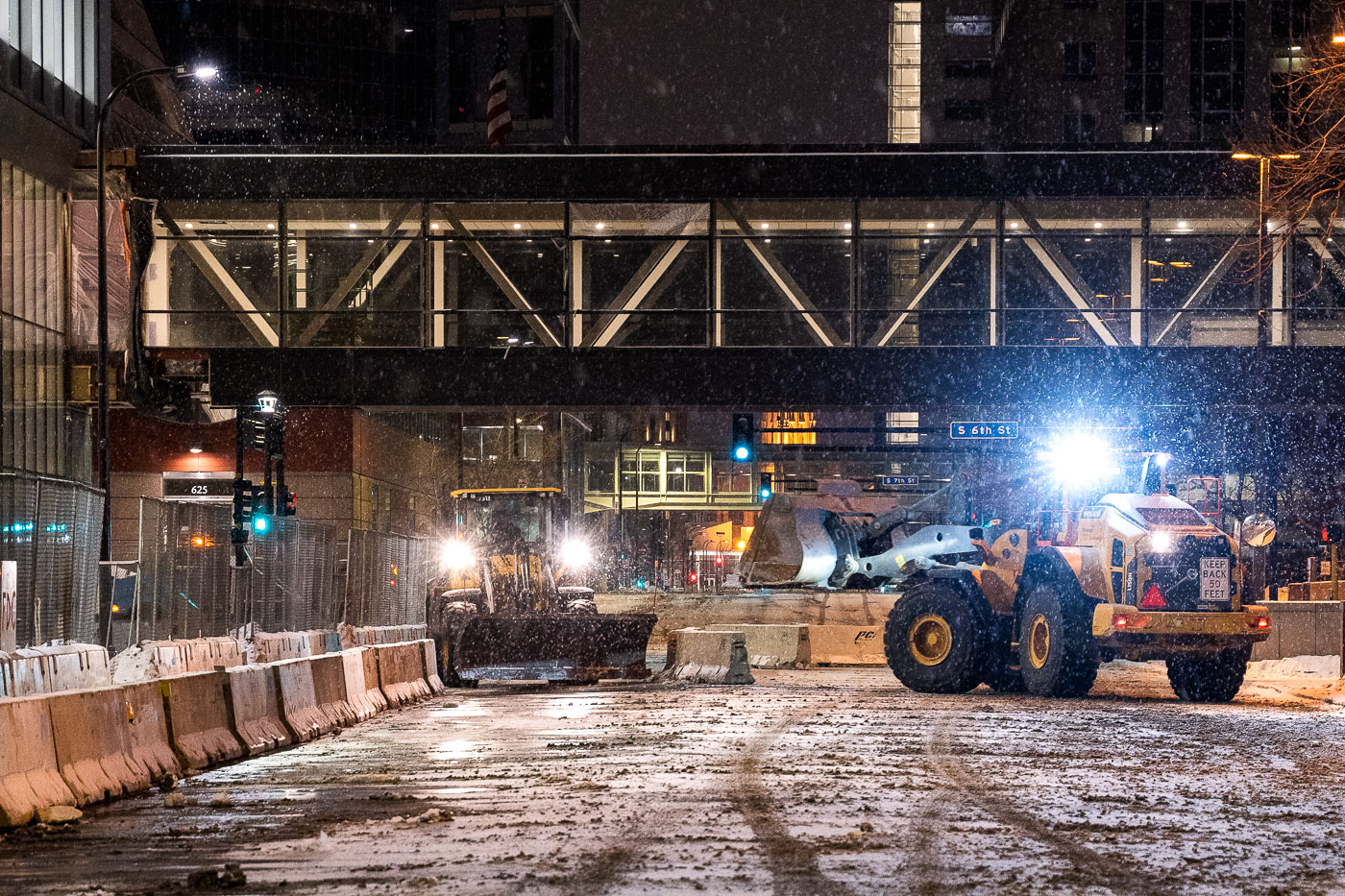
A front-end loader removes concrete barriers from a snowy downtown Minneapolis street at night near City Hall during trial security preparations.
Public Works vehicles install jersey barriers around government buildings in Minneapolis in anticipation of the Derek Chauvin trial. On May 25, 2020, Minneapolis police officer Derek Chauvin murdered 46-year-old George Floyd during an arrest outside Cup Foods at the intersection of 38th Street and Chicago Avenue in south Minneapolis. Video recorded by bystanders showed Chauvin kneeling on Floyd’s neck for more than nine minutes while Floyd repeatedly said he could not breathe. Three other Minneapolis police officers - J. Alexander Kueng, Thomas Lane, and Tou Thao — were also present during the arrest and later faced criminal charges for their roles in Floyd’s death. Floyd’s murder sparked protests and civil unrest across Minneapolis and around the world, leading to widespread demonstrations against police violence, major policy debates on policing, and the conviction of Chauvin on murder and manslaughter charges in 2021.

Front-End Loaders Install Jersey Barriers on South 6th Street at Night
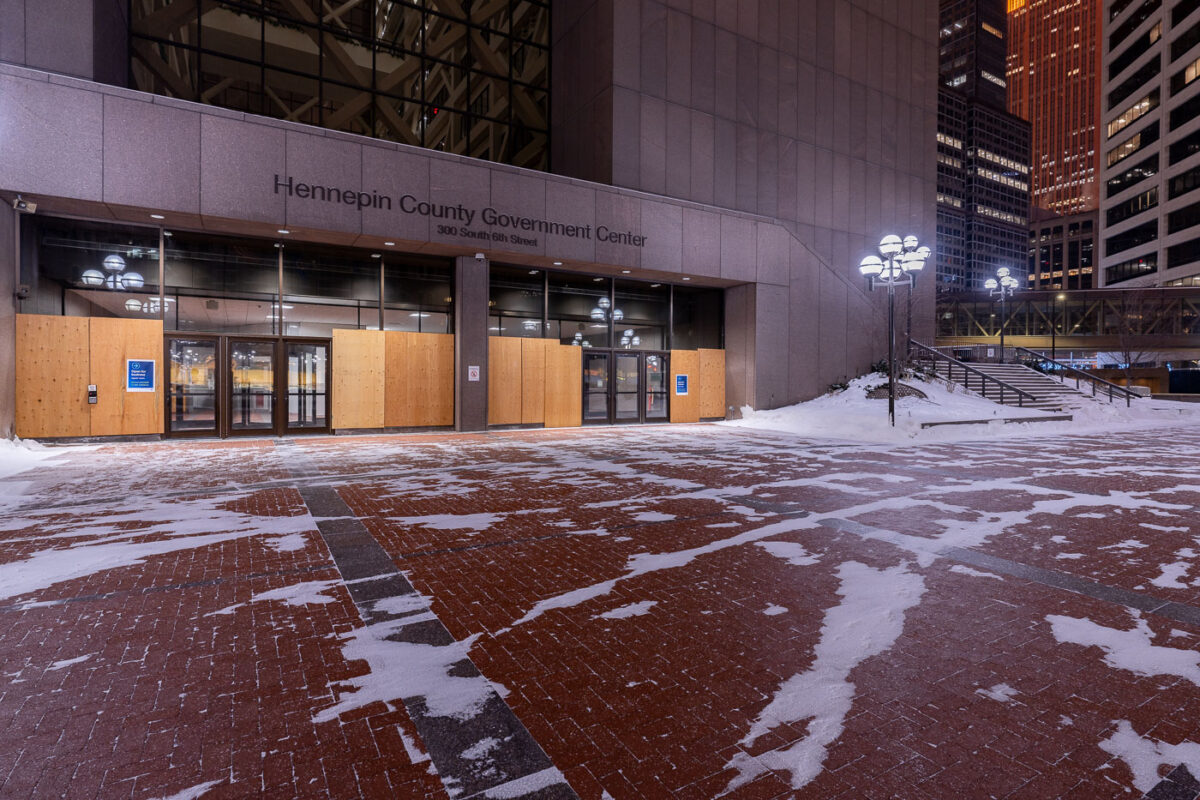
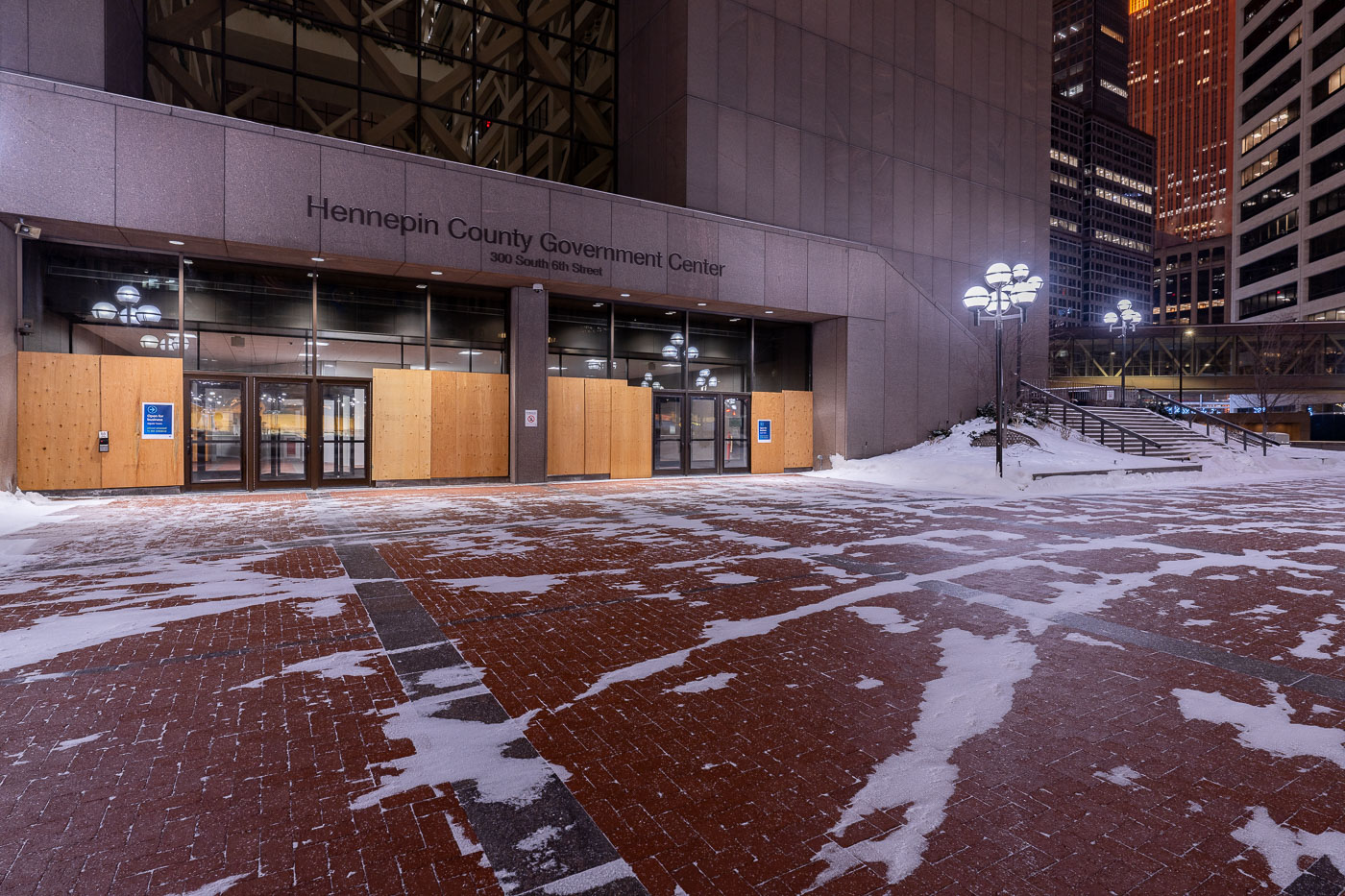
Hennepin County Government Center at 300 South 6th Street boarded with plywood panels during winter.
The Hennepin County Government Center in downtown Minneapolis was boarded up in anticipation of the Derek Chauvin trial in March 2021. The building, located at 300 South 6th Street, houses county government offices and courtrooms.

Snowy Entrance at Hennepin County Government Center After Dark
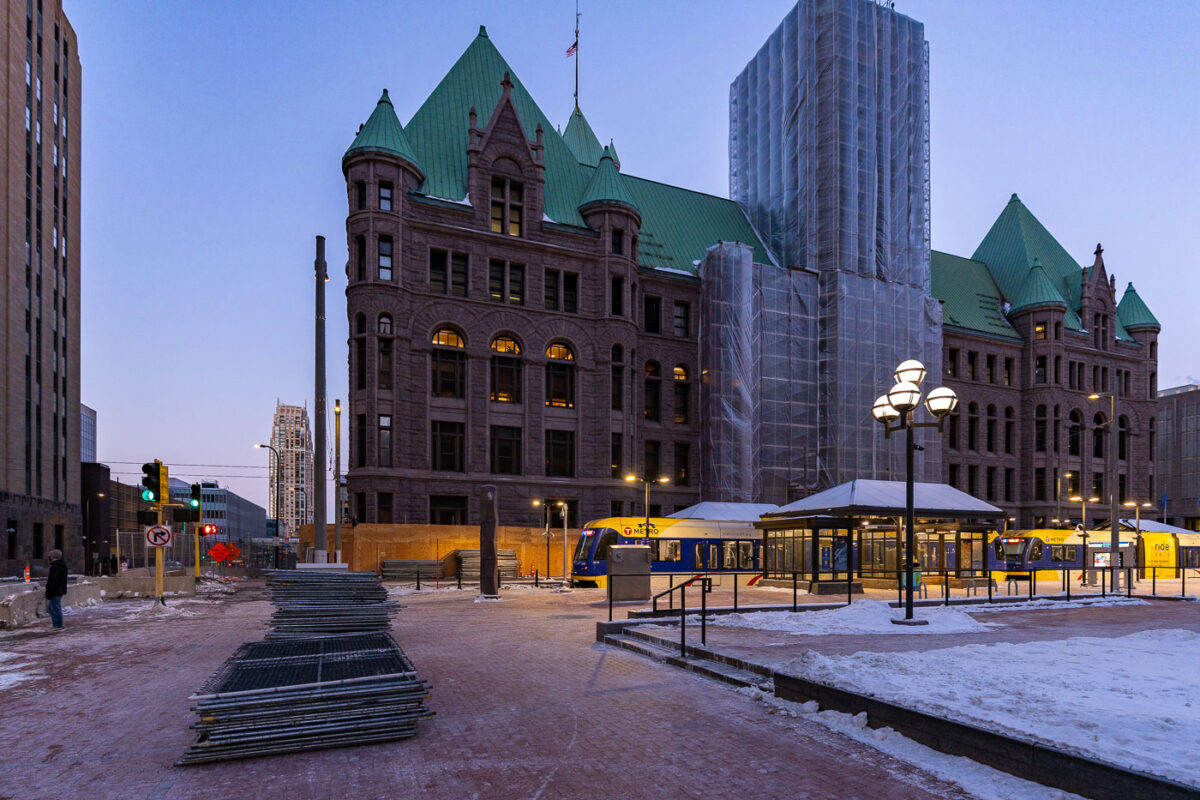
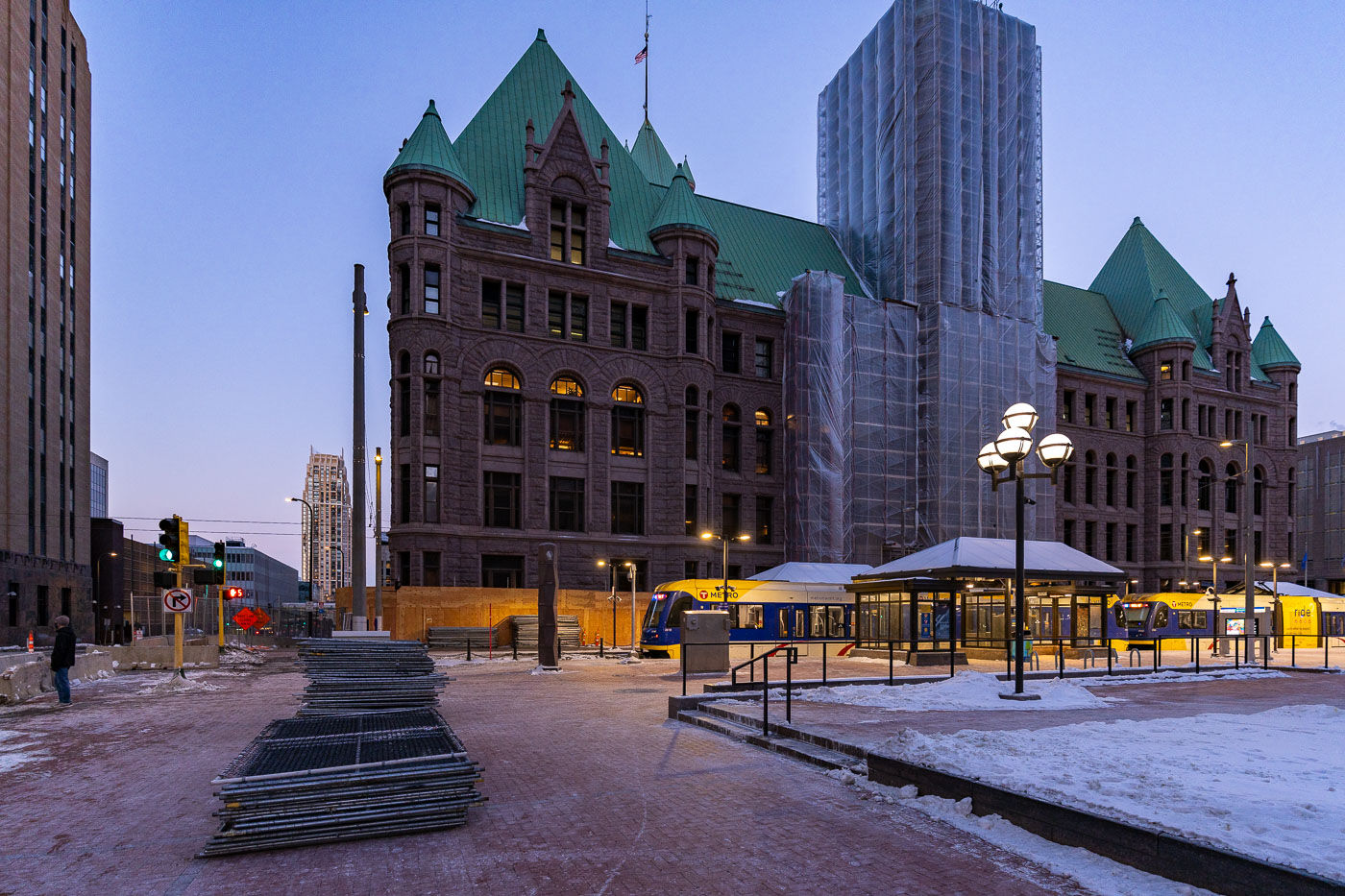
Minneapolis City Hall and Hennepin County Government Center surrounded by security fencing and barricades in February 2021.
Fencing and barricades surround Minneapolis City Hall and the Hennepin County Government Center in downtown Minneapolis on February 16, 2021. These security measures were installed in anticipation of the Derek Chauvin murder trial, which began on March 8, 2021. On May 25, 2020, Minneapolis police officer Derek Chauvin murdered 46-year-old George Floyd during an arrest outside Cup Foods at the intersection of 38th Street and Chicago Avenue in south Minneapolis. Video recorded by bystanders showed Chauvin kneeling on Floyd’s neck for more than nine minutes while Floyd repeatedly said he could not breathe. Three other Minneapolis police officers - J. Alexander Kueng, Thomas Lane, and Tou Thao — were also present during the arrest and later faced criminal charges for their roles in Floyd’s death. Floyd’s murder sparked protests and civil unrest across Minneapolis and around the world, leading to widespread demonstrations against police violence, major policy debates on policing, and the conviction of Chauvin on murder and manslaughter charges in 2021.

METRO Green Line Station at Minneapolis City Hall During Winter
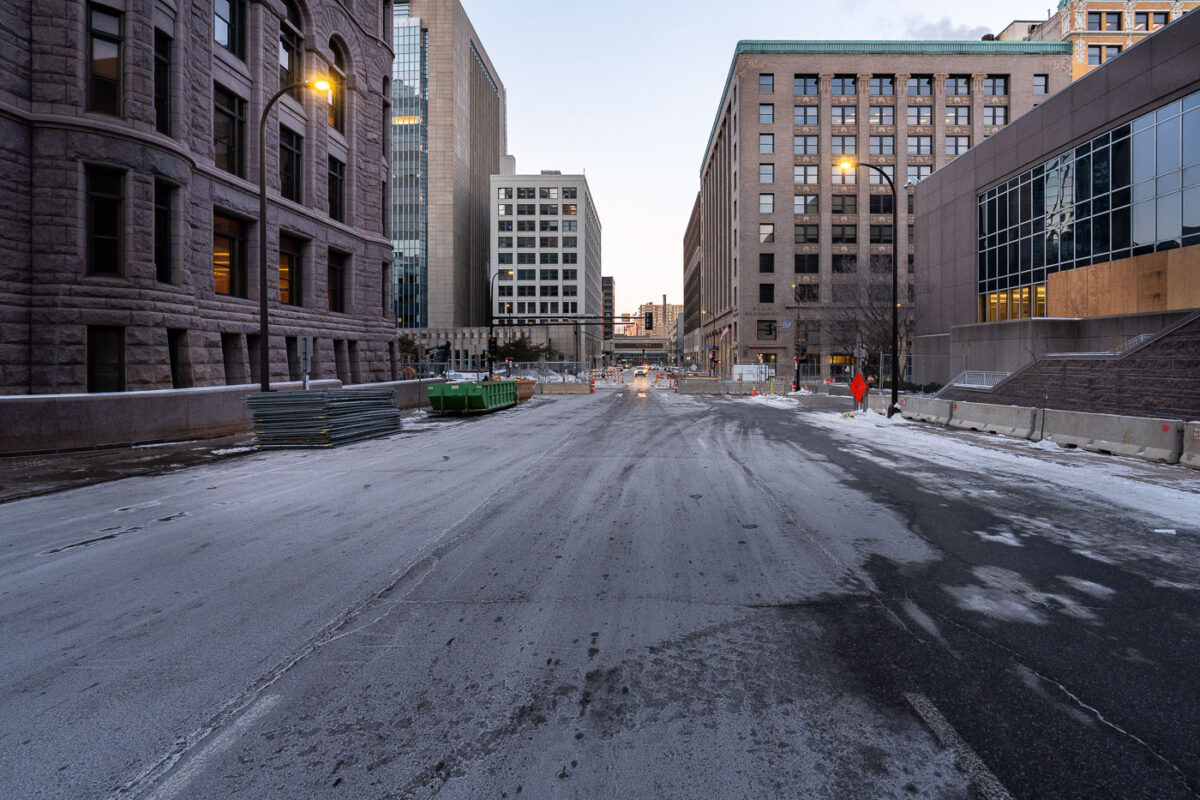
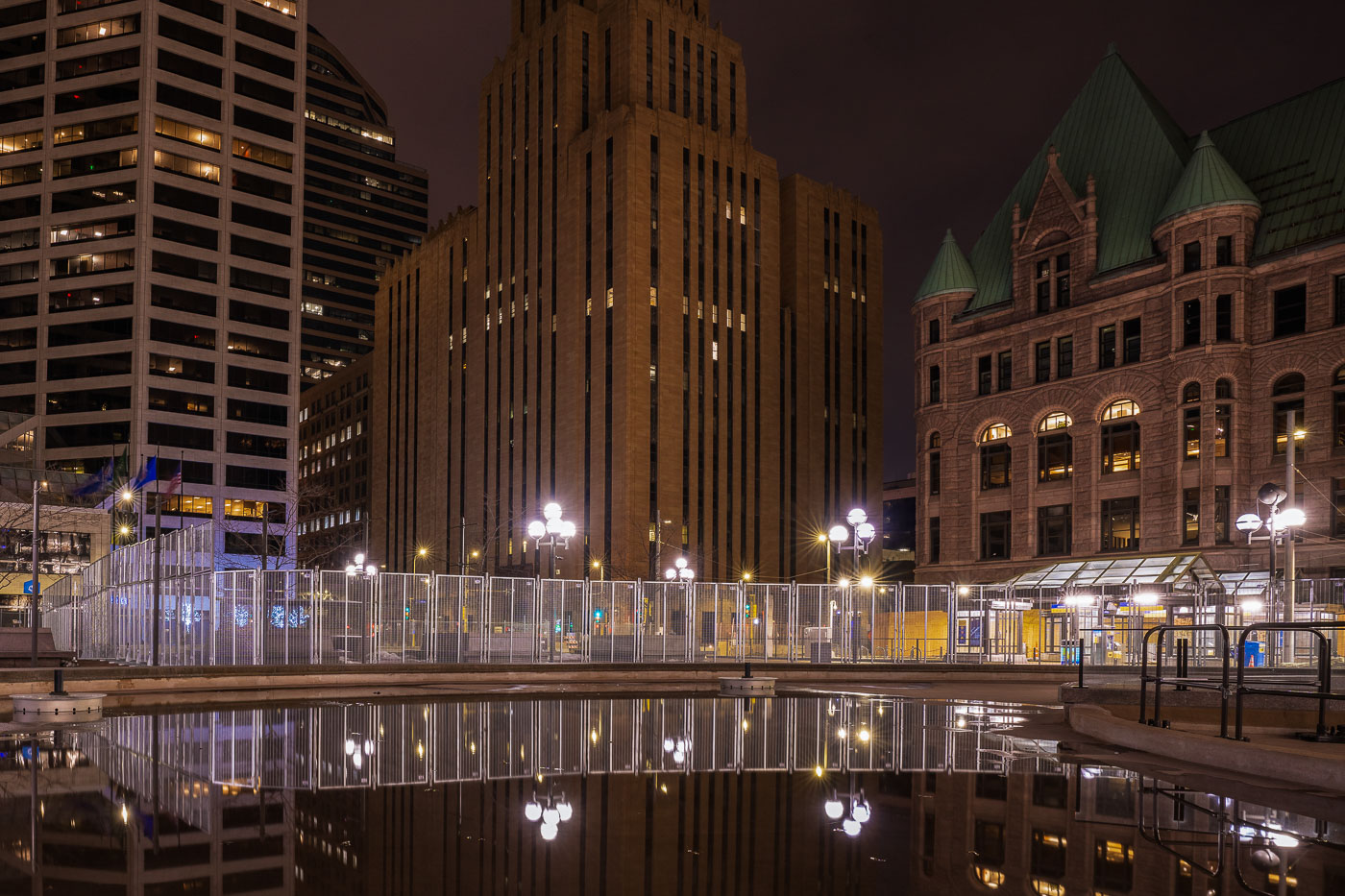
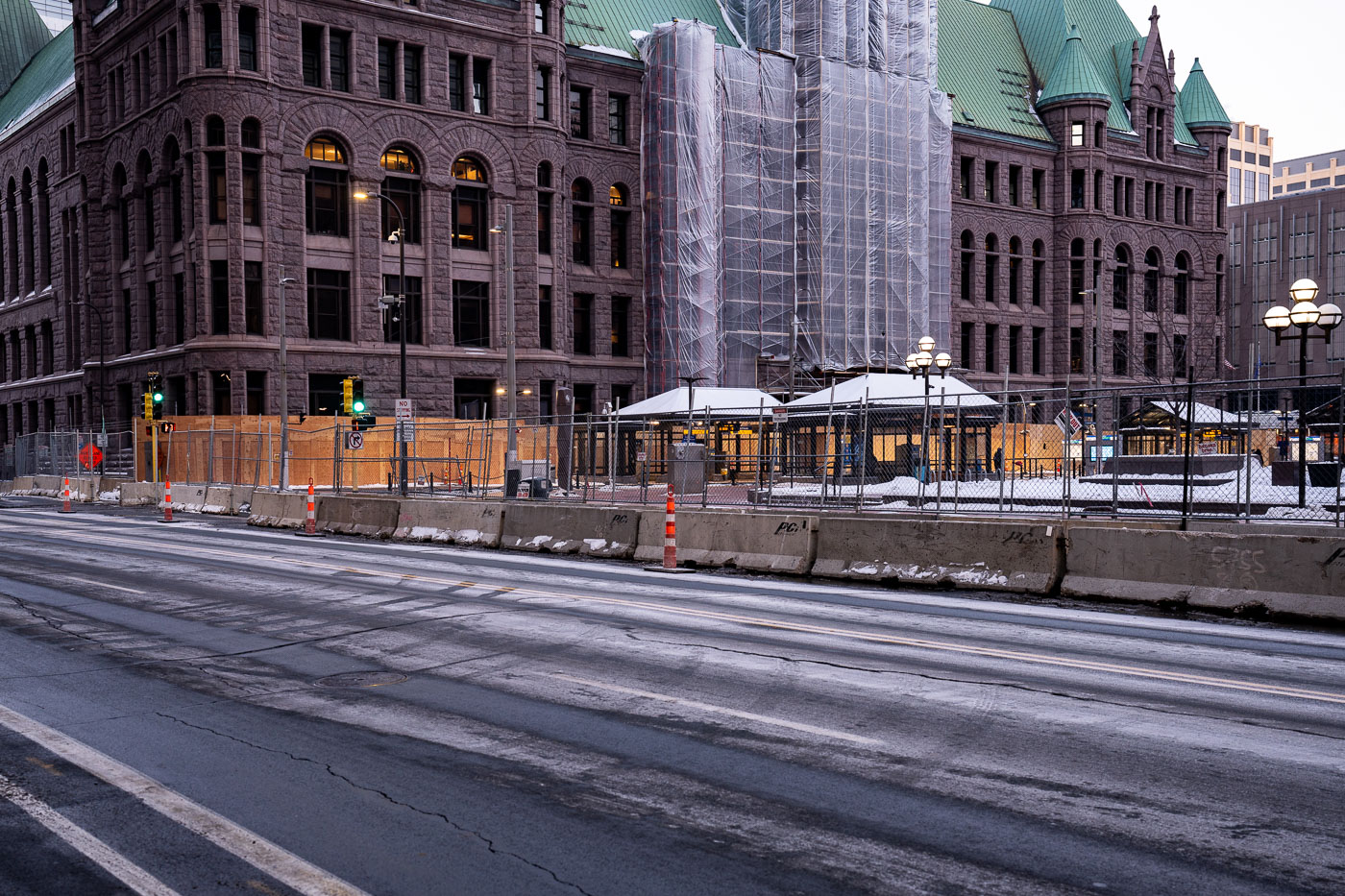
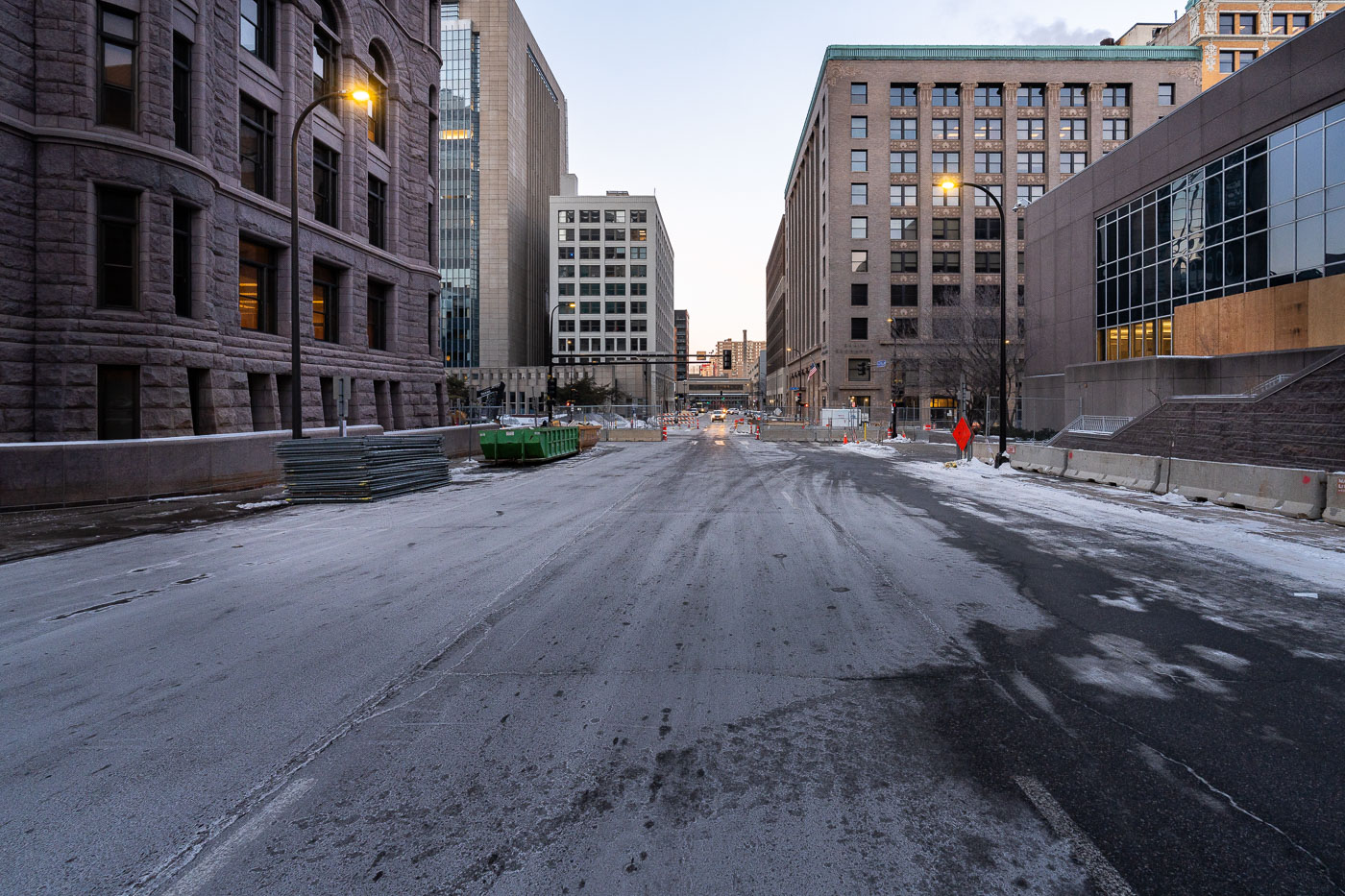
Snow-covered street lined with historic and modern buildings, security fencing, and barriers surrounding Minneapolis City Hall.
Security fencing and concrete barriers surround Minneapolis City Hall and the Hennepin County Jail in anticipation of the Derek Chauvin murder trial.

Empty Downtown Minneapolis Street Before the Chauvin Trial
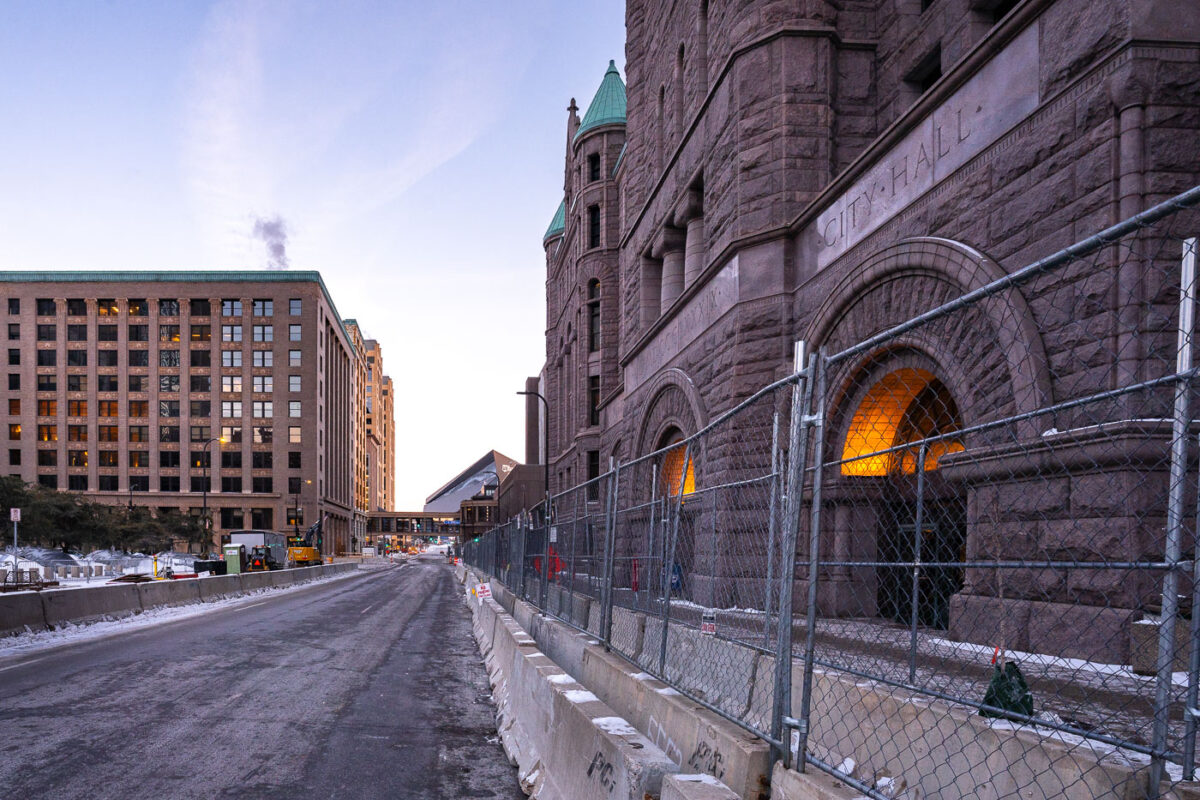
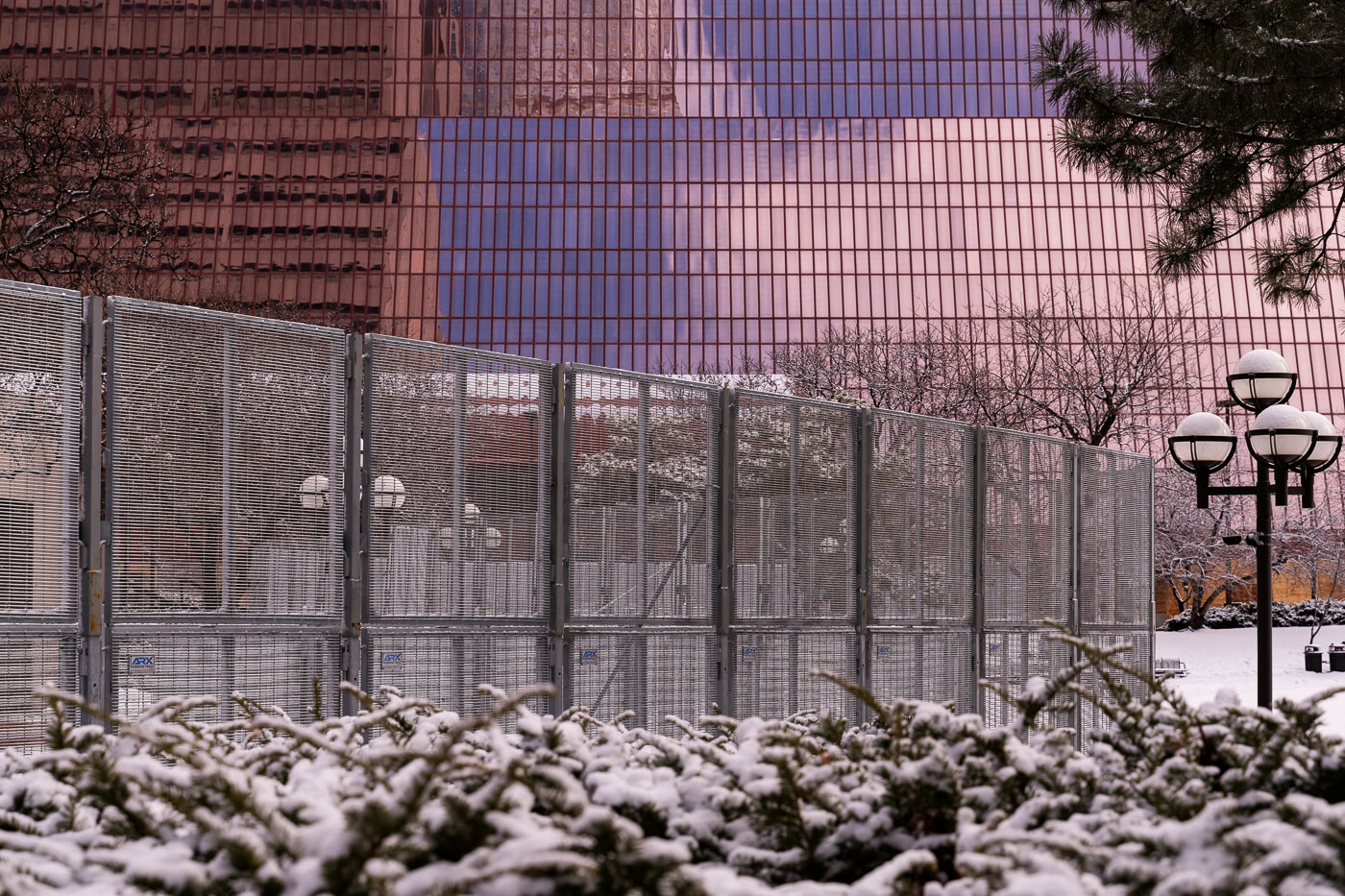
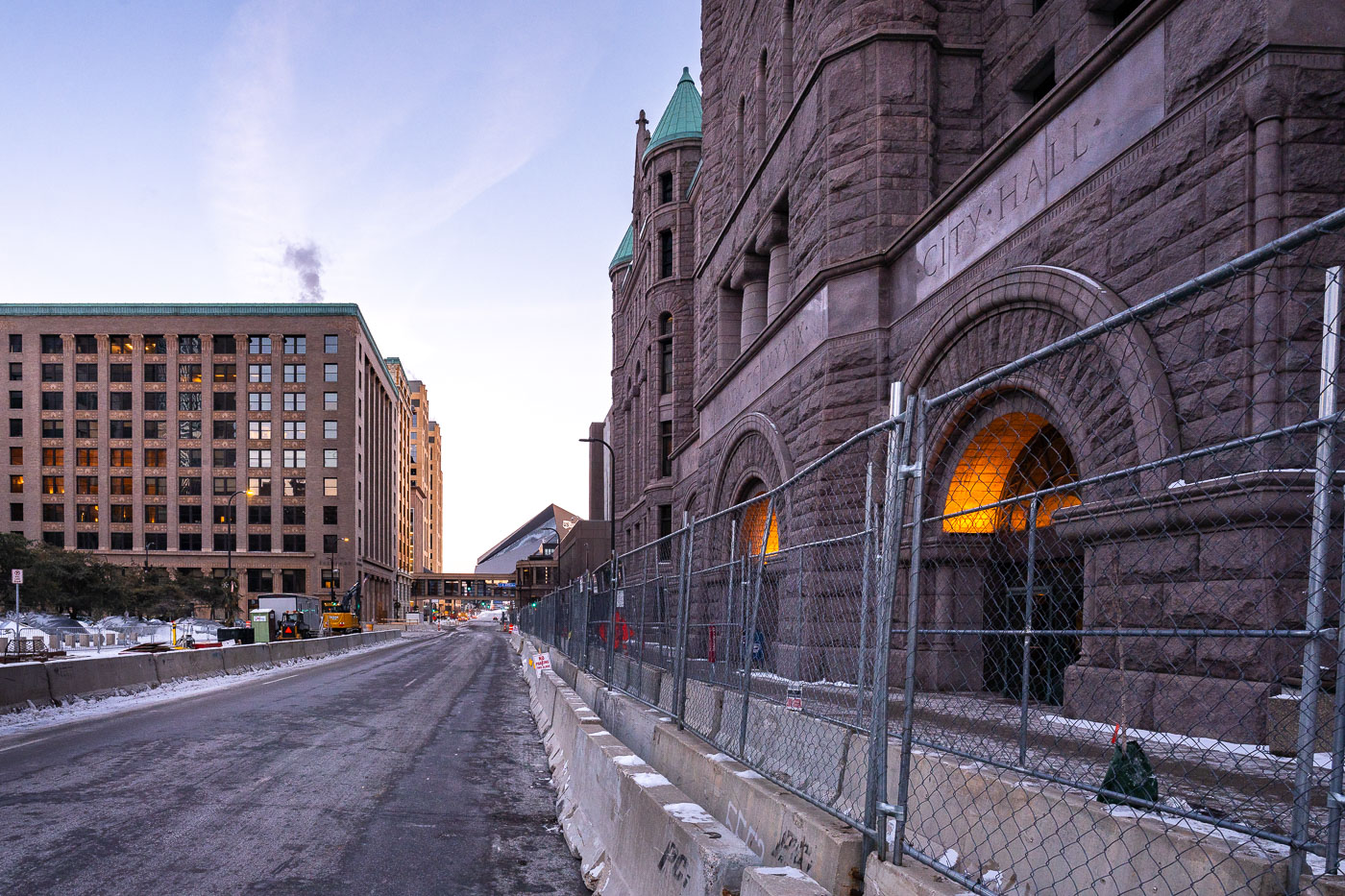
Metal fencing and concrete barriers surround Minneapolis City Hall's stone facade during preparations for the Derek Chauvin trial.
Fencing and barricades begin going up around downtown locations with Derek Chauvin trial just 20 days away.

Fourth Avenue Fenced Off Outside Minneapolis City Hall
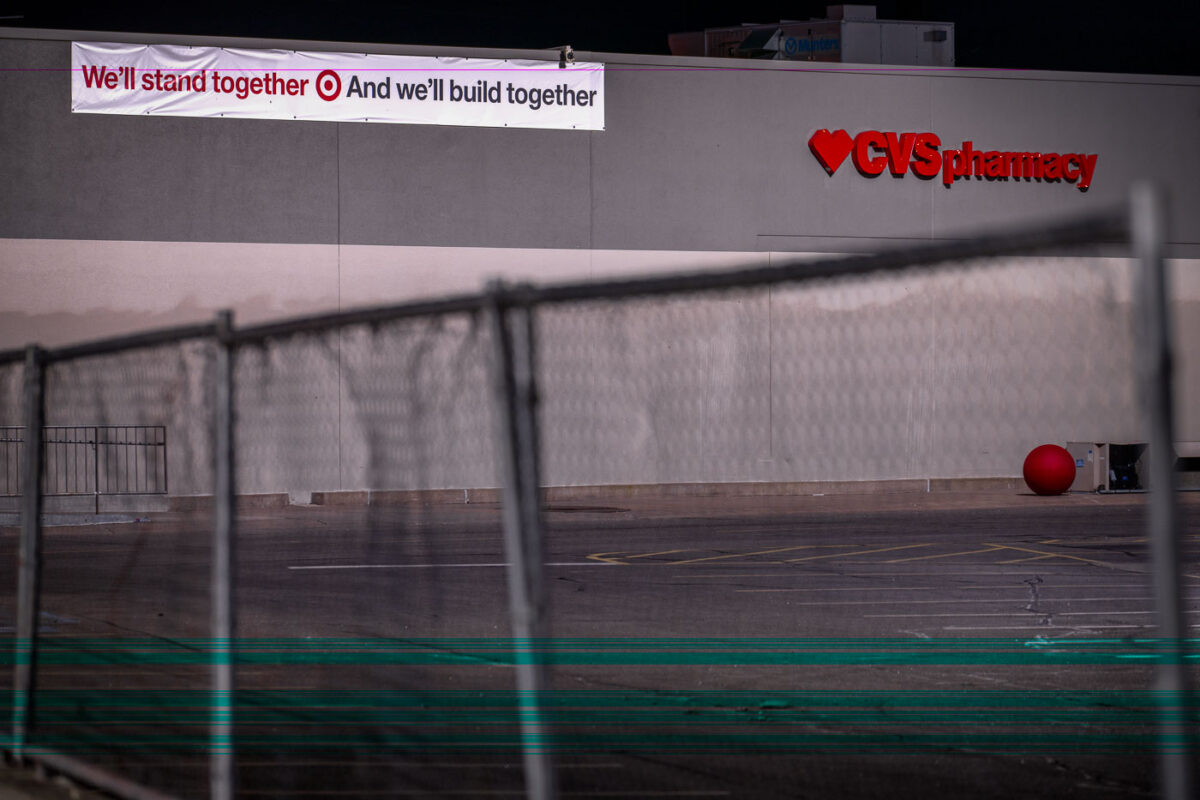
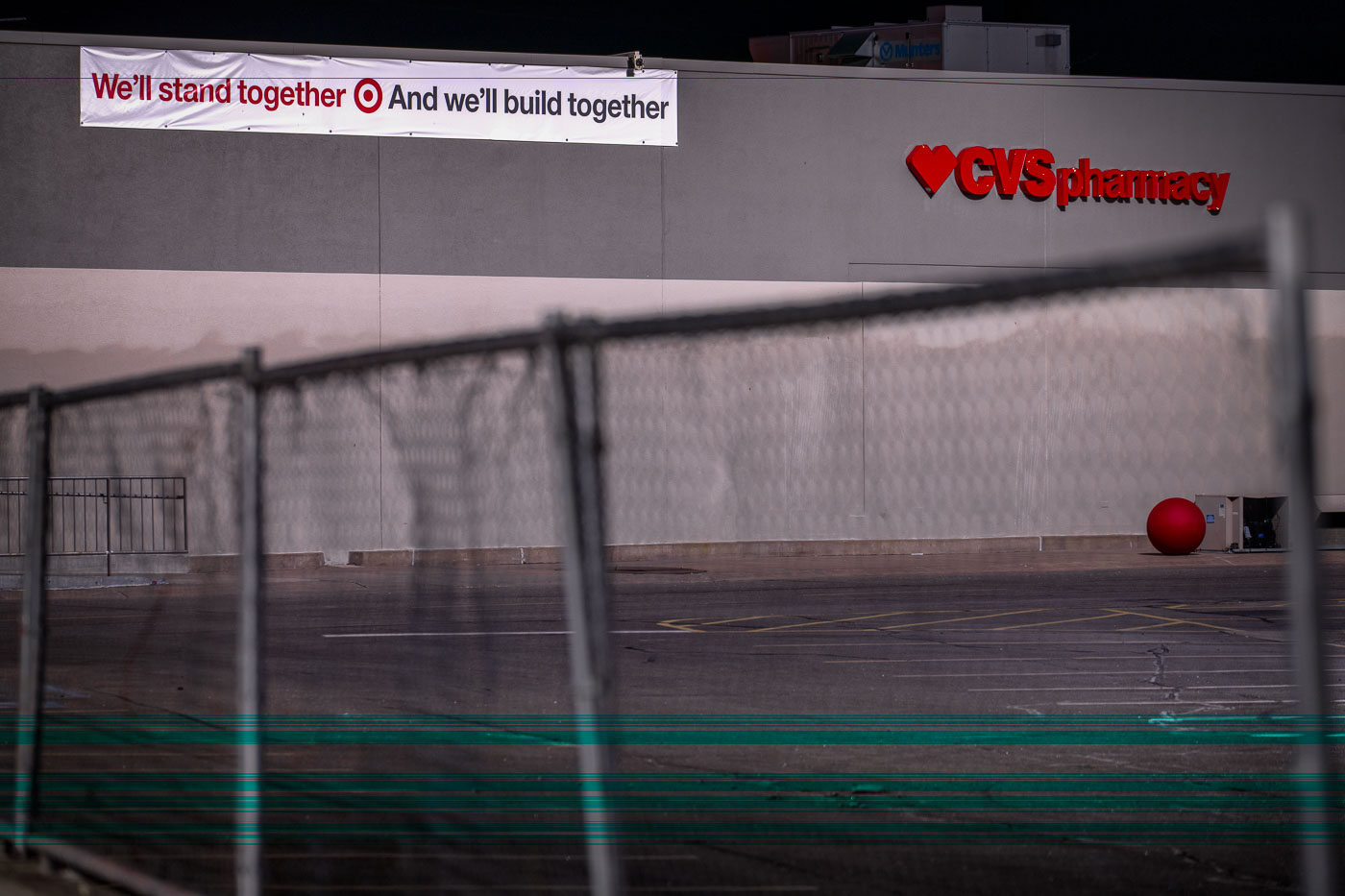
We’ll stand together and we’ll build together
A Target store, which includes a CVS Pharmacy, stands on East Lake Street in Minneapolis. This location was significantly affected by looting during the 2020 unrest that followed the May 25th death of George Floyd. A banner displayed on the building's facade reads, "We'll stand together And we'll build together," conveying a message of community resilience and recovery. Temporary fencing is visible in the foreground, indicating ongoing security or rebuilding efforts in the area.

Minneapolis Target Store Sign, East Lake Street, 2020 Unrest
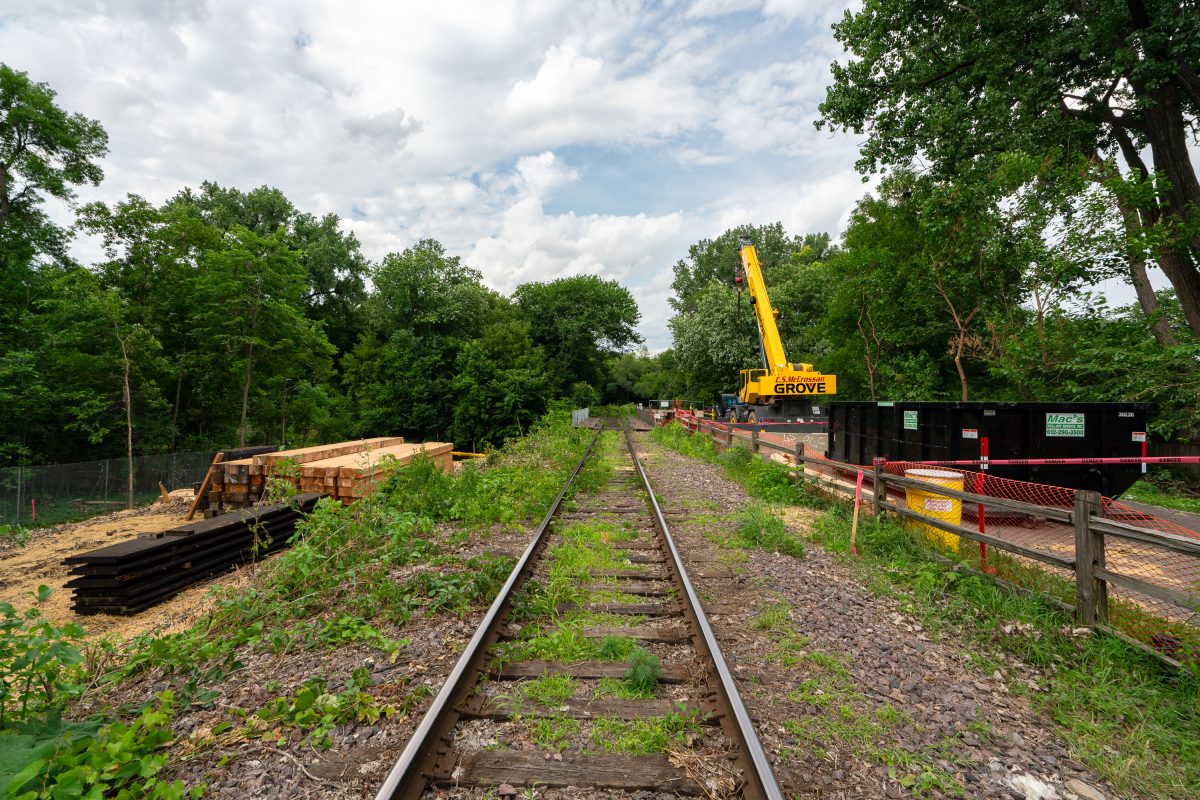
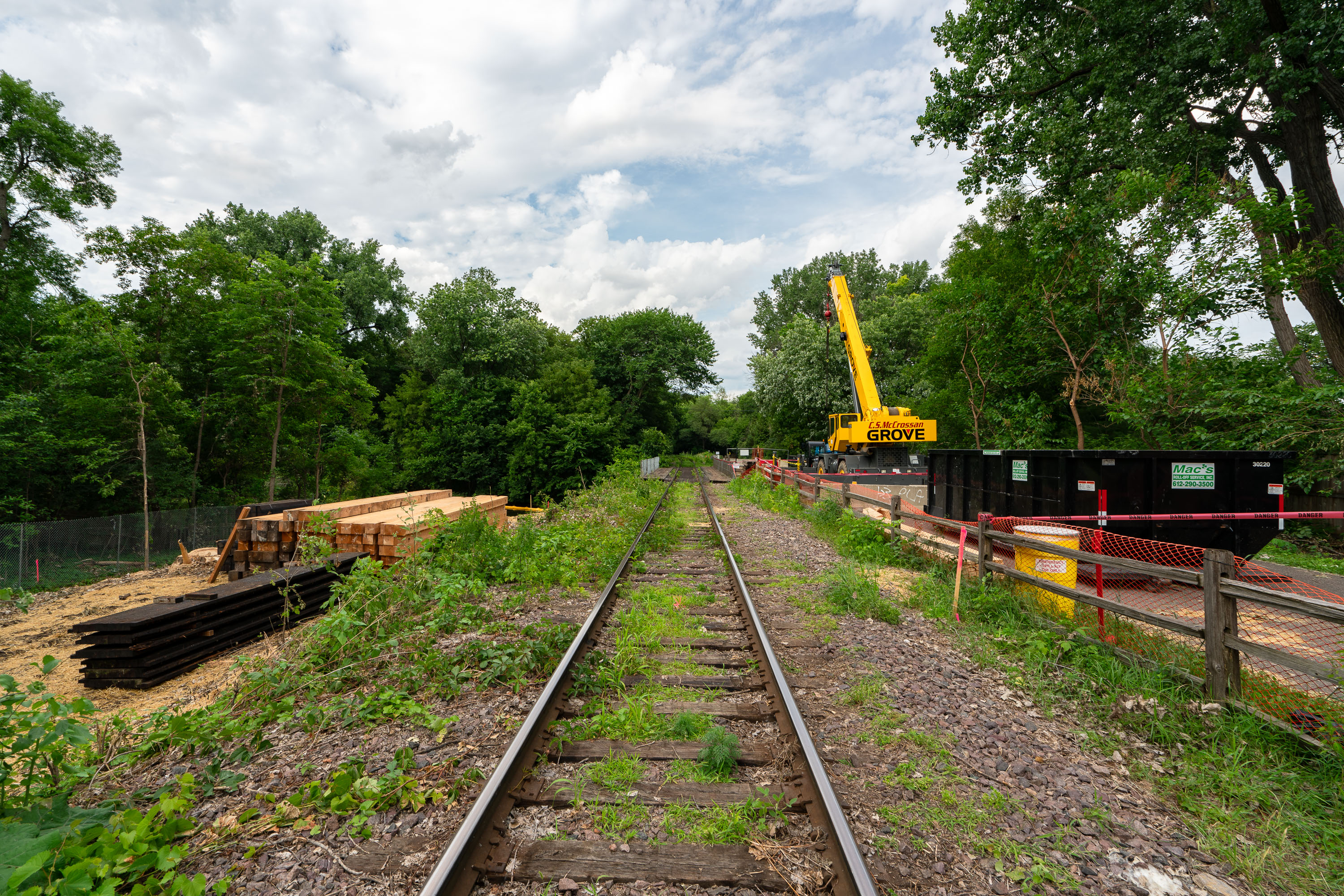
Grove construction crane and equipment on railroad tracks along the Kenilworth Trail in Minneapolis.
The Kenilworth Trail follows a former Milwaukee Road rail corridor connecting Minneapolis's Cedar Lake and Lake of the Isles areas to Hopkins. The corridor has been used for freight rail, bike and pedestrian paths, and is the planned route for the Metro Green Line Extension light rail. Construction crews have used the rail line for staging materials, including ties and ballast, during the extension's preliminary work. A Grove mobile crane, commonly used for lifting rail and bridge components, appears among the equipment staged along the tracks.

Rail Tie Replacement Along the Kenilworth Trail Corridor
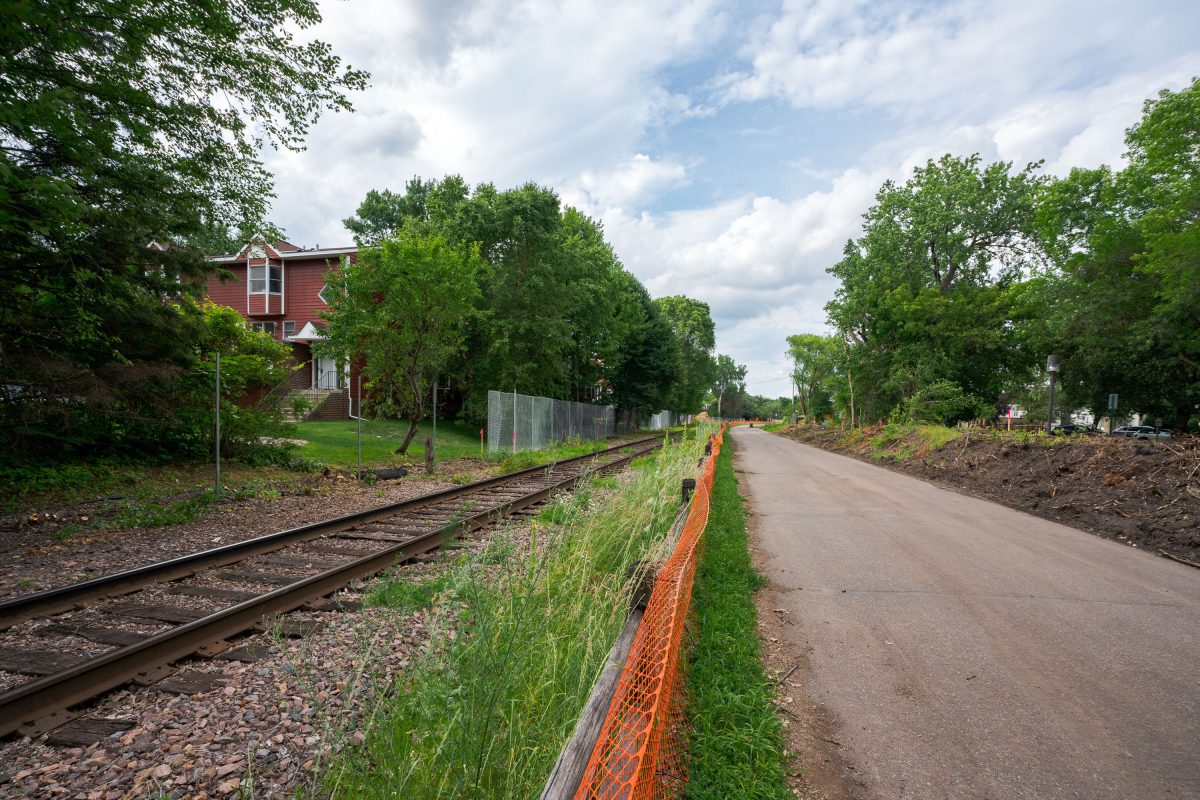
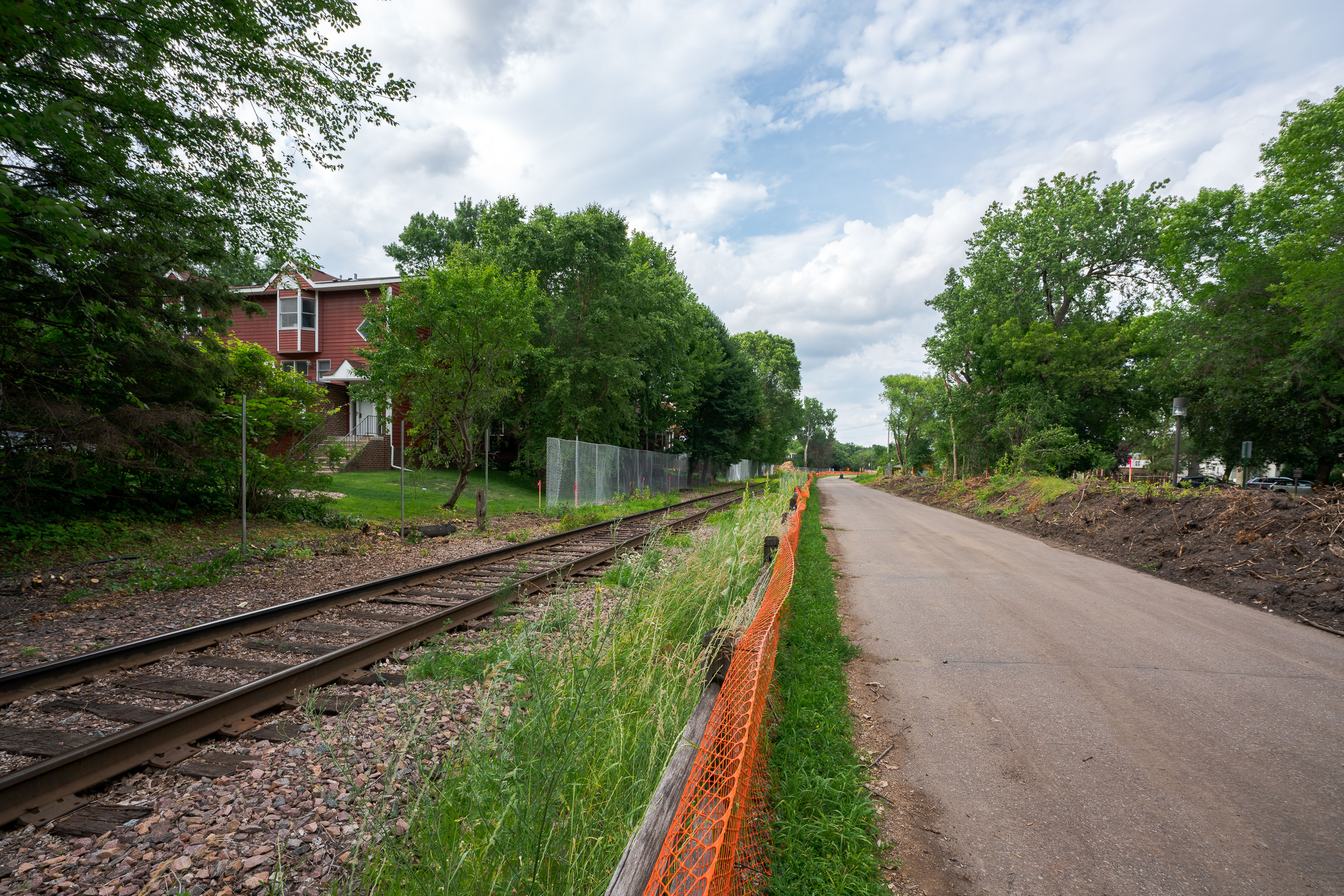
Orange safety fencing installed along Kenilworth Trail during Metro Green Line Extension construction in Minneapolis.
The Kenilworth Trail runs alongside active freight and light-rail tracks through the Kenilworth Corridor, a narrow strip of land connecting the Chain of Lakes to downtown Minneapolis. The corridor has long carried both recreational trail traffic and rail lines, a dual use that predates the current Green Line Extension project. Construction fencing here marks work tied to that extension, which is adding light-rail tracks through the same shared right-of-way used by the trail and freight rail. The project has required temporary trail reroutes and vegetation clearing along sections of the corridor during construction.

Safety Fencing Along the Kenilworth Trail Rail Corridor

Built in Minneapolis

Minneapolis Photographer

Browse by location, move through long-running series, or start with recent work.