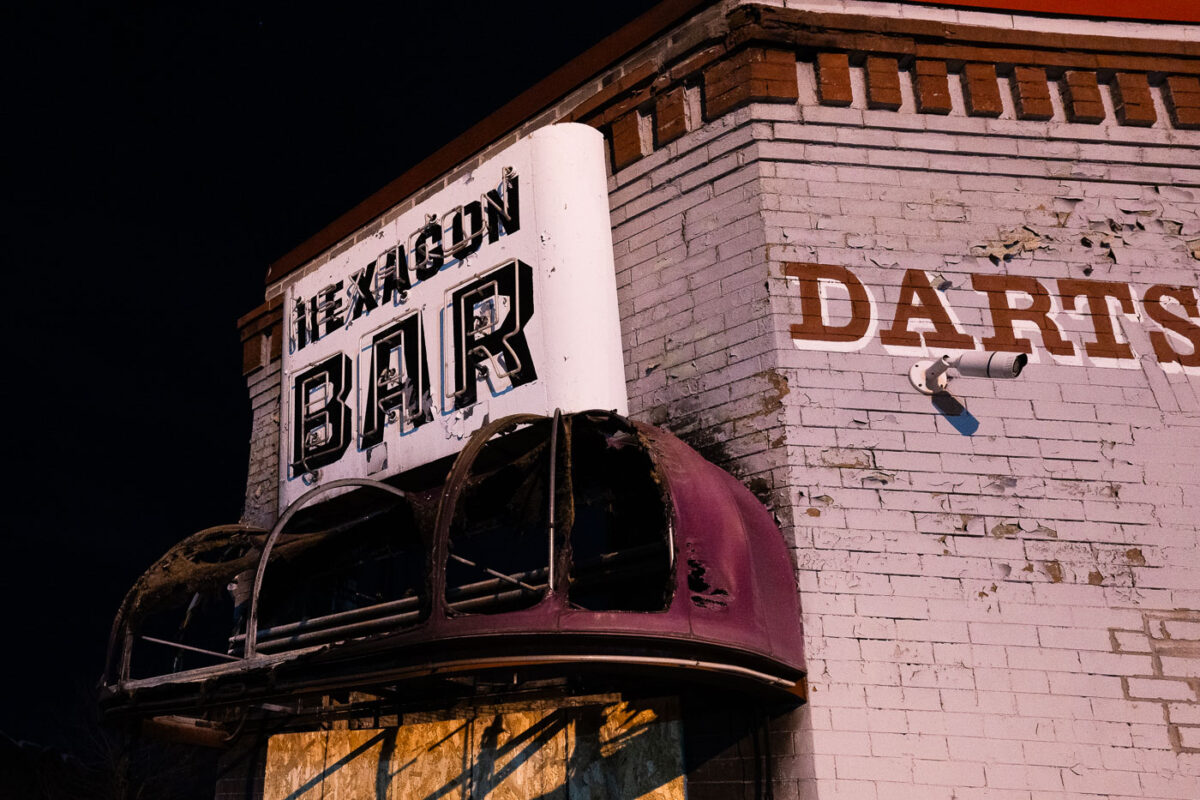
Hexagon Bar, South Minneapolis, Riot Damage
November 2020 — Hexagon Bar in South Minneapolis after it was damaged during the riots following George Floyd murder.
Explore photos tagged Minnesota.
November 2020 — Hexagon Bar in South Minneapolis after it was damaged during the riots following George Floyd murder.
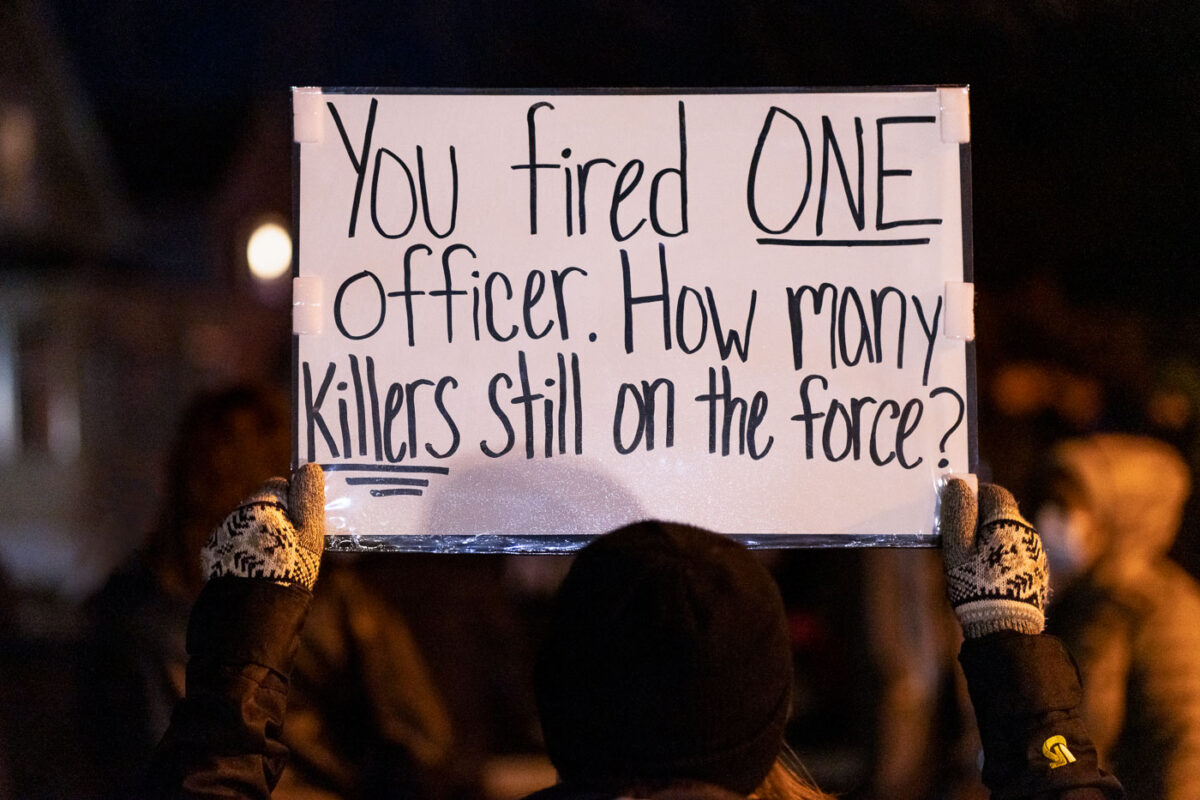
December 2020 — Protesters march down Rice St. a day after police released the body cam footage of a St. Paul police officer shooting a nude unarmed black man who was being attacked by a K9. The officer was fired by the force.
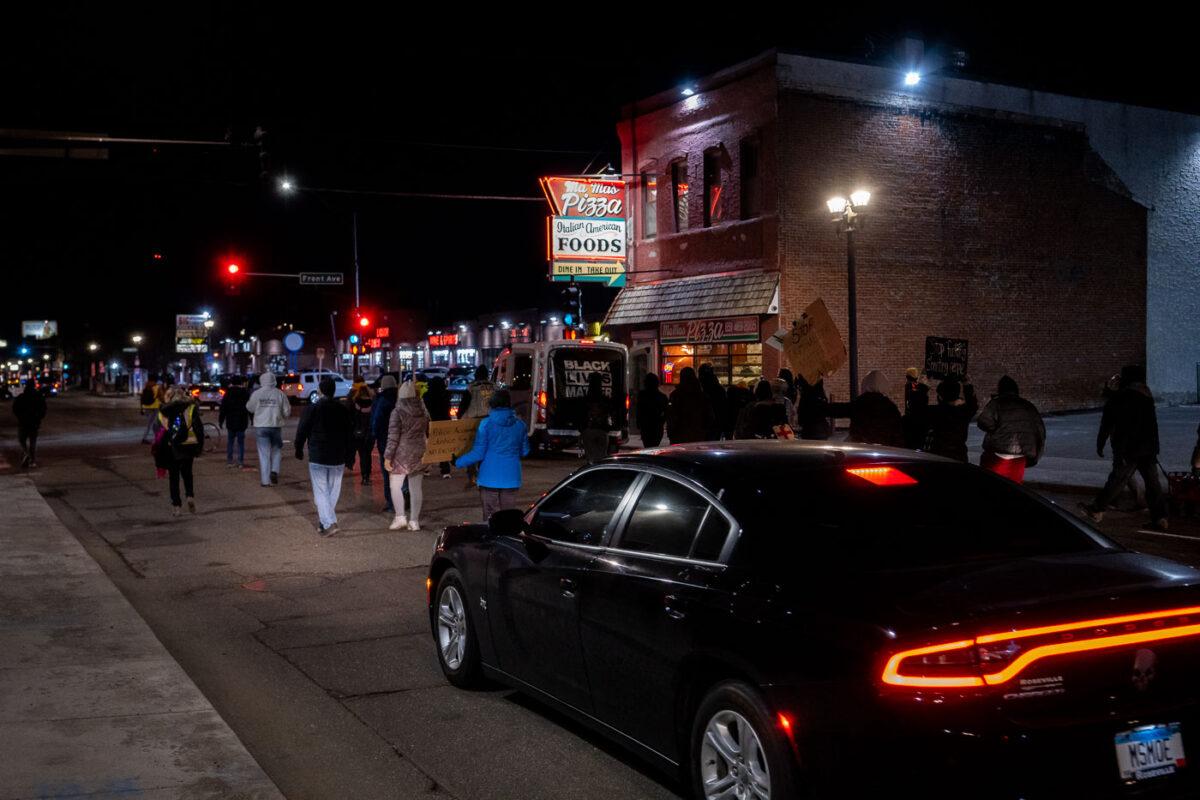
December 2020 — Protesters march in St. Paul after Joseph Washington is shot by St. Paul police.
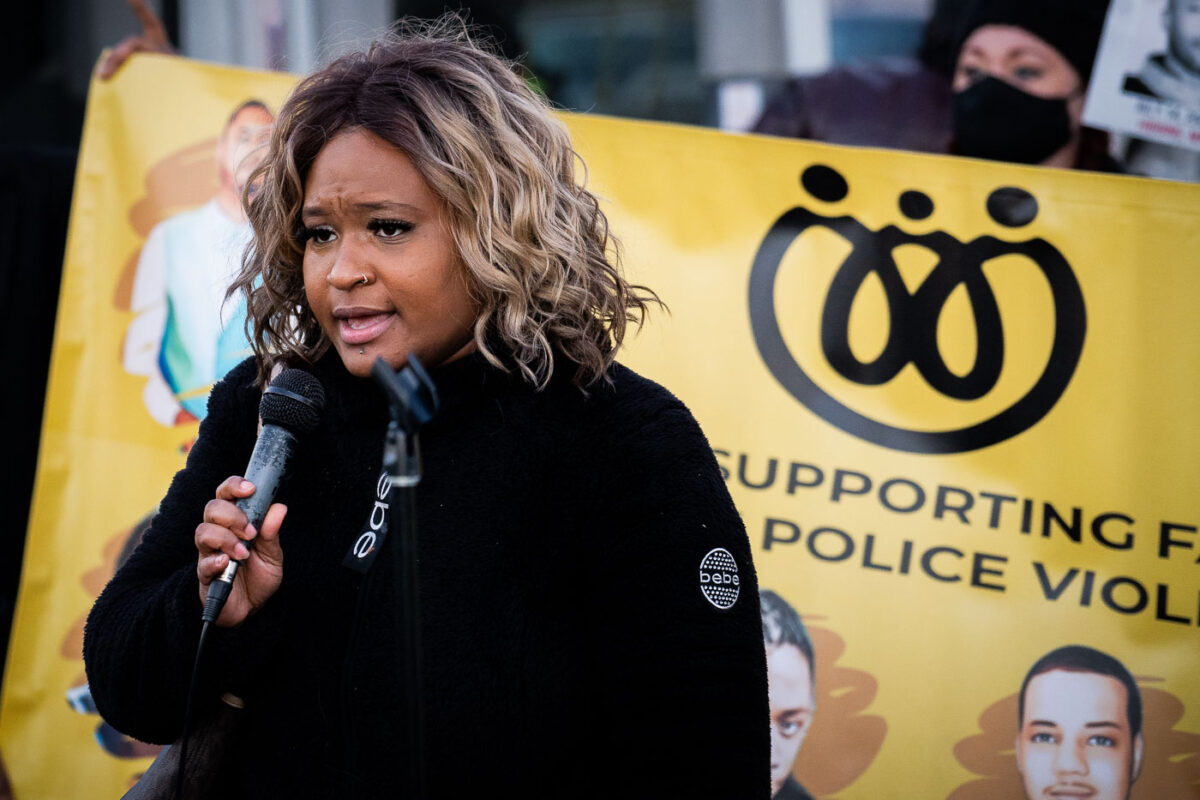
December 2020 — Local activist Toshira Garraway Allen talks about her sons father, Justin Teigen. Teigen was killed by the St. Paul police in 2009.
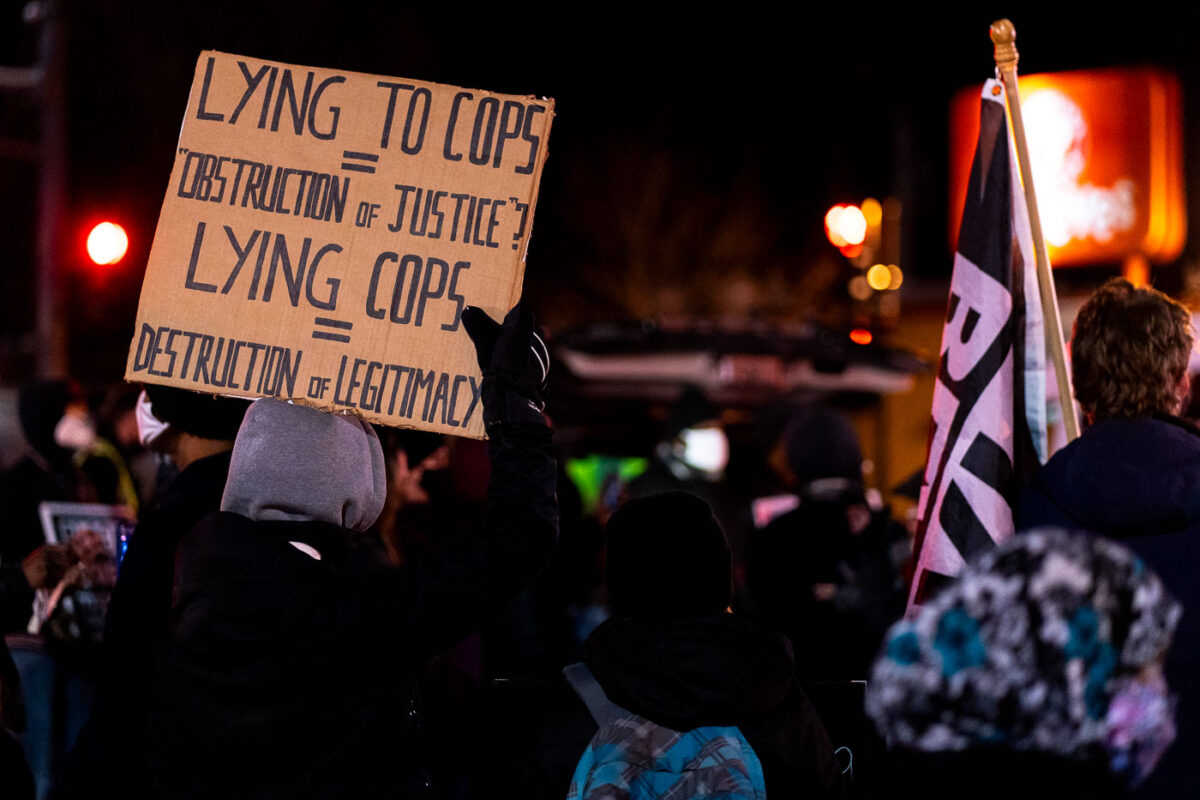
December 2020 — Protesters march in St. Paul after Joseph Washington is shot by St. Paul police.
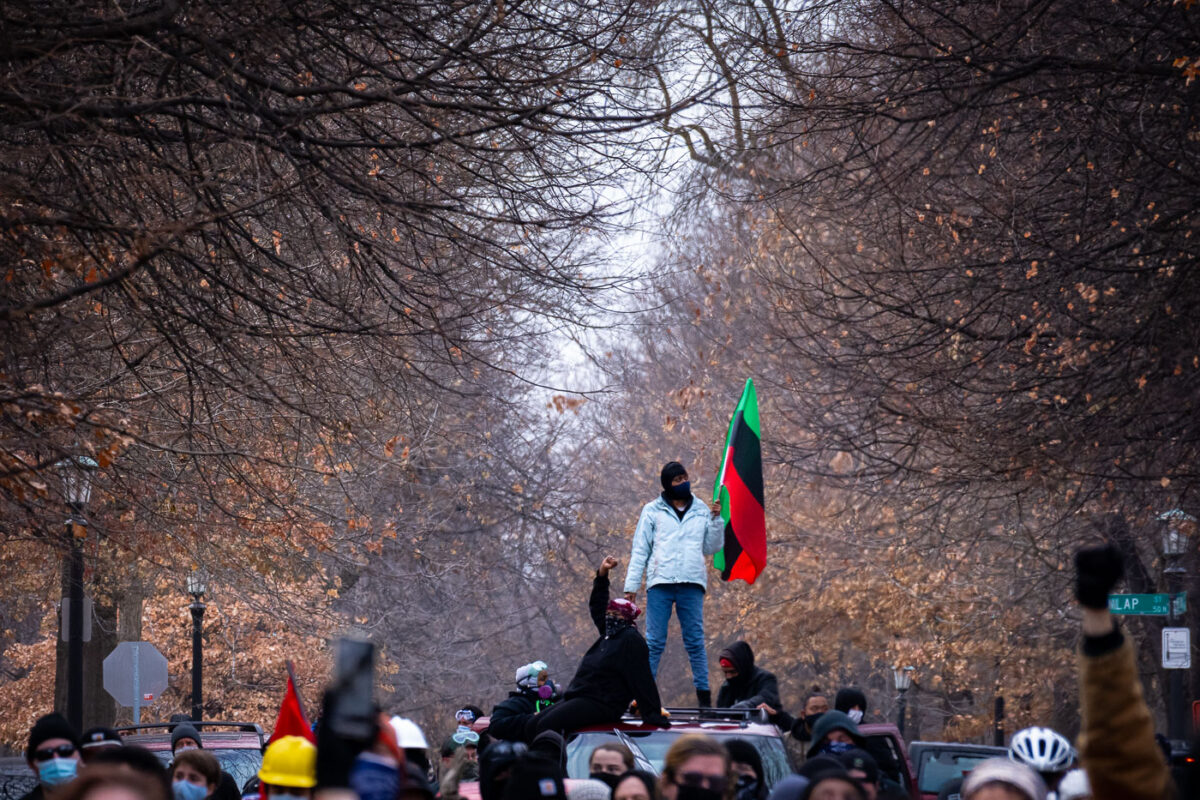
December 2020 — Protesters march to the Governor's Mansion to counter a Stop The Steal protest that the Proud Boys attended the previous few weeks.
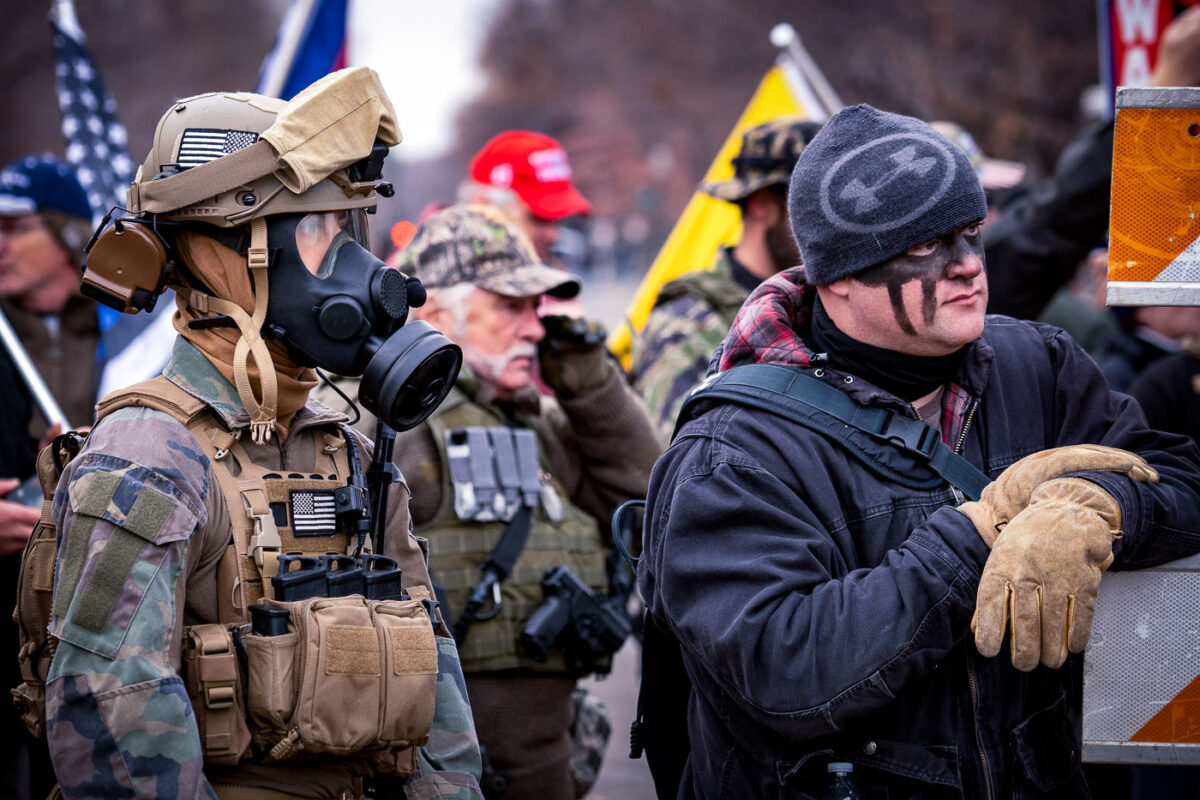
December 2020 — Stop The Steal protesters in St. Paul as counter protesters arrive.

December 2020 — "Stop The Steal" protesters and the Minnesota State Patrol outside the Minnesota Governor's Residence in St. Paul on December 5, 2020.
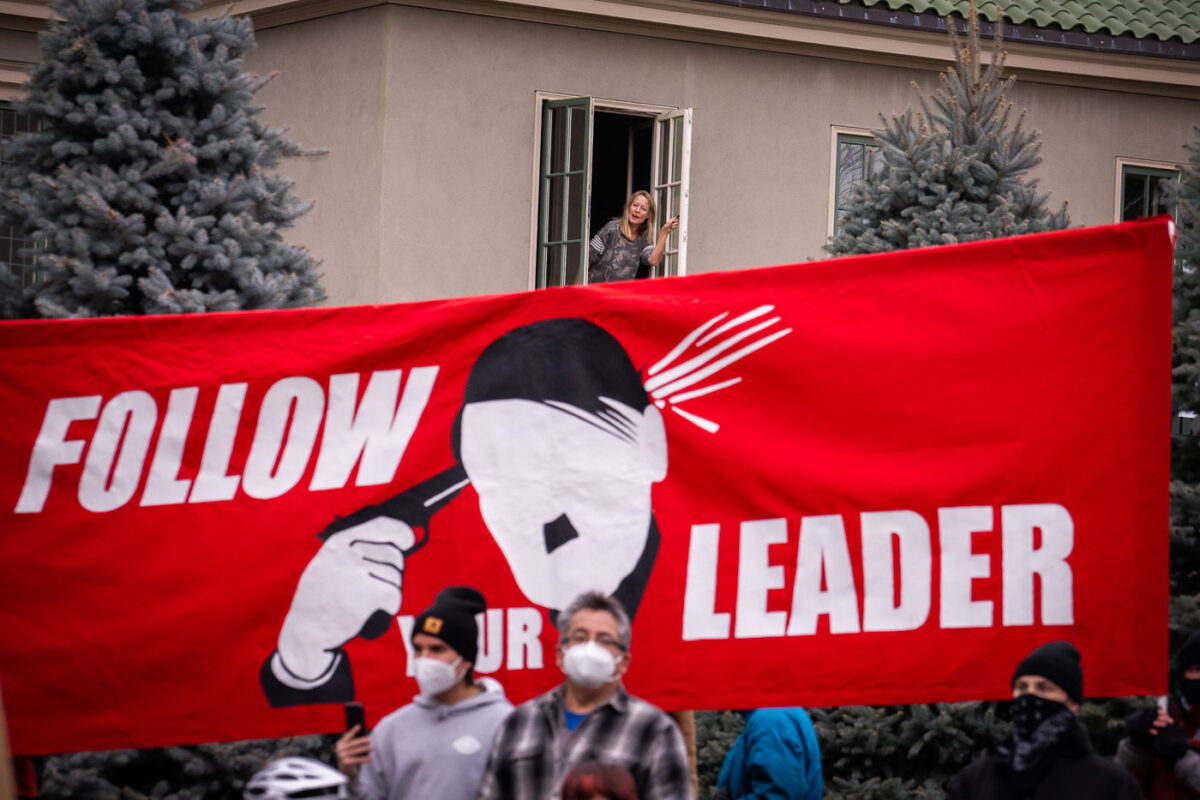
December 2020 — A woman looks out her window at dueling protests occurring across the street at the Governor's Residence. For weeks Stop The Steal protesters have been gathering outside the Governor’s mansion.
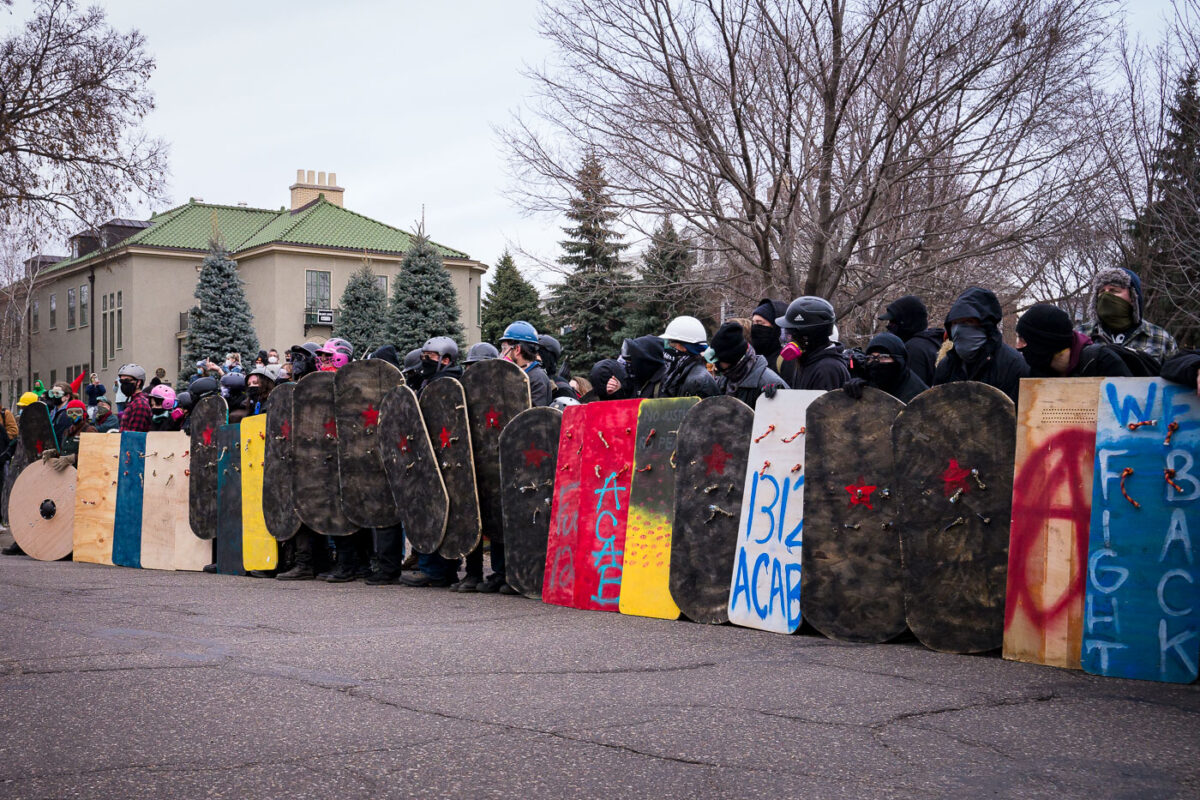
December 2020 — Counter protesters at a "Stop The Steal" rally outside the Governor's Residence. For weeks, Stop The Steal protesters have been gathering.
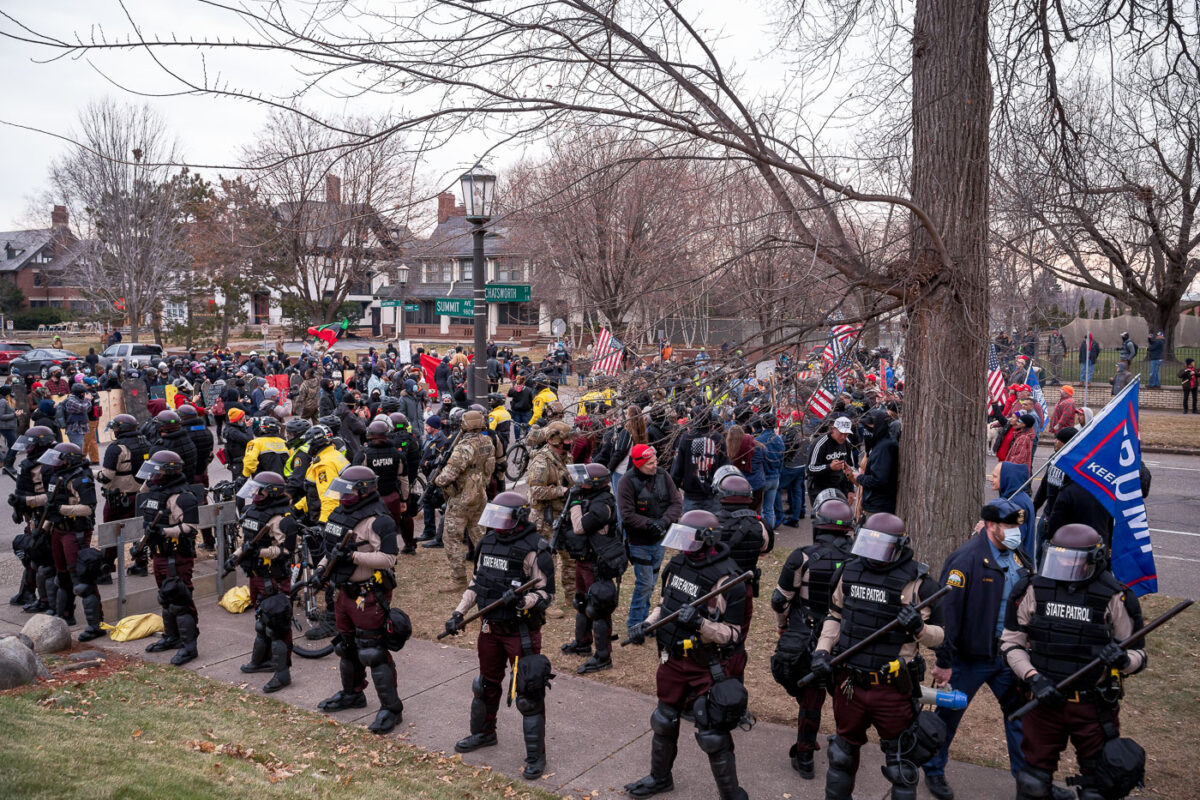
December 2020 — Back The Blue/Stop The Steal rally with counter-protesters near the Governor's Mansion in St. Paul. The counter-protest was after weeks of the Proud Boys joining the Stop The Steal protesters.
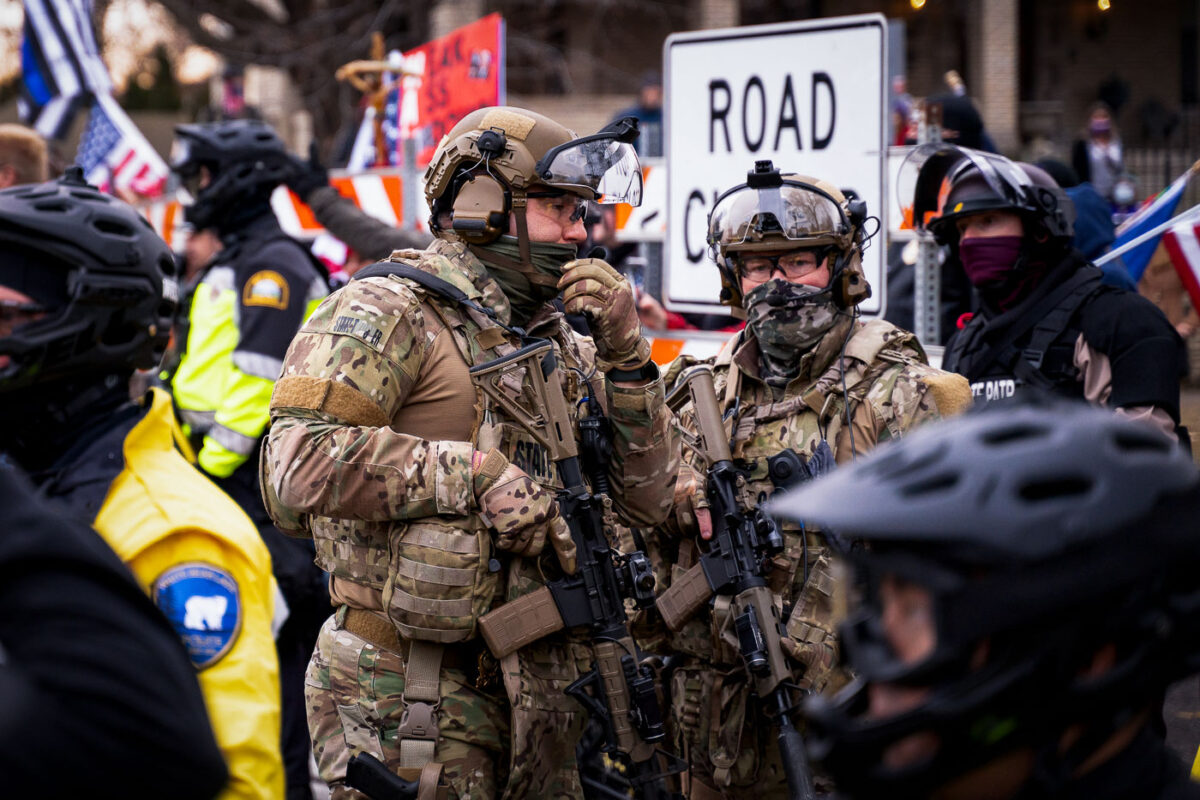
December 2020 — State Patrol at a Stop The Steal rally in St. Paul after counter-protesters arrive. The Stop The Steal protesters had been gathering for weeks outside the Minnesota Governor’s mansion.
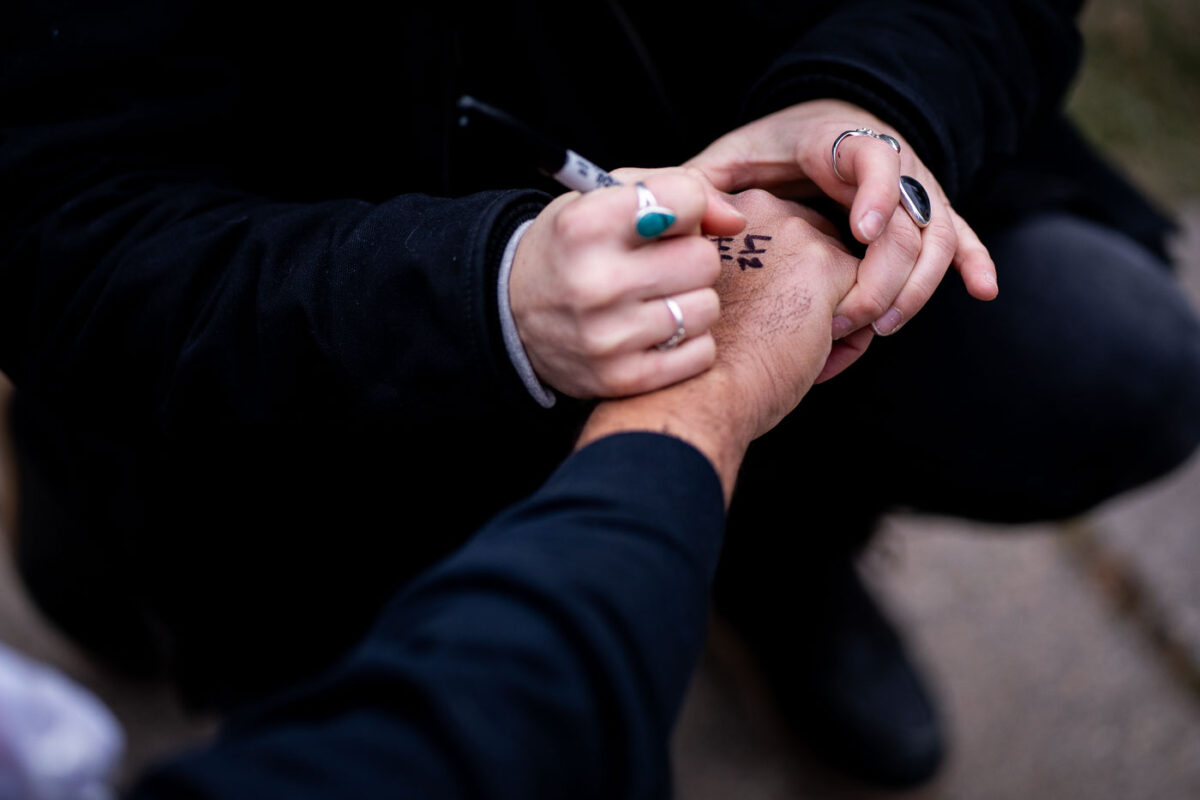
December 2020 — A Stop The Steal counter protester gets the National Lawyer's Guild Number written on their hand in the event of arrest.
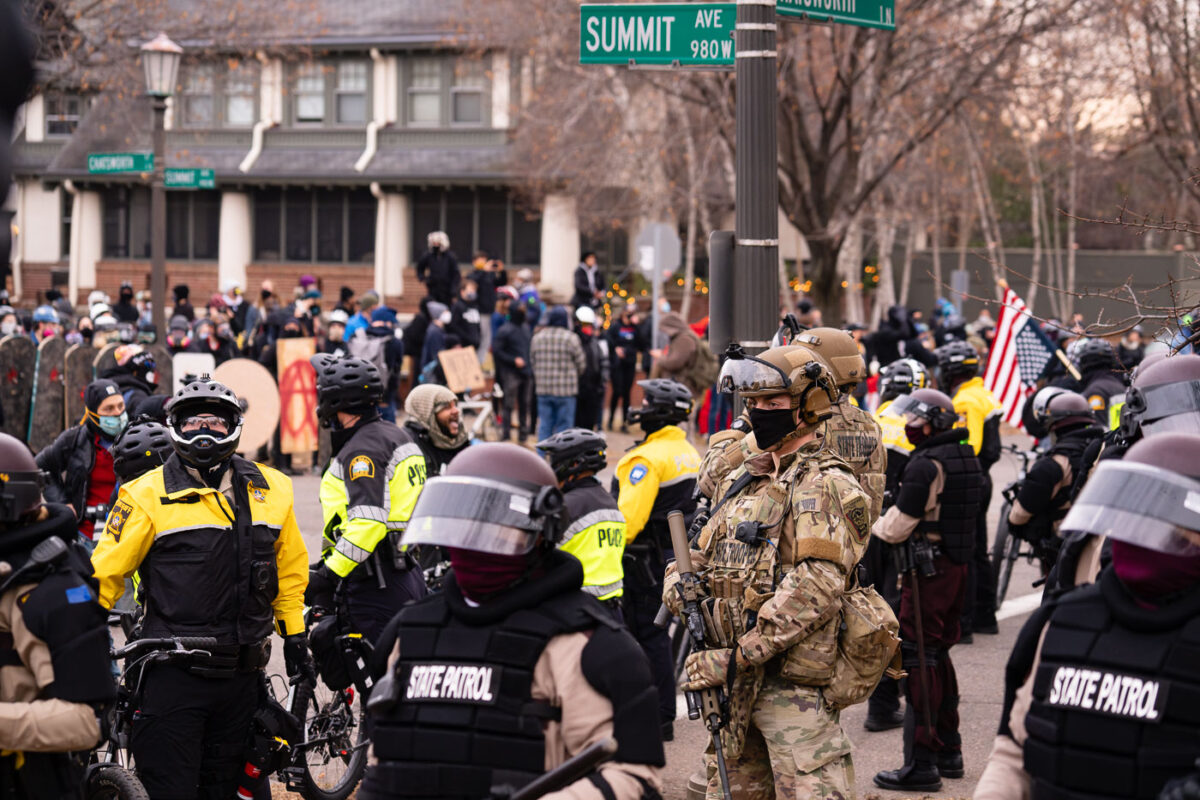
December 2020 — Minnesota State Patrol outside the Minnesota Governor's Residence during a Stop The Steal protest that brought a counter protest. December 5, 2020.
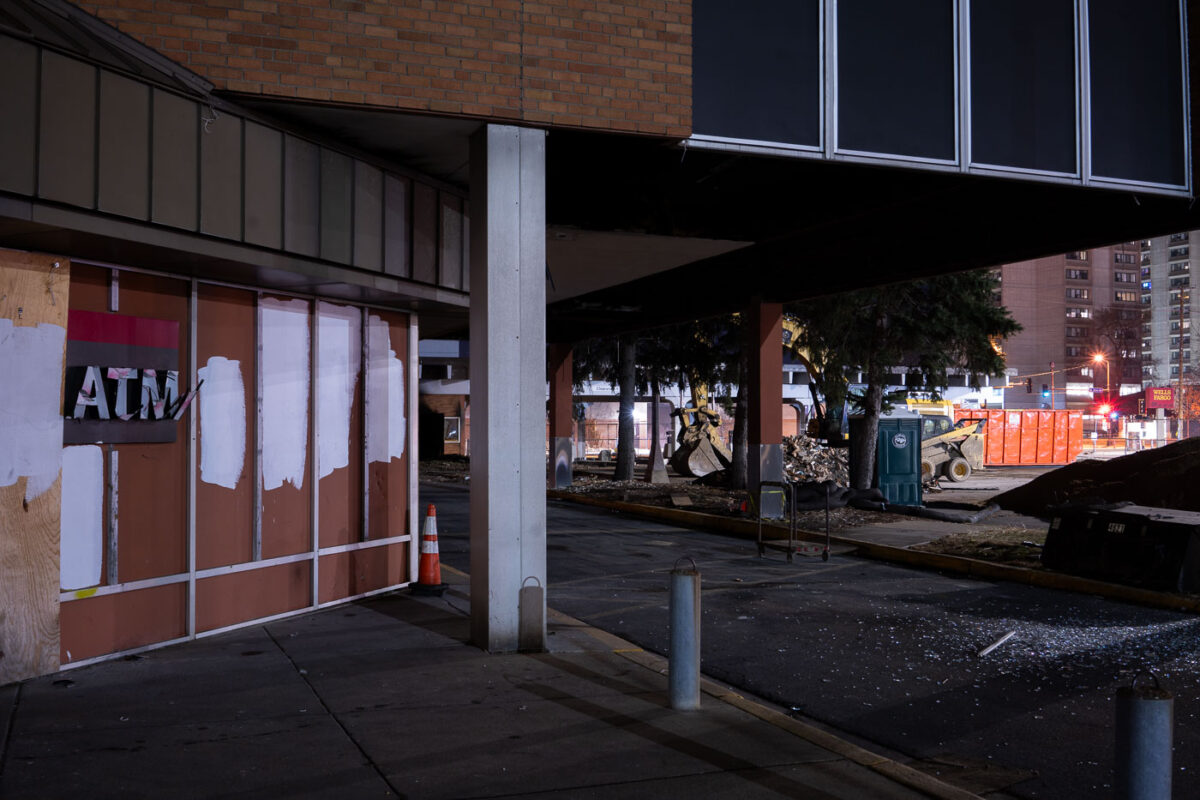
December 2020 — The remains of the Wells Fargo on Nicollet Ave. The bank was located across the street from the Minneapolis police fifth precinct police station. The building was burned during the uprising that followed the May 25th, 2020 death of George Floyd.
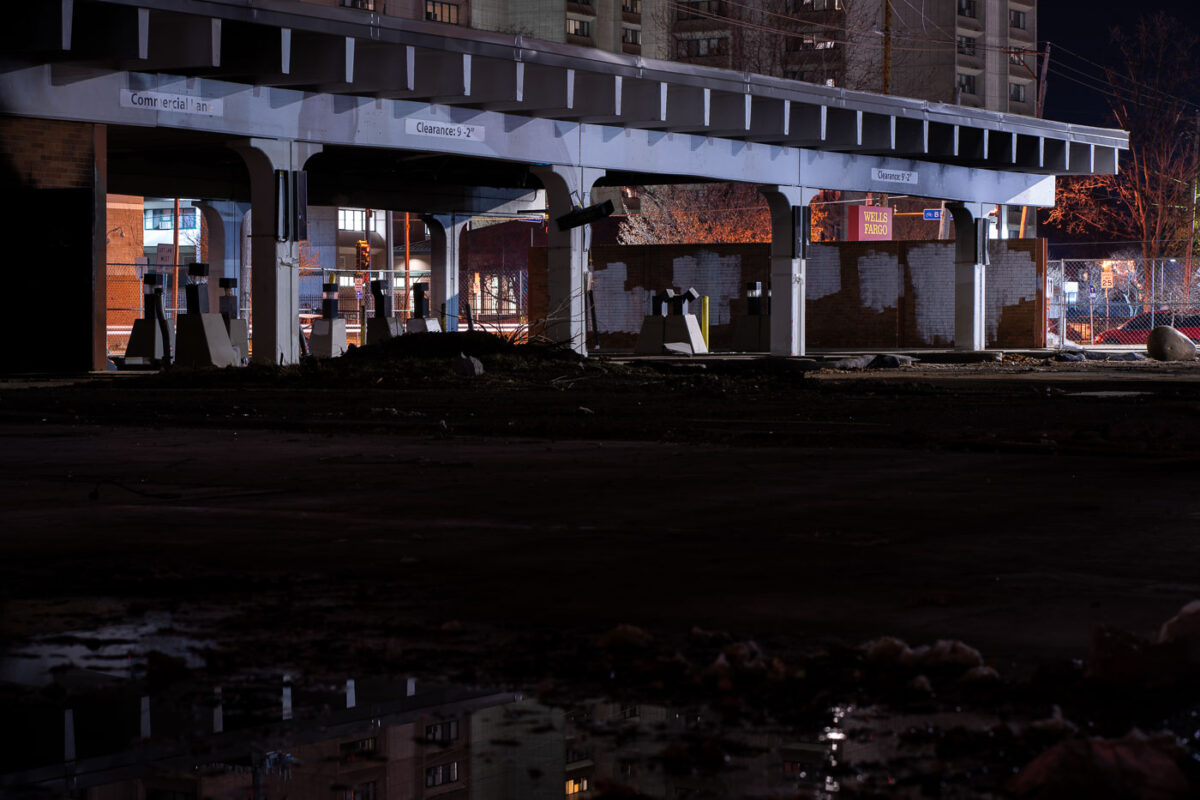
December 2020 — The remains of the Wells Fargo Bank on Nicollet Ave. The bank was located across the street from the Minneapolis police fifth precinct police station. It was burned following the May 25th, 2020 death of George Floyd.
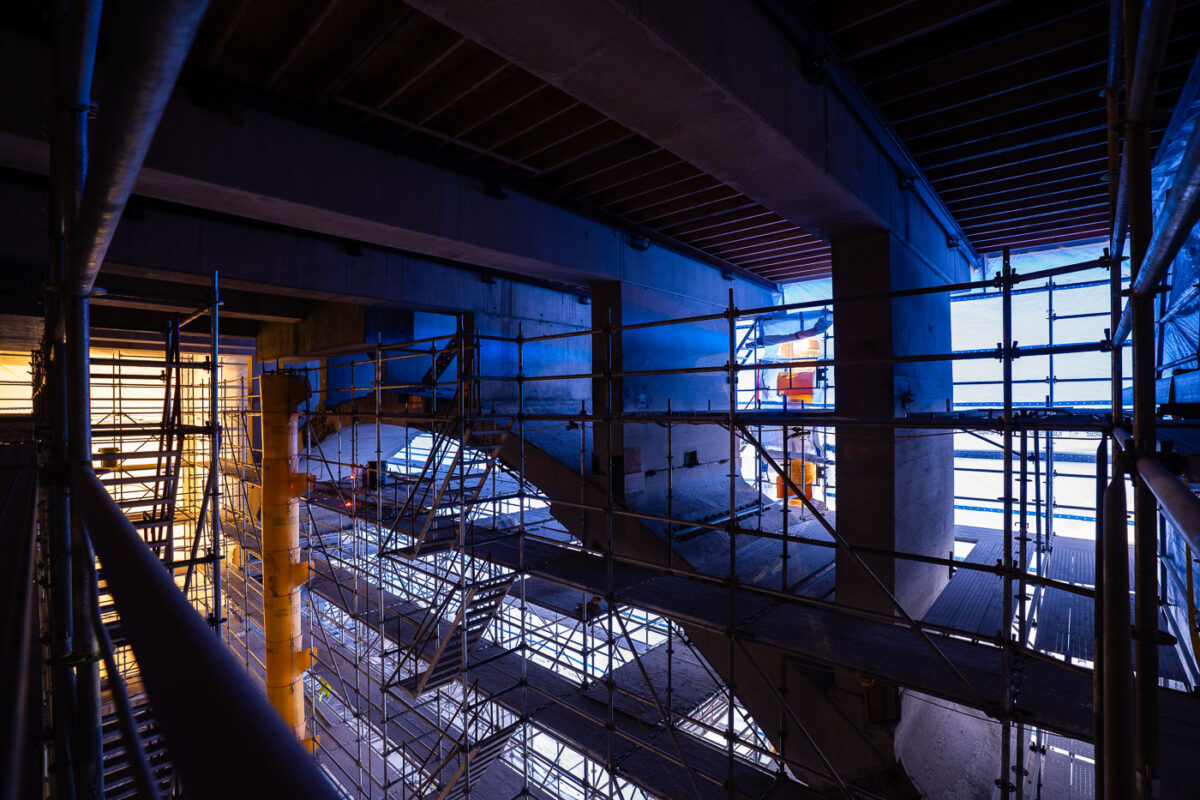
December 2020 — Scaffolding under the 10th Avenue bridge. The bridge over the Mississippi River underwent a major rehab.
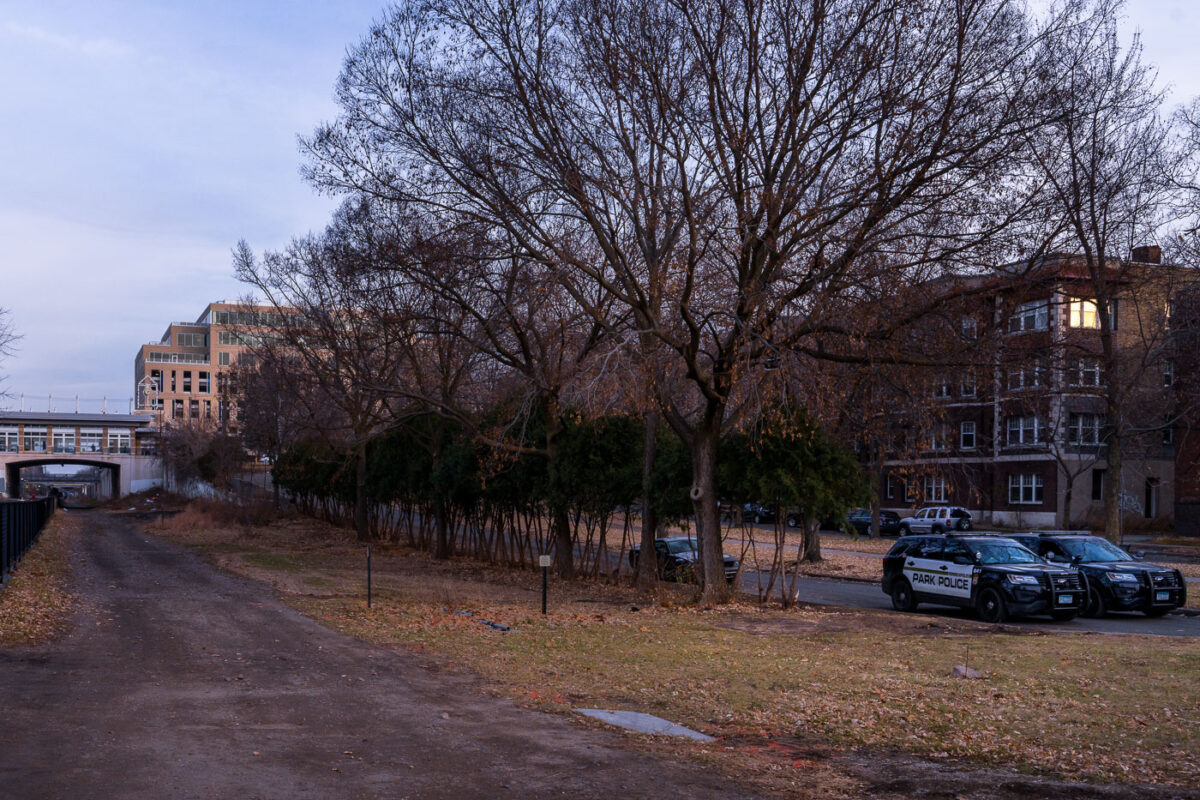
December 2020 — Minneapolis Park Police park near the location of an encampment that was cleared earlier in the day.
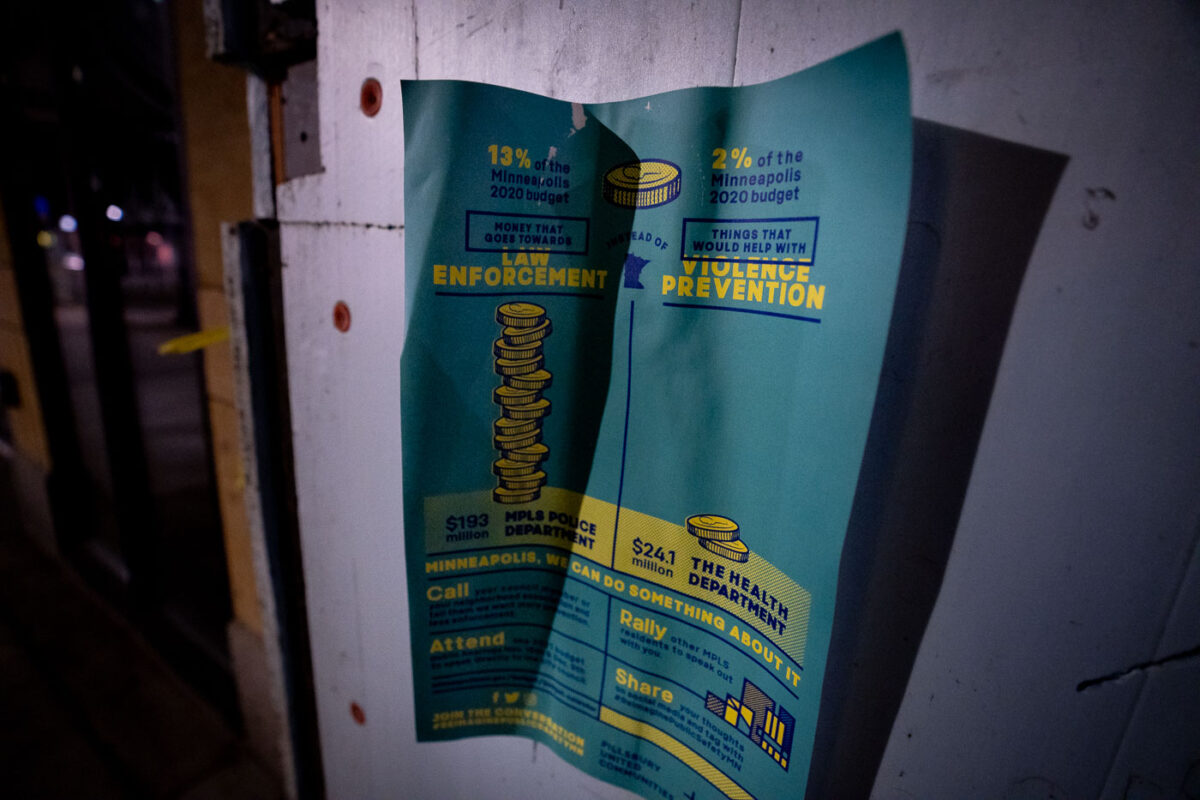
December 2020 — A flyer found taped to a building in Uptown Minneapolis.
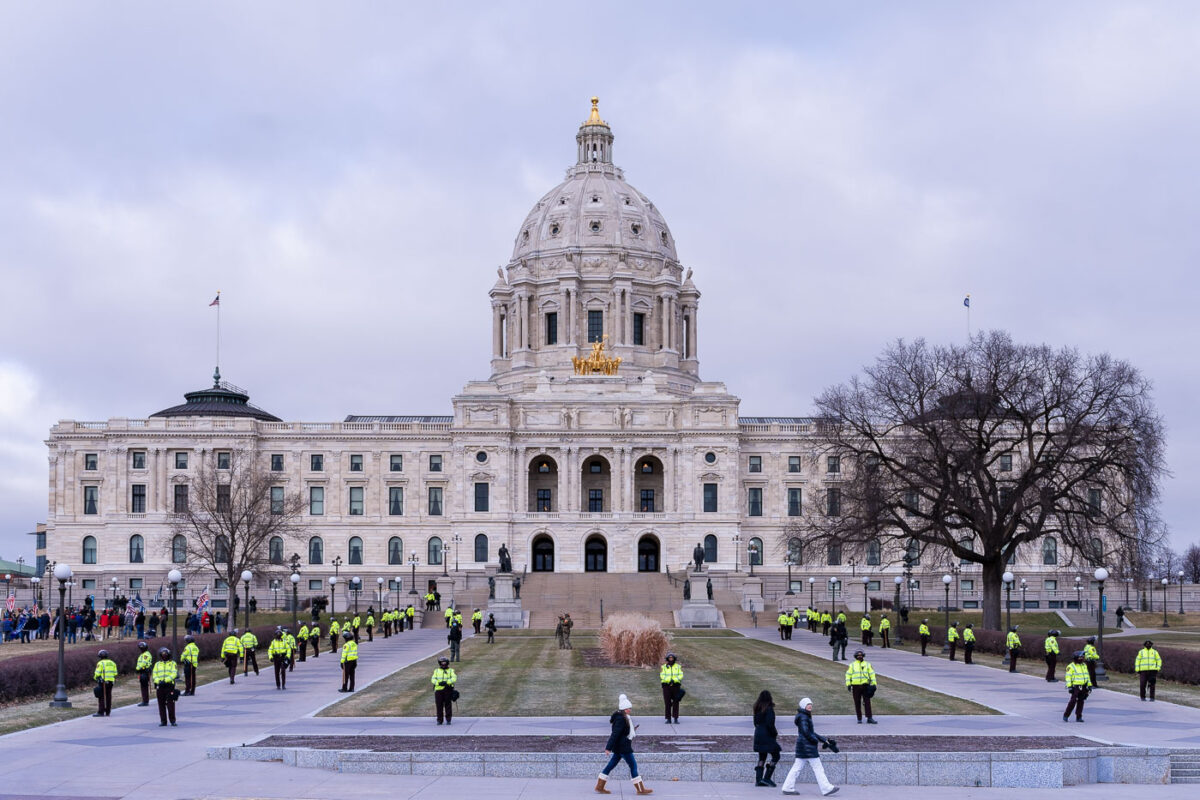
December 2020 — Minnesota State Patrol deployed around the Minnesota State Capitol after reports of protests following President Trump's re-election loss.
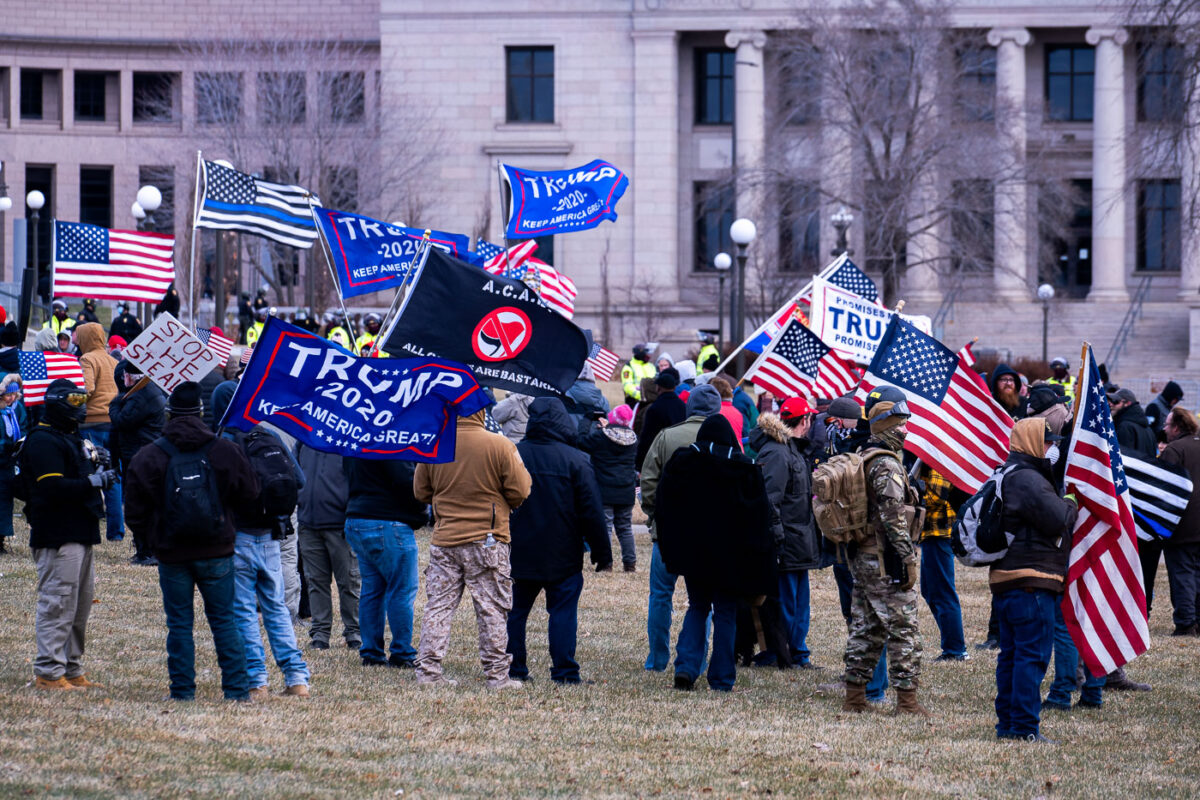
December 2020 — Protesters wave “Trump 2020” flags at a Stop The Steal rally at the Minnesota State Capitol on December 12, 2020.
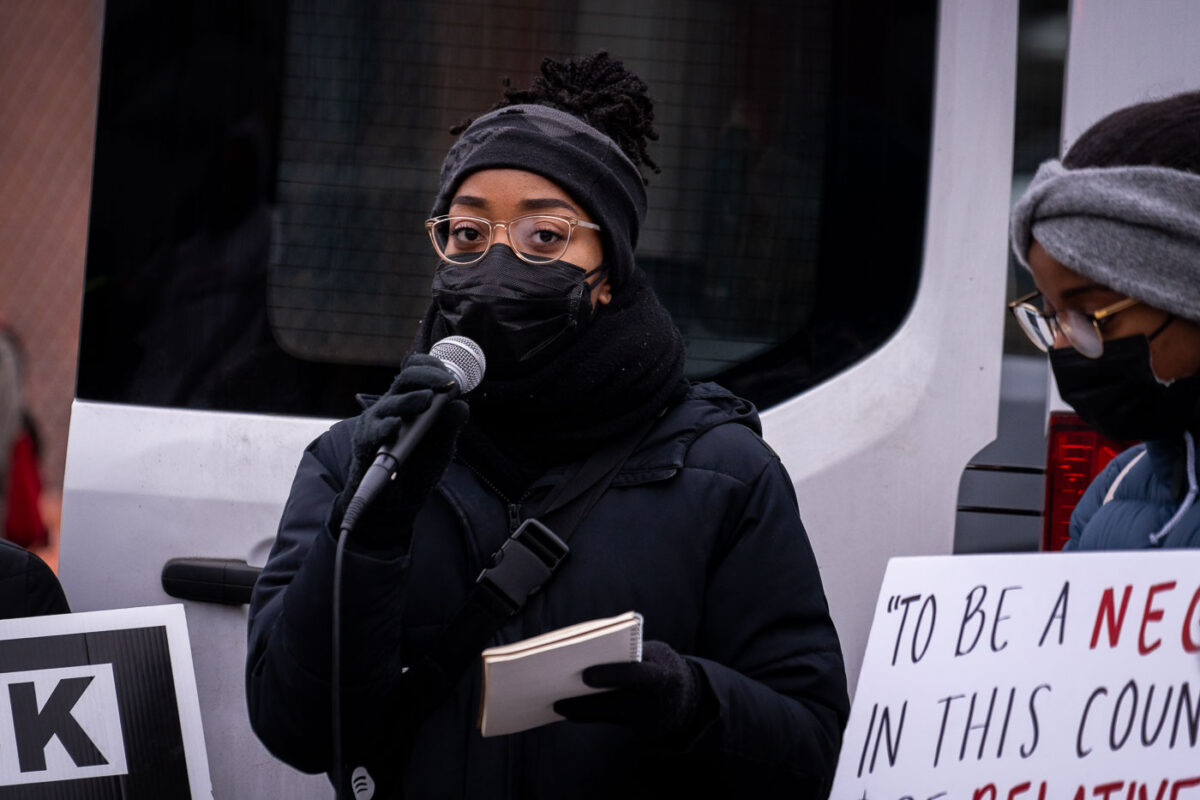
December 2020 — Protesters marched the half mile from Wilder Playground to the St. Paul Police at Minnehaha & Payne where they heard from speakers on racial inequality and the need for defunding/abolishing the police on December 12, 2020.
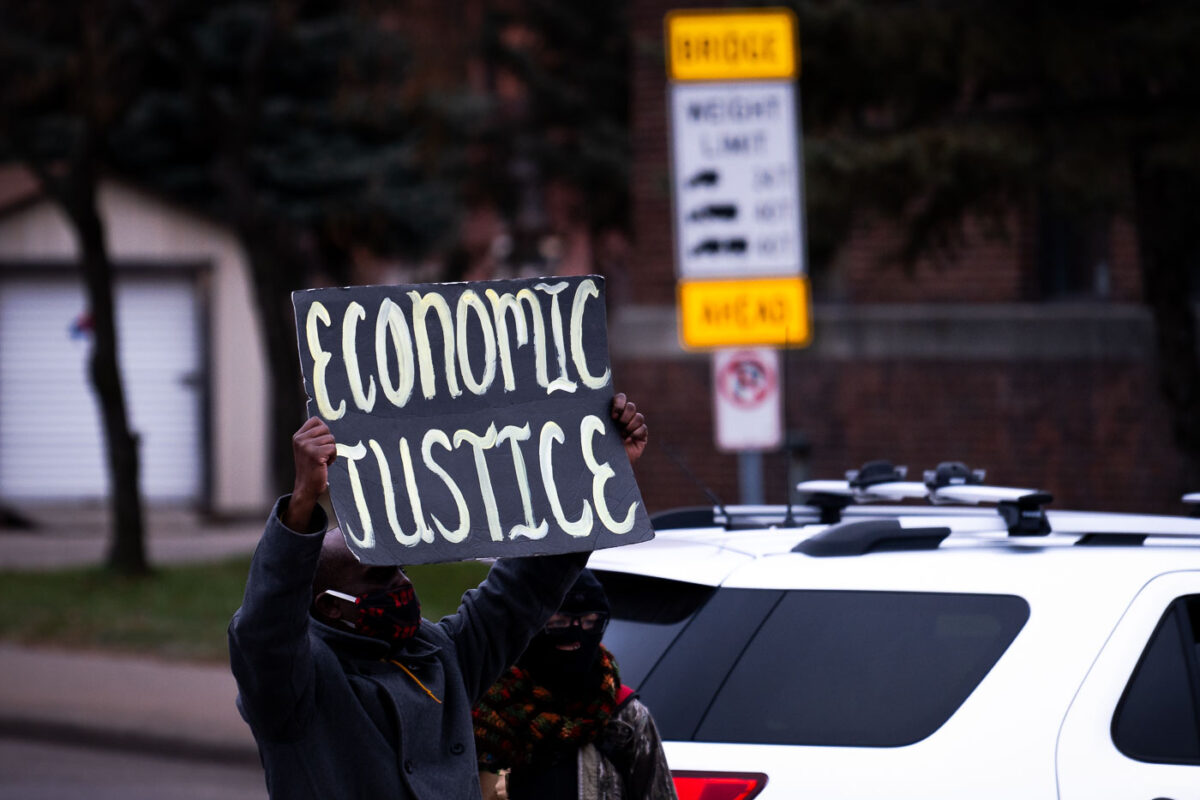
December 2020 — Protester holds up a sign that reads "Economic Justice" during a defund police rally.
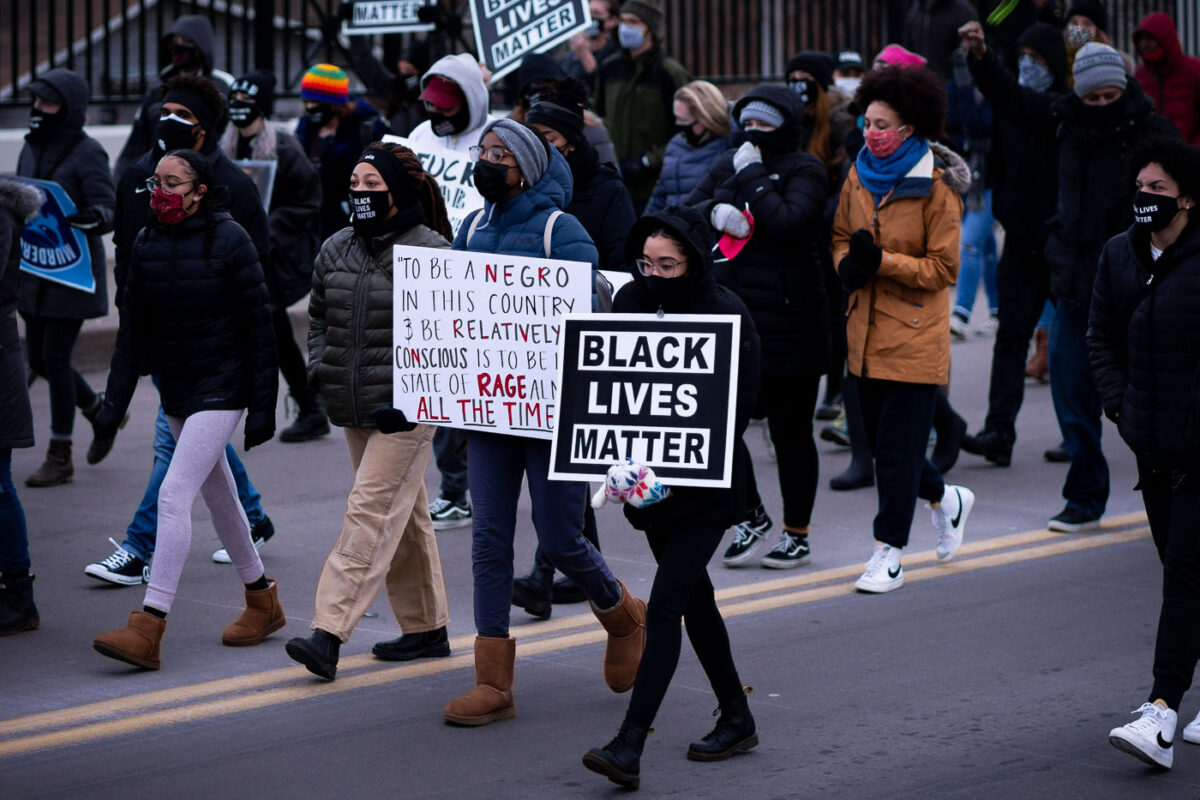
December 2020 — Protesters marched the half mile from Wilder Playground to the St. Paul Police at Minnehaha & Payne where they heard from speakers on racial inequality and the need for defunding/abolishing the police.
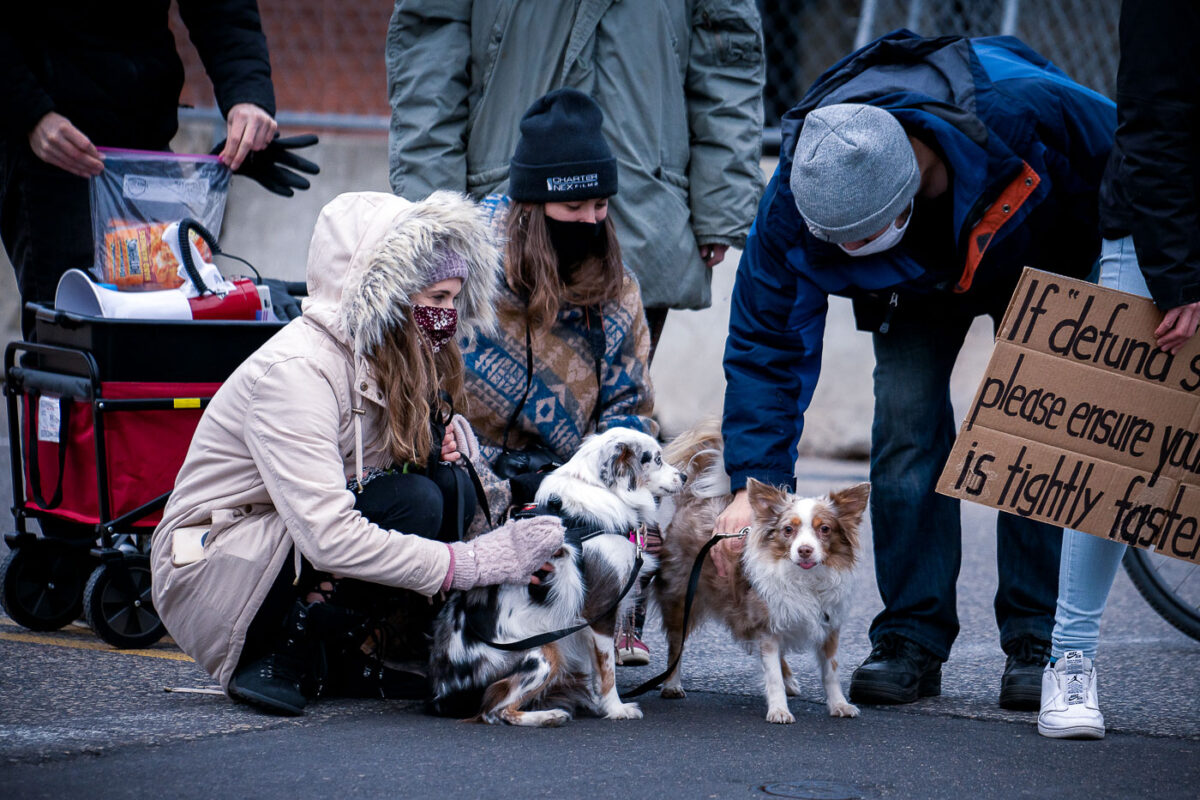
December 2020 — Protesters marched the half mile from Wilder Playground to the St. Paul Police at Minnehaha & Payne where they heard from speakers on racial inequality and the need for defunding/abolishing the police.
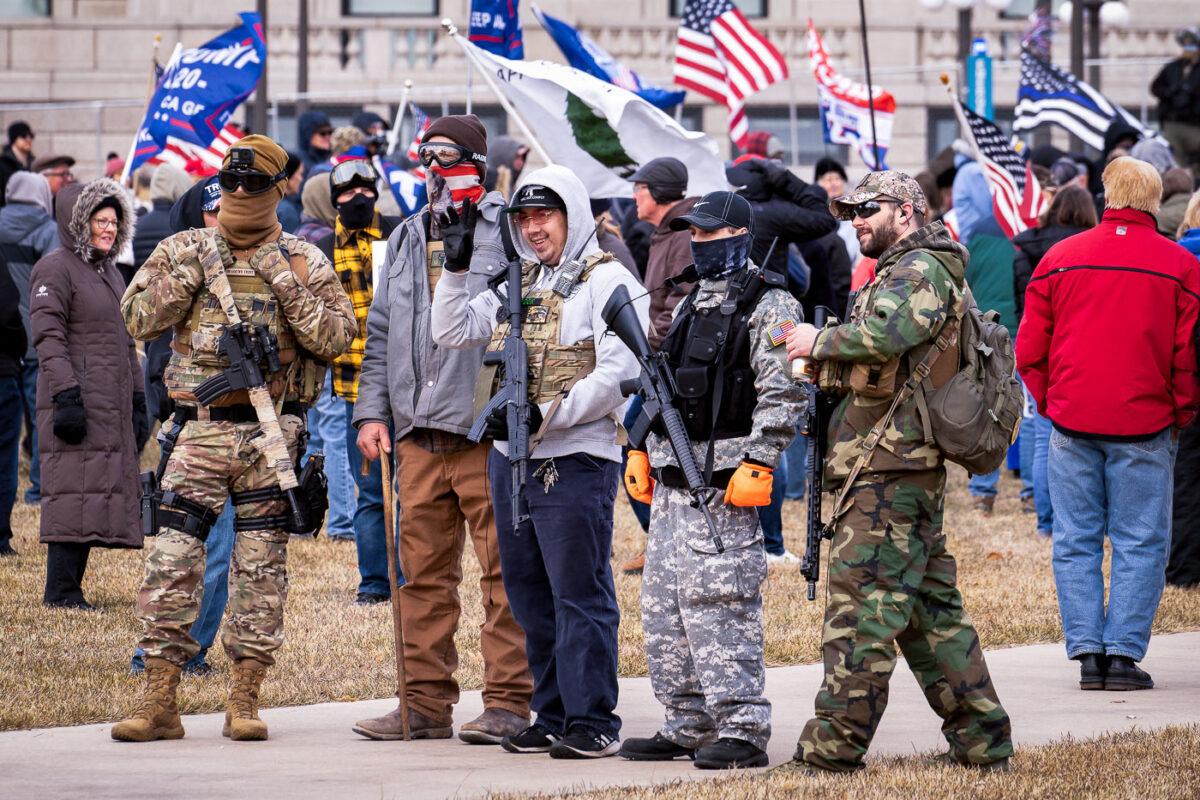
December 2020 — A "Stop The Steal" rally at the Minnesota State Capitol following President Trump's re-election loss.
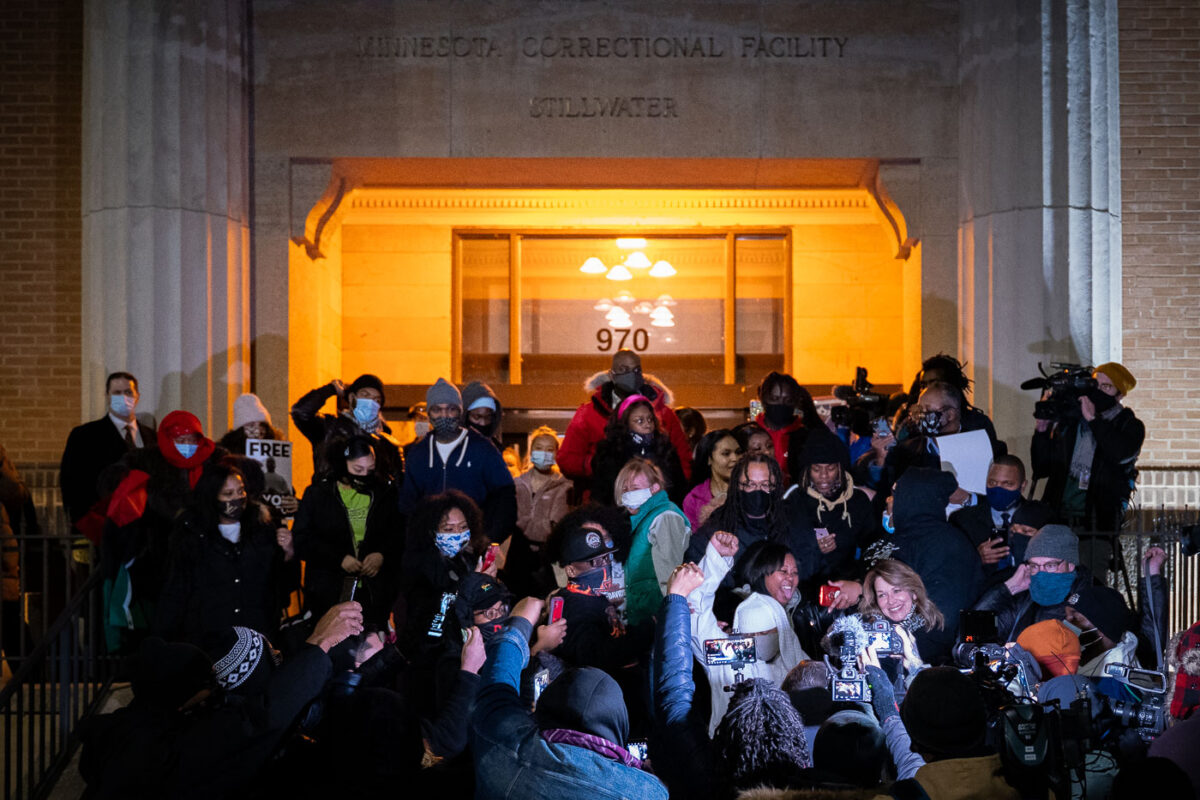
December 2020 — Myon Burrell is released from the Stillwater Correctional Facility after serving 18 years for a crime he says he never committed. He had been serving time for the 2002 death of 11-year old Tyesha Edwards before the state commuted his sentence.
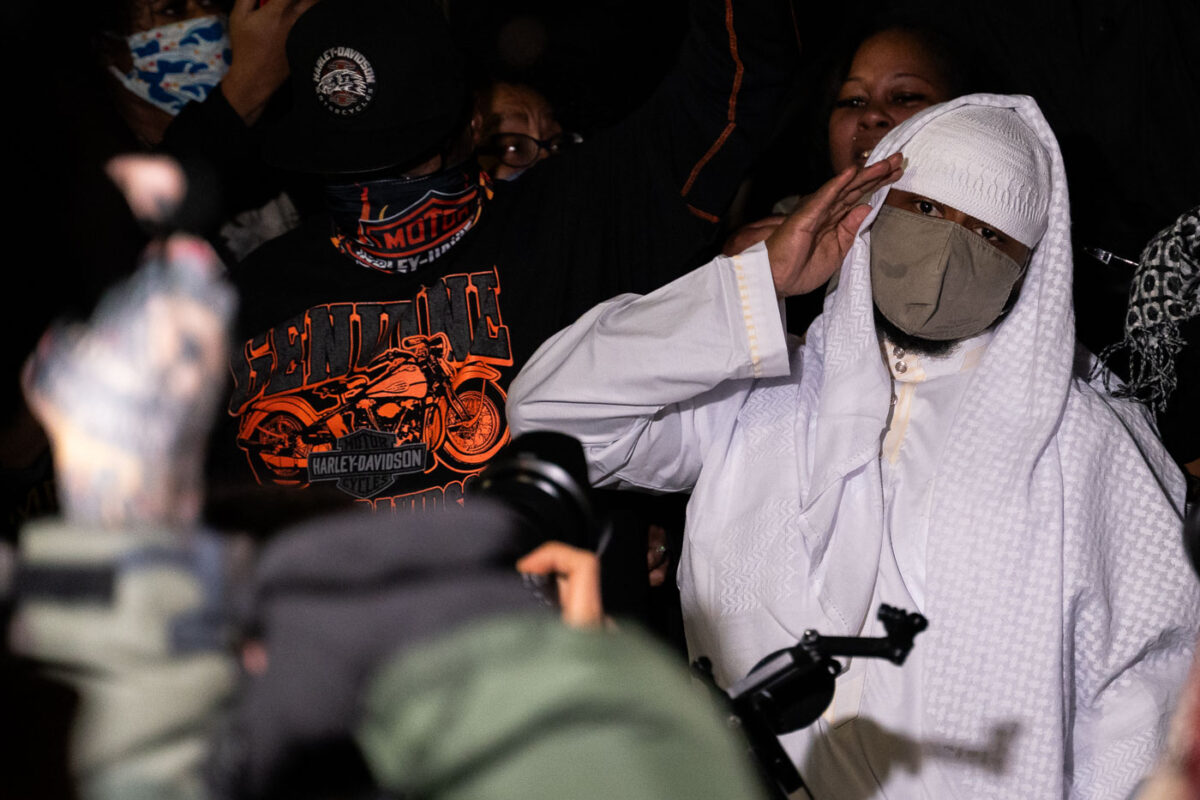
December 2020 — Myon Burrell is released from the Stillwater Correctional Facility after serving 18 years for a crime he says he never committed. He had been serving time for the 2002 death of 11-year old Tyesha Edwards before the state commuted his sentence.
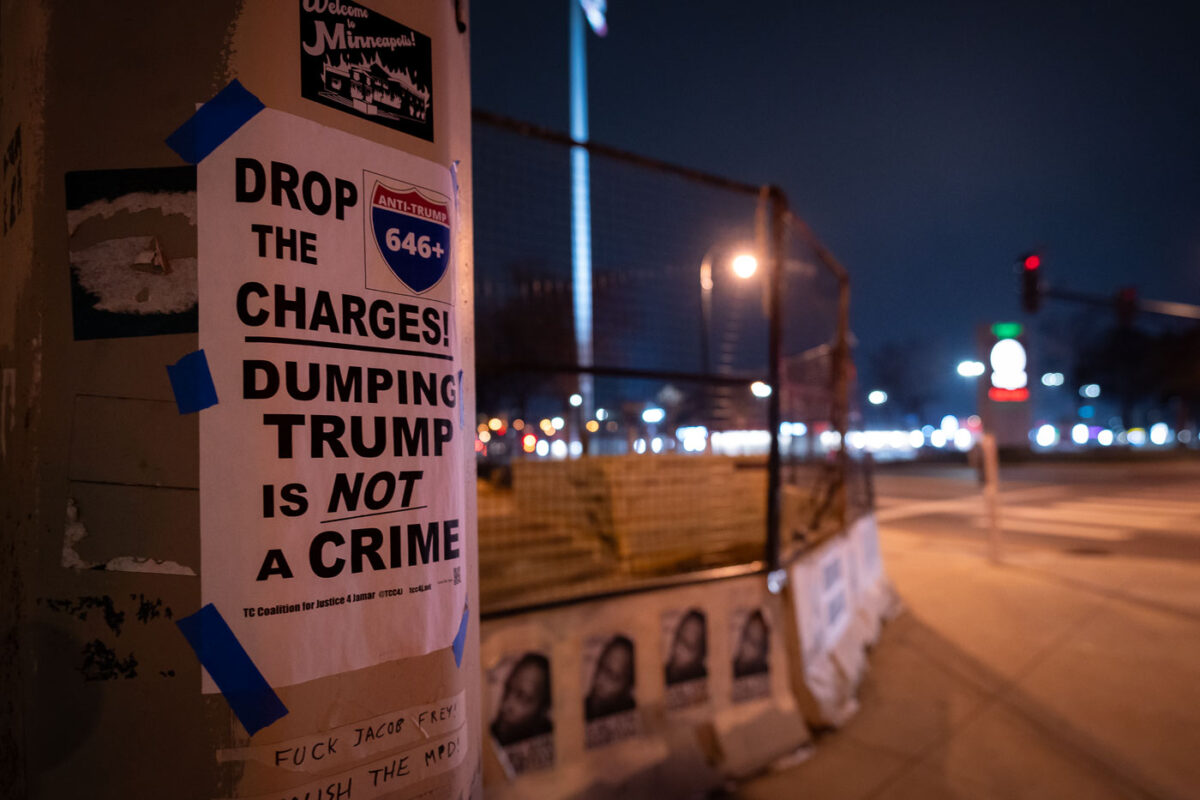
December 2020 — Flyers taped to a pole outside of the Minneapolis Third Precinct police station, which burned after the murder of George Floyd in May 2020. Drop the charges refers to the 646 that were criminally charged during the largest mass arrest in Minnesota history. Protesters were arrested after marching onto I-94 in a post election march.
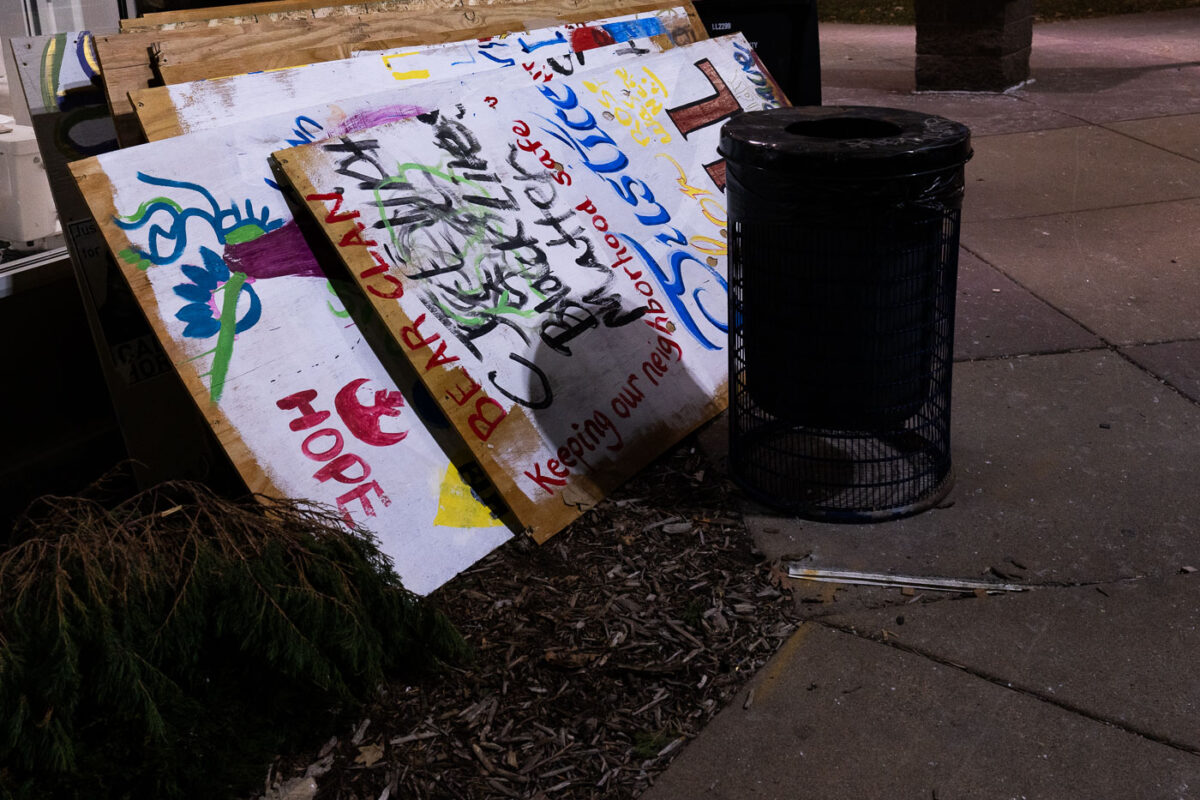
December 2020 — Boards continue to come off storefronts on Lake Street in South Minneapolis. The boards which appeared after late May unrest are being saved and preserved by a commission that is curating all the art that has decorated this city this summer.
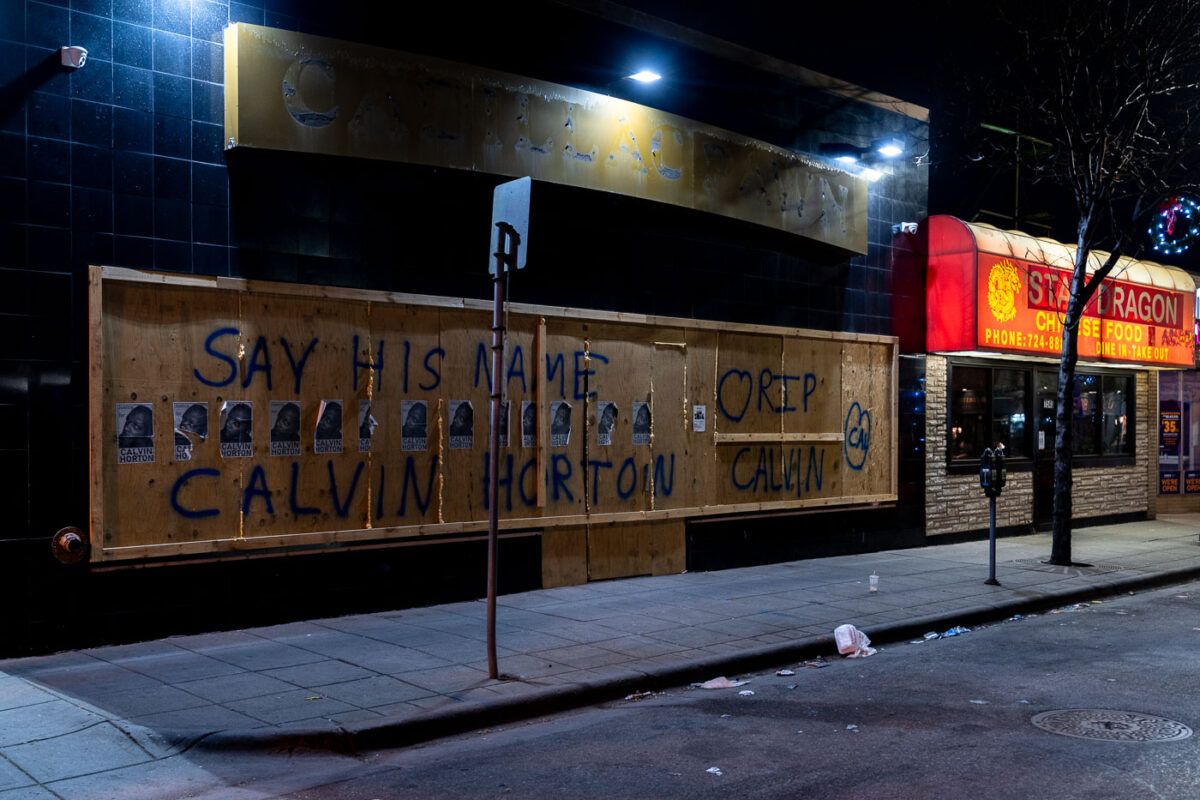
December 2020 — Cadillac Pawn, where it’s been claimed that Calvin Horton was killed by the owner during unrest. Hennepin County declined to prosecute citing lack of evidence. The Cadillac Pawn sign was recently removed after the building was sold to another pawn shop.
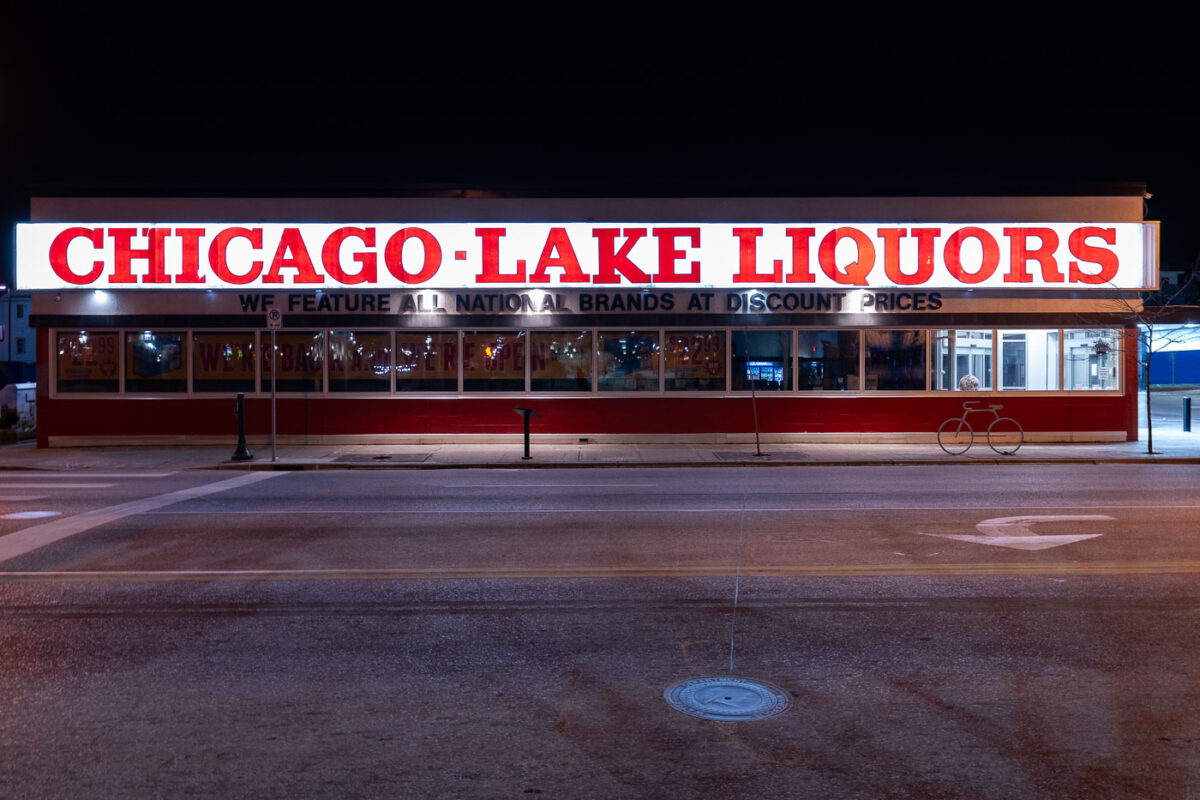
December 2020 — Chicago Lake Liquors on Lake Street after boards were removed.
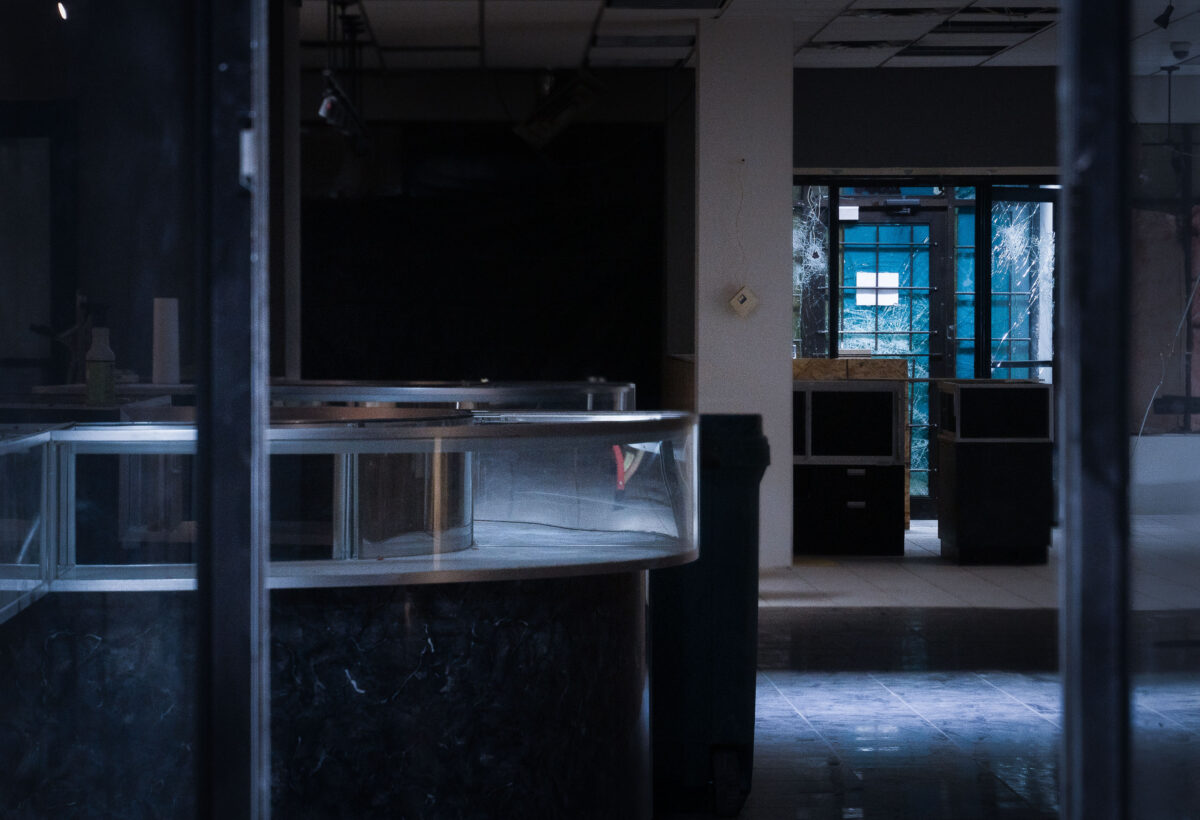
December 2020 — Inside Cadillac Pawn on W. Lake Street.
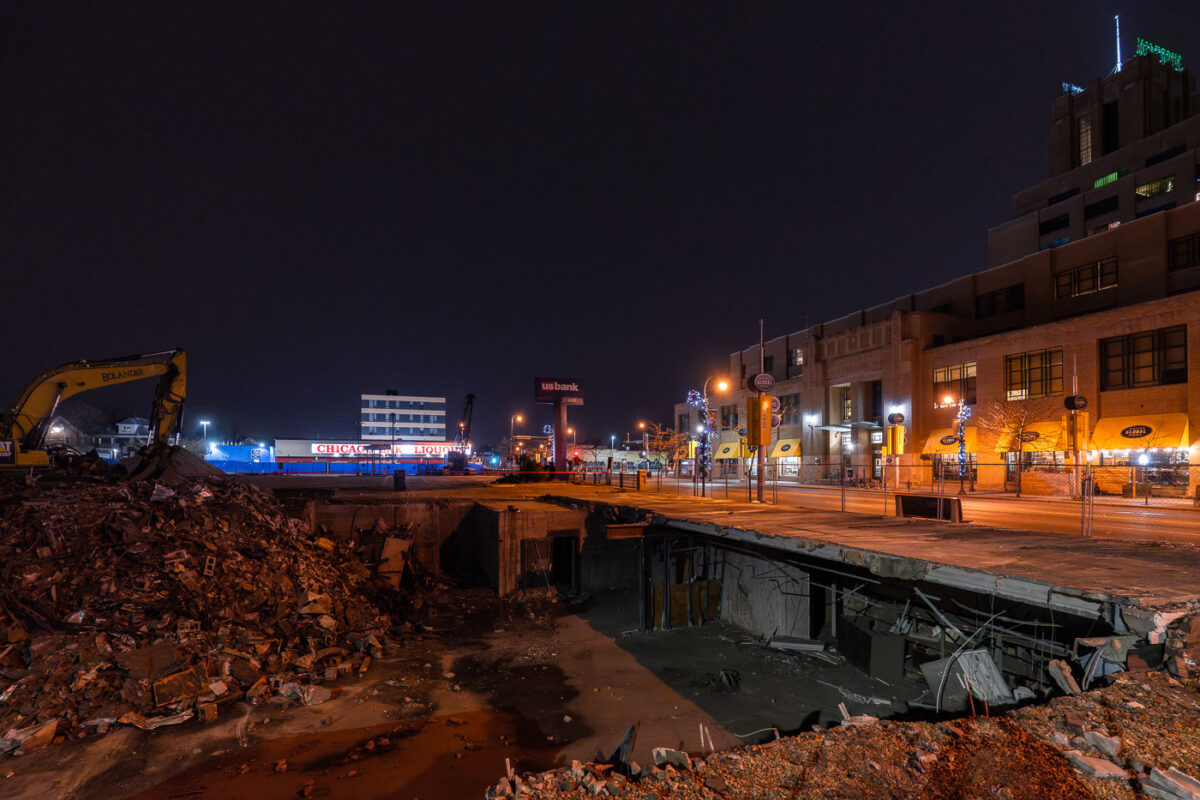
December 2020 — The demolition of a riot damaged US Bank branch. The bank was rebuilt.
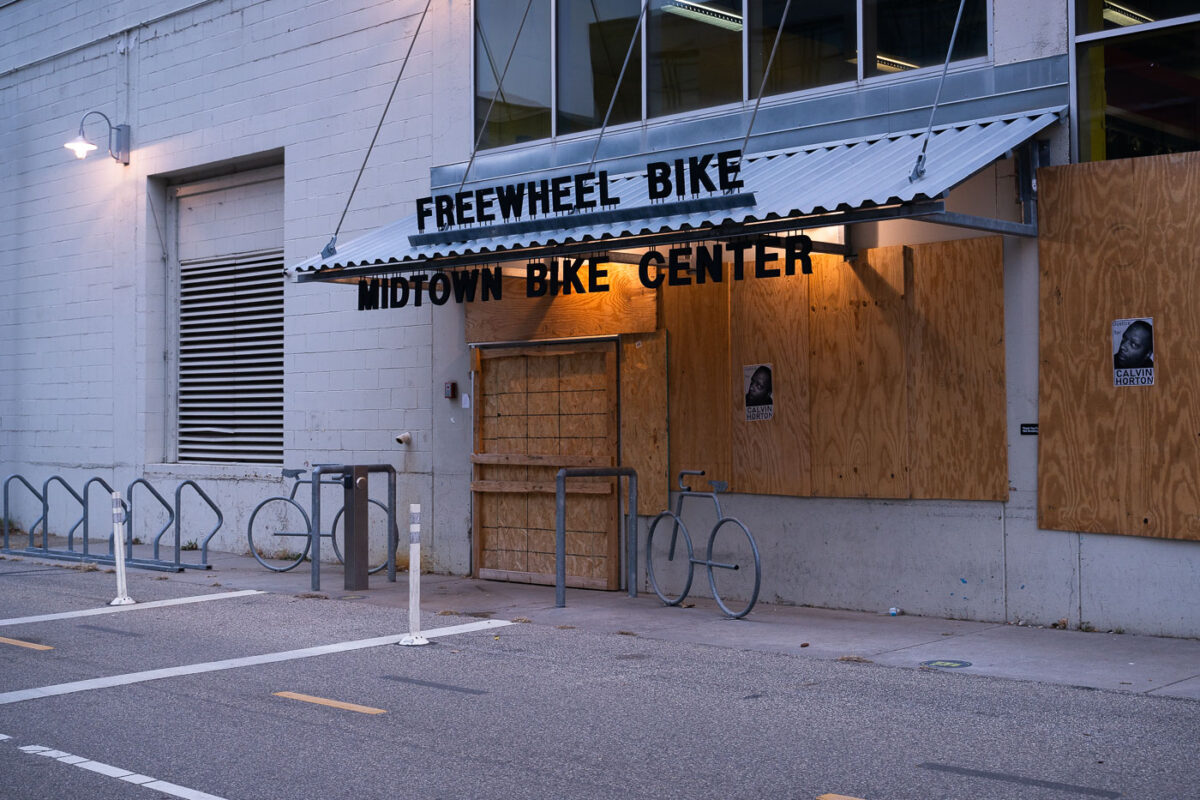
December 2020 — The Freewheel Bike Center located on the Midtown Greenway. Calvin Horton signs posted on the boards. Calvin was allegedly killed by the owner of Cadillac Pawn during the riots that followed George Floyd’s murder. Hennepin County has stated they will not be prosecuting due to "lack of evidence".
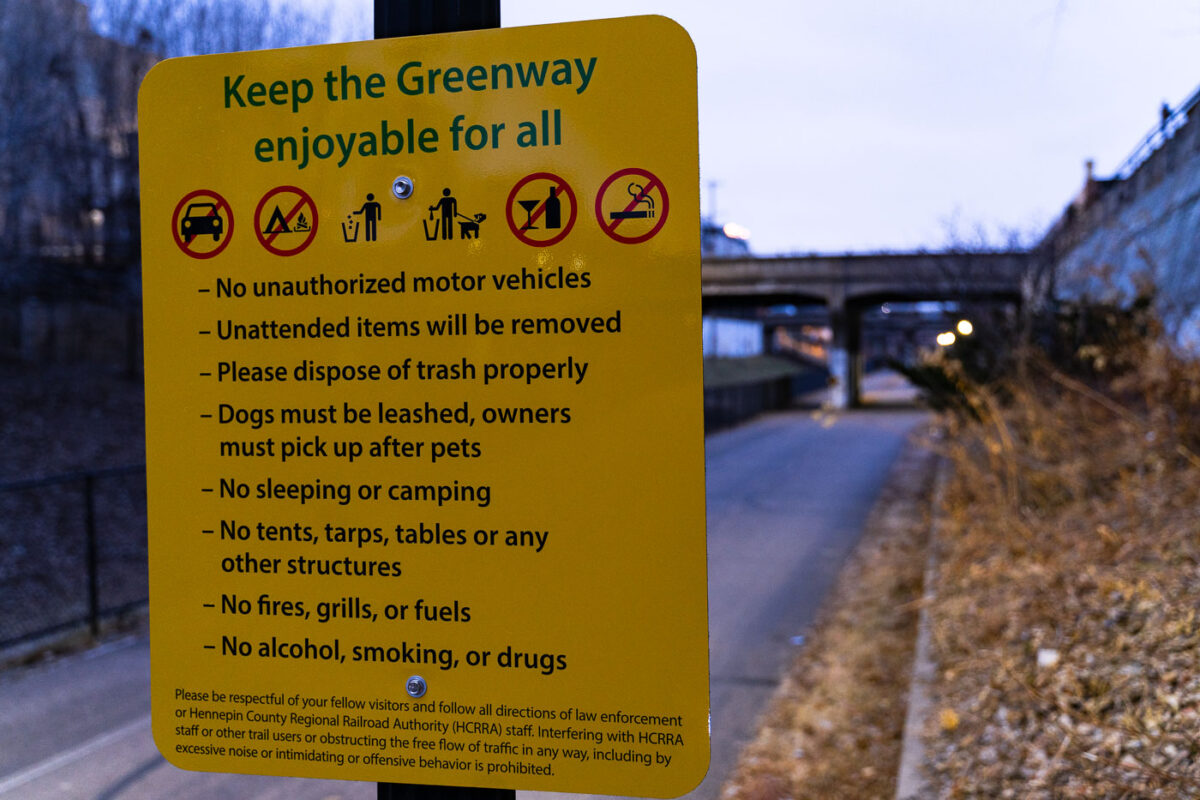
December 2020 — New signs on the greenway that replaced homeless encampment safety notices. The people living along the greenway were evicted on December 17th and 18th.
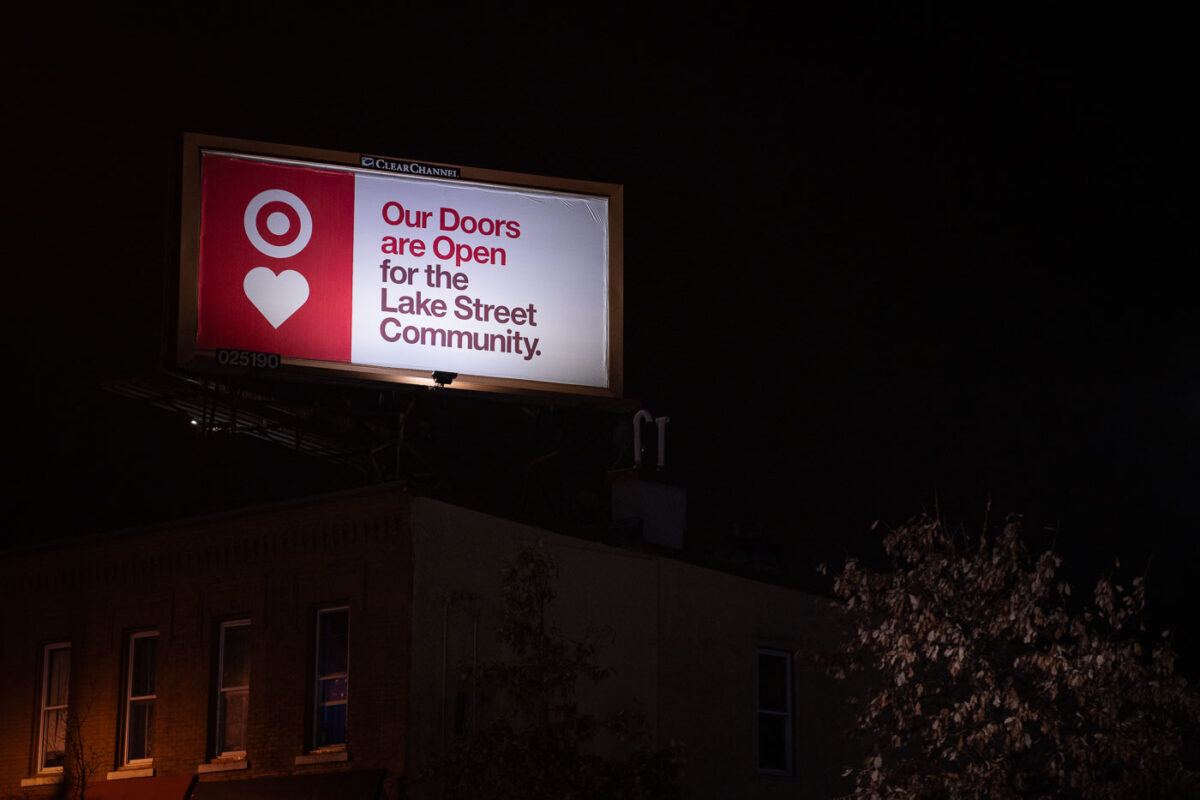
December 2020 — A Target Store billboard on Lake Street after they re-opened their stores following damage after the May 25th, 2020 death of George Floyd.
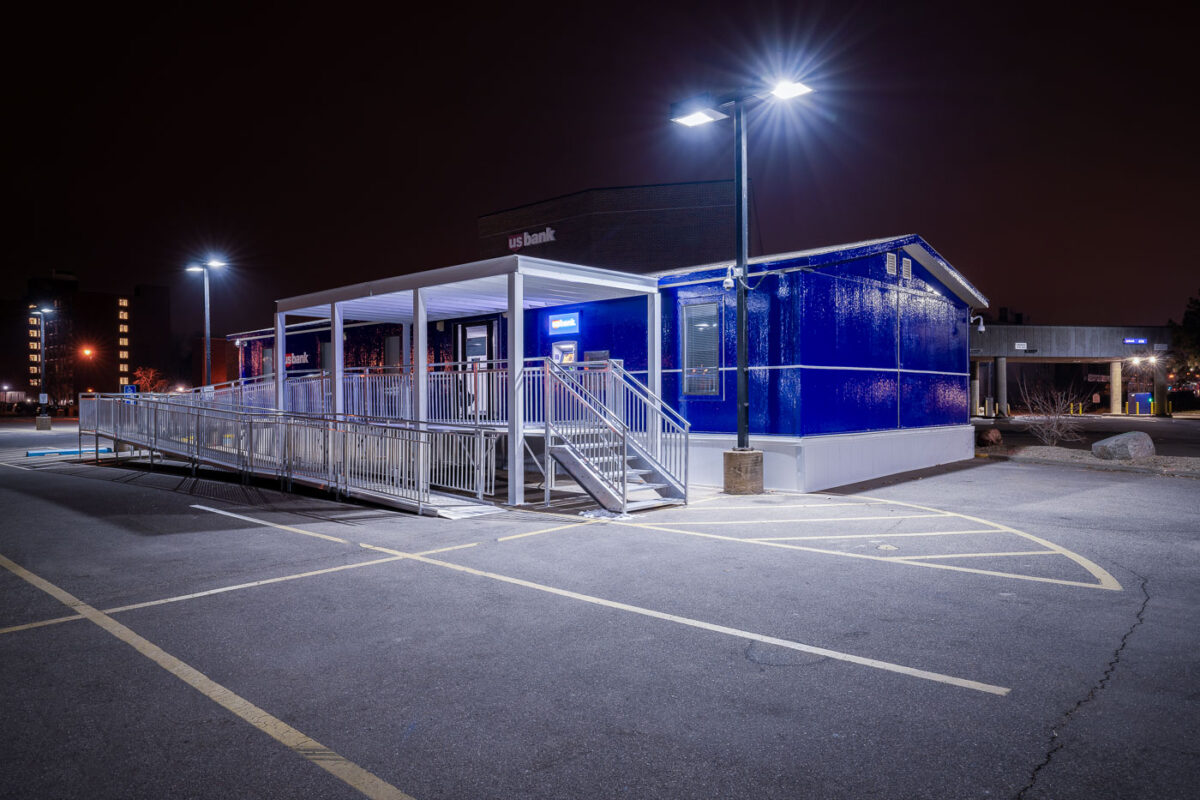
December 2020 — A temporary US Bank branch in the parking lot of the US Bank building. The bank sits just a few buildings away from the Minneapolis 3rd precinct police station that was burned after the May 25th, 2020 death of George Floyd.
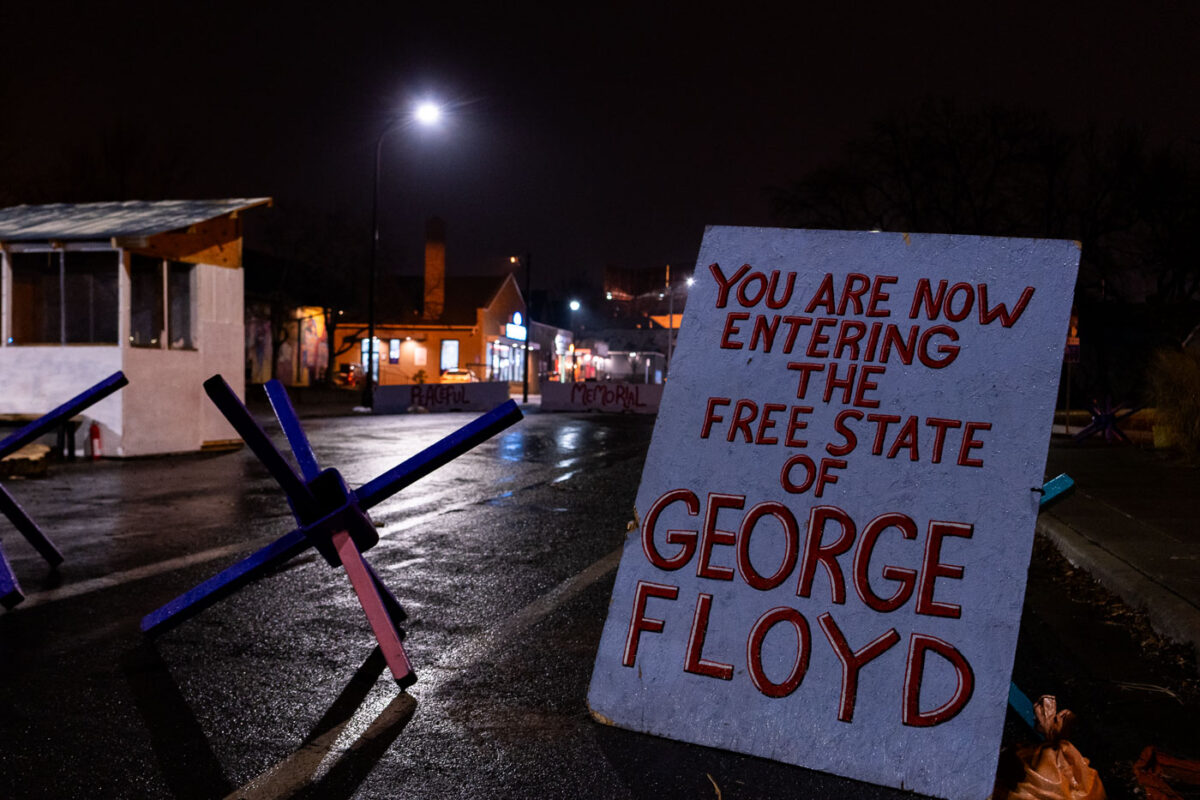
December 2020 — A sign reading “You are now entering the free state of George Floyd” as you enter George Floyd Square. The square has been a protest zone since the the May 25th, 2020 death of George Floyd.
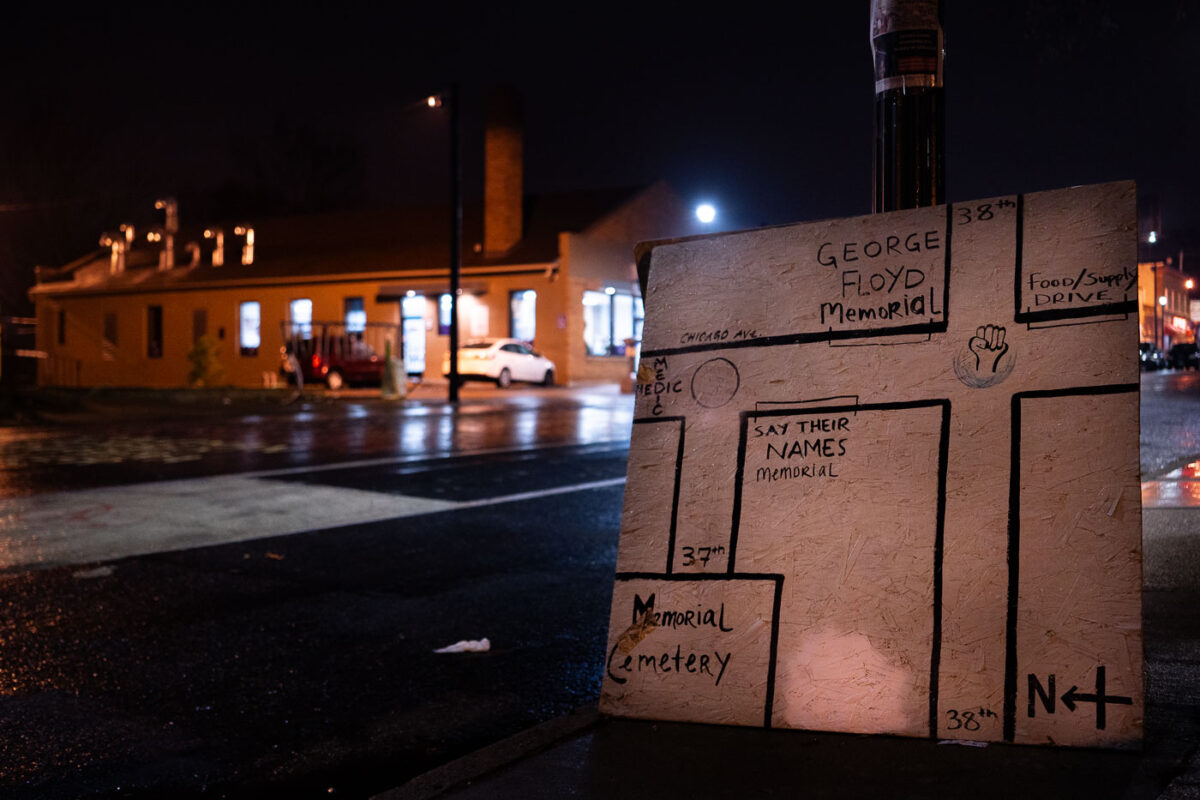
December 2020 — A map near the entrance of George Floyd Square. The area has been a protest zone since the May 25th, 2020 death of George Floyd.
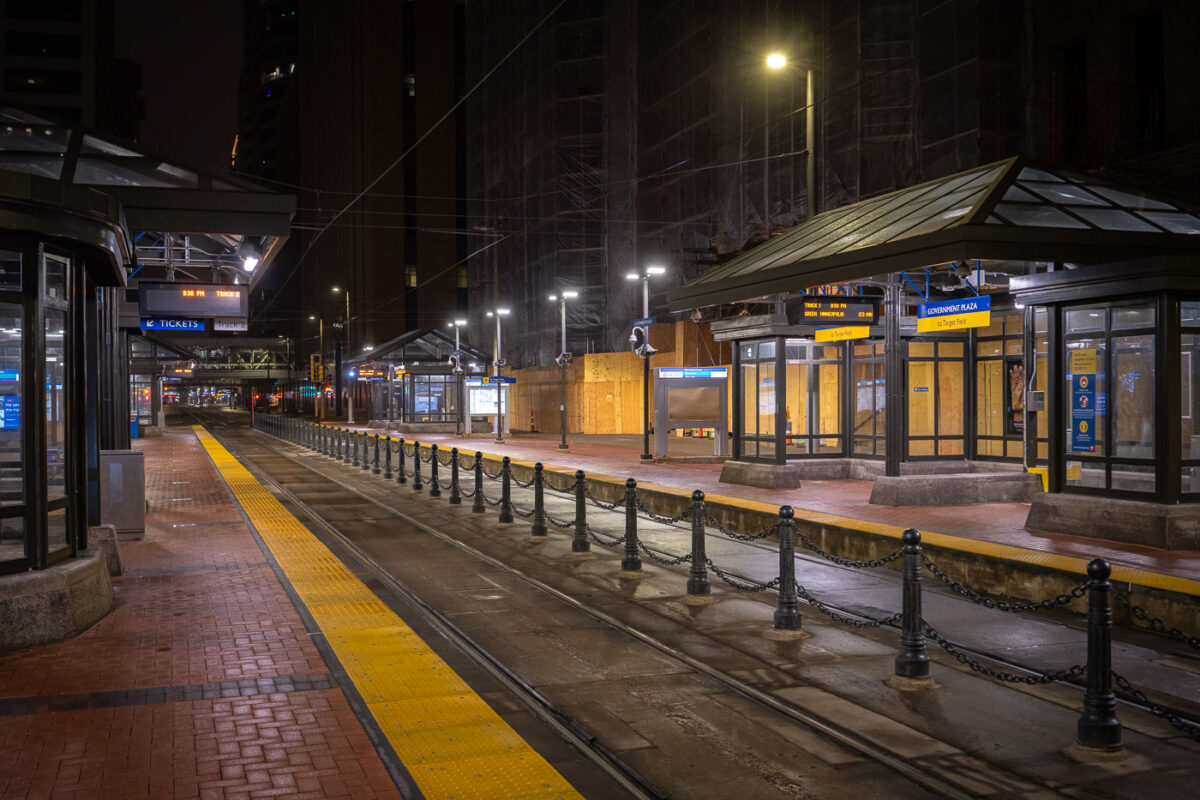
December 2020 — The Government Plaza LRT stop in downtown Minneapolis.
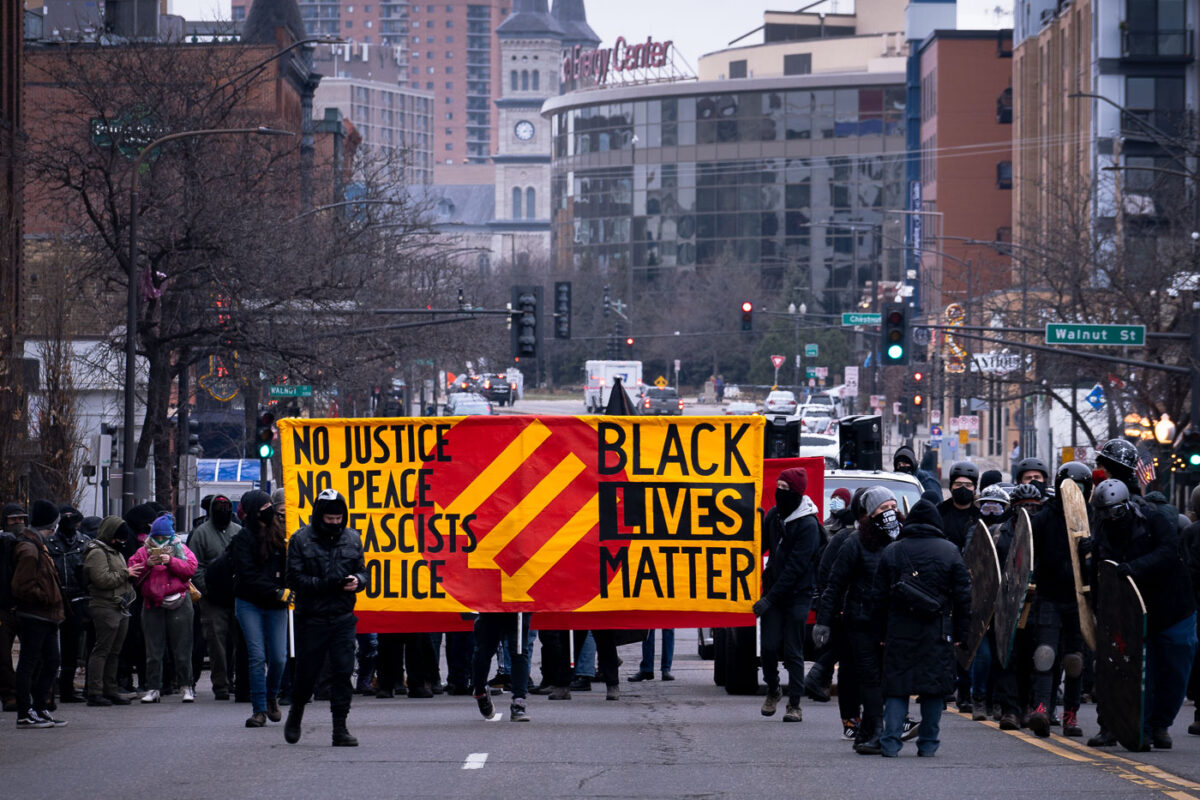
December 2020 — Protesters march against fascism in downtown St. Paul. The protesters marched through downtown with large banners.
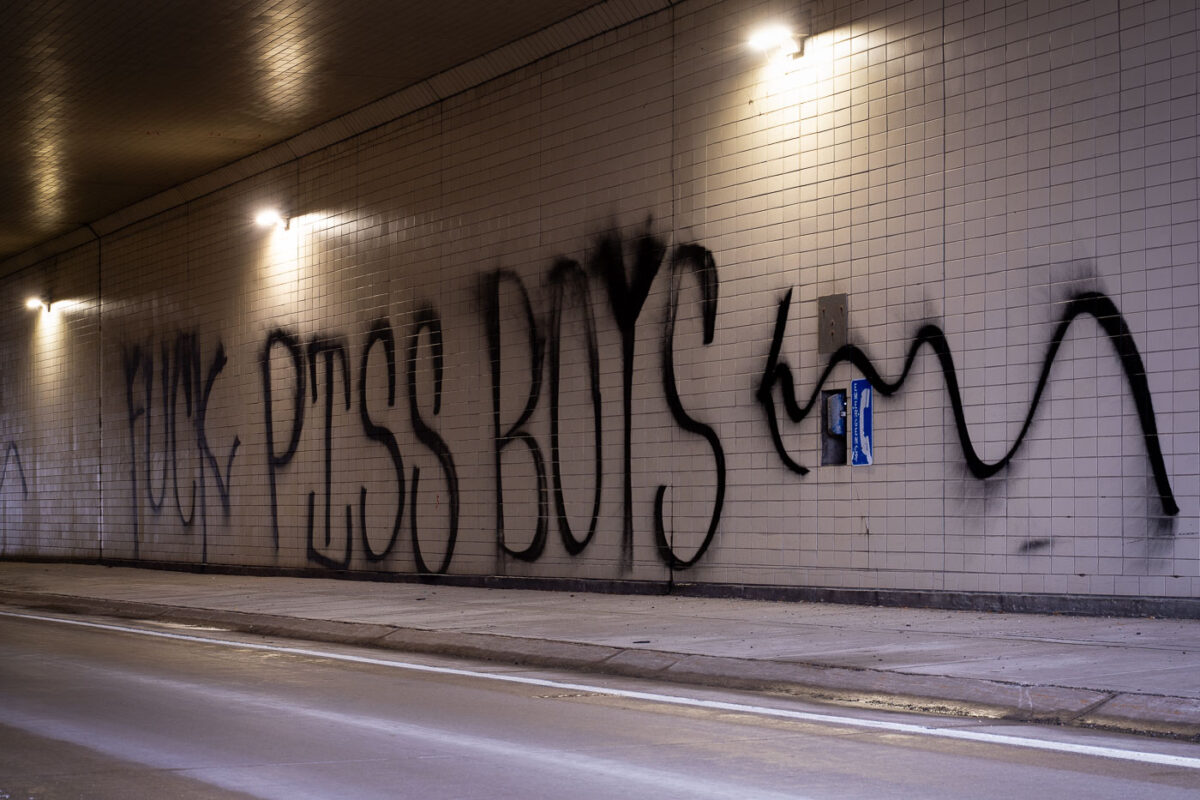
December 2020 — “Fuck piss boys” in a highway tunnel in St. Paul during a Proud Boys Stop The Steal rally on December 19, 2020.
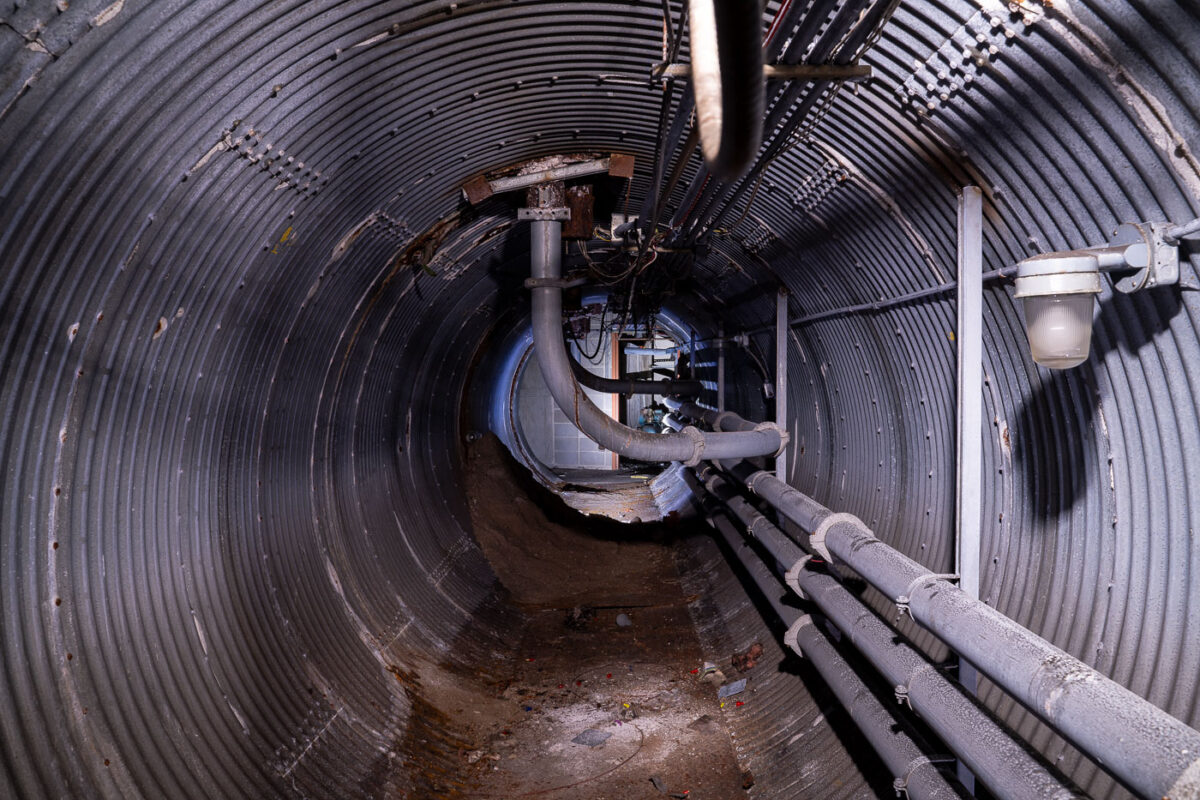
December 2020 — Inside a tunnel below the drive thru of the Wells Fargo bank across from the Minneapolis police 5th Precinct. The bank was burned on May 29th and for months it was secured due to safety deposit boxes that were undamaged.
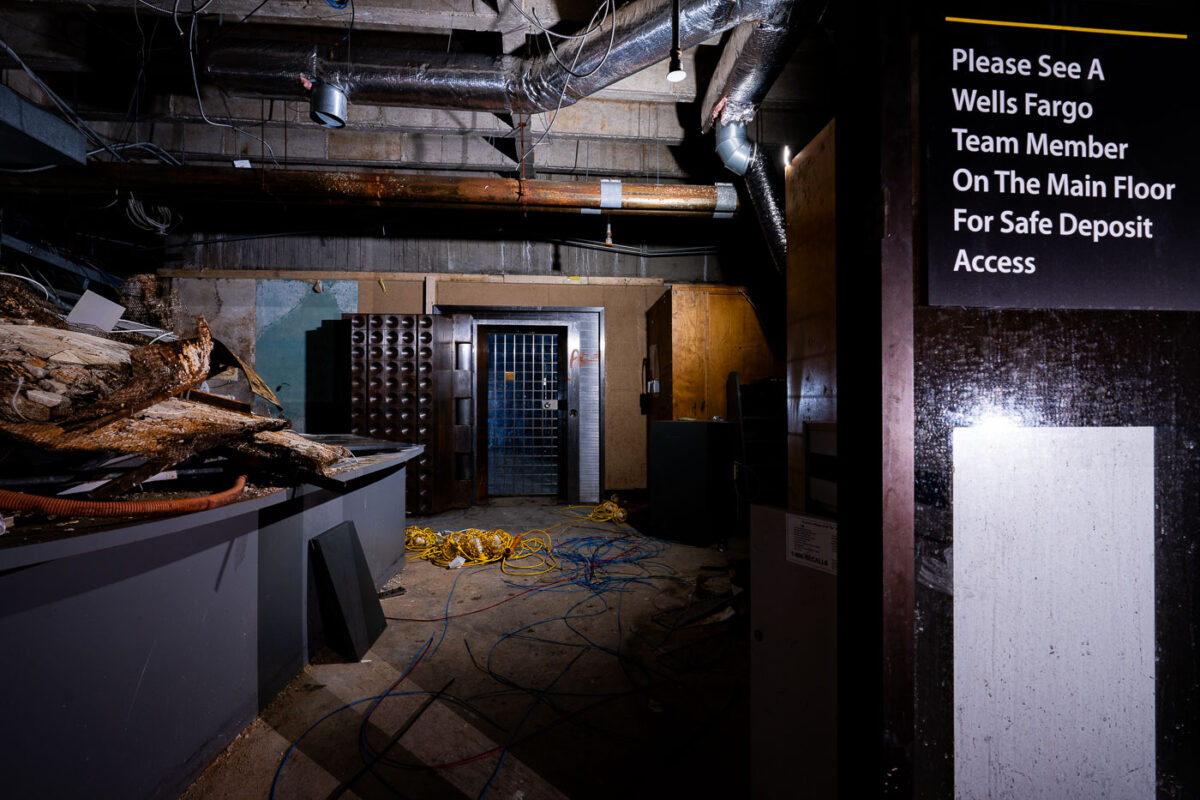
December 2020 — Inside Wells Fargo bank across from the Minneapolis Police 5th Precinct. The bank was burned on May 29th and for months it was secured due to safety deposit boxes that were undamaged.
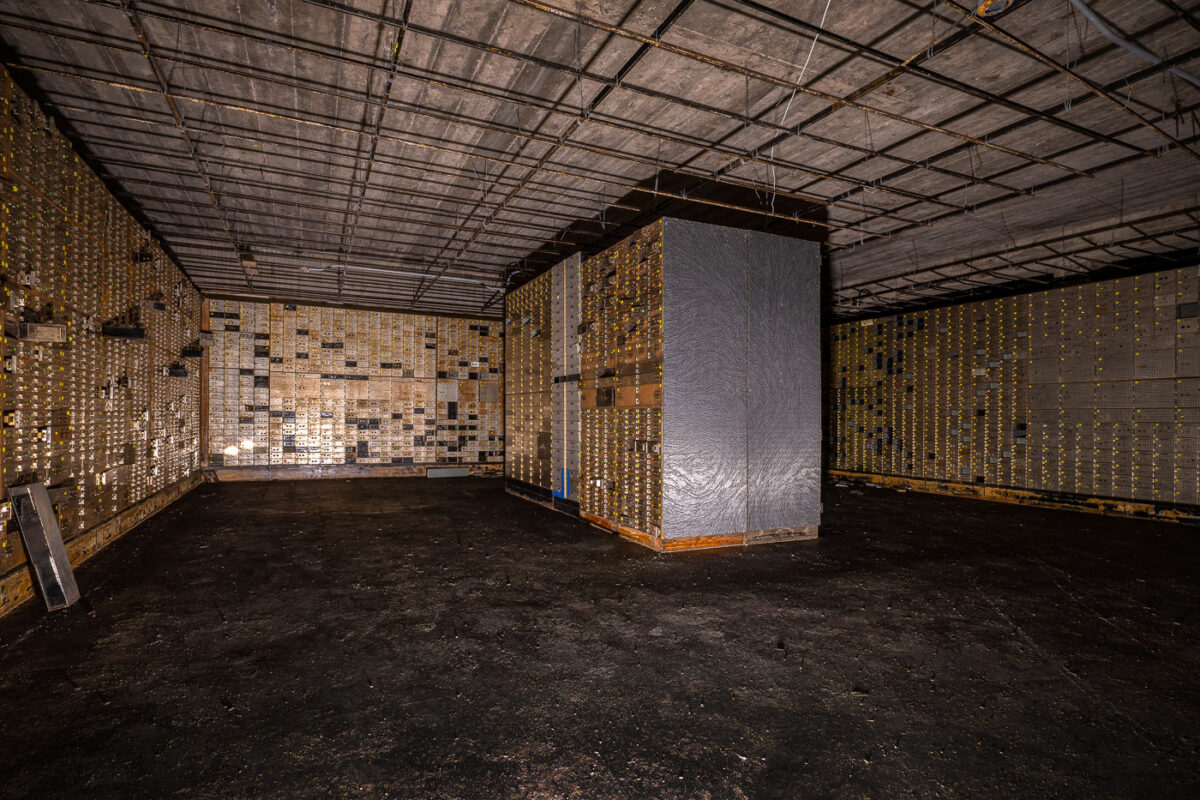
December 2020 — Inside the Wells Fargo bank across from the Minneapolis Police 5th Precinct. The bank was burned on May 29th and for months it was secured due to safety deposit boxes that were undamaged.
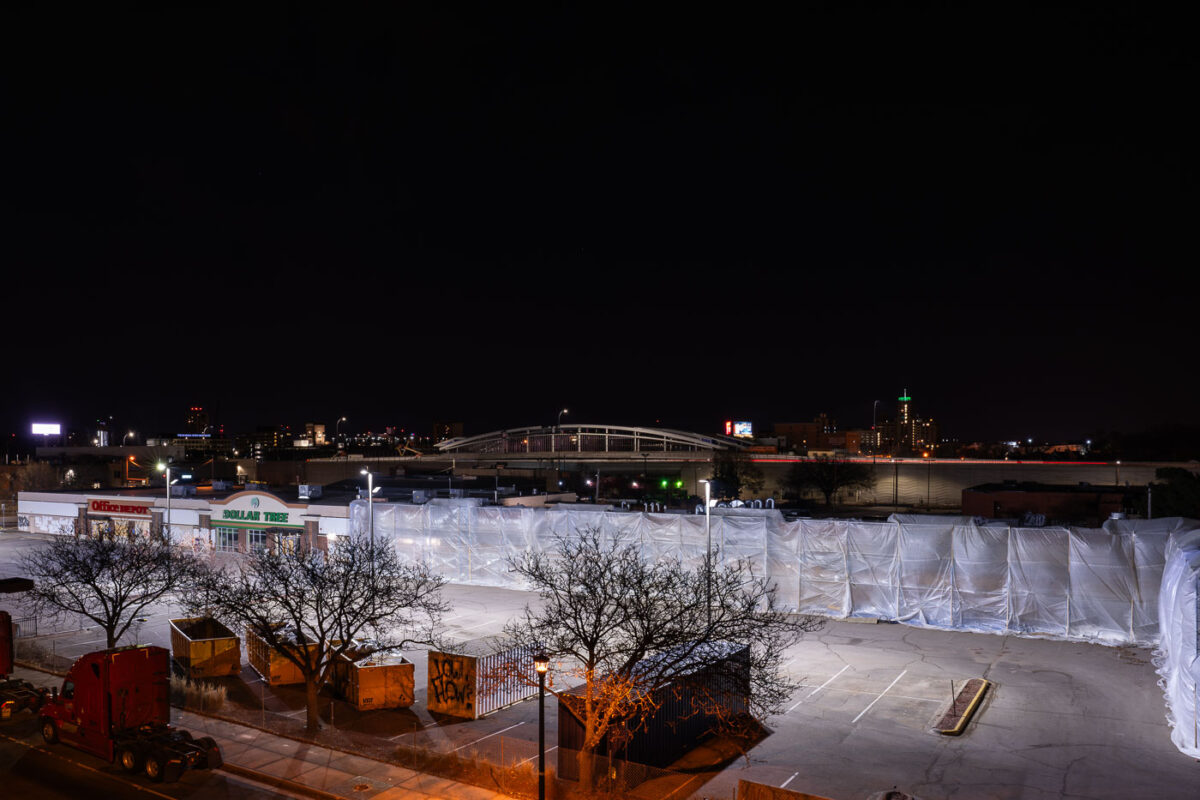
December 2020 — Strip mall on Nicollet Ave and Lake Street after damage during the Minneapolis Uprising that followed the May 25th, 2020 murder of George Floyd.
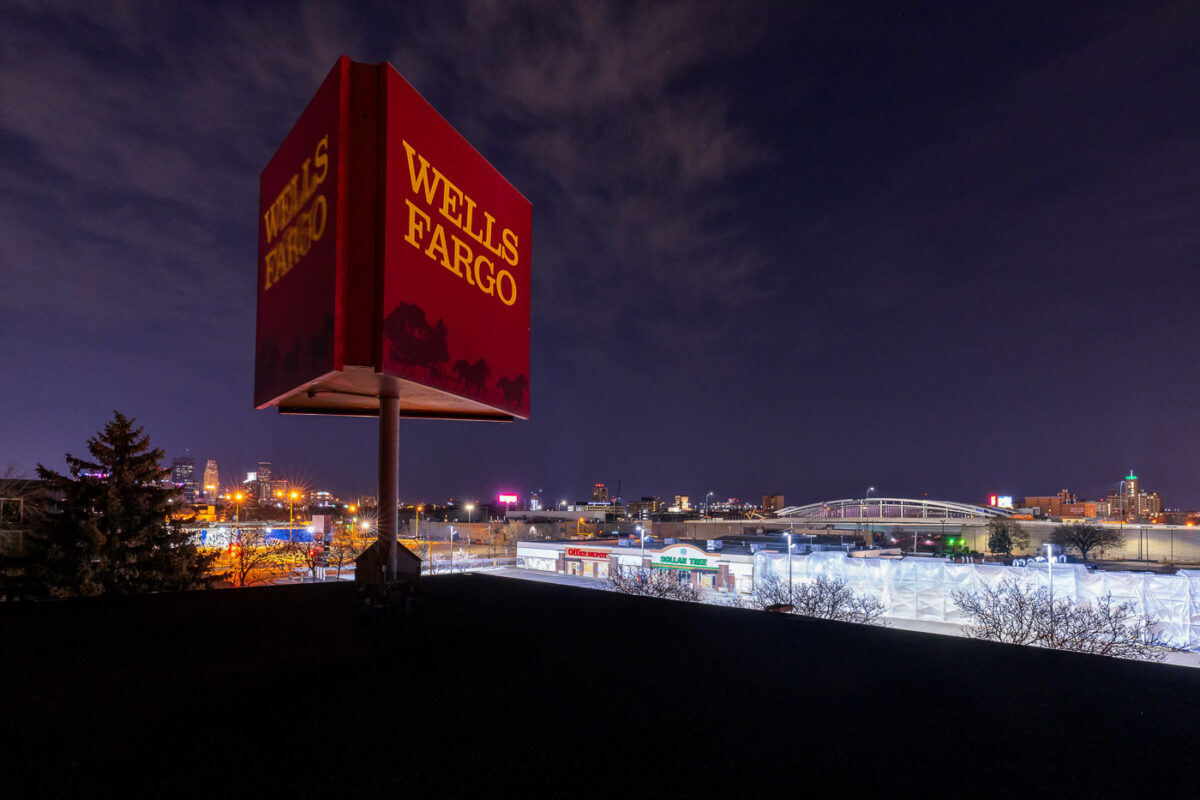
December 2020 — The view from the roof of the burned Wells Fargo bank across from the Minneapolis police 5th precinct police station. The building was burned after the May 25th, 2020 death of George Floyd.
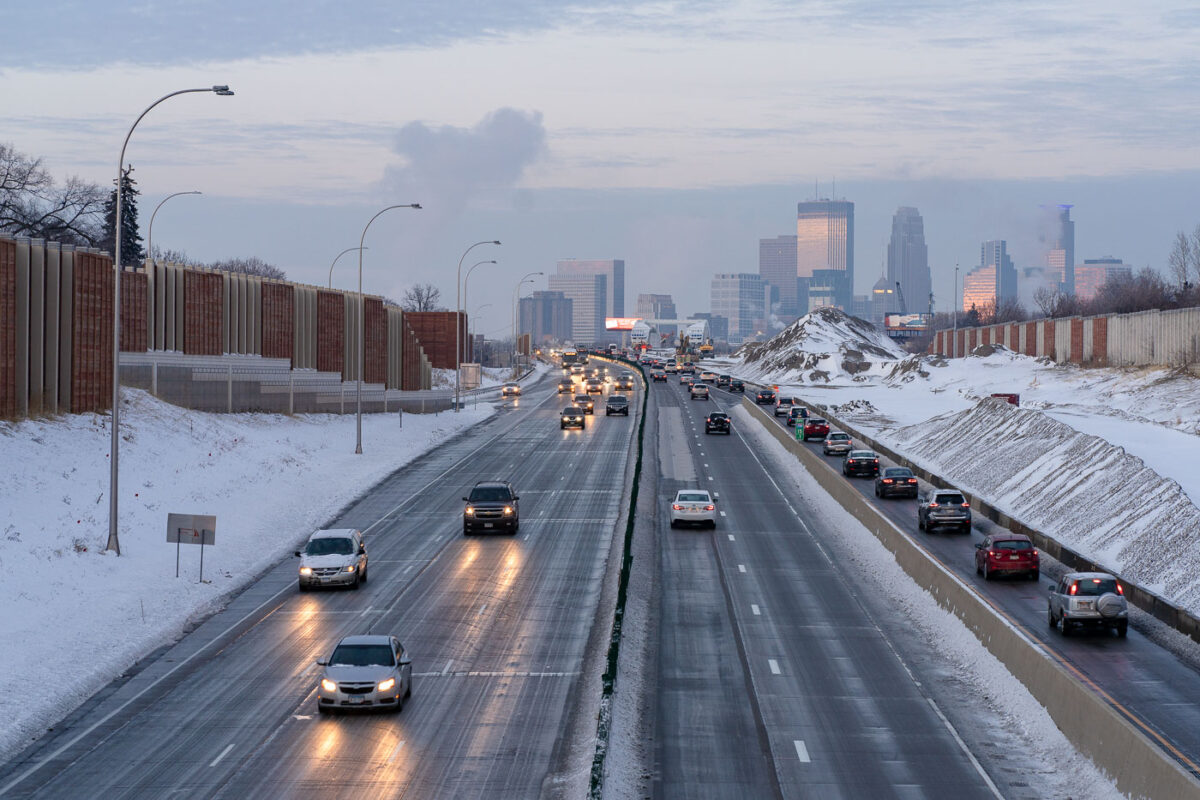
December 2020 — Road construction on interstate 35W in South Minneapolis with the city skyline in the background.
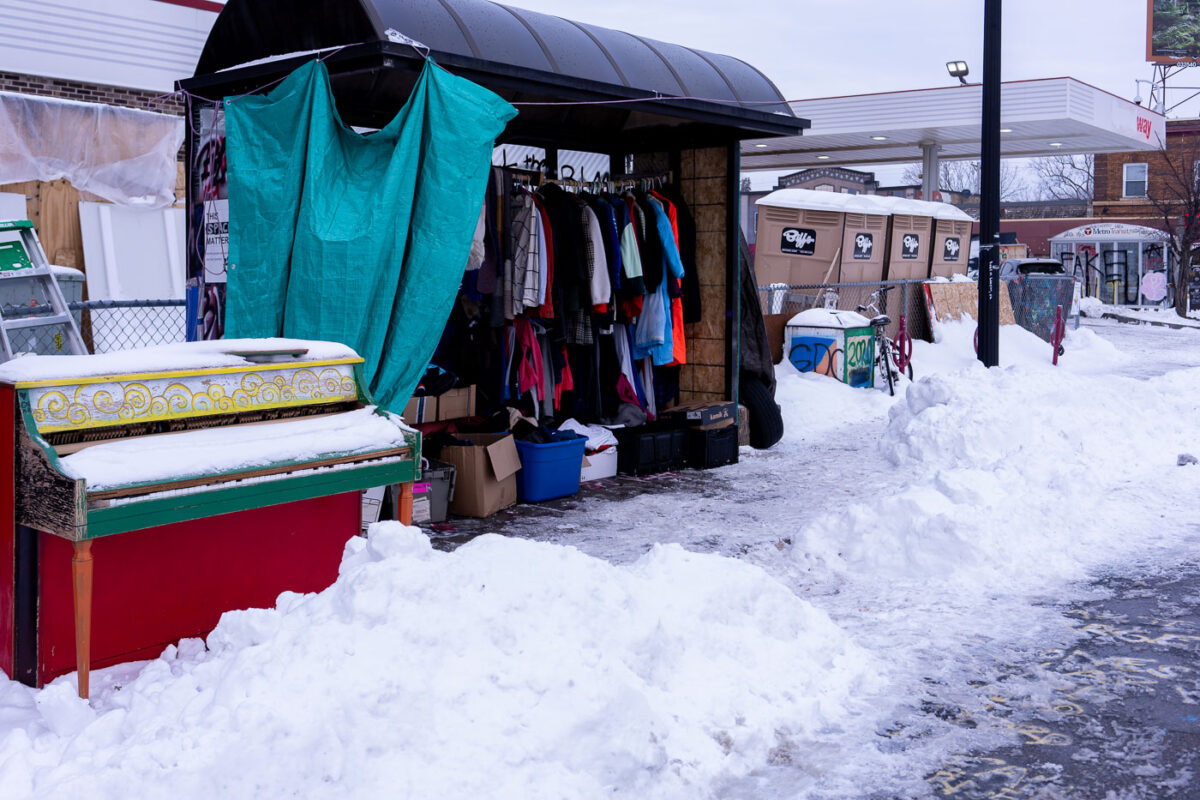
December 2020 — Metro Clothing Closet at George Floyd Square. The area has been a protest zone since the May 25th, 2020 death of George Floyd.
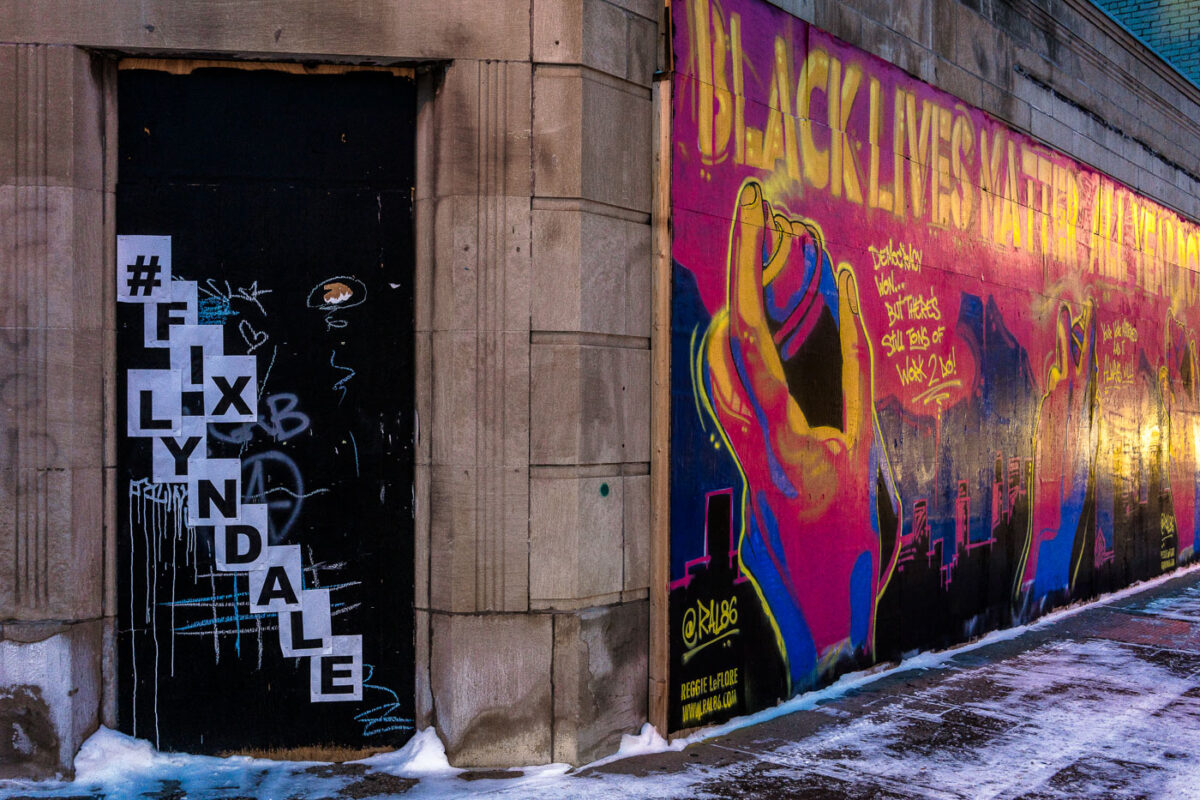
December 2020 — #FixLyndale on the corner of Lyndale and Lake St in Uptown Minneapolis. Advocates have long pushed for a reconfiguration of Lyndale Ave after high amounts of vehicle and pedestrian accidents.
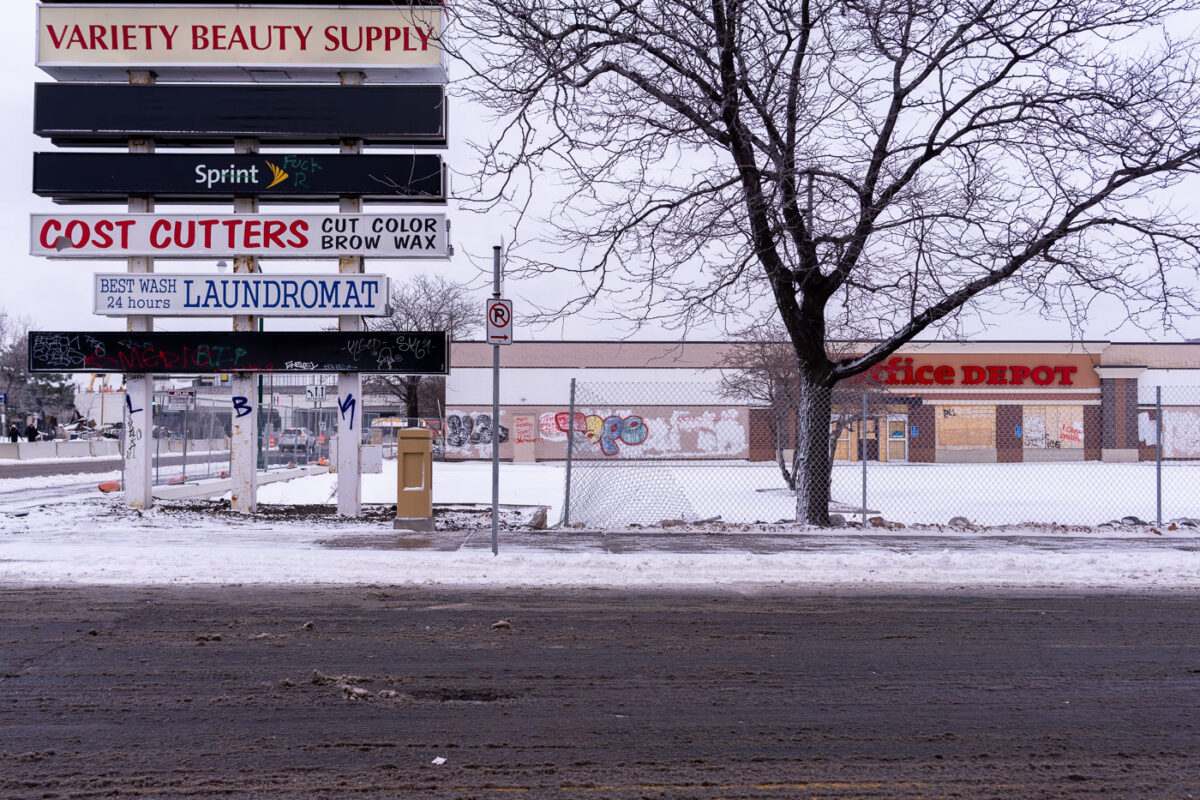
December 2020 — A riot damaged strip mall at Nicollet Ave and Lake Street. The building was heavily damaged after the May 25th, 2020 death of George Floyd.
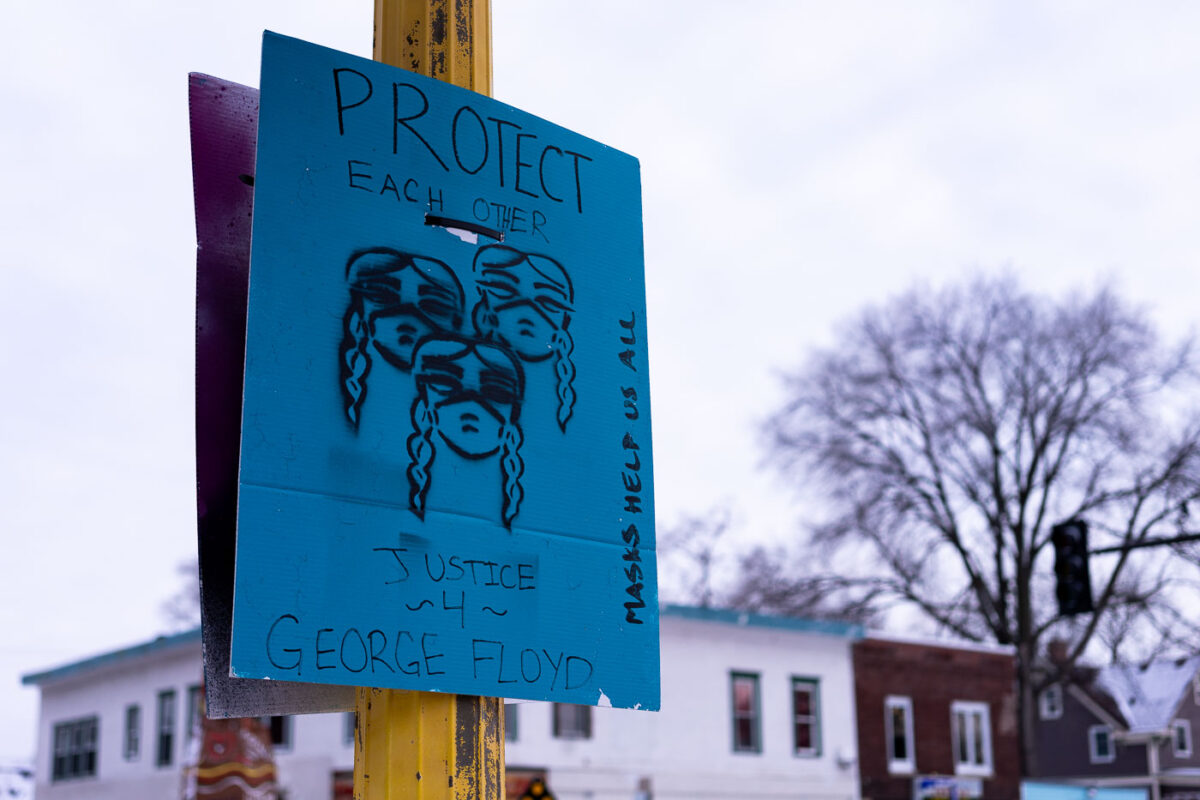
December 2020 — A sign at George Floyd Square that reads "Protect Each Other" "Justice 4 George Floyd" "Masks Help Us All"
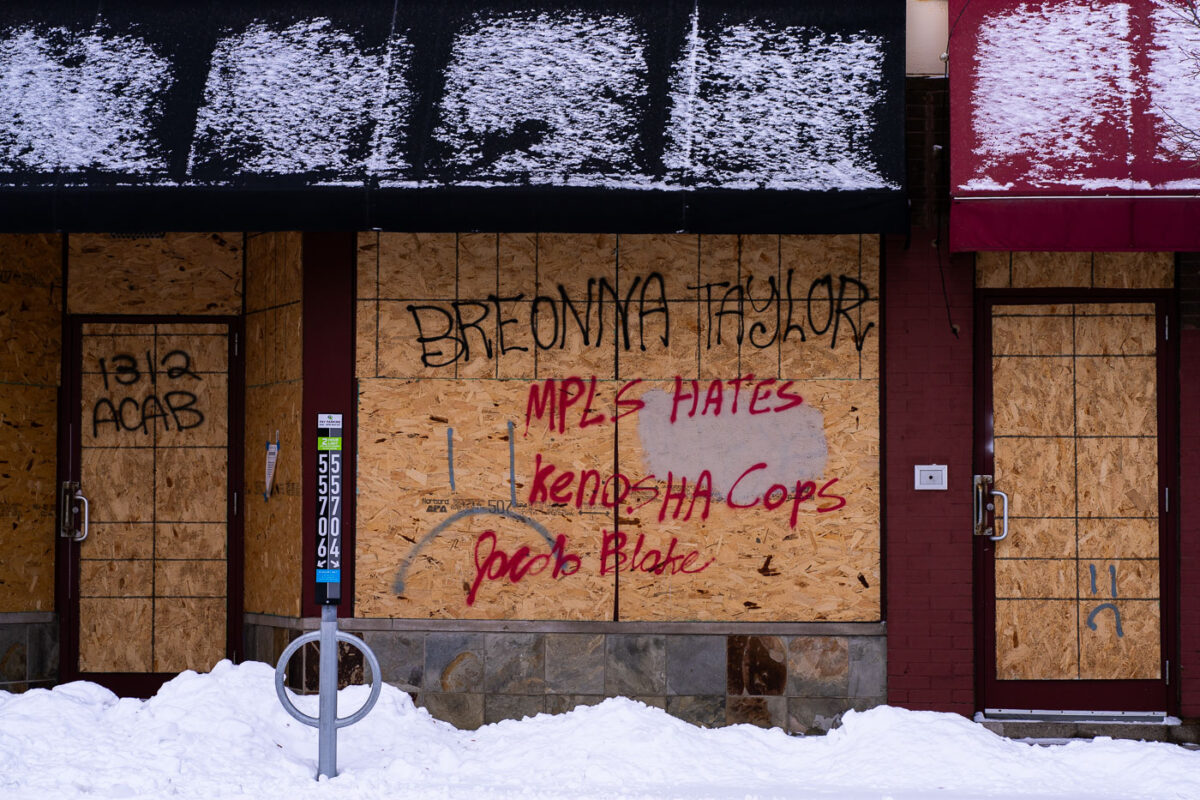
December 2020 — Boards on a building near the burned Minneapolis Police third precinct with "Breonna Taylor", "Mpls Hates Kenosha Cops", "Jacob Blake", "1312" and "ACAB" written on them.
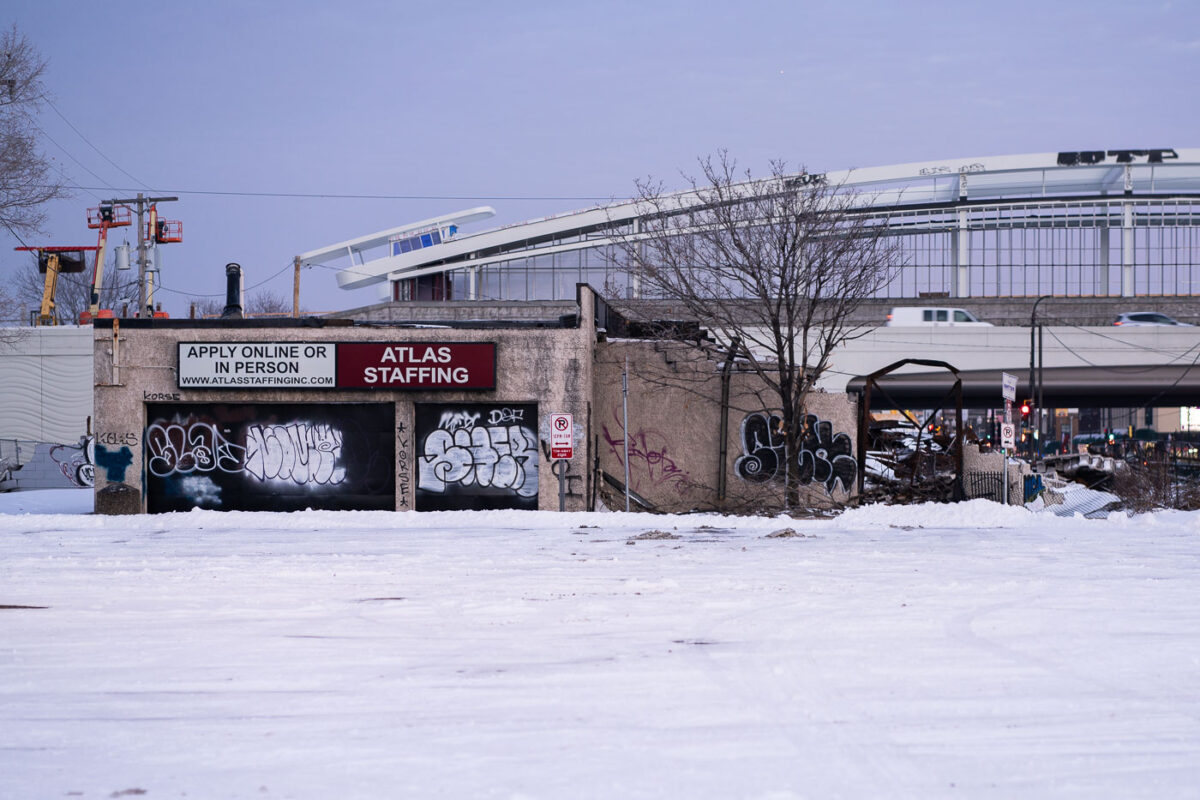
December 2020 — The remains of the Atlas Staffing building still in ruins on Lake Street in Minneapolis. The building burned following the May 25th, 2020 death of George Floyd.
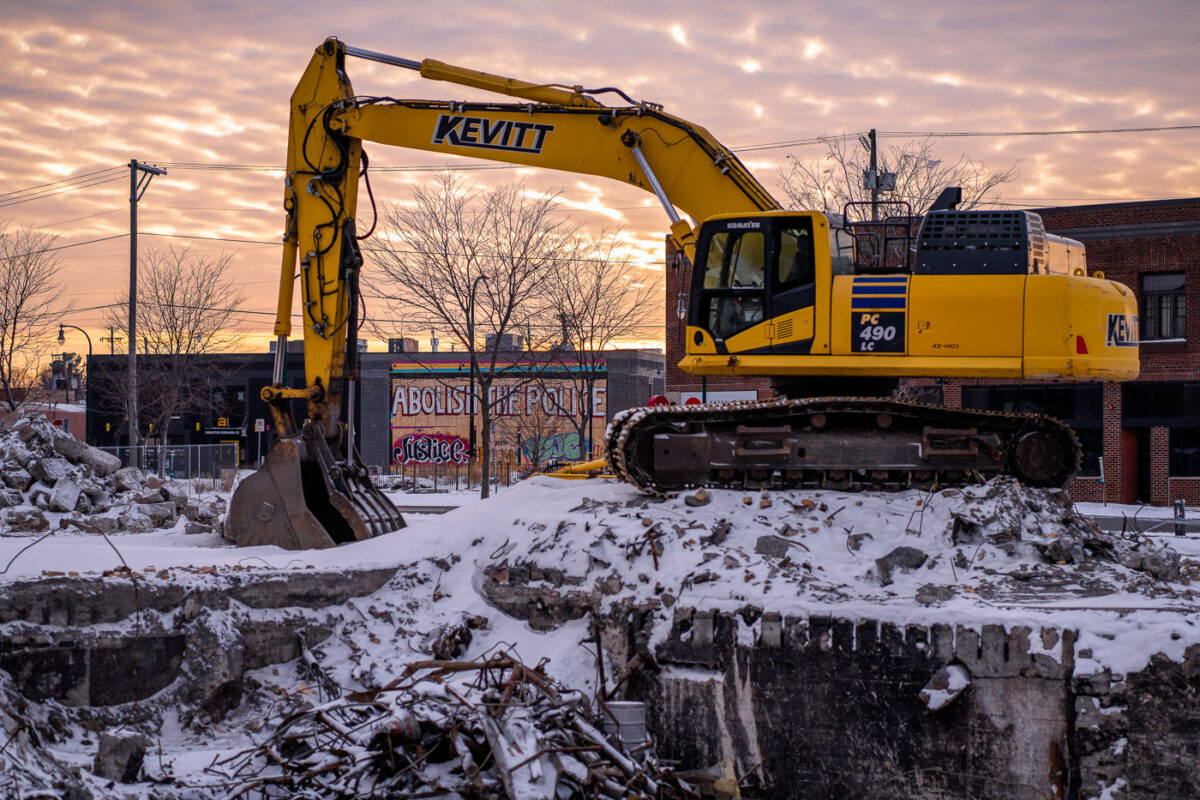
December 2020 — Demolition of buildings destroyed in the uprising that followed the May 25th, 2020 death of George Floyd. The buildings were home to Minnehaha Liquors, a chiropractor’s office and GM Tobacco.
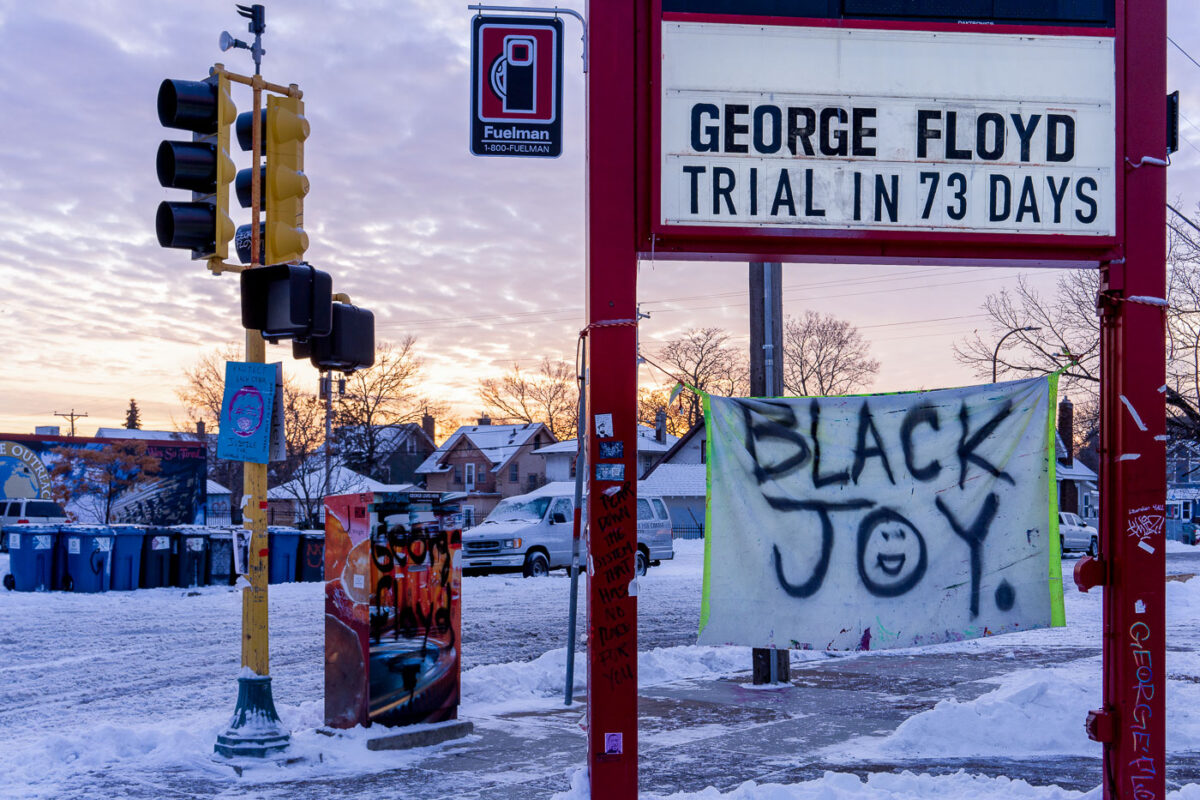
December 2020 — The sun sets to the west of George Floyd Square on the first day of Kwanzaa. Day 1 represents Umoja (Unity). The countdown to the Derek Chauvin trial was recently added to what was a Speedway sign. The area has been a protest zone since the May 25th, 2020 death of George Floyd.
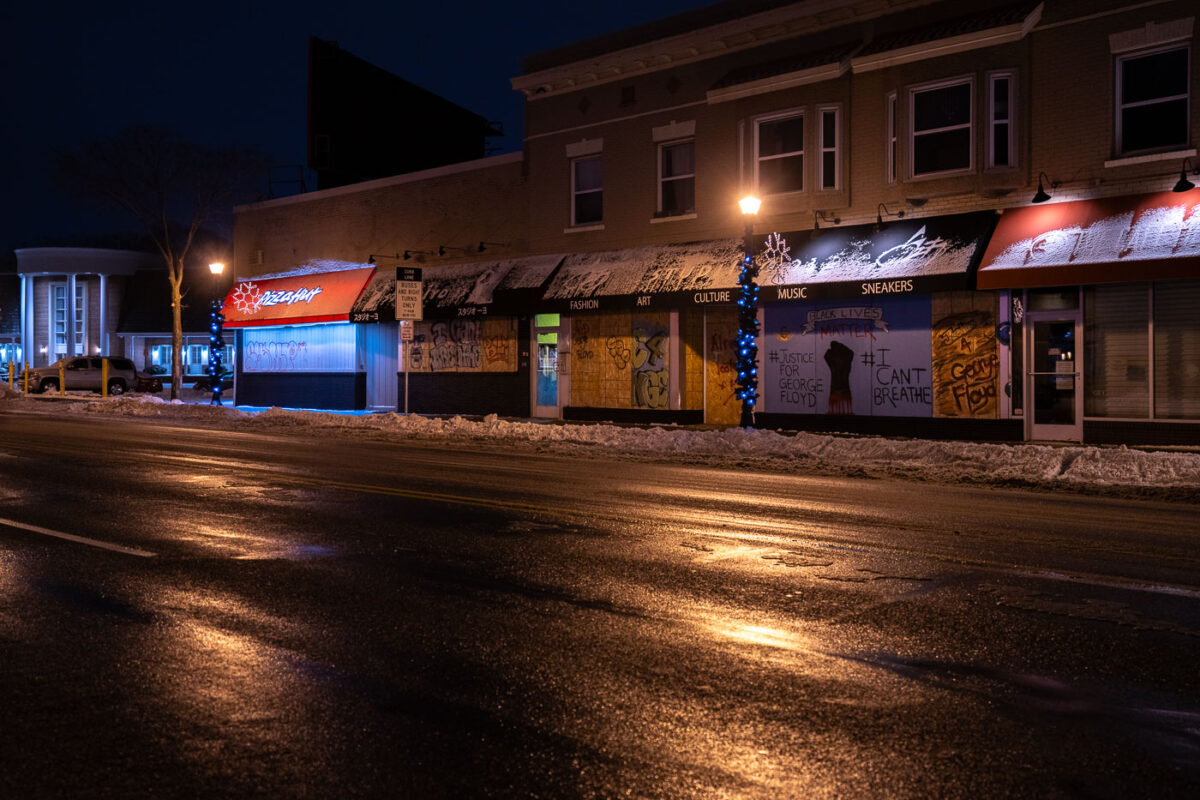
December 2020 — Murals on protest boards on Hennepin Ave in Uptown Minneapolis.
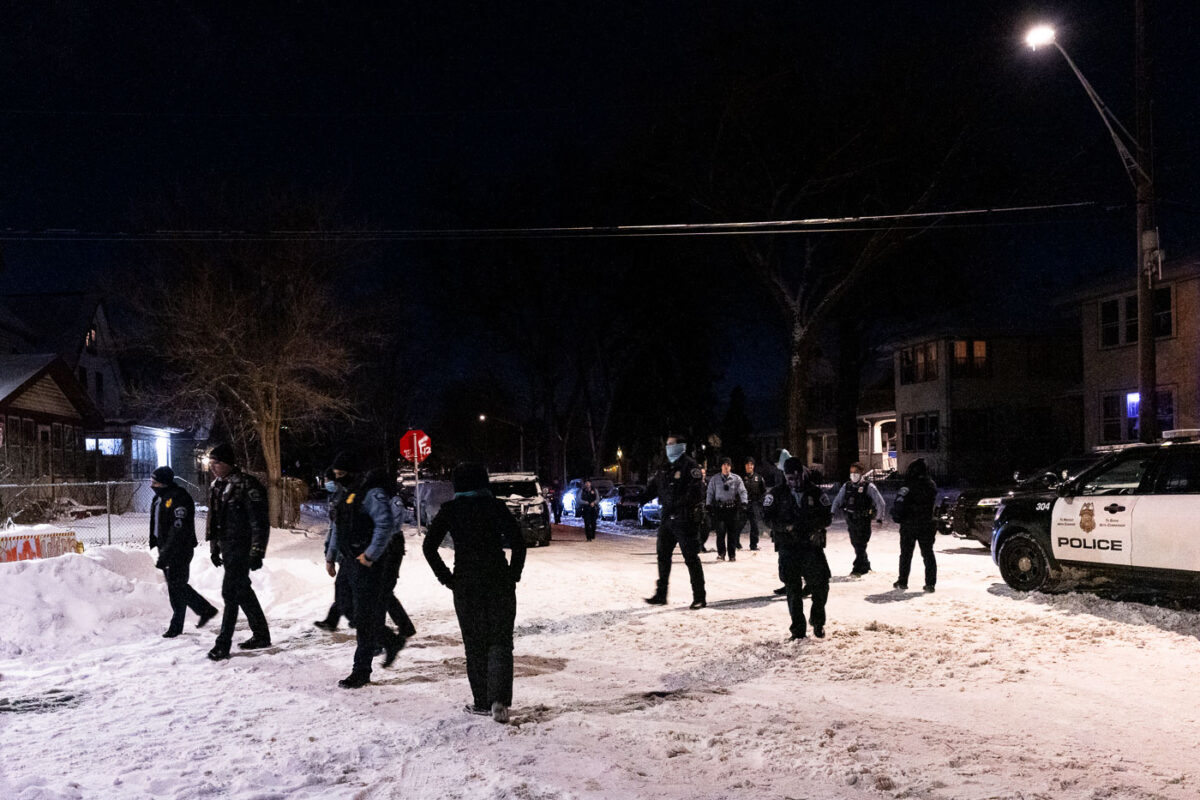
December 2020 — 17 officers respond to a shooting at George Floyd Square after 2 victims had already been transported to hospitals by the community. Those at the square confronted the officers and offered to walk five of them in to collect shell casings.
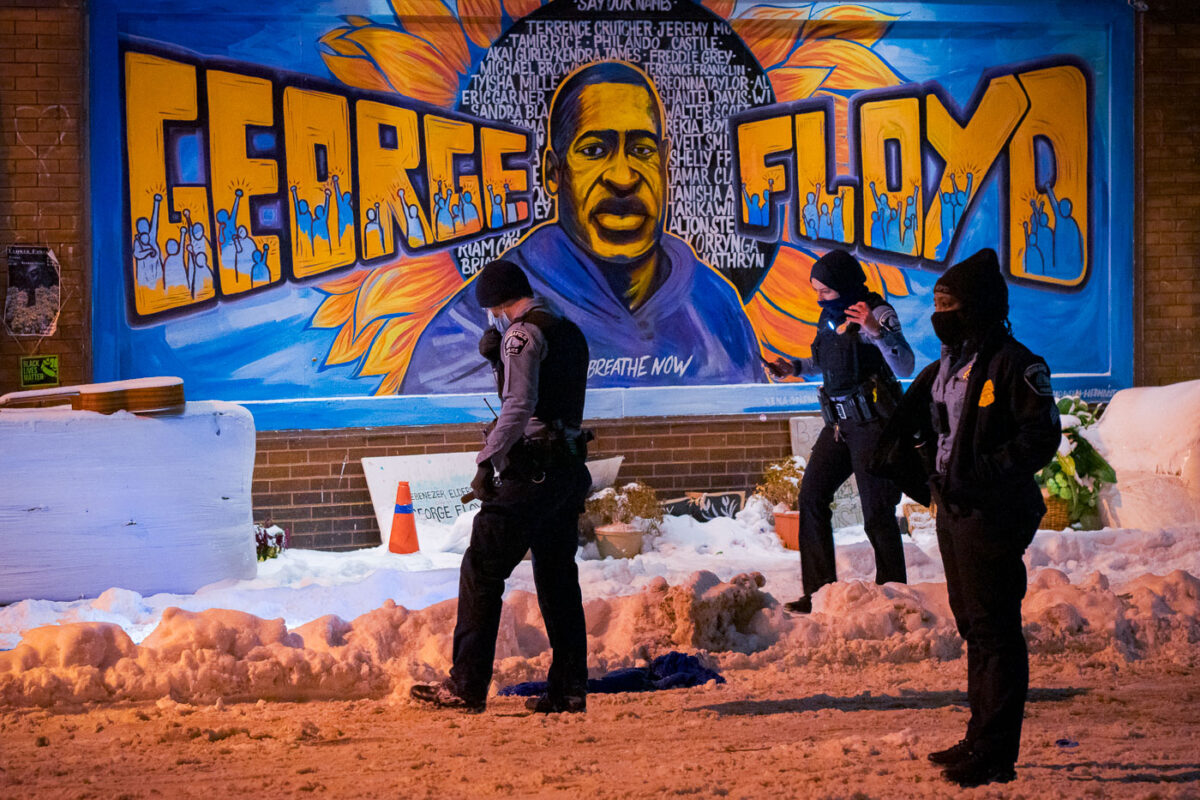
December 2020 — Officers look for evidence inside George Floyd Square after responding to a shooting on December 27, 2020.
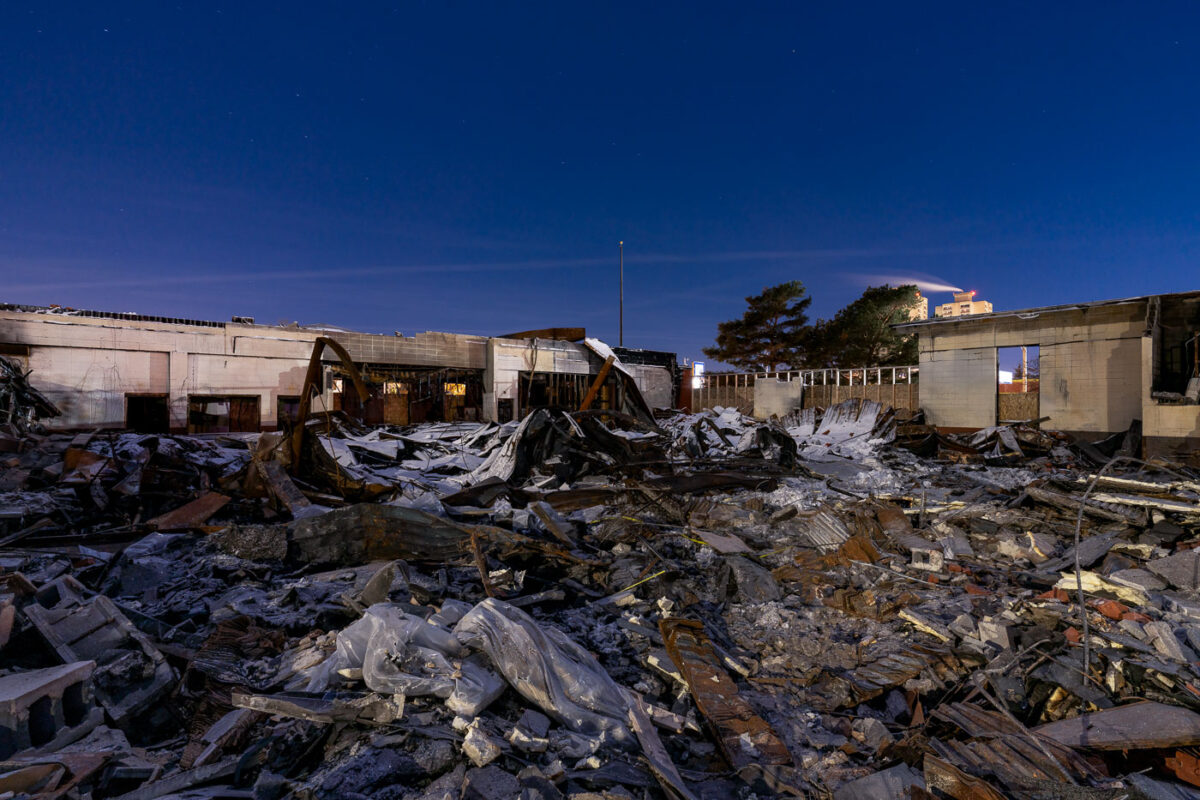
December 2020 — Located at 110 E 31st St in South Minneapolis and across from the Minneapolis Police 5th precinct. The post office was burned during the George Floyd uprising on May 29th. This along with the Minnehaha Station moved into a vacant K-Mart on Lake Street a block away. The post office was eventually rebuilt and opened 3 years to the day that it burned.
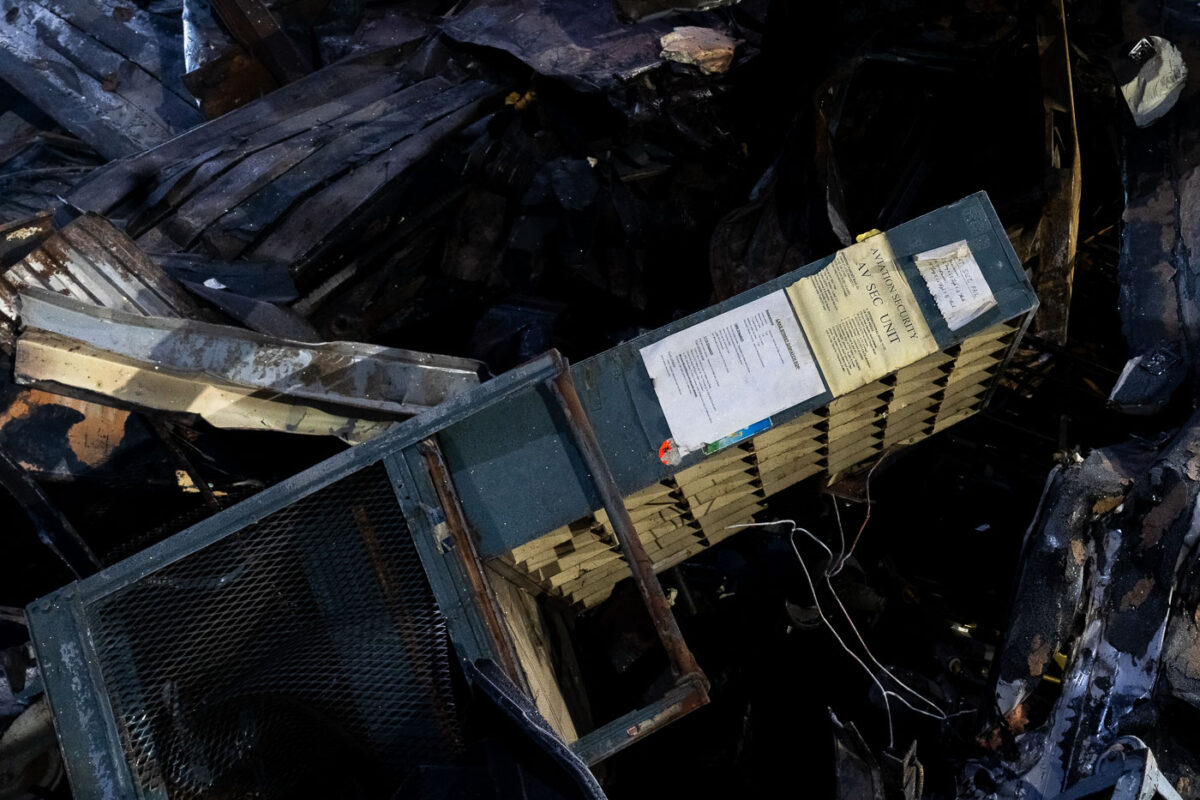
December 2020 — Located at 110 E 31st St in South Minneapolis and across from the Minneapolis Police 5th precinct. The post office was burned during the George Floyd uprising on May 29th. This along with the Minnehaha Station moved into a vacant K-Mart on Lake Street a block away. The post office was eventually rebuilt and opened 3 years to the day that it burned.
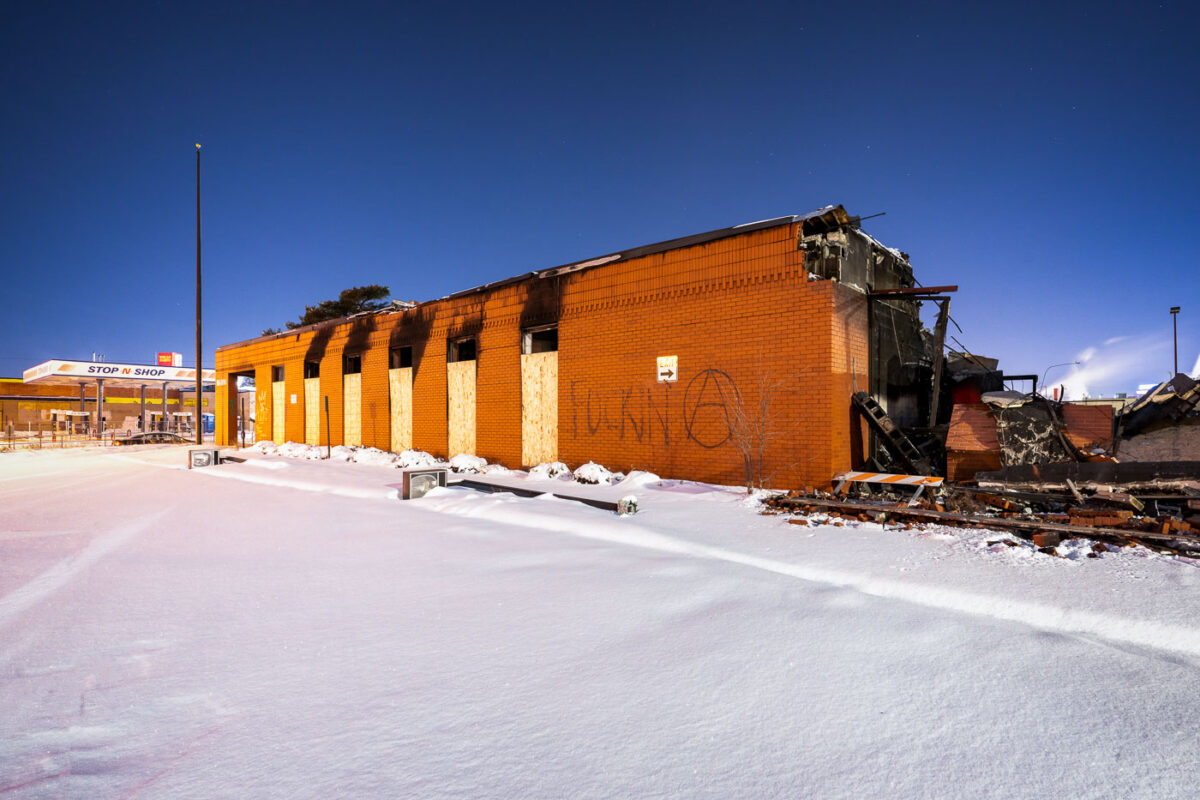
December 2020 — Located at 110 E 31st St in South Minneapolis and across from the Minneapolis Police 5th precinct. The post office was burned during the George Floyd uprising on May 29th. This along with the Minnehaha Station moved into a vacant K-Mart on Lake Street a block away. The post office was eventually rebuilt and opened 3 years to the day that it burned.
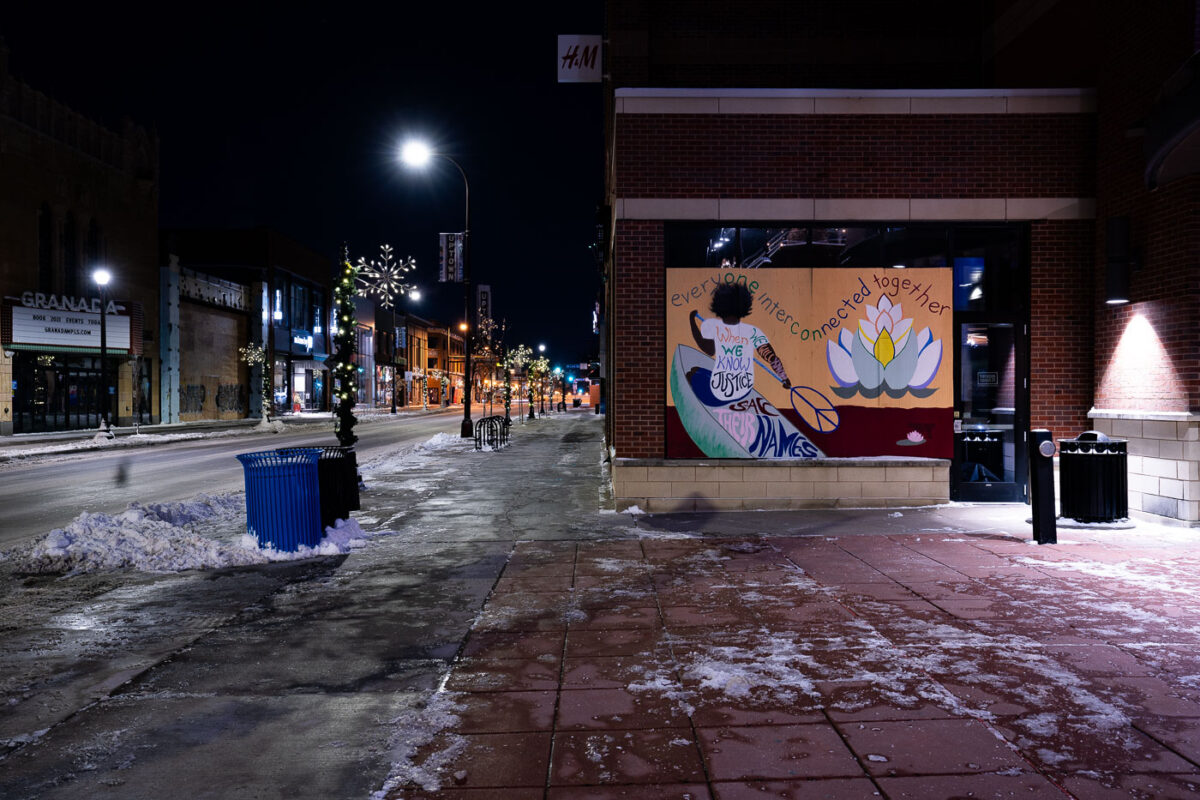
December 2020 — Boards and a mural on a H&M store on Hennepin Ave. in Uptown Minneapolis.
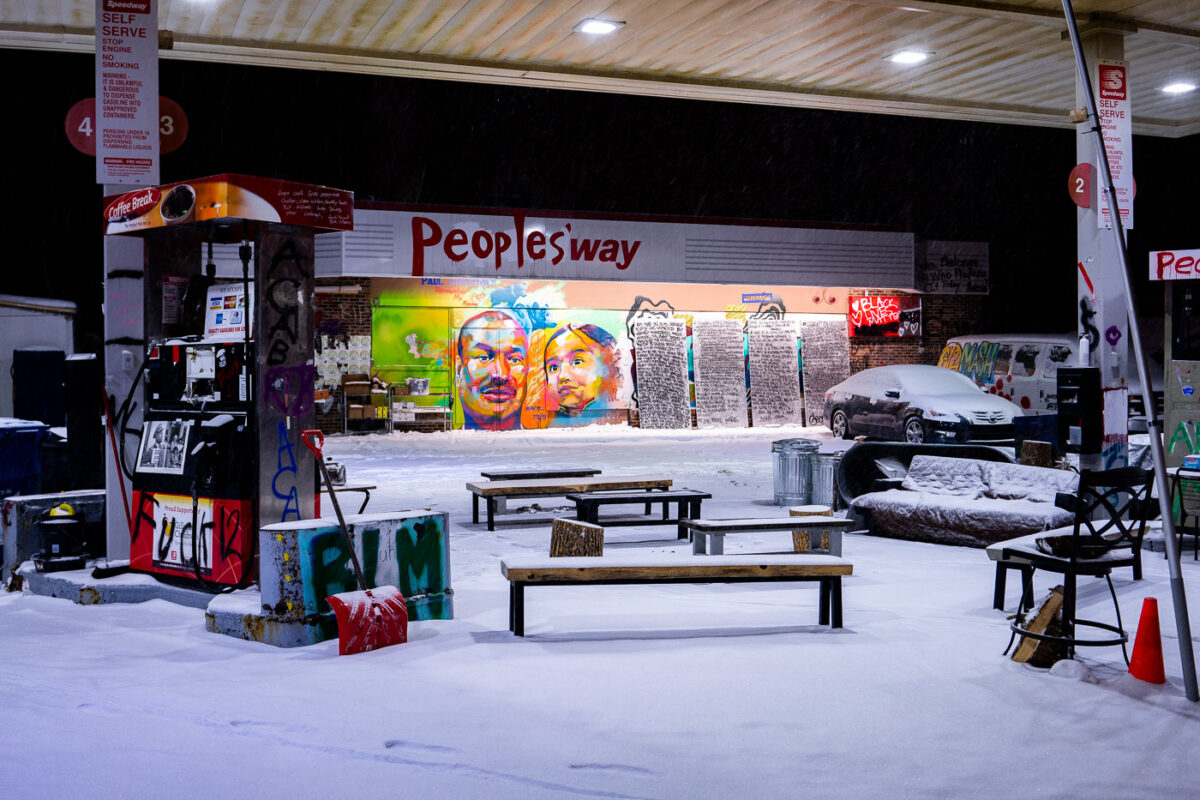
December 2020 — The People’s Way at George Floyd Square after a fresh snowfall. The intersection has been a protest zone since the May 25th, 2020 death of George Floyd.
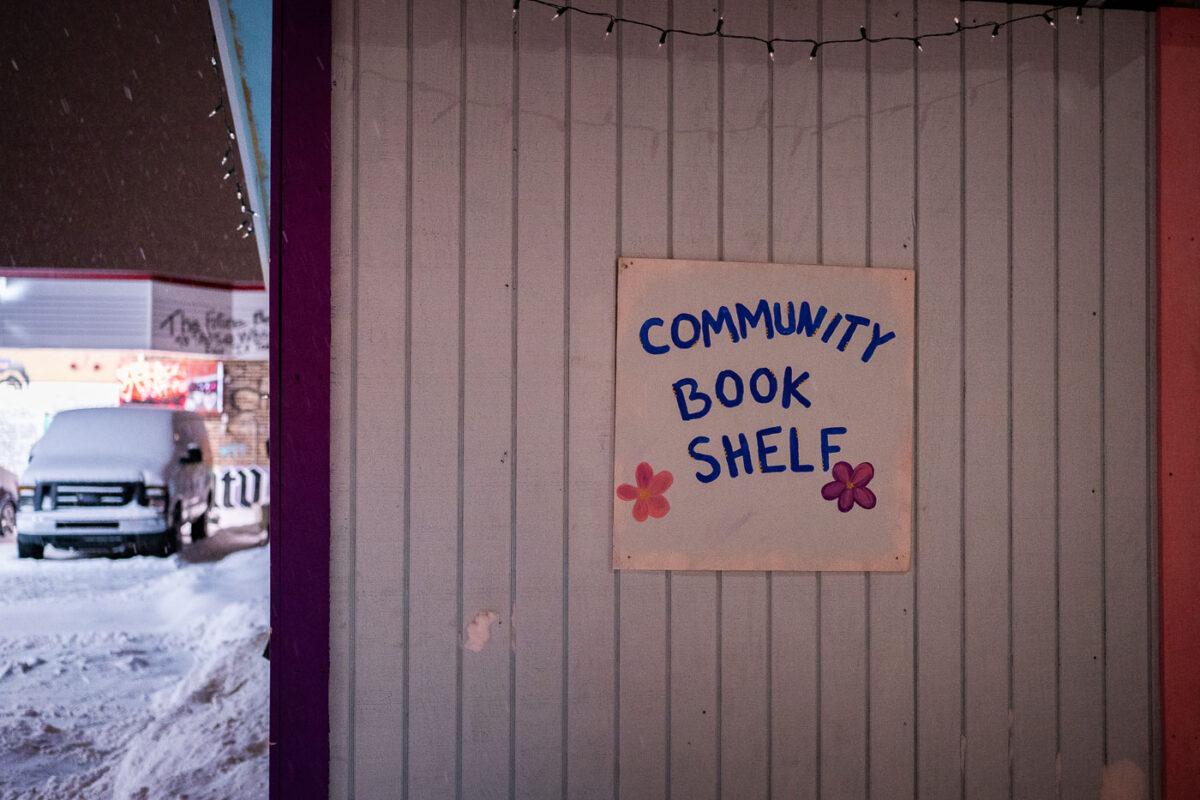
December 2020 — The Community Book Shelf at George Floyd Square in Minneapolis. The building holds books that people can drop off and take out.
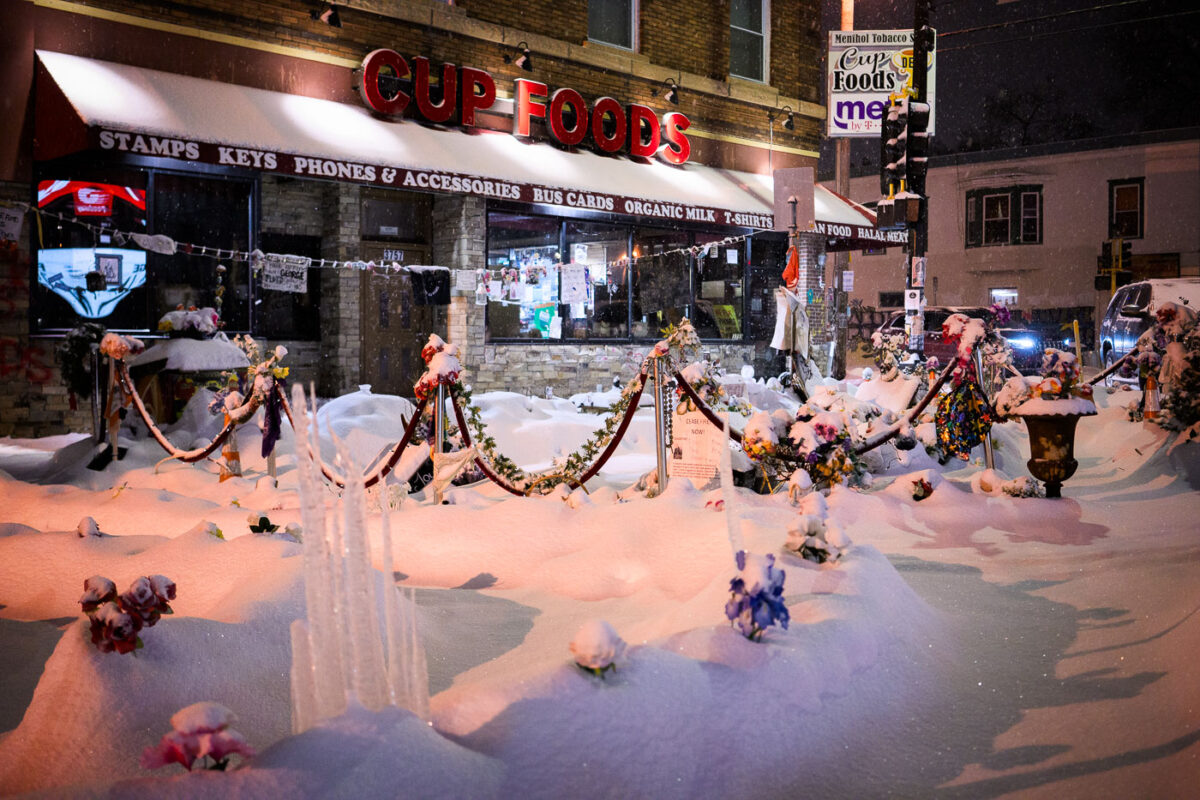
December 2020 — The George Floyd Memorial at George Floyd Square after a fresh December snowfall.
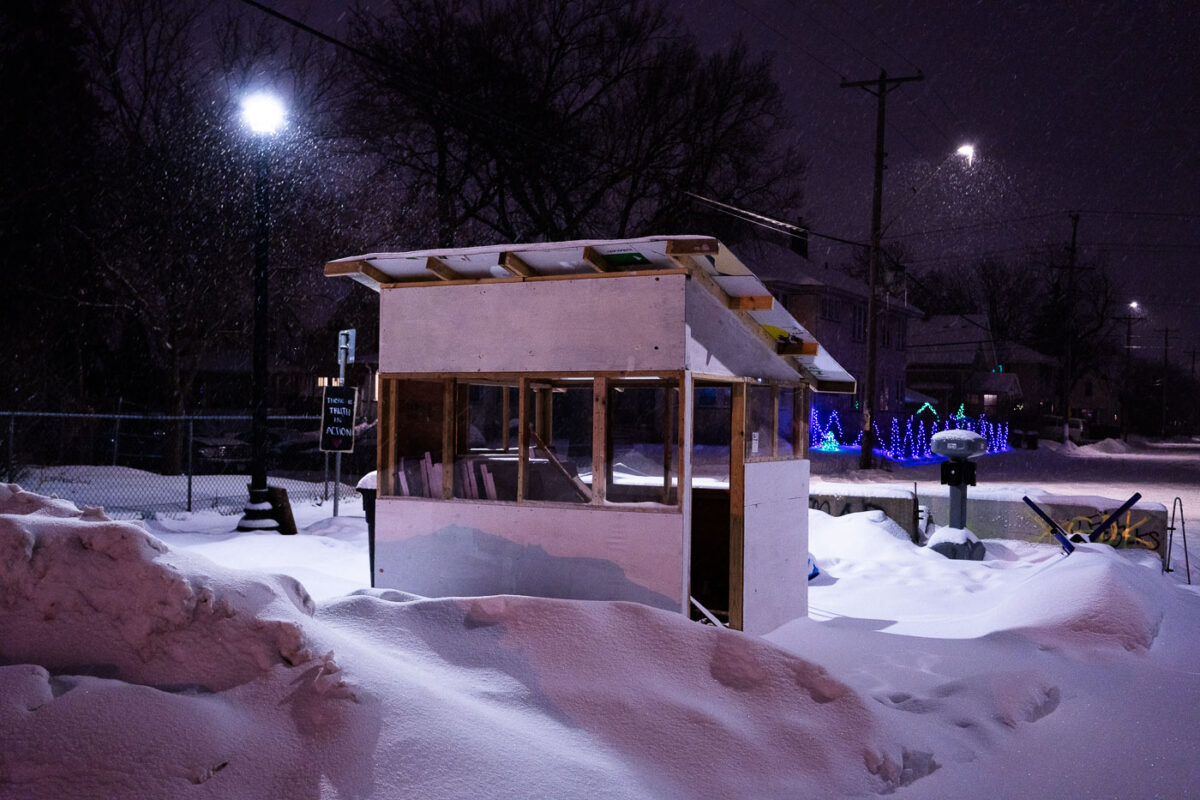
December 2020 — Winter warming huts and barricades at George Floyd Square.
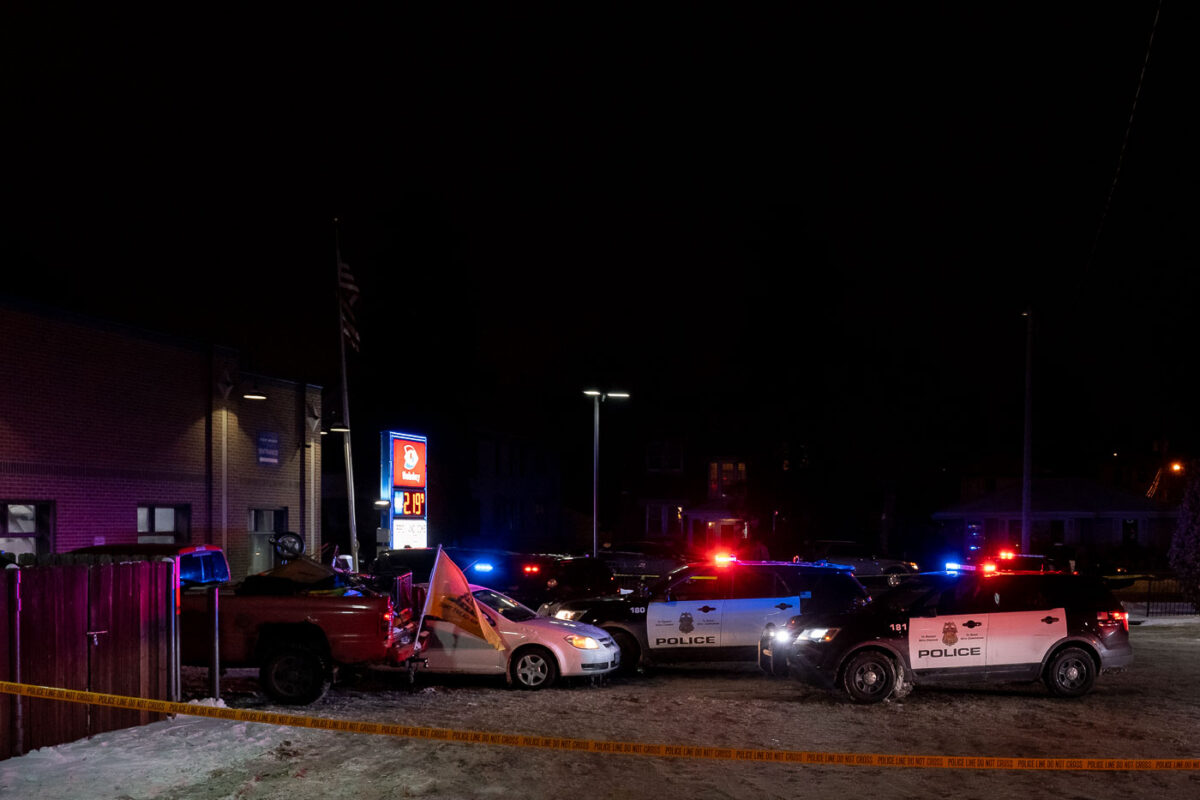
December 2020 — Minneapolis Police fatally shoot a man after a traffic stop.
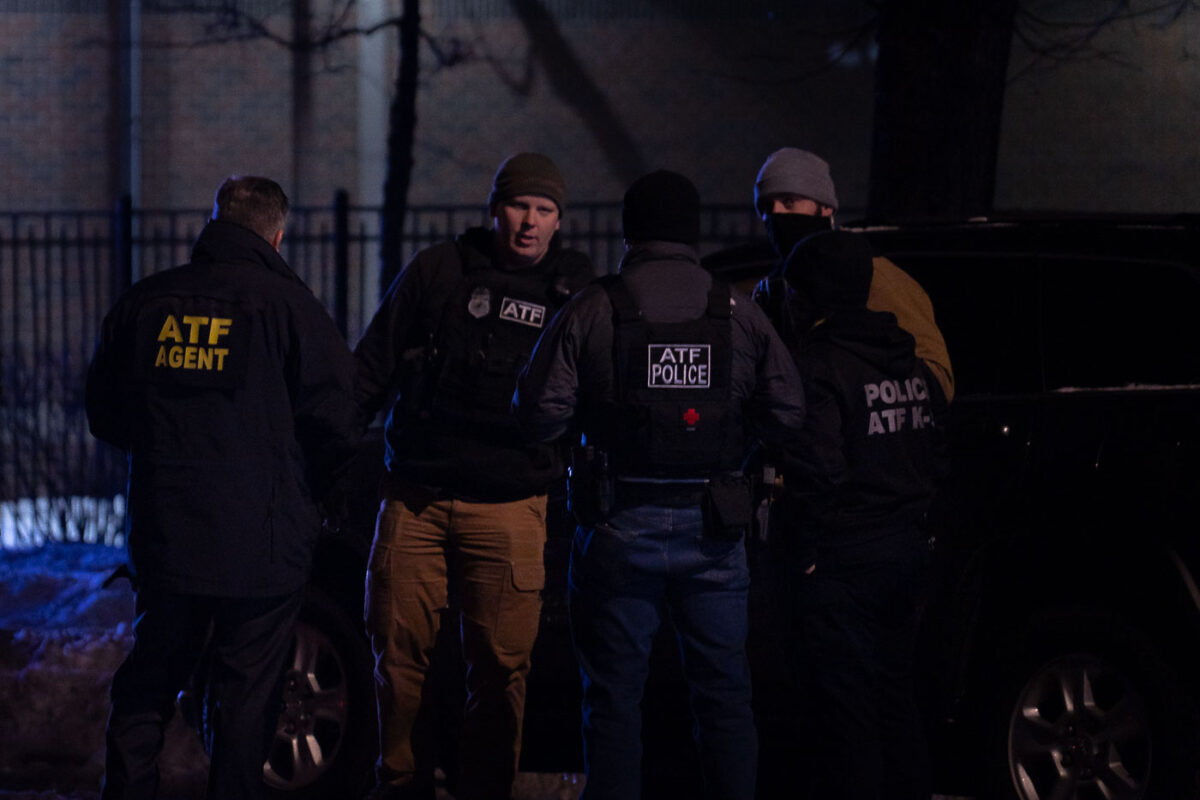
December 2020 — The ATF and DEA gather outside the Holiday Gas station where Dolal Idd was shot and killed by Minneapolis Police on December 31, 2020.
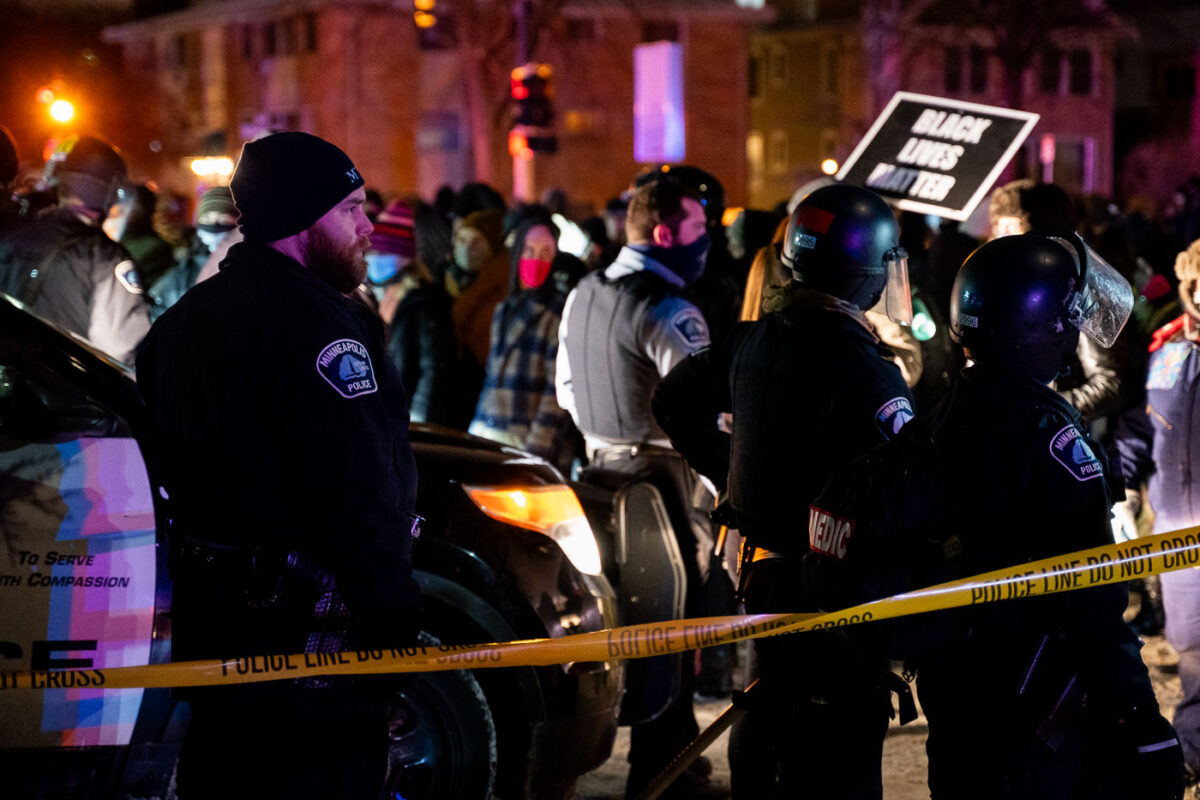
December 2020 — Minneapolis police surround the Holiday Gas station where Dolal Idd was shot and killed as protesters gather.
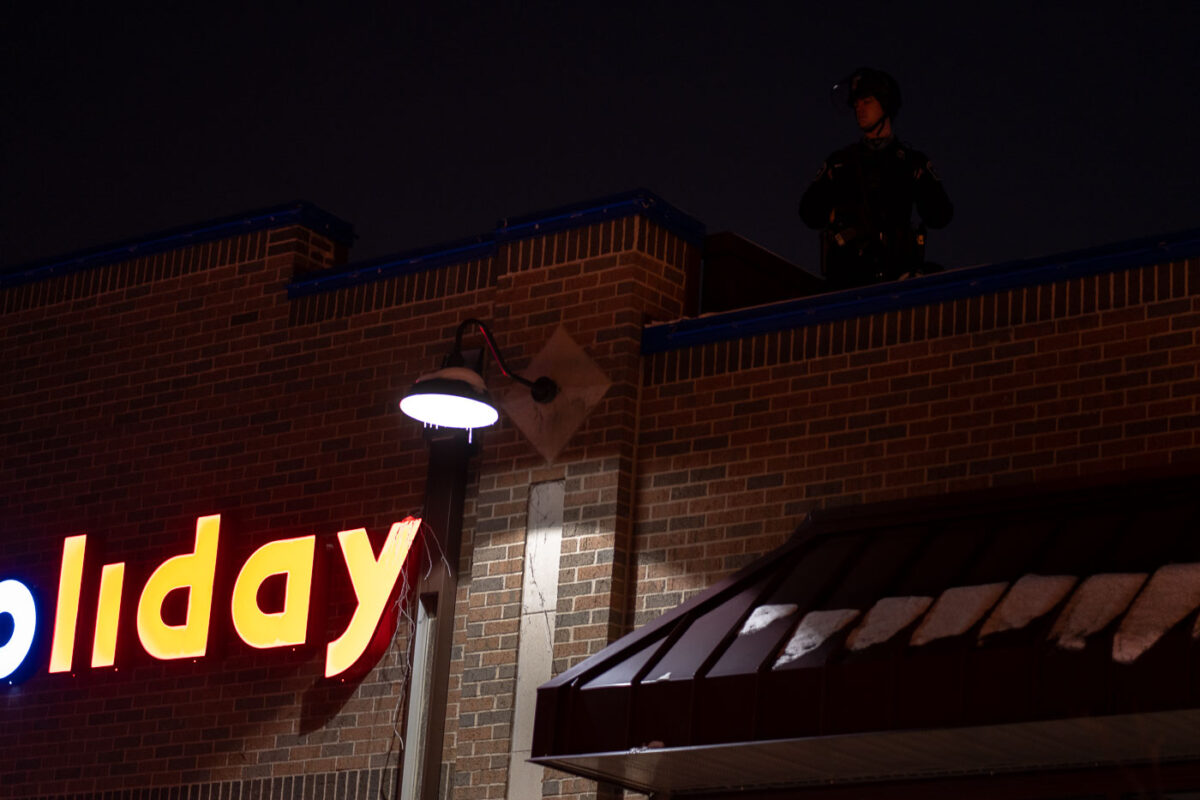
December 2020 — Minneapolis Police on the roof of the Holiday gas station as protesters gather outside where Minneapolis police shot and killed Dolal Idd.
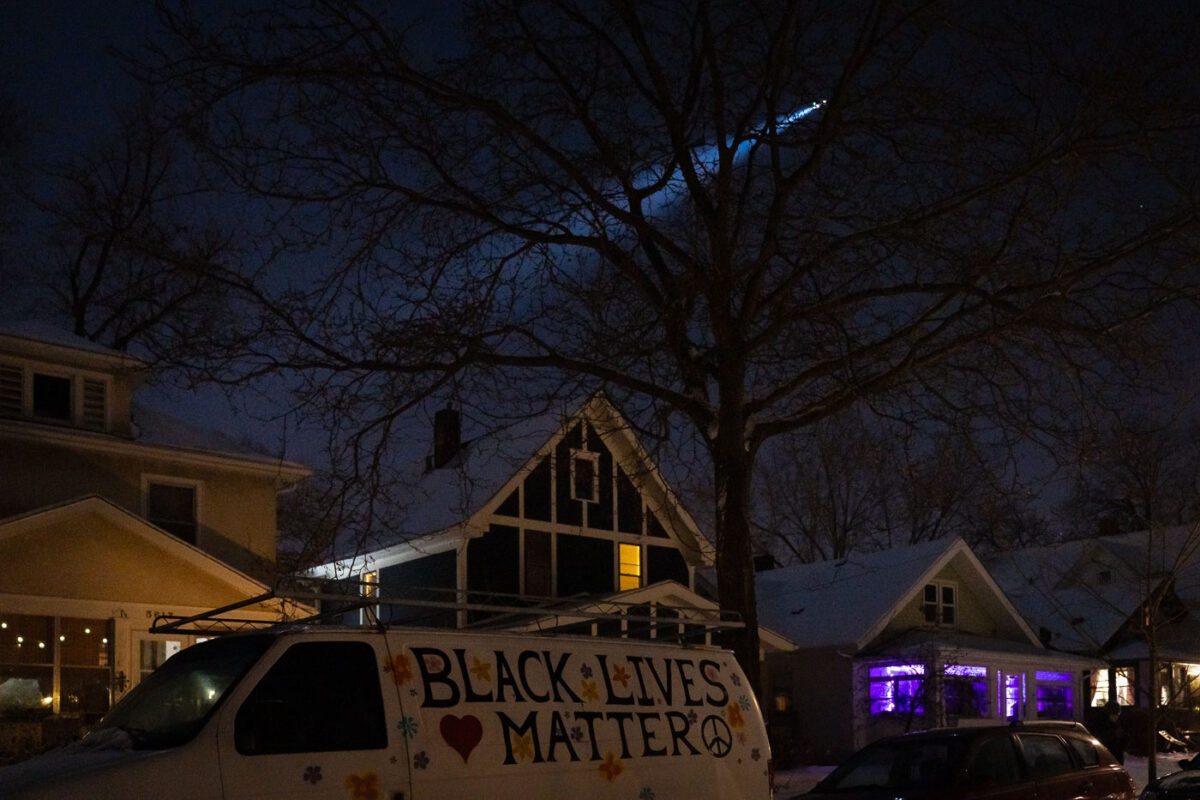
December 2020 — A helicopter shines it's light down towards protesters outside the gas station where Dolal Idd was killed by Minneapolis Police. Protesters had begun gathering.
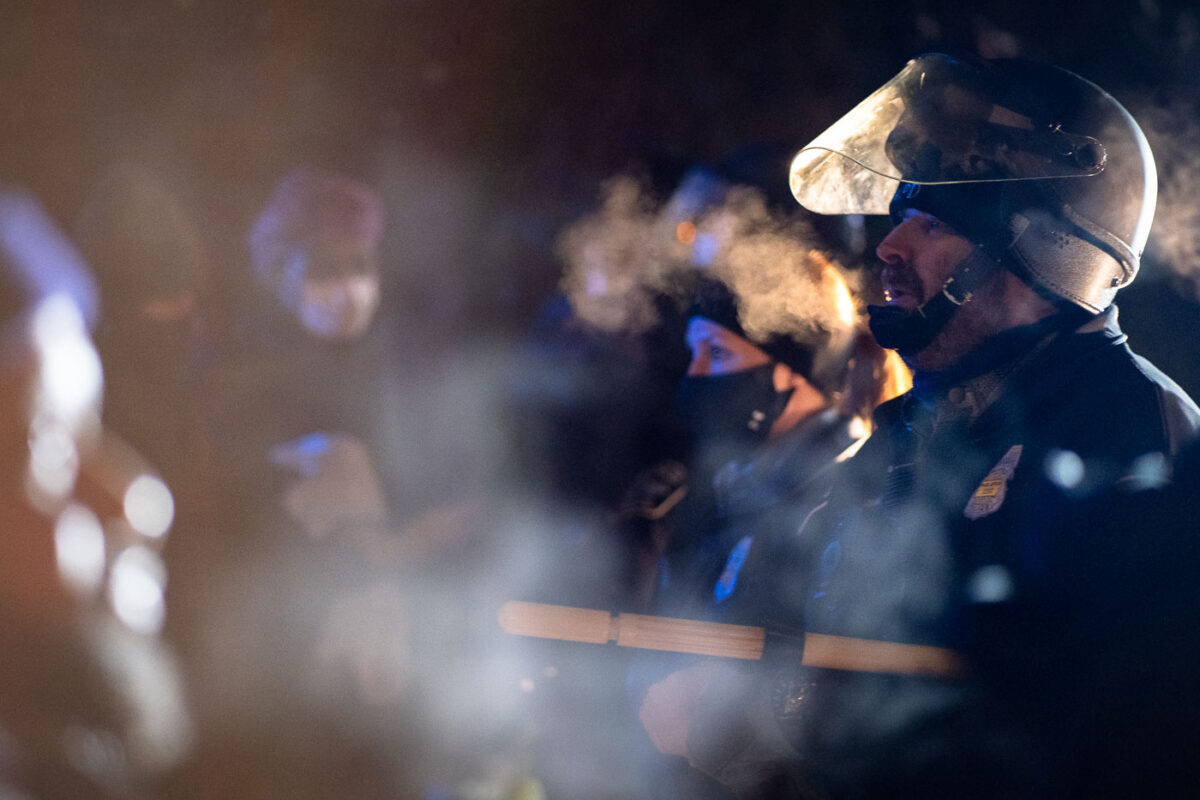
December 2020 — A Minneapolis police officer stands guard outside the crime scene where Dolal Idd was shot and killed by Minneapolis Police.
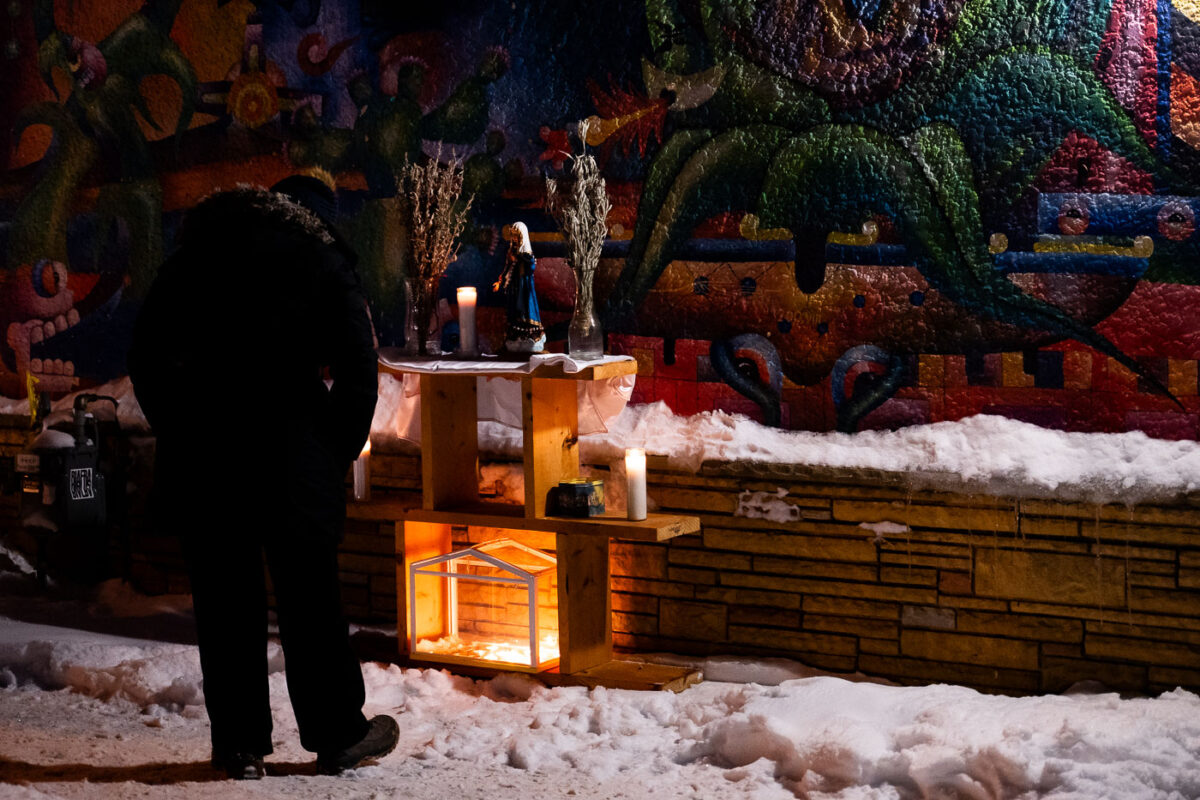
December 2020 — A man at a vigil across from where Dolal Idd was killed by Minneapolis Police.
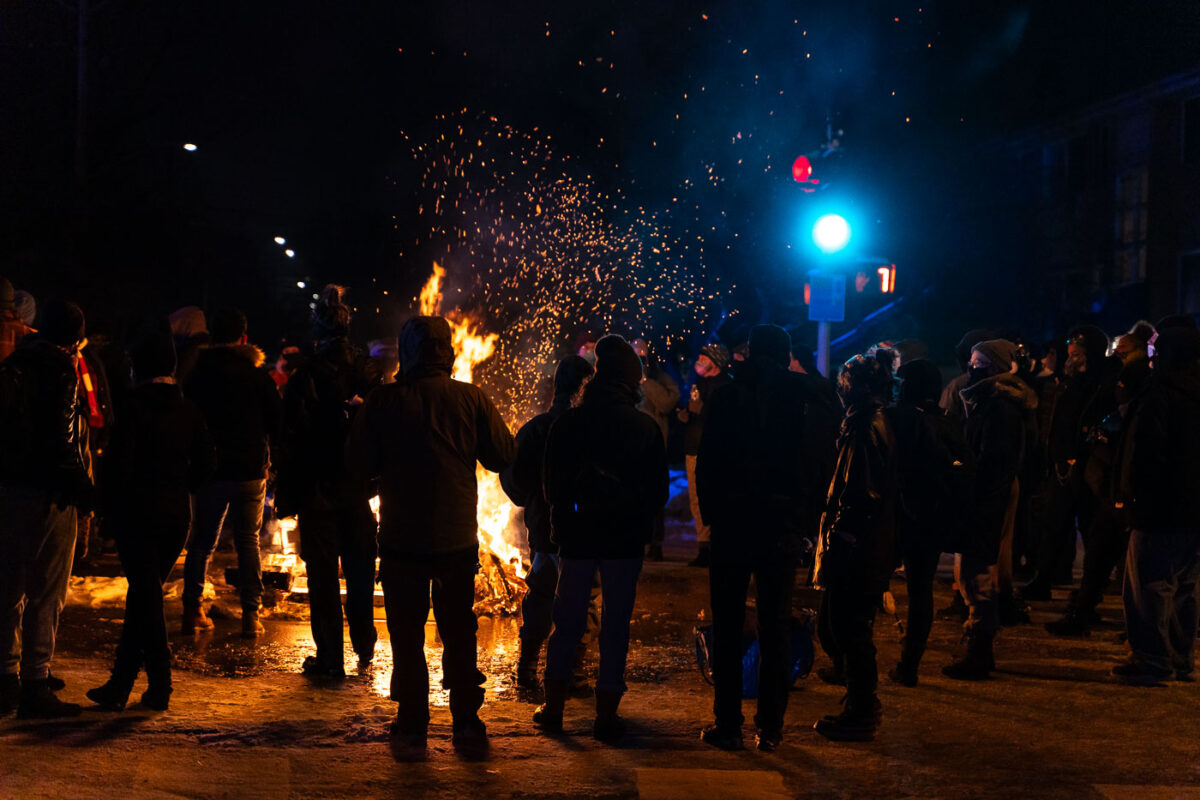
December 2020 — Protesters gather at 36th and Cedar after the Minneapolis Police shoot and kill Dolal Idd. Earlier in the year George Floyd was killed by Minneapolis Police about a mile away.
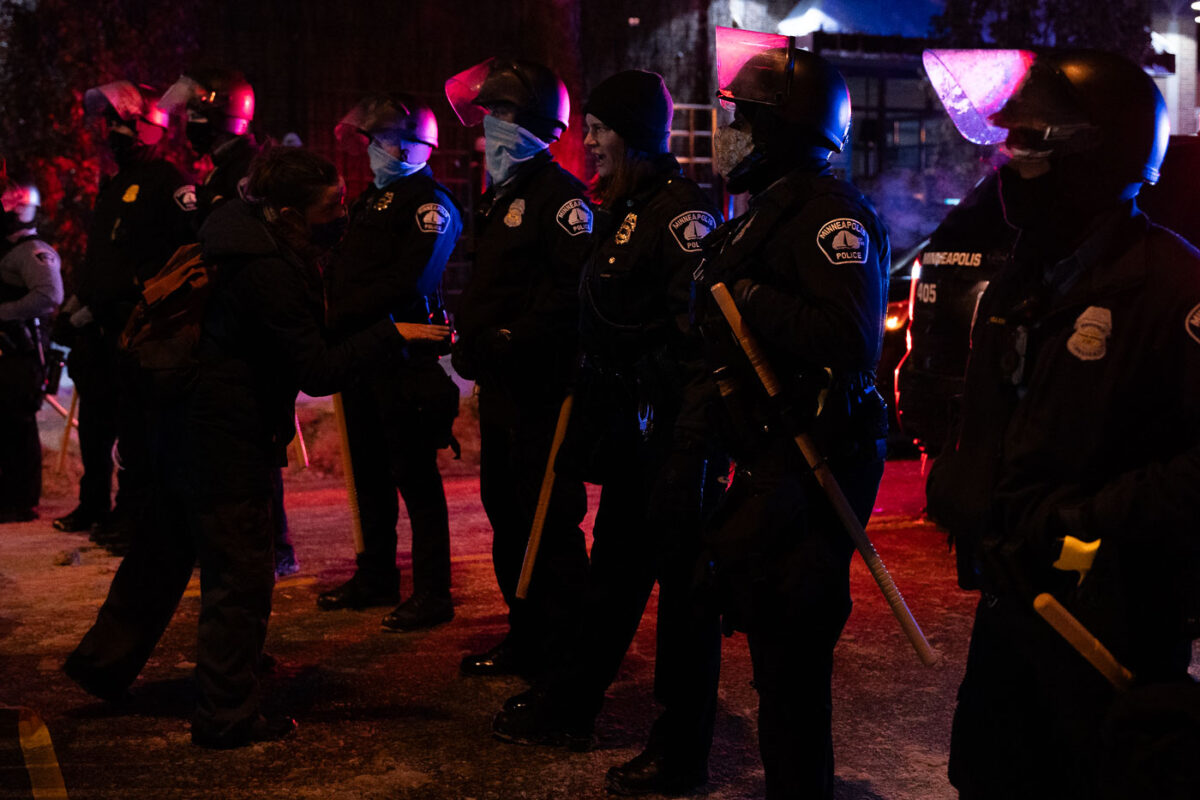
December 2020 — Protesters and police outside the gas station that Dolal Idd was killed earlier in the day.
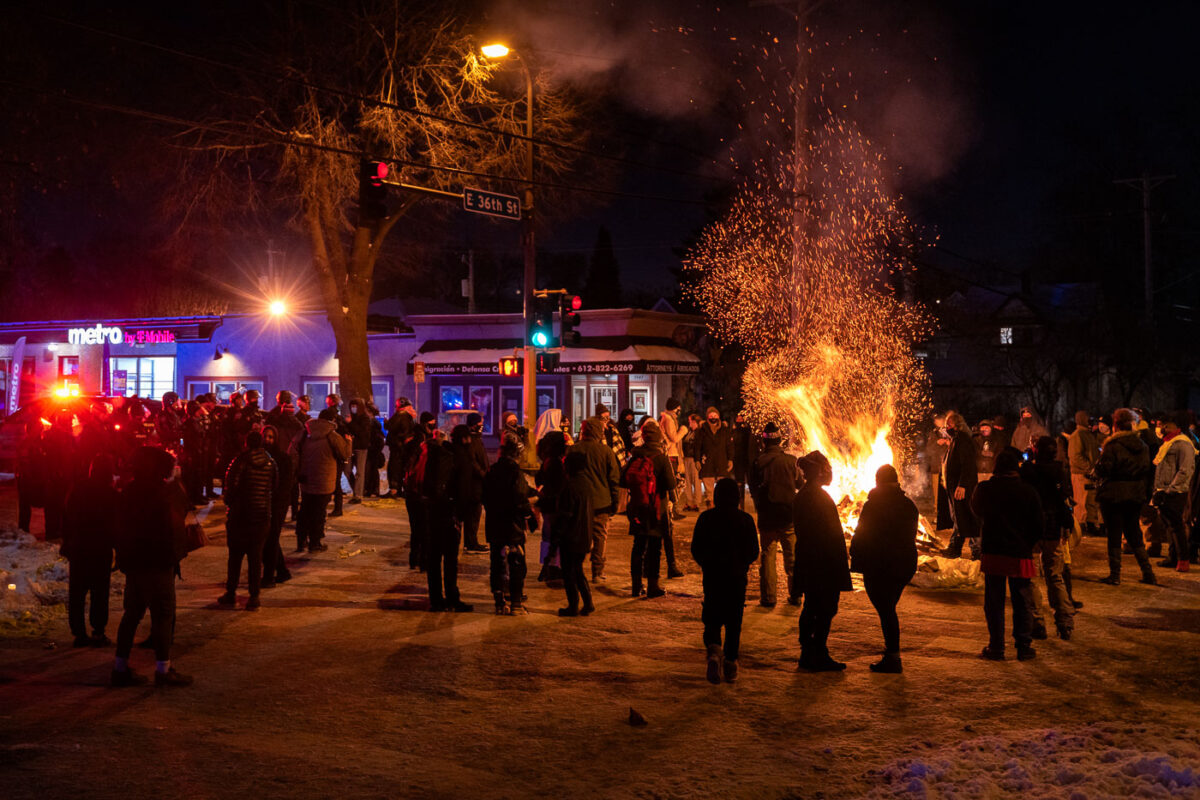
December 2020 — Protesters gather in the street outside the gas station where Minneapolis police killed Dolal Idd. Earlier in the year George Floyd was killed a mile away.
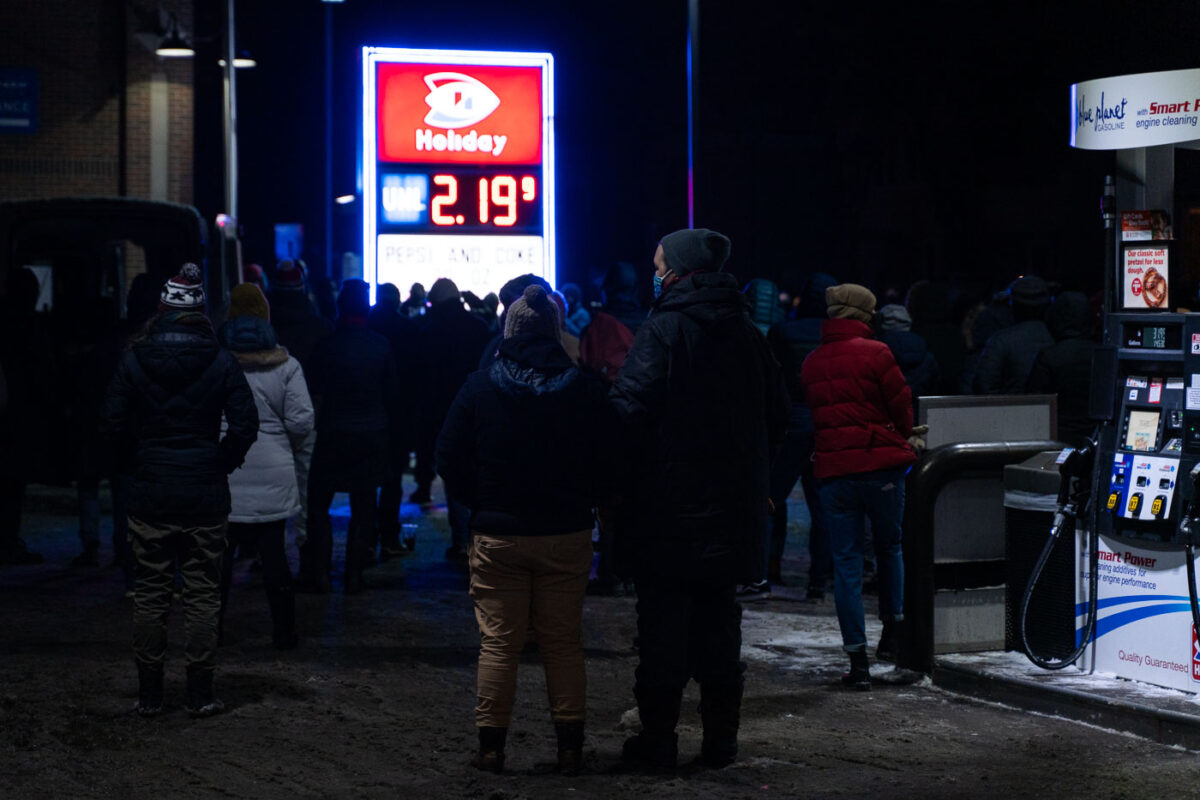
December 2020 — Protesters gather the day after Dolal Idd was shot and killed by Minneapolis police.
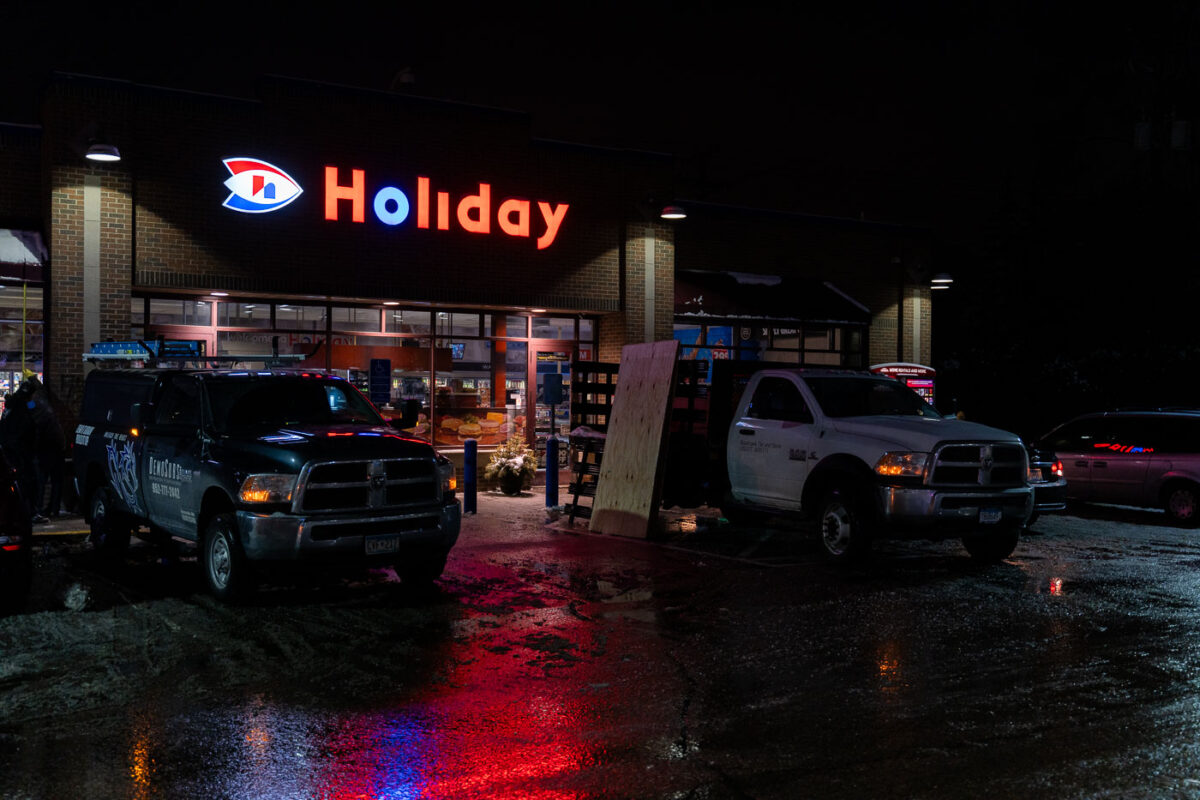
December 2020 — Workers board up windows at Holiday Gas on Cedar Ave in South Minneapolis in preparation for any possible unrest following the Minneapolis Police shooting of Dolal Idd. Earlier in the year George Floyd was killed by Minneapolis police a mile away.
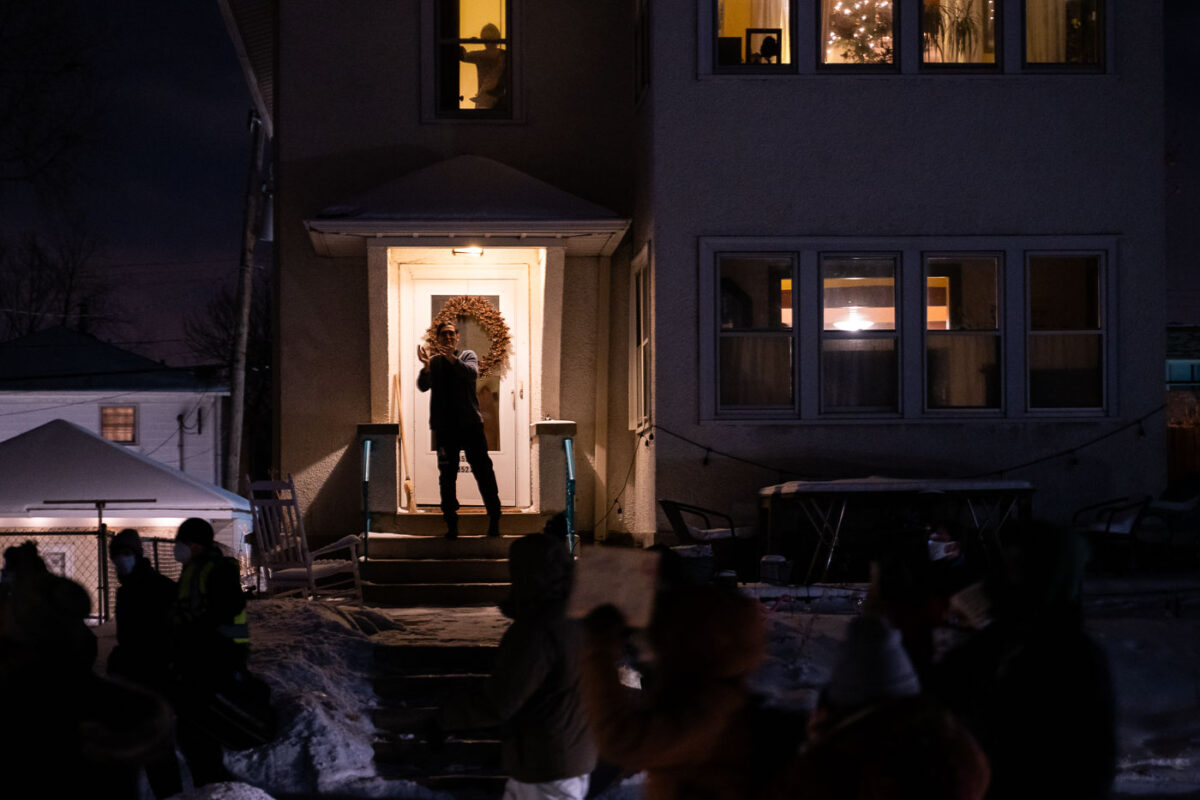
December 2020 — A neighbor comes out to show his support as protesters march down 17th Ave the night after Dolal Idd was killed by Minneapolis Police.
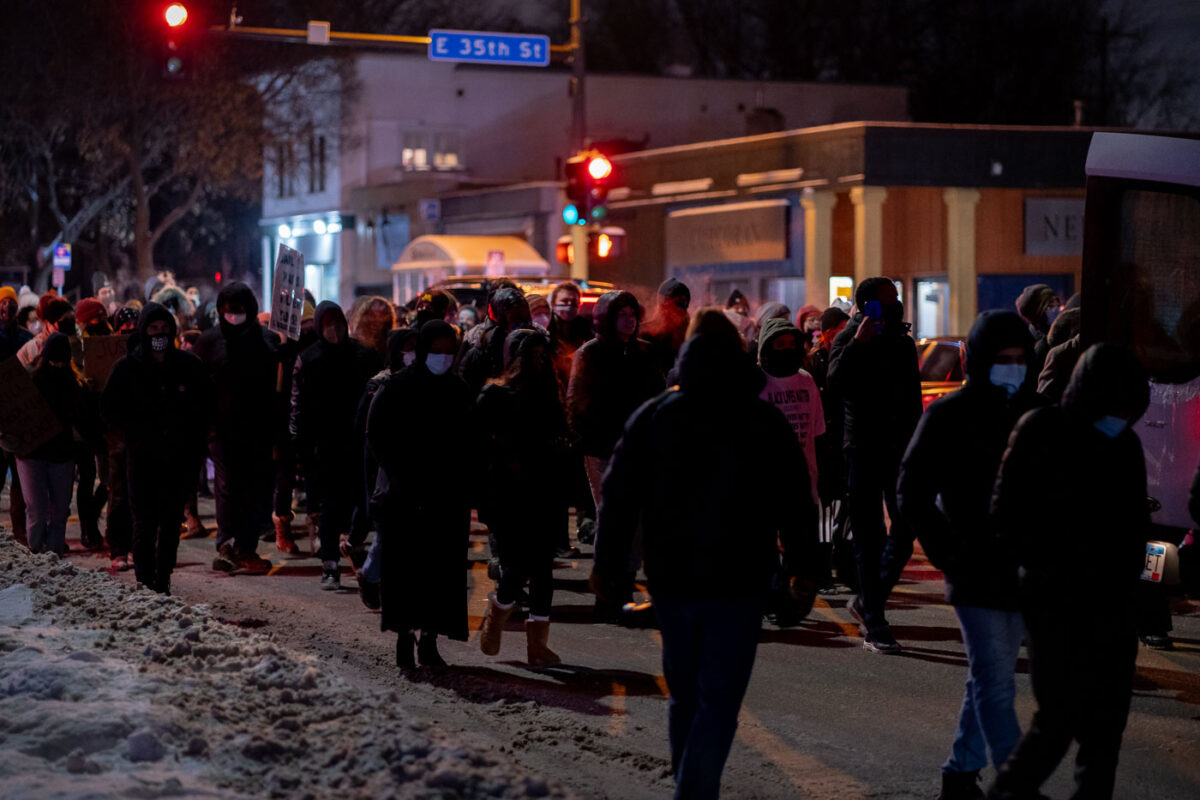
December 2020 — Protesters march down Cedar Ave a night after the Minneapolis police shoot and kill Dolal Idd. Minneapolis Police released video they say showed Dolal Idd shooting first through the window of his car during a firearm sting.
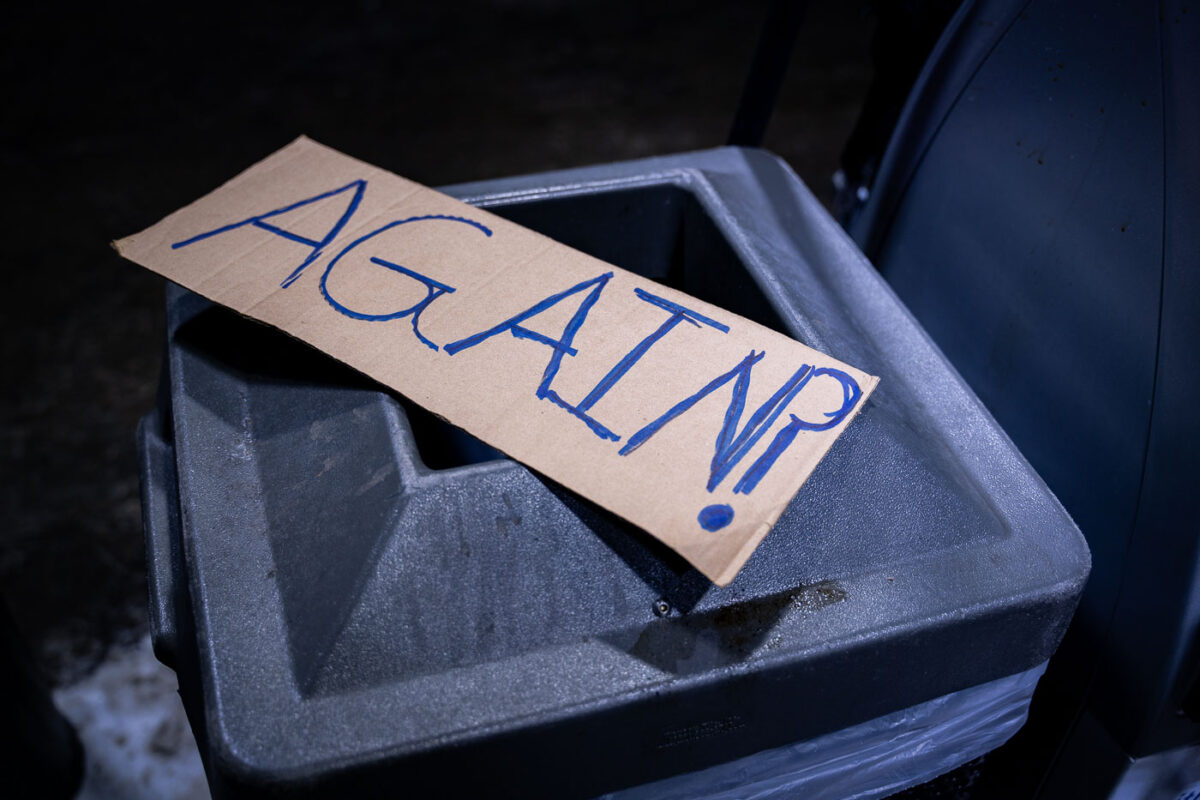
December 2020 — A protest sign reading "AGAIN?" sits at a vigil for Dolal Idd who was killed by the Minneapolis Police on December 30th.
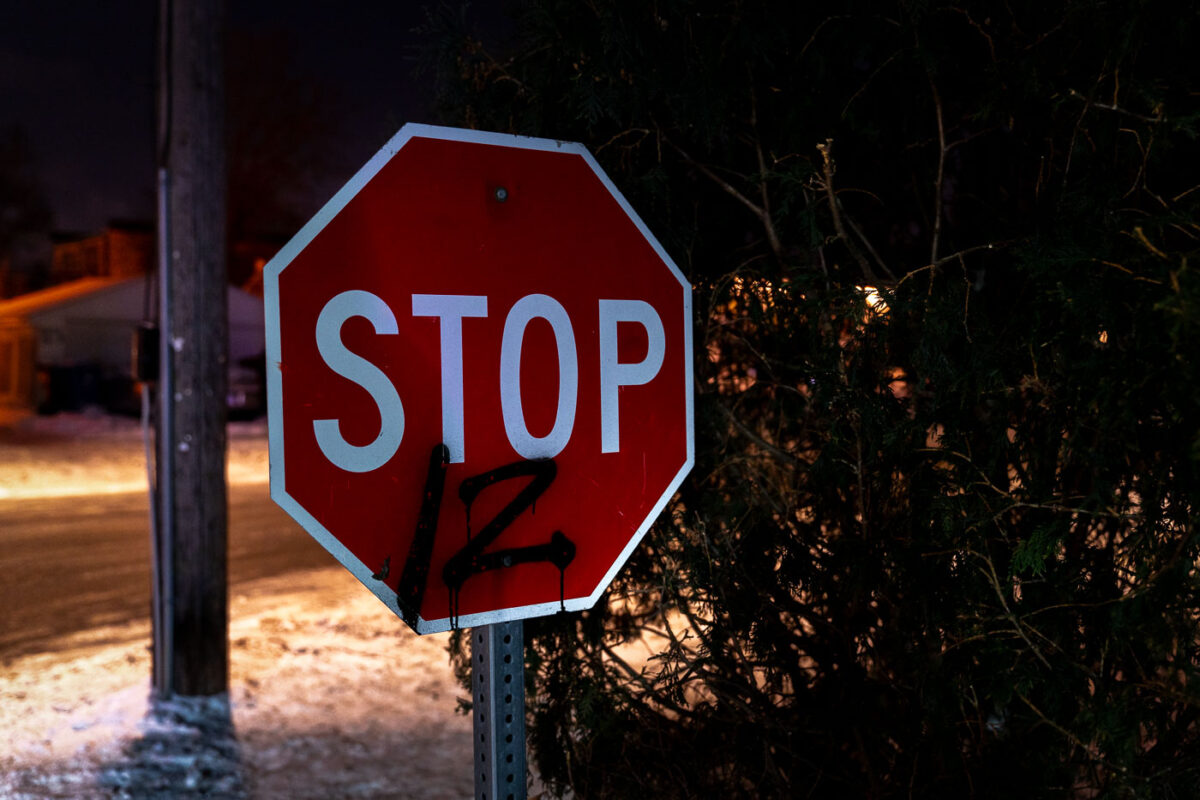
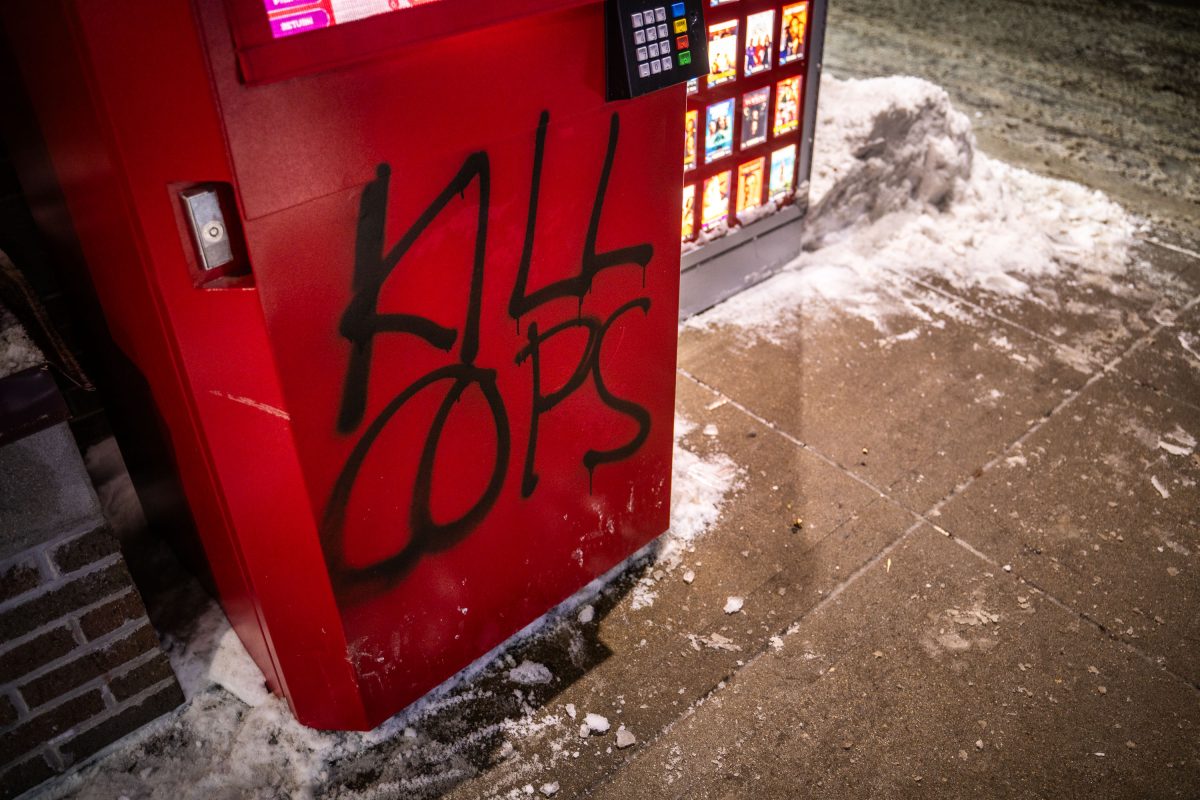
December 2020 — “Stop 12" graffiti at Holiday Gas on Cedar Ave. The Minneapolis Police shot and killed Dolal Idd the night before on December 30th, 2020. This is one mile from where George Floyd was murdered. Minneapolis Police released video they say showed Dolal Idd shooting first through the window of his car during a firearm sting.
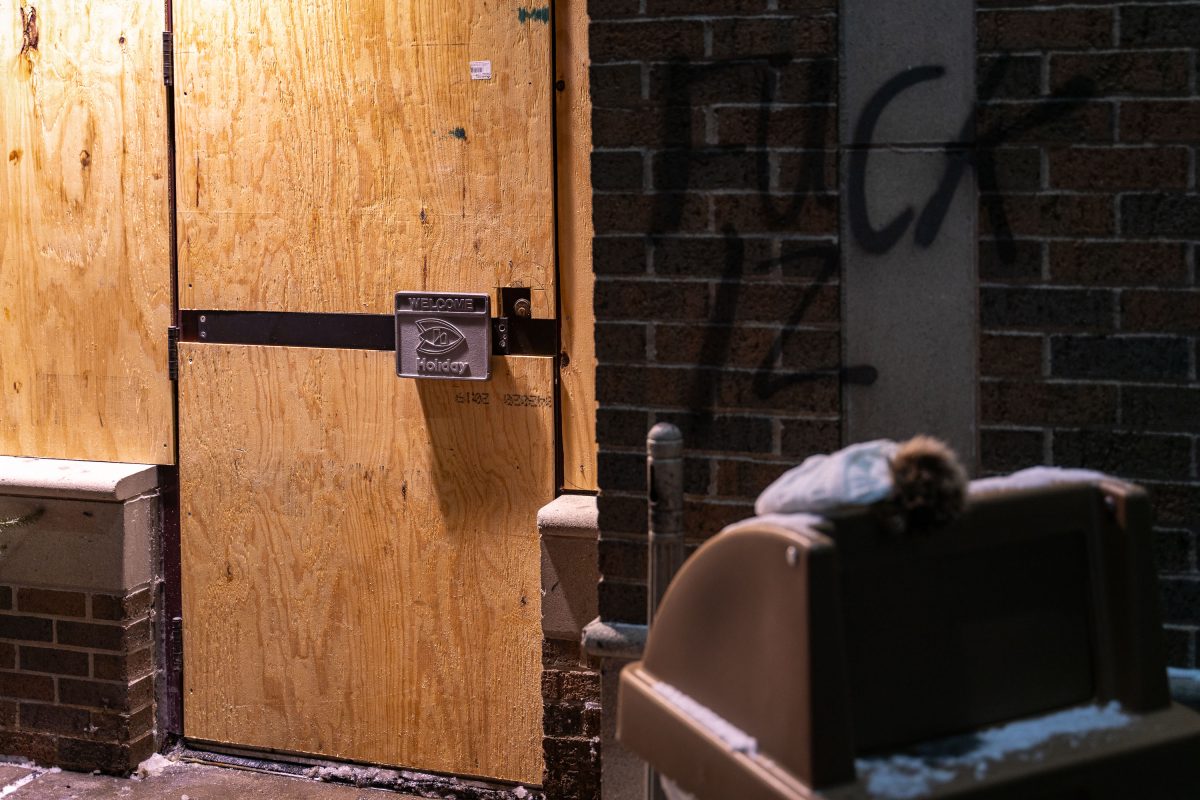
December 2020 —
December 2020 —
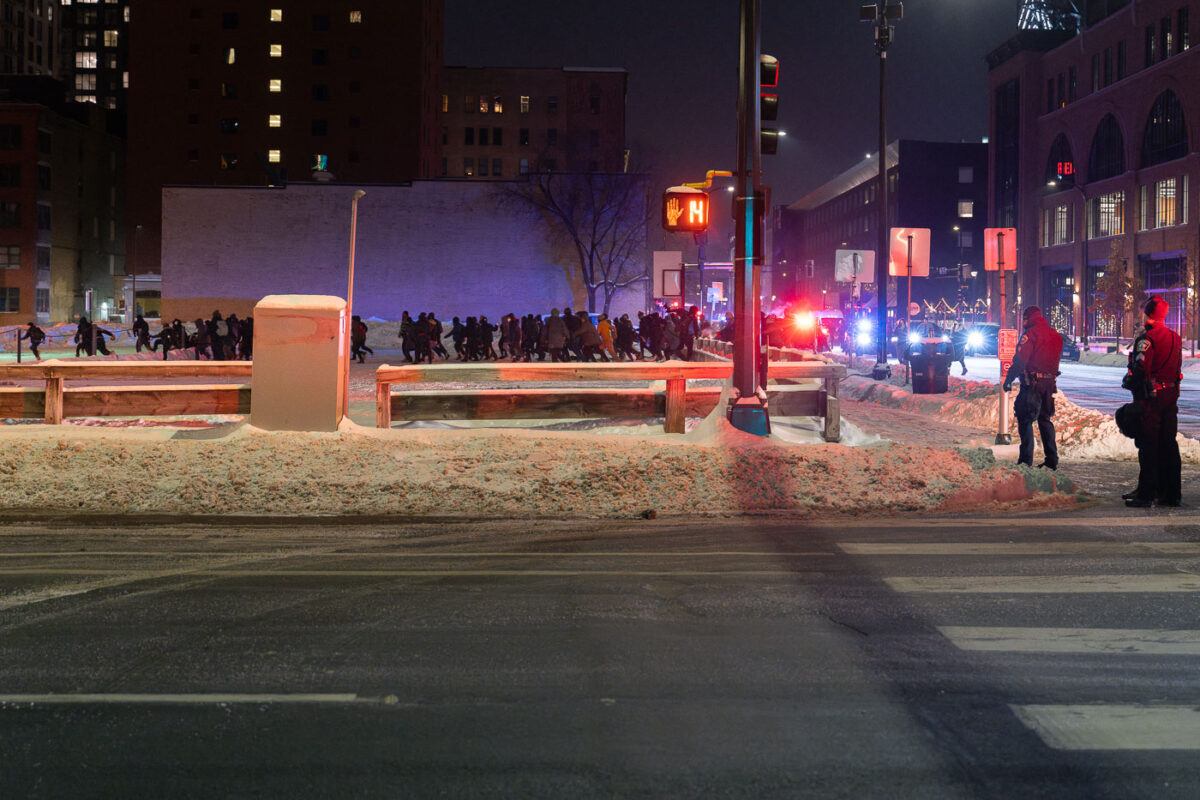
January 2021 — Around a hundred joined a NYE nationwide call for protest supporting those imprisoned by the state. The Minneapolis Police, State Patrol, Golden Valley PD, Hennepin Sheriffs, & state aerial surveillance descended on the area to arrest dozens after the jail was spray-painted.
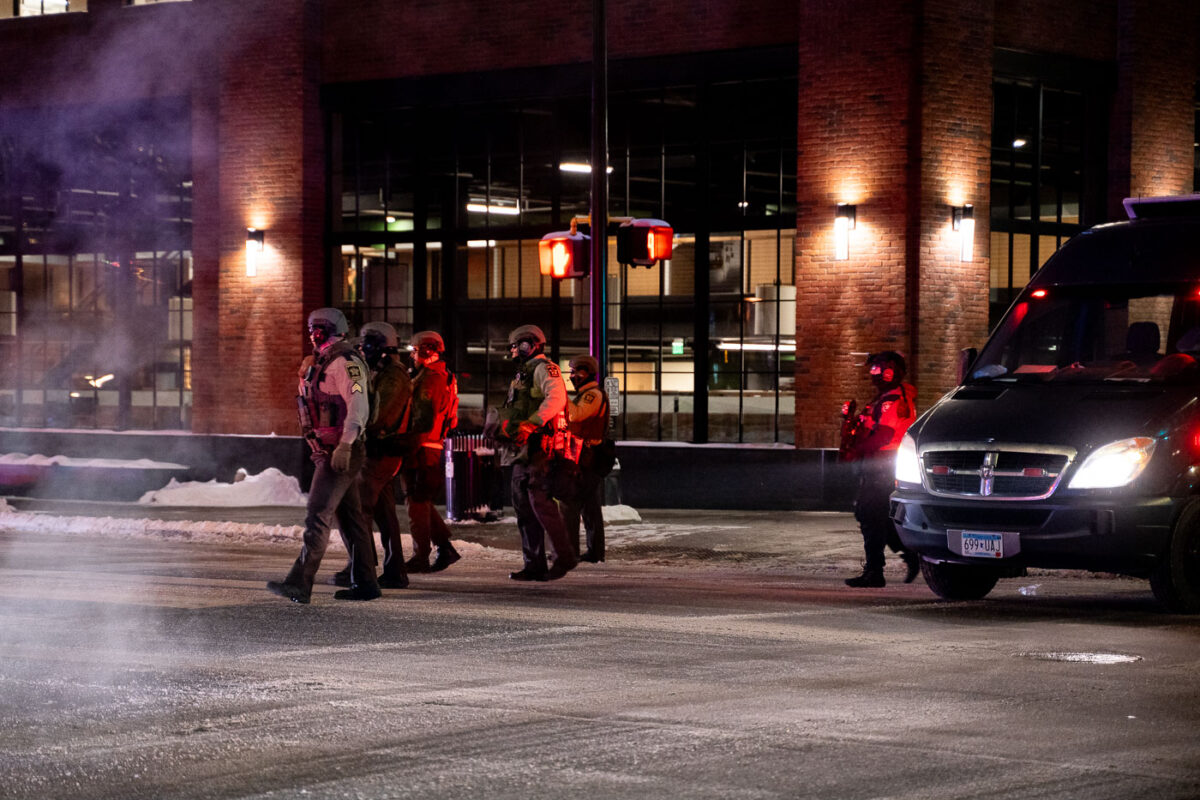
January 2021 — Around 40 were arrested after participating in a annual natiowide "Noise Demonstration" calling for the abolishing of prisons and standing in solidarity with those incarcerated.
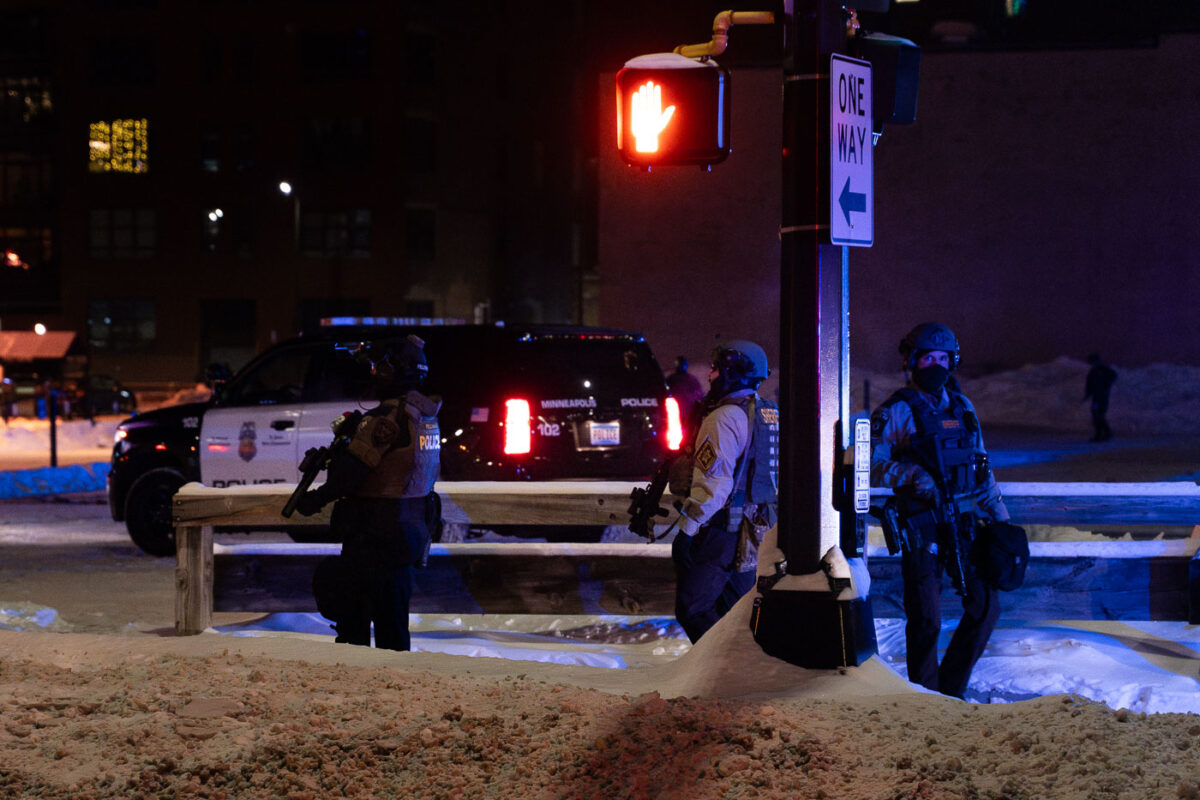
January 2021 — Around 100 in Minneapolis joined a NYE nationwide call for protest supporting those imprisoned by the state. After the jail was spray-painted Minneapolis Police, State Patrol, Golden Valley PD, Hennepin Sheriffs, & state aerial surveillance descended on the area to arrest dozens.
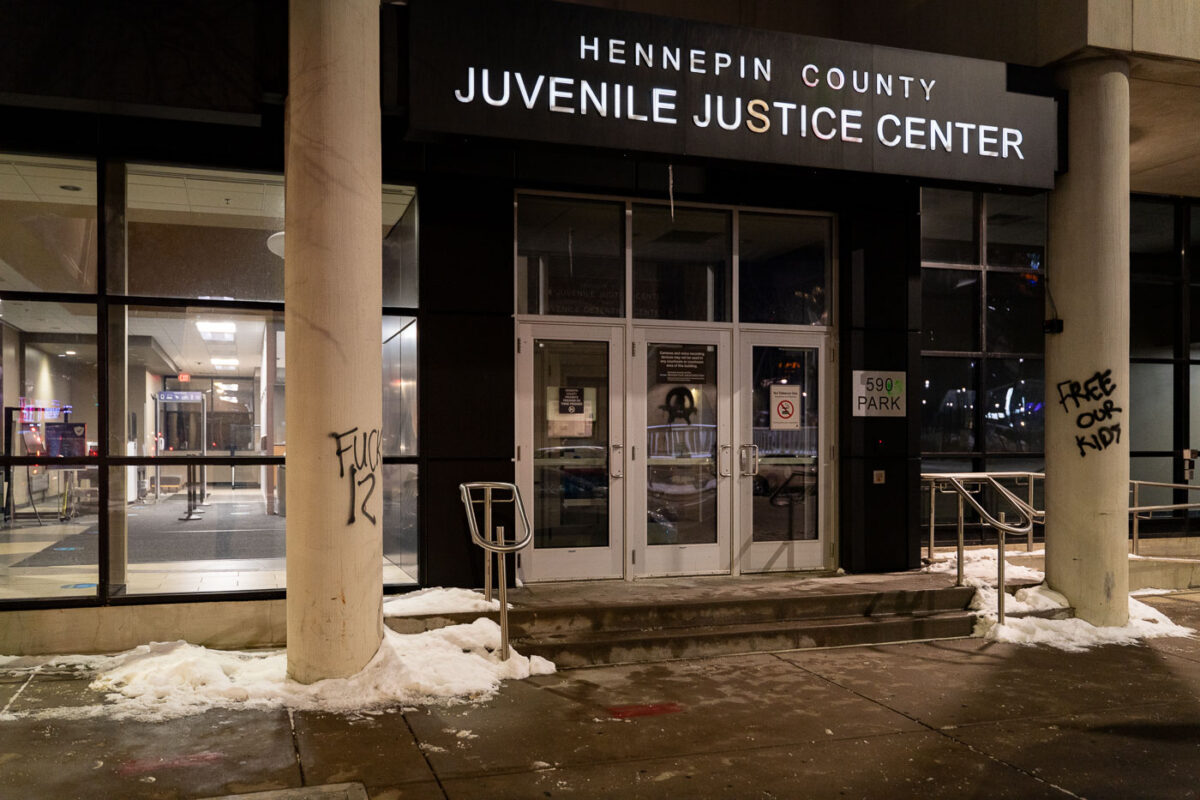
January 2021 — Around a hundred joined a NYE nationwide call for protest supporting those imprisoned by the state. The Minneapolis Police, State Patrol, Golden Valley PD, Hennepin Sheriffs, & state aerial surveillance descended on the area to arrest dozens after the jail was spray-painted.
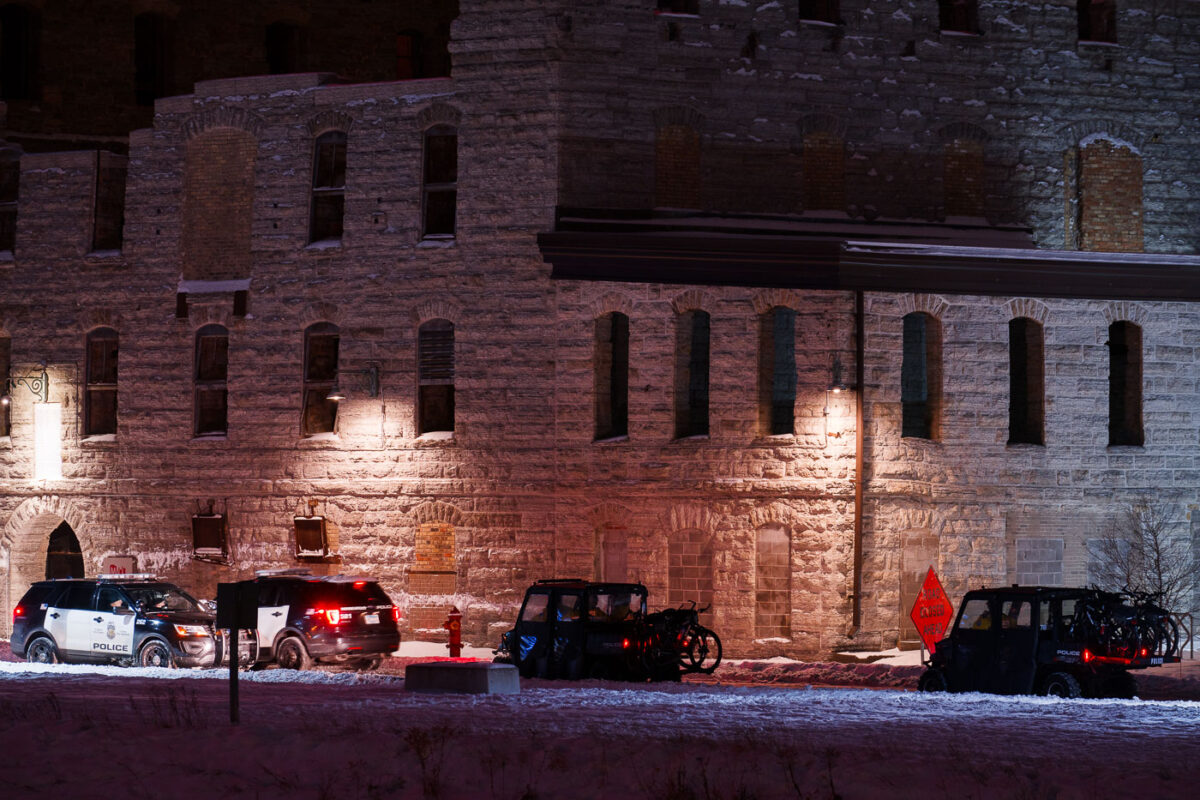
January 2021 — Around 100 in Minneapolis joined a NYE nationwide call for protest supporting those imprisoned by the state. After the jail was spray-painted Minneapolis Police, State Patrol, Golden Valley PD, Hennepin Sheriffs, & state aerial surveillance descended on the area to arrest dozens.
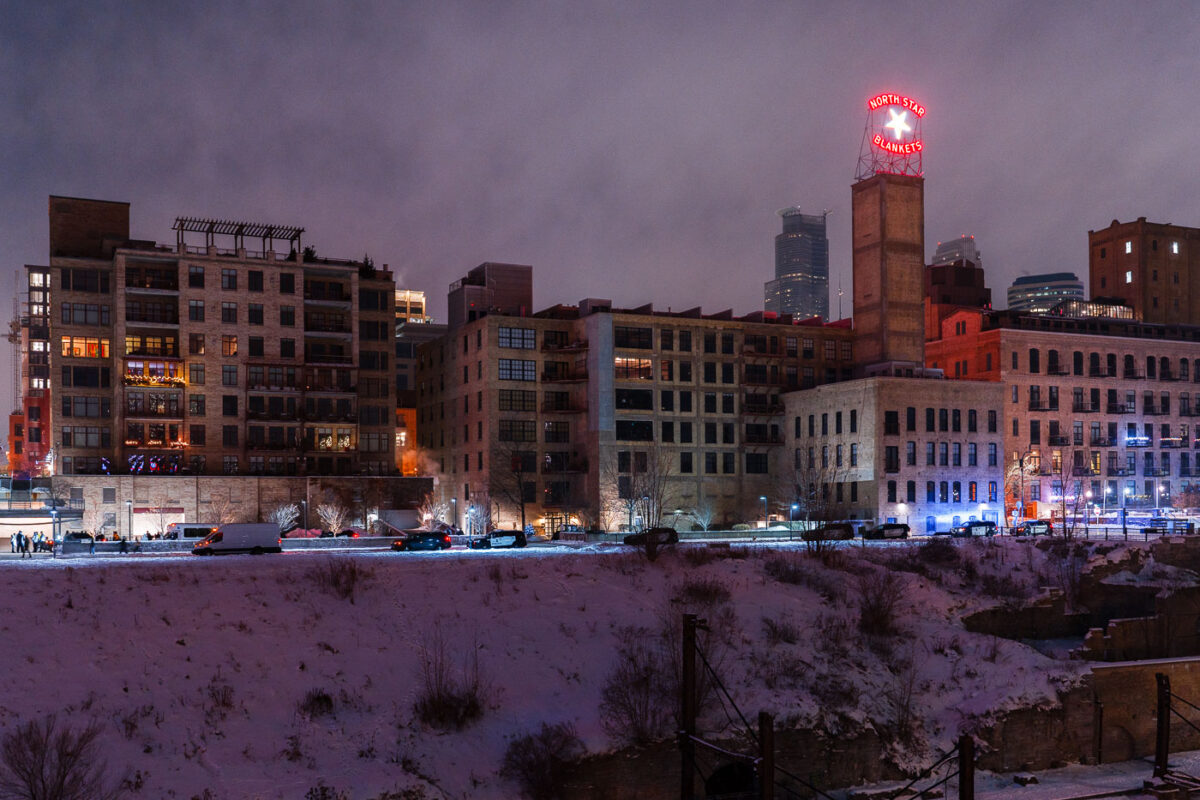
January 2021 — Around 40 were arrested after participating in a annual nationwide "Noise Demonstration" calling for the abolishing of prisons and standing in solidarity with those incarcerated.
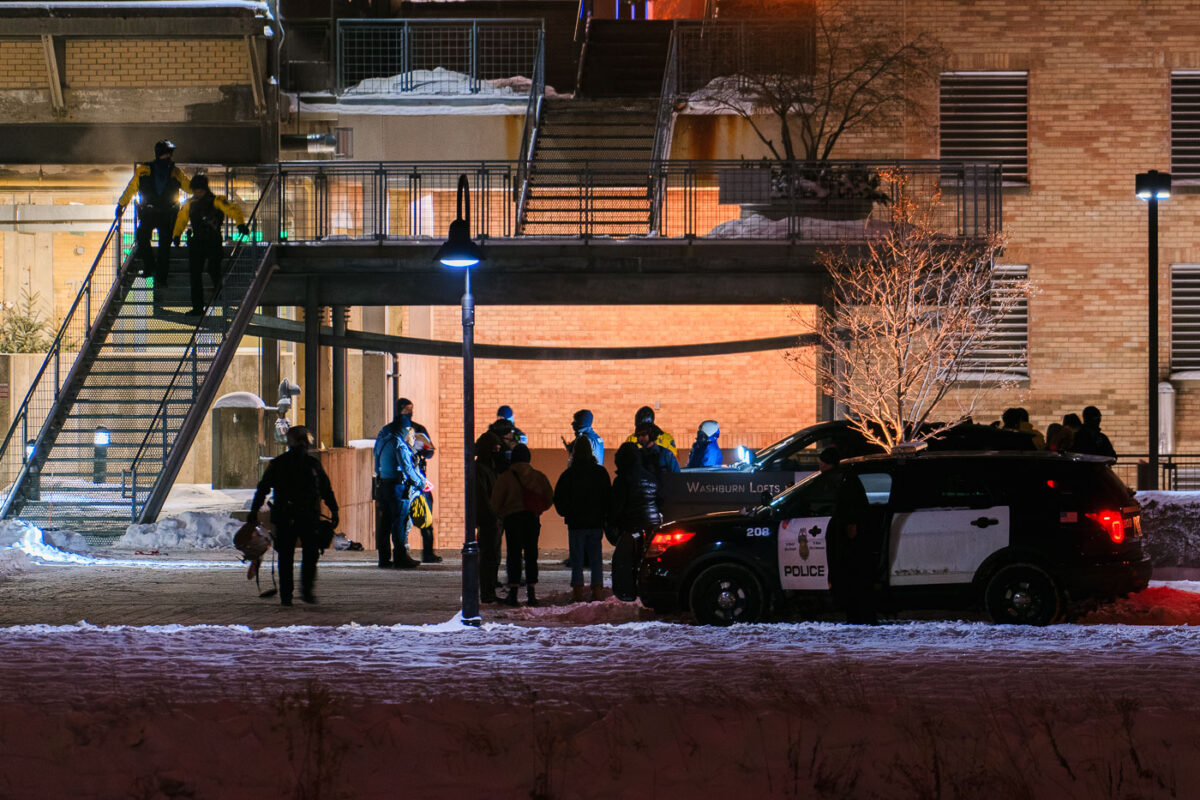
January 2021 — Around 40 were arrested after participating in a annual nationwide "Noise Demonstration" calling for the abolishing of prisons and standing in solidarity with those incarcerated.
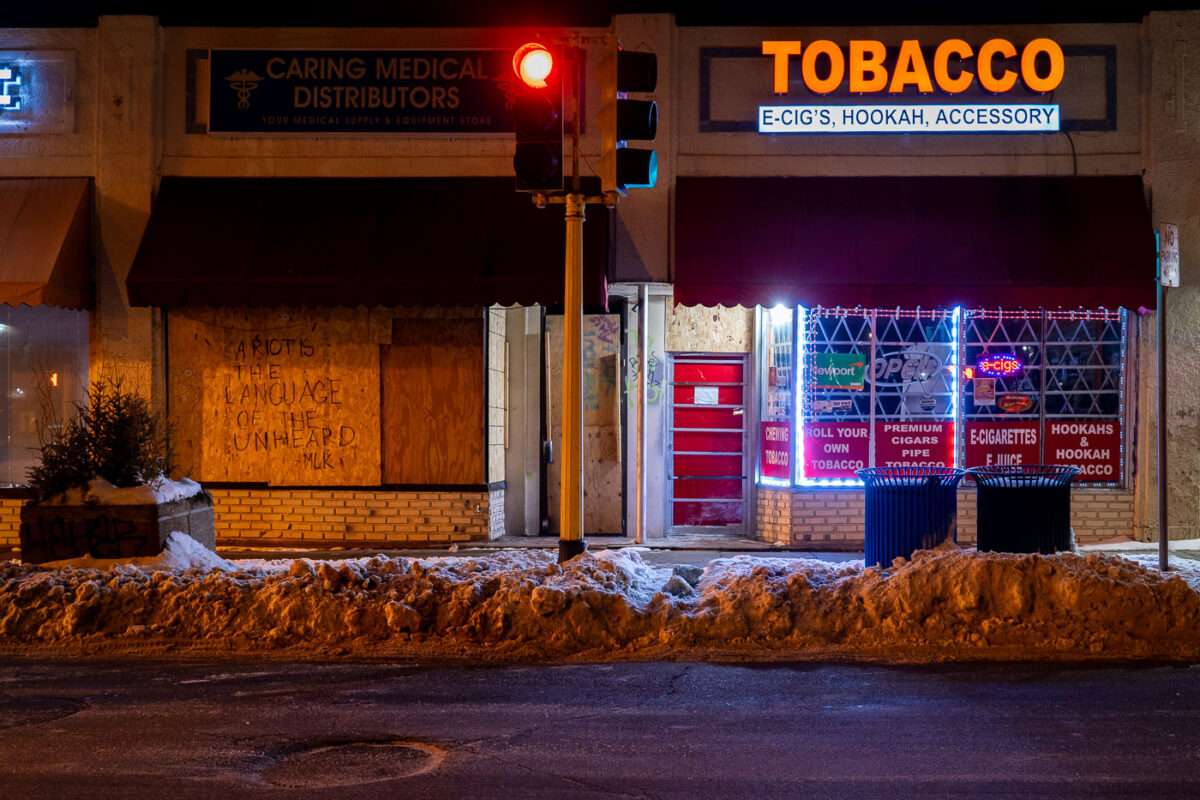
January 2021 — "A riot is the language of the unheard" -- MLK
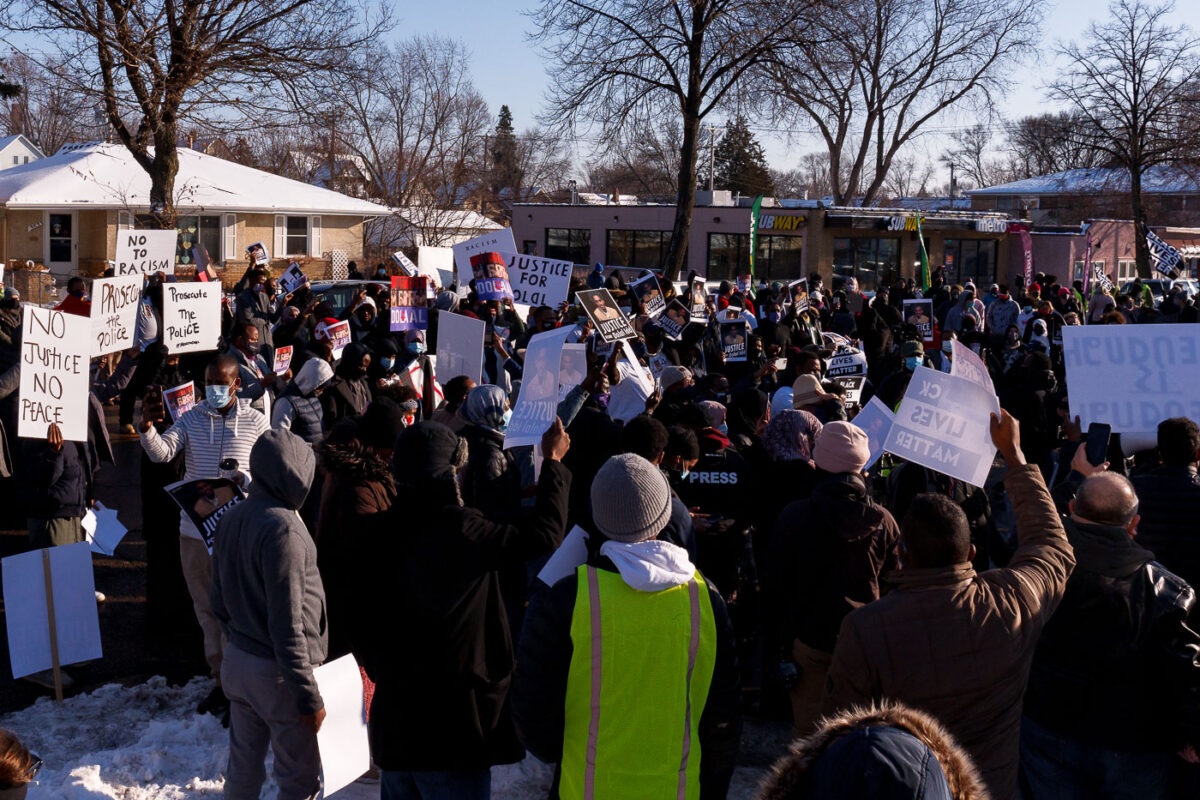
January 2021 — Around a thousand protesters gathered outside of the Holiday Gas station at Cedar and 36th in South Minneapolis seeking justice for Dolal Idd. Dolal Idd was shot and killed by Minneapolis Police on December 30th, 2020 during a traffic stop. This was the first police officer killing since George Floyd a mile away on May 25th, 2020.
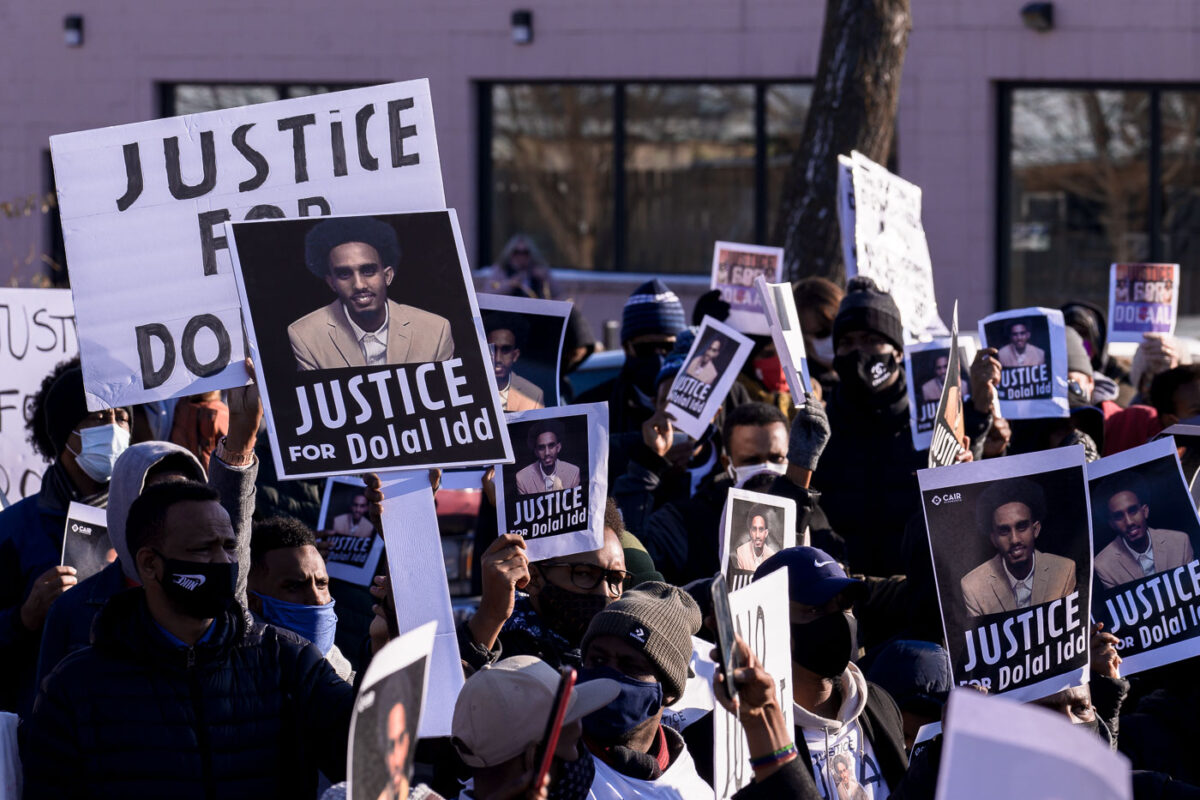
January 2021 — Around a thousand protesters gathered outside of the Holiday Gas station at Cedar and 36th in South Minneapolis seeking justice for Dolal Idd. Dolal Idd was shot and killed by Minneapolis Police on December 30th, 2020 during a traffic stop. This was the first police officer killing since George Floyd a mile away on May 25th, 2020.
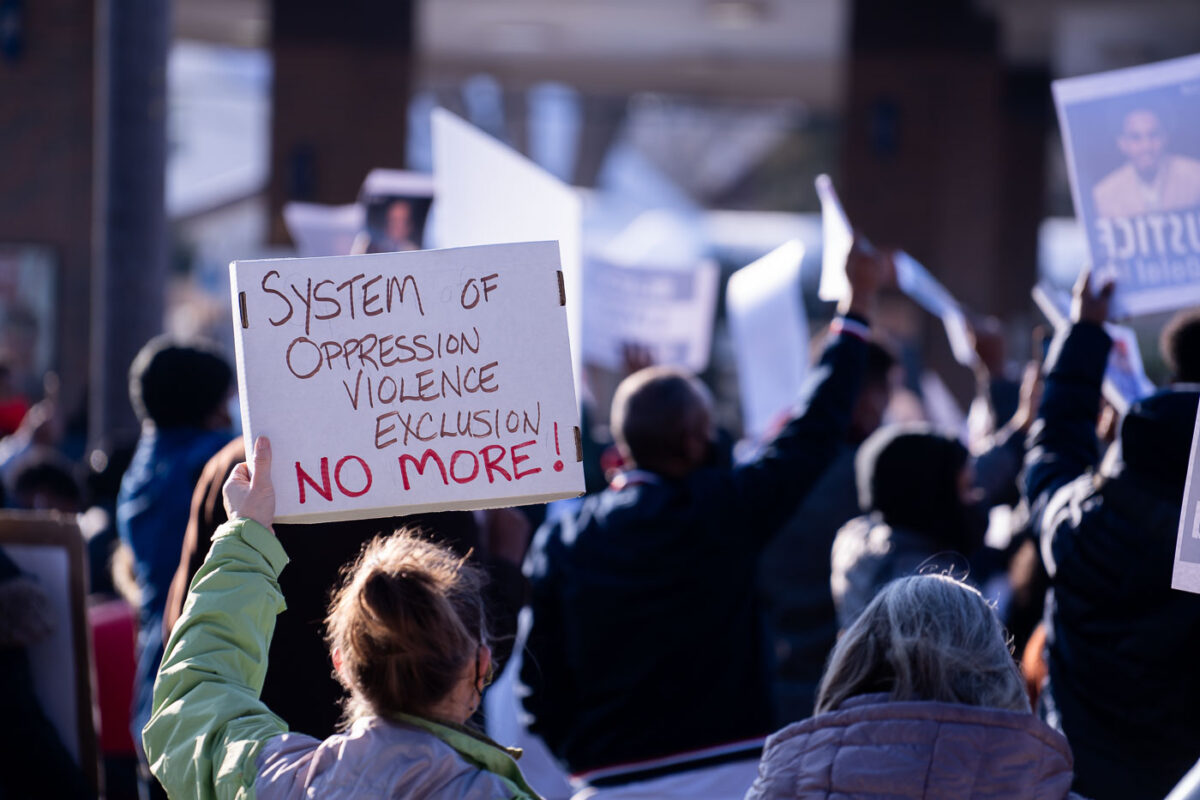
January 2021 — Around a thousand protesters gathered outside of the Holiday Gas station at Cedar and 36th in South Minneapolis seeking justice for Dolal Idd. Dolal Idd was shot and killed by Minneapolis Police on December 30th, 2020 during a traffic stop. This was the first police officer killing since George Floyd a mile away on May 25th, 2020.
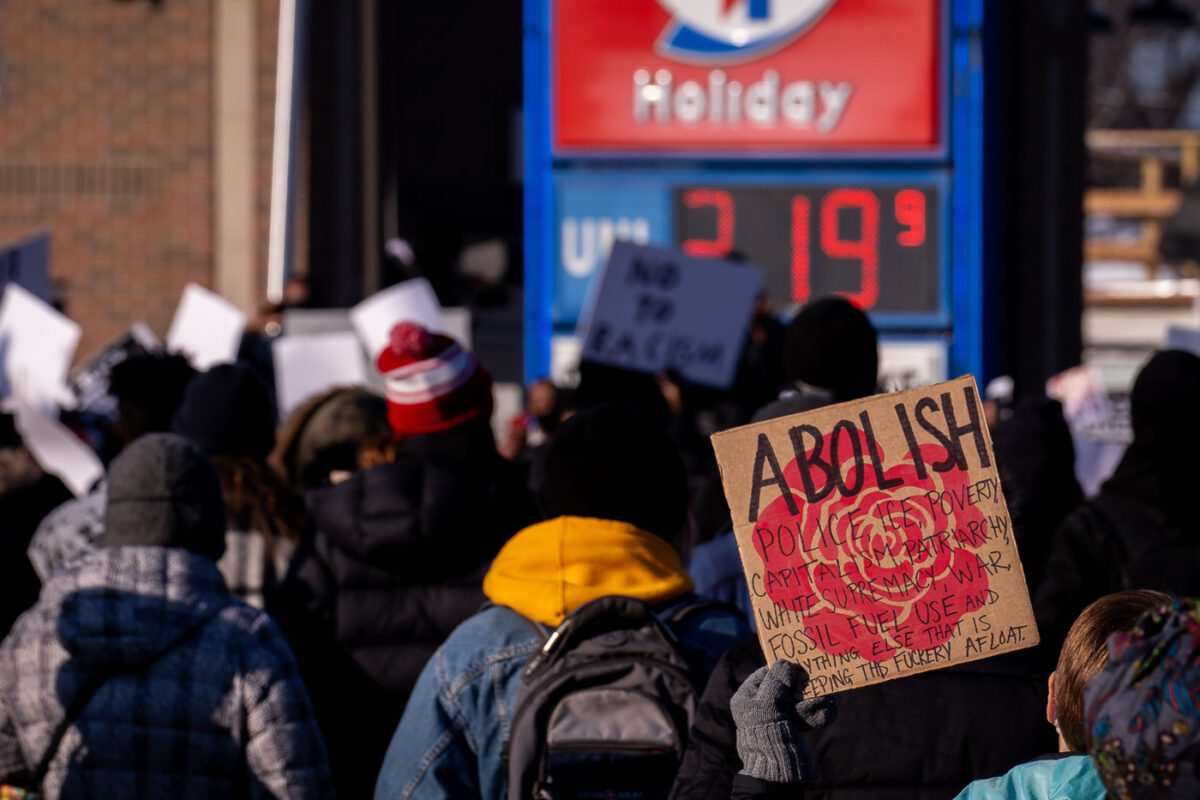
January 2021 — Around a thousand protesters gathered outside of the Holiday Gas station at Cedar and 36th in South Minneapolis seeking justice for Dolal Idd. Dolal Idd was shot and killed by Minneapolis Police on December 30th, 2020 during a traffic stop. This was the first police officer killing since George Floyd a mile away on May 25th, 2020.
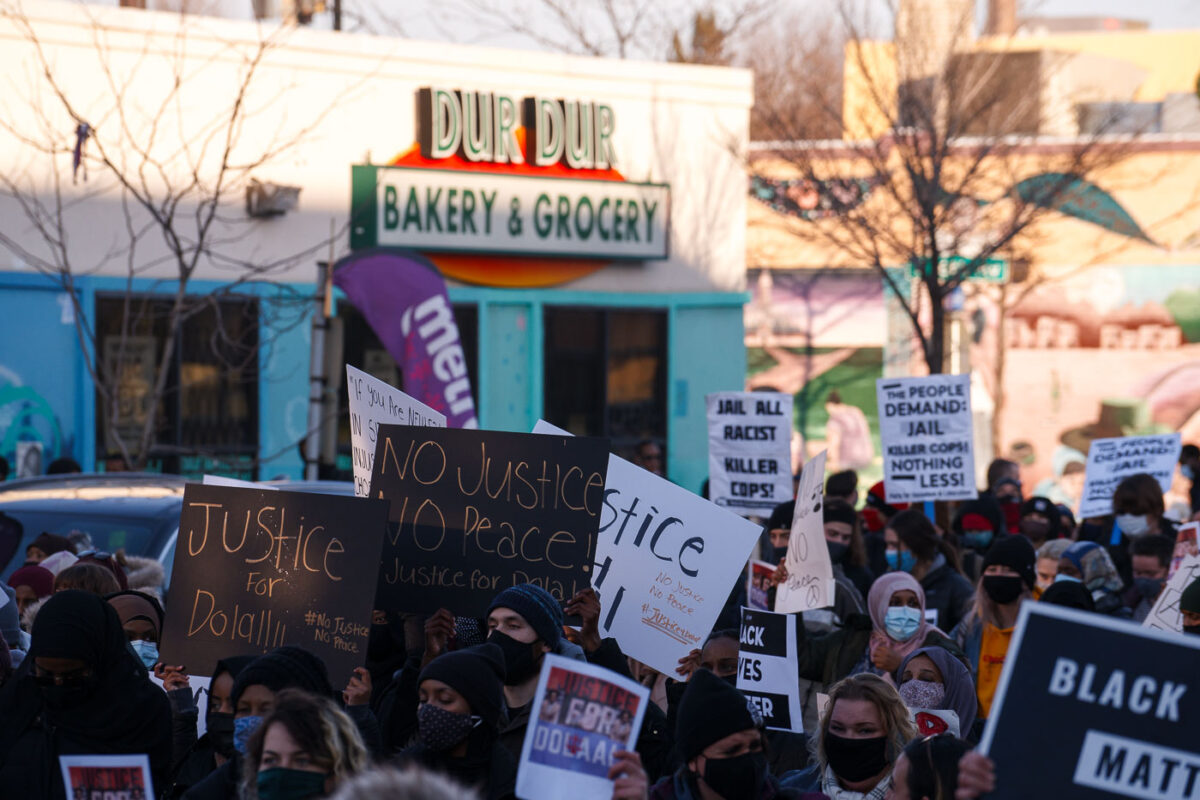
January 2021 — Around a thousand protesters gathered outside of the Holiday Gas station at Cedar and 36th in South Minneapolis seeking justice for Dolal Idd. Dolal Idd was shot and killed by Minneapolis Police on December 30th, 2020 during a traffic stop. This was the first police officer killing since George Floyd a mile away on May 25th, 2020.
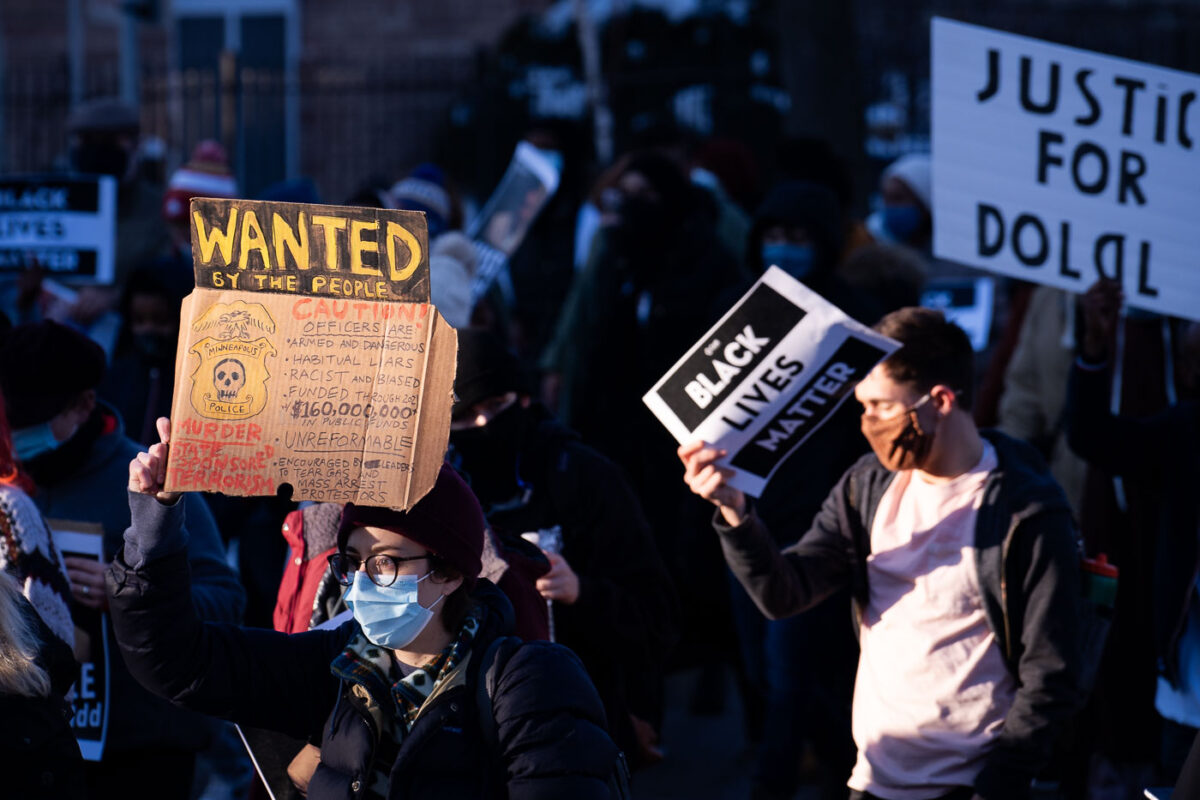
January 2021 — Around a thousand protesters gathered outside of the Holiday Gas station at Cedar and 36th in South Minneapolis seeking justice for Dolal Idd. Dolal Idd was shot and killed by Minneapolis Police on December 30th, 2020 during a traffic stop. This was the first police officer killing since George Floyd a mile away on May 25th, 2020.
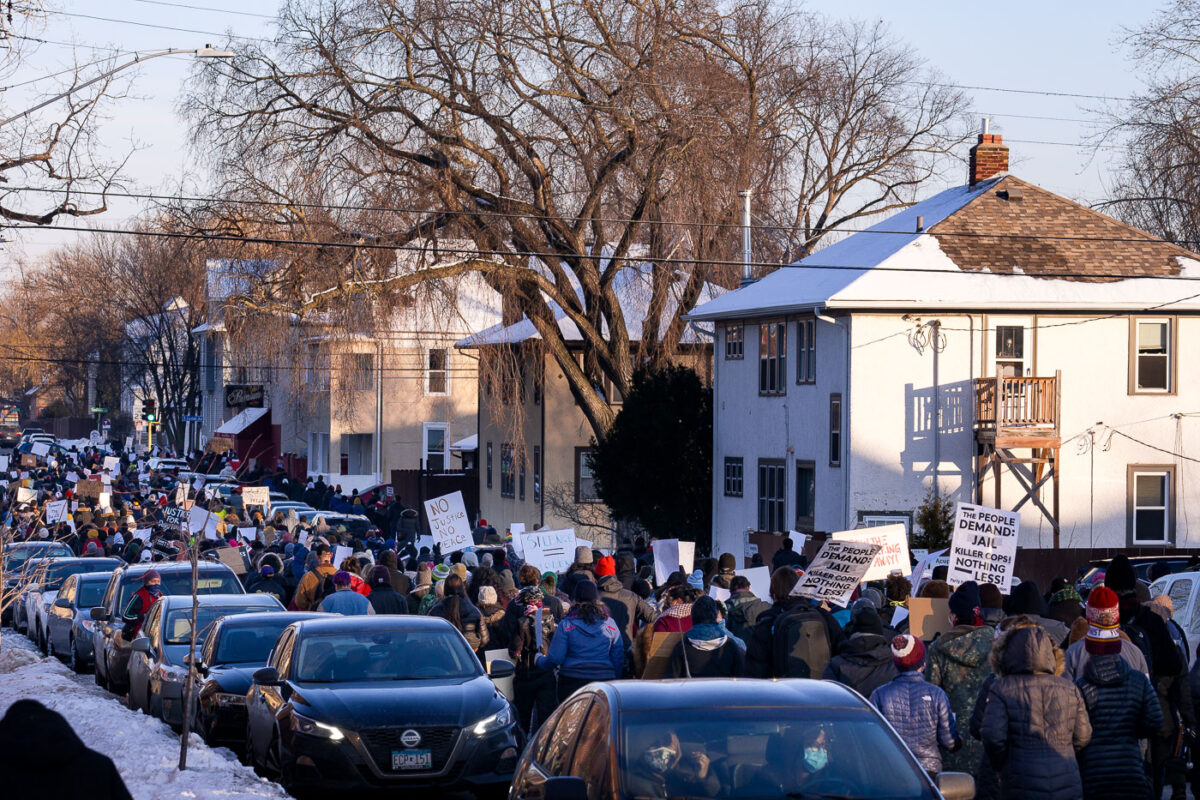
January 2021 — Around a thousand protesters gathered outside of the Holiday Gas station at Cedar and 36th in South Minneapolis seeking justice for Dolal Idd. Dolal Idd was shot and killed by Minneapolis Police on December 30th, 2020 during a traffic stop. This was the first police officer killing since George Floyd a mile away on May 25th, 2020.
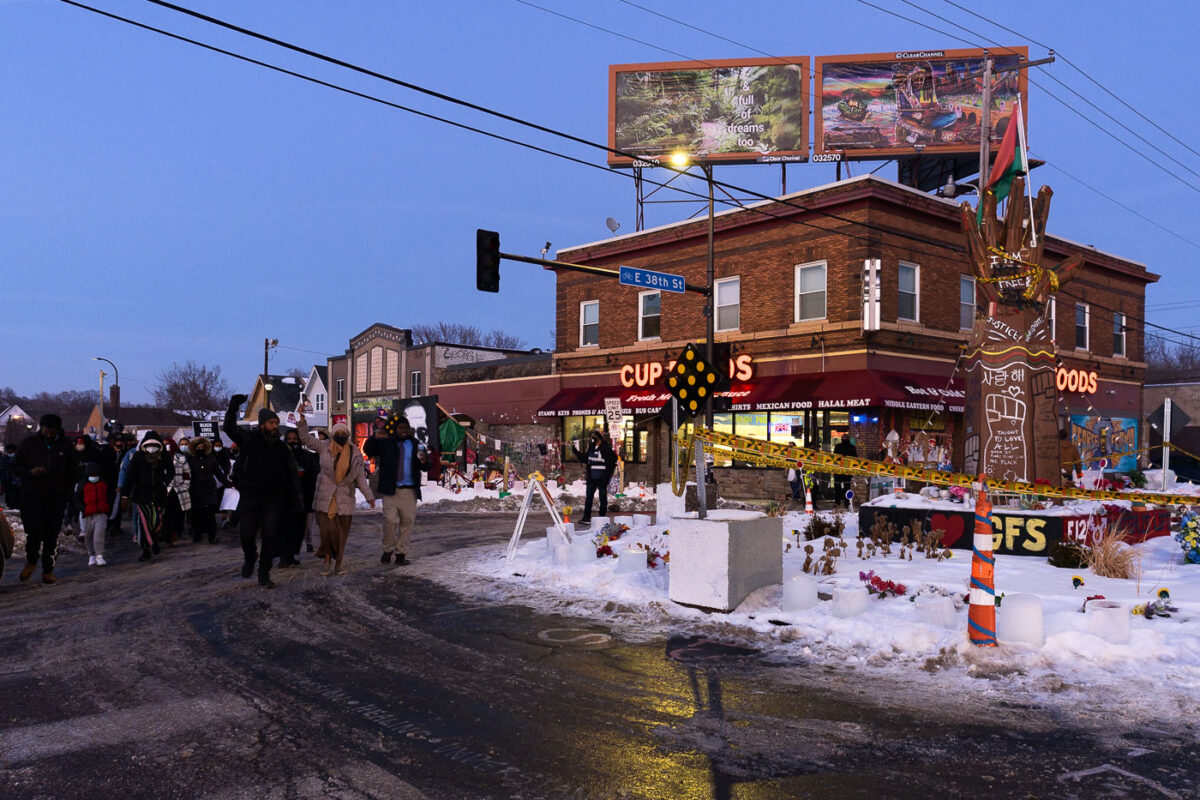
January 2021 — Protesters march to George Floyd Square from where Dolal Idd was killed about a mile away.
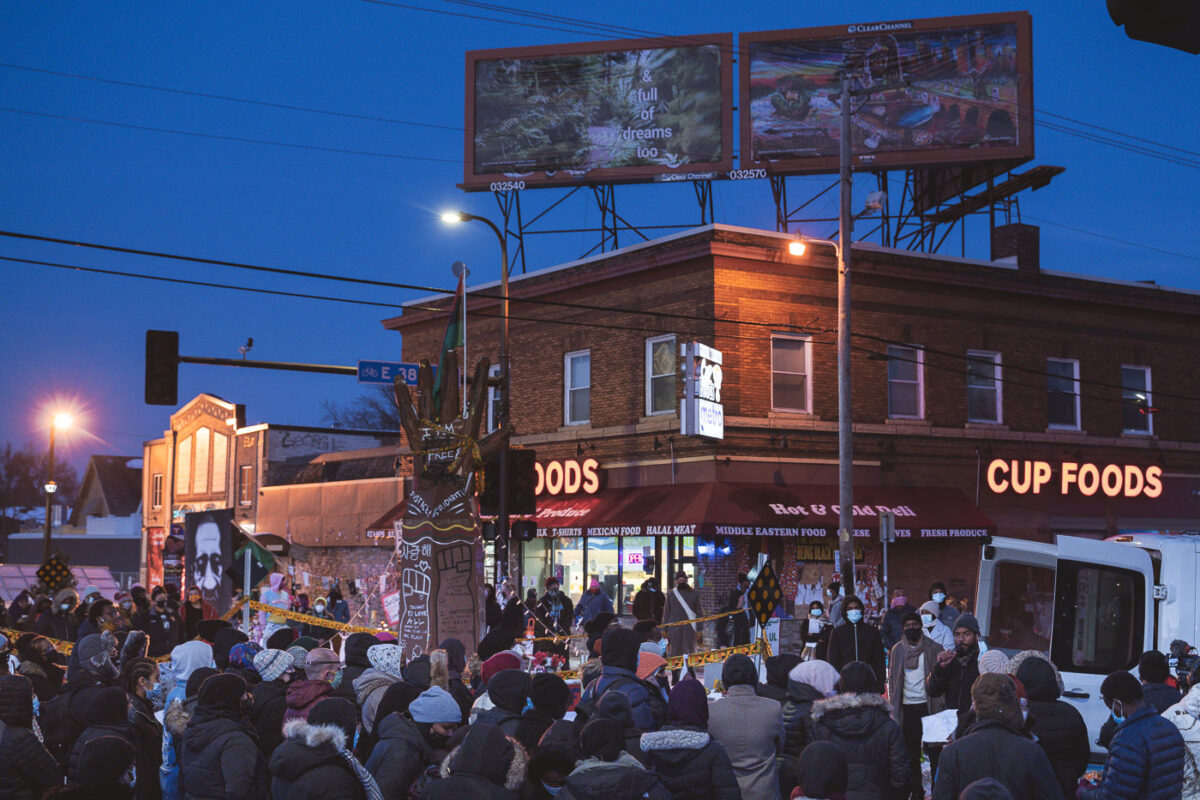
January 2021 — Around a thousand protesters gathered outside of the Holiday Gas station at Cedar and 36th in South Minneapolis seeking justice for Dolal Idd. Dolal Idd was shot and killed by Minneapolis Police on December 30th, 2020 during a traffic stop. This was the first police officer killing since George Floyd a mile away on May 25th, 2020. Some marched to George Floyd Square.
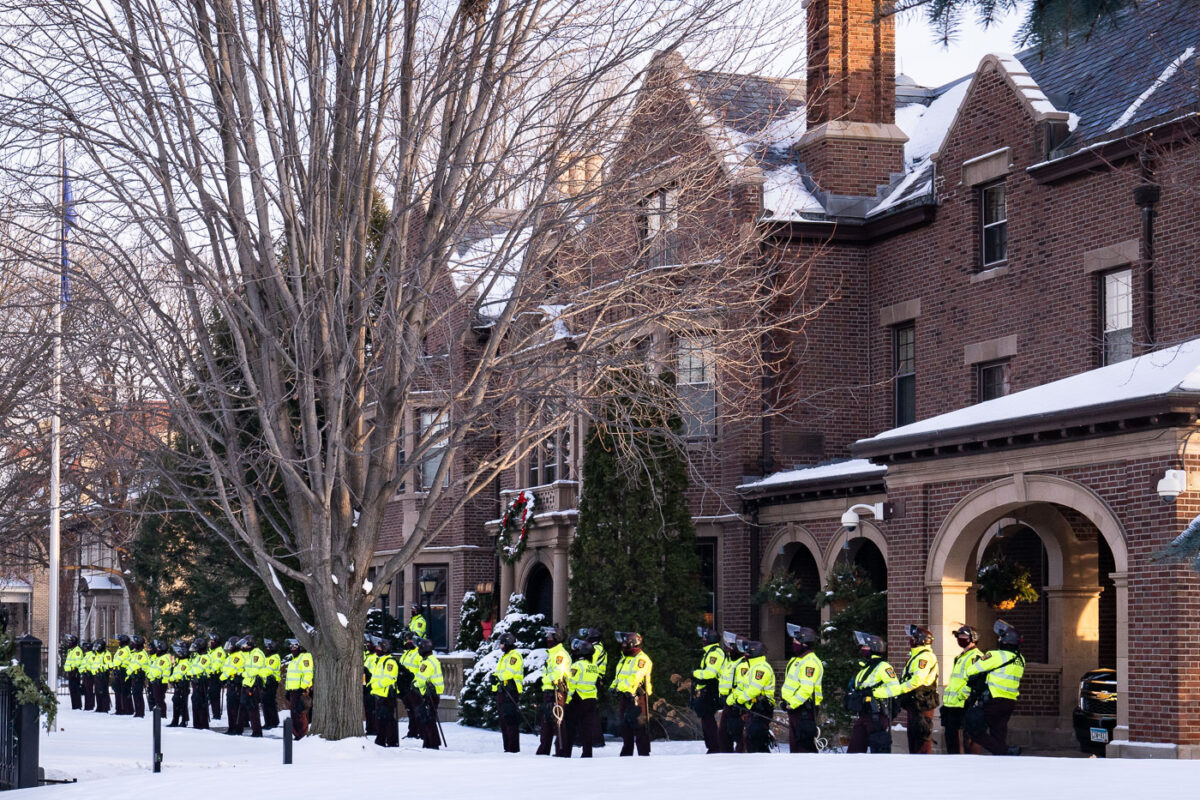
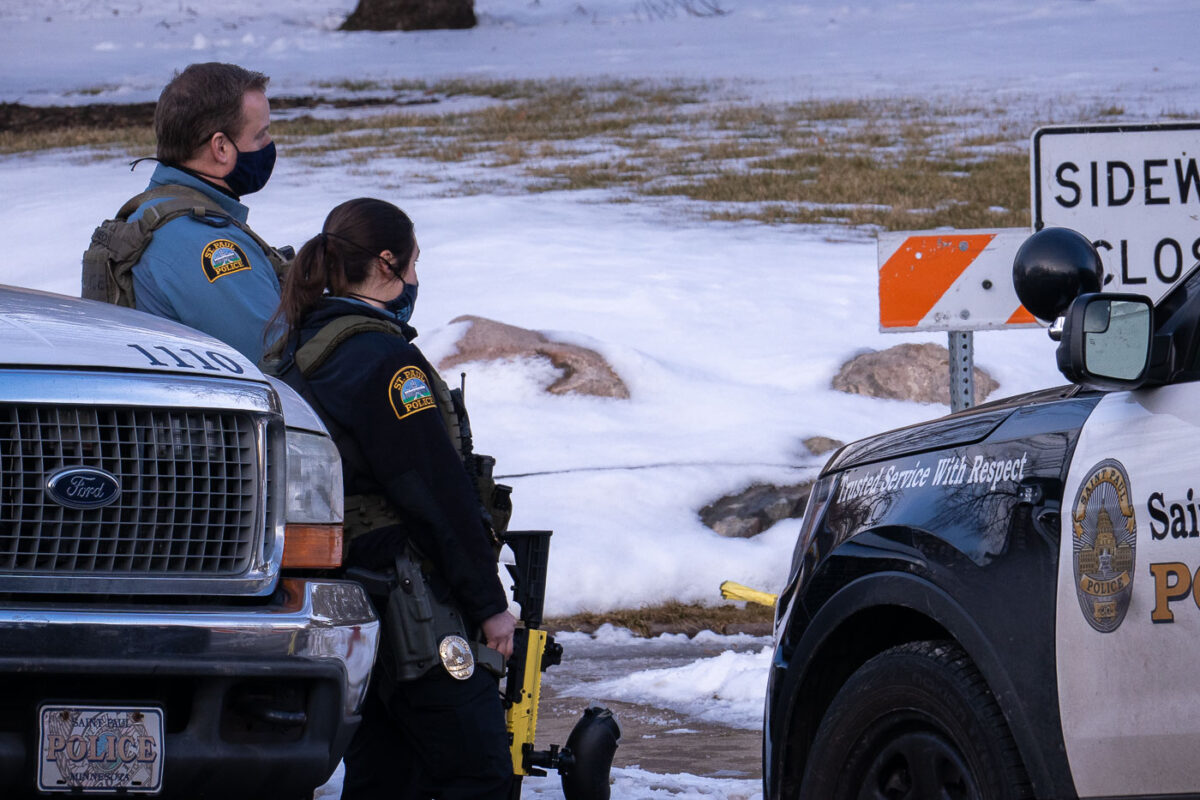
January 2021 — Minnesota State Patrol outside the Governor's Mansion while the attack on the US Capitol is occurring. Governor Walz says the State Patrol came into the residence for the first time to remove his son over safety concerns.
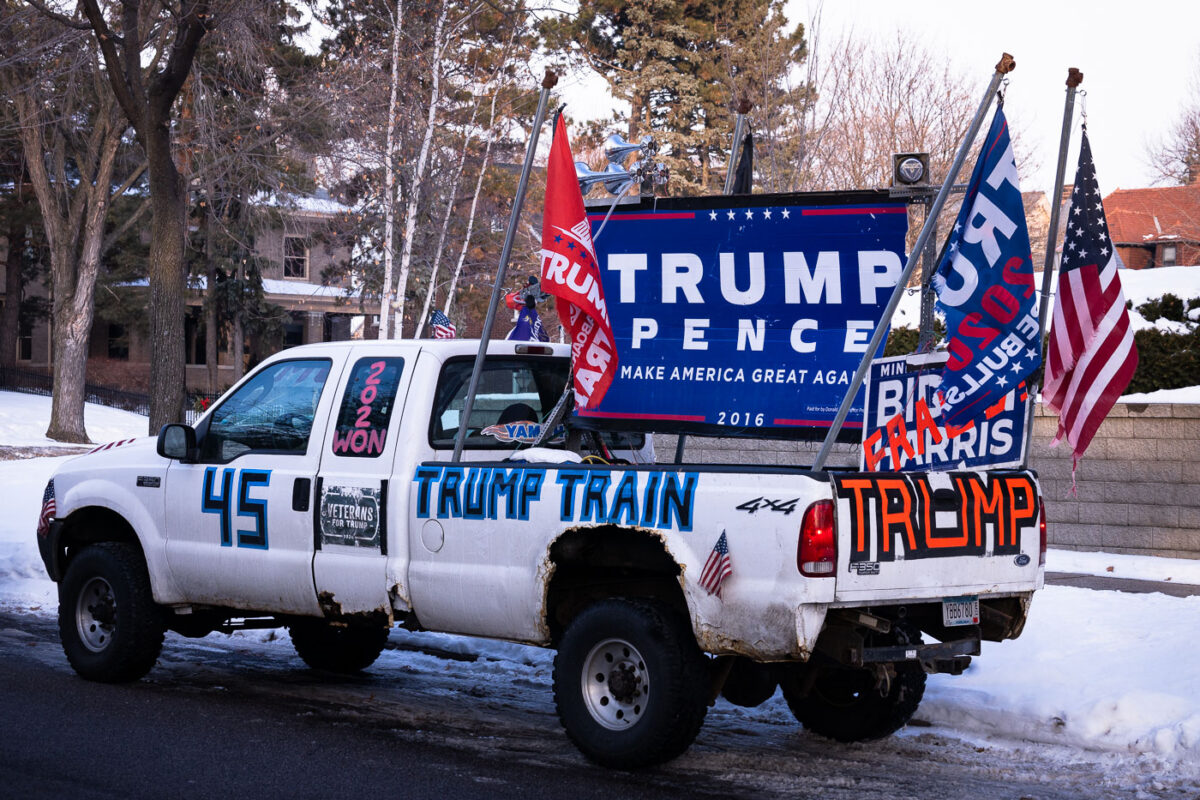
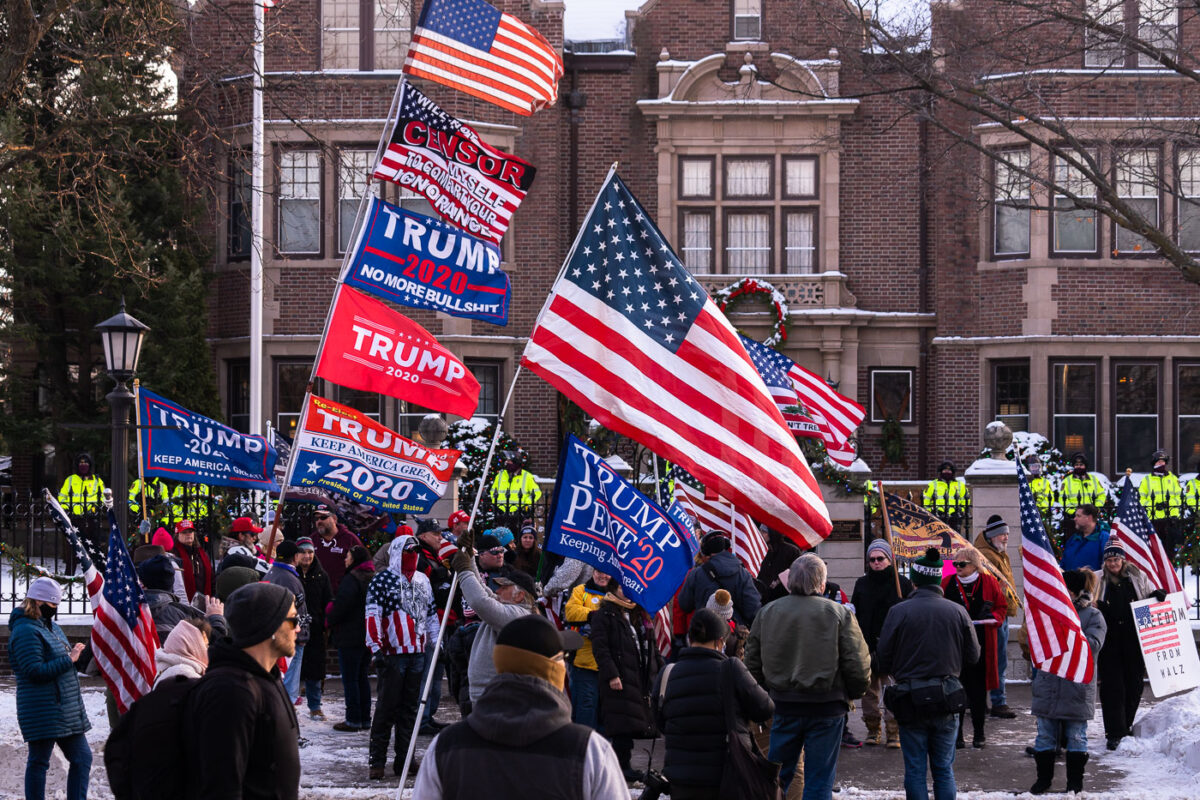
January 2021 — Trump supporters gather at the Minnesota Governor’s Residence after a “Storm The Capitol” event at the Minnesota State Capitol.
January 2021 — Trump supporters gather at the Minnesota Governor’s Residence after a “Storm The Capitol” event at the Minnesota State Capitol.
January 2021 — Minnesota State Patrol outside the Governor's Mansion while the attack on the US Capitol is occurring. Governor Walz says the State Patrol came into the residence for the first time to remove his son over safety concerns.
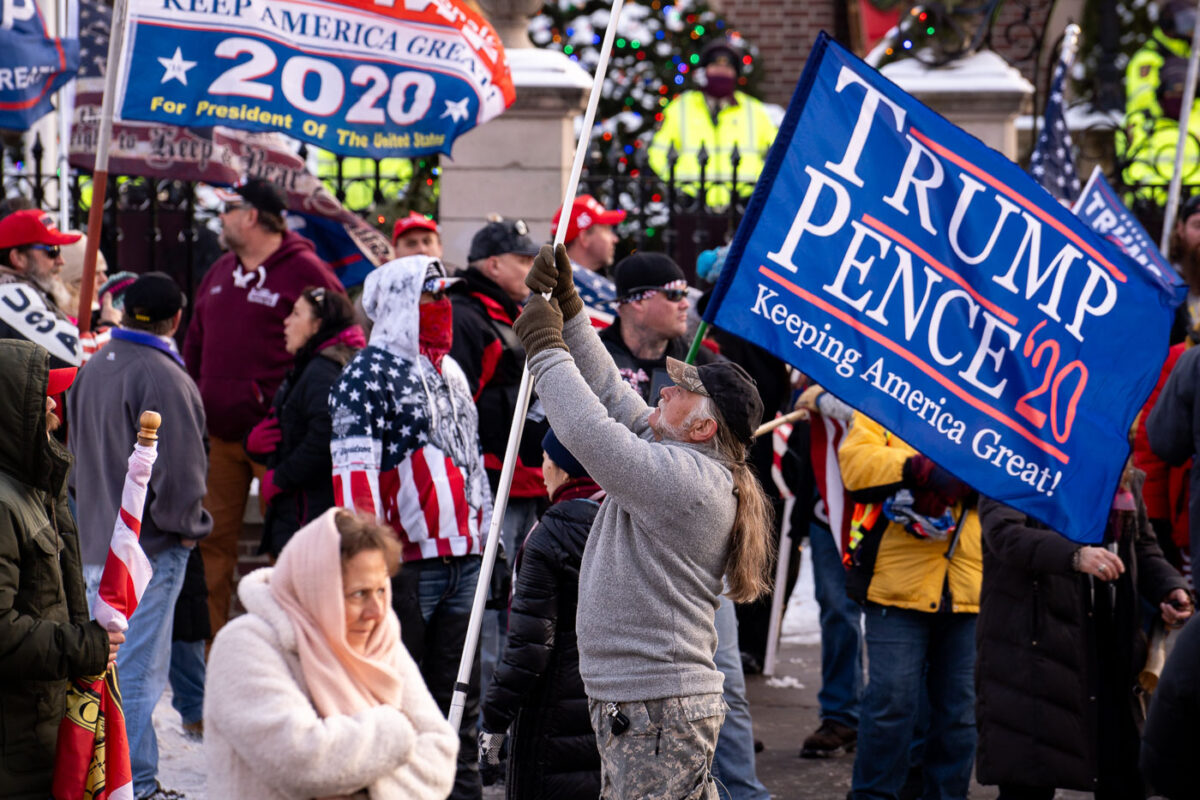
January 2021 — Trump supporters gather at the Minnesota Governor’s Residence after a “Storm The Capitol” event at the Minnesota State Capitol.
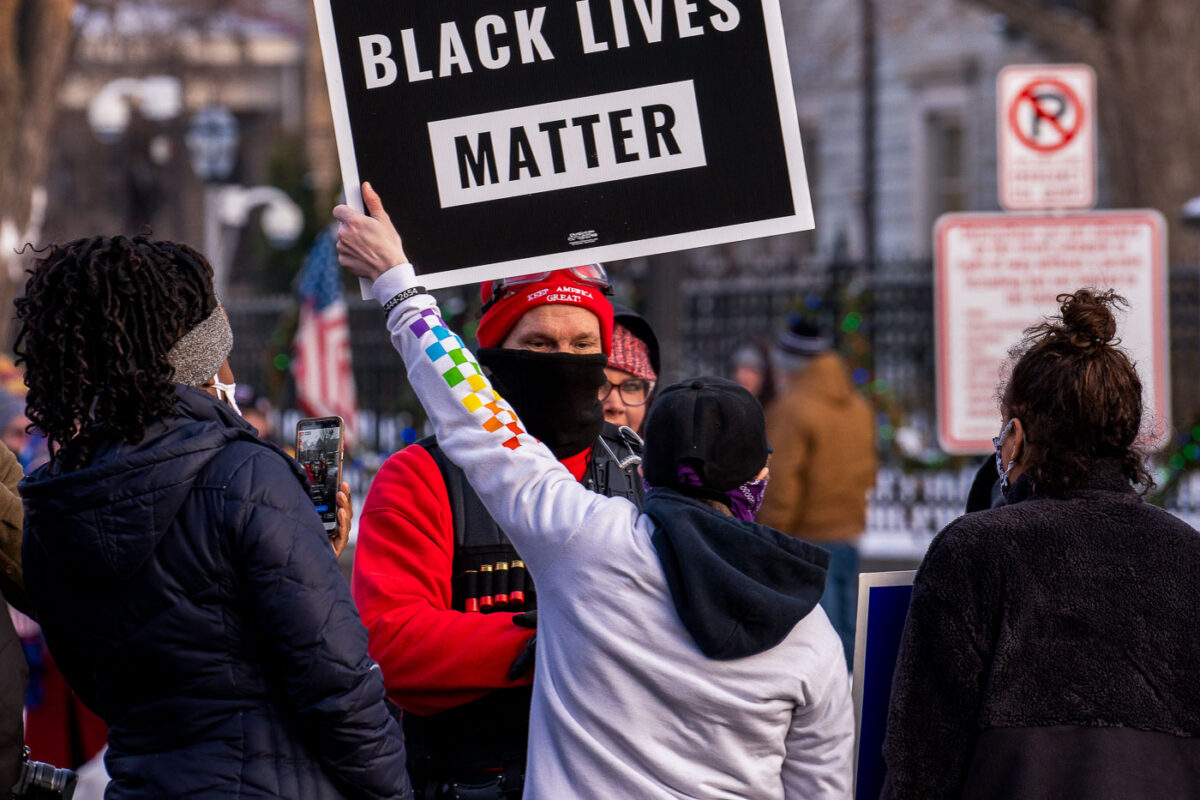
January 2021 — Trump supporters and counter-protesters at the Minnesota Governor’s Residence after a “Storm The Capitol” event at the Minnesota State Capitol.
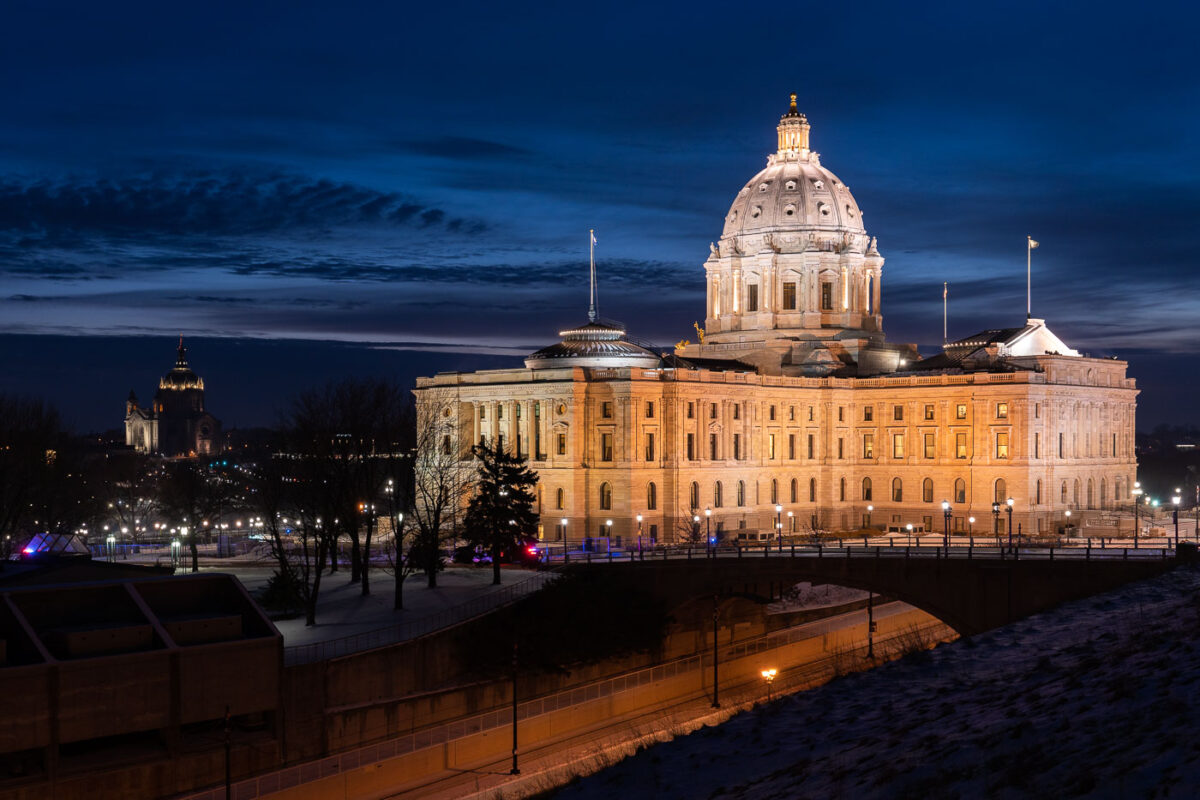
January 2021 — Minnesota State Capitol on the evening of an Insurrection at the US Capitol.
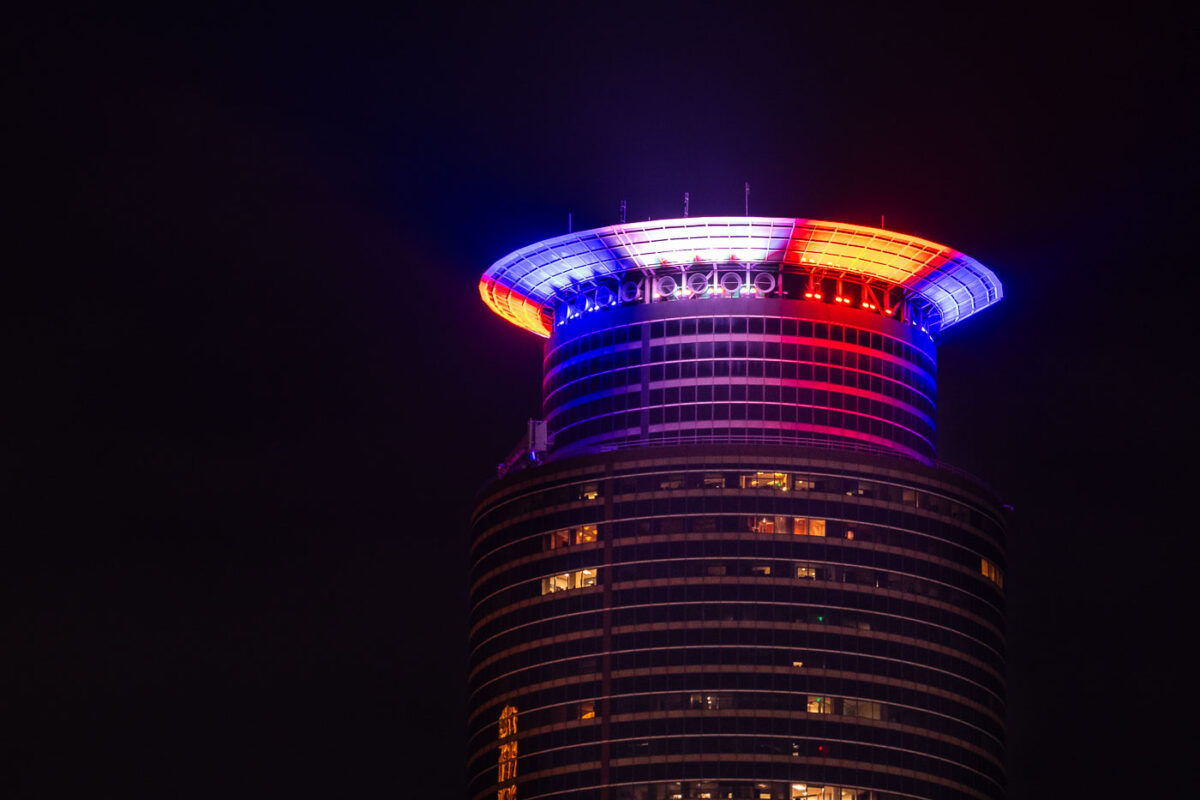
January 2021 — Capella Tower in downtown Minneapolis lit up red, white and blue following the United States Capitol attack.
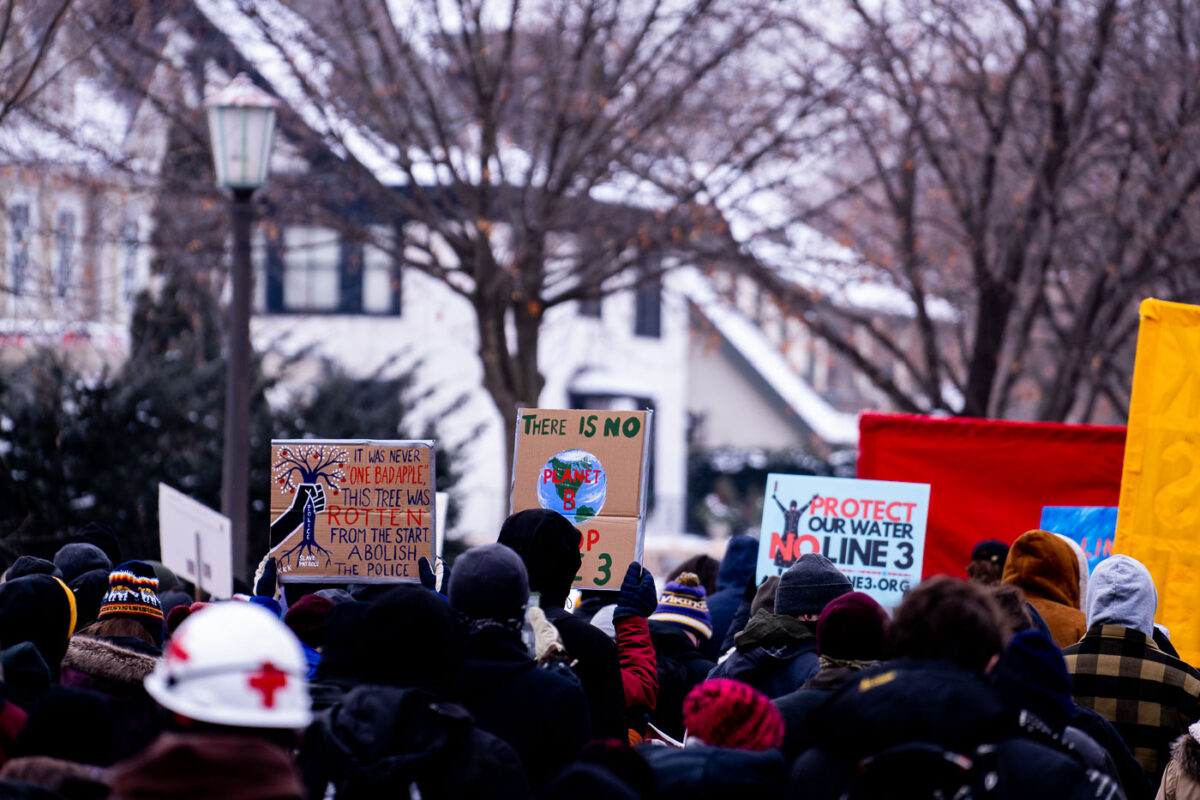
January 2021 — “The People’s March” on it’s way in St. Paul. Protesters marching for “Cash not covid”, “Community not cops”, “People not pipelines”, and “Politics without proud boys”.
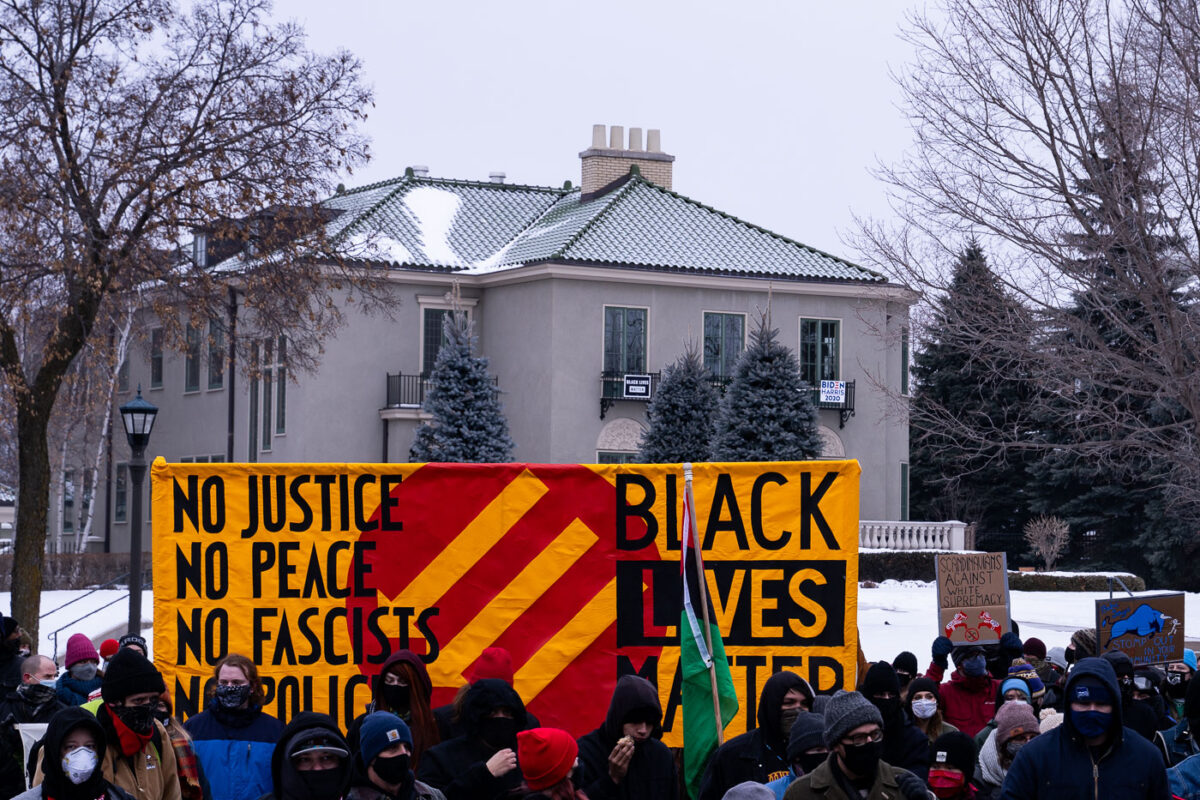
January 2021 — “The People’s March” on it’s way in St. Paul. Protesters marching for “Cash not covid”, “Community not cops”, “People not pipelines”, and “Politics without proud boys”.
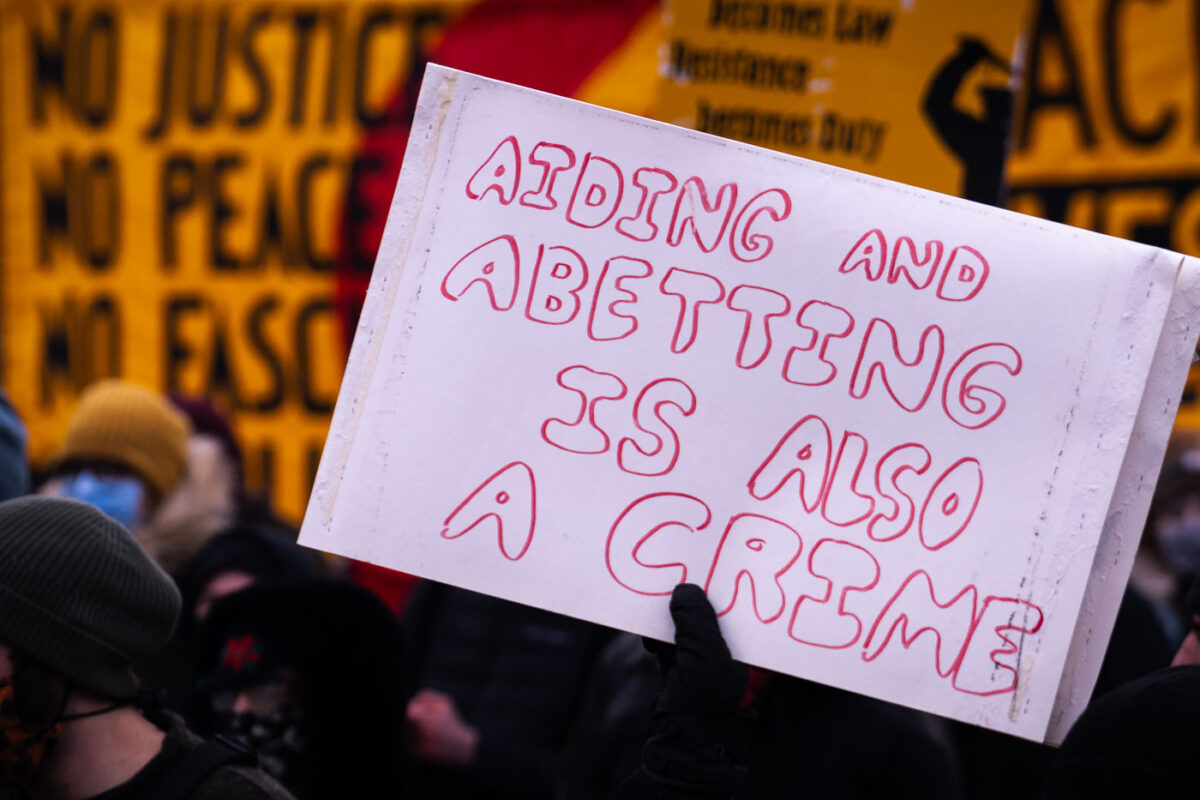
January 2021 — “The People’s March” on it’s way in St. Paul. Protesters marching for “Cash not covid”, “Community not cops”, “People not pipelines”, and “Politics without proud boys”.
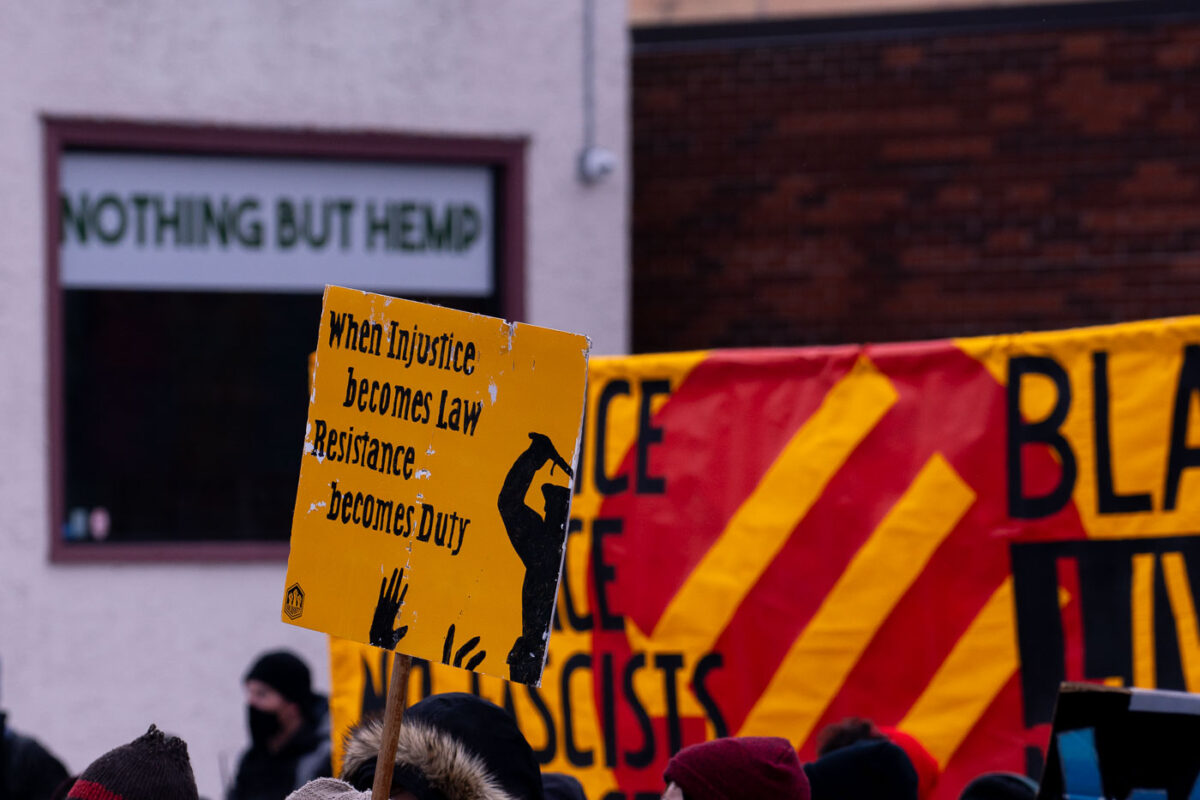
January 2021 — “The People’s March” on it’s way in St. Paul. Protesters marching for “Cash not covid”, “Community not cops”, “People not pipelines”, and “Politics without proud boys”.
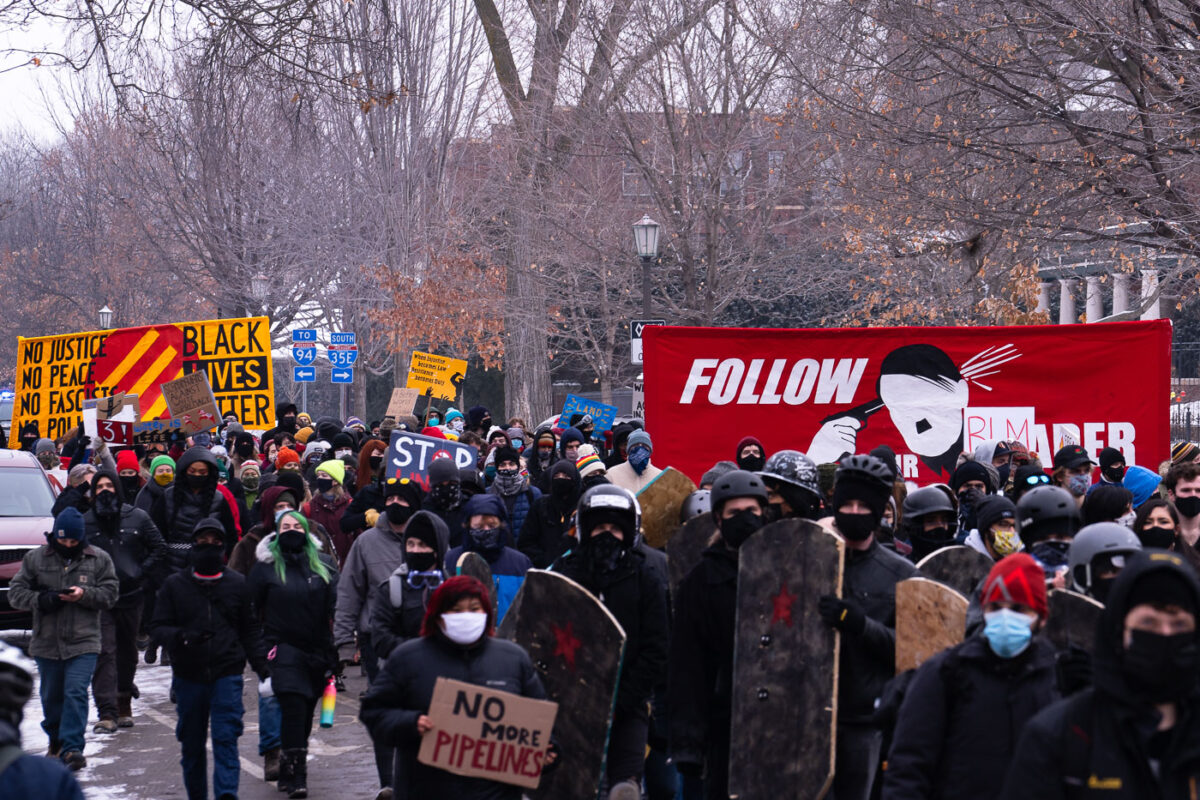
January 2021 — “The People’s March” on it’s way in St. Paul. Protesters marching for “Cash not covid”, “Community not cops”, “People not pipelines”, and “Politics without proud boys”.
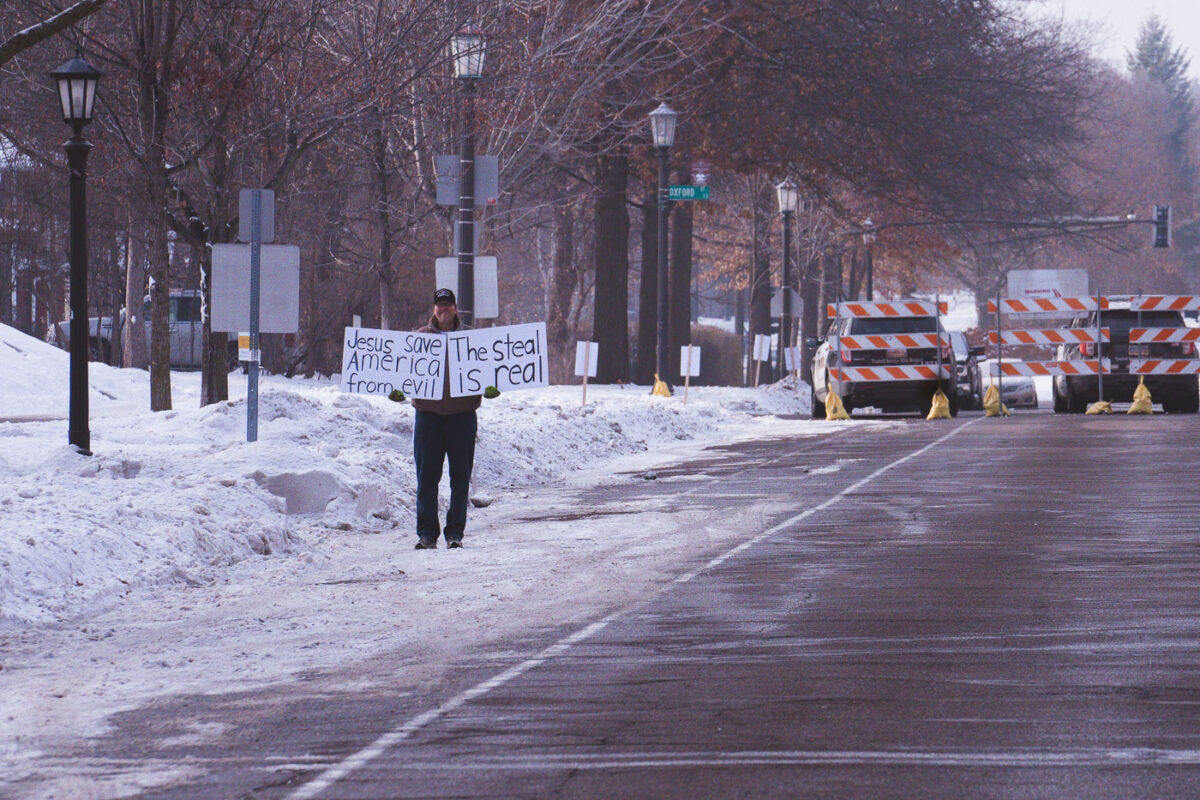
January 2021 — A lone protester holds up a sign reading "Jesus save America from evil. The steal is real" outside the Minnesota Governor's Mansion.
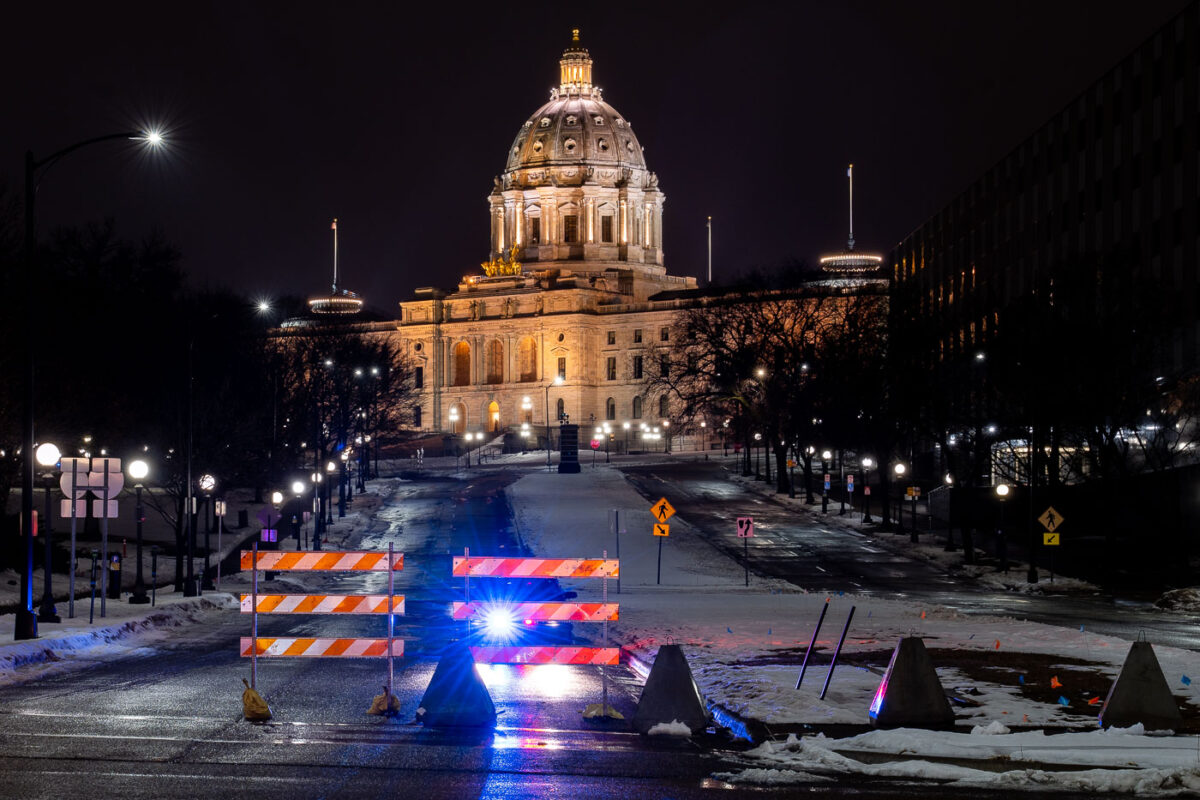
January 2021 — Barriers and State Patrol guard the Minnesota State Capitol the weekend before the Presidential inauguration. This after an FBI affidavit mentioning potential protests at State Capitols on the weekend of January 16th, 2021 following the January 6th, 2021 insurrection at the United States Capitol.
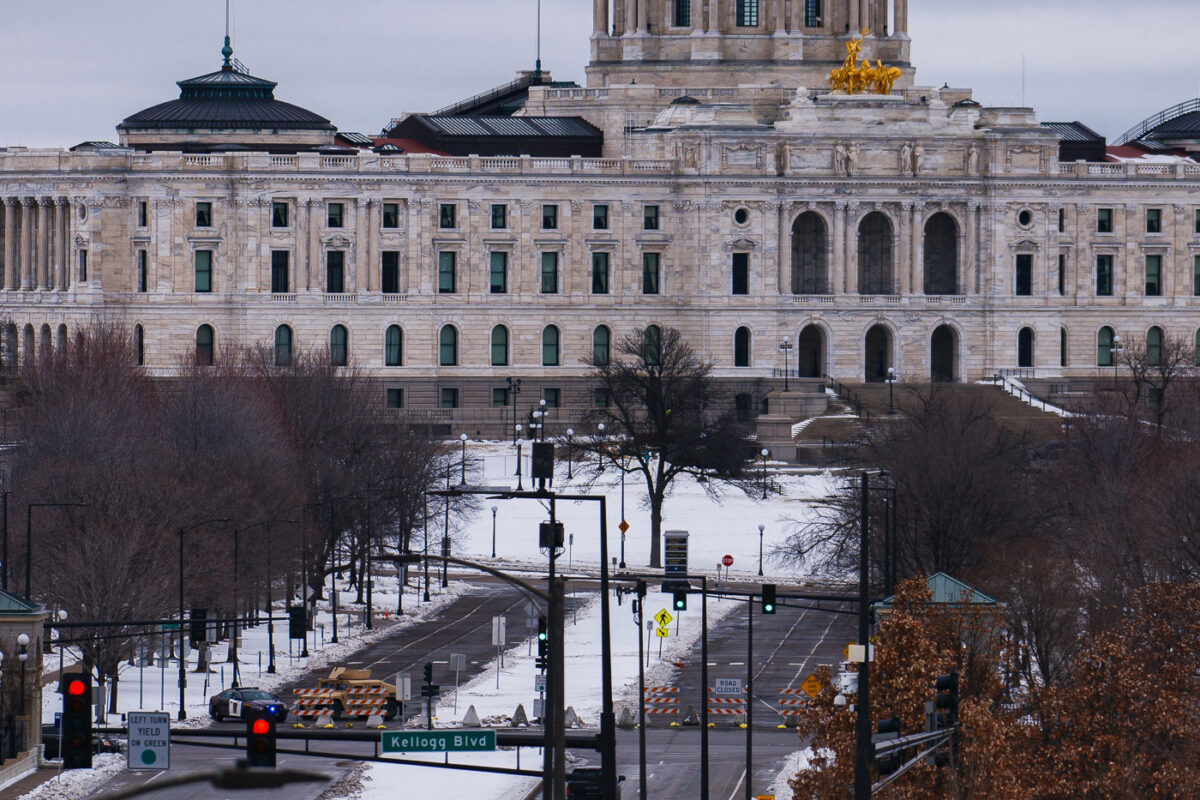
January 2021 — A pro-Trump rally at the Minnesota State Capitol had about 20 in attendance. The Capitol was heavily secured by Ramsey County, St. Paul Police, DNR Conservation Officers, State Patrol and the National Guard after reports of possible violence at State Capitols.
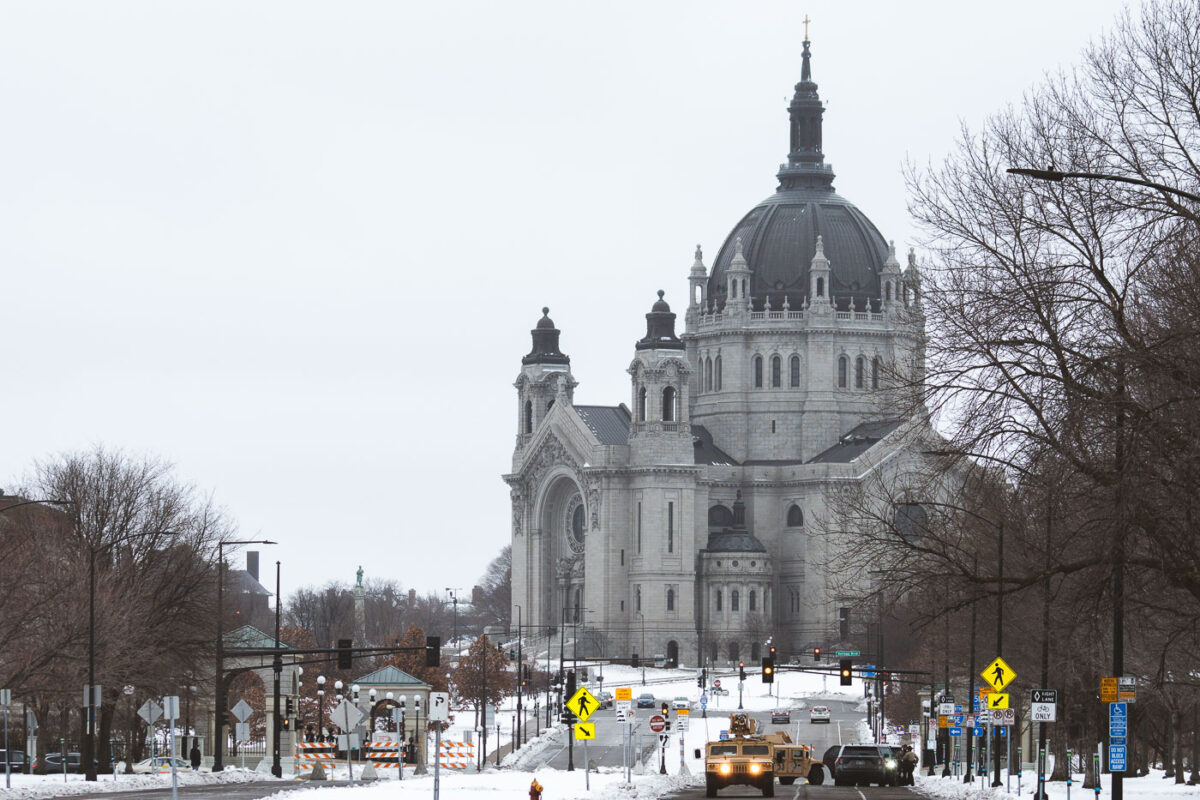
January 2021 — A pro-Trump rally at the Minnesota State Capitol had about 20 in attendance. The Capitol was heavily secured by Ramsey County, St. Paul Police, DNR Conservation Officers, State Patrol and the National Guard after reports of possible violence at State Capitols.