Cobblestone

26 photos · 2017–2020

26 photographs tagged Cobblestone, 2017–2020.
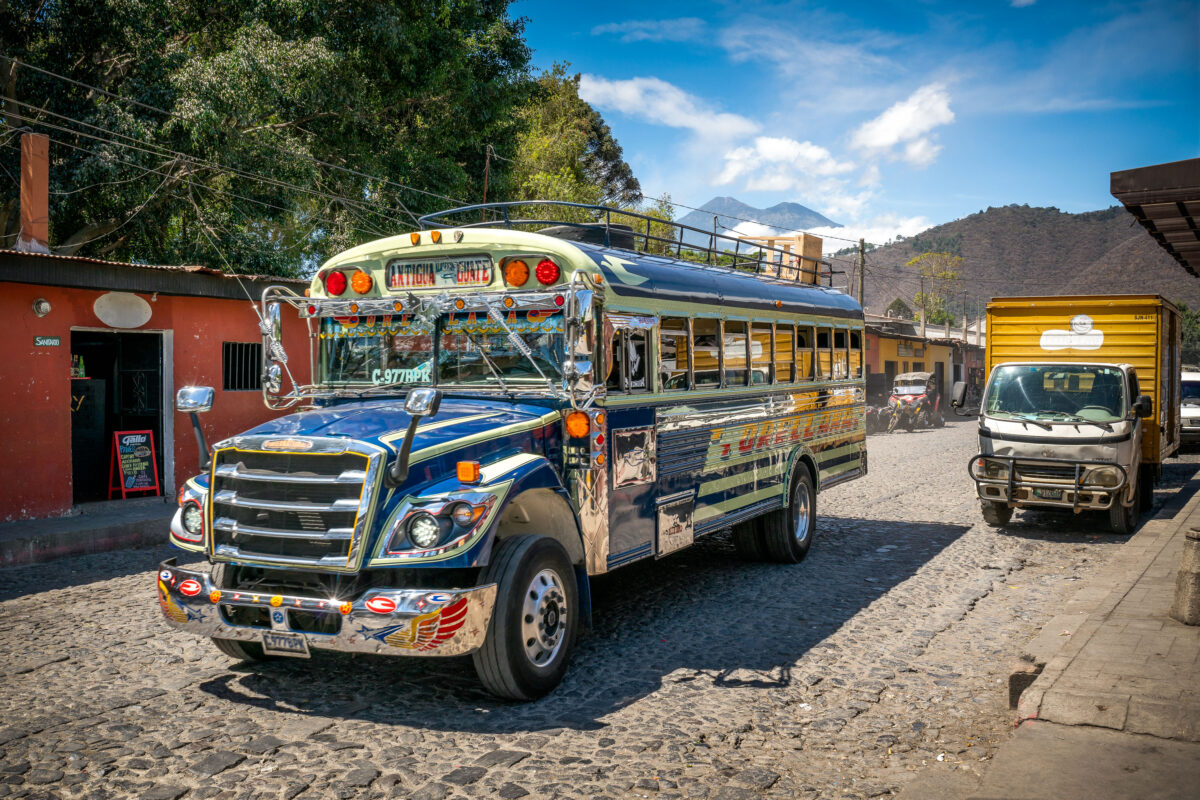
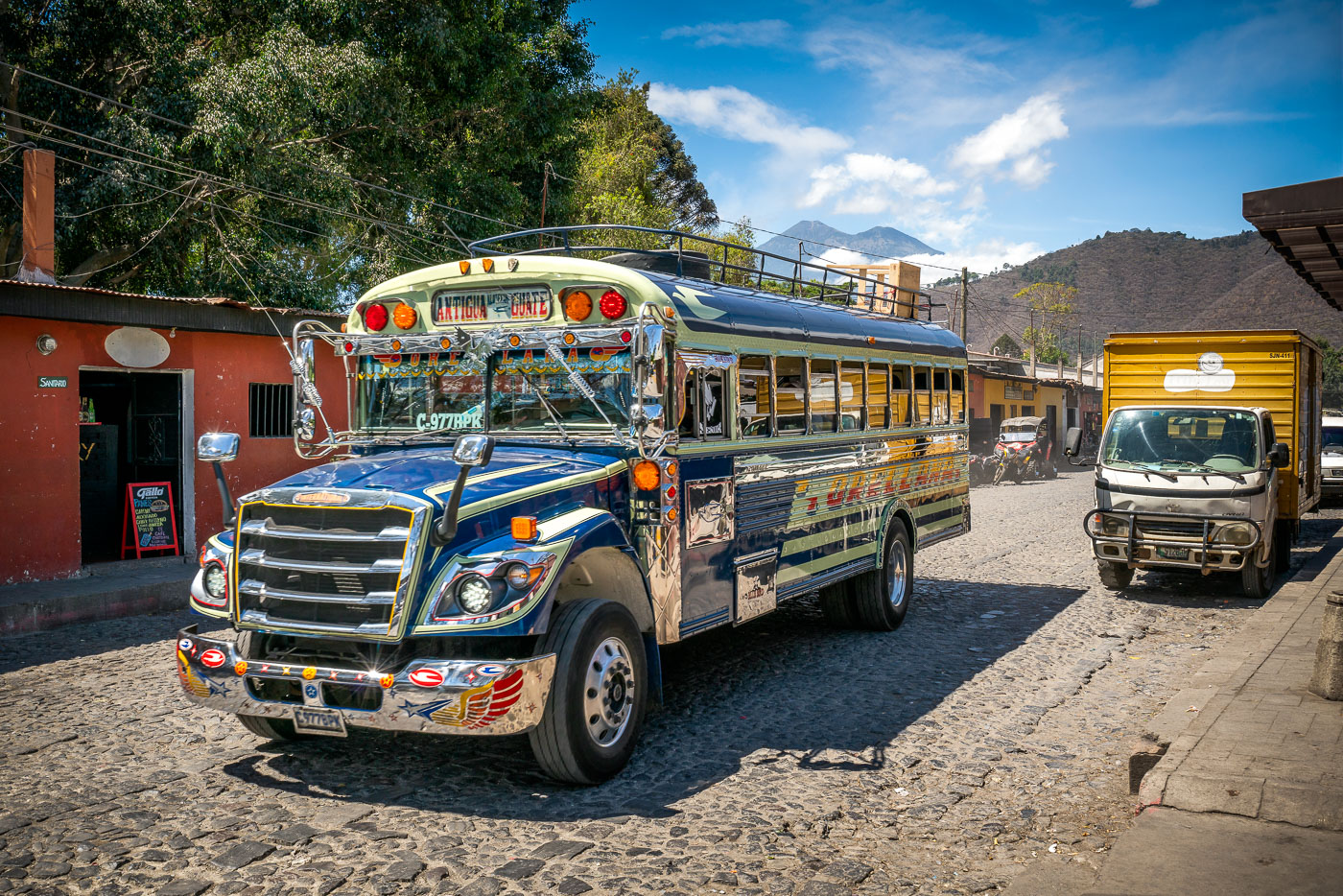
Chicken bus on a cobblestone street in Antigua Guatemala with Volcán de Agua behind it.
A decorated chicken bus travels along a cobblestone street in Antigua Guatemala. These repurposed buses are a common form of public transportation in Guatemala. Volcán de Agua rises in the background above the historic city.

Chicken Bus on Cobblestone Street, Antigua Guatemala
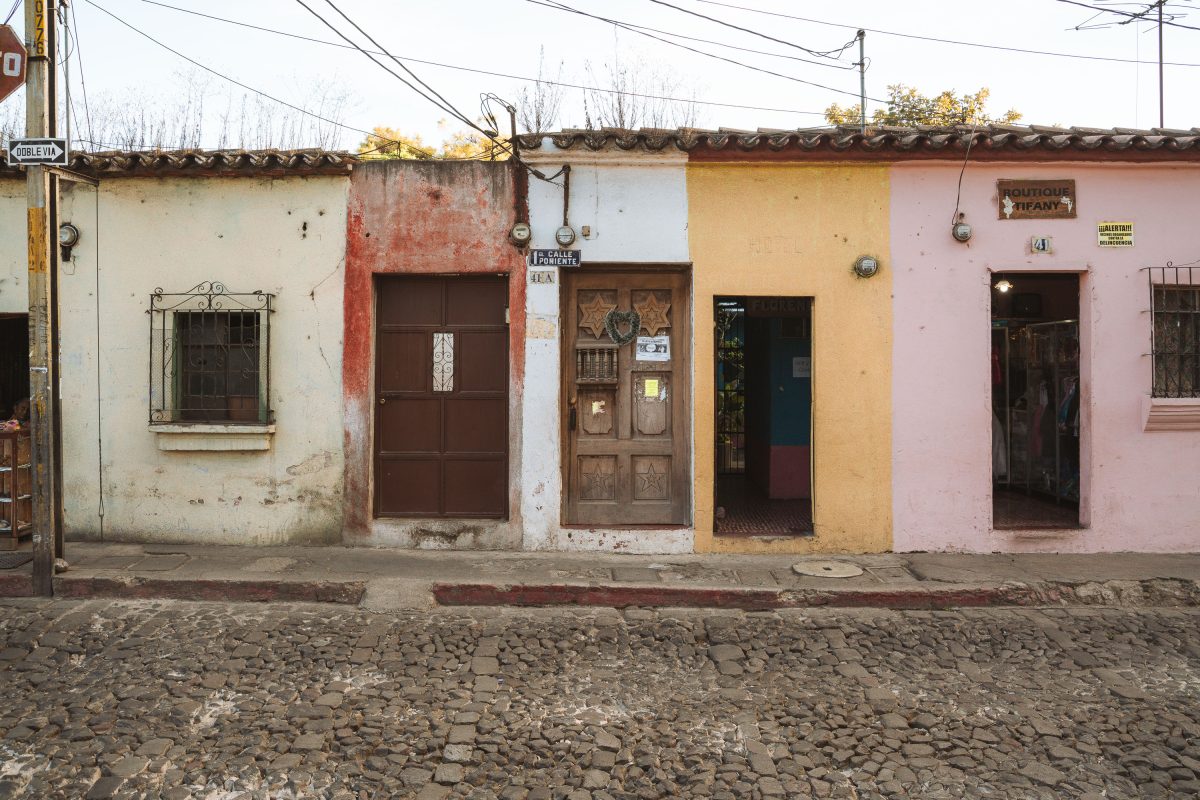
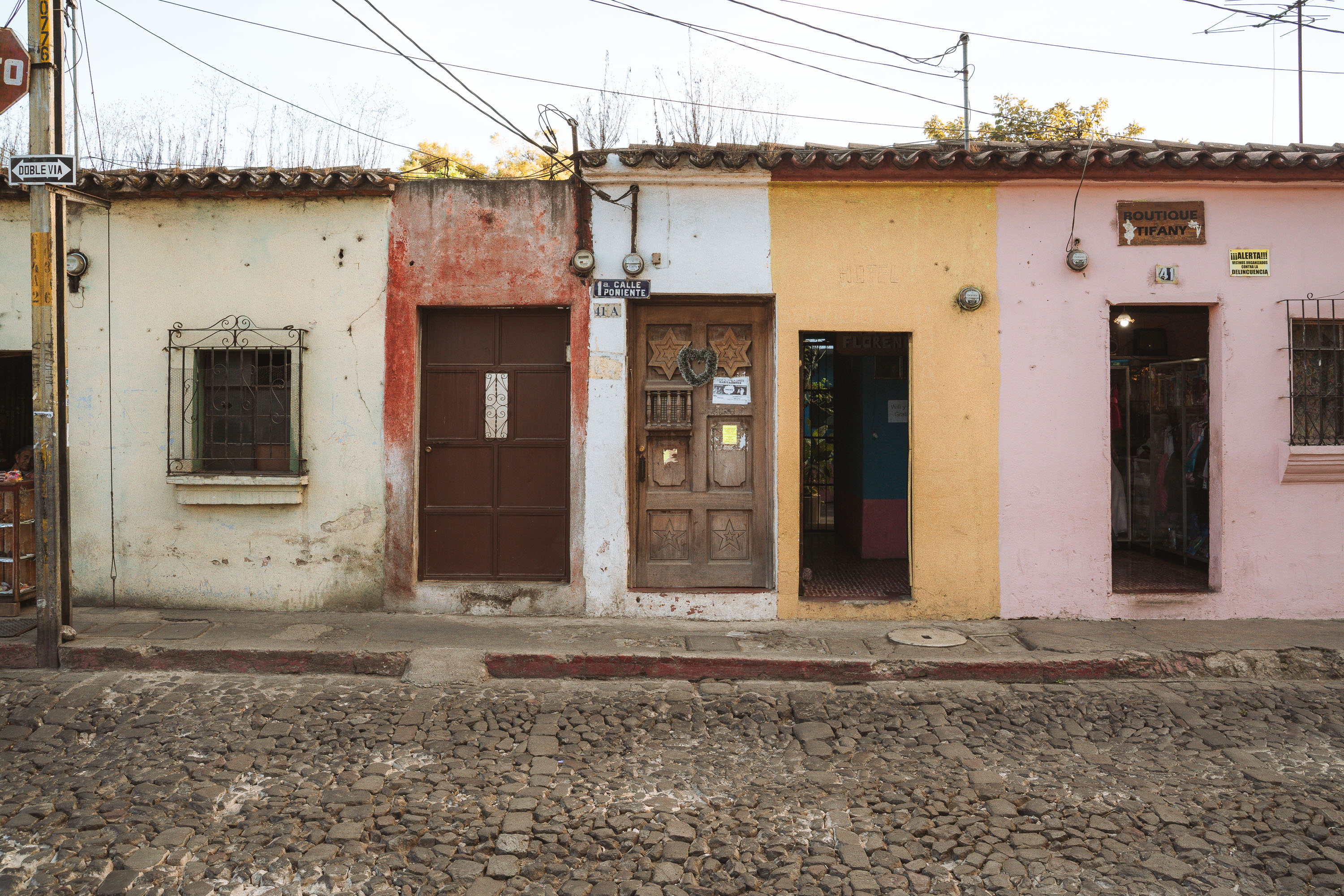
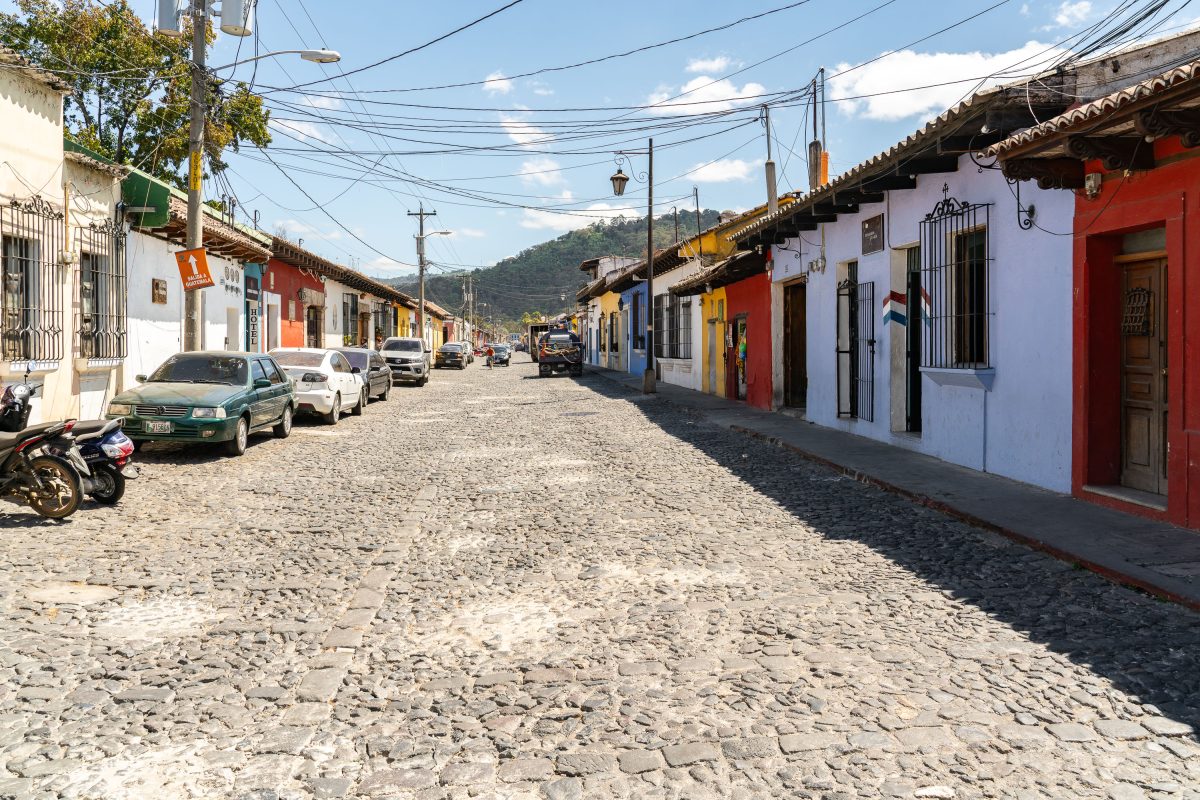
Row of colorful single-story colonial buildings with wooden doors lines a cobblestone street in Antigua Guatemala.
Antigua Guatemala's historic core, laid out by Spanish colonial planners after the 1773 earthquakes destroyed the former capital at Ciudad Vieja, still follows its original grid of narrow cobblestone streets. UNESCO listed the city as a World Heritage Site in 1979, citing its preserved Baroque-influenced colonial architecture and townscape. Municipal preservation rules restrict building heights, paint palettes, and signage along streets like this one to maintain the low, single-story facades typical of the 16th- and 17th-century layout. Many of these street-level units, once colonial residences, now hold small shops and boutiques serving the city's tourist trade.

Row of Storefronts on 1a Calle Poniente, Antigua
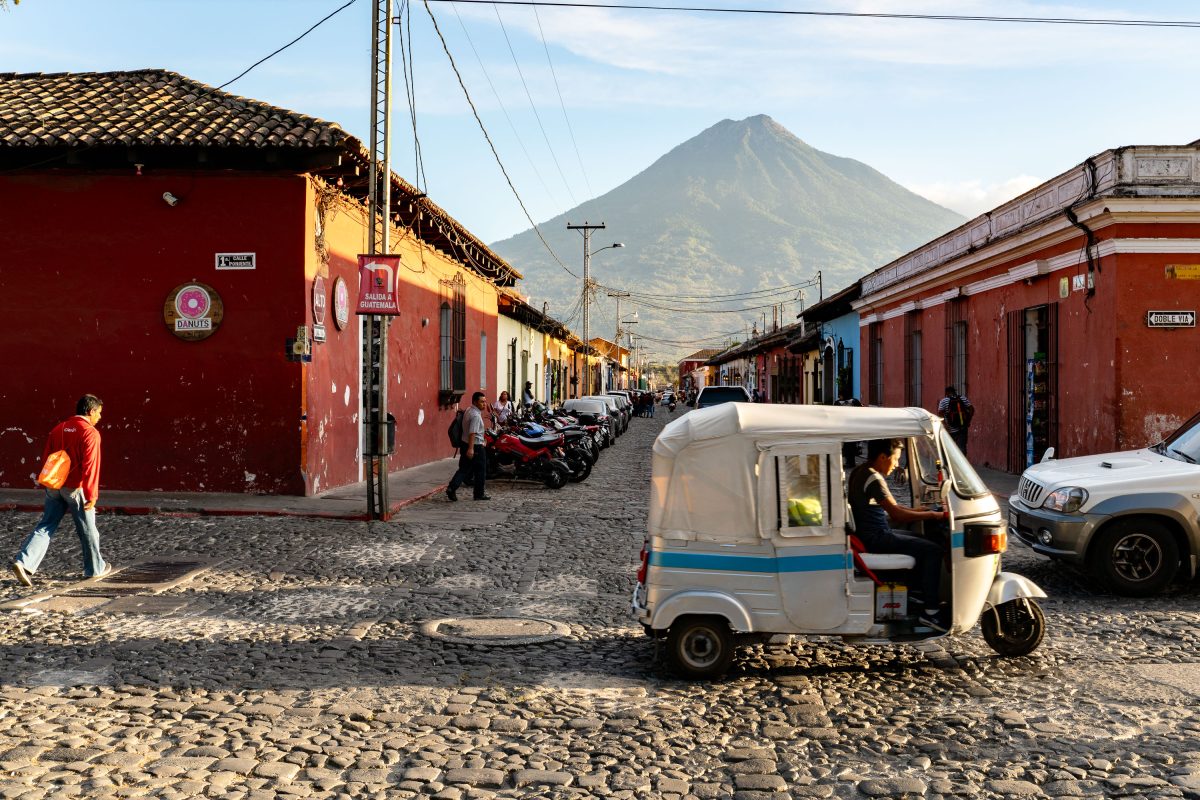
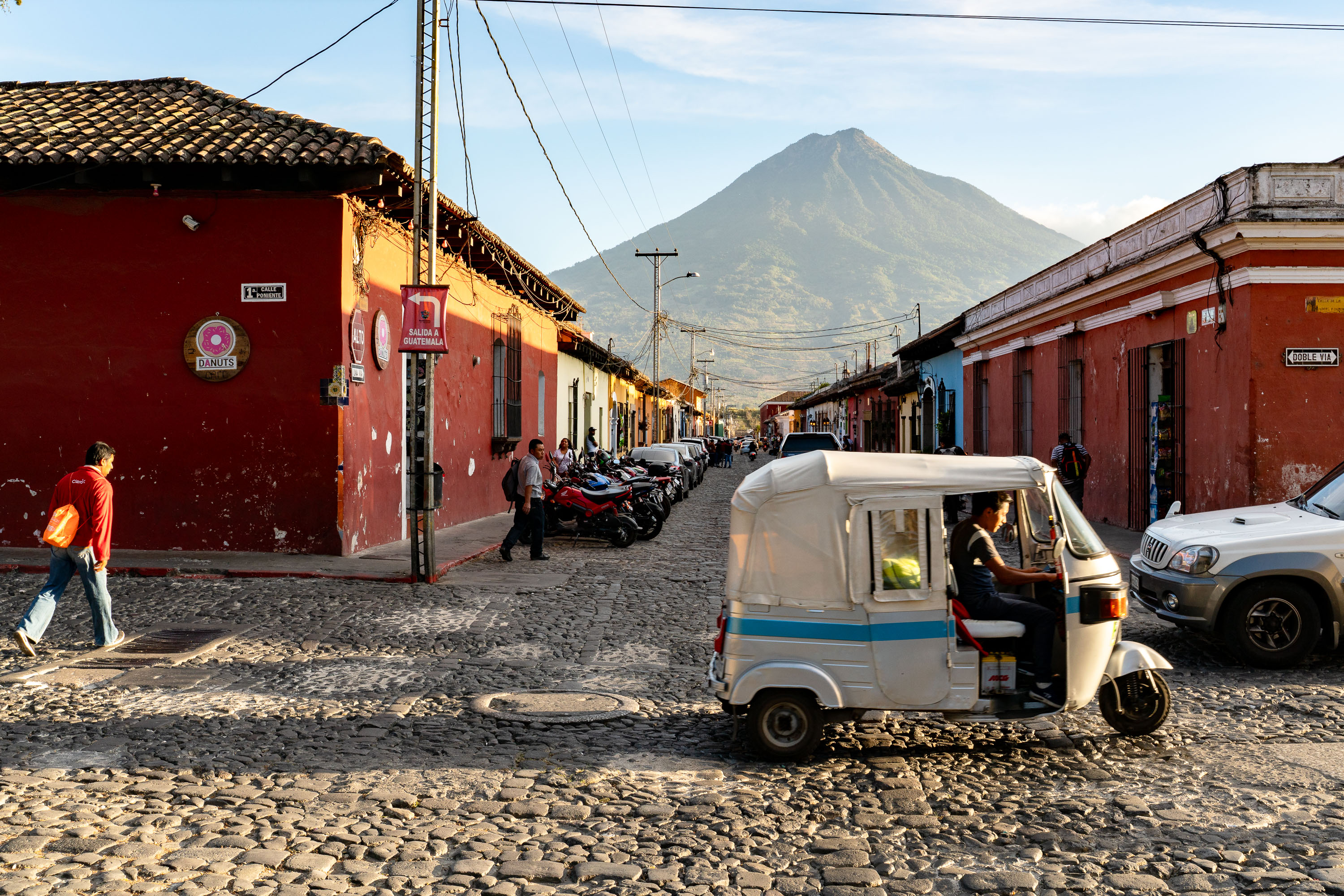
White and blue tuk-tuk on a cobblestone street in Antigua, Guatemala with Volcán de Agua rising in the background.
Volcán de Agua rises about 3,760 meters and sits just south of Antigua Guatemala, visible along many of the city's avenues. Antigua was founded by Spanish colonists in 1543 and served as the capital of the Kingdom of Guatemala until earthquakes forced authorities to relocate the seat of government to present-day Guatemala City in 1776. UNESCO named the city a World Heritage Site in 1979, citing its grid of cobblestone streets and Baroque colonial architecture. Tuk-tuks, three-wheeled vehicles adapted from auto rickshaws used across South and Southeast Asia, now run alongside cars and motorcycles on streets originally built for foot and horse traffic.

Tuk-Tuk Crossing a Street Below Volcán de Agua, Antigua
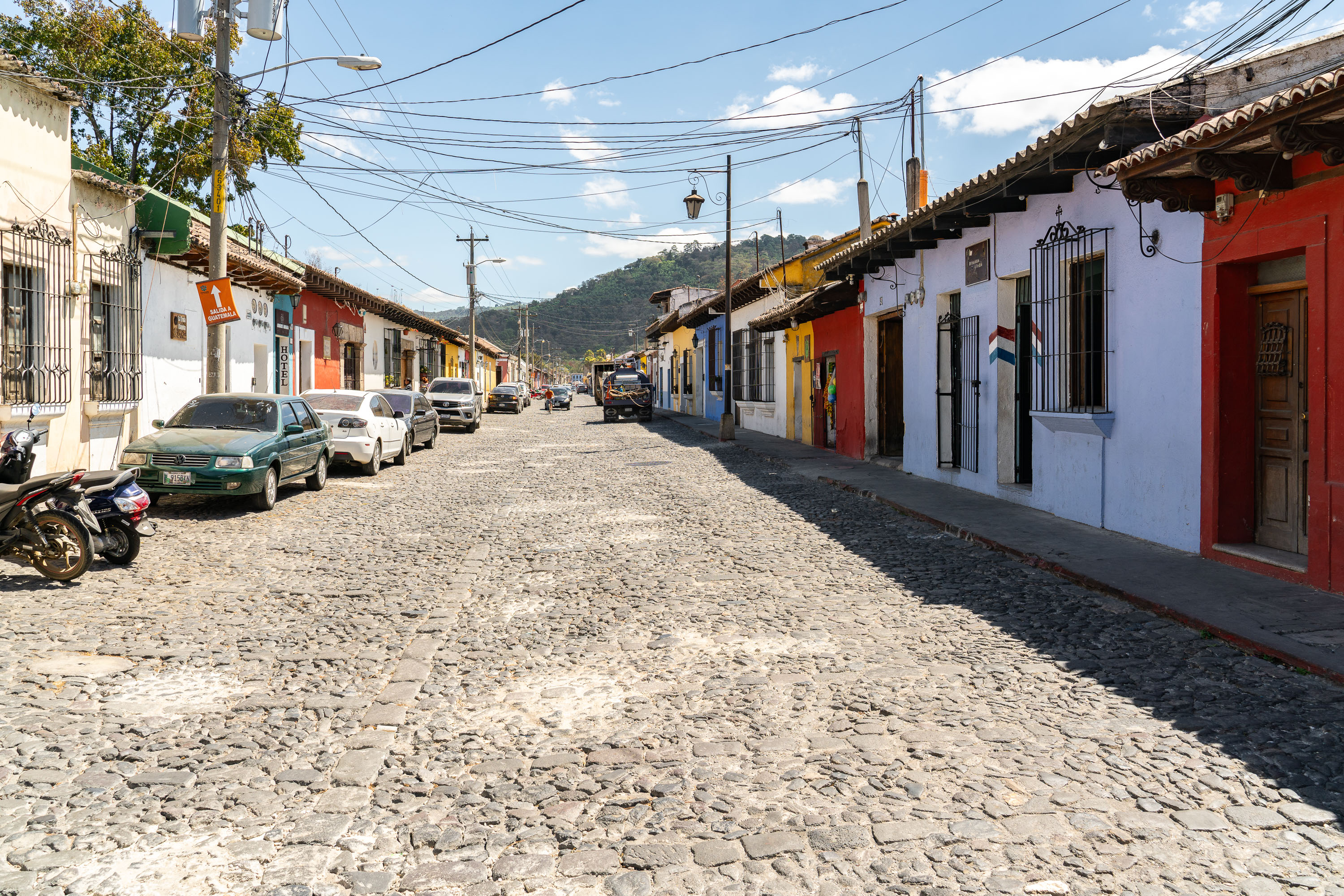
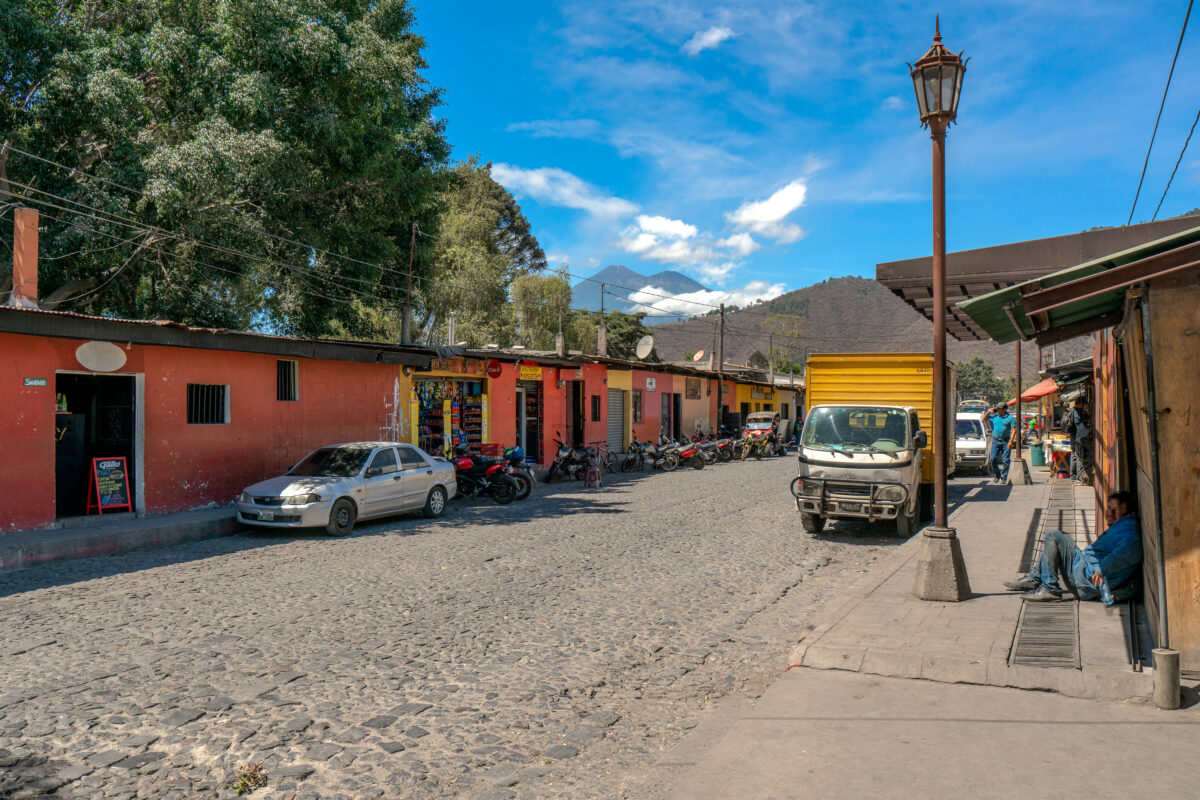
Colorful colonial buildings line a cobblestone street in Antigua Guatemala, with mountains visible in the distance.
Antigua Guatemala's cobblestone streets date to the Spanish colonial period, when the city served as the capital of the Captaincy General of Guatemala from 1543 until 1773. A major earthquake that year forced the colonial government to abandon the city for present-day Guatemala City, which left Antigua's low, single-story construction largely untouched by later development. UNESCO added the historic center to its World Heritage List in 1979, recognizing its grid of streets laid out under Renaissance urban planning principles and its collection of Spanish Baroque architecture. Building codes in the historic district still restrict height and require earth-toned or traditional color palettes on street-facing facades, a rule tied directly to the city's preservation status.

Parked Cars Along a Colonial Street in Antigua Guatemala
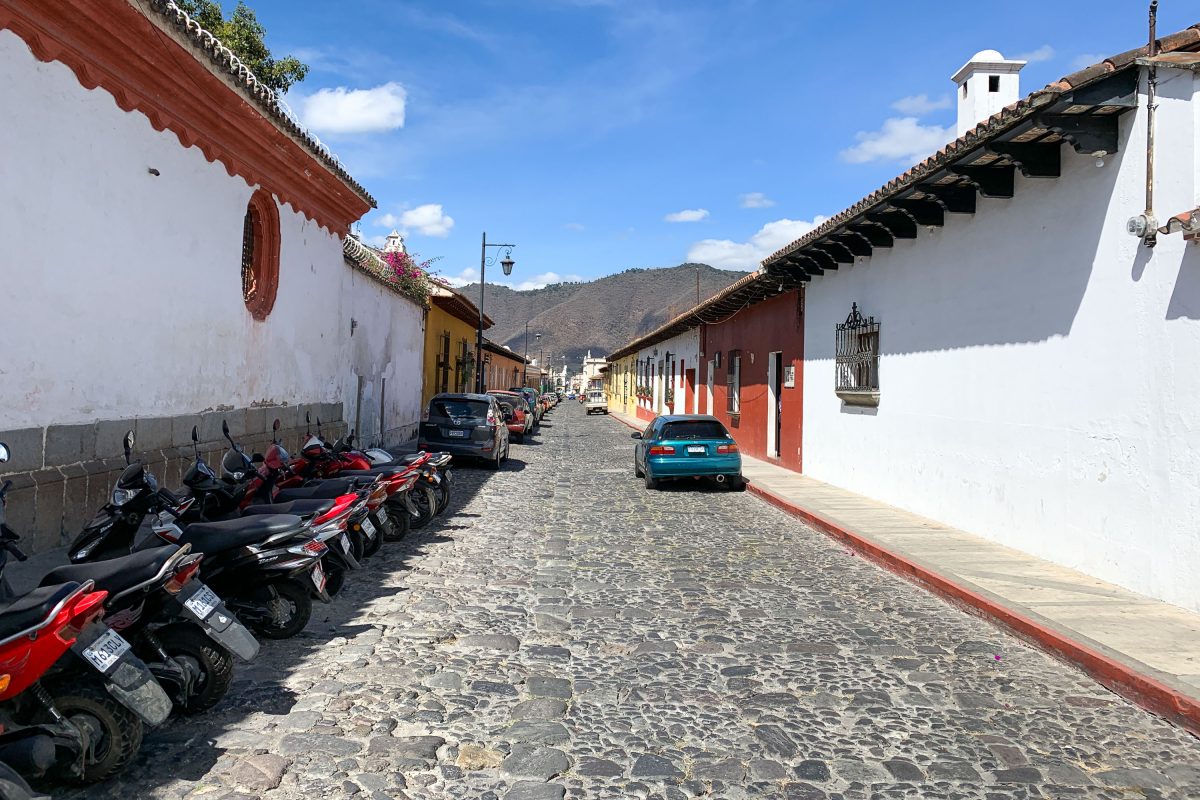
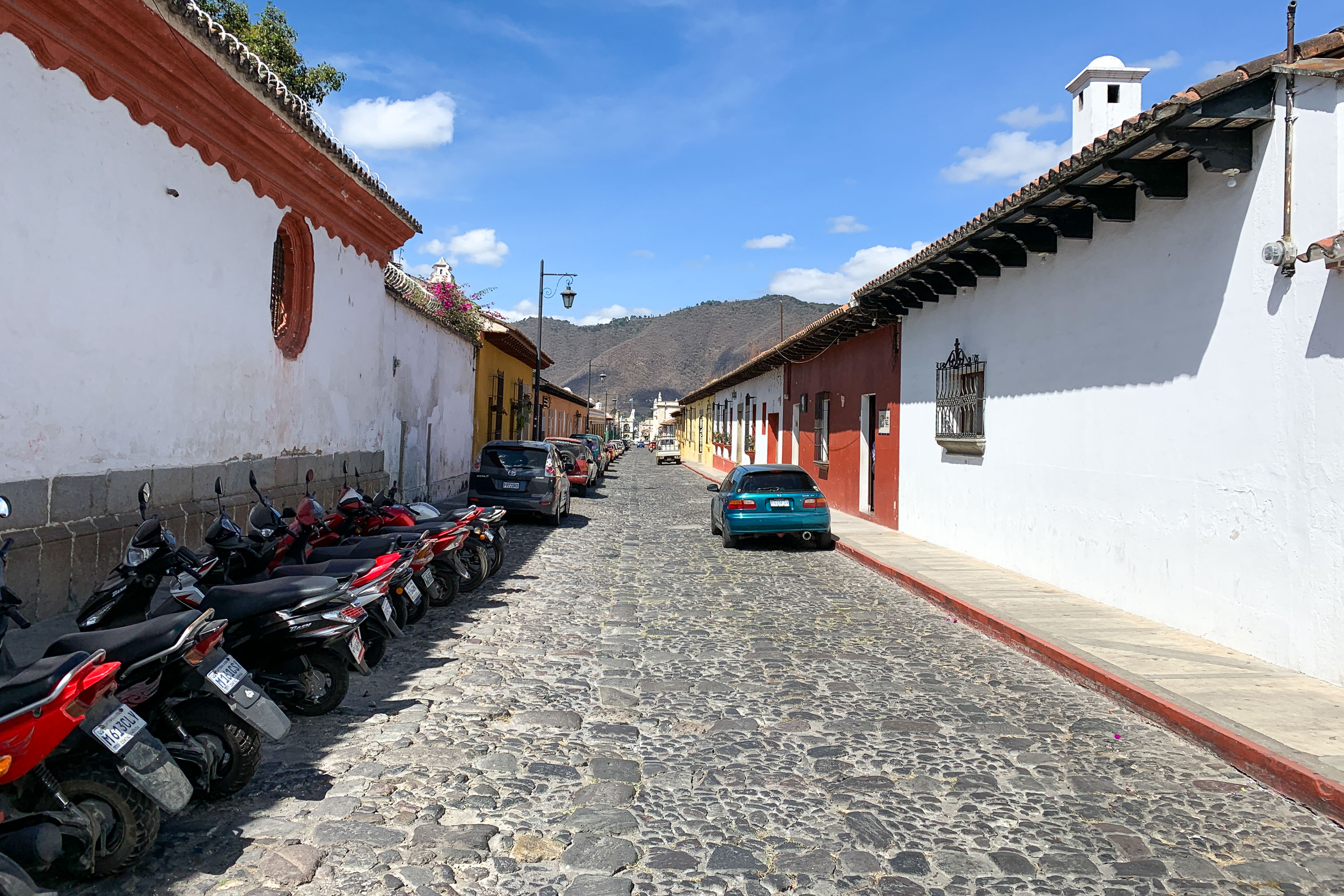
Motorcycles parked along a cobblestone street in Antigua Guatemala lined with colonial buildings and mountains.
Antigua's streets still follow the colonial grid laid out after the city became the capital of the Kingdom of Guatemala in 1543. The cobblestones covering them were cut from volcanic rock quarried in the surrounding highlands, a material choice tied directly to the region's volcanic geology. UNESCO added the historic center to its World Heritage list in 1979, citing its well-preserved layout of low, colonial-era buildings. Many structures here were rebuilt low to the ground after the 1773 earthquake that drove Spanish colonial authorities to relocate the capital to what is now Guatemala City. Volcán de Agua, visible at the end of many of the city's straight streets, has long served as a fixed point of reference in Antigua's urban design.

Parked Motorcycles Along a Cobblestone Lane in Antigua
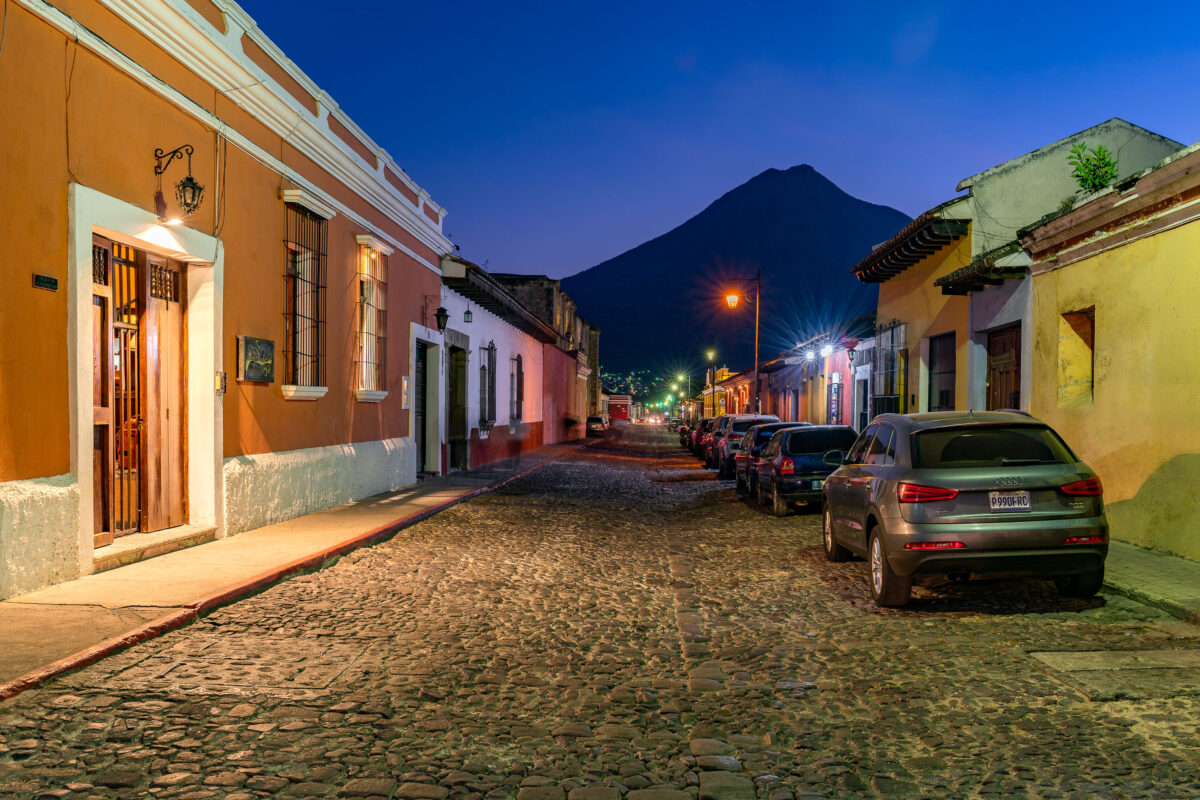
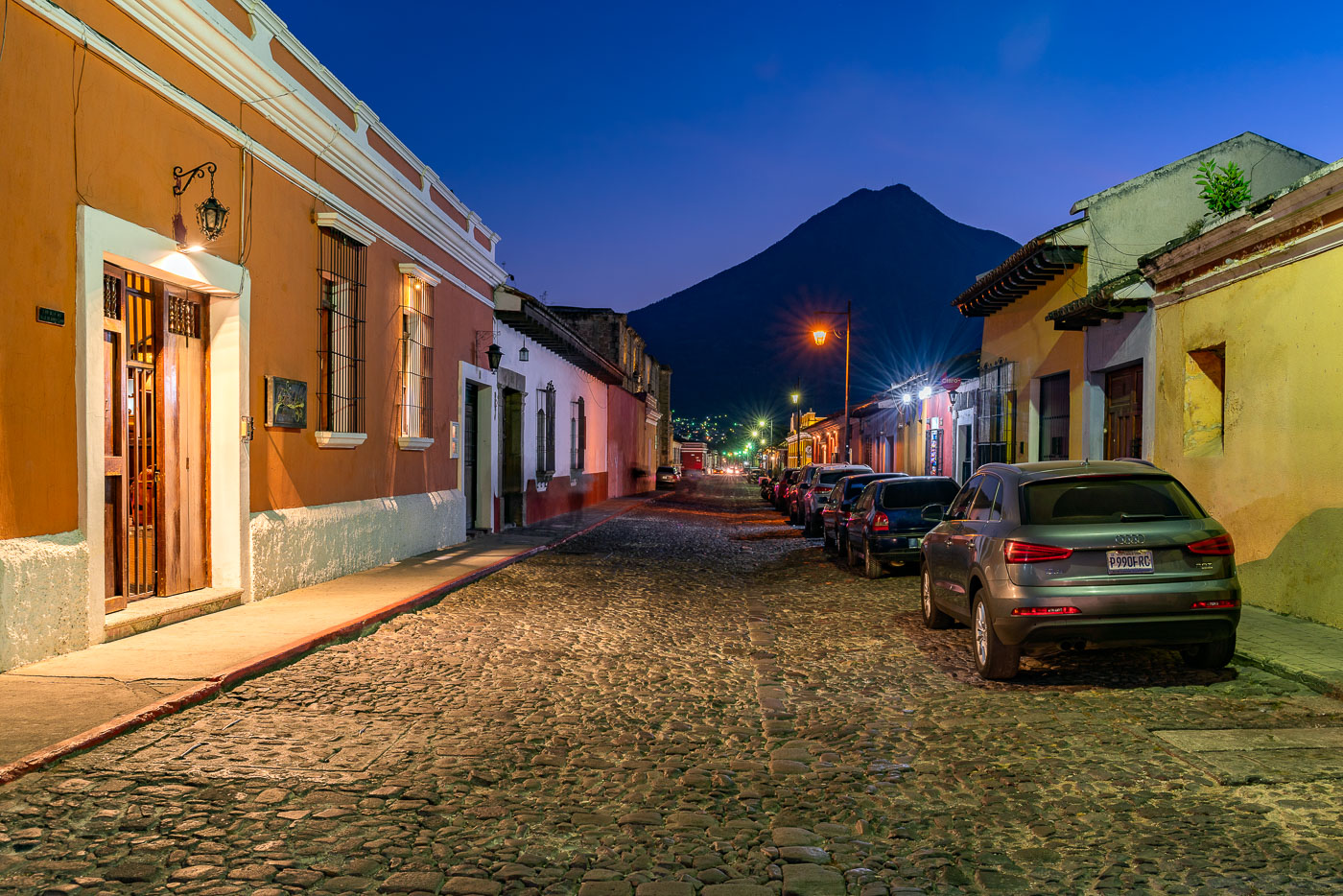
Parked vehicles line a cobblestone street in Antigua Guatemala at twilight with Volcán de Agua rising in the background.
Antigua Guatemala served as the capital of the Captaincy General of Guatemala from 1543 until a series of earthquakes forced the government to relocate to present-day Guatemala City in 1773. The city's colonial grid of cobblestone streets and low masonry buildings survives largely intact, earning it UNESCO World Heritage status in 1979. Volcán de Agua, rising to about 3,760 meters just south of the city, has long served as a landmark for orienting Antigua's streets, many of which align toward its summit.

Dusk Settles Over a Cobblestone Street Beneath Volcán de Agua
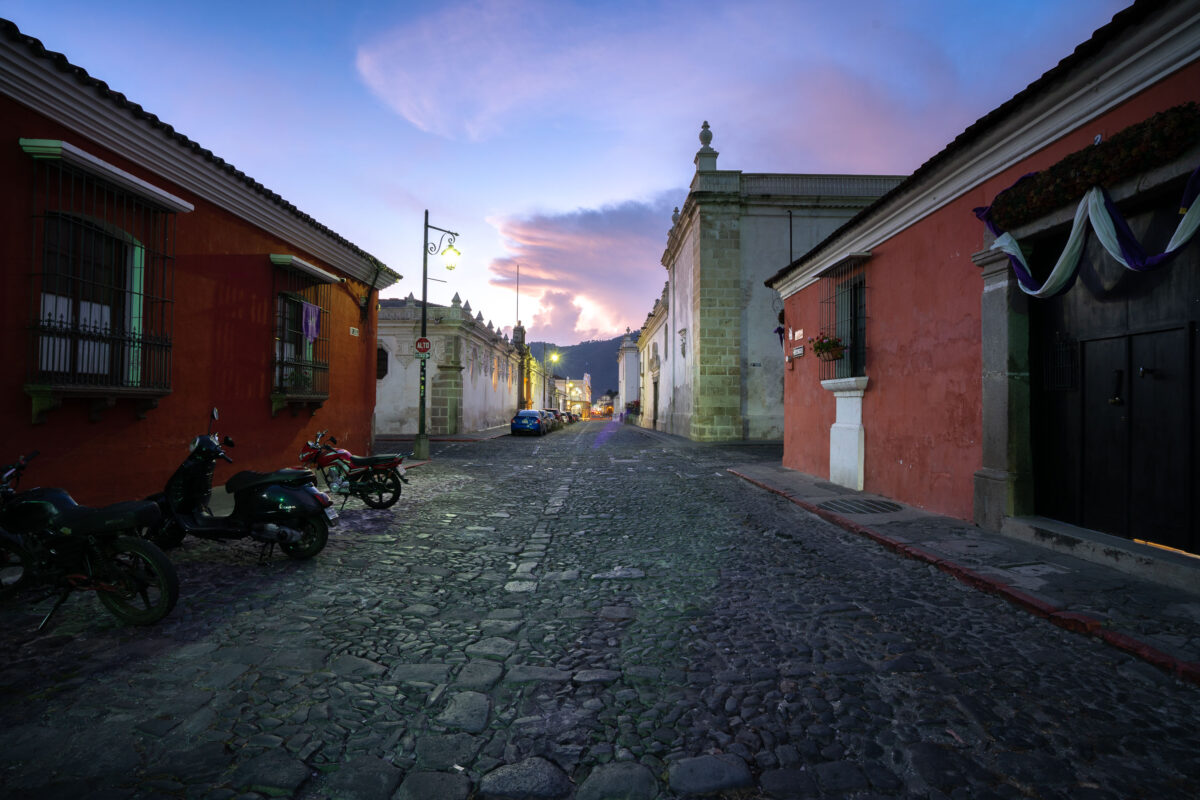
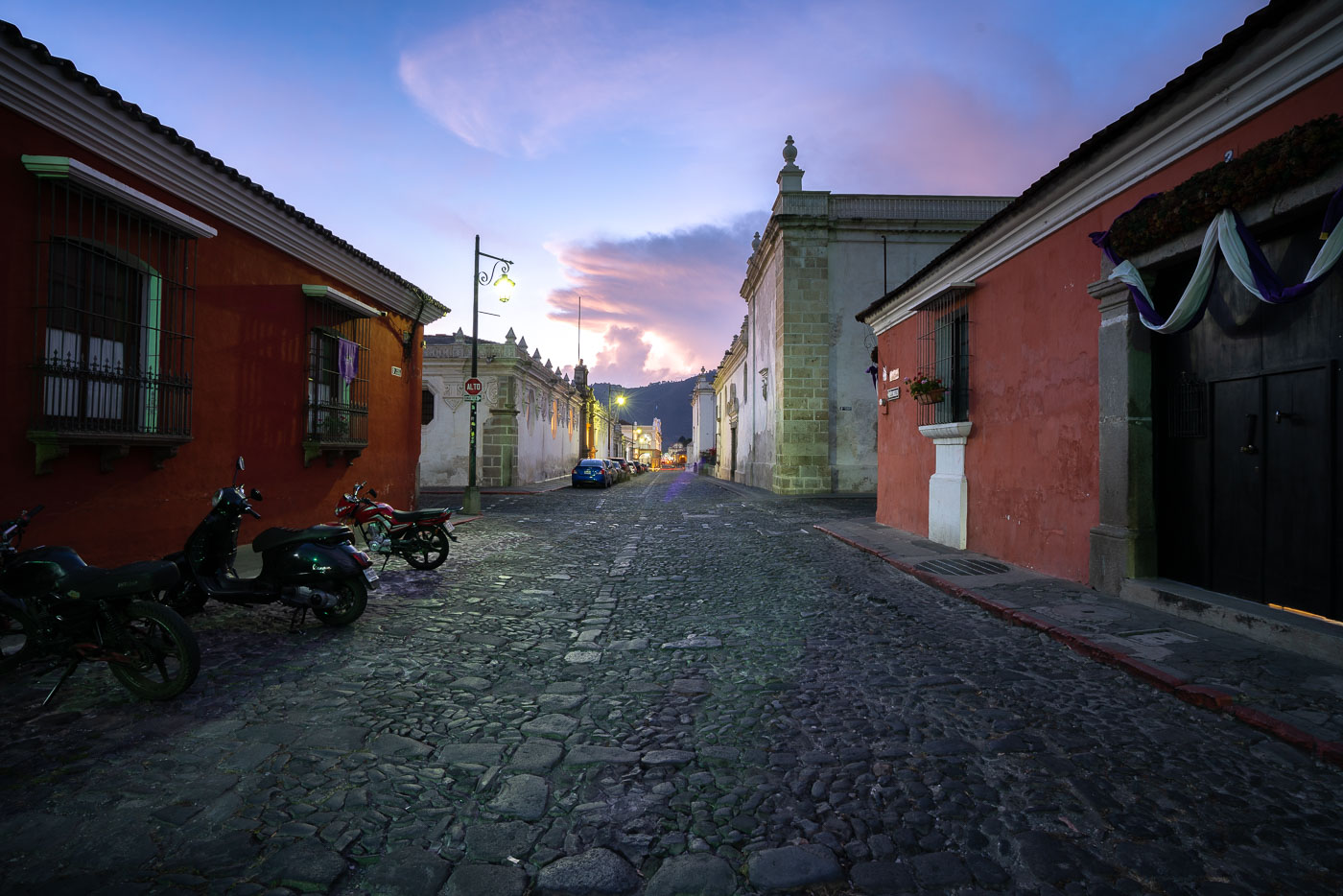
Cobblestone street in colonial Antigua Guatemala at dusk, lined with red and white buildings, motorcycles, and a church tower visible ahead.
Antigua Guatemala served as the capital of the Kingdom of Guatemala from 1543 until a series of earthquakes forced the government to relocate to present-day Guatemala City in 1776. UNESCO added the city to its World Heritage list in 1979, citing its Spanish Baroque architecture and well-preserved colonial street grid. The volcano Agua, rising to roughly 3,760 meters, stands just south of the city and has shaped its layout since Spanish colonists settled the valley in the 1540s. Many of Antigua's streets retain their original cobblestone paving, a feature protected under local preservation rules that restrict modern alterations within the historic center.

Twilight Falls Over a Cobblestone Street in Antigua Guatemala
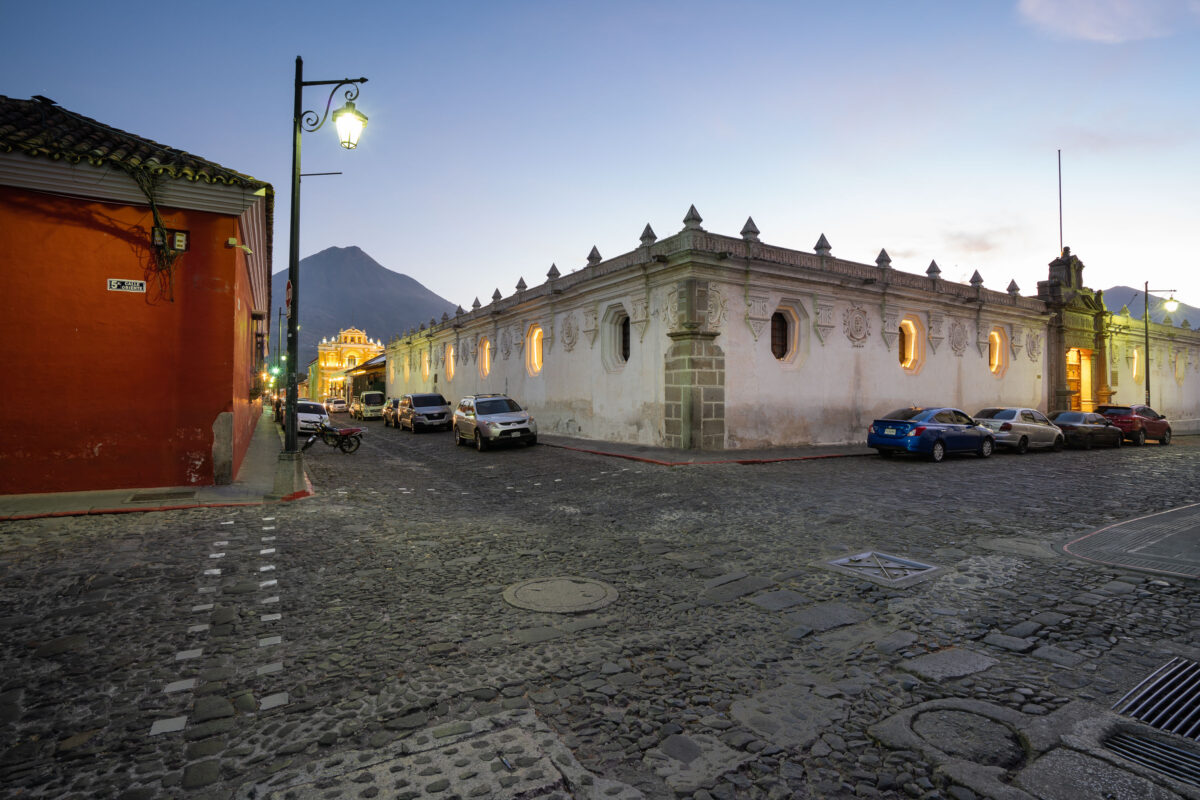
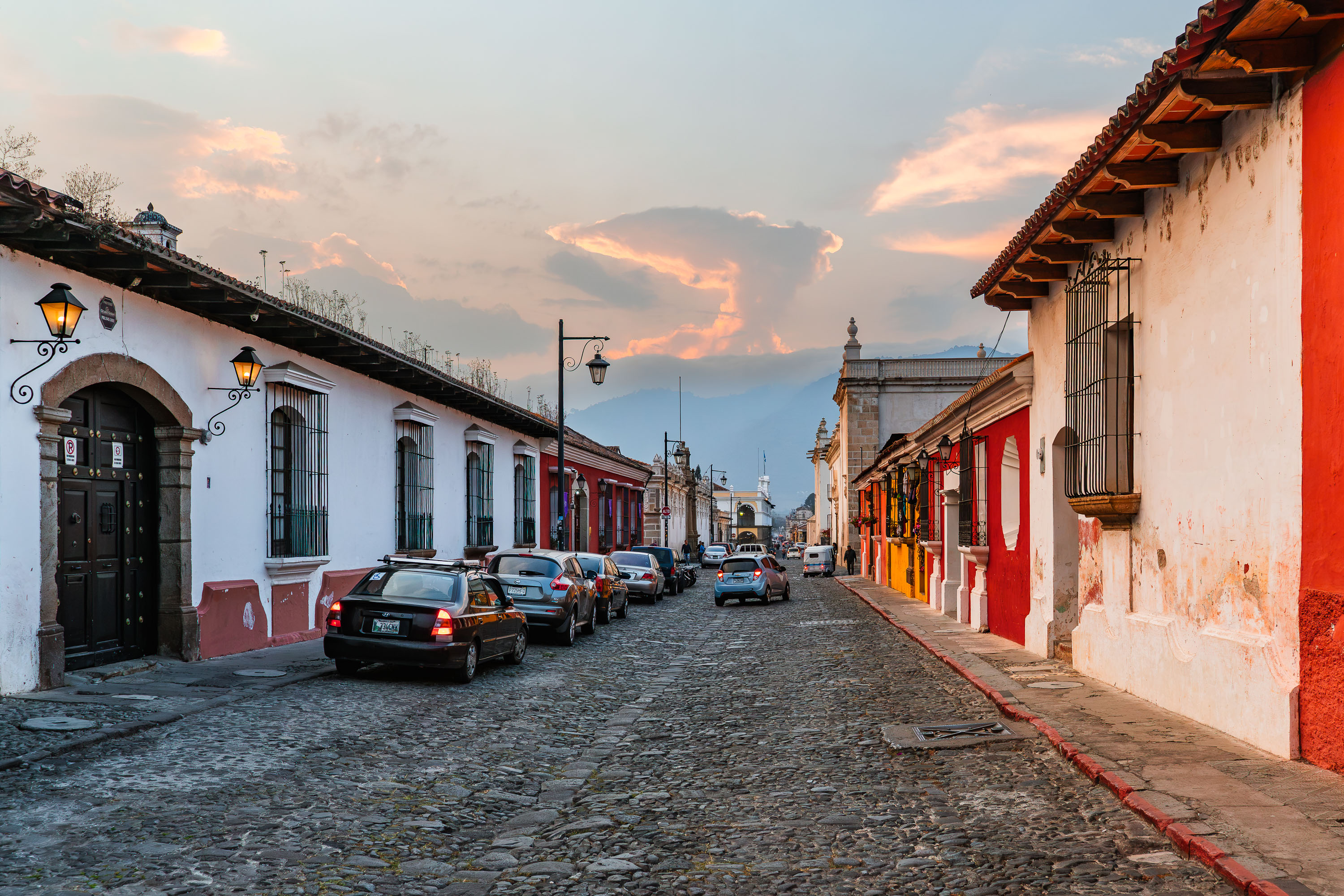
Colonial-era buildings with illuminated windows line a cobblestone street in Antigua Guatemala as Agua Volcano rises in the background at dusk.
5a Calle Oriente runs east-west through the historic center of Antigua Guatemala, part of the city's original 16th-century grid laid out after the Spanish crown relocated its colonial capital here in 1543. Agua Volcano, a dormant stratovolcano rising to roughly 3,760 meters, stands just south of the city and gave Antigua its name after a 1541 mudslide from its slopes destroyed the earlier Spanish capital at its base. Antigua Guatemala's colonial street grid and surrounding volcanoes were inscribed as a UNESCO World Heritage Site in 1979, recognizing the city's preserved Spanish Baroque architecture.

Twilight on 5a Calle Oriente Toward Agua Volcano, Antigua

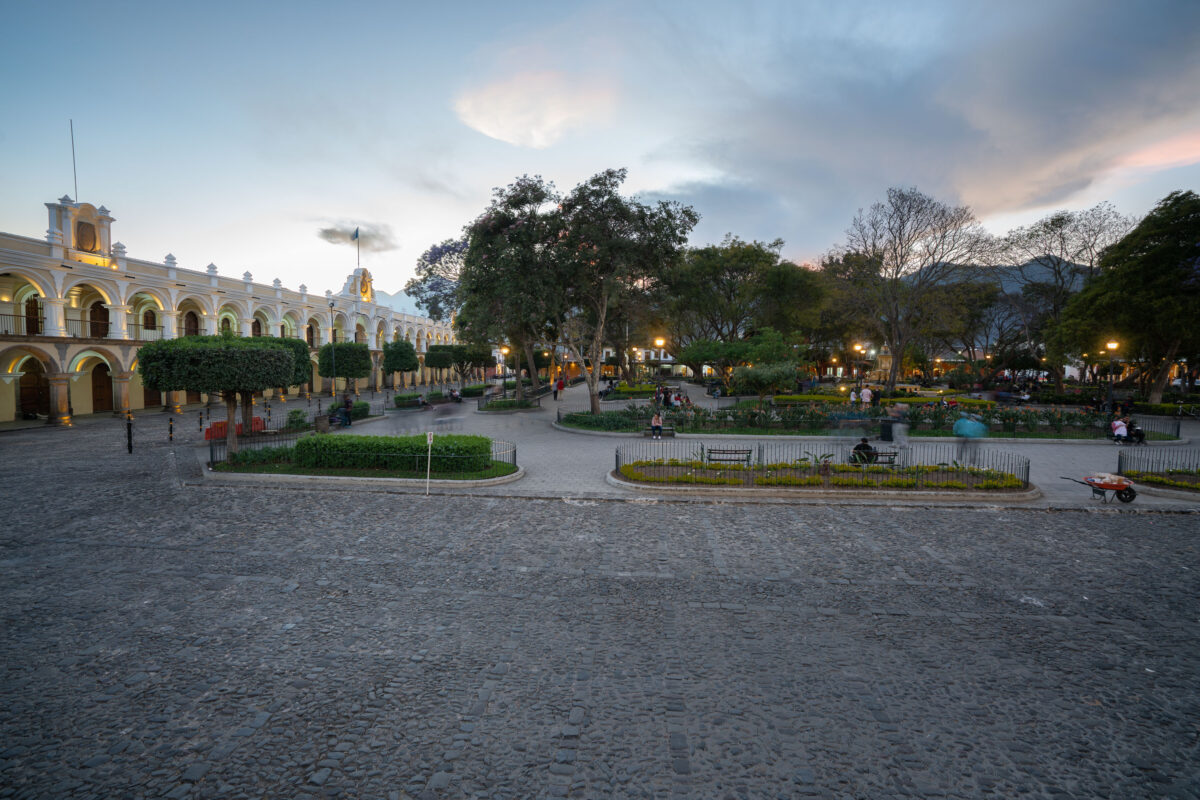
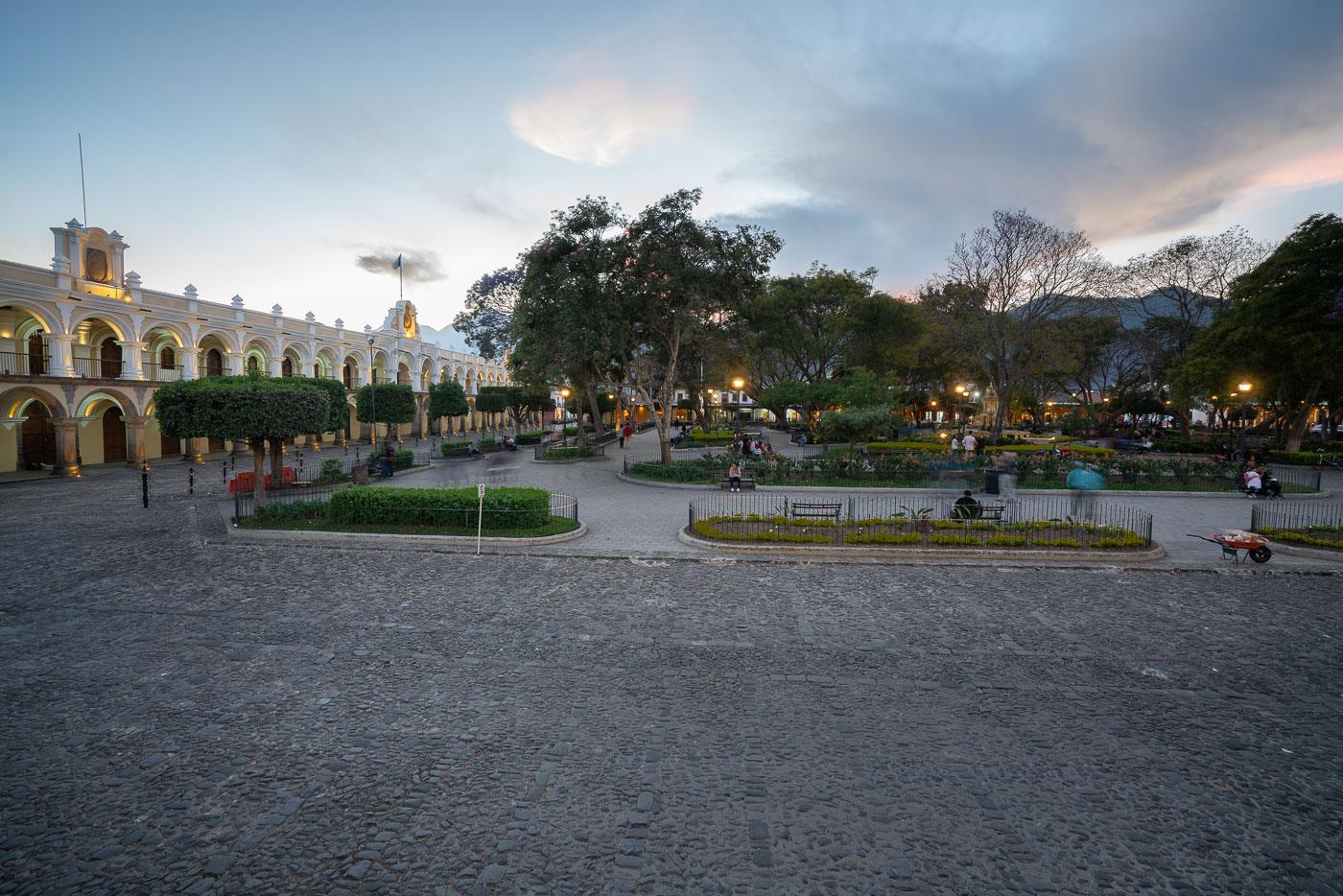
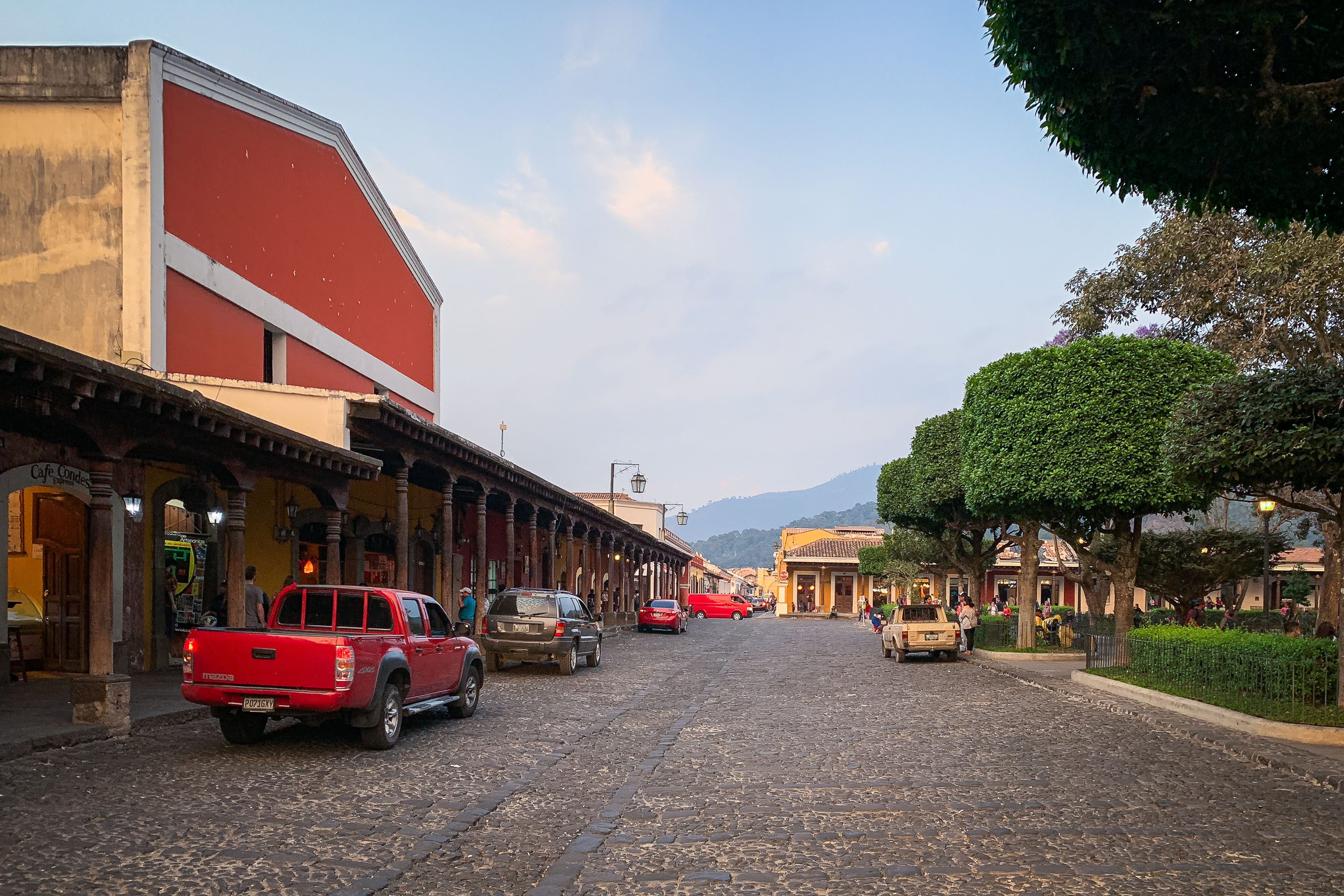
Parque Central in Antigua Guatemala features a yellow arcaded colonial building, manicured gardens, and mountains visible at dusk.
Parque Central sits at the heart of Antigua Guatemala, laid out when the city was founded as Santiago de los Caballeros in 1543. The square's centerpiece, the Fuente de las Sirenas, was cast in 1739 and remains one of the few colonial fountains in the Americas still in its original location. The Palacio de los Capitanes Generales, seat of Spanish colonial governors for Central America, lines its western edge, while the Antigua Cathedral and the Ayuntamiento building border the other sides. UNESCO listed Antigua Guatemala as a World Heritage Site in 1979, citing the preserved layout of its historic center, of which this plaza forms the core.

Twilight at Parque Central in Antigua Guatemala

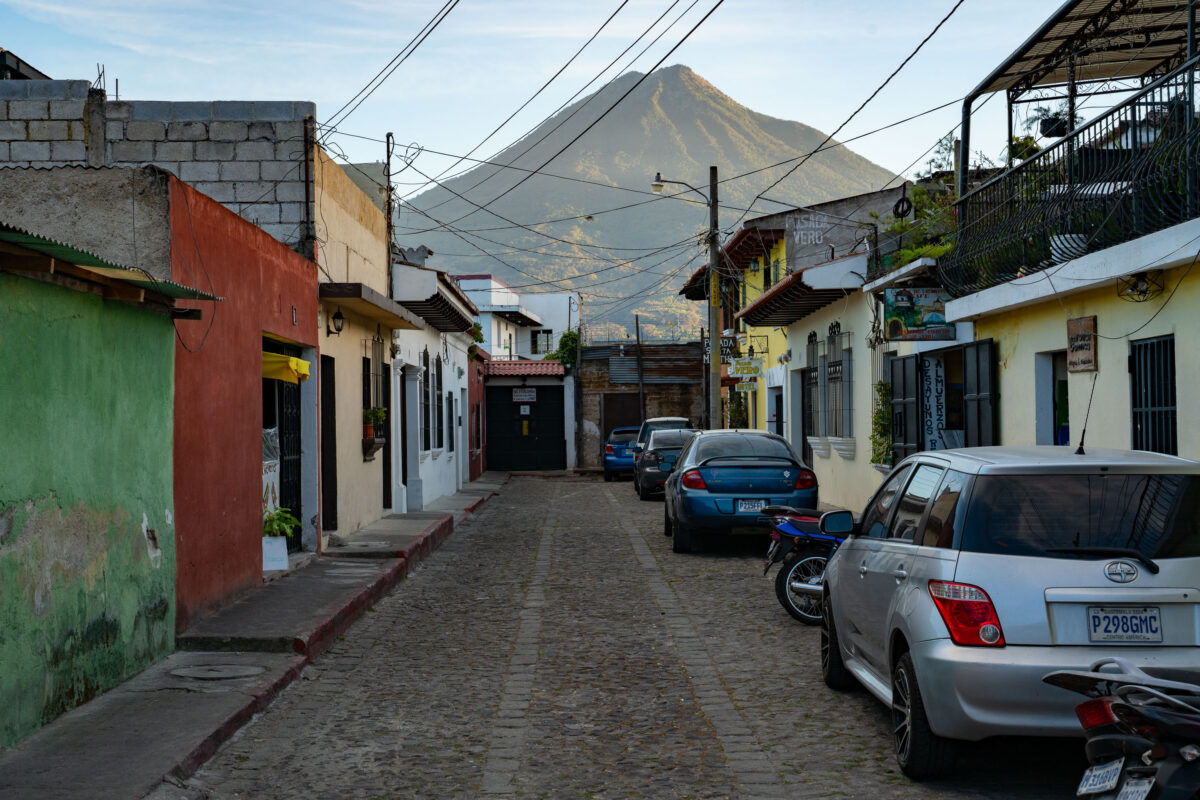
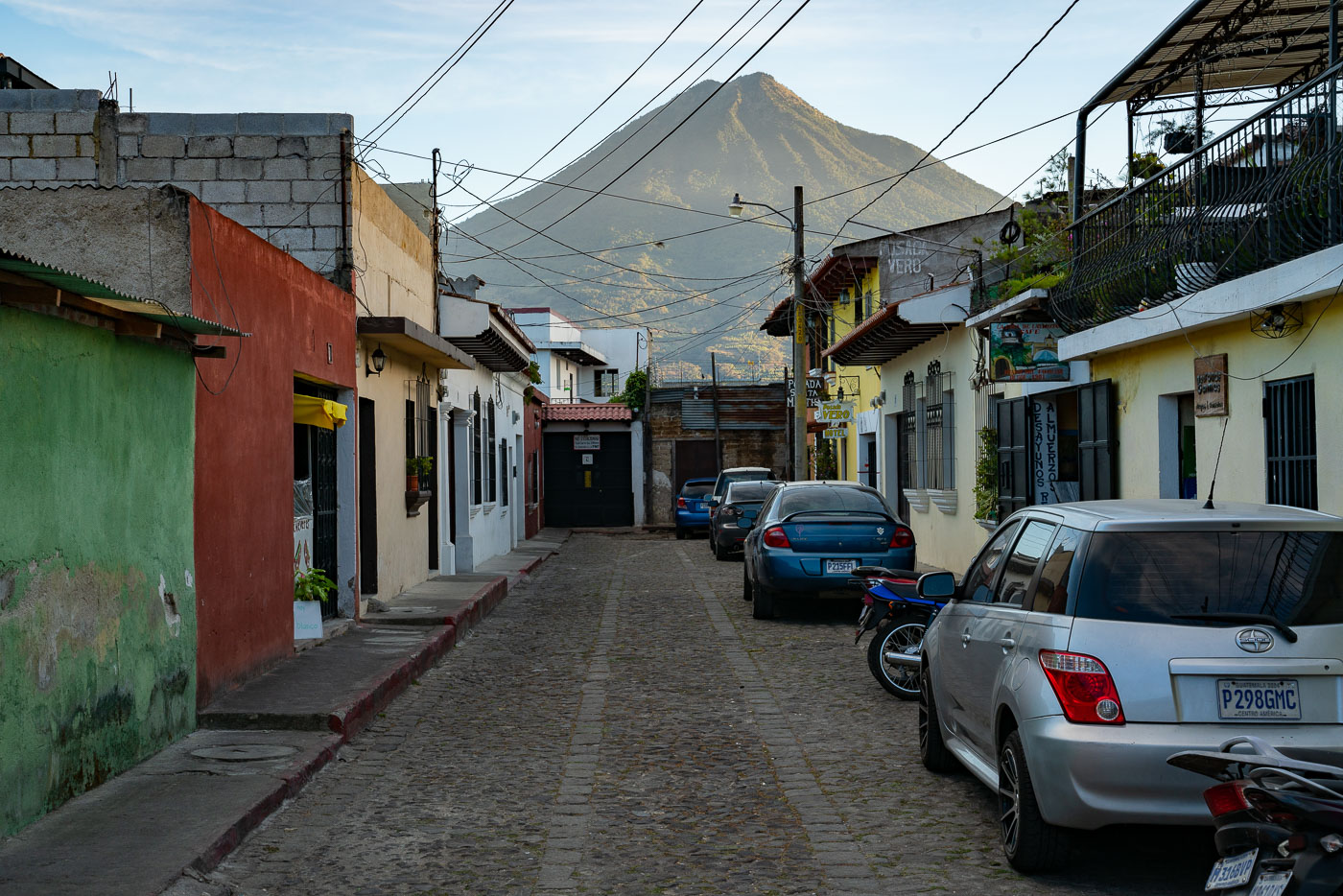
A narrow cobblestone street in colonial Antigua, Guatemala, with parked vehicles and colorful buildings framing Volcán de Agua in the distance.
Volcán de Agua rises about 3,760 meters above sea level just south of Antigua Guatemala, and its symmetrical cone is visible from streets throughout the city. Antigua's grid of cobblestone streets dates to the 16th century, when the city served as the capital of the Captaincy General of Guatemala. UNESCO designated the city's historic center a World Heritage Site in 1979, citing its well-preserved colonial layout and architecture. Many of the low buildings lining streets like this one combine original colonial walls with later additions, a pattern common throughout the city after repeated earthquake damage prompted rebuilding over the centuries.

Parked Cars Along a Cobblestone Lane Near Volcán de Agua, Antigua

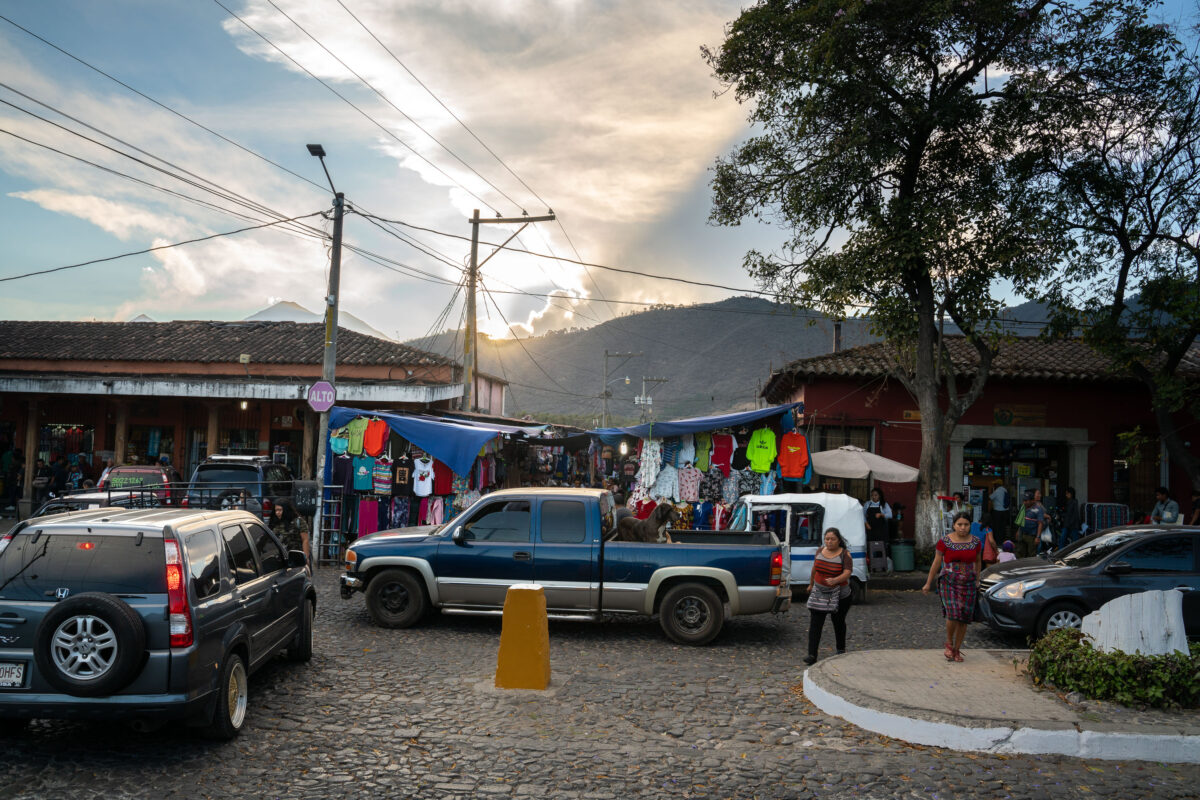
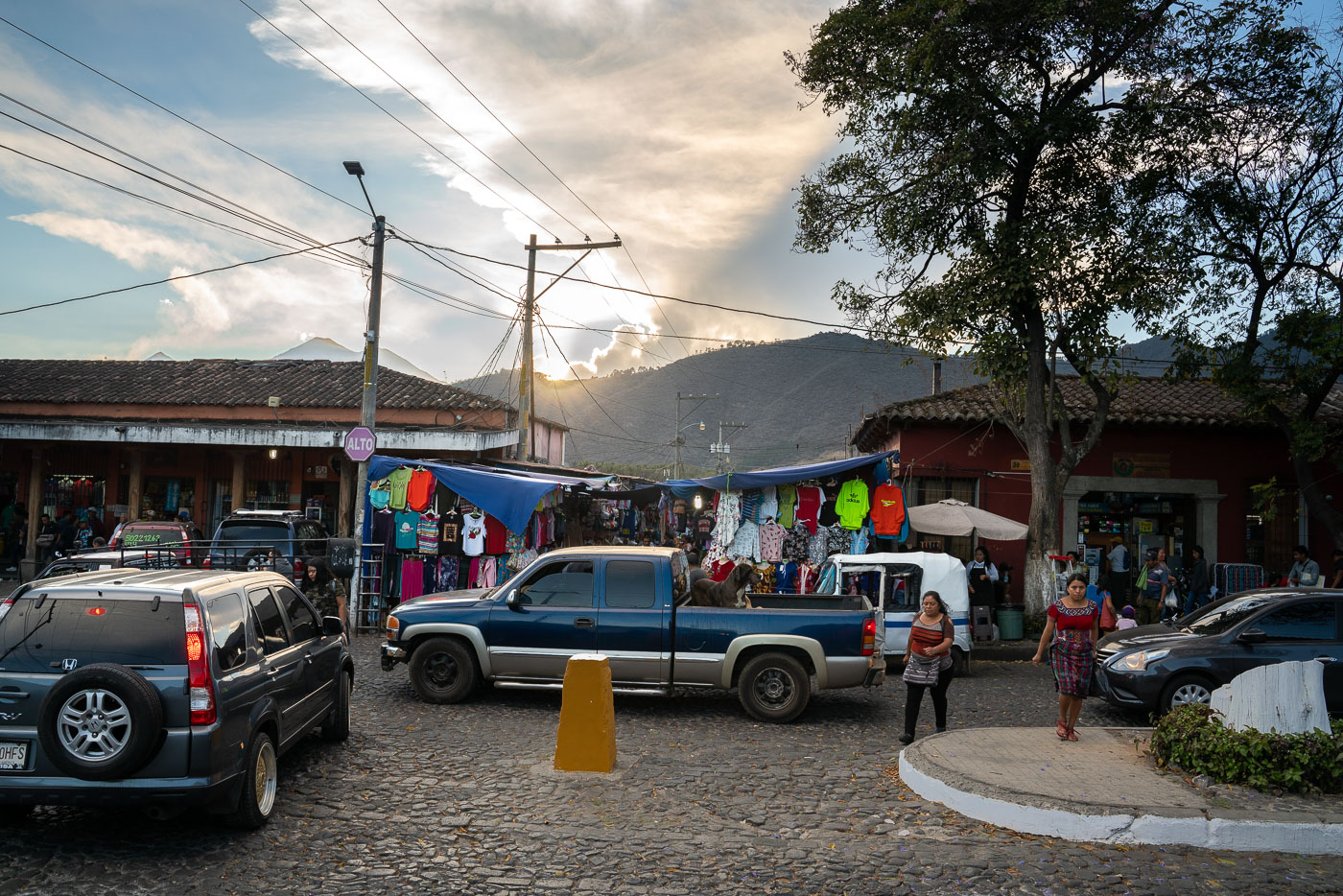
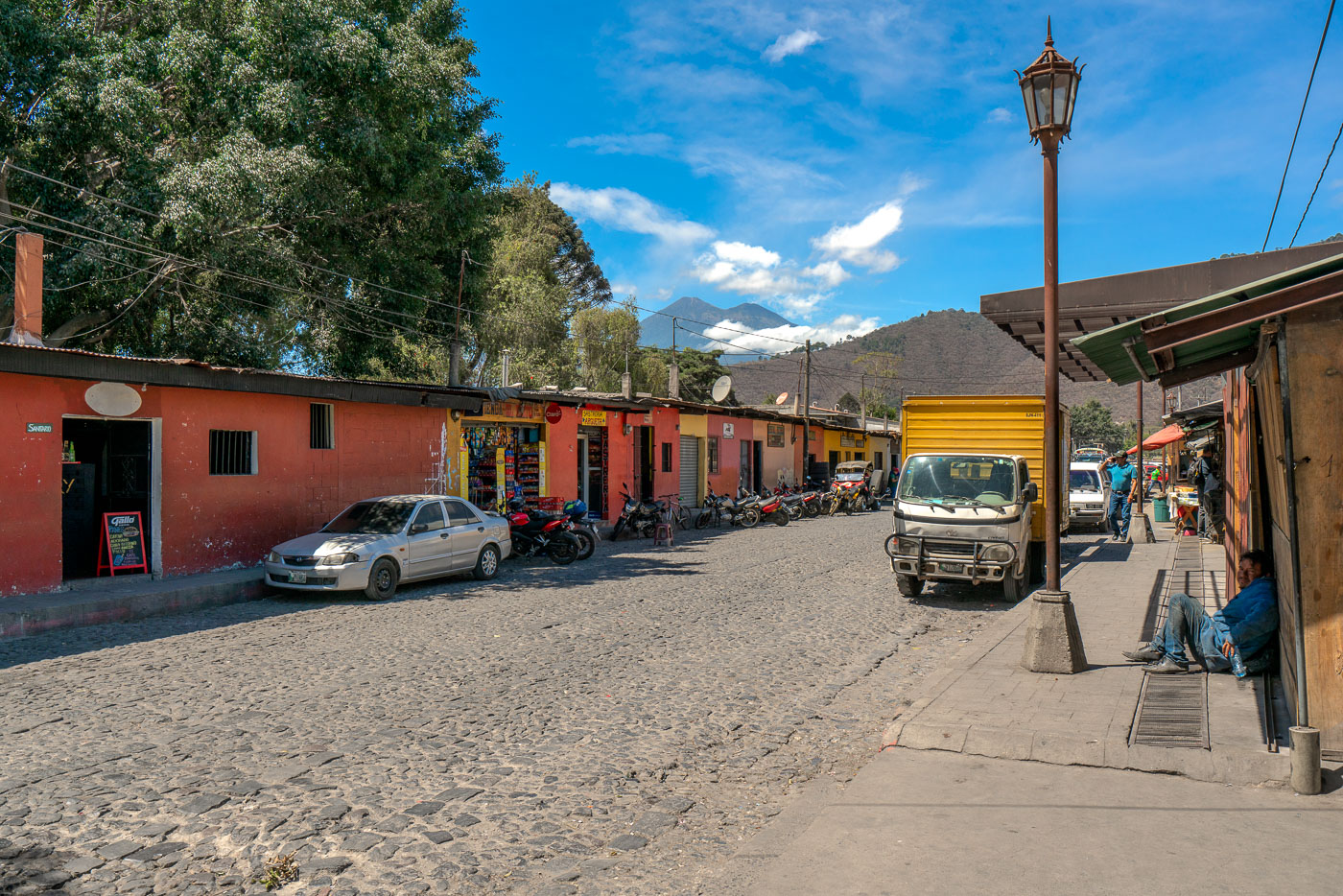
Street vendors display colorful clothing and goods along a cobblestone market street in colonial Antigua, Guatemala, with mountains visible in the background.
Antigua Guatemala served as the capital of the Kingdom of Guatemala from 1543 until a series of earthquakes forced the colonial government to relocate to present-day Guatemala City in 1773. The city's grid of cobblestone streets and low Spanish colonial buildings has remained largely intact since that period, earning it UNESCO World Heritage status in 1979. Open-air vendor stalls selling clothing and textiles are a regular feature along several of Antigua's market streets, supplying both residents and the tourists who visit the city. Volcán de Agua, rising to the south, has long shaped the layout and orientation of the city's streets.

Clothing Vendors Along a Market Street in Antigua, Guatemala

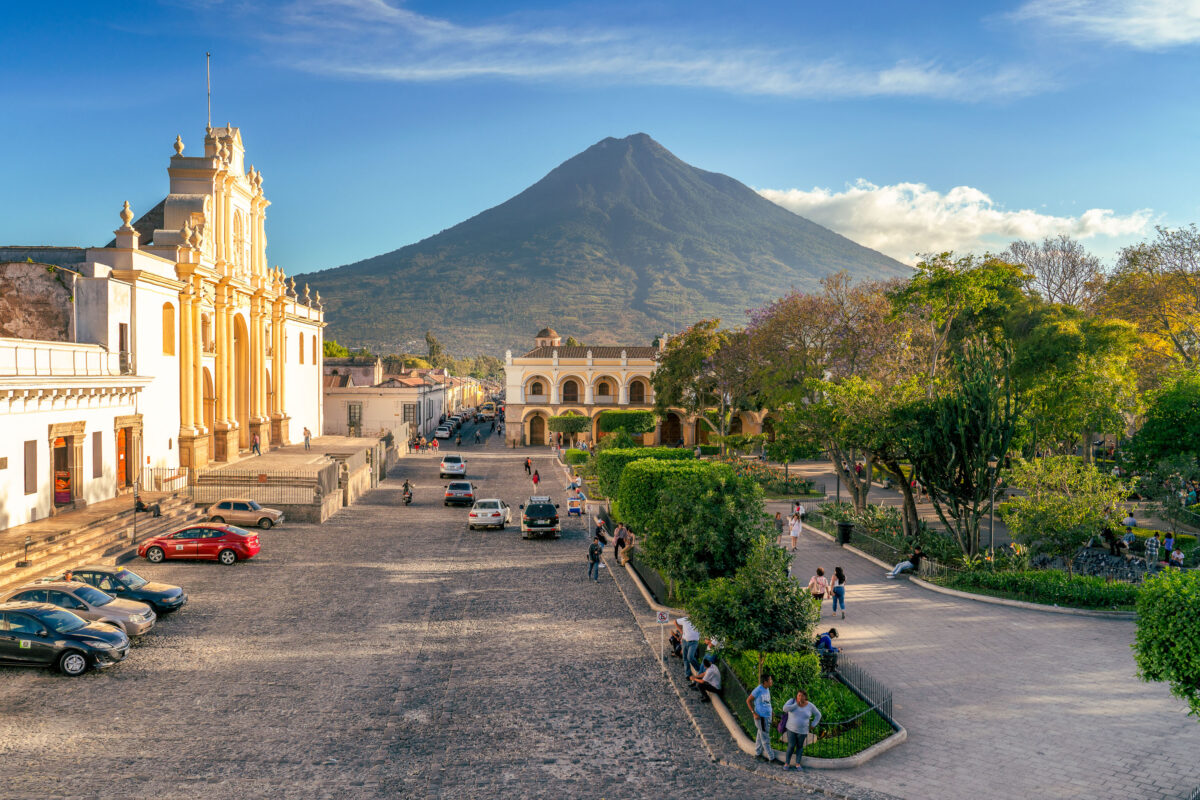
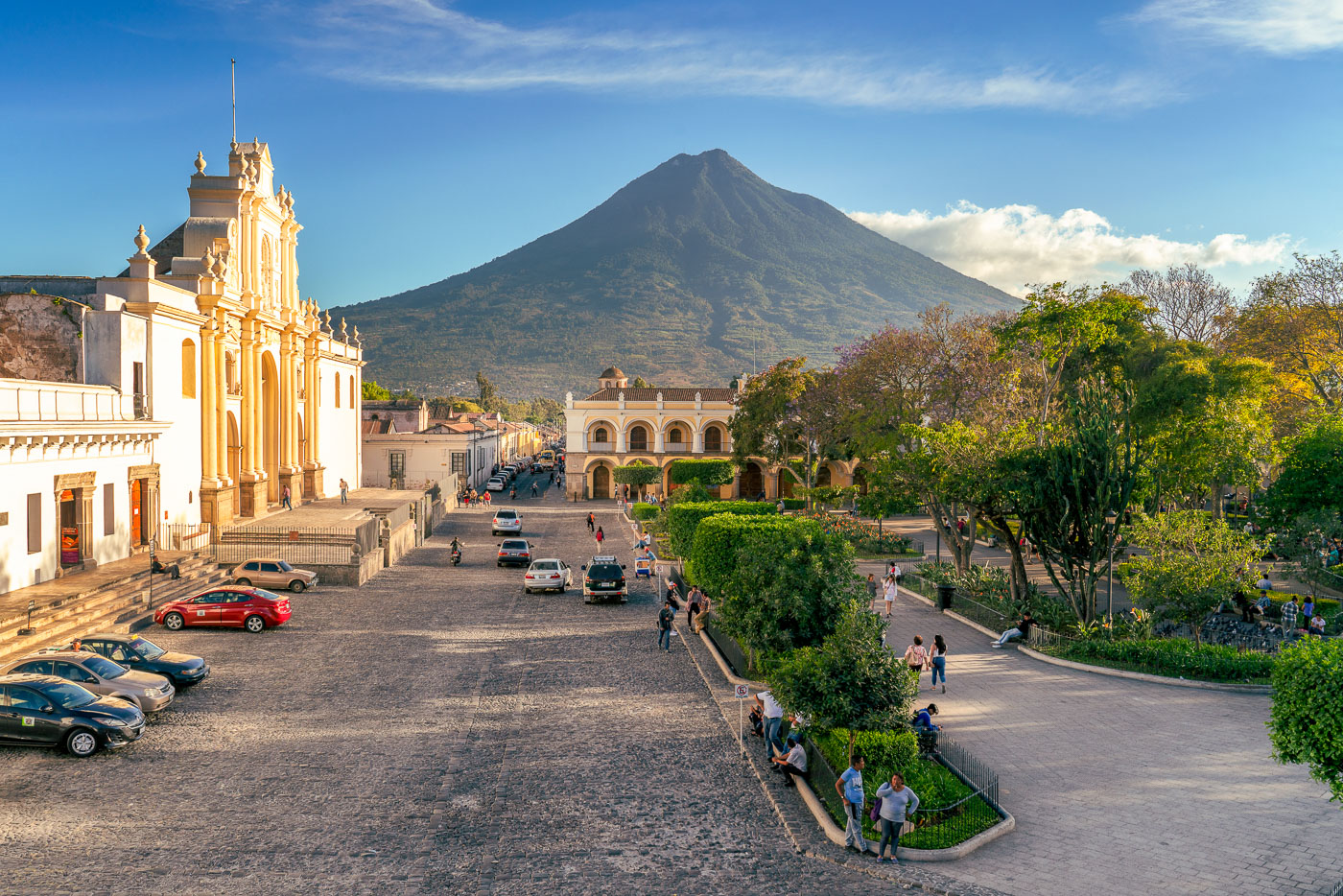
Catedral de Santiago and Volcán de Agua dominate Parque Central in Antigua Guatemala, a UNESCO World Heritage colonial city.
The Catedral de San José faces Parque Central in Antigua Guatemala, its current facade dating to a 1680 rebuilding after earlier quakes destroyed the original 1543 structure. Much of the cathedral's nave and rear chapels collapsed in the 1773 Santa Marta earthquake, which prompted colonial authorities to relocate the capital to present-day Guatemala City. Only the front portion was later restored for regular use, while ruins of the old naves remain behind it. Volcán de Agua, rising to about 3,760 meters, takes its name from a 1541 mudslide that destroyed the original Spanish capital at Ciudad Vieja. Antigua Guatemala's historic center was named a UNESCO World Heritage Site in 1979 for its preserved Spanish colonial layout and architecture.

San José Cathedral and Volcán de Agua Over Antigua Guatemala

Cobblestone street in Antigua Guatemala with colonial buildings, parked vehicles, and Agua volcano visible in the distance.
Volcán de Agua rises just south of Antigua Guatemala, a dormant stratovolcano reaching about 3,760 meters above sea level. A mudslide from the volcano destroyed the nearby settlement of Ciudad Vieja in 1541, prompting Spanish colonists to relocate their capital to what became Antigua two years later. Antigua Guatemala served as the seat of the Captaincy General of Guatemala until a series of earthquakes forced its abandonment in 1773. Its cobblestone streets and low colonial buildings, many dating to the 16th through 18th centuries, helped earn the city UNESCO World Heritage status in 1979.

Market Street Below Volcán de Agua in Antigua

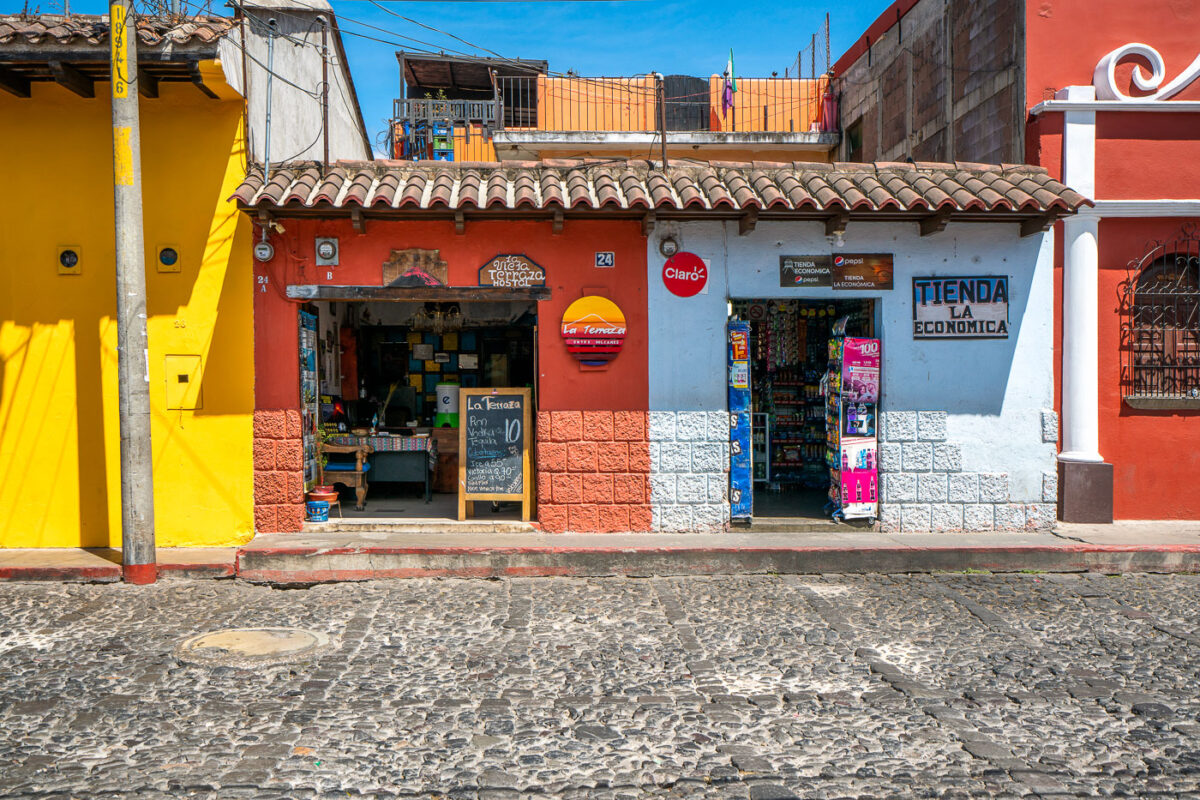
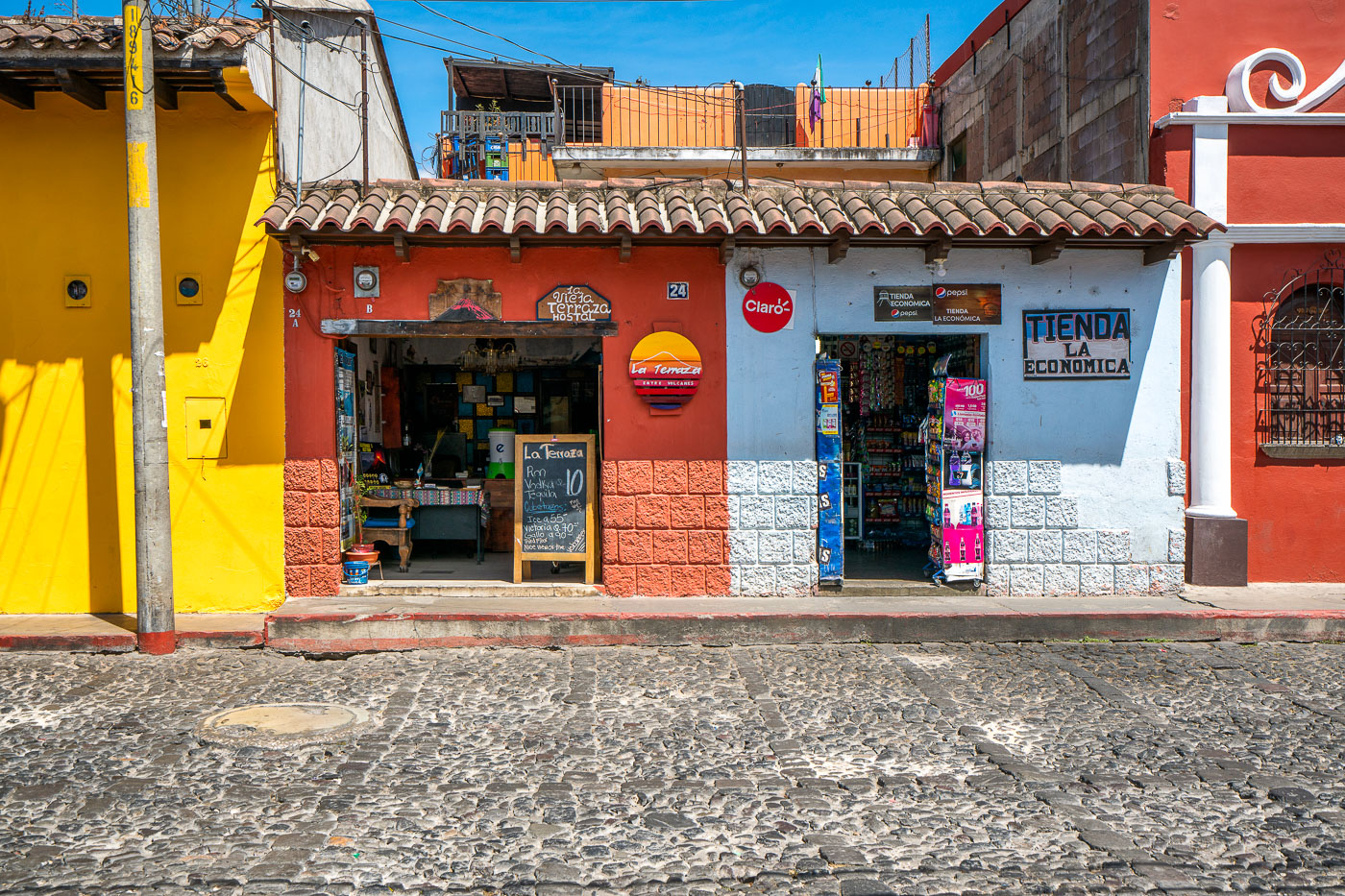
Tienda La Economica convenience store with red and white facade on a cobblestone street in Antigua Guatemala.
Tienda La Economica and La Terraza sit side by side on a cobblestone street in Antigua Guatemala, a UNESCO World Heritage city known for its grid of colonial-era streets laid out in the 1540s. Antigua's building code restricts structures to a low, tile-roofed colonial style, which keeps small shops like these at street level rather than in taller commercial buildings. Storefronts such as this one typically combine a convenience store with lodging or food service, a common arrangement in the city's historic center where residential and commercial space often share the same narrow lot.

Tienda La Economica and La Terraza Hostel, Antigua Guatemala

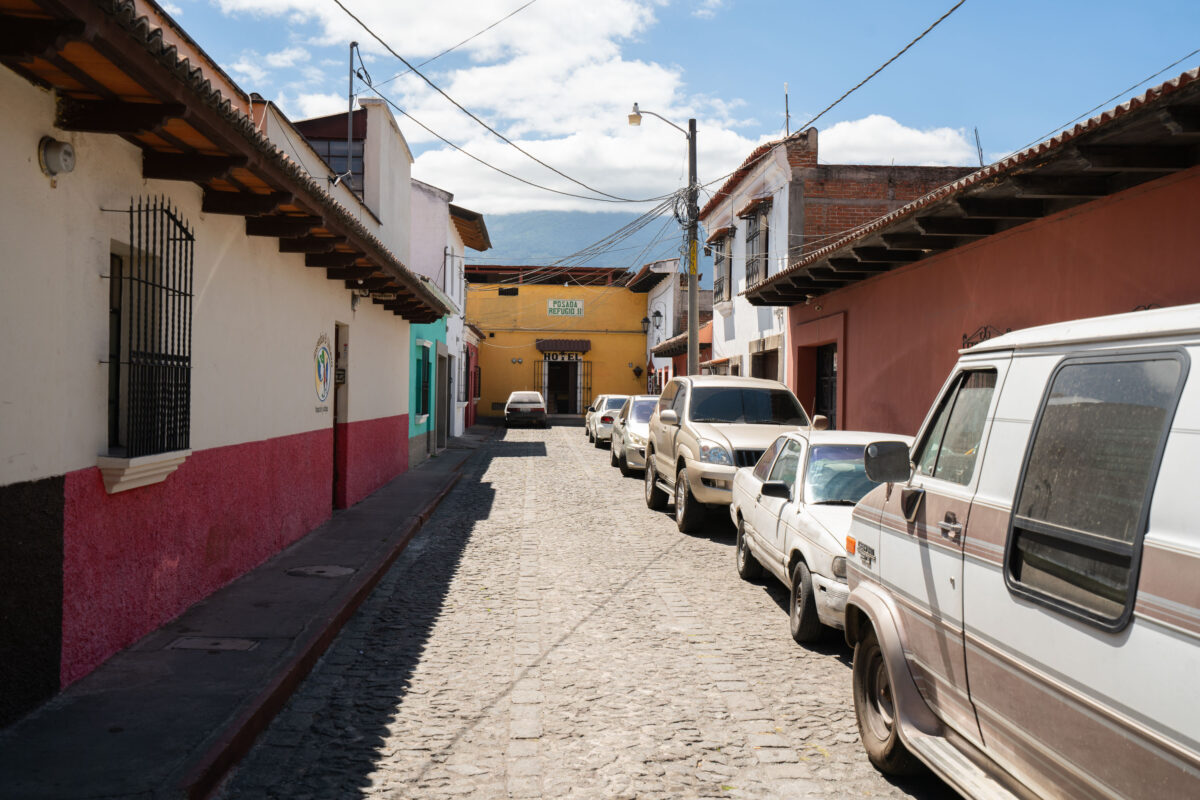
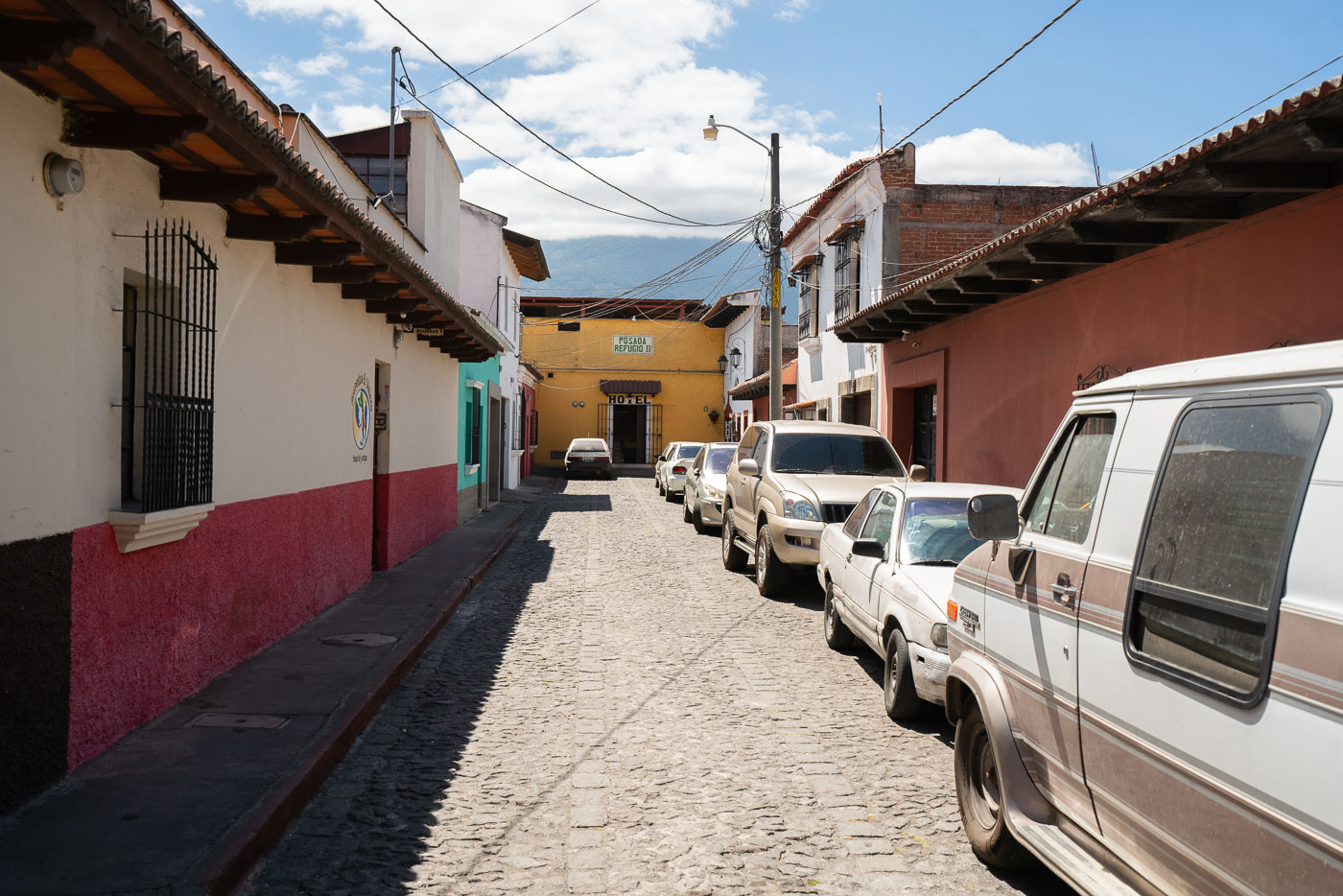
Cobblestone street in Antigua Guatemala lined with colonial buildings, parked vehicles, and a yellow building in the distance.
Hotel Posada El Refugio sits along a cobblestone street in Antigua Guatemala's historic center, a district designated a UNESCO World Heritage Site in 1979 for its well-preserved Spanish colonial layout. Antigua's streets follow a grid established in the 16th century, when the city served as the capital of the Captaincy General of Guatemala. Many buildings in the center retain low, thick-walled construction and red tile roofing, a style adapted after repeated earthquake damage prompted the colonial capital's eventual relocation to present-day Guatemala City in 1776.

Cobblestone Street Toward Hotel Posada El Refugio, Antigua Guatemala

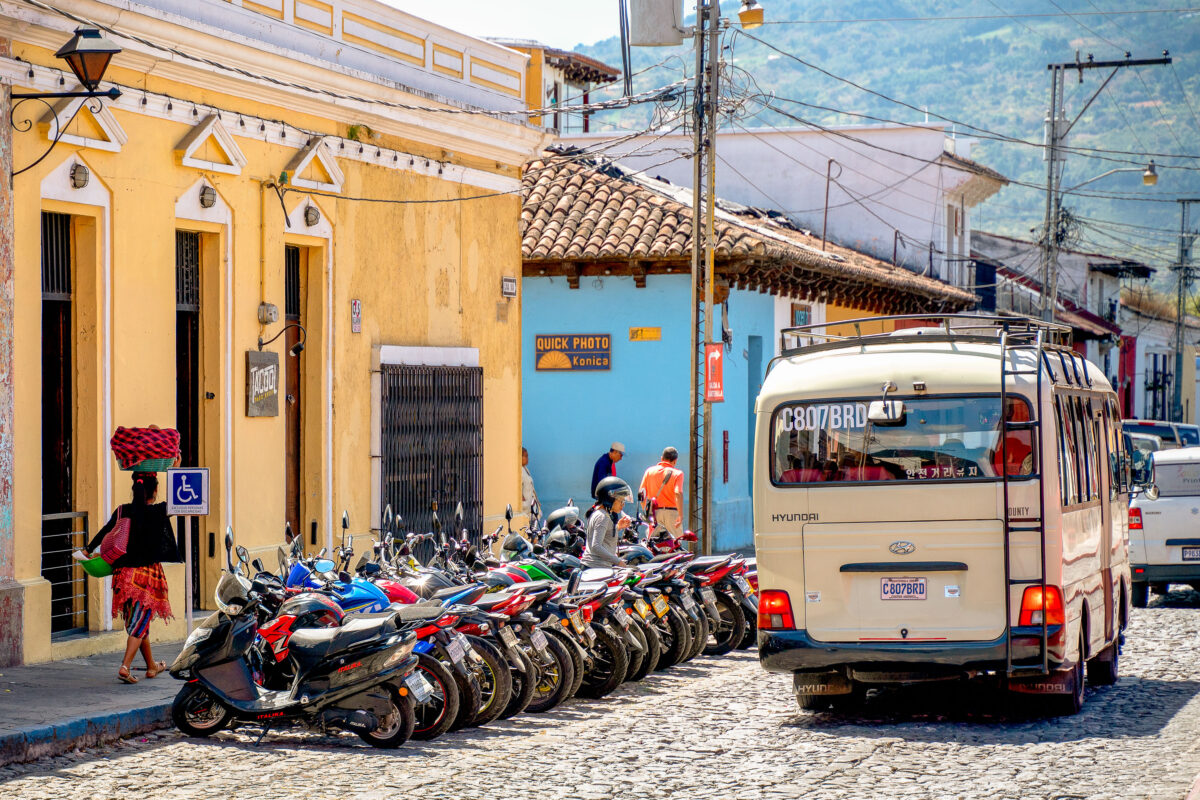
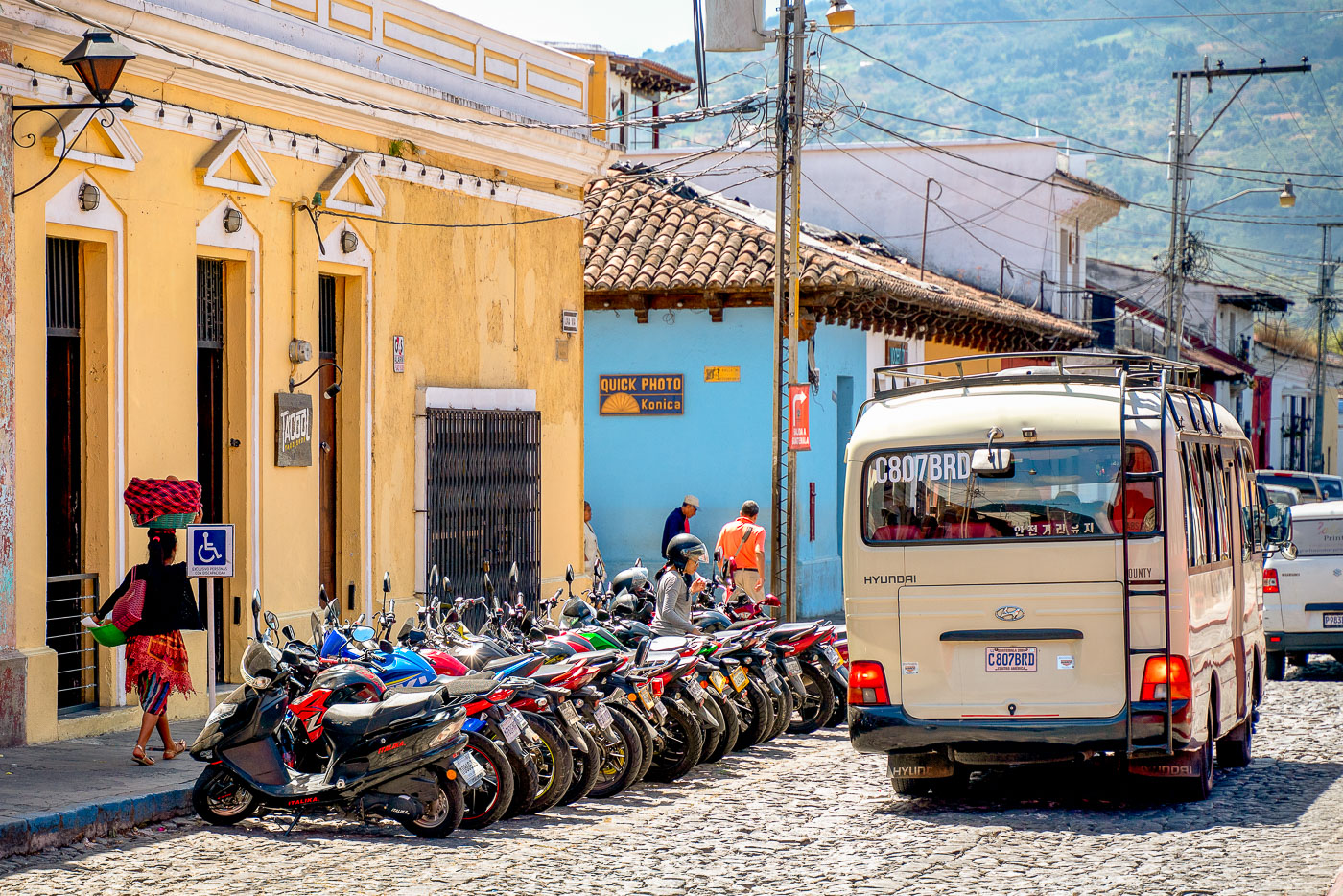
Bread seller carrying flowers walks past parked motorcycles and a Hyundai minibus on a cobblestone street in colonial Antigua, Guatemala.
Antigua Guatemala served as the capital of the Kingdom of Guatemala from 1543 until a series of earthquakes forced its abandonment in 1773. The city's grid of cobblestone streets and low colonial buildings has been preserved largely intact, earning it UNESCO World Heritage status in 1979. Many of these narrow streets, originally laid out for foot and cart traffic, now function as informal parking for the motorcycles and minibuses that serve the modern town. Guatemala's "chicken buses" and smaller passenger vans, often repurposed from imported Korean and Japanese models, remain a primary mode of transport between Antigua and surrounding villages.

Motorcycles Lined Up Along a Cobblestone Street in Antigua Guatemala
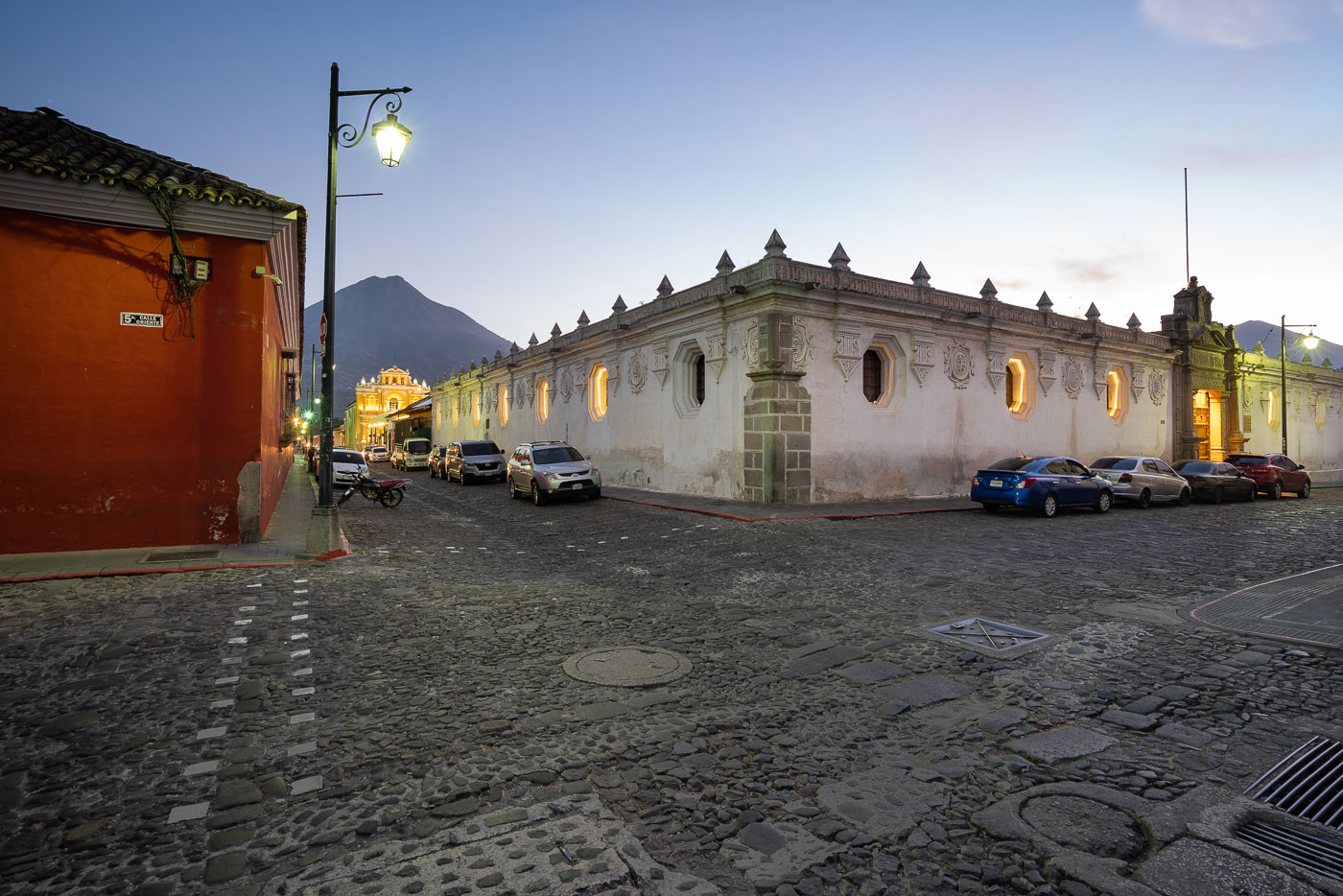
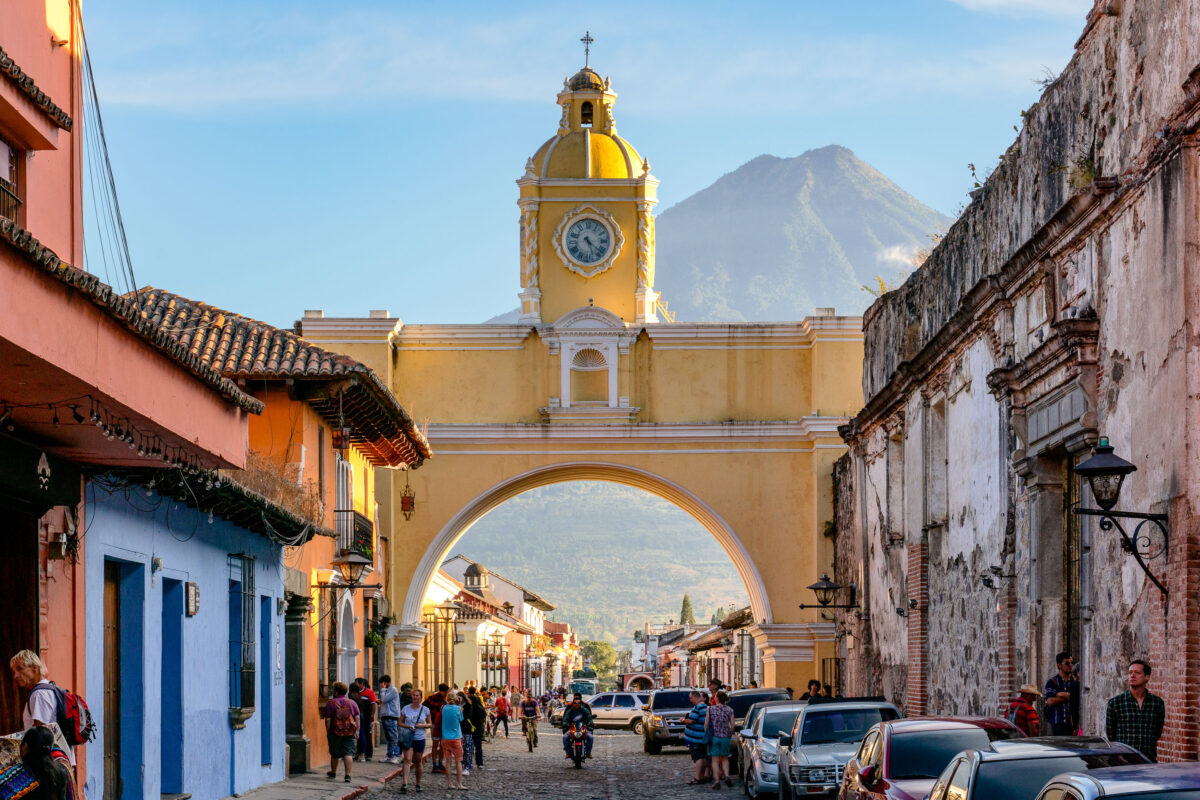
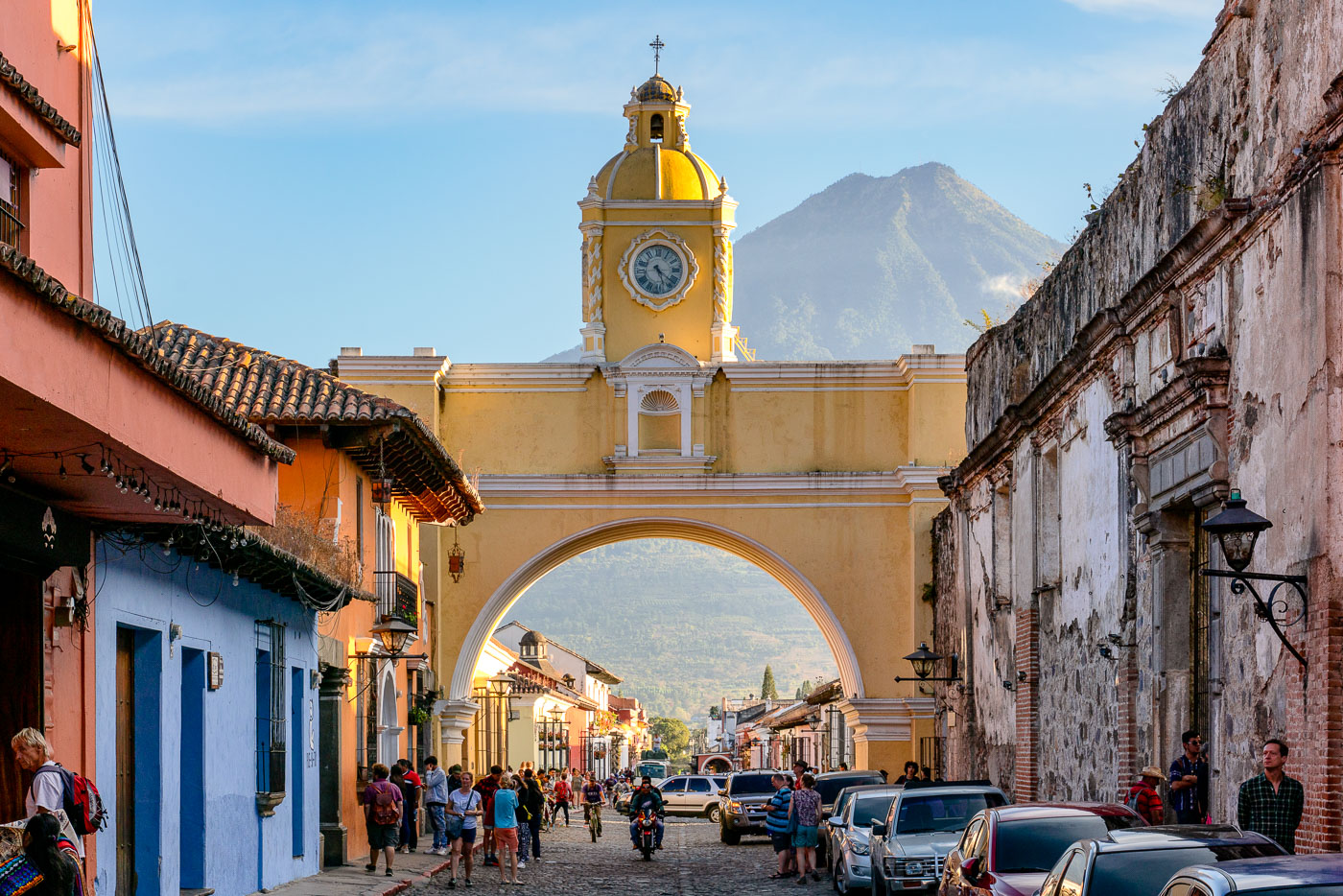
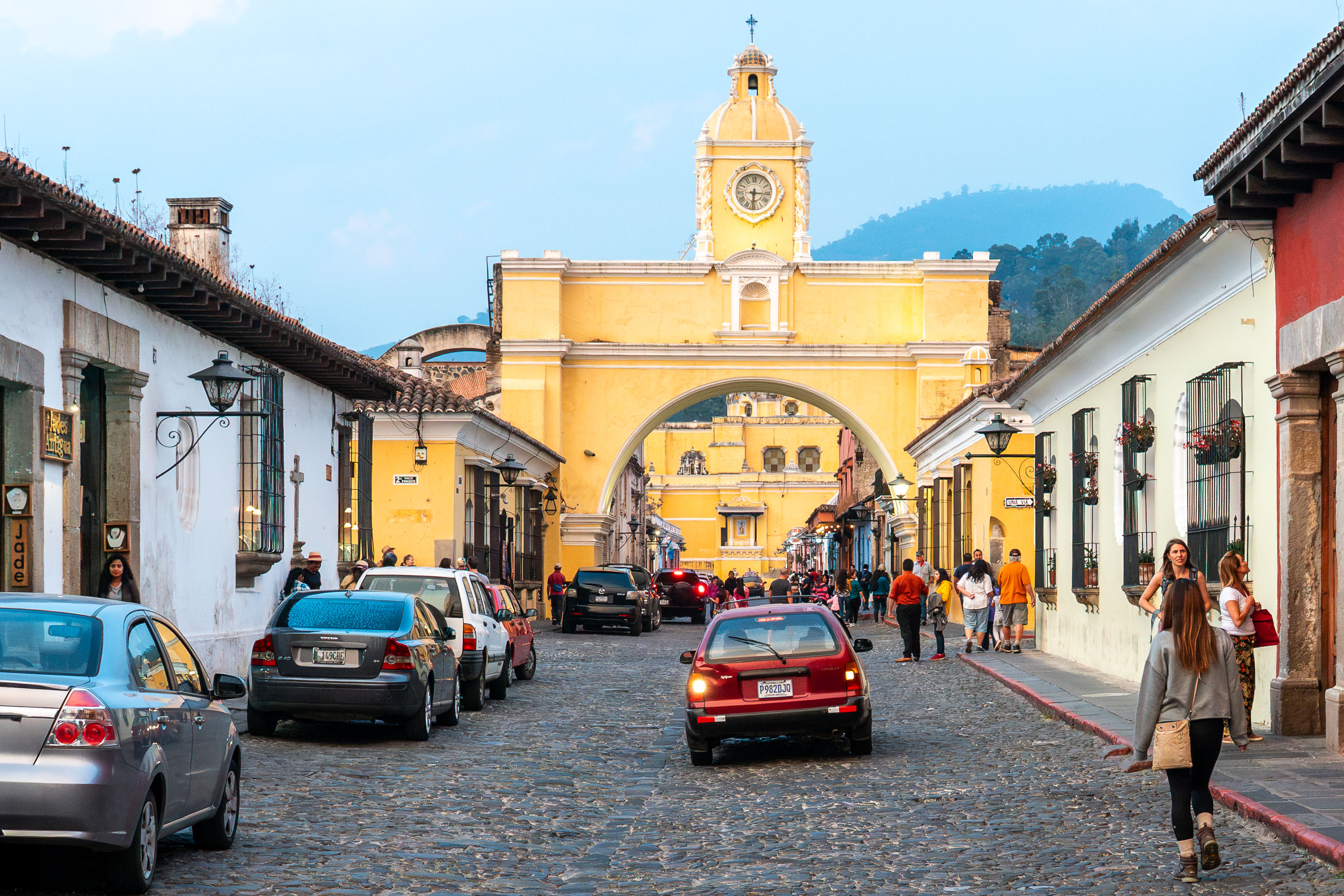
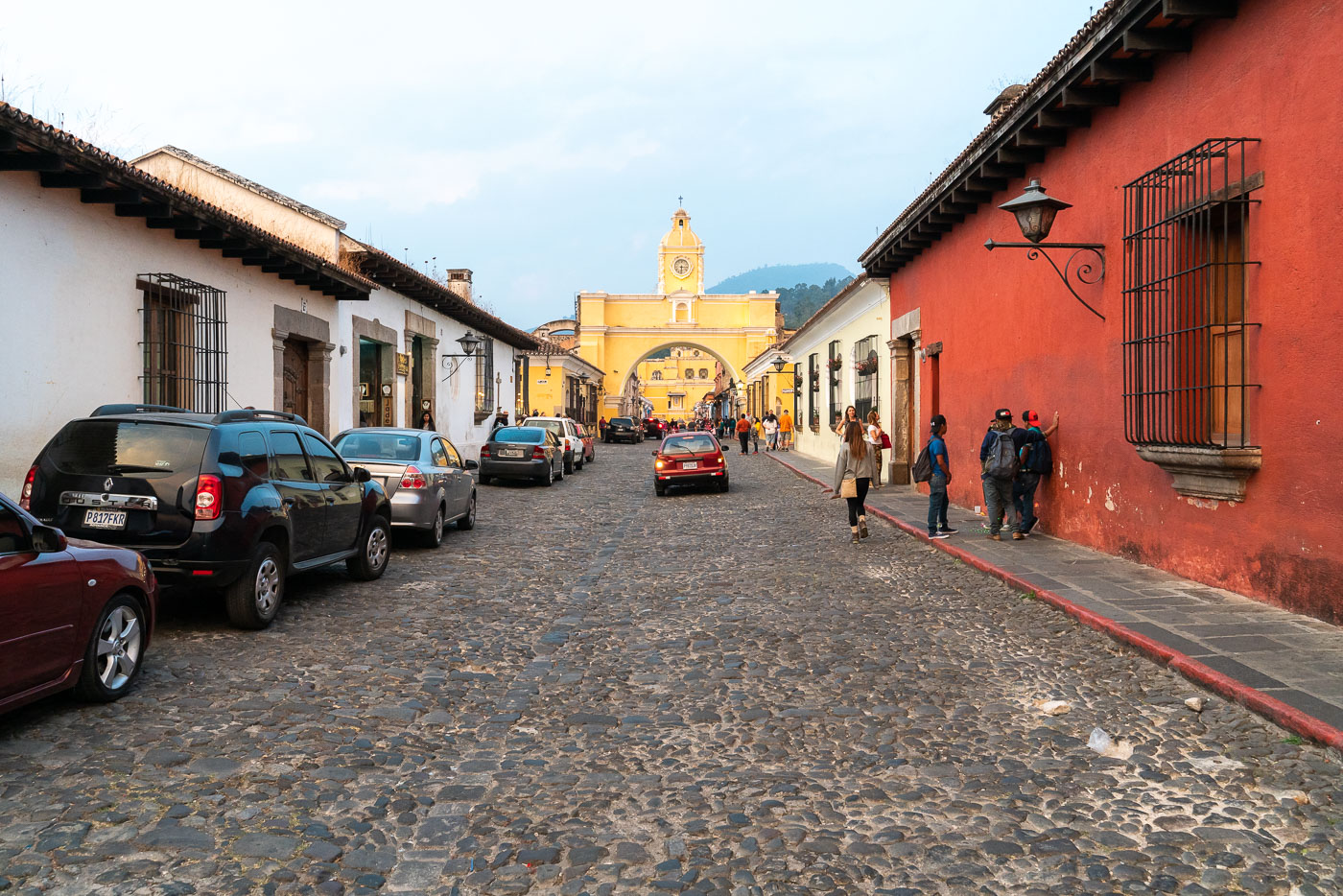
Santa Catalina Arch with its yellow clock tower frames a cobblestone street in colonial Antigua Guatemala, with Volcán de Agua rising in the background.
Santa Catalina Arch spans 5a Avenida Norte in Antigua Guatemala, one of the city's most recognized colonial structures. It was built in 1694 to let cloistered nuns of the Santa Catalina convent cross the street to an adjoining school without being seen in public, as their order's rules forbade. The convent itself was founded in 1609 and largely destroyed by the 1773 earthquake that led Spanish authorities to relocate the colonial capital to present-day Guatemala City. The arch's clock tower was added in the 19th century, after the city had already been abandoned as the seat of government. Volcán de Agua, a roughly 3,760-meter stratovolcano, rises directly south of the city and is visible through the arch on clear days.

Santa Catalina Arch and Volcán de Agua, Antigua Guatemala
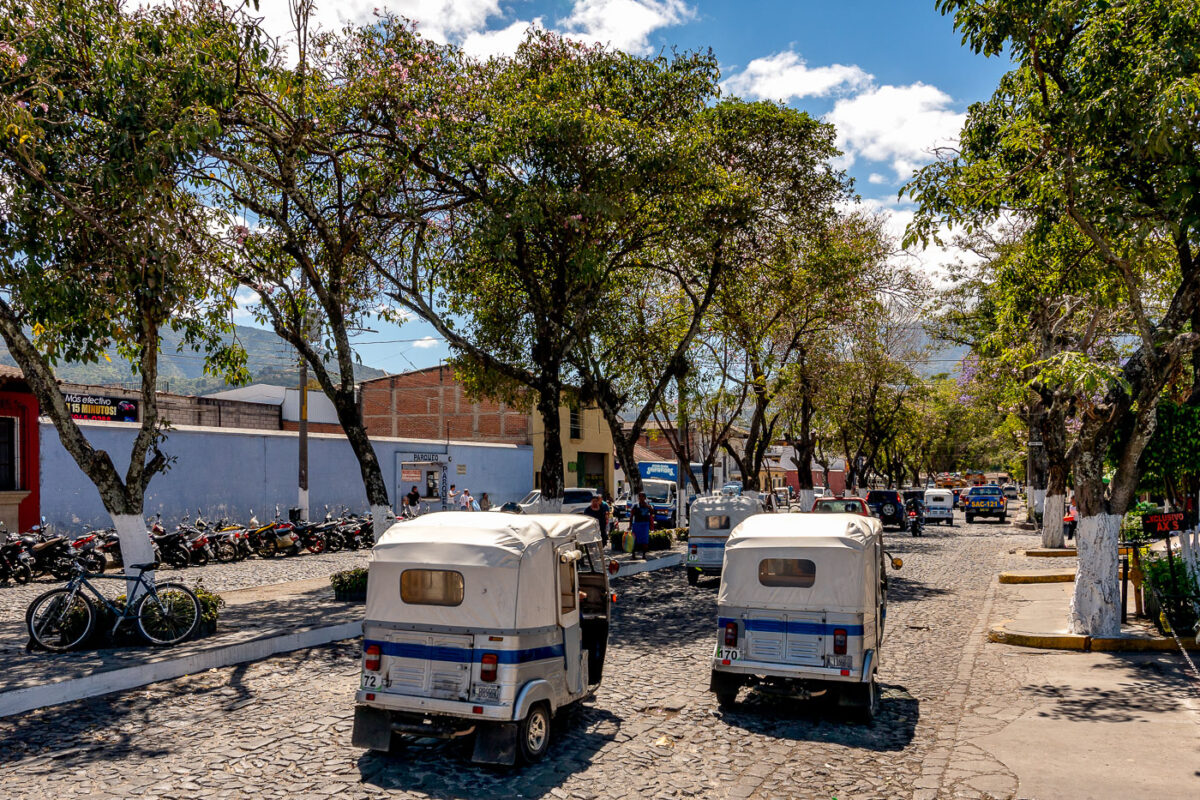
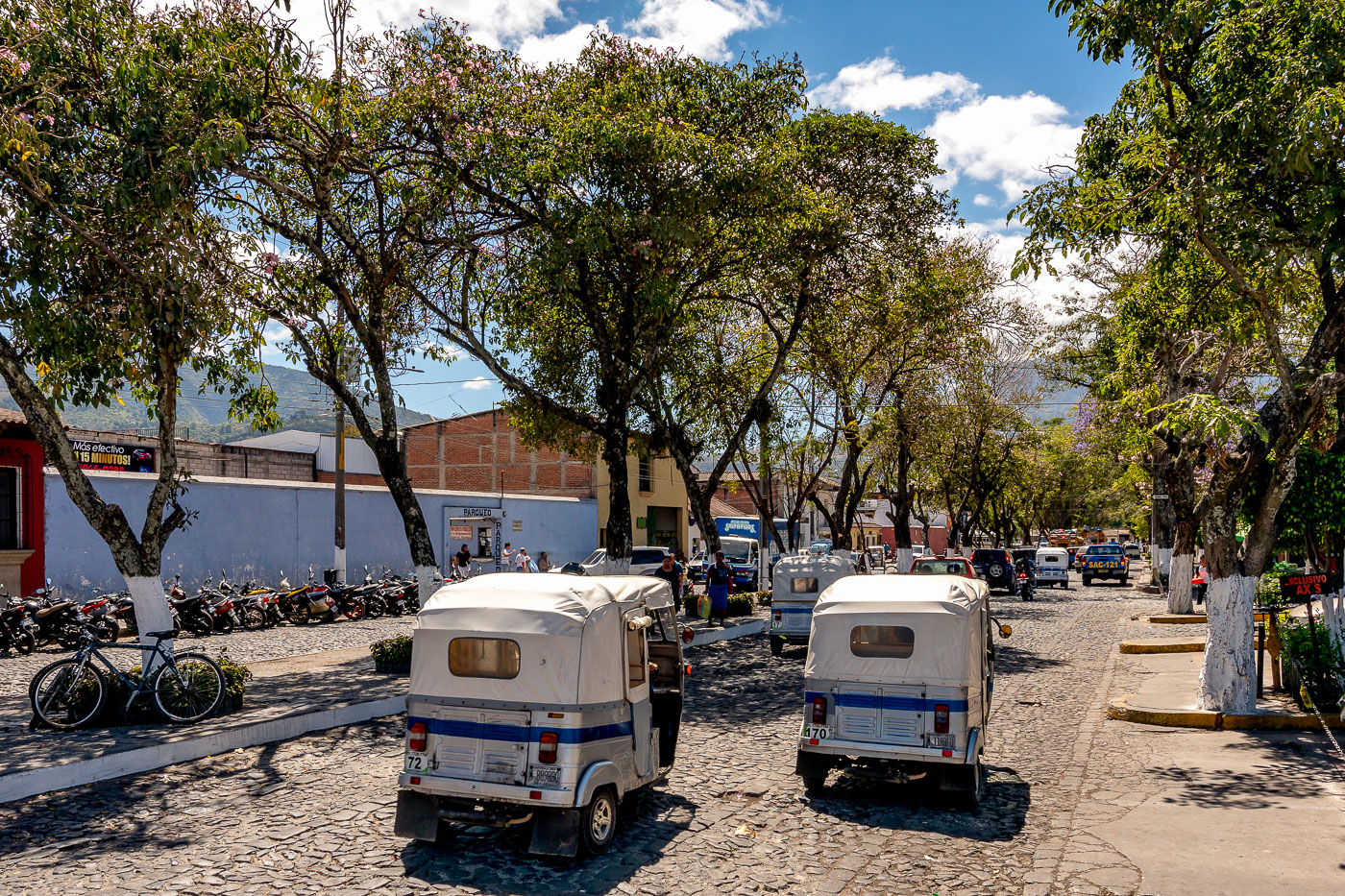
Two white and blue tuk-tuks parked on a cobblestone street in Antigua, Guatemala, with colonial buildings and shade trees in the background.
Antigua Guatemala's cobblestone streets date to the Spanish colonial grid laid out in the 16th century, after the city was founded as the capital of the Captaincy General of Guatemala in 1543. The city was declared a UNESCO World Heritage Site in 1979 for its well-preserved colonial architecture and urban plan. Mototaxis, known locally as tuk-tuks, operate as licensed taxi service in Antigua and surrounding towns, carrying passengers on short trips where larger vehicles are impractical on the narrow, stone-paved roads.

Tuk-Tuks Parked on a Tree-Lined Street in Antigua, Guatemala
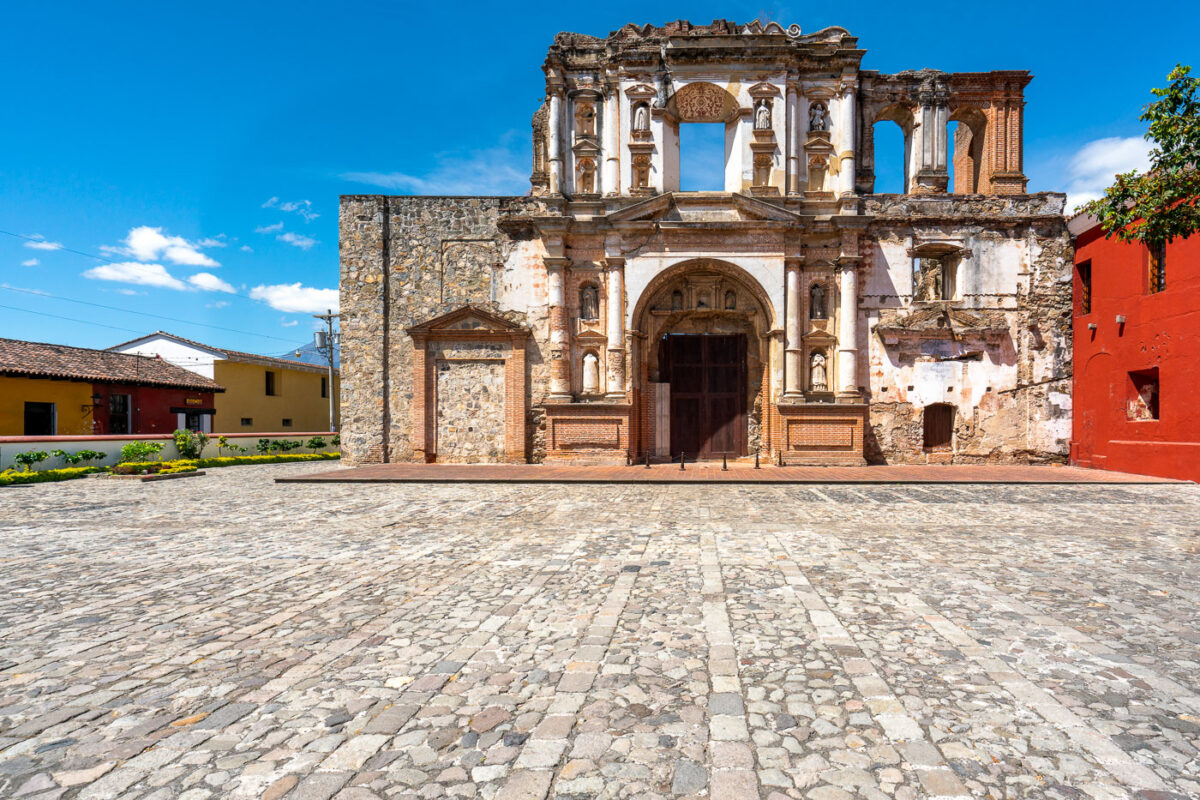
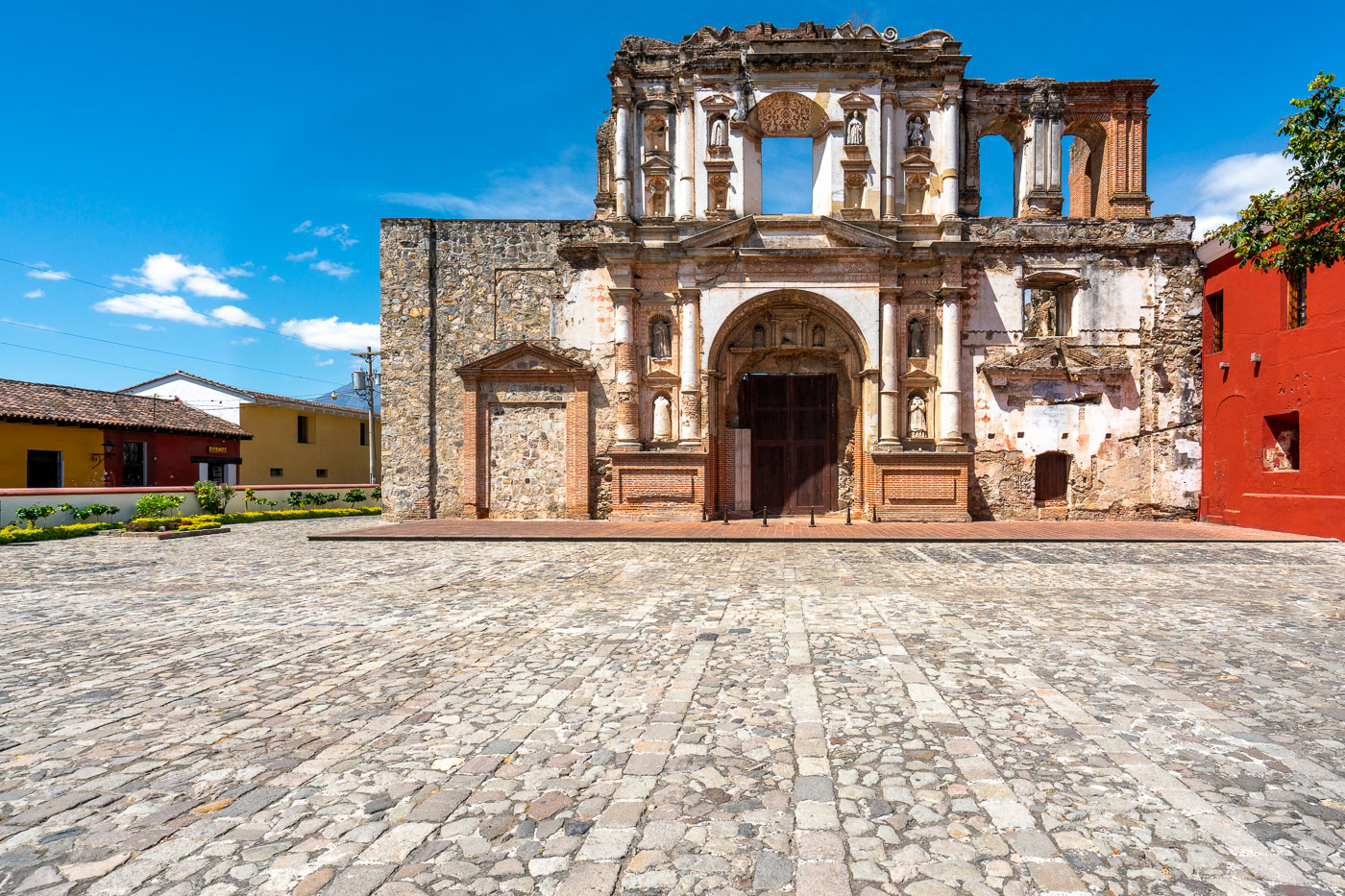
Ruins of the Iglesia y Convento de la Compañía de Jesús, a late-17th-century Jesuit church and convent in Antigua Guatemala.
The Compañía de Jesús complex in Antigua Guatemala was built by the Jesuit order, with construction on this church completed in 1699. Spain's 1767 expulsion of the Jesuits emptied the building before earthquakes later in that century left the facade and nave in ruins. The surviving entrance shows the churrigueresque style common to Antigua's late Baroque churches, with niches that once held statues of saints. Restoration work in recent decades has stabilized the ruins, and part of the former convent now houses a cultural center and hotel built around the old cloisters.

Facade of Iglesia y Convento de la Compañía de Jesús, Antigua
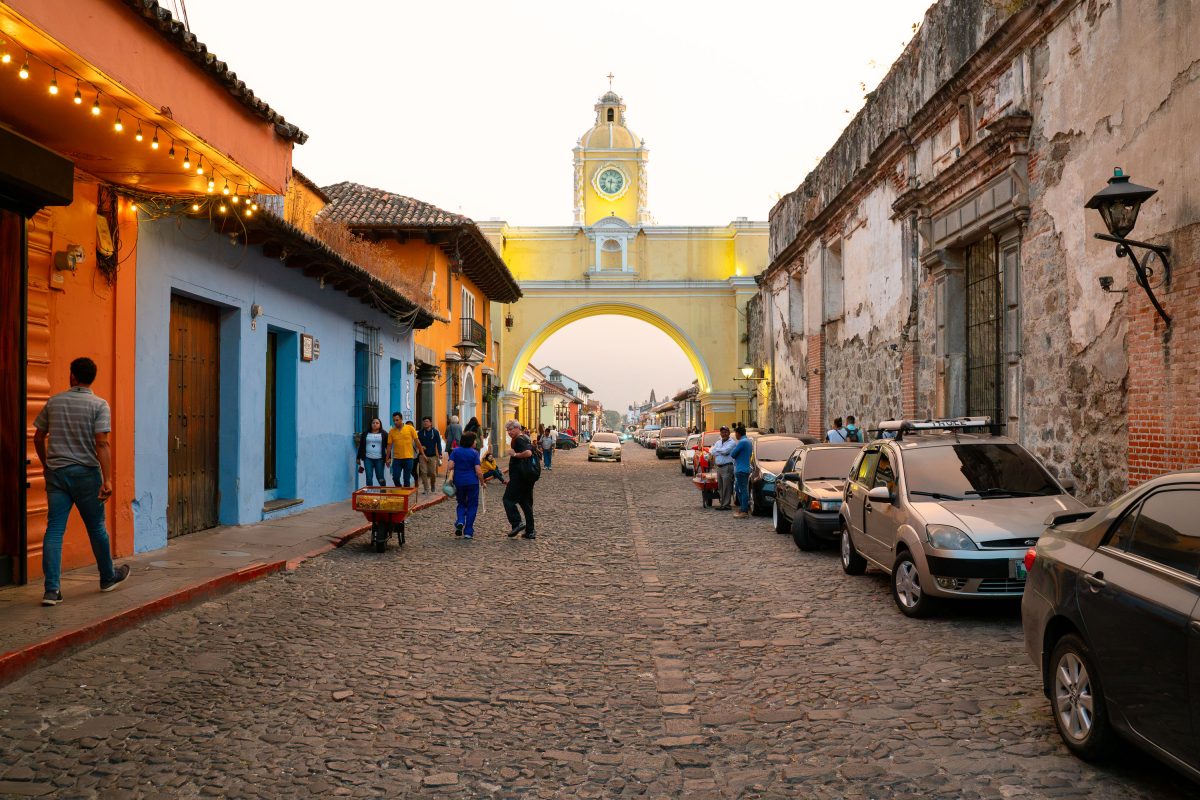
Santa Catalina Arch spans a cobblestone street in Antigua Guatemala, connecting a former convent to a school built by nuns in 1694.
The Santa Catalina Arch spans Calle del Arco in Antigua Guatemala, linking a former Santa Catalina convent to a school on the opposite side of the street. Cloistered nuns had the arch built in 1694 so they could pass between the two buildings without being seen in public, a practice tied to their order's vows of seclusion. A clock was added to the structure in the 19th century. Antigua served as the capital of the Kingdom of Guatemala until a series of earthquakes in 1773 destroyed much of the city, leading the Spanish crown to move the capital to present-day Guatemala City. UNESCO named Antigua a World Heritage Site in 1979 for its preserved Spanish Baroque architecture and colonial street grid.

Santa Catalina Arch Over Calle del Arco, Antigua Guatemala
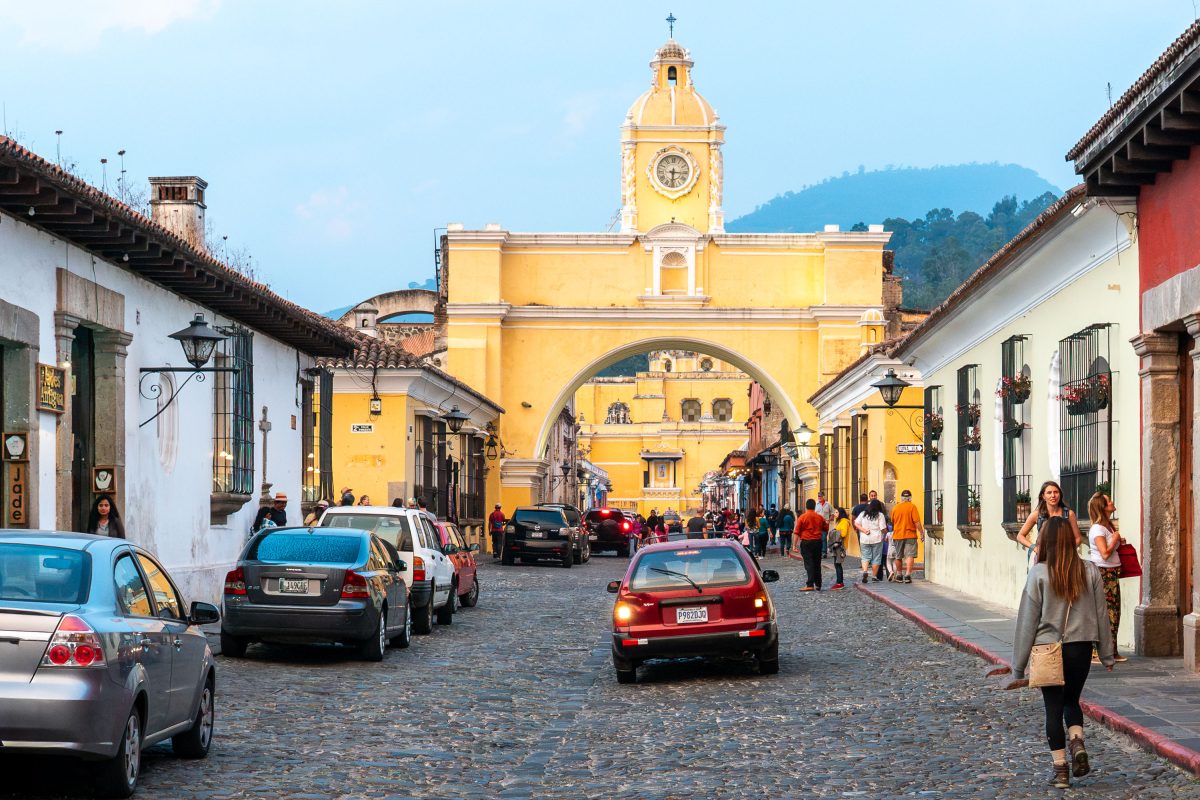
Yellow Santa Catalina Arch spanning a cobblestone street in colonial Antigua Guatemala, with a clock tower visible above the archway.
Santa Catalina Arch crosses 5a Avenida Norte in Antigua, Guatemala. Nuns from the adjoining Santa Catalina convent had the arch built in 1694 so they could pass between the convent and its school without stepping into public view, a practice tied to their cloistered vows. The clock mounted on the arch was added in the 19th century. Antigua's historic center, which includes the arch, was named a UNESCO World Heritage Site in 1979.

Traffic Beneath Santa Catalina Arch in Antigua Guatemala
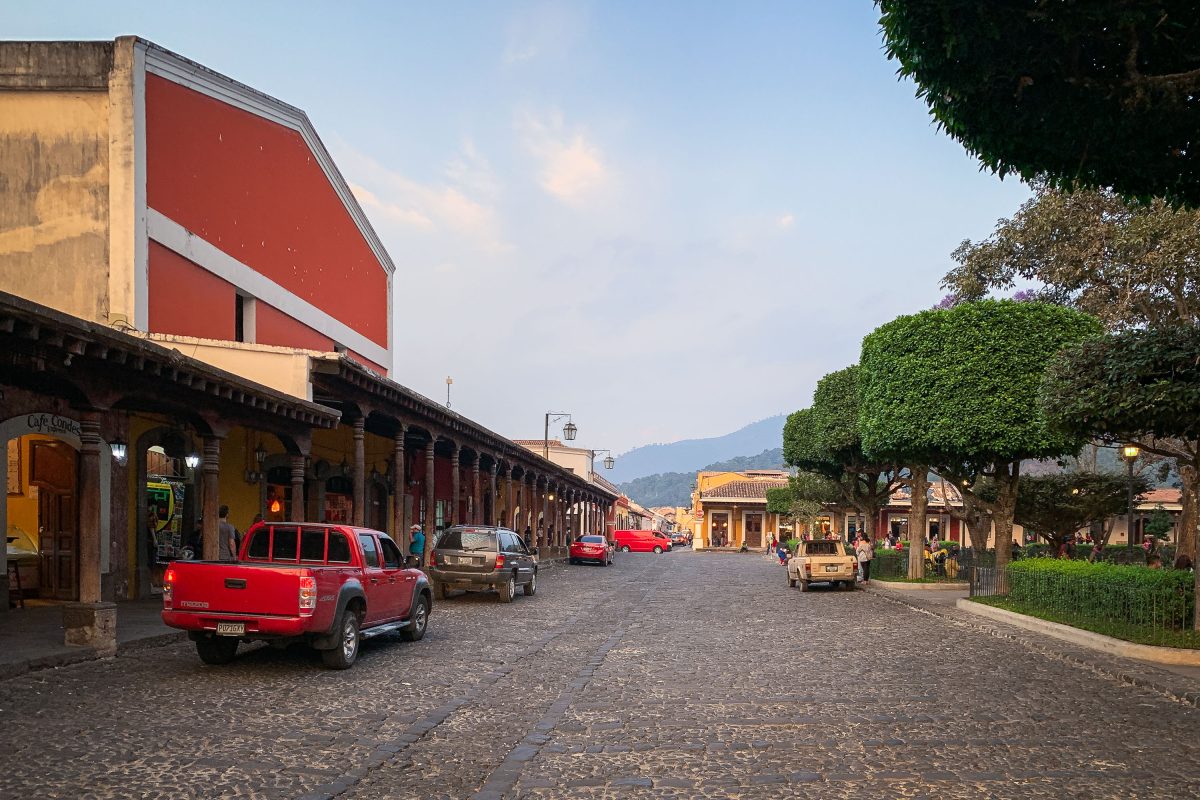
Cobblestone street in Antigua Guatemala lined with colonial-era arcaded buildings and parked vehicles.
Antigua Guatemala's colonial street grid, laid out in the 1540s, still runs on the original cobblestones of the Spanish colonial capital. The city served as the seat of Spanish colonial government in Central America until a 1773 earthquake prompted authorities to relocate the capital to present-day Guatemala City. Antigua's historic center was named a UNESCO World Heritage Site in 1979, prized for its dense collection of colonial-era buildings and grid plan based on Renaissance urban design. Arcaded buildings like the one along this street date to the era when covered walkways sheltered market stalls and shops from sun and rain.

Arcaded Street Near Antigua Guatemala’s Central Park at Dusk
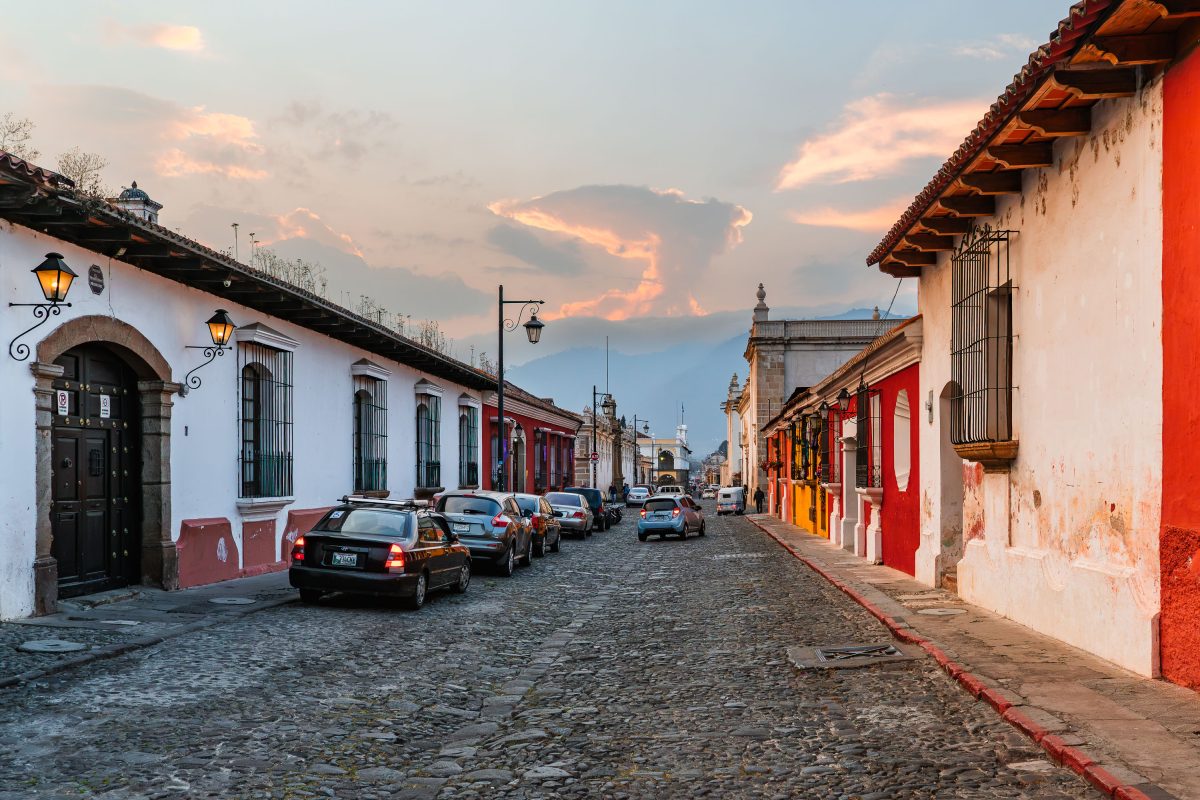
Cobblestone street in Antigua Guatemala lined with colonial-era buildings at sunset, with volcanoes visible in the distance.
Antigua Guatemala's streets follow the grid laid out by Spanish colonial planners after the city became the capital of the Kingdom of Guatemala in 1543. The cobblestone paving and low, thick-walled buildings with tiled roofs are typical of the city's colonial construction, much of it rebuilt after repeated earthquakes, including the 1773 quake that eventually led authorities to relocate the capital to present-day Guatemala City. UNESCO designated Antigua a World Heritage Site in 1979, citing its well-preserved Spanish Baroque-influenced architecture. The city lies in a valley bordered by the Agua, Fuego, and Acatenango volcanoes, all visible from various points along its streets.

Colonial Street Glow at Dusk in Antigua Guatemala
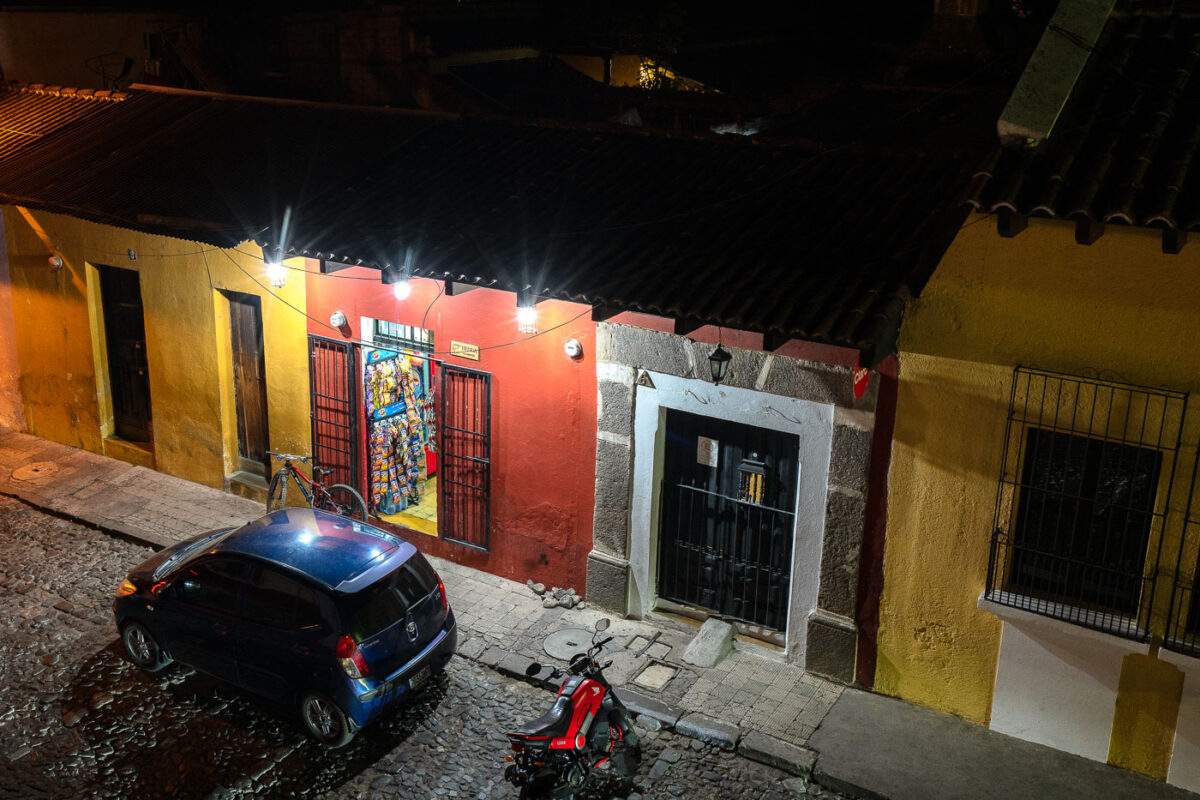
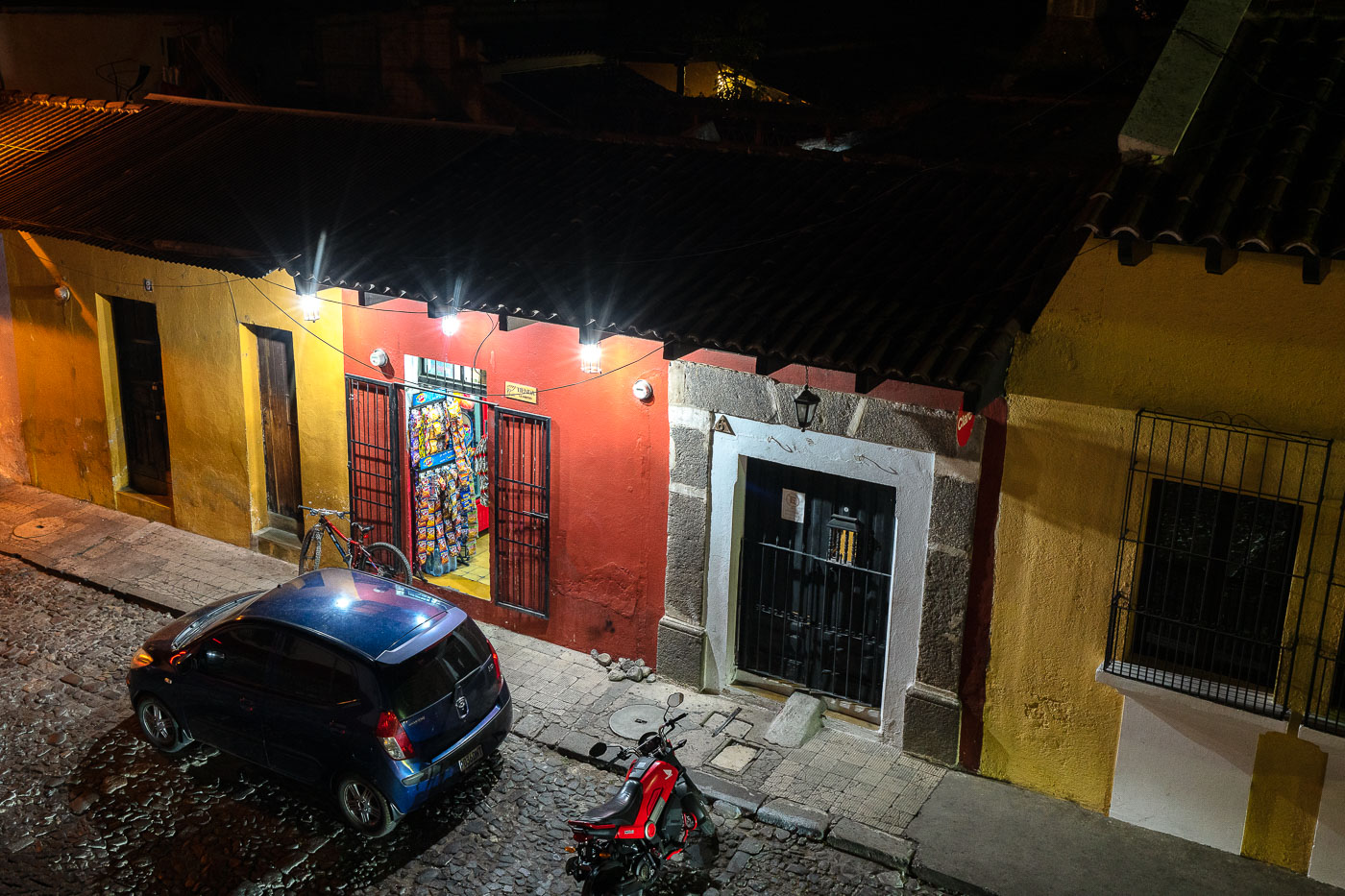
Tienda La Juventud convenience store on a nighttime cobblestone street in colonial Antigua Guatemala with a parked vehicle and motorcycle.
Tienda La Juventud sits on a cobblestone street in Antigua Guatemala's historic center, a district protected as a UNESCO World Heritage Site since 1979. The city was founded in 1543 as the capital of the Captaincy General of Guatemala and retains much of its original colonial street grid despite heavy earthquake damage in 1773. Small family-run shops like this one occupy the narrow streets, selling snacks, drinks, and household goods to residents and visitors alike.

Tienda La Juventud at Night in Antigua Guatemala
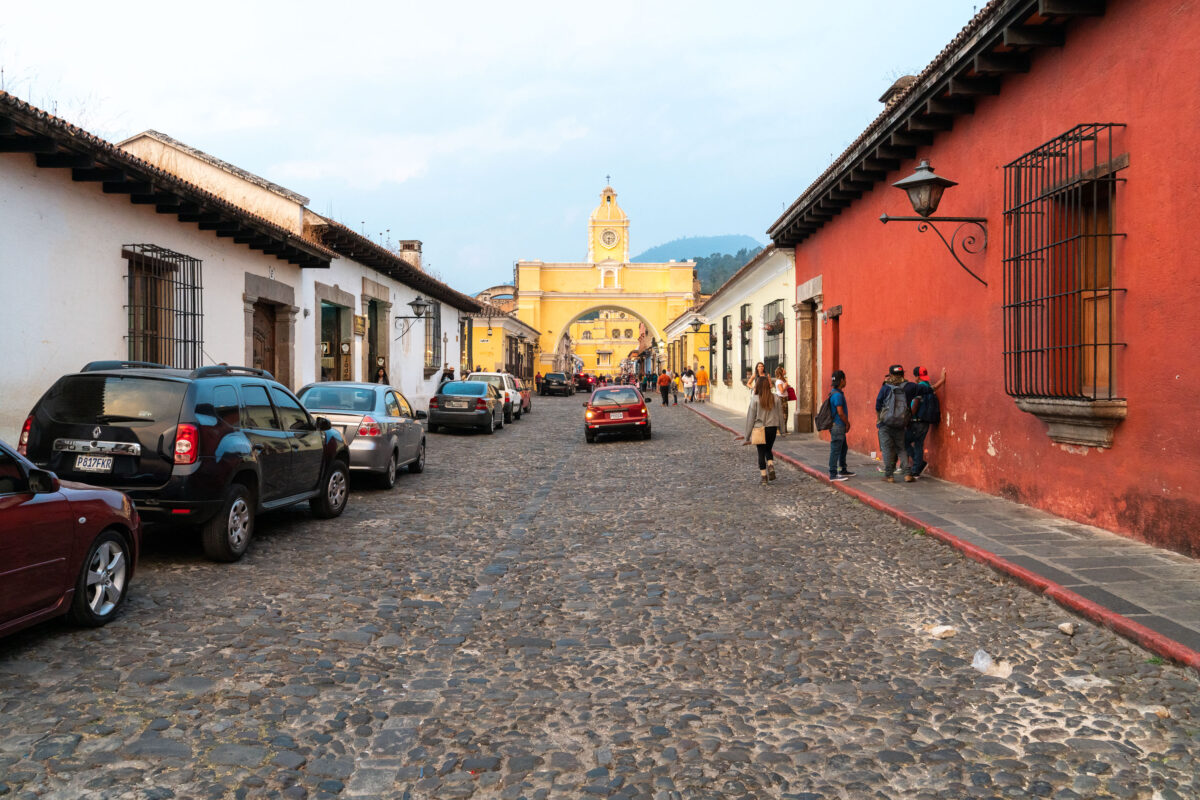
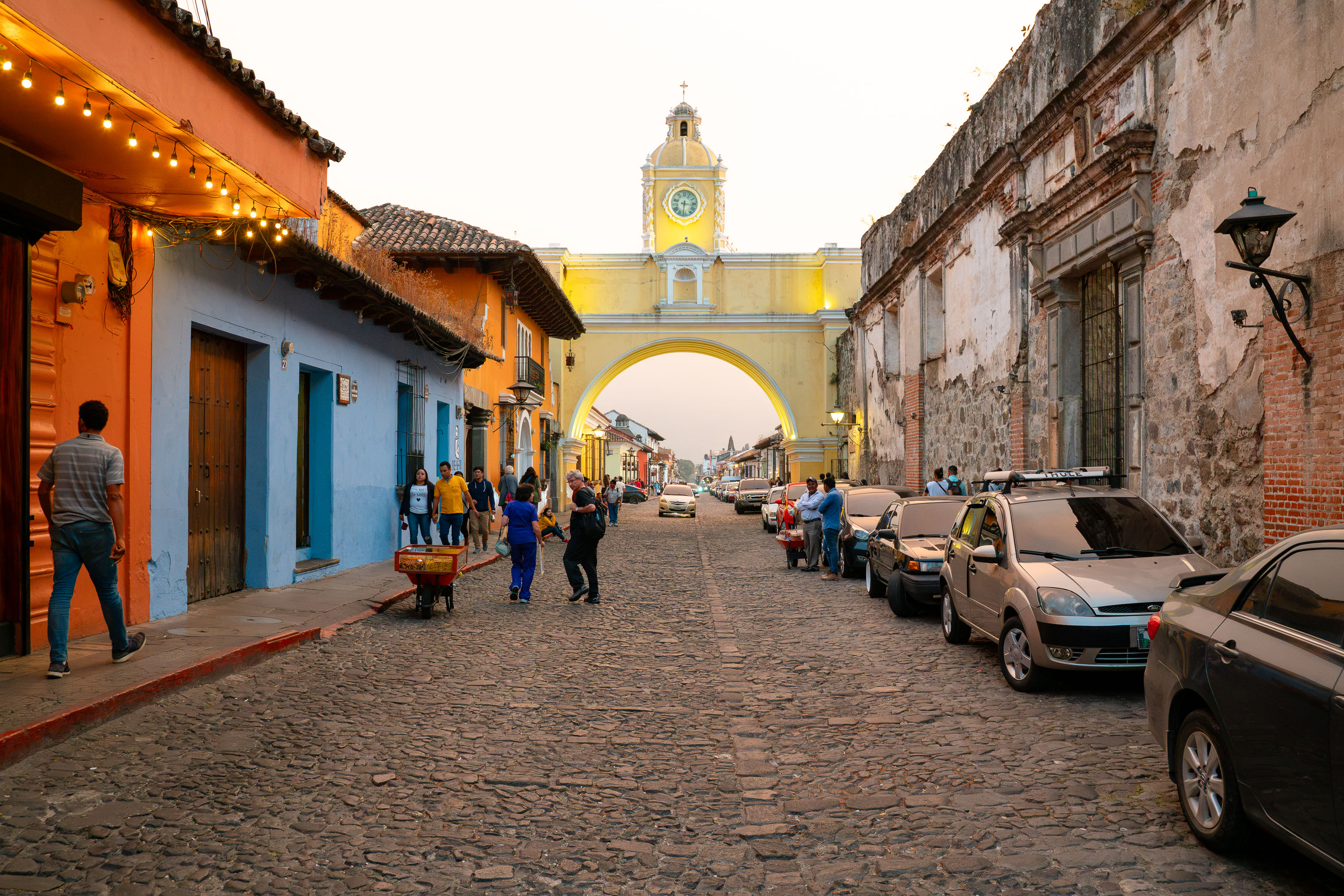
Yellow Santa Catalina Arch with clock tower stands at the end of a cobblestone street lined with colonial buildings in Antigua, Guatemala.
Santa Catalina Arch spans 5a Avenida Norte in Antigua Guatemala, built around 1690 as a covered passage for the Convento de Santa Catalina Virgen y Mártir so cloistered nuns could cross between the convent's two buildings without appearing in public. The convent closed after the 1773 Santa Marta earthquake, but the arch survived and received its clock in the 19th century. Volcán de Agua rises in line with the passage, a view that has made the corridor one of the most ed streets in the city.

5a Avenida Norte Leading to Santa Catalina Arch, Antigua
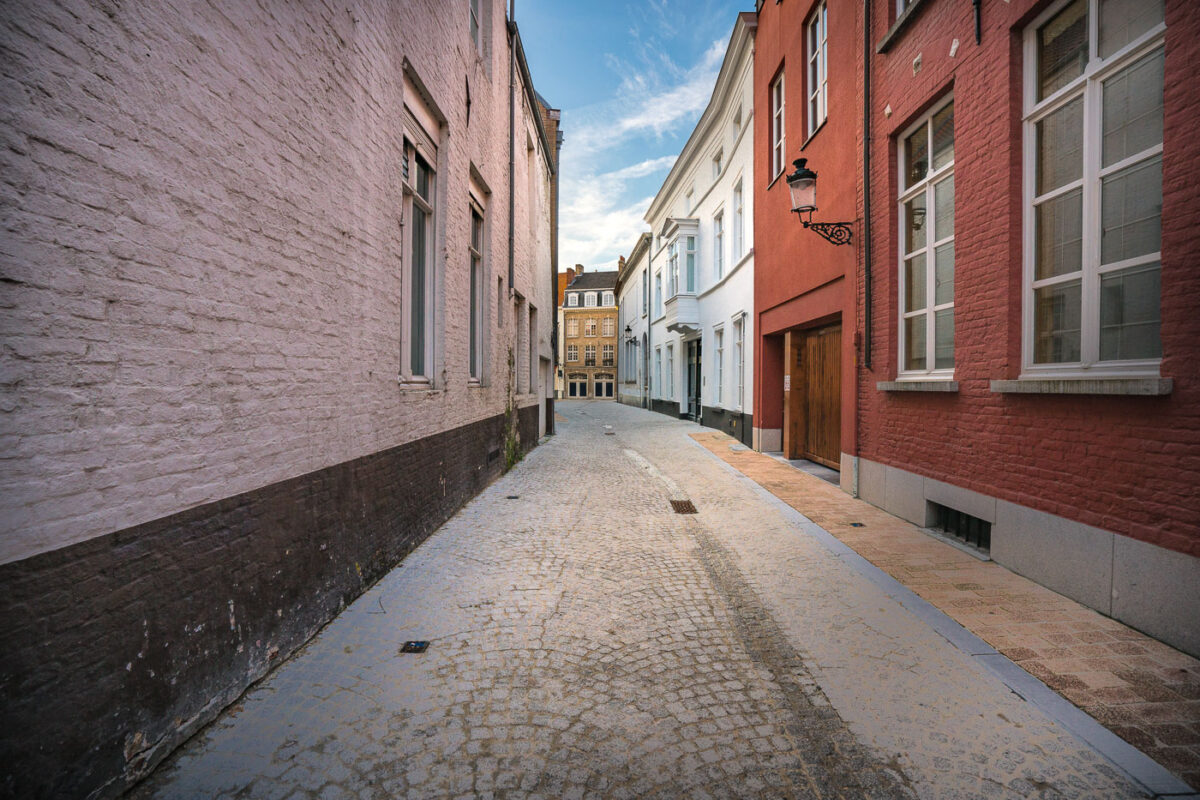
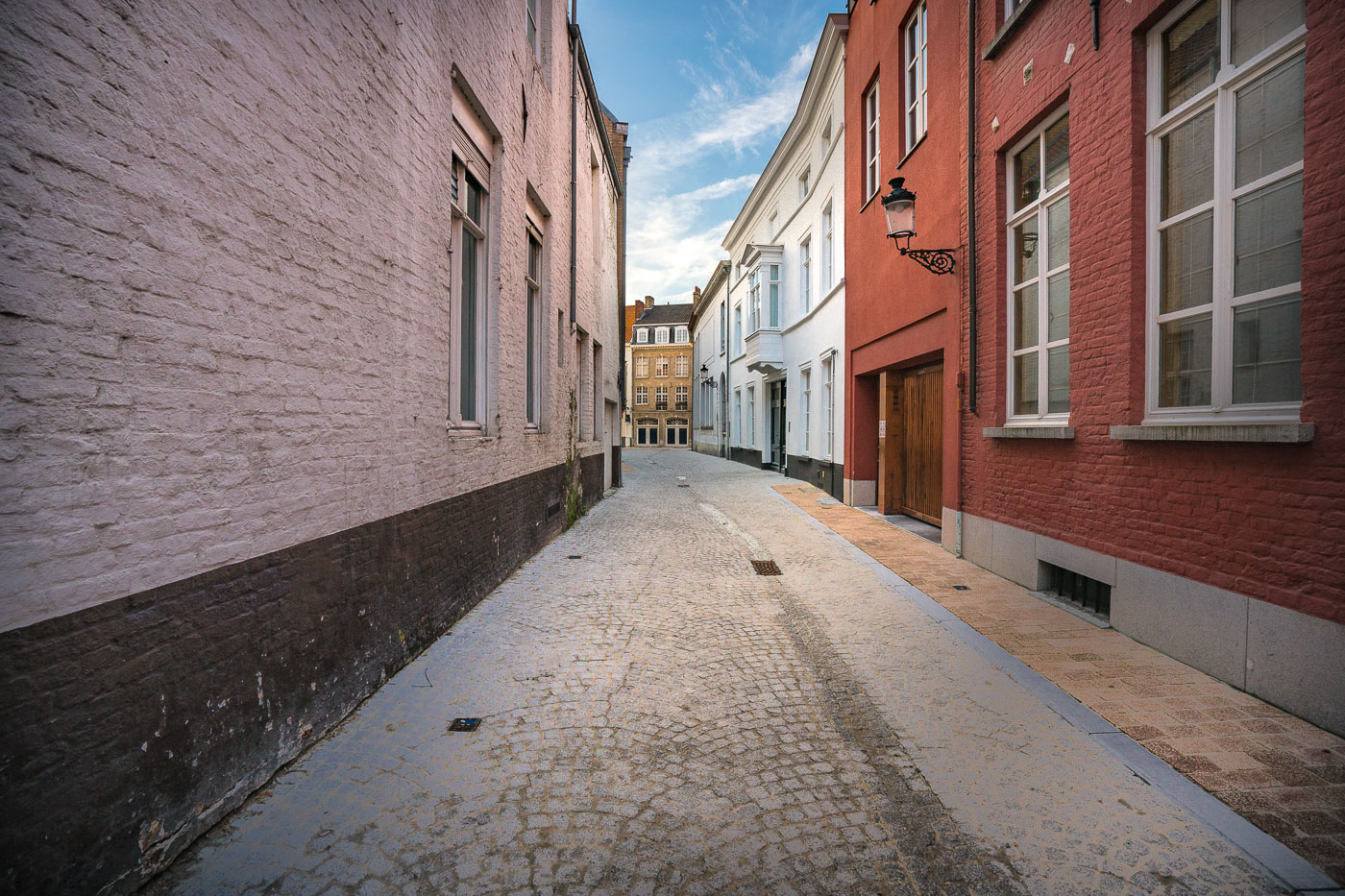
A cobblestone street in Bruges, Belgium, lined with historic brick townhouses under a blue sky.
A narrow cobblestone street in Bruges, Belgium, is lined with closely spaced brick townhouses and painted façades. The lane runs through the city’s historic center, where preserved buildings and tight street patterns reflect Bruges’ medieval street plan.

Cobblestone Street in Bruges