Parked Cars Along a Colonial Street in Antigua Guatemala
Taken February 2020
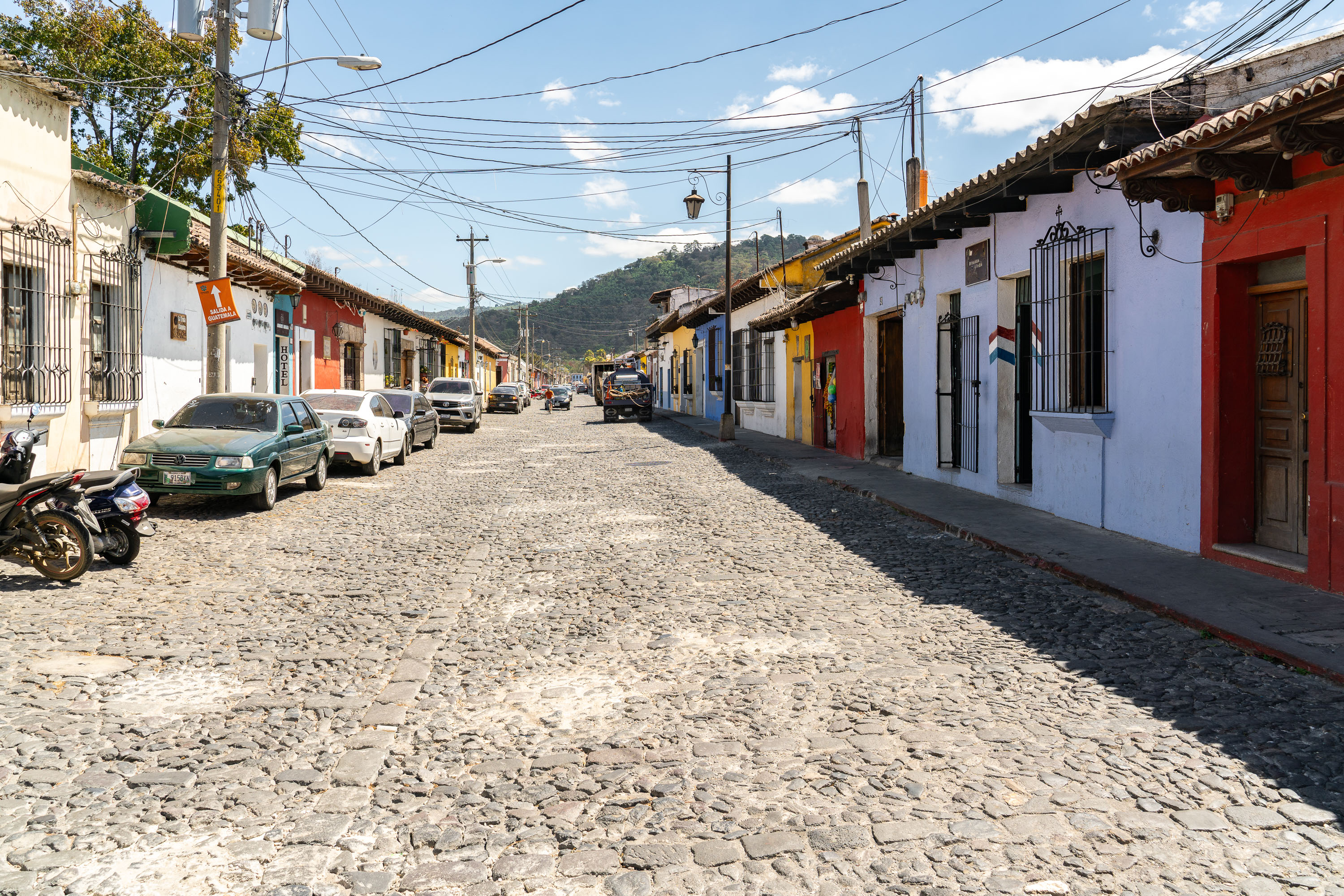
Antigua Guatemala's cobblestone streets date to the Spanish colonial period, when the city served as the capital of the Captaincy General of Guatemala from 1543 until 1773. A major earthquake that year forced the colonial government to abandon the city for present-day Guatemala City, which left Antigua's low, single-story construction largely untouched by later development. UNESCO added the historic center to its World Heritage List in 1979, recognizing its grid of streets laid out under Renaissance urban planning principles and its collection of Spanish Baroque architecture. Building codes in the historic district still restrict height and require earth-toned or traditional color palettes on street-facing facades, a rule tied directly to the city's preservation status.
Taken February 2020
More from
Antigua
 Twilight at Parque Central in Antigua Guatemala
Parque Central sits at the heart of Antigua Guatemala, laid out when the city was founded as Santiago de los…
 Volcán de Fuego Erupts at Sunset
Volcán de Fuego rises to 3,763 meters on the border of Chimaltenango, Escuintla, and Sacatepéquez departments, part of the Central…
 Twilight on 5a Calle Oriente Toward Agua Volcano, Antigua
5a Calle Oriente runs east-west through the historic center of Antigua Guatemala, part of the city's original 16th-century grid laid…
 A Stone Cross Among the Ruins of San Francisco el Grande
San Francisco el Grande began as a Franciscan church and convent built in Antigua in 1579. Earthquakes, most severely the…
 Ash Eruption at Volcán de Fuego, Guatemala
Volcán de Fuego rises 3,763 meters near Antigua, Guatemala, and ranks among the most active volcanoes in Central America. It…
 San Francisco Convent Ruins Below Volcán de Fuego and Acatenango
The San Francisco Convent in Antigua Guatemala was founded by Franciscan friars in 1579 and grew into one of the…


