Place Archive

Antigua

Antigua, Guatemala, features well-preserved colonial architecture such as the 17th-century Santa Catalina Arch, originally a passageway for nuns. The city’s cobblestone streets, active markets, and ruins like the Jesuit church reflect its history as a former colonial capital under constant influence from the nearby Agua Volcano.

51 photos

Photos from Antigua
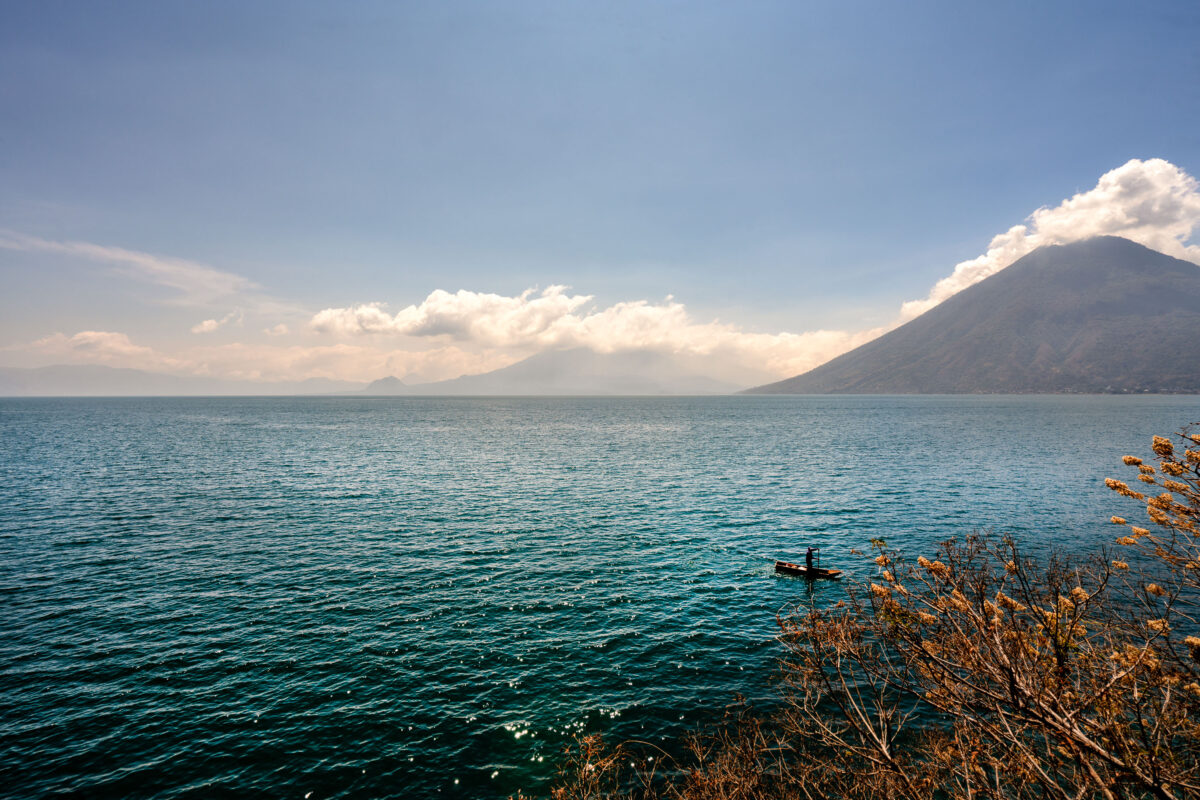
Lake Atitlán and Volcán San Pedro in Guatemala with a small boat on the water.
Lake Atitlán in Guatemala fills a volcanic caldera in the western highlands. Volcán San Pedro rises from the lake’s southern shore near San Pedro La Laguna. The lake supports travel between shoreline communities by boat.
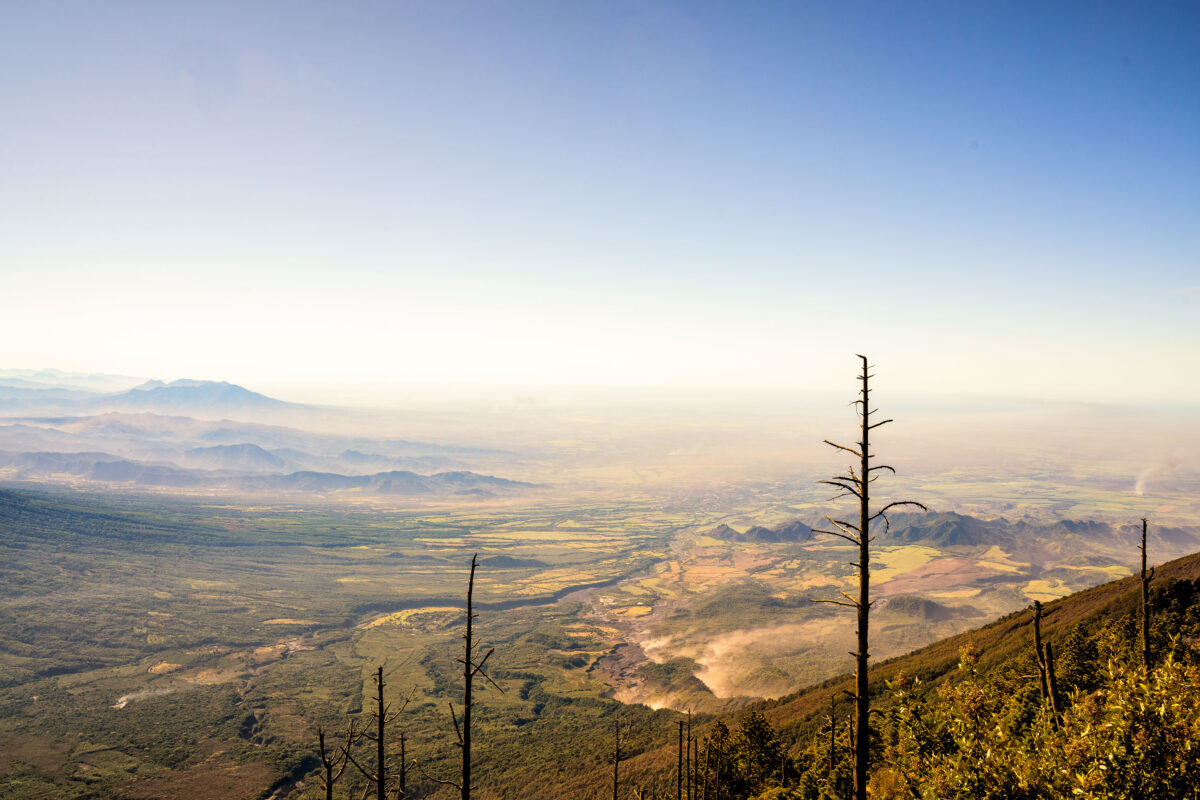
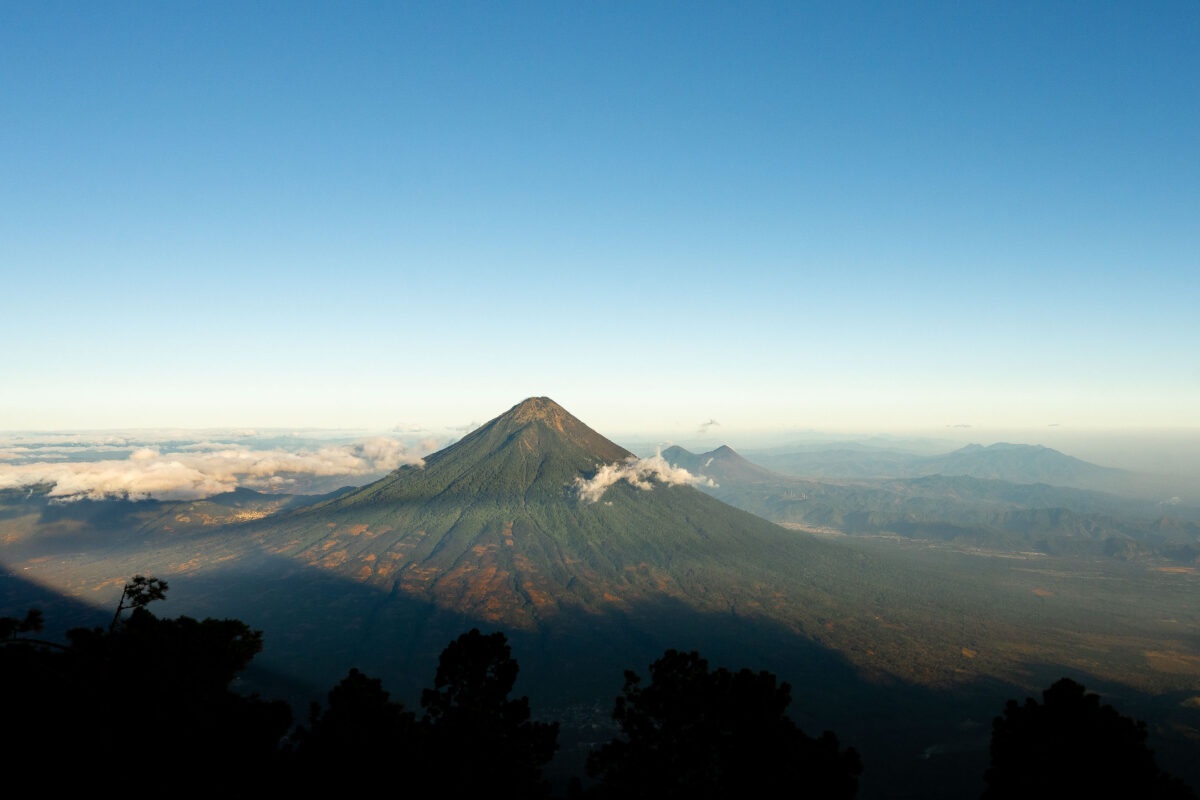
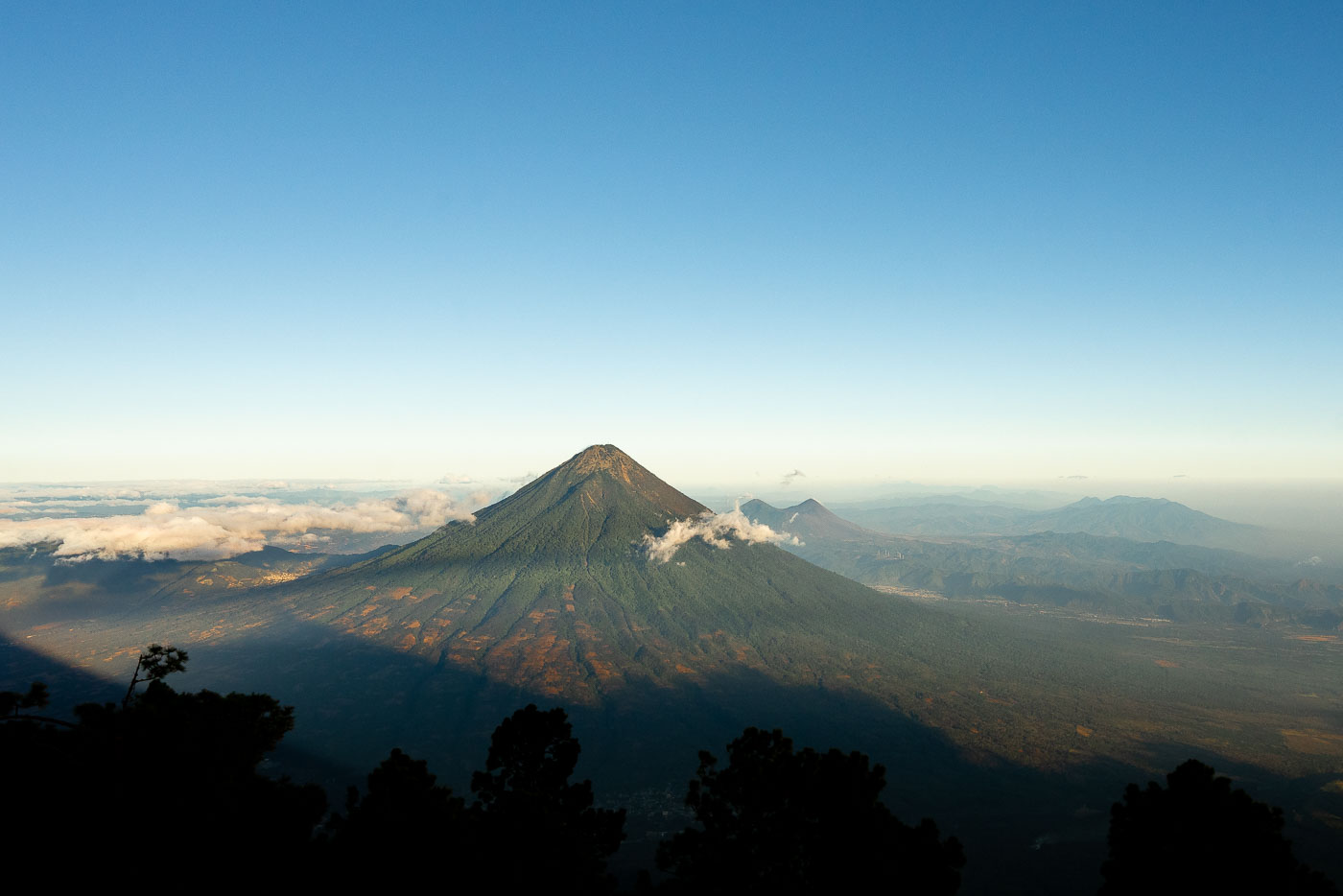
Acatenango Volcano overlooks a volcanic valley in Guatemala, with Fuego Volcano in the distance.
Acatenango Volcano, Guatemala, overlooks a broad volcanic valley on the highlands above Antigua Guatemala. The terrain lies within Guatemala’s volcanic chain near the active Fuego Volcano, which is visible in the distance.
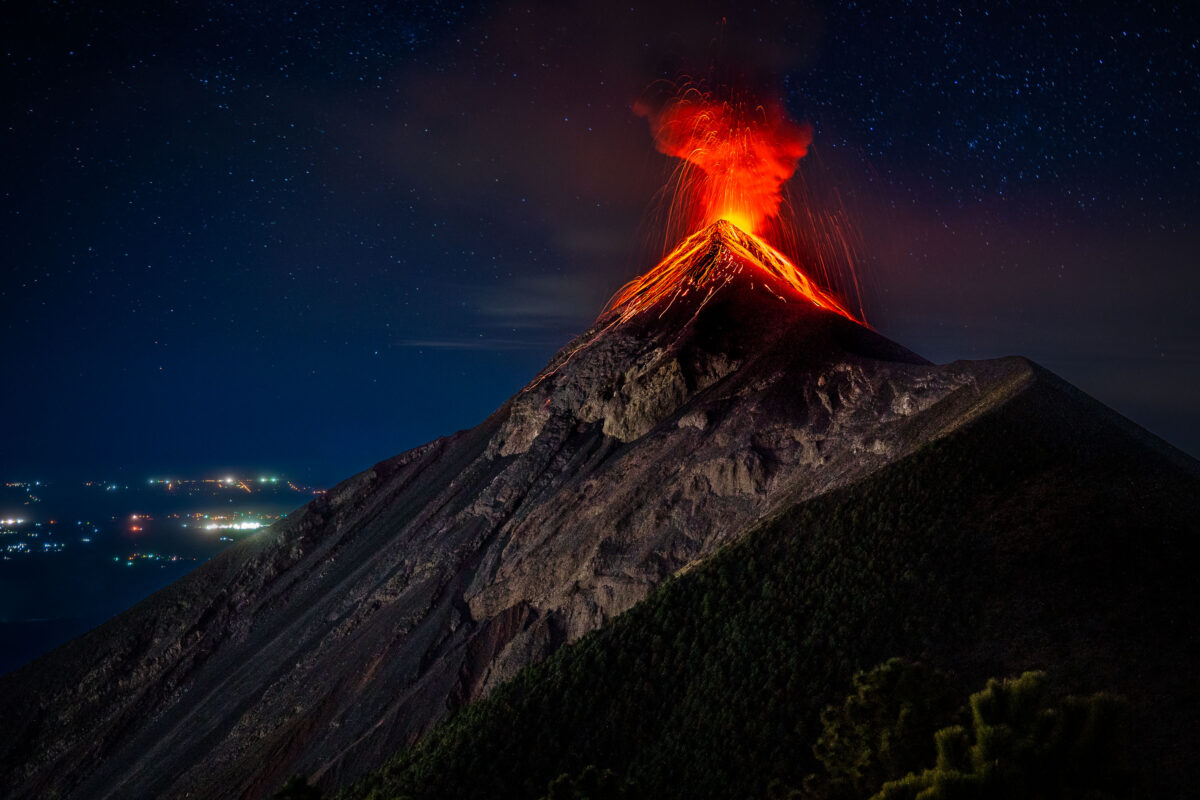
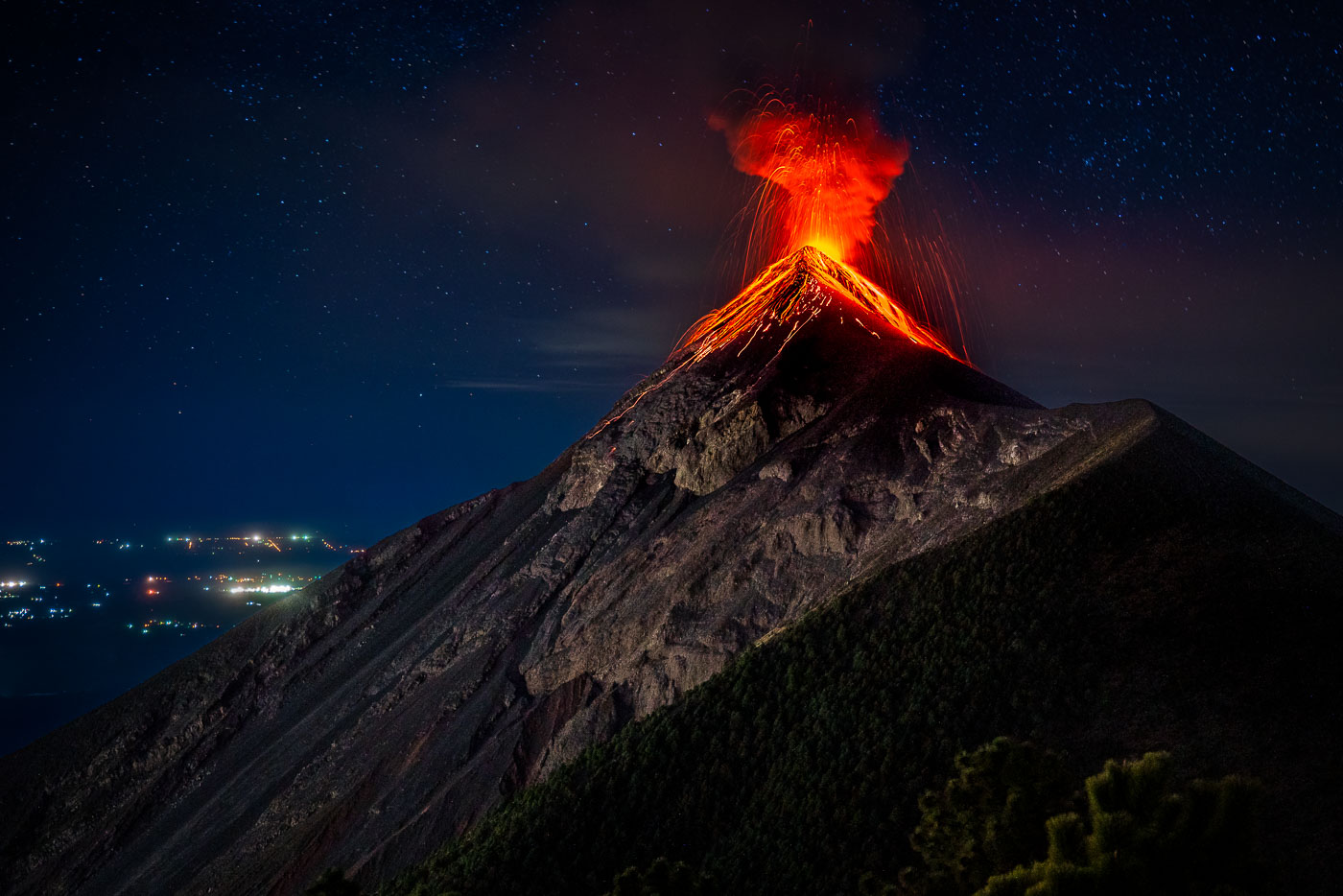
Volcán de Fuego erupts at night near Antigua, Guatemala, with lava and ash above the crater.
Volcán de Fuego erupts near Antigua, Guatemala, sending lava and ash high above the crater at night. The volcano is part of the Acatenango volcanic complex and is one of Guatemala’s most active peaks.
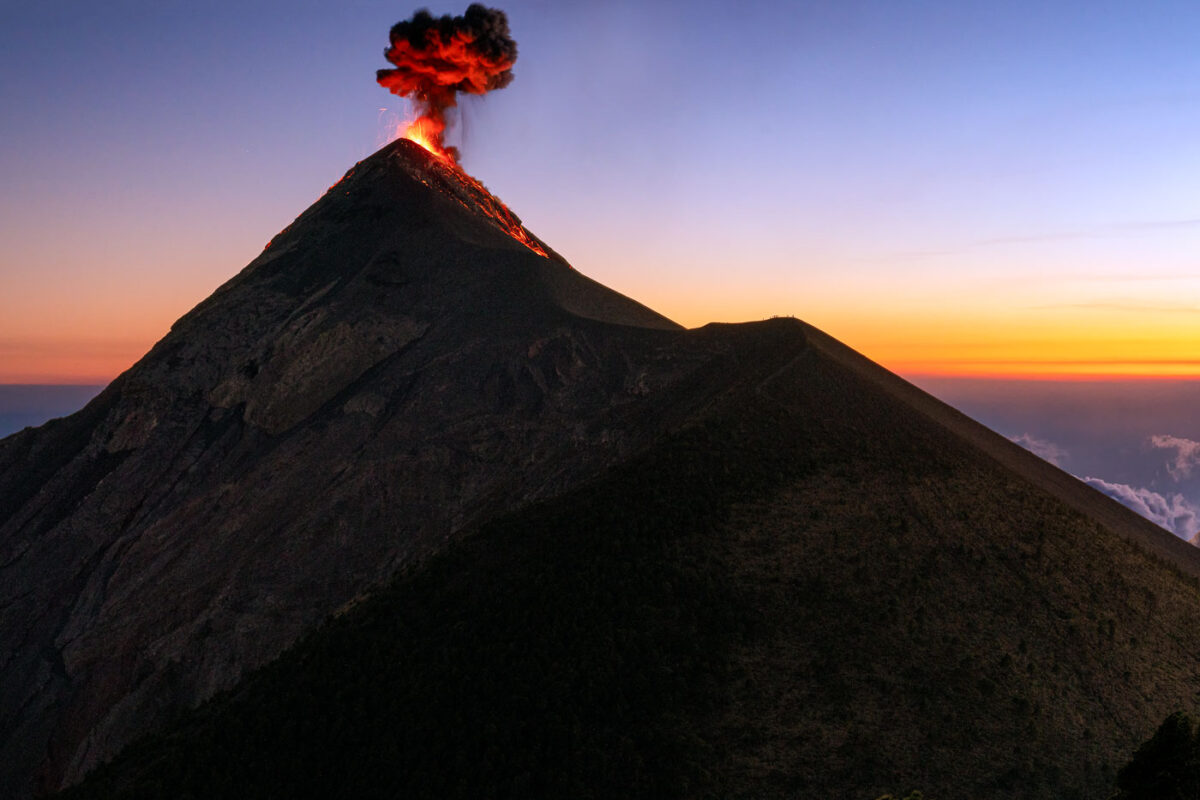
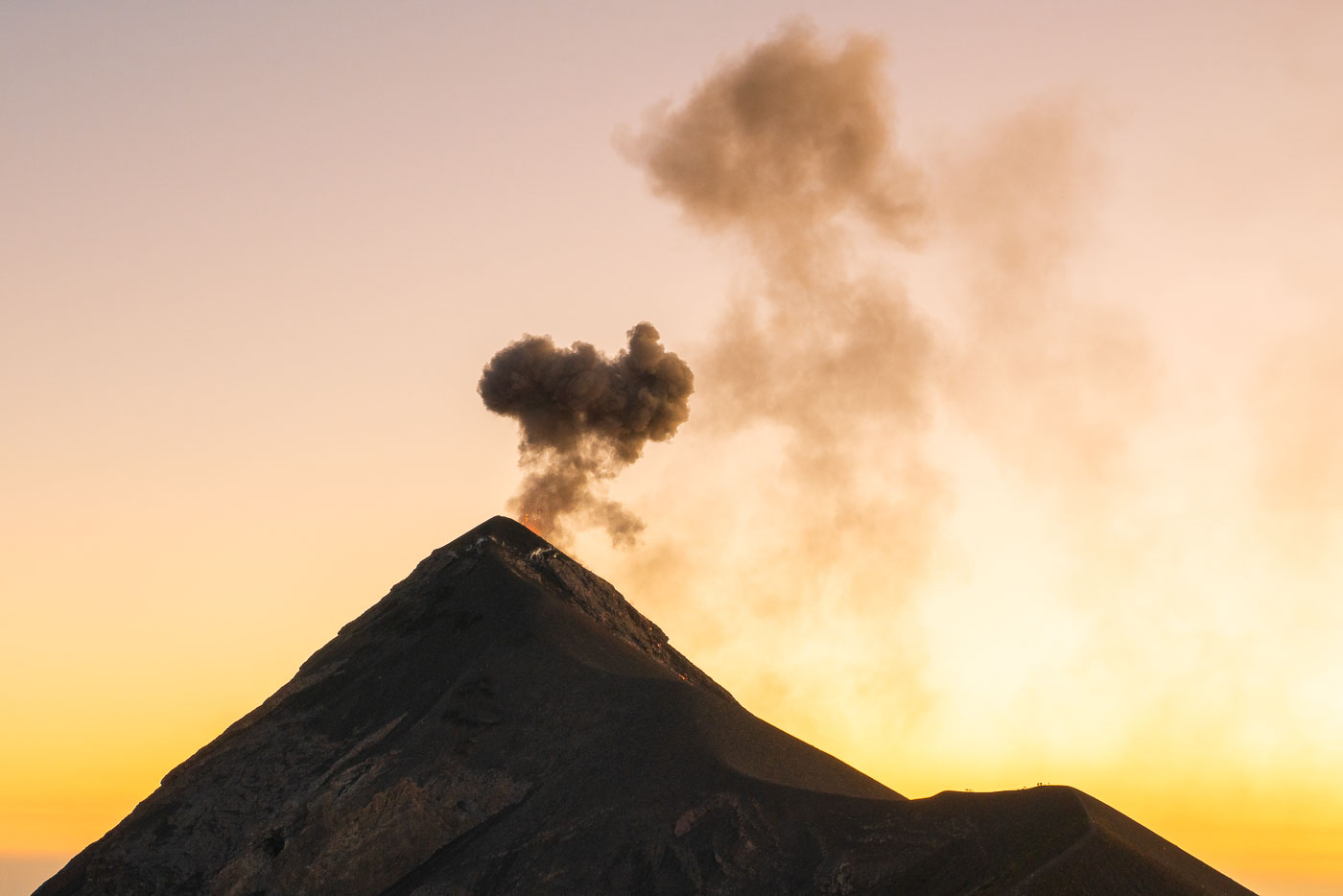
Fuego Volcano in Guatemala erupts at dusk with an ash plume and glowing lava.
Fuego Volcano in Guatemala erupts near sunset, sending an ash plume and glowing lava from the summit. Fuego is one of the country's most active volcanoes and lies near Antigua Guatemala.
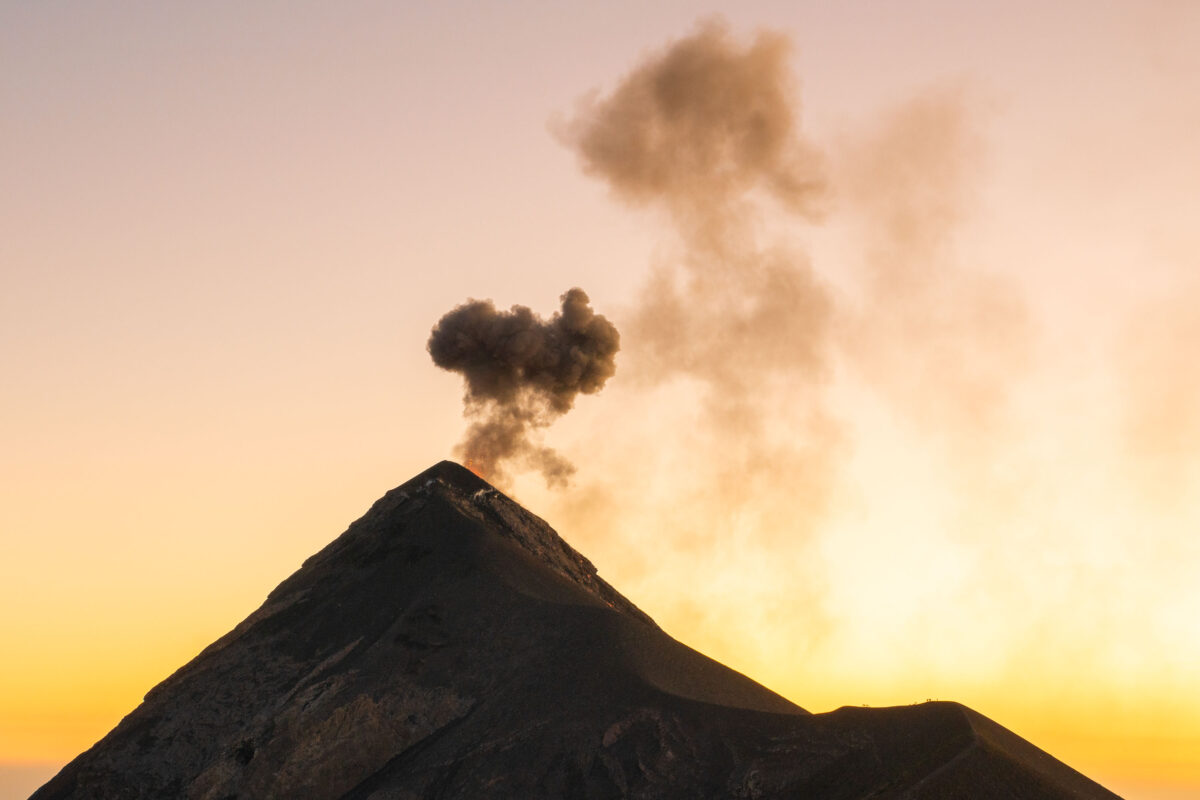
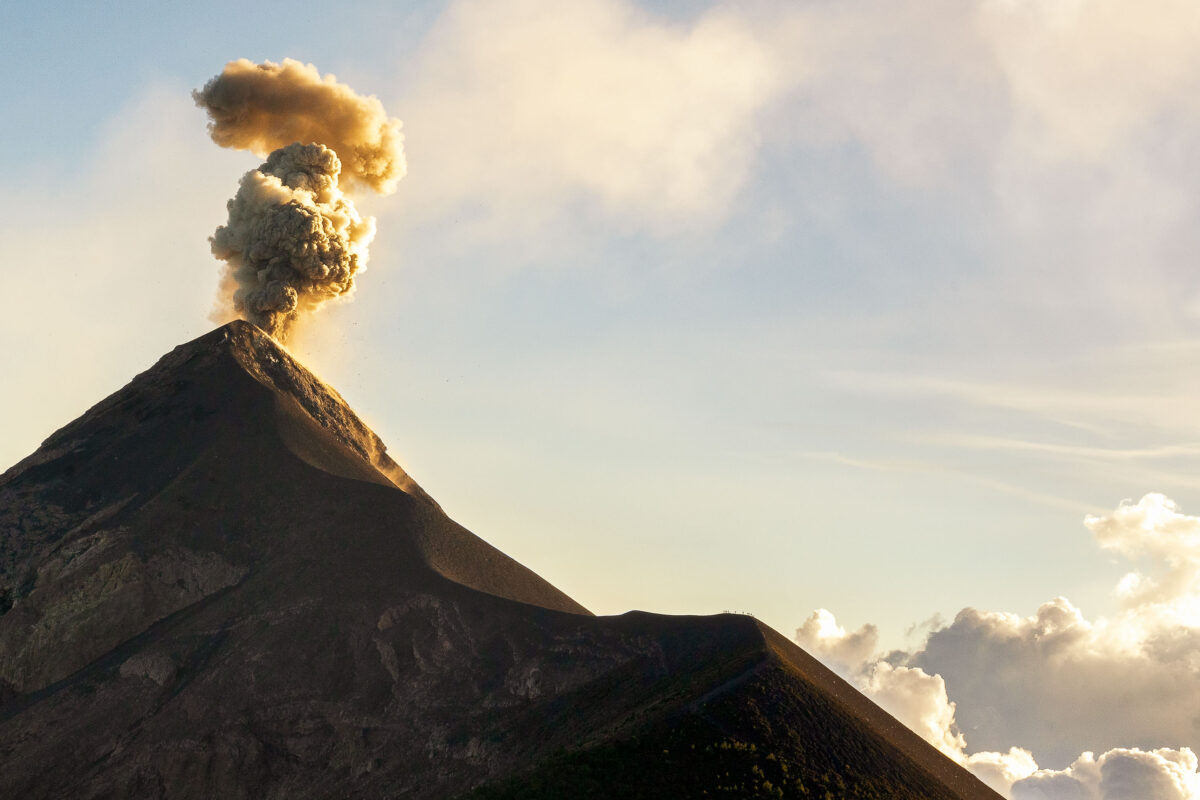
Fuego Volcano near Antigua, Guatemala, emits ash and smoke at sunset.
Fuego Volcano near Antigua, Guatemala, is one of Central America's most active stratovolcanoes. The volcano has erupted frequently for centuries and regularly produces ash plumes and lava flows. Its activity is closely monitored because eruptions can affect nearby communities.
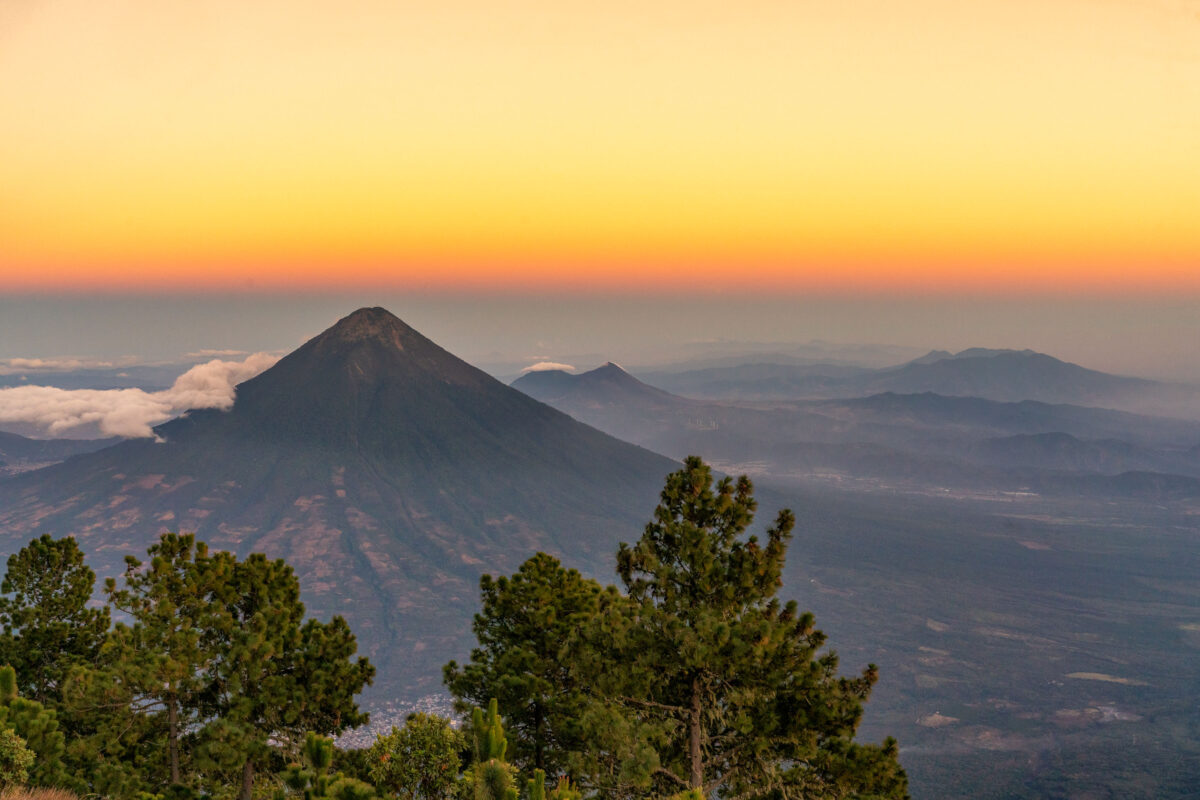
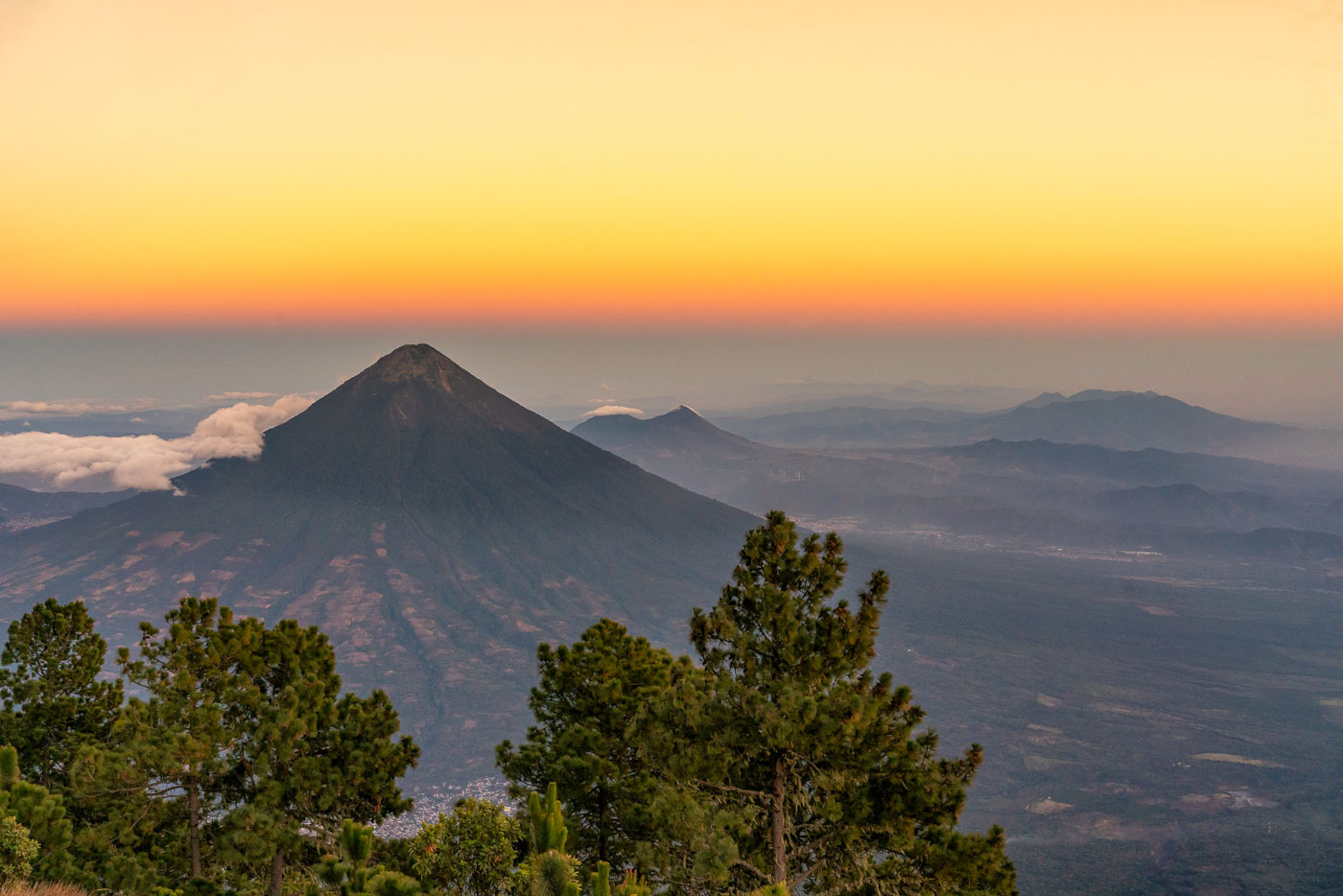
Acatenango Volcano in Guatemala at sunset with the Guatemalan Highlands in the background.
Acatenango Volcano, Guatemala, rises in the Guatemalan Highlands near Antigua Guatemala. The stratovolcano forms part of the volcanic chain in central Guatemala and is one of the country’s best-known peaks.
Acatenango Volcano and Fuego Volcano in Guatemala, seen from the highlands.
Acatenango Volcano and Fuego Volcano in Guatemala. Acatenango is one of the country’s highest peaks and a popular overnight climb near Antigua. Fuego, visible to the right, is one of Guatemala’s most active volcanoes and frequently emits ash and gas.
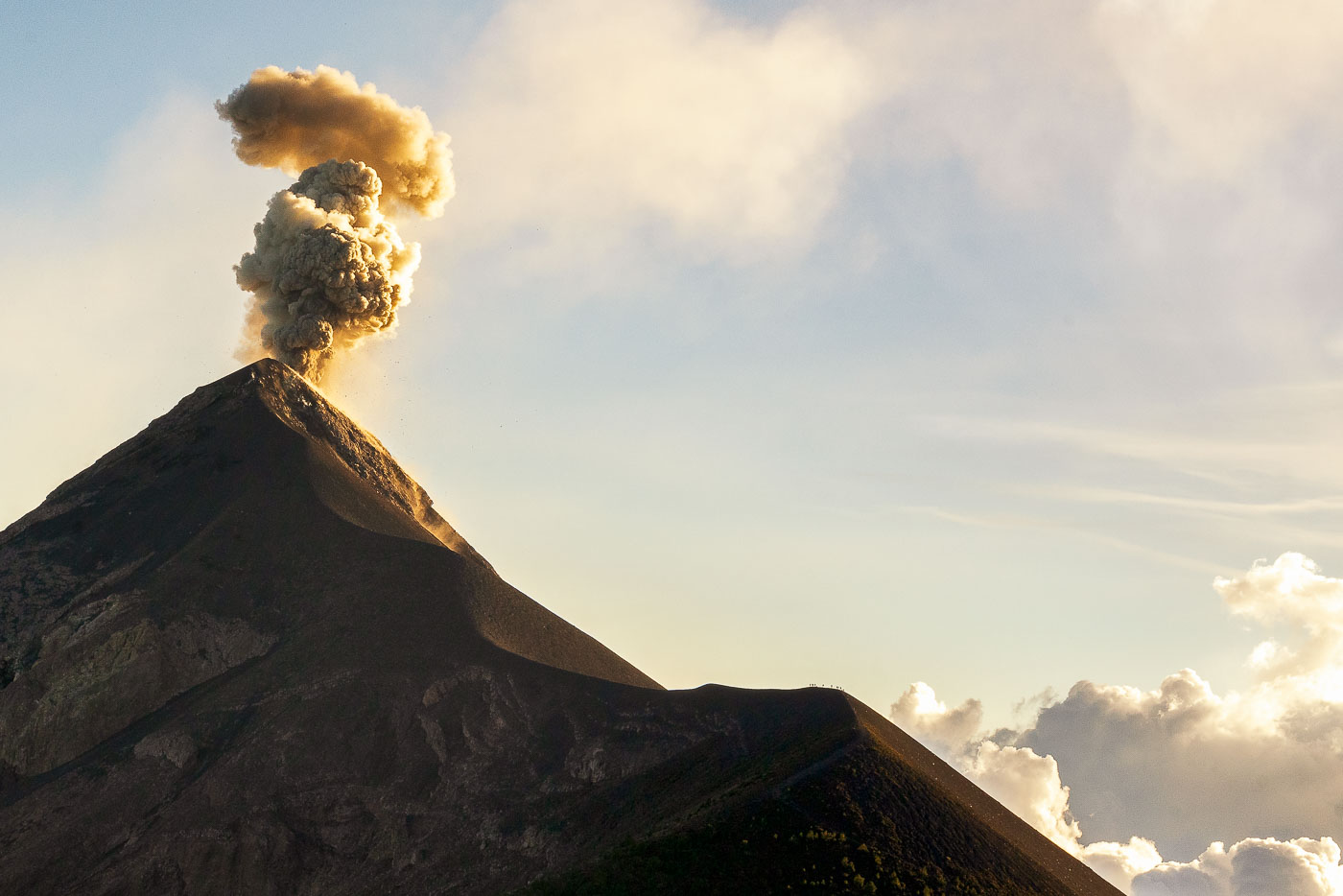
Fuego Volcano near Antigua, Guatemala, emits an ash plume during an eruption.
Fuego Volcano near Antigua, Guatemala, emits an ash plume during an eruption. The stratovolcano is one of Central America’s most active volcanoes and is closely monitored because of its proximity to populated areas.
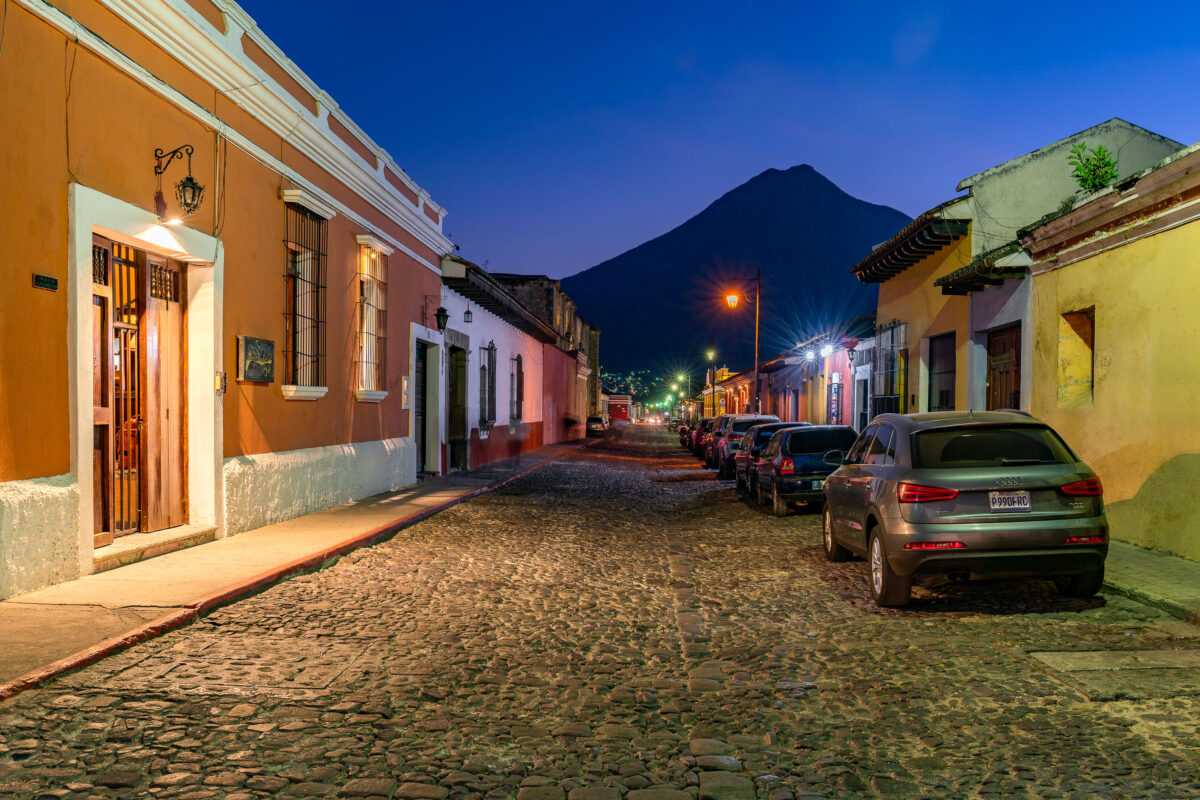
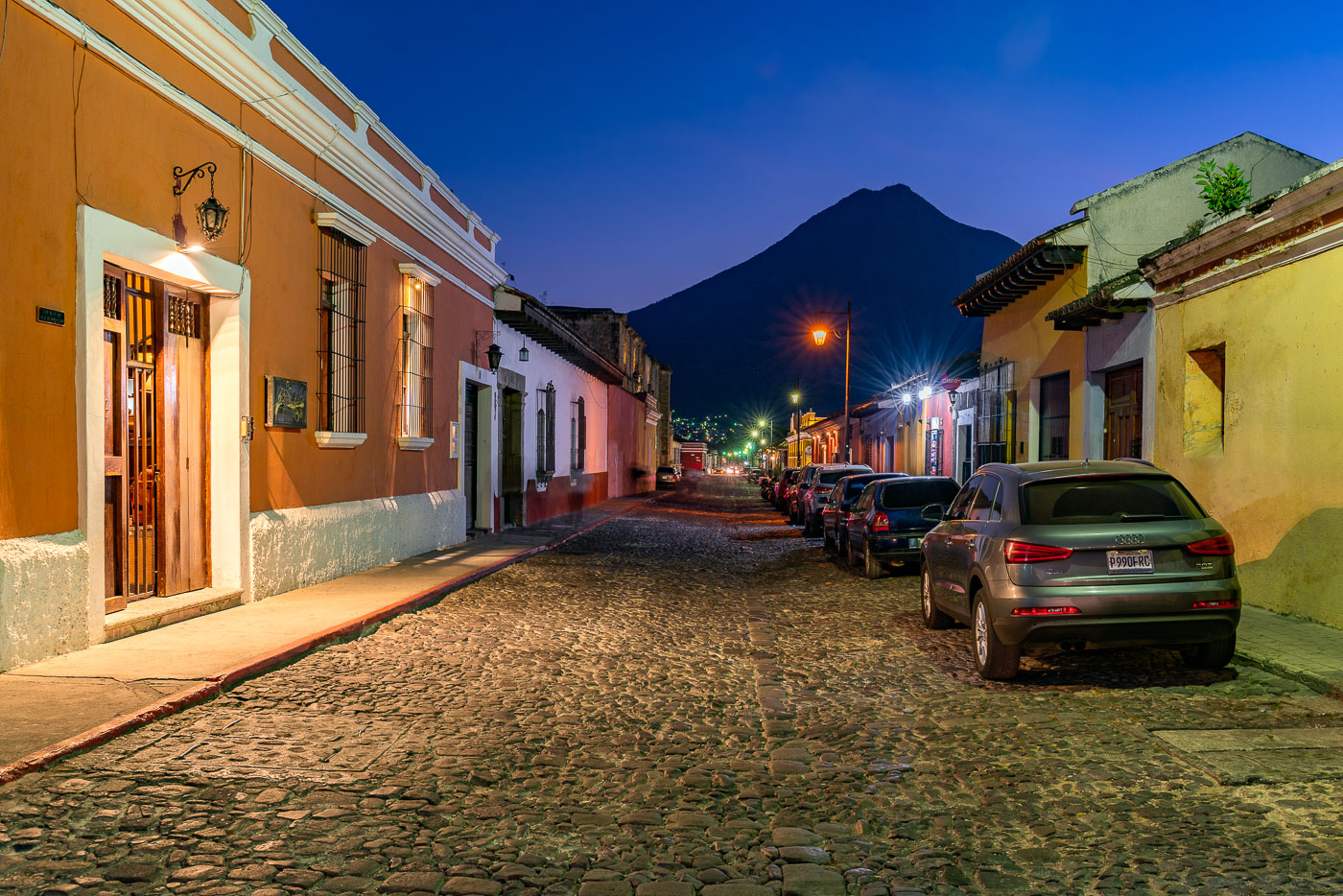
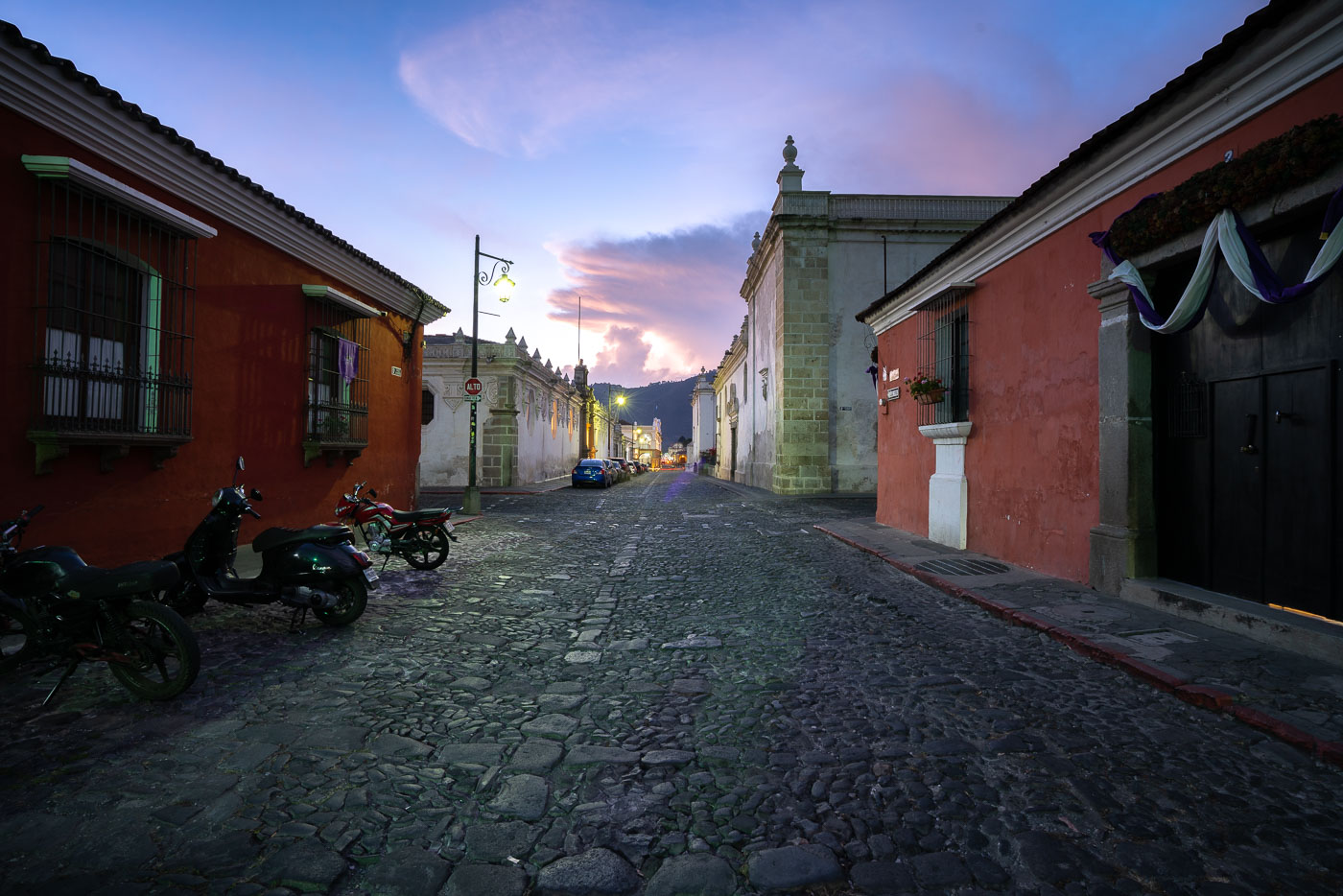
Antigua Guatemala street with parked cars and Volcán de Agua at dusk.
Antigua Guatemala, Guatemala, is a former colonial capital known for its preserved Spanish Baroque architecture and volcanic setting. This cobblestone street lies beneath Volcán de Agua on the city’s southern edge. Antigua was designated a UNESCO World Heritage site in 1979.
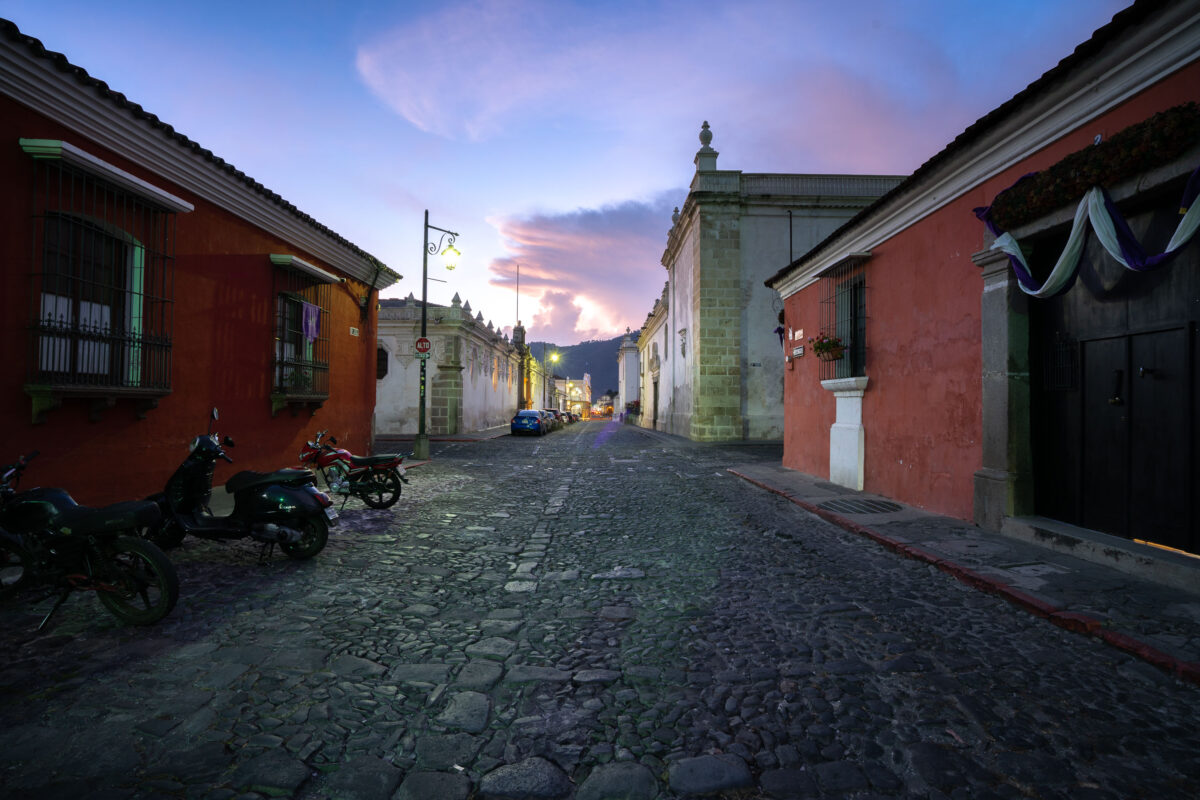
Cobblestone street in Antigua Guatemala at sunset with colonial buildings.
Antigua Guatemala’s cobblestone streets are part of the former colonial capital of Guatemala, founded in 1542. The city is known for its preserved Spanish Baroque architecture and has been a UNESCO World Heritage site since 1979. This street lies within Antigua’s historic center.
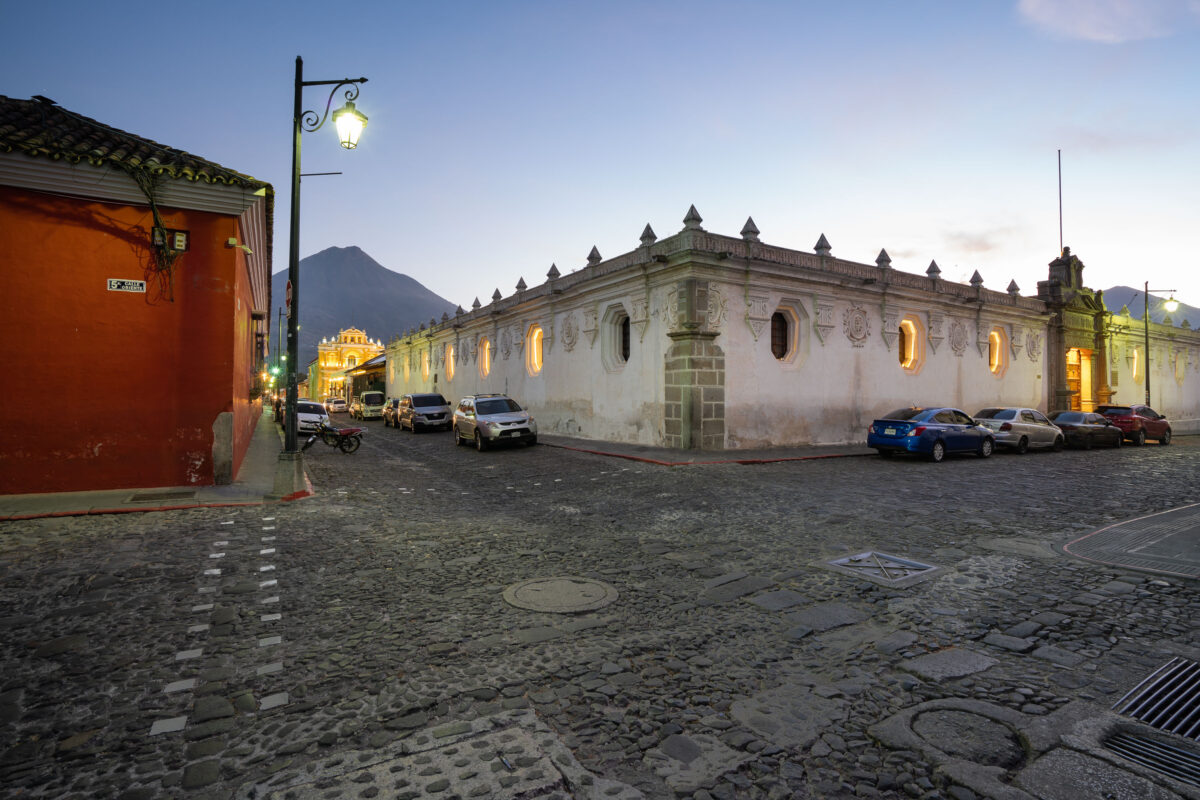
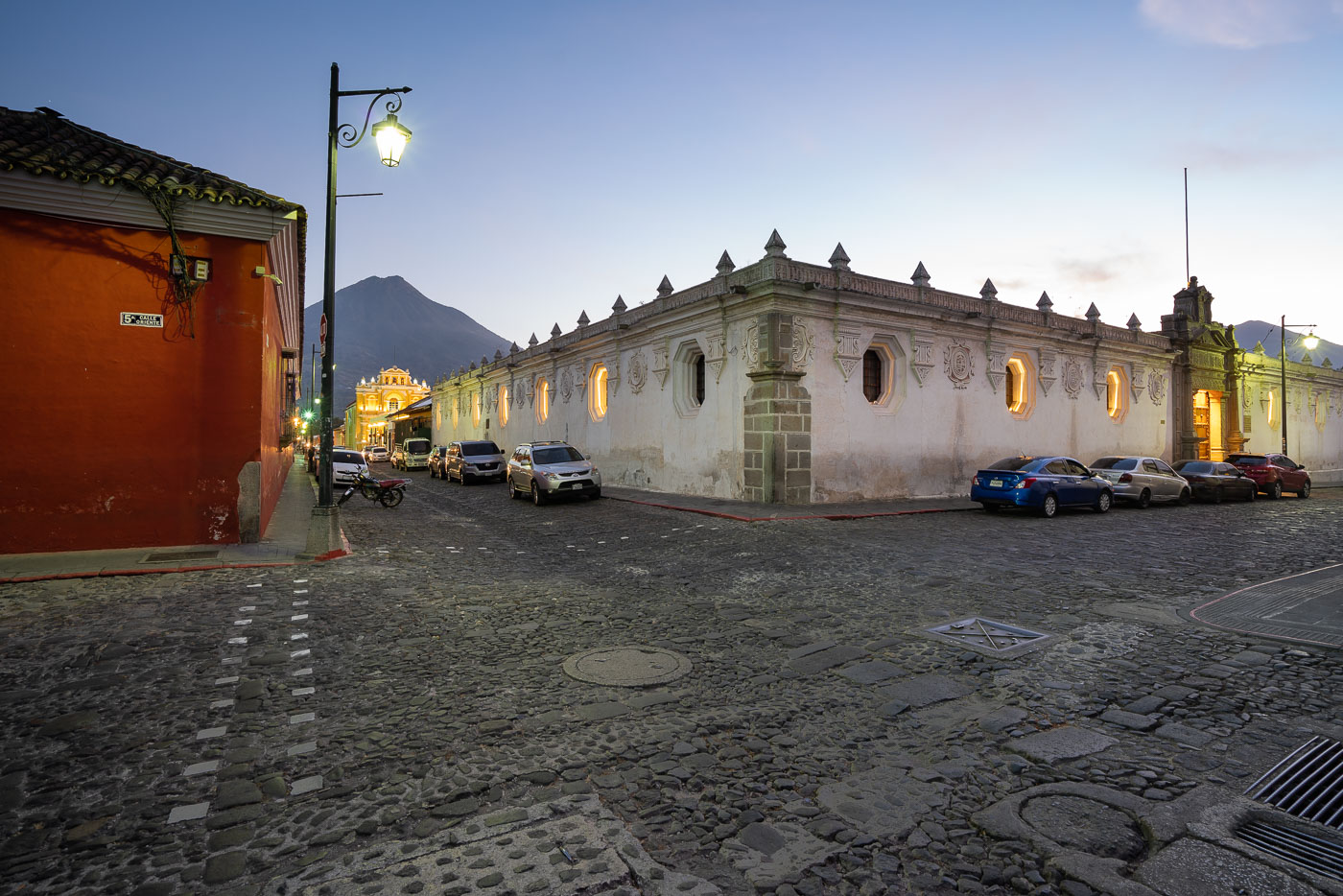
5a Calle Oriente in Antigua Guatemala with Agua Volcano beyond the colonial street.
5a Calle Oriente in Antigua Guatemala is a colonial-era street in the historic center. Agua Volcano rises beyond the street grid at the edge of the city. The area is part of Antigua Guatemala’s preserved Spanish colonial landscape.
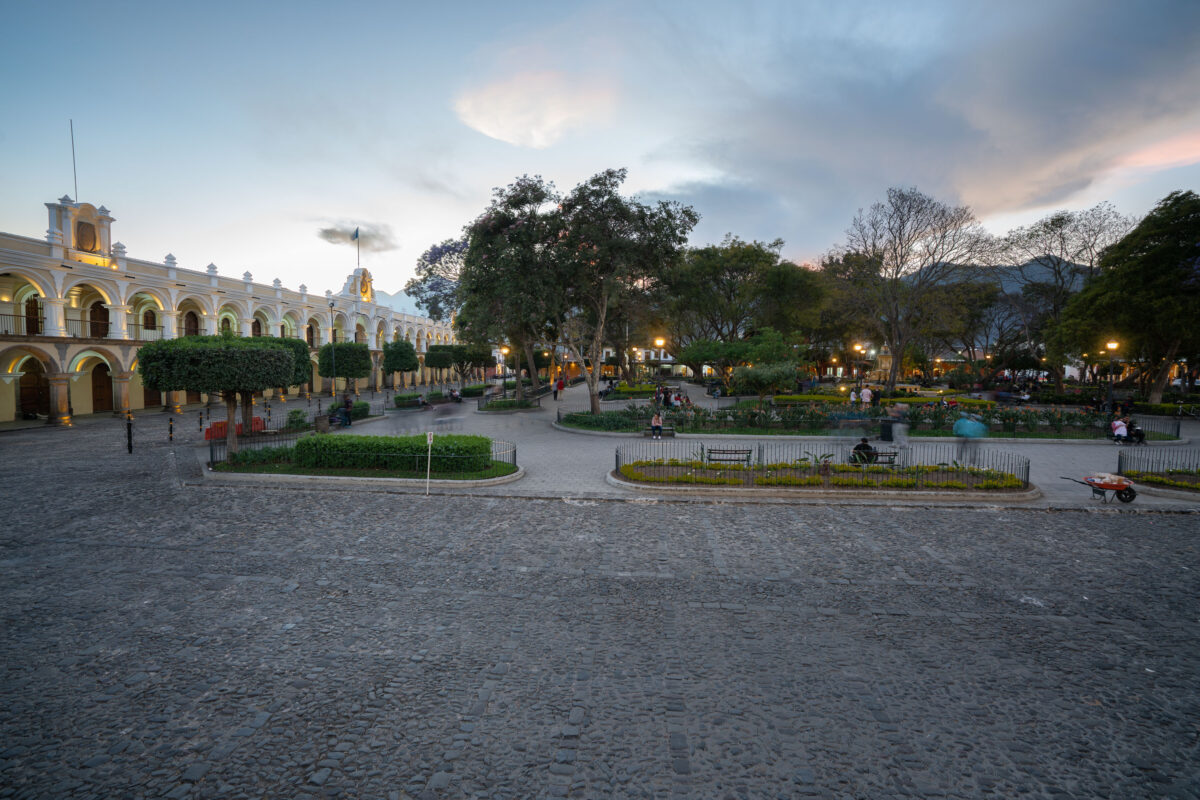
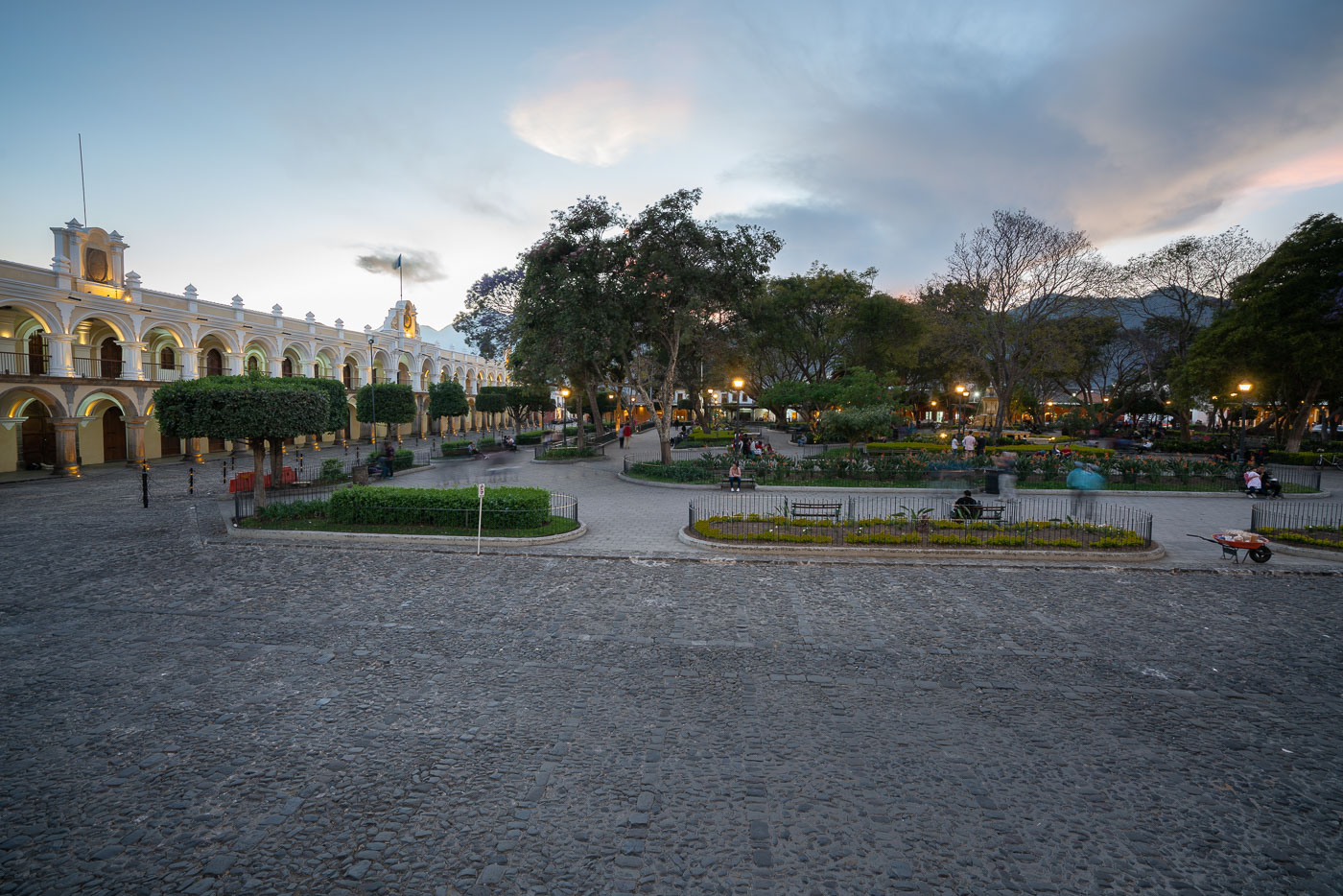
Parque Central in Antigua Guatemala at dusk with gardens and arcaded buildings.
Parque Central in Antigua Guatemala is the city’s main public square and a UNESCO World Heritage site. The plaza dates to the 16th century and remains the center of the historic colonial district. It is bordered by arcaded civic buildings and landscaped gardens.
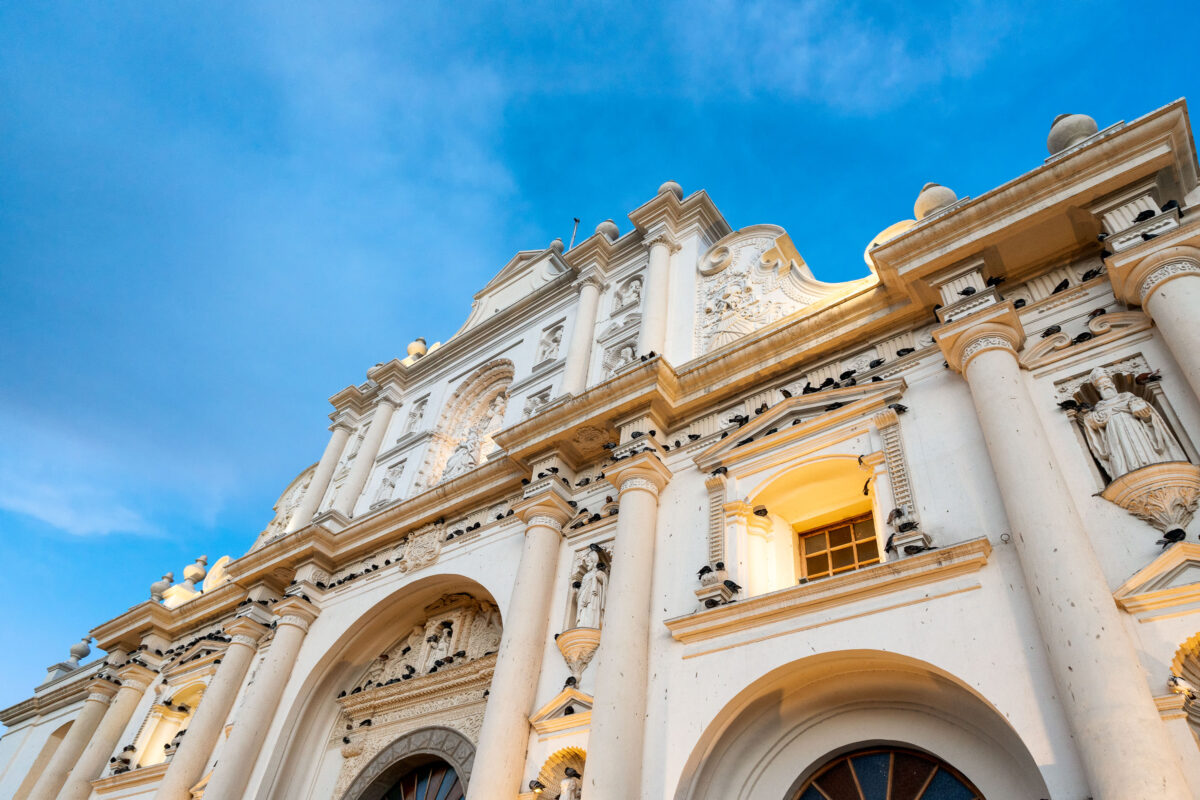
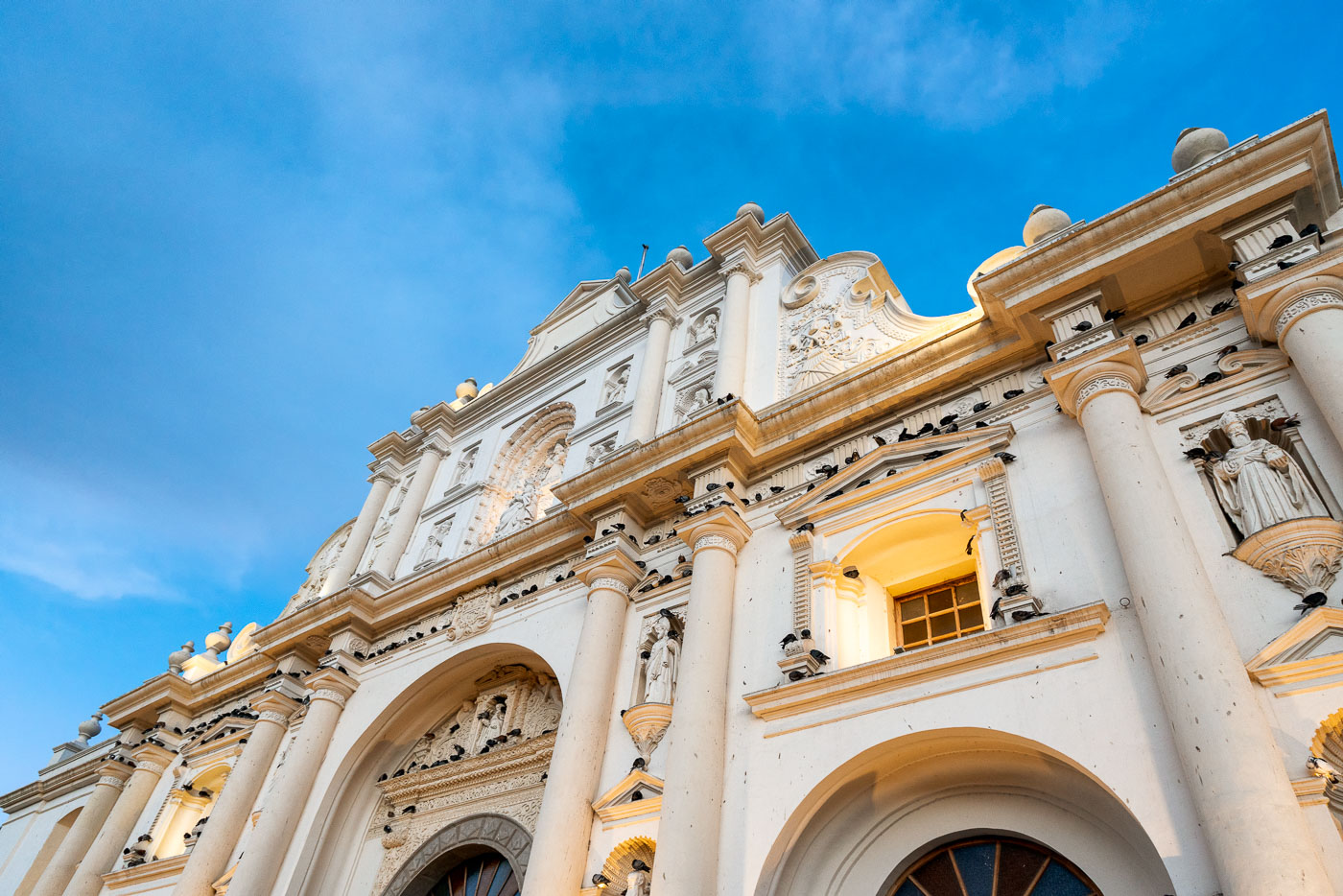
Antigua Guatemala Cathedral facade in Antigua Guatemala with pigeons on the Baroque exterior.
The Antigua Guatemala Cathedral, formally the Cathedral of Saint James the Apostle, is the principal church of the Archdiocese of Santiago of Guatemala. Located on Parque Central in Antigua Guatemala, the cathedral dates to the colonial period and has been rebuilt after repeated earthquake damage. It remains one of the city’s most important historic and religious landmarks.
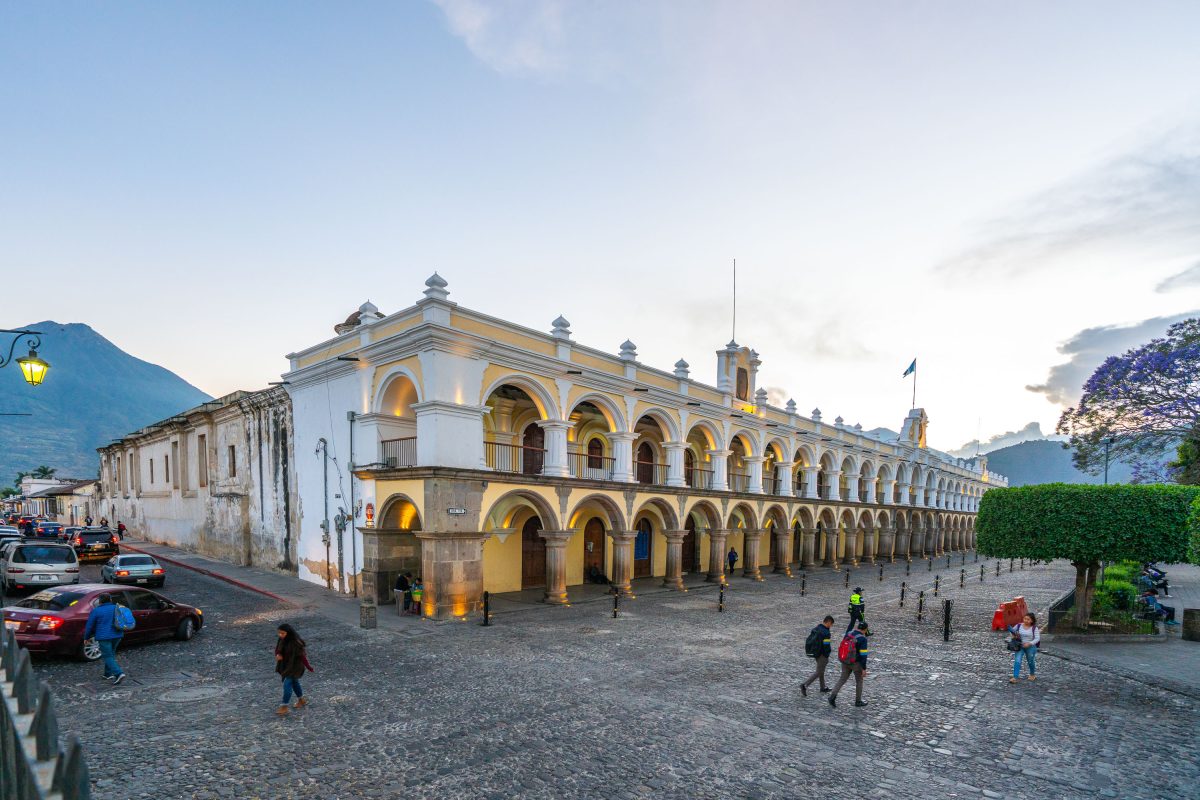
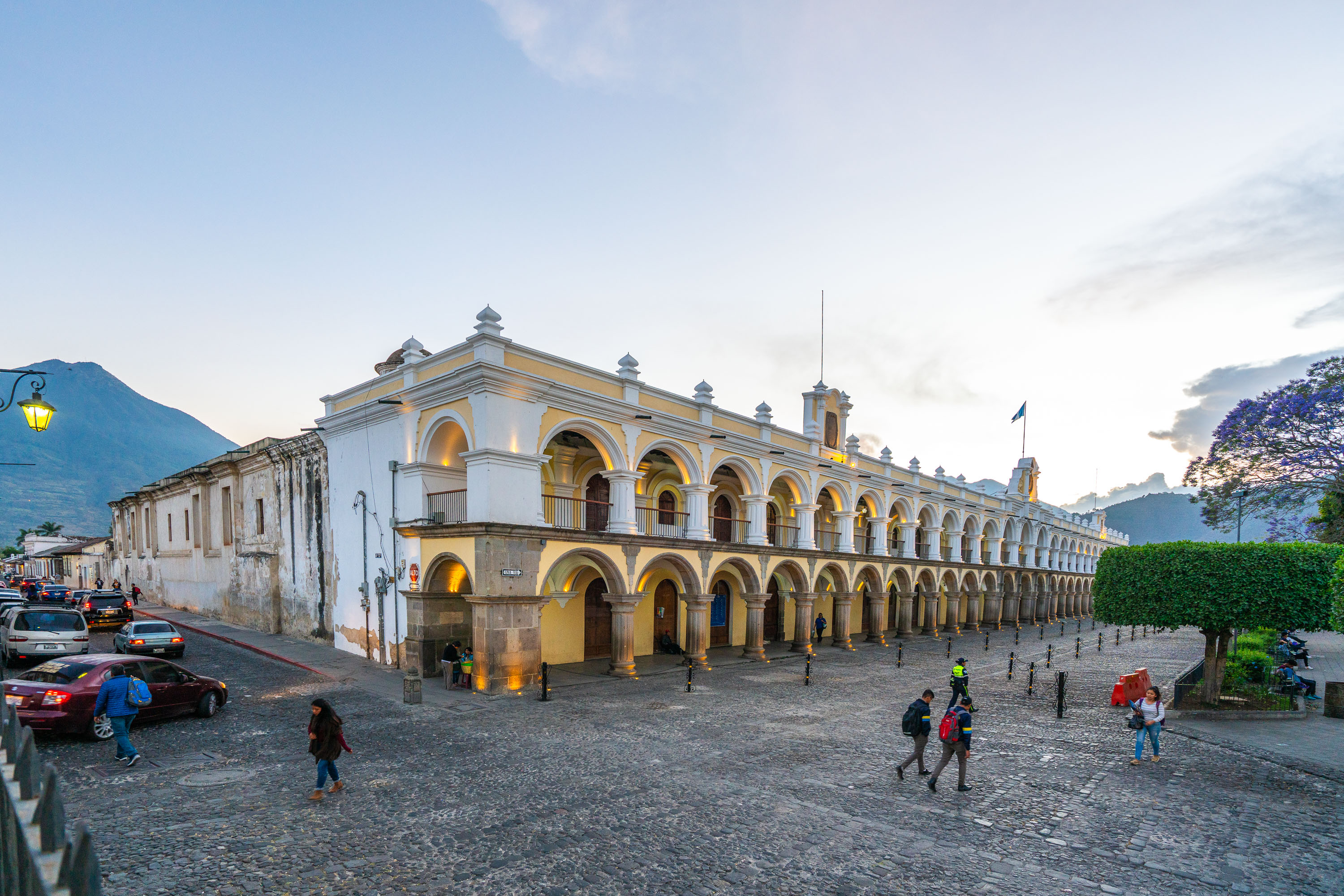
Yellow and white colonial building with arched windows on a plaza with pedestrians and parked cars.
The Palacio de los Capitanes Generales anchors the south side of Antigua Guatemala's Parque Central. Built in the 18th century after an earthquake destroyed an earlier structure, it served as the seat of Spanish colonial government for the Kingdom of Guatemala, which then stretched from Chiapas to Costa Rica. Its double-tiered arcade of stone arches is a defining feature of the city's Baroque architecture, restored after further earthquake damage in 1976. Antigua's historic center, including this building, was designated a UNESCO World Heritage Site in 1979. Volcán de Agua rises behind the city to the south, one of three volcanoes framing the former capital.
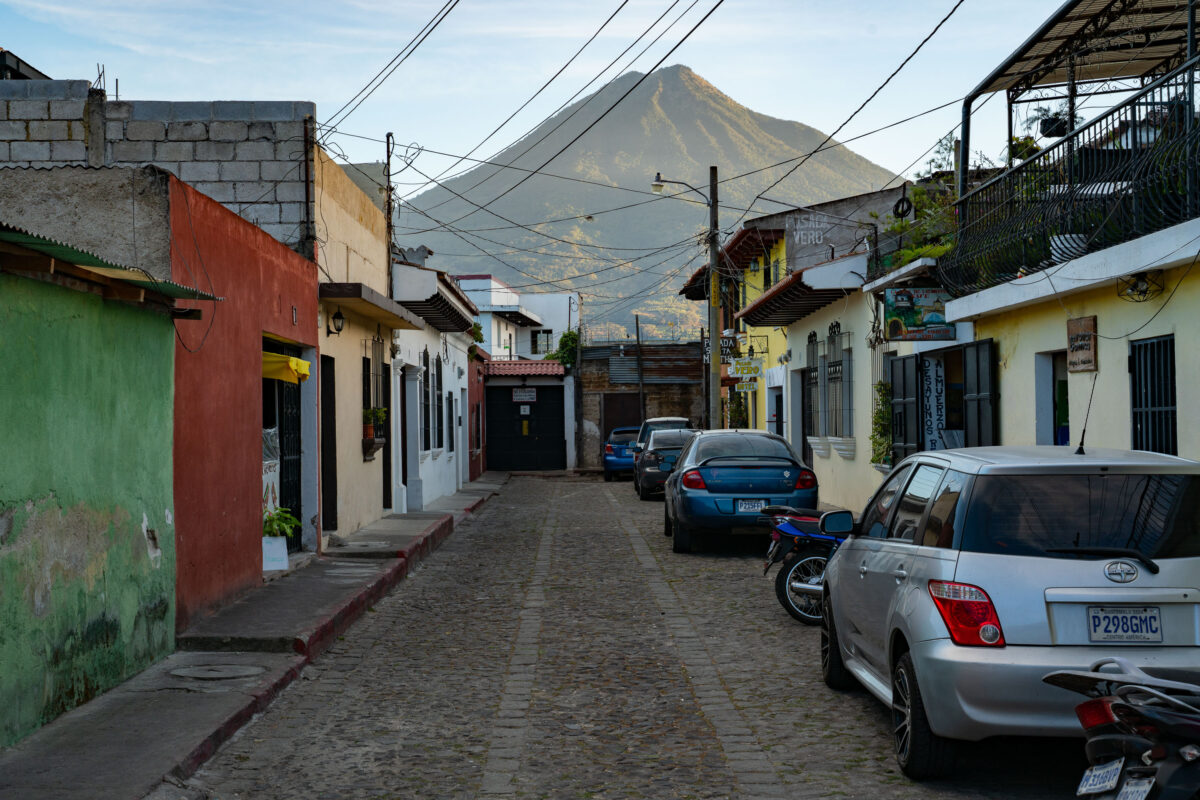
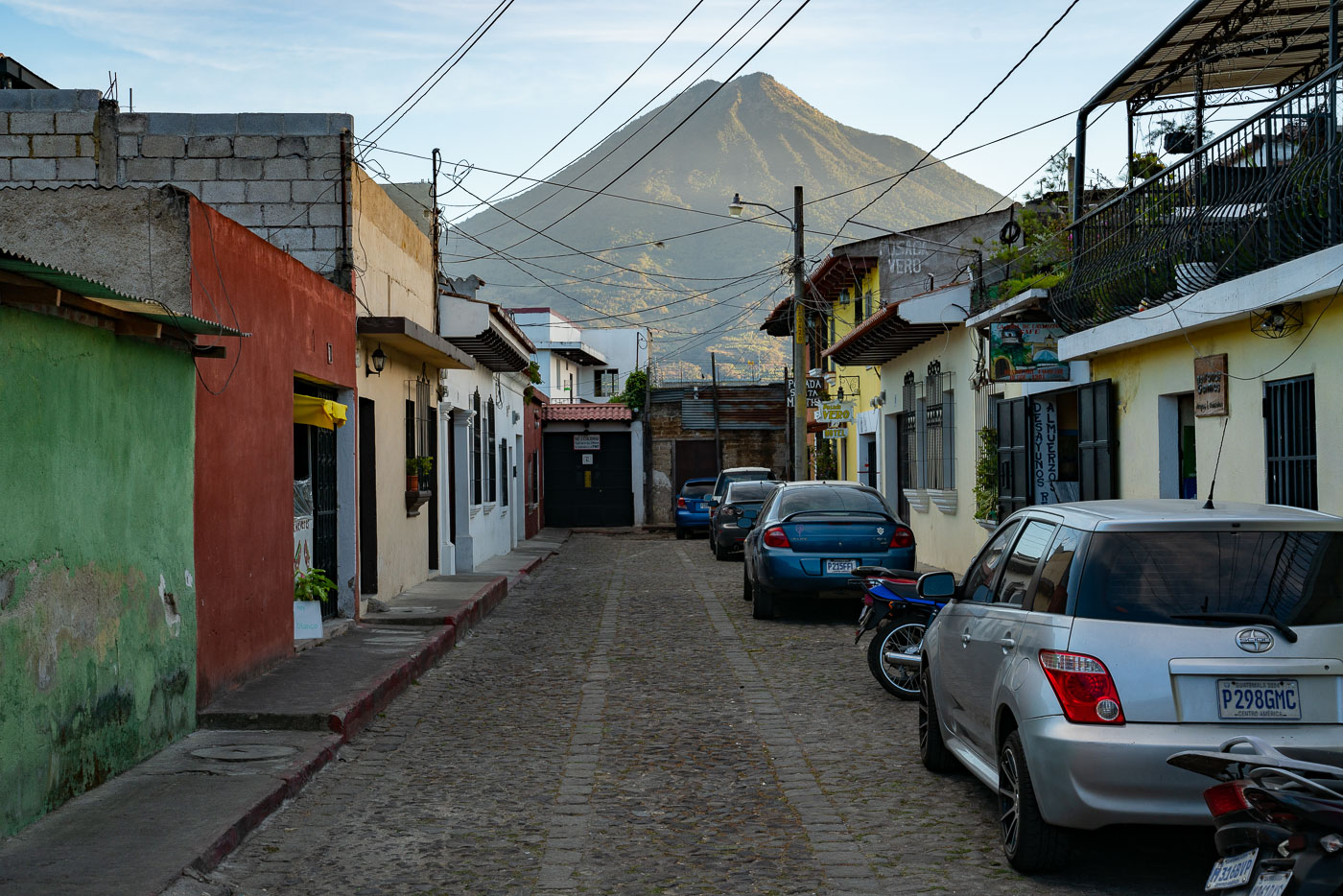
Narrow Antigua Guatemala cobblestone street with parked cars and Volcán de Agua ahead.
A narrow cobblestone street in Antigua, Guatemala, leads toward Volcán de Agua. The city’s colonial-era street grid and low-rise buildings are part of the historic center recognized by UNESCO. Volcán de Agua is one of the volcanoes that define the skyline around Antigua.
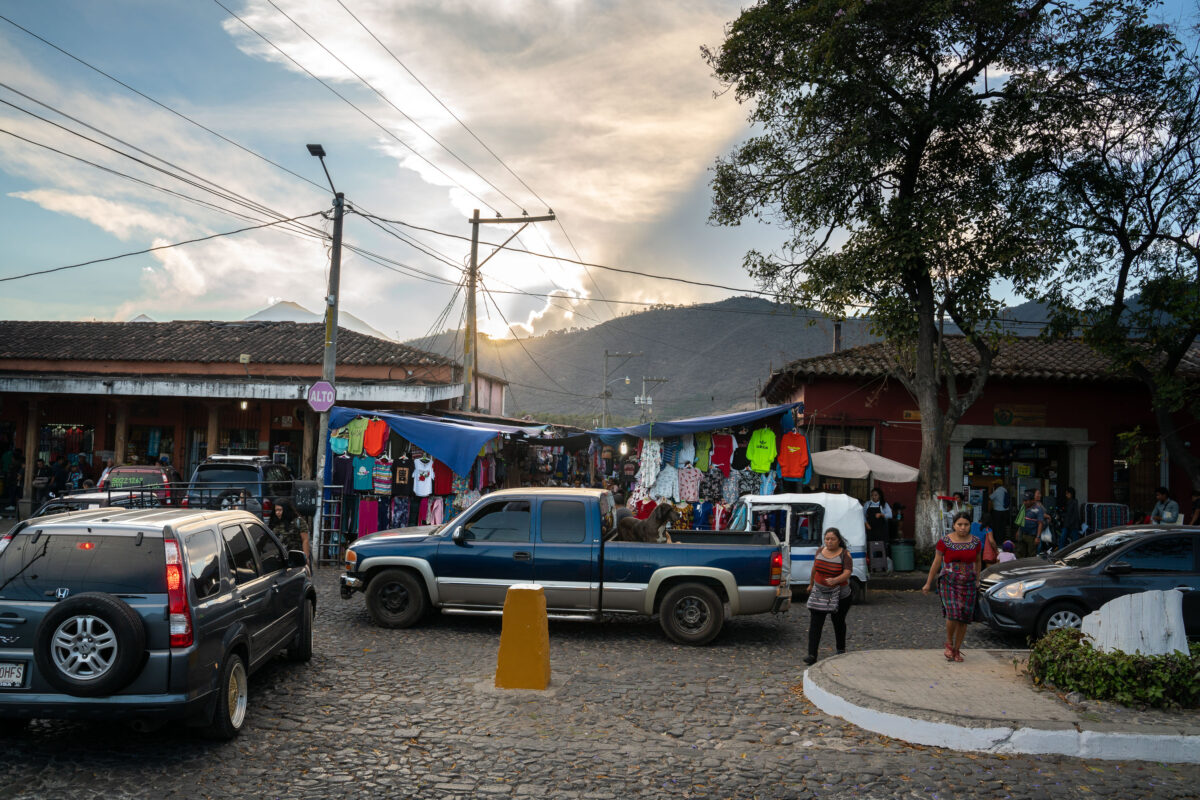
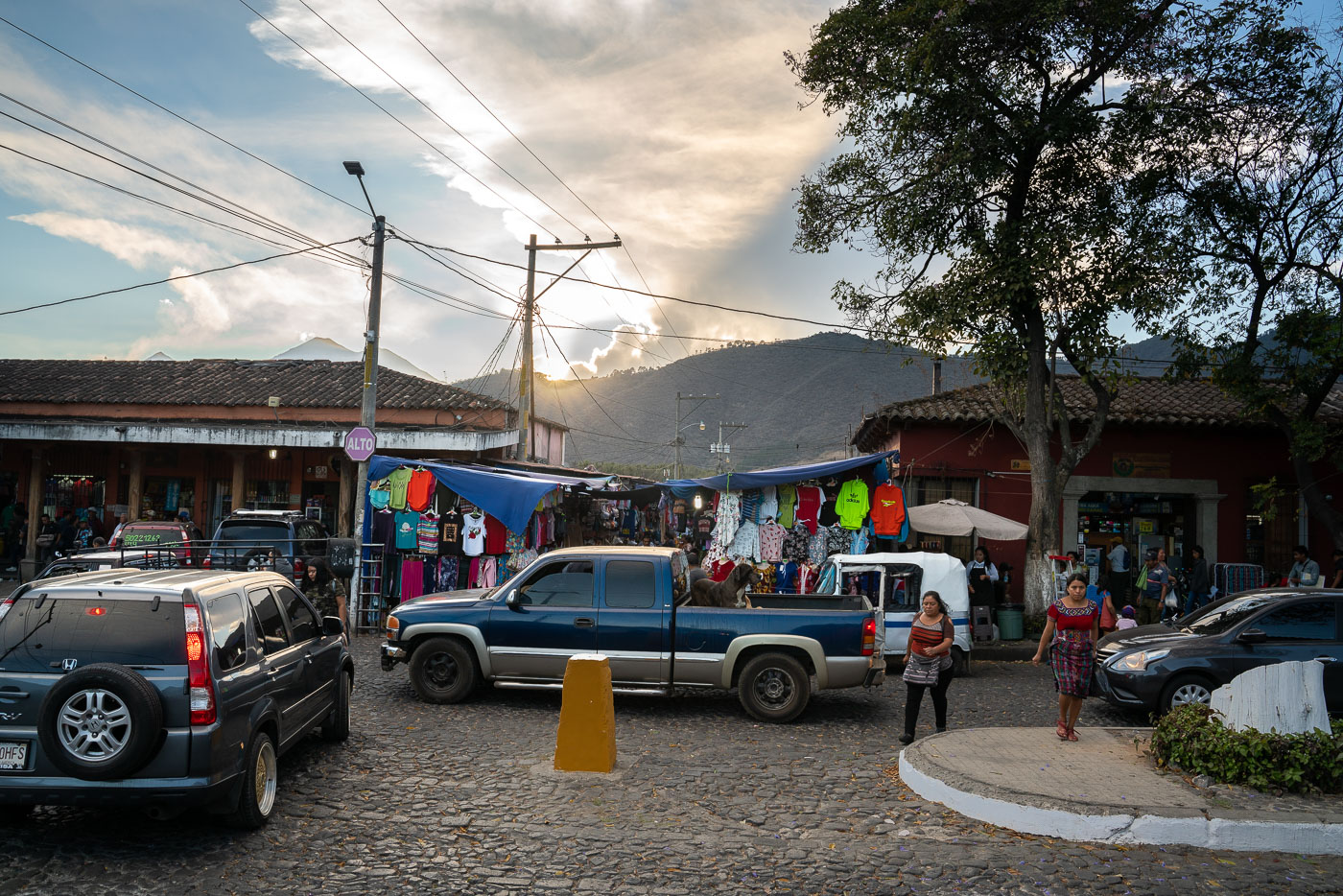
Antigua Market Street in Guatemala with vendors, cars, and volcanoes at sunset.
Antigua Market Street at Sunset, Guatemala. Street vendors sell clothing and other goods along one of the city’s cobblestone market streets. Antigua is a UNESCO World Heritage site and Guatemala’s former colonial capital.
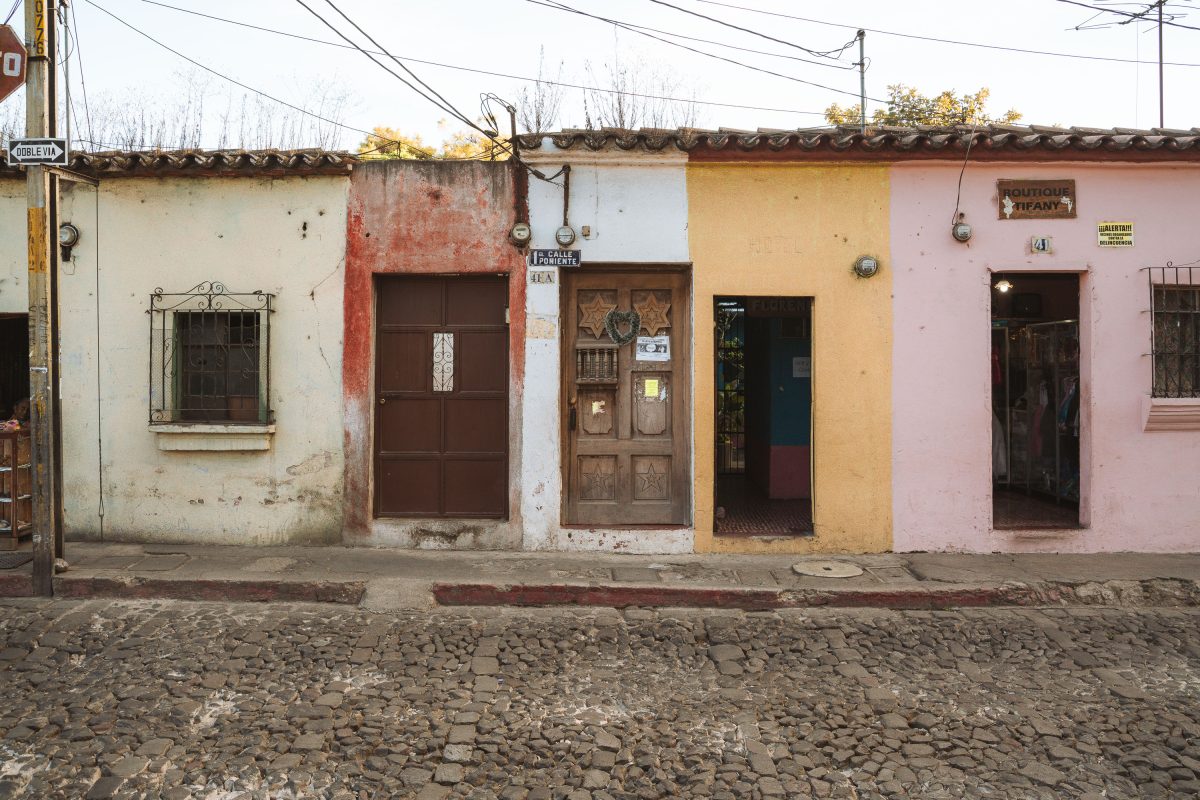
Row of colorful colonial houses with wooden doors on cobblestone street in Trinidad, Cuba.
1a Calle Poniente runs through the historic core of Antigua Guatemala, a city founded by Spanish colonizers in 1543 and named a UNESCO World Heritage Site in 1979 for its preserved Baroque-influenced architecture. City ordinances here restrict paint colors, signage, and building materials to maintain the low-rise, single-story facades typical of the colonial period. The cobblestone streets, still in use today, follow the original grid laid out by Spanish planners after earthquakes destroyed the former capital at Ciudad Vieja. Many of the storefronts along this stretch house small businesses, tailoring shops, and family residences within structures that predate the country's independence in 1821.
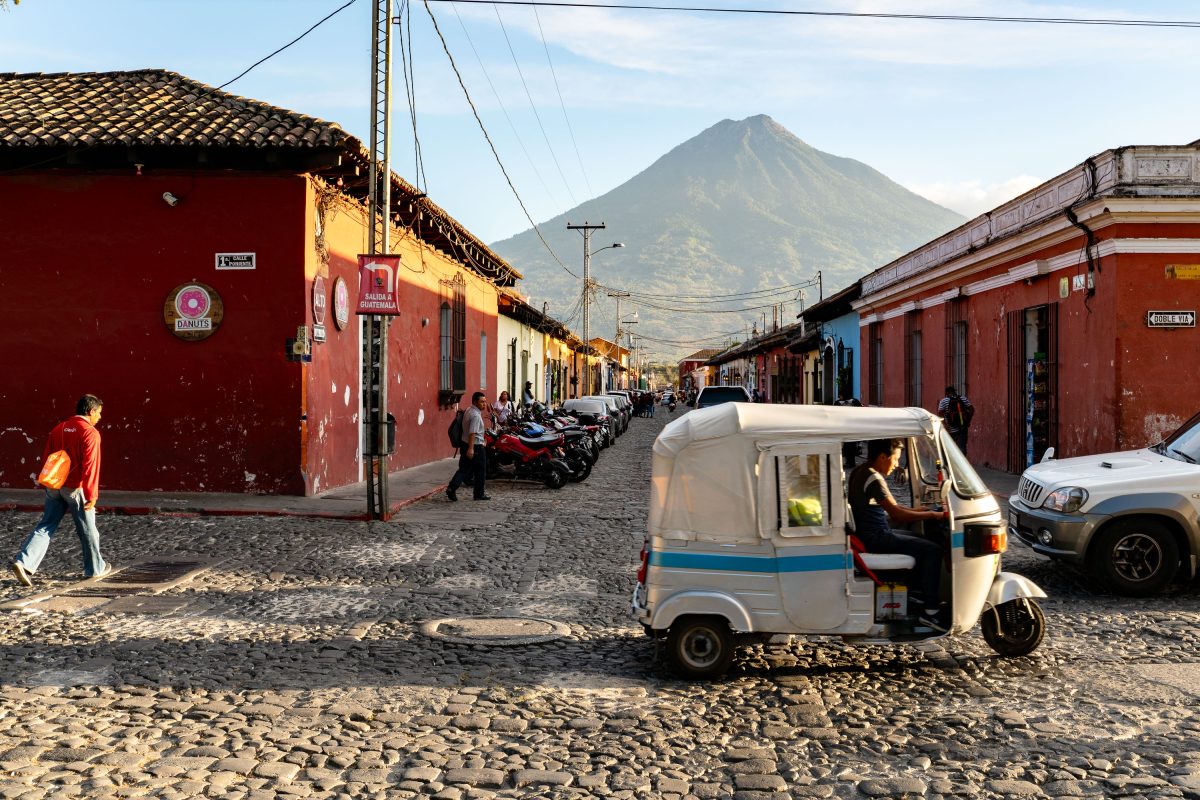
Colorful colonial street in Granada, Nicaragua with tuk-tuk and Mombacho volcano in background.
Volcán de Agua rises over Antigua Guatemala, a colonial city founded by the Spanish in 1543 and named a UNESCO World Heritage Site in 1979 for its well-preserved Baroque architecture and grid of cobblestone streets. The volcano stands about 3,760 meters tall and looms just south of the city, visible from many of its avenues. Antigua served as the capital of the Kingdom of Guatemala until a series of earthquakes prompted colonial authorities to relocate the seat of government to present-day Guatemala City in 1776. Tuk-tuks, adapted from the three-wheeled auto rickshaws common in South and Southeast Asia, have become a popular way to navigate the city's narrow, uneven streets, offering an alternative to cars in a historic center where many roads predate motorized transport by centuries.
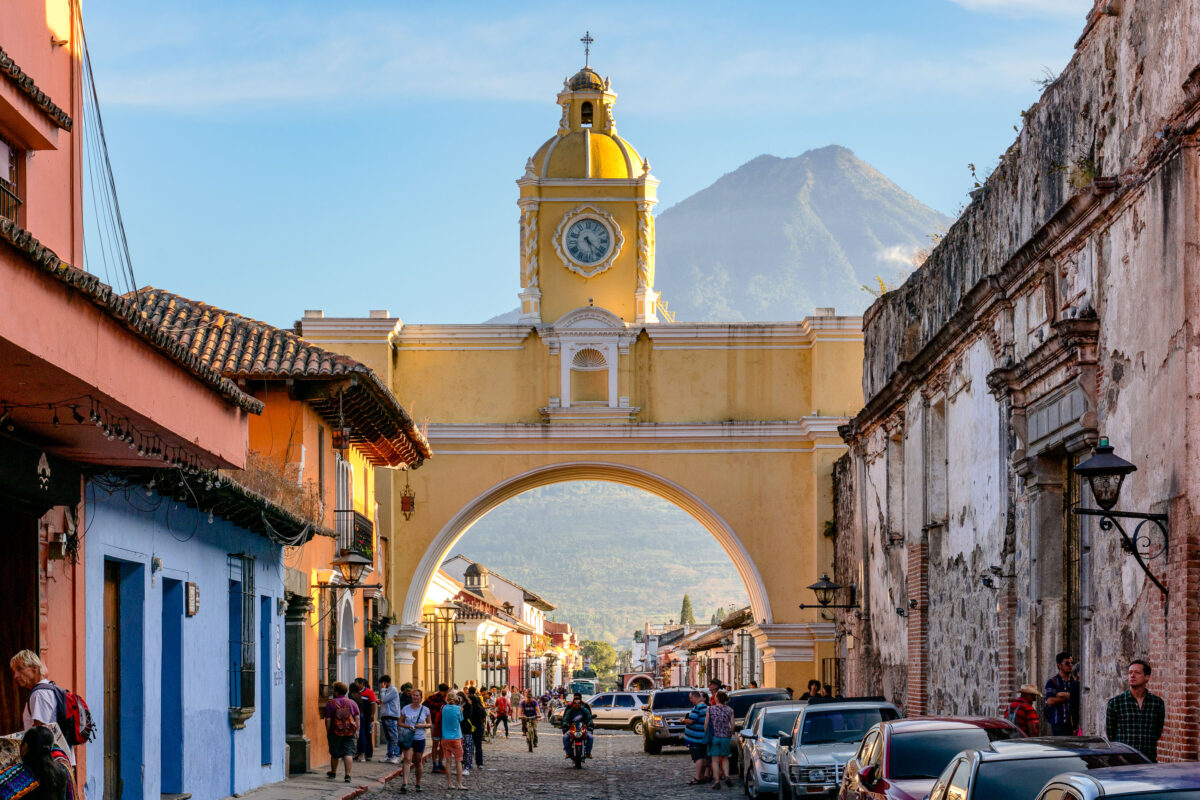
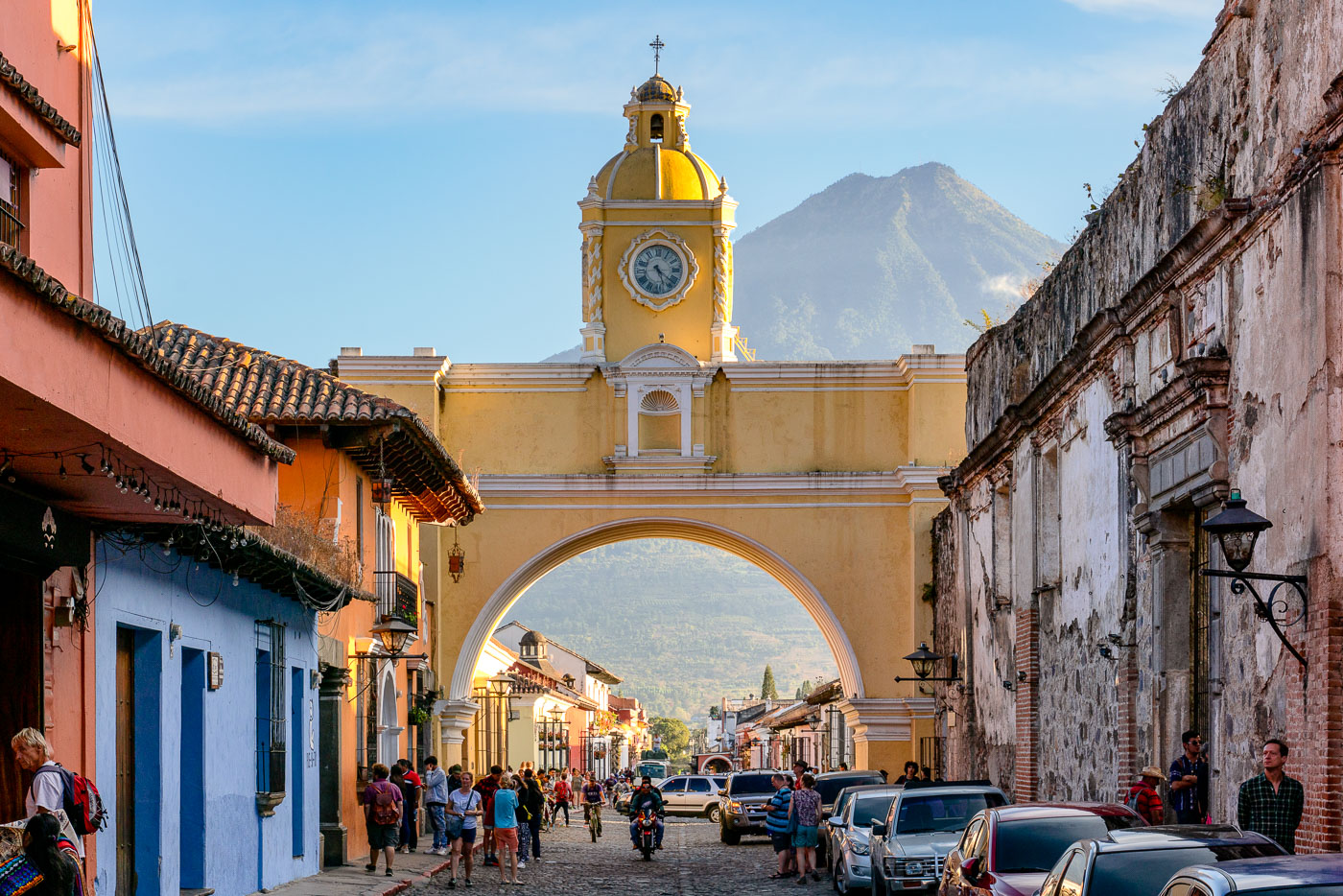
Santa Catalina Arch on 5a Avenida Norte in Antigua Guatemala with Volcán de Agua behind it.
Santa Catalina Arch on 5a Avenida Norte in Antigua Guatemala, Guatemala, is one of the city’s best-known colonial landmarks. Built in the 17th century, it originally connected the Santa Catalina convent with a school across the street. The clock tower was added in the 19th century, and Volcán de Agua rises behind the arch.
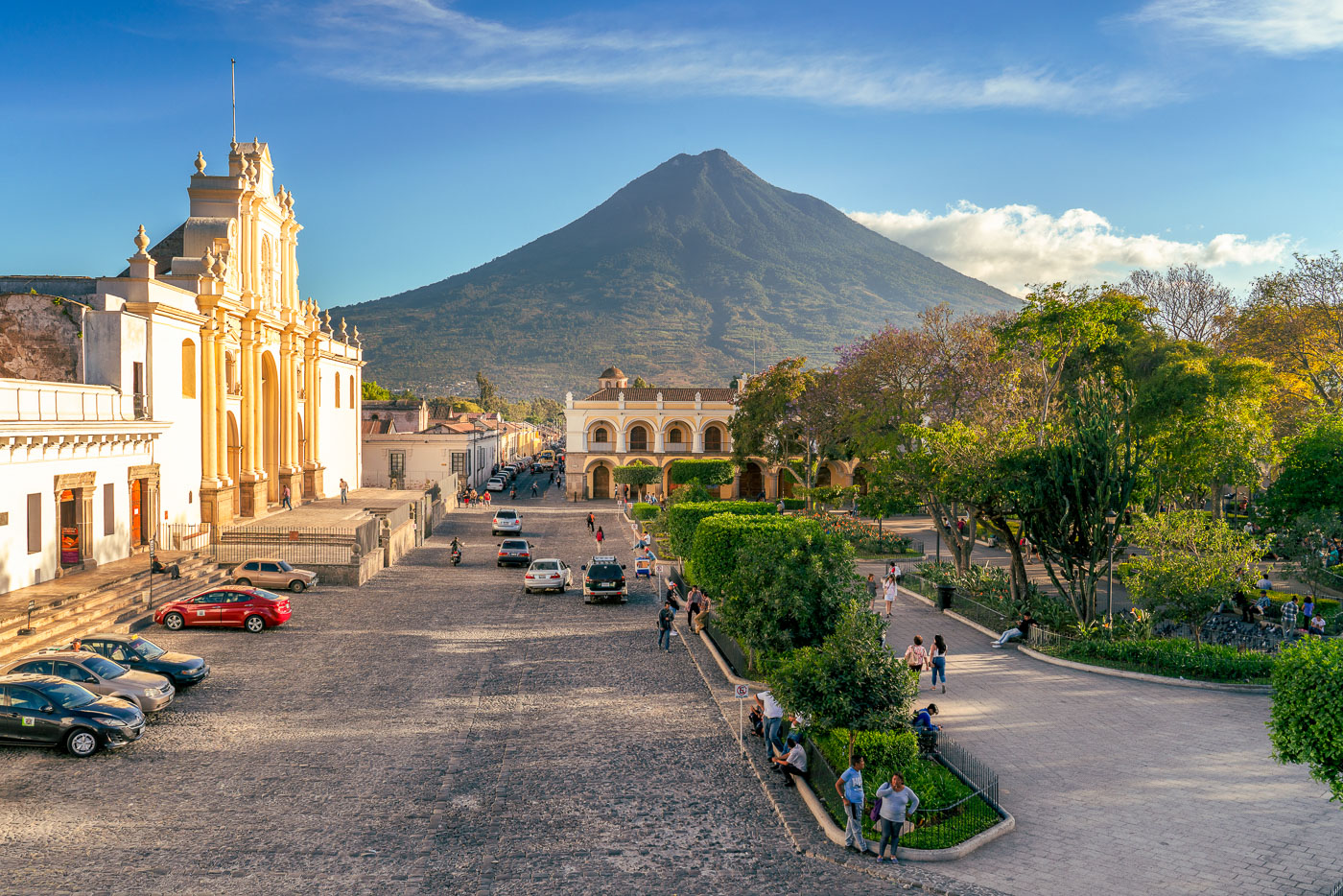
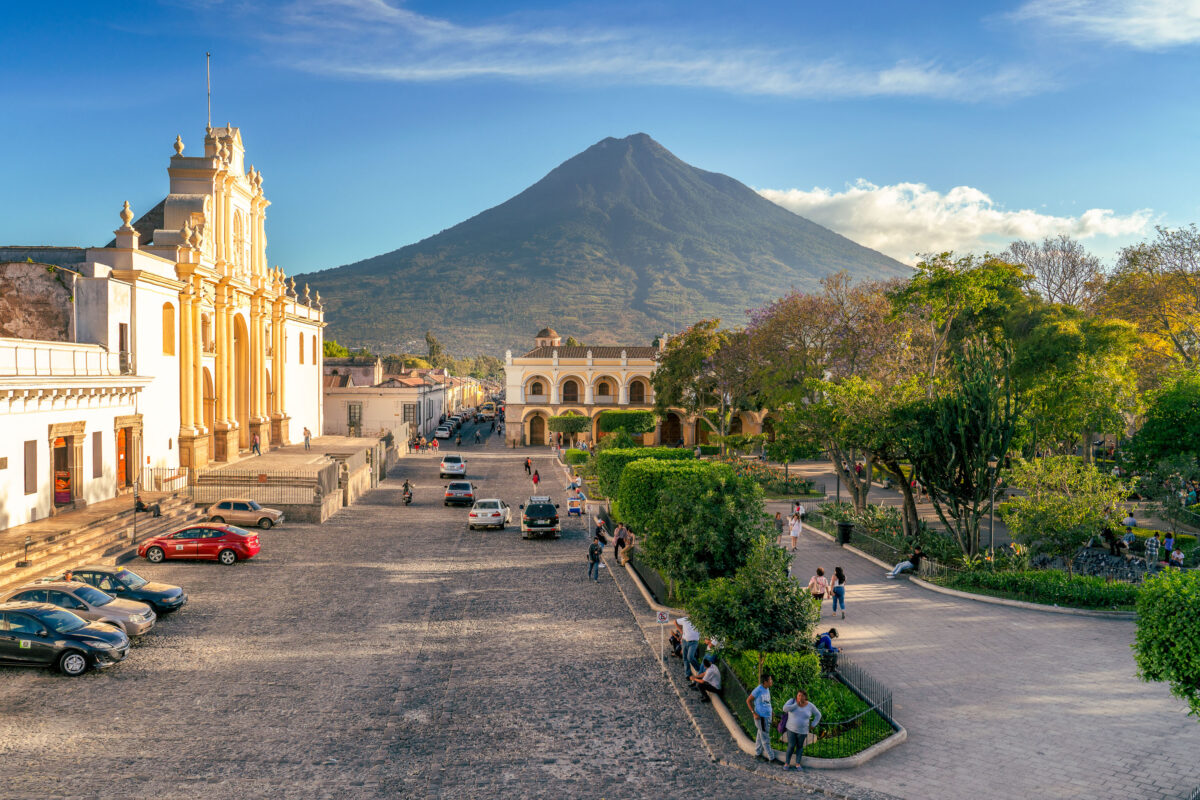
Antigua Guatemala Cathedral and Volcán de Agua above Parque Central in Antigua Guatemala.
Antigua Guatemala Cathedral and Volcán de Agua overlook Parque Central in Antigua Guatemala, Guatemala. The cathedral occupies one side of the historic center, while the volcano rises beyond the city skyline. Antigua Guatemala is a UNESCO World Heritage site known for its Spanish colonial architecture and earthquake-damaged historic core.
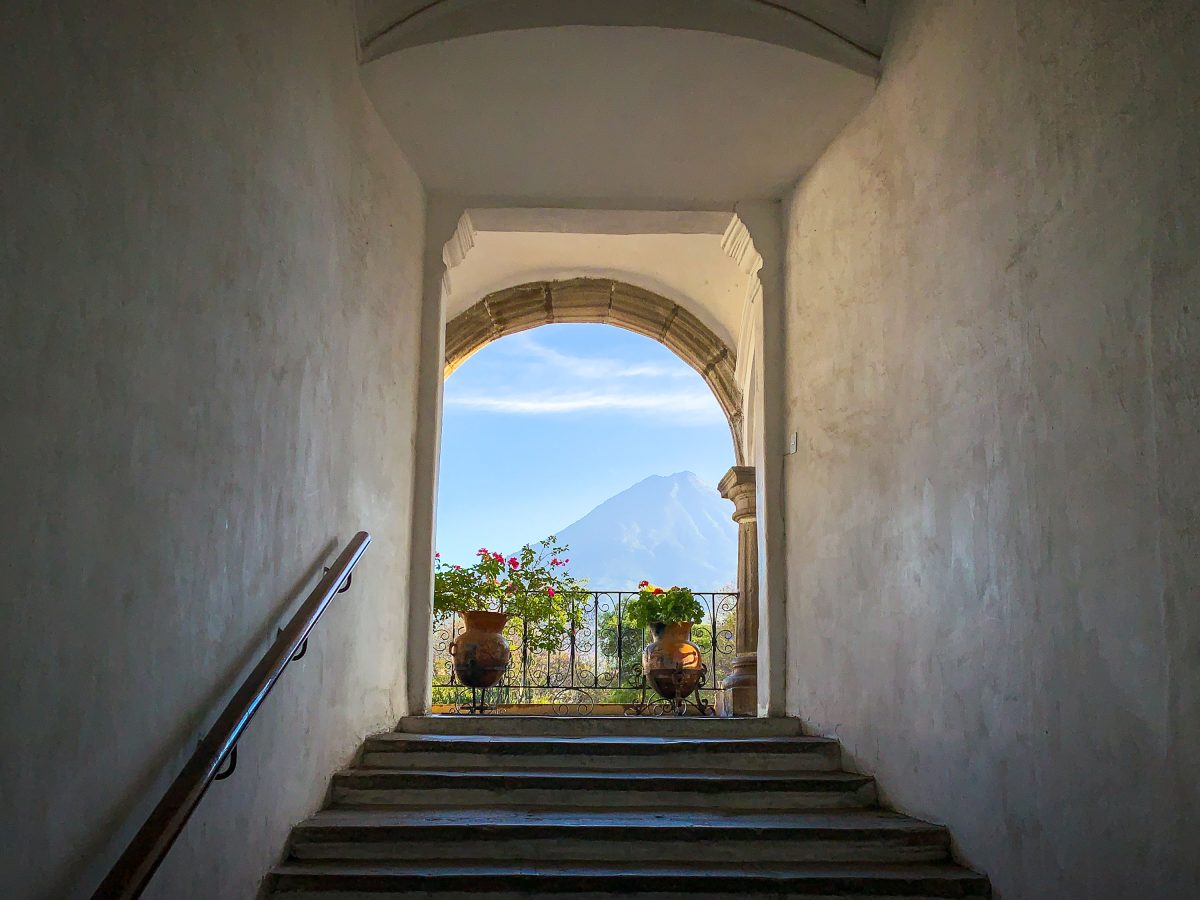
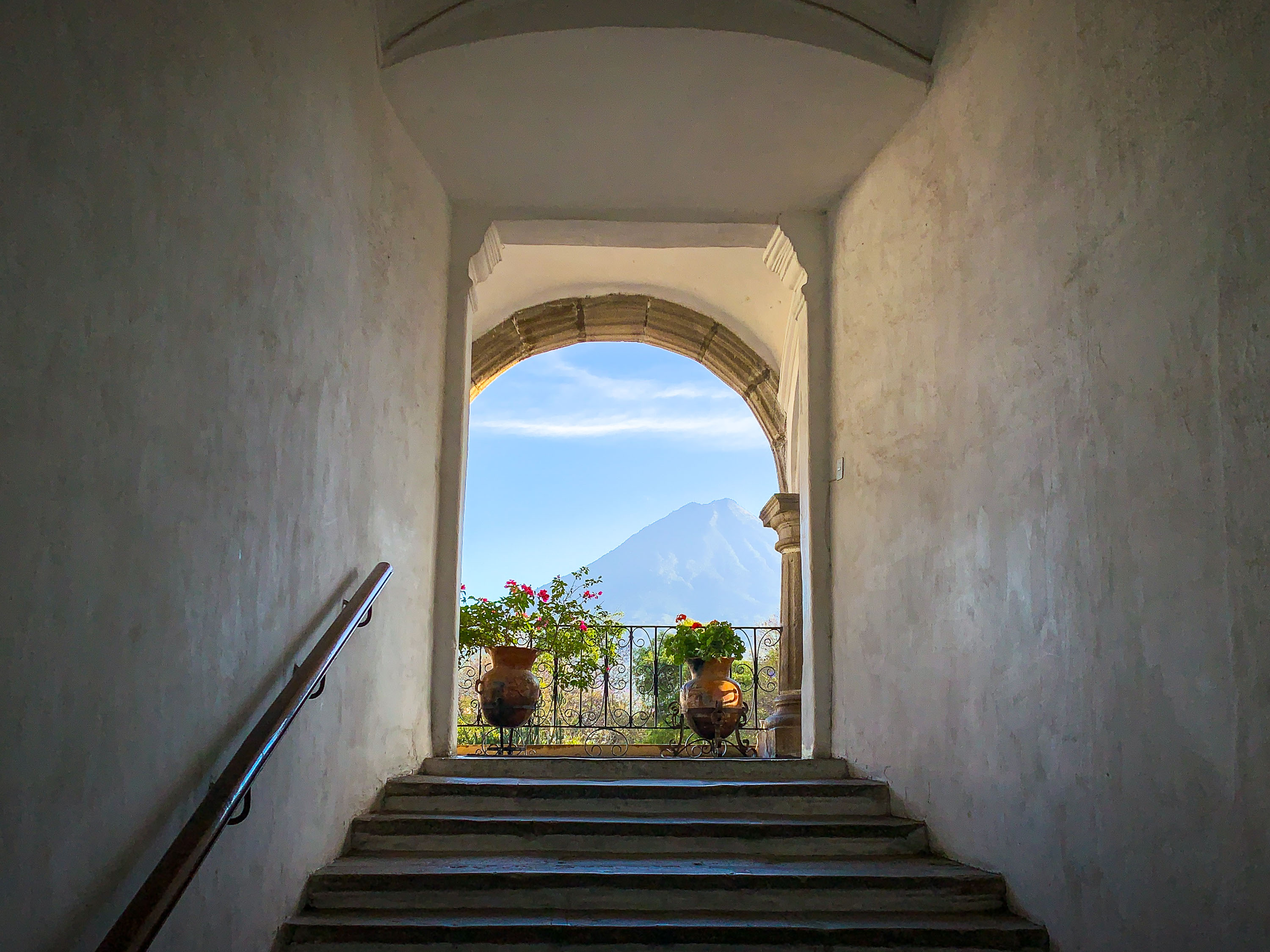
Stone archway framing a terrace with potted flowers overlooking a distant volcano.
Volcán de Agua rises just south of Antigua Guatemala, its symmetrical cone reaching 3,766 meters and anchoring the valley where Spanish colonists founded the city, then called Santiago de los Caballeros, in 1543. Builders often aligned doorways, courtyards, and stairways of the city's churches and residences toward the volcano's slope, a pattern still visible in surviving colonial structures. Earthquakes in 1717 and 1773 badly damaged much of Antigua's original architecture, prompting reconstruction that retained the thick plastered walls, arched openings, and stone stairways typical of 16th- and 17th-century Spanish colonial design. UNESCO named Antigua Guatemala a World Heritage Site in 1979, recognizing its preserved colonial street grid and Baroque-influenced buildings set against the volcanic landscape.
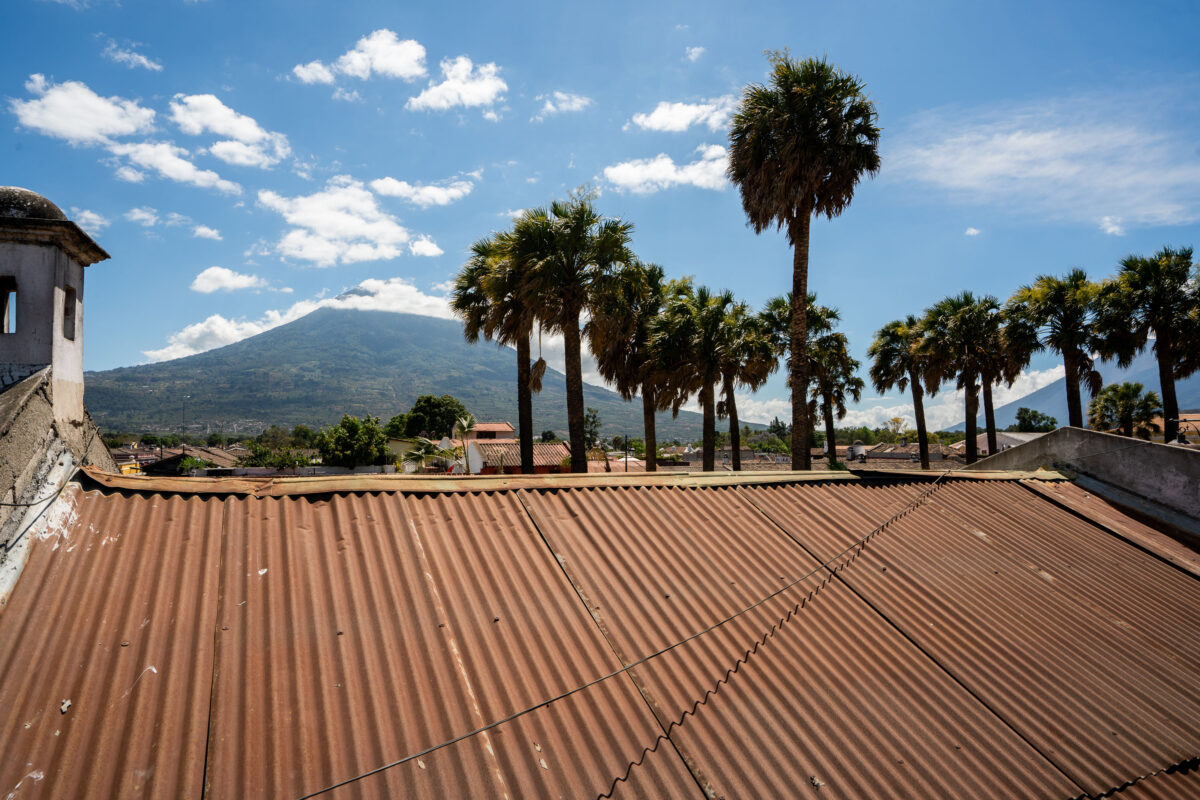
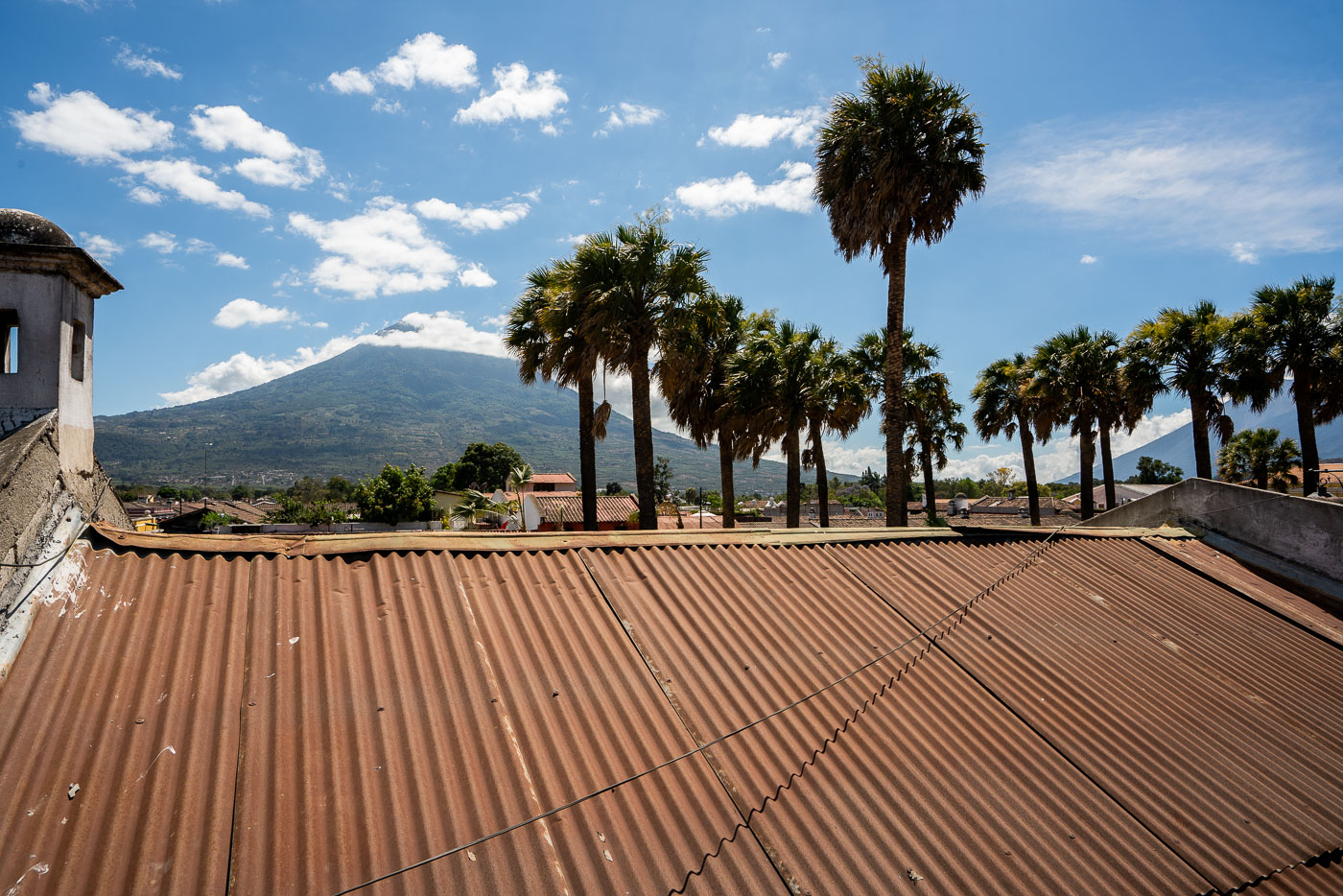
Agua Volcano over Antigua, Guatemala, with palm trees and rooftops.
Agua Volcano rises beyond Antigua, Guatemala, with rooftops and palm trees in the foreground. The stratovolcano is one of the landmarks that ring the former colonial capital.
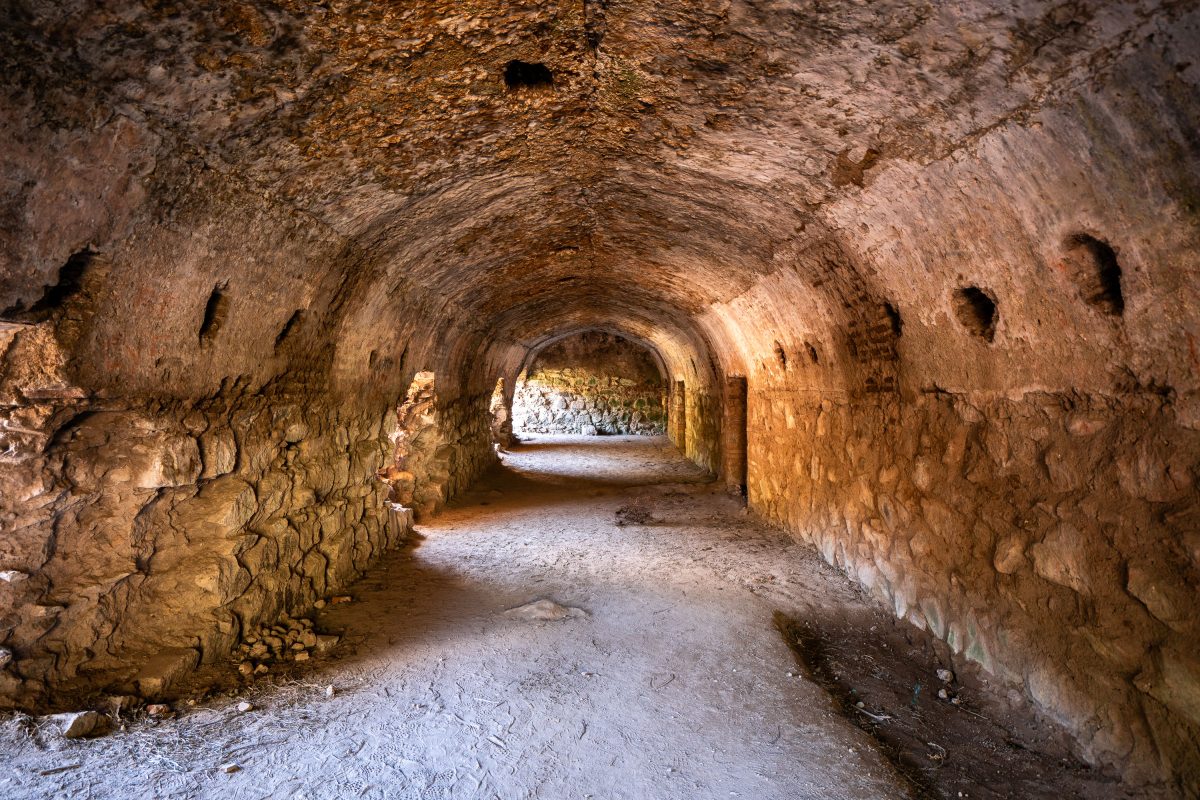
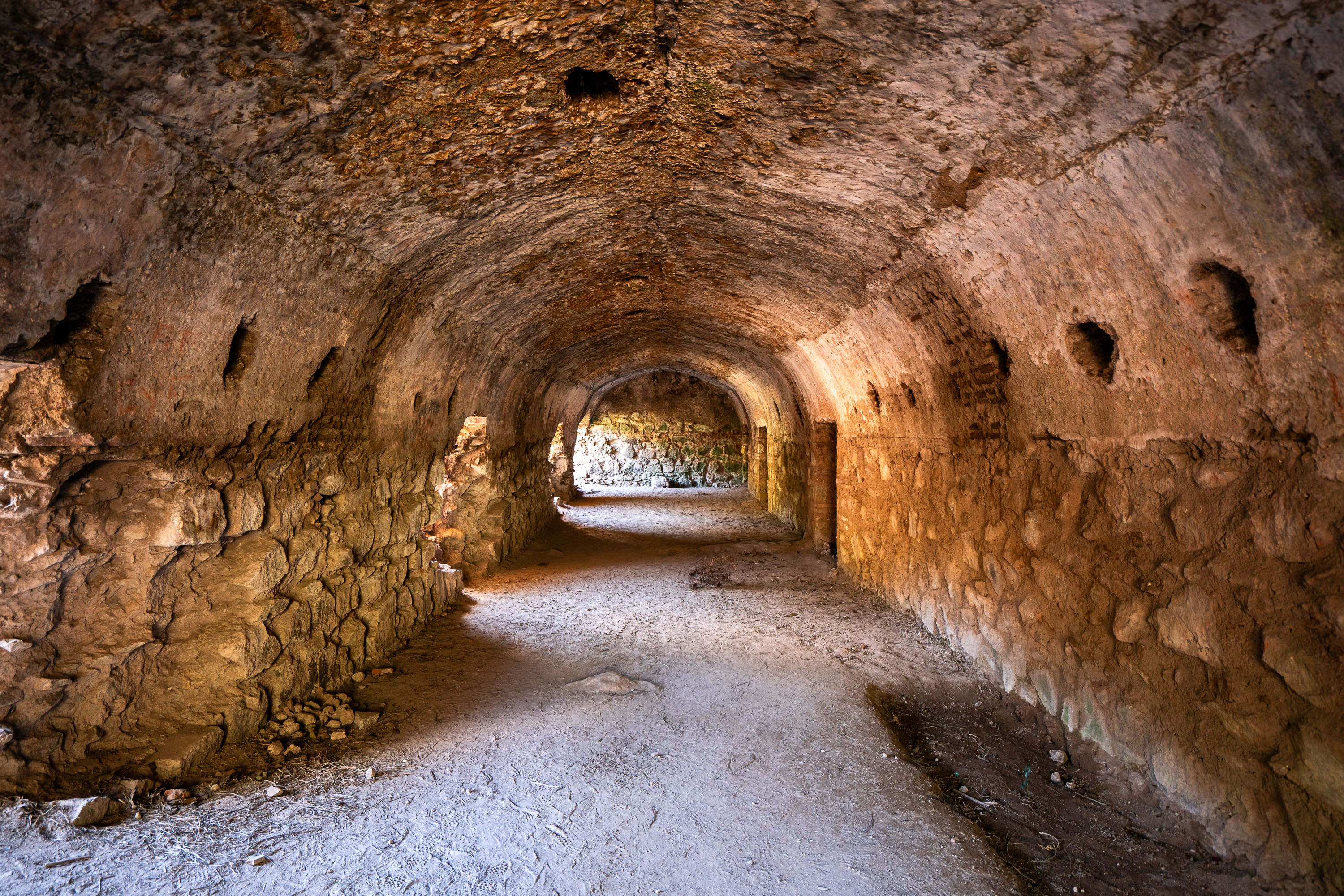
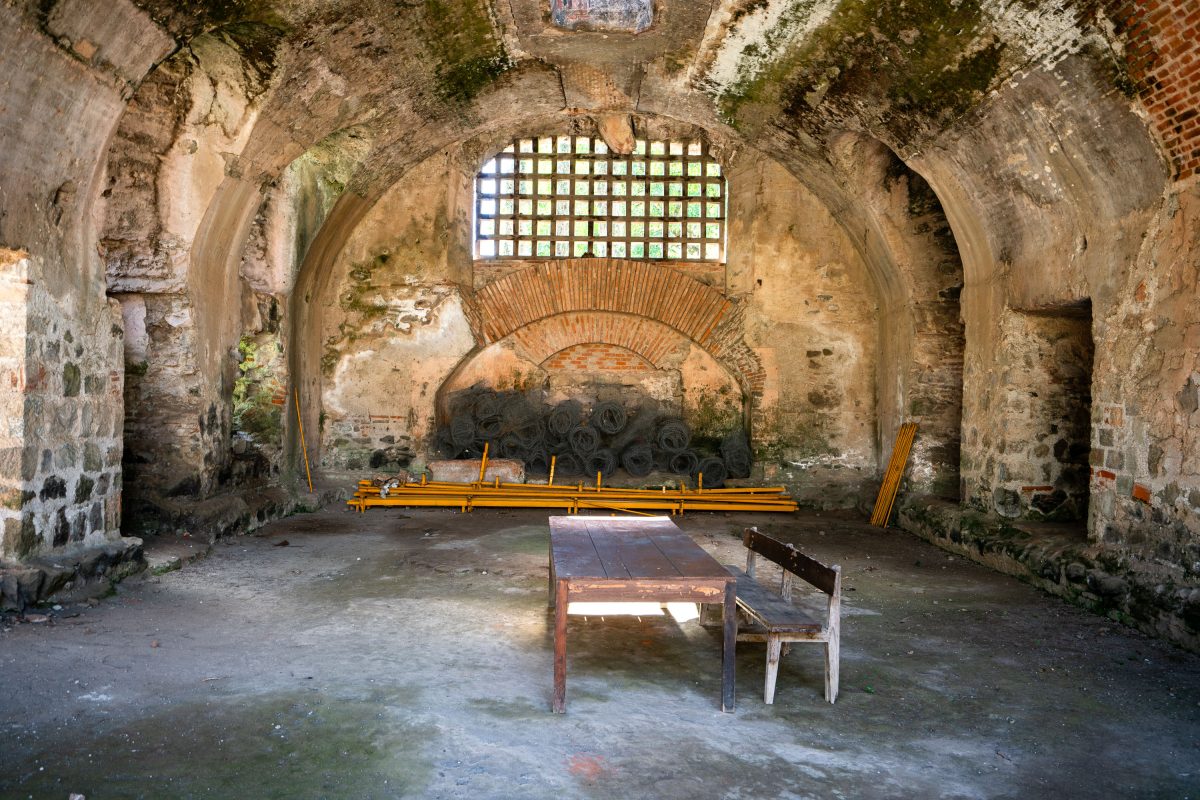
Barrel-vaulted stone tunnel with niches in the San Francisco Convent, Antigua Guatemala.
The San Francisco el Grande complex in Antigua Guatemala dates to 1579, when Franciscan friars established the church and convent on this site. Earthquakes in 1717, 1751, and 1773 repeatedly damaged the structure, and the 1773 Santa Marta earthquake left much of the convent in ruin, prompting the colonial capital's move to present-day Guatemala City. Hermano Pedro de Betancourt, canonized in 2002 as Guatemala's first saint, founded a hospital order here and is buried within the church that was later rebuilt beside the ruins. The vaulted stone corridors and roofless chambers that survive are what remain of the original convent's service passages and storage rooms, left largely as the earthquakes and subsequent decades left them.
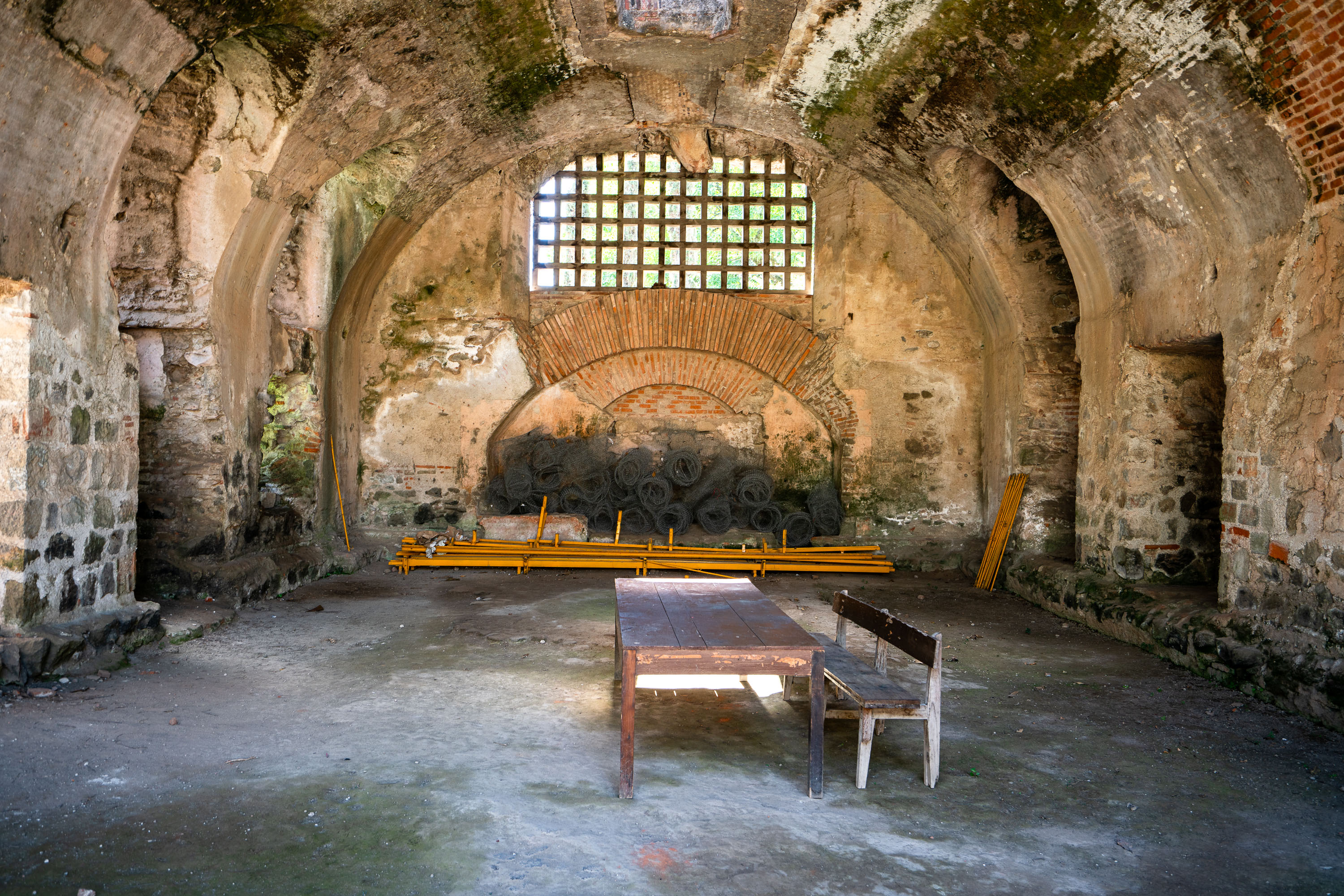
Deteriorated stone archway interior of Iglesia de San Francisco in Antigua, Guatemala, with wooden furniture and industrial
San Francisco el Grande, founded by Franciscan friars in the 16th century, once ranked among the largest religious complexes in colonial Antigua Guatemala. Earthquakes repeatedly damaged the convent, including the devastating 1773 Santa Marta quake that left much of the city, and this complex, in ruins. The vaulted stone-and-brick chambers that survive were part of the friars' living and working quarters, built with thick masonry arches designed to bear the weight of the upper floors. Restoration efforts over the past century have stabilized sections of the convent while leaving much of its original fabric exposed. The adjoining church, rebuilt after the quake, still holds the tomb of Hermano Pedro de San José Betancur, a Franciscan lay brother canonized in 2002 and revered as Guatemala's first saint.

Built in Minneapolis

Minneapolis Photographer

Browse by location, move through long-running series, or start with recent work.