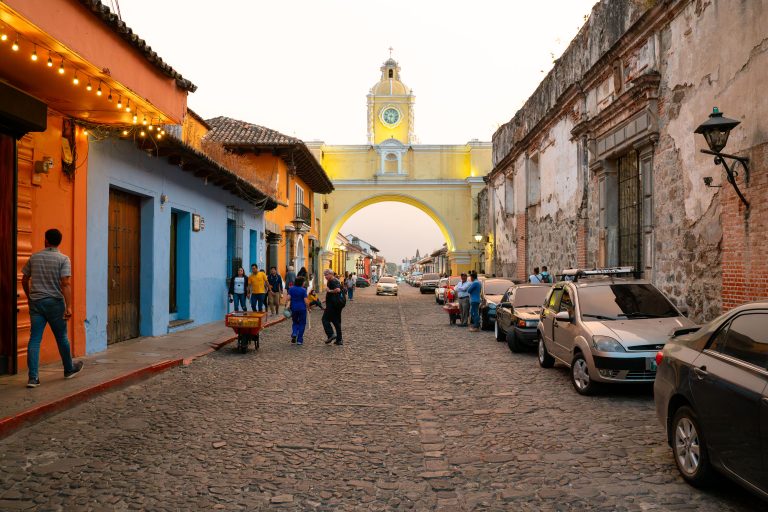
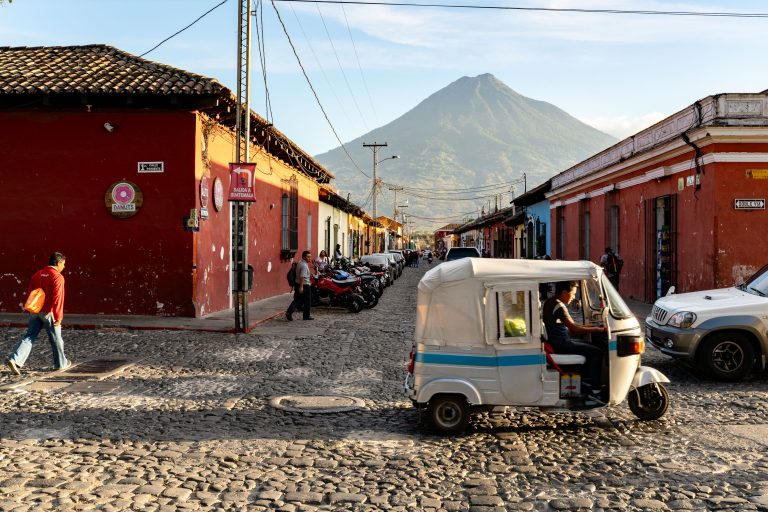
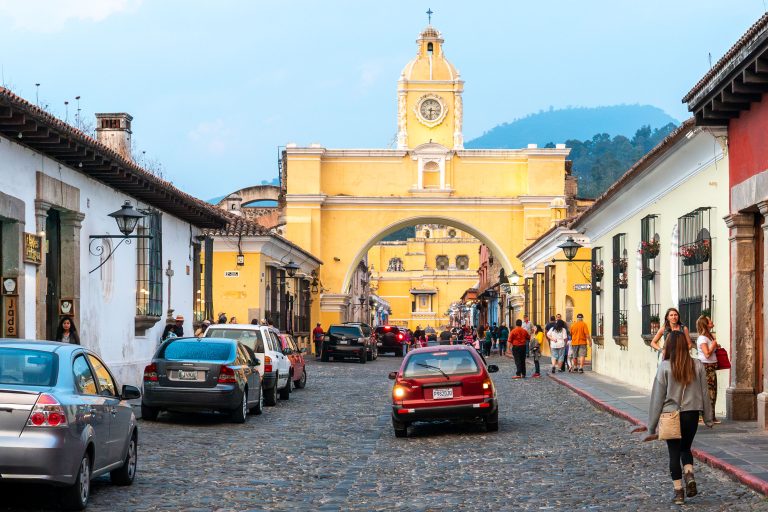
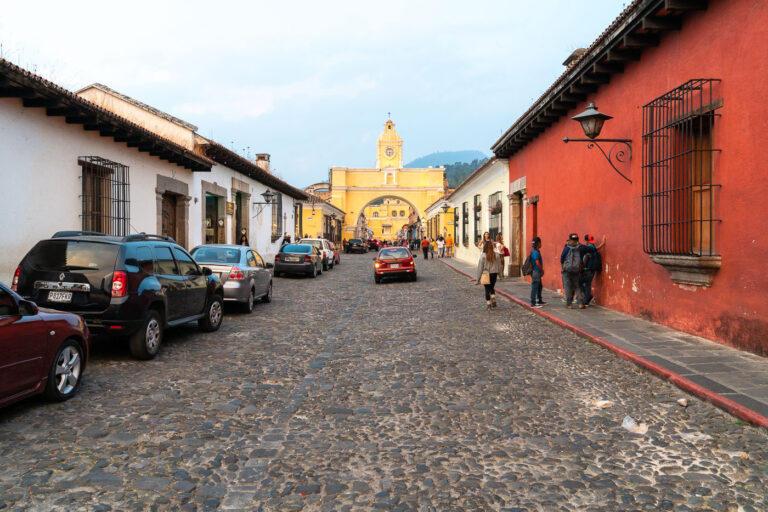
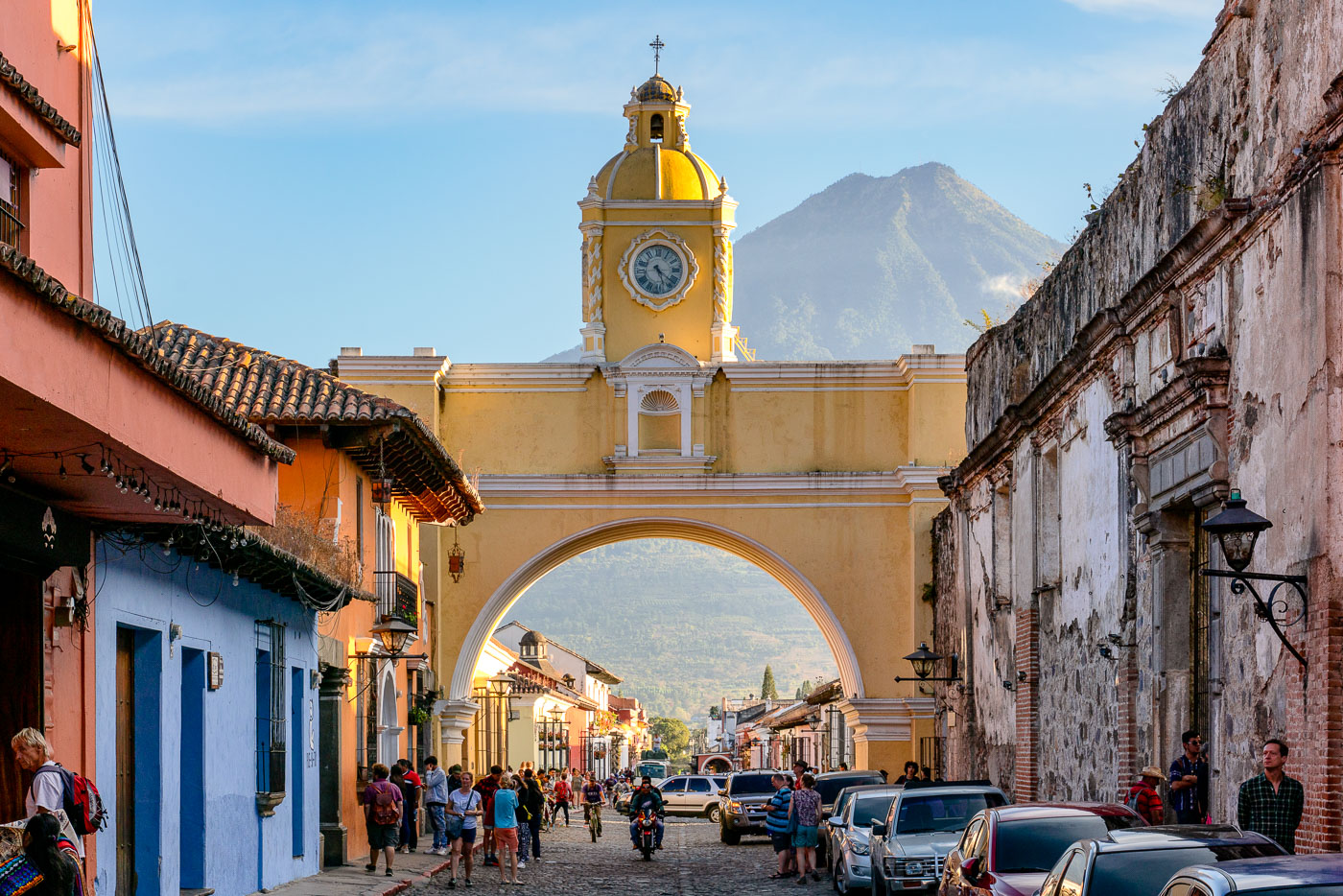
Santa Catalina Arch and Volcán de Agua, Antigua Guatemala
Taken
Taken
Santa Catalina Arch spans 5a Avenida Norte in Antigua Guatemala, one of the city's most recognized colonial structures. It was built in 1694 to let cloistered nuns of the Santa Catalina convent cross the street to an adjoining school without being seen in public, as their order's rules forbade. The convent itself was founded in 1609 and largely destroyed by the 1773 earthquake that led Spanish authorities to relocate the colonial capital to present-day Guatemala City. The arch's clock tower was added in the 19th century, after the city had already been abandoned as the seat of government. Volcán de Agua, a roughly 3,760-meter stratovolcano, rises directly south of the city and is visible through the arch on clear days.
Taken
More from
Antigua
 Twilight Falls Over a Cobblestone Street in Antigua Guatemala
Antigua Guatemala served as the capital of the Kingdom of Guatemala from 1543 until a series of earthquakes forced the…
 Cobblestone Street Toward Hotel Posada El Refugio, Antigua Guatemala
Hotel Posada El Refugio sits along a cobblestone street in Antigua Guatemala's historic center, a district designated a UNESCO World…
 5a Avenida Norte Leading to Santa Catalina Arch, Antigua
Santa Catalina Arch spans 5a Avenida Norte in Antigua Guatemala, built around 1690 as a covered passage for the Convento…
 Ash Plume Rises from Volcán de Fuego at Dusk
Volcán de Fuego rises about 3,763 meters near Antigua, Guatemala, and ranks among the most active volcanoes in Central America.…
 Arcaded Street Near Antigua Guatemala's Central Park at Dusk
Antigua Guatemala's colonial street grid, laid out in the 1540s, still runs on the original cobblestones of the Spanish colonial…
 Colonial Street Glow at Dusk in Antigua Guatemala
Antigua Guatemala's streets follow the grid laid out by Spanish colonial planners after the city became the capital of the…