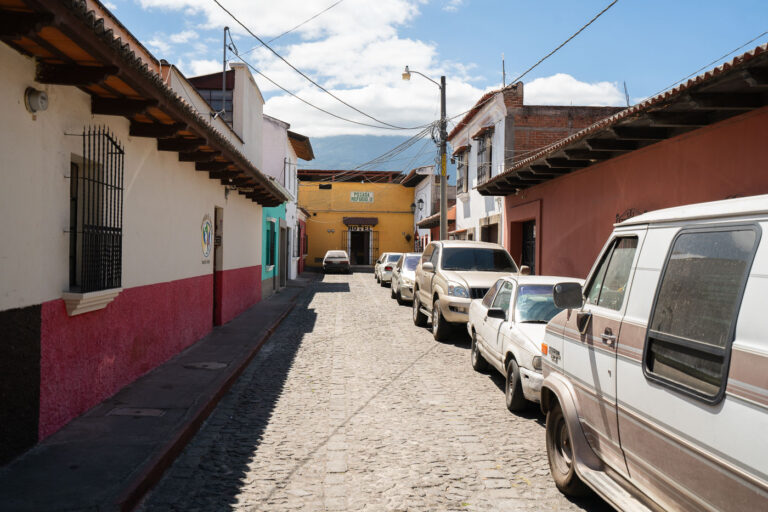
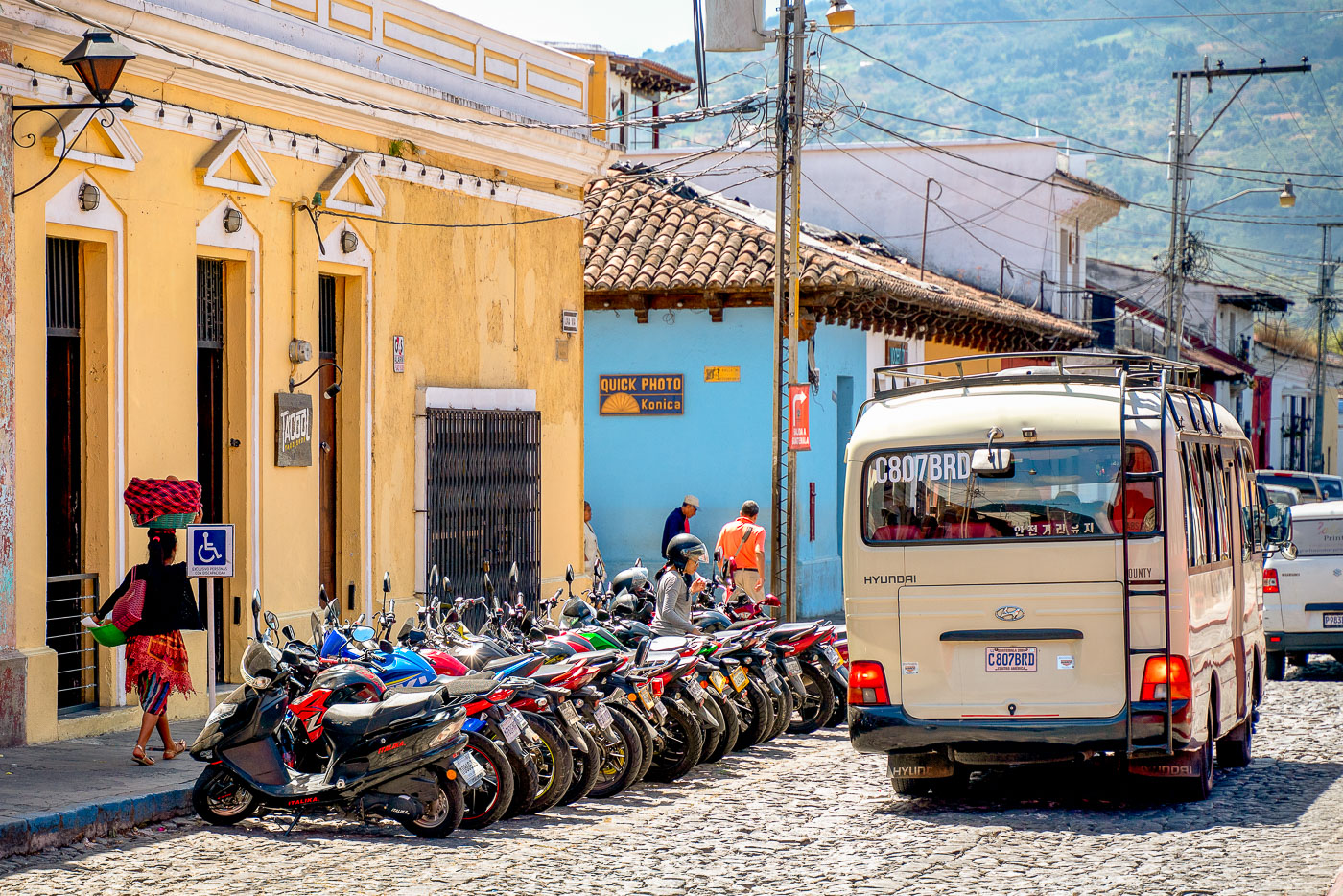
Motorcycles Lined Up Along a Cobblestone Street in Antigua Guatemala
Taken
Taken
Antigua Guatemala served as the capital of the Kingdom of Guatemala from 1543 until a series of earthquakes forced its abandonment in 1773. The city's grid of cobblestone streets and low colonial buildings has been preserved largely intact, earning it UNESCO World Heritage status in 1979. Many of these narrow streets, originally laid out for foot and cart traffic, now function as informal parking for the motorcycles and minibuses that serve the modern town. Guatemala's "chicken buses" and smaller passenger vans, often repurposed from imported Korean and Japanese models, remain a primary mode of transport between Antigua and surrounding villages.
Taken
More from
Antigua
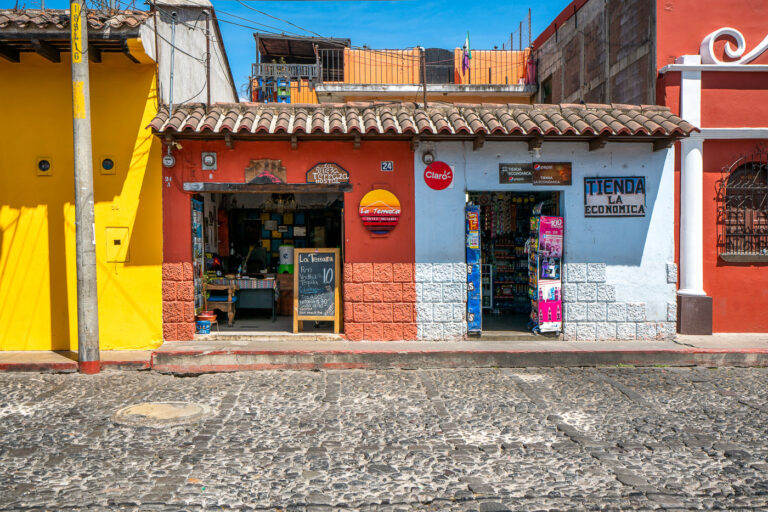
 Tienda La Economica and La Terraza Hostel, Antigua Guatemala
Tienda La Economica and La Terraza sit side by side on a cobblestone street in Antigua Guatemala, a UNESCO World…
 5a Avenida Norte Leading to Santa Catalina Arch, Antigua
Santa Catalina Arch spans 5a Avenida Norte in Antigua Guatemala, built around 1690 as a covered passage for the Convento…
 Crumbling Bell Tower of San Francisco el Grande, Antigua
San Francisco el Grande's bell tower and adjoining walls still bear the damage from the 1773 Santa Marta earthquake, the…
 Vendor Stalls at Antigua's Central Market
Antigua's Mercado Central sits just northwest of Parque Central, a short walk from Calle del Arco. The market was rebuilt…
 Row of Storefronts on 1a Calle Poniente, Antigua
Antigua Guatemala's historic core, laid out by Spanish colonial planners after the 1773 earthquakes destroyed the former capital at Ciudad…
 Arcaded Street Near Antigua Guatemala's Central Park at Dusk
Antigua Guatemala's colonial street grid, laid out in the 1540s, still runs on the original cobblestones of the Spanish colonial…