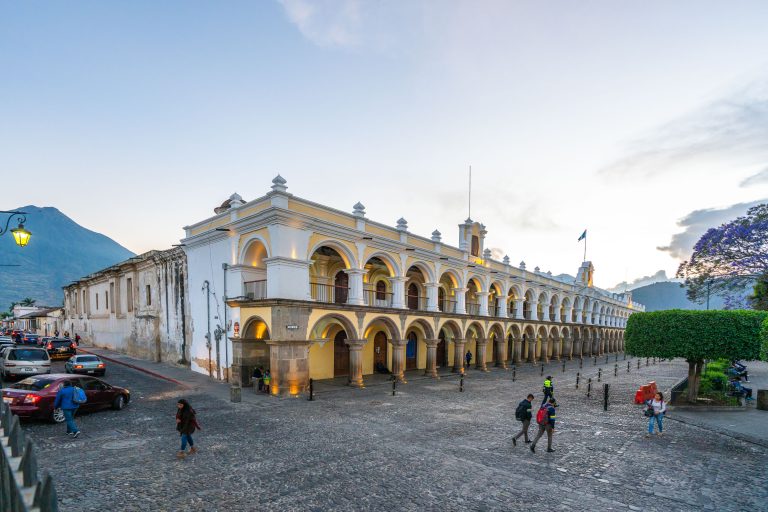
Arcaded Street Near Antigua Guatemala’s Central Park at Dusk
Taken February 2020
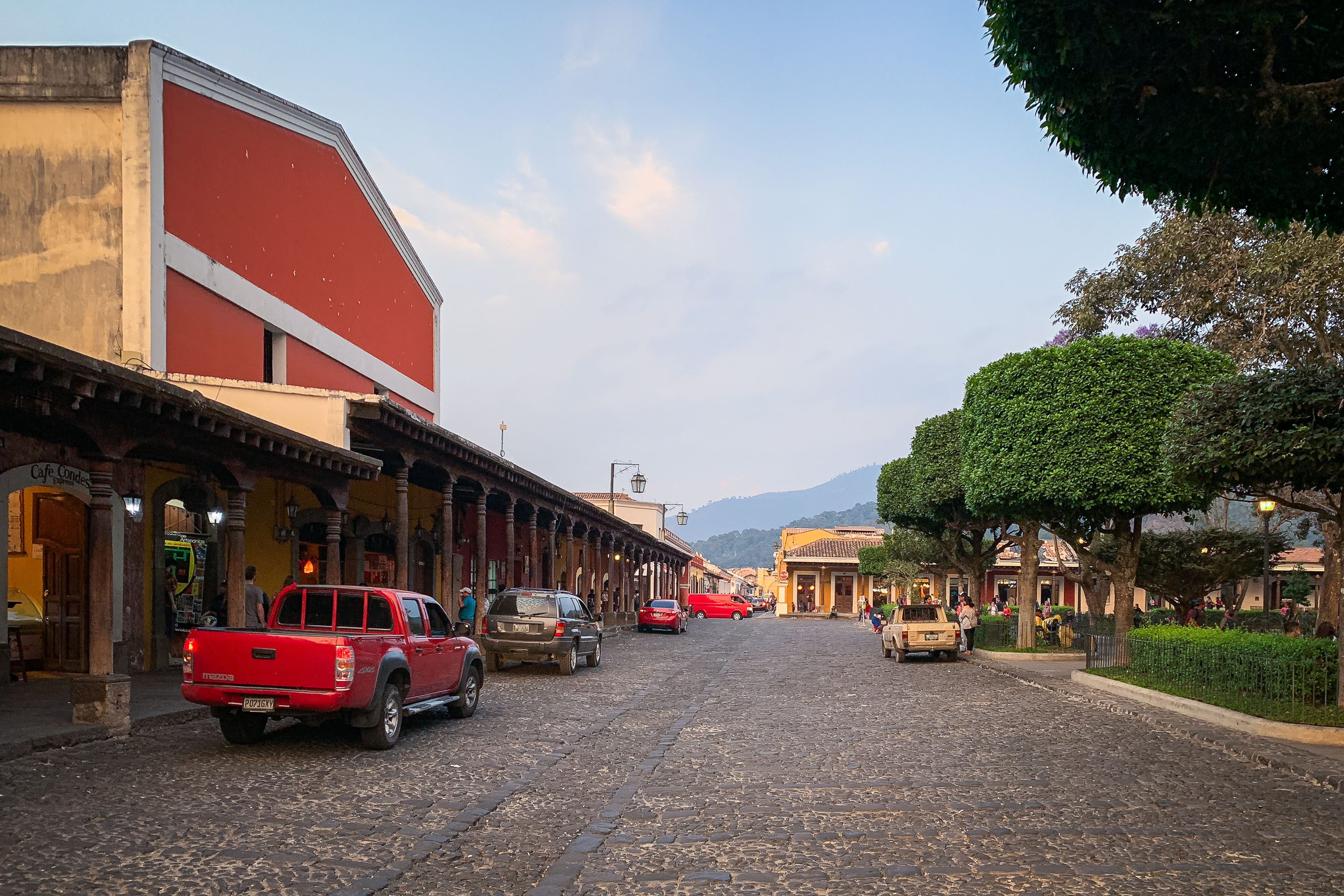
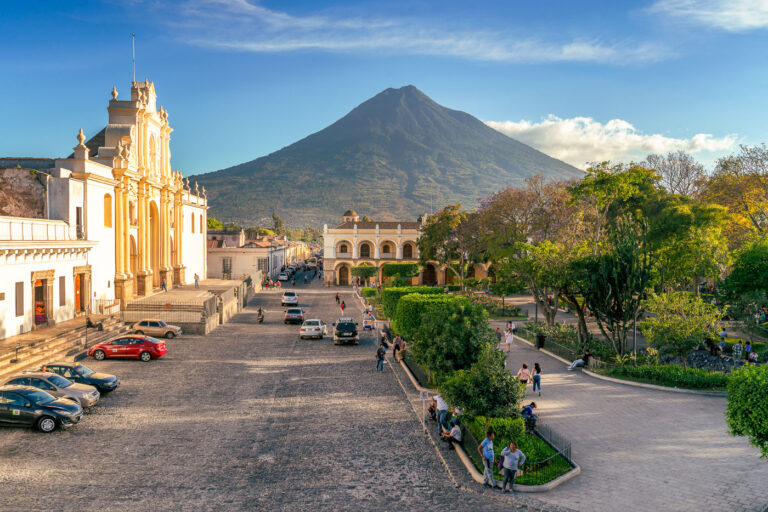
Antigua Guatemala's colonial street grid, laid out in the 1540s, still runs on the original cobblestones of the Spanish colonial capital. The city served as the seat of Spanish colonial government in Central America until a 1773 earthquake prompted authorities to relocate the capital to present-day Guatemala City. Antigua's historic center was named a UNESCO World Heritage Site in 1979, prized for its dense collection of colonial-era buildings and grid plan based on Renaissance urban design. Arcaded buildings like the one along this street date to the era when covered walkways sheltered market stalls and shops from sun and rain.
Taken February 2020
More from
Antigua
 Palacio de los Capitanes Generales at Dusk in Antigua Guatemala
The Palacio de los Capitanes Generales anchors the south side of Antigua Guatemala's Parque Central. Built after the 1717 earthquake…
 Ash Eruption at Volcán de Fuego, Guatemala
Volcán de Fuego rises 3,763 meters near Antigua, Guatemala, and ranks among the most active volcanoes in Central America. It…
 Lava Spatters From Volcán de Fuego's Summit Crater
Volcán de Fuego rises 3,763 meters near Antigua Guatemala, among the most consistently active volcanoes in Central America. It shares…
 Traffic Beneath Santa Catalina Arch in Antigua Guatemala
Santa Catalina Arch crosses 5a Avenida Norte in Antigua, Guatemala. Nuns from the adjoining Santa Catalina convent had the arch…
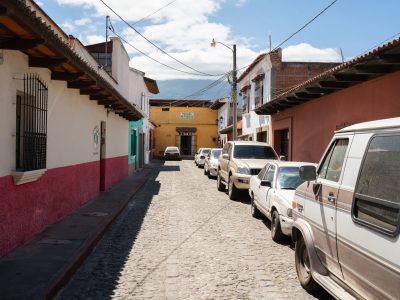 Cobblestone Street Toward Hotel Posada El Refugio, Antigua Guatemala
Hotel Posada El Refugio sits along a cobblestone street in Antigua Guatemala's historic center, a district designated a UNESCO World…
 Market Street Below Volcán de Agua in Antigua
Volcán de Agua rises just south of Antigua Guatemala, a dormant stratovolcano reaching about 3,760 meters above sea level. A…