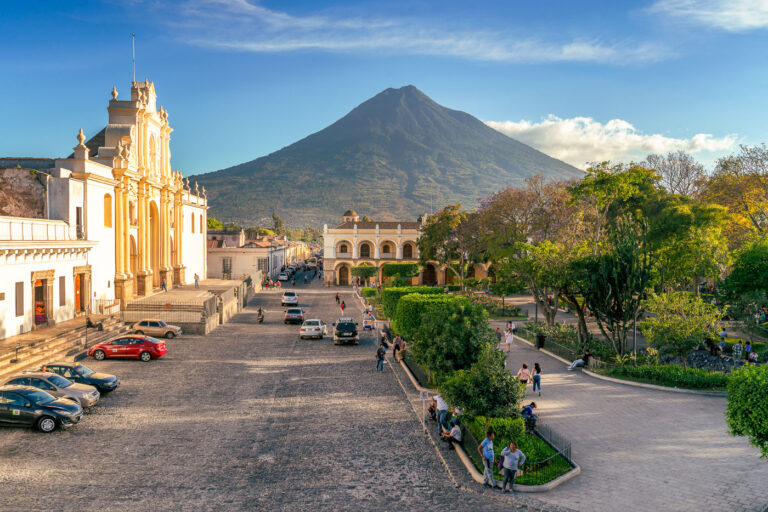
Stairway Framing Volcán de Agua in Antigua Guatemala
Taken February 2020
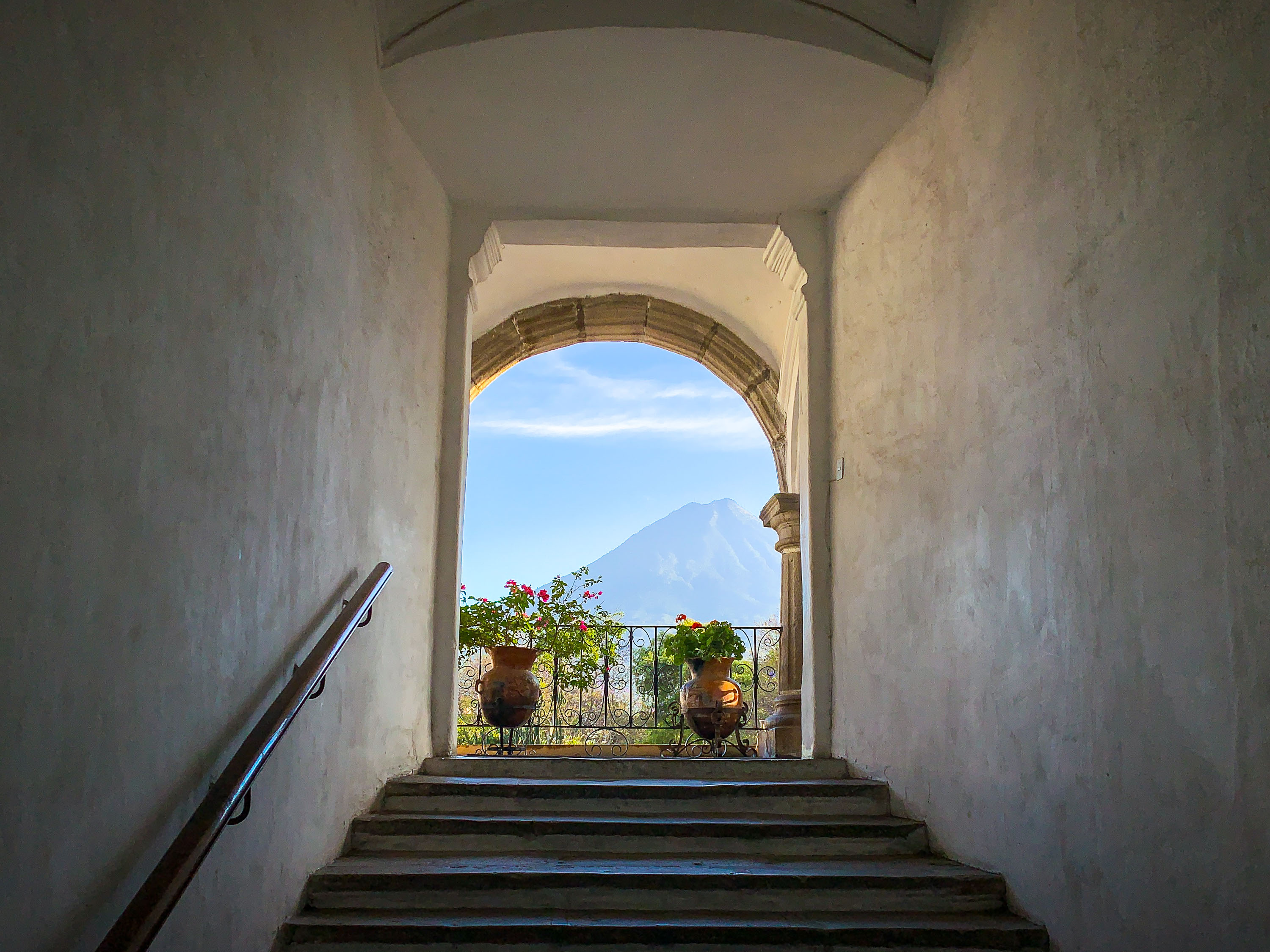
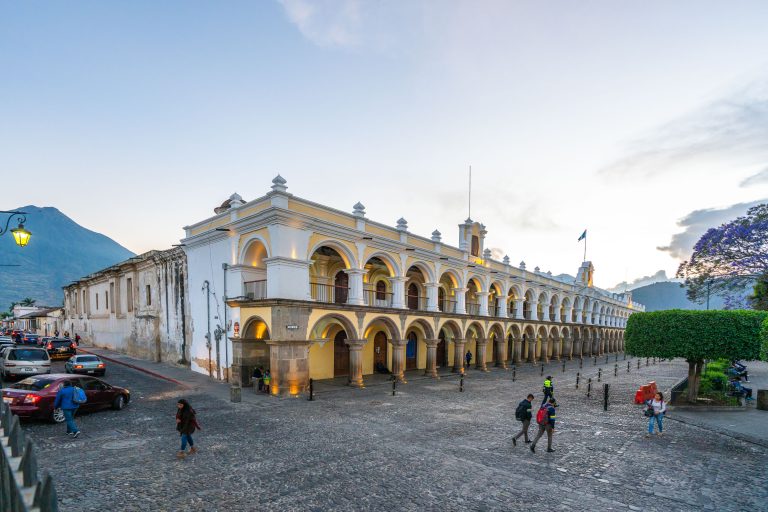
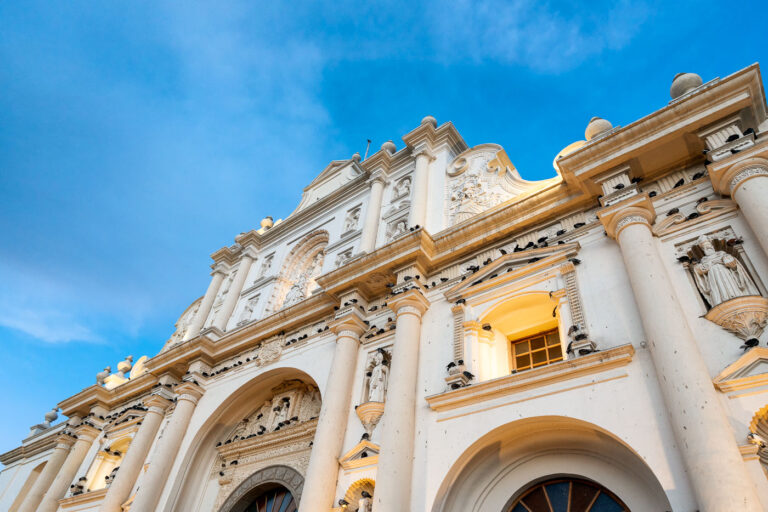
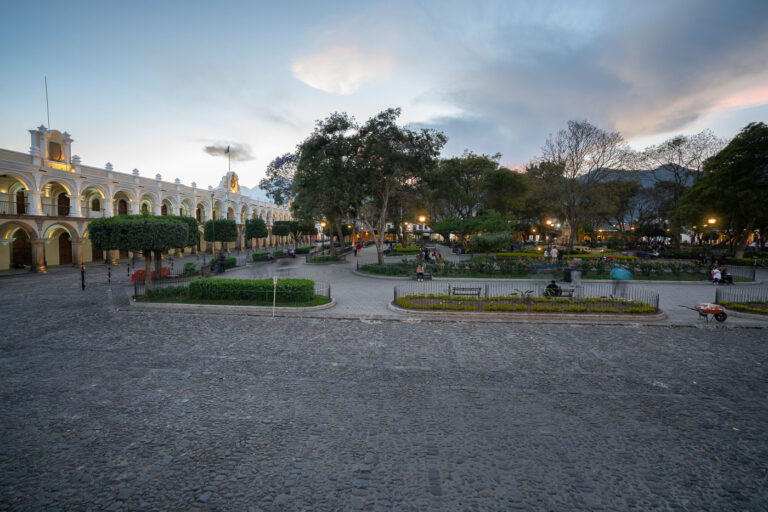
Volcán de Agua stands just south of Antigua Guatemala, its symmetrical cone rising to 3,766 meters above the valley where Spanish colonists founded the city in 1543 under the name Santiago de los Caballeros. Colonial builders frequently oriented stairways, courtyards, and doorways toward the volcano, a design habit still evident in surviving structures throughout the city. Earthquakes in 1717 and 1773 destroyed much of the original architecture, and the rebuilding that followed preserved the thick plastered walls and arched openings characteristic of 16th- and 17th-century Spanish colonial style. UNESCO designated Antigua Guatemala a World Heritage Site in 1979, citing its intact colonial layout set against the surrounding volcanic landscape.
Taken February 2020
More from
Antigua
 Twilight Falls Over a Cobblestone Street in Antigua Guatemala
Antigua Guatemala served as the capital of the Kingdom of Guatemala from 1543 until a series of earthquakes forced the…
 Volcán de Agua at Sunset from the Acatenango Highlands
Volcán de Agua rises to 3,766 meters south of Antigua Guatemala, its symmetrical cone a familiar sight across the Panchoy…
 5a Avenida Norte Leading to Santa Catalina Arch, Antigua
Santa Catalina Arch spans 5a Avenida Norte in Antigua Guatemala, built around 1690 as a covered passage for the Convento…
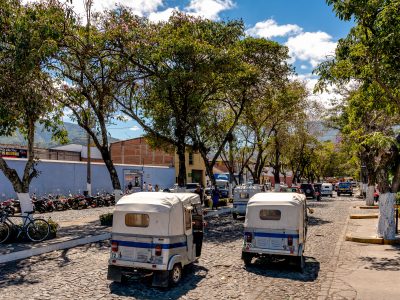 Tuk-Tuks Parked on a Tree-Lined Street in Antigua, Guatemala
Antigua Guatemala's cobblestone streets date to the Spanish colonial grid laid out in the 16th century, after the city was…
 Traffic Beneath Santa Catalina Arch in Antigua Guatemala
Santa Catalina Arch crosses 5a Avenida Norte in Antigua, Guatemala. Nuns from the adjoining Santa Catalina convent had the arch…
 Parked Cars Along a Cobblestone Lane Near Volcán de Agua, Antigua
Volcán de Agua rises about 3,760 meters above sea level just south of Antigua Guatemala, and its symmetrical cone is…