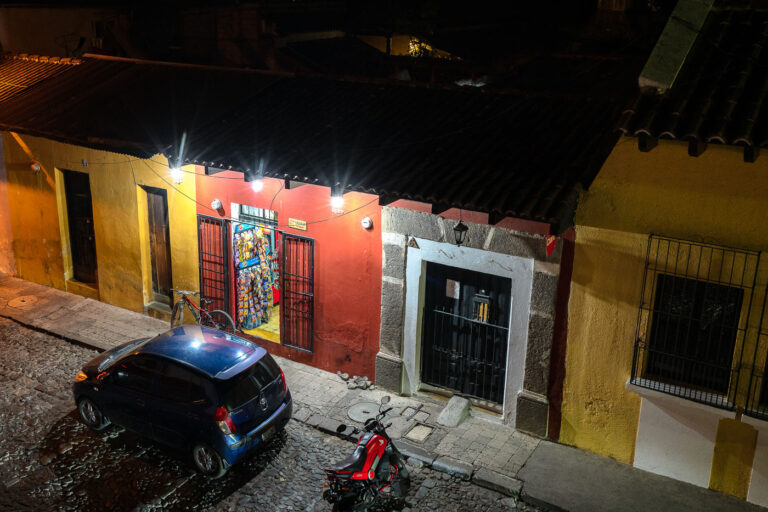
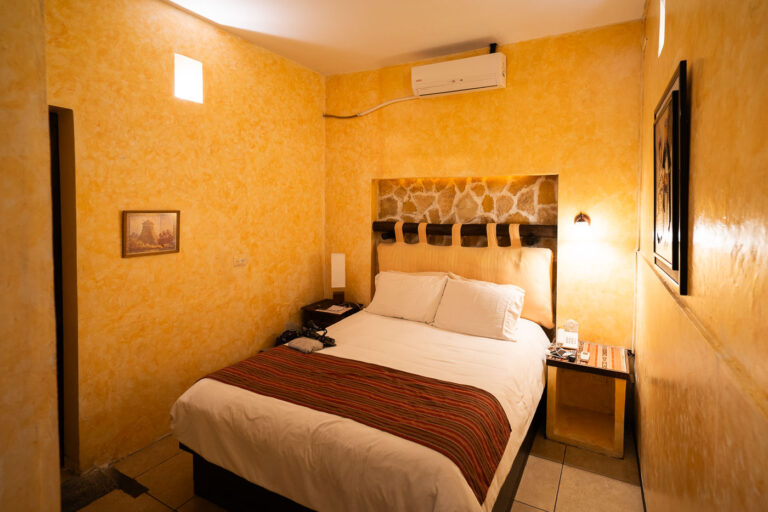
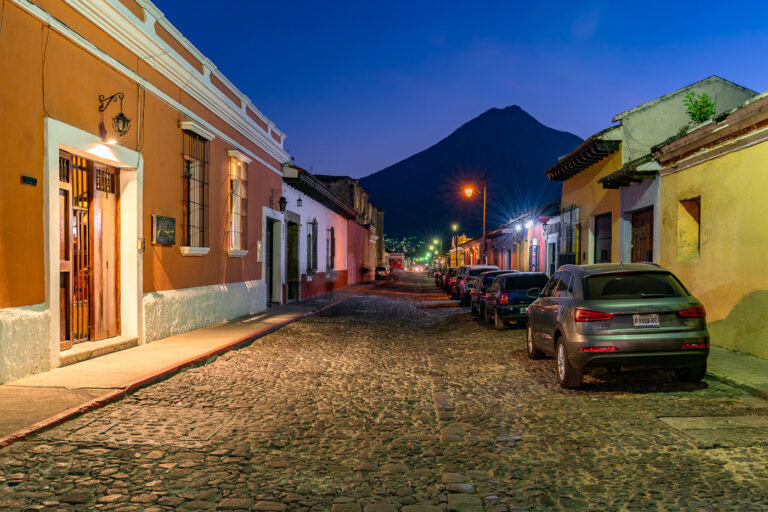
Rooftop View of Volcán de Agua, Antigua Guatemala
Taken February 2020
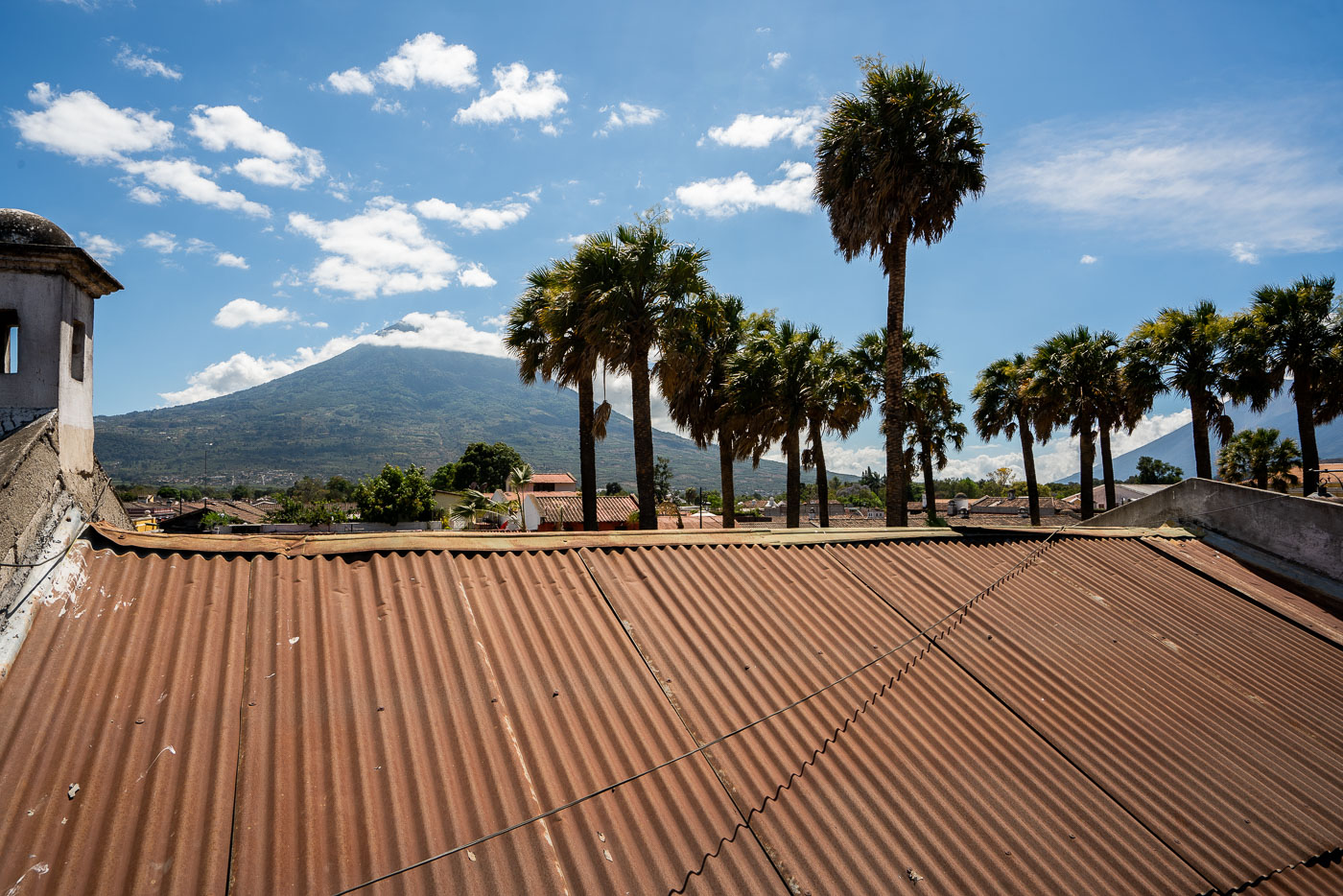
Volcán de Agua rises to 3,760 meters south of Antigua Guatemala, its symmetrical cone a defining landmark of the Panchoy Valley. The volcano takes its name — "water" — from a 1541 mudslide and flood that destroyed the early Spanish capital of Ciudad Vieja, prompting colonial authorities to relocate the capital to the site of present-day Antigua. It last erupted in 1543 and is now dormant, in contrast to the active Fuego volcano nearby. Corrugated metal roofing, common throughout Antigua's historic district, covers many of the colonial-era buildings within the city's UNESCO World Heritage site, designated in 1979.
Taken February 2020
More from
Antigua
 Jacuzzi Suite at Casa Bella Boutique Hotel, Antigua
Casa Bella Boutique Hotel sits within Antigua Guatemala's historic center, a UNESCO World Heritage site recognized for its preserved Spanish…
 Ash Plume Rises from Volcán de Fuego at Dusk
Volcán de Fuego rises about 3,763 meters near Antigua, Guatemala, and ranks among the most active volcanoes in Central America.…
 Facade of Iglesia y Convento de la Compañía de Jesús, Antigua
The Compañía de Jesús complex in Antigua Guatemala was built by the Jesuit order, with construction on this church completed…
 Fisherman on Lake Atitlán Near Volcán San Pedro
Volcán San Pedro rises 3,020 meters above Lake Atitlán on the lake's southwestern shore, near the town of San Pedro…
 Palacio de los Capitanes Generales at Dusk in Antigua Guatemala
The Palacio de los Capitanes Generales anchors the south side of Antigua Guatemala's Parque Central. Built after the 1717 earthquake…
 A Stone Cross Among the Ruins of San Francisco el Grande
San Francisco el Grande began as a Franciscan church and convent built in Antigua in 1579. Earthquakes, most severely the…