Storm clouds and Loring Pond

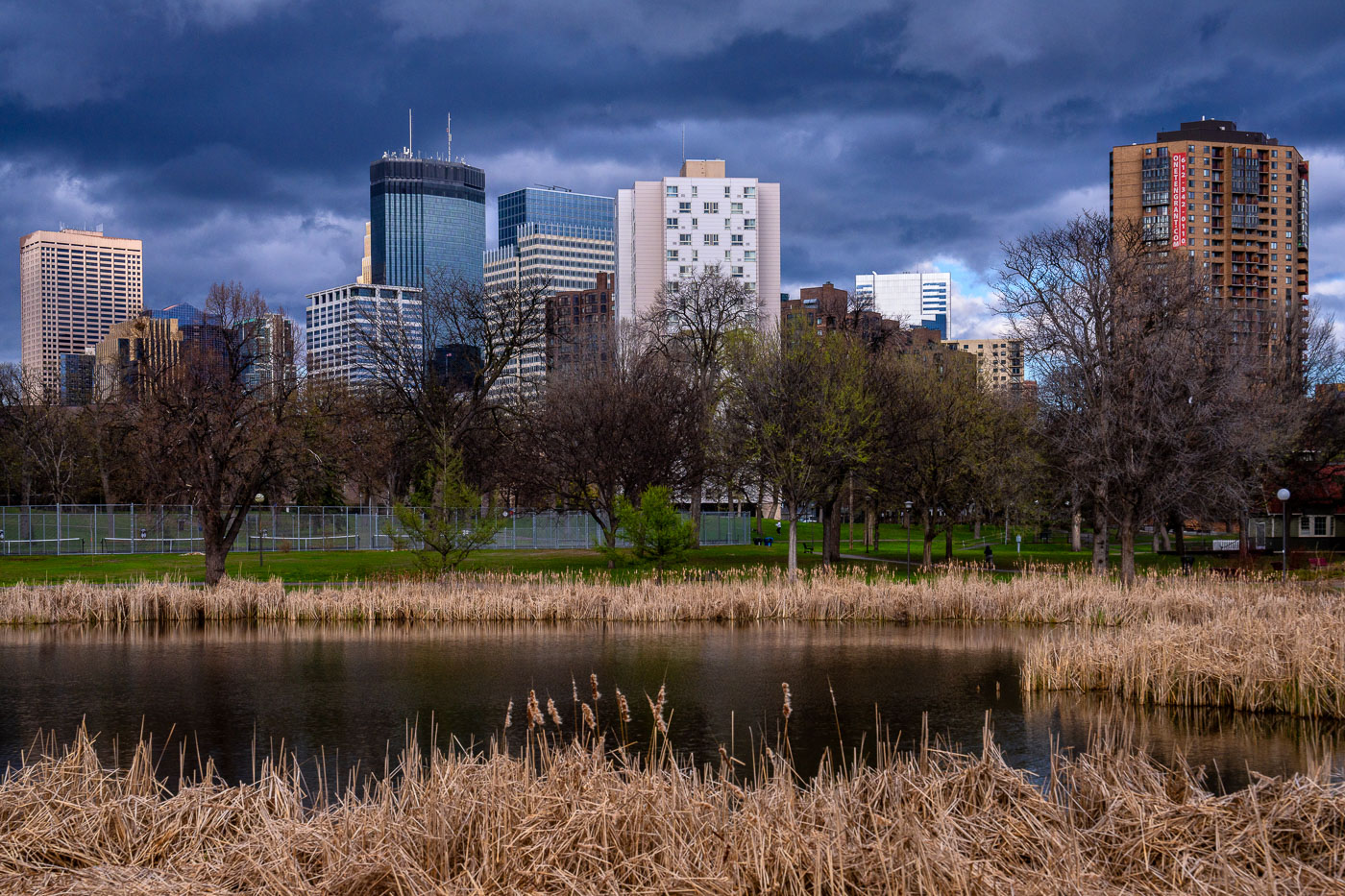
Minneapolis Skyline from Loring Park, Early Spring Storm Clouds

Dark storm clouds roll over downtown Minneapolis in this view from Loring Park, where the skyline’s mix of glass towers and historic brick buildings rises beyond the park’s quiet pond and reeds. The IDS Center, Capella Tower, and other high-rises dominate the horizon, their reflections muted in the pre-storm light. Taken during early spring, the trees remain bare while the surrounding grass begins to green, creating a striking contrast between nature’s seasonal transition and the geometric permanence of the city skyline.

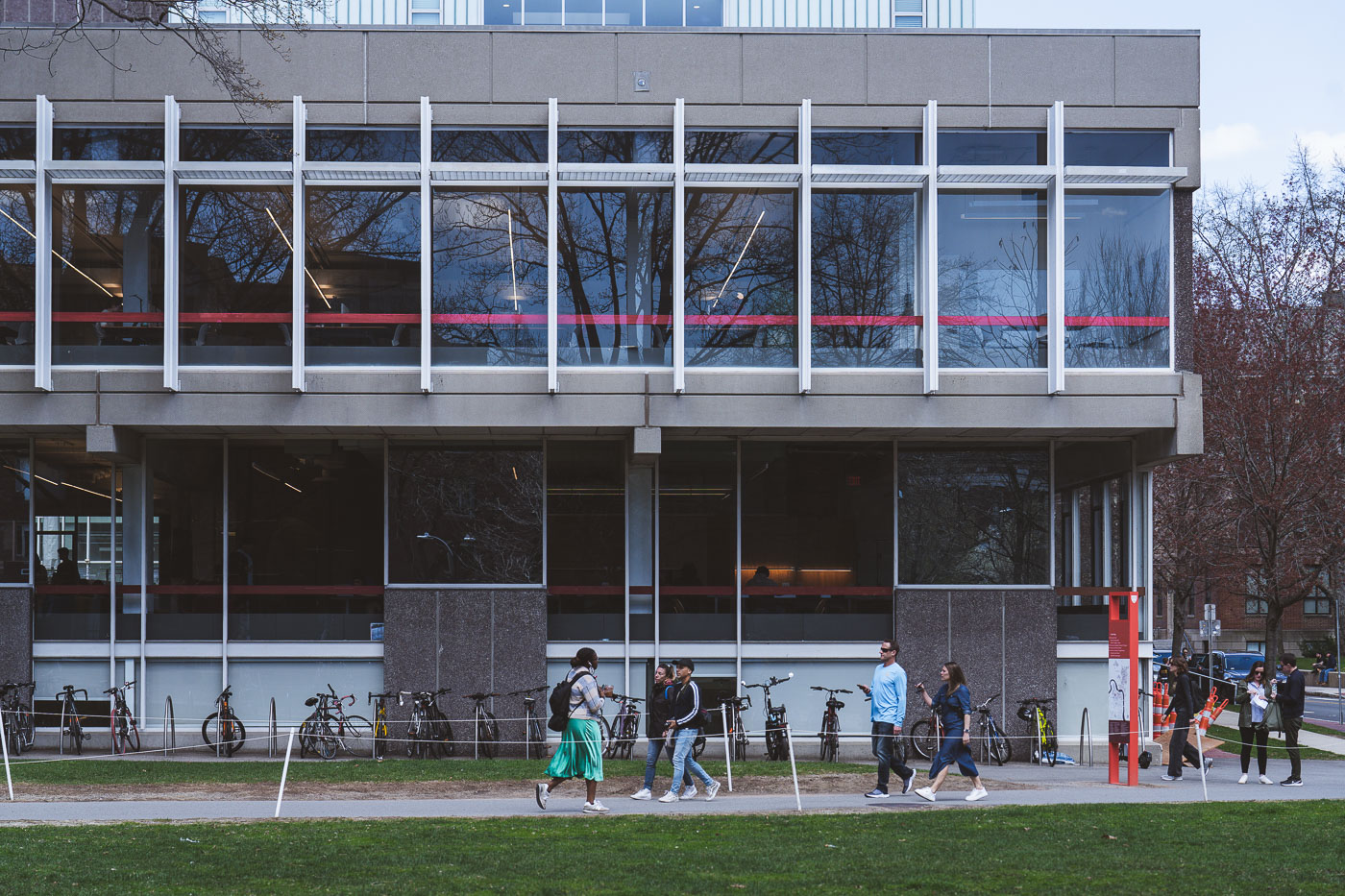
Cabot Science Library Harvard University

Harvard Science Center, Cambridge, Massachusetts

The Harvard Science Center, completed in 1972 and designed by Josep Lluís Sert, exemplifies mid-century modernist architecture within Harvard’s historic campus. Its concrete frame and ribbon-window façade reflect Sert’s functionalist style, emphasizing natural light and open interior spaces for teaching and research. Situated near Harvard Yard, the building houses classrooms, laboratories, and lecture halls serving the university’s science departments. In the photo, students and visitors walk along the adjacent green, with rows of bicycles lined beneath the structure—an everyday scene that captures the energy and rhythm of life in Cambridge’s academic core.

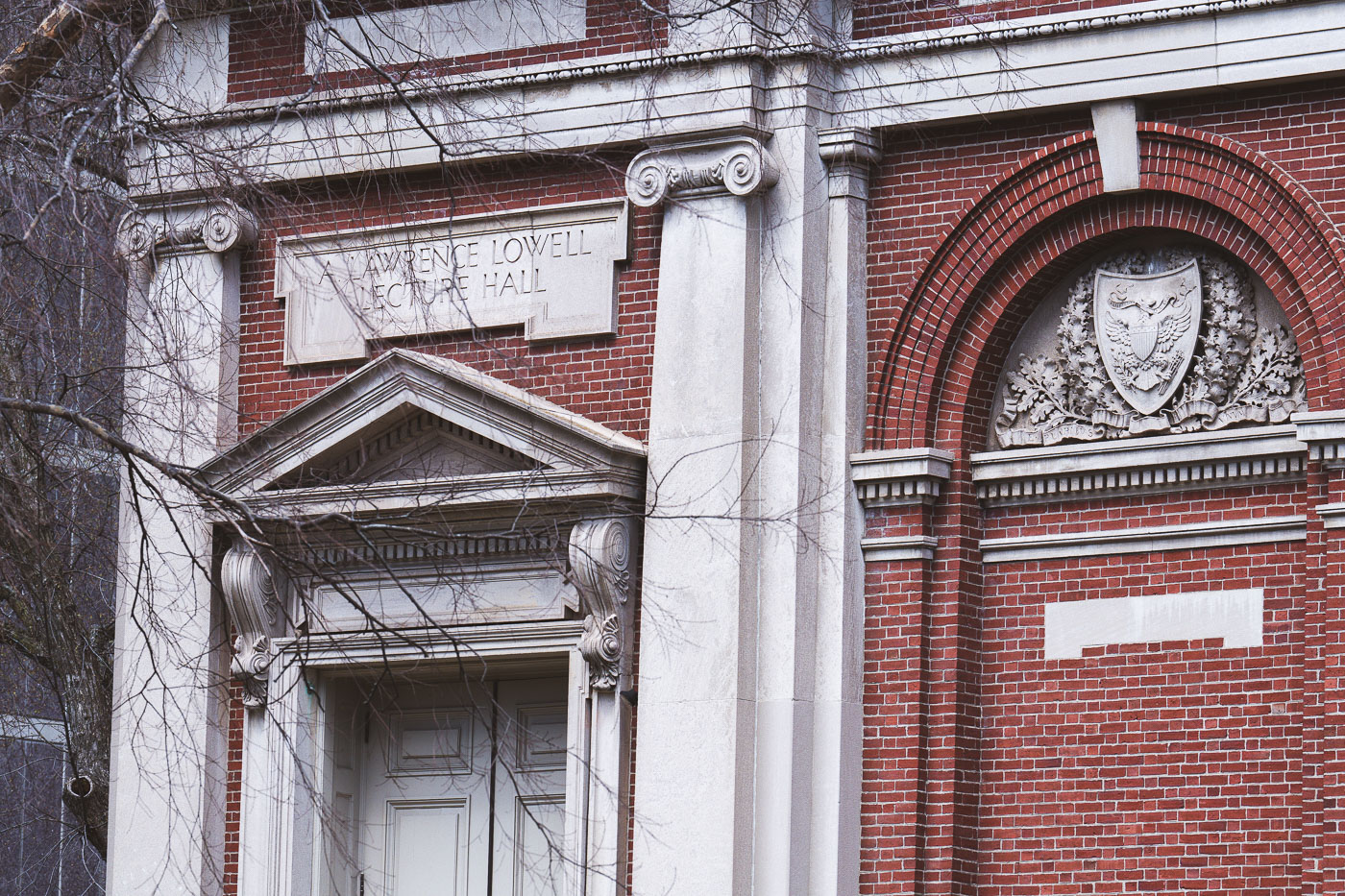
Lawrence Lowell Lecture Hall at Harvard University

Lawrence Lowell Lecture Hall, Harvard University

The Lawrence Lowell Lecture Hall, located at Harvard University in Cambridge, Massachusetts, showcases the classic Georgian Revival style that defines much of the campus’s early 20th-century architecture. Its symmetrical red-brick façade is framed by limestone pilasters and ornamented with carved details, including an arched relief of the Harvard shield and eagle motif. Constructed in 1902 and named after former university president A. Lawrence Lowell, the hall remains an active academic venue for lectures, conferences, and student gatherings, standing as a symbol of the university’s architectural continuity and scholarly tradition.

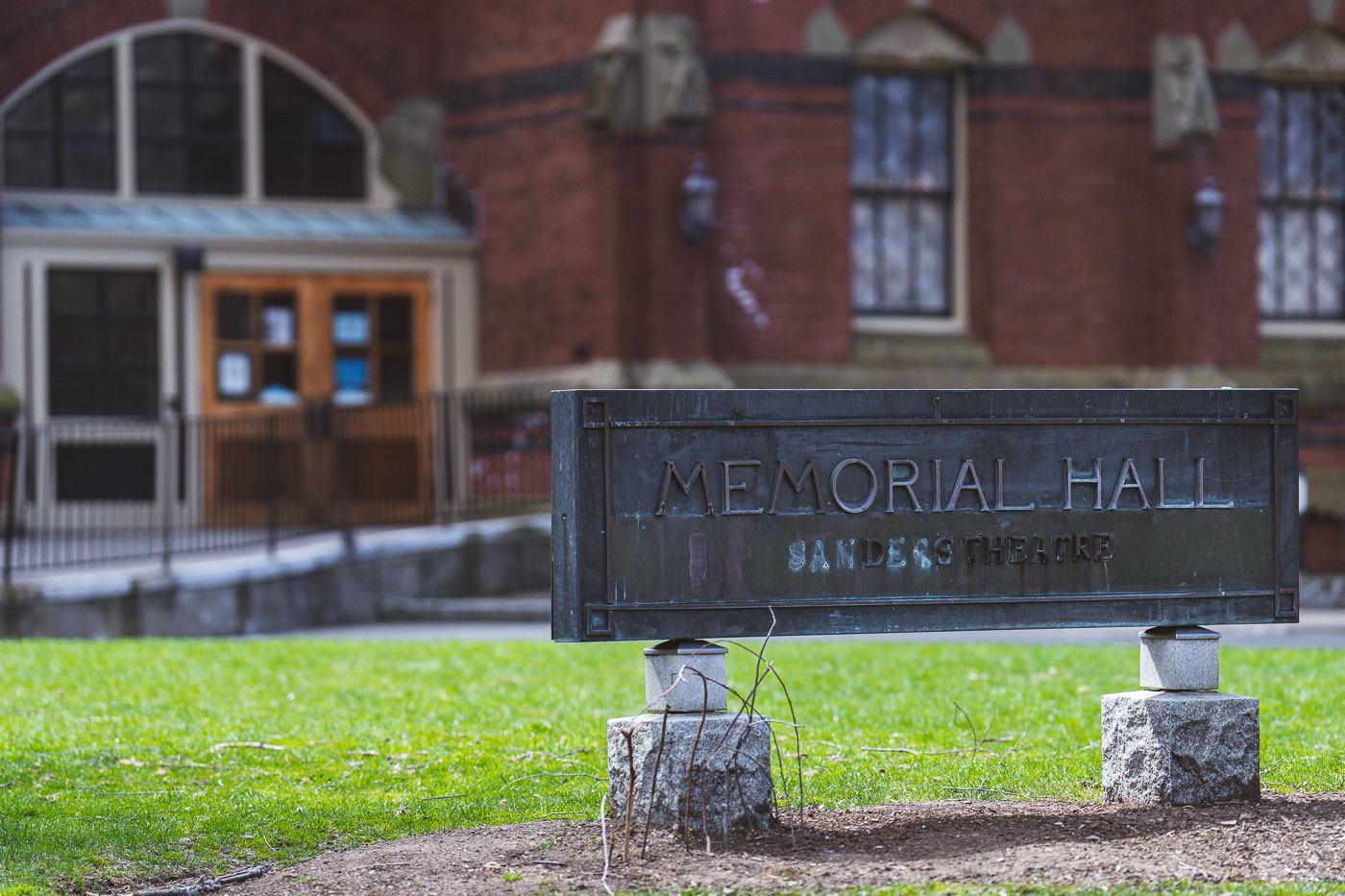
Memorial Hall Sanders Theatre Harvard University

Memorial Hall and Sanders Theatre, Harvard University

Memorial Hall at Harvard University stands as one of the most significant examples of High Victorian Gothic architecture in the United States. Completed in 1878, the hall was built to honor Harvard alumni who fought for the Union during the Civil War. The building’s iconic red-brick façade, accented by intricate stone trim and stained glass, houses the famed Sanders Theatre—a grand auditorium known for its exceptional acoustics and historic lectures. The bronze plaque in the image marks the entrance to this enduring landmark, which continues to serve as a centerpiece for academic and cultural life in Cambridge, Massachusetts.

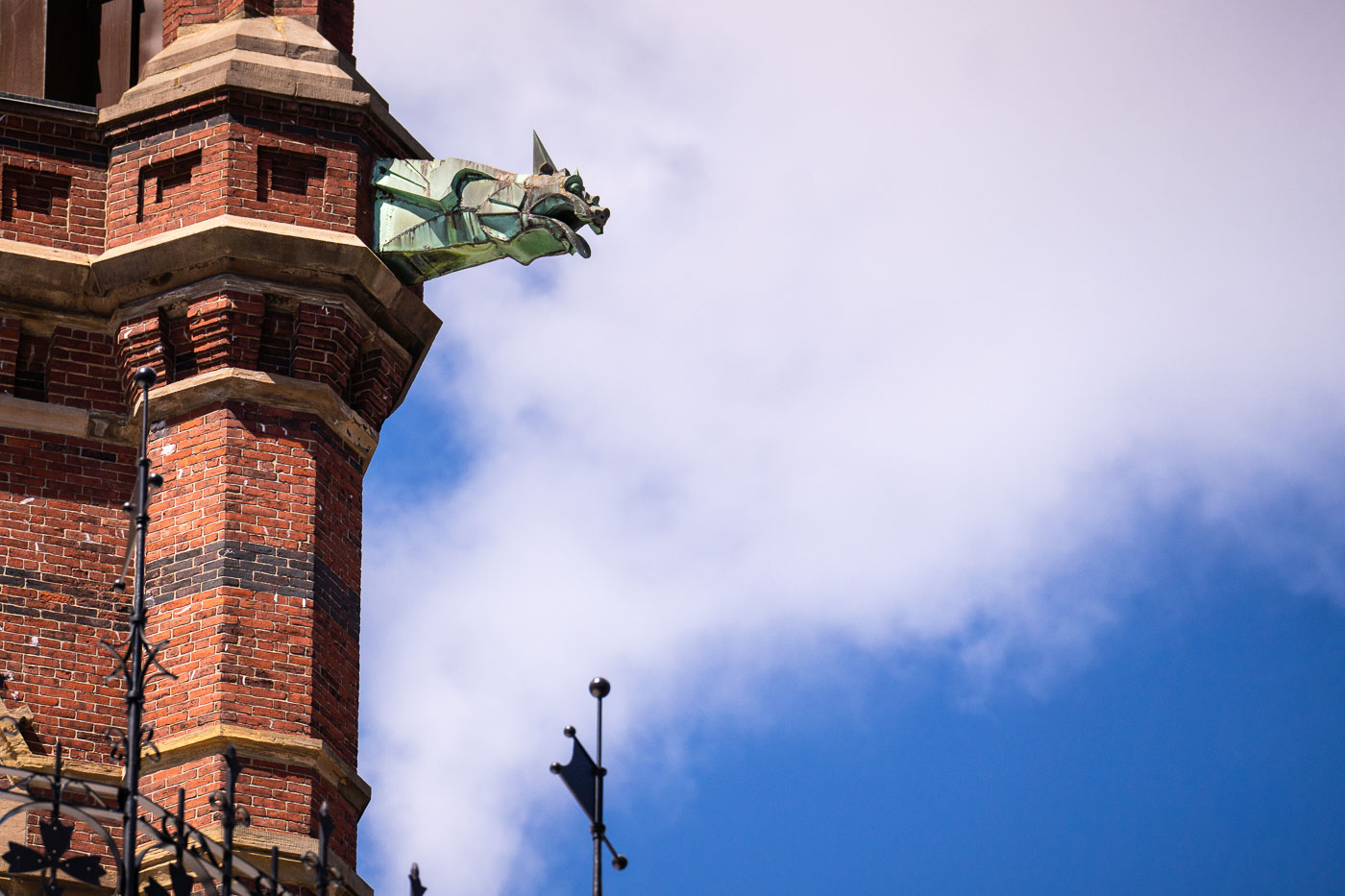
Gargoyle at Harvard University Memorial Hall

Harvard Memorial Hall Copper Gargoyle Detail

A copper gargoyle juts from the ornate brick tower of Harvard’s Memorial Hall in Cambridge, Massachusetts—a striking detail of the Gothic Revival architecture completed in the late 19th century. Designed by Ware & Van Brunt, the hall commemorates Harvard alumni who fought for the Union in the Civil War. The gargoyle’s oxidized green patina and sharp geometric form contrast against the red brick and open sky, blending medieval-inspired craftsmanship with the American collegiate Gothic style that defines much of Harvard’s architectural legacy.

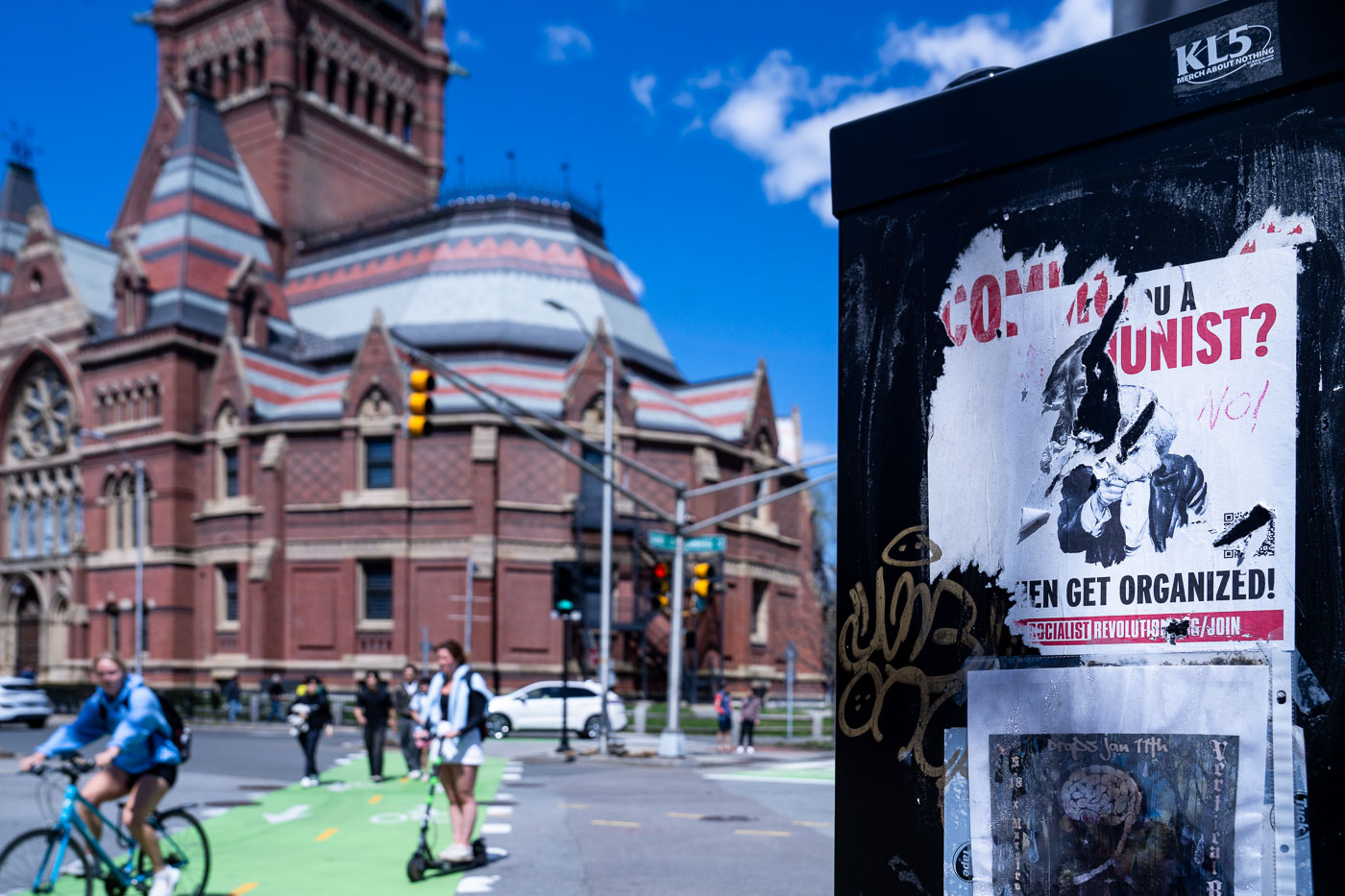
Neo Gothic Memorial Hall at Harvard University

Memorial Hall Facade, Harvard University

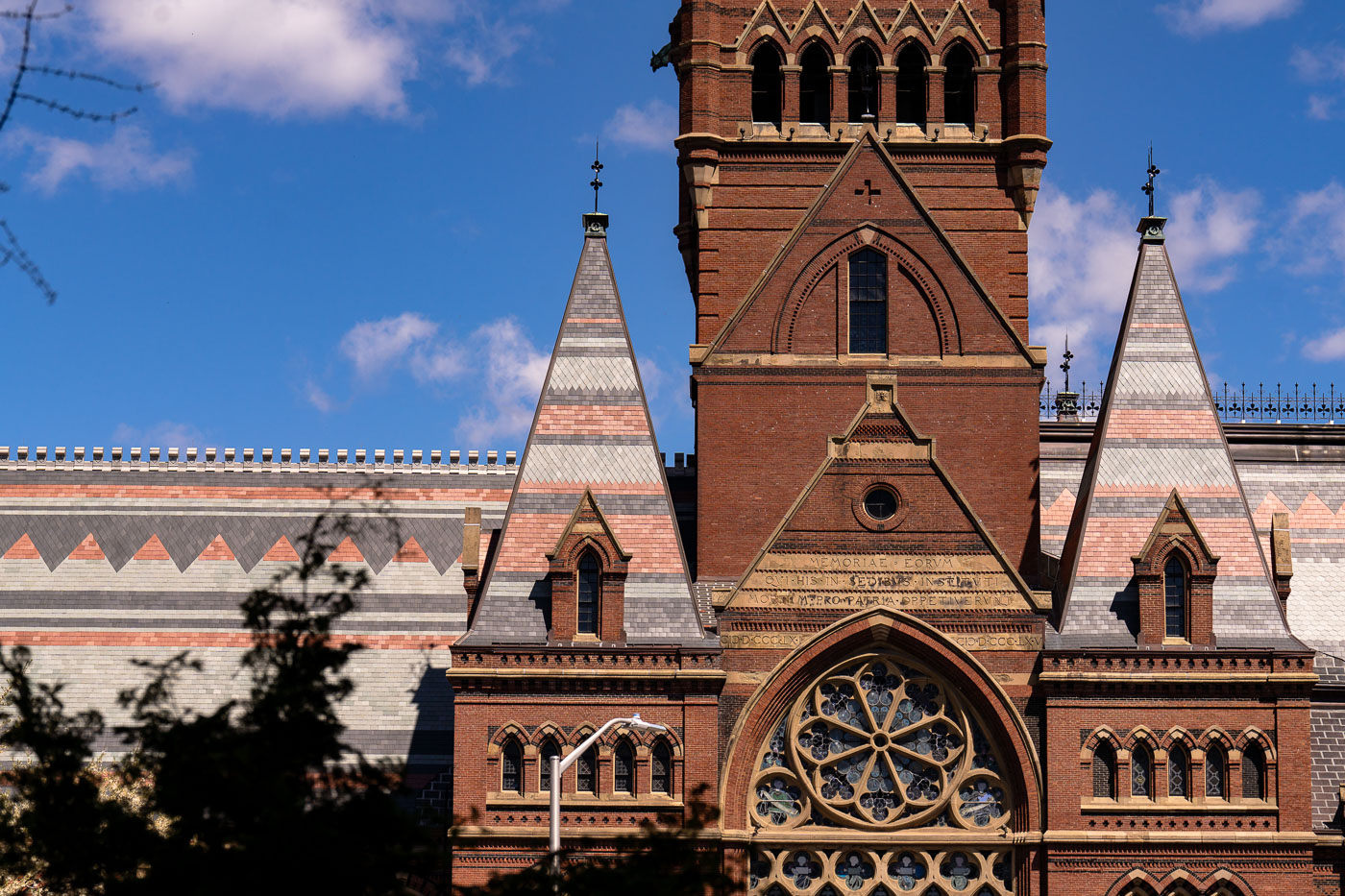
The intricate brick and slate facade of Harvard University’s Memorial Hall rises sharply against a crisp blue sky in this detailed architectural study. Completed in 1878, the building embodies the High Victorian Gothic style with its polychromatic slate roof, pointed arches, and elaborate terracotta trim. The Latin inscription and rose window dominate the composition, framed by twin spires and ornamental ironwork. Memorial Hall was built to honor Harvard alumni who fought for the Union during the Civil War, and today houses Sanders Theatre and Annenberg Hall—standing as one of Cambridge’s most iconic architectural landmarks.

Exterior photo of Emerson Hall at Harvard

Emerson Hall Entrance, Harvard Yard

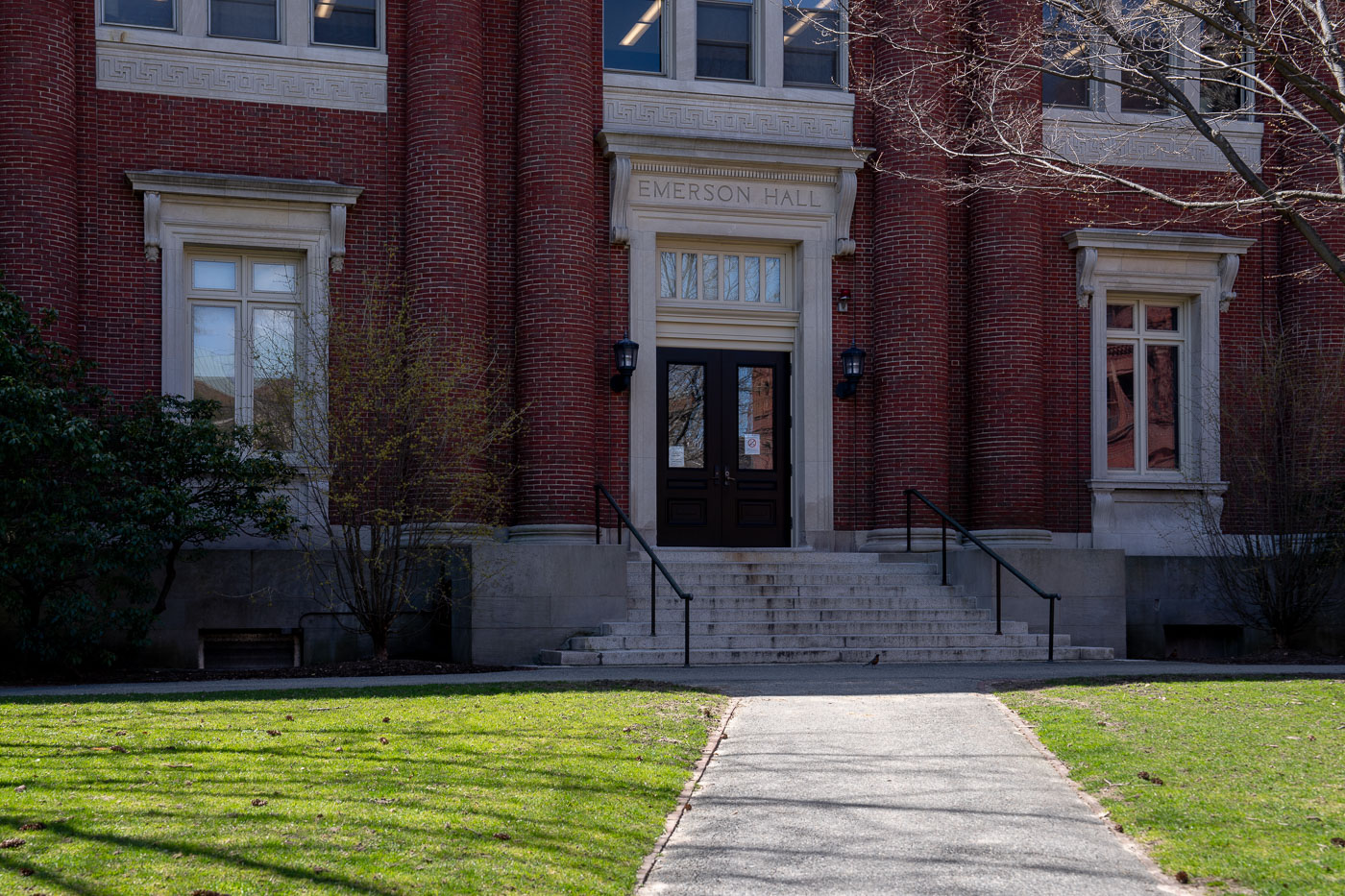
The neoclassical brick facade of Emerson Hall, located in Harvard Yard, is framed by early spring light in this photograph. Completed in 1900 and designed by Guy Lowell, the building houses Harvard’s Department of Philosophy and is named after transcendentalist writer and alumnus Ralph Waldo Emerson. Its symmetrical design features Ionic pilasters, limestone trim, and a grand central staircase leading to wooden double doors. Emerson Hall stands as a quiet academic landmark amid the historic core of Harvard University, reflecting the campus’s architectural balance between formality and contemplation.

Exterior photo of Sever Hall at Harvard University

Sever Hall, Harvard Yard

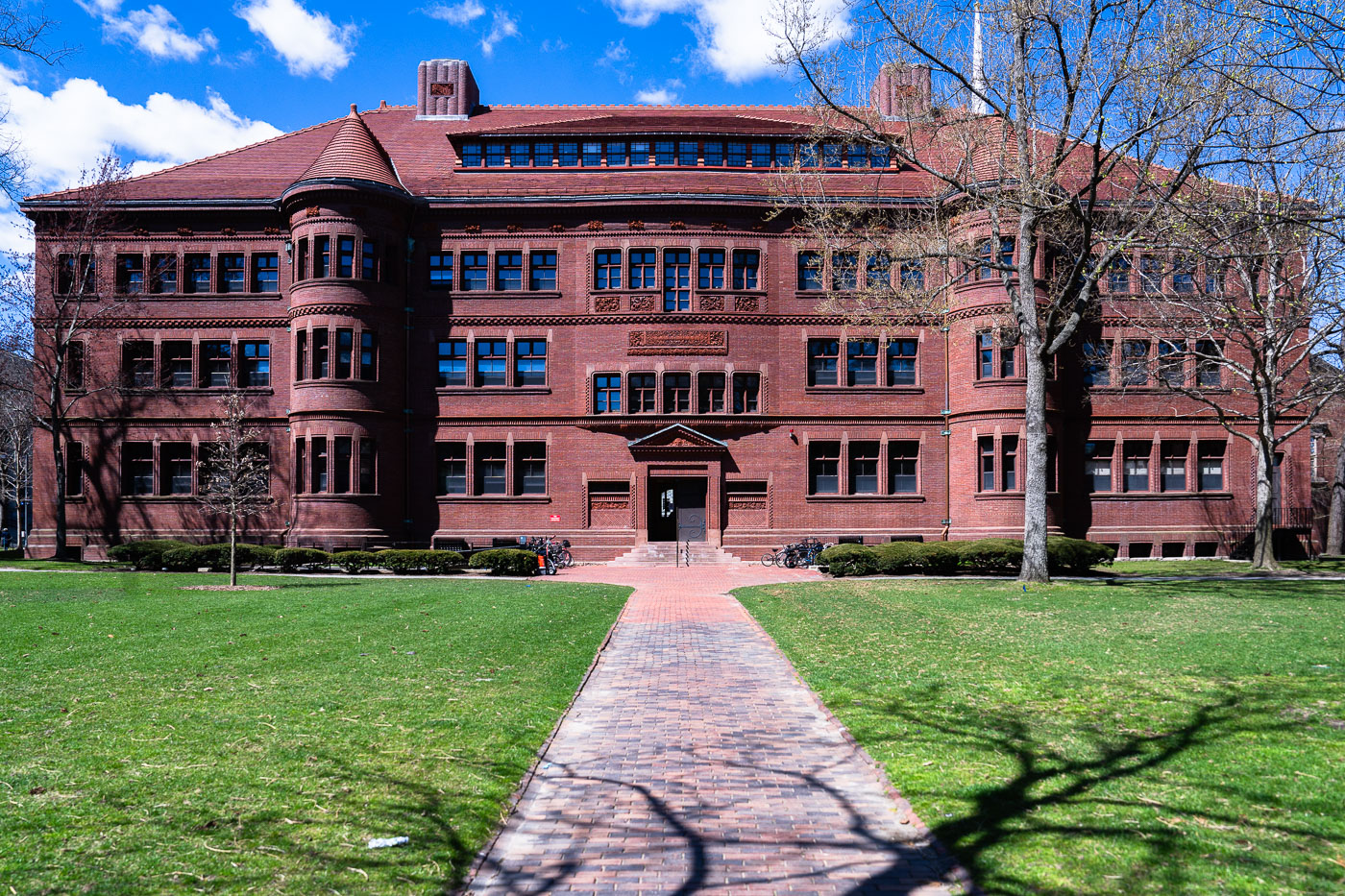
Designed by Henry Hobson Richardson and completed in 1880, Sever Hall stands as one of the most distinguished examples of Richardsonian Romanesque architecture on the Harvard campus. Built from over 1.3 million red bricks with intricate recessed patterns and rounded turrets, the building’s symmetrical form and arched entrance exemplify Richardson’s mastery of proportion and texture. Located in Harvard Yard, Sever Hall has long served as a classroom building for the Faculty of Arts and Sciences. Its distinctive masonry and quietly monumental design earned it recognition as one of the architect’s finest works and a National Historic Landmark.

Students walking outside the Harvard University book store

Harvard Book Store, Cambridge

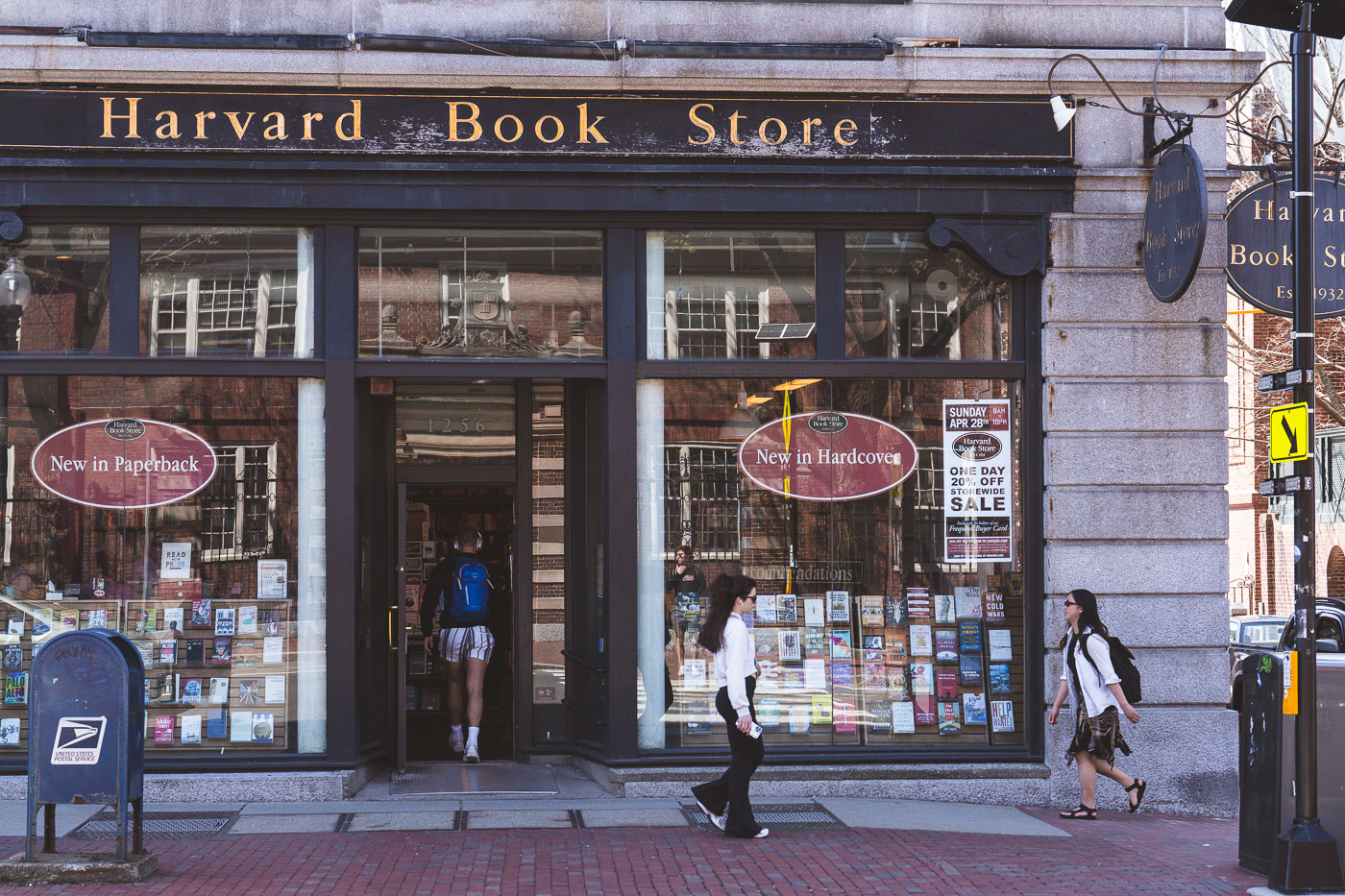
Located in the heart of Harvard Square in Cambridge, Massachusetts, the Harvard Book Store has been a cornerstone of the local literary community since its founding in 1932. Known for its carefully curated selection of new and used books, author events, and a commitment to independent publishing, the shop serves both university students and the wider public. Its iconic storefront, with gold-lettered signage and deep window displays, reflects the enduring culture of scholarship and reading that defines the neighborhood around Harvard University.

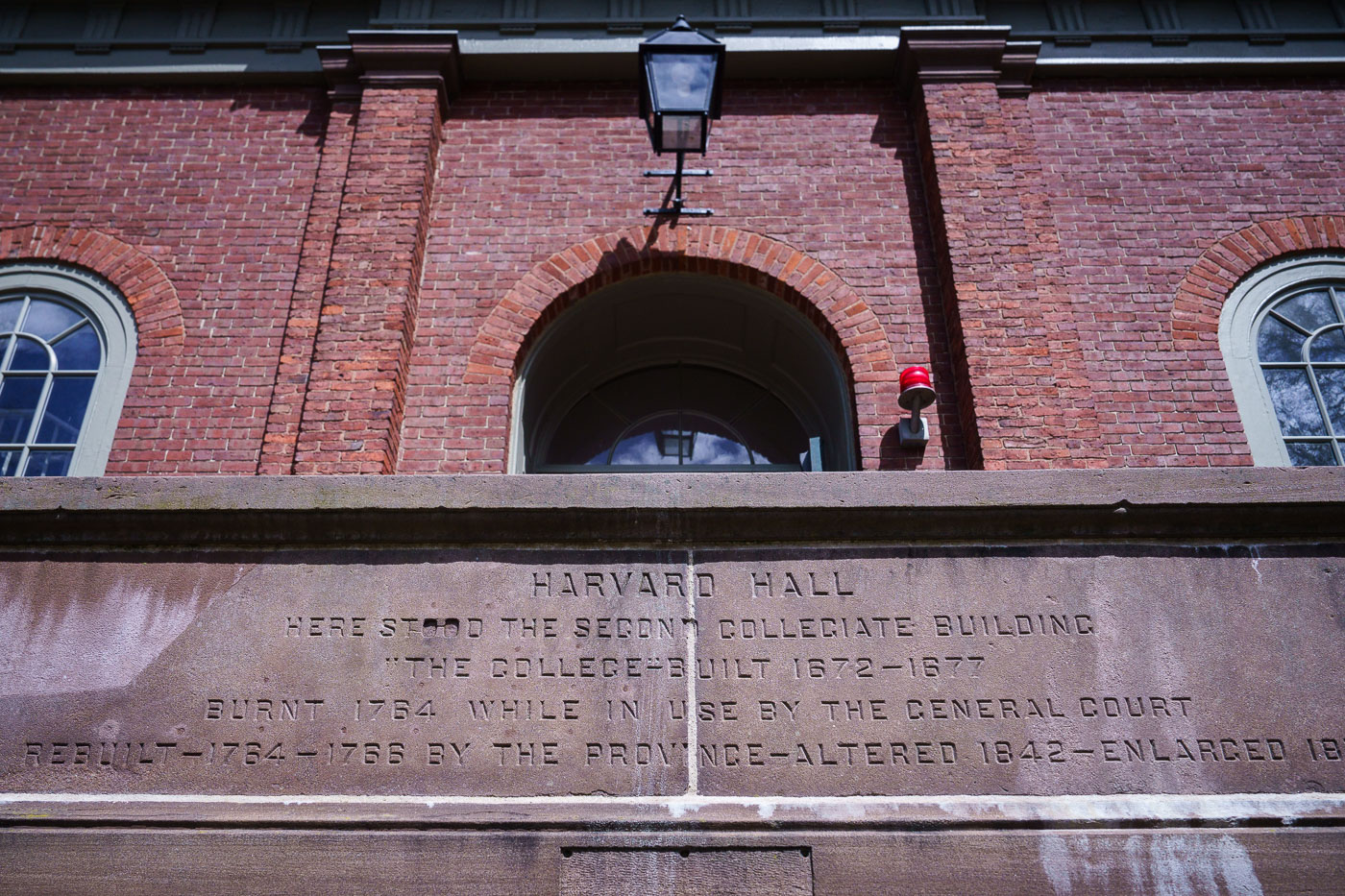
Harvard Hall at Harvard University red bricks

Harvard Hall – A Rebuilt Legacy of Early Harvard College

Harvard Hall, located in the center of Harvard Yard, stands as one of the university’s most historically significant buildings. The inscription records its long story: the original “College” building from the 1670s was destroyed by fire in 1764 while housing the General Court of Massachusetts. The structure was rebuilt between 1764 and 1766, later modified and expanded in the 19th century. The current red-brick Georgian design reflects both colonial craftsmanship and the evolving architectural heritage of the campus. Once home to classrooms and the early Harvard library, Harvard Hall remains a symbol of the institution’s resilience and academic continuity.

Coast Guard boat with mounted weapon

US Coast Guard Patrol Boat in Boston Harbor

A U.S. Coast Guard response boat moves steadily across Boston Harbor on a calm, overcast day, with Logan International Airport visible in the distance. The aluminum and orange-hulled vessel, equipped with mounted security equipment, is part of routine maritime patrol operations ensuring the safety of one of New England’s busiest ports. Behind it, commercial ships and aircraft highlight the harbor’s strategic role as a hub for both air and sea transport serving the Greater Boston area.

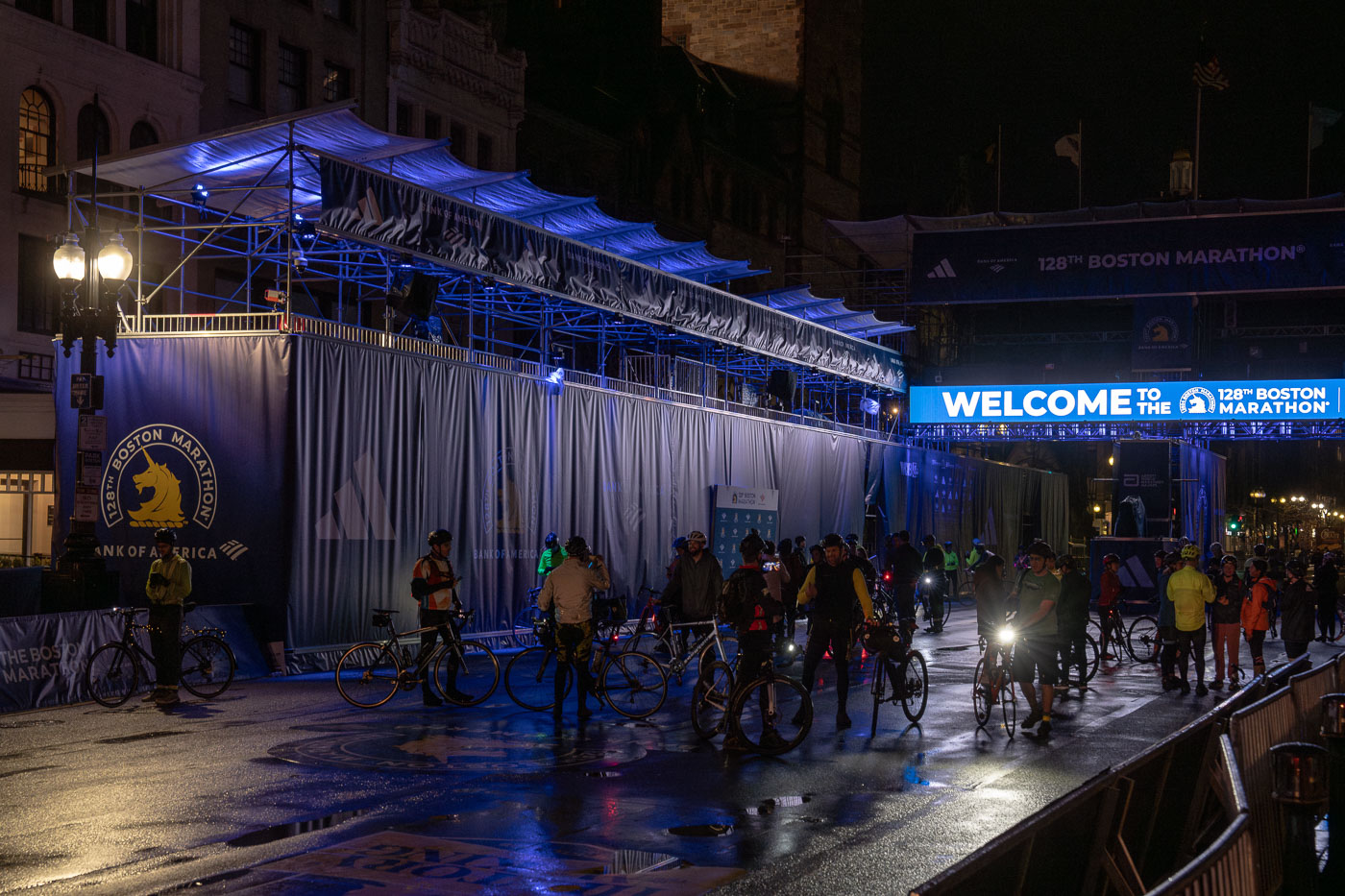
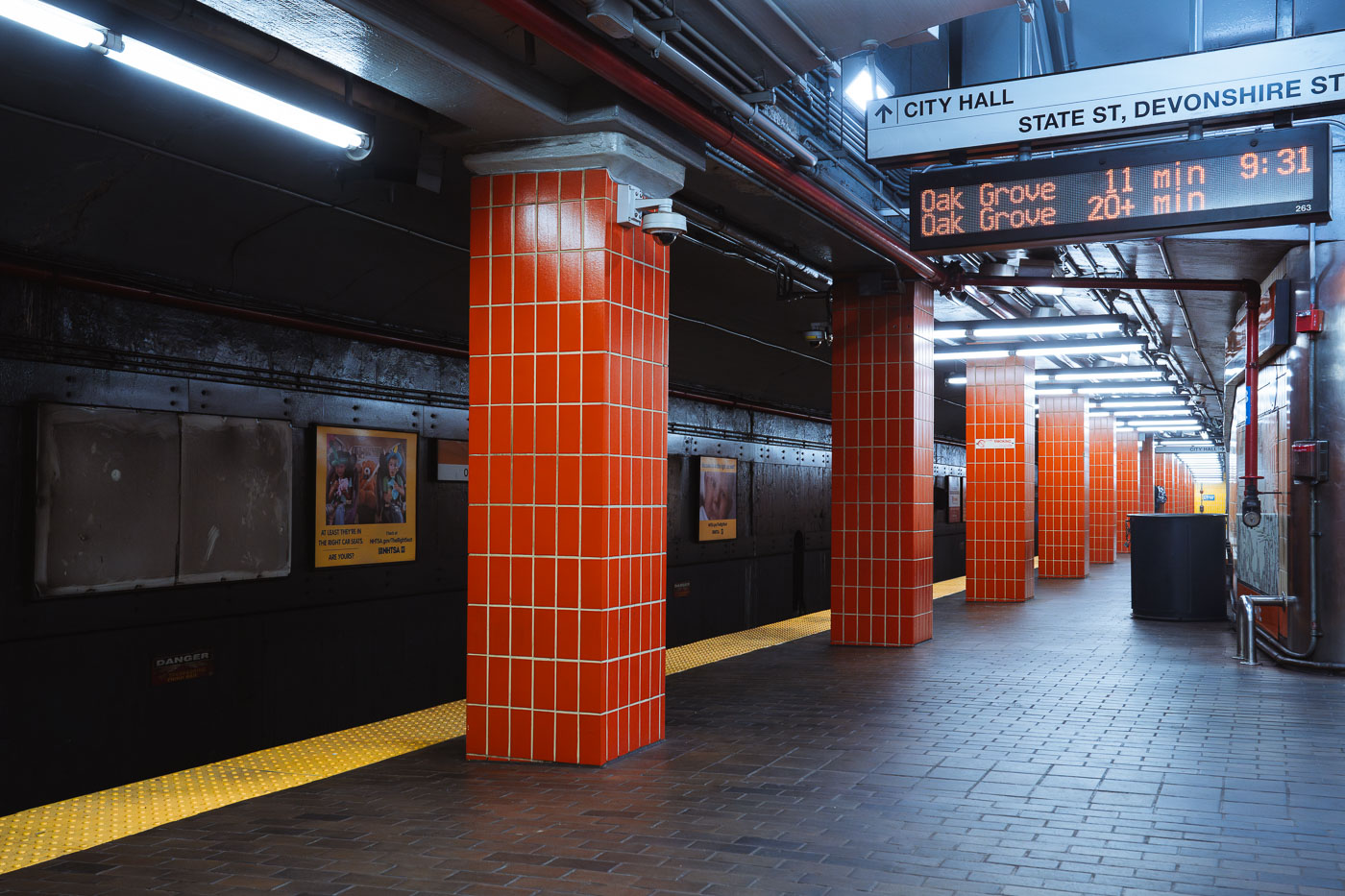
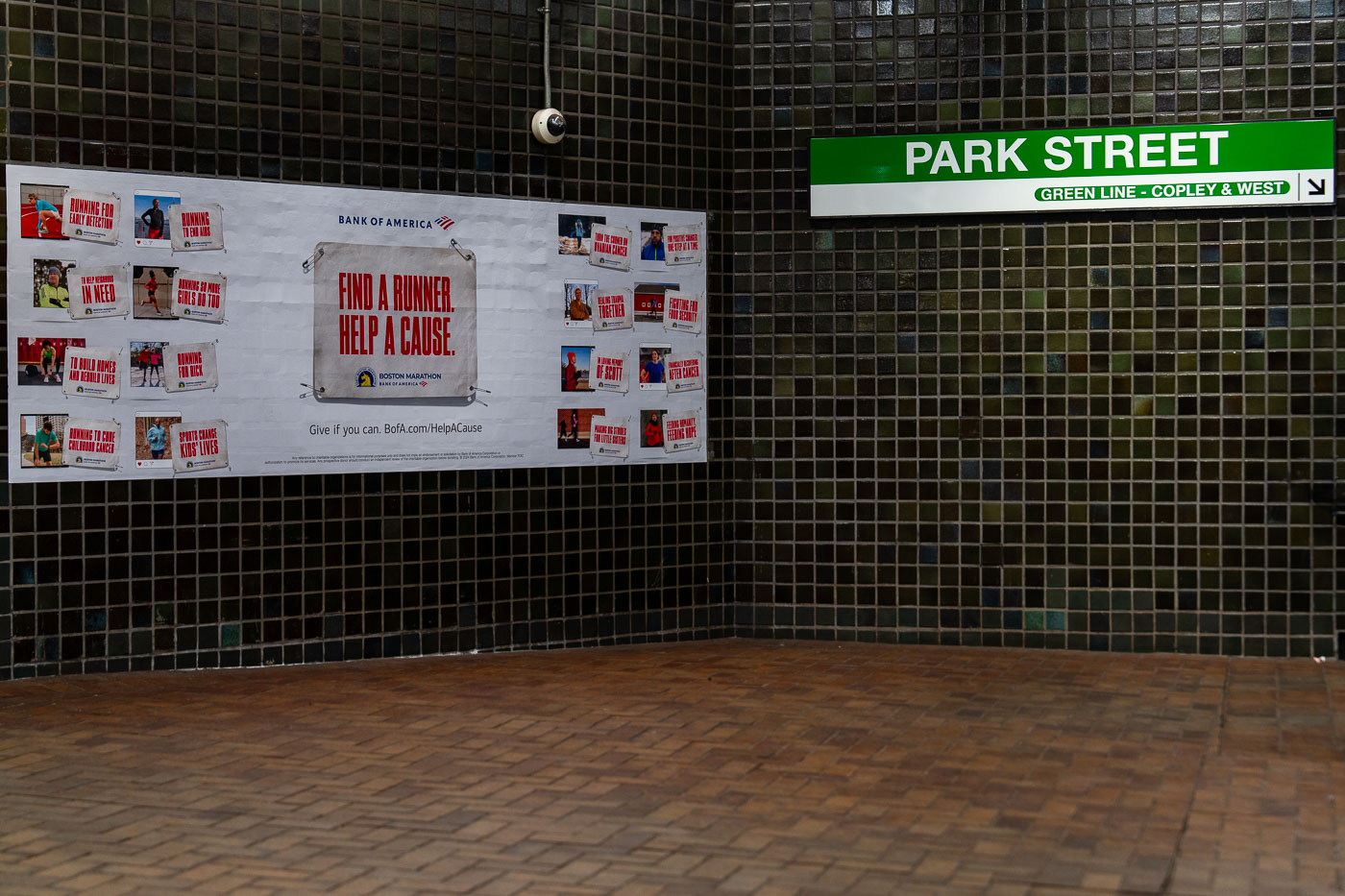
Boston Marathon at Park Street Station

Boston Marathon and Park Street Station, Boston

Inside Boston’s Park Street Station, a tiled corridor displays a Bank of America advertisement for the Boston Marathon’s charity initiative. The green and white MBTA sign directs riders toward the Green Line platforms for Copley and westbound service. Park Street—one of the oldest subway stations in the United States—sits beneath the Boston Common, serving as a major interchange for the city’s transit system since 1897.

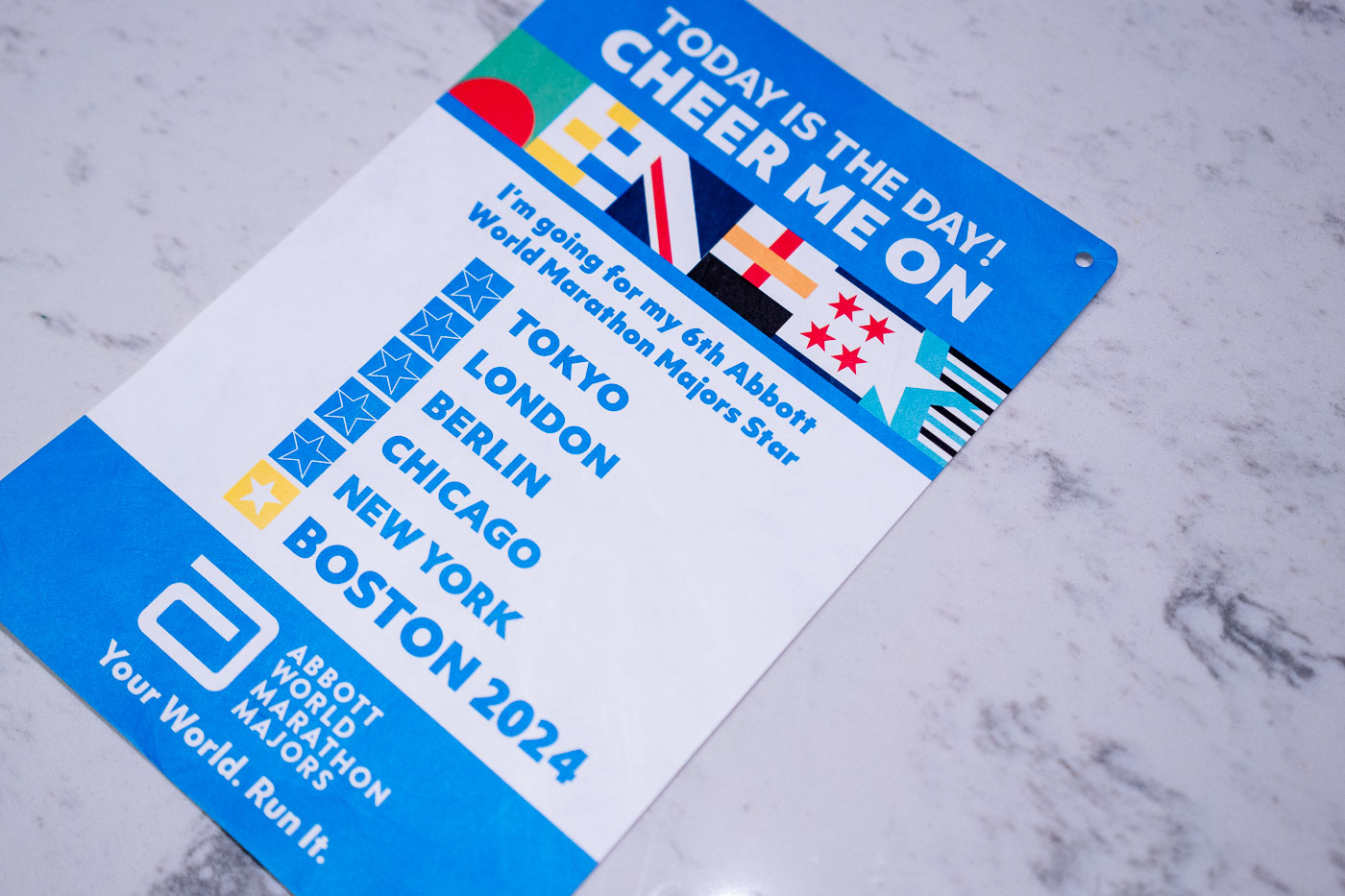
World Marathon Majors 2024 Six Star Bib

Boston Marathon 2024: Abbott World Marathon Majors Bib

A runner’s bib card for the 2024 Boston Marathon celebrates a milestone in the Abbott World Marathon Majors series, listing all six legendary races: Tokyo, London, Berlin, Chicago, New York, and Boston. Completing all six earns participants the coveted Six Star Medal, recognizing one of distance running’s most challenging global achievements. The card’s bright design, set on a marble surface, captures the excitement and prestige surrounding Boston’s historic 26.2-mile race — the oldest annual marathon in the world.

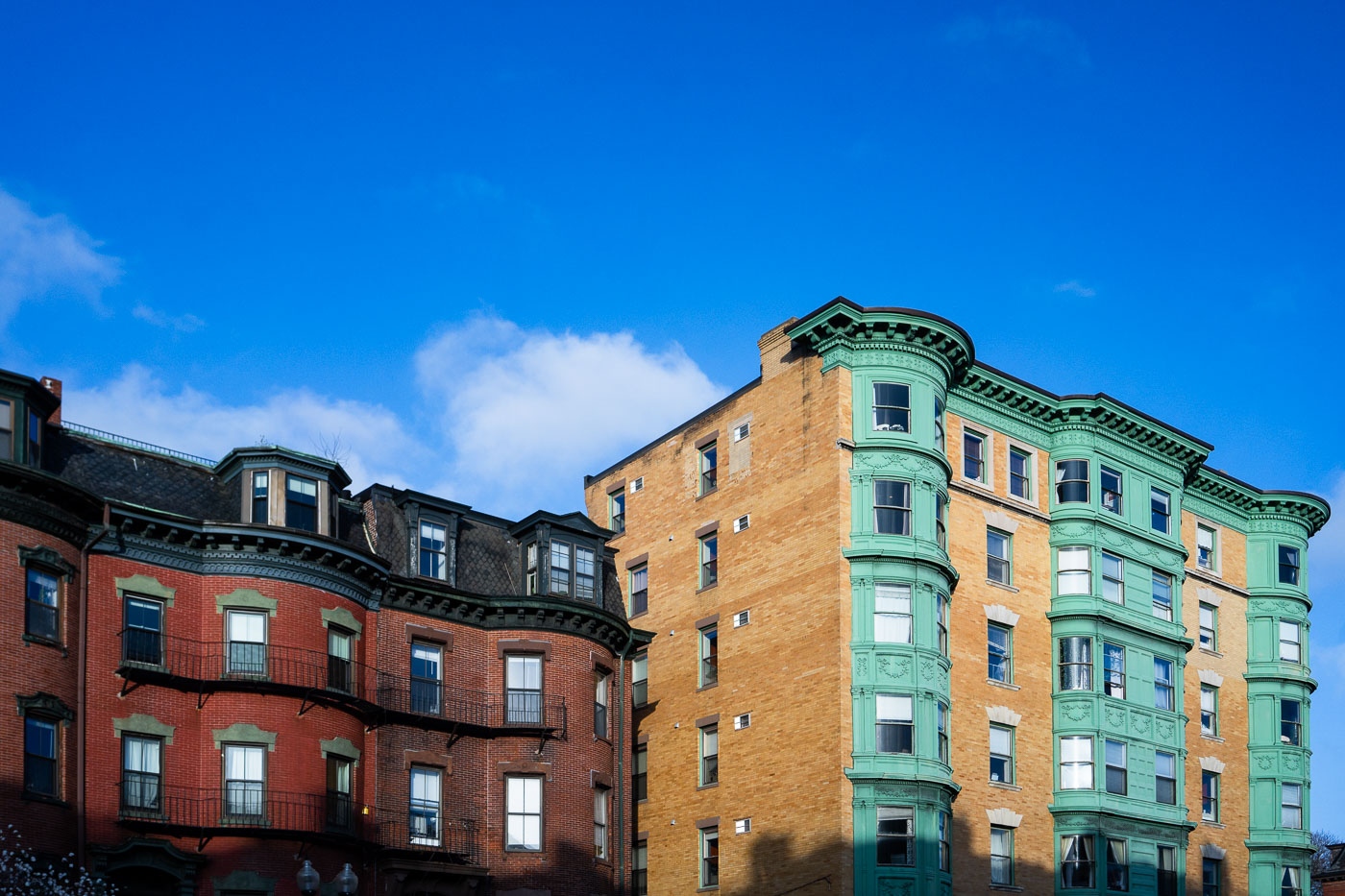
Green and gold apartment building in Boston

South End Boston Brownstones on Massachusetts Avenue

Along Massachusetts Avenue in Boston’s South End, these adjoining brownstones showcase the neighborhood’s signature Victorian-era architecture—ornate bay windows, intricate cornices, and rich brickwork that reflect the city’s 19th-century building boom. The red and tan façades, accented with distinctive green trim, represent the area’s architectural diversity, where Italianate and Renaissance Revival influences meet. Once part of a working-class district and now one of Boston’s most carefully preserved historic neighborhoods, the South End’s rowhouses remain a defining feature of the city’s urban identity and charm.

Built in Minneapolis

Photographs showcasing change over time

Browse by location, move through long-running series, or start with recent work.