Military

43 photos · 2009–2024

43 photographs tagged Military, 2009–2024.
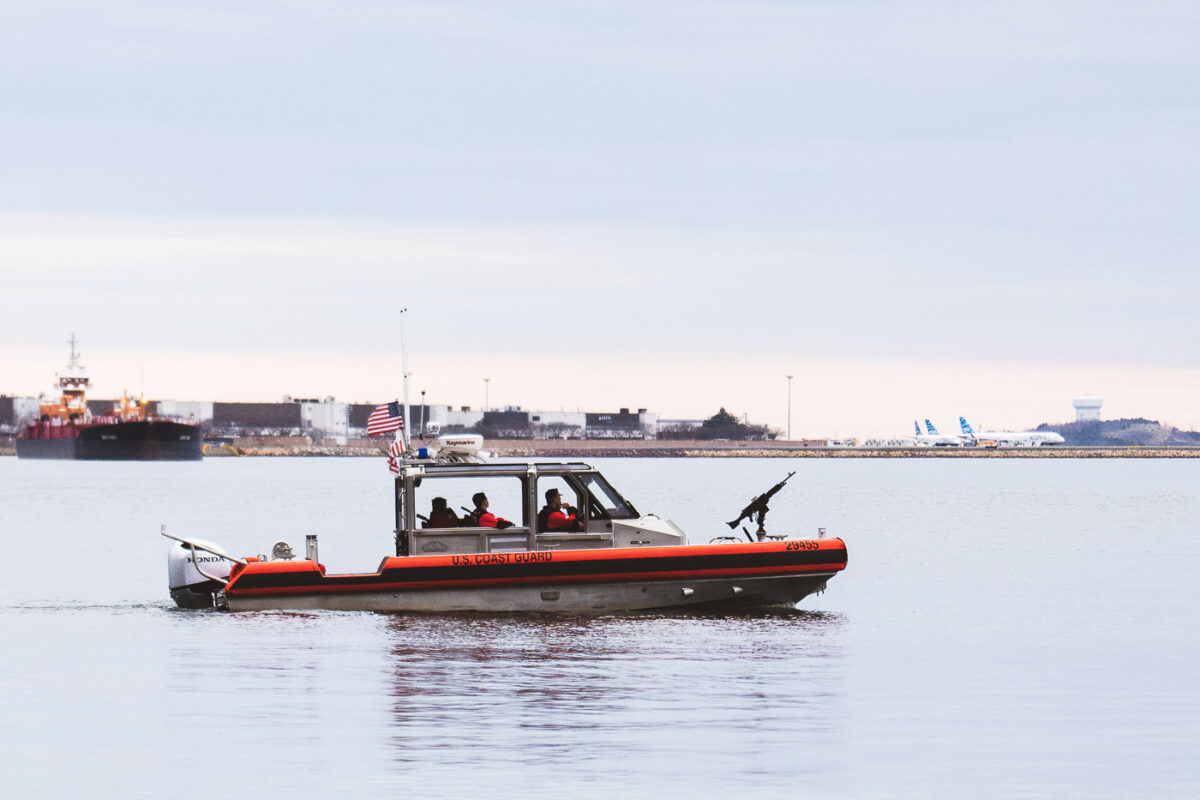
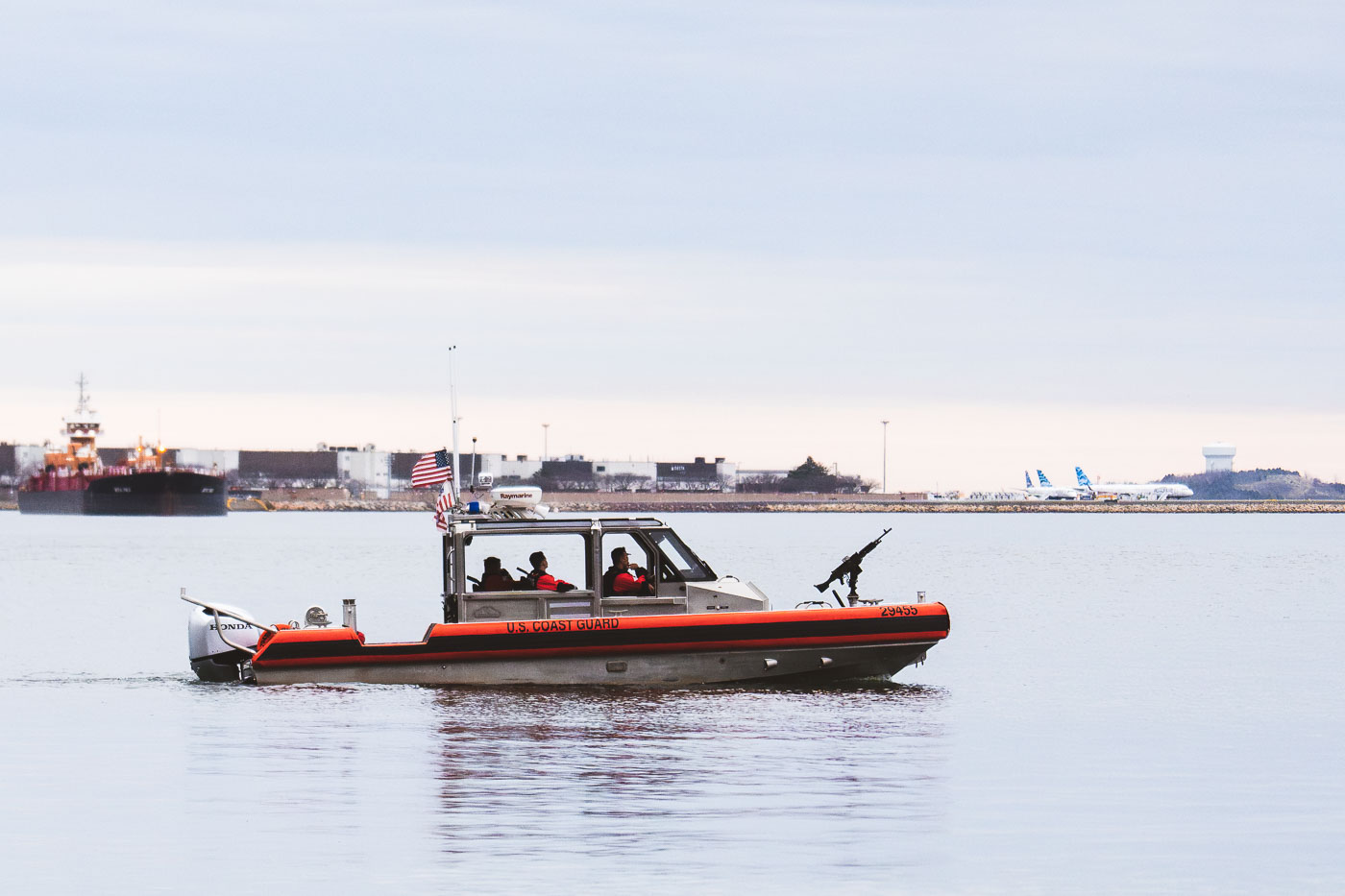
U.S. Coast Guard patrol boat 29455 operates in Boston Harbor with crew members aboard.
Boat 29455 is a Coast Guard Defender-class response boat, a 25-foot craft built for port security, search and rescue, and law enforcement patrols in harbors and coastal waters. These boats are standard for Coast Guard Stations along the East Coast and typically carry a crew of three to four. Logan International Airport's runways sit across the water, a reminder of how closely Boston's harbor traffic and air traffic share the same waterfront.

Coast Guard Boat 29455 Patrols Boston Harbor Near Logan Airport

National Guard troops outside Minneapolis Police 5th Precinct behind security fencing in Minneapolis.
National Guard soldiers are stationed outside the Minneapolis Police Fifth Precinct, a location that became a focal point during the trial of Derek Chauvin. The precinct was heavily fortified with fencing and concrete barriers to prevent damage and maintain order amidst protests following the murder of George Floyd. This security measure was part of "Operation Safety Net," a coordinated effort by law enforcement and the National Guard to manage public safety during the high-profile trial.

National Guard at Minneapolis Police 5th Precinct During Chauvin Trial
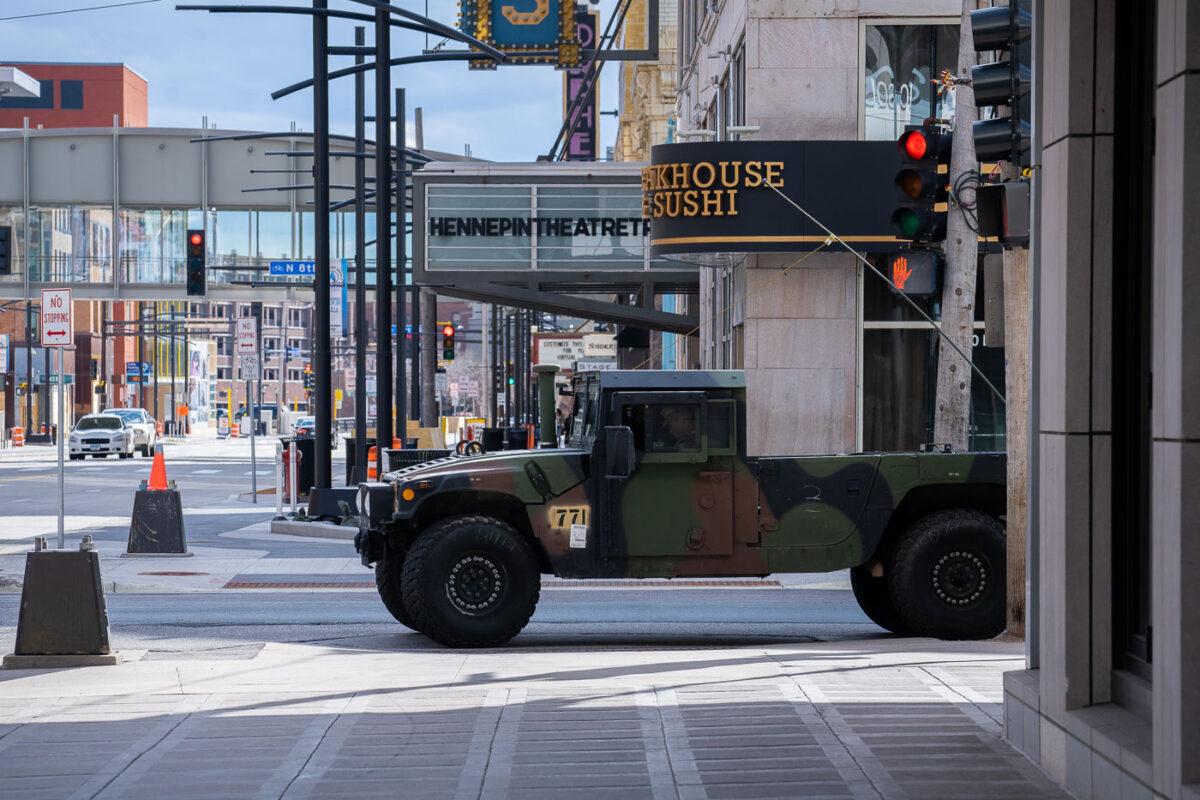
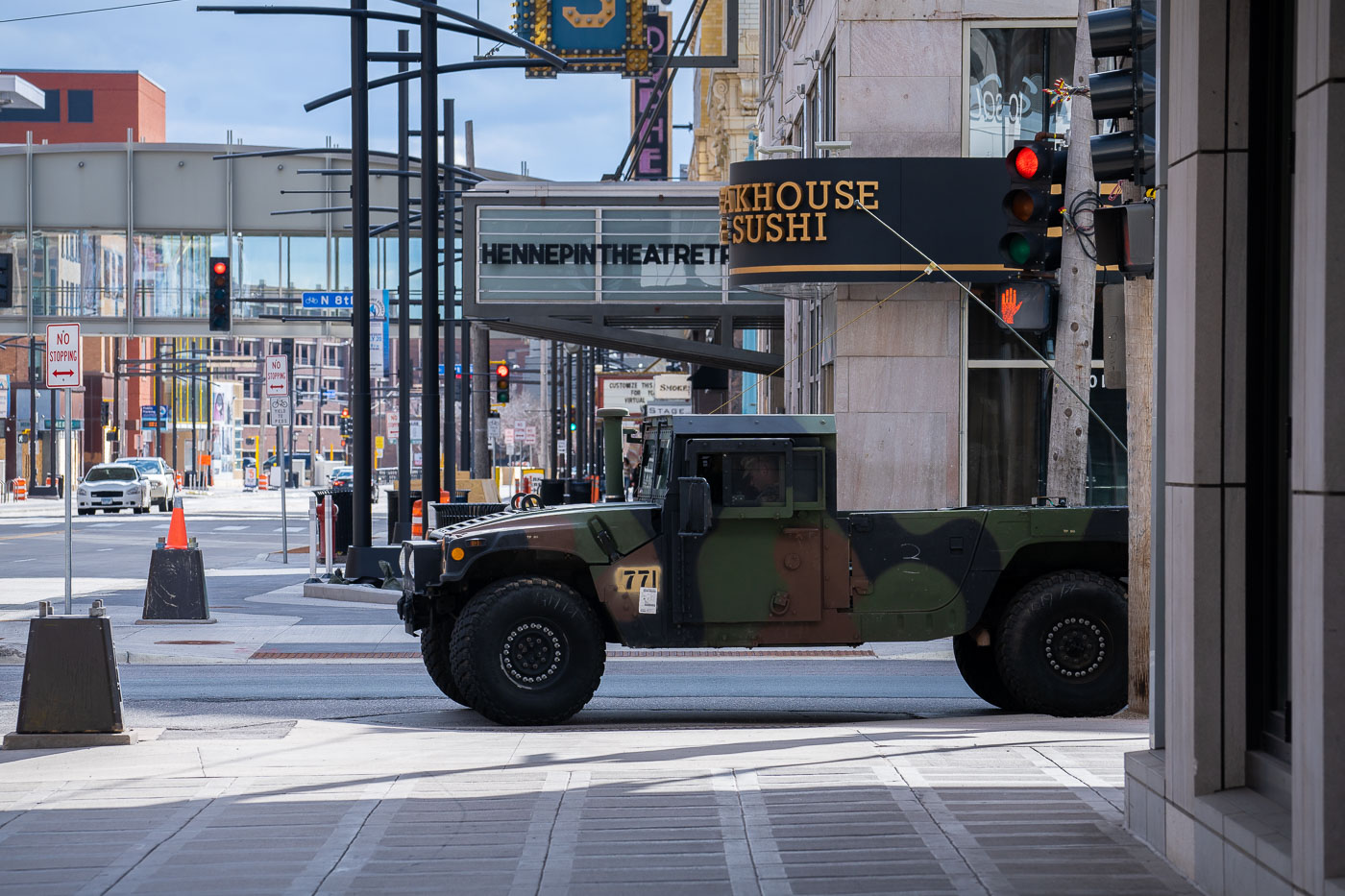
National Guard Humvee on Nicollet Mall in downtown Minneapolis near Hennepin Theatre Trust.
A Minnesota National Guard Humvee is parked on Nicollet Mall in Minneapolis. The presence of military vehicles on the downtown street reflects the heightened security and civil unrest that occurred in the city following the murder trial of Derek Chauvin for the death of George Floyd. Nicollet Mall, a pedestrian-oriented street, is a central commercial and cultural hub in Minneapolis, and its use by military vehicles underscores the extraordinary circumstances of the period.

National Guard Humvee on Nicollet Mall, Minneapolis

National Guard troops on N Broadway in Minneapolis after the killing of Daunte Wright.
National Guard troops are stationed on N. Broadway in Minneapolis following the killing of Daunte Wright by Brooklyn Center Police Officer Kim Potter on April 11, 2021. The deployment of military personnel was in response to widespread protests and civil unrest that occurred in the days following the incident. This event marked a period of heightened tension and public outcry over police brutality and racial injustice in the Minneapolis area.

National Guard on N. Broadway, Minneapolis after Daunte Wright killing
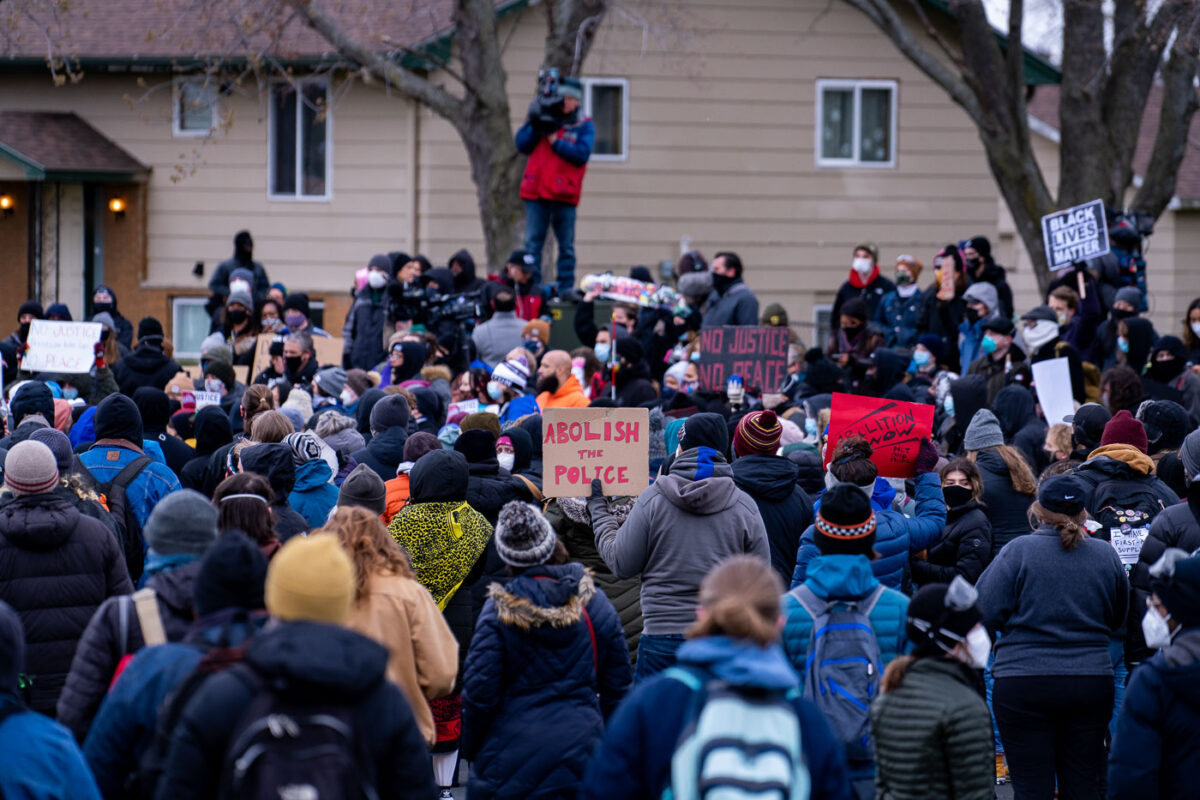
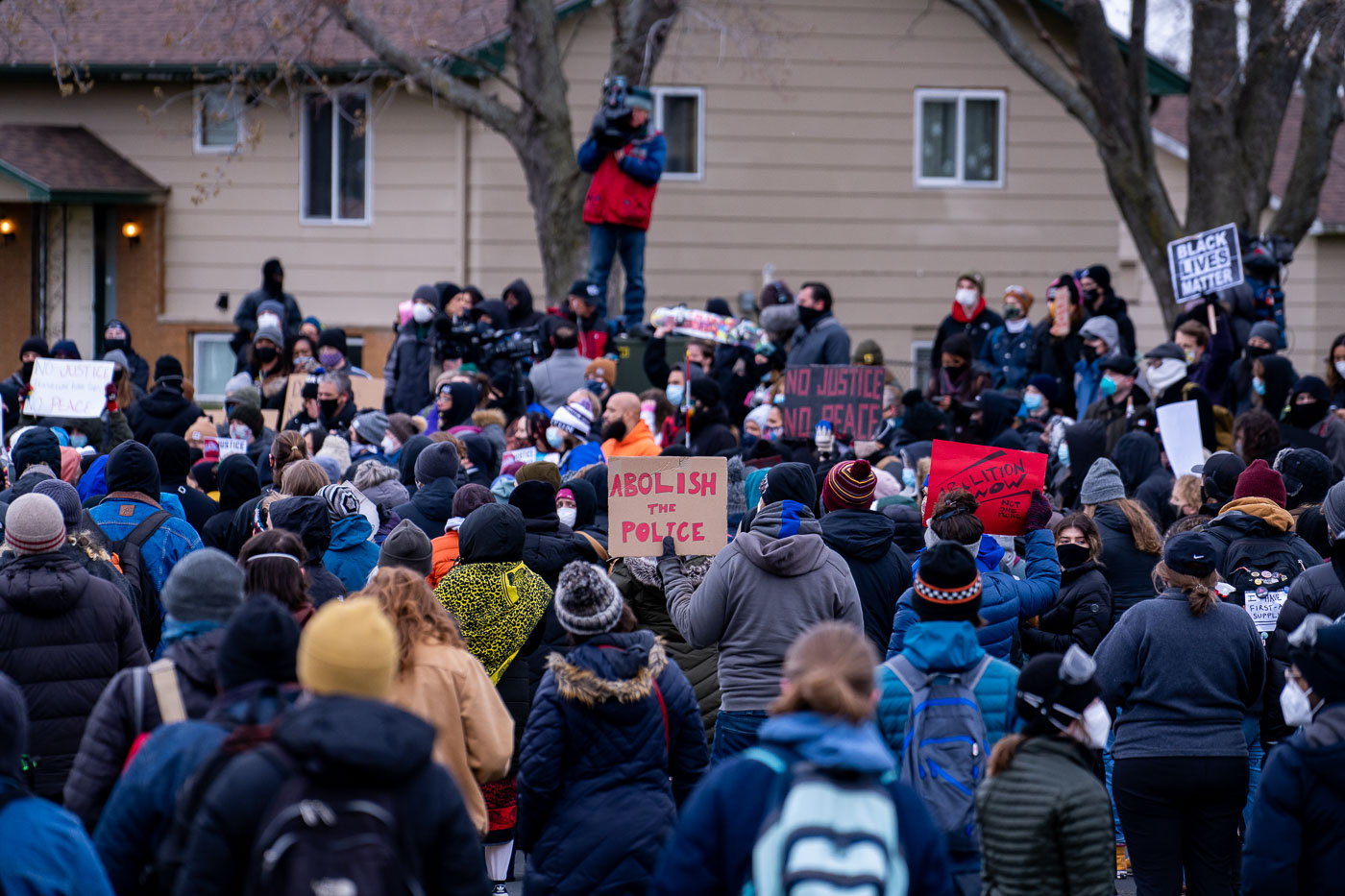
Protesters outside Brooklyn Center Police Department after the Daunte Wright shooting.
Protesters gathered outside the Brooklyn Center Police Department following the fatal shooting of Daunte Wright on April 11, 2021. The incident, which occurred during a traffic stop, ignited widespread protests and unrest in the Minneapolis area. Demonstrators voiced anger and called for justice and police reform, with signs reading "Abolish the Police" and "No Justice No Peace." The events highlighted ongoing tensions surrounding police conduct and racial injustice in the United States.

Protesters at Brooklyn Center Police Dept. after Daunte Wright shooting
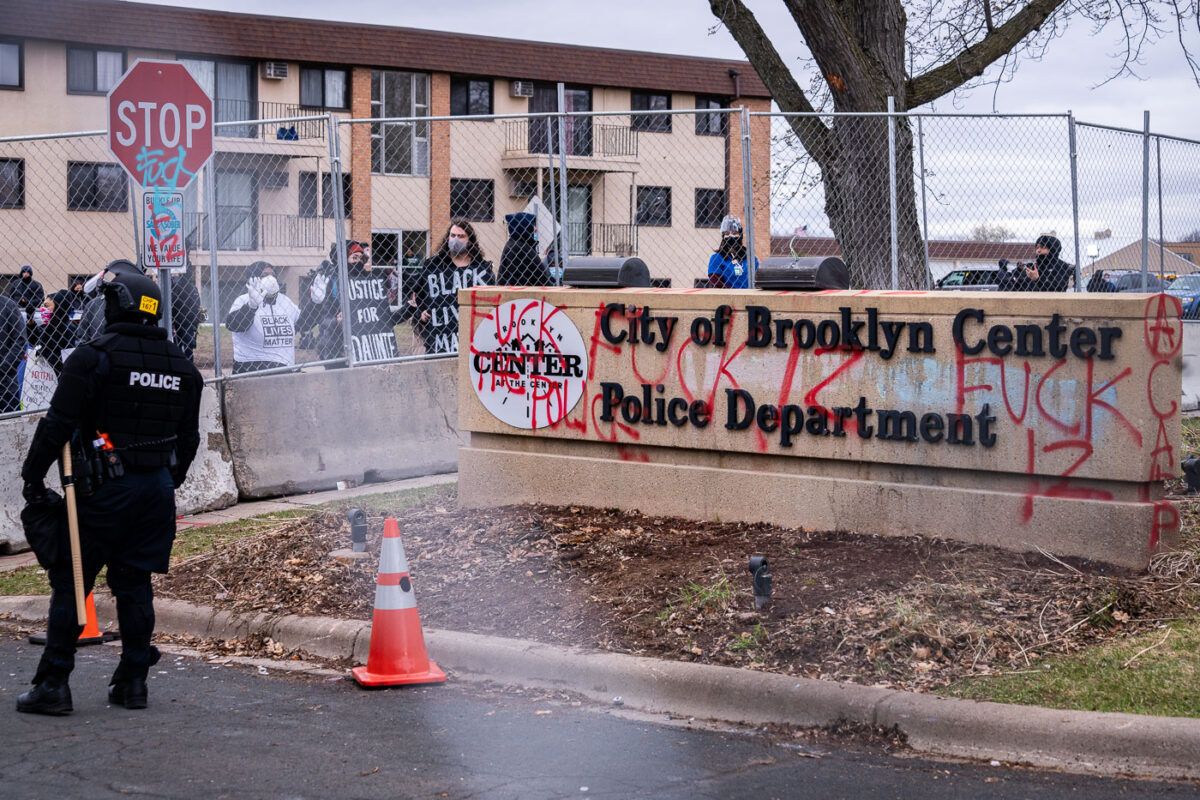
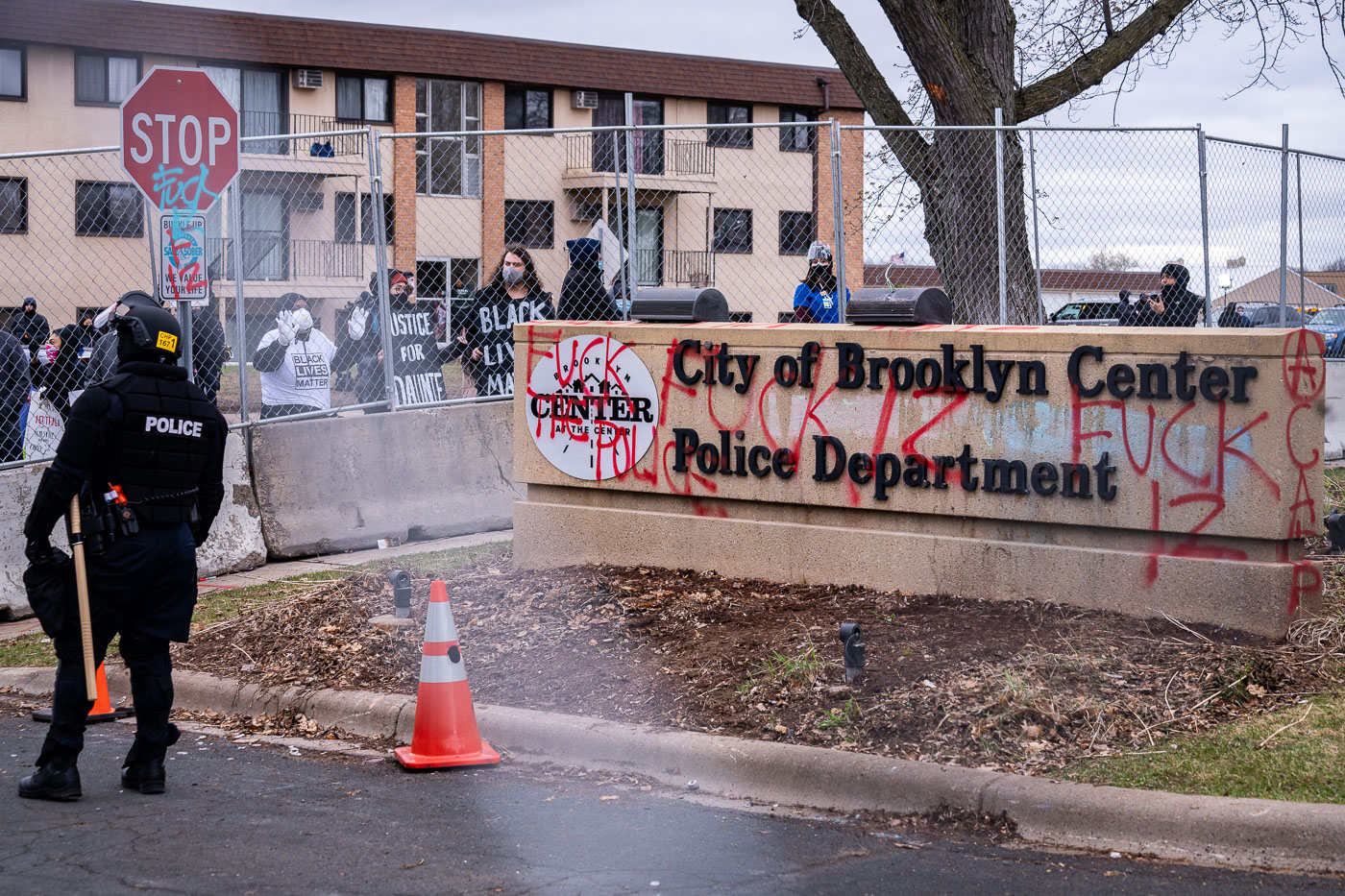
Graffiti-covered Brooklyn Center Police Department sign during a protest in Brooklyn Center, Minnesota.
Protesters gathered outside the Brooklyn Center Police Department following the fatal shooting of Daunte Wright on April 11, 2021. The department building and its signage were defaced with graffiti during the unrest. The protests, which occurred in Brooklyn Center, Minnesota, were part of a larger wave of demonstrations against police brutality and racial injustice that followed the incident.

Brooklyn Center Police Department Graffiti and Protest
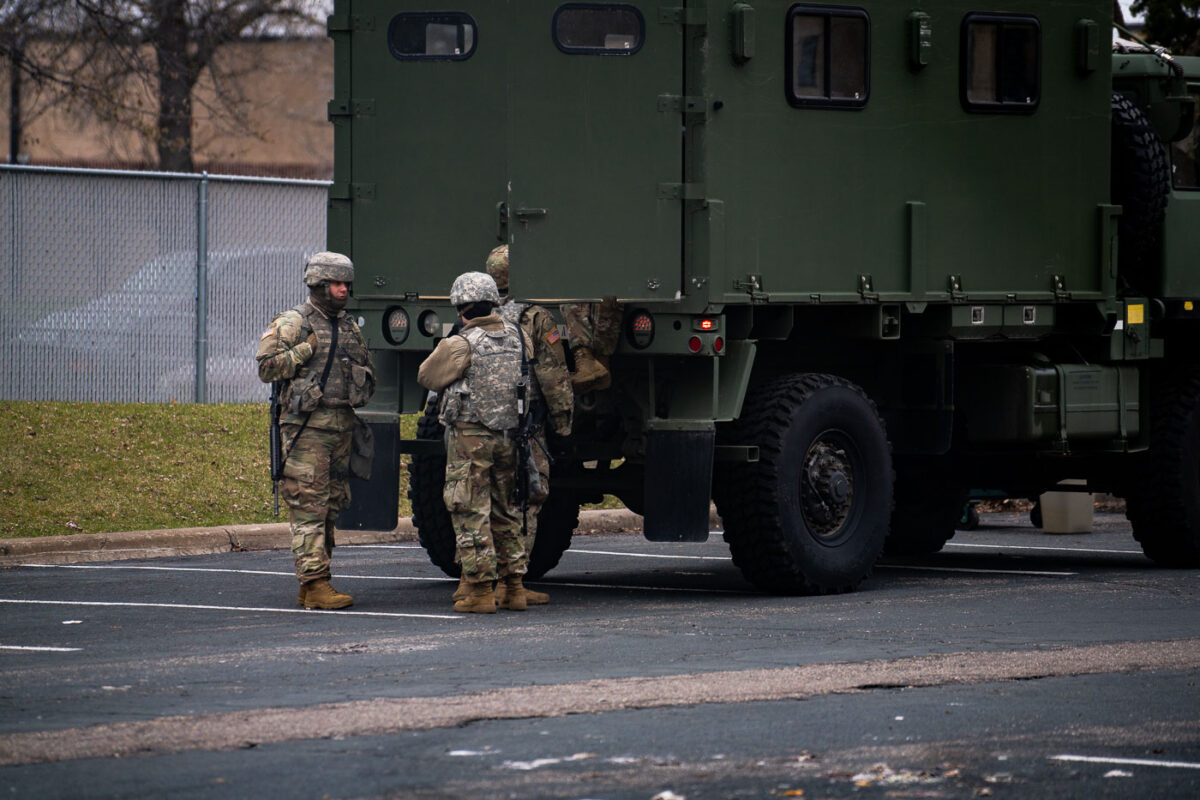
Minnesota National Guard troops beside a military truck at Brooklyn Center Police Department in Brooklyn Center.
Members of the Minnesota National Guard are pictured outside the Brooklyn Center Police Department. The deployment occurred in April 2021 following protests and unrest after the fatal shooting of Daunte Wright by a police officer in the city. The National Guard was activated to support local law enforcement and maintain order during the period of civil disturbance. This event highlighted the complex relationship between law enforcement, community, and military presence during times of heightened tension.

Minnesota National Guard at Brooklyn Center Police Department

National Guard vehicle on Lake Street in Minneapolis beside boarded storefronts.
A Minnesota National Guard vehicle is parked on Lake Street in Minneapolis following the killing of Daunte Wright by police in nearby Brooklyn Center. The presence of military vehicles on city streets was a response to unrest and protests that occurred in the days following Wright's death, which echoed the larger demonstrations that took place in the city after the murder of George Floyd in 2020. Businesses along Lake Street had boarded up their windows and storefronts in anticipation of potential damage, a common sight during periods of civil unrest in the city.

National Guard vehicle on Lake Street, Minneapolis
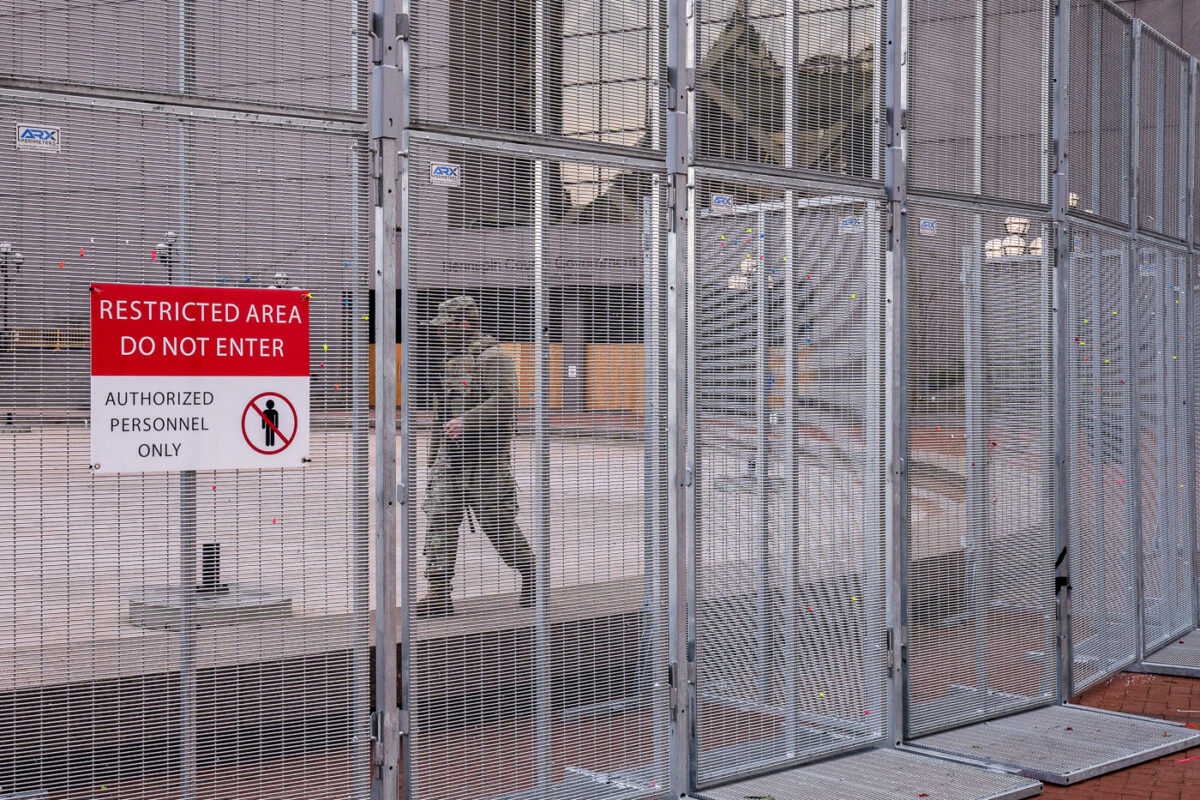
National Guard patrol behind security fencing at Hennepin County Government Center in Minneapolis.
National Guard members patrolled the perimeter of the Hennepin County Government Center in Minneapolis during the 2021 murder trial of Derek Chauvin. The trial, which followed the death of George Floyd, drew significant public attention and necessitated heightened security measures. Temporary fencing was erected around the government center to control access and ensure the safety of the building and its occupants. The presence of the National Guard underscored the tense atmosphere and the potential for civil unrest during this period.

National Guard patrols Hennepin County Government Center during Chauvin trial

Military vehicles arrive for Derek Chauvin murder trial
Members of the Minnesota National Guard were deployed to secure the Hennepin County Government Center in Minneapolis during the trial of Derek Chauvin in April 2021. The trial followed the murder of George Floyd in May 2020, which sparked widespread protests and unrest in the city. The government center, a prominent civic building in downtown Minneapolis, was fortified with fencing and security personnel to prevent potential disturbances during the highly publicized legal proceedings. The presence of military forces underscored the heightened tensions and the perceived need for enhanced security measures in the city.

National Guard at Hennepin County Government Center during Chauvin trial

National Guard vehicles on Nicollet Mall in August 2020
A Minnesota National Guard M-ATV and a Hennepin County Sheriff's Department vehicle are positioned on Nicollet Mall in downtown Minneapolis on August 29, 2020. Their presence followed civil unrest that erupted after false rumors of a police shooting circulated days earlier. Nicollet Mall, a prominent pedestrian and transit mall, serves as a central artery in the city's commercial district. The vehicles are stationed near a Target store, a major retailer with a significant presence in the area, reflecting the heightened security measures in the urban environment during this period.

National Guard M-ATV & Sheriff Vehicle, Nicollet Mall, 2020
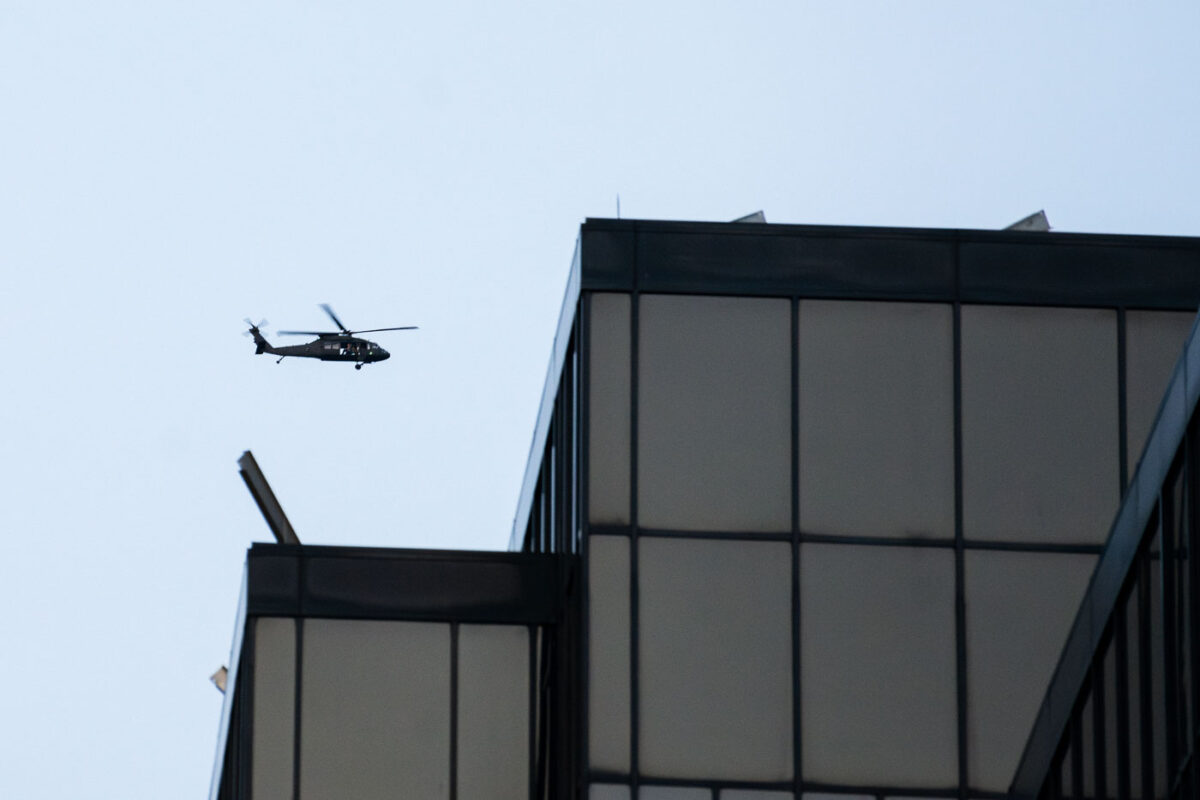
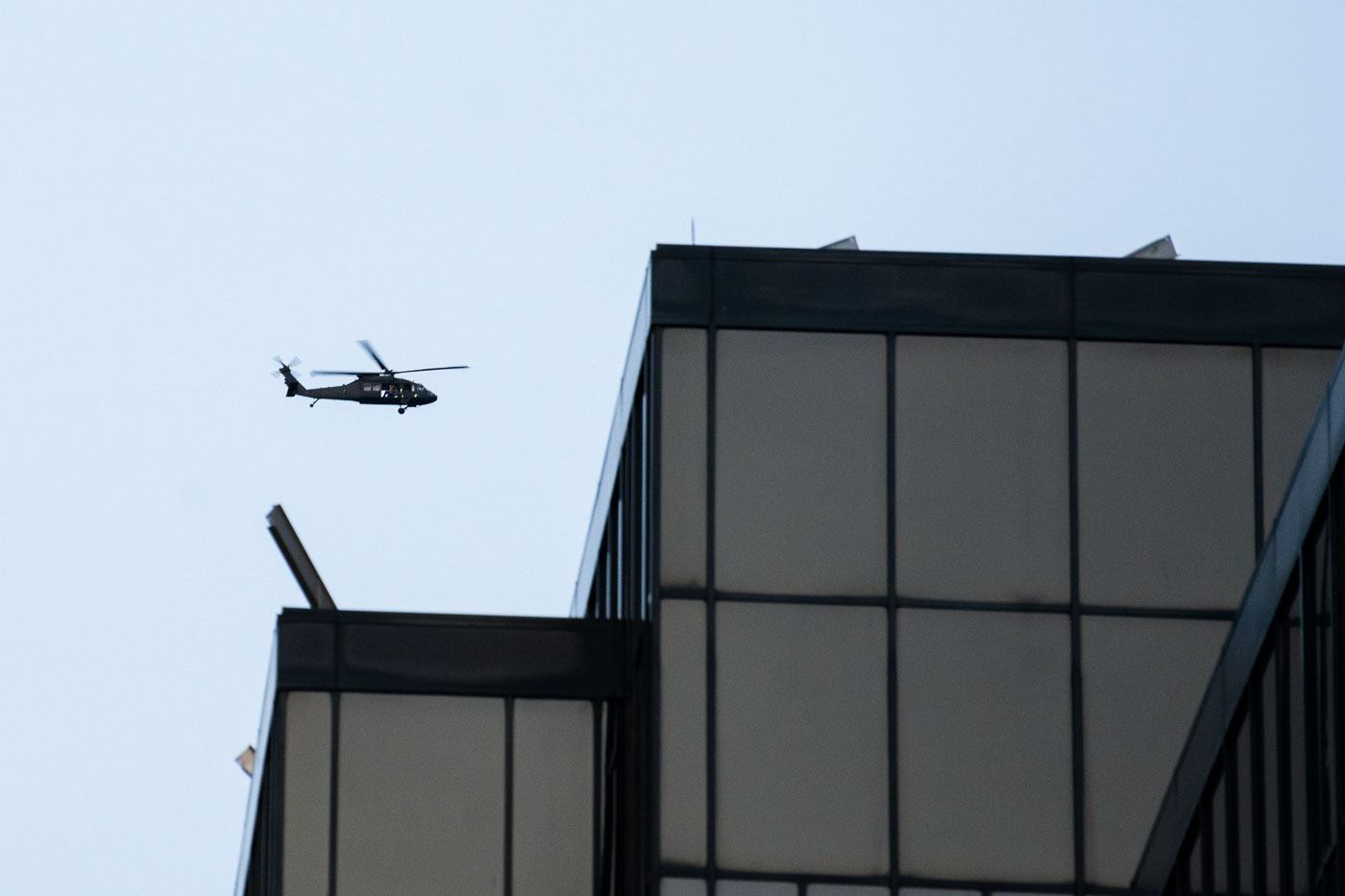
Military helicopter near the IDS Center in downtown Minneapolis on June 4, 2020.
A military helicopter flies past the IDS Center in downtown Minneapolis on June 4, 2020. The aircraft presence came during the state security response that followed protests over the killing of George Floyd. Completed in 1972, the IDS Center is the tallest building in Minneapolis and a major office, retail, and hotel complex in the city center.

Military Helicopter over IDS Center, Minneapolis 2020
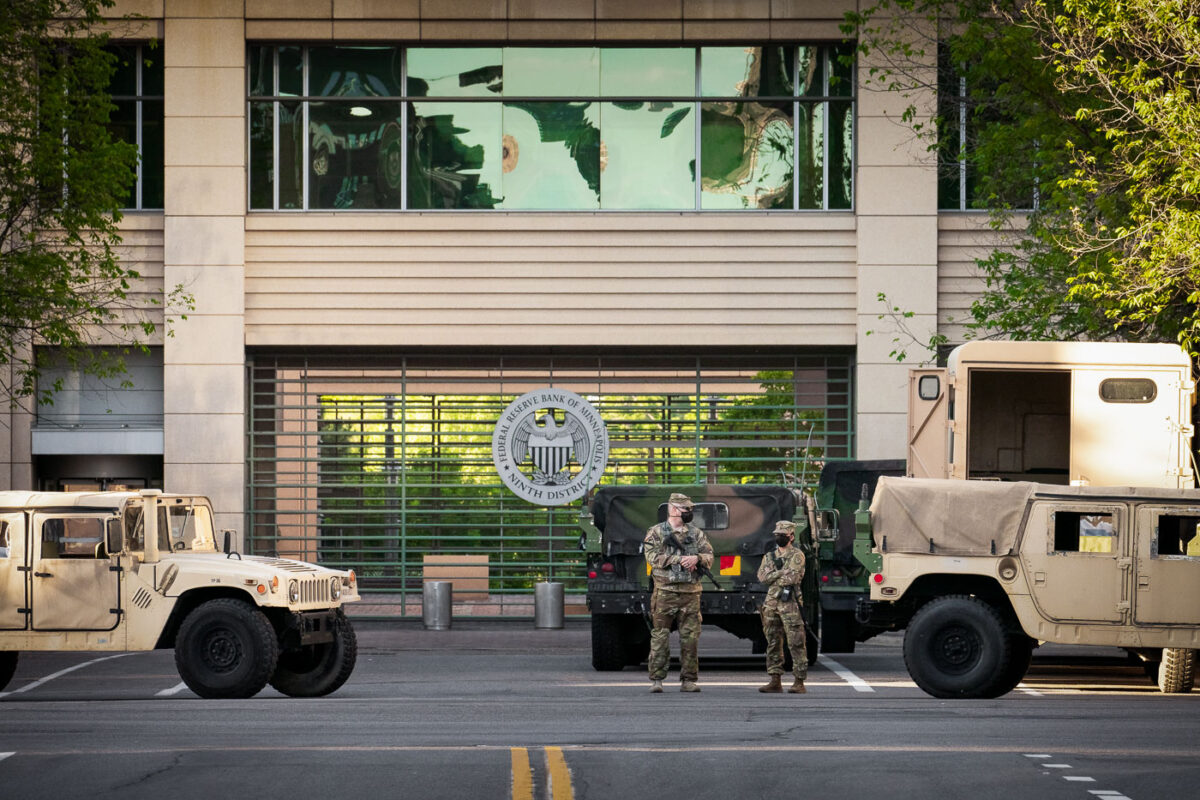
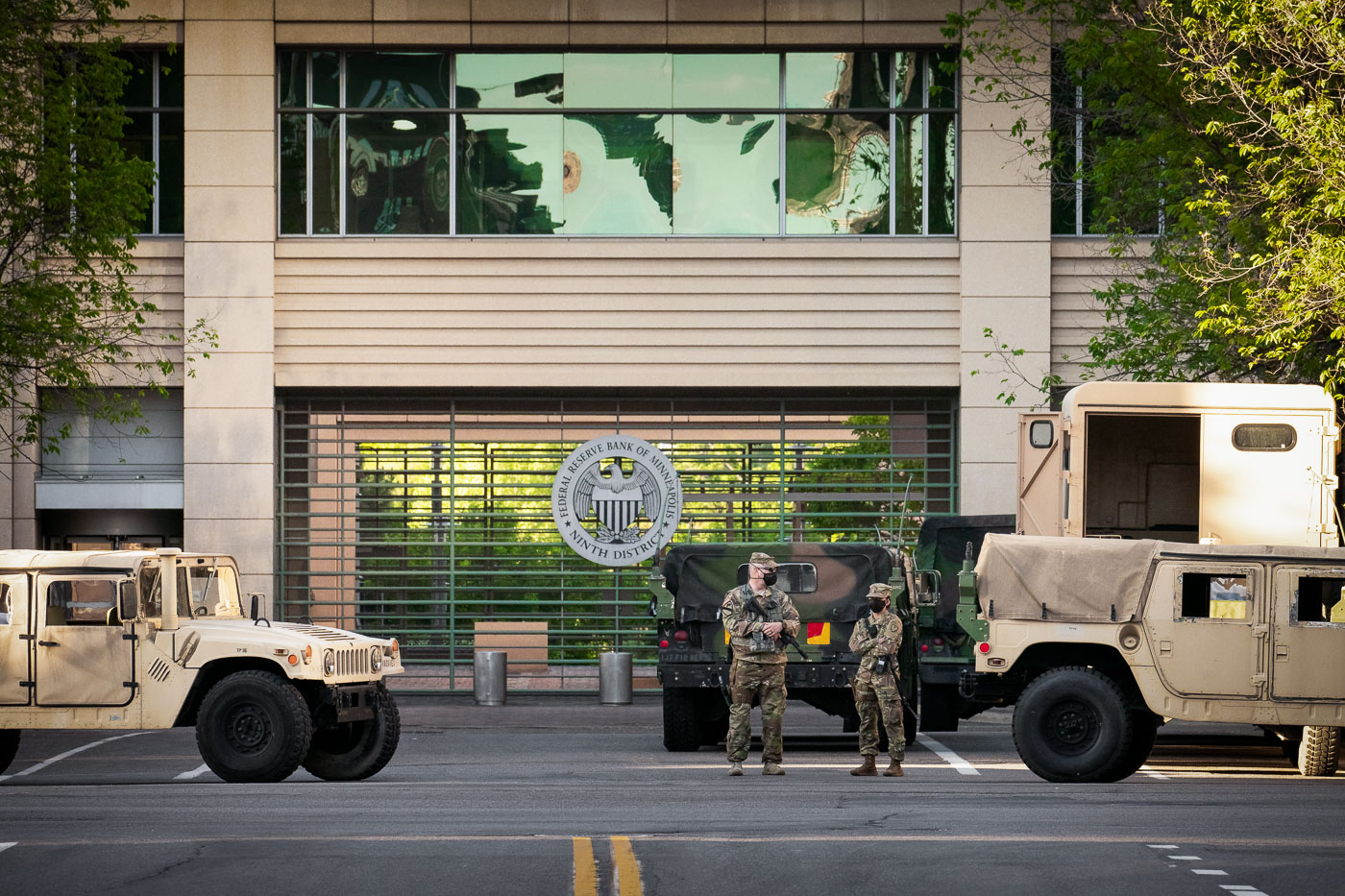
Minnesota National Guard outside the Federal Reserve Bank of Minneapolis on June 4, 2020.
Minnesota National Guard troops and military vehicles stand outside the Federal Reserve Bank of Minneapolis, Ninth District, in Minneapolis on June 4, 2020. The deployment took place during the period of unrest and protests that followed the killing of George Floyd on May 25. The Federal Reserve Bank building, visible behind the troops, is the regional headquarters for the Ninth Federal Reserve District.

Minnesota National Guard guarding Federal Reserve Bank, Minneapolis
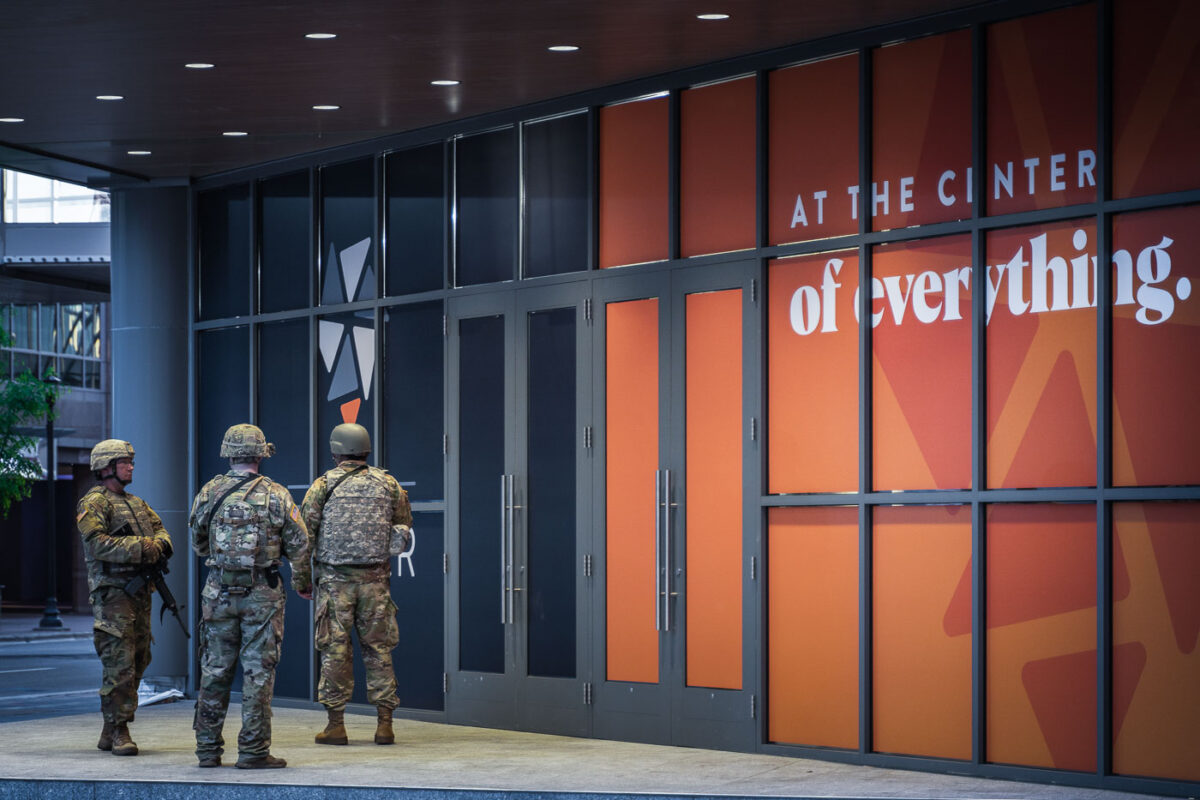
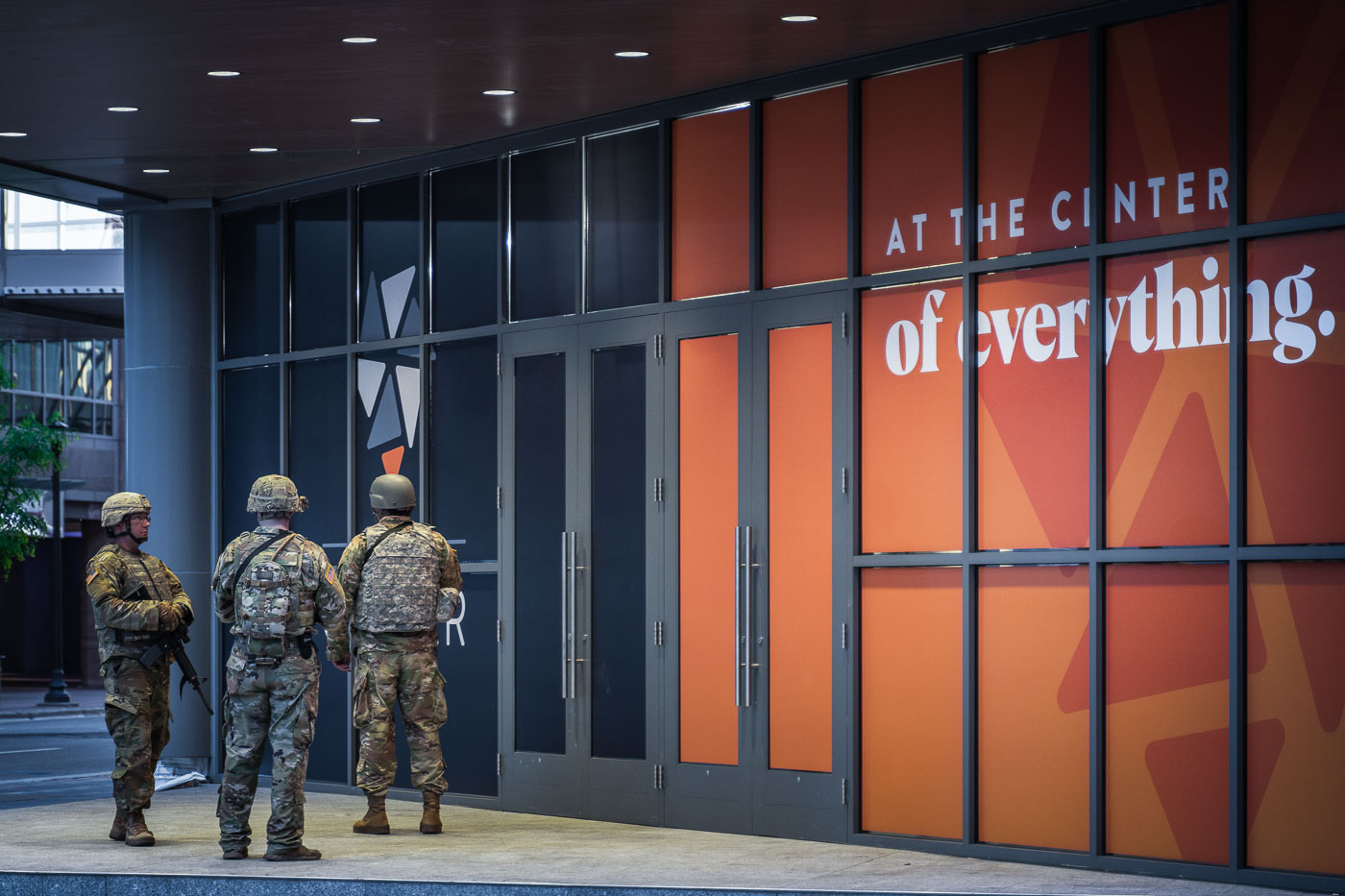
Minnesota National Guard troops outside City Center in downtown Minneapolis during George Floyd protest unrest.
Minnesota National Guard troops stand outside City Center in downtown Minneapolis on June 1, 2020, during protests following the May 25, 2020 murder of George Floyd. The image shows three armed service members at the entrance to the mixed-use retail and office complex as the city remained under curfew orders that week.

Minnesota National Guard at City Center, Minneapolis

National Guard truck at Chicago Avenue and Lake Street in Minneapolis amid debris and haze.
Minnesota National Guard soldiers and a Minneapolis Police vehicle are stationed at Chicago Avenue South and Lake Street in Minneapolis on May 30, 2020. A military transport truck is parked beside the Los Ocampo commercial building, with debris and haze visible along the corridor. The deployment came during the unrest and protests that followed the murder of George Floyd, when National Guard troops and local law enforcement were sent to major intersections and business districts across south Minneapolis.

National Guard at Chicago Ave & Lake St, Minneapolis
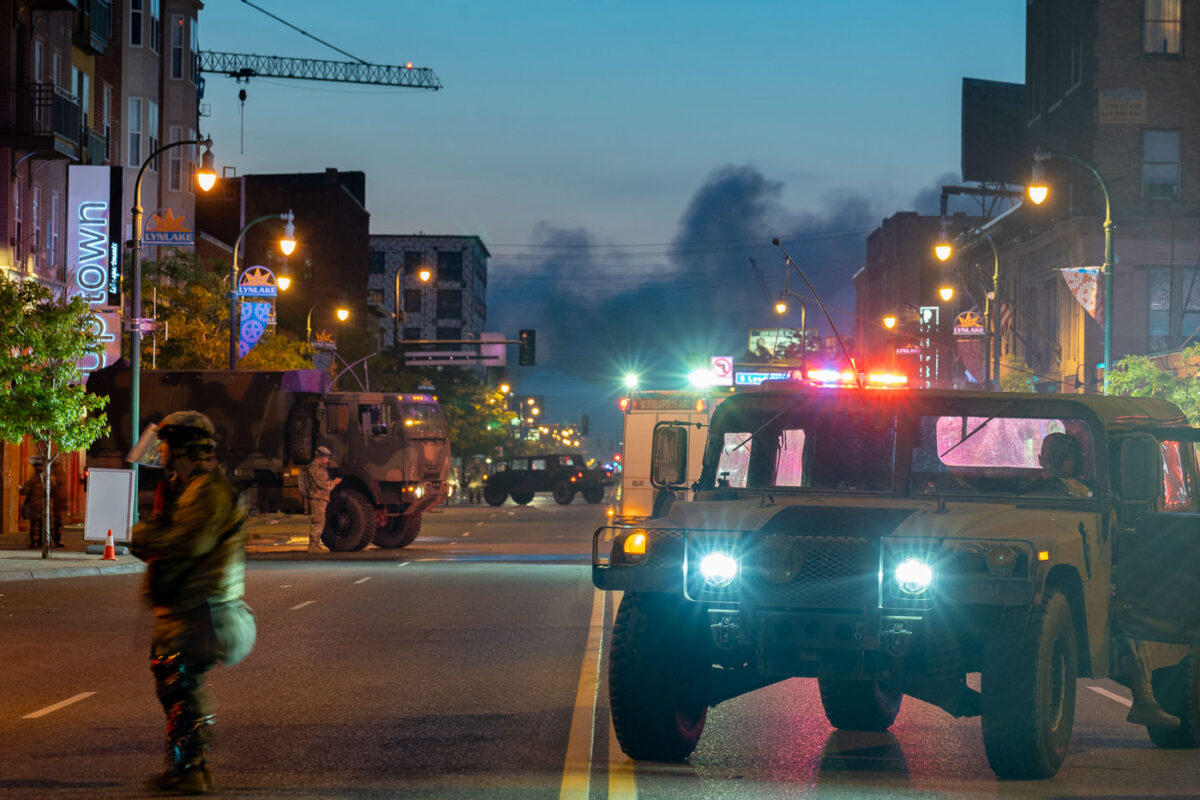
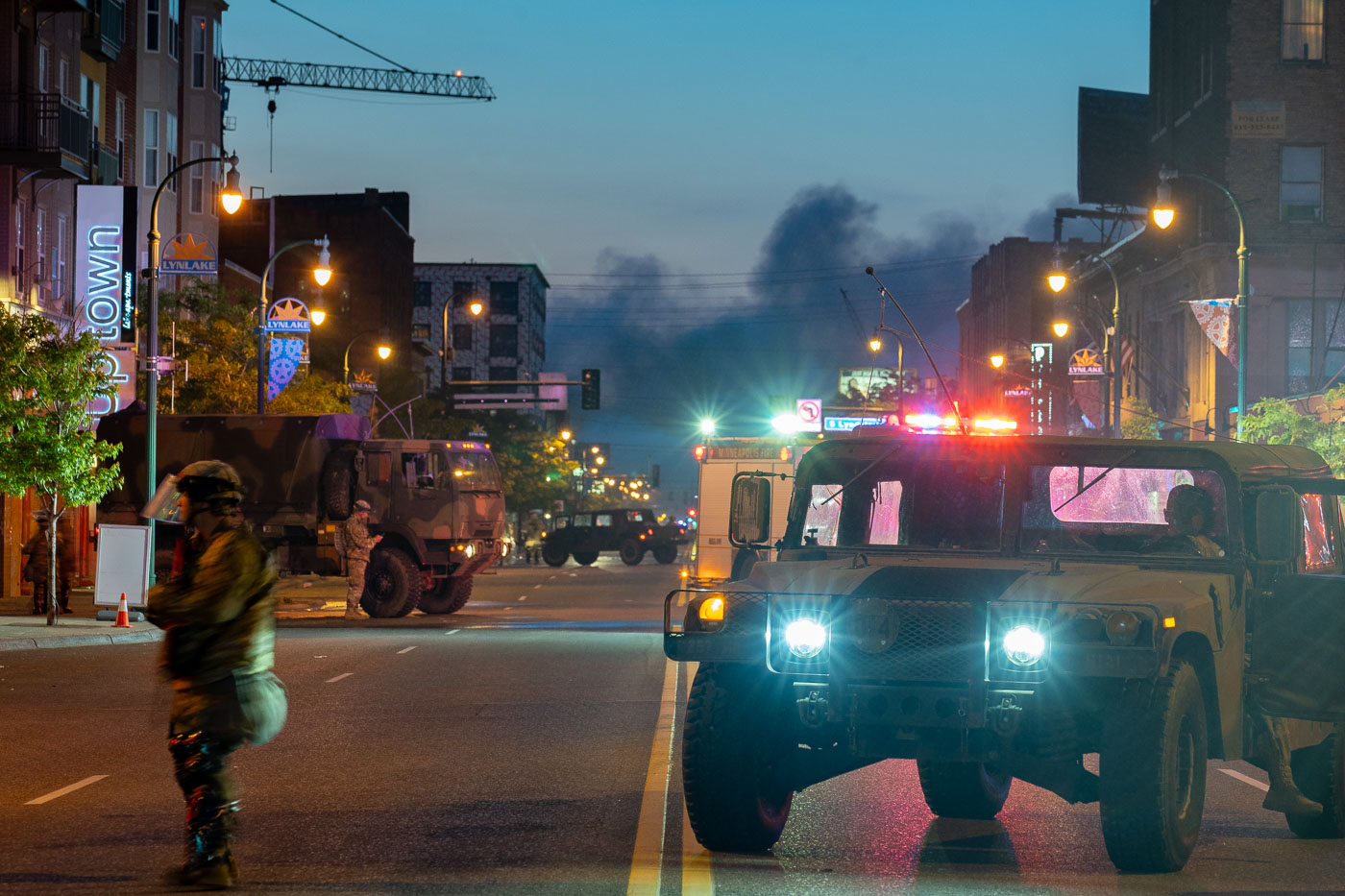
Minnesota National Guard vehicles on Lake Street in Minneapolis as smoke rises near LynLake at dawn.
Minnesota National Guard vehicles and personnel are stationed on Lake Street in Minneapolis near the LynLake district on May 30, 2020. Smoke rises in the distance at dawn as military and emergency vehicles line the commercial corridor after several nights of unrest following the killing of George Floyd. Lake Street is a major east-west route through South Minneapolis, lined with businesses, housing, and neighborhood landmarks.

National Guard on Lake Street, Minneapolis
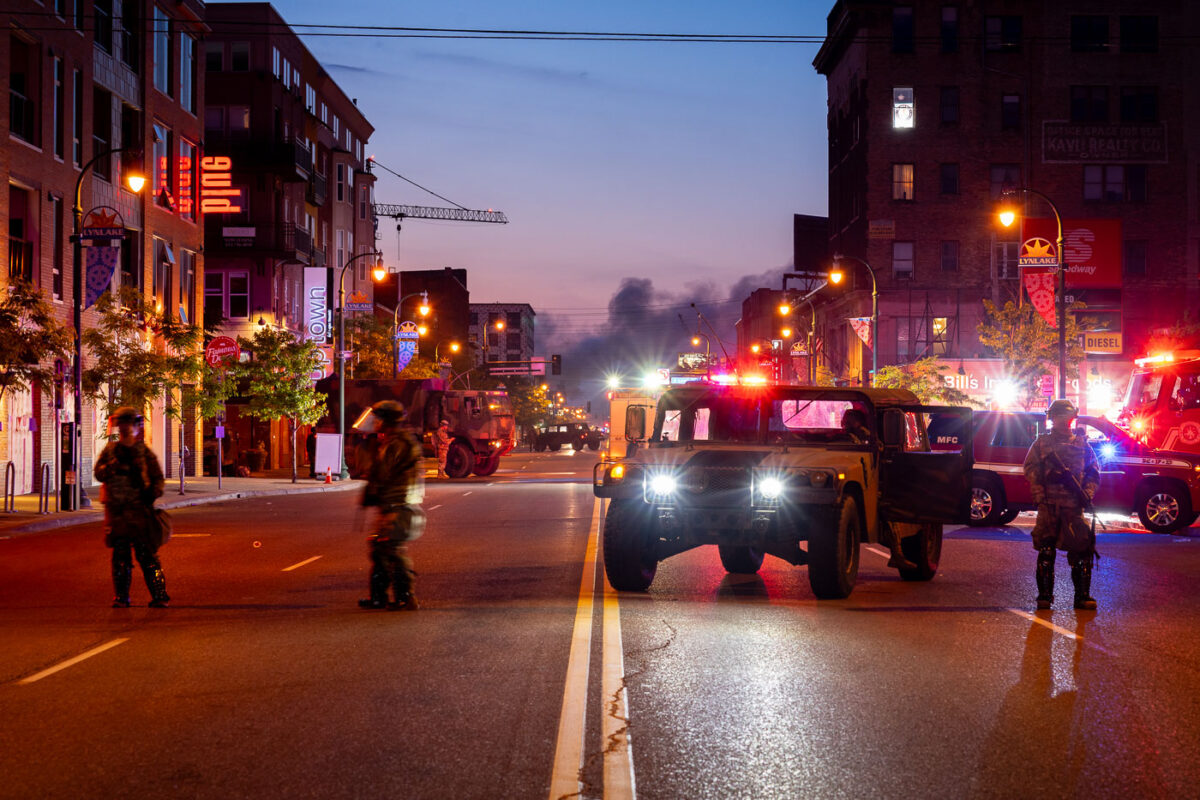
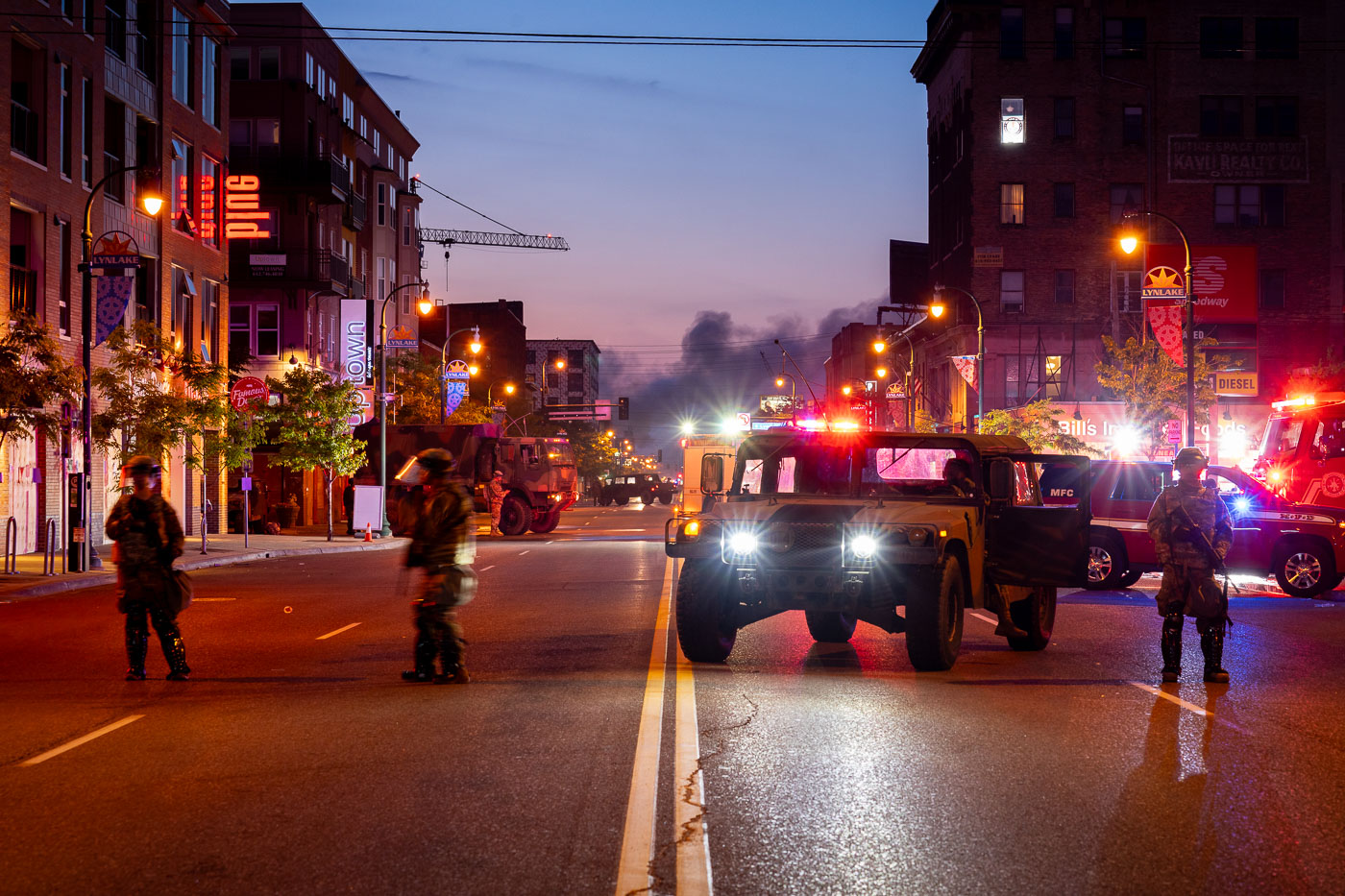
National Guard vehicles block Lake Street in Minneapolis before sunrise as smoke rises in the distance.
Minnesota National Guard troops and military vehicles block Lake Street in the LynLake area of Uptown Minneapolis before sunrise on May 30, 2020. The deployment came during protests and unrest following the killing of George Floyd by Minneapolis police, with smoke from fires visible in the distance along the commercial corridor. Lake Street, a major east-west route lined with apartments, shops, and businesses, was heavily affected during the unrest and remained under a strong security presence as day broke.

National Guard on Lake Street, Minneapolis Uprising
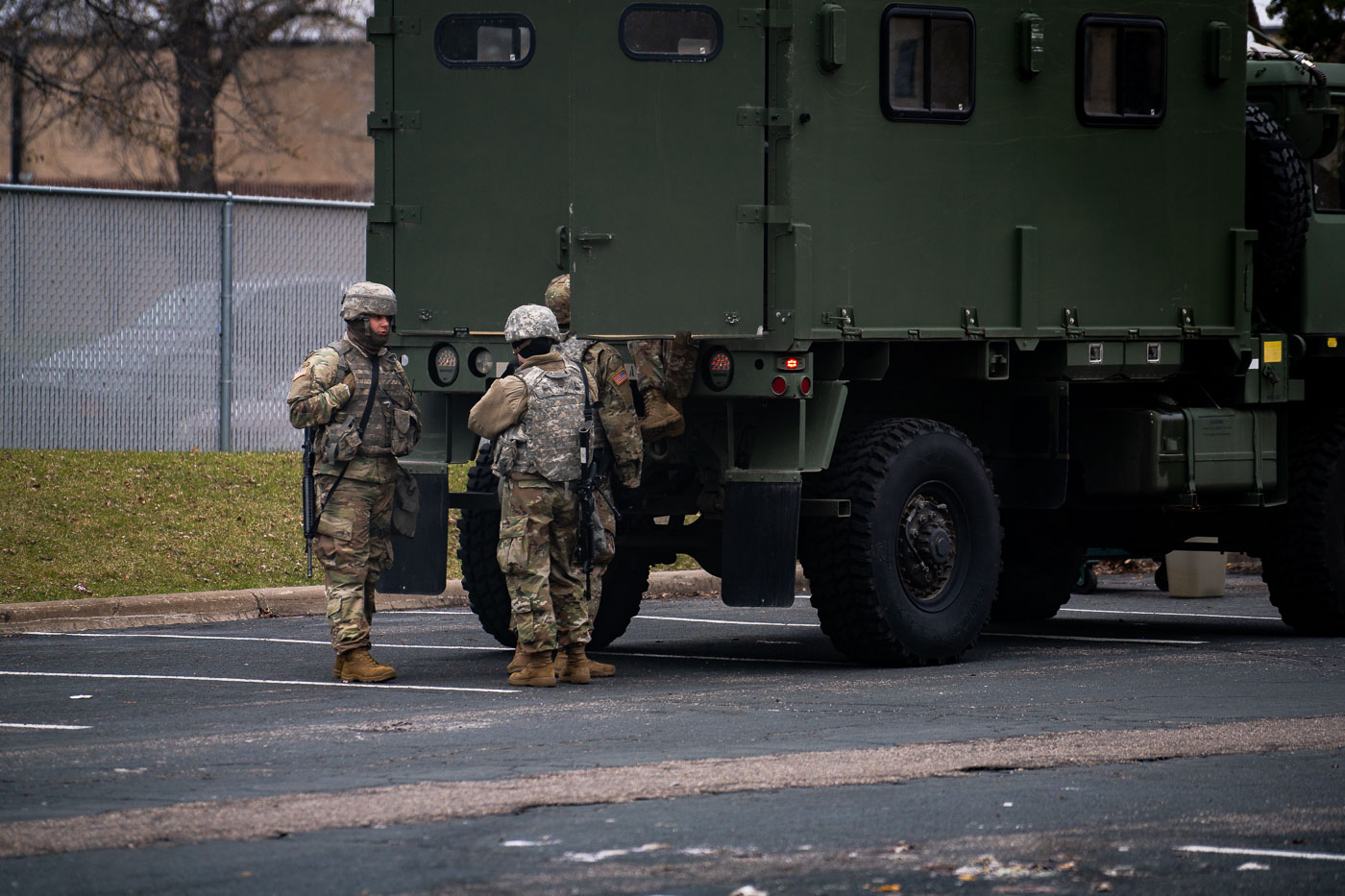
National Guard truck outside boarded Bryant-Lake Bowl in Uptown Minneapolis
A Minnesota National Guard vehicle and soldier stand outside the boarded Bryant-Lake Bowl in Uptown Minneapolis on May 30, 2020. The business, a long-running bowling alley, theater, and restaurant, had covered its street-facing windows with plywood as unrest followed the killing of George Floyd. The photograph shows the LynLake commercial district under military presence in the early morning hours.

National Guard at Boarded Bryant-Lake Bowl, Minneapolis
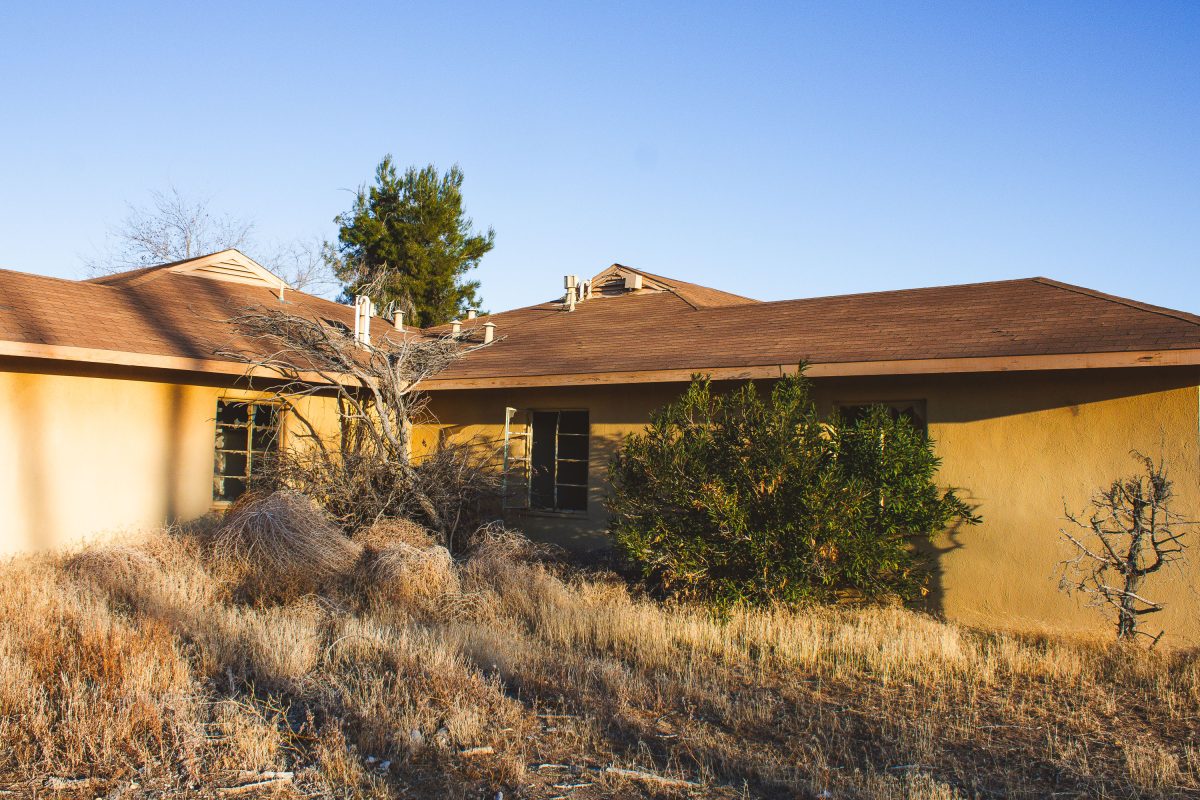
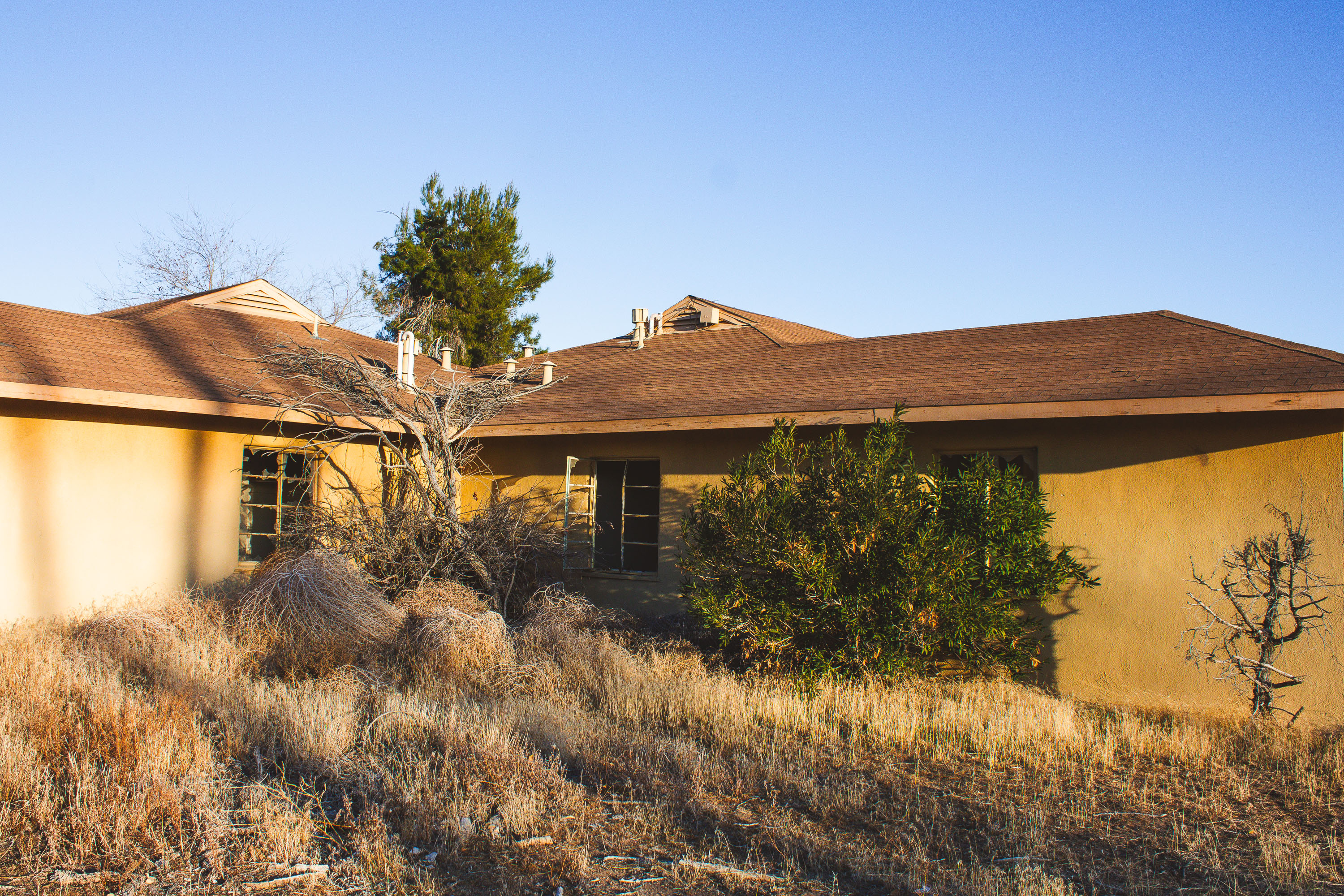
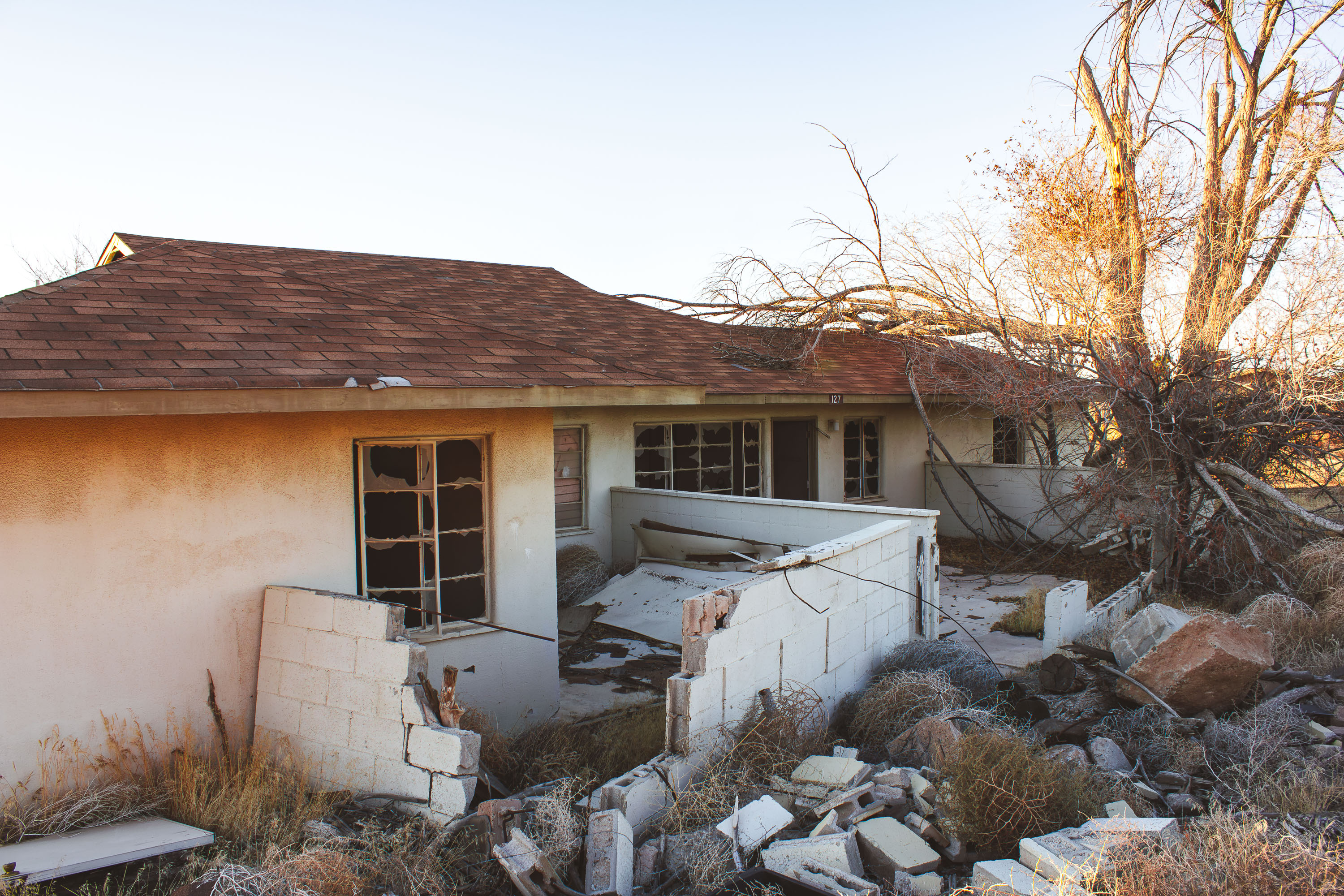
Abandoned stucco duplex at George Air Force Base in Victorville, California.
George Air Force Base operated near Victorville, California, from 1941 until it closed under the Base Realignment and Closure program in 1992. Family housing on the base supported thousands of assigned personnel, including those attached to fighter and training squadrons stationed there during the Cold War. After closure, much of the residential stock was left standing rather than demolished, and stucco homes like this one went unoccupied and unmaintained. The surrounding land was later redeveloped as Southern California Logistics Airport, though pockets of the old housing tracts remain, overtaken by desert grasses and brush.

Overgrown Yard at Abandoned Housing, George Air Force Base
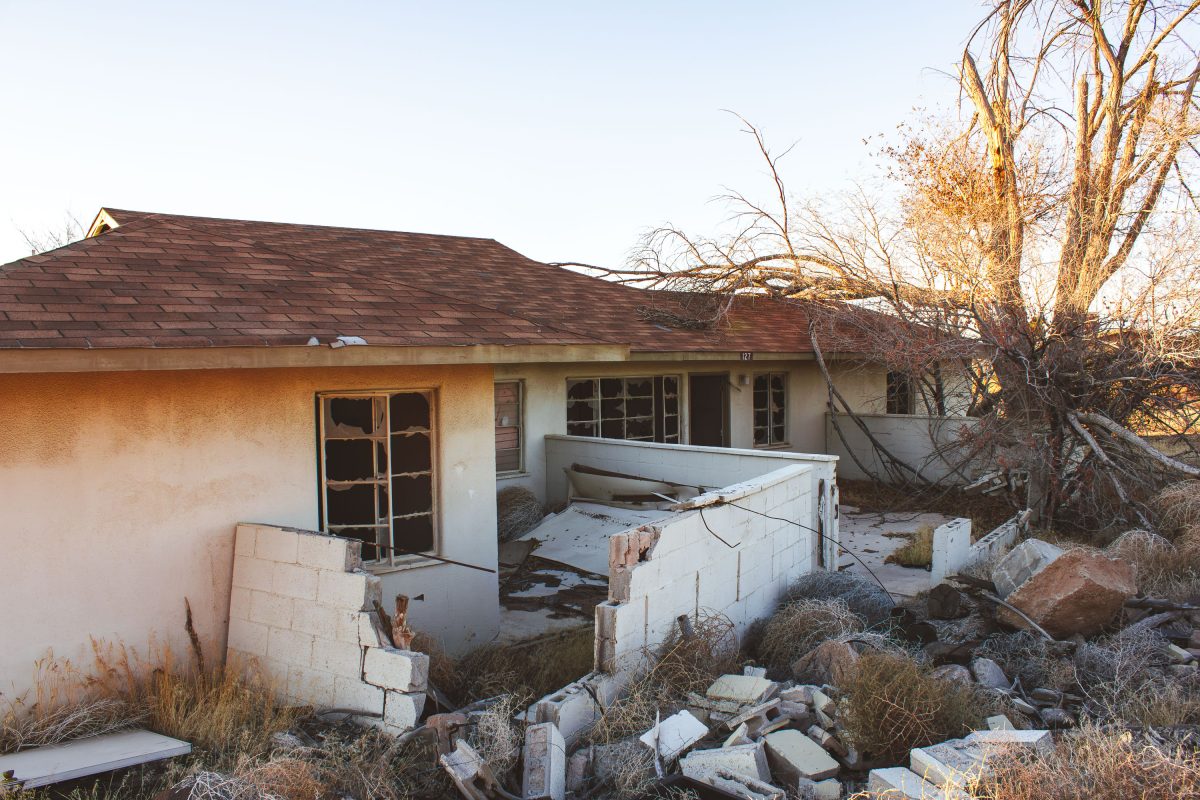
Abandoned residential building at George Air Force Base in Victorville, California, with deteriorated concrete foundation and
George Air Force Base operated near Victorville, California, from 1941 to 1992, training fighter pilots for World War II, Korea, and Vietnam before closing under a round of federal base realignment. Homes like this one housed airmen and their families during the base's decades of active service. After the Air Force transferred the property to local authorities, much of the residential stock was left standing rather than demolished, and decades of exposure have since collapsed roofs, walls, and cinderblock partitions throughout the neighborhood. Southern California Logistics Airport now operates on part of the former base, using its runways for aircraft storage and testing, while the old residential blocks remain largely untouched.

Crumbling Cinderblock Wall at Abandoned Housing, George Air Force Base
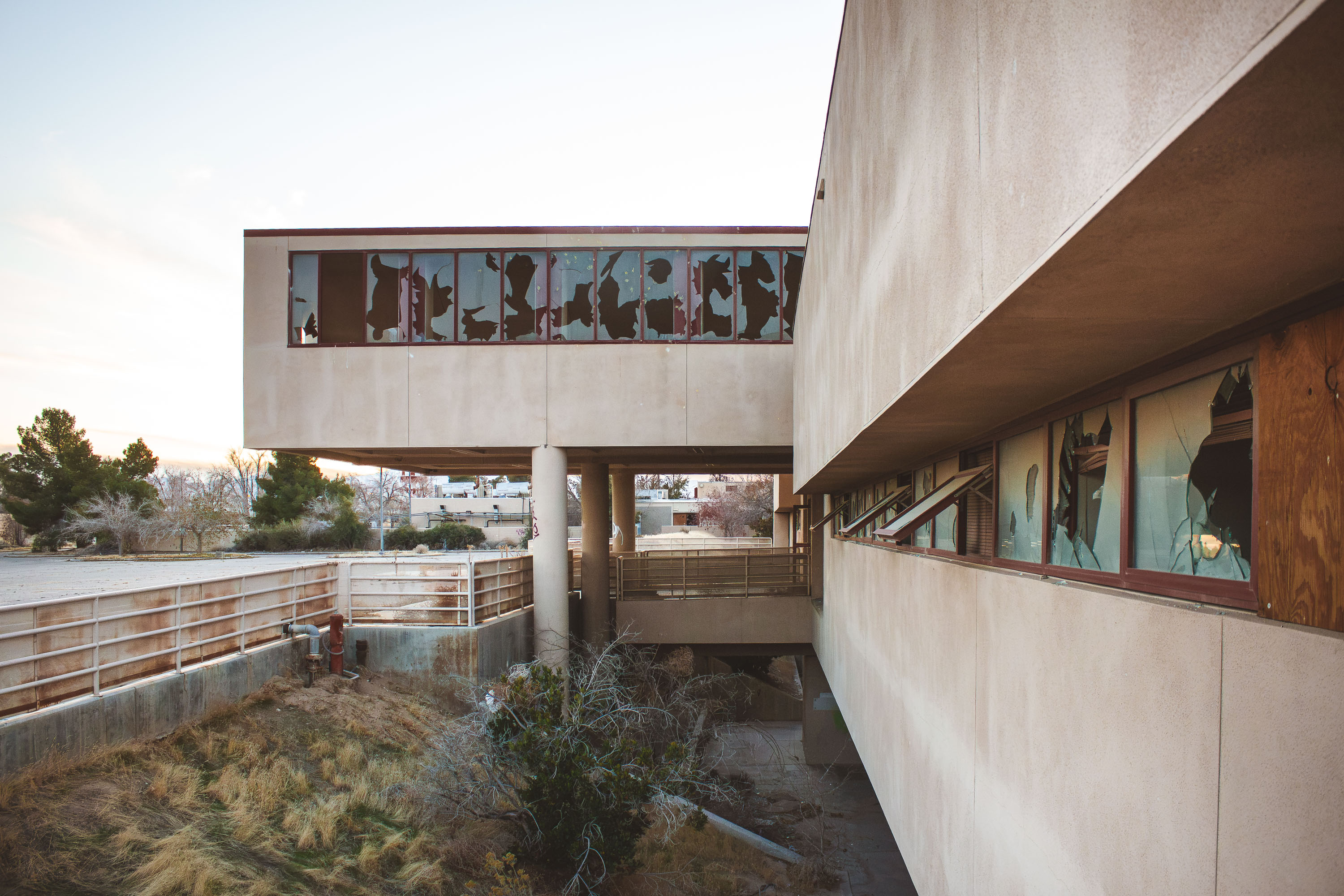
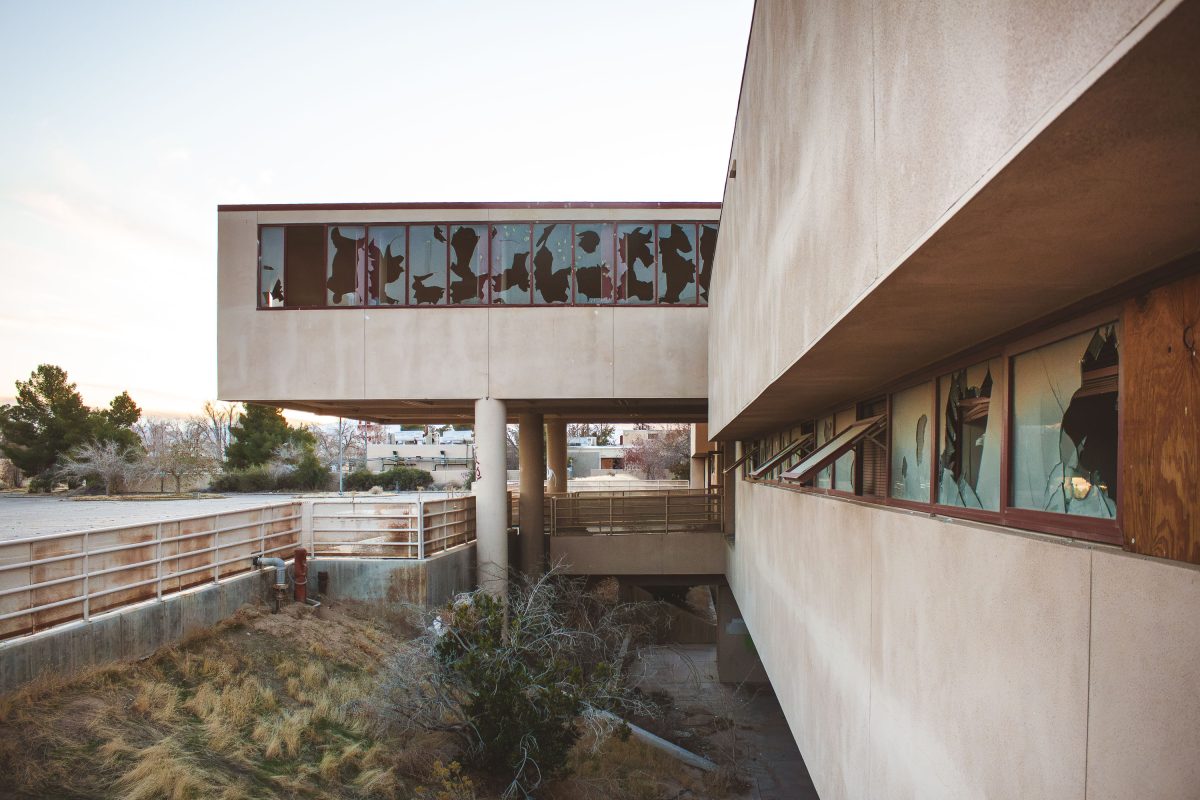
Elevated walkway with shattered windows at abandoned George Air Force Base in Victorville, California.
George Air Force Base operated near Victorville, California, from 1941 until its closure in 1992 during a round of nationwide base realignment. The elevated concrete walkway connected separate wings of the facility, letting personnel move between buildings without crossing the grounds below. After the closure, much of the property was redeveloped into the Southern California Logistics Airport, an aviation and industrial complex that reuses portions of the former runways and support buildings. Sections of the original base, including this passage, were left vacant, and decades without maintenance have left the windows broken out and the framing exposed.

Broken-Glass Skybridge at George Air Force Base

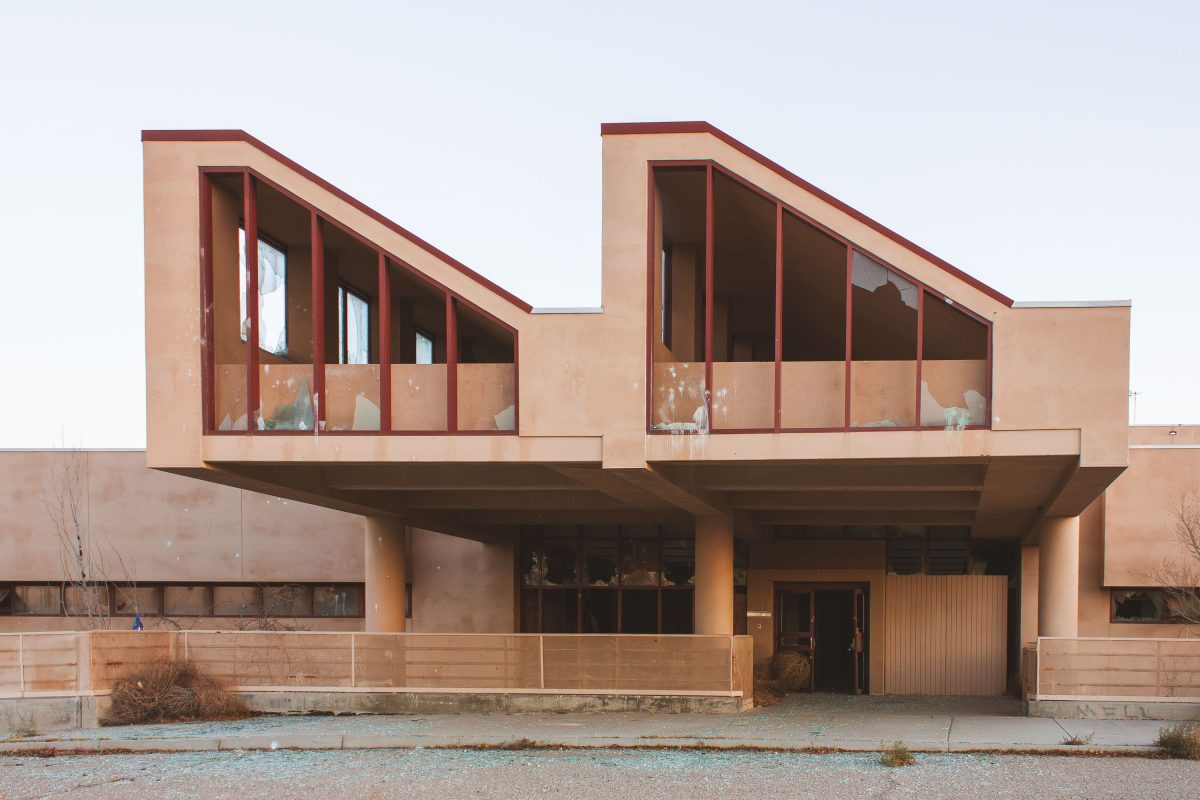
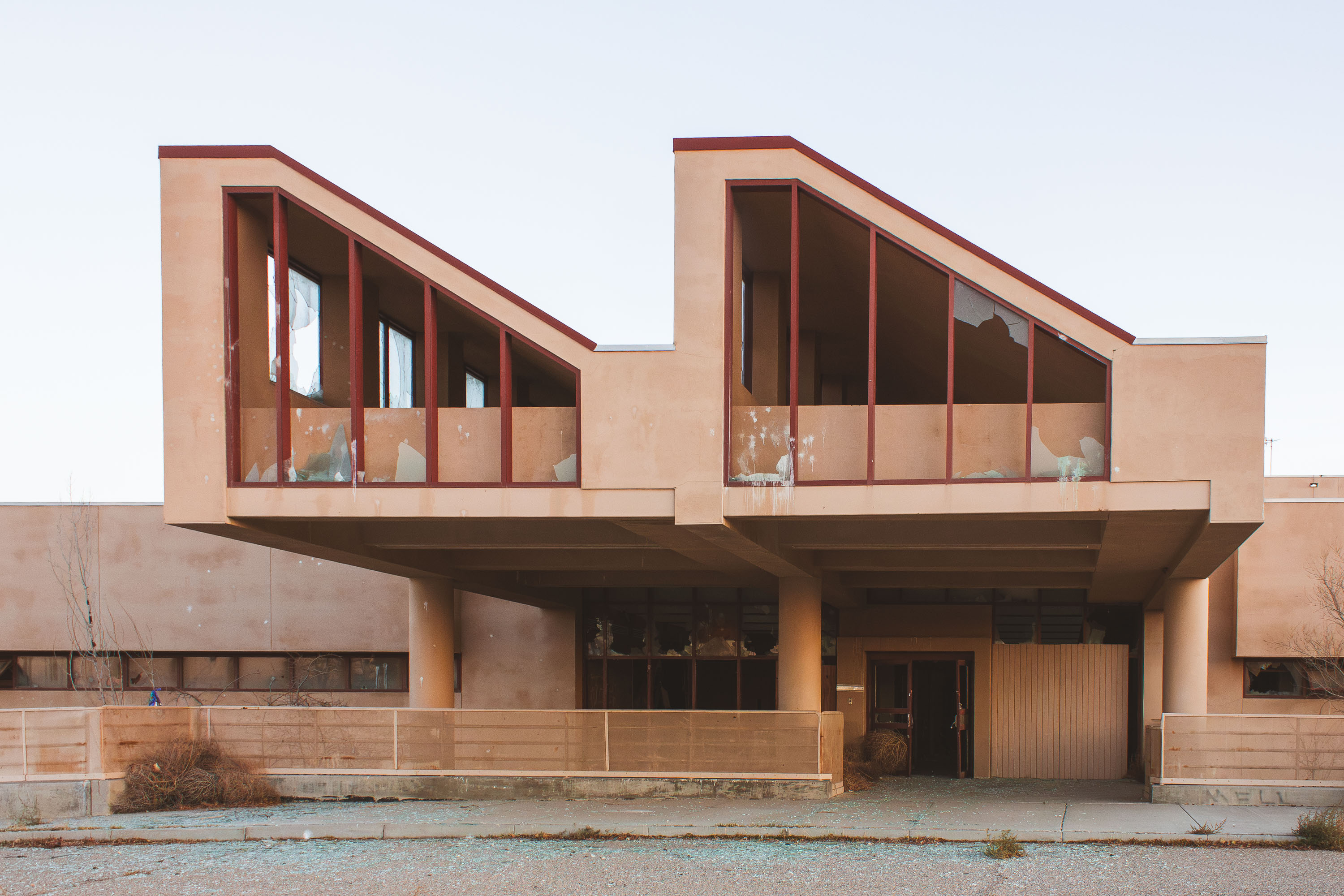
Abandoned community center at closed George Air Force Base in Victorville, California, with deteriorating stucco and broken
George Air Force Base trained fighter and bomber crews from 1941 until Congress ordered its closure under the 1988 Base Realignment and Closure Act, with final withdrawal in 1992. During the Cold War, the base hosted Tactical Air Command units alongside its training mission. Structures like this one served the base's recreational and community functions, built to support thousands of stationed personnel and their families. Much of the property now falls within the Southern California Logistics Airport, a joint civilian-military reuse of the former base, while other sections remain undeveloped and abandoned.

Angled Rooflines of the Community Center at George Air Force Base

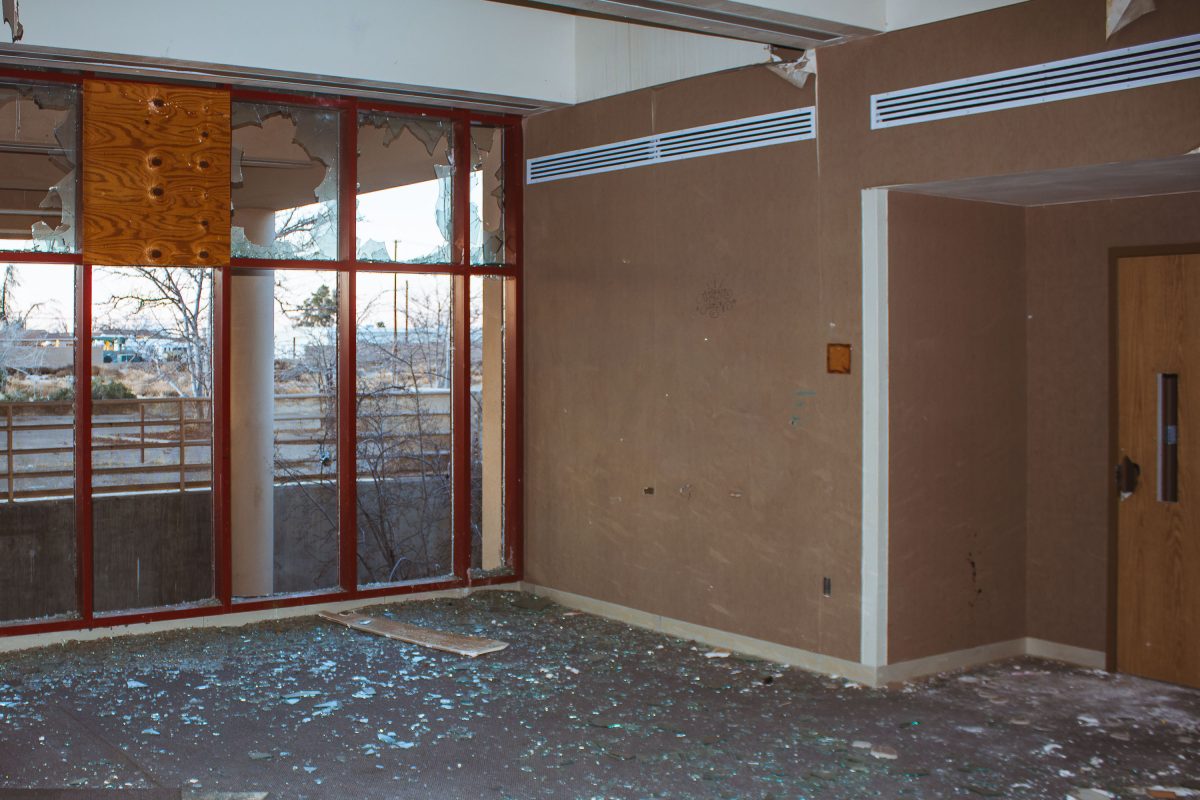
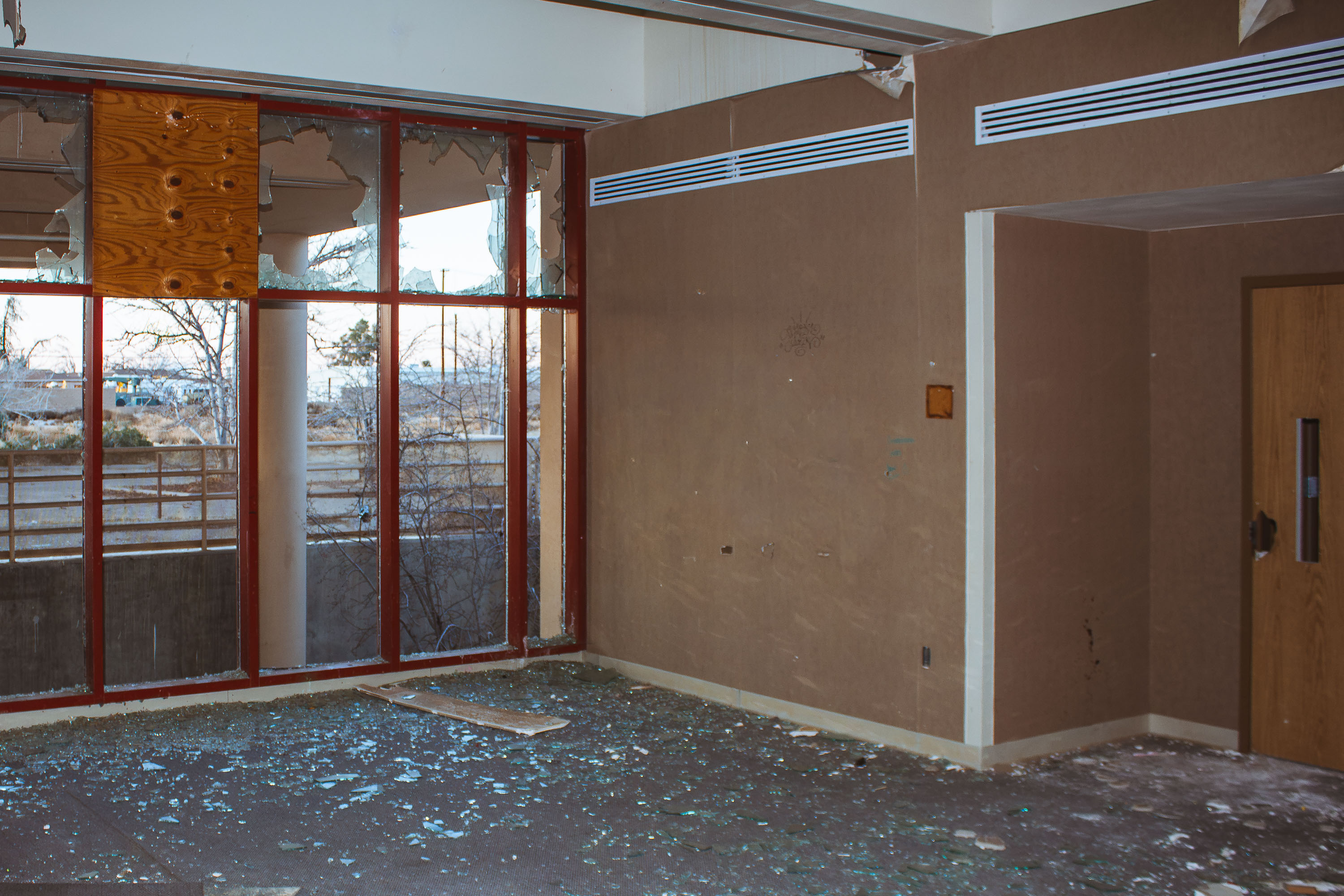
Abandoned officer housing interior with shattered glass doors at closed George Air Force Base, Victorville.
George Air Force Base opened in 1941 as Victorville Army Airfield and was renamed in 1950 to honor Brigadier General Harold H. George. It operated for decades as a fighter training installation, hosting squadrons that flew the F-4 Phantom and later the F-4G Wild Weasel. The Base Realignment and Closure Commission ordered the facility shut down in 1988, and the Air Force transferred the property in 1992. Part of the former base became Southern California Logistics Airport, while many administrative and support buildings from its operational years were left vacant and have since deteriorated.

Broken Glass Wall in an Administrative Building at George Air Force Base

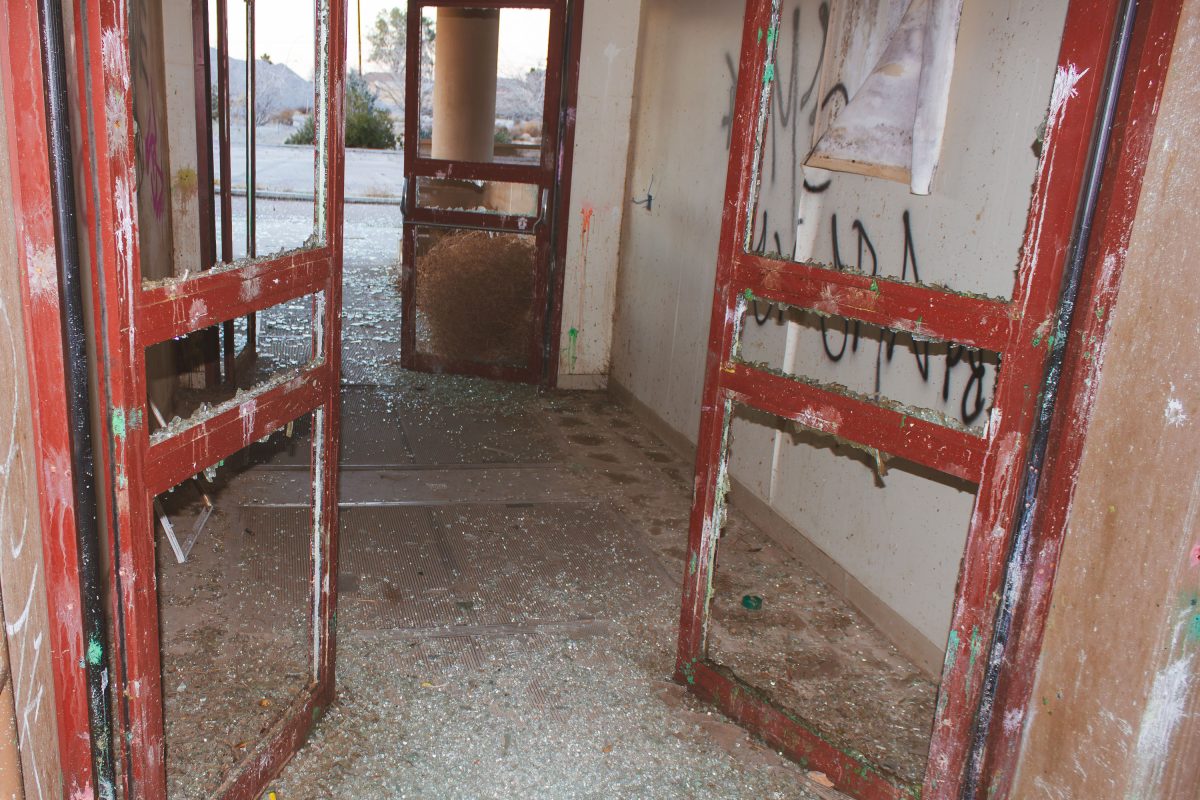
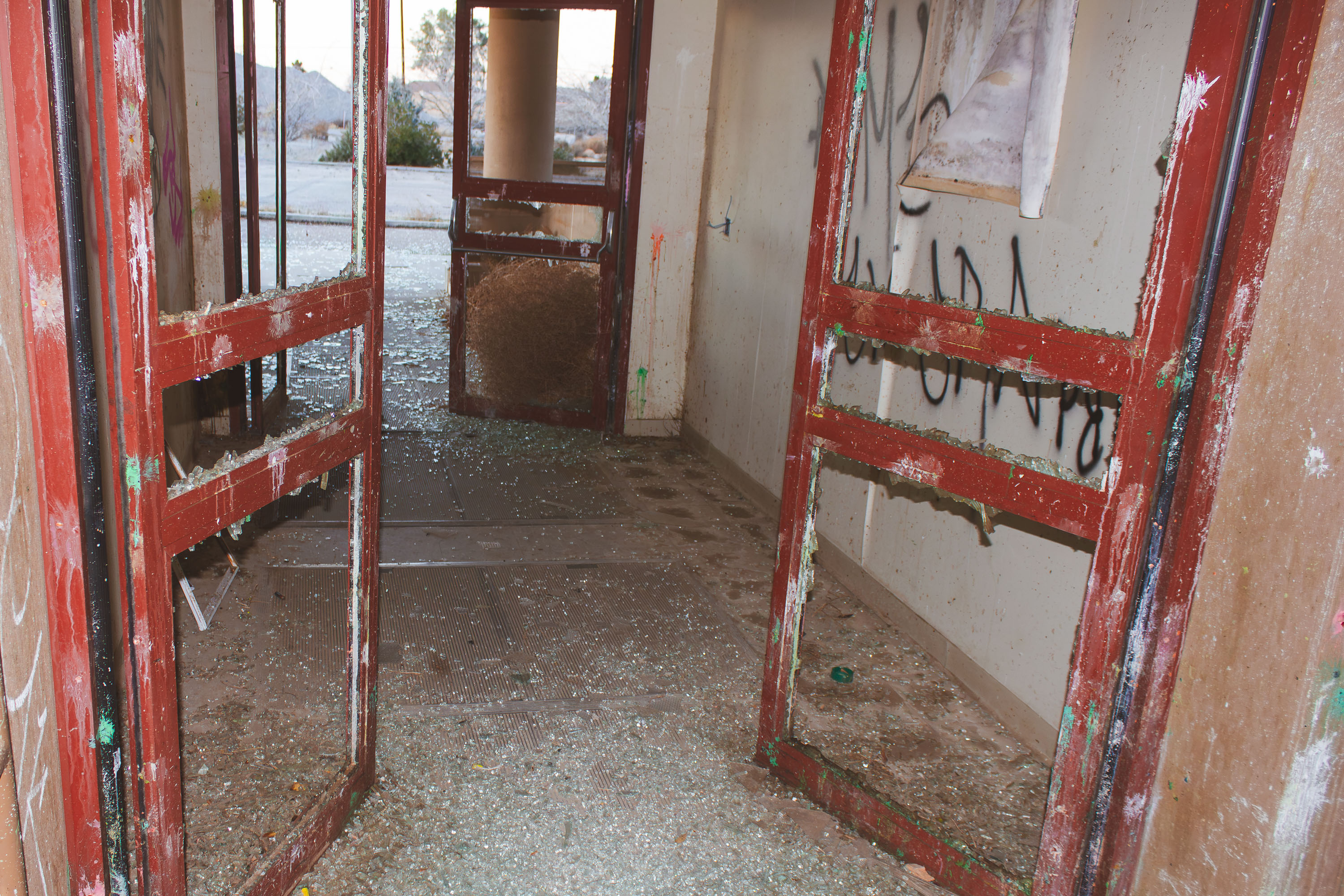
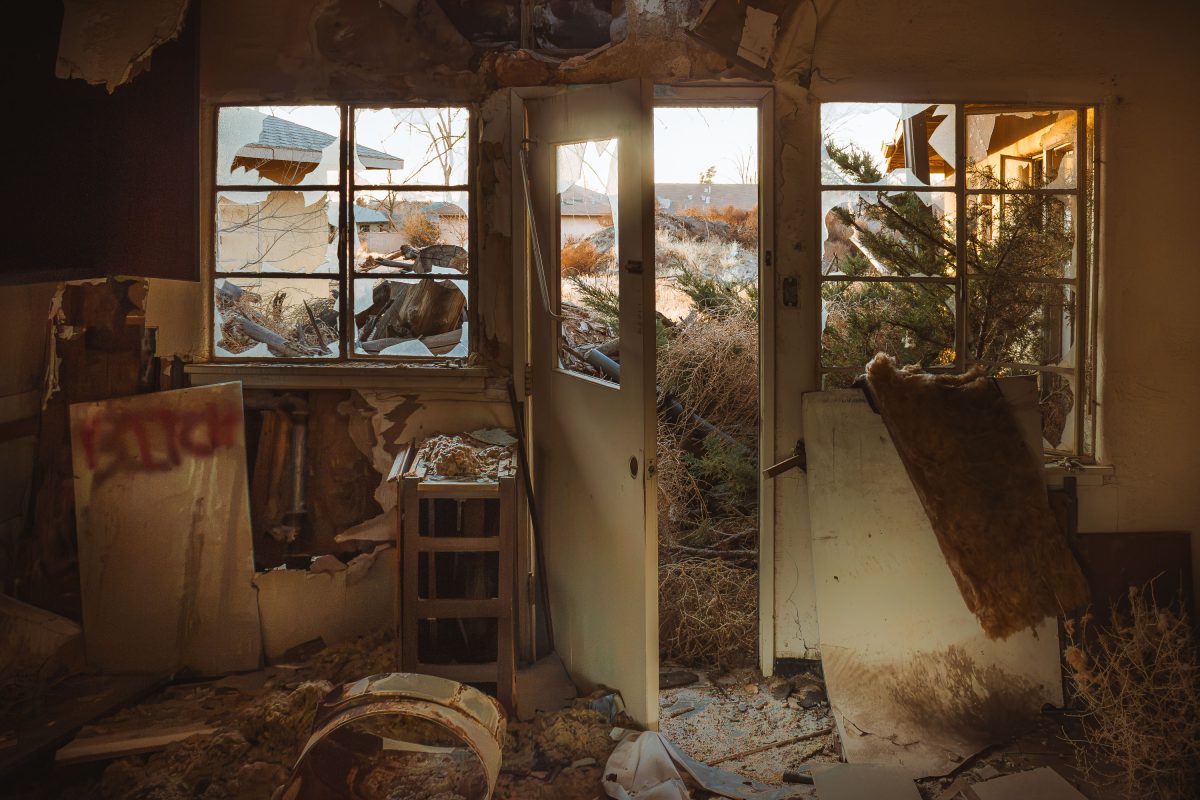
Deteriorated red doors with broken glass open onto an abandoned barracks interior at closed George Air Force Base in Victorville
George Air Force Base operated near Victorville, California, from 1941 until it closed in 1992 as part of a nationwide round of military base realignments. It served as a training installation for Tactical Air Command fighter pilots through much of the Cold War. Since closure, many of its former buildings have sat empty, with door frames, glass, and interior fixtures stripped or destroyed over decades of exposure and vandalism. Part of the base's runways and support facilities were later absorbed into Southern California Logistics Airport, though a large share of the original structures remain vacant.

Broken Doorframes and Glass Debris at George Air Force Base

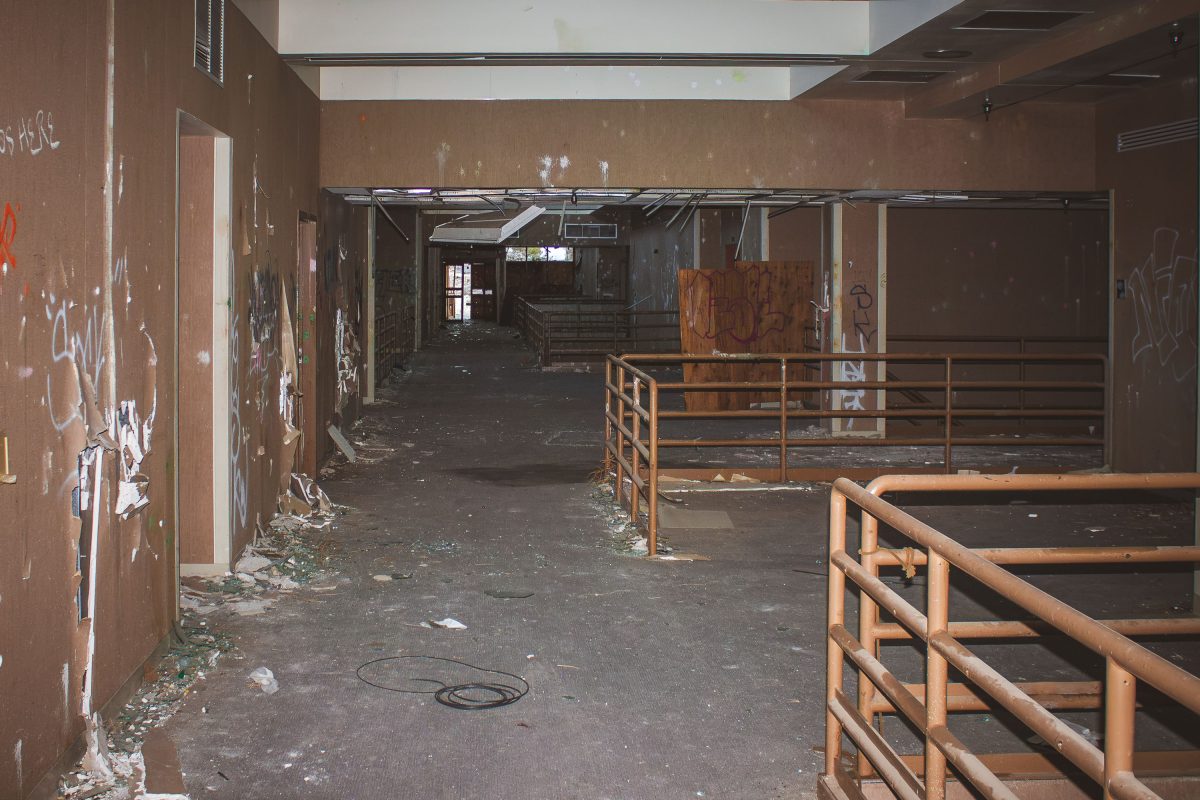
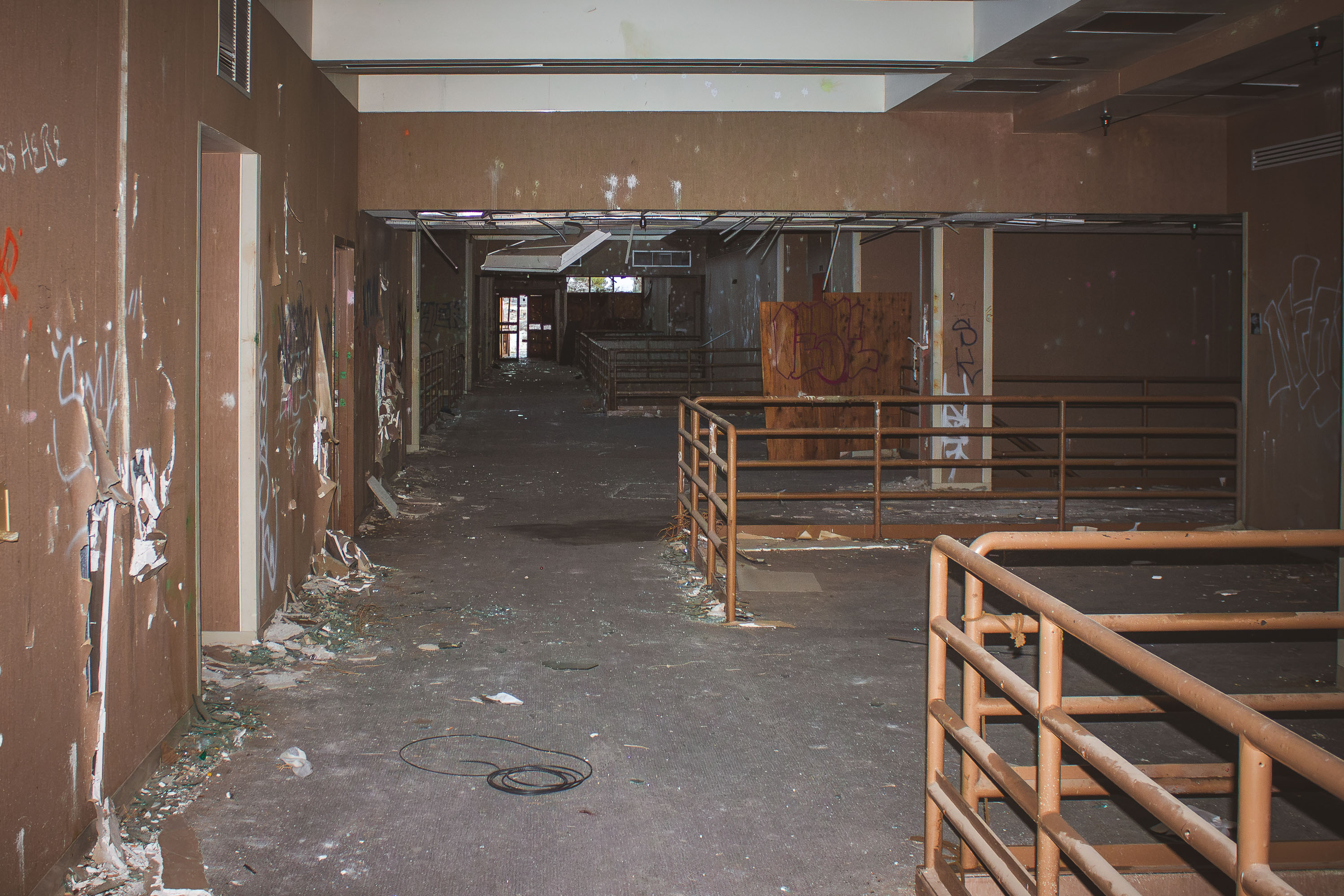
Gutted concourse of a base exchange at closed George Air Force Base in Victorville, California, with rusted railings and
George Air Force Base operated near Victorville, California, from 1941 until it closed under the 1991 Base Realignment and Closure process, with final shutdown in 1992. It served as a Tactical Air Command and later Air Combat Command installation, and its on-base community included a base exchange and commissary complex that functioned as the primary shopping center for resident personnel and their families. Since closure, portions of the former base have been redeveloped as Southern California Logistics Airport, while other structures, including former retail buildings, have been left vacant and stripped of fixtures.

Abandoned Base Exchange Concourse at George Air Force Base

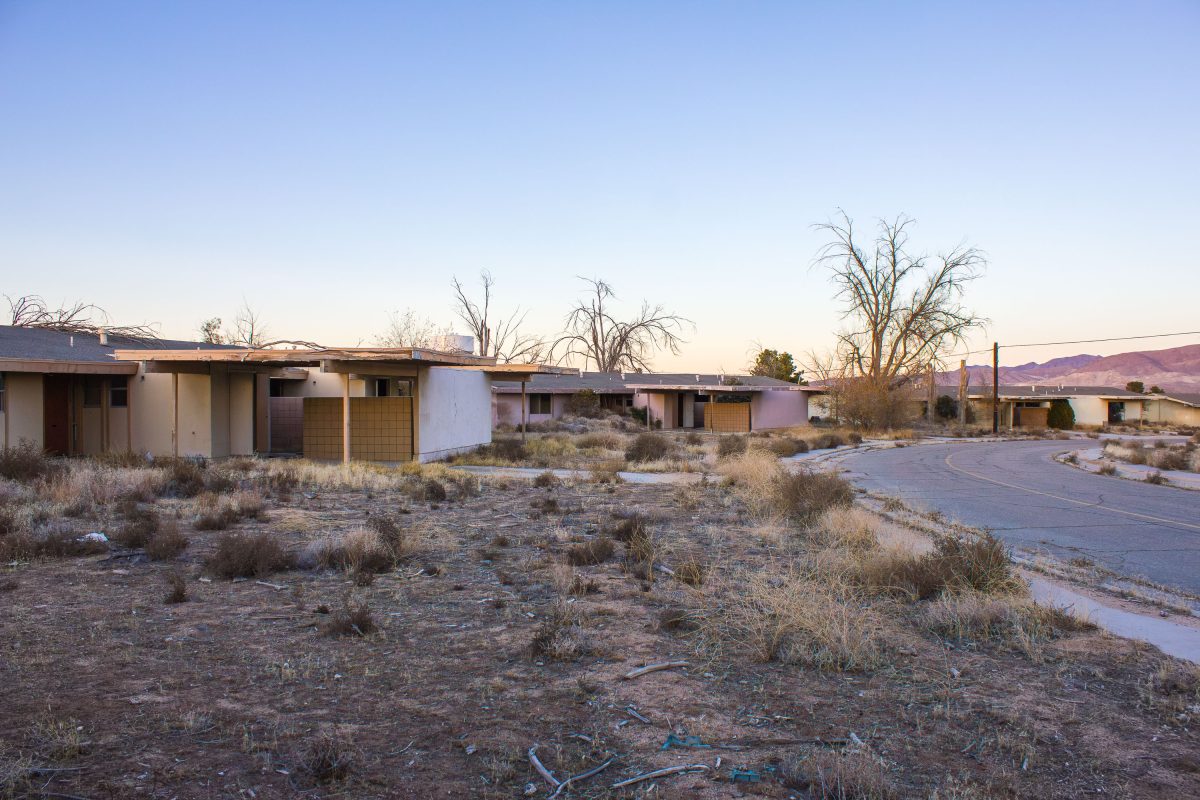
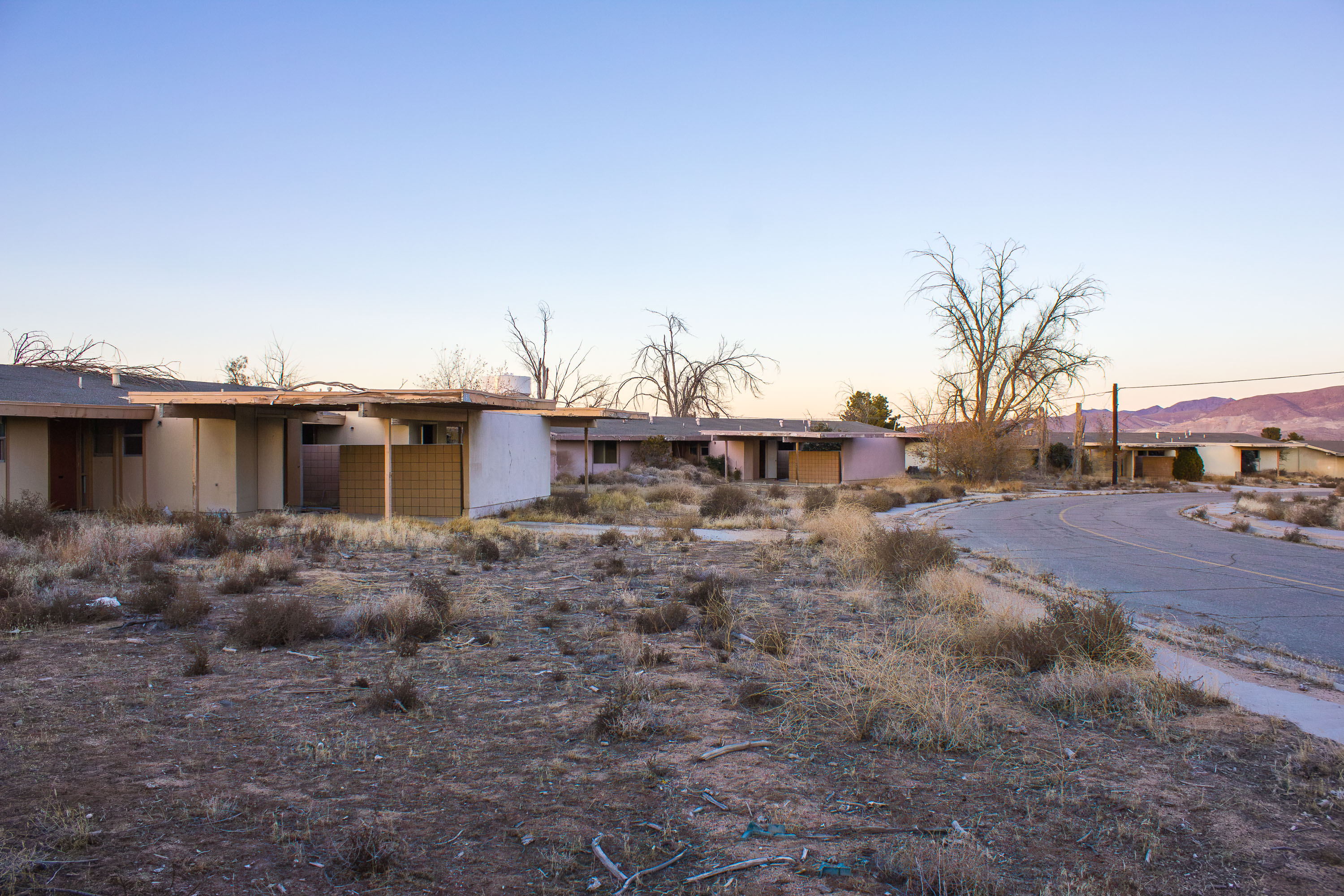
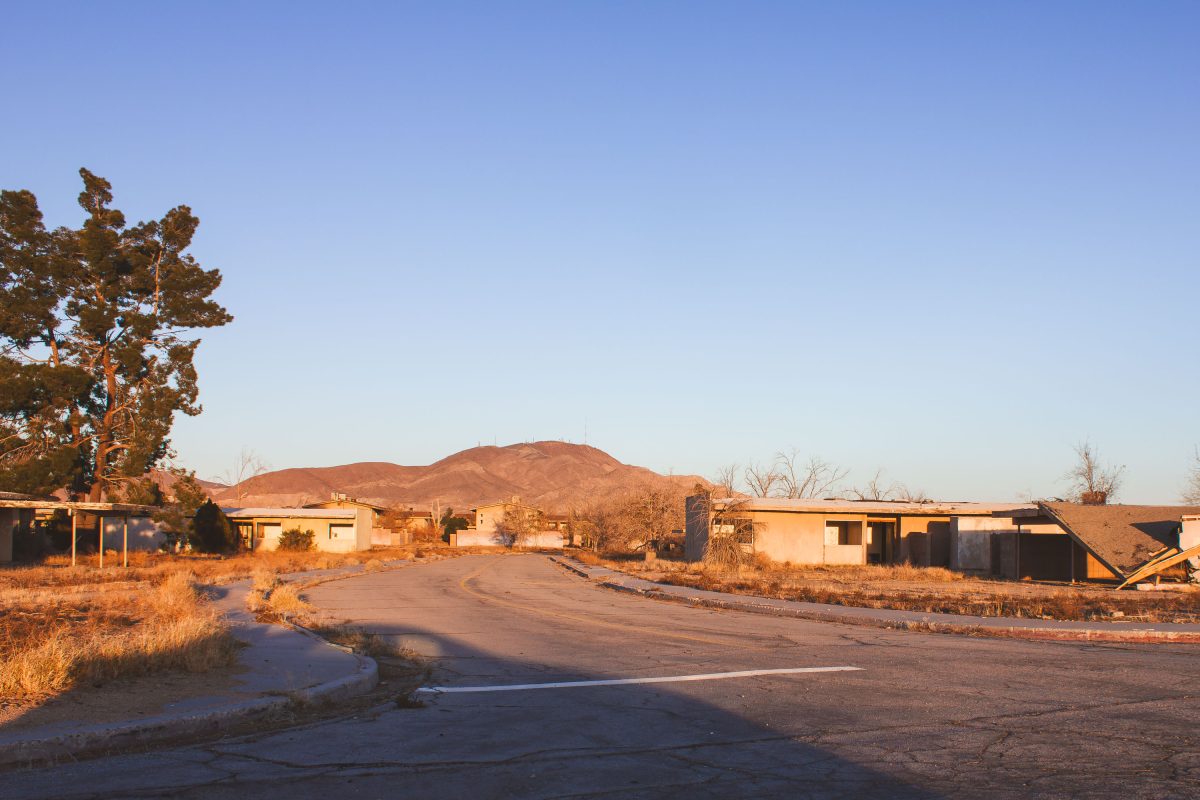
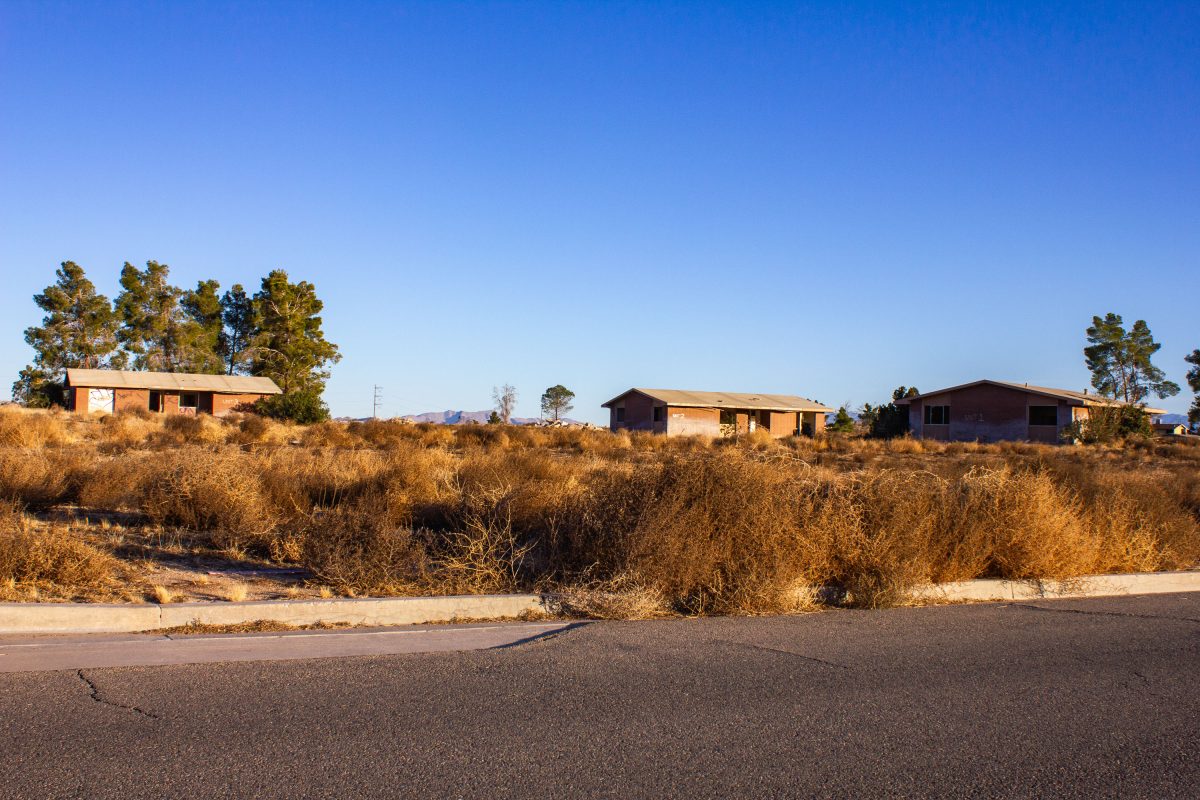
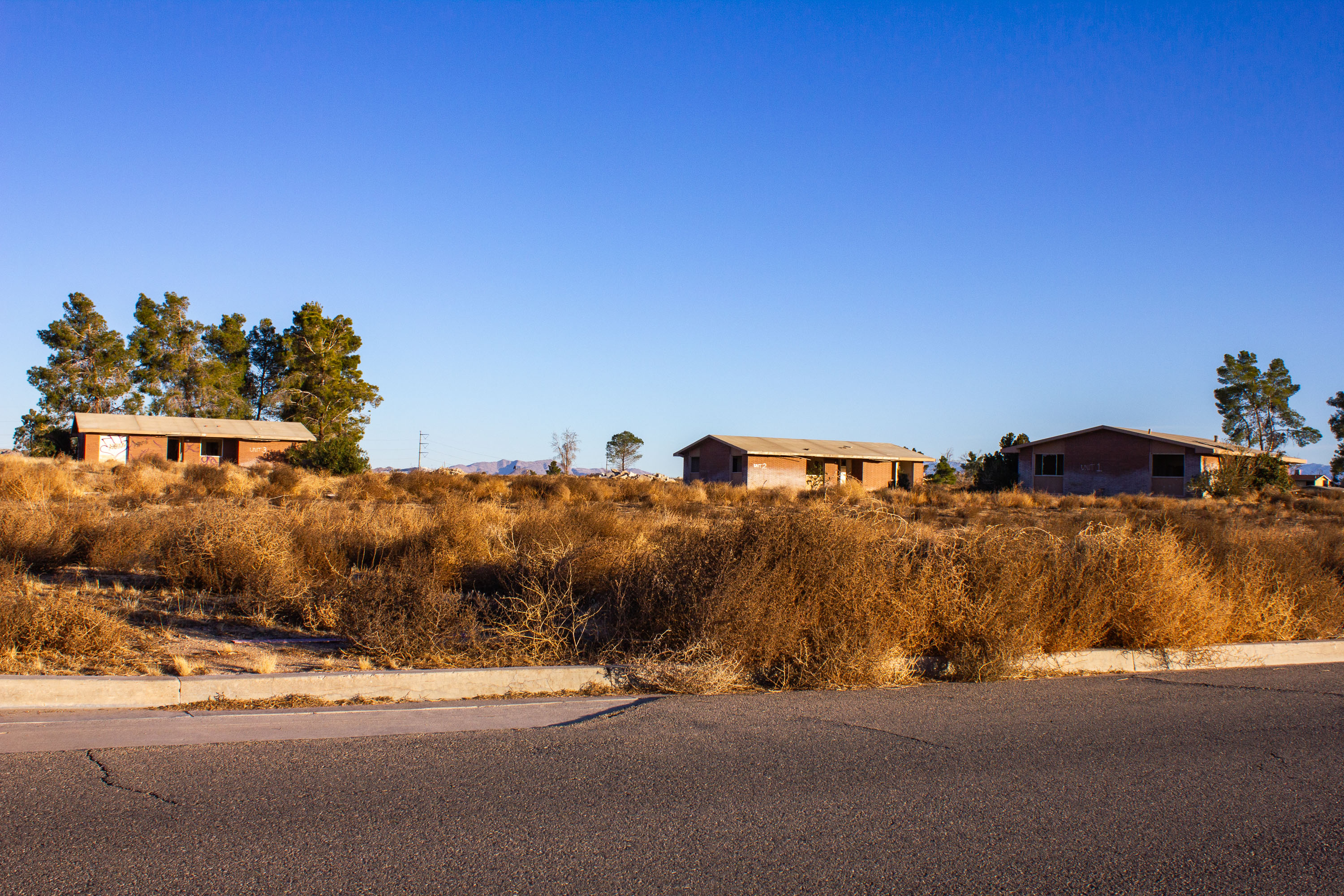
Abandoned ranch-style housing units along a curved road at George Air Force Base in Victorville, California.
George Air Force Base operated in Victorville, California, from 1941 until it closed in December 1992 under the 1991 Base Realignment and Closure process. Originally established as Victorville Army Air Field, it later served as a Strategic Air Command and Tactical Air Command installation, home to bomber and fighter squadrons for five decades. Its family housing tracts, built in the ranch-style common to Cold War-era military construction, once housed hundreds of families stationed at the base. After closure, the property was redeveloped as Southern California Logistics Airport, but many of the old residential streets and housing rows sat empty for years afterward.

Bare Trees and Empty Streets at George Air Force Base Housing

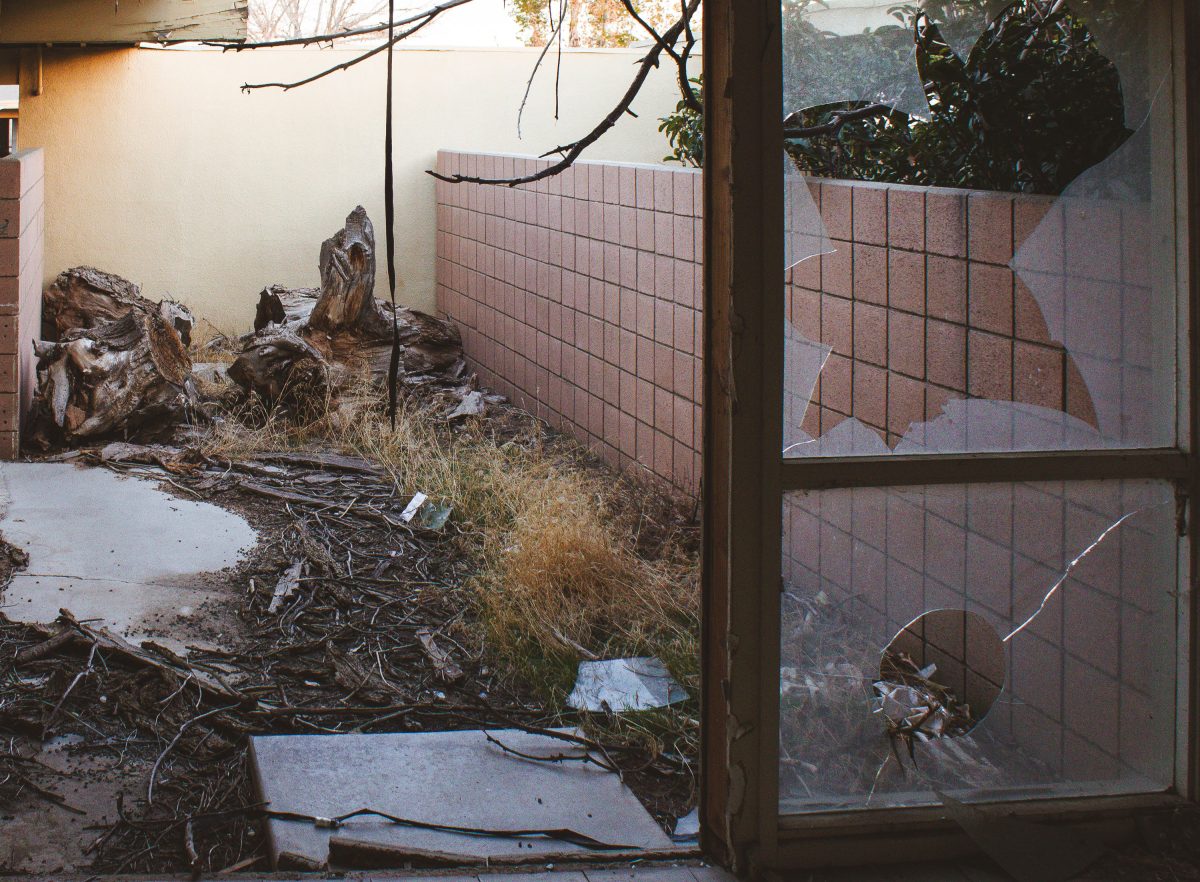
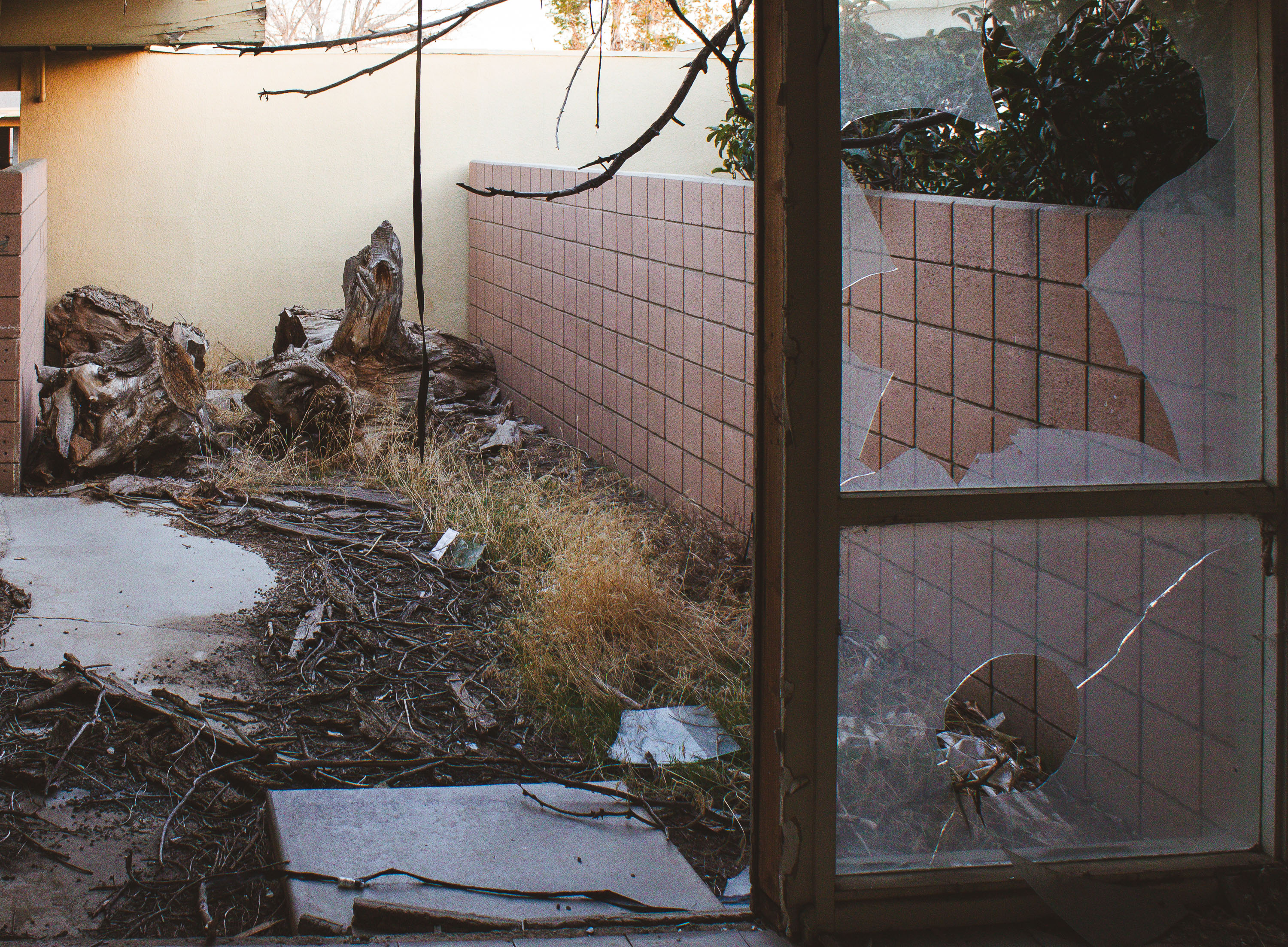
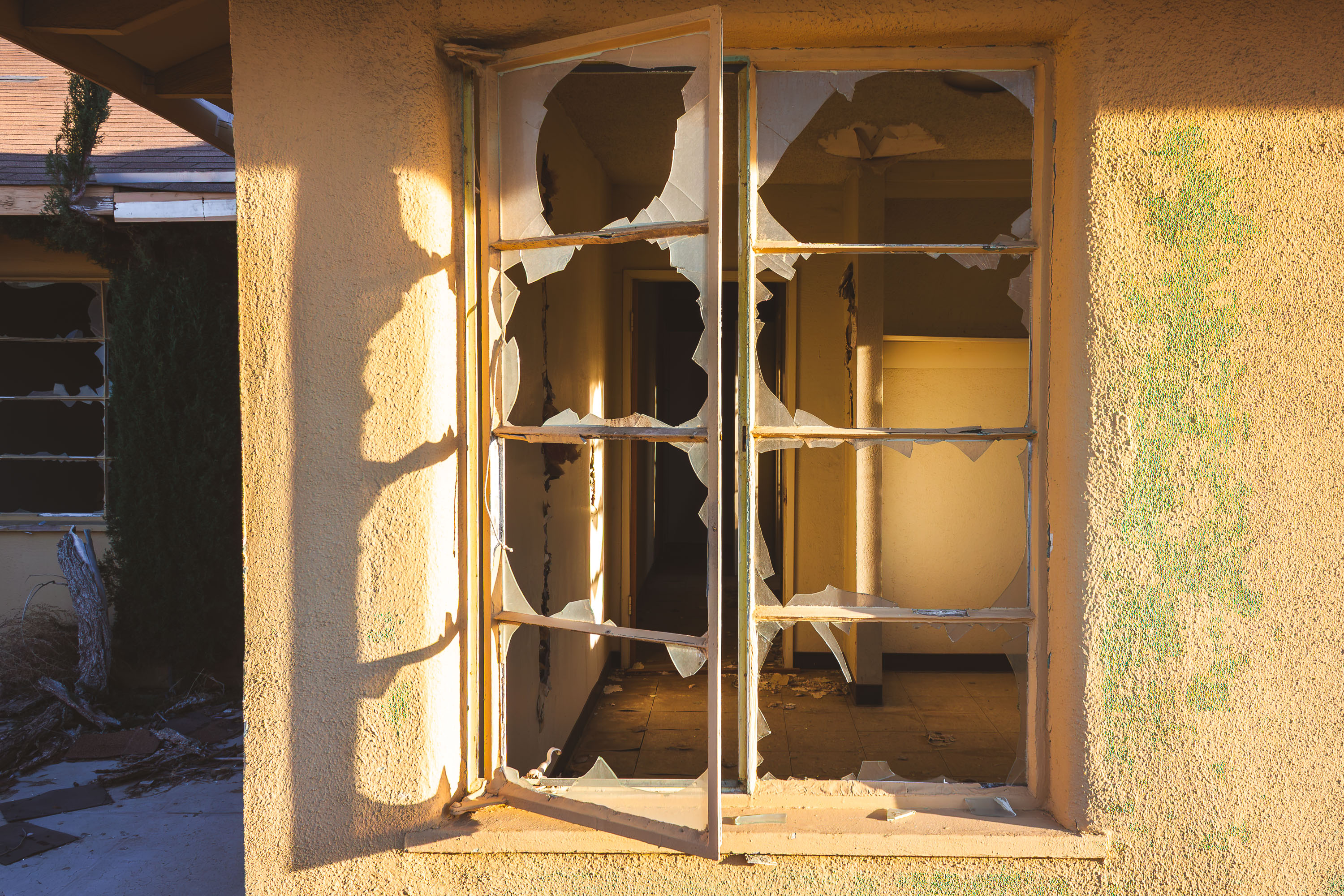
Shattered patio door and overgrown courtyard at abandoned officer housing, George Air Force Base, Victorville, California.
George Air Force Base closed in 1992 under the federal Base Realignment and Closure Act, ending more than five decades of Air Force operations near Victorville, California. Housing built for officers and enlisted families was left standing afterward, and much of it has never been reoccupied. Redevelopment agencies took control of the residential blocks in the years following closure, but reuse plans repeatedly stalled. Yards and patios in these former quarters have gone untended for decades, with broken glass and dead vegetation now common throughout the old housing tracts.

Broken Patio Glass and Debris at George Air Force Base Housing

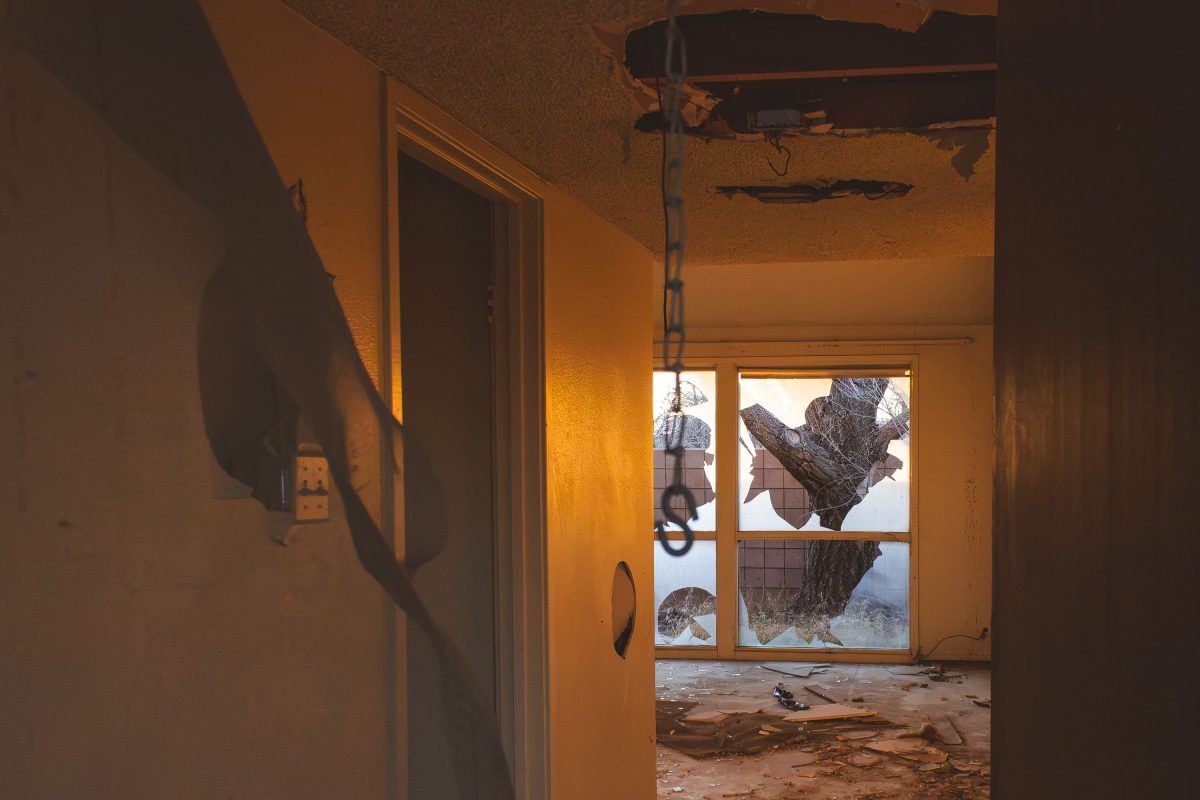
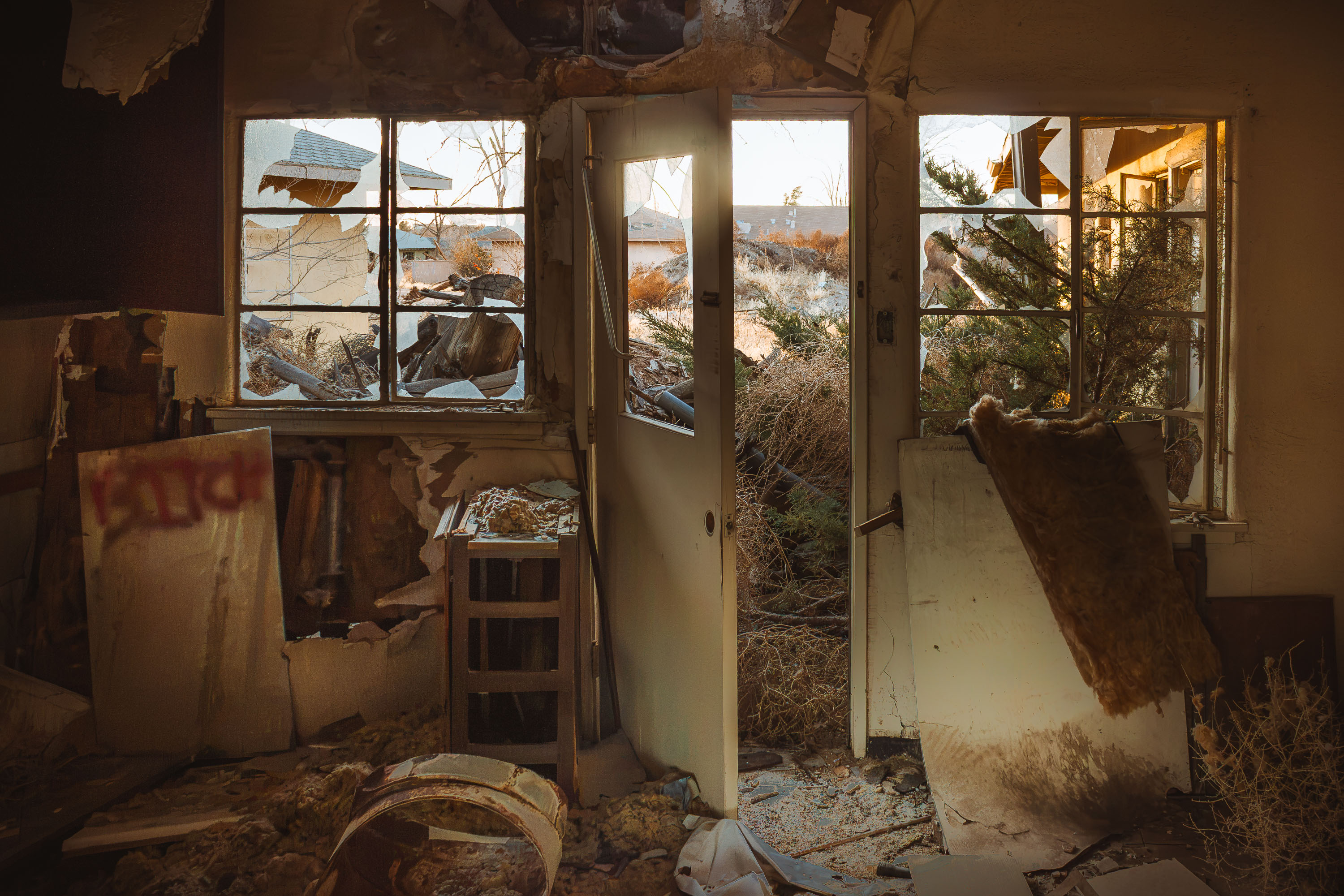
Interior of abandoned officer housing at George Air Force Base showing collapsed ceiling and broken windows.
George Air Force Base closed in 1992 following the 1988 Base Realignment and Closure Commission decision, ending more than five decades of Air Force operations near Victorville, California. Its family housing units were left standing afterward, unmonitored for years as redevelopment plans for the site repeatedly stalled. Copper theft, vandalism, and weather exposure gradually gutted many of the structures, collapsing ceilings and shattering windows throughout. Some portions of the former base later became Southern California Logistics Airport, but the residential blocks were largely left to deteriorate on their own.

Hallway View Through a Gutted Unit at George Air Force Base

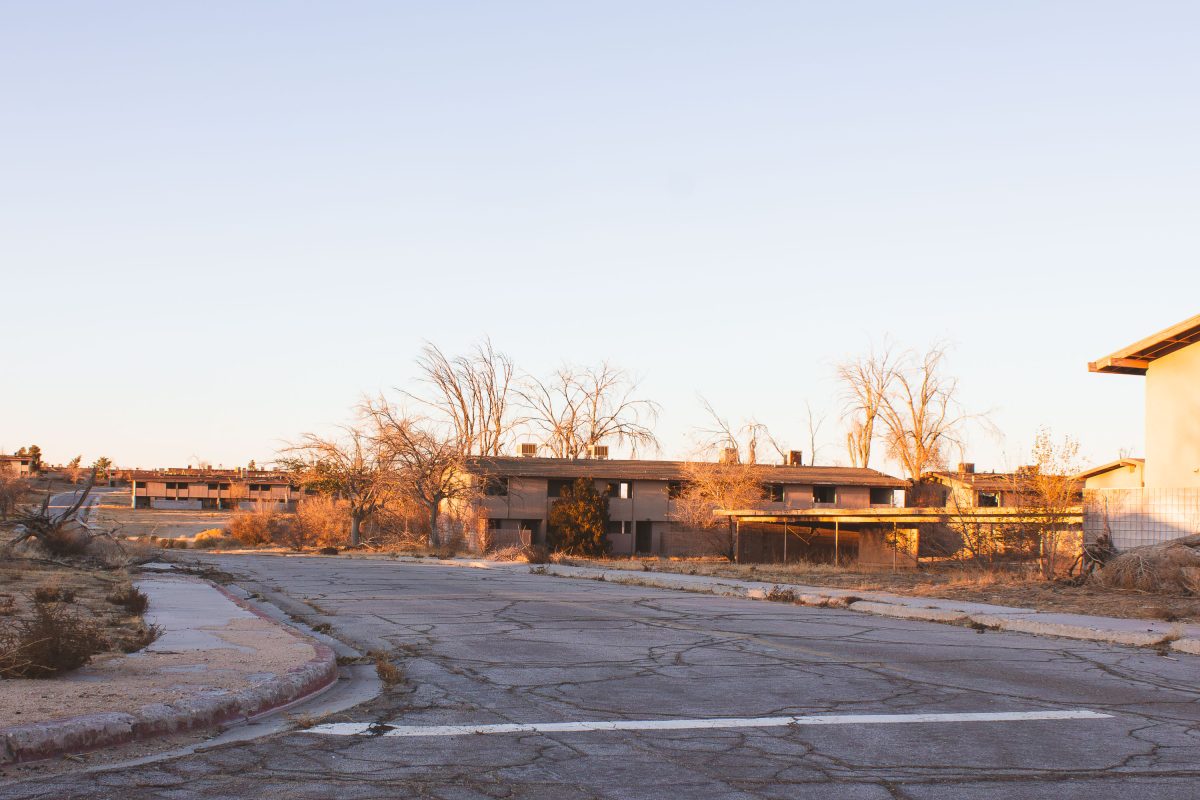
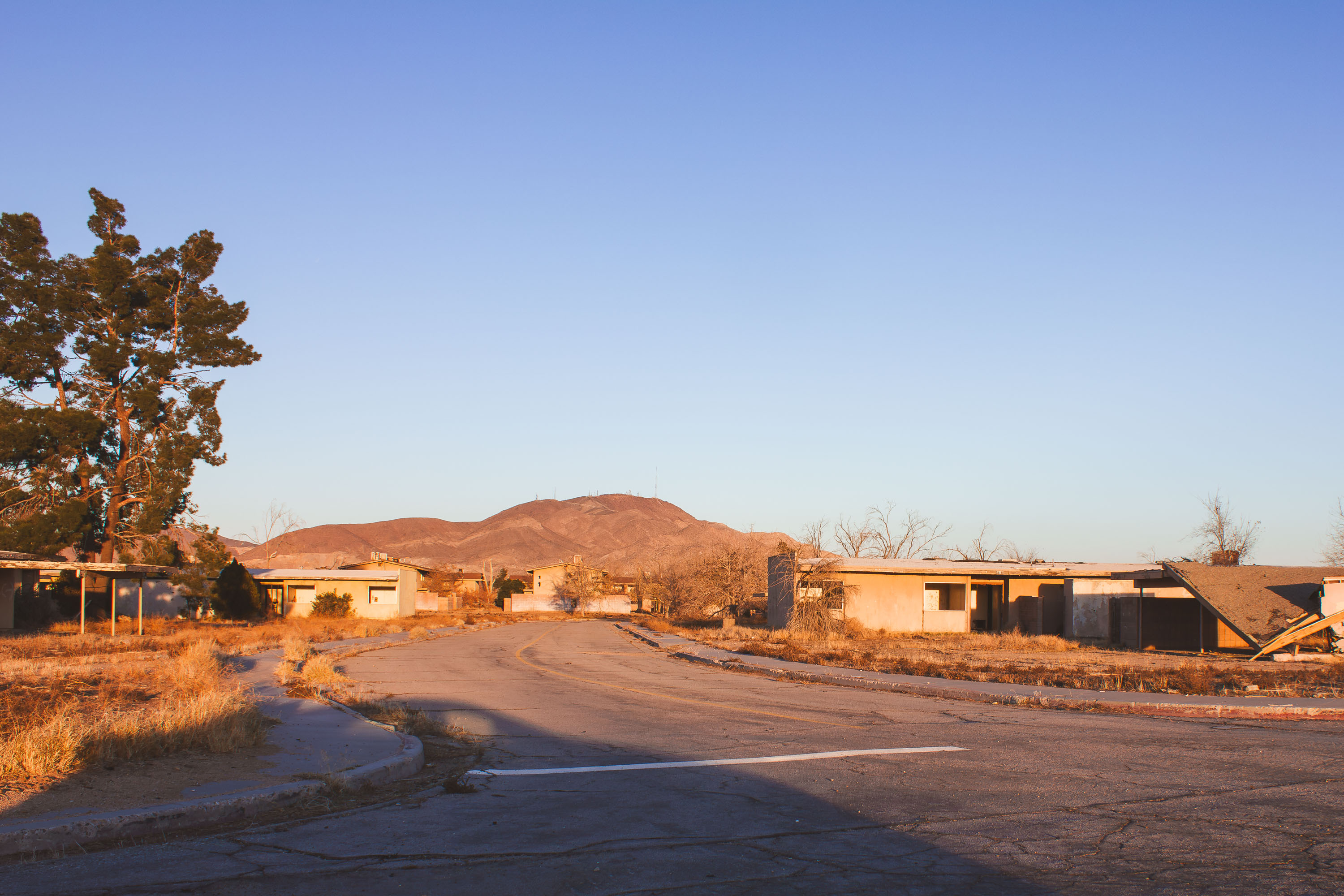
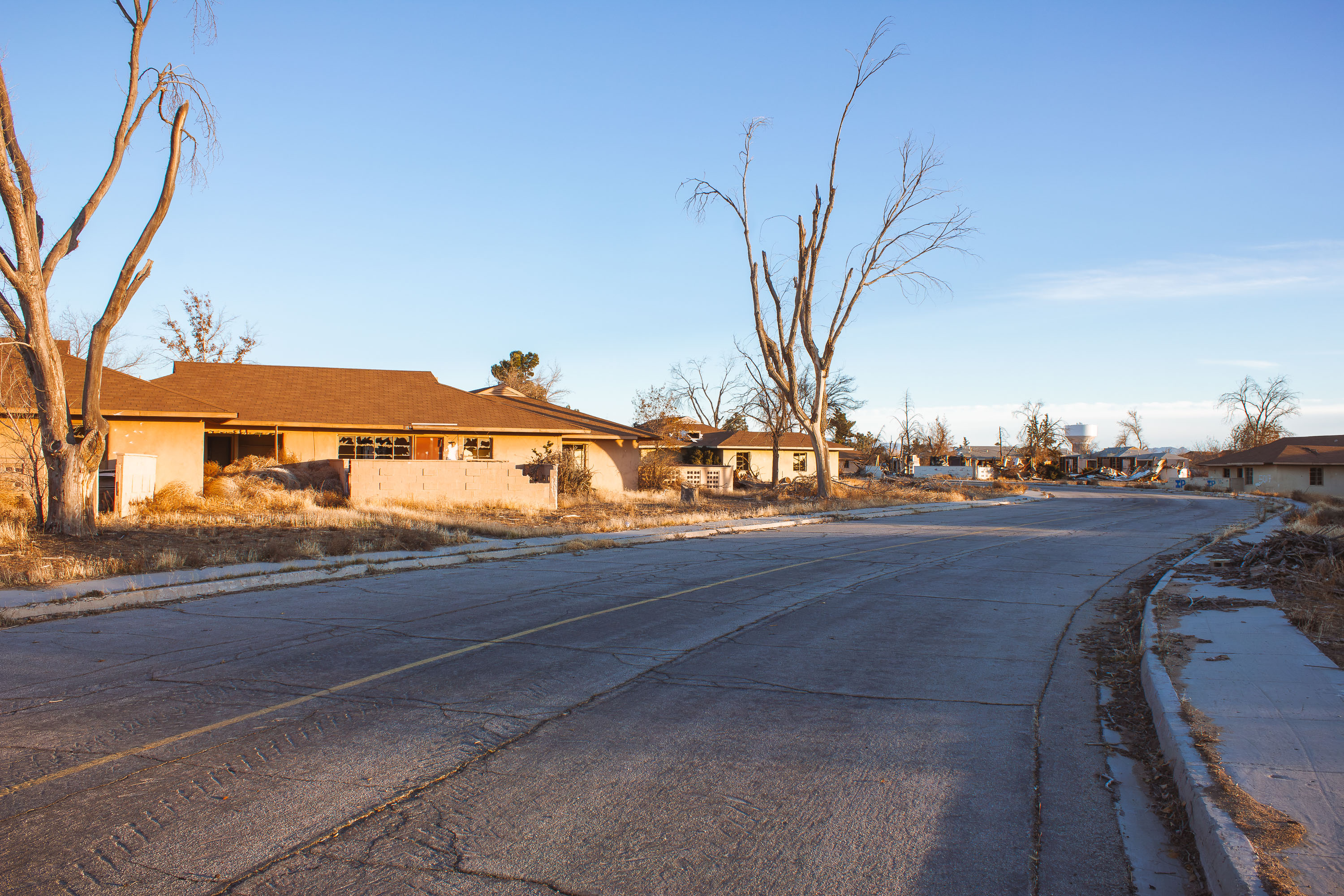
Abandoned residential street at closed George Air Force Base in Victorville, California with deteriorating buildings and cracked
George Air Force Base operated in Victorville, California, from 1941 until it closed under the 1991 Base Realignment and Closure round, with the last personnel departing in 1992. For much of the Cold War it trained fighter and attack pilots, hosting squadrons that flew the F-4 Phantom and later the F-16. Its family housing areas held rows of duplex and fourplex units arranged along interior streets, laid out like a small residential town rather than a typical military compound. When the base closed, the surrounding land became Southern California Logistics Airport, but large sections of the old housing were left standing rather than demolished. Decades later, the pavement markings and concrete curbs remain the clearest trace of streets that once ran through a neighborhood of thousands of military families.

Deserted Street Curving Past Family Housing at George Air Force Base

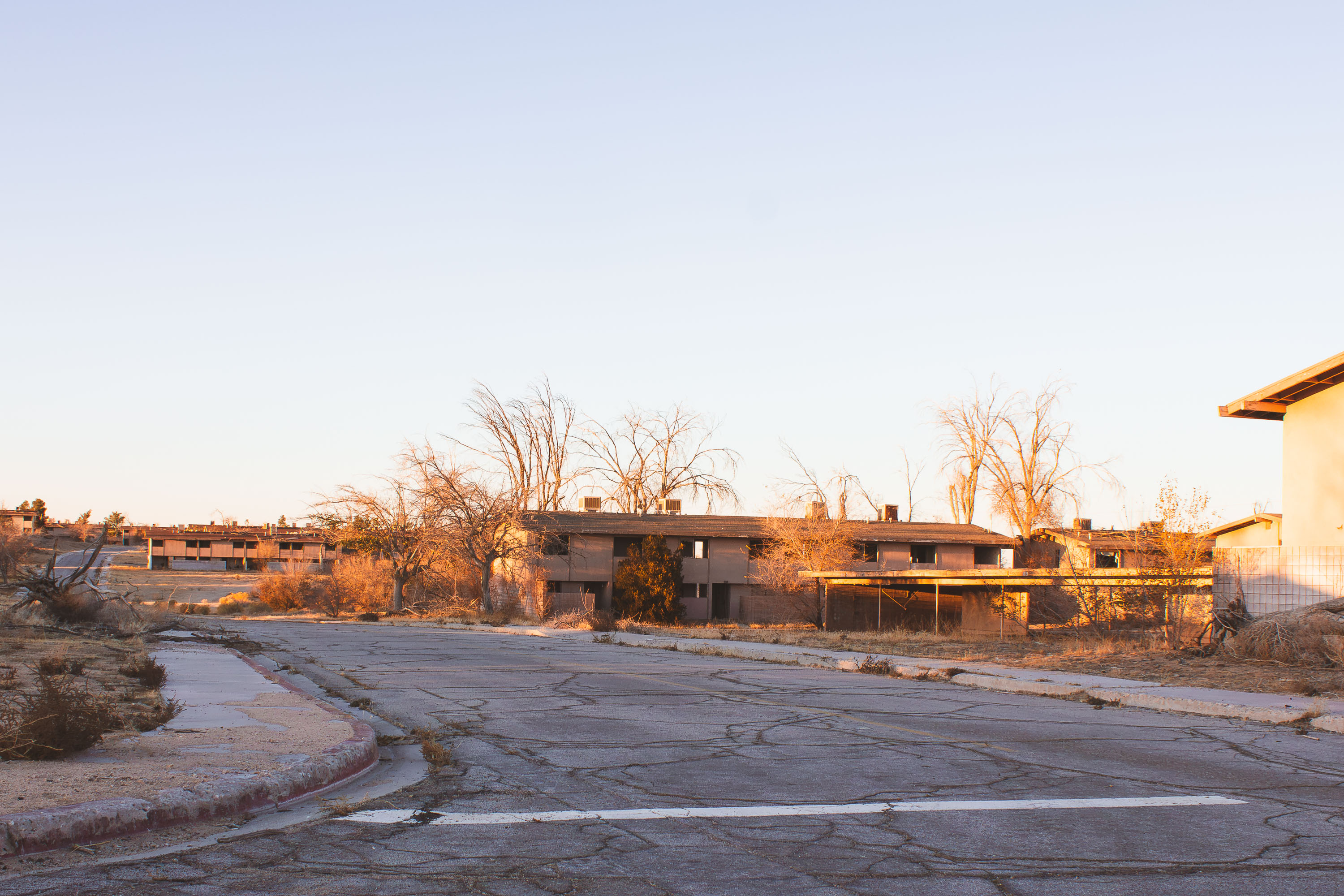
Cracked asphalt street lined with deteriorating stucco buildings at abandoned George Air Force Base in Victorville, California.
George Air Force Base operated from 1941 until it closed in 1992 under the federal Base Realignment and Closure program, one of many installations cut as Cold War-era defense spending declined. At its peak the base supported thousands of Air Force personnel and their families, with on-base housing built for airmen assigned to tactical fighter training squadrons. Streets, curbs, and driveways from the old neighborhood remain in place today, even as the houses that once lined them have been gutted and left to decay. A portion of the former base was redeveloped as Southern California Logistics Airport, while other sections, including much of the old housing area, were simply left standing empty.

Sunset Light on an Empty Road at George Air Force Base

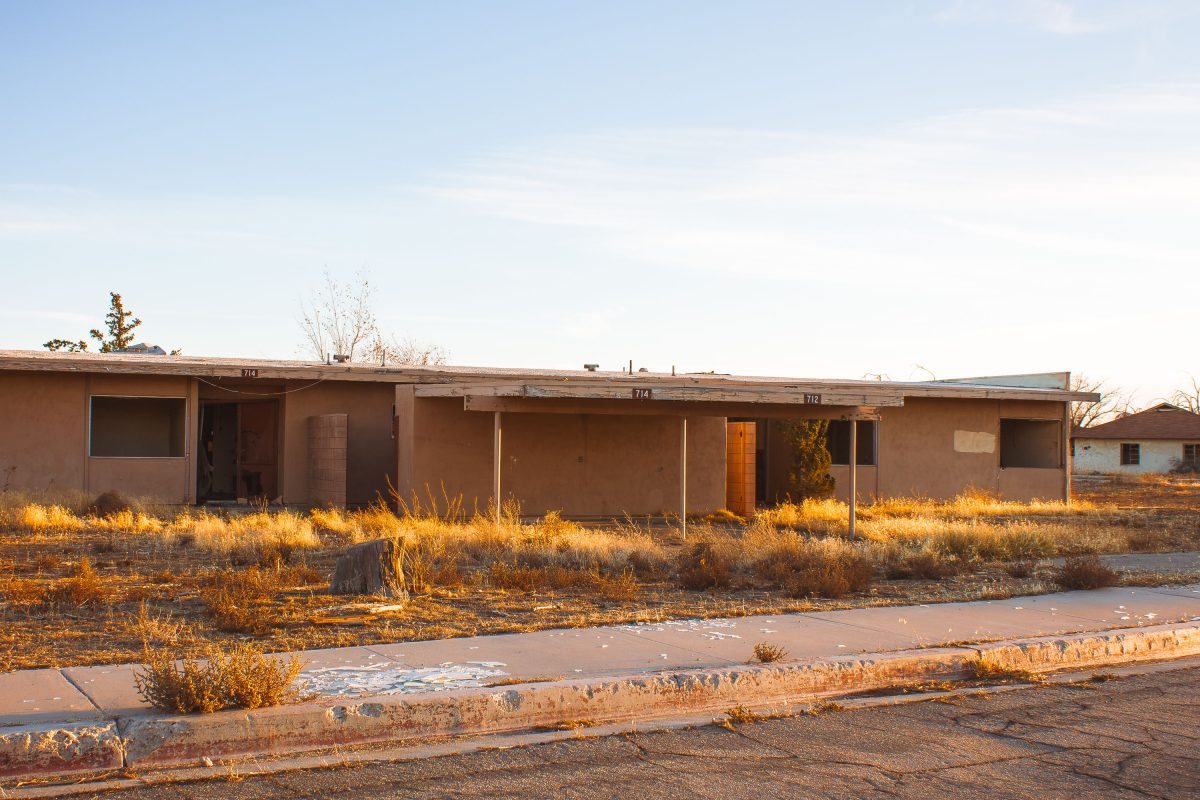
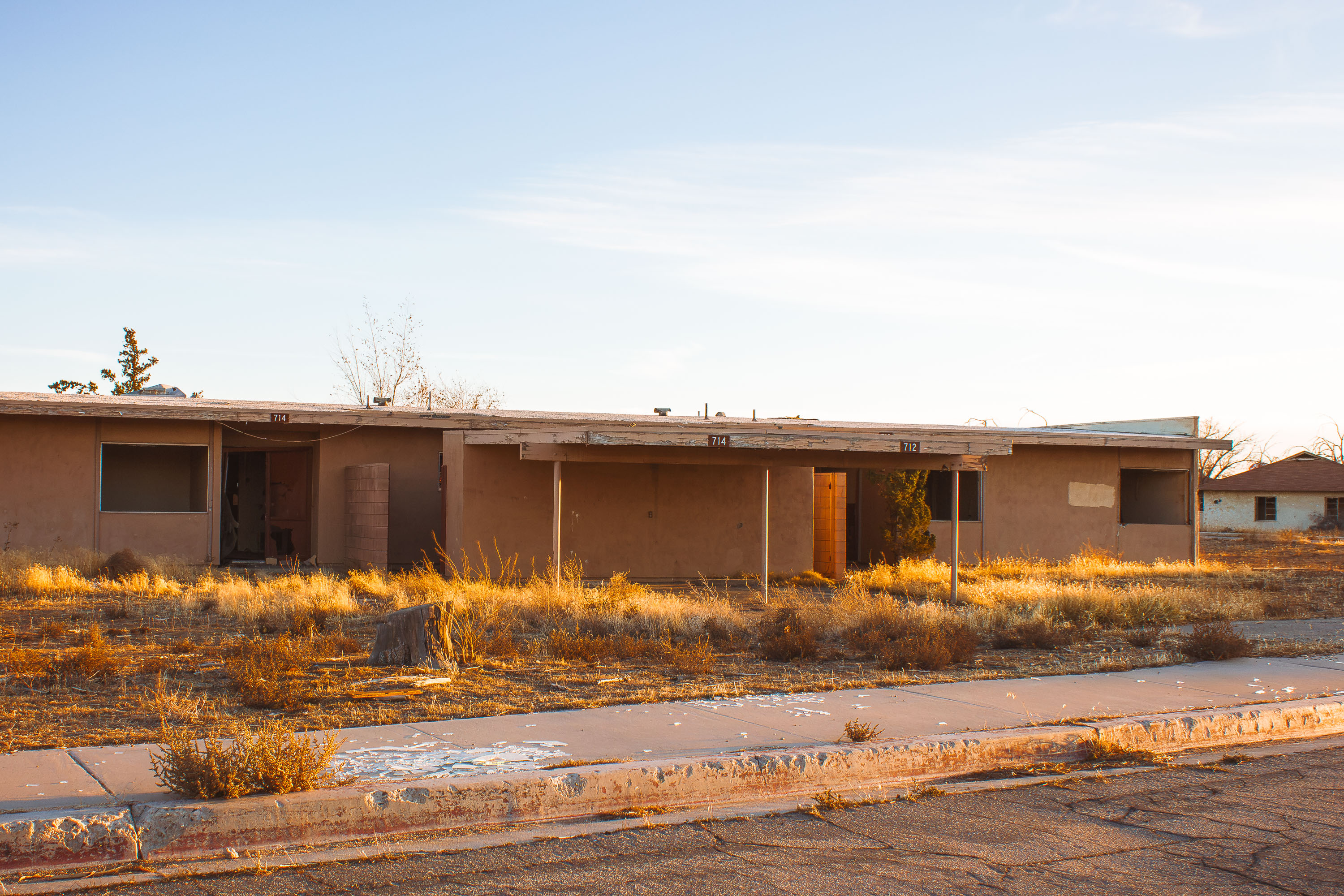
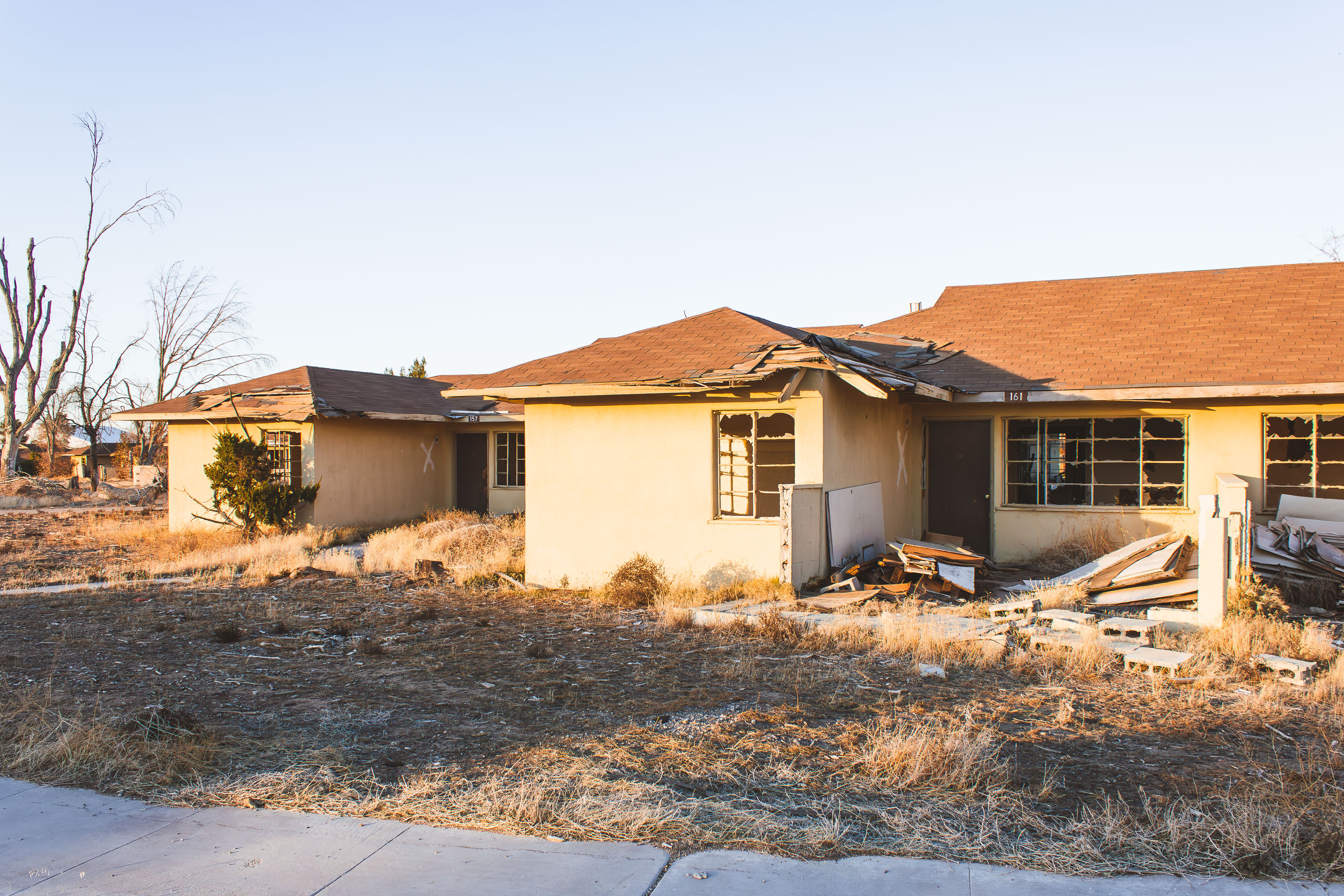
Abandoned duplex units 712 and 714 at closed George Air Force Base near Victorville, California.
George Air Force Base near Victorville, California operated as an Army Air Forces training installation starting in 1941 and later served as a Tactical Air Command fighter base before closing in 1992 under a federal realignment program. Its family housing included single-story duplexes built for enlisted personnel and their families. When the base closed, the land was repurposed as the Southern California Logistics Airport, but many residential streets, including this one, were left standing rather than redeveloped. Units 712 and 714 remain among the unaddressed duplexes still standing decades after the base's closure.

Duplex Units 712 and 714 at George Air Force Base

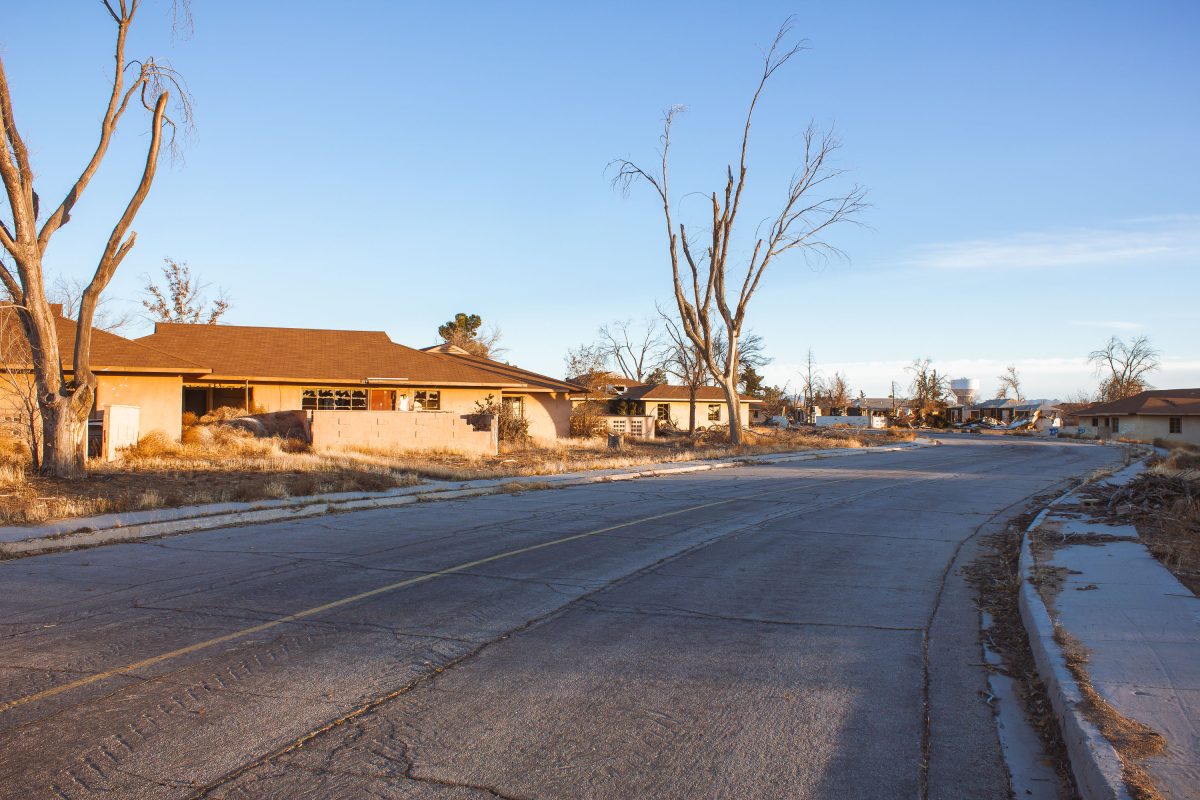
Abandoned residential street at closed George Air Force Base in Victorville, California with deteriorating buildings and bare
George Air Force Base closed in 1992 under the federal Base Realignment and Closure program after more than five decades of service, having opened in 1941 near Victorville, California. It hosted fighter and bomber squadrons through its history, including F-4 Phantom and F-111 units during the Cold War. The neighborhoods built for service members and their families were never demolished after decommissioning, leaving rows of vacant homes along the base's old residential streets. Part of the former base site is now Southern California Logistics Airport, but the housing areas remain largely untouched.

Winding Street Through Abandoned Housing at George Air Force Base

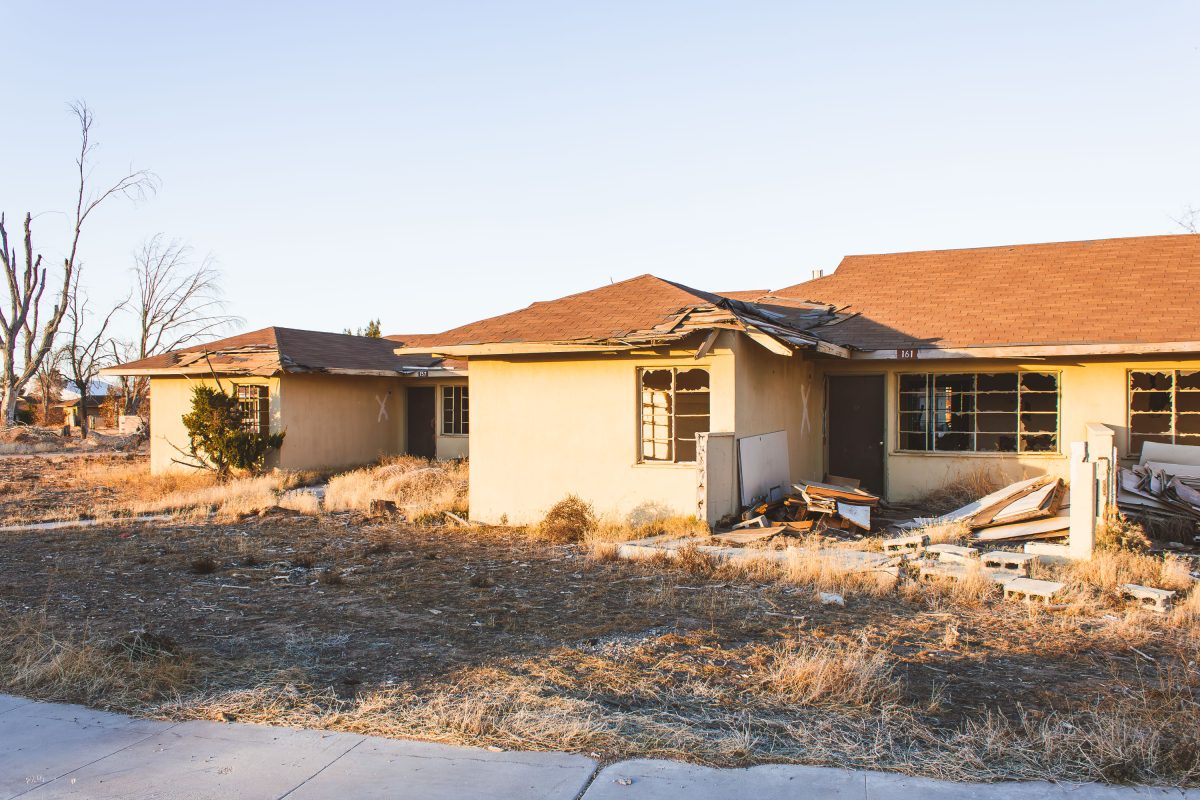
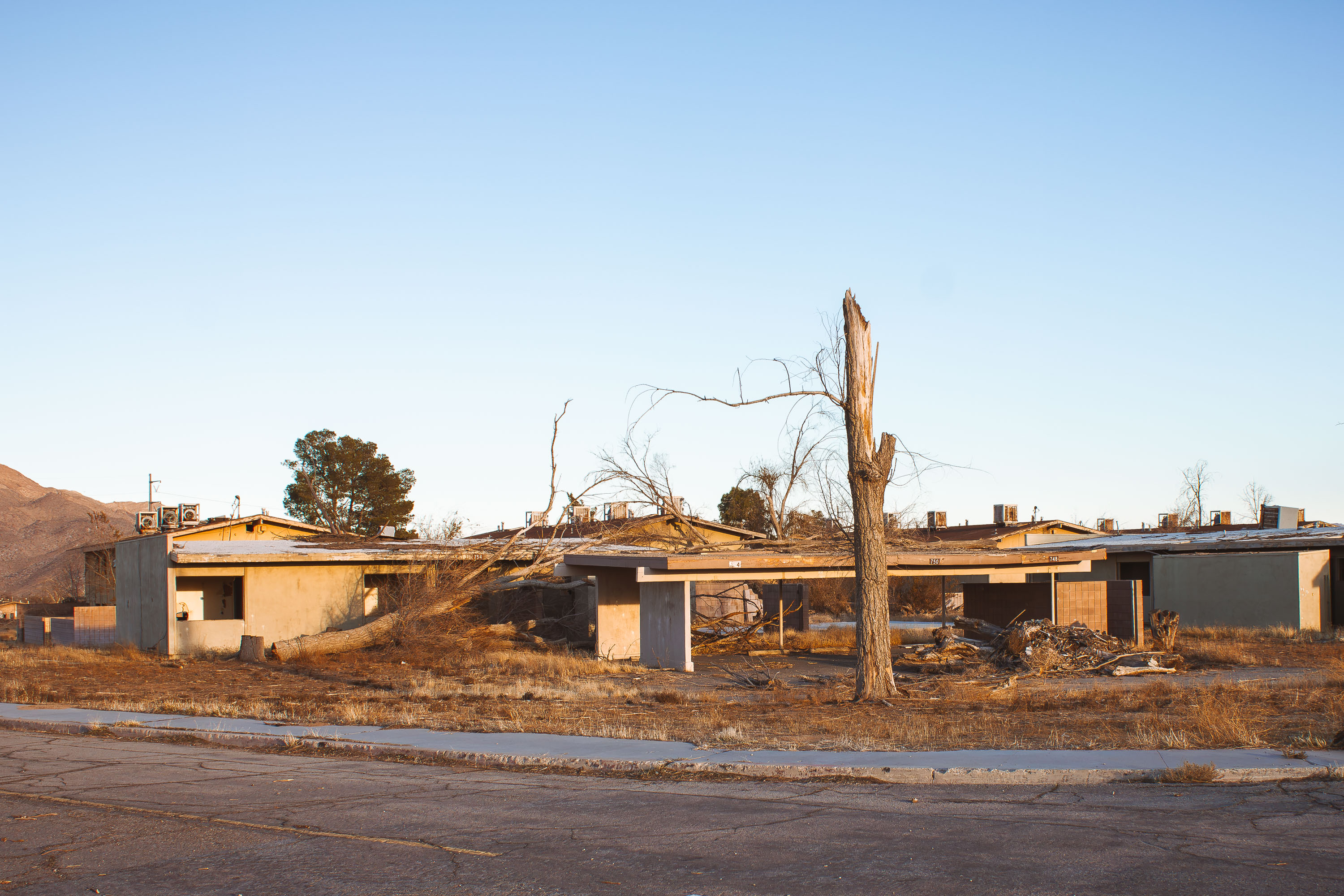
Abandoned residential unit at George Air Force Base in Victorville, California with marked windows and deteriorating roof.
George Air Force Base began in 1941 as Victorville Army Air Field, an Army Air Corps site for bombardier and gunnery training. It was renamed in 1950 for Brig. Gen. Harold Lee George, an early advocate of American strategic bombing doctrine, and spent its later decades as a Strategic Air Command installation during the Cold War. A 1992 Base Realignment and Closure order shut the base down, leaving its family housing units vacant. Portions of the former base now fall within the Southern California Logistics Airport, but rows of stucco duplexes remain standing, their doors and windows still marked with the spray-painted X's left by post-closure inspectors.

Spray-Painted X’s Mark Abandoned Duplexes at George Air Force Base

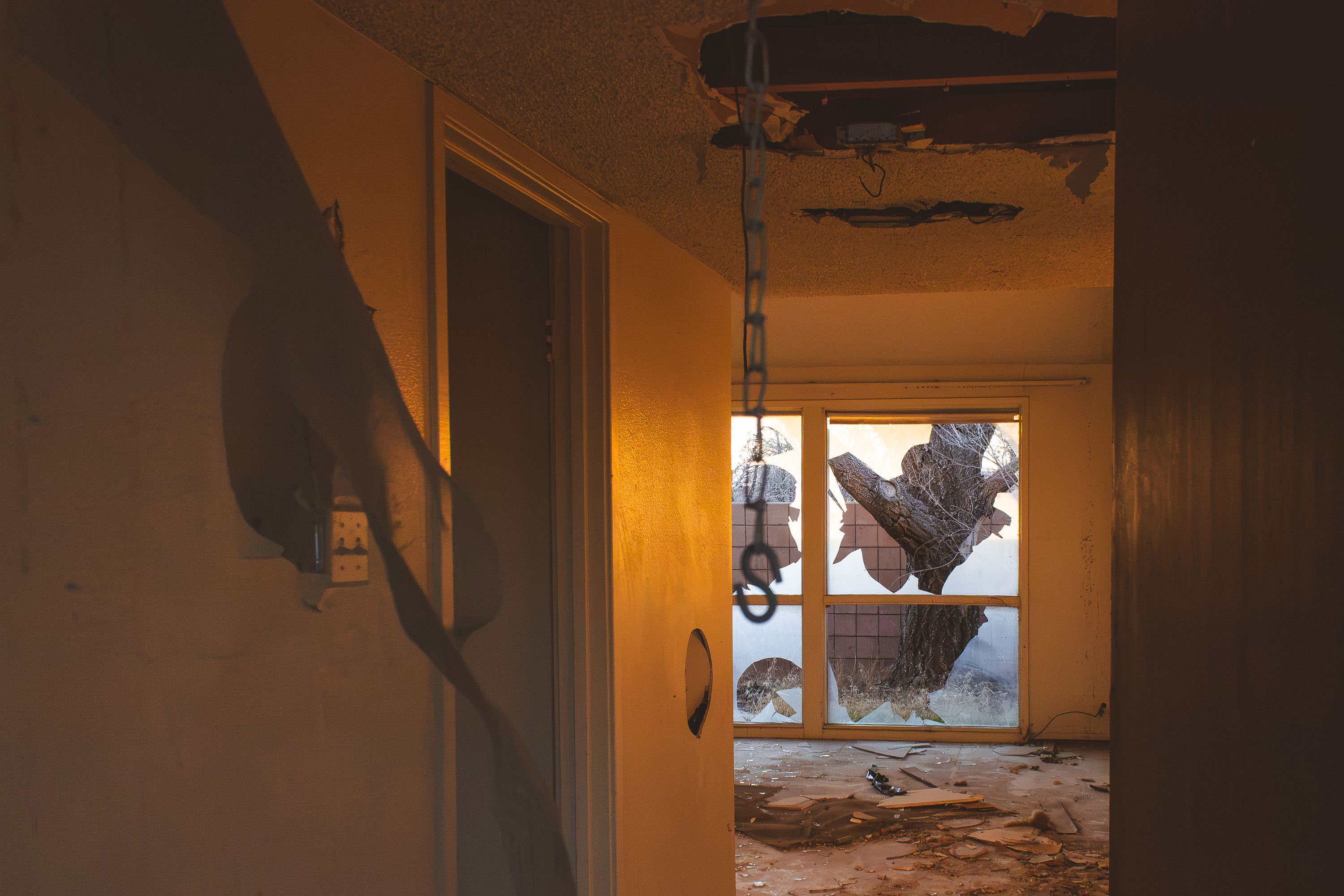
Gutted kitchen interior of abandoned officer housing at George Air Force Base, Victorville, California.
George Air Force Base operated northeast of Victorville from 1941 until it was shuttered under the 1992 Base Realignment and Closure Act. The residential blocks that once housed Air Force families were left standing after closure, and the Southern California desert has spent three decades working through the drywall, glass, and wood framing left behind. Broken window glass and stripped door hardware are typical of the housing stock here, most of which was never demolished or repurposed. A portion of the former base was redeveloped into Southern California Logistics Airport, but the family housing sections were largely bypassed and left to decay in place.

Broken Doorway and Windows in Abandoned Housing at George Air Force Base

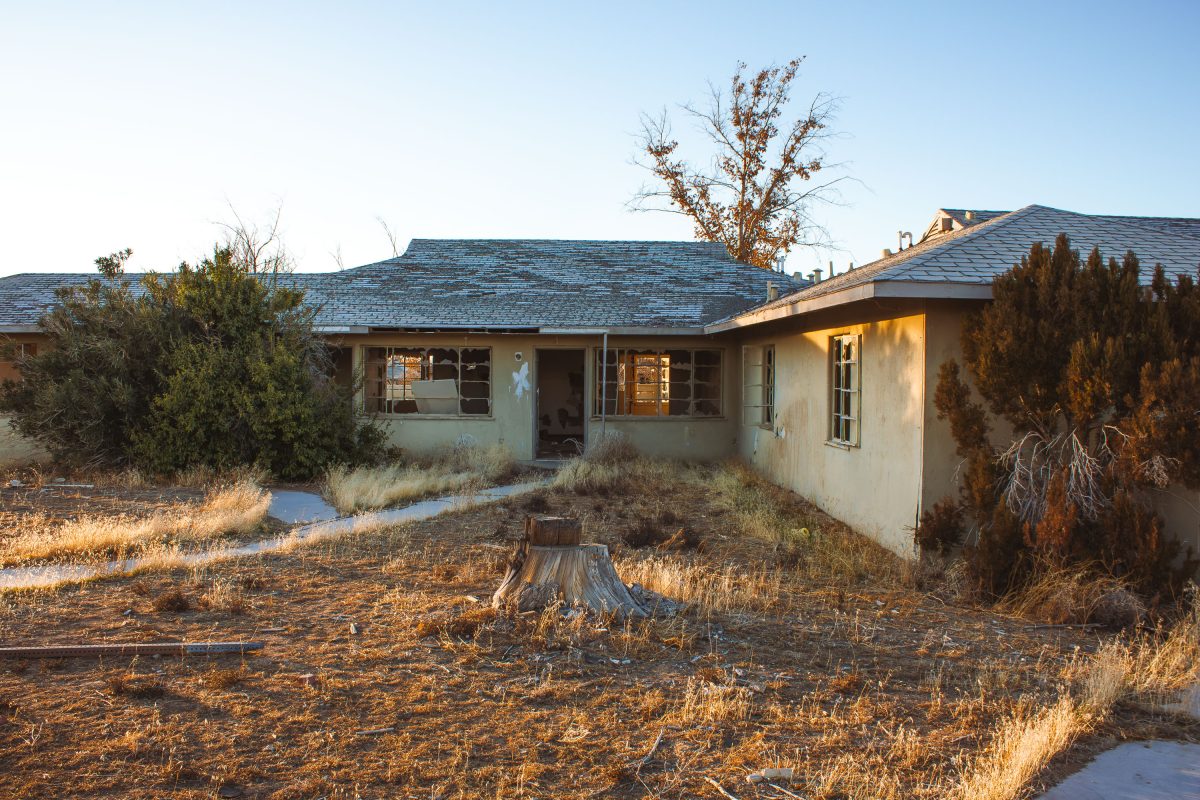
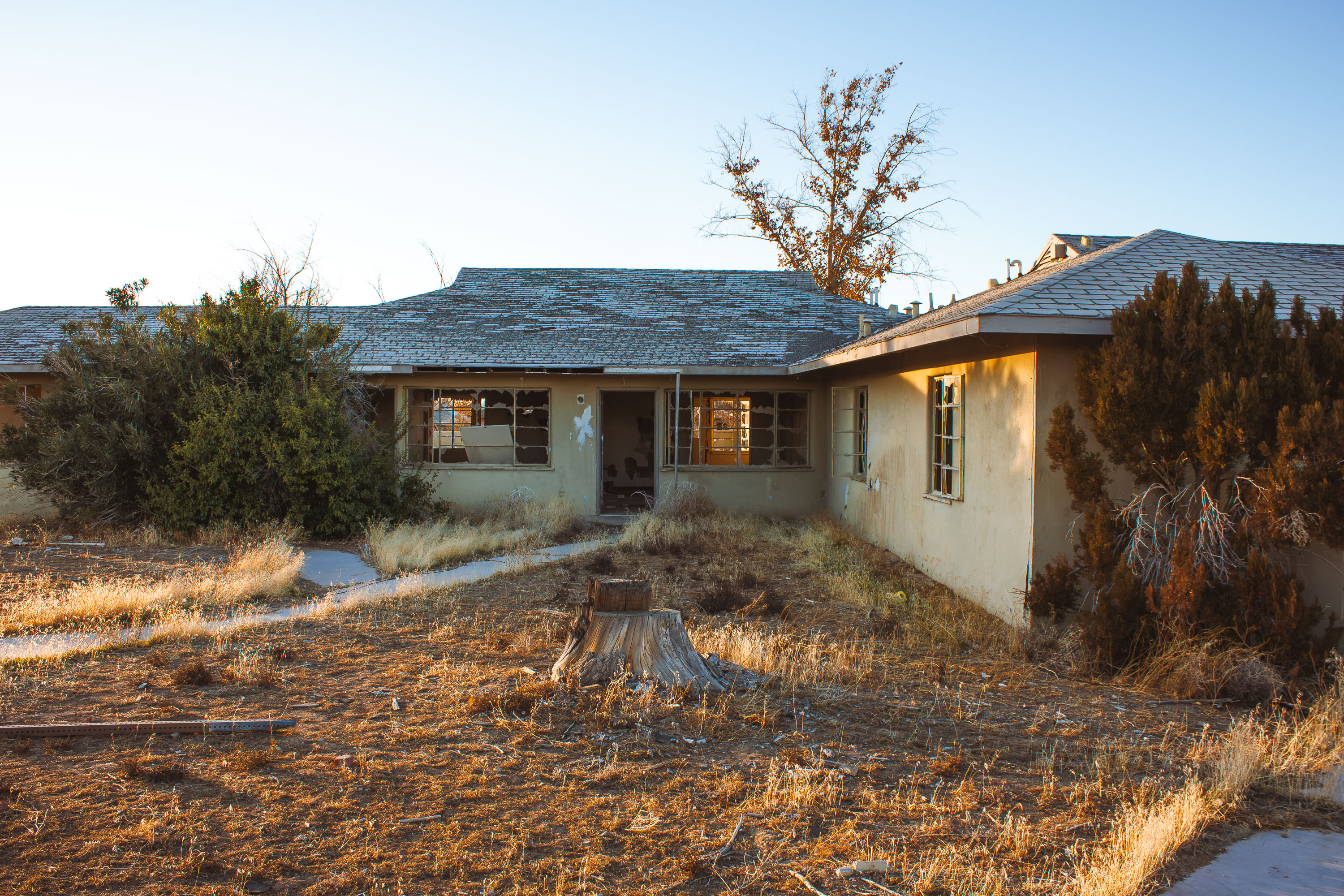
Abandoned ranch-style home at George Air Force Base in Victorville, California, with deteriorating stucco and desert vegetation.
George Air Force Base operated in Victorville, California, from 1941 until its 1992 closure under the federal Base Realignment and Closure program. Ranch-style homes like this one housed Air Force families assigned to the base's fighter and tactical training squadrons, with much of the housing stock dating to the 1950s Cold War-era expansion. After decommissioning, ownership of the residential area passed to the Southern California Logistics Airport authority, which left many structures standing rather than demolishing them. Decades of vacancy have made the former housing area a frequent destination for explorers of abandoned Mojave Desert sites.

Evening Light on an Abandoned Ranch Home at George Air Force Base

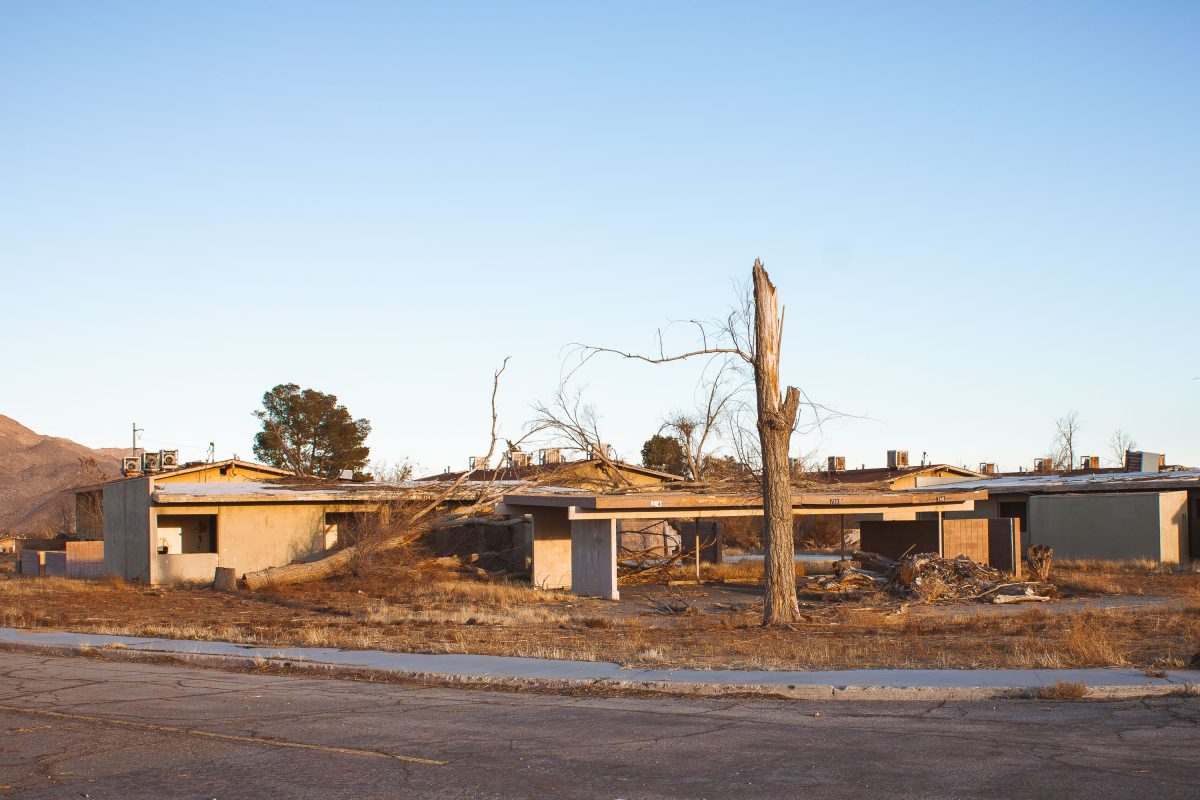
Abandoned stucco duplexes at closed George Air Force Base in Victorville, California, with a dead tree and desert scrub.
George Air Force Base operated near Victorville, California, from 1941 until it was shuttered under the 1991 Base Realignment and Closure round, with the last personnel departing in 1992. The base supported fighter and bomber squadrons through World War II, Korea, and the Cold War, and its residential blocks once housed thousands of Air Force families. After closure, much of the property was redeveloped as the Southern California Logistics Airport, but many of the original housing units were left standing rather than demolished. Decades on, the stucco duplexes sit stripped of doors and fixtures, with dead trees and wild grasses reclaiming the yards where military families once lived.

A Snapped Tree in the Yard of George Air Force Base Housing

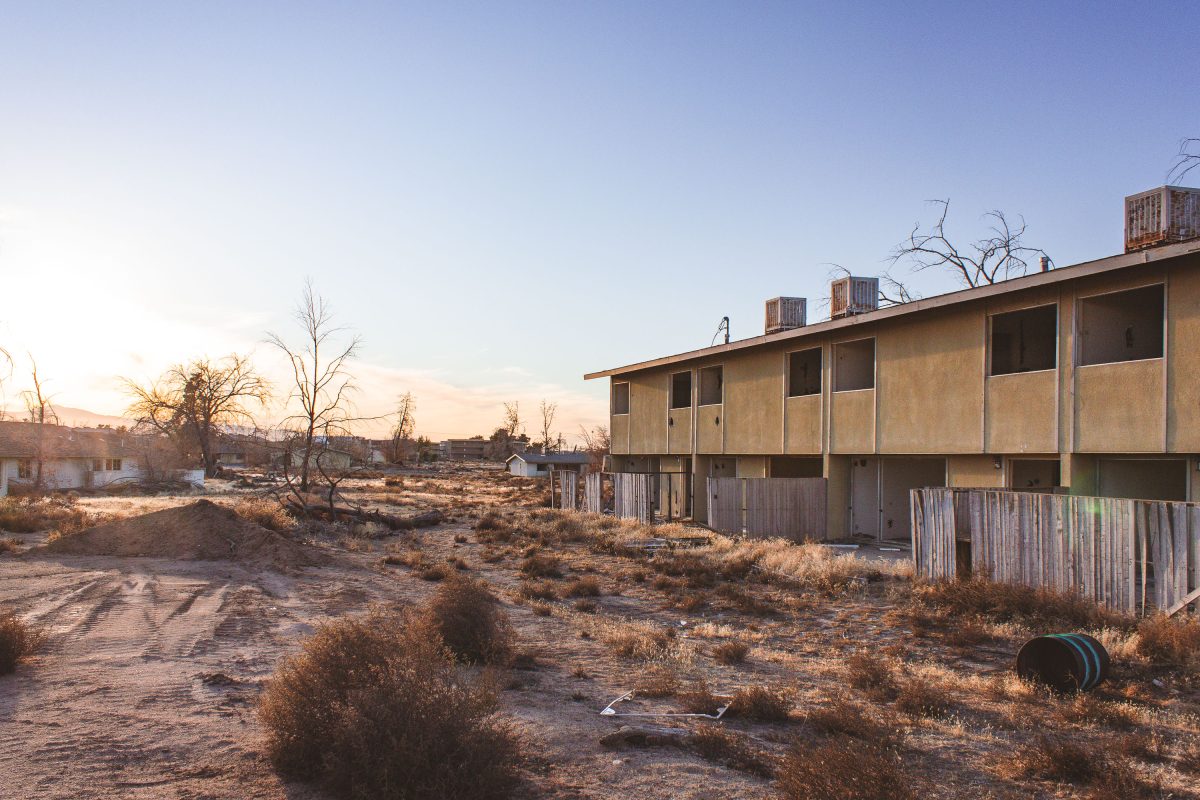
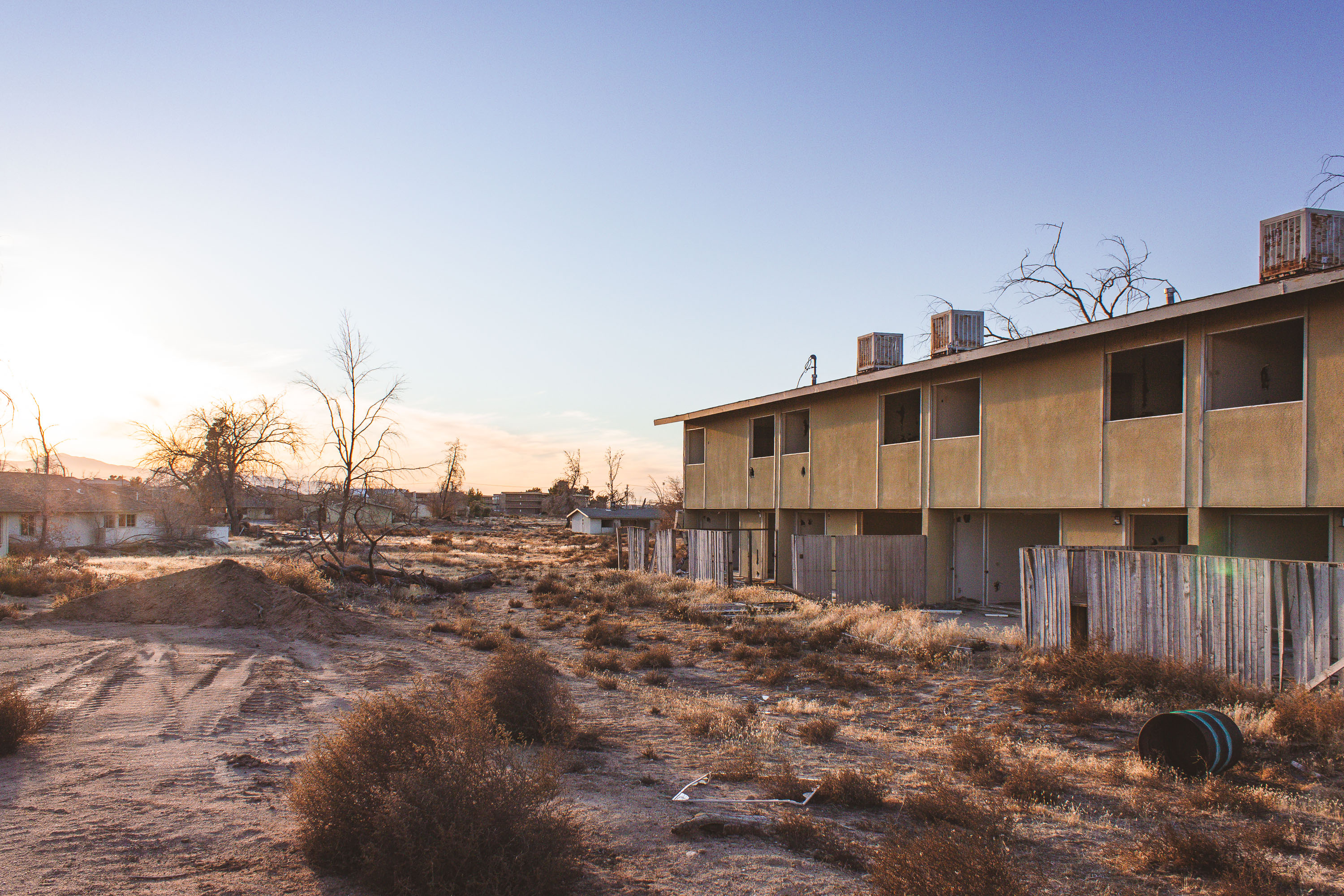
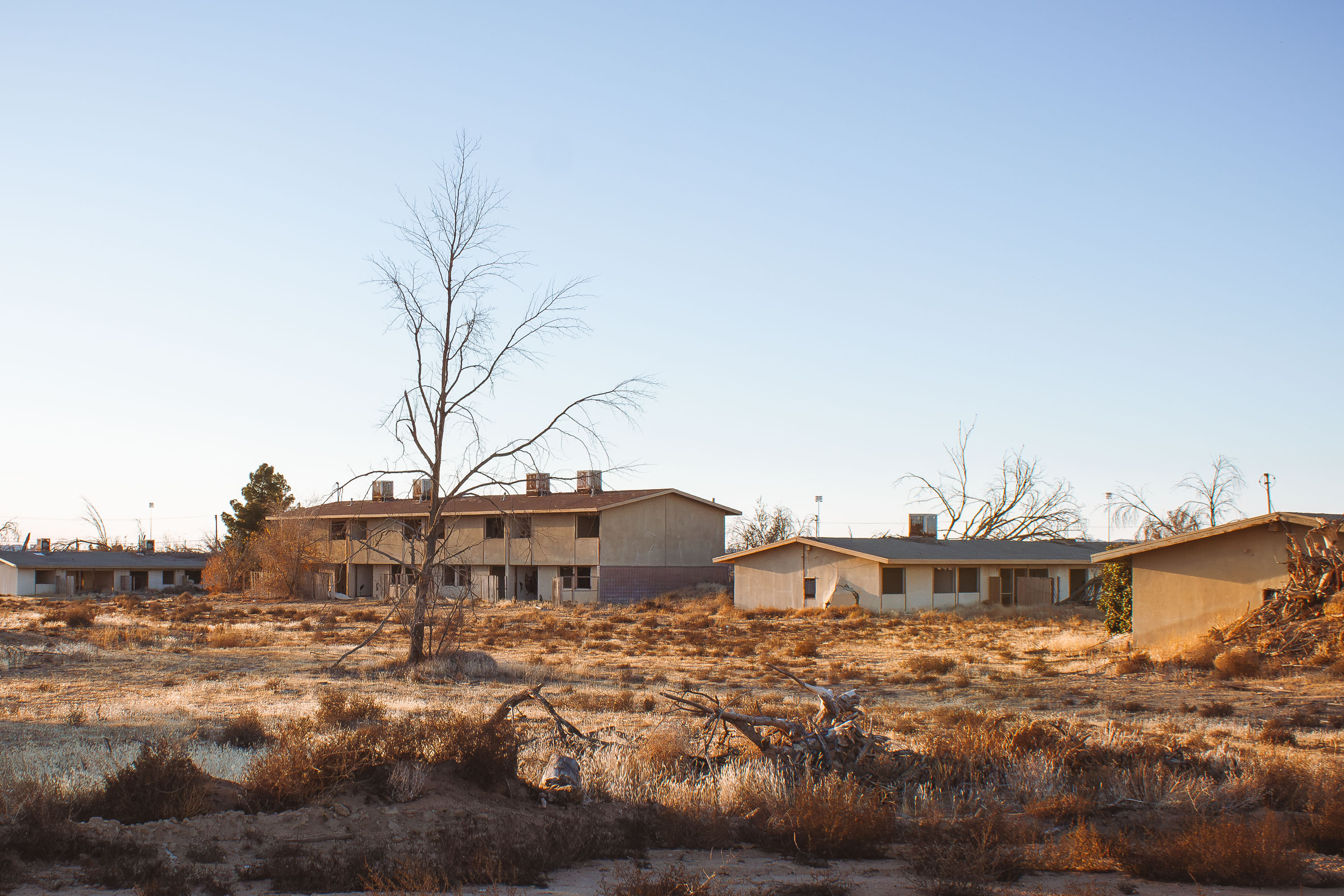
Abandoned two-story barracks at George Air Force Base in Victorville, California, deteriorating in the desert.
George Air Force Base operated near Victorville, California, from 1941 until it closed under the 1991 Base Realignment and Closure Act, with the last personnel leaving in 1992. It served fighter and bomber squadrons for five decades, including F-4 Phantom and F-111 units during the Cold War. After decommissioning, two-story barracks and housing blocks like this one were left standing, stripped of utilities and exposed to the Mojave Desert climate. Part of the former base site was later redeveloped into Southern California Logistics Airport, but much of the residential and support housing was simply abandoned in place.

Two-Story Housing Block at George Air Force Base, Victorville

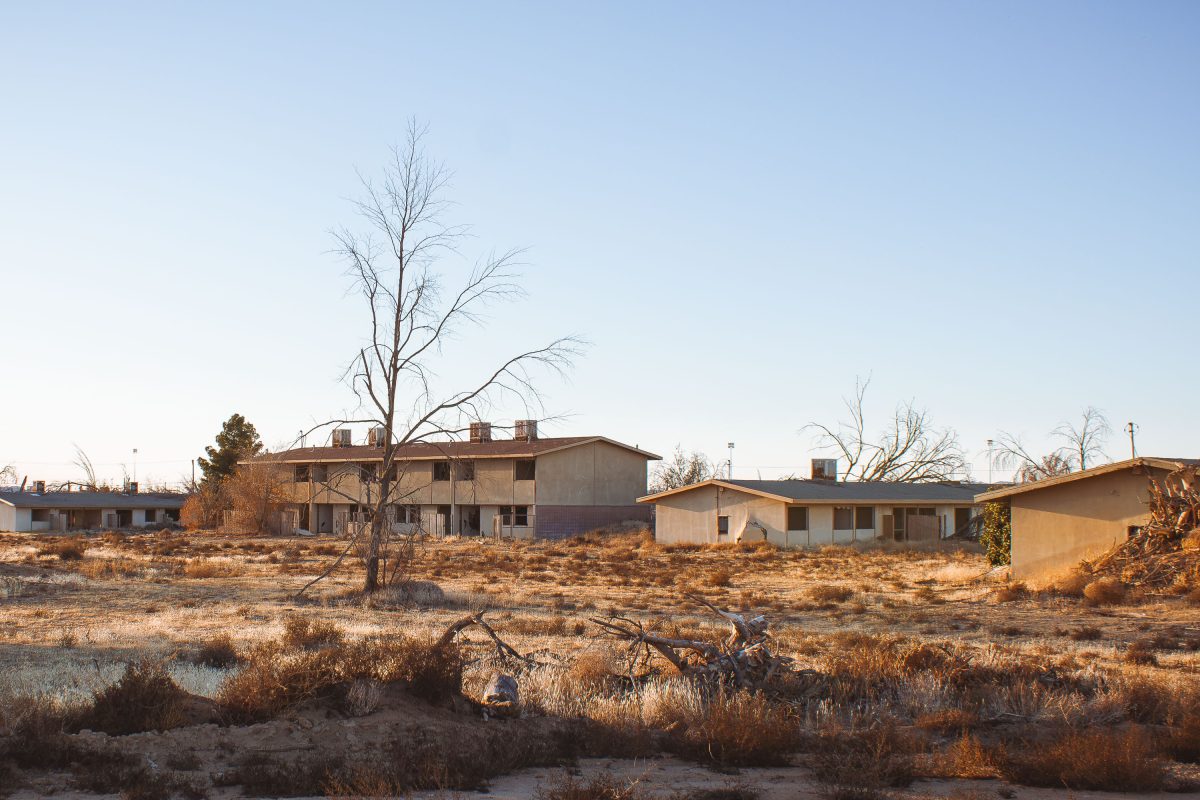
Abandoned residential buildings at George Air Force Base in Victorville, California, with bare desert landscape.
George Air Force Base operated near Victorville, California, from 1941 until it closed under the 1991 Base Realignment and Closure Act, with the last personnel leaving in 1992. During its active decades the base trained fighter pilots, including F-4 Phantom and F-111 crews during the Vietnam War era. The housing blocks built for enlisted families and officers have sat vacant since closure, stripped of fixtures and left exposed to the Mojave Desert climate. Part of the former base was redeveloped into Southern California Logistics Airport, while sections of family housing were left standing and fenced off from public access.

Abandoned Housing Row at George Air Force Base

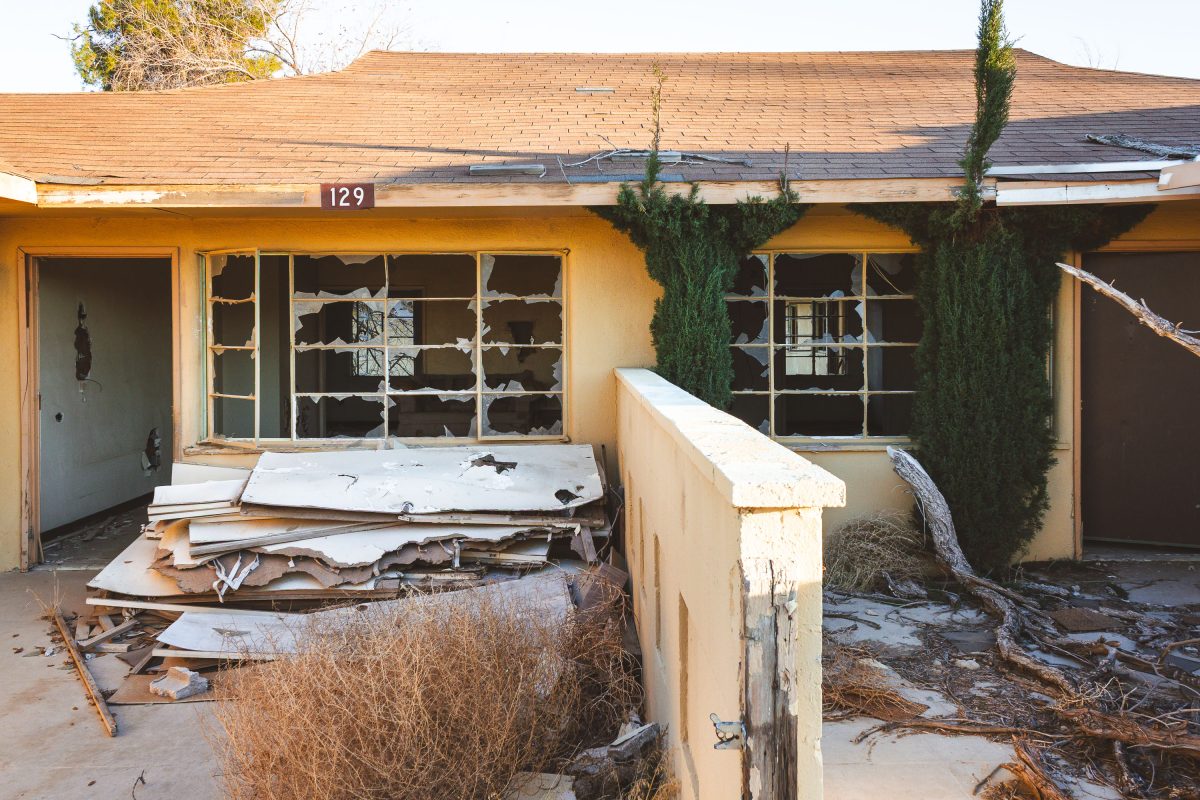
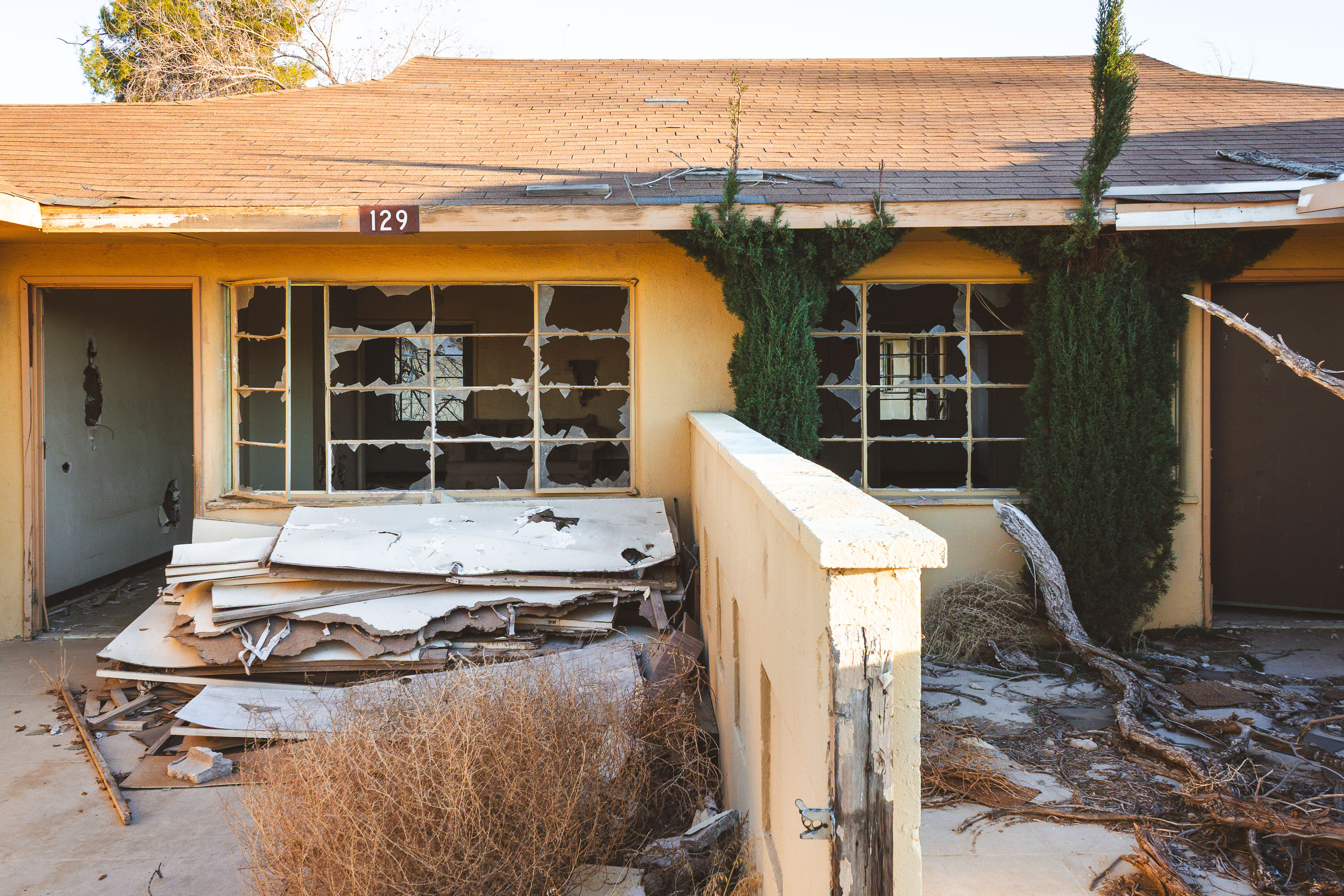
Abandoned residential unit 129 at closed George Air Force Base in Victorville, California, with broken windows and deteriorated
George Air Force Base operated near Victorville, California, from 1941 until it closed under the 1991 Base Realignment and Closure round, with final shutdown in 1992. Unit 129 was part of a residential section built for Air Force personnel and their families during the base's decades as a fighter training installation. The Southern California Logistics Airport and Victor Valley College now occupy portions of the former base, but much of the old family housing was left standing and unmaintained after closure. Decades of exposure to the Mojave Desert climate have left the vacant units with broken windows and stripped interiors.

Boarded-Up Unit 129 at George Air Force Base Housing, Victorville

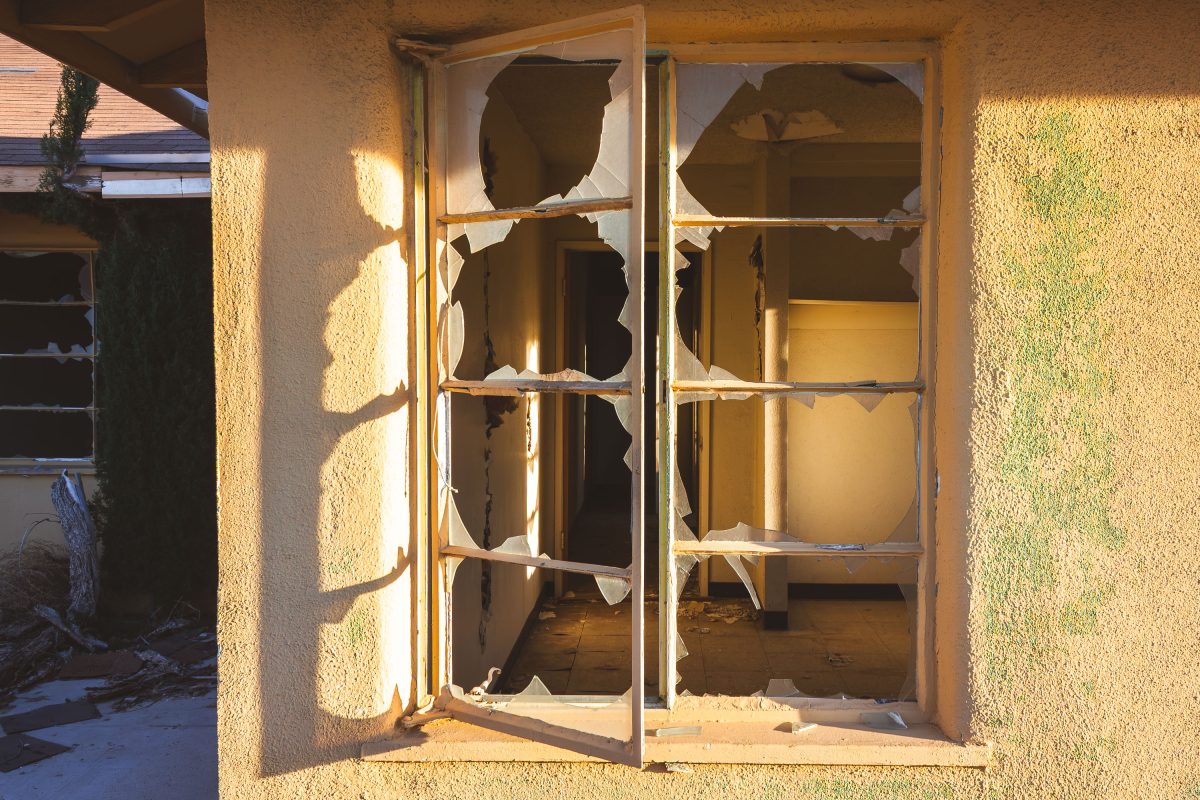
Broken double-pane glass doors at vacant officer housing at closed George Air Force Base in Victorville, California.
George Air Force Base operated near Victorville, California, from 1941 until it closed under the 1991 Base Realignment and Closure round, with the Air Force ceasing operations there in 1992. Housing units like this one sheltered military families during the base's decades as a fighter training installation. After closure, ownership of the residential sections passed to local redevelopment authorities, and many structures were stripped of fixtures and left to deteriorate. Portions of the former base now form the Southern California Logistics Airport, while the old housing rows remain vacant.

Shattered Window Frame at Abandoned Housing, George Air Force Base
Vacant residential buildings on abandoned George Air Force Base in Victorville, California.
George Air Force Base sits just north of Victorville, California, on land the Army first used as a training field in the 1920s before the Air Force took it over in 1941 and named it for Brigadier General Harold H. George. At its Cold War peak, the base trained fighter pilots and hosted squadrons flying the F-4 Phantom and later the F-4G Wild Weasel. The 1991 Base Realignment and Closure Commission ordered its shutdown, and the Air Force officially closed George in 1992, transferring roughly 5,300 acres to civilian control. Much of the former base, including its residential housing tracts, has sat empty for decades, while other sections were redeveloped into the Southern California Logistics Airport and an adjoining business park.

Overgrown Lots Along Base Housing Row at George Air Force Base

Abandoned officer housing at George Air Force Base in Victorville, California, with cracked pavement and desert vegetation.
George Air Force Base operated in Victorville, California, from 1941 until it closed in 1992 under a federal base realignment order. During the Cold War it served as home to fighter squadrons flying F-4 Phantoms and later F-4G Wild Weasels, training crews for electronic warfare and air combat missions. Officer housing on base sheltered military families for decades before the closure left the neighborhood empty. Part of the former base has since been redeveloped as Southern California Logistics Airport, but sections of the old residential streets remain abandoned.

Cracked Roadway Through Officer Housing at George Air Force Base

Abandoned barracks at Fort Snelling, Minneapolis, Minnesota, a historic military installation constructed in the early 20th century.
These abandoned barracks at Fort Snelling, Minnesota, represent a portion of the historic military installation. Constructed in the early 20th century, these buildings served as housing for soldiers. Fort Snelling has a long history dating back to 1819, playing a significant role in the region's military and economic development. The barracks, like much of the fort's infrastructure, have fallen into disuse and disrepair, standing as silent reminders of past military presence.

Abandoned Barracks at Fort Snelling, Minneapolis